
The palm gets the ceremony, but the back of the hand gets the camera. It’s the side people see when you hold the bouquet, show the ring, fix your dupatta or stack bangles, so I plan it with as much care as the palm, sometimes more. A good back hand design has to read clearly from across a room and still reward a close-up. Below are 30 layouts I draw for brides, from dense Indian work and Arabic florals to jaali mesh, jewelry chains, hidden initials and open designs that let the skin breathe, with notes on how each one stains, wears and photographs.
What I Need to Know Before Drawing Your Back Hand
The back of the hand is mostly covered by jewelry and sleeves in real life, so I design around what will actually show. Before I touch a cone, I ask a few questions:
- How long are your sleeves, and will the wrist be covered by bangles or a kada? There’s no point filling skin that will sit under metal all day.
- Which finger will carry the ring, and is there a hathphool? I leave that area cleaner so the jewelry stays clear.
- Are your nails being done? Manicures, gel and waxing should happen before the henna, not after, because scrubbing and acetone fade a fresh stain.
- How long can you sit? A full traditional back hand takes much longer than an Arabic layout, and rushing dense work shows.
Bring a photo of your outfit sleeve and your bangles. Seeing the gold against the design is the fastest way to decide how high the cuff should go.
1. Full Hand Bridal Back Hand Mehndi Design
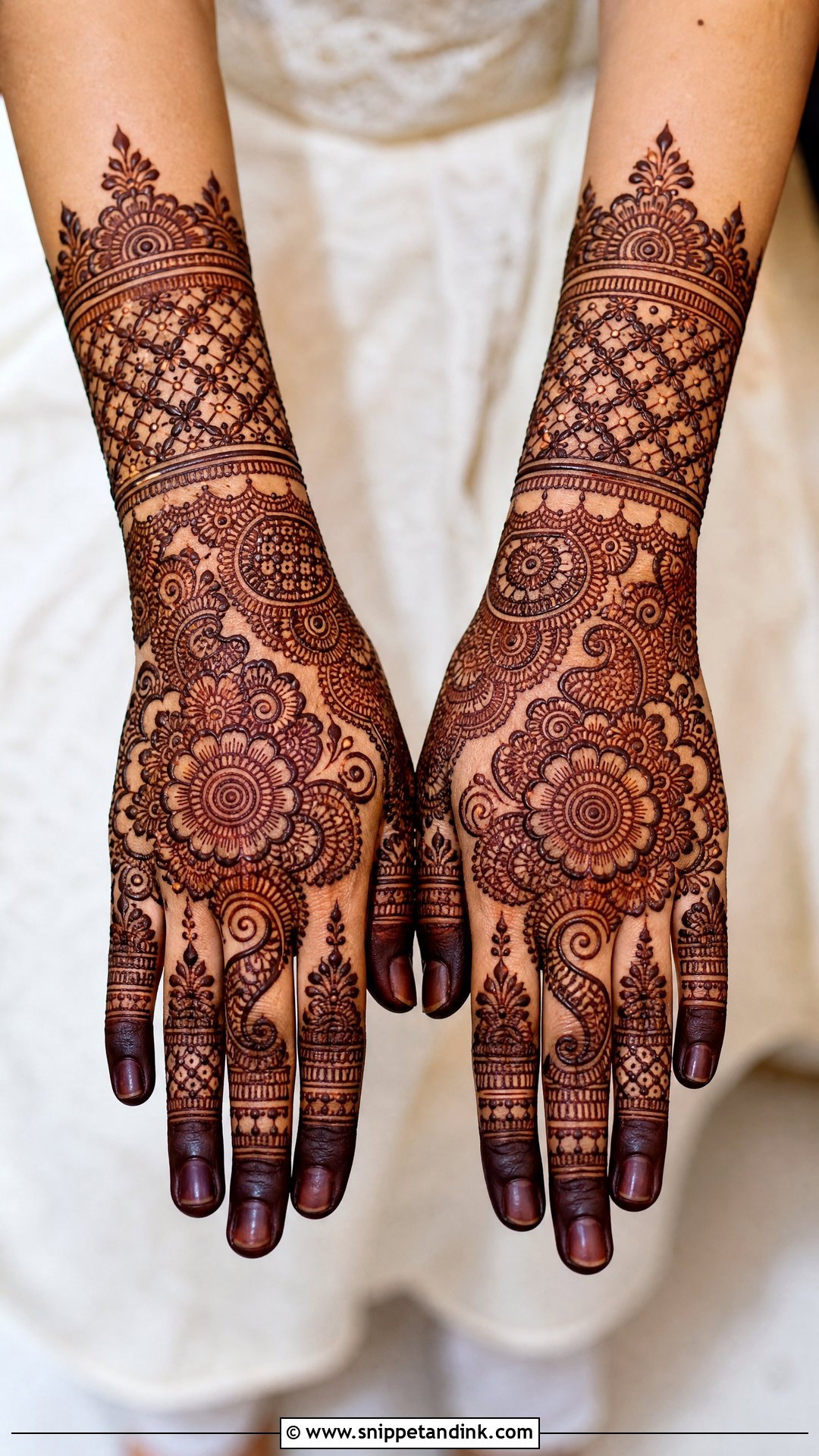
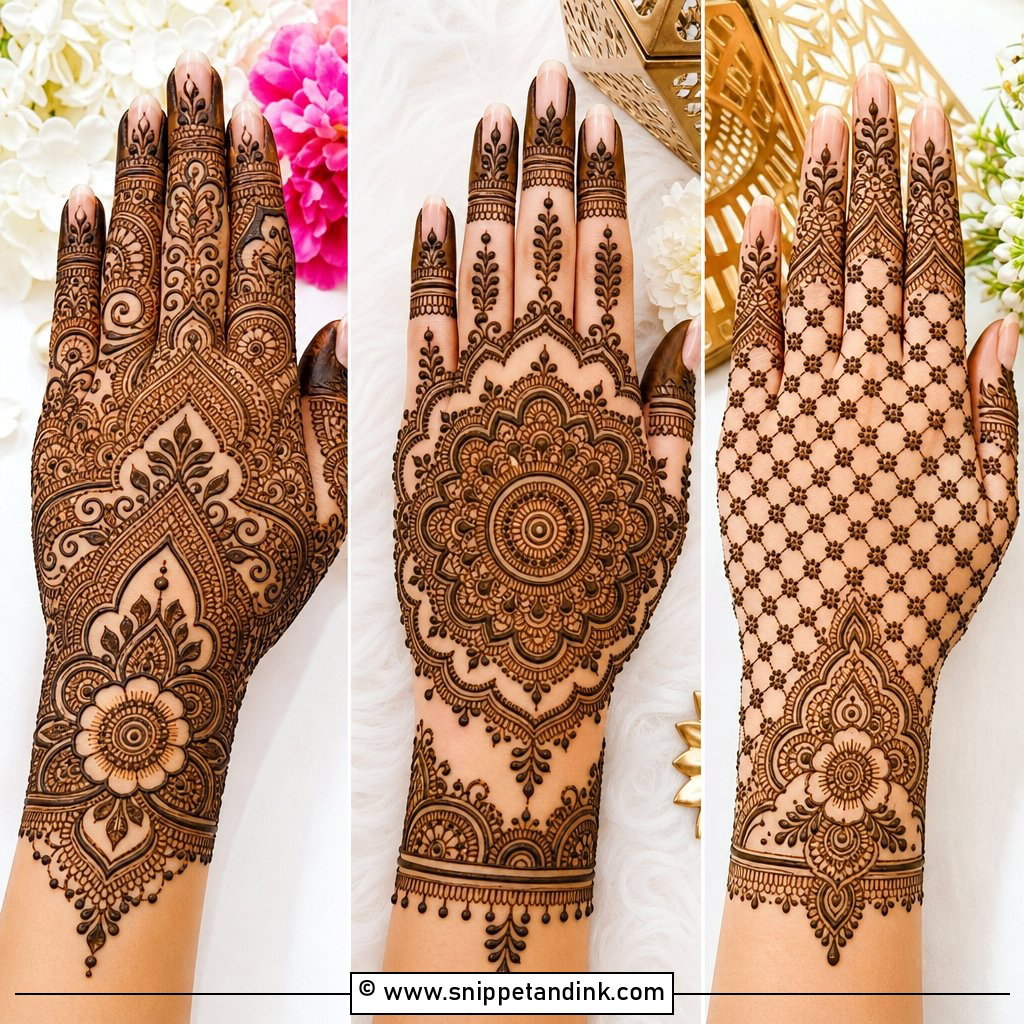
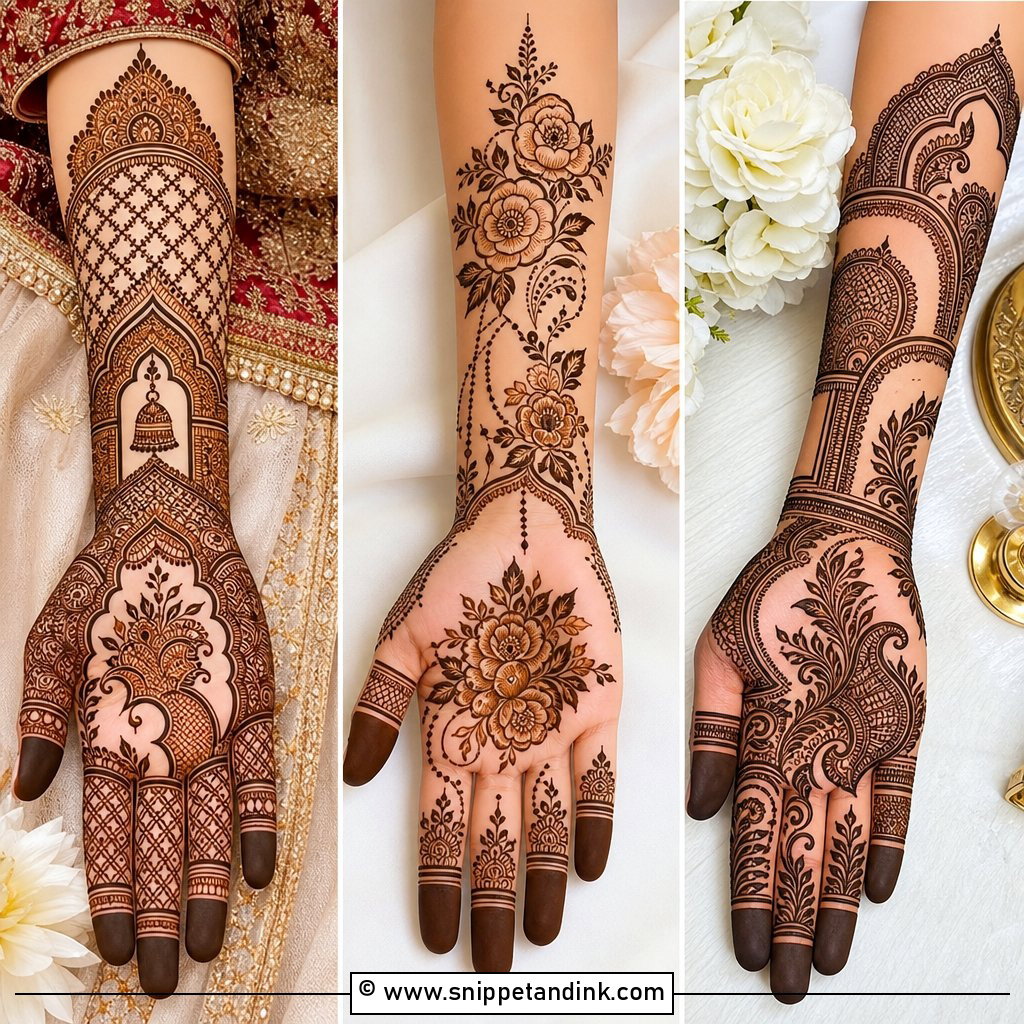
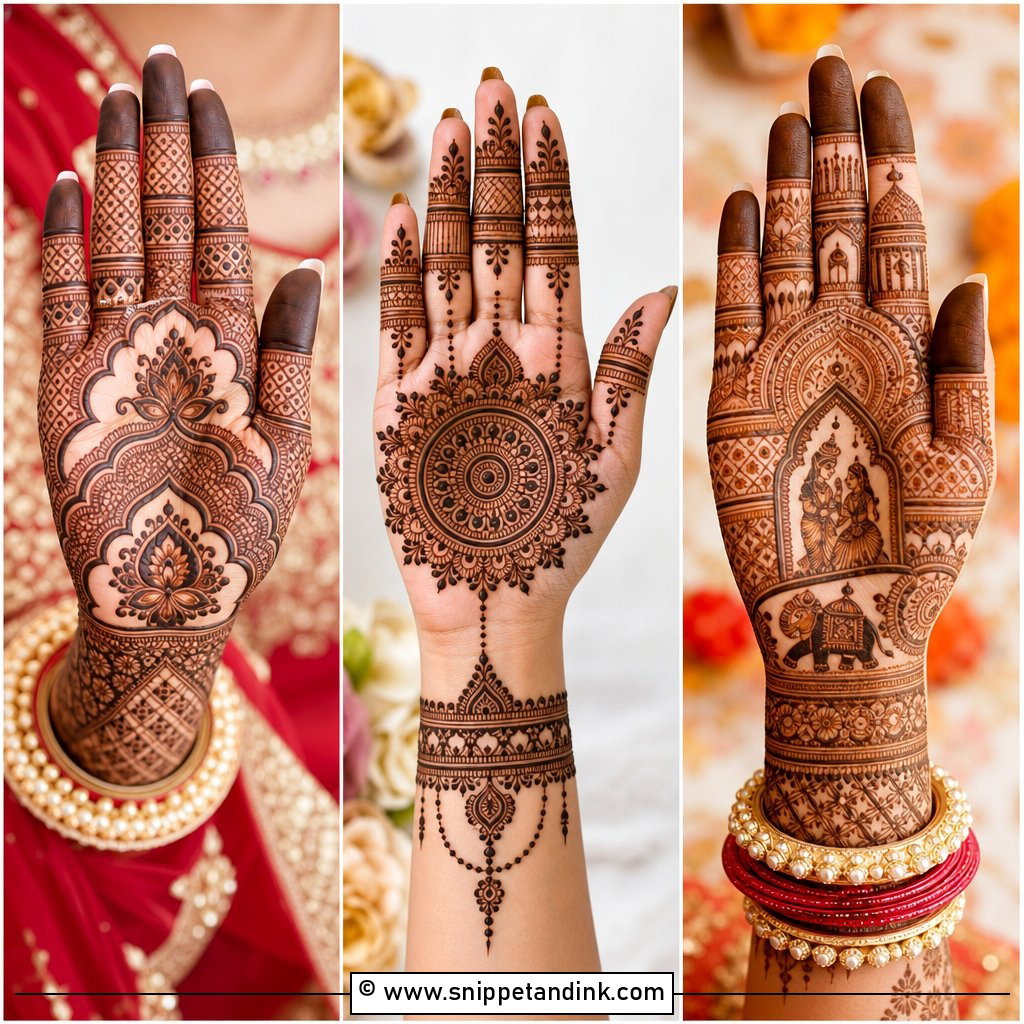
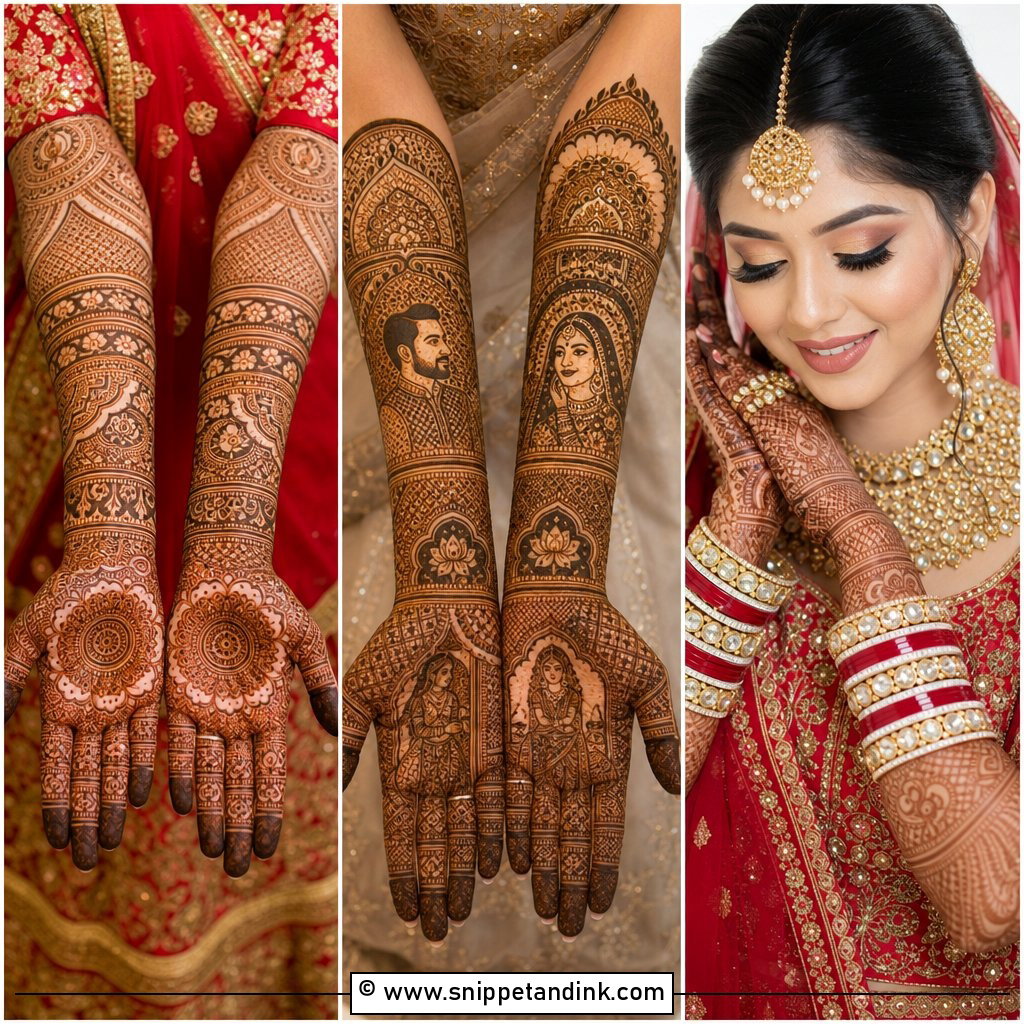
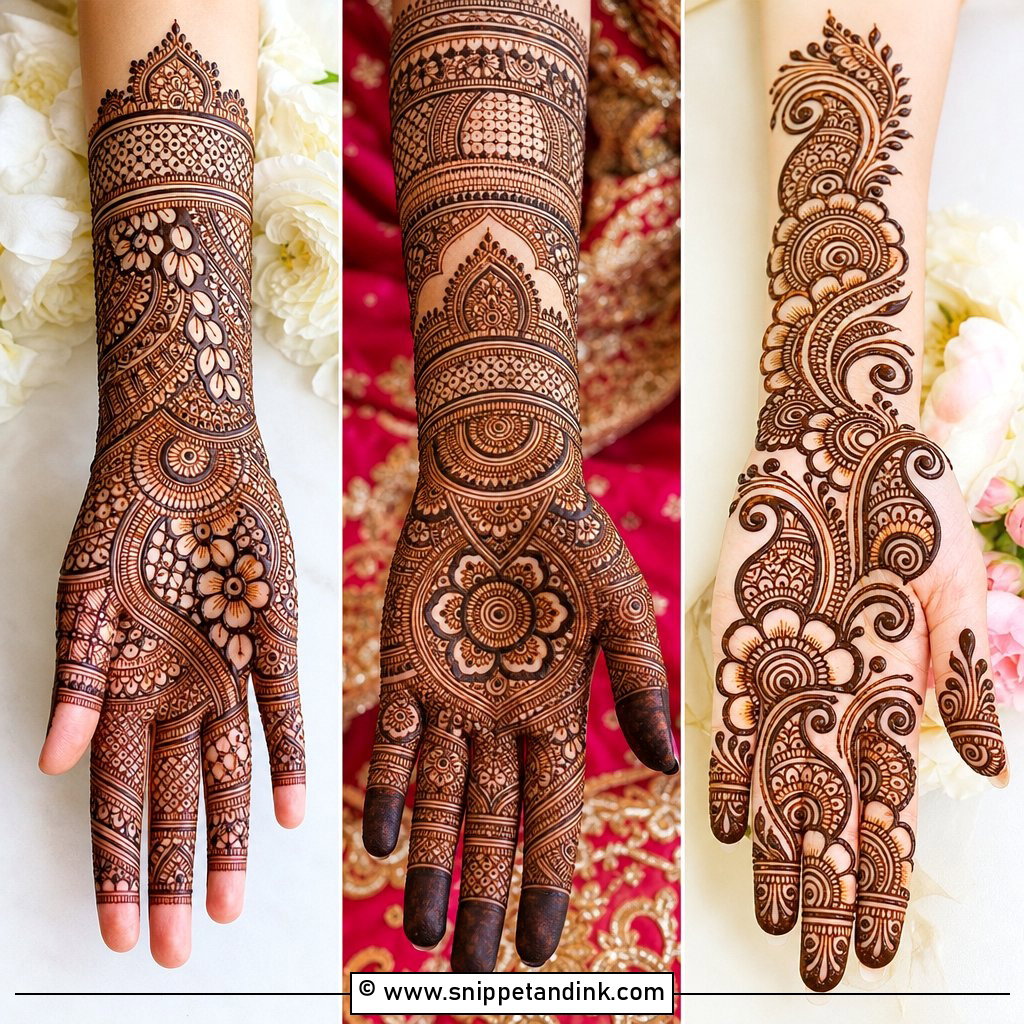
Full coverage runs from the fingertips over the back of the hand and wrist and up into the lower forearm. I start with the central mandala or floral base, then build paisleys toward the wrist and fill the fingers last so the proportions don’t drift. The risk with full coverage is crowding: if every gap is filled with the same weight of line, the hand reads as a brown blur in photos. I keep a few thin channels of bare skin running between the big motifs. Heavy bangles and a red outfit carry this kind of density well.
2. Arabic Bridal Back Hand Mehndi Design
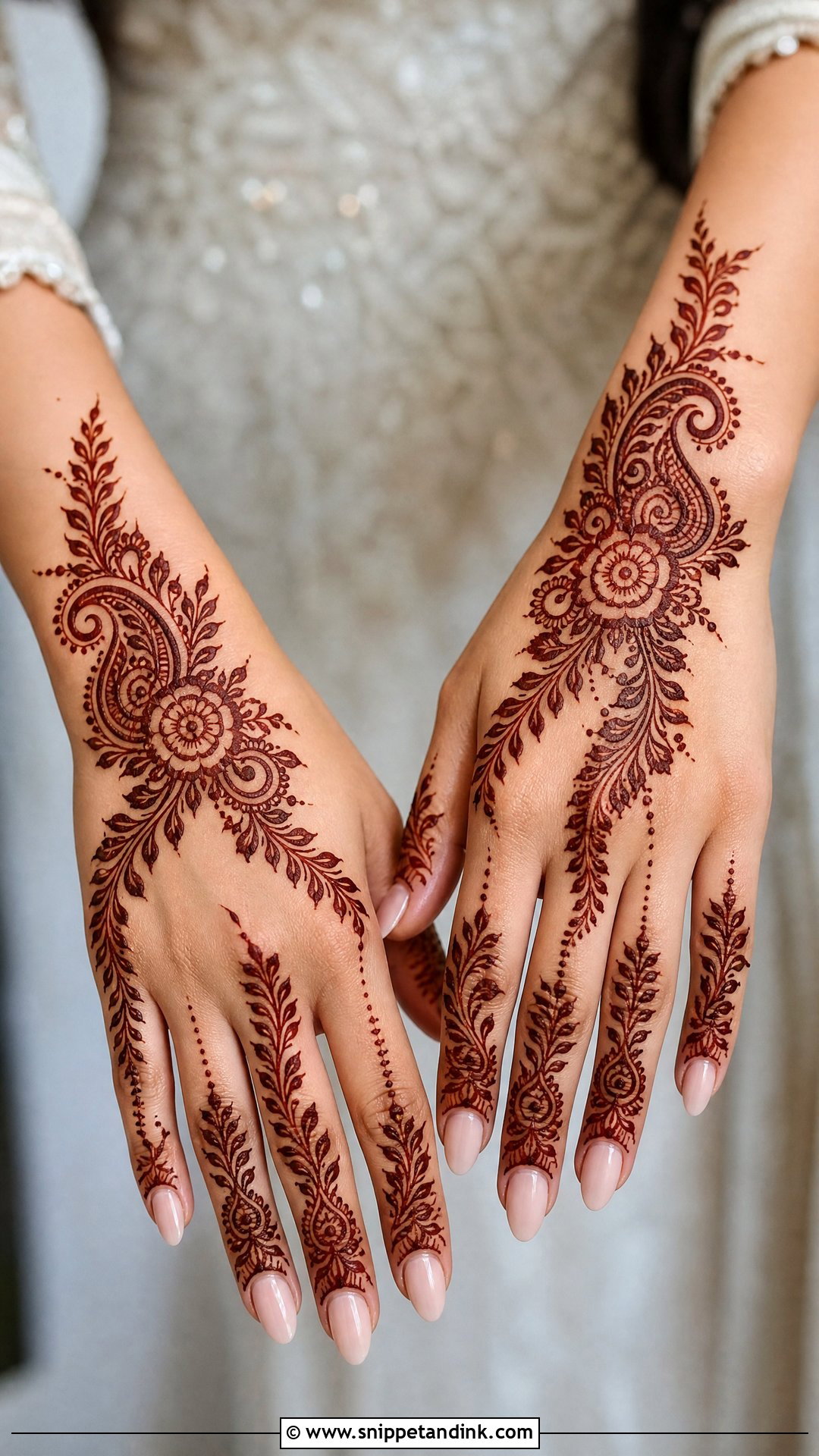
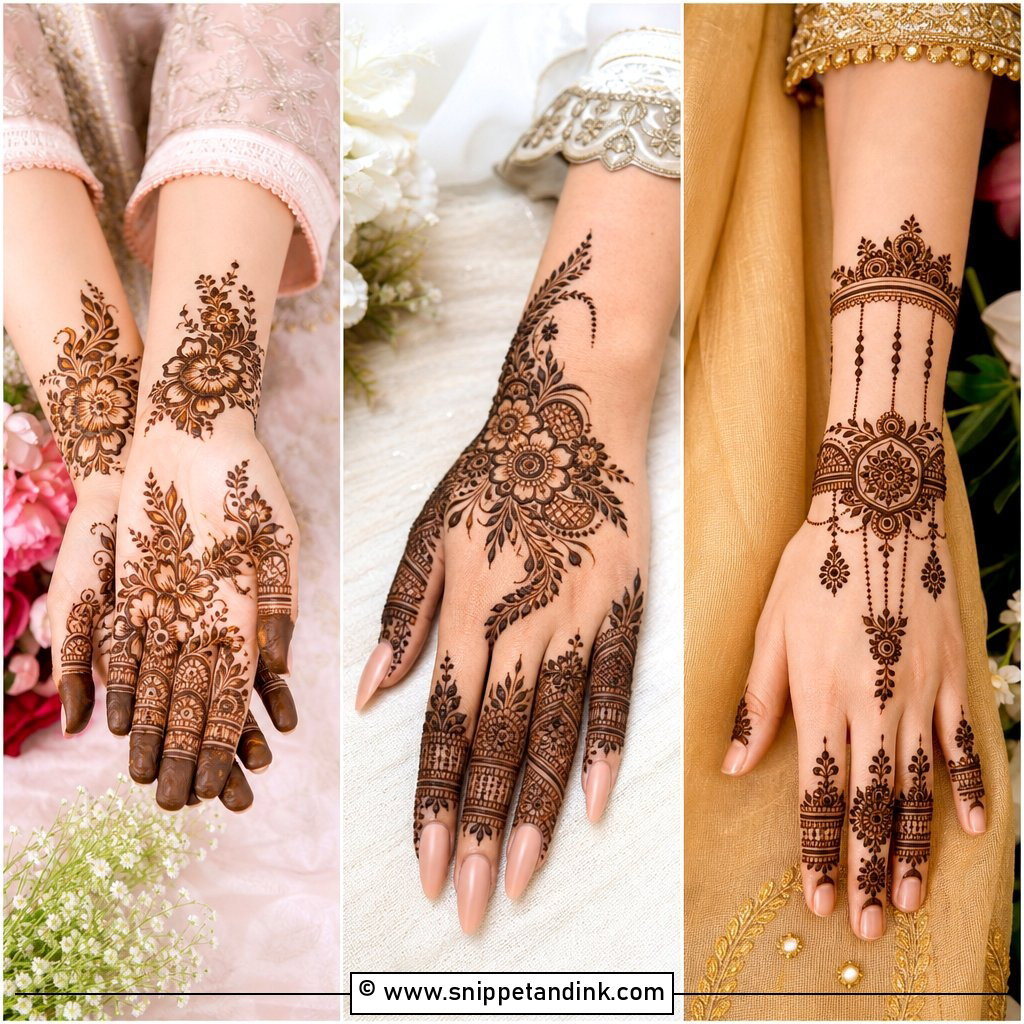
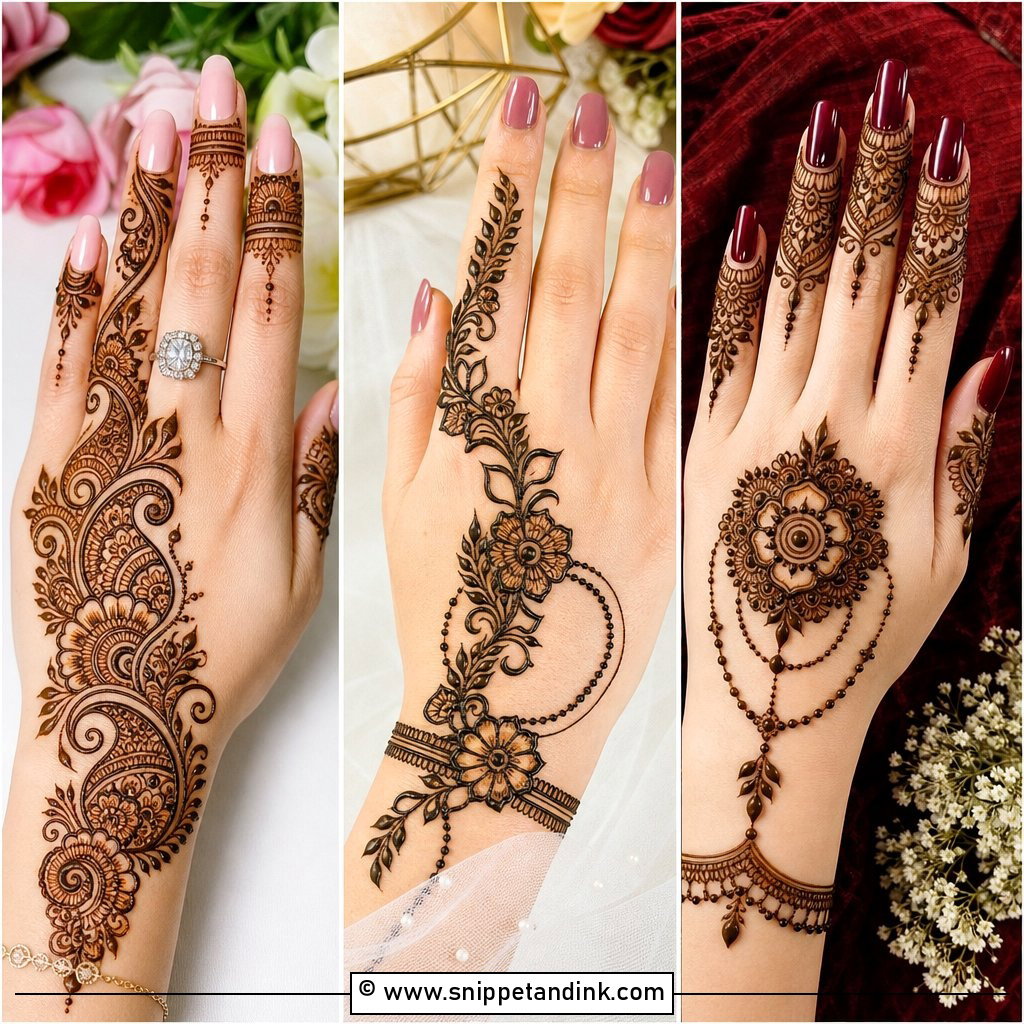
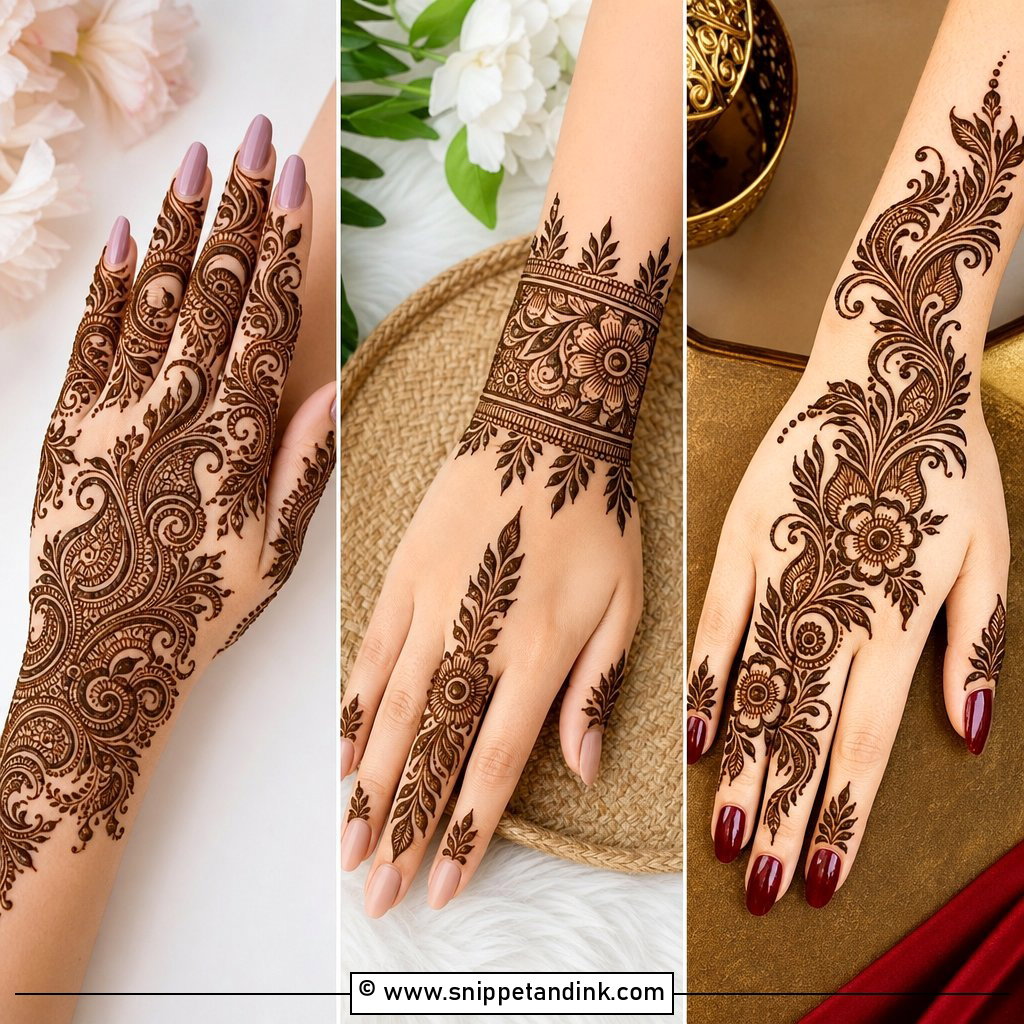
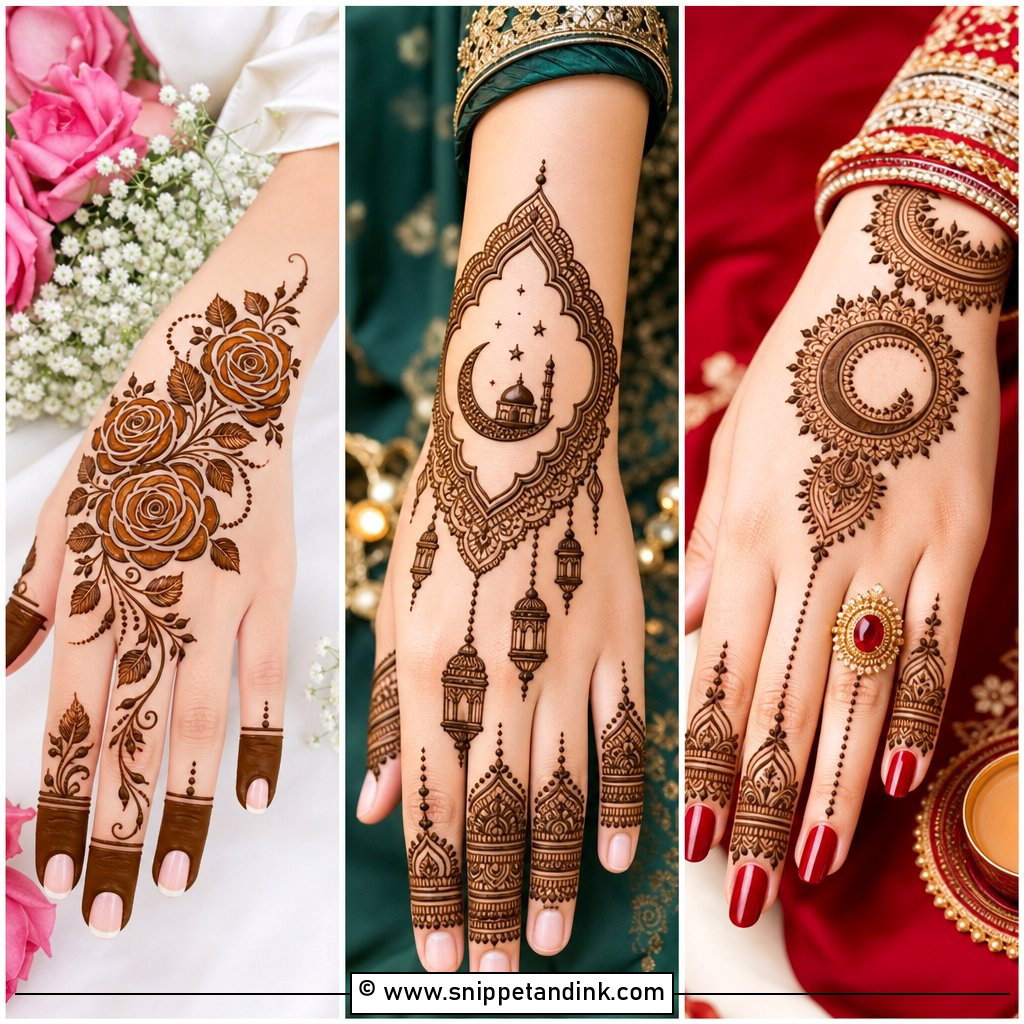
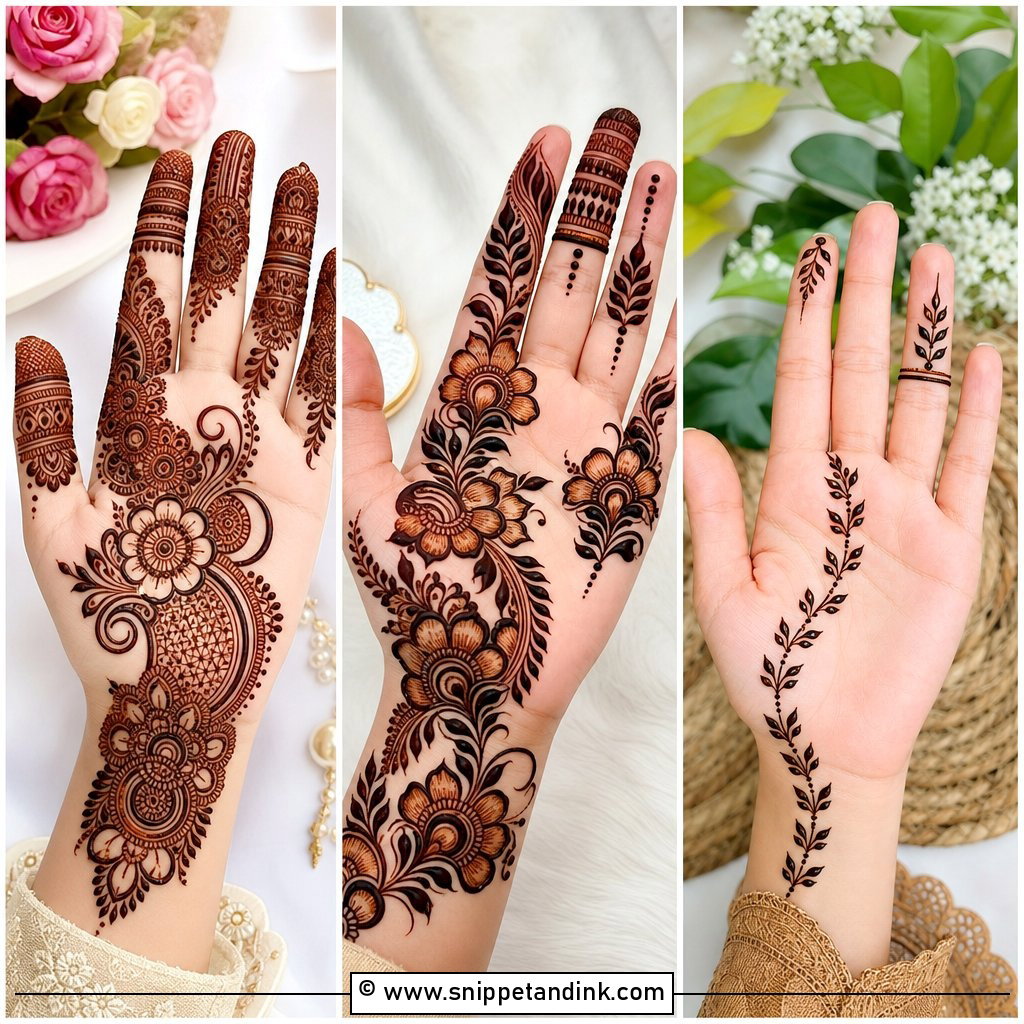
Arabic layouts move diagonally, usually from the index finger across the back of the hand toward the wrist, with bold roses, leaves and dots and plenty of bare skin between them. That bare skin is the point, so I never fill it in to make it “more bridal.” Instead I add weight with shaded petals and a stronger finger design. It’s quicker to apply than full Indian work, which helps when the mehndi night is also your engagement or nikkah evening and you can’t sit for five hours.
3. Indian Bridal Back Hand Mehndi Design
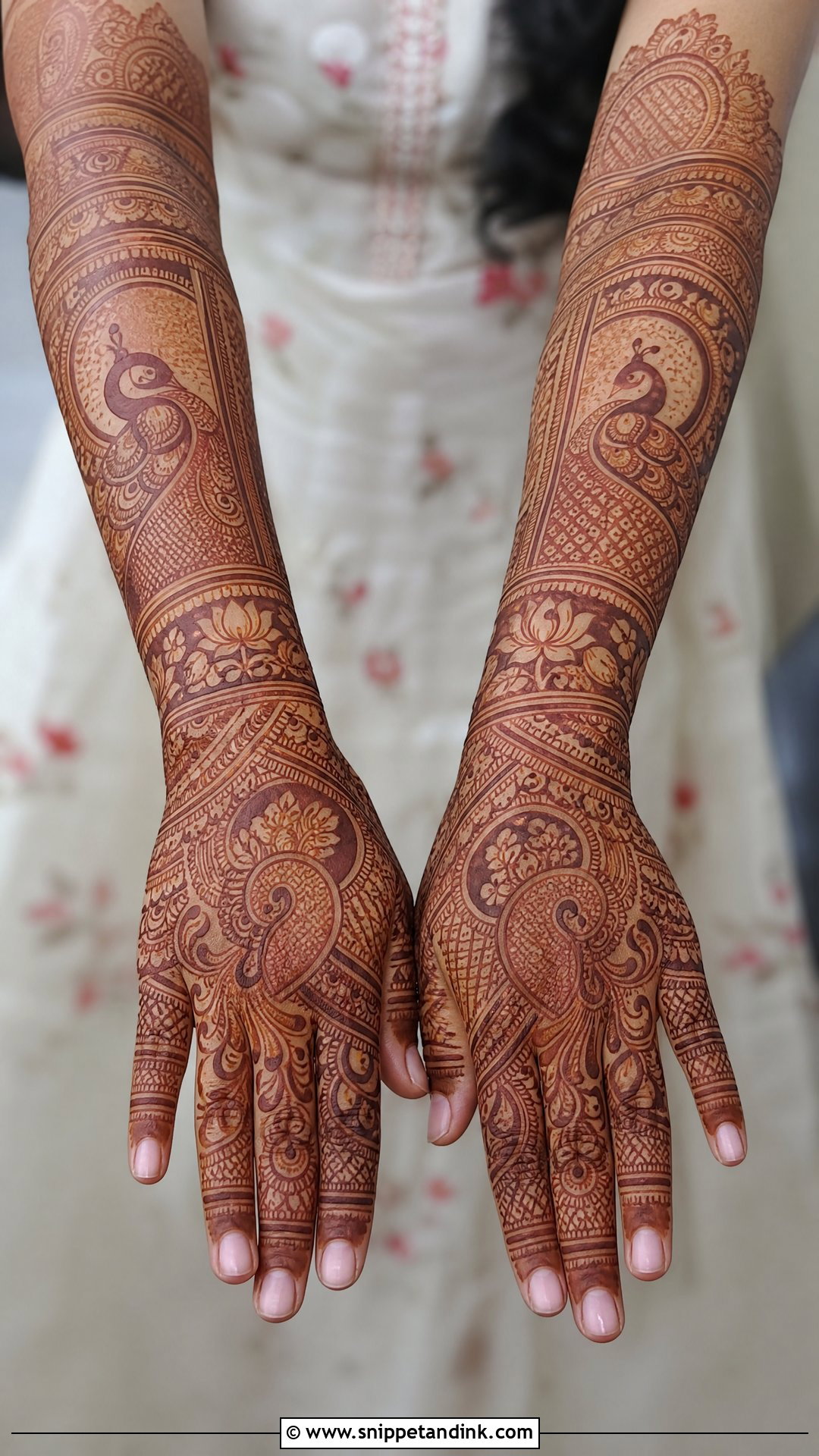
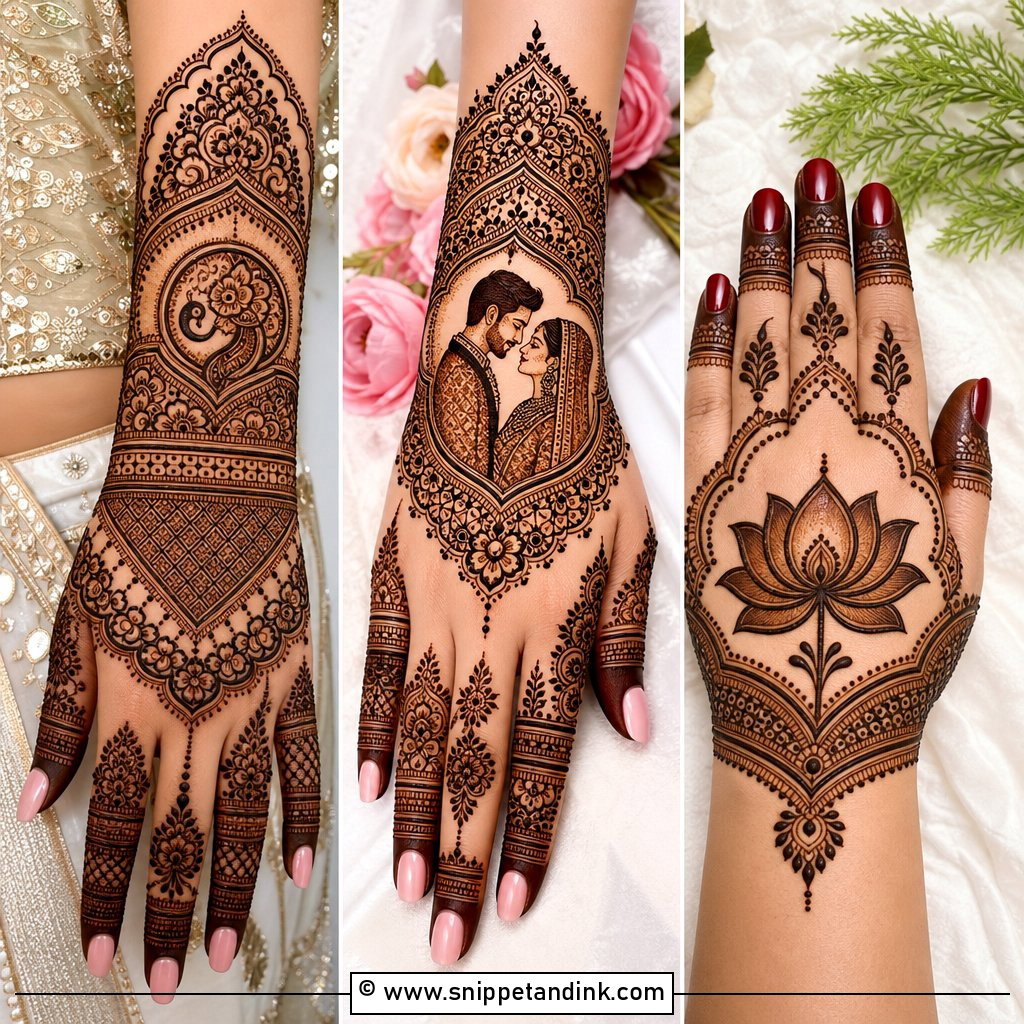
Traditional Indian work is all about fine detail: paisleys, peacocks, lotus, tiny checks and a wrist cuff that often climbs toward the forearm. I make the central motif noticeably larger than everything around it, because a hand full of equal-sized motifs has no focal point. Small hidden initials or symbols can sit inside the paisleys. This density suits heavily embroidered lehengas and sarees, where a lighter design can look underdressed next to the outfit.
4. Mandala Bridal Back Hand Mehndi Design
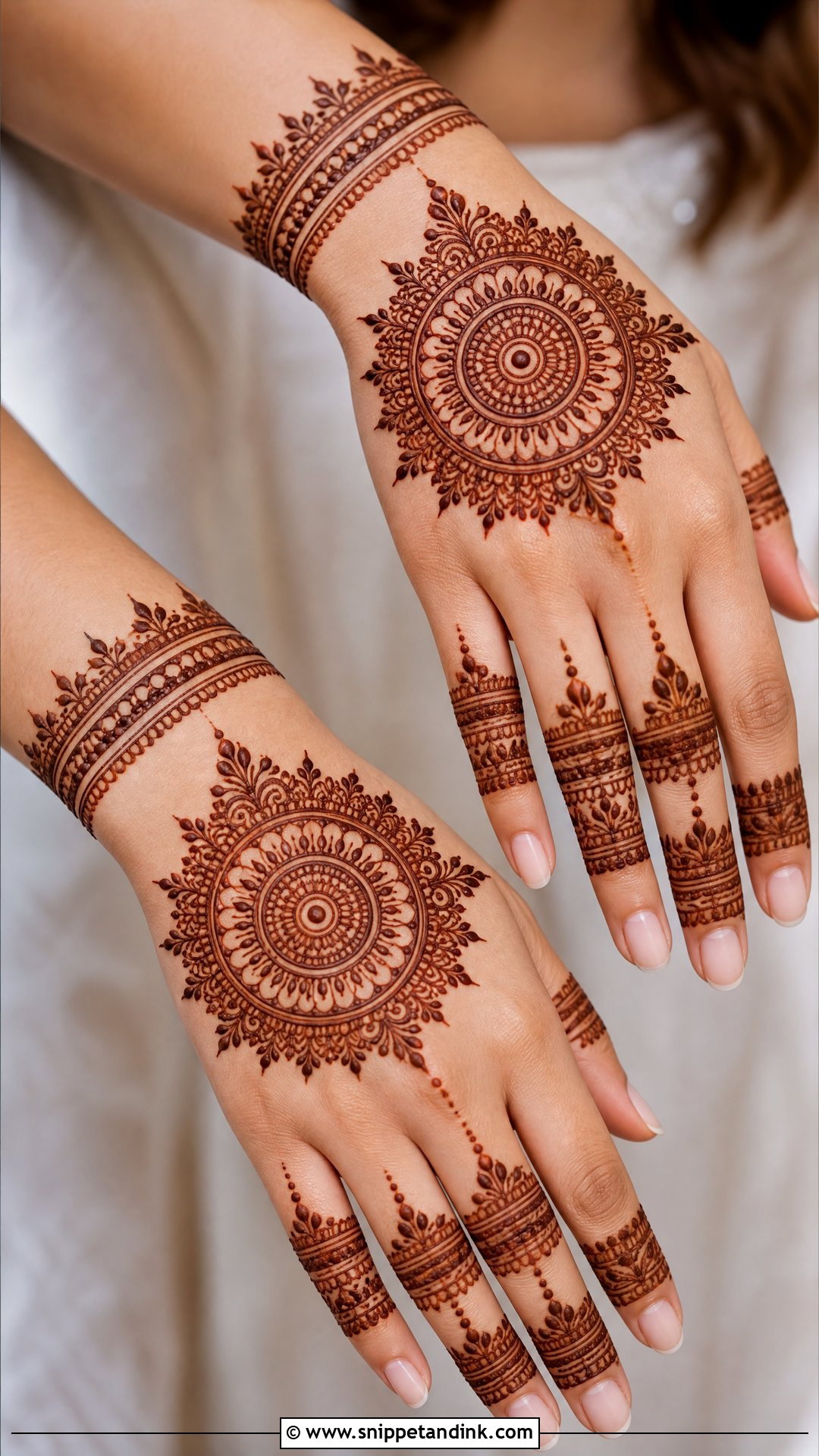
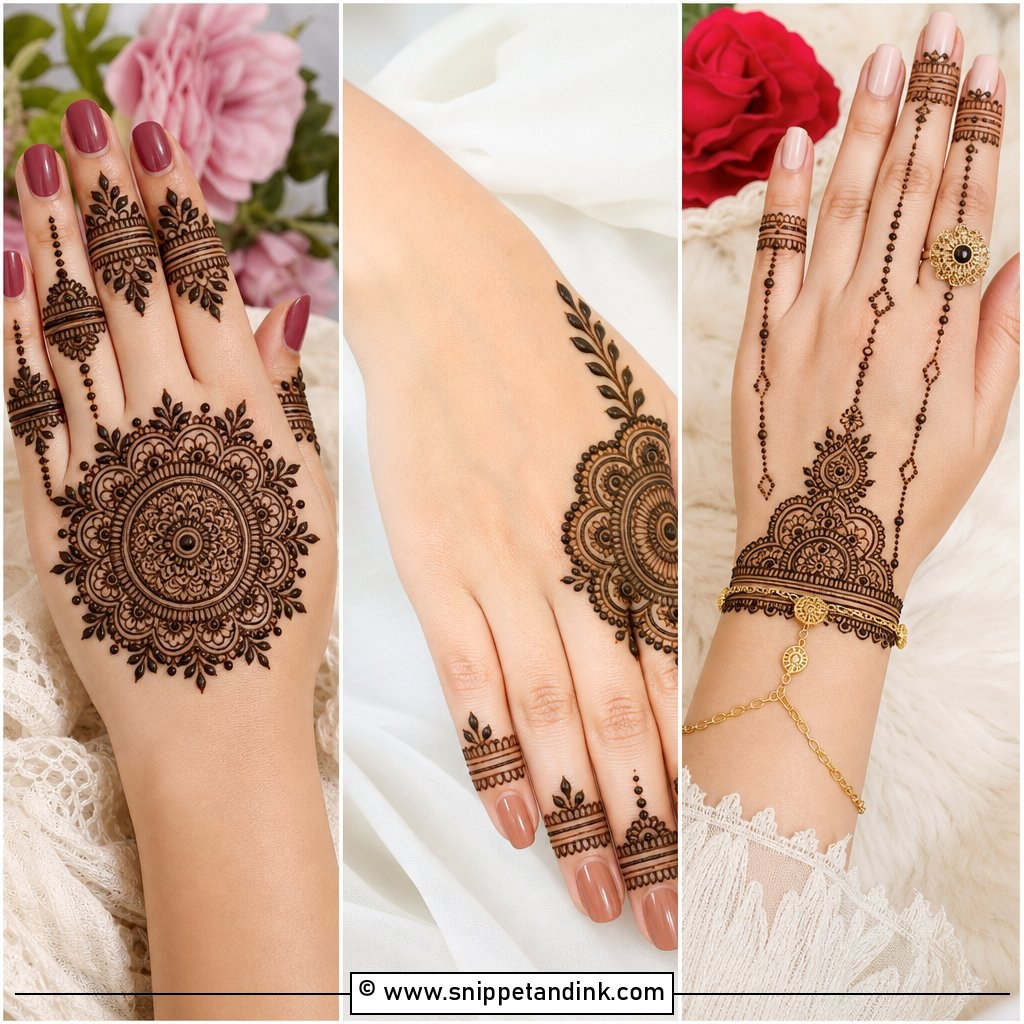
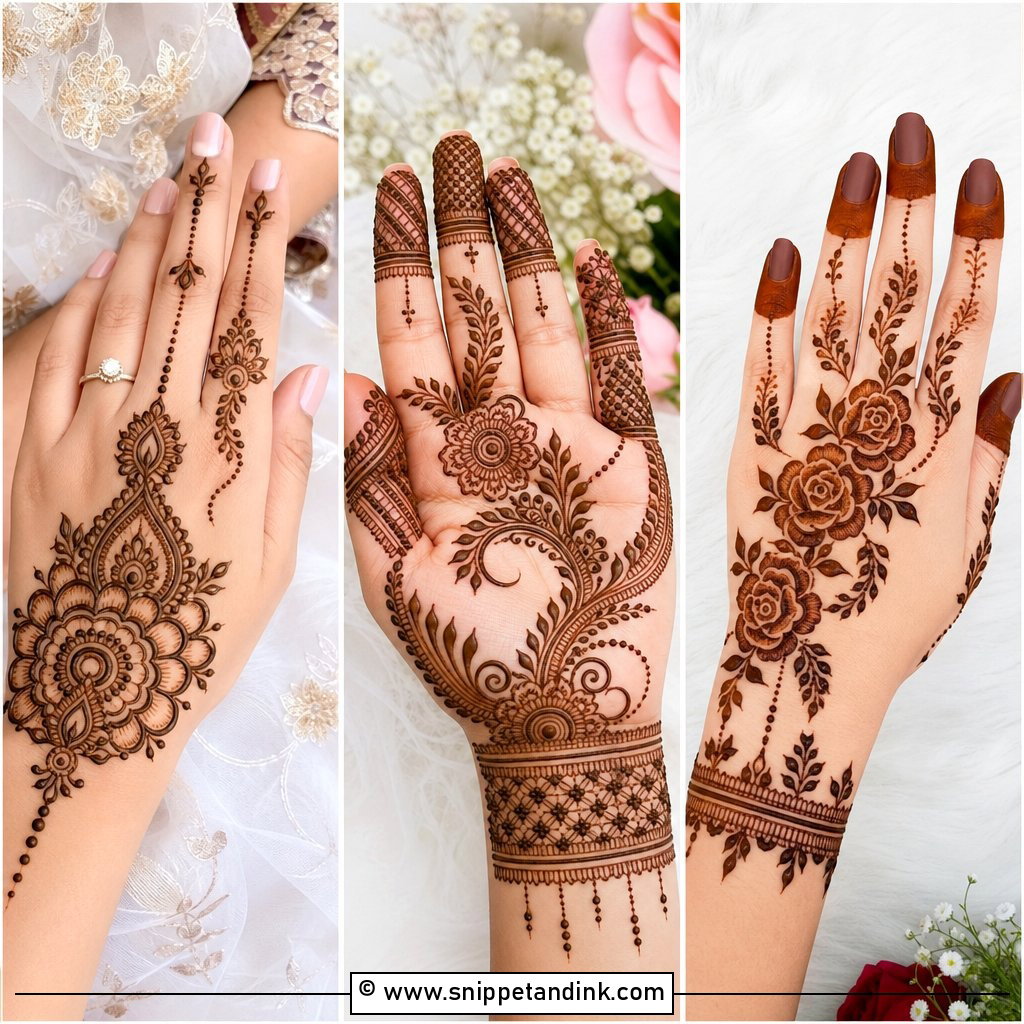
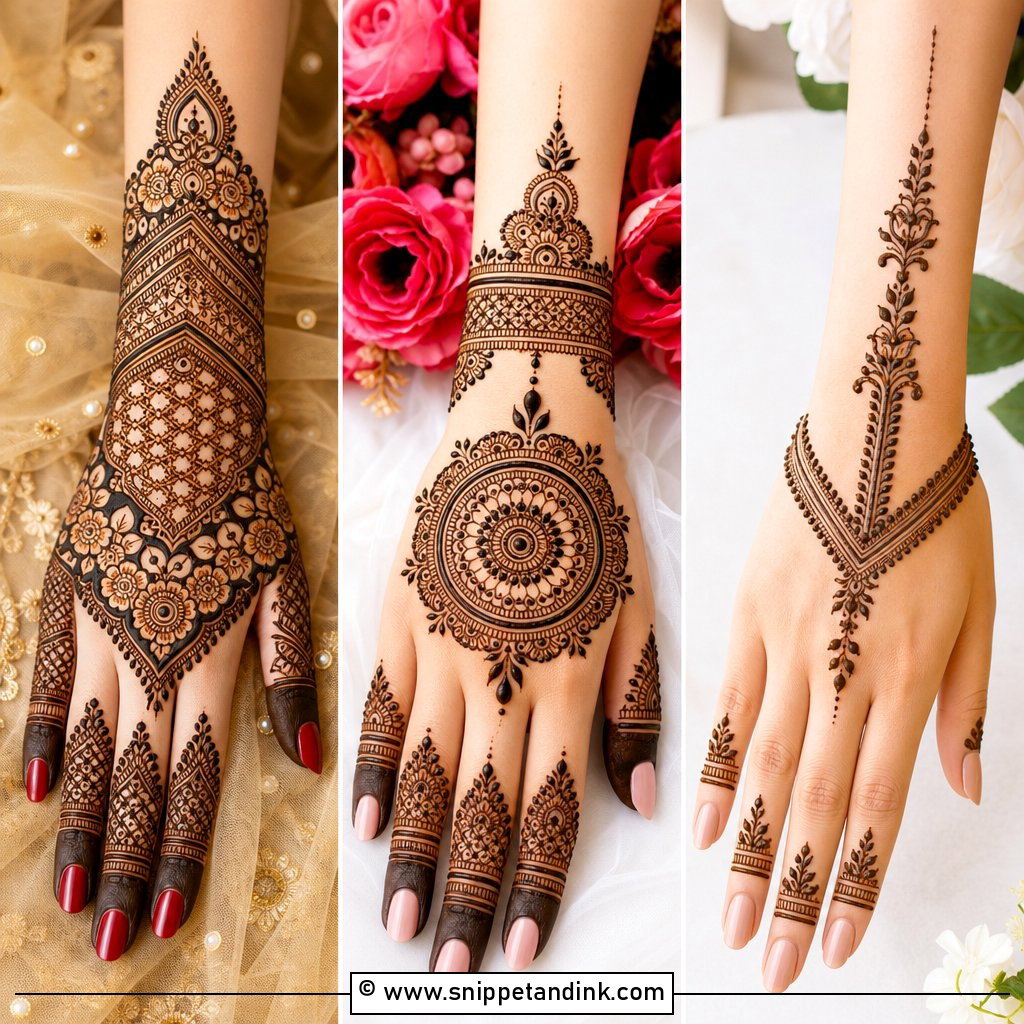
A mandala sits right where the back of the hand is flattest, which is why it looks so clean in ring photos. A bare circle looks unfinished for a bride, so I layer it with petal rings, dotted circles and fine shading, then add trailing leaves and a bracelet at the wrist. On small hands I keep the mandala no wider than the knuckles; a big circle on a narrow hand makes the fingers look short, while the right size does the opposite.
5. Jaali Bridal Back Hand Mehndi Design
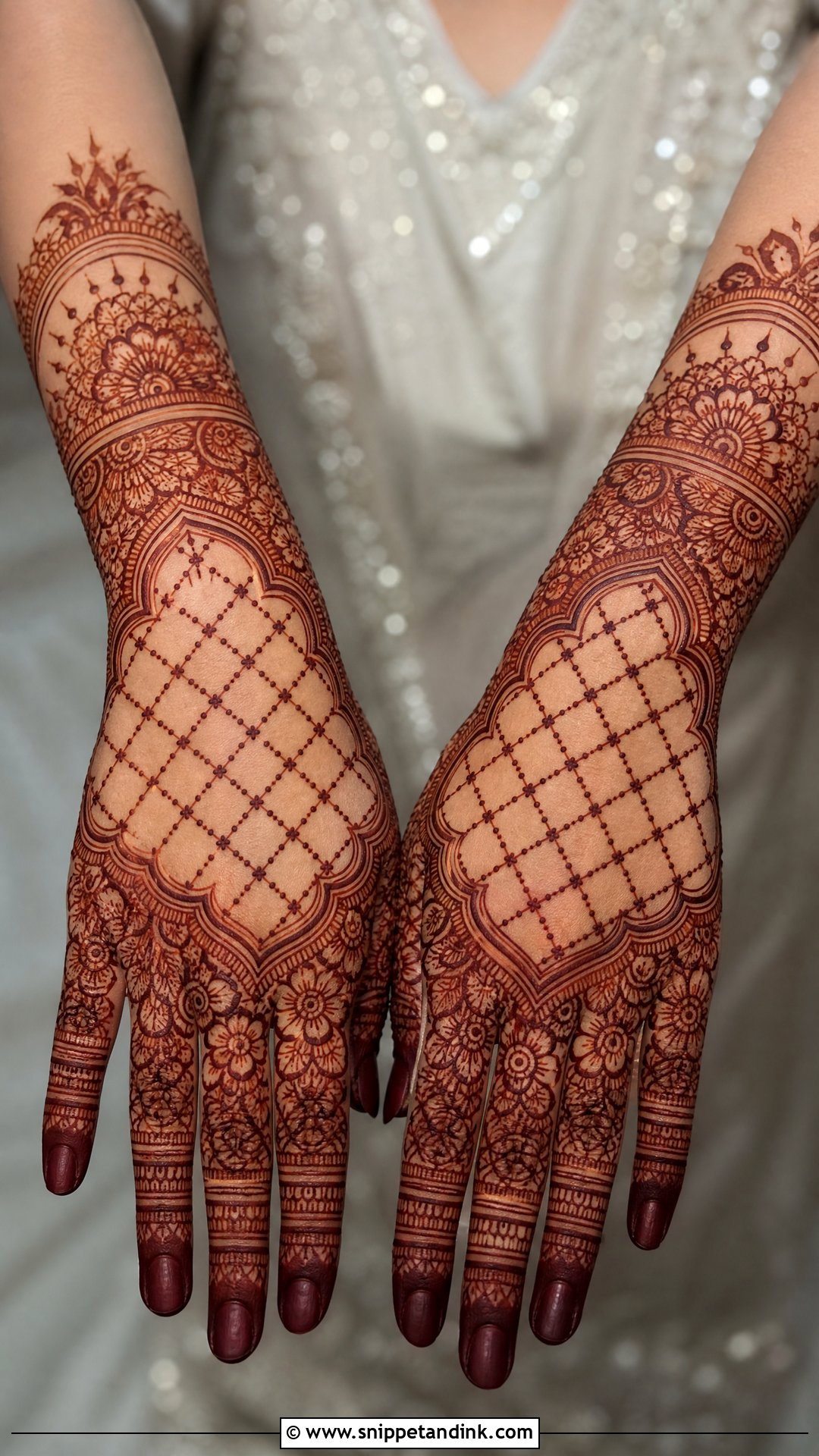
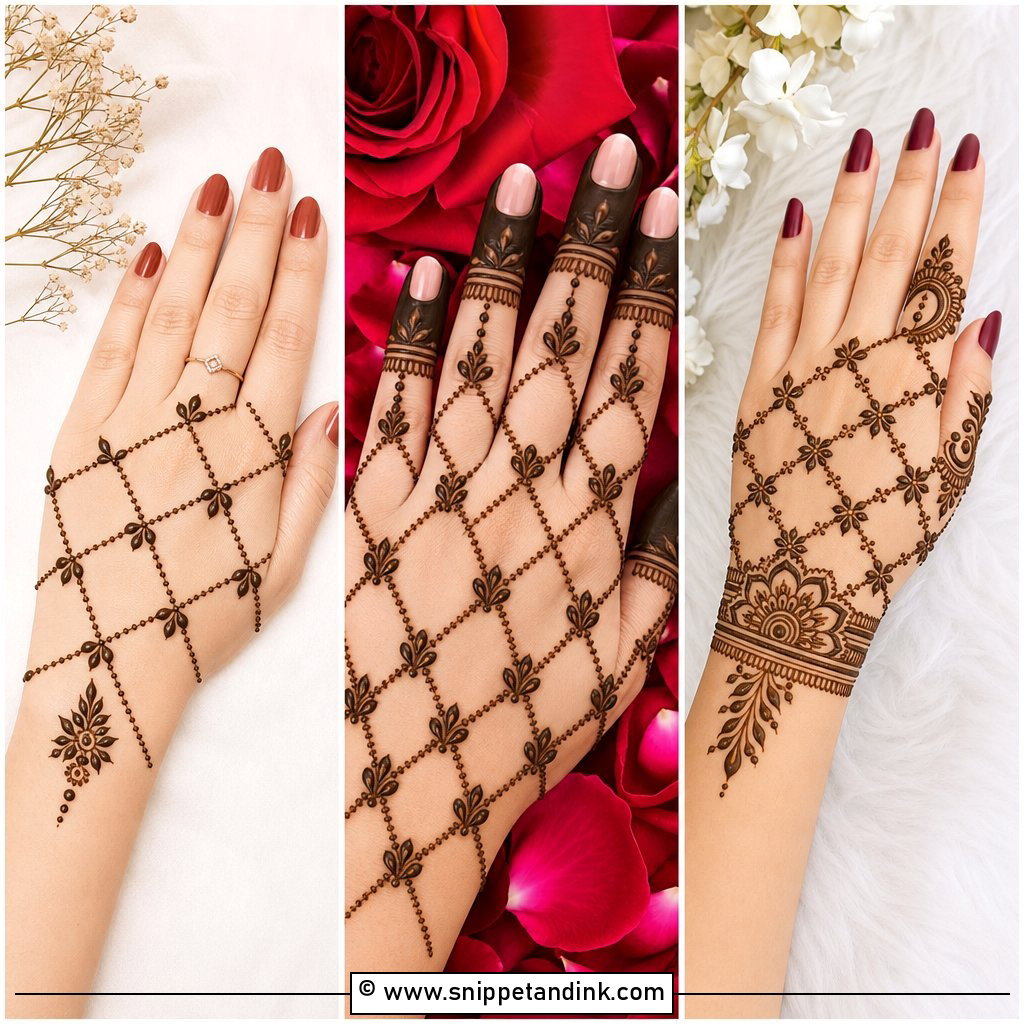
Jaali is a fine mesh drawn across the hand, framed with floral or paisley borders so it looks like a lace glove. The lines have to be evenly spaced, and that’s harder than it looks because the back of the hand curves over the knuckles. I draw the mesh with a fine cone tip and turn the hand as I go. Small dots inside the grid add texture. It’s a good match for sheer sleeves or net dupattas, where the mesh echoes the fabric.
6. Jewelry Bridal Back Hand Mehndi Design
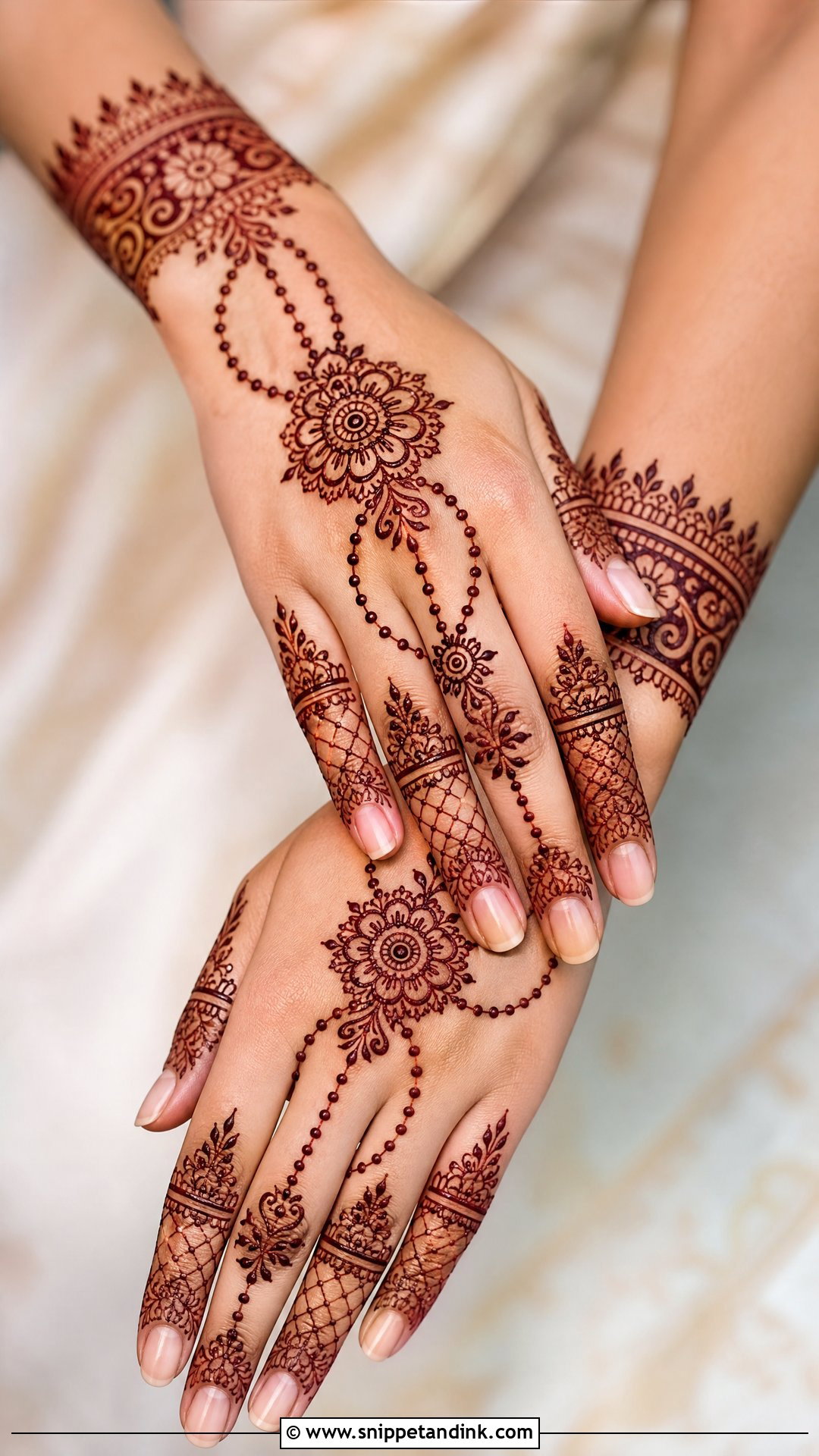
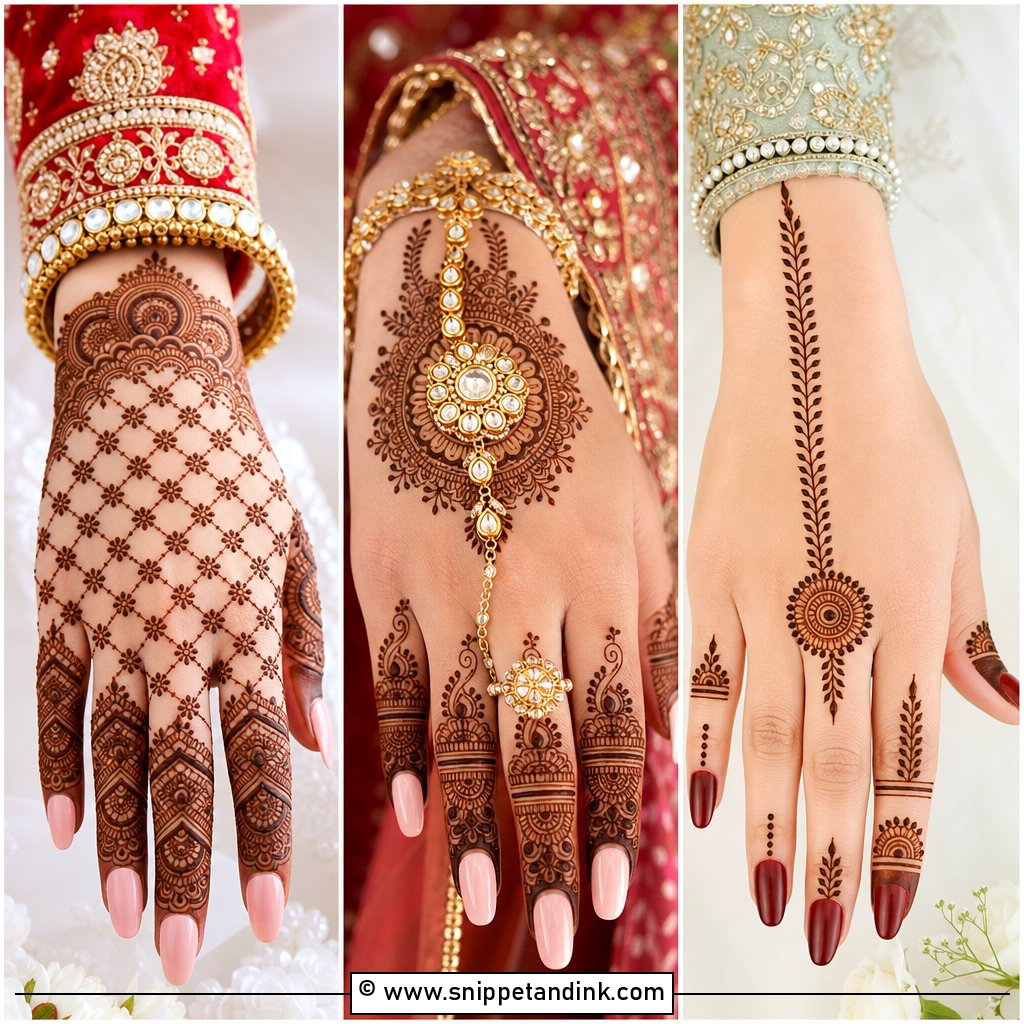
This design draws a hathphool in henna: rings at the base of each finger, chains across the hand and a bracelet-style cuff at the wrist, with a medallion in the middle. I keep the chain lines thin and dot them like beads so they read as jewelry and not as plain stripes. Because it leaves a lot of skin bare, it shows nail art and rings clearly, and it’s light enough for a pre-wedding function as well as the wedding itself.
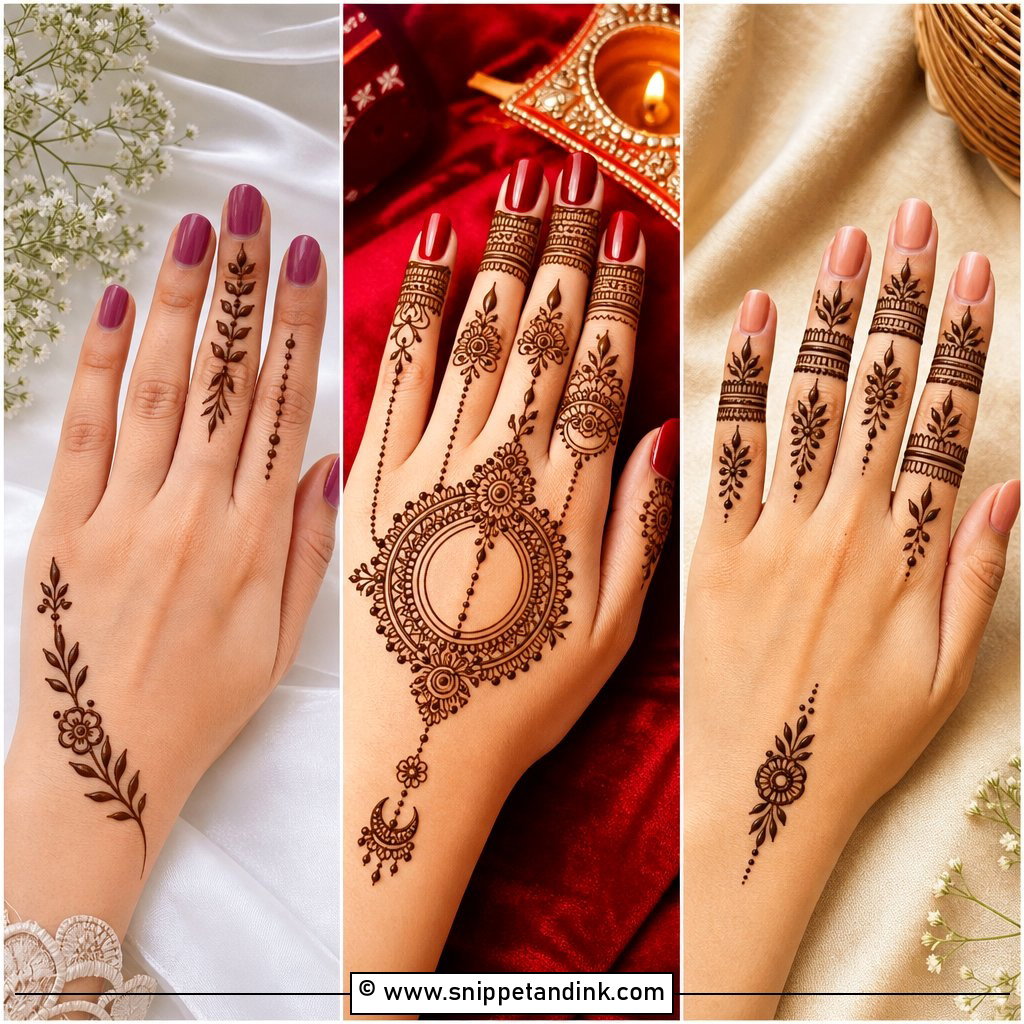
7. Minimal Bridal Back Hand Mehndi Design
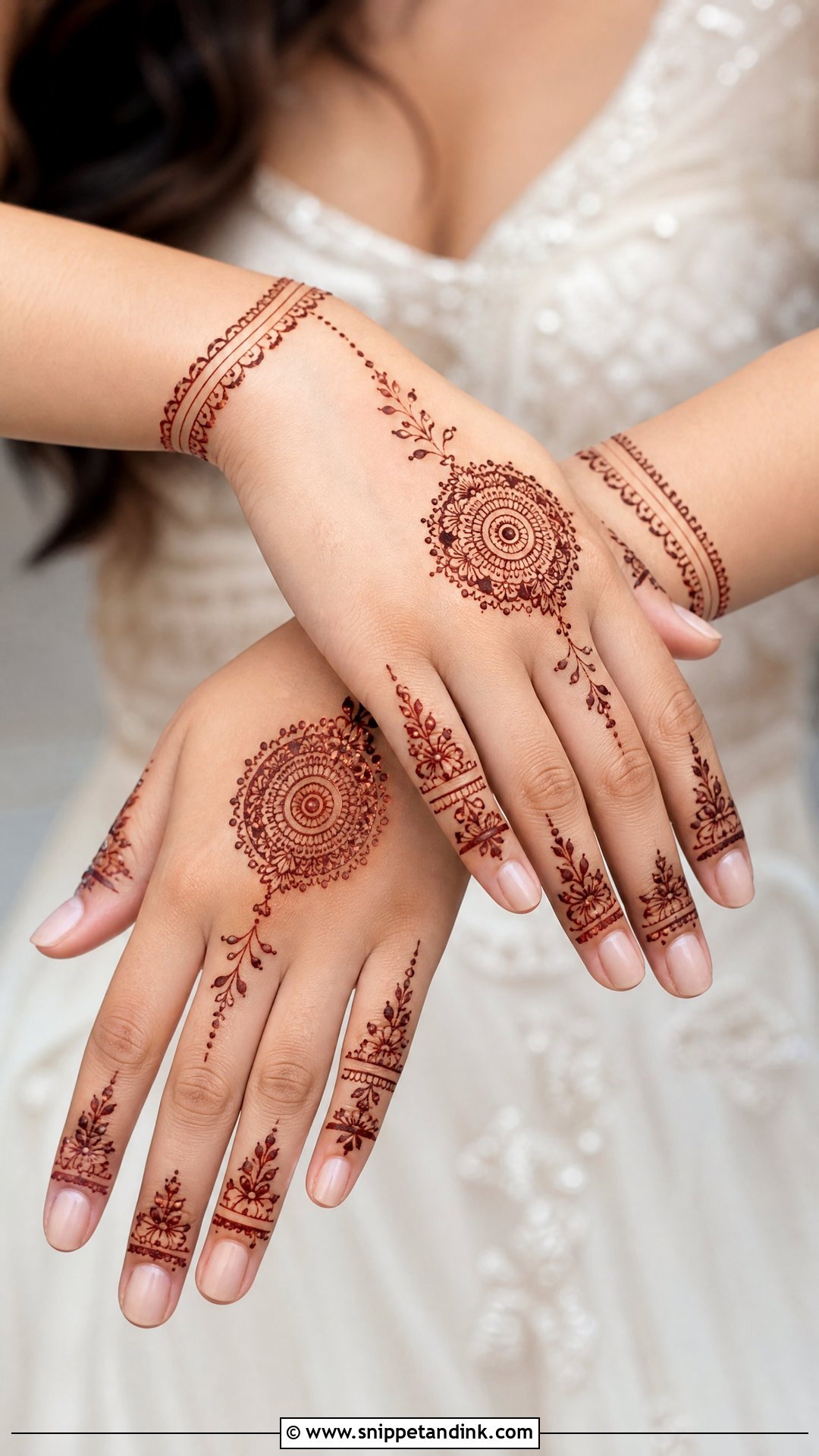
Minimal doesn’t mean unfinished. A good minimal bridal layout has one well-placed central motif, fully decorated fingers and a neat wrist border, and nothing else competing. The bare skin makes the stain look crisp. I suggest this for civil ceremonies, intimate weddings and brides who’ve never worn henna and aren’t sure about heavy coverage. A tiny hidden initial or date keeps it personal.
8. Heavy Bridal Back Hand Mehndi Design
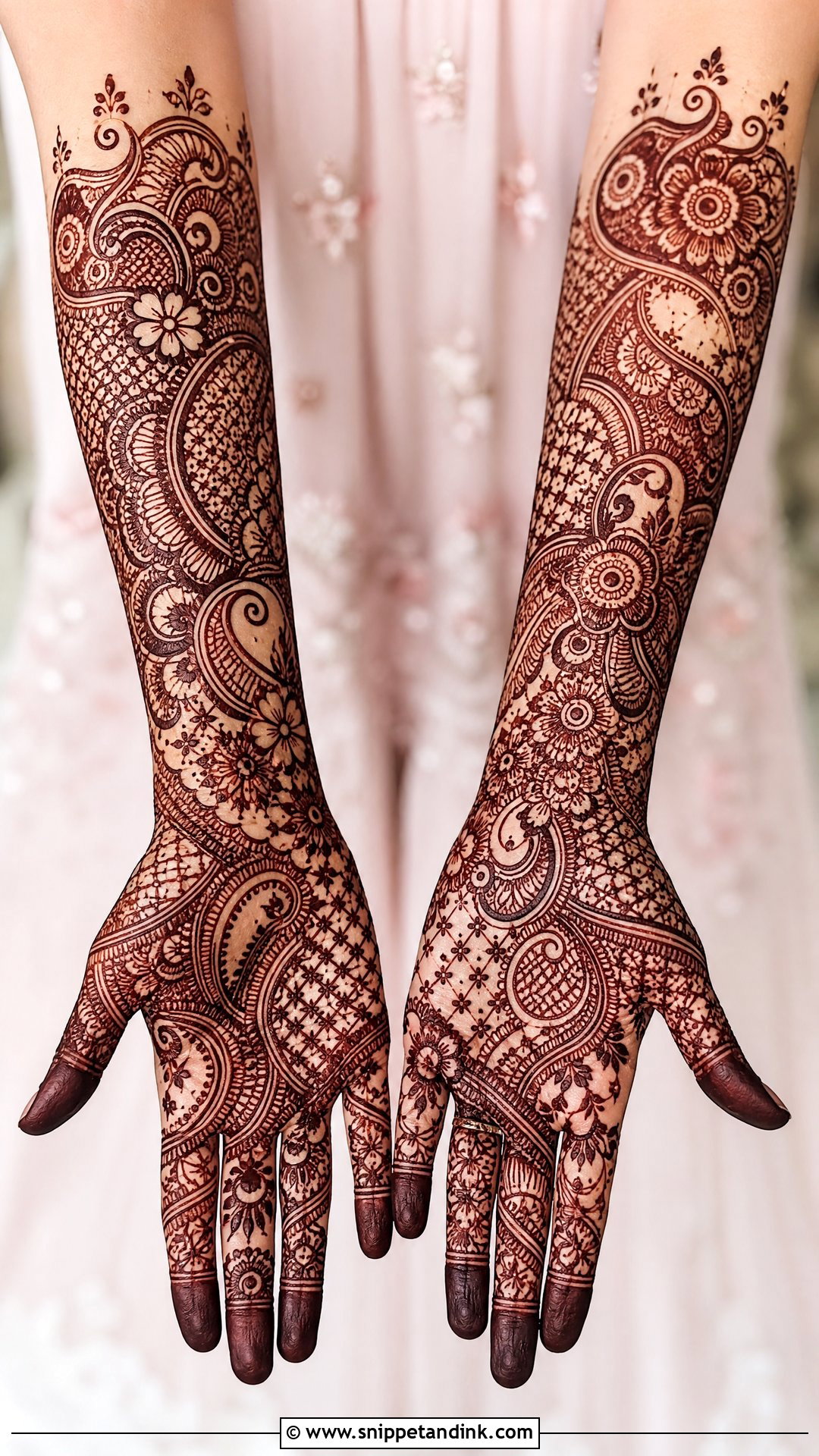
Dense, dramatic and traditional, heavy work leaves almost no bare skin: layered paisleys, peacock feathers, jaali sections, grids and wide cuffs. What keeps it from looking cluttered is outline weight. I draw the major motifs with a thicker line, then keep the fillers consistent and fine. Expect this to take a long sitting, and plan your meal and bathroom breaks around it. A deep maroon stain makes this layout look rich; a pale stain makes it look busy, so aftercare matters more here than anywhere.
9. Simple Bridal Back Hand Mehndi Design
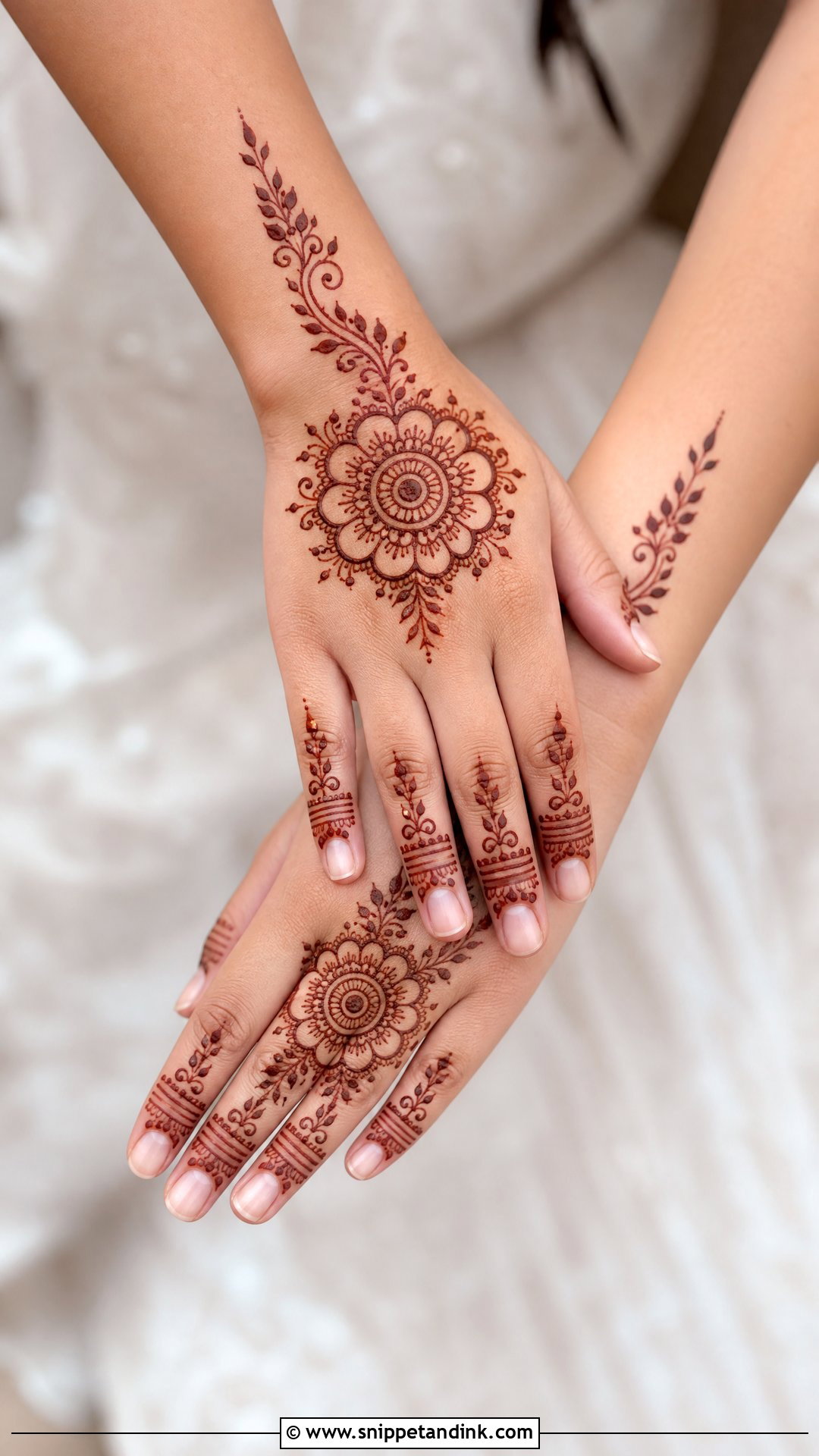
Simple can still be bridal if the layout is planned. A central flower, a soft mandala, a leafy trail to the wrist and decorated fingers already make a complete design. I make the wrist detail a bit dressier than the rest, which is the small touch that makes it look wedding-ready. It’s also what I’d draw for bridesmaids who want something that matches the bride without competing with her.
10. Modern Bridal Back Hand Mehndi Design
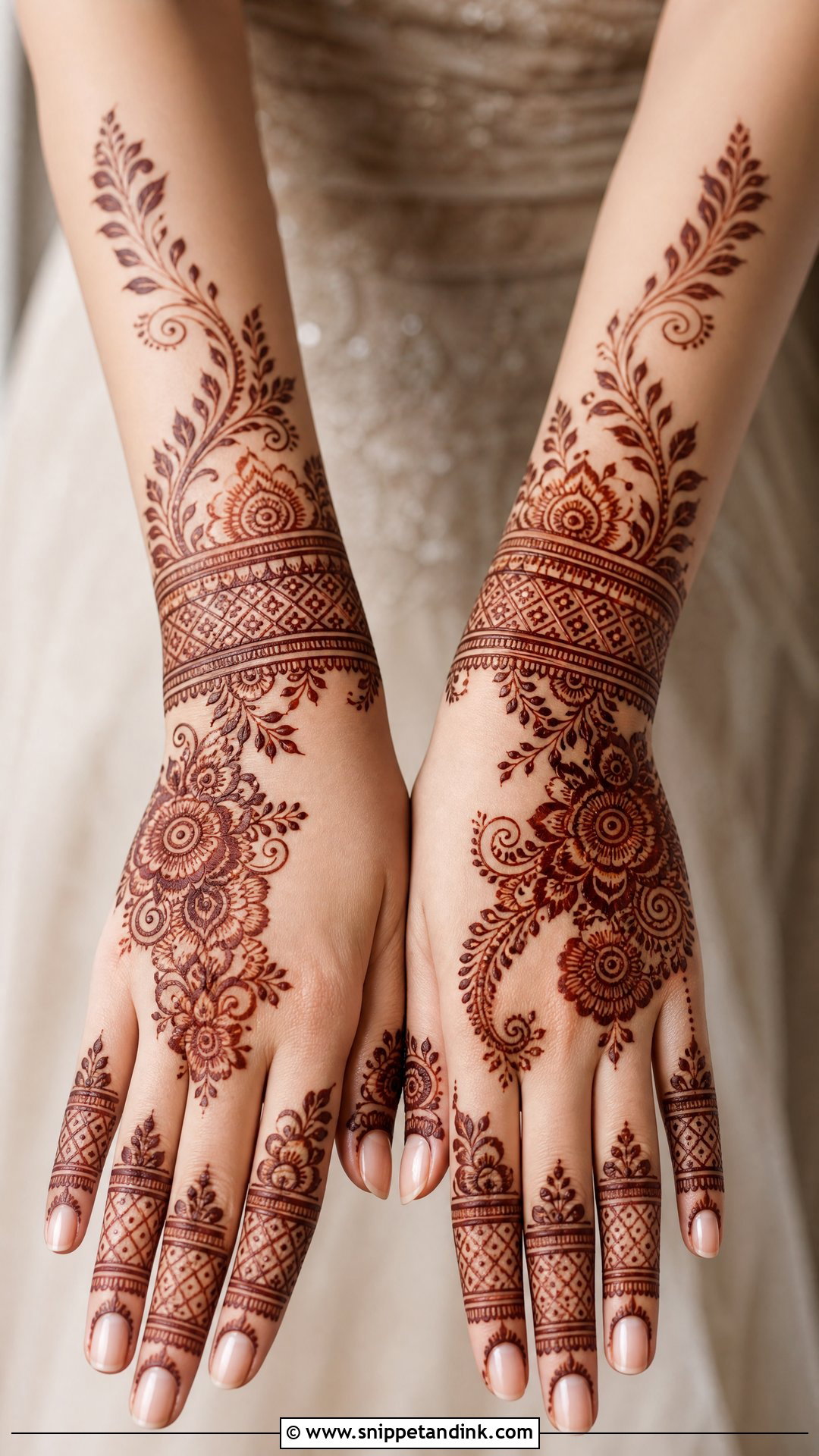
Modern layouts use asymmetry: a large flower near the thumb side, a curved trail across the hand and lighter fingers, with geometric bands or jewelry chains mixed in. The open space photographs well, especially with pastel lehengas and fusion outfits. To keep it from feeling like a party design, I add one bold focal motif and a proper wrist cuff. That’s usually enough to make it read as bridal.
11. Indo Arabic Bridal Back Hand Mehndi Design
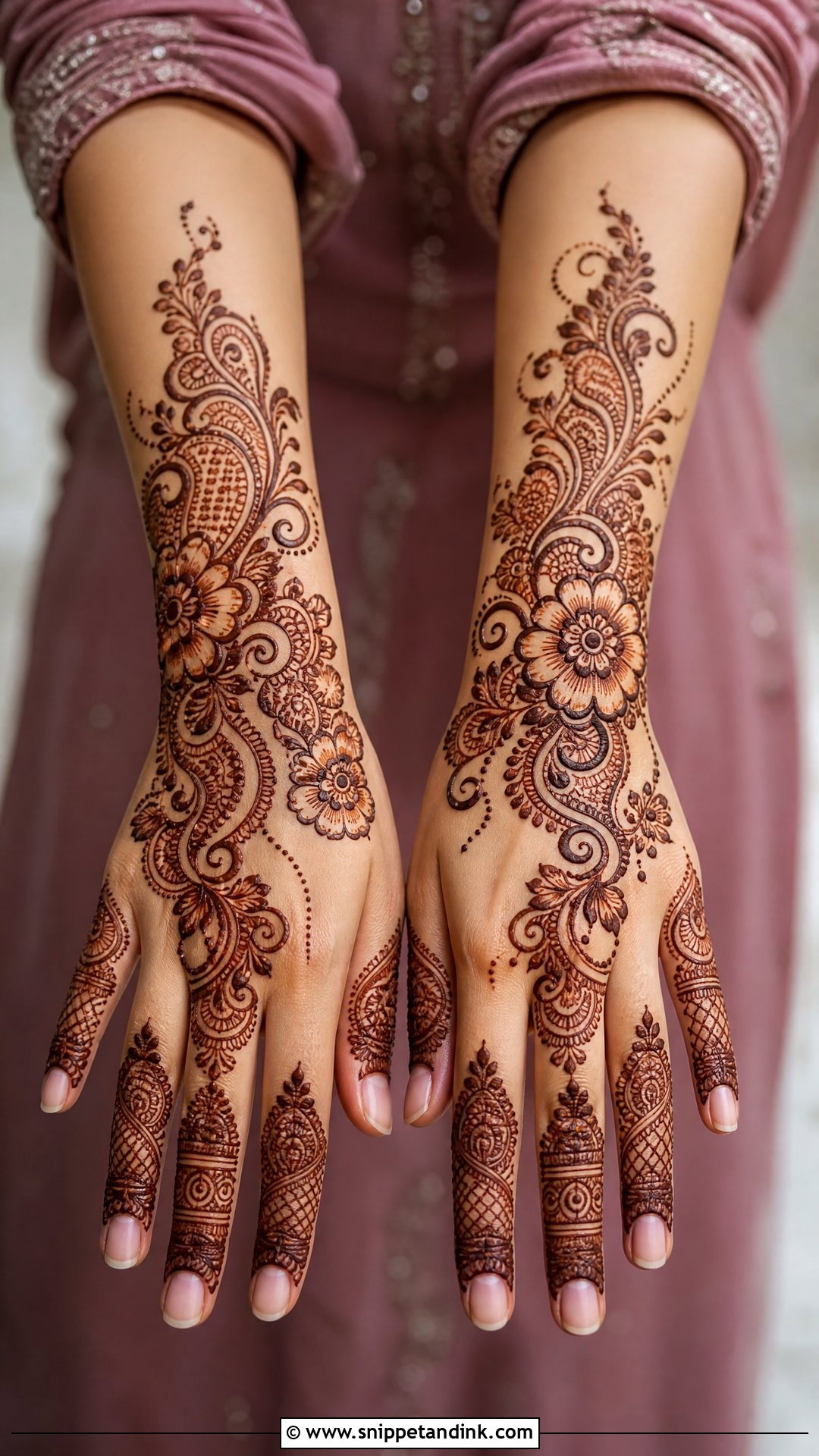
Indo-Arabic takes the diagonal flow and big flowers of Arabic work and fills the spaces between them with Indian detail: dots, vines, shaded petals and small net sections. The fingers get more detail than a classic Arabic design. It’s the layout I suggest most often to brides who can’t decide between dense and open, because it sits right in the middle and suits nearly every function from mehndi night to reception.
12. Floral Bridal Back Hand Mehndi Design
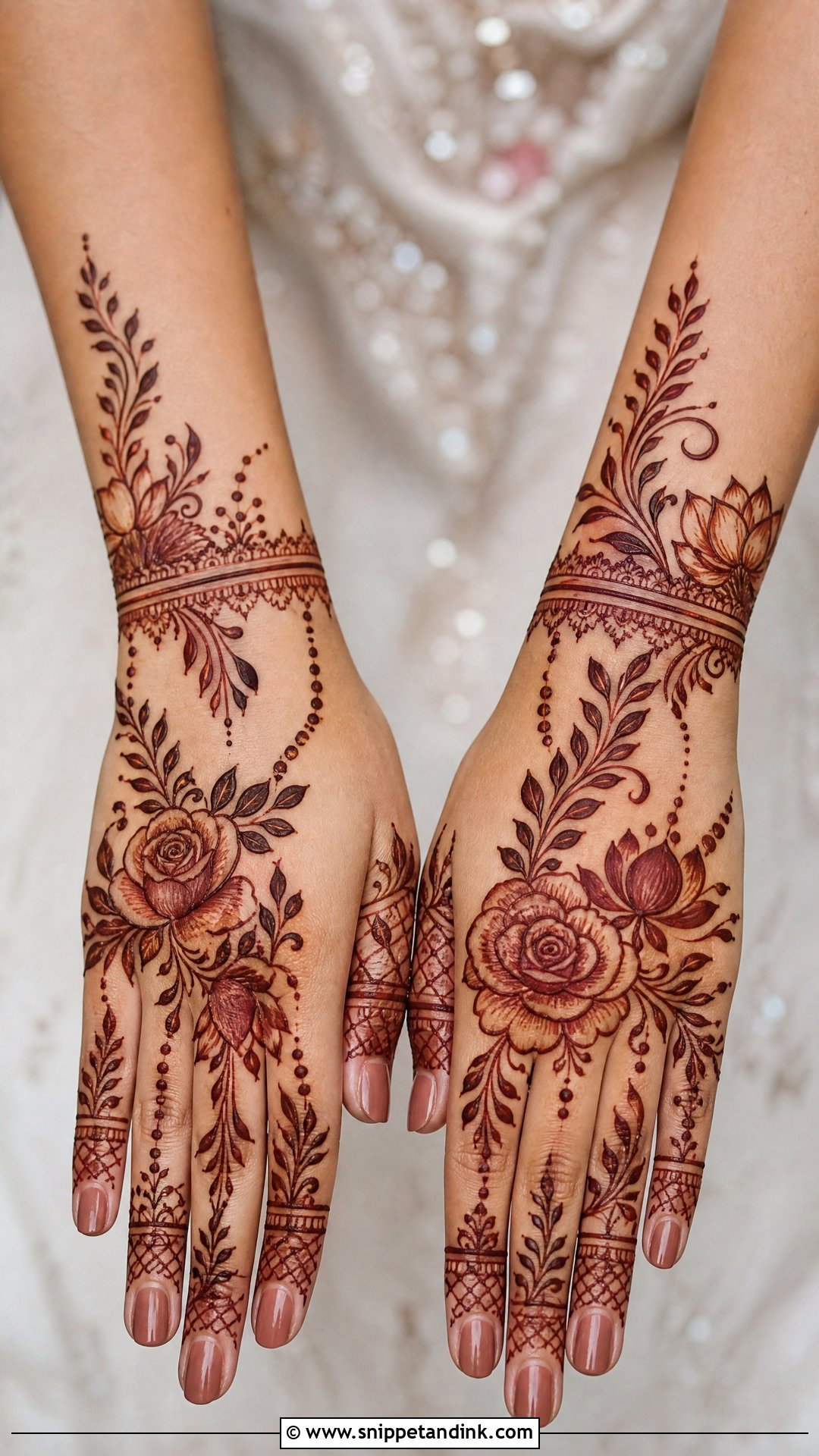
Roses, lotus, daisies or mixed clusters can carry a whole back hand on their own, as long as they’re joined by wrist bands, finger vines and small fillers. Scale matters: a large floral center suits broad hands, while scattered smaller flowers suit narrow ones. I shade inside the petals, which gives depth and makes the stain look darker than it is. Pastel outfits and daytime ceremonies are where florals look best.
13. Rose Bridal Back Hand Mehndi Design
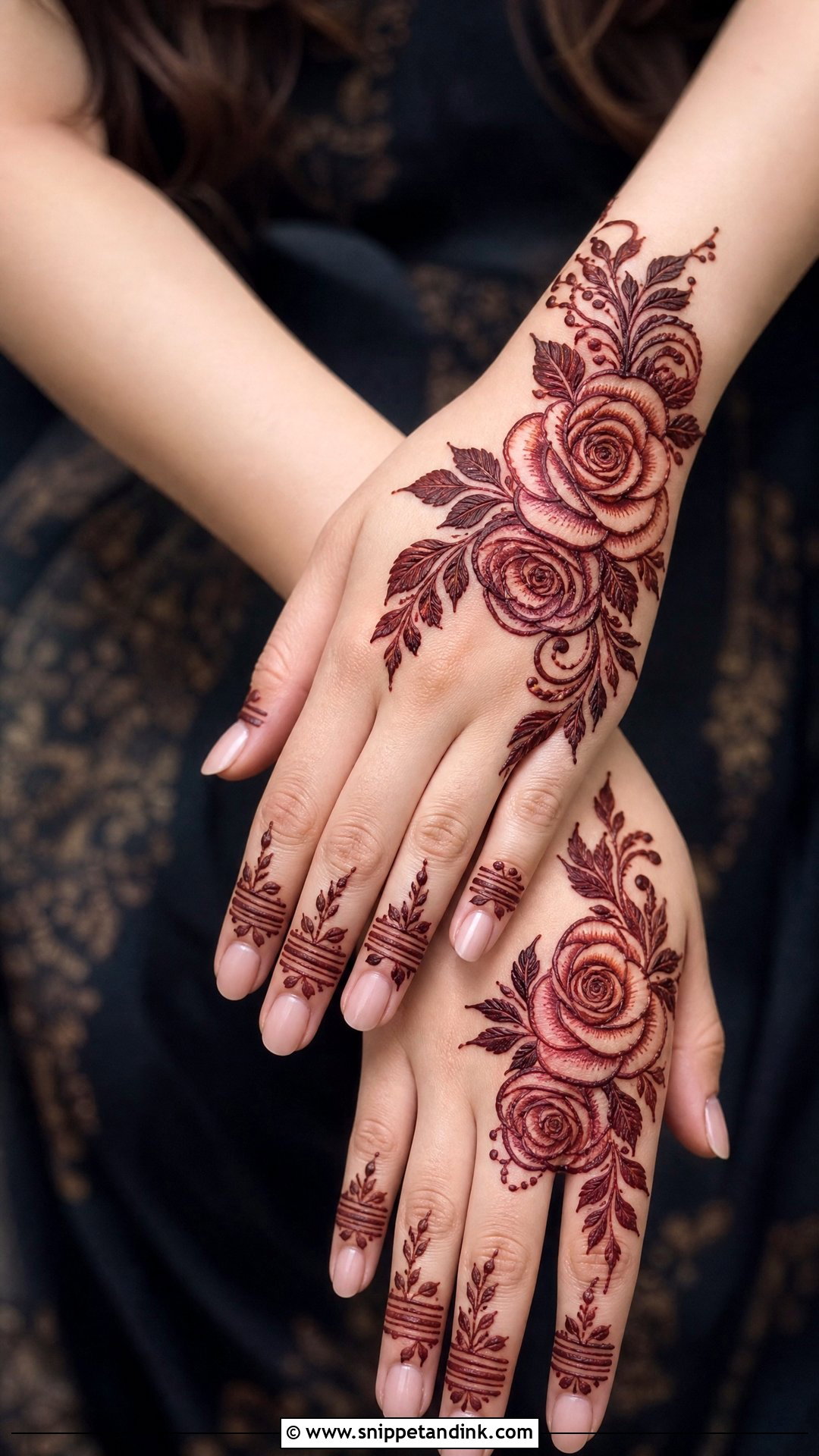
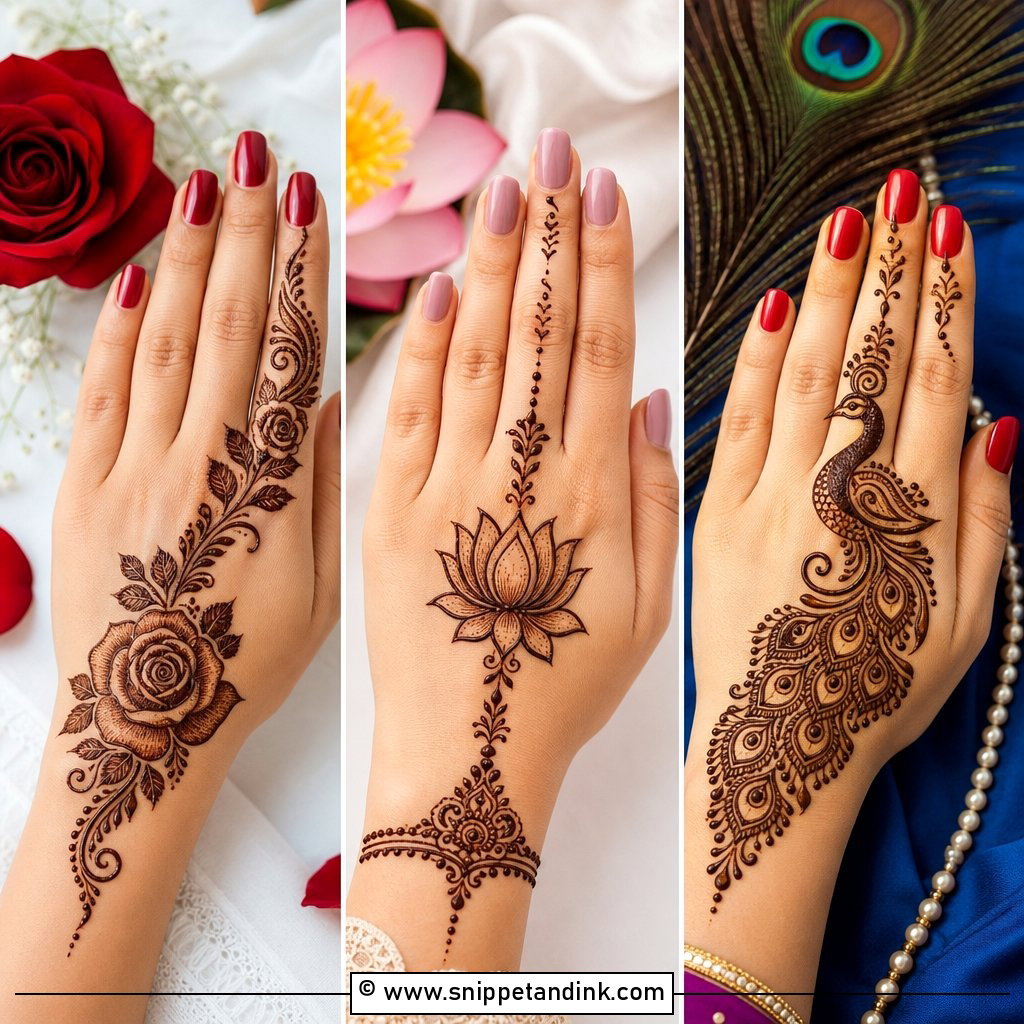
Rose petals have strong curves, which makes them read clearly even from a distance. I usually place one large rose near the center and trail smaller ones toward the wrist and fingers, with stems, leaves and dots tying it together. Double outlines and shaded petals give it definition. The rose frames the ring nicely, and matching rosebuds with slim bands on the fingers keep the whole hand consistent.
14. Peacock Bridal Back Hand Mehndi Design
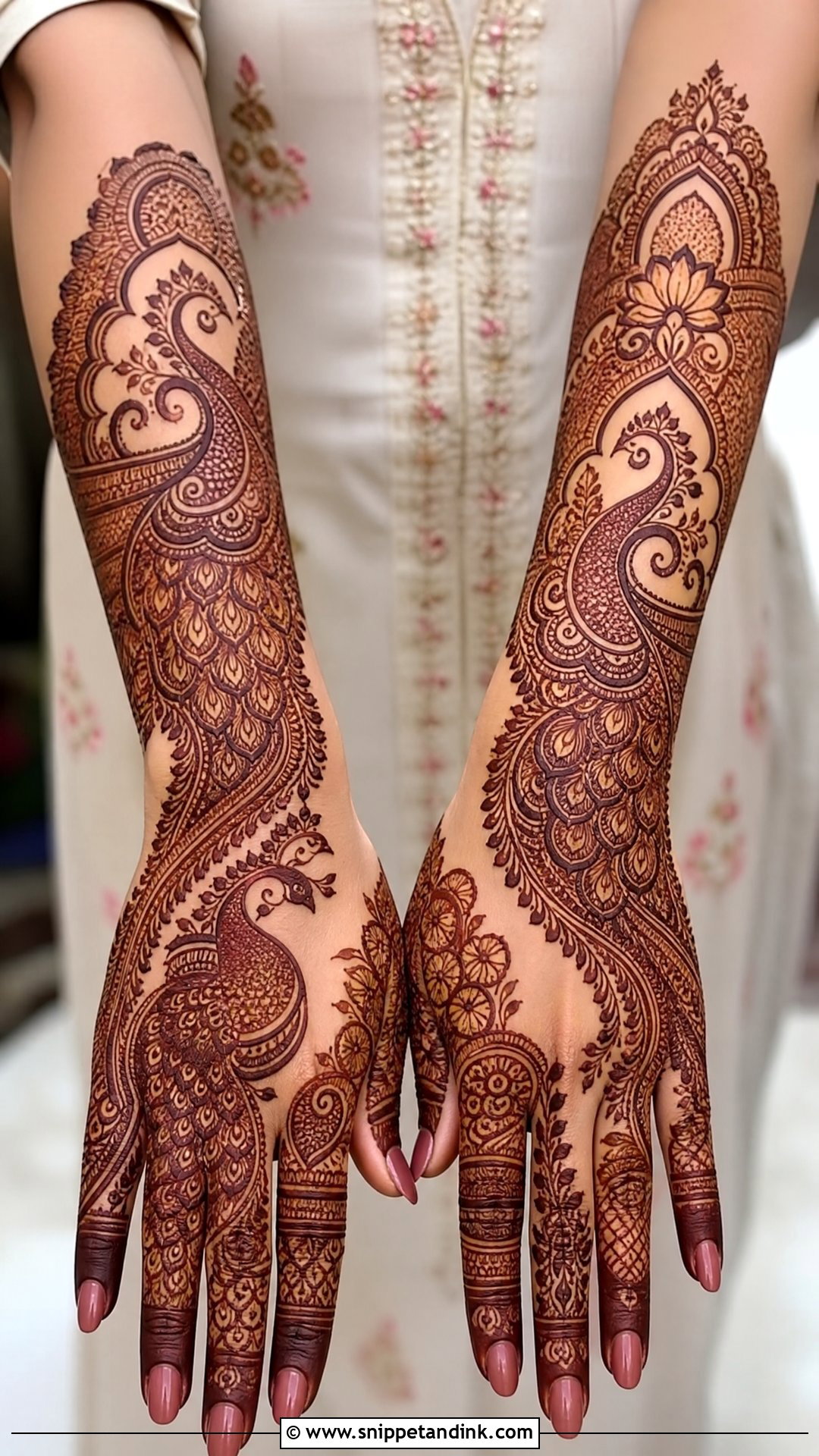
Peacocks are symbolic and very traditional, so families often ask for one specifically. The bird can sit near the wrist, along the side of the hand or inside a larger paisley layout. Its feathers are where I get to show fine linework: dots, swirls and shaded eyes. Those details need a deep stain to show, so I’d only put a detailed peacock on a bride who can leave the paste on for the full time. It pairs well with lotus motifs and classic silk or velvet outfits.
15. Paisley Bridal Back Hand Mehndi Design
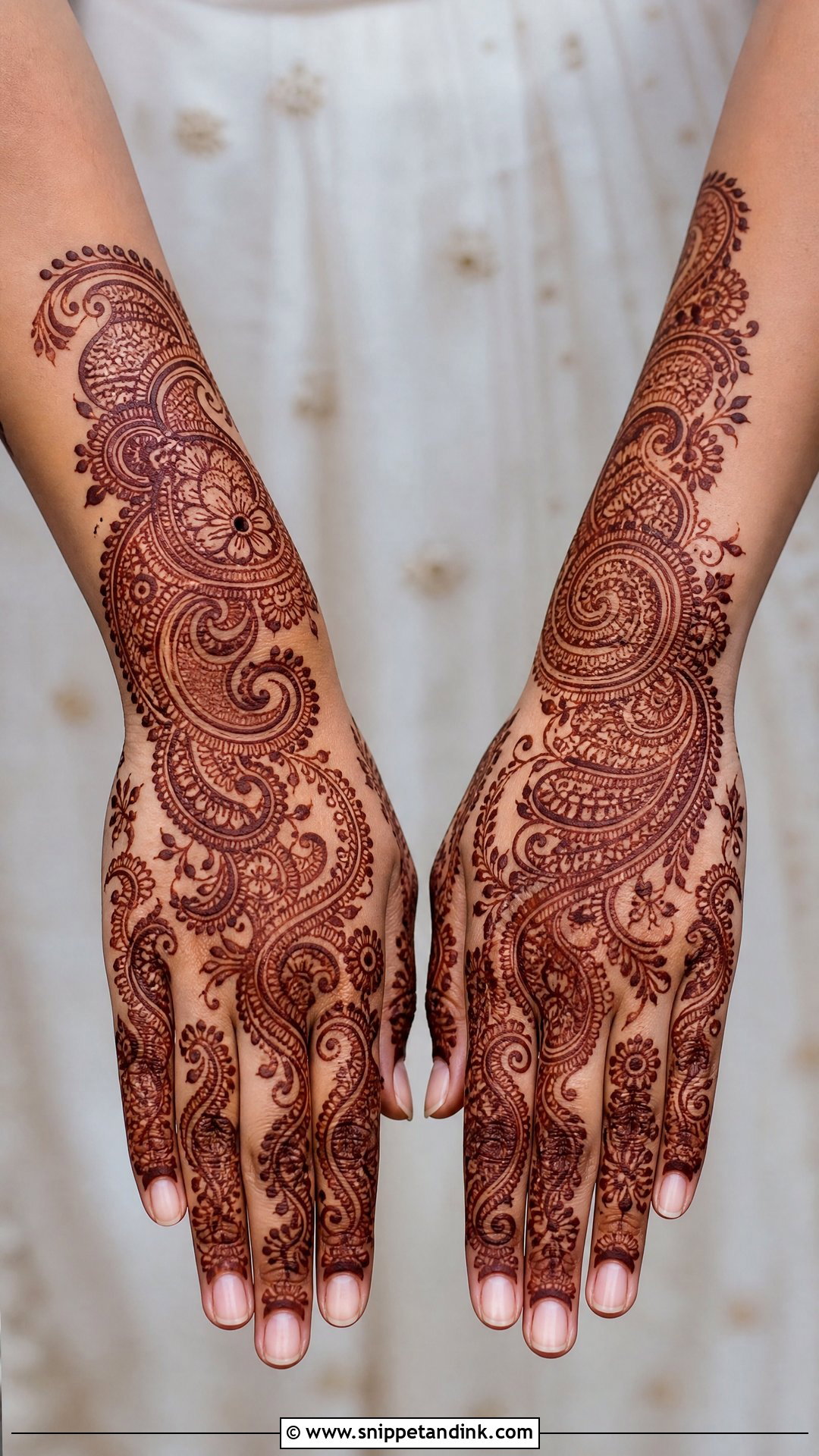
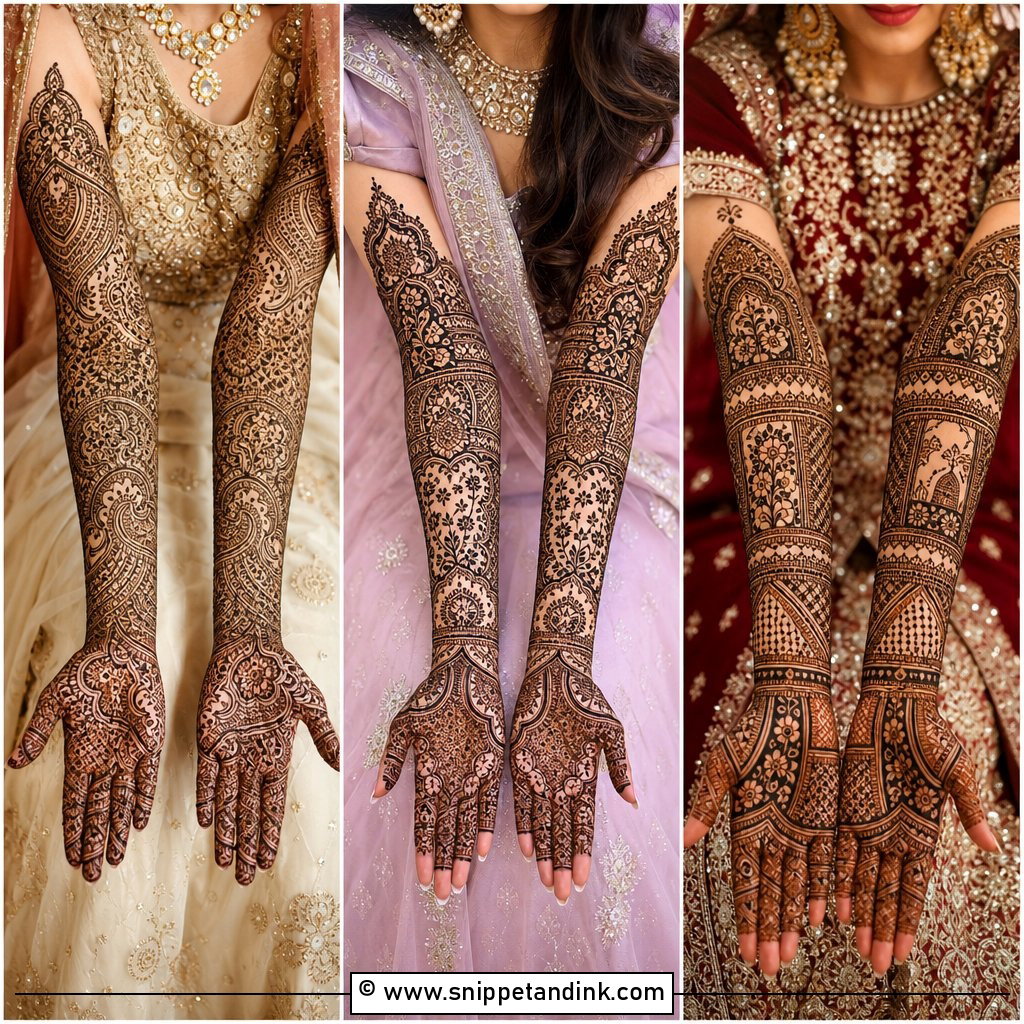
If I had to name the motif every family expects to see, it’s the paisley, and a Paisley bridal back hand mehndi design is endlessly adaptable: full coverage, a diagonal Arabic flow or a wrist-to-finger trail. I layer each paisley with small flowers, dots and leaves inside, so the hand looks rich without looking chaotic. The motif scales easily, which makes it suitable for every hand size. It sits naturally with Indian, Pakistani and Indo-Arabic bridal looks.
16. Lotus Bridal Back Hand Mehndi Design
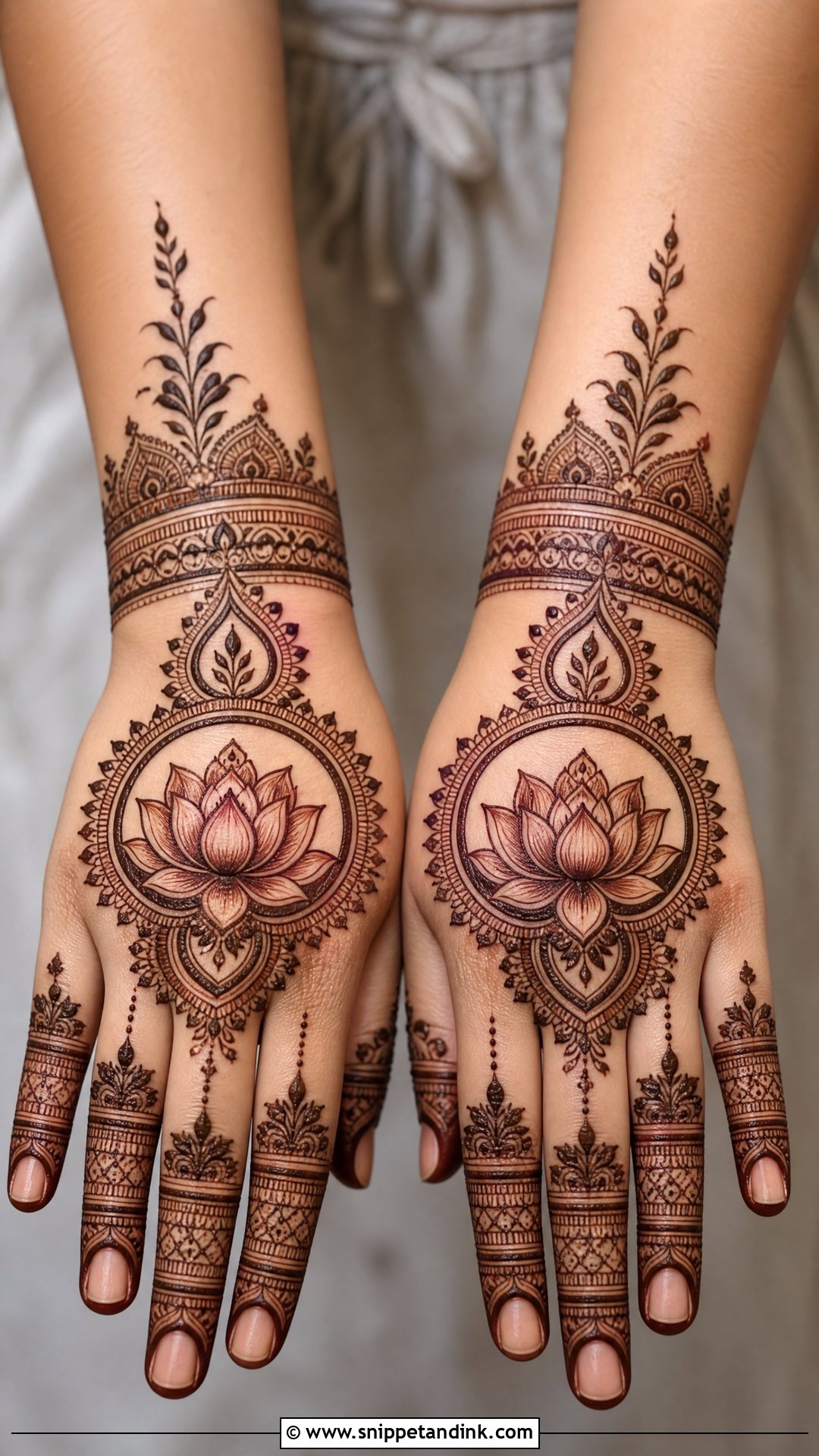
The lotus is considered auspicious, and its layered petals give a clean, structured center on the back of the hand. I surround it with circular borders and vines, or turn it into a blooming cuff at the wrist. Fine lines inside each petal give texture without crowding. This is a design I’d suggest for brides wearing temple jewelry or silk sarees, where the lotus echoes motifs already in the outfit.
17. Finger Bridal Back Hand Mehndi Design
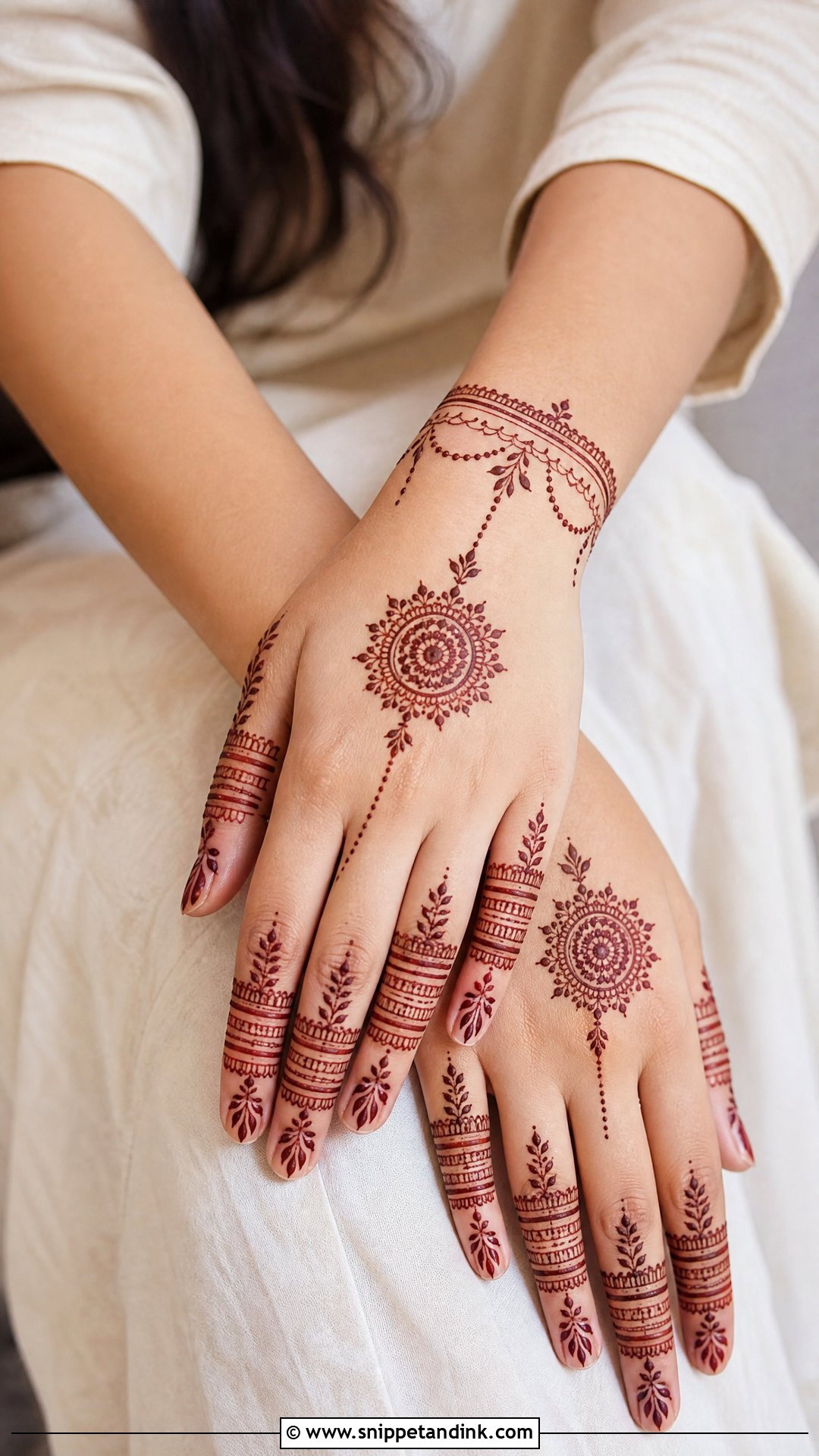
Here the fingers carry most of the work, with alternating bands, leaf vines and shaded tips, while the back of the hand gets a small mandala or a slim floral trail. I keep the finger patterns consistent from one finger to the next so it looks intentional. Rings and nail art stand out, and it’s quick to apply, which makes it useful for an engagement or reception where you want henna without a long sitting.
18. Bracelet Bridal Back Hand Mehndi Design
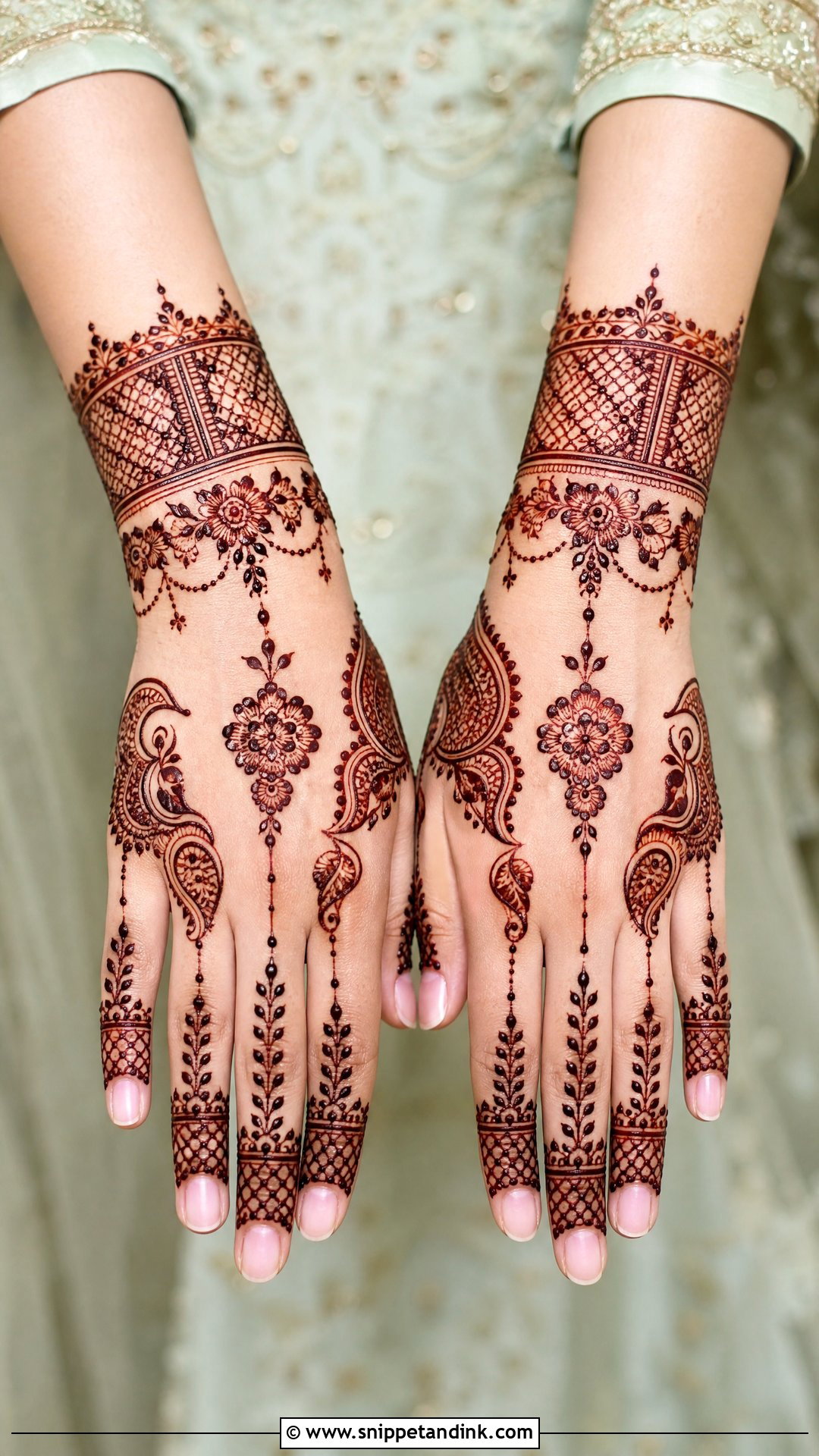
A bracelet design builds a strong cuff at the wrist, linked by small chains to a central motif on the hand, so it reads like jewelry. The cuff can hold jaali, tiny florals or beaded dots. I plan the cuff’s width around the bangles you’ll wear: if the bangles will cover it, I either move it lower toward the hand or make it narrower so it doesn’t vanish under the gold. It suits short sleeves and outfits where the wrist stays visible.
19. Hathphool Bridal Back Hand Mehndi Design
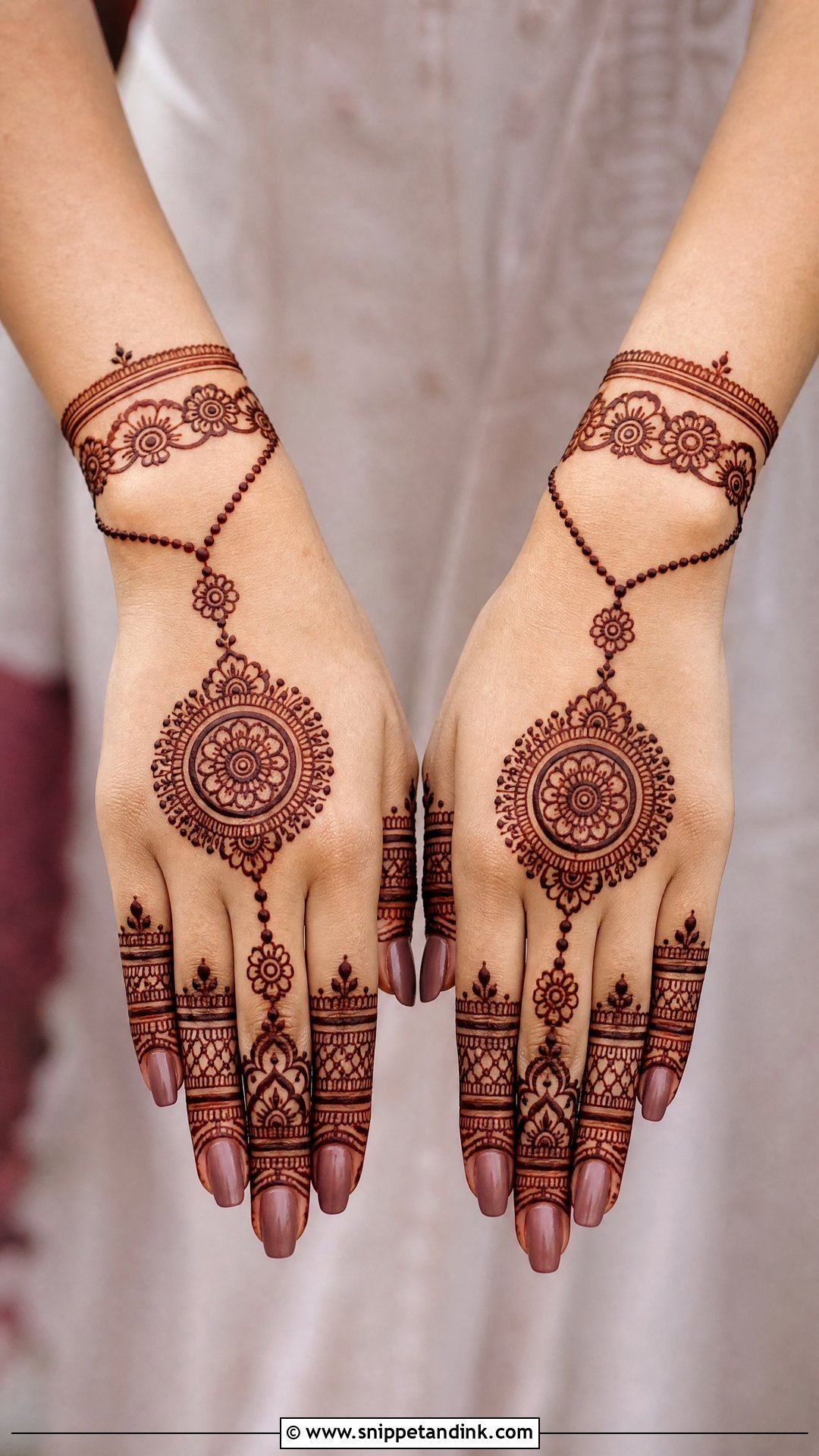
A hathphool is the traditional hand ornament, and this design draws it in henna: a central pendant motif, chain lines from wrist to fingers and a ring band on each finger. The chains have to be thin and symmetrical, with dots placed like beads, or it loses the jewelry effect. Some brides wear real hathphool jewelry on top; others use the henna version in its place for a lighter feel. Either way, it gives detail without full coverage.

20. Lace Bridal Back Hand Mehndi Design
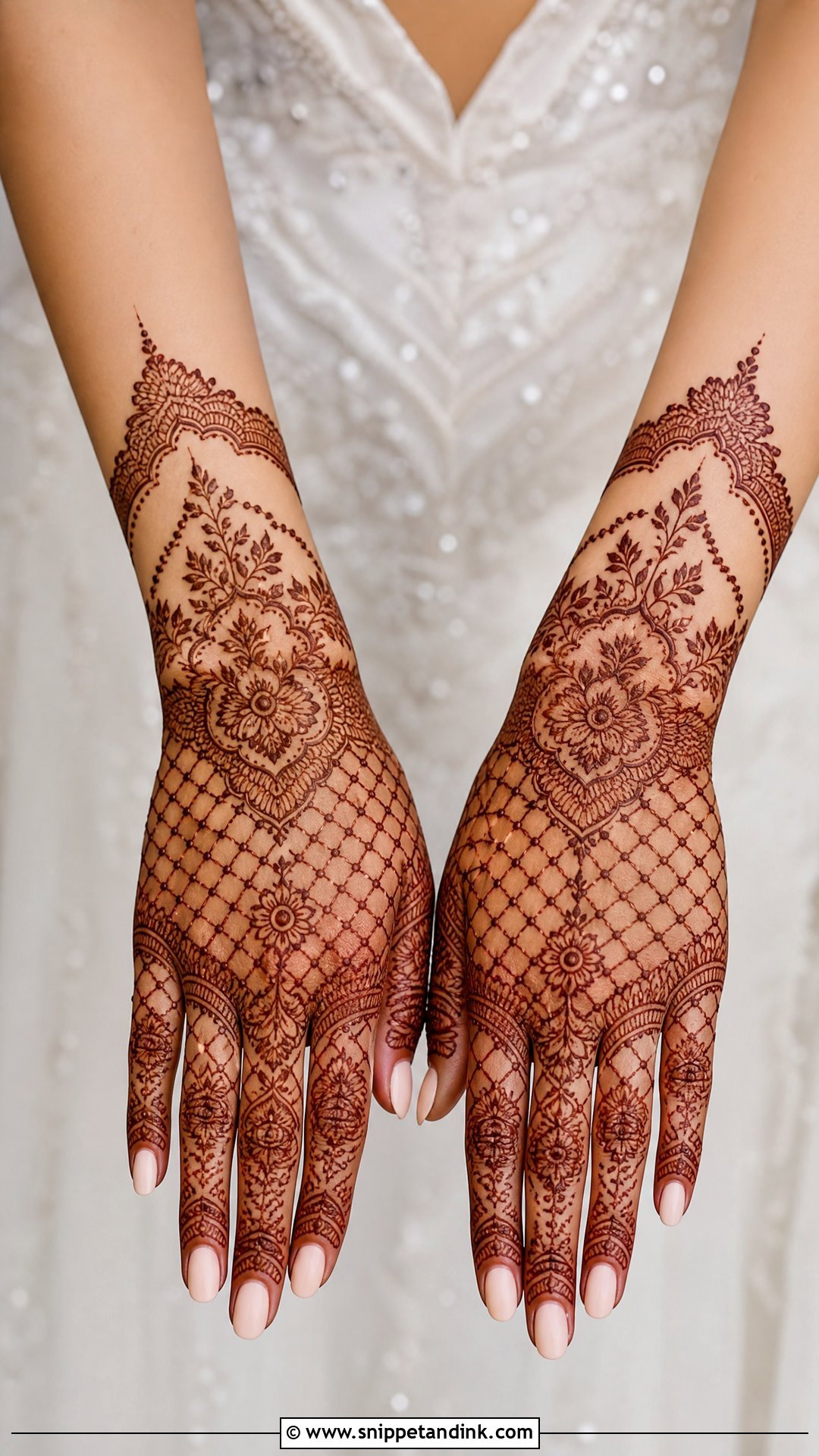
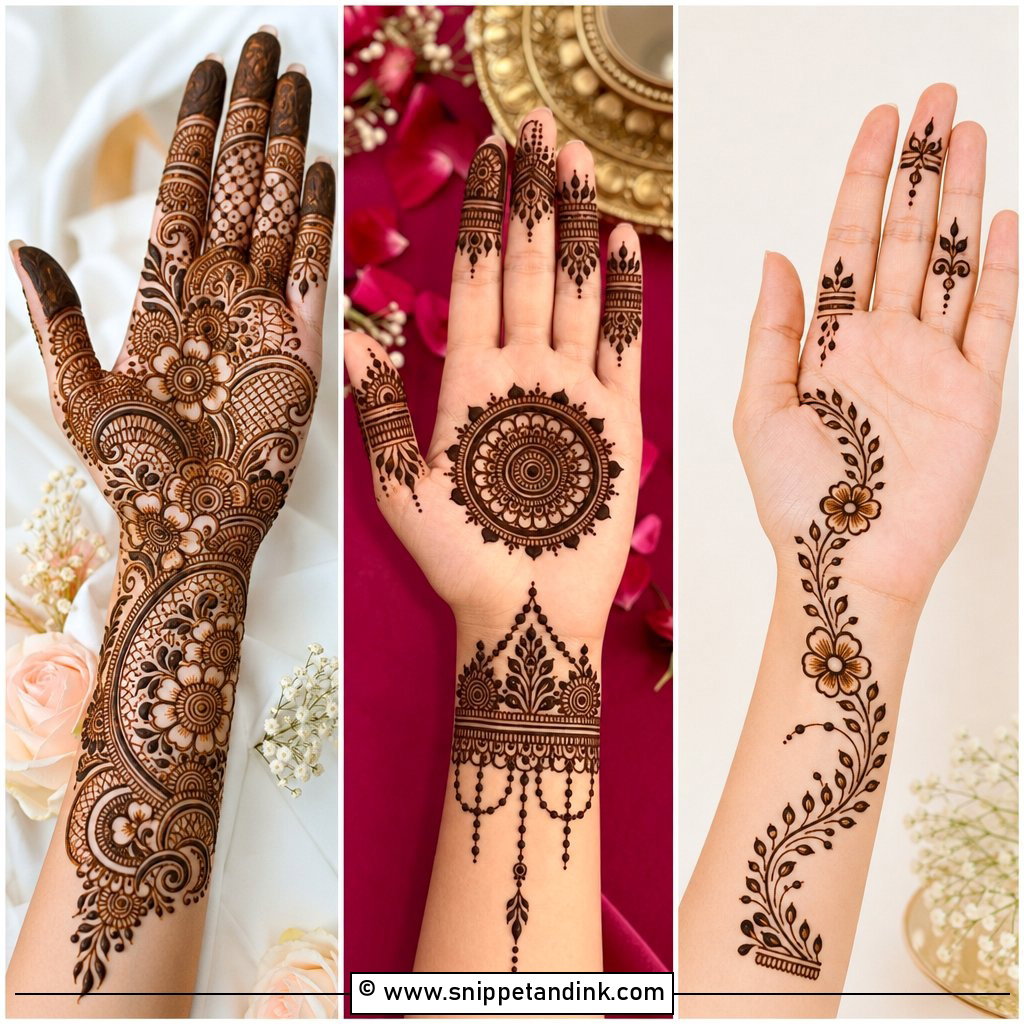
Lace mehndi relies on fine jaali, scalloped borders and slim finger patterns to mimic a glove. Precision matters more than anything else here; thin lines, even spacing and balanced borders. I add a wrist cuff and small flower clusters at the knuckles for the bridal finish, and leave little gaps of skin so the lace effect stays visible after the stain darkens. It’s a natural pairing for lace, net or organza outfits.
21. Rajasthani Bridal Back Hand Mehndi Design
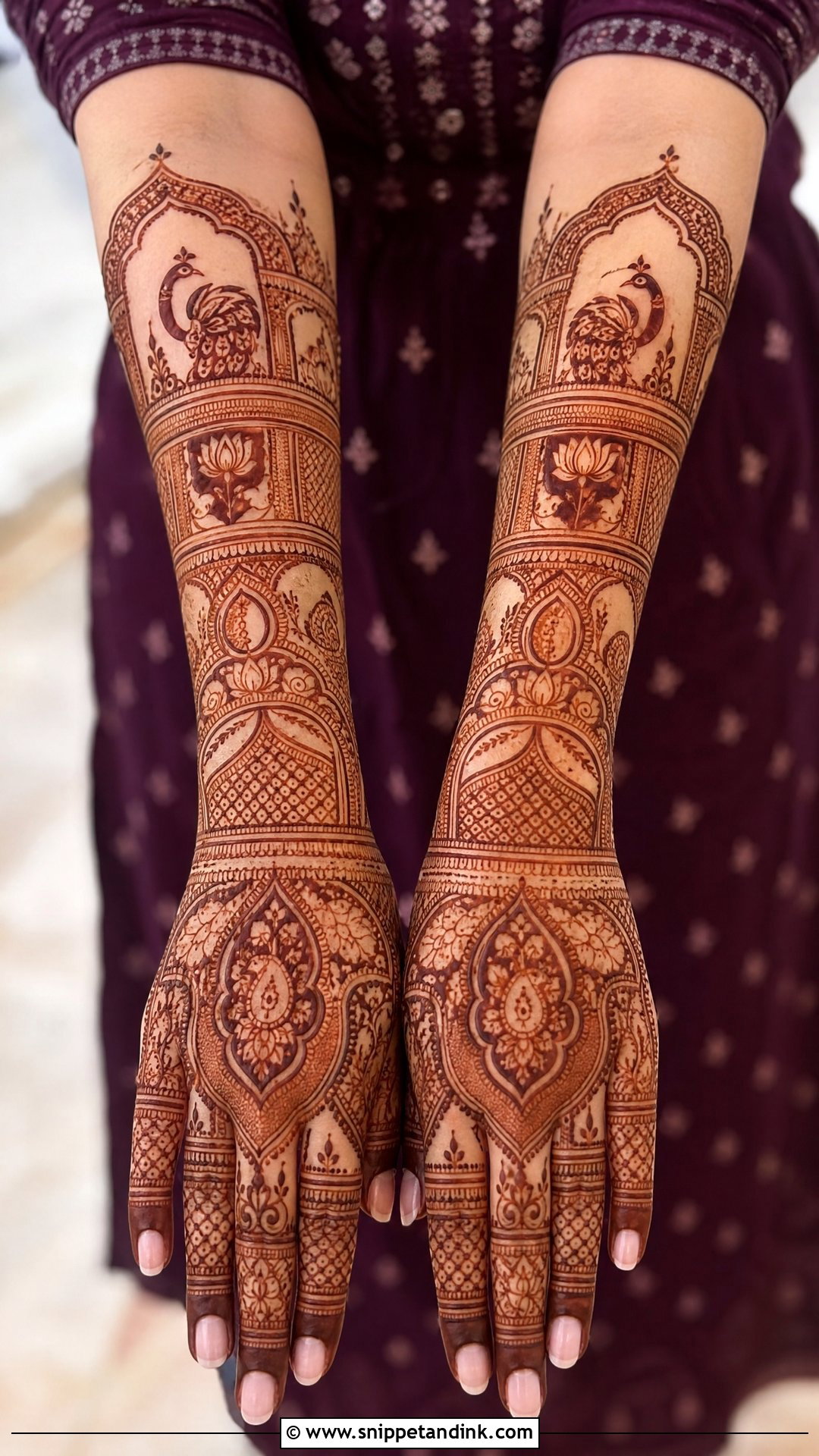
Heritage storytelling is what defines a Rajasthani bridal back hand mehndi design: peacocks, paisleys, bride and groom figures, palace arches and lotus patterns, all with dense filler work. On the back hand I place a royal arch or peacock near the center and layer bands toward the wrist and fingers. Because it’s so intricate, bold outlines around the key motifs keep it legible. It’s the right choice for a grand traditional ceremony, but it is a long sitting.
22. Moroccan Bridal Back Hand Mehndi Design
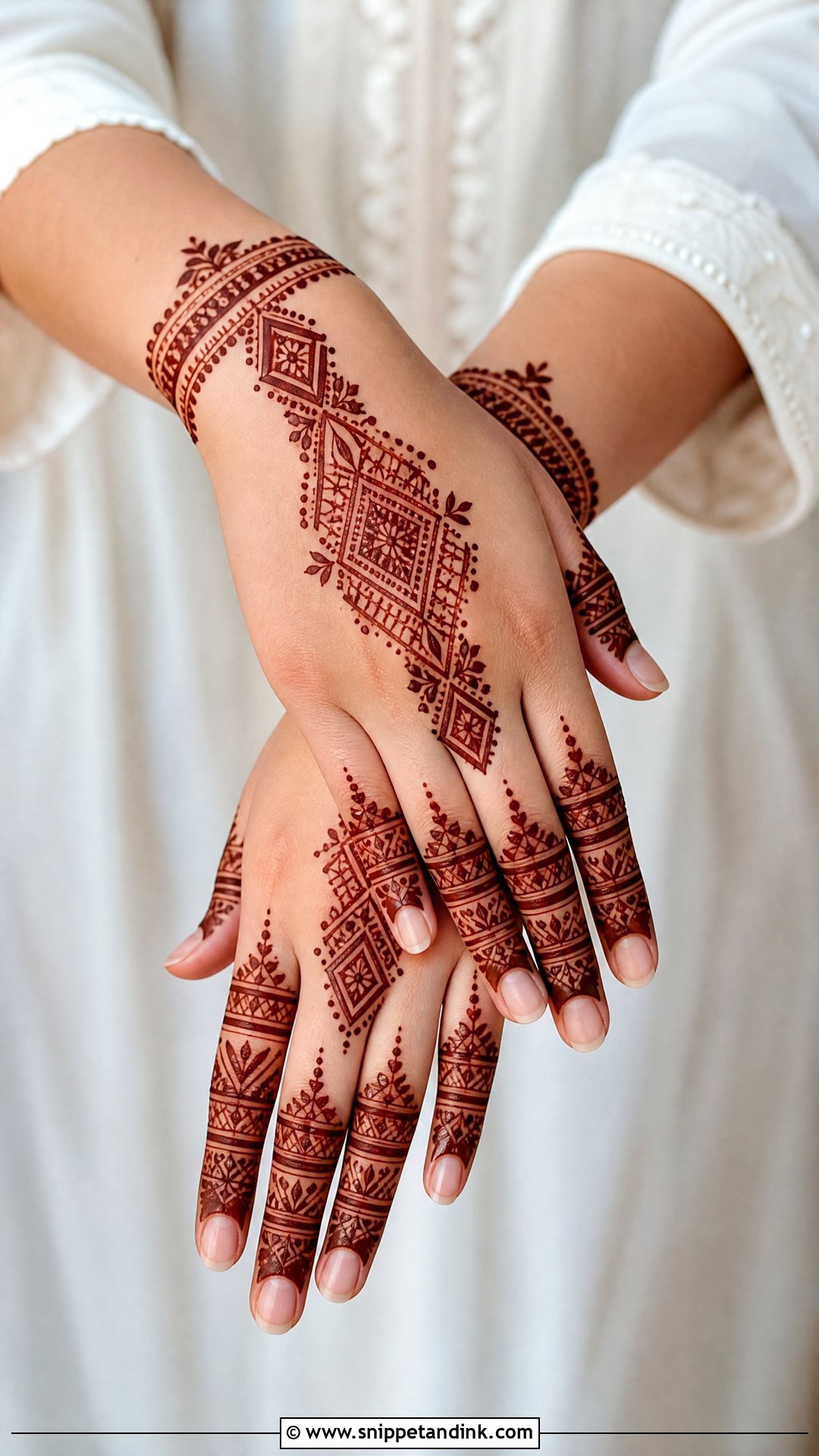
Moroccan work swaps floral curves for geometry: diamonds, triangles, grids and structured bands, often running in a vertical line from the wrist to the middle finger. I soften it for brides with small dots or leafy edges. Clean line work is non-negotiable here, because a wobble that disappears in a floral design shows clearly in a straight line. It suits minimal bridal outfits, fusion looks and brides who like symmetry.
23. Gulf Bridal Back Hand Mehndi Design
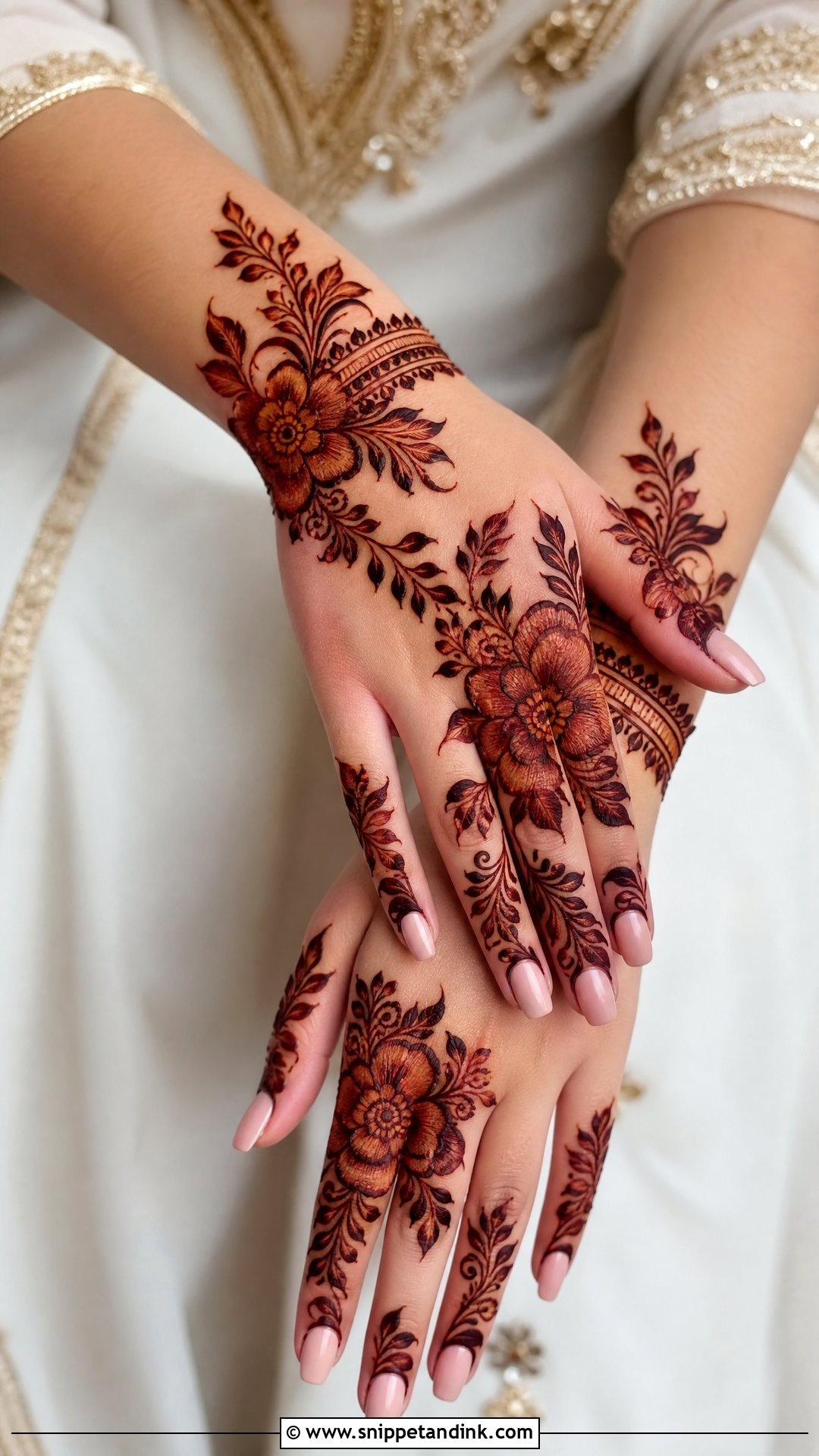
Bold florals, shaded leaves and lots of open skin are the signature of a Gulf bridal back hand mehndi design, also called Khaleeji style. The motifs are larger, so every detail shows clearly. I sweep the pattern across the hand, add fine accents on the fingers and finish with a curved bracelet border at the wrist. Long fingers and almond nails suit this style especially well, and it’s easy to photograph because nothing gets lost in dense filler.
24. Pakistani Bridal Back Hand Mehndi Design
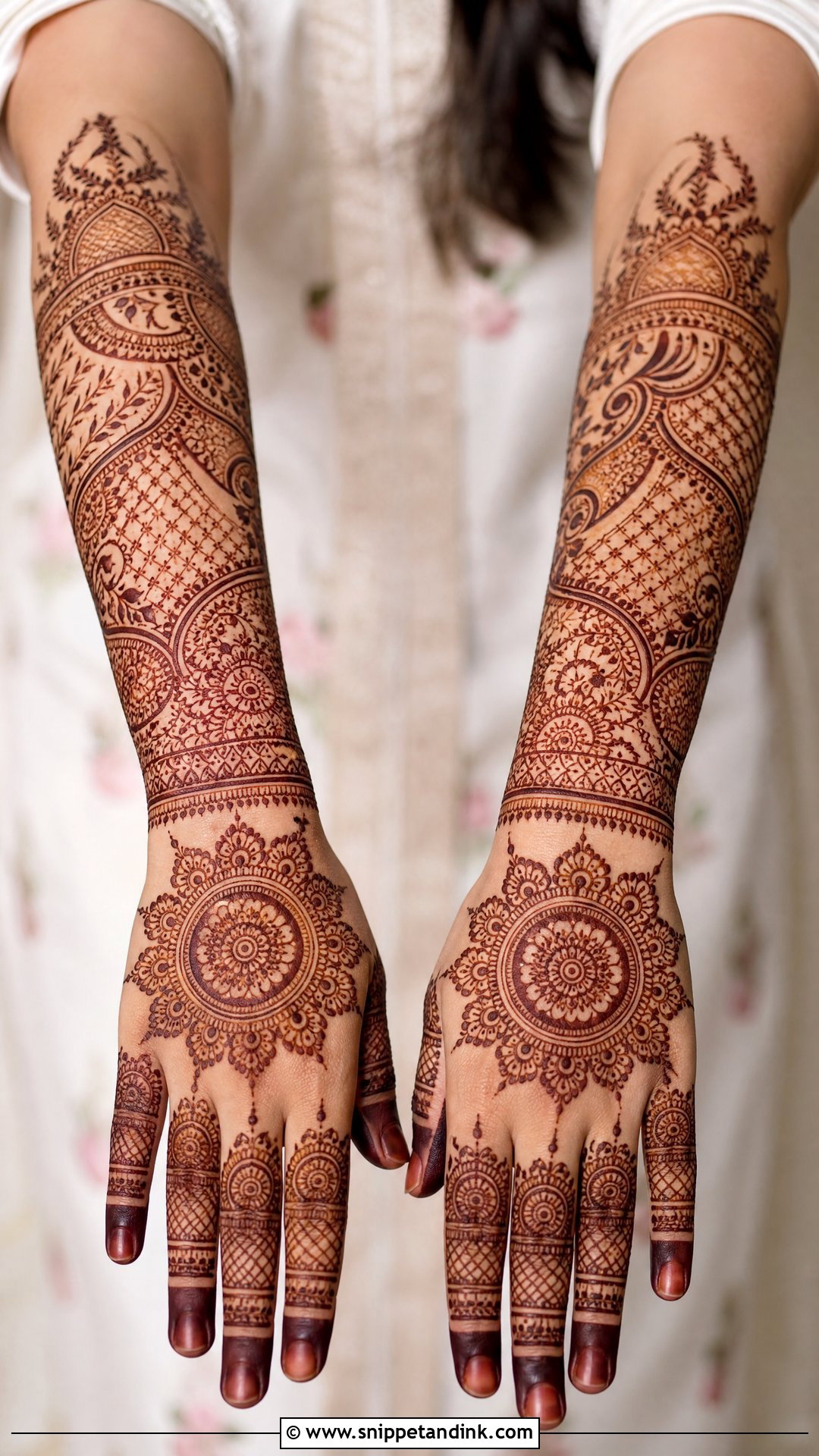
Pakistani bridal work blends dense traditional detail with flowing layouts: florals, paisleys, mandalas, jaali and decorative wrist bands, with a strong central motif and heavily detailed fingers. I mix bold outlines with fine fillers, because that contrast is what keeps the design readable once the stain darkens to its deepest. It pairs well with shararas, ghararas, lehengas and heavily embroidered dupattas.
25. Engagement Bridal Back Hand Mehndi Design
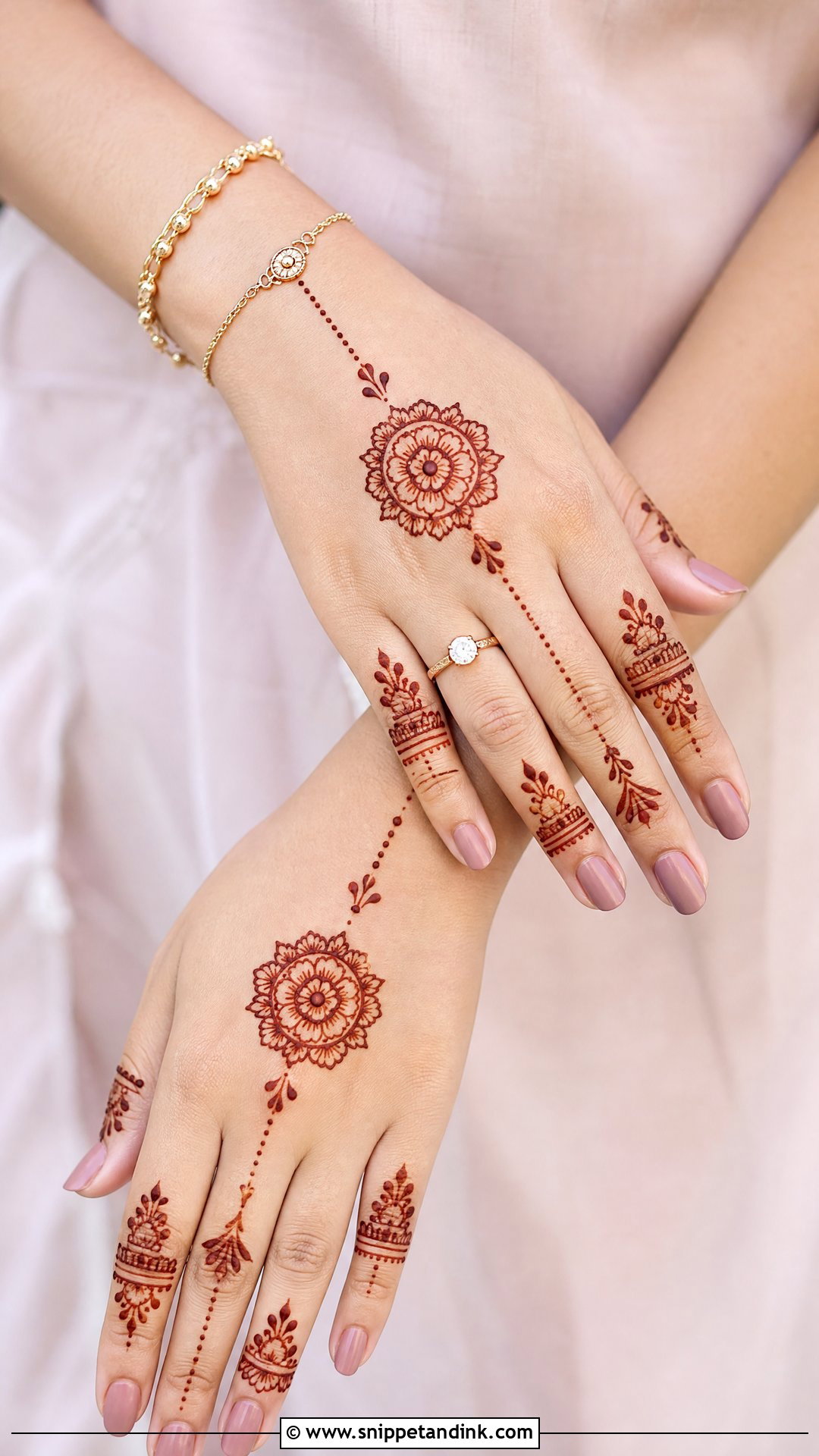
Engagement henna should feel special but lighter than the wedding-day design, especially if the two events are close together and the first stain hasn’t faded. I focus on the ring finger, keeping the skin around the ring clean and framed so the ring photos aren’t cluttered. A central floral or mandala, finger details and a soft bracelet at the wrist are enough. Initials or a small date add a personal touch.
26. Reception Bridal Back Hand Mehndi Design
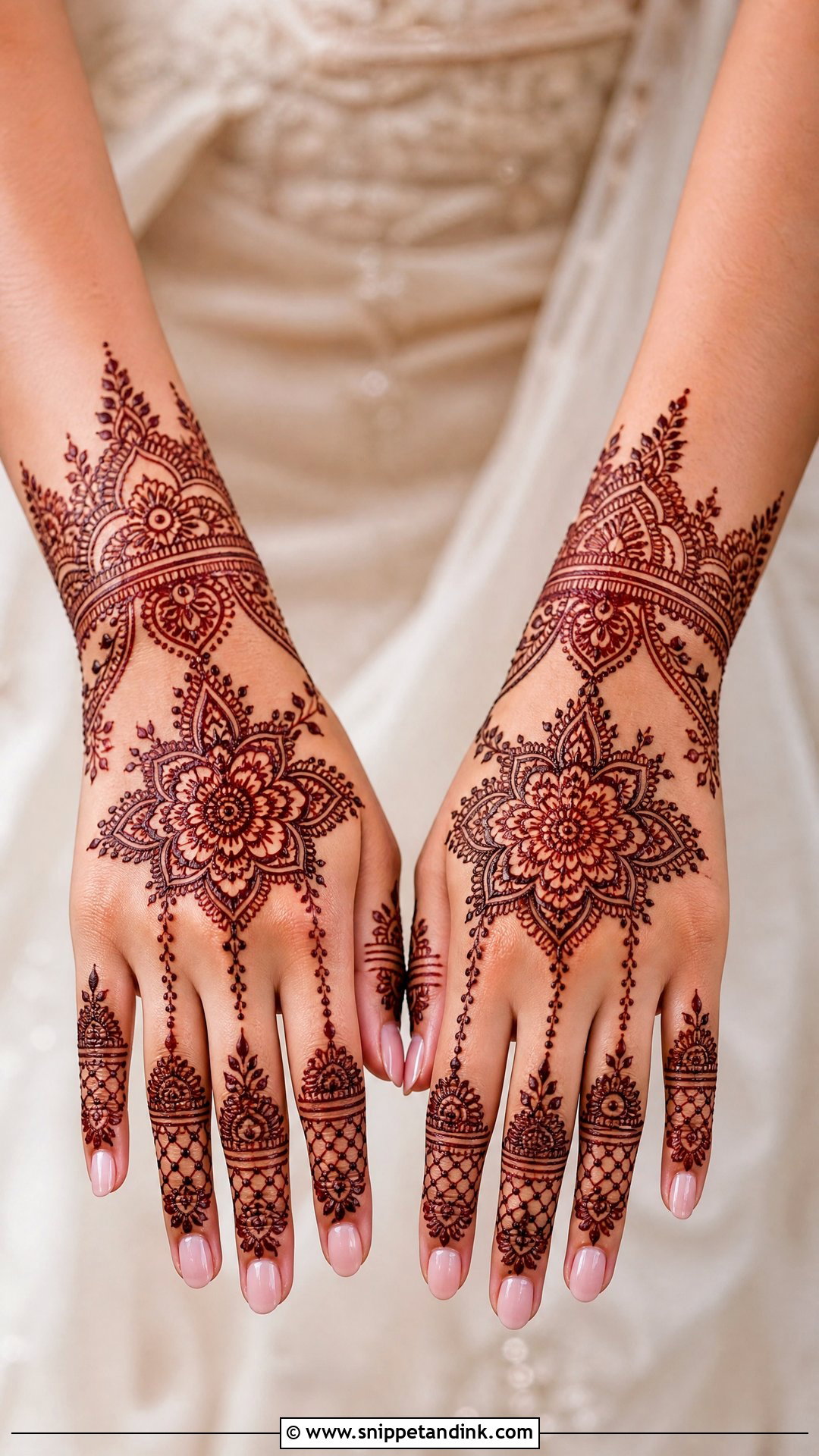
For the reception, brides often want something cleaner than their wedding mehndi to go with a gown, fusion lehenga or saree. A jewelry pattern, lace glove or modern floral trail works well. I keep the wrist detail fine and the finger bands slim, because reception photos tend to focus on rings, bangles and sparkle, and the henna should support the jewelry rather than compete with it. Remember that if this is a separate application, the timing has to suit the stain cycle too.
27. Personalized Bridal Back Hand Mehndi Design
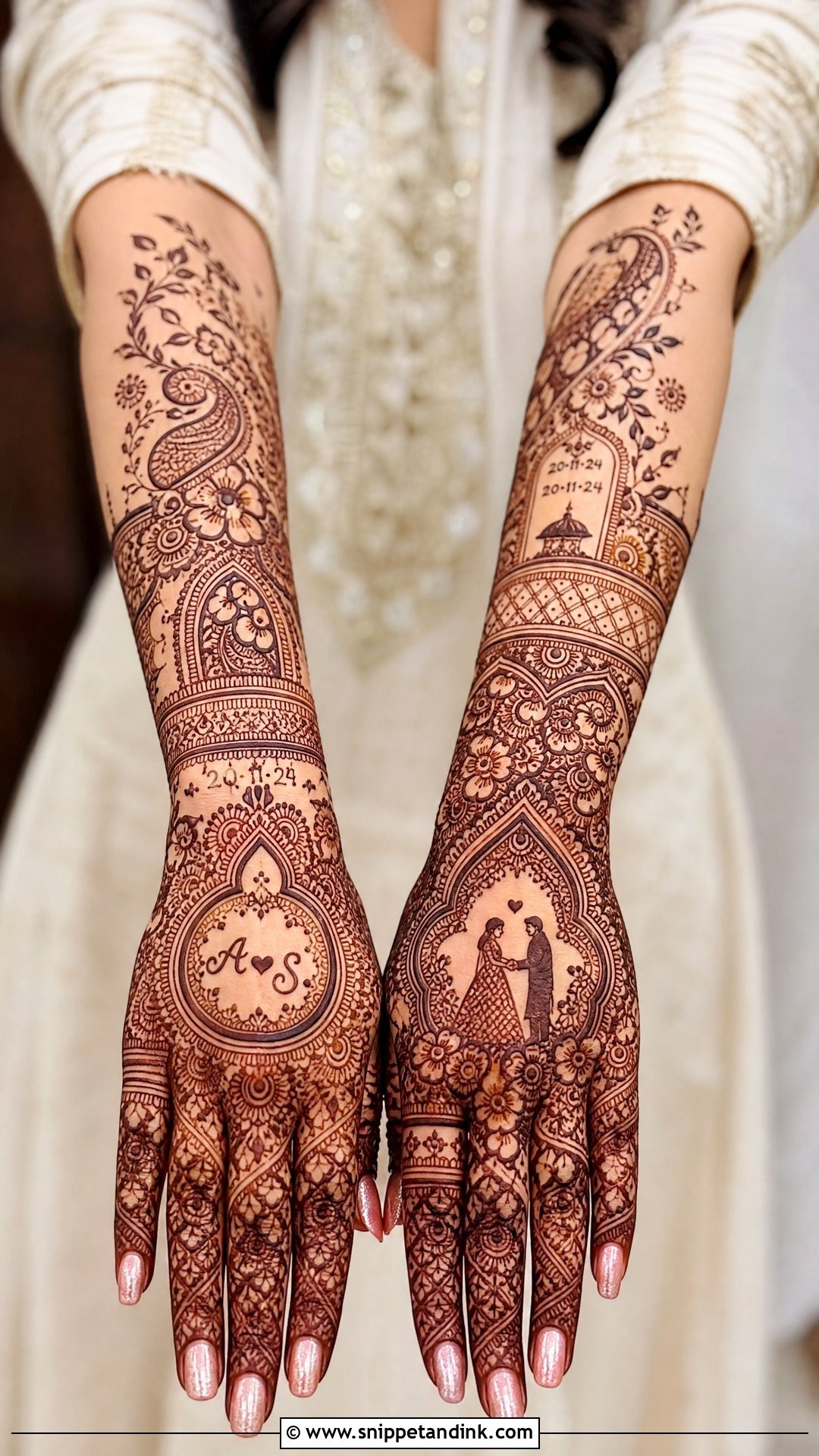
Personal details can include the groom’s initials, the date, a favorite flower or a small symbol that means something to the two of you. I hide them inside paisleys, mandalas or vines, never written on top like a label. The back hand is a good spot for them because it shows up in so many photos. Keep the main pattern balanced and the hidden details small; part of the fun is the groom searching for his initial.
28. Negative Space Bridal Back Hand Mehndi Design
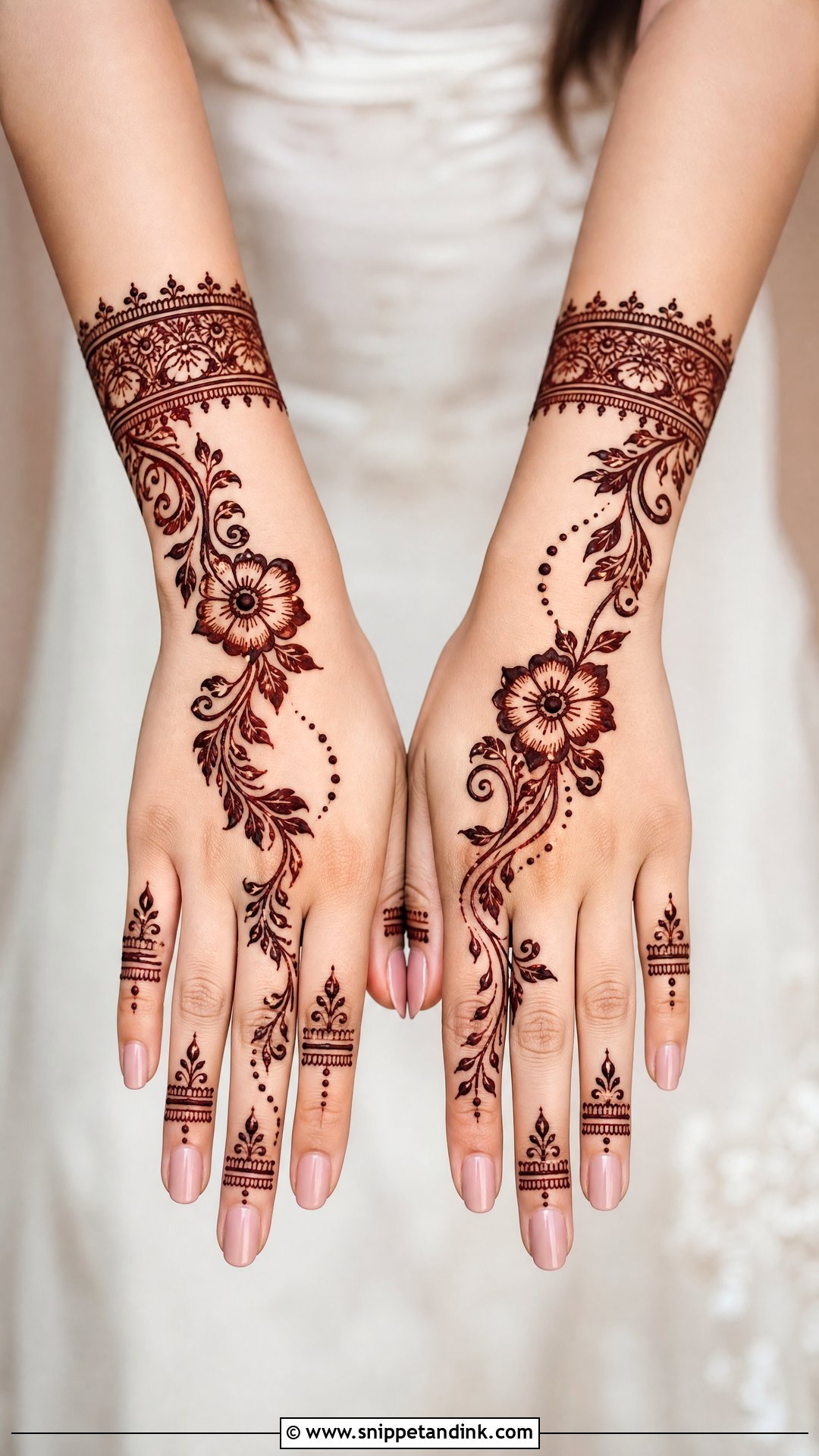
Negative space designs use bare skin as part of the pattern, so the motifs need to be bold enough to hold the shape: big flowers, curved vines, finger bands and a cuff with clear gaps between them. They read well in natural light, which makes them a good choice for outdoor and daytime weddings. I keep it bridal with detailed shading, dotted trails and one strong focal area.
29. Back Hand Bridal Mehndi With Initials
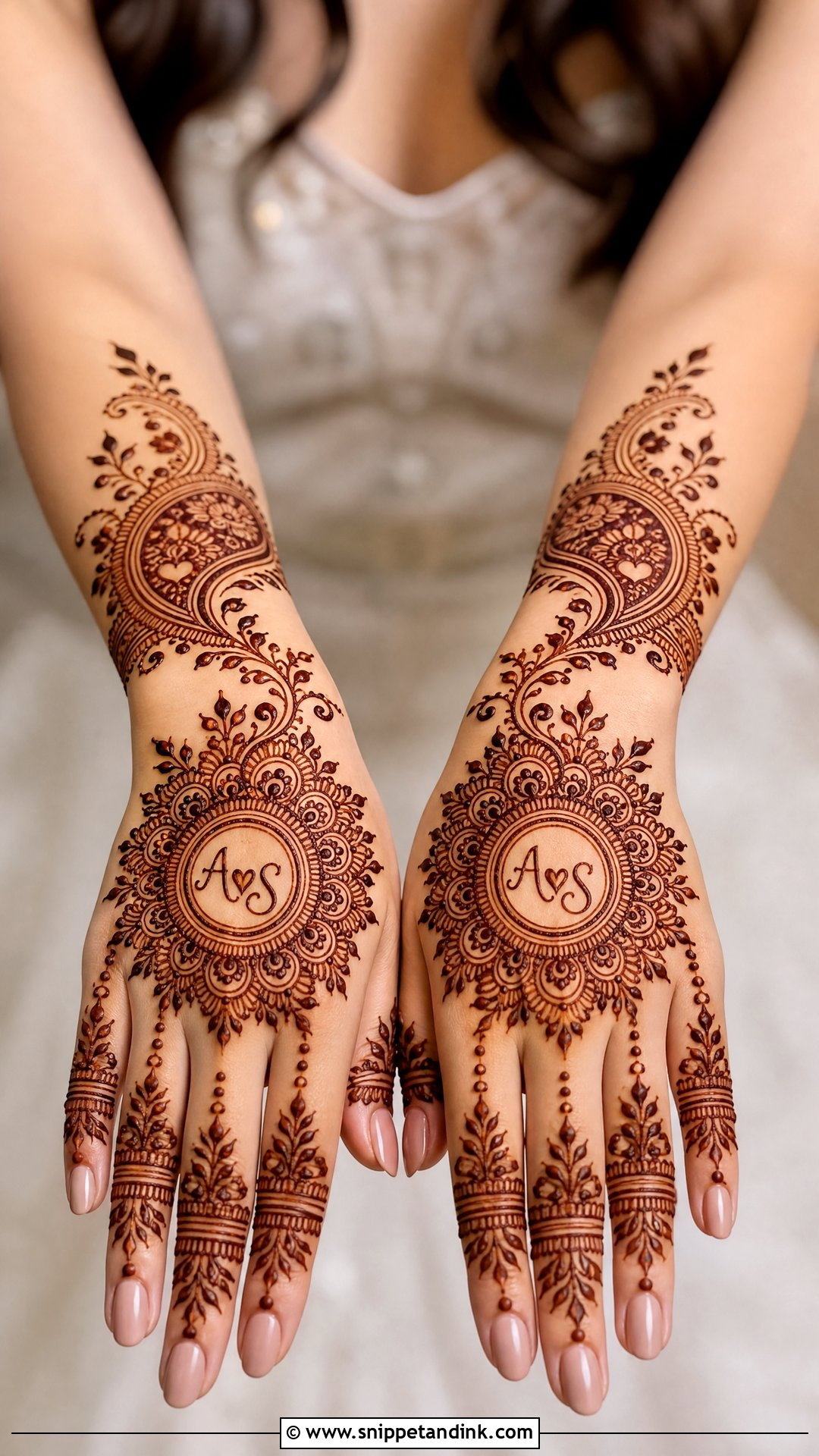
Initials can hide inside a mandala, a paisley, a wrist band or a floral vine, and they should only be noticeable when someone looks closely. I usually place them near the thumb side or wrist. Both initials joined by tiny dots or a small heart is a sweet option. Letters need clean, steady lines to be legible, so ask your artist to write them with a finer cone than the rest of the design.
30. Back Hand Bridal Mehndi With Wedding Date
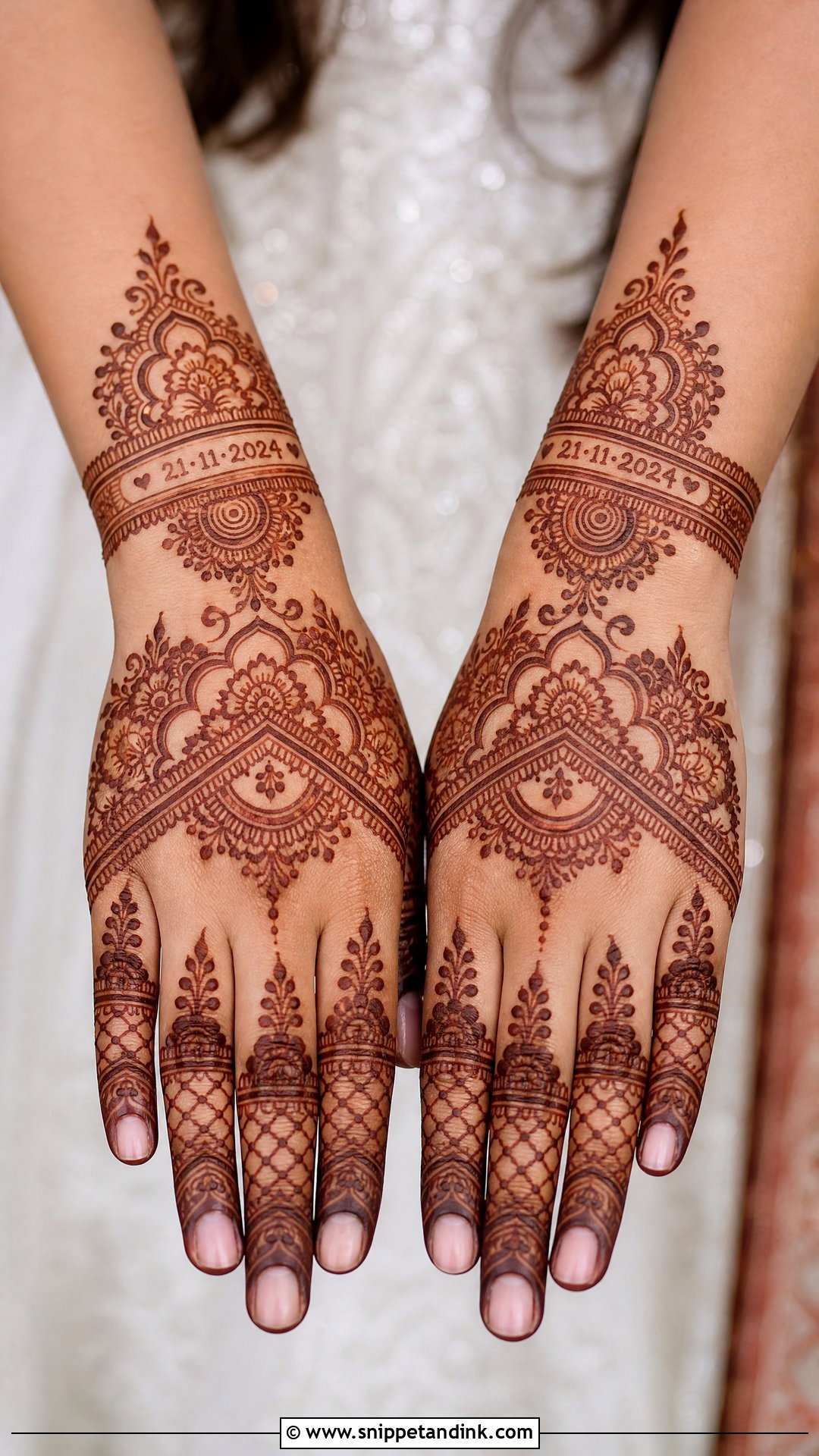
Adding the date turns the design into a keepsake. The date can sit inside a bracelet band, be framed by a small arch, hide in a jaali panel or be written finely near the wrist. Keep it small; it should feel like part of the artwork. The surrounding design should be balanced with florals, paisleys or a mandala. Numbers smudge easily while the paste is wet, so hold your hand still for those last few minutes.
Why the Back of the Hand Stains Lighter, and How to Darken It
Henna stains thicker skin more deeply, which is why the palm almost always turns darker than the back of the hand. The back has thinner skin and sits further from the warmth of a closed palm. Expect the back hand to come out a shade or two lighter, and plan the design so it still reads well at that depth: bold outlines help more than extra filler.
Timing the application
Natural henna is pale orange when the paste comes off and deepens over the next day or two. I schedule bridal mehndi one to two days before the wedding so you walk down the aisle at the peak color, not the starting shade.
Aftercare that actually works
- Leave the dried paste on as long as you can, ideally overnight. Dab on a light lemon and sugar mix to keep it stuck to the skin.
- Scrape the paste off with a blunt edge; don’t wash it off.
- Keep the hands away from water for the next several hours, and keep them warm.
- Rub on a little natural oil or balm before showering in the following days, and avoid scrubbing or chlorine.
One warning: if anyone offers a paste that turns black within an hour, say no. Natural henna never stains black; that speed usually means a chemical dye that can cause serious skin reactions.
Matching the Design to Your Sleeves, Bangles and Hand Shape
Your back hand design depends on your outfit, jewelry, comfort level and the photos you want. Dense Indian and Rajasthani designs look grand and traditional; Arabic, Gulf and negative space designs are lighter and modern. Mandala, jaali, lace and hathphool layouts bring structure. Initials and dates make it personal. Before you settle on a design, think about your hand shape, sleeve length, bangles, nail color and the ceremony itself, then save two or three favorites to show your artist.
You'll Like These Ideas:





Leave a Reply