
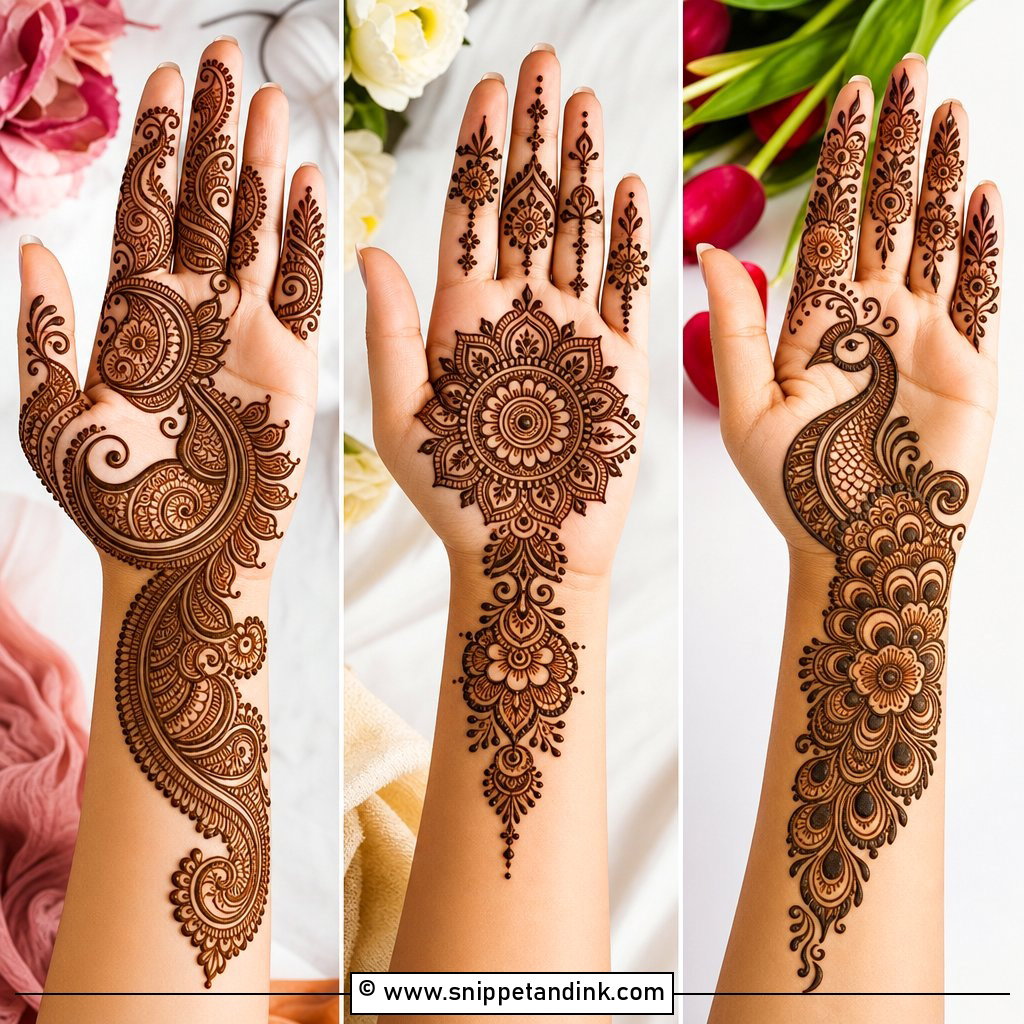
The palm is where henna does its best work. The skin there is thicker than anywhere else on the hand, so it takes the deepest stain, and it’s the side that shows when a bride holds out her hands at the mehndi night, receives blessings or turns her palms up for the photographer. A good front design needs a clear focus in the palm, tidy fingers, a wrist that ends deliberately and enough spacing for your hand’s shape. The 35 designs below move from quick beginner layouts through Arabic, Indo-Arabic and jaali work to full bridal palms, and I’ve noted what each one asks of the artist and the wearer.
Palm Creases, Damp Hands and Where the Centre Really Is
When a client puts her palm in front of me, I look at the creases before I think about motifs. The deep lines across the palm and at the base of the fingers fold every time the hand closes, and anything drawn across them, especially faces, lettering or a perfect circle, distorts as soon as she relaxes. So the main motif goes in the flatter area of the palm, and finger designs start just above the crease where the finger meets the palm.
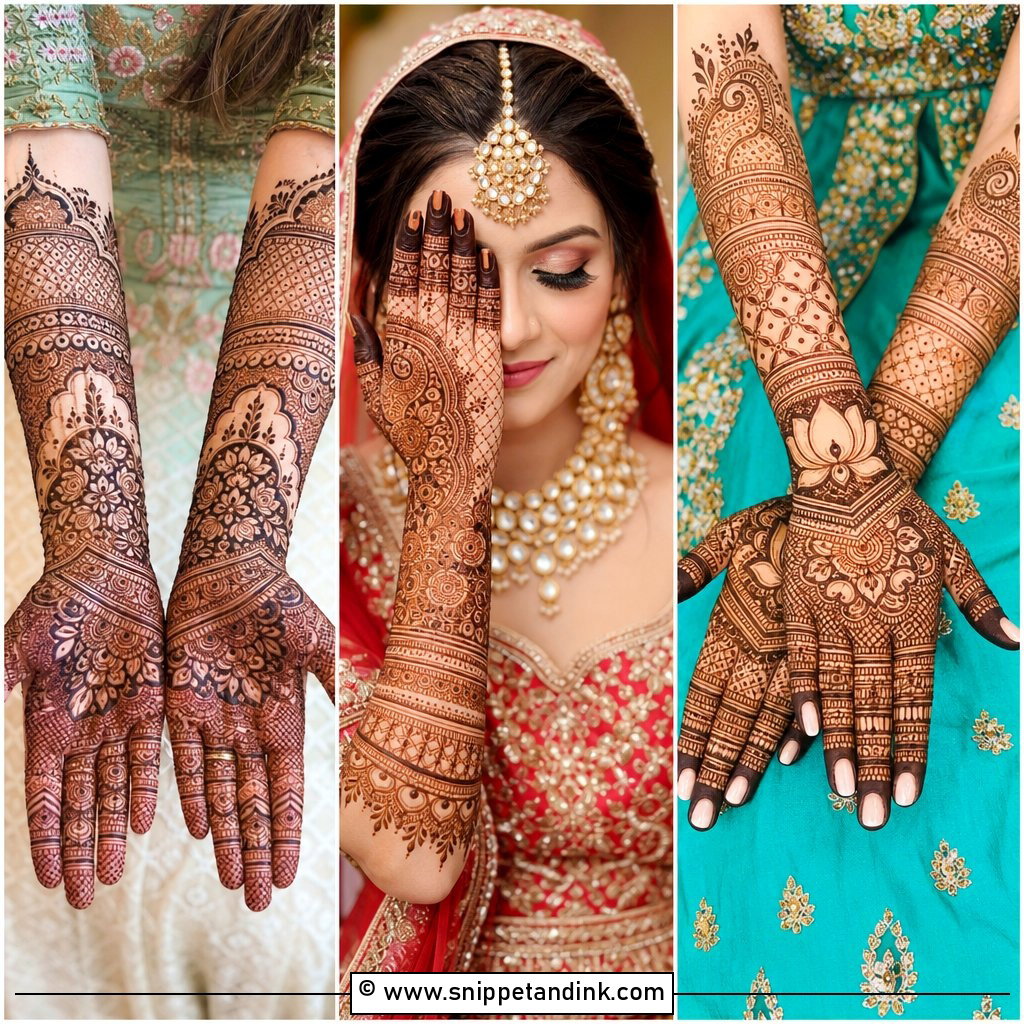
Palms also sweat more than the back of the hand, and paste slides on damp skin. Come with clean, dry hands and skip lotion or oil that day; I’ll wipe the palm before starting, and on a hot day I’ll pause so it can dry again. If your palms get clammy when you’re nervous, tell me. Working with a fan nearby helps more than you’d think.
The stain is darkest where the skin is thickest, so fingertips and the centre of the palm come up deepest, while the inner wrist stays lighter. I plan the boldest elements where the colour will be strongest.
1. Simple Front Hand Mehndi Design
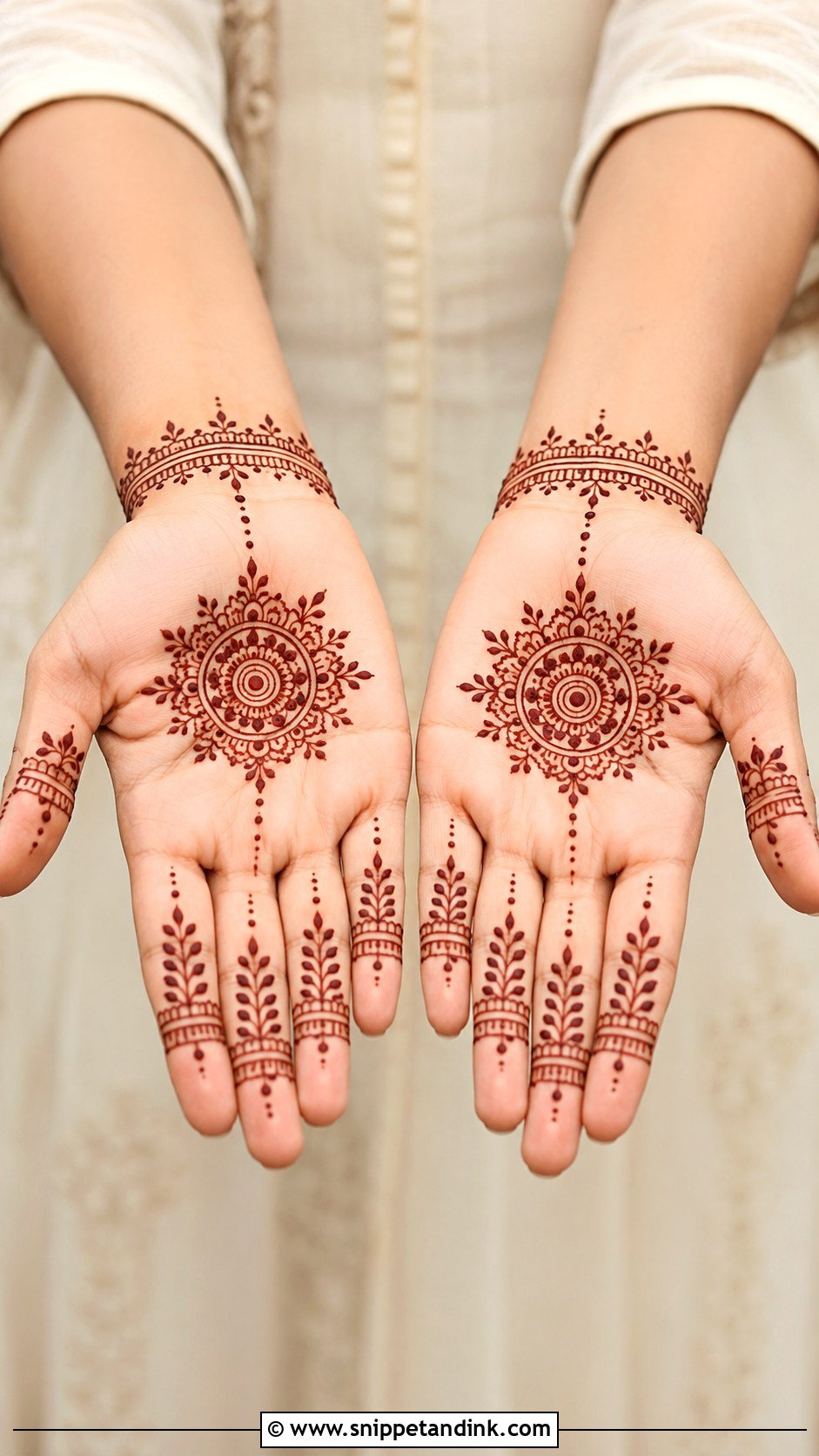
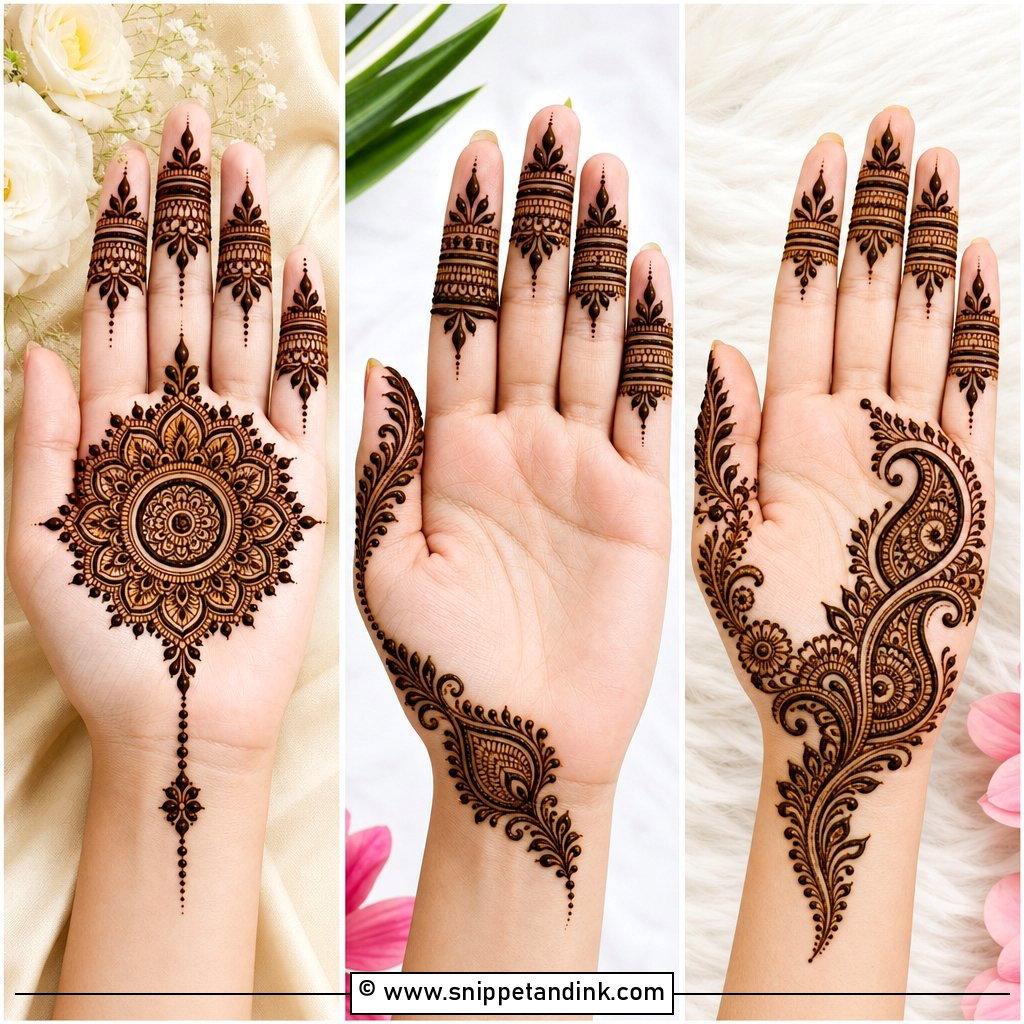
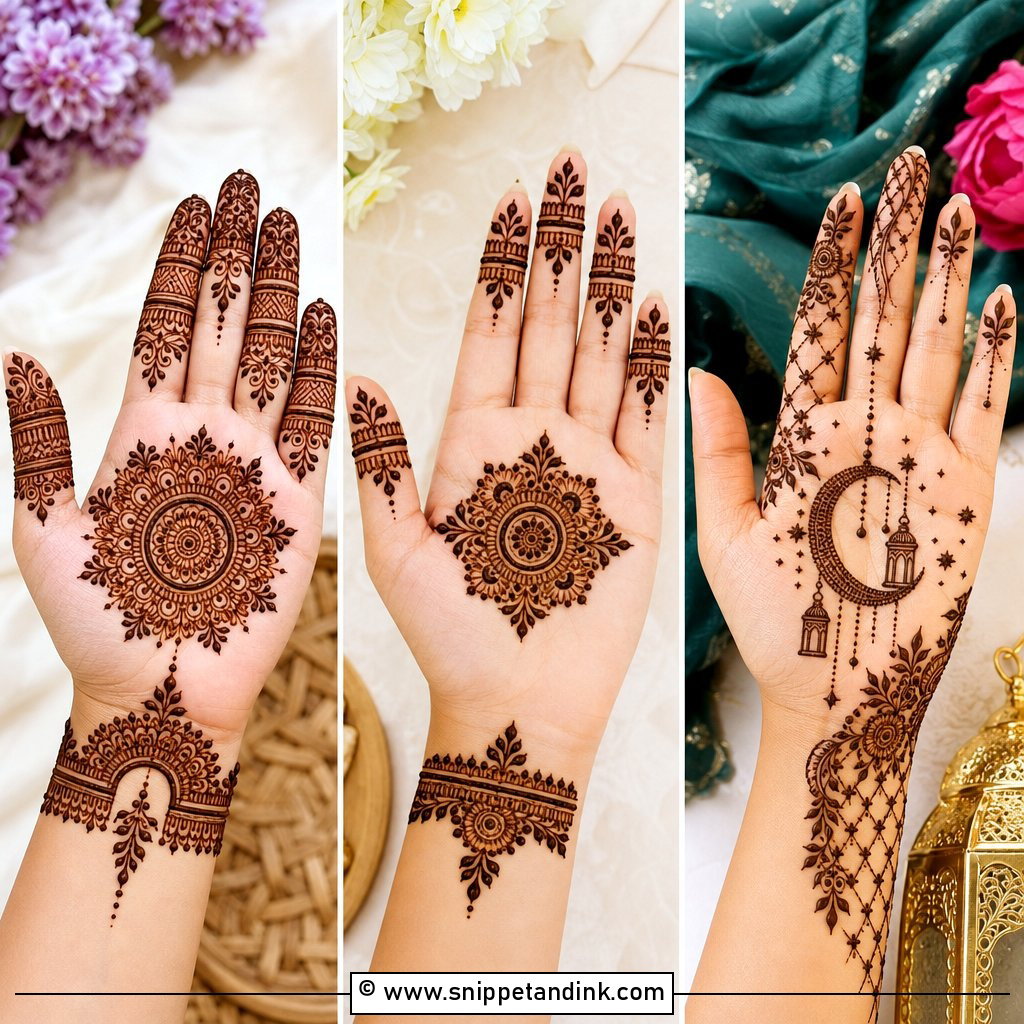
A simple front hand mehndi design usually starts with one neat palm motif, a small mandala, flower or paisley, then moves into light finger patterns and a slim wrist border. The empty skin should look planned, not abandoned halfway. Fine dots, leafy curves and clean bands lengthen the hand. If you’re practising, this is the safest place to start: no dense filling and nothing that needs bridal-level control.
2. Arabic Front Hand Mehndi Design
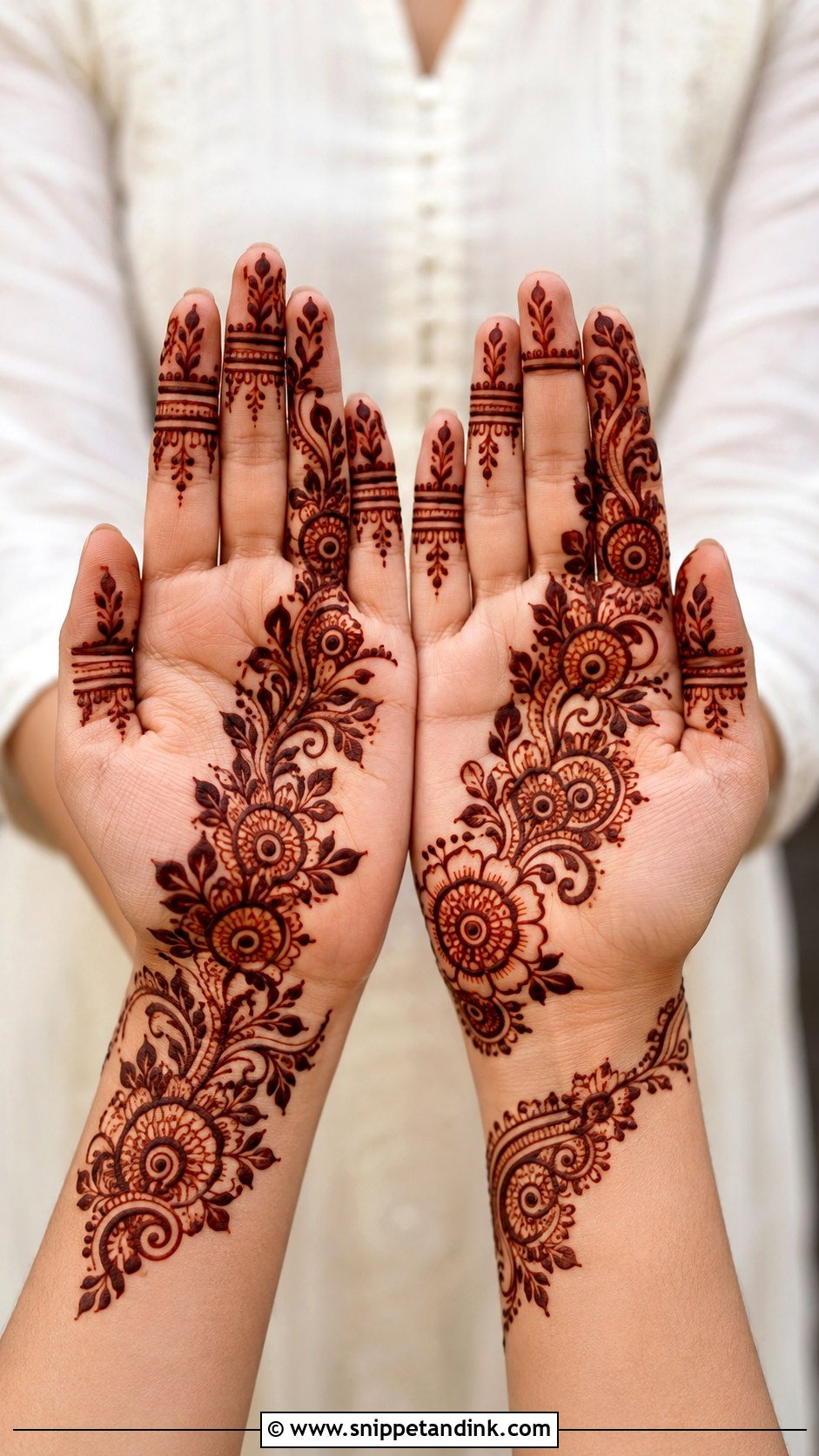
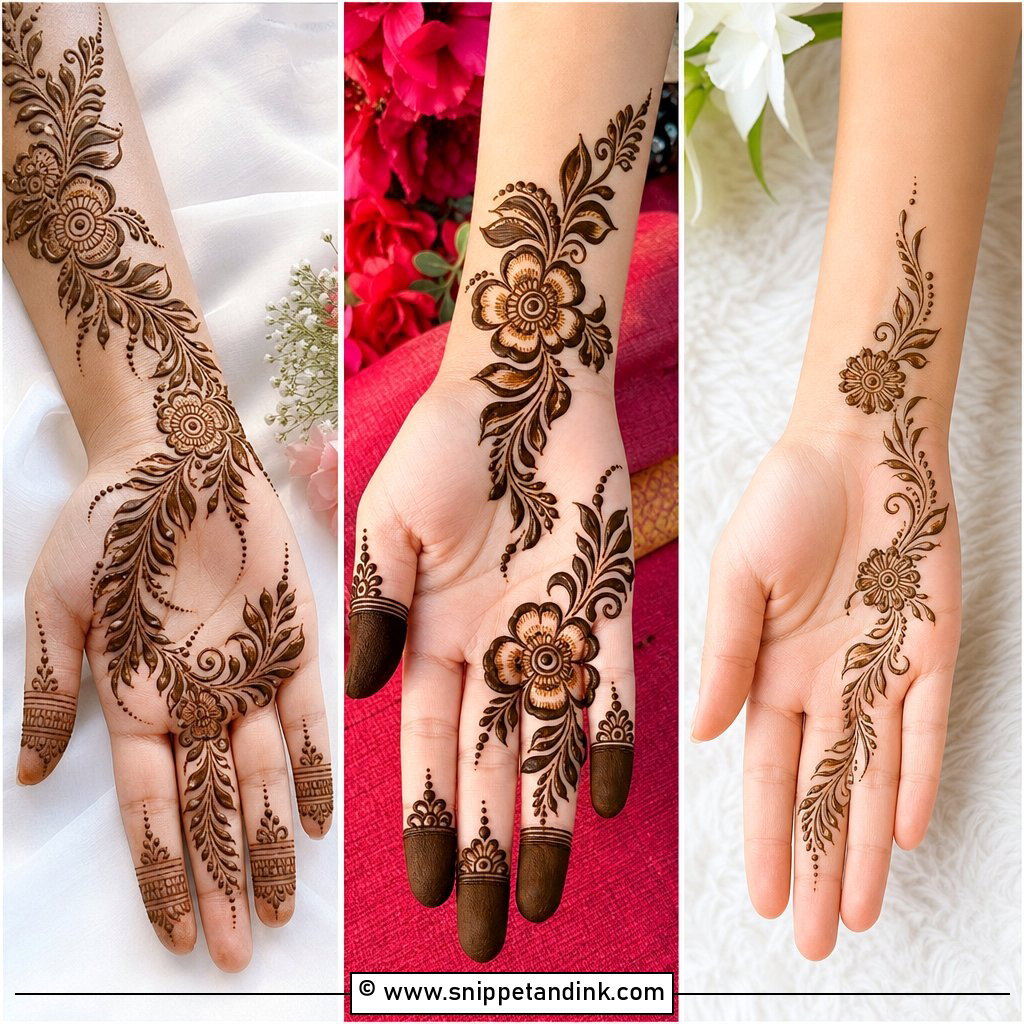
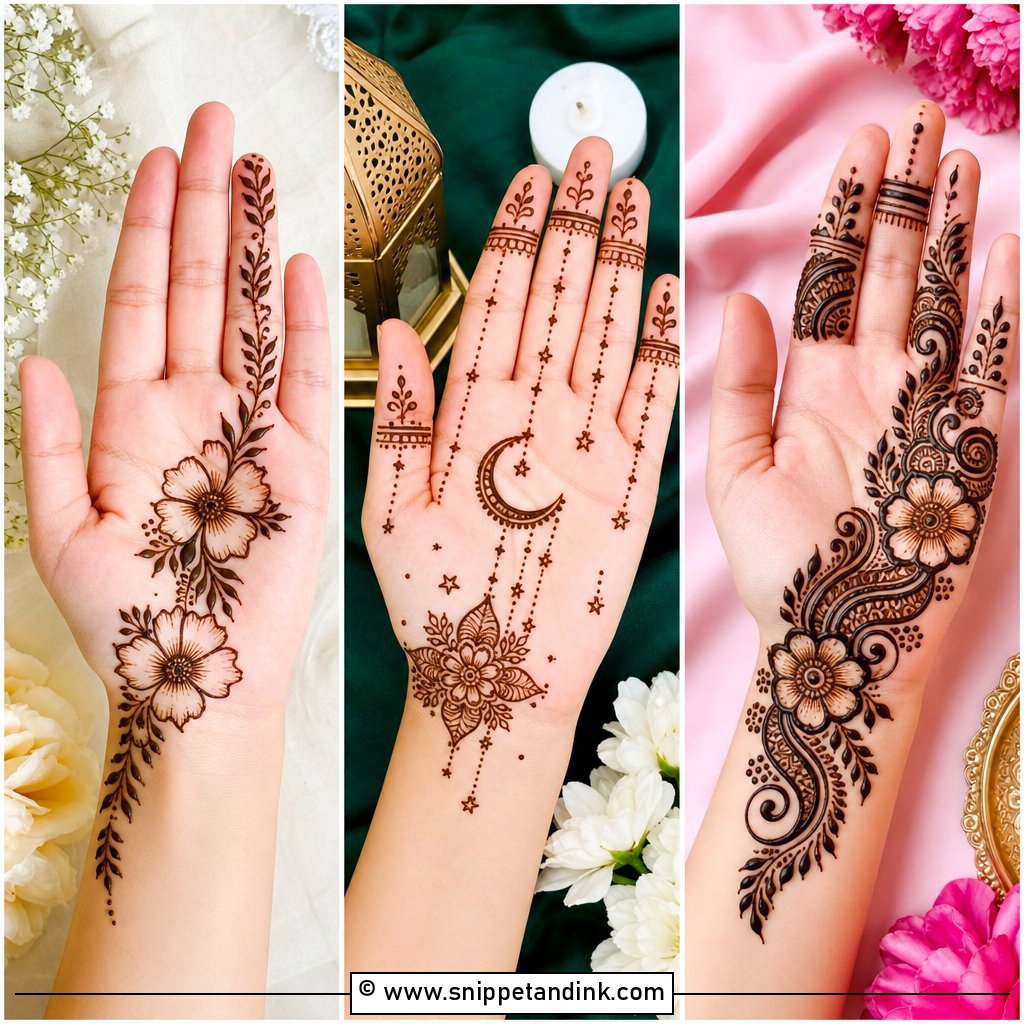
Arabic palms are about movement. The pattern runs diagonally from the wrist toward the index finger in large flowers, leaves, curved vines and shaded petals, with open skin around each one. On a palm, where the stain comes up very dark, that open skin keeps the design from looking like a solid patch. I keep the fingertips light with small bands, dots or leafy tips rather than filling each finger. Quick to apply, so it’s a favourite for Eid, engagements and bridesmaids.
3. Full Front Hand Mehndi Design
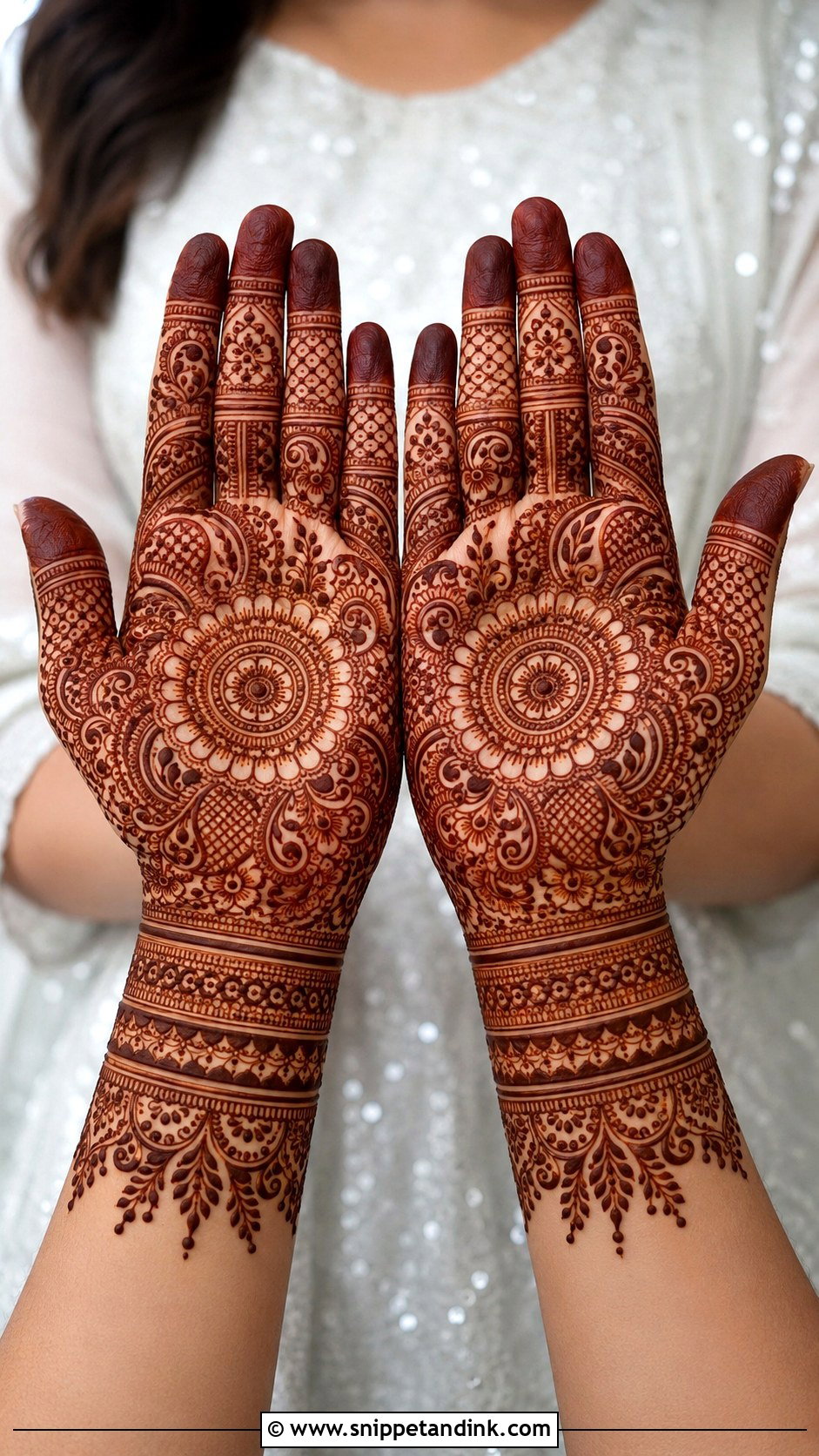
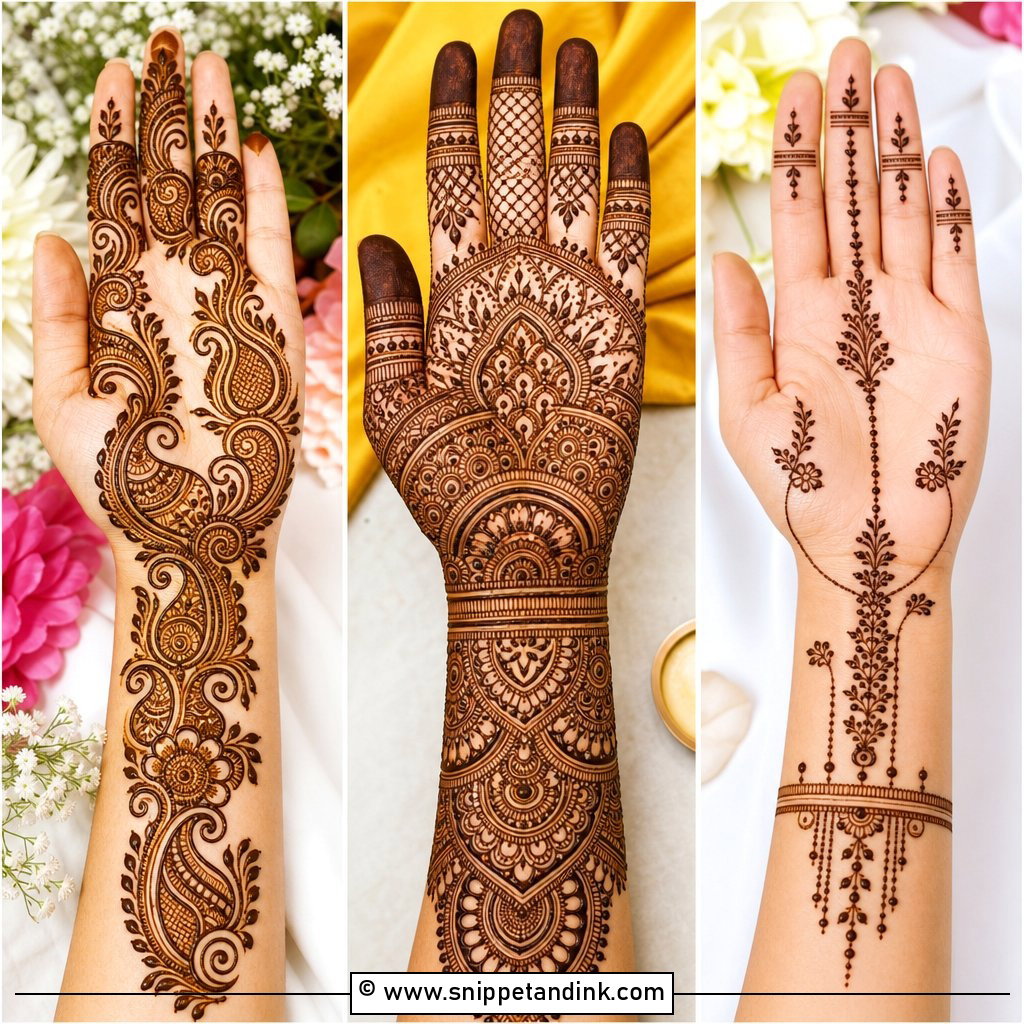
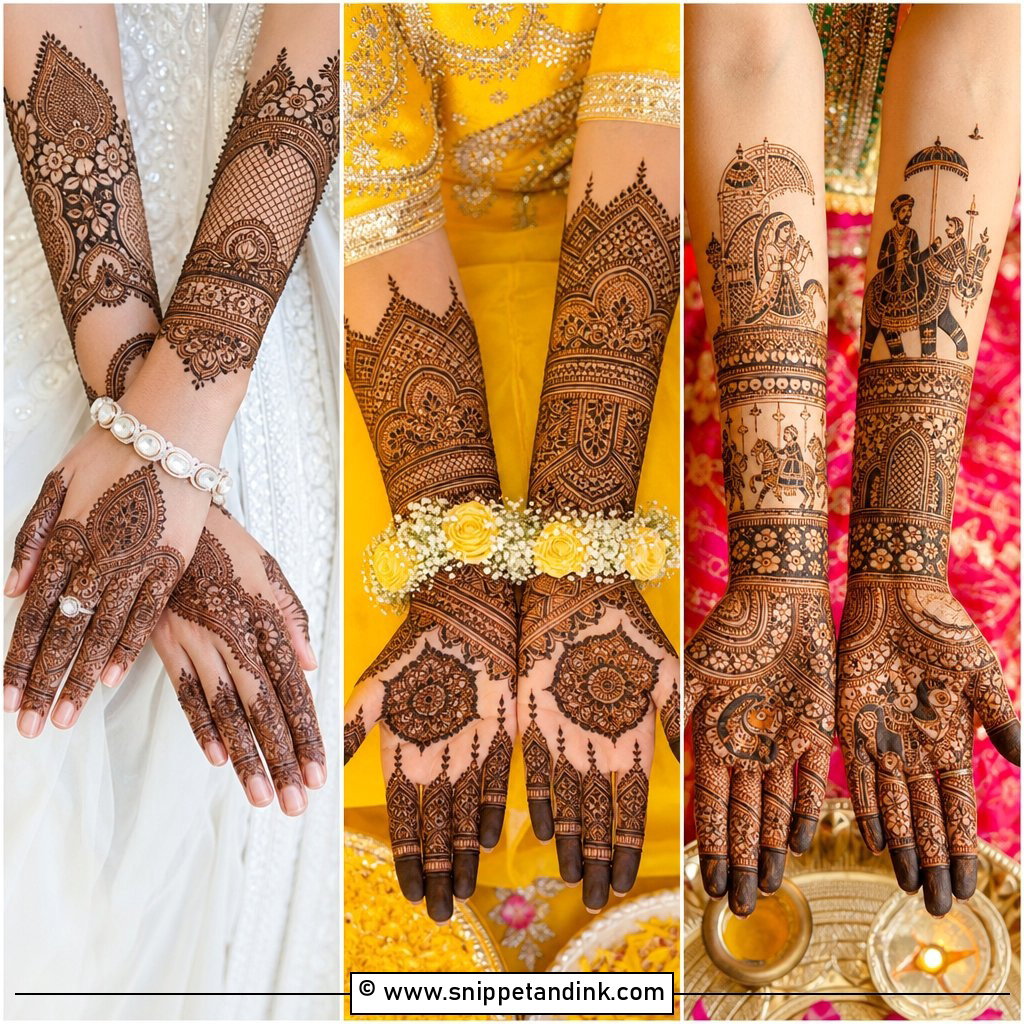
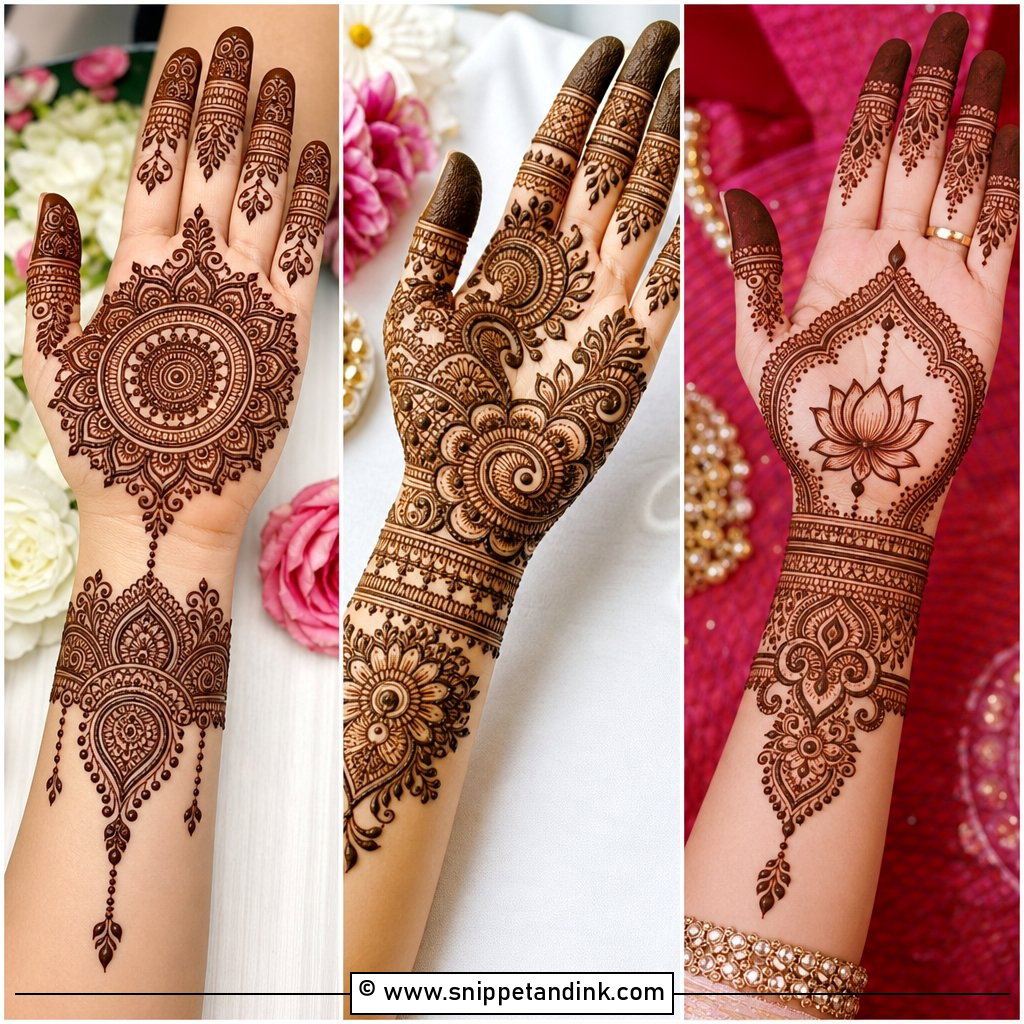
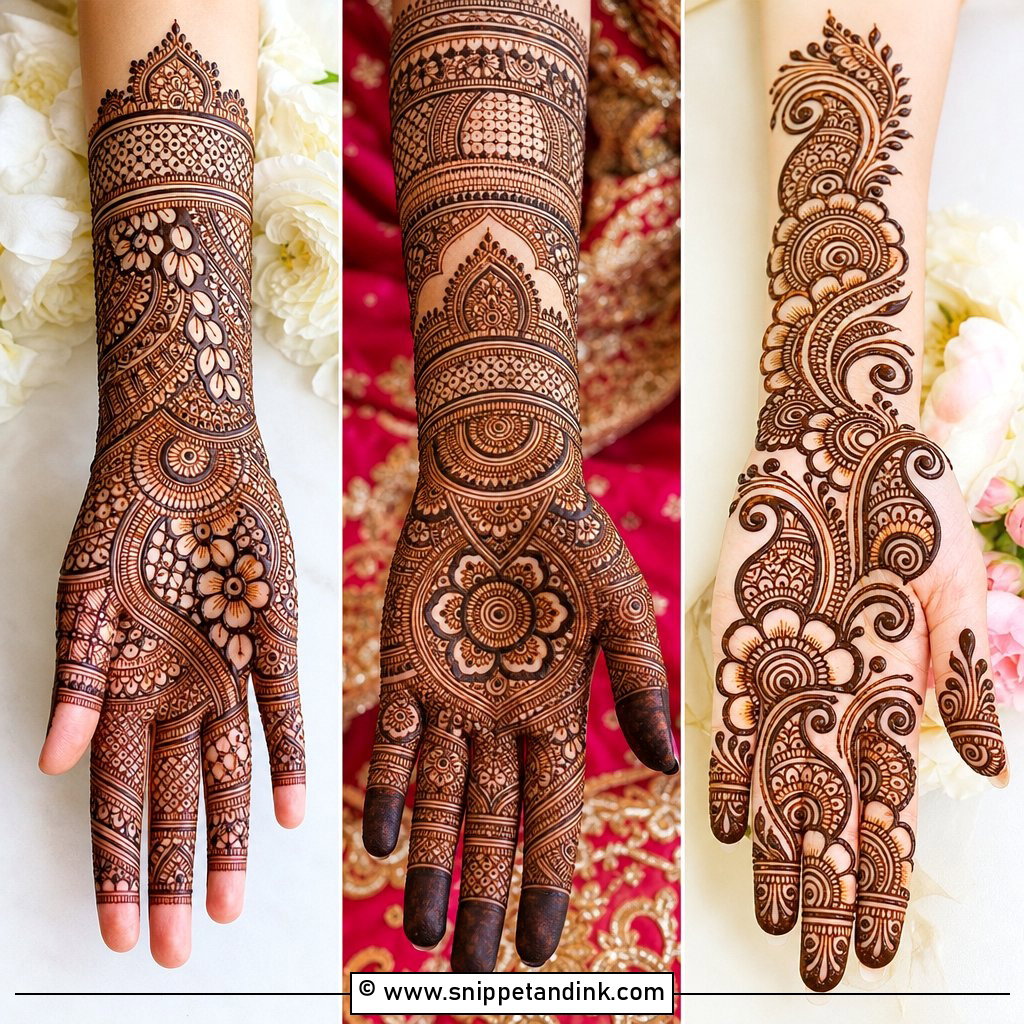
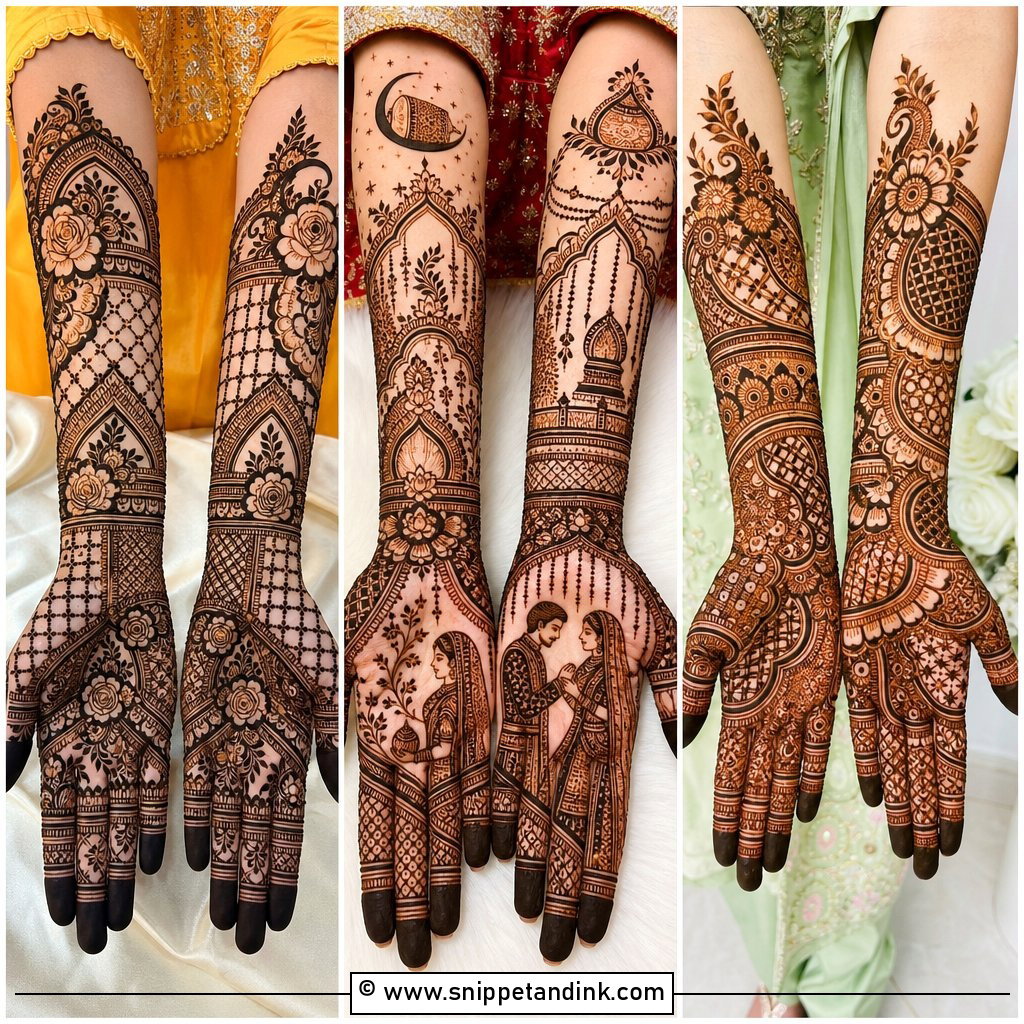
Full coverage fills the palm from fingertips to wrist with a central mandala, paisley clusters, florals, jaali sections and detailed fingers. Balance comes from trading density between areas. If the palm is very busy, I give the wrist structured, orderly bands; if the wrist is heavy, the palm gets small breathing spaces around its motifs. It’s the classic look for weddings and traditional ceremonies, and the design stays the focus even with bangles, rings and nail colour.
4. Bridal Front Hand Mehndi Design
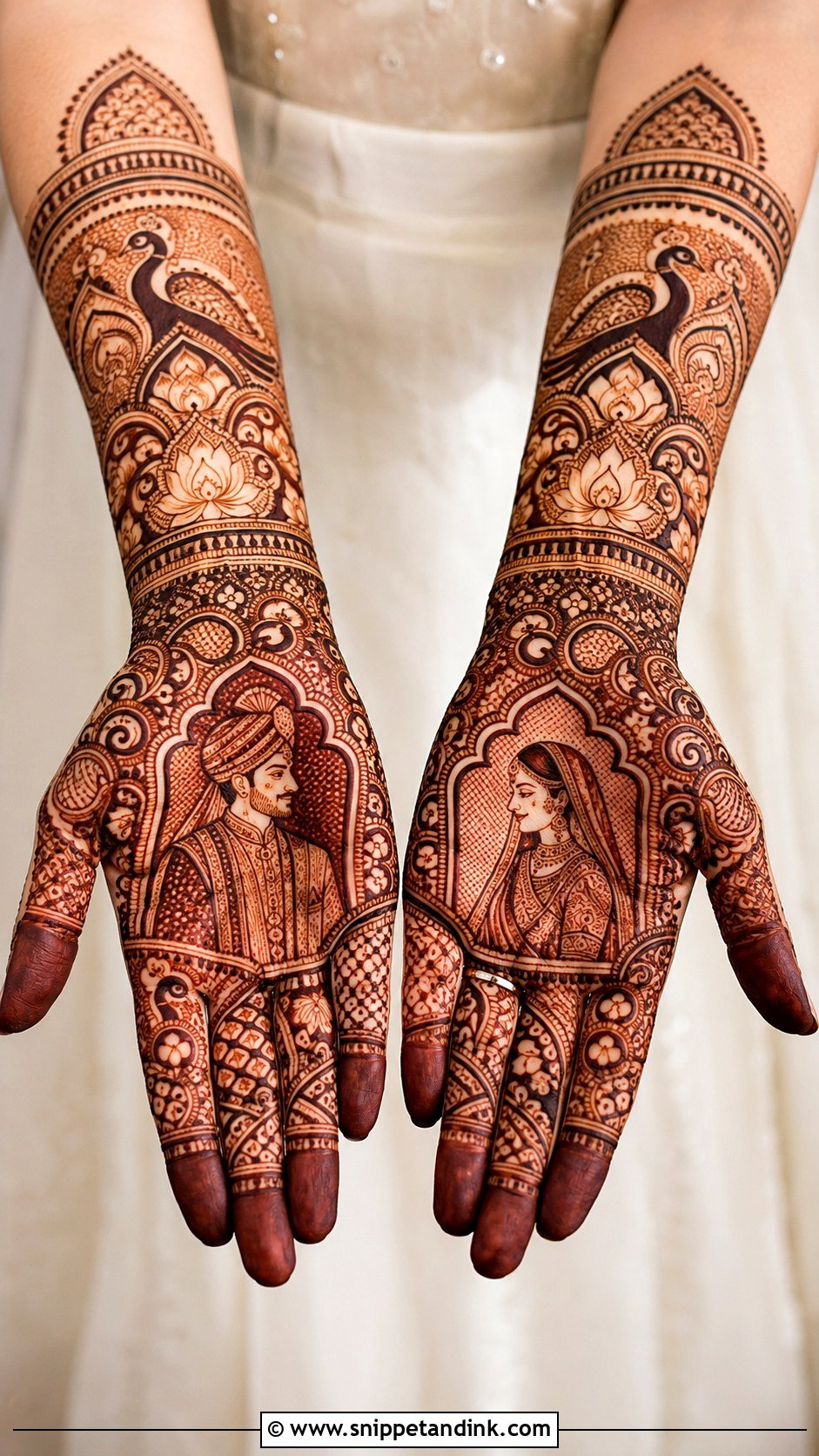
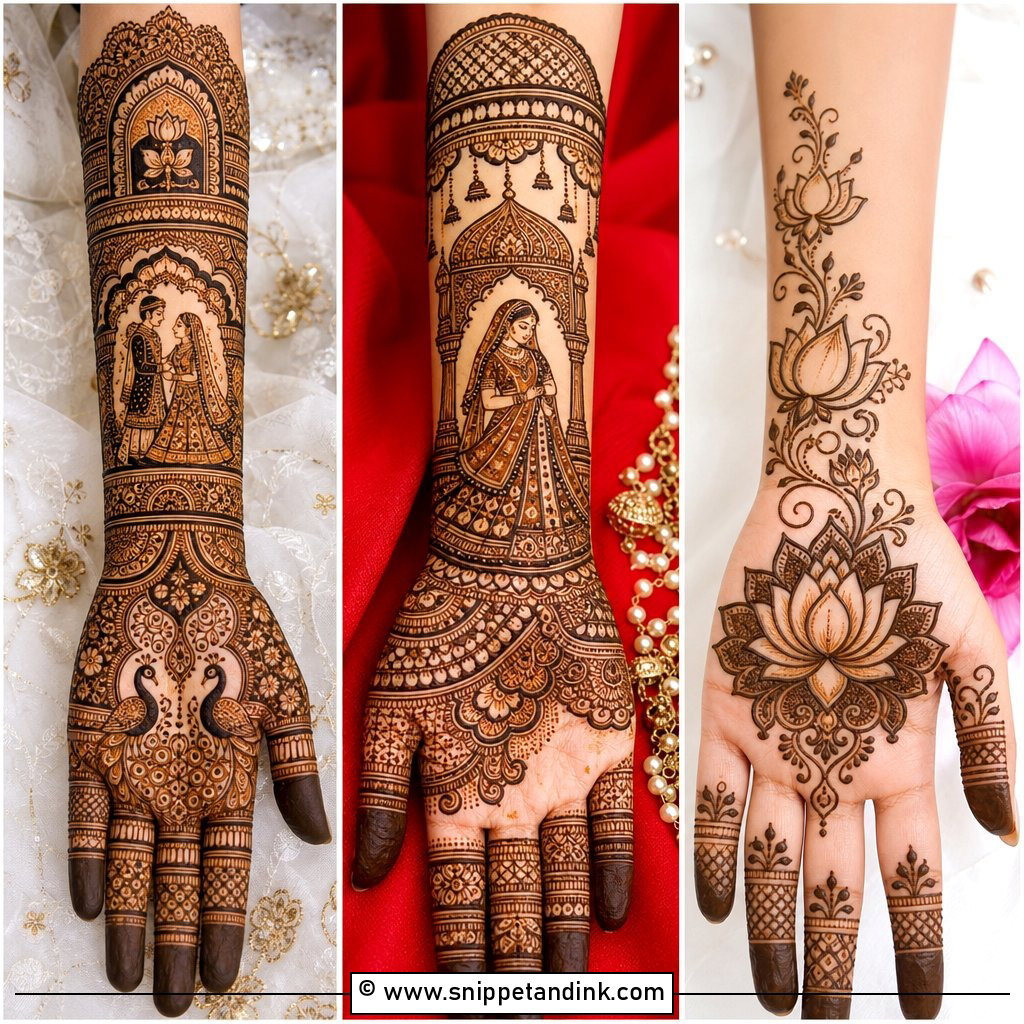
The bride’s palm is where the storytelling happens: bride and groom portraits, lotus motifs, peacocks, paisleys, hidden initials. Fingers carry dense lines, checks, leafy fills and dots, and the wrist runs into bracelet bands or forearm panels. Every section has to connect, or the palm looks like separate patches stuck together. I draw portraits on the flattest part of the palm, below the finger creases, because faces drawn across a deep crease distort the moment the hand relaxes. Dense Indian coverage or modern spacing around the central art both work, as long as it reads clearly during rituals and in the wedding album.
5. Mandala Front Hand Mehndi Design
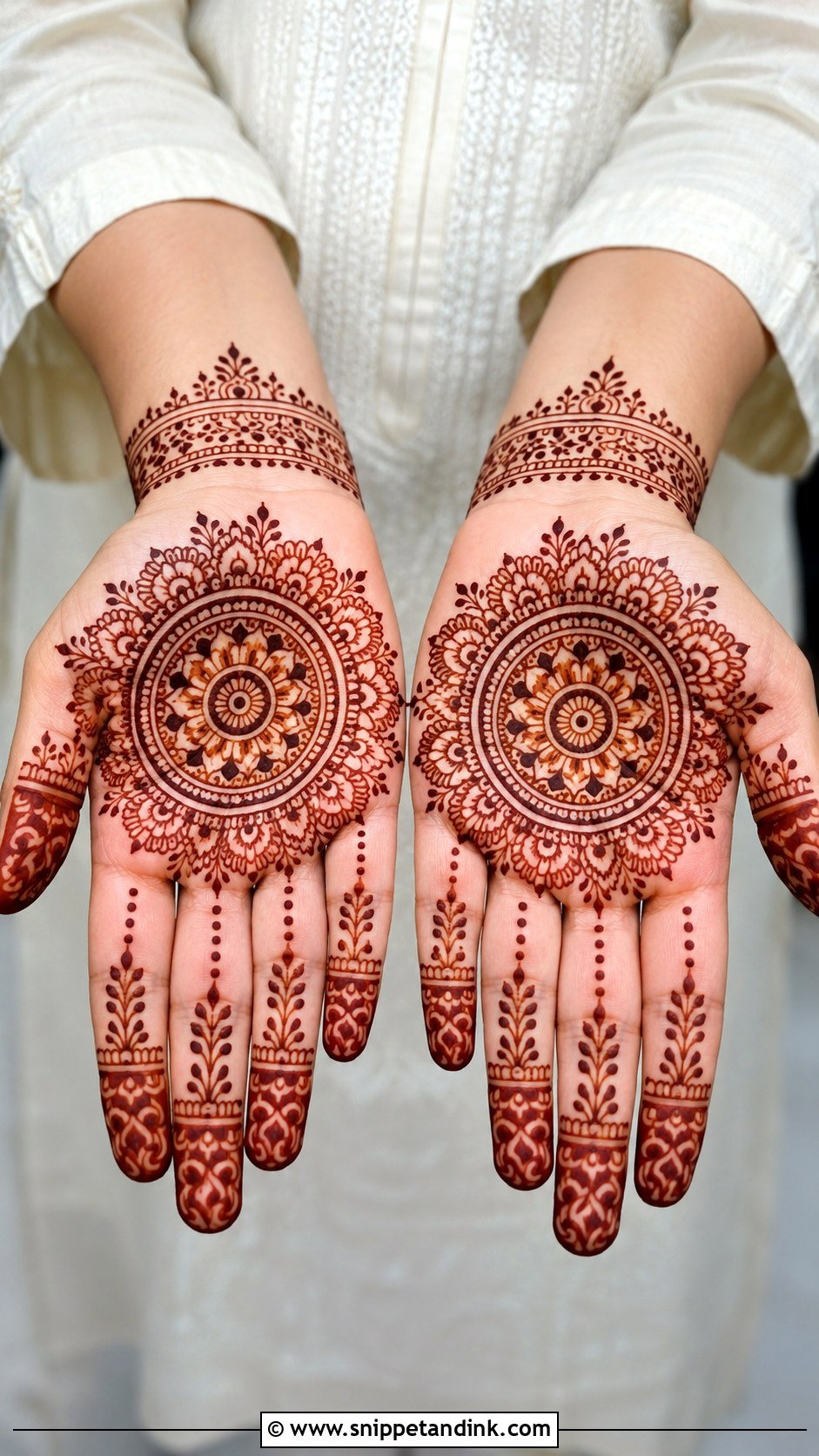
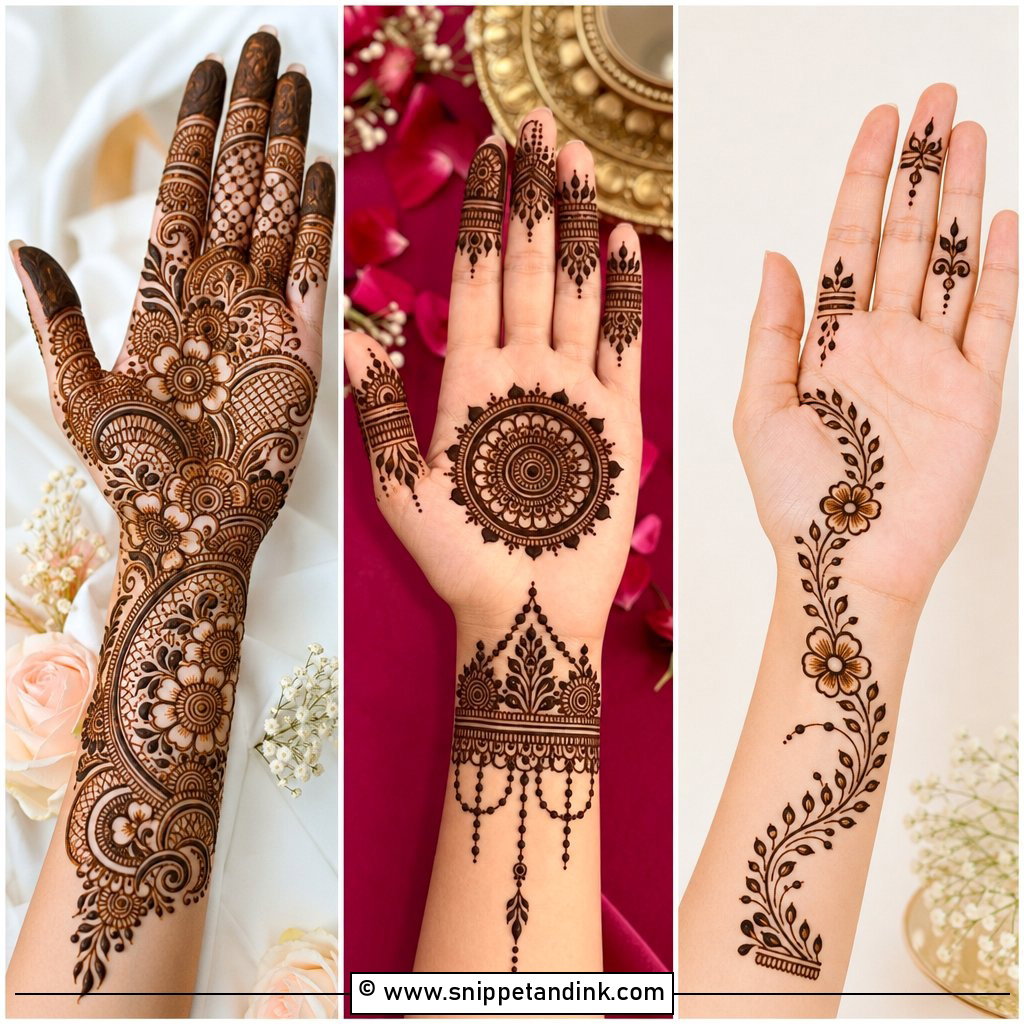
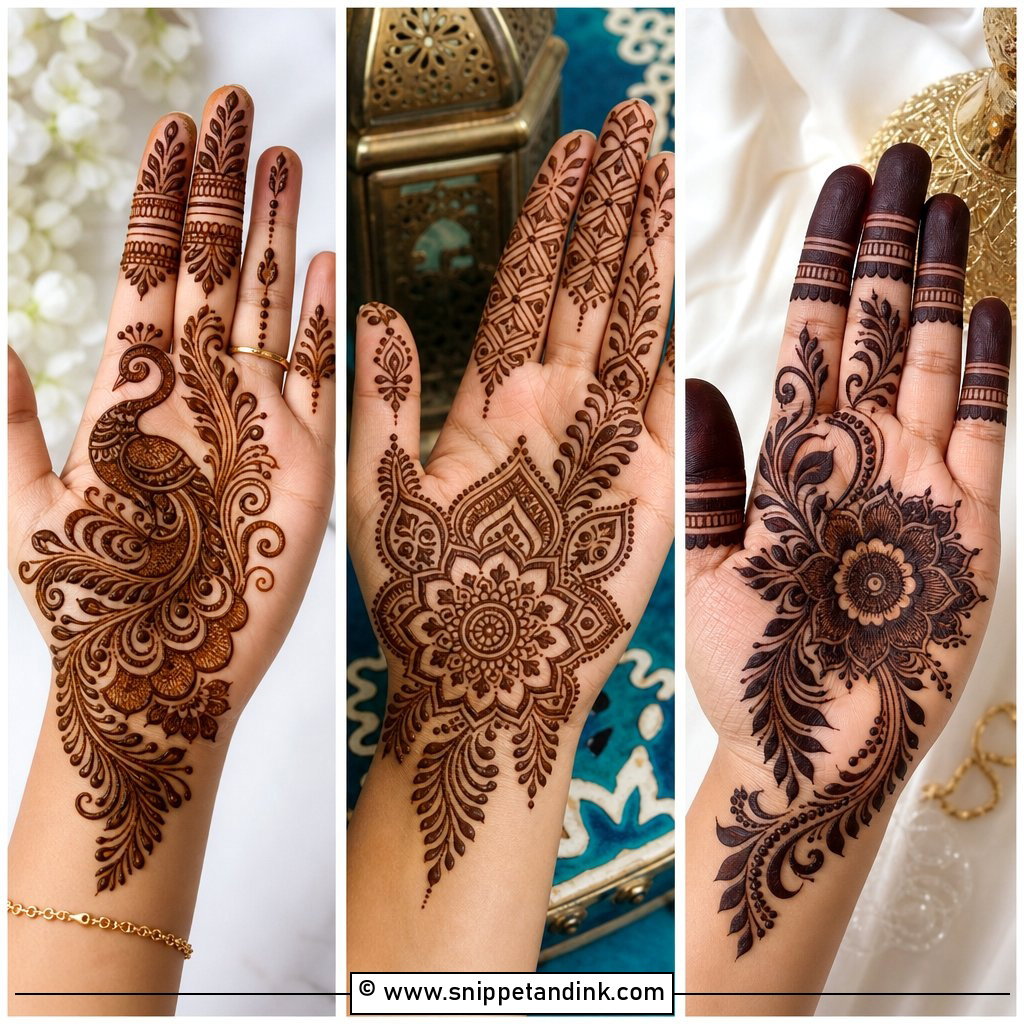
A mandala puts the focus exactly where the eye goes first: the centre of the palm. Round and floral, it can be simple or detailed. For a light version, I pair it with dotted finger lines and a thin wrist band; for a festive one, I surround it with petals, vines, jaali corners and layered borders. The real centre of the palm sits a little lower and closer to the thumb than most people expect, so I find it with the hand flat before drawing the first circle. Every age group suits it.
6. Flower Front Hand Mehndi Design
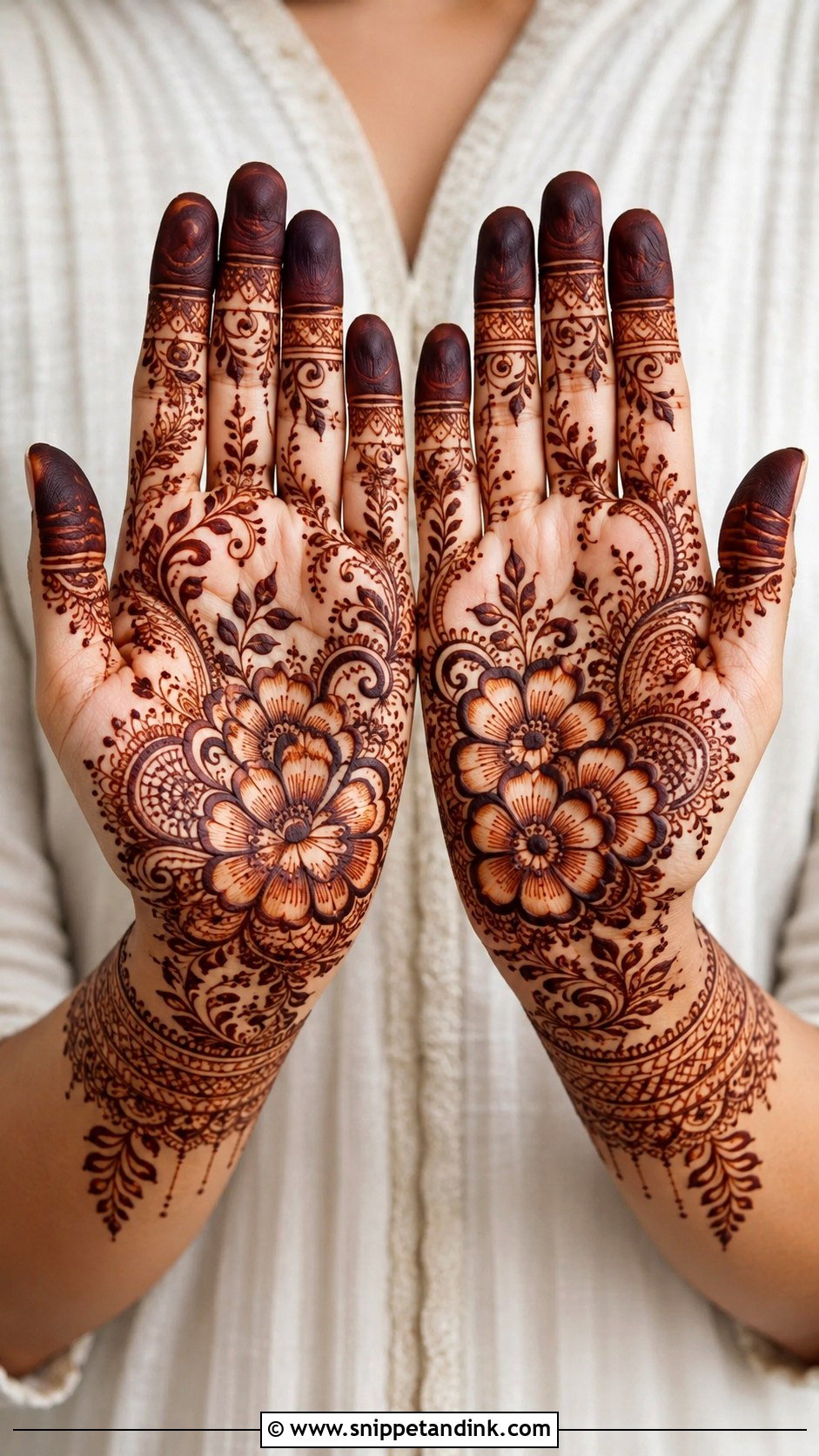
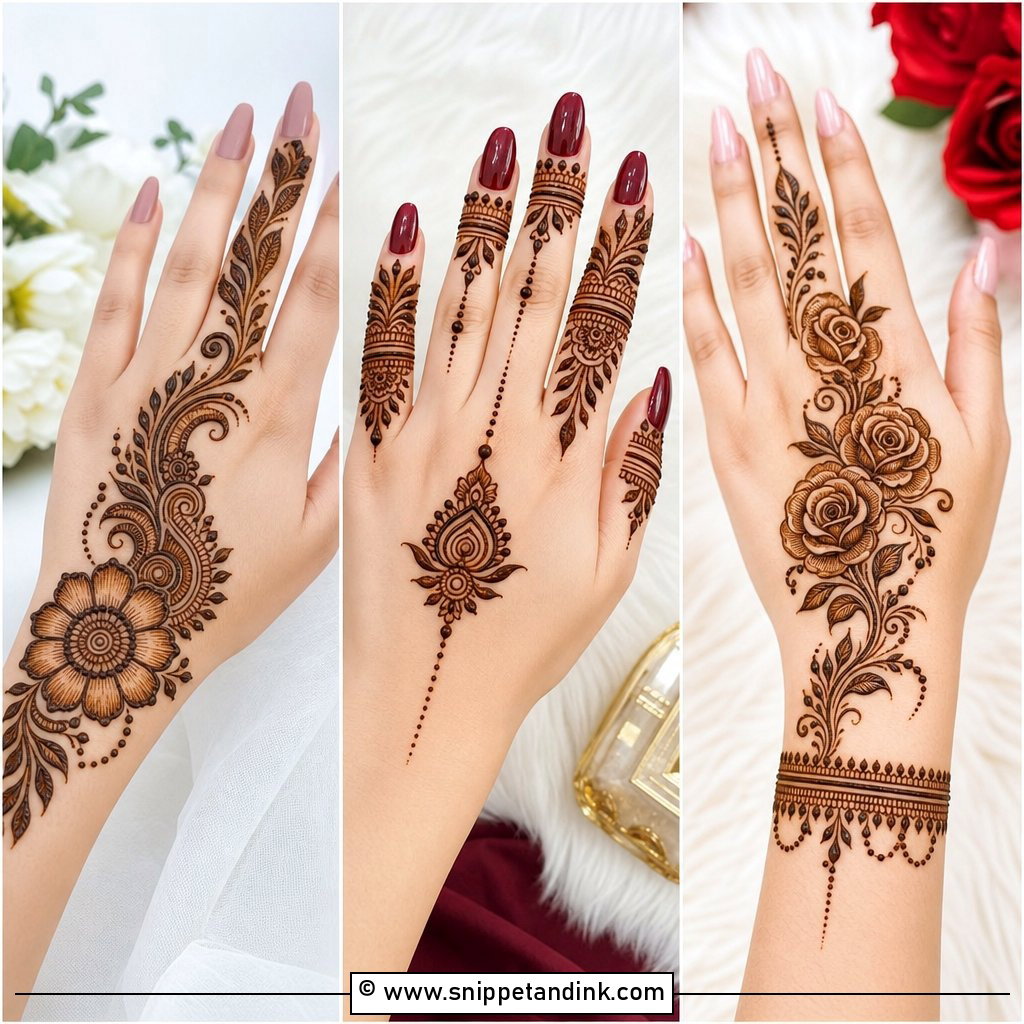
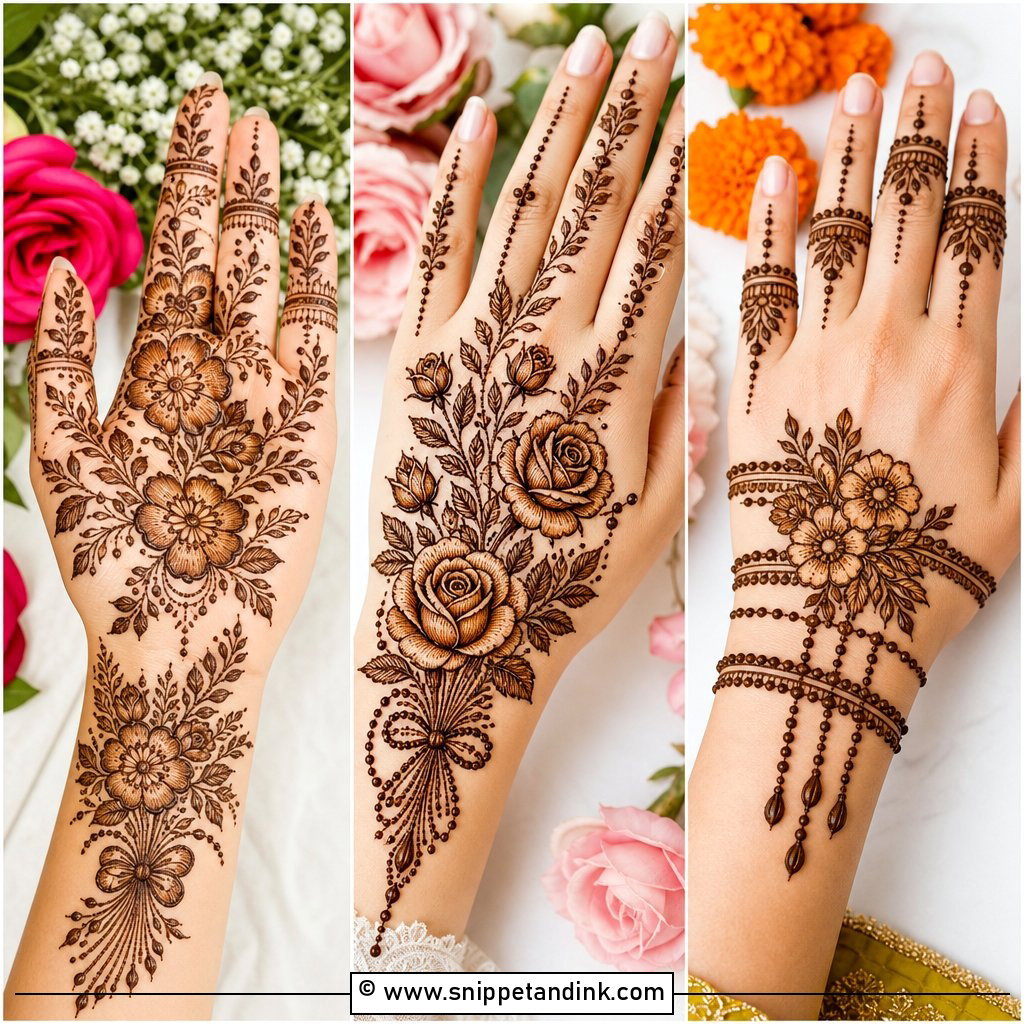
A single large rose, a lotus centre or a chain of small blossoms from wrist to fingers: flowers work at any level of coverage. Bold Arabic flowers with open space look modern; flowers mixed with paisleys, vines and shaded leaves look traditional. I keep the petals rounded and the leaf strokes clean, because on a palm every wobble stains dark and shows. Festivals, haldi functions, baby showers and bridesmaids all suit it.
7. Rose Front Hand Mehndi Design
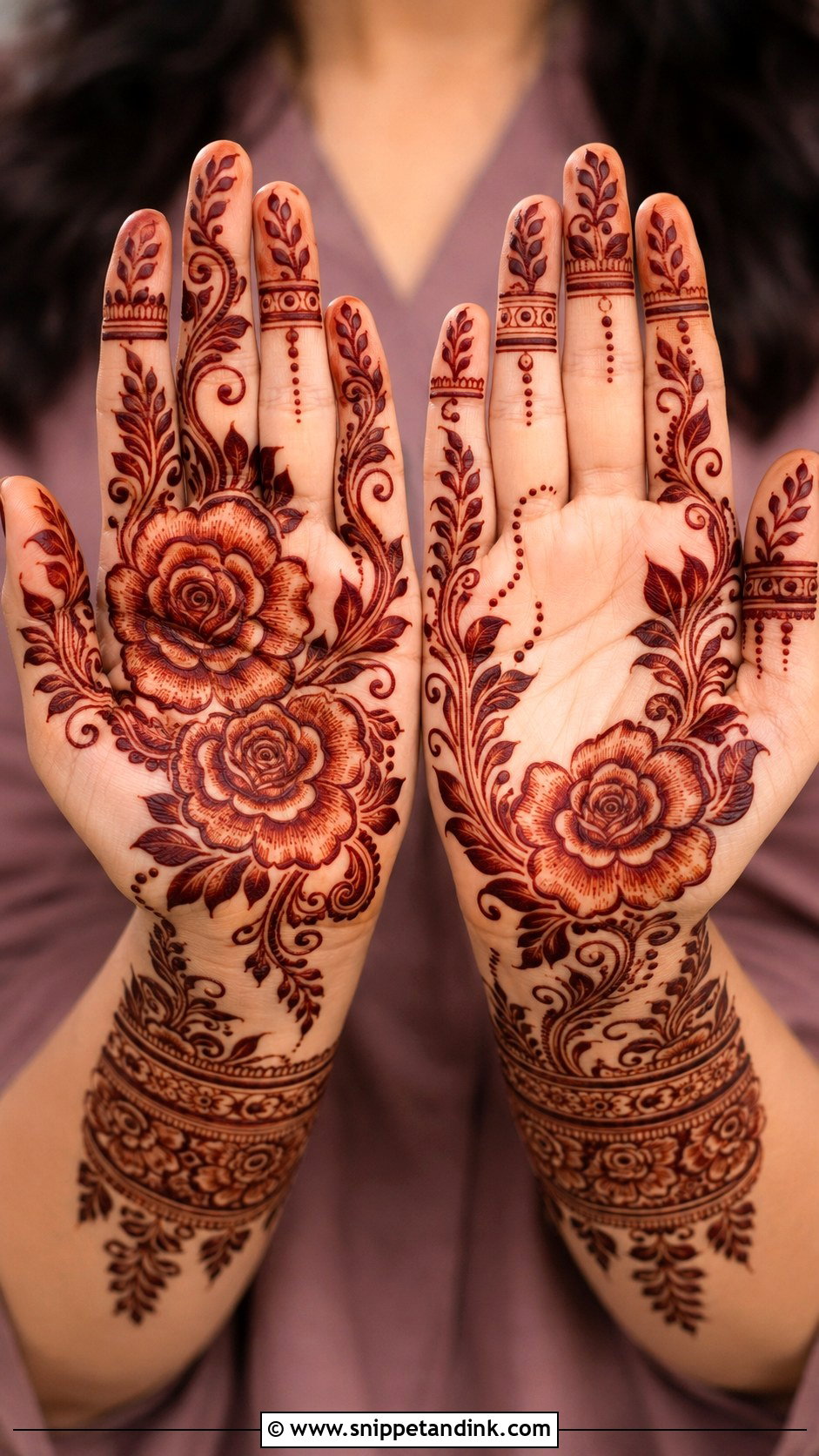
A rose gives the palm a romantic but defined centre. It can sit in the middle, tilt along the side or join an Arabic trail. Layered petals give depth and shaded leaves make the hand look fuller without dense coverage everywhere. If scattered tiny flowers feel too vague for you, this is the more defined option. Curved vines on the fingers and a bracelet cuff at the wrist complete it for engagements and wedding guests.
8. Lotus Front Hand Mehndi Design
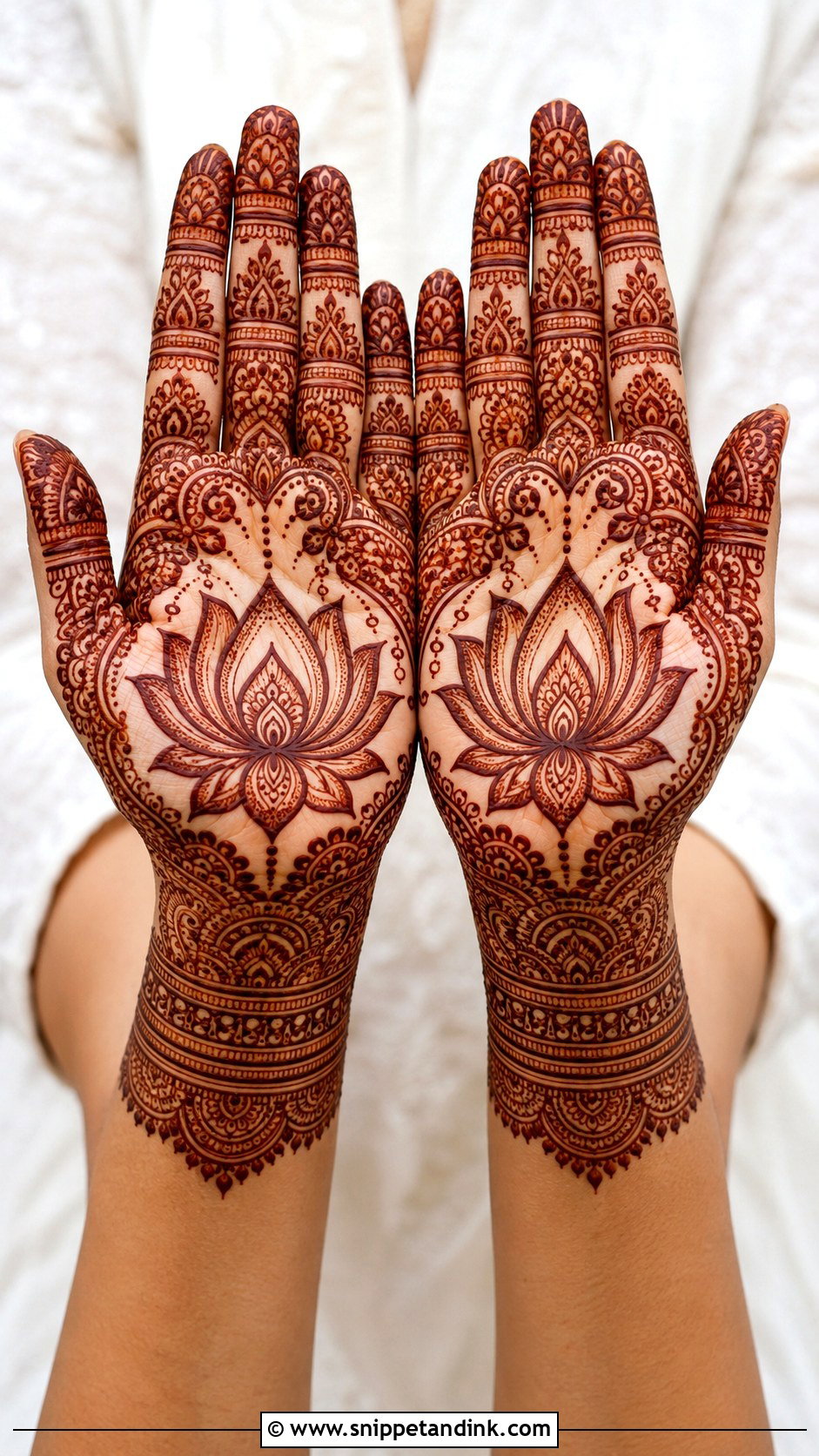
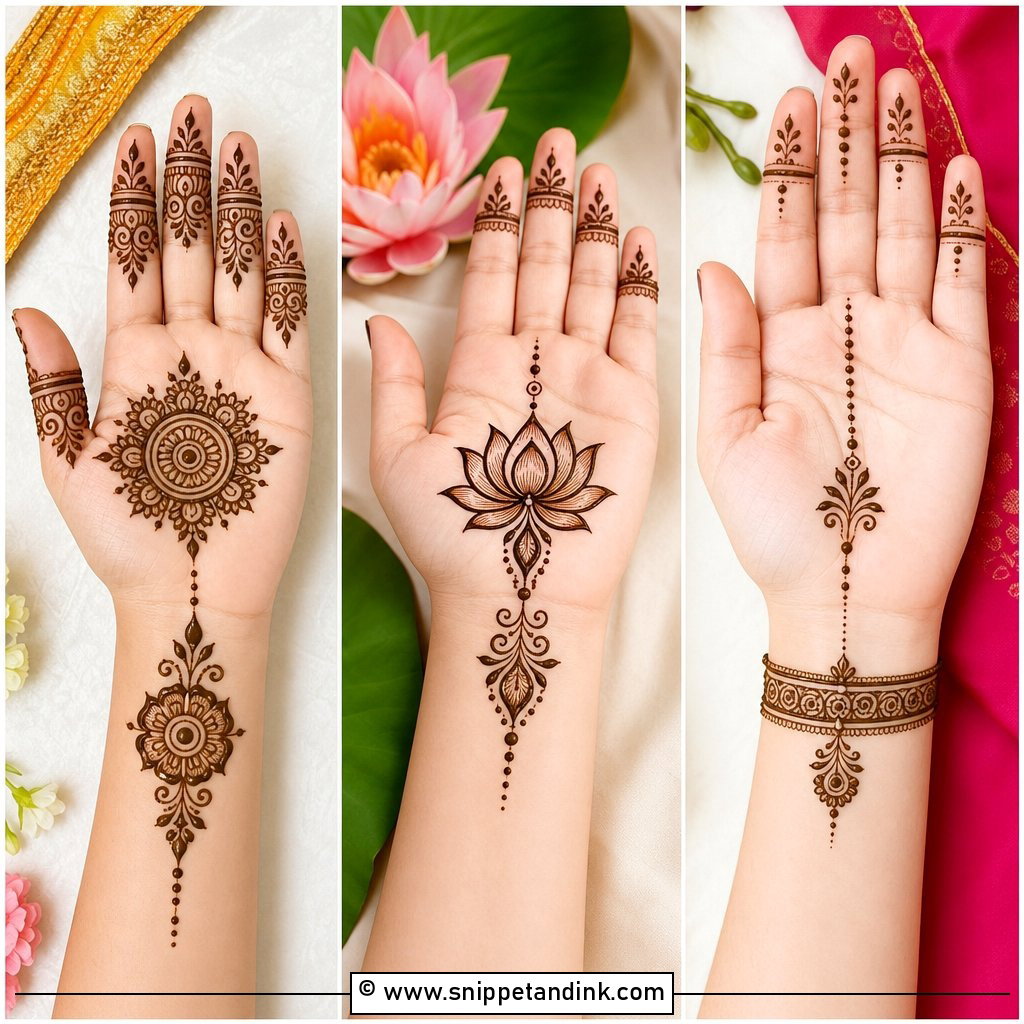
The lotus suits the palm naturally because its petals spread outward from a centre, just as the palm does from its hollow. Placed as a large anchor motif, it’s framed with fine petals, dots and curves, or repeated in small panels near the wrist and fingertips. For Indian-style mehndi, I combine it with paisleys, peacocks and fine mesh; for something lighter, one lotus and slim finger bands. It’s a natural choice for poojas, Diwali and weddings.
9. Peacock Front Hand Mehndi Design
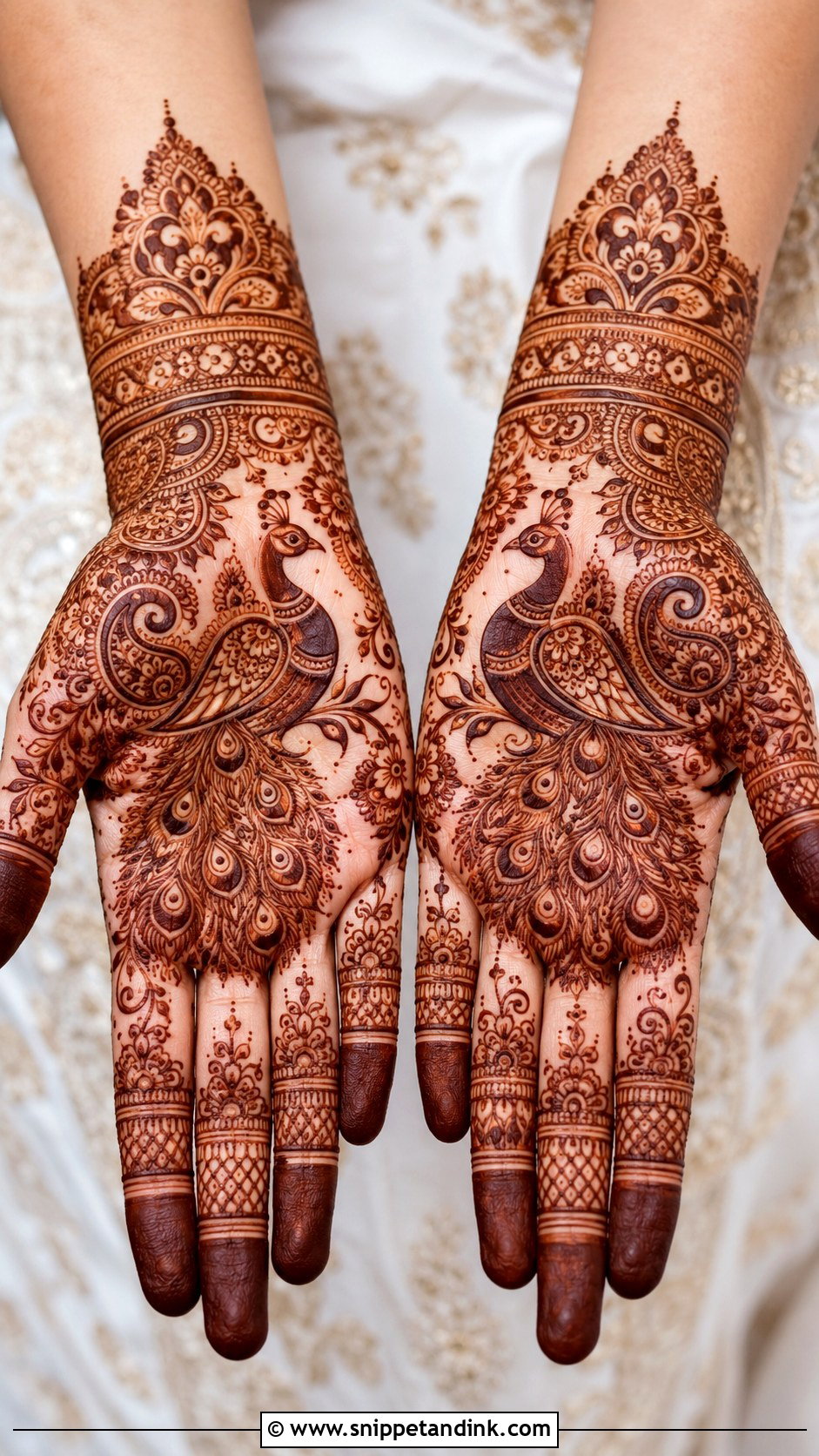
A peacock can curve across the palm, sit beside a mandala or appear as a facing pair. Its feathers give room for fine lines, dots, paisleys and leaf strokes. Bold body, intricate feathers: that contrast is what makes it read. I keep one main peacock as the hero and support it with smaller florals or borders, because two or three large birds on one palm compete. It belongs in bridal mehndi and family weddings.
10. Paisley Front Hand Mehndi Design
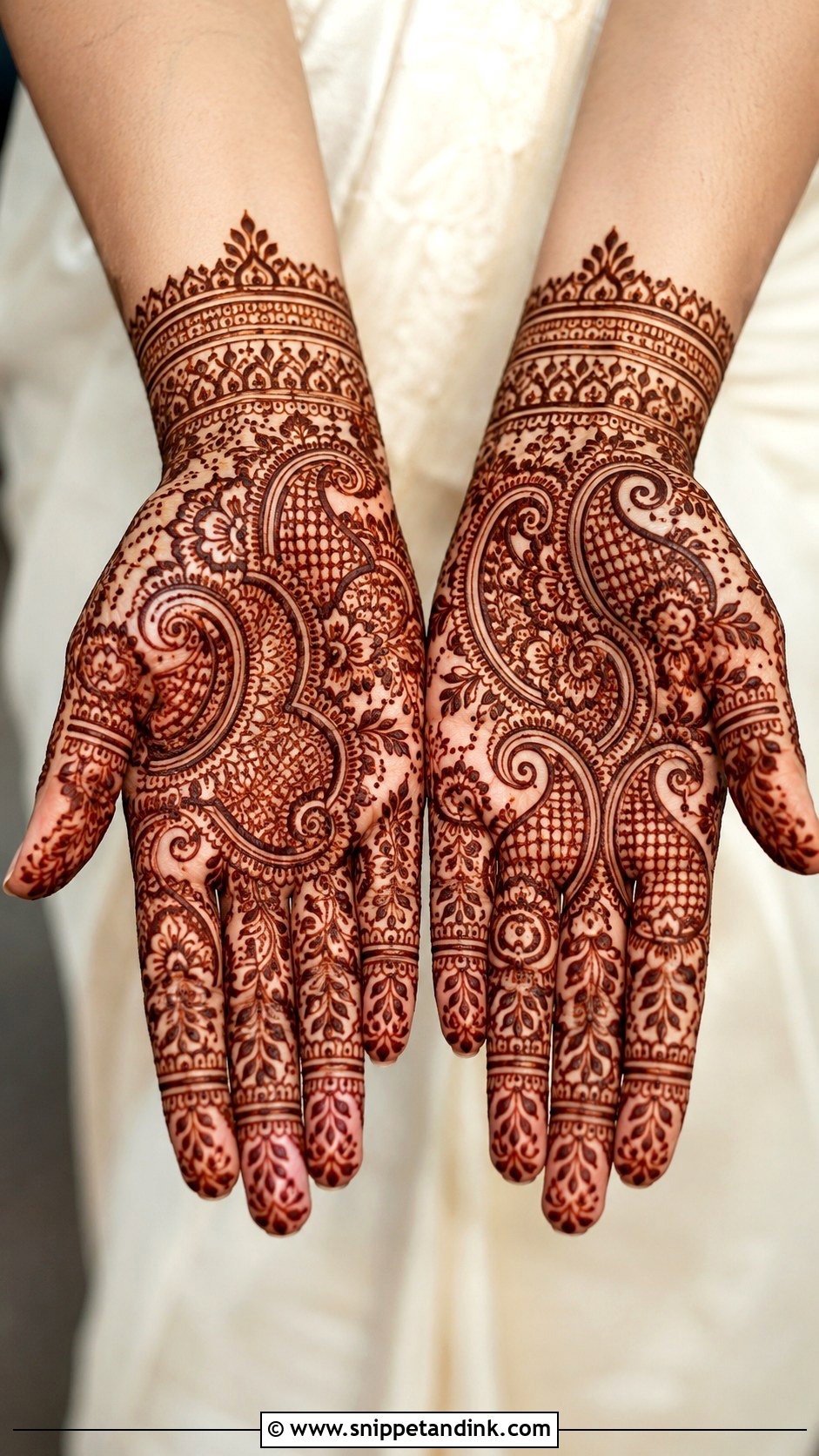
Paisleys fill a palm comfortably, large and bold in Arabic layouts or small and repeated in Indian full-hand work. A typical design starts with a paisley cluster in the palm, continues in leafy curves on the fingers and ends at a neat wrist border. Make it heavier with checks and fine fillers, or simpler with open space. On a broad palm I angle the paisleys slightly to make it look narrower; on a slim one they can sit upright. Weddings, festivals and cultural events all suit it.
11. Jaali Front Hand Mehndi Design
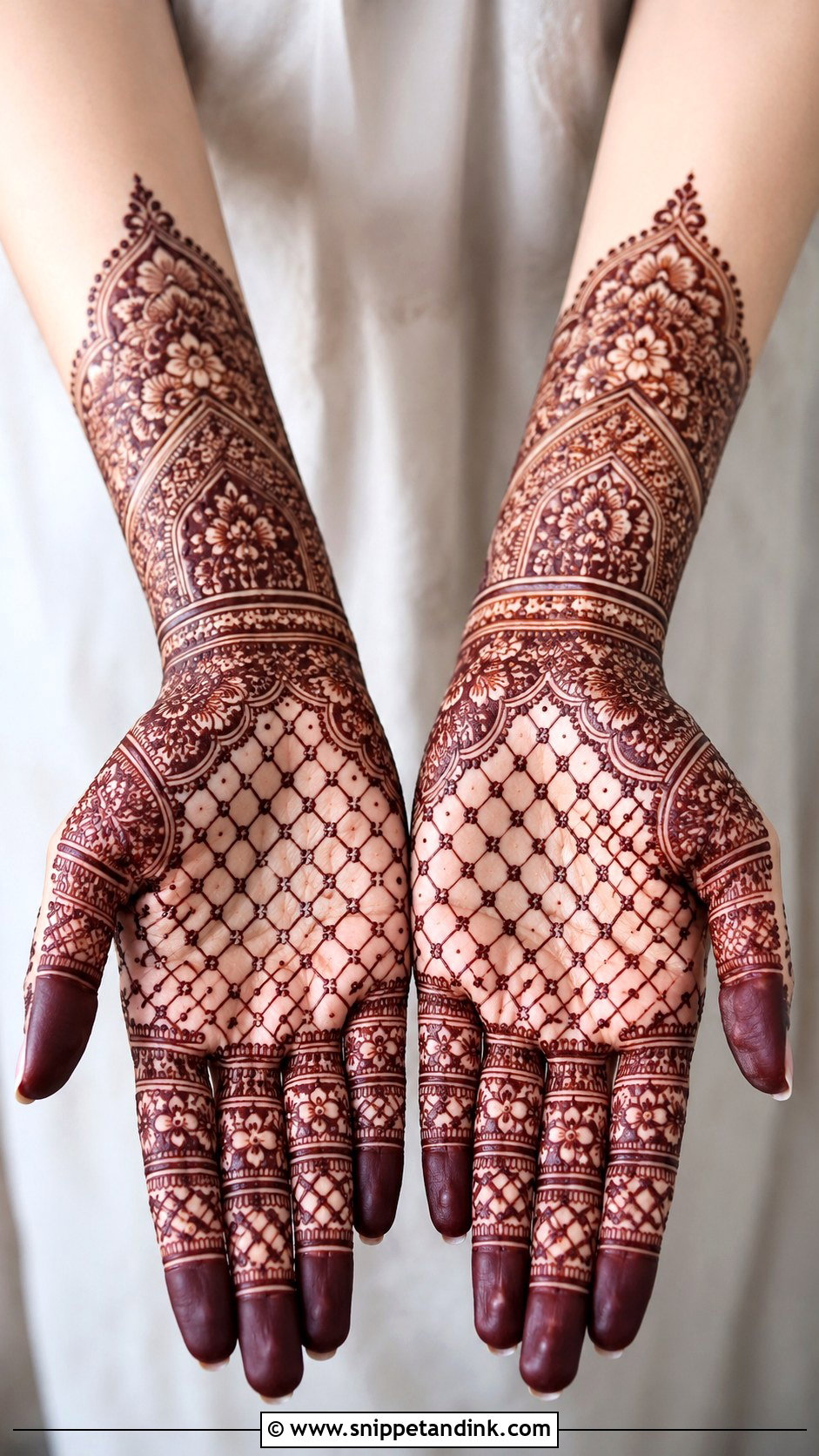
Jaali on the palm reads almost like lace jewellery. It can cover part of the palm, fill the fingers or sit in a framed section near the wrist, with diamond grids, tiny dots and curved borders. It gives a full look without solid dark henna everywhere. Palms stain so deeply that tiny boxes can close up and look filled, so I keep the grid slightly larger here than I would on the back of the hand. It pairs well with mandalas, florals and bridal motifs.
12. Indo Arabic Front Hand Mehndi Design
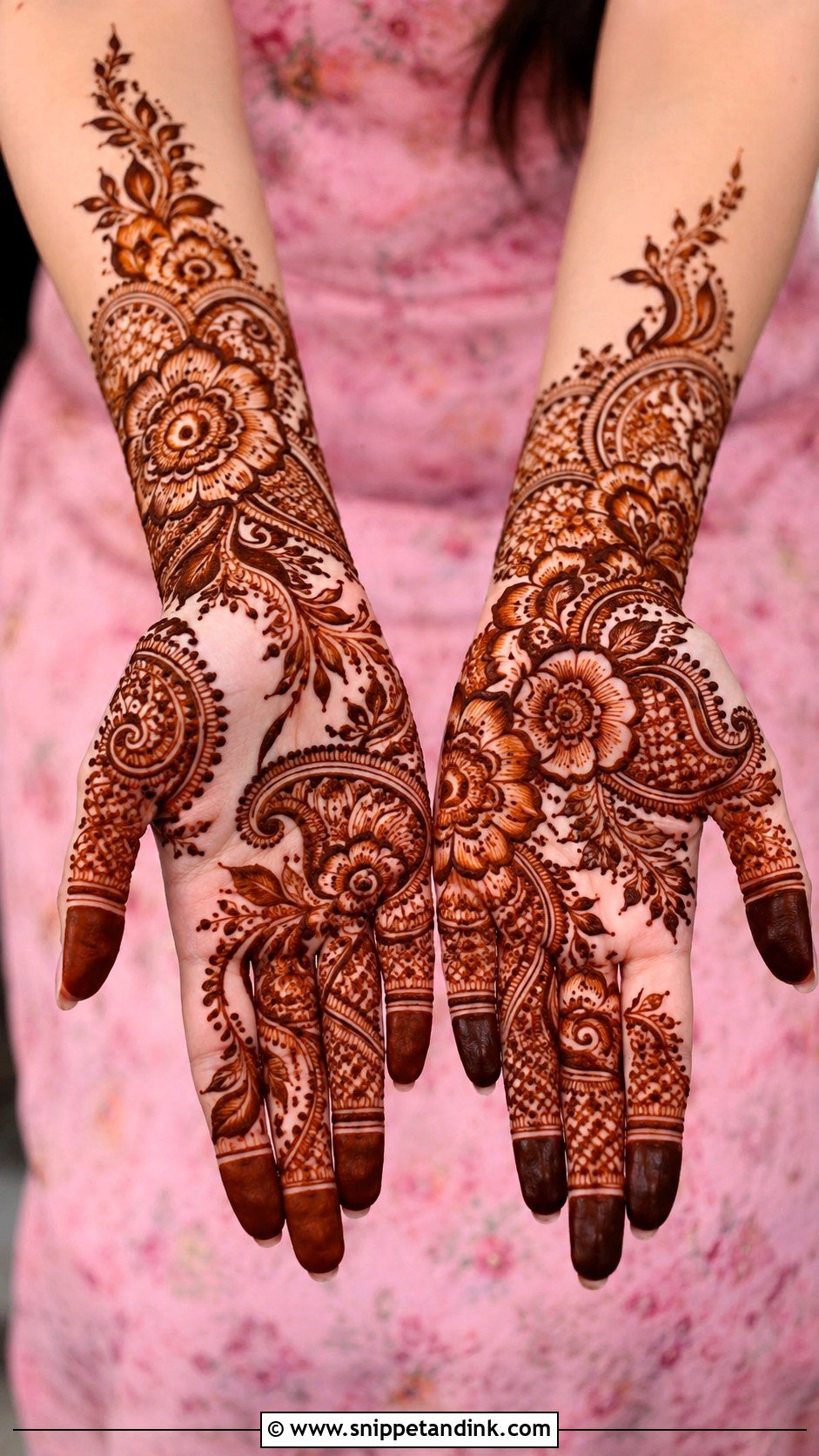
Indo Arabic front hand mehndi takes Arabic flow and fills it with Indian detail: large flowers, paisleys and diagonal movement, with fine lines, dots, checks and leafy fillers inside the motifs. Negative space keeps it modern, and the inner work adds festive depth. The one rule I follow is a single clear direction, wrist to index finger or thumb side to wrist, never both. Mixed directions make the palm look accidental. Bridesmaids, engagements, Eid and Diwali all suit it.
13. Indian Front Hand Mehndi Design
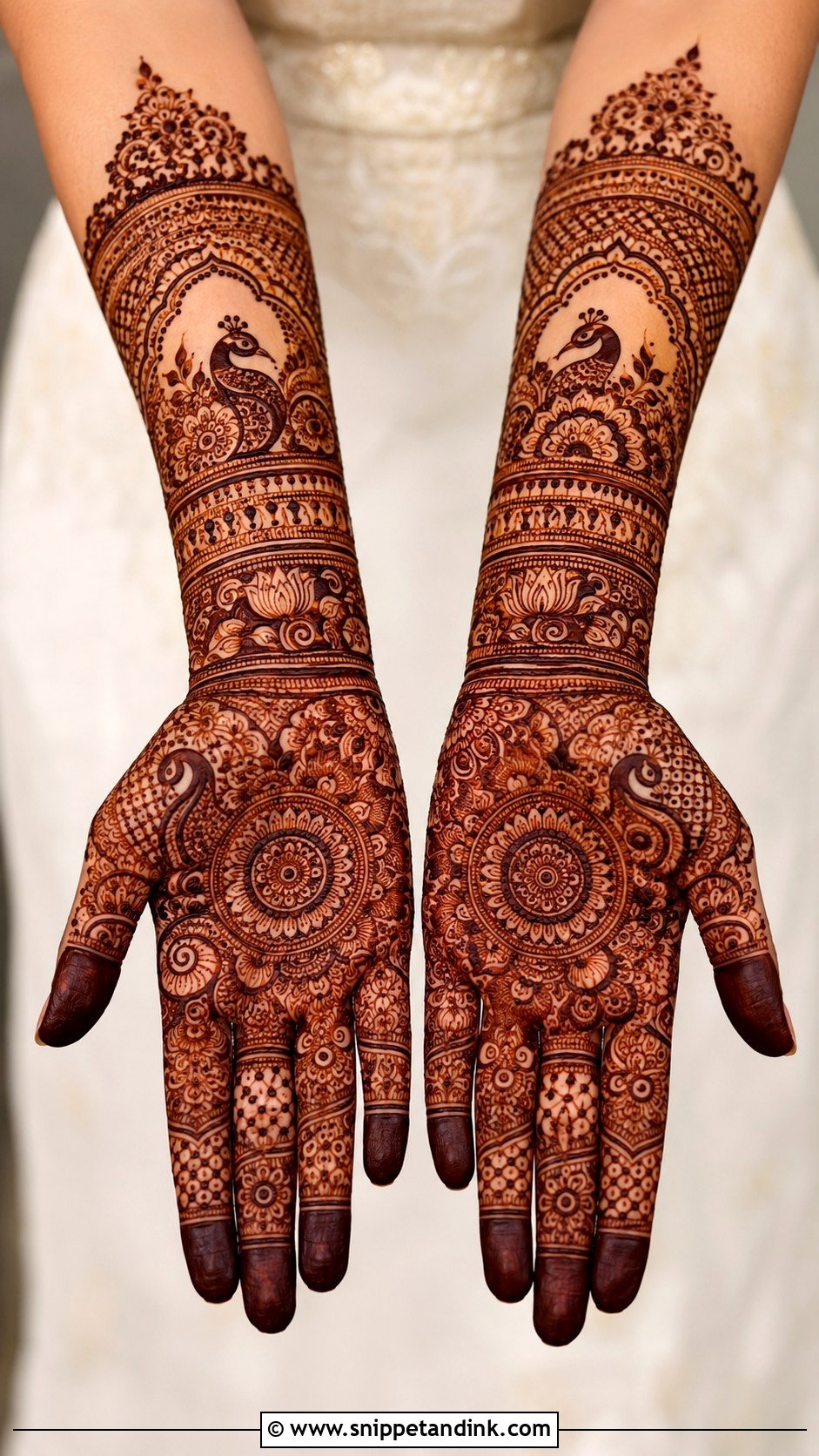
Indian palm mehndi is dense, detailed and full of meaning: mandalas, paisleys, lotus, peacocks, fine lines and tiny fillers across the whole palm, heavily decorated fingers and stacked bands at the wrist. Detail is the point, but structure keeps it from looking messy. I start with a strong centre motif, frame it with borders, and only then fill. Brides and festive rituals suit it best.
14. Moroccan Front Hand Mehndi Design
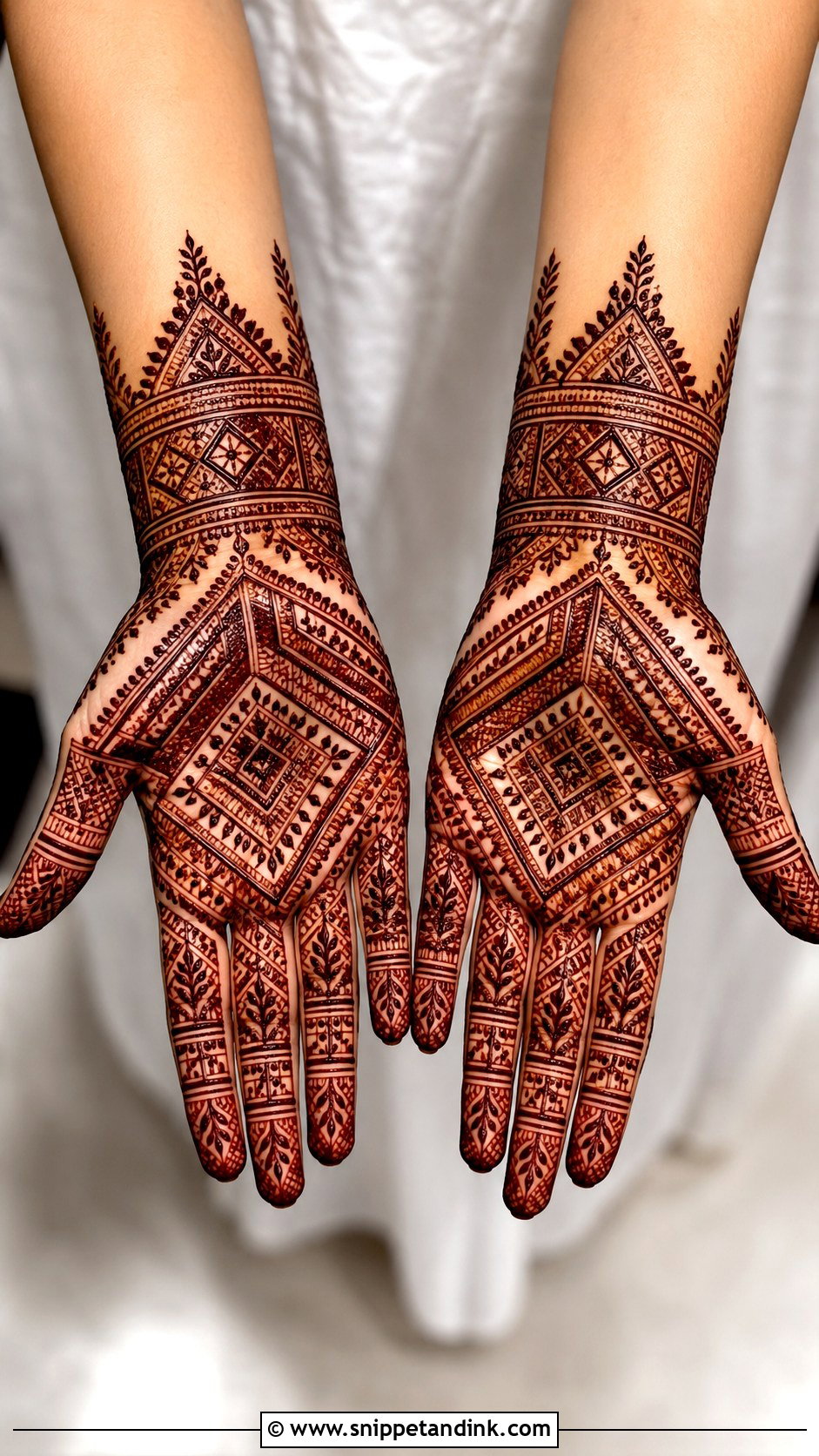
Geometric Moroccan-style work uses diamonds, triangles, straight lines, grids and bold shapes rather than florals. A palm panel, patterned fingers and a wrist cuff make a full design. Palms aren’t flat, so I draw the straight lines with the hand gently stretched open; drawn on a cupped hand, they bend once the fingers straighten. It feels modern, suits simple outfits and is a good pick for anyone tired of florals.
15. Gulf Front Hand Mehndi Design
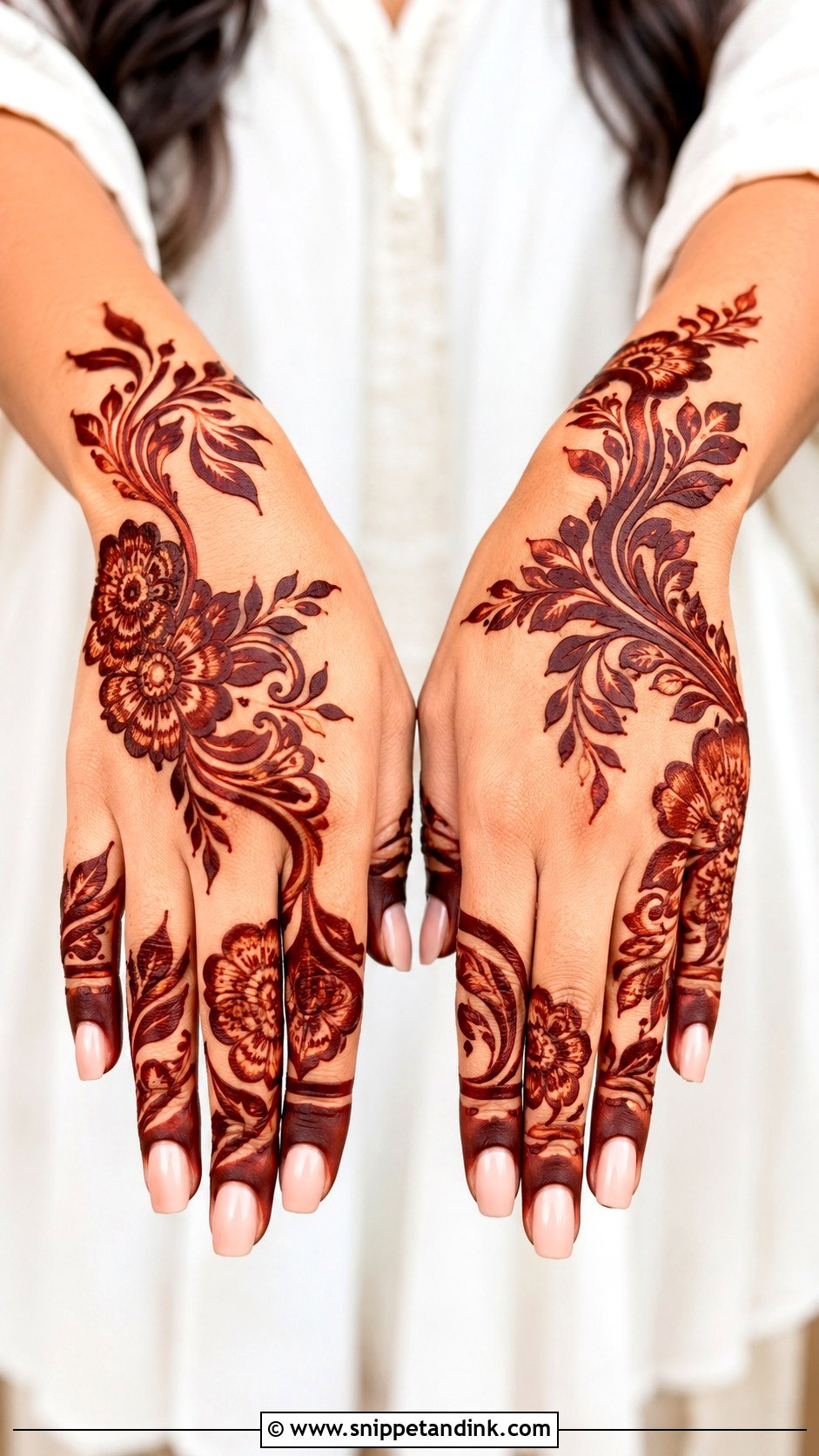
Gulf front hand mehndi, also called Khaleeji-inspired mehndi, uses large florals, leafy trails, shading and open palm space. Letting skin show through makes the dark palm stain look even more dramatic. It typically starts at the wrist, sweeps across the palm and ends on two or three fingers. Thick outlines and smooth shading are its signature, and it’s quick to apply, which makes it popular for Eid and family parties.
16. Minimal Front Hand Mehndi Design
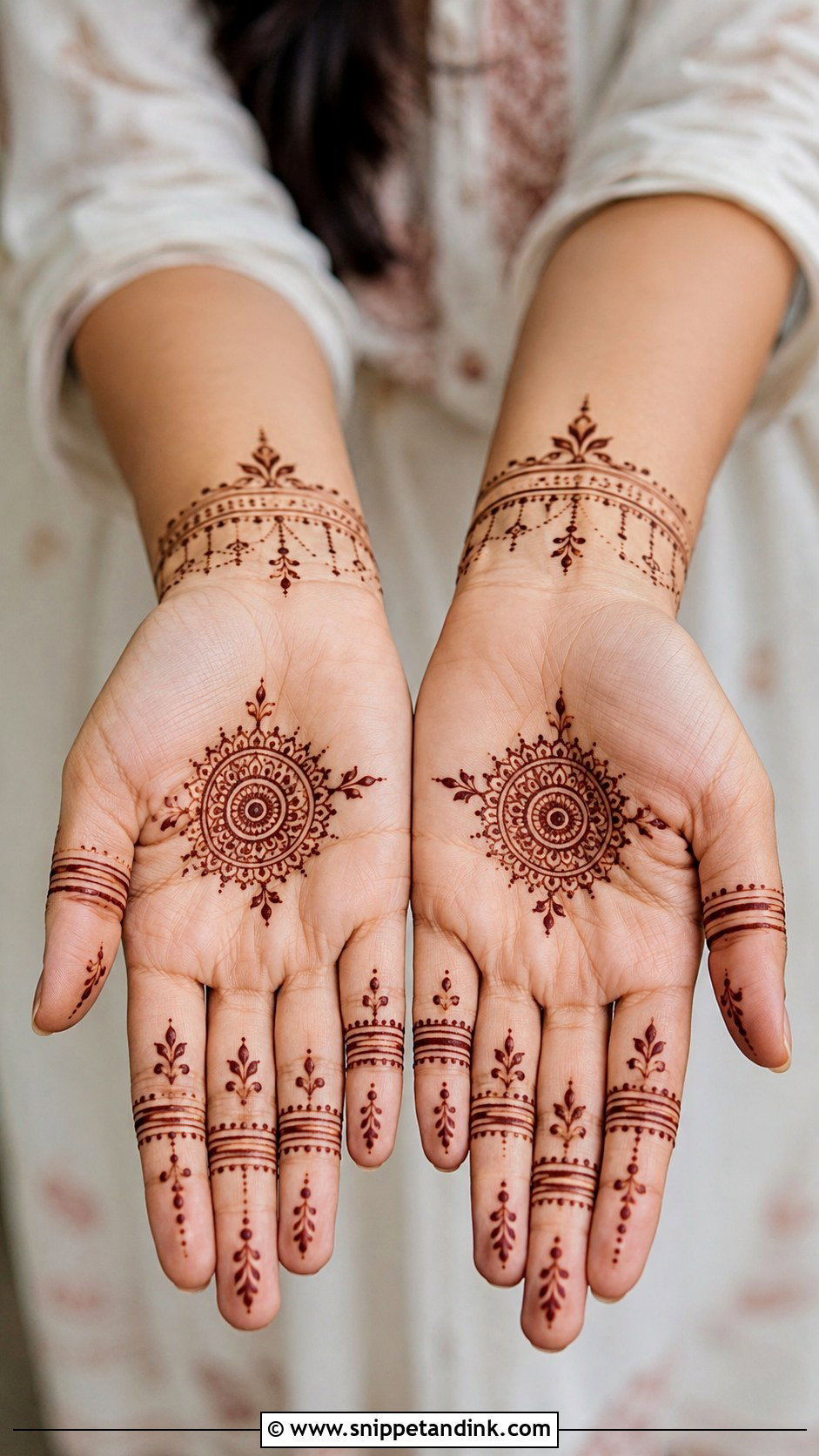
Minimal palms decorate without covering: a small mandala, fine finger rings, tiny leaves and a delicate wrist line. Thin lines, neat dots and plenty of empty space keep it stylish. Short fingers carry it well because nothing clutters them. If you dislike heavy mehndi or need something for a small event or office celebration, I’d start here.
17. Finger Front Hand Mehndi Design
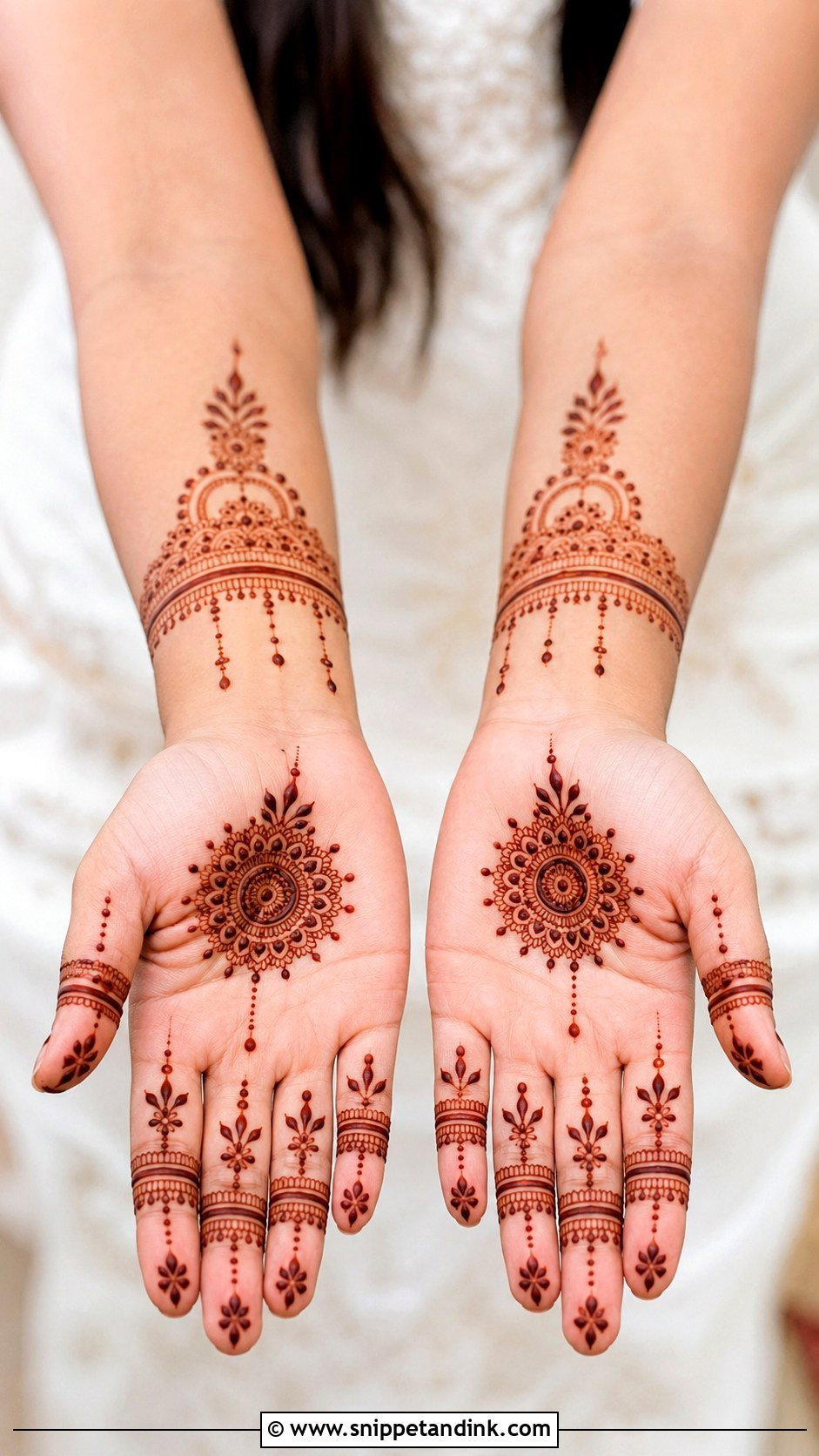
Here the fingers carry the detail and the palm stays light: ring bands, leafy chains, dotted lines, mini florals and fingertip caps, with perhaps a small palm mandala. Hand gestures show finger work clearly in photos. Each finger is a small section, which makes it manageable for beginners. I link all five with a matching band or repeated motif so they look like one design.
18. Bracelet Front Hand Mehndi Design
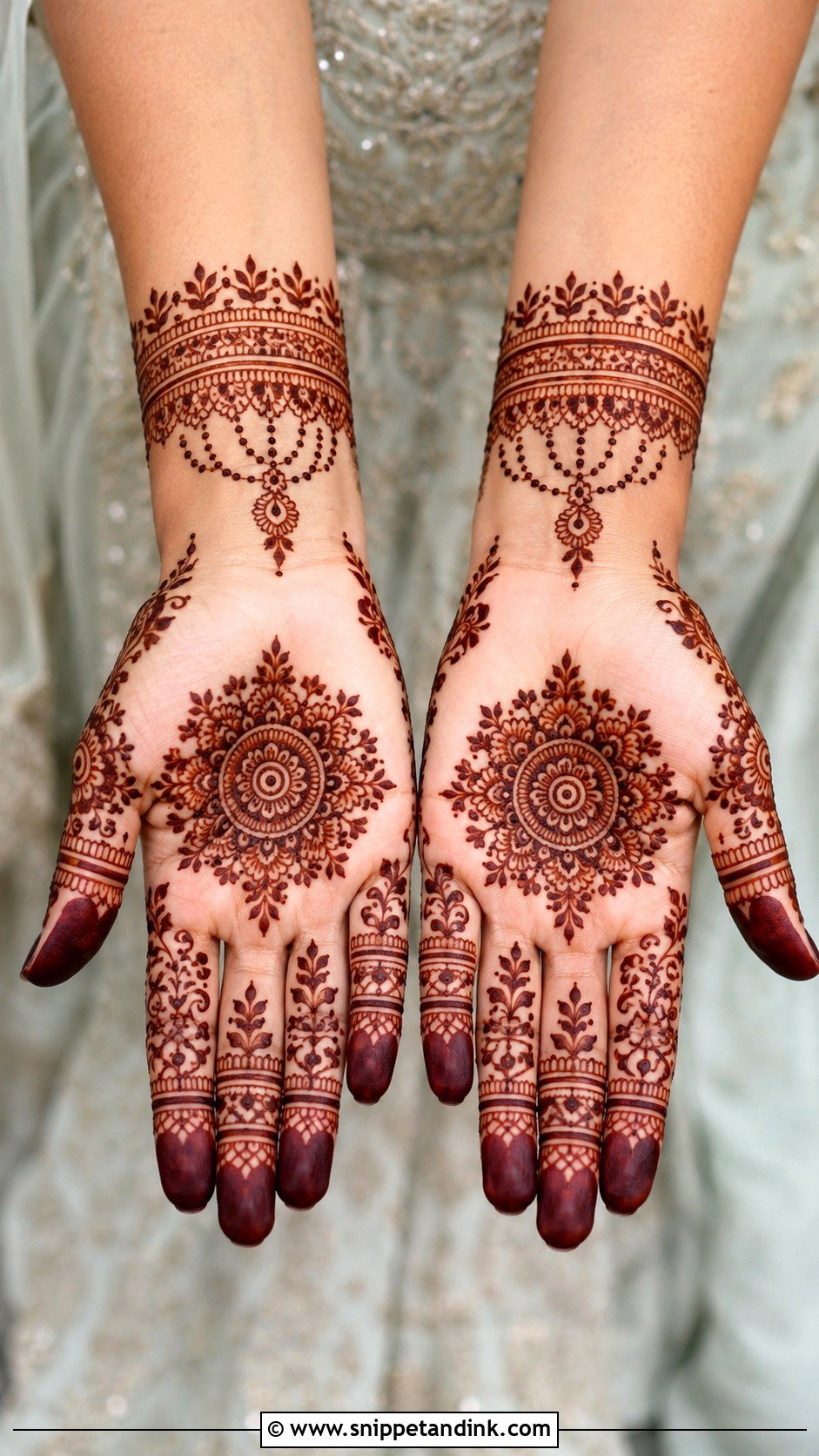
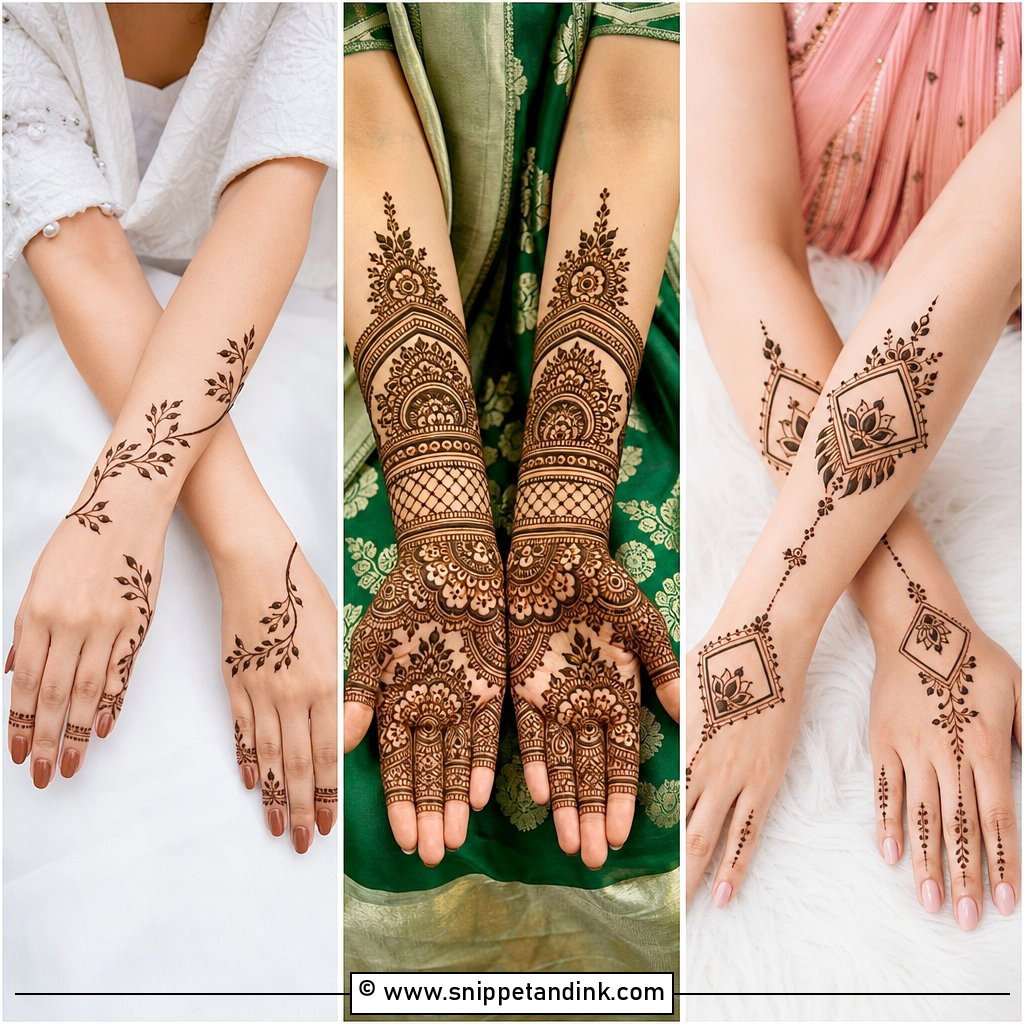
The wrist becomes the jewellery in this design: a cuff, chain-like lines and hanging dots, joined to a palm motif by a thin trail. Fingers stay simple with ring patterns or leafy tips. The wrist section needs enough weight to read as a bracelet, while the palm stays soft. Small dangling details finish it. It pairs well with bangles and suits young girls and anyone who likes lighter mehndi.
19. Jewelry Front Hand Mehndi Design
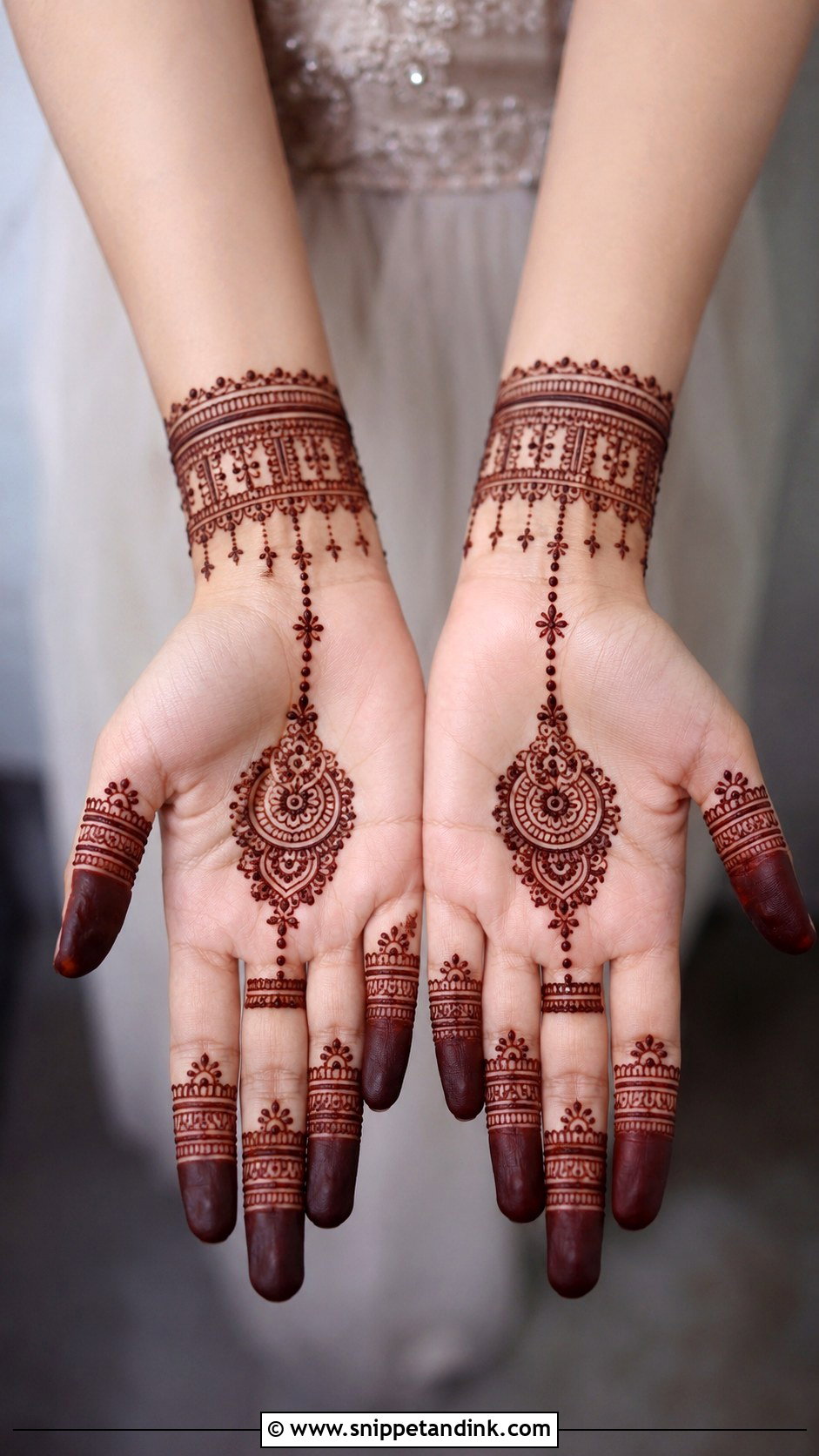
Jewellery mehndi imitates hand ornaments: rings, chains, bracelet bands, dotted hangings and a central palm pendant, often running from the middle finger to the wrist like a haath phool. It leaves plenty of skin visible. Keep the lines thin and the chain spacing even; on a palm, thick chains stain so dark they lose the delicate look entirely. Engagements, Eid, Diwali and wedding guests all suit it.
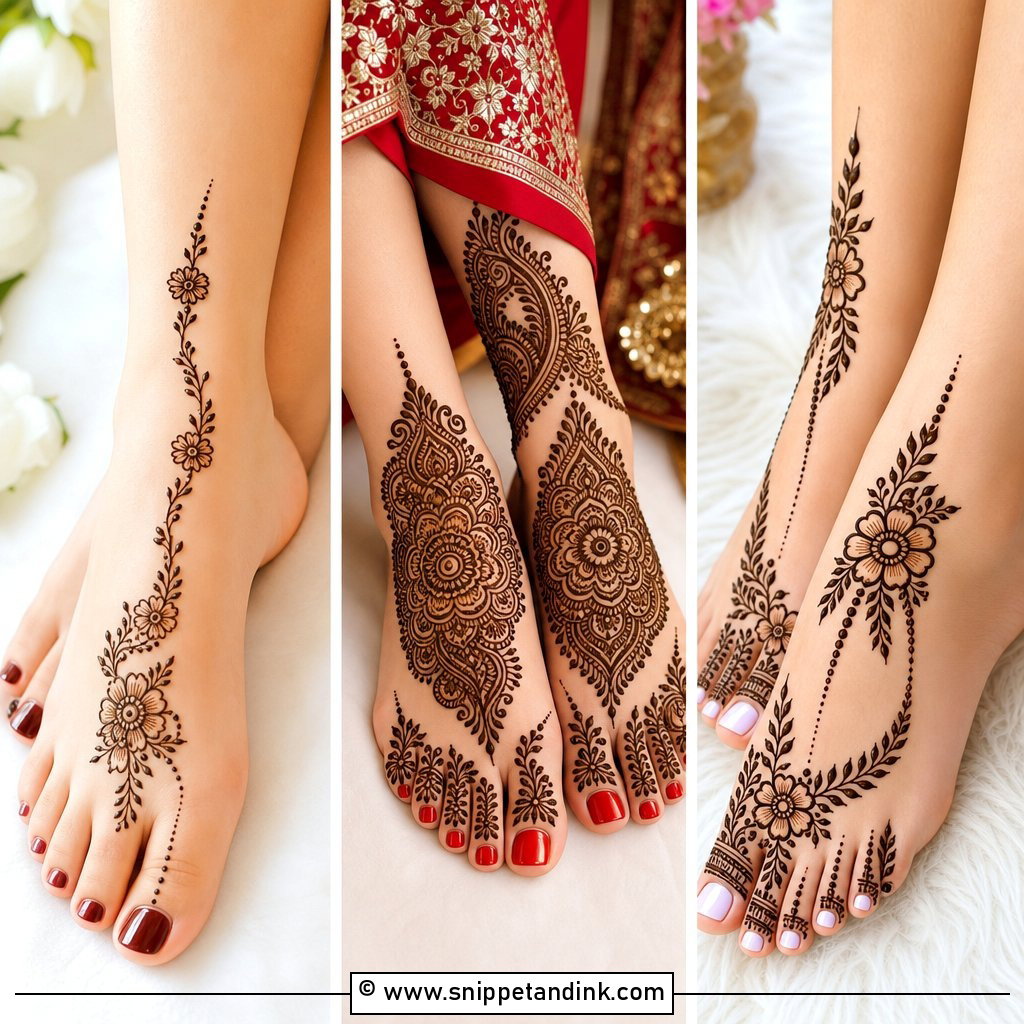
20. Vine Front Hand Mehndi Design
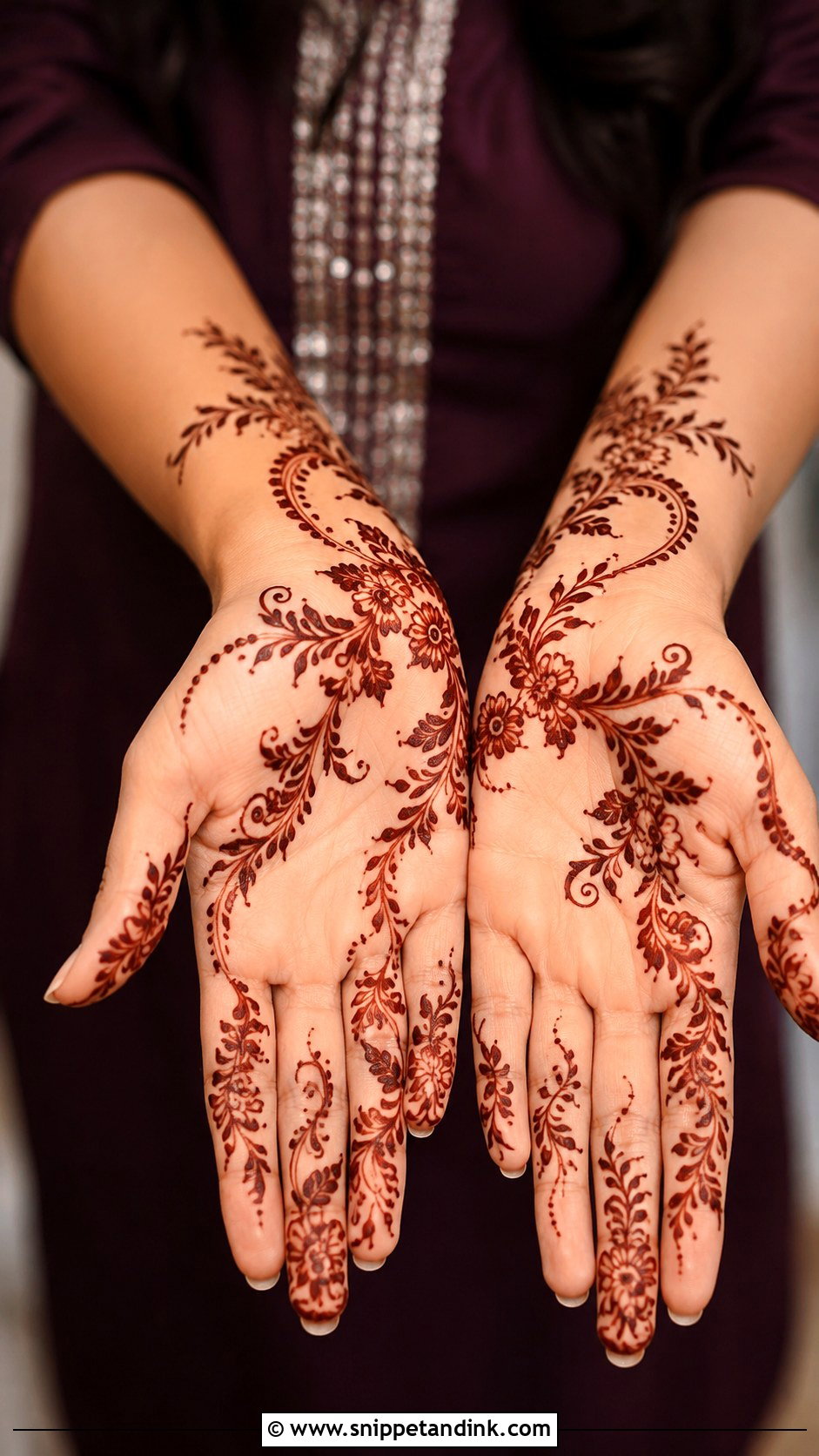
A vine flows from the wrist toward the fingers with leaves, small flowers, dots and curved stems. Keep it to one leafy trail or add side florals and finger detail for more. Long curves elongate narrow hands especially well, and vines sit naturally inside Arabic and Indo-Arabic work. I keep the direction smooth with no random turns, because a vine that wanders looks unplanned. Festivals, parties and family functions all suit it.
21. Leaf Front Hand Mehndi Design
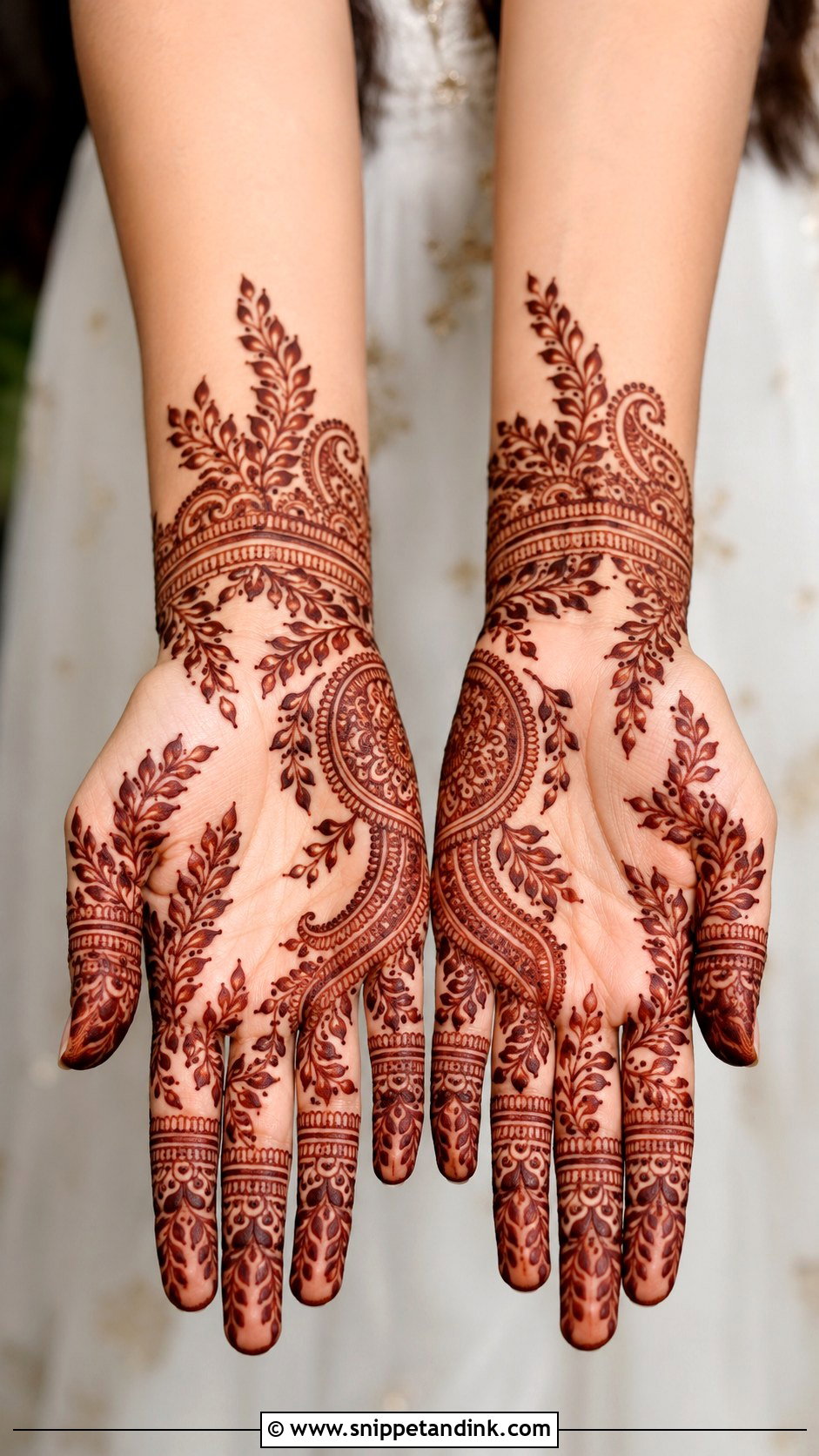
A leaf front hand mehndi design can form a curved trail across the palm, fill paisley borders, decorate fingers or make a wrist cuff. It’s nature-inspired without large flowers. Small paired leaves on thin vines look soft; larger shaded leaves with thick outlines look bold. Leaves are beginner-friendly too, since a repeated shape builds a full pattern quickly, and they suit Eid, Diwali and school events.
22. Circle Front Hand Mehndi Design
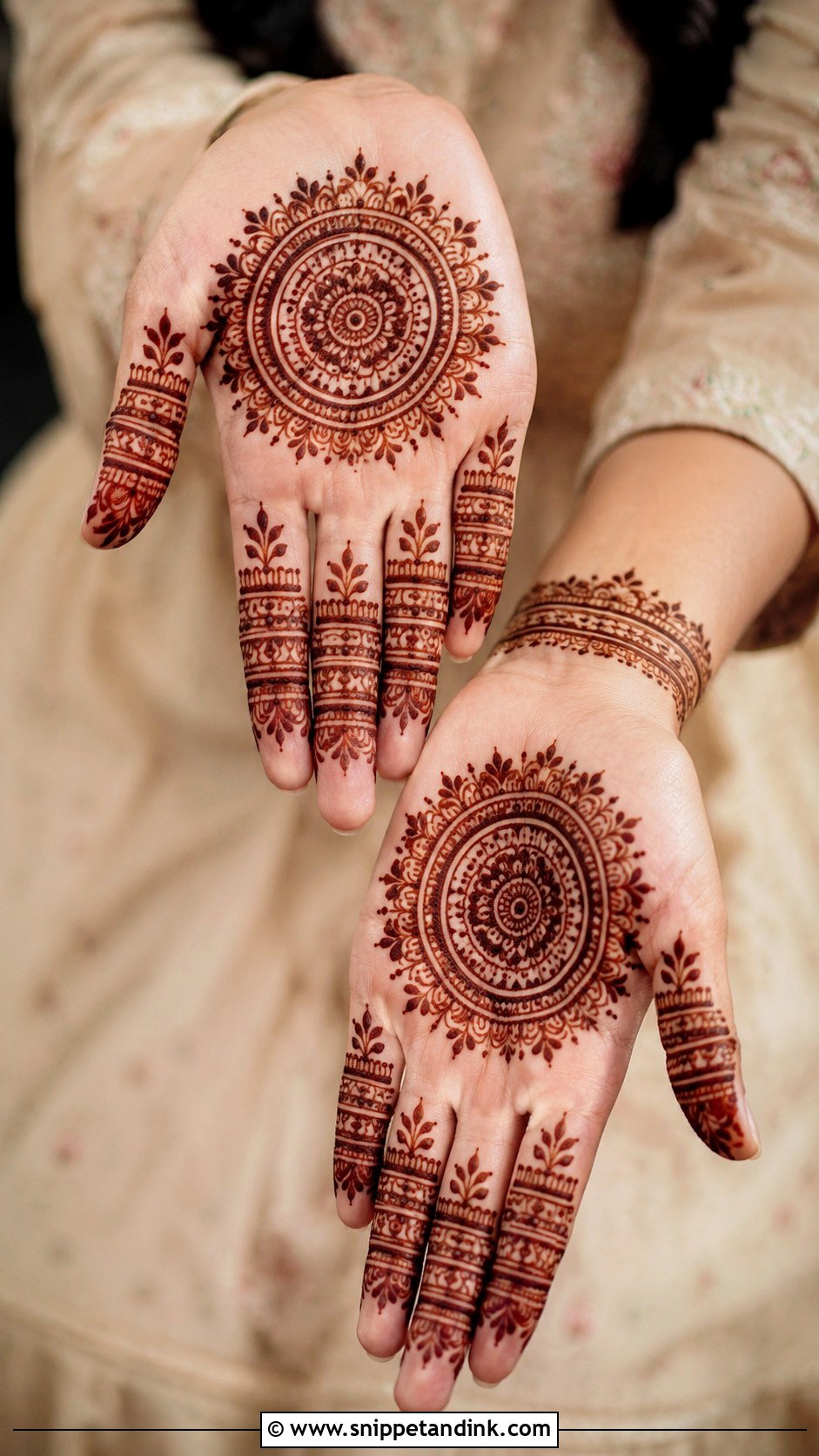
Round, layered rings of petals, dots and fine lines make the palm centre, with matching mini circles, leafy bands or simple tips on the fingers. The structure is clear, which is good for beginners. A wrist band and small corner fillers around the palm make it look more advanced. The secret is even circles. I build each ring slightly outward from the last rather than guessing the outer edge, because one lopsided ring throws off the whole palm.
23. Shaded Front Hand Mehndi Design
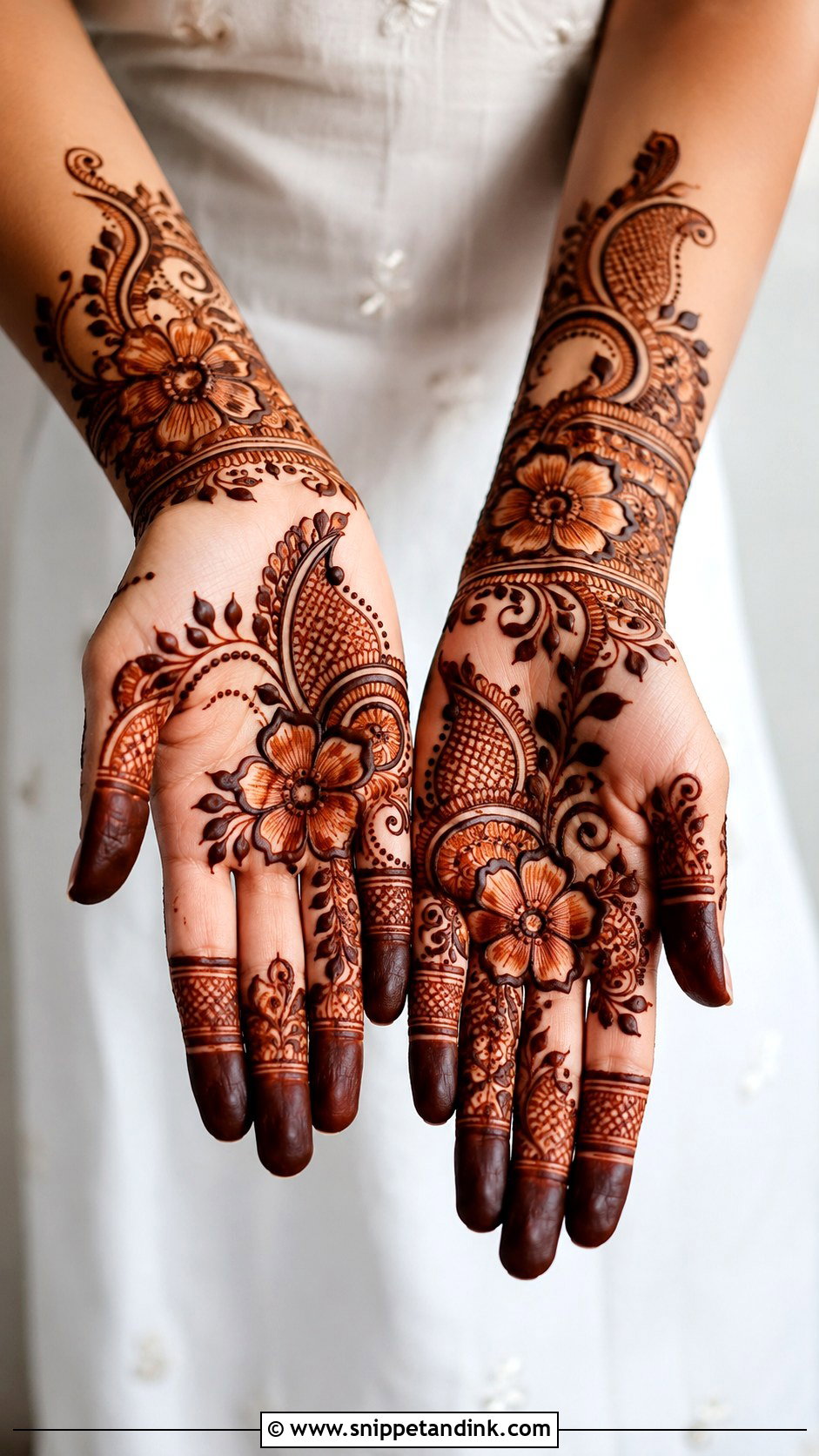
Shading adds depth without crowding: inside flowers, leaves, paisleys and Arabic curves, with one bold shaded flower on the palm and slim bands or leafy trails on the fingers. Once the stain develops, the contrast between dark outlines and softer fills becomes clear. Use it with restraint. Palms stain dark, so heavy shading here can blur into solid colour. Crisp outlines, light fill and open space keep it readable.
24. Modern Front Hand Mehndi Design
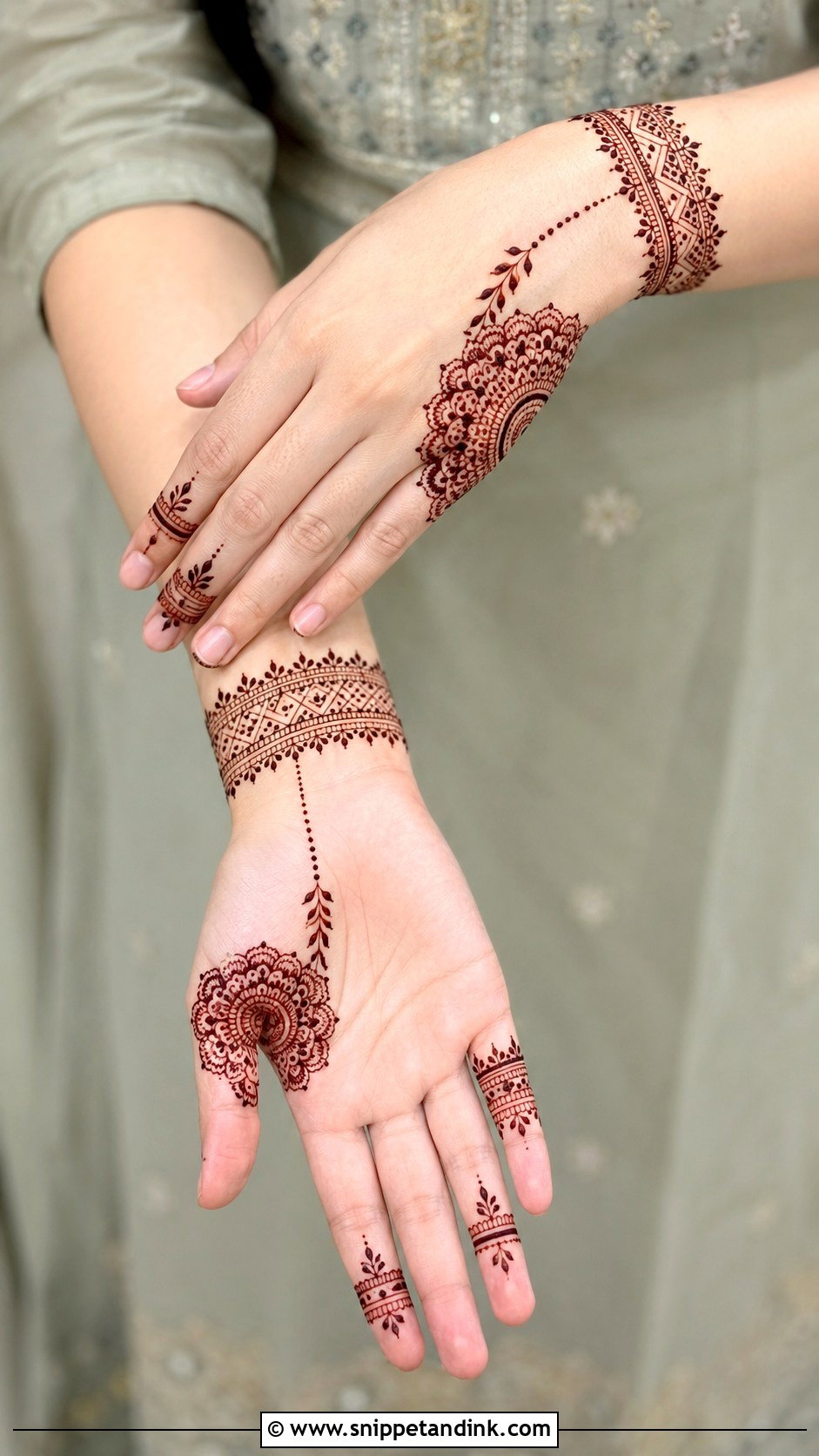
Modern palms rely on placement and spacing: a side mandala, a geometric wrist cuff, finger rings or a diagonal floral trail. Negative space and lighter filling make it current. To keep it from looking scattered, I repeat one small element across the hand, leaves, dots or bands, so the design reads as planned. It suits younger wearers, college events and bridesmaids with simple outfits.
25. Stylish Front Hand Mehndi Design
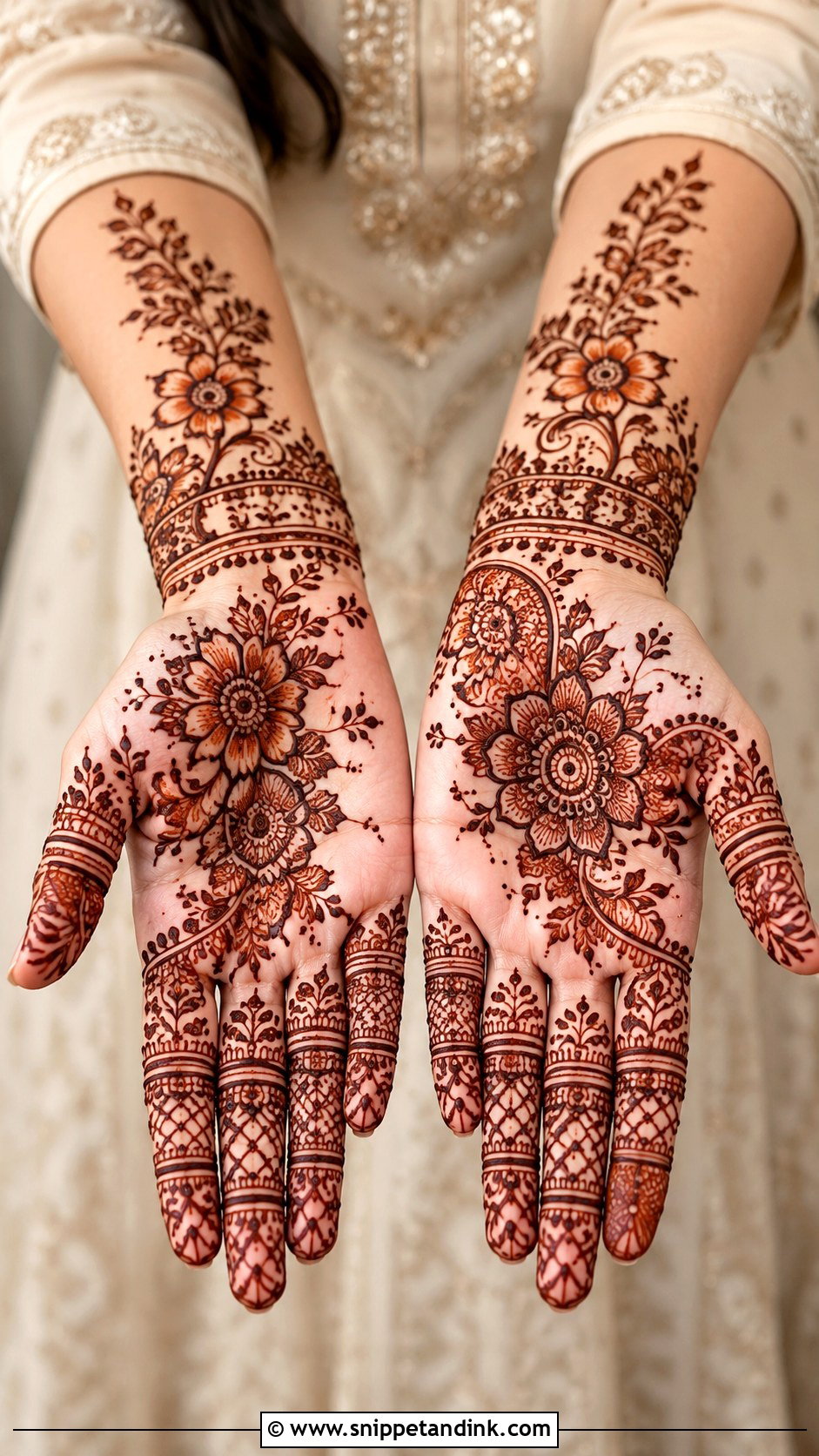
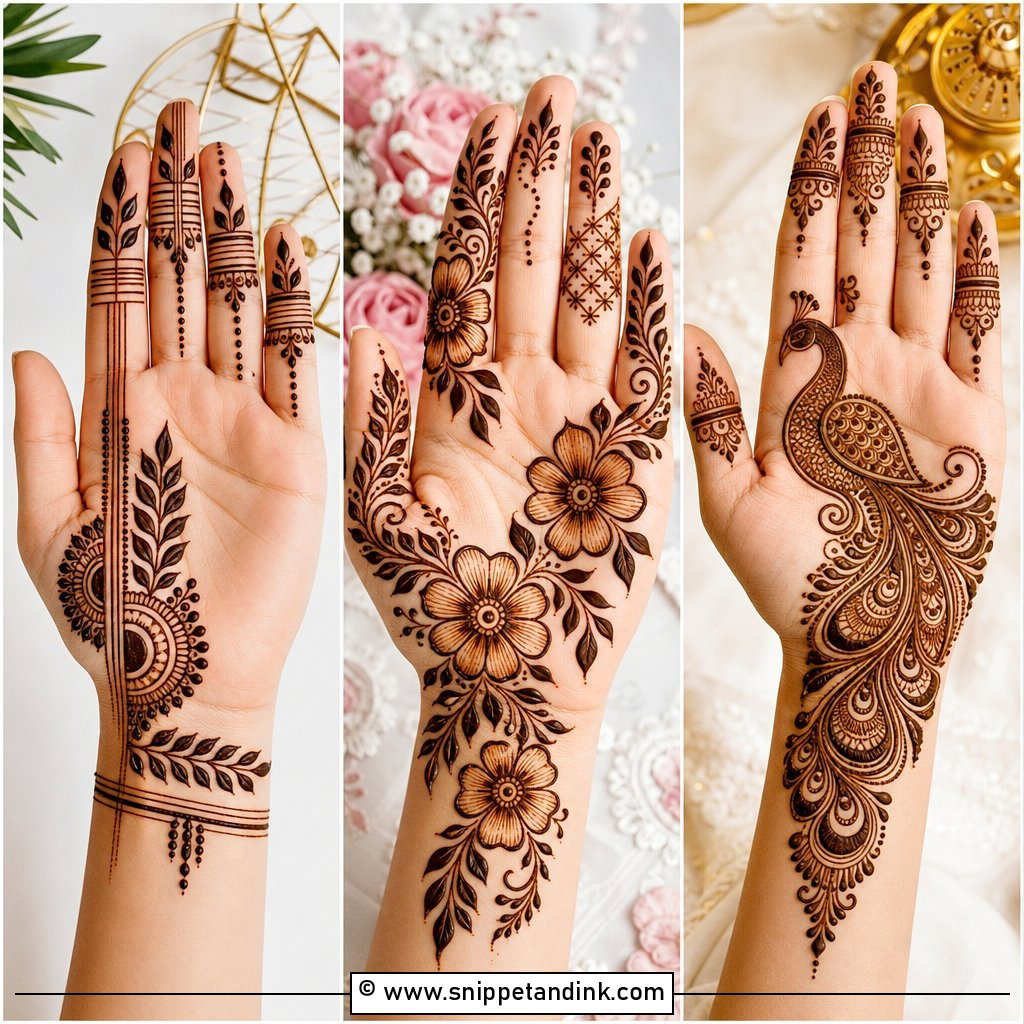
Polished palm designs pick a few elements and let them stand out: a bold palm motif, decorative fingers and a neat wrist finish, in Arabic flow, mandala-and-bands or a jewellery layout. Adding every pattern at once is the most common mistake I see. Two or three main elements is plenty. Clean outlines, dots for softness and open space around the main motifs suit parties, festive gatherings and guests who don’t want bridal weight.
26. Easy Front Hand Mehndi Design
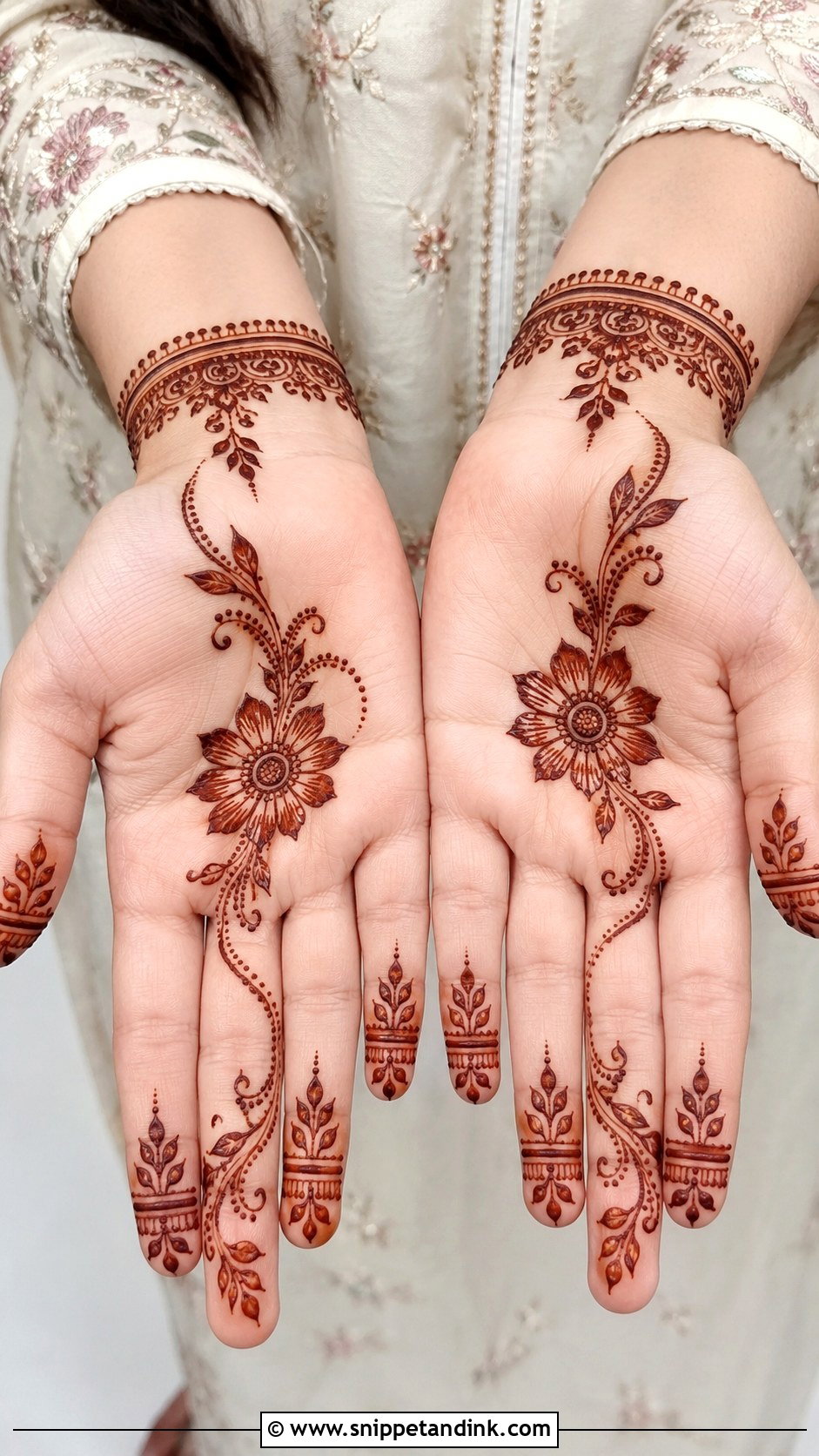
Start with a palm flower, circle or paisley, add a curved vine toward the wrist, and decorate the fingers with lines, dots and small leaves. That’s a full design without complicated filling, which suits home application and last-minute plans. If your cone control is still developing, skip tiny details; larger motifs are easier to keep neat and stain evenly. Palm focus, finger finish, wrist detail: three clear sections make even a simple pattern look thoughtful.
27. Latest Front Hand Mehndi Design
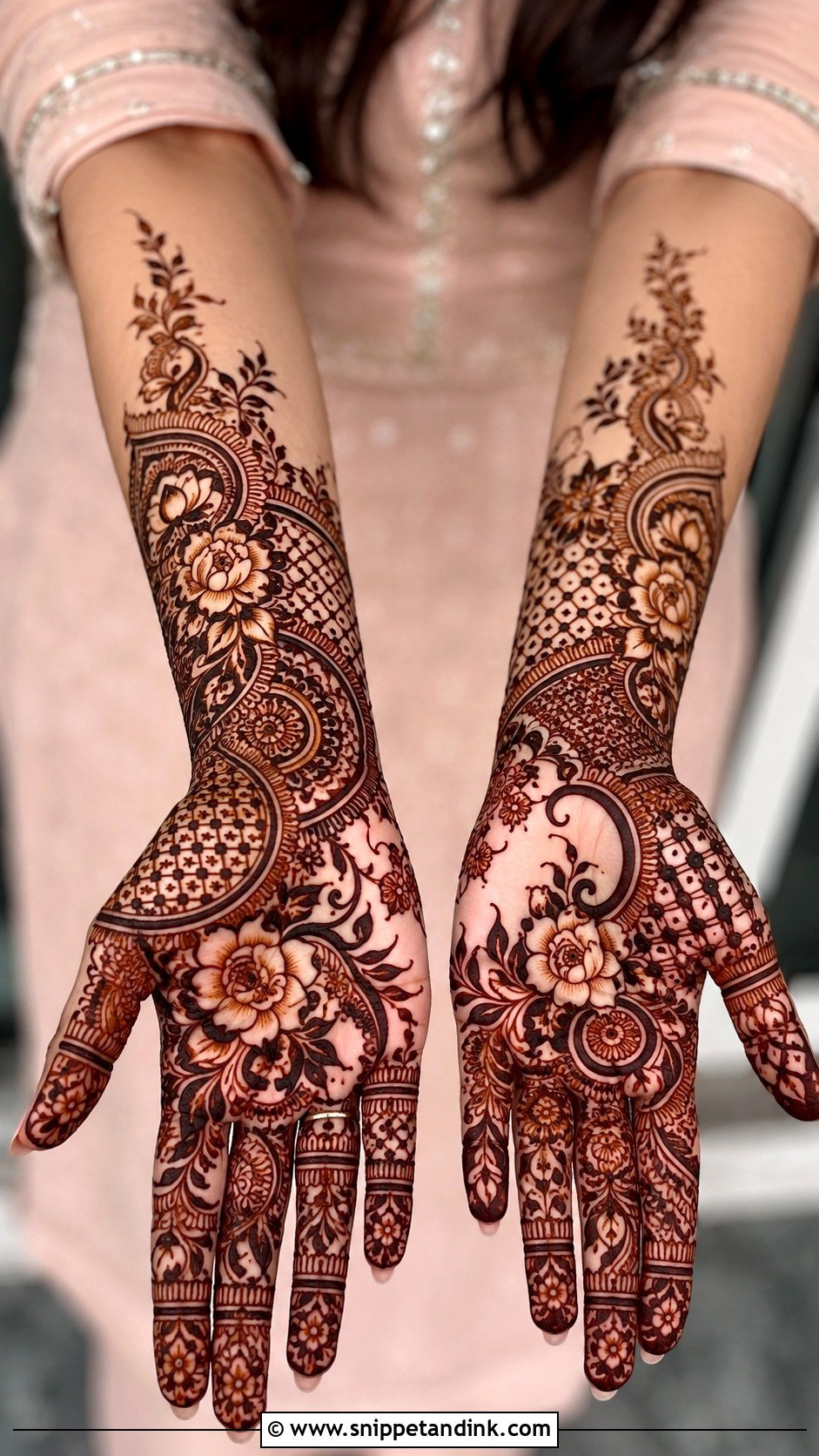
What’s current mixes traditional motifs with modern spacing: side mandalas, bold Arabic flowers, bracelet cuffs, lotus centres, jaali panels and finger-led layouts. Many clients now ask for a clean palm with one strong motif and detailed fingers, while brides still choose fuller Indian work. Neat negative space, sharp outlines and repeated mini details give it an up-to-date feel without losing what makes it mehndi.
28. Front Hand Mehndi Design For Eid
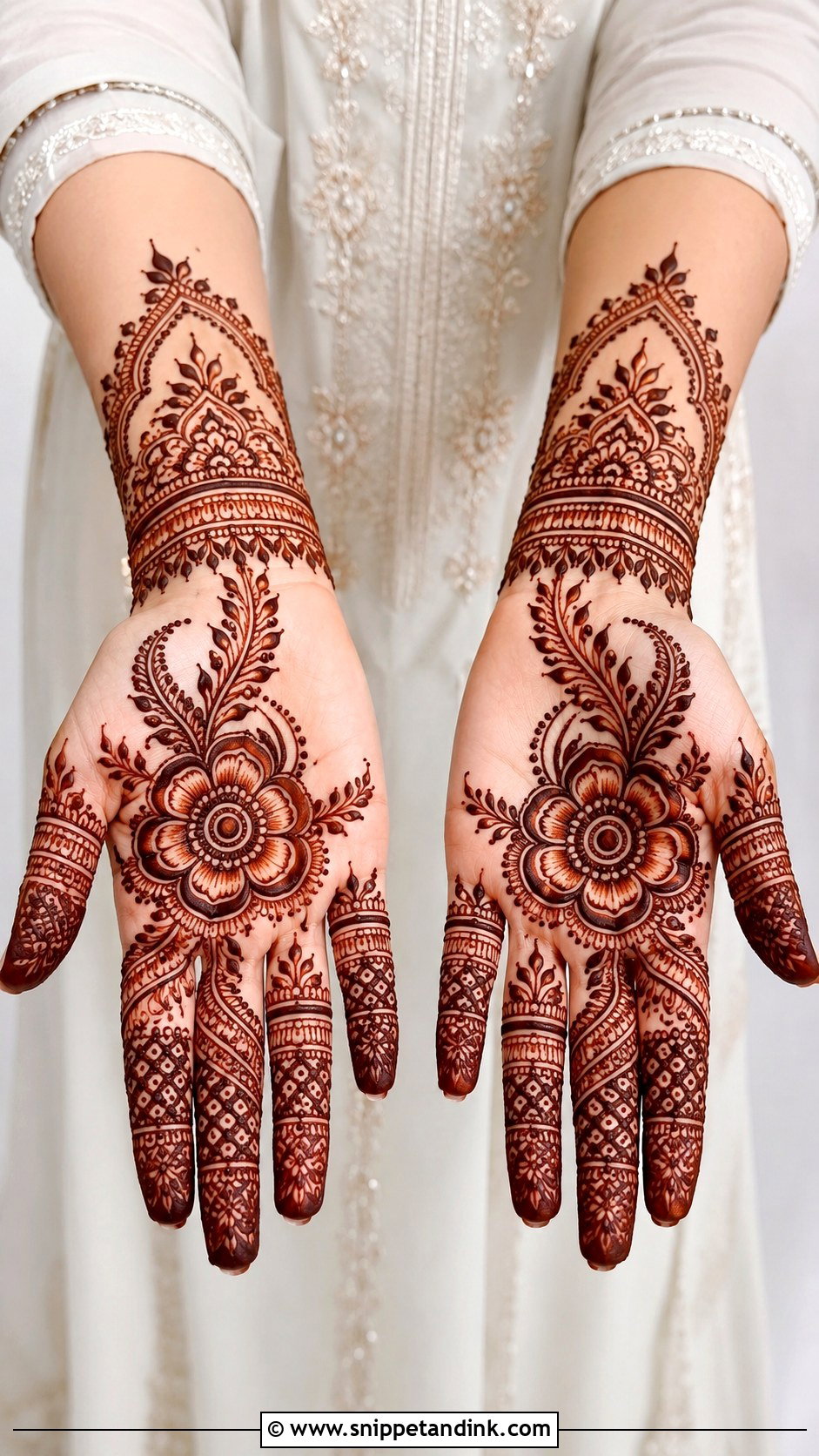
On Eid you’ll use your hands all day, greeting, serving and eating, so the design should be festive but comfortable. Arabic floral trails are popular because they apply quickly: a bold palm flower, leafy curves toward the wrist, decorated fingers and small dotted accents. For more, add a mandala or jaali section without covering every inch. Teens and adults suit it equally. Clear spacing keeps the deep reddish-brown stain looking fresh in family photos.
29. Front Hand Mehndi Design For Diwali
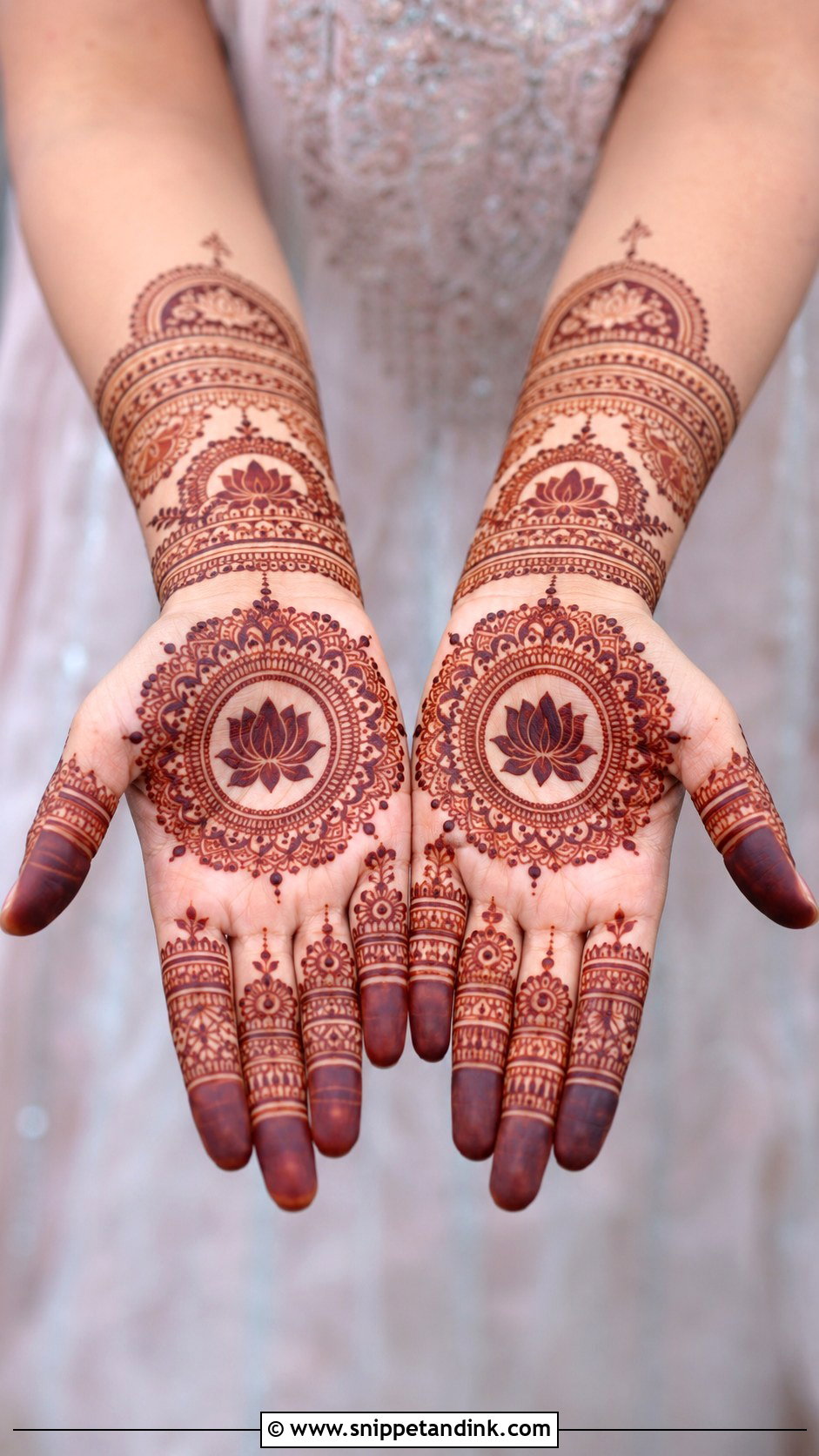
For Diwali, mandalas, lotus motifs, paisleys and fine finger details feel right. A lotus or round mandala in the palm, ringed with small petals and dots, with bracelet bands at the wrist and symmetrical lines and leaf chains on the fingers, makes a complete festive hand. Keep the centre motif clear and the decoration around it balanced. Apply it a day or two before the puja so the palm has reached its deepest colour by then.
30. Front Hand Mehndi Design For Karwa Chauth
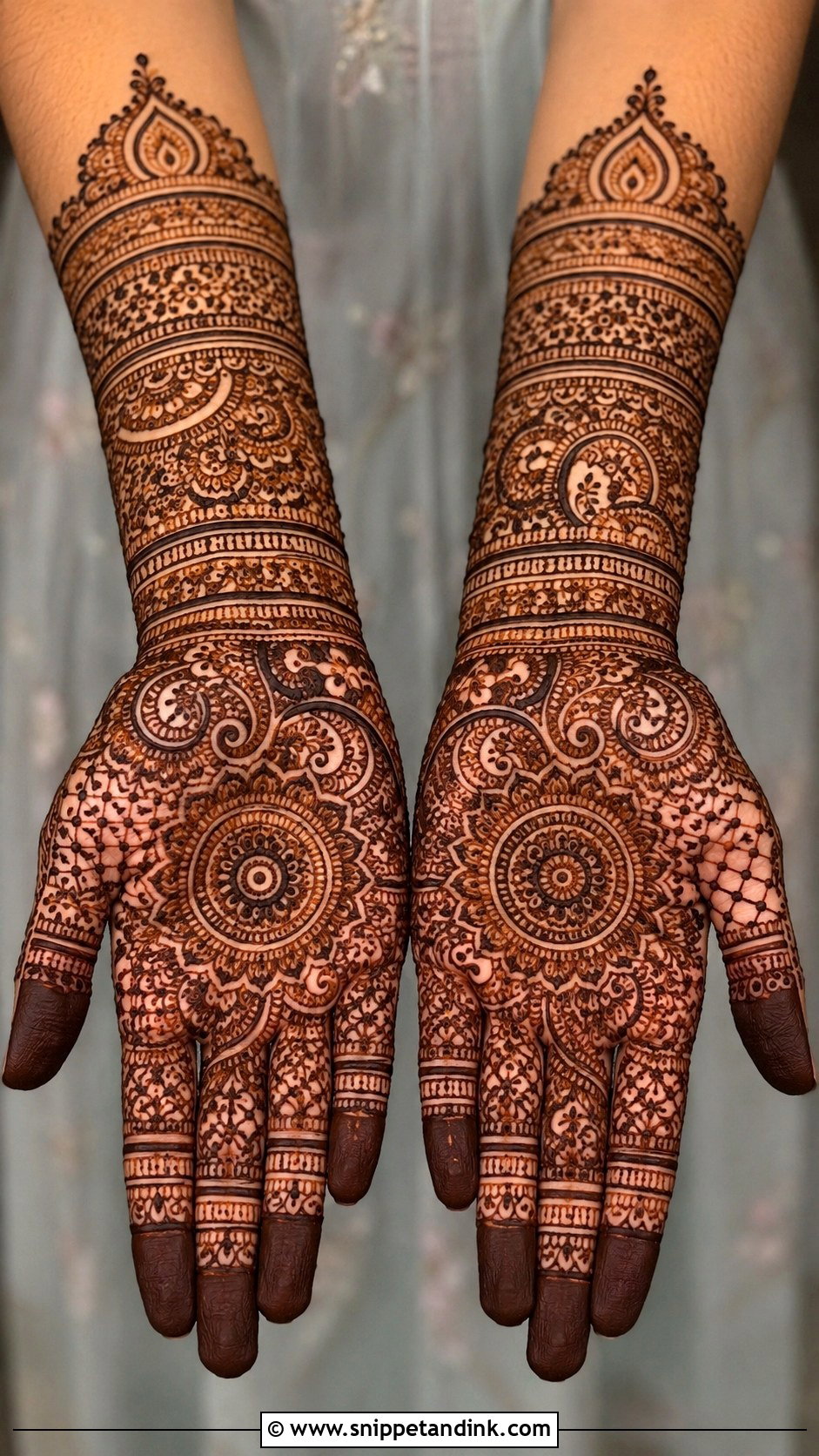
Karwa Chauth palms are usually full and traditional: mandalas, paisleys, jaali and wrist bands, sometimes with a moon curve, bridal elements or initials. Dense fingertips give the classic effect, and a strong palm centre stands out during the rituals. A softer version uses a mandala palm with floral borders instead of heavy filling. The best Karwa Chauth mehndi feels symbolic and finished, and I’d always apply it the day before so the stain is at its darkest on the evening itself.
31. Front Hand Mehndi Design For Engagement
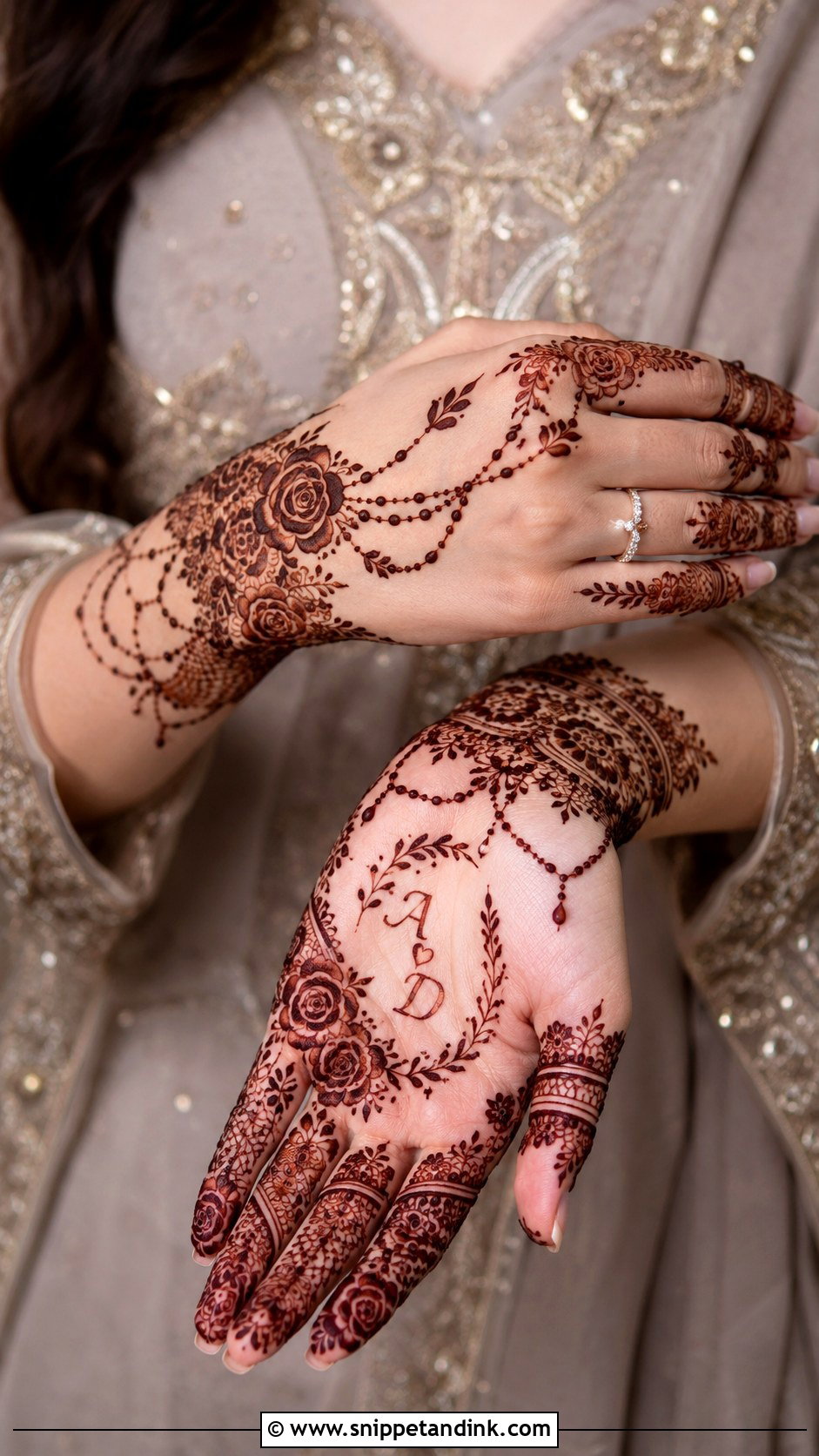
An engagement front hand mehndi design should feel special but lighter than bridal. Jewellery-style patterns, floral Arabic trails, rose motifs and bracelet cuffs all work. I connect a ring-finger pattern to a central palm motif and on to the wrist, which looks graceful in ring photos. Initials, a small heart-shaped curve or the date worked into the design make it personal. Keep the palm detail clear and leave the ring’s spot open so the ring itself stands out.
32. Front Hand Mehndi Design For Bridesmaid
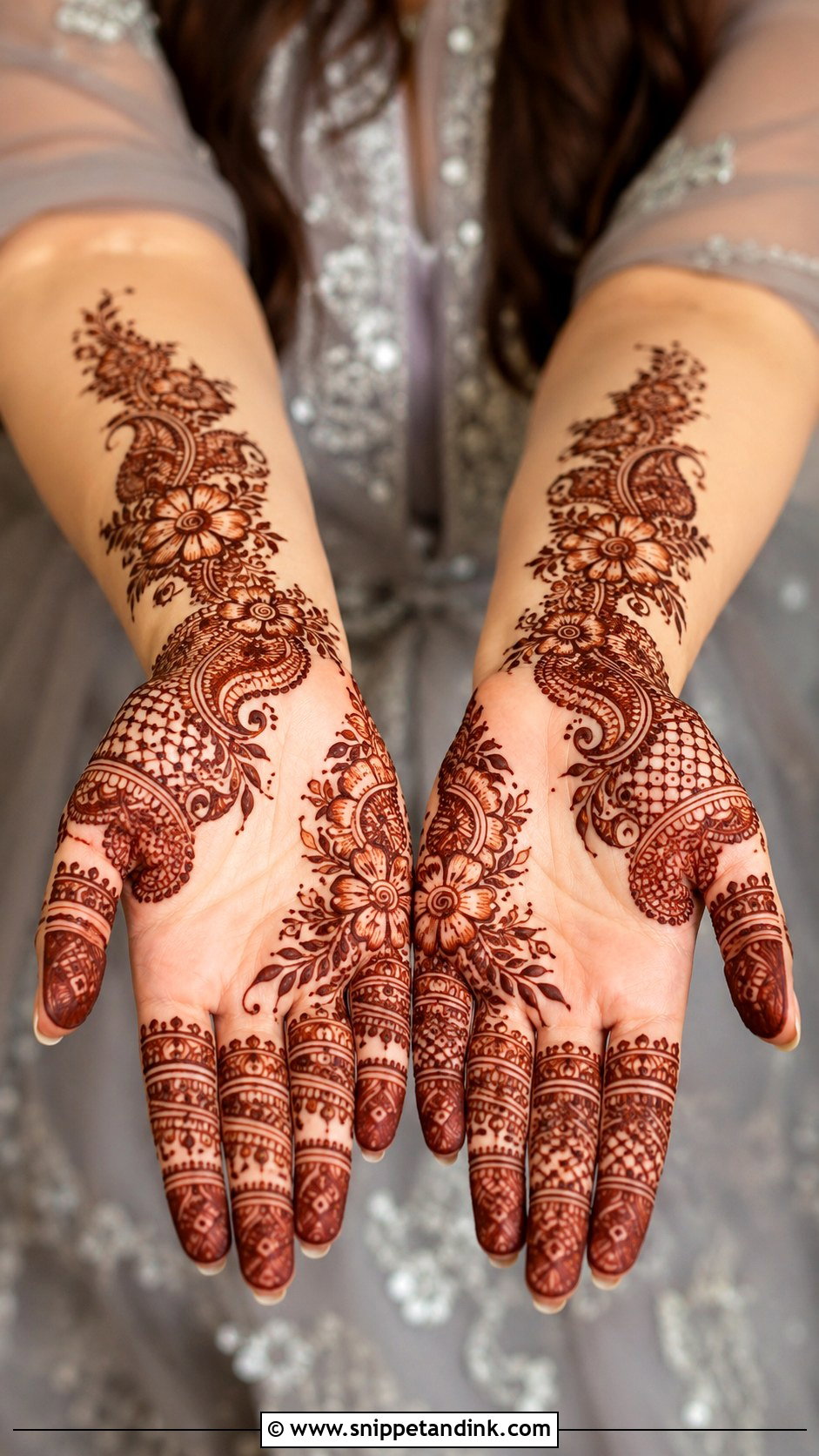
Bridesmaids suit Arabic florals, Indo-Arabic paisleys, side mandalas and finger bands. The design can cover the palm and wrist but should leave out the bridal storytelling motifs, portraits and processions, which belong to the bride. A diagonal floral trail with decorated fingers is dependable, applies faster and stays comfortable through the events. Small jaali sections or leafy details add richness without weight.
33. Front Hand Mehndi Design For Kids
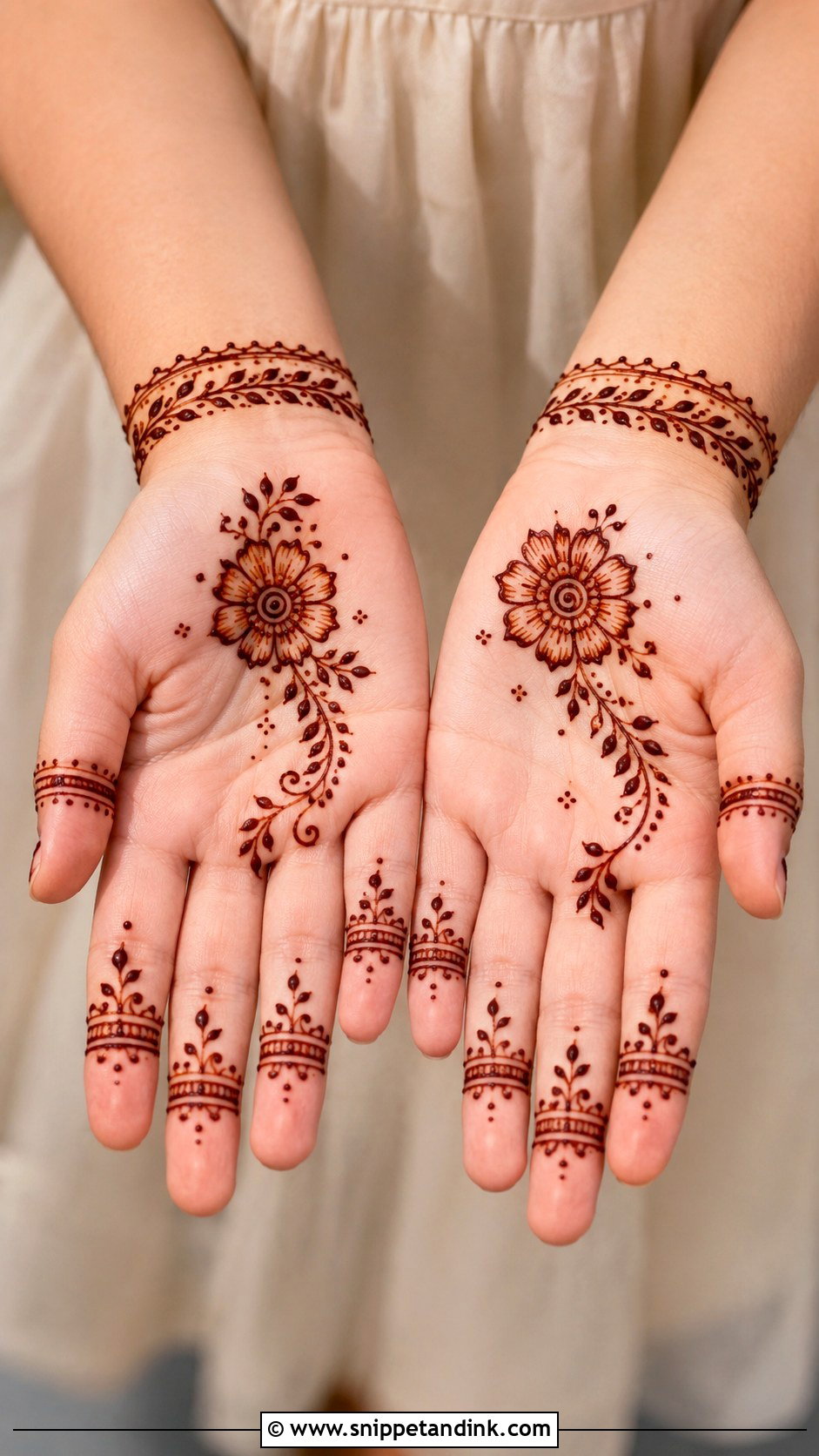
Children need something they can sit still for. A small flower, simple mandala, butterfly-like curve or tiny leafy trail is enough, with dots, small bands or simple tips on the fingers and maybe a wrist bracelet. Palms are where little ones touch everything, so I keep the paste thin and the design small enough to dry quickly. Soft rounded motifs suit them better than fine lines, and only natural henna should ever go on a child’s palm.
34. Front Hand Mehndi Design For Short Fingers
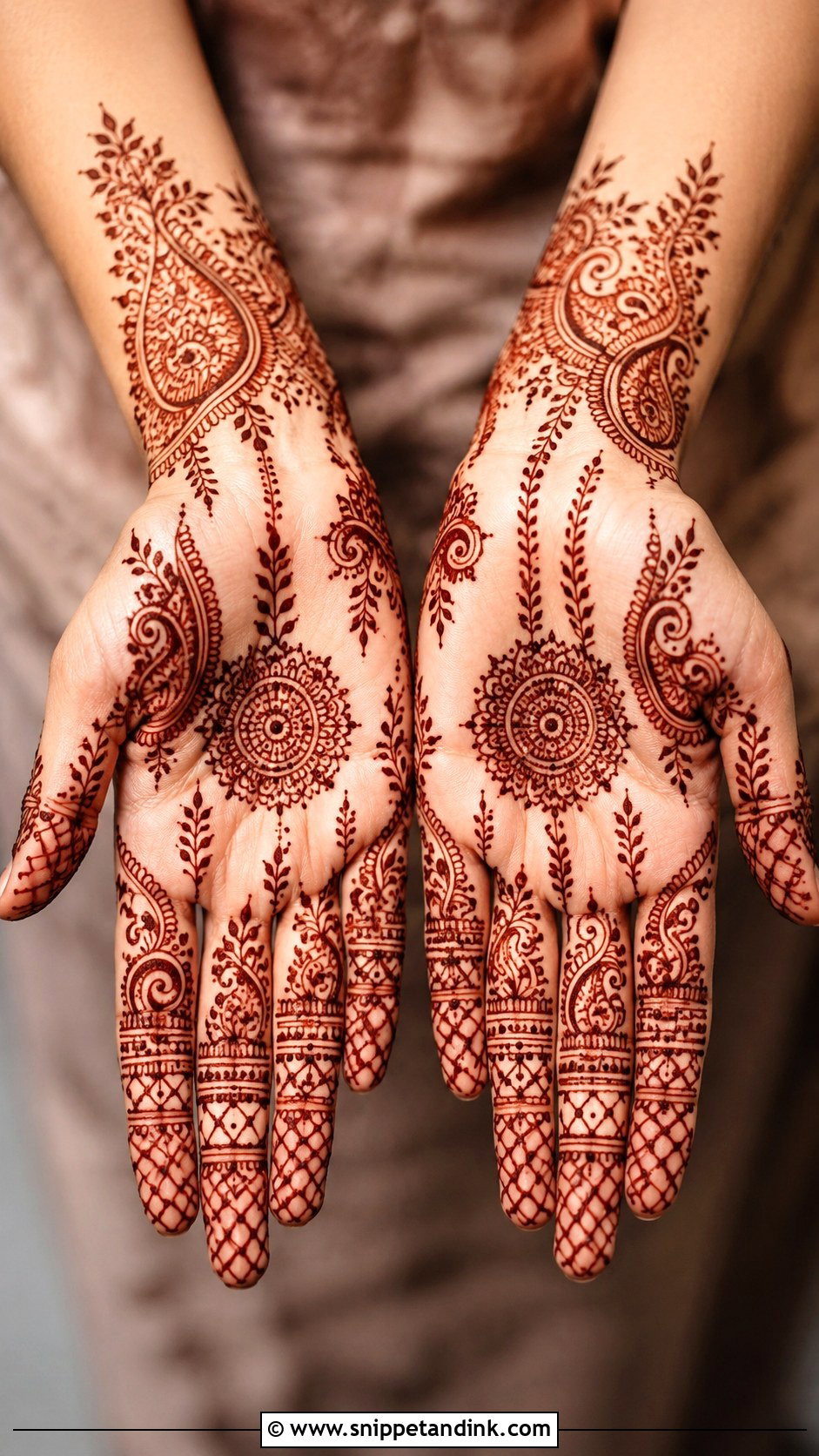
Short fingers need length, not crowding. Vertical lines, slim leafy trails, small finger bands and elongated paisleys all help. I keep the fingertips neat rather than solidly filled, because thick dark blocks at the tips make fingers look shorter still. A palm mandala with upward finger detailing, or a diagonal Arabic trail toward the index finger, visually stretches the hand. Avoid oversized motifs that cover the whole palm unless there’s open space around them.
35. Front Hand Mehndi Design For Beginners
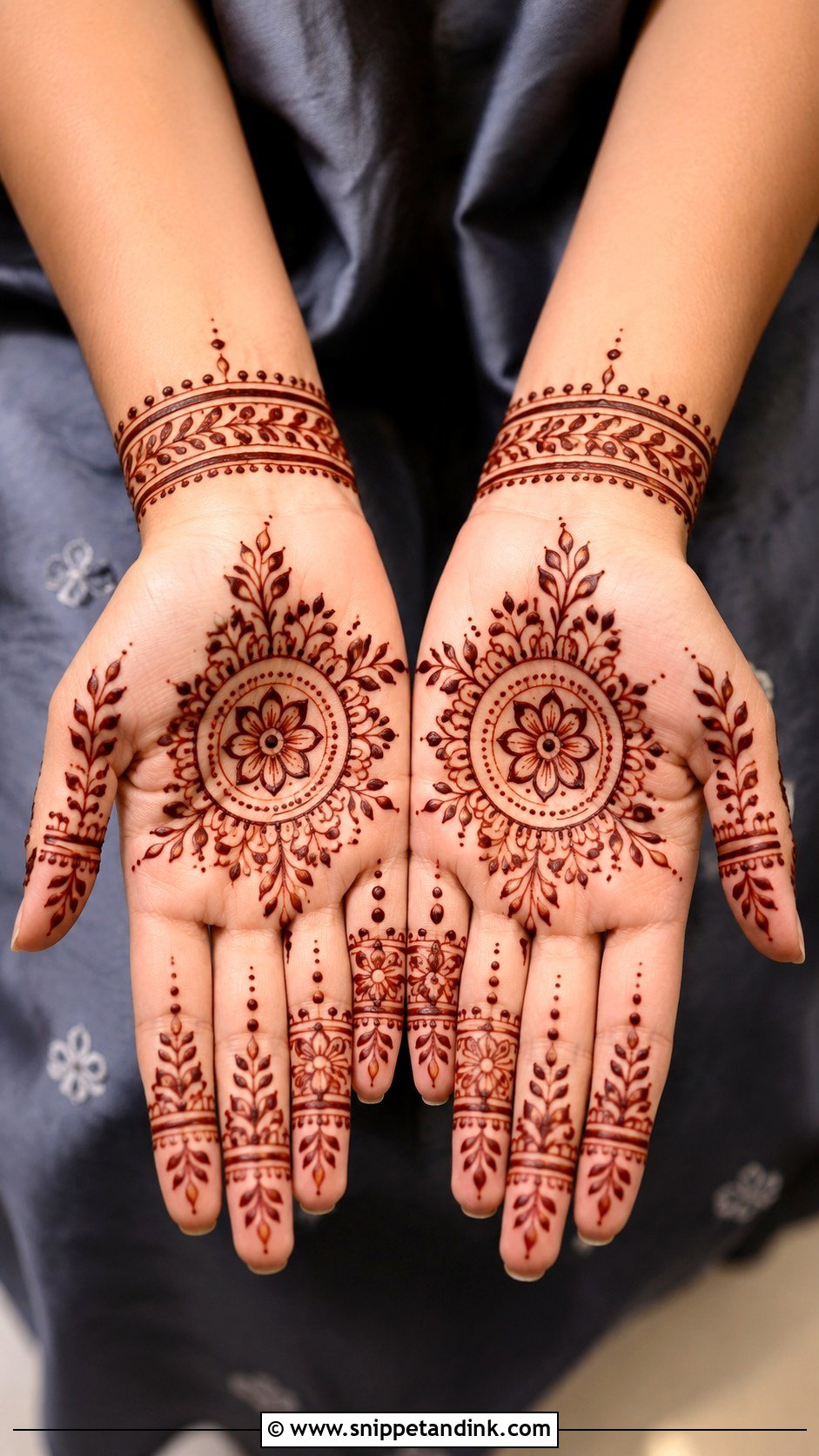
If you’re new to the cone, use repeatable shapes and clear spacing: a palm circle, flower or paisley, leaves along one side, easy bands on each finger and a thin wrist border. Dots fill gaps and hide small mistakes. Leave fine mesh and portraits until your lines are steadier. Practise on paper first, then apply slowly with the cone held at a low angle, letting the paste rest on the skin rather than dragging it.
Eating, Sleeping and Phone Calls With Paste on Both Palms
Front hand mehndi takes your hands out of action in a way back designs don’t. With both palms covered you can’t hold a cup, use your phone or eat without help, so plan for it. Eat before the appointment, keep a straw nearby, and ask someone to stay with you.
- If you’re a guest with a busy evening, ask for one palm done fully and the other lighter, so you keep a hand free.
- Rest your hands palm-up on your knees while the paste dries; clenching smudges the centre.
- To keep the paste on overnight, wrap loosely in tissue and then a soft cloth, never cling film tight enough to sweat.
- Expect the palm to start orange and darken over the next day or so. Washing up and hand sanitiser fade palms faster than any other part of the hand.
Hiding His Name Somewhere in the Palm
In many families, the bride’s palm hides the groom’s name or initials somewhere inside the design, and he’s teased into finding it later. If you’d like this, decide which palm and give me the spelling written down. I usually tuck the letters into a petal, a paisley or the jaali so they’re readable once you know where to look, but not at first glance. Tell me how hard you want it to be. Some brides want it nearly impossible; others want him to find it in the photos.
Palms Take the Darkest Stain, So Plan for It
The right palm design comes down to your occasion, outfit, hand shape and how long you can keep your hands still. Simple mandalas and finger patterns suit quick events; full Indian, bridal, jaali and peacock designs give a richer traditional hand; Arabic and Gulf layouts give bold flowers with open skin; minimal, jewellery and bracelet patterns feel modern. Whatever you choose, clean lines, balanced spacing and a strong palm focus matter most, because the palm will show every detail in deep colour.
You'll Like These Ideas:


Leave a Reply