
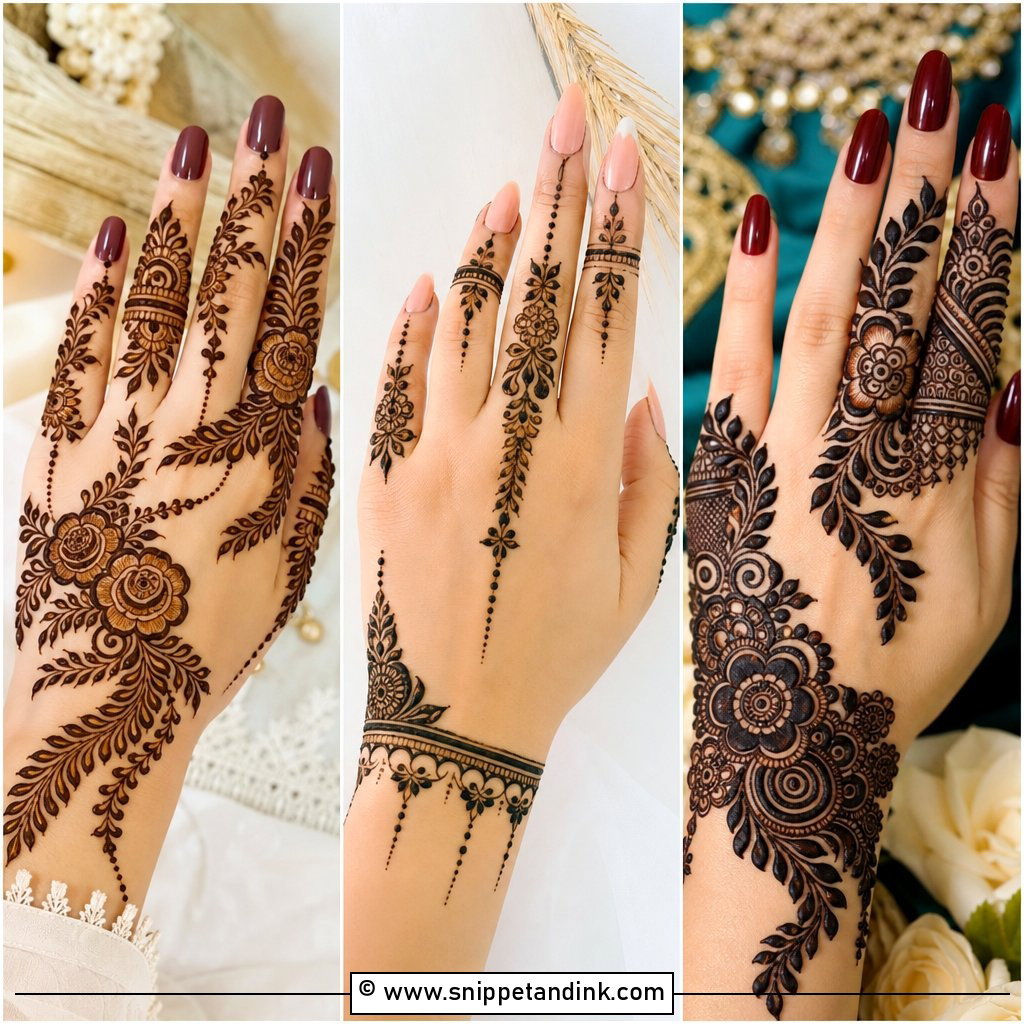
Clients ask for Dubai style when they want henna that looks finished but not heavy. It’s Arabic at heart: bold outlines, big flowers, open skin and a confident diagonal flow, with vines, paisleys and bracelet bands placed so the hand never looks crowded. I draw it for Eid, weddings, engagements and family gatherings, from a full-hand design down to a single finger trail. Below you’ll find front-hand, back-hand, bridal, party and everyday versions, and what I’d watch for with each.
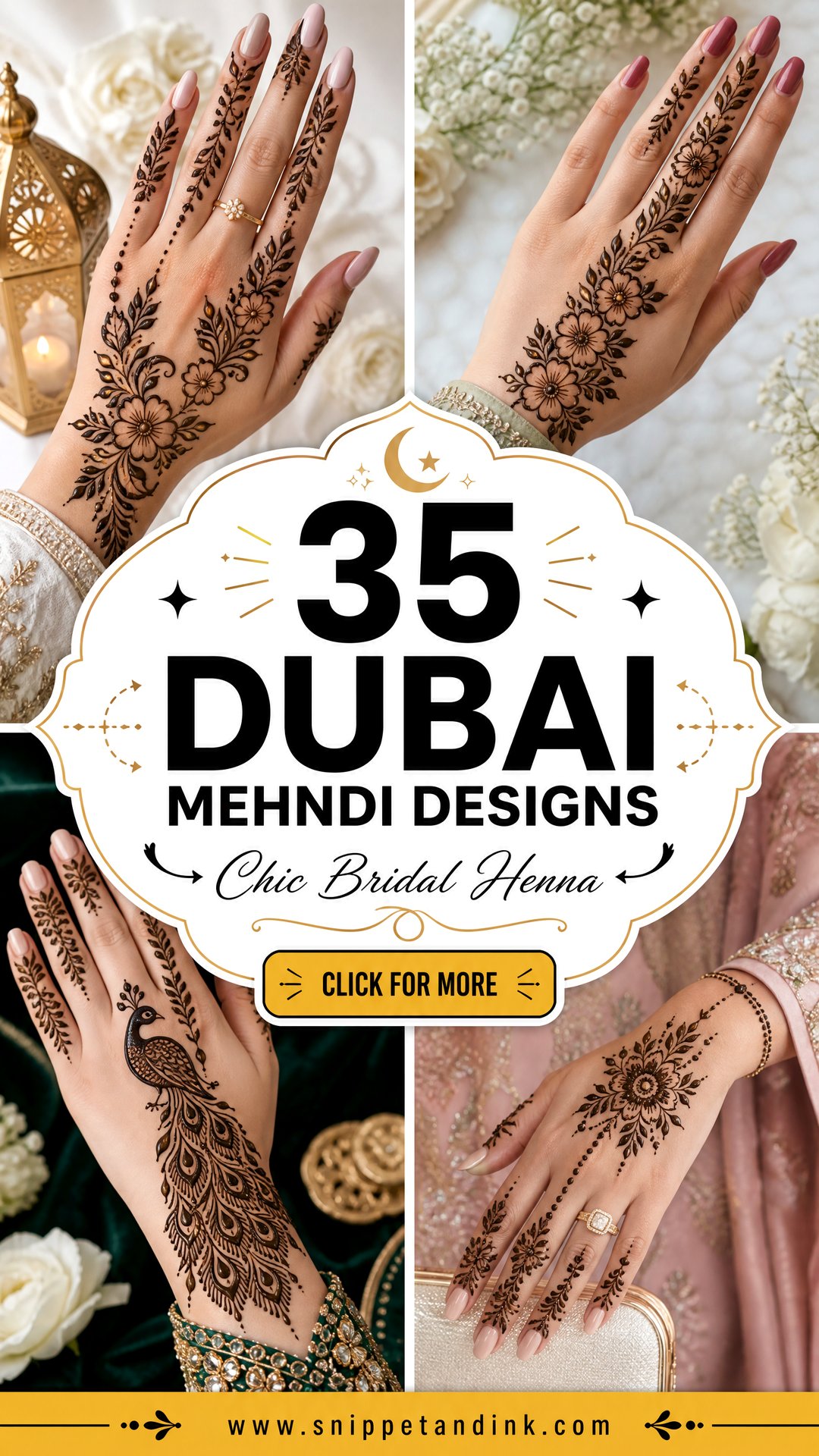
What Makes a Design Read as Dubai Style
Plenty of designs get labelled Dubai online, so when a client shows me a photo, I look for a few specific things before I agree it’s the style she means. If most of these are missing, she’s probably after a lighter Indian or Indo-Arabic hand, and that changes how I plan it.
- Thick outlines: the main shapes are drawn with a bolder line than traditional Indian work, so they read clearly from a distance.
- Big, few flowers: three or four large blooms do the work that a dozen small motifs would do elsewhere.
- Shading instead of filler: petals and leaves are given depth by shading rather than packed with checks and lines.
- Bare skin as part of the design: the gaps are planned, not left over.
- A diagonal: most layouts travel from one side of the wrist toward one or two fingers rather than covering the hand evenly.
When you book, tell me the coverage (fingers only, half hand, full hand, forearm), whether you want palms done, and what you’ll be wearing. I’d also rather see one photo you love than ten you half like. That single reference tells me the line weight and spacing you’re drawn to.
1. Dubai Arabic Back Hand Mehndi Design
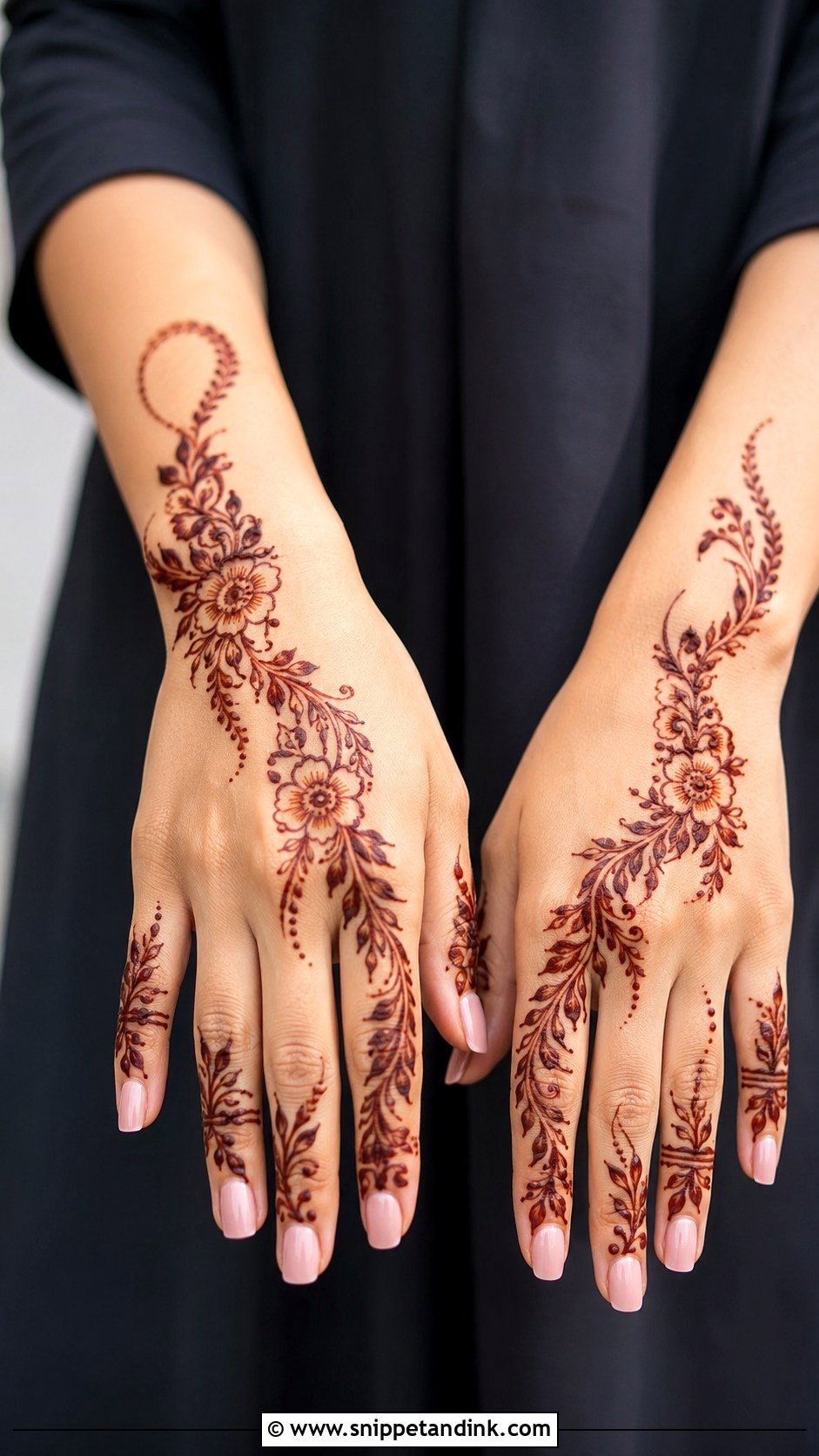
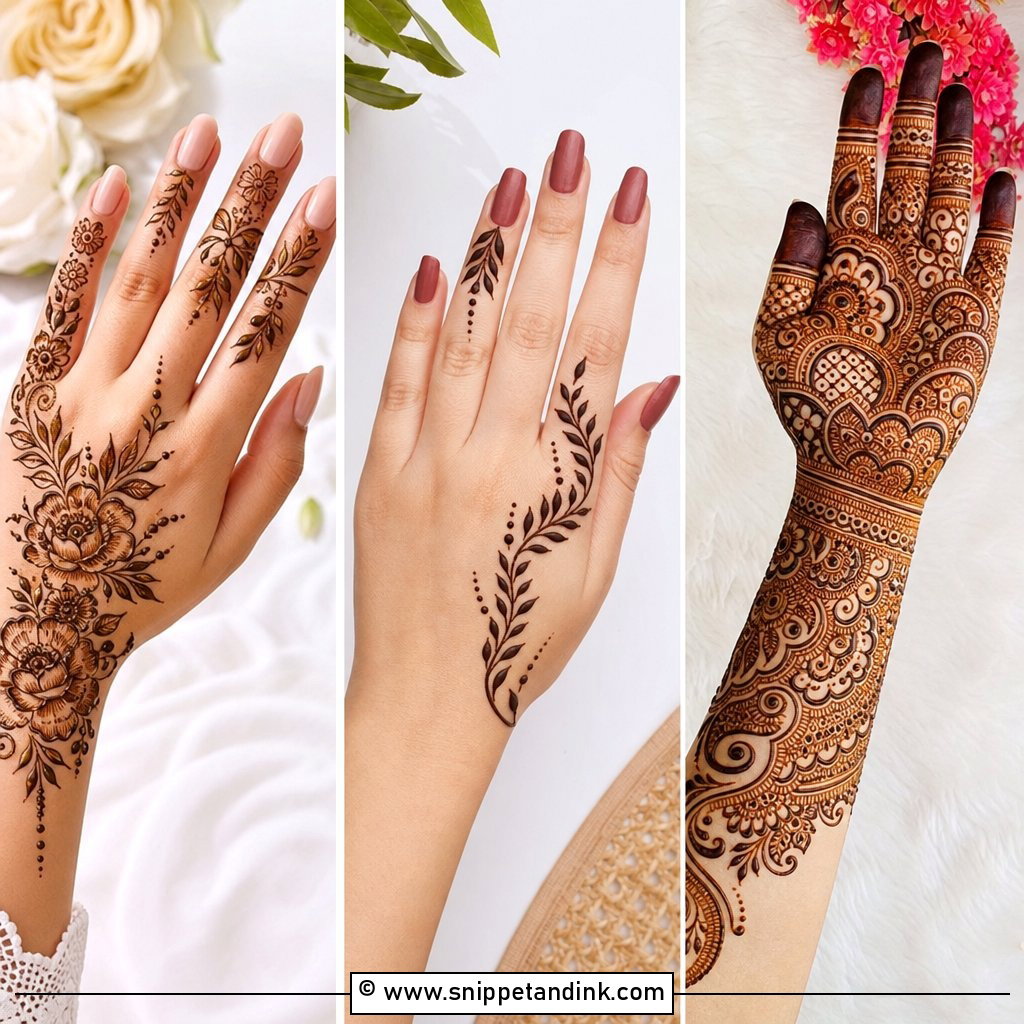
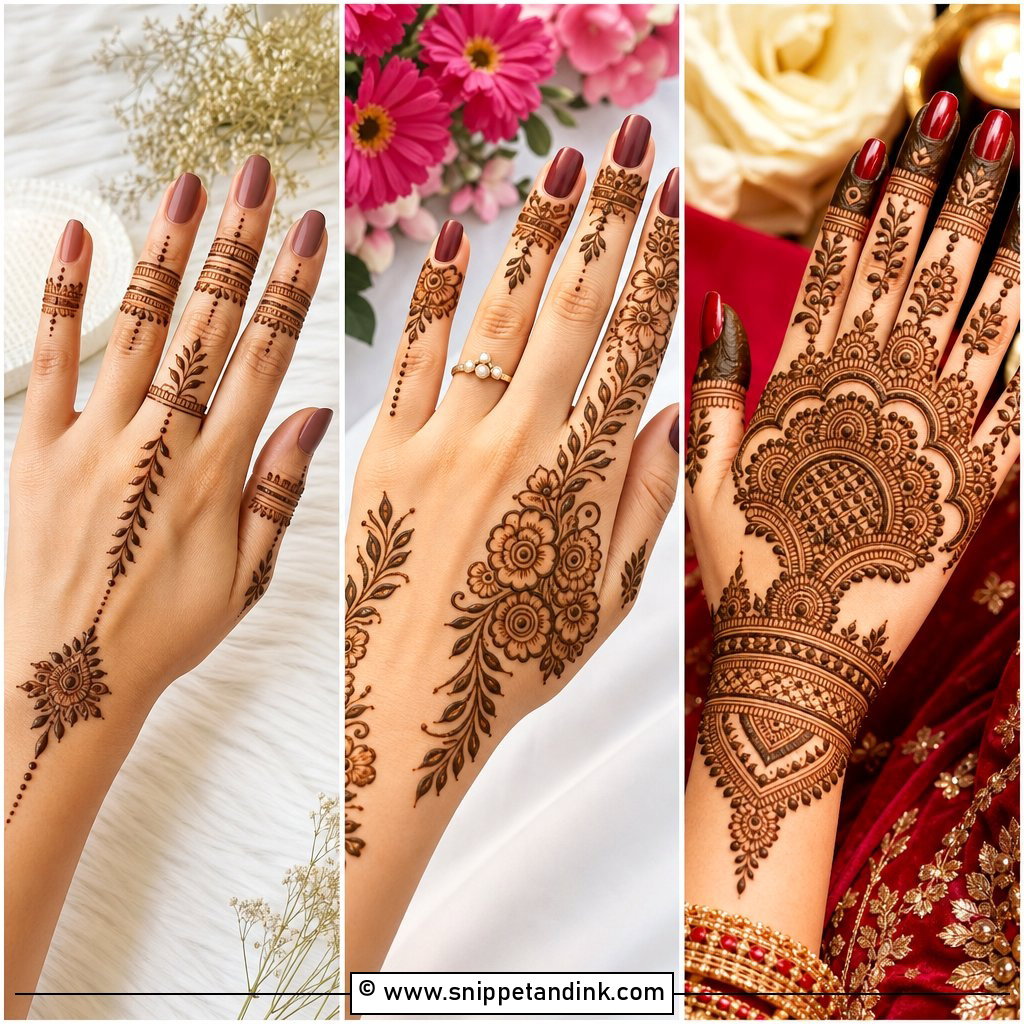
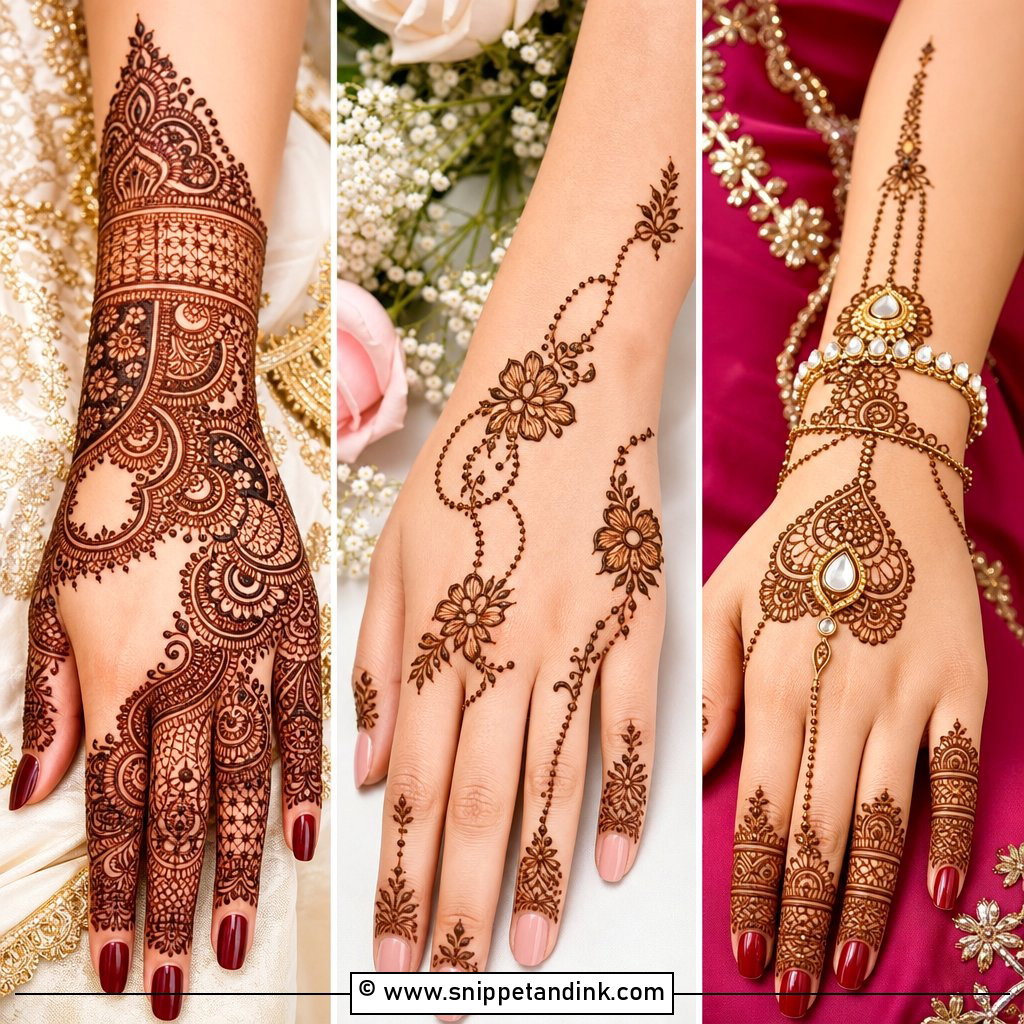
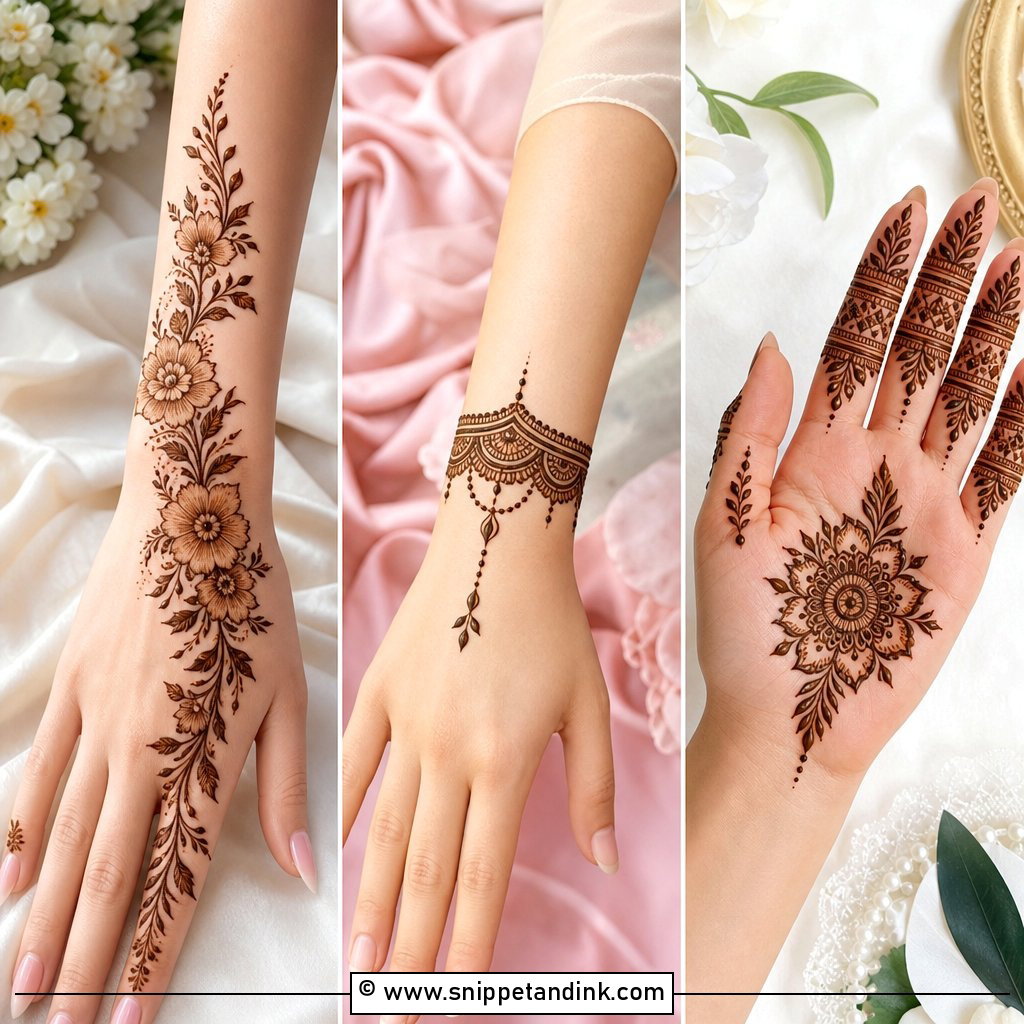
This is the look I’m asked for most. The trail starts near one side of the wrist and climbs diagonally to the index or middle finger, built from large flowers, leafy vines and paisley curves with real gaps of skin between them. Fingertips stay lightly filled or bare. Because there’s so much breathing room, beginners can manage it, but only if the outline is drawn in one smooth pull; a hesitant, stop-start line is very visible against all that open skin once it stains maroon.
2. Dubai Front Hand Mehndi Design
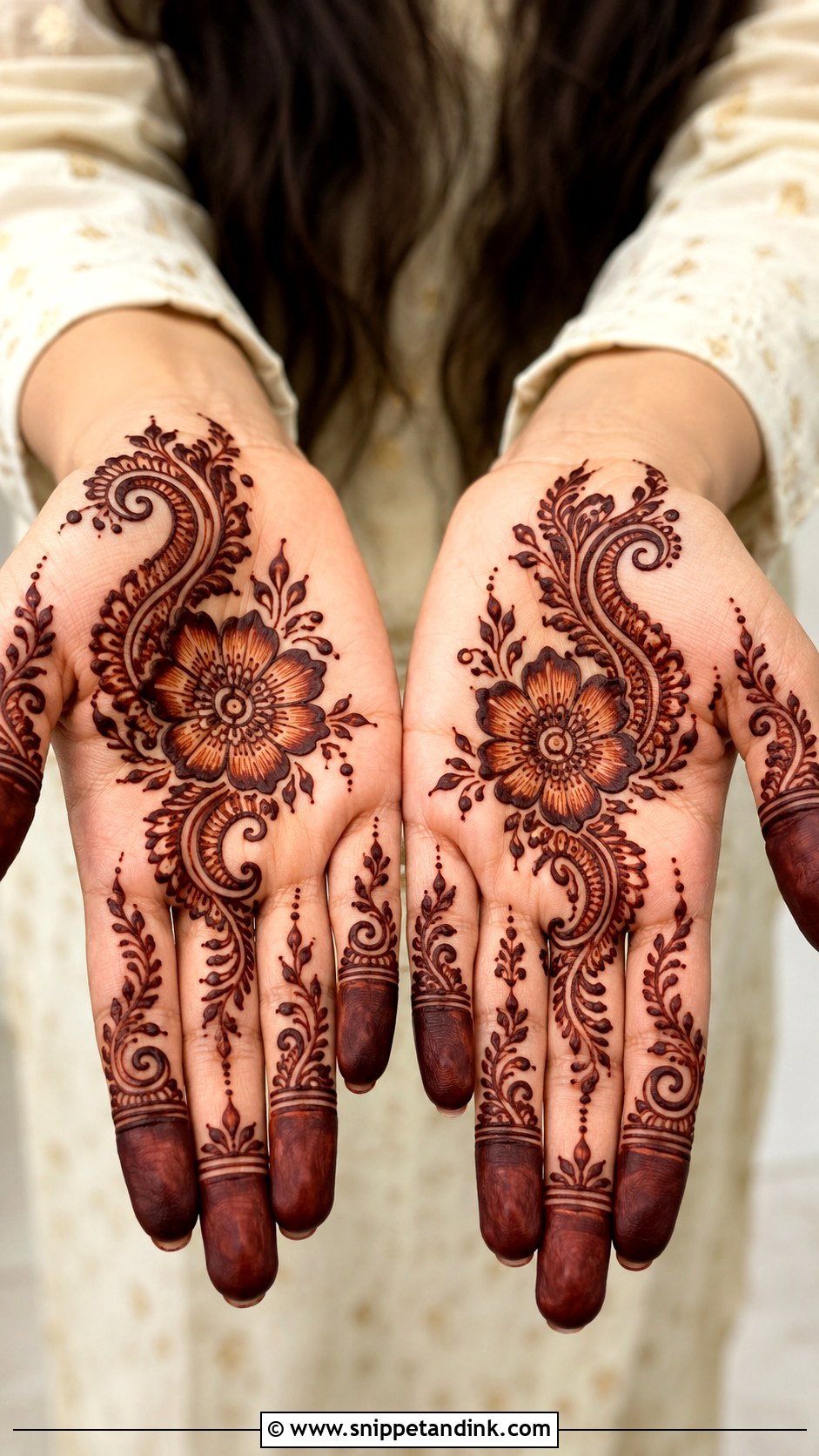
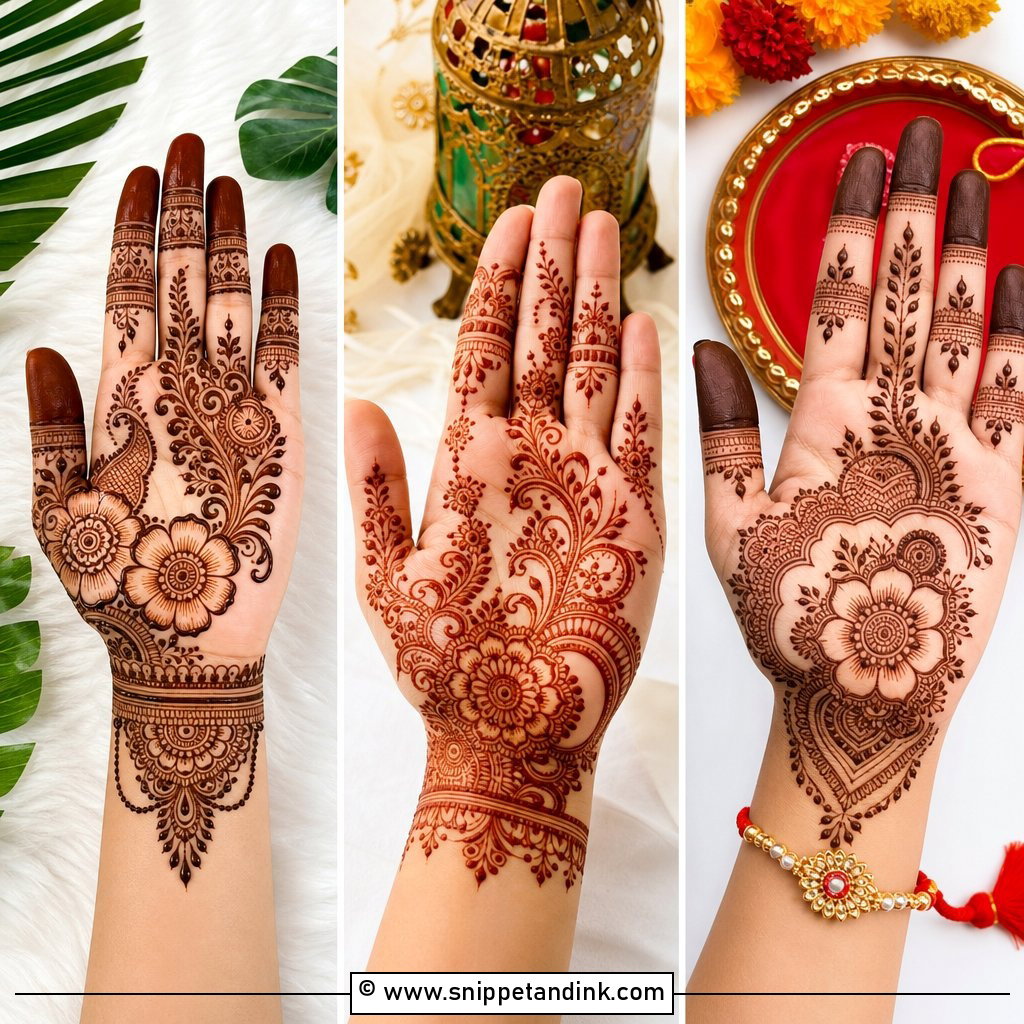
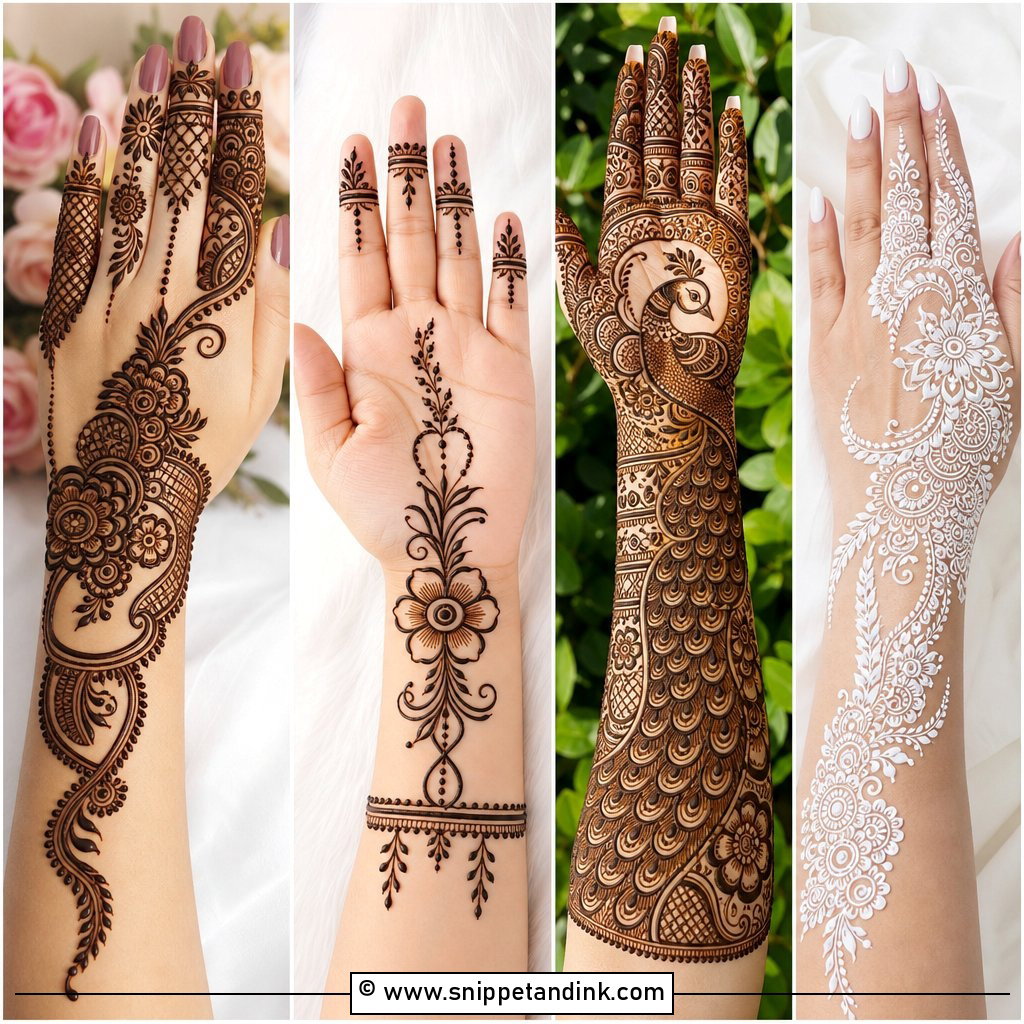
Dubai front hand mehndi design keeps the palm airy: one central flower, a rose cluster, a round mandala or a paisley, with curved vines and bolder finger details balancing it. I keep the central motif away from the deepest palm crease where possible. Paste sitting in a crease cracks as you move and the stain breaks along that line. Shaded or banded fingertips close the design off neatly.
3. Dubai Bridal Mehndi Design
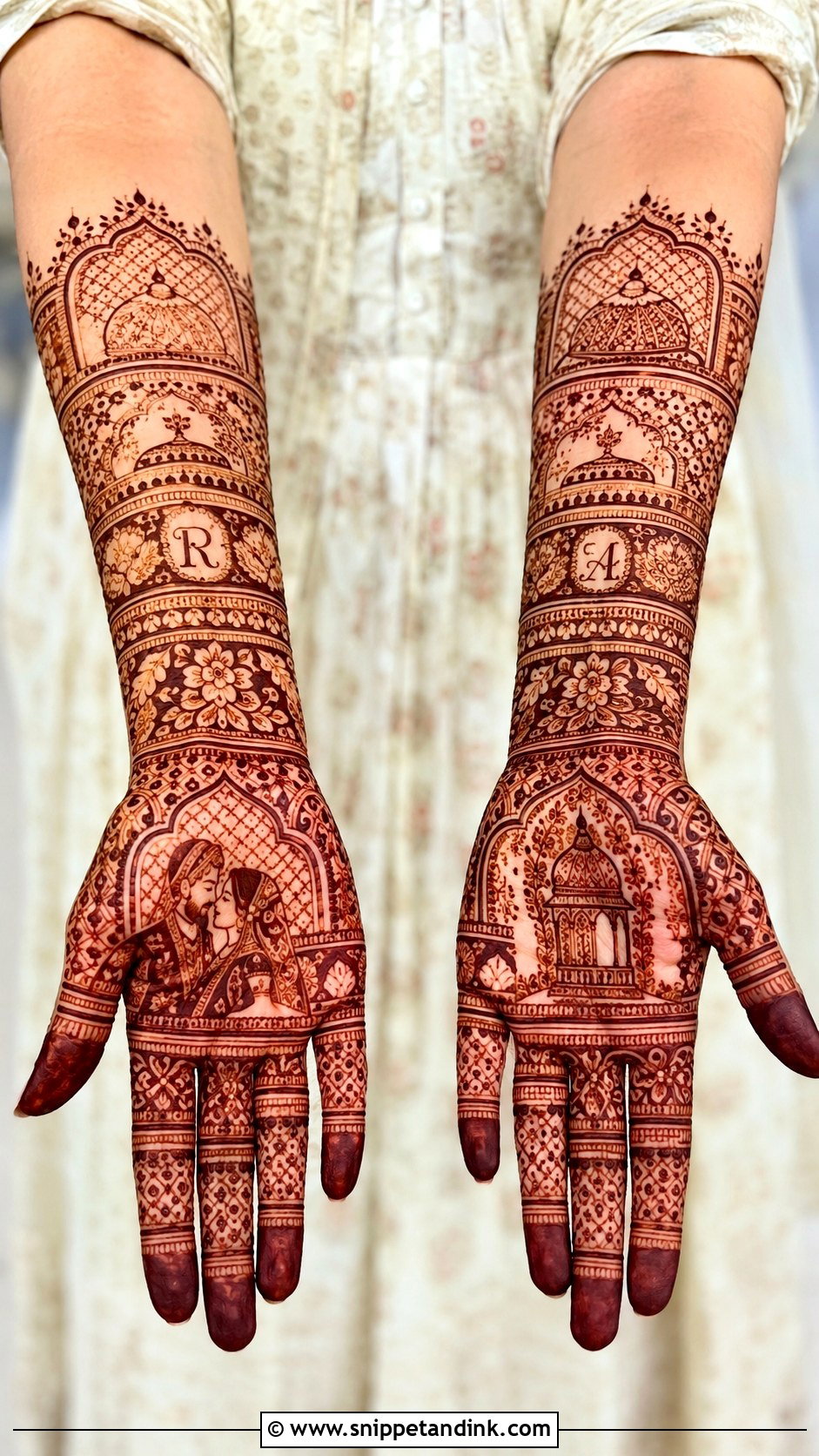
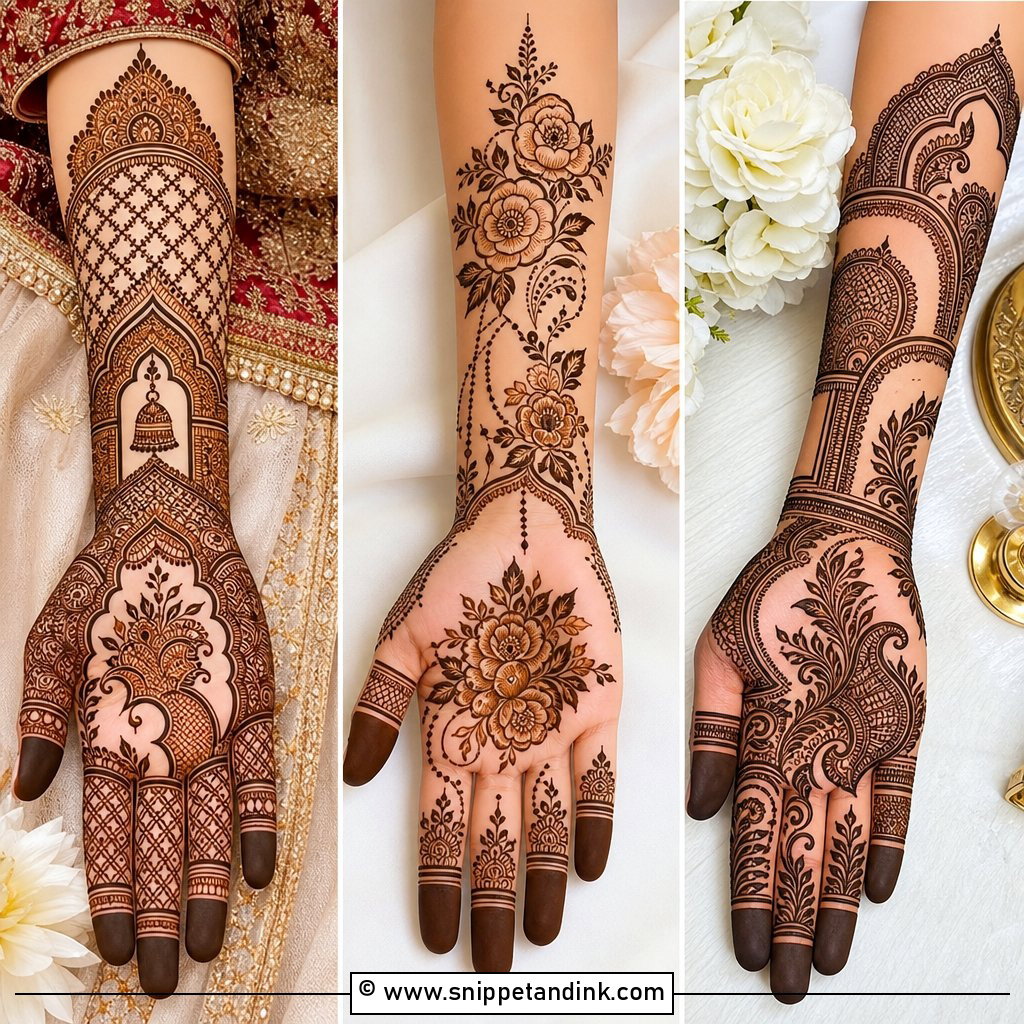
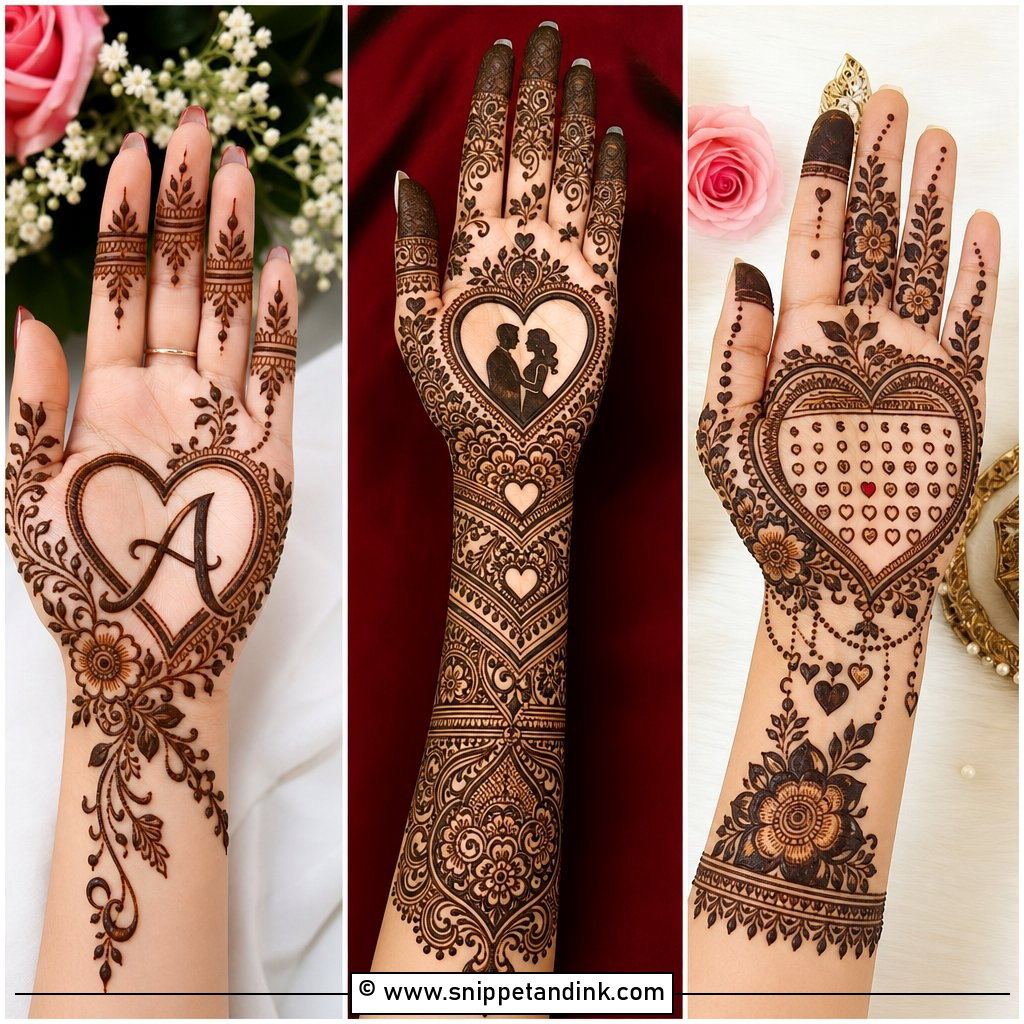
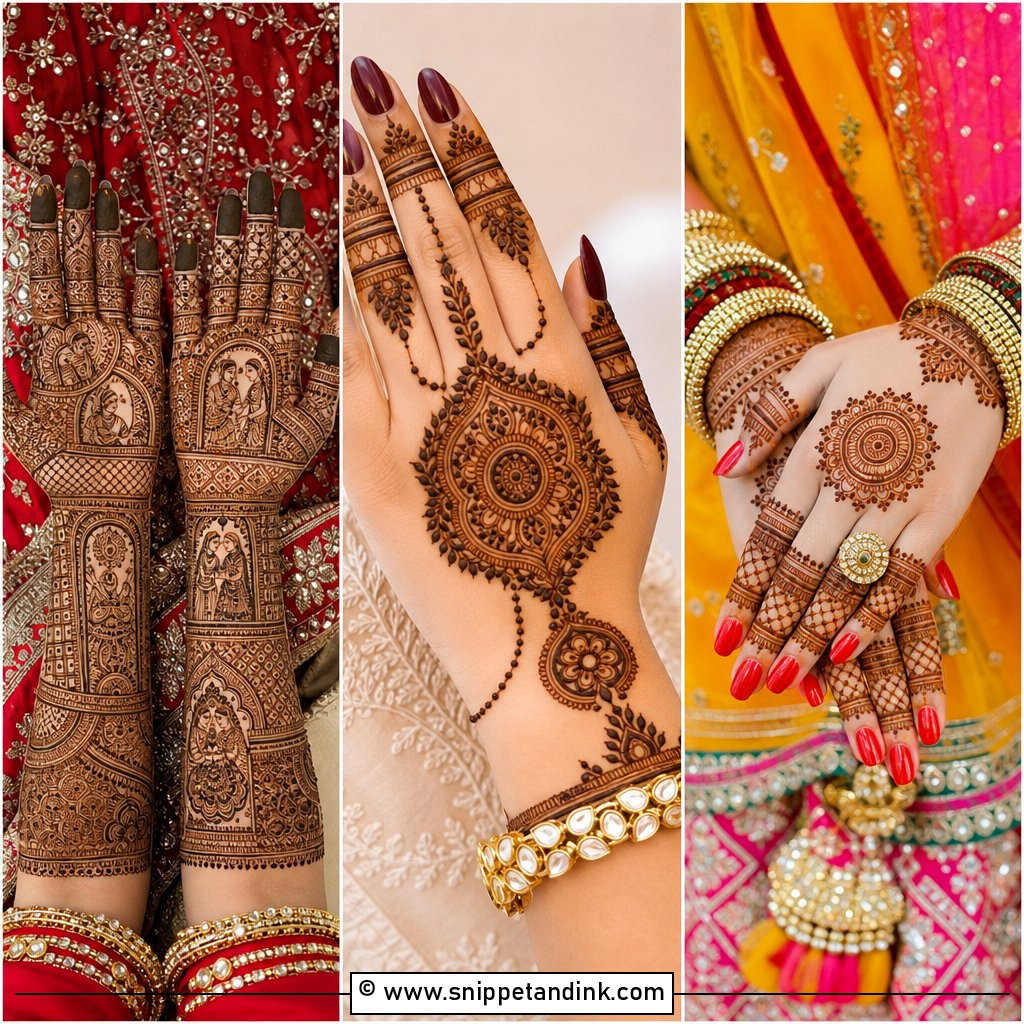
A Dubai bridal hand is detailed enough for a bride but keeps the Arabic signature of bold lines and visible spacing. Palms, back hands, wrists and forearms carry florals, domes, paisleys, jaali and bracelet bands, sometimes with initials or small symbols hidden inside. I treat the outline as the skeleton: all the bold strokes go down first across both hands, and only then do I add fine filling, so the two hands match. Matching feet complete it. If you want every millimetre covered, a traditional Indian bridal design will suit you better.
4. Dubai Simple Mehndi Design
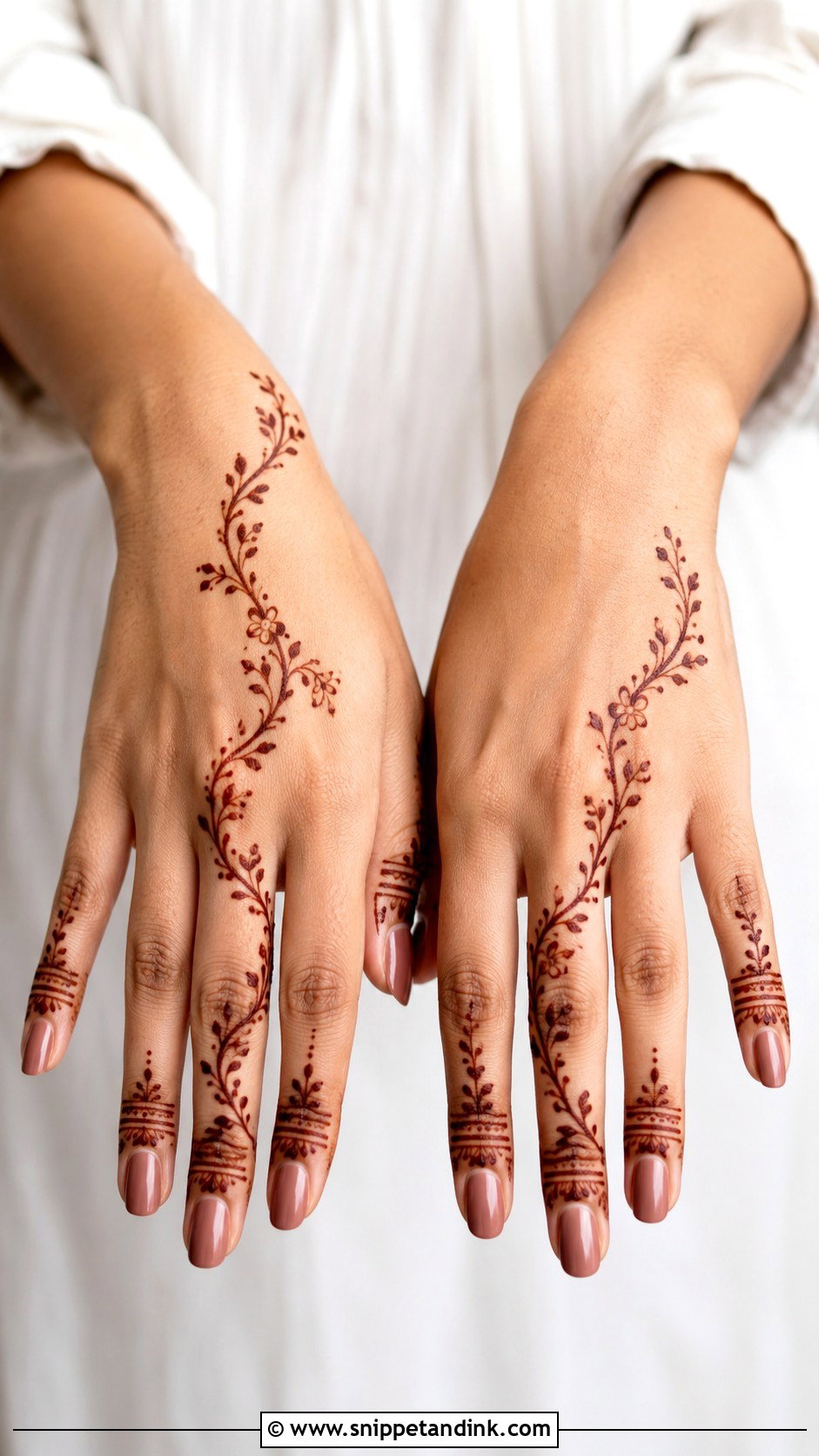
Quick, clean and easy to wear. One clear idea, a floral trail, a leafy bracelet or a small palm motif with decorated fingers, and nothing else competing with it. I can usually finish both hands in a short sitting, which is why this is my go-to for last-minute Eid bookings, school events and office celebrations. Putting the detail on the back hand and keeping the palm nearly empty makes it look current rather than unfinished.
5. Dubai Full Hand Mehndi Design
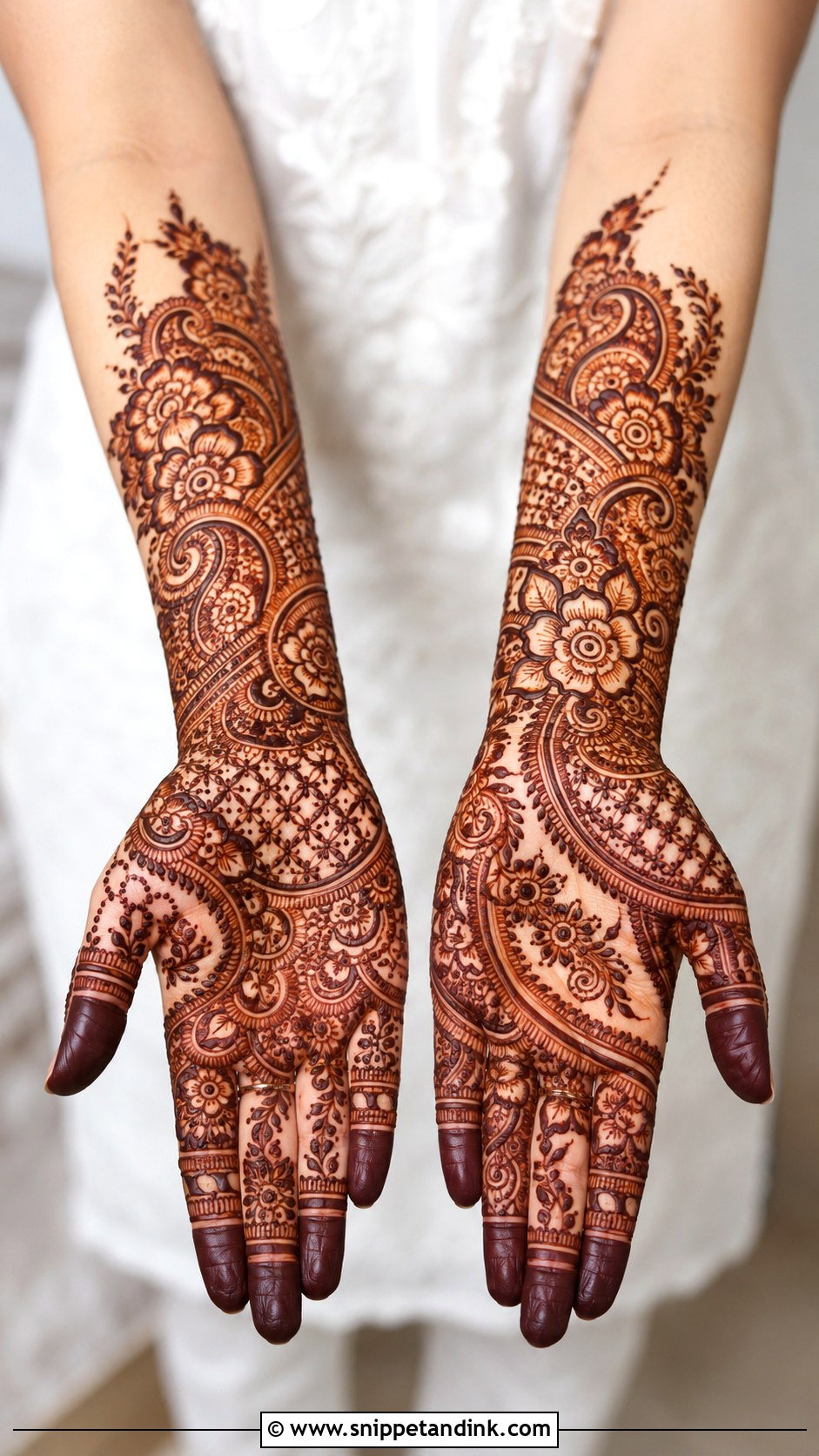
Full coverage, still with Arabic flow. The pattern runs from fingertips to wrist and sometimes onto the forearm, arranged in sections of florals, paisleys, vines, grids and bold borders. The trick is alternating filled sections with open ones, so the stain looks rich rather than one dark glove. I suggest this for bridesmaids and close family at a big wedding, and I shape the wrist section to sit just where bangles rest.
6. Dubai Finger Mehndi Design
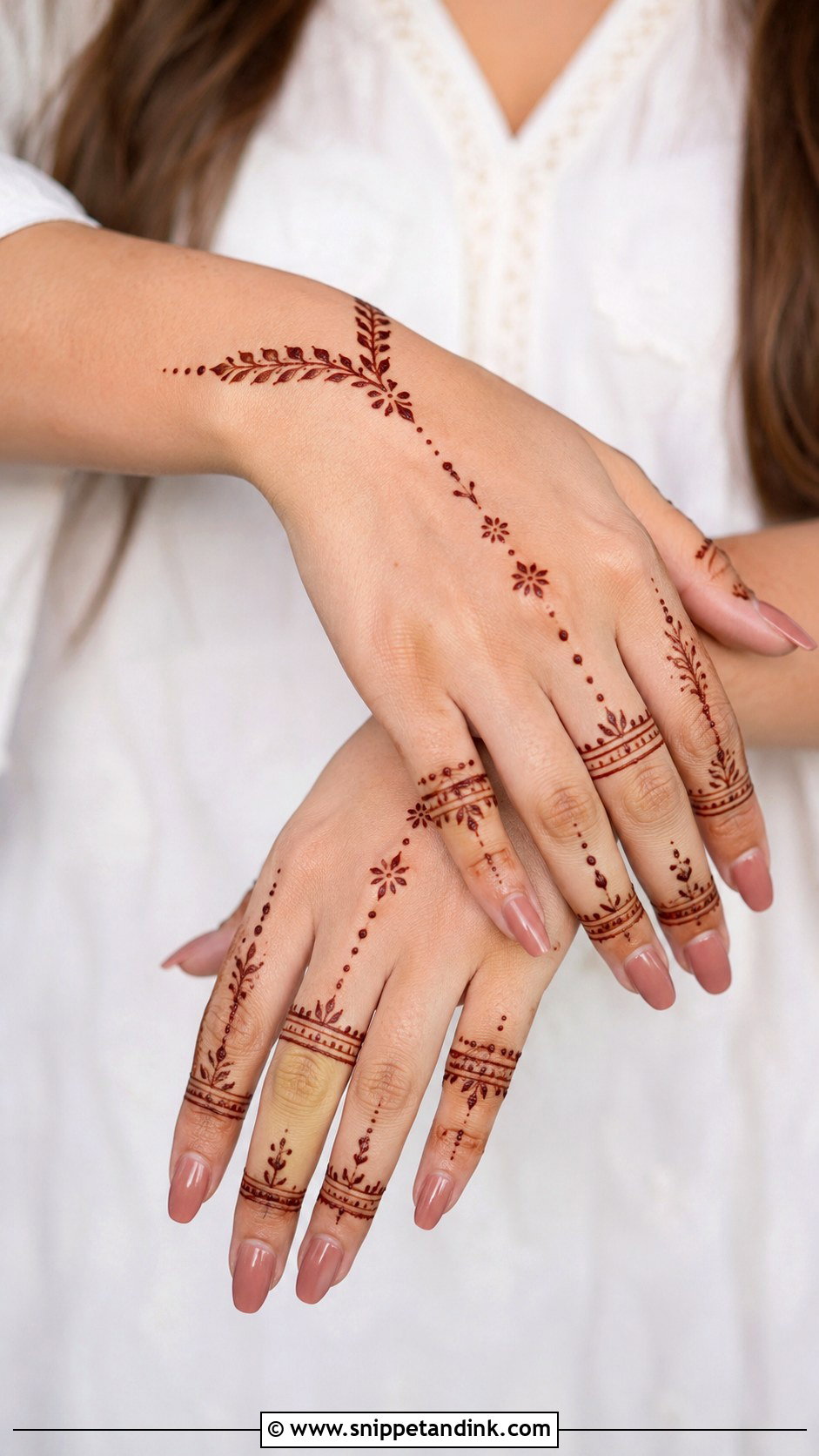
Finger-only henna leaves the palm and back hand bare and decorates each finger with bands, dots, small leaves, tiny florals or fine lines, sometimes linked to a small wrist bracelet. It’s the most wearable everyday option. Fingers stain darker than the back of the hand, so I draw these lines a touch finer than I would elsewhere; what looks delicate in wet paste becomes much bolder by the next day.
7. Dubai Eid Mehndi Design
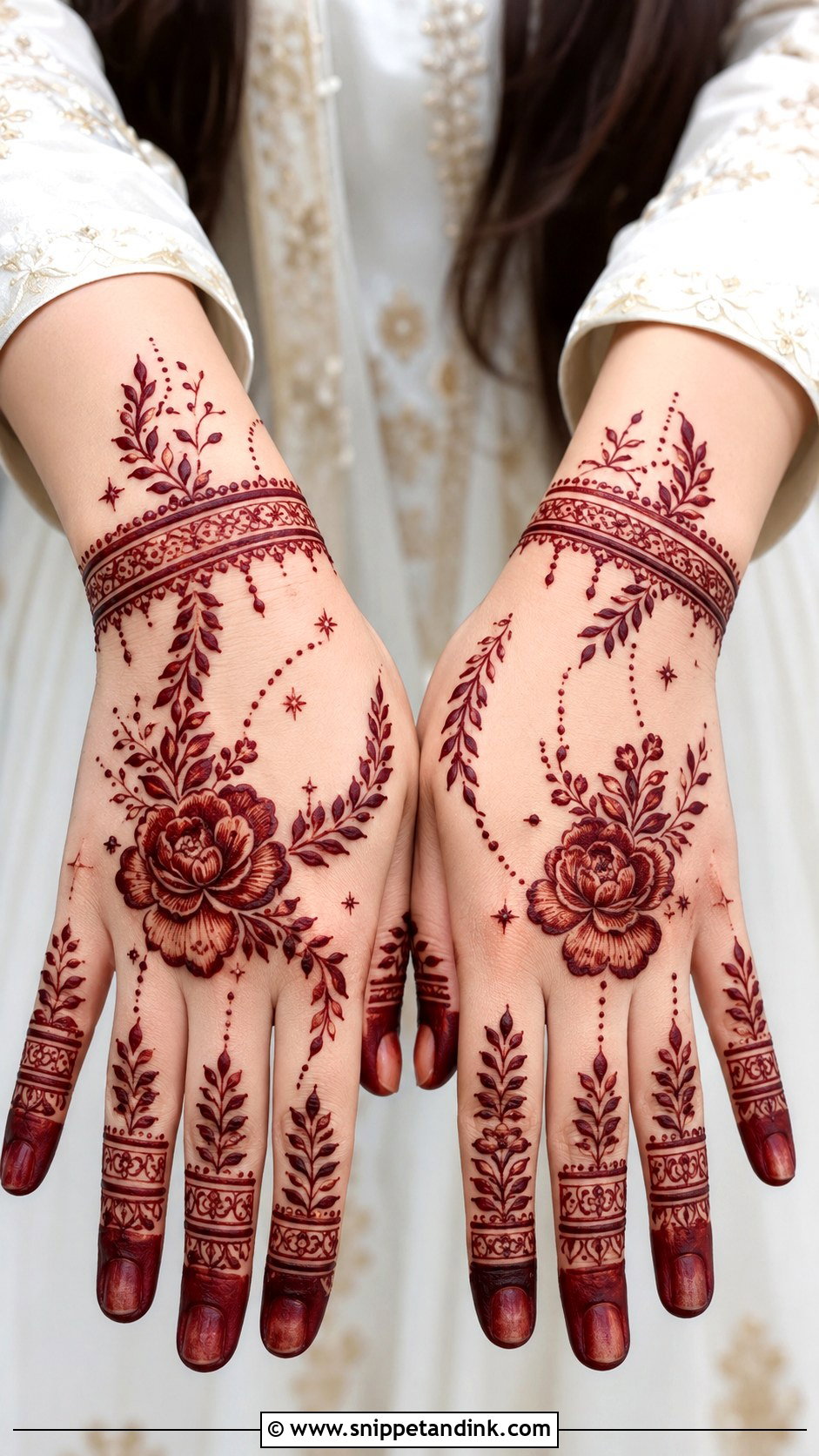
Eid designs usually mix Arabic florals, leafy trails, bold fingertips and bracelet patterns, at medium coverage for family visits or lighter for a morning gathering. Back-hand Dubai mehndi is a favourite because it’s what people see when you greet them and pose for photos, though a palm with a central mandala suits a more traditional look. I always tell Eid clients the same thing: leave the paste on overnight, because a stain that’s still pale orange on Eid morning won’t reach its colour until later that day.
8. Dubai Engagement Mehndi Design
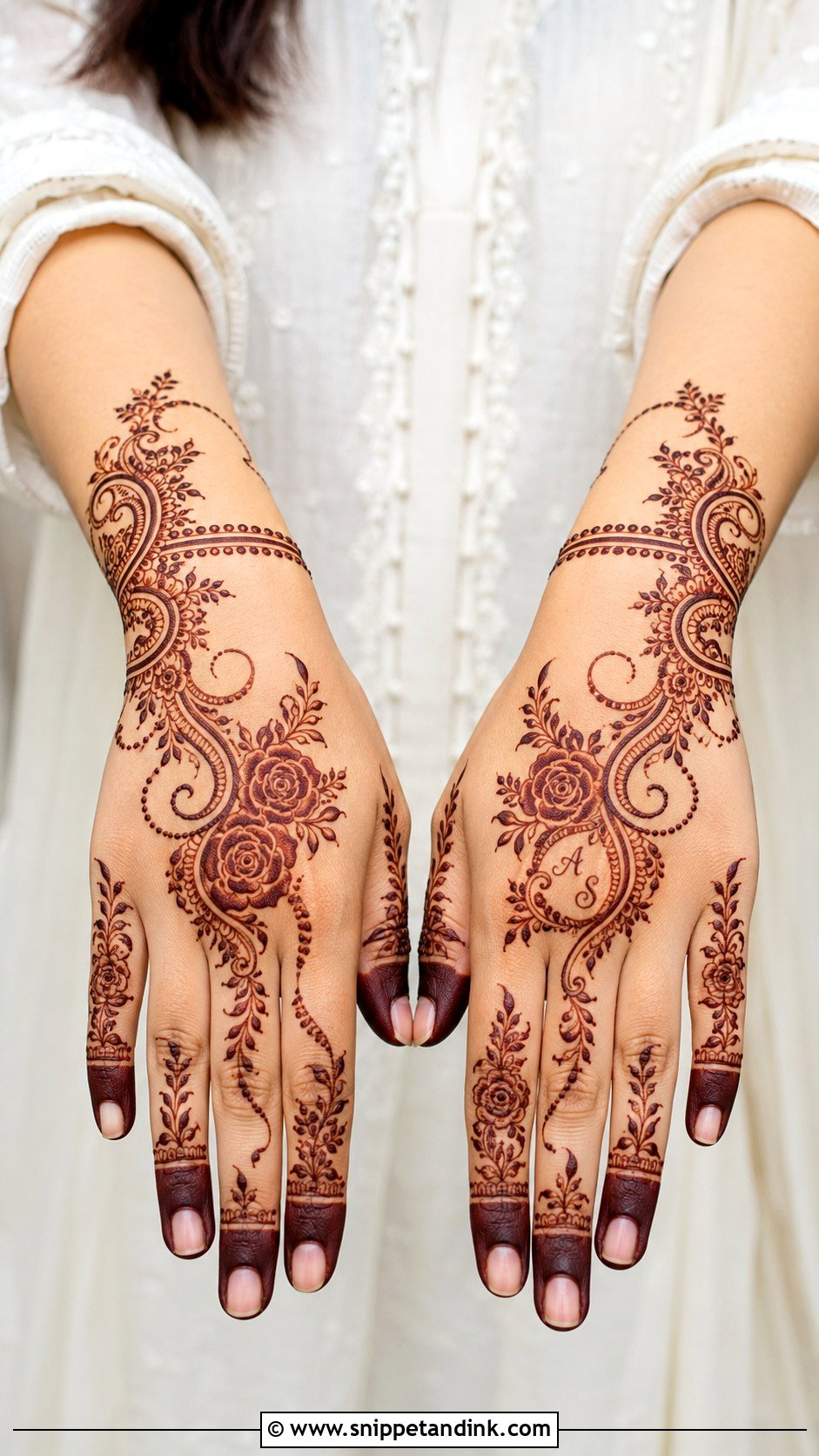
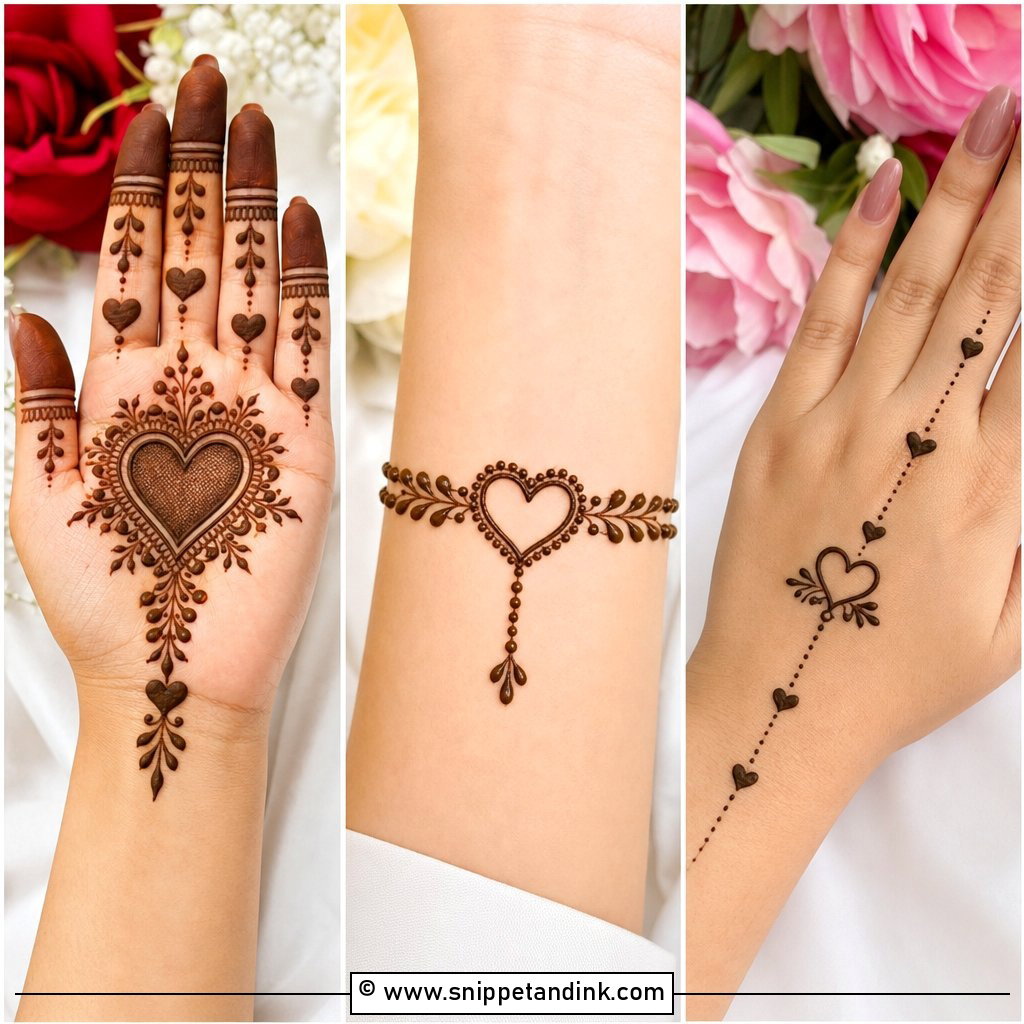
Engagement henna should feel romantic and stay well short of bridal weight. A refined back hand with roses, paisleys, curving vines and a neat wrist band is my usual starting point; the palm can carry a soft mandala or a heart-shaped floral layout. Many brides-to-be like a tiny ring motif near the finger. I keep the base of the ring finger clean so the actual ring sits on bare skin, which frames it far better in close-ups than henna running underneath it.
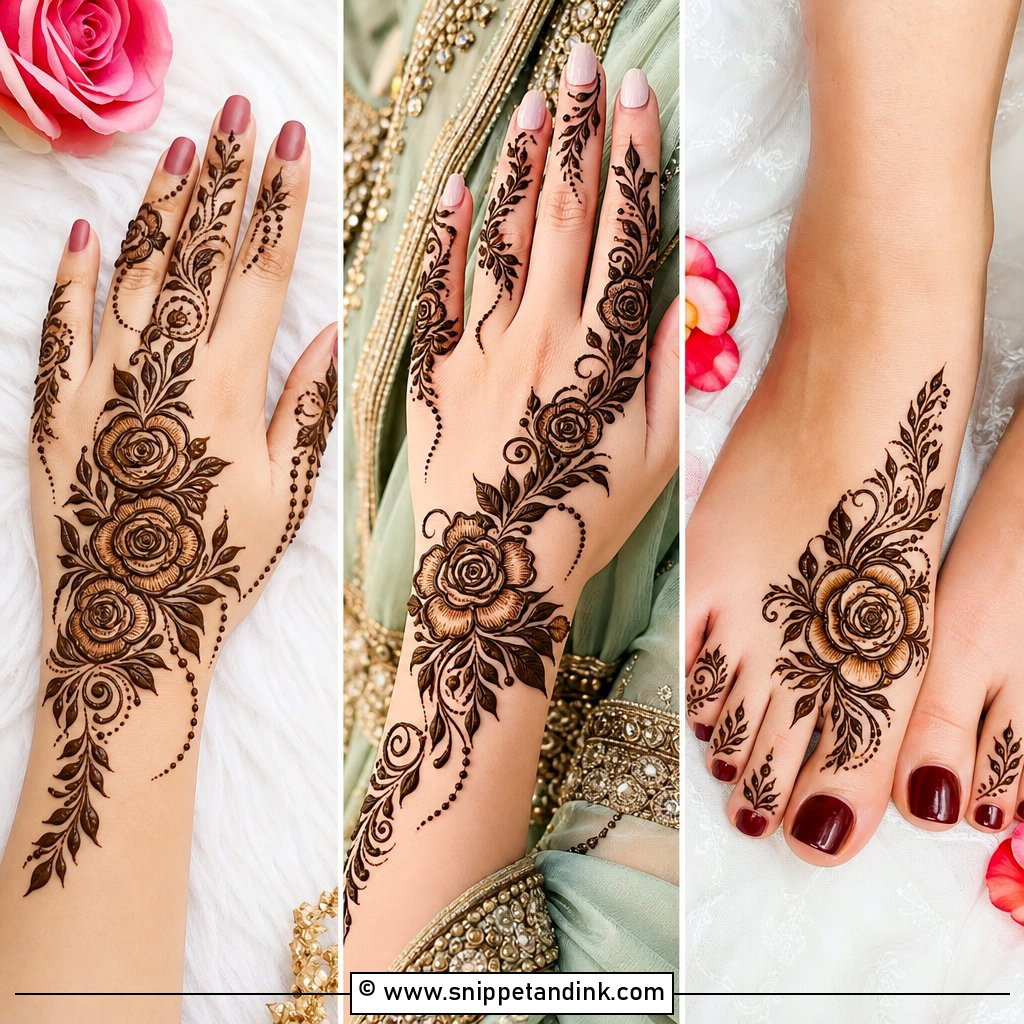
9. Dubai Rose Mehndi Design
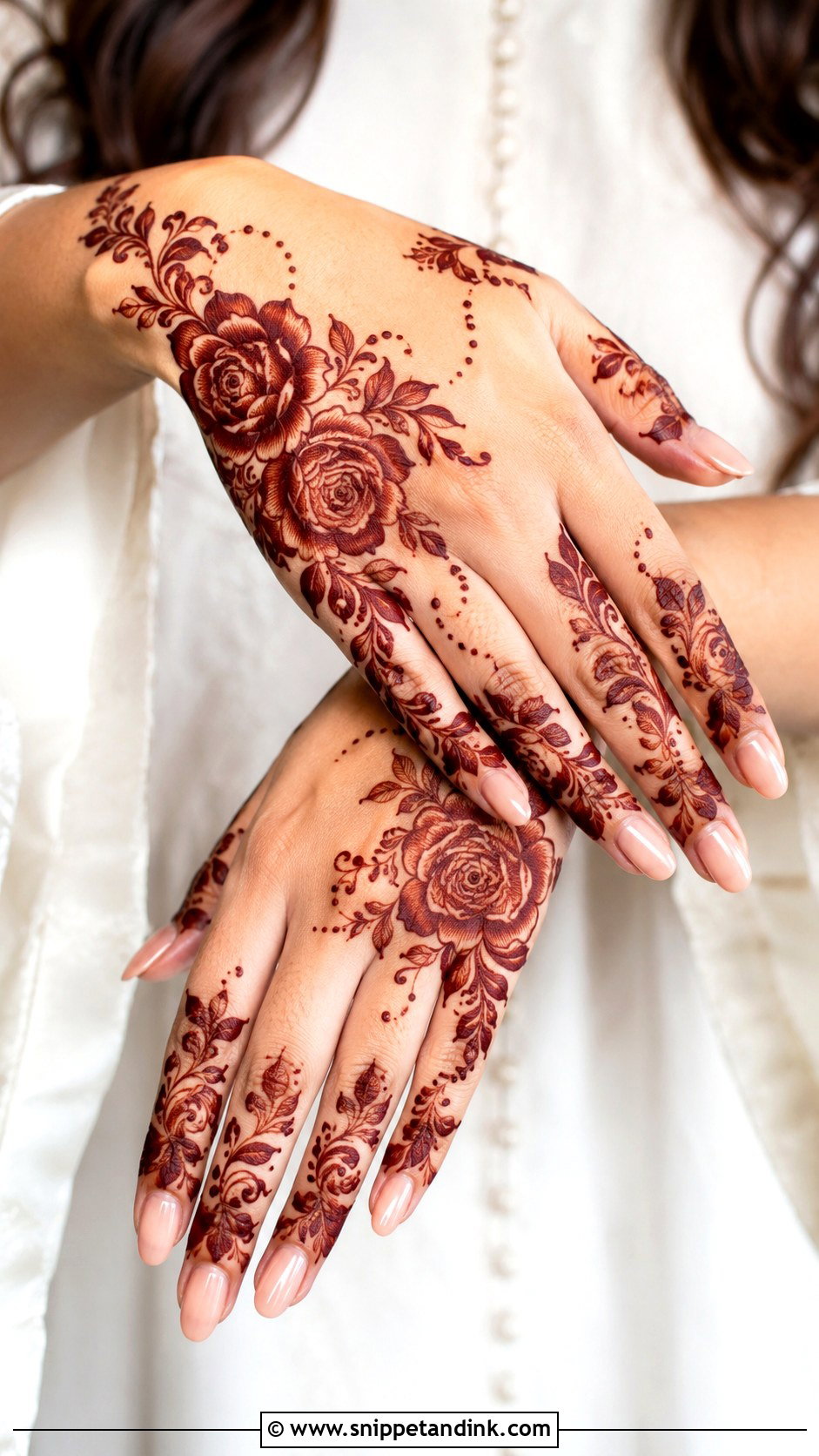
Dubai roses are drawn larger than the tiny flowers of traditional work, so they read from across a room. One big rose near the wrist with vines flowing to the fingers is the classic placement; a palm rose cluster with open spacing is the alternative. The petals need light shading rather than solid fill. I build each petal as a curved outline, then drag a thin layer of paste inward with the cone tip so the centre stains lighter than the edge.
10. Dubai Floral Trail Mehndi Design
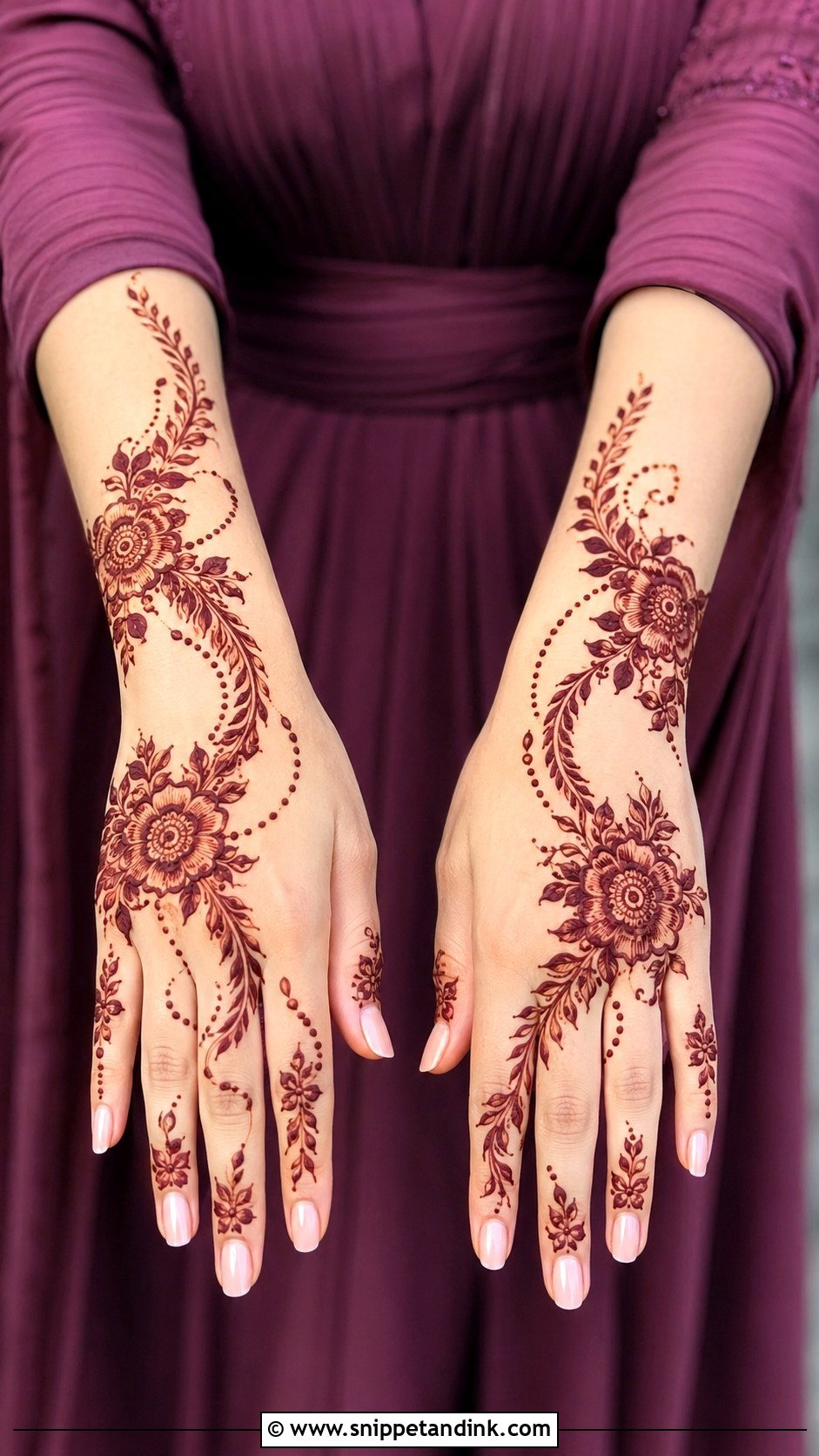
It’s all movement: the vine begins at one side of the wrist, crosses the back of the hand and finishes on one or two fingers, with flowers along it and leaves and dots in the gaps. That diagonal makes the hand look longer and slimmer. I scale it to the hand. Small hands get medium flowers and a thin vine; larger hands carry bigger blooms and heavier outlines, otherwise the design looks lost.
11. Dubai Mandala Mehndi Design
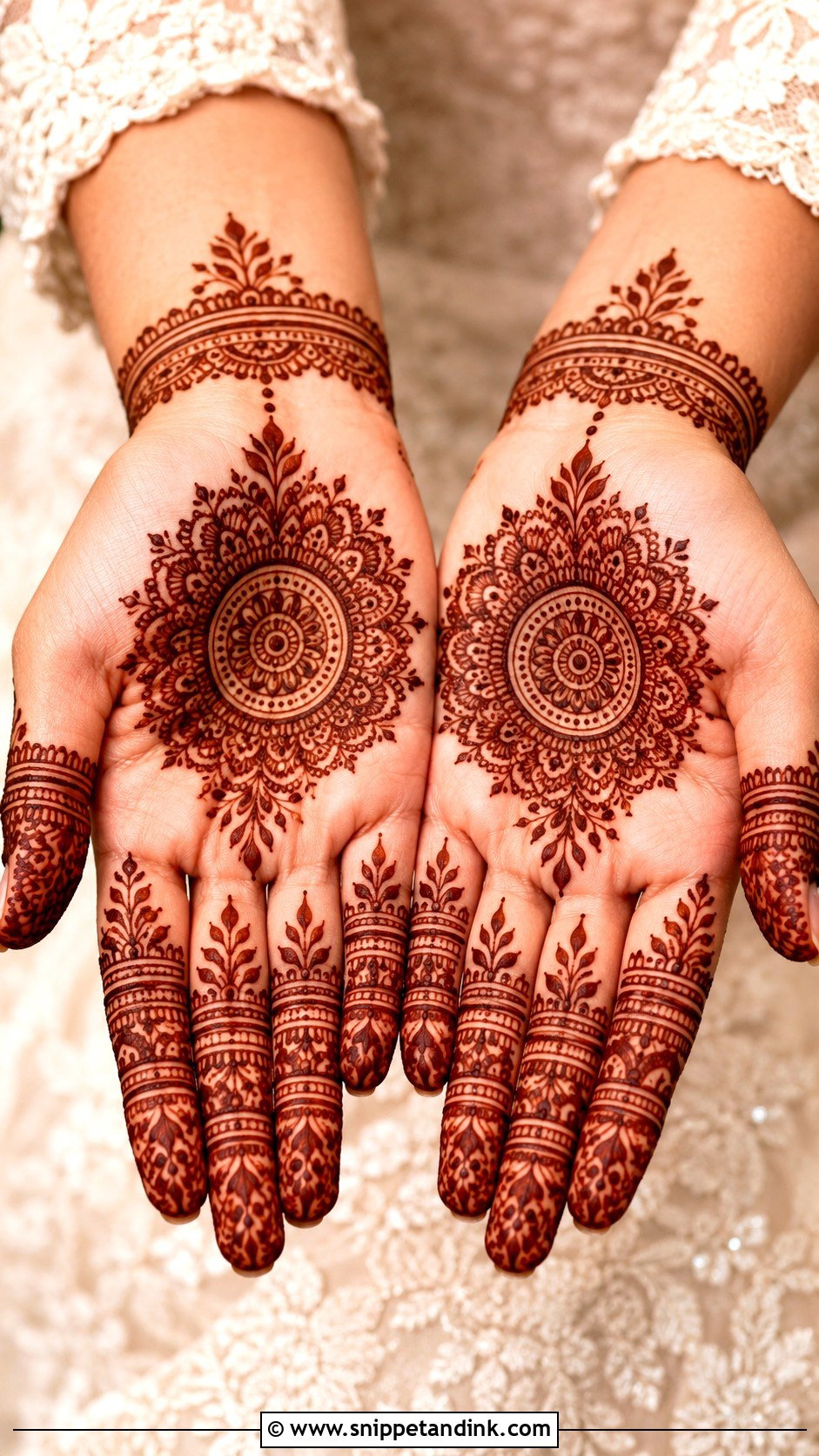
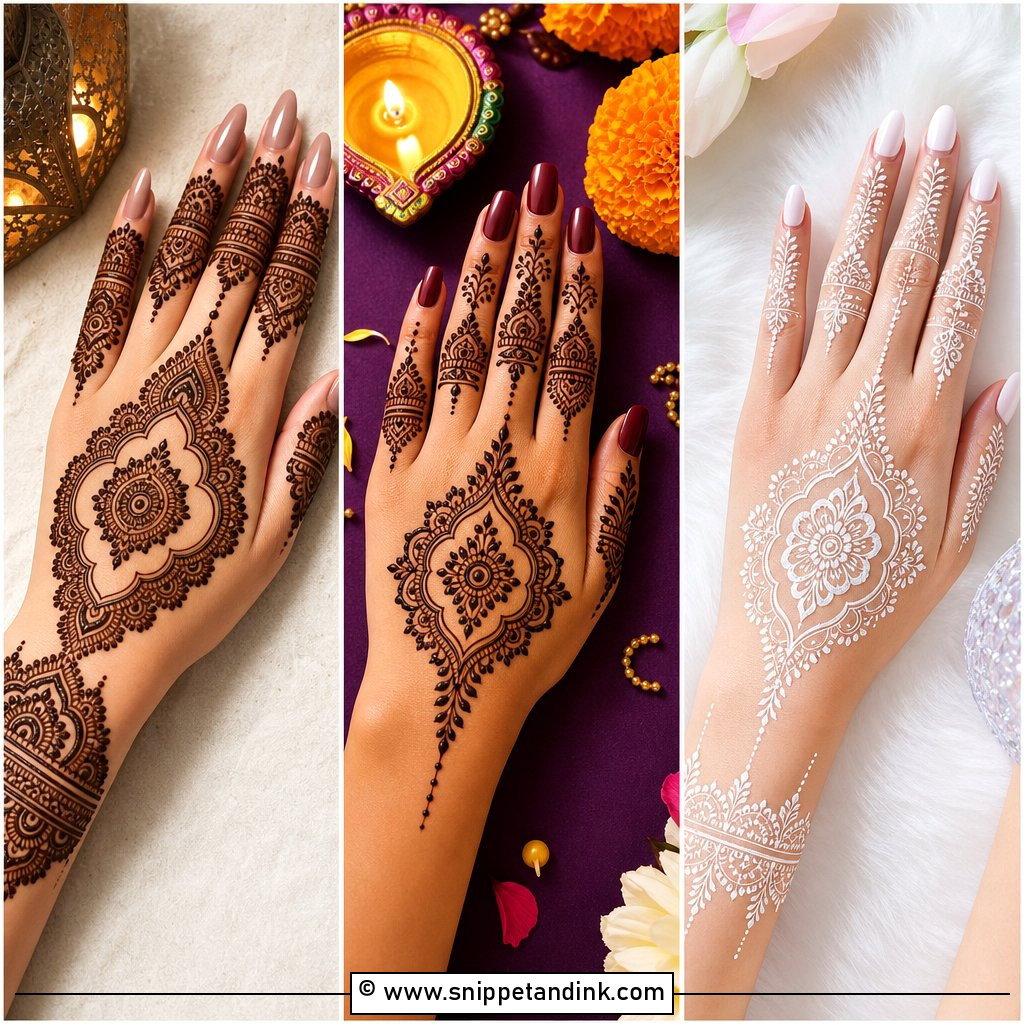
Here a circular centre on the palm or back hand gets Arabic spacing around it: petals, dots, leaves and finger bands instead of dense rings of filler. It’s cleaner and quicker than an Indian mandala, which suits Eid and smaller functions. On the back hand with a bracelet band it looks like jewellery. Neatness matters more than detail. An uneven circle is the one flaw this style can’t hide.
12. Dubai Bracelet Mehndi Design
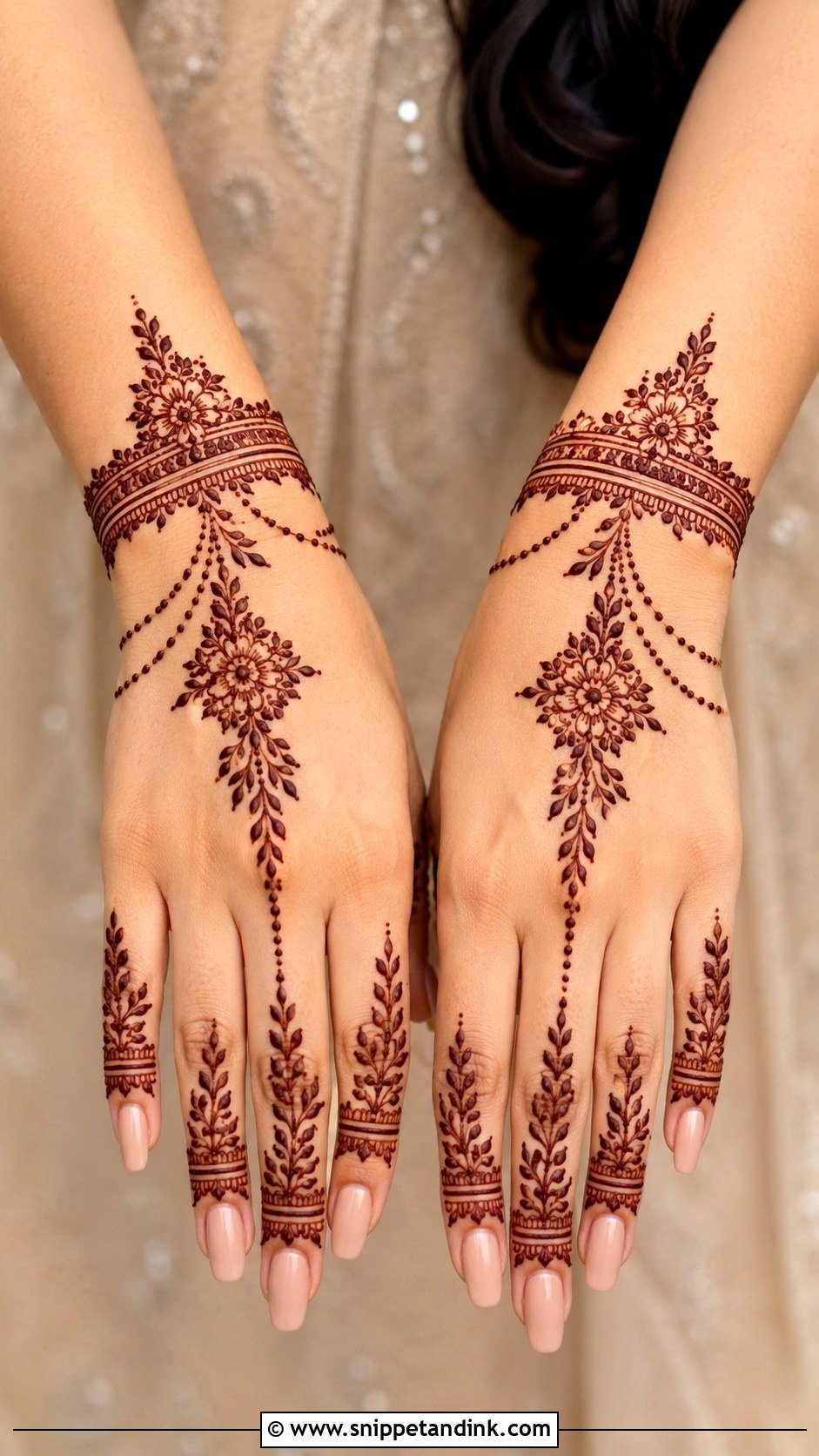
The wrist gets wrapped like a bangle and linked to the fingers with chains, dots, vines or floral strings, while the back of the hand stays mostly open. It’s very good with real bangles, which layer over the henna band. I draw the band with the wrist straight and relaxed; a band drawn while the hand is bent back tilts as soon as the wrist straightens. Keep it to one band or go double with small hanging motifs.
13. Dubai Khaleeji Mehndi Design
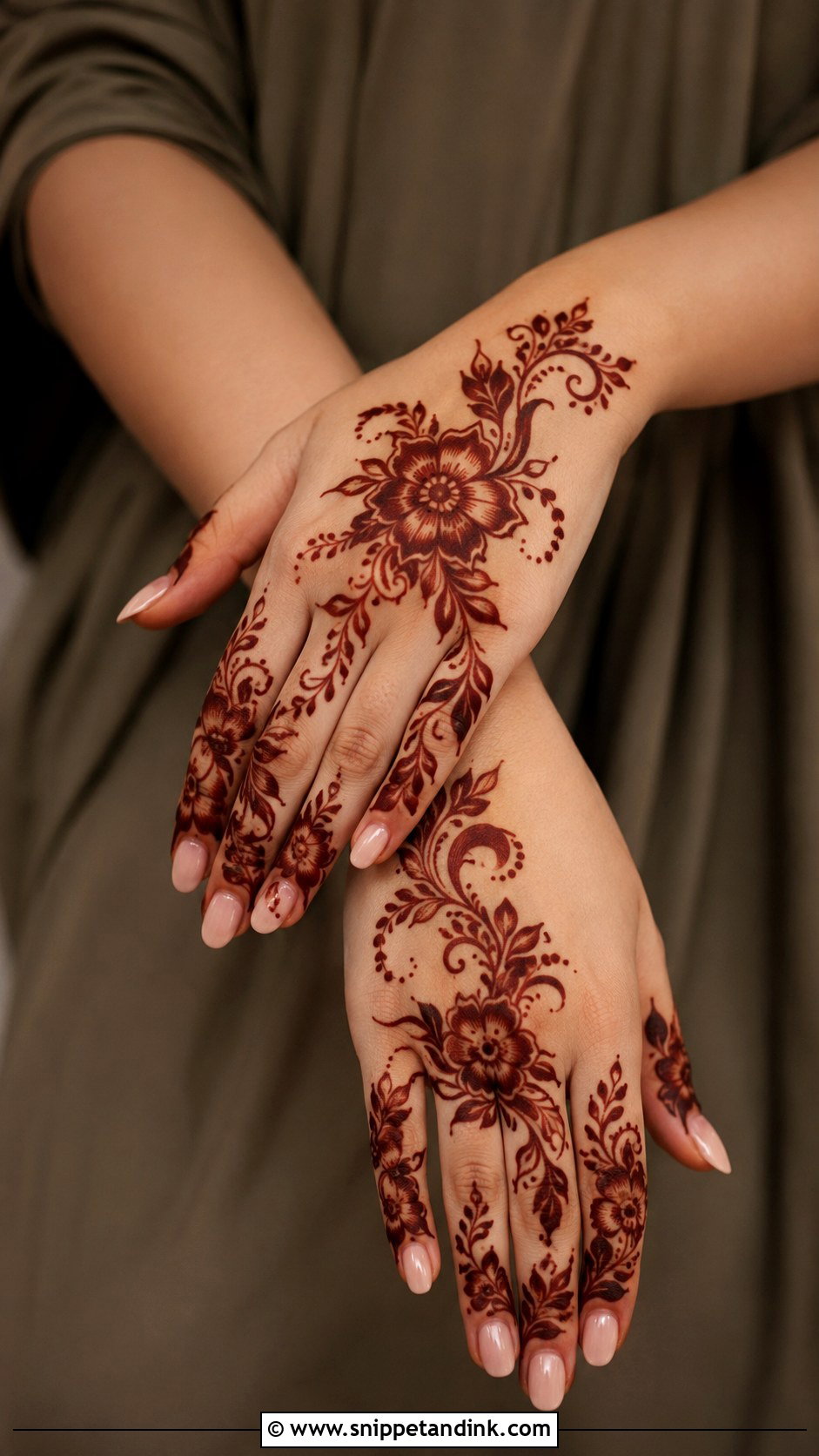
Khaleeji henna is the bold Gulf look: large flowers, thick leaves, strong outlines and dramatic empty space across back hand, fingers and wrist. I use a slightly wider cone opening for this than for anything else in the post, because thin lines look timid in a Khaleeji layout. Those thicker strokes also hold more paste, which is part of why they stain so dark. Shaded petals and bold leaf clusters finish it, and it sits naturally with abayas and kaftans.
14. Dubai Gulf Mehndi Design
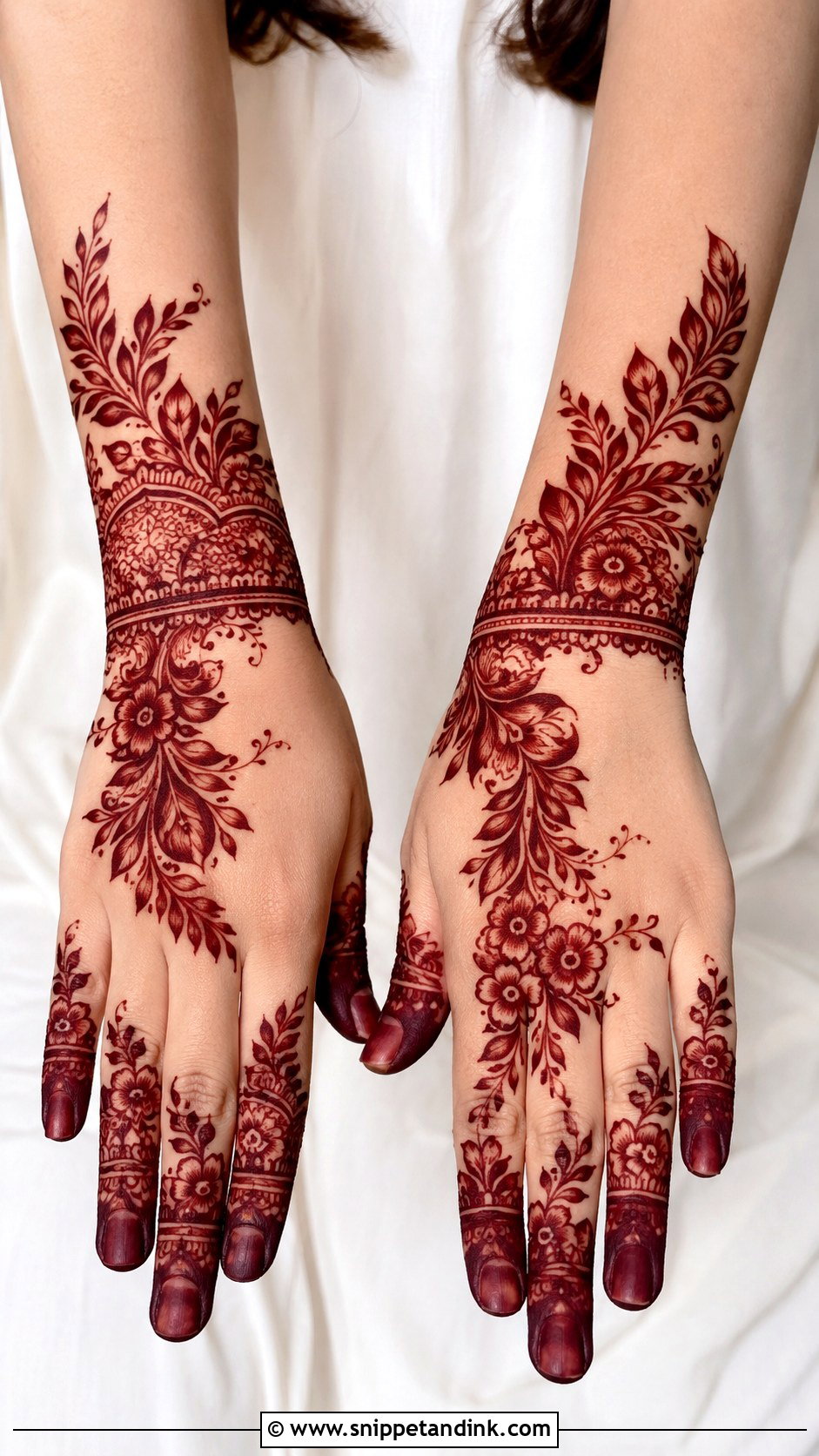
Gulf work overlaps with Khaleeji but is often a little softer and more decorative, with sweeping vines, big flowers, leafy borders and high-contrast fingers. The back of the hand suits it best because its natural slope carries a flowing layout. For a formal version, add a wrist cuff and shaded fingertips. For a lighter one, I thin the vine and leave more bare skin around each flower rather than shrinking the flowers themselves.
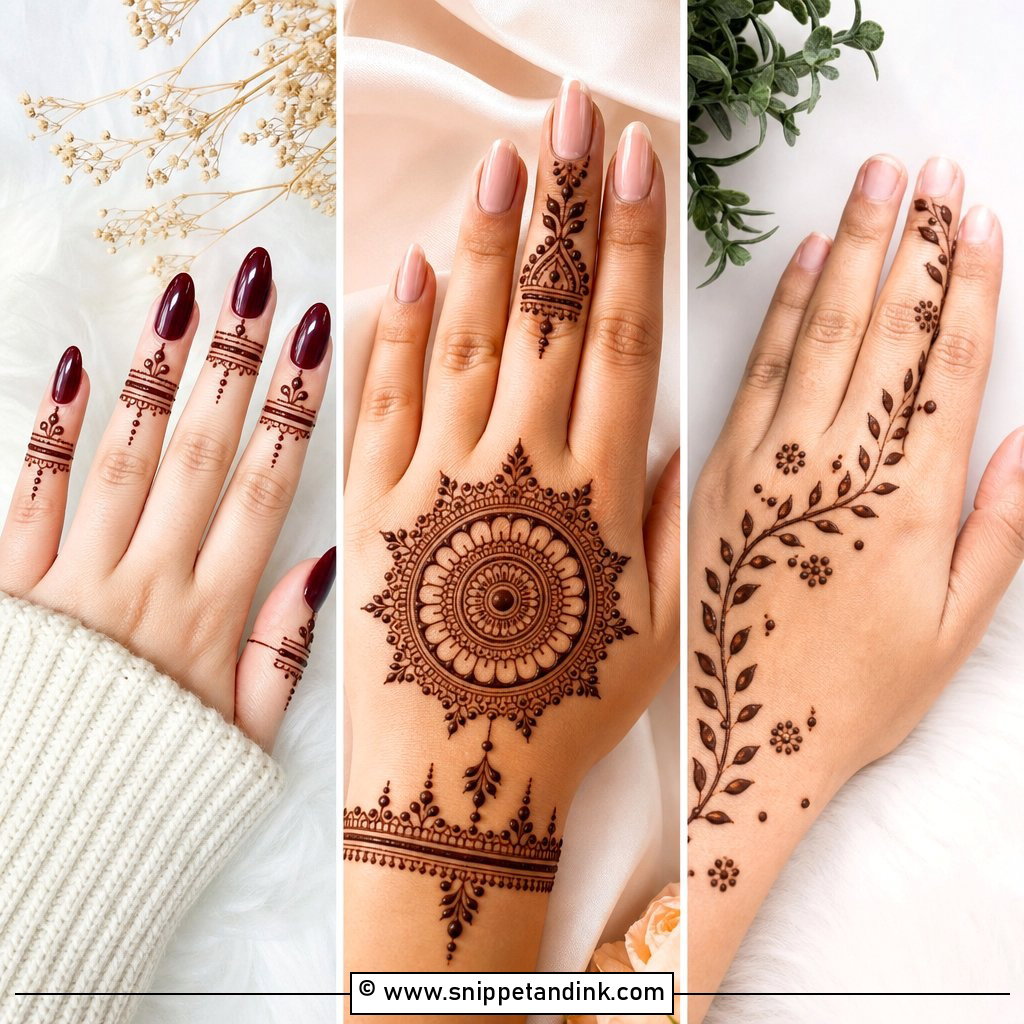
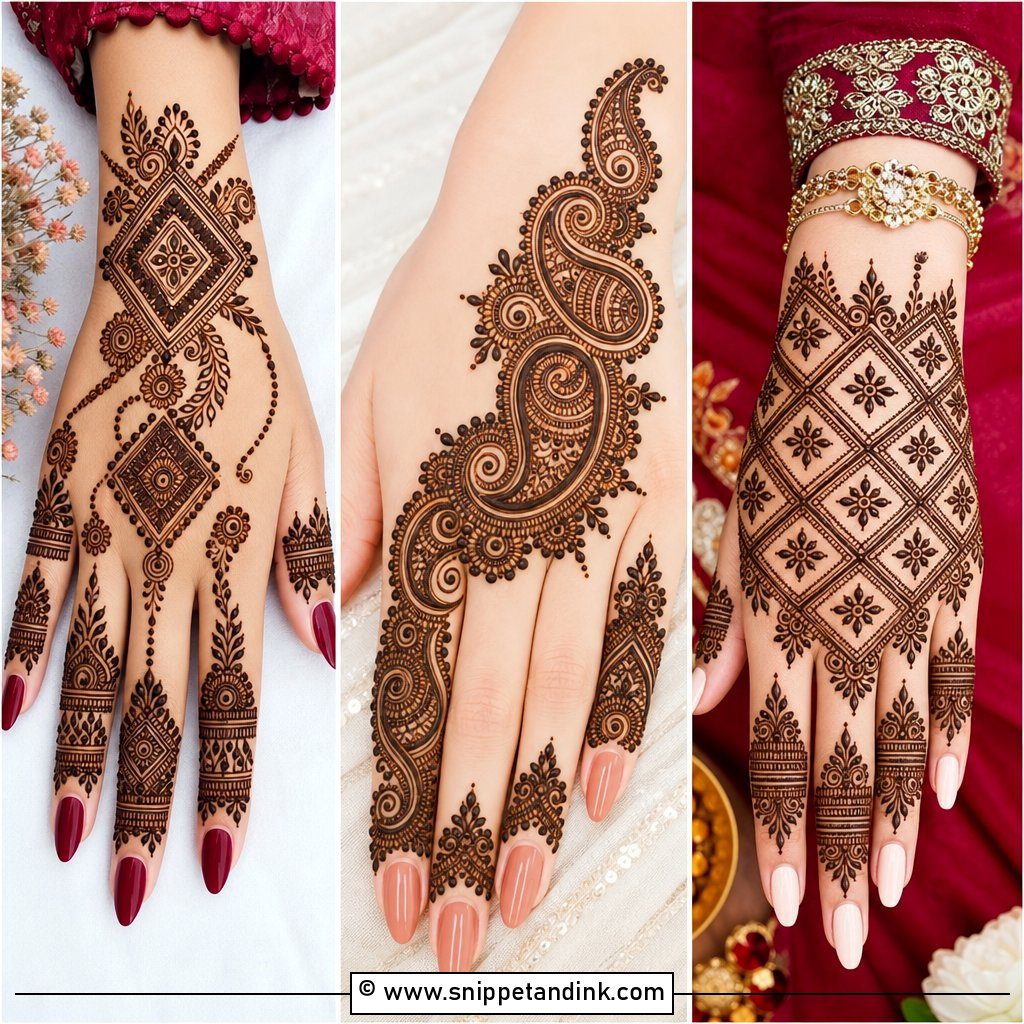
15. Dubai Moroccan Mehndi Design
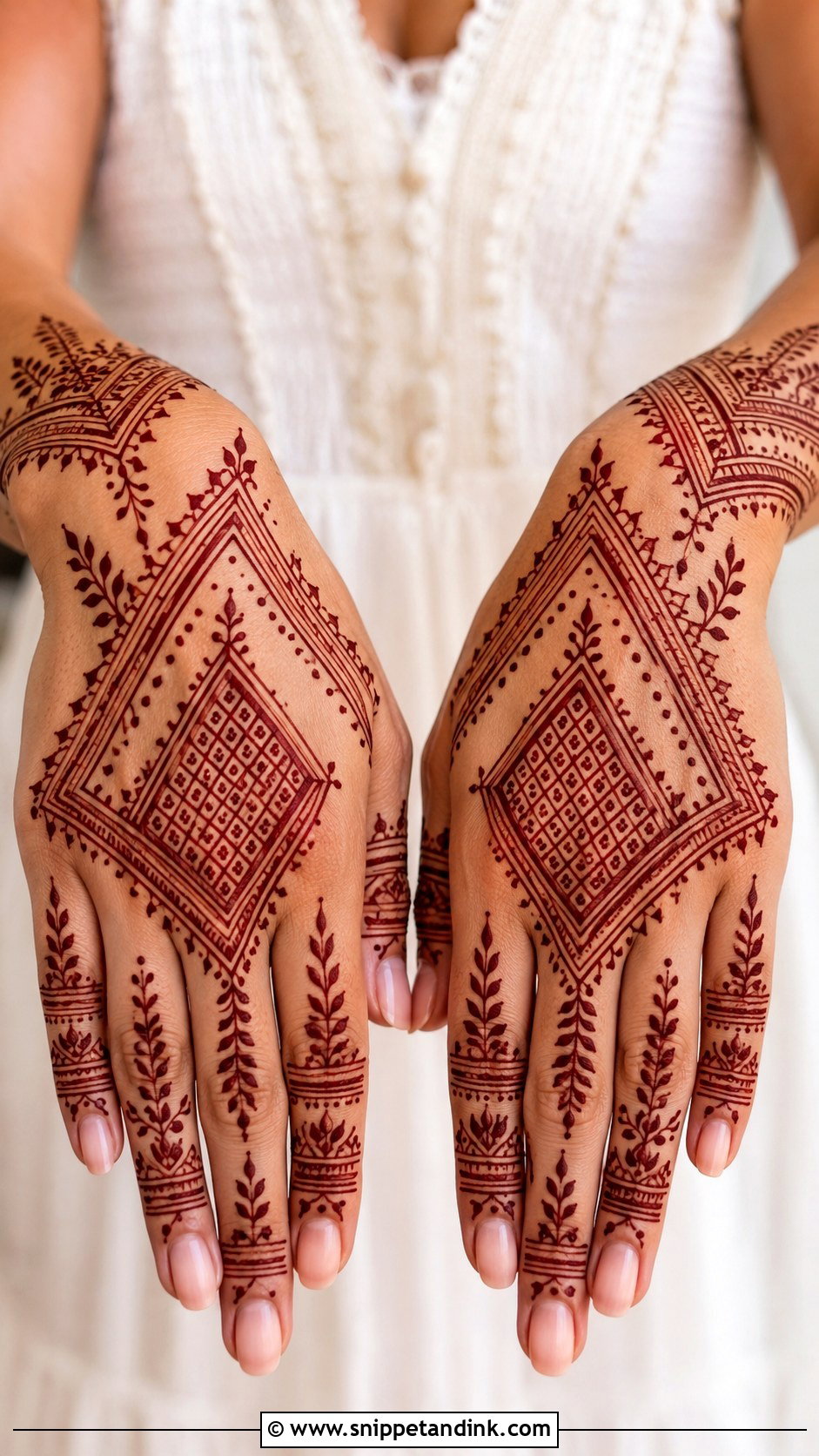
Moroccan-inspired henna swaps vines for geometry: diamonds, grids, straight lines, triangles and structured borders on the back hand, palm, wrist or fingers. A Dubai twist pairs a geometric wrist band with a few Arabic leaves or a small floral centre. Straight lines are harder than curves with a cone. I steady my drawing hand on the client’s hand and draw toward myself, which keeps long lines from wobbling. Uneven grids look amateur quickly.
16. Dubai Indo Arabic Mehndi Design
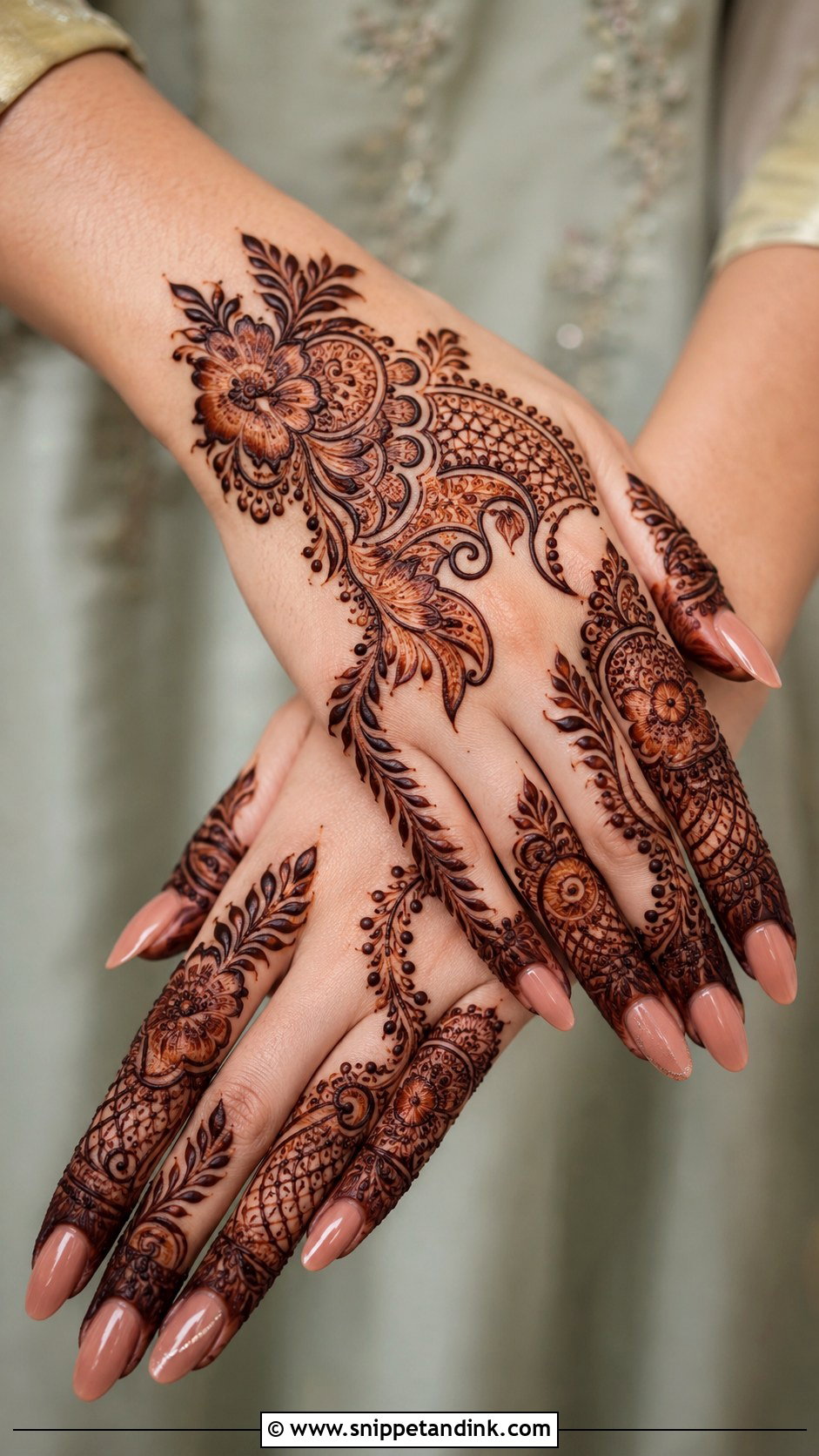
Indo-Arabic takes bold flowers, vines and open space from the Arabic side, then fine paisleys, dots, jaali and filled fingertips from the Indian side. The result is rich but breathable, good for bridesmaids, engagements and parties. My rule is one area of dense filling per hand, usually the wrist or a central panel, with the rest left open. Fill everywhere and it just becomes a crowded Indian design.
17. Dubai Peacock Mehndi Design
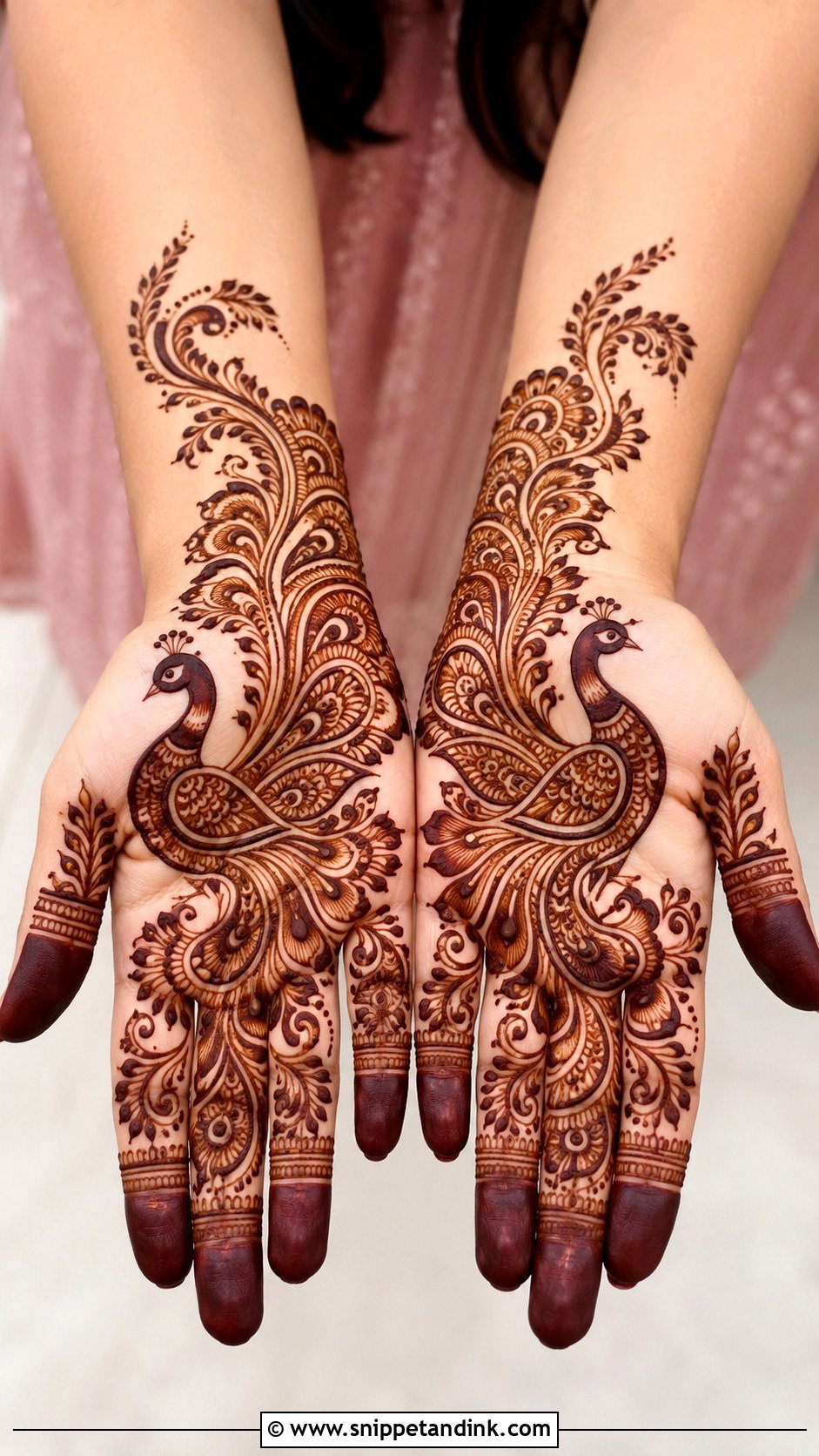
A peacock on the palm, back hand or forearm, its feathers trailing into floral vines, gives the Arabic layout a traditional touch for weddings and festive events. In Dubai style the bird isn’t buried in filler; it’s outlined boldly and surrounded by open skin, leaves and paisley curves, with dots, teardrops and fine lines for feather texture. I draw the neck and body first in one curve and only then add feathers, so the bird stays recognisable once the stain darkens.
18. Dubai Paisley Mehndi Design
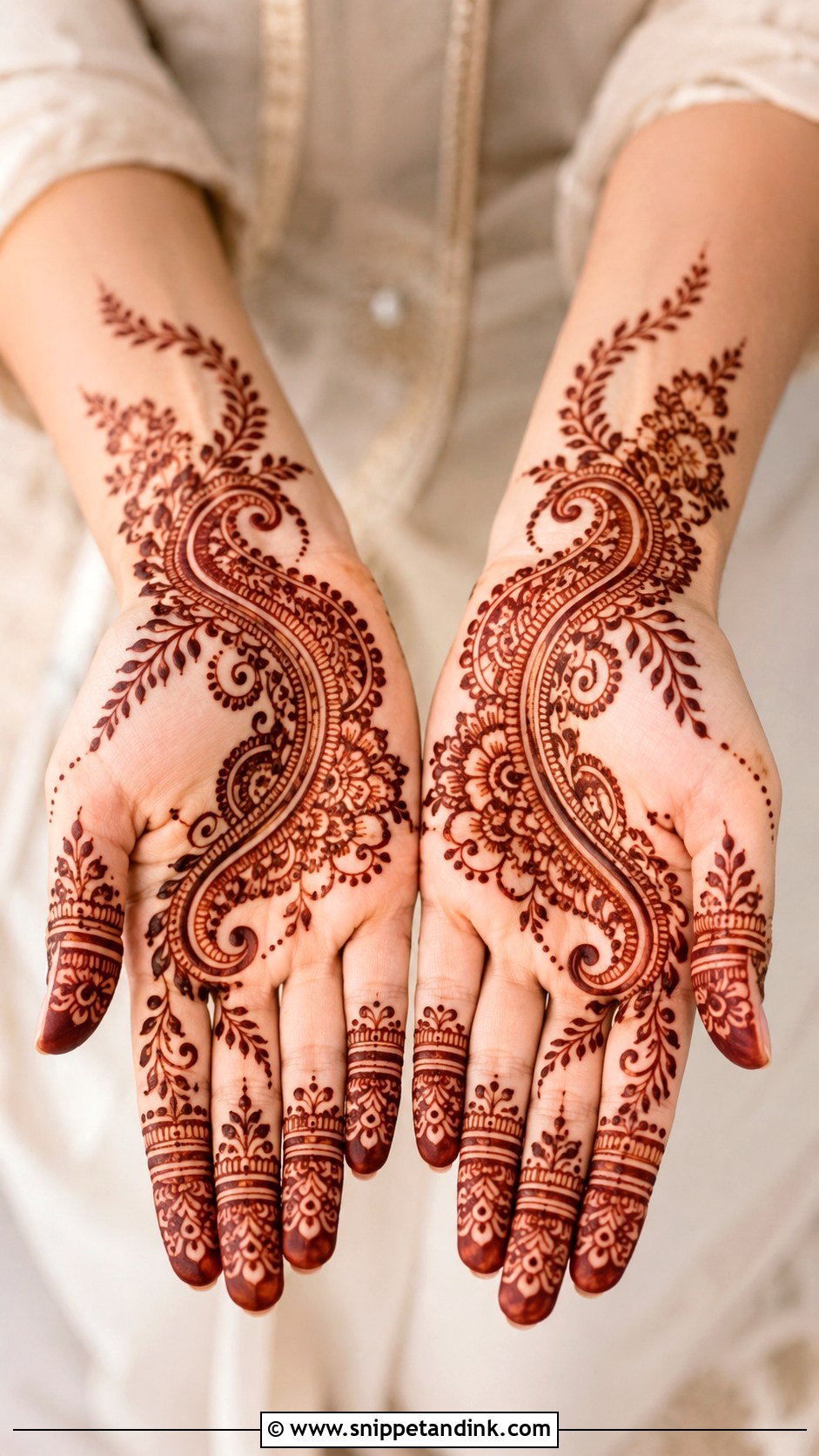
Paisleys scale both ways: large and bold for a back-hand trail, smaller and detailed on the palm. In Dubai work they sit among flowers, leaves, dots and curved borders. A large paisley near the wrist with the design climbing toward the fingers is a classic placement. Outline first, fill second, and keep the inner detail soft. A paisley filled before it’s outlined loses its shape.
19. Dubai Jaali Mehndi Design
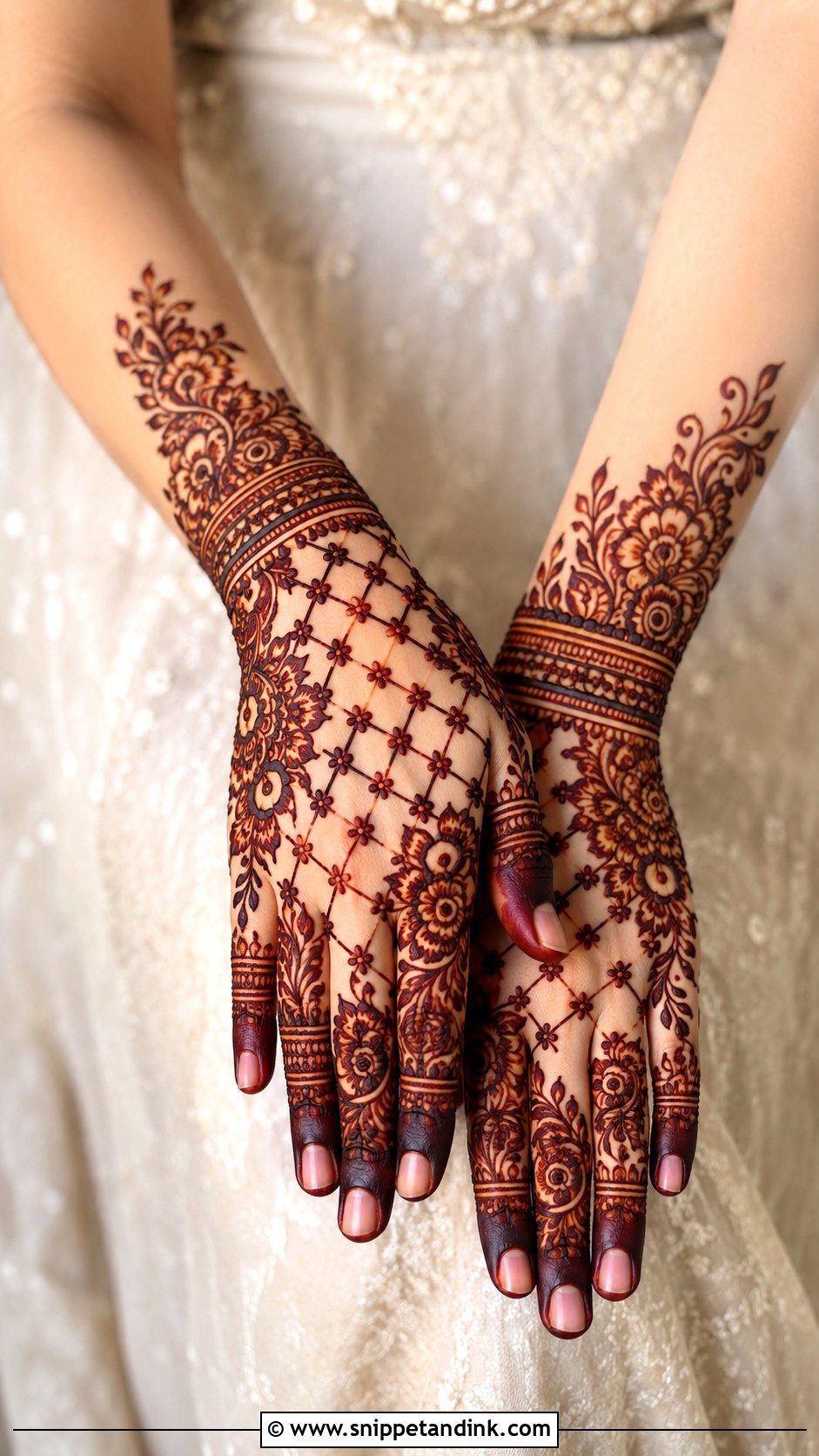
Jaali mesh gives a fabric-like texture on fingers, palm, wrist or back hand, especially next to bold Arabic flowers. It’s the most time-consuming filler I use and the easiest to overdo, so I limit it to one or two areas. Even spacing is everything: I run all the lines one way first, then cross them, and add tiny dots at the intersections last. Paired with open floral trails and a bracelet band, it suits brides and formal events.

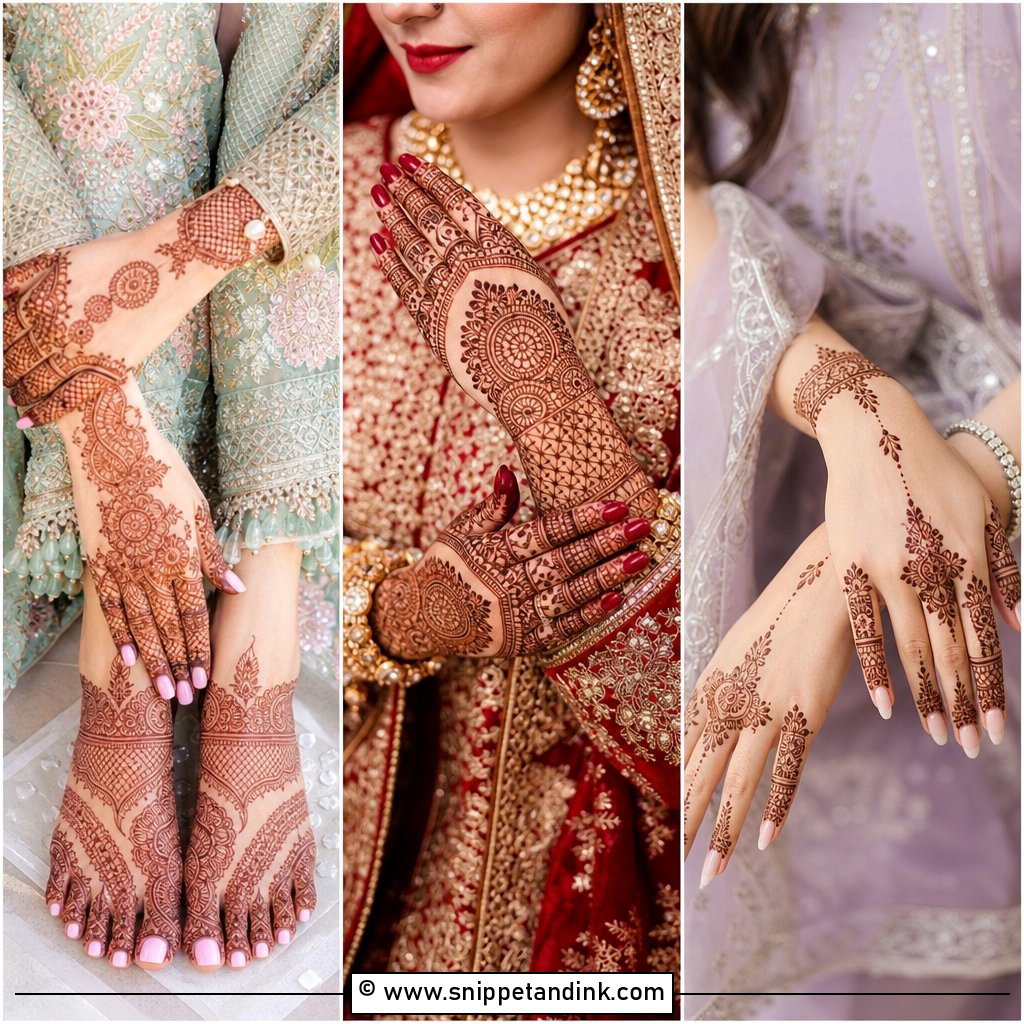

20. Dubai Minimal Mehndi Design
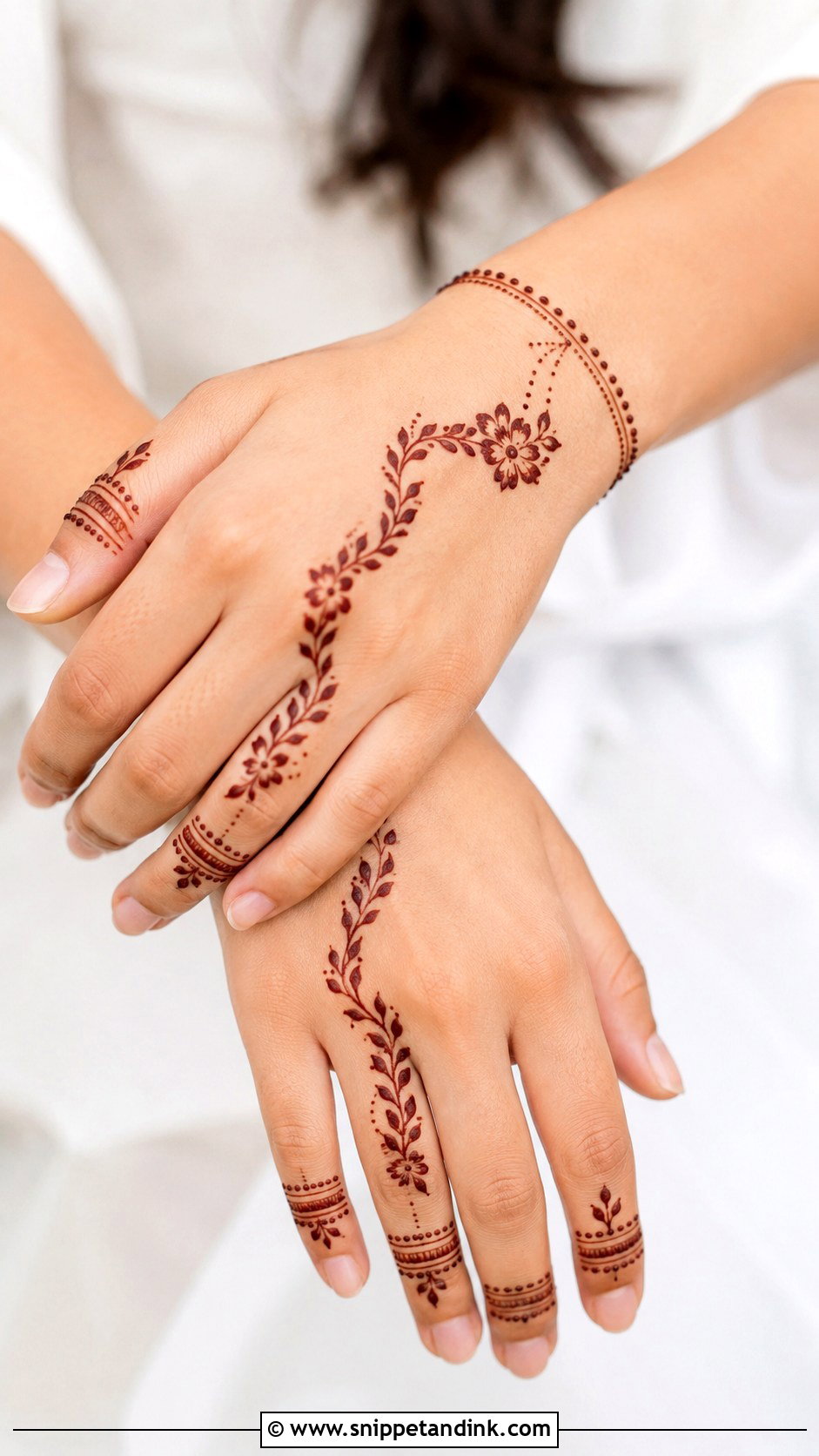
A small back-hand motif, light finger bands, a thin wrist bracelet or one leafy vine. That’s all. Minimal Dubai henna suits first-timers, work events and anyone who wants henna without the commitment. With so few elements, precision carries the whole look. I’d rather draw one well-placed floral trail down the side of the hand than scatter five small motifs that don’t relate to each other.
21. Dubai Heavy Mehndi Design
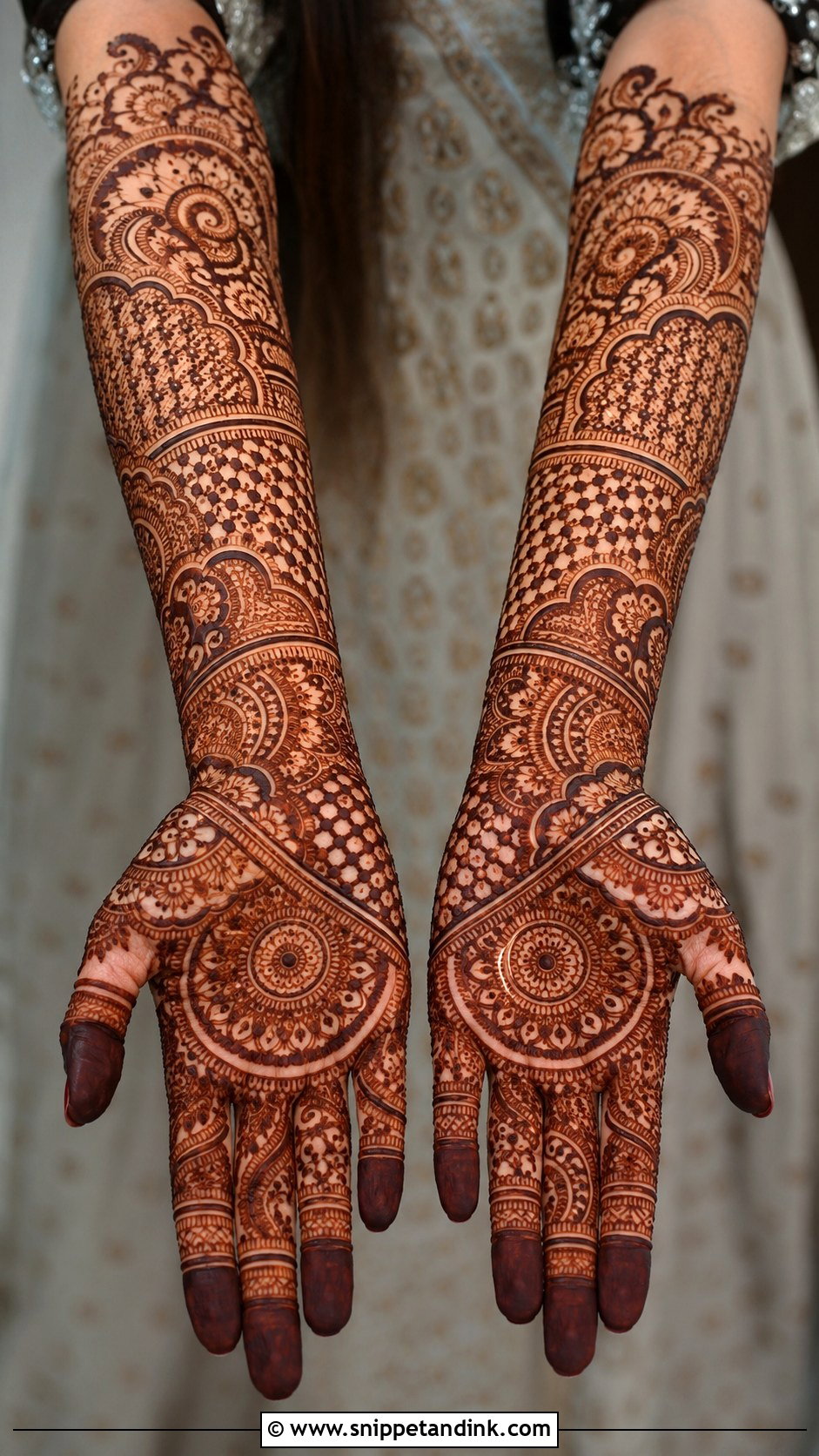
Heavy Dubai henna is for the big celebrations: palms, back hands, wrists and sometimes forearms covered with floral panels, paisley chains, jaali, mandalas, bracelet bands and filled tips. Even here, planned spacing keeps it readable. I divide the hand into zones before starting and give each its own rhythm, so two large motifs never sit side by side. Bold outlines with fine interiors are what make heavy work look elegant rather than dark. Expect a long sitting for this one.
22. Dubai Party Mehndi Design
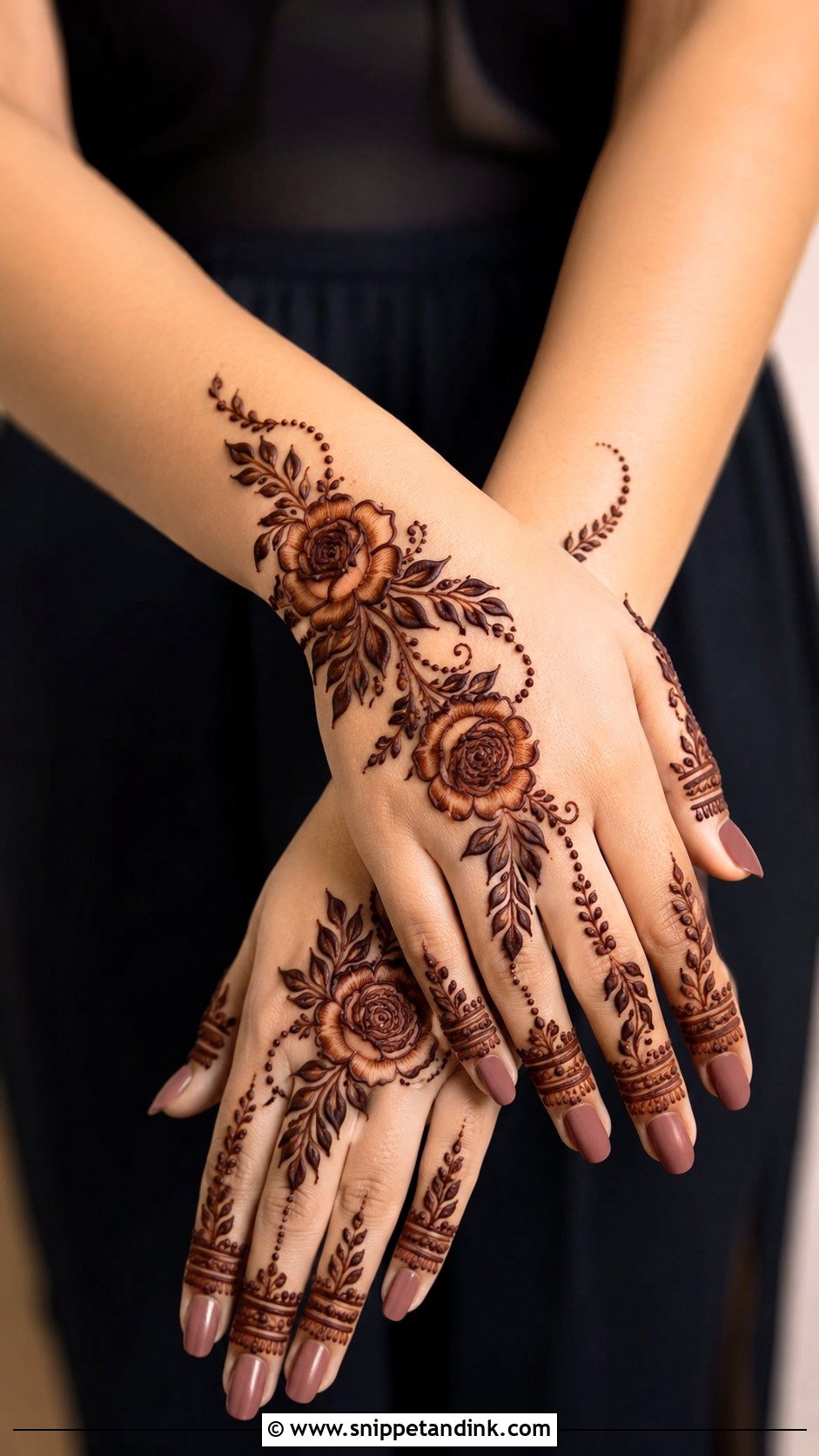
Party henna should be quick and photo-ready: medium coverage, bold flowers, finger detail and a neat wrist finish for birthdays, dinners and pre-wedding parties. Back-hand layouts show clearly while you’re holding a clutch or a glass. A diagonal floral trail, a bracelet design or a half-hand Arabic pattern all work. For more impact without more time, I darken the fingertips or add one shaded rose. It reads dressed-up rather than bridal.
23. Dubai Wedding Guest Mehndi Design
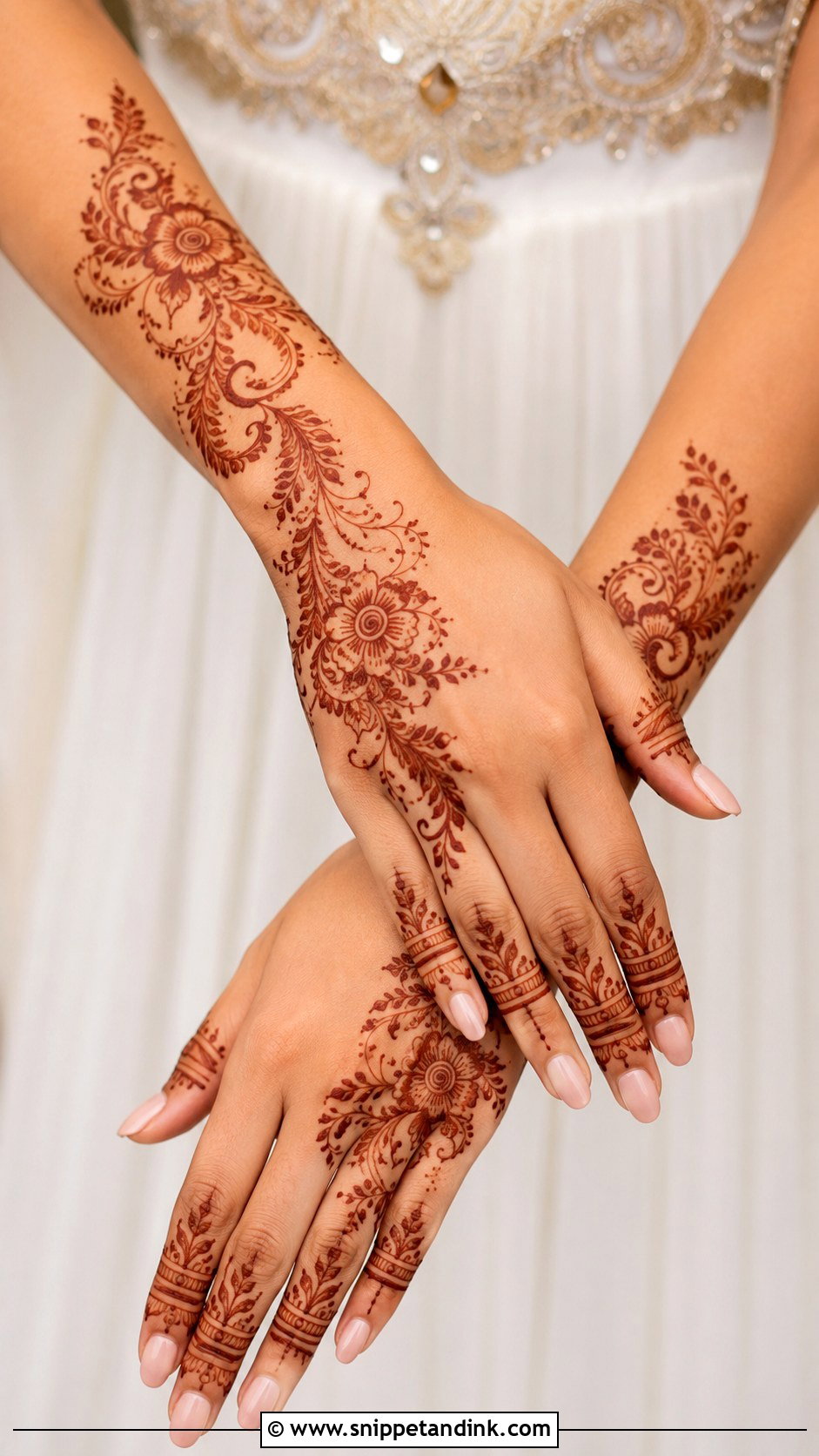
Guests should stay festive without competing with the bride. A medium back-hand pattern with florals, leaves and wrist detail is my safest suggestion; a front-hand mandala with simple fingers suits a more traditional look. It goes with lehengas, sarees, gowns and modest outfits alike. Stop at the wrist unless the event is very formal. Natural henna gives the warm reddish-brown that looks right in photos, and the coverage stays comfortable to live with for the following week.
24. Dubai Kids Mehndi Design
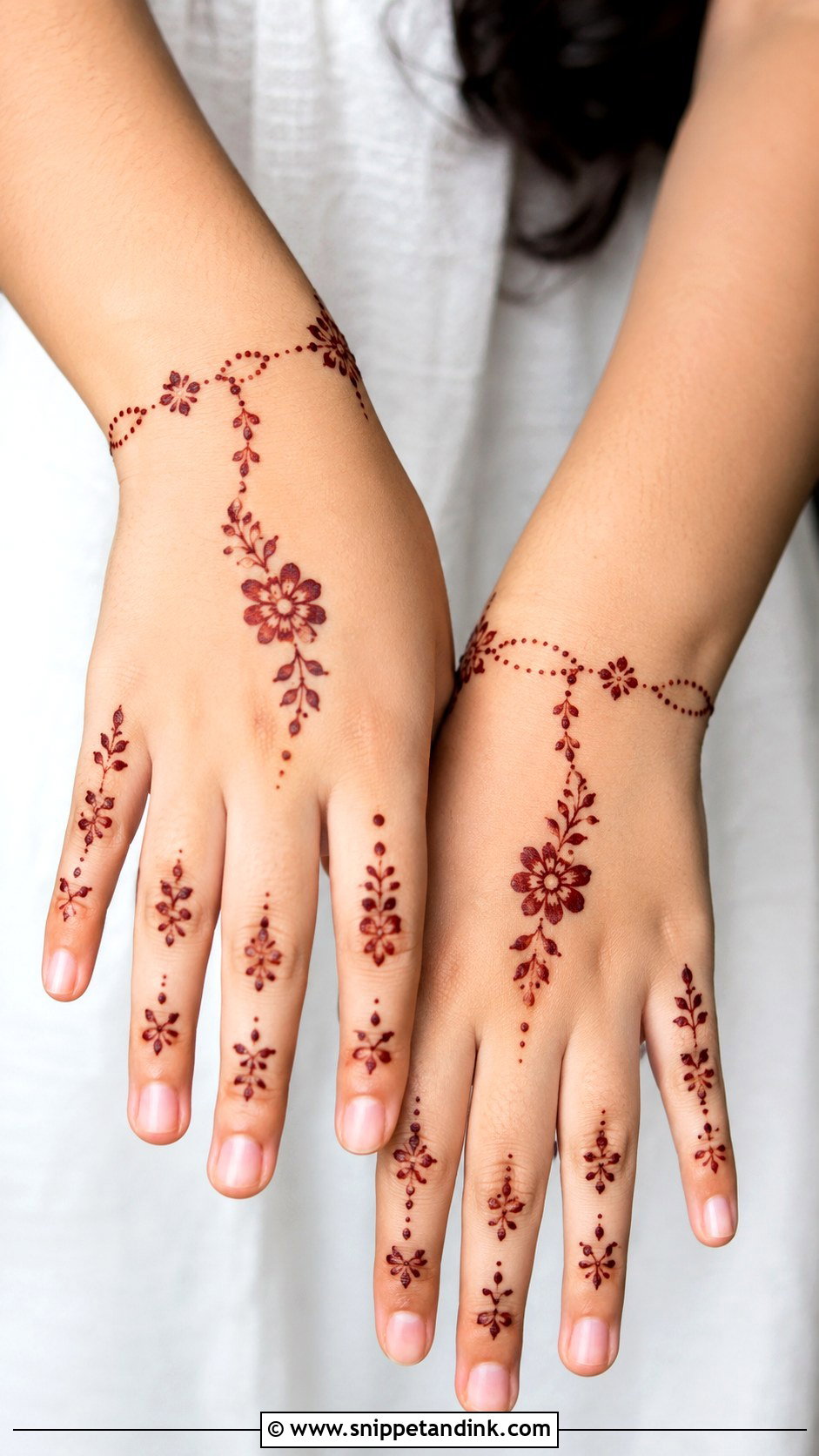
Children need small motifs and short sessions: a tiny flower on the back hand, a small bracelet, finger dots or a mini palm mandala, with plenty of open skin. Natural henna is the only thing I’ll use on children; it gives a soft stain and nothing more. I keep the paste lines thin so it dries fast before they start touching everything. Eid, family weddings and school cultural days are where I draw these most.


25. Dubai Royal Bridal Mehndi Design
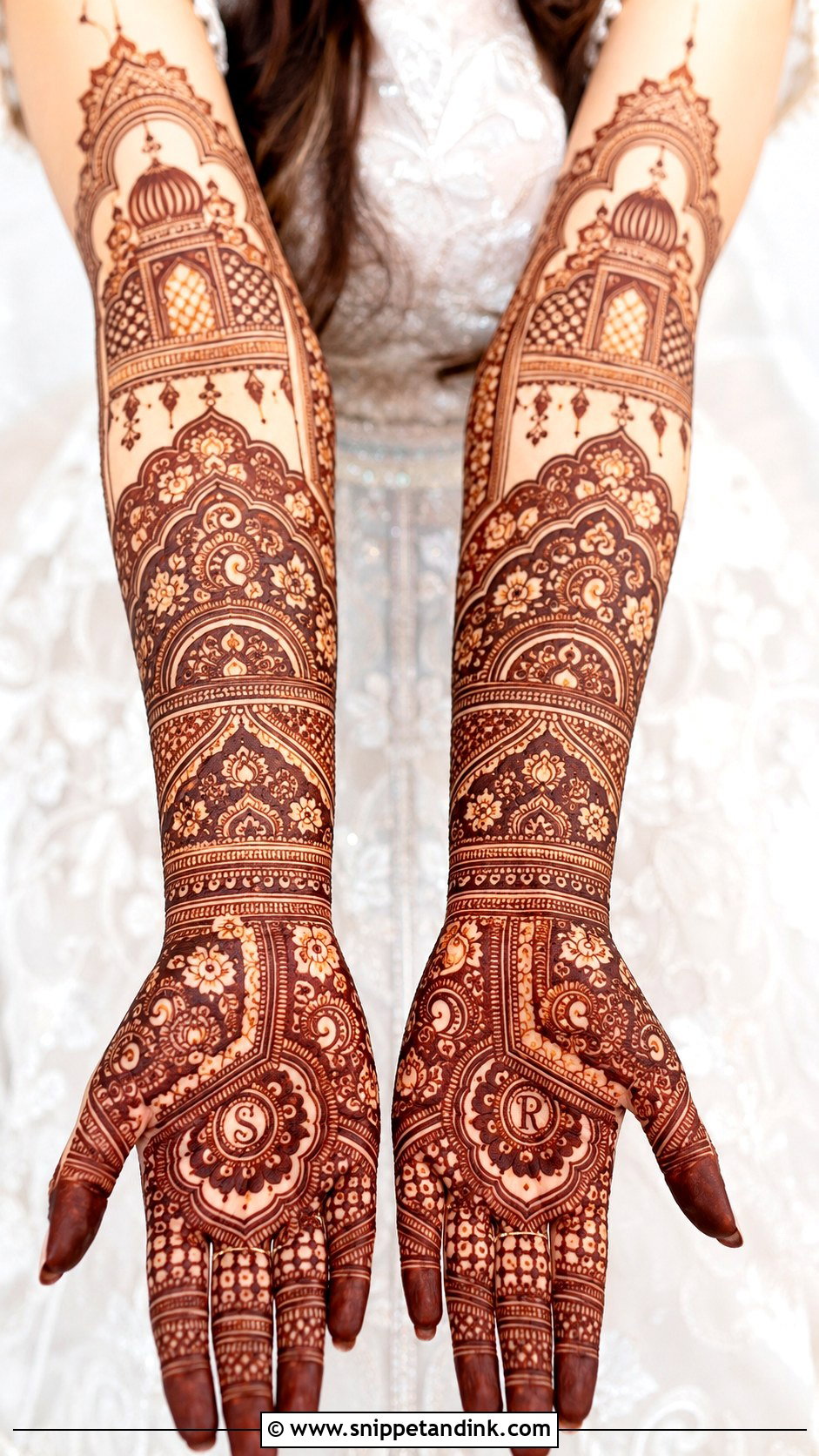
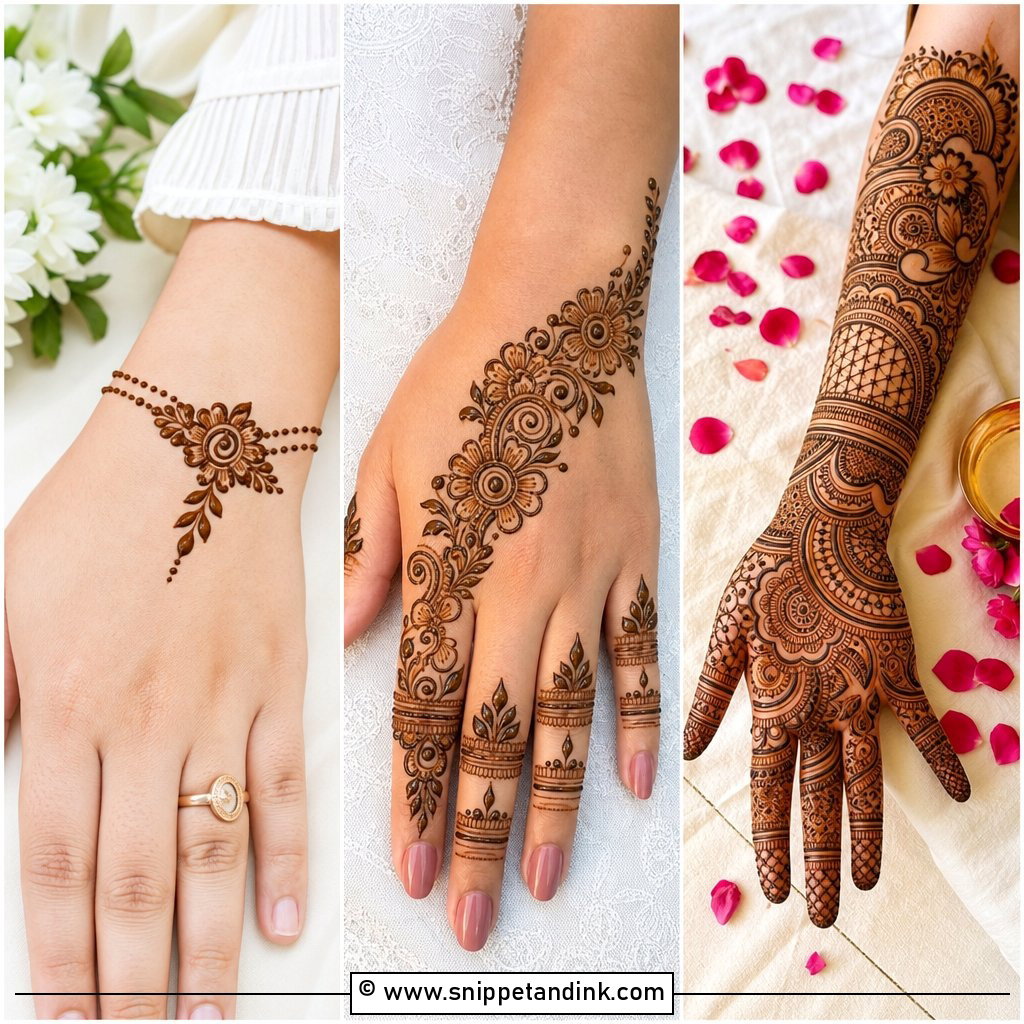
The royal bridal version layers florals, paisleys, domes, jaali panels and jewellery-style wrist bands across hands and forearms, sometimes with initials, the date or small story elements inside. It’s rich without chaos because each section is planned. I coordinate front and back of each hand so motifs carry across the side of the hand rather than stopping abruptly at the edge. It’s made for heavy bridal outfits and gold jewellery.
26. Dubai Half Hand Mehndi Design
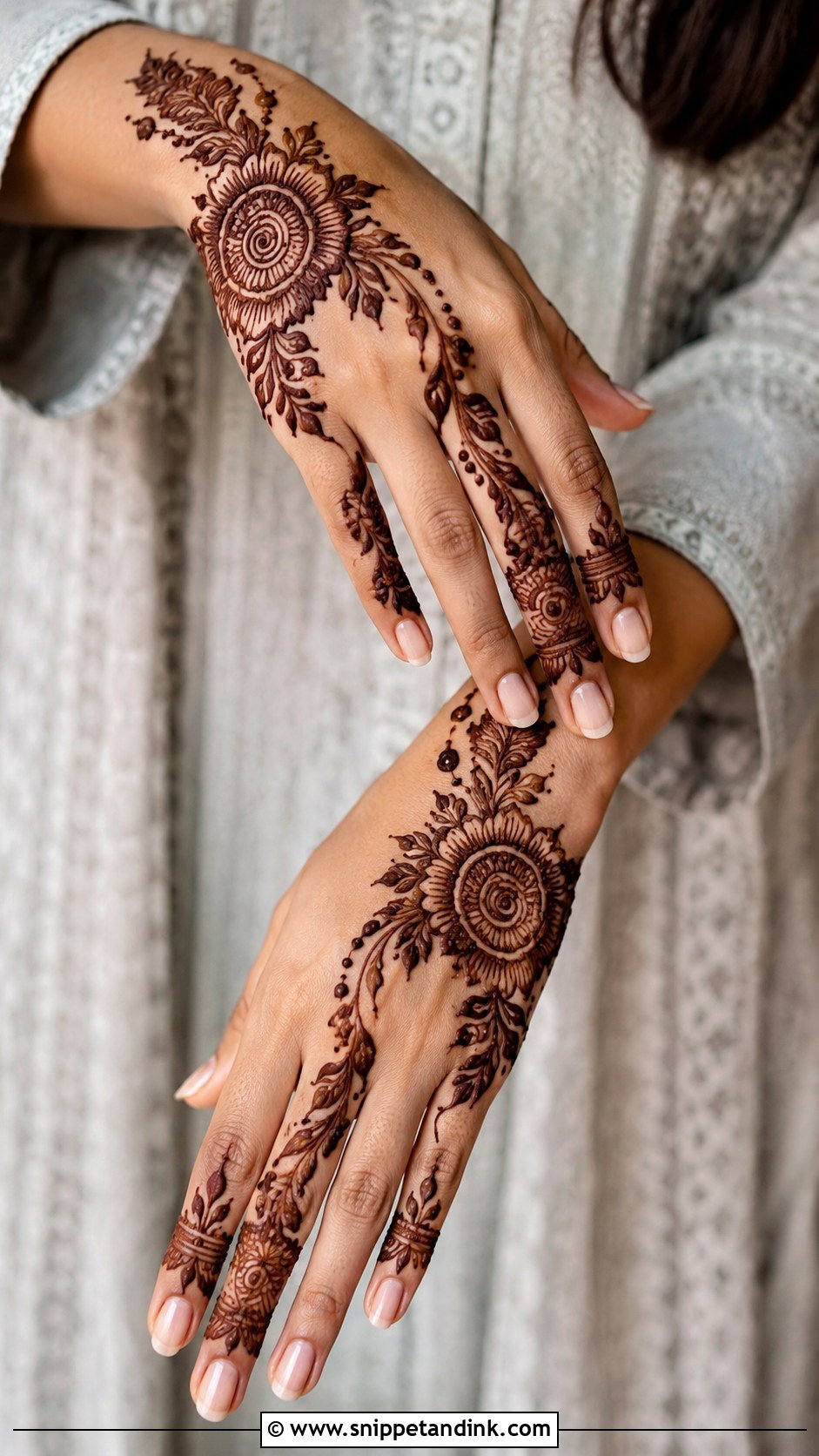
Half-hand designs cover either the fingers and upper palm or the wrist and lower hand. On the back hand they look modern and leave plenty of skin, and a floral vine from wrist to middle finger is the classic. A half-palm mandala with simple tips works too. It’s comfortable for everyday movement; you can type, cook and wash up without the design dominating, which is why I suggest it for small functions and Eid.
27. Dubai Palm Mehndi Design
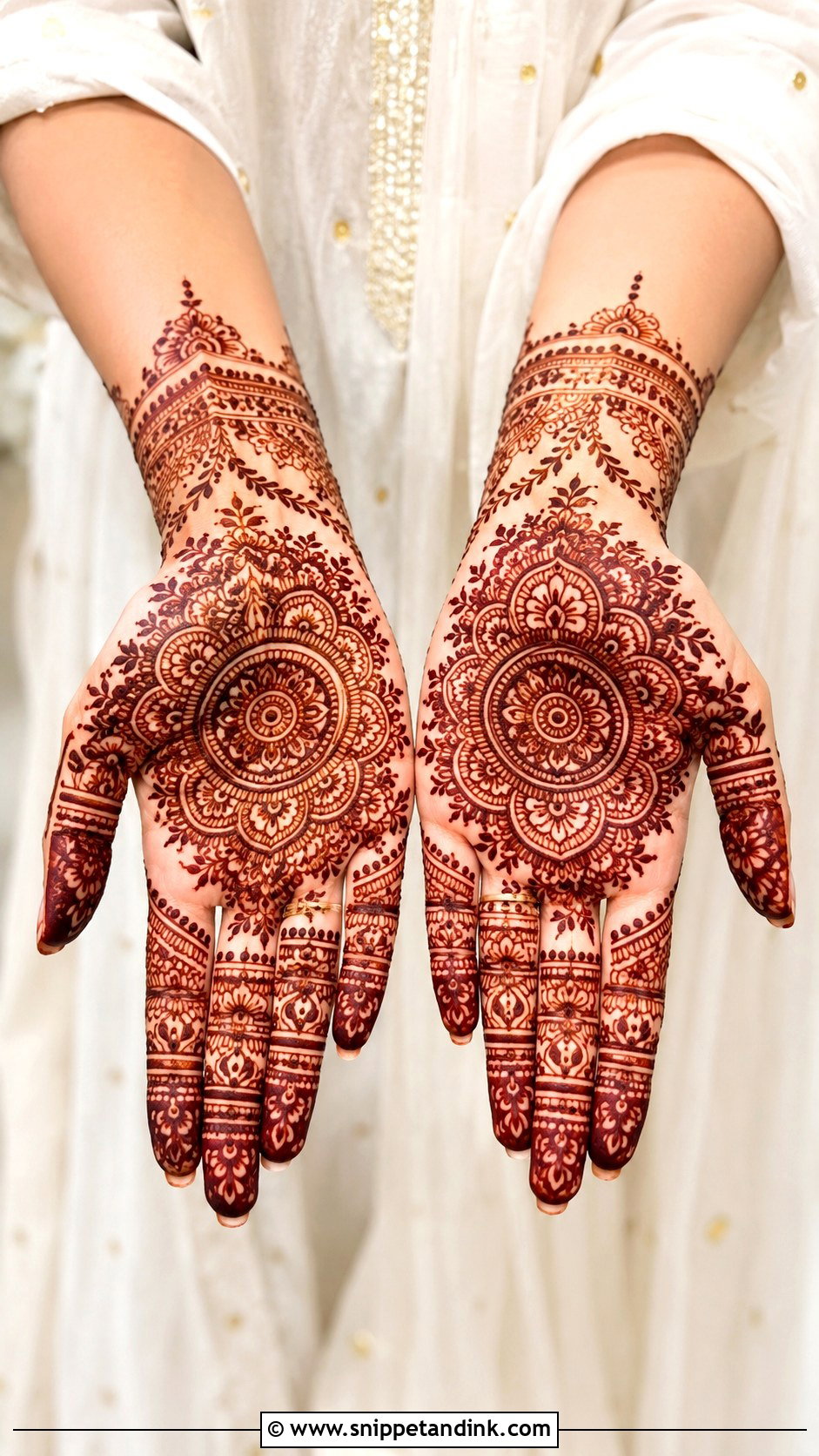
Dubai palm mehndi design centres on the palm with a mandala, floral circle, paisley cluster or vine layout, and fingers filled with bands, dots, leaves or shaded tips. Open space around the centre keeps it balanced; the wrist can stay bare or take a light band. Palms take the deepest stain on the body, so even a modest palm design dries to strong colour. It’s also an easy shape for beginners to plan.
28. Dubai Back Hand Bridal Mehndi Design
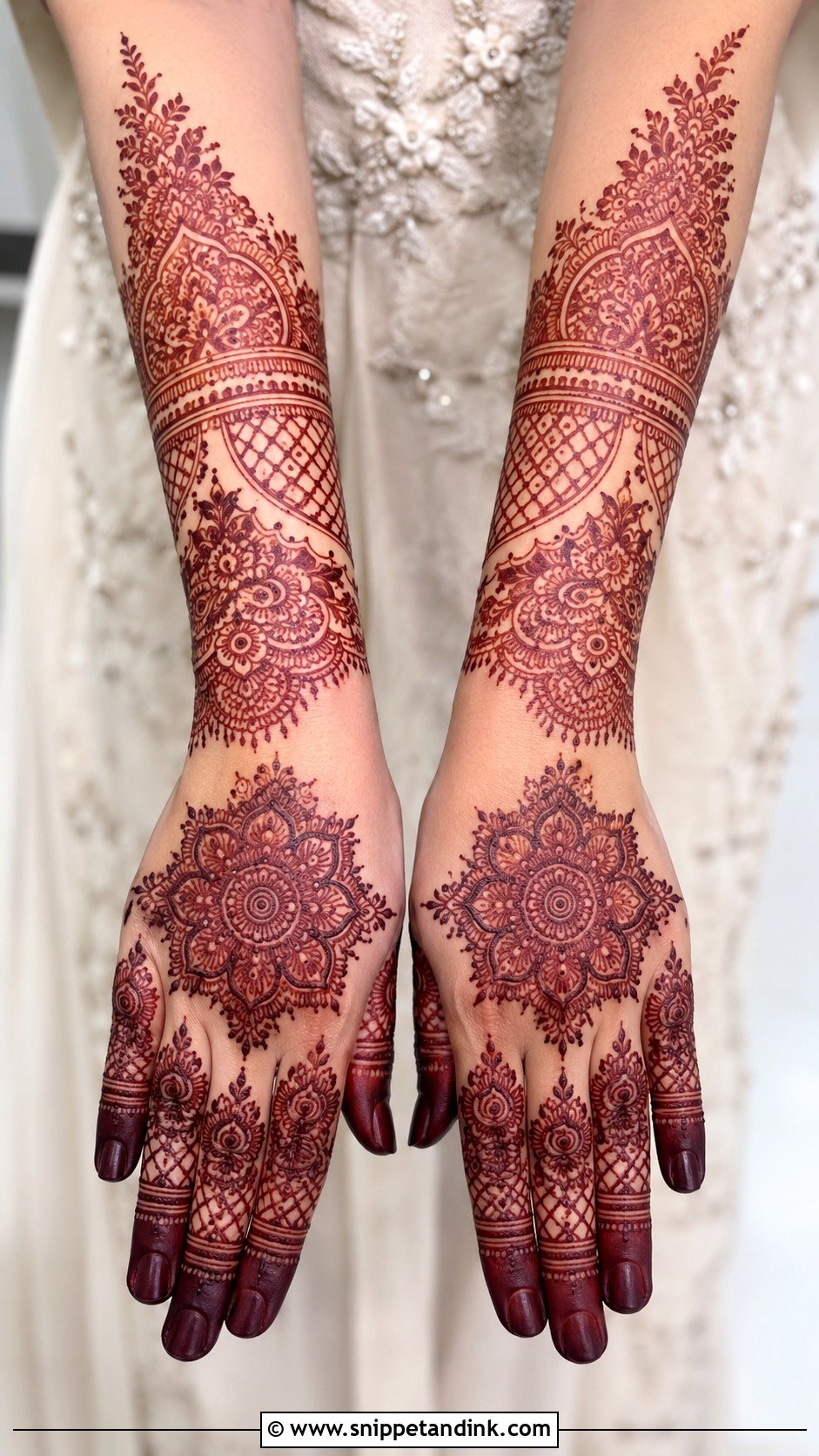
A Dubai back hand for a bride puts a rich central motif, floral trails, finger patterns and bracelet coverage exactly where rings and bangles will be photographed. It suits brides who want luxury without dense back-hand filler, and it can extend up the forearm with paisleys, domes and jaali. I put the most detail into the fingertips because they frame the hand in every ring shot, and keep the main flowers bold-outlined so they stay crisp after staining.
29. Dubai Foot Mehndi Design
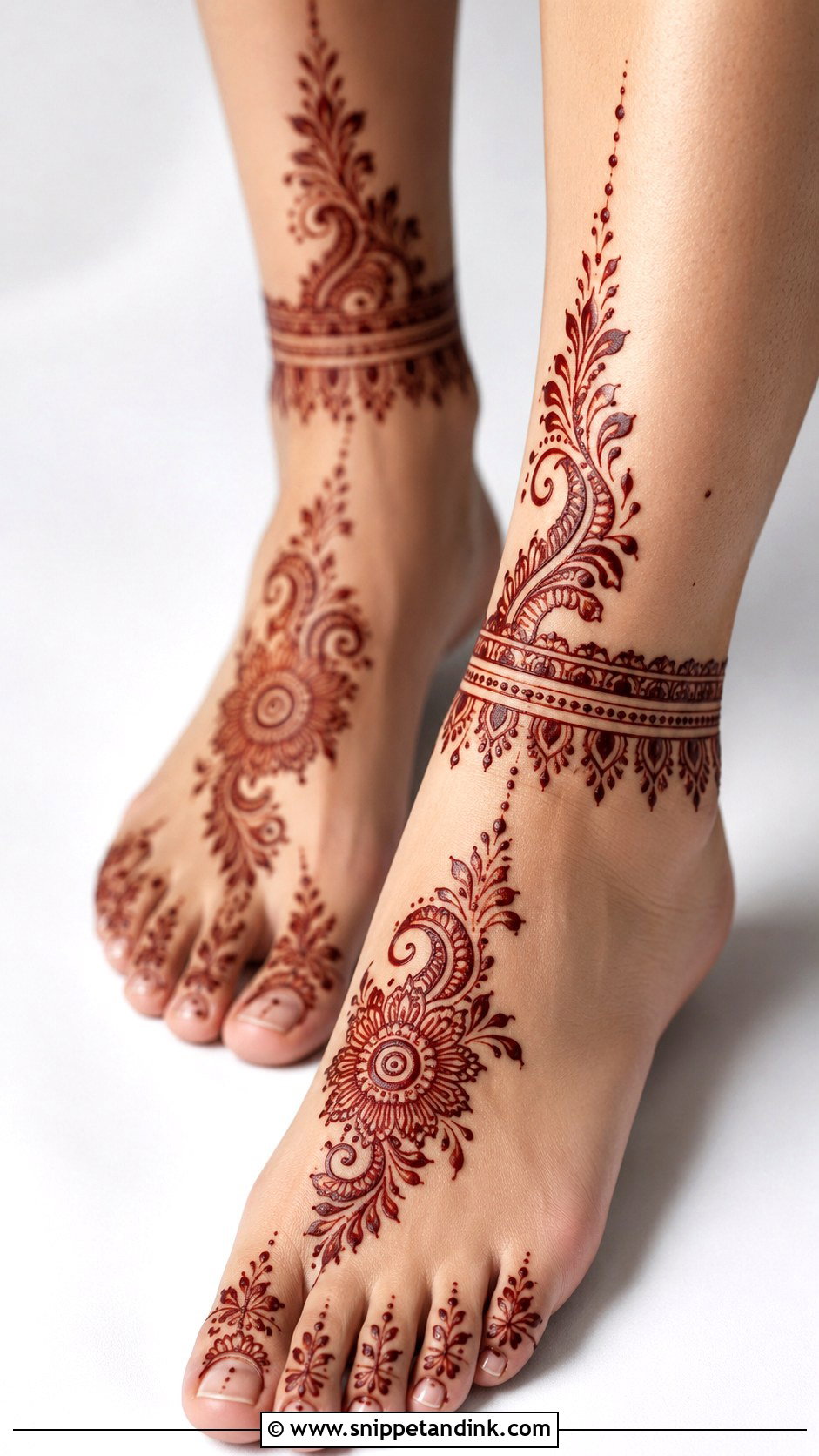
Foot designs cover toes, the top of the foot, the ankle and sometimes the lower leg with Arabic florals, anklet bands, leaves, paisleys and dotted chains. Dubai versions often leave the centre of the foot open. Brides usually match their hand coverage; guests keep to toe details and an ankle band. Feet need to be clean and dry with no lotion before I start, and you’ll need to stay seated with your feet up until the paste sets, so plan feet for the end of the session.
30. Dubai Anklet Mehndi Design
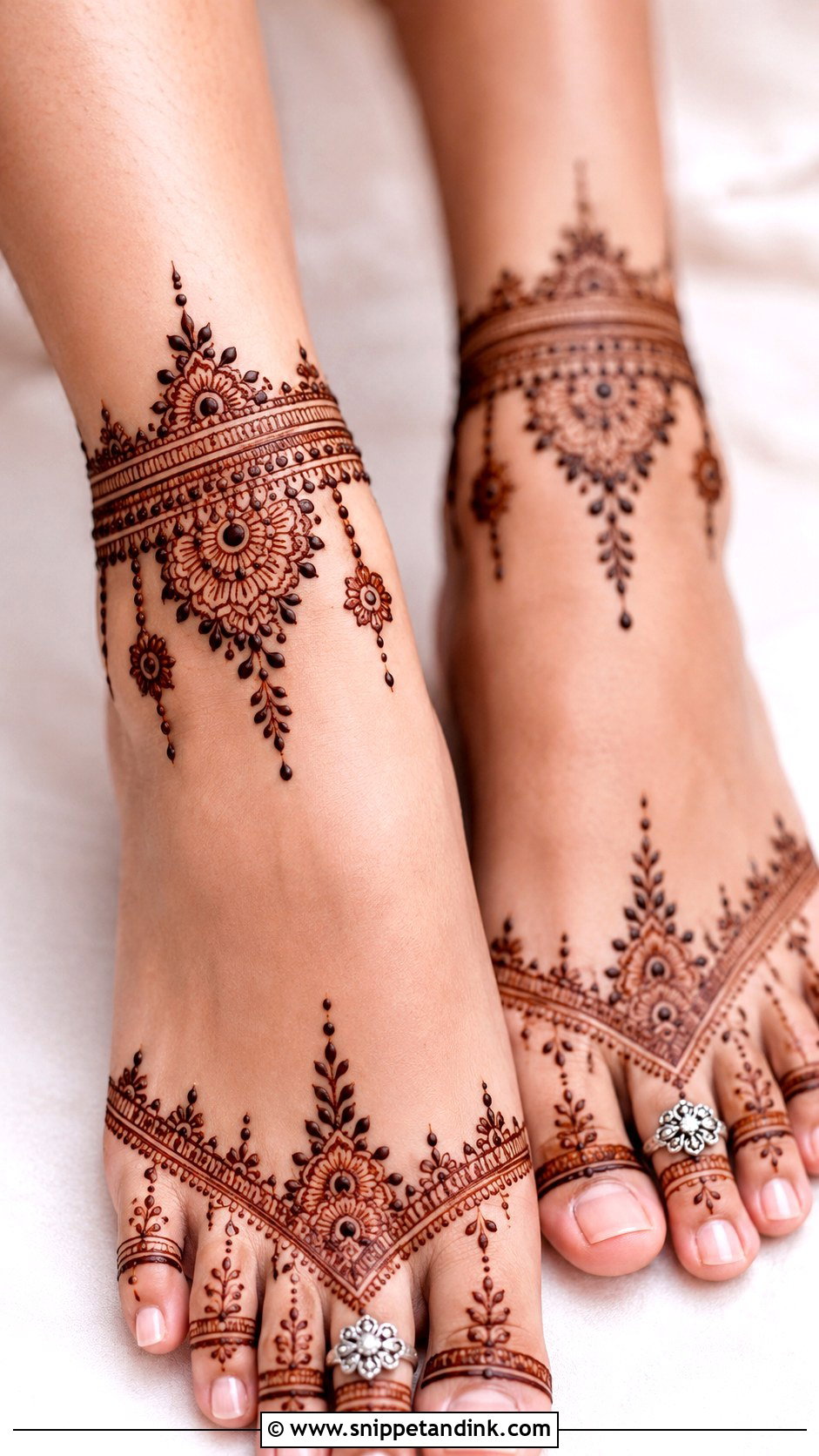
An anklet design looks like fine jewellery drawn round the ankle: a thin band, hanging dots, tiny leaves, small flowers and chain detail, with the top of the foot bare or carrying a small motif near the toes. Matching toe bands make it more decorative. The ankle is curved, so I draw the band in sections while rotating the foot, checking from the side each time, so it sits level all the way round like a real anklet.
31. Dubai Modern Mehndi Design
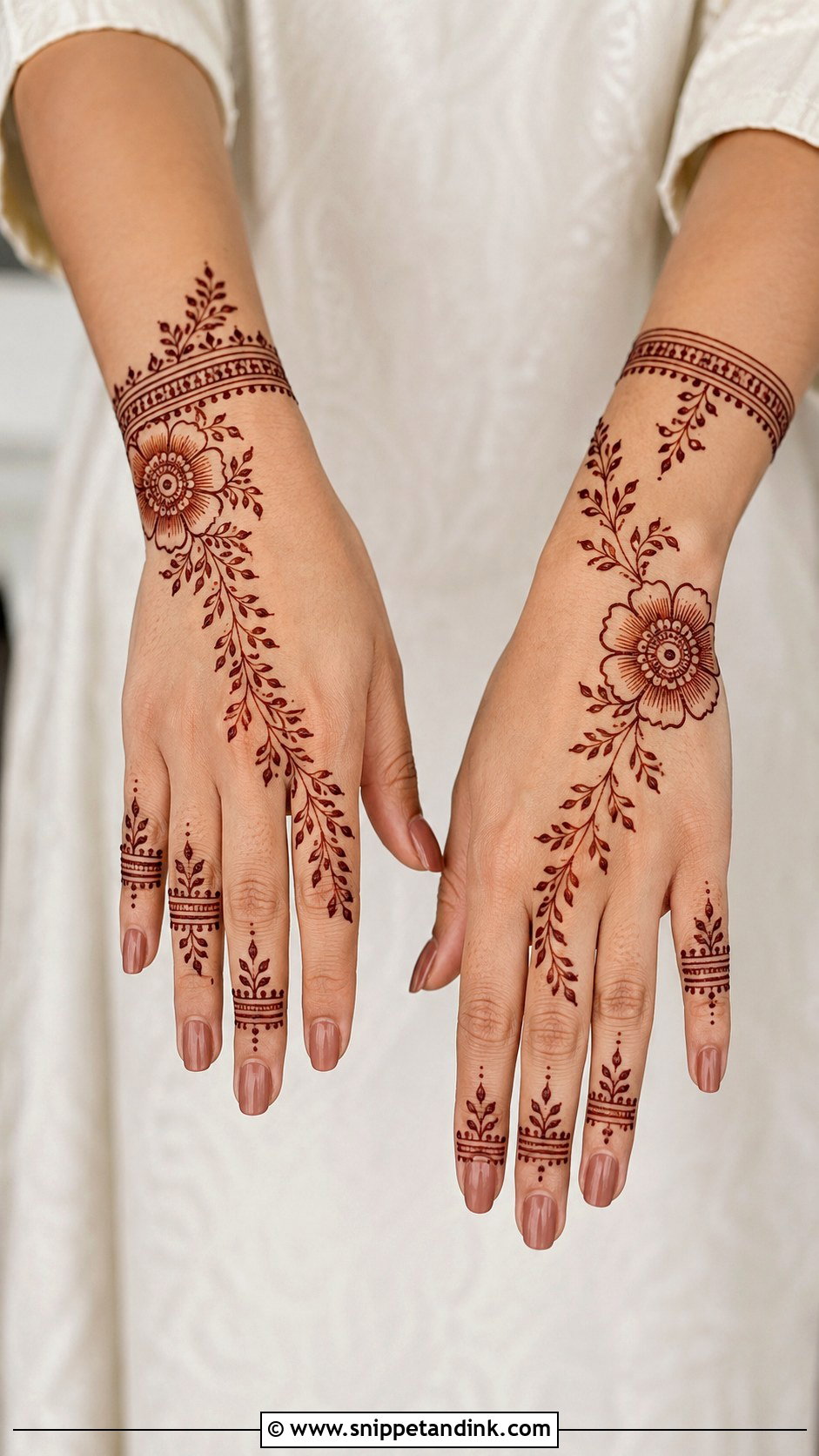
Modern Dubai henna is less traditional in layout: asymmetric vines, finger-focused patterns, bracelet cuffs, geometric borders or one large flower, with a lot of skin left visible. It pairs with contemporary and fusion outfits. Pick one main feature and support it with simple details. When clients bring me five reference photos for one hand, I ask which single element they love most and build around that.
32. Dubai Shaded Mehndi Design
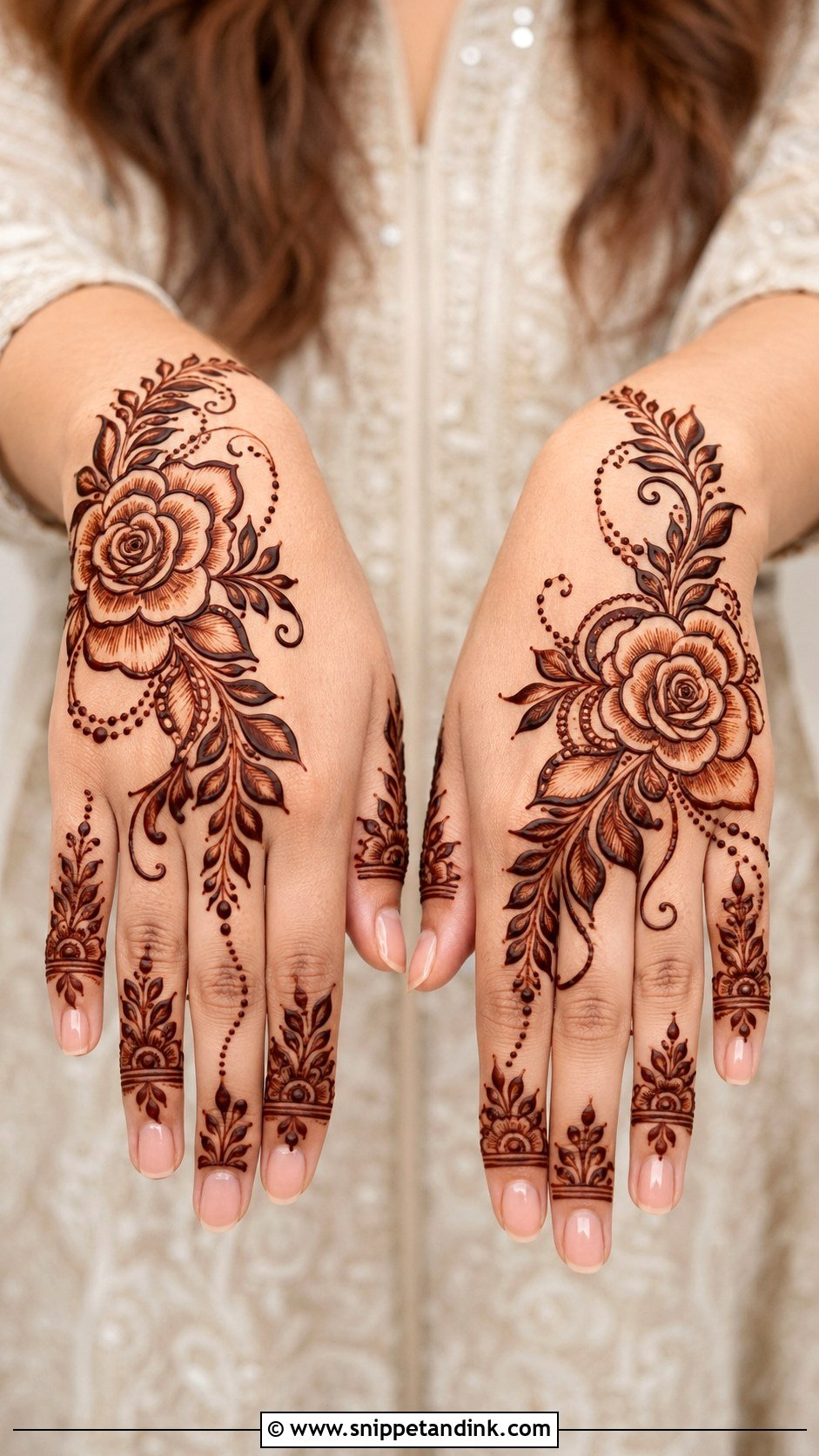
Shading gives flowers, leaves and paisleys depth by staining some areas lighter than others. I outline the shape, then pull a thin film of paste from the line inward with the tip, so the stain fades toward the centre. Too much paste and the shading stains as dark as the outline, and the effect is lost. It’s at its best in roses and large Arabic flowers on either side of the hand.
33. Dubai Finger Ring Mehndi Design
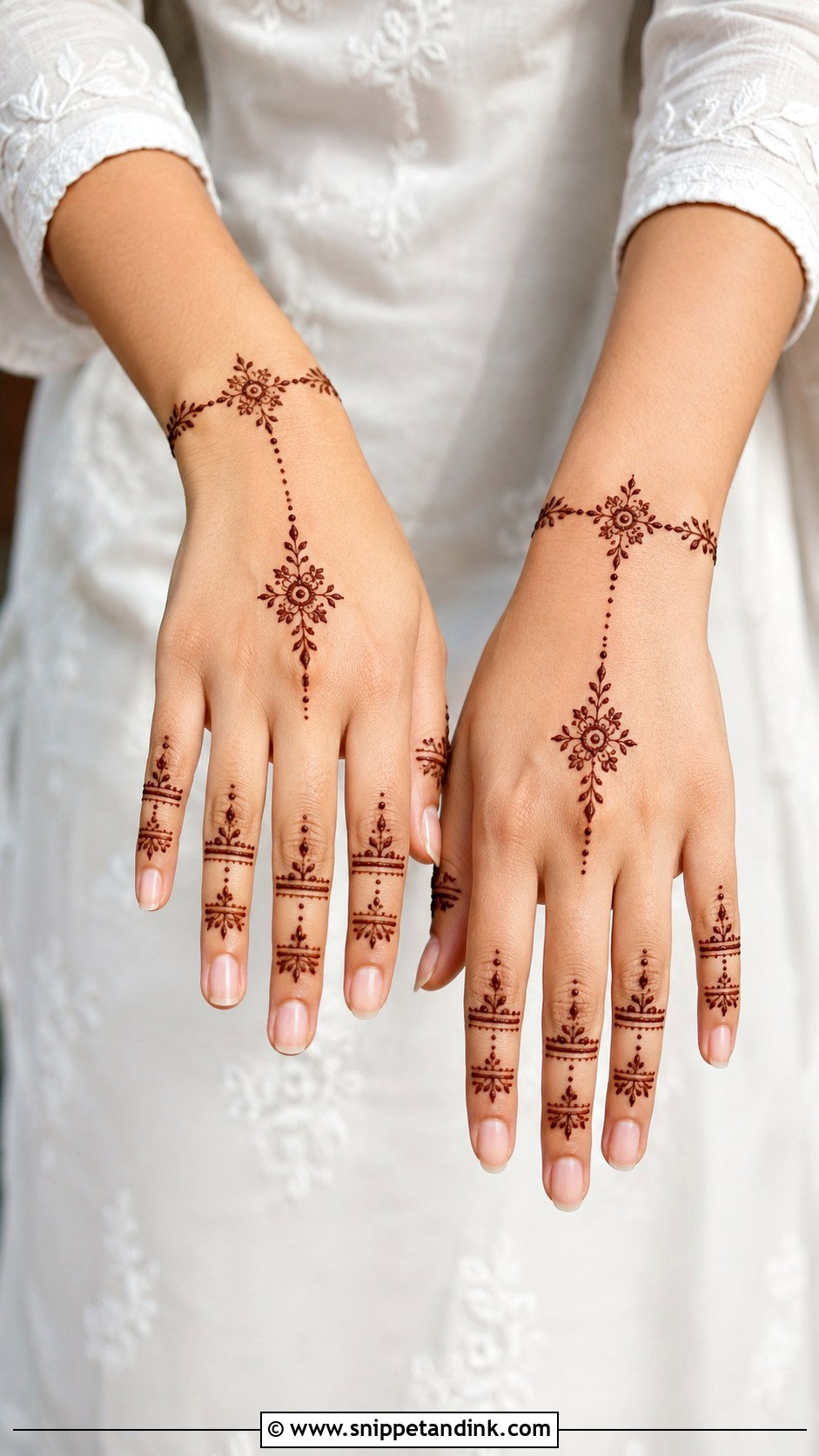
Rings and chains drawn in henna: small bands round each finger, dotted chains to a wrist bracelet and a light motif on the back hand. It frames real rings rather than hiding them, which suits engagements and minimal festive looks. Keep the central hand open. Bands drawn right on the knuckle crack as the fingers bend, so I place them just above or below the knuckle line.
34. Dubai Forearm Mehndi Design
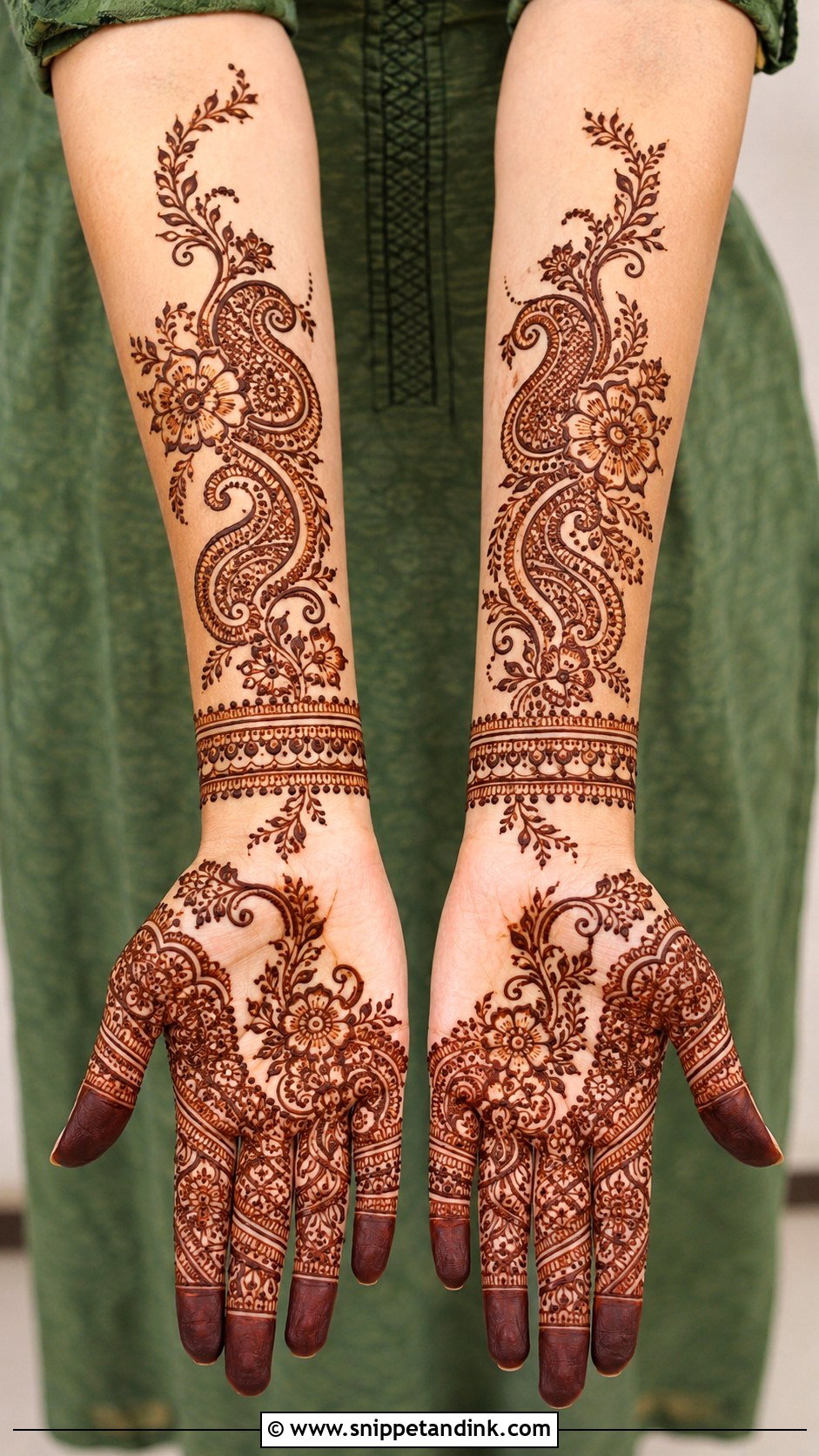
Extending past the wrist turns a hand design into something more dramatic: floral vines, paisley panels, bracelet bands and Arabic trails moving up the forearm for brides, bridesmaids and major functions. The forearm has room, so the design can feel grand without crowding the hand. The wrist transition is where it succeeds or fails; I design it as a band that both halves grow from, so it doesn’t look like two separate designs stitched together.
35. Dubai White Henna Design
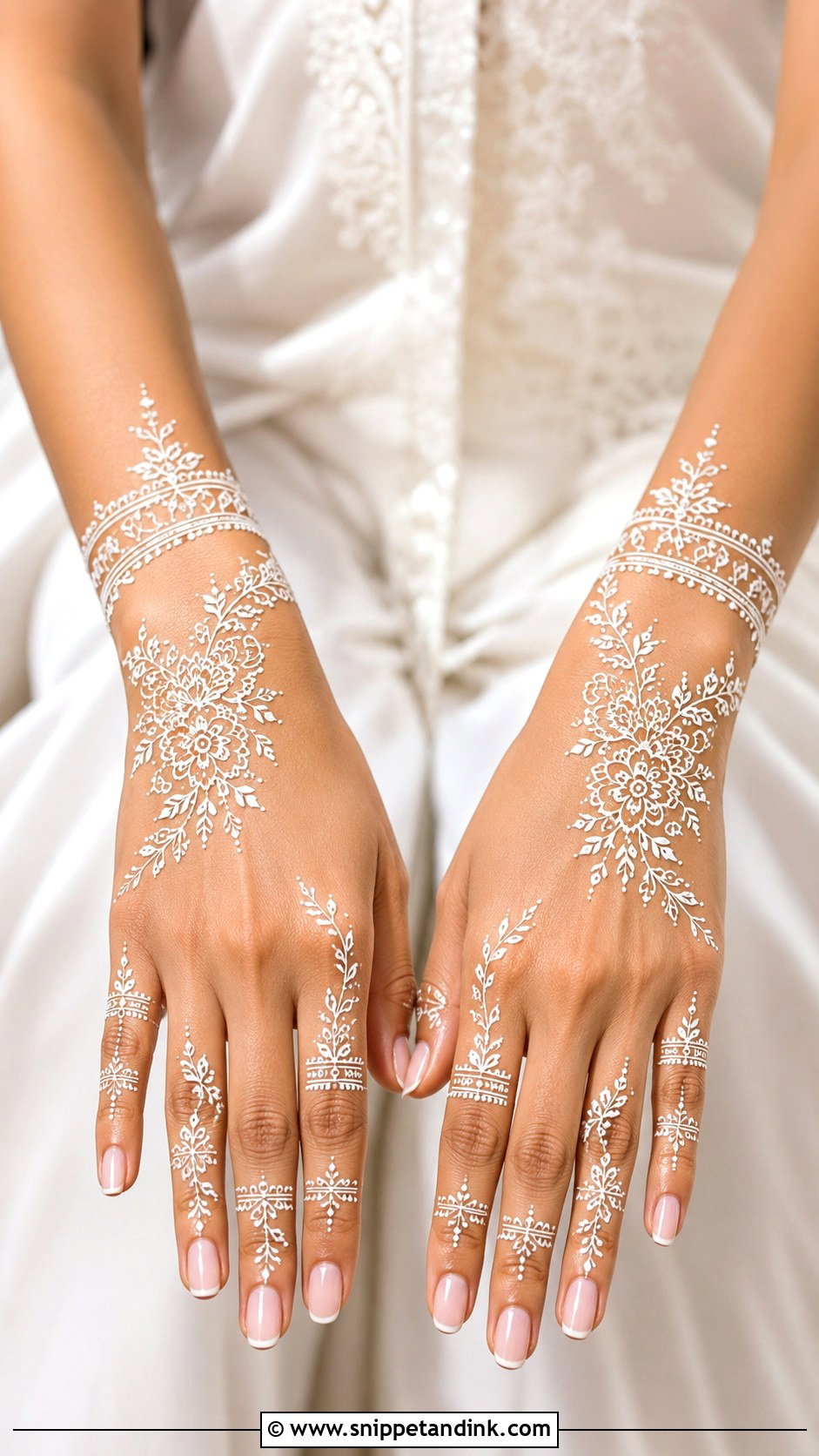
White henna isn’t henna. It’s a cosmetic body paint or adhesive that sits on top of the skin rather than staining it, so it’s best for photoshoots, parties and fashion events where you need it for hours, not days. Designs tend to be lace-like florals, finger bands and bracelet patterns, and they look striking on deeper and lighter skin alike. Keep it clean and airy, and keep it away from water and friction or it will start to peel and rub off.
Time in the Chair, From Finger Bands to Forearms
Every artist works at a different pace and every design is different, so these are rough ranges for planning, not promises. Dubai work is quicker than dense Indian work at the same coverage, because there’s less filling.
- Finger-only or a minimal back-hand trail: often around ten to twenty minutes per hand.
- Half hand or a medium party design: roughly twenty to forty minutes per hand.
- Full hands front and back for a guest: commonly one to two hours.
- Bridal hands, forearms and feet: usually several hours, sometimes most of a day for very detailed work.
Add drying time on top. You’ll want to sit still for a while after the last line, so for a bridal session, plan meals, phone charging and a bathroom break before we start rather than halfway through.
White Henna, Glitter and Jagua Are Different Products
Only natural henna stains the skin reddish brown. White henna is a skin-safe paint or adhesive that sits on the surface and lasts a day or so. Glitter designs are adhesive plus cosmetic glitter, lovely for a party evening and gone after a wash. Jagua comes from a fruit and stains blue-black for around a week or two; some people react to it, so I always patch test it first. If anything is sold as an instant black henna, refuse it. That’s not jagua, and it’s not henna either.
Bold Outlines, Open Skin and a Diagonal Flow
Dubai henna covers a wide range, from bold Khaleeji florals to a few lines on the fingers. Brides can go to royal full-hand coverage, guests to lighter trails, bracelets or mandalas, and Eid and party hands sit comfortably in between. What holds every version together is the same craft: clean spacing, a smooth diagonal flow and outlines confident enough to read from across the room. Bring a reference for the coverage you want and tell me the occasion, and I can scale the design to suit you.
You'll Like These Ideas:






Leave a Reply