
Children want something they can recognize. A butterfly, a moon, a heart or a star will thrill a six-year-old far more than the dense paisley work their aunt is wearing. They also have about as much patience as the minutes it takes the paste to dry, so in kids’ henna the design and the speed matter equally. I draw these with plain natural henna, which stains a reddish brown, and I never use so-called black henna on a child. Below are the designs I reach for at Eid, Diwali, weddings and birthdays, from a two-minute fingertip pattern to a fuller hand for older children who can sit still.
Getting a Wriggly Child Through the Sitting
Most smudged children’s henna is ruined in the ten minutes after I finish, not during the drawing. So the setup matters. I like children fed, to have been to the bathroom, and settled with a cartoon or a story before I start. A child who suddenly needs the toilet with wet paste on both hands is how most disasters begin.
- Toddlers: one hand only, ideally the back of the hand, and a design that takes moments.
- Ages four to seven: a short design they can watch, with a promise of the second hand if the first goes well.
- Ages eight and up: most can manage both hands and a fuller design, especially with a parent holding the plate or the phone.
- Do the non-dominant hand first, then the writing hand last, so it is wet for the shortest time.
Skip the sticky lemon and sugar sealant on very young children. It glues the paste to their sleeves, hair and siblings. Instead, once the paste is dry, I wrap the hand loosely in tissue or slip on a clean cotton sock for the car journey home, and let the paste flake off on its own or be scraped away before bed.
1. Simple Front Hand Mehndi for Kids
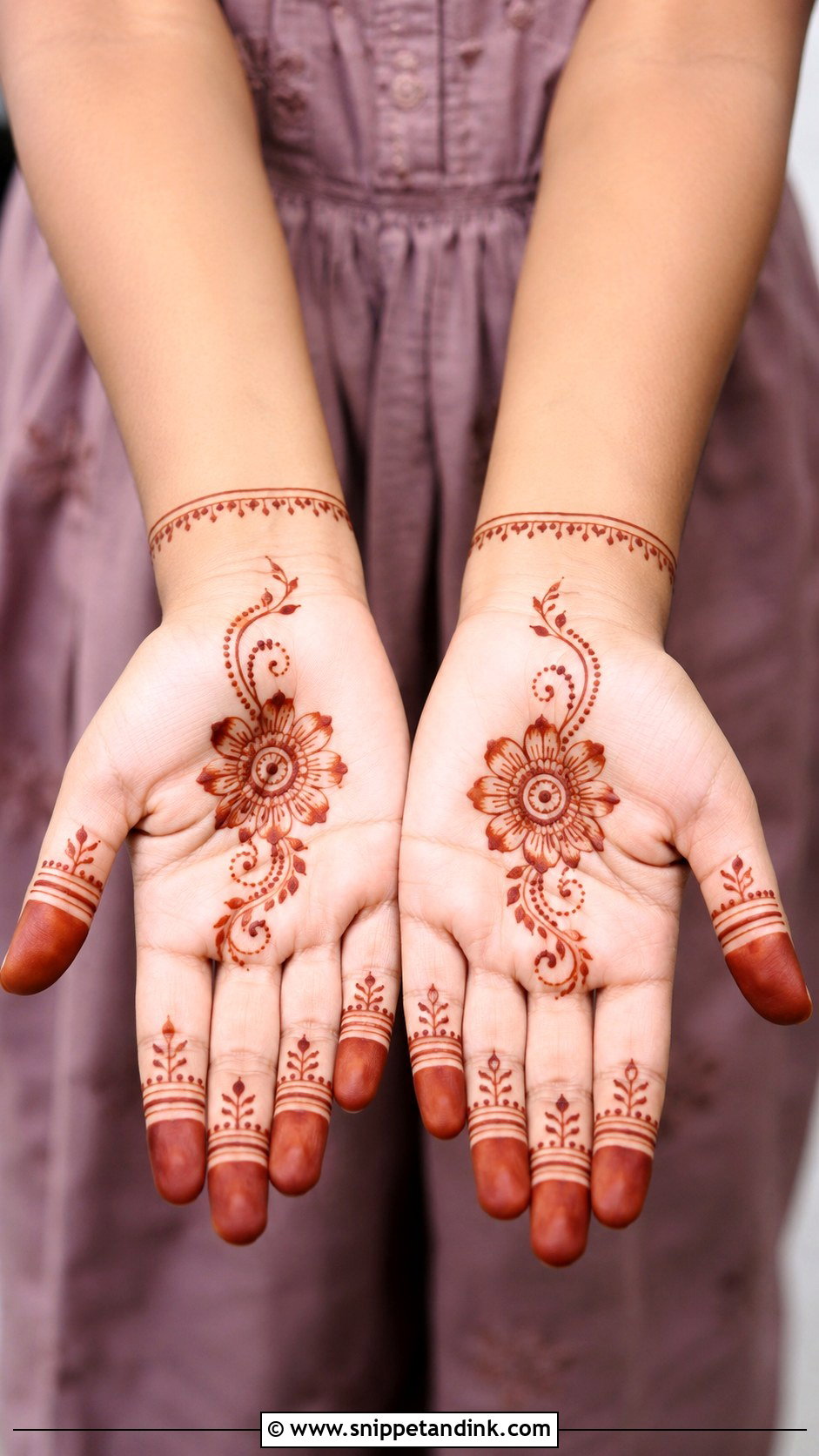
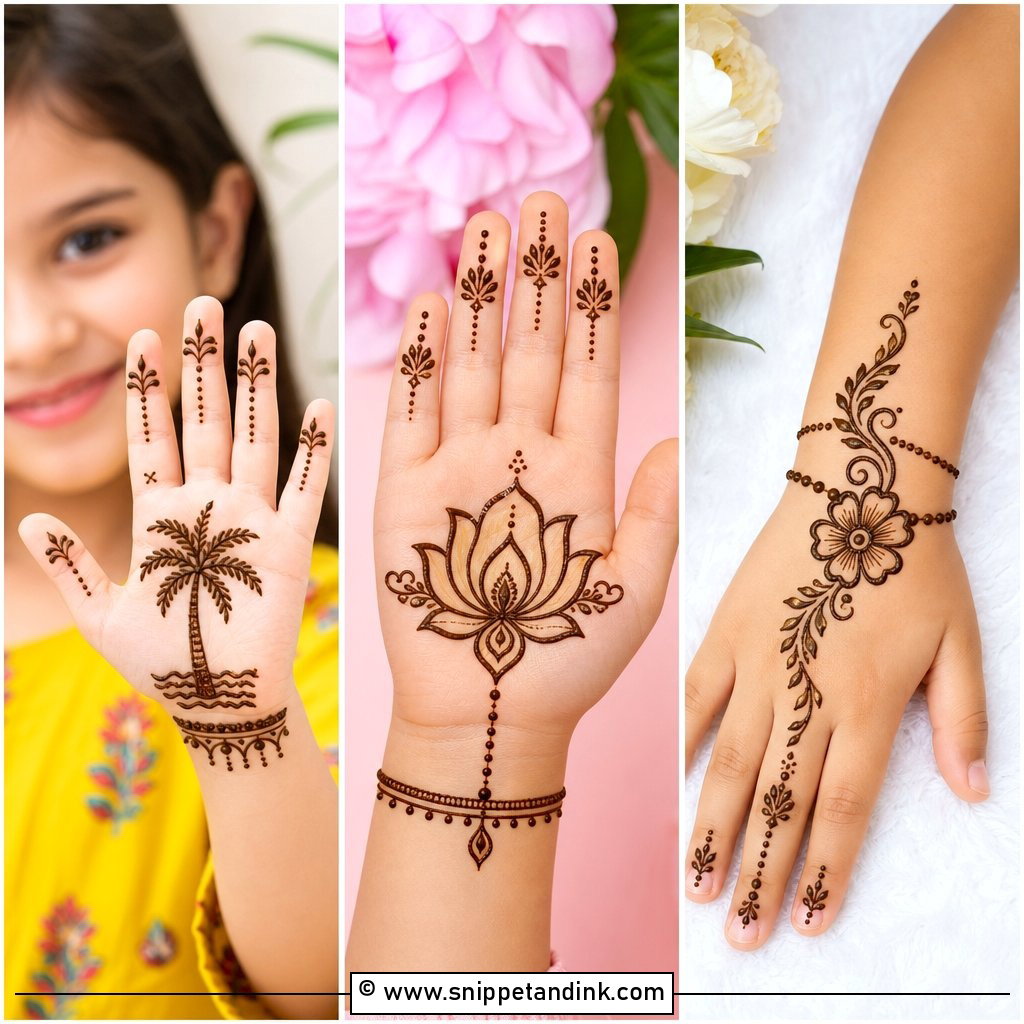
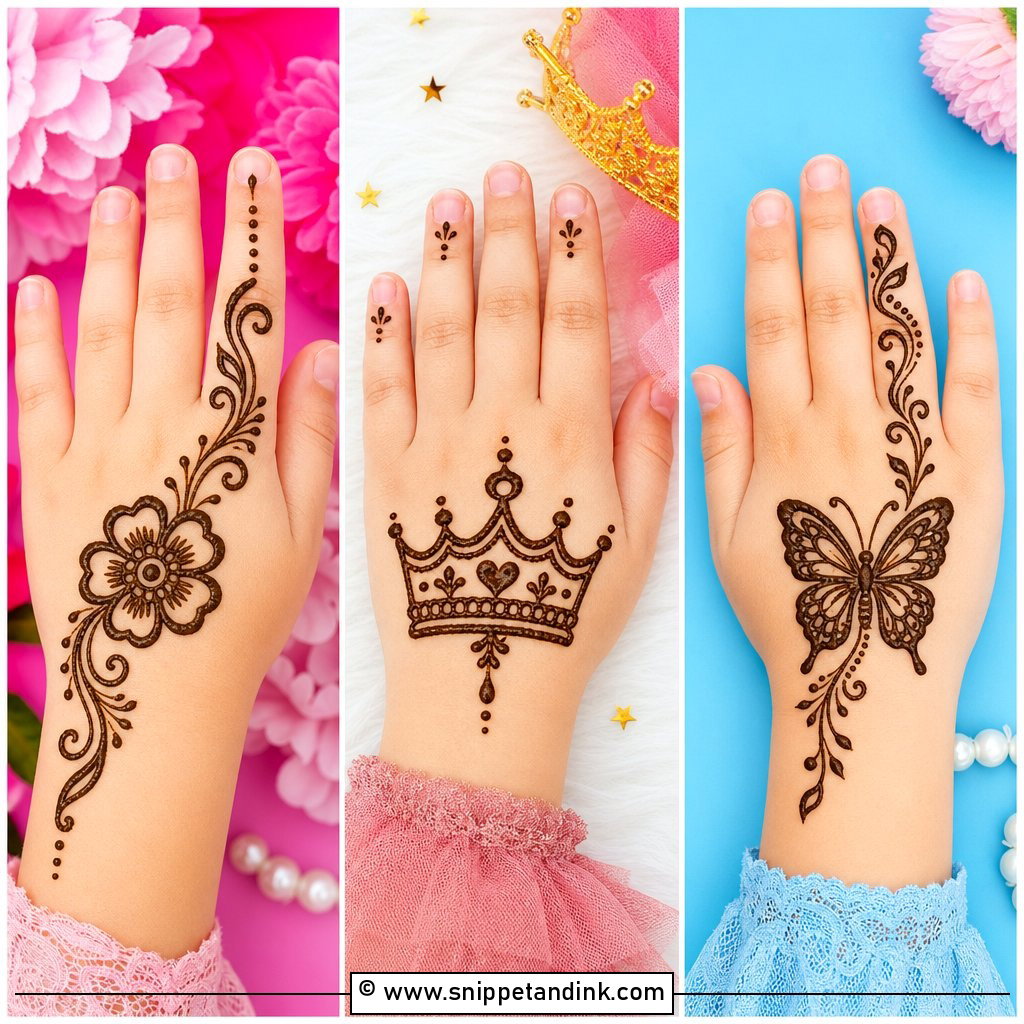
This is my starting point for most children: a simple front hand mehndi design built around one small flower, round tikki or heart in the middle of the palm. A few dots, tiny leaves and short curves run toward the fingers, the fingertips get small caps or petal shapes, and a thin band closes the wrist. It takes very little time. Because the palm stains darkest, even this small design shows up well the next day, and it is easy enough for a parent to try at home.
2. Back Hand Flower Mehndi for Kids
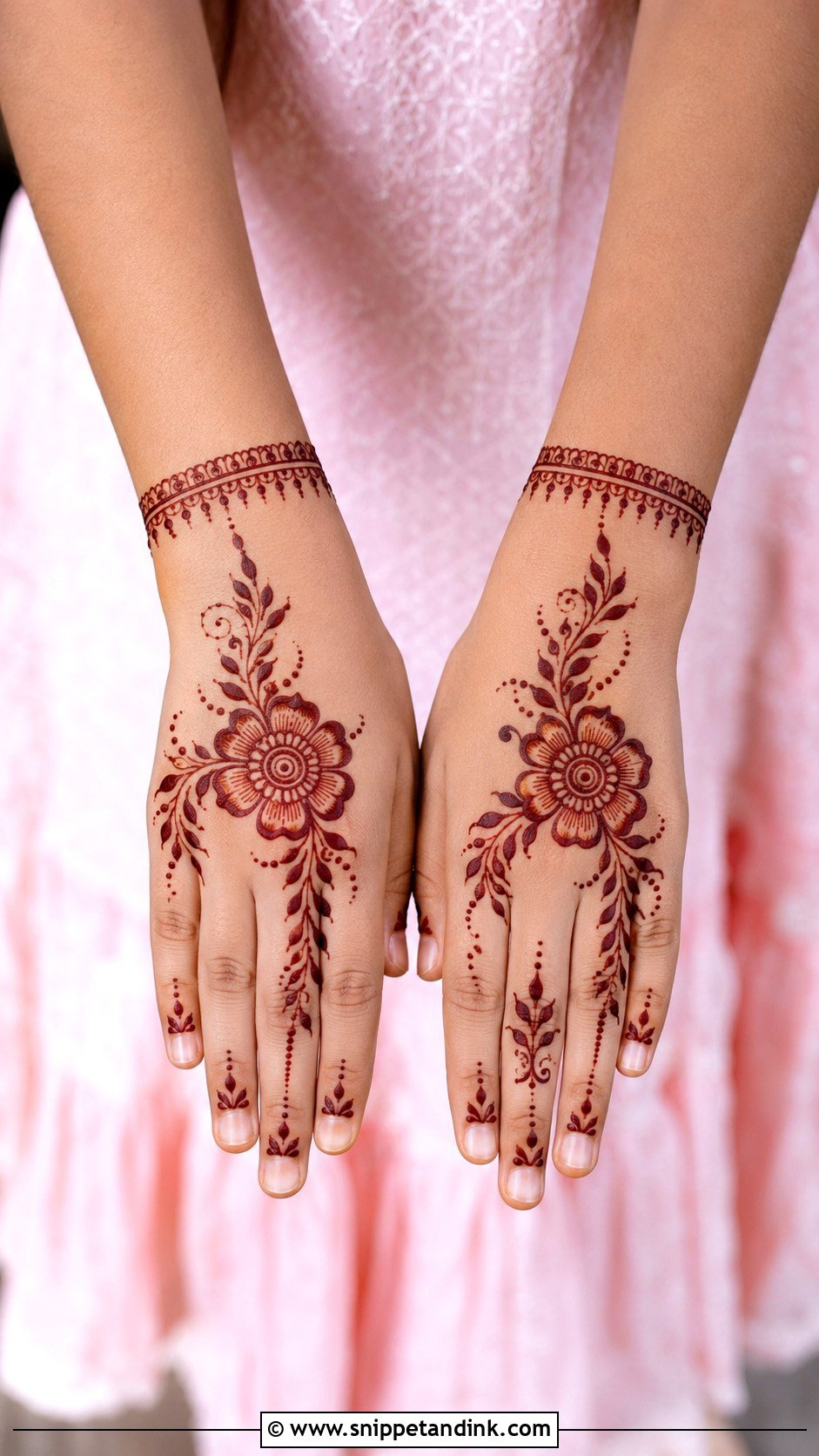
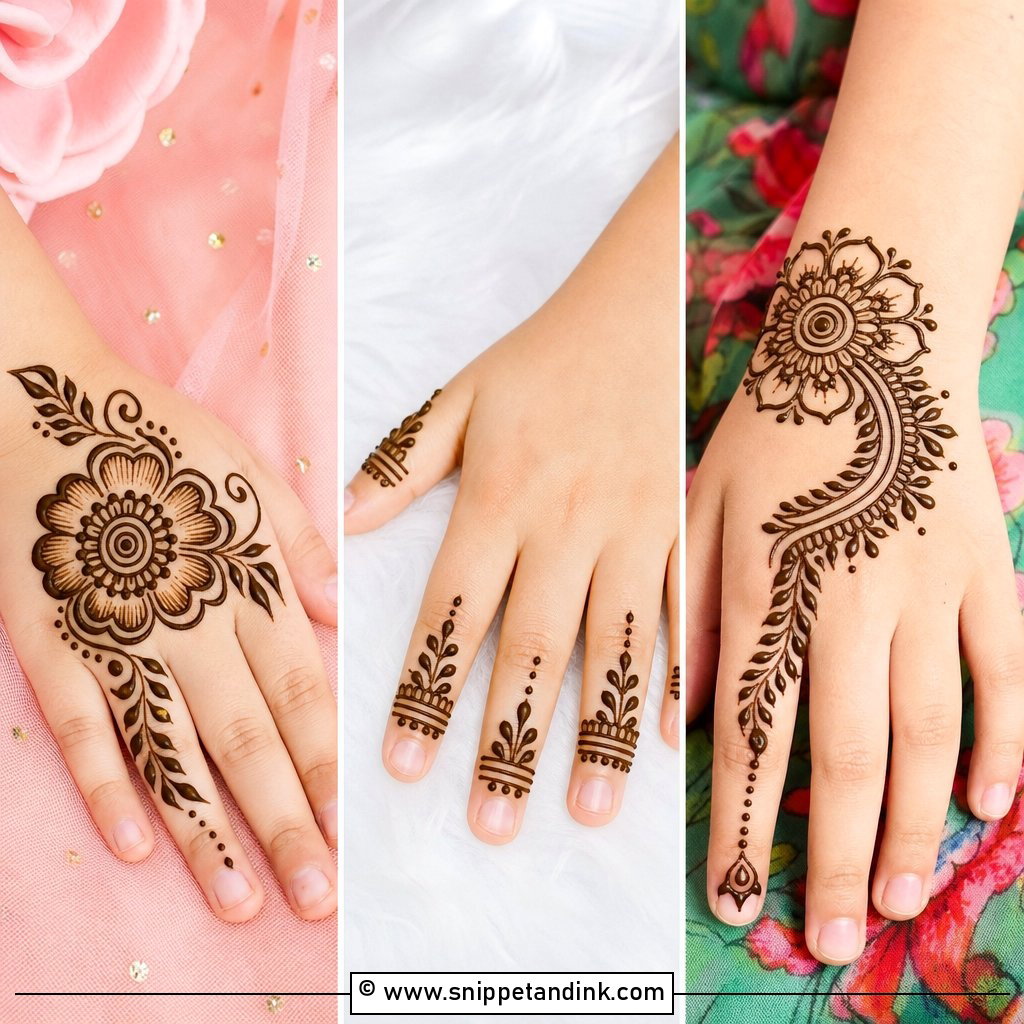
On the back of the hand, the child can actually see and admire it, which matters more than you would think. One medium flower near the middle, tiny leaves and dots spreading toward the fingers, small petals at the tips and ring lines at the knuckles, then a narrow leafy bracelet. I keep the fingers light so it does not look grown-up. Open spacing also helps, because a child who swings their arms at a party will brush against something within minutes, and a sparse design survives that contact far better.
3. Butterfly Mehndi Design for Kids
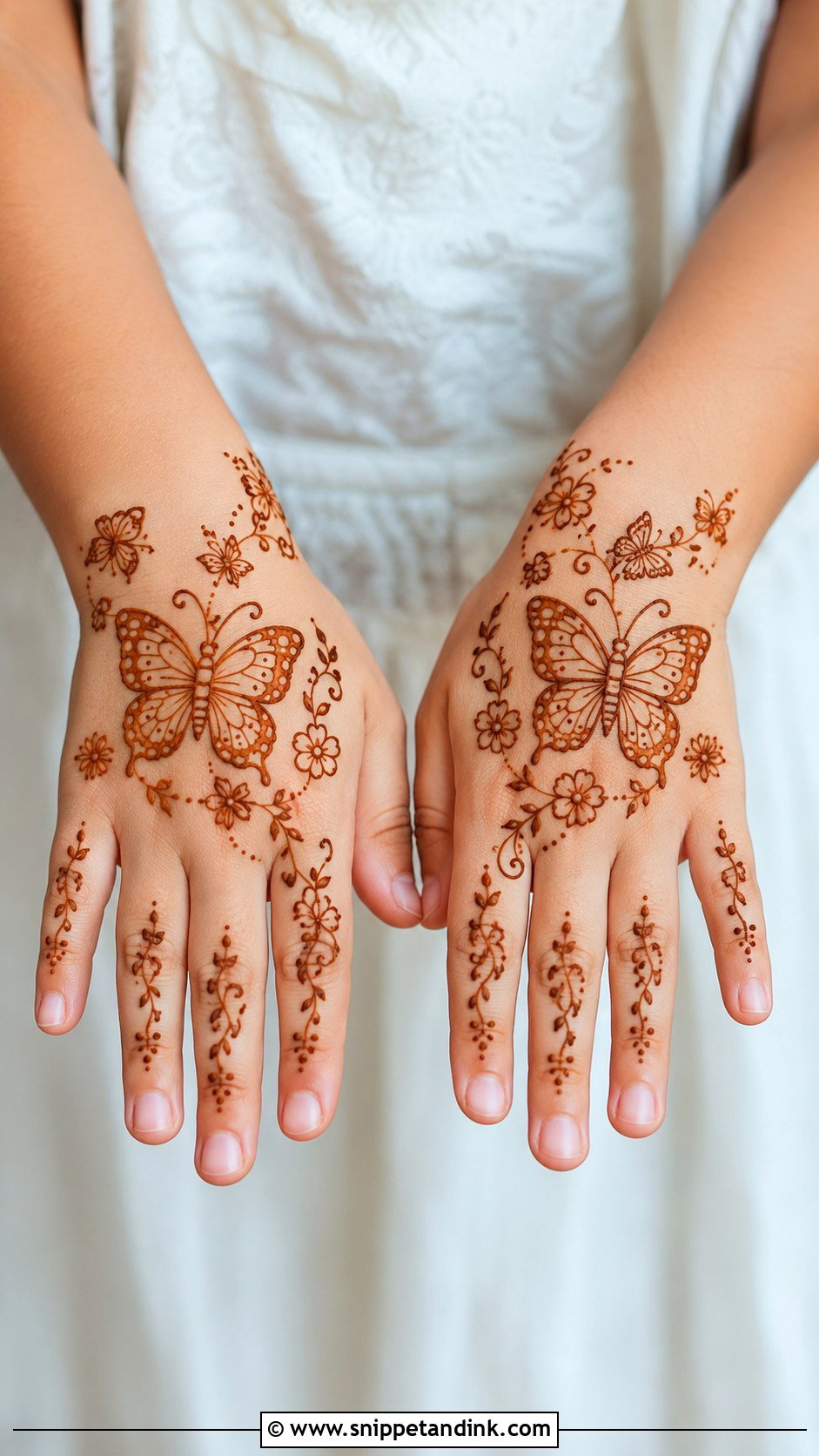
Children light up at a butterfly. I put it on the back of the hand with both wings spread across the middle, using rounded wing outlines and filling each wing with a few dots and tiny curls. The trap is over-filling the wings; once the stain comes in, too much detail inside small wings turns into a brown blob and you lose the butterfly. Little dotted trails on the fingers and a wrist curve with a couple of buds finish it.
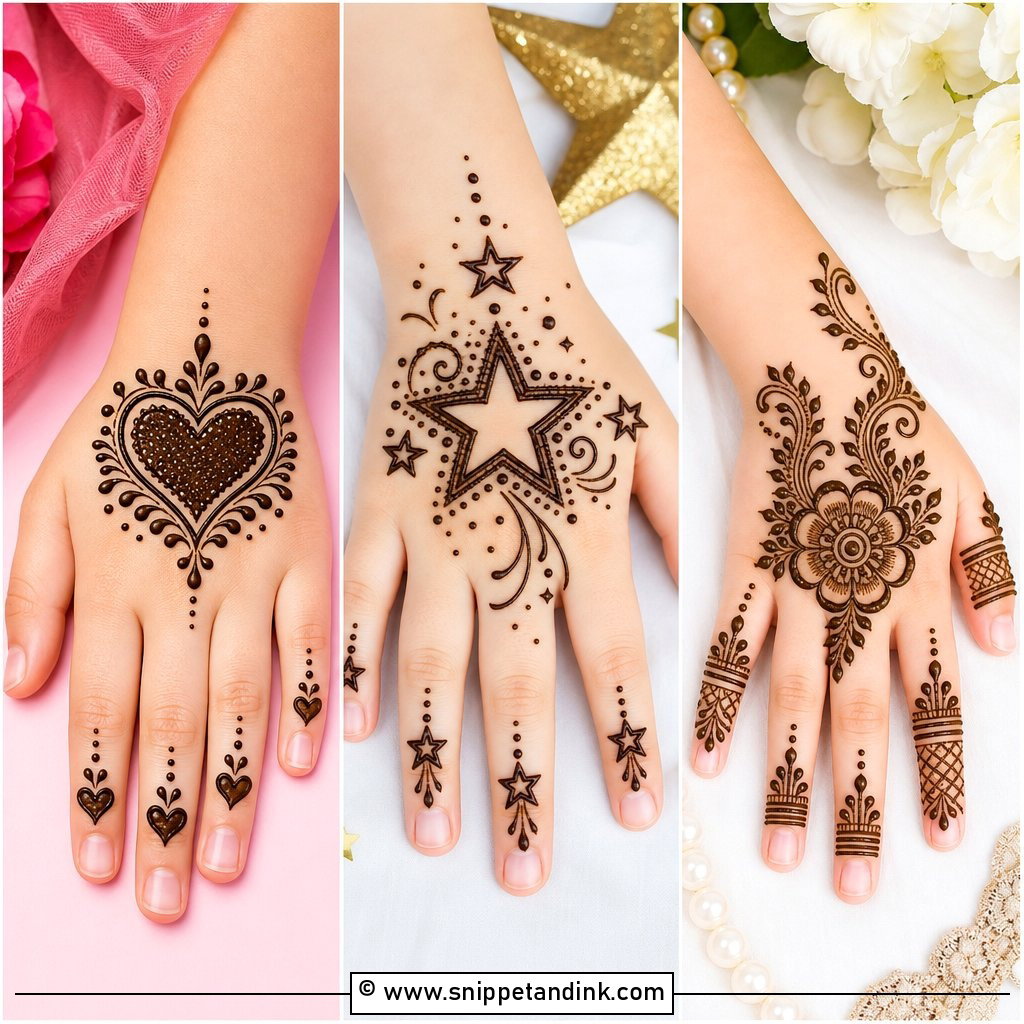
4. Heart Mehndi Design for Kids
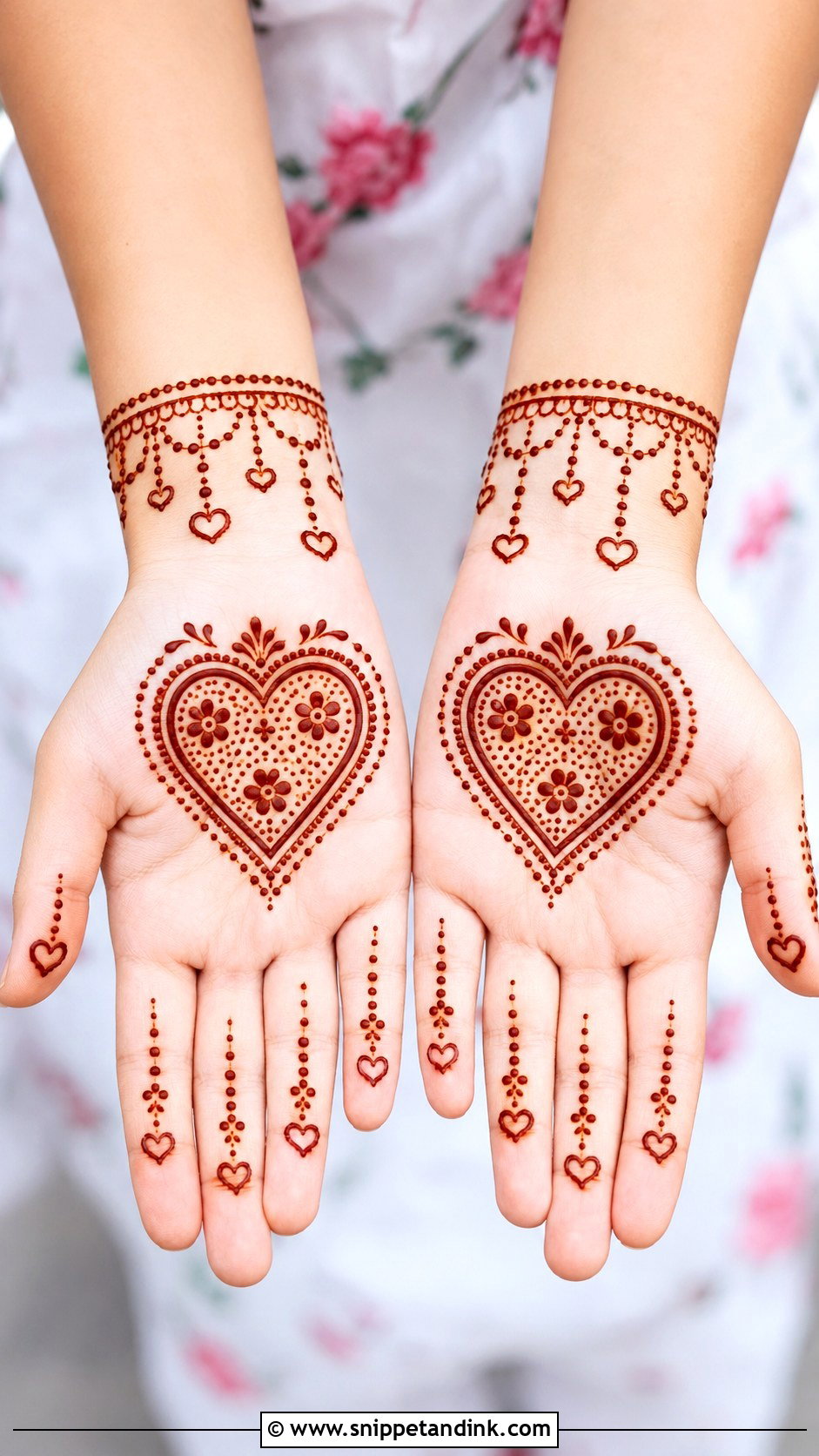
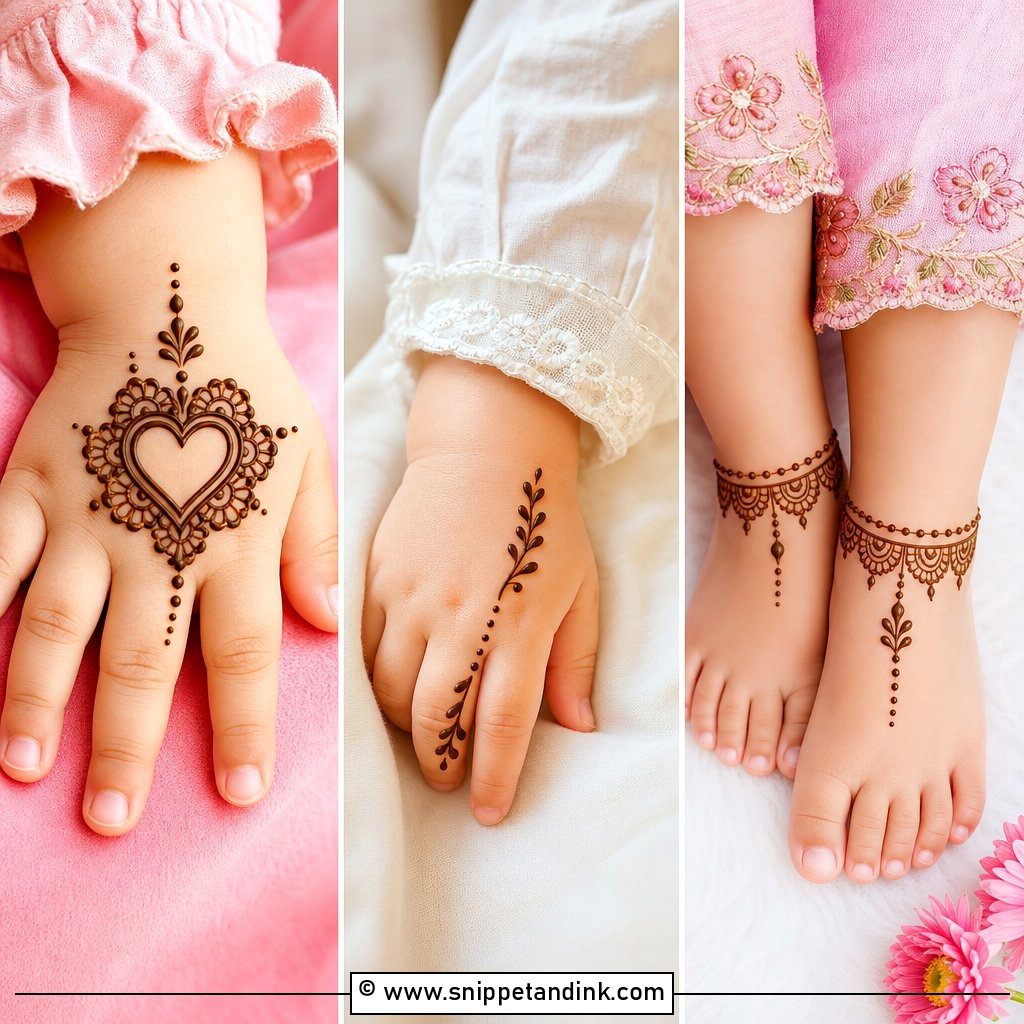
Hearts are probably the most requested shape at my children’s table. One outlined heart sits on the palm or the back of the hand, filled with a few dots or a tiny flower, with smaller hearts on the fingers joined by dotted chains. A wrist band with little hanging hearts makes it feel finished. Draw the outline with a slightly heavier hand than you would for an adult; a thin heart outline on a small hand fades into a smudge after a day of washing.
5. Star Mehndi Design for Kids
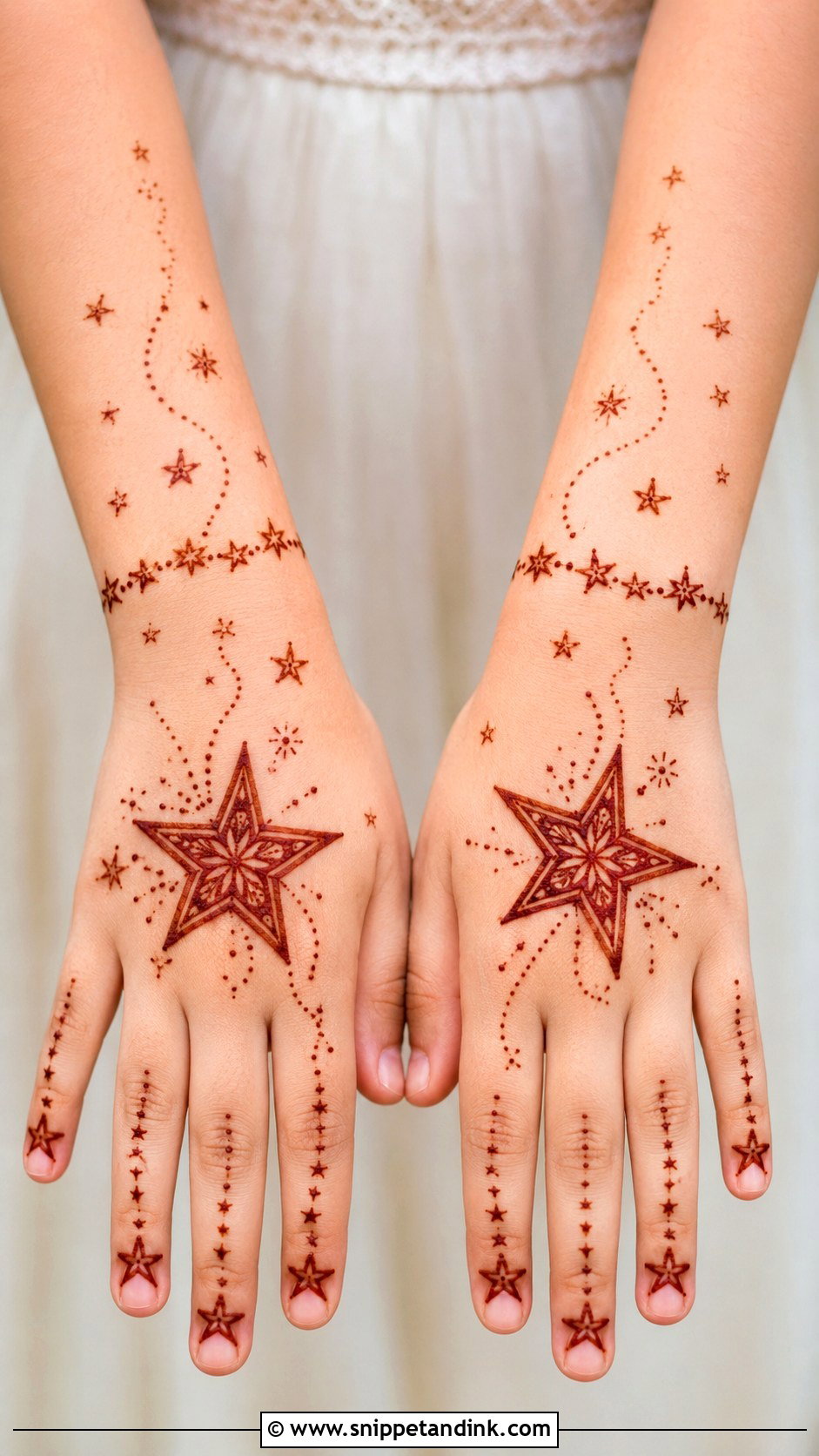
Stars are the easiest shape to adapt to any hand size. One large star goes in the center of the palm or back of the hand, smaller ones scatter around it, and dotted trails and tiny spark lines tie them together. Mini stars at the fingertips with bands underneath, and a thin wrist line with a few dangling star charms, complete the hand. There is no heavy filling at all, so it dries quickly, which is exactly why I use it on the smallest hands at a busy event.
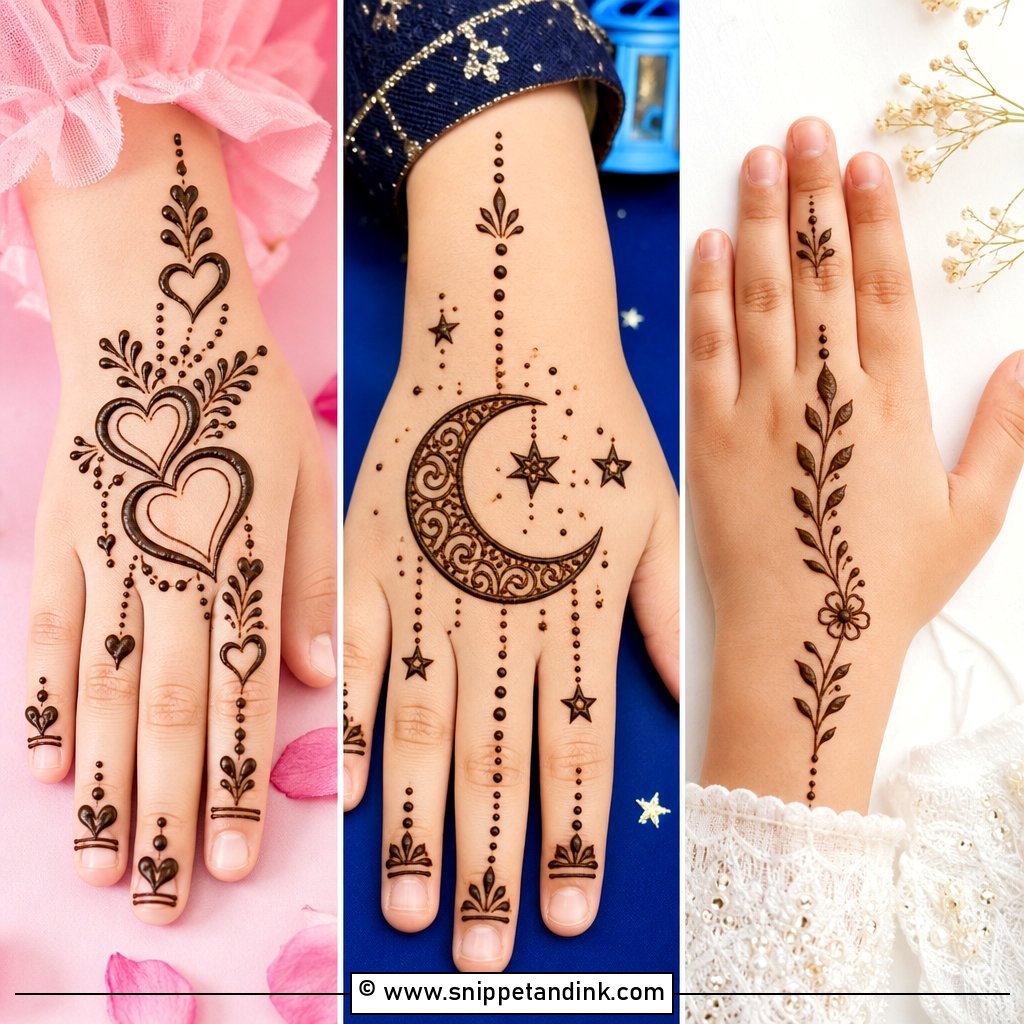
6. Moon Mehndi Design for Kids
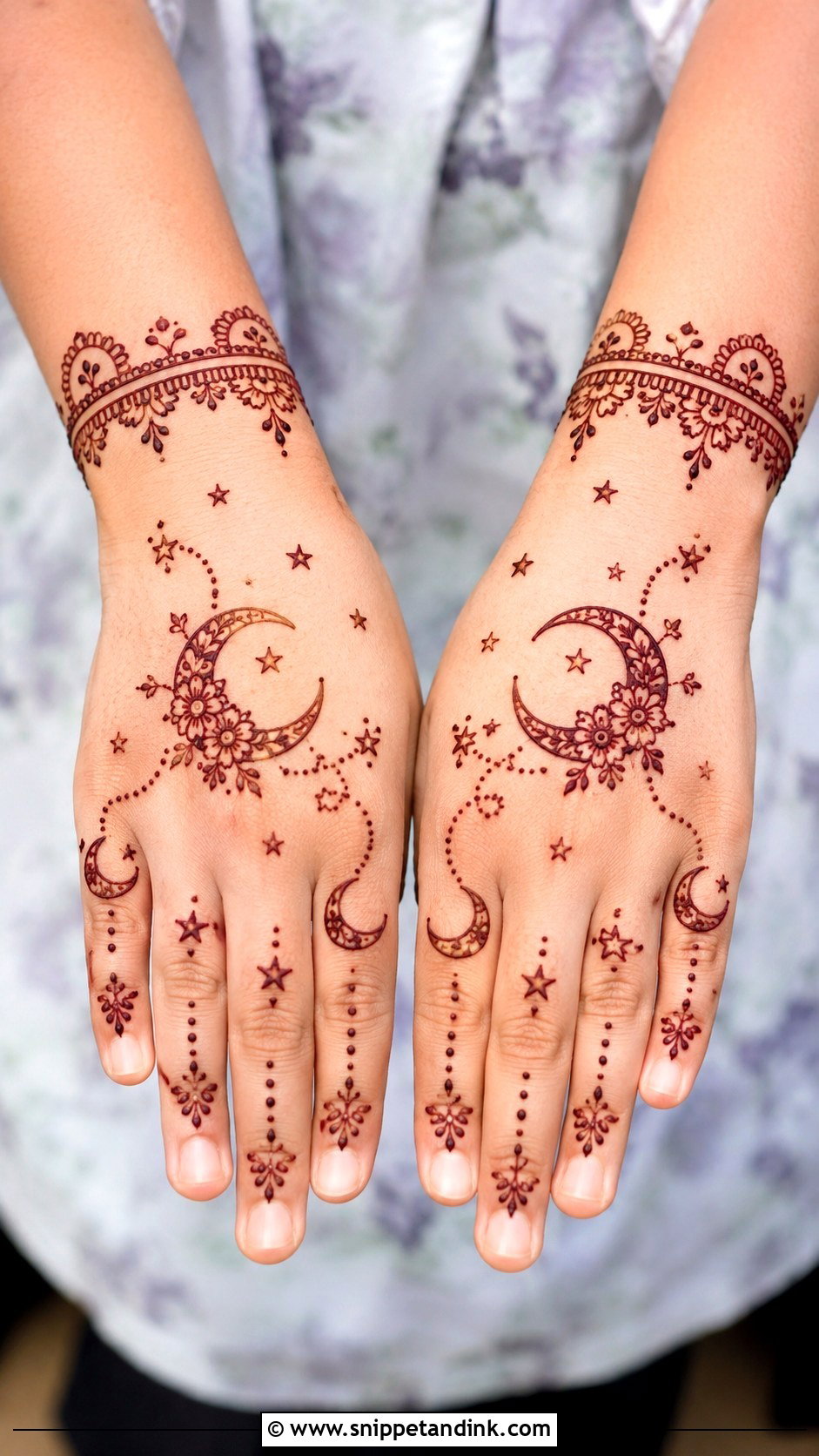
A crescent moon reads instantly as Eid, and it suits evening celebrations. I place it on the back of the hand or in the palm with small stars, dots and a little floral detail around it, then keep the fingers to dotted lines and tiny crescent tips. The moon needs open space around it to stand out. For younger children I draw a bigger crescent with fewer extras; older children can take a little jaali or leafy filling around the edge.
7. Arabic Mehndi Design for Kids
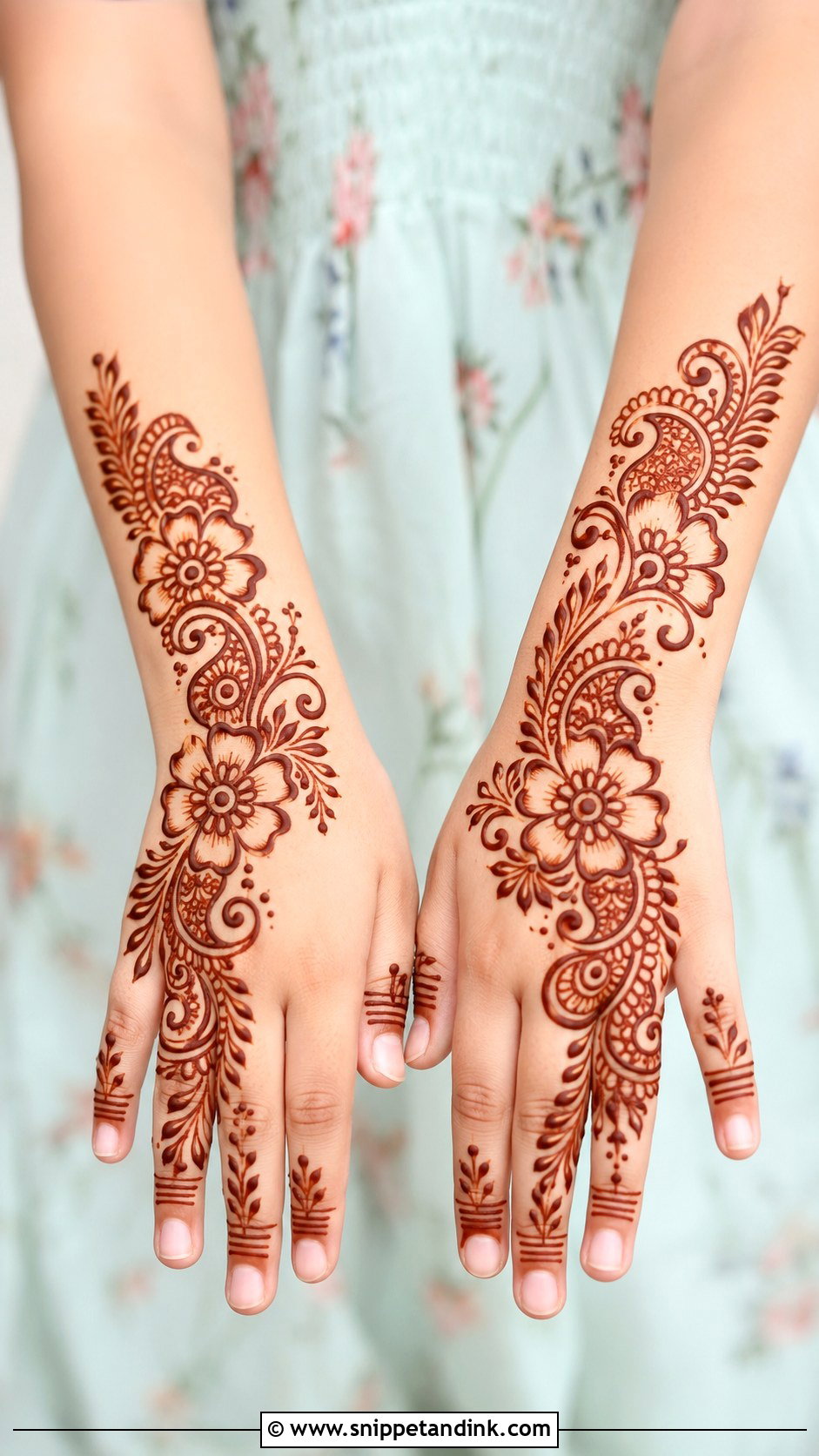
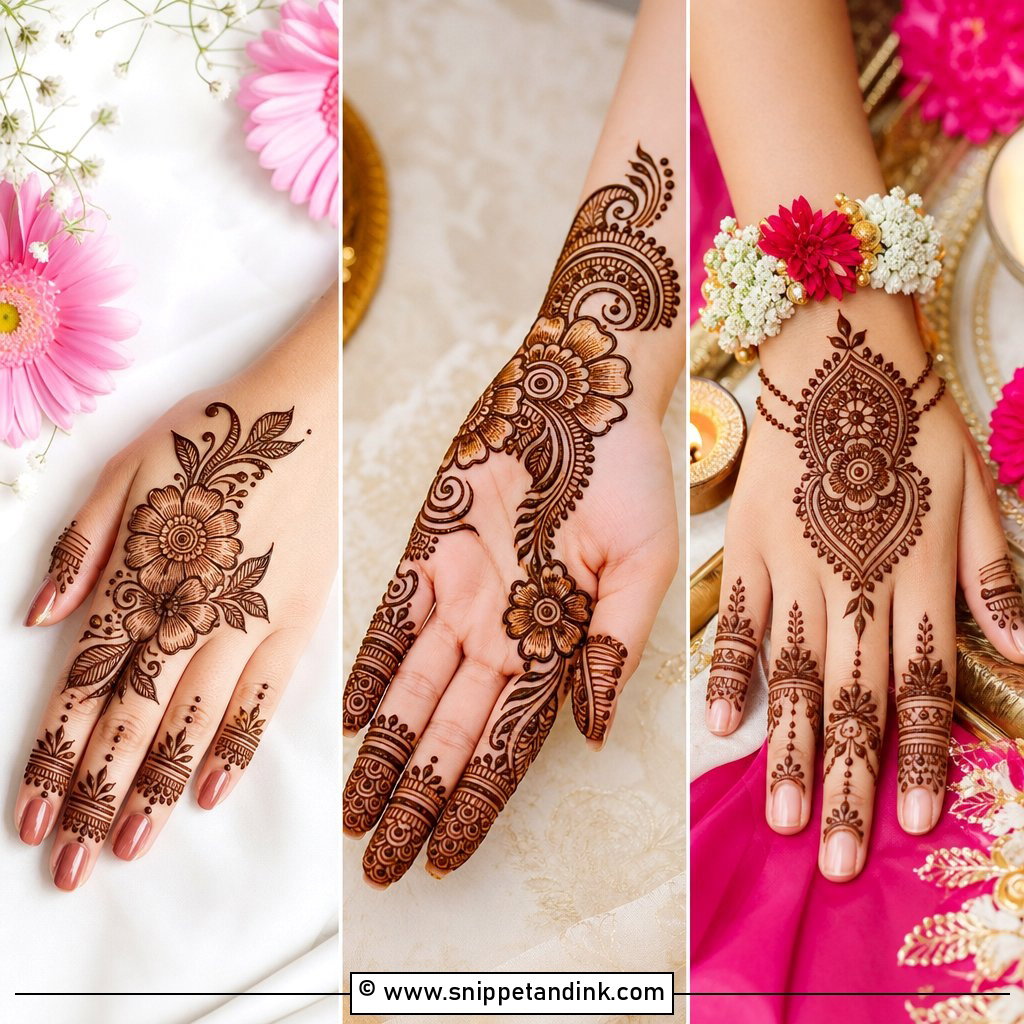
Arabic work for a child should be noticeably lighter than the adult version. I run a diagonal floral trail from one side of the wrist to the opposite finger, with bold flowers, curved leaves and a couple of small paisleys, and leave real gaps between them. Fingertips get simple lines or tiny leaves. It looks generous from a distance while covering only a fraction of the hand. That means less wet paste, a shorter drying time, and fewer tears from a child who wants to go and play.
8. Indo-Arabic Mehndi for Kids
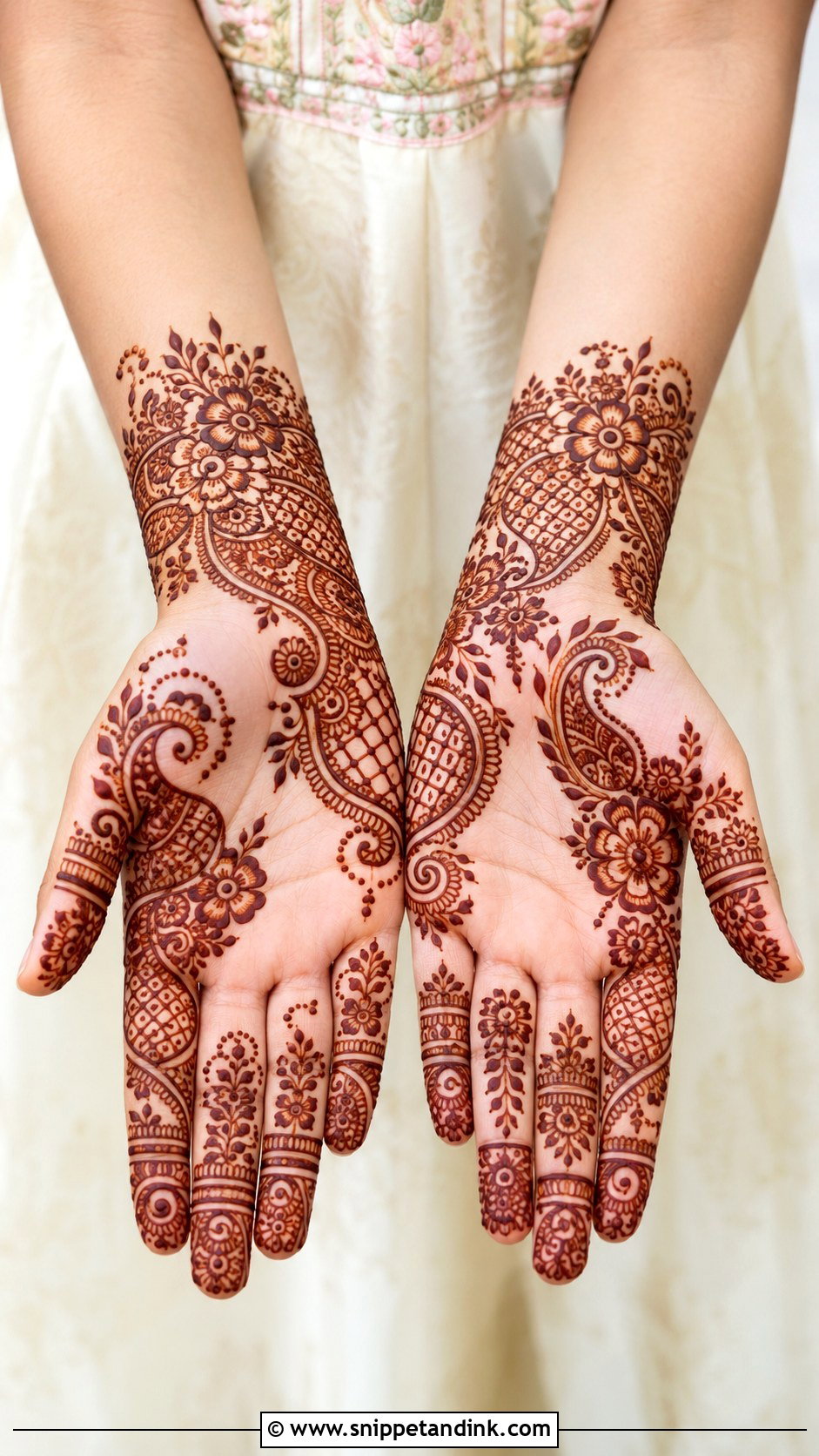
Indo-Arabic mixes the Arabic flow with smaller Indian details, so I save it for older children who can sit a bit longer. A curved vine crosses the palm or the back of the hand, with simple paisleys, flower clusters, dots and one small net section along it, and the fingers get mixed bands and dotted tips. A floral wrist cuff completes it. Keep the motifs large; fine Indian filling on a small hand gets crowded fast, and children’s skin is smaller canvas than people expect.
9. Mandala Mehndi Design for Kids
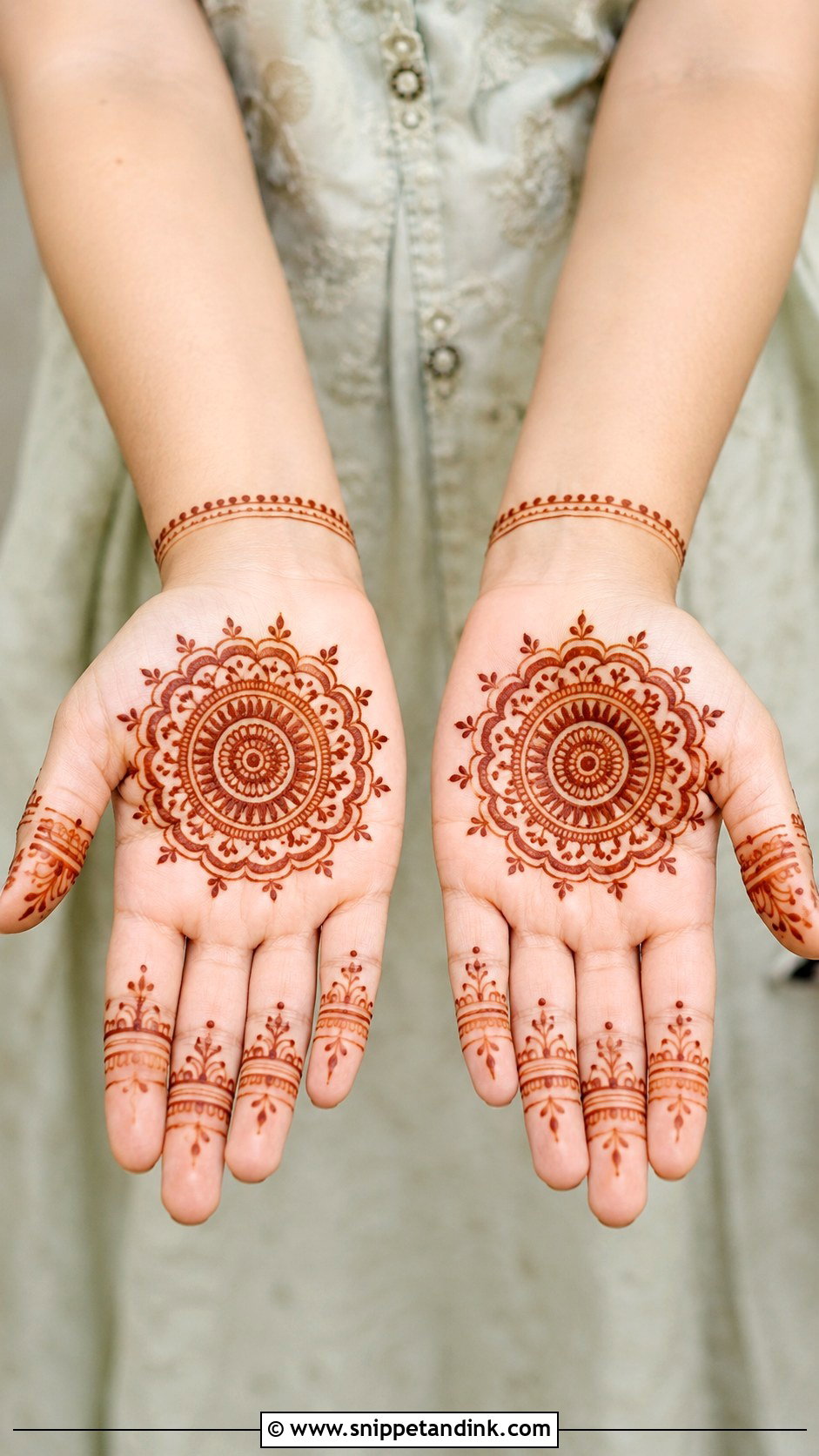
Mandalas suit children of every age because they scale so easily. A round mandala in the middle of the palm or back of the hand, built from simple rings, petals, dots and scallops instead of fine detail, with tiny finger bands and fingertip dots. Add a thin bracelet if you want more. I sketch the center ring as dots first so it stays round even if the child wriggles mid-line, and only then draw the outline.
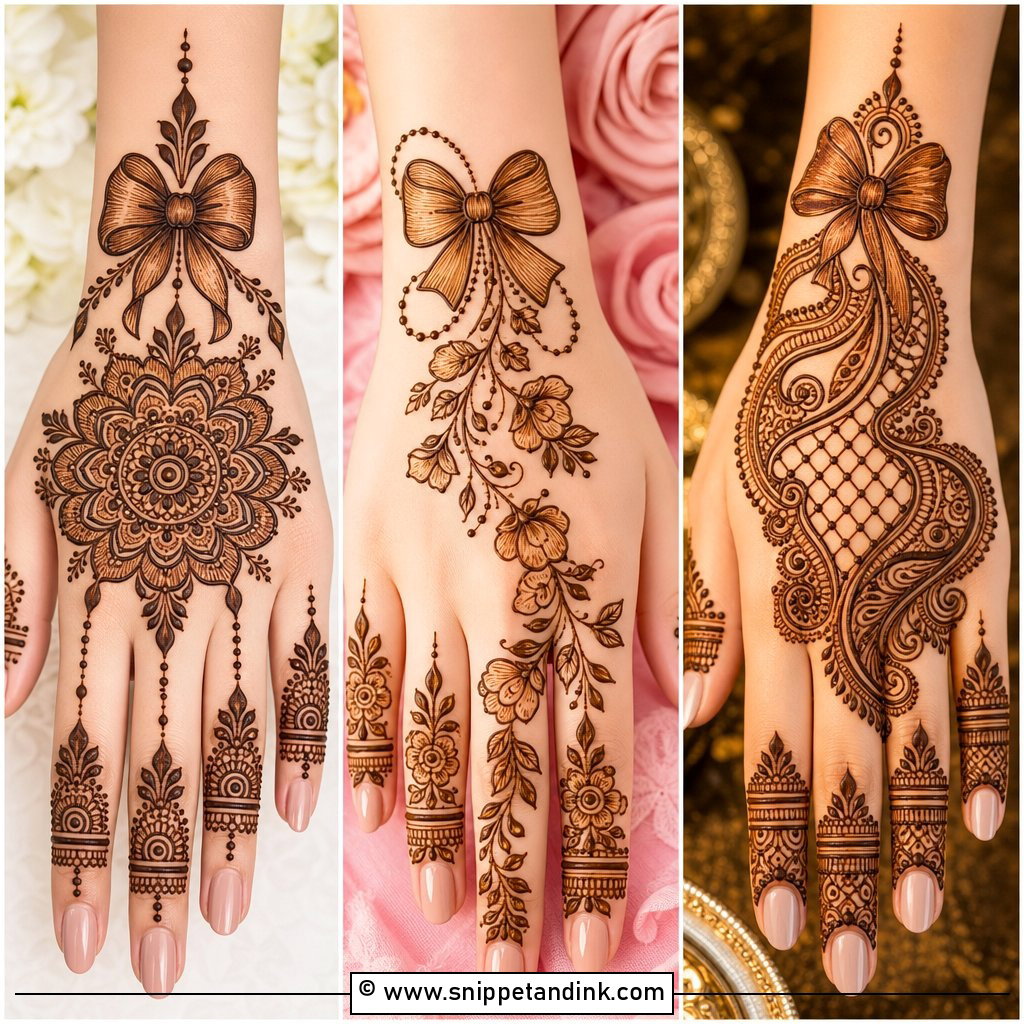
10. Cartoon Mehndi Design for Kids
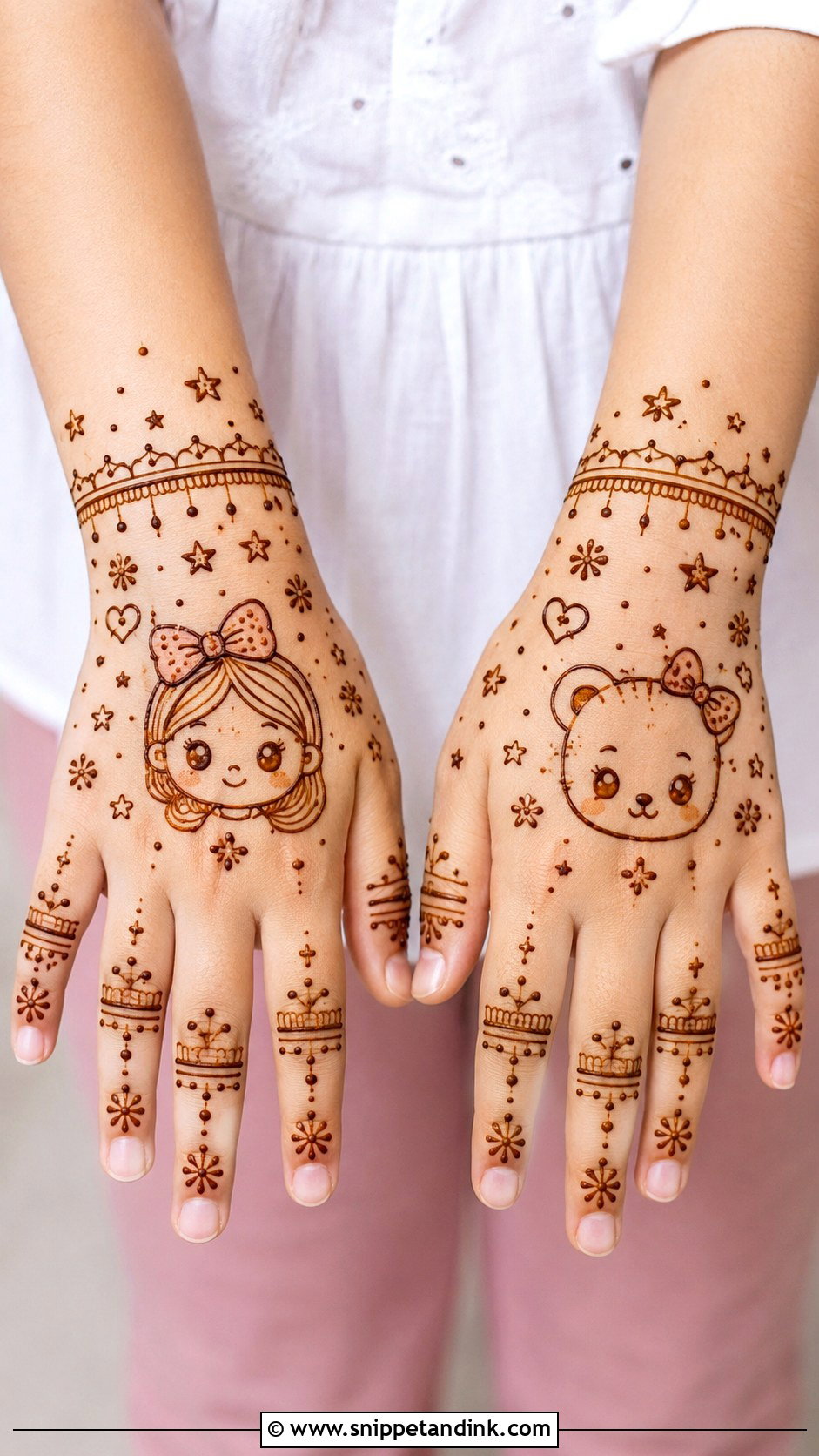
A cartoon mehndi design works only when the shape is bold and simple: one face, a bow, an animal or a character-style silhouette on the back of the hand or the palm. I skip the tiny facial details, because eyes and mouths drawn too small close up as the paste swells. Stars, hearts and dots around the main figure turn it into a fuller design, and the fingers can carry little rings or matching mini motifs. Birthday parties are where I get asked for this most.
11. Animal Mehndi Design for Kids
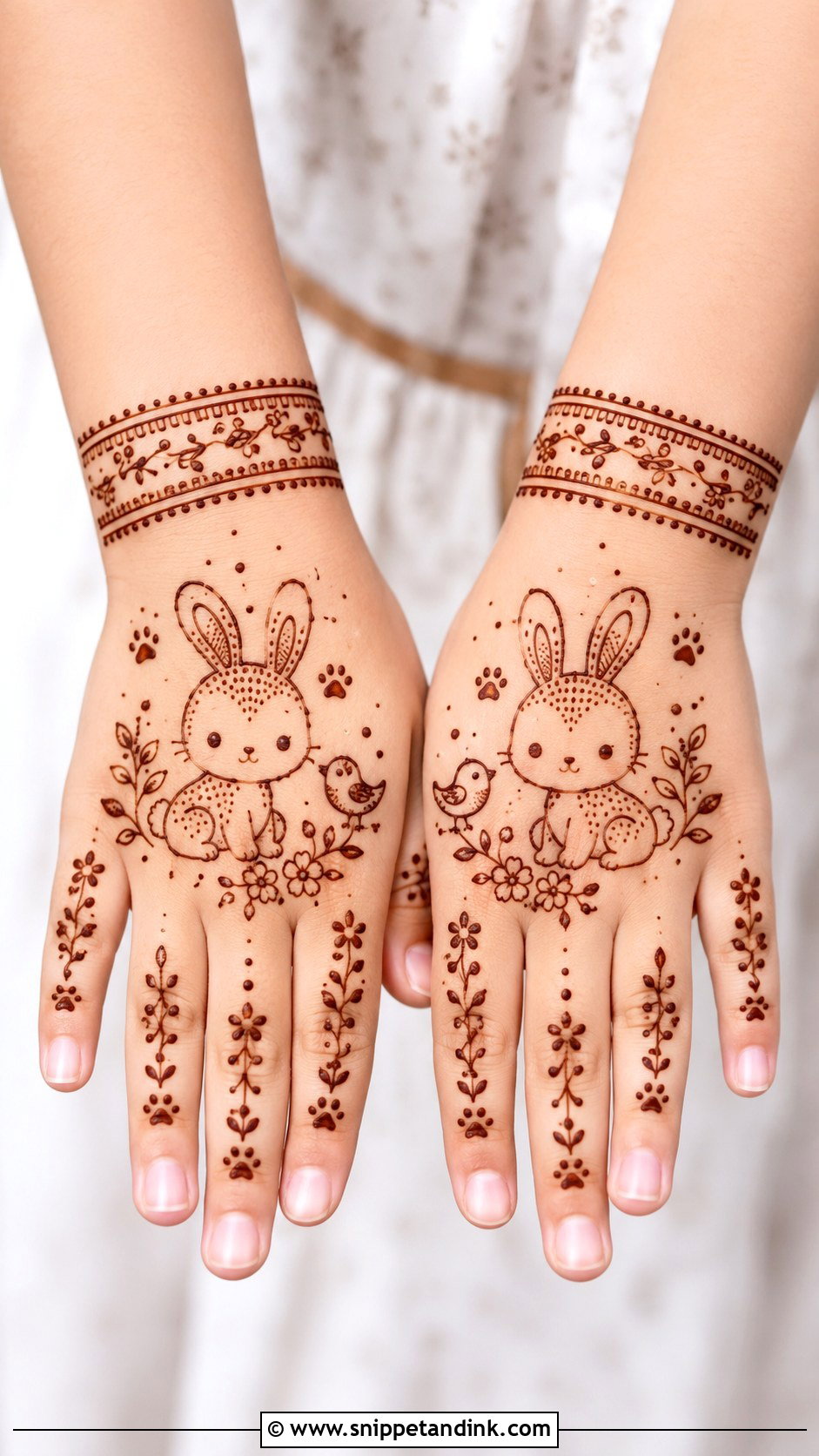
Animals connect with younger children instantly. A small cat, bunny, bird, elephant or fish sits on the back of the hand, surrounded by leaves, dots and tiny hearts, with paw prints or leafy trails on the fingers. Keep the body rounded and simple. I draw the animal as one continuous outline where I can, since a child pulling their hand away halfway through leaves a gap that is hard to hide in a broken outline.
12. Peacock Mehndi Design for Kids
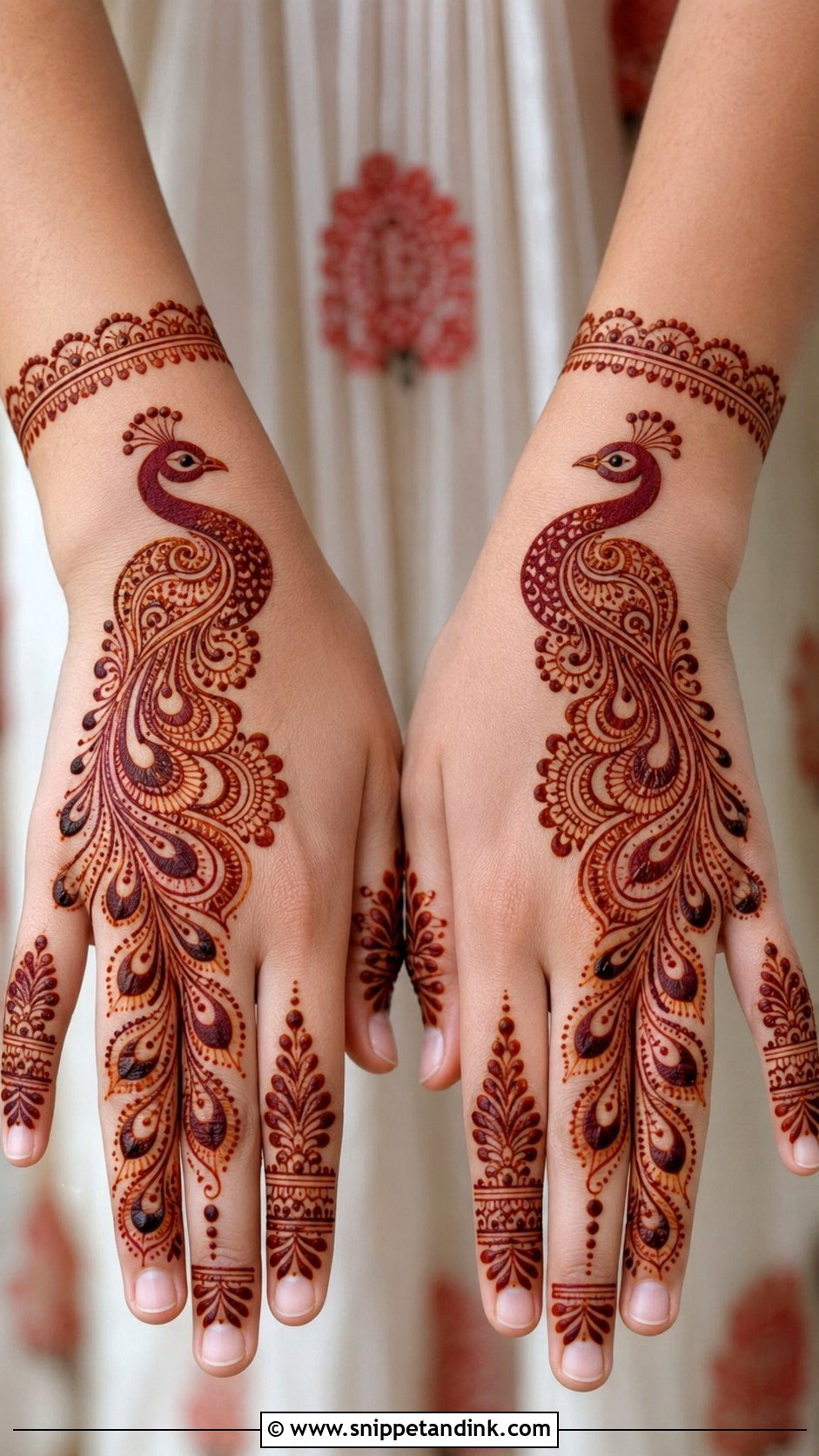
A small peacock gives children a traditional look without bridal density. I place it on the back of the hand or along the side of the palm and curve the tail toward the fingers, using simple feather drops, dots and small paisleys rather than heavy filling. Light leafy trails on the fingers and a slim dotted or scalloped wrist border finish it. The face and the feathers need bold lines so the bird is still recognizable once the color settles. It suits weddings, Diwali and family functions well.
13. Paisley Mehndi Design for Kids
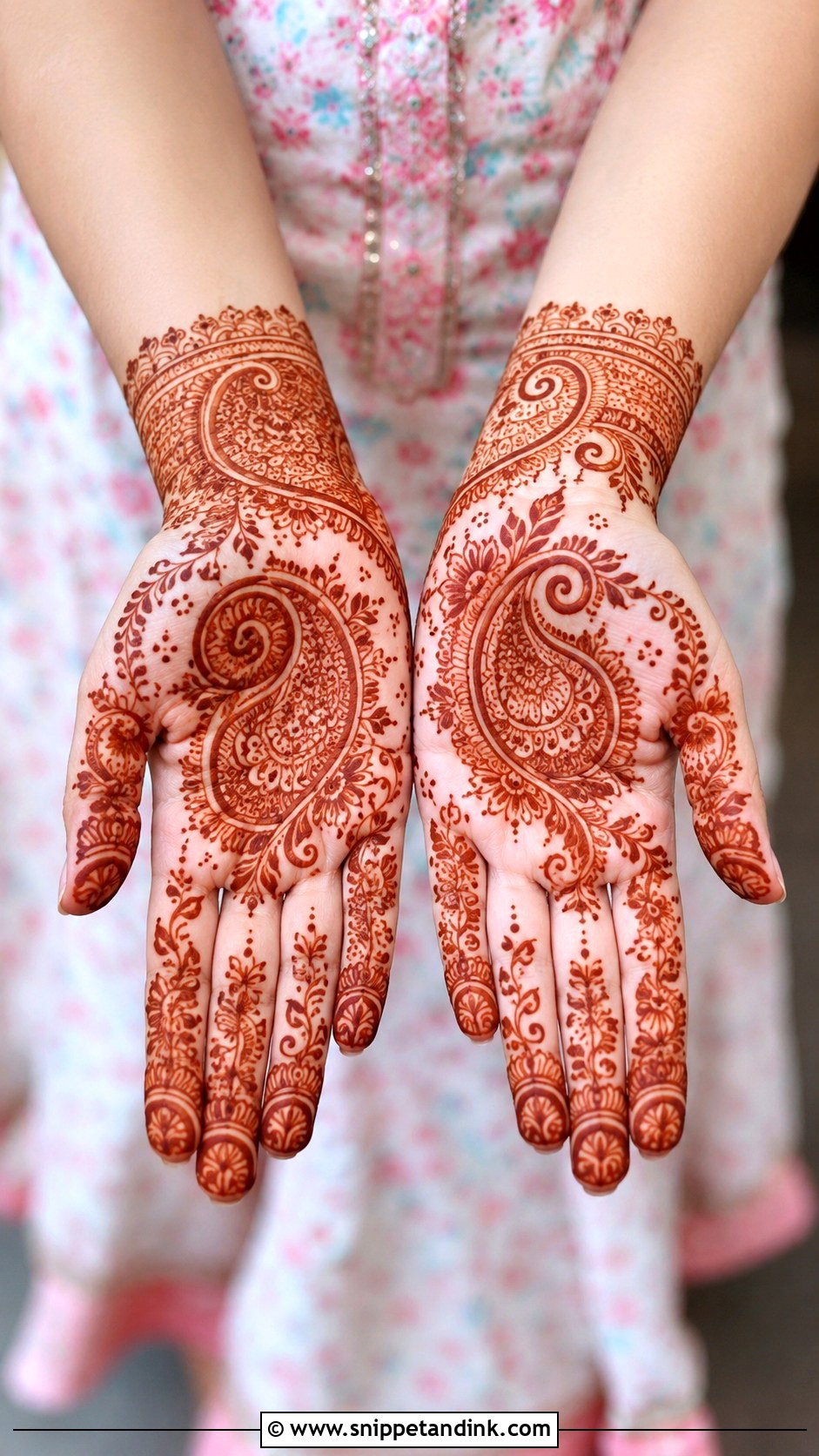
Paisleys can be softened for children by making them big. One or two large paisleys on the palm or back of the hand, filled with dots, small flowers or curved lines, connected toward the fingers with leafy vines. Half-paisley tips or simple ring bands on the fingers, and a light wrist border. Large shapes are faster to draw than lots of small ones, which is a practical reason I use them for festival queues. It feels traditional without looking like an adult’s design shrunk down.
14. Rose Mehndi Design for Kids
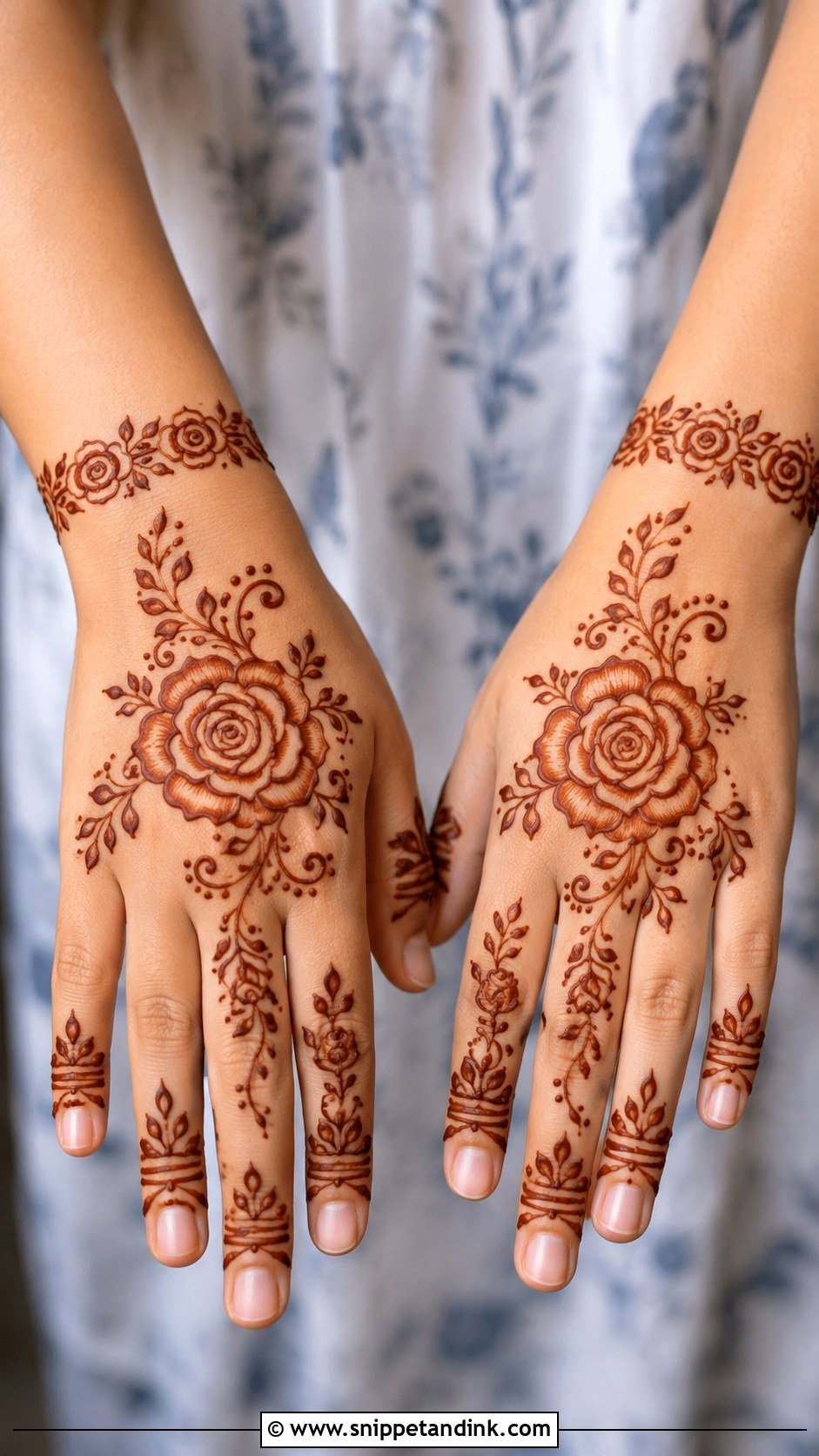
One rounded rose in the middle of the back of the hand or palm, a few leaves, curling vines and buds heading toward the fingers, small petal bands on the fingers, and a delicate wrist bracelet with mini buds. That is the whole design. It goes well with floral-print festive outfits. For younger children I draw one large rose with almost no detail inside it; older children can have shaded petals and small leaf clusters, as long as plenty of skin stays open.

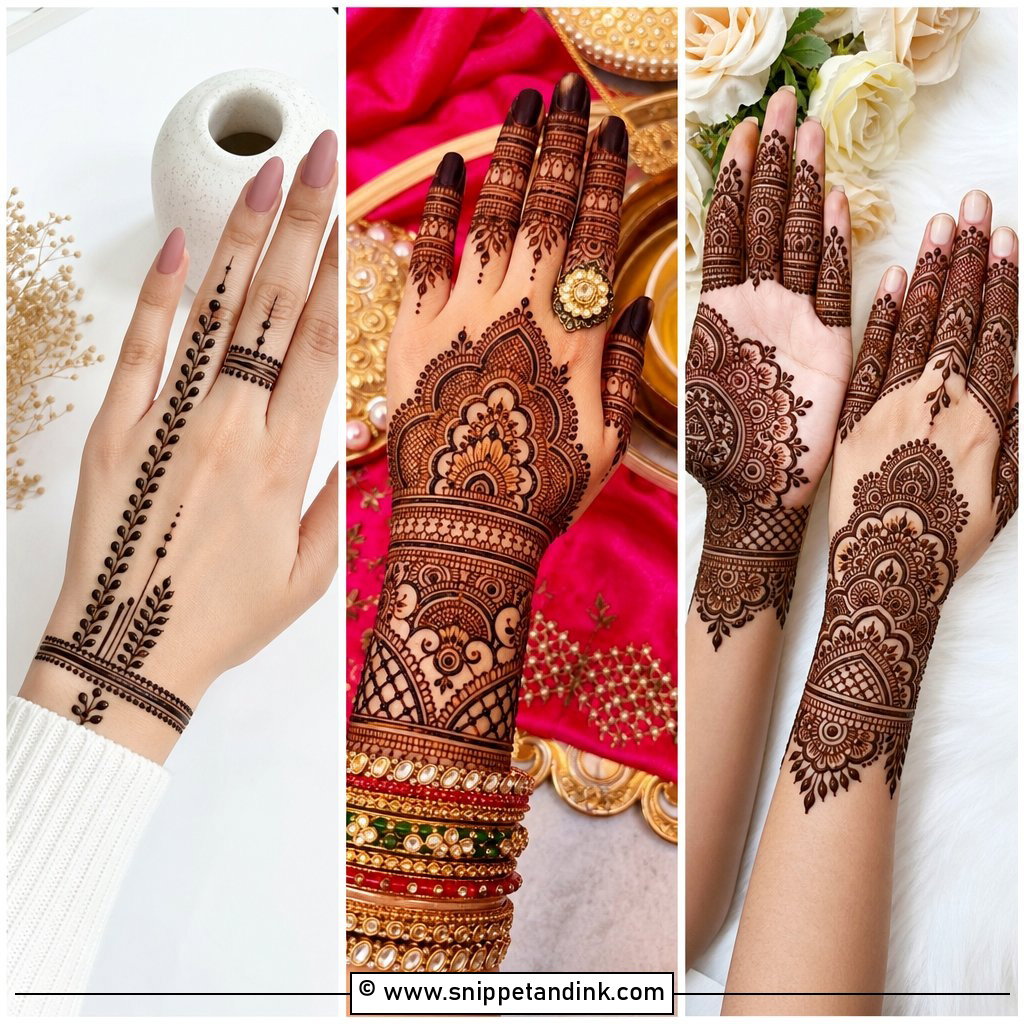
15. Glitter Mehndi Design for Kids
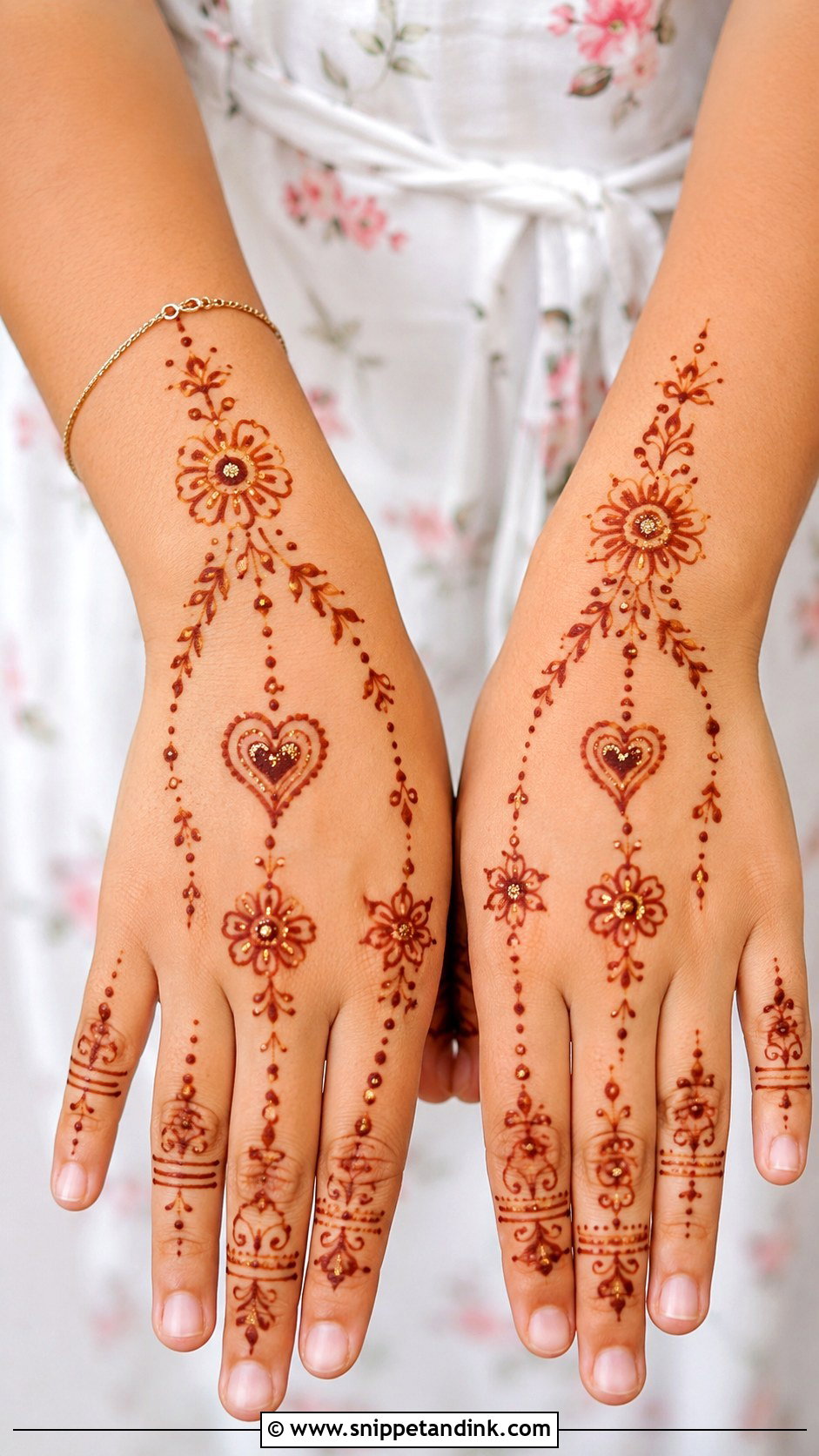
Glitter is a treat rather than a design in itself, and I treat it carefully. I draw a simple floral, heart or butterfly base in natural henna first, wait until the paste is completely dry, and then add a small amount of skin-safe cosmetic glitter gel to a few spaces only. Covering the whole hand in glitter just means it ends up on furniture, faces and eyes. Use only glitter made for skin, never craft glitter, and keep it away from children who rub their eyes a lot. It is for birthdays, stage shows and parties, not daily wear.
16. Bracelet Mehndi Design for Kids
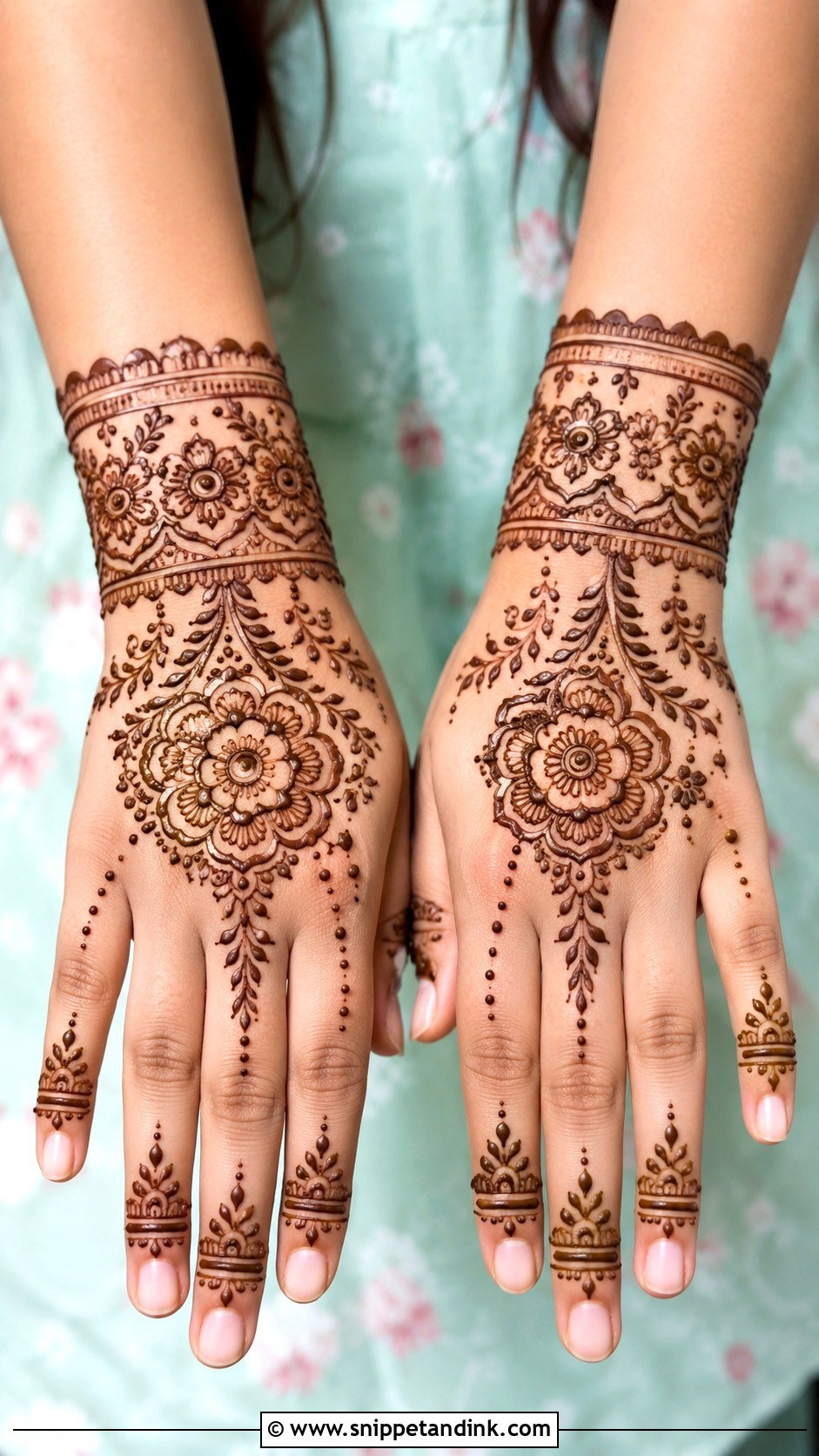
A bracelet mehndi design is my answer for the very young: a wrist cuff of flowers, dots, scallops and small leafy chains, with one vine running up to the middle or ring finger. Tiny finger rings and fingertip dots balance it, and the palm and back of the hand stay almost bare. It takes very little time and dries before most children get bored. It also sits neatly under bangles and festive sleeves.
17. Finger Mehndi Design for Kids
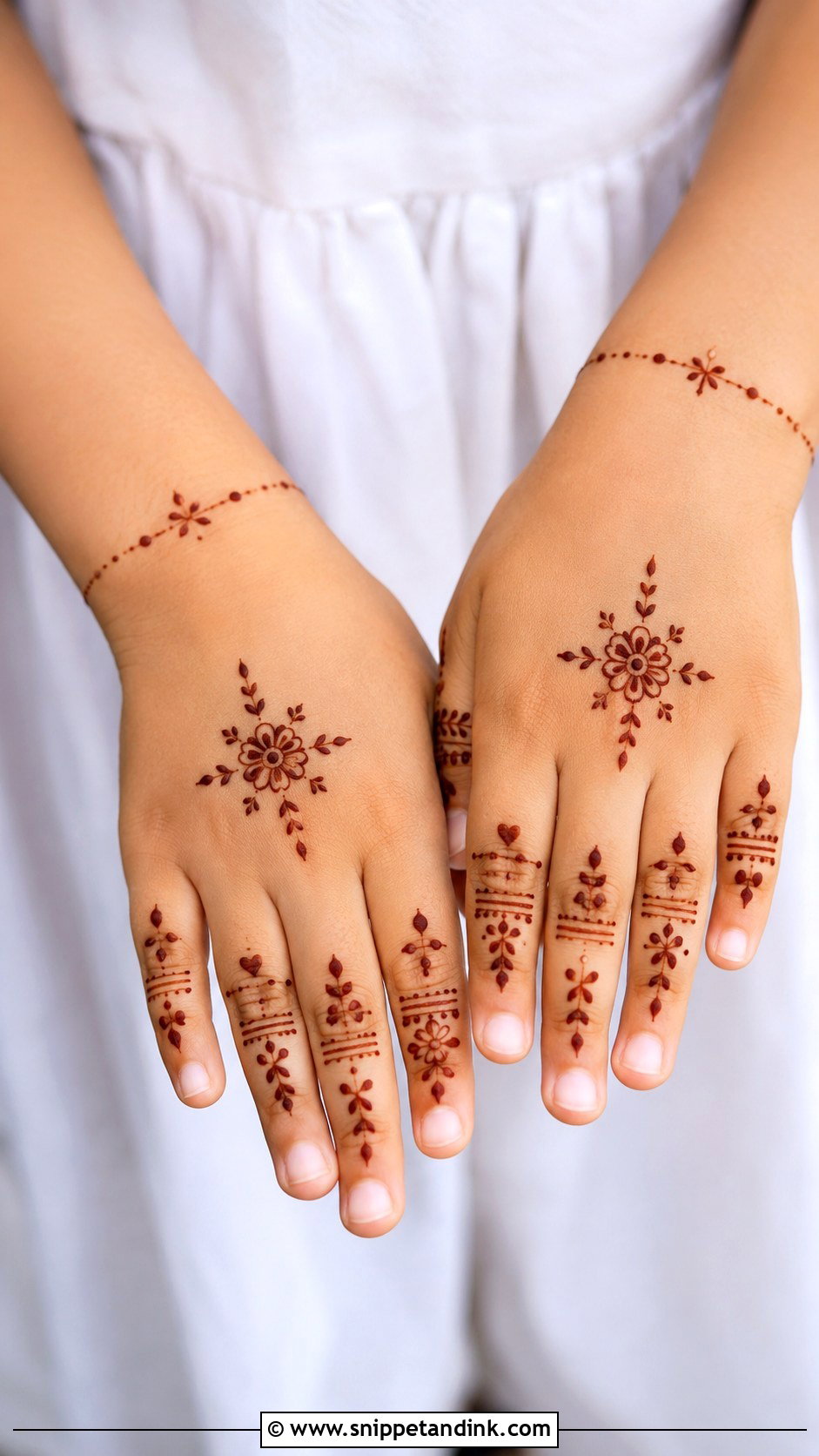
Finger designs are the fastest thing I do at a kids’ table. Small bands, dots, mini leaves, hearts or tiny flowers on each finger, plus a small central motif on the back of the hand or palm so it does not look like only the fingers were done. A thin wrist line is optional. Toddlers handle it best because there is so little wet paste. Avoid solid fingertip caps on the very young, though; those take longest to dry and get pressed onto everything.
18. Full Hand Mehndi for Kids
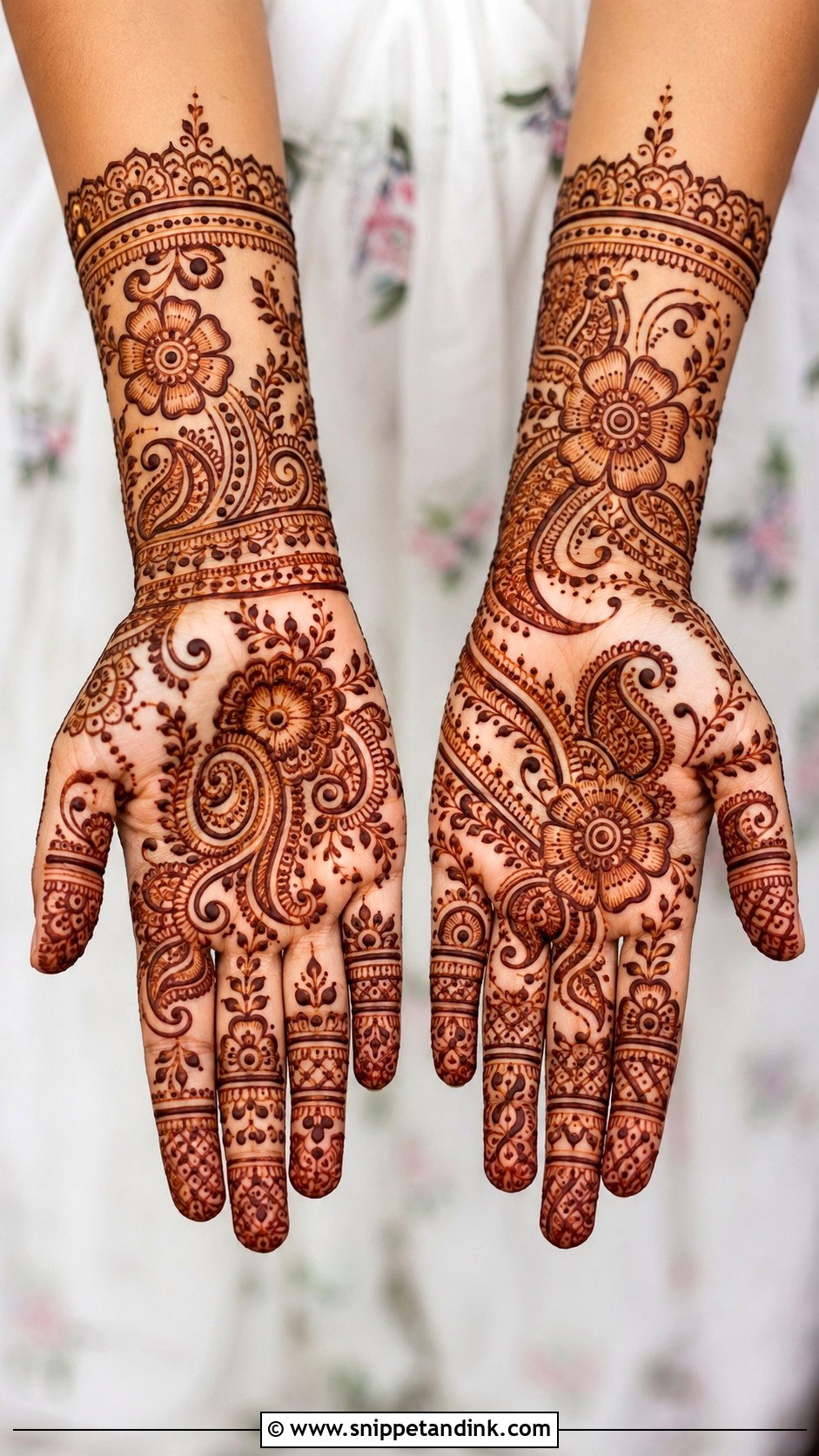
Full-hand henna for a child should still look light. I cover the palm or the back of the hand with larger flowers, simple paisleys, dotted vines and easy mandala sections, and deliberately avoid dense bridal filling. Fingers get alternating bands and leaf trails, and a soft bracelet border goes at the wrist. I only offer this to older children at weddings or big festivals, and I check first that they are happy to sit for a longer stretch. Bigger motifs, fewer lines and open space give the full-hand effect without a long, tiring session.
19. Minimal Mehndi Design for Kids
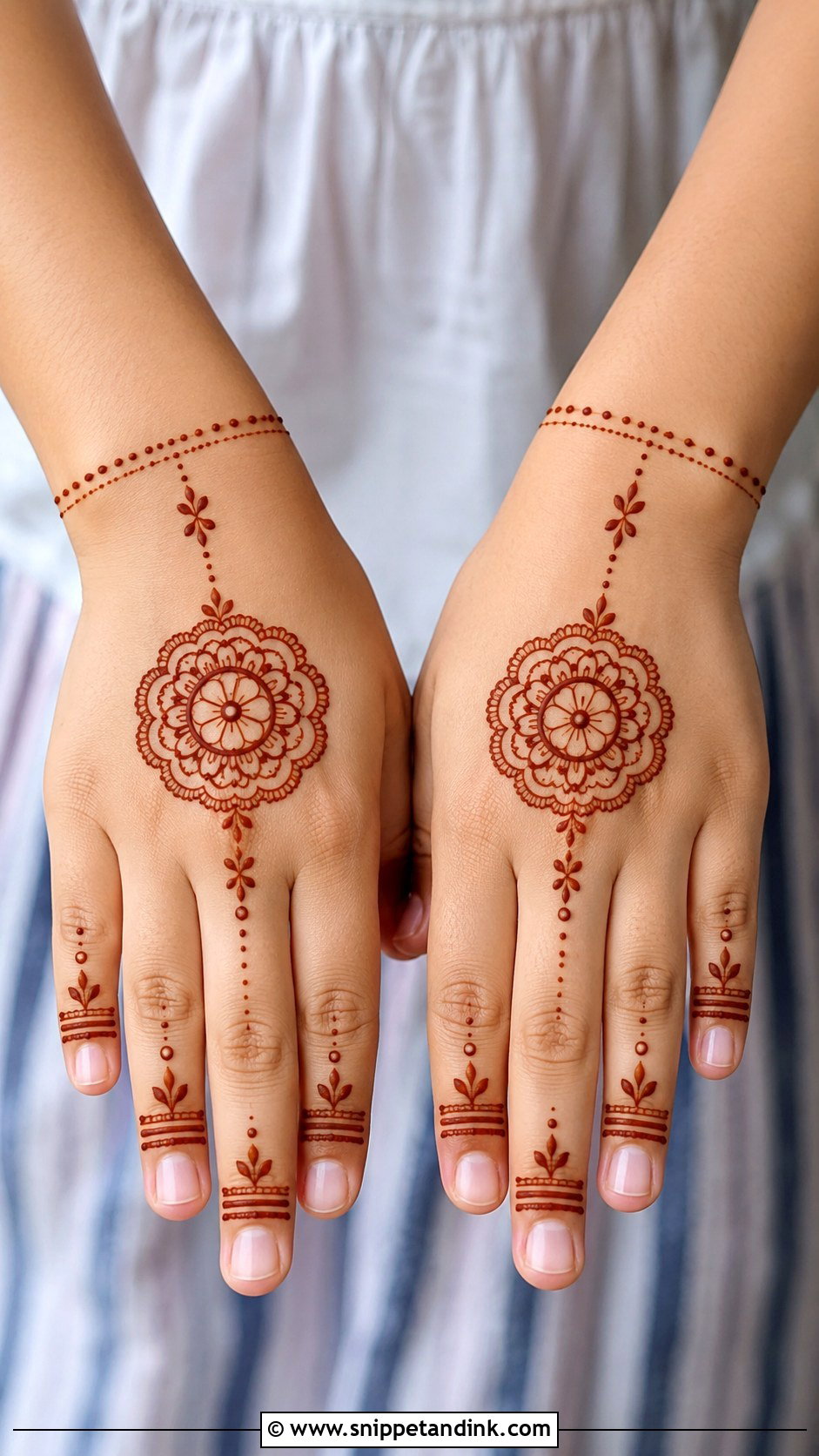
Minimal mehndi works when the outfit is simple or the child simply wants something small. One clean motif (a flower, heart, star, butterfly or small mandala) on the back of the hand or palm, two or three dotted trails toward the fingers, tiny dots on the fingertips and a light wrist line. I recommend it for a child’s very first henna. If they love it, they can go bigger next time; if they hate sitting still, it is over quickly.


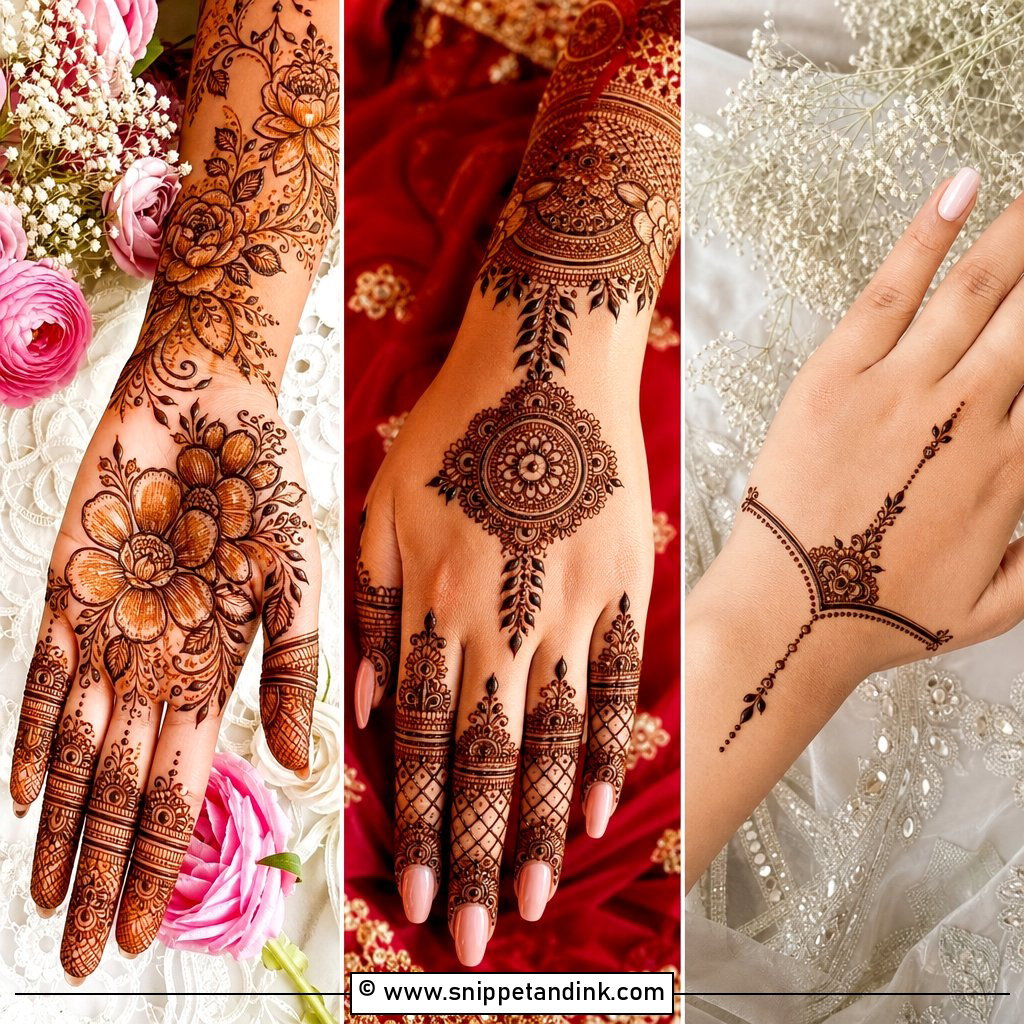
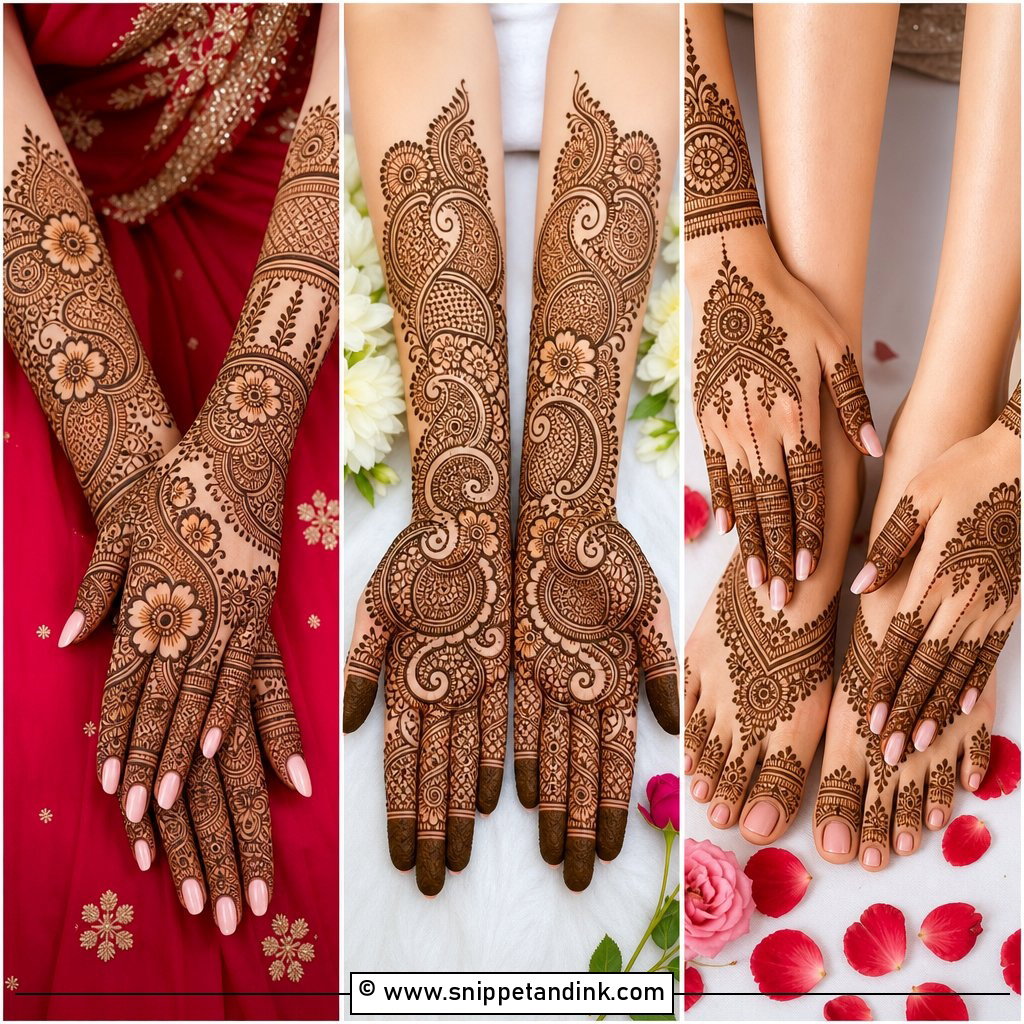

20. Eid Mehndi Design for Kids
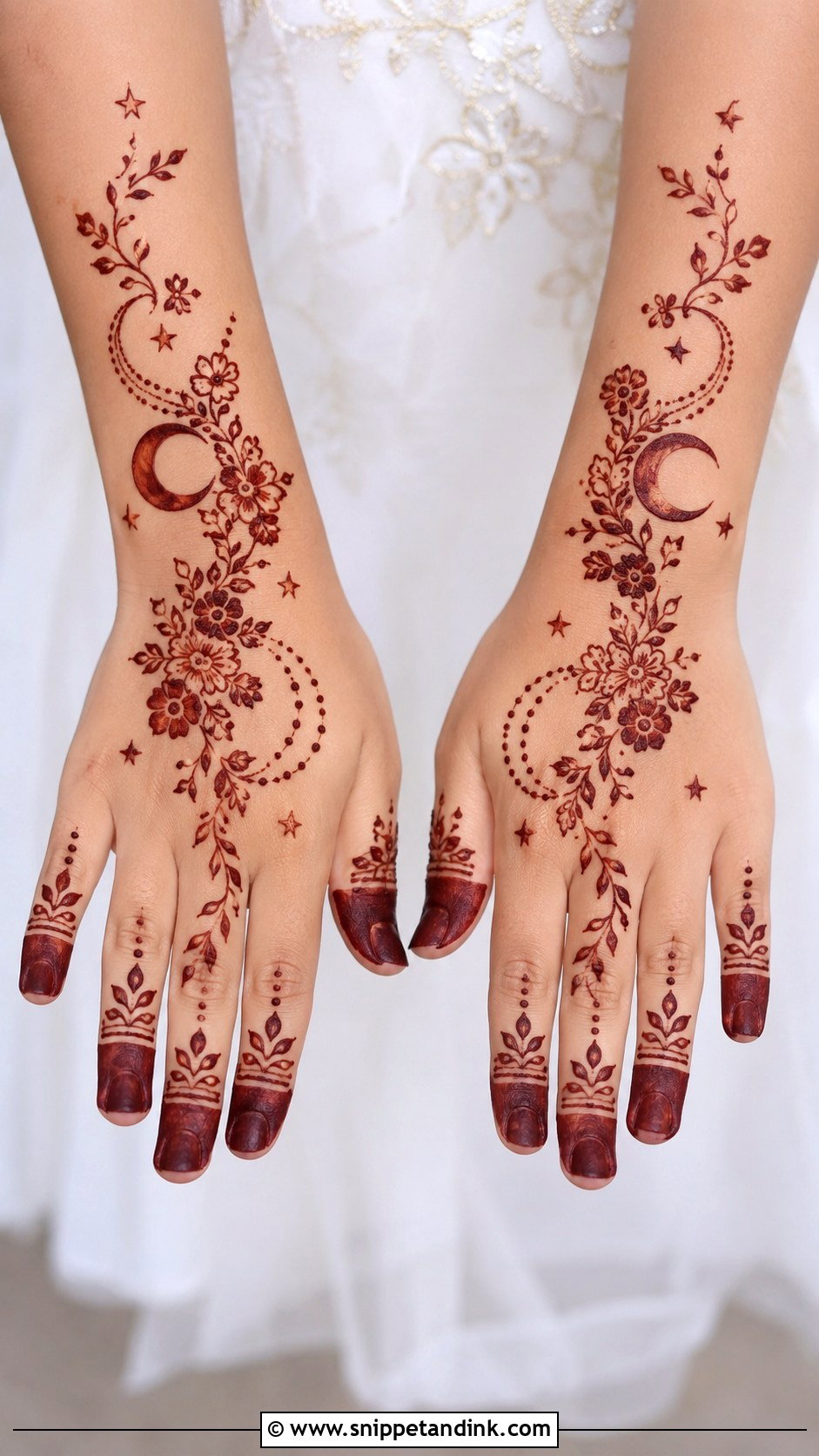
Eid mehndi for kids usually means moons, stars, flowers and a light Arabic trail. I put a crescent moon on the back of the hand, scatter small stars and dotted curves around it, and run a floral vine from the wrist to one finger. Fingers get dots, tiny leaf bands or simple caps. Apply it on Chaand Raat, the evening before, so the stain has the night to develop. Bold motifs and open spacing also keep the queue of cousins moving quickly.
21. Diwali Mehndi Design for Kids
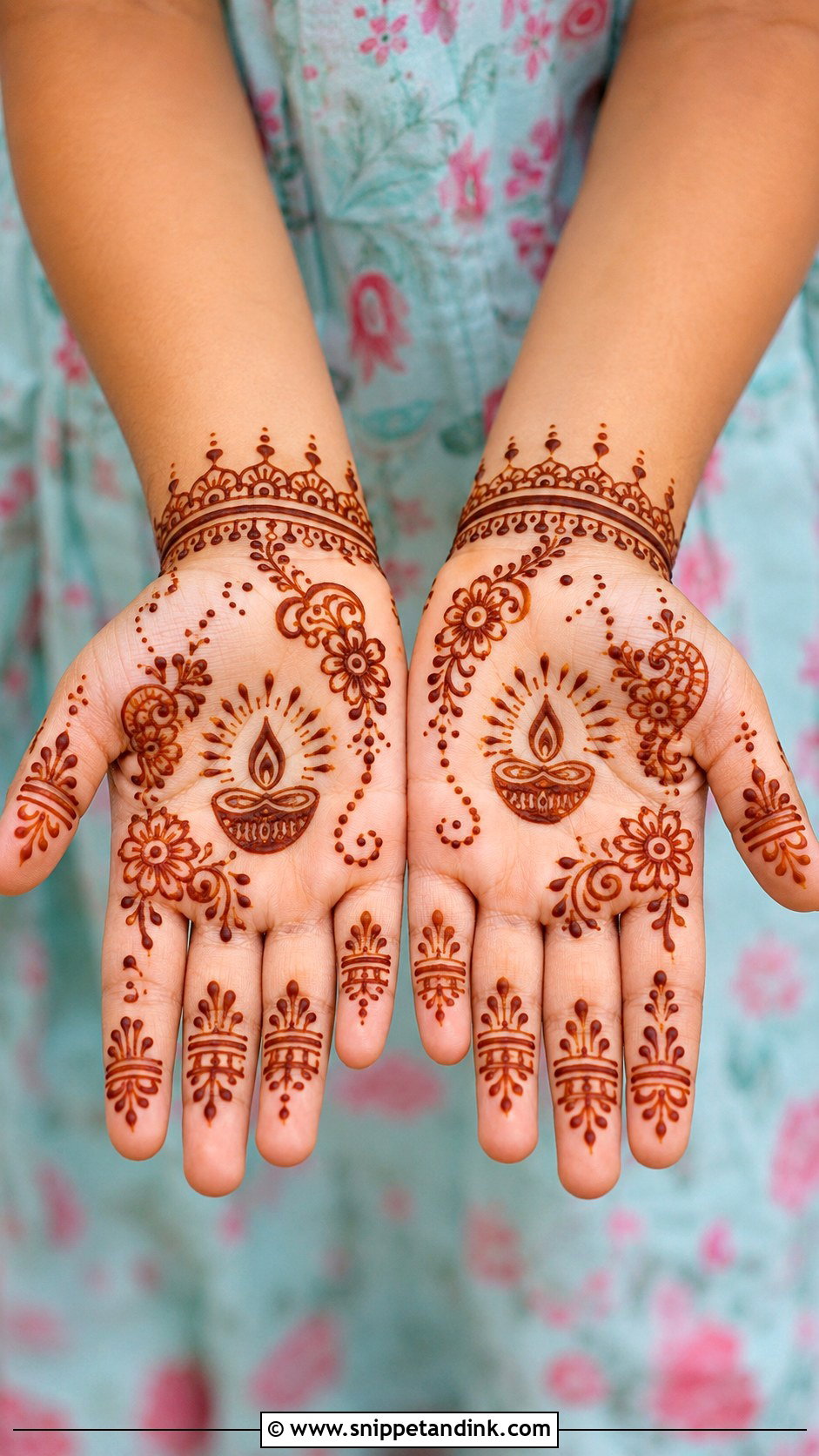
A small diya shape on the palm or back of the hand makes the design unmistakably Diwali. Around it I add simple rays, flowers, tiny paisleys and dotted trails, then small petal bands on the fingers and a neat bracelet border at the wrist. Draw the diya bold and plain; a detailed lamp blurs once the stain darkens. Remember that diyas and sparklers mean open flames, so take off any tissue wrapping before children go anywhere near the candles.
22. Wedding Mehndi Design for Kids
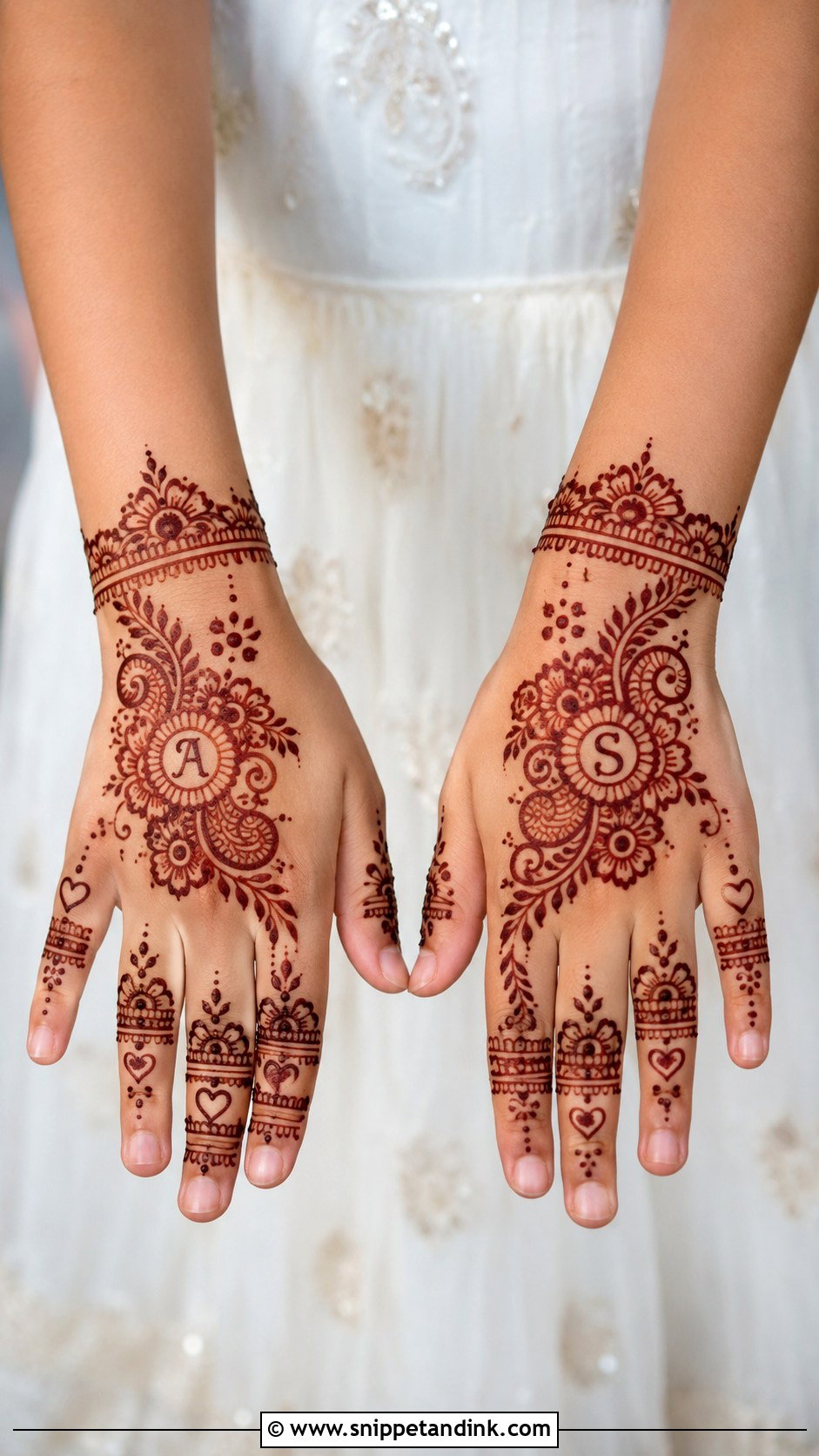
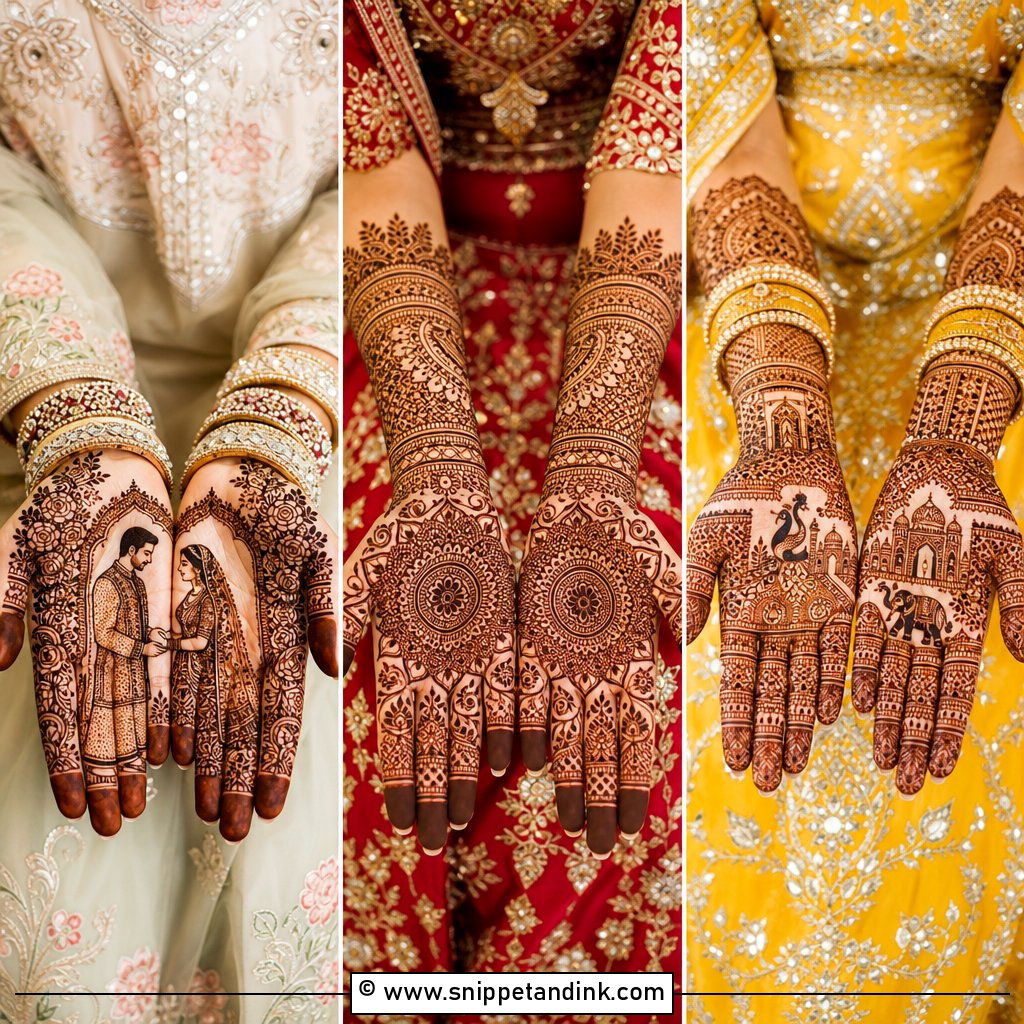
Children at a wedding want to feel part of it, but they do not need anything close to bridal work. A light mix of flowers, paisleys, mandalas and leafy trails on the front or back of the hand, a small wrist cuff and simple finger bands are plenty. For a flower girl or a child in the wedding party, I sometimes add tiny hearts, an initial or a small peacock. Keep the lines bold and the filling simple, so the child can run around at the function without ruining it.
23. Birthday Mehndi Design for Kids
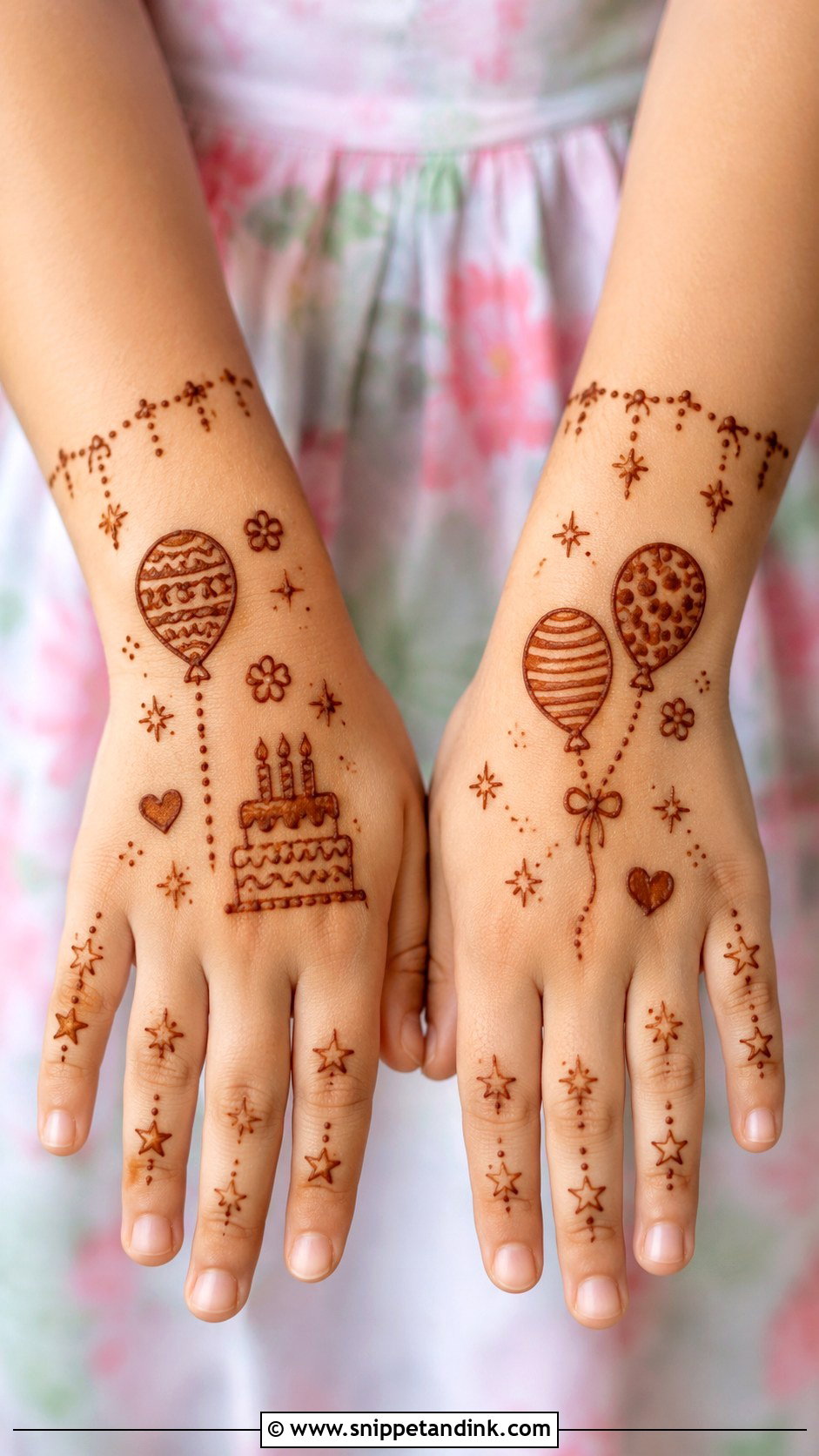
Birthday henna is where children get to choose the theme. Balloons, stars, hearts, flowers and a little cake shape on the back of the hand or the palm, with dotted balloon strings running toward the wrist and tiny stars or party dots on the fingers. Rounded shapes and open space keep the theme easy to read. I’d do it a day or two before the party rather than at the party, so the color has darkened and nobody is trying to eat cake with wet paste on their hands.
24. School Function Mehndi for Kids
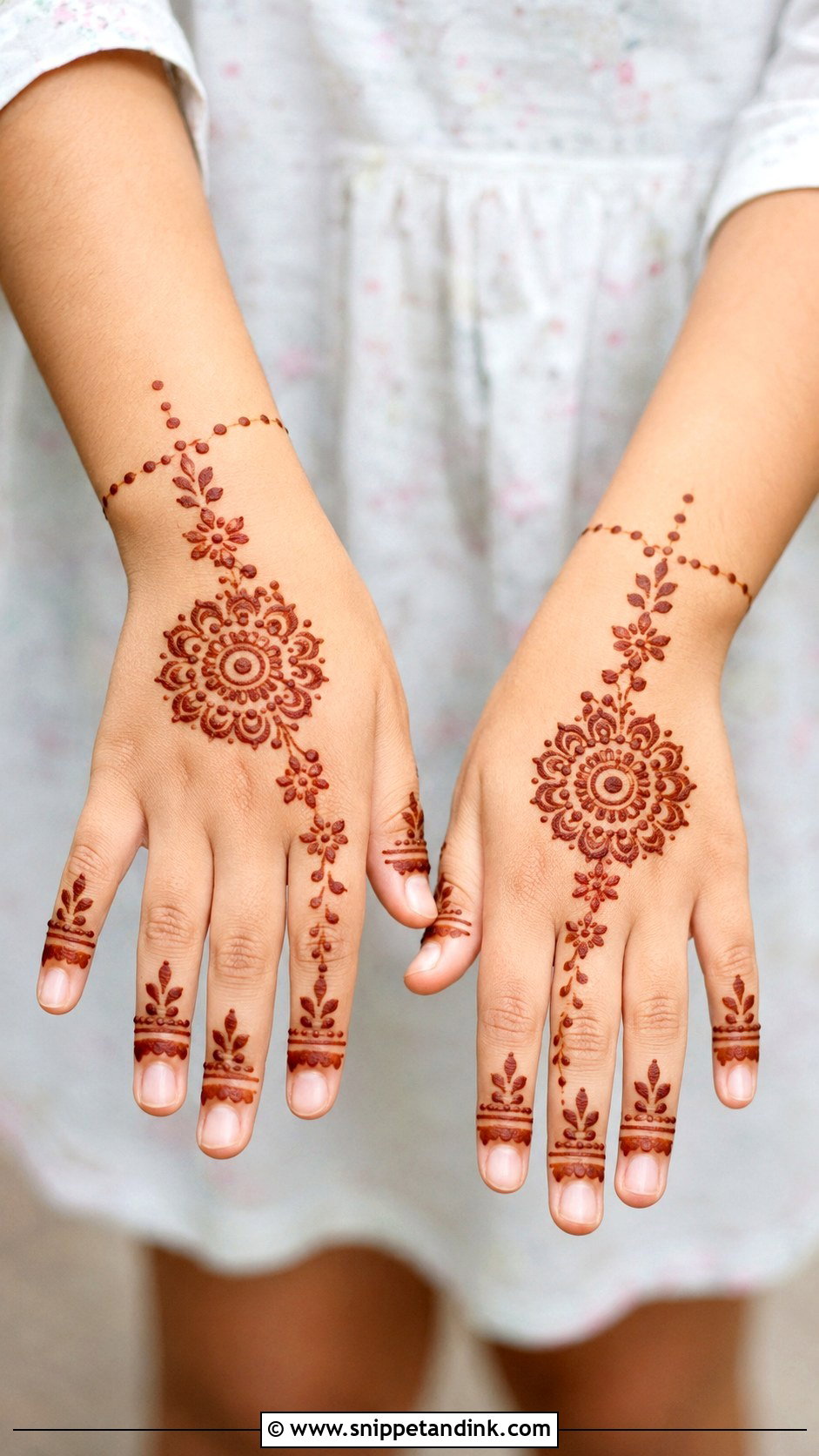
For a school function, tidy beats elaborate. A small mandala, a short flower trail or a bracelet design on the back of the hand, with light finger bands and a few dots at the wrist. Children need to write, dance and hold props, so avoid the palm of the writing hand unless it has had time to dry and be scraped off well. Check the school’s rules too; some prefer henna kept small for uniform days, and a design on the back of the non-writing hand rarely causes a problem.
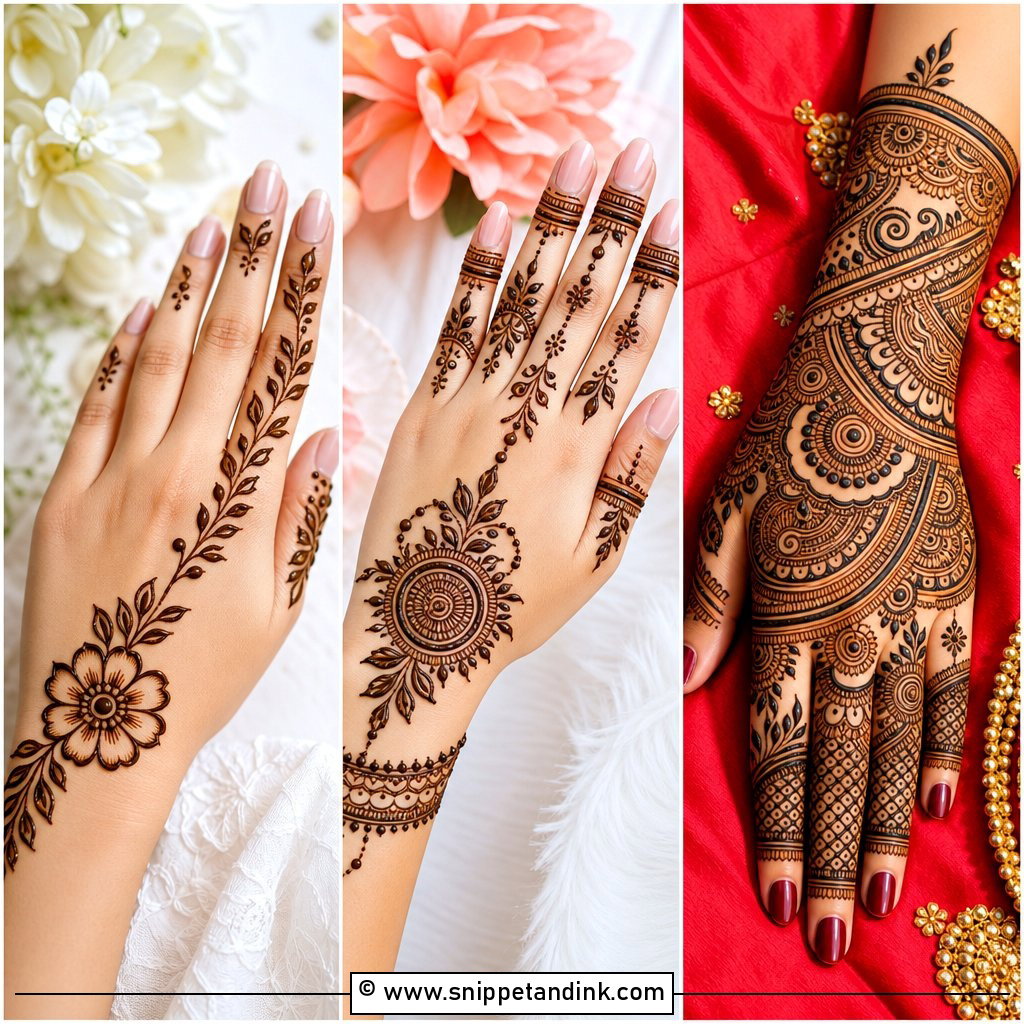
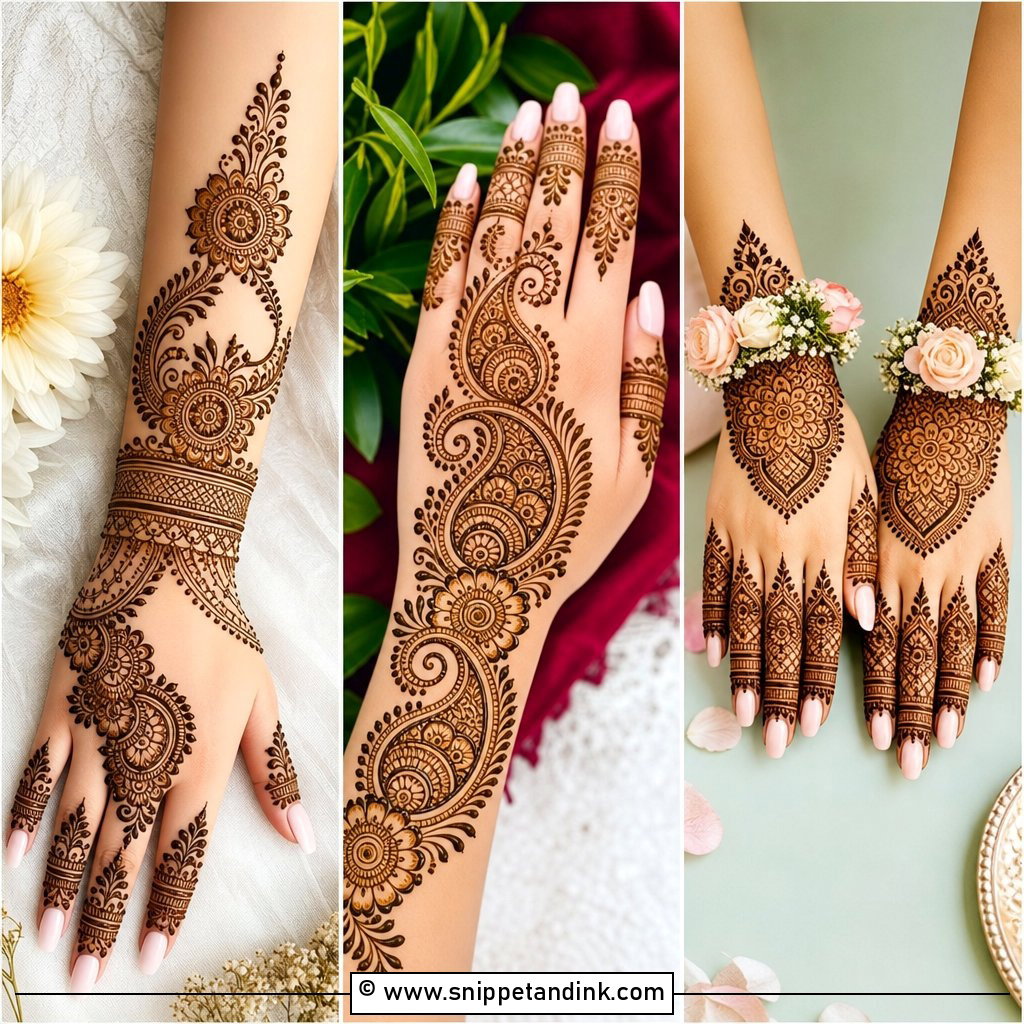

25. Baby Girl Mehndi Design
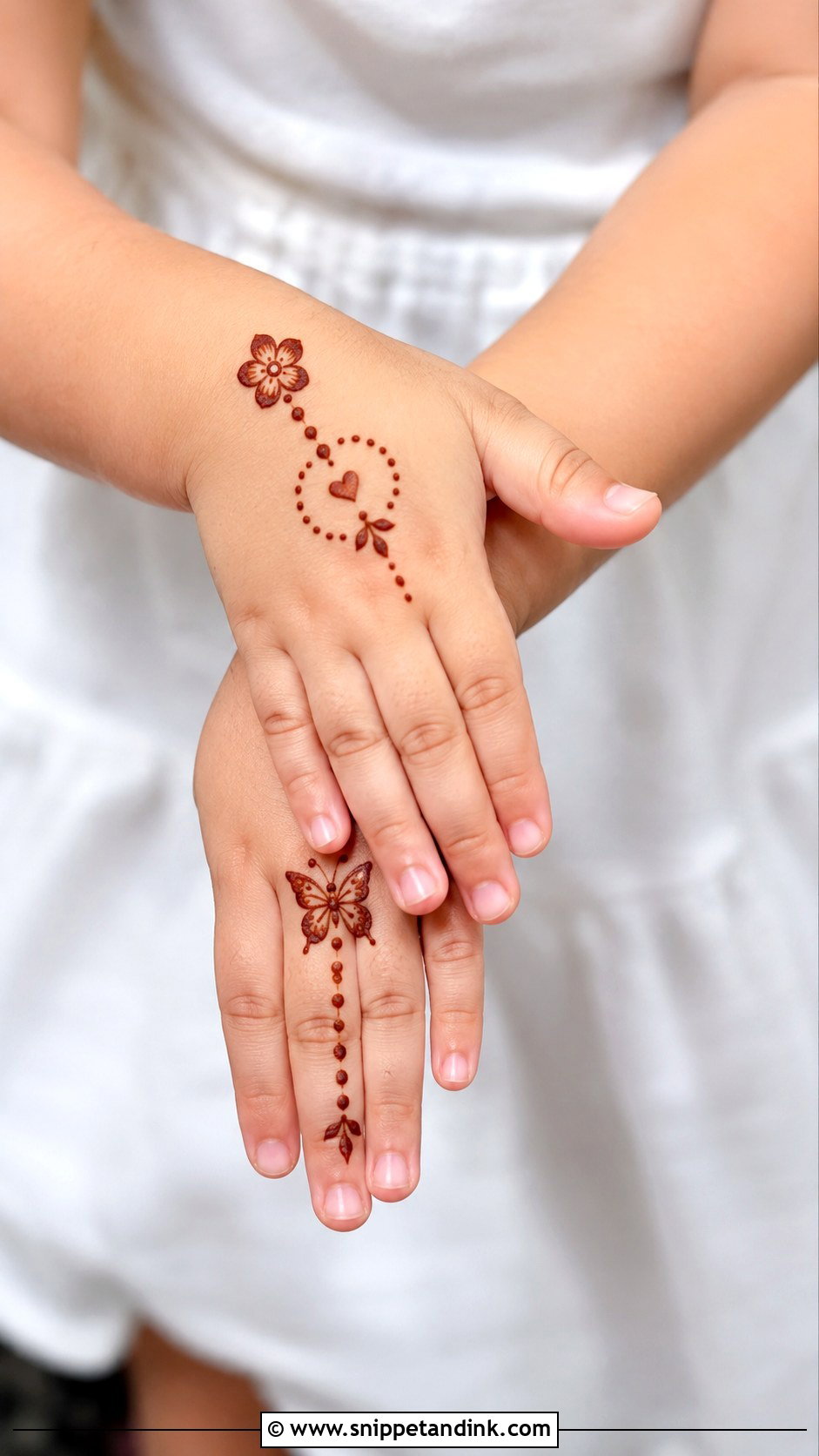
For babies and toddlers, less is genuinely better. One tiny flower, heart, butterfly or dot circle on the back of the hand, perhaps two short dotted lines, and nothing on the fingers, since little ones put their fingers in their mouths. Only fresh natural henna, and the sitting should be over in moments. Choose a design that still looks sweet if part of it smudges, because it will. I talk to parents about skin sensitivity before I even uncap the cone for this age group.
26. Cute Palm Mehndi for Kids
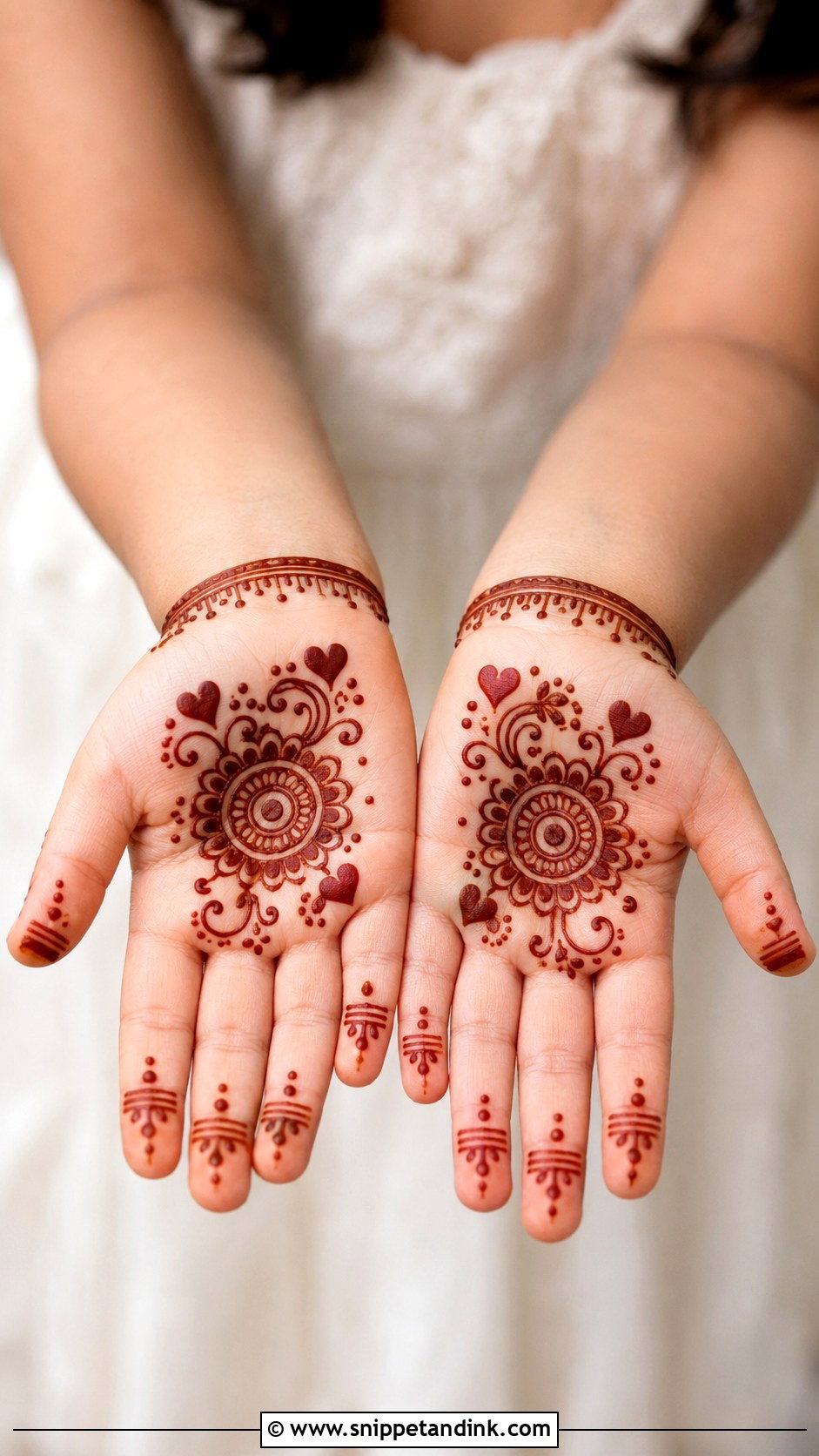
The palm takes henna color better than anywhere else, so even a small palm design stains rich. A little mandala, flower, heart or star sits in the center, with dots and short vines around it, small bands or fingertip dots on the fingers and a single bracelet curve at the wrist. Children like watching it dry. Keep the detail out of the palm’s crease lines, where a child’s hand folds constantly and fine paste cracks off before it can stain.
27. Back Hand Mandala Mehndi for Kids
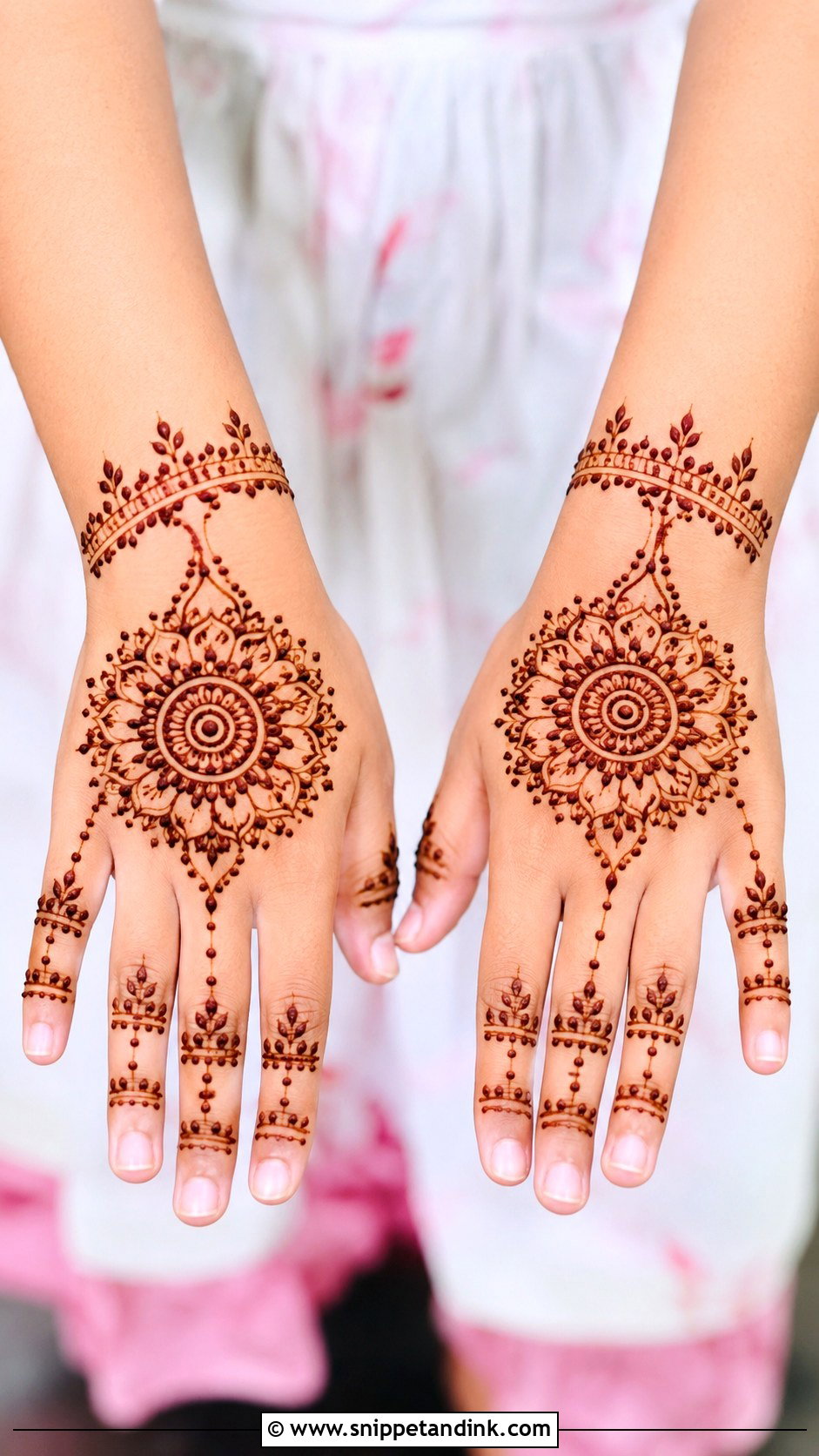
A single round mandala in the middle of the back of the hand, with dots and petals around the edge and delicate chains running toward lightly decorated fingers, then a soft wrist border. Children wanting something traditional but not full love it, and it suits matching family outfits. I draw the mandala outline bold and keep the inner detail simple; that way the shape survives even after a week of handwashing has softened the stain.
28. Floral Trail Mehndi for Kids
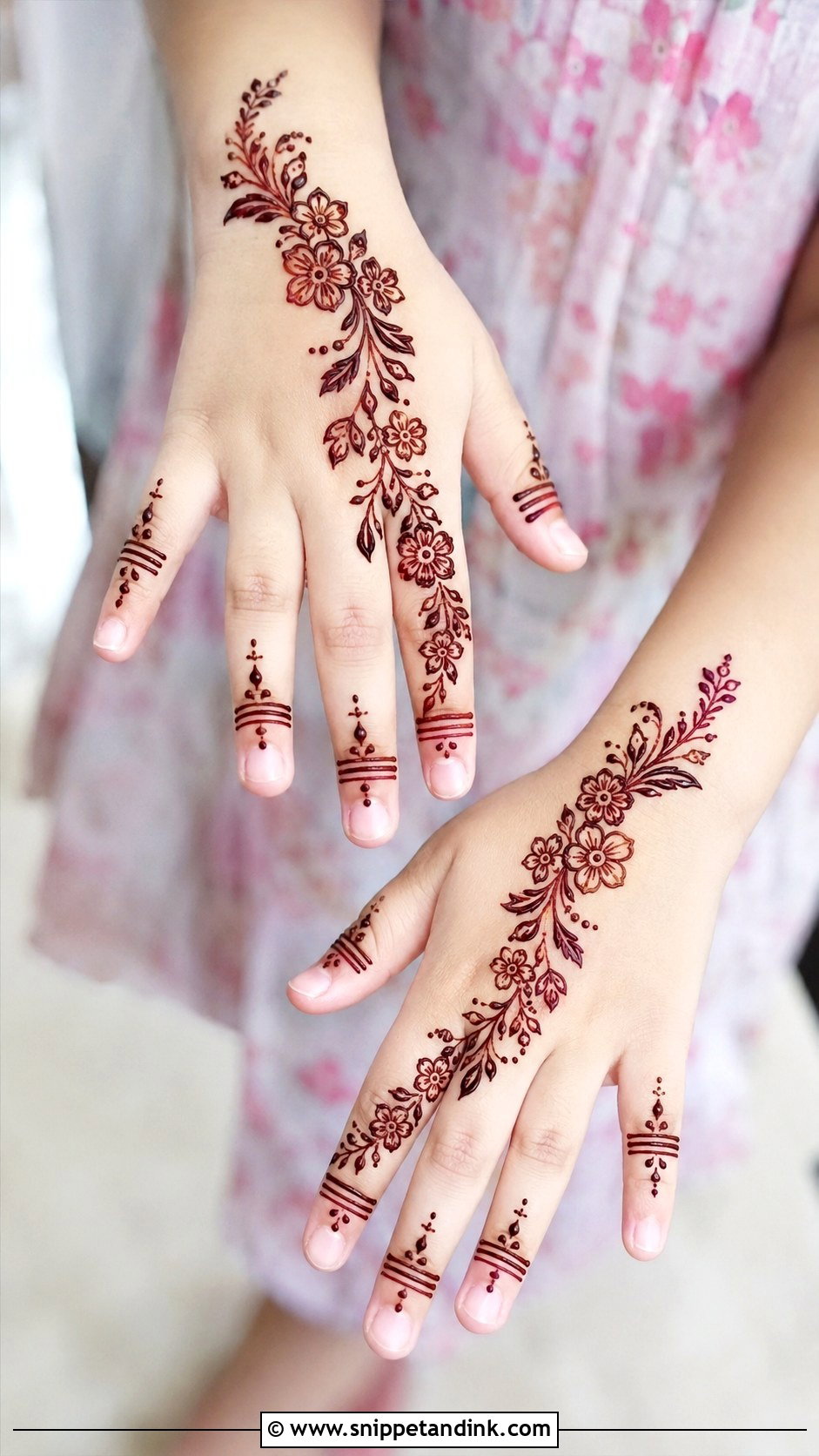
A floral trail starts near the wrist with a small flower and lets a vine travel diagonally toward the index or middle finger, with leaves, dots and tiny buds along the way. The other fingers carry light bands or simple dotted tips. It borrows from Arabic work but softer. One strong diagonal line makes the hand look decorated while most of it stays bare, so it is quick to apply and quick to dry, which suits Eid, weddings and family dinners.
29. Leaf Mehndi Design for Kids
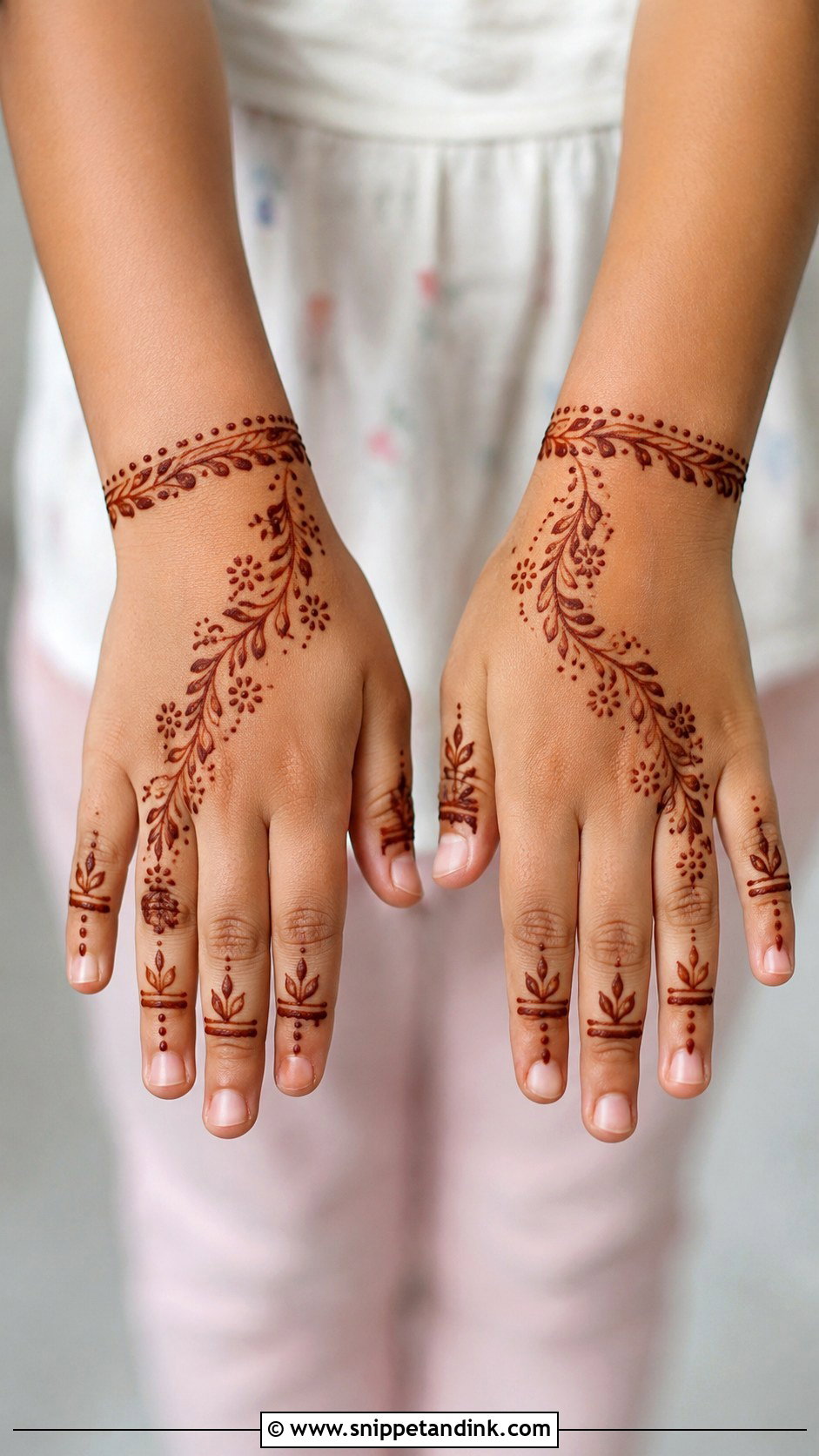
Leaves are forgiving, which is exactly why I teach them first. A curved leafy vine runs from the wrist to the middle finger or across the back of the hand, with tiny dots, small flowers and open space, mini leaf rings on the fingers and a slim matching band at the wrist. If a child jerks their hand, an extra leaf hides the mistake. It also suits boys who do not want flowers or hearts.
30. Jaali Mehndi Design for Kids
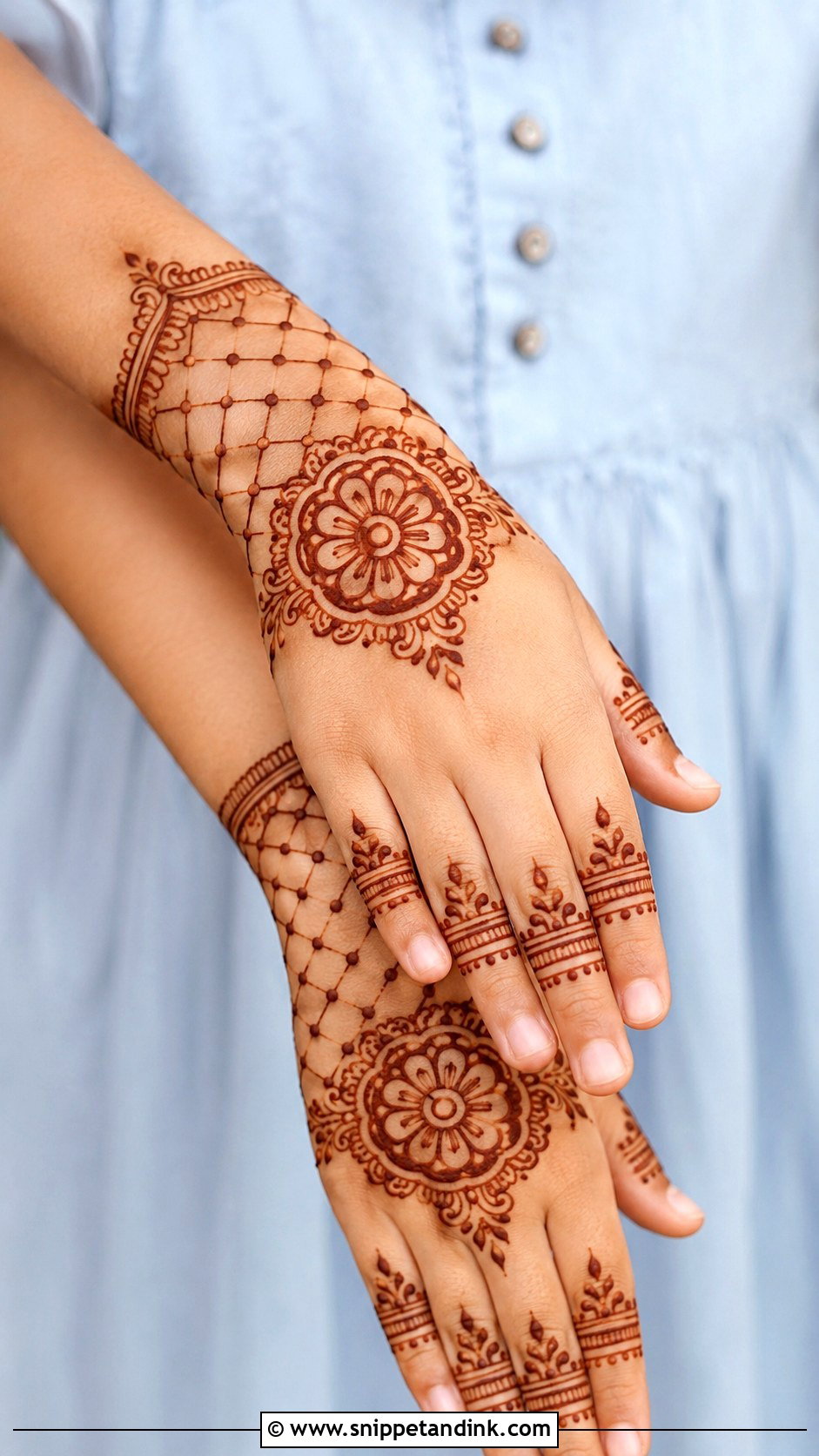
Jaali on a child’s hand has to be scaled down to one small, open mesh panel beside a central flower or mandala. The lines need wide spacing; tight mesh closes up as the paste swells and becomes a solid patch on a small hand. Dots at the intersections, simple finger bands and a thin wrist border complete it. Because it takes a little more concentration, I offer it to older children who can sit patiently at weddings and formal festivals.
31. Moroccan Mehndi Design for Kids
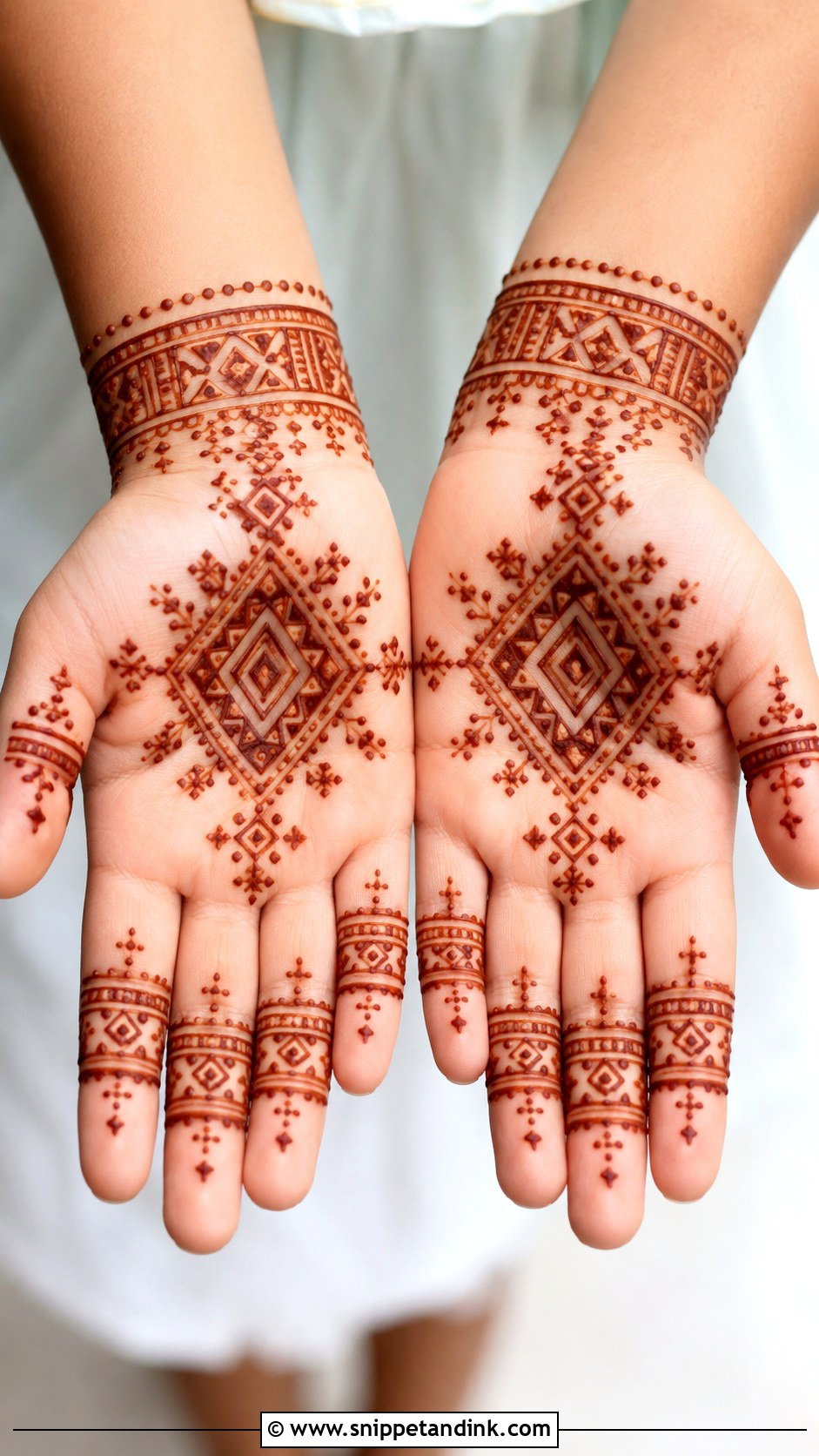
Moroccan geometry appeals to children who find flowers and hearts too sweet. Diamonds, triangles, dots, short lines and small blocks across the back of the hand or palm, symmetrical but not dense, with matching finger bands, tiny diamonds and a wrist border of repeated dots. Older children especially like how it looks. Straight lines show every wobble, so I keep the shapes small and quick rather than attempting long rulers of line on a moving hand.
32. Gulf Mehndi Design for Kids
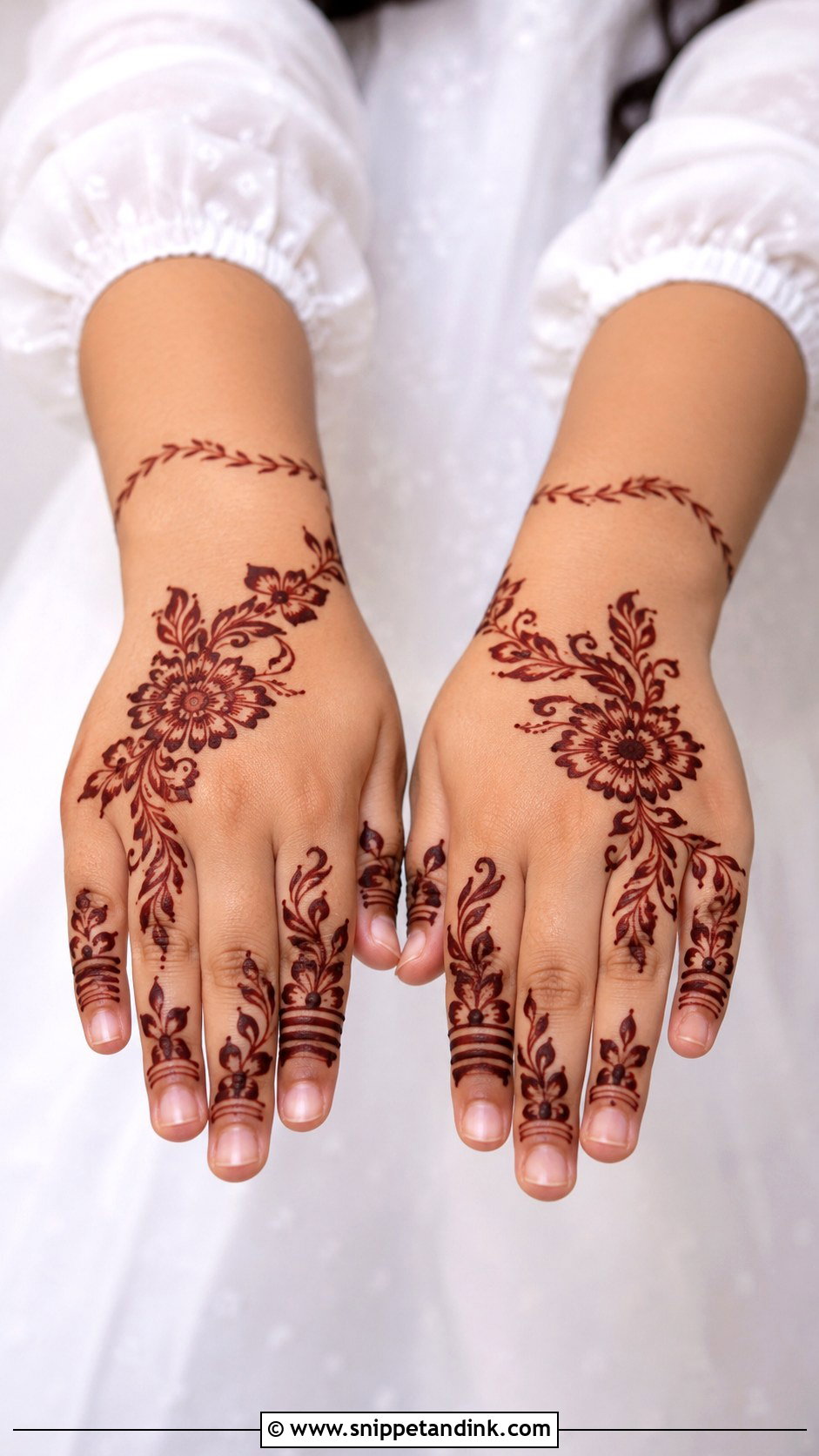
Gulf-style work is built from bold flowers, leafy curves and lots of open space, which makes it easy to scale down. I put a soft floral cluster on one side of the back of the hand, extend leaves and vines toward the fingers, and leave the other side clear. Simple floral tips or curved bands on the fingers and a light wrist vine finish it. For children I use fewer layers and bigger motifs, so the design stays readable and dries quickly.
33. Matching Hands Mehndi for Kids
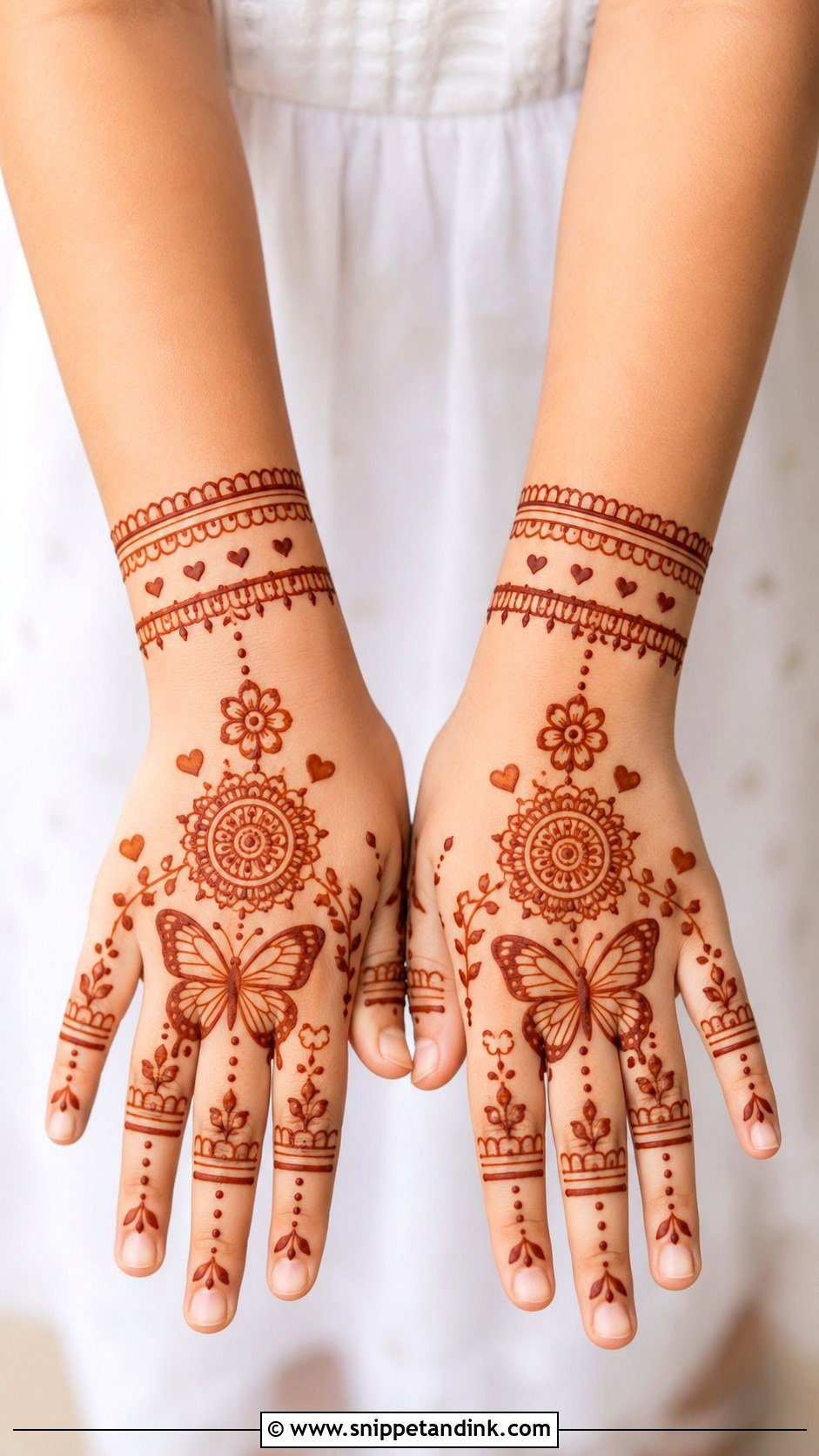
Siblings, cousins and best friends love having matching hands. I use the same simple design on each child (matching flowers, butterflies, hearts or mandalas), with one main motif on each back hand and light finger details. The wrist bands can be similar rather than identical. Repeating one pattern is quicker for the artist, which helps when a whole row of cousins is waiting. Keep the shapes bold and the fillers small so each child’s version looks tidy.
34. Side Hand Mehndi for Kids
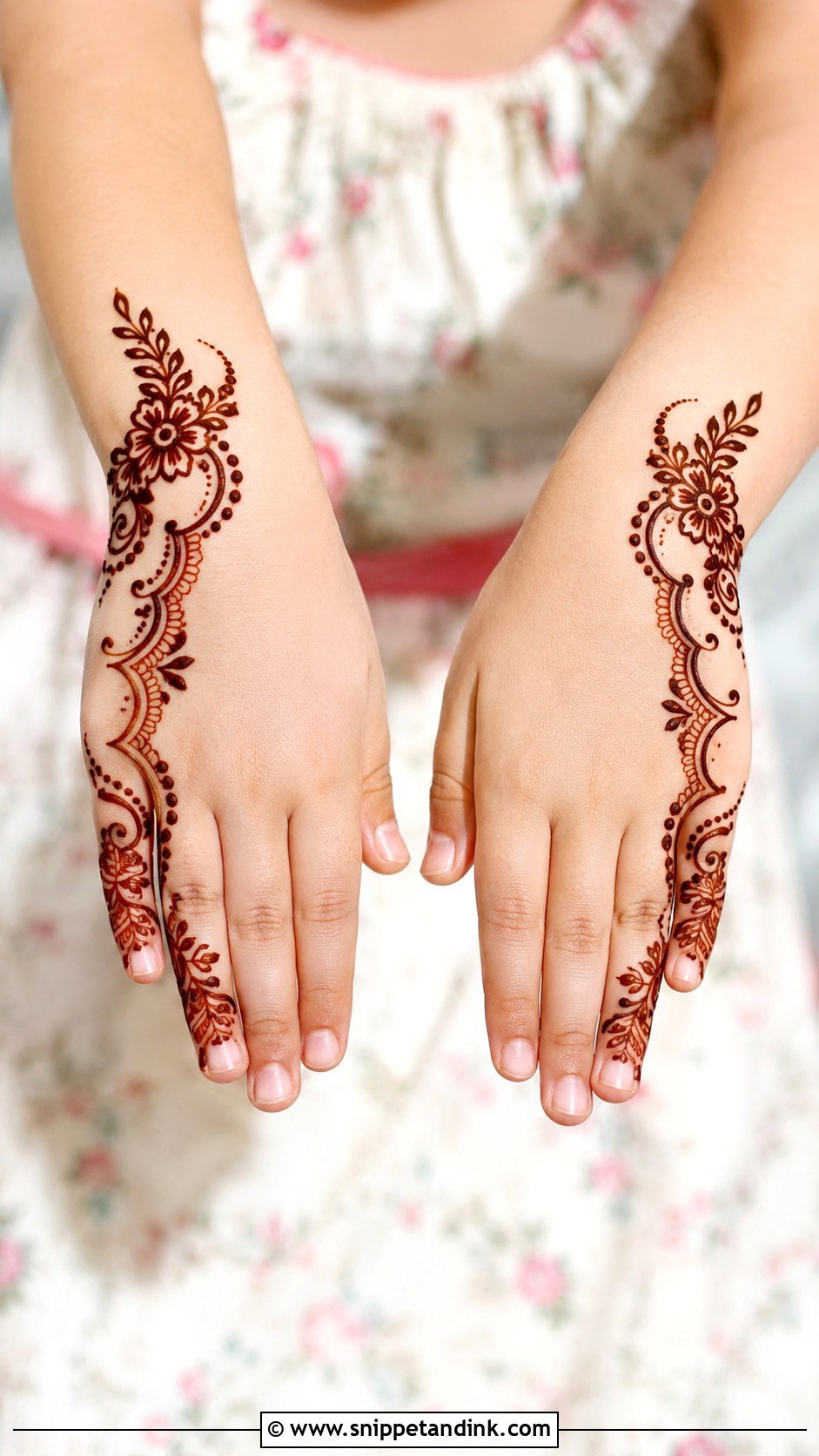
A side design runs along the outer edge of the palm or the back of the hand, starting at the wrist and heading toward the little finger, using small flowers, leaves, dots and curves as a border. The center of the hand stays open, which makes drying much easier, and the little and ring fingers get light detail to join the pattern. It looks good with bangles. I like it for children who will be holding a plate or a sparkler, since the middle of the palm stays free.
35. Easy Mehndi Design for Kids
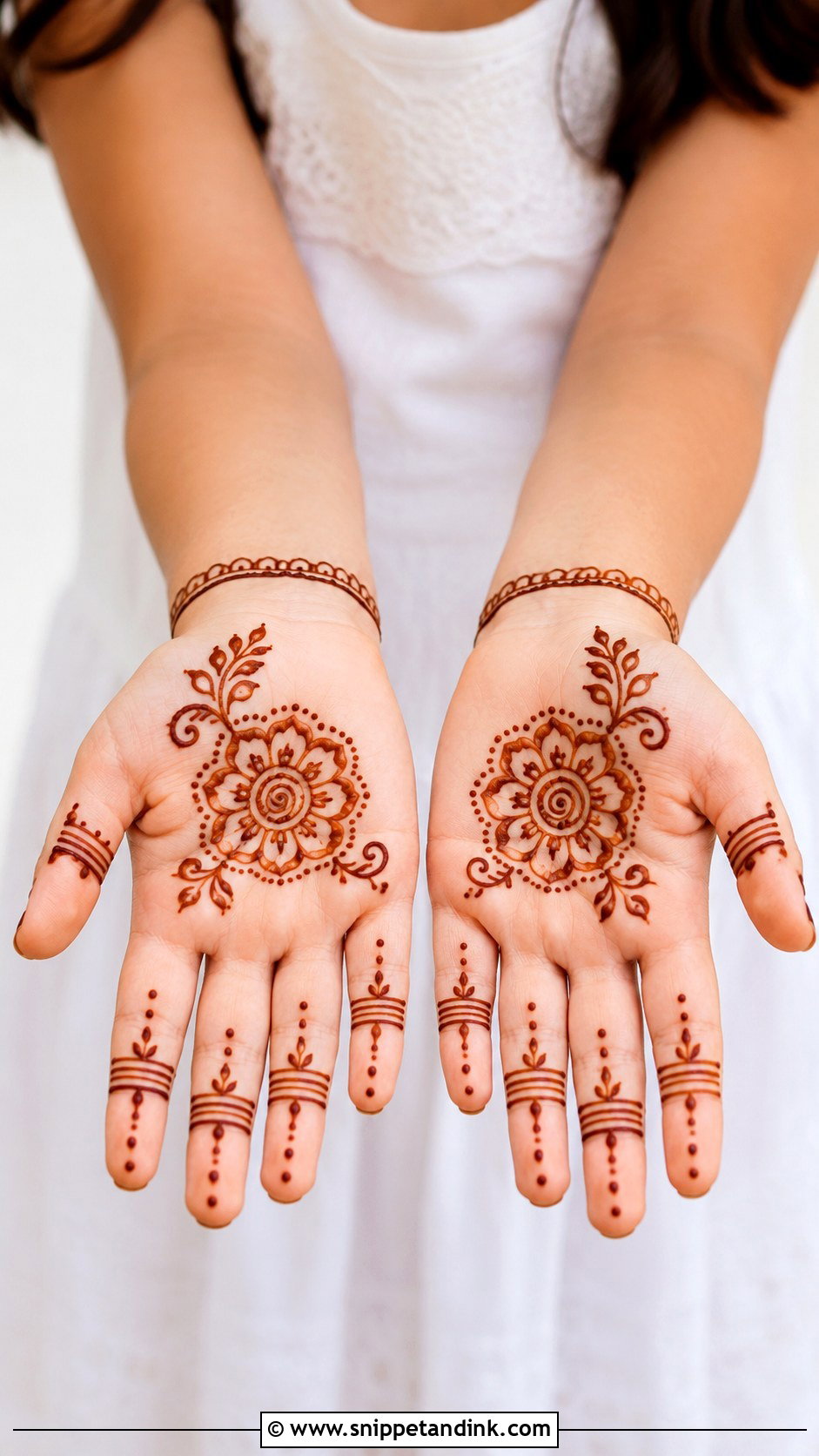
If you are drawing on a child for the first time, start here. A simple flower or mandala in the center of the hand, a few leaves, dots and curves around it, small bands or fingertip dots on the fingers, and one wrist line. It is neither too plain nor too heavy for most occasions. I’d shrink it for a toddler and add a second vine for an older child. Practice the flower on paper or your own hand first, because a child will not wait while you hesitate.
Is Henna Safe for Children? What I Ask Parents First
Pure natural henna is generally well tolerated, but there are real exceptions, and parents are usually the only ones who know about them. Before I draw on any child, I ask a few questions.
- Does the child have G6PD deficiency? Natural henna can trigger a serious reaction in children with this enzyme condition, especially babies, so I do not apply it at all.
- Any eczema, broken skin or a rash on the hands? I avoid those areas or skip henna until the skin has healed.
- Any history of reactions to hair dye or temporary tattoos? If so, a doctor should be asked first.
- Has the child had henna before? For a first time, a tiny patch on the inner arm a day or two ahead is a sensible check.
Check the cone, too. Natural paste stains orange first and darkens over a day or two. A paste that stains dark brown or black within an hour is not plain henna, and anything sold as black henna can contain PPD, which causes blistering and lasting allergies. Ask your artist what is in her cone; a good one will tell you without hesitation.
How long it lasts on small hands
Children wash their hands far more often than adults, and their skin renews quickly, so expect the stain to fade faster than a grown-up’s. Palms hold color longest. A little coconut oil before bath time slows the fading, and when it starts to look patchy, regular soap and a gentle scrub will lift what is left.
Small Hands Need Bold Shapes and Short Sittings
The designs children enjoy most are the ones they recognize and can wear without being told to sit still for an hour. Butterflies for birthdays, moons for Eid, diyas for Diwali and flowers for weddings all work when the outlines are bold and the spacing is open, which dense adult patterns cannot offer on a small hand. Use natural henna, keep the sitting realistic for the child’s age, do a patch test when in doubt, and never use black henna. Done that way, the stain becomes part of the festival they remember.
You'll Like These Ideas:




Leave a Reply