
More brides now ask me for less on their hands, not more. They want clean spacing, motifs you can read from across a room, soft floral trails, mandalas, jaali panels and bracelet-style wrist patterns that leave room for rings and bangles. Simple doesn’t mean plain. In a lighter design every line is on show, so the cone work has to be steadier and the layout has to be planned before I touch the skin. Below are twenty layouts across Indian, Arabic, Indo-Arabic, Moroccan and Gulf styles, with notes from the application side on how each one is placed, how it stains and where it can go wrong, so you can show your artist exactly what you mean.
Your Stain Keeps Darkening for Two Days, So Plan Backwards
Natural henna doesn’t come off the skin at its final colour. When the dried paste is scraped away, the stain is bright orange. Over the next day or two it oxidises and deepens to reddish brown or maroon, and then it slowly fades over one to three weeks as the skin renews. That is why I apply bridal mehndi one or two days before the wedding, not on the morning.
- Two days before gives the deepest colour on the day itself, which is what most brides want for photos.
- The night before still works, but the stain may be a little lighter at the ceremony and peak the day after.
- Simple designs take far less sitting time than full coverage, but you still need to keep the paste on for hours afterwards, so leave the evening free.
If your nails are being done, get the manicure before the mehndi. Henna stains the cuticles and the skin around the nail, and a nail technician working after the mehndi can scrub at a design that is still developing.
1. Simple Bridal Full Hand Mehndi
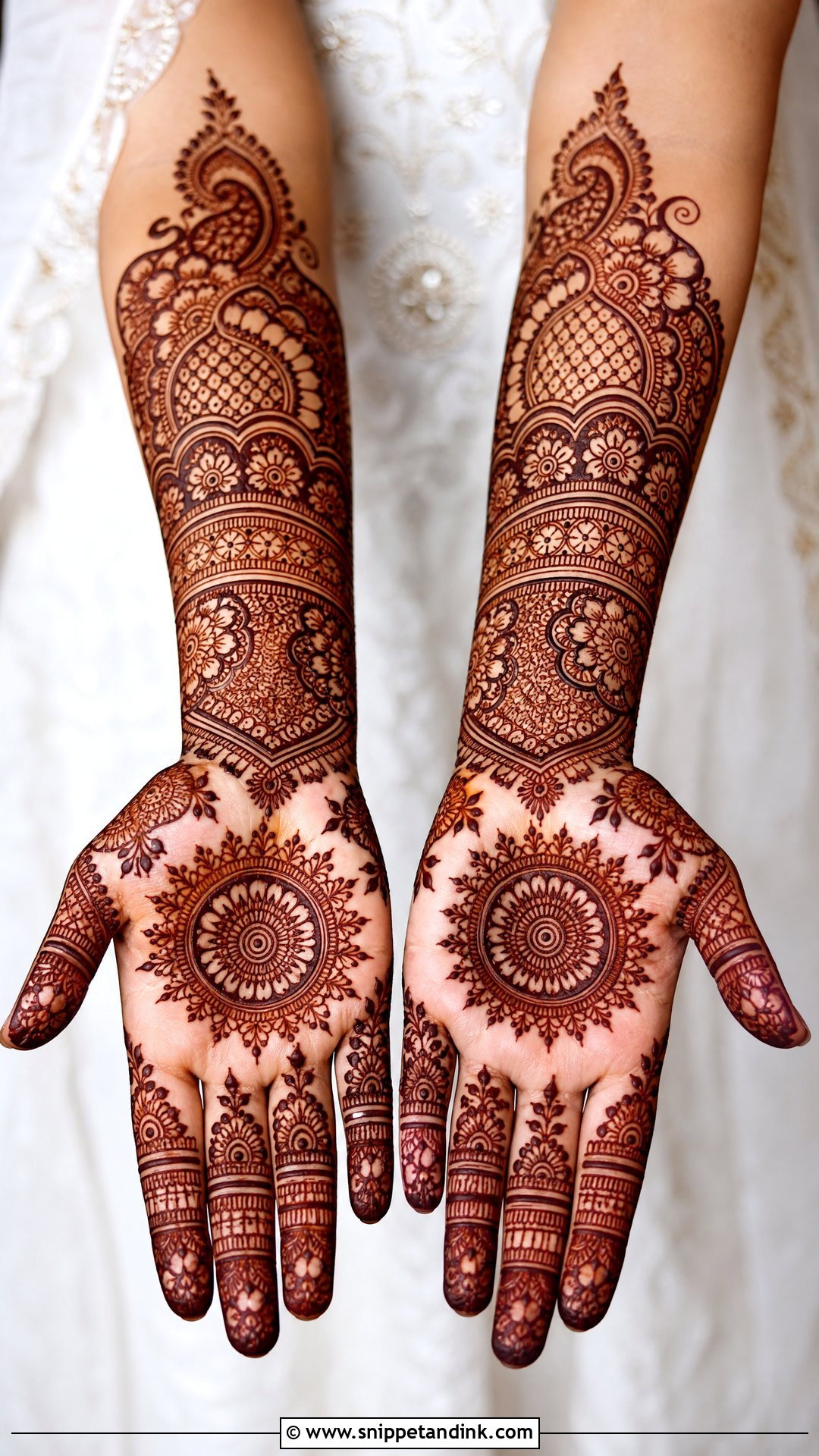
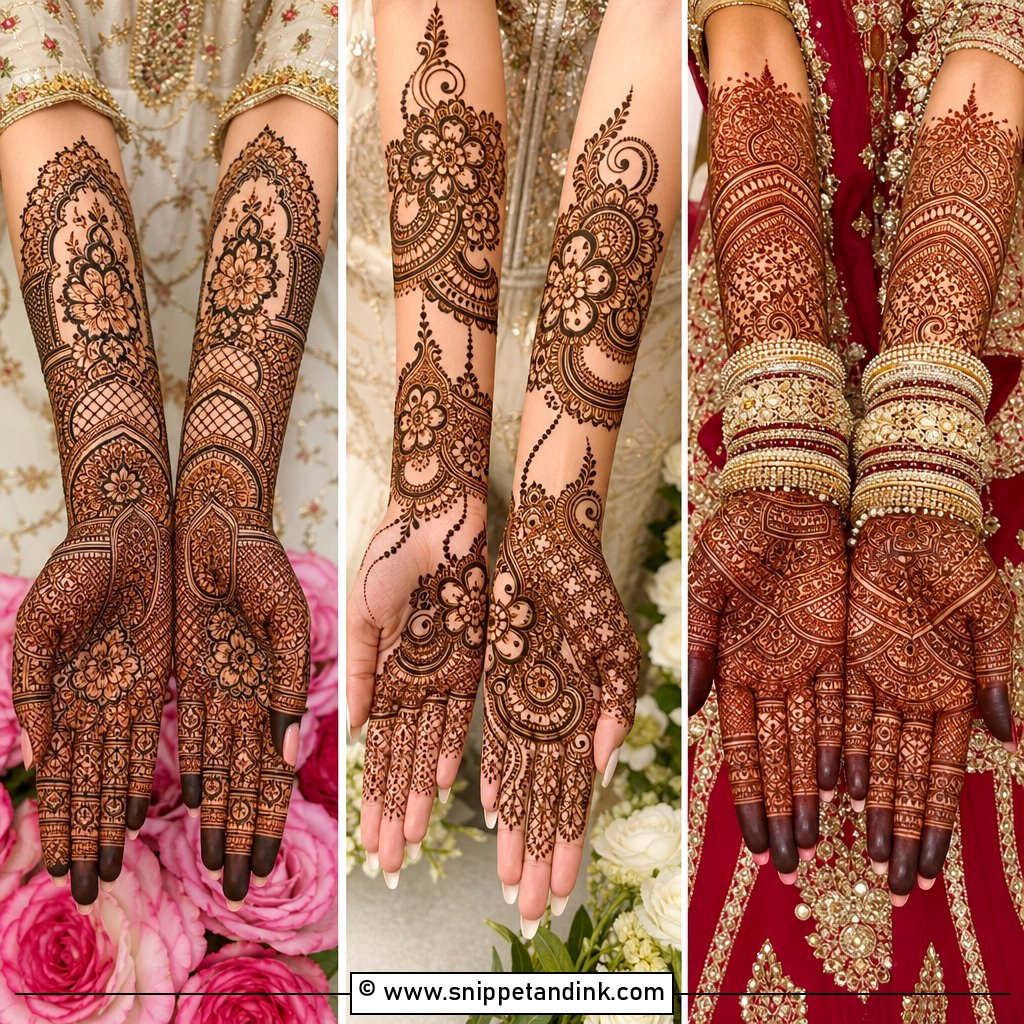
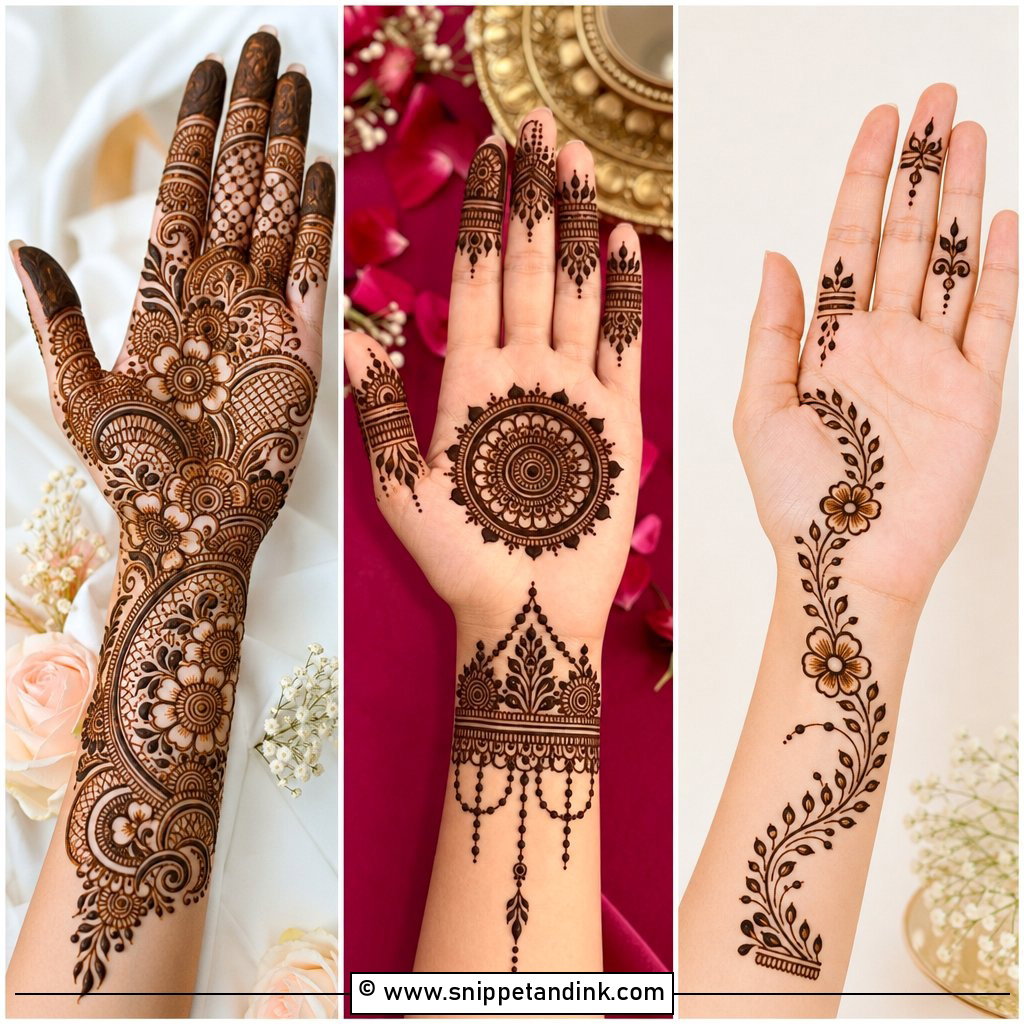
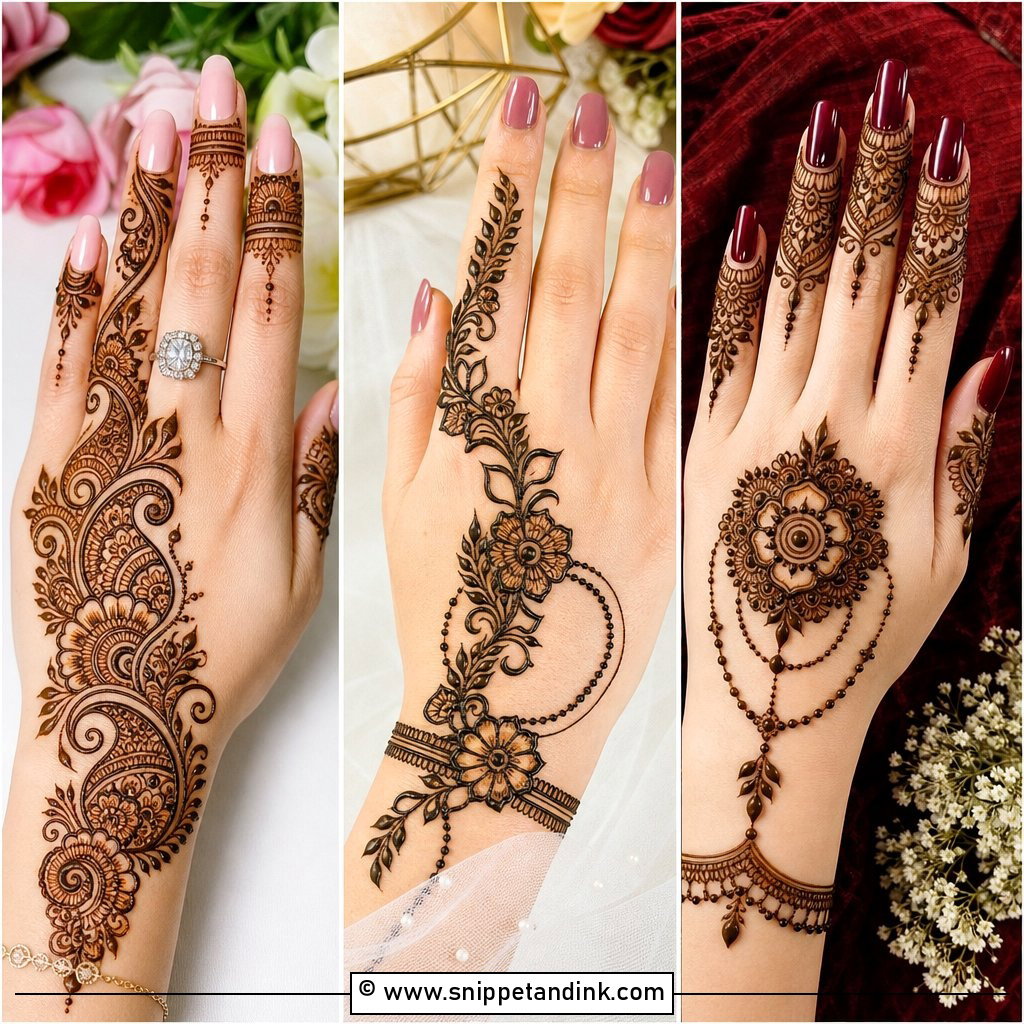
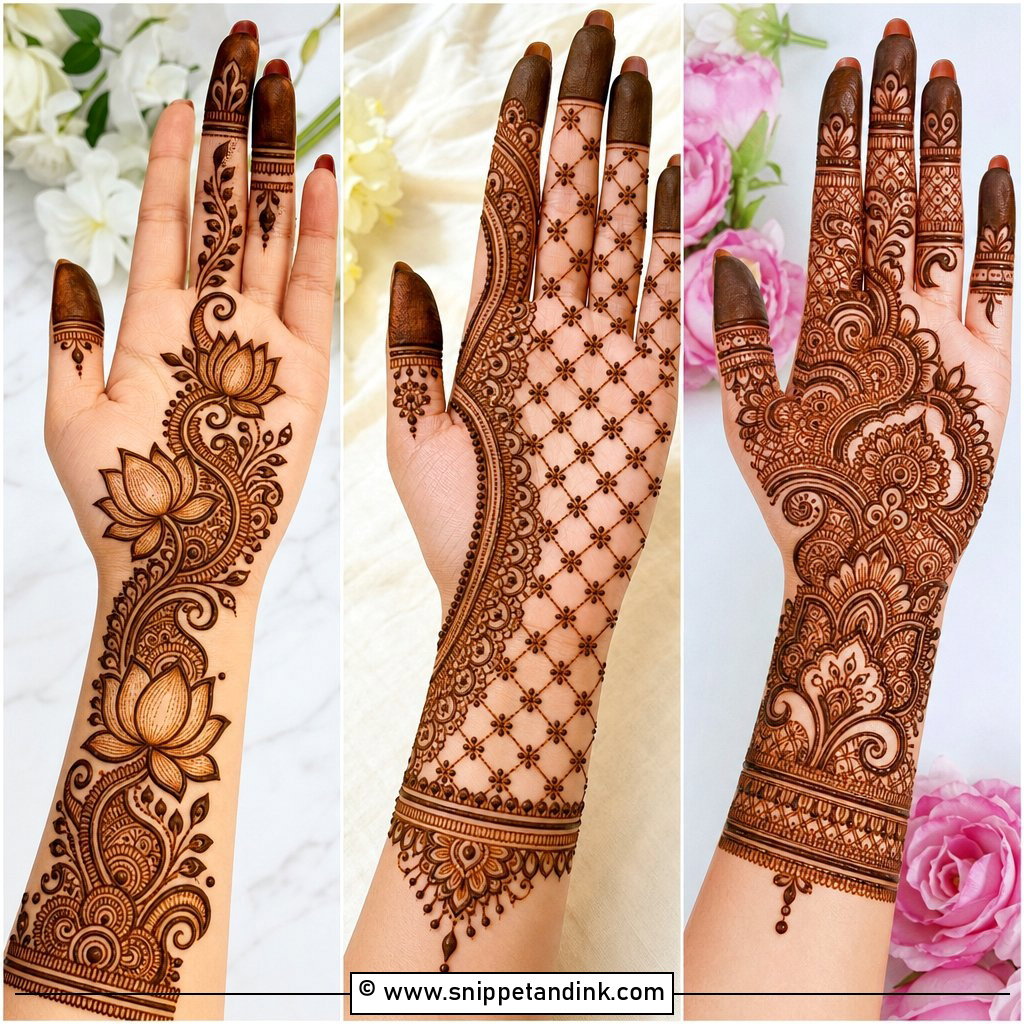
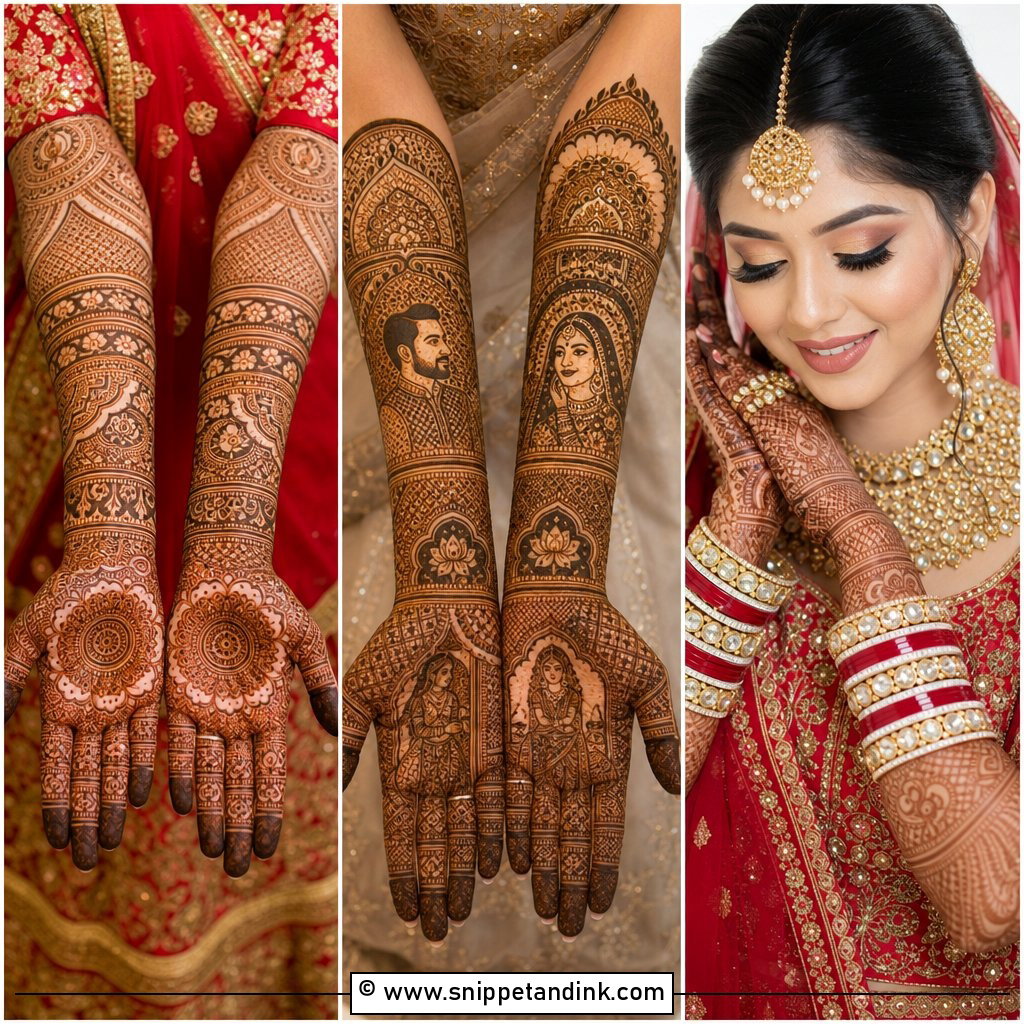
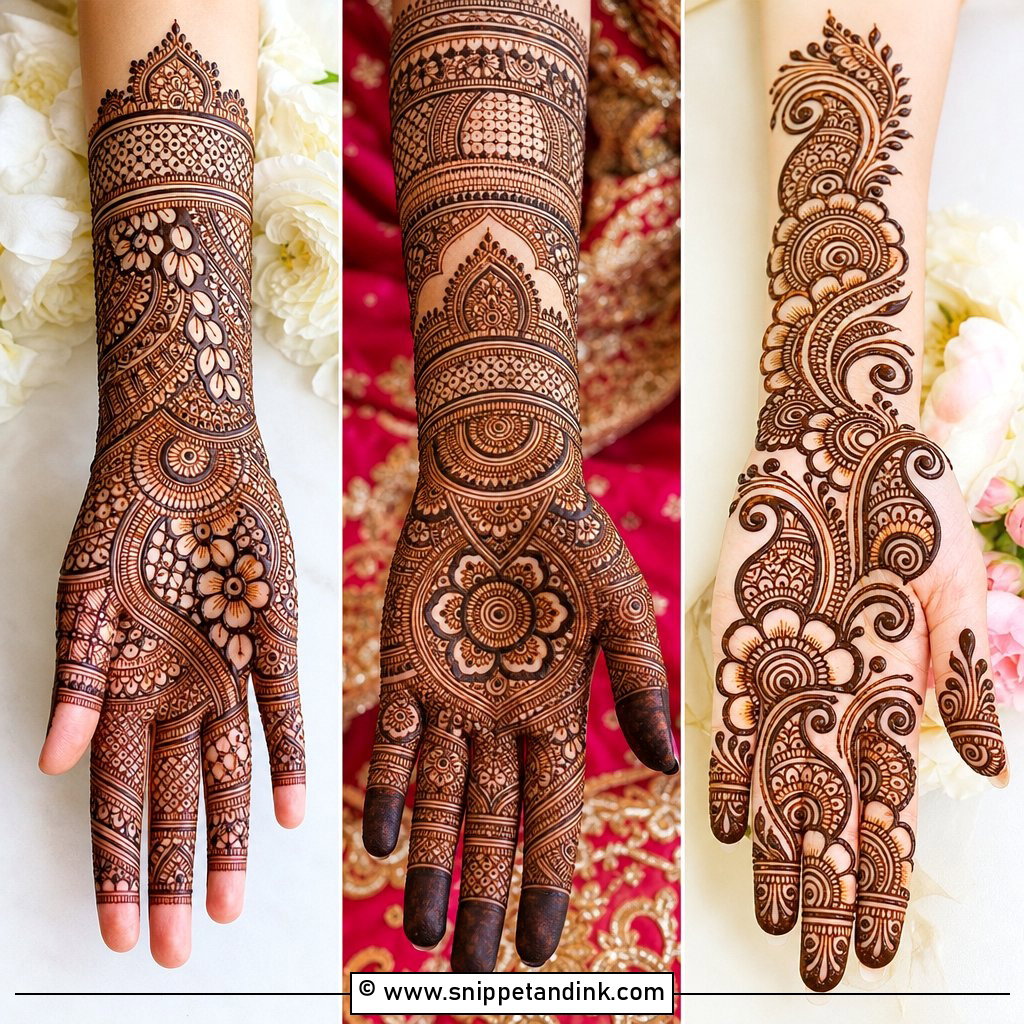
Full-hand coverage can still feel light if the gaps are planned. I start with a mandala or floral centre on the palm, then work outward into paisleys and leafy vines, keeping a finger-width of bare skin between the main motifs. The fingers get small flowers and narrow bands, and the forearm stays lighter with a bracelet border. That spacing matters more than it looks: when paste lines sit too close, they can bleed together as they dry and the stain reads as a dark blur in photos.
2. Simple Bridal Front Hand Mehndi
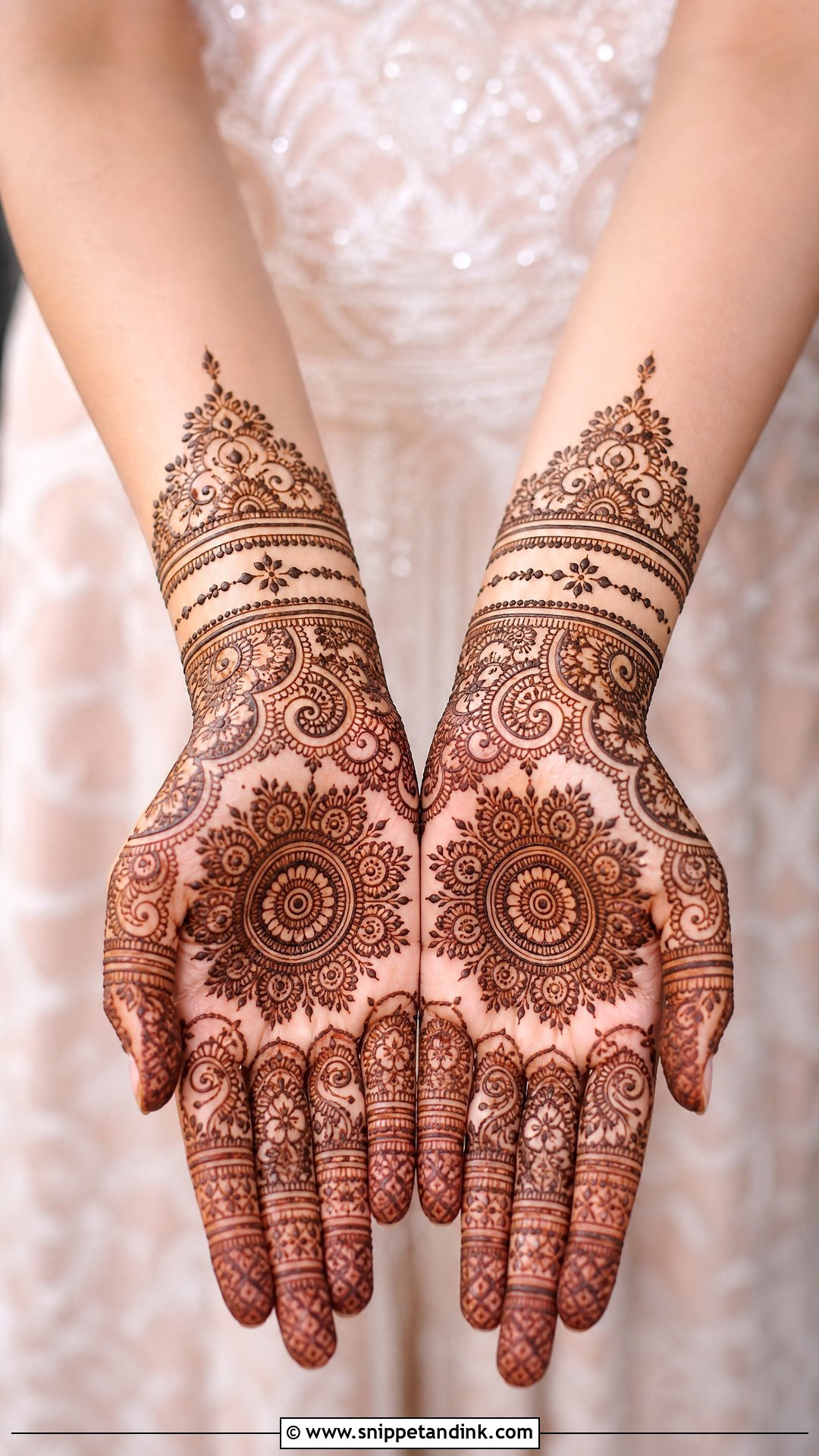
A simple bridal front hand mehndi works when the palm has one focal point and the fingers echo it. A round mandala in the centre with a floral frame and paisleys flowing toward the wrist is the layout I draw most for nikah, engagement and registry ceremonies. Palms take the darkest stain on the body, so even a fairly open palm design comes up rich. I always draw the finger patterns as a mirrored pair on both hands, because when the bride holds her hands together for photos any mismatch is obvious.
3. Simple Bridal Back Hand Mehndi
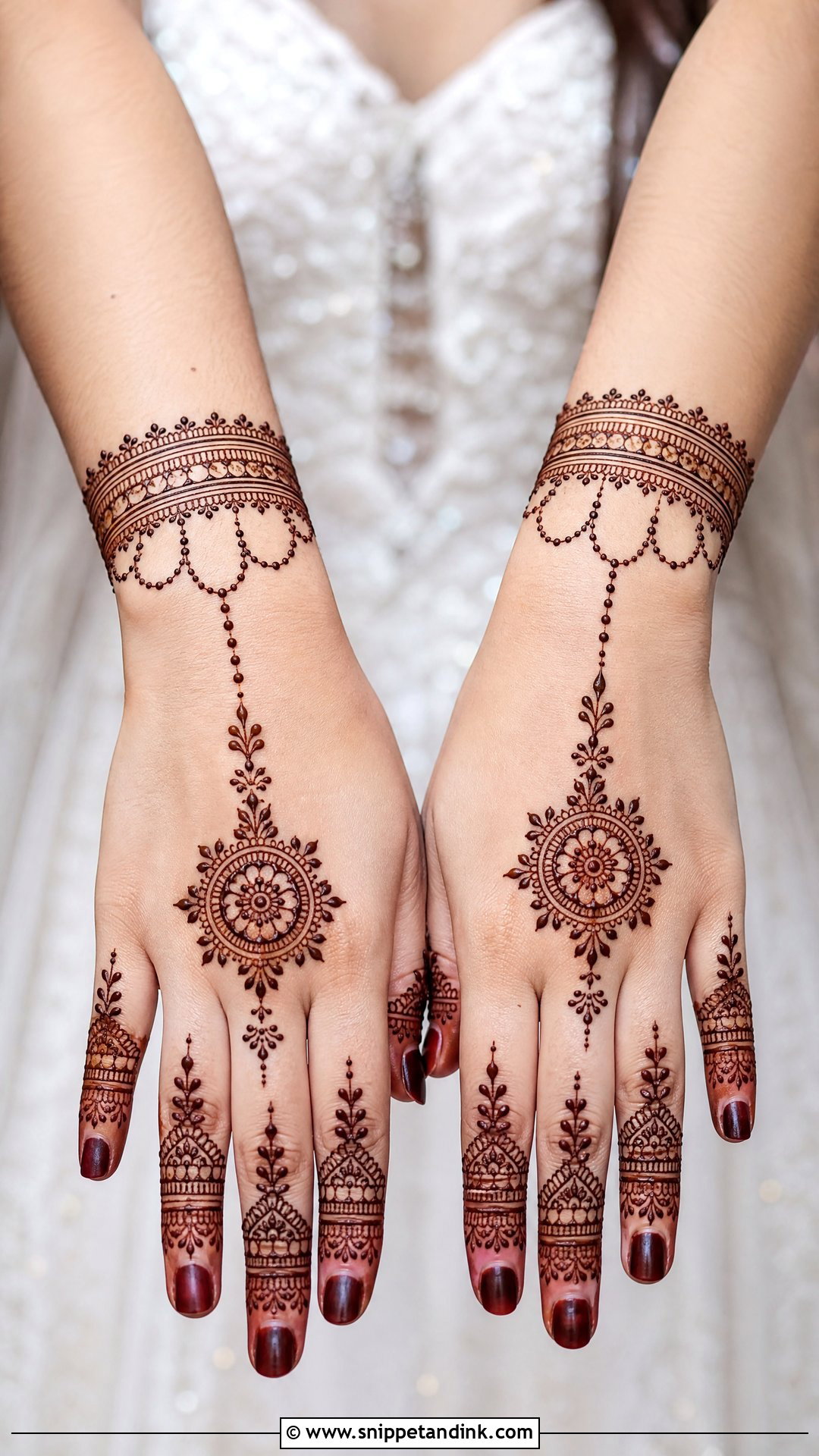
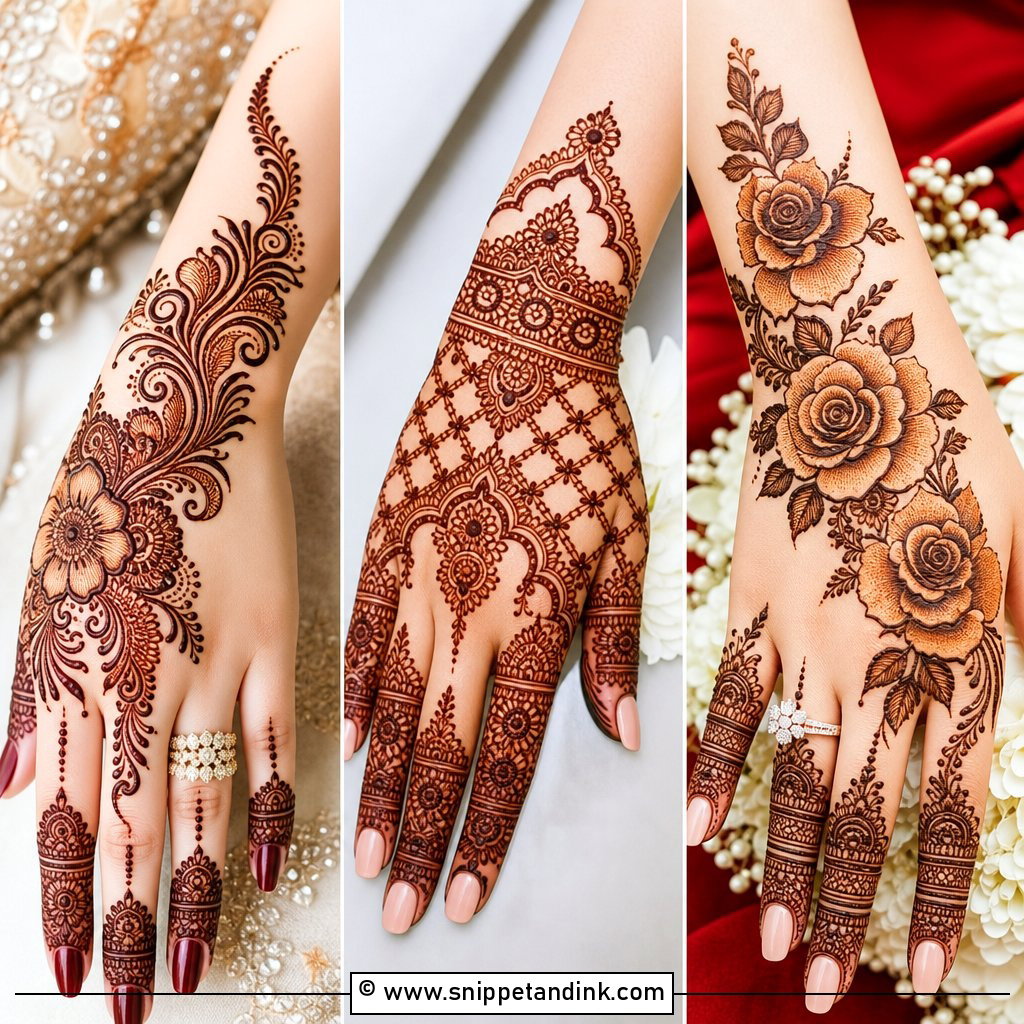
The back of the hand is what the camera sees most: ring shots, bouquet shots, bangles being slipped on. Here I’d place a central flower or mandala and connect it to the fingers with chains, dots and fine vines, finishing with a cuff at the wrist. Leave the knuckles clear. Skin creases there every time you make a fist, and lines drawn over the knuckle crack in the paste and stain unevenly. Expect the back hand to stain a shade or two lighter than the palm, which is normal.
4. Simple Bridal Arabic Mehndi
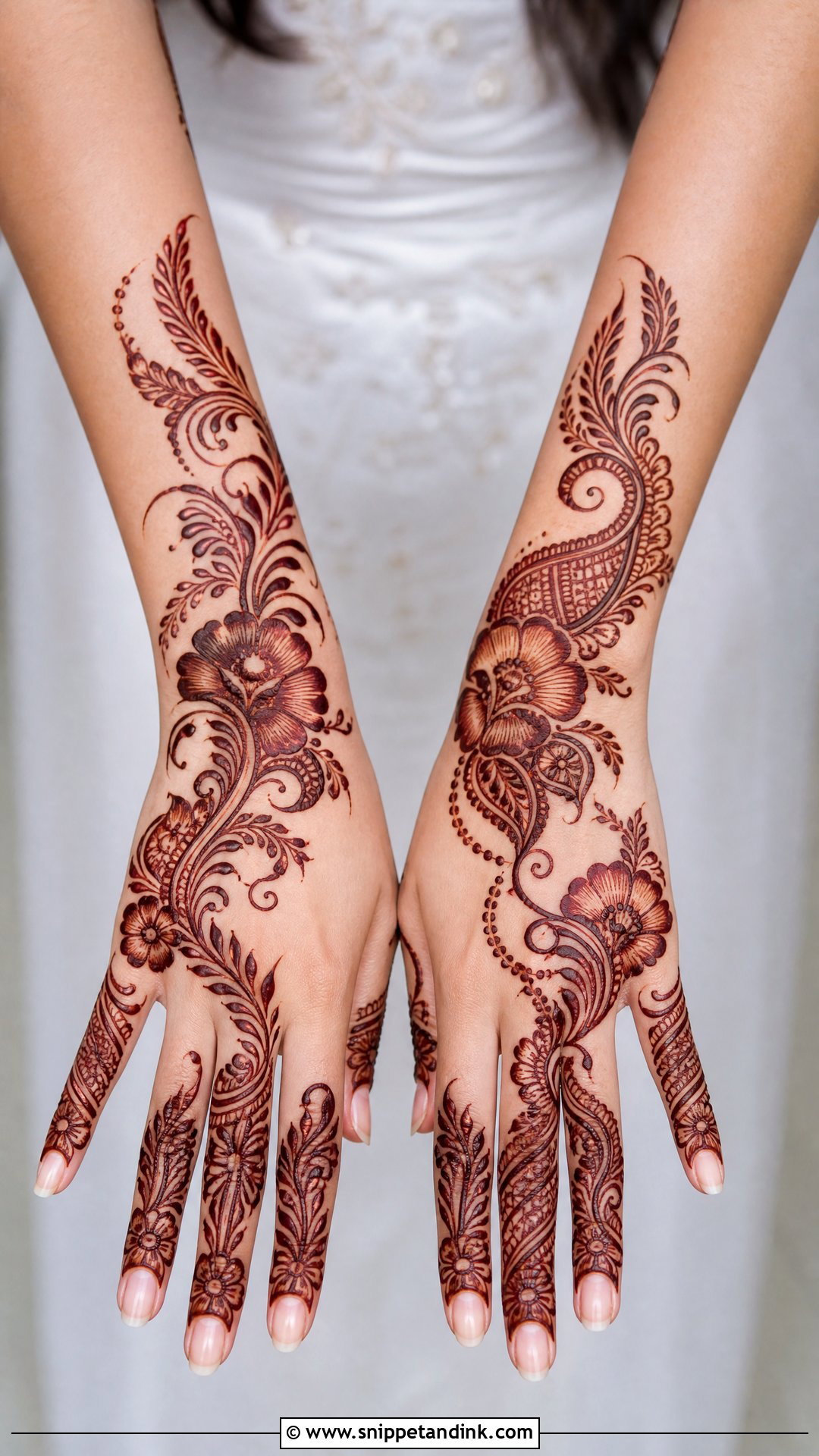
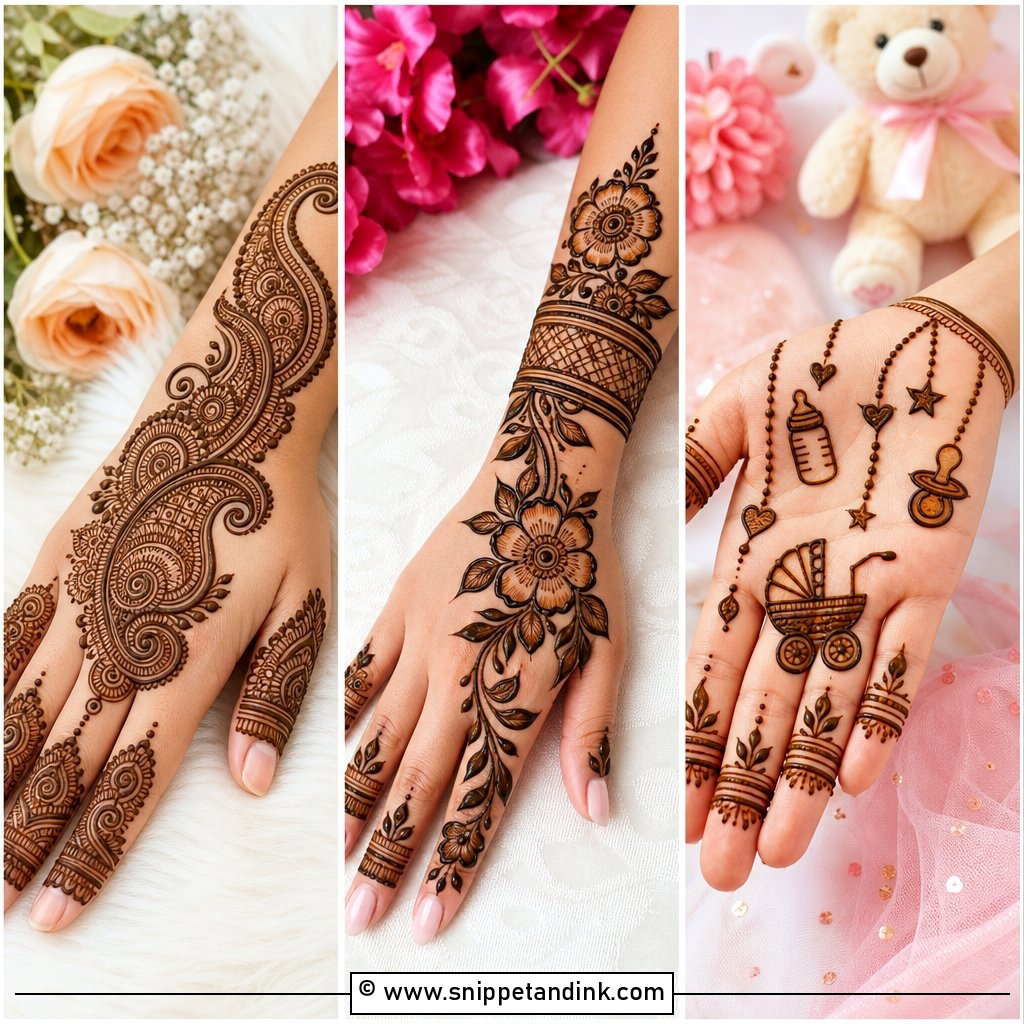
Arabic layouts are quick to apply and look generous without covering everything. Bold flowers, curved vines and shaded petals travel diagonally across the hand, leaving wide open spaces between. The shading is done by drawing a thin outline and then filling part of the petal with a lighter stroke of paste, which stains as a softer tone. For a bridal version I add richer finger detail and a short wrist extension. Rings and bangles stay visible, and the contrast between bold outlines and bare skin really shows once the stain deepens to maroon.
5. Simple Bridal Indian Mehndi
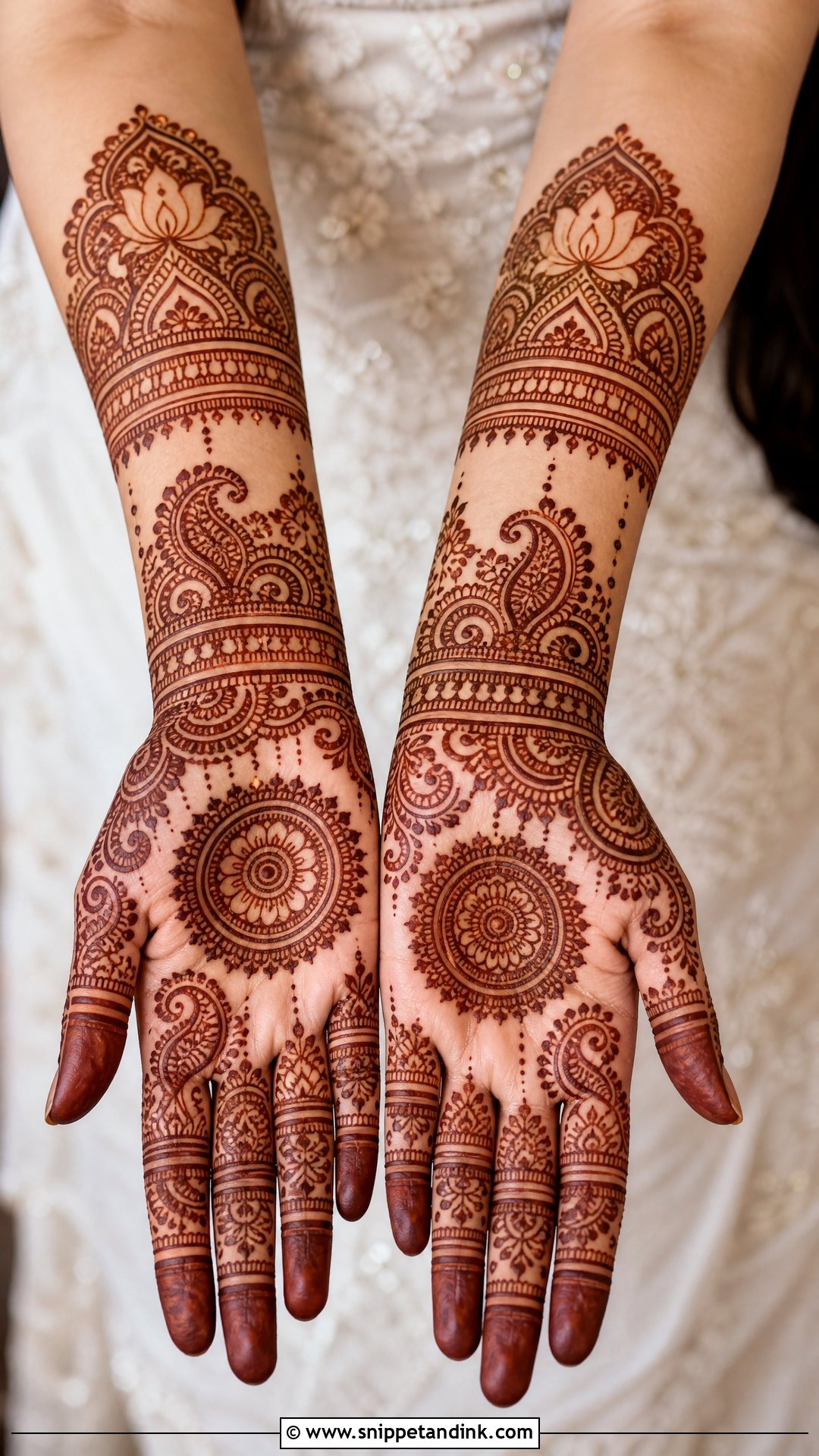
Indian bridal mehndi doesn’t have to mean fingertip-to-elbow density. I simplify it by using larger paisleys, lotus and mango shapes and small mandalas, with clean filler lines instead of the finest mesh. A neat cuff finishes the wrist. If you want your partner’s initials hidden somewhere, tell me before I start, so I can leave a space for them inside a petal rather than squeezing them in later. Sticking to two or three repeated motifs keeps the hand organised.
6. Simple Bridal Indo Arabic Mehndi
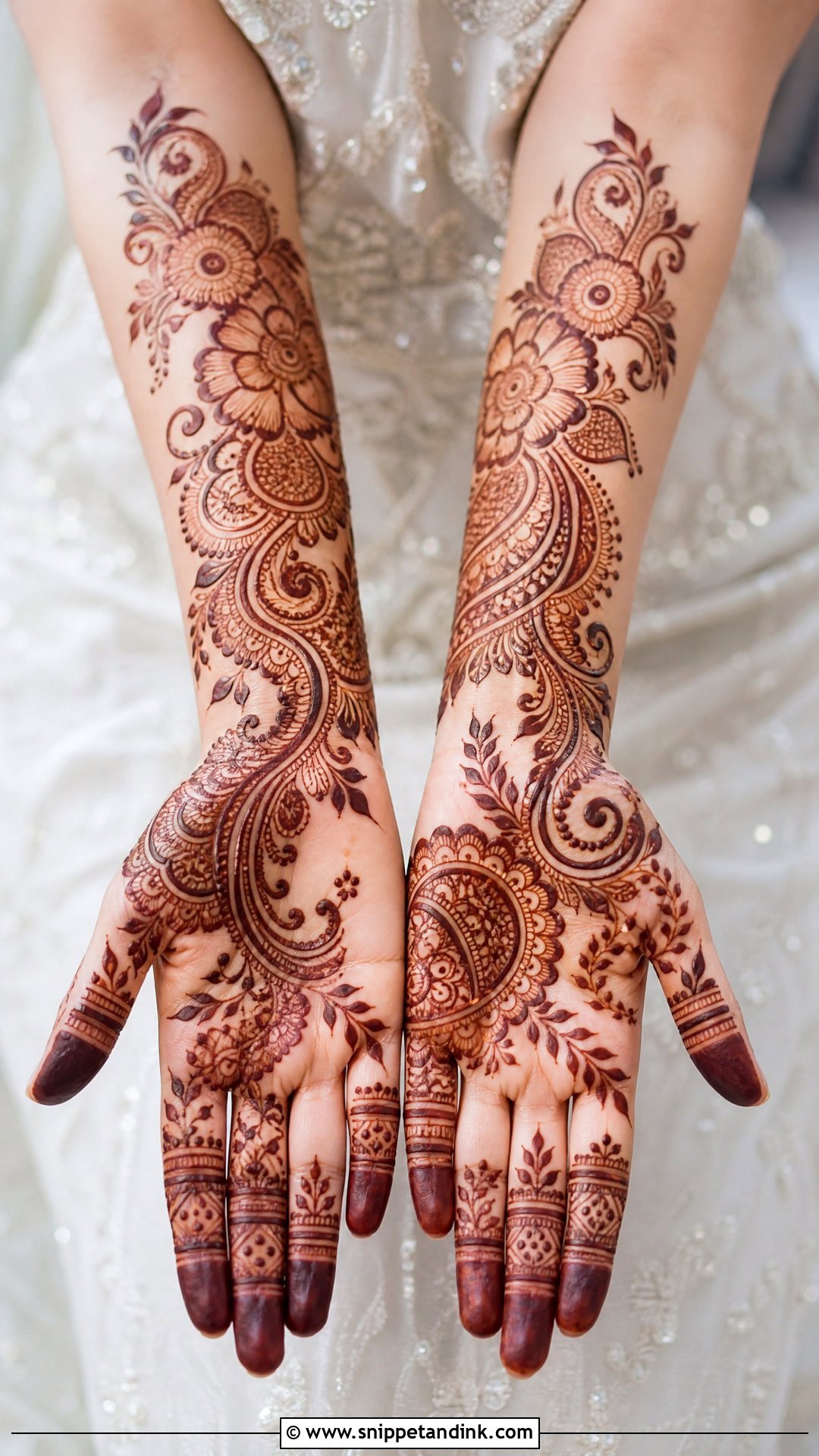
Simple bridal Indo Arabic mehndi mixes the bold, open flow of Arabic work with Indian dots, fine lines and shaded leaves. I usually let the Arabic florals run down one side of the hand and use Indian detailing to fill only the areas they leave behind. It’s a good compromise if you can’t decide between traditional and modern. Because the fill is selective, the sitting time is shorter than a full Indian design, which helps on a busy mehndi night.
7. Simple Bridal Mandala Mehndi
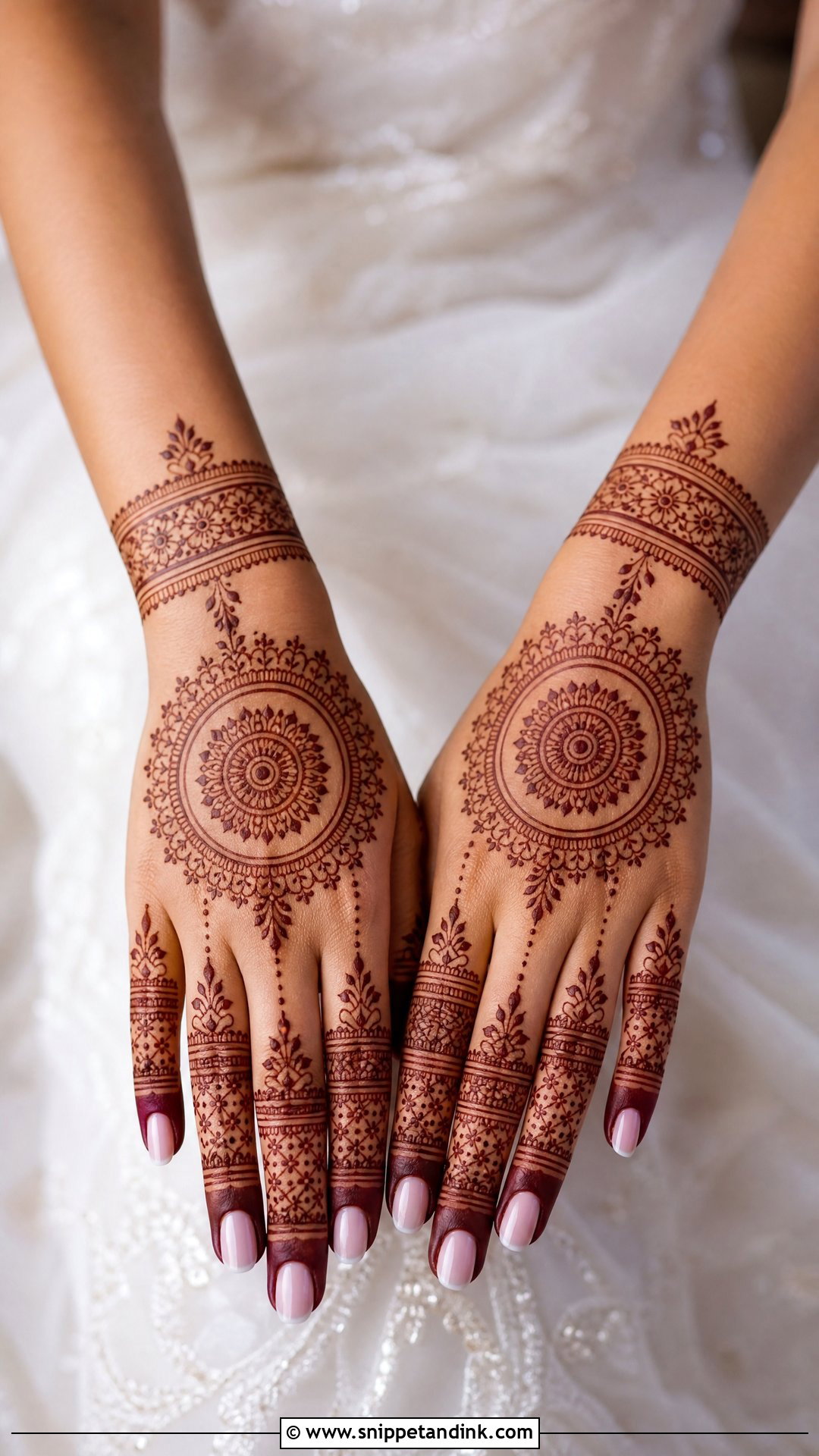
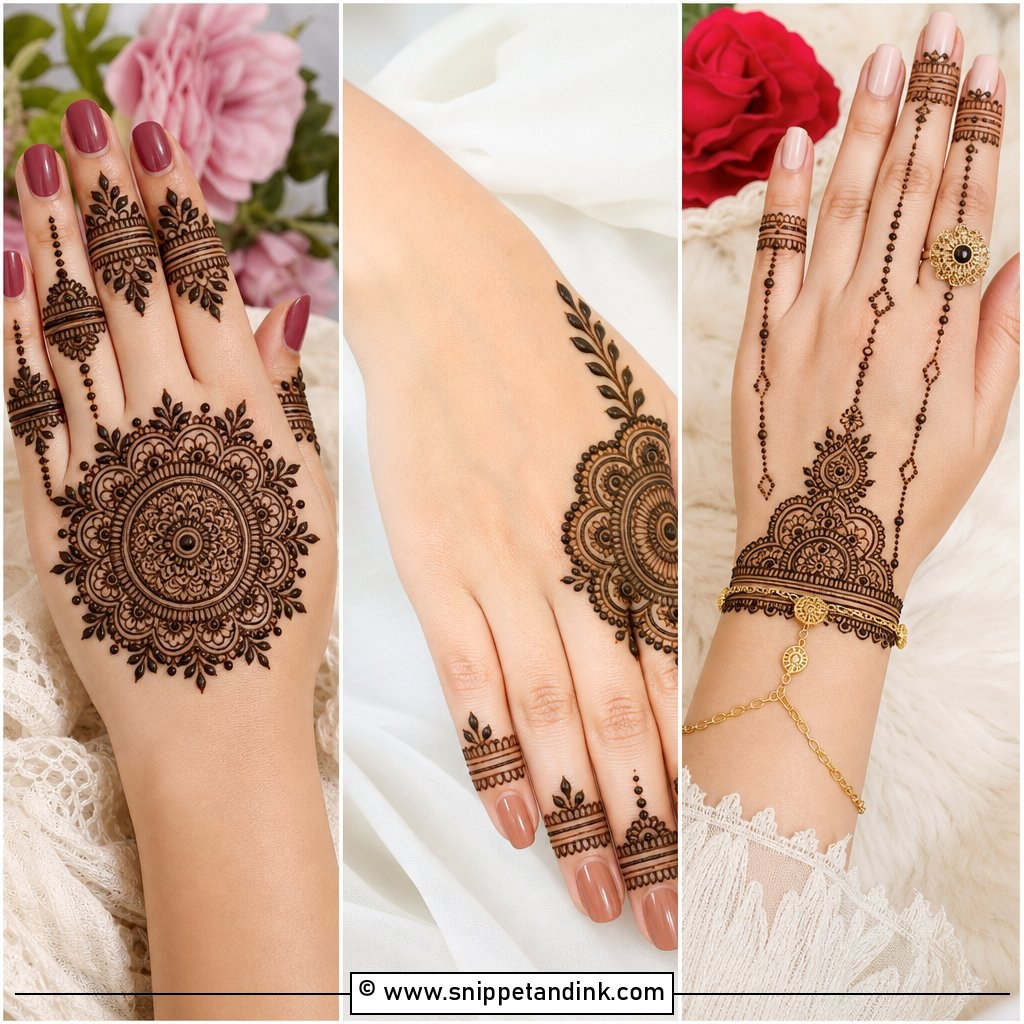
Mandalas look easy and are the hardest thing to get perfectly round on a curved palm. I mark a tiny centre dot first and build the rings outward in short arcs, turning the bride’s hand rather than my wrist so each ring stays even. Around it go small flowers, dots and curved lines, with half-filled fingers and a simple bracelet at the wrist. The mandala scales well to small or broad hands. Put the finest detail inside the circle and keep the rest open.
8. Simple Bridal Floral Mehndi
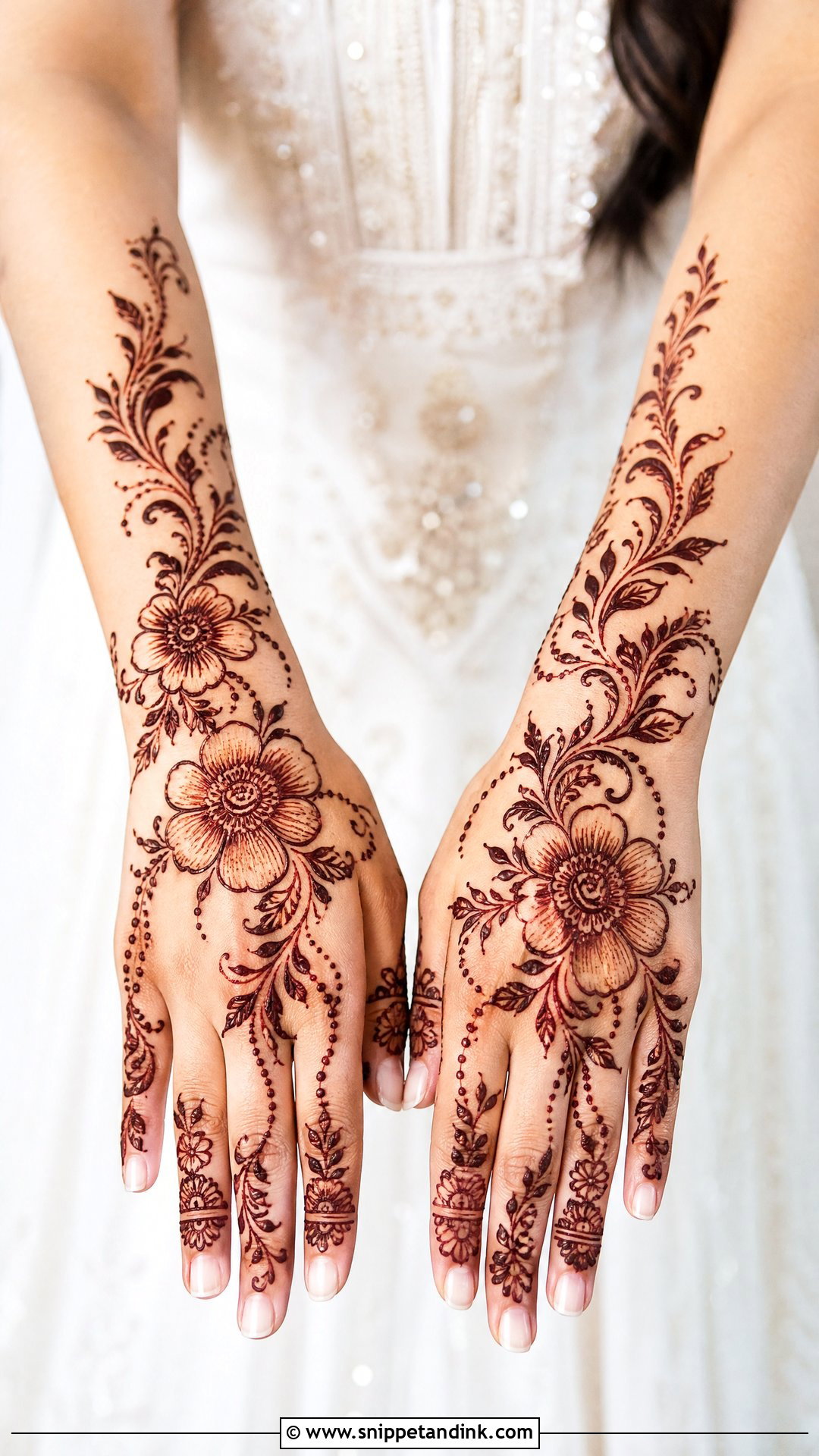
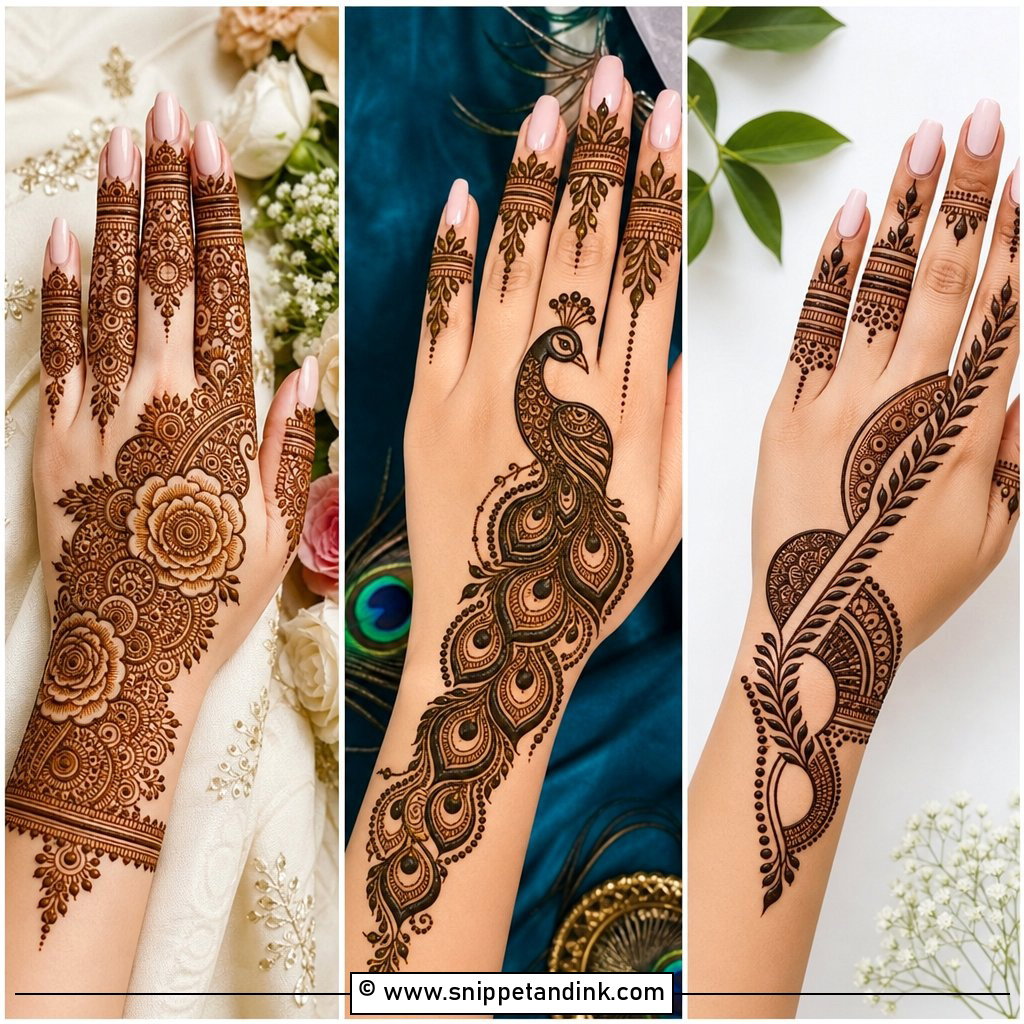
Floral mehndi suits pastel outfits and lighter events, and it’s one of the most forgiving styles to wear. Large blooms sit on the palm, smaller flowers trail toward the wrist and fingers, and shaded petals with dotted outlines give it a bridal finish. It can look full while still feeling open. One caution: tiny flowers drawn very close together can fill in as the stain darkens, so I keep the smallest blooms at least a few millimetres apart.
9. Simple Bridal Paisley Mehndi
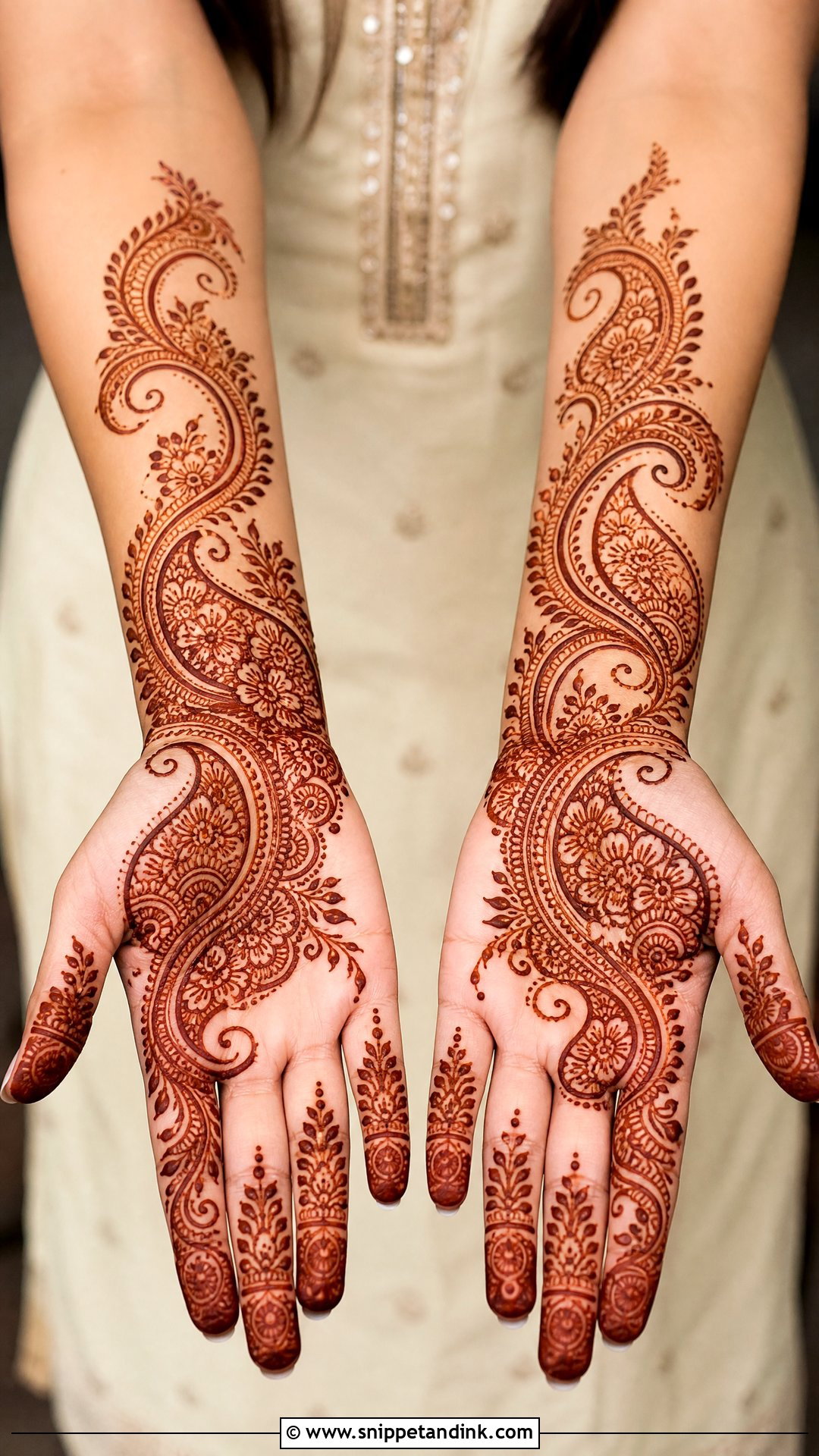
Paisleys carry movement on their own, which is why I lean on them for a traditional look with less work. They can flow from palm to wrist or travel diagonally across the back hand, with tiny flowers, leaf strokes or curved lines inside each one. Matching mini paisleys on the fingers tie it together. Keep them medium-sized. Very small paisleys stuffed with filler lose their shape once stained, while medium ones stay readable in photos with Indian and Pakistani bridal outfits.
10. Simple Bridal Jaali Mehndi
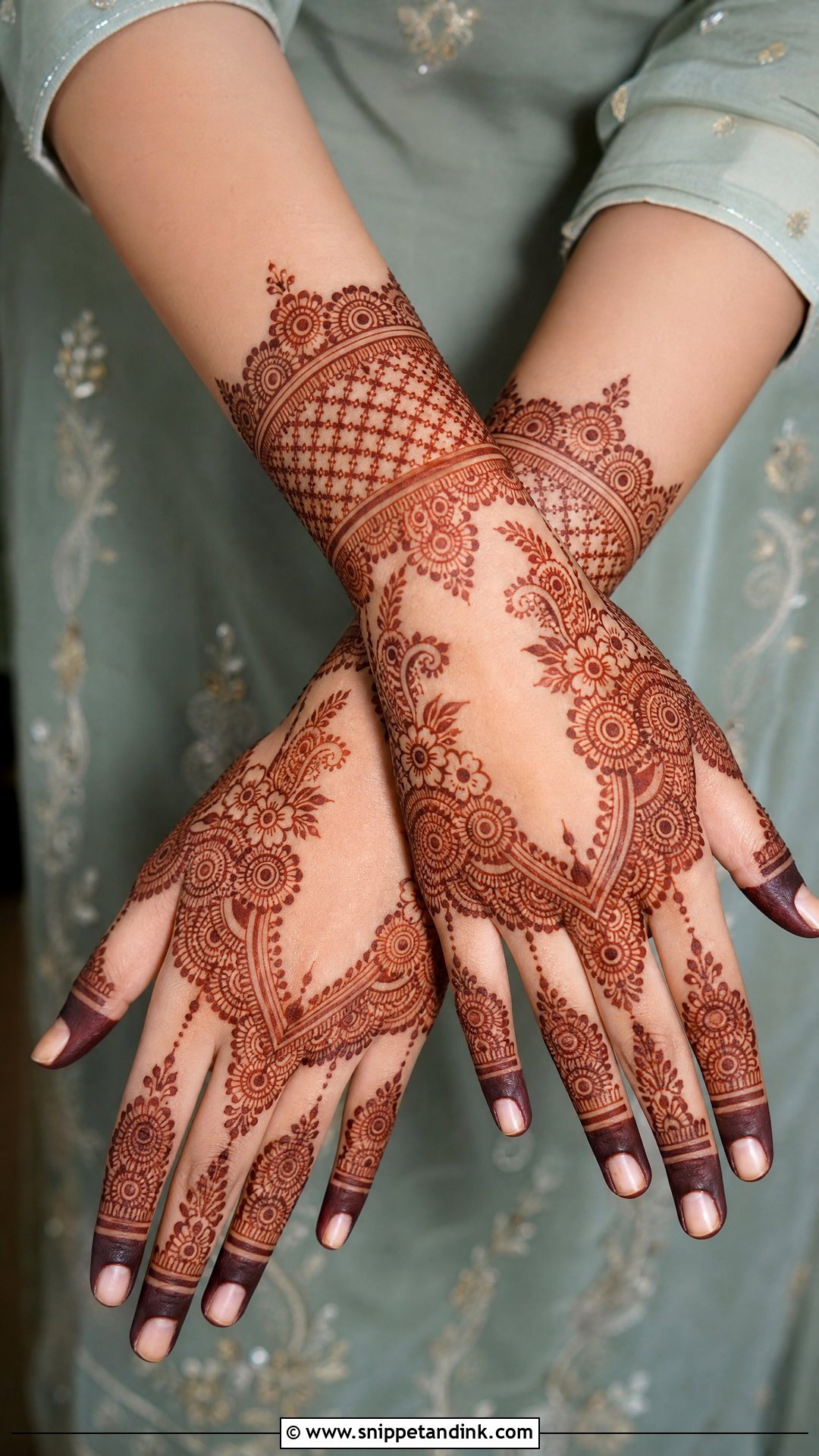
Jaali is the net or lattice pattern, and it needs the steadiest cone work of anything here. Each crossing line has to be the same thickness, or the mesh looks wobbly once it stains. I use it as a panel, on one side of the palm, across the back hand or near the wrist like a strip of lace, and surround it with florals or paisleys. Using it everywhere takes away the contrast that makes it look delicate. It looks best in close-up shots.
11. Simple Bridal Finger Mehndi
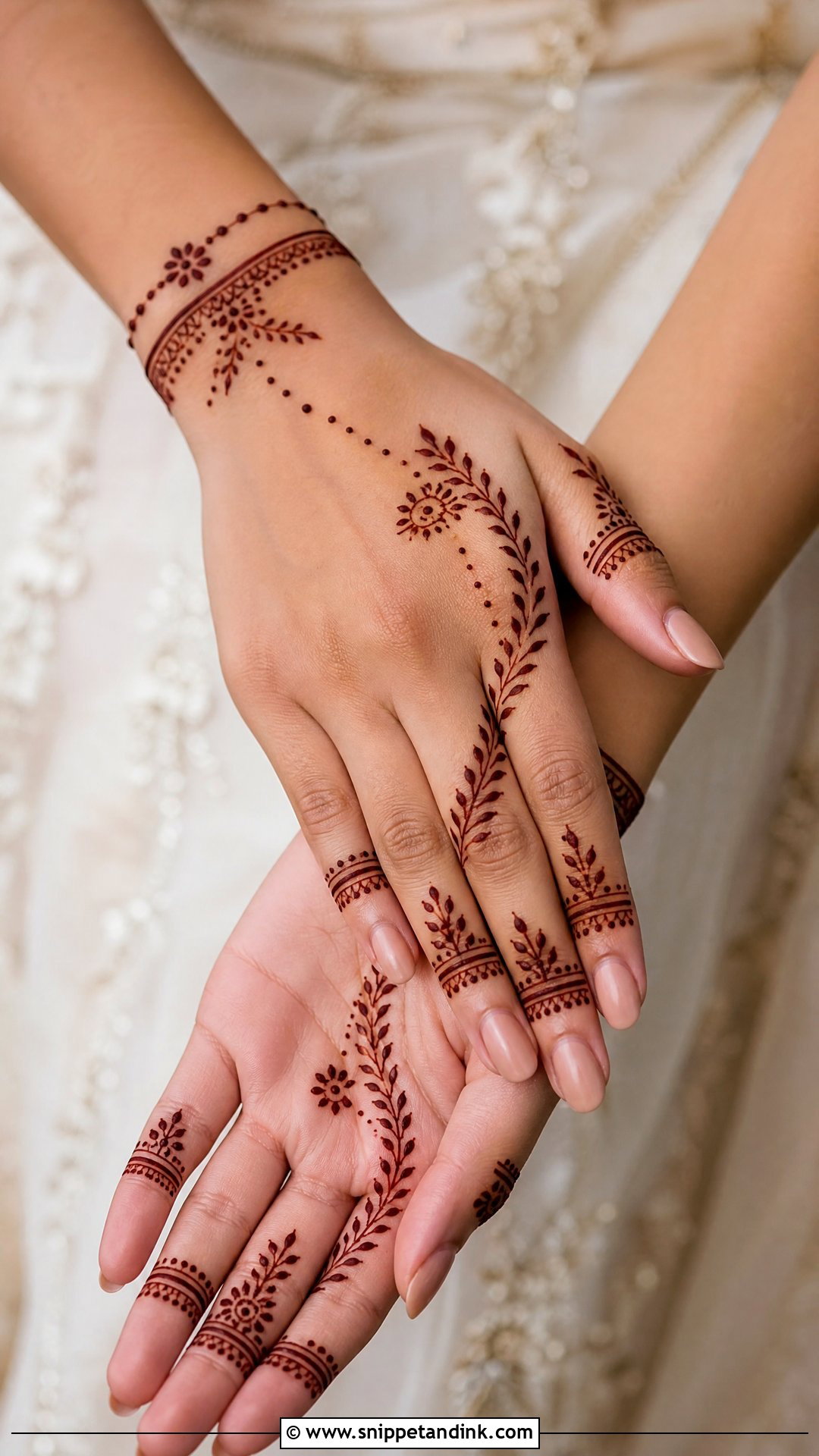
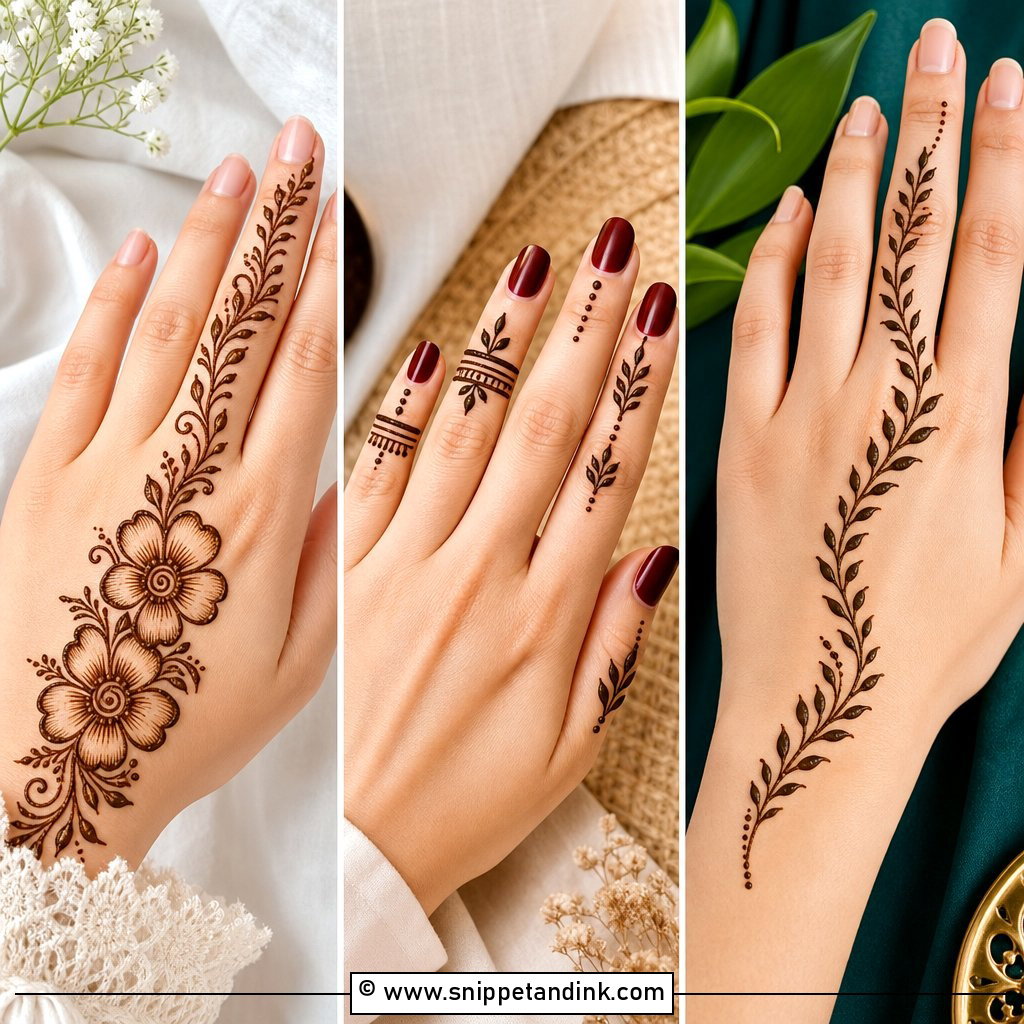
Simple bridal finger mehndi puts the focus on rings, nails and hand jewelry. The palm stays light or carries a small central motif, while each finger gets tiny florals, bands, dots and fine linework. Filled fingertips stain very dark, almost black-brown, so decide whether you want that bold tip or an open one. It suits civil ceremonies and pre-wedding events. A small wrist bracelet stops the hand looking unfinished.
12. Simple Bridal Bracelet Mehndi
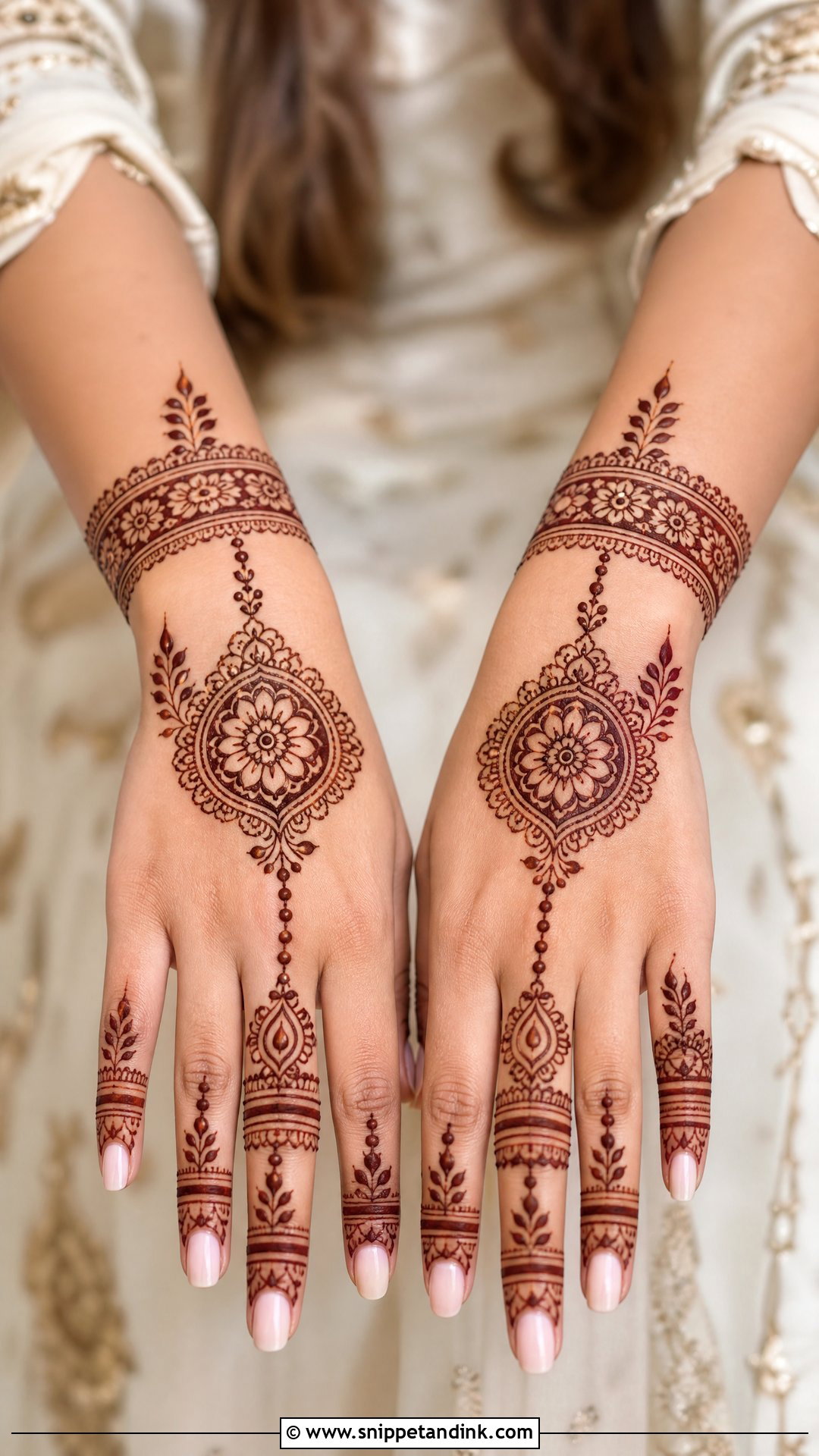
Bracelet mehndi draws jewelry onto the skin: a wrist cuff, chain-like lines, dots and a central motif on the back hand linked to one or more fingers, much like a hathphool. It works best on the back of the hand, next to real rings and bangles. The connecting chains need a very fine cone tip and even pressure. If the lines thicken halfway, it reads as messy rather than delicate, so this is a design where the artist’s line control shows.
13. Simple Bridal Minimal Mehndi
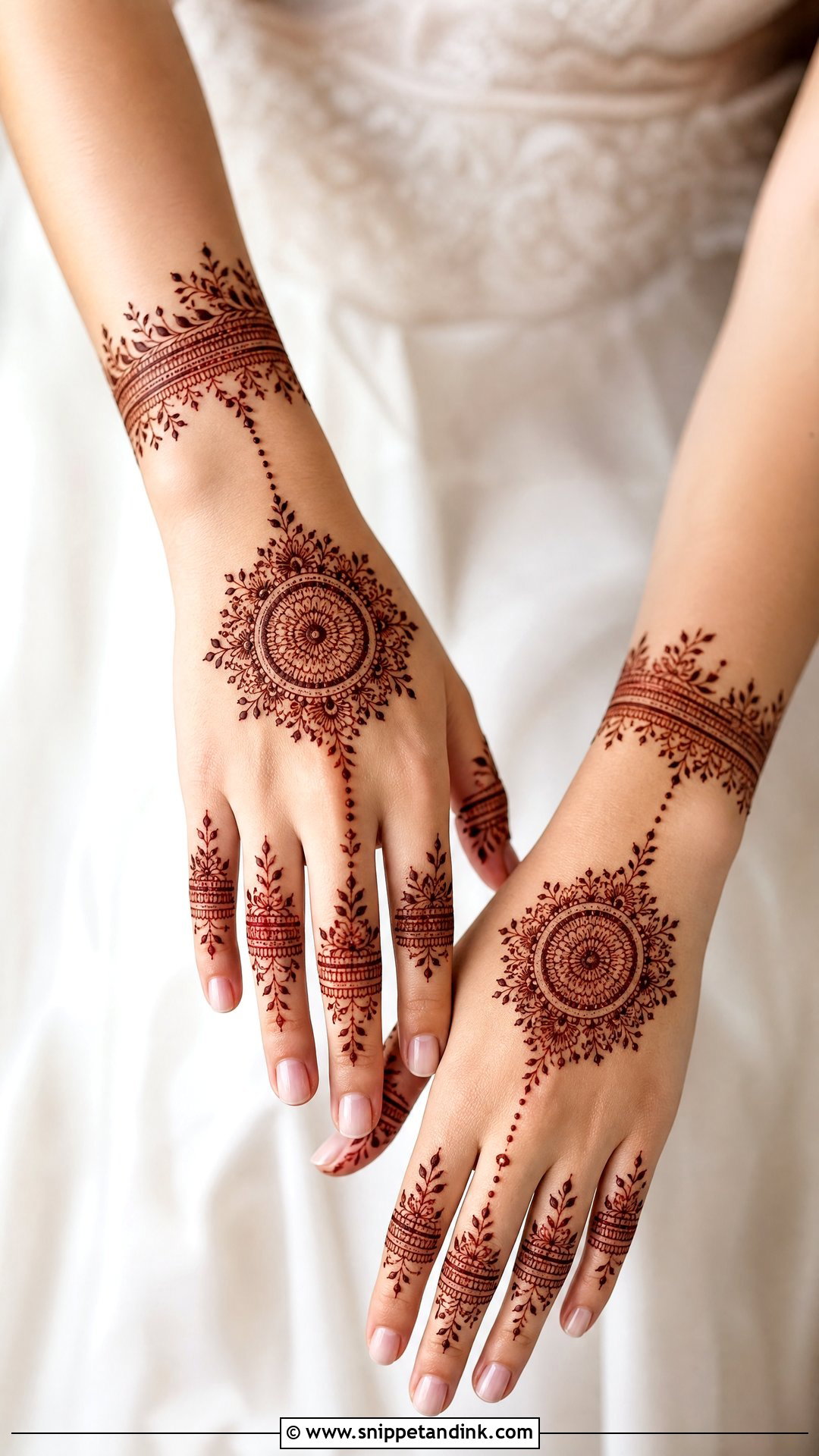
Minimal bridal mehndi has nowhere to hide. A small mandala, a leafy wrist border, neat finger bands and a few florals can be enough, but every line must be clean and every dot placed on purpose. I sketch the layout in my head across both hands before starting, because with so few elements any imbalance stands out. It suits destination, courthouse and modern weddings. Pair it with fresh nails, simple rings and a good dark stain, which matters more here than in a busy design.
14. Simple Bridal Half Hand Mehndi
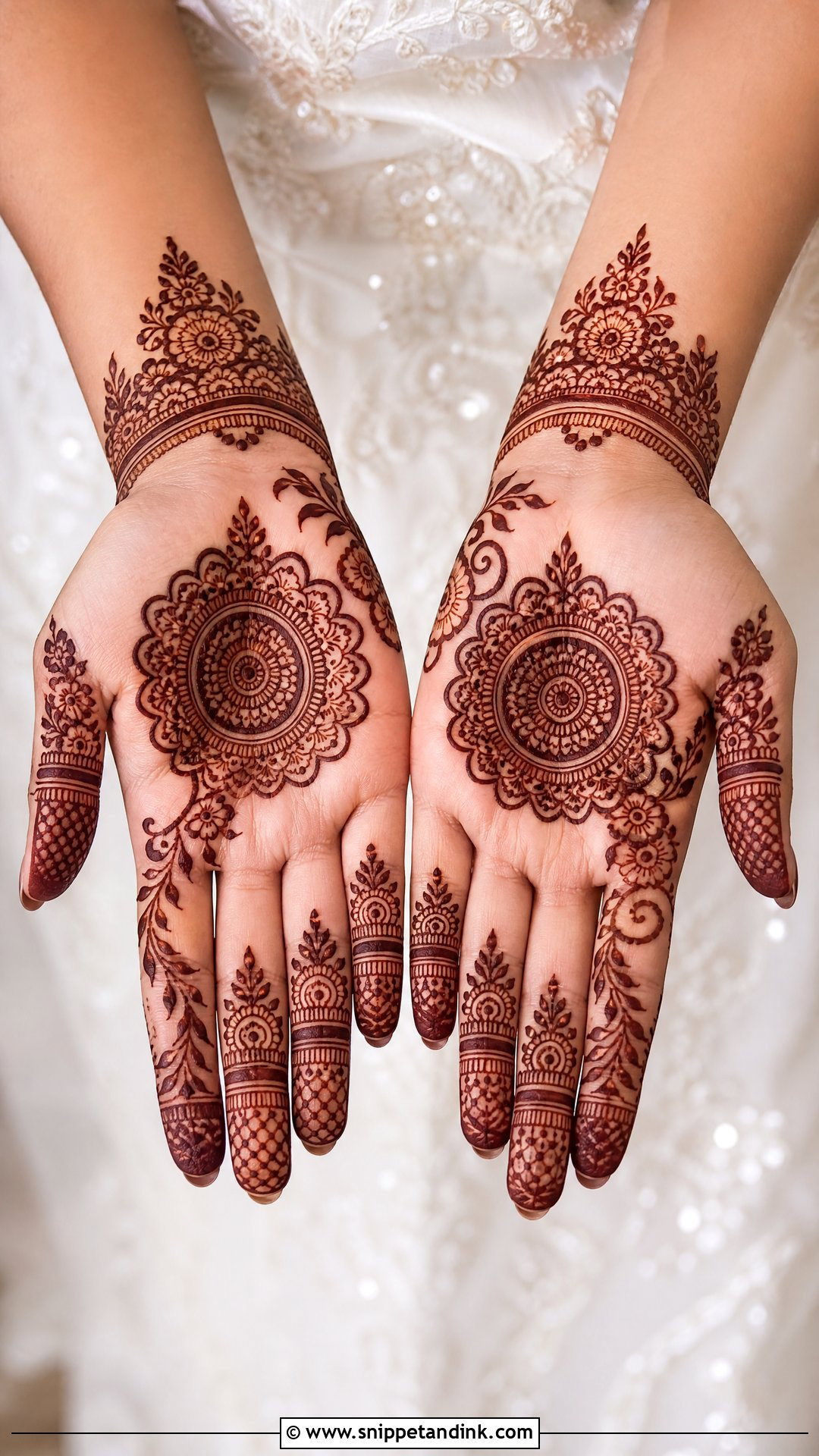
A half-hand design covers the fingers, palm and wrist and stops before the mid-forearm. It’s comfortable and much quicker to sit for than a full design, so it suits warm weather and smaller ceremonies. The ending is what makes or breaks it. A design that simply fades out at the wrist looks unfinished, so I close it with a definite edge: a cuff, a scalloped border or a leafy band. Mandala centres, floral trails and paisleys all fit inside.


15. Simple Bridal Palm Mehndi
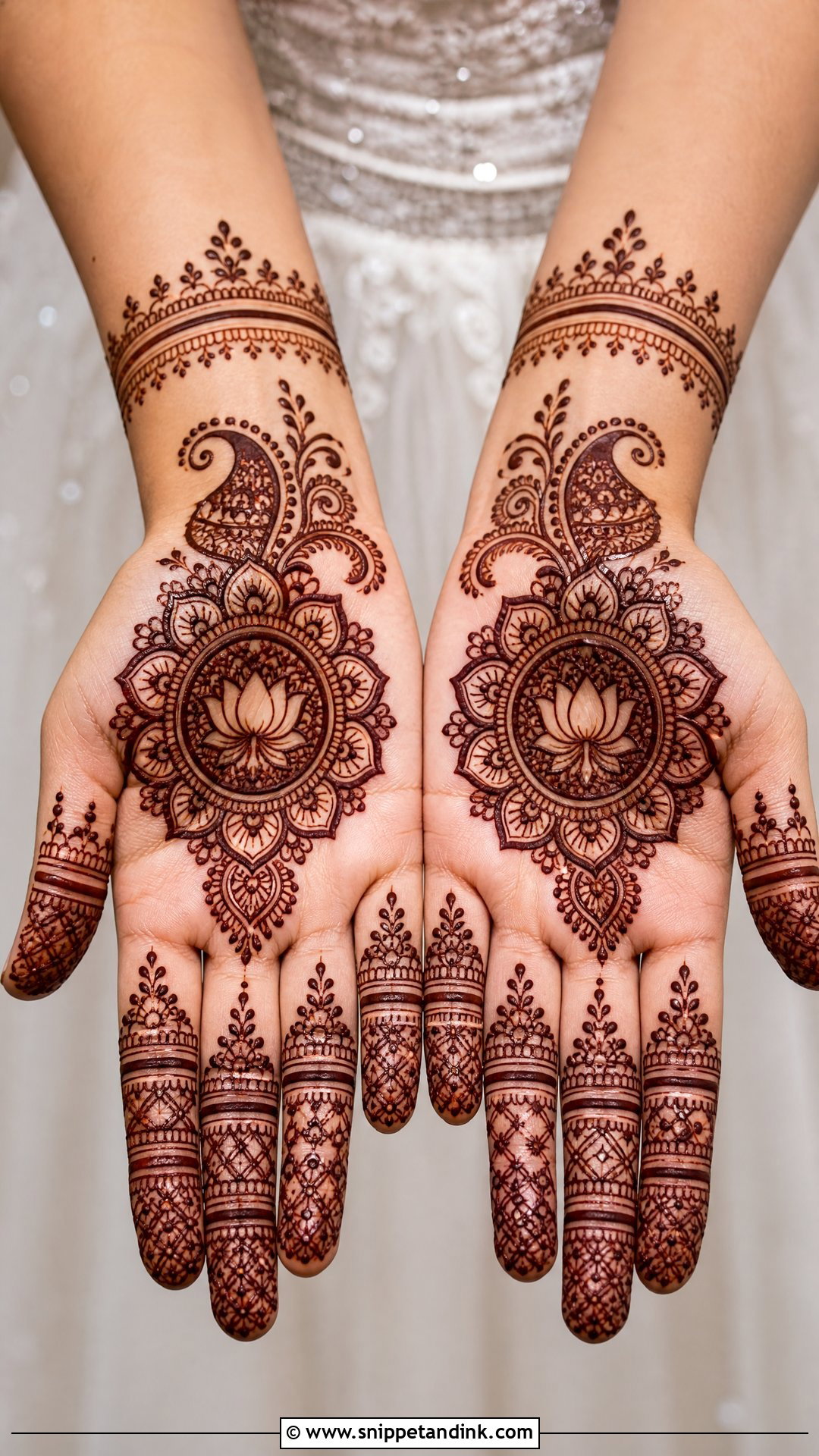
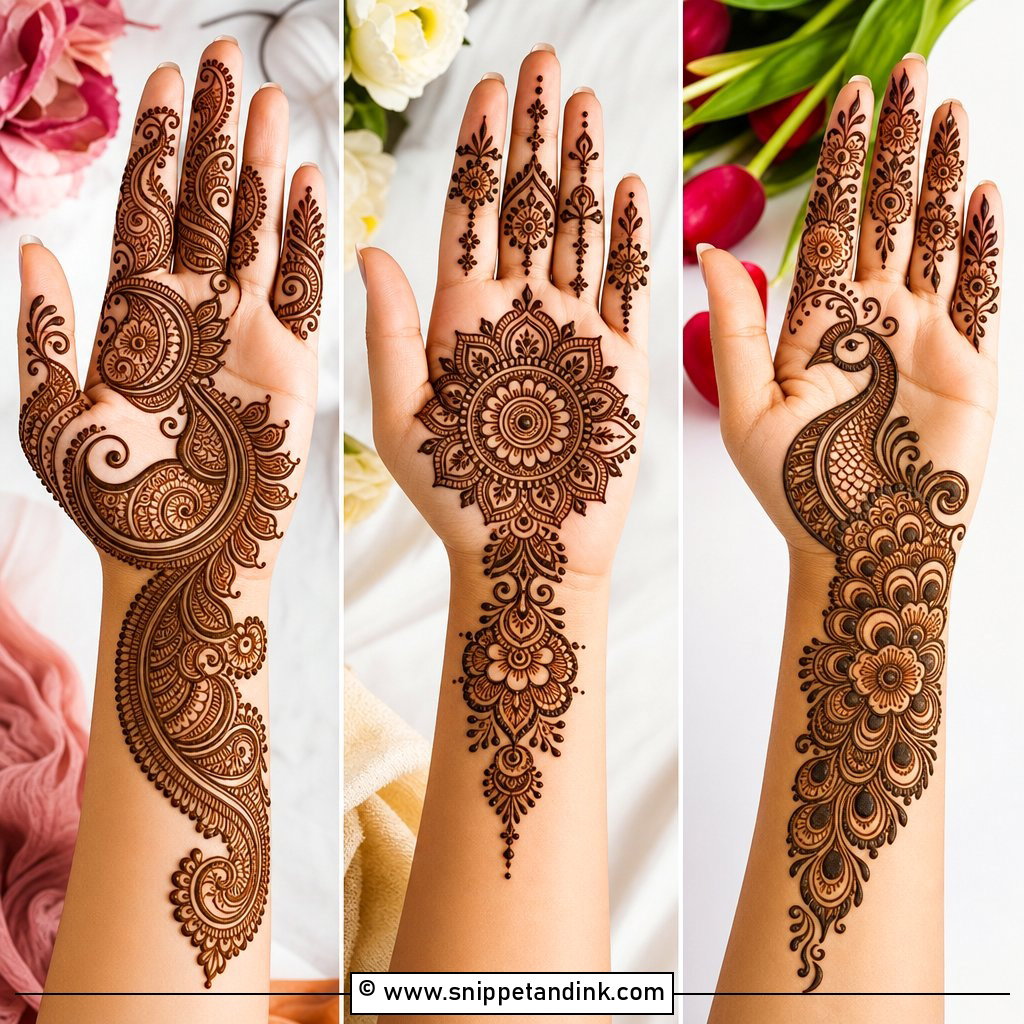
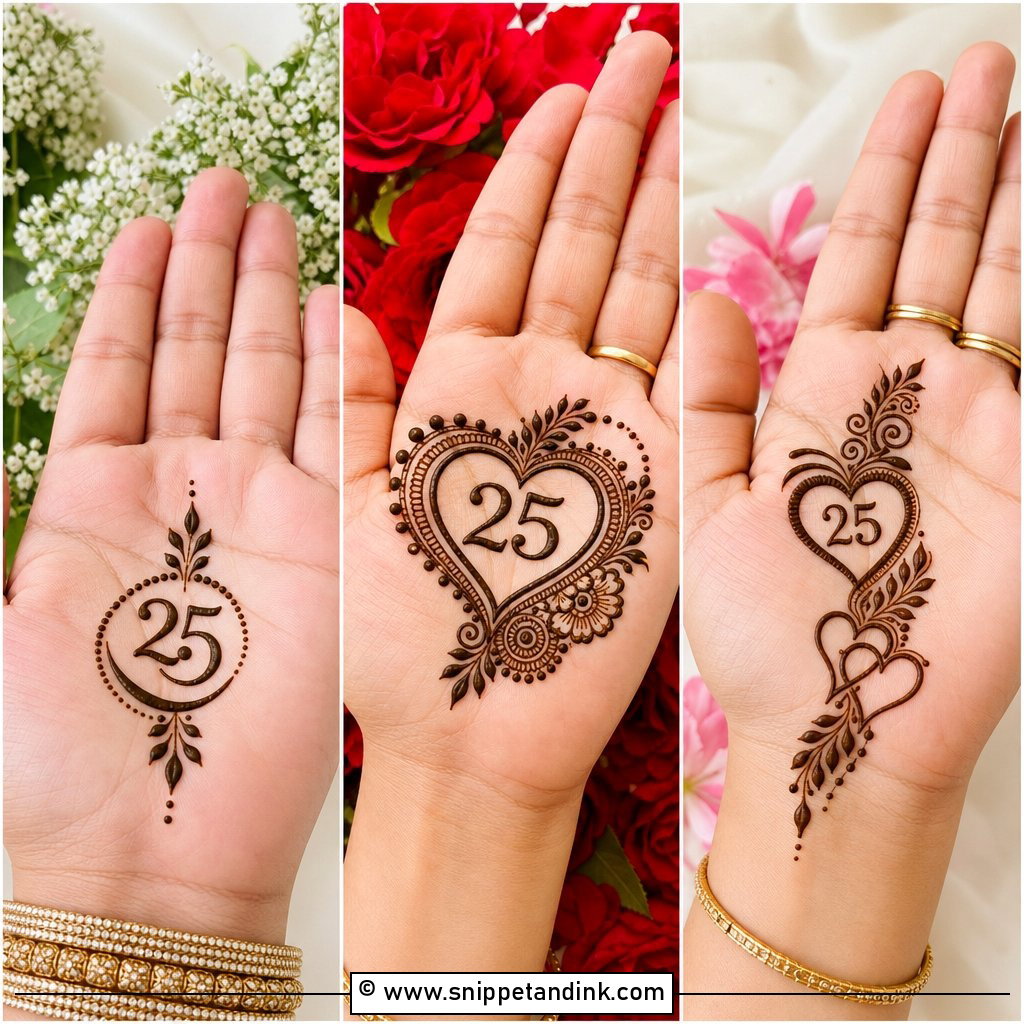
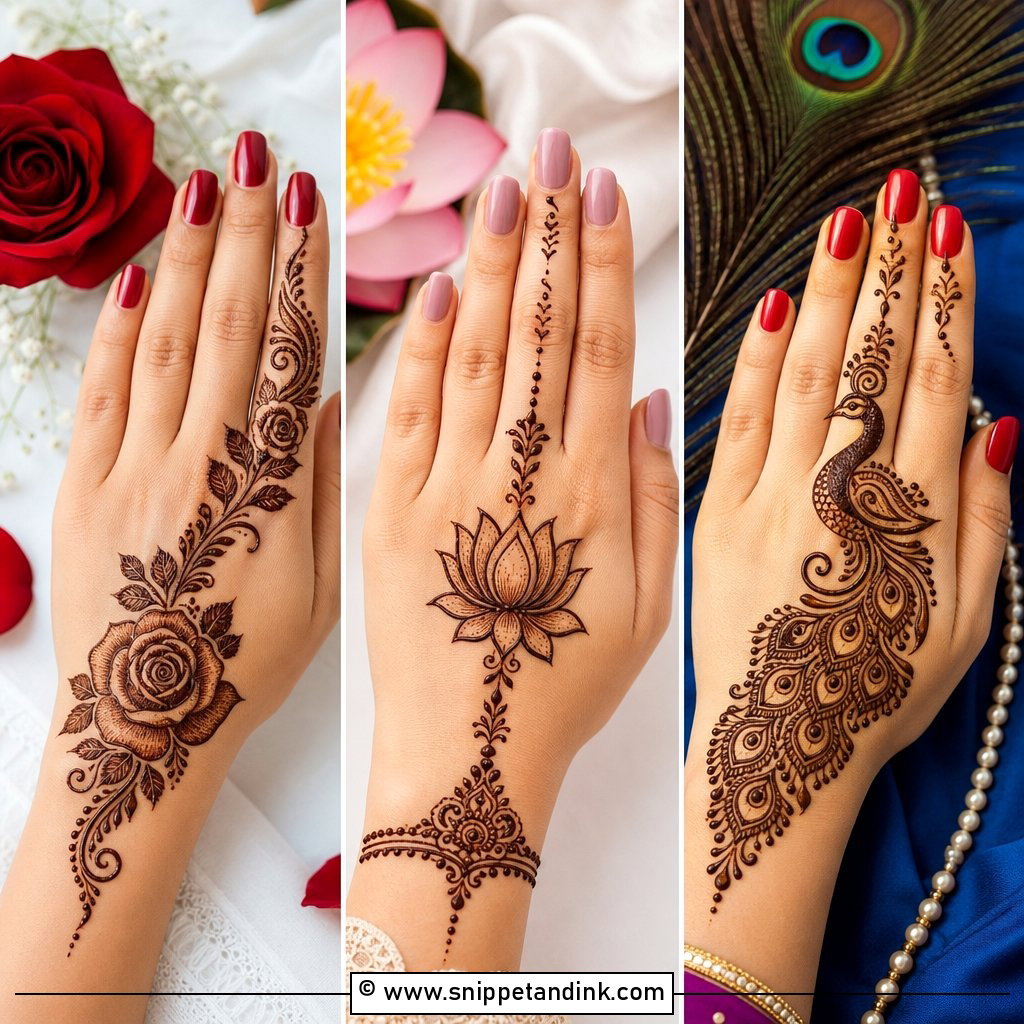
Palm mehndi is the design you’ll see most during rituals and hand poses, and the palm takes stain better than anywhere else. A round mandala, a lotus, a heart-shaped floral frame or a pair of facing paisleys can form the base, with lighter bands and dots on the fingers. Because the space is small, one strong central motif beats several competing ones. Hands that sweat a lot can smudge wet paste on the palm, so sit with palms open and facing up until it sets.
16. Simple Bridal Wrist To Forearm Mehndi
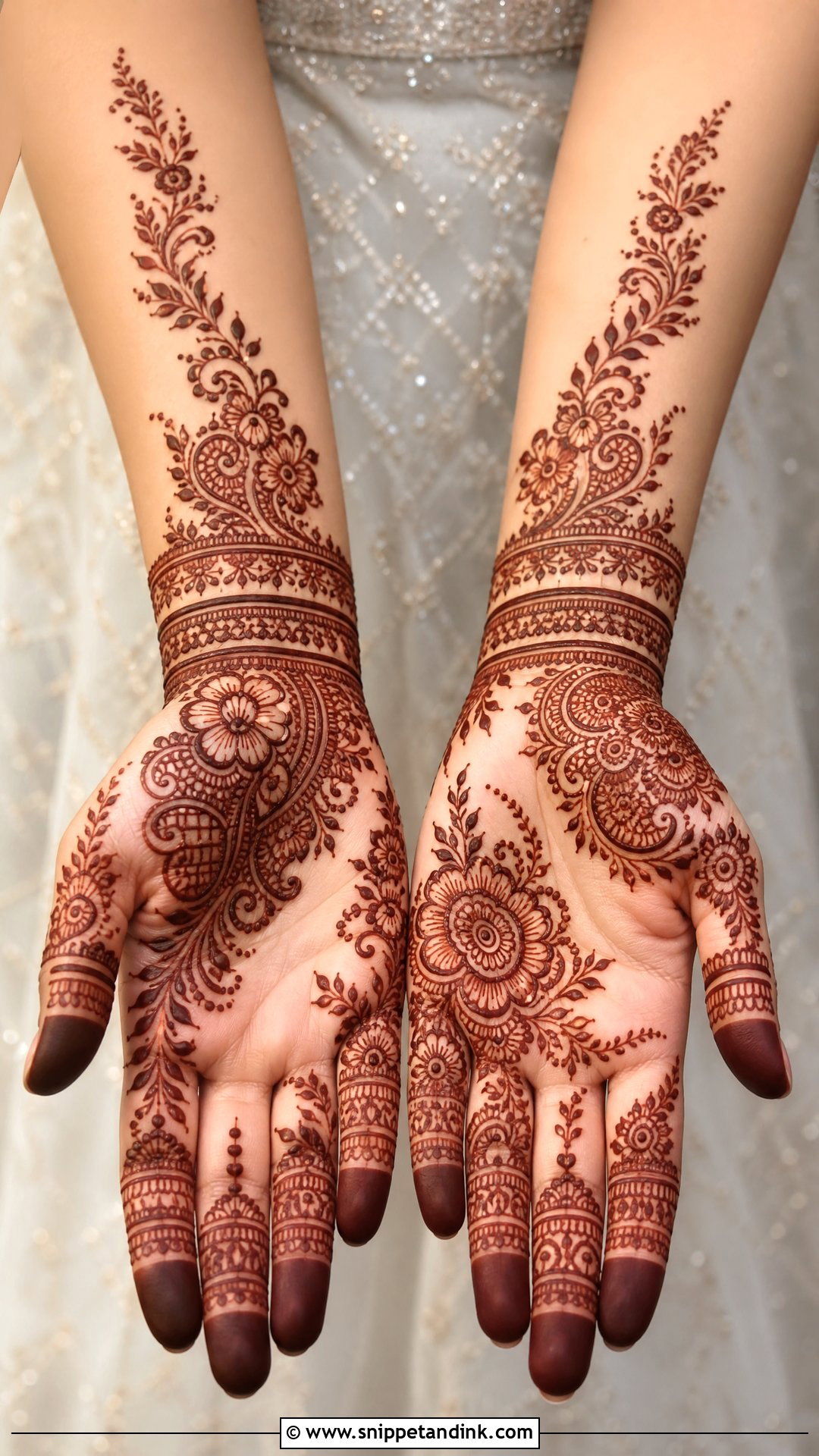
Extending to the forearm gives length without the weight of a full-arm design. The palm can stay balanced while flowers, paisleys and vines climb the wrist and lower forearm, finishing in bracelet borders. It’s useful with short or cap sleeves where the forearm is on show. Know that forearm skin stains noticeably lighter than the palm, often a warm orange-brown, so I don’t put the finest detail there. A slim vertical trail or a layered cuff keeps it light.
17. Simple Bridal Peacock Mehndi
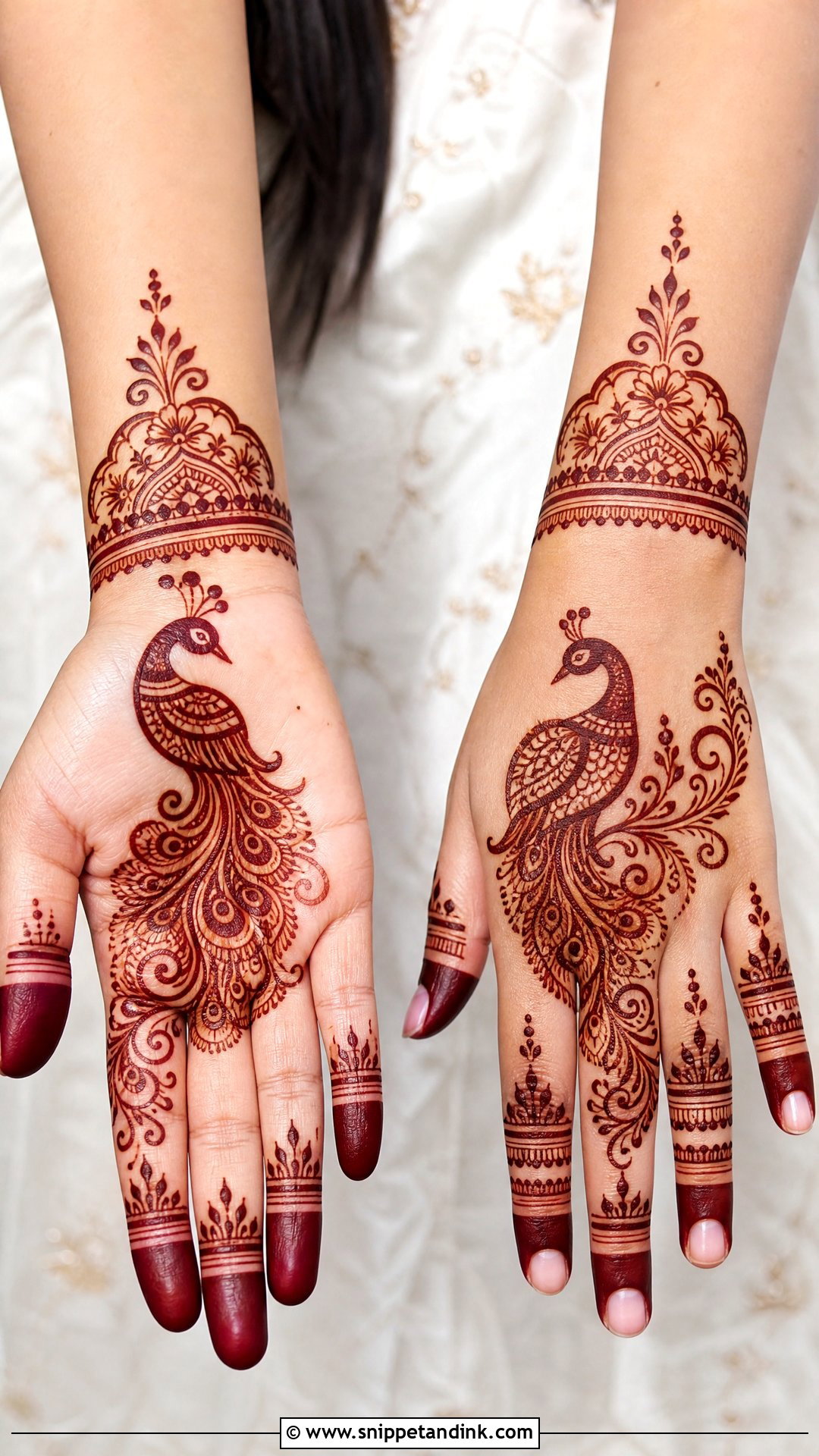
One peacock, clearly drawn, says more than a large one crammed across the palm. I place a single peacock on the palm, near the wrist or on the back hand, and keep the surrounding florals and paisley borders light so the bird stays readable. The feather lines are where detail goes: fine strokes and dots that suggest the tail without filling every gap. A neat finger design completes it without pulling attention away from the motif.
18. Simple Bridal Rose Mehndi
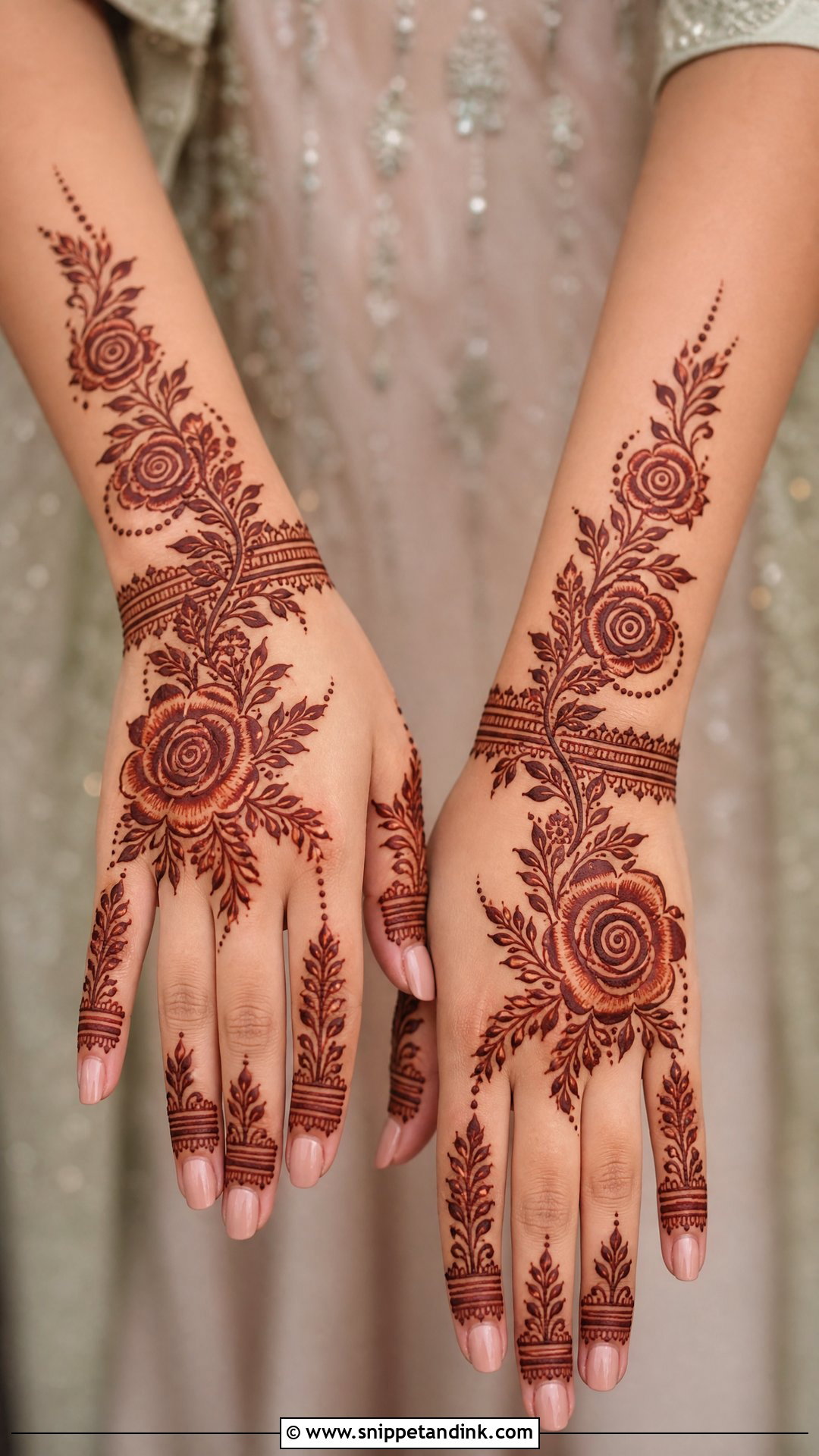
Roses are drawn with layered, shaded petals and bold outlines, then linked with leafy vines across the palm or back hand. They can flow diagonally like Arabic work or sit around a central mandala for an Indo-Arabic feel. A few medium roses read far better than many tiny ones, which tend to merge into blobs when stained. Add slim finger bands, dots and a clean wrist border, and it sits well next to an engagement ring.
19. Simple Bridal Moroccan Mehndi
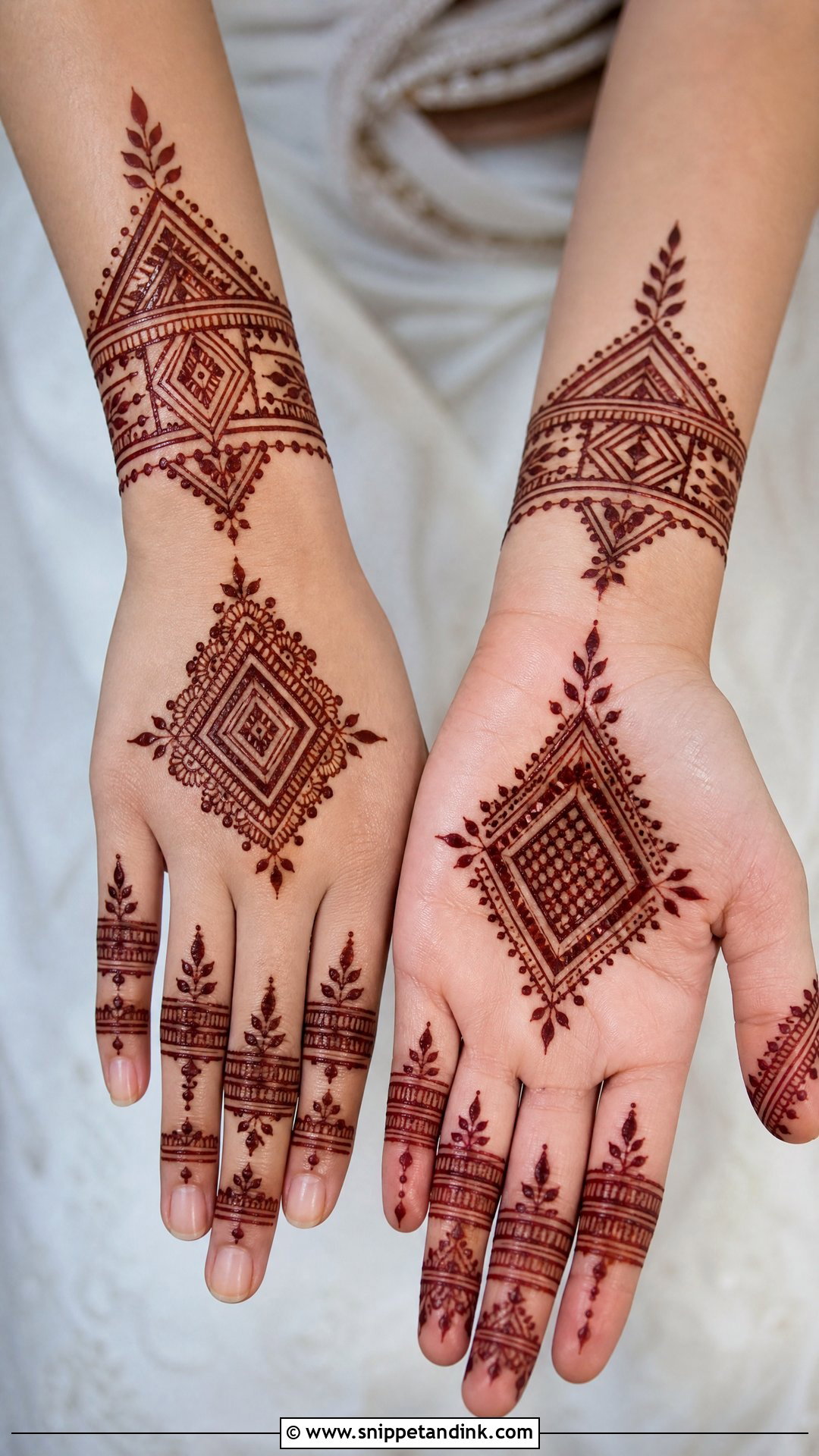
Moroccan-inspired mehndi swaps flowers for geometry: diamonds, triangles, grids, dots and bold borders. It can cover the back hand like a structured glove or form a central shape on the palm. Geometry is unforgiving, since a straight line drawn over a curved hand bends if you don’t adjust for it, so I draw it with the hand held flat on a cushion. A few tiny leaves or dotted chains near the fingers soften it for a bridal look. Crisp, evenly spaced lines are everything here.
20. Simple Bridal Gulf Mehndi
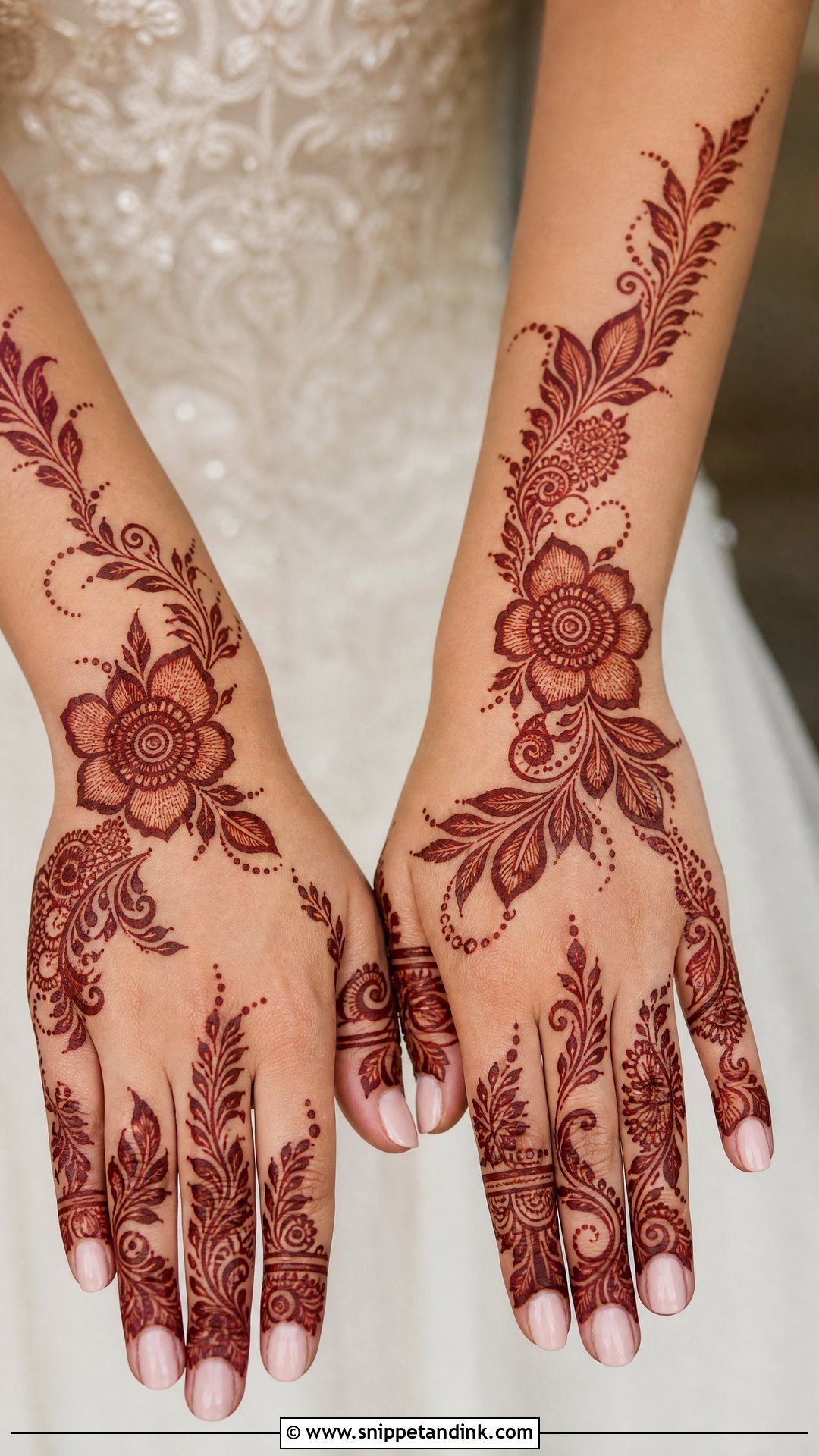
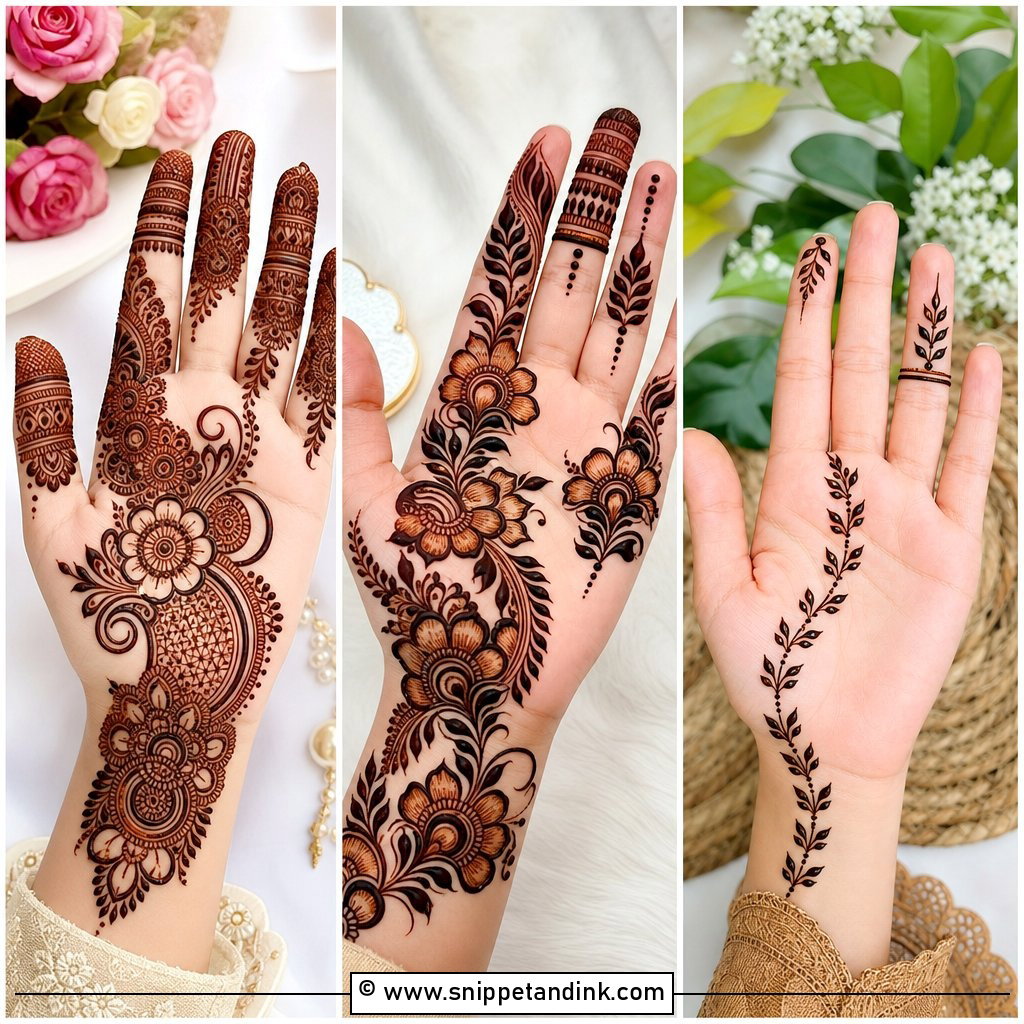
Gulf, or Khaleeji, mehndi uses big florals, flowing leaves and generous open space. The outlines are thick and confident, often drawn with a slightly wider cone tip, and the flowers are larger than in most styles. The design usually runs as a diagonal trail from the wrist to the fingers. Fine dots and soft shading give the bridal finish. It suits brides who like bold patterns but not heavy coverage, on the front or back of the hand.
Aftercare From the Moment the Paste Is Dry
A simple design shows a patchy stain more than a dense one does, so aftercare matters even more here. Most of a pale result comes from washing the paste off too early.
- Let the paste dry on the skin, then dab on a little lemon and sugar mixture so it stays stuck and moist.
- Keep it on for at least six to eight hours. Overnight is better; wrap loosely in tissue if you’re sleeping in it.
- Scrape it off with a blunt edge or your fingers. Don’t wash it off.
- Keep water away for as long as you can, ideally twelve hours or more. Rub a little balm or oil over the design before any washing.
- Keep your hands warm. Henna develops better on warm skin than cold.
Patch Tests and the Trouble With Black Henna
Natural henna never stains black. Paste sold as black henna, or promised to give a jet-black stain within an hour, often contains a chemical dye that can cause blistering, scarring and lasting allergies. Ask your artist what goes into her paste. A good bridal artist mixes her own from henna powder, lemon juice or water, sugar and an essential oil, and she won’t mind doing a small patch on your inner arm a few weeks before if you have sensitive skin.
Open Space Is Part of the Design
The heaviest design isn’t automatically the most bridal. The right one fits your outfit, your jewelry, your hand shape, how long you can sit, and the ceremony you’re having. Mandalas, paisleys, florals, jaali, bracelet patterns, Arabic trails and minimal finger work all leave room for skin to breathe. Bring two or three favourite pictures to your artist, and ask her to adjust the spacing and coverage to your hands rather than copying a photo exactly.
You'll Like These Ideas:




Leave a Reply