
Full coverage and a crowded hand are not the same thing. Simple full hand mehndi covers the palm, fingers, wrist and sometimes the forearm, but it does it with bigger motifs and honest spacing, so it reads clearly in photos and doesn’t take a whole day to apply. Arabic trails, mandala palms, bracelet wrists, jaali, paisley vines and Indo-Arabic layouts all fit here. I build these in sections, which also makes them manageable for a confident beginner. Here’s how I approach each one for Eid, weddings, Karwa Chauth, Diwali and engagements.
Sleeves, Bangles and Where a Full Hand Design Should Stop
Before I decide how far up the arm a design goes, I ask what you’re wearing. A full hand that disappears under a sleeve or a stack of bangles is time spent on skin nobody sees.
- Full or three-quarter sleeves: end the design at the wrist or just above it. A strong wrist cuff gives a finished edge where the sleeve begins.
- Sleeveless or short sleeves: you can extend into the forearm, but a design that stops mid-forearm without a border looks abandoned. Finish it with a band.
- Chooda, kaleere or heavy bangles: I leave the part of the wrist they cover lighter and put the detail just below them, on the back of the hand.
- Rings and hand harnesses: tell your artist where they sit so the design frames them instead of being covered.
There is also etiquette to consider. At many South Asian weddings, the bride’s mehndi is the most detailed in the room, and guests keep theirs lighter. If you’re a guest or bridesmaid, a simple full hand is the right level: full enough to feel festive, open enough that it doesn’t rival the bride.
1. Simple Full Hand Mehndi Design
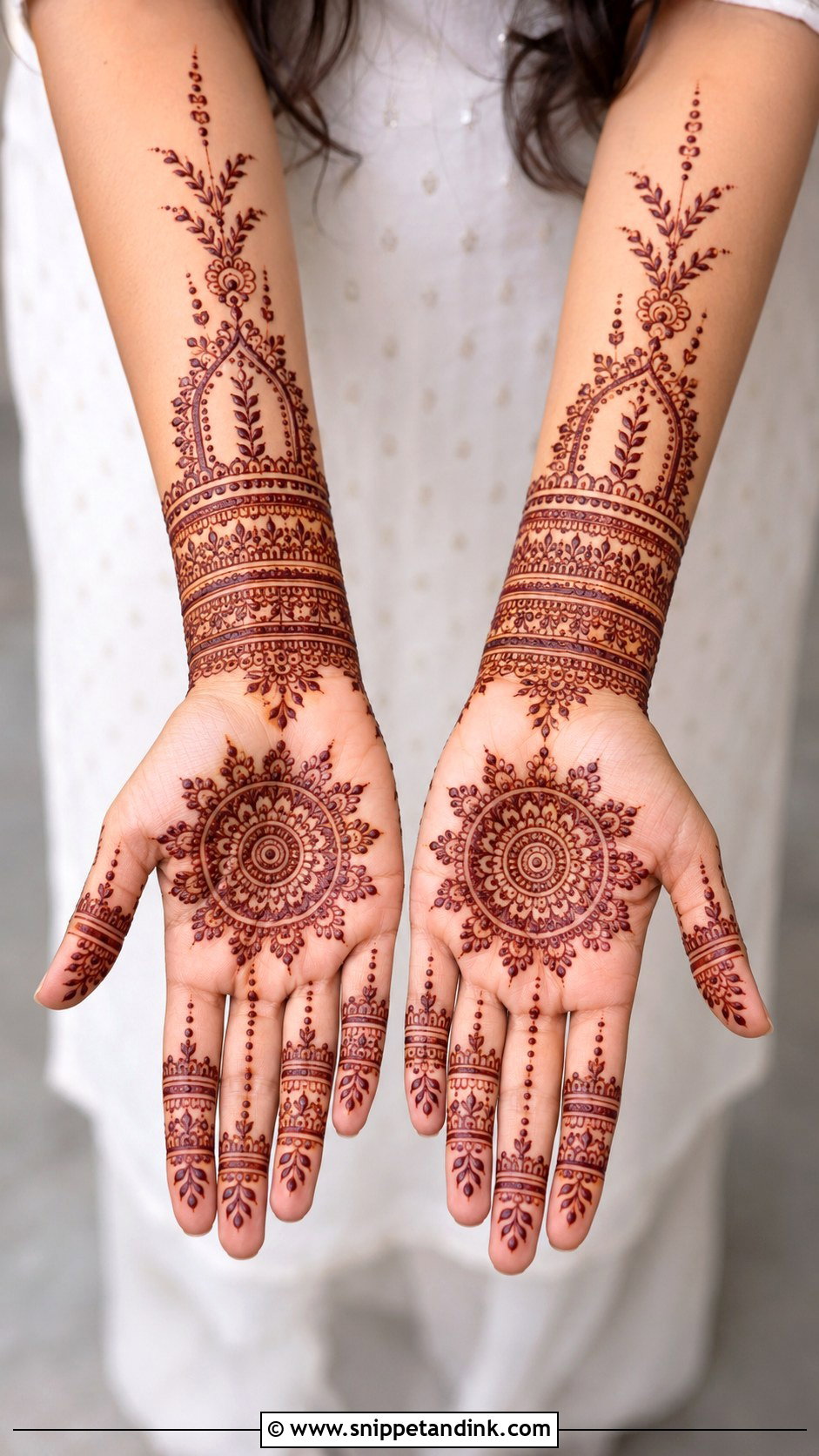
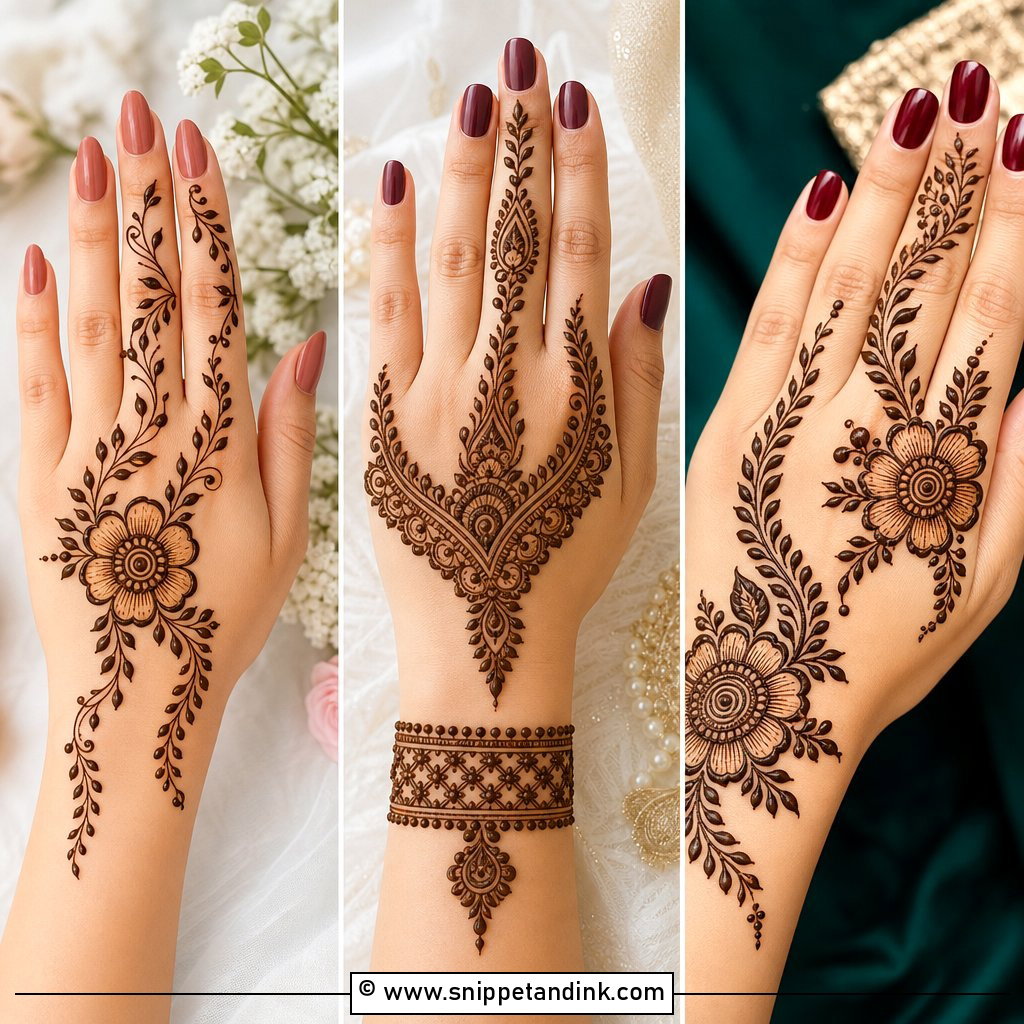
This is my baseline full hand: a round floral mandala in the centre of the palm, leafy vines running to the fingers and wrist, fingertips filled or edged with small dots. On the back, a smaller mandala connected by soft curves, tiny flowers and bracelet bands. Familiar shapes, nothing too dense. The open skin between sections is what keeps it from looking heavy, so I resist filling those gaps even when a client asks for “a bit more”.
2. Simple Arabic Full Hand Mehndi Design
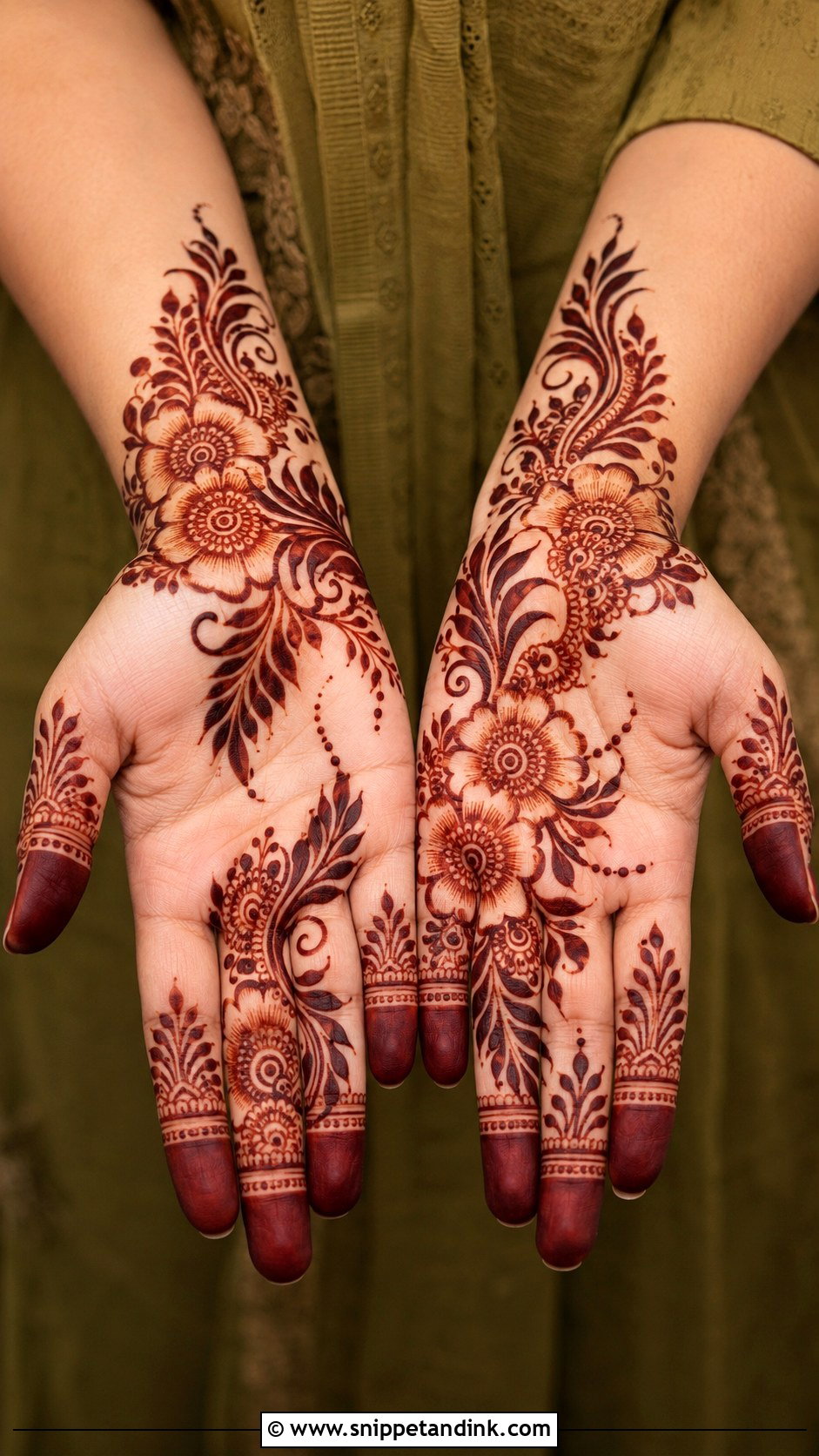
Arabic full hand work moves diagonally from one side of the wrist across the palm to the fingers, built on large flowers with leaves, dots and thin curls filling lightly around them. Fingers get leafy trails or shaded tips. It’s the fastest way I know to cover a whole hand without it looking traditional or time-consuming. I make sure the diagonal on the left hand mirrors the right, otherwise when the hands are held together for photos the two designs look unrelated.
3. Simple Indian Full Hand Mehndi Design
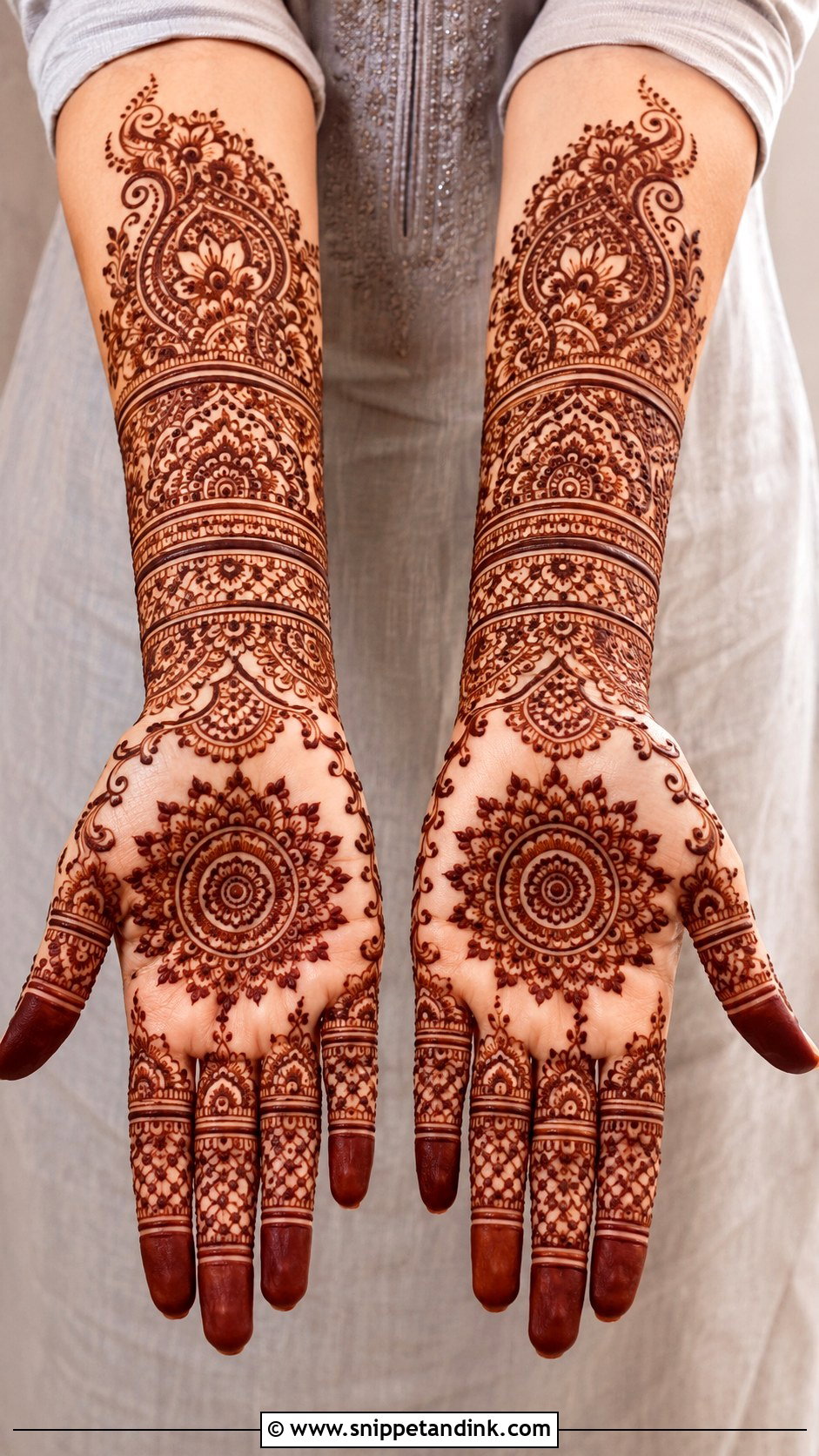
Indian full hand designs are detailed and symmetrical, yet they can still be simple. I start with a central palm motif, usually a mandala or paisley circle, and surround it with small flowers, curved lines and dotted fillers. Repeating bands, leaf chains and fine line grids decorate the fingers, and a cuff at the wrist looks like a bangle. The way to keep it simple is scale: bigger motifs, fewer tiny fillers. It’s rich enough for weddings and pujas without the sitting time of bridal work.
4. Simple Indo Arabic Full Hand Mehndi Design
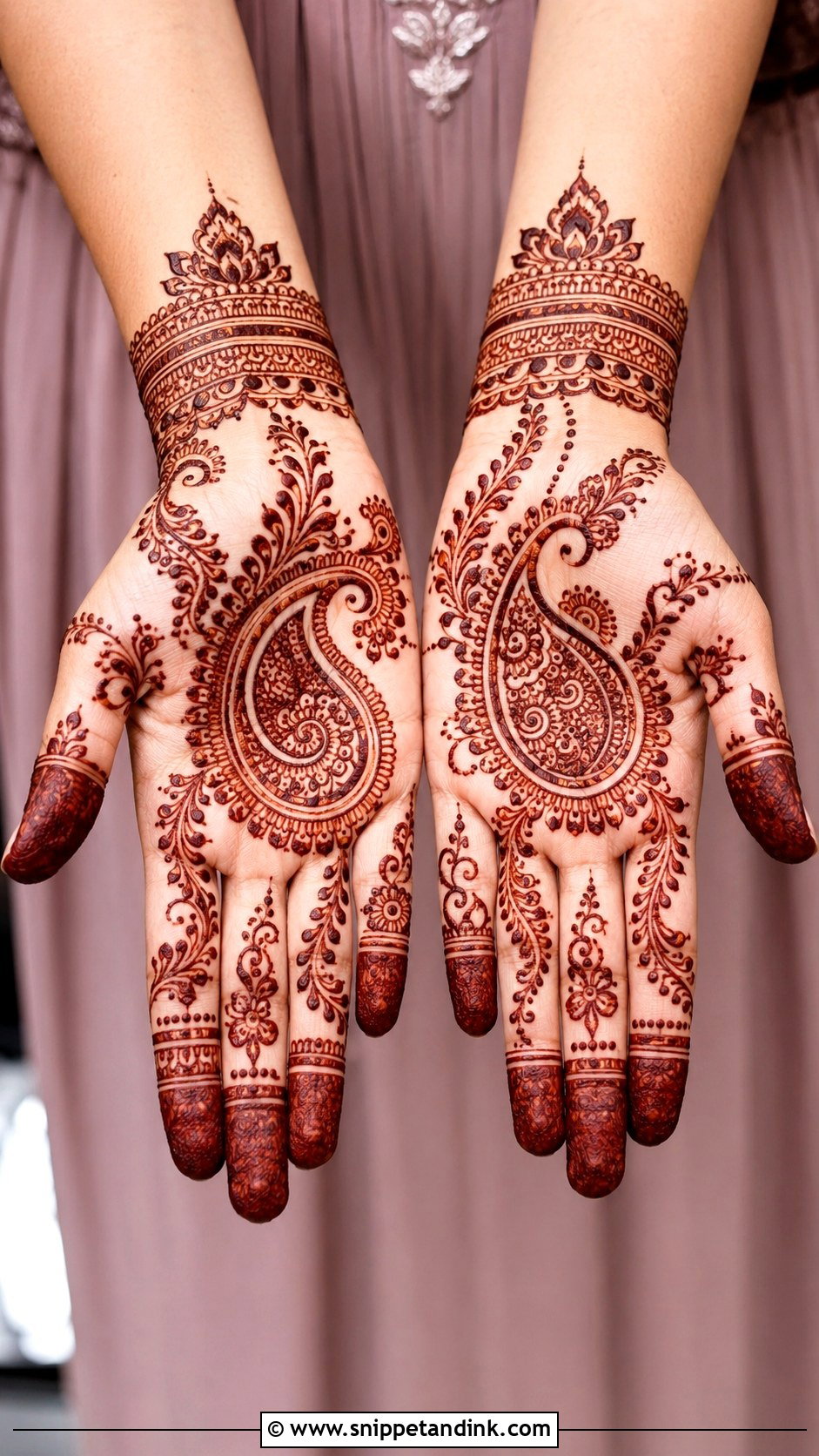
Simple Indo Arabic full hand mehndi starts with large flowers or paisleys placed diagonally across the palm, then adds Indian details like small checks, dots, scallops and fine leafy fillers inside selected areas only. Not every motif gets filled; I choose two or three and leave the rest outlined, which keeps open skin and stops the hand going dark and muddy. Alternating bands and vines on the fingers, a simple bracelet strip at the wrist. Engagement parties are where I do this most.
5. Simple Mandala Full Hand Mehndi Design
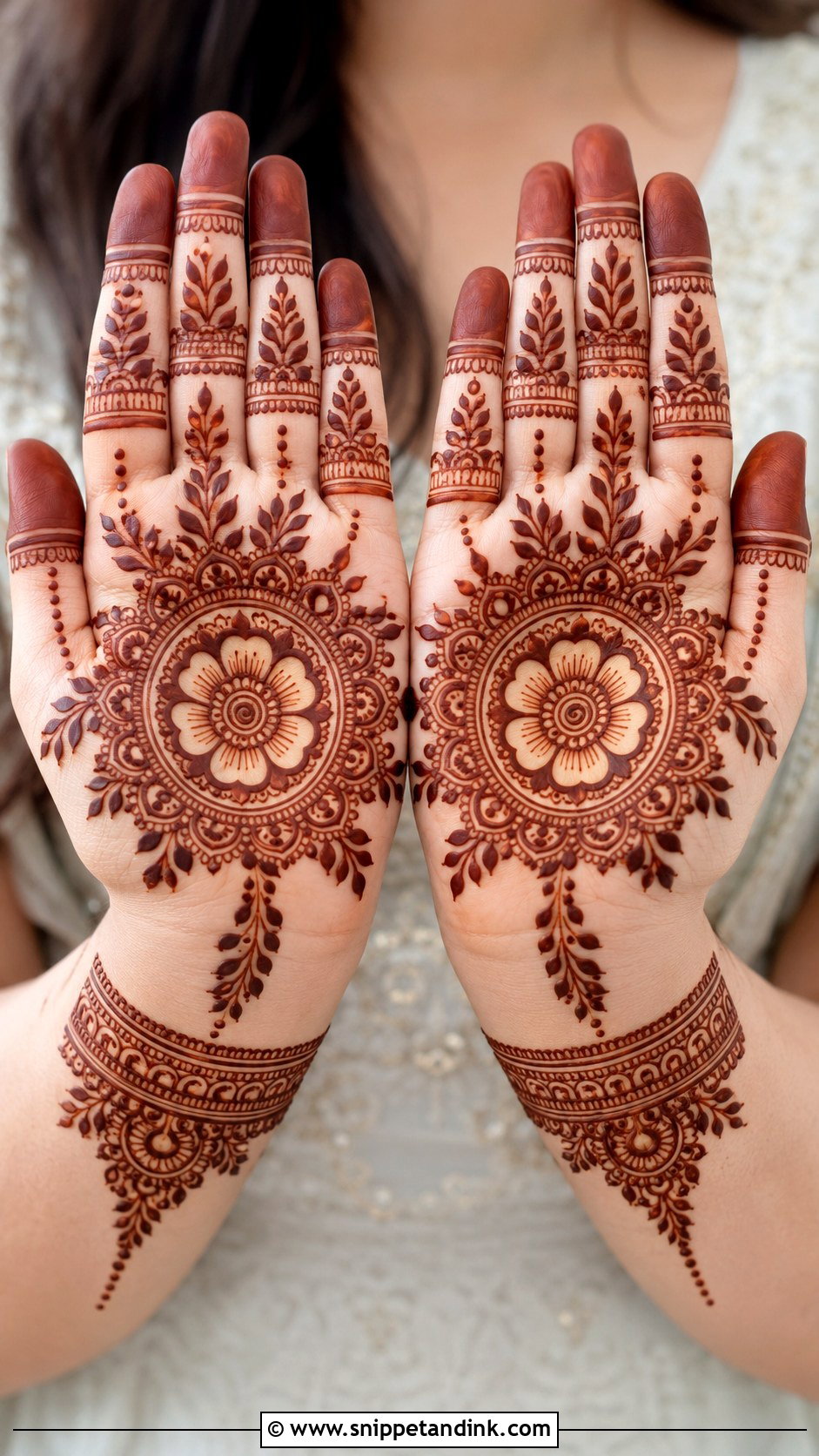
A large round mandala centred on the palm, built from circles, petals, dots and scalloped lines, extended to the fingers with leafy chains or slim geometric bands and finished with a matching wrist cuff. On the back hand, a smaller mandala with finger extensions. The clear symmetry makes it easy to plan. The one thing I measure is the outermost ring: on a full hand it should stop short of the wrist crease and the base of the fingers, so it doesn’t fold when the hand bends.
6. Simple Floral Full Hand Mehndi Design
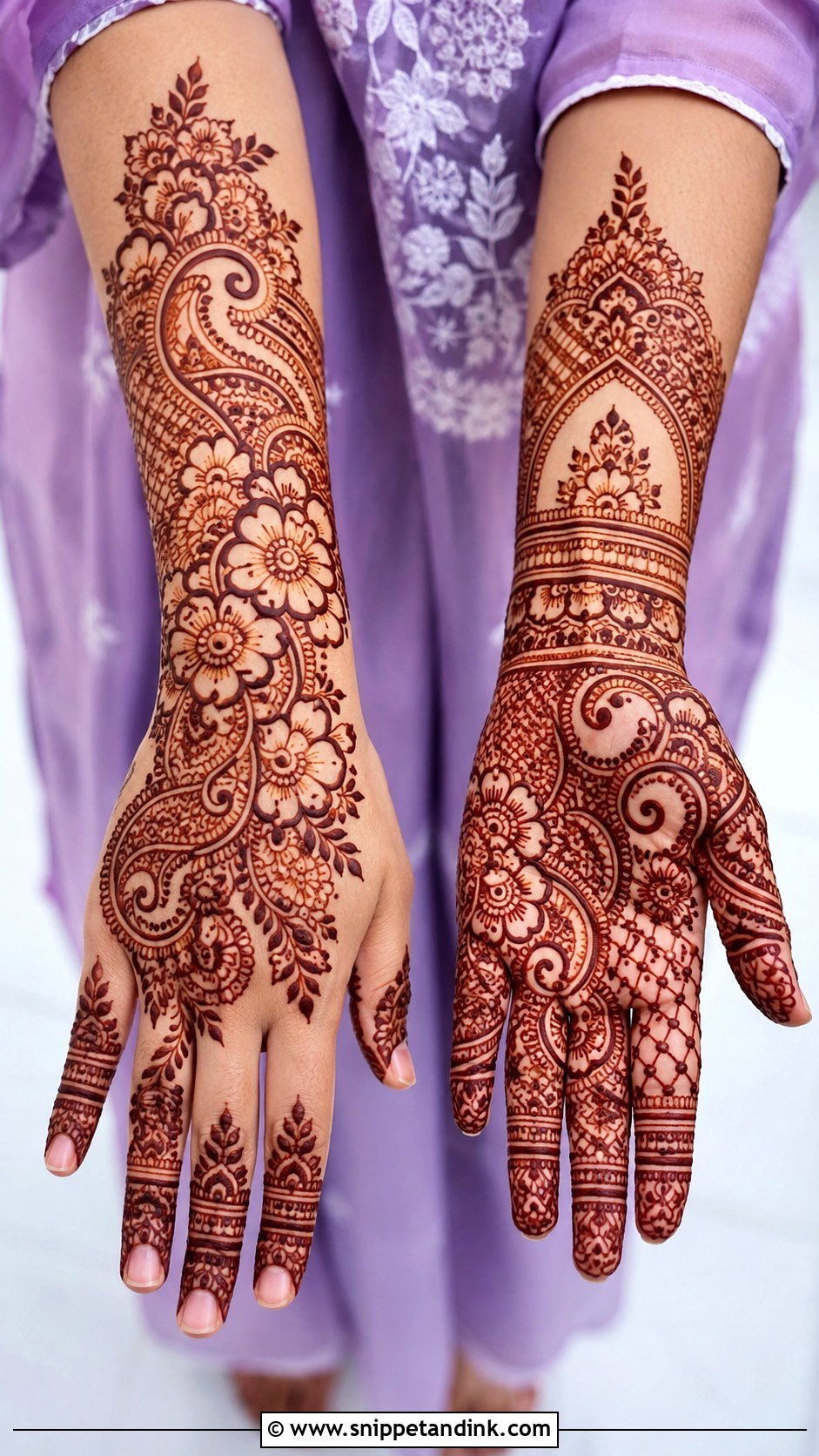
Florals make a full hand soft and easy to read. Two or three large flowers on the palm, connected by curved vines, leaves and dotted trails; small flower bands or creepers on the fingers; a garden-style bracelet at the wrist. Keep the petals bold so they stand out once the stain darkens. And pick one flower style. Mixing roses, lotus and five-petal blooms on one hand is the quickest way to make a simple design look busy.
7. Simple Paisley Full Hand Mehndi Design
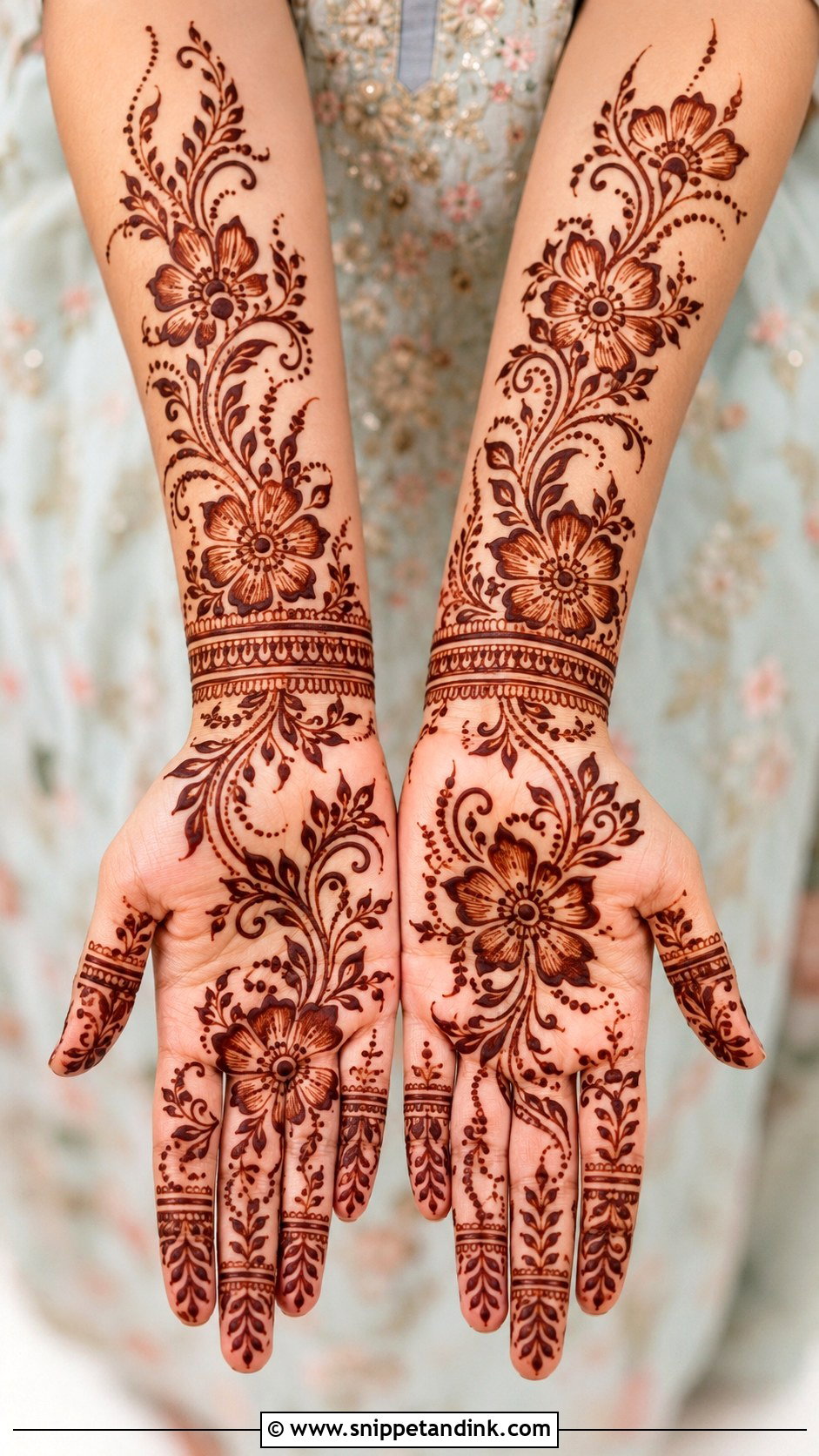
Paisley instantly reads as traditional. One large paisley on the palm, smaller paisleys, flowers and dotted curves around it, flowing leaves and curved borders toward the wrist. Fingers get slim paisley tips, stripes and dots; the back hand, one paisley near the wrist with vines climbing upward. Paisleys can be big or small, shaded or outlined, so they adapt to any hand. I angle the large one so its tail points toward the wrist, which follows the hand’s natural flow.
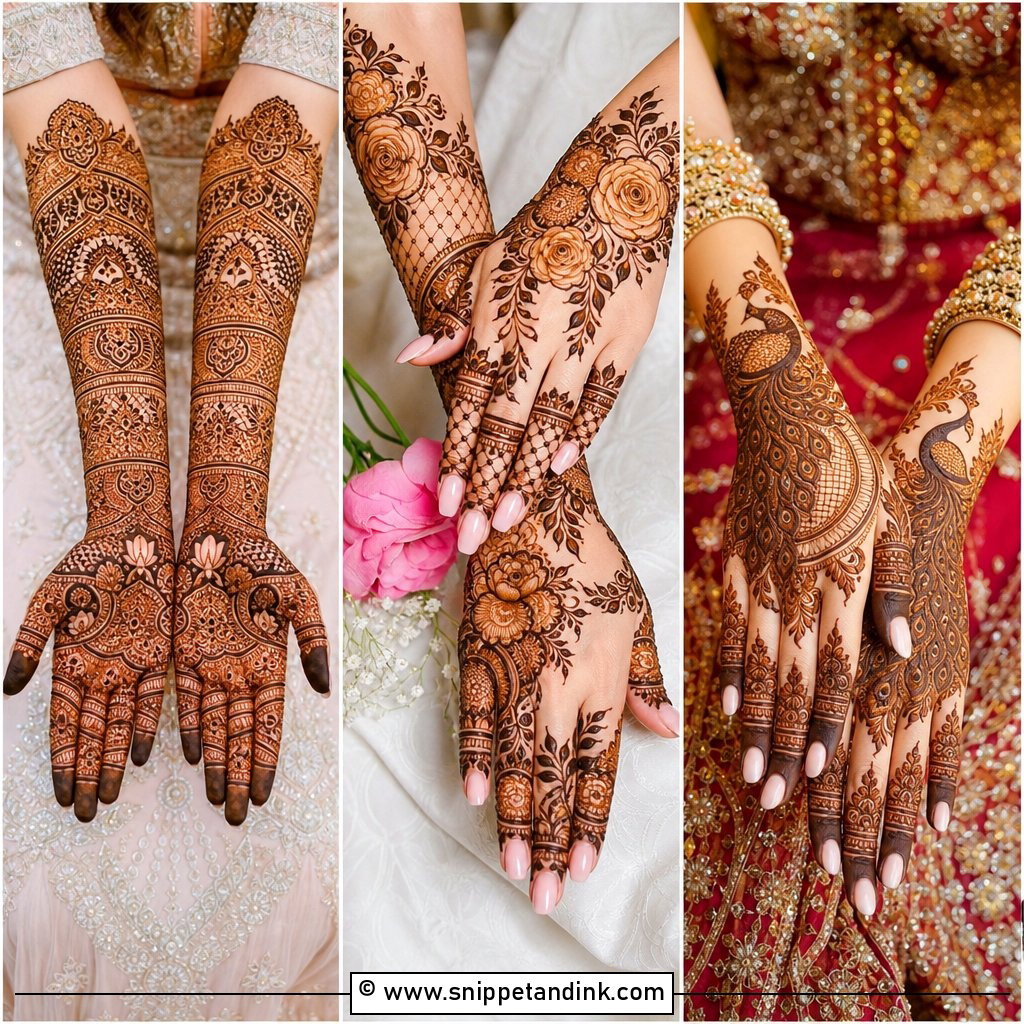
8. Simple Bridal Full Hand Mehndi Design
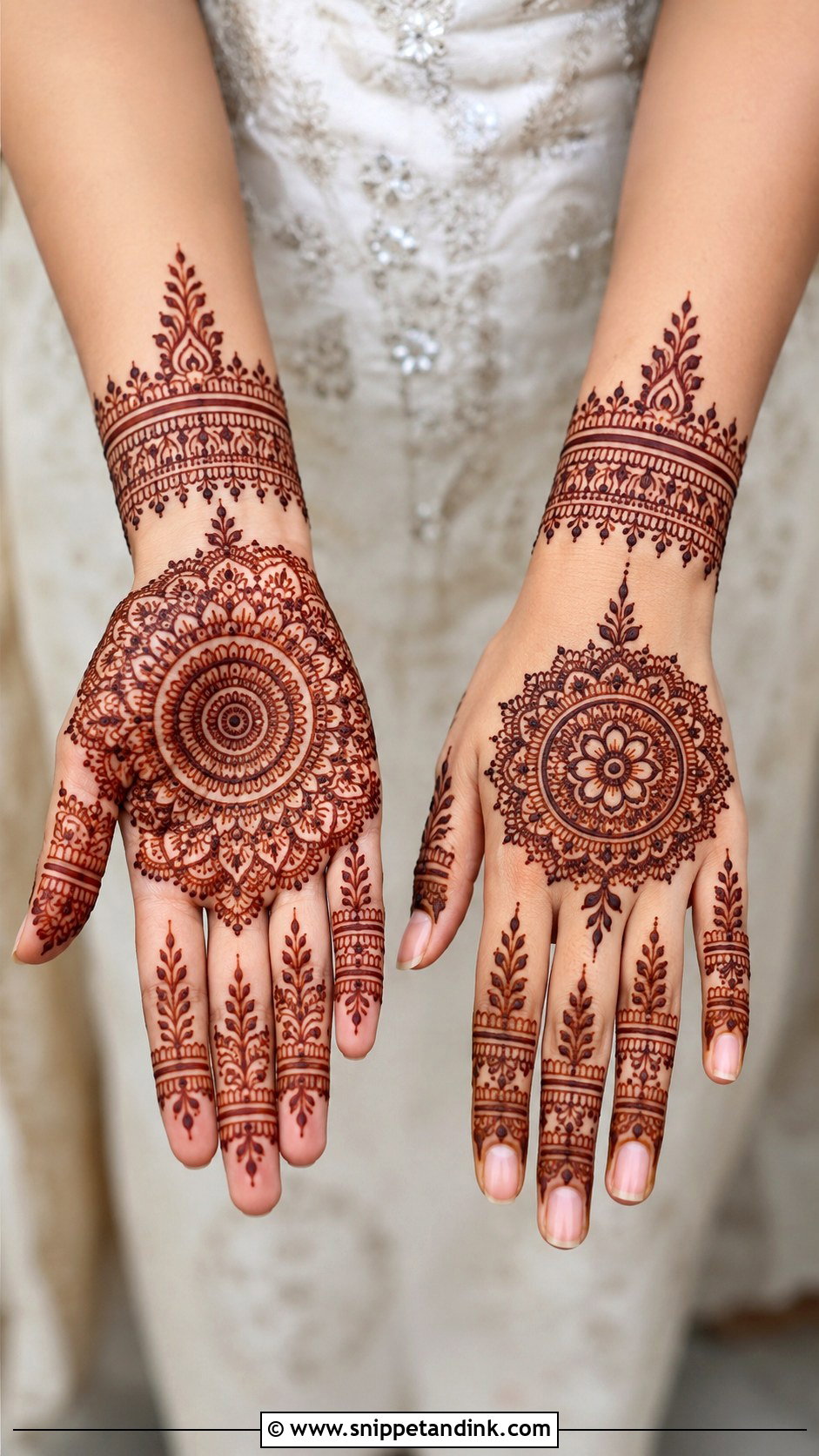
Not every bride wants elbow-deep density. For a lighter bridal full hand I use a balanced mix of mandalas, paisleys, flowers and wrist-to-forearm bands, with motifs larger than traditional bridal work. Initials, small bride-groom figures or a heart can be tucked in, but I’d limit it to one personal element per hand. Fine lines, dots and shaded tips finish the fingers. It suits nikah, roka, engagements and intimate weddings, and it’s far more comfortable to sit through.
9. Simple Front Hand Full Mehndi Design
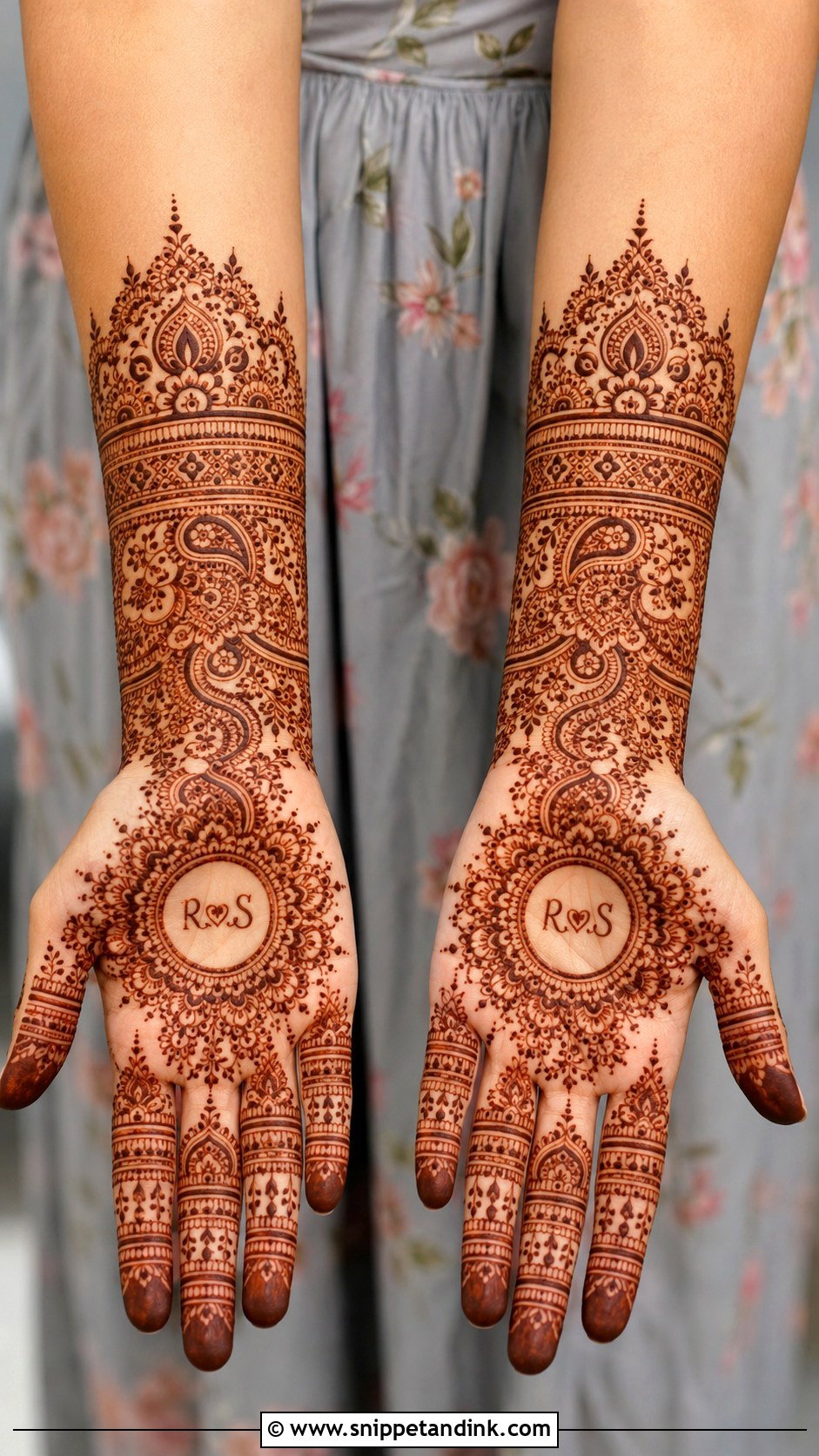
Palm-forward full hand designs put the strongest motif on the palm, whether a mandala, flower cluster or paisley, and keep everything else smaller. Slim finger designs, a wrist cuff with parallel lines, dots and a tiny leaf border. I divide the hand into zones before starting: palm, fingers, wrist. Working zone by zone keeps the spacing consistent and lets the client rest between sections.
10. Simple Back Hand Full Mehndi Design
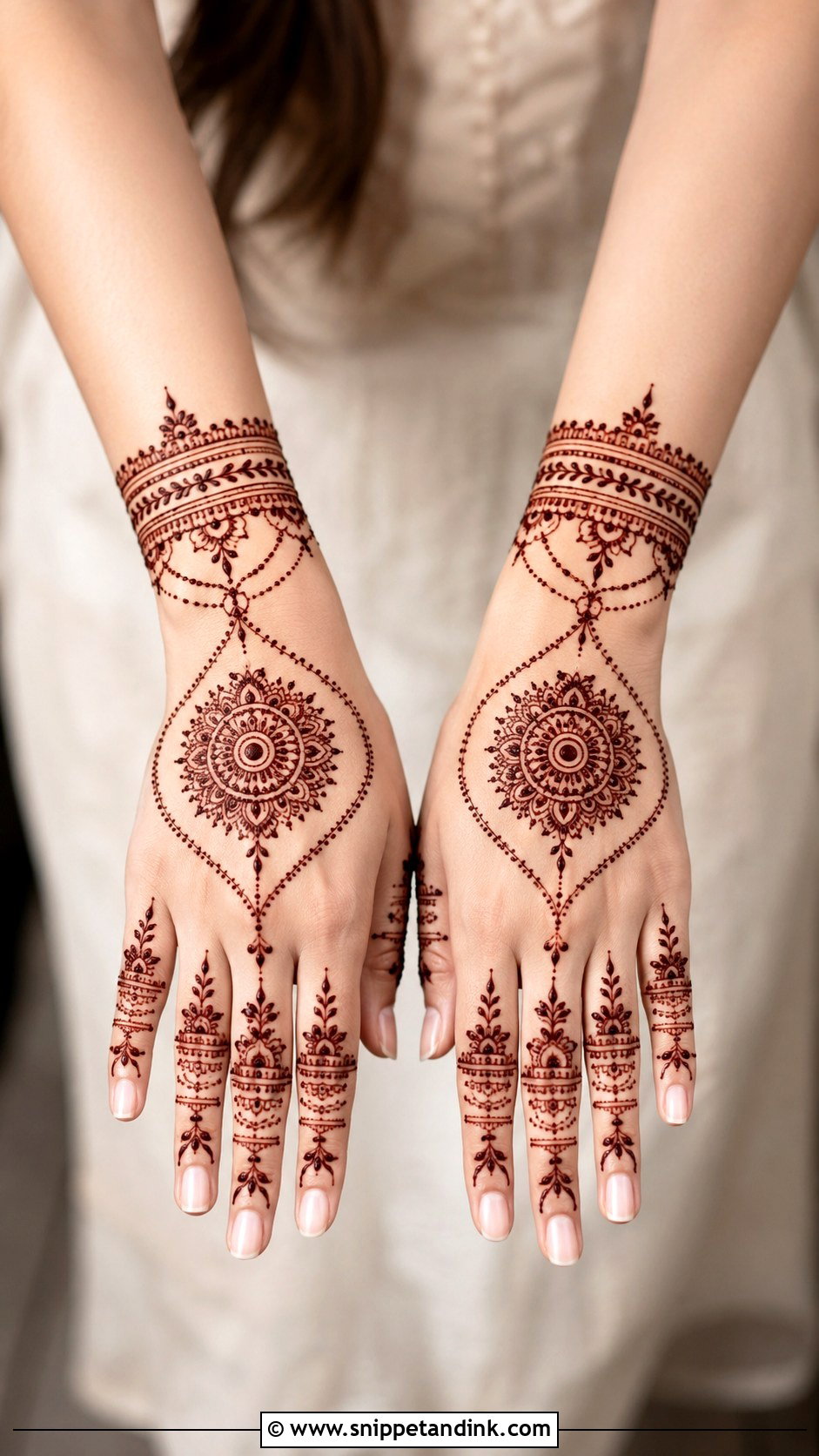
On the back of the hand, mehndi should look like jewellery. A round mandala or floral motif at the centre, dotted chains toward the fingers, bracelet bands around the wrist, matching lines, leaves and checks on each finger. I keep it airy over the knuckles; dense paste there cracks as you flex your fingers, and the stain comes out broken. Back hands stain lighter than palms, a warm brown rather than maroon, so slightly bolder lines help.
11. Simple Full Hand Mehndi Design For Beginners
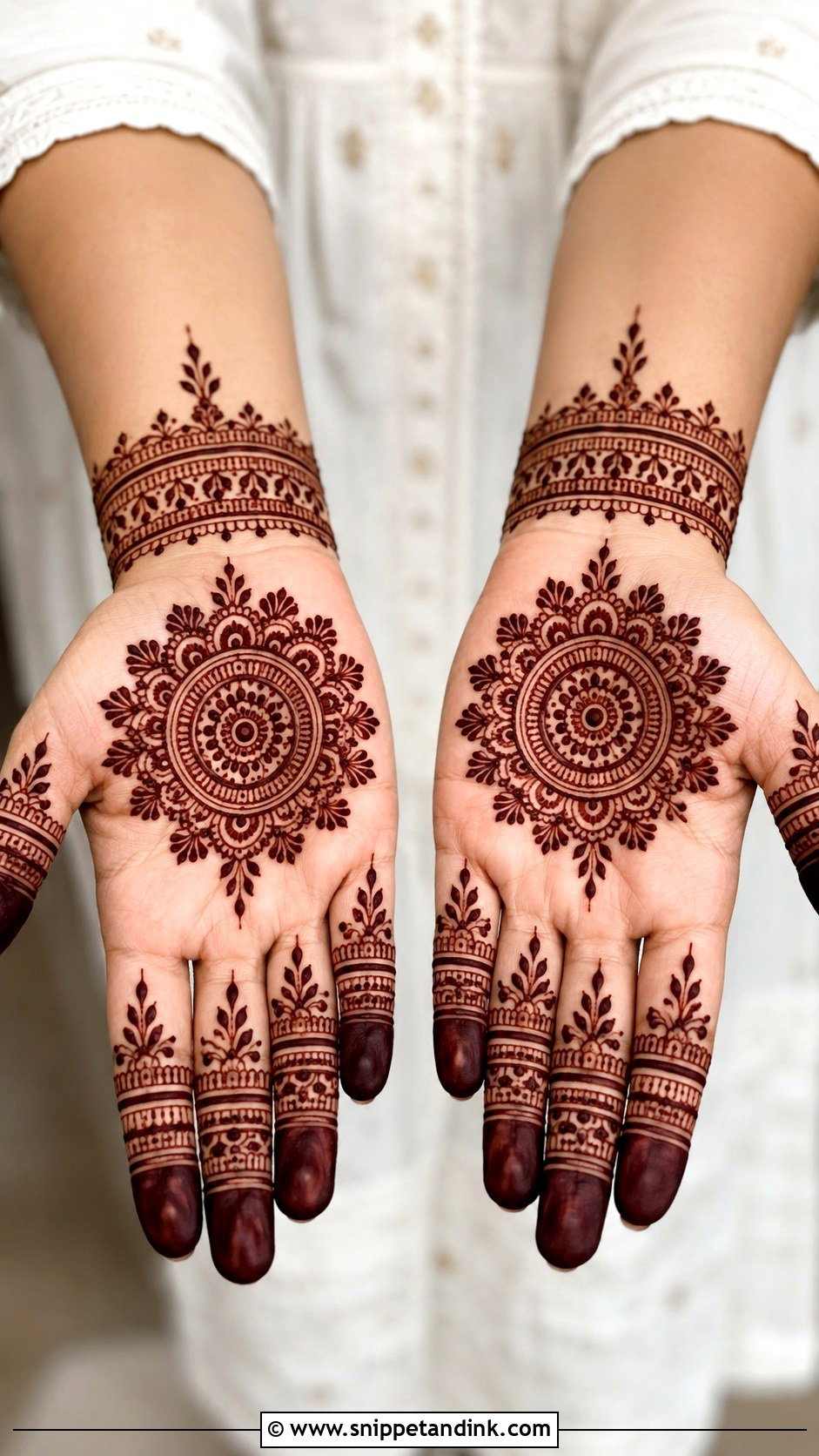
Beginners attempting a full hand should stay with repeatable shapes. A central circle, then petals, dots, leaves and curved lines around it, with the same elements carried onto the fingers and wrist. I’d avoid fine lacework at first; it gets messy fast. Bold outlines and small filled areas only. Each section is simple, so the whole hand builds confidence, and steady repetition will always look better than an ambitious design done shakily.
12. Simple Full Hand Mehndi Design For Eid
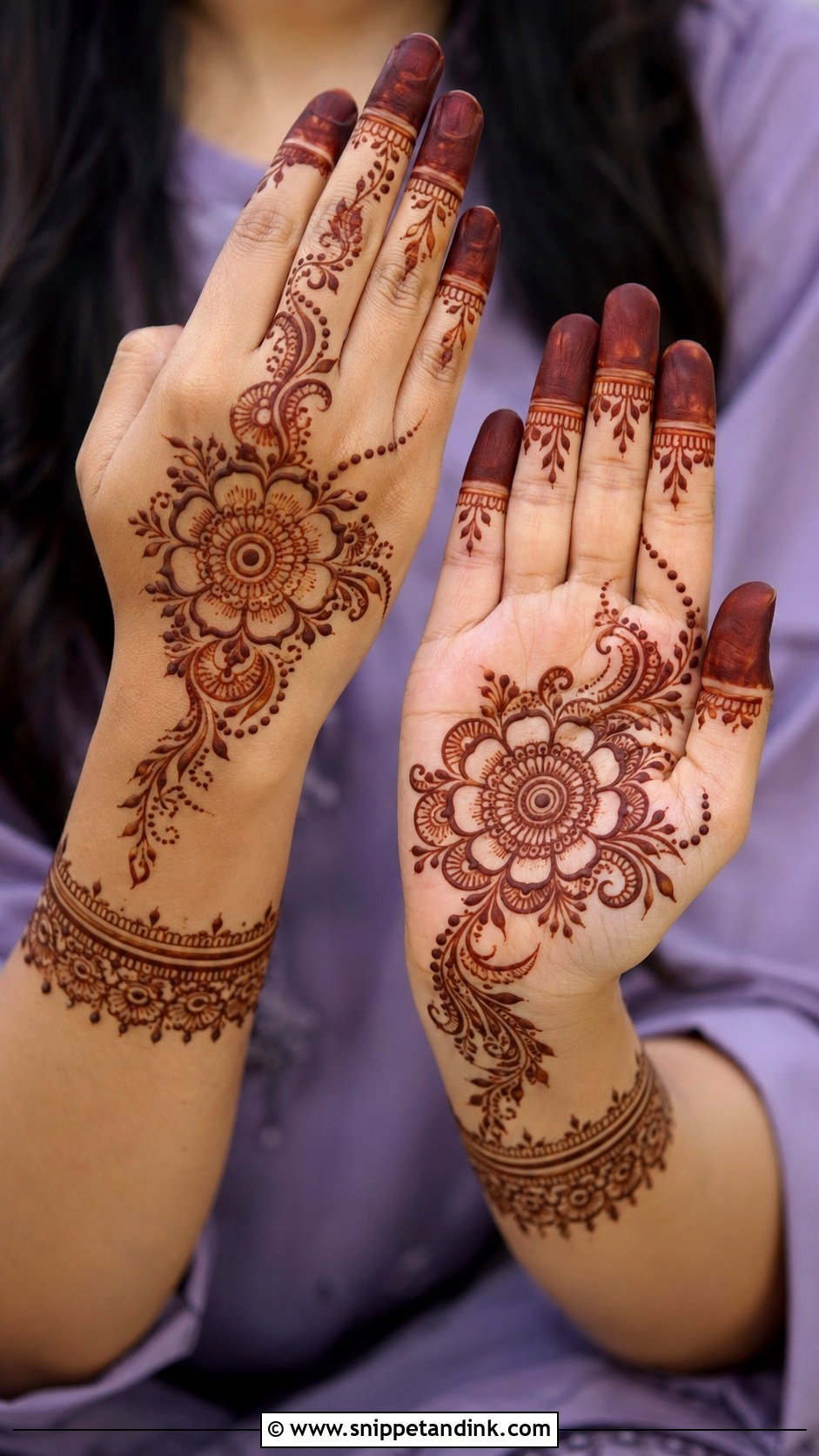
For Eid, Arabic flowers, leafy trails and a wrist bracelet, with a floral mandala or diagonal vine lightly filling the palm and neat bands and dotted chains on the fingers. The open spaces stop it feeling heavy under festive outfits. Timing matters more than design here: apply it the day before Eid and leave the paste on as long as possible, and the stain will be darkening through prayers and family visits.
13. Simple Full Hand Mehndi Design For Wedding
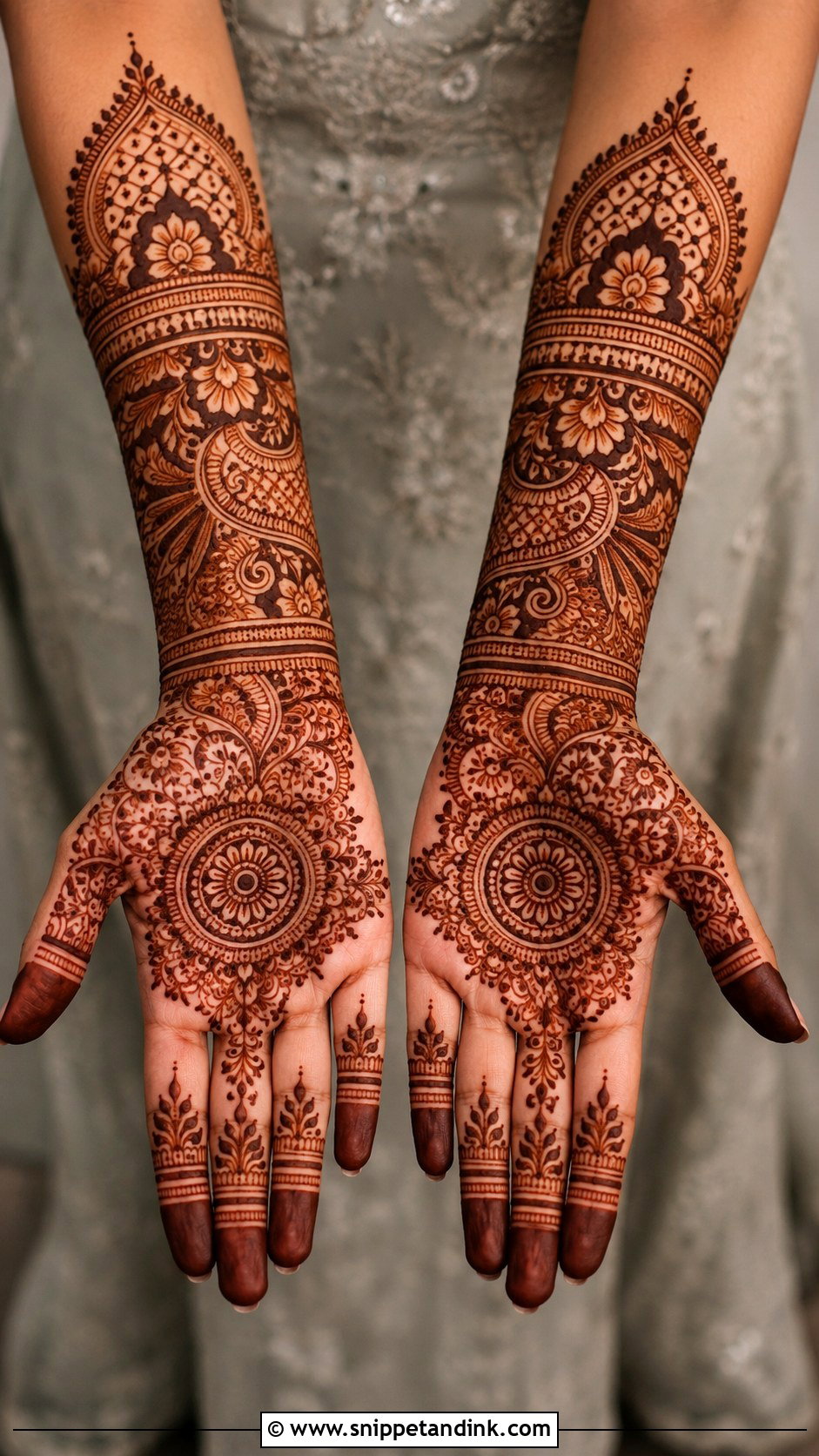
For a wedding I’d want a palm mandala, paisley vines, floral borders and bracelet-style wrist details, extending slightly beyond the wrist. Fingers fully designed with alternating bands, leaves and small mesh sections. It gives family members and smaller ceremonies enough presence without the hours of dense bridal work. Sisters, cousins and bridesmaids all suit it. Keep it symmetrical and connected from palm to forearm.
14. Simple Full Hand Mehndi Design For Engagement
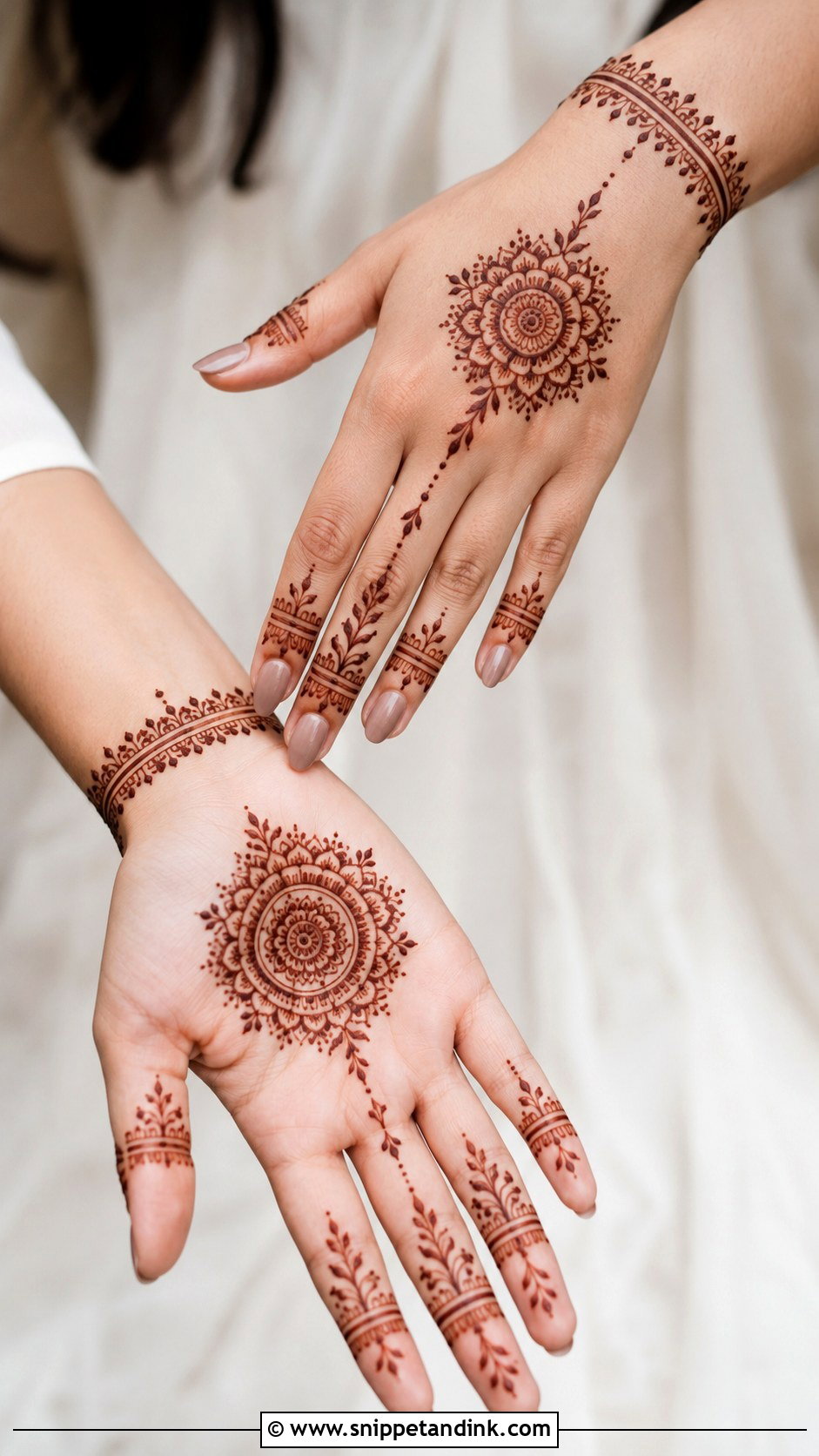
At an engagement, the back hand ends up in most photos. Floral trails, a soft mandala and delicate wrist bands, with a central motif and finger chains framing the ring finger. I leave a little clear skin right where the ring will sit so the band doesn’t cover detail. The palm gets a matching mandala or paisley. Small dots around the motifs give a sparkle effect without glitter, and the look suits lehengas, sarees and pastel dresses alike.



15. Simple Full Hand Mehndi Design For Karwa Chauth
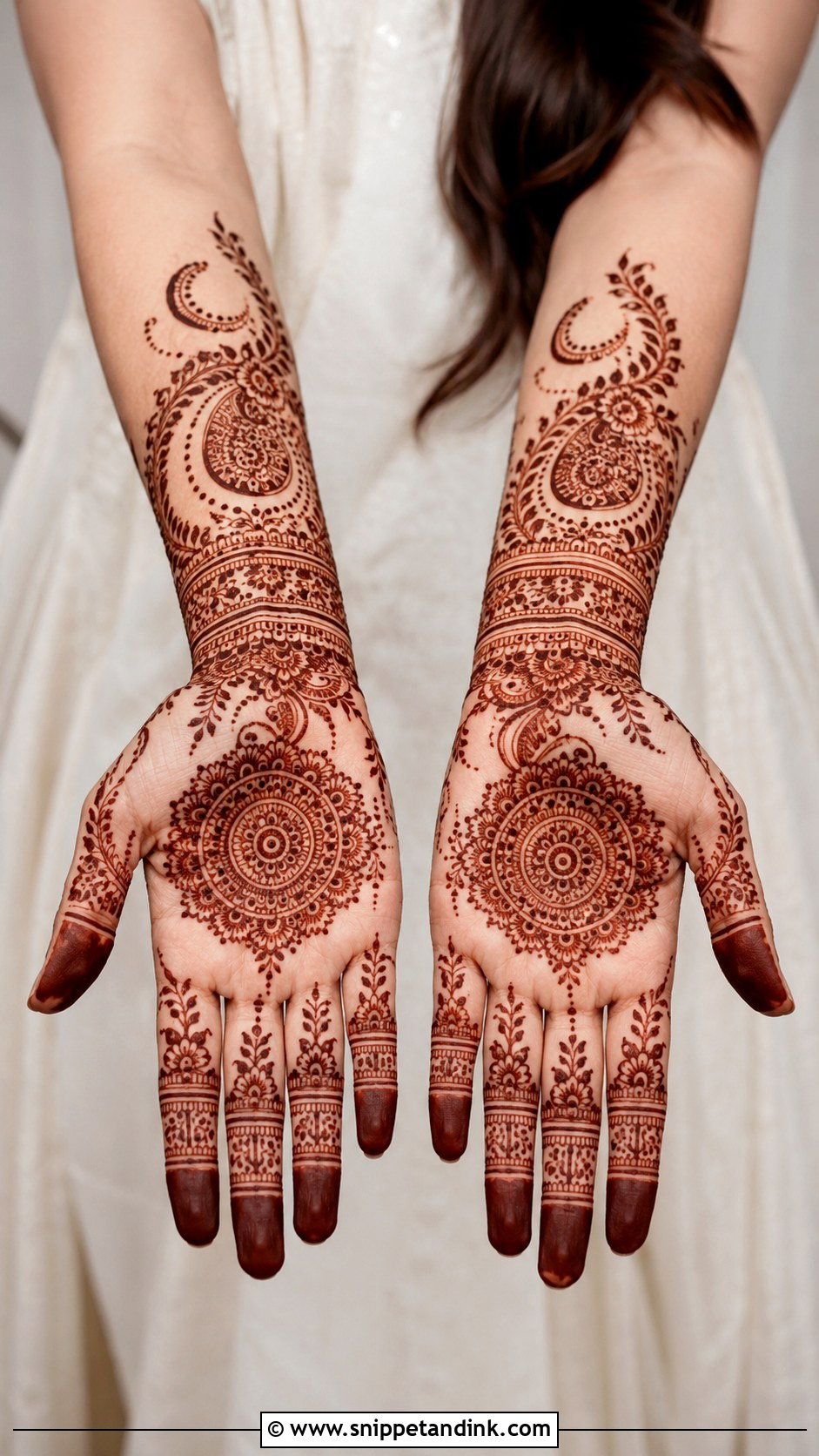
Karwa Chauth calls for a round mandala on the palm, paisley vines along the sides and a bangle-style wrist cuff, with small moon curves or dotted circles if you want a subtle nod to the night. Clean bands, leaves and filled tips on the fingers. Many women apply this one at home, so I keep lines bold and spacing generous; it’s more forgiving. Applying a day or two before the fast gives the stain time to deepen.
16. Simple Full Hand Mehndi Design For Diwali
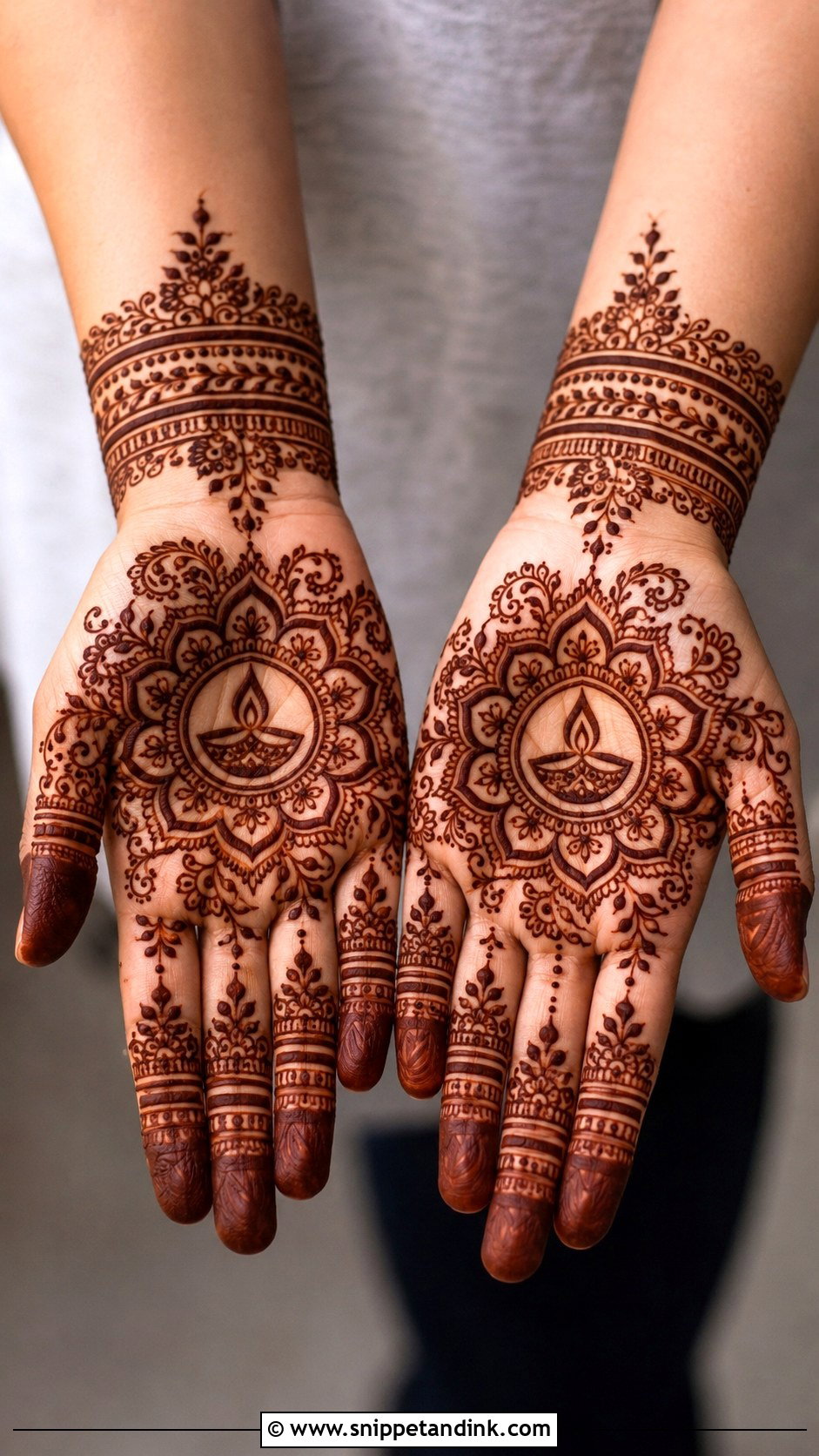
Diwali mehndi can carry floral mandalas, diya-shaped curves, leafy borders and dotted trails. The main motif sits in the centre of the palm and decorative bands extend it toward the wrist. Alternating line patterns and tiny leaf chains on the fingers. Heavy bangles and rings will cover parts of the hand, so I keep the area under them open. Clean outlines and repeated motifs make it look polished in puja photos.
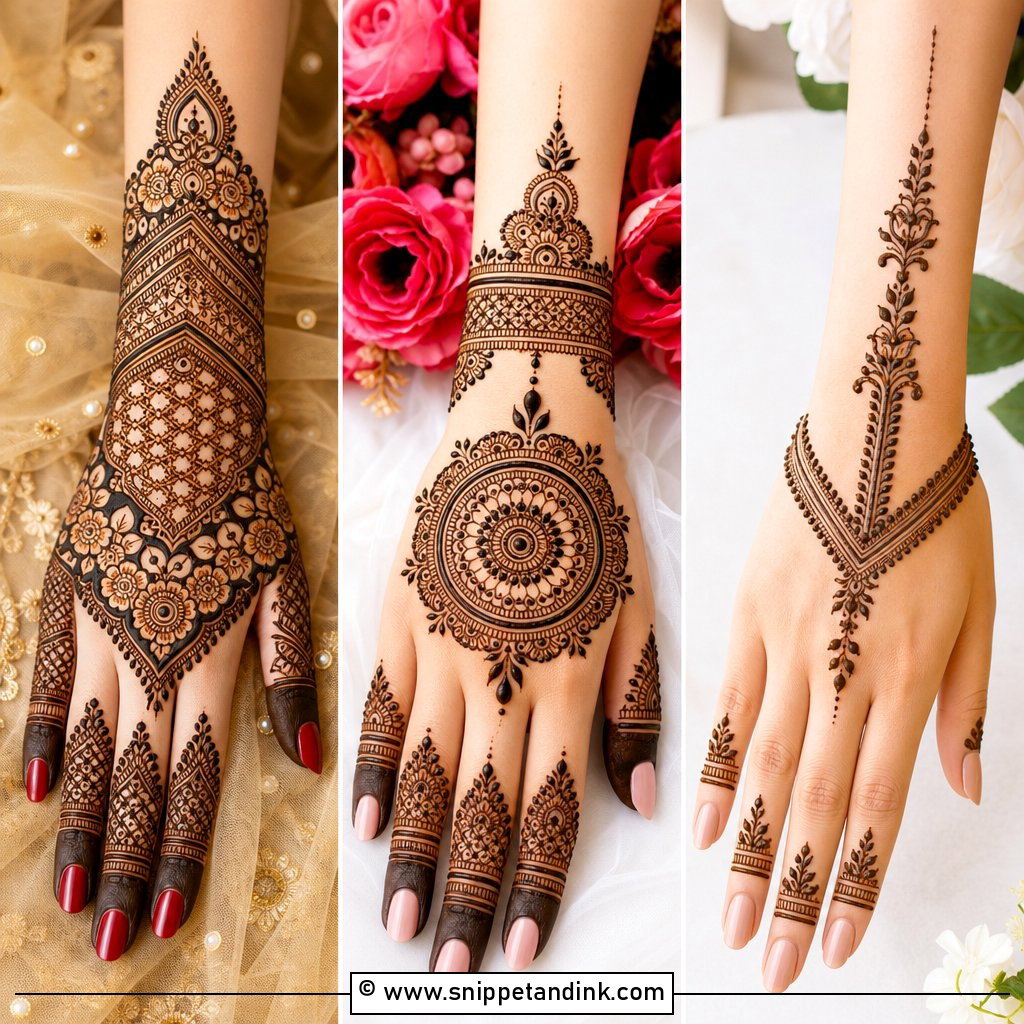
17. Simple Full Hand Mehndi Design With Bracelet
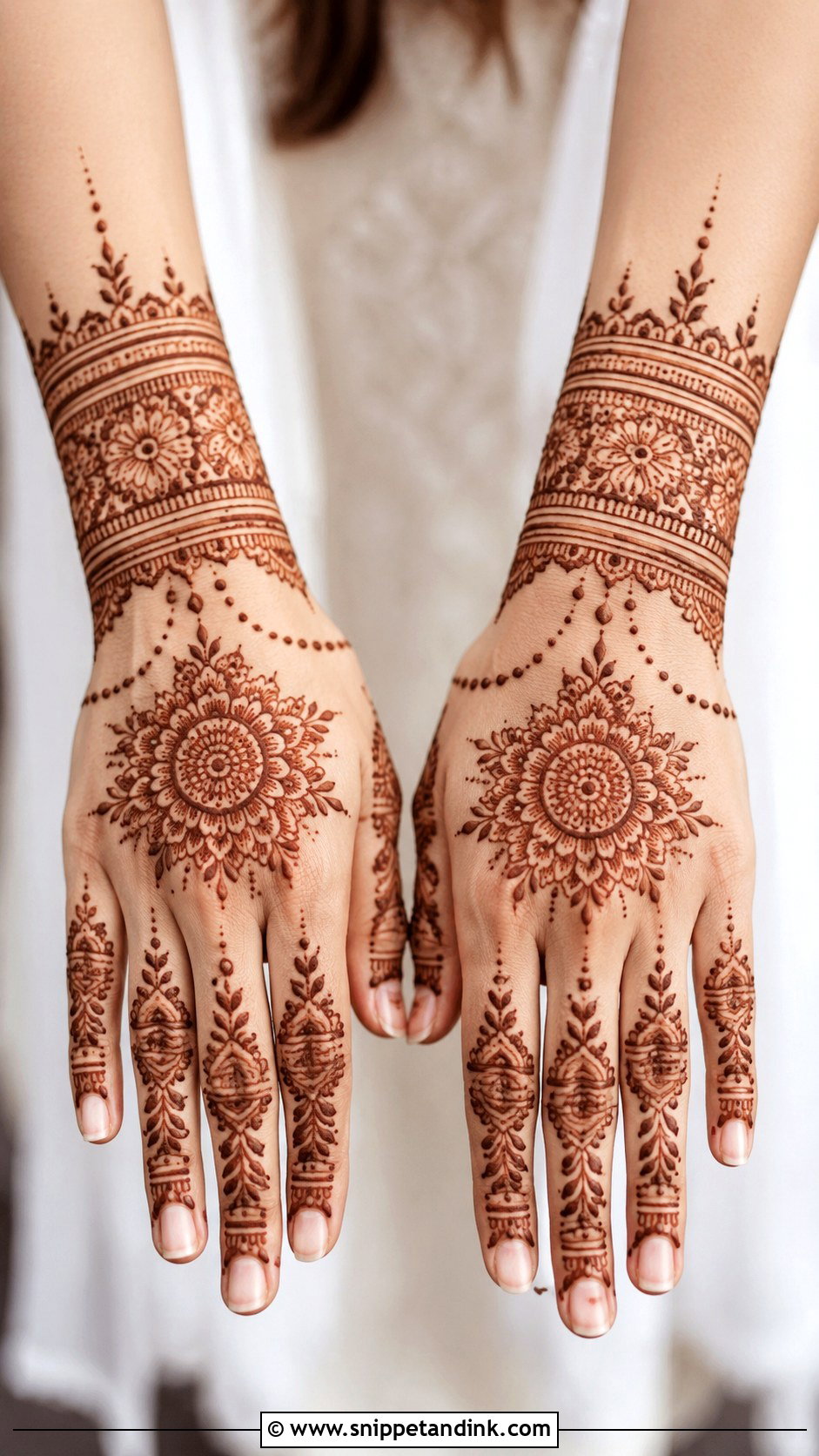
Stacked bands around the wrist made of dots, leaves, scallops and thin lines, connected to the finger patterns by chain-like trails, give the hand a jewellery finish. The palm keeps a simple floral or mandala design. Because the bracelet section becomes the main feature, the spacing between bands has to be even; I mark the top and bottom band first and fill between them. It’s a nice option if you love the look of bangles but won’t be wearing many.
18. Simple Full Hand Mehndi Design With Fingers
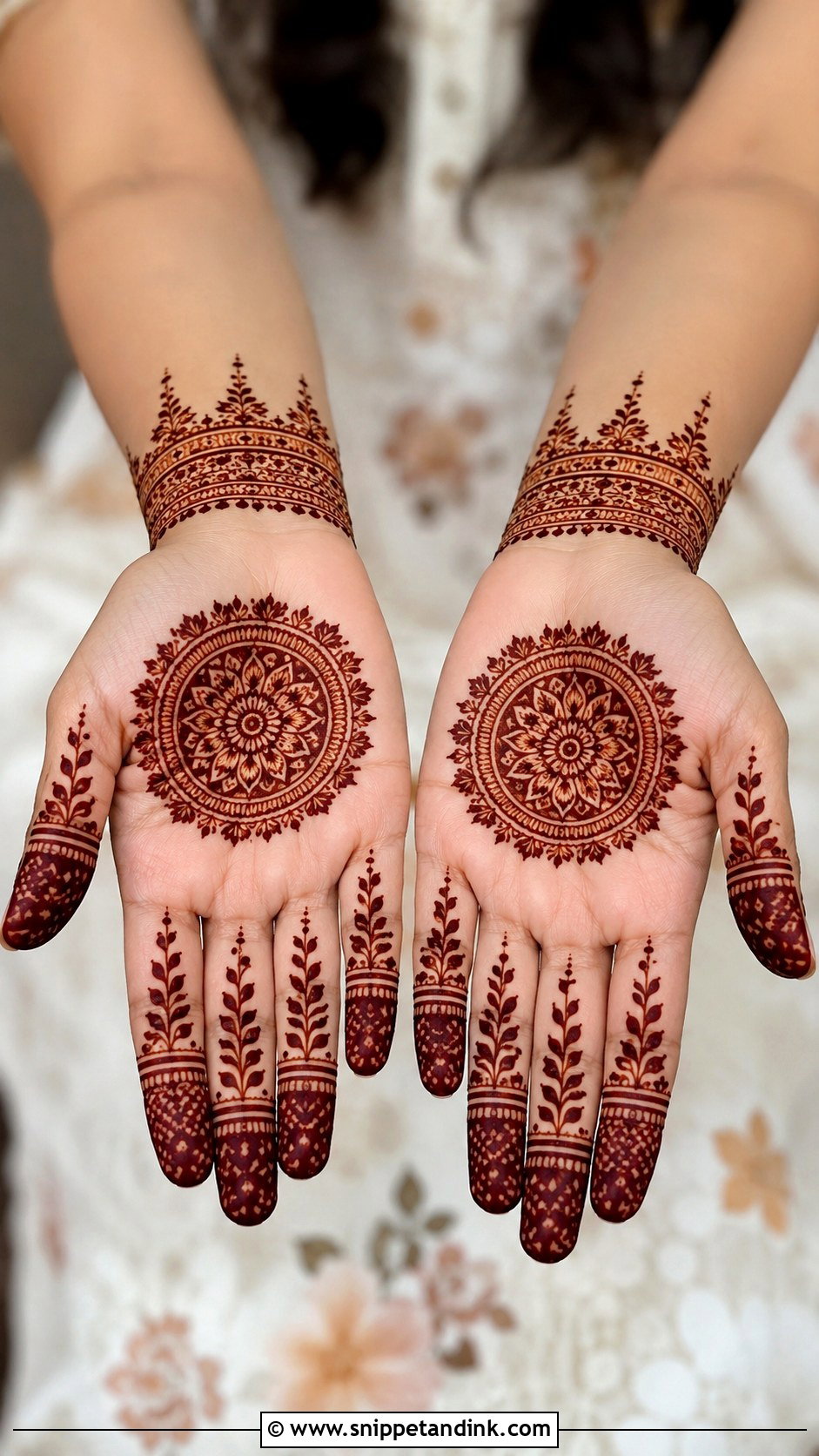
Finger-focused full hands make the hands look long. A simple central flower or mandala on the palm, then stacked bands, leafy lines, dots, checks and shaded tips on every finger. All fingers need matching line thickness or the hand looks uneven. Fingers are easy to split into small sections, which helps beginners. Fingertips stain darkest of all, so shaded tips come up deep maroon in close-ups.
19. Simple Full Hand Mehndi Design With Wrist Cuff
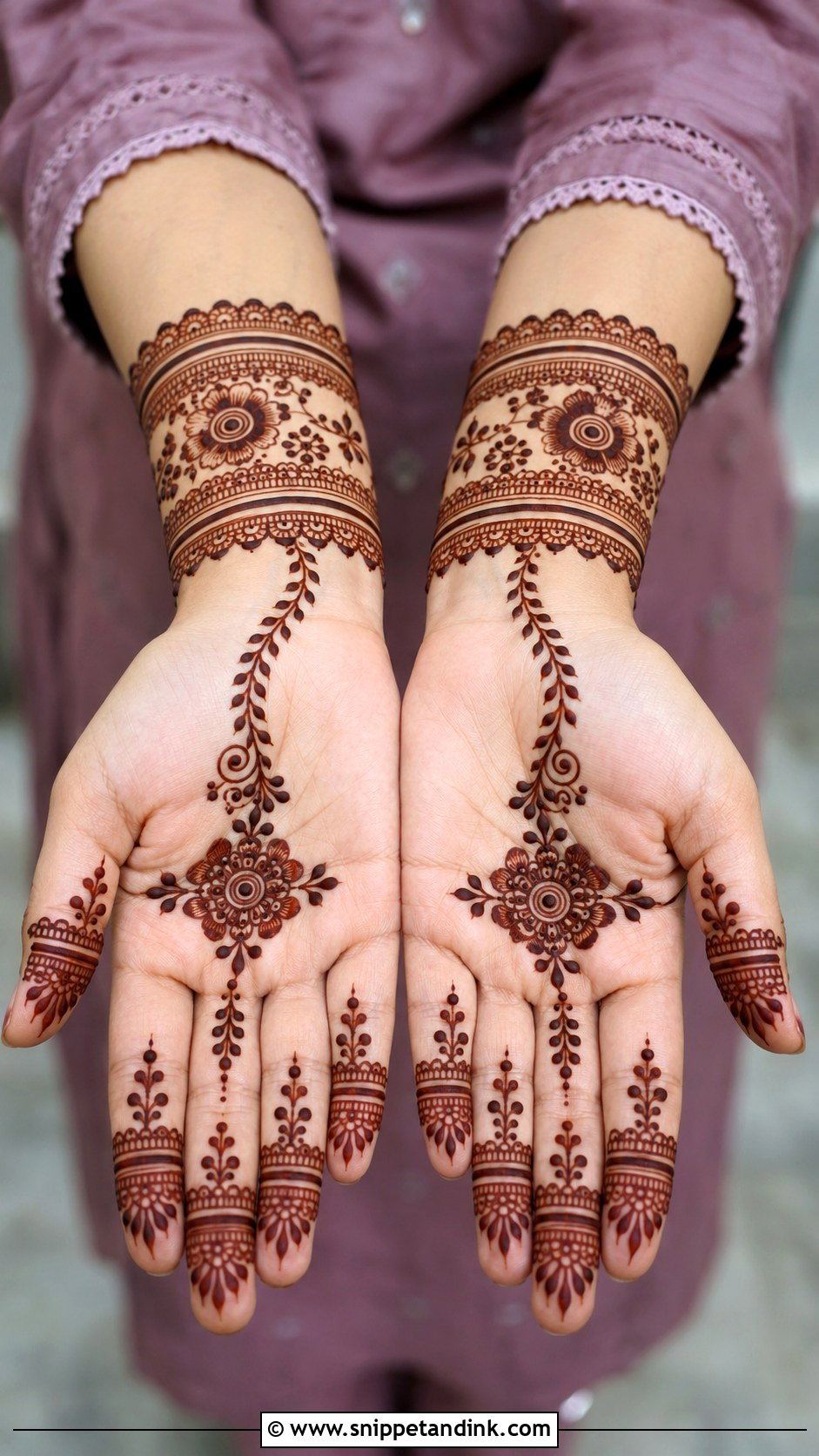
A wide wrist cuff of parallel lines, scalloped borders, dots and small flowers becomes the statement, connected to a lighter palm by a vine, paisley or mandala extension. Narrow repeated patterns on the fingers keep them from competing. I place the cuff just below the wrist bone, where it frames the hand without being buried under a watch or bangles. A good choice if you want a full hand impression with minimal palm coverage.


20. Simple Full Hand Mehndi Design With Jaali
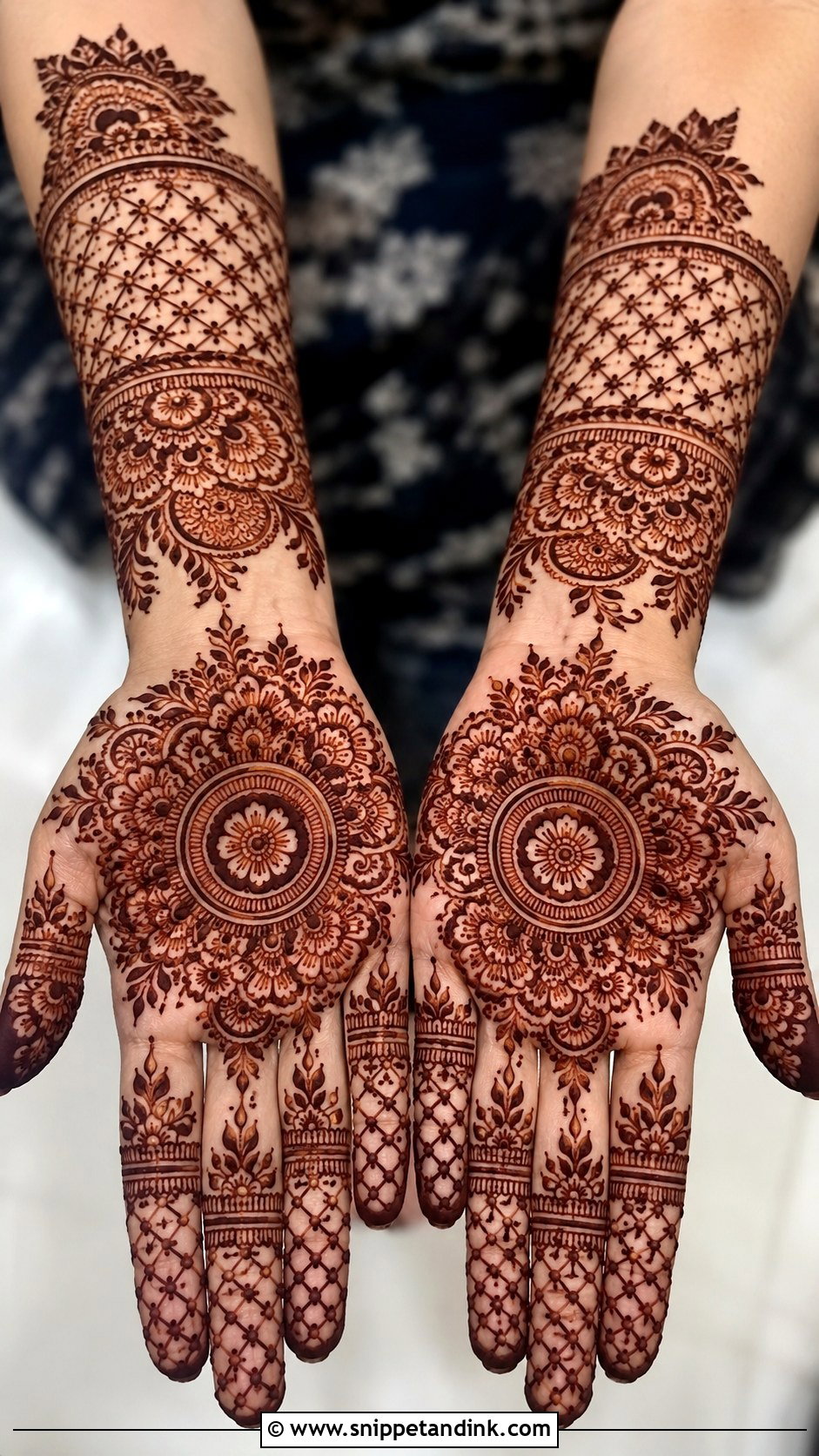
Jaali adds texture without much difficulty. Diagonal crossing lines with a tiny dot at each intersection, limited to one panel on the palm, wrist or fingers. A floral mandala on the palm softens the geometry, and leafy borders around the wrist add movement. Too many jaali panels on one hand and the design looks like a grid. Its fabric-like effect suits wedding events, and the repetition is friendly for beginners.
21. Simple Full Hand Mehndi Design With Shading
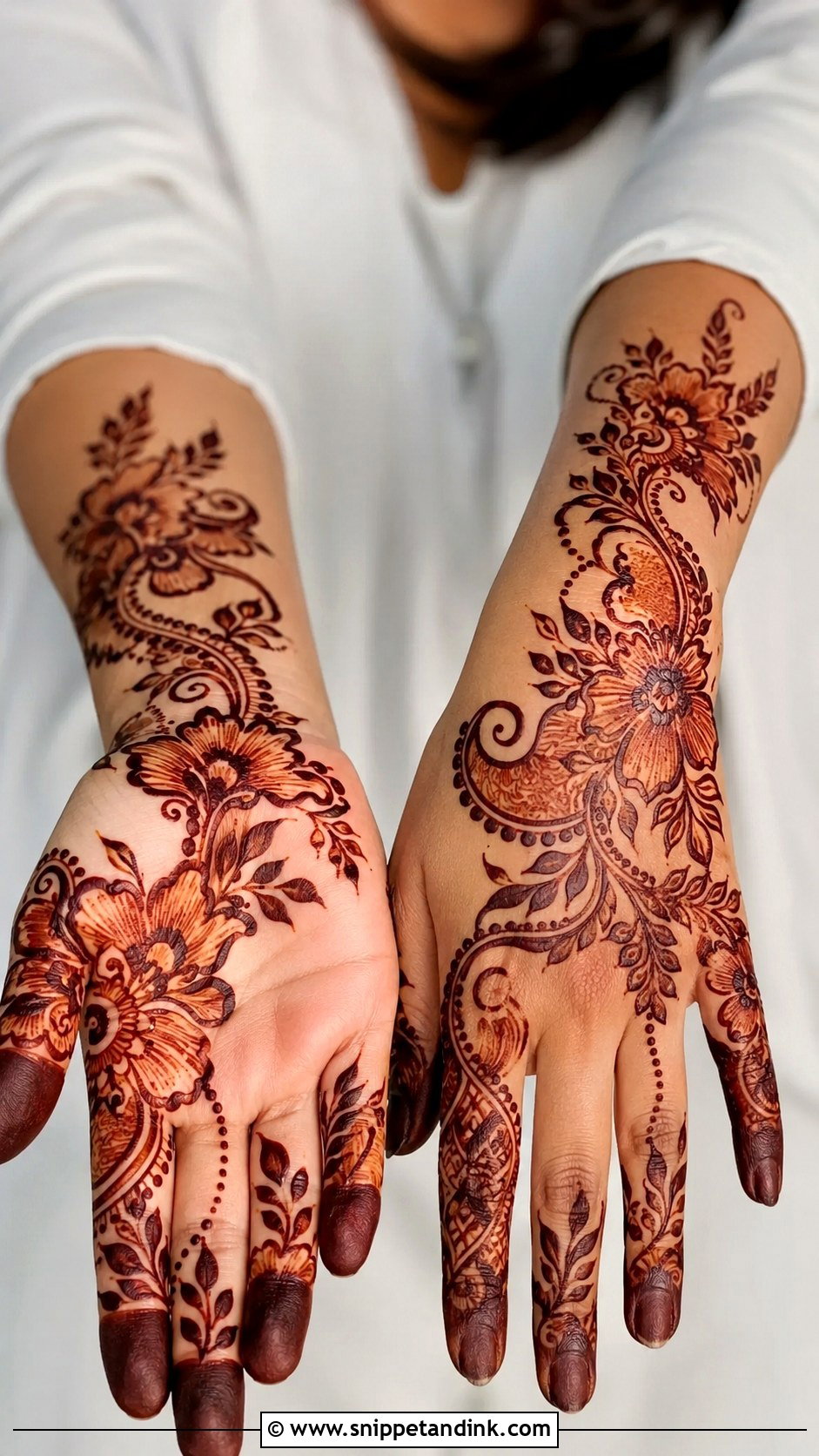
Shading adds weight without needing detail everywhere. Shaded petals, filled leaves and darkened paisley edges create contrast, with large flowers on the palm leading to leafy trails toward the wrist, and shaded tips, thin lines and dots on the fingers. I shade with light pressure and leave open space around each motif. Shading is where poor paste shows most: thin, smeared shading stains faintly, so I build it from closely spaced lines.
22. Simple Full Hand Mehndi Design With Peacock
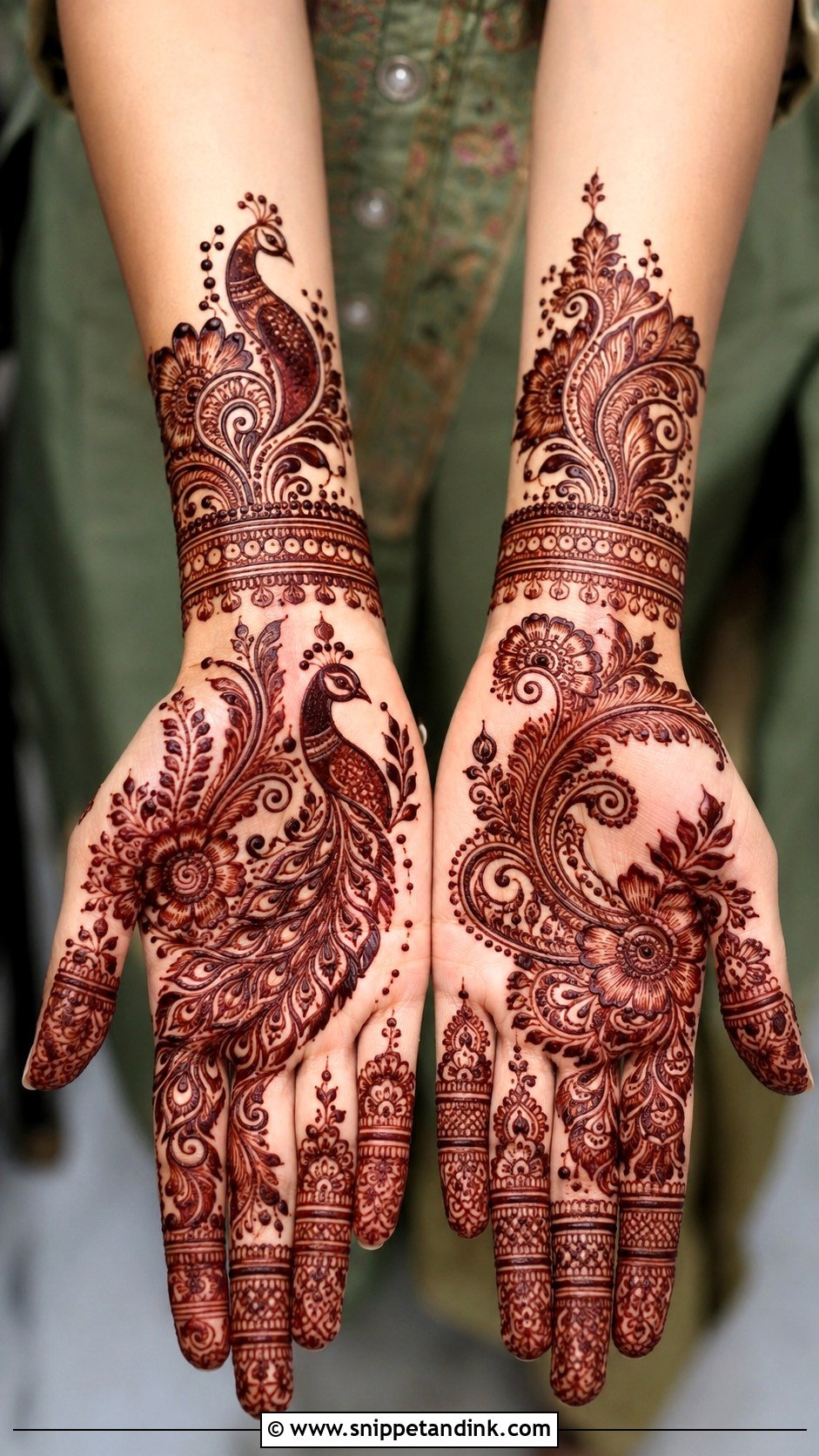
One peacock on the palm or back hand, surrounded by flowers, paisleys and dotted curves. The feathers need to stay clean and not too fine; a few curved lines with small leaves suggest them without fuss. Matching bands and slim vines on the fingers, a bracelet border at the wrist. It’s a natural fit for weddings, sangeet and Diwali. I’d allow extra time for the bird itself, since a lopsided neck is the mistake people notice.
23. Simple Full Hand Mehndi Design With Rose
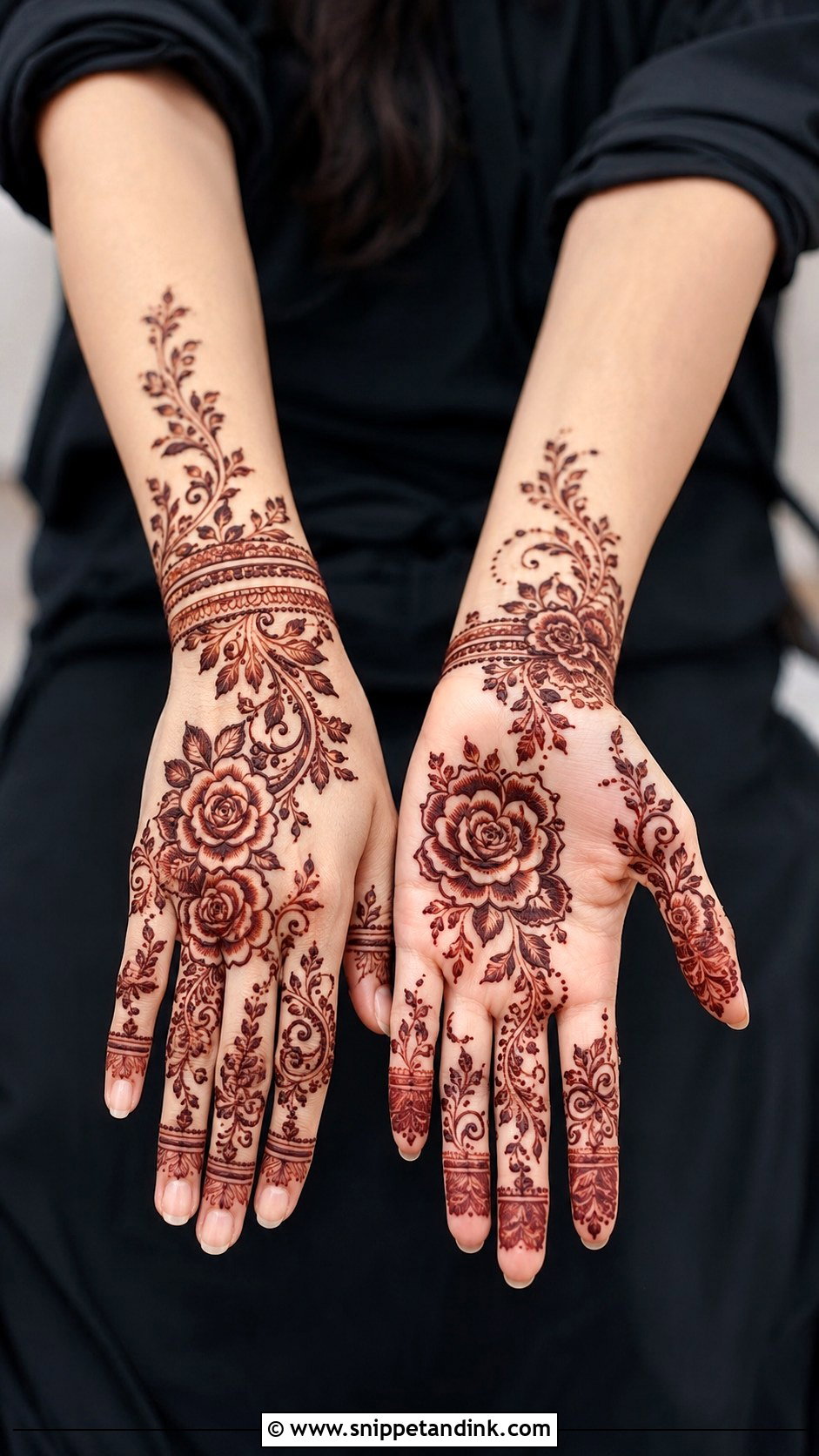
Rose full hands use one or two large roses on the palm or back hand, connected with leaves, vines and curved stems. Bold, layered petals stay visible after the henna darkens; thin inner petals tend to merge. Simple finger bands and a wrist cuff complete it. Open space around the roses lets the shape read clearly. It feels less traditional, which works well for engagements and Eid.
24. Simple Full Hand Mehndi Design With Lotus
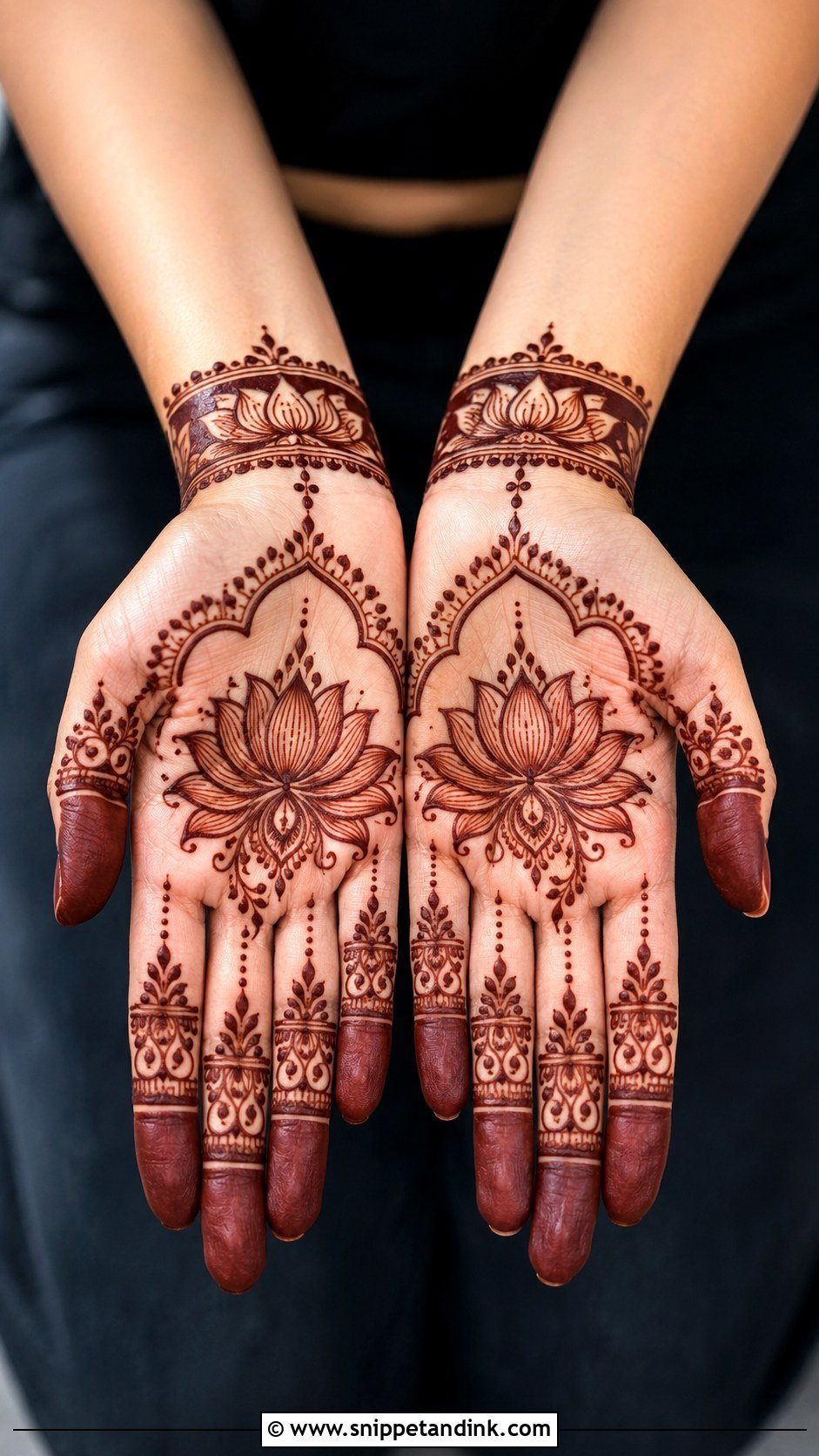
A lotus in the centre of the palm, leaves, dots and curved borders around it, a narrow petal cuff at the wrist, vertical lines, tiny petals and filled tips on the fingers. Calm and balanced. The petals need to be even and slightly larger than you’d expect, because small lotus petals lose their shape once the paste is scraped off. It’s a fitting motif for puja and Diwali.
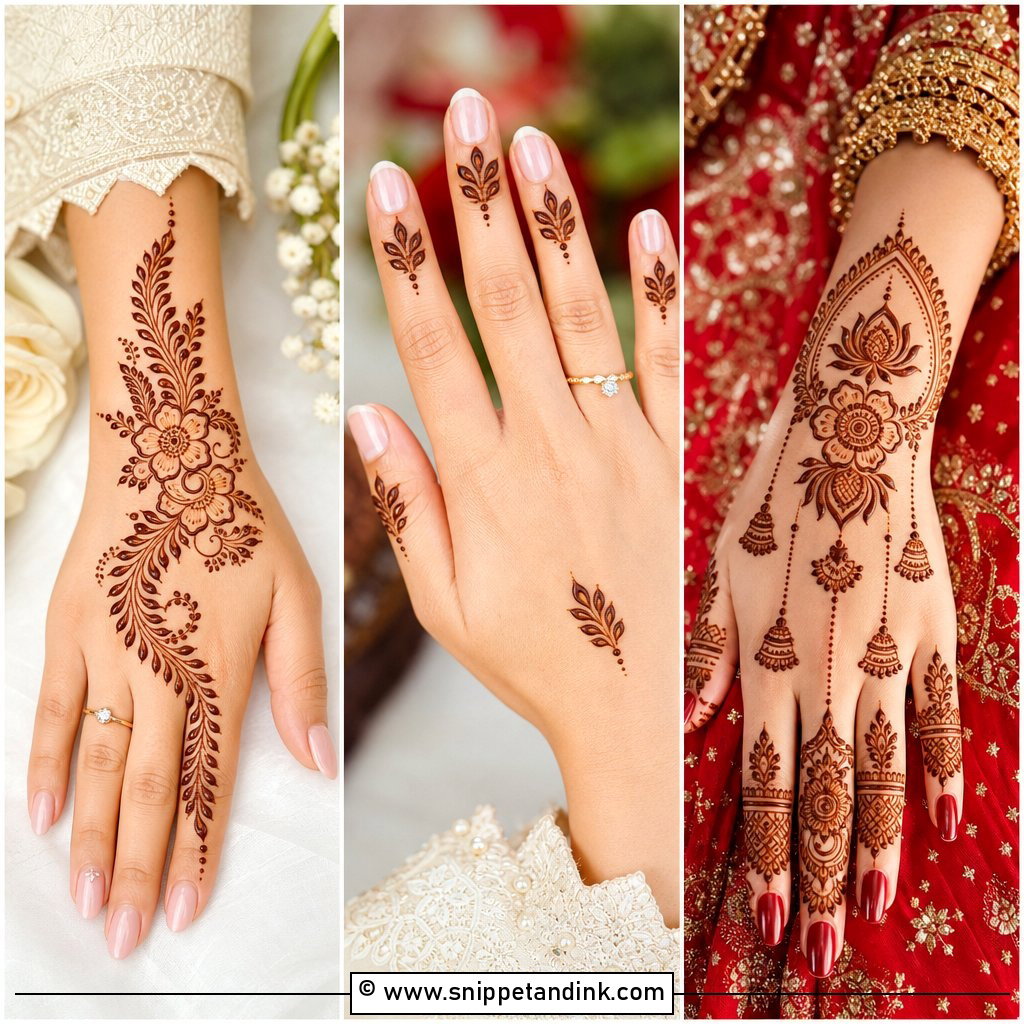
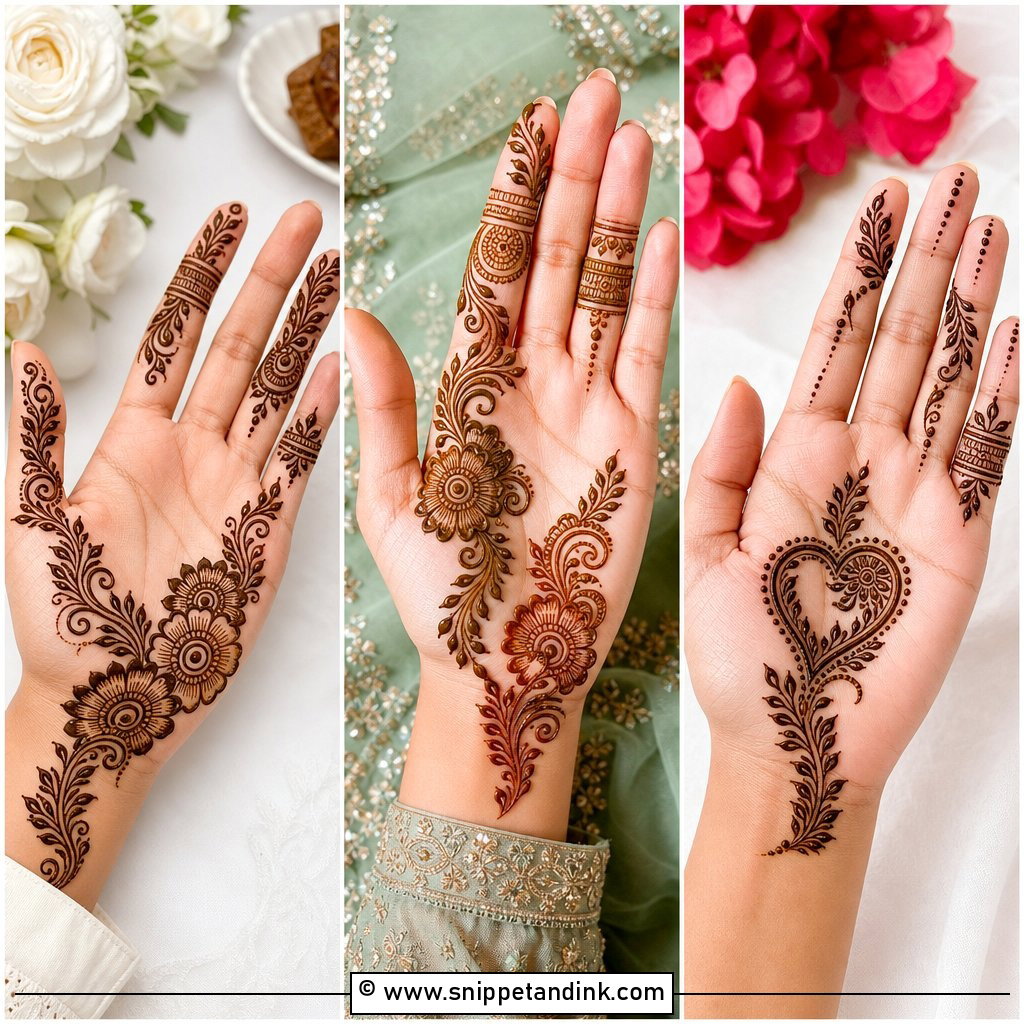
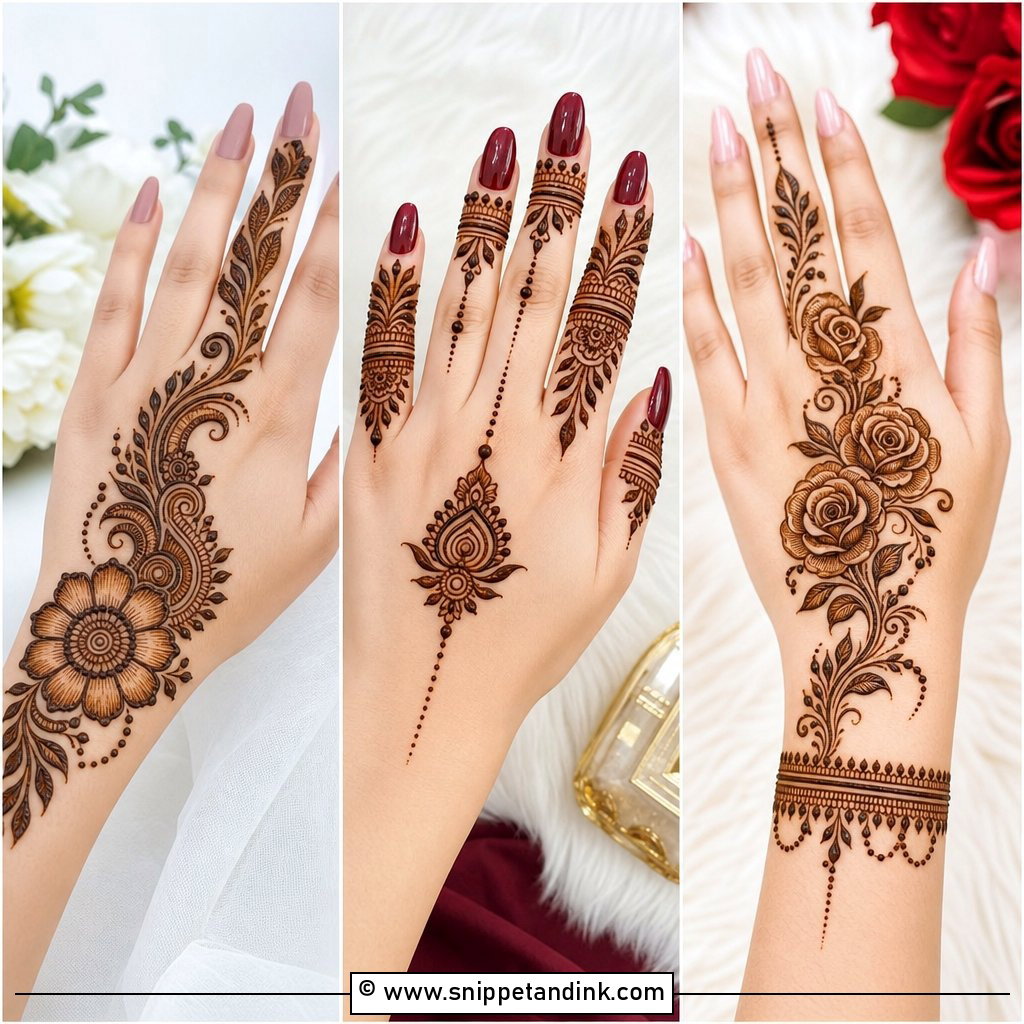
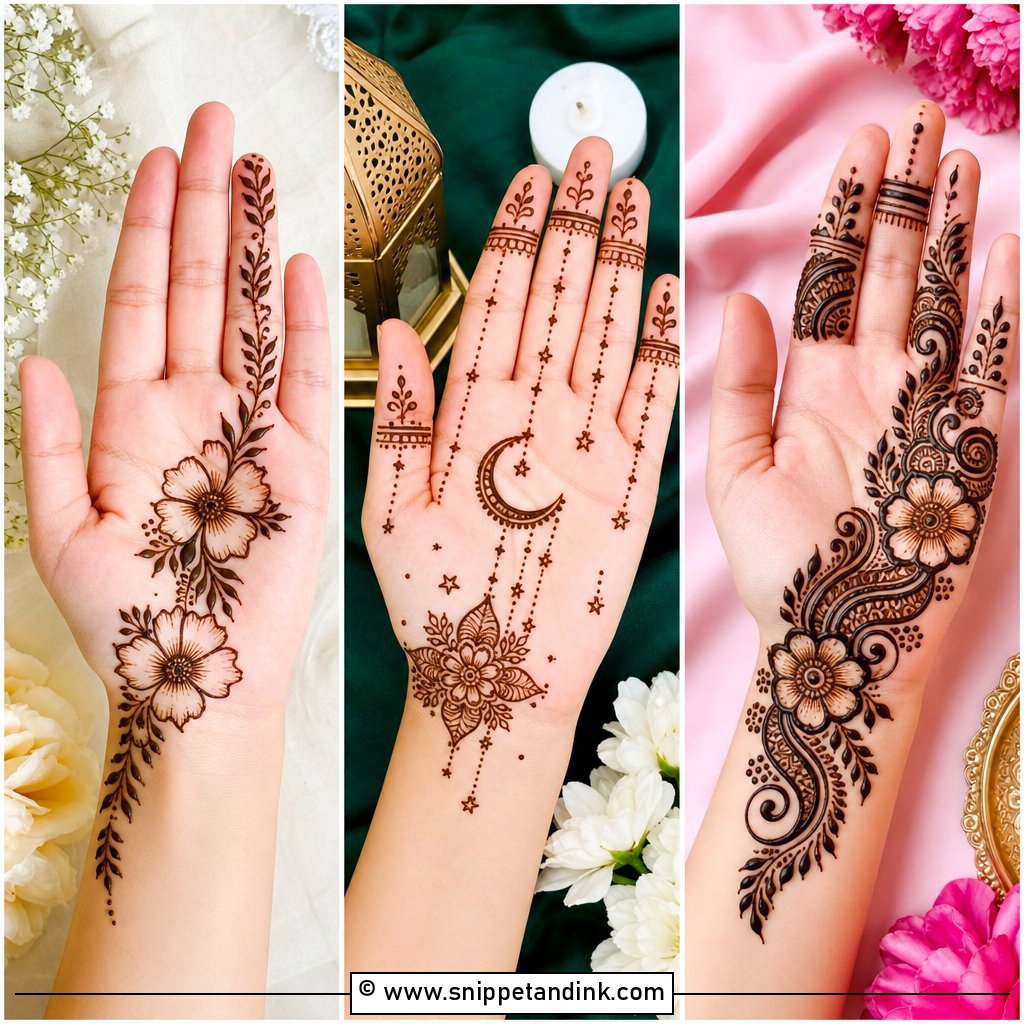

25. Simple Full Hand Mehndi Design With Vines
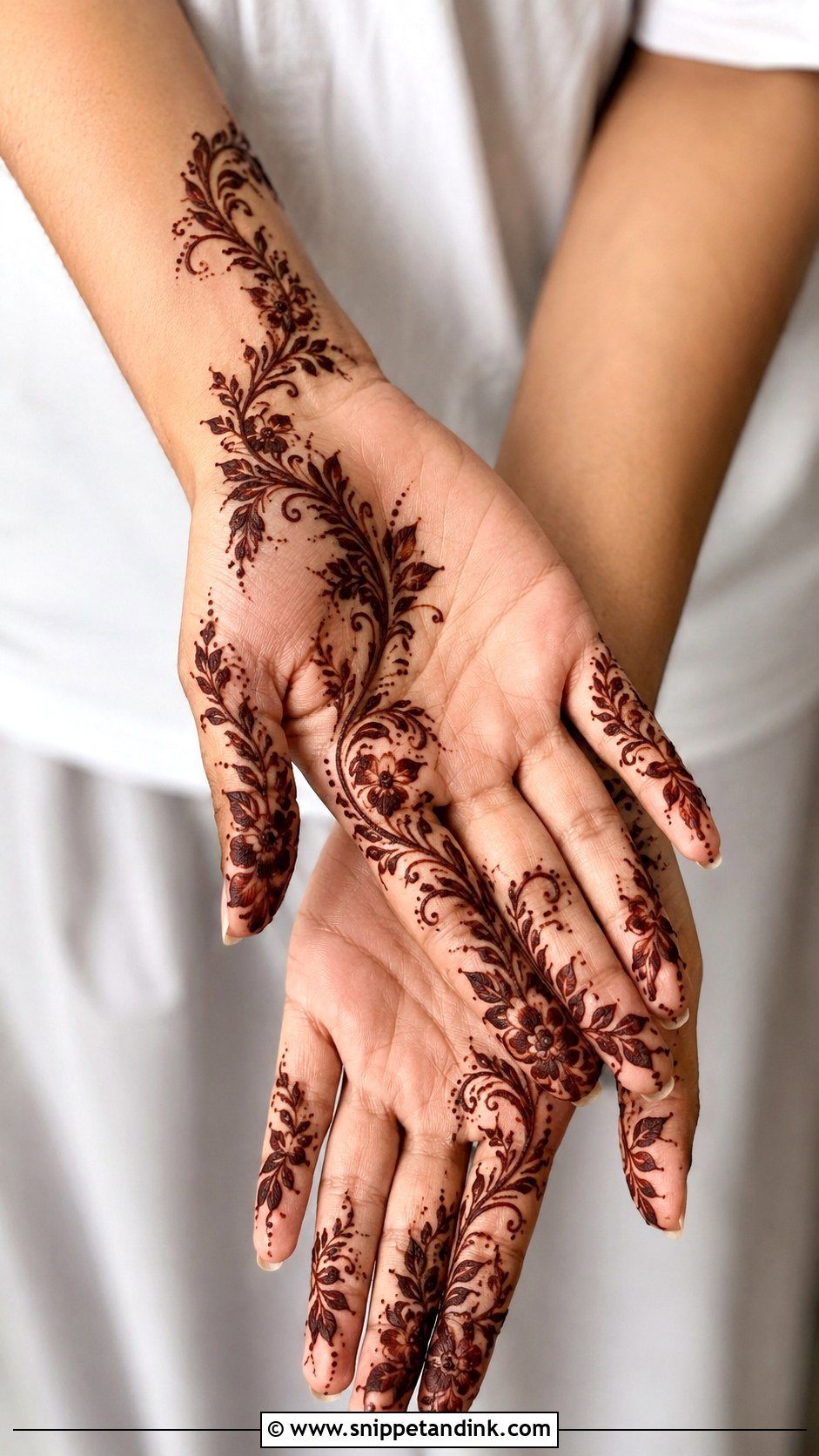
Vines are flowing and forgiving. A leafy vine starts at the wrist and travels across the palm to the index or middle finger, with small flowers along it, then dots, small curls and simple borders fill the remaining space. It’s essentially Arabic in spirit, using movement rather than density. If a stroke drifts, I adjust the next leaf to follow it. Keep the leaves consistent in size and direction.
26. Simple Full Hand Mehndi Design With Dots
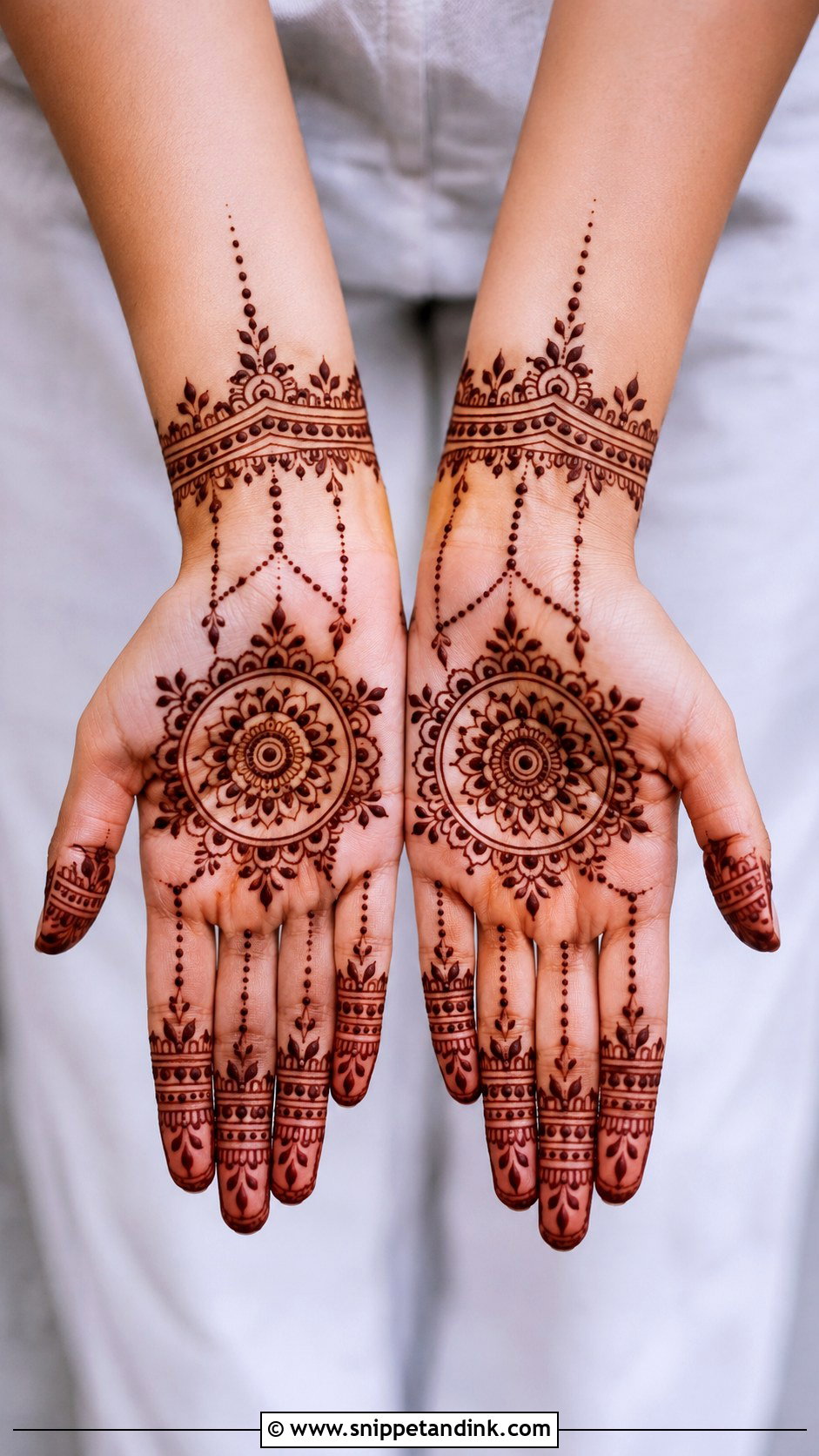
A central mandala or floral motif with dotted chains around the palm, fingers and wrist. Dots connect motifs, frame borders and fill gaps without adding weight. I pair them with thin lines, small leaves and simple curves. They’re a beginner’s friend because they hide small spacing mistakes, but only when they’re even in size; random dots look careless rather than decorative.
27. Simple Full Hand Mehndi Design With Leaves
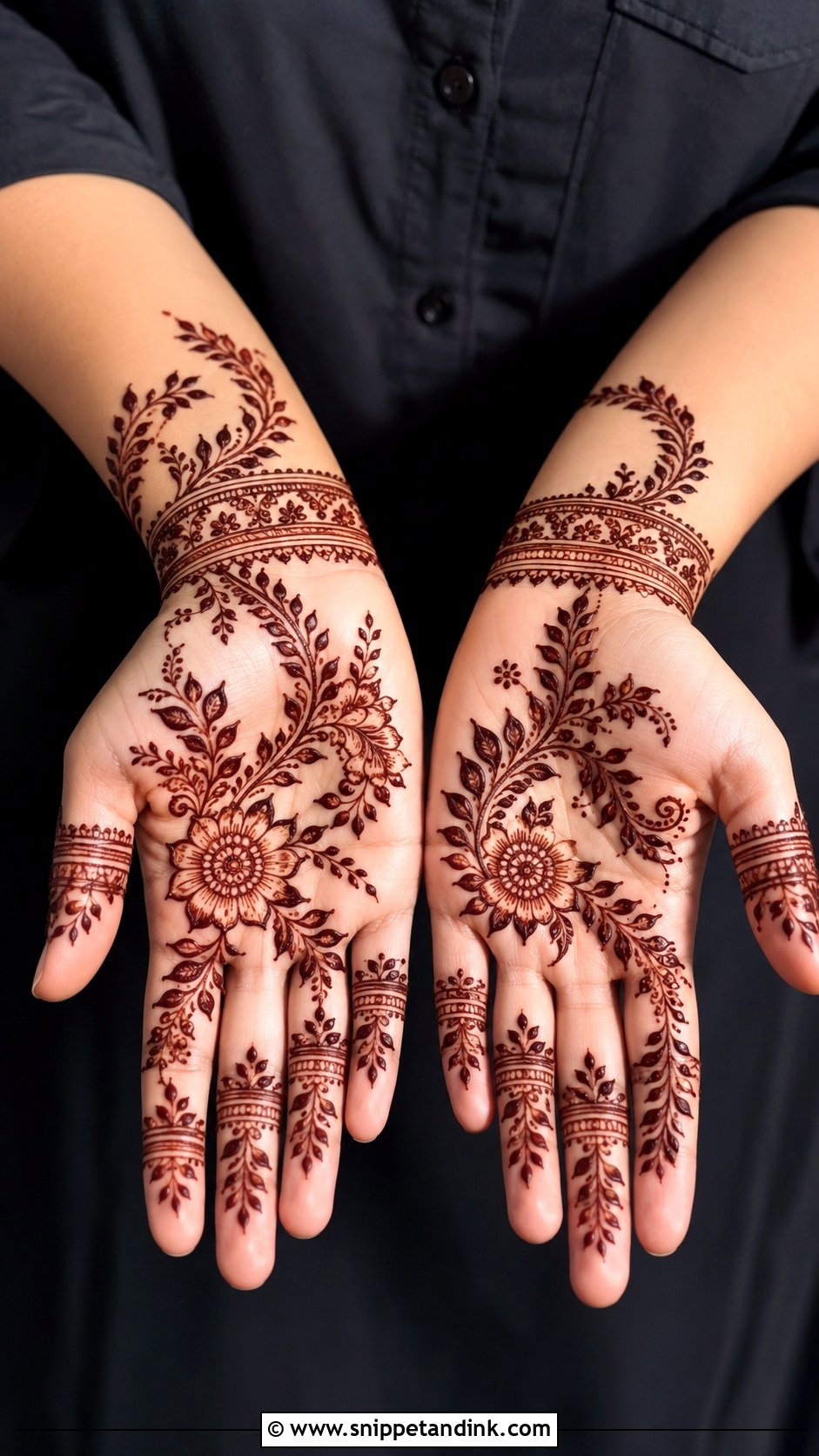
Leaf mehndi designs spread across a full hand quickly. A main leafy trail from wrist to fingers, smaller branches across the palm, tiny flowers, dots and curved lines for softness. Slim leaf chains or alternating leafy bands on the fingers, a cuff with leaf borders at the wrist. I keep all the leaves the same basic shape, varying only the size; that consistency is what makes a fast design look planned.
28. Simple Full Hand Mehndi Design With Geometric Pattern
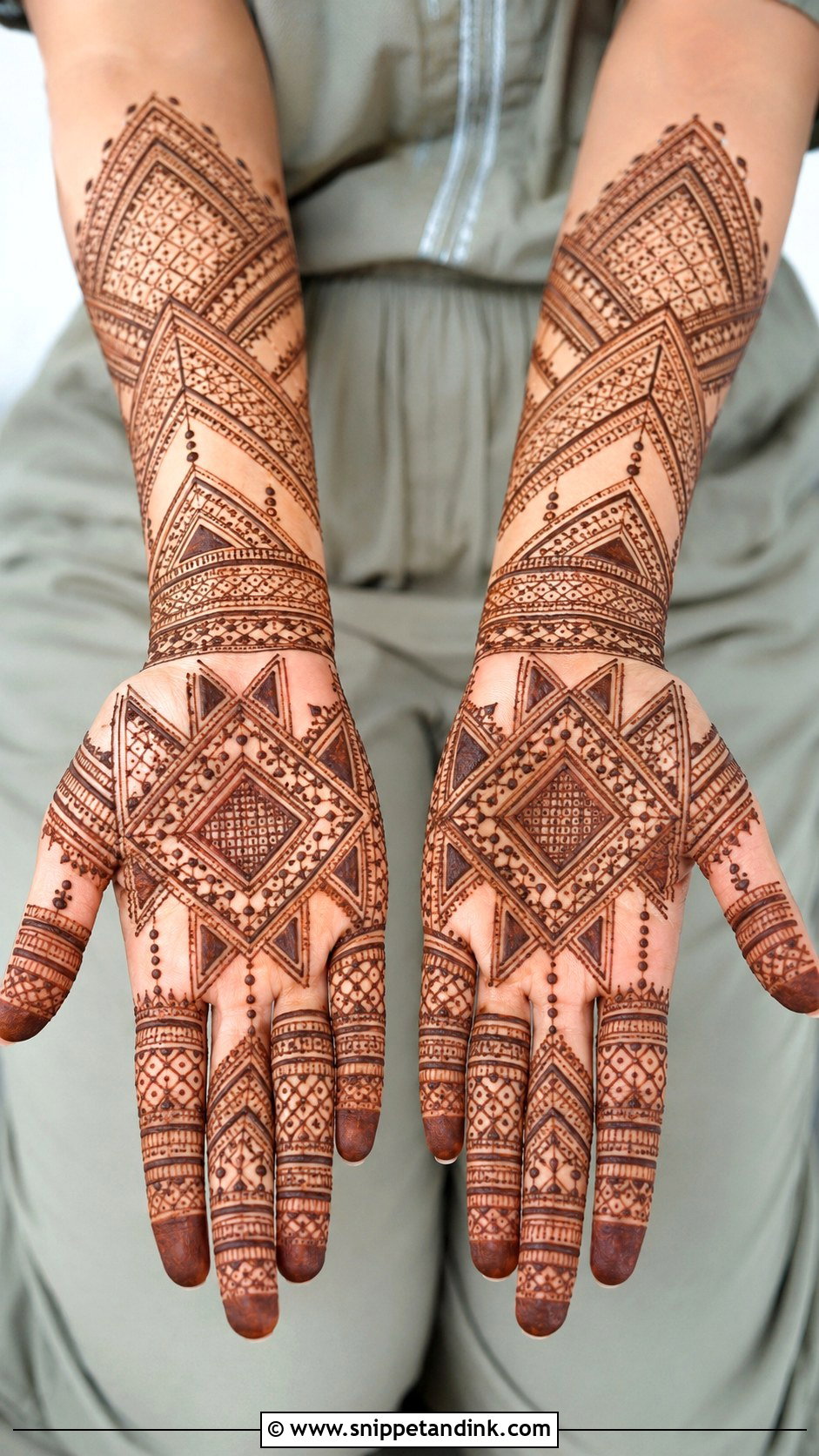
Squares, triangles, lines, diamonds and simple mesh panels across the palm and wrist give a modern, structured hand. Small flowers or dots keep it from looking stiff. Fingers get repeated bands, checks and straight-line patterns. It suits people who prefer structure to floral flow. Straight lines need a steady hand; I rest my piping wrist on the table and pull each line toward me in one motion.
29. Simple Full Hand Mehndi Design With Moroccan Pattern
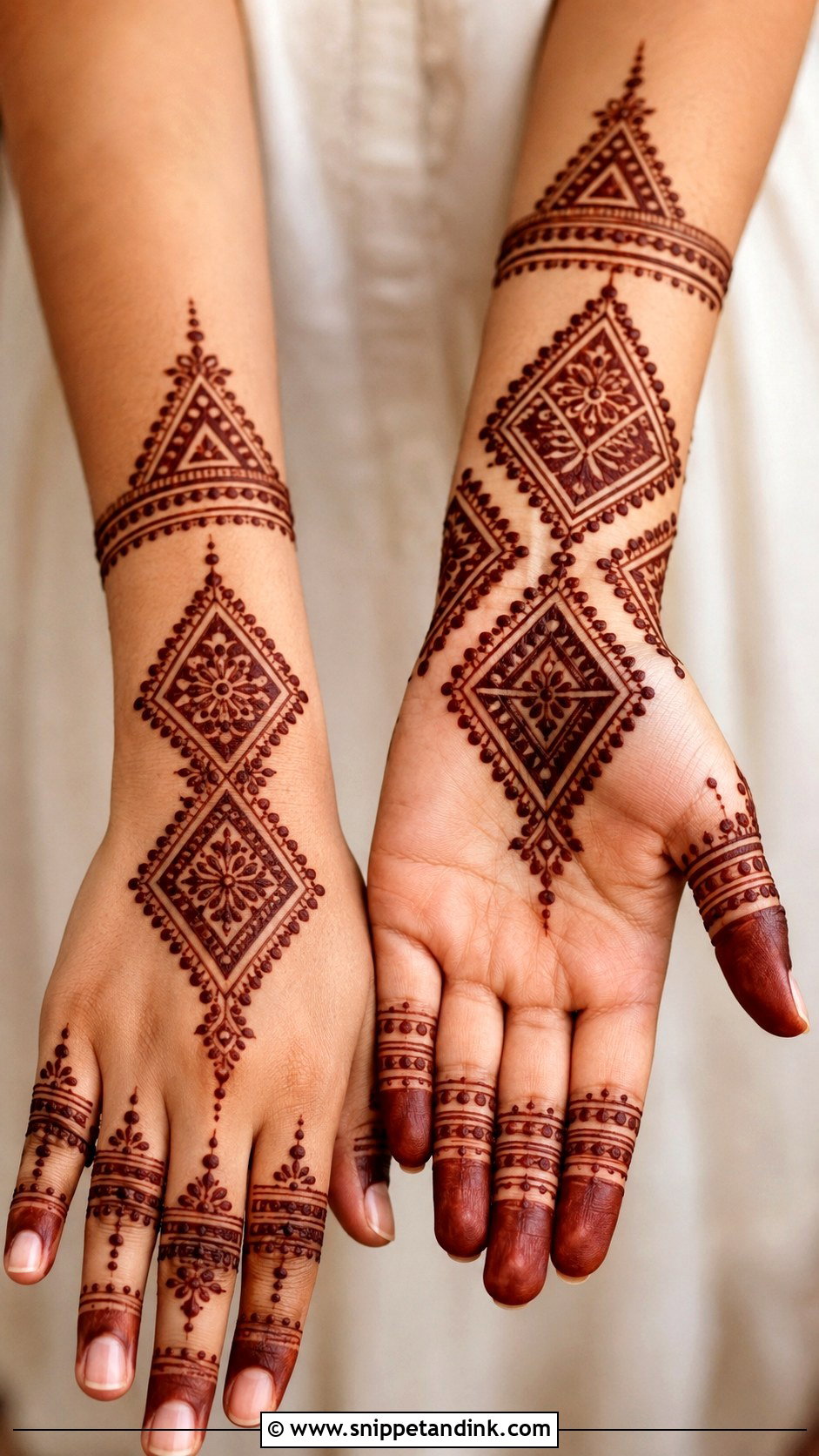
Moroccan-style full hands rely on geometry, symmetry and strong linework: diamond grids, straight borders, triangular details, dotted accents. A central geometric panel on the palm, repeated bands to the fingers, a cuff with parallel lines and small checks at the wrist. Alignment is everything. If one grid row drifts, every row after it drifts too, so I check it against the edge of the palm every few lines.
30. Simple Full Hand Mehndi Design With Gulf Arabic Pattern
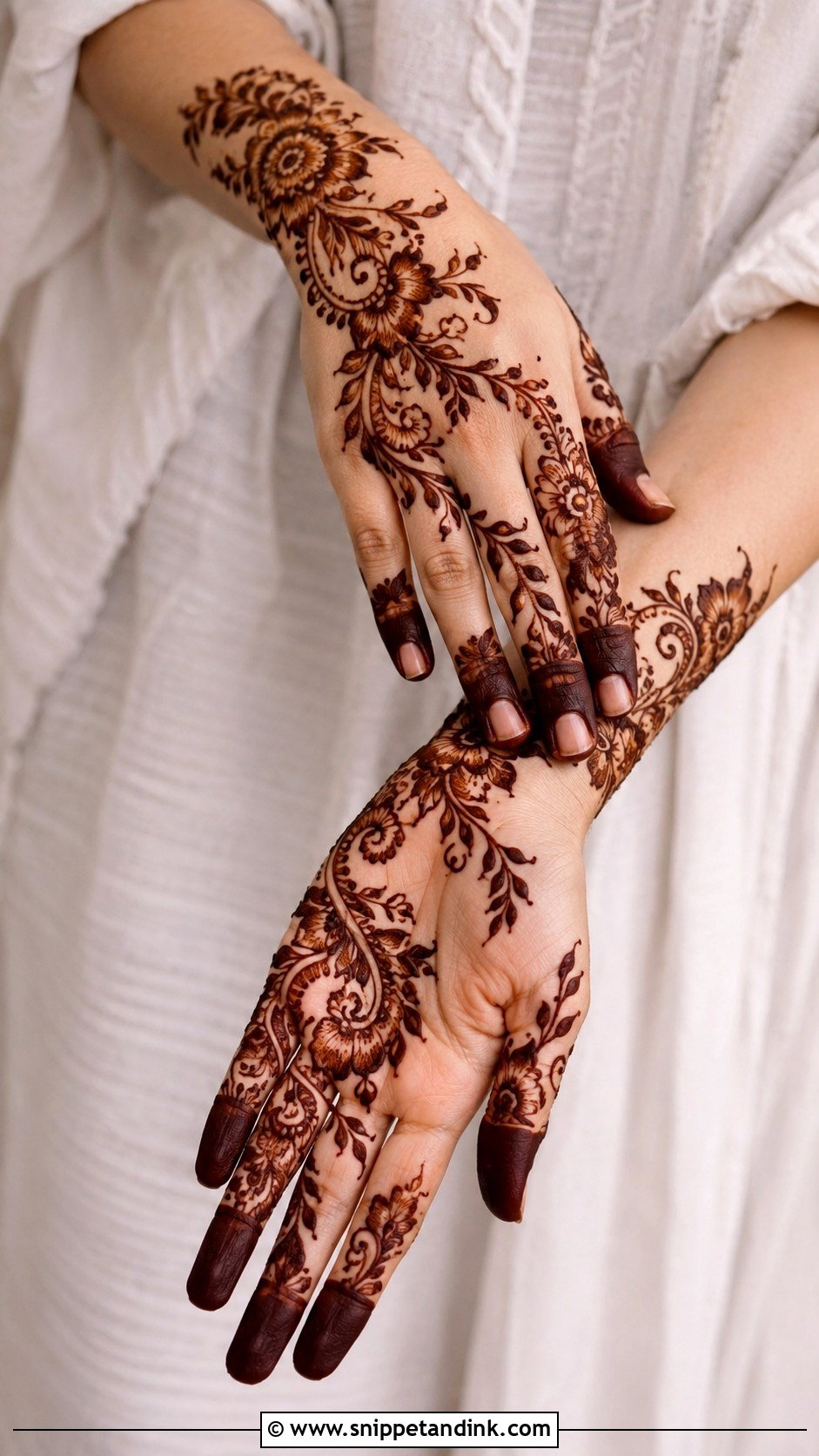
Khaleeji or Gulf Arabic work is bold: large flowers along one side of the palm, leafy curves sweeping toward the wrist and fingers, shaded petals, thick outlines and plenty of negative space. I use a slightly wider cone opening for these lines. Simple bands with filled tips or leafy extensions on the fingers. It looks dramatic at Eid and evening weddings with much less work than dense traditional coverage.
31. Simple Full Hand Mehndi Design For Kids
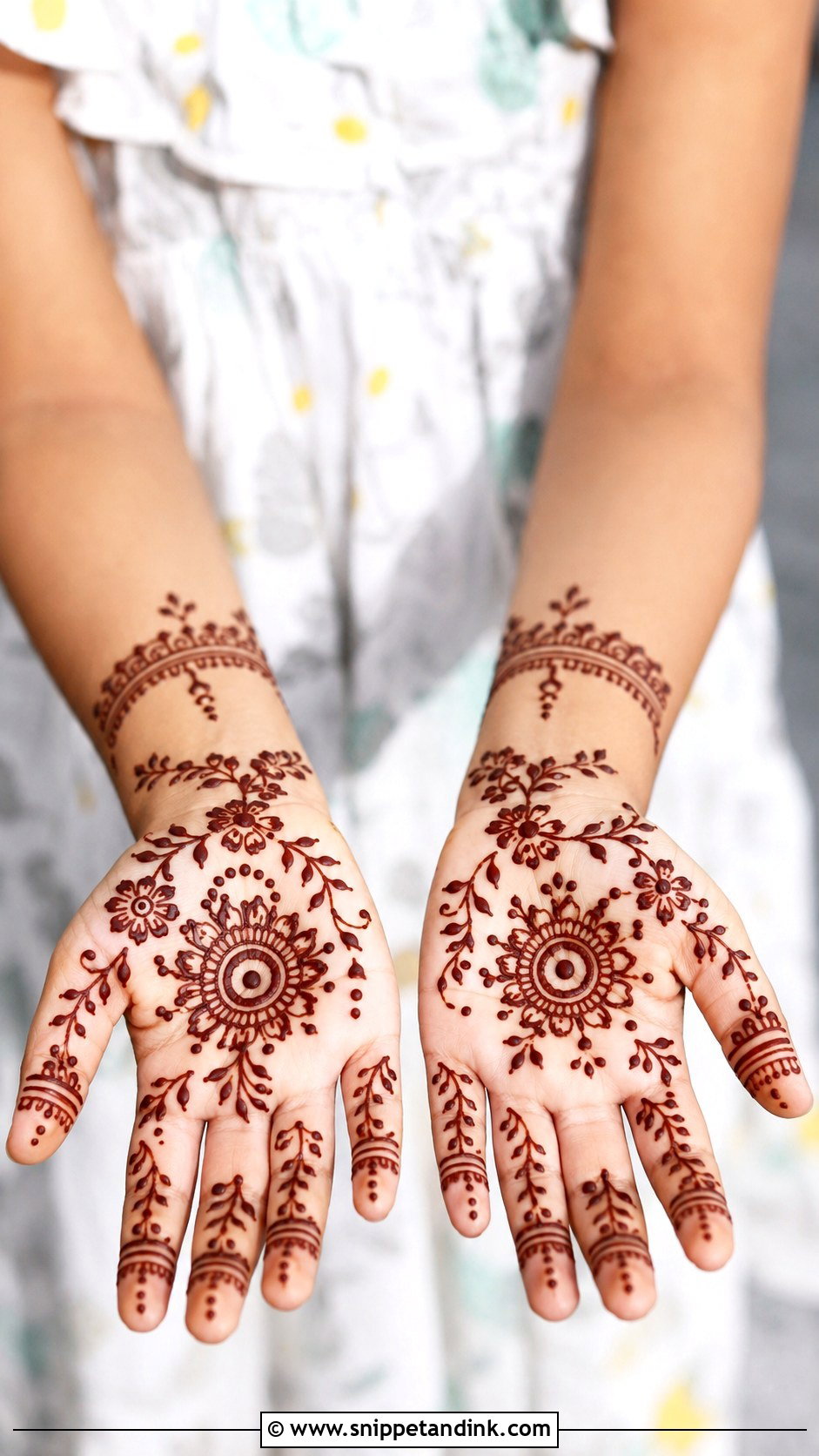
Kids need large, quick motifs: flowers, hearts, stars, small mandalas, leafy vines. A simple palm, dots, small bands and filled tips on the fingers, a tiny bracelet at the wrist. I keep the session short and stop before they get restless, because a wriggling child smudges more than anything else. Always natural henna, and a short session matters more than full coverage.
32. Simple Full Hand Mehndi Design For Teens
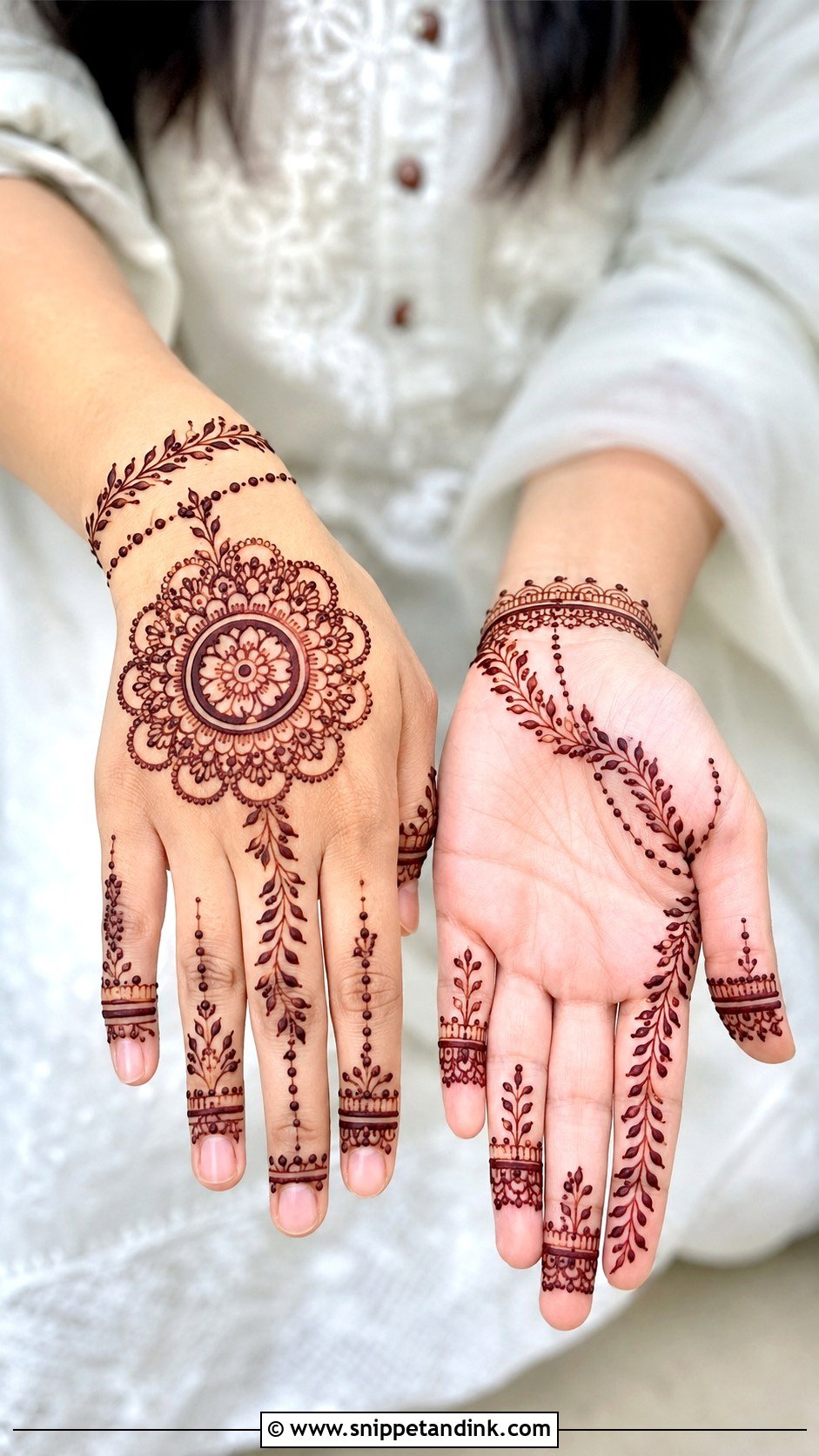
Teens usually want something trendy rather than traditional: a back hand mandala, finger chains, leafy vines and a slim wrist bracelet, with a floral trail or simple paisley on the palm and open spaces. The back hand gets photographed most, so I keep it neat and symmetrical. Small dots and minimal shading add detail. It matches both ethnic and fusion outfits.
33. Simple Full Hand Mehndi Design For Bridesmaids
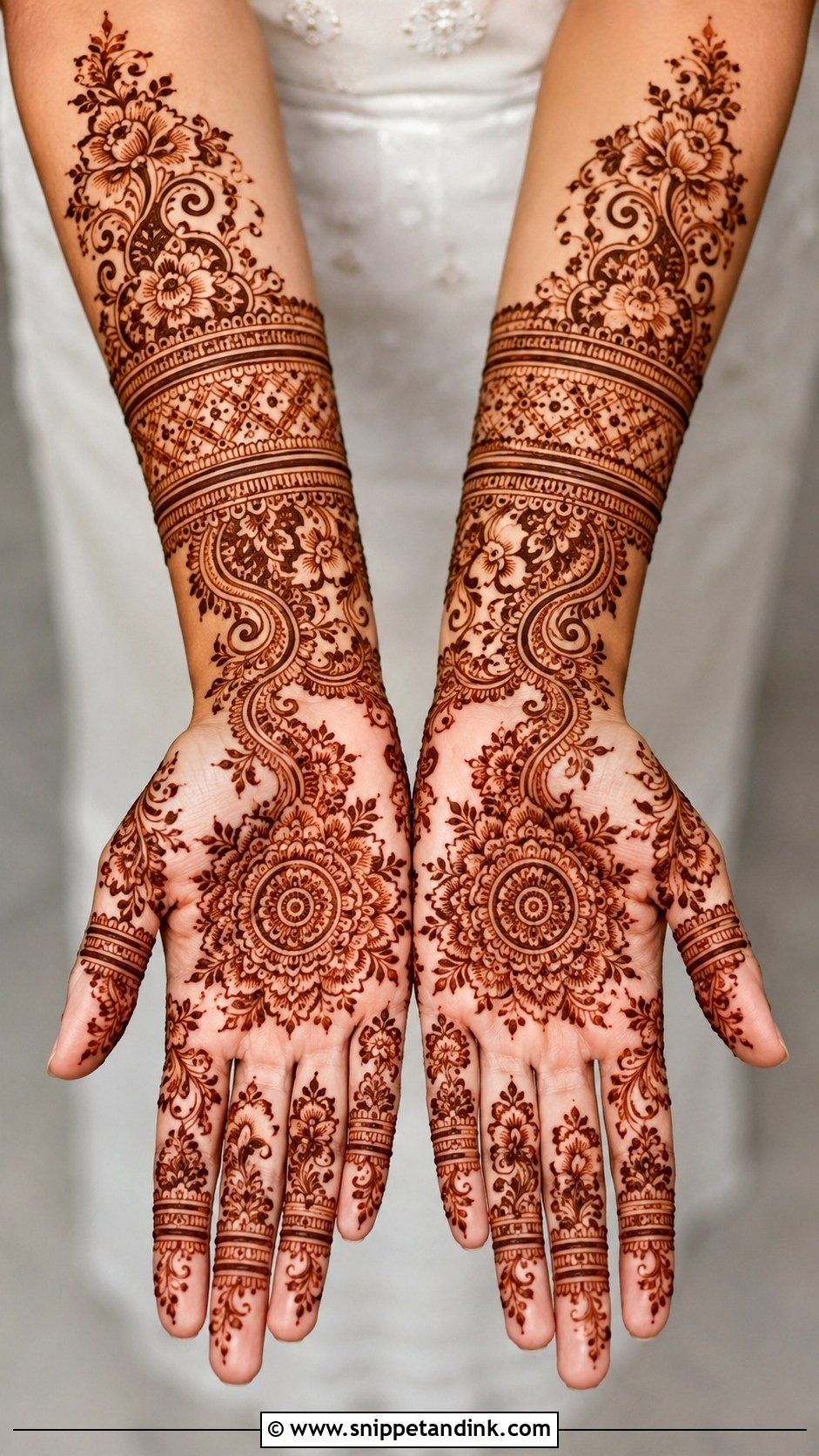
Bridesmaids should look festive but lighter than the bride. Floral vines, mandalas, paisleys and bracelet cuffs; the palm filled enough to show in photos, with open space keeping it light. A jewellery-style back hand that sits well with rings and bangles, fingers detailed with neat bands and small leafy patterns. If I’m doing several bridesmaids, I keep the same core motifs for all of them, which makes group shots look coordinated across mehndi night, haldi and the wedding day.
34. Simple Full Hand Mehndi Design For Festivals
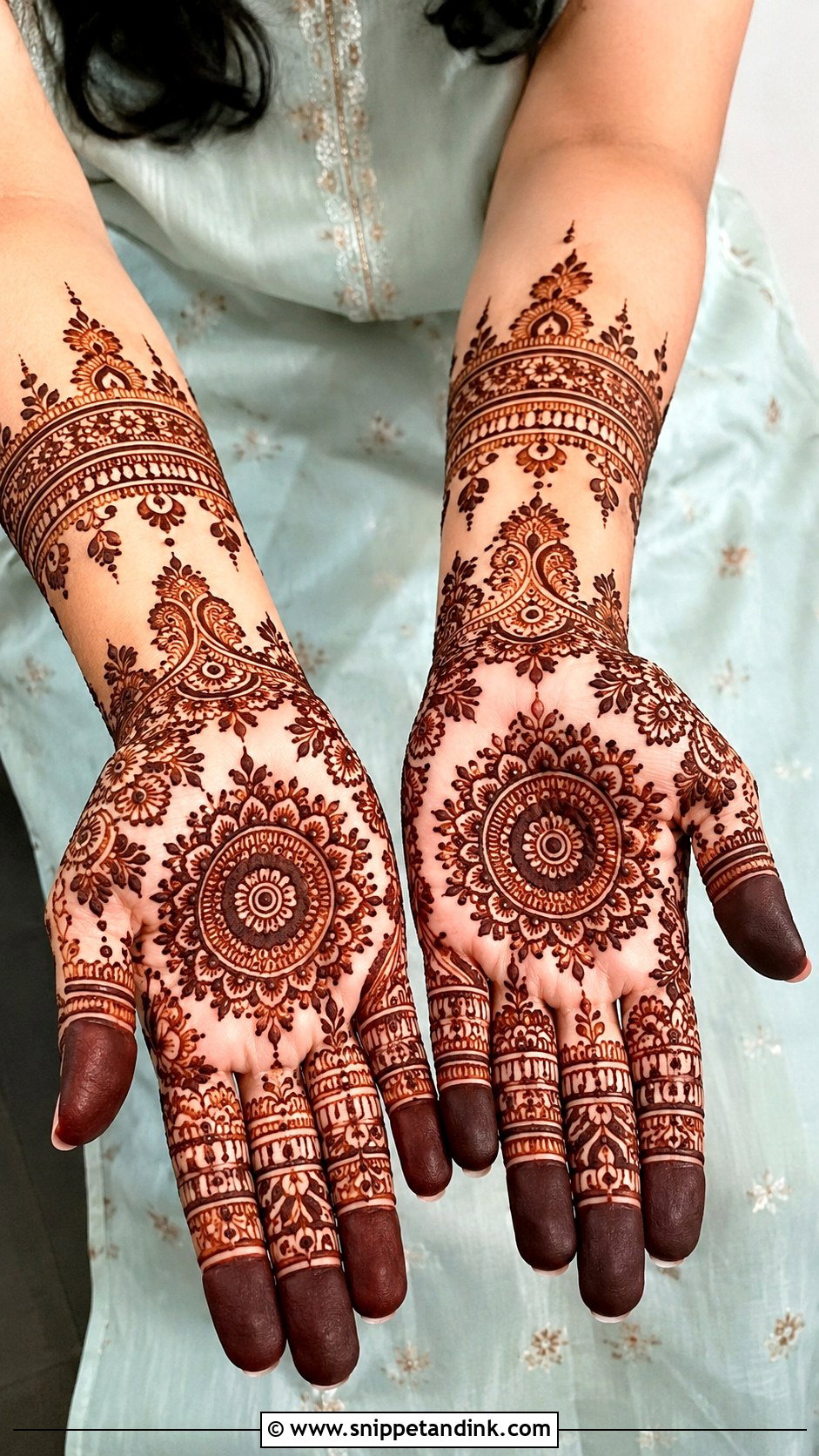
Festival mehndi has to be comfortable to wear all day. Flowers, mandalas, dots, leaves and wrist bands, with a clear main palm motif and lighter patterns extending to the fingers and wrist. For Eid, Diwali, Teej and Karwa Chauth, I’d apply it a day before and avoid washing soon after removing the paste. Repeated motifs and bold outlines look neat even from across the room.
35. Simple Full Hand Mehndi Design For Small Hands
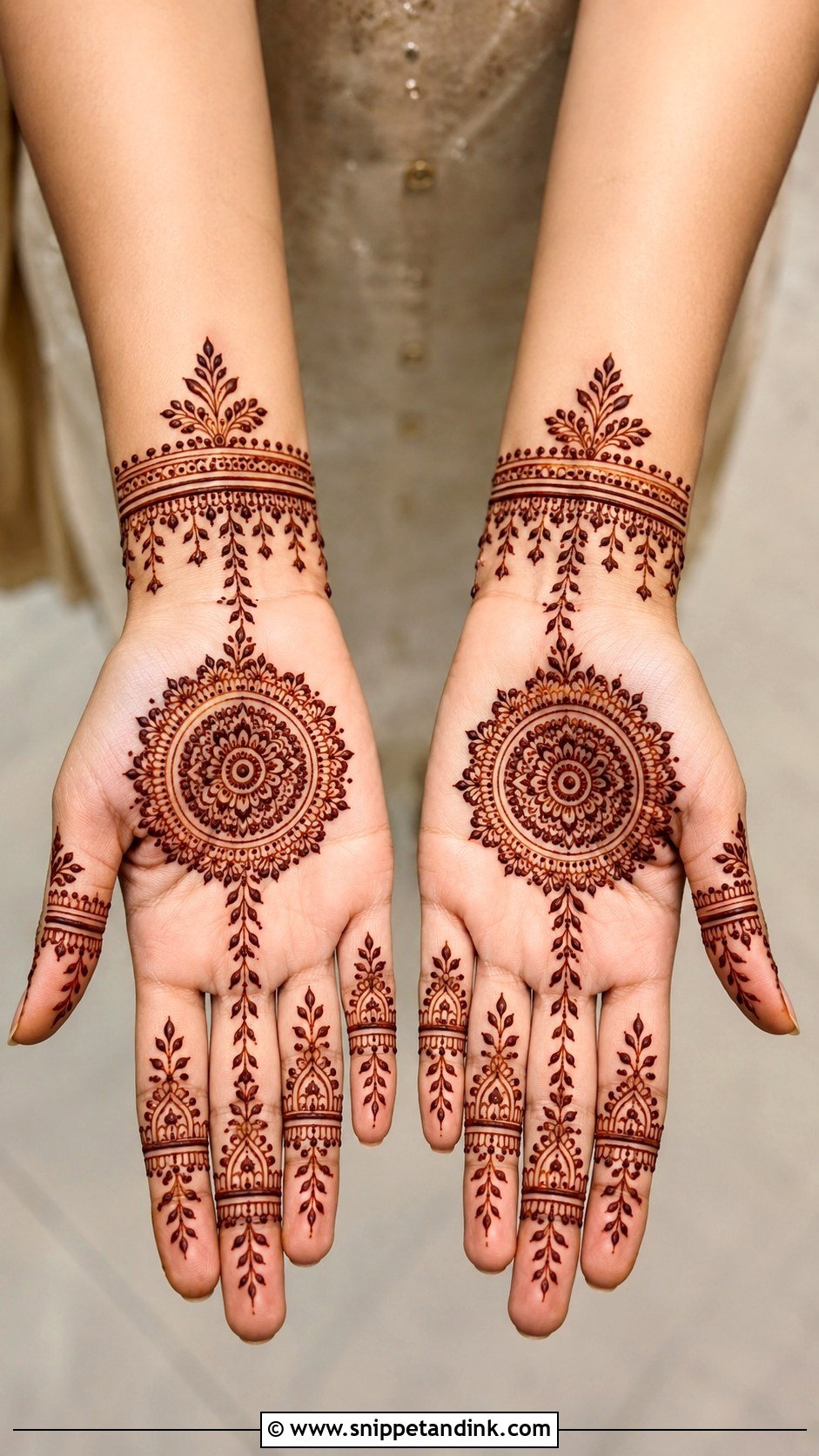
Very large flowers or heavy paisleys swamp a small hand. Medium motifs and slim spacing work better: a compact mandala, delicate vines, small leaf chains, narrow wrist bands. Vertical finger patterns make the fingers look longer, and open spaces stop the hand looking crowded. A jewellery-style back hand adds length and balance too. Full coverage on a small hand should still feel light.
Sitting Through Full Coverage on Both Hands
A full hand on both sides, front and back, is a long appointment, and the hours afterwards matter as much as the sitting itself. This is what I tell clients before they arrive.
Before you sit down
Eat, use the bathroom, tie your hair back and charge your phone. Once both hands are wet, you can’t do any of it. Wash hands with plain soap and don’t apply lotion. Wear a top with sleeves you can push well above the elbow without them sliding down.
Order of work
I usually do the backs of both hands first, then the palms. That way you can rest your hands palm-down while the backs dry, and the palms, which stain darkest, have paste on them for longest before bed. Keep your fingers spread while the paste sets; pressing them together smudges the finger bands.
Overnight
Once the paste is completely dry, a light dab of lemon and sugar keeps it stuck to the skin. To sleep with it on, wrap each hand loosely in tissue and then a loose glove or cotton sock. Don’t wrap tightly; trapped moisture can blur fine lines. In the morning, scrape the paste off and keep water away for as long as you can.
Big Motifs, Open Skin and a Hand That Still Feels Light
A full hand doesn’t have to be dense to look complete. Mandalas, Arabic flowers, paisleys, vines, wrist cuffs, jaali panels and finger bands each cover ground quickly when they’re drawn at a confident size. Indian, Arabic, Indo-Arabic, Moroccan or minimal: pick the style that suits your occasion and how long you can sit, then trust bold outlines, balanced spacing and repetition. For weddings, Eid, Diwali and engagements alike, the darkest, cleanest stain comes from good paste and patient aftercare.
You'll Like These Ideas:











Leave a Reply