
Most people come to me with a screenshot and leave with something different, because a design that looks right on a phone screen has to be rebuilt for the hand in front of me. Finger length, how wide the palm is, what the sleeves will cover and how many hours you can sit still all decide the layout before any motif does. Below are thirty-five styles I draw regularly, from dense Indian bridal work with hidden names and paisleys to open Arabic vines, Gulf florals, Moroccan geometry and quick finger patterns. Under each one I’ve noted how it behaves once the paste comes off, who it suits and where it tends to go wrong.
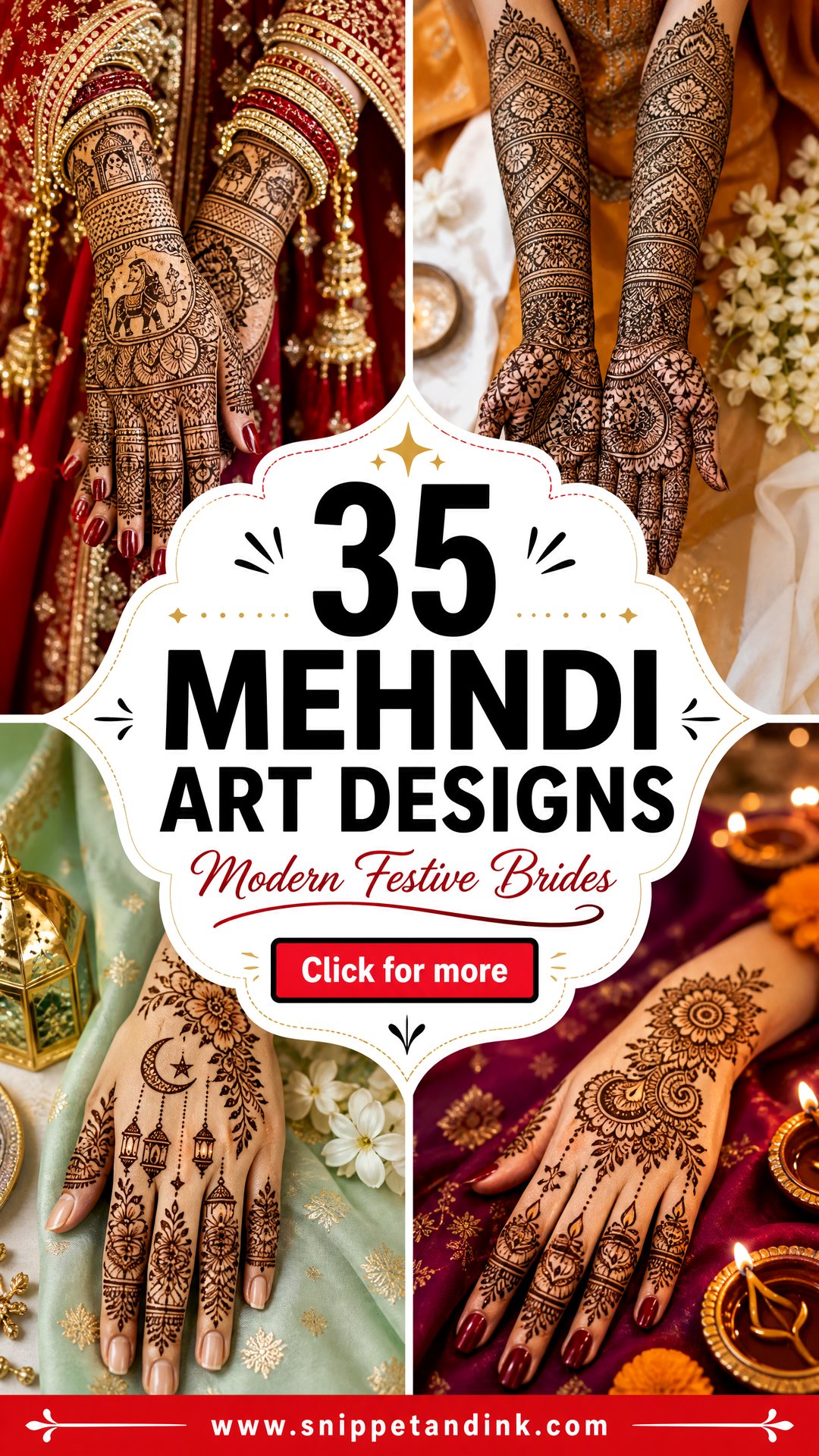
Planning Coverage Around Sleeves, Rings and the Event Calendar
Before we talk motifs, I ask three questions. What will your sleeves cover? Which day do the photos happen? And how long can you sit without using your hands? The answers usually settle the style on their own.
- Sleeves: a full-sleeve outfit hides most forearm work, so the detail belongs on the hands and wrist. Sleeveless or elbow-length outfits are where forearm designs earn their sitting time.
- Timing: natural henna starts orange when the paste comes off and deepens over roughly 24 to 48 hours. For a wedding I apply one to two days before, so the color peaks on the day rather than the morning after.
- Sitting time: a finger or half-hand design can be done in well under an hour. Full bridal hands and arms run for several hours, and you then need to keep the paste on for six hours or more, ideally overnight.
- Rings and bangles: tell your artist which finger the ring goes on and roughly where your bangles sit, so the design frames them instead of disappearing under them.
Where the design sits also changes how dark it gets. Palms and fingertips stain deepest; the back of the hand is lighter, and the forearm lighter still. I’d steer anyone who wants deep maroon in photos toward a palm-led layout rather than putting all the detail on the forearm.
1. Full Hand Bridal Mehndi Design
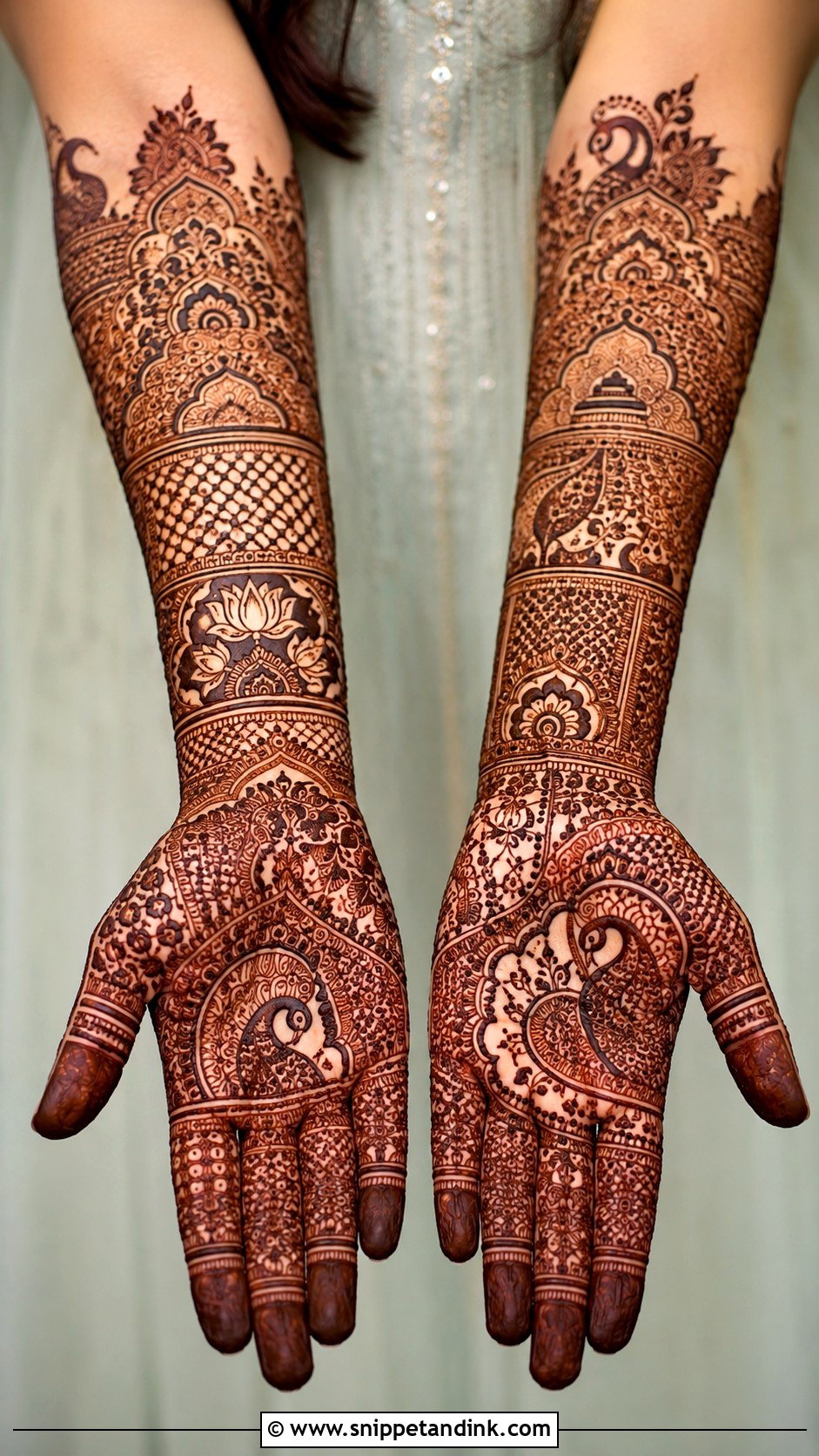
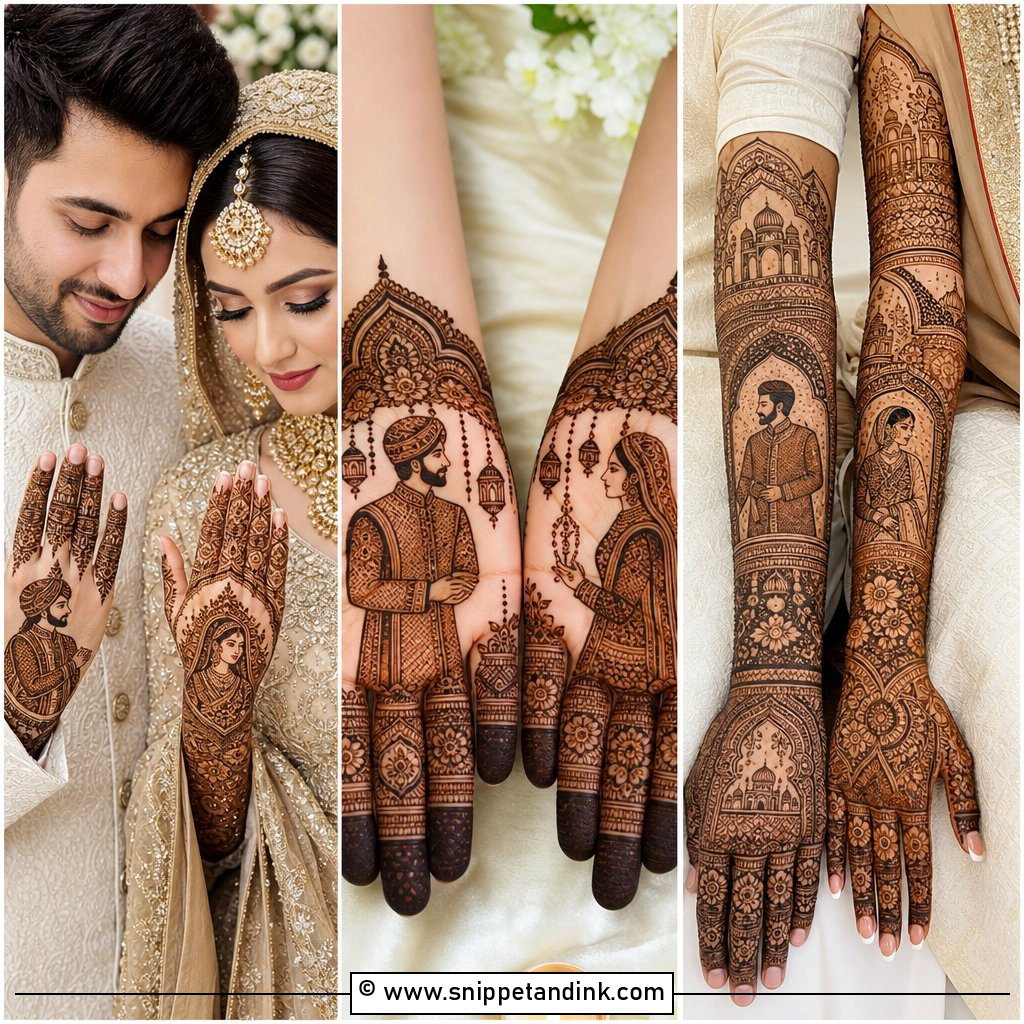
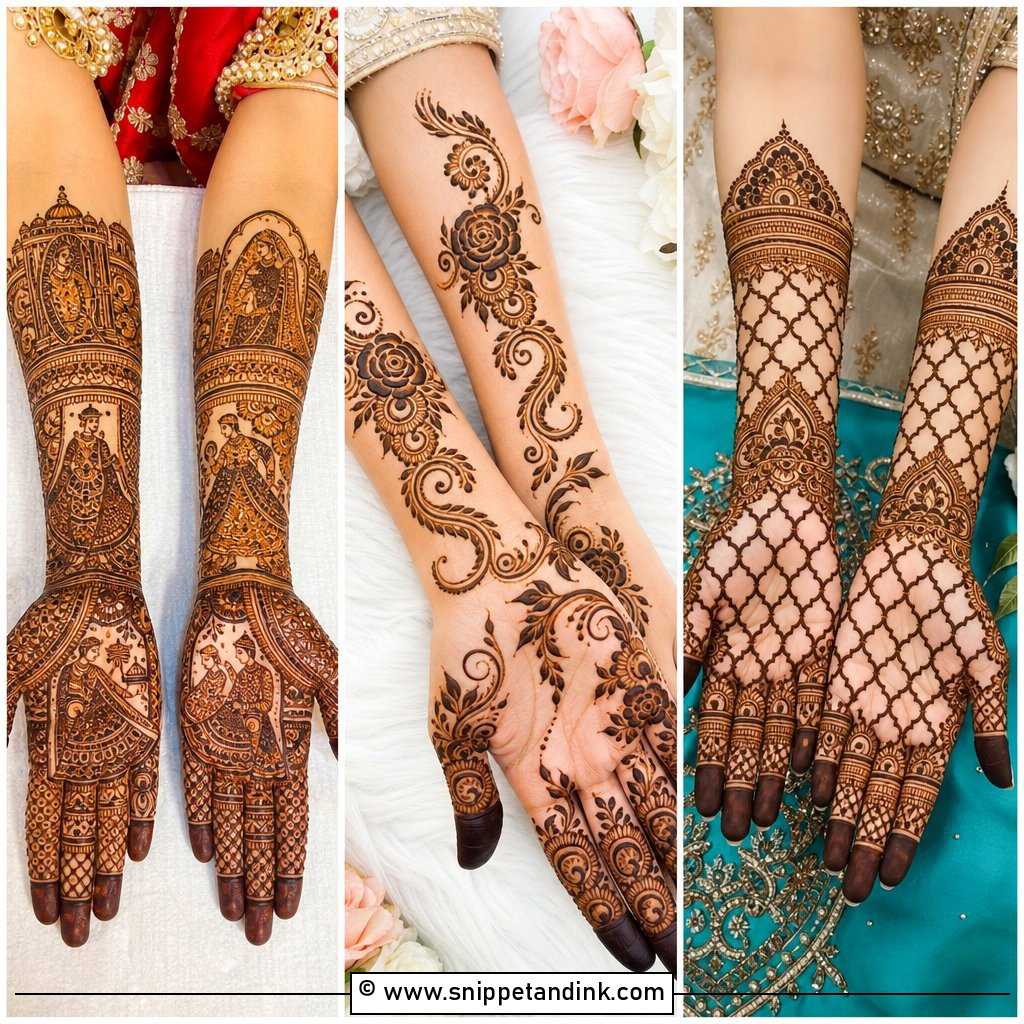
This is the design that fills the palm, every finger, the wrist and usually the forearm with paisleys, peacocks, lotus, jaali mesh and fine filler lines. It takes the longest of anything here, and the real risk isn’t the drawing, it’s the sitting: the palm has to stay flat and untouched while the forearm is being worked on, or the early sections smudge. I fill the fingertips solid because the thick skin there takes the darkest color and anchors the whole pattern visually. I keep the two hands mirrored in structure but change the small details so they read as a pair rather than a stamp. Initials, a wedding date or a tiny couple motif can be tucked into the filler work for the groom to search for later.
2. Arabic Mehndi Design
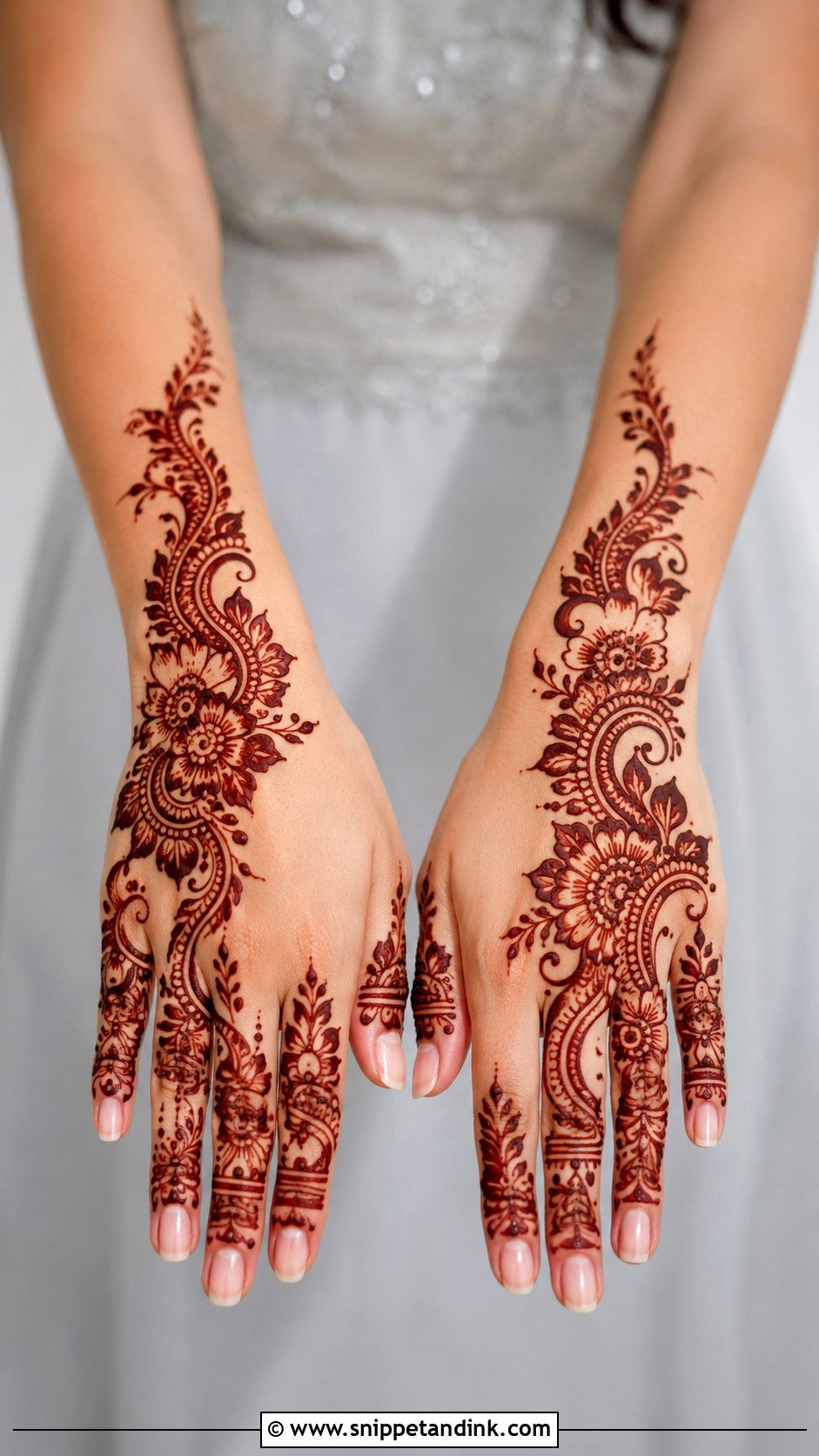
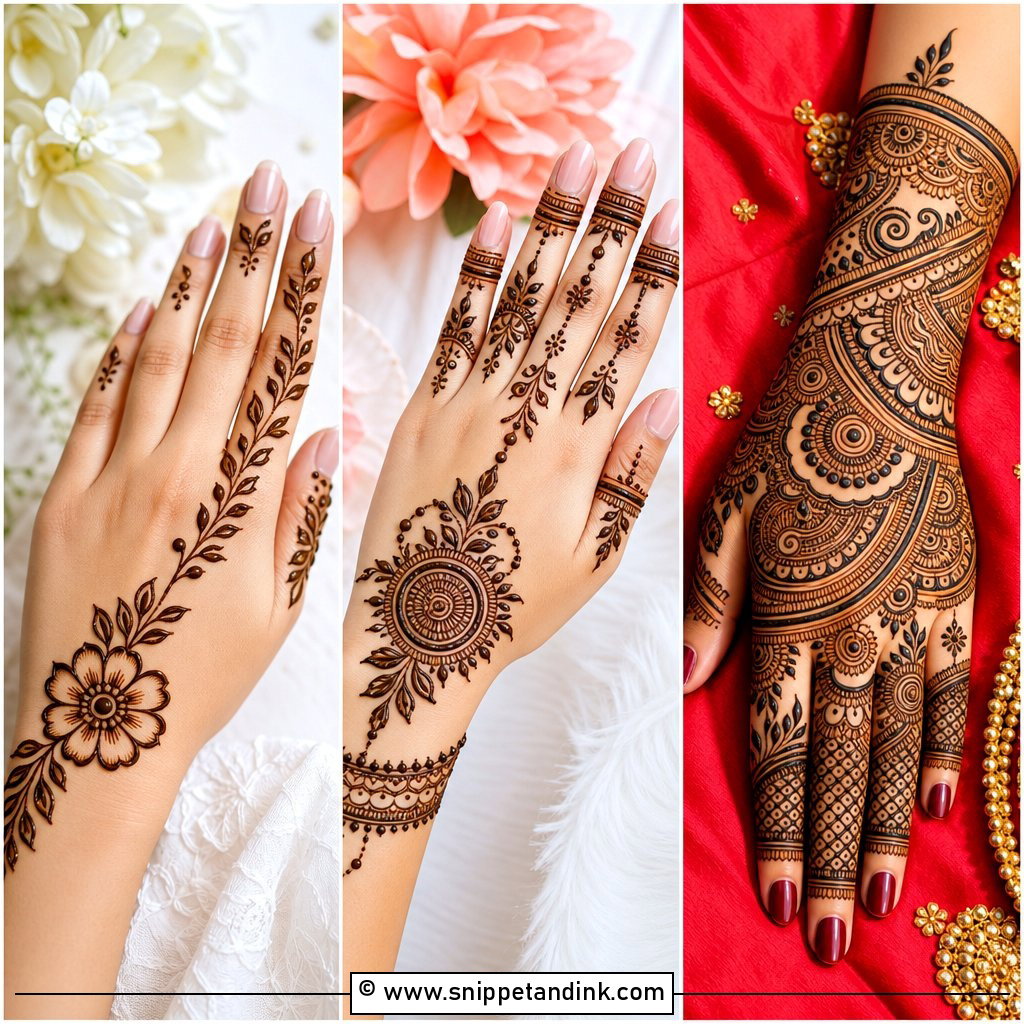
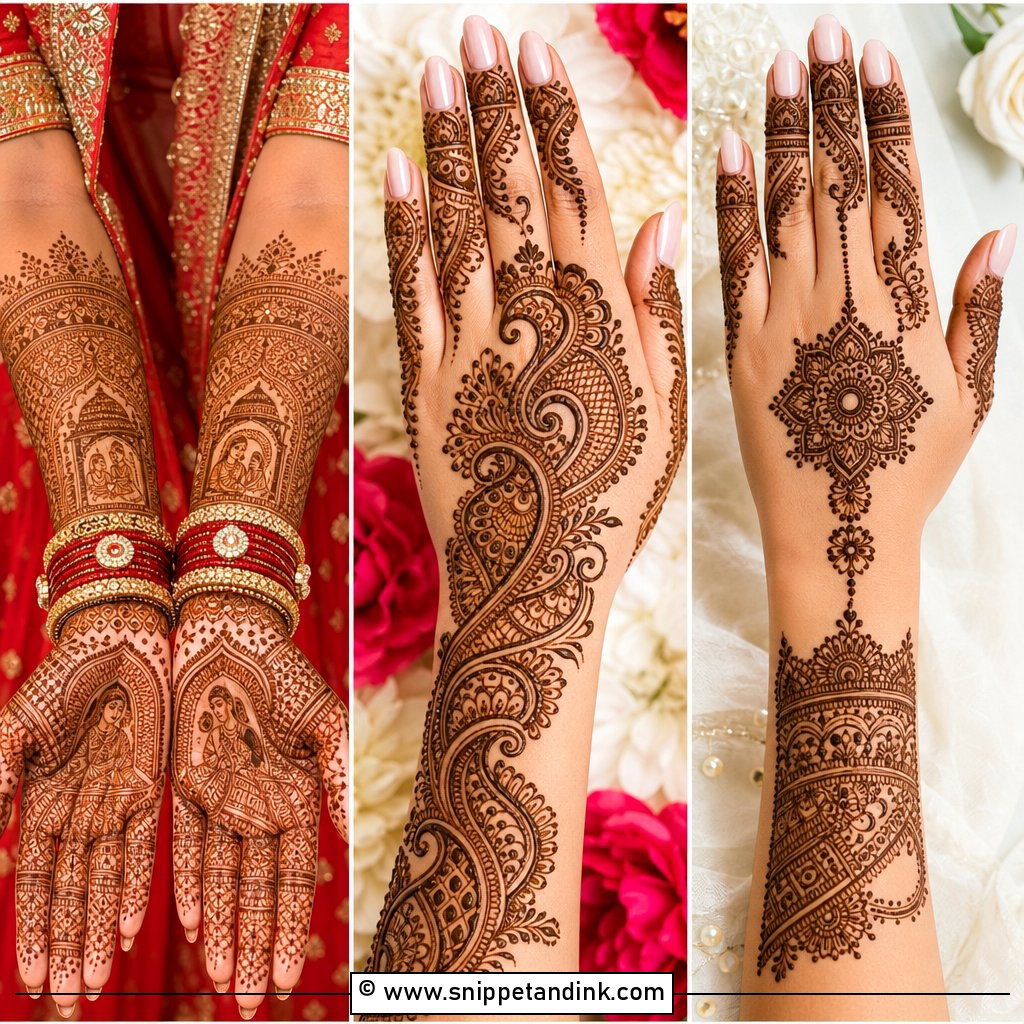
Arabic work is about the gaps. A diagonal trail of bold flowers, leaves and paisleys runs across the hand, and the bare skin around it is what makes the motifs readable from across a room. It goes on quickly compared with bridal coverage, which is why I suggest it for Eid, engagements and family functions where you might be one of twenty hands I’m drawing. On short fingers I slim the vines and shrink the flowers near the tips so the hand doesn’t look stubby. Longer hands can take bigger blooms and a curve that sweeps past the wrist bone.
3. Simple Mehndi Design
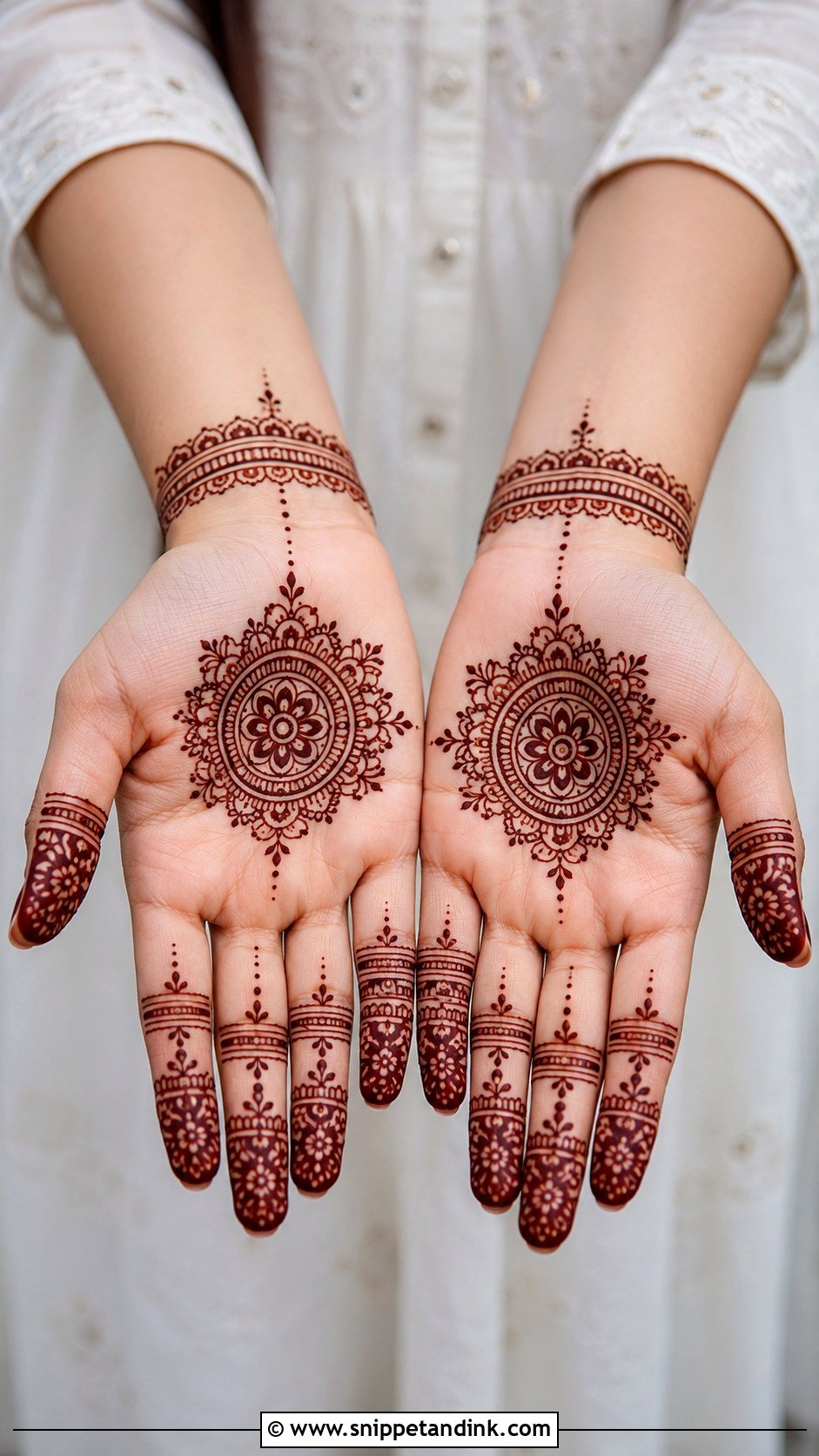
A simple design is one main motif, a few finger lines and maybe a light wrist band, placed with care. The skill is in placement, not quantity: a small mandala sitting a little off-center on the palm usually looks more intentional than one squeezed into the exact middle. It suits school events, office celebrations and anyone who needs to use their hands that evening. Thin outlines read as delicate, but they also fade first, so if you want it to last past a week I’ll go slightly bolder on the main lines.
4. Back Hand Mehndi Design
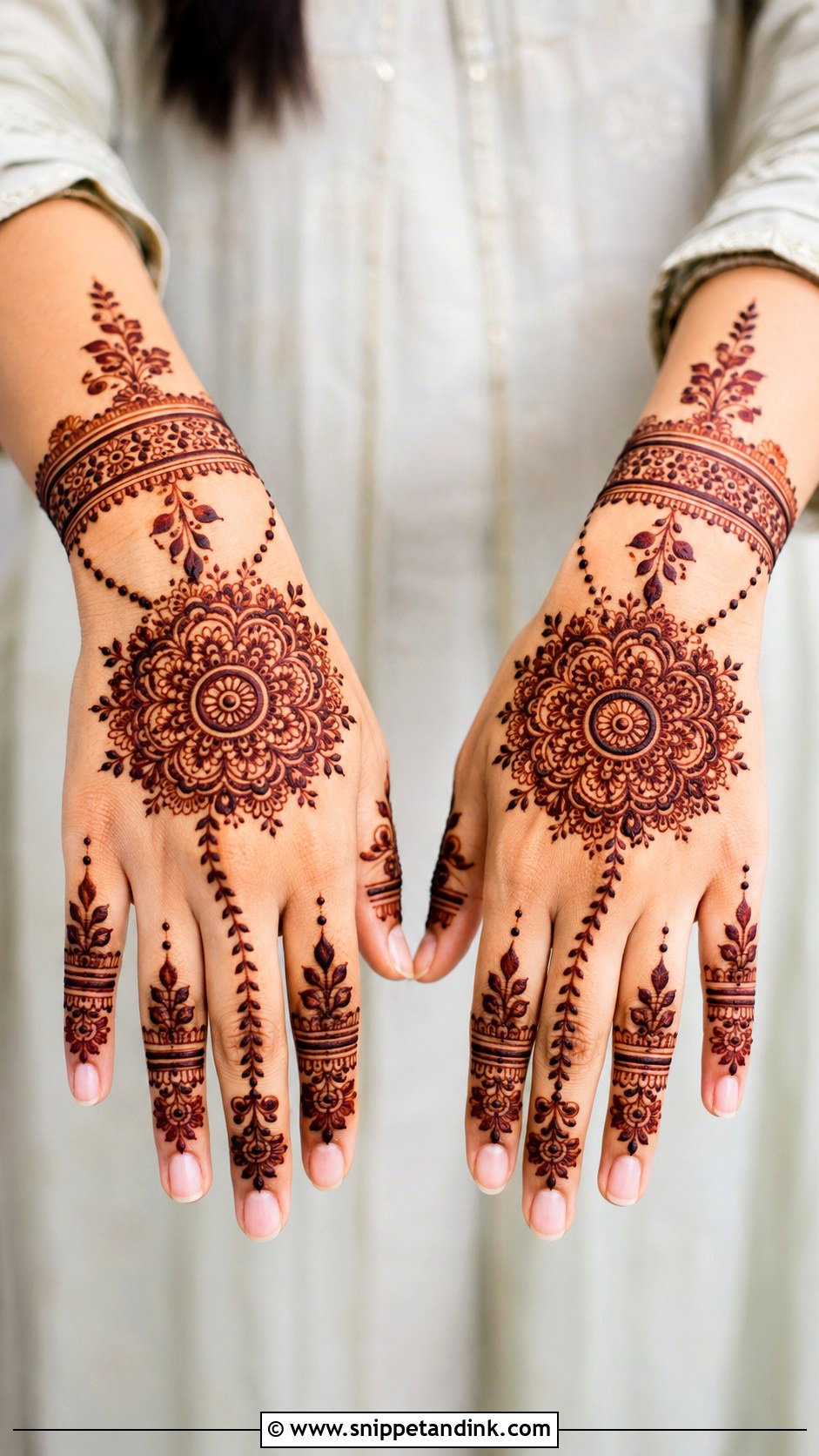
The back of the hand is what shows in every ring shot, every gesture and every photo of you holding something, which is why people ask for it so often. I usually start from a central mandala or flower cluster, or from a bracelet band at the wrist, and connect to the fingers with chains and leaves. One honest note: the back of the hand stains lighter than the palm because the skin there is thinner and drier, so expect a warm brown rather than deep maroon. For a wedding I extend toward the forearm; for a festival, wrist to fingertips is enough. Keep the finger work clean so rings sit on skin, not on clutter.
5. Front Hand Mehndi Design
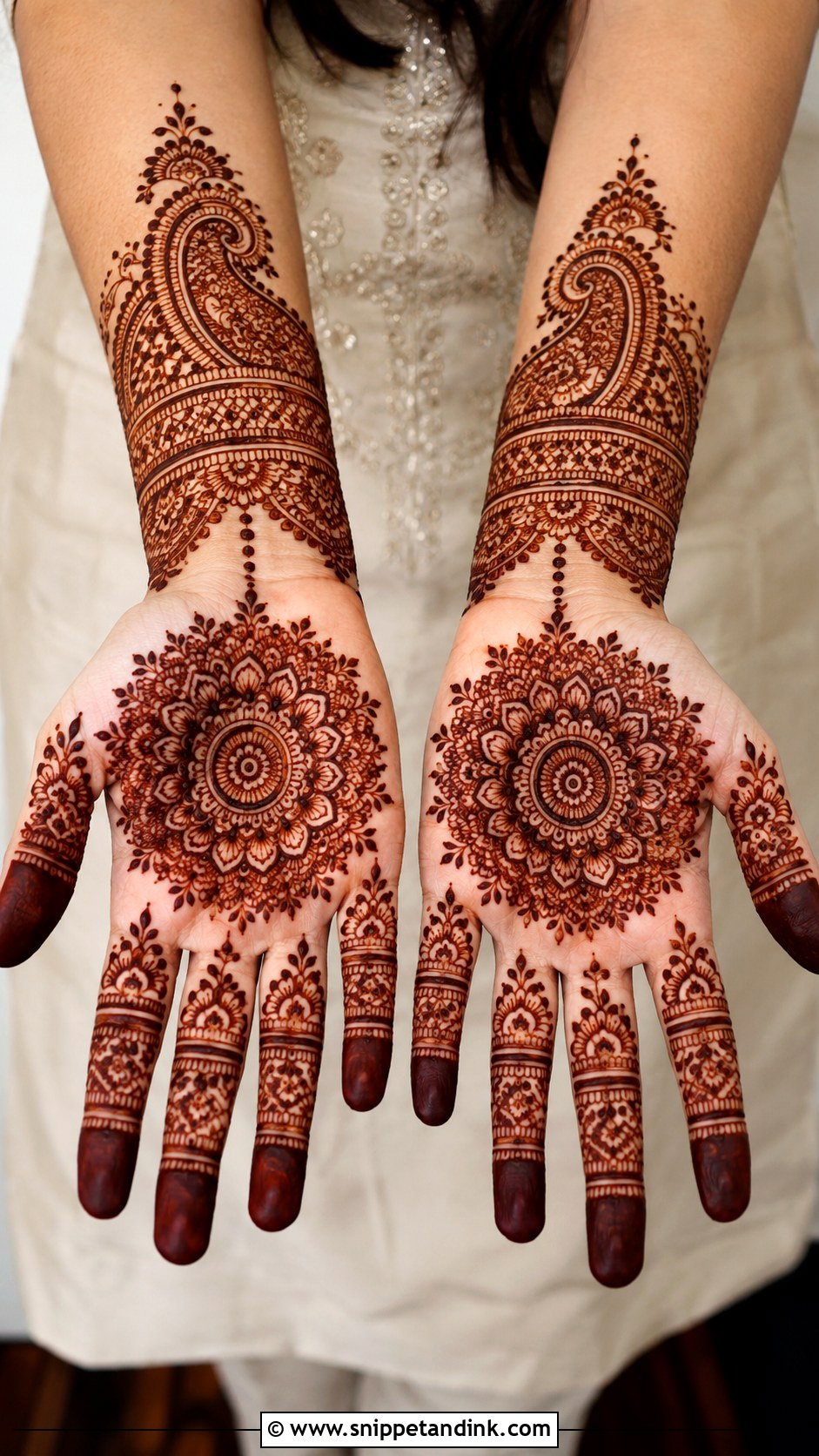
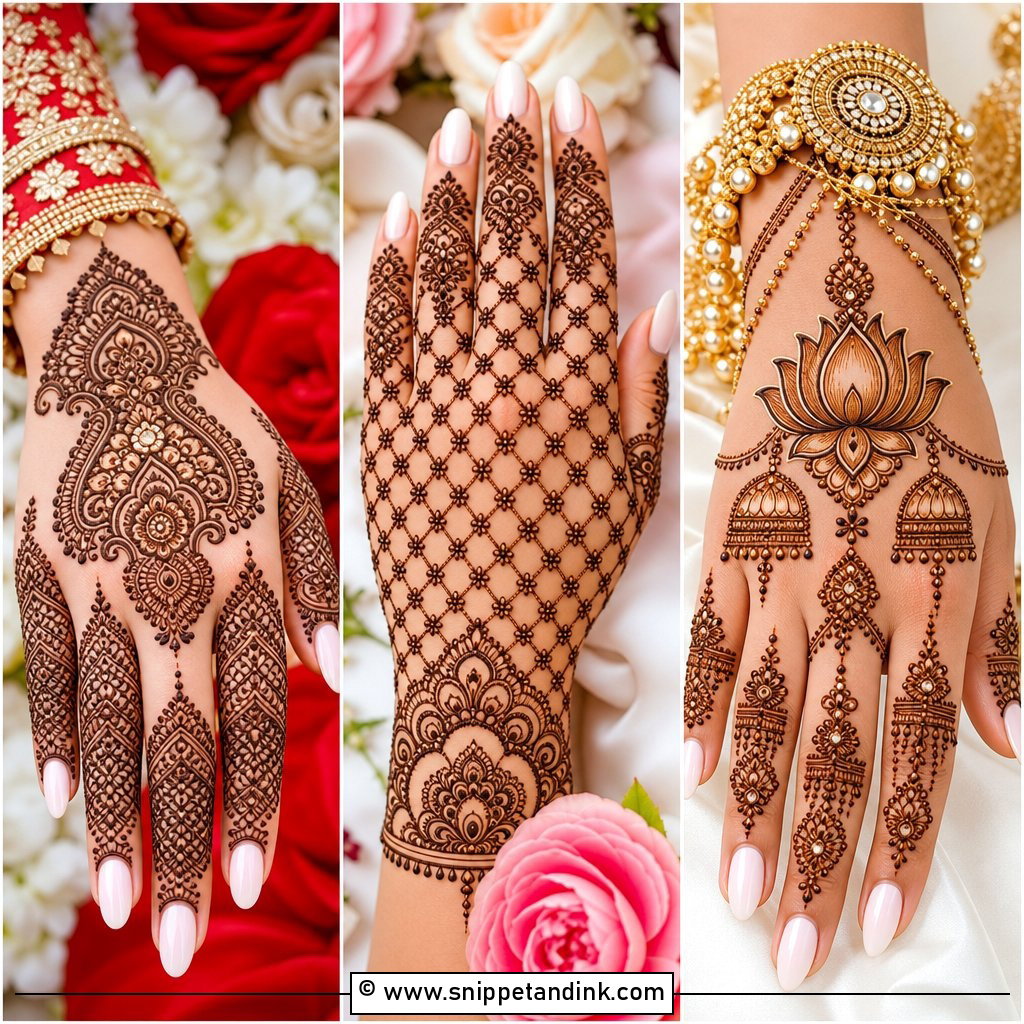
Palms give the deepest color of anywhere on the body, so a front-hand design is where you’ll see henna at its richest. A classic layout is a central mandala, paisley borders, floral fillers and decorated fingertips; heavier versions add jaali and stacked circles around the palm. The palm creases are my main planning problem. I avoid running fine lines straight across the main crease because the skin folds there and the line can break or blur as you flex. For Karwa Chauth, Eid or a bride’s own hands, rounded motifs spread evenly look fullest. Leaving a small ring of space around the center keeps it breathable.
6. Mandala Mehndi Design
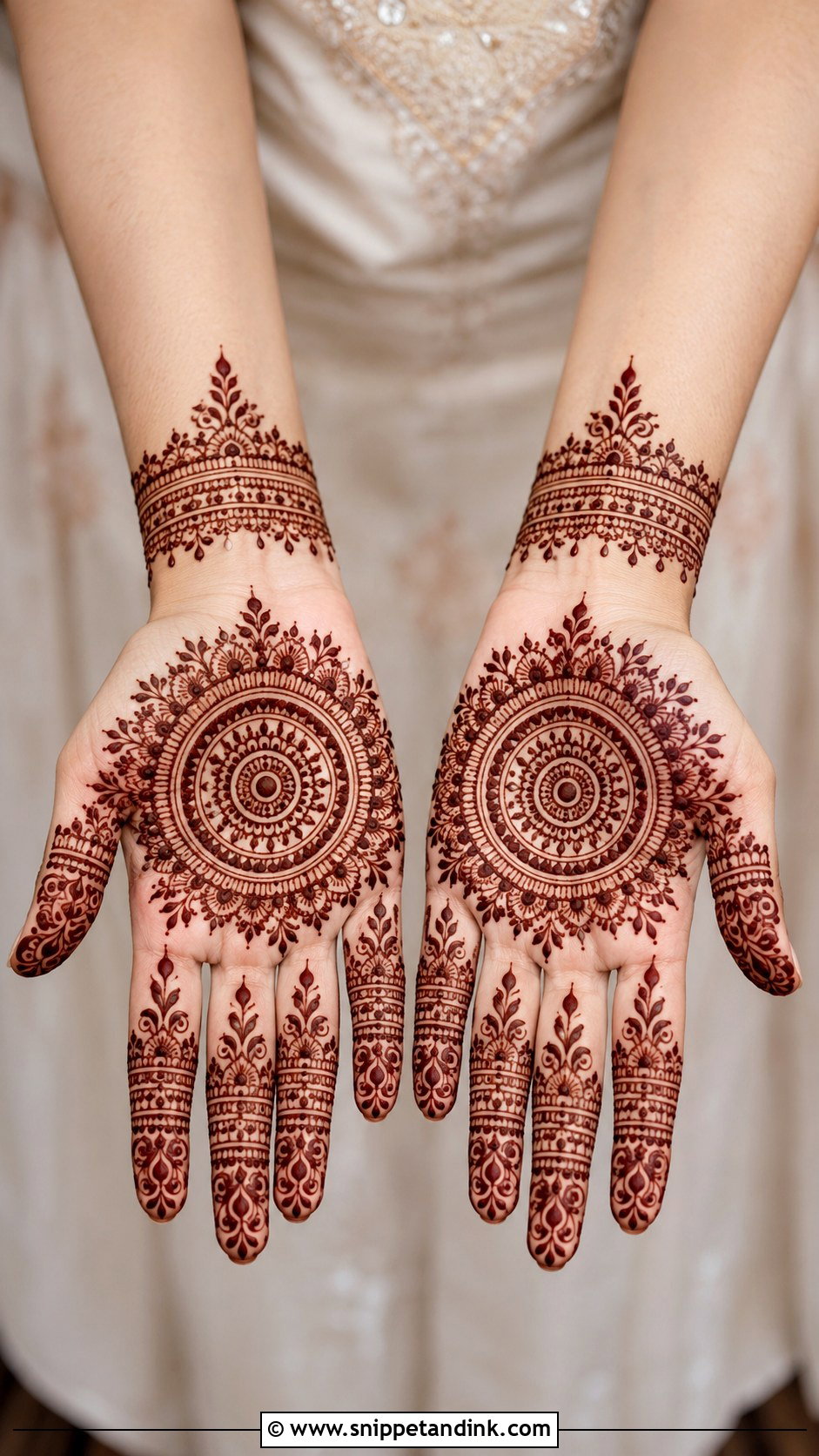
Everything here is built from one round center on the palm or back of the hand, with petals, dots, rings and finger extensions growing outward. It’s forgiving for first-timers to look at and very unforgiving to draw, because any wobble in the circle shows. I mark the center with a single dot first and build each ring outward so the spacing stays even. A single mandala reads modern; add a wrist cuff and finger detailing and it becomes festive enough for a sangeet.
7. Indo Arabic Mehndi Design
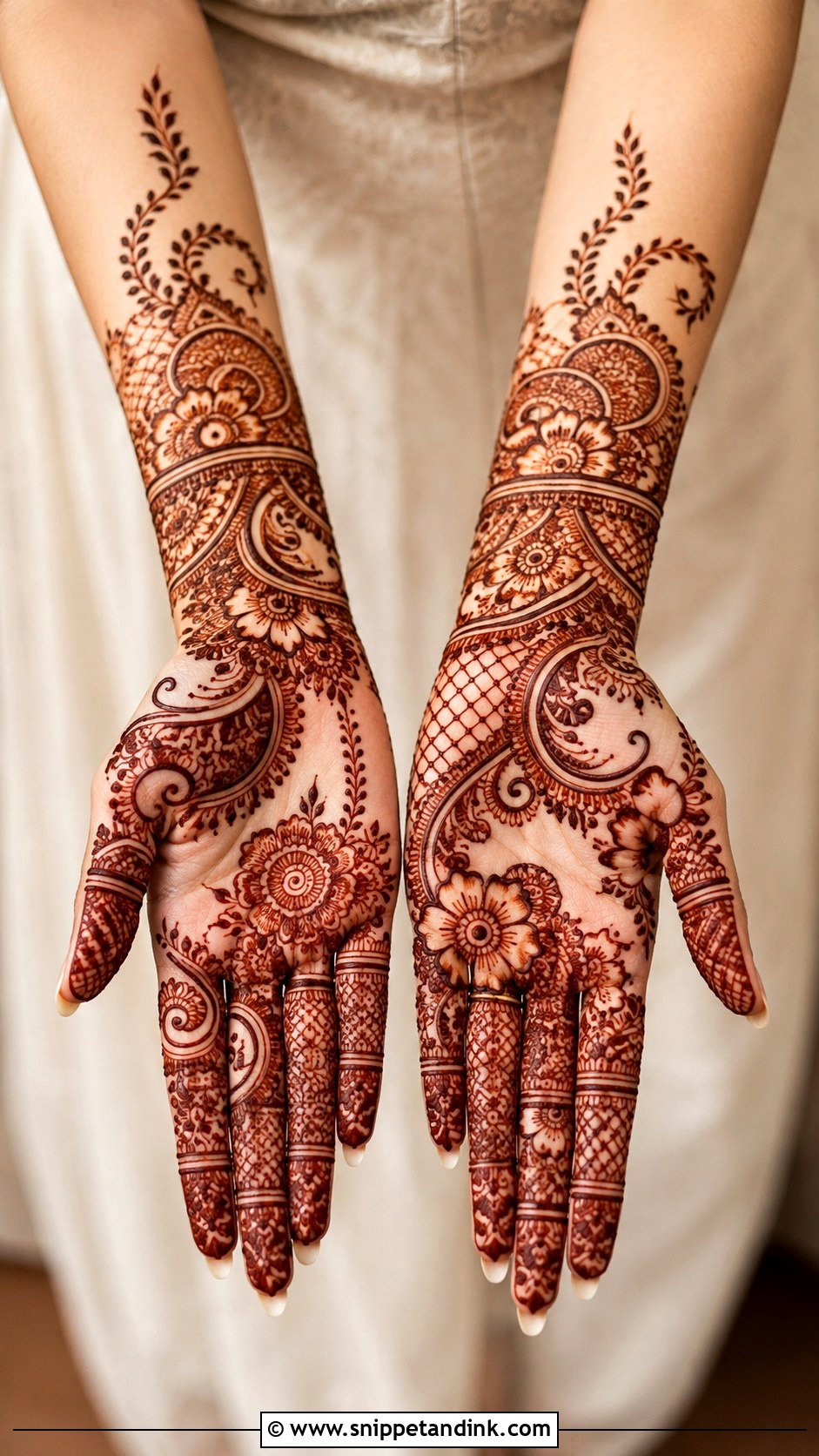
Indo Arabic sits between the two traditions: the bold flow and open skin of Arabic work, with Indian jaali sections, shaded petals and fine filler inside the larger shapes. I recommend it to bridesmaids and engagement guests more than any other style because it looks generous without the sitting time of full bridal. It can run diagonally across the palm, cover the back hand or travel from fingers to forearm. Ask for bold outlines with fine inner work. That contrast is what keeps the pattern sharp once the stain darkens and the thin lines soften slightly.
8. Minimal Mehndi Design
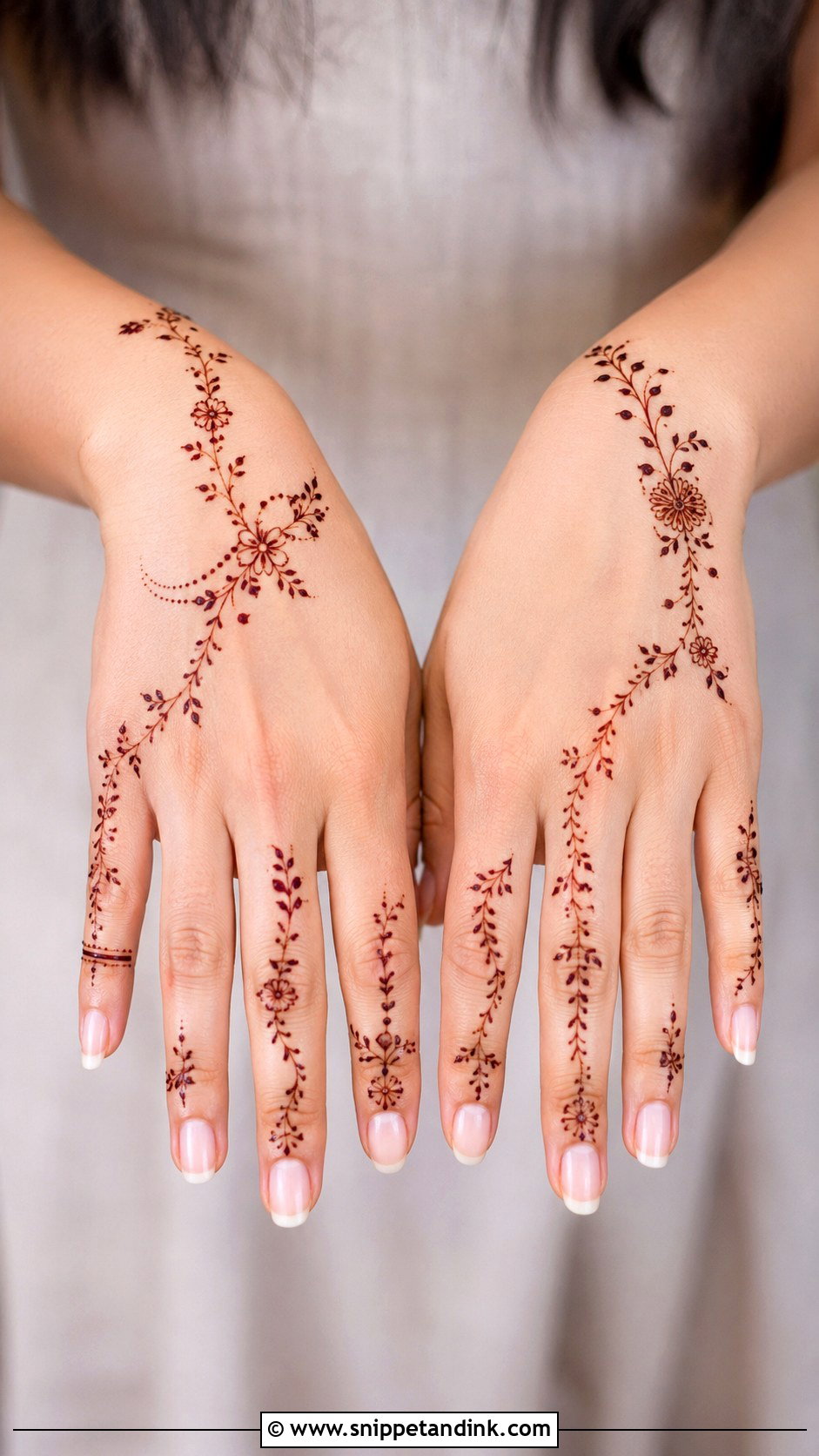
Minimal mehndi means fine lines, a handful of small motifs and plenty of open skin, often just one side of the palm, the wrist or a light trail over the back hand. It suits pre-wedding shoots, office parties and brides who don’t want a heavy traditional look. Here every line is visible, so there’s nowhere to hide a shaky stroke. I’d rather draw three confident leaves than a cluster of tiny fillers that look like smudges once the paste flakes away.
9. Finger Mehndi Design
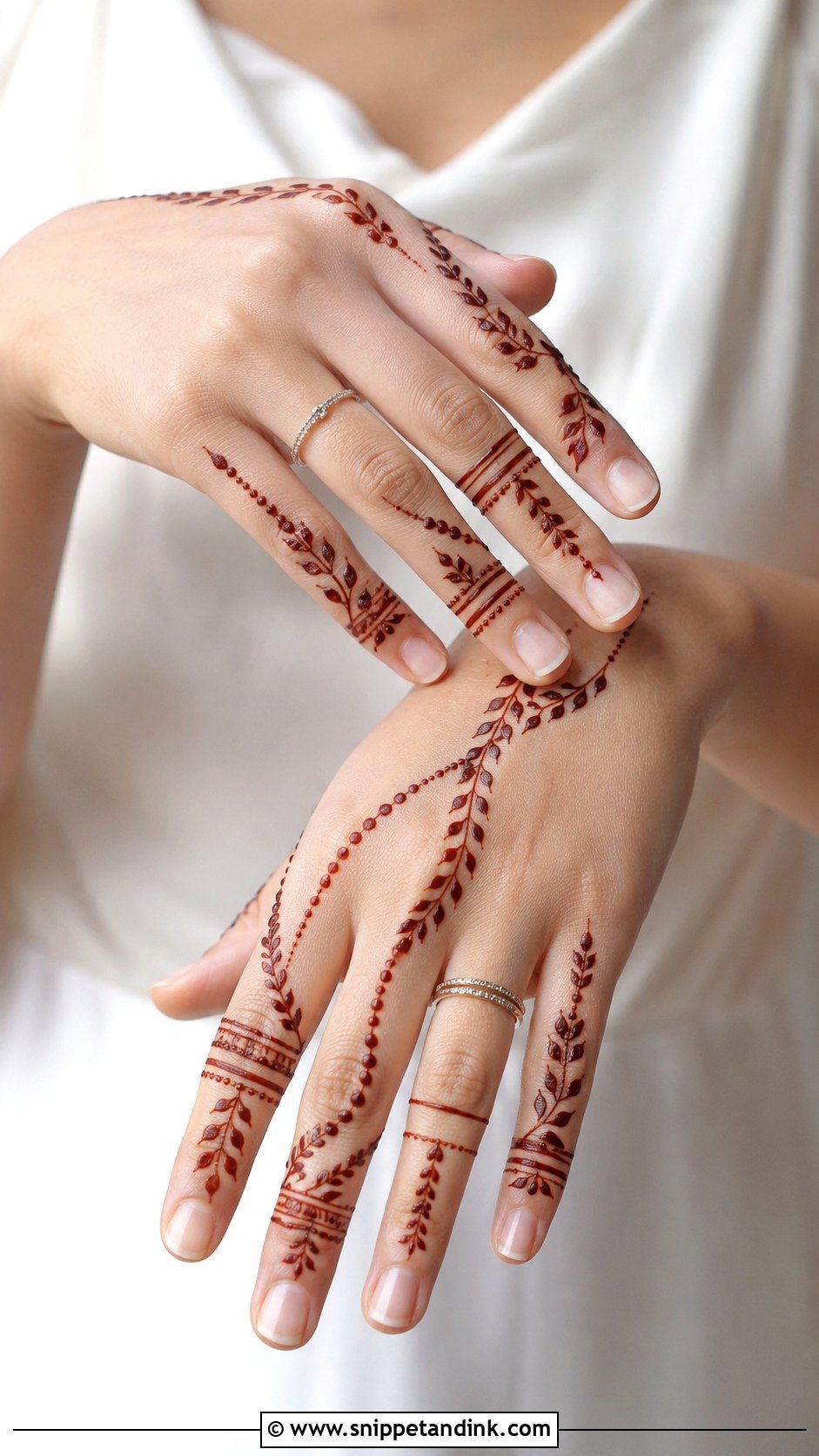
Finger-only designs leave the palm and back hand mostly bare and put the detail on the fingers: leafy tips, ring bands, dotted chains, tiny florals or a little net pattern. They’re my usual suggestion for people who cook, type or wash up a lot, since fingers stain well but the work dries fast and stays out of the way. Solid tips with bands near the knuckles give a bold result; fine vines and dots keep it soft. It can be worn alone or paired later with a palm mandala if you decide you want more.
10. Bracelet Mehndi Design
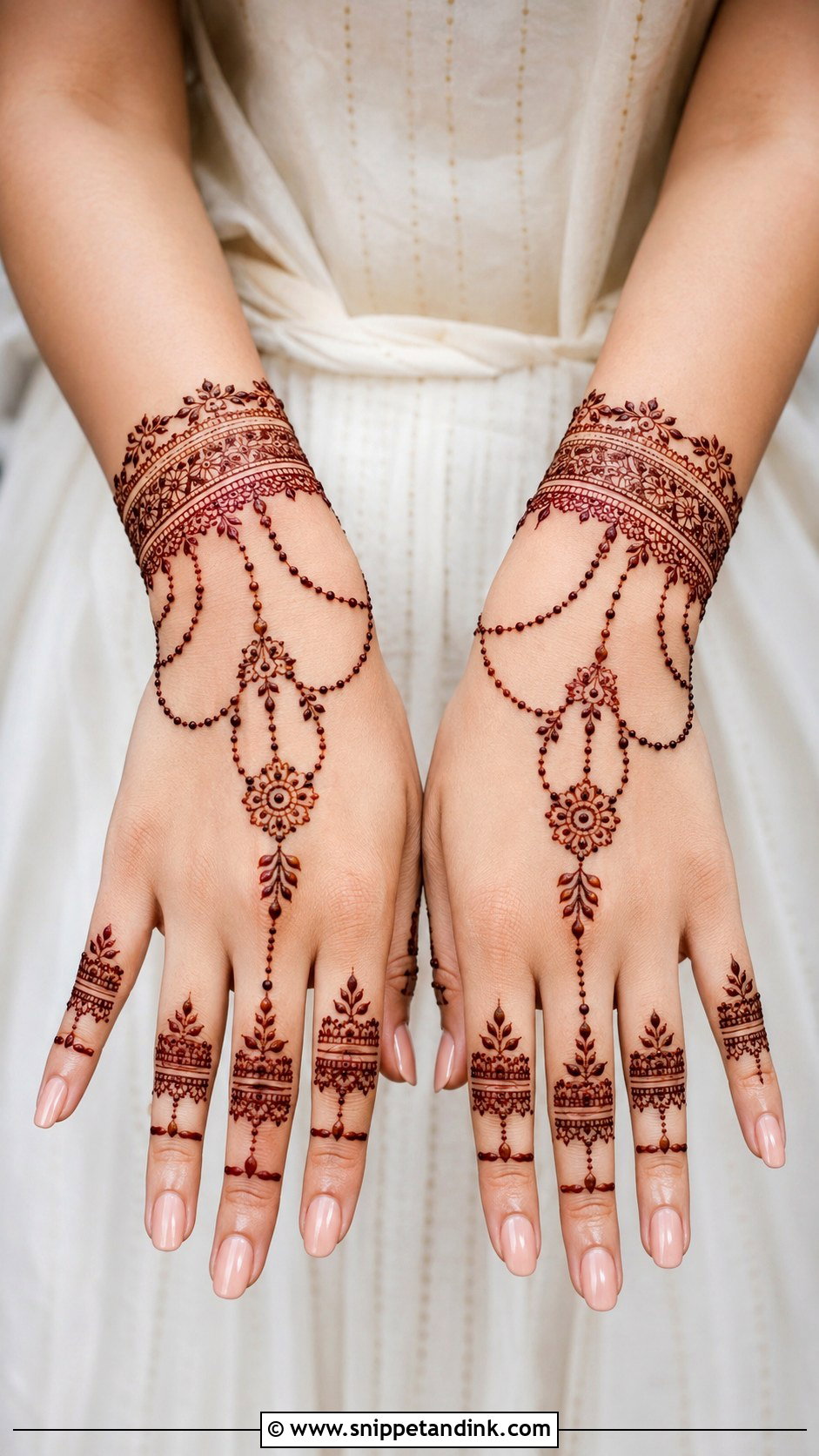
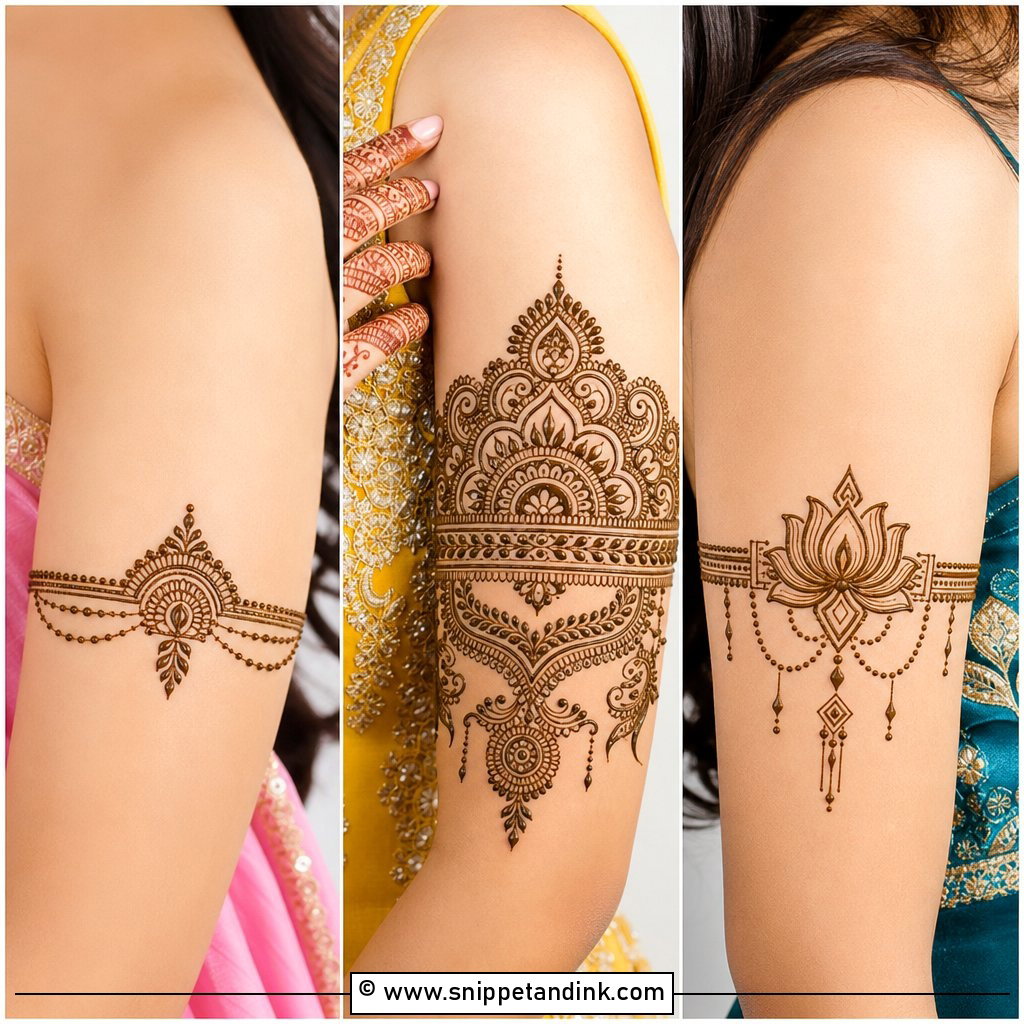
A bracelet design wraps the wrist like a bangle and then connects to the fingers with chains, florals and little bead-like dots, so the hand looks dressed without any jewelry. I draw the band slightly lower on the back of the wrist than people expect, because real bangles slide down and can cover a band placed too high. It suits engagement parties, Eid and wedding guests. Keep the palm mostly empty for a modern finish, or let the bracelet grow into a floral trail for more drama.
11. Floral Mehndi Design
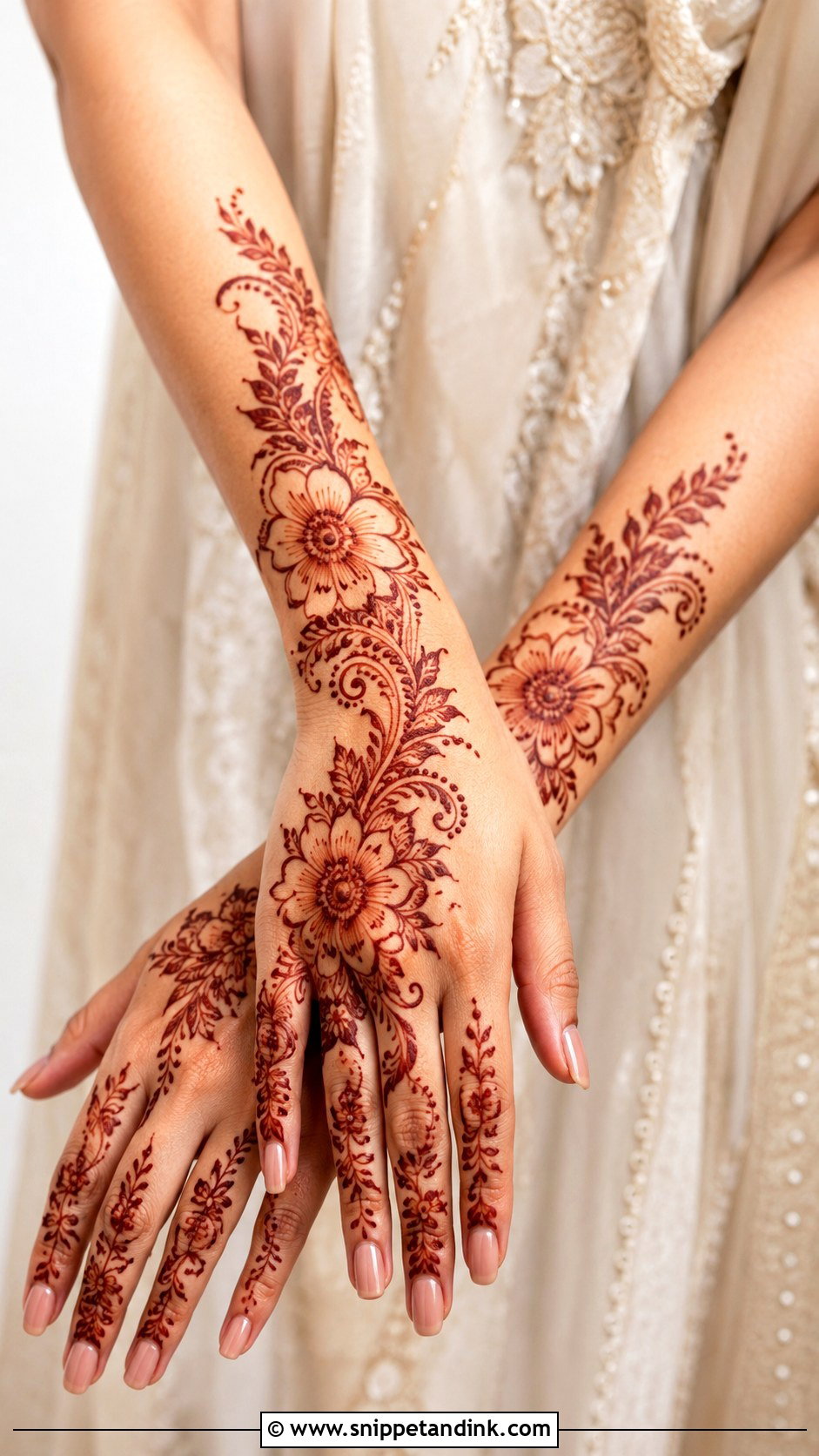
Flowers are the most adaptable motif I use: large and bold for Arabic layouts, small and layered for Indian ones. A full floral design might mix roses, lotus blooms, vines, shaded petals and dotted fillers over the palm or back hand. The usual mistake is packing blooms edge to edge. Henna lines spread very slightly as the stain develops, so I leave a margin of bare skin around each flower to keep its outline clear. Brides can carry the florals onto the forearm with jaali; for a casual event, one trail across the back hand is plenty.
12. Paisley Mehndi Design
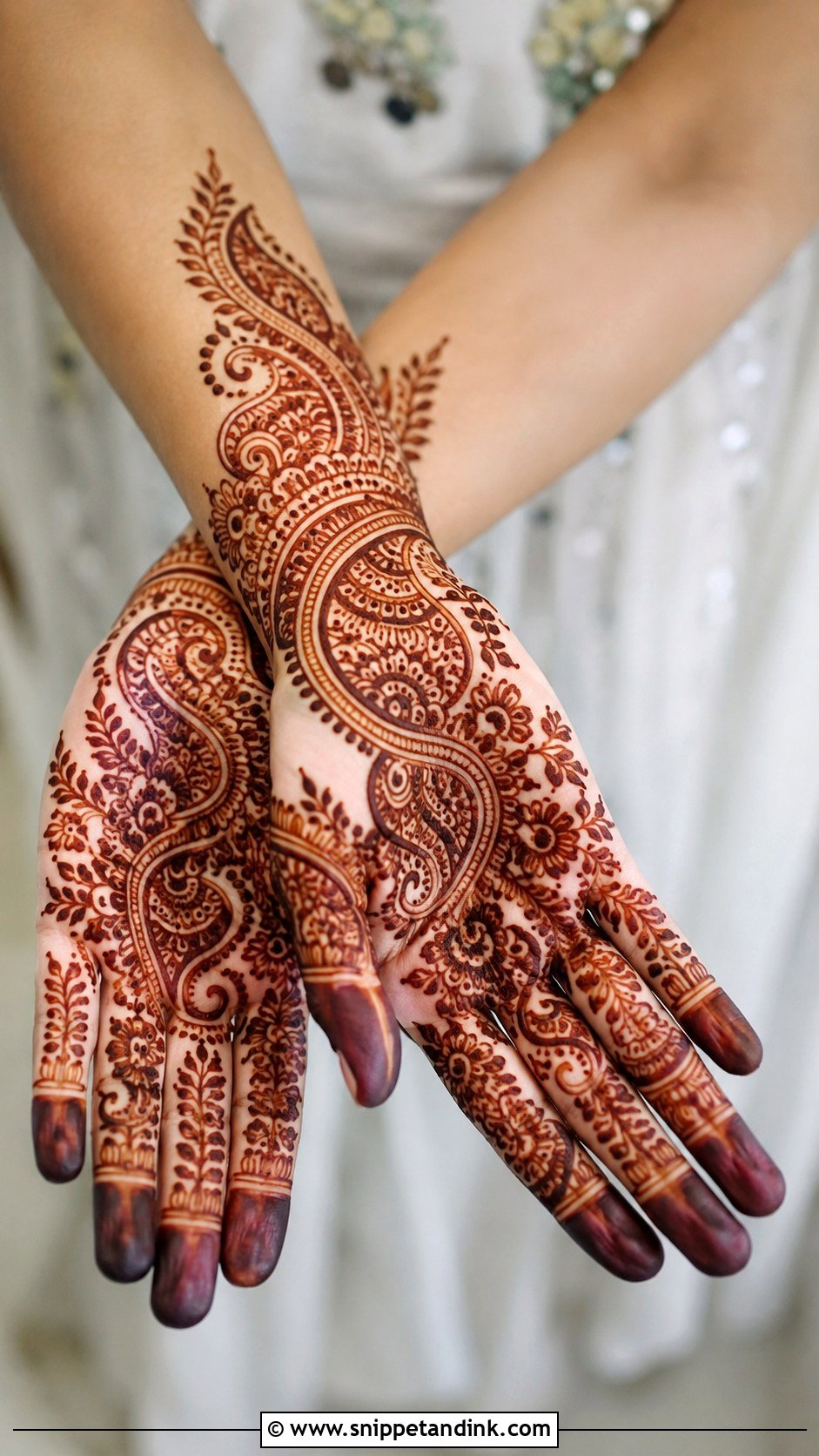
The paisley, the mango shape, follows the natural curve of the hand, which is why it sits so comfortably on palms, wrists and forearms. A full design layers several paisleys with small florals, dots, leaves and fine inner lines. I match the size to the hand: slim, elongated paisleys on small hands, bold oversized ones on long fingers and wide palms. For a modern take, use fewer of them with more open skin. For bridal, stack them up the palm and forearm with dense filler between.
13. Peacock Mehndi Design
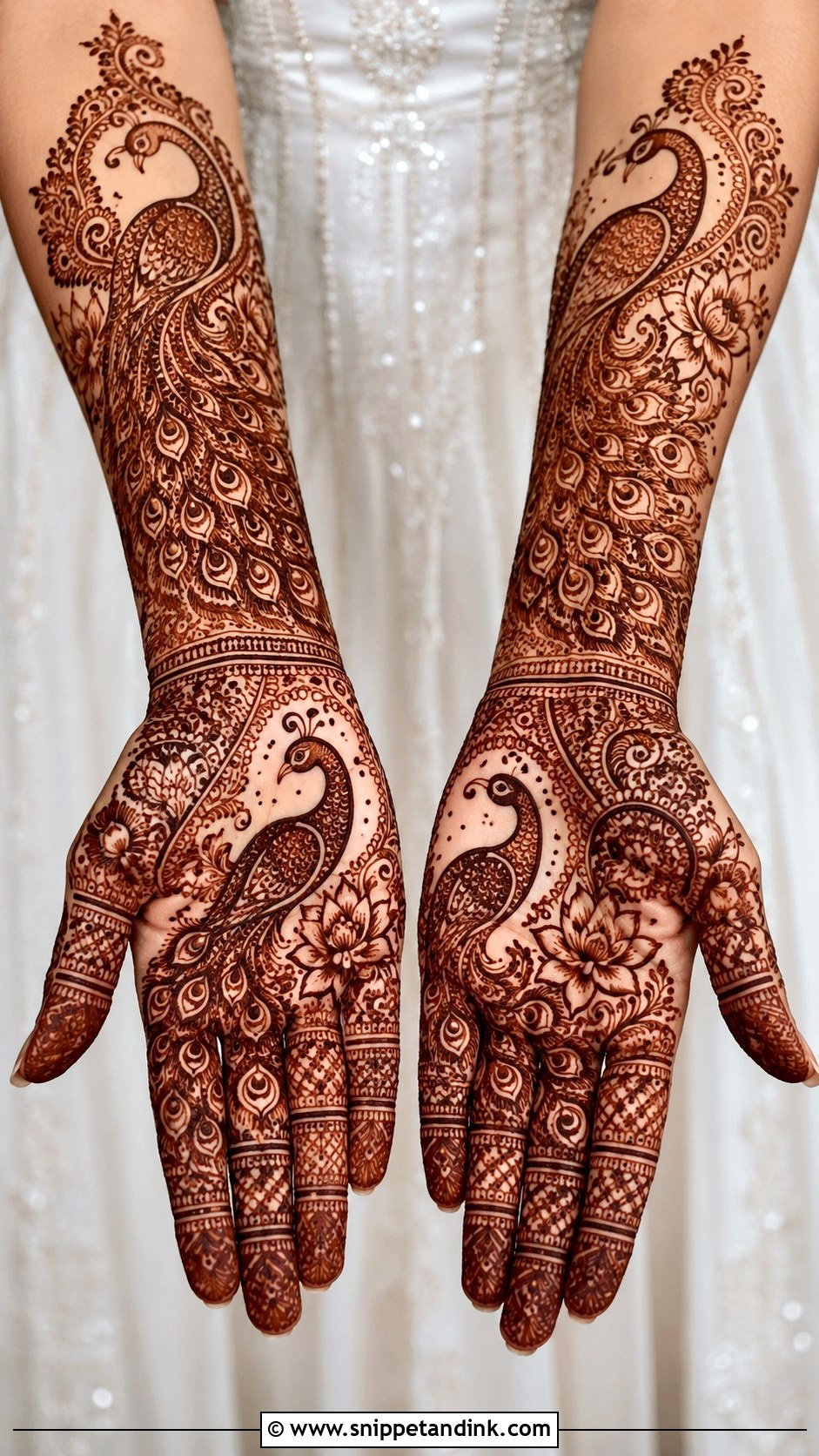
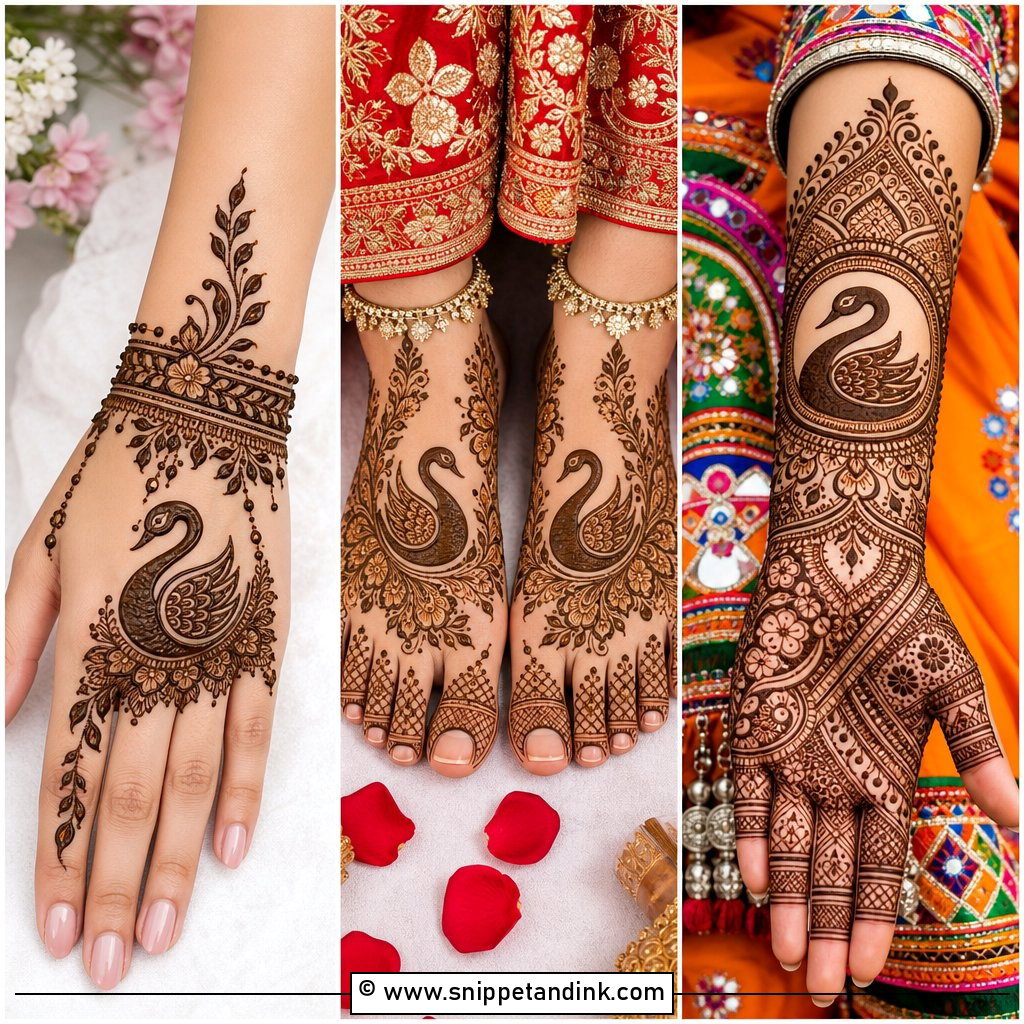
Peacocks appear in so much bridal and festive work because the neck and tail give me a long, curving line to build a whole hand around. Usually the bird sits on the palm with feathers sweeping across the wrist and florals around the fingers. Feathers are where I slow down. Each eye is drawn with paisleys, dots and fine curves, and if they’re packed too tight they merge into a dark blob after staining. One main peacock with lighter surroundings reads better than three competing birds. For brides I pair it with lotus, jaali and hidden initials.
14. Lotus Mehndi Design
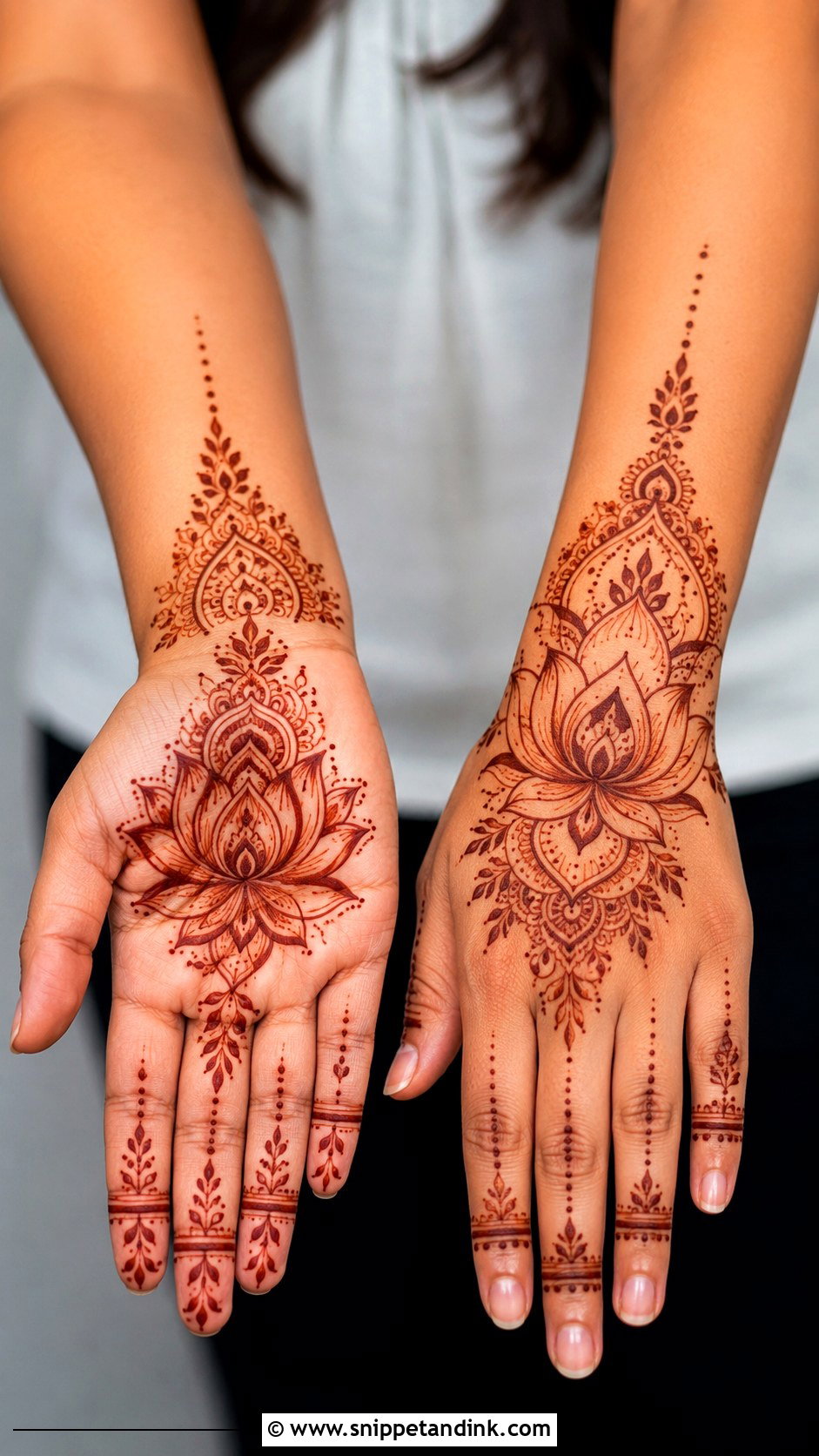
The lotus is more structured than a rose, with clear layered petals that hold their shape even as the stain softens. It works as a palm centerpiece, a single back-hand flower, a wrist cuff or a forearm extension. I draw the petals open and balanced, then add a few fine lines inside each one for depth rather than shading them solid. Solid-filled petals can stain unevenly, while lined petals still look clean as the color darkens over the next two days.
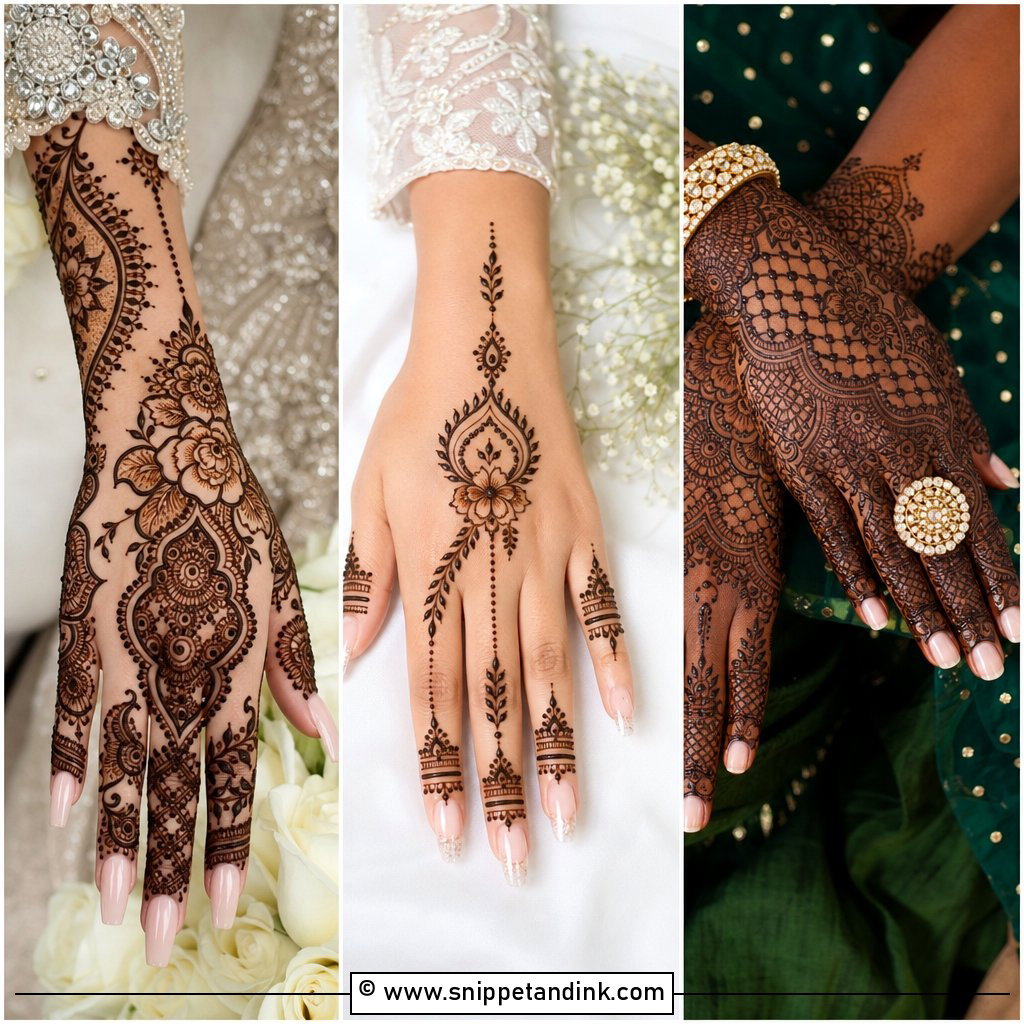
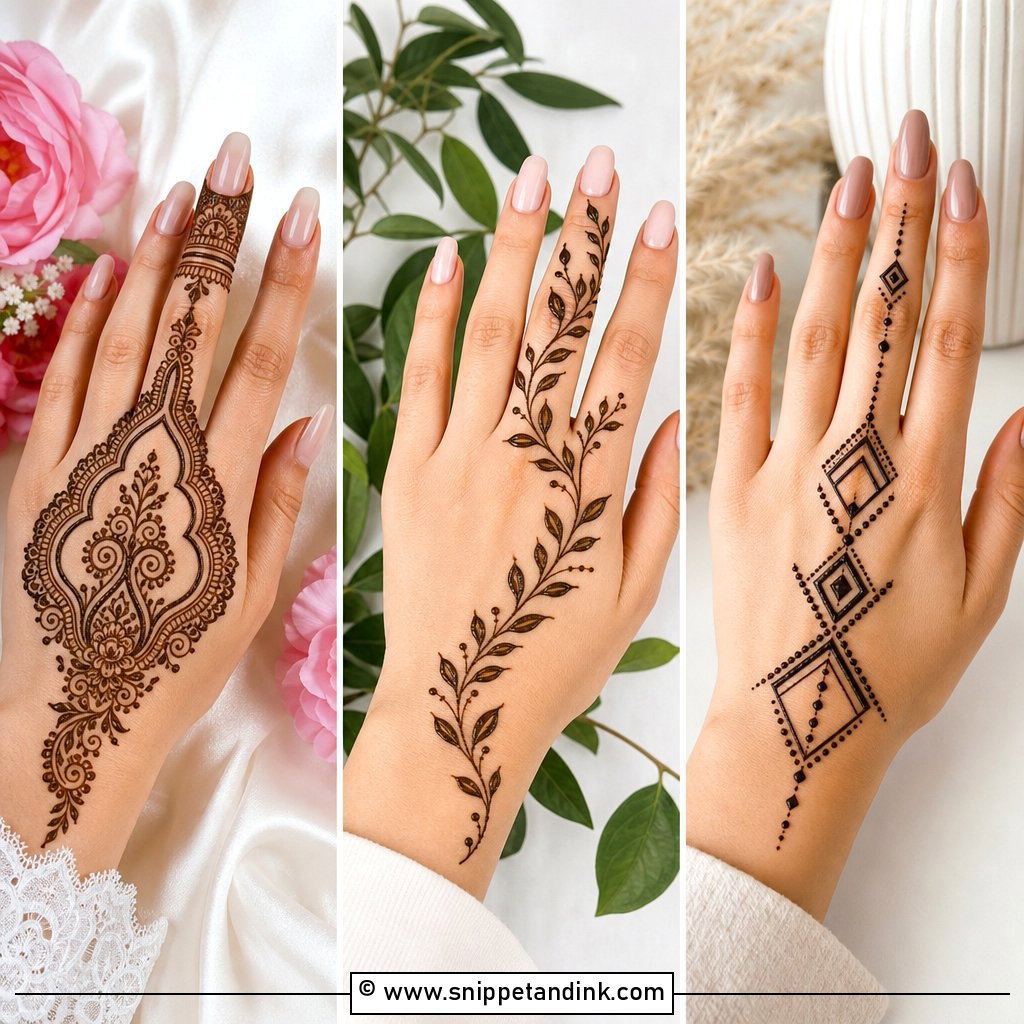
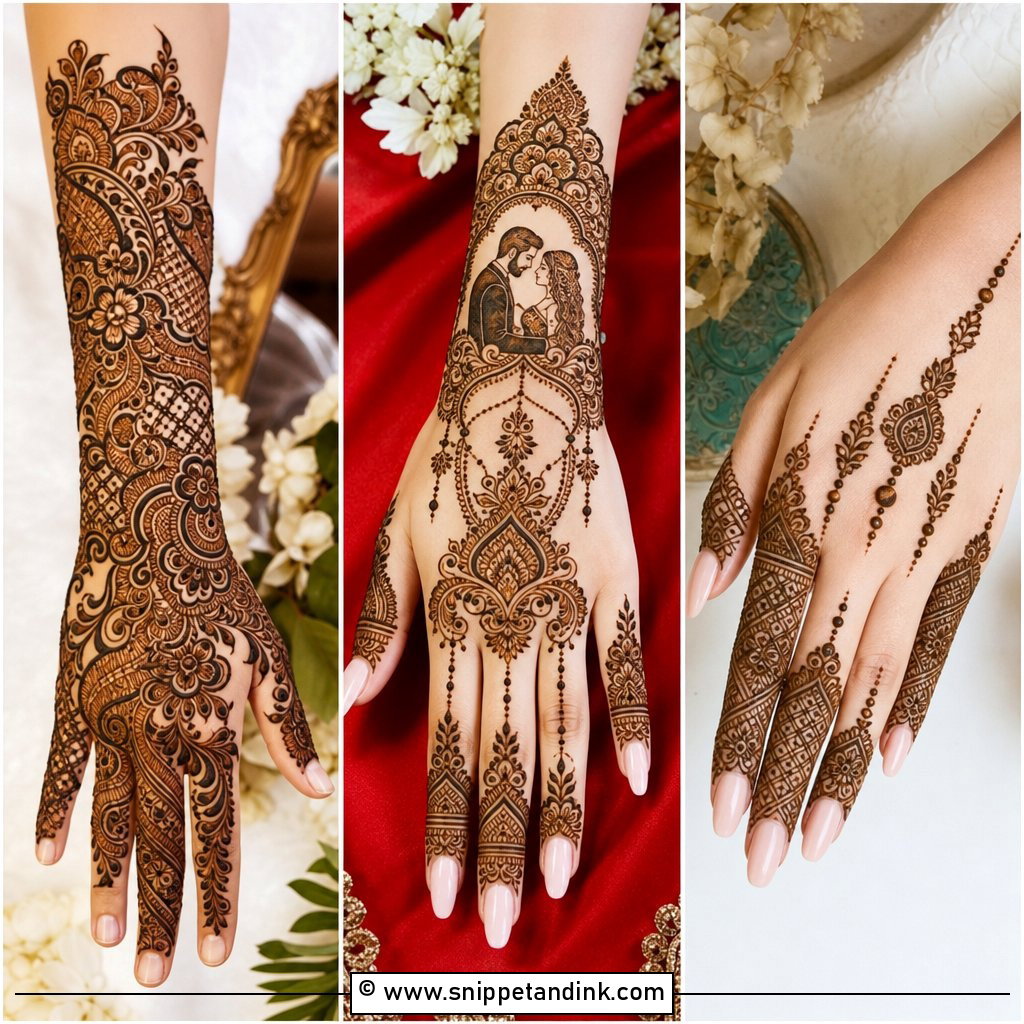
15. Jaali Mehndi Design
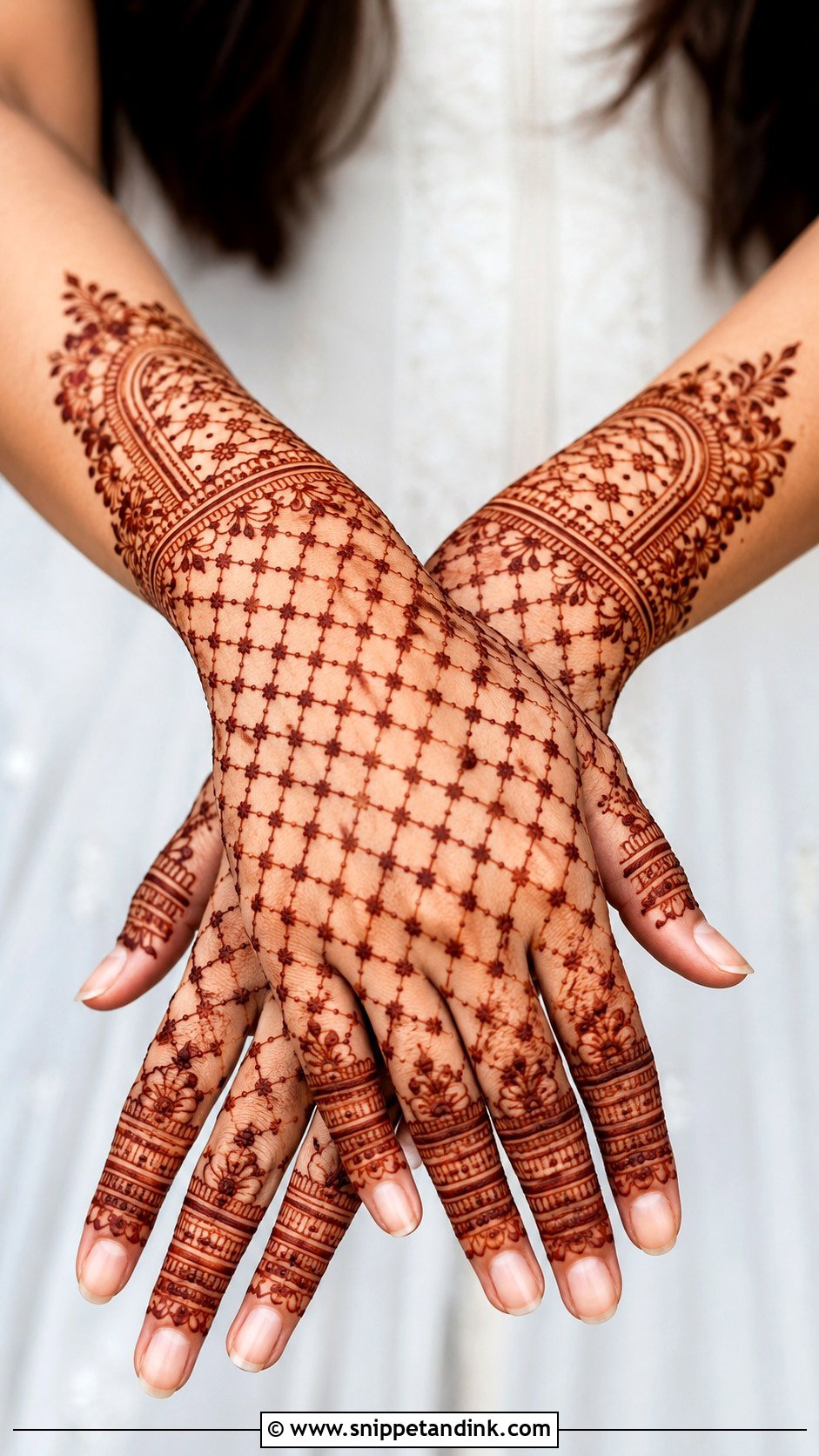
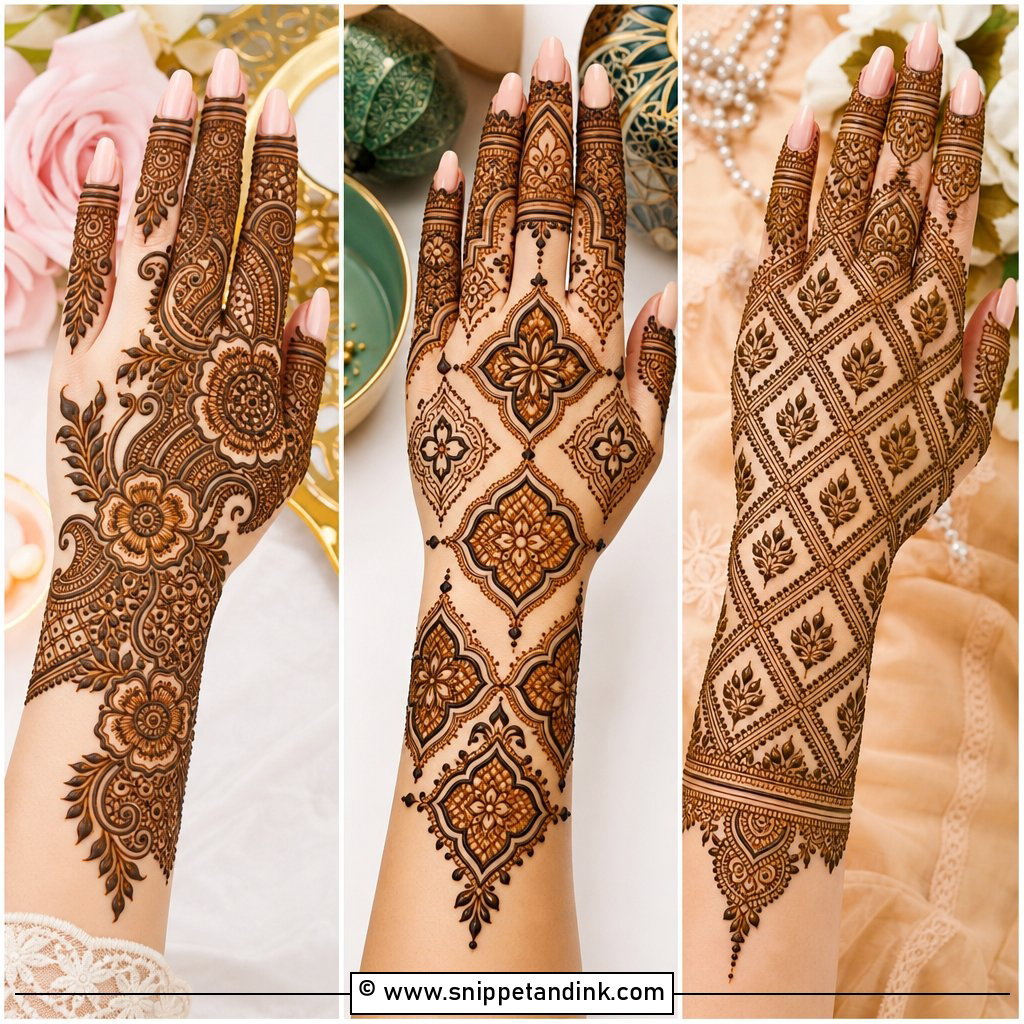
Jaali is the net or lace effect: crisscross lines with dots, small florals and borders, often over the fingers, wrist or one side of the palm. It gives a detailed look without heavy filler, and on the back hand it reads almost like fabric. It’s also the section most likely to reveal an unsteady cone. The squares need to be even, so I draw all the lines in one direction first and then cross them, rather than drawing box by box. A small jaali patch near the fingers is enough for a simple design; brides can combine it with paisleys and mandalas.
16. Khafif Mehndi Design
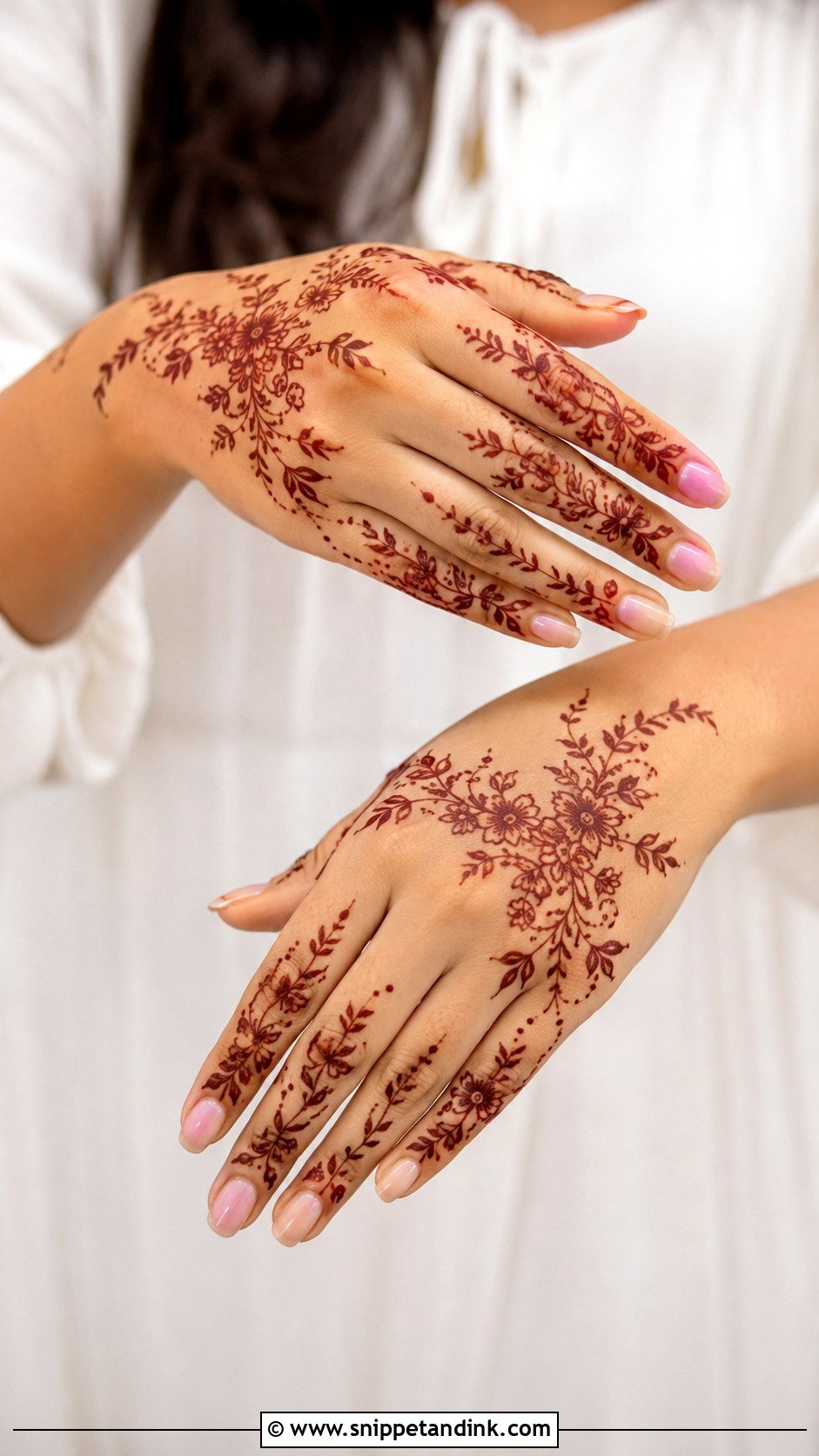
Khafif is light and spaced: Arabic-style florals with a little Indian detailing, but nothing dense. It’s a good fit for Eid, engagements and bridesmaids, and it doesn’t fight with sleeves or statement jewelry. I keep the detailed motifs to two or three places on the hand and let the rest breathe. When people ask me to add more to a khafif design, it usually stops being khafif, so I’d rather suggest a different style than overfill this one.
17. Gulf Khaleeji Mehndi Design
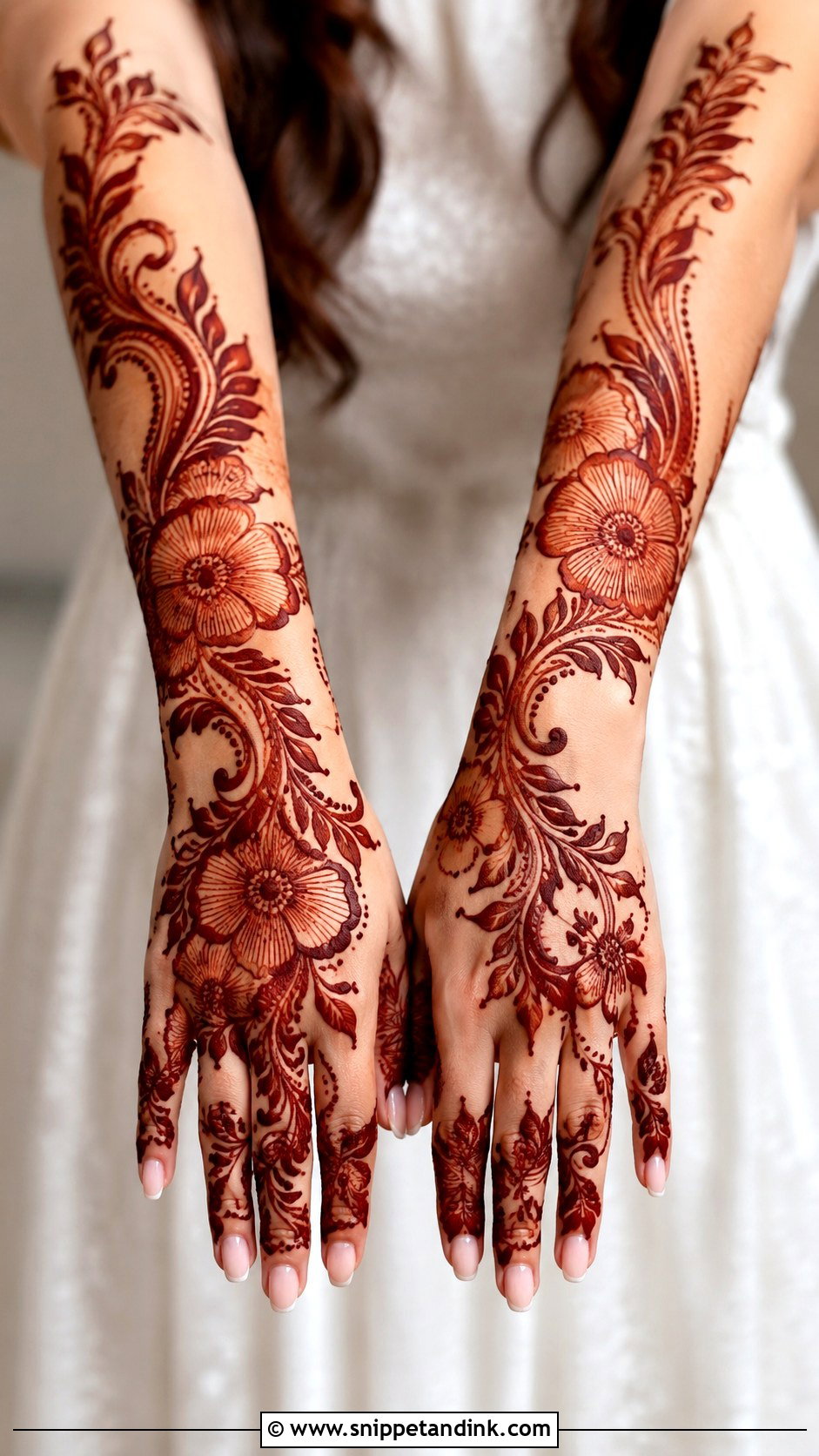
Gulf or Khaleeji work goes for impact through scale: big flowers, thick leaves, sweeping vines and a lot of bare skin. It sits on the back hand, palm or from wrist up the forearm, and it reads clearly in evening light and in group photos. I use a cone with a slightly wider tip for this style, because the thick outlines and filled leaves are part of the look. Oversized floral clusters with neat finger detailing feel modern; dotted borders and leafy trails pull it toward the traditional. The open spacing keeps it from looking crowded on most hand shapes.
18. Moroccan Mehndi Design
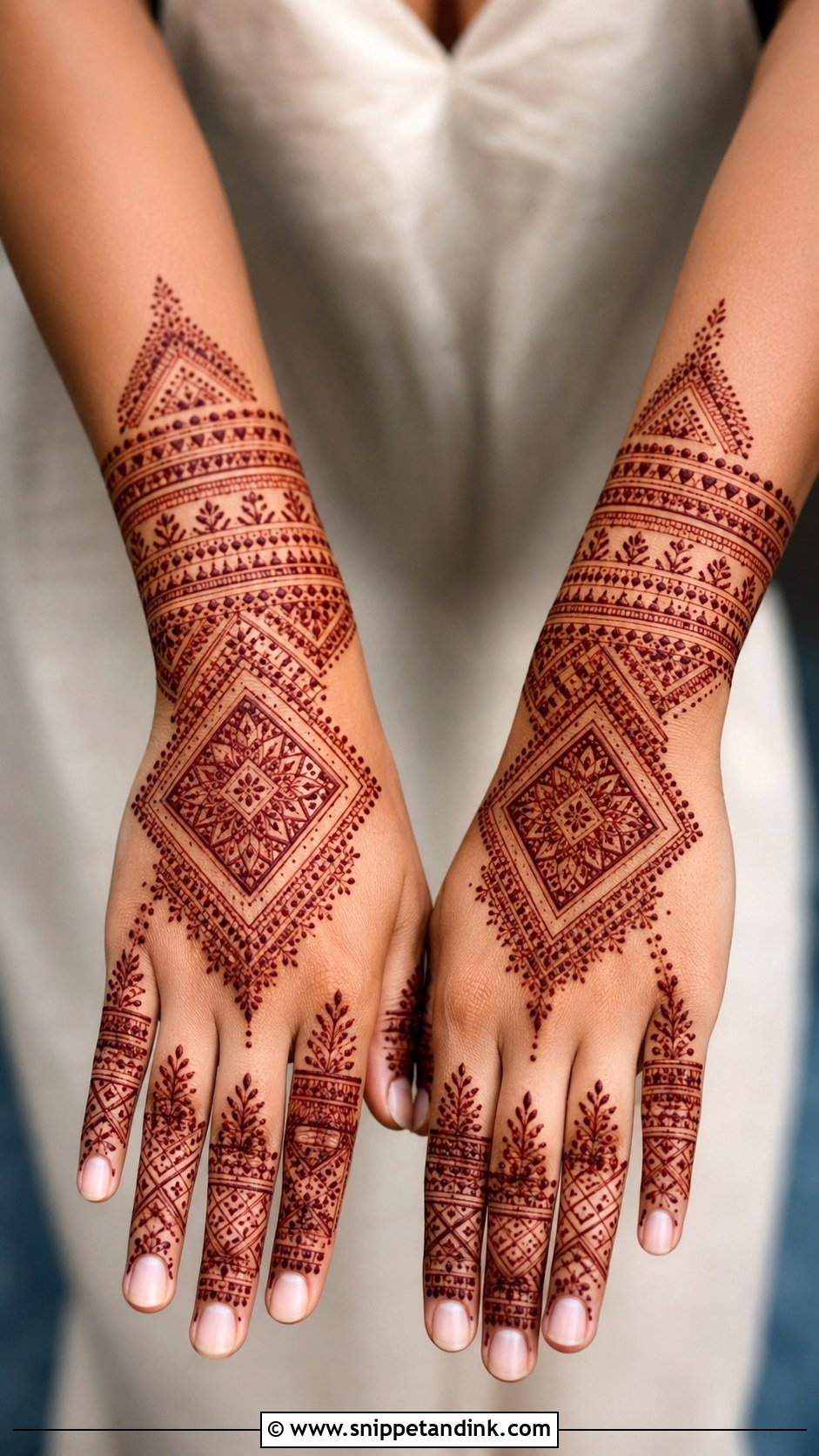
Moroccan designs swap flowers for geometry: diamonds, triangles, grids, straight lines and dotted bands repeated across the back hand, palm, fingers and wrist. It’s the style I’m most often asked for by men and by people who don’t want anything floral. Straight lines are harder than curves, so I work in short sections and rest my hand on the client’s to keep each line true. Bold outlines and filled shapes make it graphic; adding a few small leaves or dots softens it.
19. Rajasthani Bridal Mehndi Design
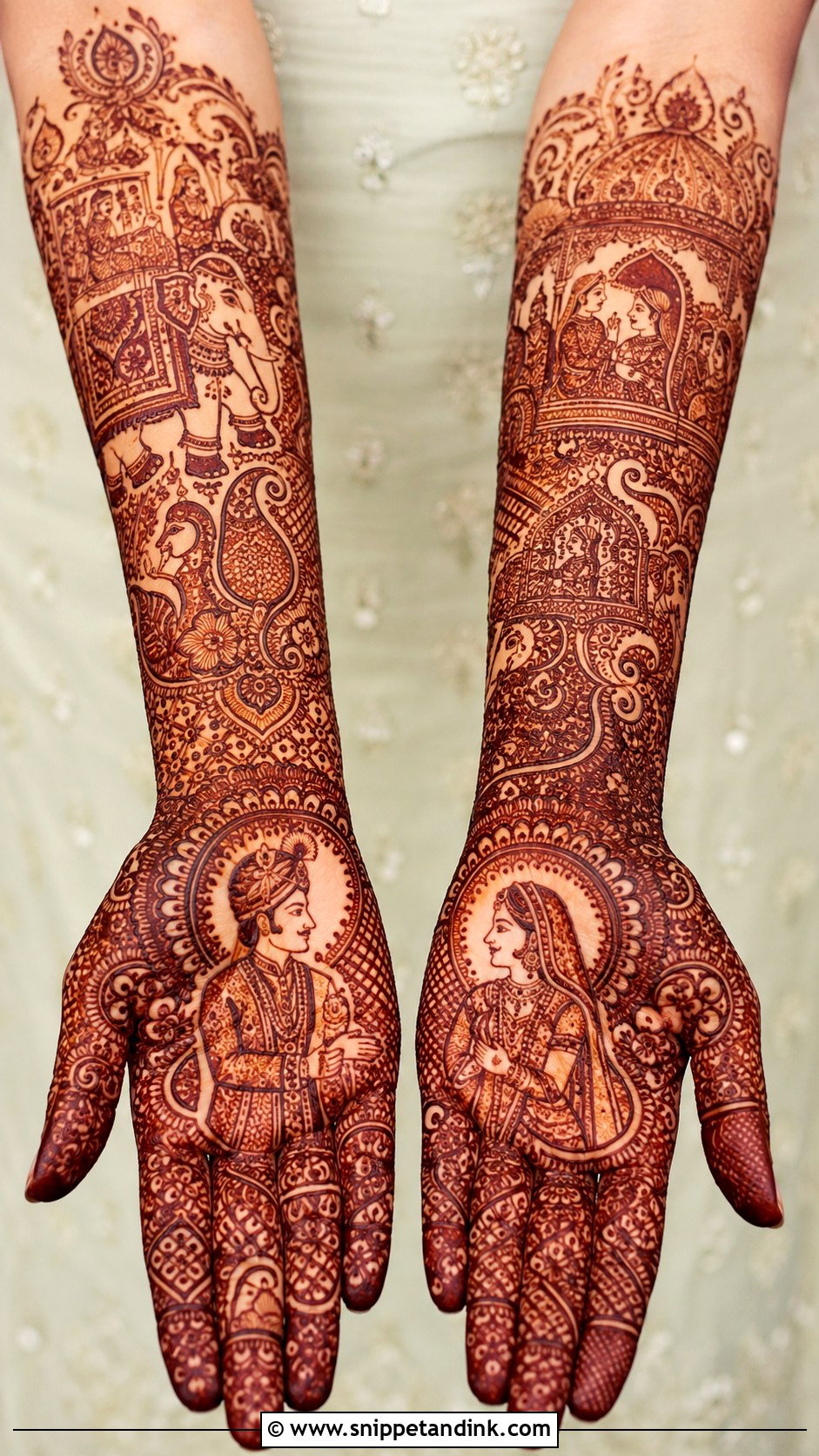
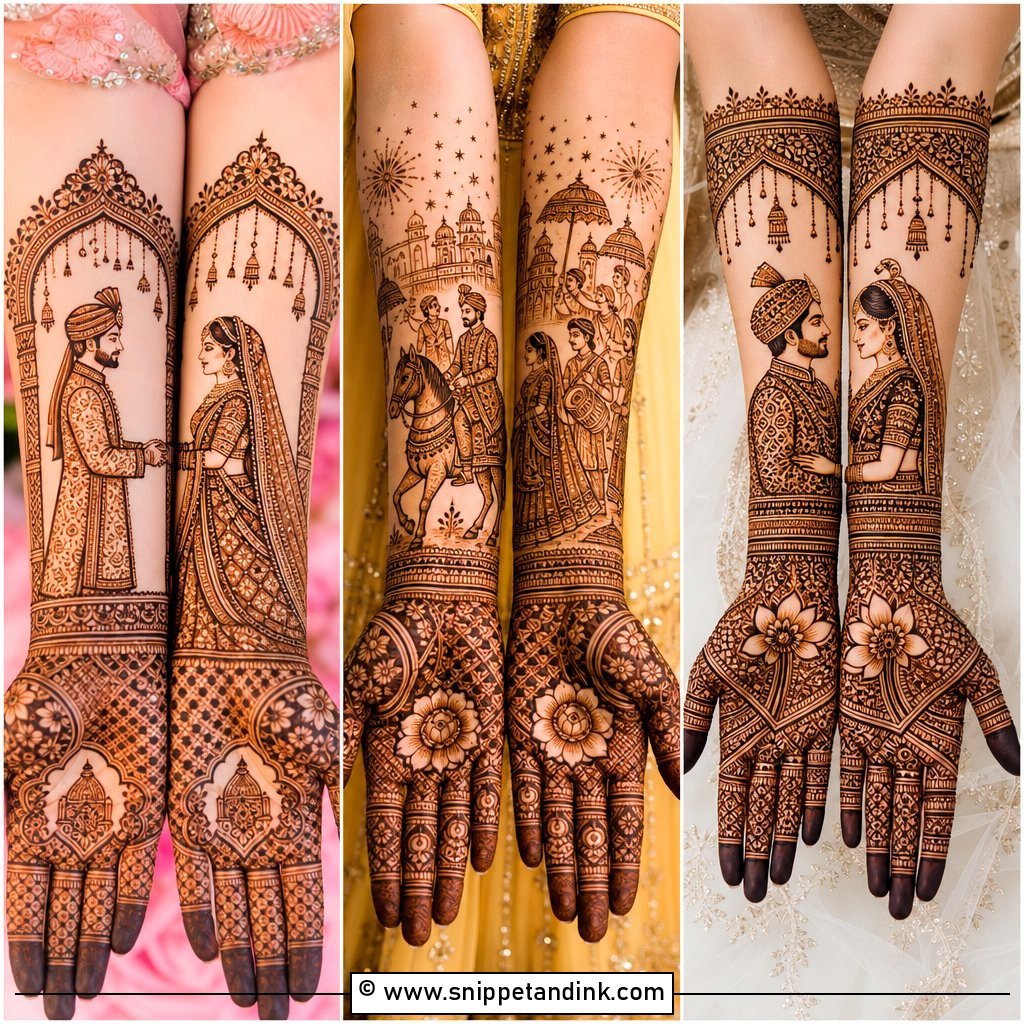
Rajasthani bridal mehndi tells a story across the hands: bride and groom figures, elephants, peacocks, a palanquin, lotus and paisleys, with tiny patterns filling almost every gap from fingertips to forearms. It needs a patient bride and an artist who has drawn figures many times, since a misplaced line on a face is very visible. I plan the front and back hands together with matching borders. If you want it cleaner, pick a few story elements that matter to you instead of all of them. The finished look depends on symmetry and on a deep, even stain.
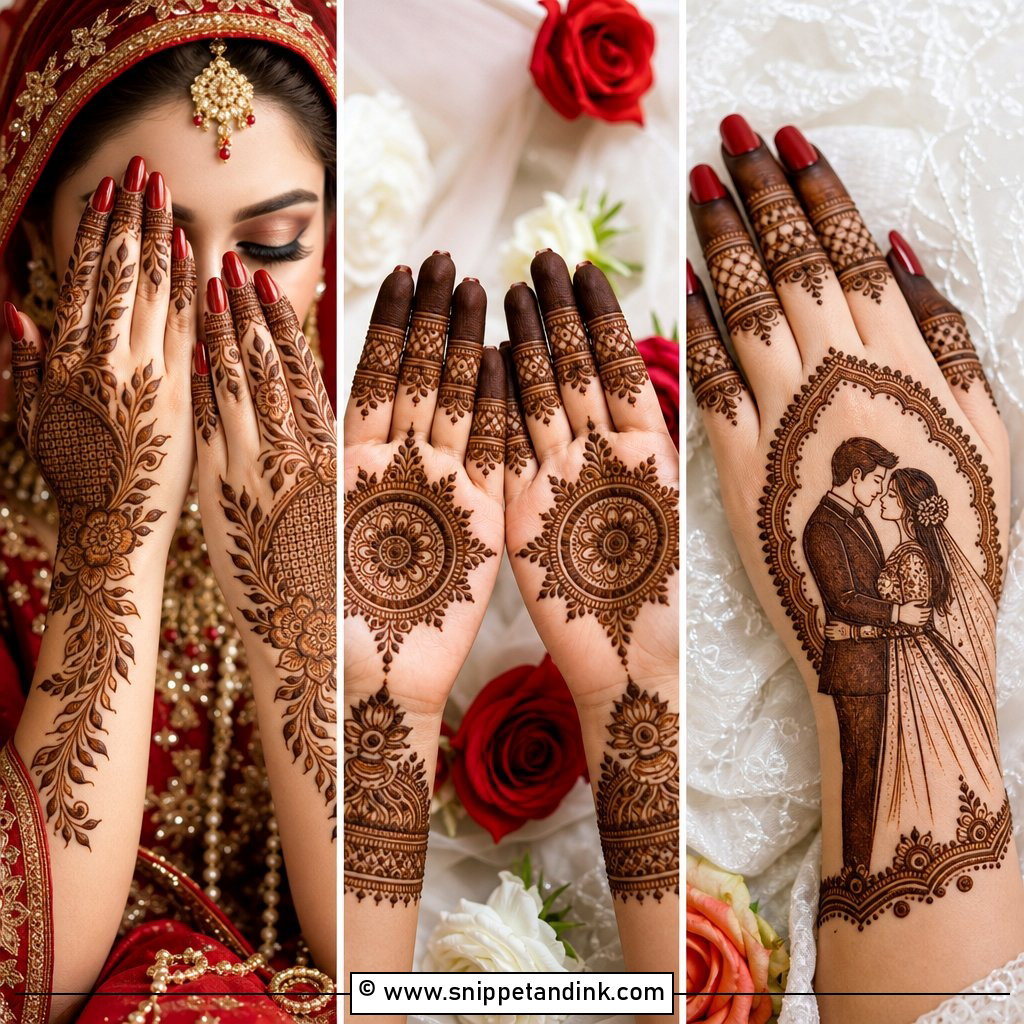

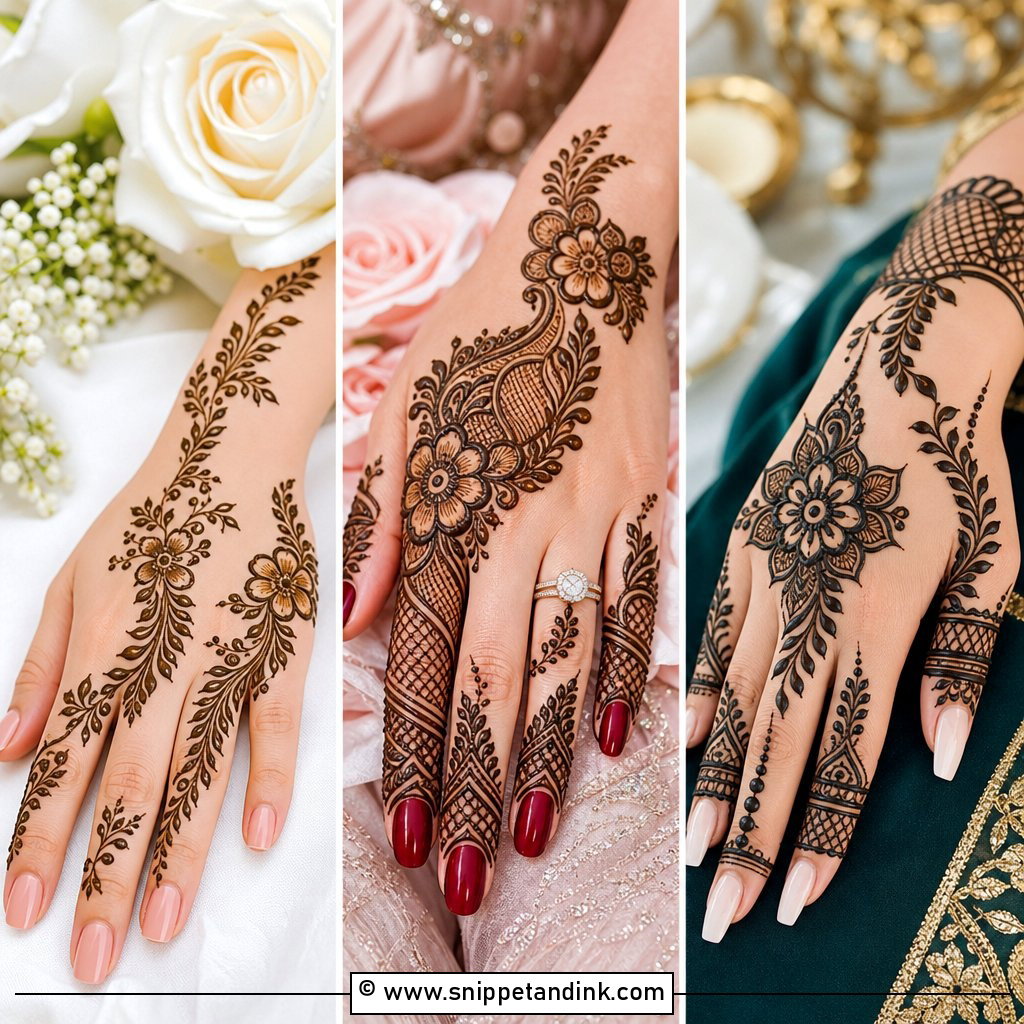
20. Indian Full Hand Mehndi Design
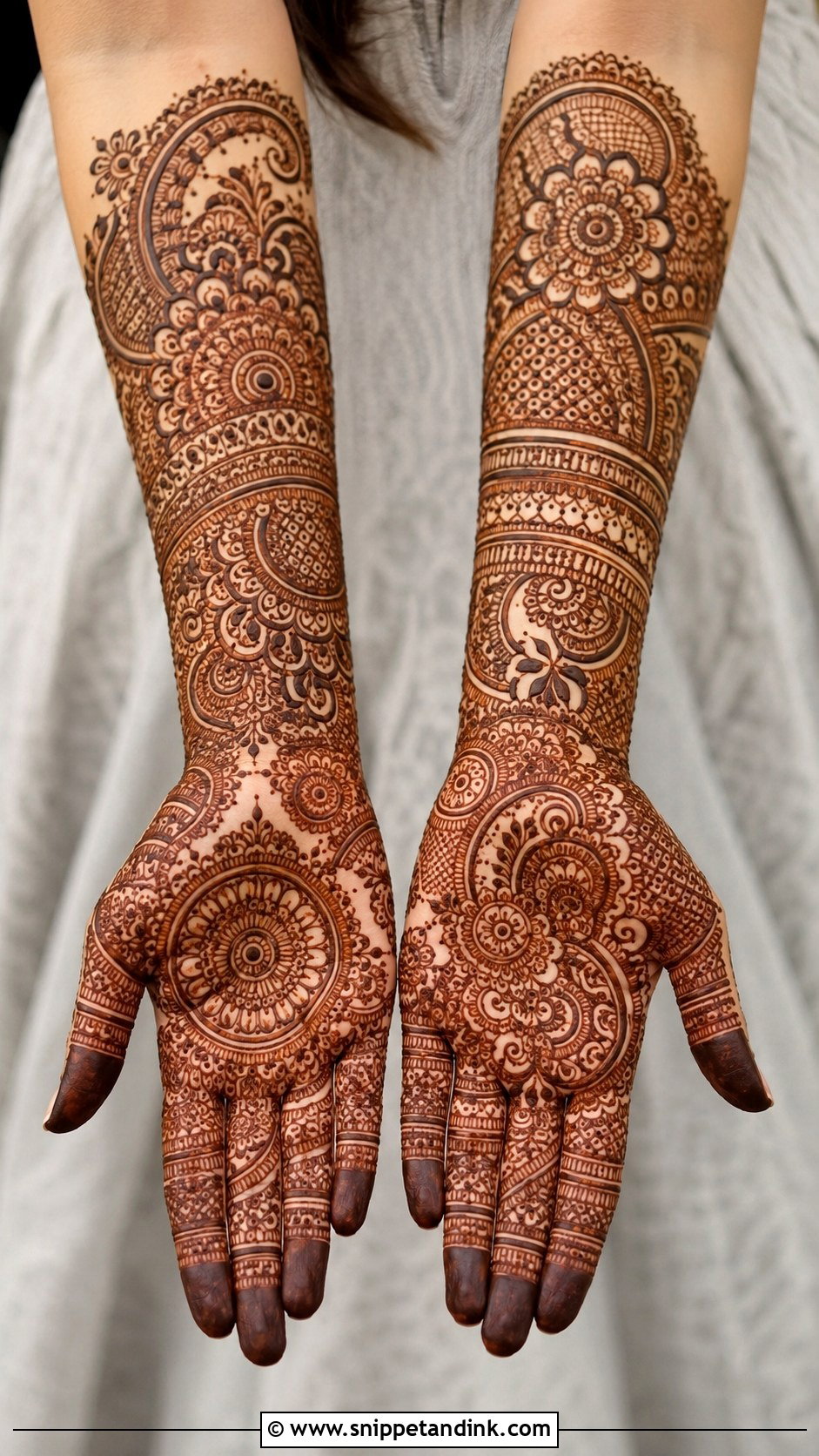
Indian full-hand work leaves very little skin bare. Paisleys, florals, mandalas, mesh, dots and fine filler cover the palm, fingers, wrist and forearm, which suits brides, festivals and religious occasions where richness is the point. Without structure it turns into noise. Ask your artist to outline the major motifs with clear borders so the eye can find the paisley or the mandala inside the filler. Filled fingertips and a strong cuff at the wrist frame the whole thing.
21. Modern Bridal Mehndi Design
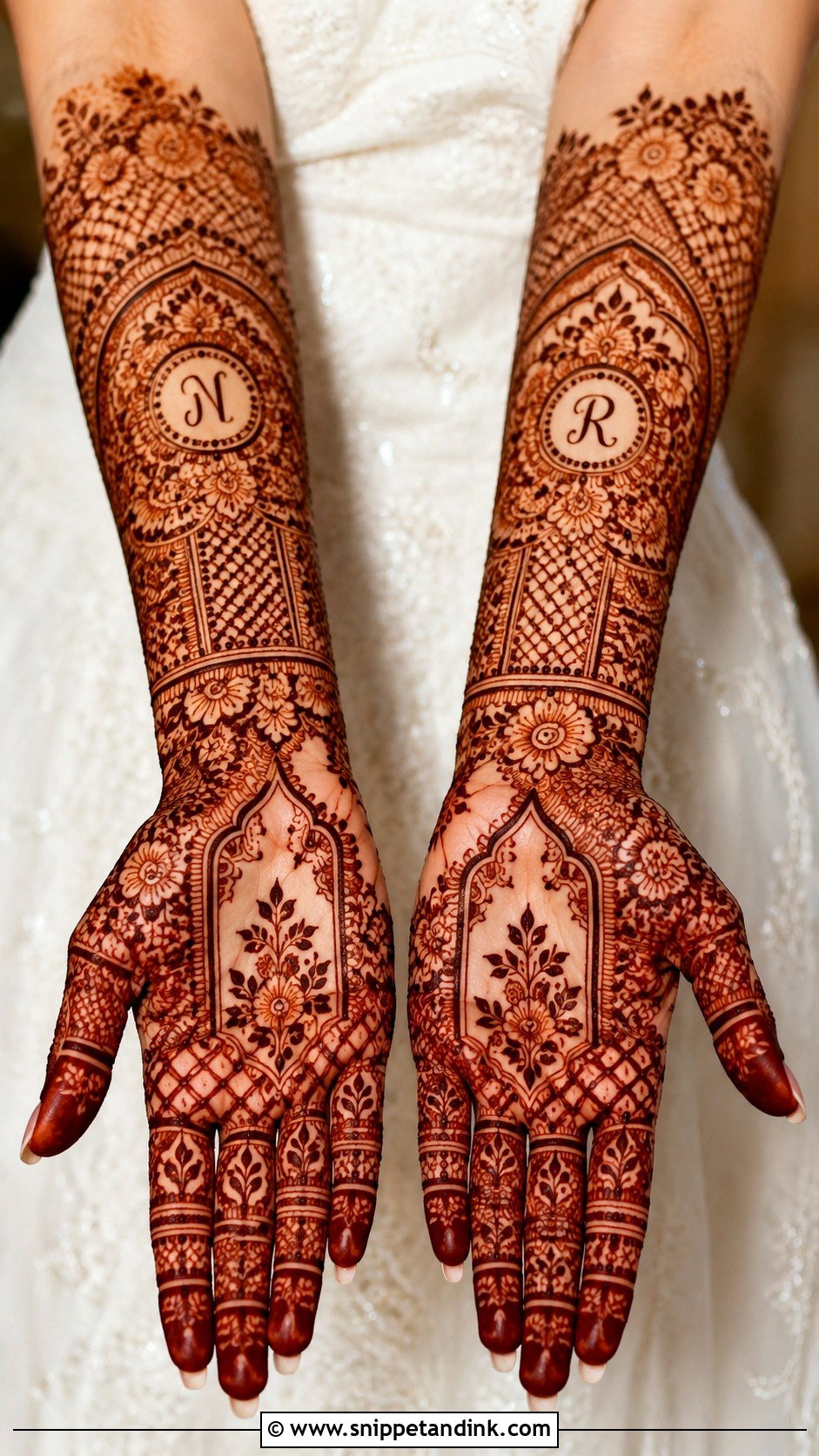
Modern bridal keeps the bridal weight in a few places and opens up the rest: bold florals, structured jaali, initials, dates or symbols, with breathing room between them. Some brides go wrist to forearm with open spacing, others keep full hands but cleaner sections. I ask about the outfit, the venue and anything personal the couple wants hidden, then work one or two of those in quietly. Keep the major motifs large. Fine detail that delights you up close can disappear completely at the distance most wedding photos are taken from.
22. Engagement Mehndi Design
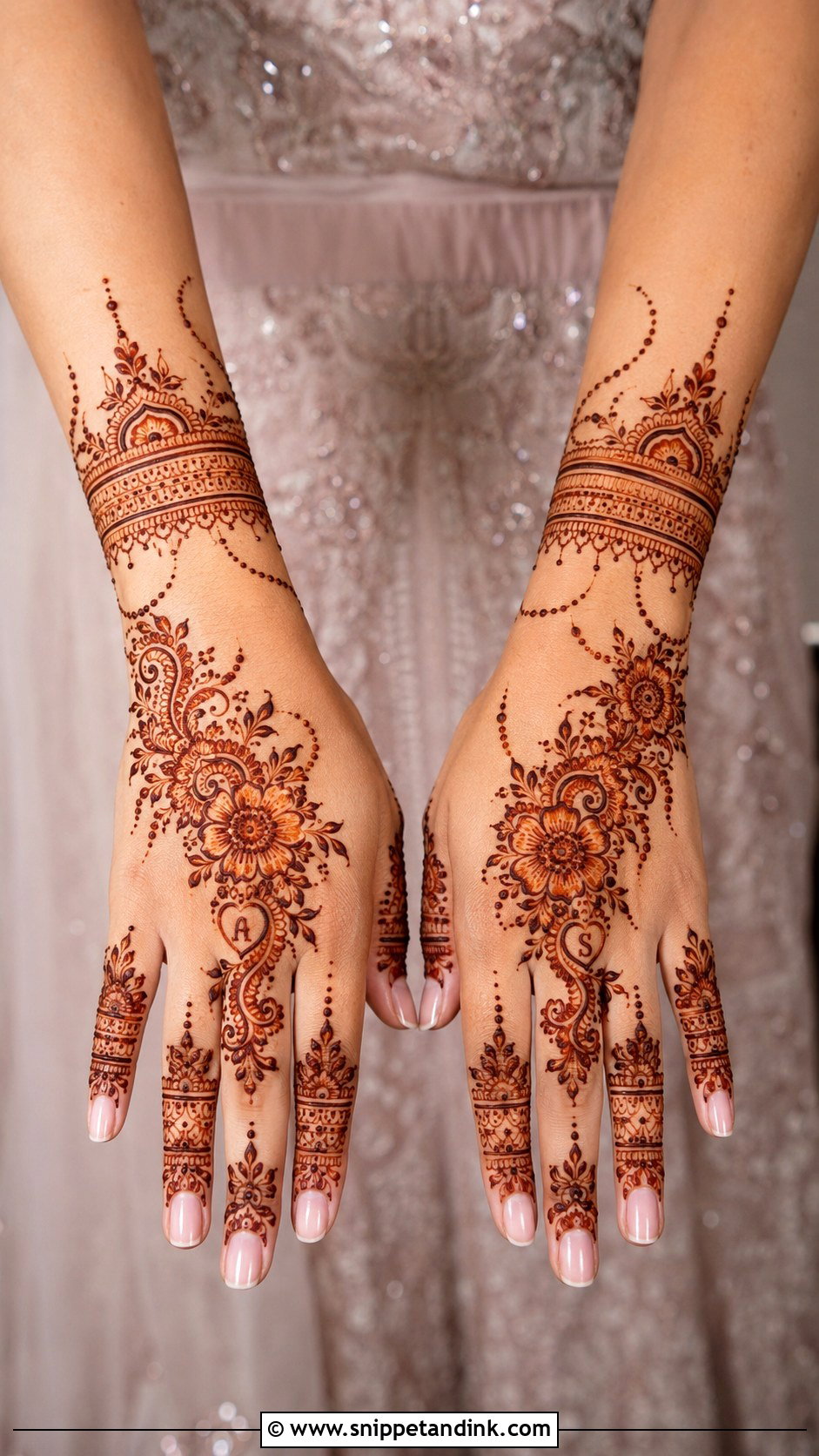
Engagement mehndi design is usually lighter than wedding work: back-hand florals, bracelet patterns, mandalas or an Indo-Arabic trail over the hand and wrist. The ring is the star, so I keep the ring finger fairly open on the left hand, especially at the base where the band sits. A hidden initial, a small heart or the date can sit somewhere only the two of you know about. Finger designs should be neat and balanced, because they’ll be in every close-up of the ring.
23. Eid Mehndi Design
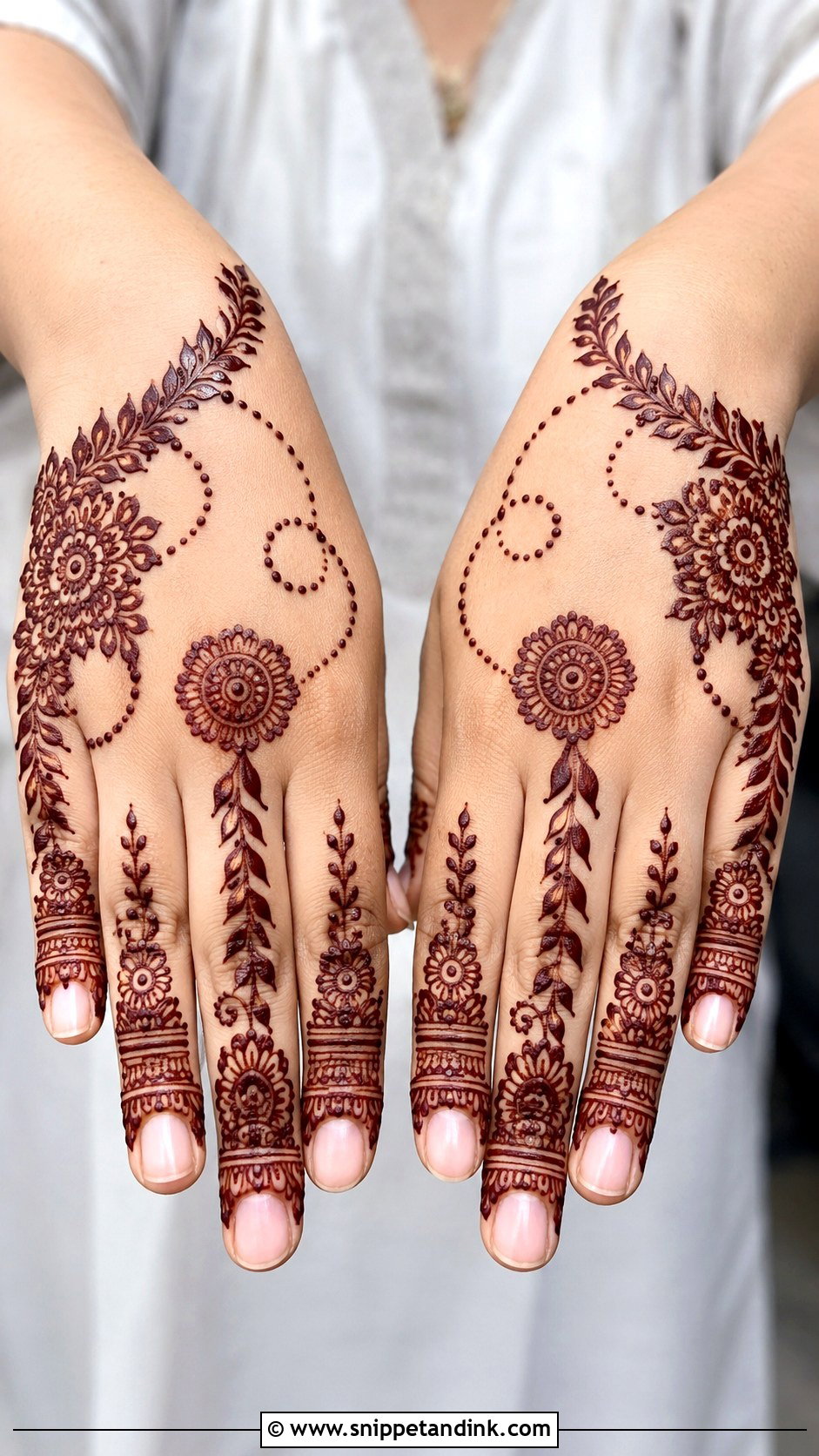
Eid often means applying the night before, sometimes for half the family, so speed matters as much as style. Arabic floral trails, back-hand mandalas, finger designs, bracelet cuffs and khafif patterns all go on quickly and sit well with bangles. For bold, take large flowers and vines across the back hand; for softer, a center mandala with light fingers. If you’re doing it yourself at home, choose clear shapes over tiny fillers. A slightly thick line that’s confident looks far better than a fine one that wobbles.
24. Diwali Mehndi Design
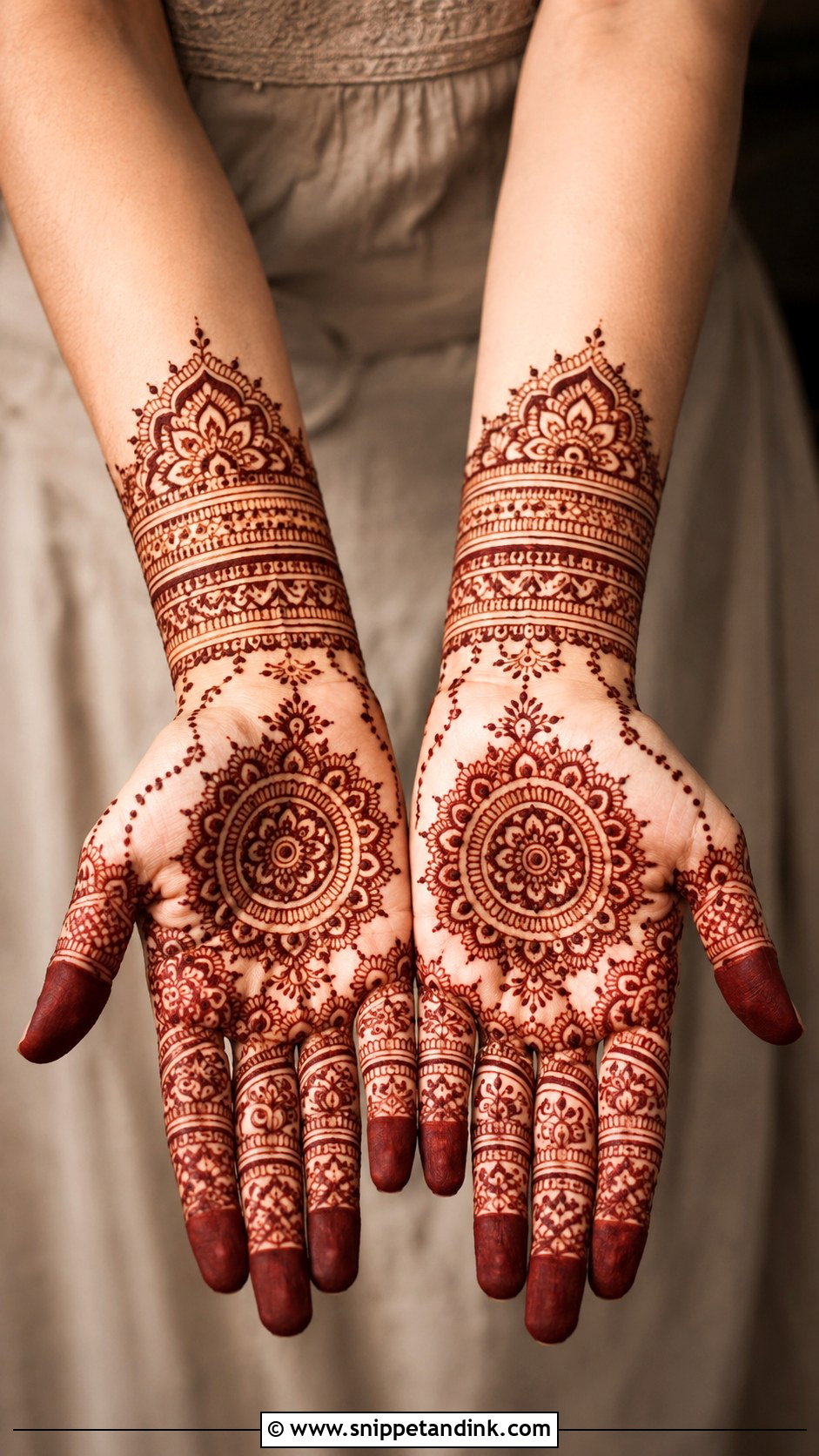
Diwali outfits are bright and heavily embellished, so the mehndi can go medium to heavy without looking overdone. A palm mandala with filled fingertips is the classic; a back-hand bracelet with floral chains suits family gatherings and photos. I sometimes borrow rangoli shapes, dots and curved borders. Leave the fingers reasonably clean if you’ll be wearing several rings, and apply at least a day ahead so the color has deepened toward maroon by the evening.
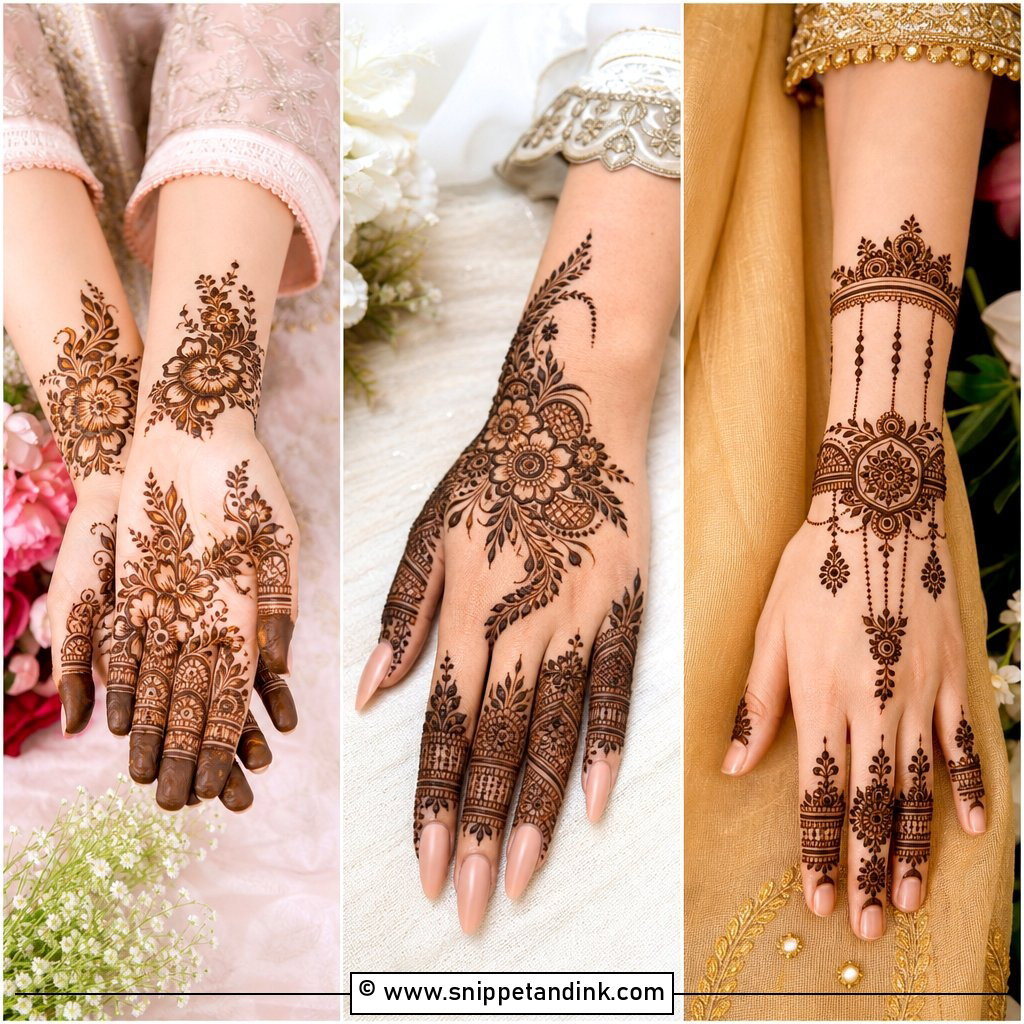
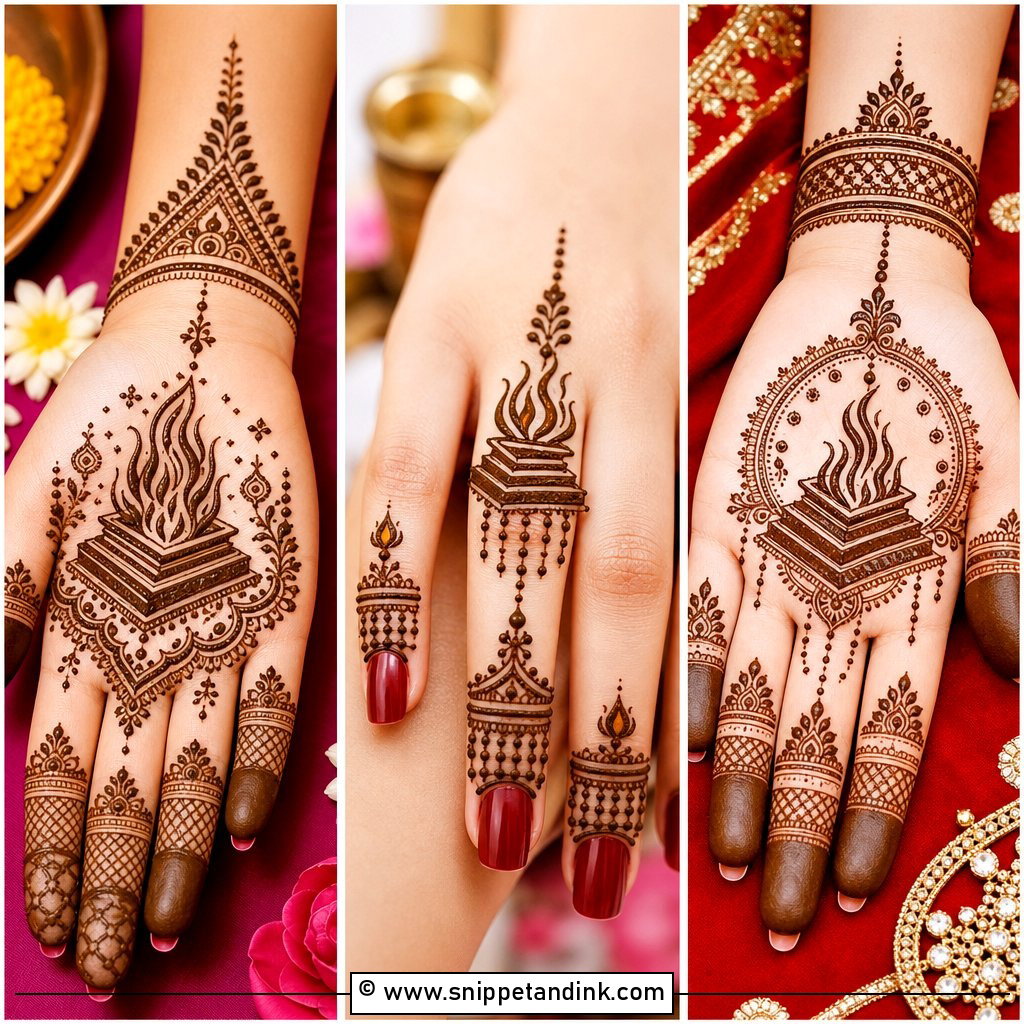
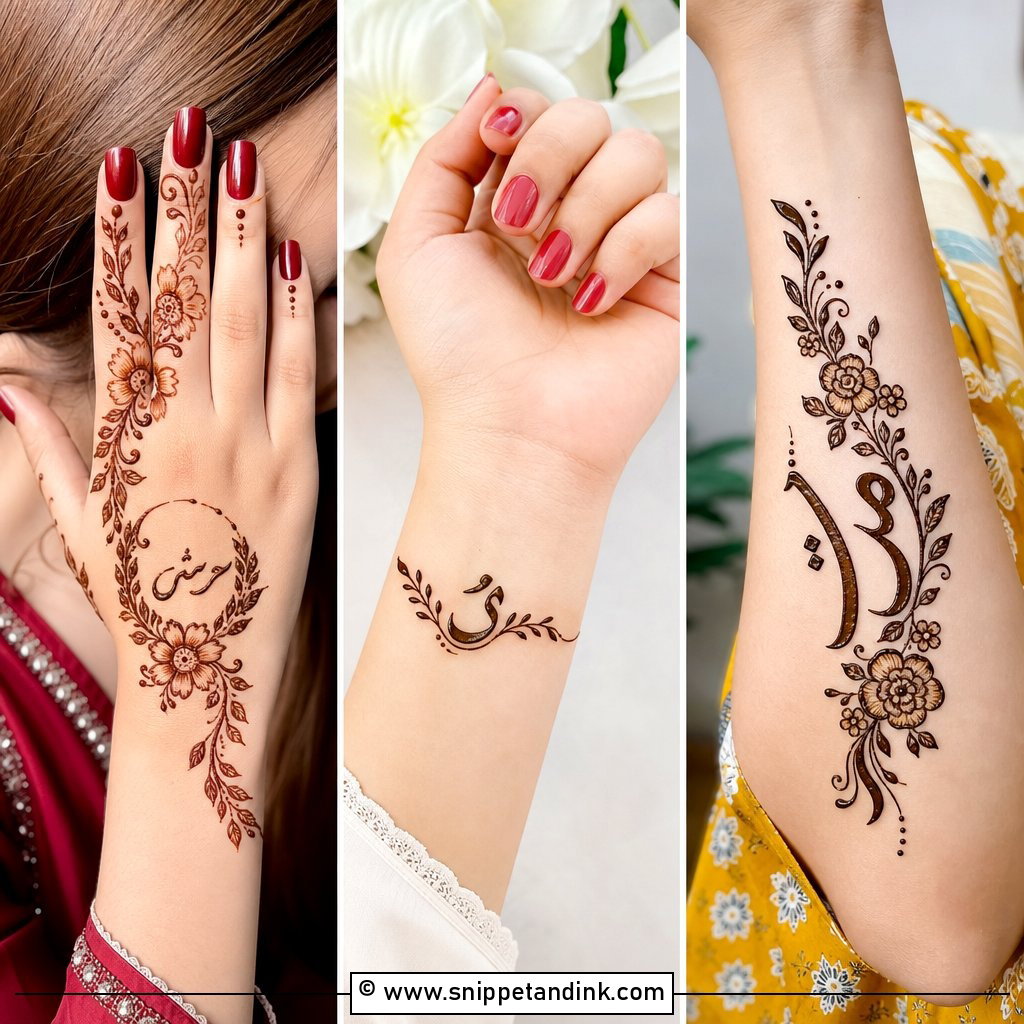
25. Karwa Chauth Mehndi Design
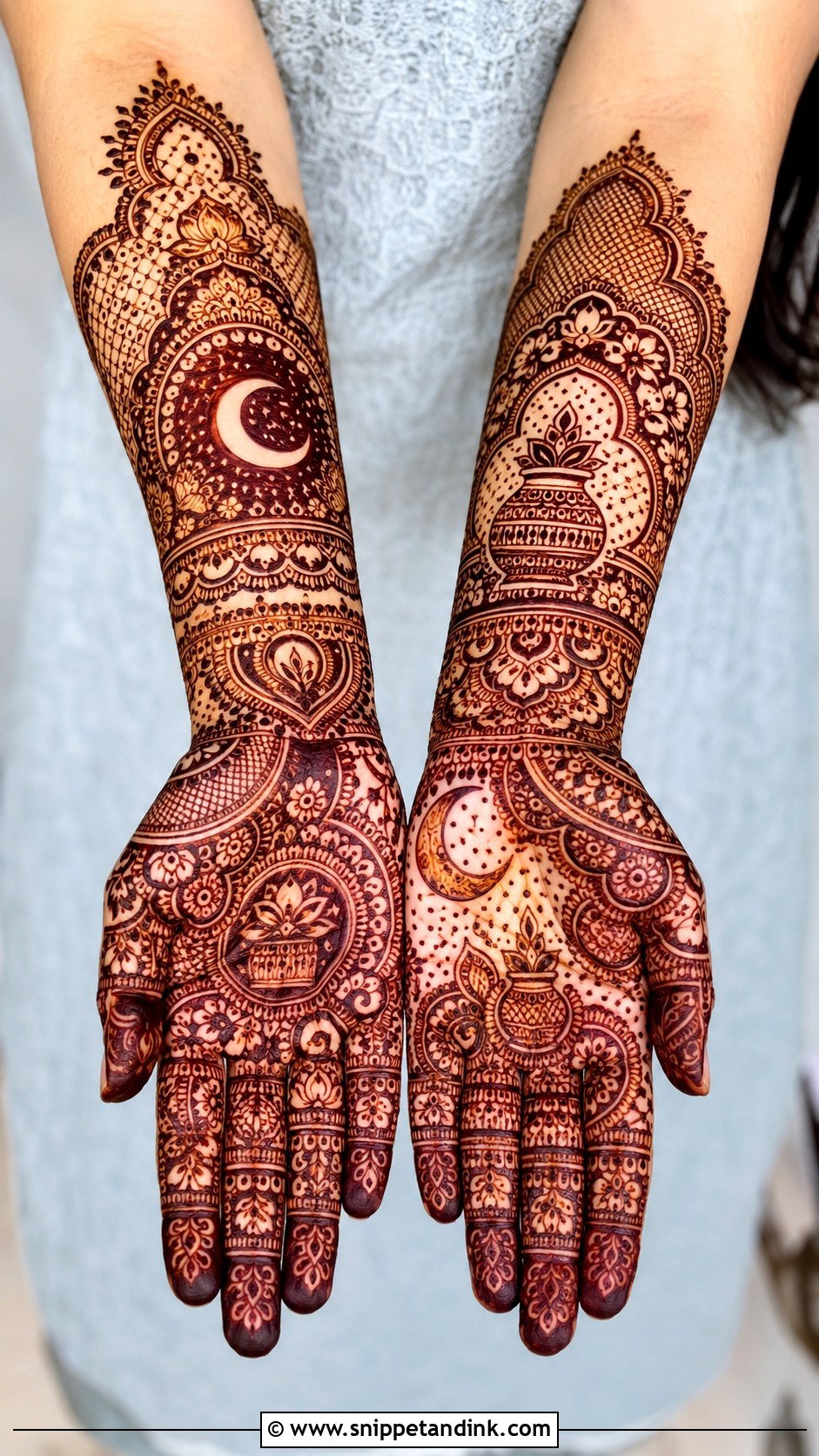
For Karwa Chauth I lean traditional: full palm patterns, bridal-inspired paisleys and mandalas, sometimes running wrist to forearm. A moon-shaped curve, florals, jaali and filled fingertips are common, and some women add initials. The hands are photographed up close during the rituals, holding the thali and the sieve, so balance matters more than density. For something lighter, an Arabic trail with a detailed wrist cuff works. If you like heavier work, go for Indian palm coverage, applied the day before the fast so the stain has time to darken.
26. Kids Mehndi Design
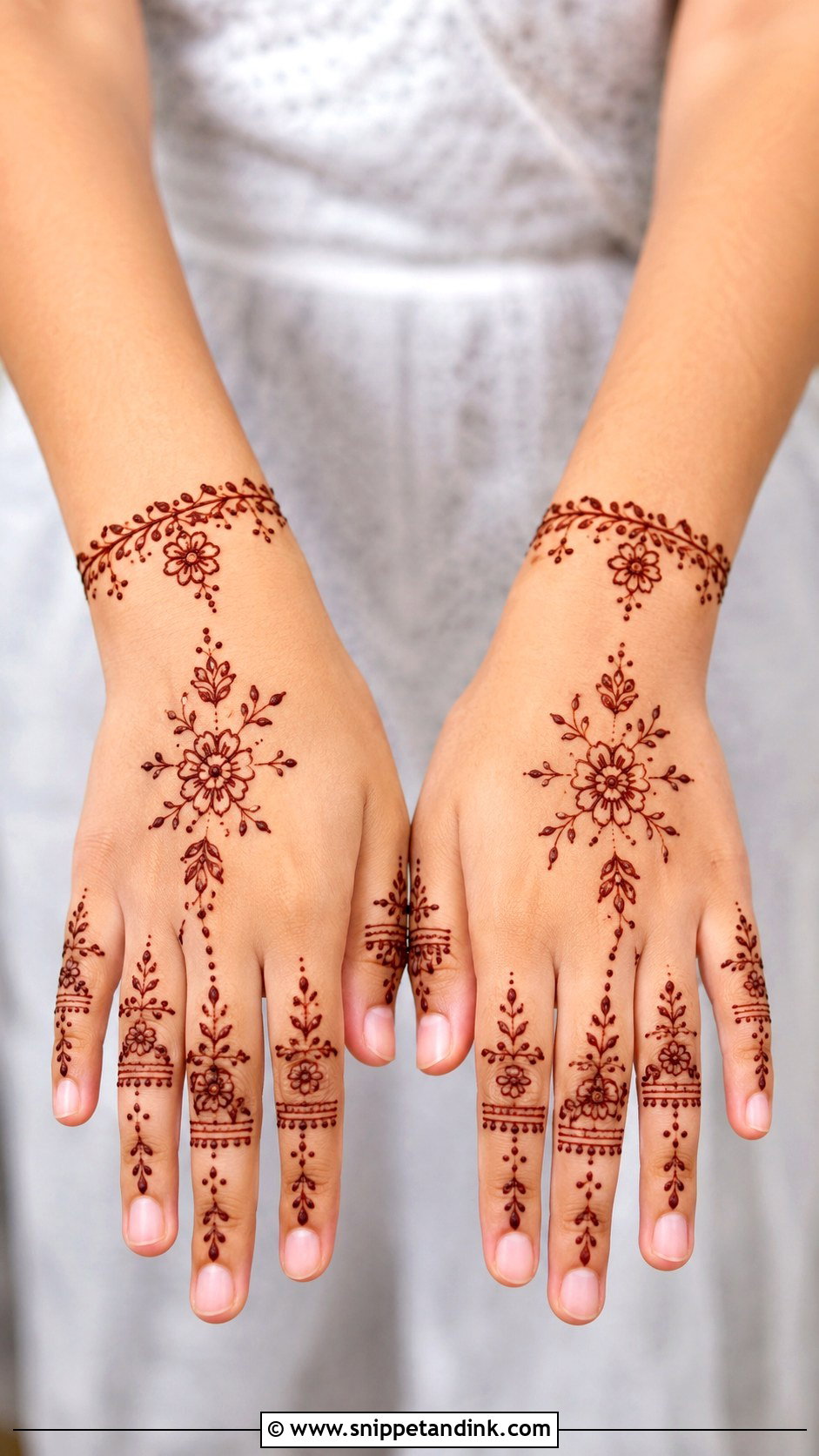
Children rarely sit still for more than a few minutes, so I keep kids’ designs small, quick and bold: a flower, a butterfly shape, a heart, a little mandala, a leafy bracelet or dots on the fingertips. Dense patterns are a bad idea; they smudge before they dry. I also only use natural henna on children and avoid any cone that smells of chemicals or promises instant black color. A wrist-to-finger chain looks sweet for weddings and still dries before the child gets bored.
27. Easy Mehndi Design
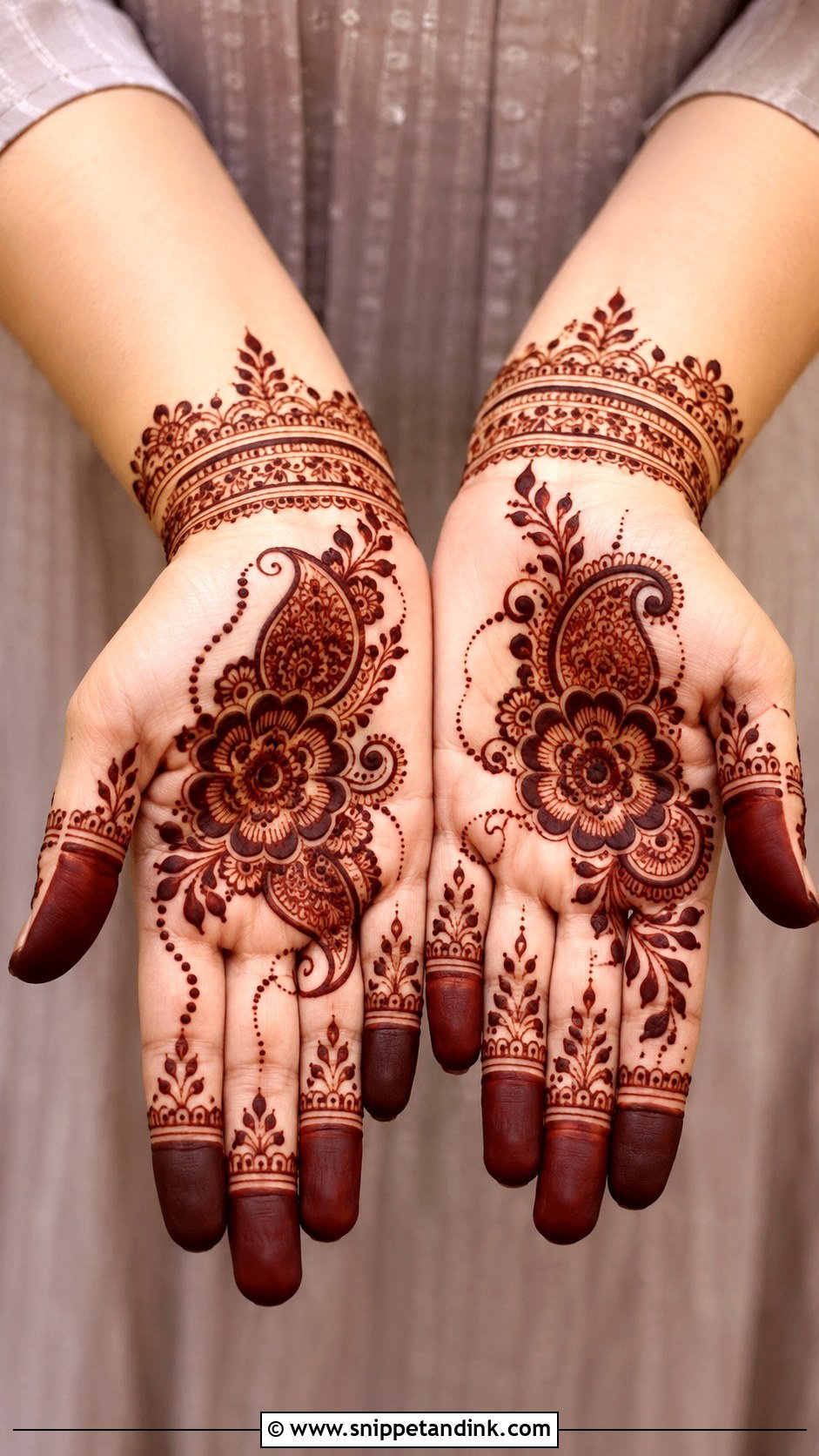
If you’re drawing it yourself, start with one main motif, a mandala, a flower or a paisley, then add finger lines, dots, leaves and a small wrist border. That sequence gives you a finished-looking design even with basic skills. Bold lines are more forgiving than thin ones because small wobbles disappear inside them. Your second hand will always be harder than the first, since you’re drawing with your non-dominant hand, so keep that side simpler rather than trying to make both identical.
28. Stylish Mehndi Design
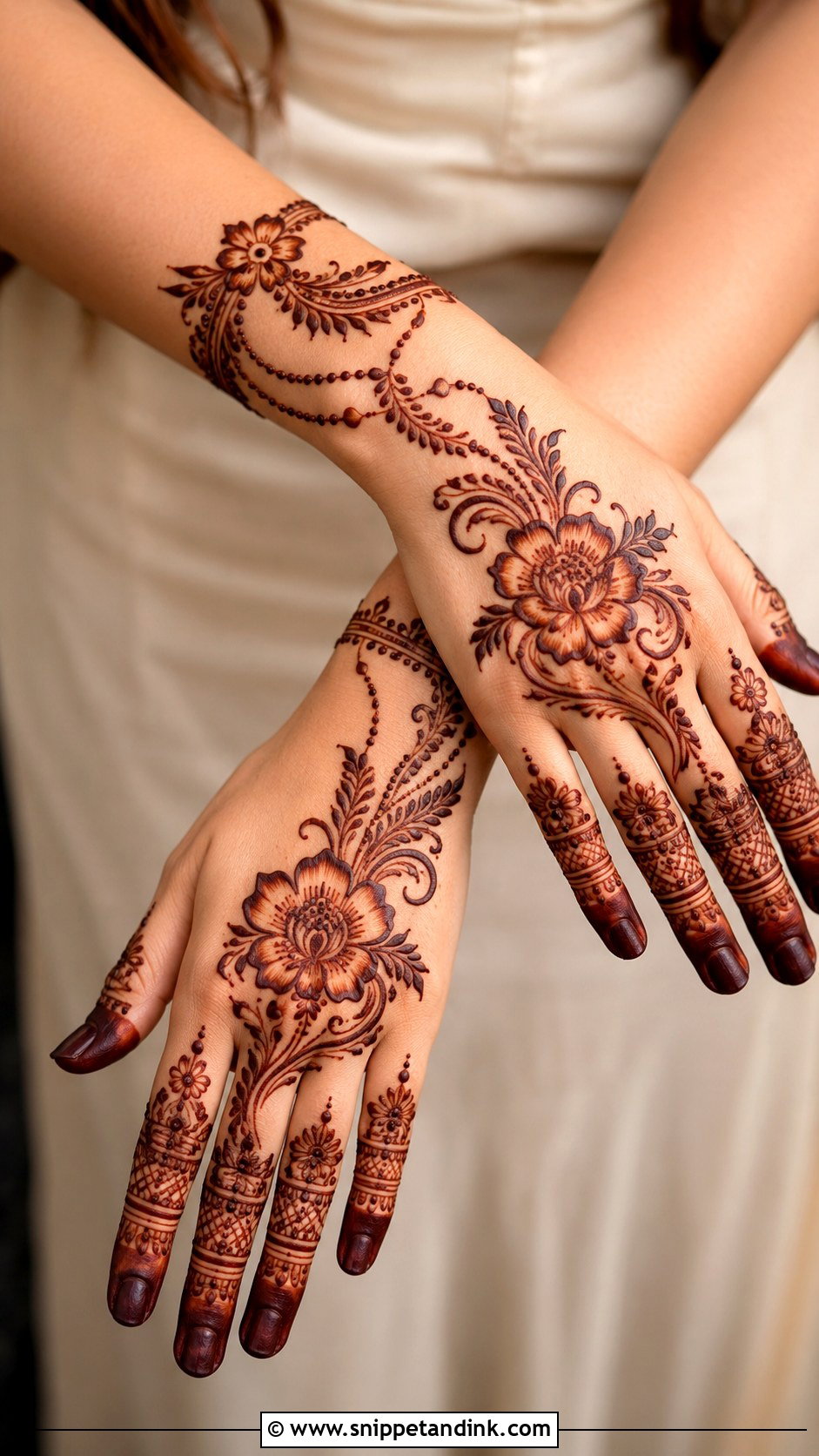
What people usually mean by stylish is contrast: bold Arabic flowers next to geometric lines, bracelet chains, finger bands and plenty of open skin, mostly on the back hand and wrist. It sits well with fusion outfits, minimal jewelry and festive makeup. Thick outlines with fine inner detail give the sharpest result. Thin vines and small dots soften it. The design should look planned, so I sketch the main flow with a few light guide dots before committing to it.
29. Aesthetic Mehndi Design
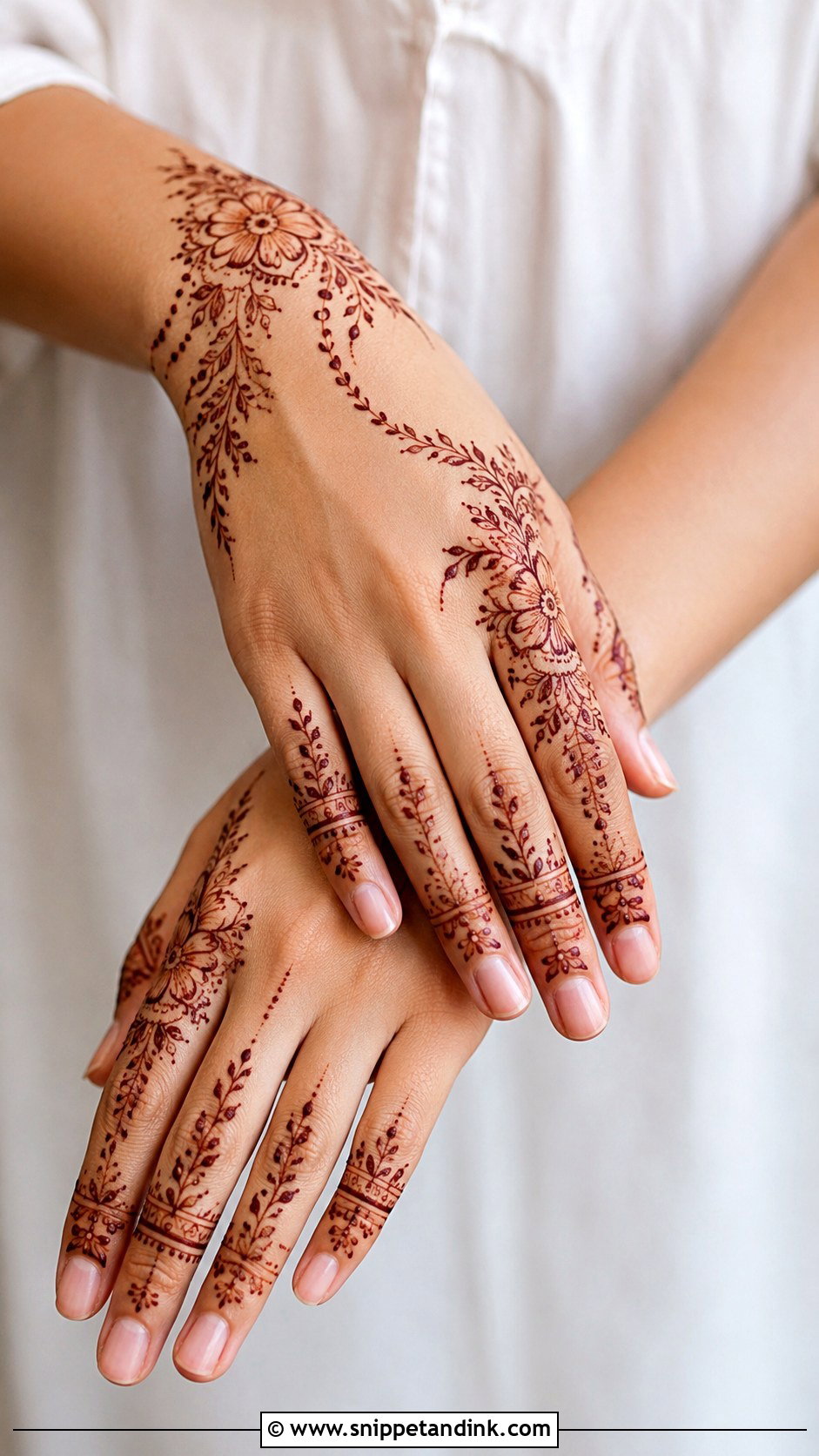
The aesthetic look is restraint: one theme, fine lines, small florals, dots and gentle curves, maybe on the fingers and one side of the back hand or as a centered palm design with delicate extensions. It’s a good match for modern bridesmaids and small celebrations. The mistake I see most is mixing too many motifs, a mandala here, a rose there, a geometric band somewhere else. Pick florals or mandalas and repeat them lightly across the hand.
30. Heavy Bridal Mehndi Design
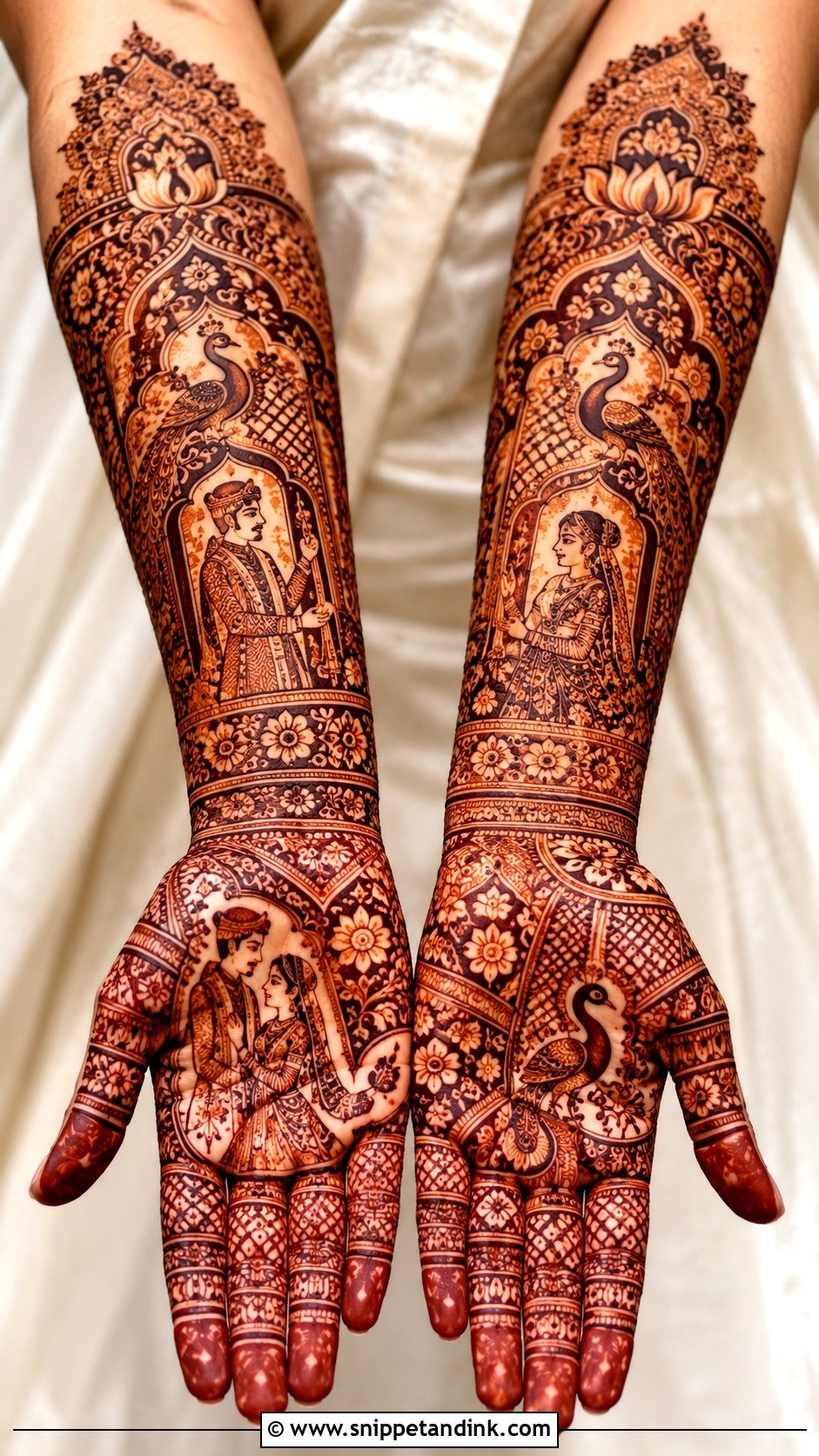
Heavy bridal means fingertips to elbows: filled palms, detailed forearms, coordinated back hands, peacocks, paisleys, lotus, bride and groom figures, jaali and hidden names. For both hands and arms you should set aside most of a day, and the feet add more on top of that. The thing that rescues a heavy design from looking flat is sectioning. Borders, cuffs and a few larger motifs divide the filler so the eye has places to rest. Schedule it one to two days before the wedding so the stain peaks on the day.
31. Half Hand Mehndi Design
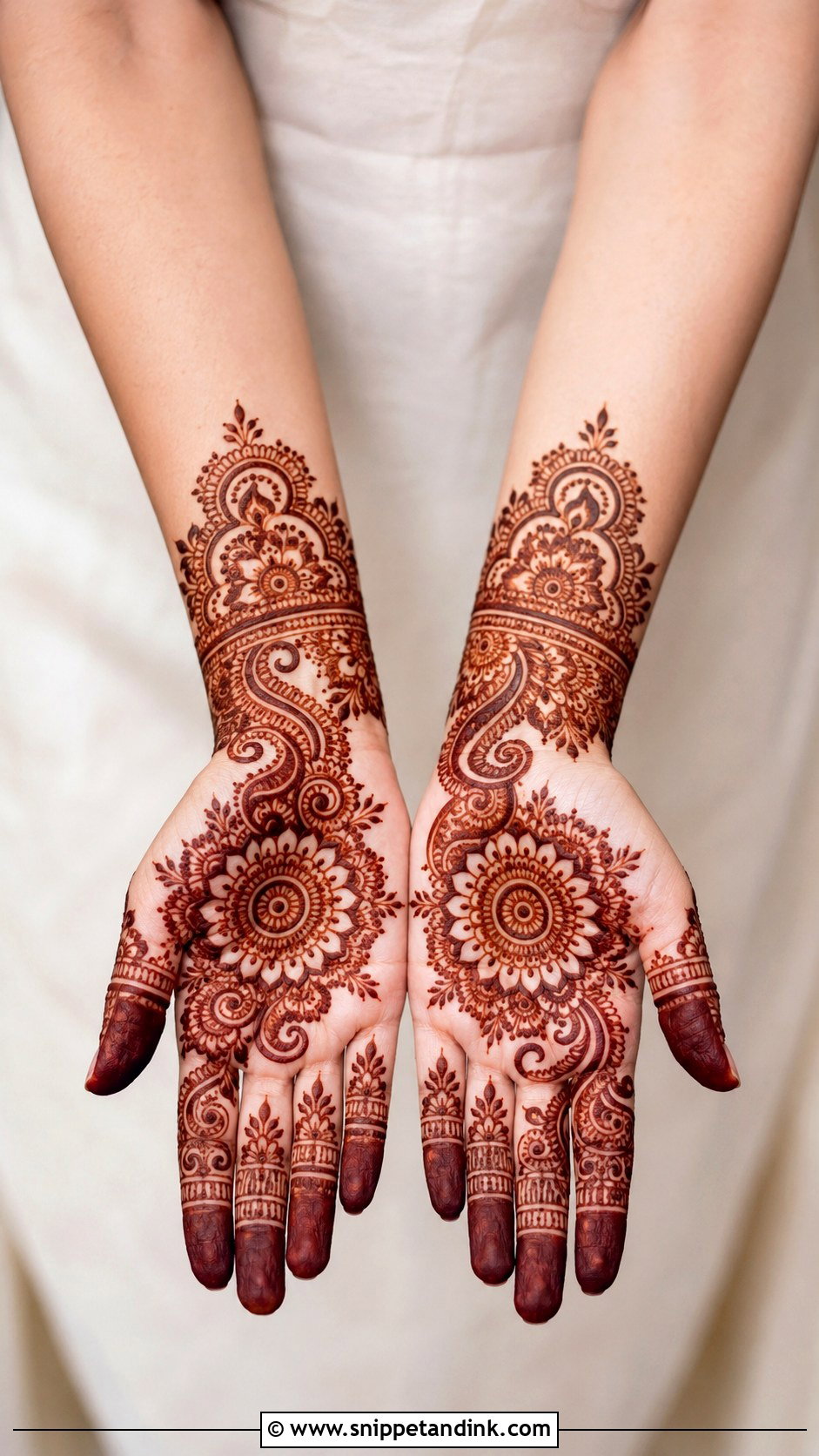
Half-hand designs cover the palm and fingers, or the back hand and wrist, and stop before the forearm. They can be simple, Arabic, floral, mandala-based or Indo-Arabic, and they’re my standard suggestion for guests and bridesmaids when time is short at a mehndi night. I end the design at a clear line rather than letting it trail off, so it looks complete, not unfinished. For a traditional feel, fill the fingertips and add a strong palm motif. For a modern feel, use open spacing and a bracelet-style wrist ending.
32. Rose Mehndi Design
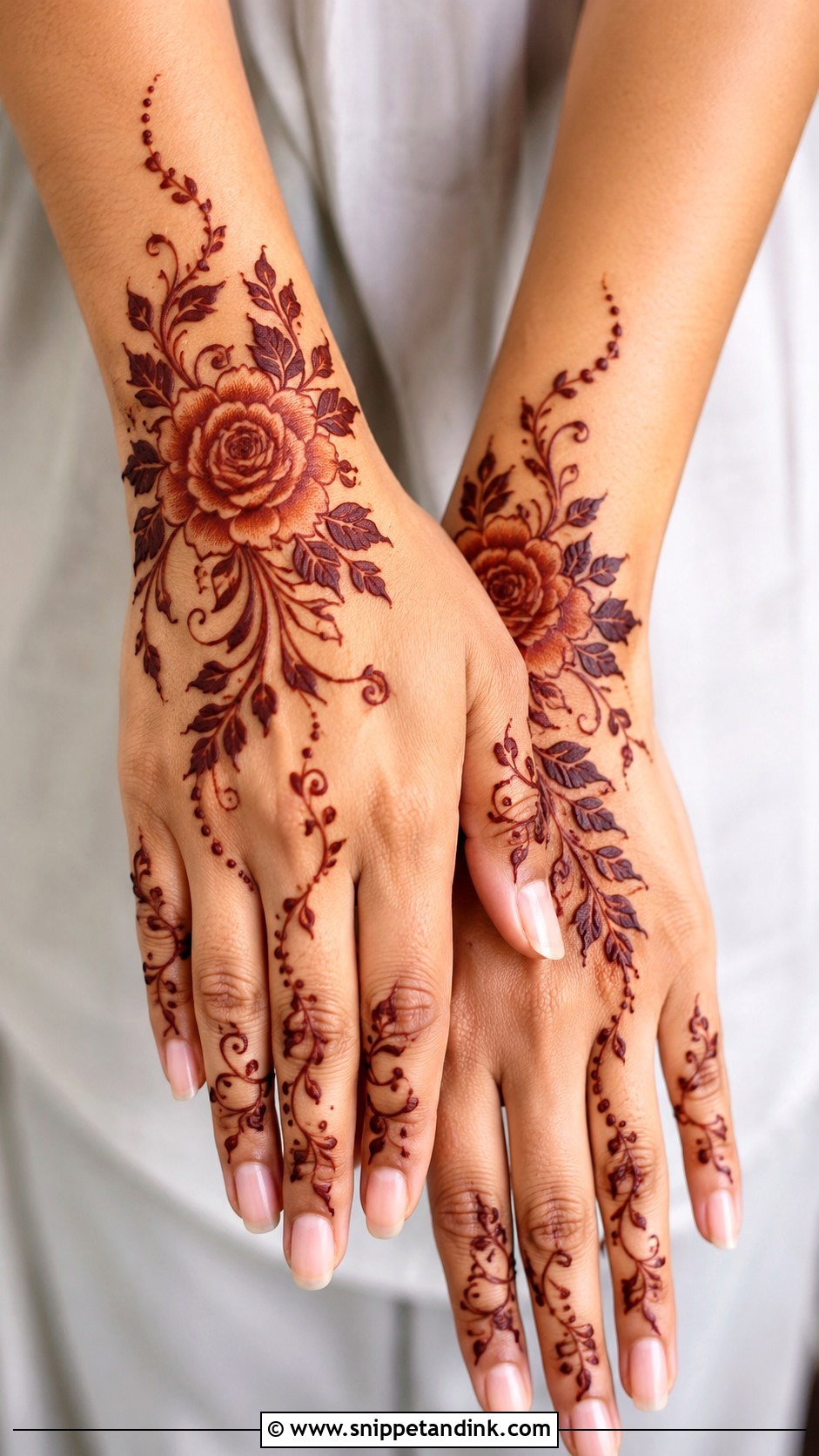
Roses need room. A rose pattern of large blooms, vines, shaded petals, dotted trails and fine finger detail sits best in Arabic or Indo-Arabic layouts where there’s open skin around each flower. On the back hand I place one large rose near the center and run the vine to the wrist and fingers; on the palm, smaller roses around a mandala or paisley base. I draw the petals as separate curved strokes rather than filling them, because a solid-filled rose turns into a brown circle once the stain settles.
33. Vine Mehndi Design
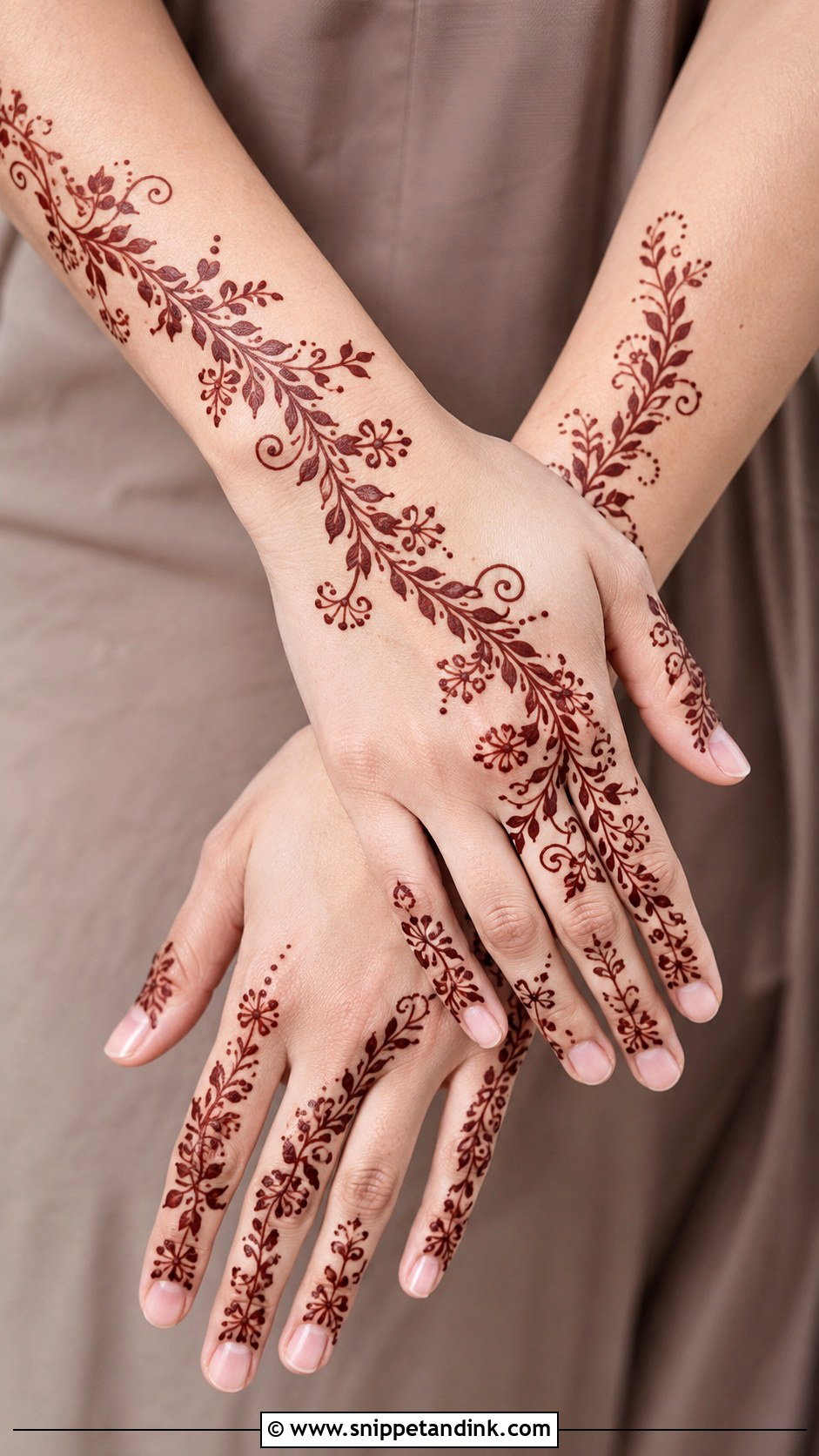
Vines adapt to almost any hand because they simply follow it, running diagonally from wrist to fingers or curving across the palm with leaves, flowers, dots and fine tendrils. It’s one of the fastest styles I draw and a favorite in Arabic work, since it relies on movement rather than coverage. The size of the leaves sets the mood: small and sparse is minimal, large and filled is bold. Slimmer vines suit shorter hands. On longer hands I’ll carry the trail up the forearm.
34. White Mehndi Design
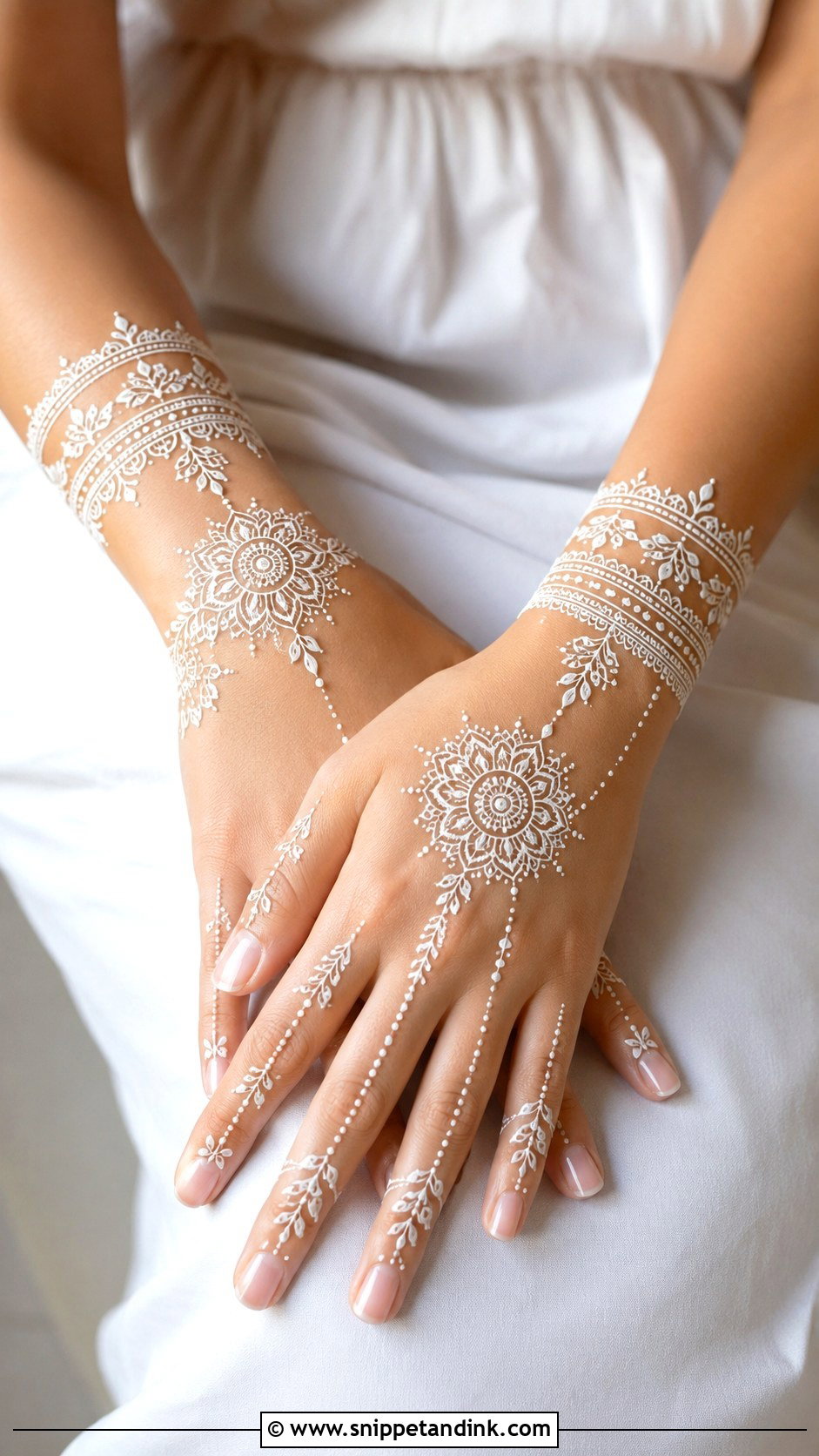
White mehndi isn’t henna at all. It’s a body paint or cosmetic adhesive that sits on top of the skin, often with a little glitter, and it doesn’t stain. That makes it useful for photoshoots, parties and outfits where you want a lace effect for one evening, and it shows up clearly on the back hand against most skin tones. It rubs off within a day or two and won’t survive a lot of hand washing. Because it’s a different product, I always ask about skin sensitivity first and keep the design light rather than dense.
35. Forearm Mehndi Design
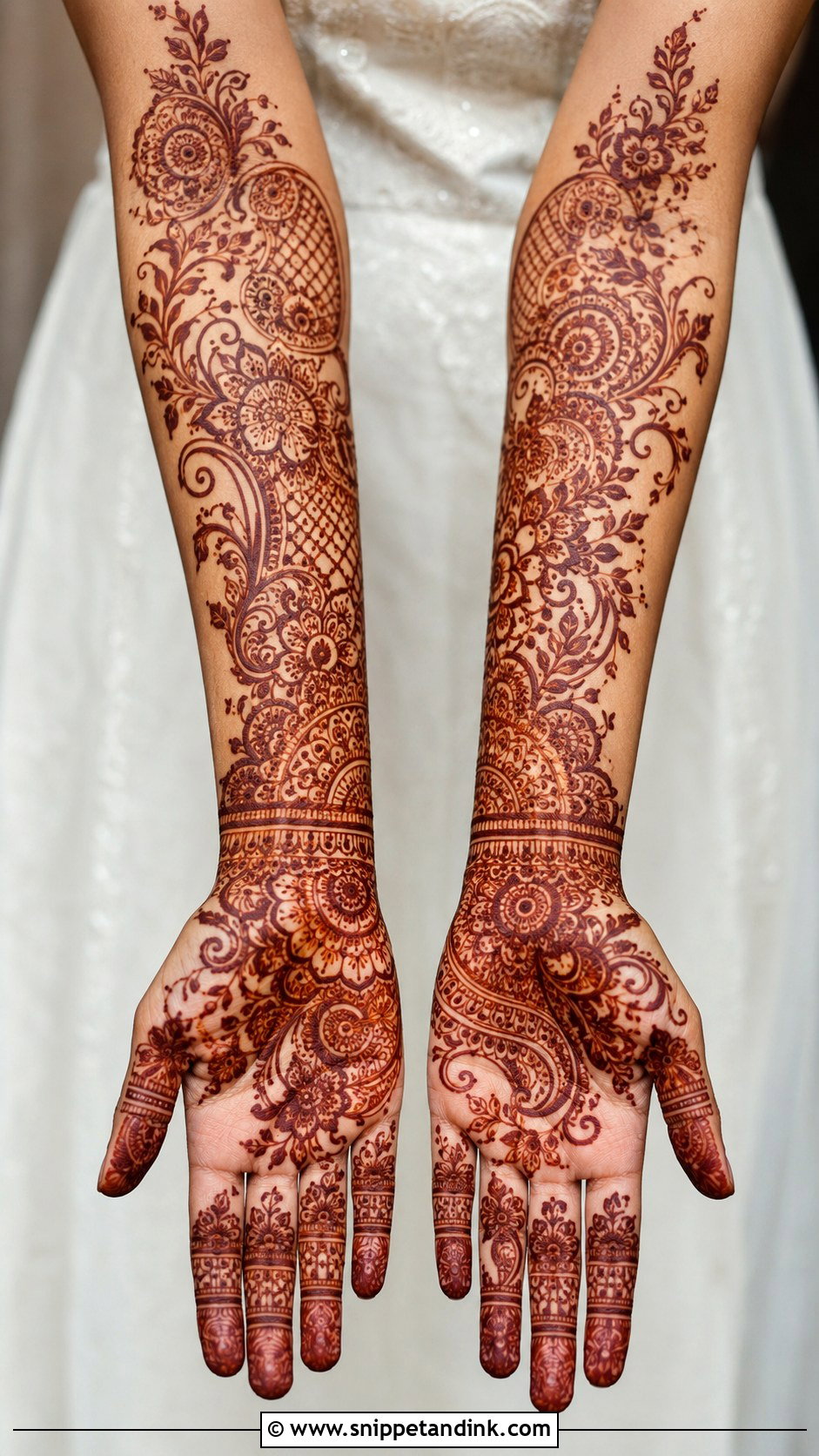
Forearm designs carry the pattern past the wrist for a longer line, in bridal, Arabic, Indian or Indo-Arabic styles: wrist cuffs, vines, paisleys, jaali panels, mandalas and finger detail. They make most sense with sleeveless or short-sleeved outfits where the arm is actually visible. Expect the forearm to stain noticeably lighter than the palm, because the skin is thinner and cooler. A single flowing trail keeps it light; layered bands make it heavy. Either way it needs strong structure, with clear sections, or it reads as random.
The Two Days Between Paste and Peak Color
Most disappointing stains aren’t the artist’s fault or the paste’s. They come from the first twelve hours after application, so this is the aftercare I give everyone who sits in my chair.
- Leave the paste on as long as you can bear it. Six hours is a minimum for bridal work; overnight is better. Wrap the hands loosely in tissue or a cotton glove if you’ll sleep with it.
- Once the paste dries and starts to crack, dab on a little lemon and sugar mix to keep it stuck to the skin. A light dab is enough; soaking it makes the lines run.
- Scrape the dried paste off with a blunt edge or your fingernail. Don’t wash it off. Water on a fresh stain stops it darkening properly.
- Keep the hands away from water for the next 12 to 24 hours. A thin layer of natural balm or coconut oil helps protect the color when you do have to wash.
- Warmth helps the color develop, so keep your hands warm rather than holding cold drinks all evening.
After that, the stain naturally fades as the top layer of skin renews, usually over one to three weeks. Palms fade fastest because they’re scrubbed and washed most. Avoid exfoliating scrubs, chlorine and bleach-based cleaners in the days before the wedding.
Cones I Refuse to Use, and the Patch Test I Always Ask For
Natural henna paste is a greenish brown when it goes on and leaves an orange stain that darkens slowly. If a cone promises jet black color within an hour, or the paste goes on black, it almost certainly contains PPD, a hair-dye chemical that can cause blistering and lasting skin sensitivity. I won’t use it, and I’d ask any artist you book what is in their cones.
Freshly made paste usually contains henna powder, lemon or water, sugar and an essential oil such as eucalyptus or lavender to help release the dye. Some people react to the oils, so if you’ve had a reaction to fragrance before, ask for a small test dot on the inner arm a day or two ahead. For white mehndi and glitter work, ask what adhesive is being used, since that’s the part most likely to irritate.
Coverage First, Motifs Second
Henna stretches from a quick finger pattern before Eid to two days of bridal artwork, and every style above can be scaled up or down. Rajasthani, Indian, paisley and peacock designs carry the traditional weight. Arabic, khafif, minimal and finger work feel lighter and dry faster. For modern photos, bracelet designs, aesthetic layouts, white mehndi and geometric Moroccan patterns read clearly. Decide how much of your hand you want covered and how long you can sit, then let the motifs come from your outfit and your own story.
You'll Like These Ideas:





Leave a Reply