
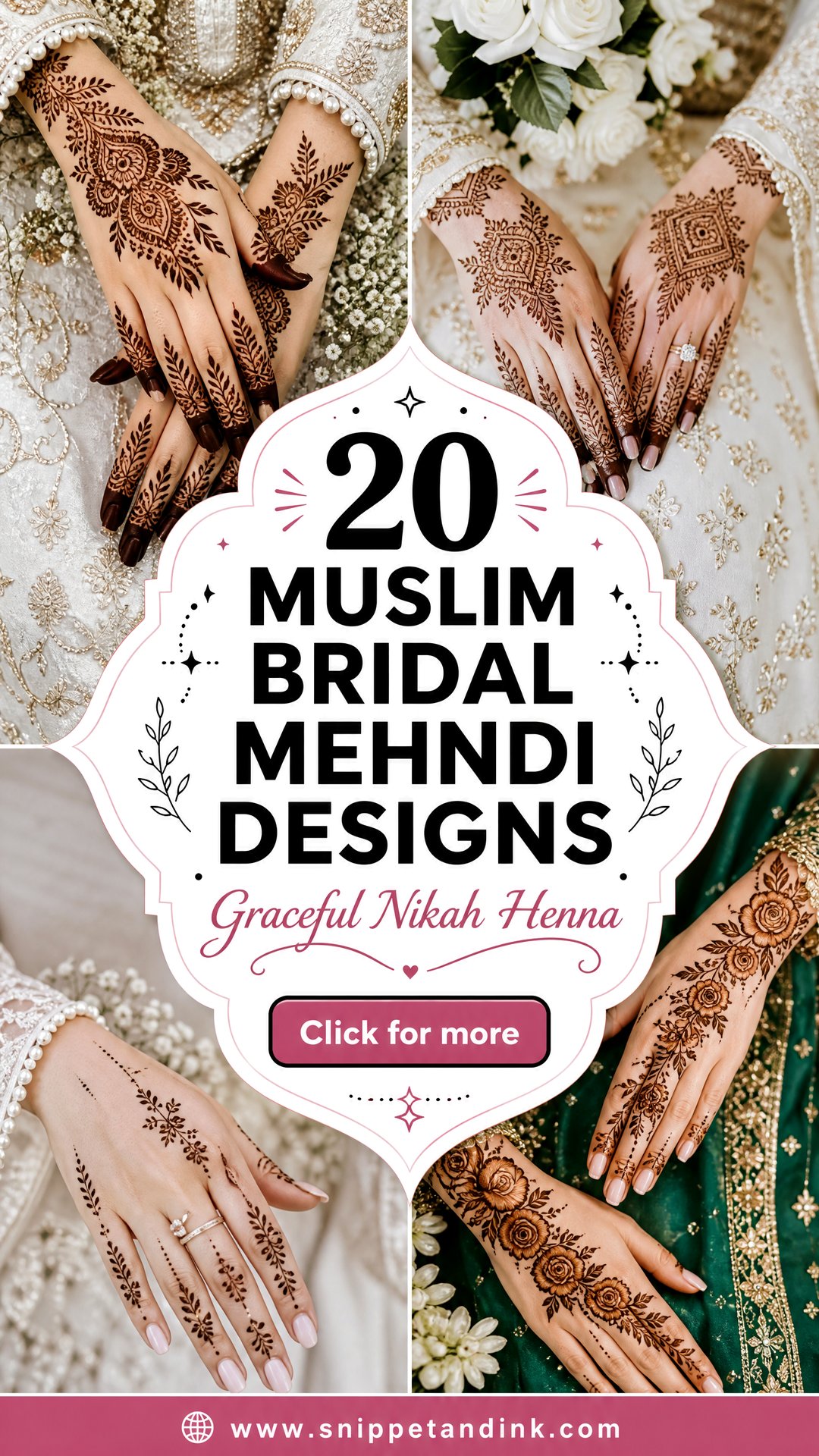
Muslim bridal mehndi covers a wide range of styles, from dense Pakistani full hands to airy Arabic trails and bold Khaleeji florals. What links them, in my experience, is the conversation at the start. Most brides want their henna to feel celebratory but respectful, so we talk about which motifs belong on her hands, which event the stain needs to peak for, and how much time she can realistically sit. Florals, paisleys, jaali, mandalas, cuffs and fine finger work are the building blocks; initials, a wedding date or a small couple motif usually take the place of religious text. Here are the bridal designs I draw most, with notes on how each one stains and wears.
Names, Dates and the Motifs Many Brides Leave Out
Before I draw anything for a Muslim bride, I ask what she does and doesn’t want on her hands. The answer varies by family, and I’d rather know at the start than find out halfway through a design.
Almost every bride I work with avoids Quranic verses and the name of Allah. Hands are washed constantly and go everywhere, and many people feel sacred words shouldn’t be treated that way. A crescent, a small lantern or a geometric star can give a spiritual feel without using text.
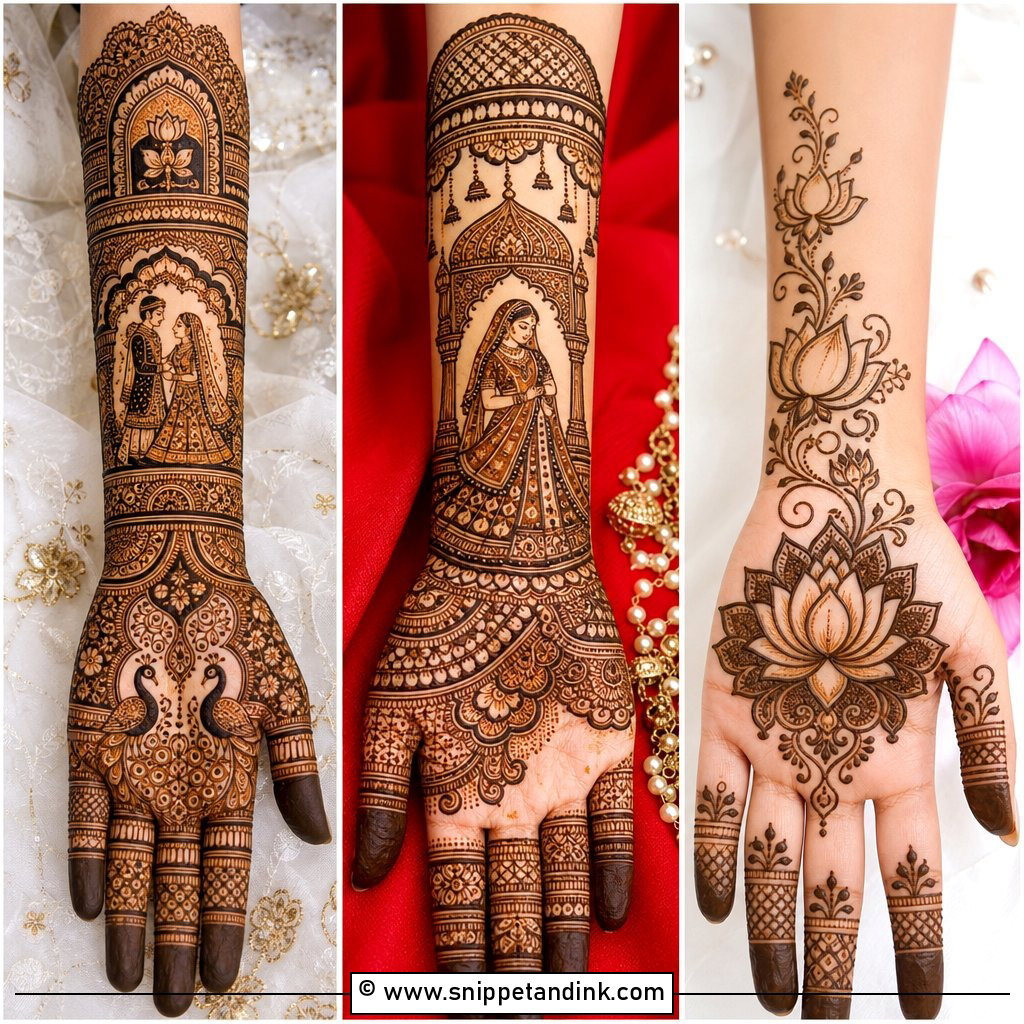
Some families also prefer no human or animal figures, so I ask before adding a peacock, a bride and groom silhouette or a doli. Florals, paisleys, mandalas, jaali and geometric work are always safe. The most popular personal touch remains the groom’s name or initials, followed by the wedding date. Both can be hidden easily inside a motif.
1. Full Hand Muslim Bridal Mehndi Design
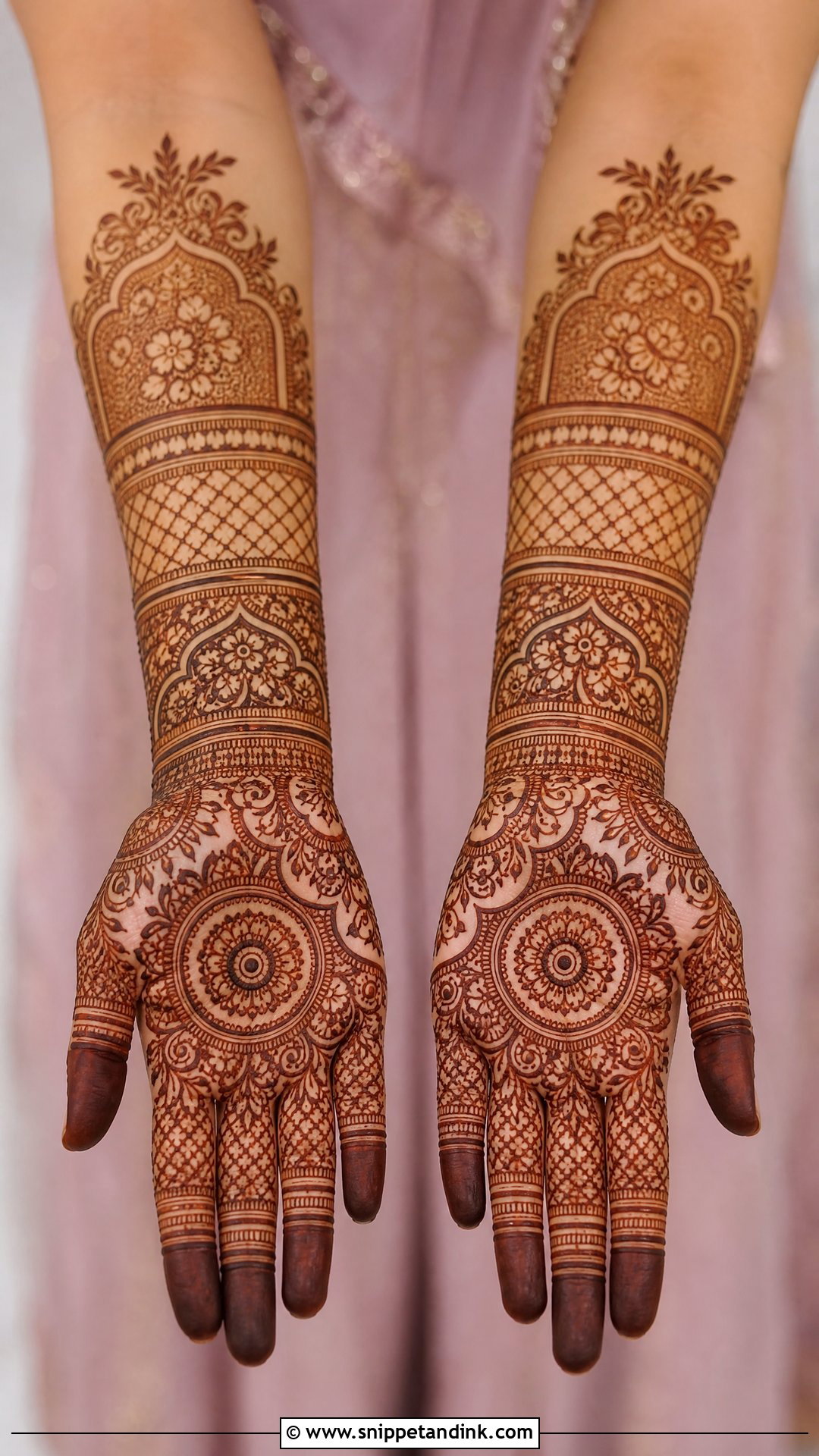
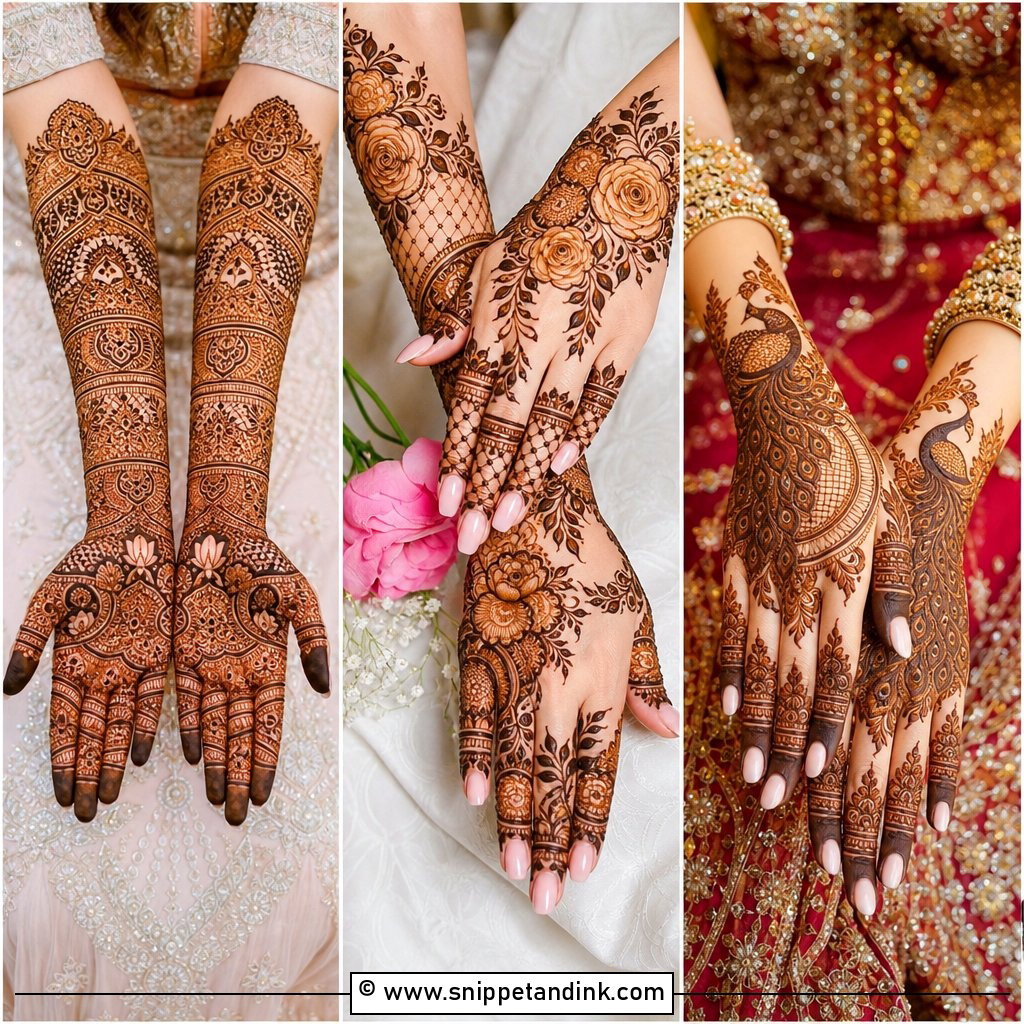
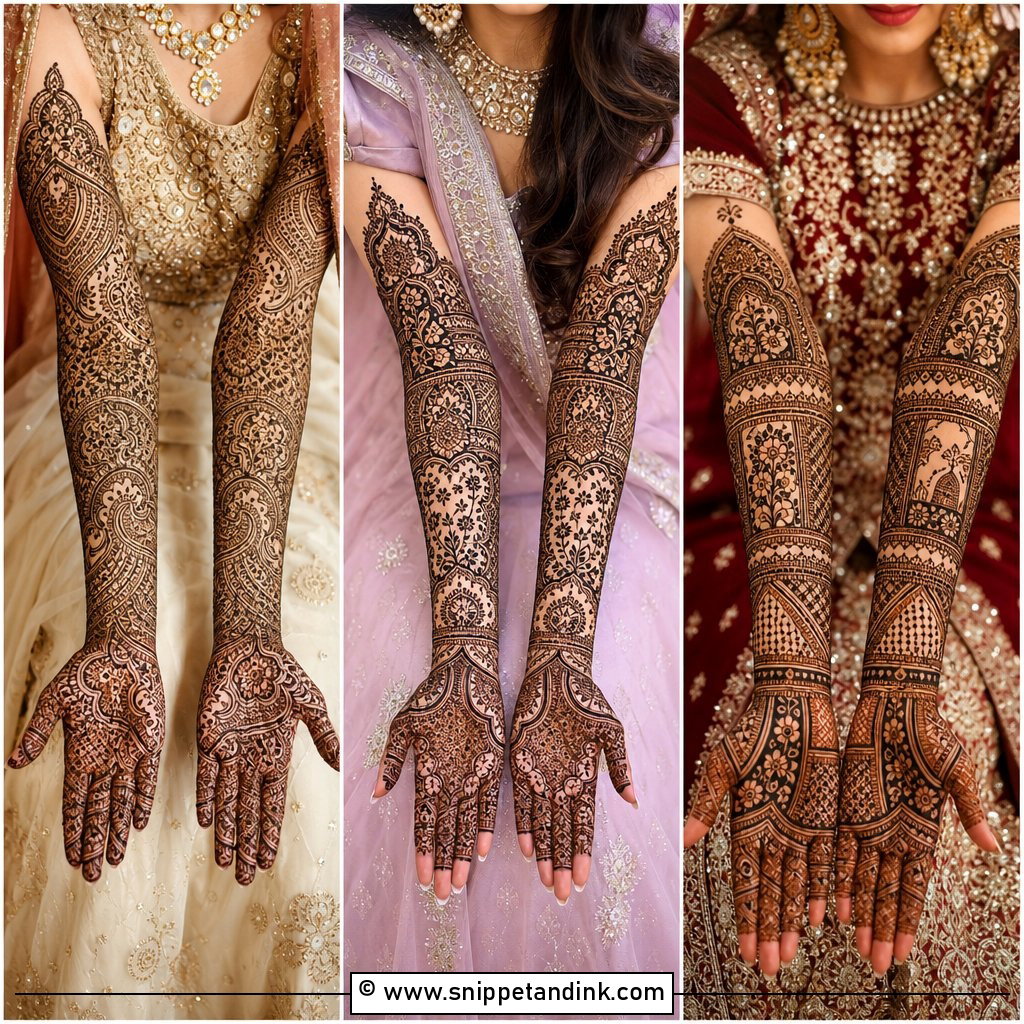
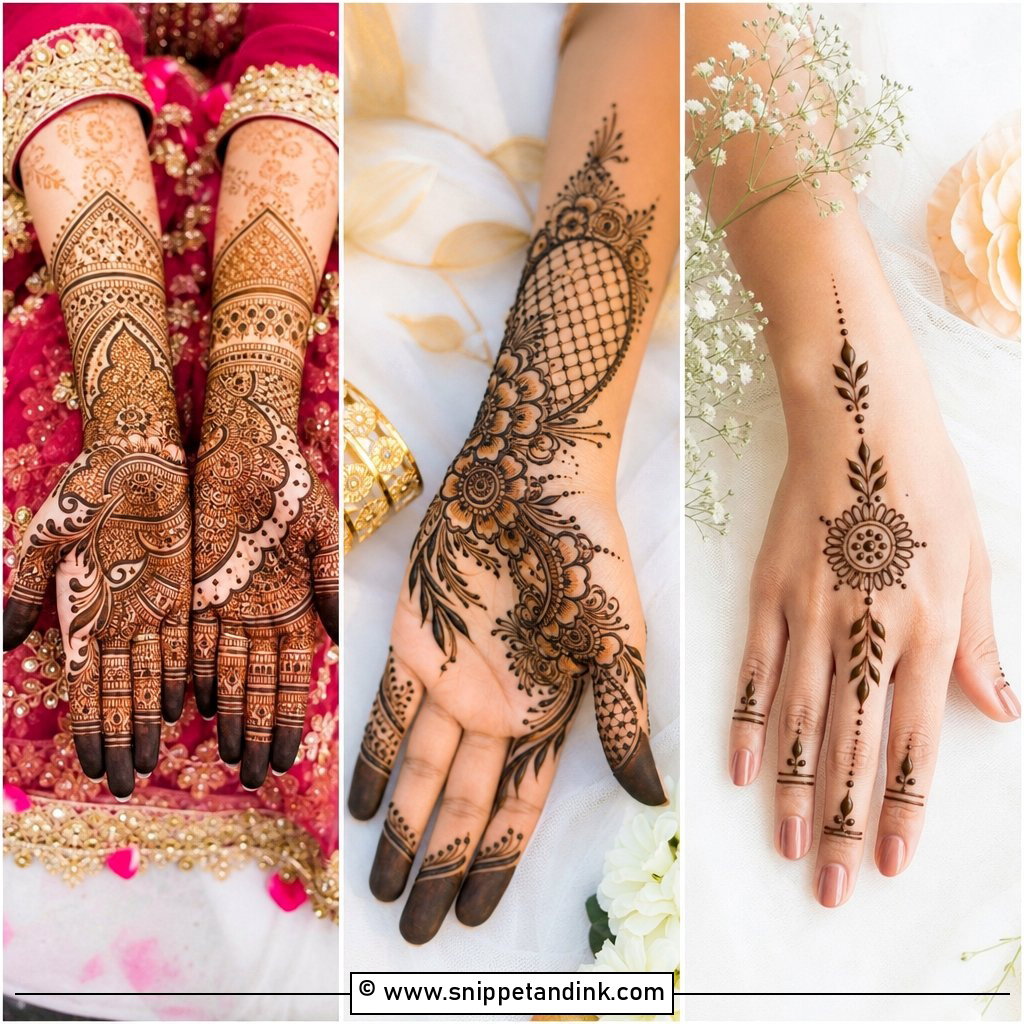
Full hand coverage is the traditional bridal choice, running across the palms, fingers, wrists, and forearms with dense detail. I usually anchor the palm with a central mandala or floral medallion and let the forearm carry paisleys, leafy vines, jaali panels and bracelet bands. The difference between rich and messy is planned breathing space; I leave small open areas on purpose, because henna lines spread slightly as they stain and a design with no gaps turns into a dark patch. Plan on several hours for both sides. Pakistani, Indian and wider South Asian brides choose this for the mehndi night.
2. Arabic Muslim Bridal Mehndi Design
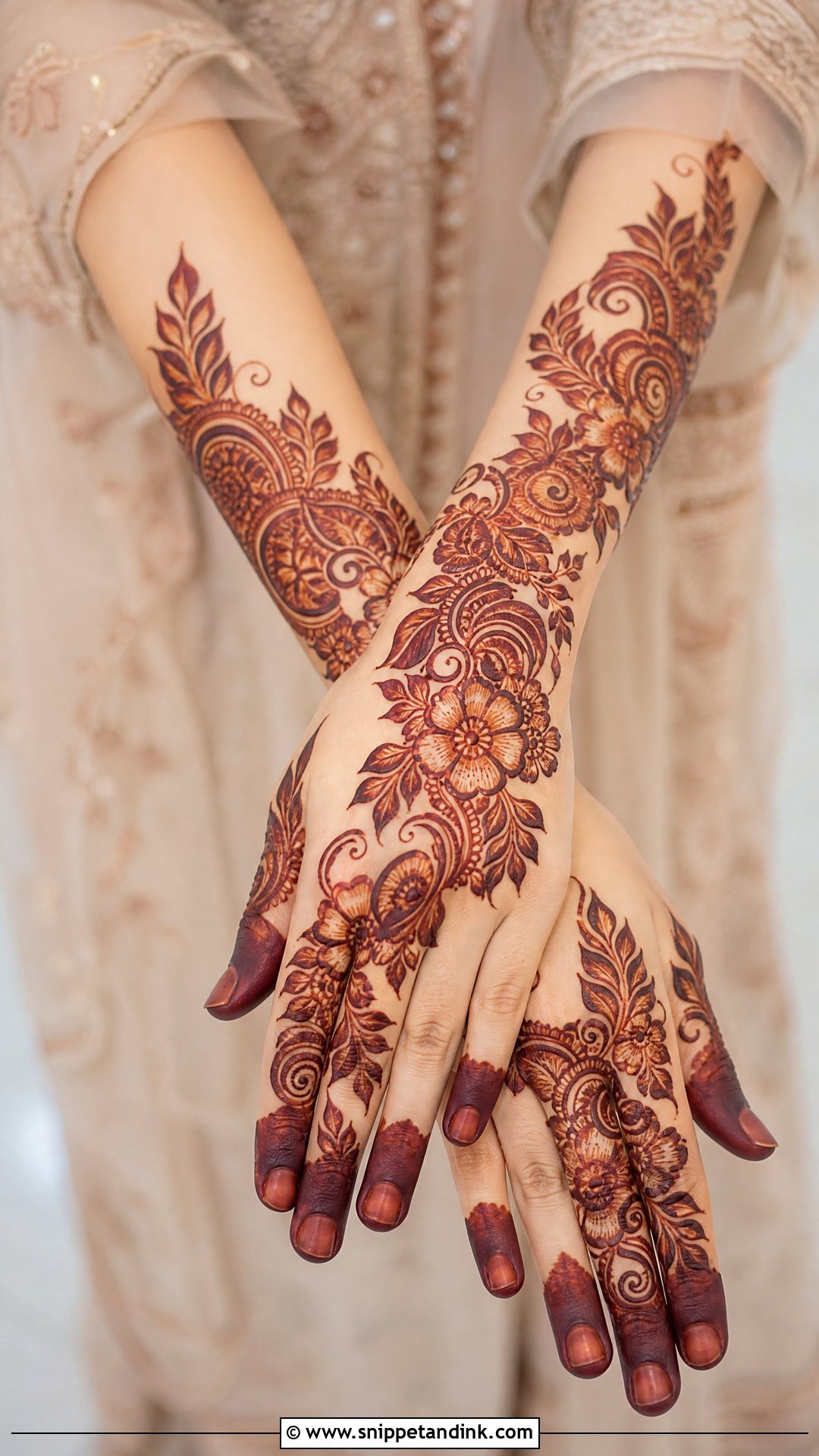
Arabic bridal mehndi moves diagonally from the fingertips toward the wrist and forearm, leaving bare skin between bold flowers, leafy vines and curved paisleys. Shading is what gives it depth: I thin the paste or use quick parallel strokes inside the petals, and those areas stain lighter than the outlines. It applies faster than dense work, which suits a bride with a busy schedule before the nikah. The open spaces also mean jewelry and sleeve embroidery stay visible.
3. Pakistani Muslim Bridal Mehndi Design
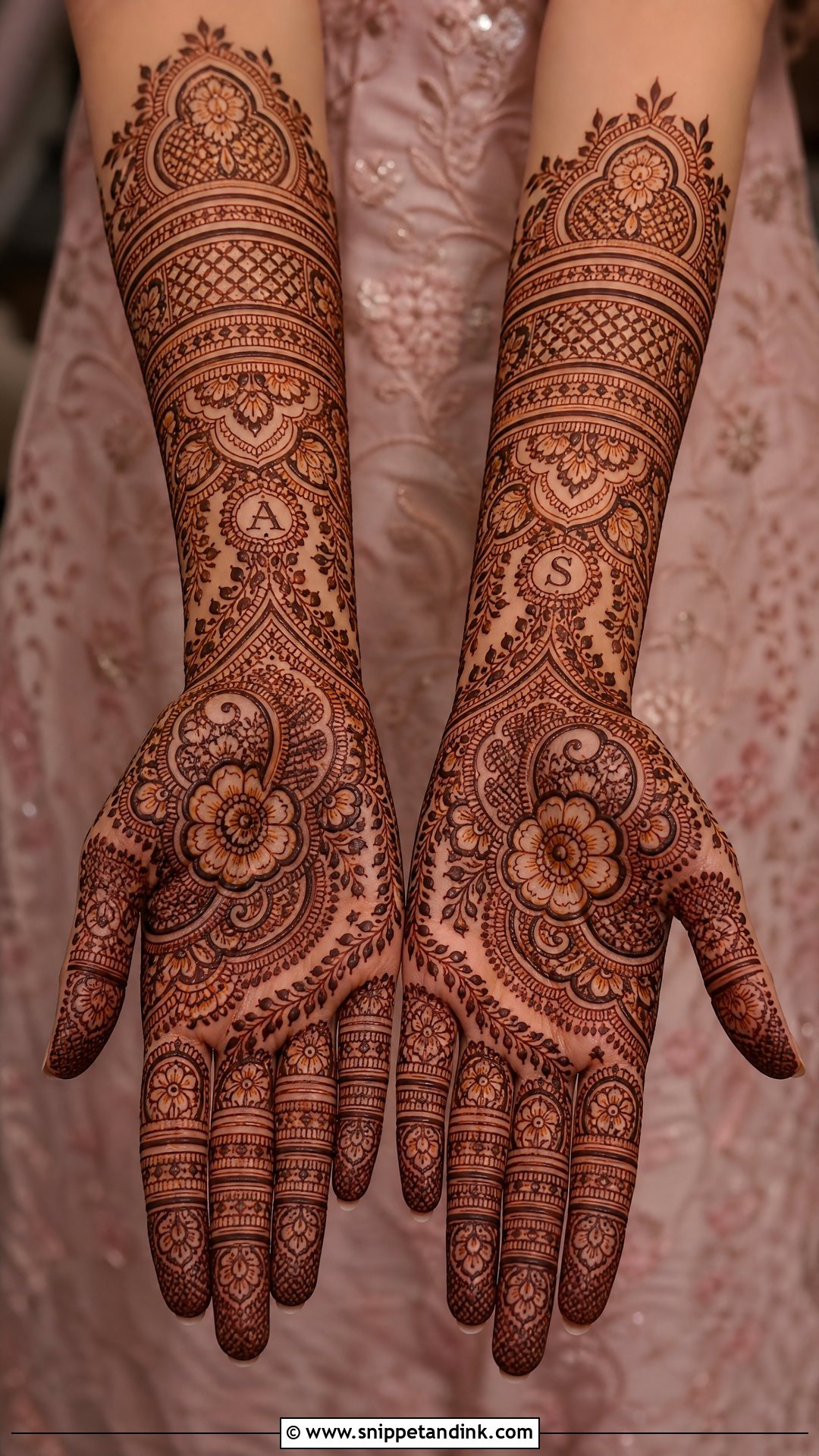
Pakistani bridal designs combine fine Indian detail with some of the flow of Arabic work, and they are known for symmetry. Palms carry floral circles, paisleys, leafy borders and delicate mesh; the backs of the hands get cuffs and finger extensions. Hiding the groom’s name or initials somewhere in the pattern is a popular tradition. Symmetry is where I slow down. I draw the main structure on both hands before any filler, so the two sides match before the detail begins. Maroon, gold, ivory, green and pastel outfits all sit well with it.
4. Indian Muslim Bridal Mehndi Design
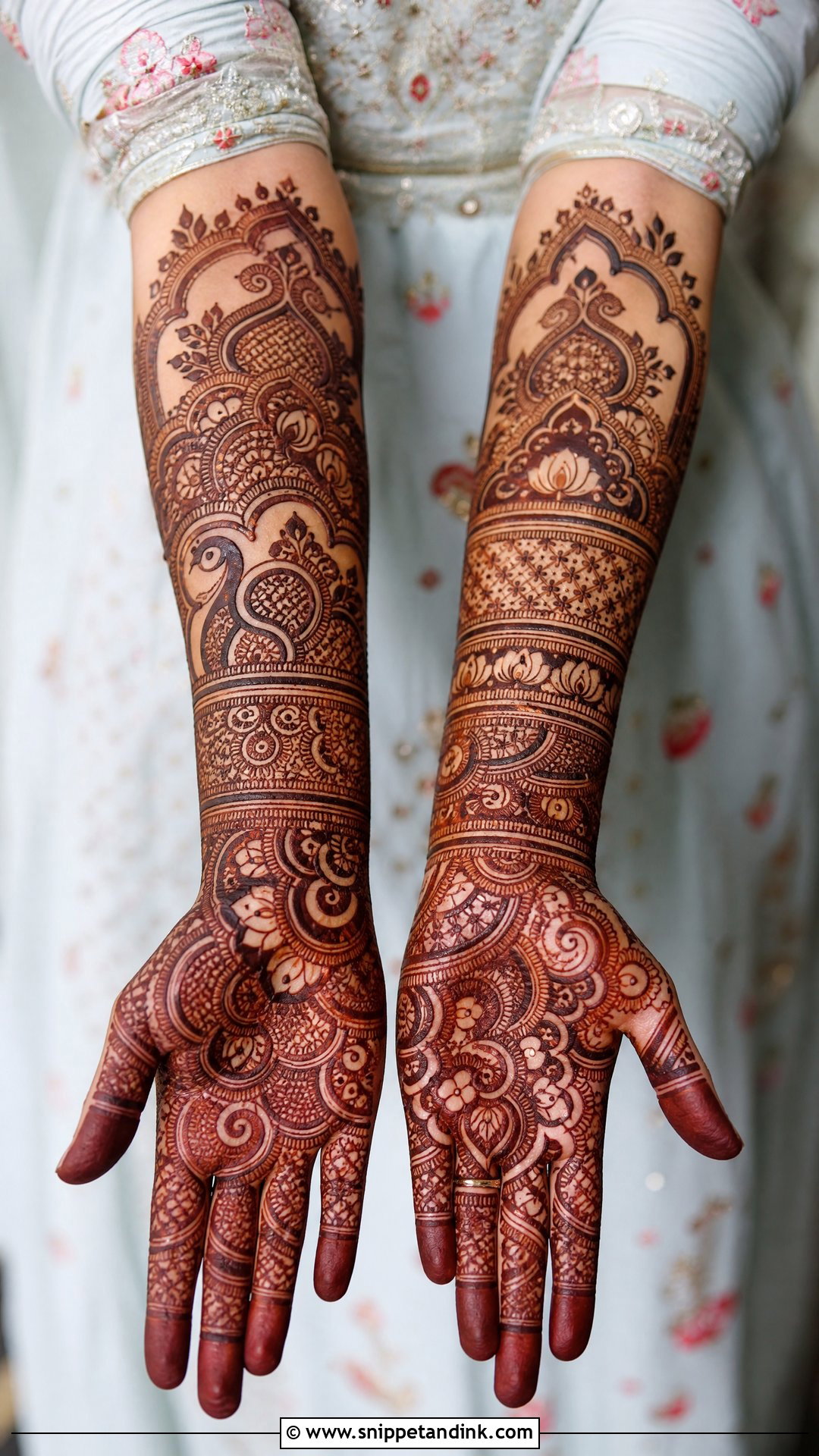
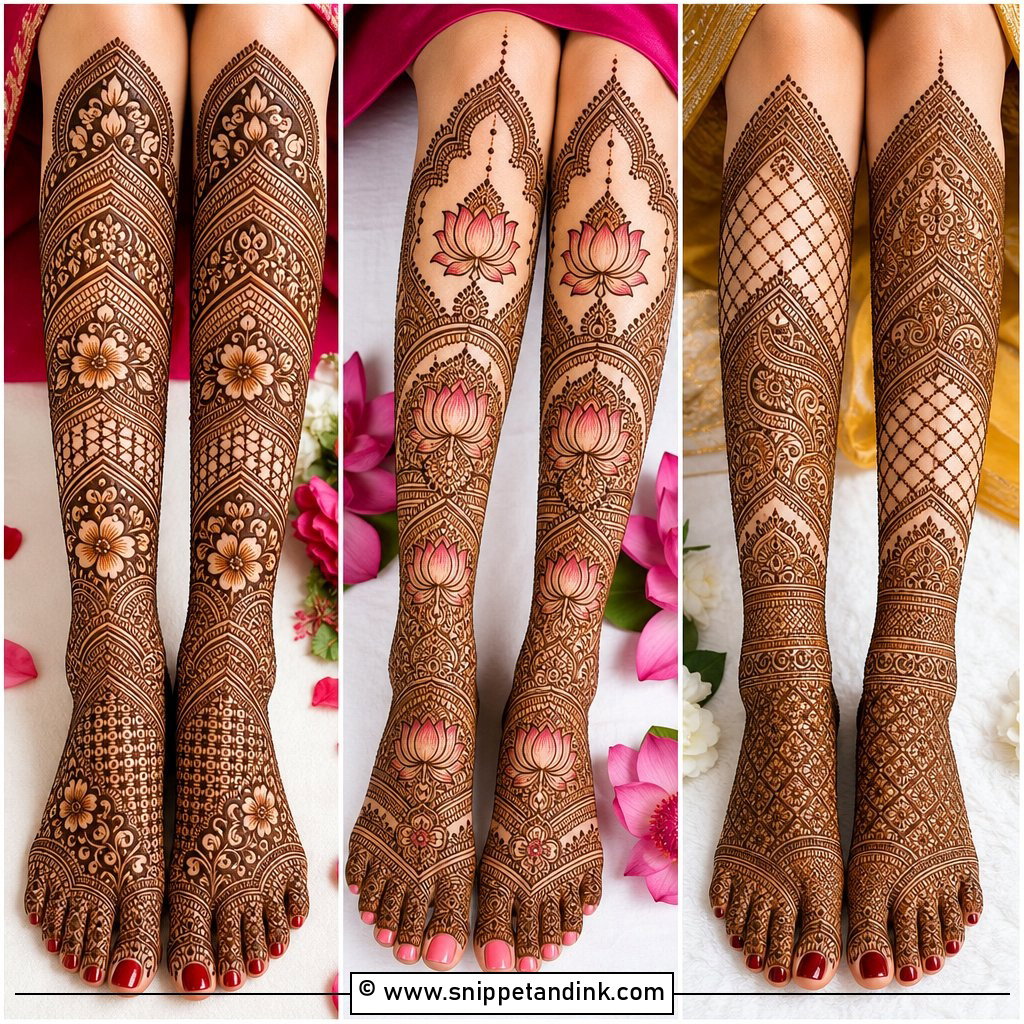
Indian Muslim bridal designs often go all the way to the elbows, with layered paisleys, lotus florals, vines and fine filler. Many brides ask me for non-sacred motifs, jewelry-like cuffs and personal initials in place of religious writing, and some families prefer to leave out human and animal figures altogether, so I ask before including a peacock. Symmetrical palms and flowing forearm panels give the design movement. Elbow-length work stains lighter on the upper forearm, where skin is thinner and cooler, so I advise keeping the paste on there longer.
5. Indo Arabic Muslim Bridal Mehndi Design
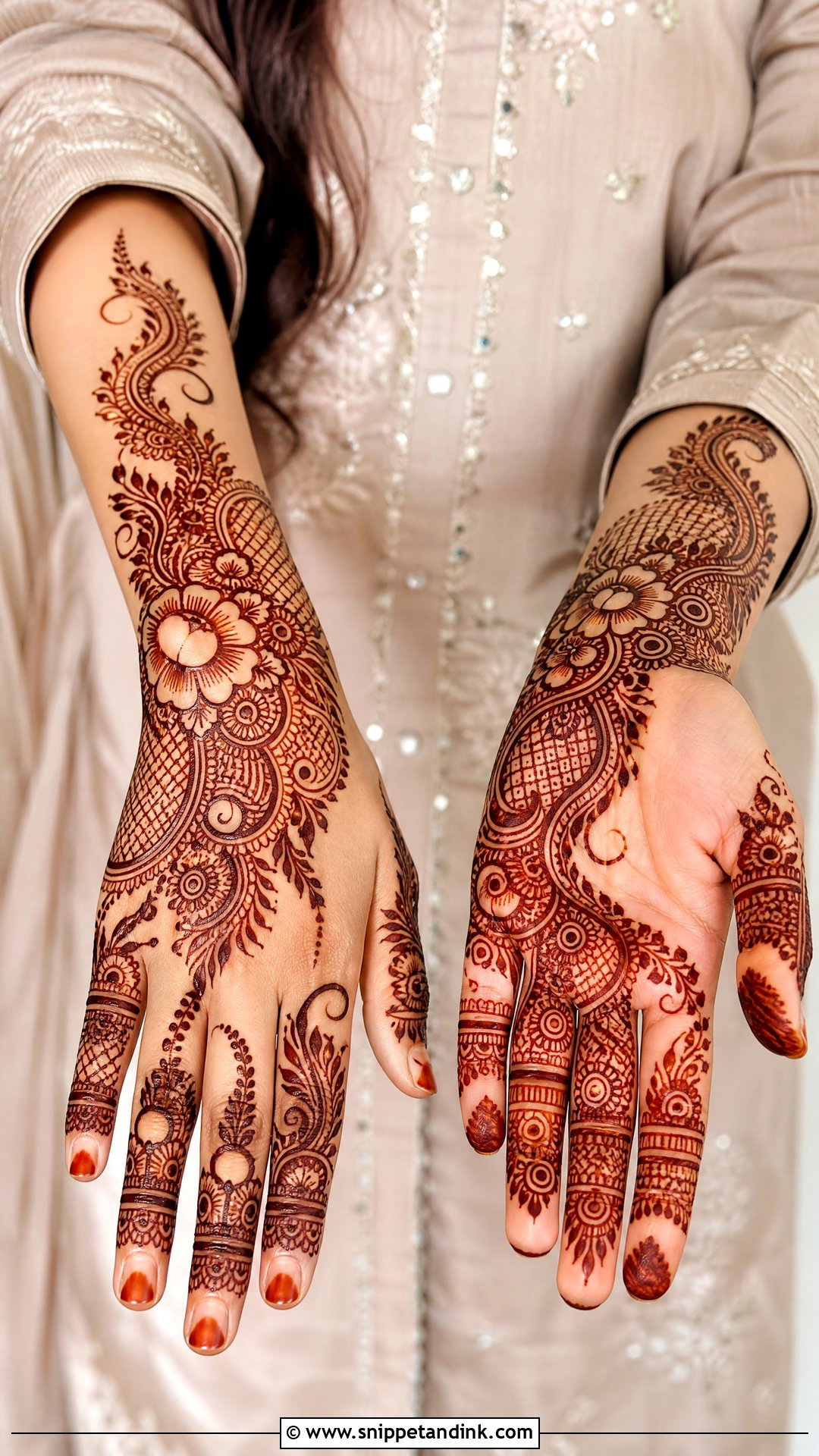
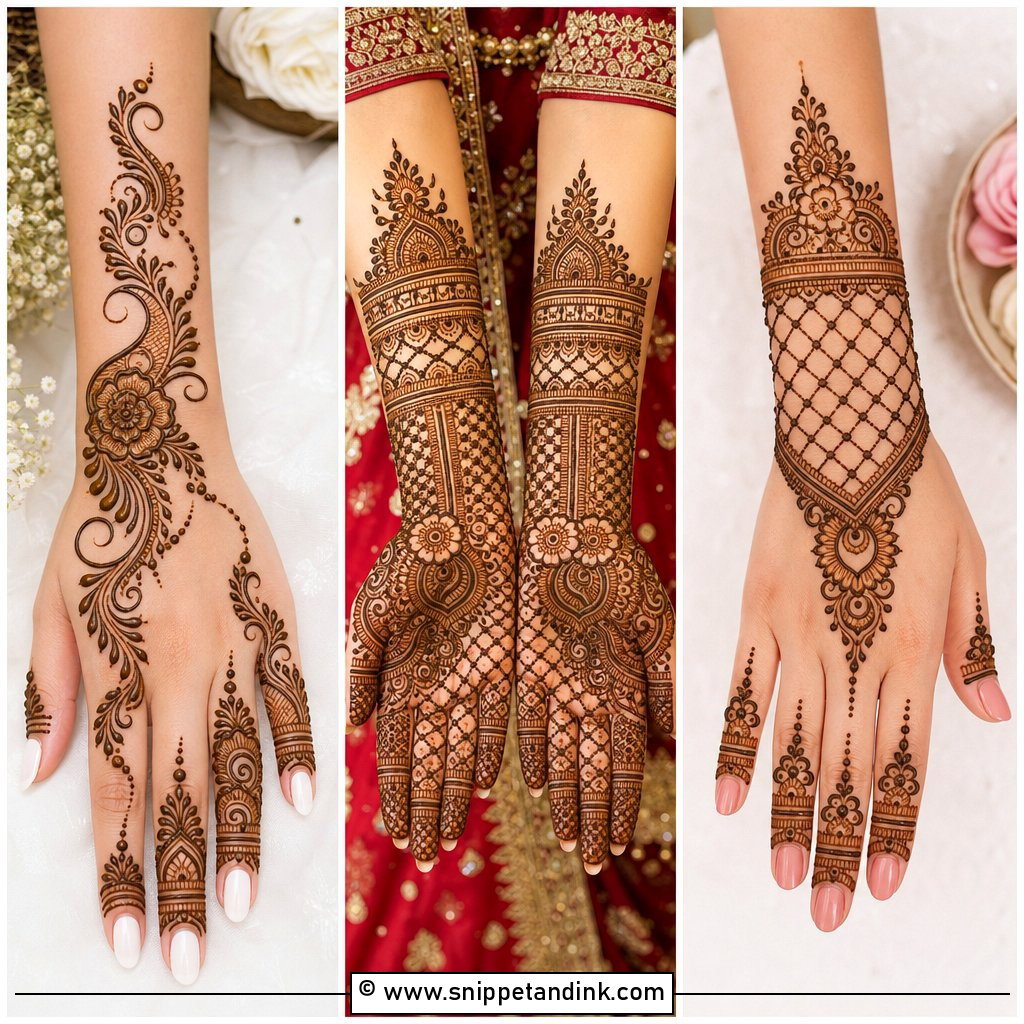
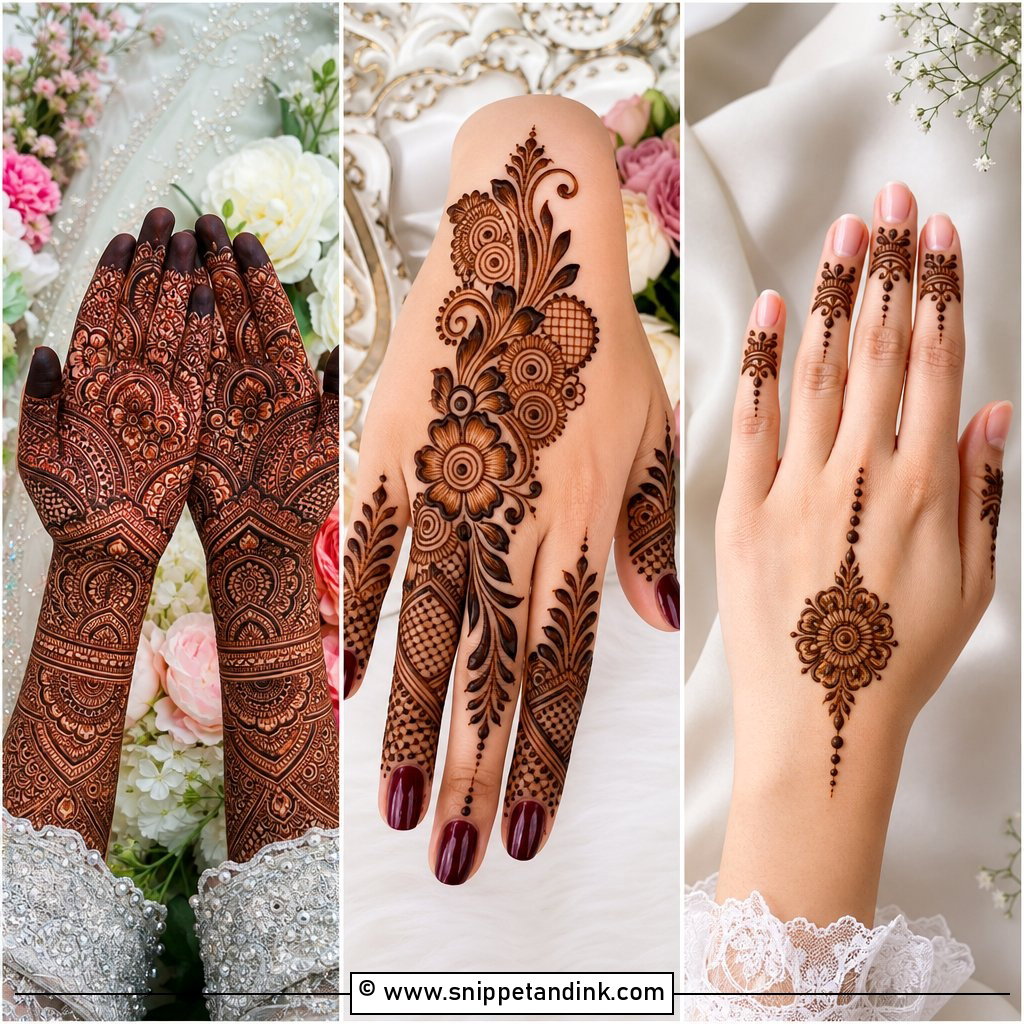
Indo-Arabic gives a bride noticeable bridal henna without full density. Bold flowers run along one side of the hand, filled paisleys sit on the palm, and fine mesh or leaves circle the wrist, with neat rings, lines and tiny florals on the fingers. It’s quicker than a full Indian design and reads well from a distance, which makes it popular for sisters and bridesmaids too. I use a thicker cone opening for the bold Arabic outlines and a fine one for the Indian filler, switching between them as I go.
6. Simple Muslim Bridal Mehndi Design
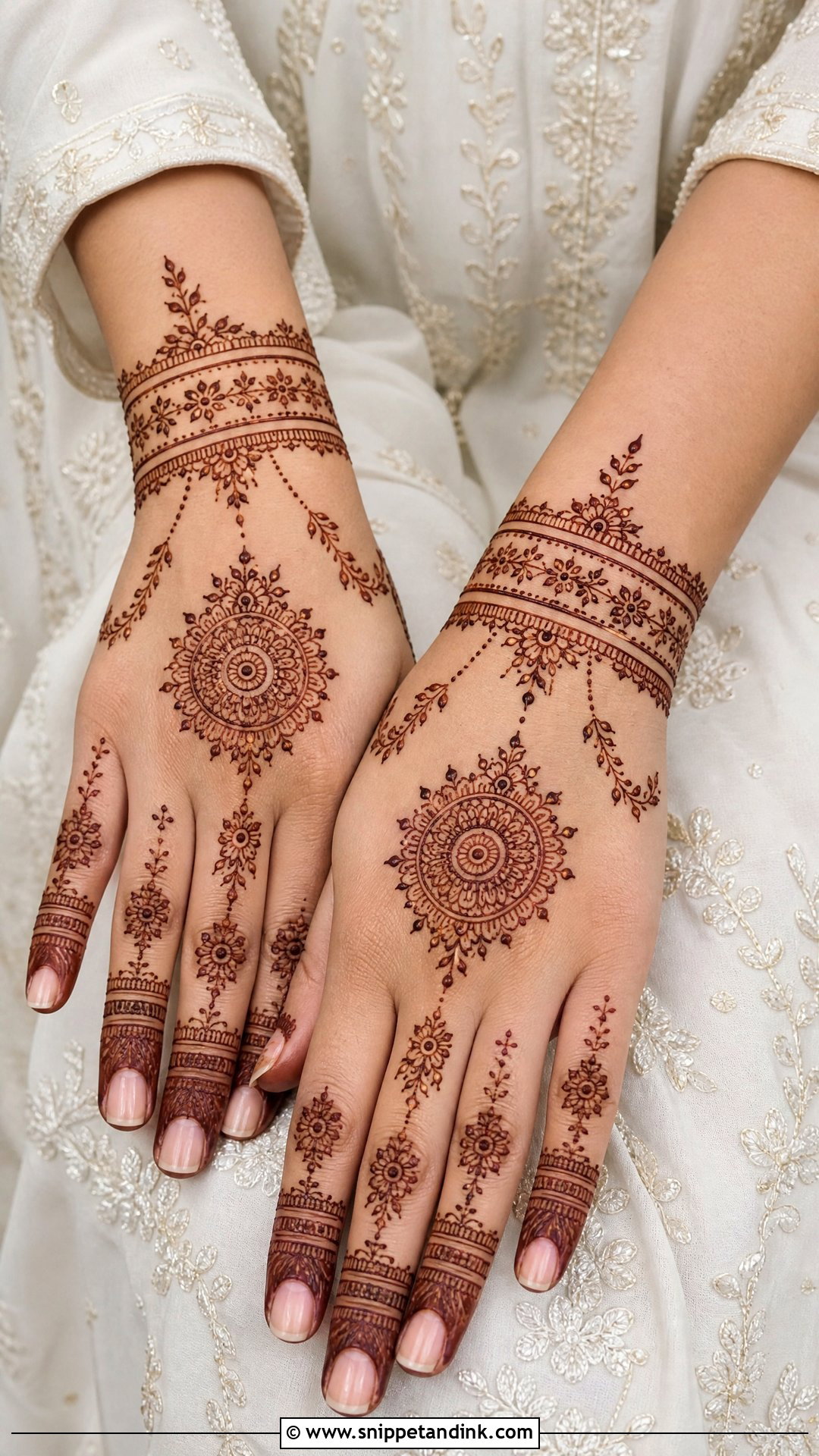
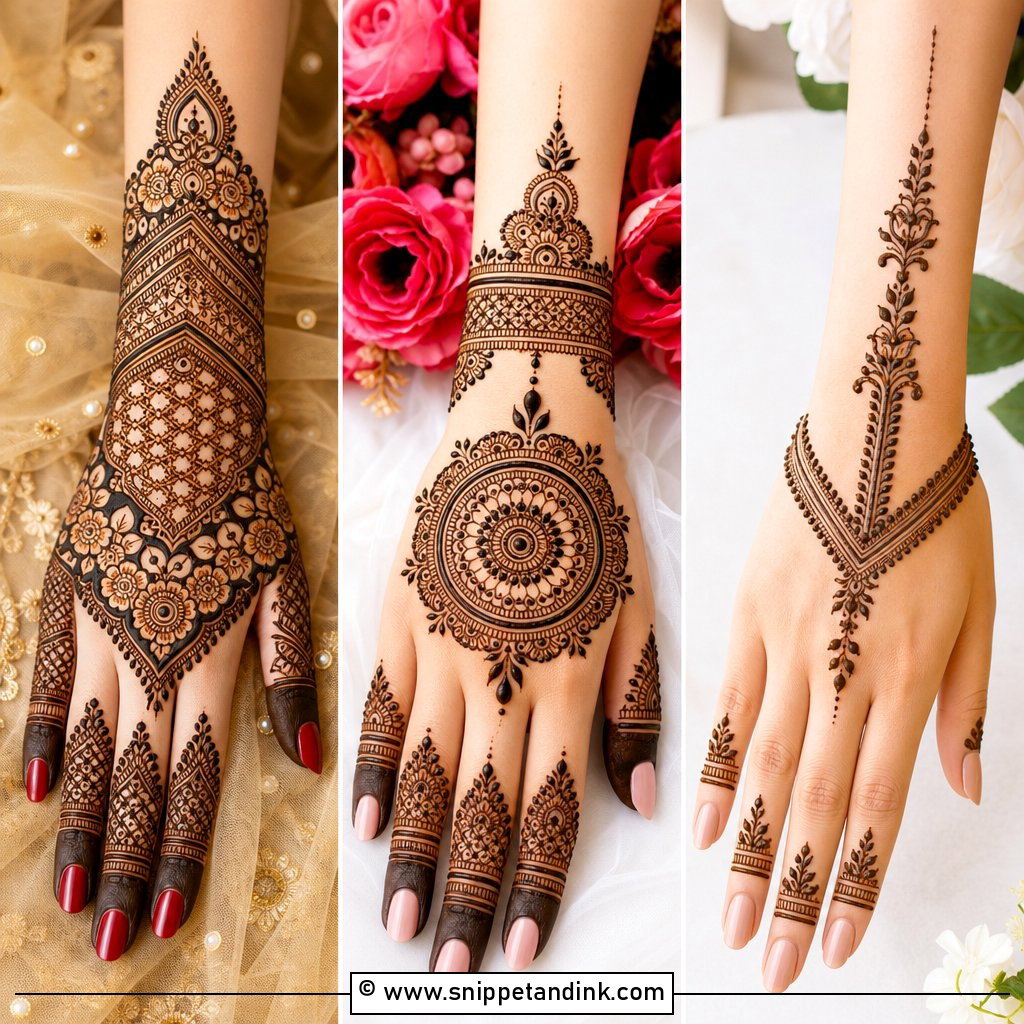
A simple bridal design still needs bridal-quality lines. A neat palm mandala, soft floral vines, decorated fingers and a slim wrist cuff are enough, but with so few elements every line shows, so clean spacing and smooth paste matter more than they do in heavy work. Small leaves, dots, tiny paisleys and curved lines keep it refined. Courthouse weddings, intimate nikahs and brides who can’t spare hours in a chair suit this one. It also fades more evenly than dense designs.
7. Back Hand Muslim Bridal Mehndi Design
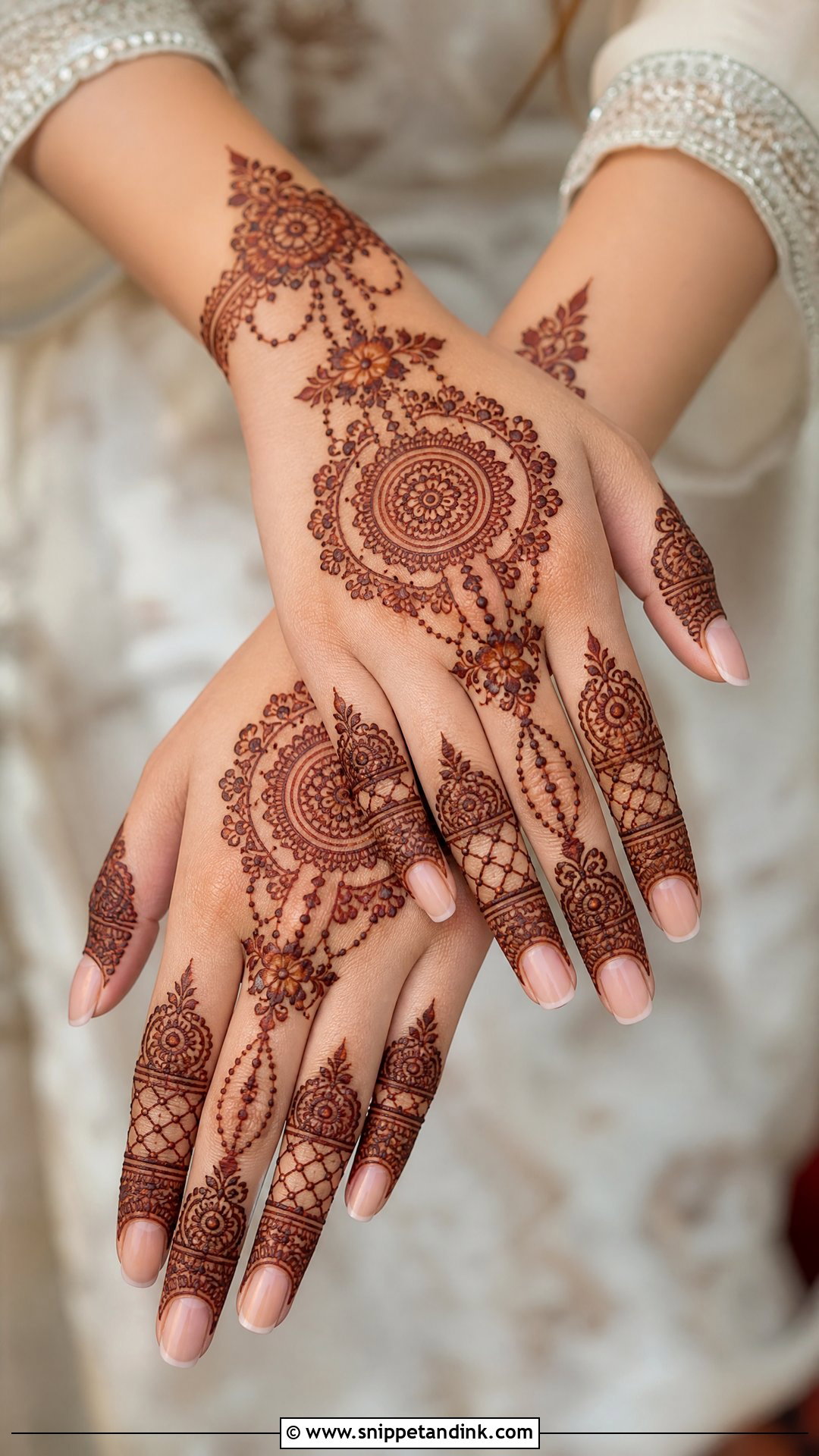
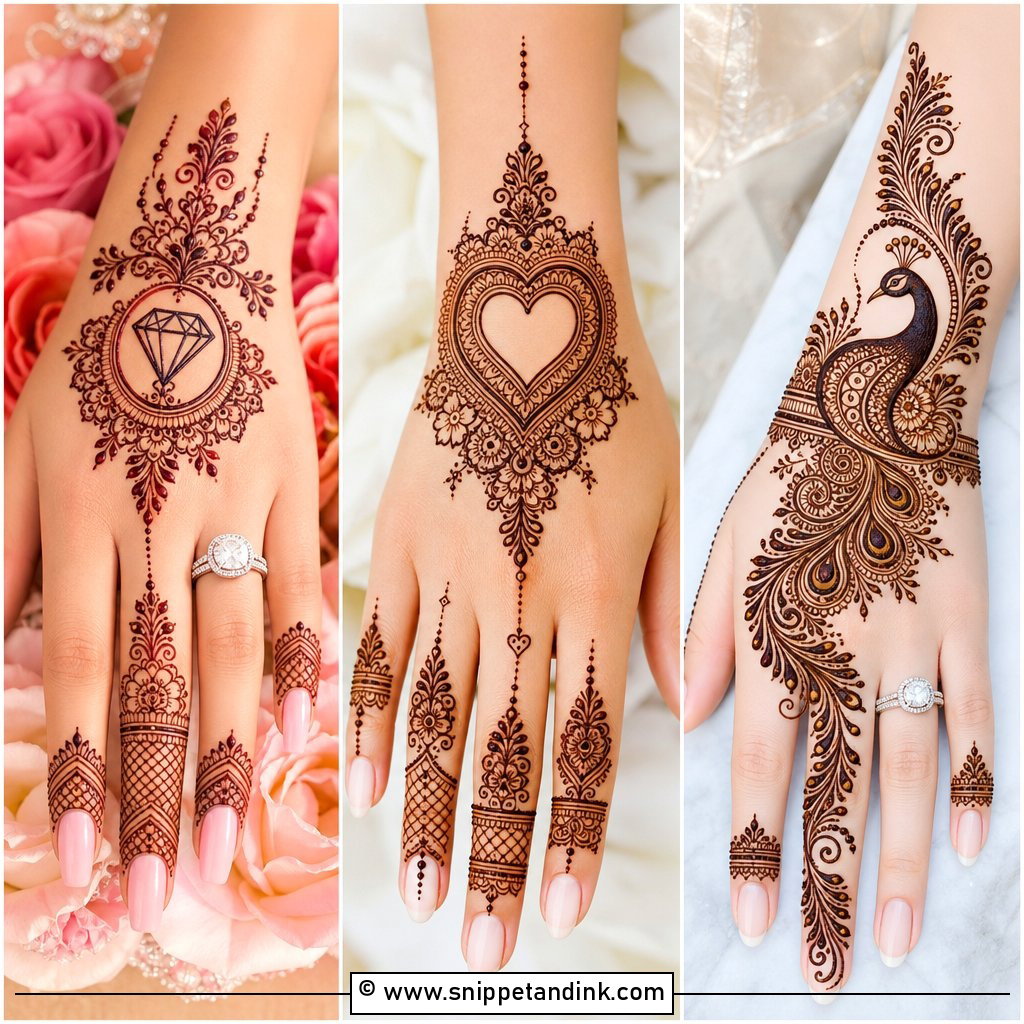
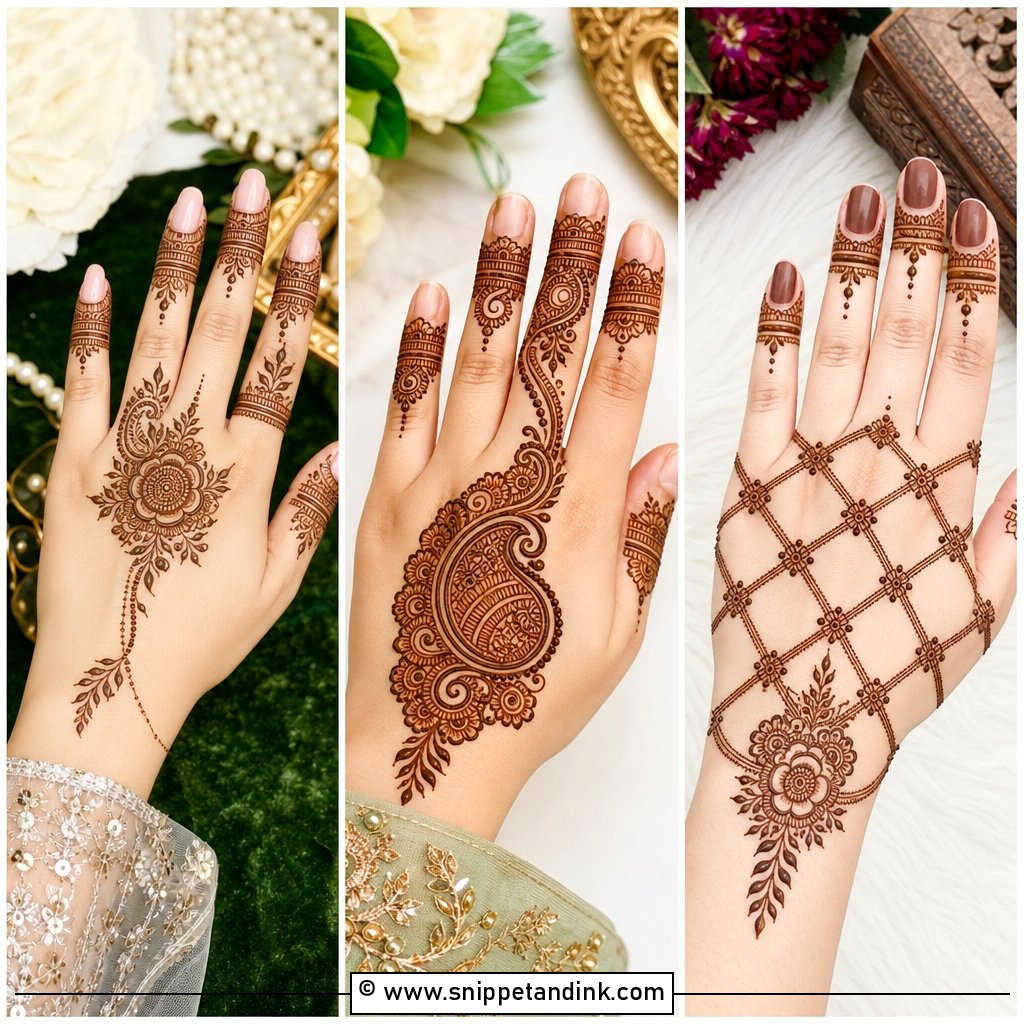
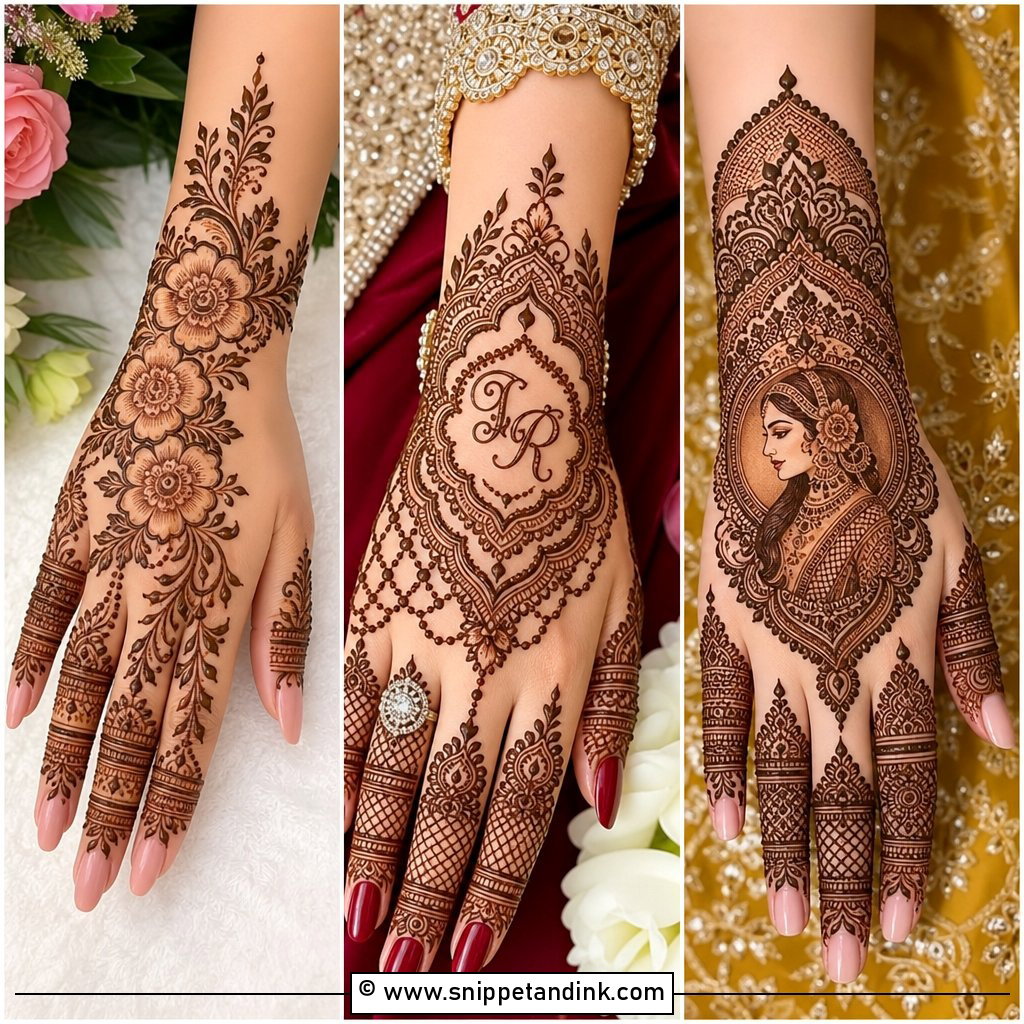
The backs of the hands show up in every ring shot, bouquet pose and jewelry close-up, so I give them more thought than brides expect. A central mandala, bracelet bands, finger chains, floral vines and fine net detail make a strong base, and a haath phool layout, drawn like hand jewelry, is a favorite. The back of the hand stains lighter than the palm and fine detail can blur there, so I draw the motifs a little bolder on this side. Bangles, rings and long sleeves all frame it well.
8. Front Hand Muslim Bridal Mehndi Design
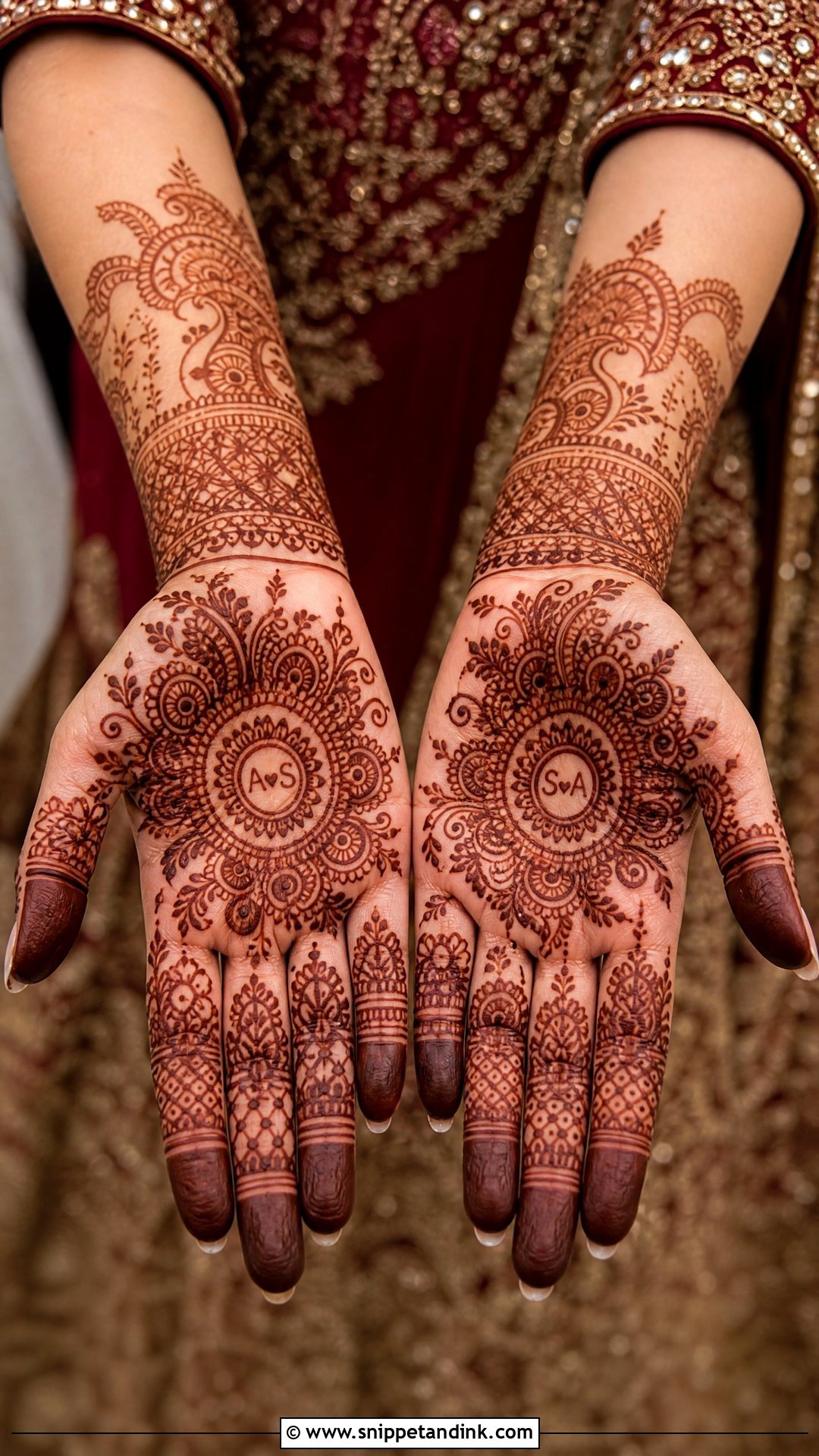
Palms take the darkest stain on the body, which makes them the natural place for the main design. Matching mandalas, paisley clusters, floral vines and soft filler around the fingers give a classic finish, and decorated fingertips complete it. Brides who want a meaningful touch often add initials, a wedding date or a small symbolic detail, never sacred text. Because palms are what you hold up for the reveal photos, I plan both together as a pair. Leave some open space, or the deep color makes the pattern hard to read.
9. Nikah Muslim Bridal Mehndi Design
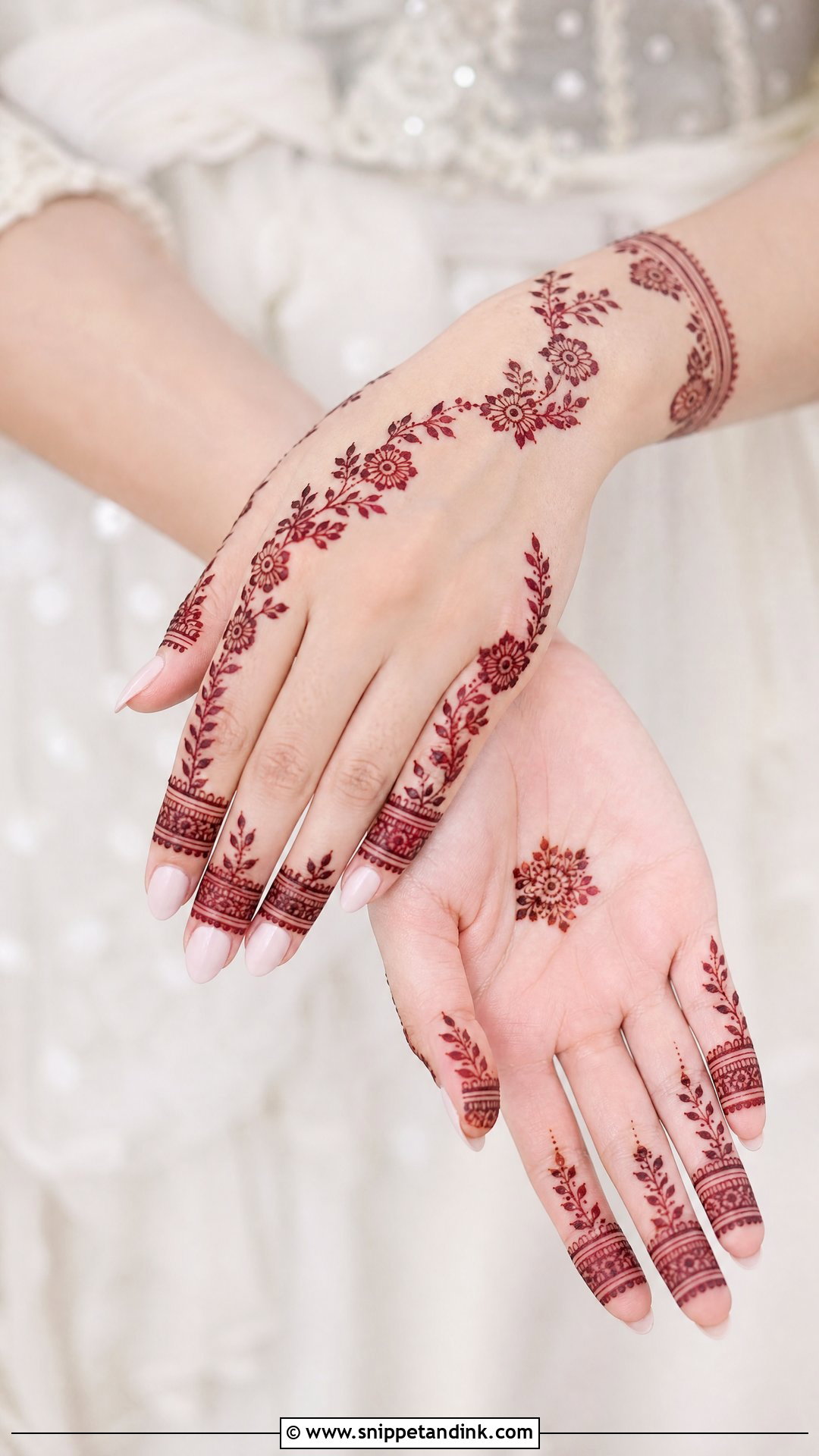
For the nikah, many brides I draw for choose medium coverage that looks modest and refined with soft makeup and lighter outfits. Floral trails, fine finger detail, wrist cuffs and a small palm centerpiece are typical. If your outfit is heavily embroidered or has long fitted sleeves, keep the henna clean and spaced so the two don’t compete, and check where the cuff ends before I start, so the design doesn’t vanish under fabric halfway through a motif. Ivory, blush, champagne, mint and pastel nikah outfits all suit it.
10. Walima Muslim Bridal Mehndi Design
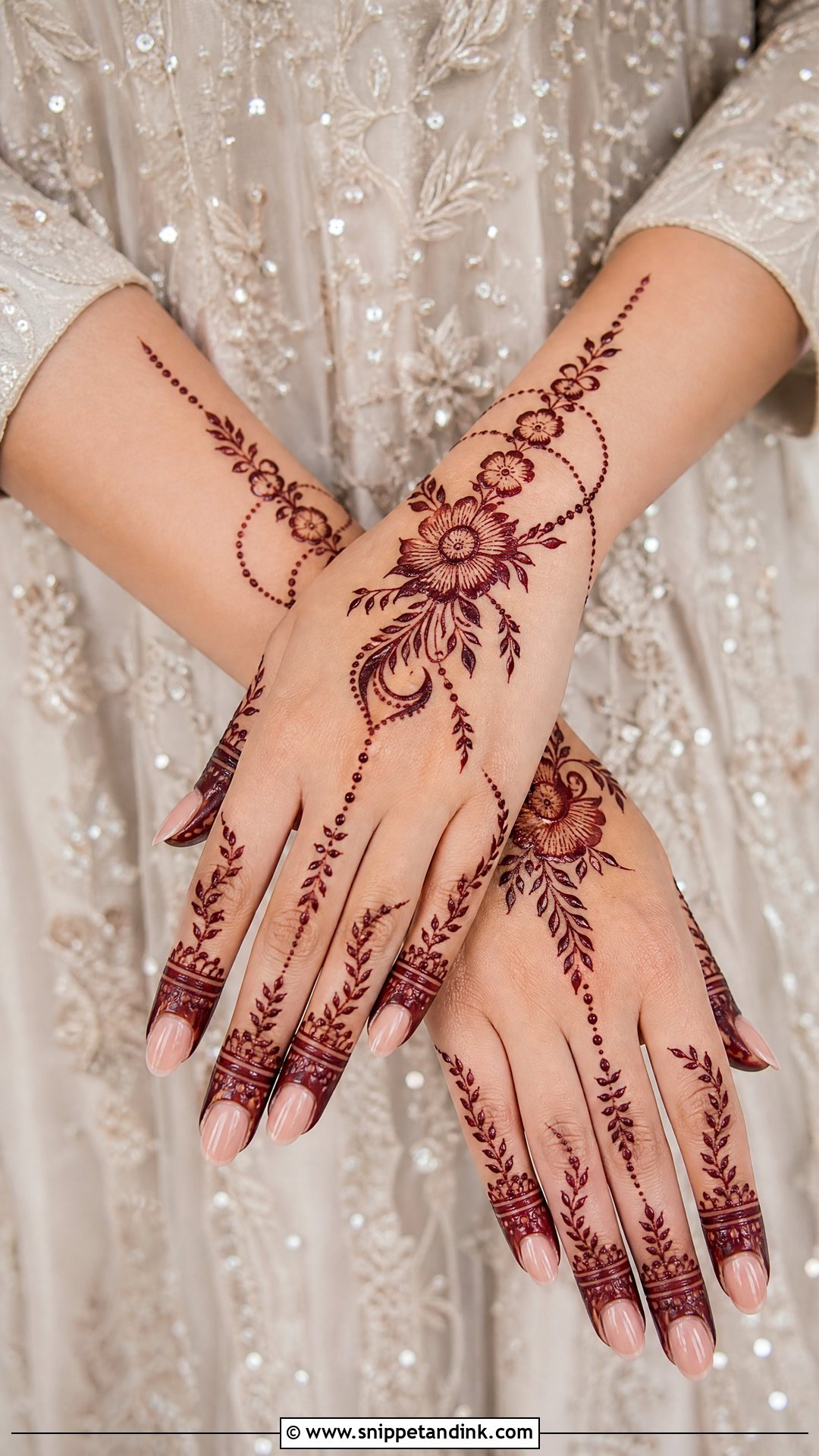
By the walima, the bridal stain is usually several days old and starting to soften, so I think about the design as something that will still look good while fading. Open florals, fine vines and jewelry-like back-hand details hold up well, and a semi-full design from fingers to wrist looks polished with reception styling. Some brides book a small touch-up: darker fingertip caps or a light extension toward the forearm. Fresh henna next to a fading stain will be a different shade for a day or two, which is worth knowing before the photos.
11. Gulf Muslim Bridal Mehndi Design
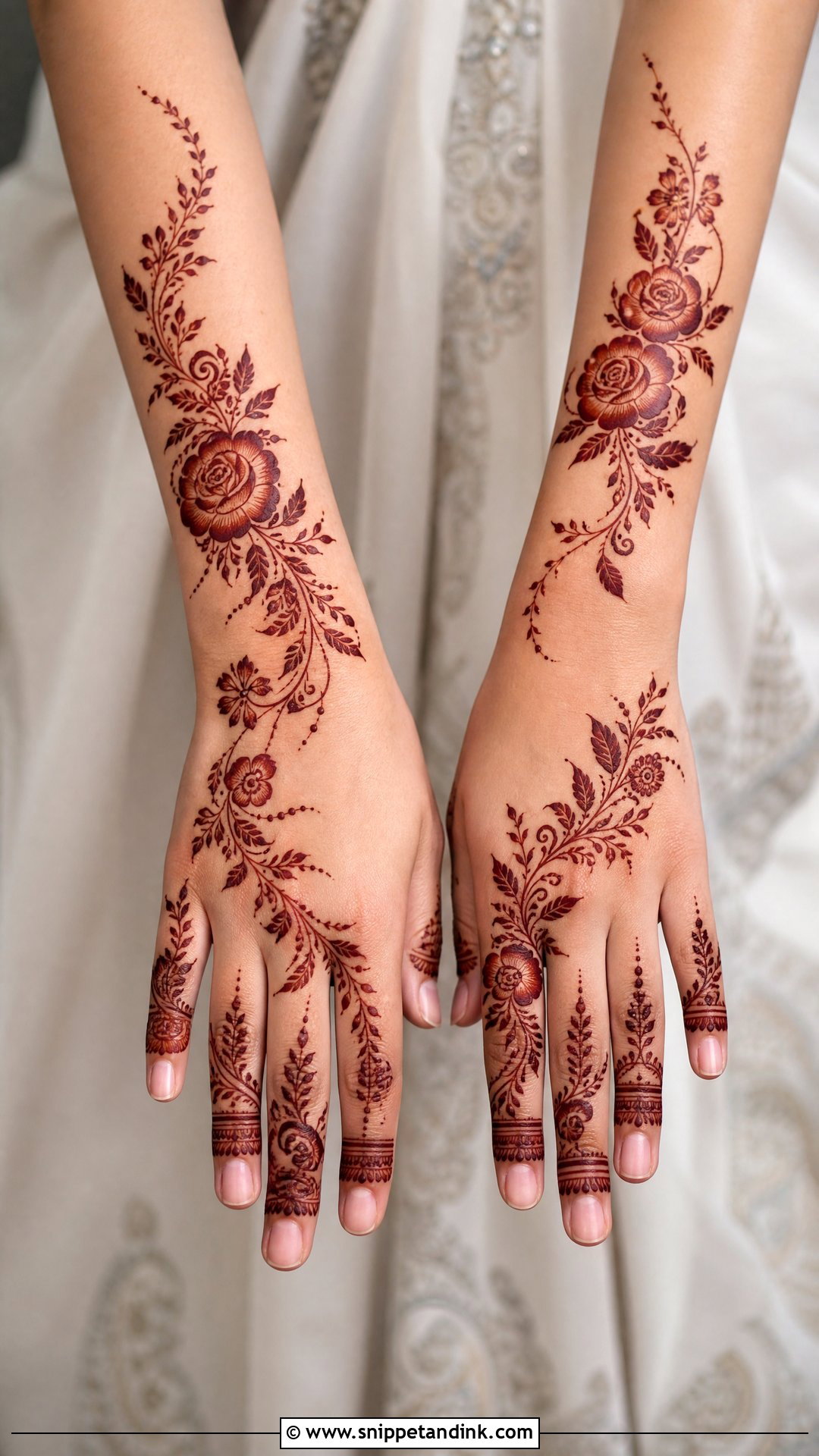
Khaleeji designs are bold and airy, with large roses, shaded petals, vines and dotted accents running from the fingertips across the back of the hand to the wrist or forearm. Lots of open skin gives them a luxurious feel. These designs often use a darker, very smooth paste and confident single strokes, so the outlines look thick and sharp. Brides who love Arabic and Khaleeji beauty trends pair them with statement rings, gold bangles and long-sleeved gowns, because nothing hides the accessories.
12. Moroccan Muslim Bridal Mehndi Design
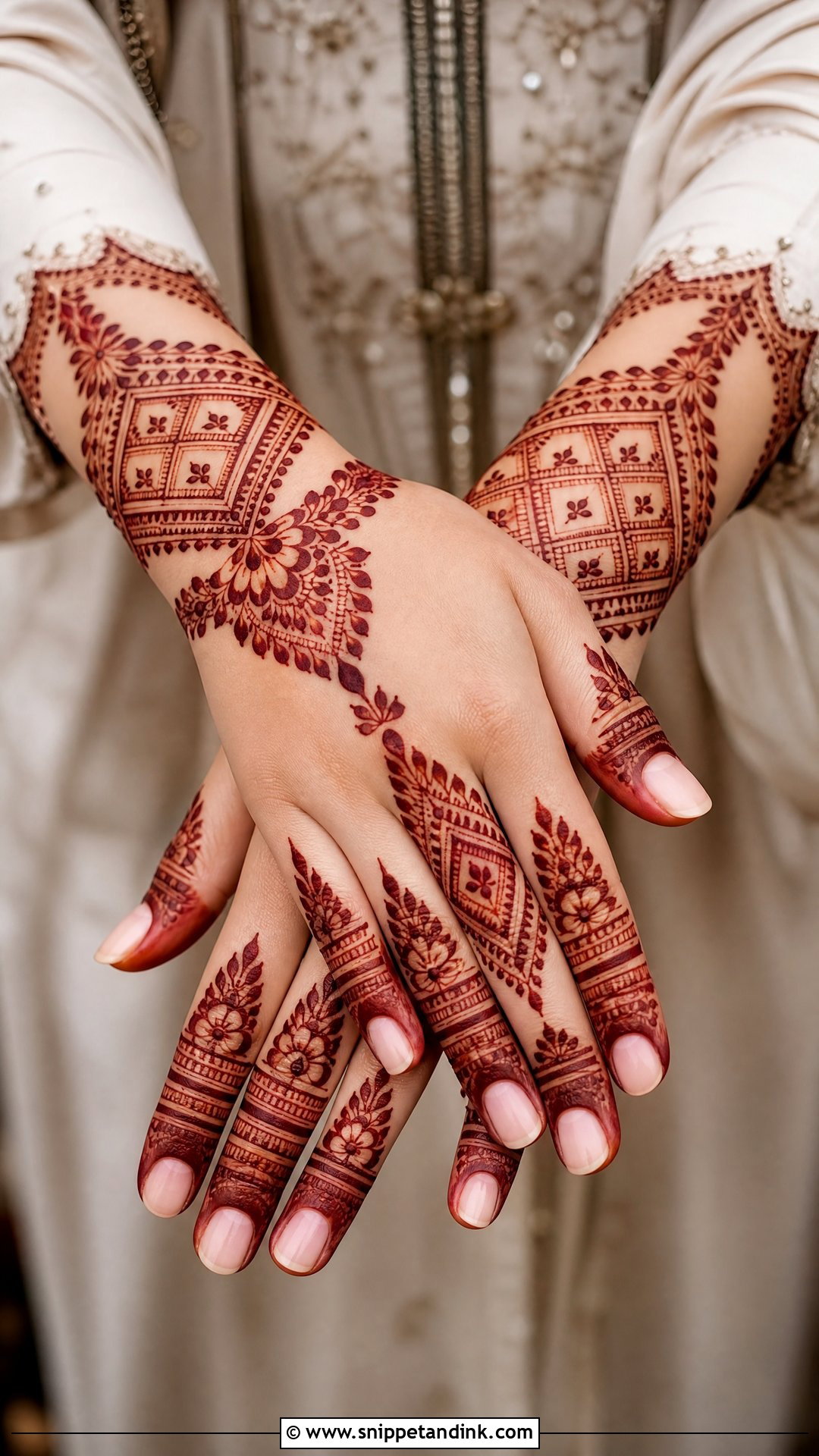
Moroccan-style henna replaces florals with geometry: diamonds, lines, triangles, grids and structured bands that look almost architectural. It comes from North African traditions and looks very different from paisley-heavy South Asian work. I map these designs with light guide dots first, because a crooked grid line is impossible to hide. For a softer bridal feel, I mix in small flowers or fine dot work between panels. Moroccan-inspired mehndi photographs crisply because the shapes are clean and readable.
13. Minimal Muslim Bridal Mehndi Design
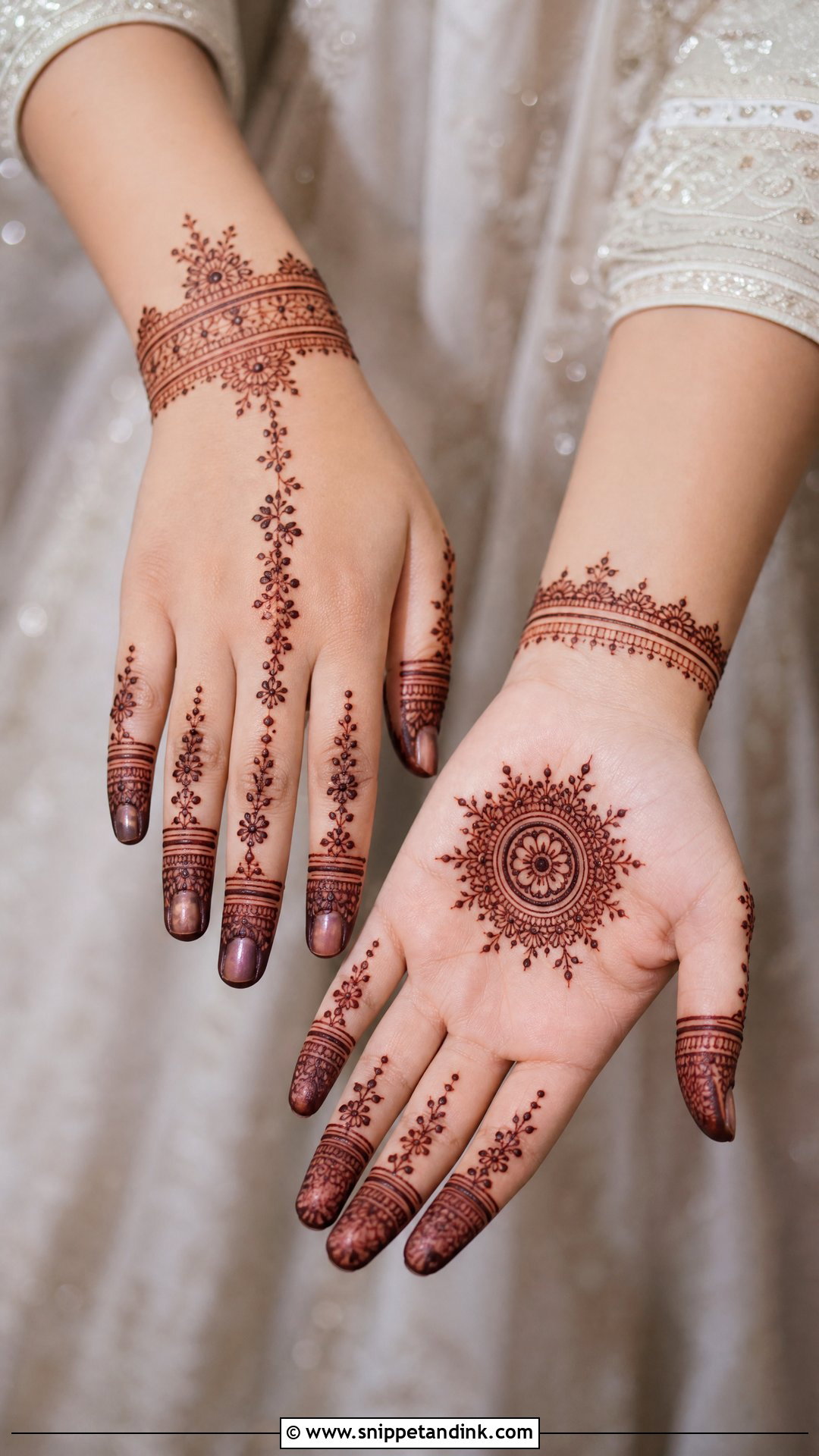
Minimal bridal henna suits brides who dislike heavy staining or need hands that feel normal through the week. Fine finger patterns, a small wrist cuff and a delicate floral trail on the back of the hand, with the palm mostly open or holding a small mandala or vine. The risk is looking unfinished, so I place the elements so the eye travels from fingertip to wrist without hitting a gap. Intimate nikahs and destination weddings suit it, especially when packing light matters.
14. Heavy Muslim Bridal Mehndi Design
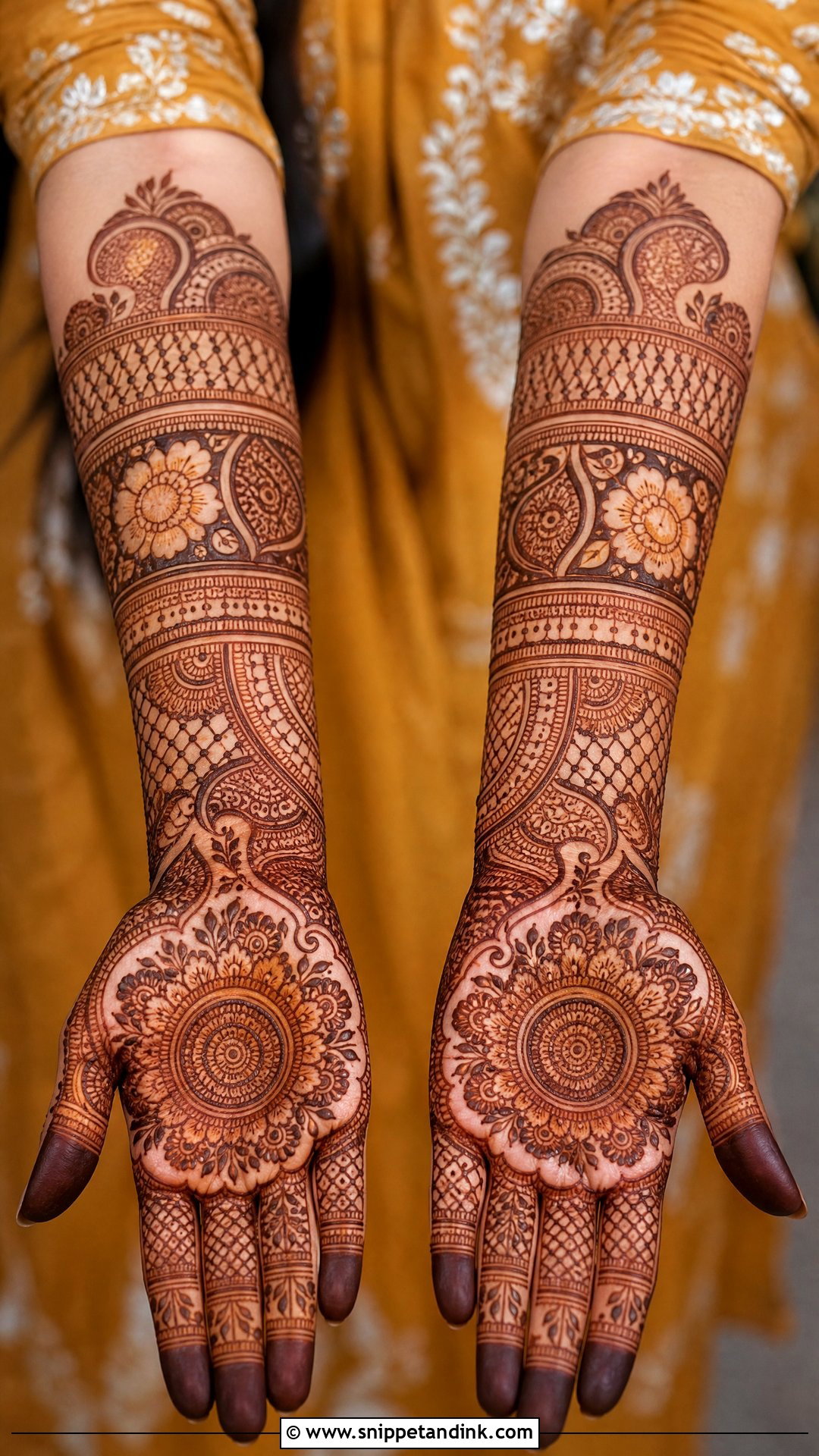
Heavy bridal henna is the royal version: fingertips to forearms, sometimes to the elbows, with dense paisleys, floral bands, jaali, shaded leaves, mandalas and fine filler. It takes hours and a fair amount of stillness. The trick to keeping it clean is scale. Main motifs stay large and fine detail is used only as filler; otherwise the pattern collapses into one dark sleeve after staining. If you choose this, eat beforehand, plan a comfortable seat and have someone to help you with drinks while it dries.
15. Muslim Bridal Mehndi Design With Name
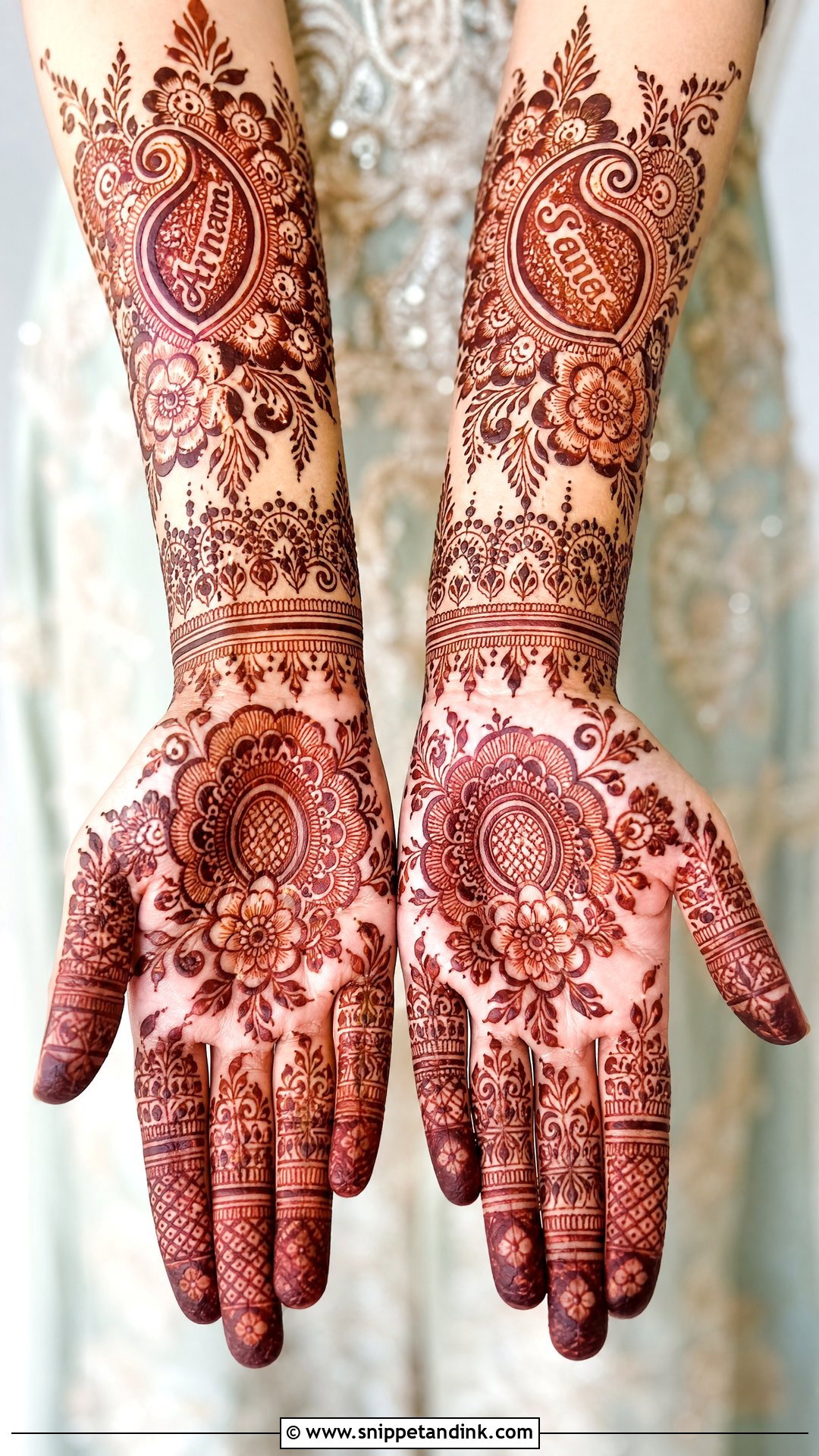
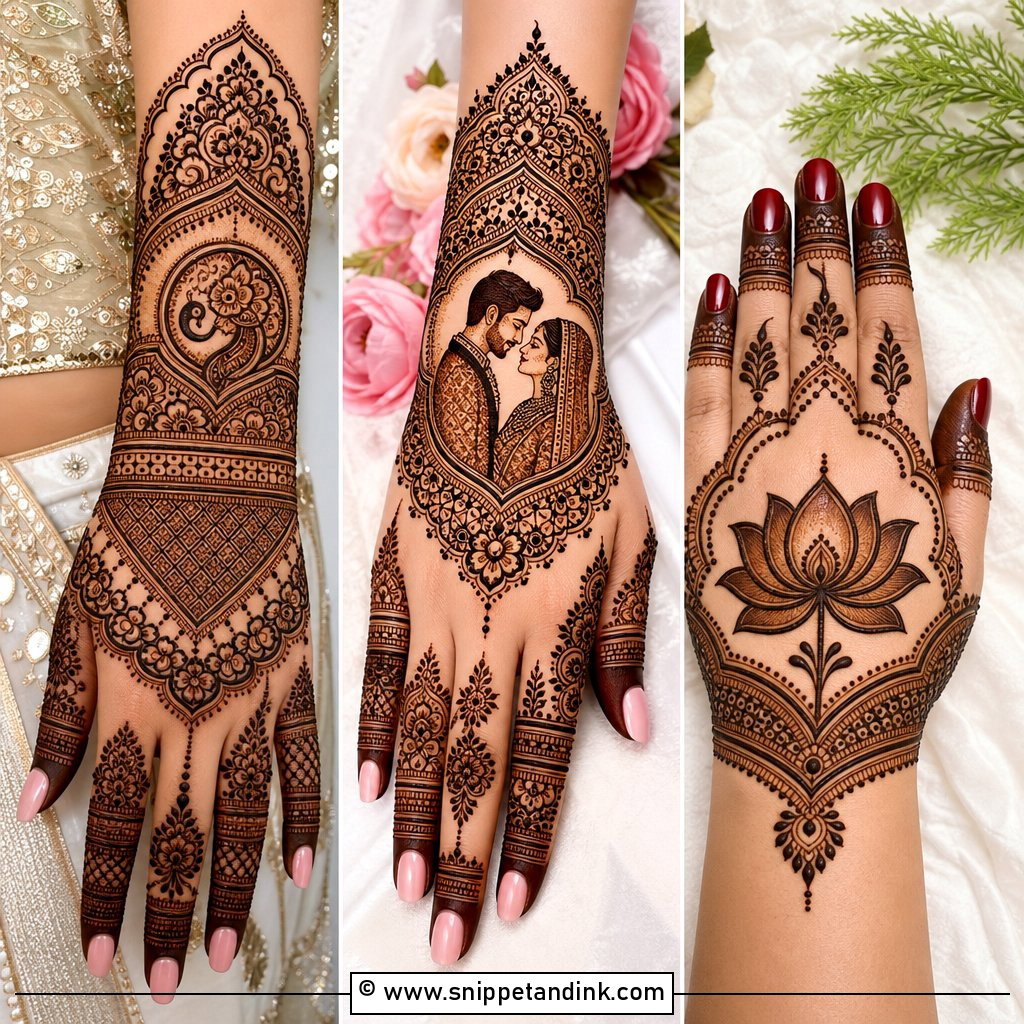
Hiding the groom’s name in the wedding henna is one of my favorite traditions, because it gives the couple a game to play later. Names or initials can sit inside paisleys, floral vines, bracelet bands or the palm centerpiece, and some brides add the date in a tiny border. I place letters inside a larger open motif rather than in dense filler, where lines spread together as the stain develops and make the letters unreadable. It works with full hand, Arabic, Indo-Arabic and simple designs alike.
16. Muslim Bridal Mehndi Design With Jaali
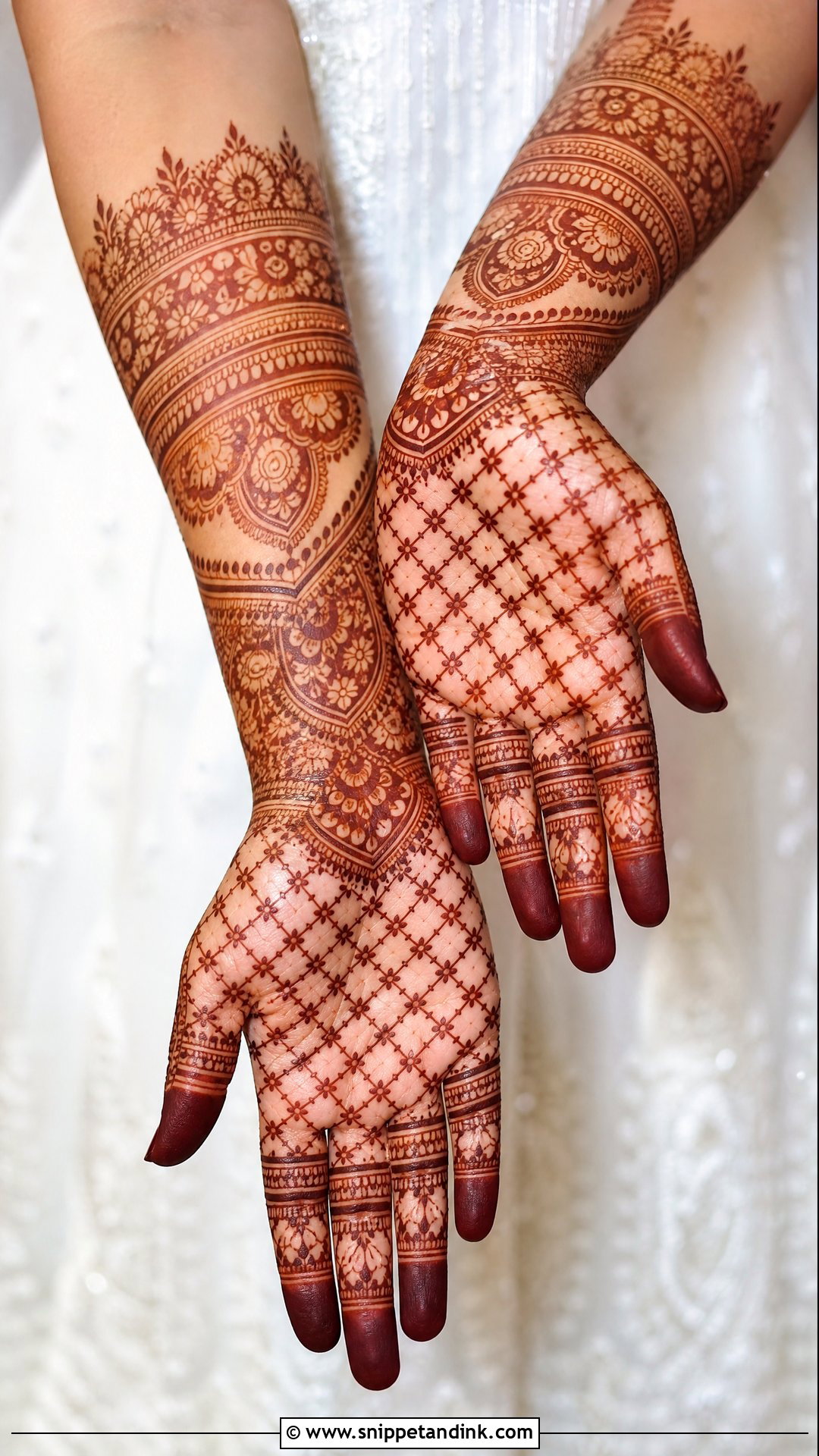
Jaali gives the hands a lace-like texture. The mesh can go on palms, backs, wrists or forearms, with a dot at each crossing or tiny flowers inside the squares. Keeping the grid even is the skill: I draw all the lines in one direction first, then cross them, which keeps the spacing consistent. Jaali on its own can look flat, so I frame it with bold borders, floral cuffs or paisley panels. Under rings and bangles it looks especially fine in close-ups.
17. Muslim Bridal Mehndi Design With Mandala
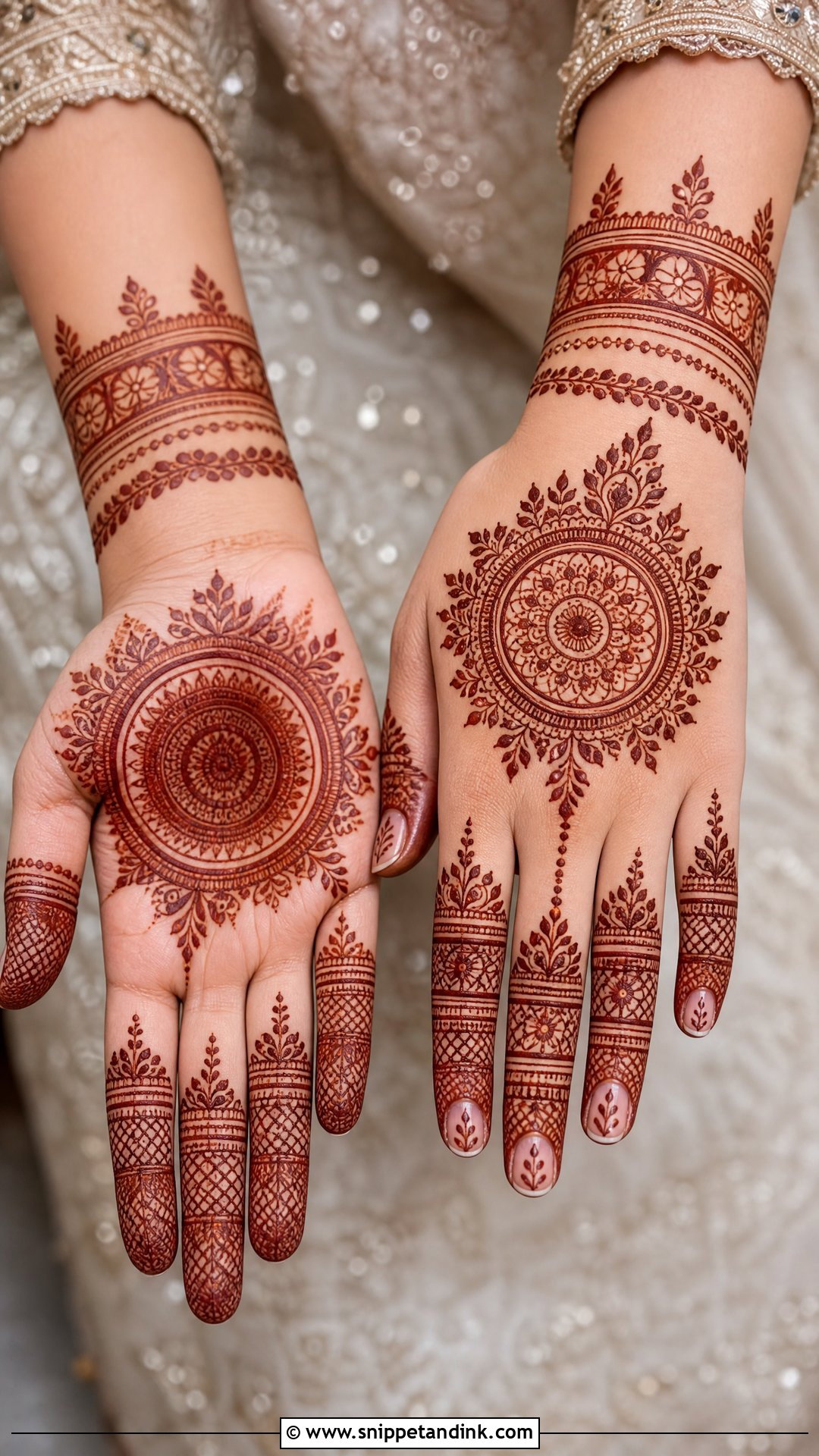
A mandala gives a clear, centered focal point on the palm or back of the hand, with lines, leaves, dots and mini florals on the fingers and a cuff or bracelet band at the wrist. It can stay simple or go heavy depending on how much detail surrounds the circle. I build the rings outward and check each one before adding the next, because an uneven ring shows from across the room. A mandala looks balanced both with the hand open and closed, which helps in posed photos.
18. Muslim Bridal Mehndi Design With Paisley
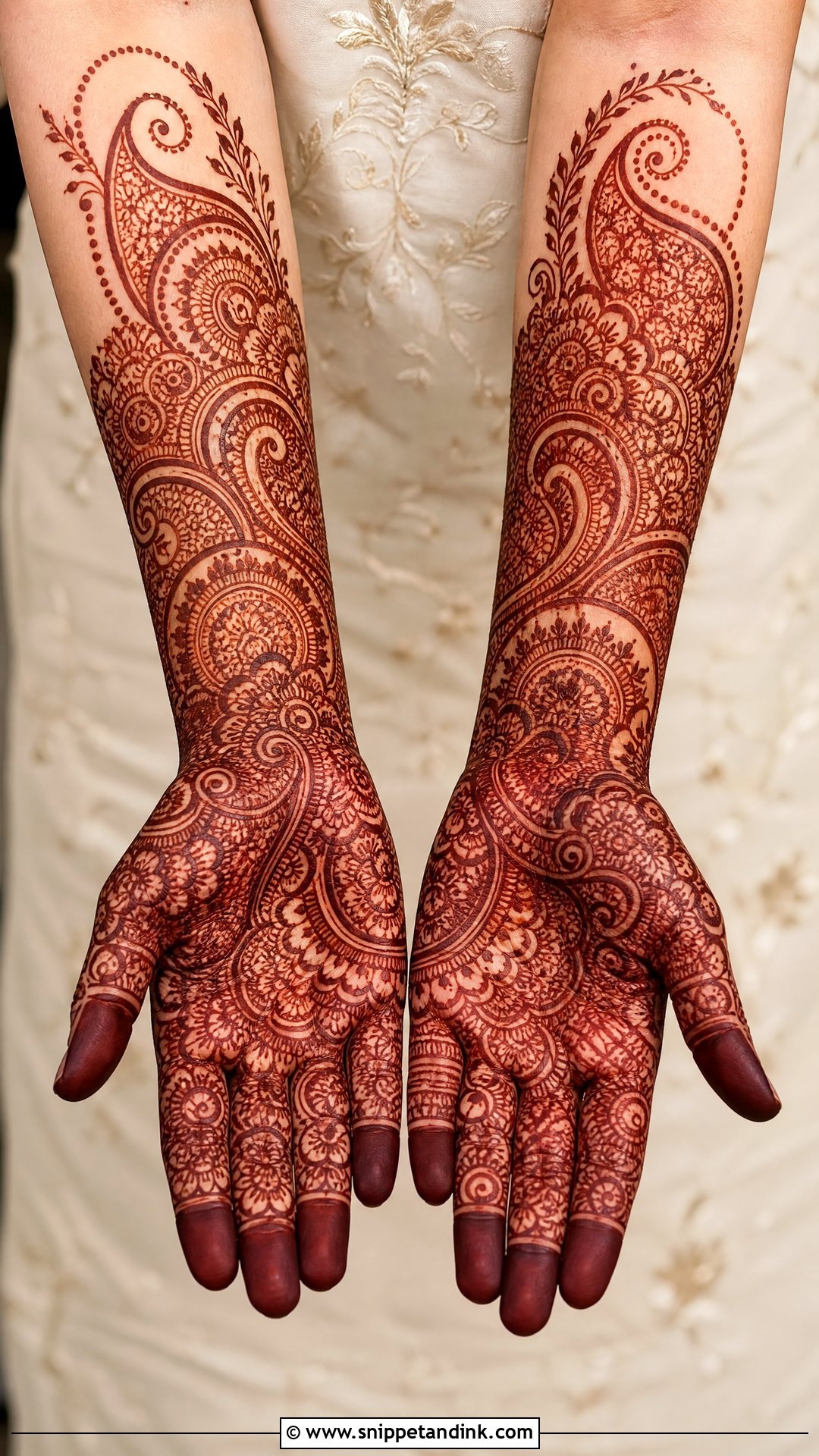
Paisleys are the most flexible motif in bridal henna. They sit on the palm, wrist, forearm or back of the hand, filled with tiny flowers, dots, lines and leaves, and they work in both heavy and medium designs. A long paisley trail makes the hand look longer; small clustered paisleys give a dense classic finish. Combining paisleys with open Arabic spacing and bold floral borders gives a modern feel. Their thick outlines stain strongly, so they stay readable as the color fades.
19. Muslim Bridal Mehndi Design With Floral Trail
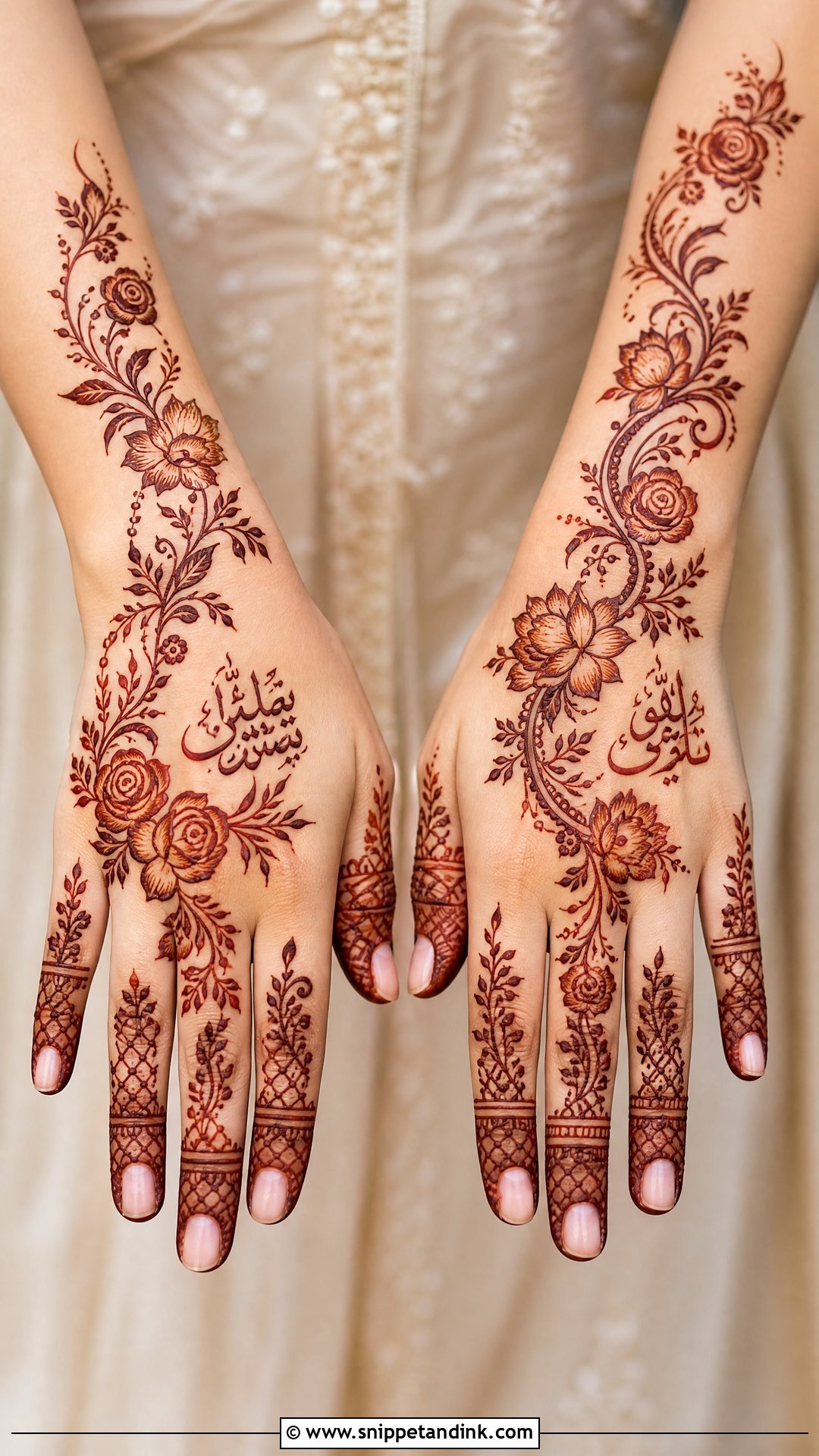
A floral trail starts on the fingers or palm and moves diagonally toward the wrist and forearm, built from roses, lotus blooms, buds, leaves and curved vines. The open spaces keep it light while the larger flowers keep it bridal. It’s the design I adjust most easily to sleeves: if your outfit has detailed cuffs, I can end the trail exactly where the fabric starts. Arabic and Gulf-inspired brides tend to choose this one.
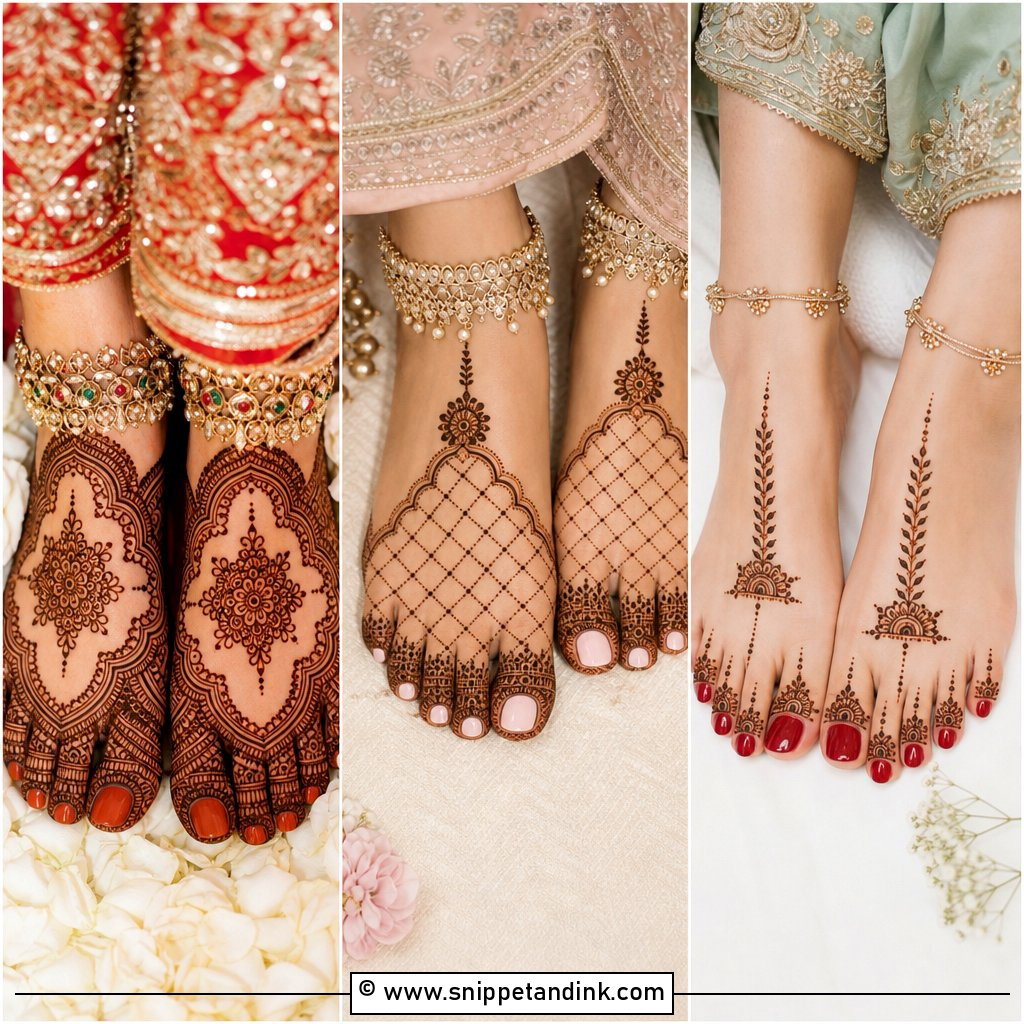
20. Muslim Bridal Mehndi Design For Short Hands
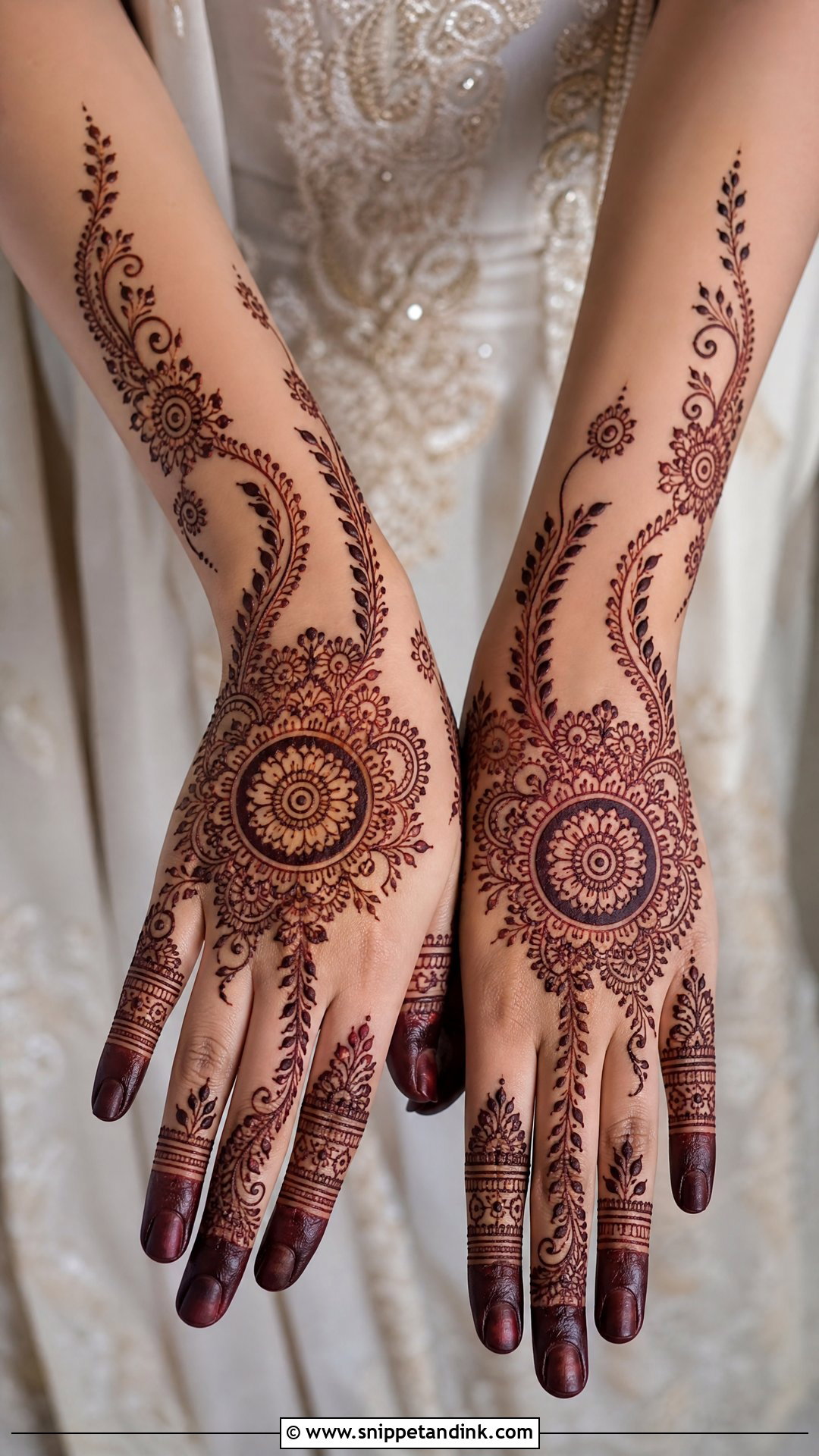
Small or short hands need the design to create length. Vertical vines, slim paisleys, elongated mandalas and fingertip-to-wrist trails draw the eye upward, while thick wrist bands and oversized palm motifs cut the hand short. A diagonal Arabic layout is often the most flattering, with fine finger detail adding elegance. Full bridal coverage is still possible on small hands; I simply scale every motif down and leave tiny gaps between sections so it doesn’t crowd. Measure the motifs to your hand at the trial rather than copying a photo drawn on larger hands.
Counting Back From the Nikah to Your Henna Sitting
Natural henna comes off orange and takes a day or two to reach its deepest color. That means the sitting has to be timed around the event you want the stain at its darkest for, usually the nikah or the main wedding day.
Two or three weeks before
Book your artist and ask for a small patch test with her actual paste. Fresh, natural henna is what you want. Stay away from cones sold as instant or black henna, which can contain chemical dyes.
The day before the sitting
Exfoliate your hands and arms gently, and do any waxing or threading now rather than after. On the day itself, skip lotion and oil so the paste can grip clean skin.
The sitting
Most brides have their henna one or two days before the nikah, often at the mehndi night itself. Wear something loose with short or wide sleeves, charge your phone and use the bathroom before we start. Afterward, keep the paste on as long as you can, scrape rather than wash it off, and keep water away for the rest of the day. The color keeps deepening overnight, so by the morning of the nikah it should be a rich reddish brown.
Your Hands Show Up in Every Ring Photo
The design that suits you depends on your ceremony, outfit, jewelry and how long you can sit. A nikah bride might want a soft floral trail; a mehndi night bride may want heavy full hands. Pakistani, Indian, Arabic, Gulf, Moroccan and Indo-Arabic styles each bring something different. The most detailed design isn’t automatically the best one. Choose the pattern that suits your hand shape, stains clearly and lets your outfit and jewelry show, and keep the motifs respectful and meaningful to you.
You'll Like These Ideas:


Leave a Reply