
Henna frames the hands in every close-up of a wedding, and brides now ask me for an enormous range: dense Indian full-hand patterns, airy Arabic trails, portraits, mandala palms, jaali cuffs and minimal designs with initials. Some want heavy fingertips and work to the elbow; others want bold florals with plenty of bare skin. I decide with each bride based on her outfit, jewellery, ceremony, hand shape and how long she can comfortably sit. Here are the bridal designs I draw most, each with a note on how it behaves on the skin, so you can save, compare and adapt them before your appointment.
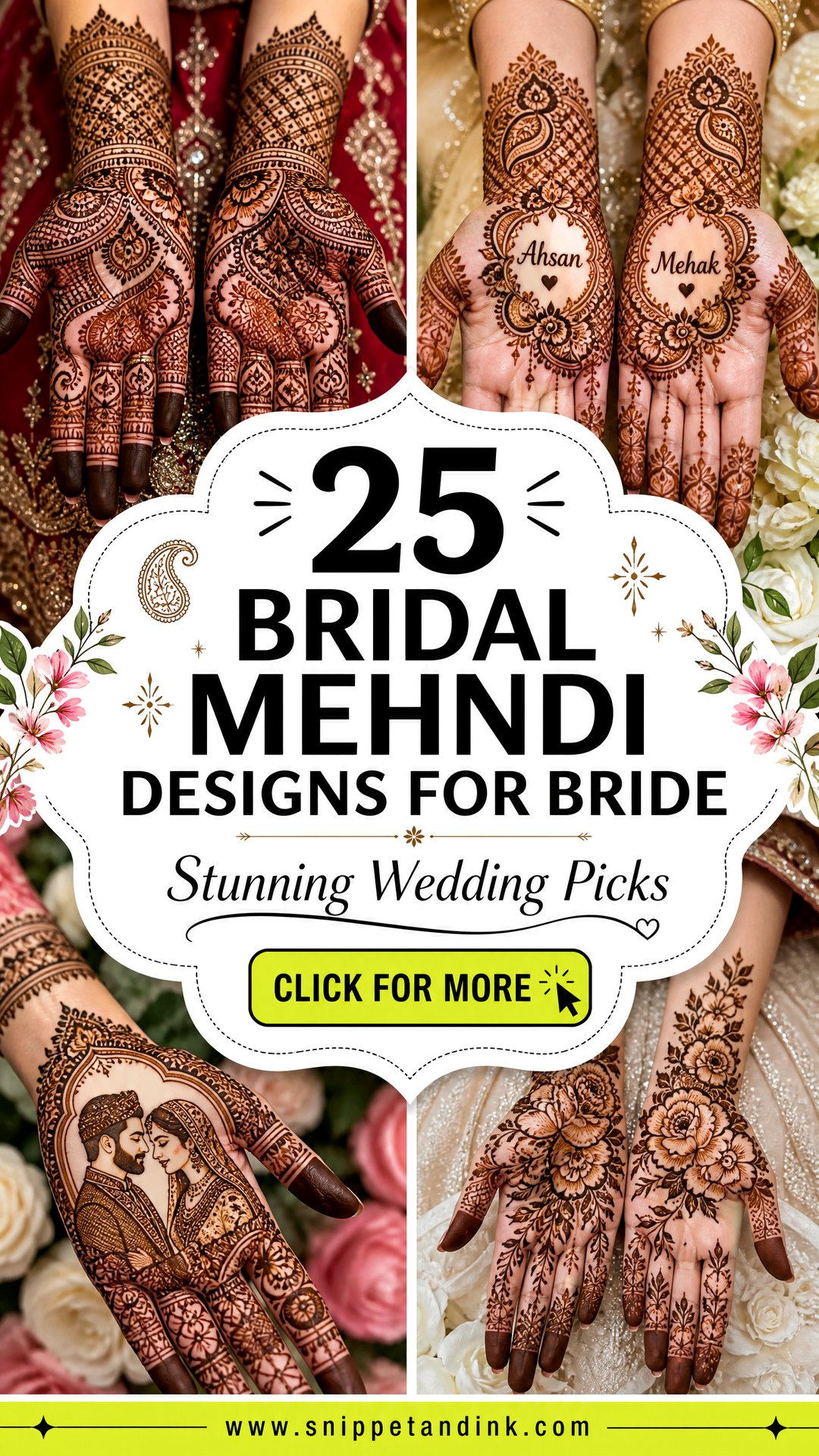
Get the Waxing and Manicure Done Before the Henna
The order of your beauty appointments decides how long your mehndi survives. Henna stains the very top layer of skin, so anything that strips or scrubs that layer after application takes the colour with it.
- Wax, thread or shave your arms, hands and feet a day or two before mehndi. Waxing over a fresh stain pulls patches of colour away.
- Have your manicure and pedicure first. A spa scrub afterwards fades the design, and acetone used to remove polish lightens fingertip stains.
- If you want gel or polish for the wedding, apply it before the henna. It also protects your nails, which otherwise turn orange where paste touches them.
- Skip exfoliating scrubs, body polishing and facials that involve your hands in the days after application.
Tell your nail technician your mehndi date when you book. A few days’ notice is all it takes to schedule things in the right order.
1. Full Hand Bridal Mehndi Design
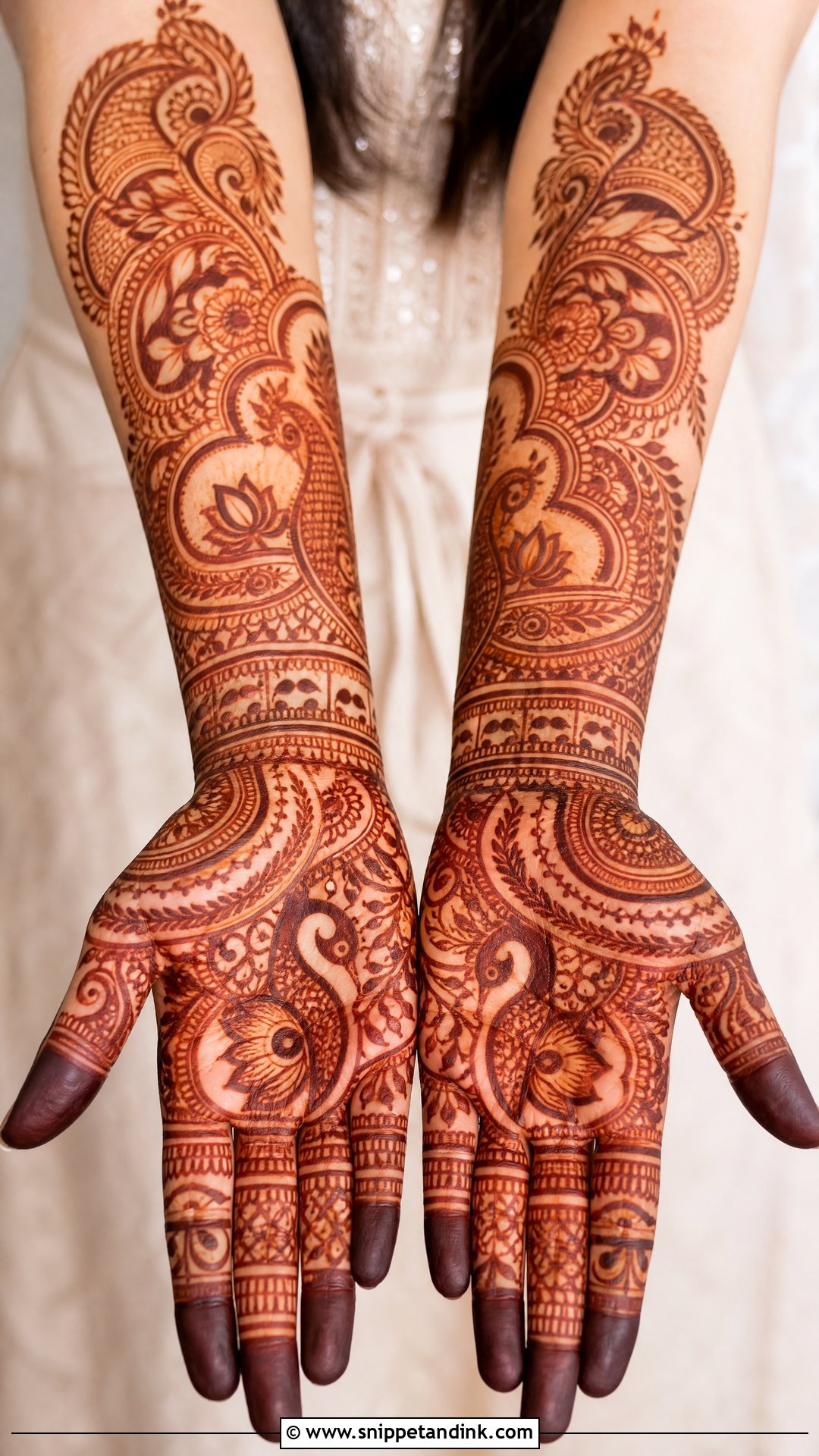
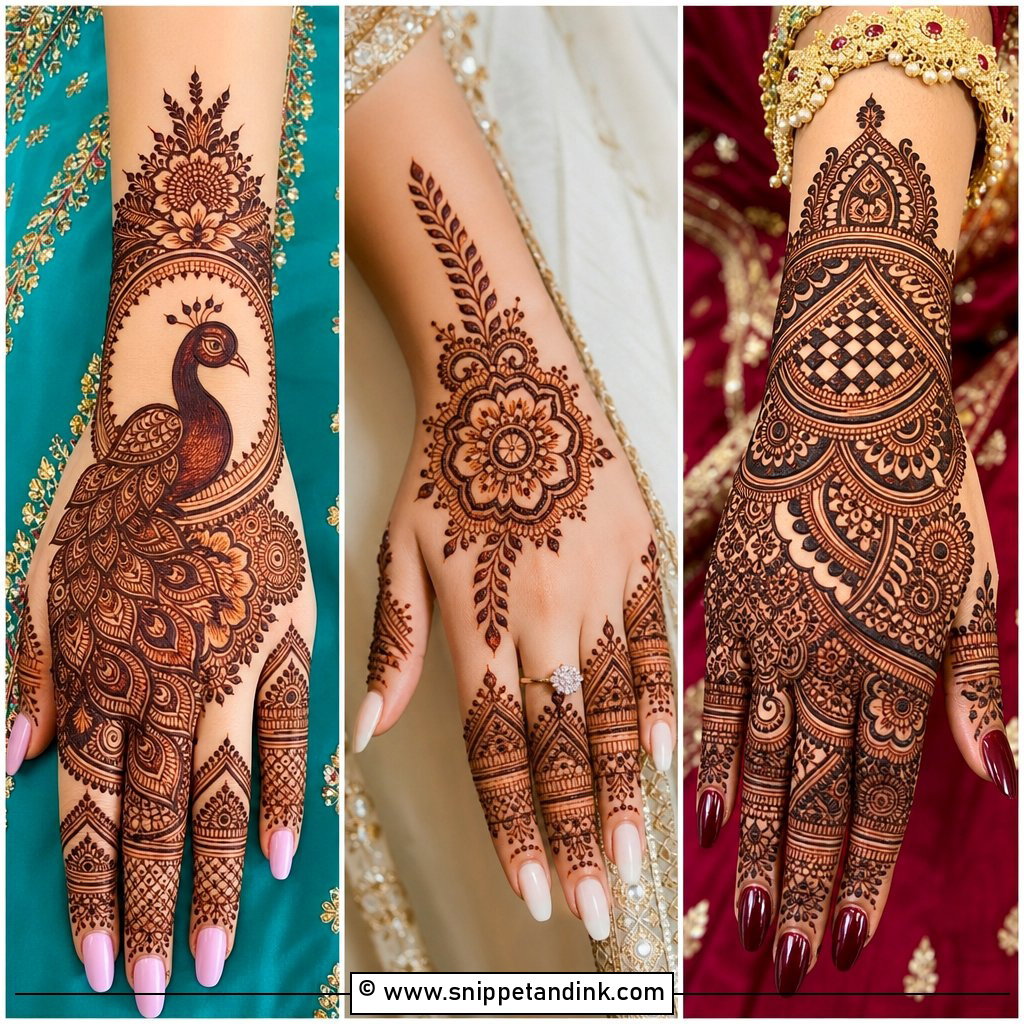
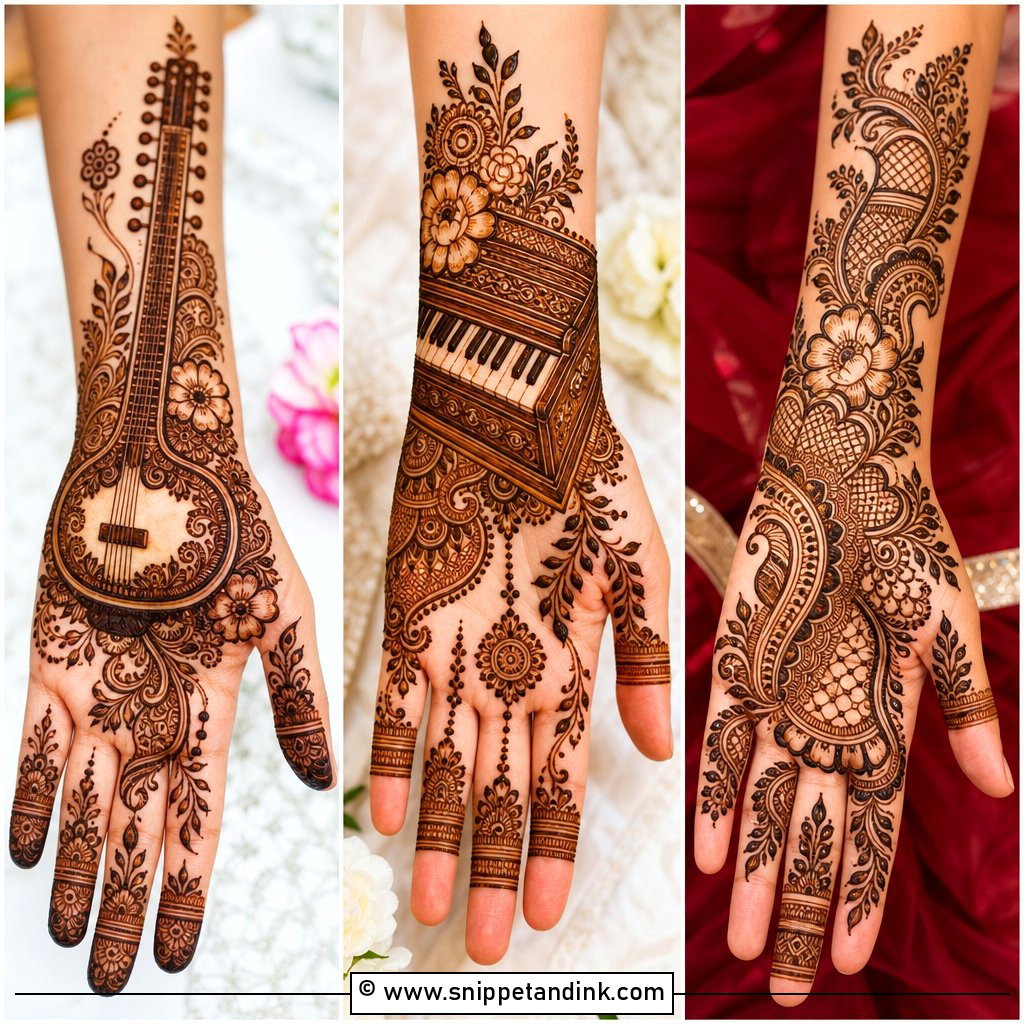
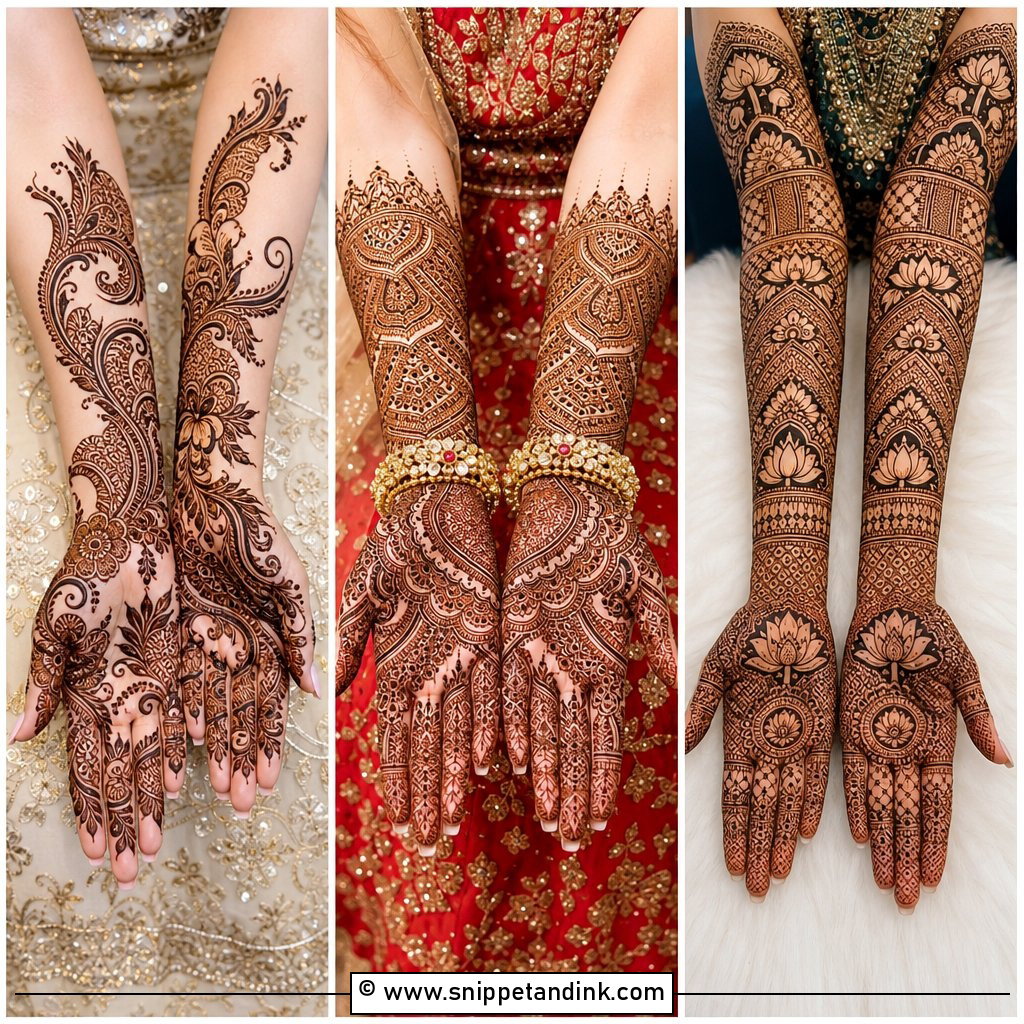
Full hand coverage is the classic: fingertips to past the wrist, often onto the forearm. Palms take paisleys, florals, peacocks, lotus motifs and fine filler; the backs get bracelet bands, leafy trails and detailed fingers. With heavy bridal bangles, the mehndi and the jewellery read as one piece. I draw the main motifs a size larger than brides expect, because dense filler pulls the eye and shrinks everything around it in photos. Hidden initials or a small wedding symbol slip in easily without breaking the traditional layout.
2. Indian Bridal Mehndi Design
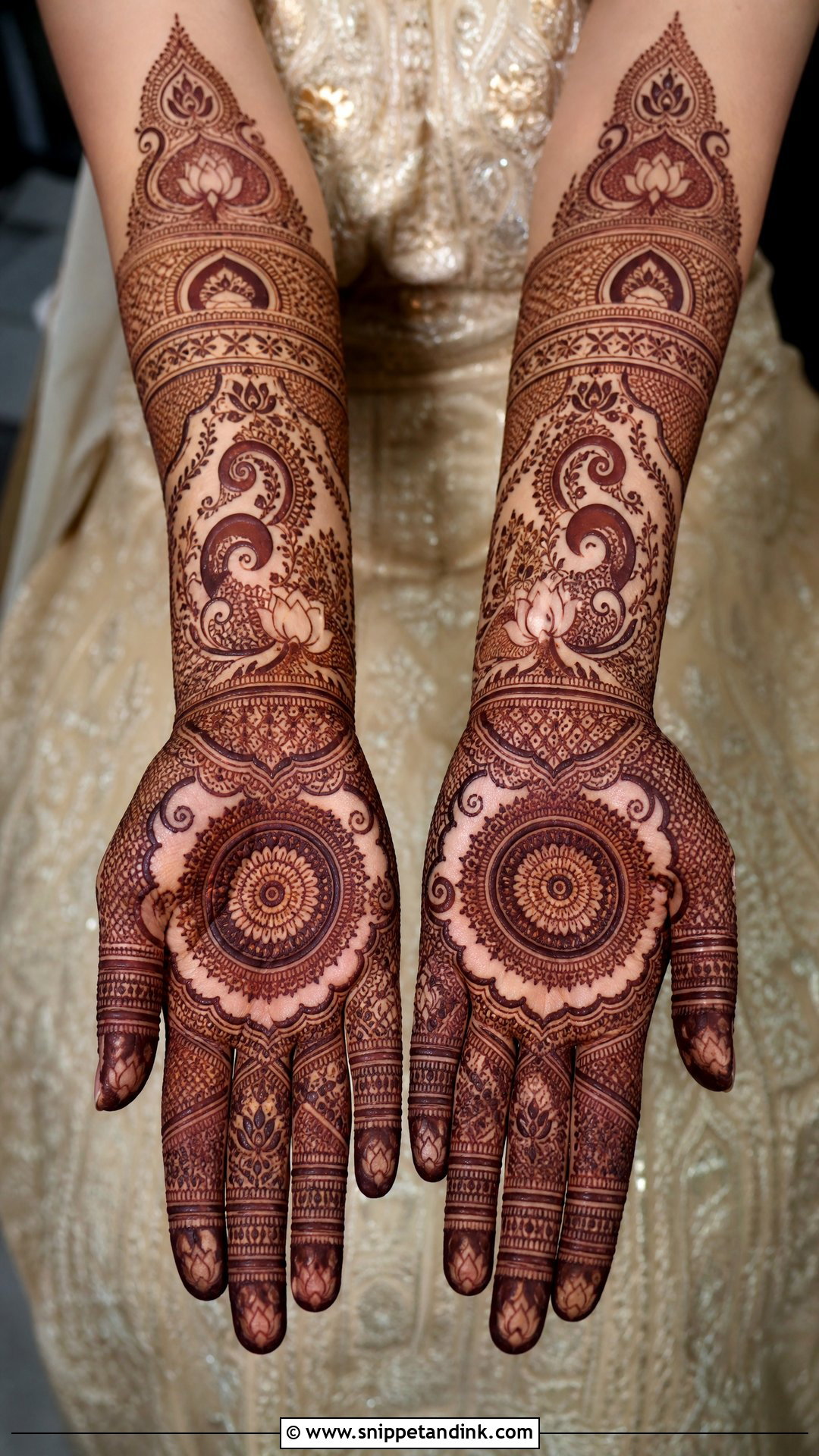
Indian bridal work is full, symmetrical and full of story. Palms carry paisley clusters, mandalas, peacocks, lotus flowers and bride-groom elements, and the fingers are filled completely, which gives the darkest stain on the whole hand. It stands out against red, gold, ivory or pastel outfits alike. Give it time. A relaxed session with breaks produces cleaner lines than a rushed one, and you’ll want the mehndi to carry a large share of your bridal look.
3. Arabic Bridal Mehndi Design
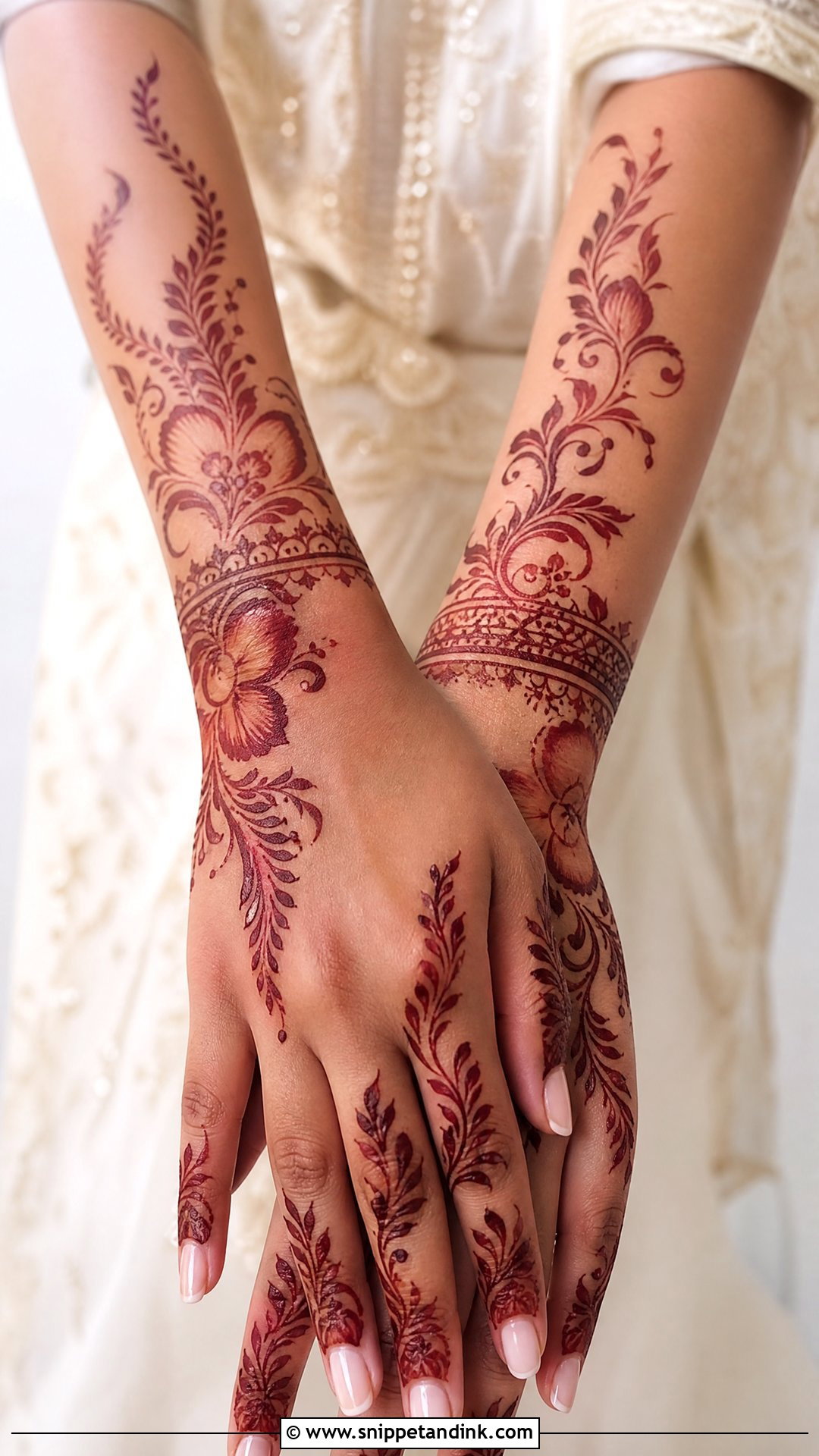
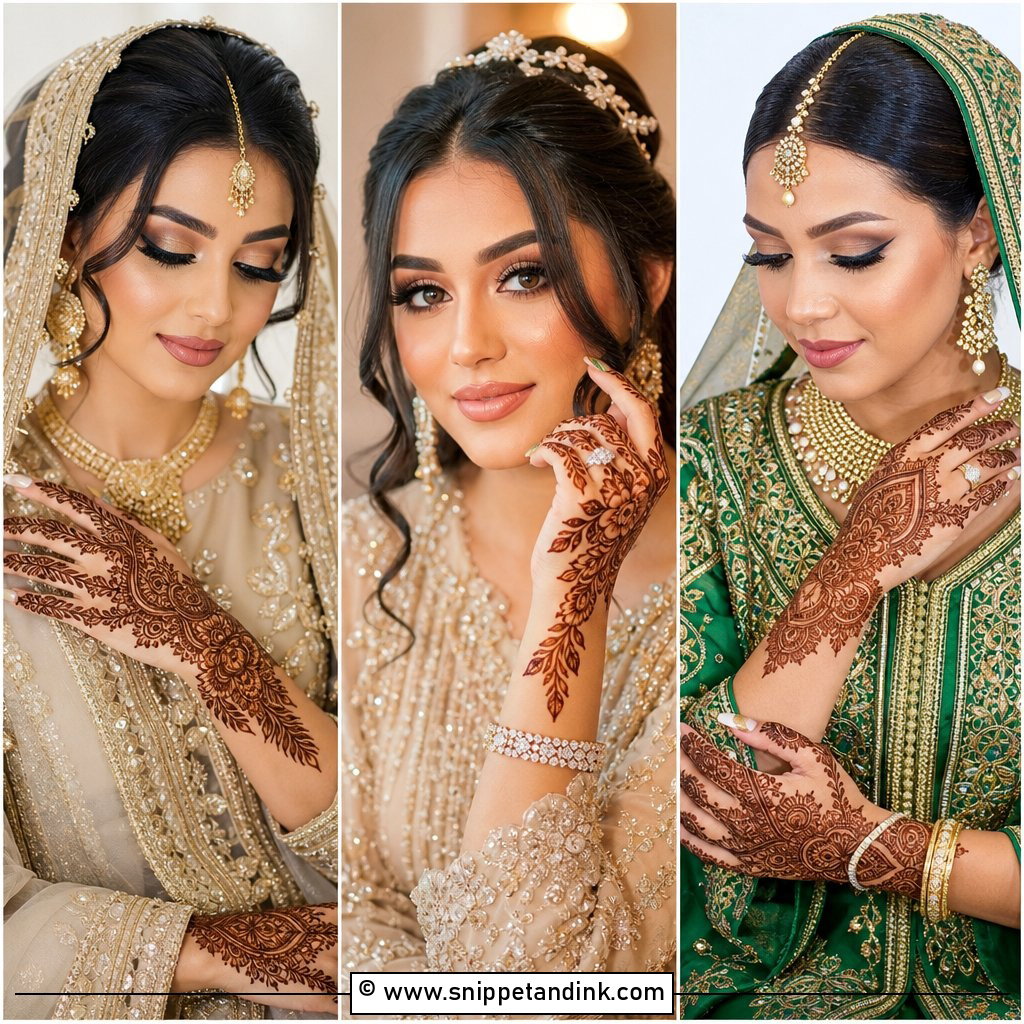
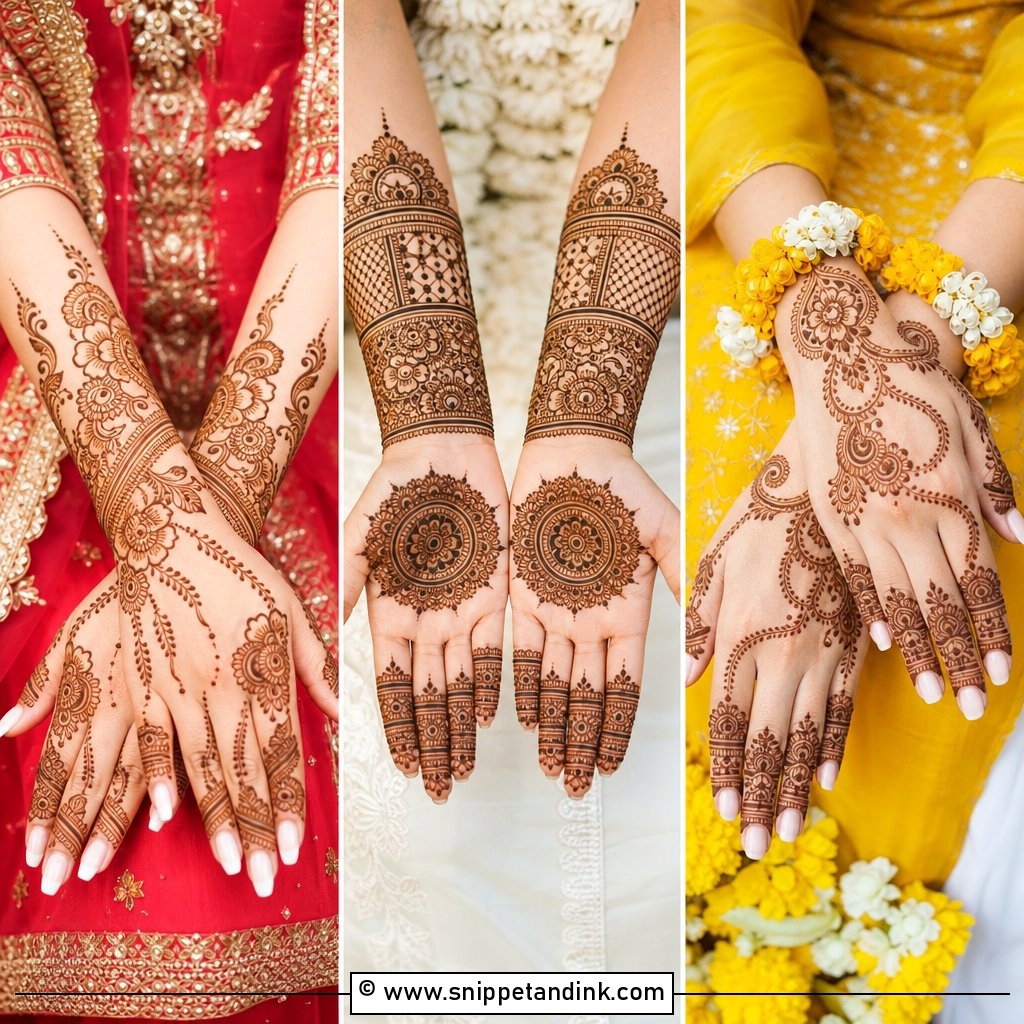
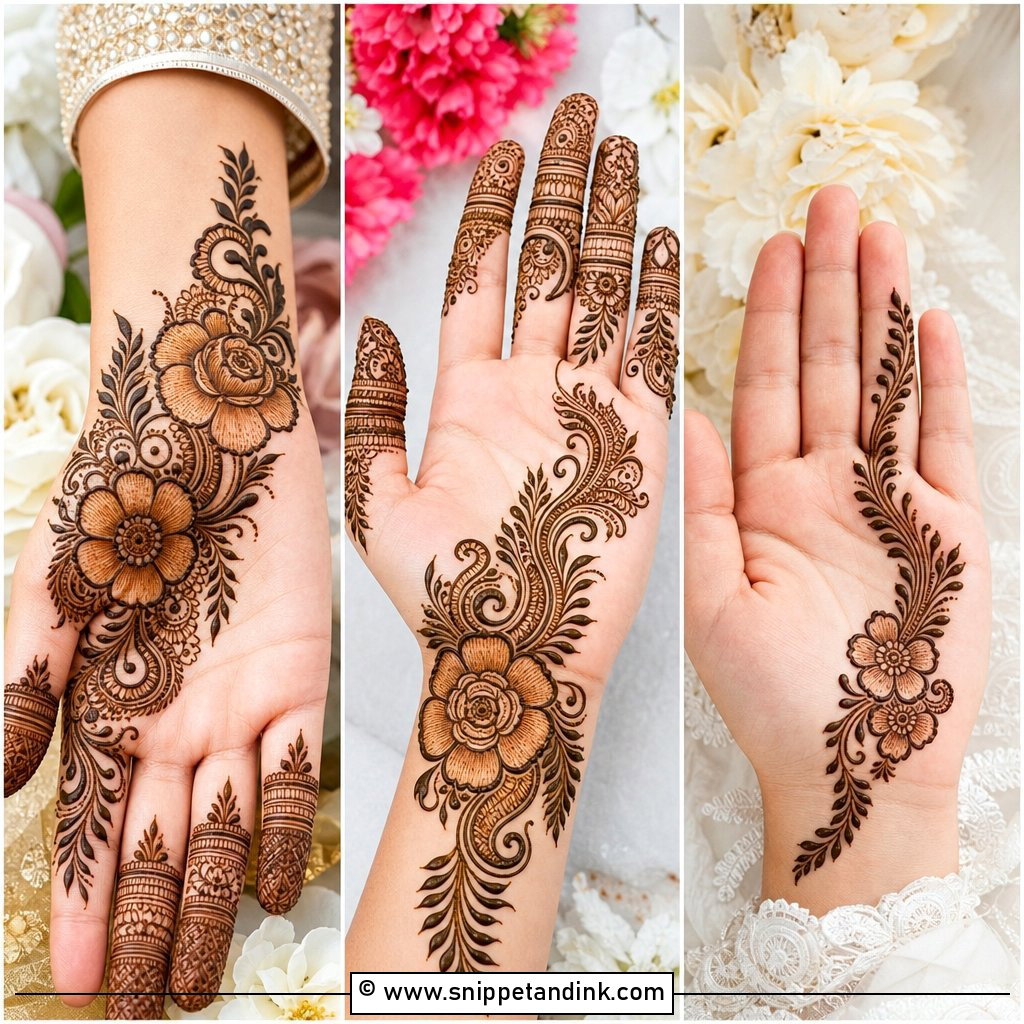
Arabic designs are bold with room to breathe. They travel diagonally across the hand with large flowers, leaves, vines and shading, and the open skin keeps them looking fresh. They’re also quicker to apply than dense Indian mehndi, which helps if your schedule is tight. For a wedding version I fill the fingertips more, add wrist cuffs and stretch the floral trail toward the forearm. Lehengas, shararas, gowns and fusion outfits all suit it.
4. Indo Arabic Bridal Mehndi Design
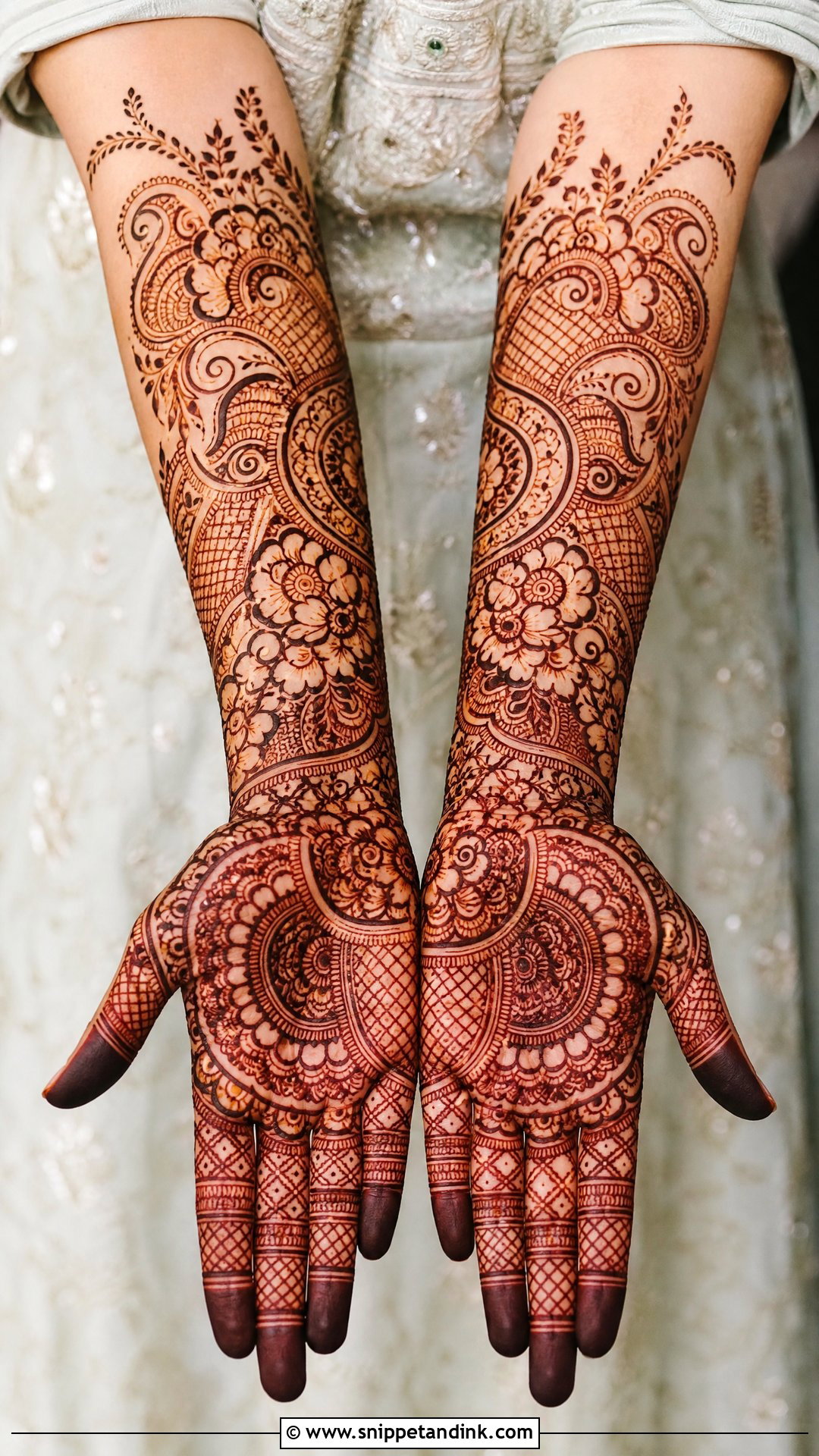
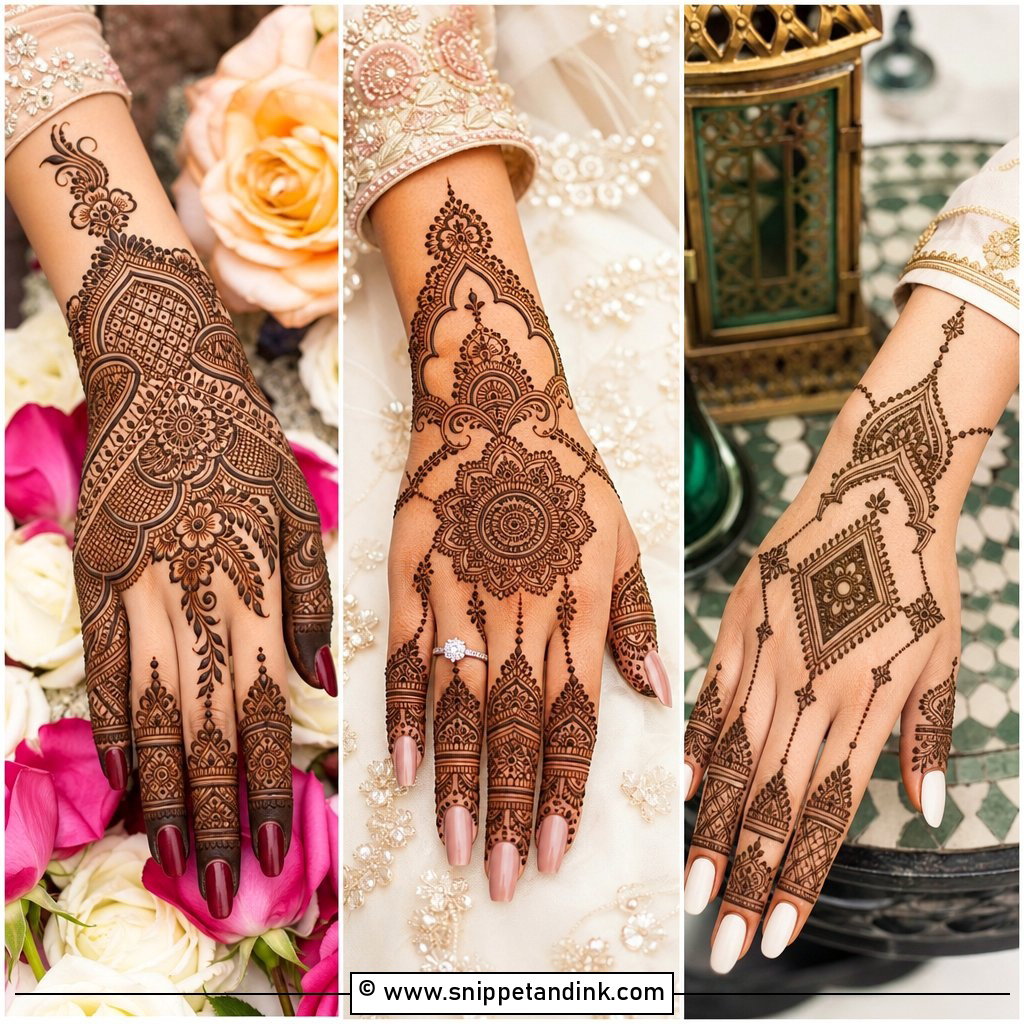
Indo Arabic mehndi sits between the two traditions: the flow of Arabic work, the detail of Indian filling. Floral trails, paisley sections, mandala palms, fine dots, jaali and decorated wrist bands can all appear, and it works on palms and backs equally. One idea I like: keep one hand slightly more floral and the other slightly more traditional, so the pair complements each other without looking identical. It suits the sangeet, nikah, reception and wedding day.
5. Rajasthani Bridal Mehndi Design
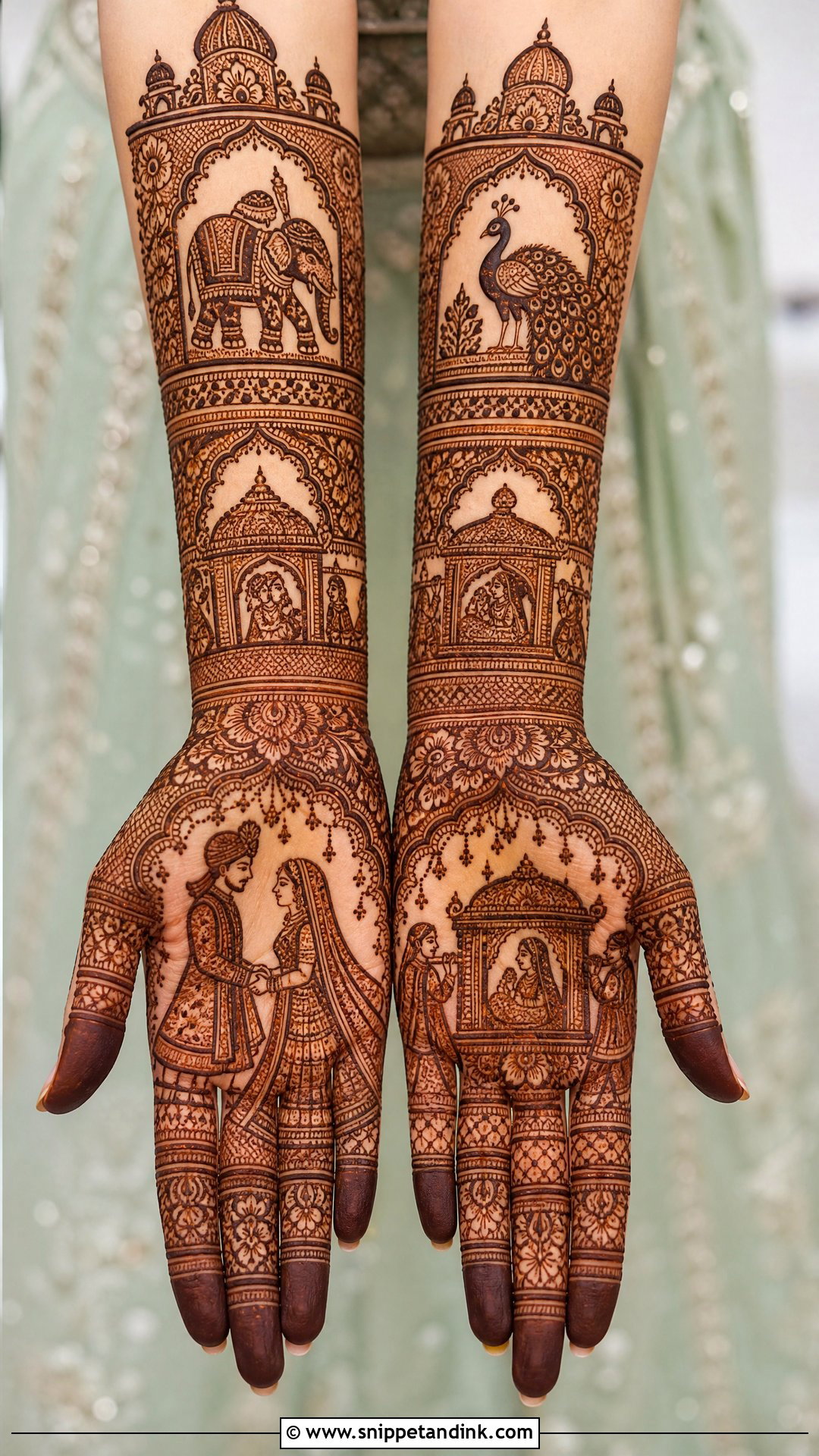
Rajasthani designs are grand and detailed, with bride and groom figures, elephants, palaces, doli scenes, peacocks, paisleys and very fine filler, usually over the hands and forearms completely. The palms tell a small story while the arms carry layered borders and architectural detail. Only choose it if you’re happy to sit for a long session. I keep clean space around each main figure; without it, the faces and elephants merge into the filler once the stain darkens.
6. Marwari Bridal Mehndi Design
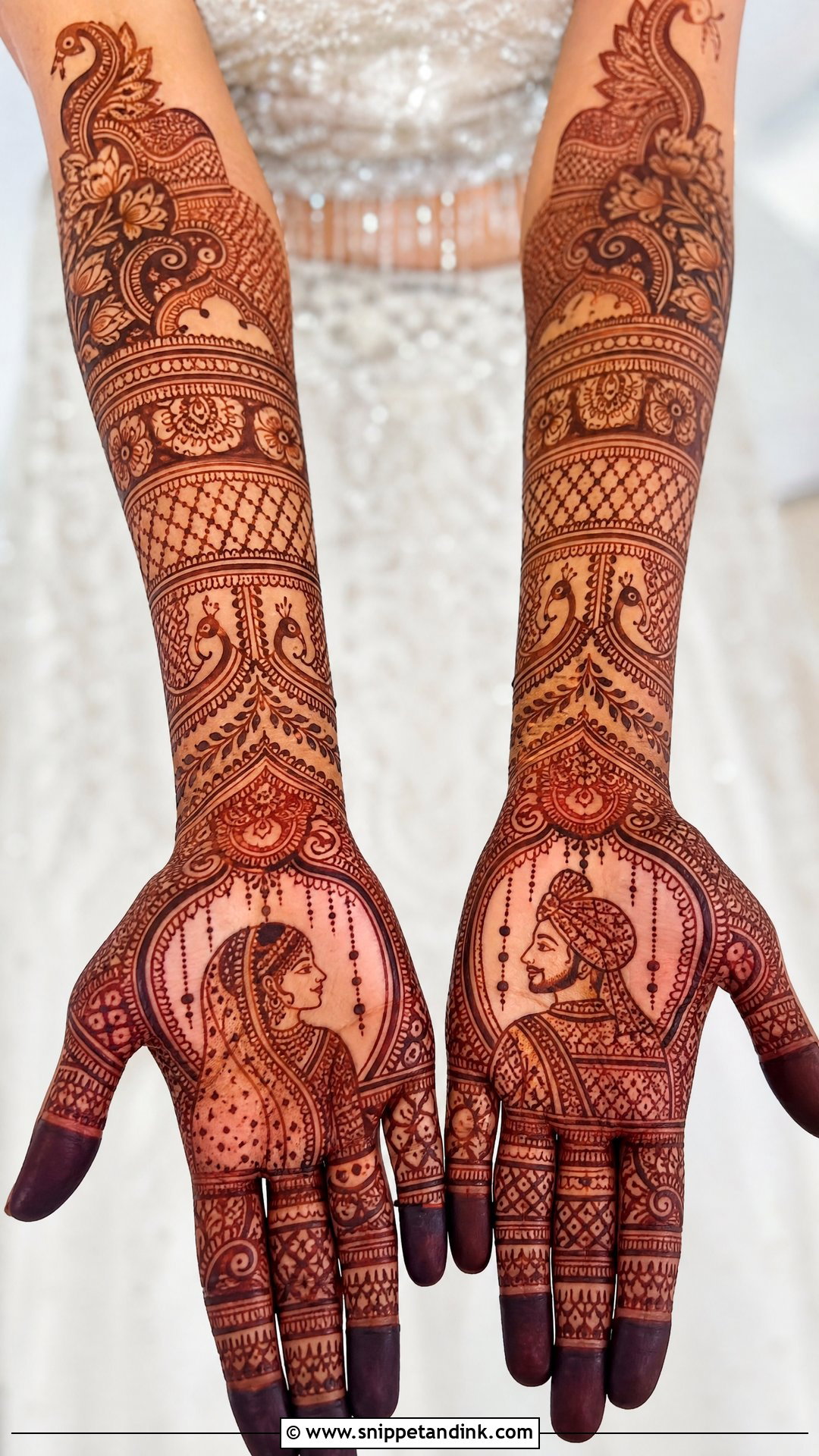
Marwari mehndi is layered and heritage-led: fine lines, paisley vines, leafy borders, bride-groom artwork and filled fingertips, with a planned flow even though every part of the hand is decorated. It extends well onto forearms and coordinated feet. If your outfit has strong embroidery, show it to your artist. I often pick up a border shape or a motif from the fabric and repeat it in the henna, which ties the hands to the outfit in a way guests notice without quite knowing why.
7. Pakistani Bridal Mehndi Design
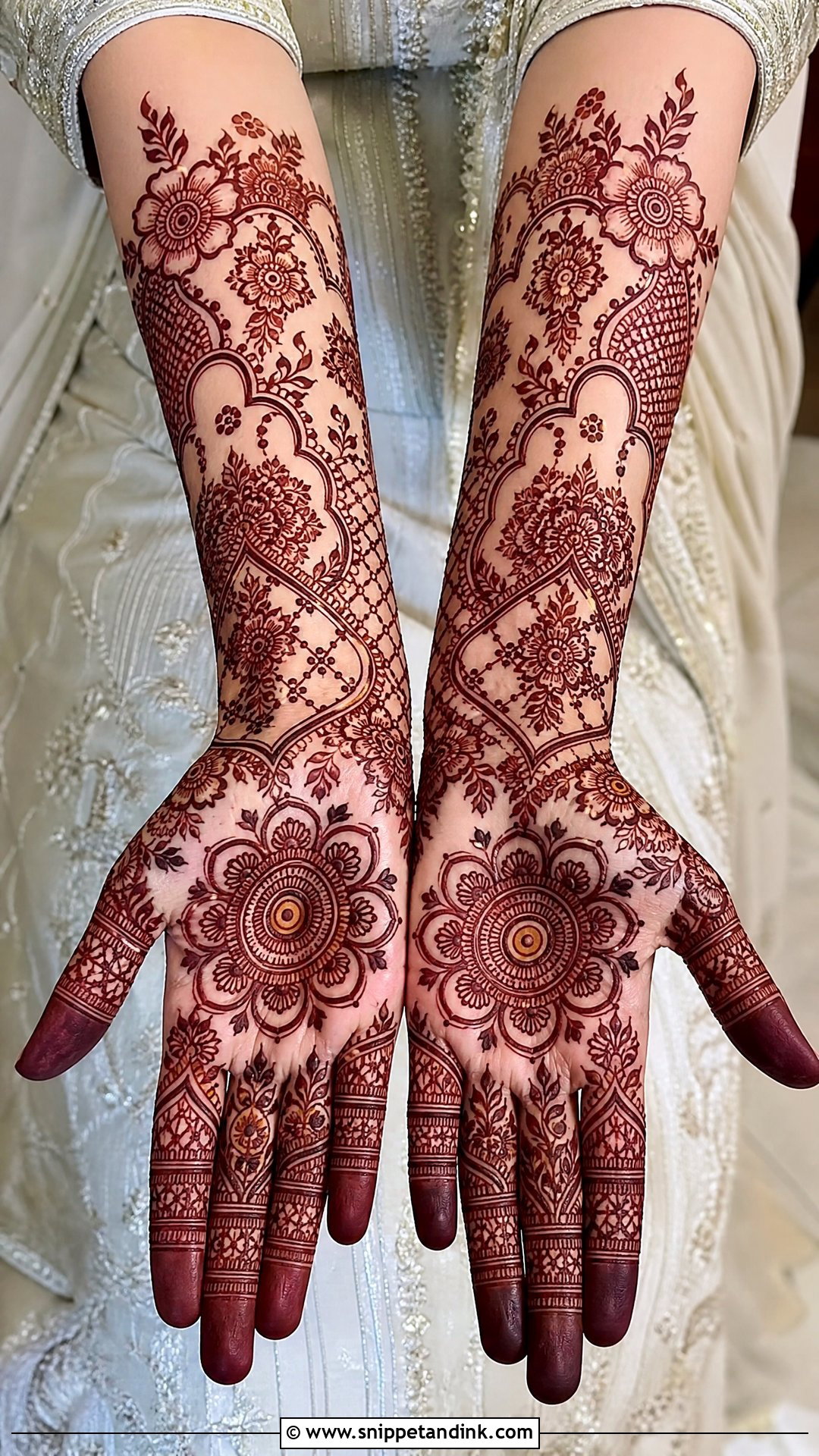
Pakistani bridal designs often combine Indian intricacy with Arabic flow. Palms carry mandalas, florals, paisleys and netted sections; backs usually get leafy trails, lace cuffs and bold fingertips. It’s a favourite for nikah, walima, and mehndi ceremony looks because the same base layout can be dressed up or down. Full to the forearm or medium coverage with open spaces both work. The stain sits well with gold jewellery, pastels and deep jewel tones.
8. Dulhan Mehndi Design
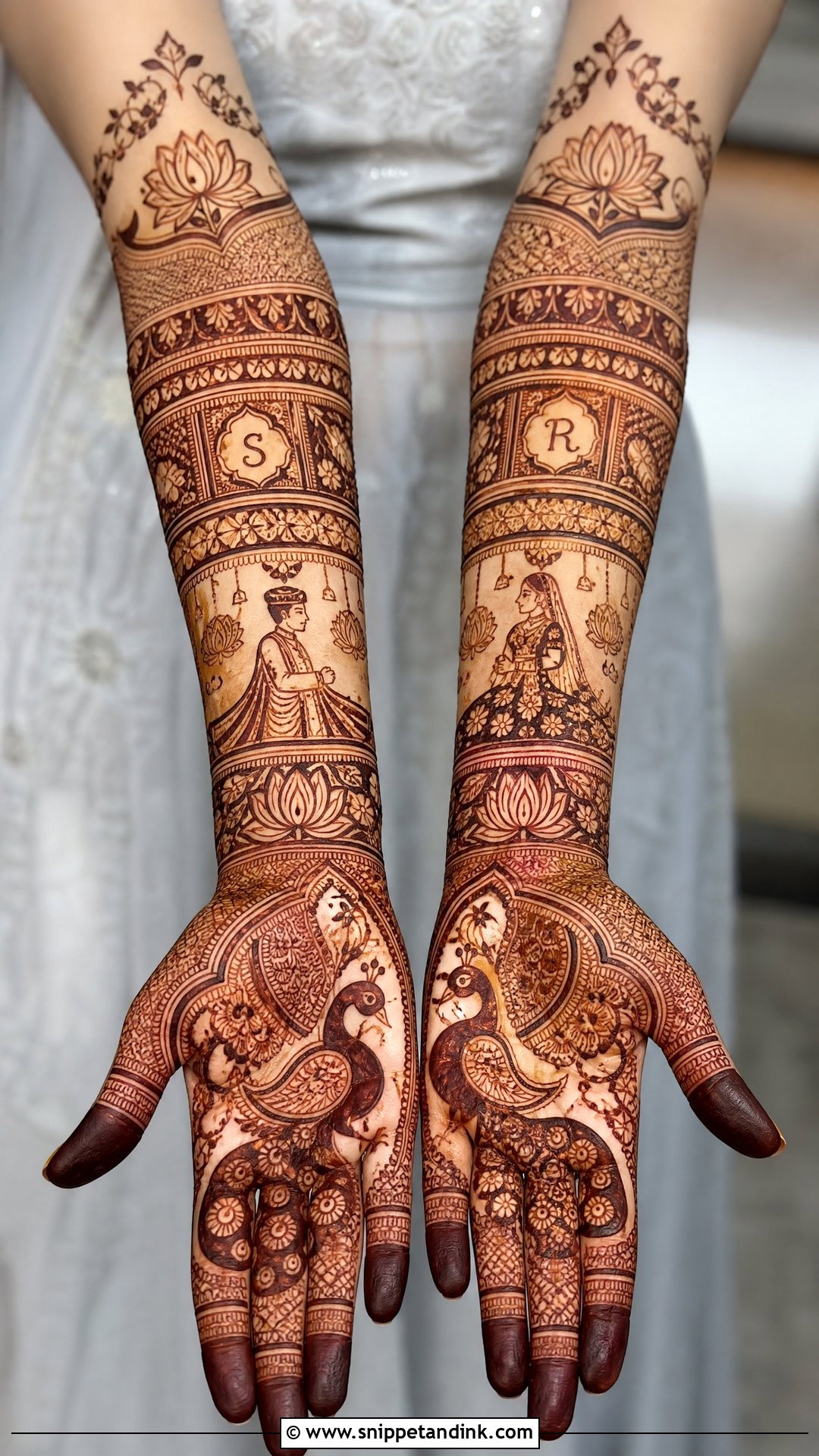
Dulhan mehndi design is unmistakably bridal: full coverage, bold fingertips, decorative wrists and motifs tied to the wedding, such as initials, dates, tiny hearts, couple symbols or cultural details. I often make the palms dense and traditional and the backs a little more open so the hands don’t look heavy from every side. It doesn’t follow one regional style, which is its strength; peacocks, lotus flowers, kalash motifs, jaali and bracelet bands can all be mixed in.
9. Bridal Mehndi Design With Name
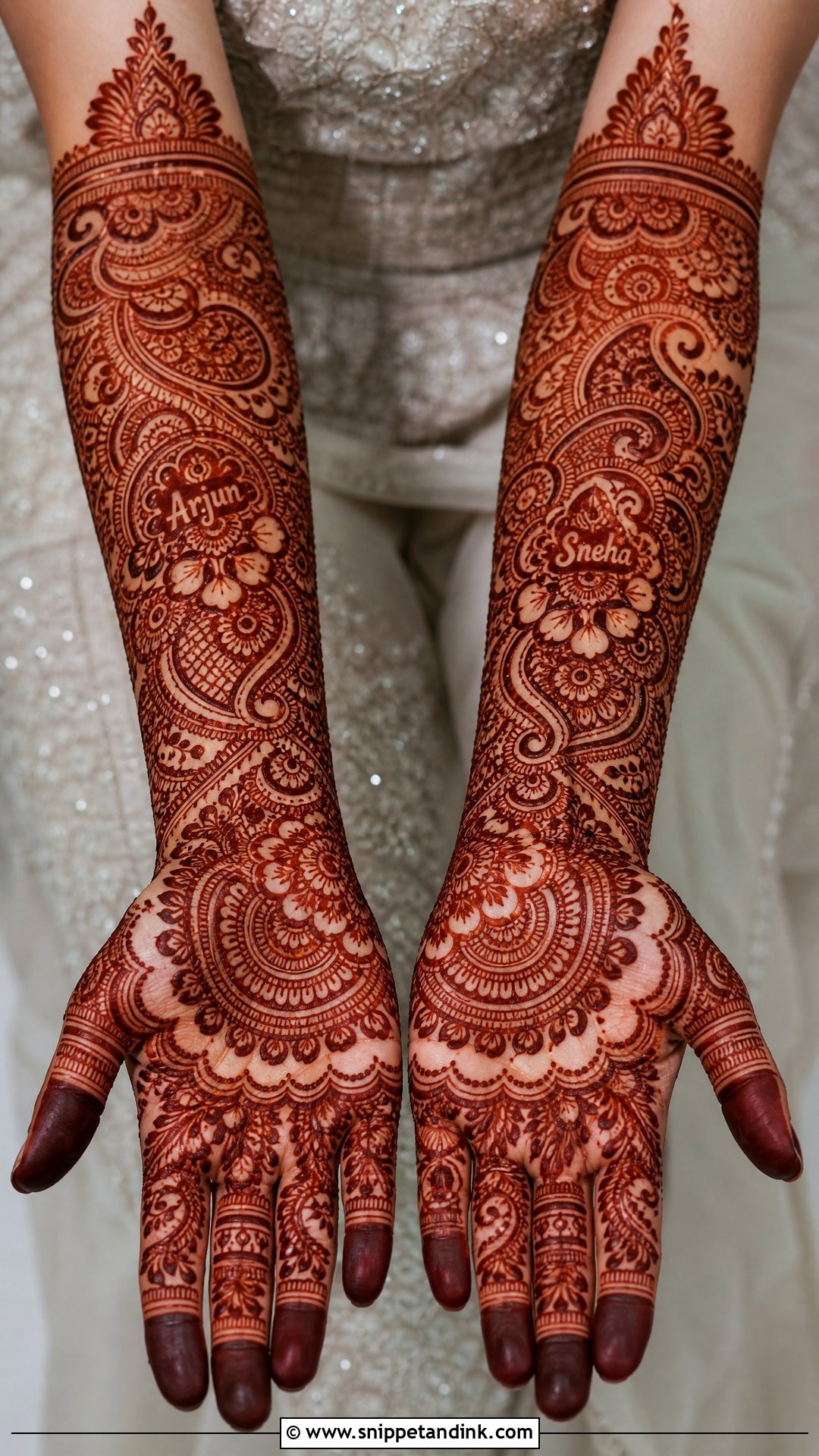
A name is the easiest personal detail to add without changing the whole design. I hide it in a paisley, inside a mandala, along a vine or in the wrist cuff. Initials stay subtle; a full name turns into the traditional game of the groom searching for it. The lettering needs to be readable but not so large that it breaks the pattern, and I write it in the same line weight as the surrounding work so it blends in. Double-check the spelling with me before the cone touches your hand.
10. Bride Groom Mehndi Design
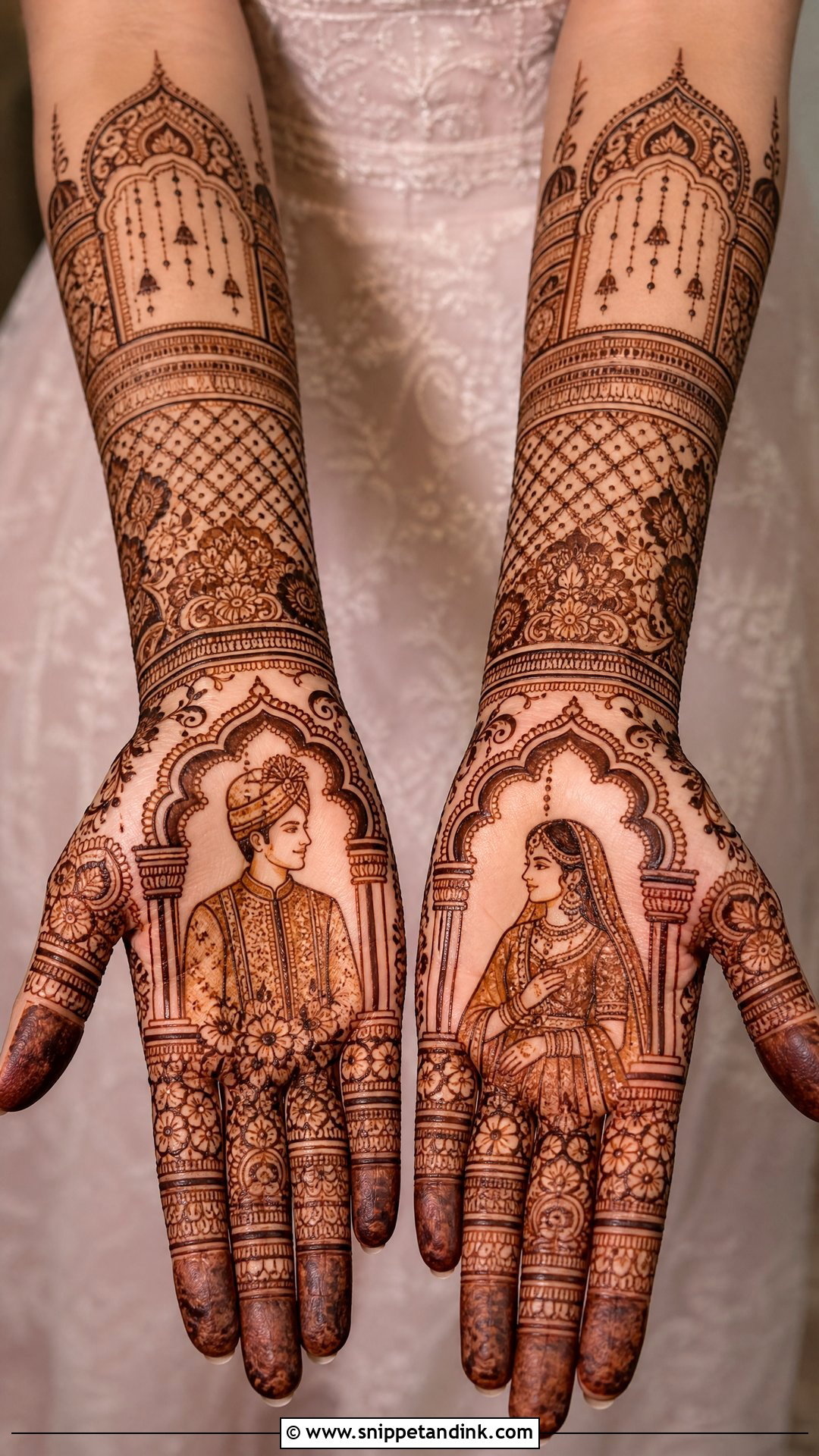
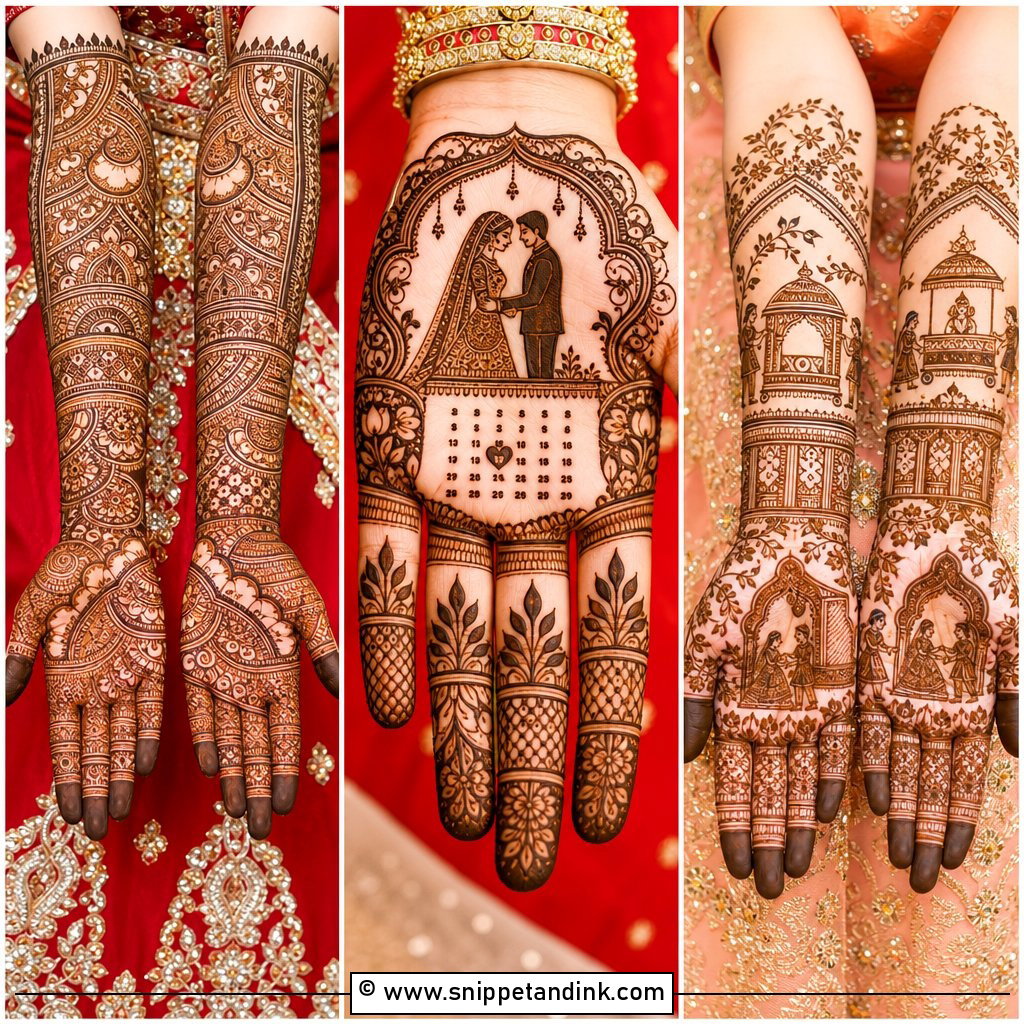
Bride and groom designs turn the palms into a story, with the bride on one palm and the groom on the other, framed by florals, mandalas, doli motifs or palace details. They’re emotional and they draw a crowd at the mehndi. I set the figures inside clean circular or arched frames so they don’t get lost. If realistic faces feel like too much, silhouettes are a softer option and far more forgiving if the paste spreads a little.
11. Portrait Bridal Mehndi Design
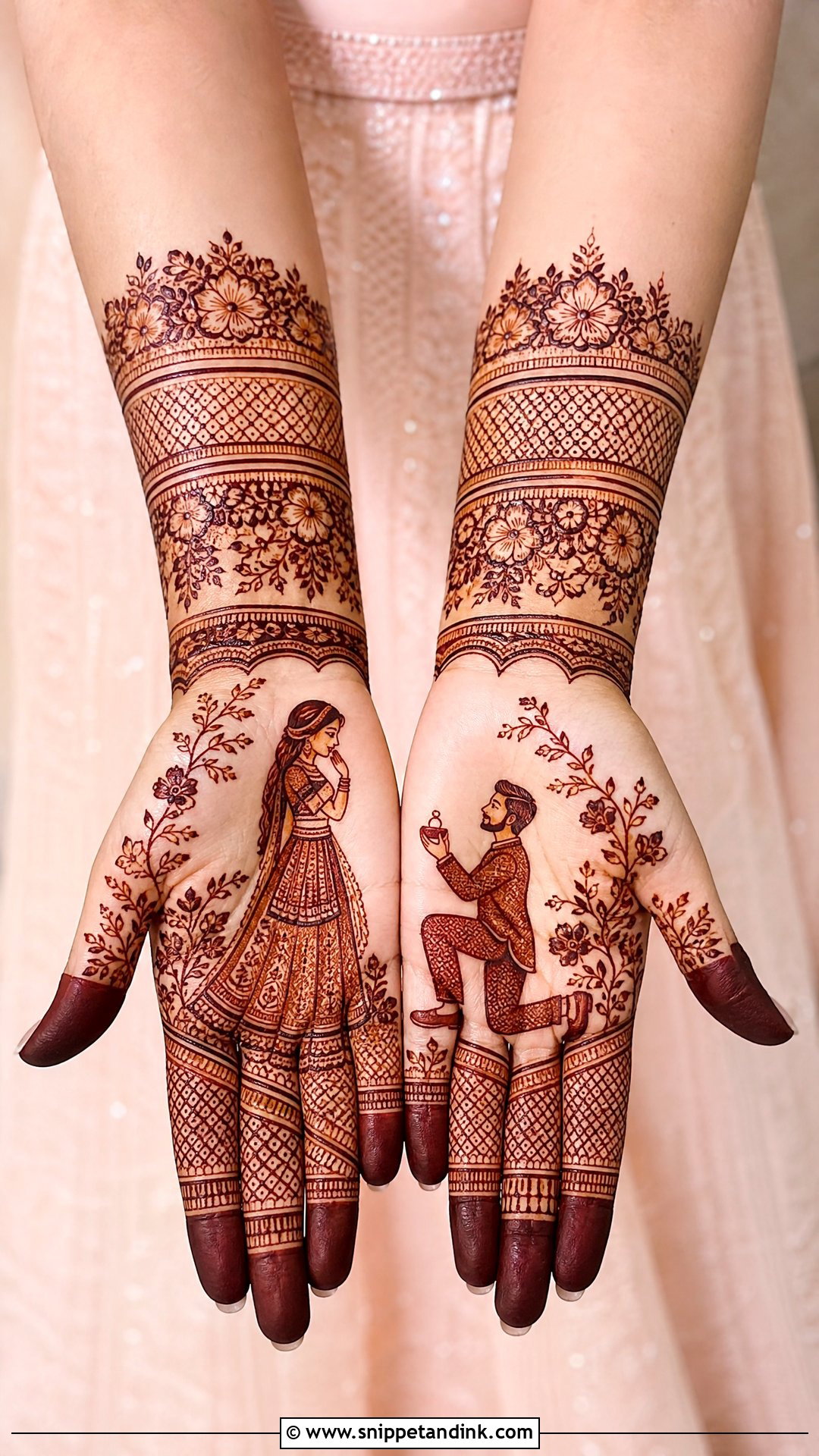
Portrait mehndi goes further than simple figures: detailed bride and groom faces, a proposal scene, a wedding entry or another couple moment. It needs a skilled artist, so look at close-up photos of her past portraits before booking, not just wide shots of finished hands. Palms and forearms give the space it needs. It’s one of the slowest designs to draw, so build that into your schedule, and keep the surrounding florals and jaali quiet so the portrait stays the focus.
12. Mandala Bridal Mehndi Design
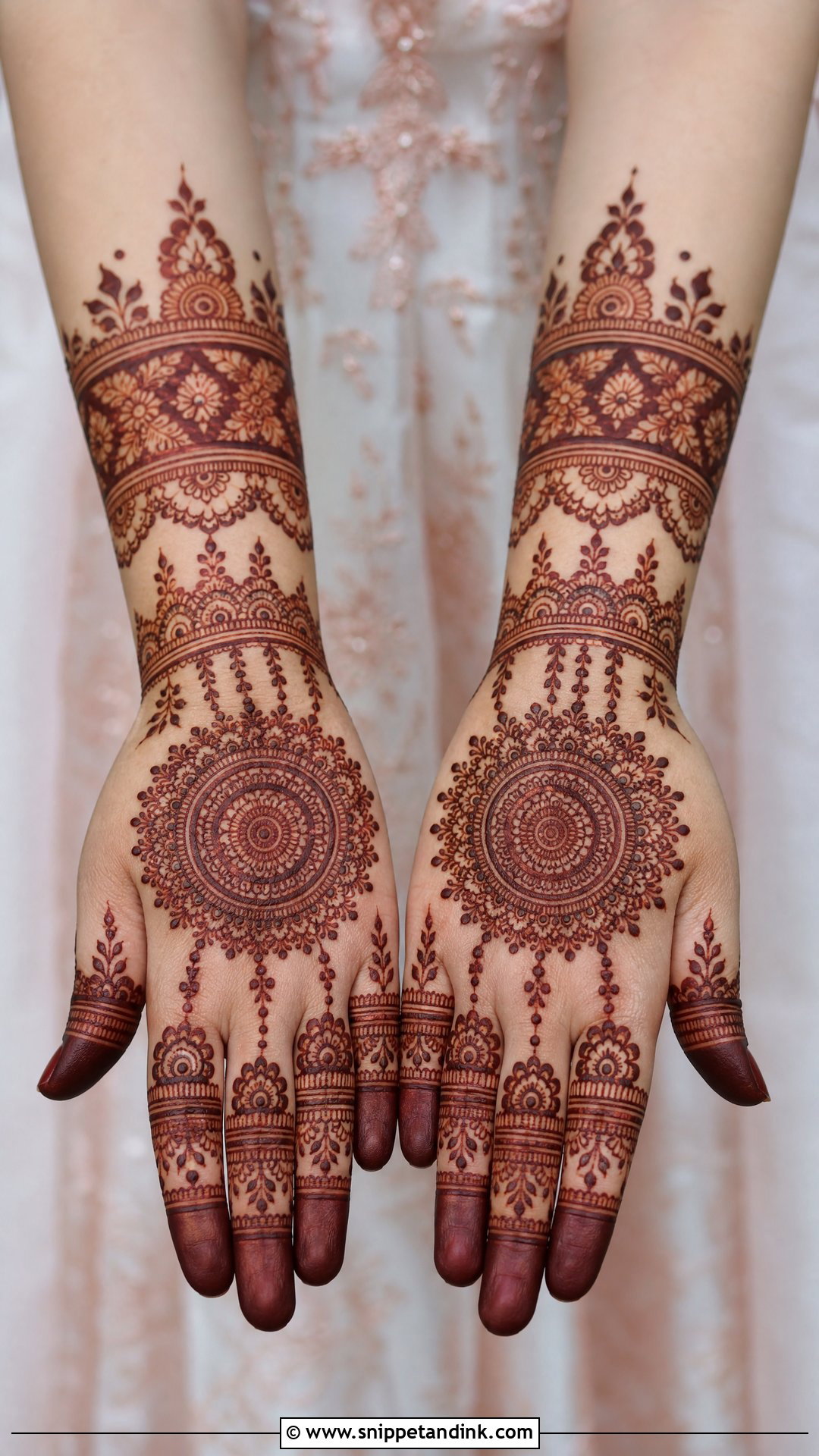
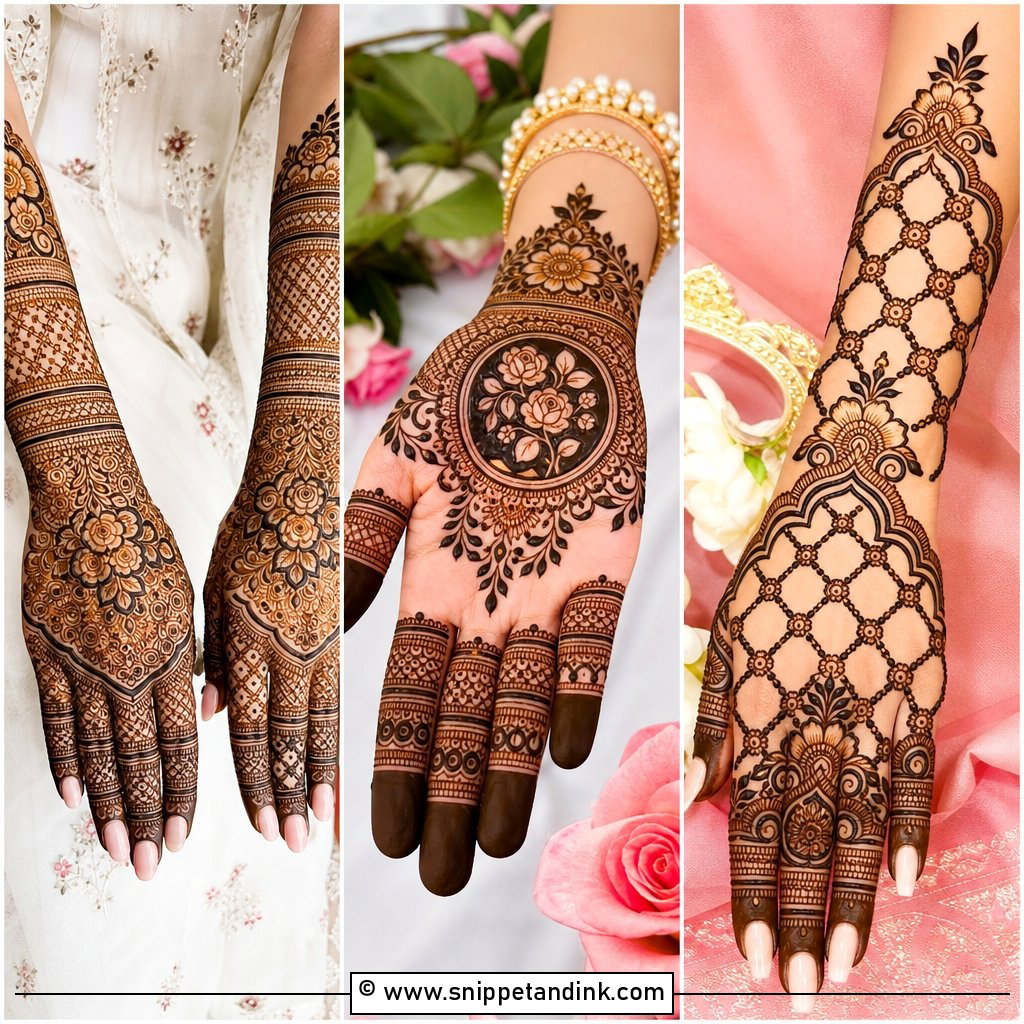
A mandala gives the hands a calm centre. The circle usually sits in the middle of the palm, surrounded by leaves, small florals, dotted chains and finger patterns, with wrist cuffs and forearm bands added for a bridal version. It’s symmetrical without needing dense coverage, and it scales down well for small hands. On the back hand, a mandala can connect to ring-style finger chains for a jewellery effect. Of everything here, it’s the design that suffers most from a rushed hand, since any wobble in the circle is obvious.
13. Peacock Bridal Mehndi Design
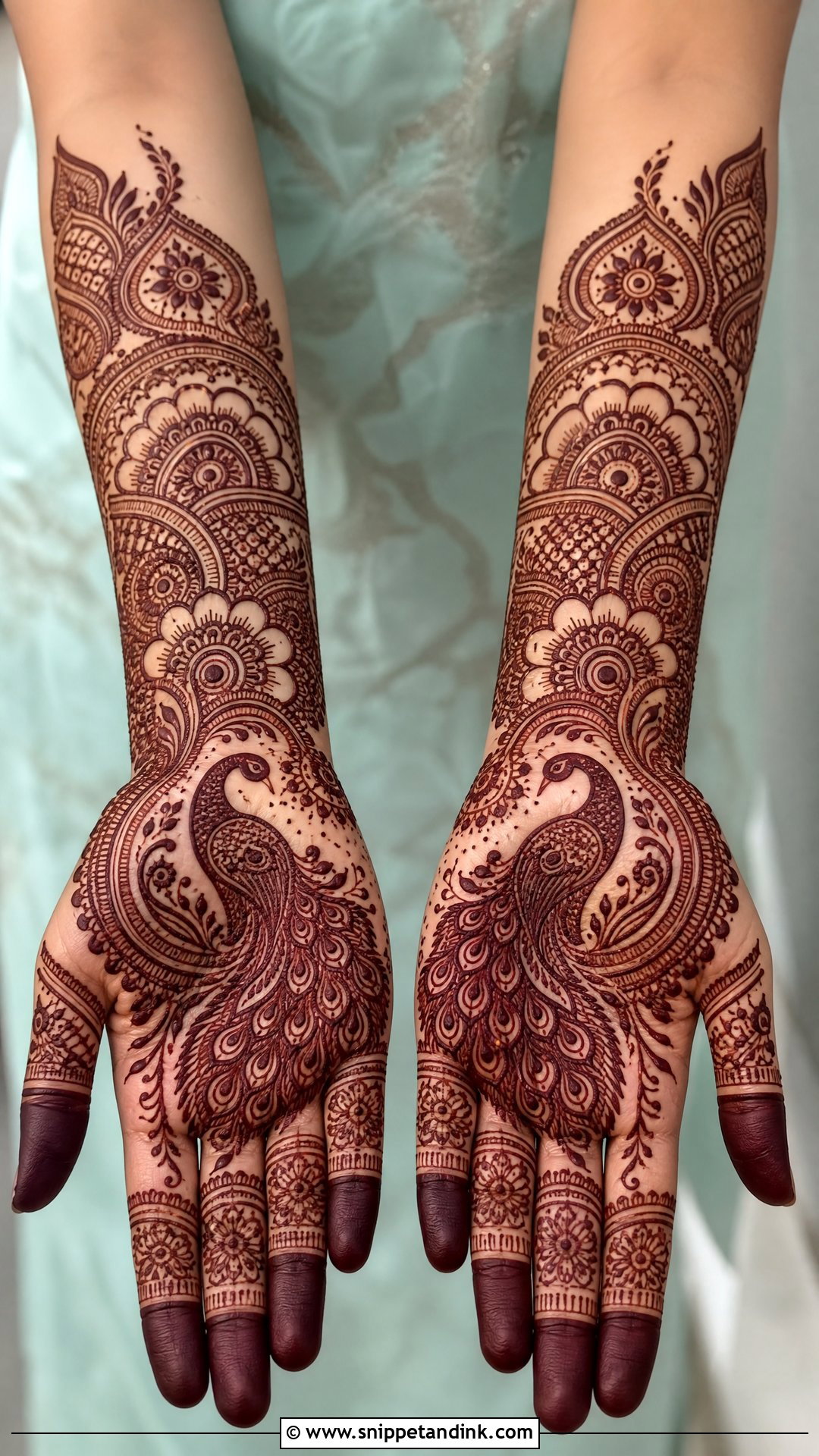
Peacocks bring movement. Placed on the palm, wrist or forearm, the feathers can flow into paisleys, florals and curving vines instead of a grid-like layout. Two mirrored peacocks look balanced; one large bird with detail around it feels more artistic. The feathers are where I add shading, fine lines and dotted accents, which gives the design depth once it stains. Classic Indian outfits and jewel-toned lehengas suit it best.
14. Lotus Bridal Mehndi Design
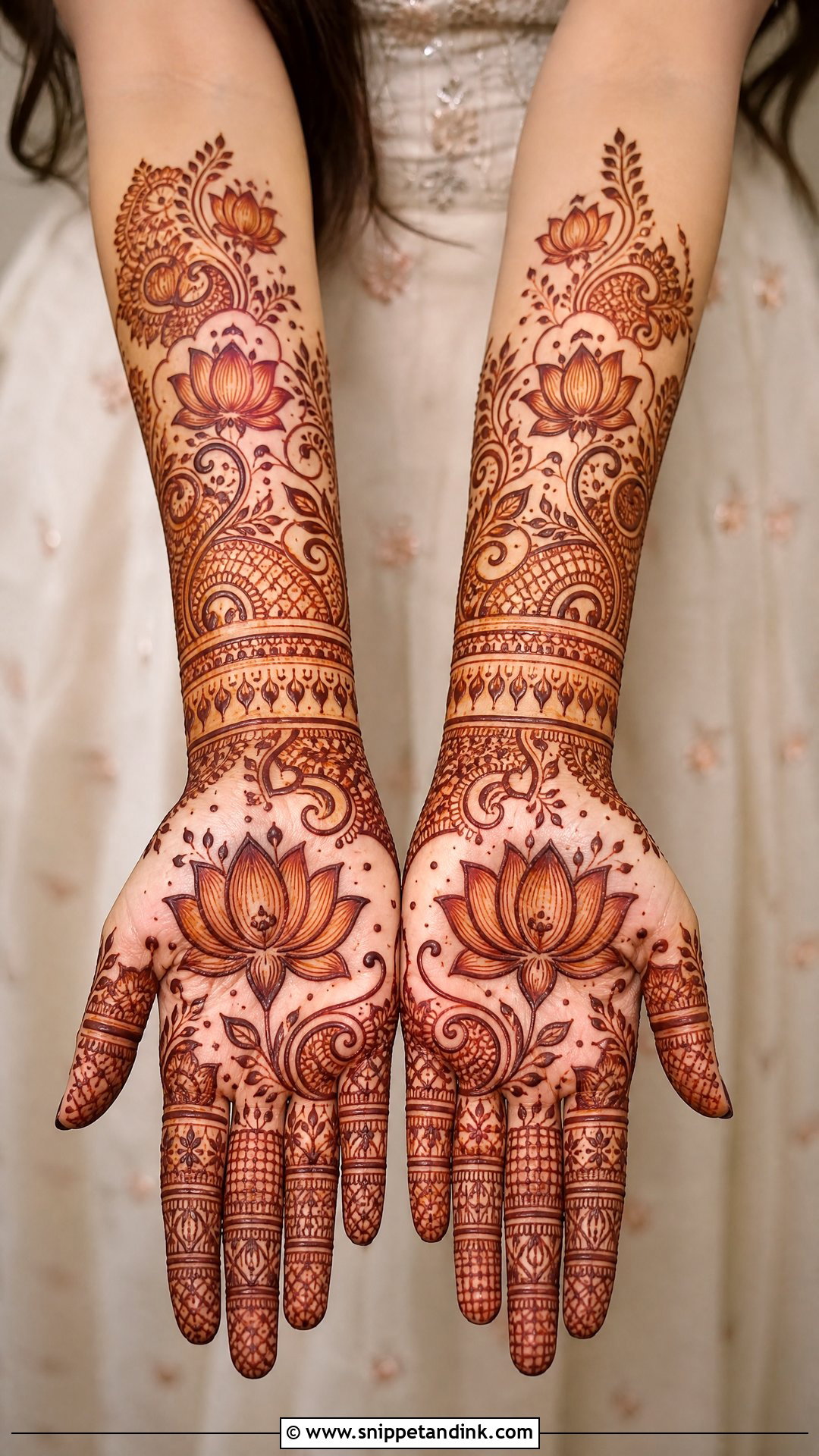
The lotus works as a palm centrepiece, a wrist band detail or a repeated motif along the forearm, alongside paisleys, vines, mandala circles and dotted fillers. For a modern look I draw larger lotus flowers with open space around them; for a heavier one, dense lace detail and filled fingertips. The shape is easy to recognise even from a distance, which is a big reason it photographs well.
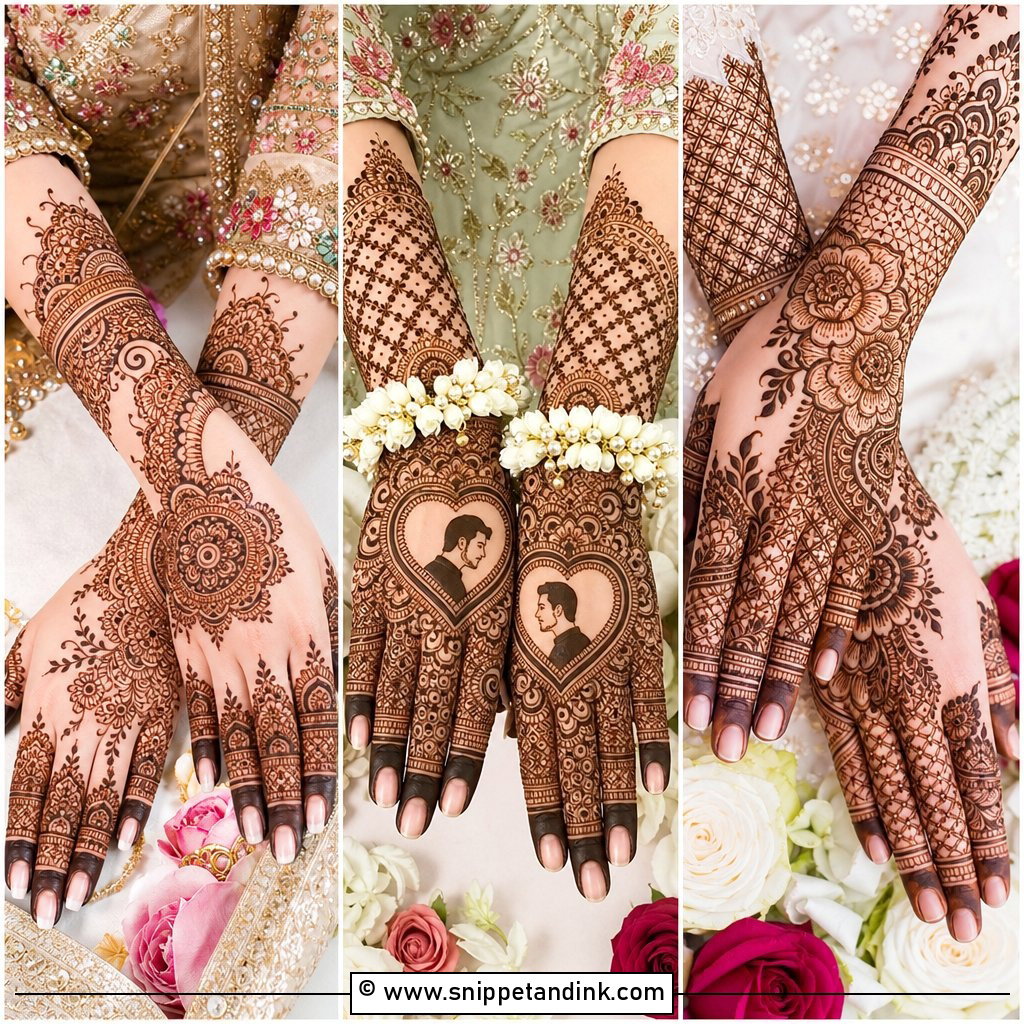
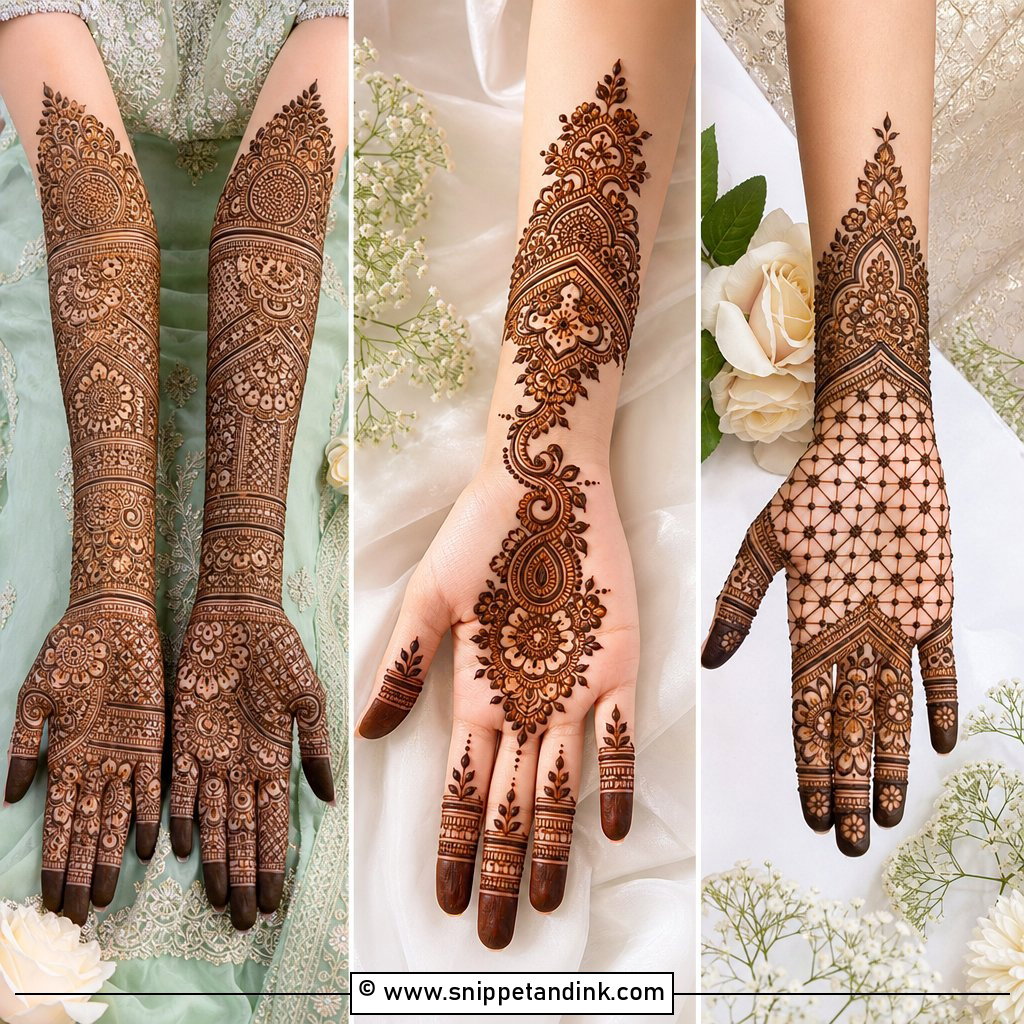
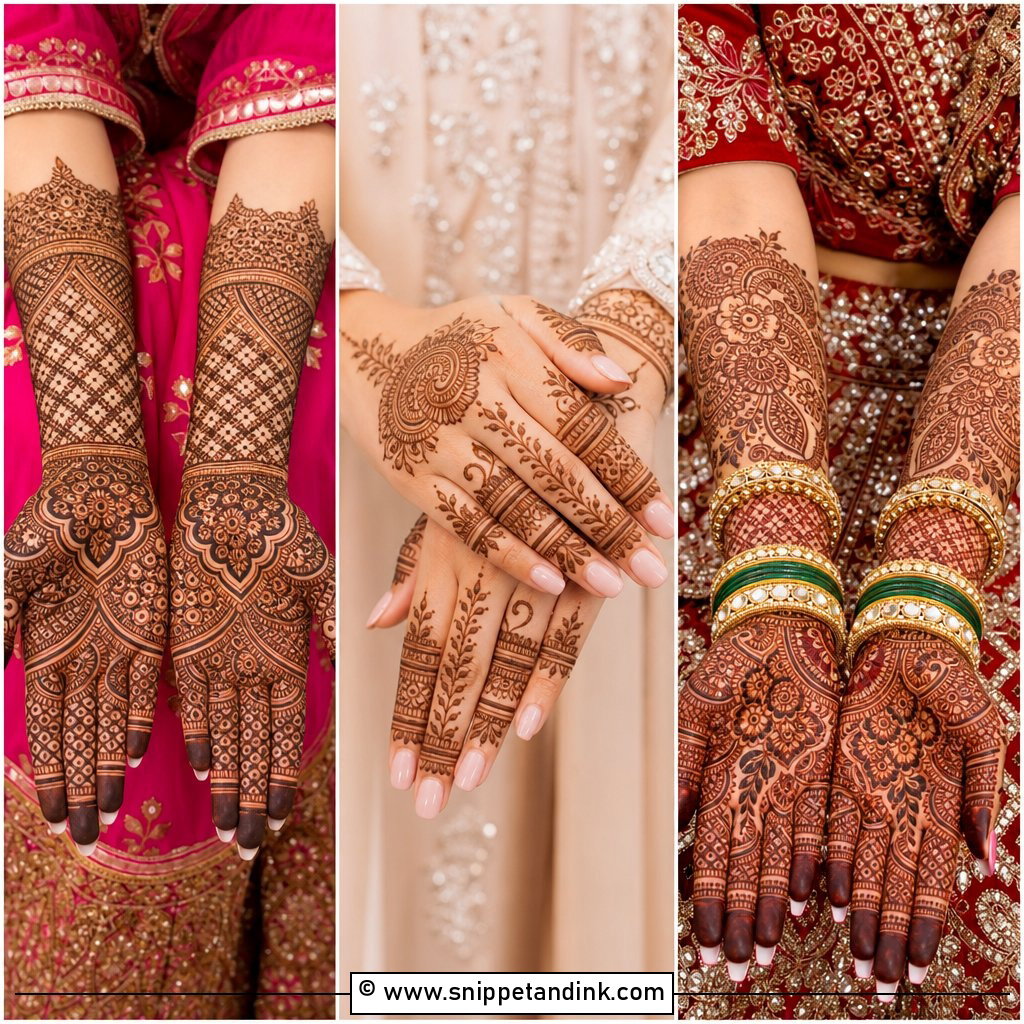
15. Floral Bridal Mehndi Design
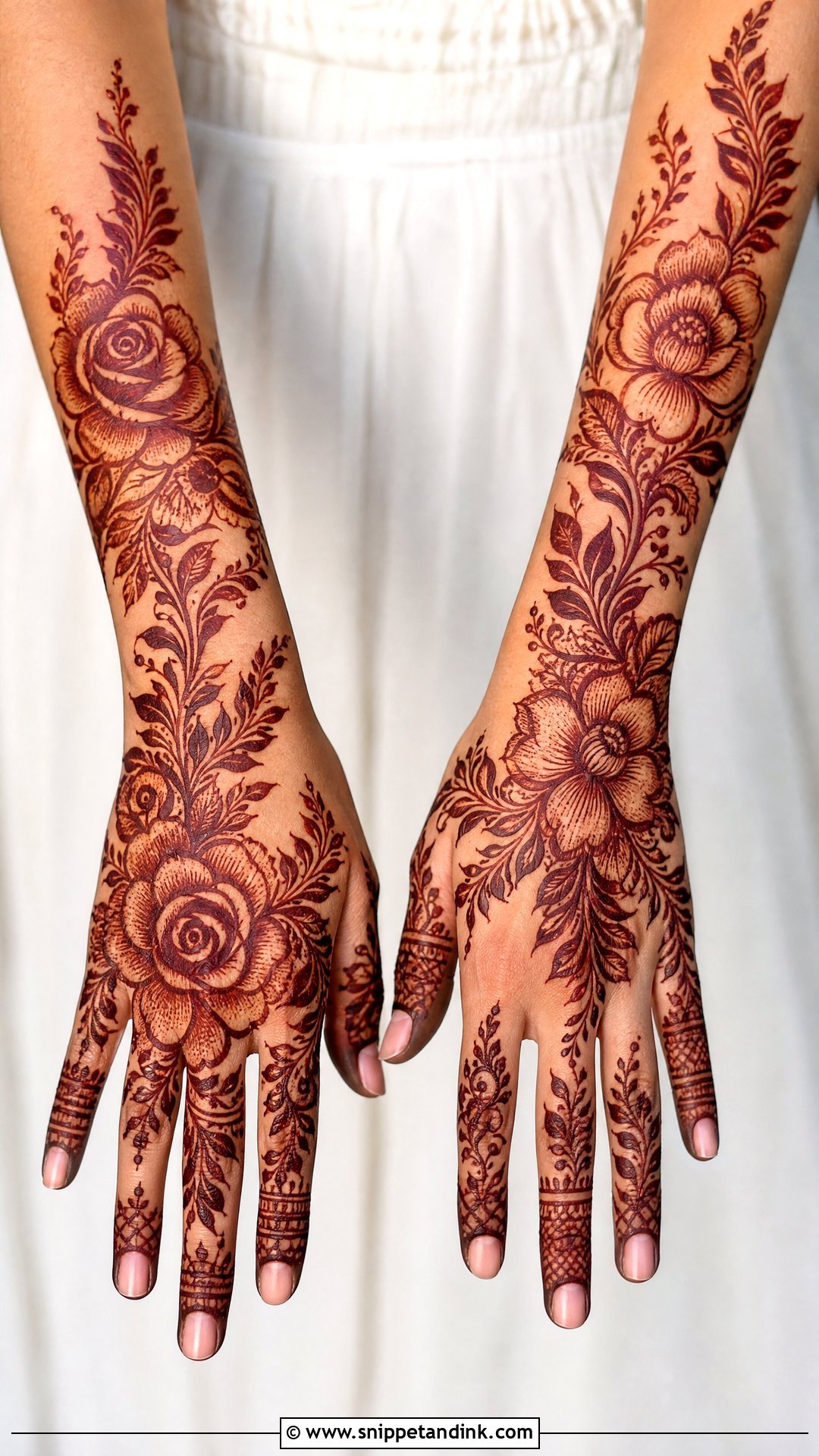
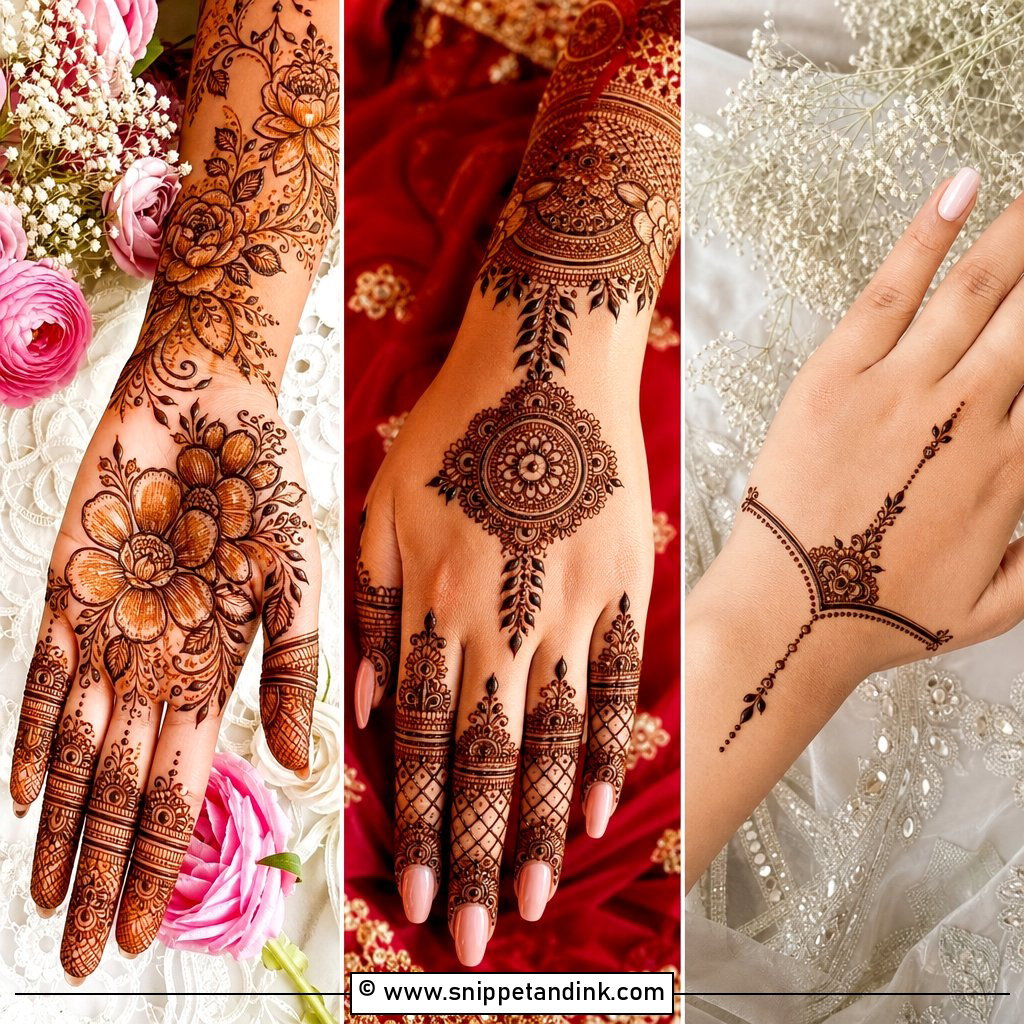
Florals are the most flexible choice I offer. Change the flower size and spacing, and the same roses, lotus blooms, leafy clusters and shaded petals become bold Arabic, dense Indian or soft minimal work. The design can flow diagonally or sit in symmetrical sections. Florals soften the look of the hands and sit easily beside rings, bangles and nail colour, and if your outfit has floral embroidery, the henna can echo it.
16. Jaali Bridal Mehndi Design
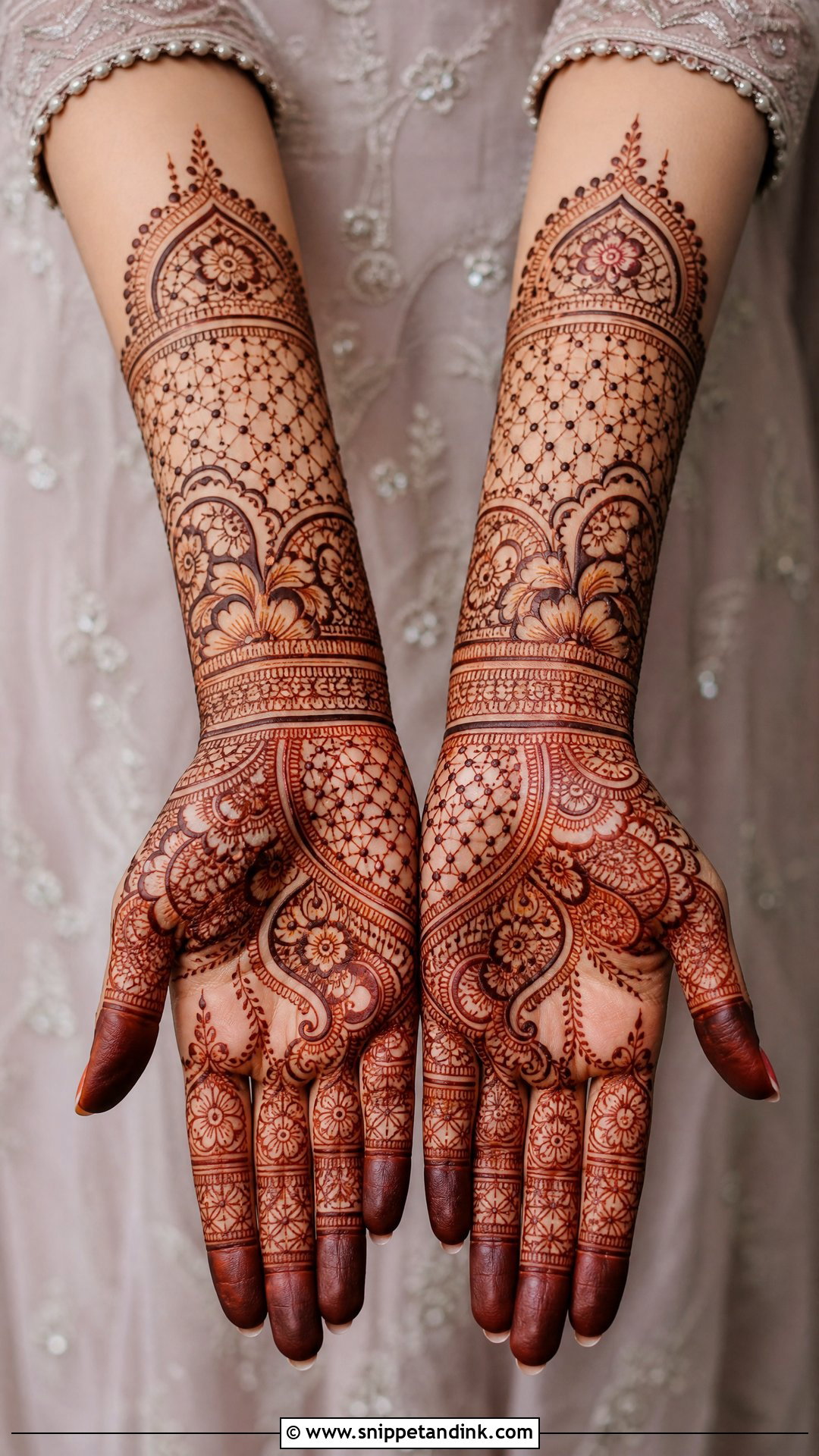
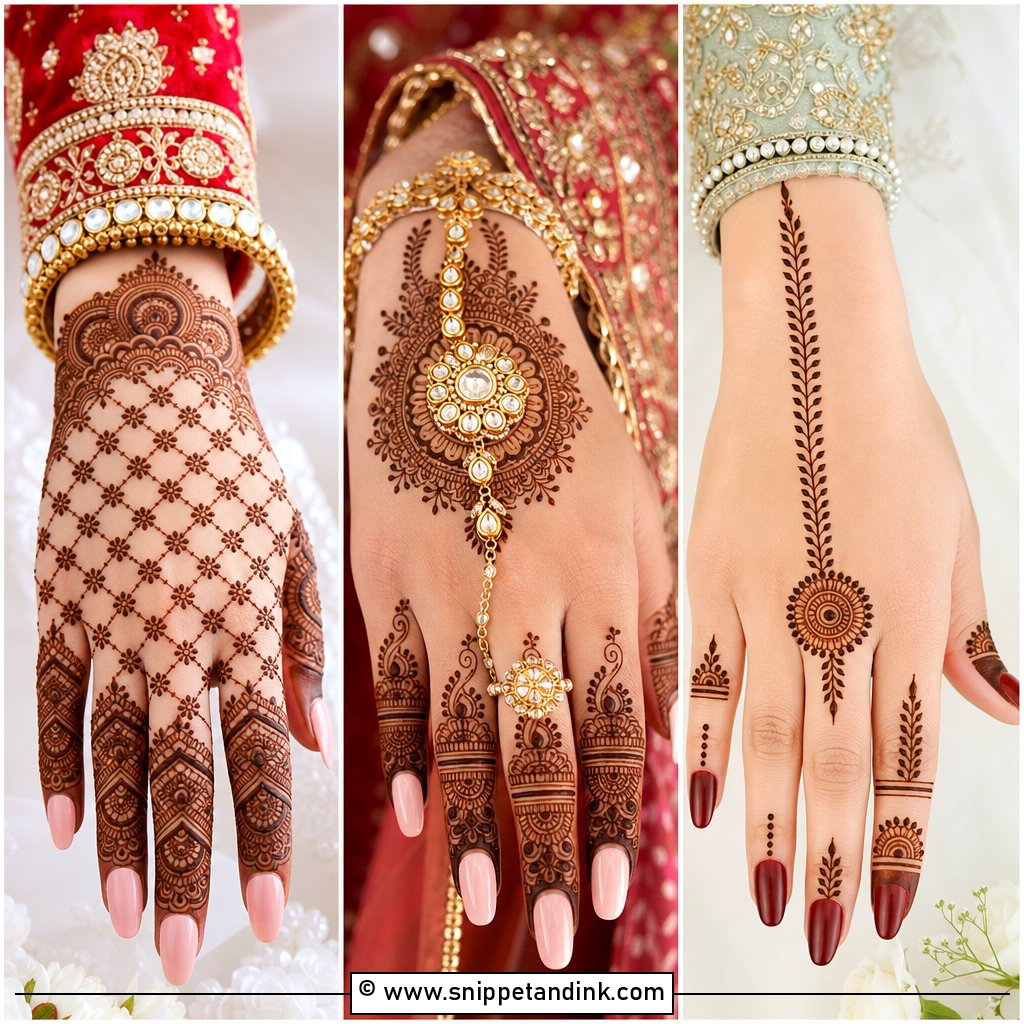
Jaali gives a lace finish that stays organised. The mesh can sit on palms, backs, wrists or forearms, usually beside florals, paisleys and bracelet bands, and it creates contrast next to bold motifs. I vary the mesh size across the hand, finer near the fingers and larger toward the wrist, so it doesn’t look flat. It’s slow, careful work; every line in a grid needs the same pressure on the cone, or the stain shows the difference.
17. Jewelry Bridal Mehndi Design
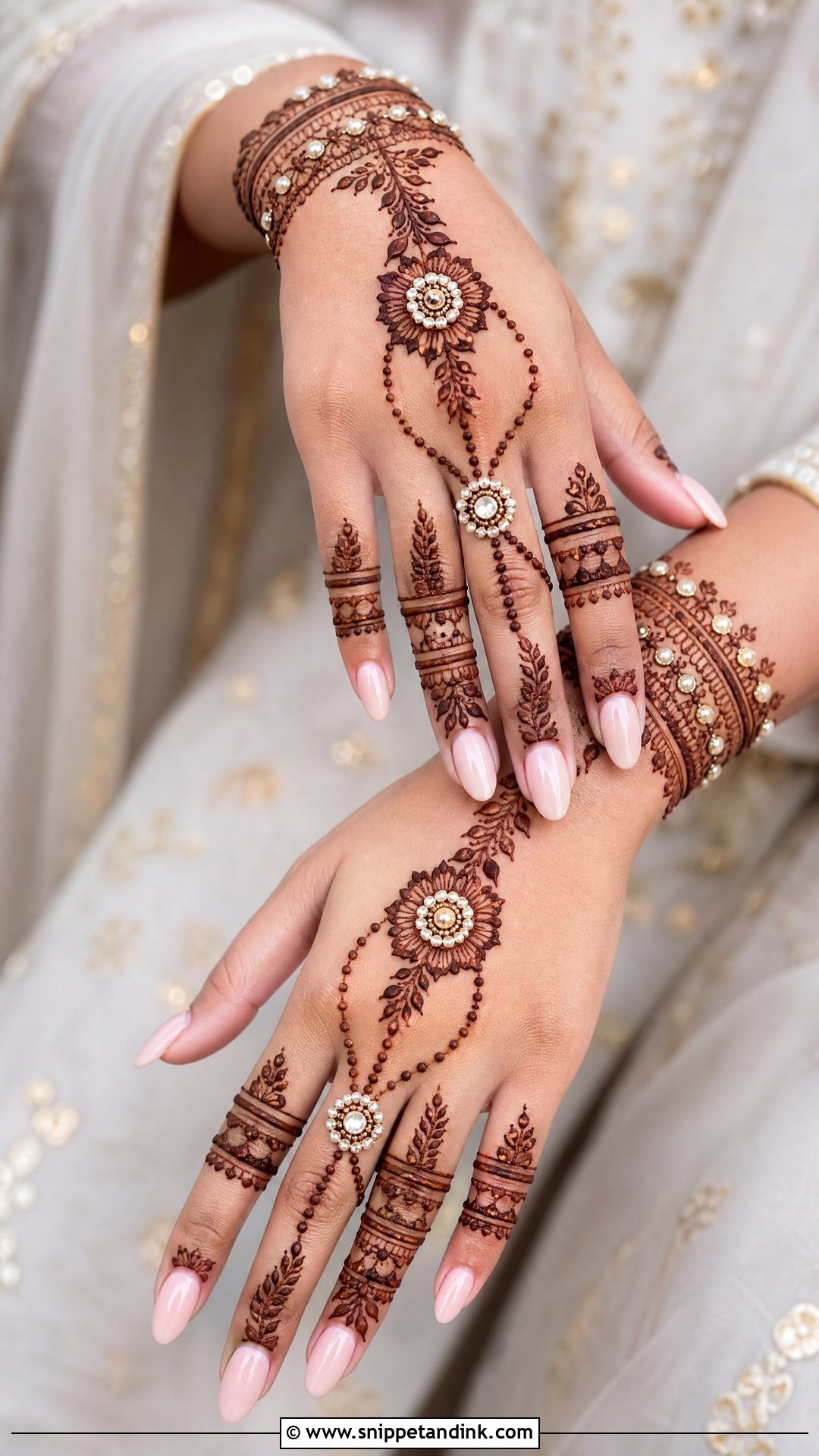
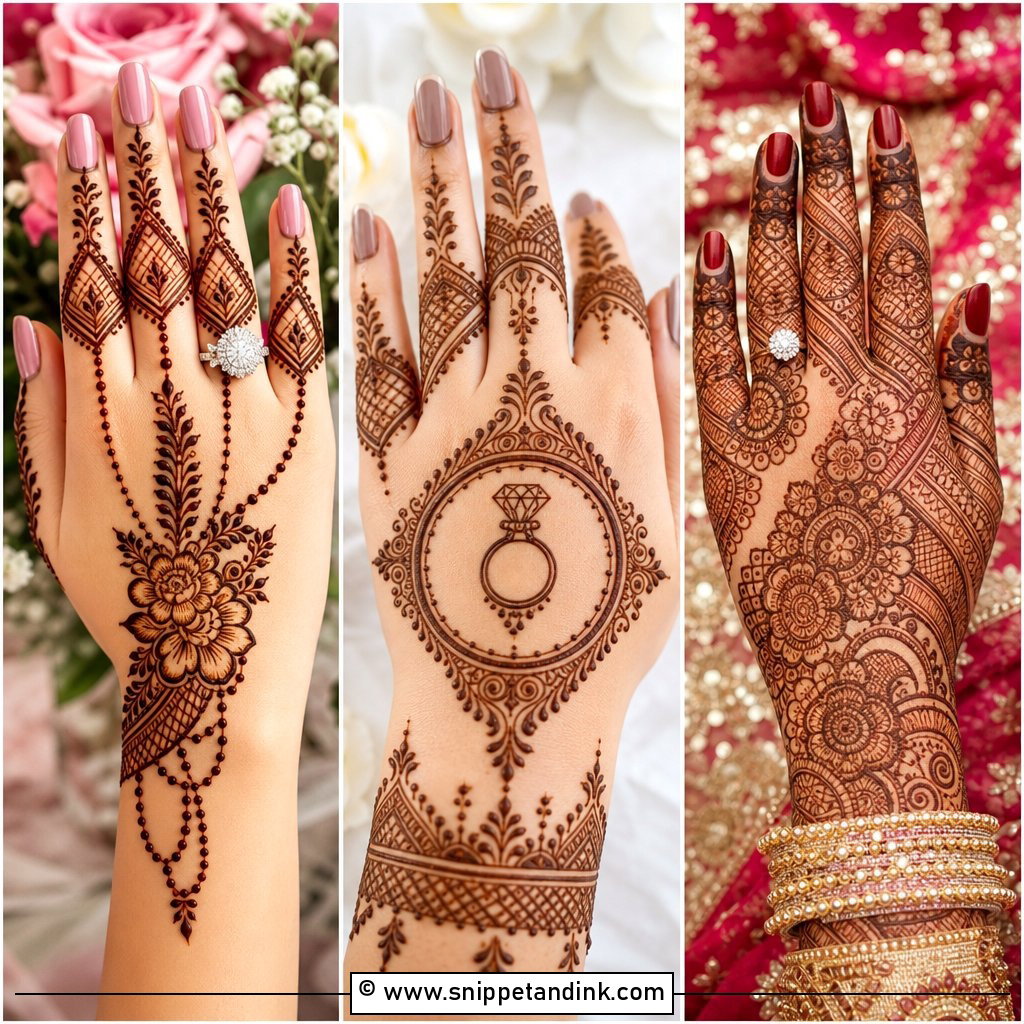
Jewellery mehndi draws hand ornaments in henna: ring chains, bracelet cuffs, haath phool patterns, finger bands and wrist-to-finger links. It decorates the backs of the hands even before you put on a single piece. Florals, small mandalas, pearl-like dots and leafy chains make it bridal. With minimal rings it really comes into its own, because the henna does the work. I often keep the palms traditional and put the jewellery-style work on the backs for contrast.
18. Minimal Bridal Mehndi Design
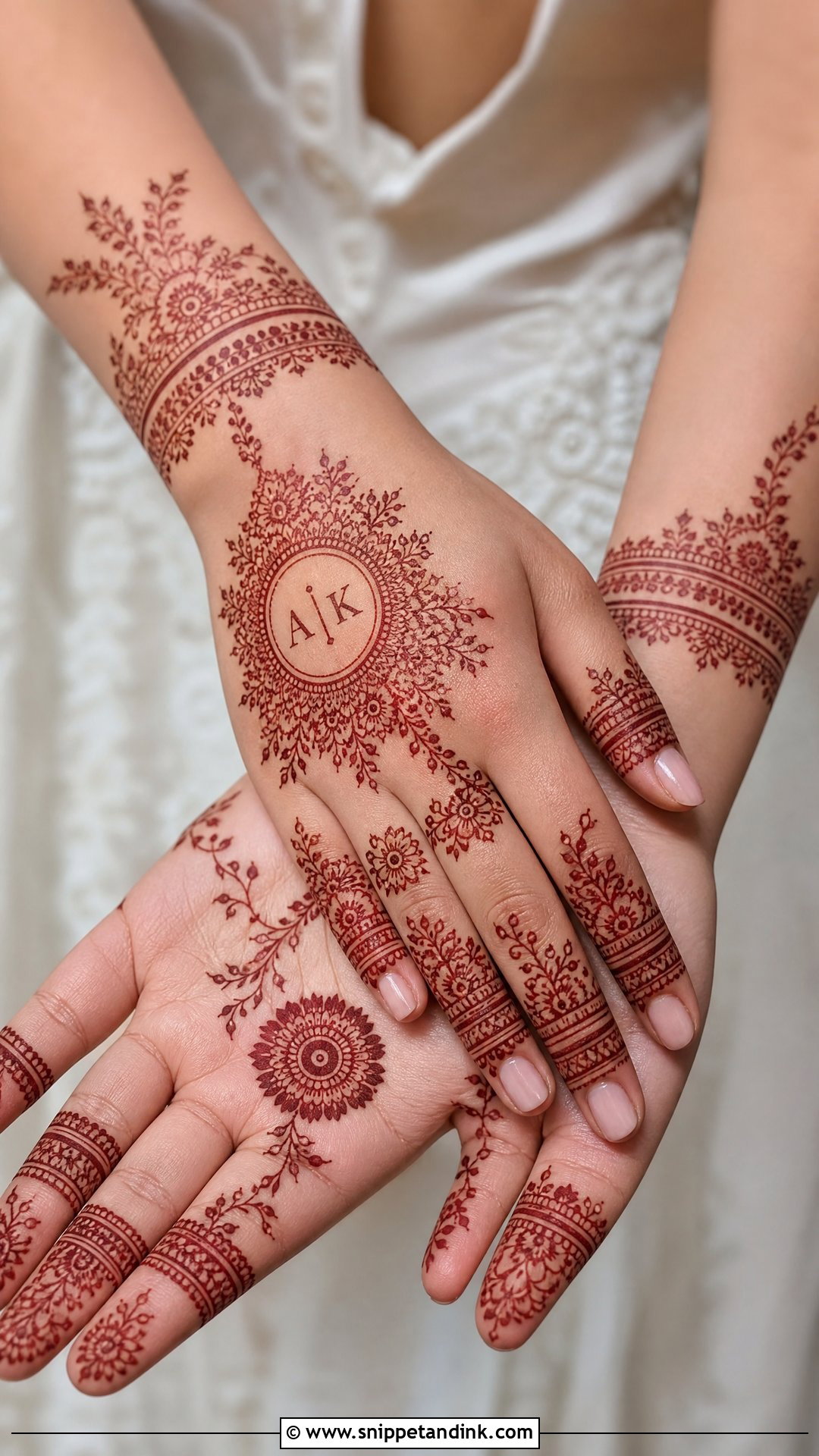
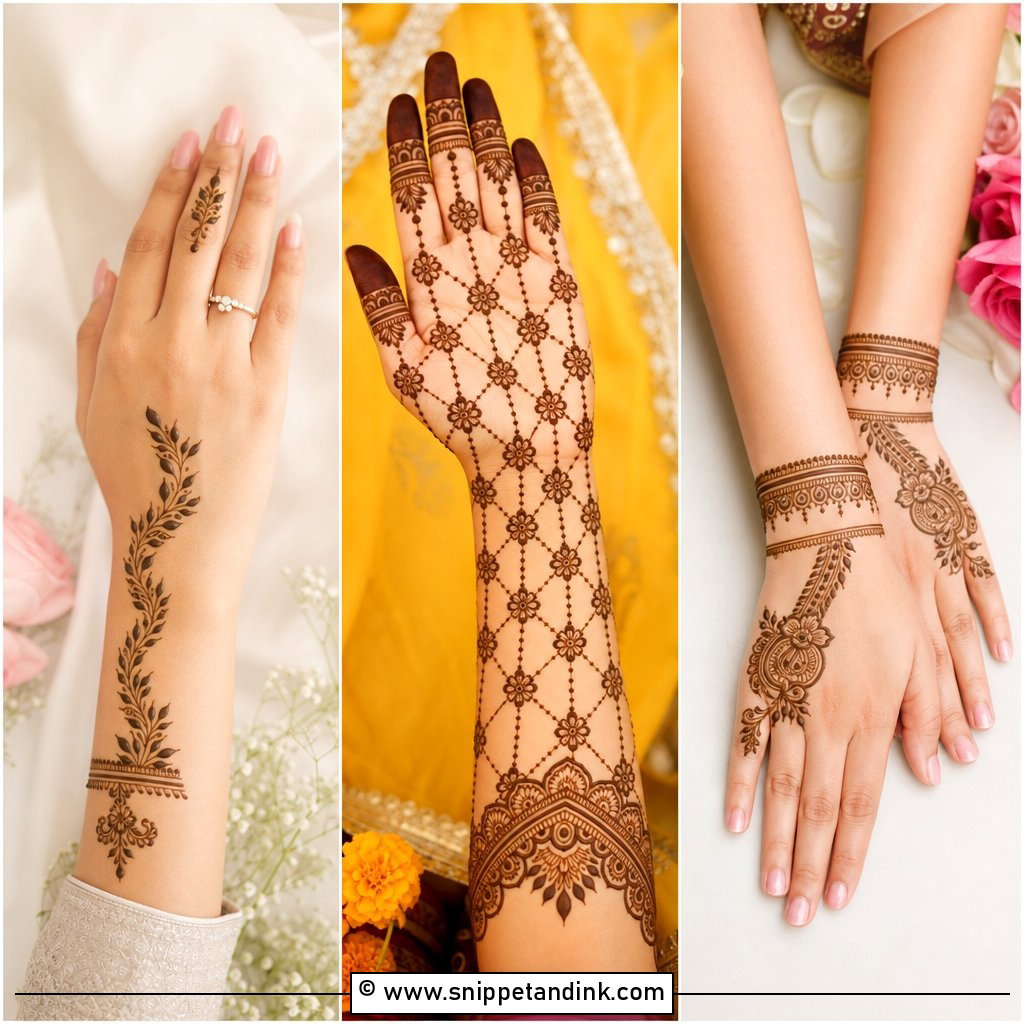
Minimal doesn’t mean too simple for a wedding. Clean mandalas, fine finger detail, small florals, wrist cuffs, initials and balanced negative space can still look bridal. It suits contemporary outfits, pastel lehengas, gowns, simple silk sarees and shorter ceremony schedules. Because there’s so little on the hand, every line is exposed, so I take minimal work more slowly than you’d think. It’s the right choice when you want henna that complements their outfit rather than competing with it.
19. Modern Bridal Mehndi Design
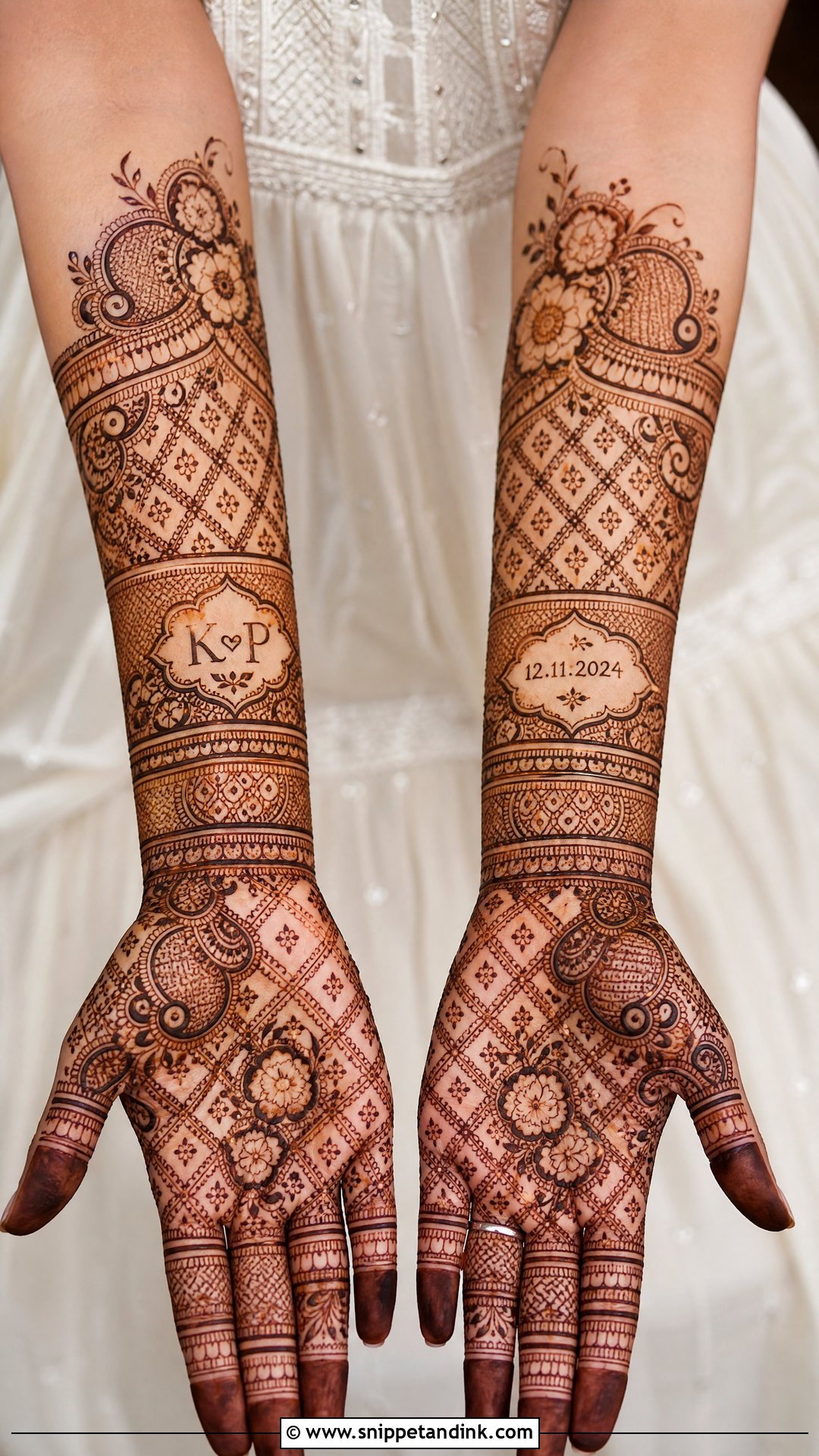
Modern bridal mehndi keeps tradition but updates the details: geometric grids, clean florals, spaced paisleys, bracelet bands, initials, wedding dates and sleek finger patterns, in full or medium coverage. The structure I use most is one statement element, a mandala palm or a portrait, with the rest of the hand kept lighter. That contrast is what makes the design easy to read. It pairs with fusion outfits, soft glam makeup and both traditional and contemporary jewellery.
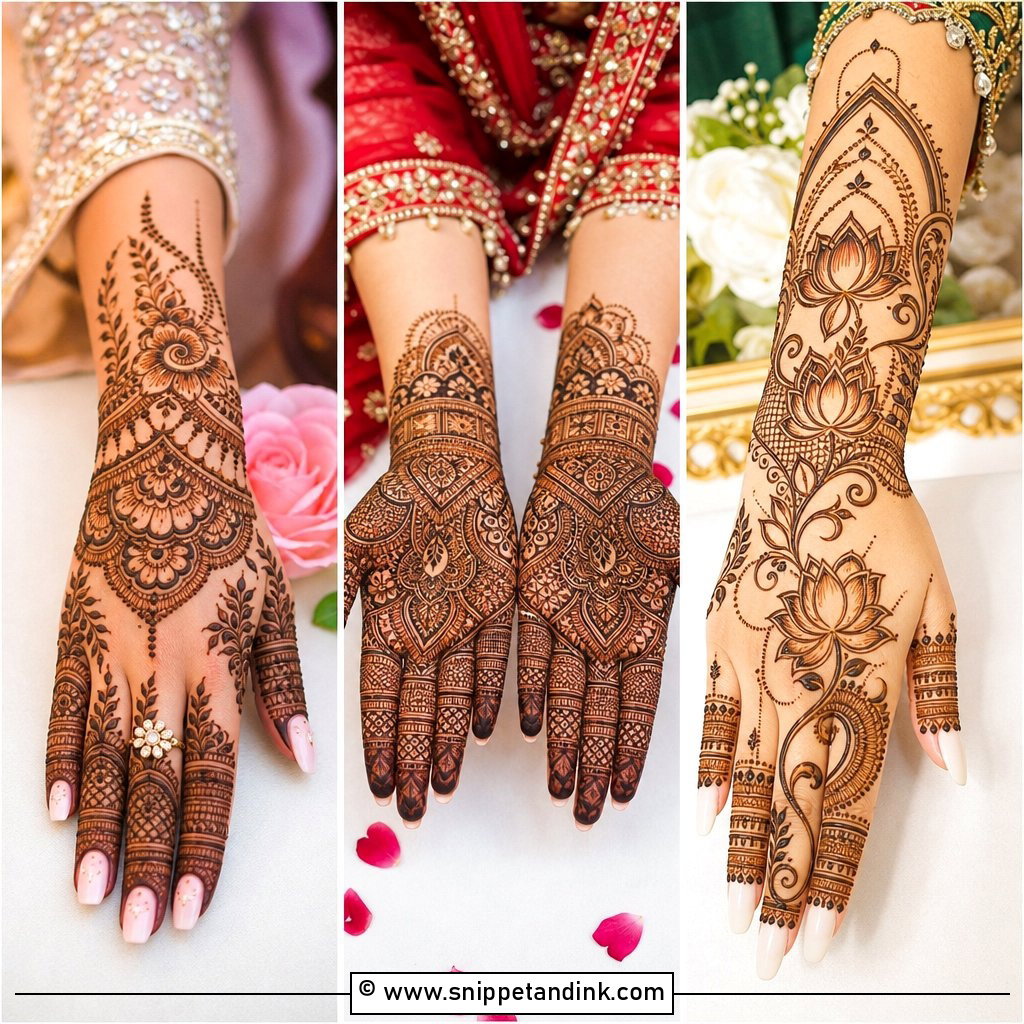
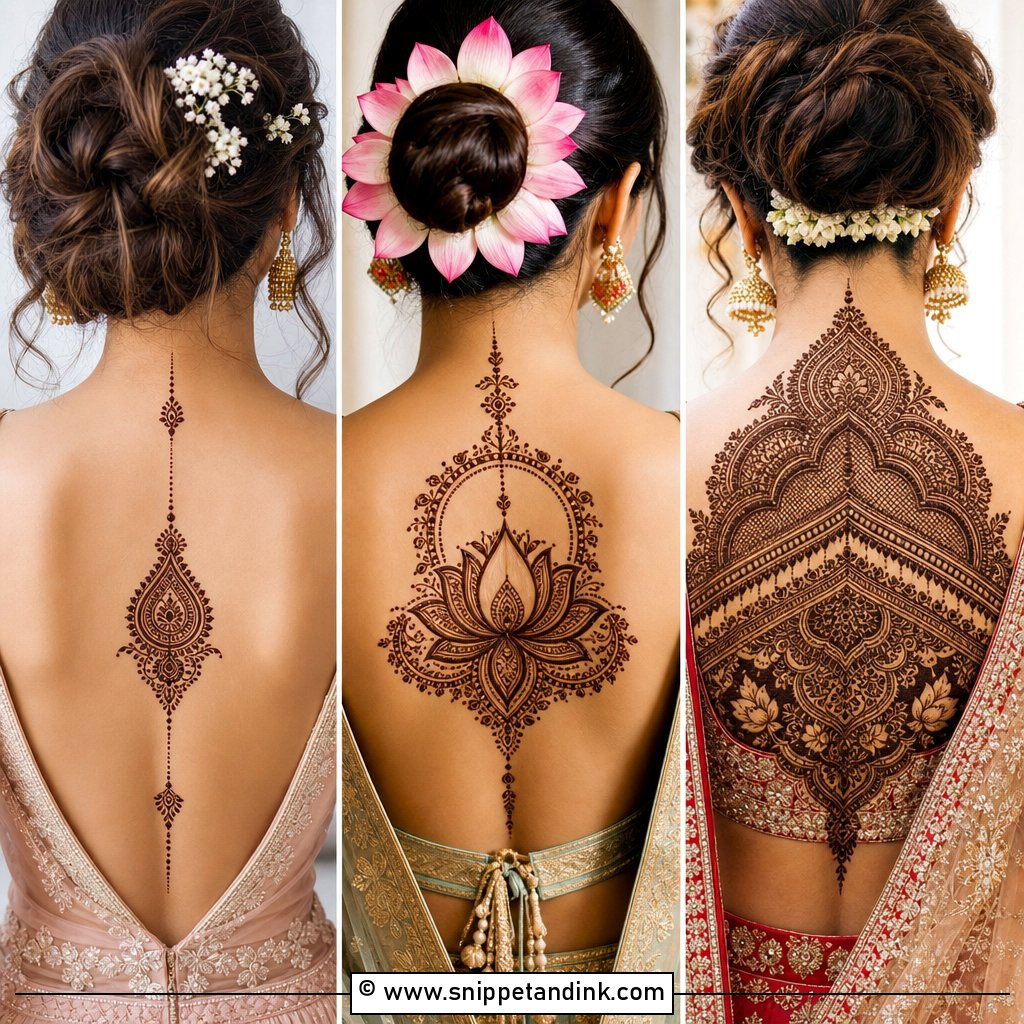
20. Simple Bridal Mehndi Design
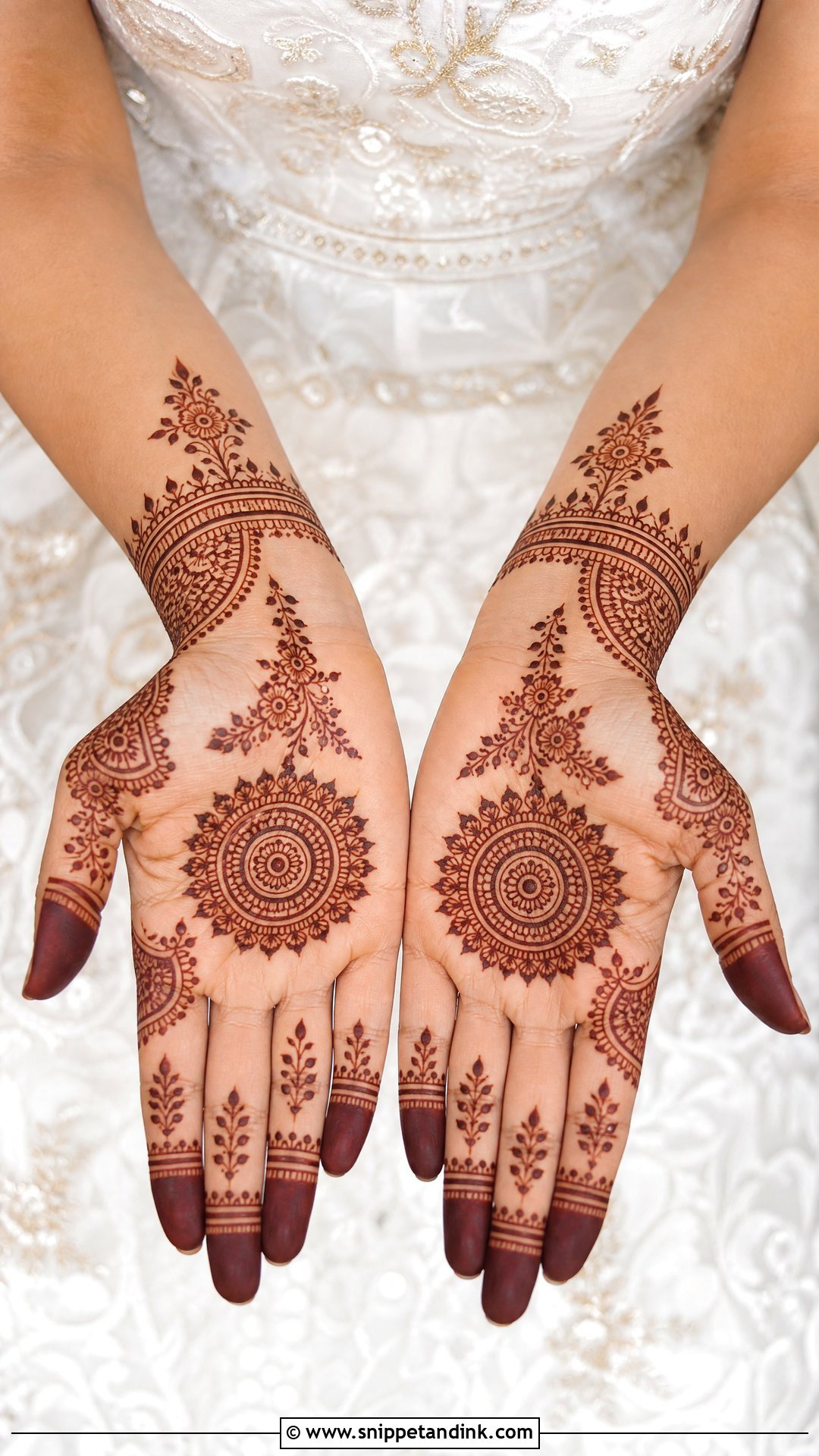
A simple design might be a palm mandala, floral trails, paisley corners, decorated fingers and a neat wrist band. It’s quicker to apply and lighter to wear, and it suits intimate weddings, court ceremonies and destination trips. What matters is that it feels complete from fingertip to wrist, even without density. I make the motifs slightly bolder than usual, since a simple design relies on a few strong shapes rather than lots of fine ones.
21. Back Hand Bridal Mehndi Design
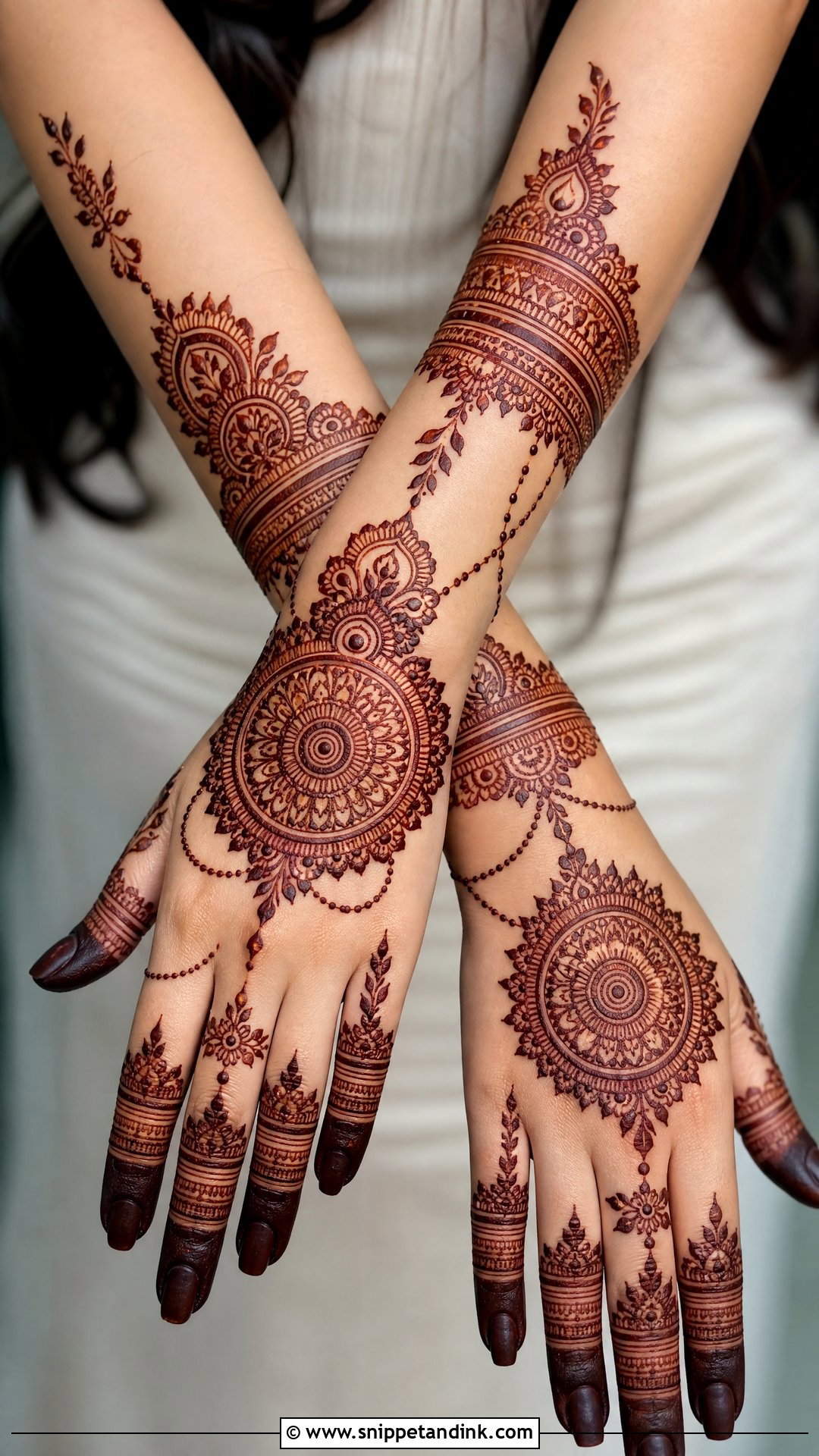
The back hand shows up constantly in ring, bangle, bouquet and ceremony photos. A complete bridal back hand might include a central mandala, floral vines, ring chains, bracelet cuffs and detailed fingers. If you wear heavy bangles, a design ending just above the wrist makes sense; if your sleeves are short, forearm coverage pays off. When the palms are very detailed, I keep the backs a little cleaner for balance. Look at the design with your hand relaxed and folded, not just spread flat, since that’s how it’ll be seen.
22. Front Hand Bridal Mehndi Design
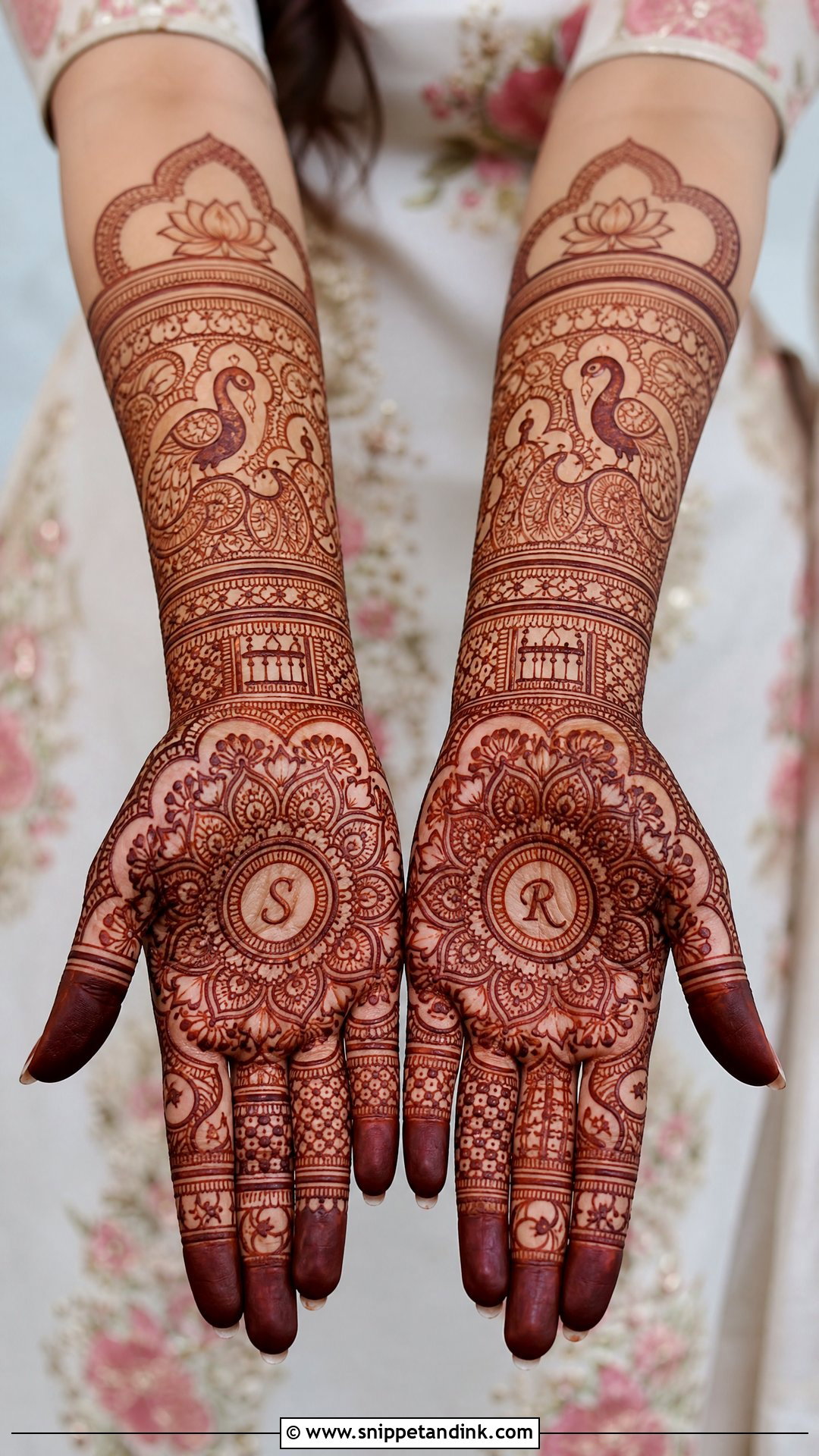
Palms hold the most meaningful details: mandalas, couple portraits, names, lotus motifs, peacocks, paisleys or wedding symbols. They also stain the deepest of anywhere on the hand, because the skin there is thicker, so palm colour usually comes out rich and bold. For a traditional look I fill the fingers completely and connect the palm to wrist bands; for a cleaner one, I leave the central motif open and frame it with fine detail. Check that both palms line up when you hold them together, as they will in ritual and blessing photos.
23. Bridal Mehndi Design For Small Hands
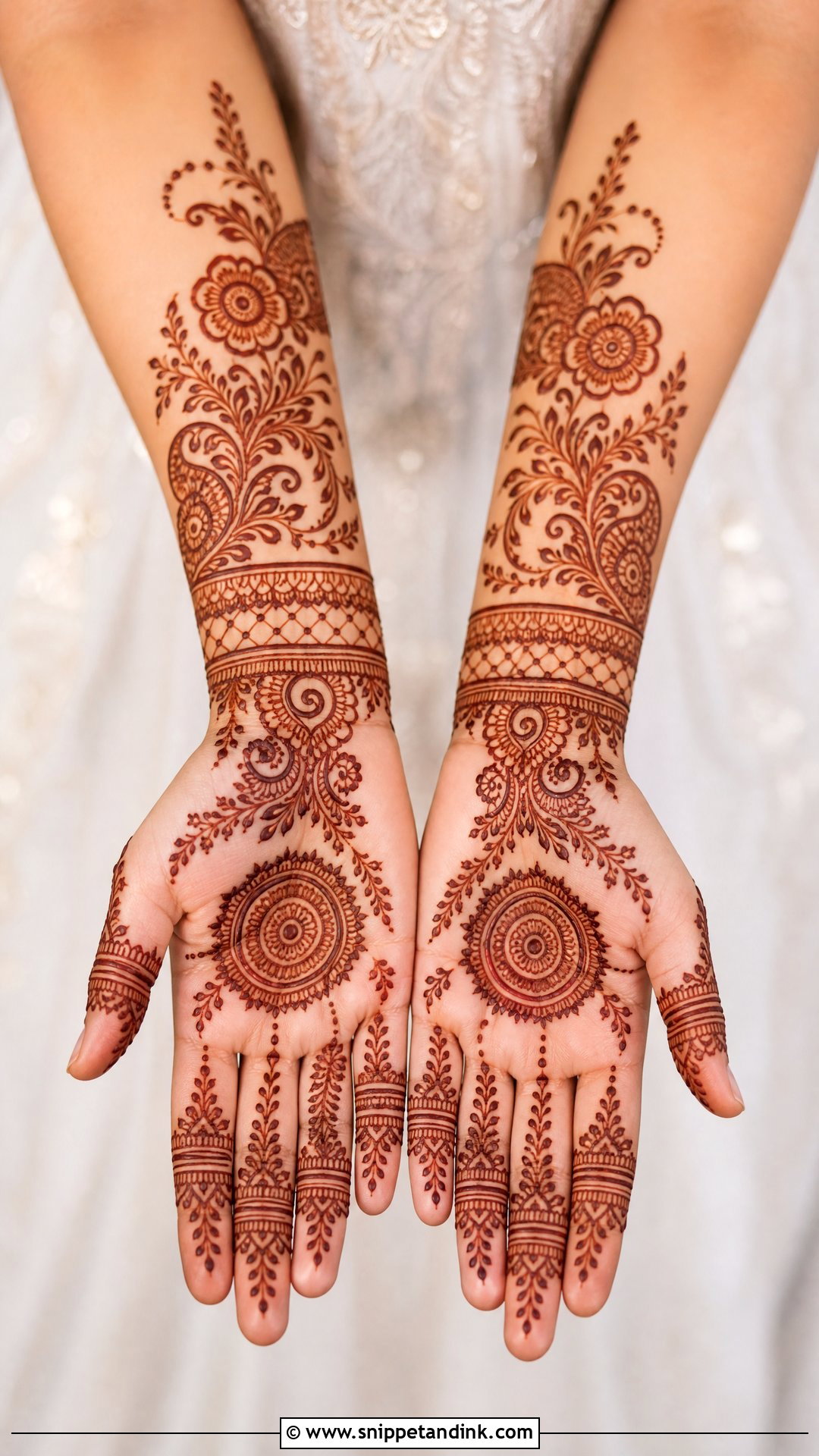
Small hands can carry full bridal mehndi; the trick is scale. Very large motifs swallow the space, so I use medium florals, slim paisleys, fine vines and neat finger work. A central mandala or diagonal Arabic trail lengthens the hand. I also leave out the tiniest fillers, because henna lines spread slightly as they stain and very small gaps close up into a blur. Small negative spaces, wrist cuffs and vertical patterns keep the design readable.
24. Bridal Mehndi Design For Dark Skin
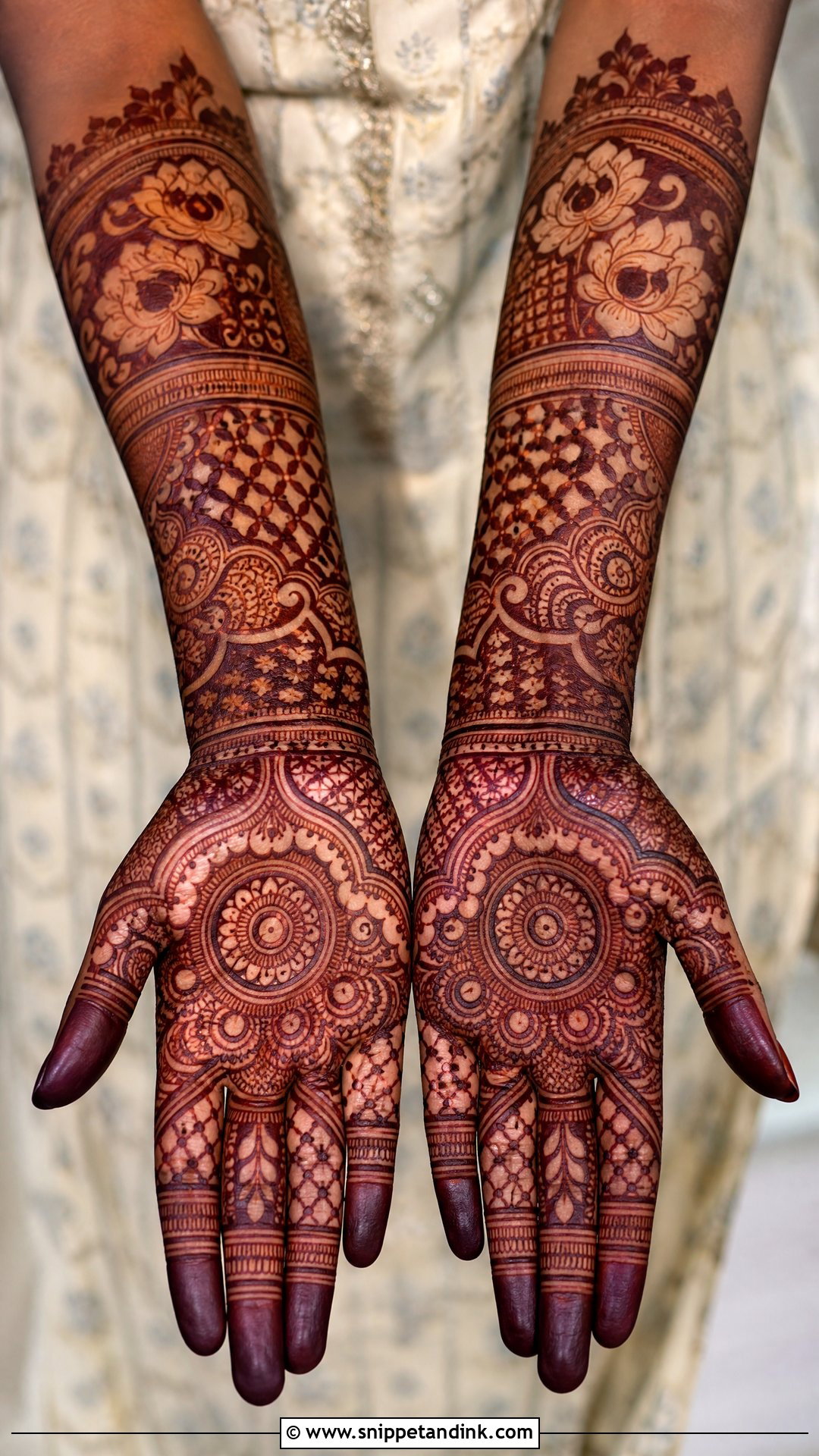
On deeper skin tones, contrast comes from line weight and spacing more than density. I use stronger outlines, clear gaps and motifs that aren’t too tiny or packed, so bold florals, paisleys, mandalas, jaali sections and filled fingertips stand out against the skin. A deep natural stain matters too: leave the paste on as long as you can, skip washing for the first day and follow your artist’s aftercare. Maroon and reddish-brown stains look rich with gold jewellery, ivory, jewel colours and bright fabrics.
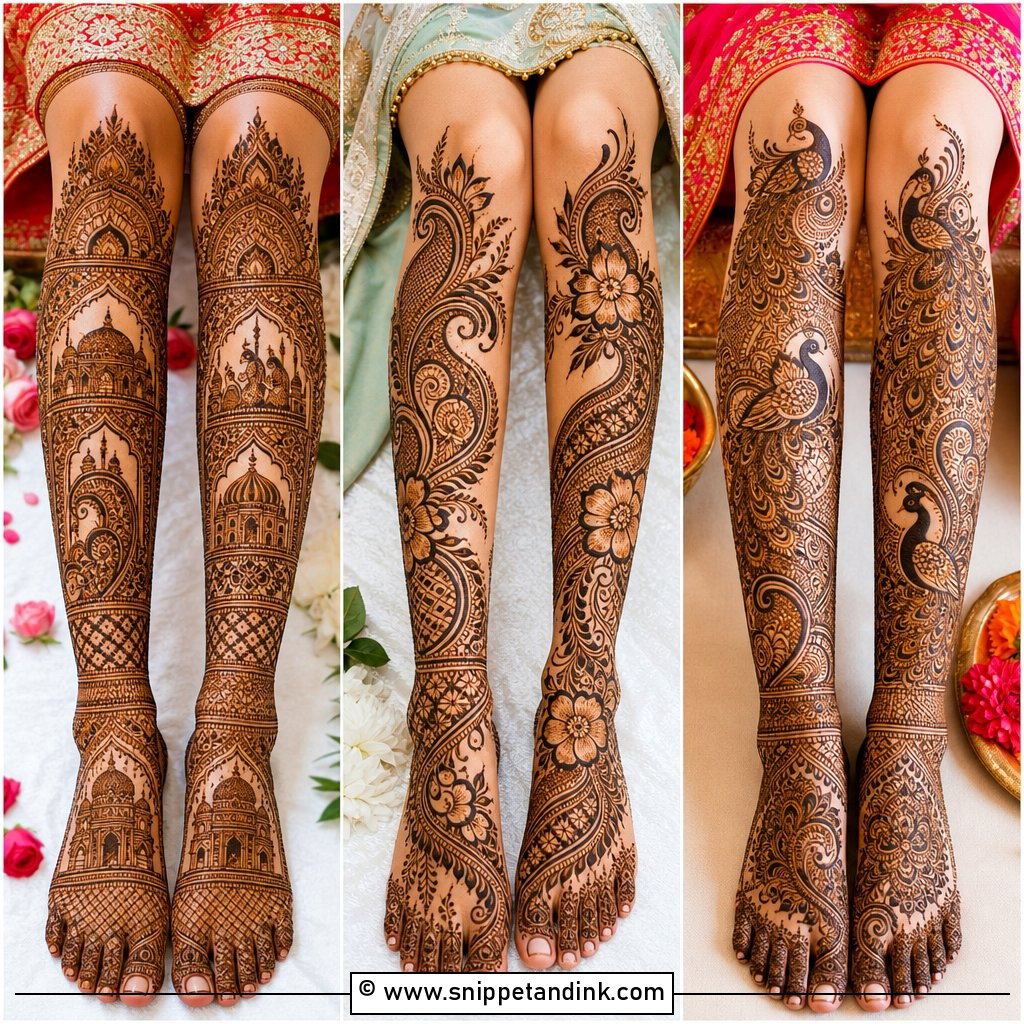
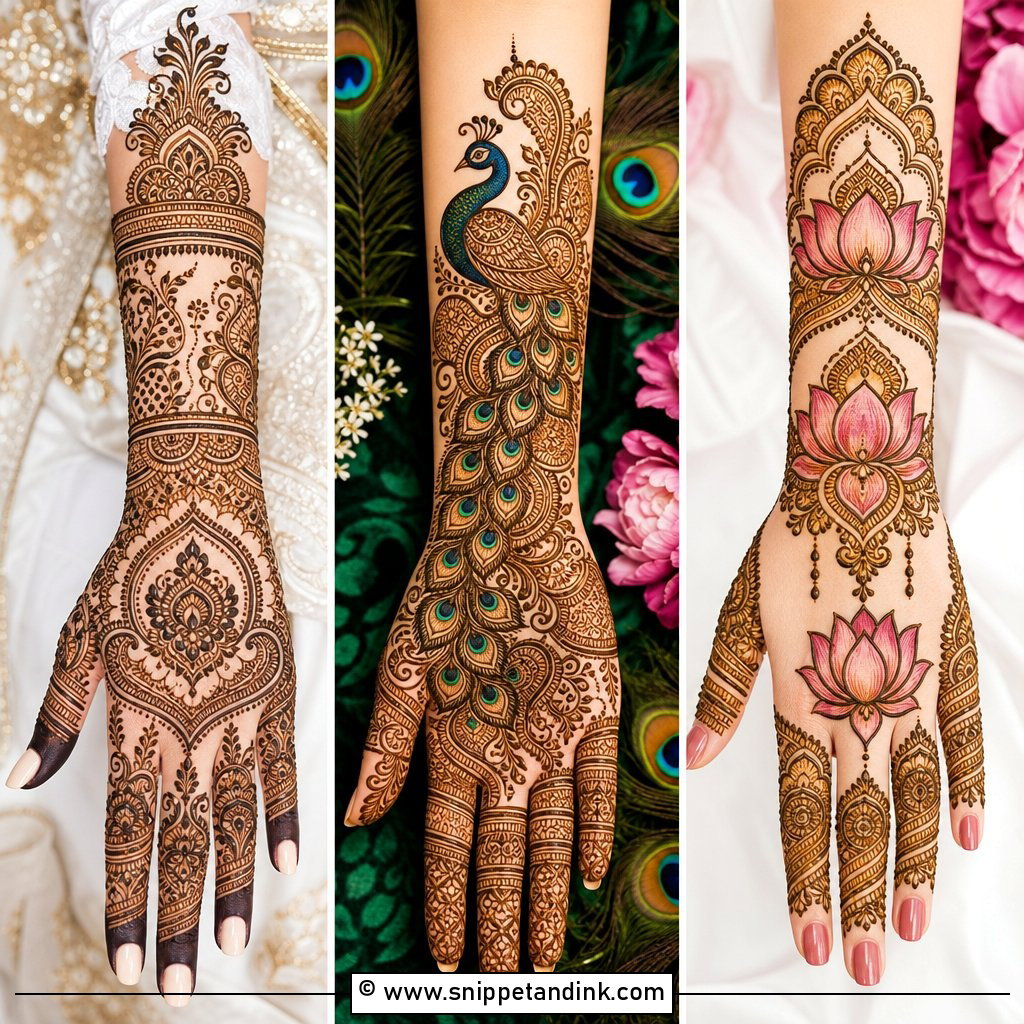
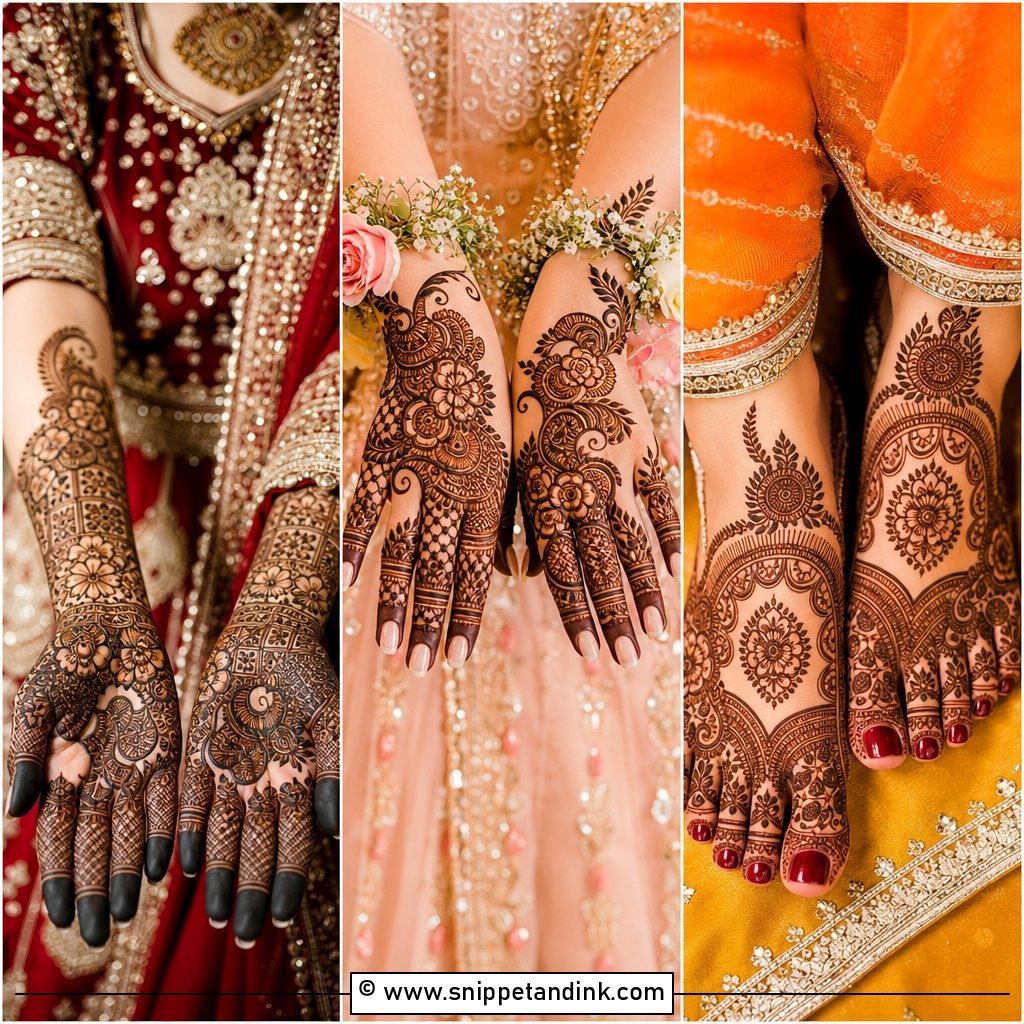
25. Bridal Foot Mehndi Design
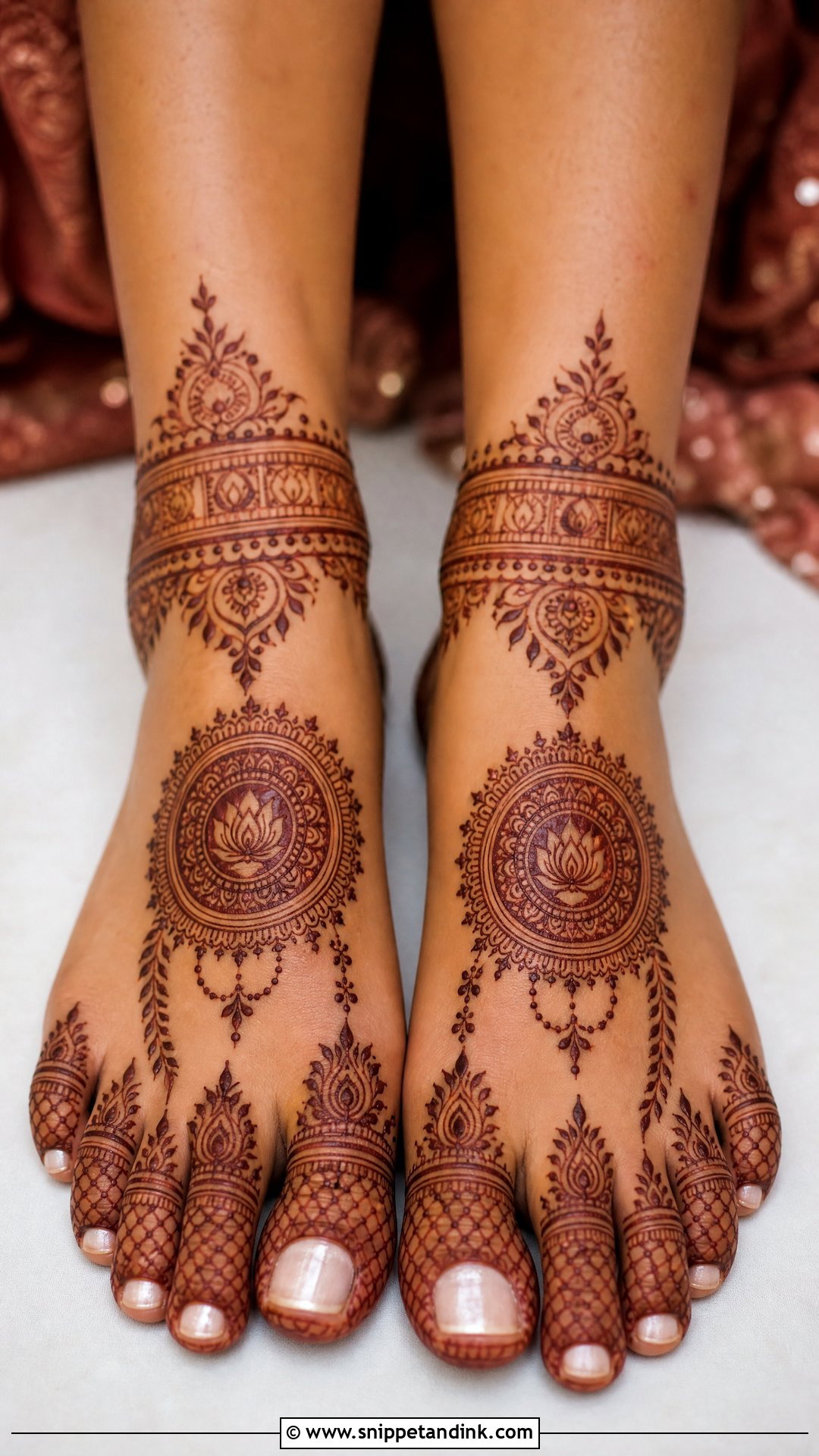
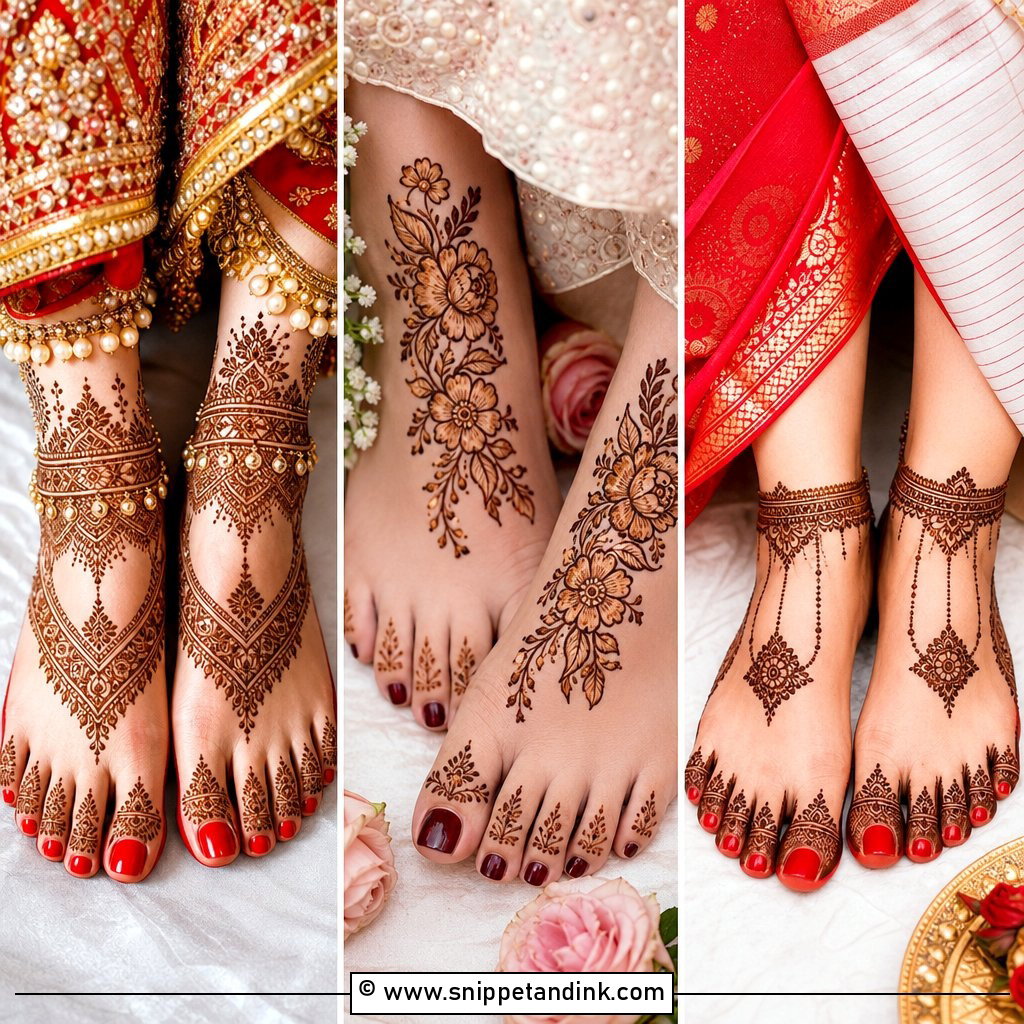
Bridal foot mehndi design finishes the look wherever your feet will show. Full coverage can reach the toes, the tops of the feet, the ankles and the lower legs, using mandalas, anklet bands, paisleys, lotus flowers, vines and jaali. Some brides match the hands; others go lighter for comfort. Bring your wedding sandals, or a photo of them, so I can plan the design around the straps rather than under them. Anklet-style work with clean florals is the modern option.
How Long Does the Colour Last Through the Wedding Week?
A bridal stain isn’t fixed. It comes off the paste a bright orange, darkens over the next day or two, holds its best colour for a few days and then fades as your skin naturally renews itself. Plan which event you want the deepest colour for, because it can’t be every one of them.
- Day one: orange to rust. Fine for the mehndi night itself, but not yet the colour you’ll see in wedding photos.
- Days two to four: the darkest maroon or brown. Aim for the wedding ceremony to land here.
- Around the end of the first week: the backs of the hands and the arms start to fade and can look patchy.
- Up to two weeks: palms and fingertips, with thicker skin, hold colour longest.
If your reception is several days after the wedding, expect lighter hands by then, and don’t be tempted to retouch with a quick dark cone from a market stall. Gentle care helps far more: wear gloves for washing up, use a plain balm or a little natural oil once the first day has passed, and avoid hot baths and chlorinated pools. A stain that’s fading evenly looks far better in photos than one with fresh patches painted on top.
A Design That Fits Your Outfit, Hands and Ceremony
A good bridal design is more than a pretty pattern. It suits your outfit, jewellery, ceremony, hand shape and comfort. Full Indian or Rajasthani work feels rich and traditional; Arabic, minimal and modern designs feel lighter and more open; portraits, names, lotus motifs, peacocks, jaali and jewellery patterns make it personal. Save clear references, then talk through timing, coverage and aftercare with your artist before the date, and the design you end up with will be your own.
You'll Like These Ideas:


Leave a Reply