
Your hands are in nearly every ceremony photo, holding the ring, under the bangles, folded in your lap, so the henna on them carries more of the look than people expect. The designs here range from traditional full-hand patterns and portrait art to Arabic trails, mandalas, jaali, peacocks, lotus and modern negative space. Heavy coverage reads as classic; lighter work is kinder on a long, busy day. I’d start with your outfit’s sleeves and the hours you can realistically sit, then let the motifs come last.
Let Your Sleeve Length Decide How Far the Design Goes
Before we talk motifs, I ask every bride to send me a photo of her blouse or dress sleeve. Henna that disappears under fabric is hours of sitting nobody will see, and henna that stops short of a sleeveless neckline can look cut off.
- Full sleeves or long kurta sleeves: put your effort into fingers, palms and a strong wrist band. Forearm work will barely show.
- Elbow or three-quarter sleeves: carry the design to just above where the sleeve ends, so there is no bare gap between hem and henna.
- Sleeveless, cap or sheer sleeves: this is where full arm or wrist-to-forearm work earns its time.
- Heavy bangle or chooda stacks: plan for the wrist to be covered and move the detail above or below it.
The same thinking applies to feet. If your hem sweeps the floor and you’ll wear closed shoes, a simple anklet pattern is plenty.
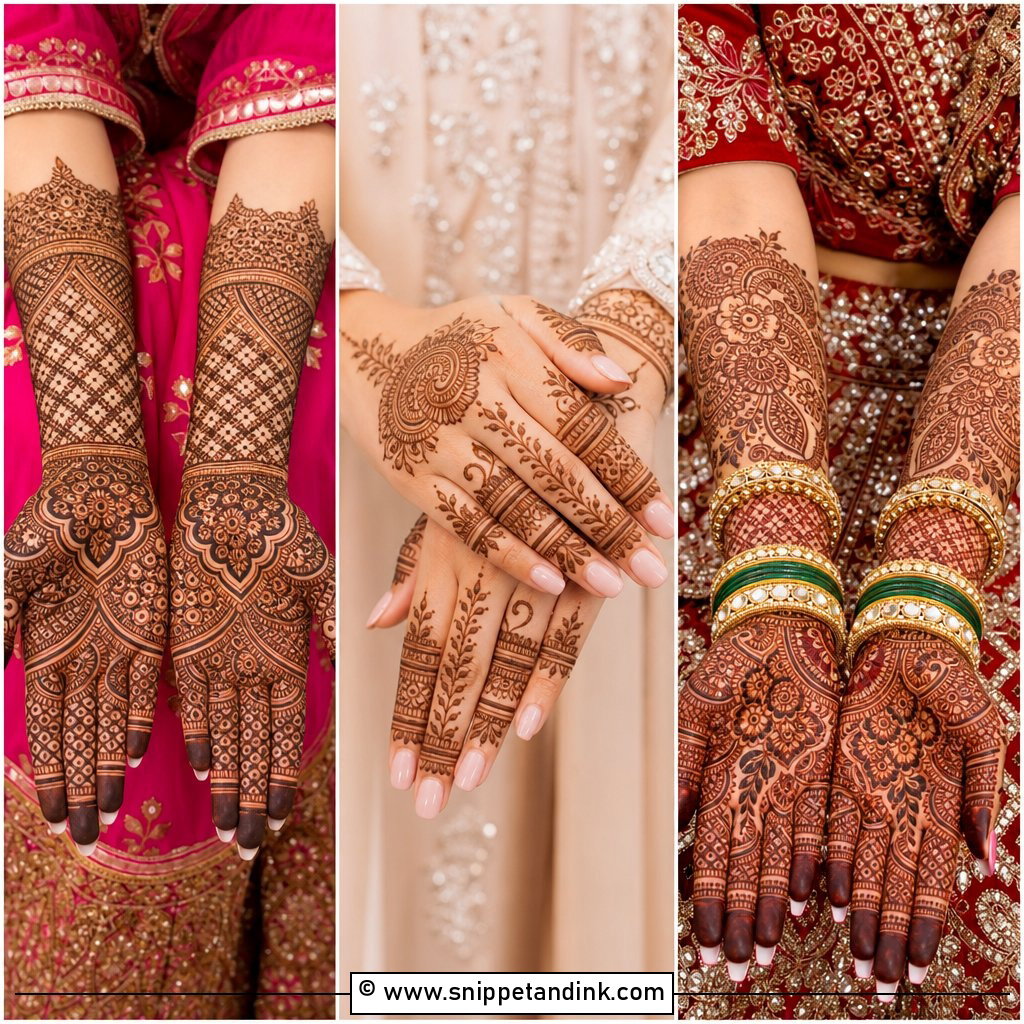
1. Full Hand Bridal Mehndi Design
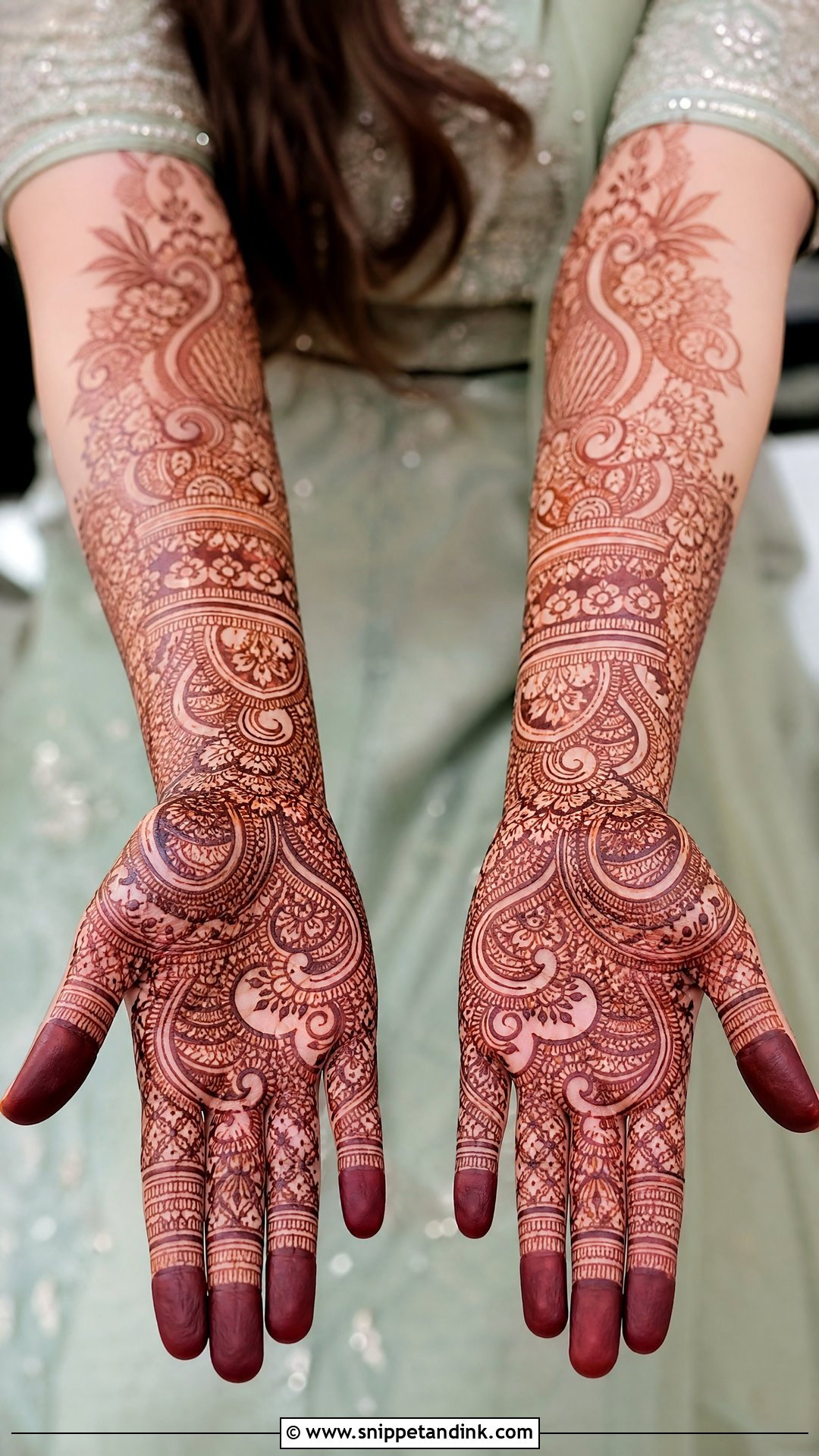
Fingertips, palm, wrist and on toward the forearm, layered with paisleys, florals, leaves, dots, borders and fine fill. That is full hand coverage, and it is what most families picture when they say bridal mehndi. My one rule on a full hand is to keep a clear centre motif; when every area gets the same density, the eye has nowhere to land and the hand reads as one dark mass. A deep maroon stain on this much pattern sits naturally beside heavy bangles and a traditional outfit.
2. Indian Bridal Mehndi Design
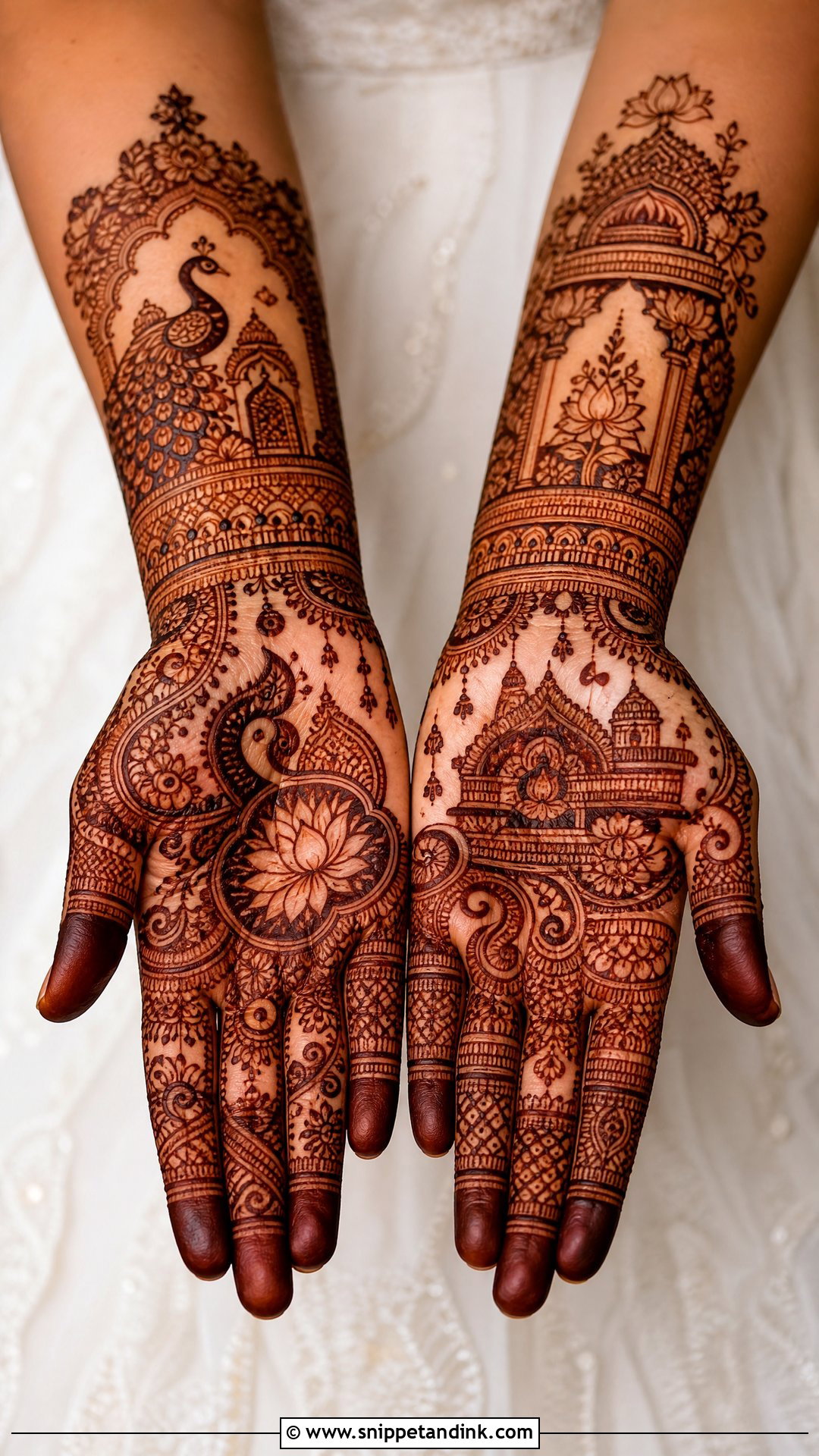
Dense, symmetrical and full of meaning: paisley vines, lotus, peacocks, dulha-dulhan figures and small wedding symbols tucked into the pattern, across both palms and both backs with matching extensions up the wrist. The more detail I put in, the more I protect the spacing between the major motifs, because those thin channels of bare skin are what keep each shape distinct once the stain goes dark. It sits right at home next to red, maroon, gold or ivory.
3. Arabic Bridal Mehndi Design
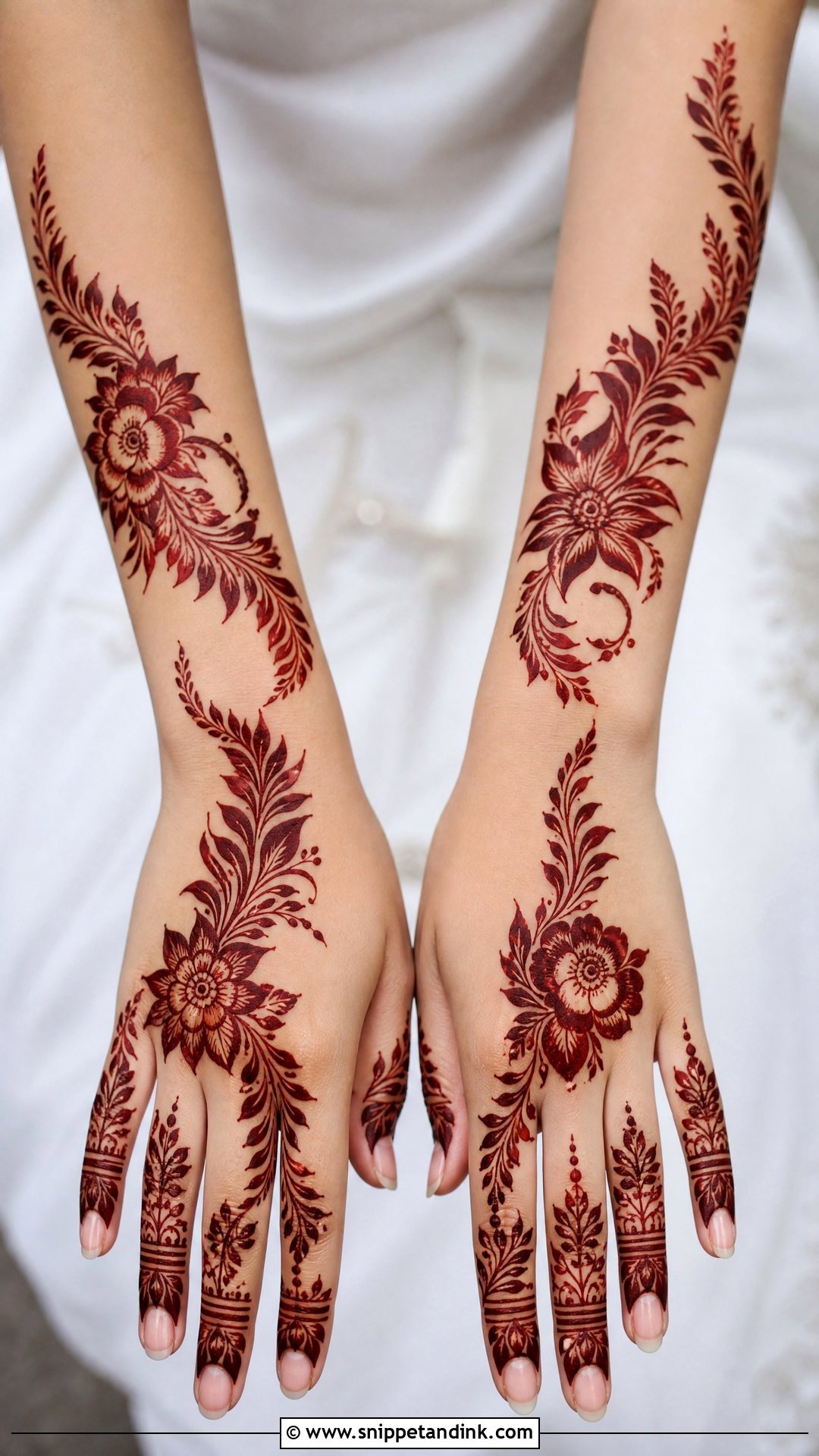
Not every bride wants every inch filled. Arabic work uses bold floral trails, leafy vines and open skin set in a flowing diagonal that starts at one side of the wrist and climbs across the palm to the fingers, which visually lengthens the hand. It is also faster, so I often suggest it for brides with a packed schedule. To make it read as bridal, add a wrist cuff and fine finger details around the big flowers.
4. Indo Arabic Bridal Mehndi Design
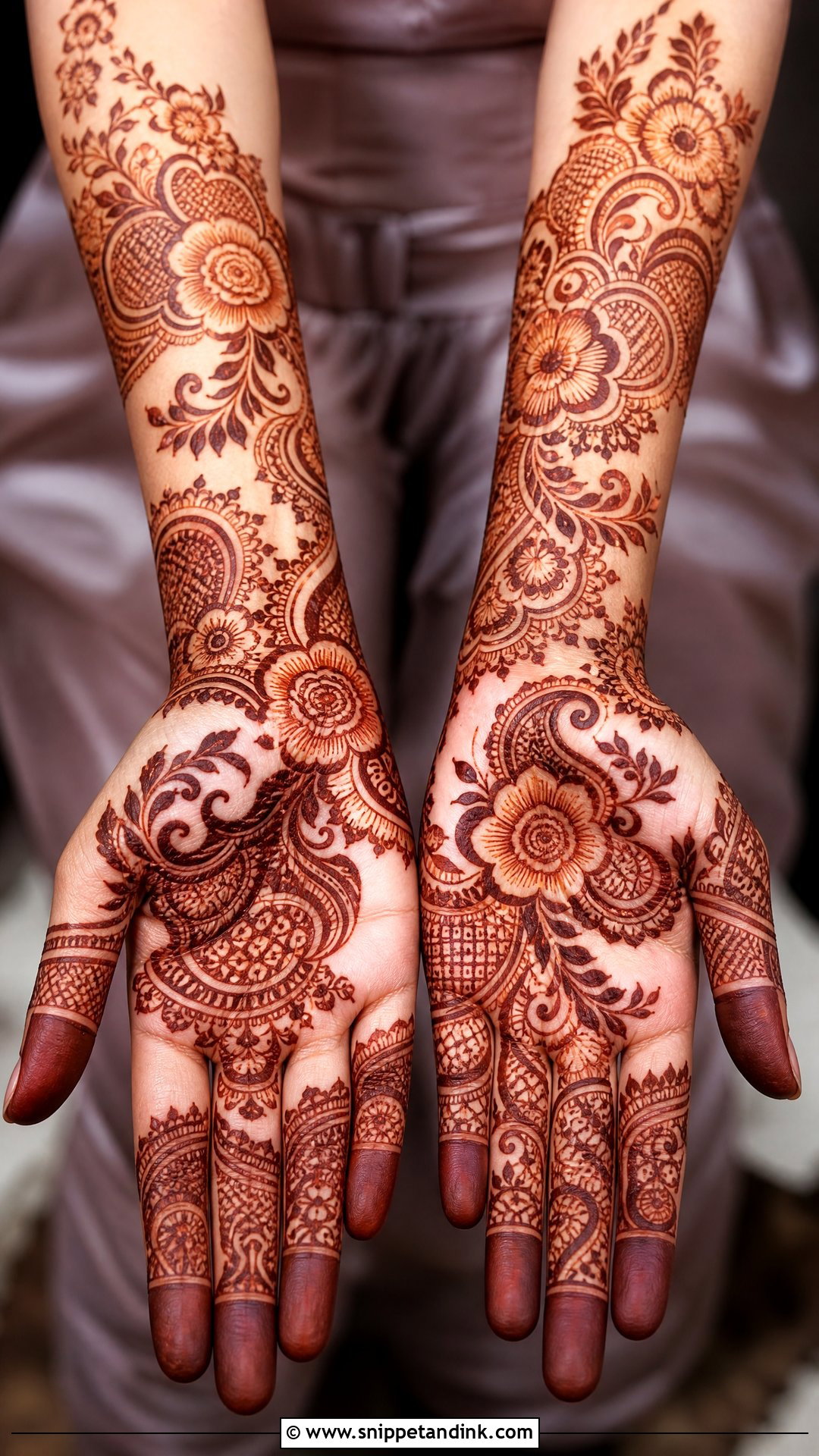
Indo Arabic is my usual answer when a bride says she wants rich but not heavy. I lay down one strong diagonal or curved path across the hand first, Arabic style, then fill selected pockets along it with fine Indian work: paisleys, a small mandala, shaded petals, detailed fingertips. The empty areas are planned, not left over. It carries across engagement, nikah, sangeet and the wedding day without looking out of place at any of them.
5. Rajasthani Bridal Mehndi Design
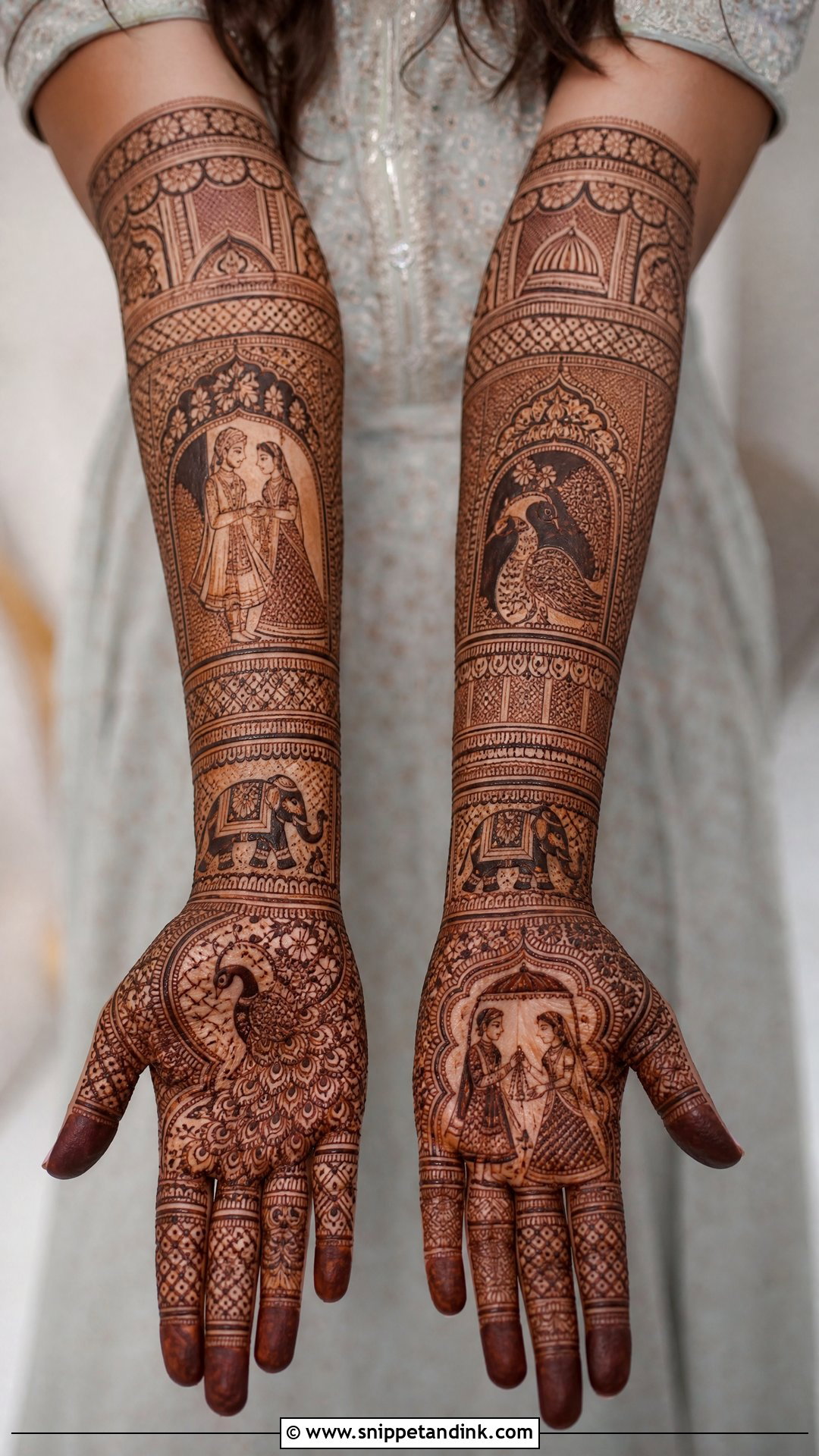
Storytelling is the whole point of Rajasthani henna: bride and groom faces, royal arches, elephants, palanquins, kalash, peacocks and tiny ornamental borders, with almost no bare skin left on hands and forearms. Against mirror work, gota or heavy embroidery, it looks completely right. The details are tiny, so this is not a style for a newer artist. Expect a long sitting; I’d block out the better part of a day for both hands and forearms.
6. Marwari Bridal Mehndi Design
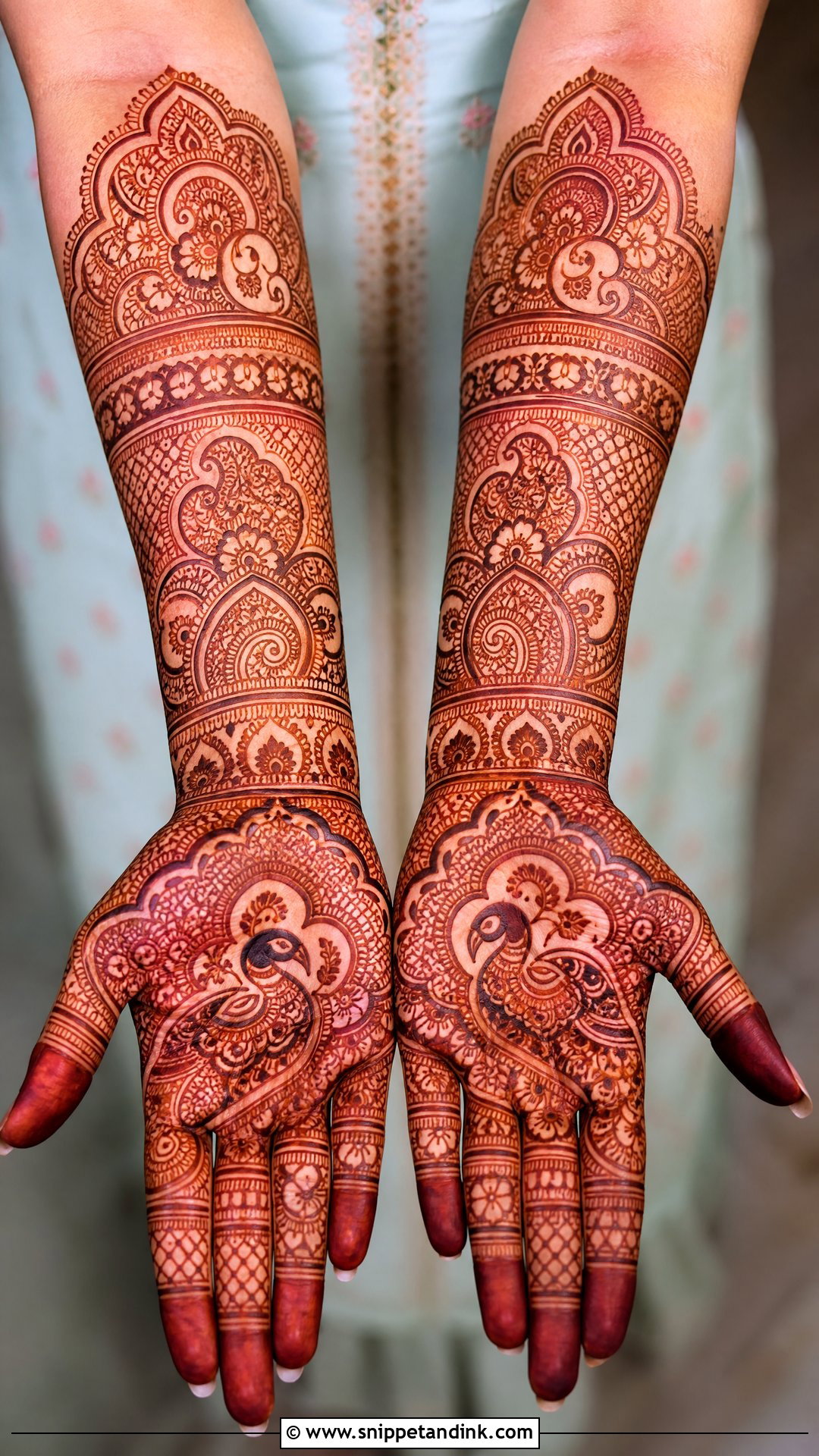
Marwari designs run fingertips to forearms with strong symmetry, mixing peacocks, paisleys, florals, royal symbols and fine jaali fill. What separates a good one from a flat one is contrast. I switch between a thicker cone line for outlines and a much finer one for fill, and that difference in line weight is what makes the stain look dimensional. Red, orange, magenta and deep green outfits pair naturally with it, as do bangles and a haath phool.
7. Pakistani Bridal Mehndi Design
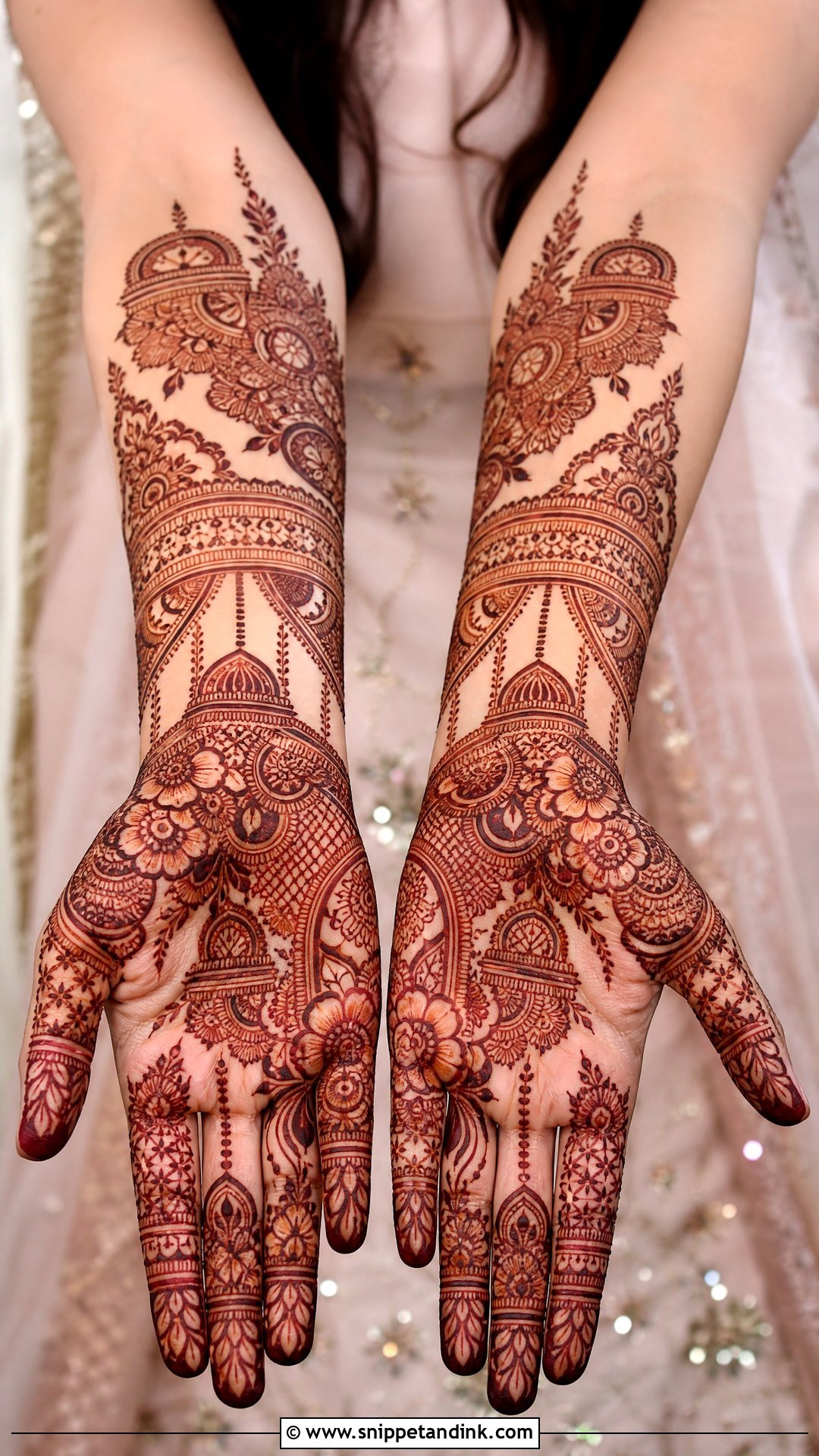
Pakistani bridal henna borrows Indian detail and Arabic spacing, so it feels luxurious without being overwhelming: bold florals, leafy trails, paisleys, domes, mandalas and fine netted sections, often extended up the forearm. I keep the fingers detailed and give the palm one clear focal motif, which stops the design from scattering. Shararas, ghararas, lehengas and long bridal dresses all show it well.
8. Moroccan Bridal Mehndi Design
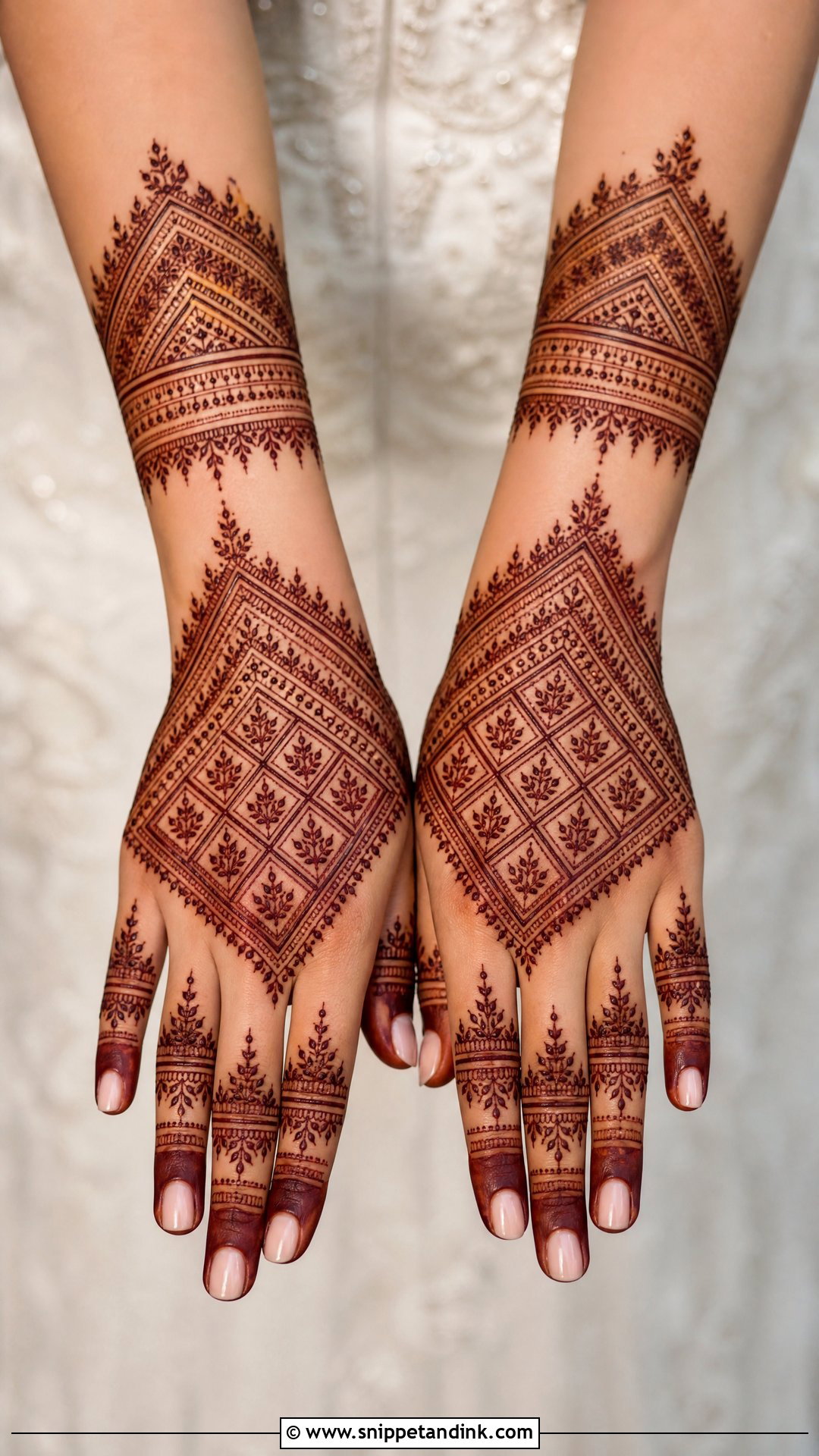
Moroccan henna swaps florals for geometry: diamonds, triangles, grids, lines, dots and repeating bands across palm, wrist and forearm. Its strength is clarity, because those shapes stay readable from across a room. Its weakness is that geometry exposes every wobble. I draw long straight lines in one confident pull rather than short strokes, and I’d ask any artist you’re considering to show you geometric work specifically. Minimal jewelry and contemporary outfits suit it best.
9. Gulf Bridal Mehndi Design
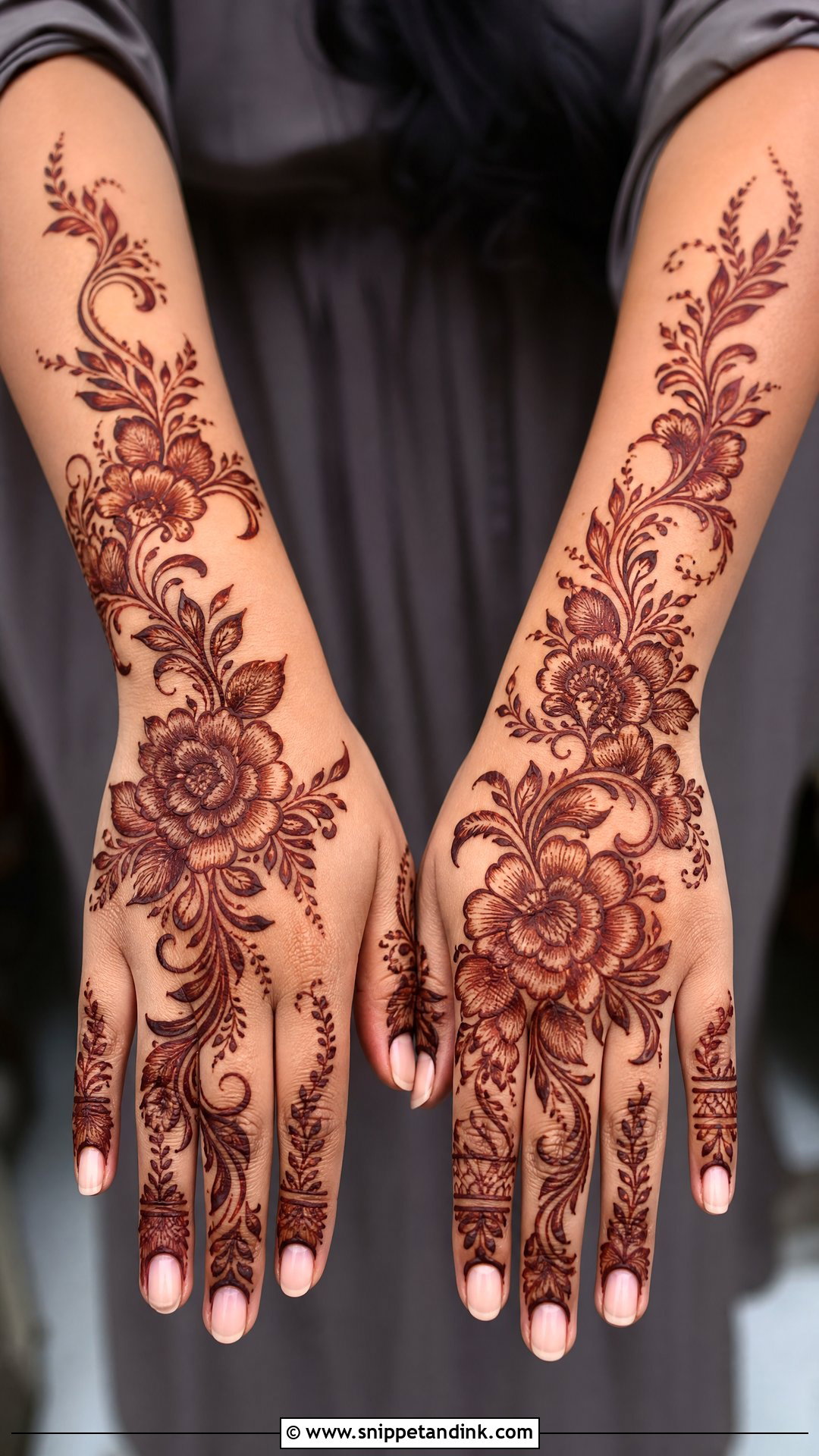
Khaleeji-inspired, or Gulf, henna is all big petals, leafy curves, thick outlines and generous negative space, usually on the back of the hand from fingers to wrist or forearm. Those empty areas are why it flatters statement rings and polished nails; the accessories get room. For a wedding version I build bold floral clusters and run fine lines inside the petals, so the design keeps its airy shape but still looks finished up close.
10. Mandala Bridal Mehndi Design
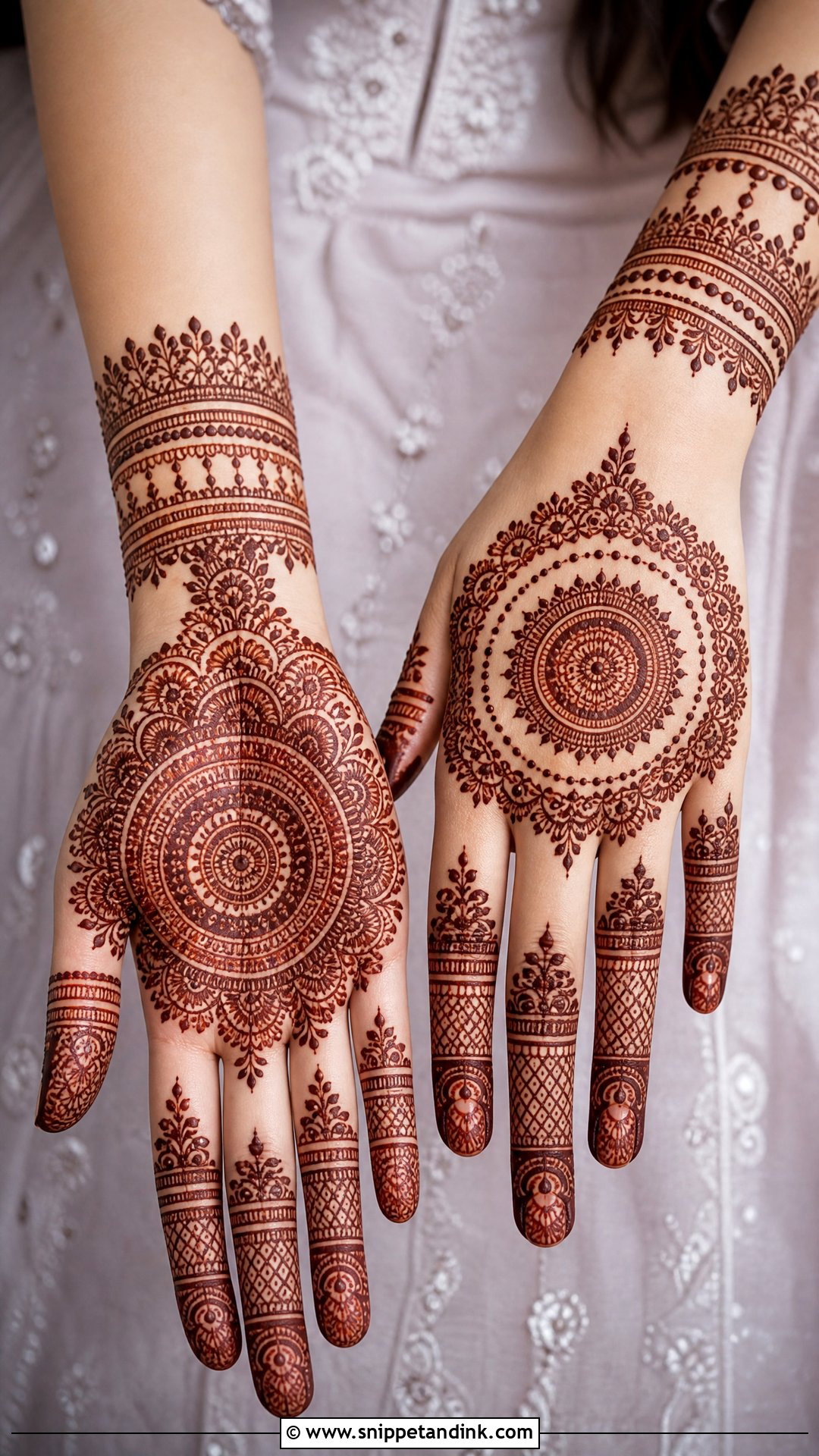
A round mandala in the centre of the palm or the back of the hand, with finger patterns, wrist bands, dots and leafy extensions growing from it. You get a complete look without covering every inch. I’d go larger on the mandala than you might think, since a big circle anchors ring photos. Matching mandalas on both hands with different surrounding details is a nice twist: the pair looks related, not copied.
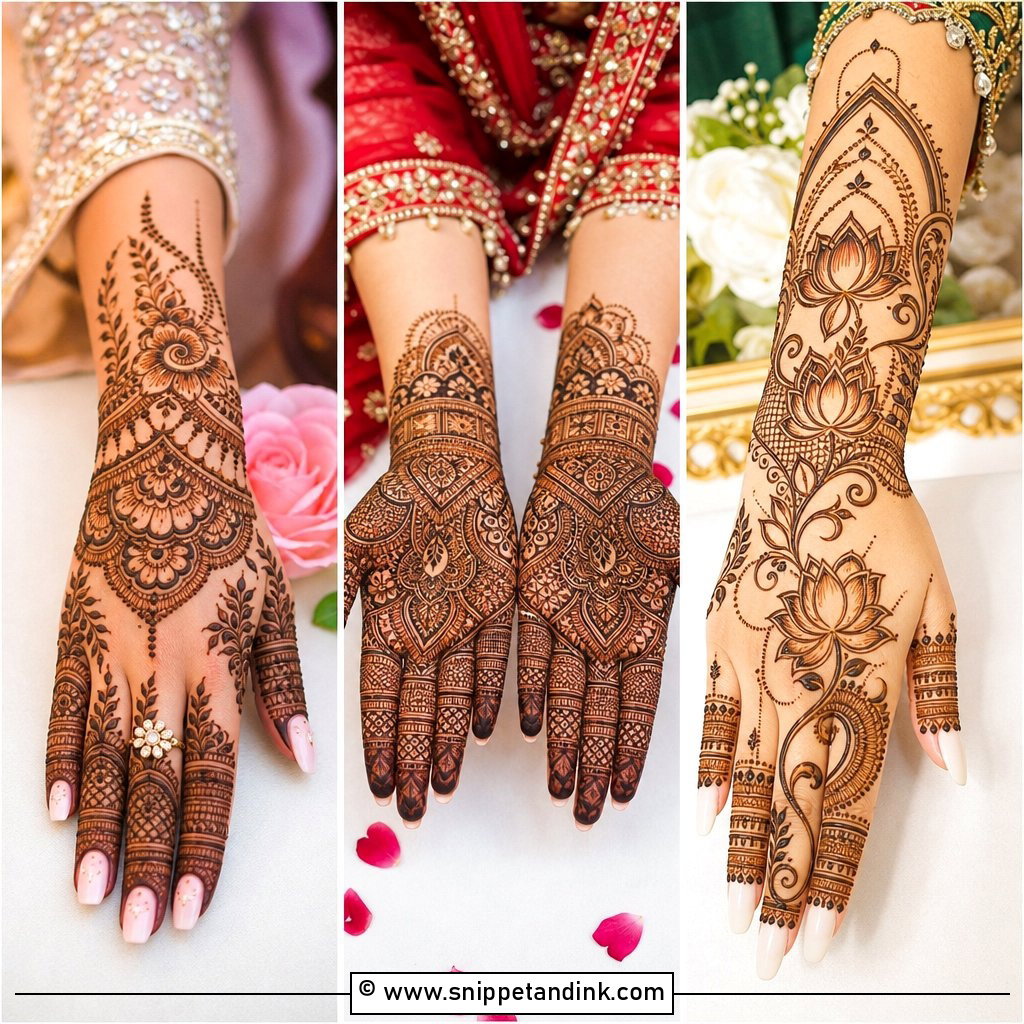
11. Lotus Bridal Mehndi Design
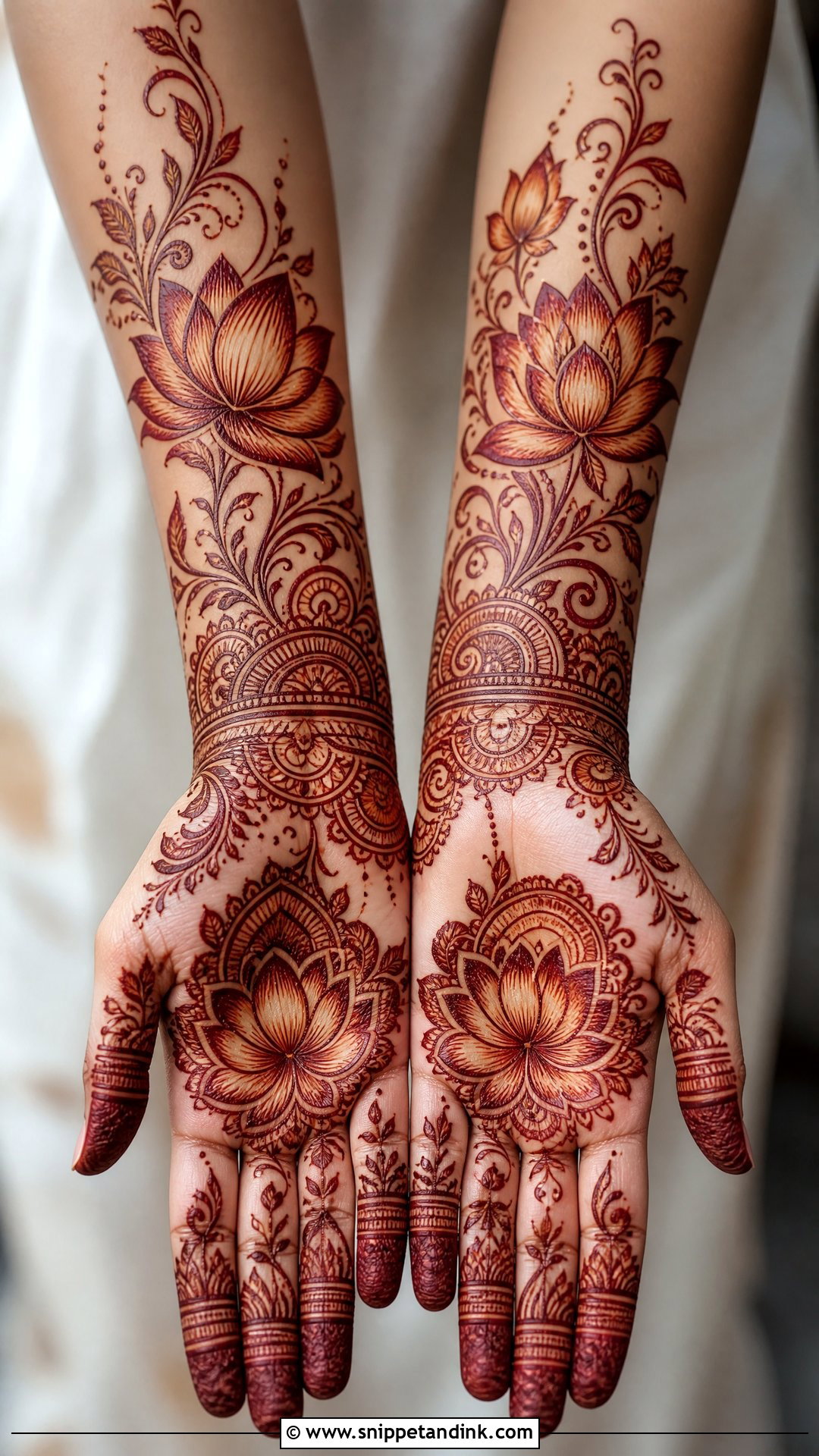
The lotus is easy to recognise even at a distance, which is why it works so well in photos. Large blooms go on the palm, wrist or back of the hand, with vines and paisleys flowing out around them, at heavy or medium coverage. I keep the outer petal outlines open and do the shading inside each petal with short pulled strokes, which gives depth without darkening the whole flower. Pastel lehengas, temple jewelry and floral embroidery all echo it.
12. Peacock Bridal Mehndi Design
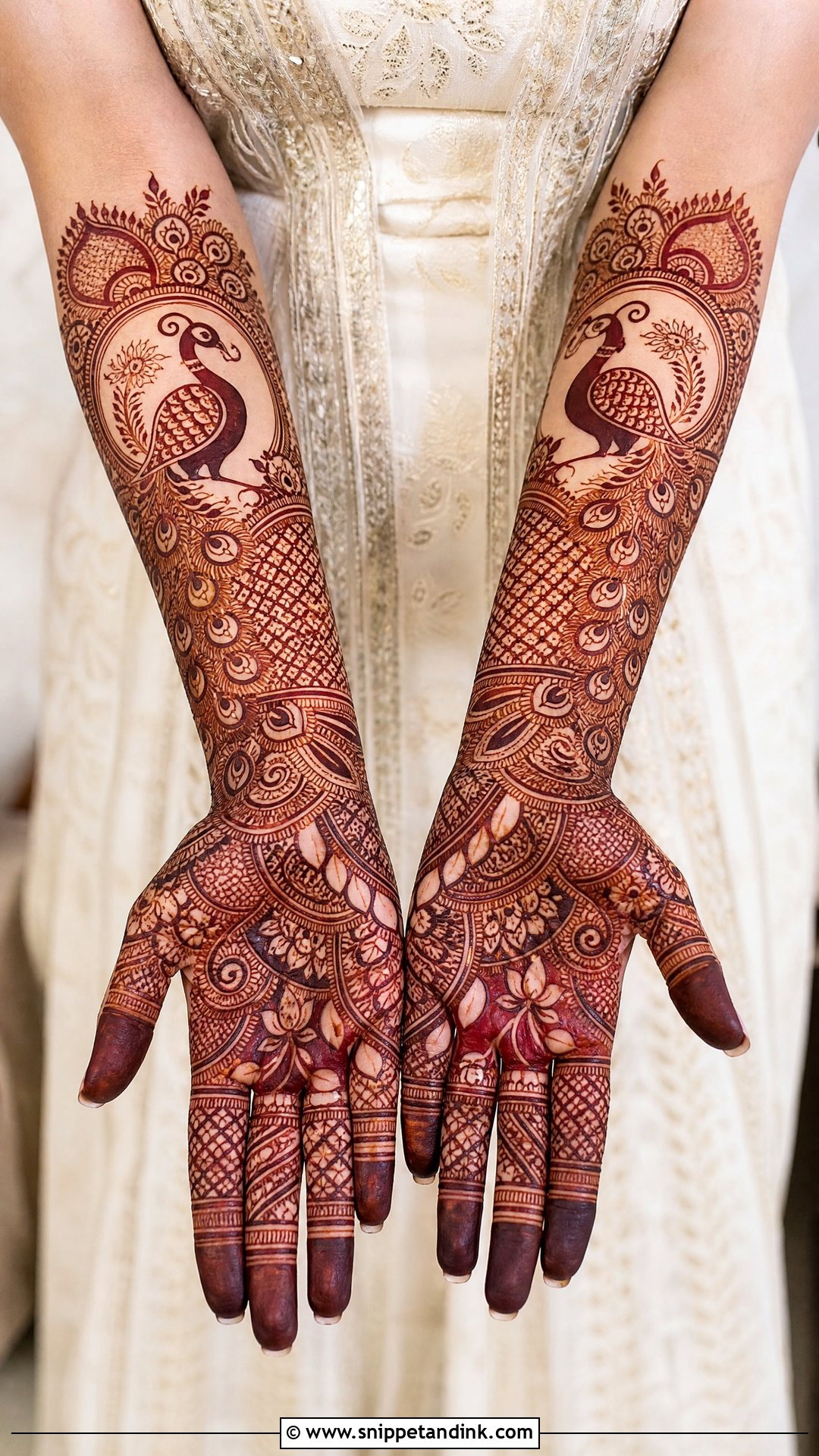
The curved neck and long body of a peacock fit palm and forearm layouts almost by themselves. It works as one large central motif or repeated small across both hands, and it pairs easily with paisleys, lotus, jaali and decorative borders. Bold outline, fine feather fill inside: that is the order I work in, and it keeps the bird from turning into a solid shape once the stain deepens. Silk sarees and colourful jewelry suit it especially well.
13. Portrait Bridal Mehndi Design
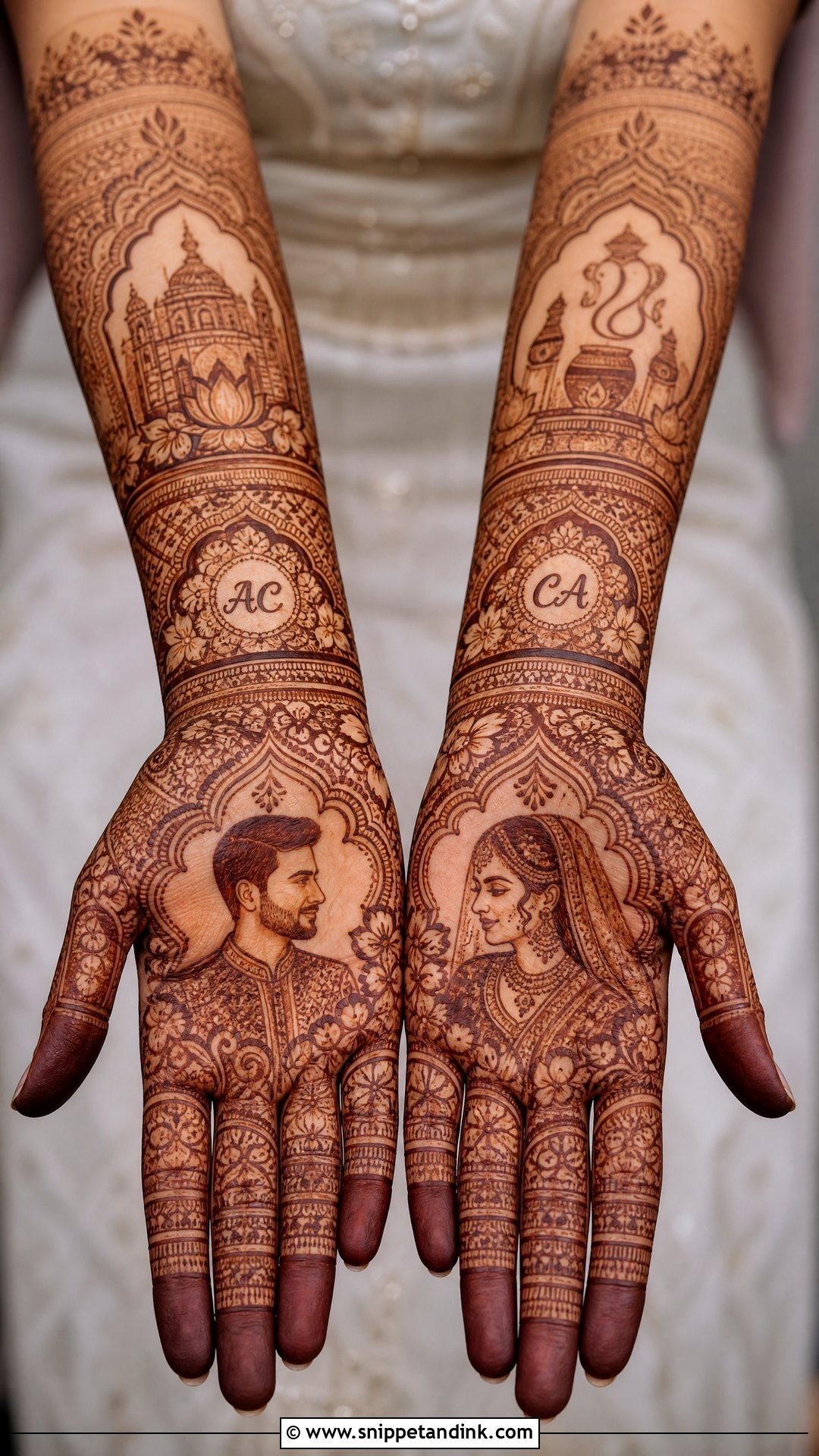
Portrait bridal mehndi design usually shows the bride and groom on the palms with wedding symbols around them, sometimes a varmala, doli, mandap, instruments or initials. Faces have to be clean and recognisable, so book an artist whose portfolio shows close-up figure work. I always draw the faces a little larger than brides first ask for. Tiny portraits lose their features once the paste is scraped off and the stain darkens.
14. Dulha Dulhan Bridal Mehndi Design
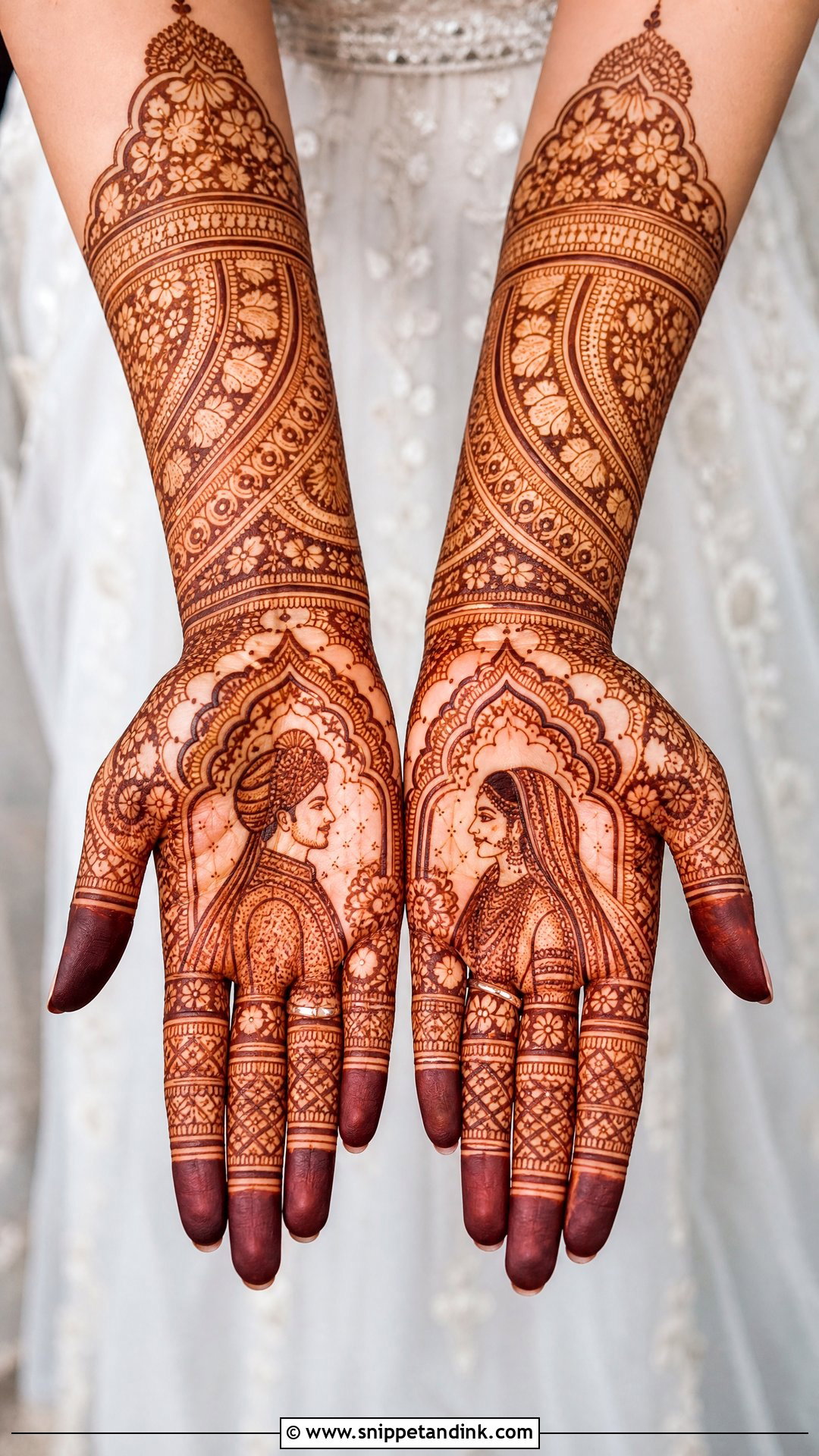
Dulha dulhan henna places the bride on one palm and the groom on the other, so the couple come together when your hands do. Paisleys, florals, arches, jewelry patterns and small symbols fill the space around them. I frame each figure with a clean border and keep the fill well away from the face area; overfilling around the faces is the most common mistake I see with this design. Let the surrounding sections be busy and the couple stay easy to find.

15. Wedding Ceremony Bridal Mehndi Design
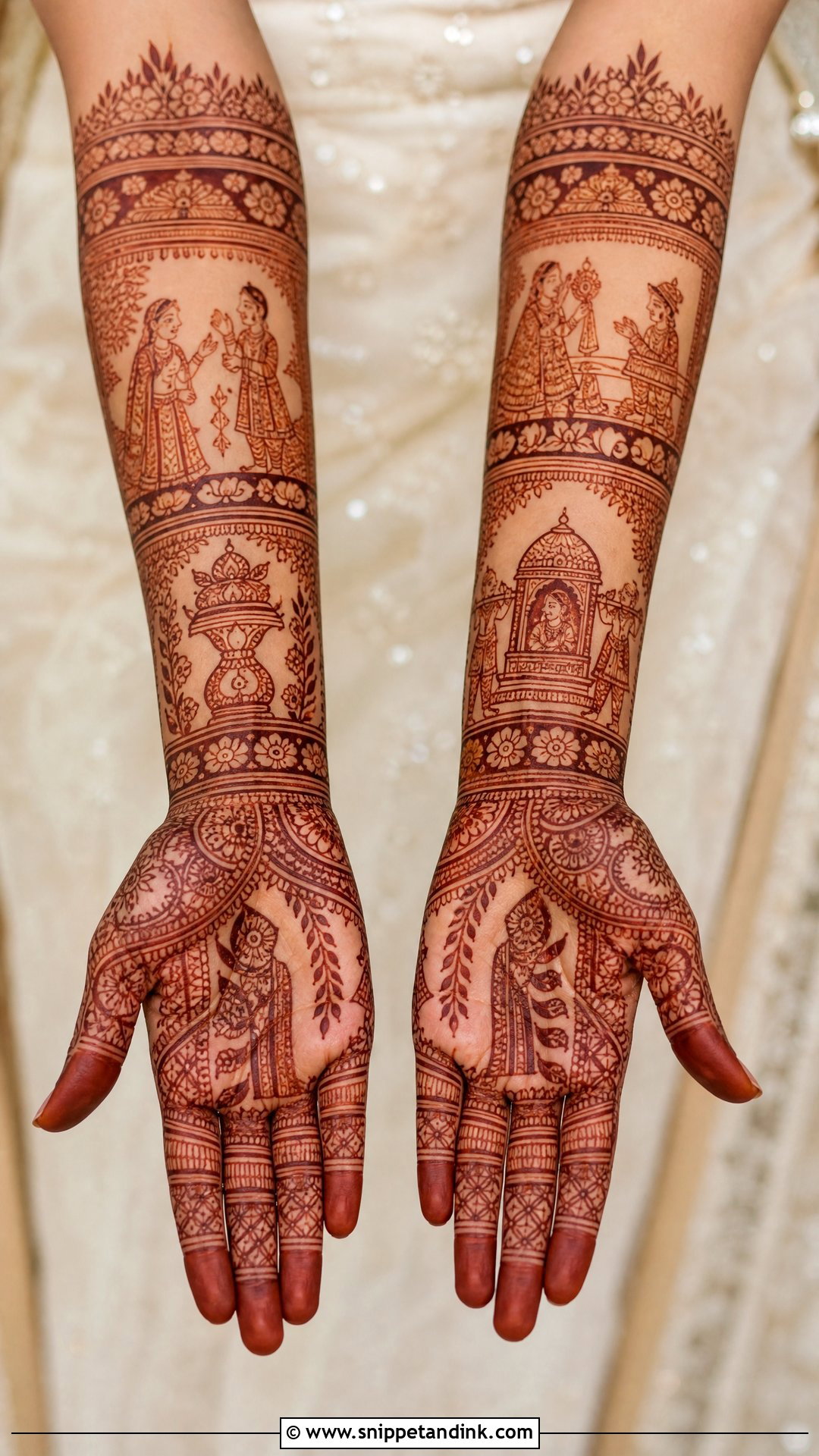
Here the hands tell the story of the day in small scenes: the varmala moment, the mandap, the doli, kalash, shehnai, jewelry or couple initials, usually across a full hand or from wrist to forearm so there’s room. I’d keep it to one major scene per palm and use borders, florals and jaali to link them. Because it is built around your own rituals, plan it with your artist weeks ahead and bring photos of anything specific you want drawn.
16. Jaali Bridal Mehndi Design
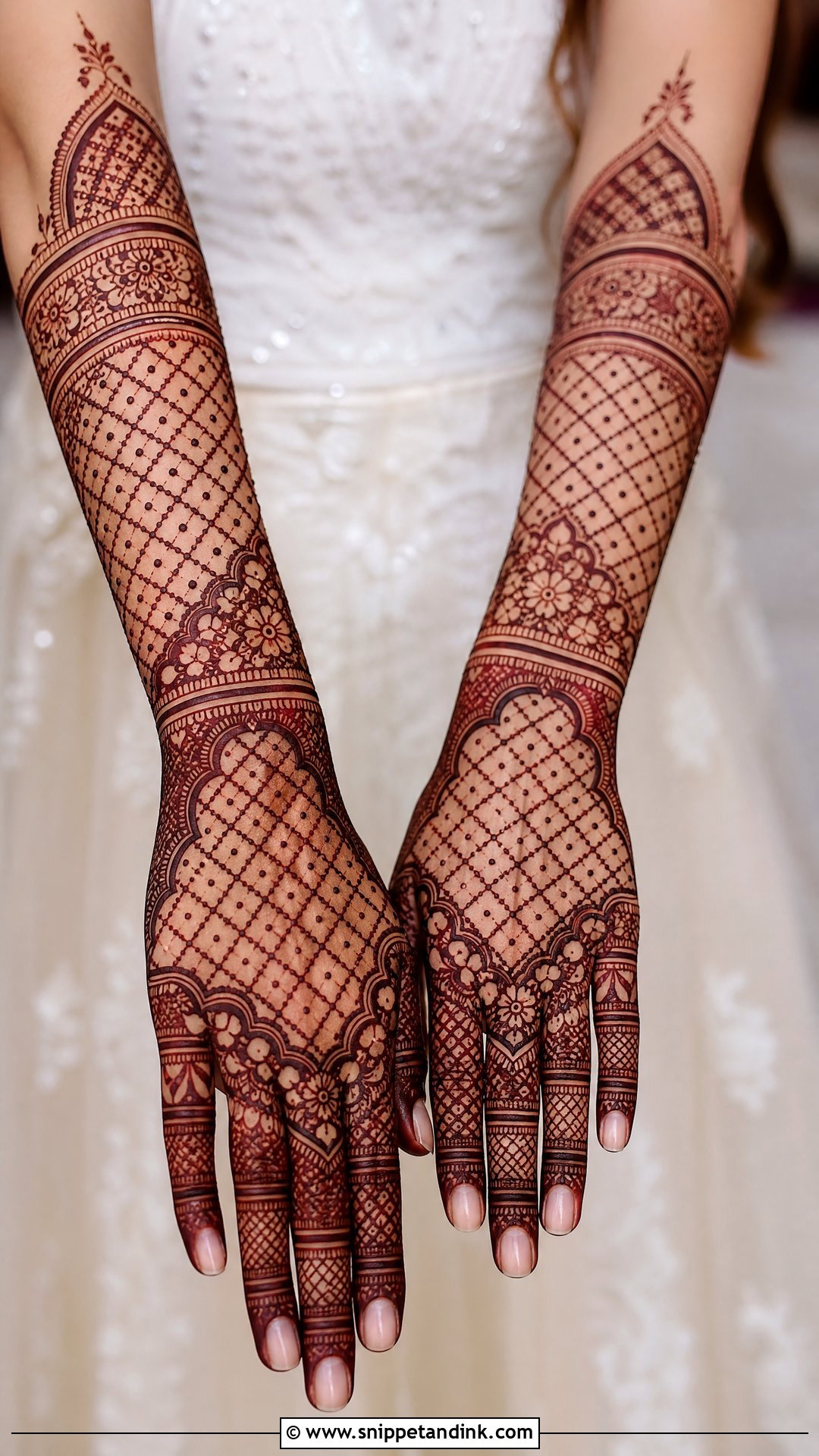
Jaali is netted henna: grids, tiny dots, diagonal lines, floral corners and borders that make the back of the hand look gloved in lace. Combined with mandalas, paisleys and finger detail, it becomes a full bridal design. The grid lines need to be thin and evenly spaced. If they’re thick or uneven, the lace effect collapses into a blotchy patch once the stain develops, so watch the artist’s line control on the first few squares.
17. Paisley Bridal Mehndi Design
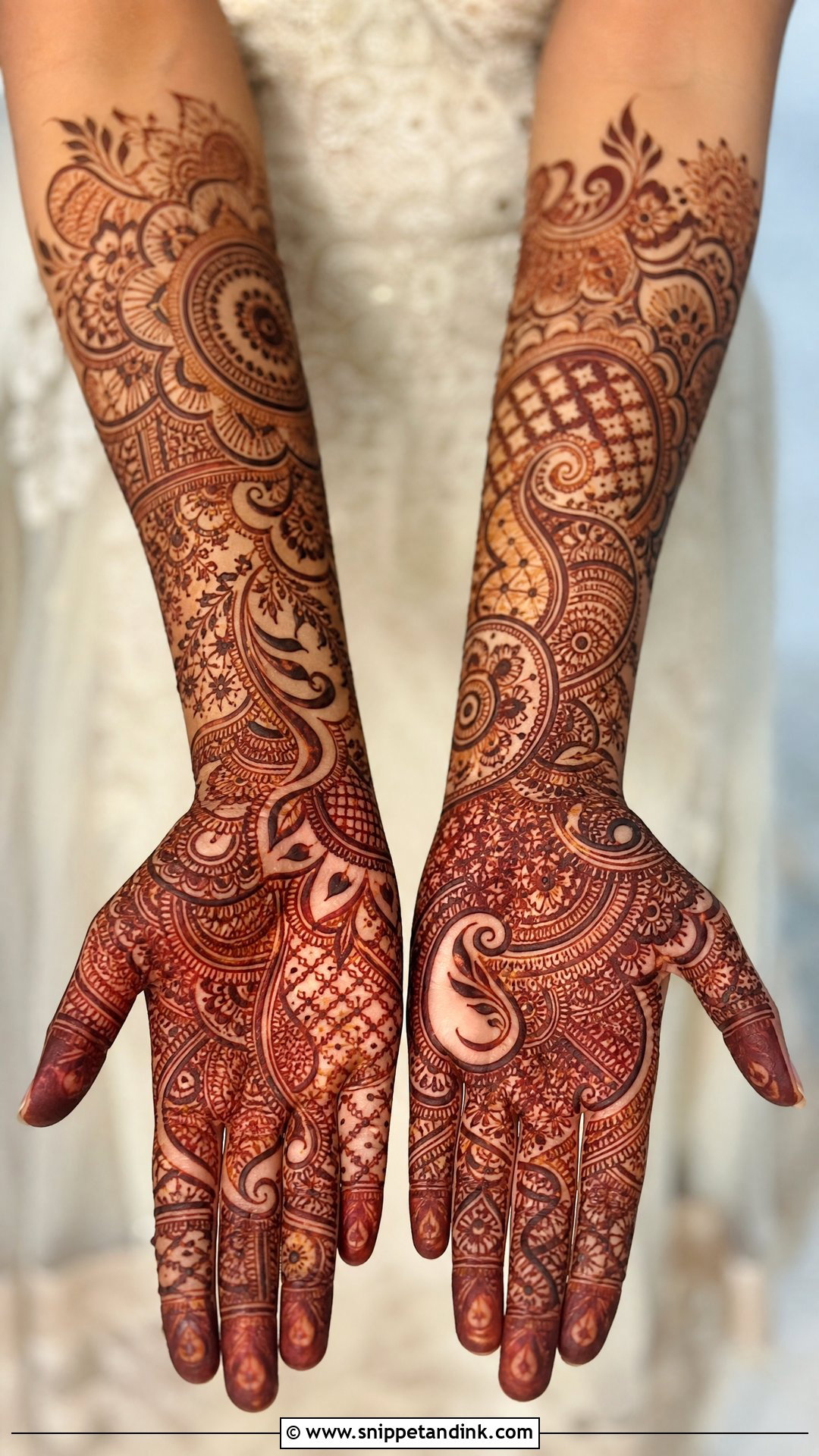
The paisley, the curved mango shape, has stayed in bridal henna for generations because it follows the curve of a palm, wrist and forearm so naturally. A bridal version uses large paisleys as the main motifs and fills them with tiny flowers, dots, checks and leaves. It blends with peacocks, mandalas and Arabic trails, and it suits every hand shape. I outline the paisley boldly and keep the inner detail fine, which gives it depth and movement.
18. Floral Bridal Mehndi Design
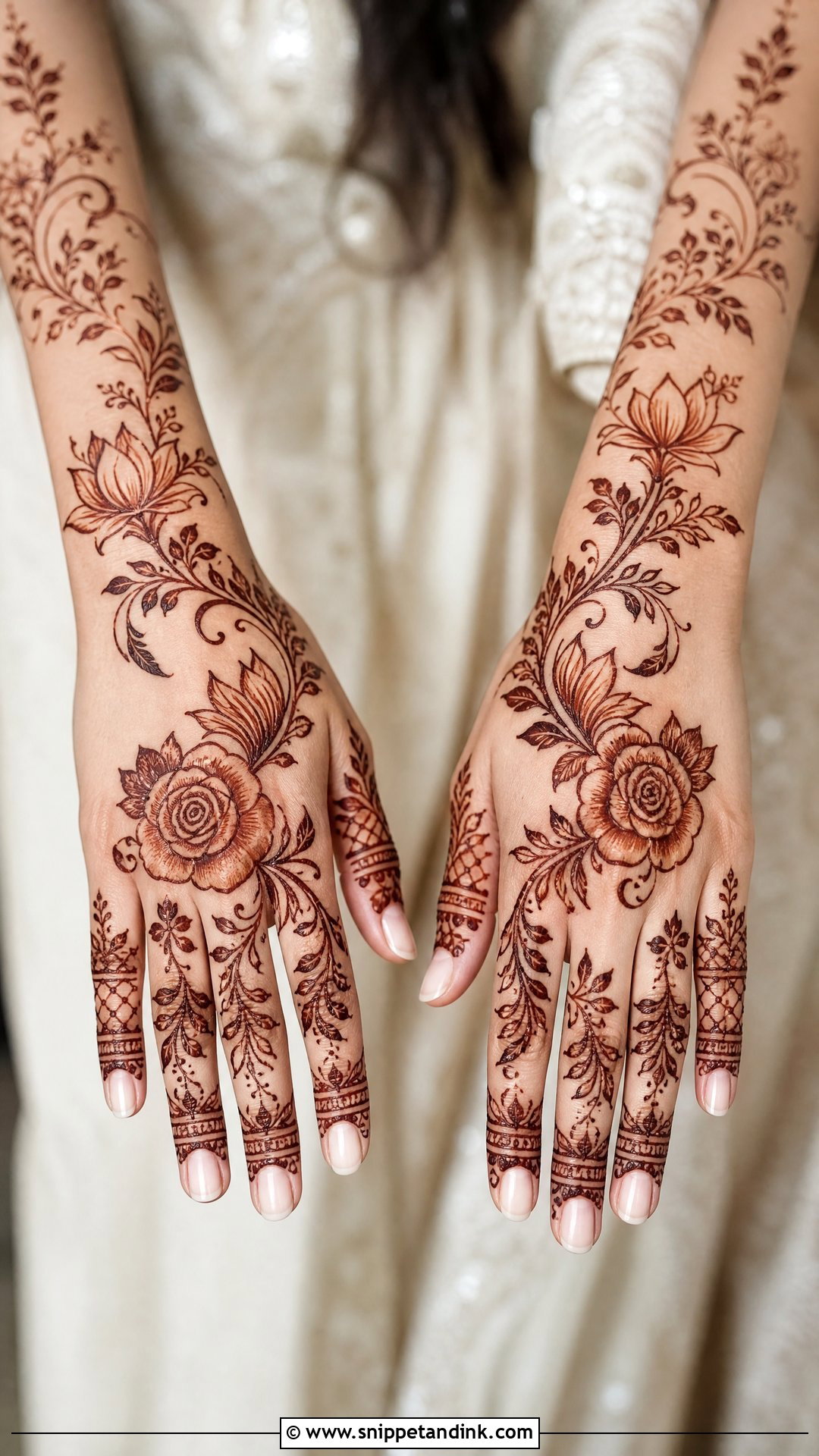
Roses, lotus, small blossoms, leafy vines and shaded petals. Floral bridal henna suits almost everyone and can be laid out as a full hand, an Arabic trail or a back-hand design with wrist coverage. It reads clearly in photos without feeling heavy, which is why so many brides wearing pastel, ivory, blush or floral embroidery land on it. Use the larger flowers as focal points and give the fingers real detail, otherwise florals can look like guest henna.
19. Back Hand Bridal Mehndi Design
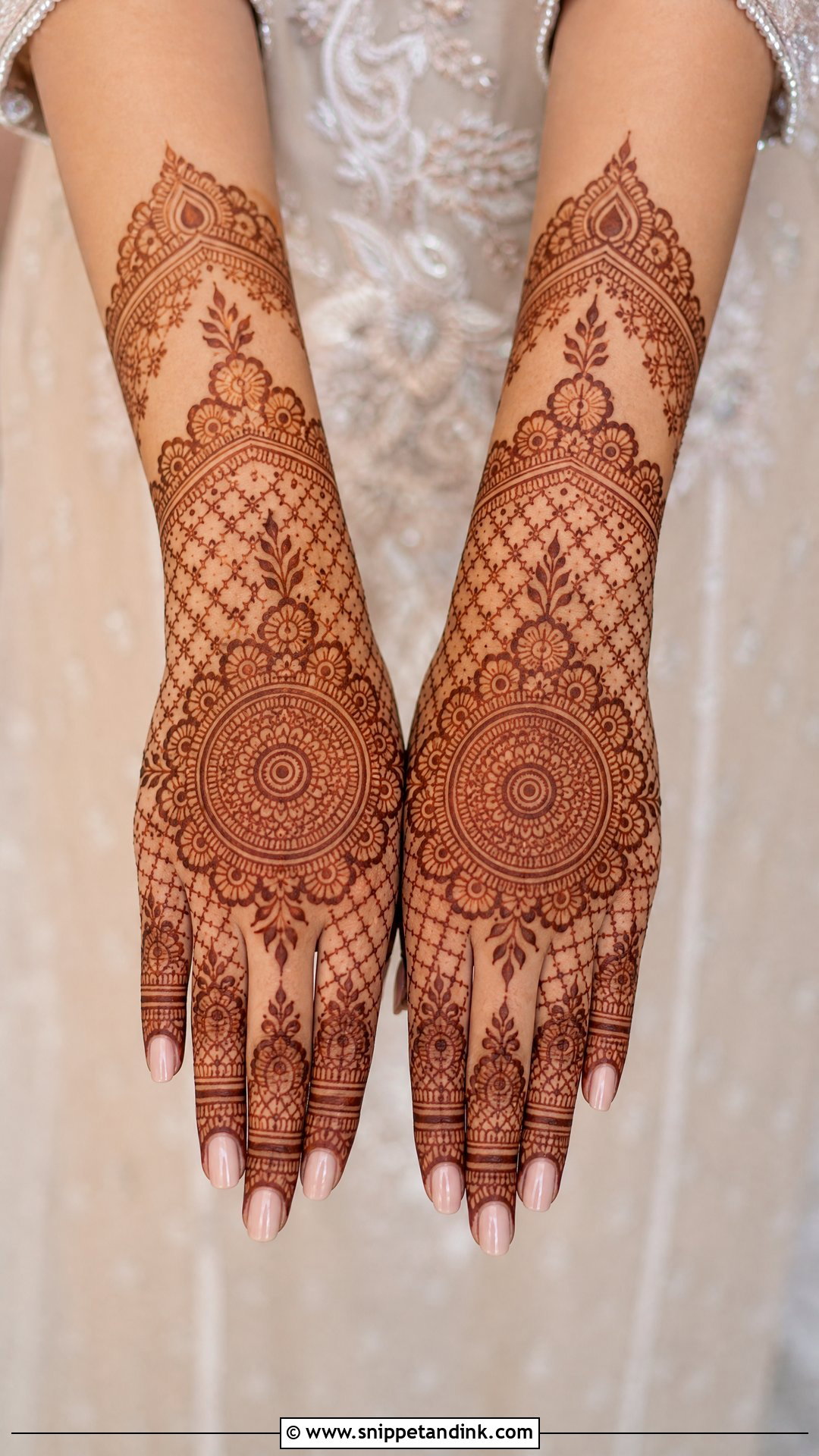
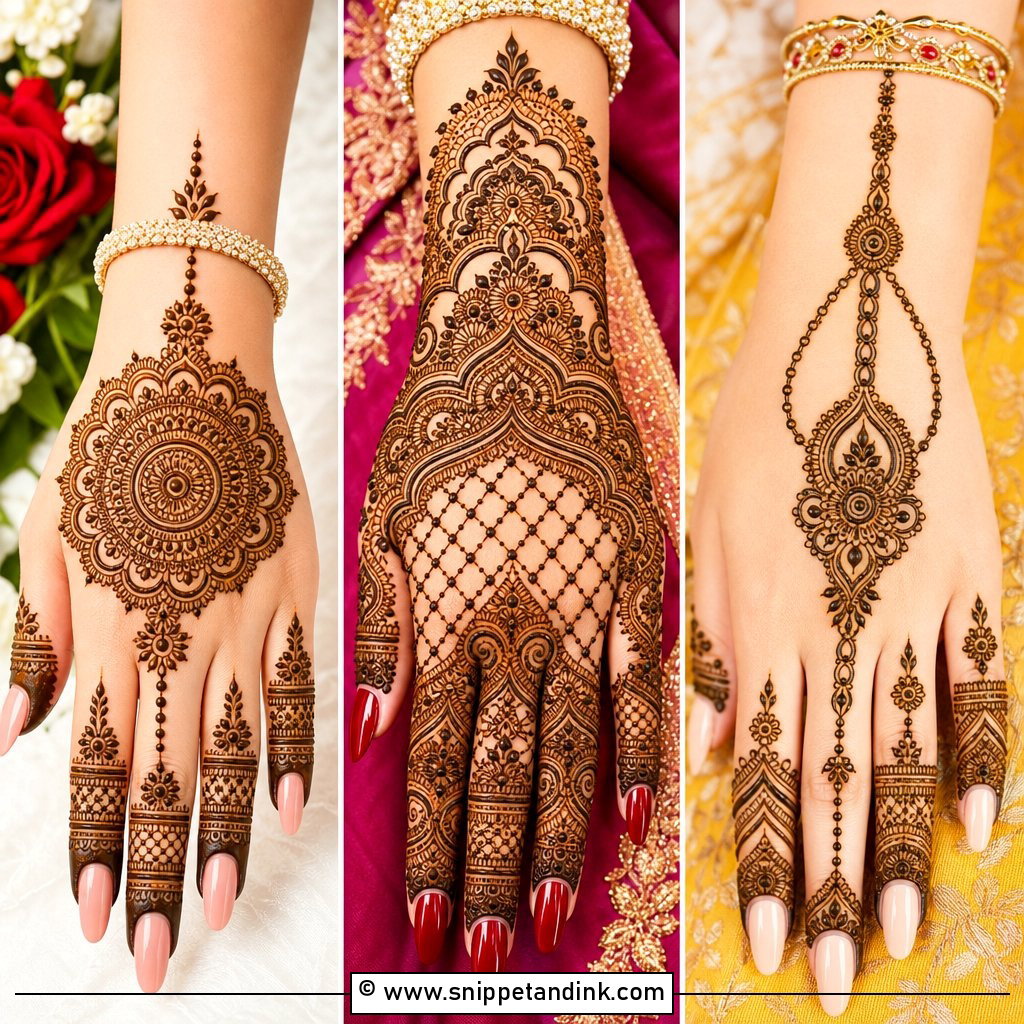
Ring shots, bangle photos and most candid moments show the back of your hand, not the palm. Mandalas, jaali gloves, floral trails, wrist cuffs and finger caps all work here, matching the palm or with a layout of its own. Expect a slightly lighter stain on the back than on the palm, since that skin doesn’t take colour as deeply. My formula is rich fingers, a clear centre and a wrist that connects the two.



20. Front Hand Bridal Mehndi Design
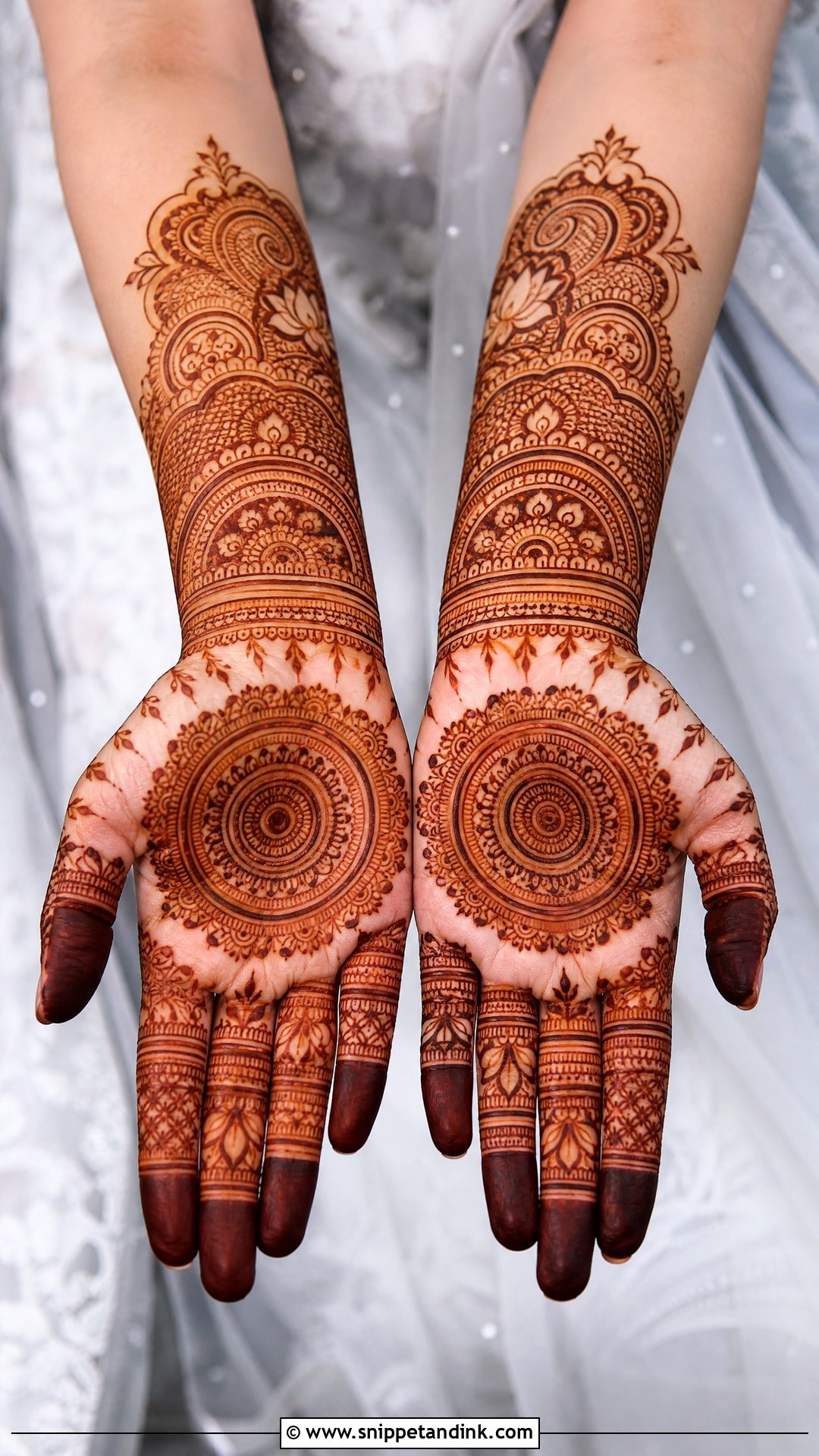
Palms stain darkest and are seen during rituals, so they get the meaningful motifs: mandalas, dulha dulhan art, lotus, paisleys, initials. A full bridal front hand covers fingertips, palm, wrist and the lower forearm. For less density, one strong central motif with open vines or borders around it is enough. I prefer related patterns on the two palms over identical copies; they look right together and still give guests something to compare.
21. Finger Bridal Mehndi Design
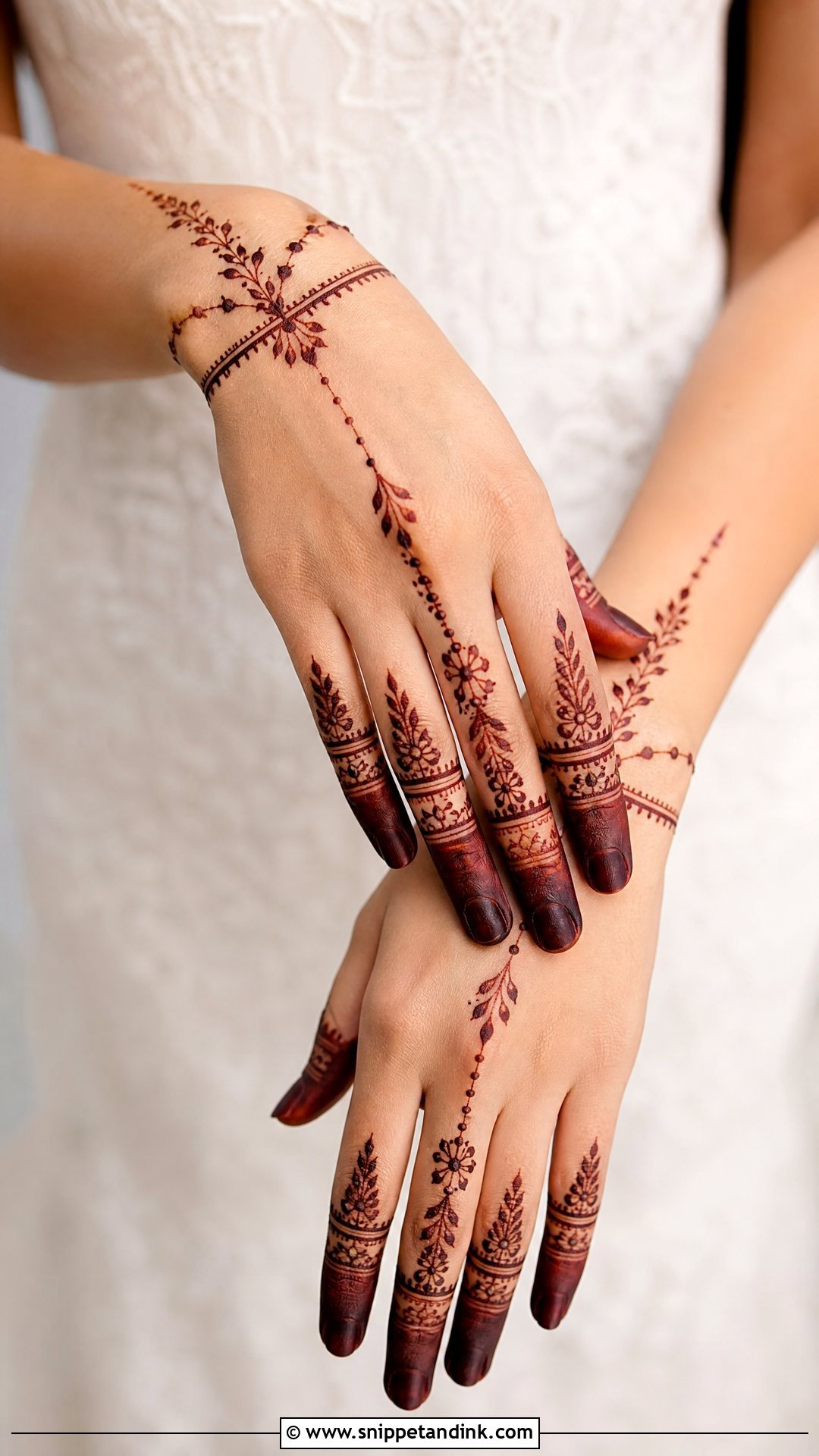
Decorated fingertips, ring-style bands, leafy lines, tiny florals and fine geometric fill reaching toward the palm or back of the hand. Finger designs suit an engagement, reception or small ceremony. On their own they look scattered, so I always tie the fingers to something, a wrist bracelet, a small mandala or a trail. With a fresh manicure and rings, it is comfortable and still clearly for a wedding.
22. Minimal Bridal Mehndi Design
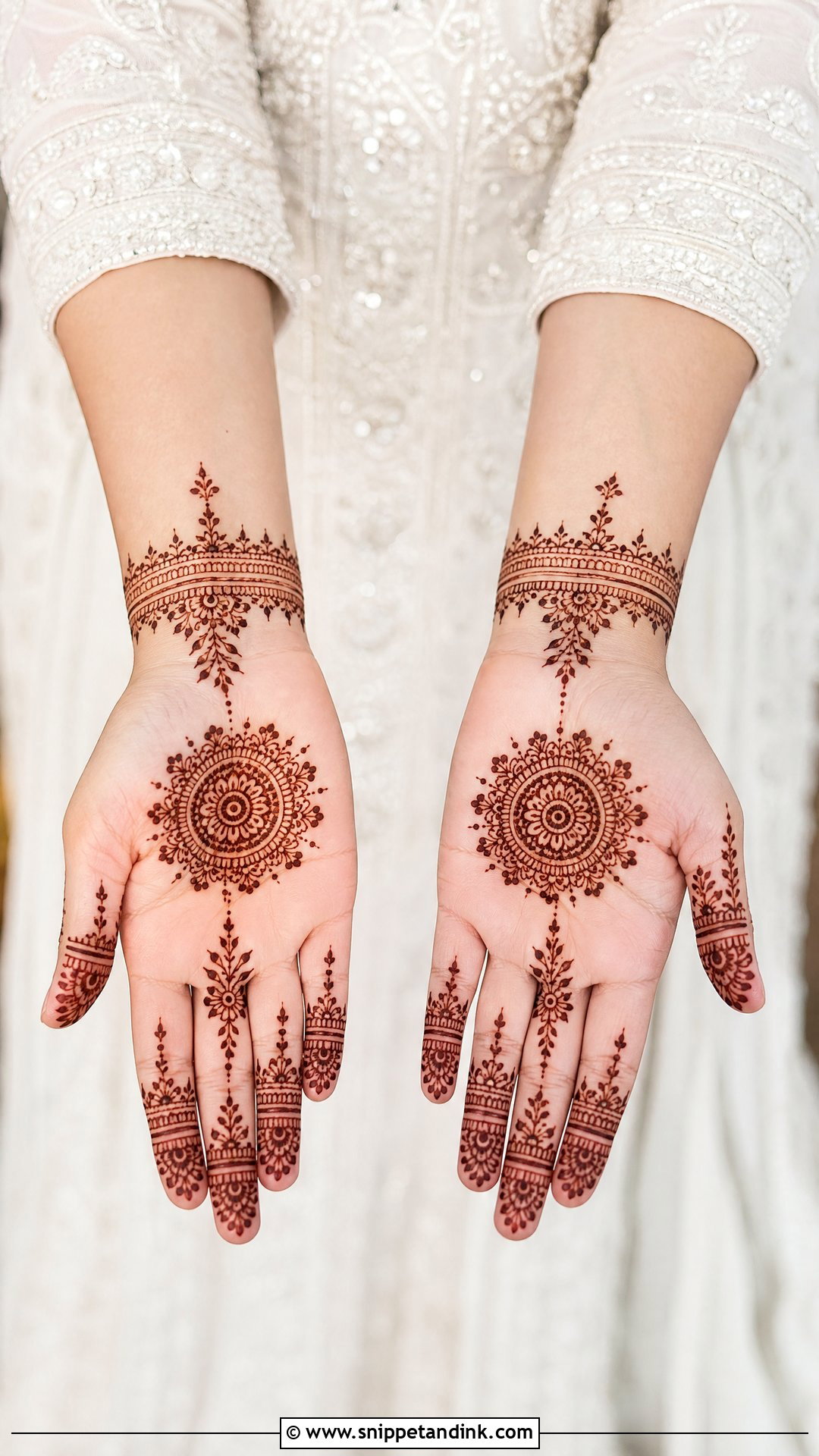
Minimal bridal mehndi design keeps one or two main motifs with slim vines, finger details, a wrist band and plenty of open skin. Brides who can’t sit for hours tend to choose it, and it photographs cleanly. It only reads as bridal when the lines are neat and the placement is deliberate, which is harder than it sounds with so little pattern to hide behind. A mandala with finger trails or a slim Indo-Arabic palm both work, alongside simple jewelry and soft makeup.
23. Simple Bridal Mehndi Design
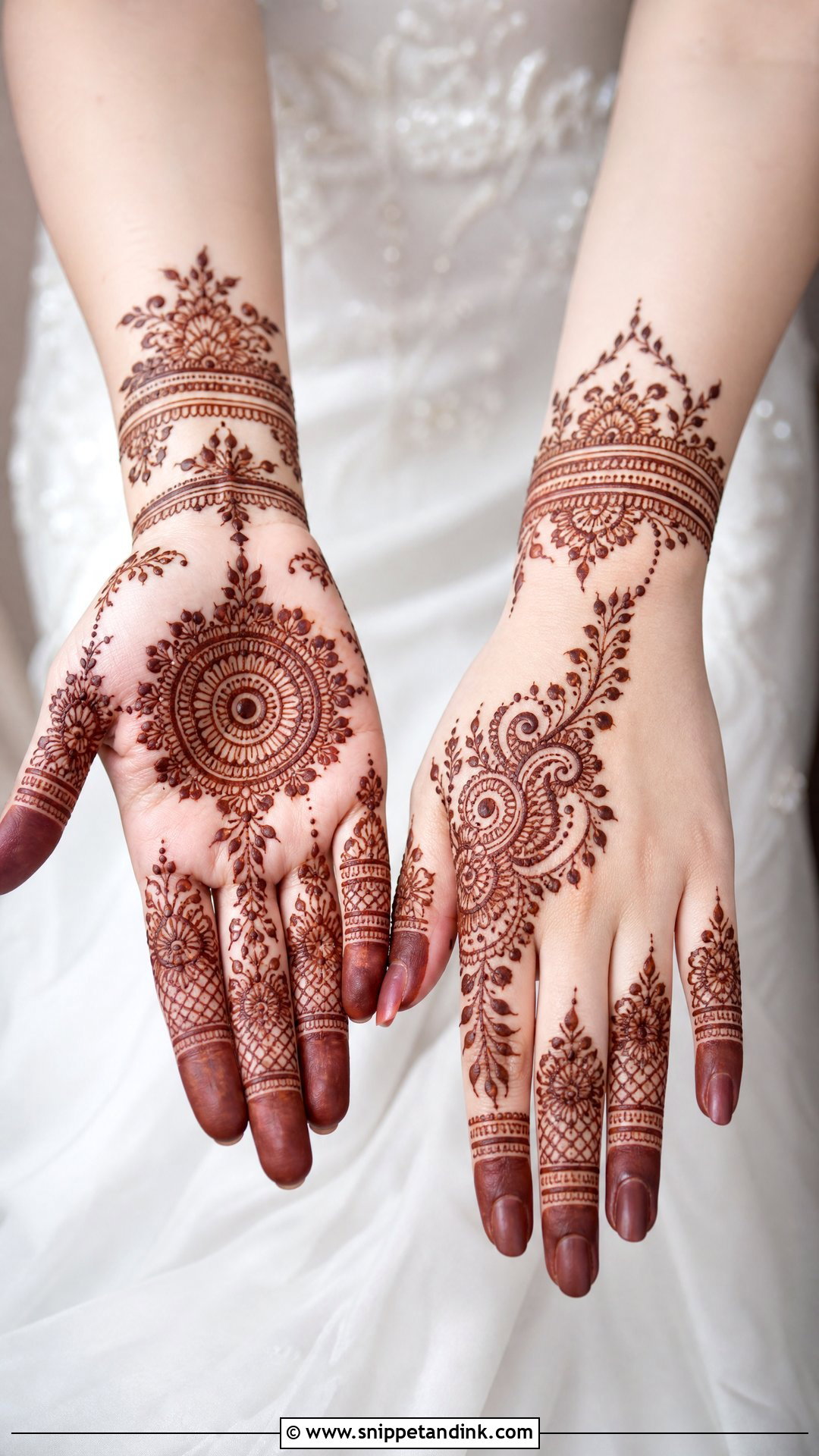
Simple doesn’t mean plain. A floral trail, a central mandala, a few clean paisleys, light wrist bands and decorated fingers can carry a bride perfectly well, and less paste on the skin means a shorter sit and quicker drying, useful at smaller events or on a crowded day. Ask for bold outlines with fine accents. Thin lines alone stain lighter, so the outlines are what keep the design visible.
24. Modern Bridal Mehndi Design
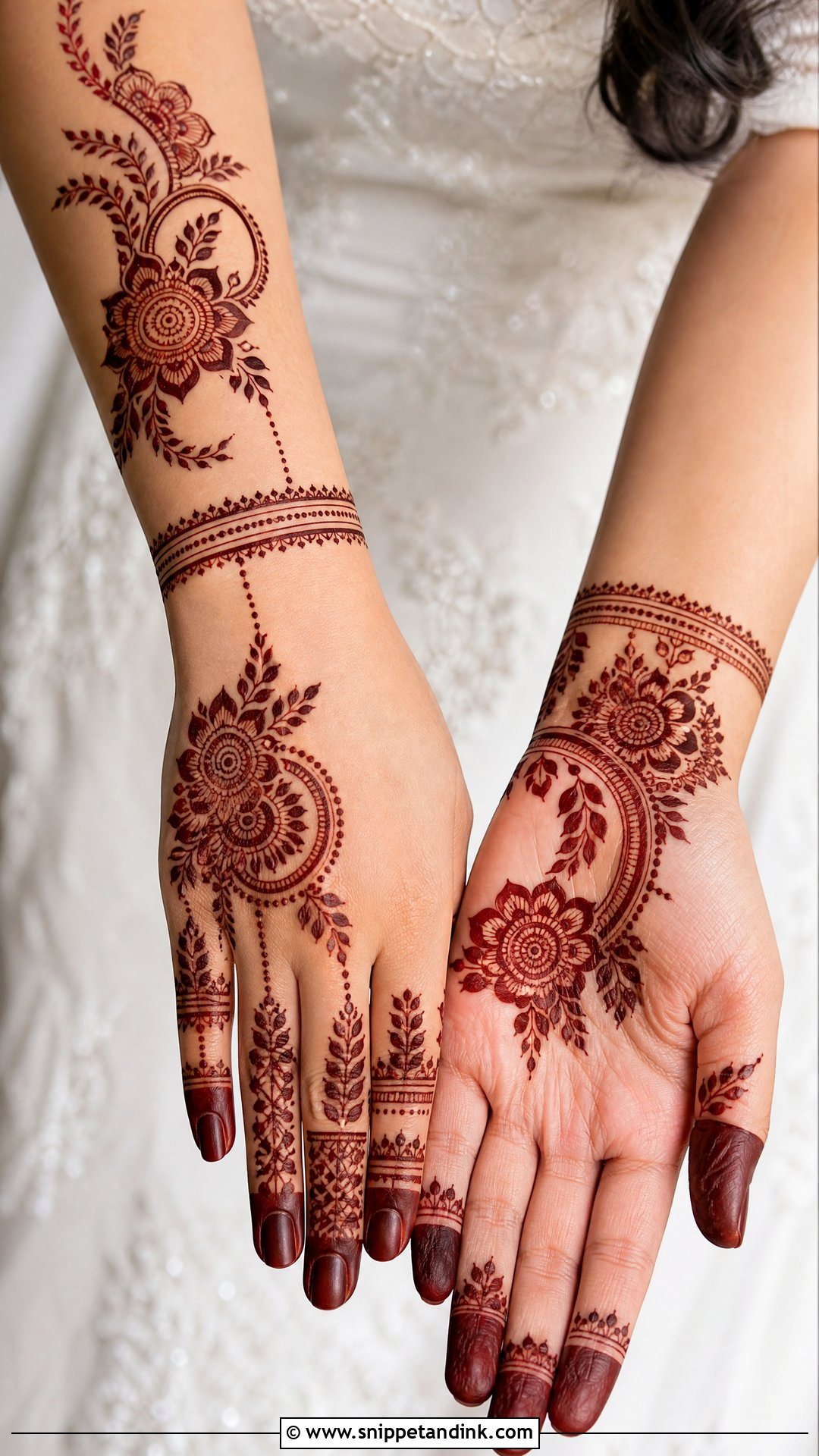
Negative space, clean lines, bracelet patterns, geometric borders, bold florals and asymmetrical layouts: modern bridal henna covers selected areas and leaves the rest bare on purpose. Brides choose it for destination weddings, engagements and reception outfits, with sleek jewelry, pastel lehengas or fusion wear. I’d still put detailed fingertips, a wrist cuff and one strong focal motif on each hand. Without those three anchors, modern starts to look unfinished.
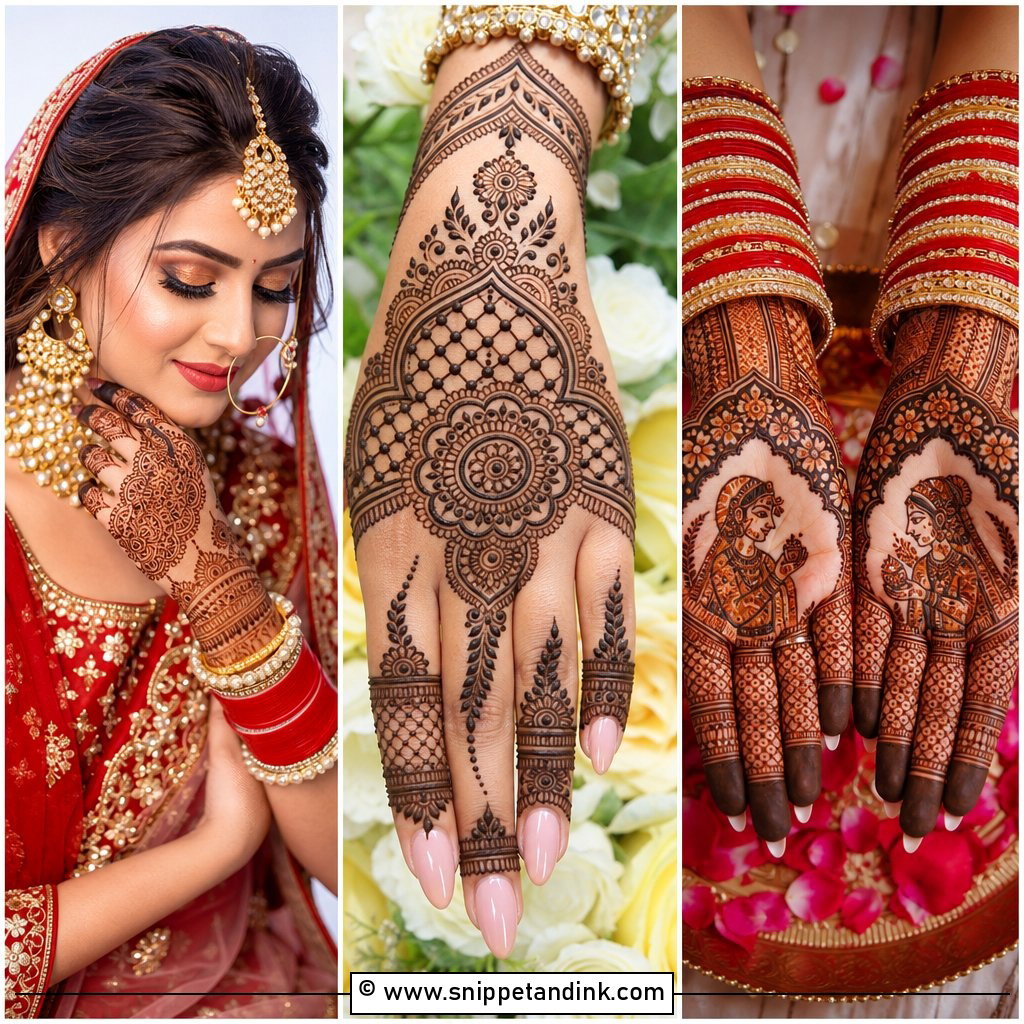


25. Negative Space Bridal Mehndi Design
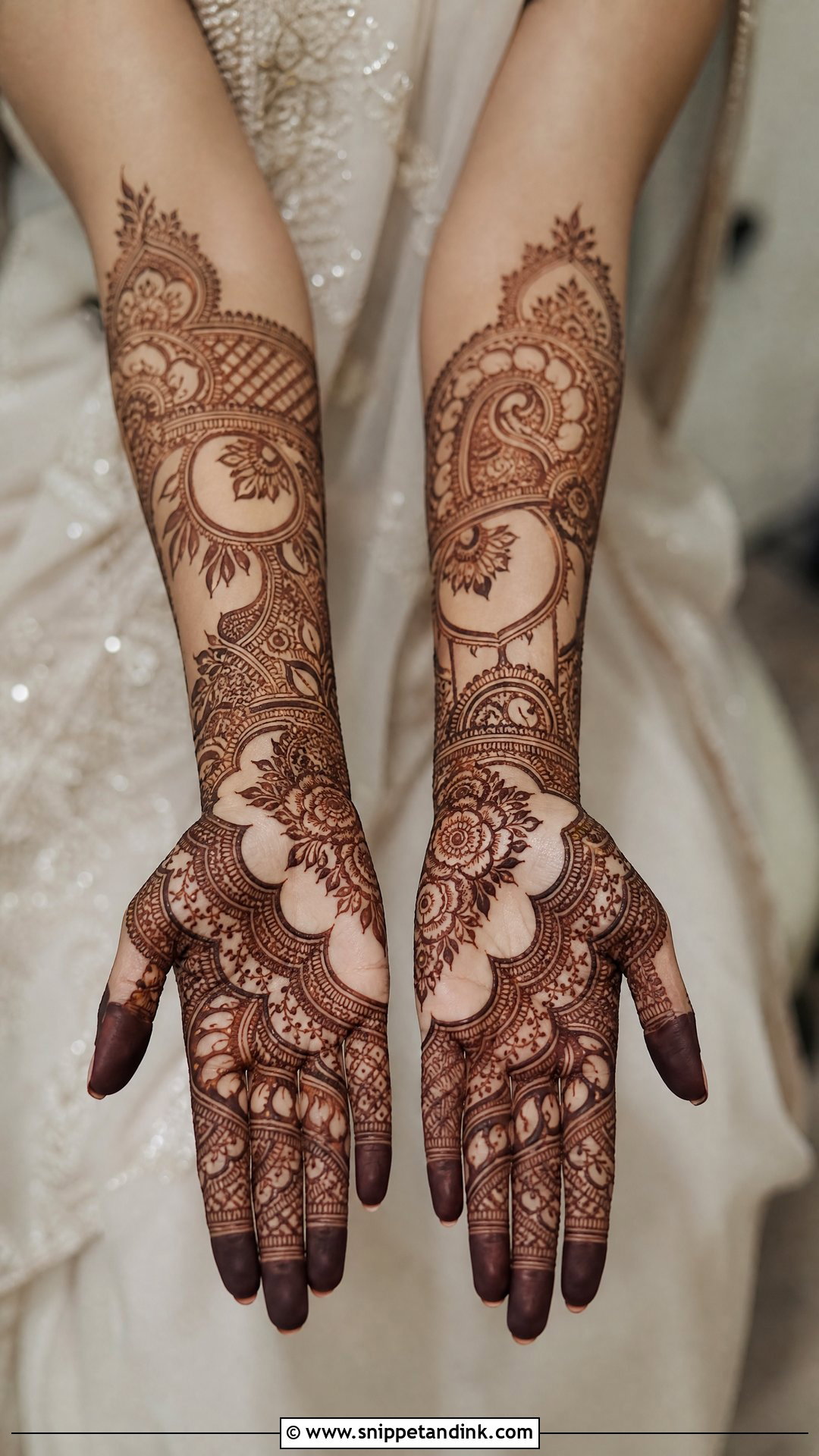
In negative space work the bare skin is part of the drawing. Bold sections of florals, paisleys, mandalas and borders sit with deliberate blank shapes between them, so the hand looks decorated without crowding the jewelry. I plan the blank shapes first and draw around them, which is the opposite of how I’d fill a traditional hand. Heavier detail on fingers and wrist with clean gaps around the main motifs gives the crispest stain.
26. Jewelry Bridal Mehndi Design
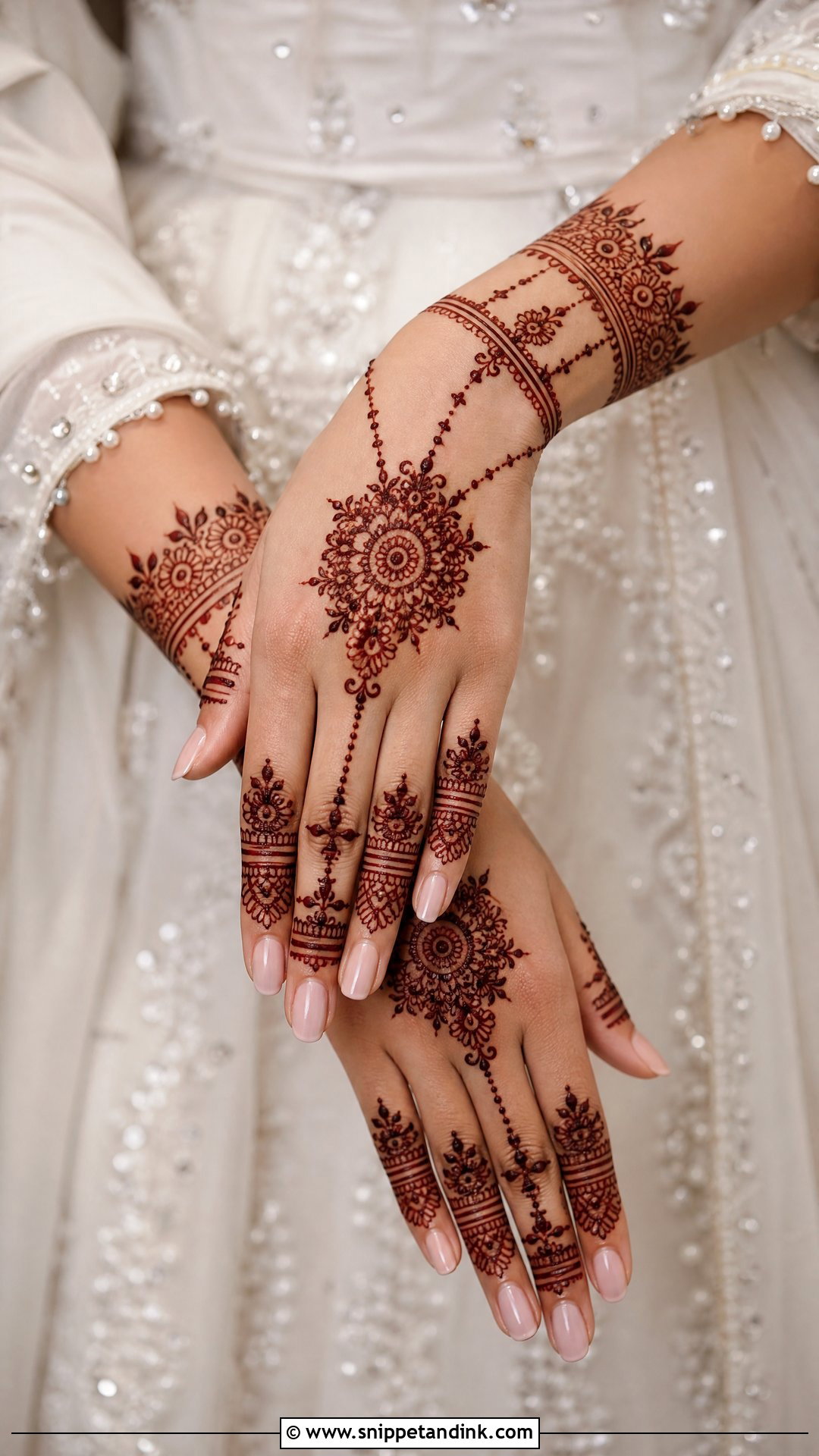
Henna jewelry draws the ornaments on the skin: bracelet cuffs, ring chains, haath phool shapes, finger bands and fine connecting lines. Because it complements real jewelry instead of hiding it, I usually place it on the back of the hand where chains and rings are easiest to see. Add a floral centre, a mandala or a few paisleys for a full bridal version, and keep the connecting lines fine. It feels light enough for engagement and wedding functions alike.
27. Bracelet Bridal Mehndi Design
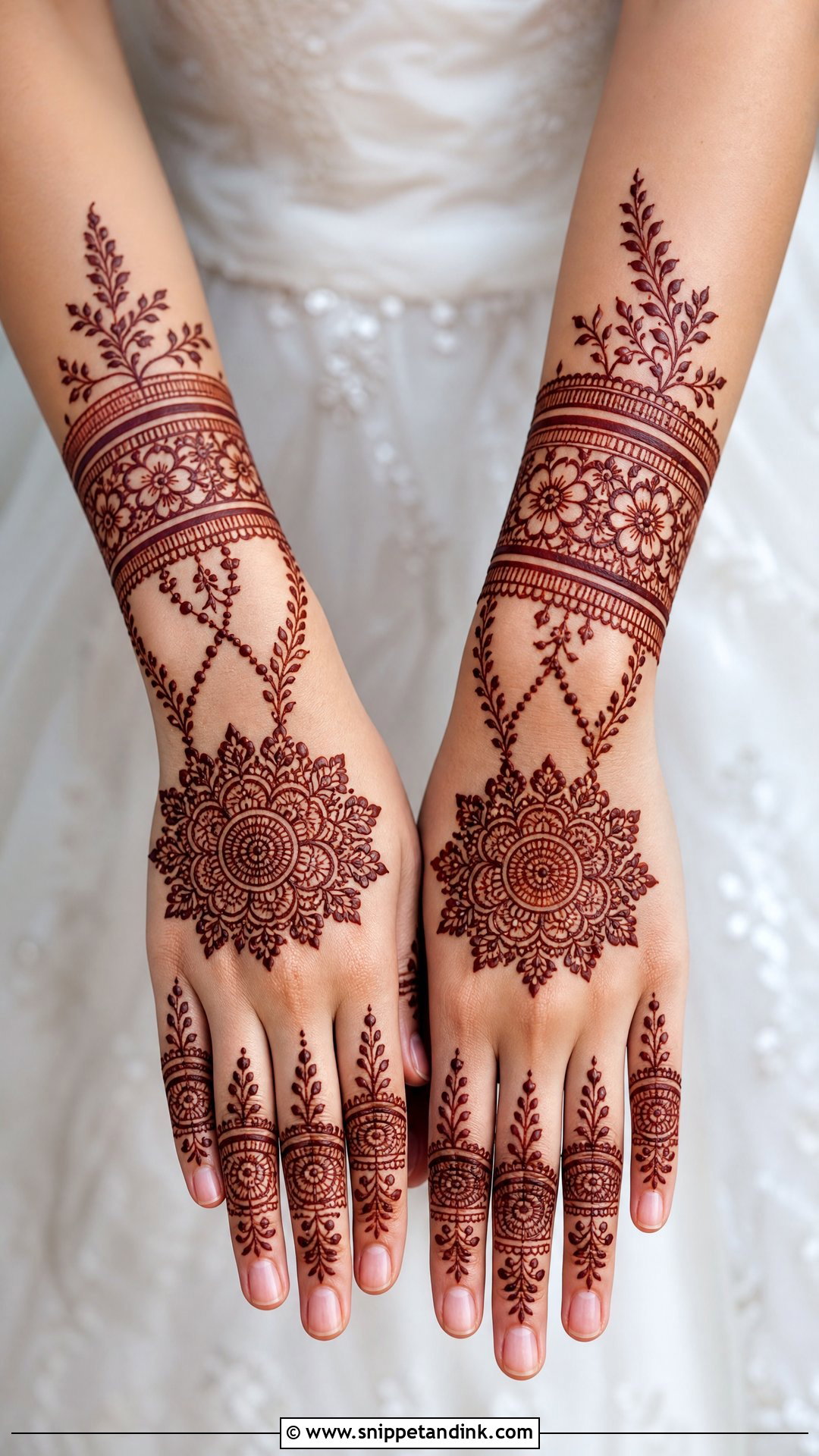
Built around the wrist and back of the hand, this design reads like a henna bangle: layered bands, floral cuffs, jaali strips, beads and leafy borders, with chains, vines or a mandala carrying it toward the fingers. It can be minimal or detailed. For the wedding day itself, I add rich finger patterns and a strong central motif. One thing to check: if you’ll wear a full stack of chooda, much of the wrist band will be hidden, so put the effort where it will show.
28. Initials Bridal Mehndi Design
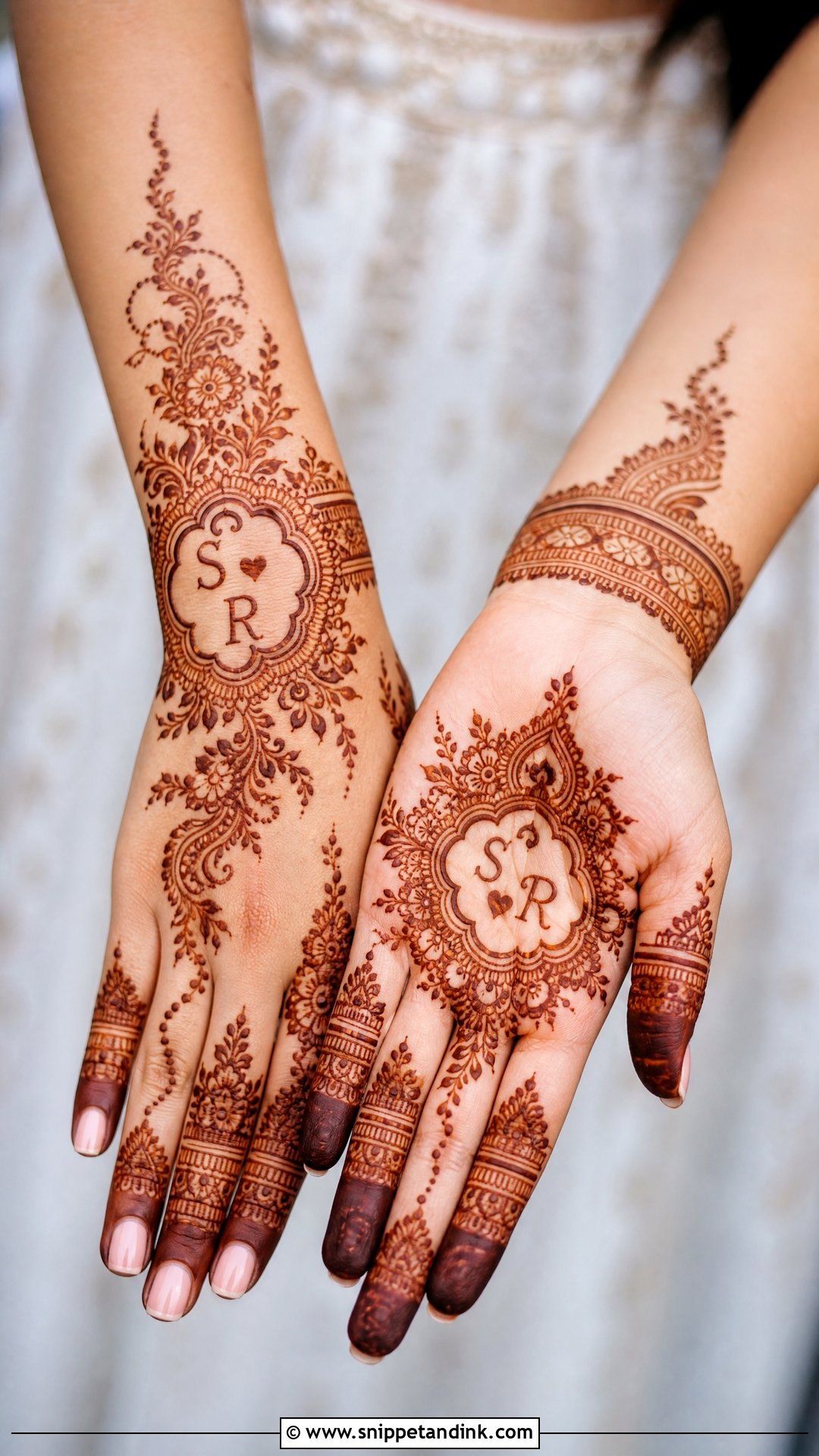
Initials tucked into paisleys, beside a mandala, inside a curved frame or along a floral vine turn the ritual of searching for them into a small game during the ceremony. It works in heavy, simple, Indian, Arabic or Indo-Arabic designs. The letters should blend in, not look stamped on top. I hide them where there’s enough surrounding detail to camouflage them but keep the strokes thick enough to read once stained.
29. Full Arm Bridal Mehndi Design
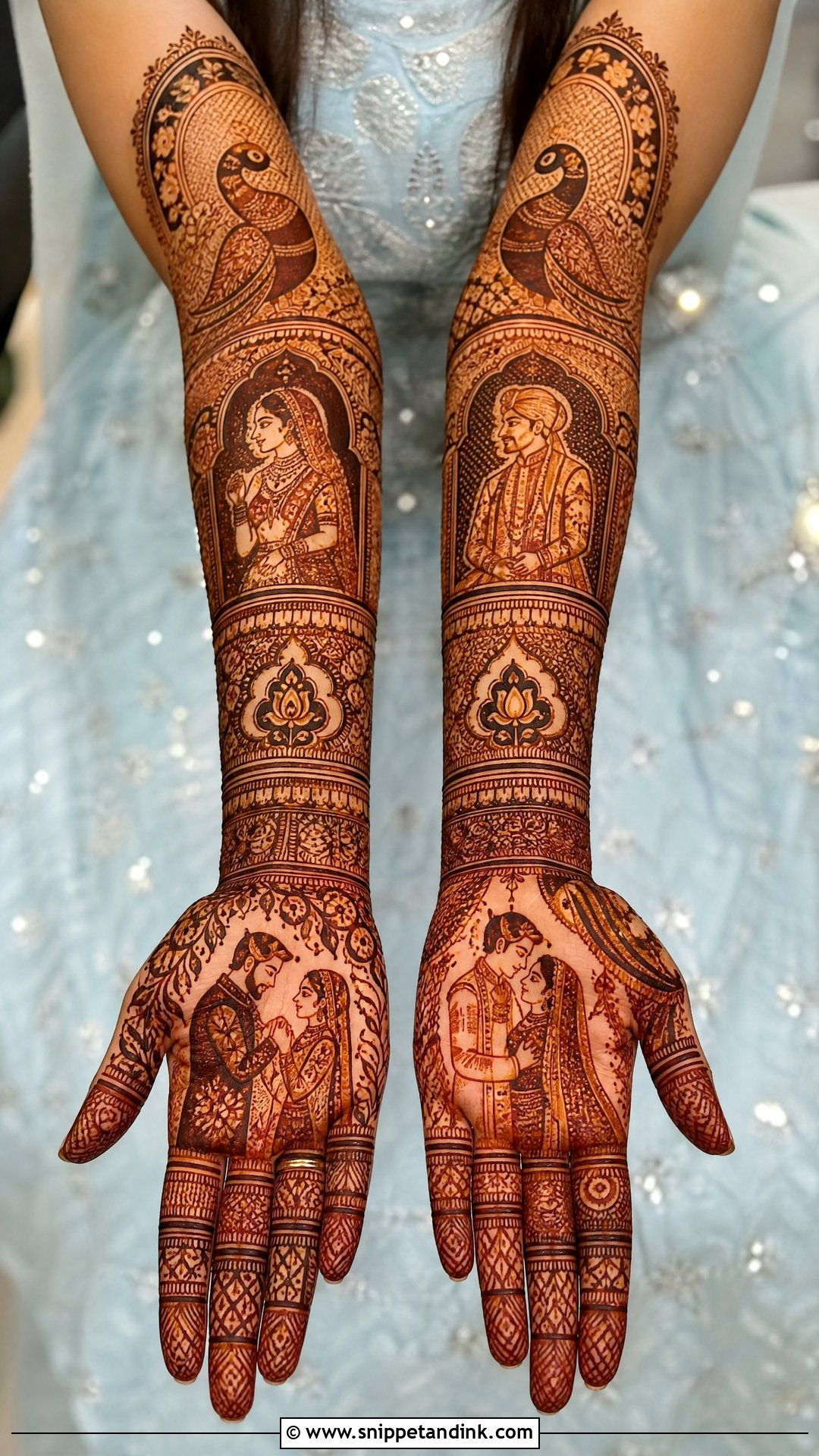
Full arm henna runs from fingertips to the elbow or a little higher, with large motifs, portrait art, peacocks, paisleys, flowers, jaali panels and ornamental bands. With this much coverage I plan in sections before I start: larger motifs on the forearm, finer patterns around fingers and palms, bands between them. That gradient keeps the arm balanced. It is a long sit and a long dry, so clear your schedule and wear a loose top with no sleeves to catch the paste.
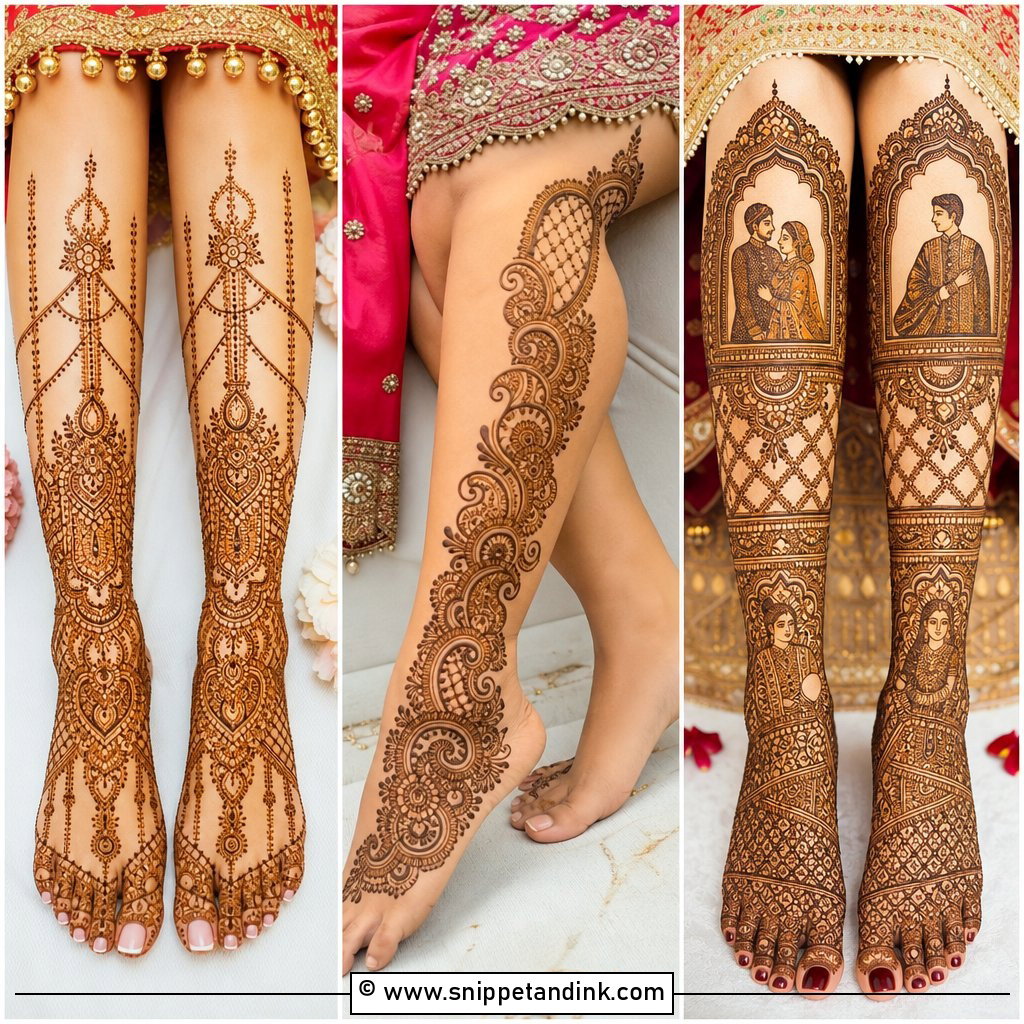
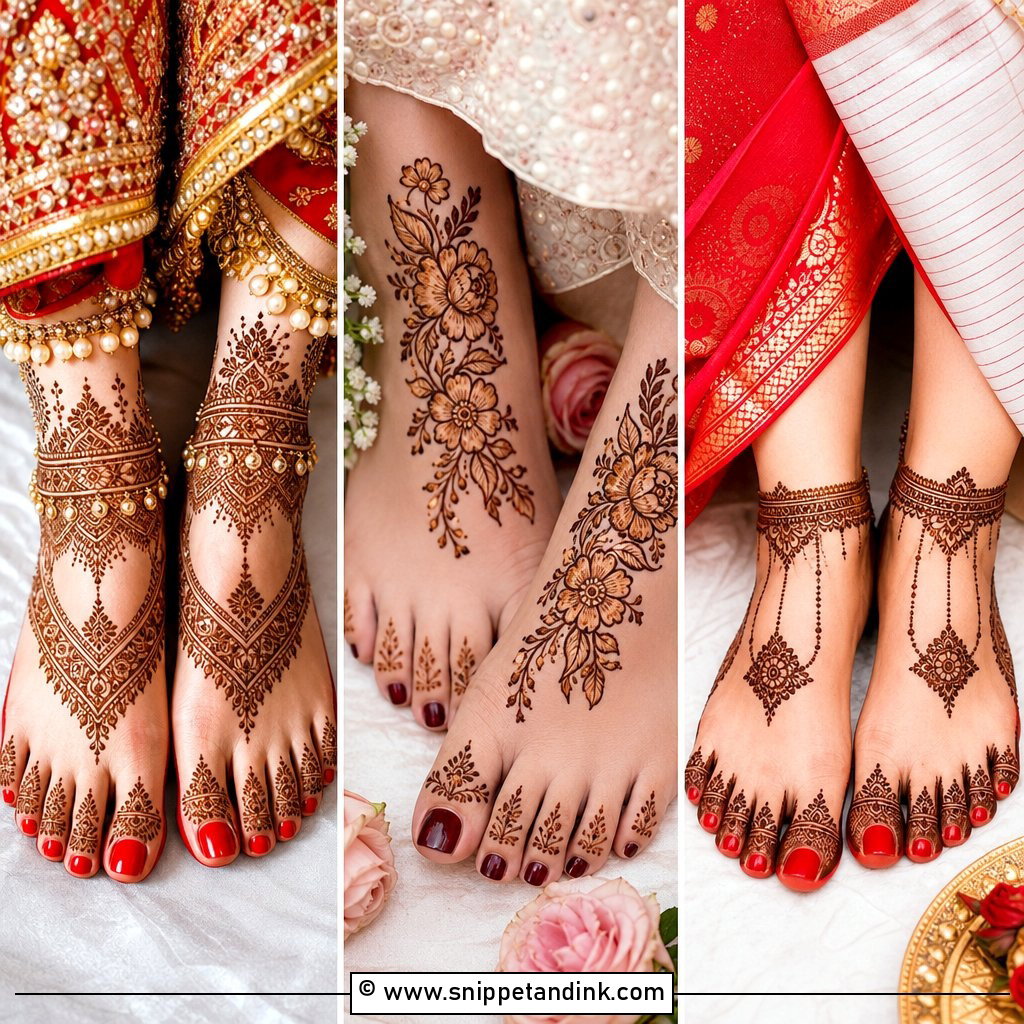
30. Bridal Foot Mehndi Design
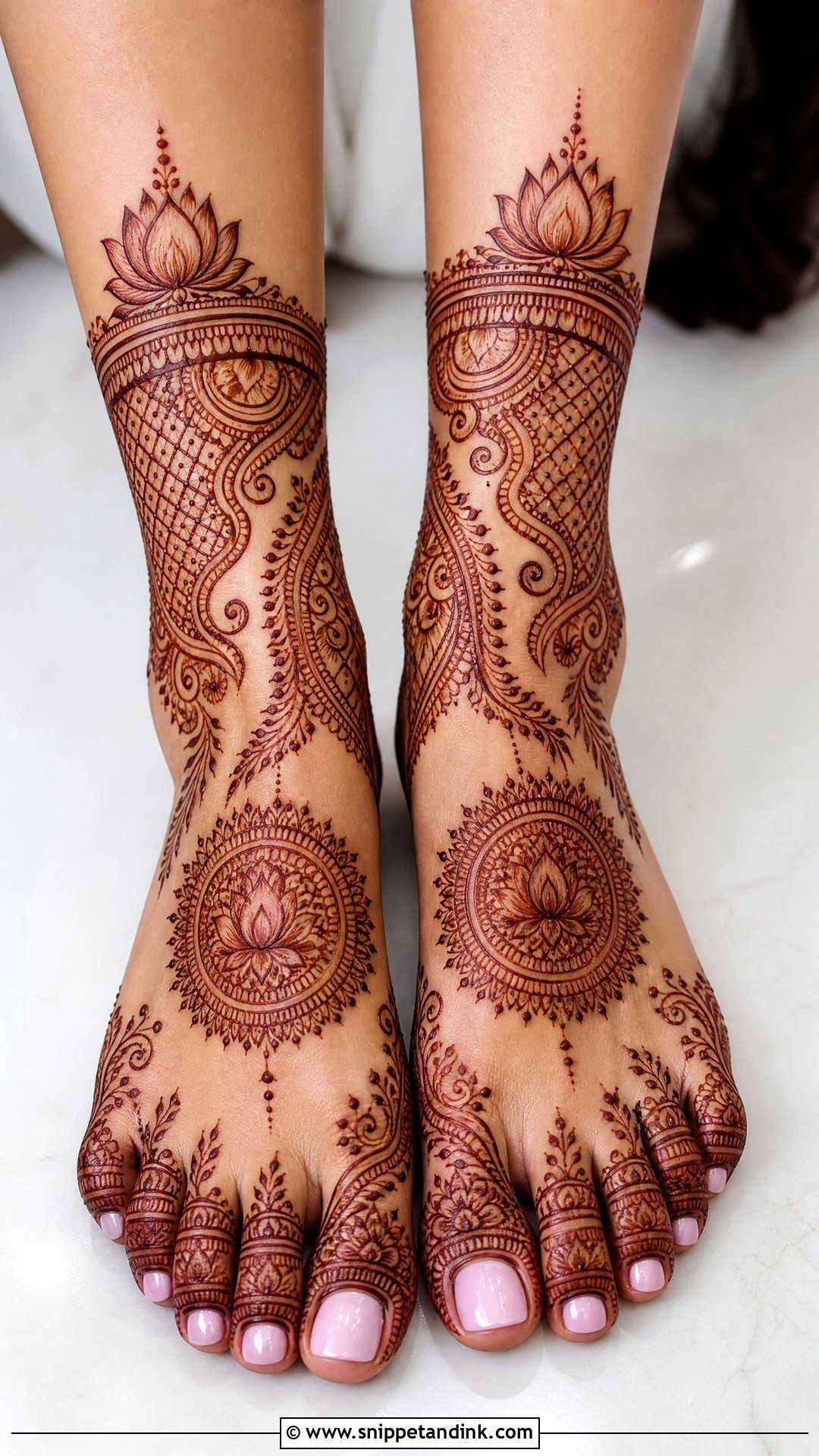
Feet show when you wear anklets, open footwear or an outfit that lifts at the hem, so foot henna rounds out the look: toes, top of the foot, ankles, sometimes the lower leg, with lotus, paisleys, mandalas, anklet bands, jaali and leafy trails. Feet usually stain deep. I avoid very tiny details near the toes because they blur, and I match at least one motif to the hands so the whole set feels planned.
Six Hours With Wet Paste on Both Hands
Nobody warns brides how helpless wet henna makes you. Once both hands and feet are done, you can’t scratch your nose, check your phone or pull up your dupatta for hours. A little planning makes the evening much easier.
- Tie your hair up and take off rings and watches before the artist starts.
- Eat a proper meal first and go to the bathroom right before; you’ll need help with both afterwards.
- Wear something loose, button-front and old. Henna stains fabric permanently.
- Ask one person to stay beside you all evening. A straw for drinks is a small mercy.
- Plan how you’ll sleep: hands resting on a towel, a light wrap of tissue, and an old sheet on the bed.
How Fine Detail Looks a Week After the Wedding
A bridal stain usually lasts one to three weeks, fading gradually as the top layer of skin renews. Palms and fingertips, where you wash and grip the most, fade unevenly first. That matters if you have a reception or walima several days later. The finest lines in portraits, names and jaali soften soonest, while bold outlines and solid fingertips hold. If later events matter to you, I’d lean toward designs with strong outlines over the most delicate fill.
A Design Planned Around the Whole Wedding Week
Your outfit, your jewelry, your ceremony schedule and your comfort will narrow this list more than any photo. Some brides want full hand Indian and Rajasthani patterns; others are happier with Arabic, minimal or negative-space work. Portraits, initials, jaali, lotus and peacocks are the details that make a design yours. Go full coverage with fine detail for a rich look, or clean spacing and bold motifs for a lighter one. Then book an artist whose work you’ve seen up close, and follow her aftercare to the letter.
You'll Like These Ideas:






Leave a Reply