
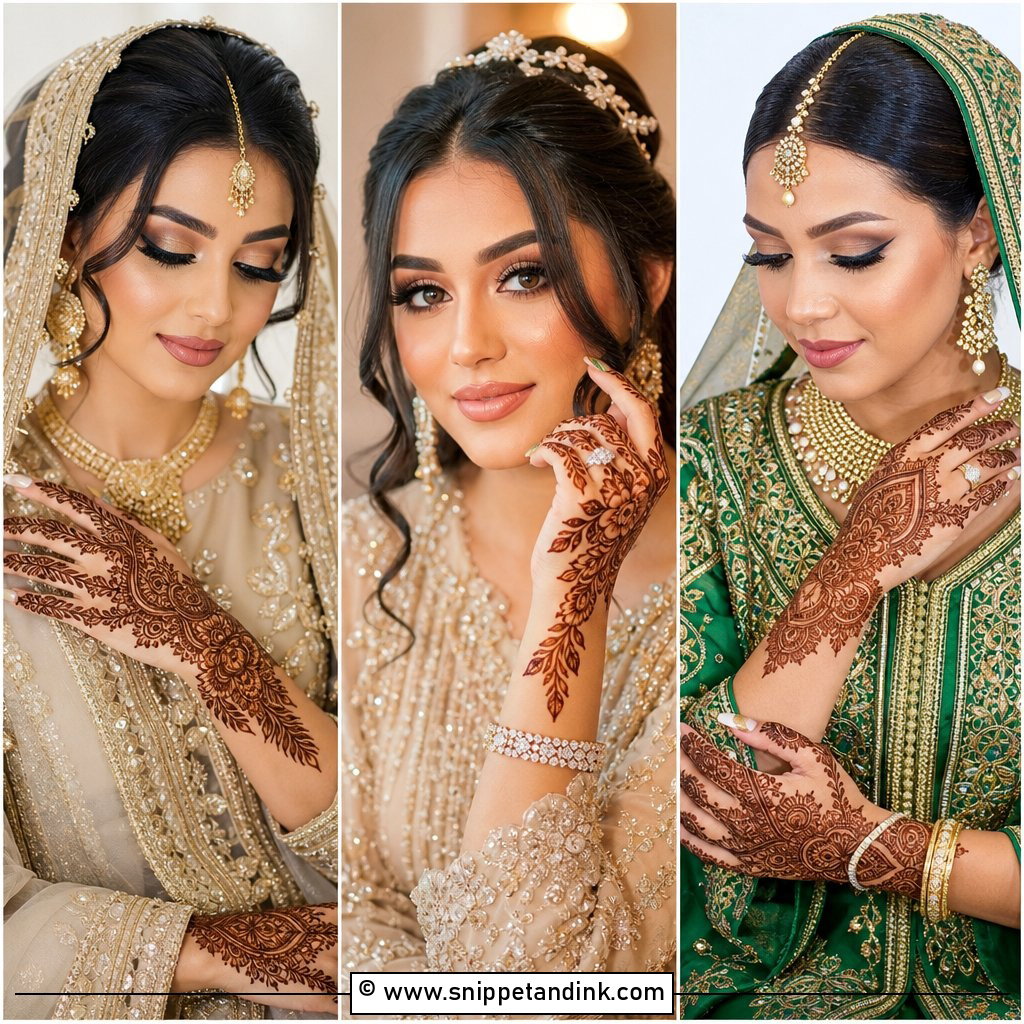
Most brides come to me with a screenshot and no name for what’s in it. That makes the first conversation slower than it needs to be, because “full Indian” and “Indo-Arabic” mean very different hours in the chair and very different stains on the day. Below are the styles I’m asked for most, from dense full-hand work and Arabic trails to portrait palms, mandala layouts, jaali mesh and modern minimal designs for brides who want less coverage. For each one I’ve noted where it sits on the hand, what it asks of the artist and who it suits, so you can walk into your consultation able to say exactly what you want.
How Your Stain Darkens Between the Cone and the Ceremony
The colour you see when the paste comes off is not the colour you’ll have at the wedding. Fresh henna stain starts out bright orange and deepens to reddish brown or maroon over the next day or two as it oxidises. That’s why I schedule bridal application one to two days before the ceremony, never the morning of.
- Keep the paste on as long as you can, ideally overnight or at least six hours. A light dab of lemon and sugar once it’s dry helps it stay stuck to the skin.
- Scrape the dried paste off rather than washing it. Avoid water on the design for the first twelve hours or so.
- Warmth helps the stain develop. Keep your hands warm that night and skip a cold air-conditioned room if you can.
- Hands and palms darken first and most; arms and the backs of the hands stay lighter. That gradient is normal.
One warning I give every bride: if a cone produces a jet-black stain within an hour, it isn’t natural henna. Black henna often contains PPD, a hair-dye chemical that can cause serious skin reactions and scarring. Real henna paste is greenish brown and never stains black.
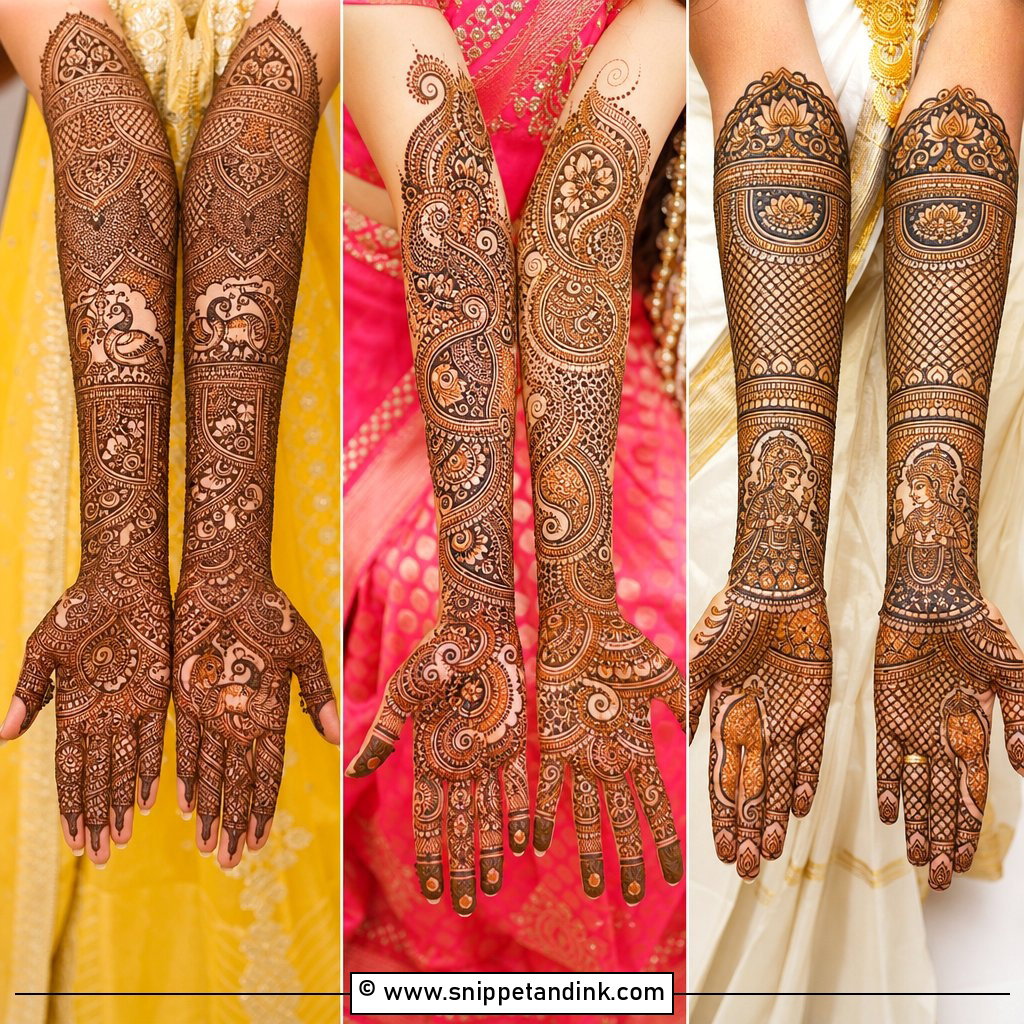
1. Full Hand Indian Bridal Mehndi Design
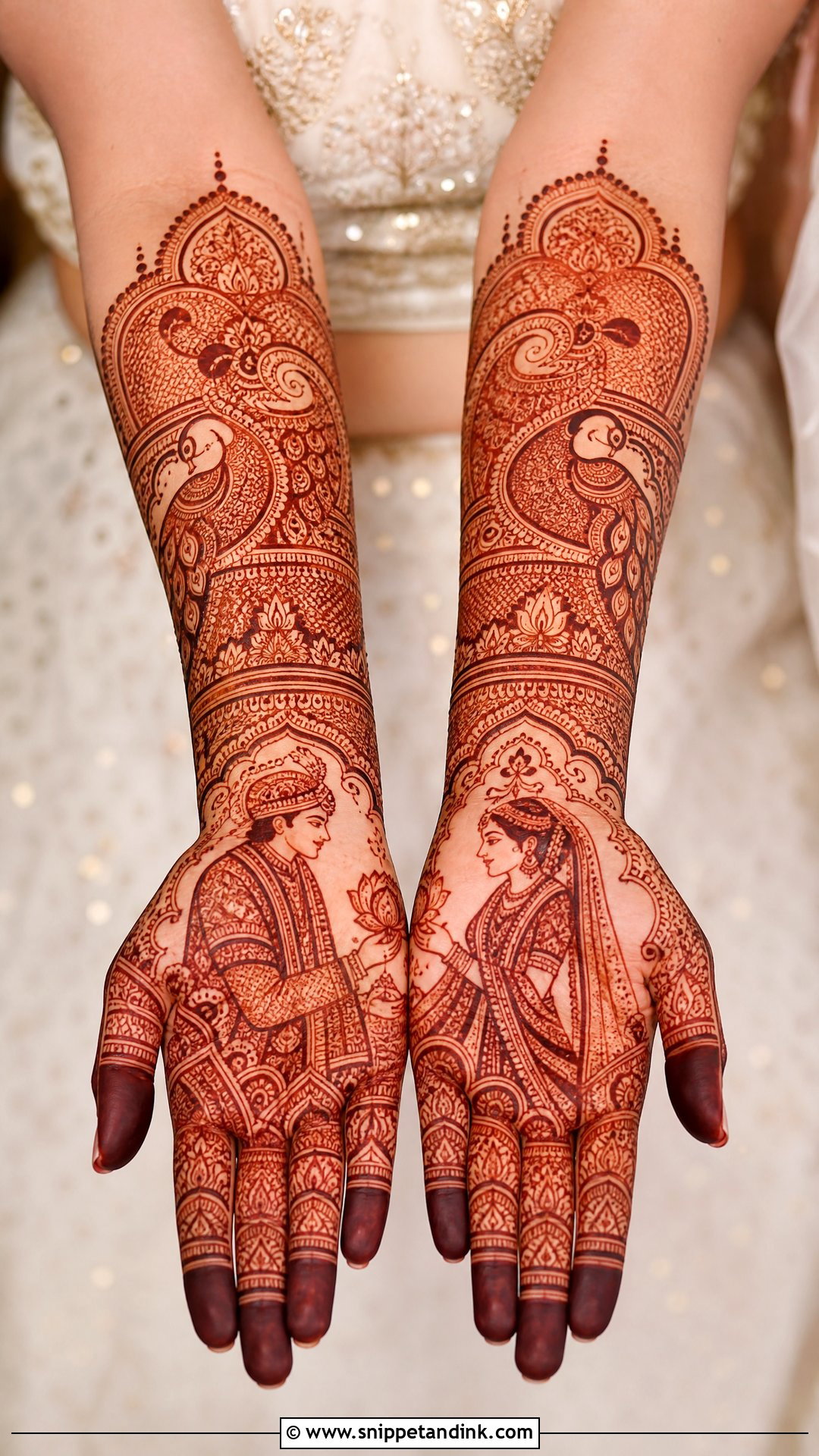
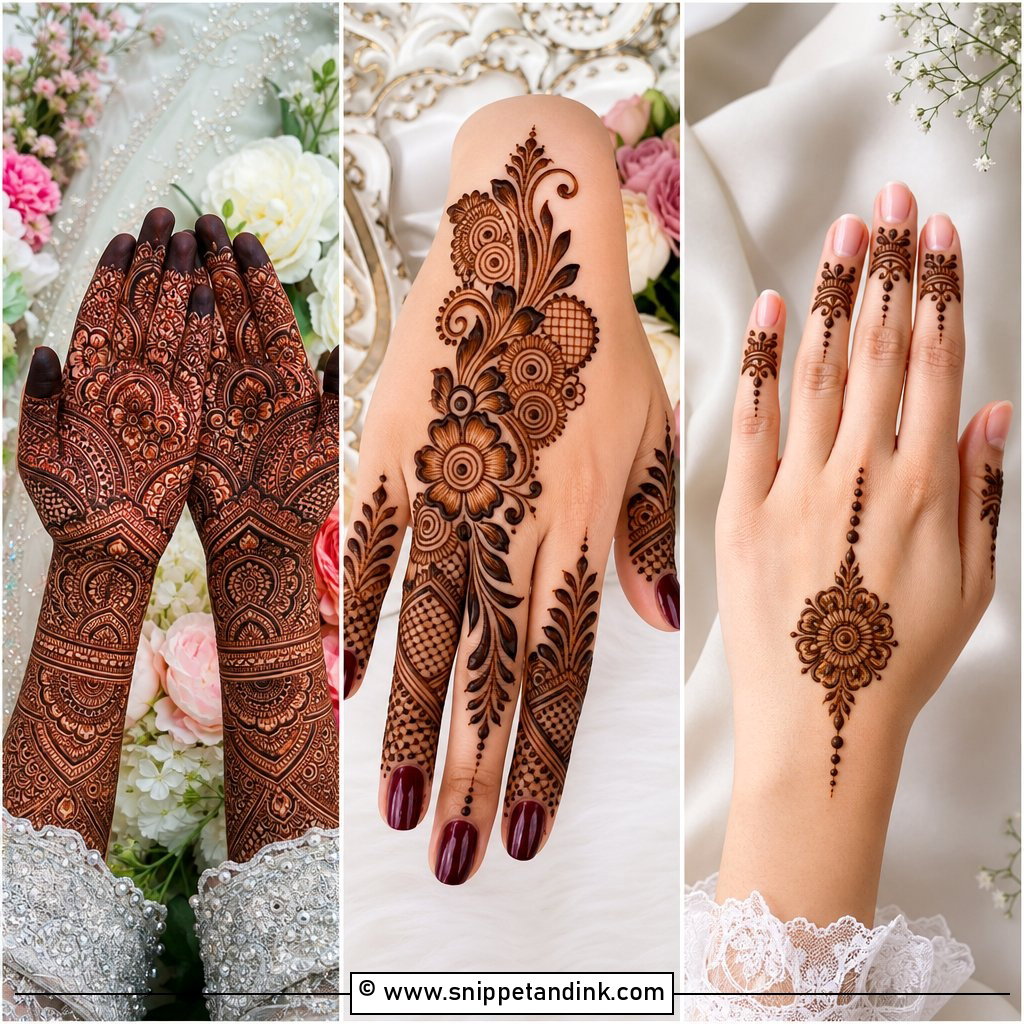
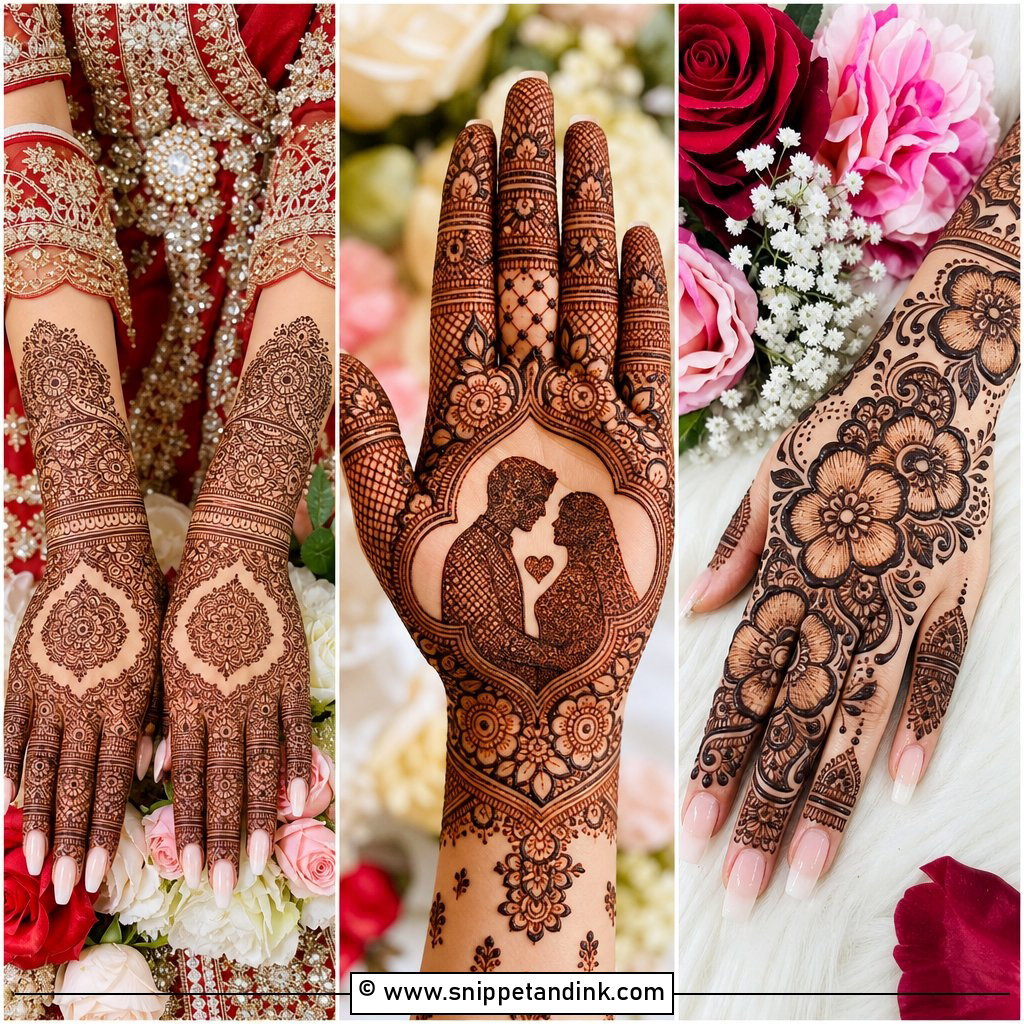
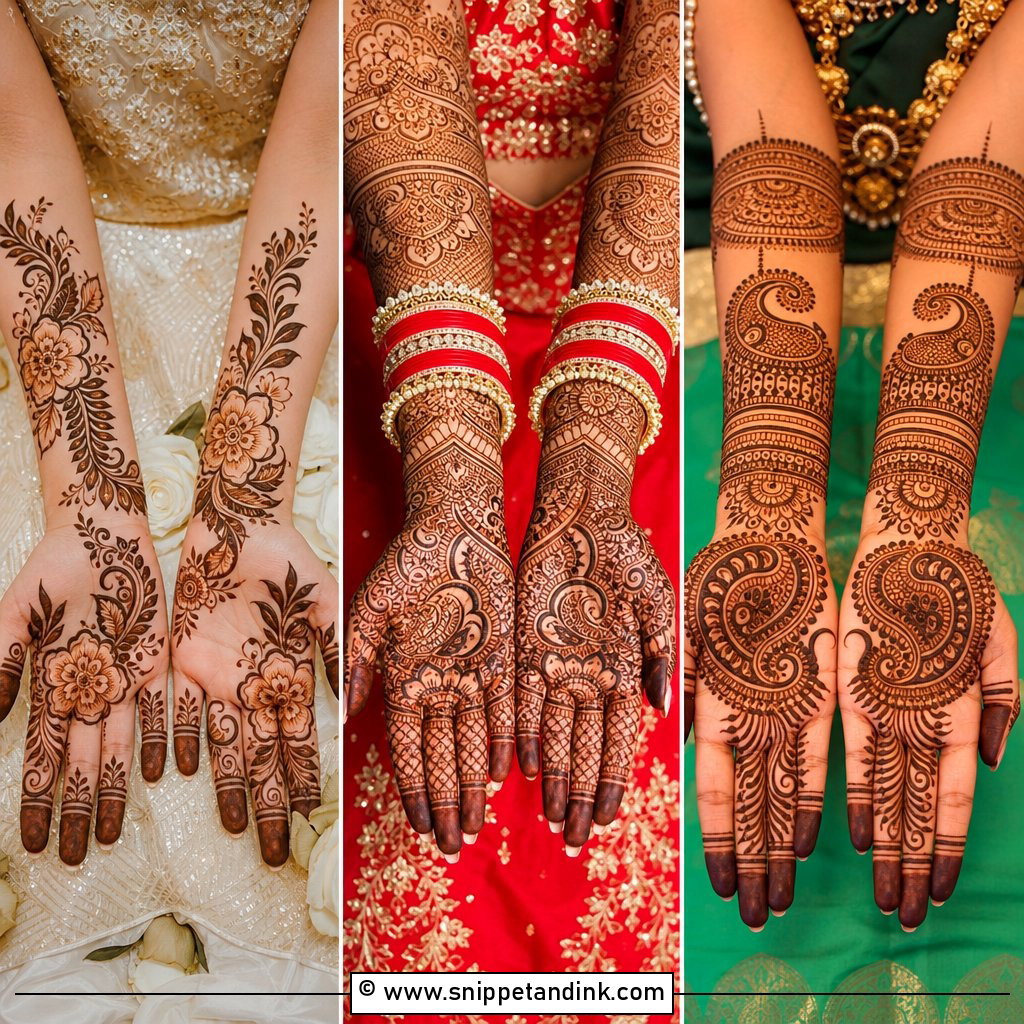
This is the design most families picture when they hear the word bridal: palms, fingers, wrists and forearms packed with paisleys, peacocks, lotus, kalash and bride-and-groom figures, with fine filler holding it all together. I plan it in zones before the cone touches skin, otherwise the forearm ends up crowded and the palm centre loses its focus. Budget a long sitting, often five hours or more for both hands and arms, and don’t book anything else that evening. The payoff is a stain so dense the hands read as dark from across a room, and there’s room inside all that detail to hide initials or small symbols that mean something to the two of you.
2. Arabic Bridal Mehndi Design
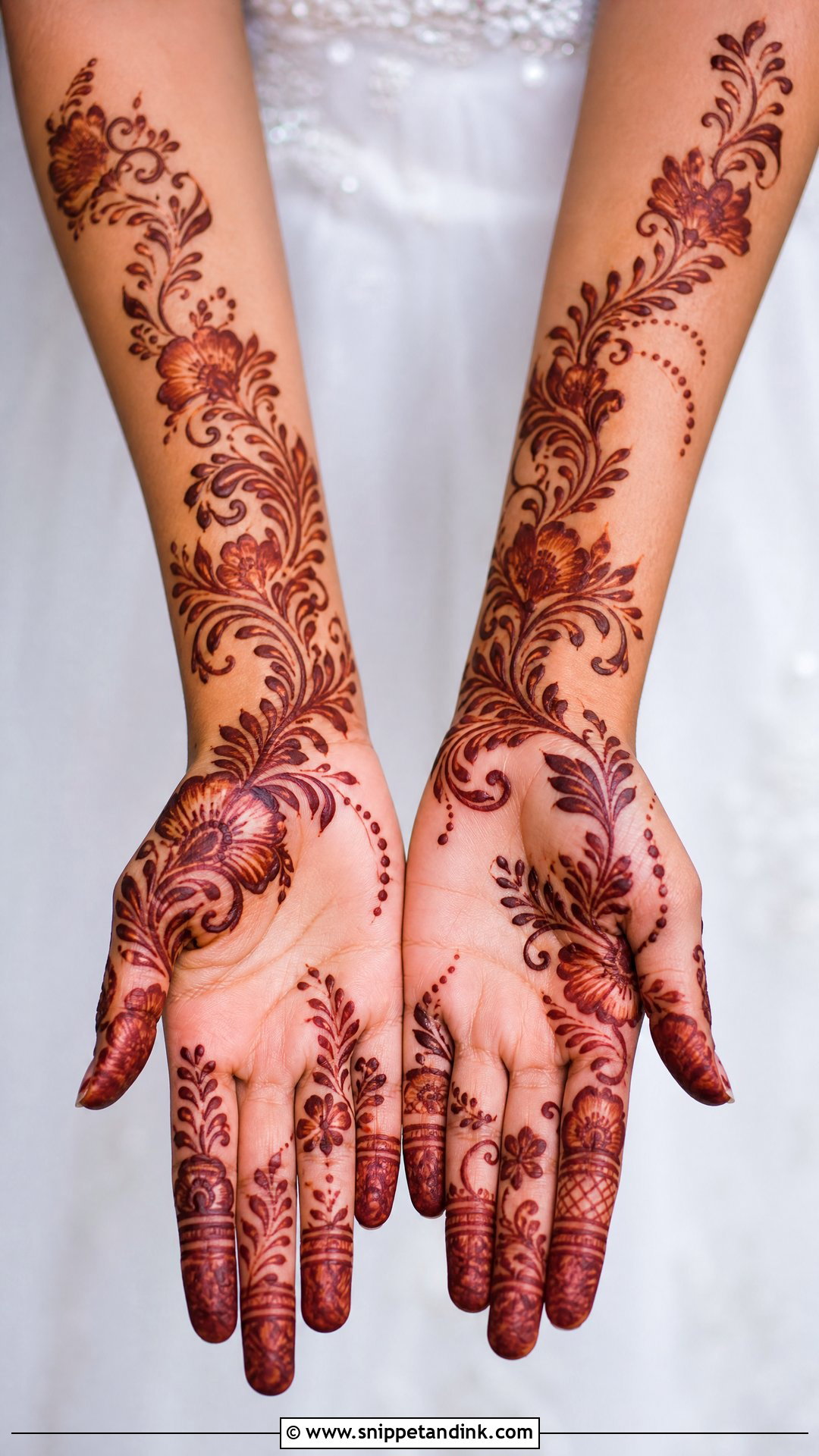
Arabic work runs on a diagonal, starting near the fingertips and travelling across the palm toward the wrist with bold vines, shaded petals and plenty of bare skin between them. Because the lines are thicker, the stain shows clearly even from the back of a hall. I like it for nikah and sangeet hands, and it’s quick enough that a bride who can’t sit still for hours will cope. The diagonal also lengthens short fingers. The one thing I watch is the shading: it’s done with a thinner wash of paste, so it stains lighter, and that contrast is the whole point.
3. Indo Arabic Bridal Mehndi Design
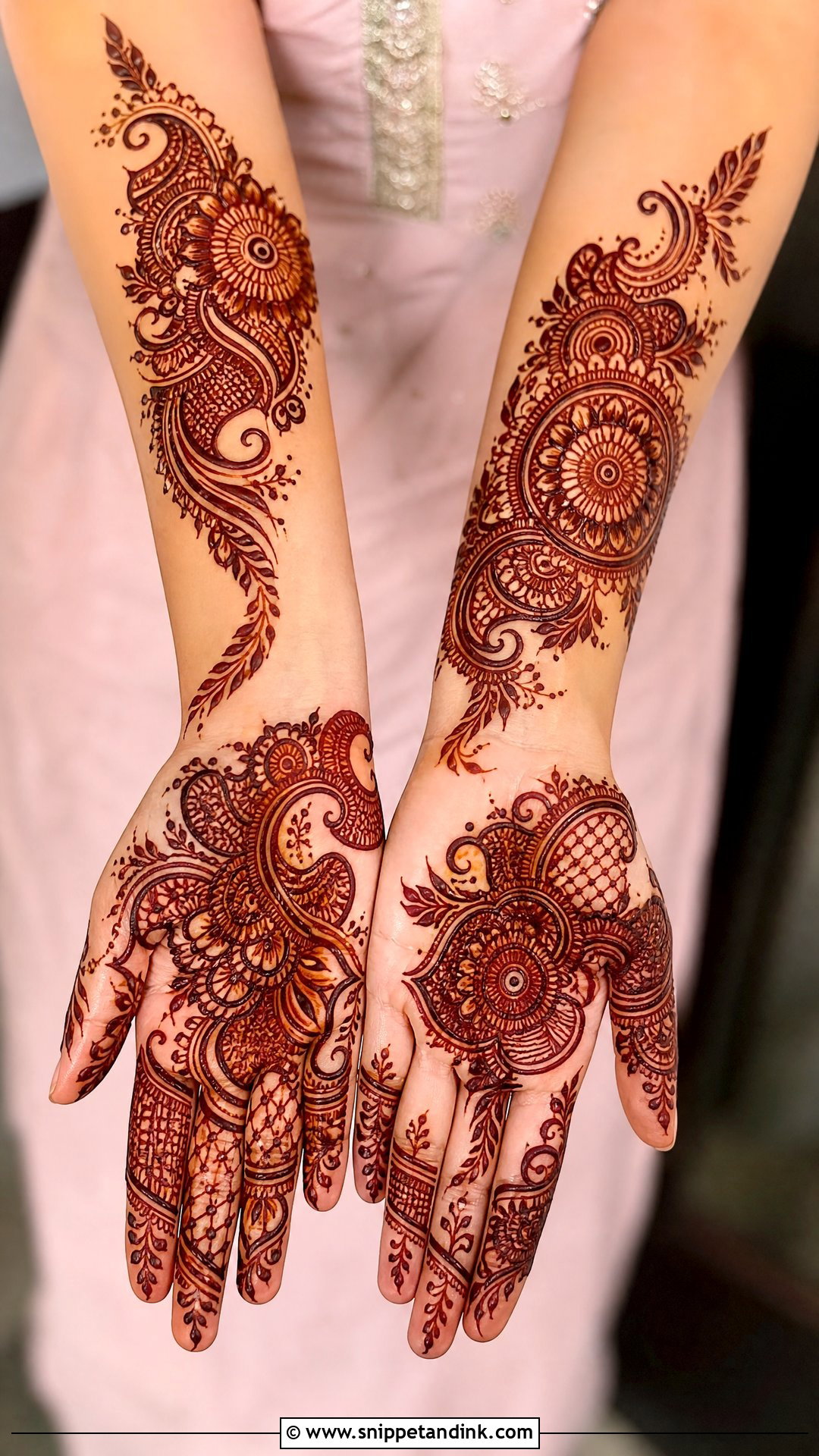
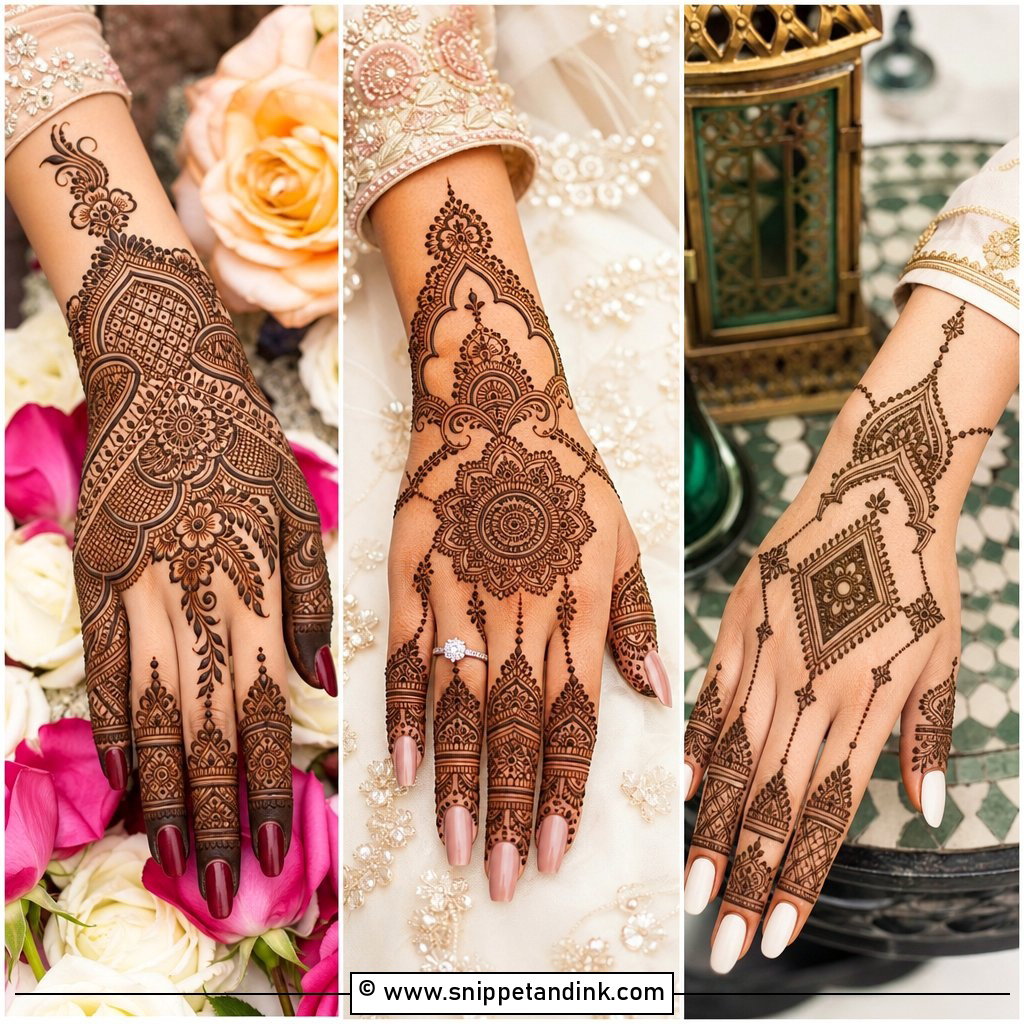
Indo-Arabic is what I suggest when a bride says she wants “bridal, but not suffocating.” The palms carry Indian structure, usually a mandala or paisley cluster with fine fingers, while the outer hand and forearm switch to Arabic trails with open spacing. Getting the transition right is the skill here. If the two styles just collide at the wrist it looks like two artists worked on one hand, so I bridge them with a shared motif, often a leaf or a petal shape that appears on both sides. It scales well, heavy for the wedding and lighter for an engagement.
4. Rajasthani Bridal Mehndi Design
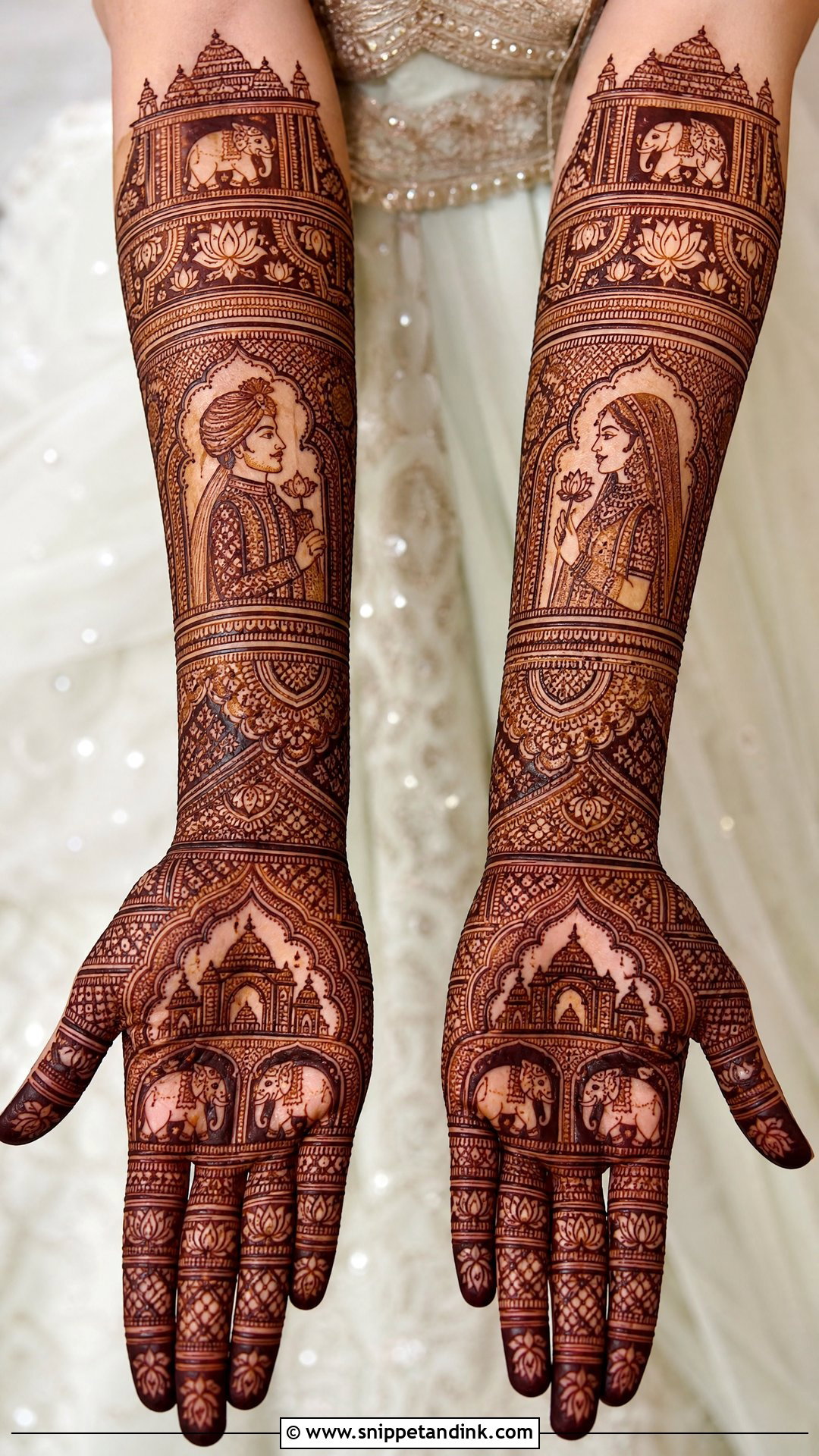
Rajasthani mehndi tells a story across both hands: bride on one palm, groom on the other, with elephants, dhol, palace arches, lotus borders and layered paisleys filling the space between. The two hands mirror each other in theme rather than line for line, which is easier on the artist and reads better in photos. Coverage usually runs from fingertips to elbows. I’d only take this on with a full day blocked out, and I’d warn a bride with very small hands that the figures will be tiny and the detail can blur once the stain darkens.
5. Pakistani Bridal Mehndi Design
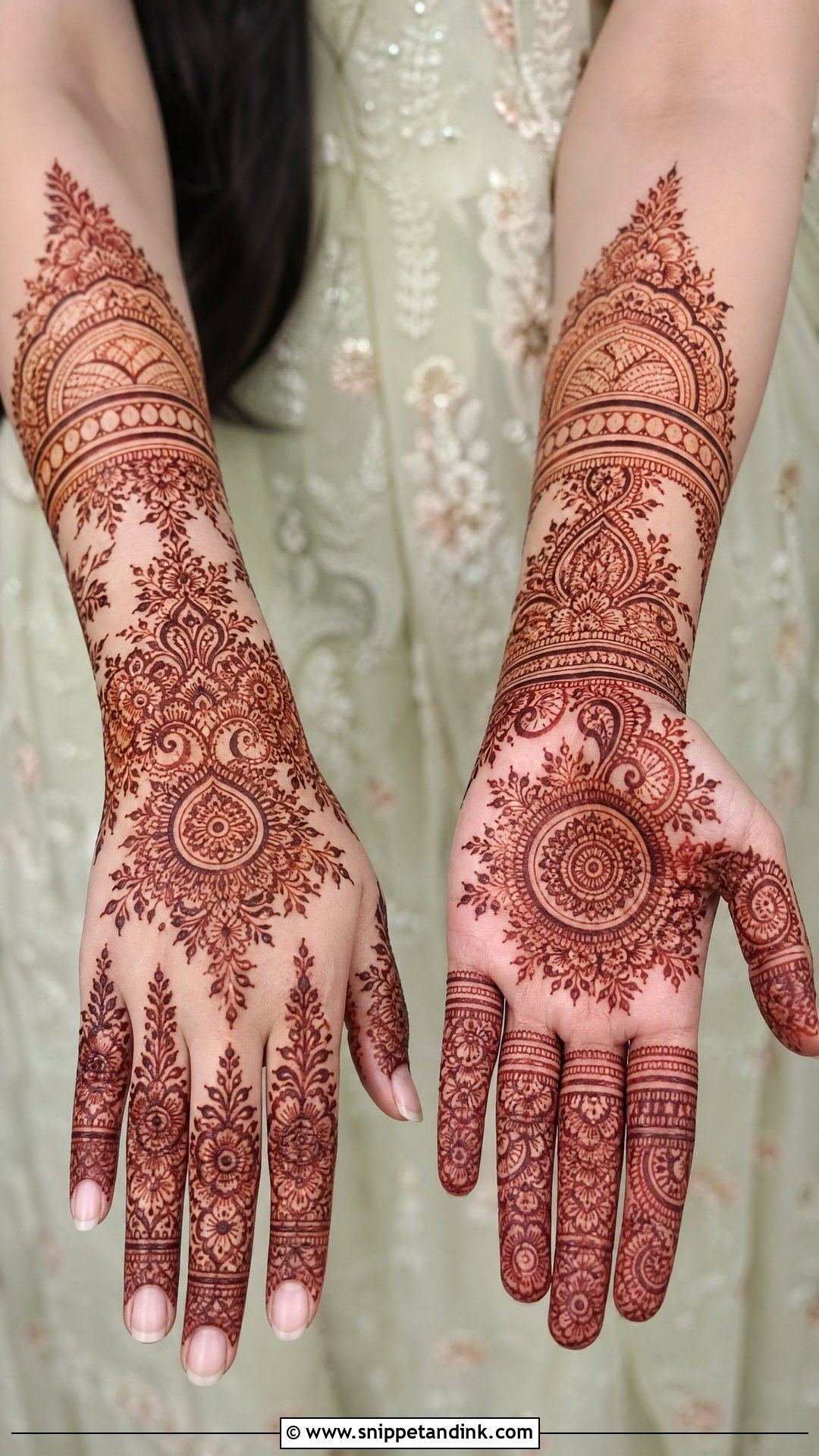
Pakistani bridal hands sit between Indian density and Arabic boldness: floral vines, dome and arch shapes, paisley clusters and wrist bands that look like bracelets. Usually the palm is worked heavily and the back hand is left more open so it doesn’t fight the jewellery. Because it flexes so easily between soft and full, I often design one version for the mehndi night and a lighter feel for nikah, walima, and reception photos. A deep maroon stain against gold or ivory is where this style looks its best.
6. Moroccan Bridal Mehndi Design
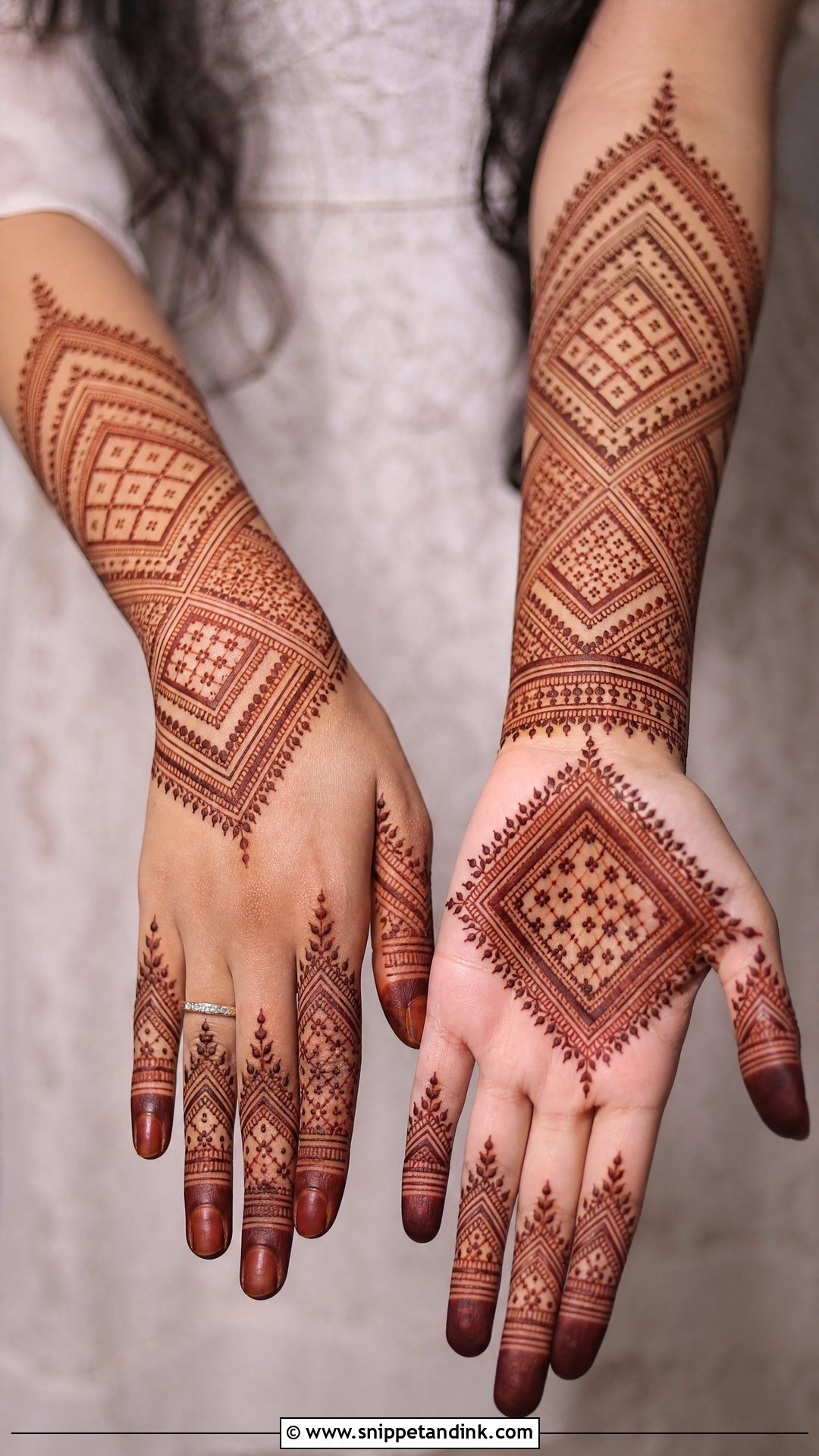
Geometric work is unforgiving. Moroccan designs are built from diamonds, chevrons, grids and dot clusters laid in symmetrical bands, and a line that wanders by a couple of millimetres shows straight away in a way a wobbly vine never would. I map the main bands with tiny guide dots first. It reads strongest on the back of the hand and with fusion or contemporary outfits, and it’s a good answer for a bride who’s simply tired of paisleys. If your hands are very slim, keep the grid scale small or the bands look like they’re wrapping a broom handle.
7. Gulf Bridal Mehndi Design
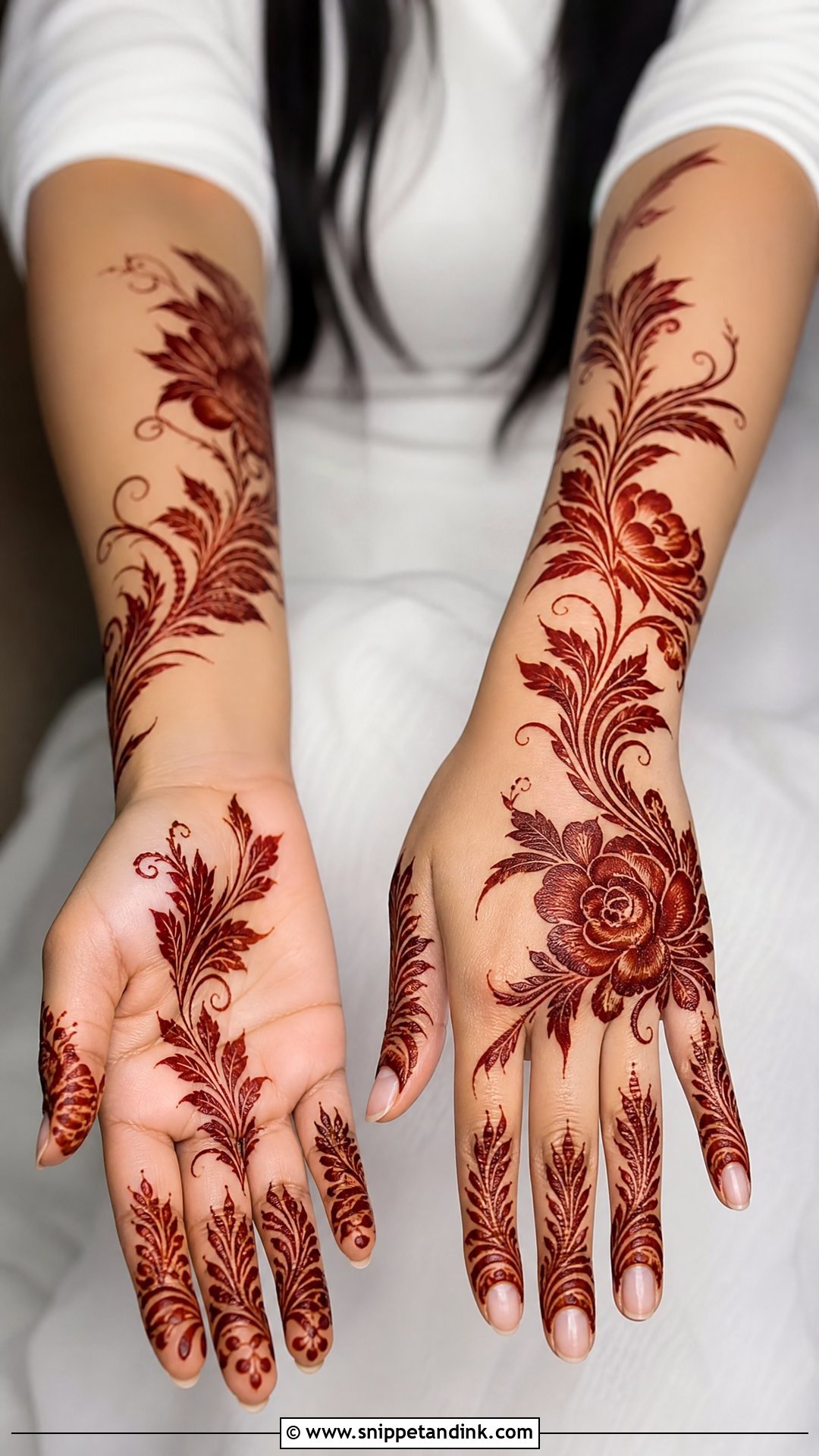
Khaleeji, or Gulf, mehndi uses large blooms and leafy vines with real open space around them, and the flowers are often outlined thickly and filled so they stain as solid shapes. It’s faster to apply than Indian work, which matters if you’re booking a group of family members on the same night. The bold outlines hold up well in distant photos. I’d suggest it with gowns, shararas or pastel outfits, and I’d steer you away if your family expects traditional full coverage, because the gaps are part of the design and can’t be filled later without ruining it.
8. Portrait Bridal Mehndi Design
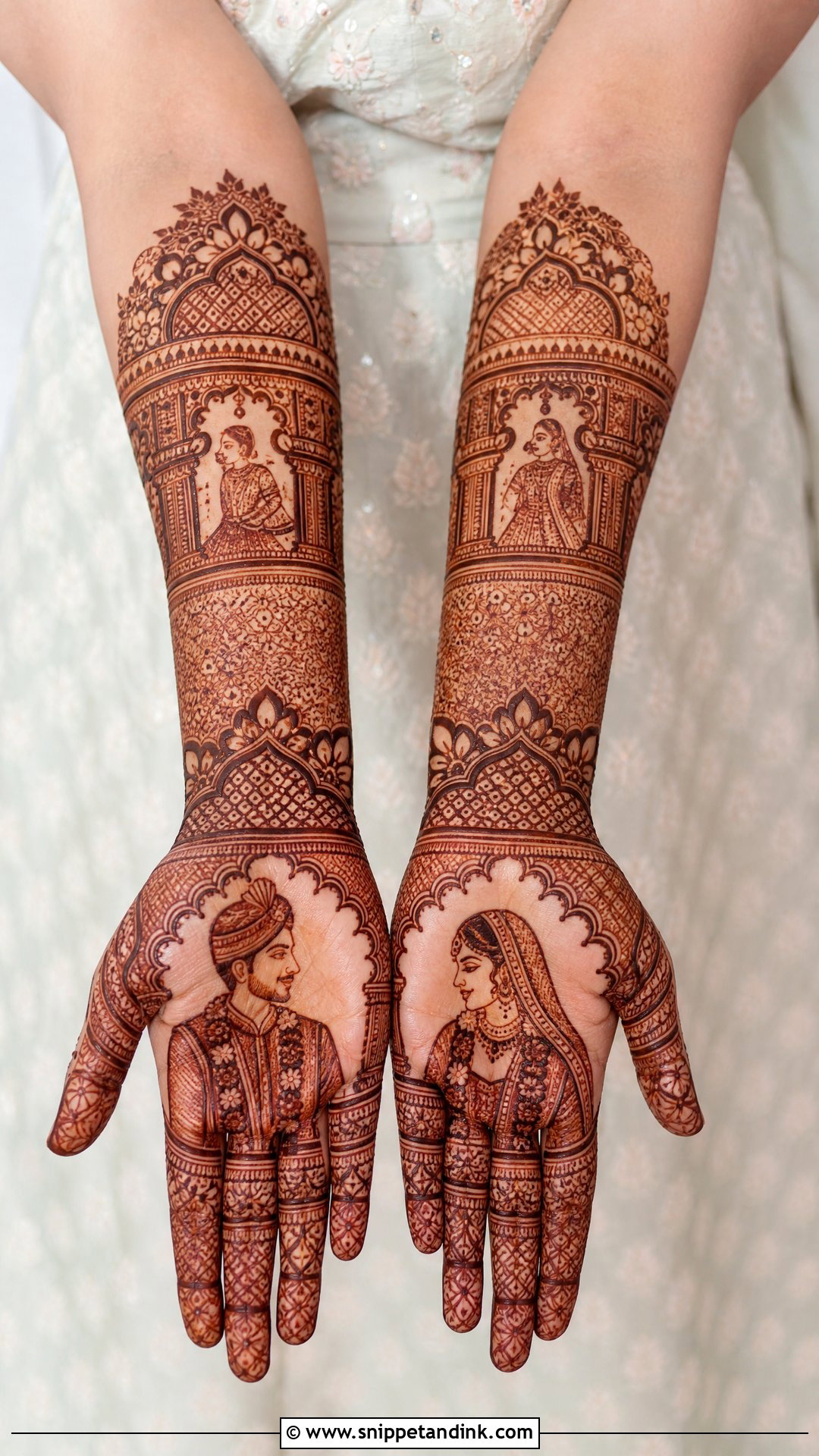
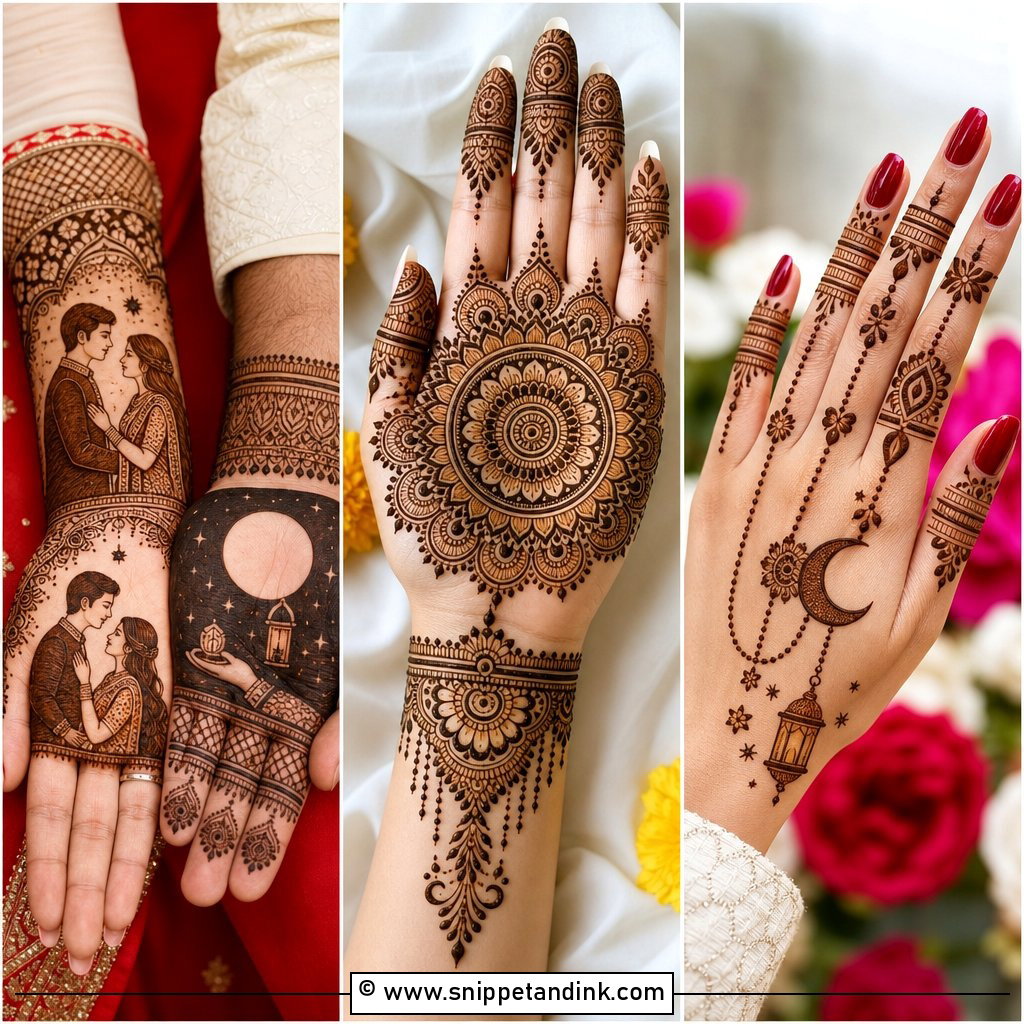
Portrait palms are the hardest thing on this list to do well. The faces of the bride and groom are drawn in henna on each palm, framed by garlands, a mandap, a veil and flowers, with paisley and jaali filling the rest. Faces need clean spacing and steady line control, and henna spreads slightly as it stains, so an artist who hasn’t done many portraits will lose the features. Ask to see healed stain photos of their portrait work, not fresh paste shots. Done right, it gives the groom something to study for a good while.
9. Mandala Bridal Mehndi Design
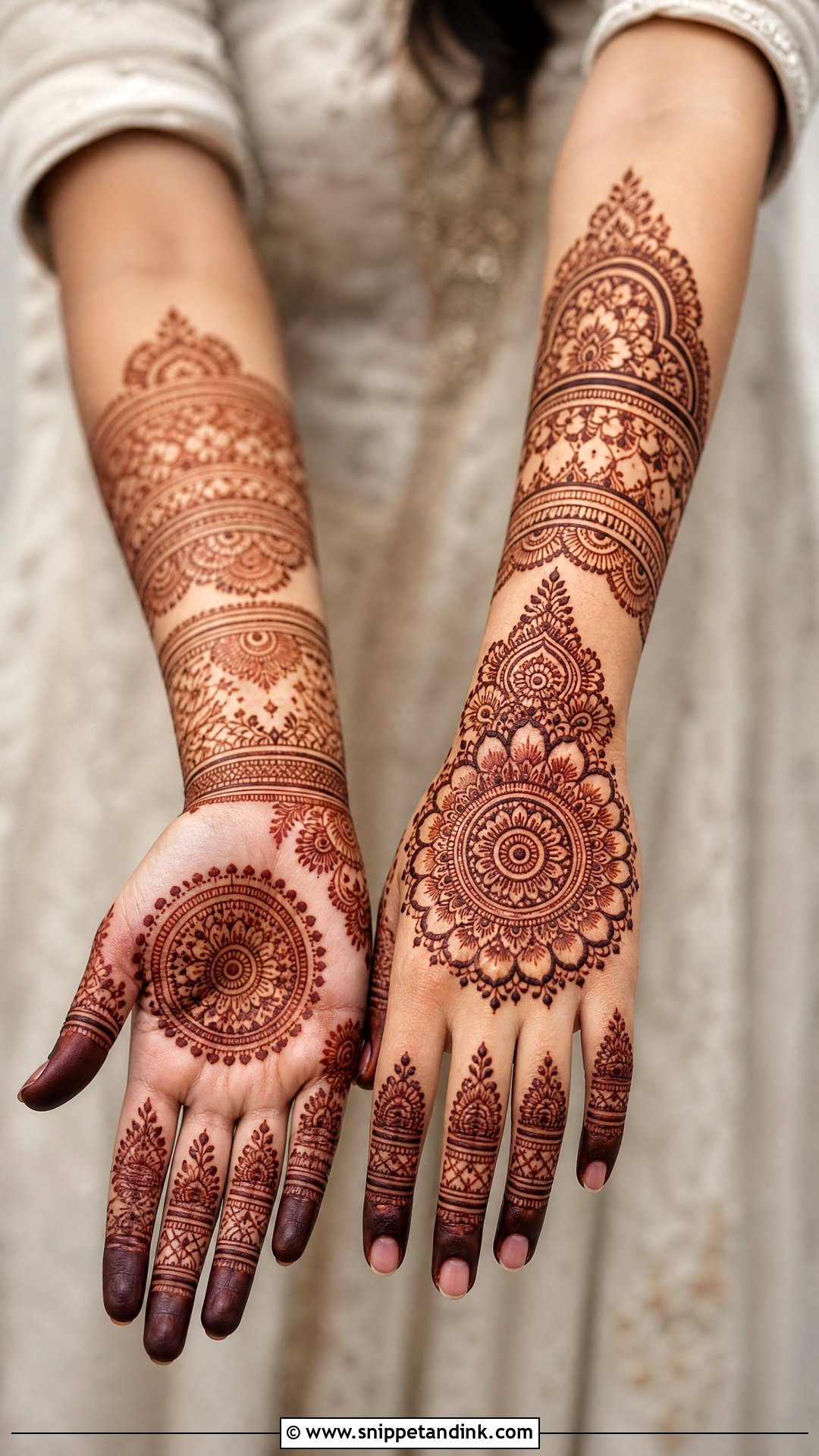
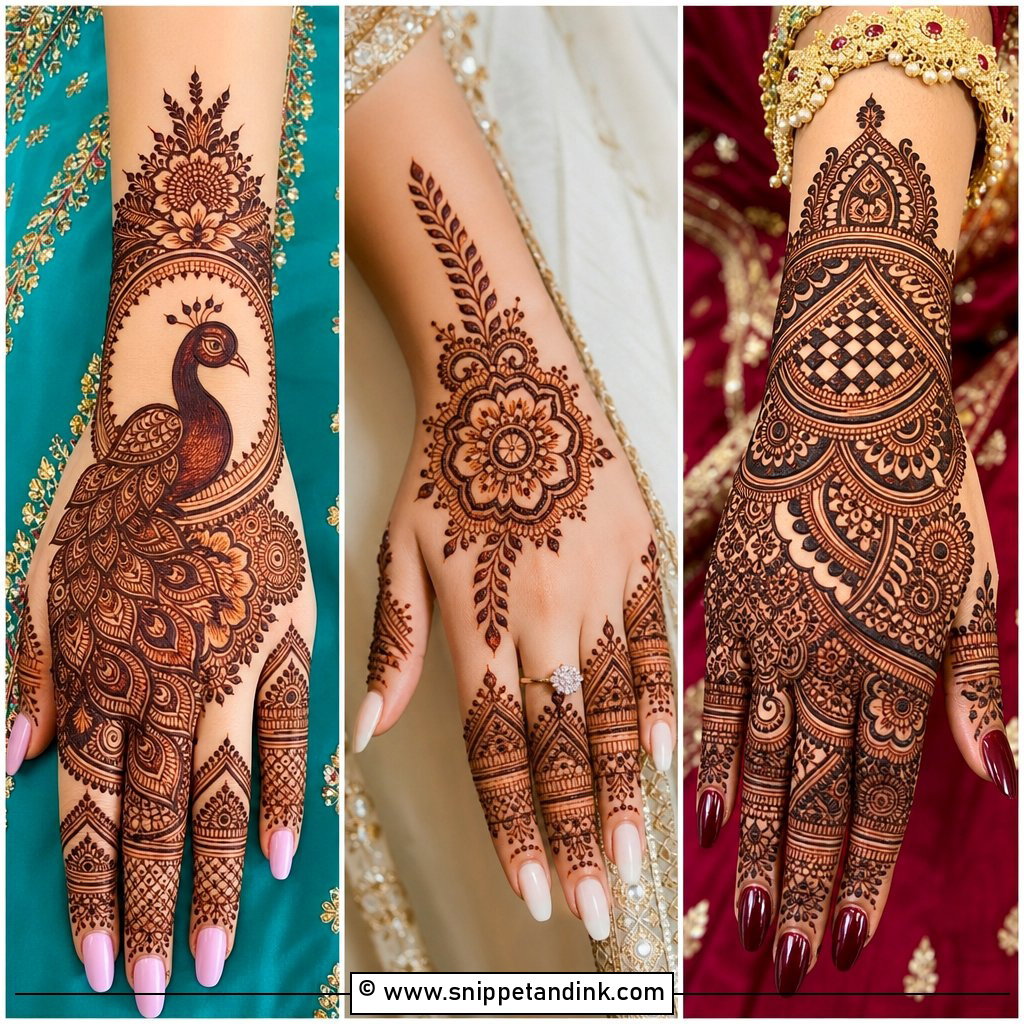
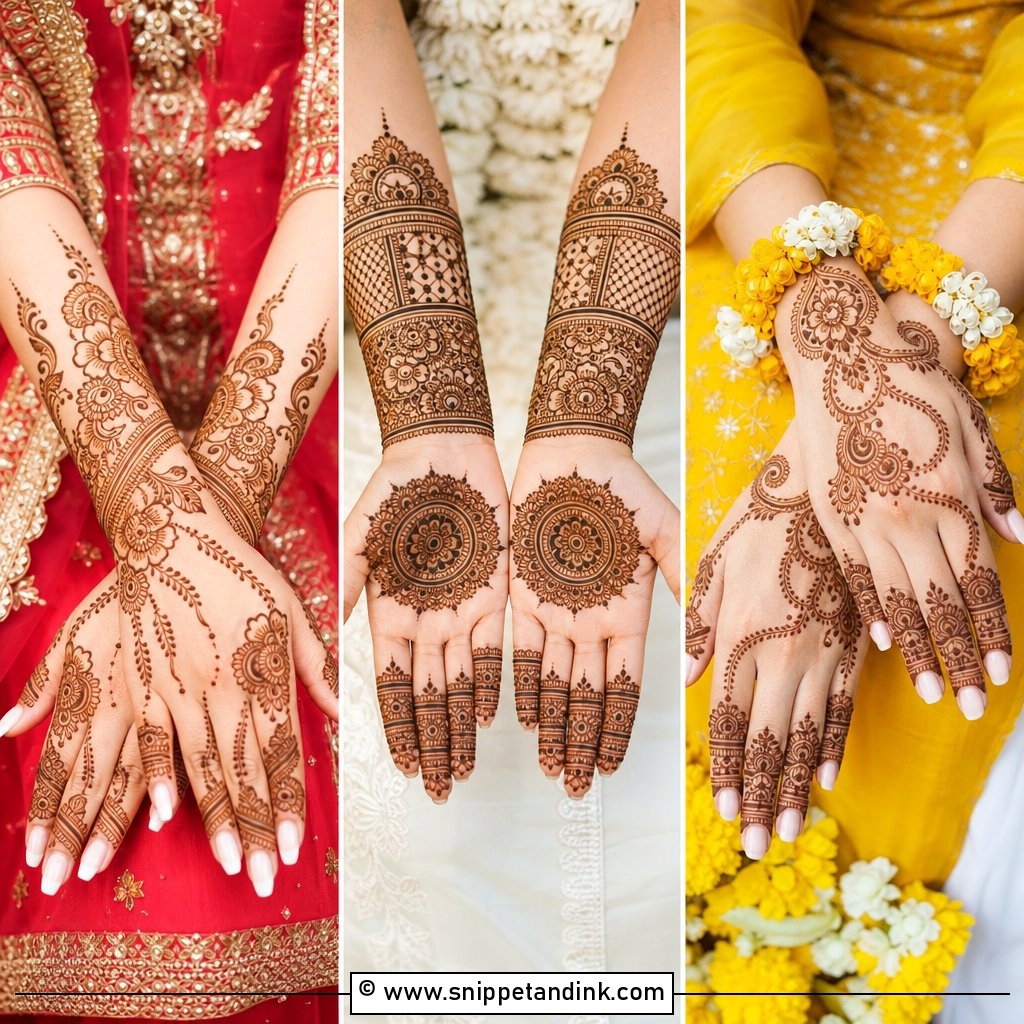
A mandala is the easiest focal point to read from a distance: one circle in the centre of the palm or back hand, then rings of petals, dots and borders working outward. I always set the centre by eye with the hand relaxed, because a mandala placed while the fingers are stretched sits off-centre once the hand closes. It stretches nicely into wrist cuffs and finger patterns for the wedding, and shrinks down for a small function. Brides who like order more than storytelling usually end up here.
10. Peacock Bridal Mehndi Design
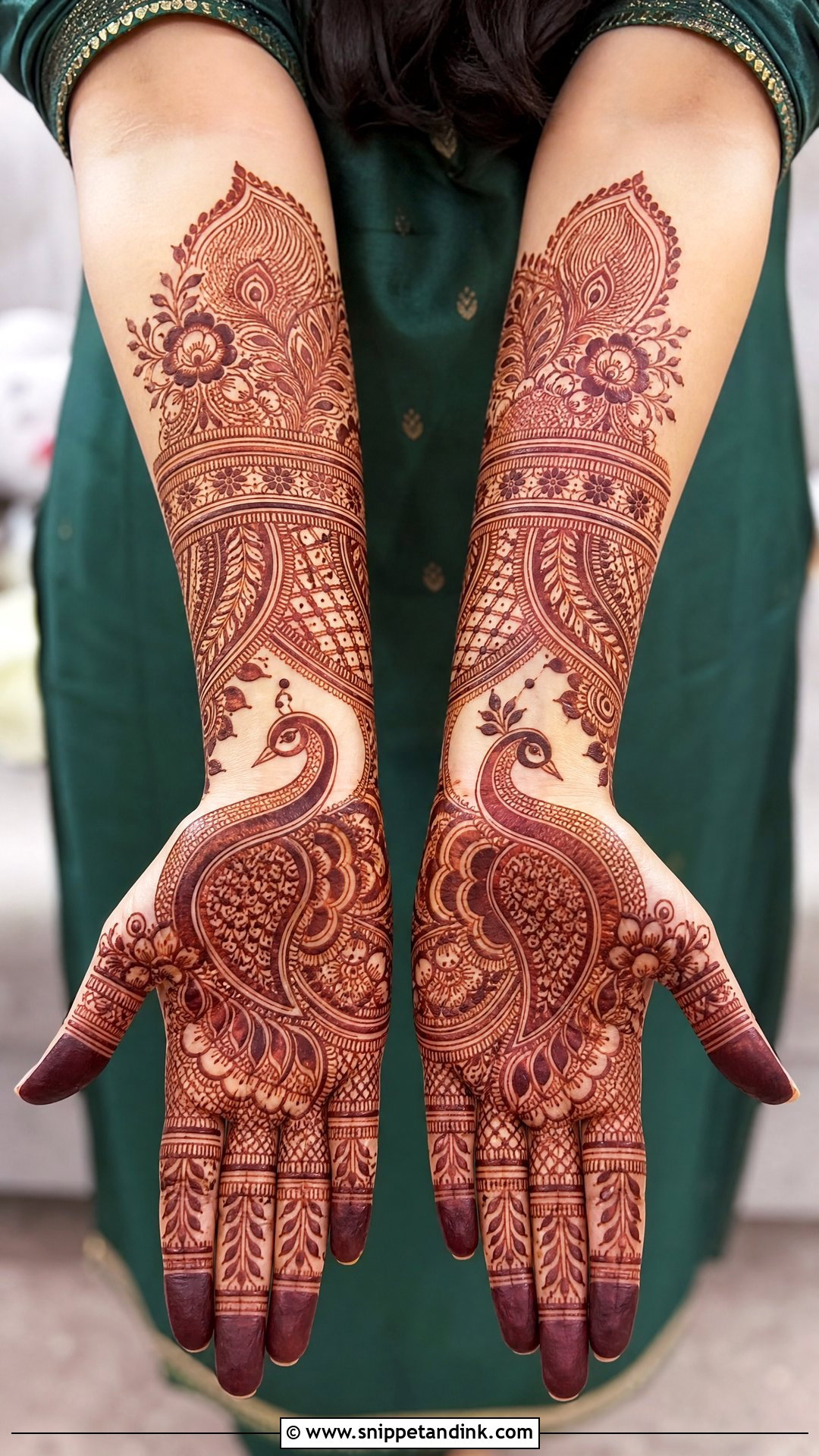
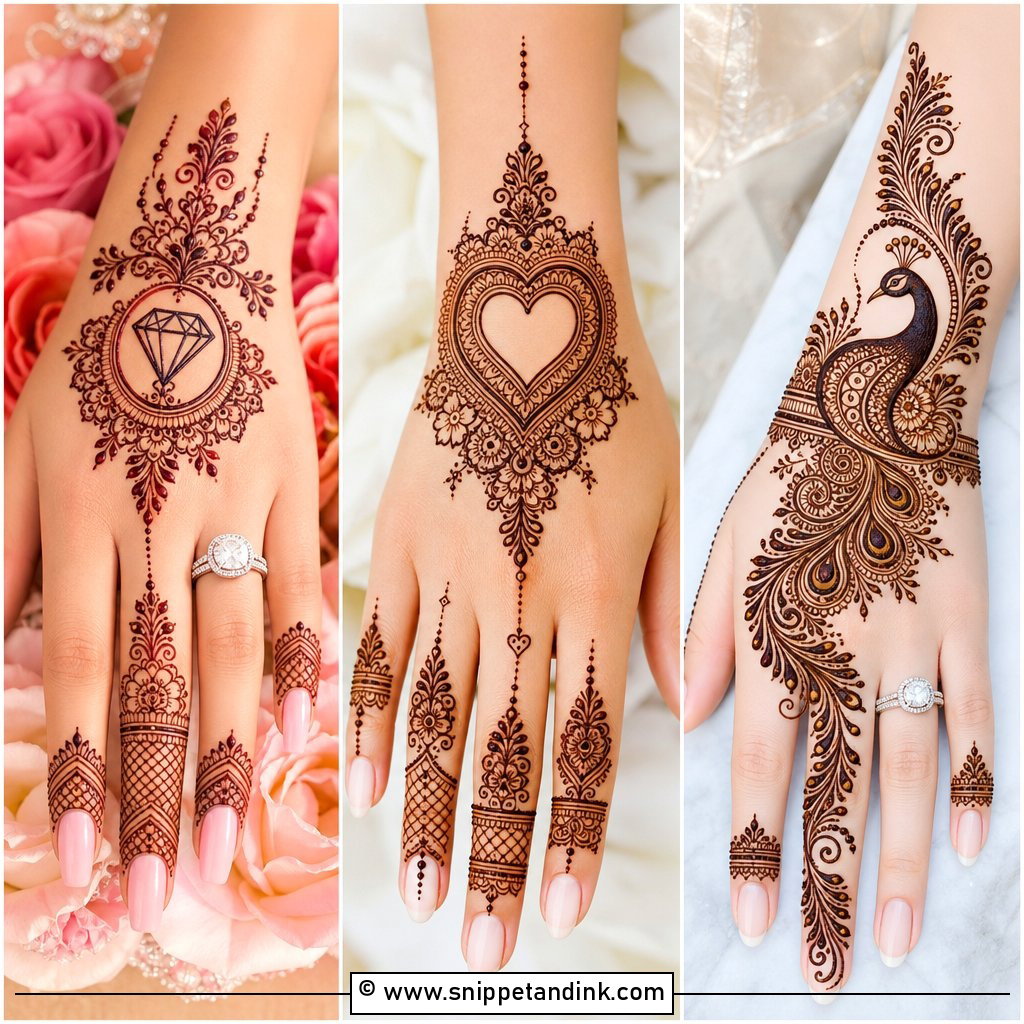
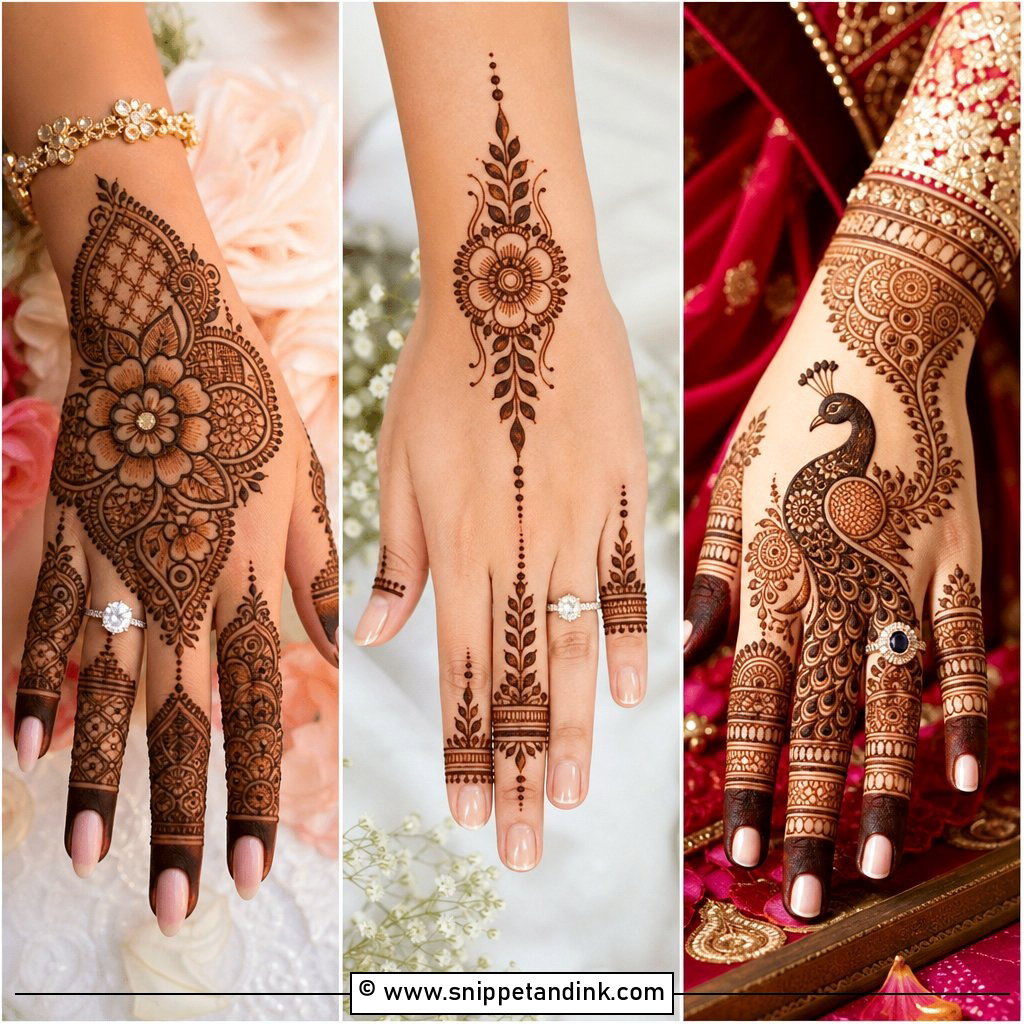
Peacocks give a bridal design movement, because the tail feathers can sweep from the palm into paisleys and vines without a hard edge. I place the body near the wrist or the palm heel and let the feathers travel toward the fingers, which follows how the hand naturally opens. The fingers then carry feather strips and dots to tie in. It sits well with red, maroon, green and royal blue outfits. The risk is overloading: two or three peacocks per hand is plenty, more and they start competing.
11. Lotus Bridal Mehndi Design
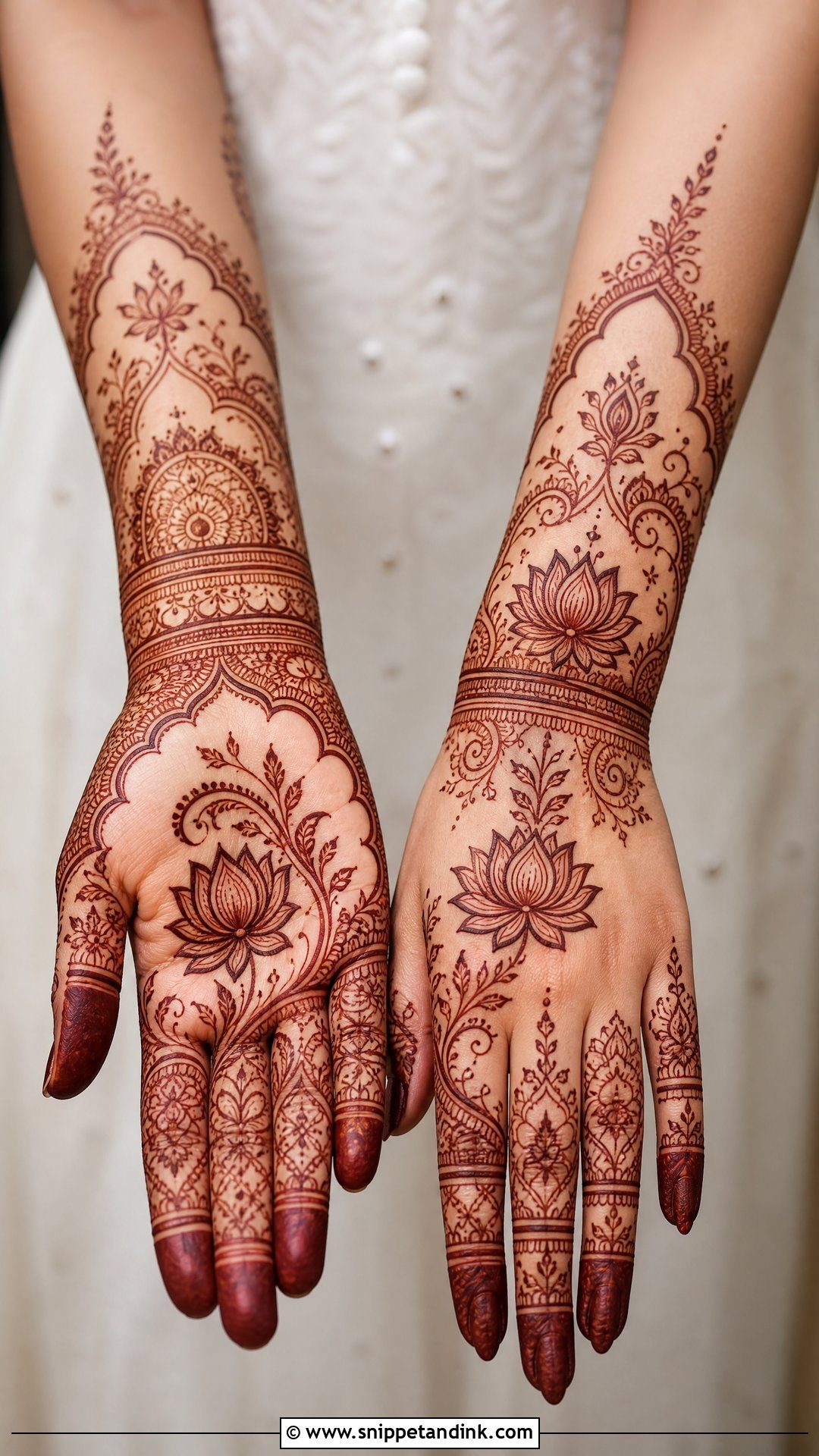
Lotus motifs are calmer than peacocks and lighter than portraits. One large bloom in the palm, a scalloped wrist border or a repeated small lotus up the forearm all work, and they pair well with fine lines, dots and paisley fill. I like lotus with temple jewellery and silk sarees, where the shapes echo each other. It can go dense for the wedding or more open for an engagement. The petals stain best when I draw them as double outlines rather than flat filled shapes, which can come out patchy on the palm heel.
12. Jaali Bridal Mehndi Design
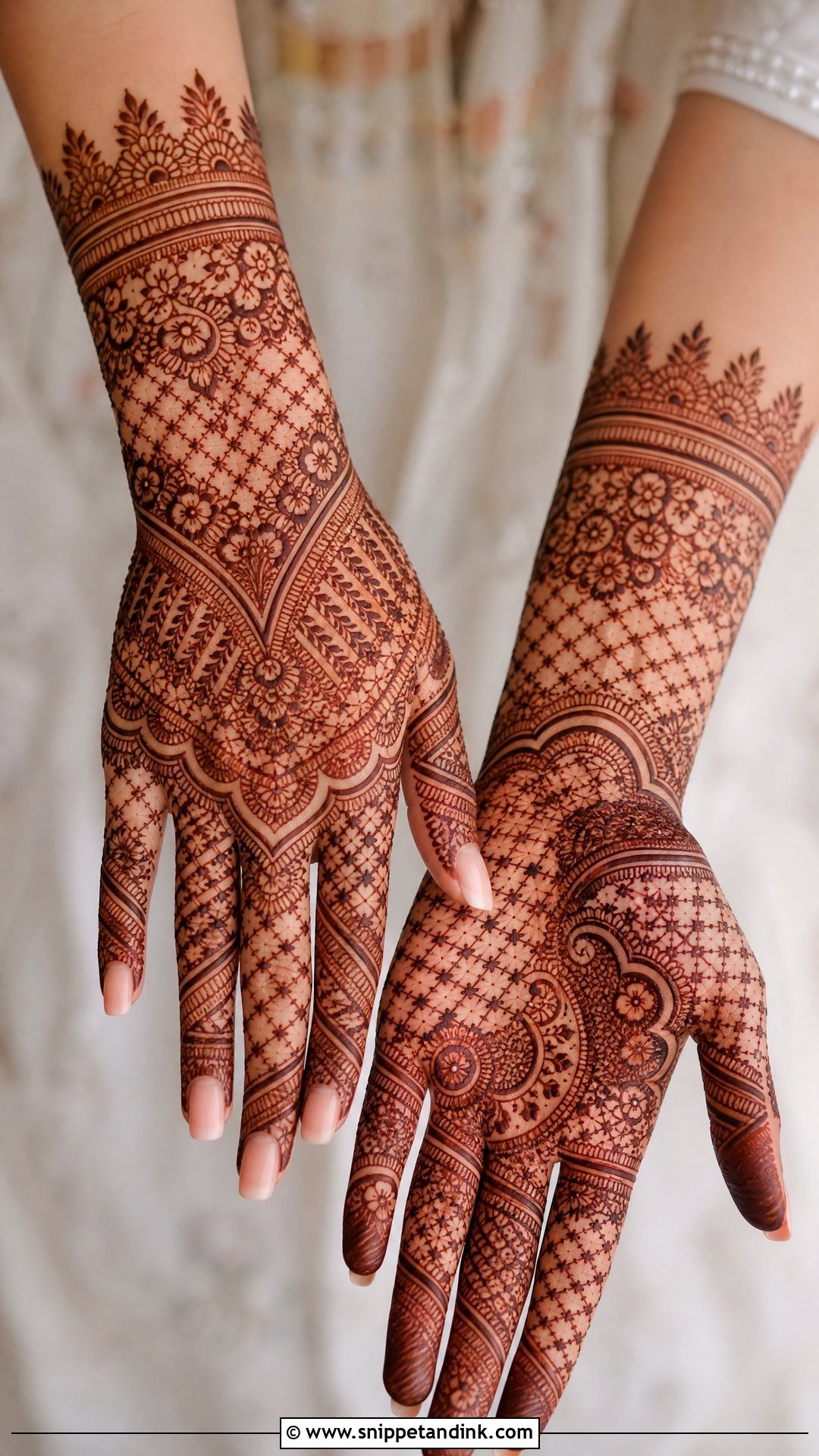
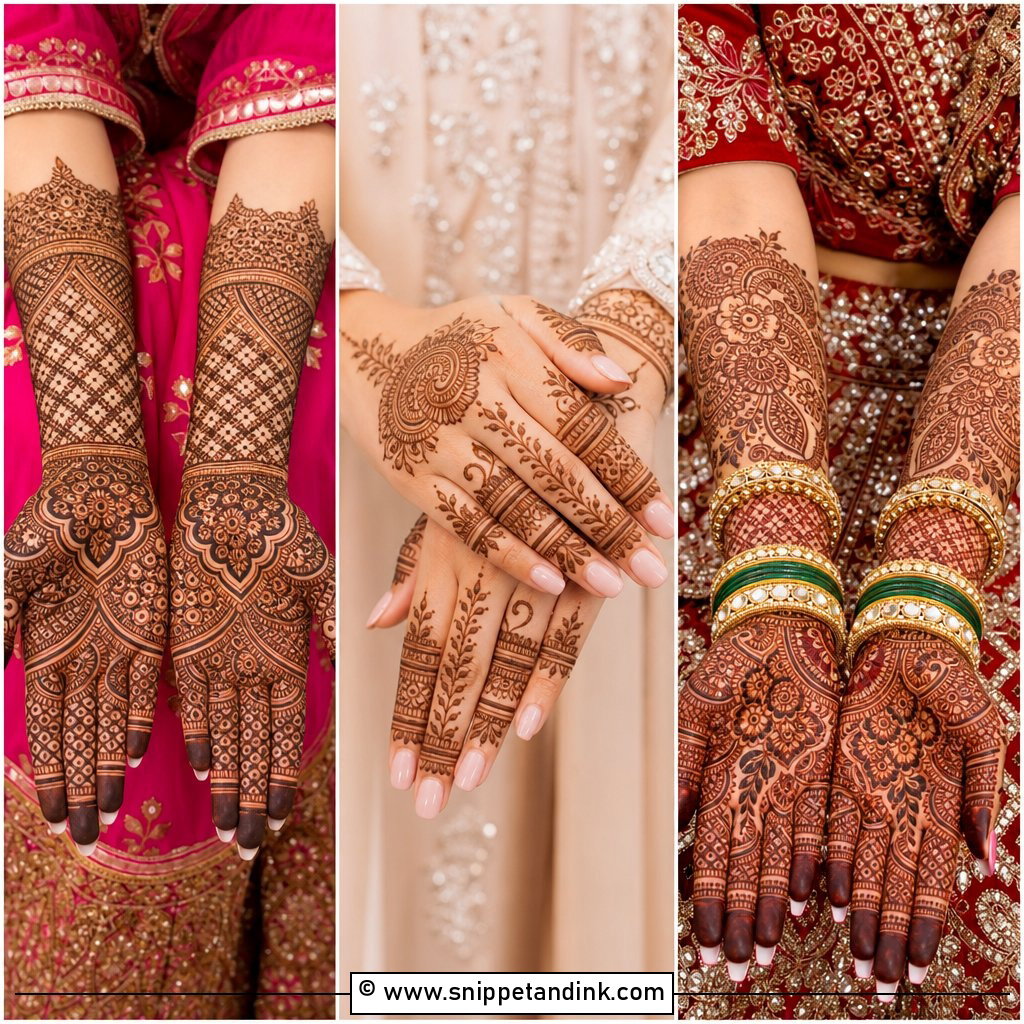
Jaali is net work: a grid of fine lines, often with tiny flowers or dots in the cells, laid over the back hand, wrist and forearm. On the palm I usually combine it with a paisley or mandala so the hand has somewhere for the eye to land. Jaali needs a thin, consistent cone line, and slightly runny paste will flood the cells and turn the mesh into a blob. It’s neat, organised and sits naturally beside rings, bangles and hathphool, as if the jewellery continues onto the skin.
13. Jewellery Bridal Mehndi Design
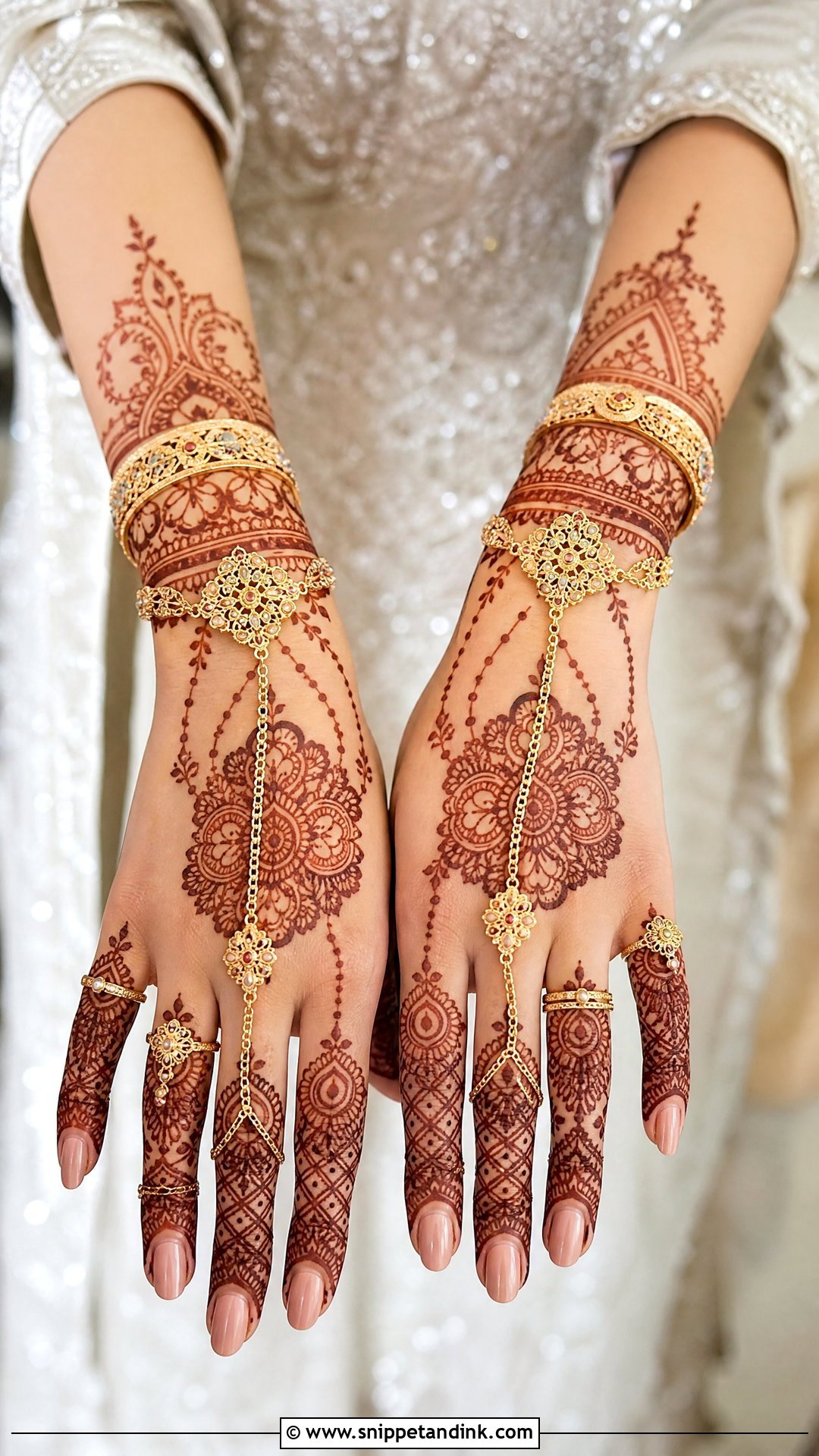
This style borrows from the jewellery itself: finger bands that look like rings, a floral centre on the back of the hand, chains running down to a wrist cuff like a hathphool. It frames the hand without full coverage, which makes it a strong back-hand option. The mistake I see is drawing it without asking what real pieces the bride is wearing. If your hathphool already has a big centre medallion, I’ll keep the henna version smaller so the two don’t stack. For the wedding I’ll extend it up the forearm; for an engagement it can stop at the wrist.
14. Minimal Bridal Mehndi Design
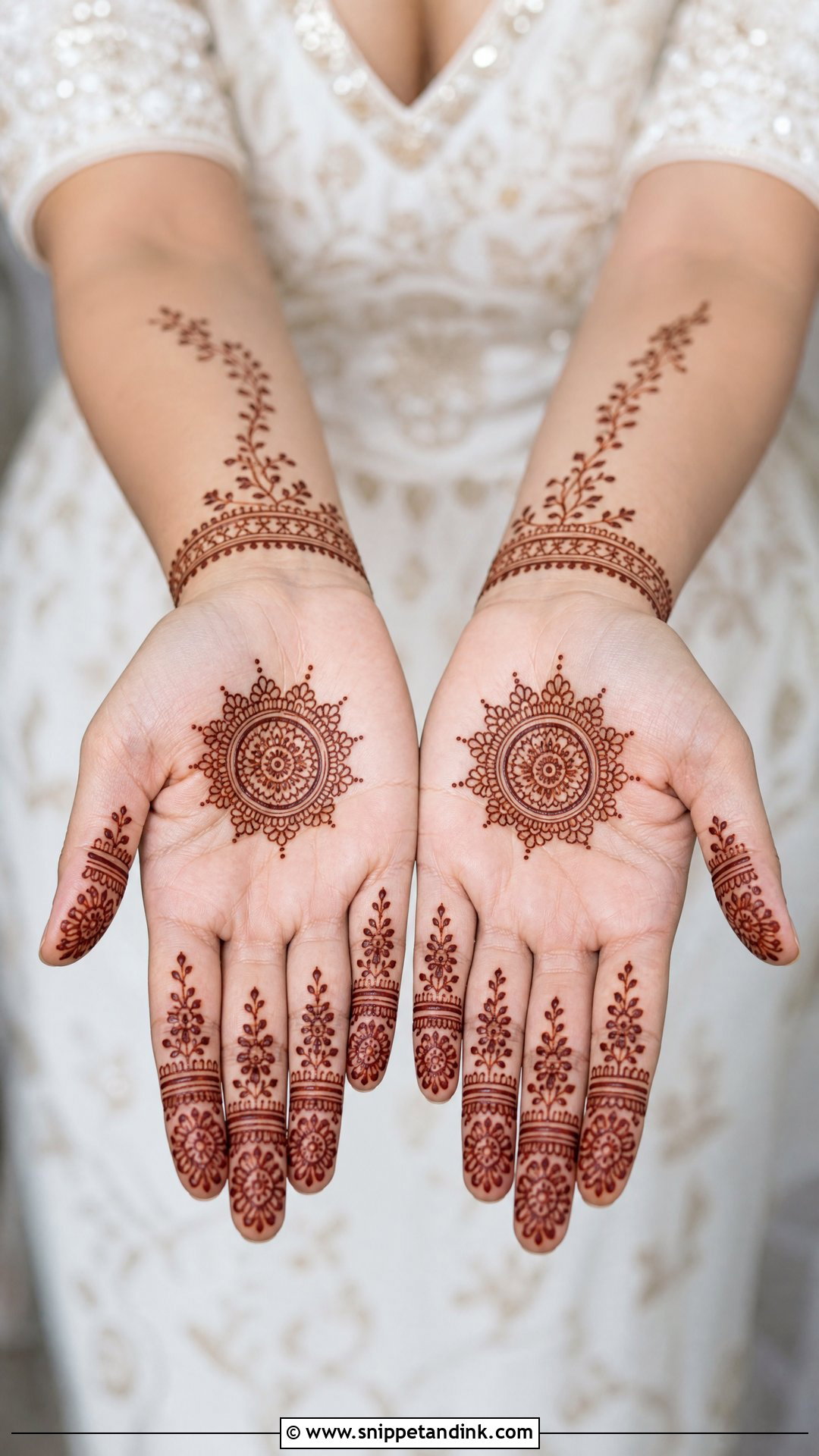
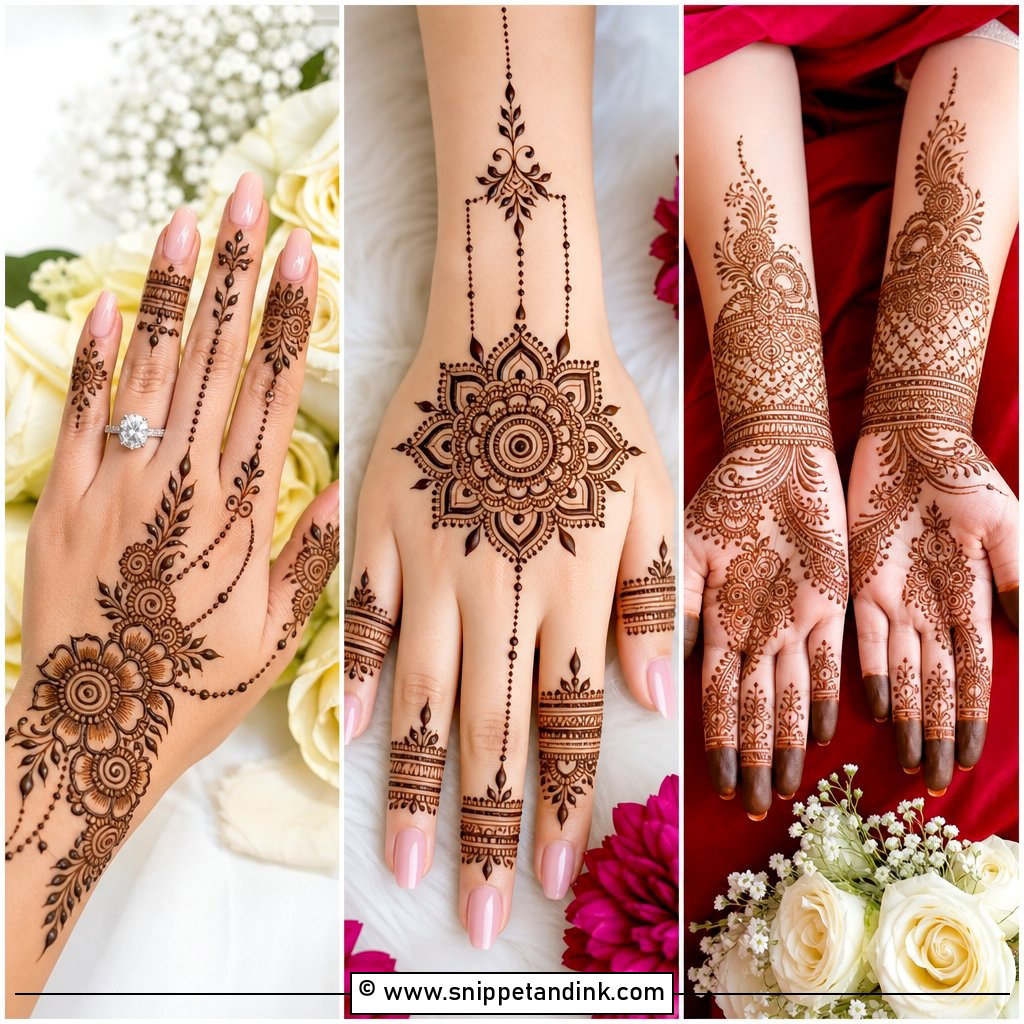
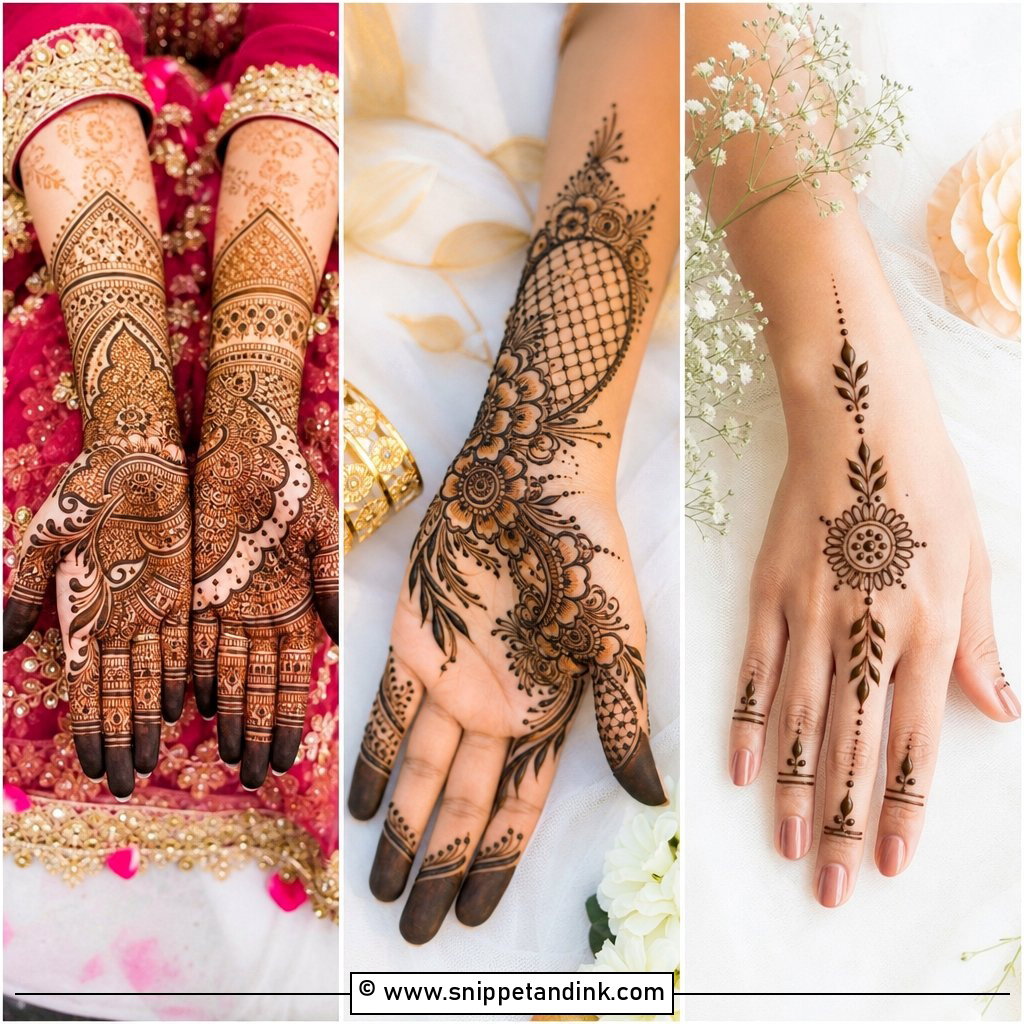
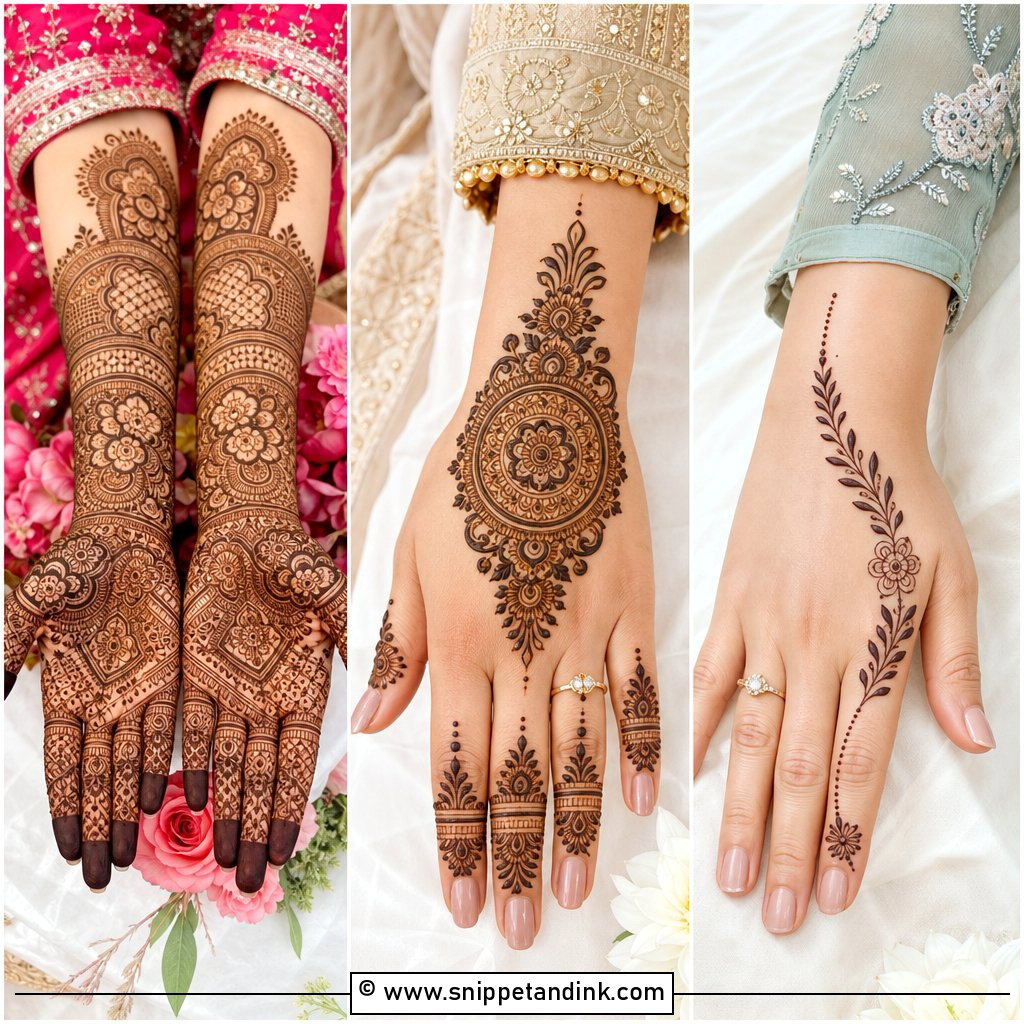
Minimal bridal mehndi picks a few places, the fingers, a wrist band, a small mandala on the palm or back hand, and leaves the rest bare. It suits civil ceremonies, destination weddings and brides who simply don’t want heavy henna. Because there’s so little of it, every line is on show, so precision matters more here than in any dense design. A thin, even cone line and clean endpoints are what make it look intentional rather than unfinished.
15. Simple Bridal Mehndi Design
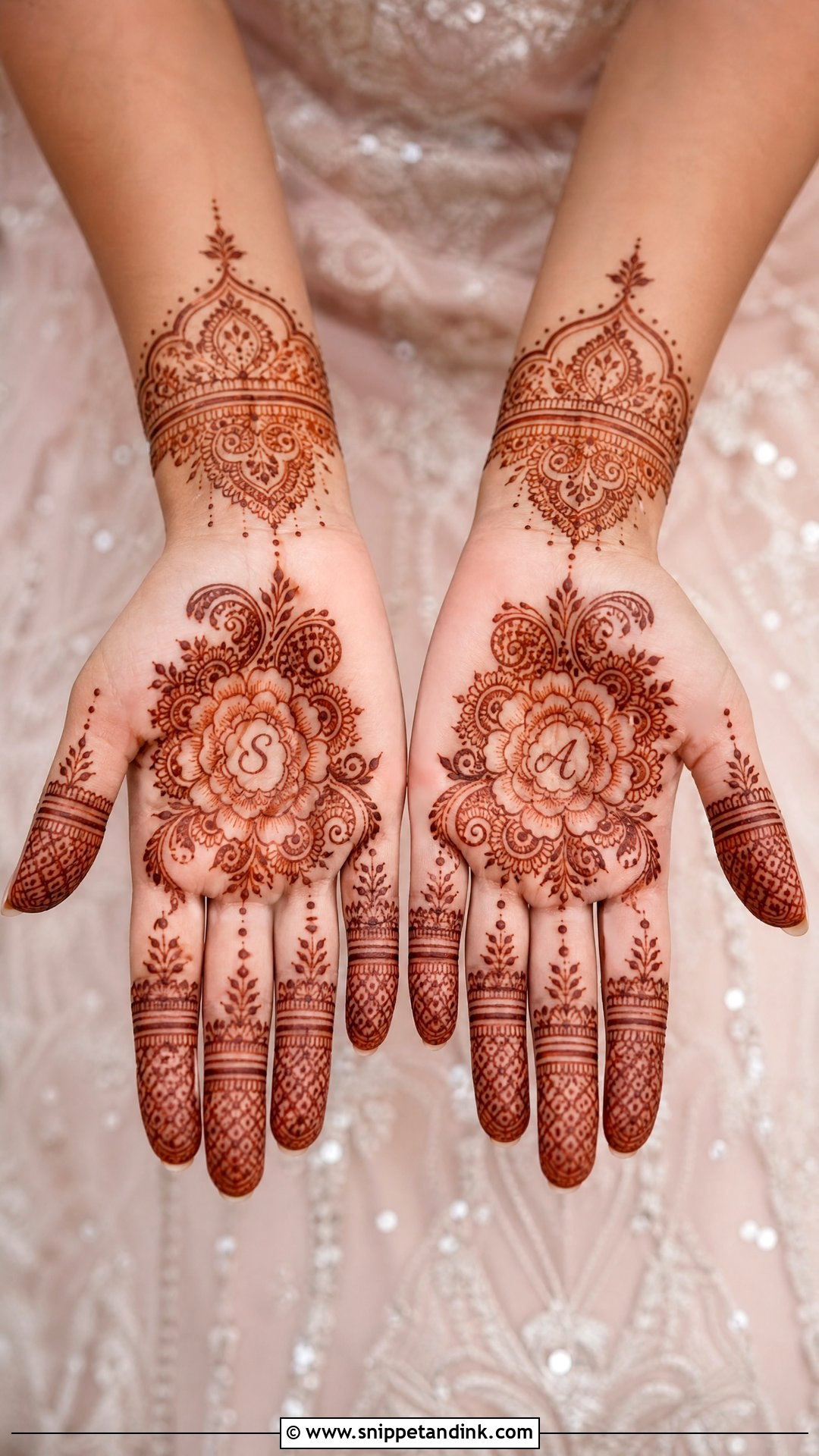
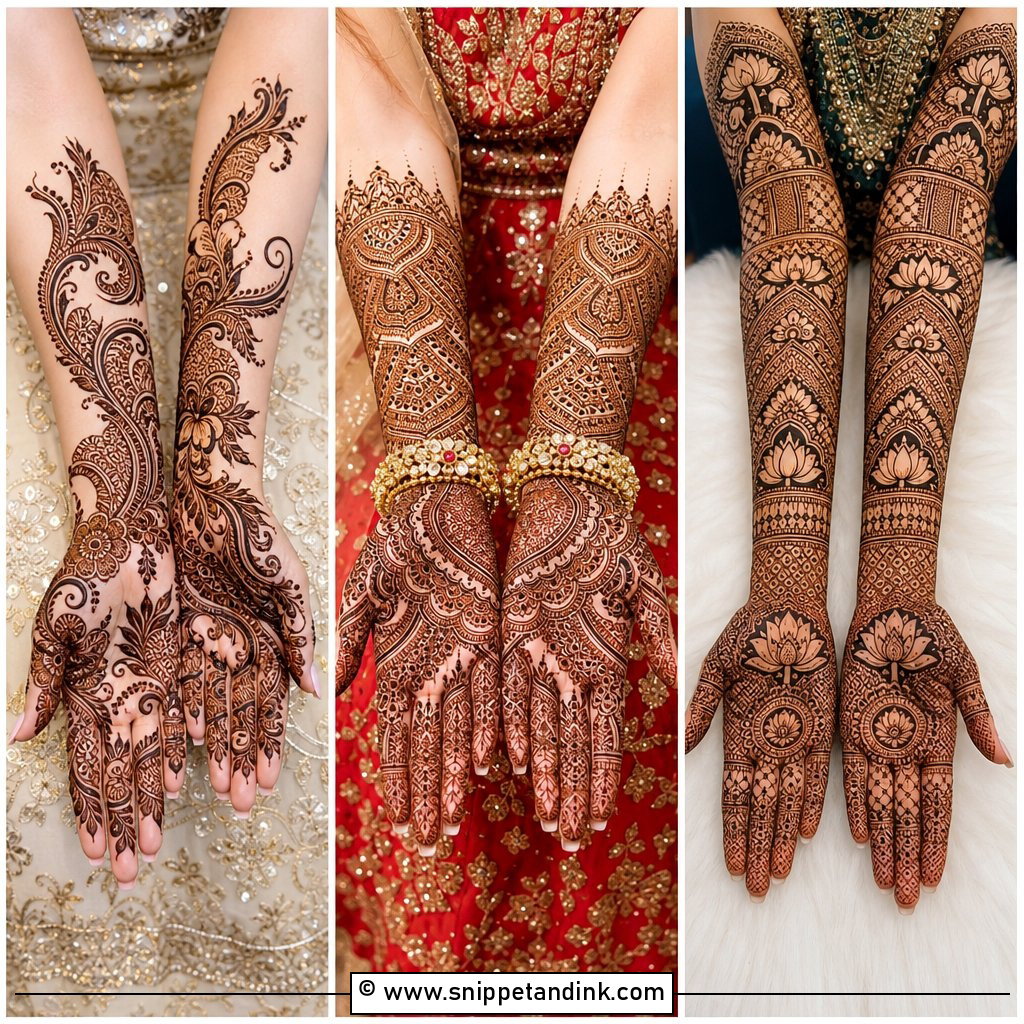
A simple bridal design is medium coverage on palms and back hands, with easy florals, paisleys, leafy curves and filled fingers, often finishing just past the wrist. It’s what I suggest for a bride who has a packed week or can’t sit for long. Simple shouldn’t look half done, though. My rule is a clear focal point on each palm, every finger finished, and a defined border at the wrist, so the design has an edge and doesn’t just fade out.
16. Full Arm Bridal Mehndi Design
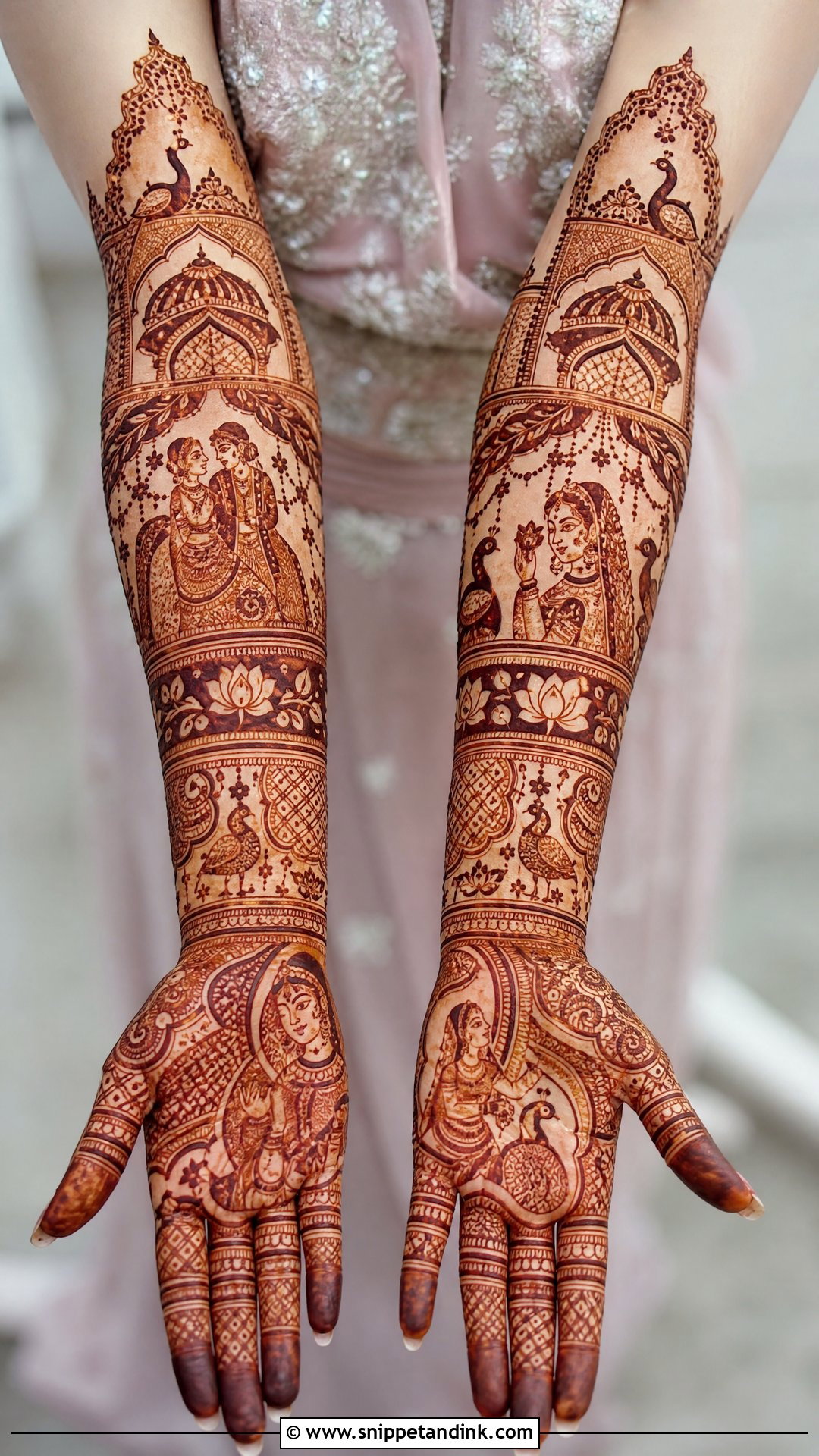
Full arm coverage starts at the fingertips and runs past the wrist to the elbow, sometimes higher, and can hold portraits, mandap scenes, lotus borders, peacocks and jaali panels. I divide the arm into sections, usually hand, wrist band, lower forearm, upper forearm, so each has its own centre and the whole thing flows. It suits short-sleeve or sleeveless blouses where the work will actually be seen. Expect it to stain lighter toward the elbow than on the hands; that’s skin, not the artist.
17. Back Hand Bridal Mehndi Design
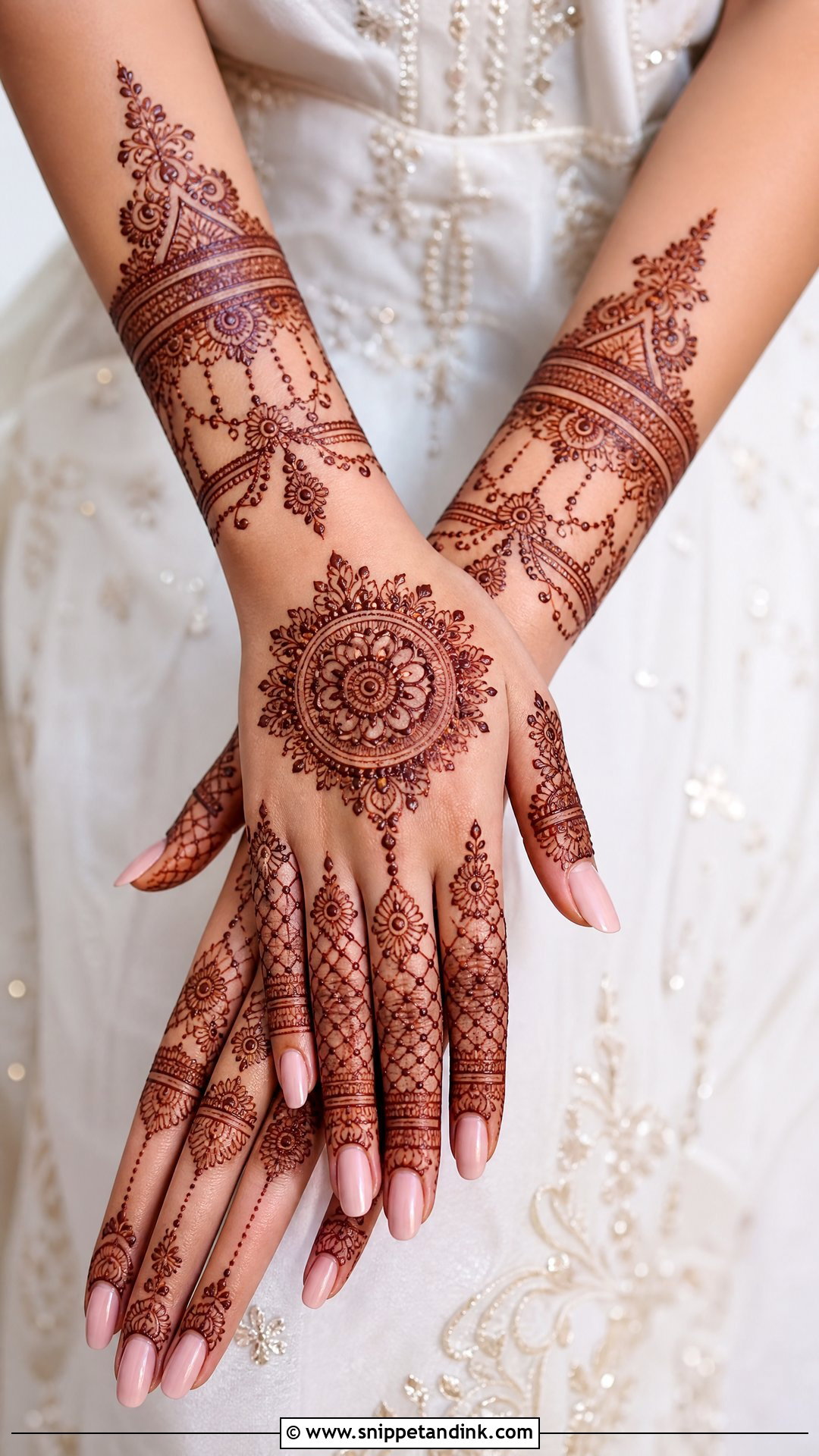
The back hand is what shows up in ring shots, bangle close-ups and almost every candid where your hands are resting. It can be full, medium or minimal, with mandalas, jewellery patterns, jaali, vines or bracelet wrist bands. The back of the hand stains lighter than the palm because the skin there is thinner and drier, so I keep the lines a touch bolder. If the palm is very busy, I leave the back more open. And for a bride wearing a stack of heavy bangles, a neat wrist band that stops where the bangles start looks far better than detail that disappears under metal.
18. Front Hand Bridal Mehndi Design
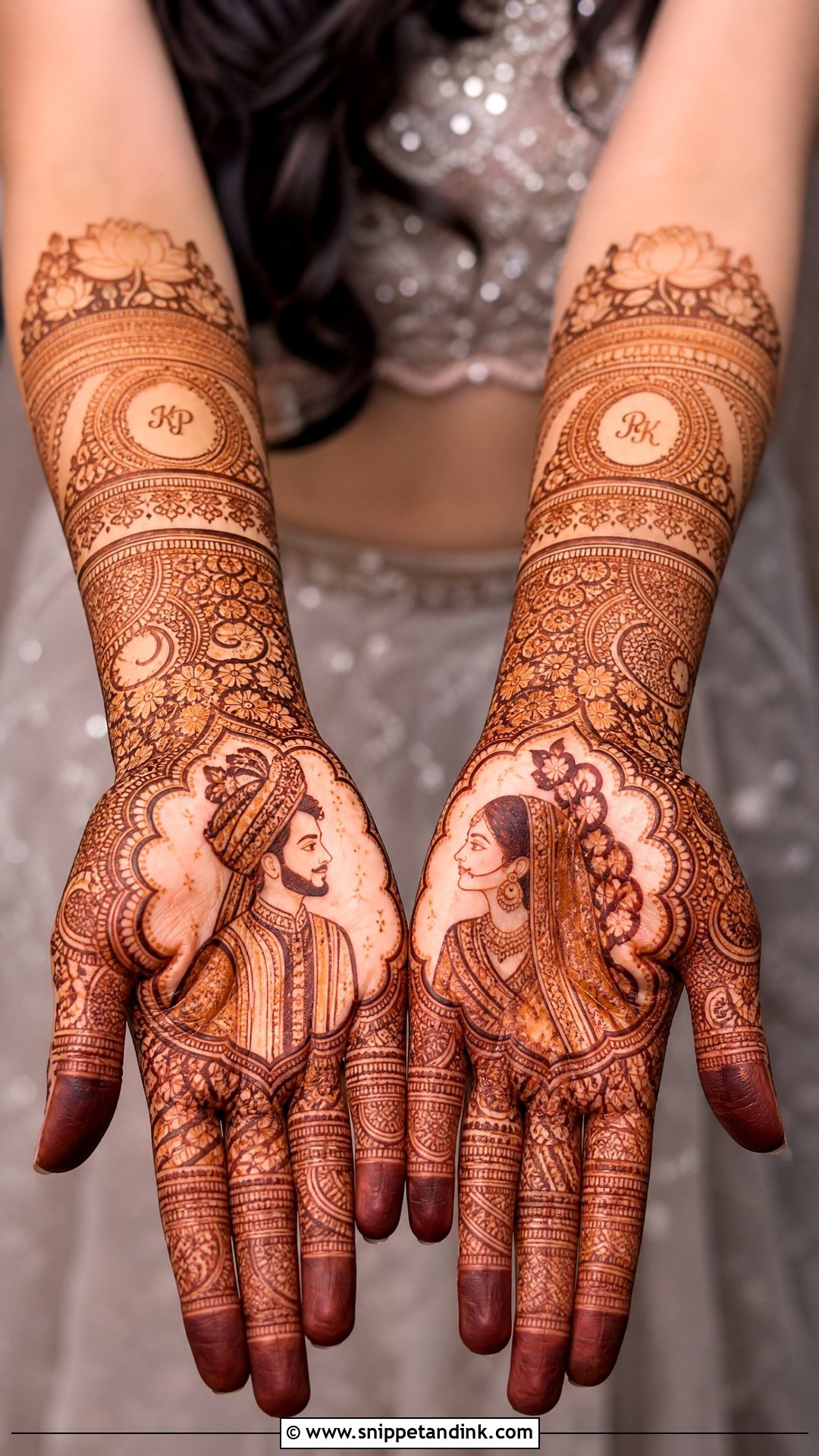
Front hand bridal mehndi design is where the most meaning usually goes, since the palms are shown during rituals and are what everyone asks to see. The palm centre can carry a mandala, a bride-and-groom panel, a paisley cluster, a lotus or hidden initials, with fine lines, dots and leaf chains finishing the fingers. Before I commit to the layout I ask the bride to make a loose fist and open it again. A palm design has to look right closed as well as flat, because that’s how hands rest in most photos.
19. Bridal Mehndi Design With Name
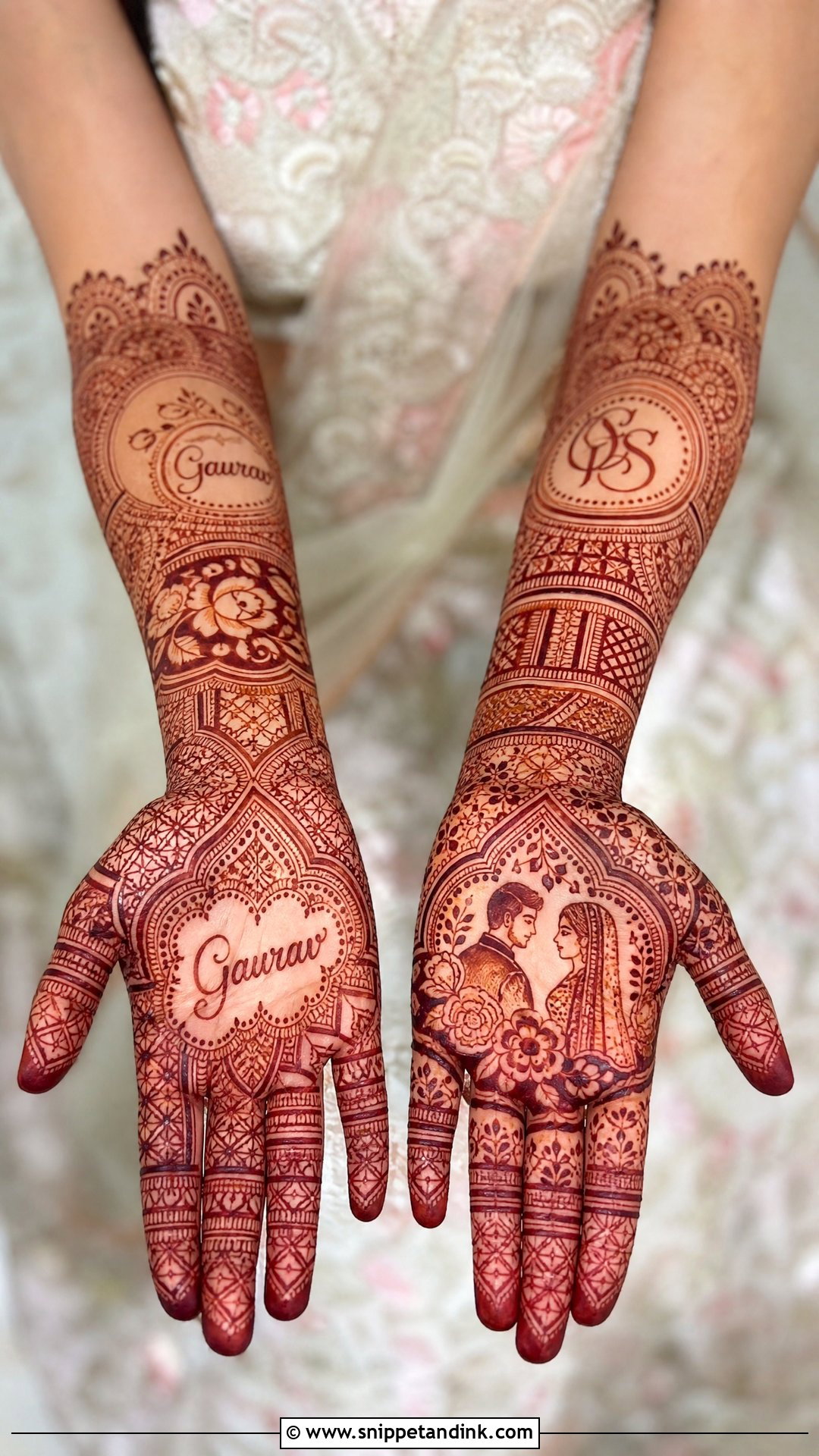
Hiding the groom’s name or initials is a game many families still love, and the groom searching for it after the ceremony is a moment people wait for. I write the letters into paisley curves, mandala petals, jaali cells or wrist borders, and some brides add a date, both sets of initials or a small symbol from their relationship. It works in any layout. The trick is building the letters from strokes the design already uses, so they blend in. If they’re drawn as plain handwriting they jump out and there’s no game.
20. Bridal Mehndi Design With Wedding Date
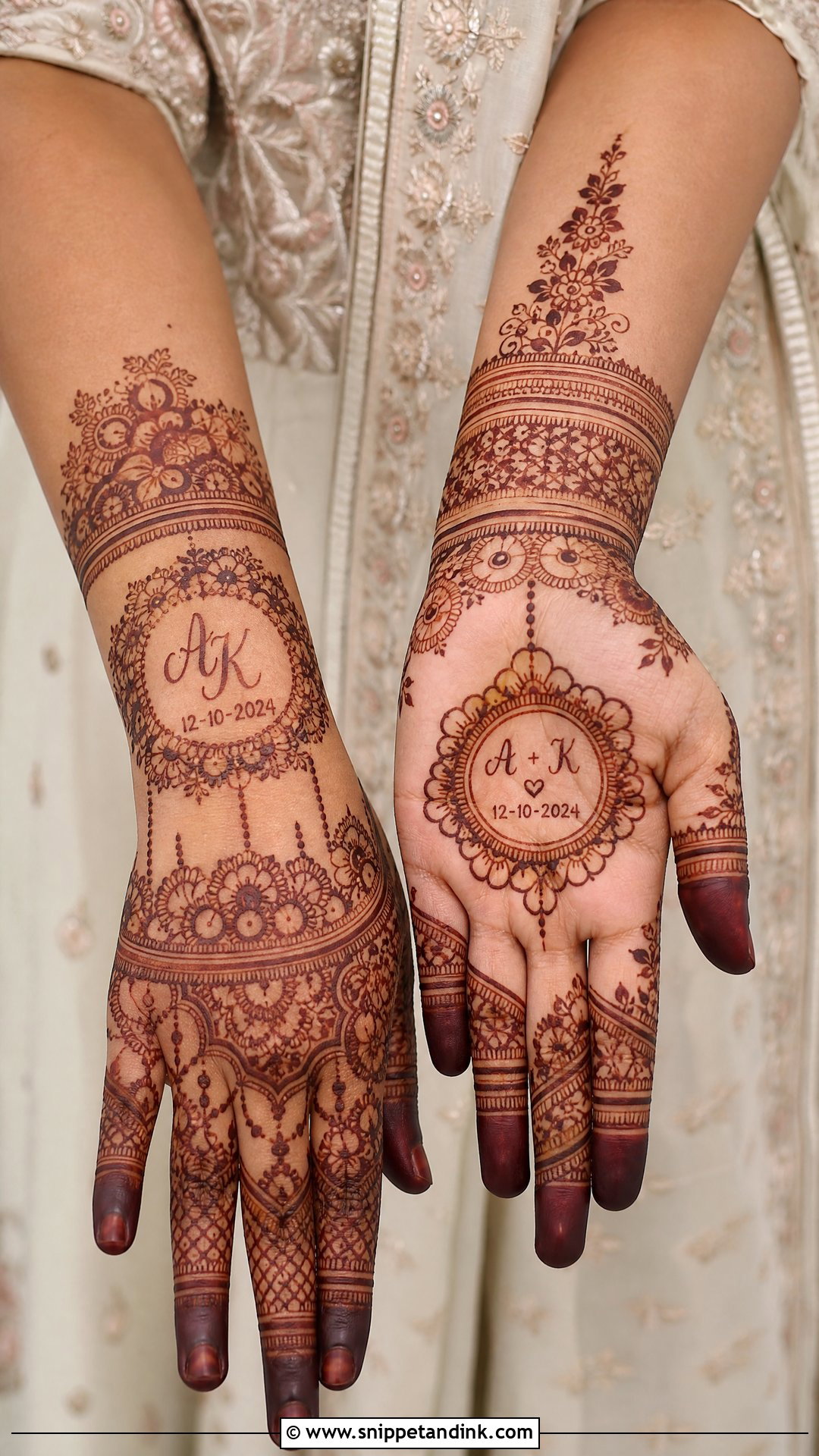
A wedding date is smaller than a name and easier to place: inside a mandala ring, along a bracelet band, near the wrist or tucked into a floral trail. Some brides want numbers only, others add initials or a tiny heart. Keep it small. Henna lines thicken slightly as they stain, and digits like 8, 6 and 0 can close up if they’re drawn too tight, so I give them a little more air than the surrounding filler.
21. Floral Bridal Mehndi Design
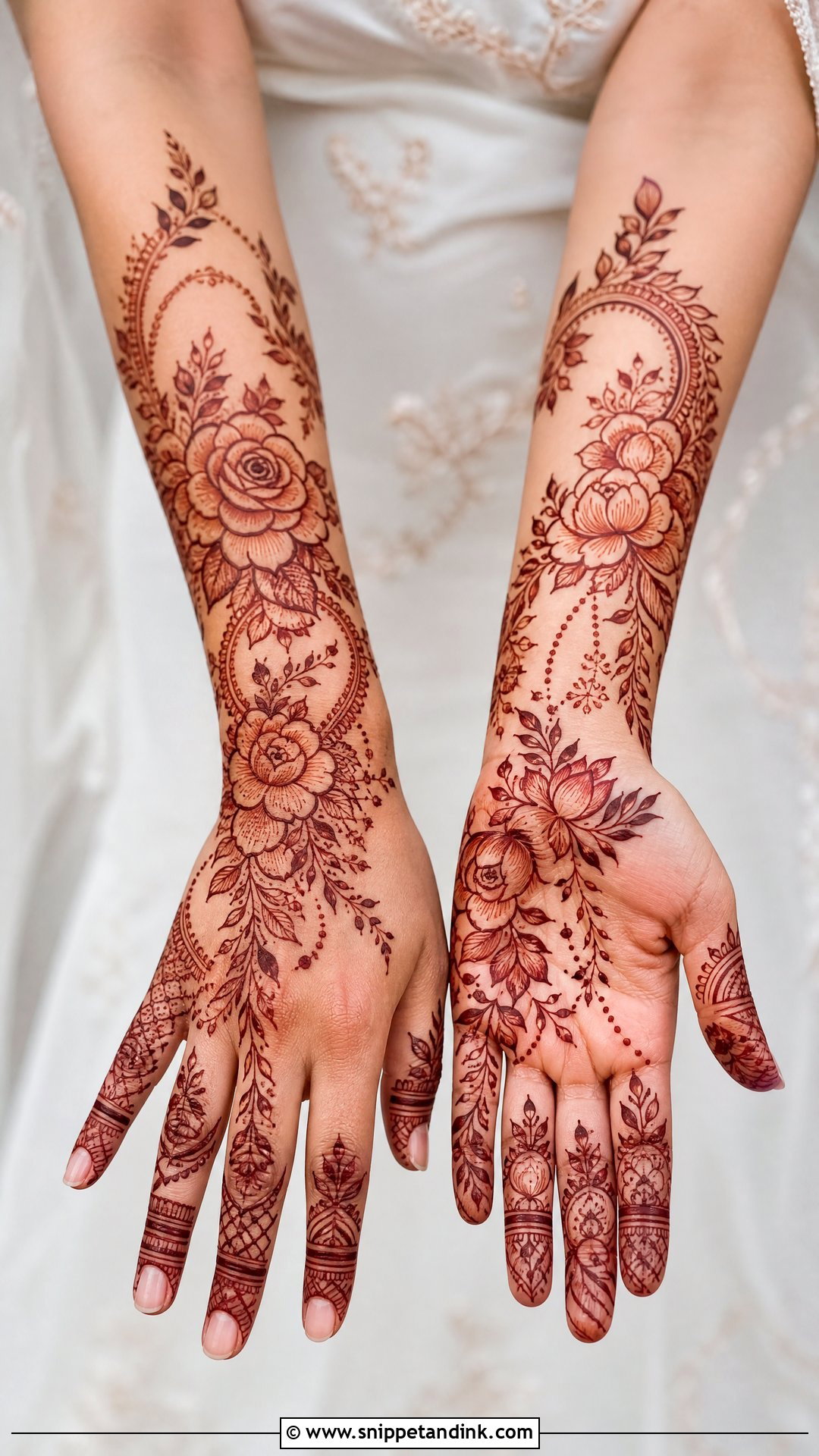
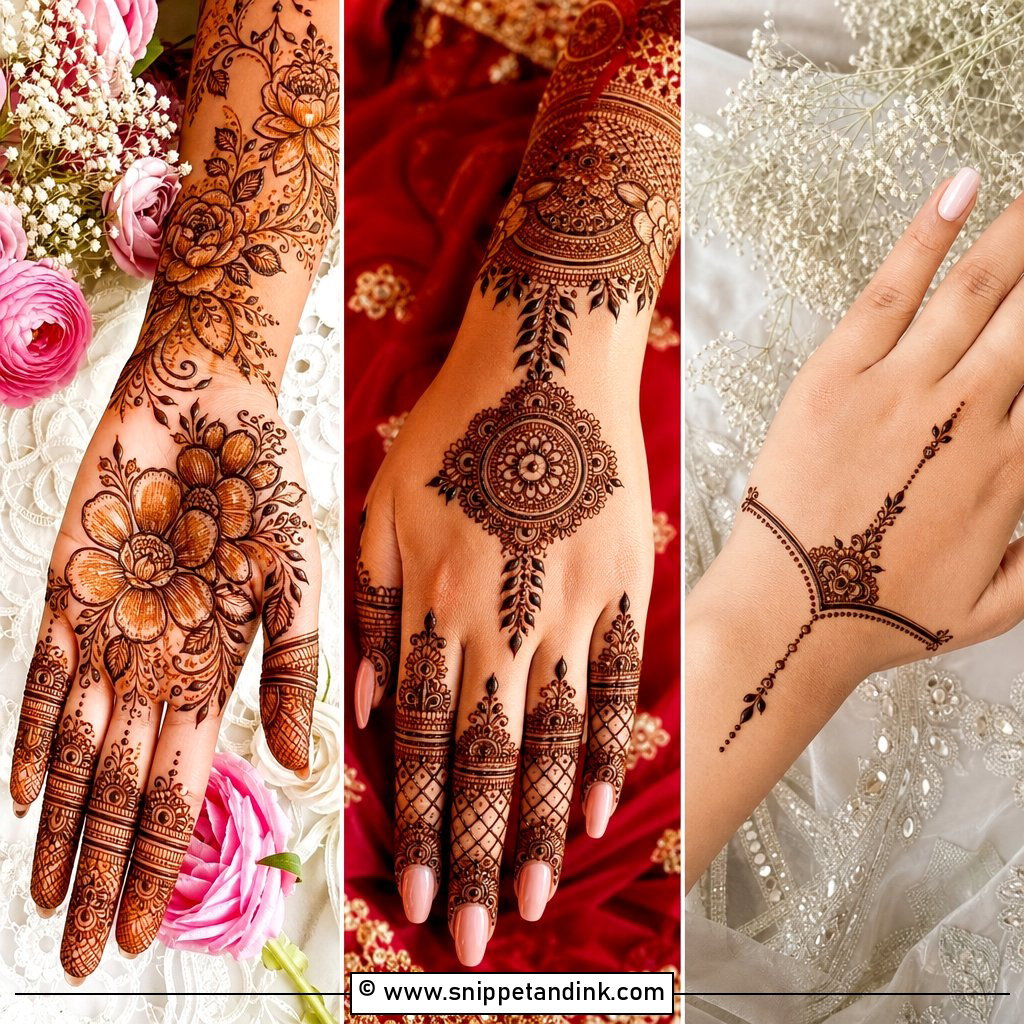
Floral bridal mehndi design is the most adaptable style I draw. Roses, lotus, small blossoms, leafy trails and shaded petals can be packed tight for an Indian finish or spread open like Arabic work, and they move across the hand without any figures. Bold, large flowers lean Gulf; tiny detailed blooms lean traditional. It mixes easily with jaali, mandala and paisley, which is handy when a bride likes three references and wants one coherent design.
22. Paisley Bridal Mehndi Design
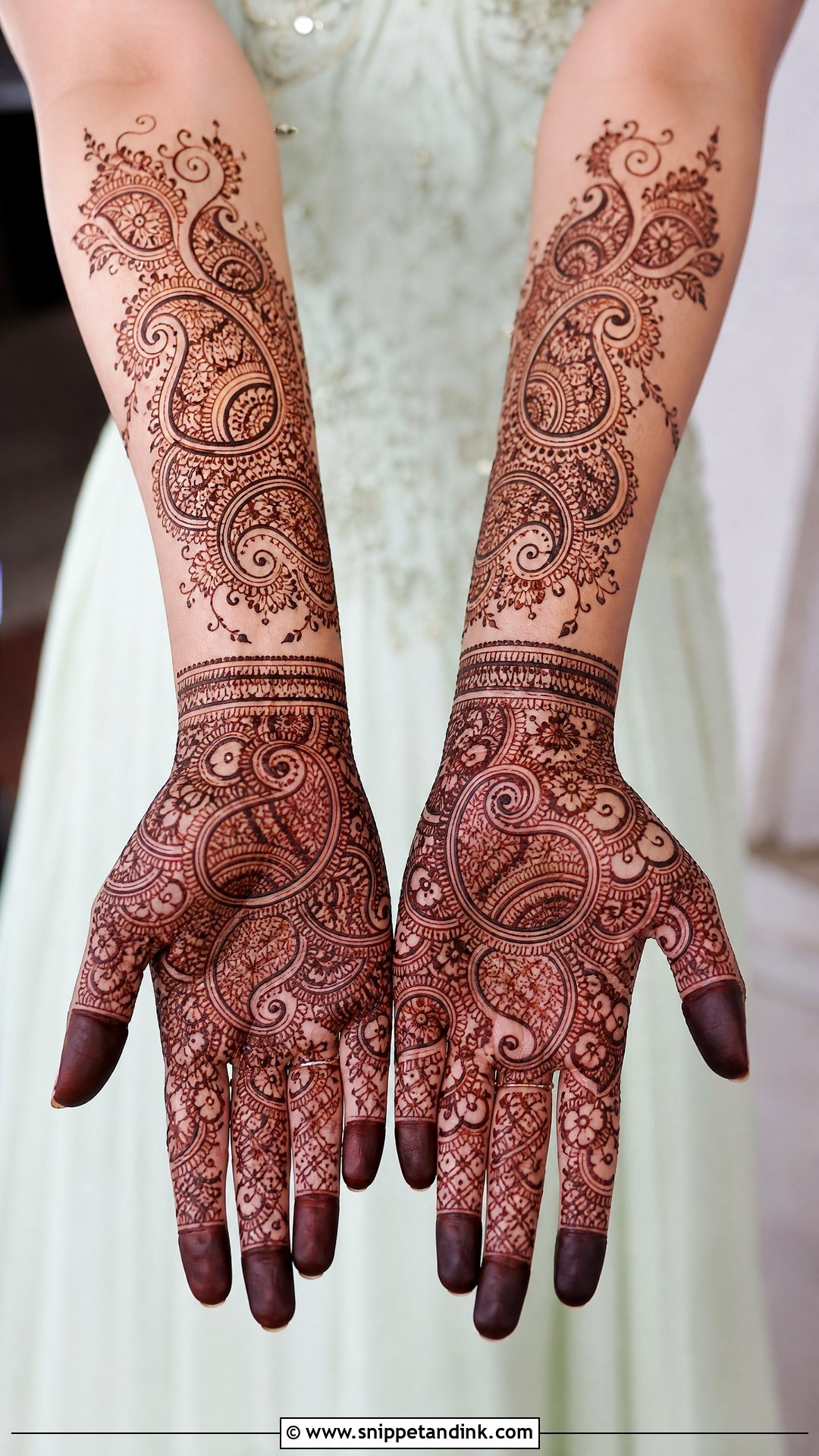
Paisleys are the backbone of most traditional henna. I use one large paisley as a centrepiece or repeat smaller ones in layers up the palm and forearm, filled with florals, dots and swirls. The curve follows the hand’s own shape, which is why they look right on both sides. For a bride who wants classic work without portraits or scenes, a paisley-led design is the honest answer, and it combines readily with peacocks or mandalas if she wants more.
23. Modern Bridal Mehndi Design
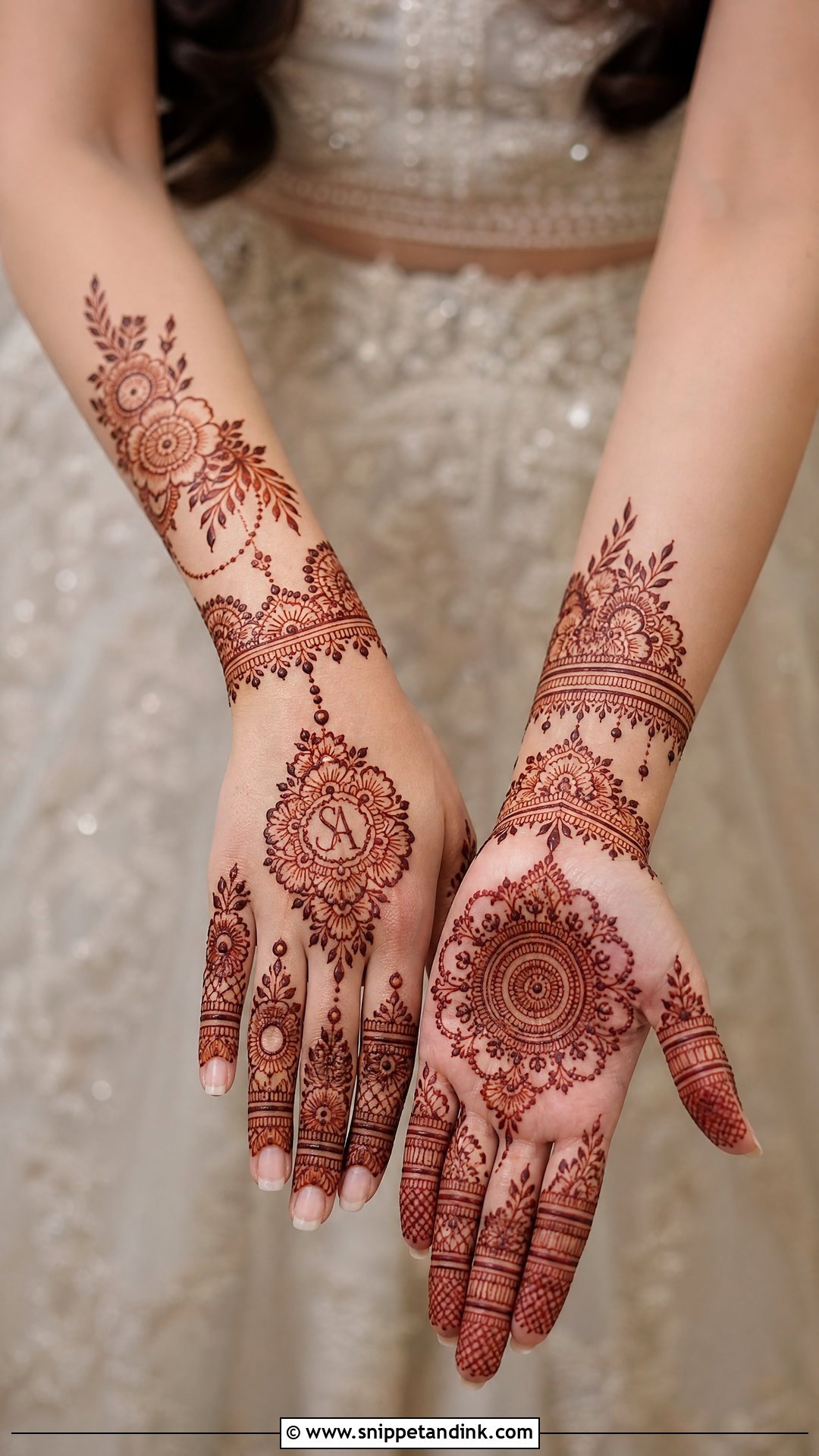
Modern bridal designs work with negative space on purpose: geometric details, bracelet bands, fine-line florals, initials and focused panels instead of full coverage. They look clean in photos and suit pastel lehengas, fusion outfits and destination weddings. They’re also shorter to apply, which means less sitting and less time waiting for paste to dry. The catch is that with so much bare skin, an uneven stain shows. If you choose this, protect the paste carefully overnight so the panels stain to the same depth.
24. White Bridal Mehndi Design
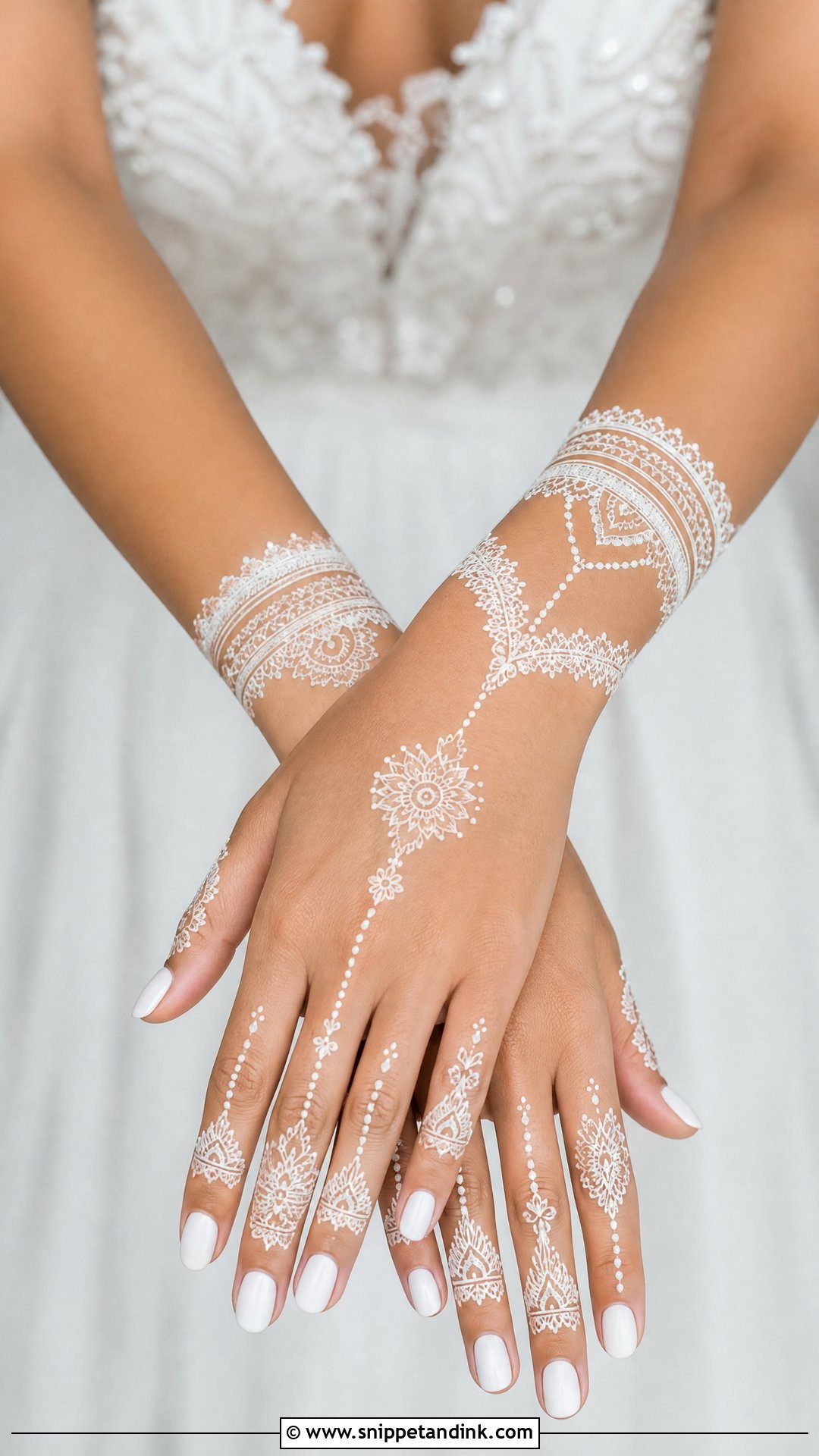
White mehndi isn’t henna at all. It’s a body paint or cosmetic-grade adhesive, sometimes dusted with shimmer, that sits on top of the skin and leaves no stain. That makes it useful for engagement shoots, receptions, beach weddings and portraits with ivory, silver or pearl outfits, where lace florals, mandalas and jewellery chains look striking. It lasts a day or two at most and rubs off with friction, so it’s not a substitute for bridal henna. Patch test the product first, especially if your skin reacts to adhesives.
25. Feet Bridal Mehndi Design
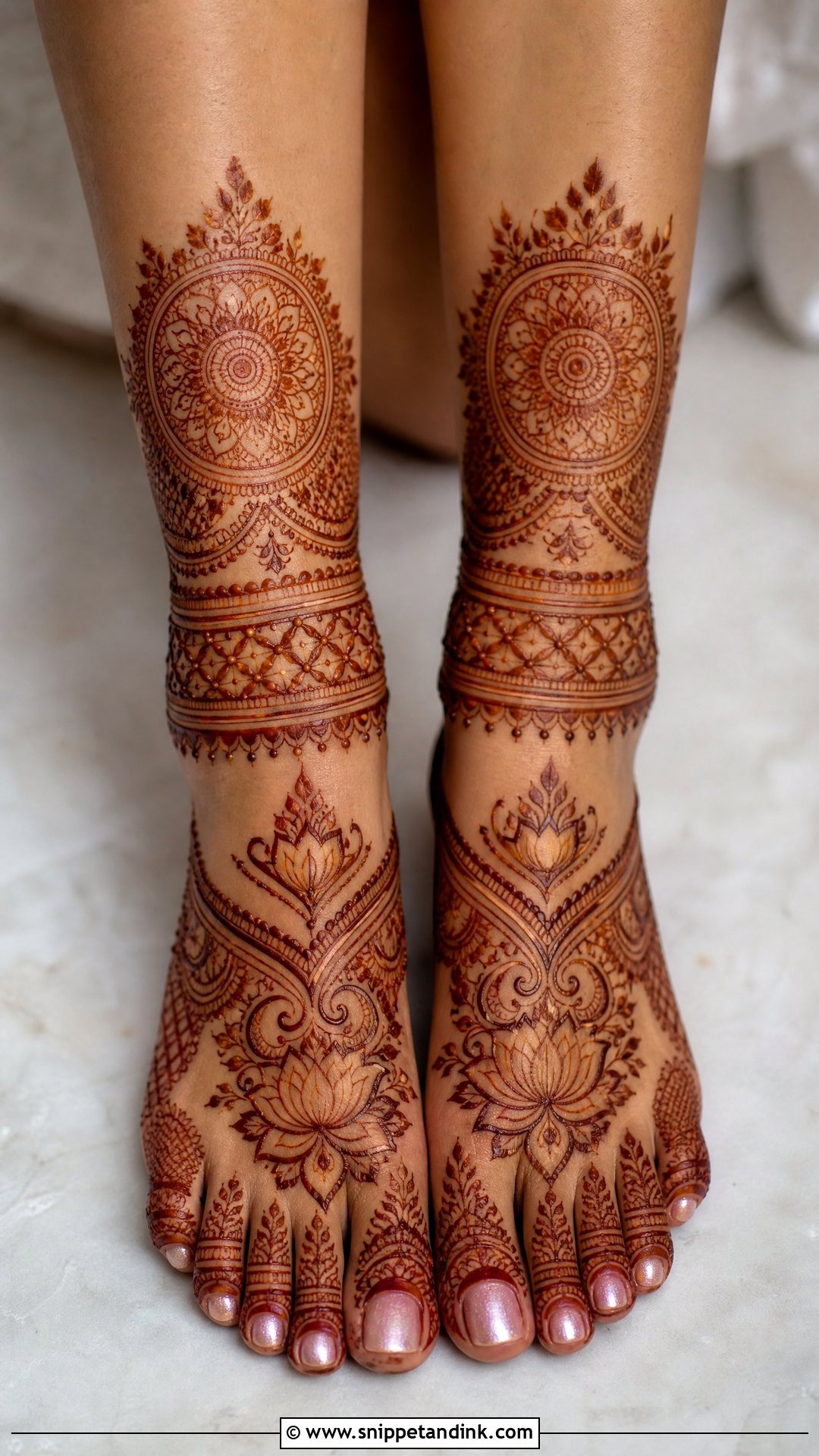
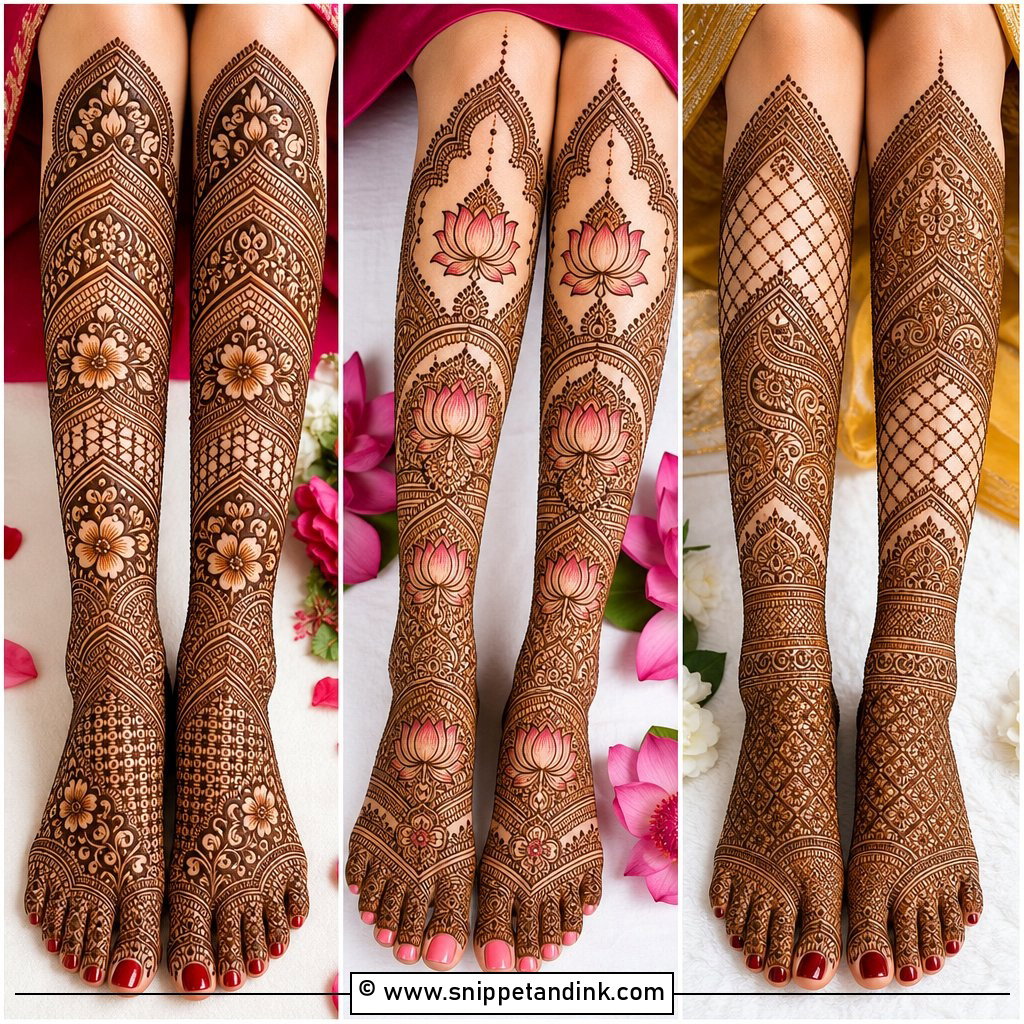
Feet are where henna stains darkest, because the skin on the soles and tops is thicker and warmer. Bridal foot designs cover the toes, the top of the foot and the ankle, sometimes running up the shin, with mandalas, lotus, paisleys, anklet bands and jaali. I usually match the theme of the hands rather than copy them. Leave clean gaps around the toes so the paste doesn’t smudge between them, and plan to do feet last, because once they’re done you can’t walk for a while.
Bringing the Groom’s Name, Your Date and Real Jewellery to the Consultation
The personal details in a bridal design are planned, not improvised. Spellings get checked, letters get sketched into the motifs, and placement depends on what your hands will be wearing. Come to the consultation with the details below ready and you’ll save at least half an hour on the day.
- The exact spelling of any names or initials, written down, plus the script you want if it isn’t English letters.
- Photos of your bangles, rings and hathphool, so wrist bands end where the metal begins.
- Your outfit’s sleeve length and colour. A sleeveless blouse earns full arm work; long sleeves don’t.
- The rituals where your palms will be shown, so the main panel faces the camera, not your lap.
- Any skin conditions, cuts or allergies, and whether you’ve had henna before without a reaction.
When your feet and hands are done on different days
With a heavy design it’s often kinder to split the work: hands one evening, feet the next morning, or a sister doing the feet while I finish the arms. Feet stain faster and darker, so a day’s gap still lands them at a similar depth to the hands by the ceremony. Ask your artist to agree the theme for both before starting, so the two sessions read as one design.
Match the Coverage to How Long You Can Sit
The names on this list are only a starting point. What decides your design is the outfit, the rituals where your hands will be seen and how many hours you can realistically give the artist. Full Indian and Rajasthani work feels grand; Arabic, Gulf and minimal designs leave space and save time; names, dates and portraits make it personal; Moroccan, white and modern layouts give you something less expected. Bring two or three references, tell your artist which parts you love in each, and let her build one design for your hands.
You'll Like These Ideas:


Leave a Reply