
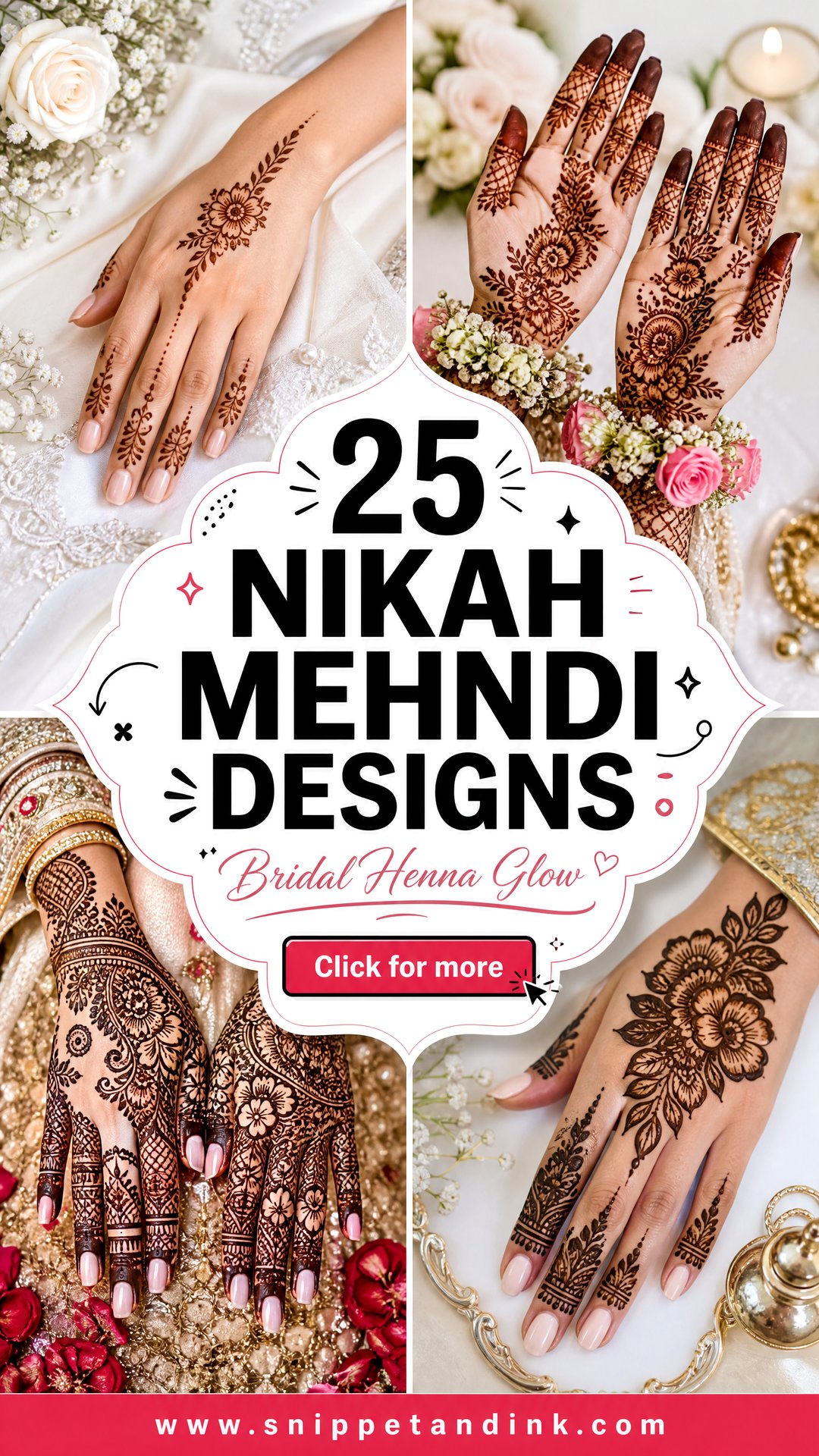
Nikah mehndi usually sits on the quieter side of bridal henna. The ceremony is often smaller, the outfit more modest, and the hands are on show at close range: signing the nikahnama, receiving the ring, raised for dua. That changes how I design. I leave more breathing space, think about how the pattern meets a long sleeve, and keep detail where people actually look. Below are 25 hand designs, from full Indian coverage and airy Arabic trails to minimal finger work and personal touches like initials and dates, with my notes on who each one suits.
Wudu, Prayer and What Sits on Top of Your Skin
Many Nikah brides pray on the day, so this question comes up at almost every booking. Natural henna stains the skin rather than coating it, and once the paste is scraped off, water reaches the skin as usual. That’s why it’s widely accepted for wudu. White mehndi, glitter and some decorative products are different: they form a layer on top of the skin, which is why many brides remove them before making wudu.
- If you plan to pray, choose natural henna for anything you want to keep on through the day.
- Save white mehndi and glitter for after the last prayer before the ceremony, or skip them.
- Have baby oil or a gentle oil cleanser ready; it lifts white mehndi adhesive quickly without scrubbing.
- If you’re unsure about a particular product, ask your own imam or scholar before the day.
Timing matters for the stain too. Natural henna starts out orange and needs a day or two to darken, so I apply Nikah mehndi one to two days before the ceremony. Make wudu before the session if you can; you’ll be keeping water away from your hands for several hours afterward.
1. Full Hand Nikah Mehndi Design
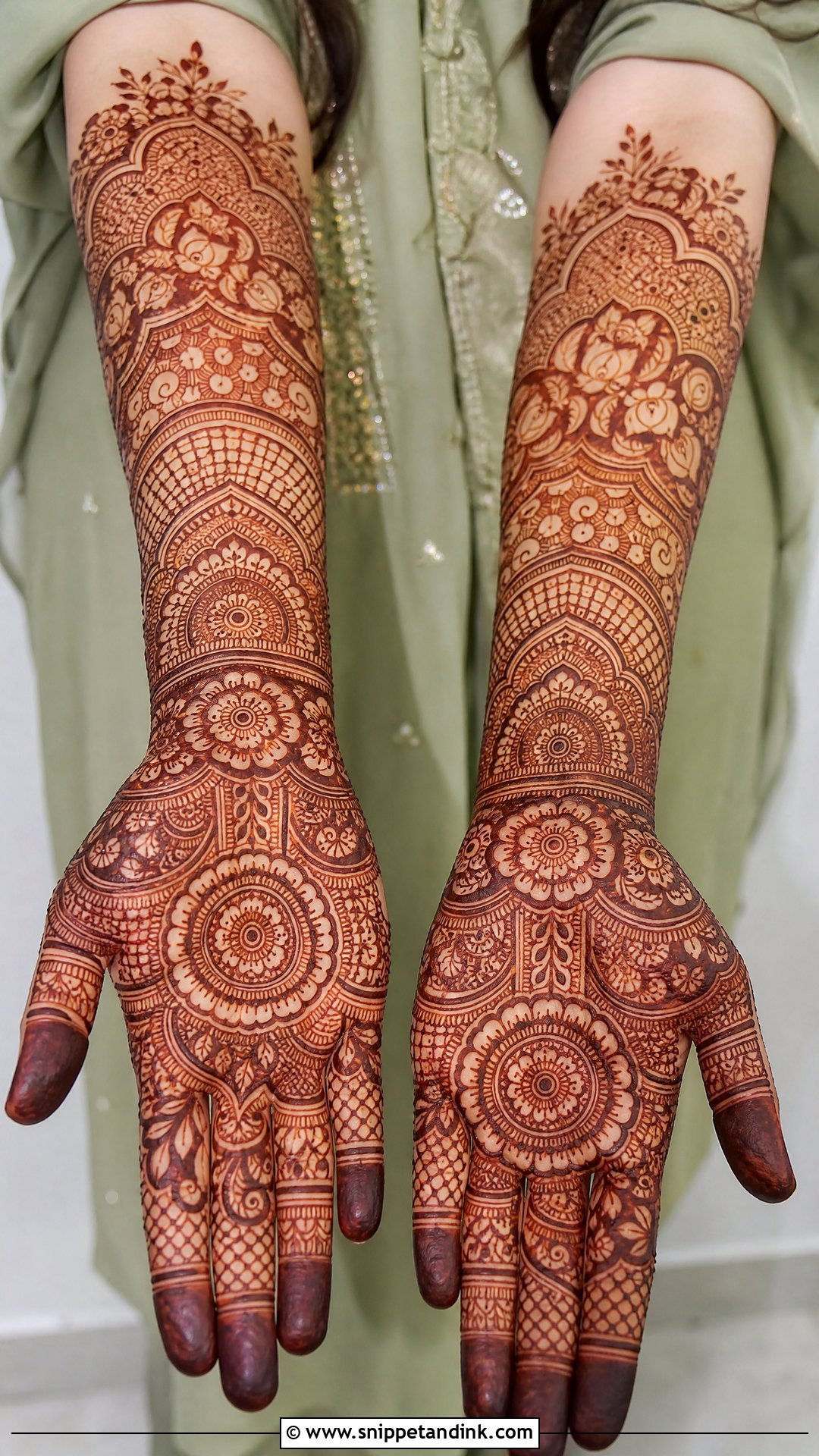
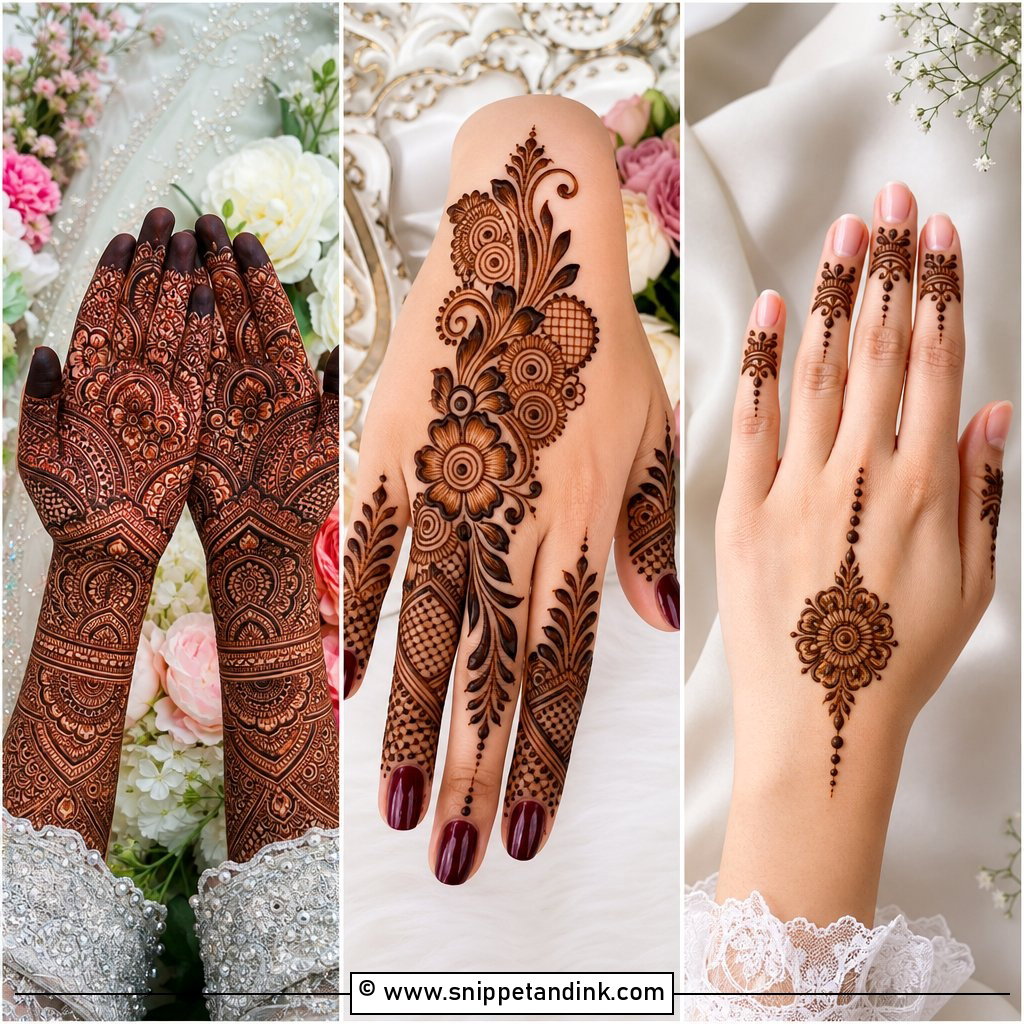
Full coverage for a Nikah still means palm, fingers, wrist and forearm, but connected rather than packed: florals, paisleys, shaded leaves and fine filler. I put a round mandala or floral centre on the palm and run curved vines up the forearm. Long sleeves are common at a Nikah, so I make sure the design still looks complete if only the hand shows. Small negative spaces around each main motif are what keep it clean once the stain darkens, and I always deepen the fingertips for contrast.
2. Simple Nikah Mehndi Design
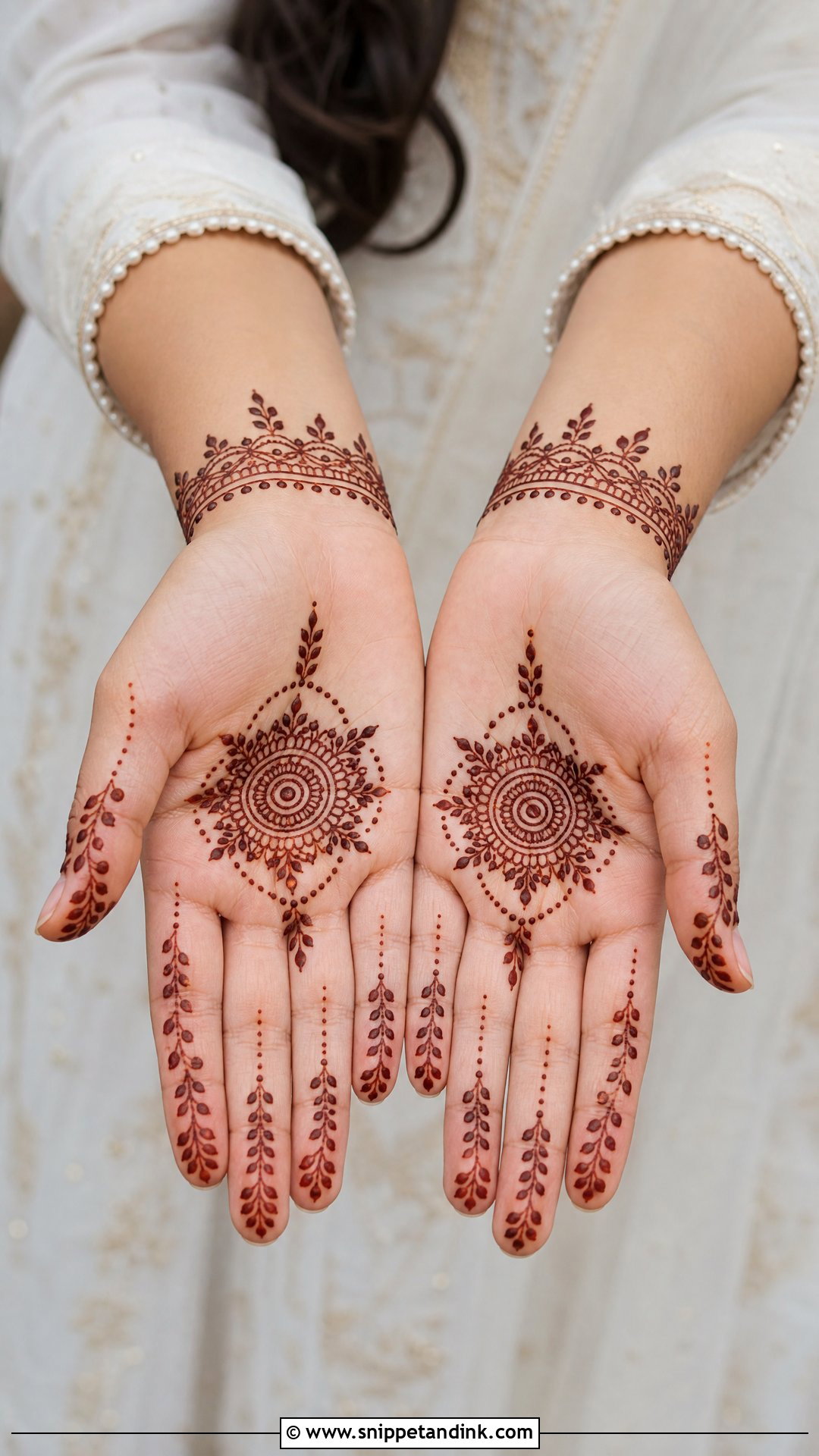
Quick to apply, easy to live with. A simple design focuses on one clean palm motif, neat finger detail and a soft bracelet at the wrist, often a small mandala and slim vines. It’s my usual suggestion for sisters, cousins and guests, and for brides who’d rather not sit for hours on the day before. Thin outlines in natural reddish brown henna give it a soft finish next to an engagement ring.
3. Arabic Nikah Mehndi Design
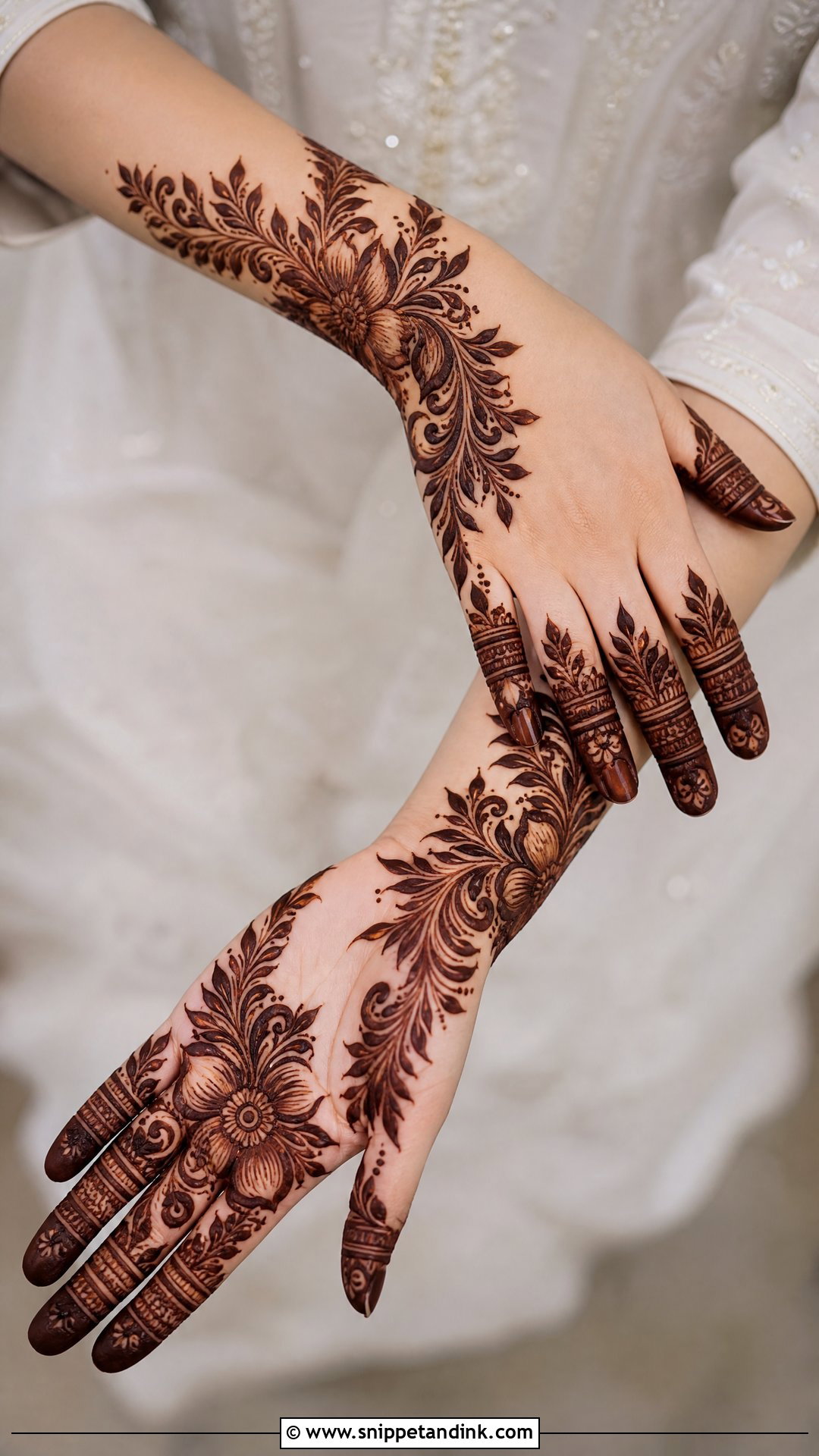
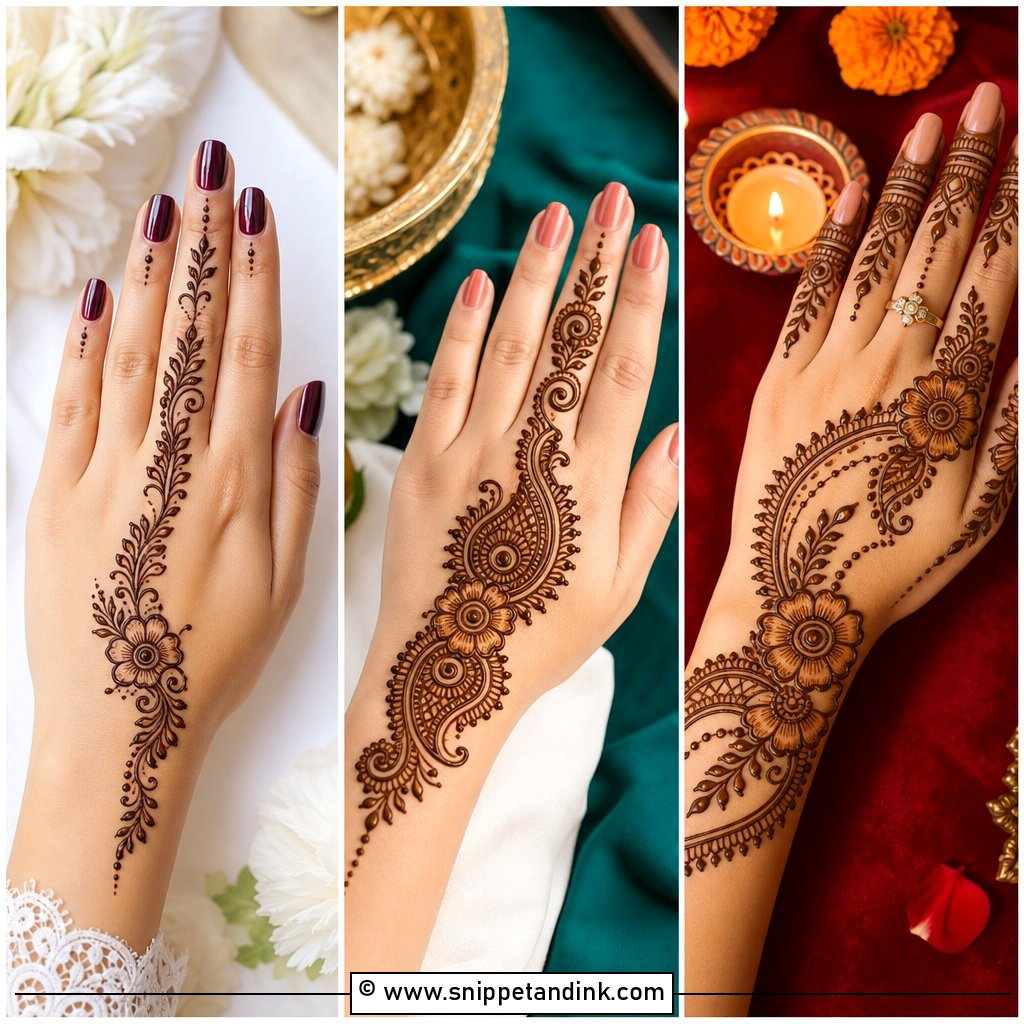
Arabic layouts start at one side of the wrist, sweep across the palm and finish toward the index or middle finger, with big flowers, leafy trails and shaded petals. The open spaces make it feel light, which suits a daytime Nikah, and the bold motifs read from the back of the room. I detail the fingers with small leaves and fine bands so the hand looks connected. If your artist’s strokes hesitate, it shows here more than in dense work.
4. Indo Arabic Nikah Mehndi Design
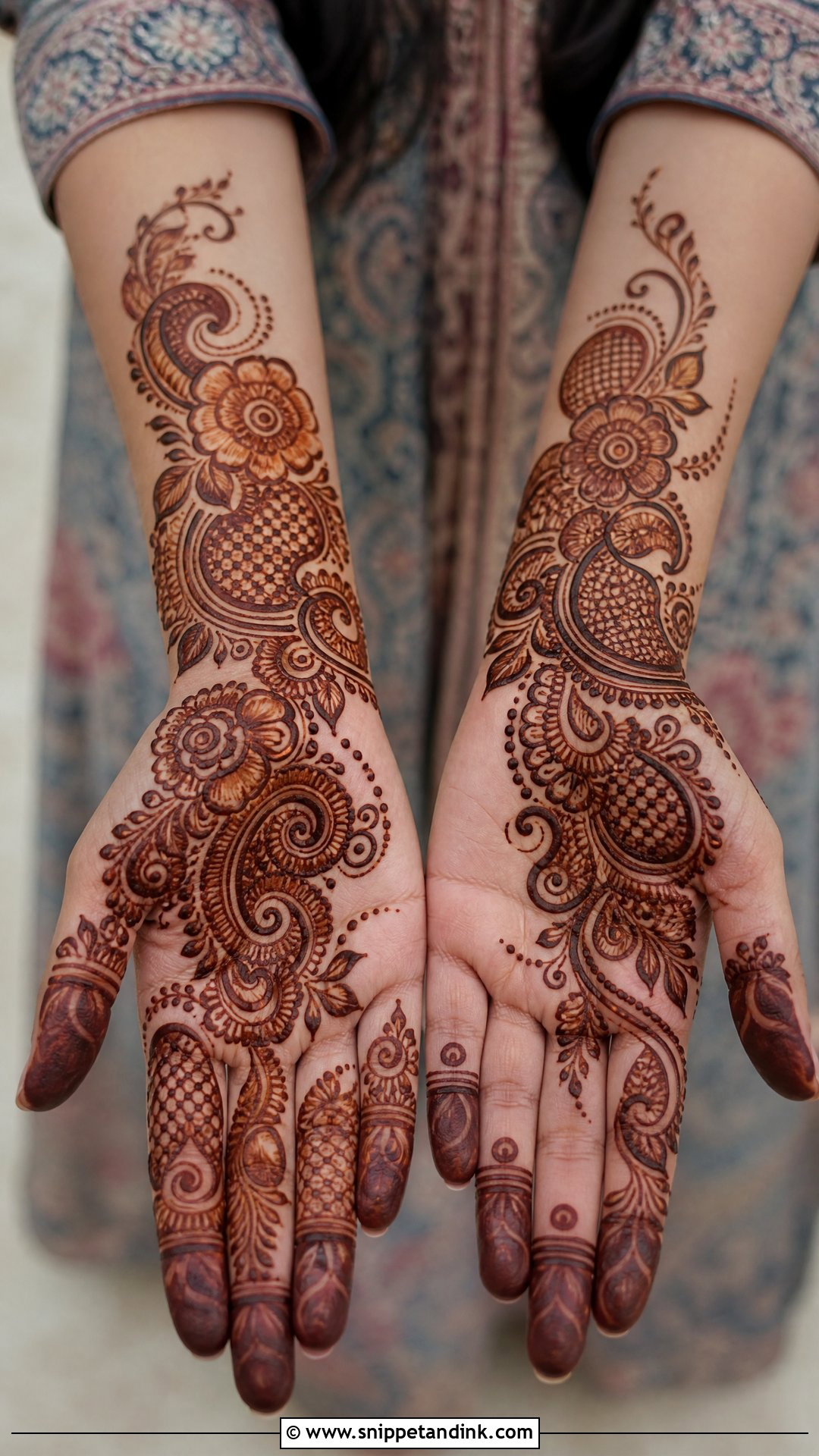
Indo Arabic sits halfway between the two styles: large flowers and paisleys in a diagonal trail, filled with tiny checks, dots and lace-like shading. I put a detailed floral cluster on the palm and a cuff at the wrist, and leave enough bare skin for it to still feel like a Nikah rather than a full baraat hand. It works equally well with pastel outfits and heavily embellished dresses, which makes it a safe pick if you haven’t finalised your outfit yet.
5. Pakistani Nikah Mehndi Design
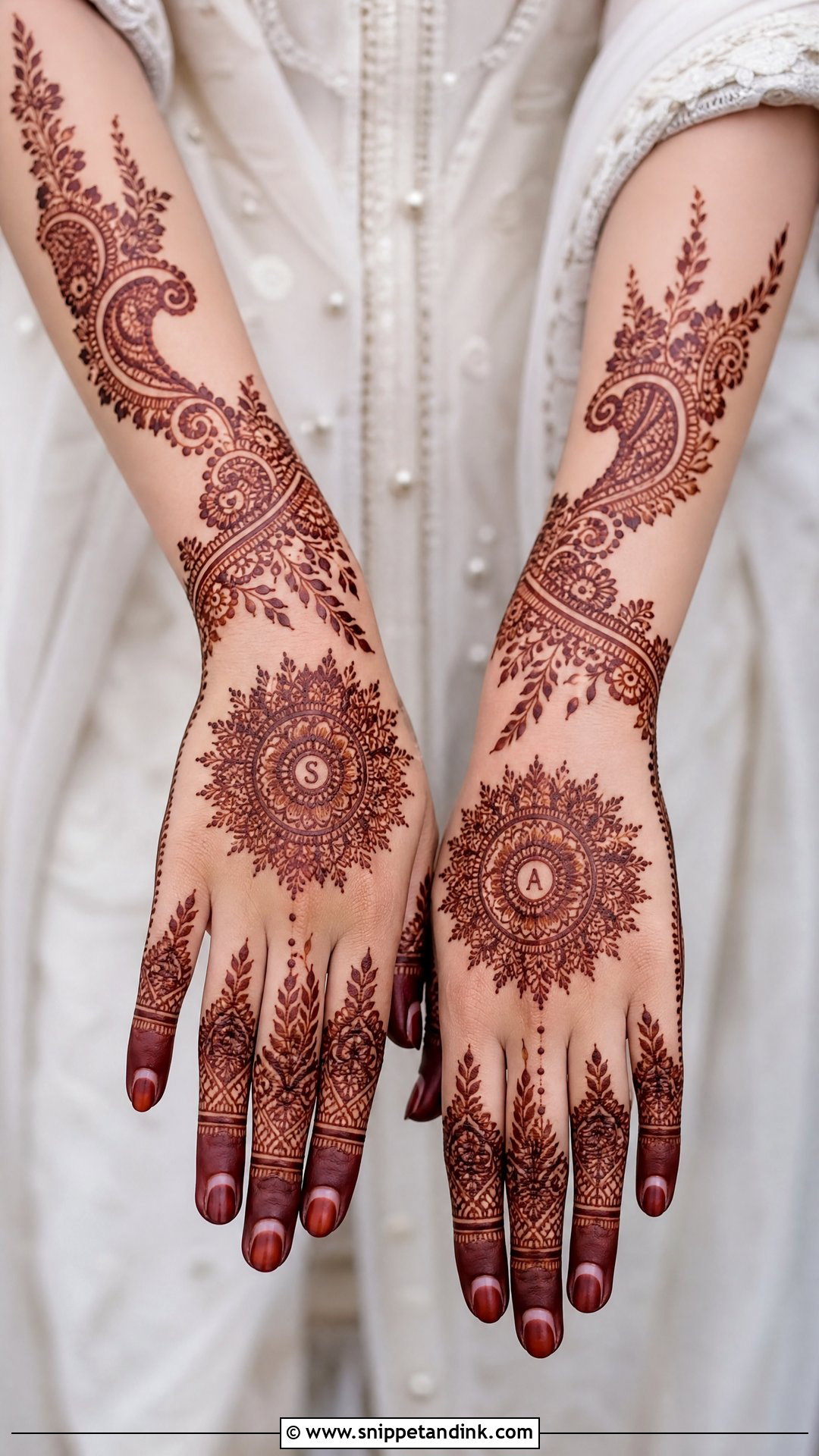
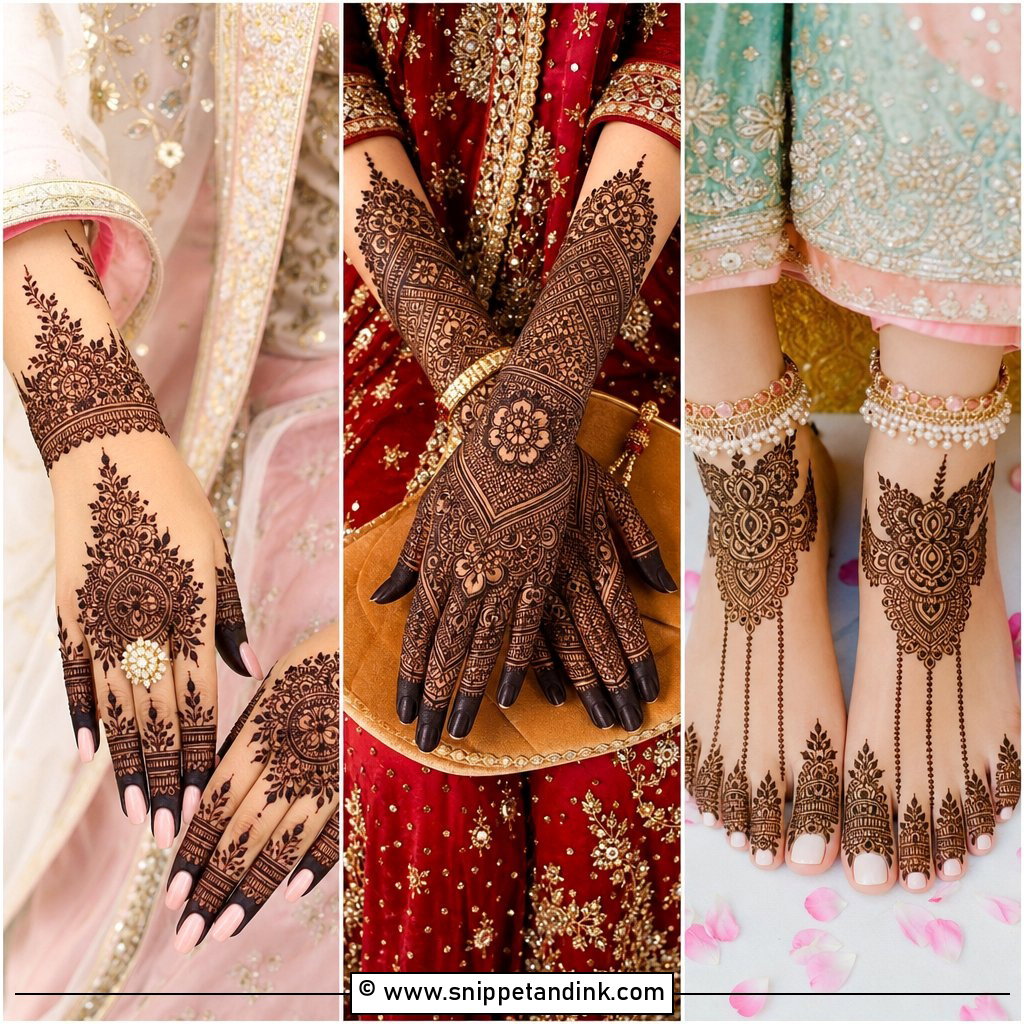
Pakistani Nikah mehndi tends toward symmetry and controlled richness: a central palm mandala, paisley borders, vines and a delicate extension up the wrist. The spacing is what keeps the hands from looking too dark. It suits sharara, gharara, lehenga or a long formal dress. I semi-fill the fingers with fine lines and dots, and if you want something personal, a tiny initial or a hidden heart fits neatly inside a paisley.
6. Indian Nikah Mehndi Design
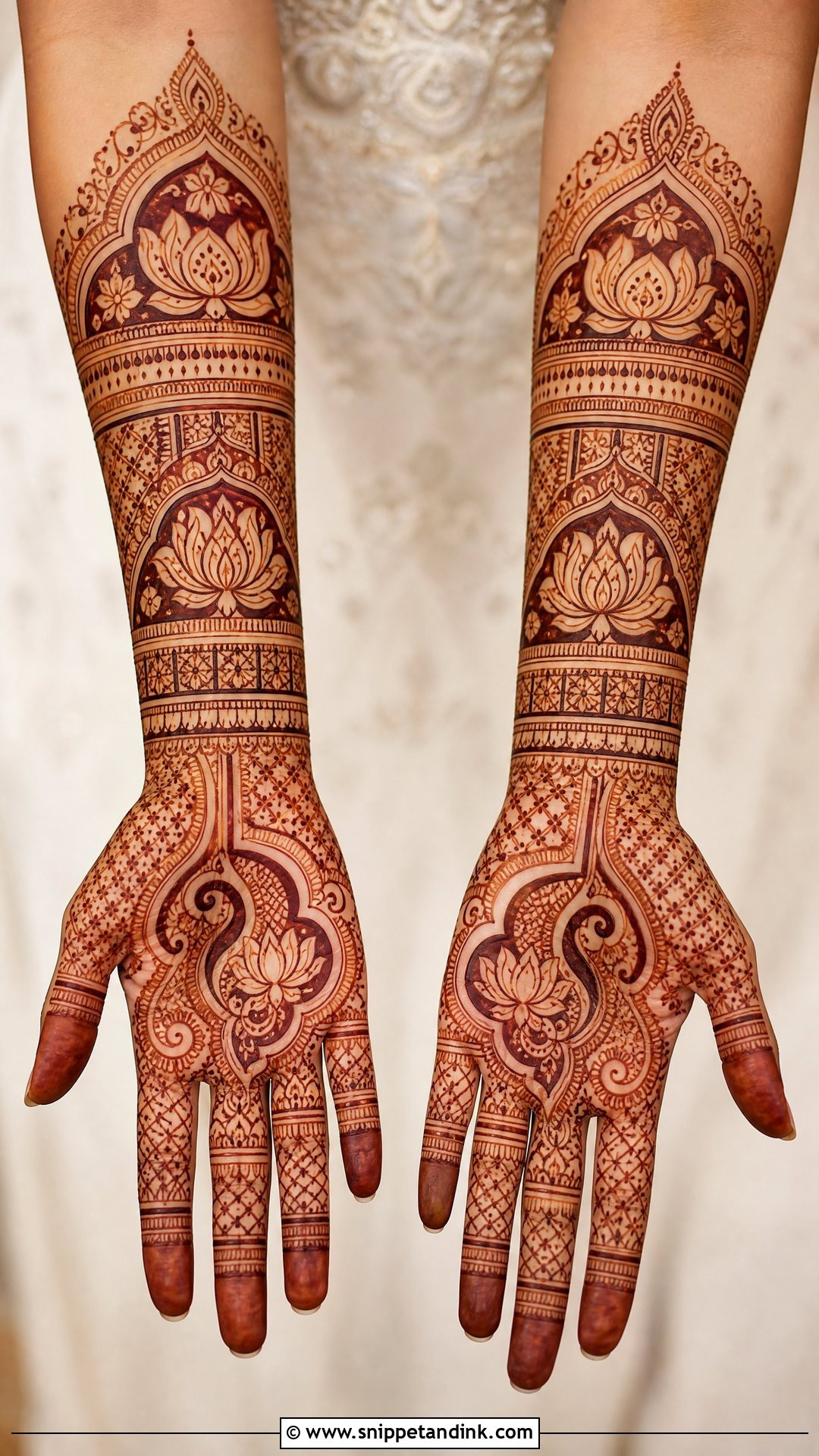
Dense Indian work, with its paisleys, peacocks, jaali, florals and layered borders, can be softened for a Nikah by choosing medium coverage rather than a full bridal layout. A lotus or mandala anchors the palm and paisley bands frame the wrist. It looks rich next to gold jewelry and heavy embroidery. I leave clean space around each main element, since the finest lines in Indian work are the first to blur as the colour deepens.
7. Minimal Nikah Mehndi Design
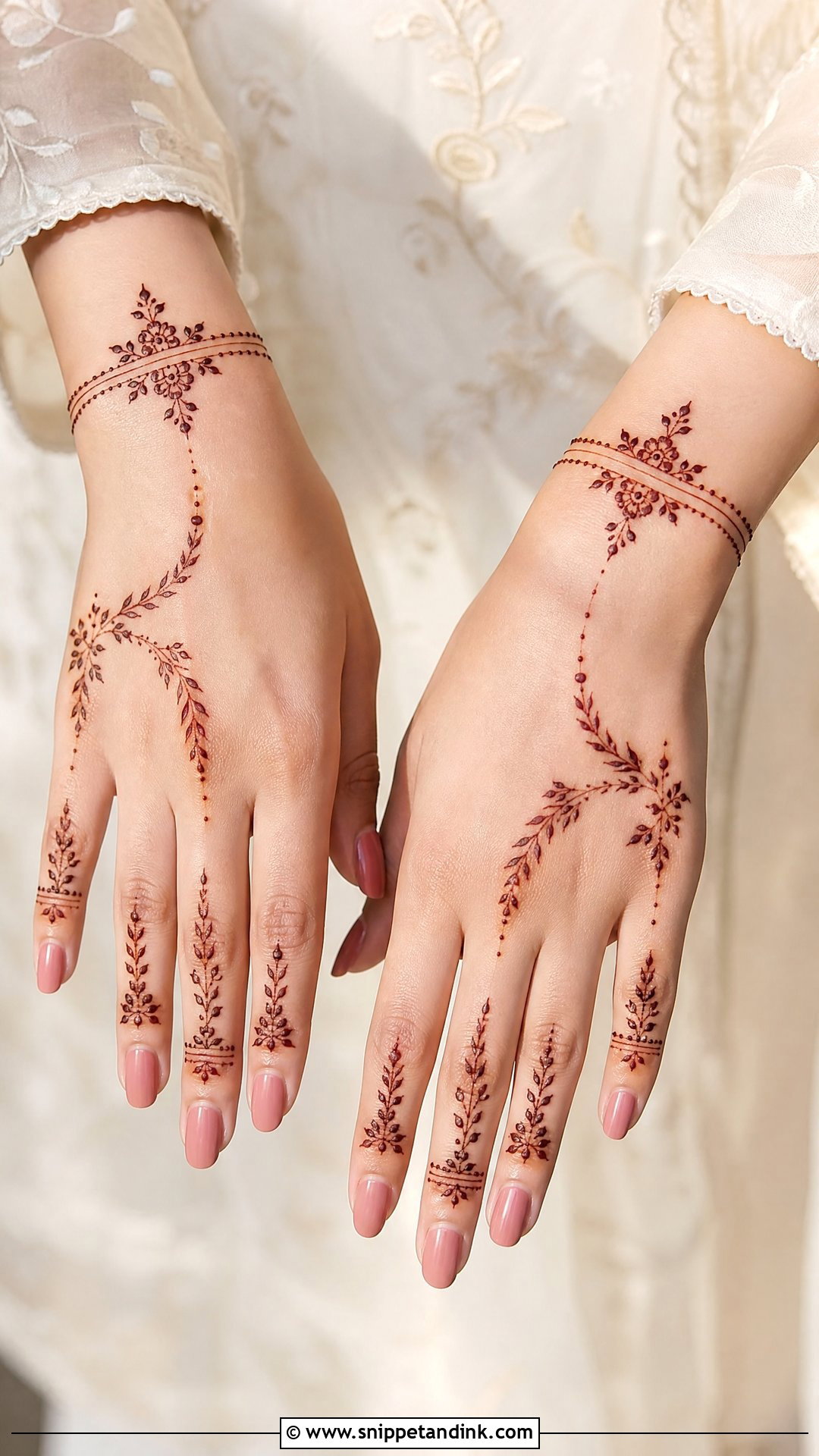
Minimal mehndi puts the focus on the fingers, back of the hand and wrist: slim leaf lines, tiny flowers, dots and a small bracelet. Your rings, nail colour and accessories stay the main feature. It’s practical, too, if the Nikah is close to another event and you don’t want a stain clashing with a different design days later. With so few lines, neatness is everything; I’d rather draw five clean leaves than fifteen shaky ones.
8. Back Hand Nikah Mehndi Design
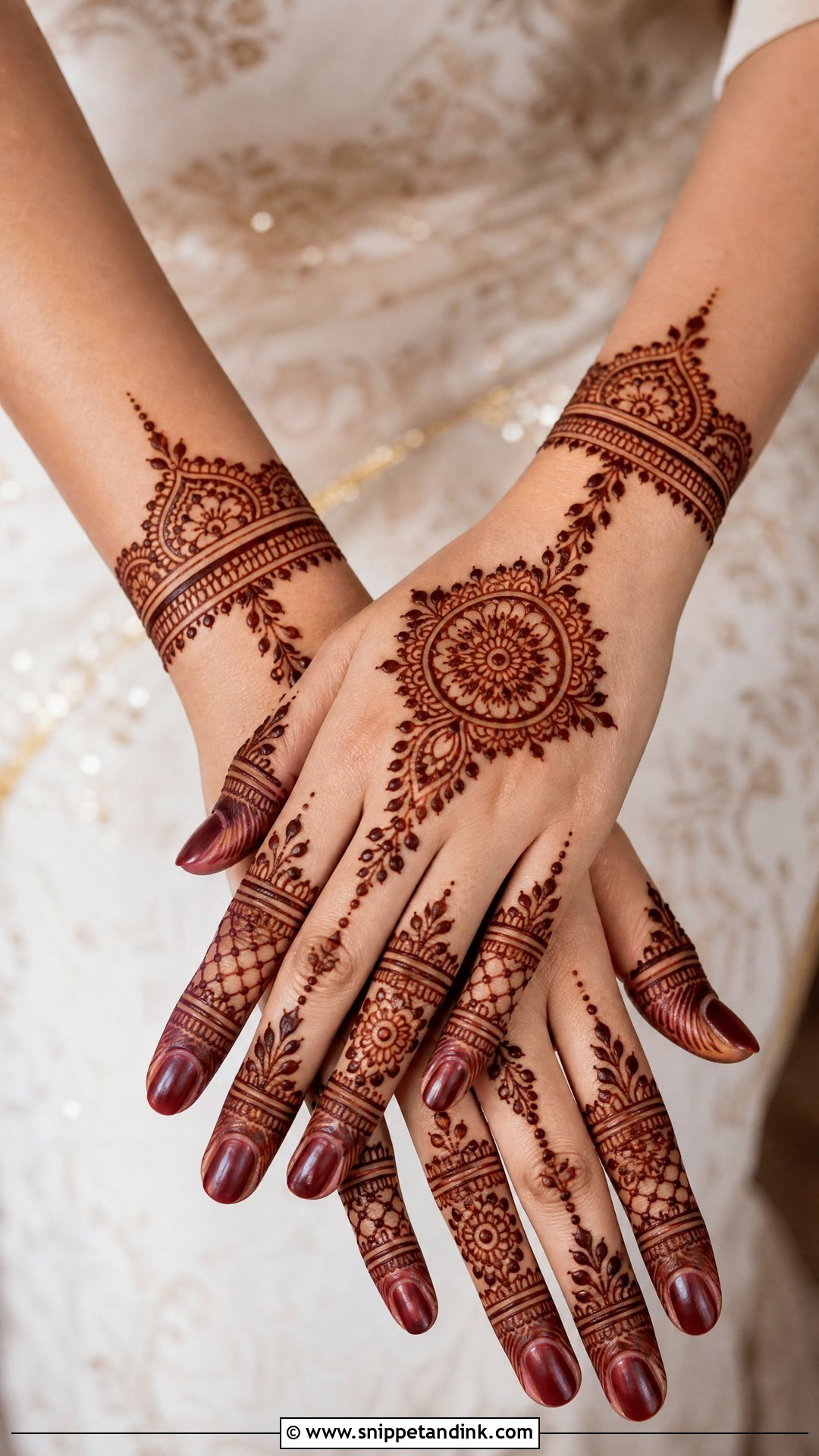
The back of the hand is what people see during the ring exchange, when you hold flowers and when hands are raised for dua. I build it around a central mandala, floral chains, finger patterns and a bracelet-style wrist. The palm can stay plain or carry a simpler echo of the same design. For a Nikah I keep the curves soft and the spacing medium; dense filling looks heavier on the back of the hand than on the palm because the stain sits against lighter skin.
9. Front Hand Nikah Mehndi Design
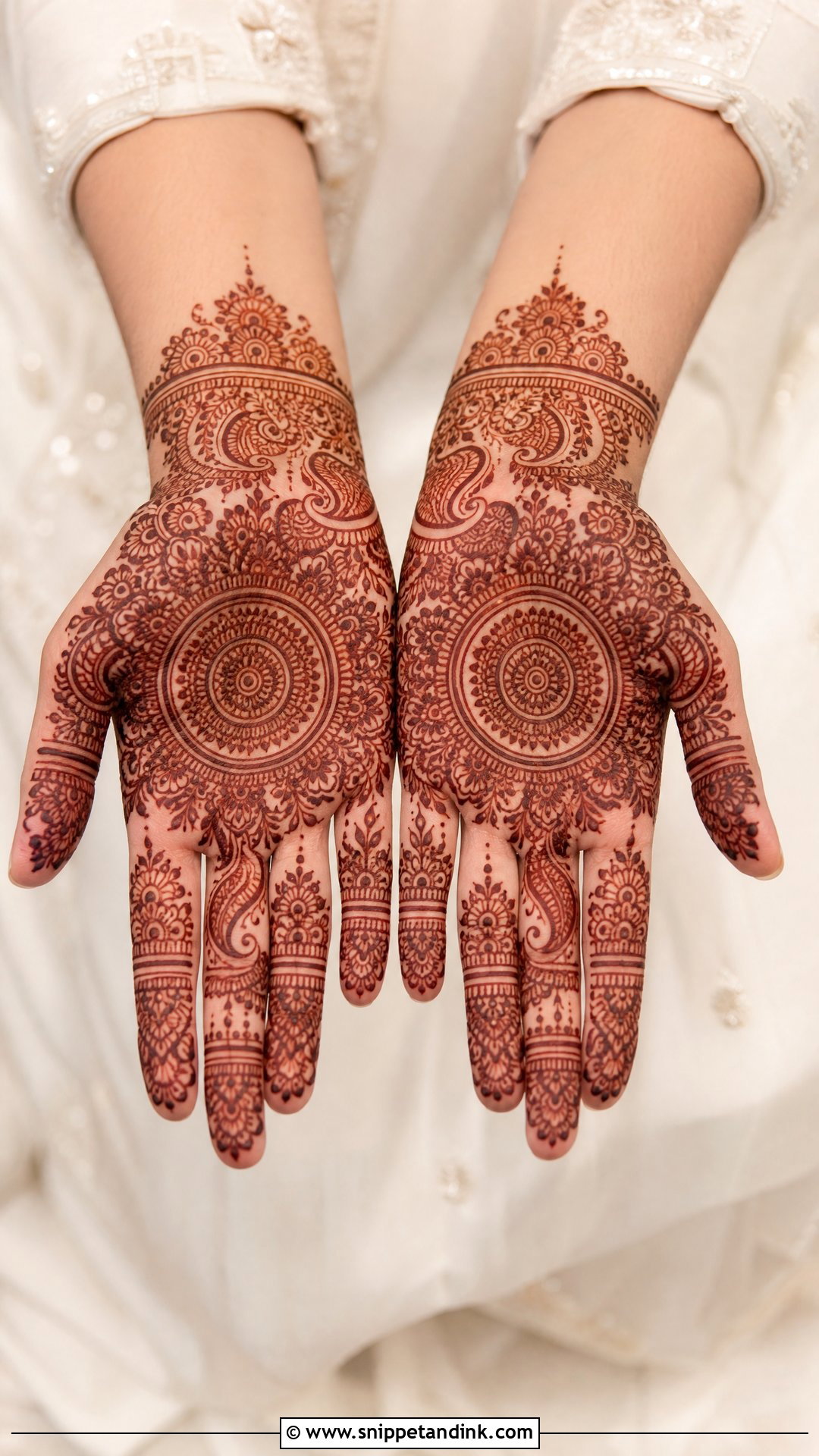
The palm is where henna stains deepest, and it’s on show during duas, family photos and close-ups. A round mandala in the centre is the classic choice, though a floral cluster, a paisley frame or a heart layout works too. I balance it with detailed fingers and a small cuff or vine at the wrist, keeping both hands symmetrical. Because it stops at the wrist, it gives a complete bridal look without hours spent on the forearms.
10. Bridal Nikah Mehndi Design
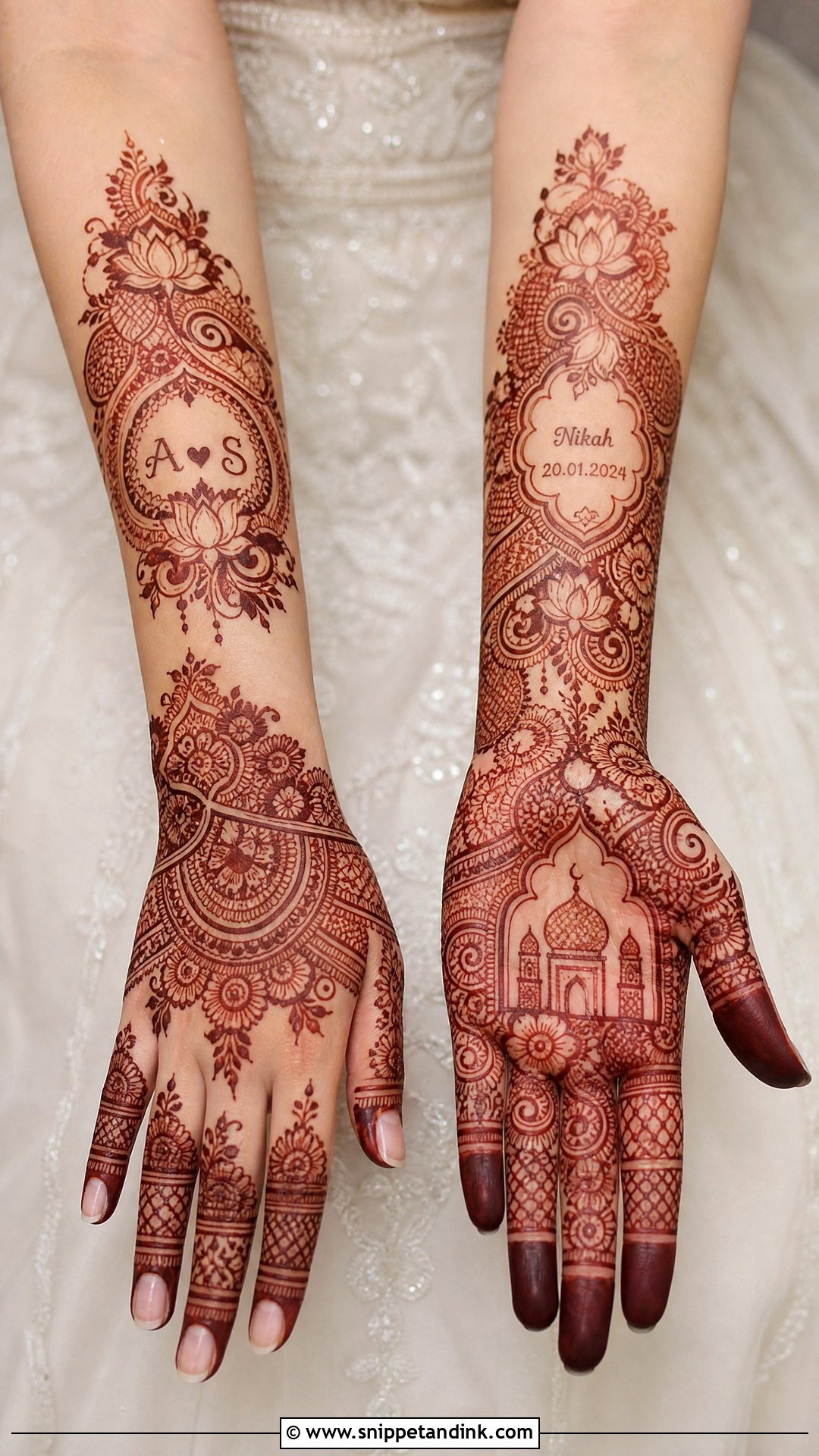
A bridal Nikah design should feel a step above occasion henna. I usually cover both sides of the hands with matching palm and back patterns, adding details like initials, a tiny date, lotus motifs, paisleys and fine lace filler. The detail is concentrated on the palm and fingers, with a lighter forearm, so it reads as meaningful without becoming dramatic. It sits well with a haath phool, bangles and statement rings.
11. Modern Nikah Mehndi Design
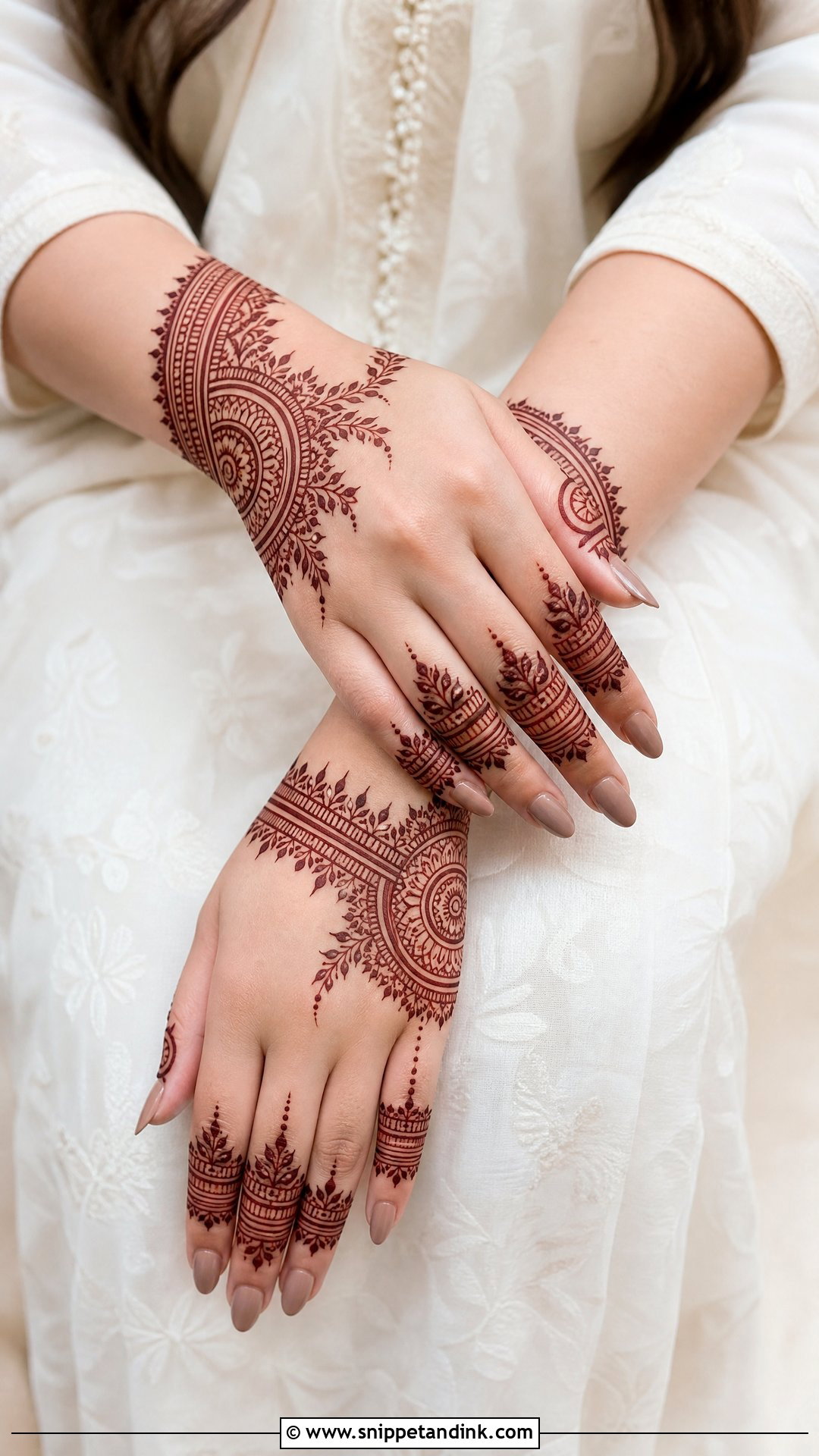
Modern layouts use geometric lines, half mandalas, leafy outlines and negative space instead of only heavy traditional motifs. A typical one starts with a slim cuff at the wrist, curves across the back of the hand and finishes with detailed fingers. It suits contemporary outfits, neutral colours and simple silhouettes. Precision is the whole look, so I take my time on the straight lines and the spacing between them.
12. Heavy Nikah Mehndi Design
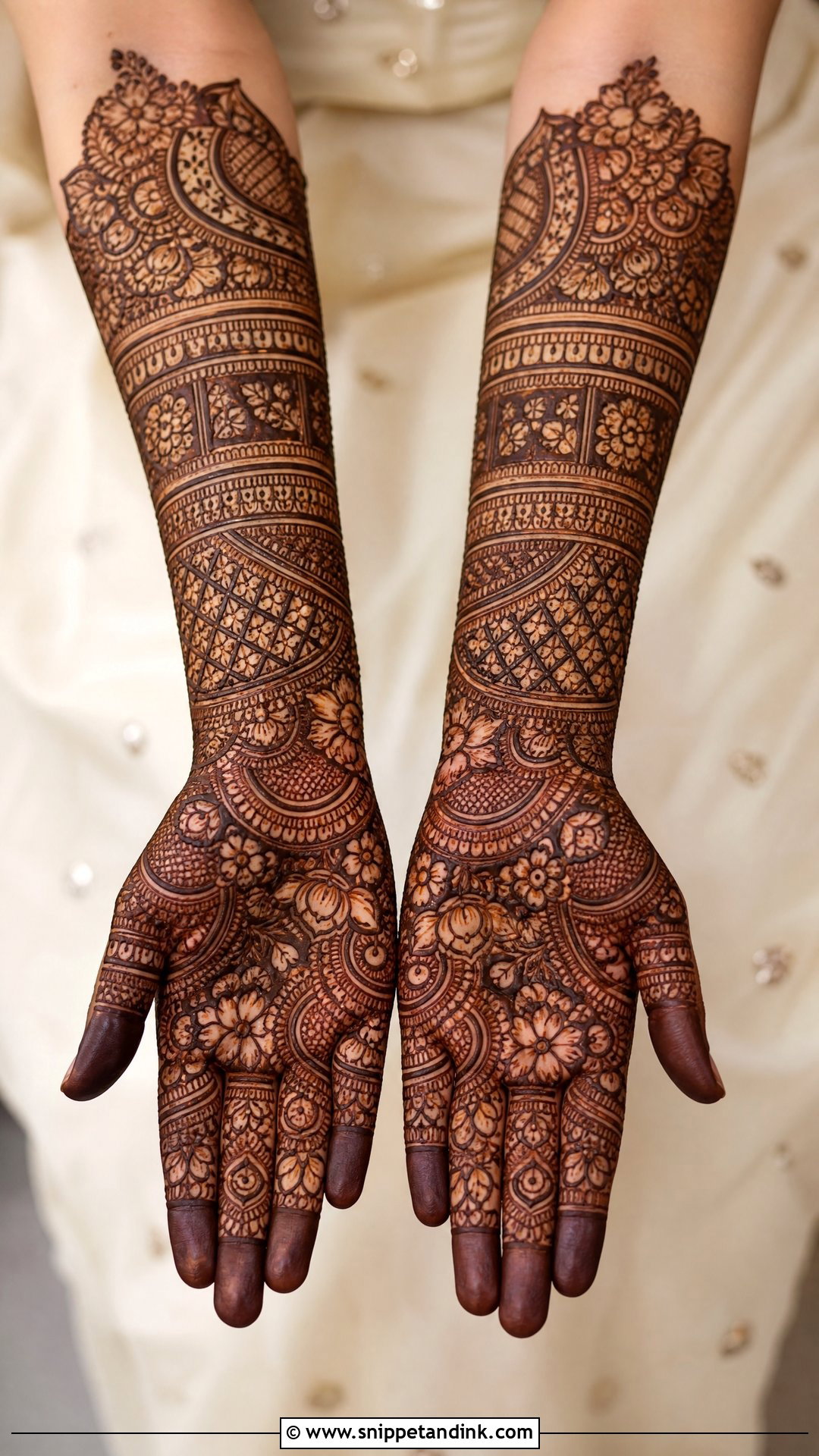
Heavy coverage for a Nikah, with dense florals, paisleys, jaali and layered borders over the palm, back, fingers, wrist and forearm, makes sense when the Nikah and the reception are only a day or two apart and you want one design for both. Heavy doesn’t have to mean messy. I draw larger main motifs first and fill around them, then darken the fingertips and shade the florals for depth. It pairs with red, ivory, gold, maroon or emerald.
13. Floral Nikah Mehndi Design
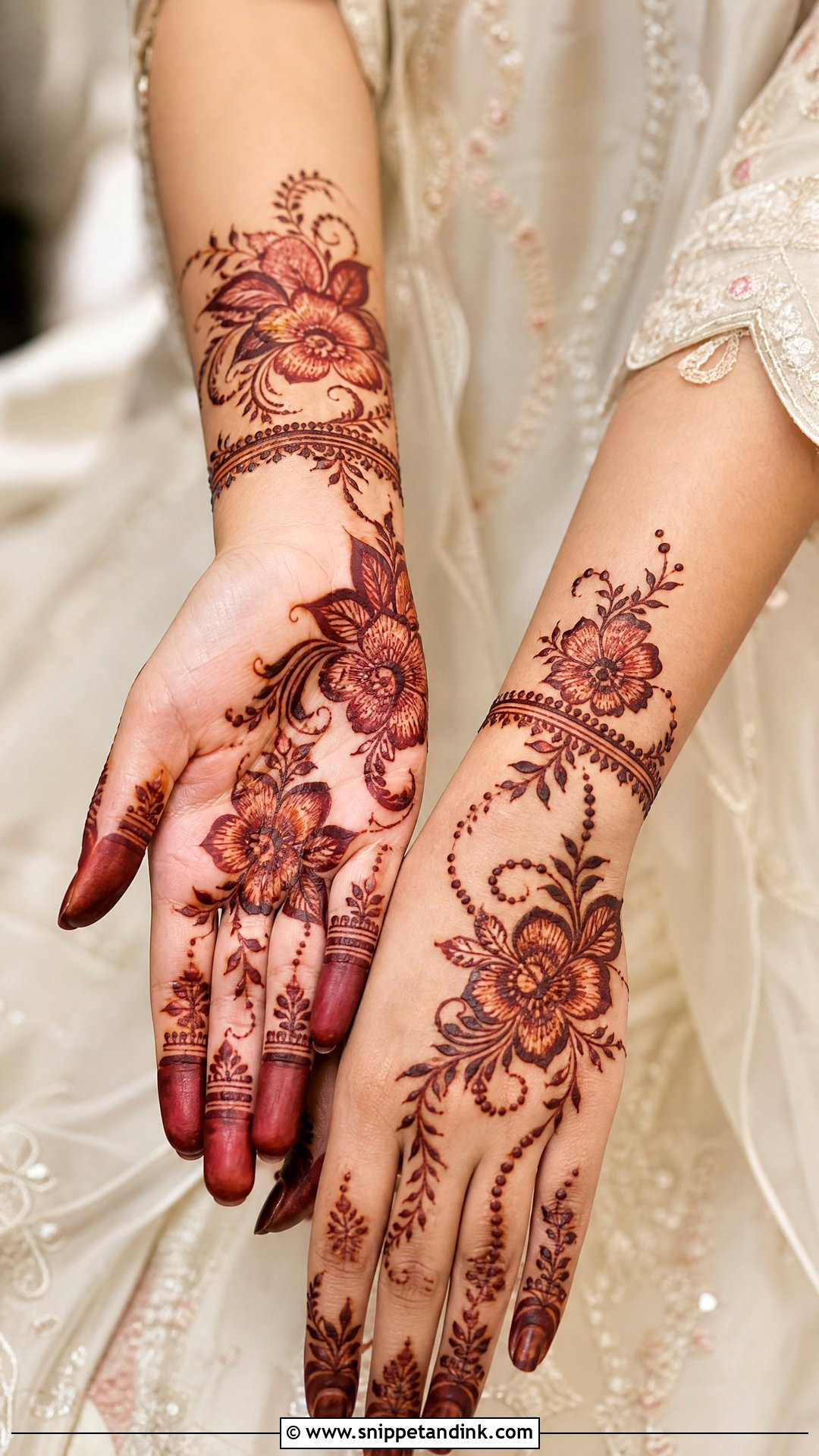
Florals are the most adaptable style I apply: a large flower on the palm, leafy trails over the fingers, a delicate wrist border, and on the back of the hand a floral chain or diagonal bloom. They can be drawn simple, Arabic, Indian or minimal. For a Nikah I choose medium-sized flowers with shaded petals and open spacing, which sits well with embroidered sleeves, pearls and soft colours like blush, cream, mint and champagne.
14. Mandala Nikah Mehndi Design
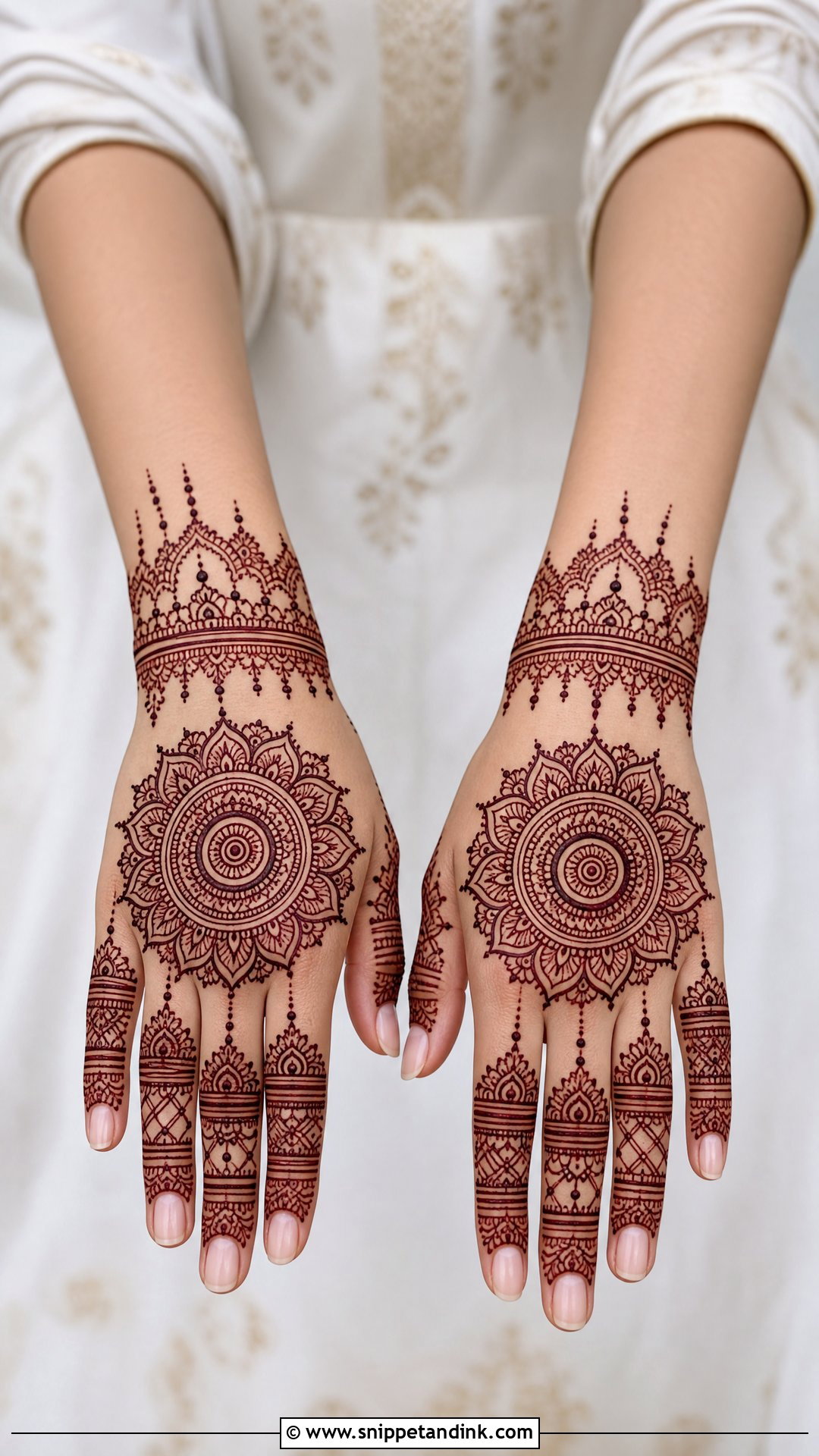
One round centrepiece, rings of dots, petals and leaves around it, detailed fingers and a slim wrist bracelet. A mandala gives symmetry without full-hand weight, and it can be small and quiet or large and intricate depending on your outfit. I mark the centre point on both hands before drawing, because matching mandalas is the fastest way to make a pair of hands look polished.


15. Rose Nikah Mehndi Design
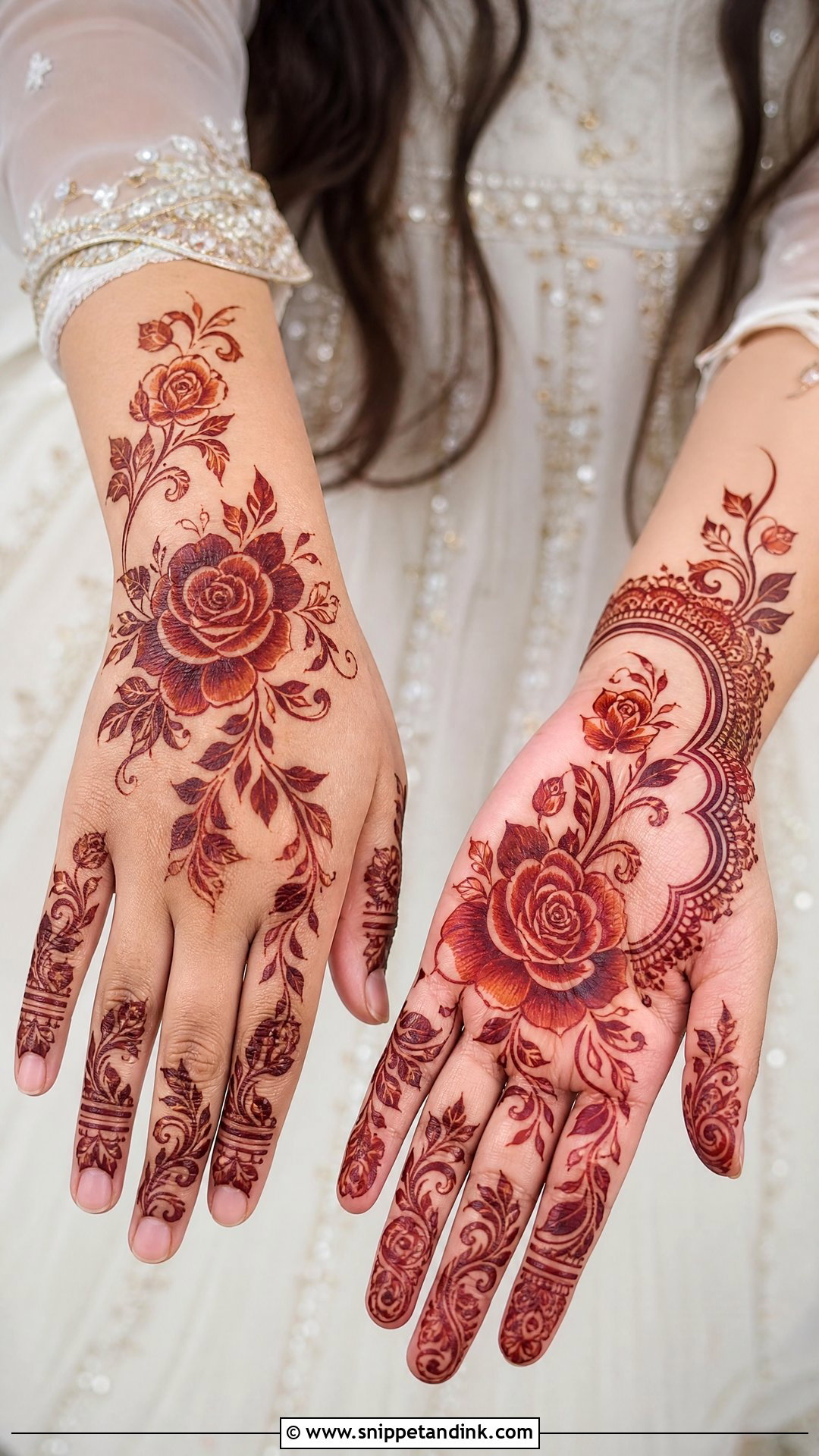
Roses read bigger and bolder in photos than in person, which is exactly why they’re useful. I draw a few large blooms with curved leaves and shaded petals, a trail from the wrist across the back of the hand, small buds on the fingers and perhaps a rose centre framed with paisley edges on the palm. The shading is done with lighter strokes inside each petal. Leave clean space around every bloom or the roses blur into one another.
16. Paisley Nikah Mehndi Design
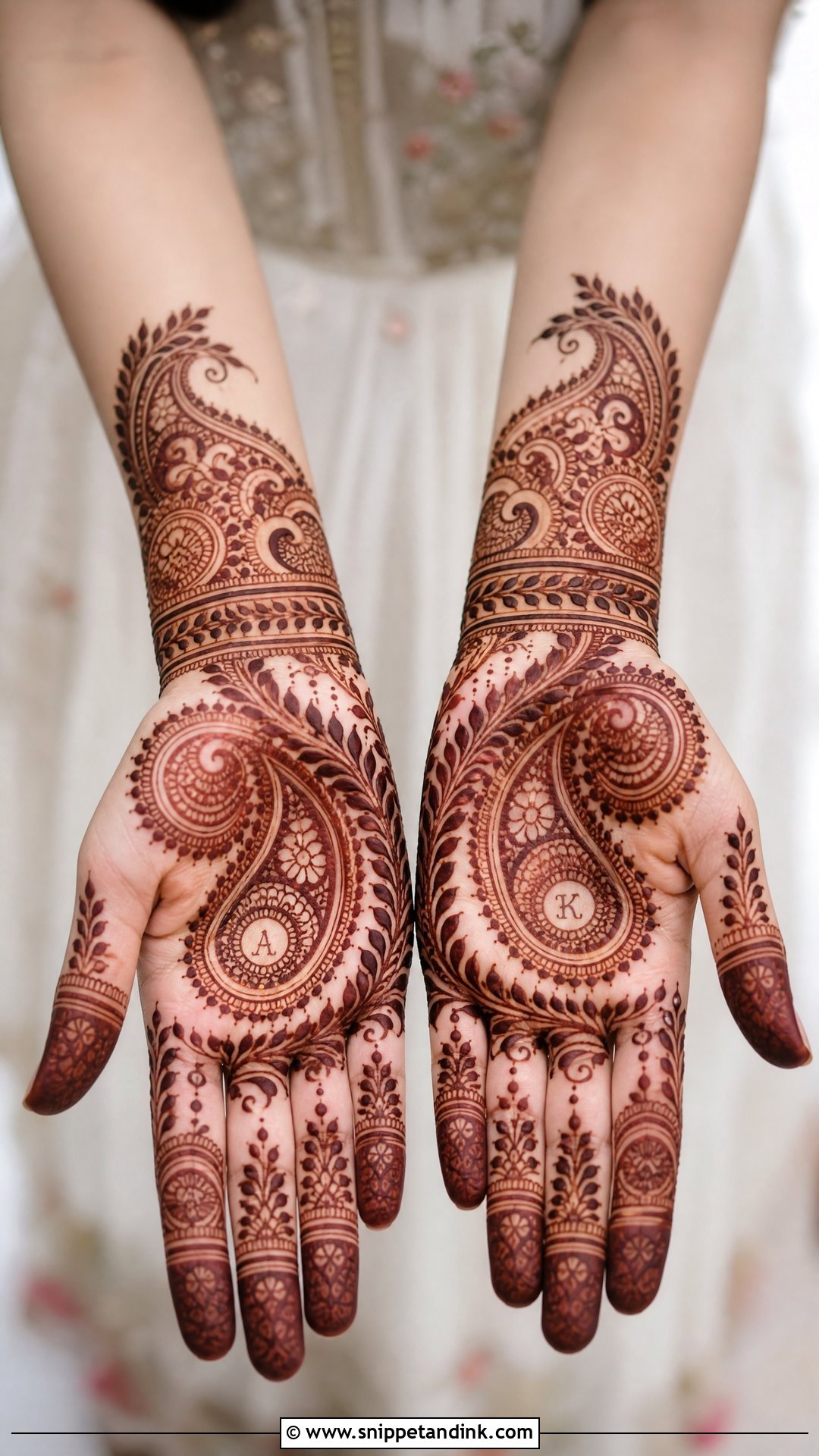
Paisleys make a hand look longer because of their curved, tapering shape. I put large ones on the palm, small chains at the wrist and fine leafy detail over the fingers, and they work in Indian, Pakistani or Indo-Arabic layouts. For a Nikah I go for medium coverage with clean outlines and light shading. Paisleys are also the easiest place to hide initials or a date; the inner curve gives the letters a natural frame.
17. Jaali Nikah Mehndi Design
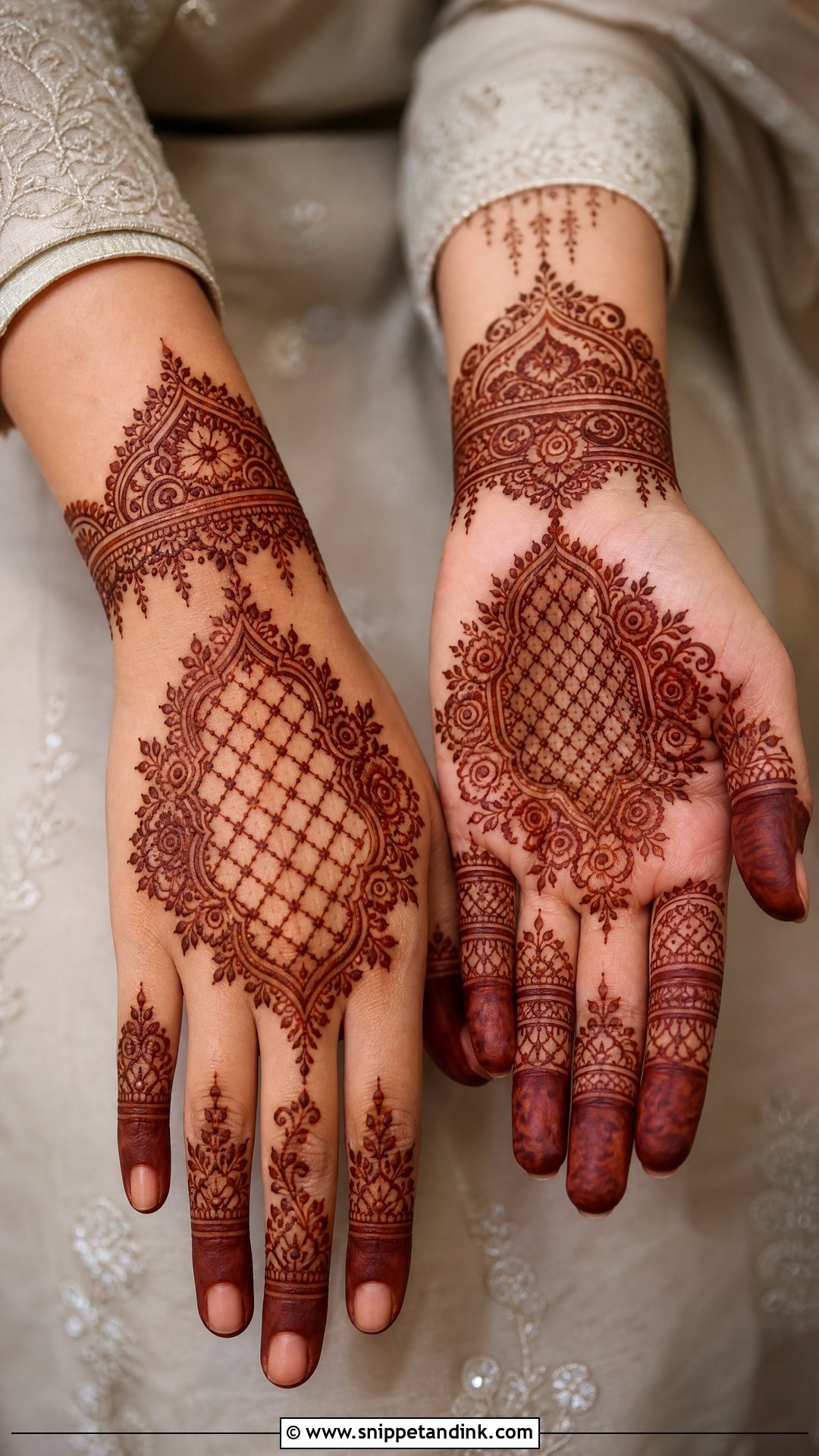
Jaali is a fine mesh that looks like lace on the skin. I use it in panels on the palm, back of the hand or wrist, framed with flowers, paisleys or leafy borders: between a mandala and the finger patterns on the back, or filling the gaps around a floral centre on the palm. The mesh must be even. Uneven gaps are obvious once the stain darkens, so this needs a fine cone tip and a well-strained, smooth paste.
18. Khafif Nikah Mehndi Design
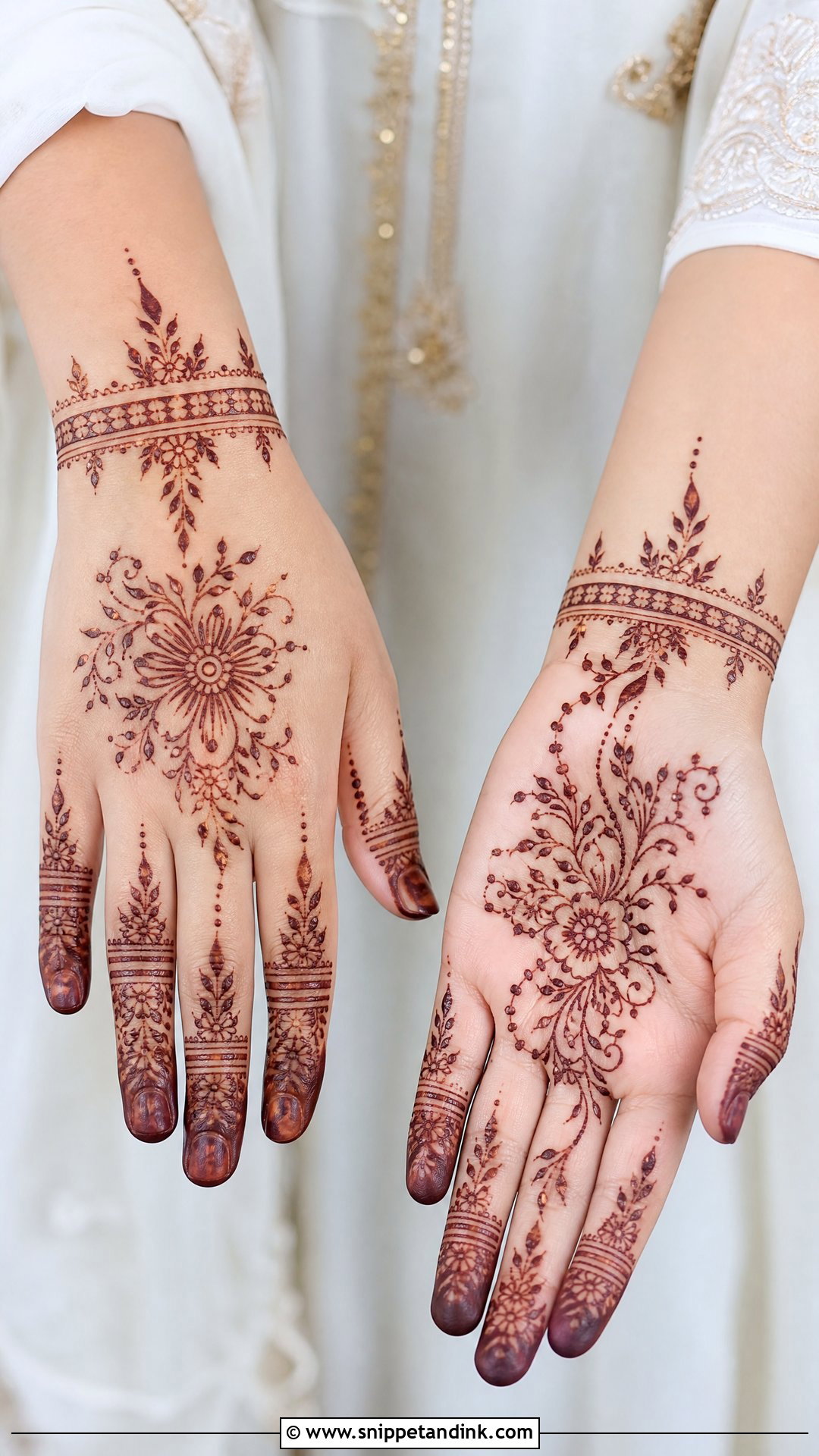
Khafif means light, and the style lives up to it: fine lines, delicate spacing, tiny florals, dots, vines and slim geometric borders from fingers to wrist. It’s airy, so it photographs well in daylight and suits a modern Nikah. This one needs a very steady hand, because there’s nowhere for a wobble to hide. Keep both hands balanced and avoid thick outlines, which would undo the whole point of the style.
19. Gulf Nikah Mehndi Design
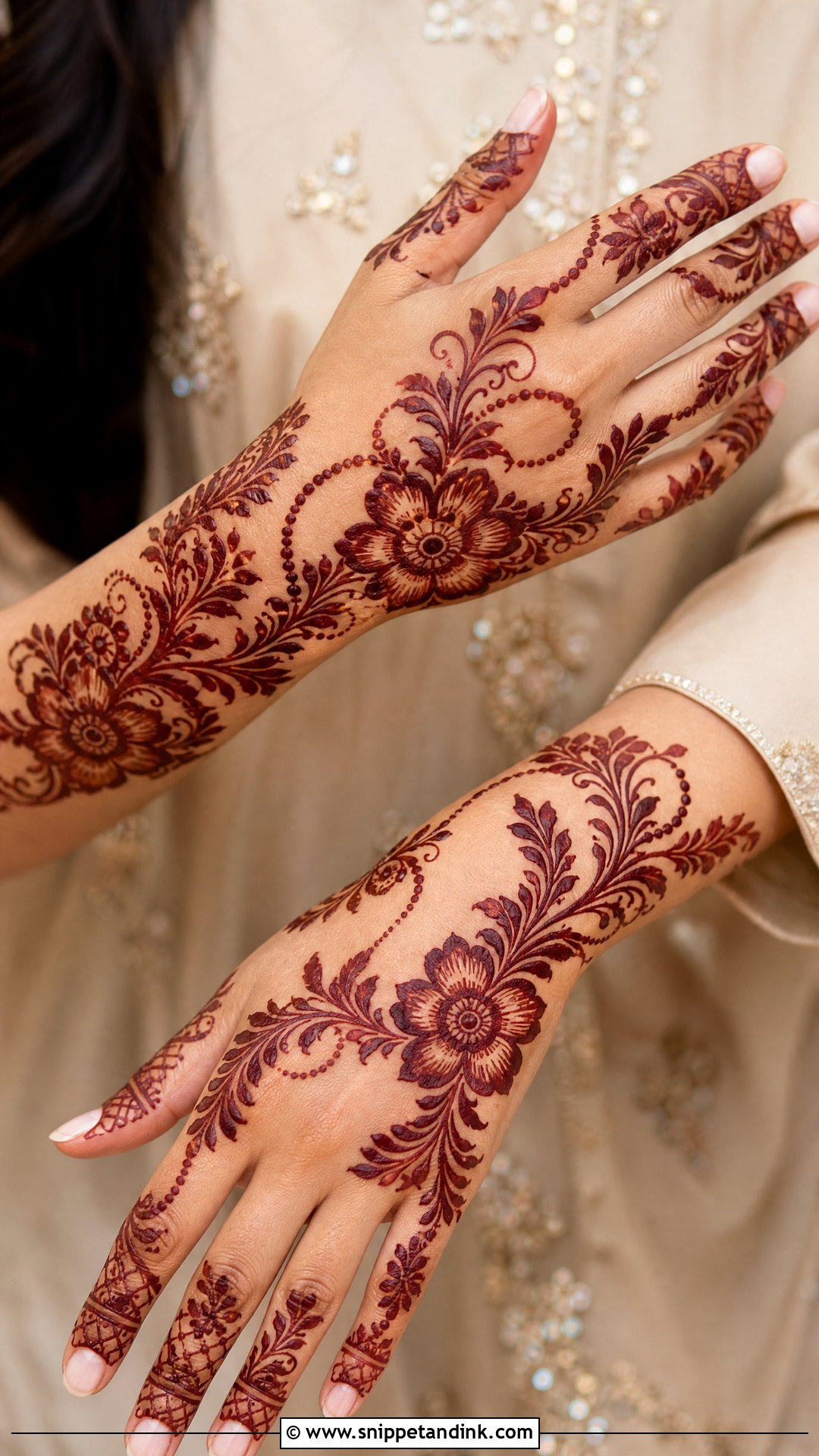
Gulf or Khaleeji-inspired mehndi uses bold florals, flowing leaves and open coverage. It’s more spacious than Indian bridal work but more dramatic than minimal henna: a large flower near the wrist, vines travelling toward the fingers, fingertips partly filled or banded. It suits kaftans, abayas and modest gowns well. Gulf artists often shade petals with a thinner paste, which gives depth against the bold outline.
20. Moroccan Nikah Mehndi Design
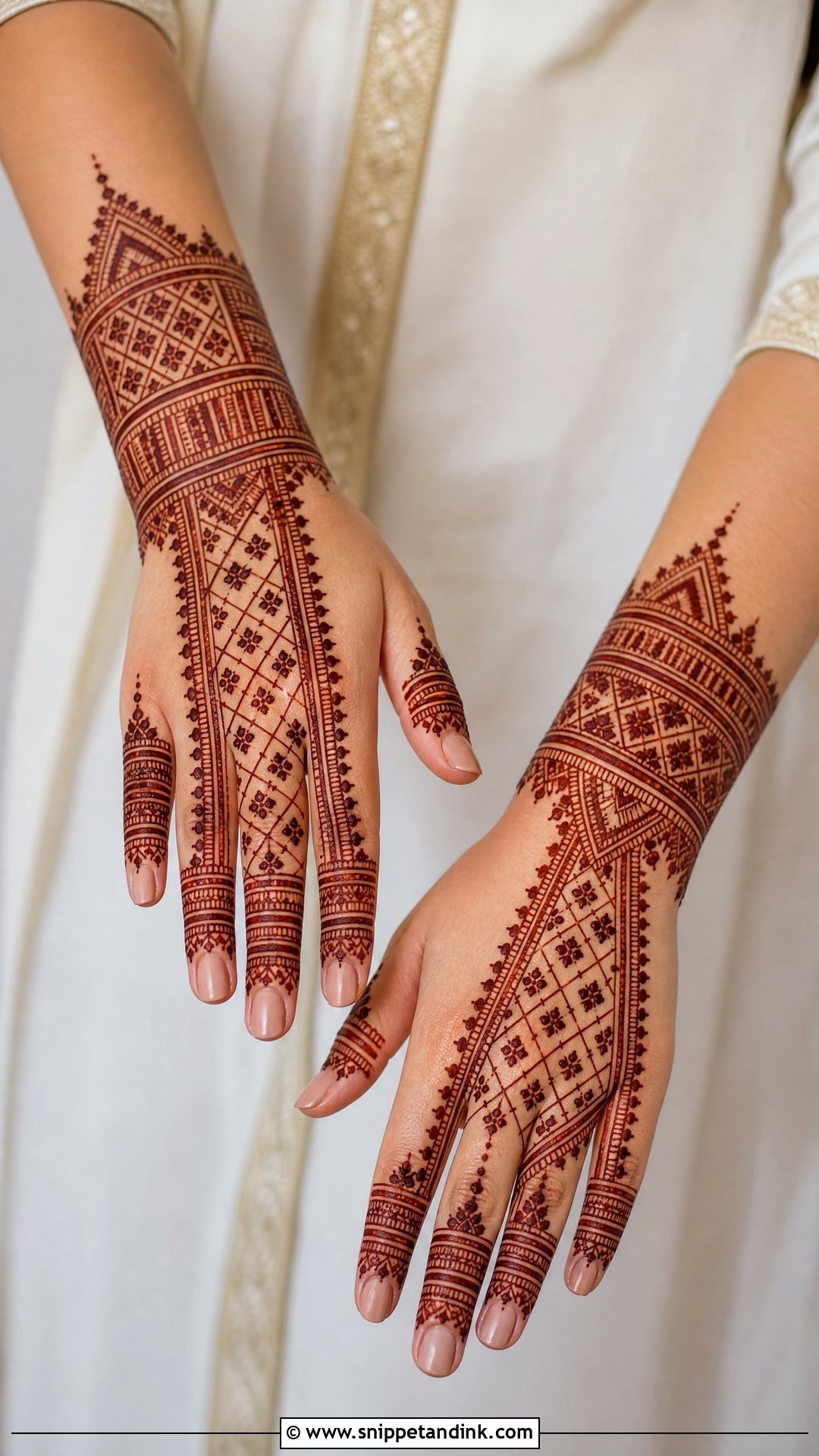
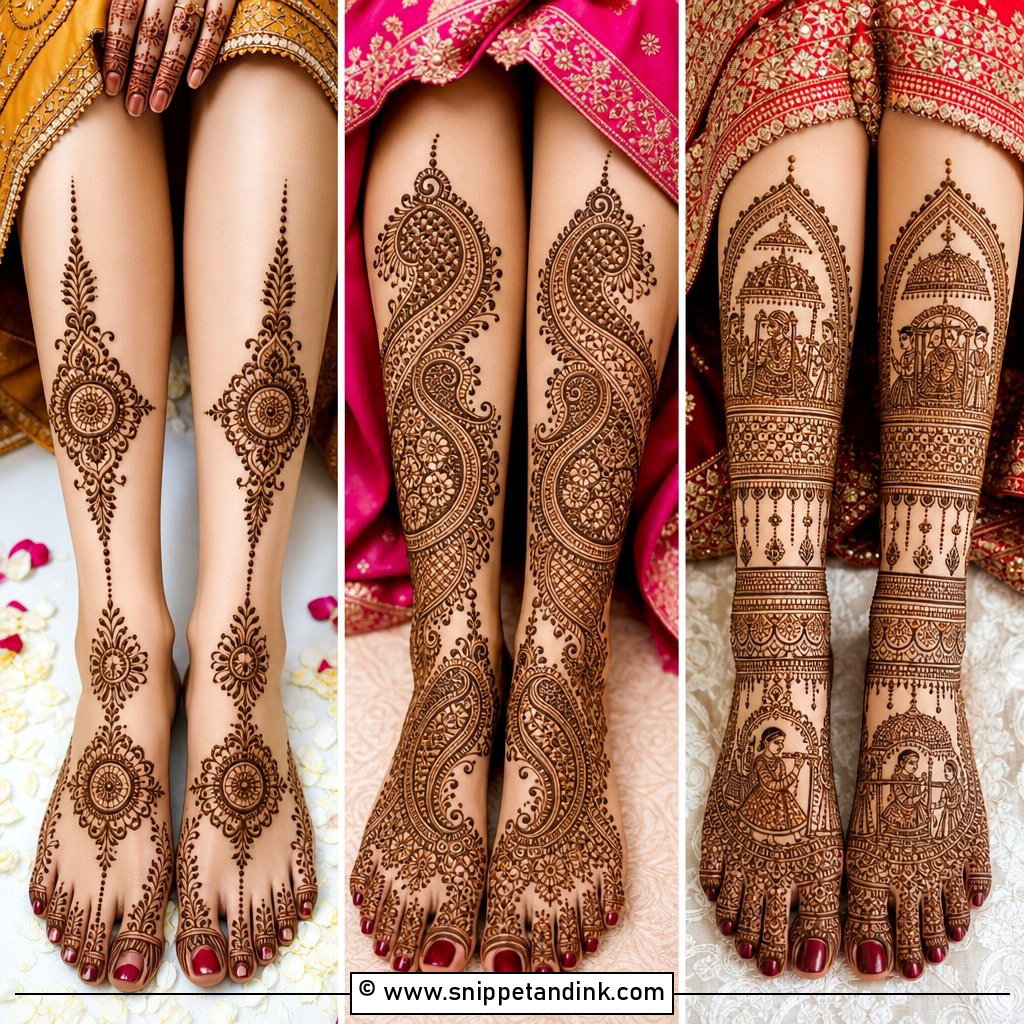
Moroccan Nikah mehndi design swaps flowers for geometry: diamonds, triangles, lines, grids, dots and symmetrical bands across the palm and back of the hand. Done with clean spacing, it looks modern and modest at once. For a bridal version I add a wrist cuff and detailed finger panels. Keep the motifs related; mixing geometry with random florals breaks the order that makes this style work. It pairs nicely with simple outfits, structured sleeves and gold or silver jewelry.
21. Finger Nikah Mehndi Design
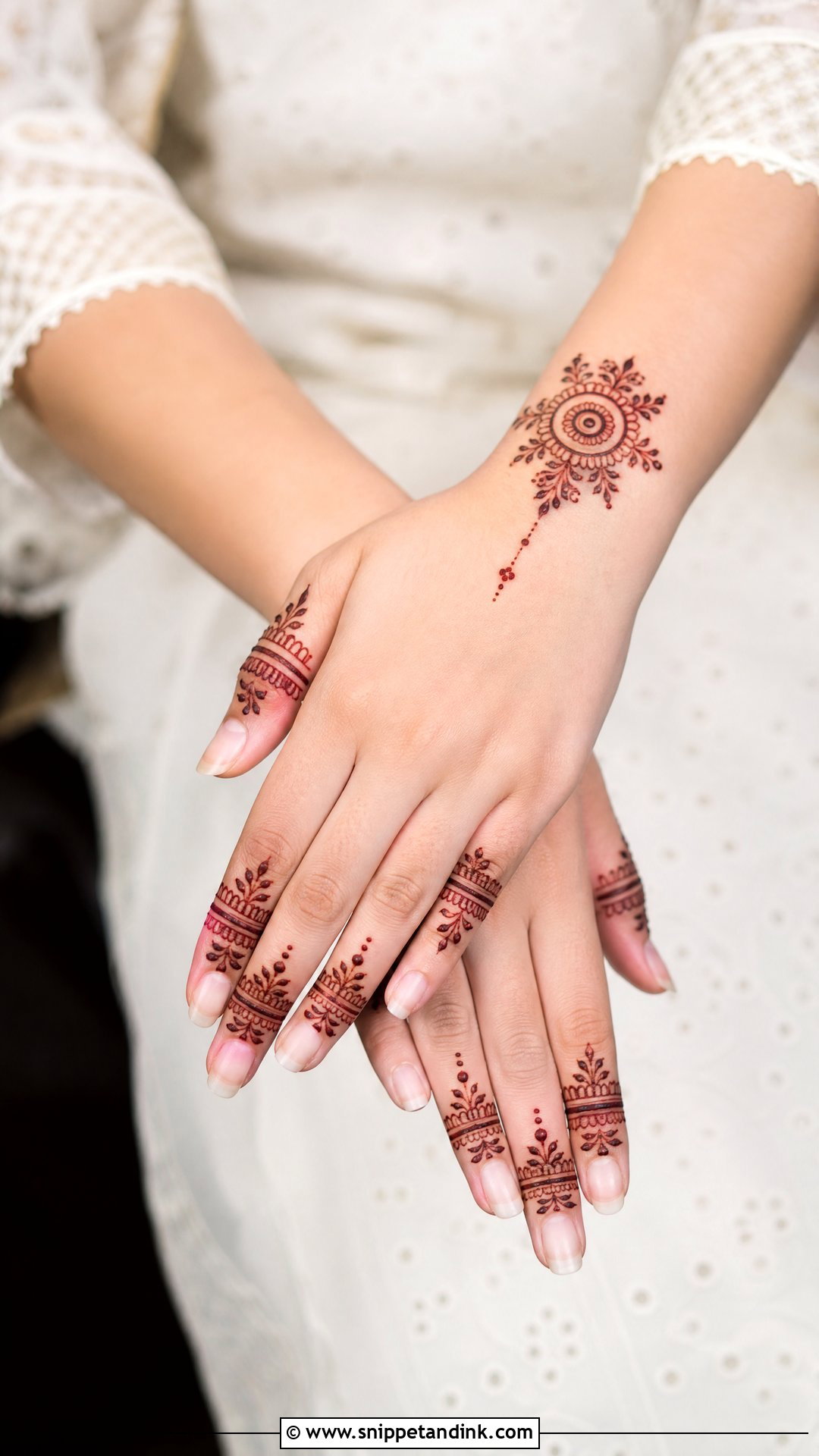
Finger-focused designs keep the centre of the hand mostly open and put the work on every finger and the sides of the hand: bands, dots, leaves, tiny florals and net. It reads like jewelry, especially beside rings and manicured nails. If you’re having a manicure, book it before the mehndi session, not after. A small mandala or vine near the wrist finishes it so it doesn’t look like the session stopped halfway.
22. Bracelet Nikah Mehndi Design
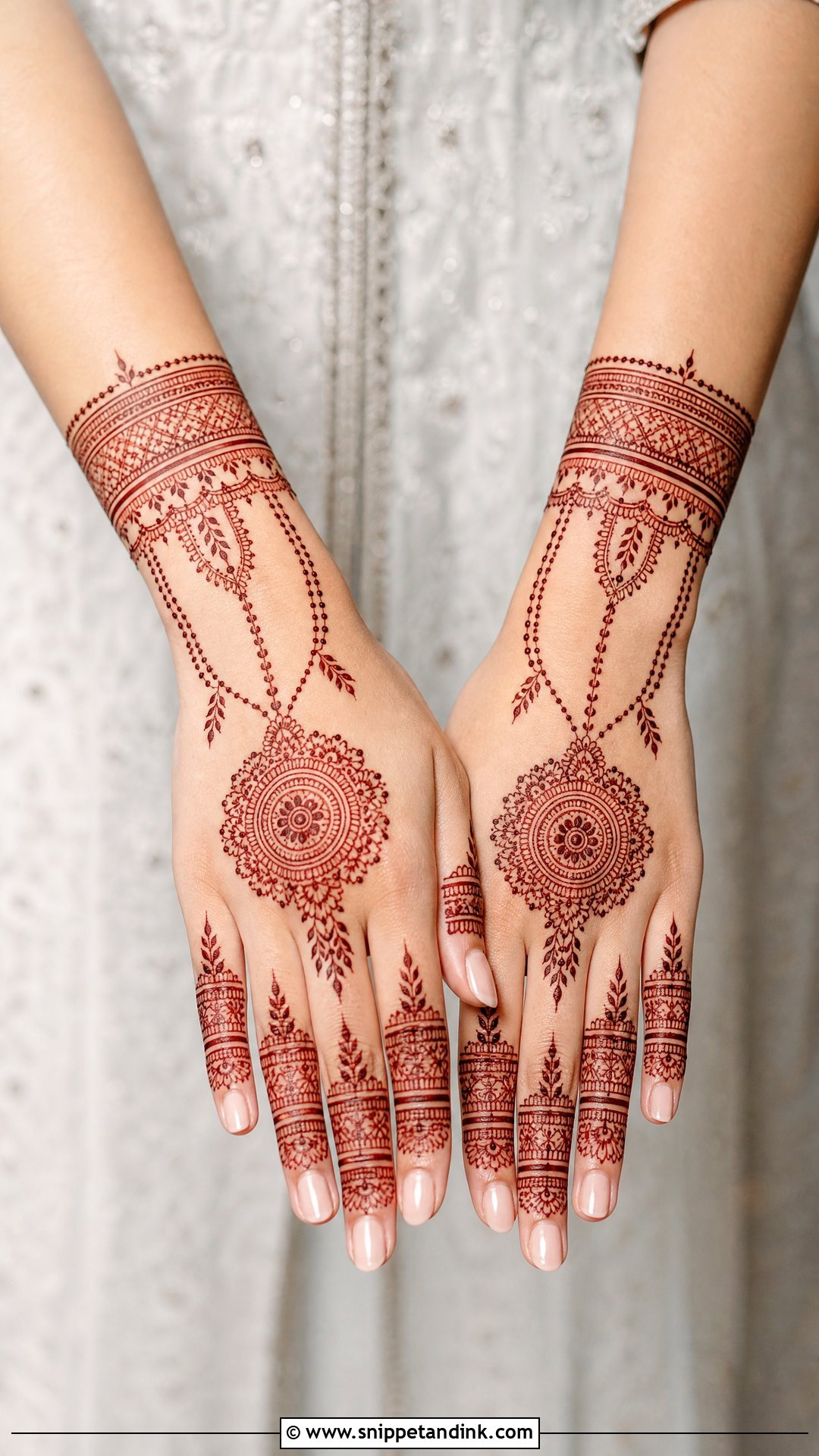
A bracelet design draws a cuff or bangle-style band around the wrist and links it to the fingers with chains, dots, florals or leafy strings, often with a small mandala on the back of the hand like a haath phool. It works alongside real jewelry rather than competing with it. I’d keep the band detailed but not too thick. I also check where your actual bangles sit, so the henna cuff peeks out instead of hiding under them.
23. White Nikah Mehndi Design
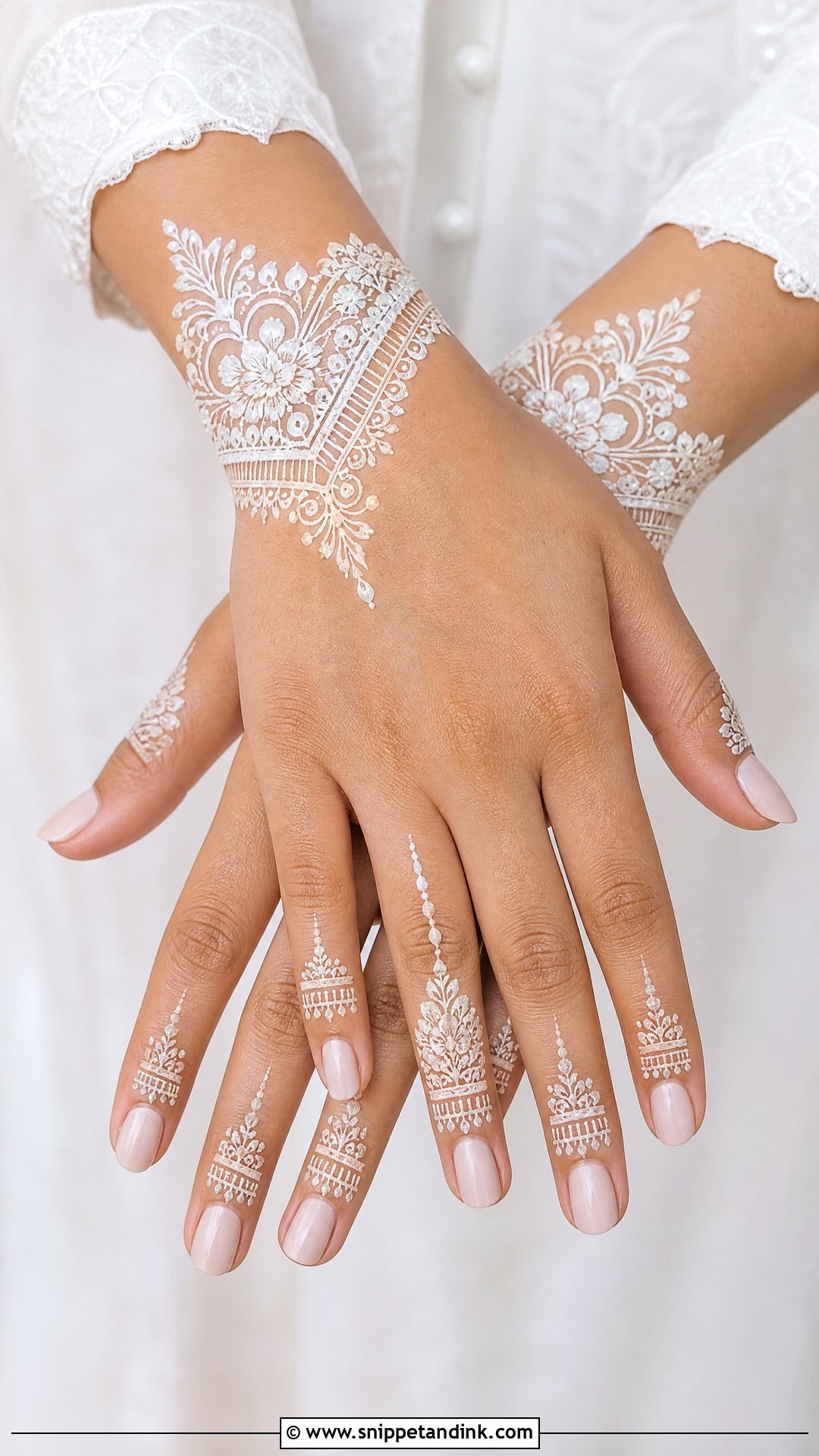
White mehndi isn’t henna. It’s a skin-safe body paint or adhesive applied in henna-style patterns, sometimes with glitter, and it sits on top of the skin rather than staining it. That means it looks bright immediately and suits ivory, white, silver or pastel outfits, but it lasts only a day or so and can rub off on fabric. Patch test it first, since the adhesive can irritate sensitive skin. I’d use it for a fashion-led ceremony look, not as your only bridal henna, and see the note on prayer below.
24. Glitter Nikah Mehndi Design
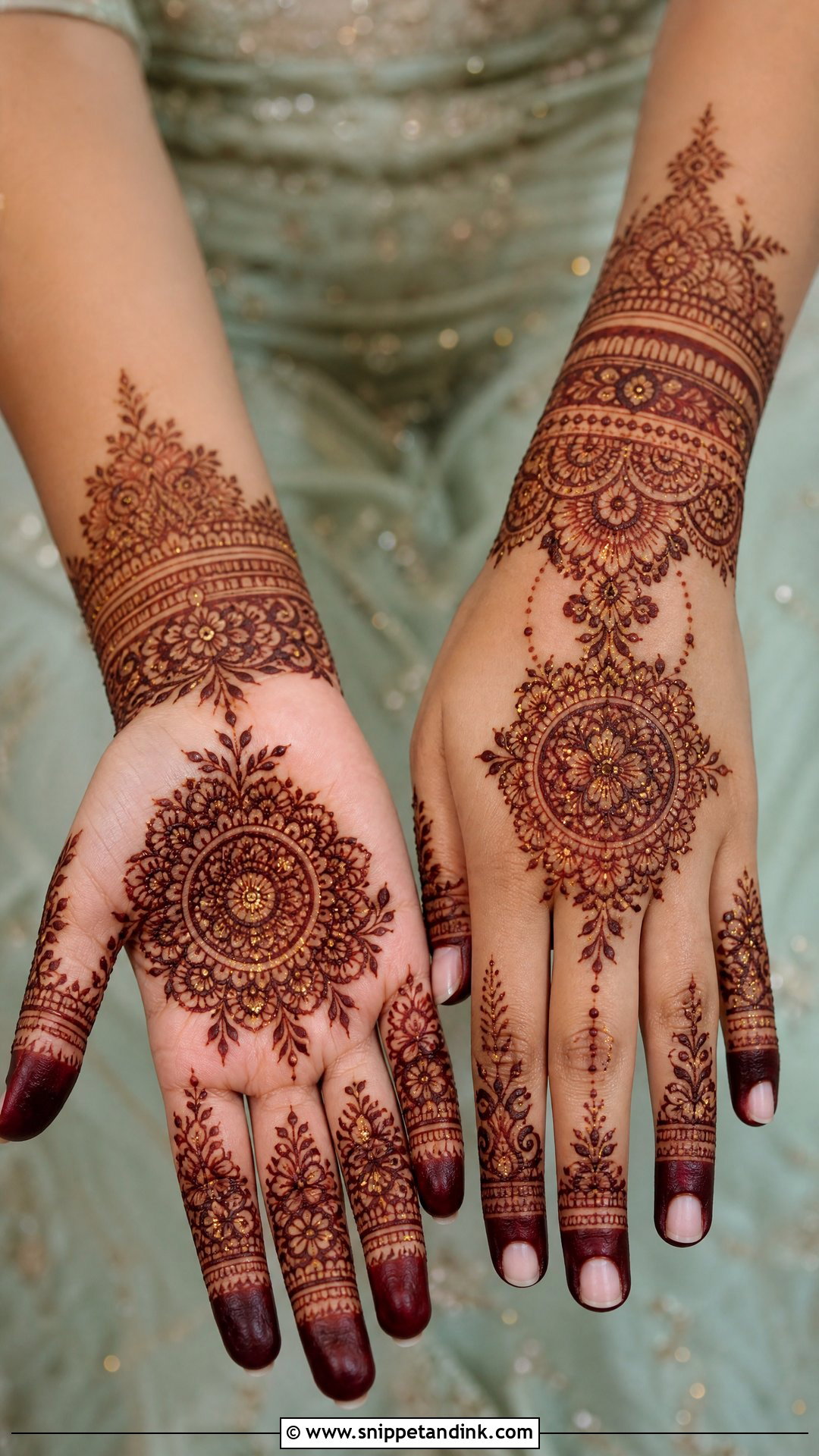
Glitter works as an accent on natural henna, not a replacement. I apply the henna first, let the stain develop, then add a little cosmetic-grade glitter with a skin-safe adhesive around florals, mandalas or the wrist border. Keep it soft; too much sparkle hides the line work you paid for. Gold, champagne and rose gold sit best with bridal jewelry. It suits an evening Nikah more than a daytime one, and craft glitter should never go near skin.
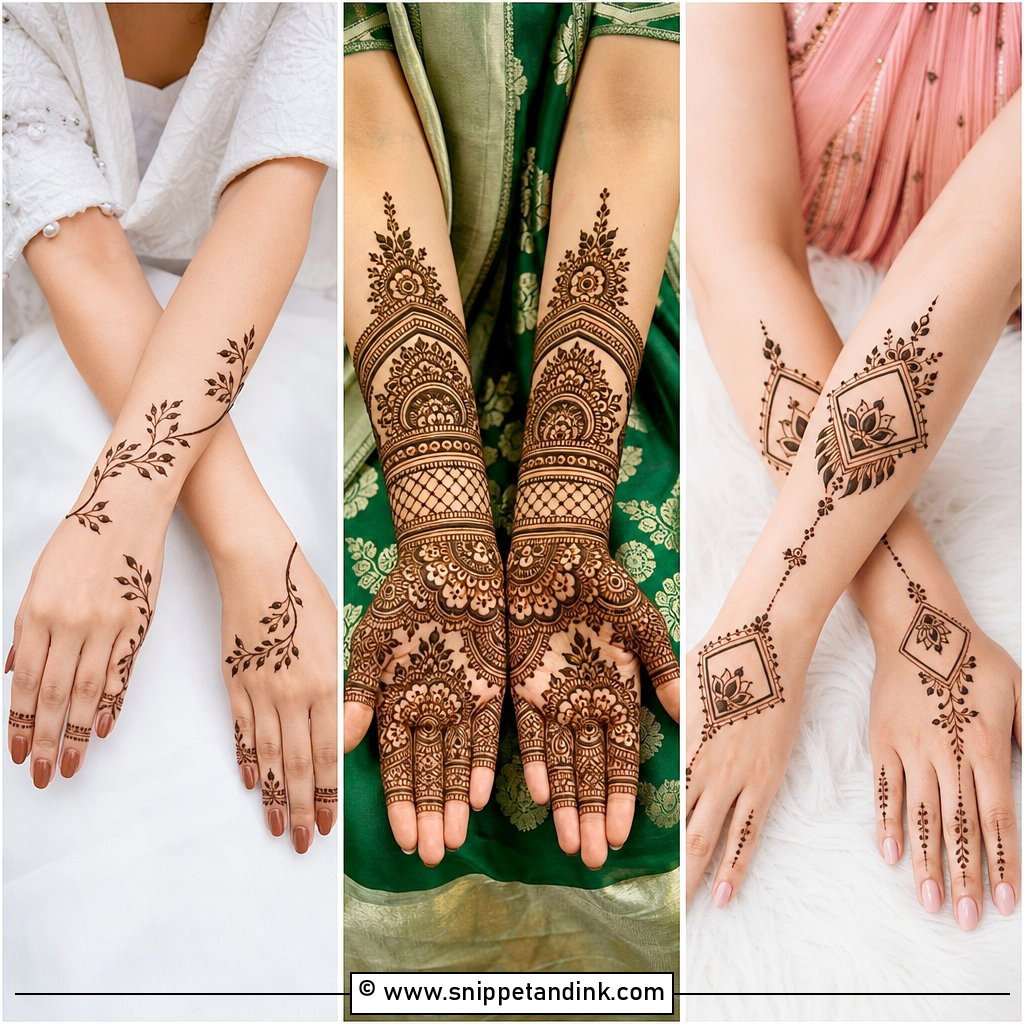
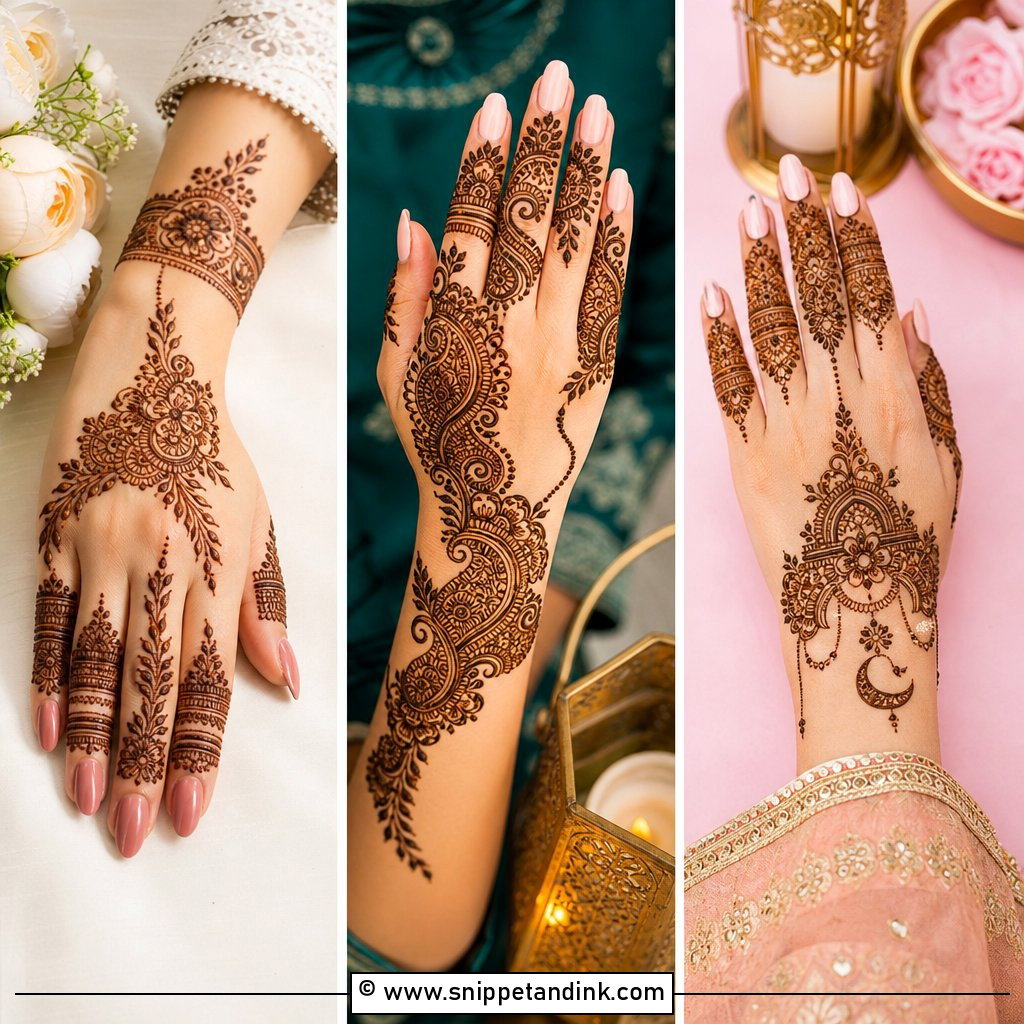
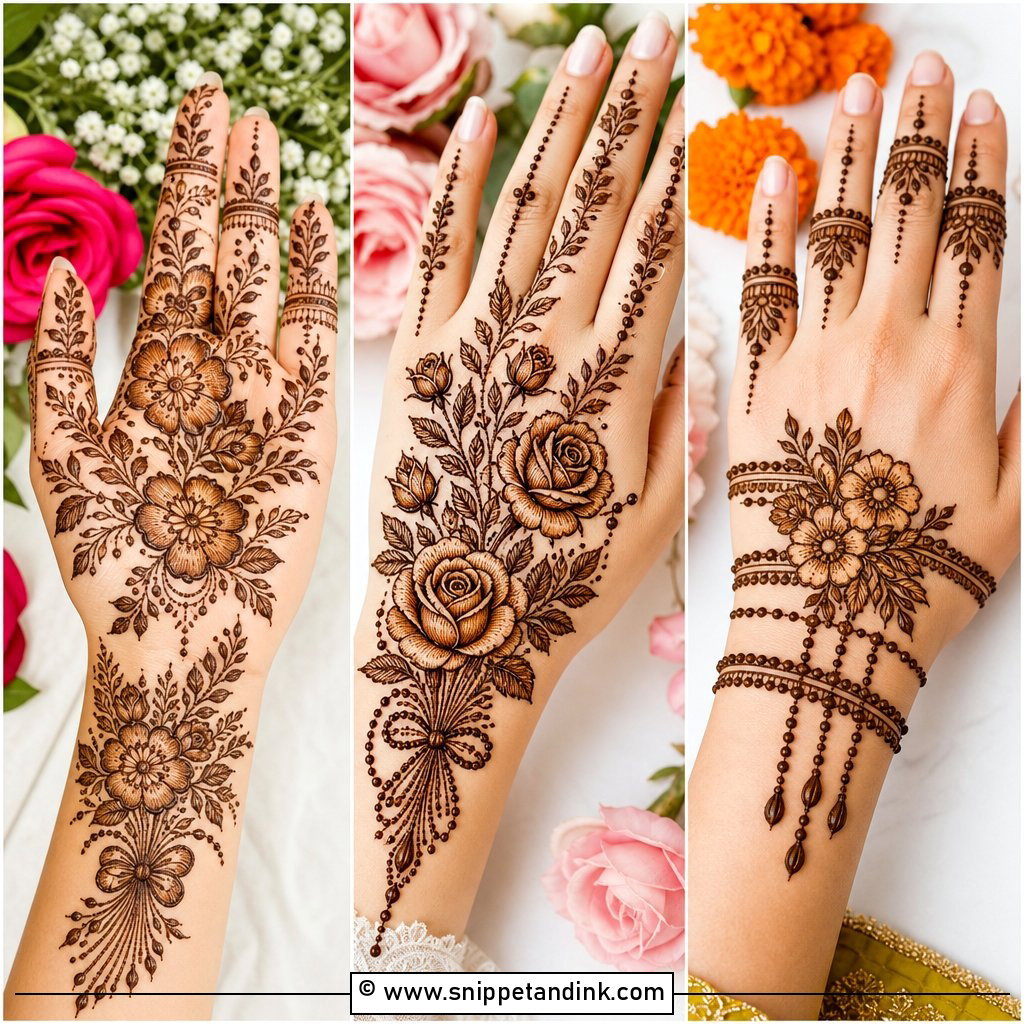
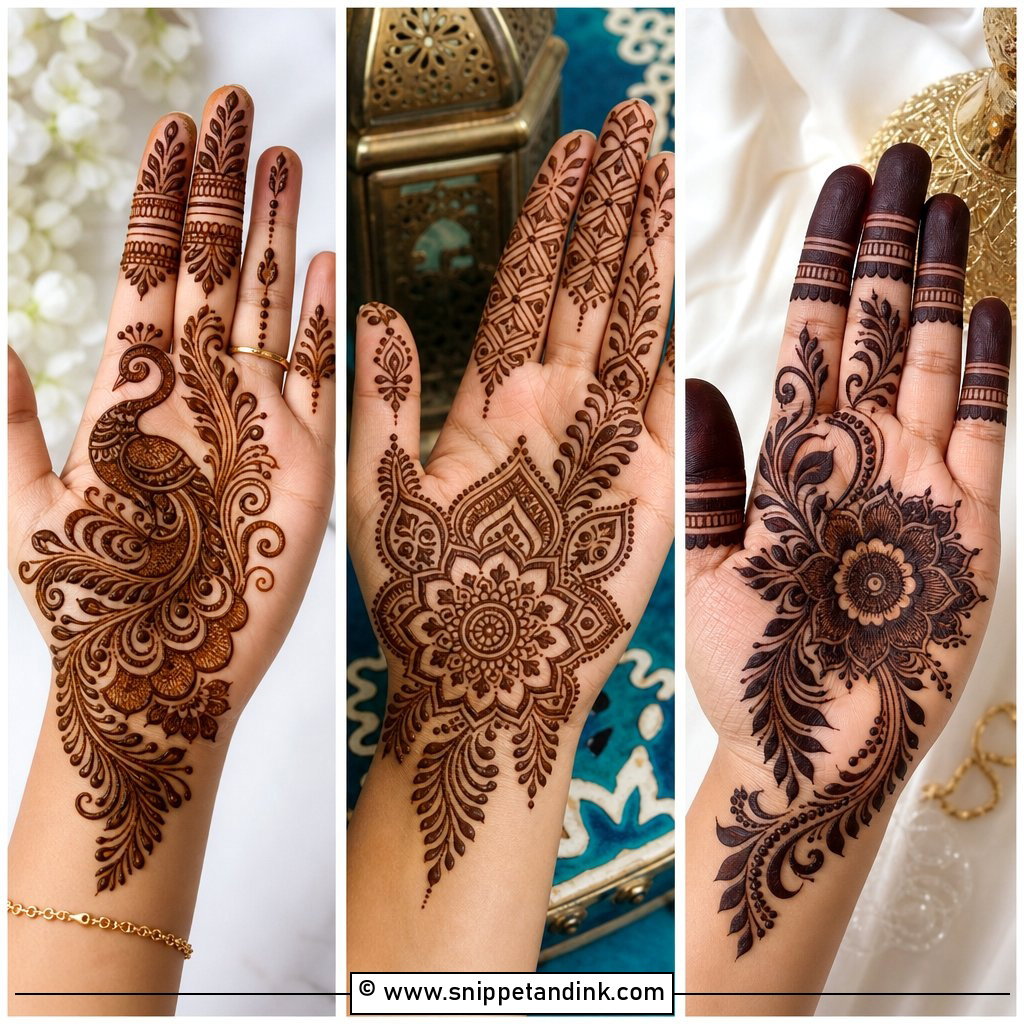
25. Personalized Nikah Mehndi Design
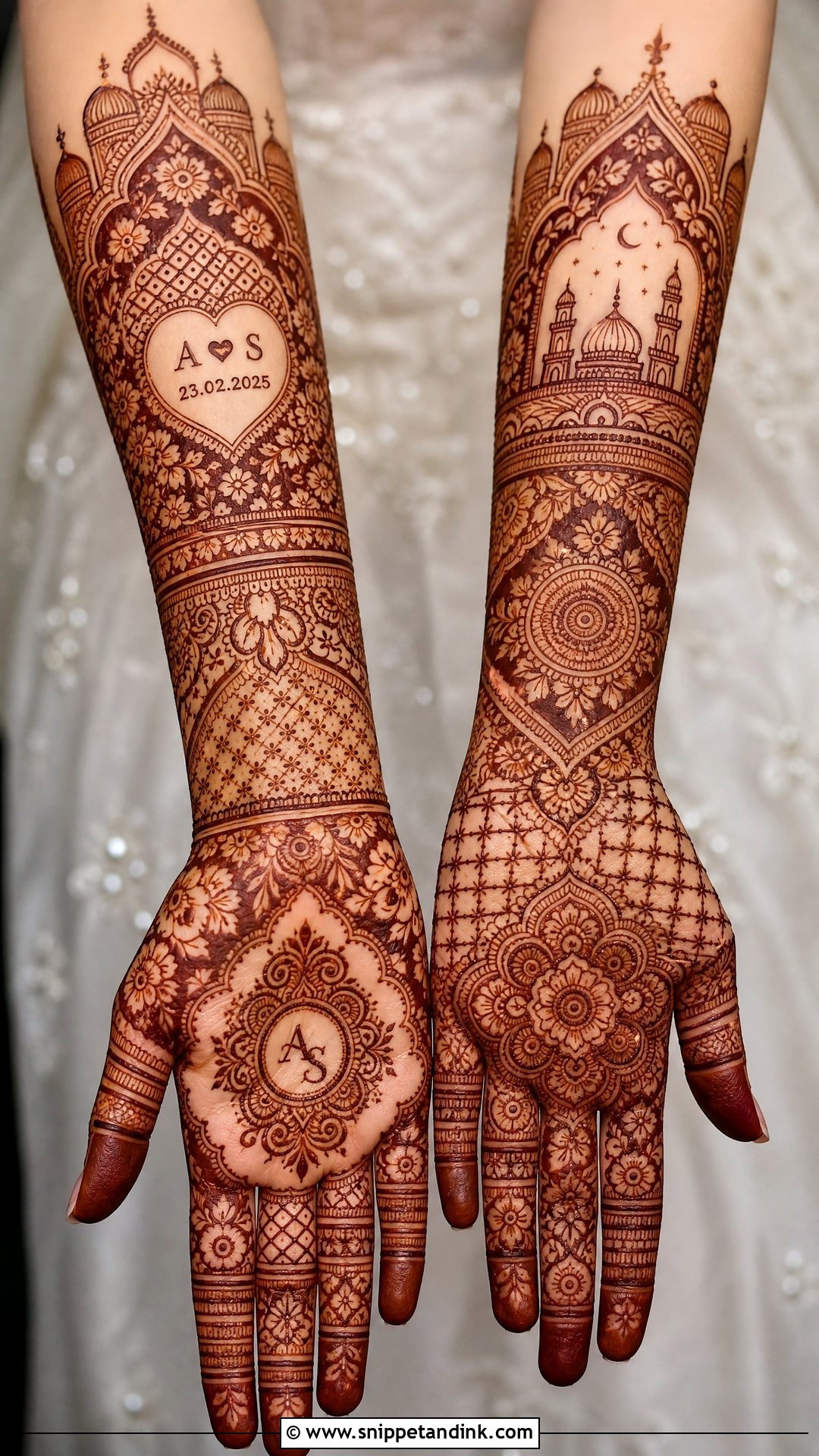
Personal details turn the design into a keepsake: initials, the Nikah date, a tiny heart, a small mosque-inspired arch or a hidden name in paisleys, florals or jaali. Any style can carry them. I keep them subtle, initials inside a mandala, the date along a wrist border, a name in a leafy trail. Give me the exact spelling and date in writing before we start, in whichever script you want it drawn.
Sisters, Mothers and a Queue of Hands Before the Nikah
At most Nikah mehndi gatherings, the bride isn’t the only one being done. Sisters, cousins, both mothers and friends all want a little henna, and if it isn’t planned, the bride ends up waiting while the cones run out.
How I schedule a family session
- The bride goes first, while the paste is freshest and nobody is rushing.
- Give me a headcount and the design level for each person: palm only, one hand or both hands.
- Guests get quick designs, usually a palm motif or a back-hand trail that dries fast, so the queue keeps moving.
- For a large family, a second artist for guests is worth it. It keeps the bride’s design from being squeezed.
Little ones love joining in. I keep children to a tiny design on one palm and use only natural henna, never chemical cones. Anyone with sensitive skin or allergies should mention it before I start, not after the paste is already on.
A Nikah Hand That Matches the Room
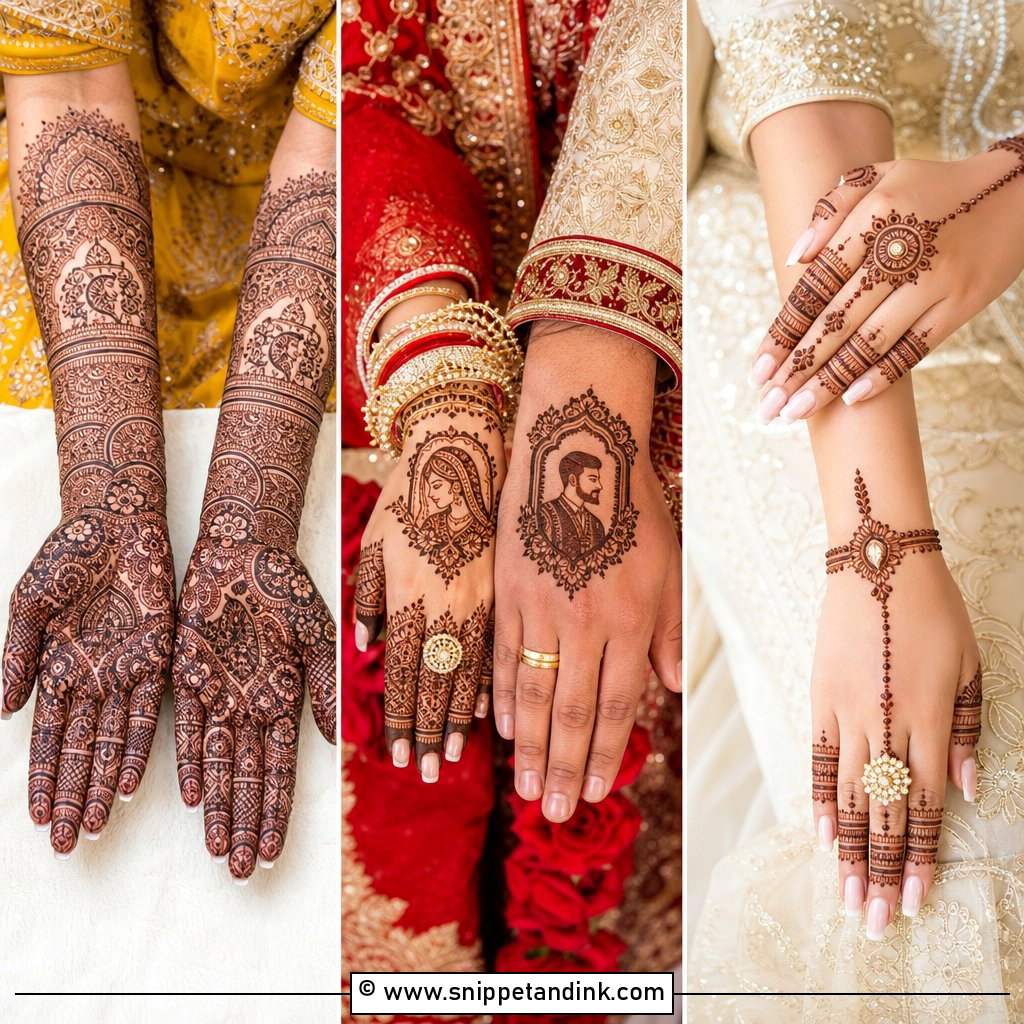
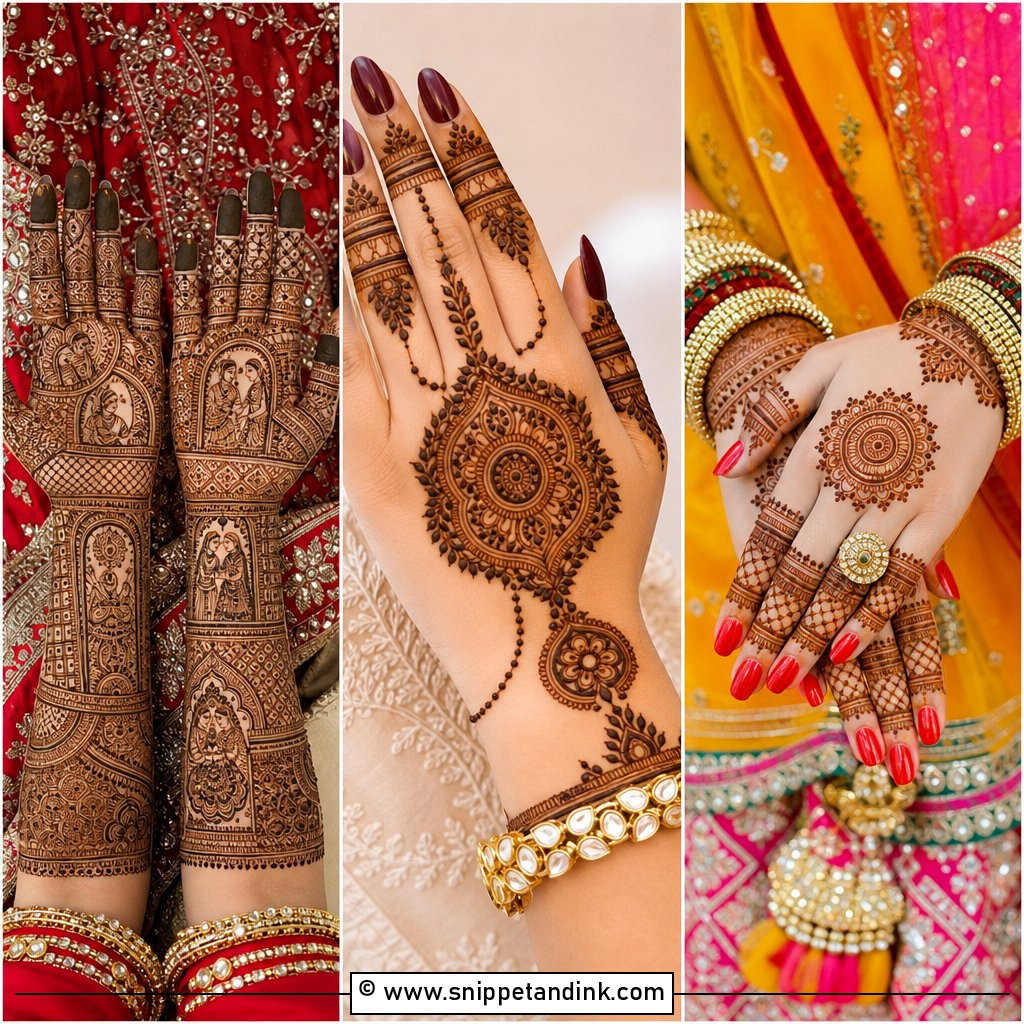
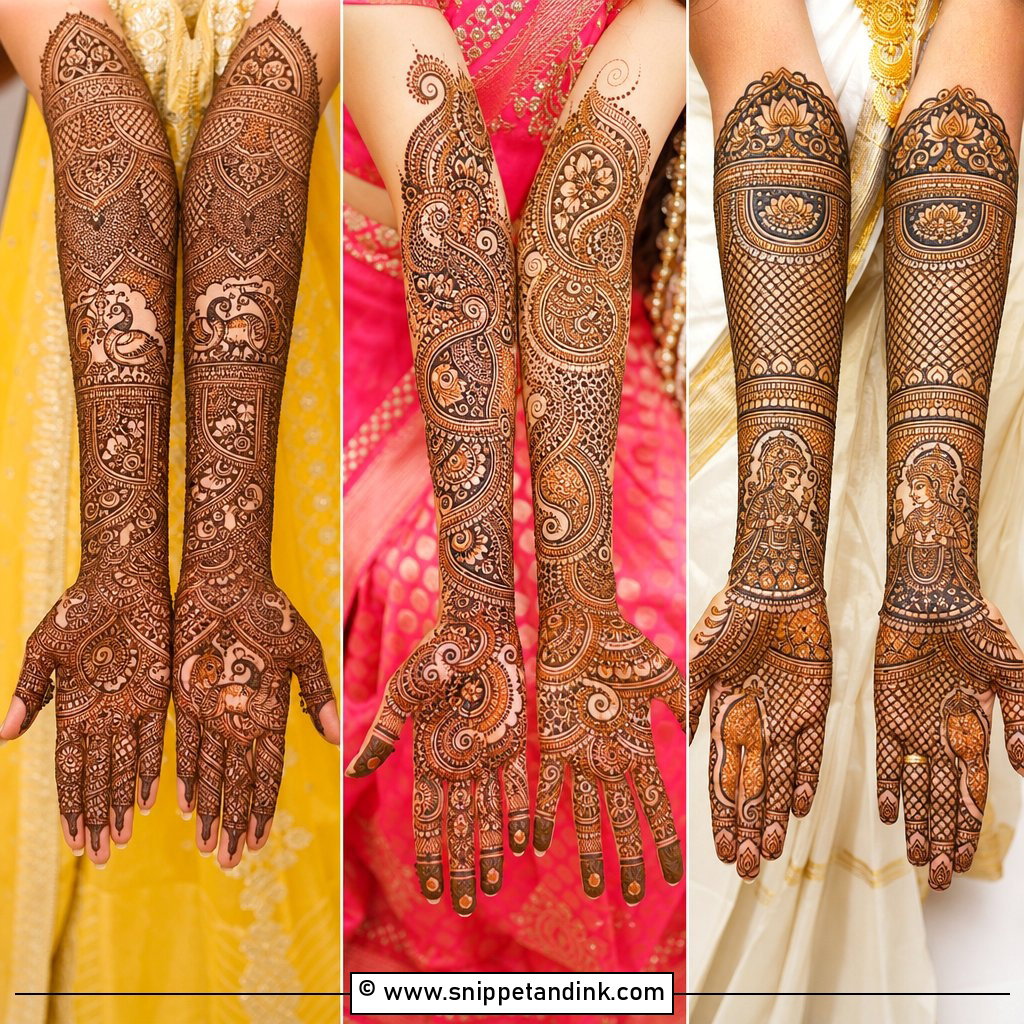
Nikah mehndi should suit the ceremony you’re actually having. Full traditional henna, simple Arabic trails, minimal finger work and modern back-hand patterns all have a place; the right one fits your outfit, jewelry, setting and how long you can sit. An intimate Nikah usually looks best with cleaner spacing and softer motifs, while a large event can carry fuller detail. Book an artist whose portfolio shows the style you want, patch test if your skin is sensitive, and leave a day or two for the stain to deepen before the ceremony.
You'll Like These Ideas:






Leave a Reply