
Most of the henna I apply for festivals and family functions goes on the back of the hand, and there’s a practical reason: it’s the side people see when you’re talking, eating or holding a cup. It’s also a generous surface, wide enough for an Arabic trail, a mandala, a bracelet or modern finger-focused henna without crowding. The designs here suit Eid, Diwali, weddings, school events and quieter celebrations, and many of them can be adapted for short fingers, long hands or a minimal taste. Where it helps, I’ve explained how I’d adjust each one.
How the Stain Reads on Fair, Medium and Deep Skin
Henna doesn’t sit on top of the skin like paint; it stains the outer layer, so the colour you end up with depends partly on your own skin tone. The back of the hand is usually a little darker than the palm on most people, which changes how a design reads there.
- Fair skin shows the whole journey: bright orange when the paste comes off, then red, then a warm brown. Fine lines are visible even when the stain is light.
- Medium skin gives a rich reddish brown with good contrast. Almost any design works.
- Deep skin often shows a deep brown that is lower in contrast. Fine filling and tiny dots can disappear, while bold outlines and generous open spaces stay clear.
So on deeper skin I draw thicker outlines, leave larger gaps and choose motifs with strong silhouettes, such as Gulf florals, big paisleys or a clear mandala. The stain is just as dark; it simply needs more contrast built into the design to be seen.
1. Simple Arabic Backhand Mehndi Design
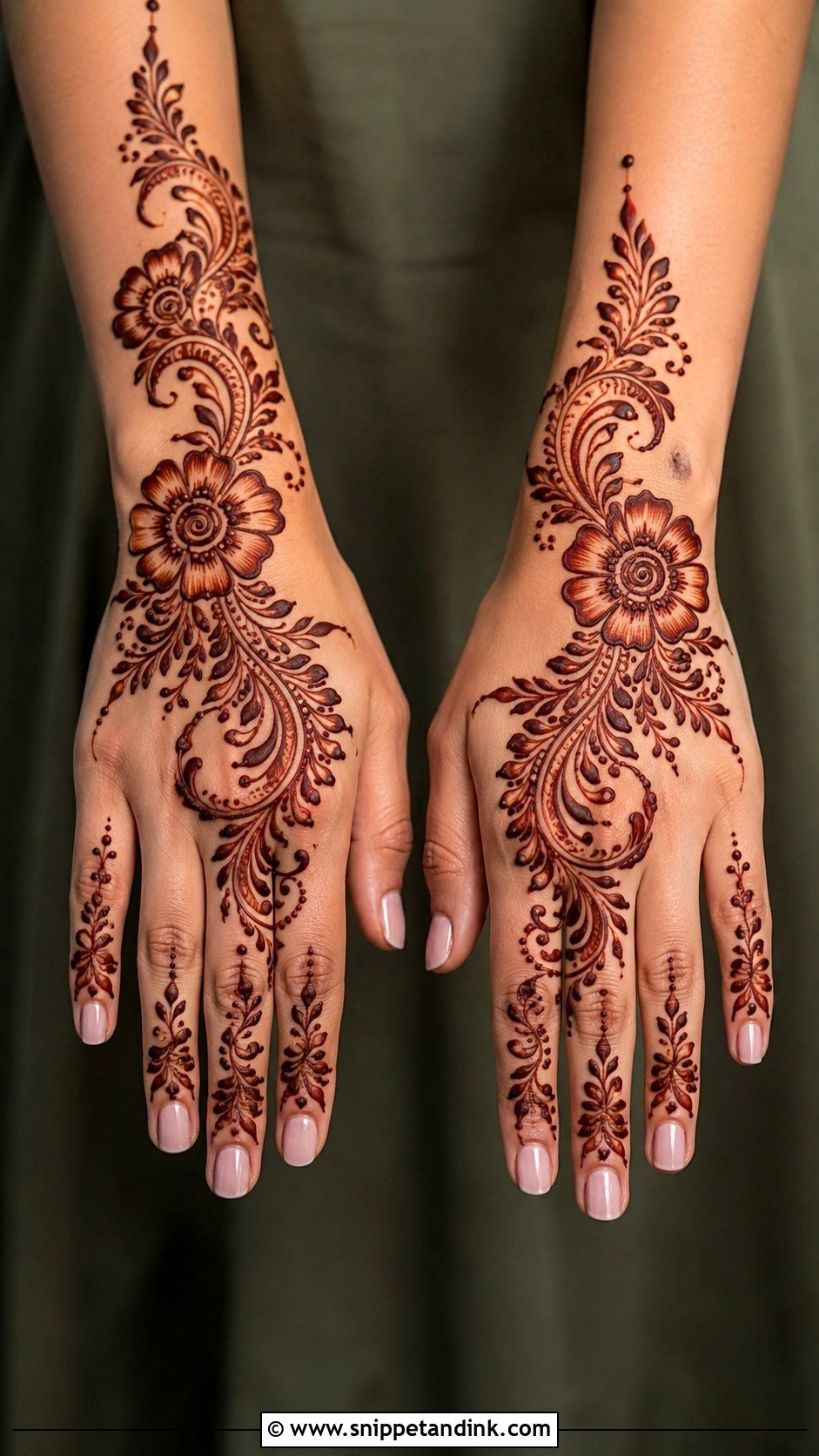
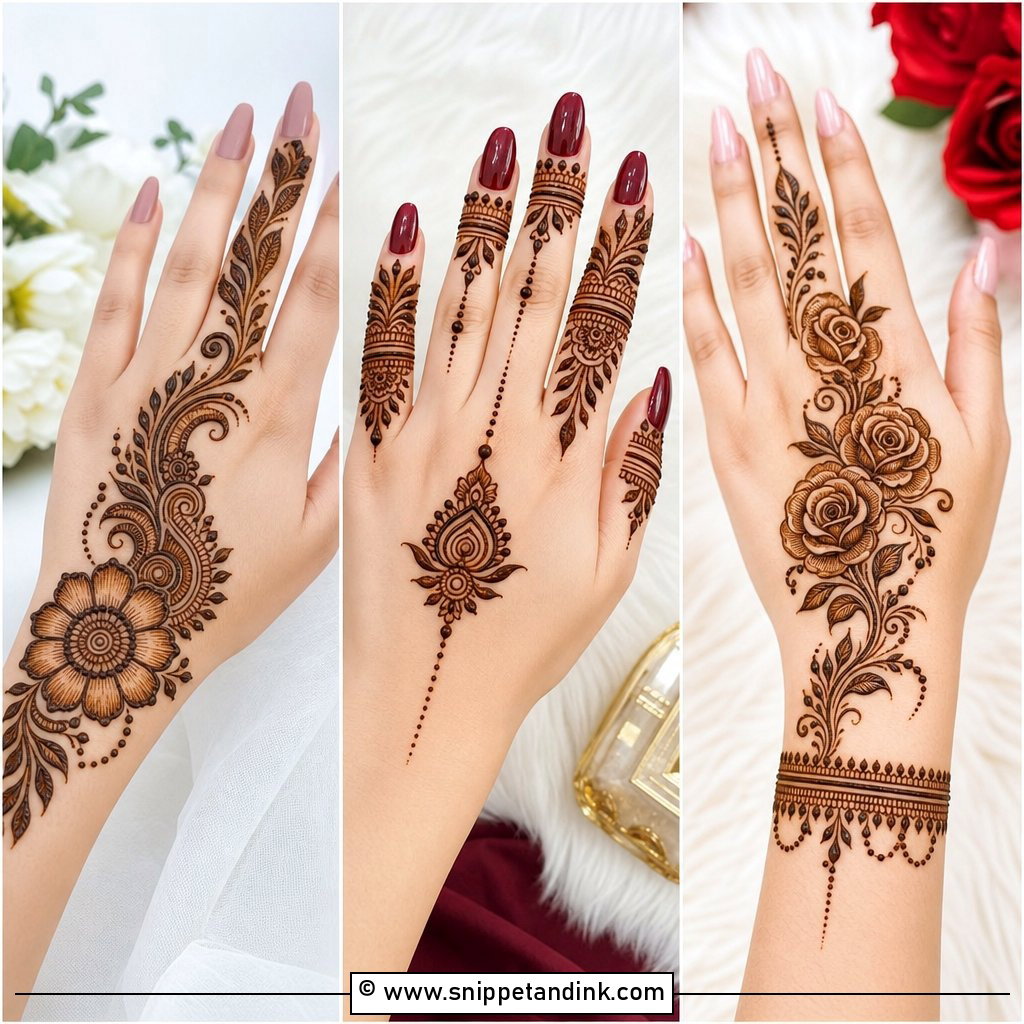
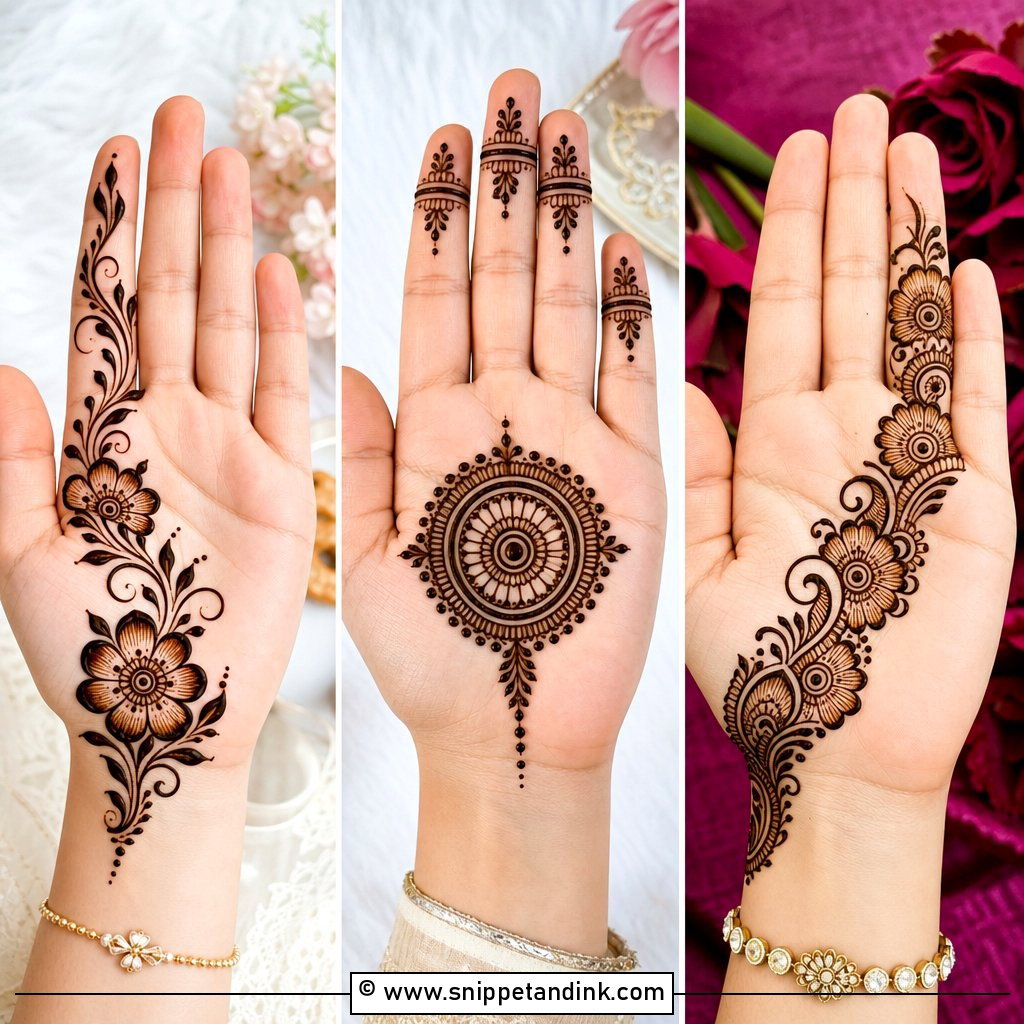
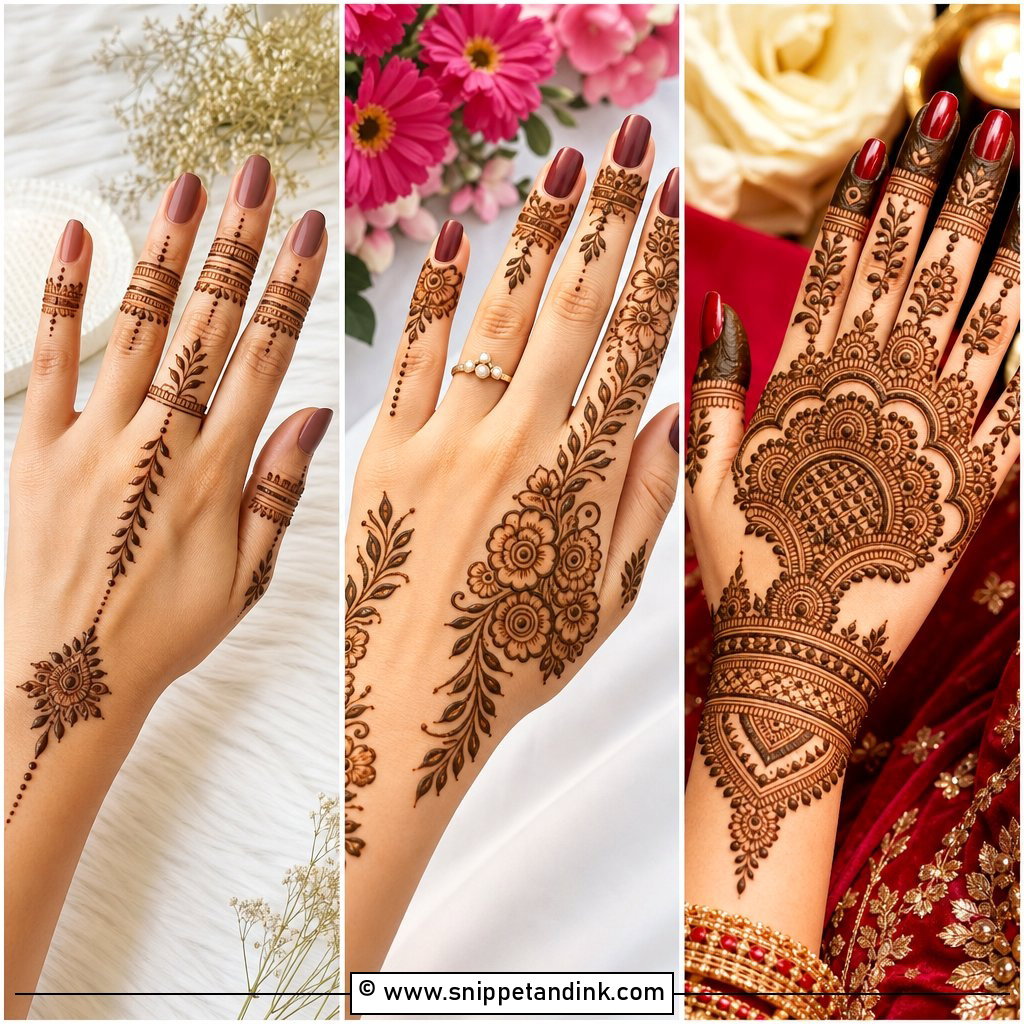
Begin at the wrist, travel diagonally, end on the index or middle finger. Bold flowers, curved leaves, a paisley or two and dotted accents make up the trail, and the skin around it stays open. That openness is the reason it dries quickly and why I suggest it for beginners and wedding guests alike. If your hand is broad, ending the trail on the middle finger keeps it centred; on a narrow hand, the index finger works better.
2. Simple Floral Backhand Mehndi Design
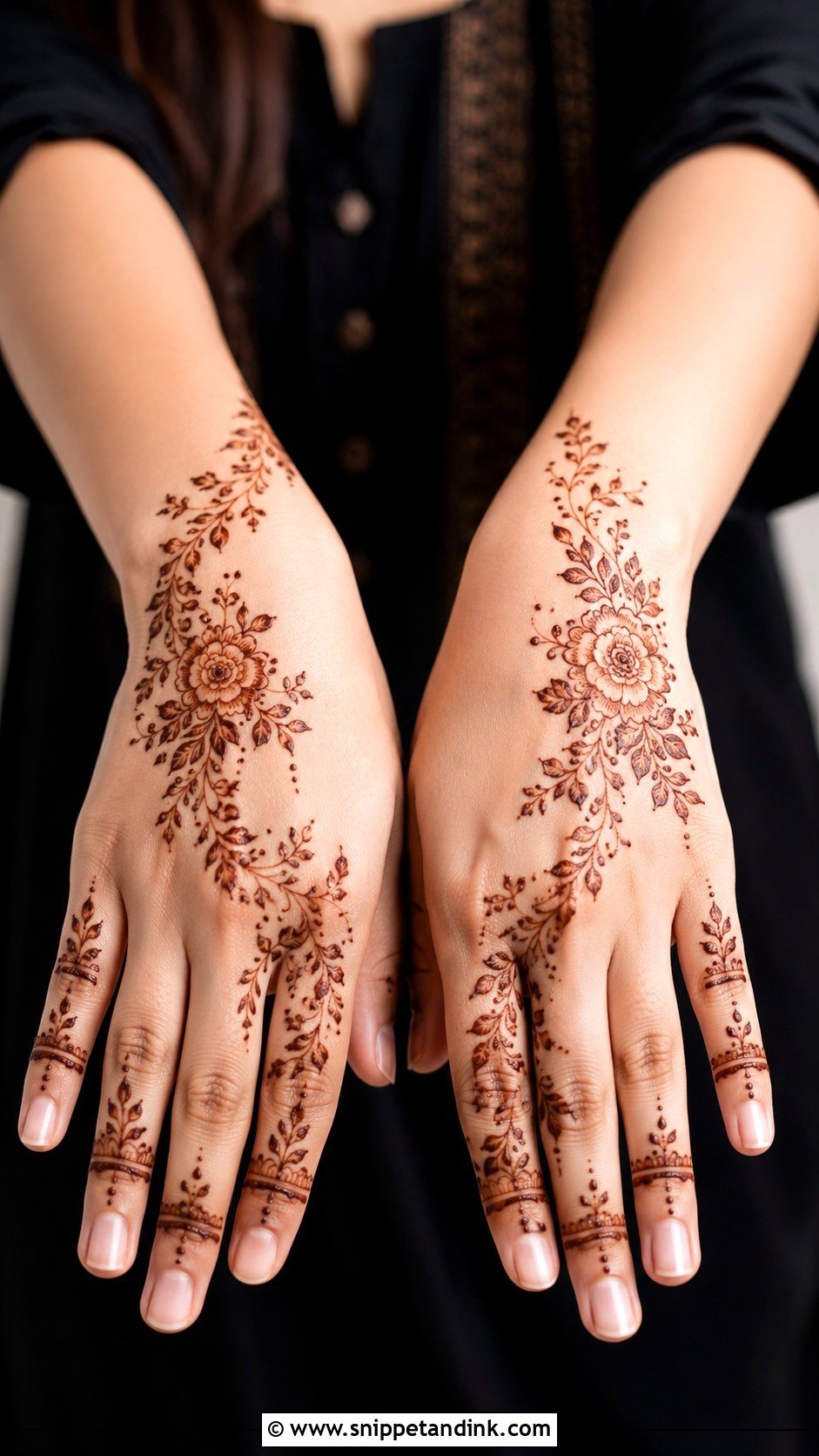
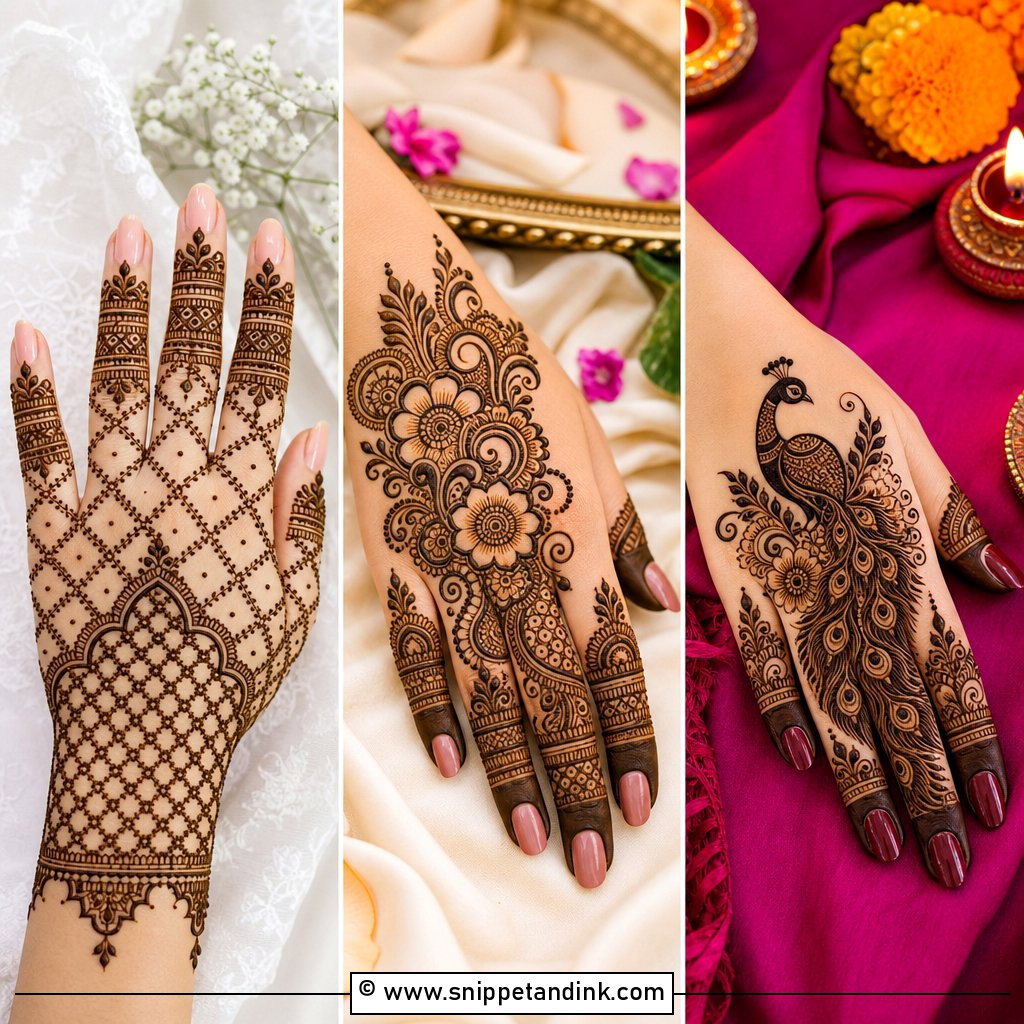
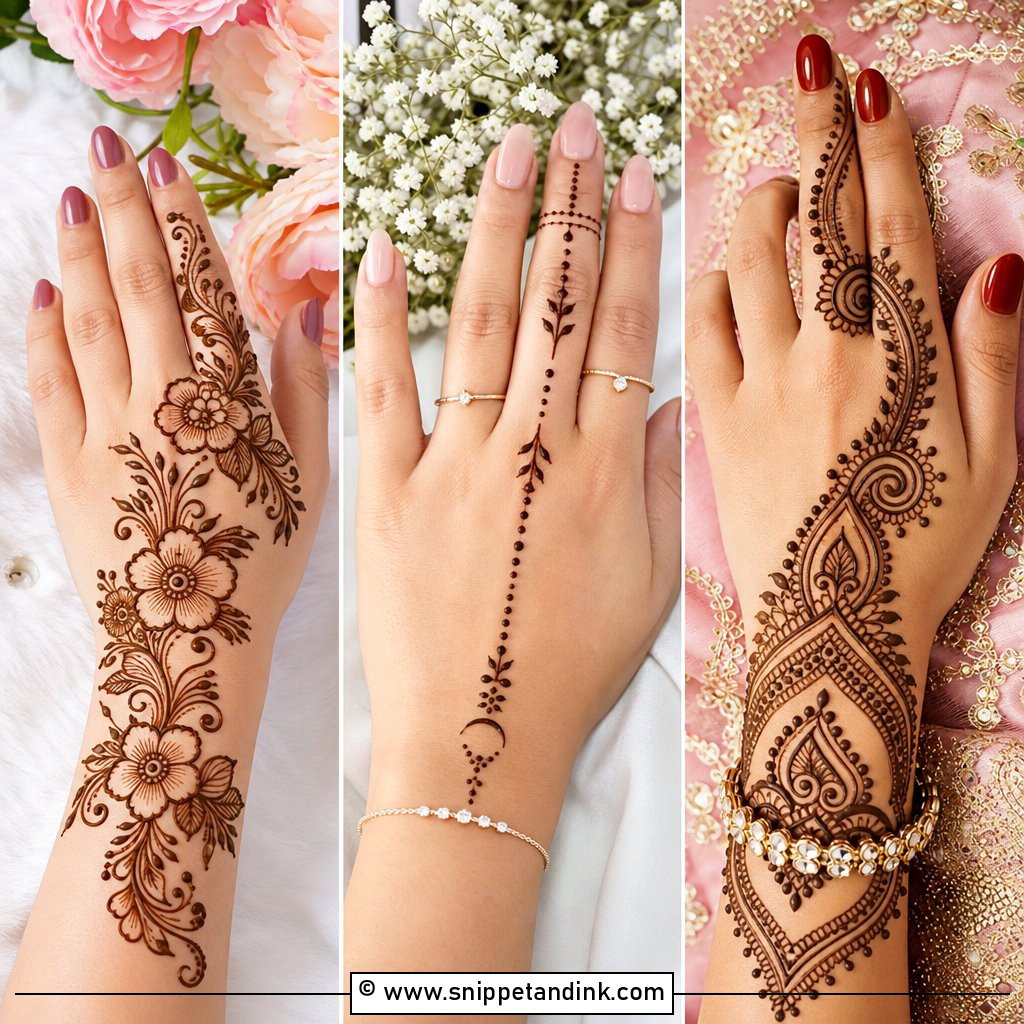
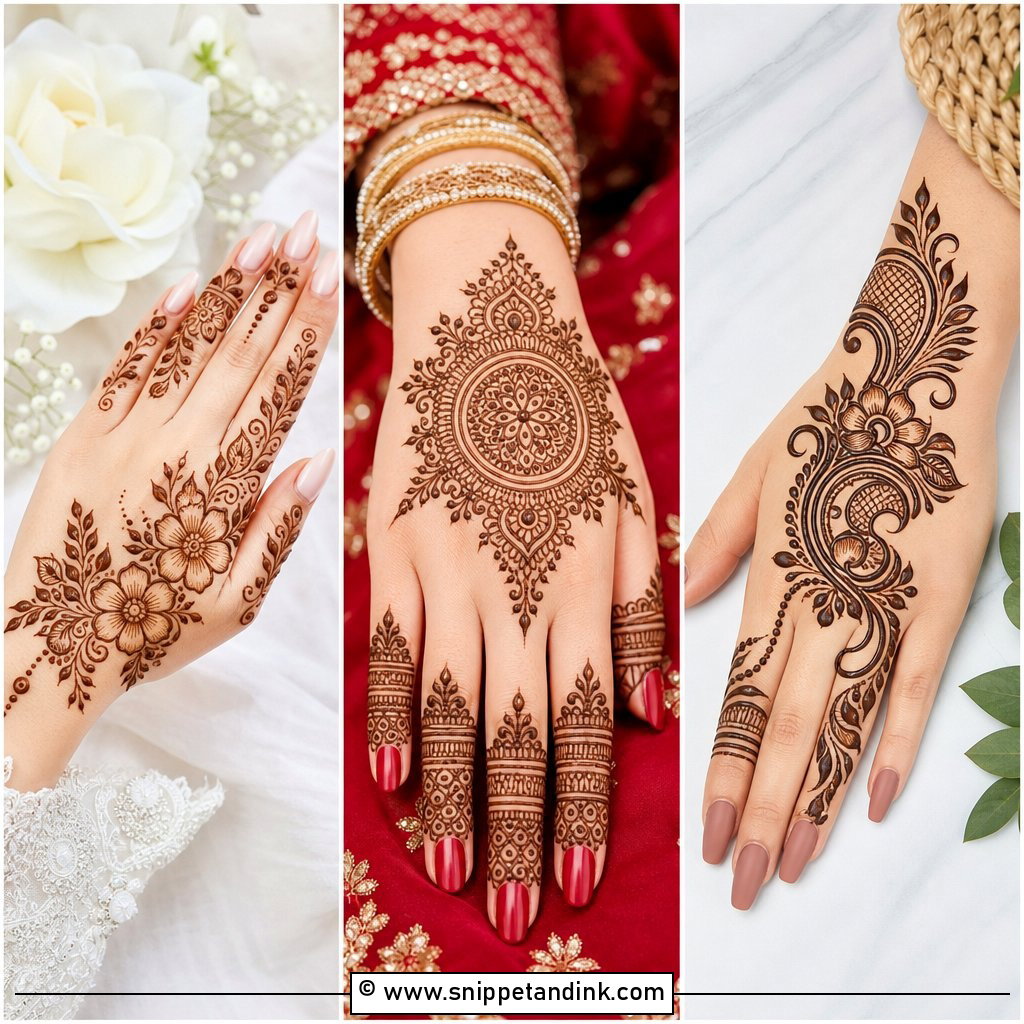
Flowers in the centre of the back of the hand, with smaller ones spreading toward the wrist and fingers, linked by thin leaves, dots and small spiral vines. I keep the petals bold with only a touch of shading inside. Fresh, simple florals suit younger girls and bridesmaids, and once the stain deepens to maroon, each bloom stands out cleanly against bare skin.
3. Simple Mandala Backhand Mehndi Design
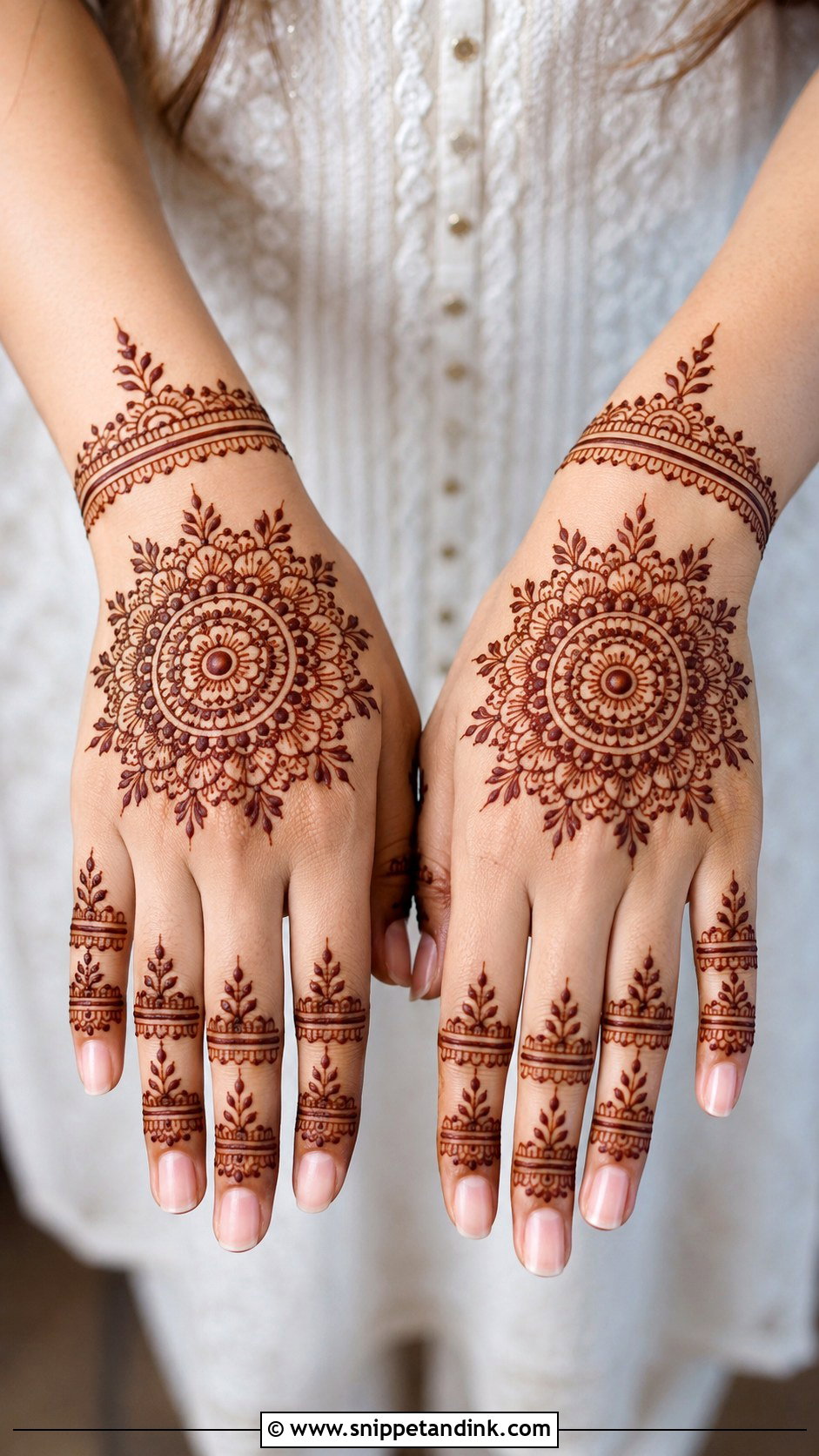
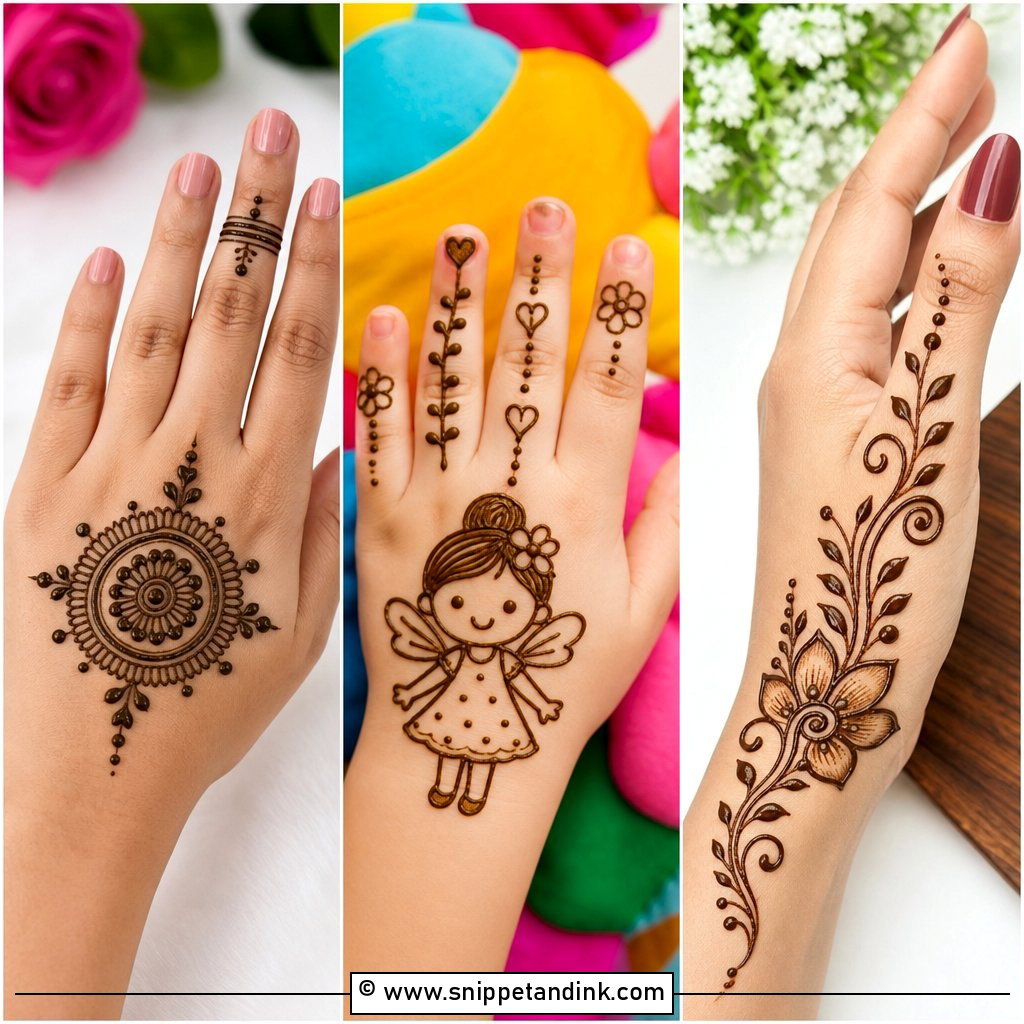
Symmetry lovers, this is yours. A small round mandala like a flower or a sun sits in the middle of the back of the hand, ringed with circles, petals, dots and a leafy border, while the fingers carry matching lines or small rings. The centre does the balancing for you. A thin bracelet border at the wrist rounds it off. I check that the circle sits square to the knuckles; tilt it and the whole hand looks slightly off.
4. Simple Finger Backhand Mehndi Design
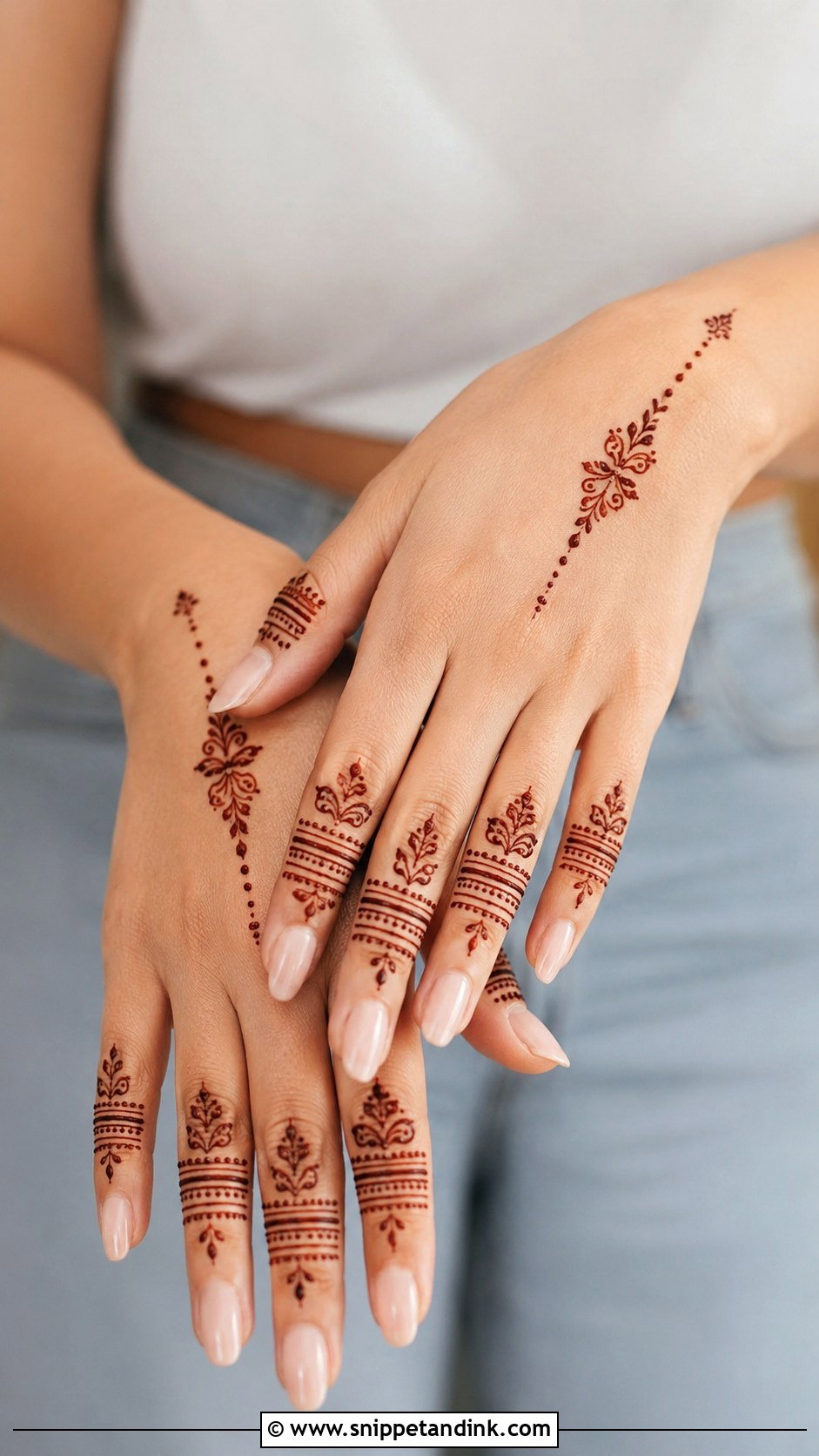
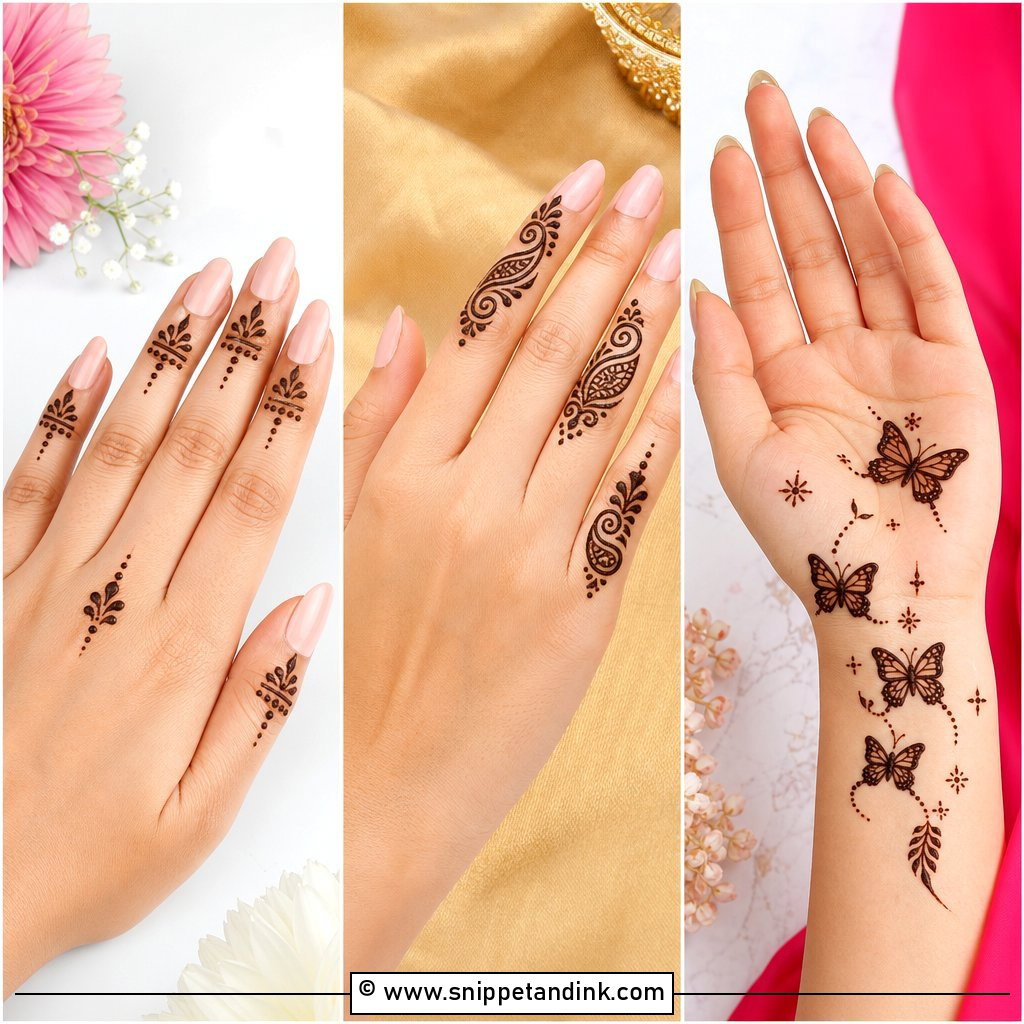
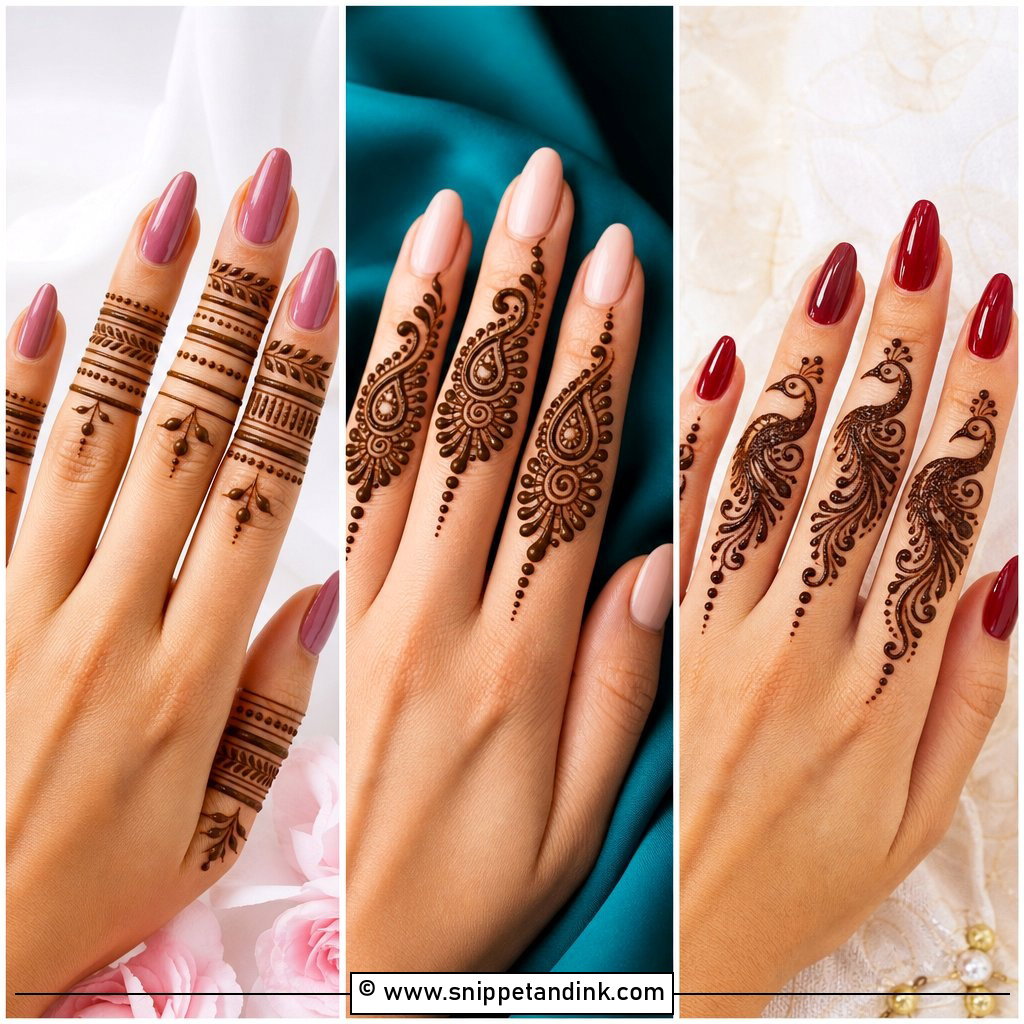
Detailed fingers, open hand. Each finger gets small bands, leaves, dots and fine lines, and a tiny mandala or flower near the knuckles ties them together. It looks modern and wears easily at college events or casual parties. Fingers take a darker stain than the back of the hand, so even fine finger work shows up well.
5. Simple Bracelet Backhand Mehndi Design
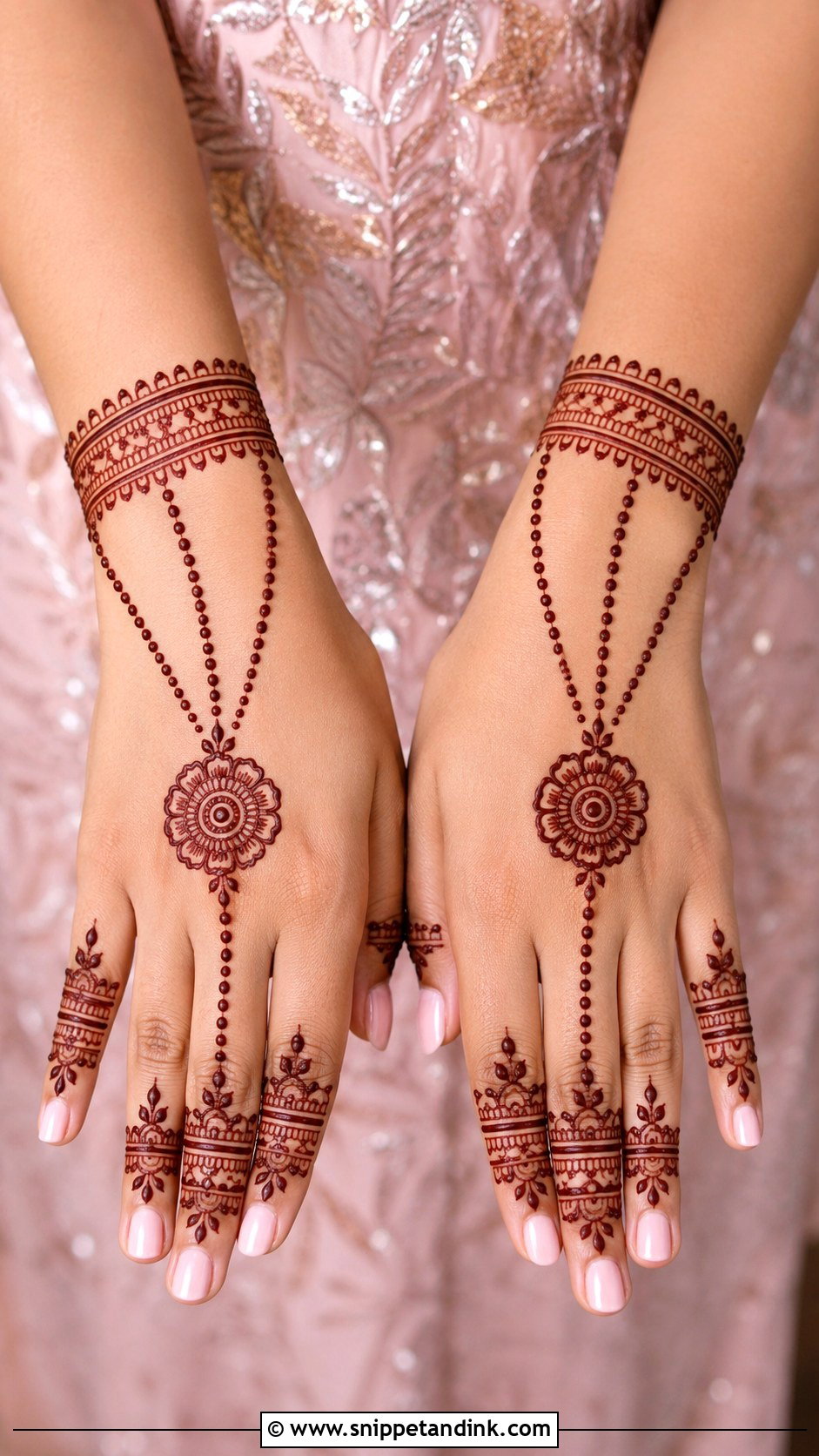
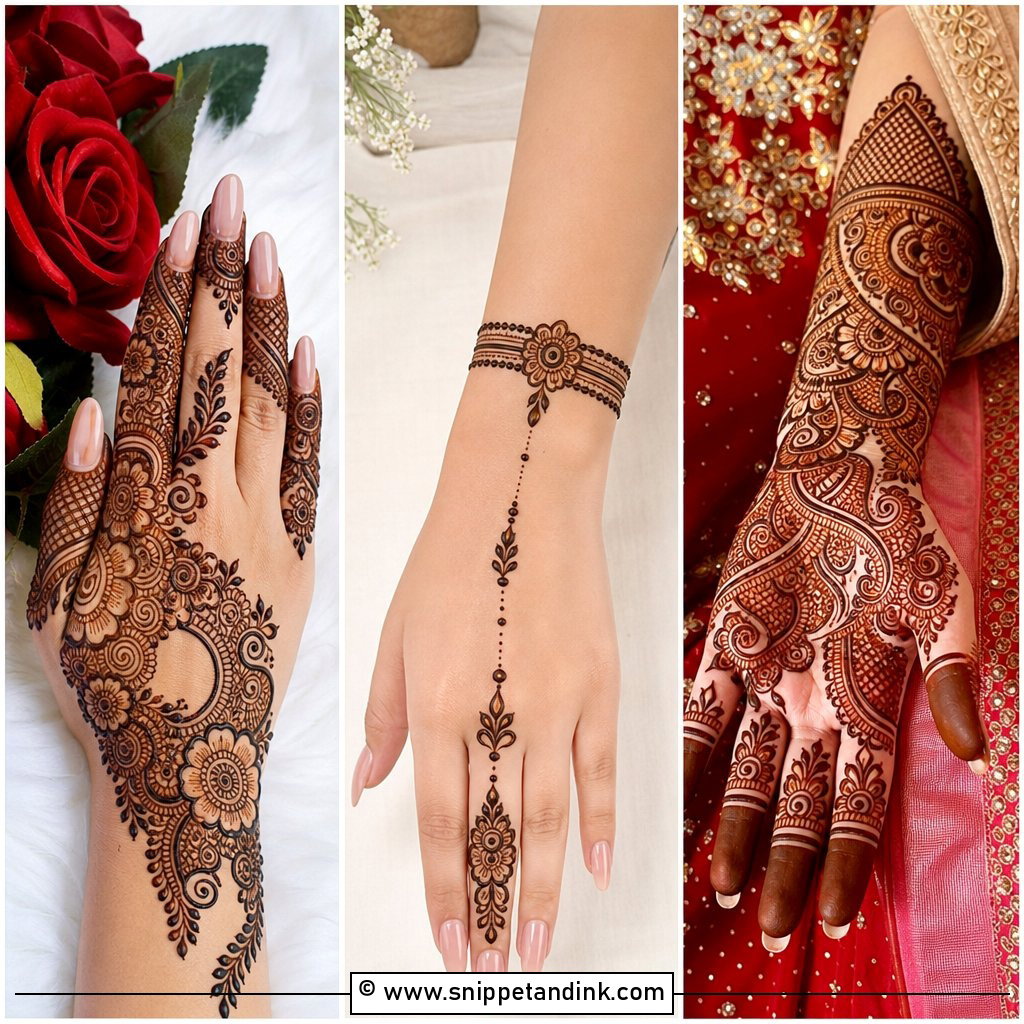
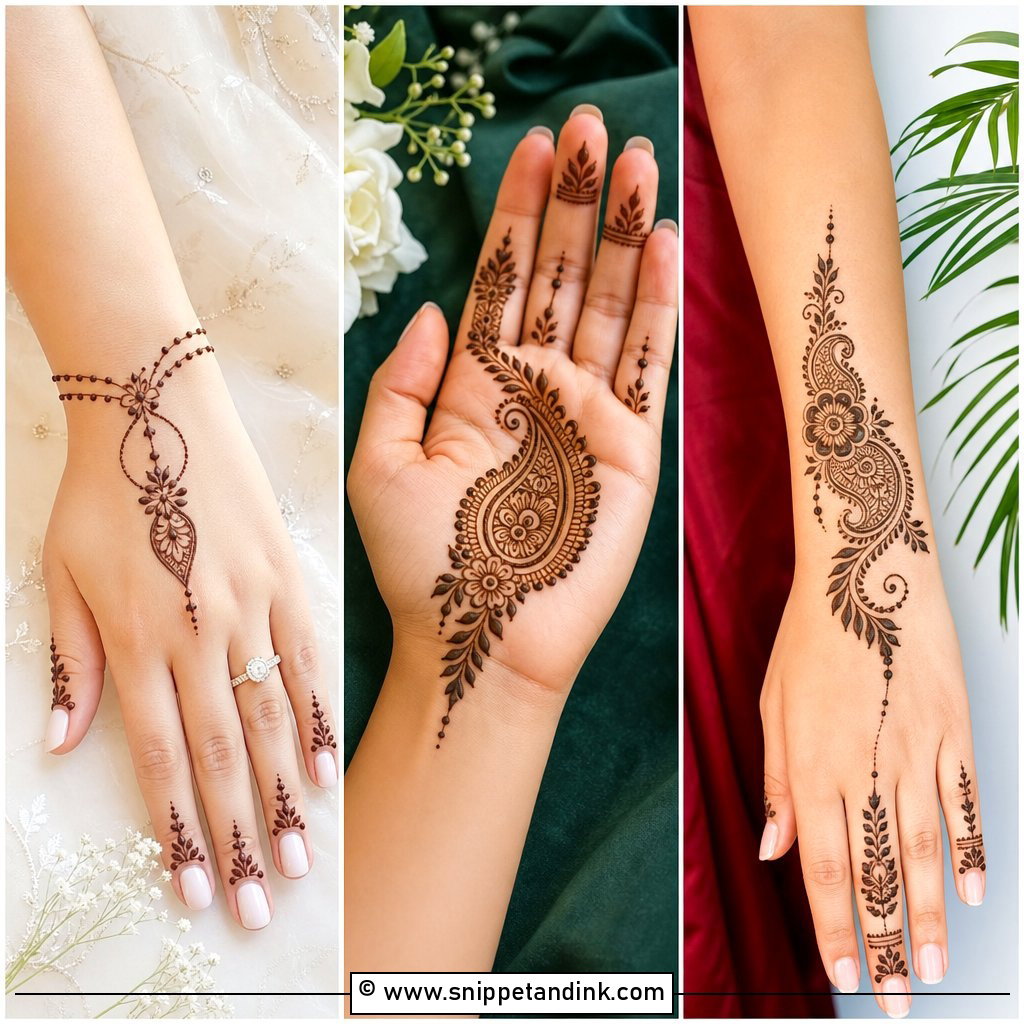
The wrist band is the star of a bracelet backhand mehndi design: lines, dots, petals or small geometric shapes circling the wrist, with a slim chain of dots or leaves reaching up to a flower or mandala. Link it on to a finger ring and you have a hathphool effect. It’s a polished choice for engagements and guests. The band must be clean and evenly spaced, because a crooked bracelet undoes the jewellery illusion.
6. Simple Leaf Backhand Mehndi Design
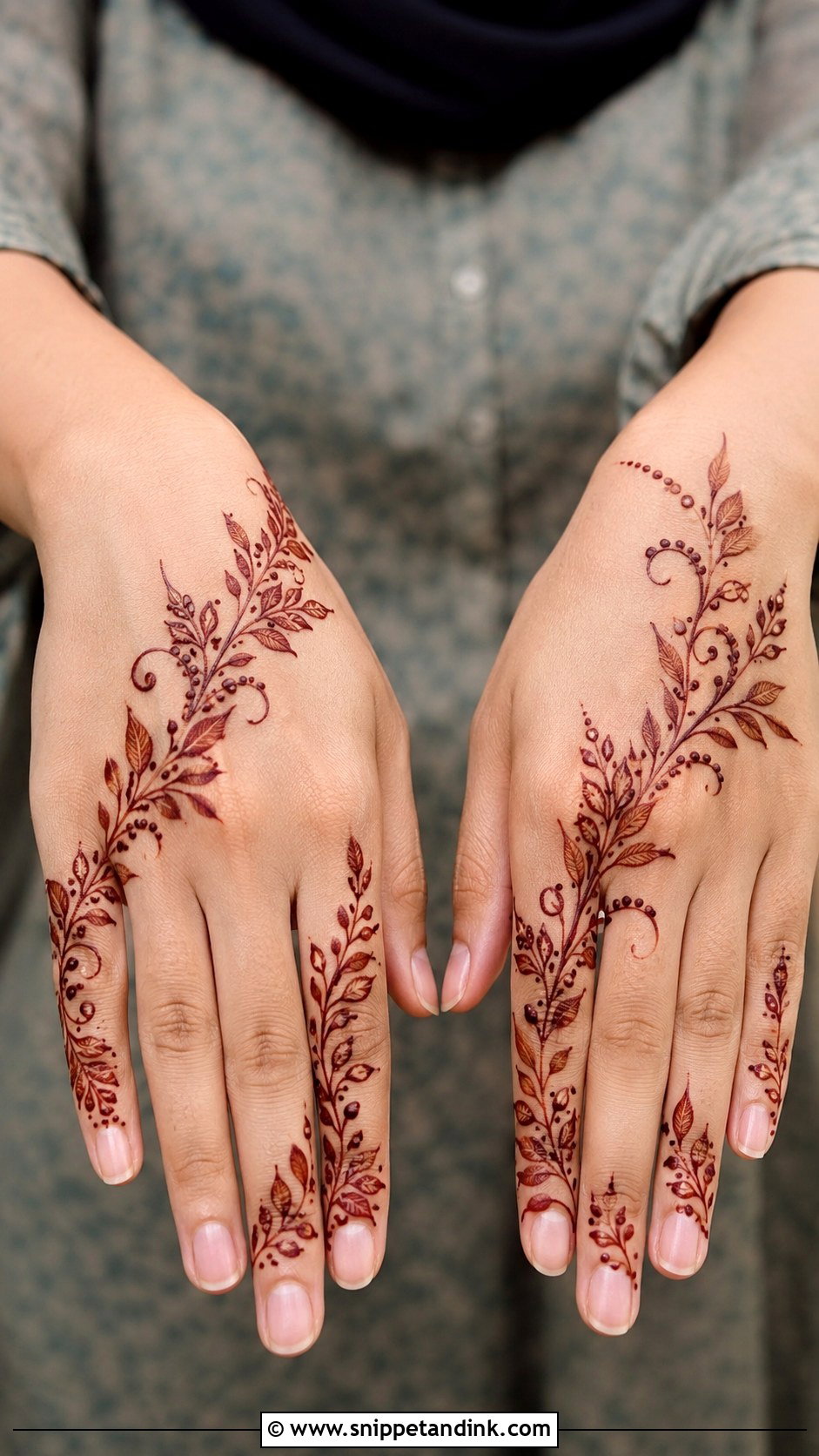
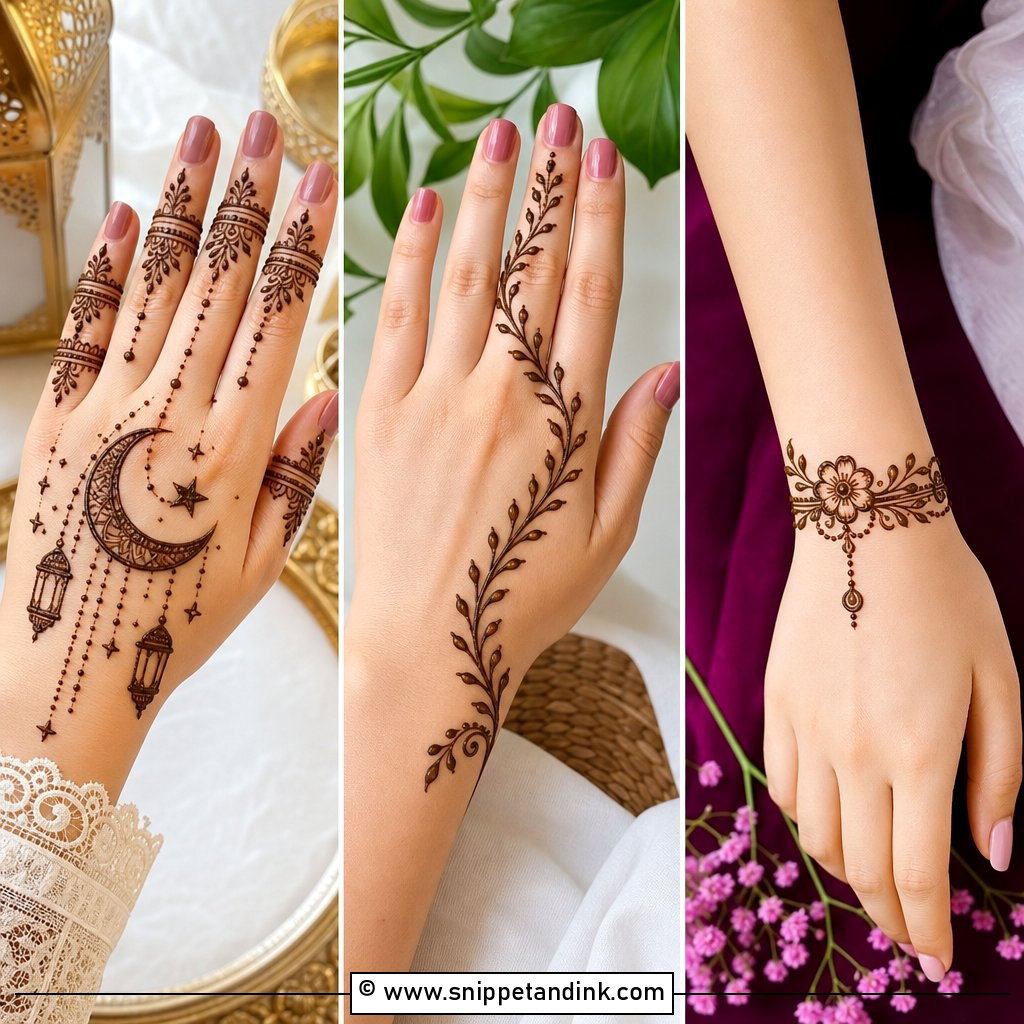
Leafy branches flowing across the back of the hand, either on a diagonal from wrist to finger or curling around a small centre motif. Fine lines give delicacy; slightly bolder outlines help it stain clearly, since the back of the hand takes colour less readily than the palm. It suits small hands well because a leaf can be shrunk without losing its shape.
7. Simple Paisley Backhand Mehndi Design
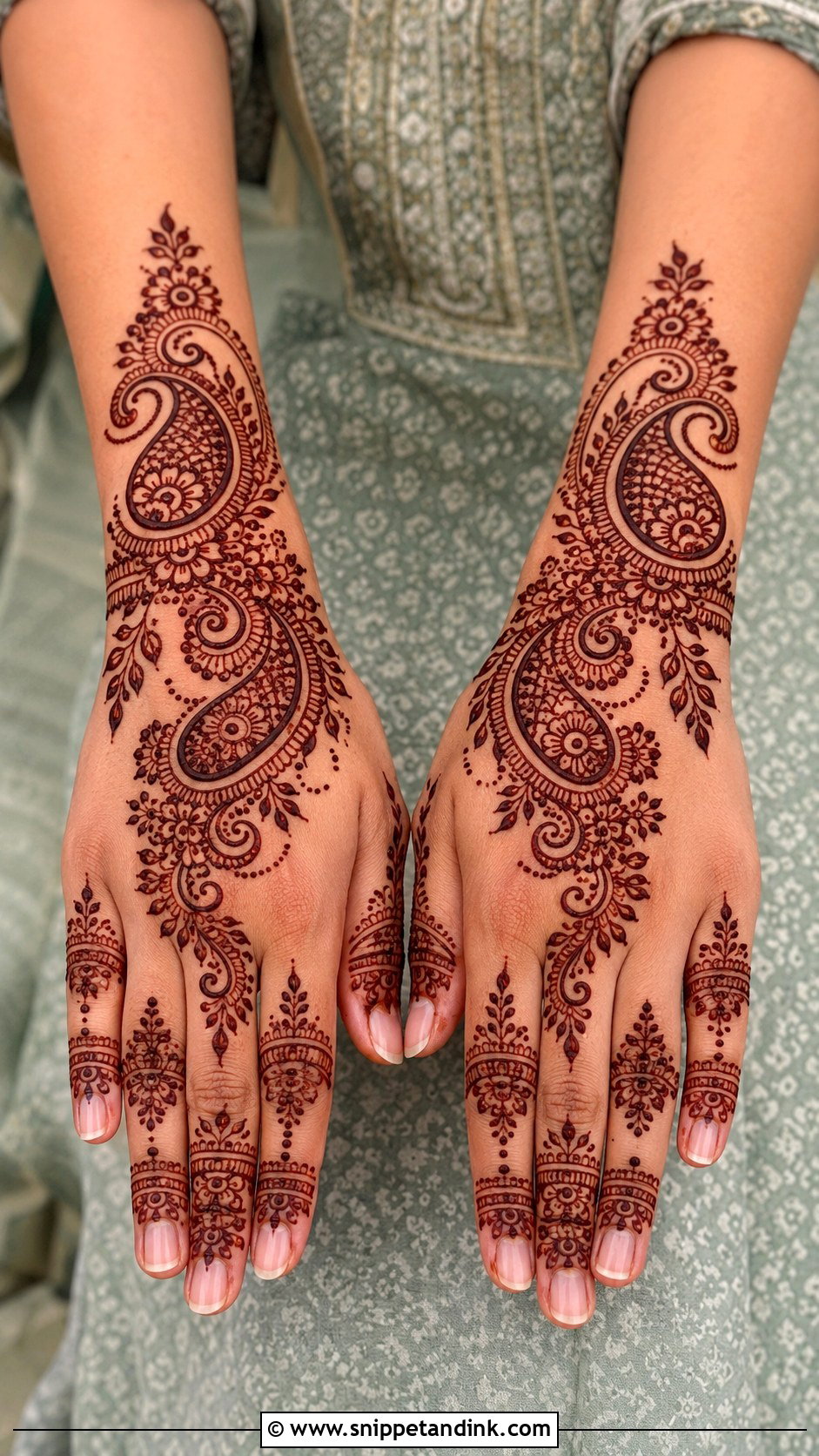
A paisley near the wrist, in the centre or along a diagonal trail, with small petals, curved lines, dots or tiny checks inside. A few flowers and leaves around it balance the look. It’s a classic for Diwali, Eid and Karva Chauth. One or two paisleys are enough as the focus; surrounding vines provide the movement, and more paisleys than that start to compete.
8. Simple Jaali Backhand Mehndi Design
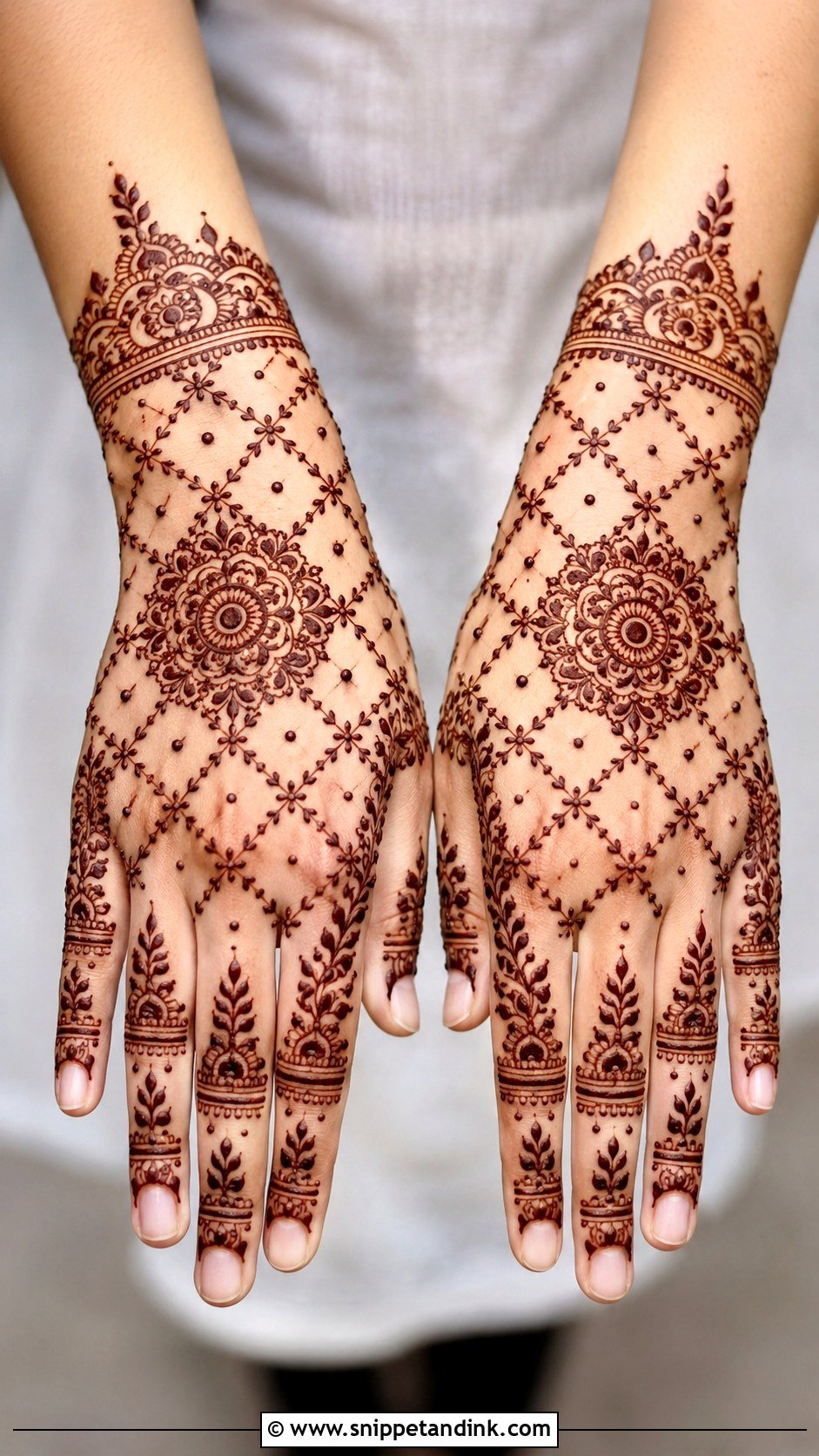
Jaali can cover a side section, a finger panel or a diamond-shaped area in the middle of the hand, with thin crisscross lines and dots or tiny flowers inside the spaces. Pair it with a small mandala, a leafy border or a bracelet band and leave the rest light. Spacing decides everything. Even mesh looks refined and skilled; uneven mesh looks hurried, so I’d only choose this if your artist has a very steady hand.
9. Simple Round Backhand Mehndi Design
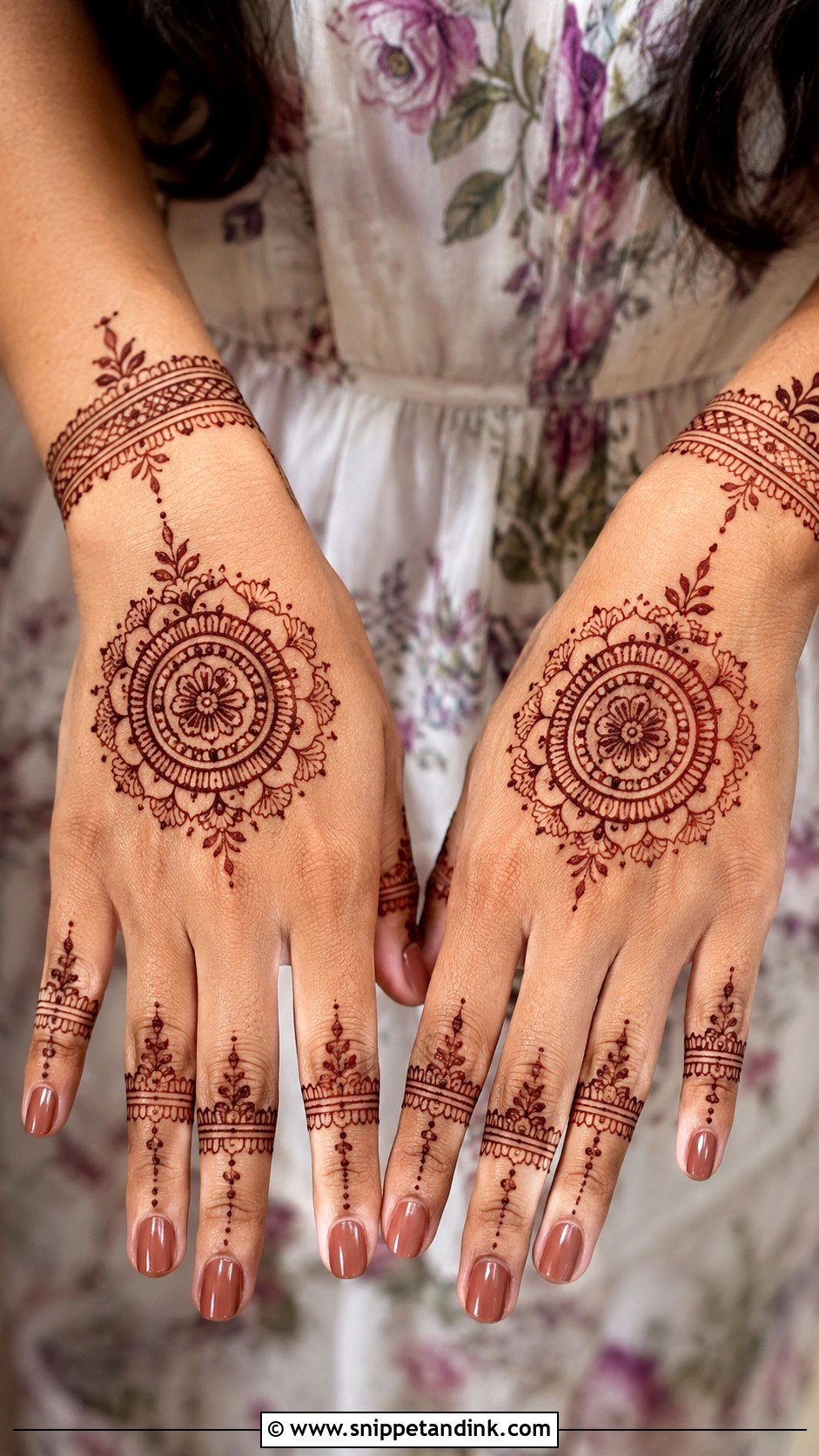
A round motif, whether a mandala, flower, sun or dotted circle, in the middle of the hand, with matching bands and dots on the fingers. It suits almost every hand and age, and because the centre stays visible above a stack of bangles, it works well with festive jewellery. Leave open space around the circle for a modern take, or fill out for a more traditional finish.
10. Simple Backhand Mehndi Design For Beginners
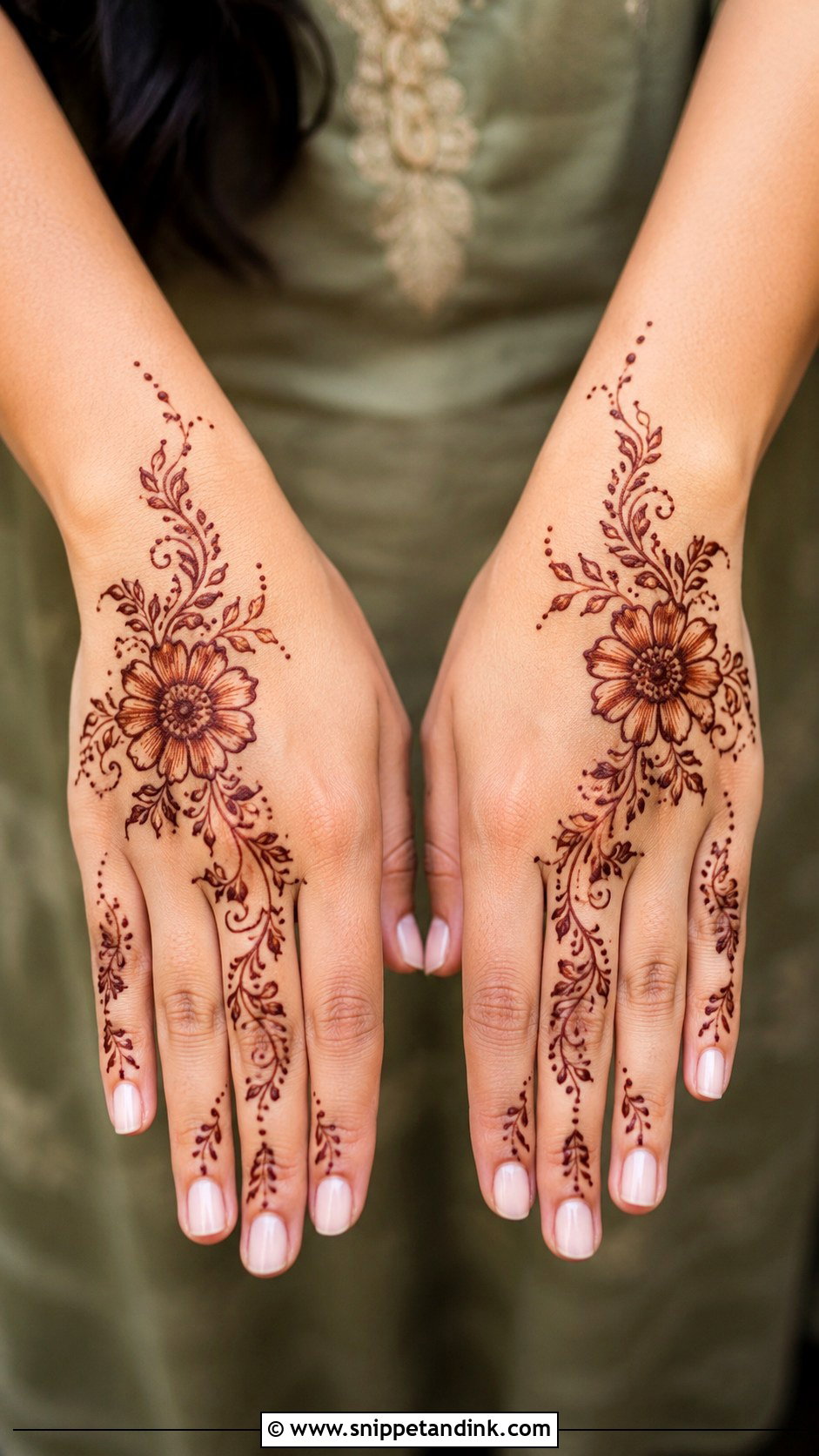
Fewer motifs, clearer spacing. One large flower, one curved vine and a few leaves, with dots along the trail and straight lines or small bands on the fingers. Skip fine jaali and dense shading until your cone control improves. A vine is forgiving because small wobbles look like natural movement. I hand this one to students for practice, and it rescues a last-minute family event too.
11. Simple Modern Backhand Mehndi Design
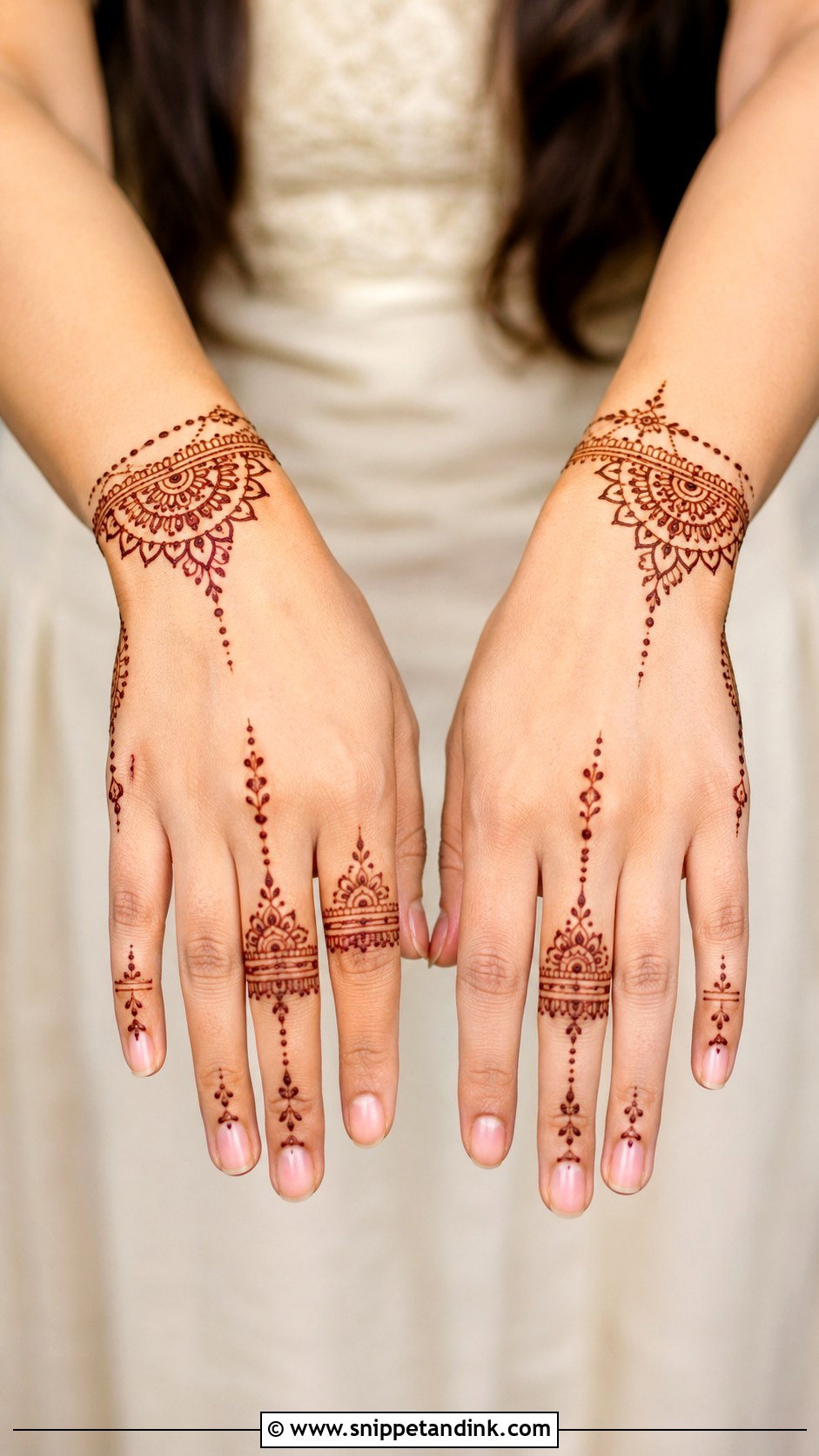
Modern backhand henna picks one or two areas, say the fingers and wrist or a small trail across the centre, and leaves the rest as skin. Minimal florals, half mandalas, dots and ring-like finger patterns are typical. It reads like delicate jewellery and suits contemporary outfits. Fewer elements means each one has to be clean, so I take more care over line quality here than in a busy design.
12. Simple Indo Arabic Backhand Mehndi Design
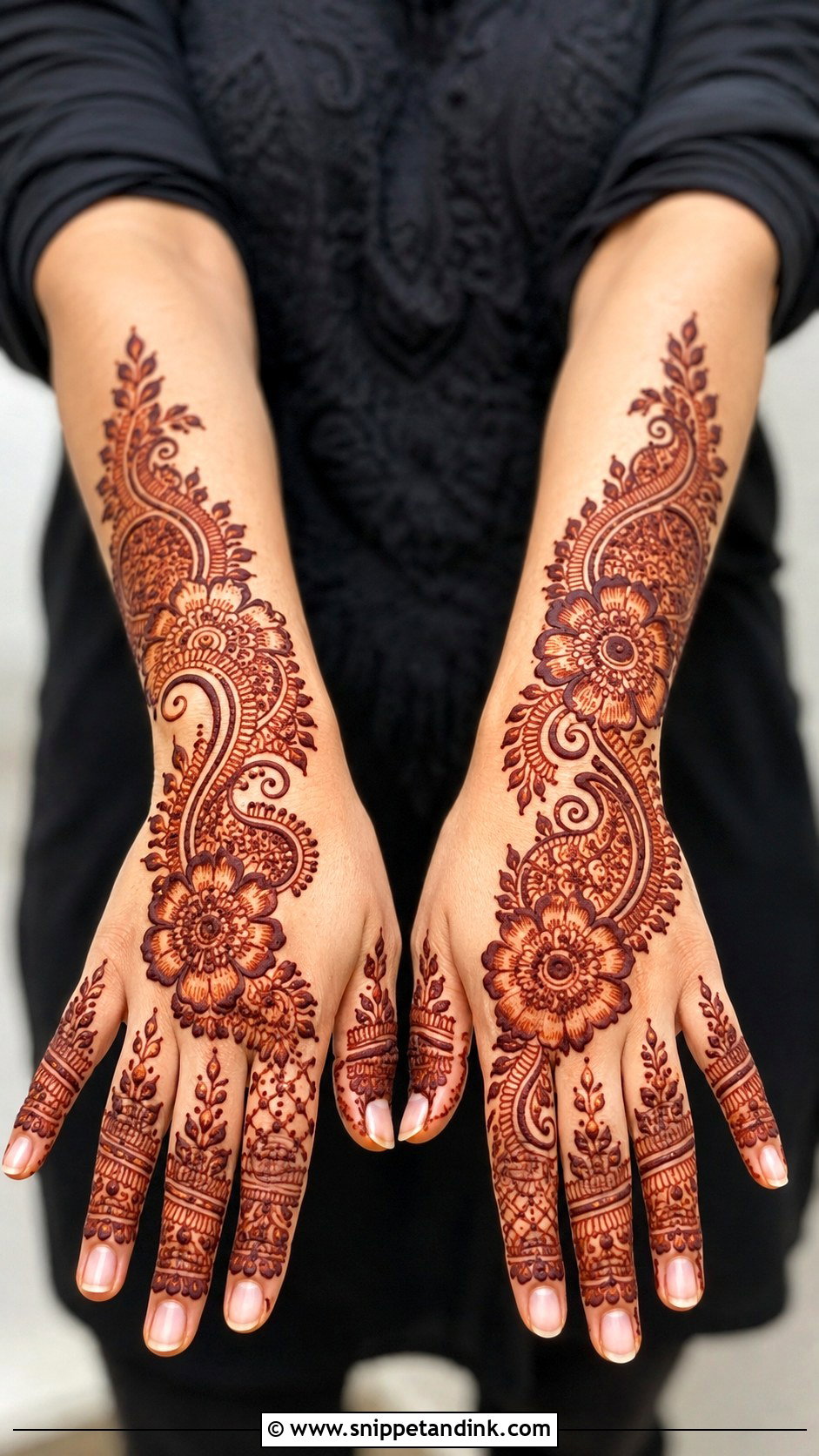
Indo-Arabic puts Arabic flow and Indian detail on one hand: large flowers, paisleys and vines on a diagonal, with small dots, fine lines and leafy fillers inside them. It’s fuller than a plain Arabic trail and still well short of bridal density. Keep the main motifs bold and confine the Indian detail to selected spots. Spread it everywhere and the open spaces disappear.
13. Simple Backhand Mehndi Design With Dots
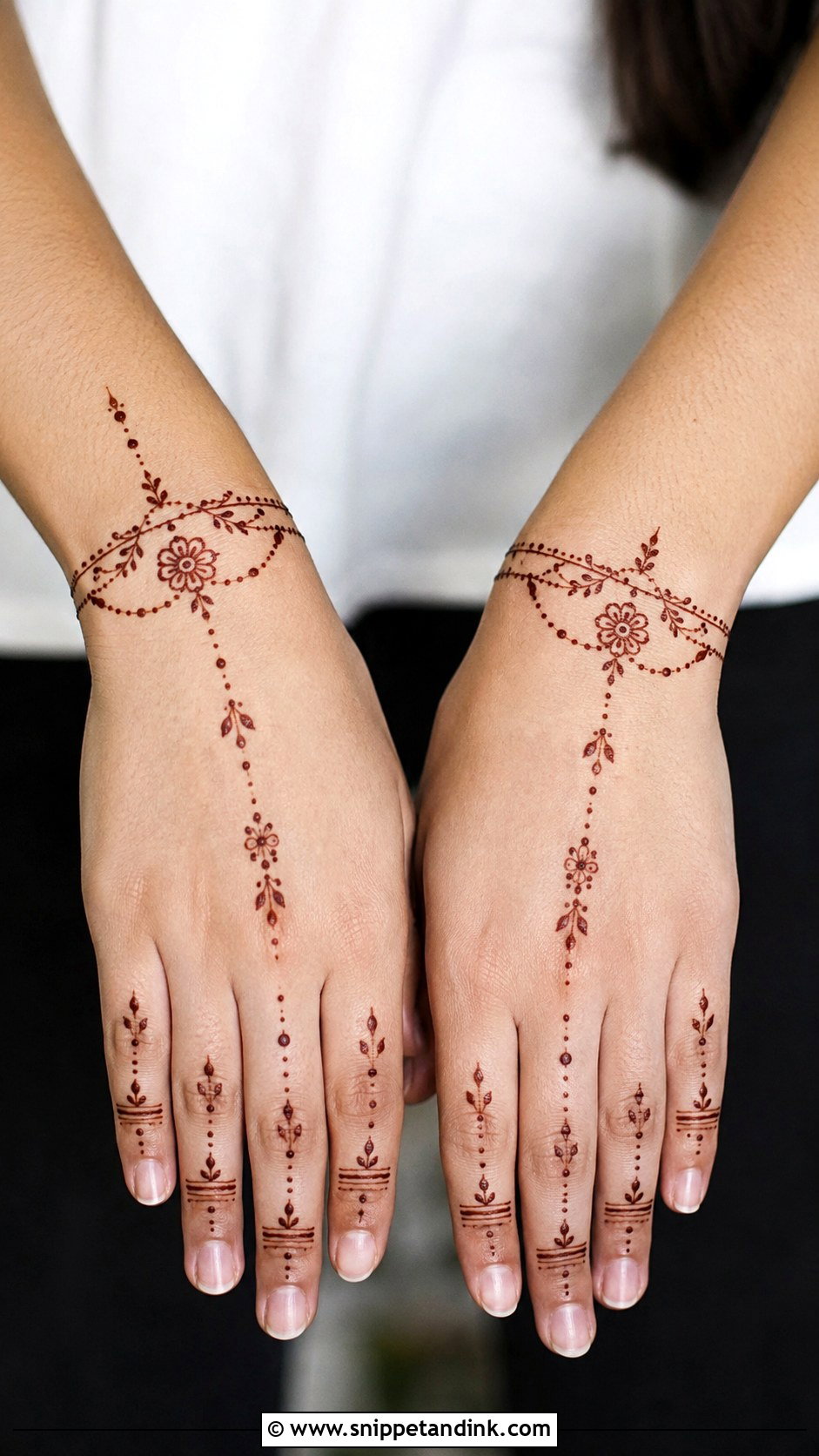
Dotted trails connect the wrist, the hand and the fingers around a flower, mandala or vine. Dots can also frame the design, fill corners or form chains like jewellery. They’re quick and easy for beginners, and they add texture without weight. Keep them the same size by holding the same pressure on the cone; varied dots make a design look accidental.
14. Simple Backhand Mehndi Design With Lines
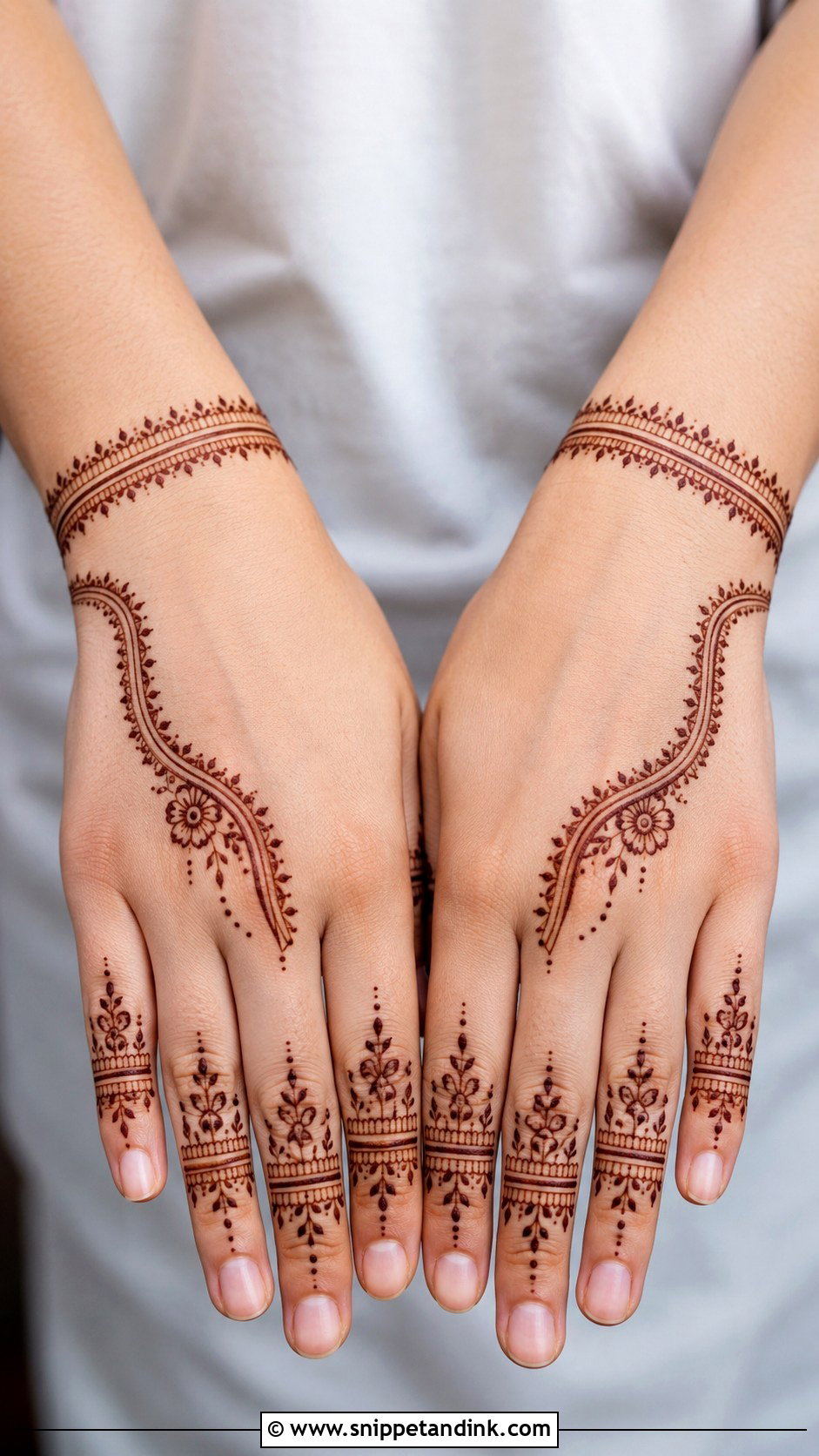
Straight and curved lines, bands and small borders can shape a whole design, softened by a tiny flower, a small mandala or a few leaves. Lines on the fingers make them look longer. Steady spacing is the secret. I draw parallel lines from the same starting edge each time, which keeps them even without measuring.
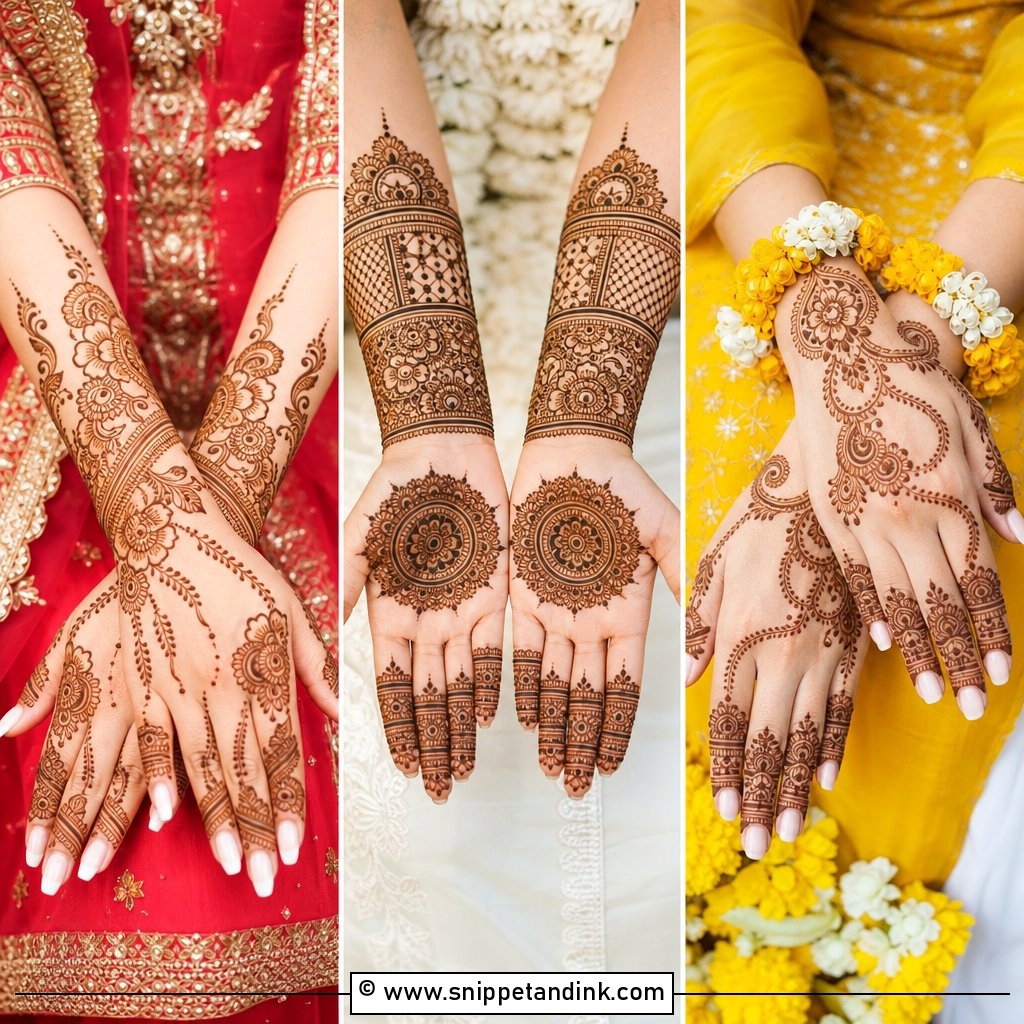
15. Simple Backhand Mehndi Design For Eid
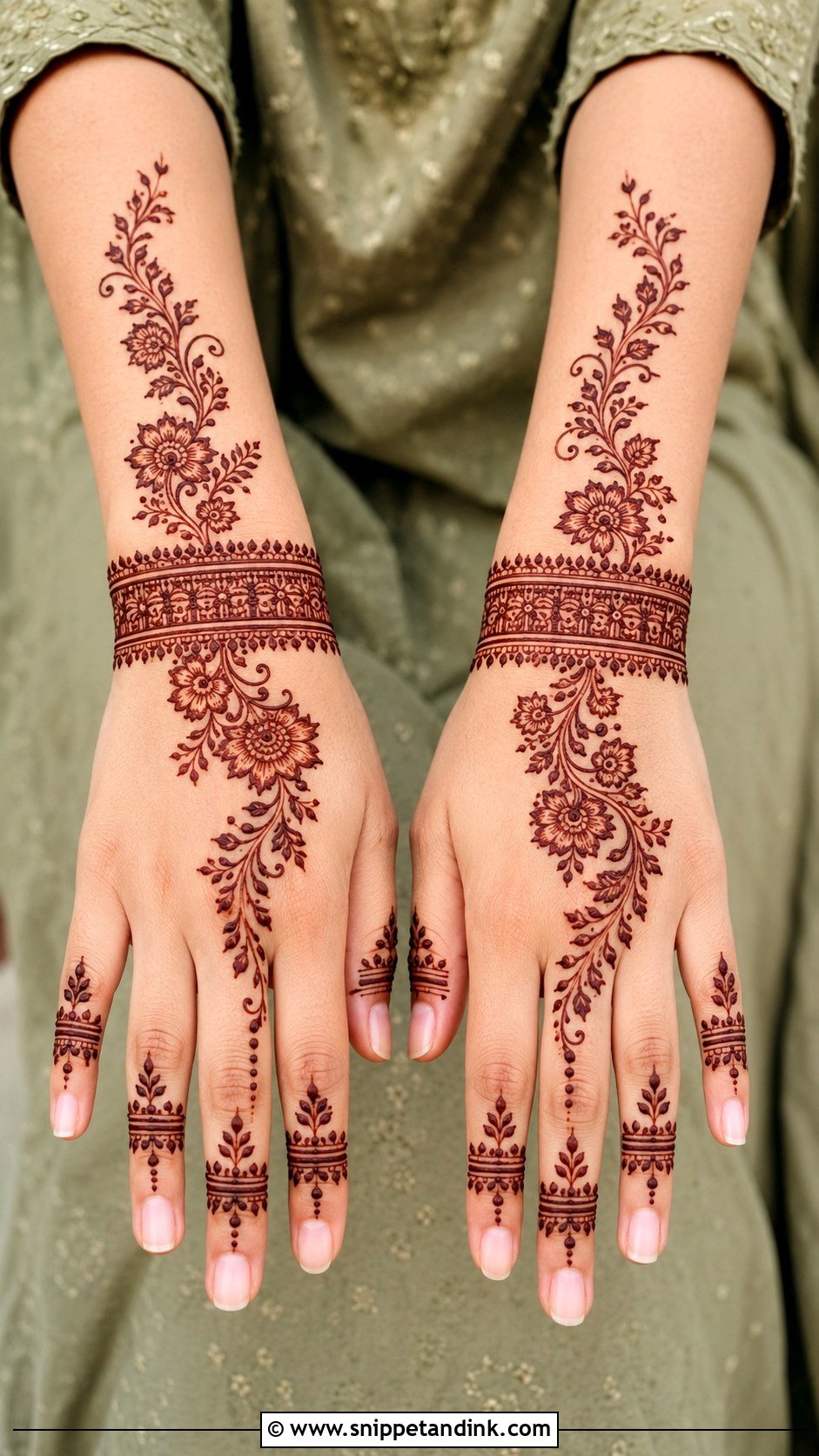
Eid henna tends to be lighter on the back of the hand so it sits well with rings, bangles and embroidered sleeves. Arabic trails, bracelets and mandala centres all work, with small leaves, dots and finger bands. A diagonal trail from the wrist to the index finger is the most requested. Use natural henna and leave it on overnight; Eid morning is when people look at your hands most, and that’s when the colour should be deepest.
16. Simple Backhand Mehndi Design For Diwali
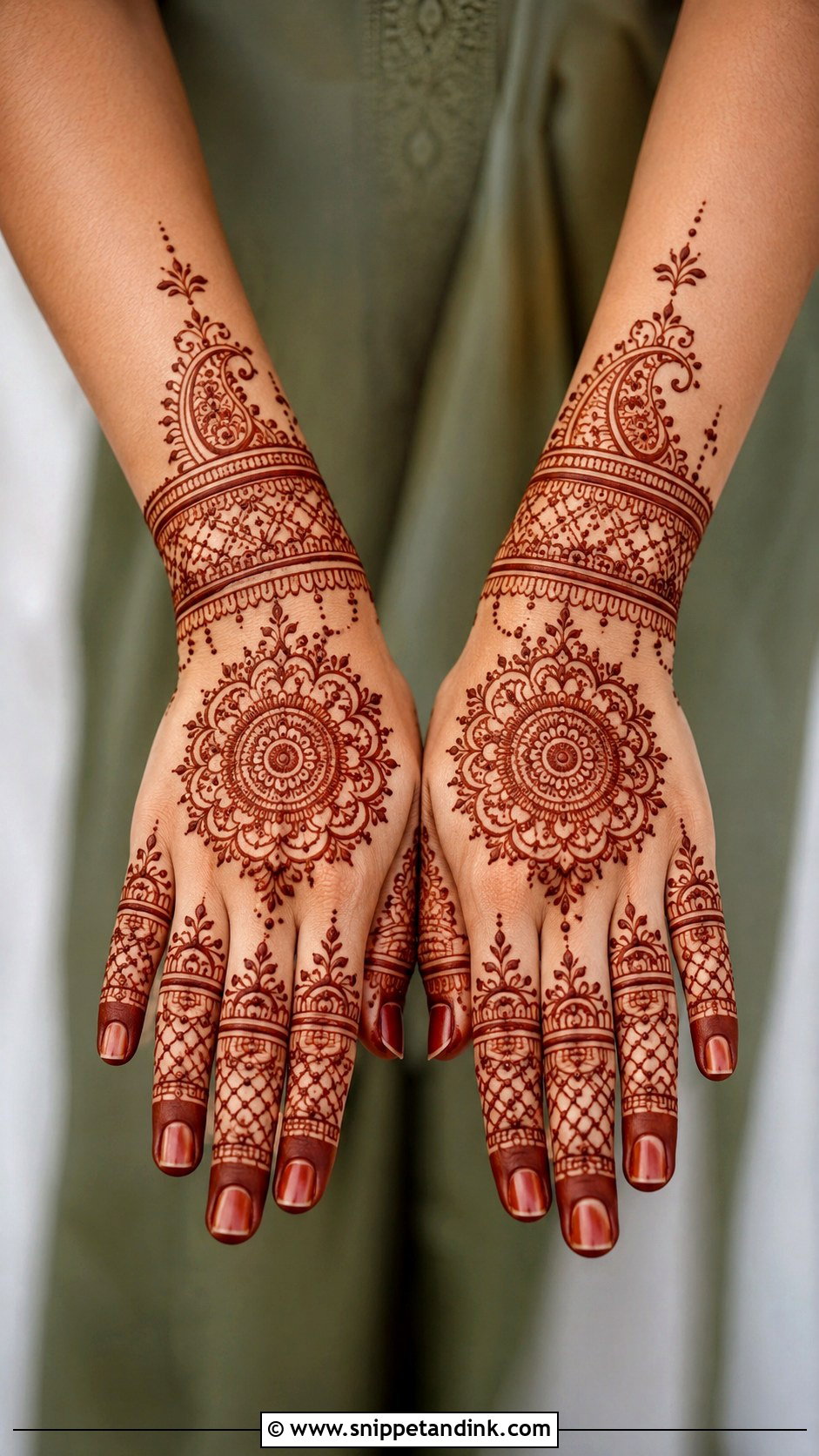
Diwali means jewellery, lamps and evening light, so I keep the space around the main motif open so it reads clearly under all three. Round mandalas, floral vines, paisley trails or bracelet patterns suit the outfits, and small diya-shaped petals can be tucked in quietly. Fingertips get bands, dots or leaf lines. Clear outlines stain best, and they hold up through a long evening of puja and visiting.
17. Simple Backhand Mehndi Design For Wedding Guest
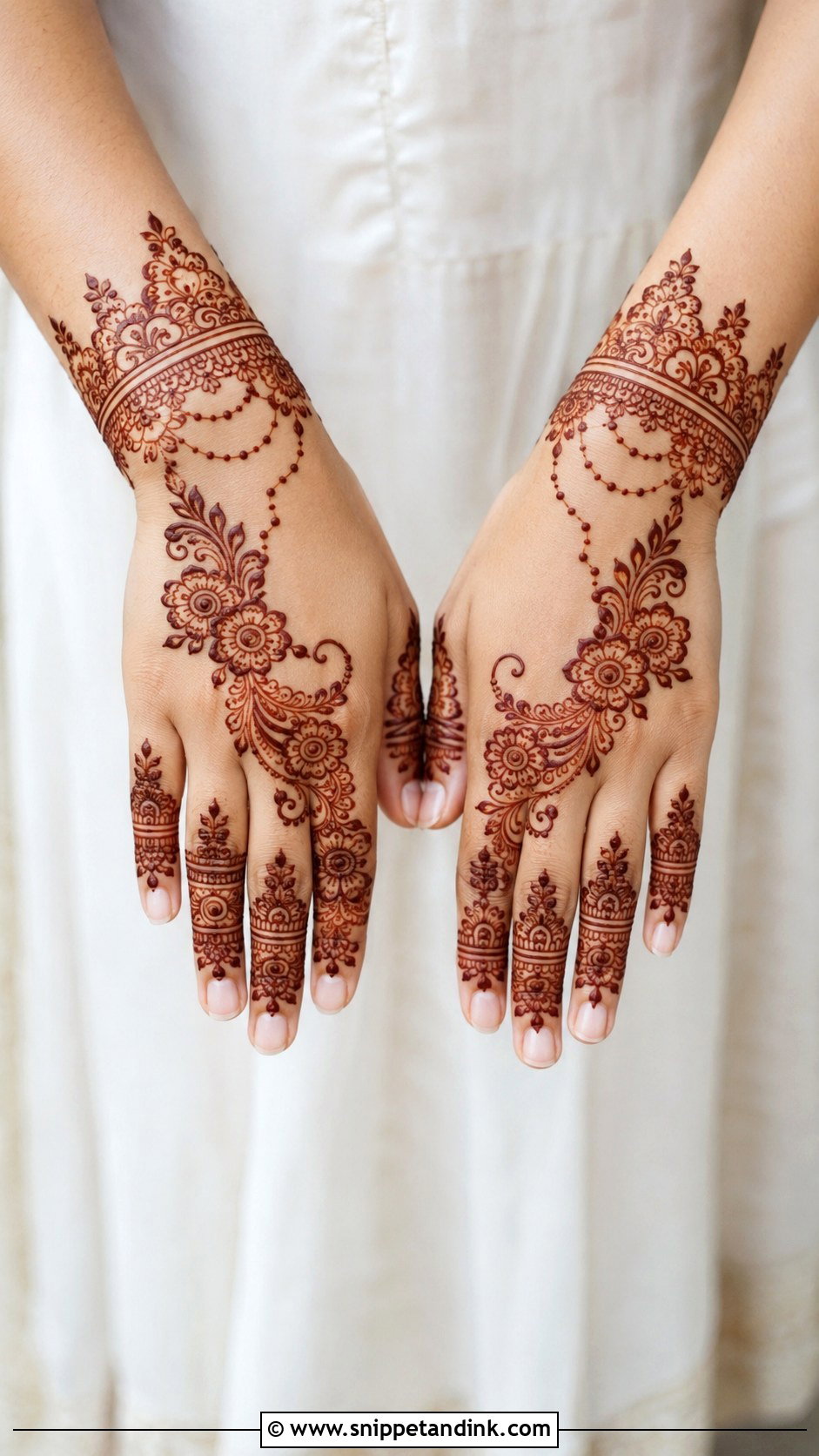
Guests want festive without looking bridal. Floral trails, paisley curves and wrist bands give enough decoration for photos and stay light. An Indo-Arabic layout with bold flowers and small fillers works, as does a jewellery-style design with chains and finger rings. Skip dense coverage. A natural reddish-brown stain looks right at a sangeet, a mehndi night or a reception.
18. Simple Backhand Mehndi Design For Bridesmaid
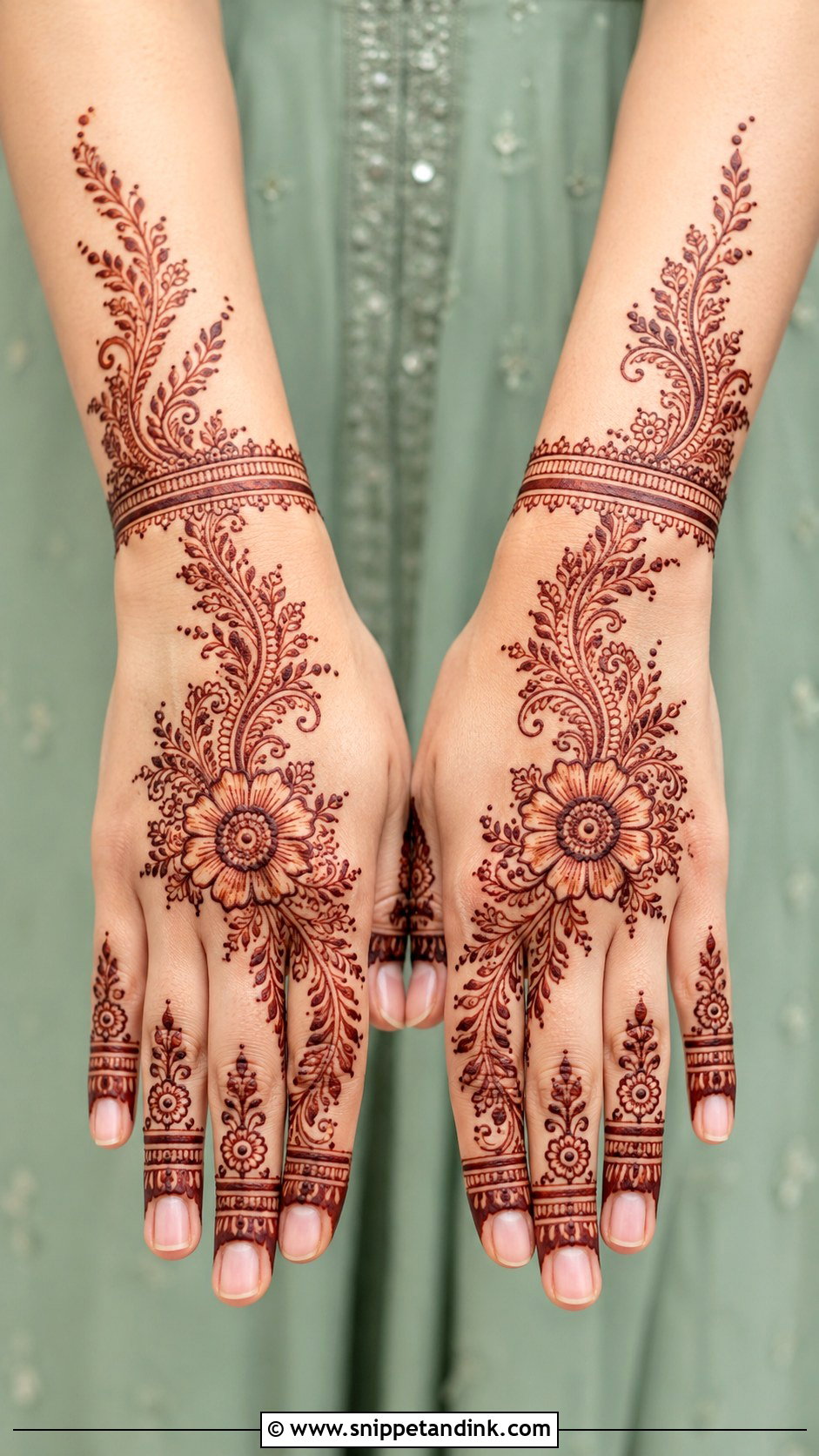
Bridesmaids need henna that looks special and dries fast, because they’ll be on their feet all evening. A floral centre, a leafy diagonal trail, a bracelet wrist, finger bands and small dotted chains do the job. A slightly fuller Indo-Arabic style photographs well beside the bride. Neat fingertips and an aligned wrist border are what make it look tidy next to bangles and rings.
19. Simple Backhand Mehndi Design For Girls
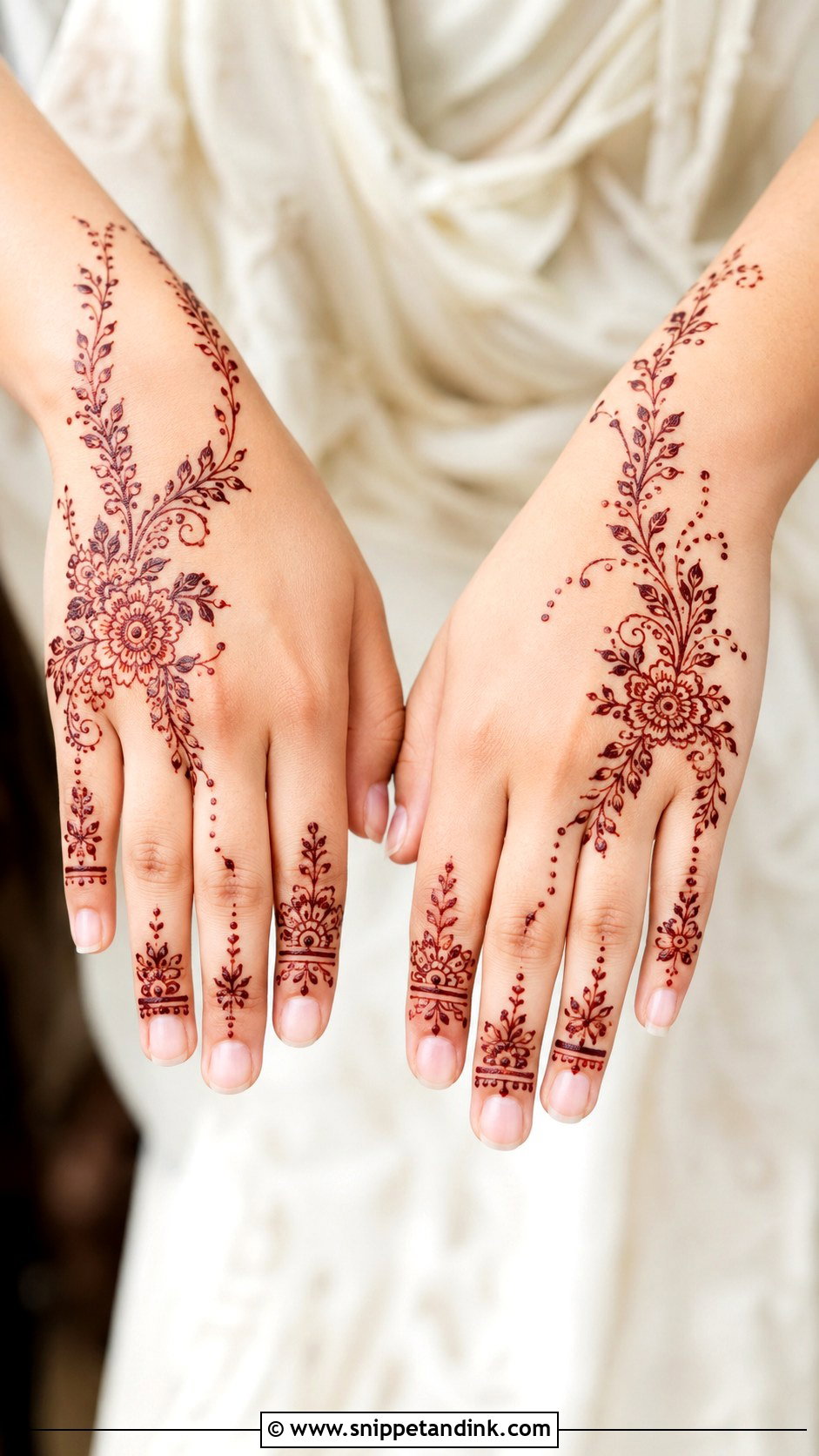
For girls, small flowers, tiny hearts, leafy vines and dotted trails keep the look age-appropriate. A centre flower with short finger details is enough for a school event, Eid or a family party. Open patterns dry quickly and smudge less. Soft curves rather than dense filling keep it playful and neat.
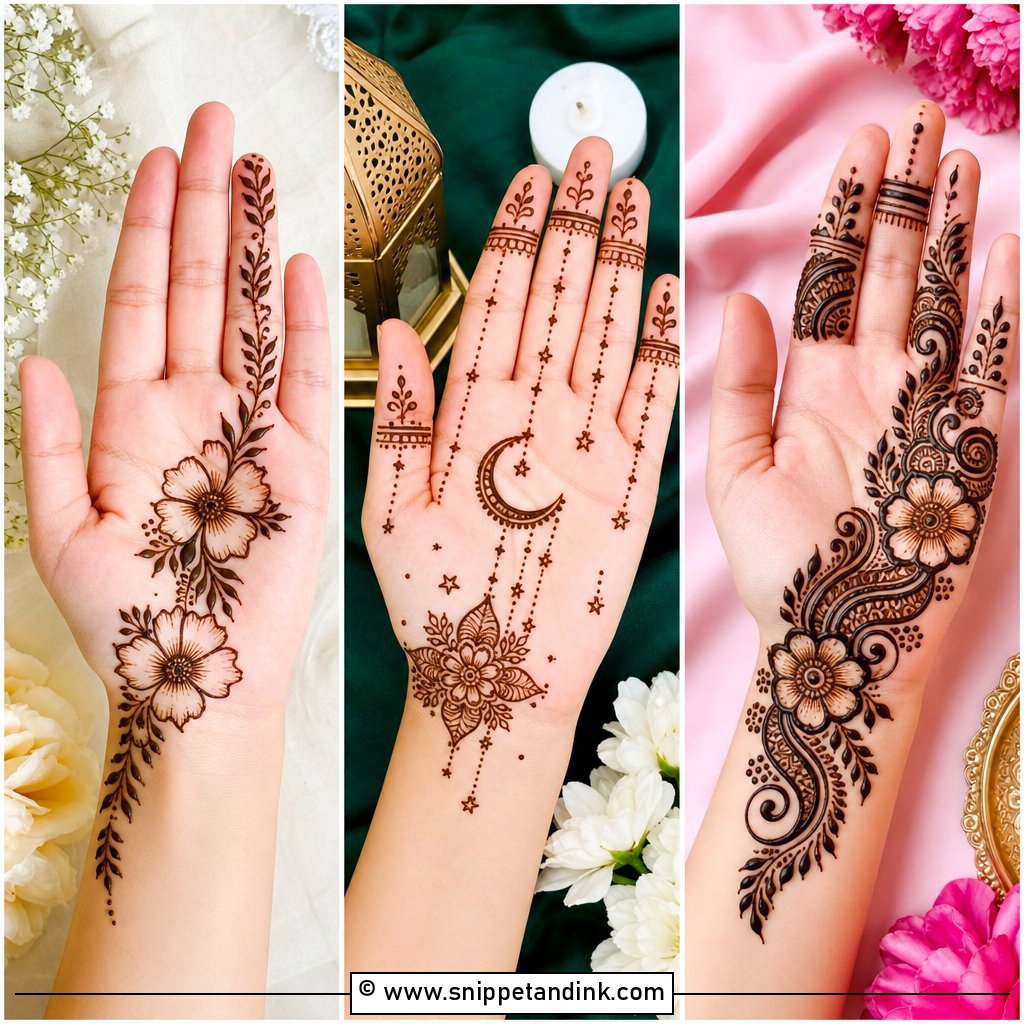

20. Simple Backhand Mehndi Design For Kids
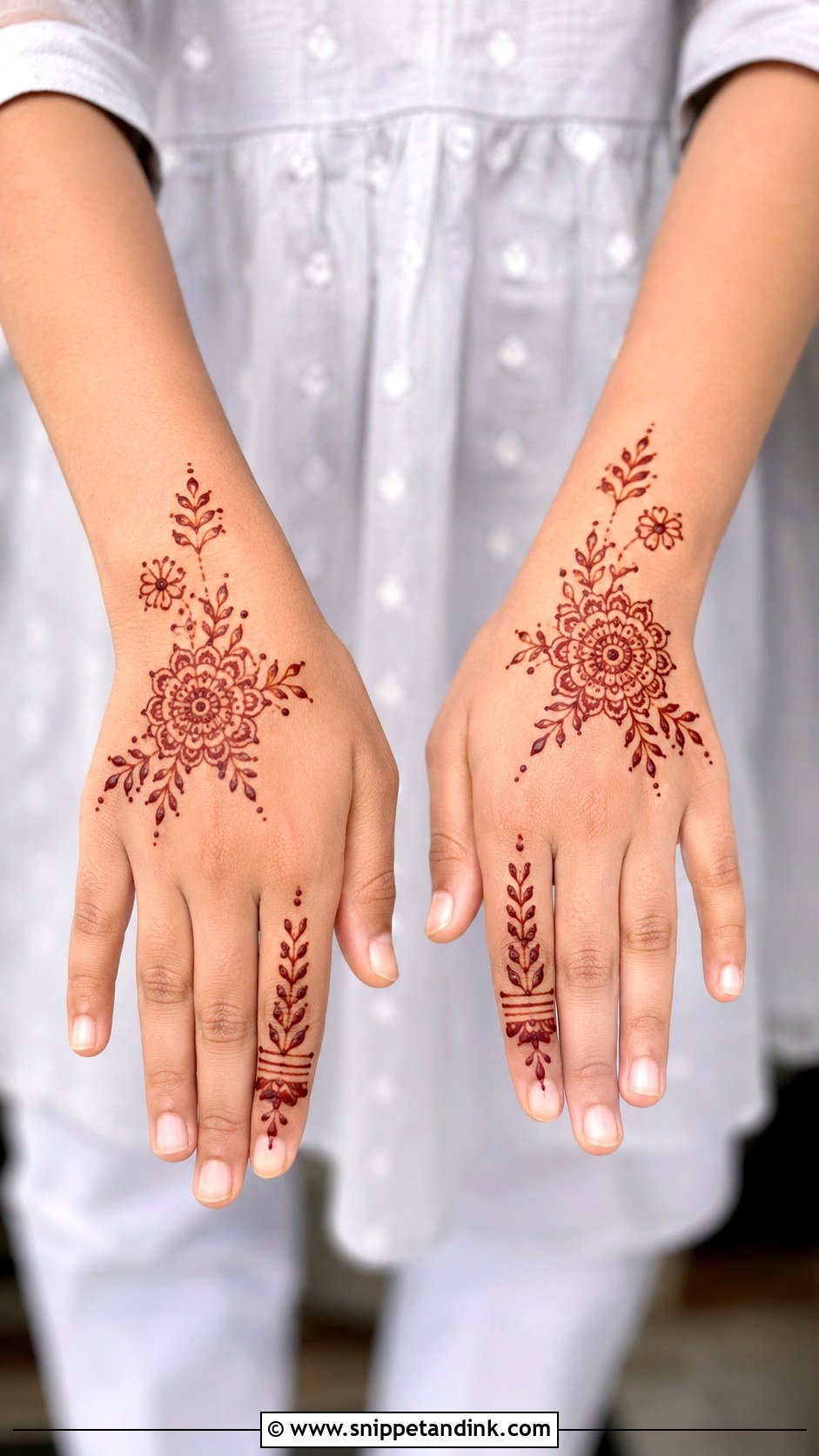
With small children, speed matters more than detail. A small mandala, a short flower trail or a tiny bracelet, on the back of the hand and one or two fingers at most. Bold outlines are easier to apply quickly and show clearly once stained; very fine work smudges before it dries. Use only natural henna for children, never a product promising an instant black stain.
21. Simple Backhand Mehndi Design For Short Fingers
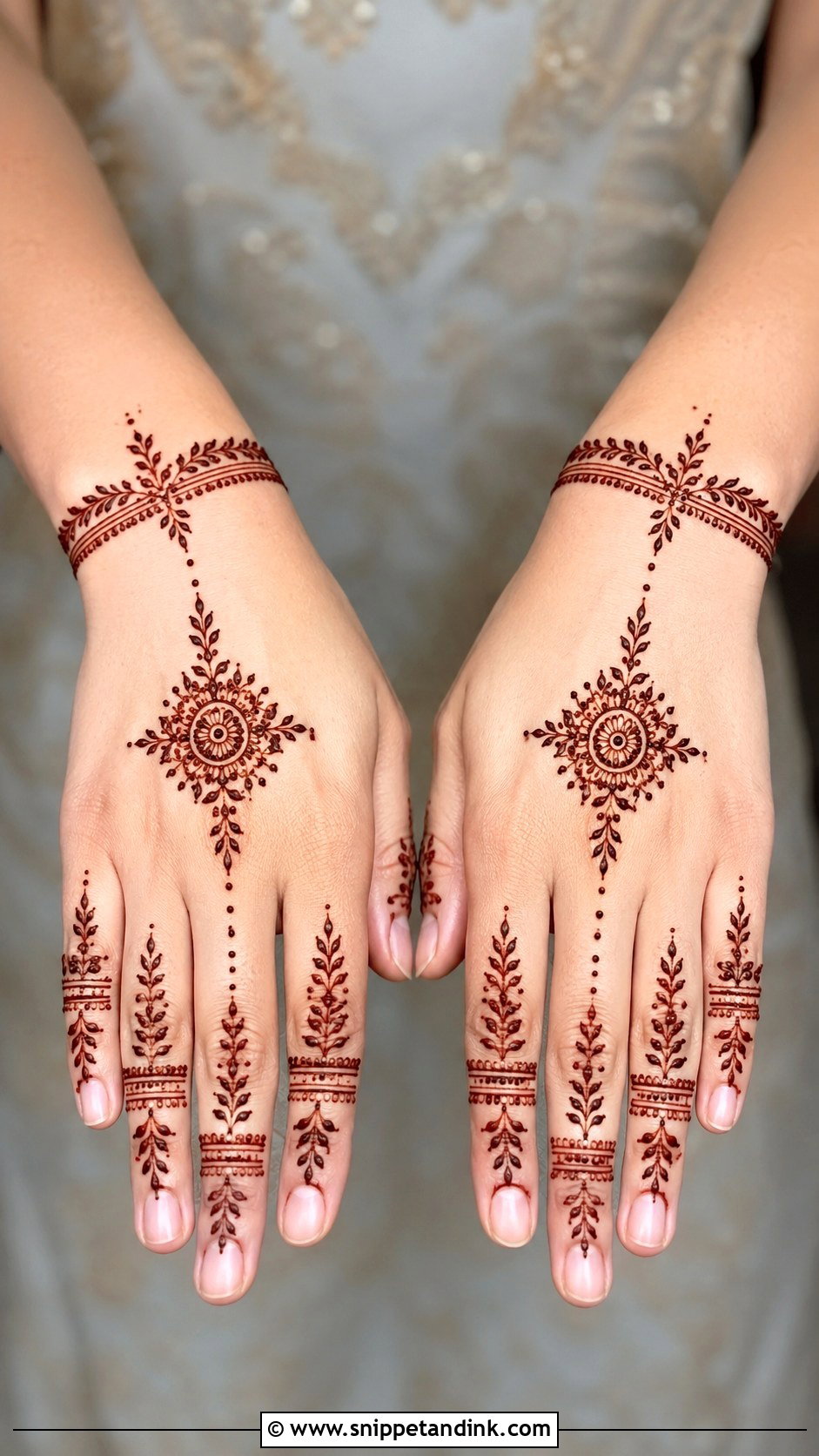
Short fingers look longer with vertical lines, narrow leafy trails and small bands placed higher up, near the tip rather than the base. Wide blocks and heavy fingertip filling shorten them, so I avoid both. A diagonal vine from the wrist to the middle or index finger stretches the whole hand. Keep the centre motif medium-sized and use slim leaves rather than filling.
22. Simple Backhand Mehndi Design For Long Fingers
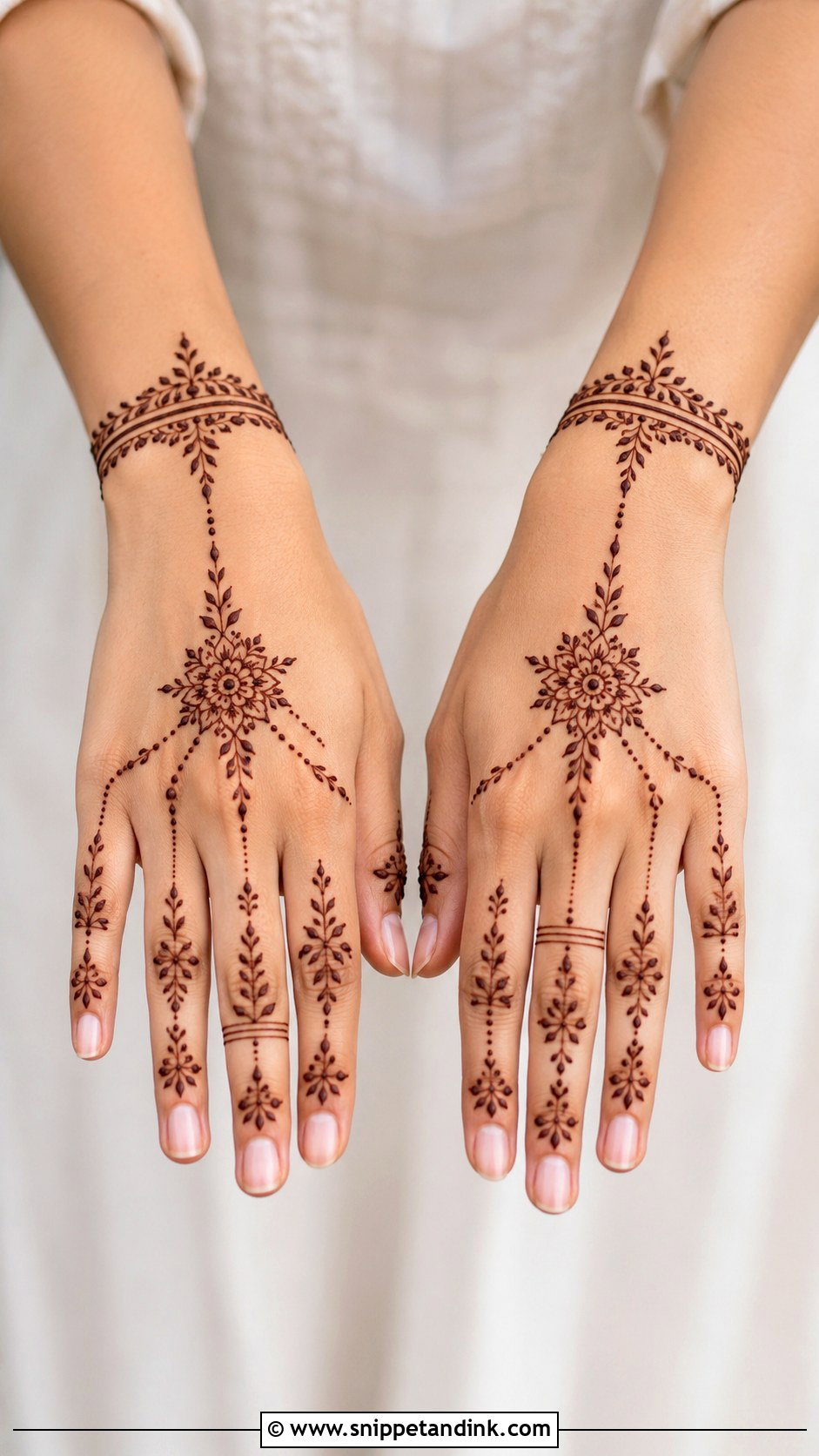
Long fingers can carry slim panels of fine lines, small leaves and delicate bands, with a mandala, floral vine or paisley trail on the back of the hand reaching up to one or two of them. Ring-style henna with dotted chains suits them especially well. Don’t overfill the hand; the open space is what shows off their length.
23. Simple Backhand Mehndi Design With Shading
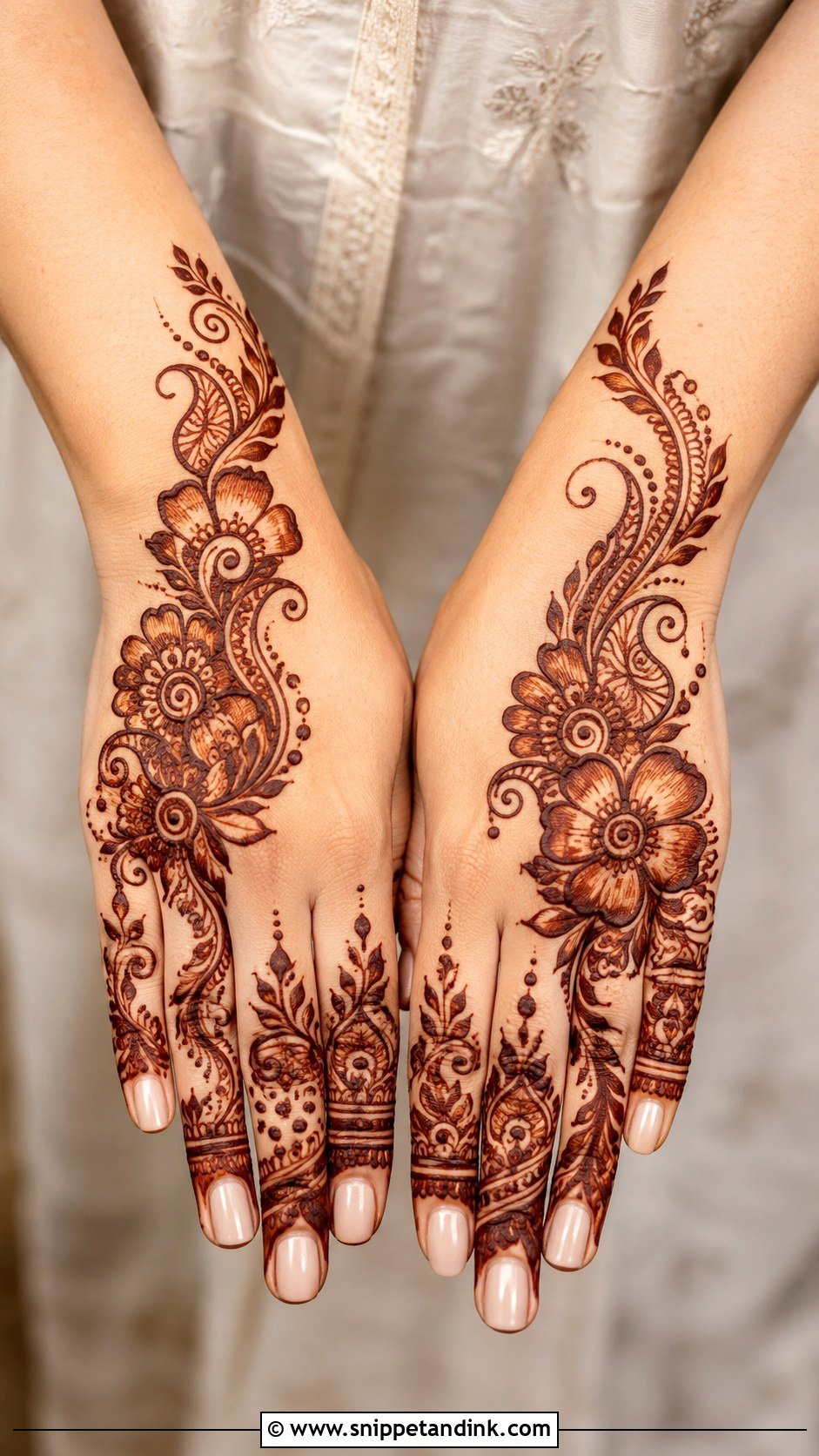
Shading adds depth inside petals, paisleys and leaves without adding more lines. A bold floral trail with softly shaded petals and a few dotted accents is the usual layout. Keep the strokes light and even, or the shading reads as a mess. After staining, the darker outlines frame the softer filled areas. Arabic and Indo-Arabic layouts suit it best because of their bold edges and open spaces.
24. Simple Backhand Mehndi Design With Rose
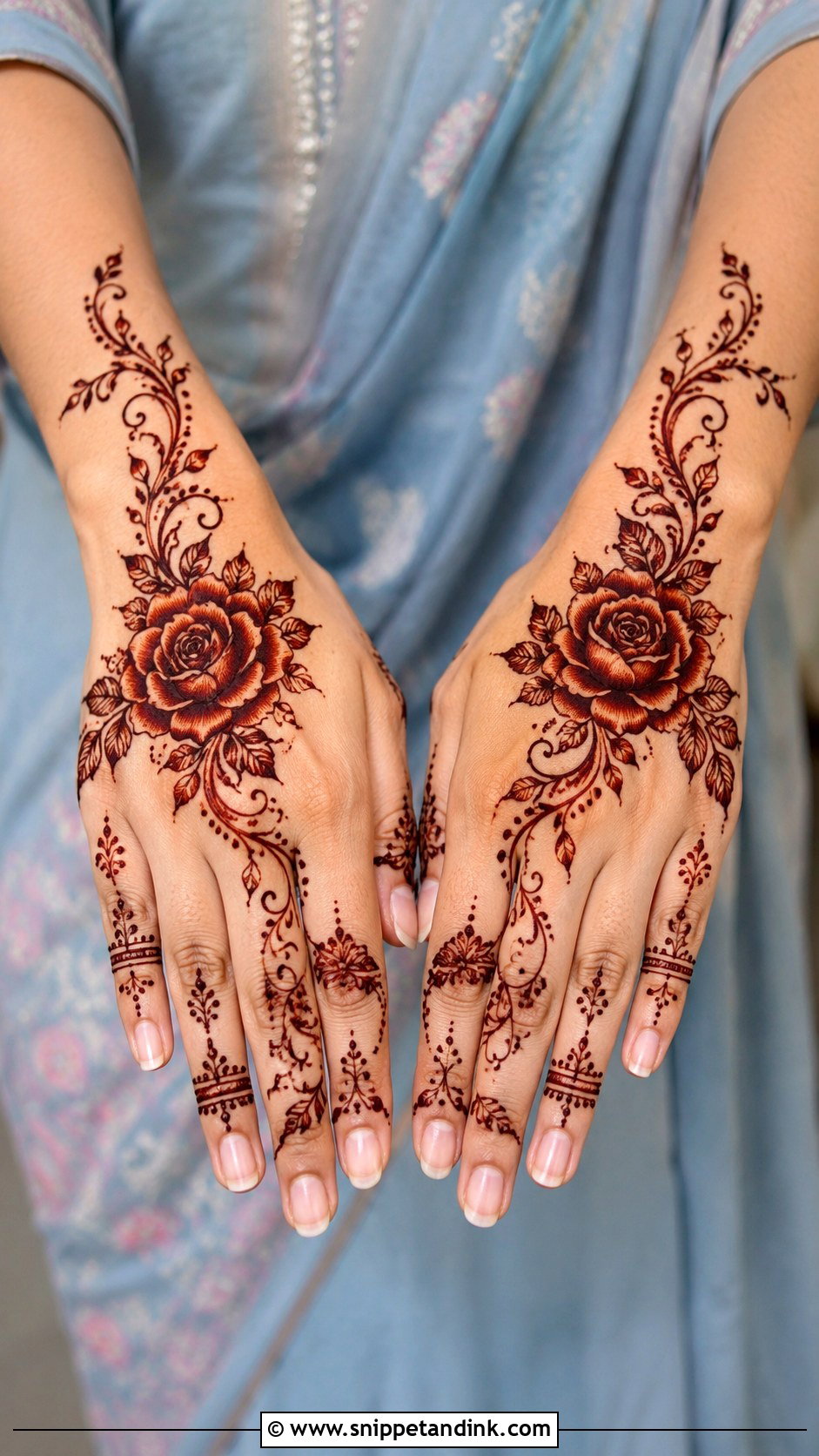
A rose in the centre of the hand or near the wrist, with curved leaves and vines moving toward the fingers. Layered petals make it recognisable; the surrounding pattern stays light, with thin dotted trails and small finger bands. It’s more defined than a basic flower. The rose needs space around it on the back of the hand, where the stain is lighter, or its petals blur together.

25. Simple Backhand Mehndi Design With Lotus
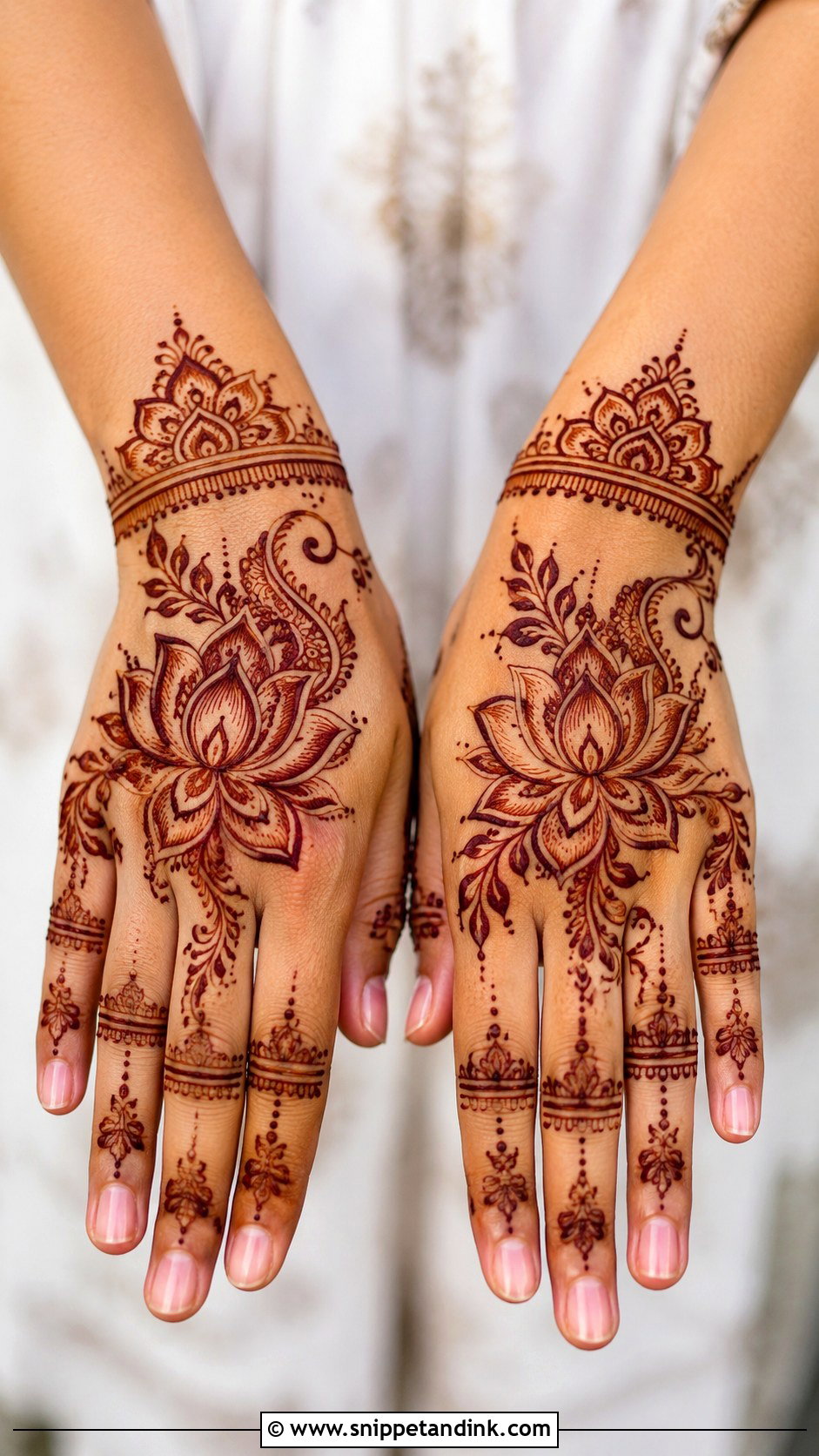
A half lotus near the wrist or a full one in the centre of the hand, with fine leaves, dots and curved lines drifting toward the fingers. Clear, evenly spaced petals make the shape. It suits festivals, puja and cultural events where a meaningful flower matters more than coverage. Keep the fingers minimal with slim bands or tiny petals so the lotus stays the focus.
26. Simple Backhand Mehndi Design With Peacock
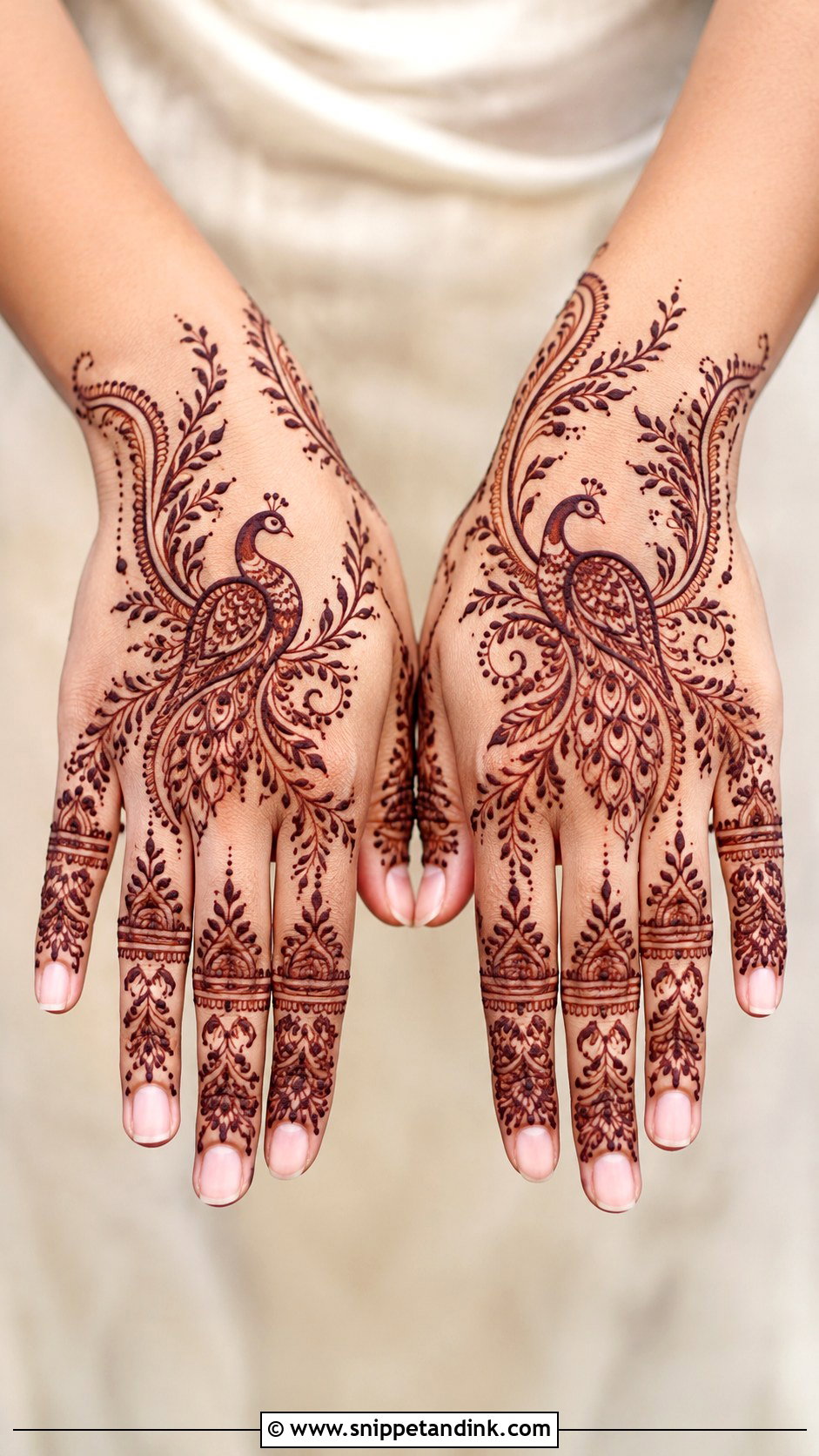
Rather than a large, detailed bird, I draw a small peacock body near the centre or wrist and let the feathers turn into leafy curves and paisley lines. Dots and small petals around the feathers soften it. Keep the bird’s outline bold, because fine strokes inside such a small shape tend to blur as the stain develops. A small peacock trail adds a traditional note for weddings and festivals.
27. Simple Backhand Mehndi Design With Heart
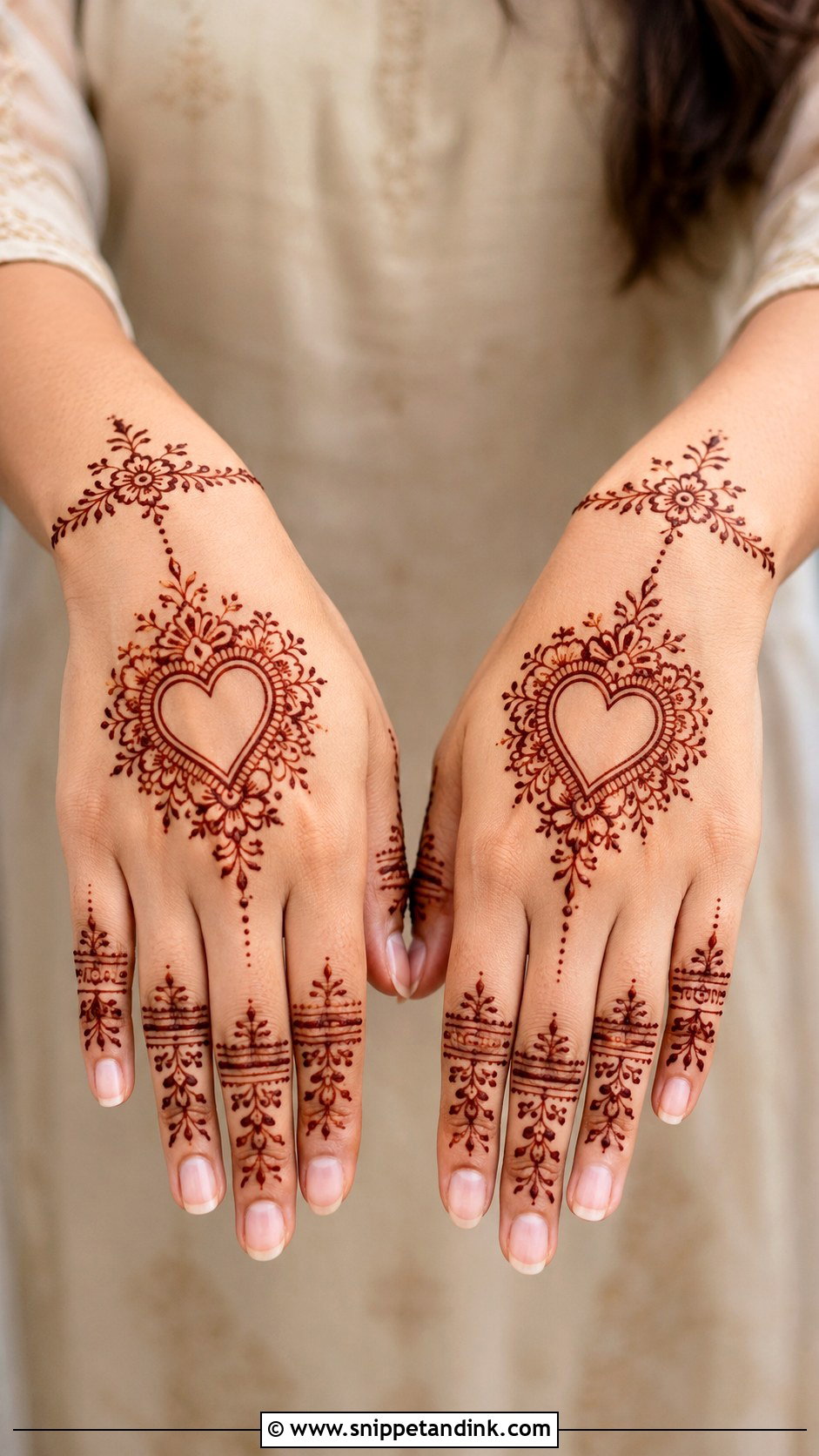
A heart near the centre of the back of the hand, framed by flowers, dots and small vines, or a heart formed from a curving leafy line for something subtler. Fingers stay minimal. It’s popular with girls and teens. Keep the heart modest in size and surround it with florals, and it looks pretty rather than childish.
28. Simple Backhand Mehndi Design With Jewellery Pattern
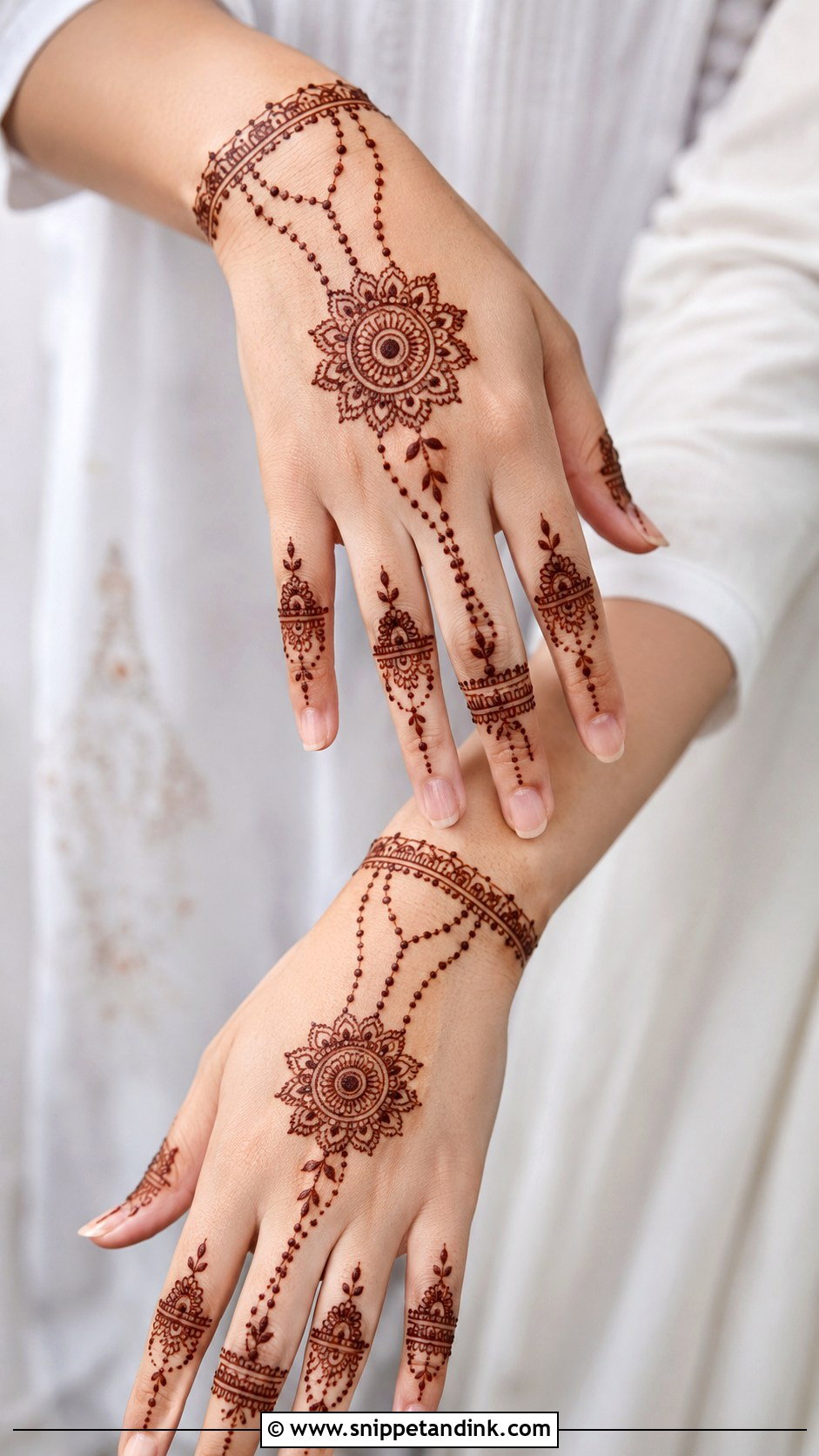
A hathphool is a hand ornament linking a bracelet to finger rings, and henna can copy it: a wrist bracelet, a central flower or mandala, and dotted chains running to rings on the fingers. Small leaves, petals and tiny jaali sections add detail while the hand stays partly open. It’s at home at weddings, engagements and Eid alongside real bangles and rings. Thin, even chains make it look like jewellery; thick ones look like stripes.
29. Simple Backhand Mehndi Design With Half Mandala
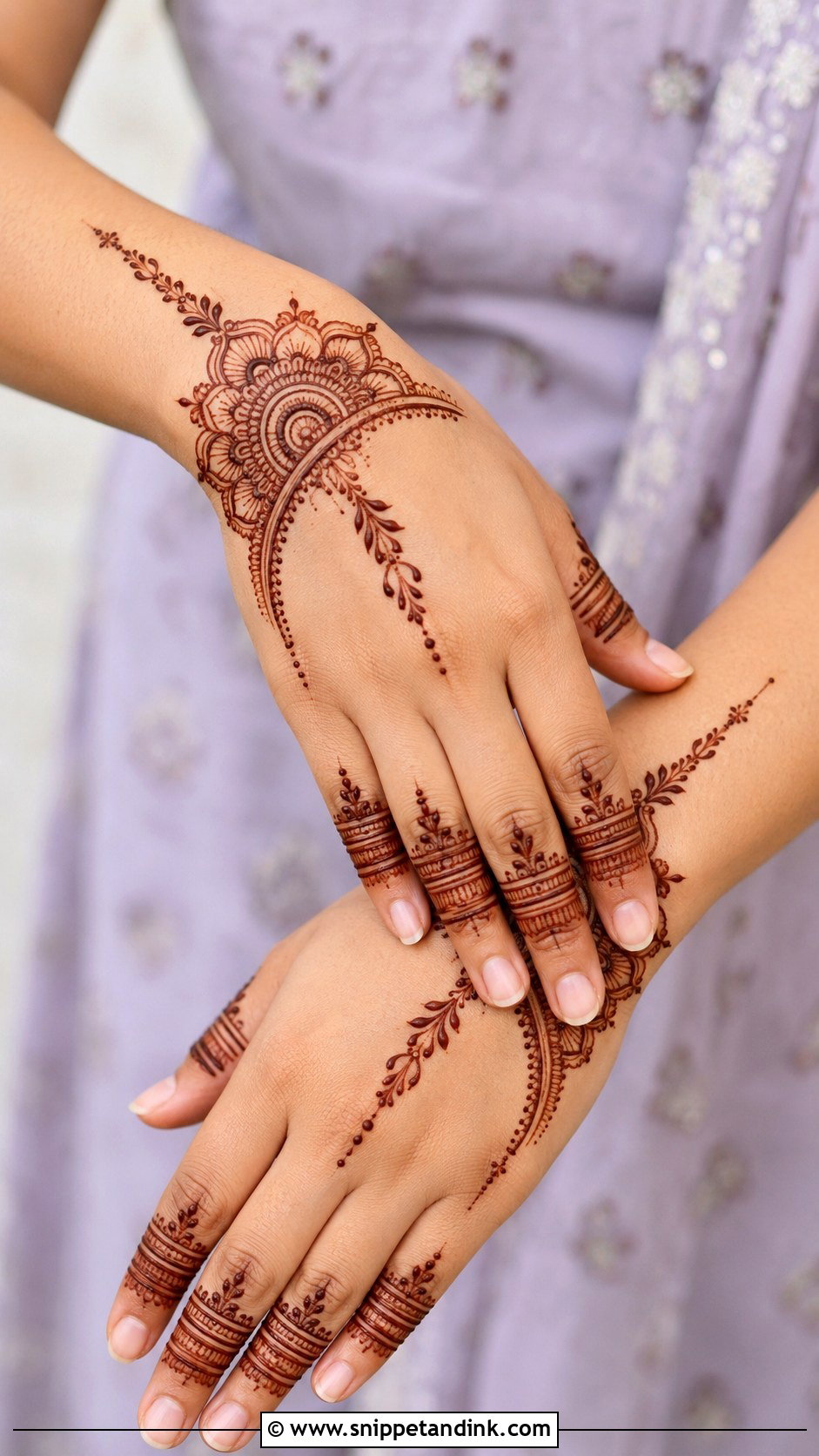
Half a mandala on one side of the hand, near the wrist or along the edge, with petals, dots and a small border, then a thin vine reaching toward the fingers. It gives movement where a full mandala gives stillness. Anyone who finds full circles too predictable usually likes this. It looks artistic but is straightforward to draw.
30. Simple Backhand Mehndi Design With Side Trail
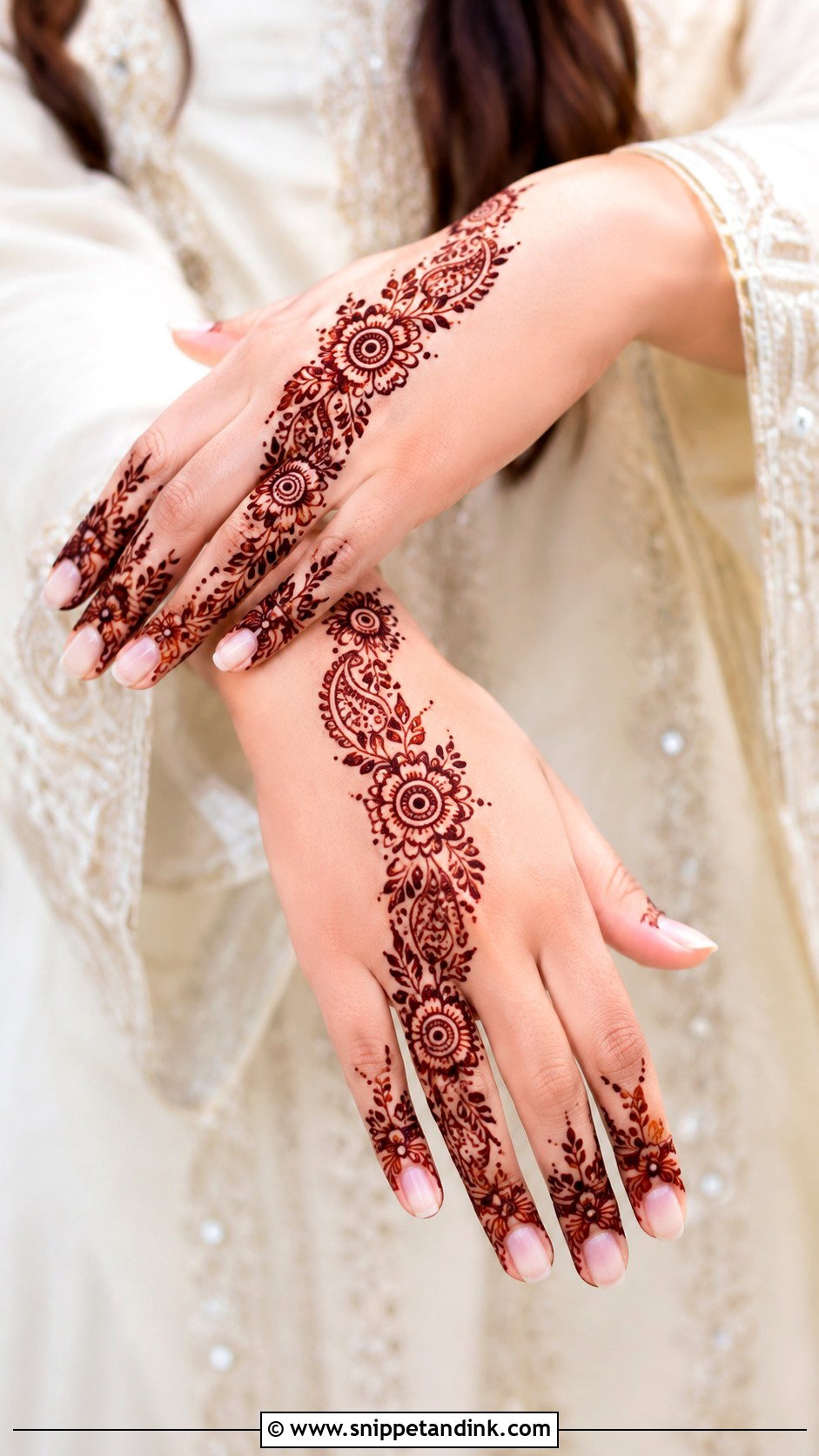
One side of the hand gets the flowers, leaves and curved lines; the centre stays open. The trail can run from the wrist along the outer edge to the little finger, or angle toward the index finger. It follows the natural shape of the hand, which makes it look elegant with simple finger bands. It’s quick, but the outer edge brushes surfaces often, so keep it clear of tables while the paste is wet.
31. Simple Backhand Mehndi Design With Wrist Band
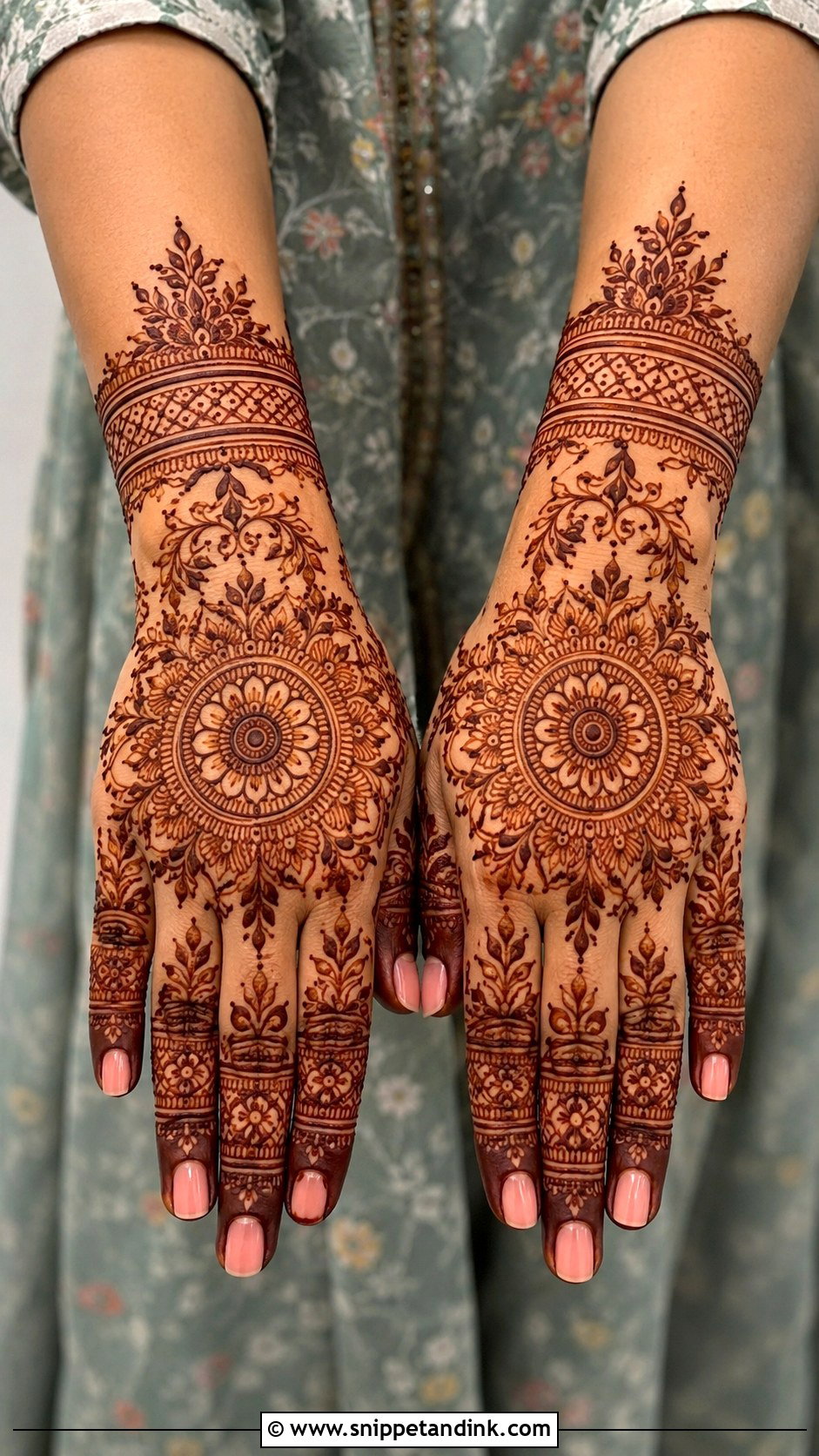
Two or three neat lines around the wrist with small petals, dots, checks or leaves between them, and a small floral vine or dotted chain rising toward the centre of the hand. Matching bands on the fingers balance it. The wrist lines frame everything above them, so they must be even. I draw them with the hand resting palm-down and the wrist straight, never bent.
32. Simple Backhand Mehndi Design With Ring Pattern
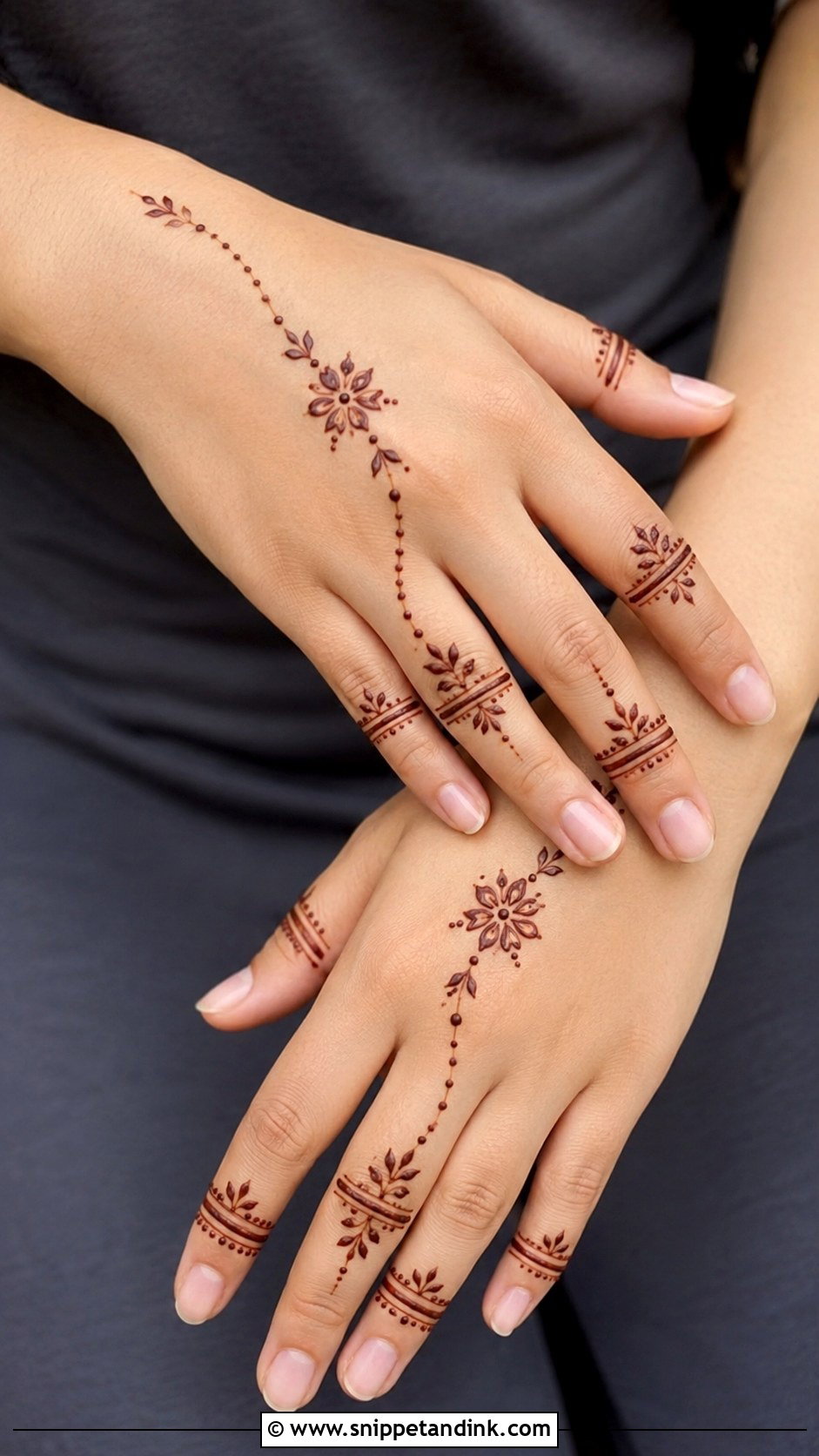
A ring pattern backhand mehndi design keeps the attention on the fingers: a small band, tiny dots or a leafy ring on each, with a dotted chain joining one ring to a small flower or mandala on the hand. The centre stays open. It’s a light hathphool without the wrist bracelet, quick to apply and modern. I place the rings between knuckles so they don’t crack when the fingers bend.
33. Simple Backhand Mehndi Design With Moroccan Pattern
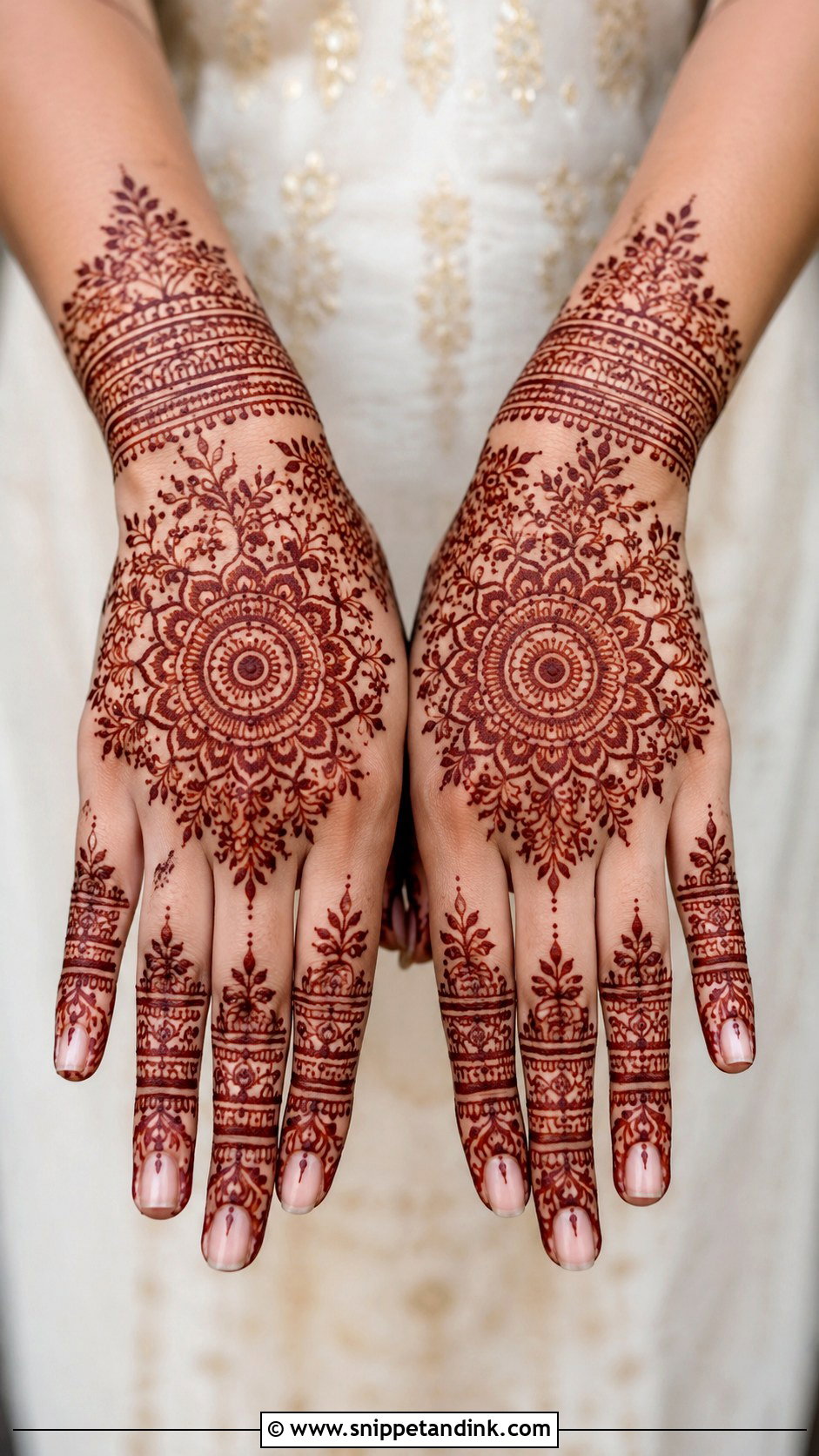
Geometric shapes, lines, diamonds and neat borders: a diamond panel across the centre of the hand, finger bands and a clean wrist border, with dots or tiny leaves only where needed. It feels structured and modern compared to floral Arabic work. The flat back of the hand shows geometry clearly, but it also shows every crooked line, so take it slowly.
34. Simple Backhand Mehndi Design With Gulf Pattern
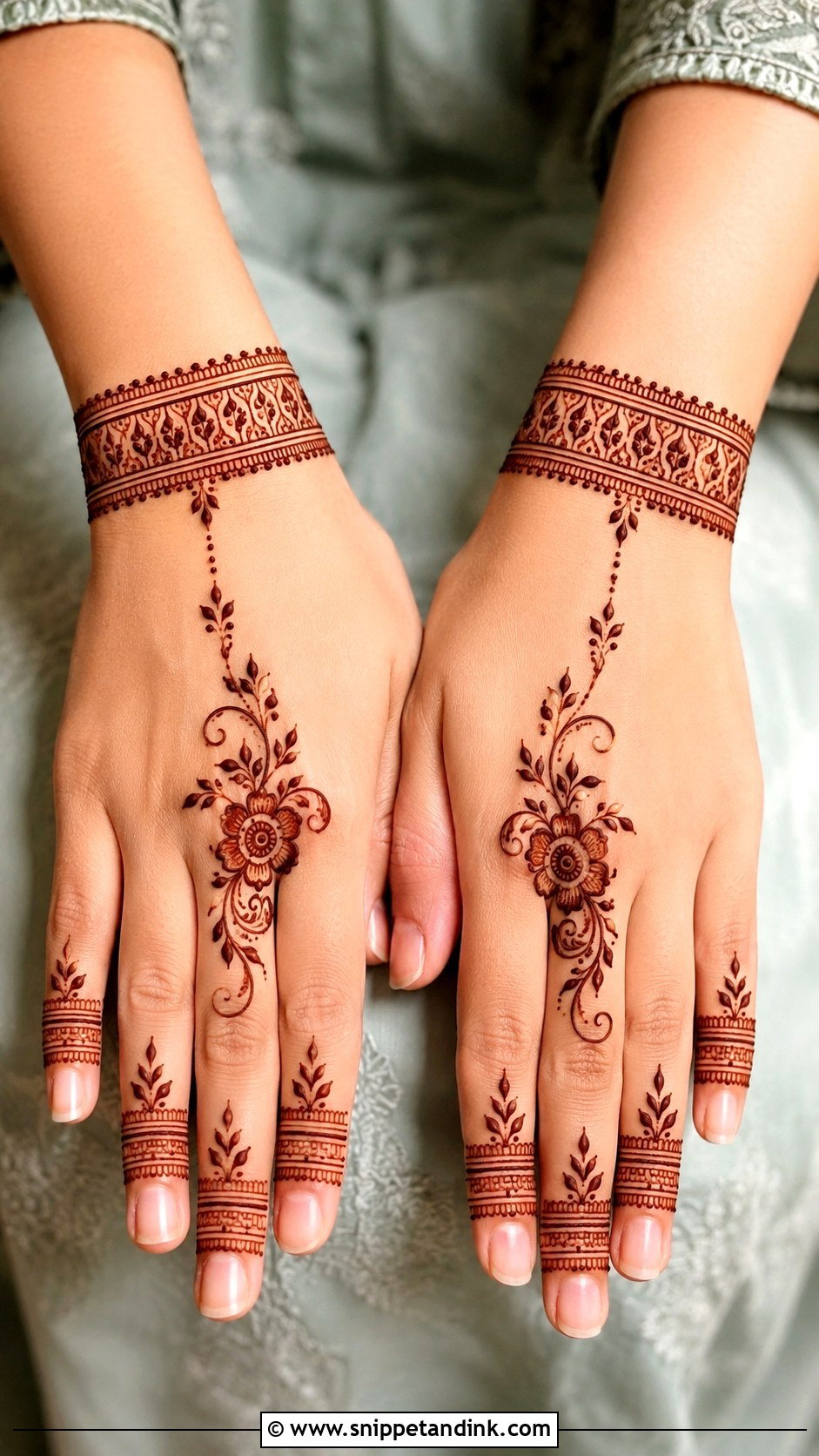
Large flowers, leafy vines, curved paisleys and lots of open skin, sweeping diagonally or running along one side with finger details. Gulf-style henna looks dramatic without being packed. I use thicker outlines for the main flowers and lighter strokes inside, and that contrast is what makes it rich. Thick outlines also hold more paste, which helps the stain on the back of the hand.
35. Simple Full Backhand Mehndi Design
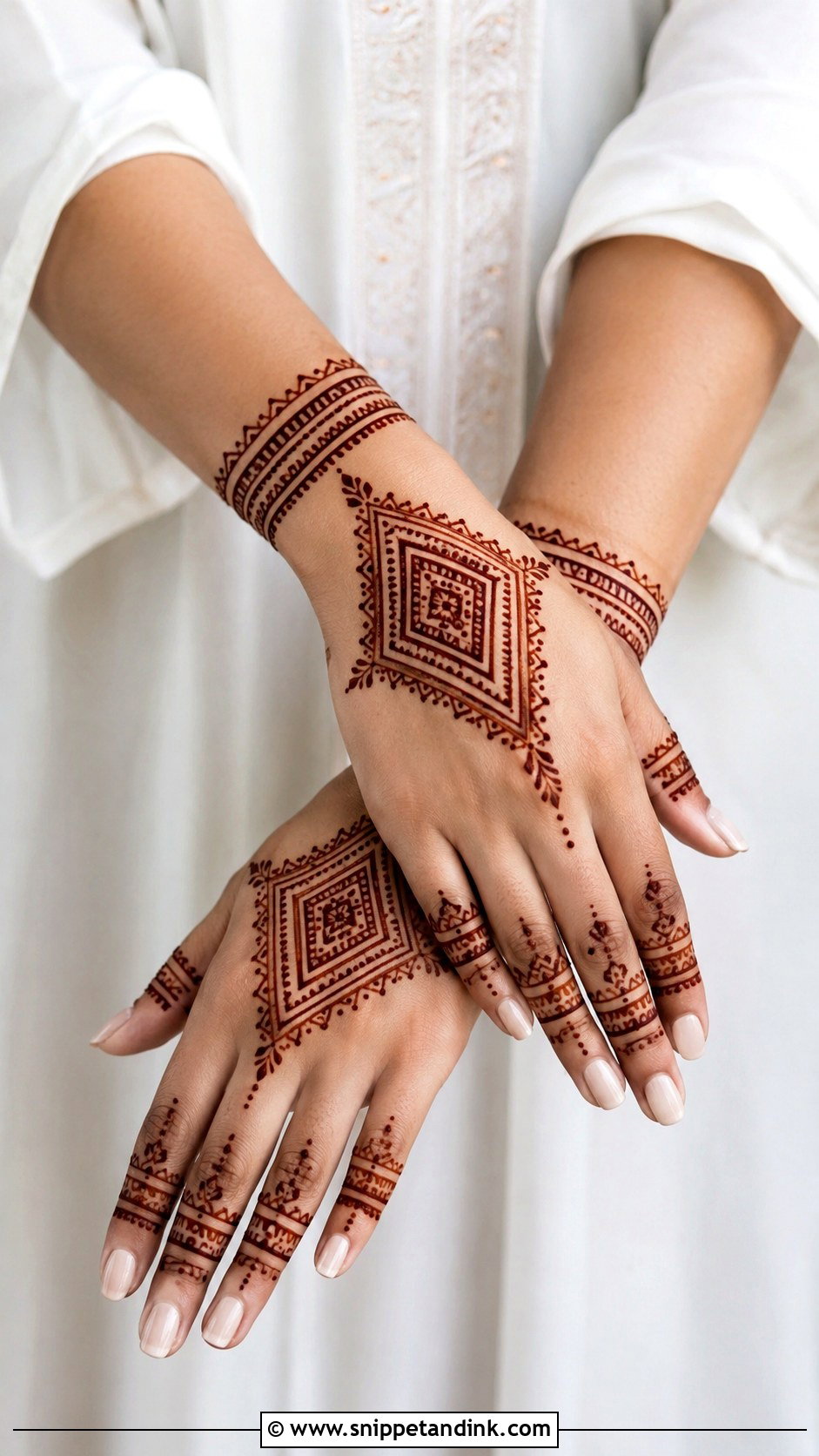
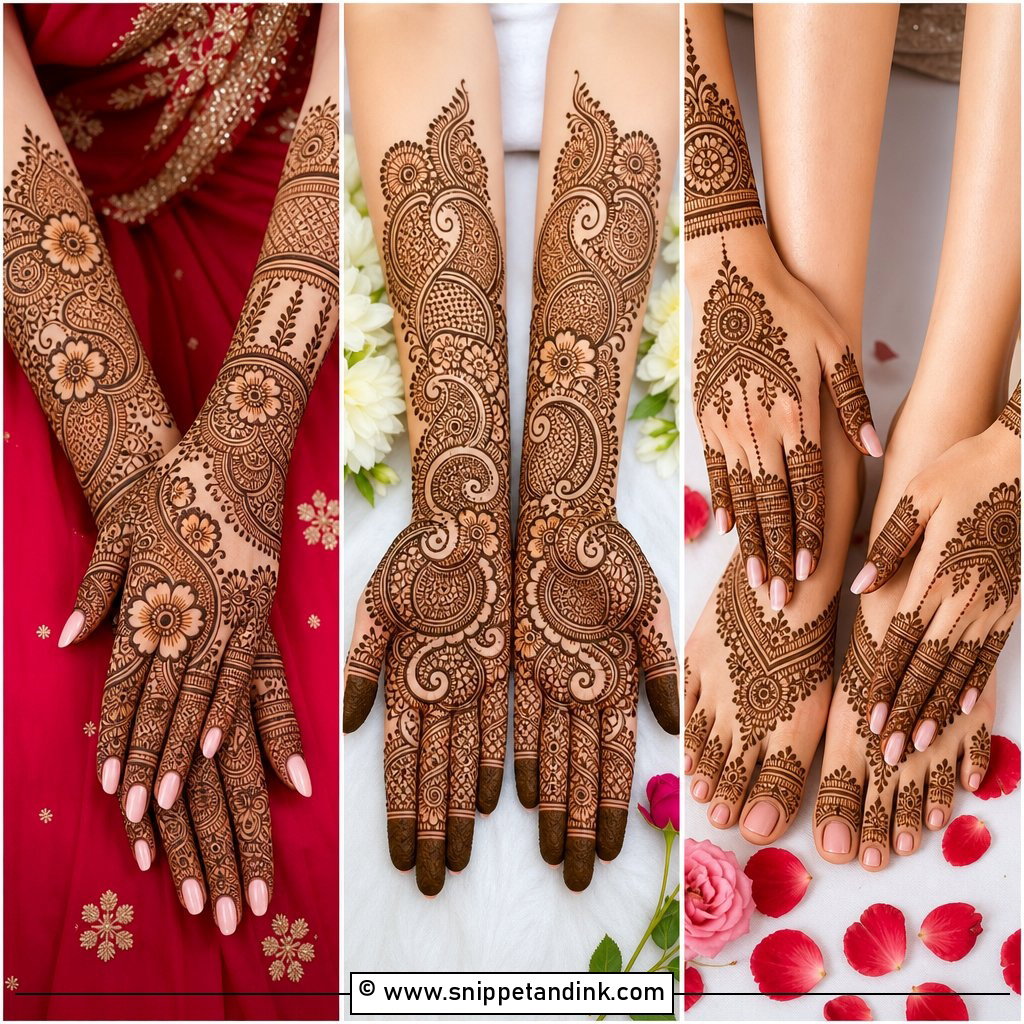
Full coverage without bridal density: a central mandala, floral corners, a wrist band, finger details and small leafy fillers, with enough open skin to keep it clean. Repetition keeps it organised, for example finger bands that match the wrist border and small leaves repeated around the mandala. It’s faster and lighter than a traditional full hand, and still feels complete for a festival or a family wedding.
A Short Message Your Artist Will Thank You For
Many appointments run over because the design is decided in the chair. A few lines sent a day or two before saves time for both of you and gets you a design that fits your hand rather than the reference photo.
- Two or three reference pictures, and which part of each you like: the trail, the fingers, the wrist band.
- Back hand only, or palm too, and how far up the wrist you want it to go.
- The date and time of the event, so the artist can tell you how early to apply for a full stain.
- Anything you’ll wear on that hand, such as a watch, a ring stack or a hathphool, so the design can leave room for it.
- Any skin sensitivity or reaction to henna or essential oils in the past.
Then arrive with clean, dry hands, no lotion, and sleeves you can push above the elbow. It sounds small, but it’s the difference between a relaxed half hour and a rushed one.
Balance Beats Coverage
Clean lines, smart spacing and easy motifs are all a backhand design really needs. A floral Arabic trail is quick, a mandala gives symmetry, a bracelet adds a jewellery effect, and a fuller backhand suits a bigger celebration. Let your hand shape, the event, your outfit and your comfort decide. Keep the lines neat, give the stain time to develop and resist overcrowding; a balanced simple design holds its own next to the heaviest henna in the room.
You'll Like These Ideas:



Leave a Reply