
Pakistani bridal mehndi carries more weight than most of what a bride wears. It’s applied surrounded by family, it shows up in every ritual from the rukhsati to the walima, and its colour is read, half jokingly, as a sign of how loved she’ll be. The designs brides ask me for now keep that tradition but plan for the camera: full hand work, Arabic trails, jaali, mandalas, peacocks, personalized initials and forearm layouts that sit well under heavy embroidery. Below are 25 ideas, from a full dulhan hand to a lighter Nikkah design, with what each one needs from your hands, your timeline and your artist.
Mapping Mehndi Across Dholki, Mayun, Baraat and Walima
A Pakistani wedding can stretch across a week, and brides often ask me which design belongs on which day. The answer depends on one thing: henna stain peaks roughly two days after application and then slowly fades over the next week or two. So the bridal design is planned backward from the baraat.
- Dholki or engagement: a light Arabic or finger design, ideally a week or more before, so it has faded by the time bridal mehndi goes on.
- Mehndi night or the day before: the full bridal design, applied one to two days ahead of the baraat so it’s at its darkest on the day.
- Baraat: no new mehndi. Oil your hands lightly before getting dressed.
- Walima: usually the same stain, still rich. Small touch-ups if anything has faded on the fingertips.
Many families like the bride to have her hands done on the rasm-e-henna night itself. That’s lovely, but a heavy design with feet can take most of an evening. If that night is packed with dancing and rituals, I sometimes suggest applying the bridal design privately the day before and doing a small ceremonial touch on the night.
1. Full Hand Pakistani Bridal Mehndi Design 2024
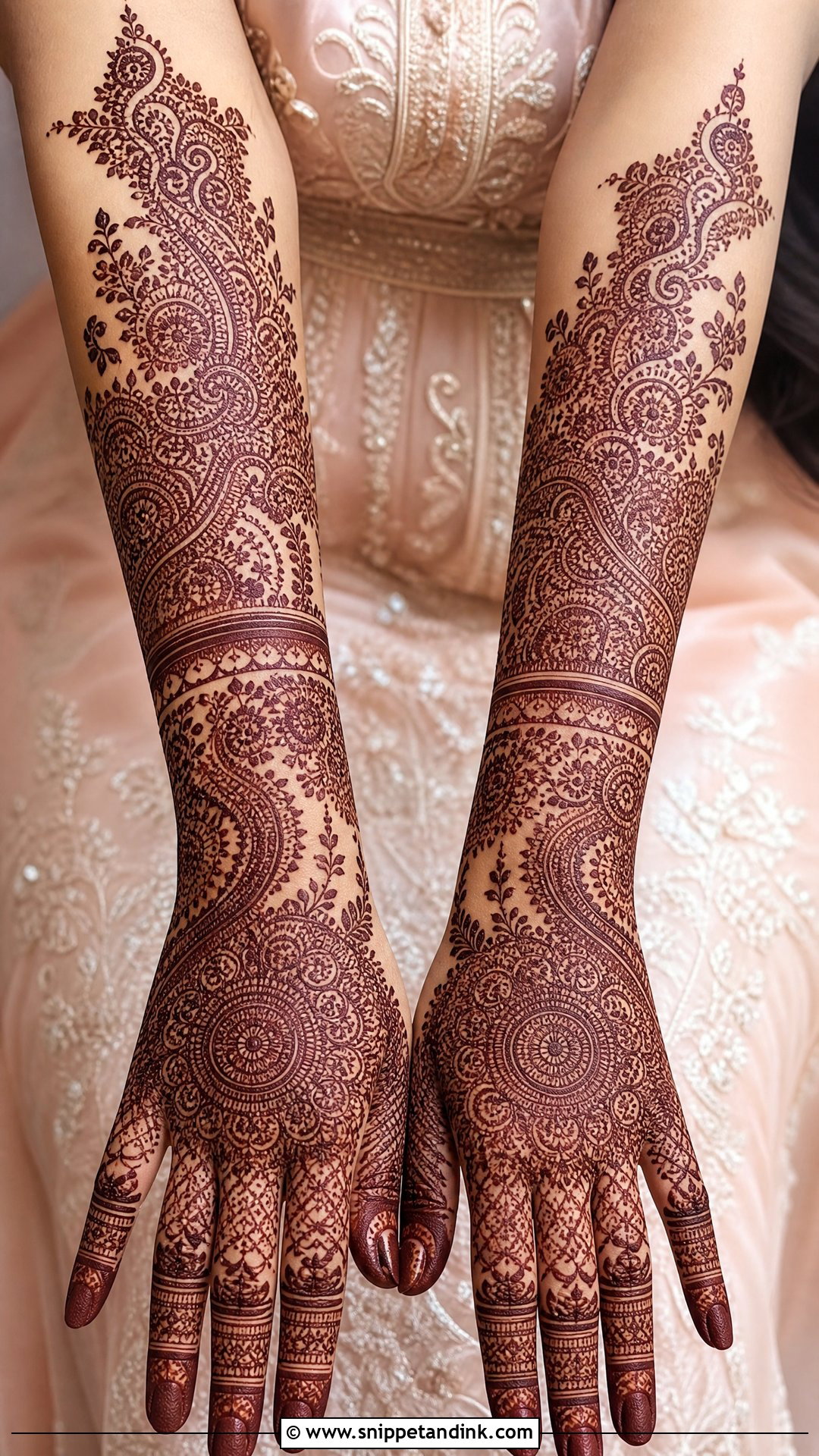
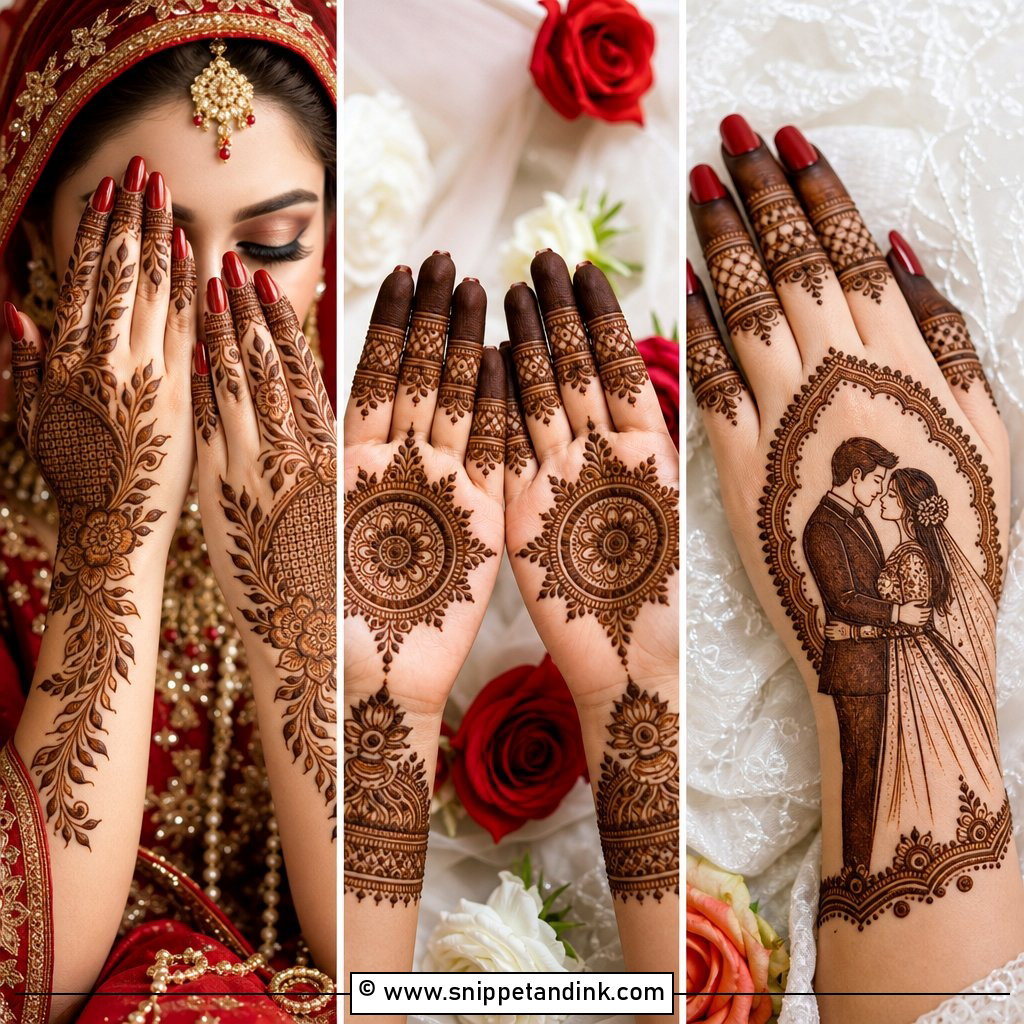
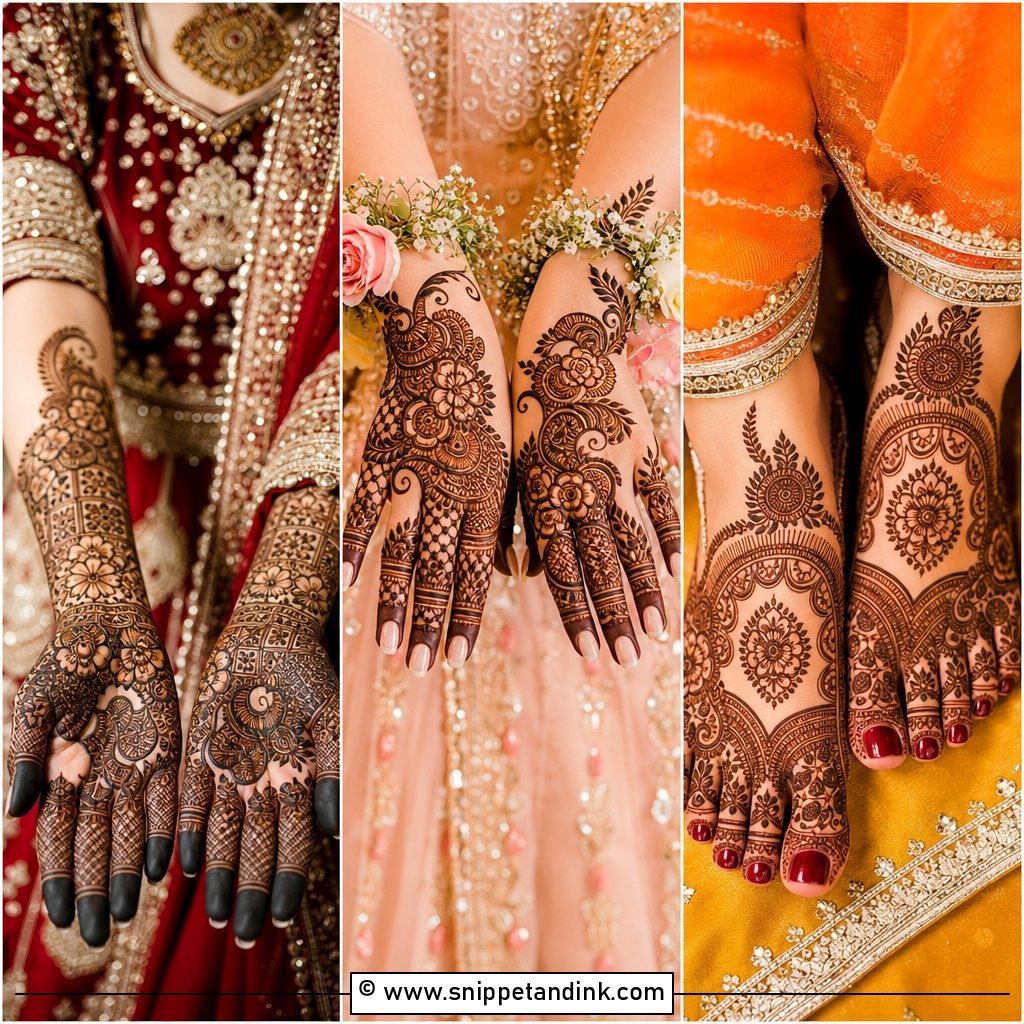
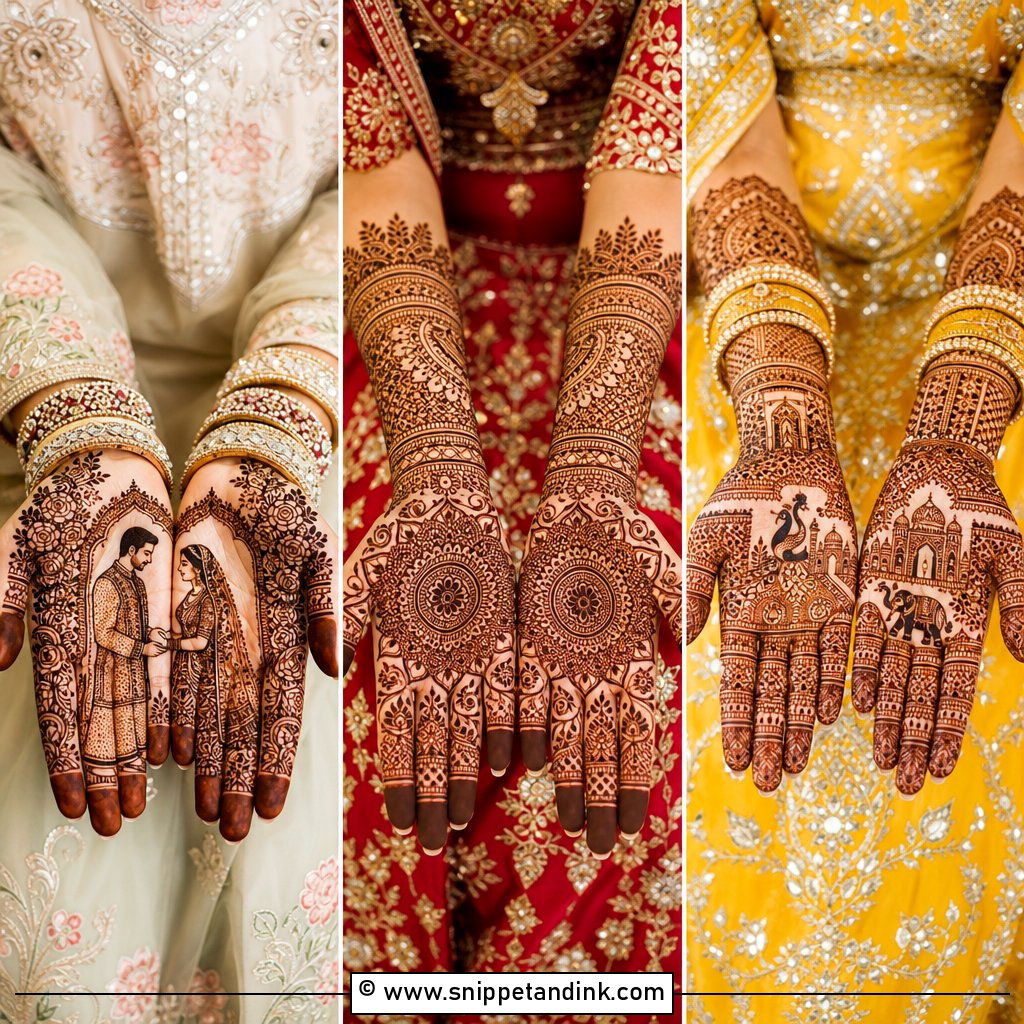
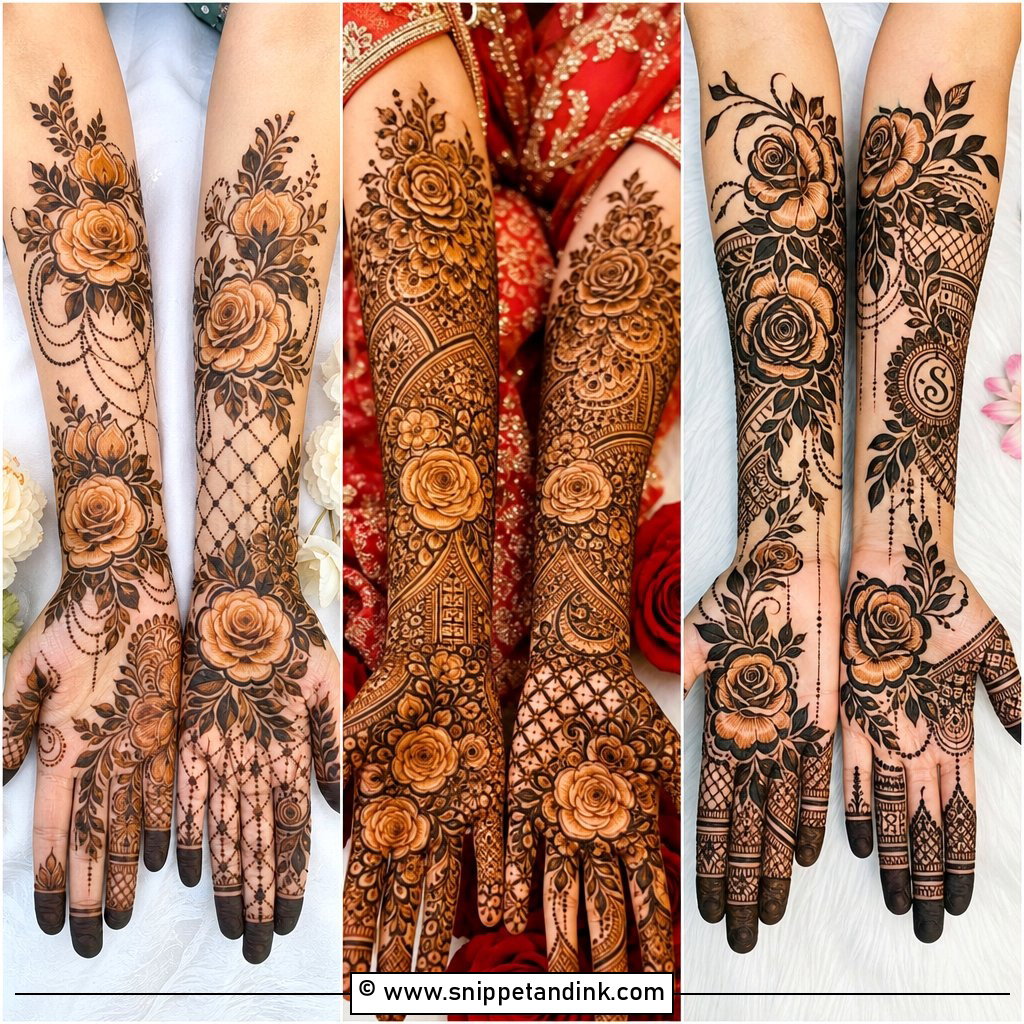
Full hand coverage runs over the palm, fingers, wrist and forearm in paisleys, florals, vines and fine filling. I give the palm one clear centre, a bold mandala or a bride and groom scene, and keep the fingers in neat bands so the eye has an order to follow. Tiny negative spaces between the filler lines are what make the stain look even rather than patchy. It sits naturally with red, maroon, gold, ivory or deep green outfits.
2. Pakistani Bridal Mehndi Front Hand Design
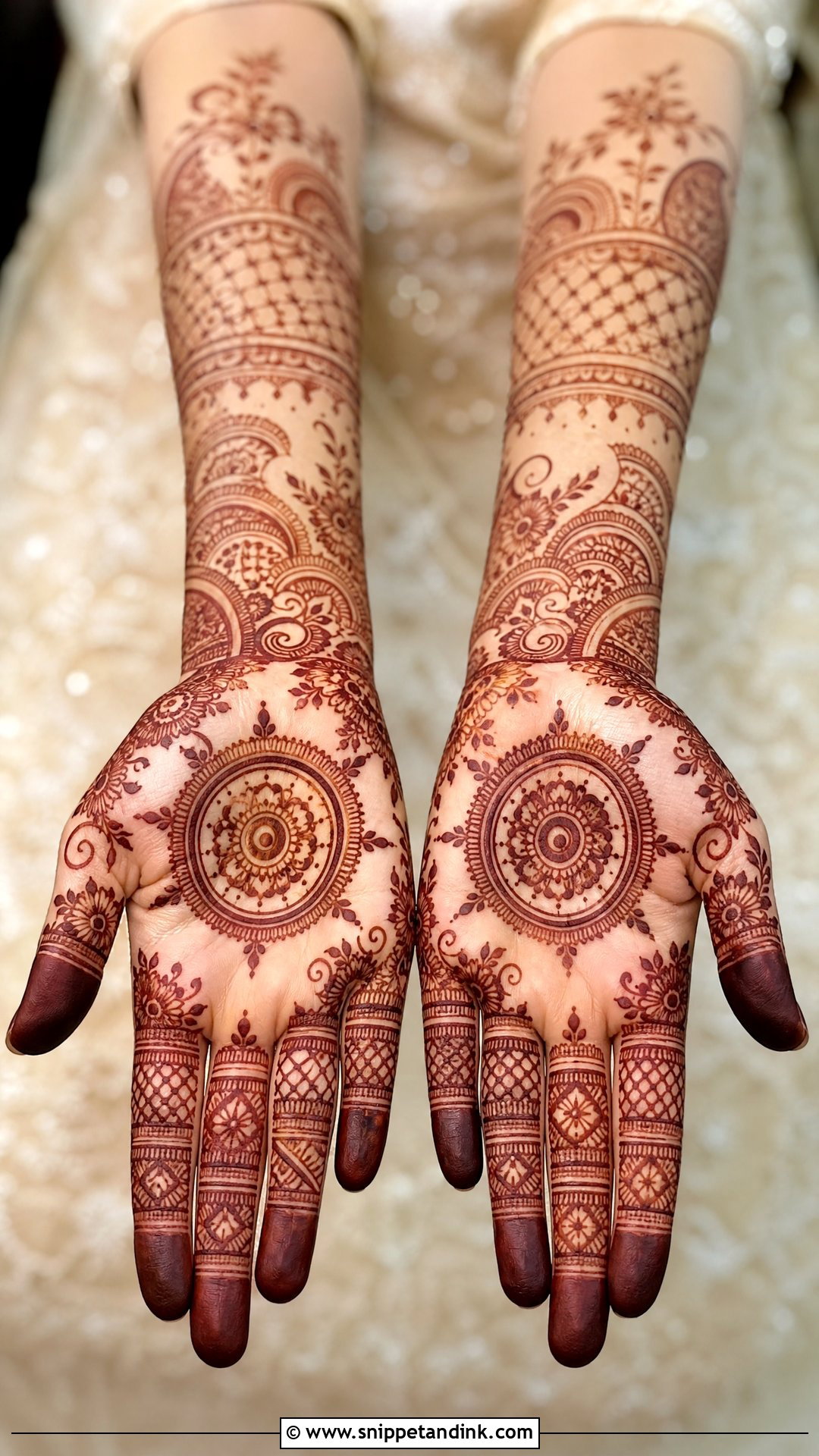
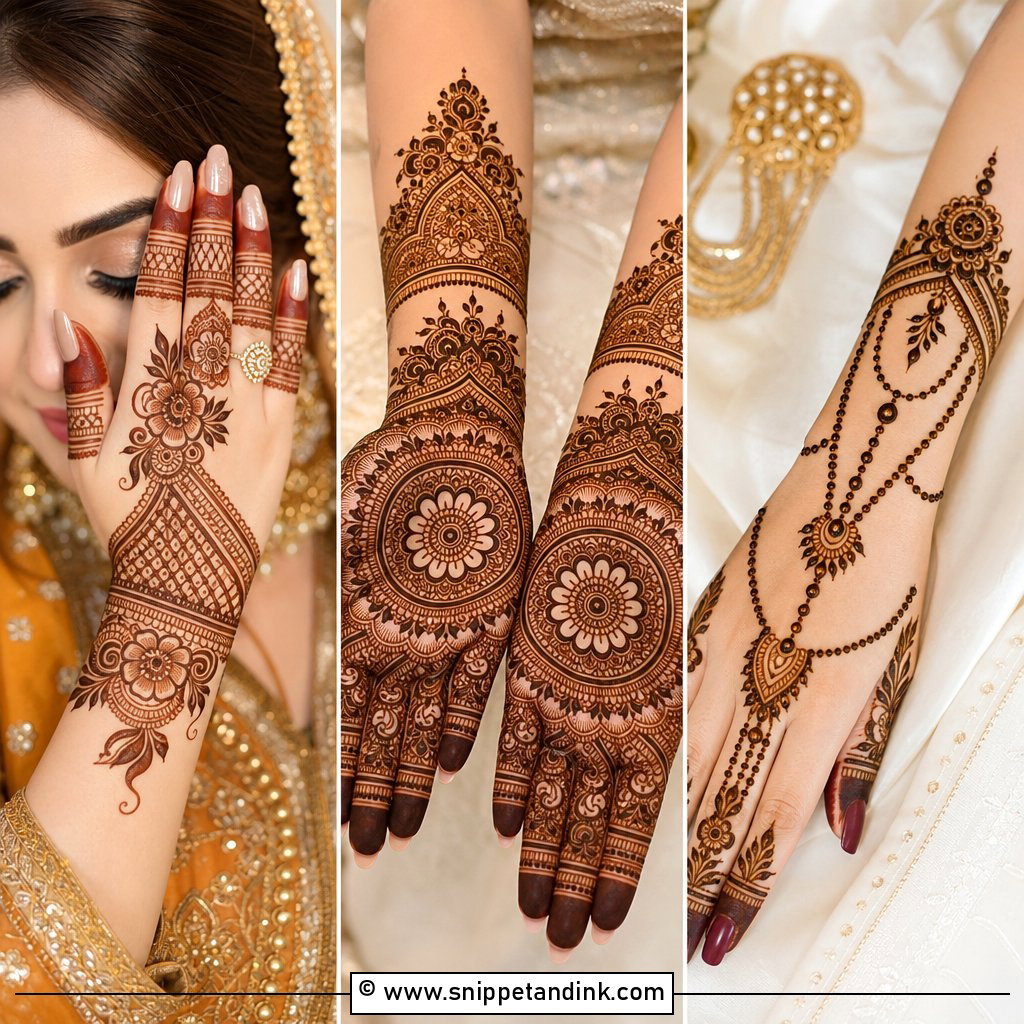
The palm is what shows when you hold out your hands for the ring, the doodh pilai or the photographer, and it’s also where henna stains darkest. That’s why I spend the most time here. I start with a central round motif and work outward into paisleys, vines, net and shaded fingertips. Traditional brides keep it full; modern brides often like slim strips of bare skin. Both hands should match in layout without being carbon copies, which looks stiff.
3. Pakistani Bridal Mehndi Back Hand Design
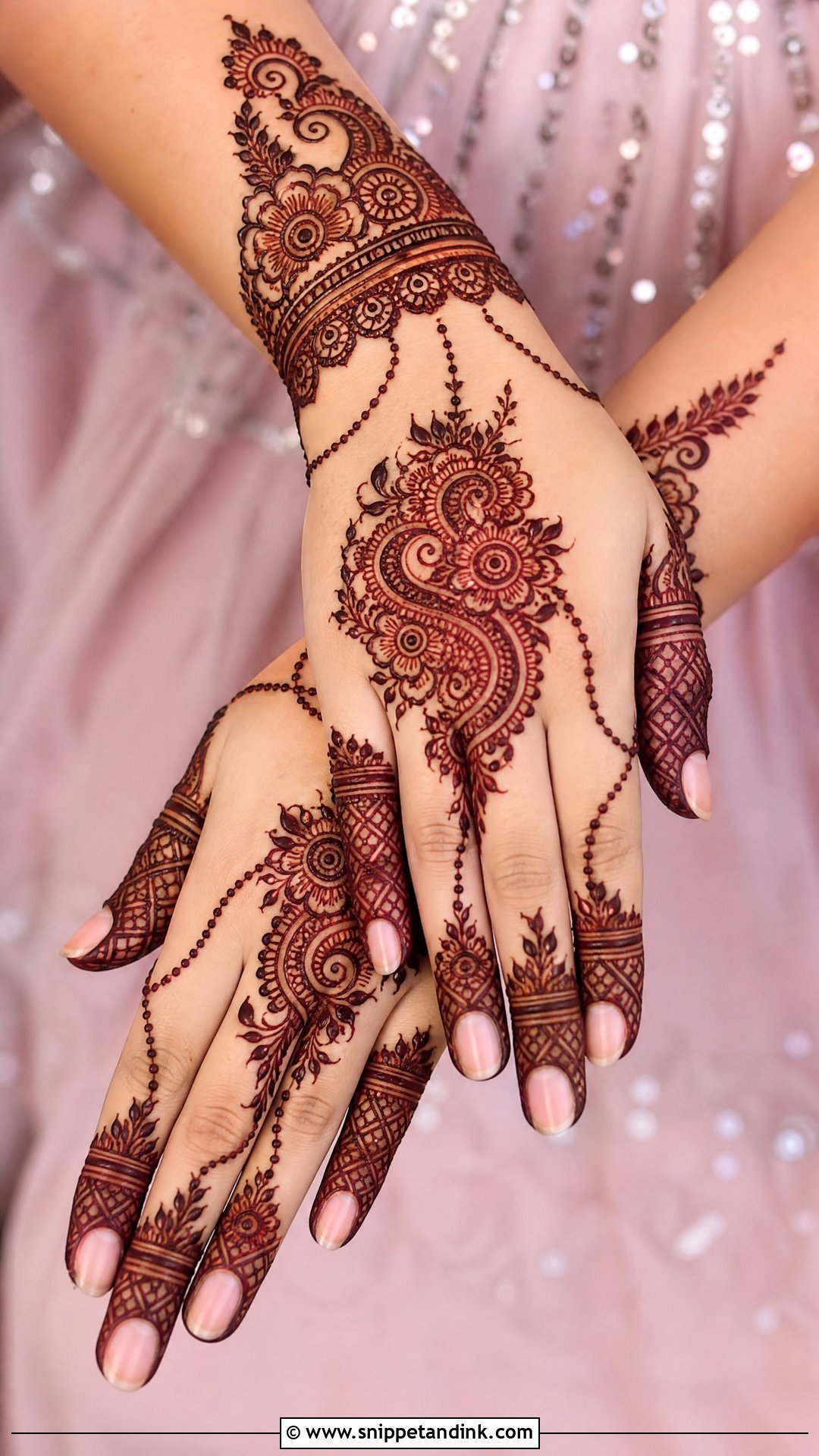
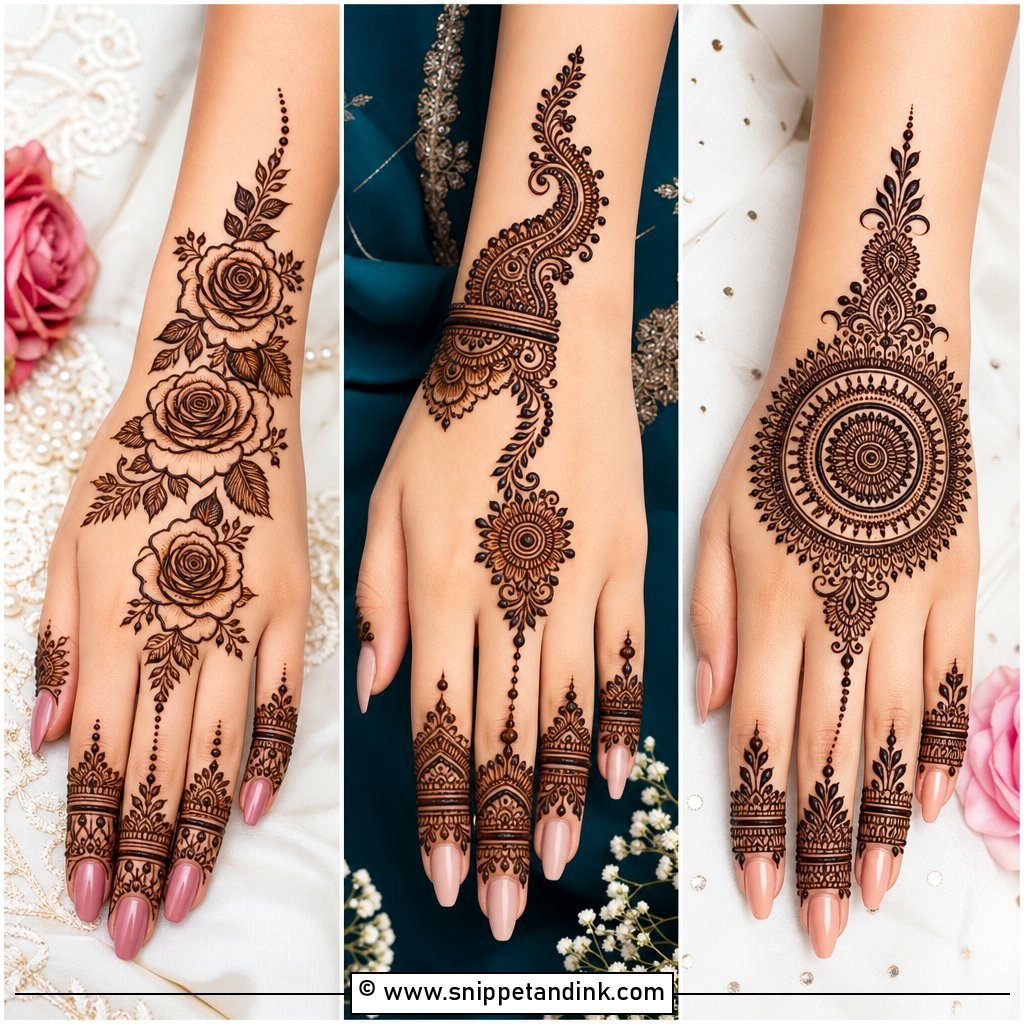
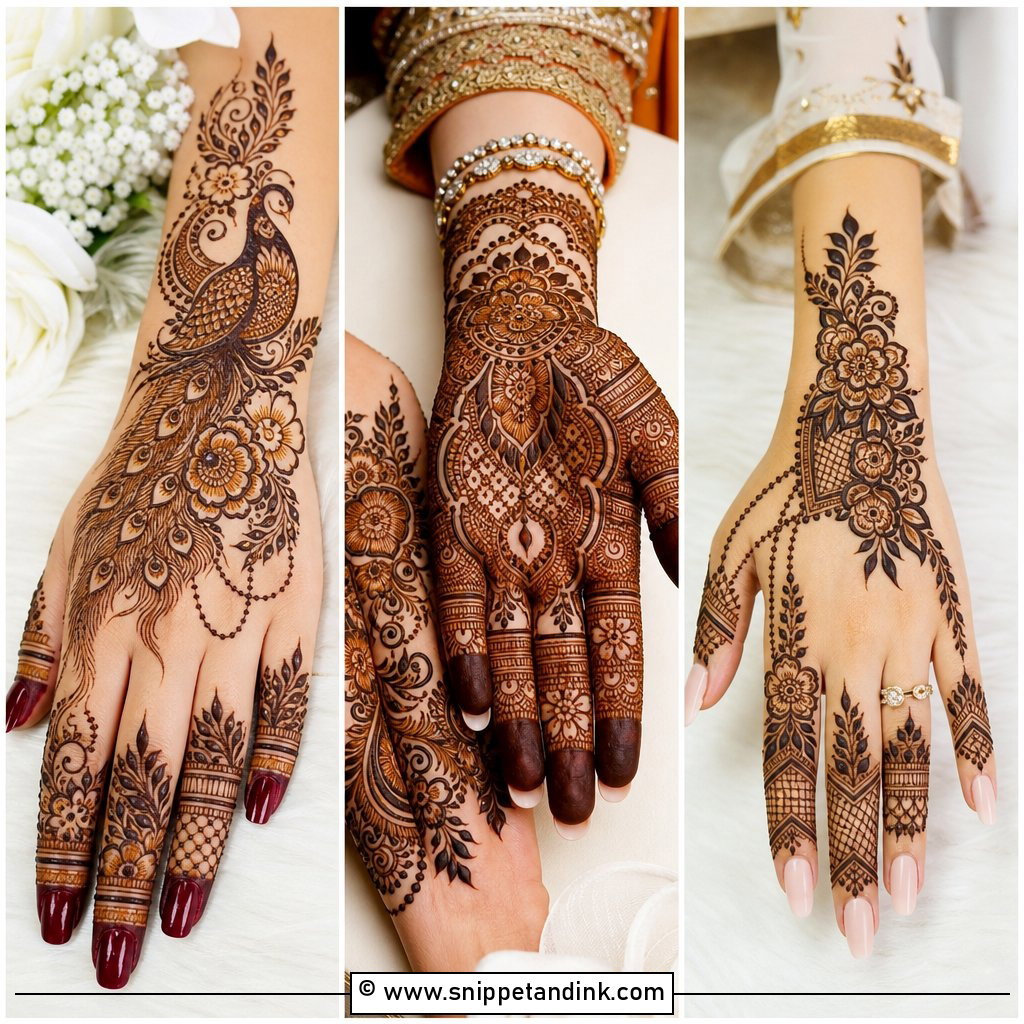
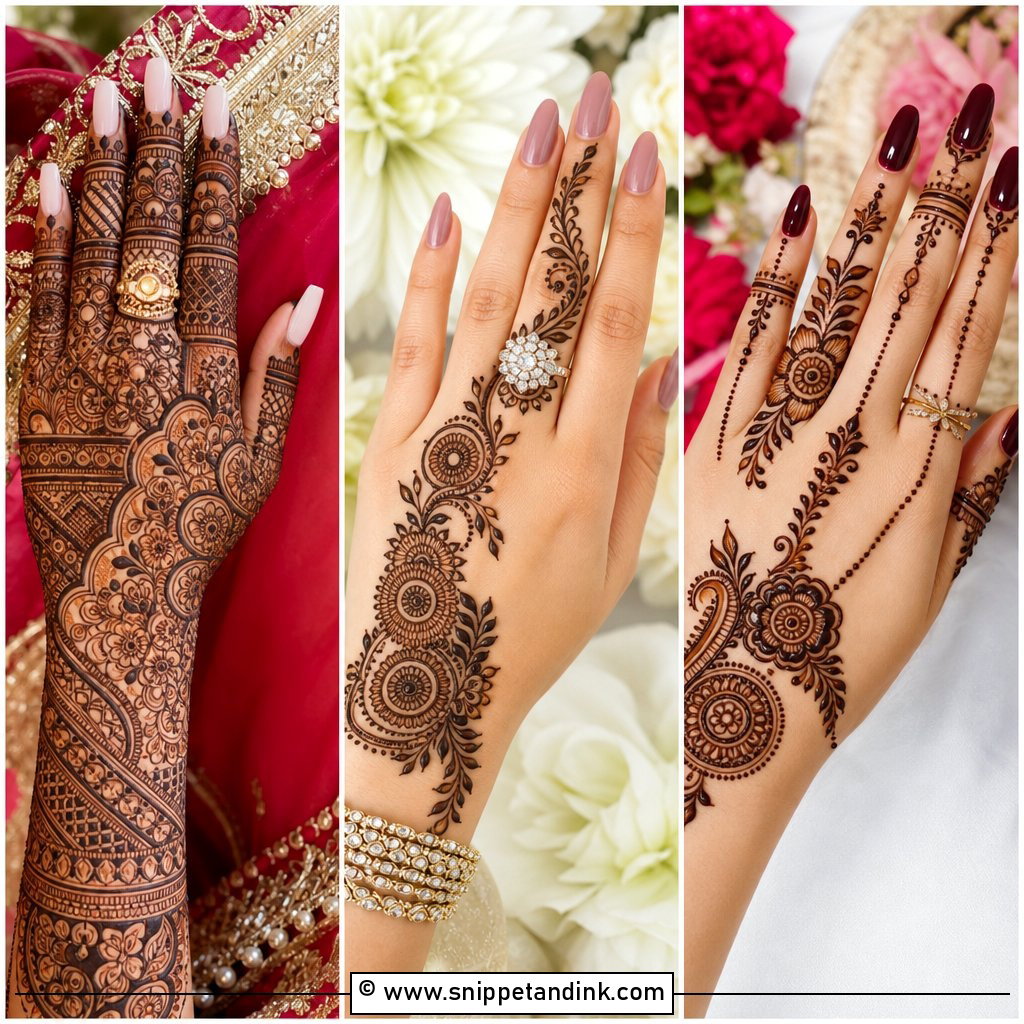
The back of the hand is where bangles, rings and mehndi meet, so I design it around your jewelry rather than in spite of it. A bracelet-style wrist, finger caps, floral trails and a strong centrepiece are the usual ingredients. Dense jaali and cuffs give a royal look, while open floral spacing feels lighter. Expect the back to stain a little paler than your palm; the skin there is thicker, so I keep outlines slightly bolder to compensate.
4. Pakistani Arabic Bridal Mehndi Design 2024
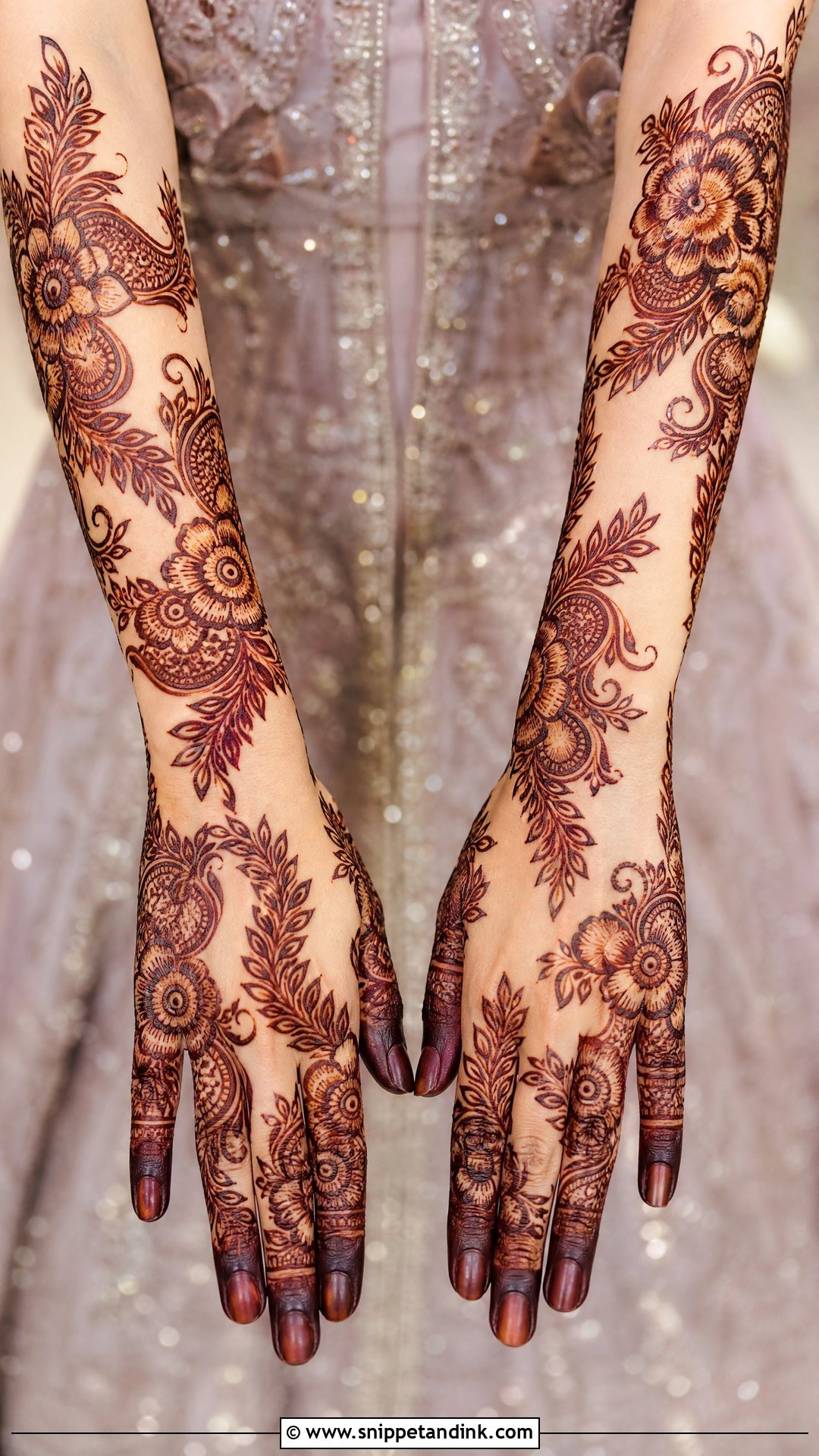
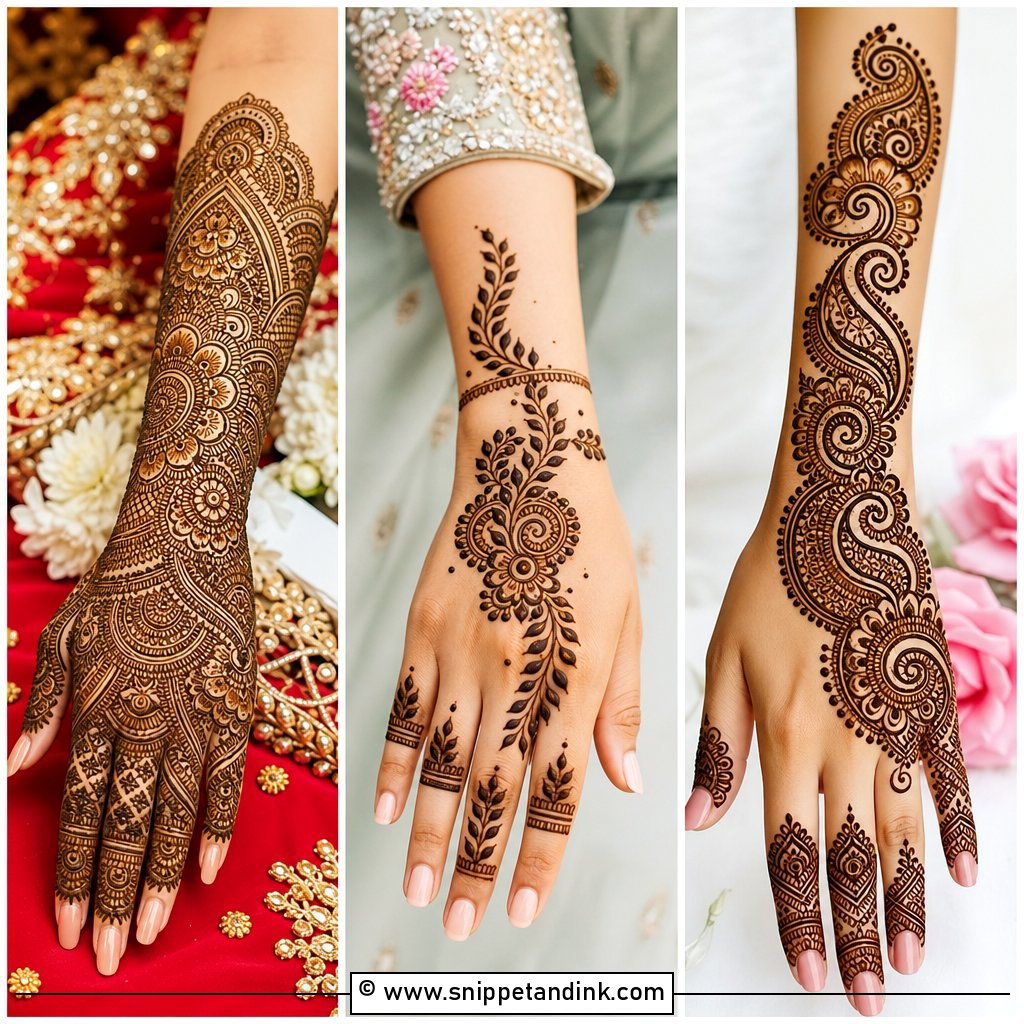
Arabic flow with Pakistani filling is my go-to when a bride wants coverage without weight. Large flowers, leaves and paisleys run diagonally across the hand, and I add fine shading inside them for depth. The open spaces keep your jewelry visible and let each motif read. I’d suggest it for the Nikkah, the dholki or a daytime event. Clean outlines matter more here than anywhere, because there’s no dense filler to hide a shaky line.
5. Indo Arabic Pakistani Bridal Mehndi Design
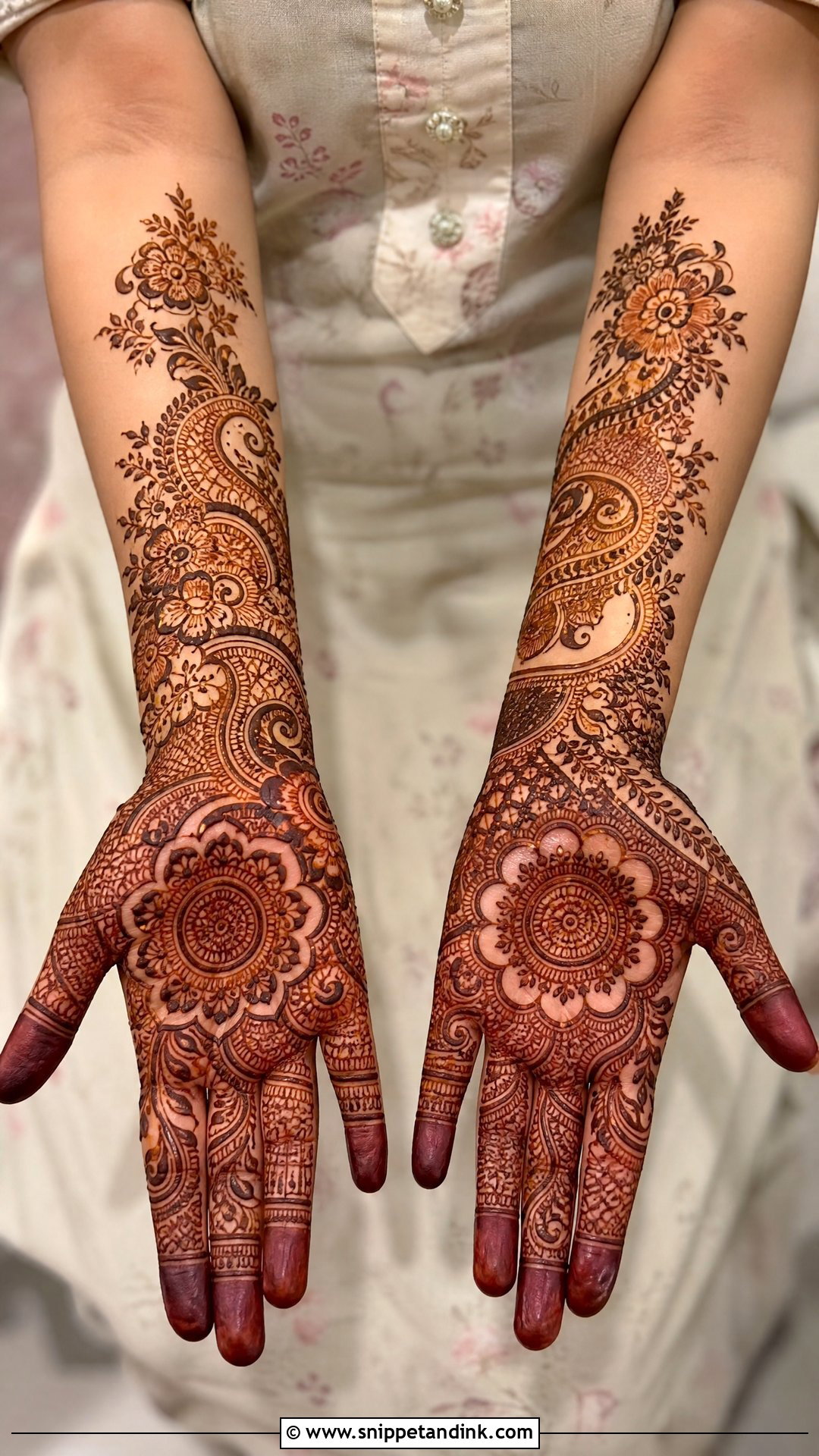
Indo-Arabic designs combine fine Indian-style detailing with bold Arabic florals. I’ll often put a mandala in the palm, paisley work around the wrist and leafy trails on the fingers, with small gaps between the bigger motifs so it never feels crammed. That structure is why it photographs well both in close-ups and in wide group shots. It’s quicker to apply than full traditional work, which helps if you’re doing several functions in one week.
6. Pakistani Bridal Mehndi With Groom Name
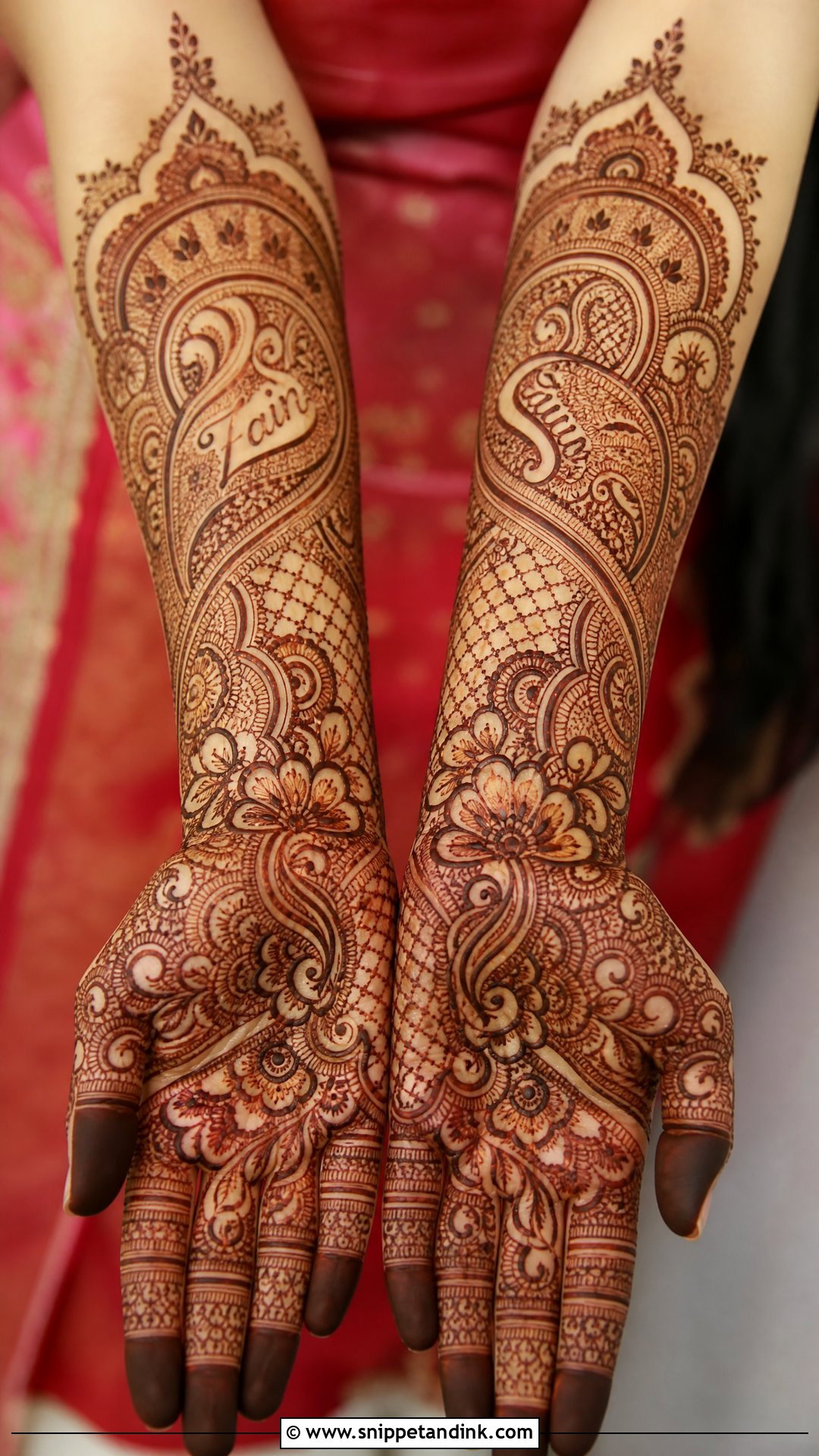
Hiding the groom name in the bride’s mehndi is a sweet tradition, and the game of finding it often happens during the wedding festivities. I tuck it inside a paisley, along a vine, in a small heart or within jaali. It should look like part of the pattern, not a label. Write the name down for me in English and in Urdu if you want it in script, and double-check the spelling. Henna can’t be corrected once it’s on.
7. Pakistani Dulhan Mehndi Design Full Hand
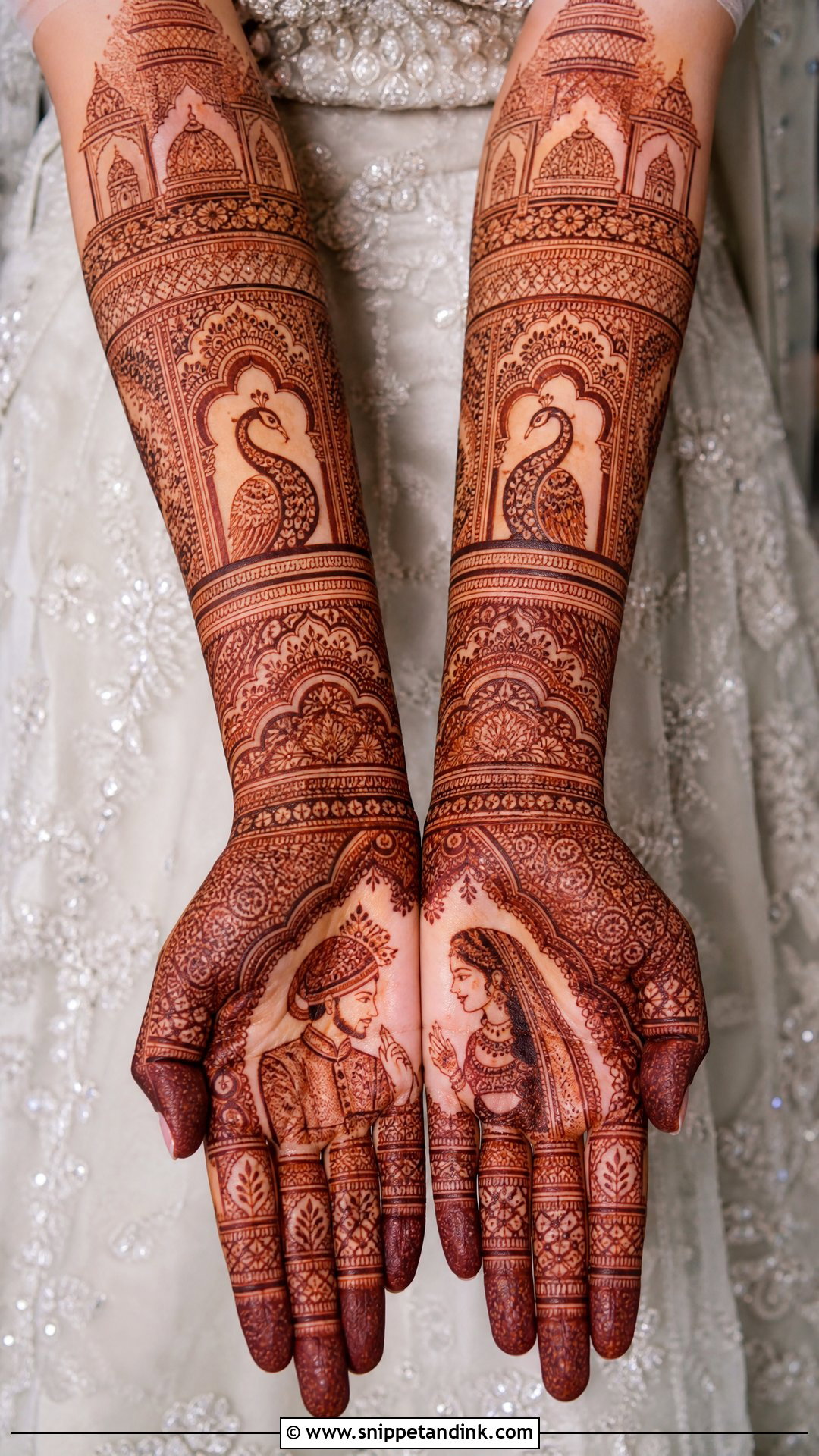
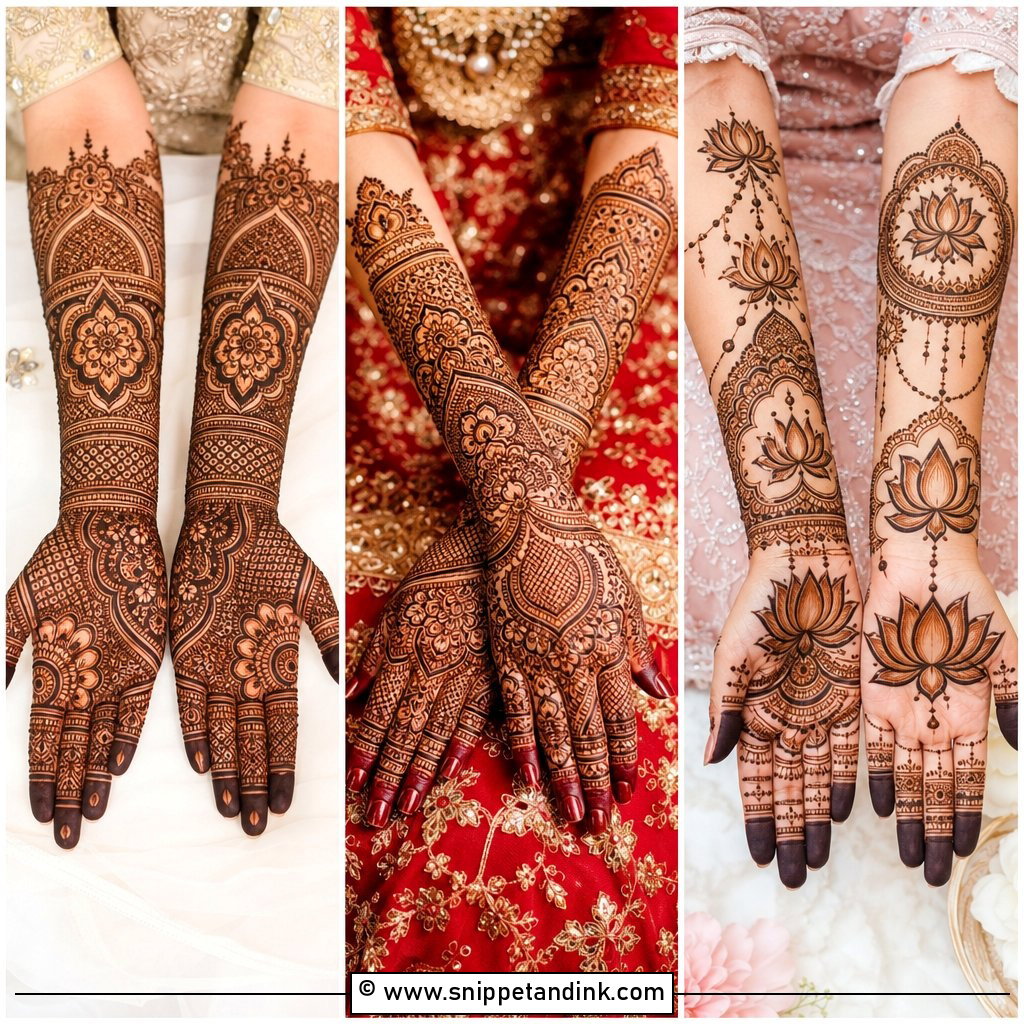
The grand dulhan hand runs from fingertips to mid-forearm in dense motifs, bridal figures, domes, florals, paisleys and netted sections. It should look heavy but organised. I give the palm the most detailed panel and treat the forearm as a series of bands or arches, with a little breathing room near the wrist where bangles sit. Plan for a long sitting; this is not work to rush into the last evening.
8. Pakistani Bridal Mehndi Design Simple Full Hand
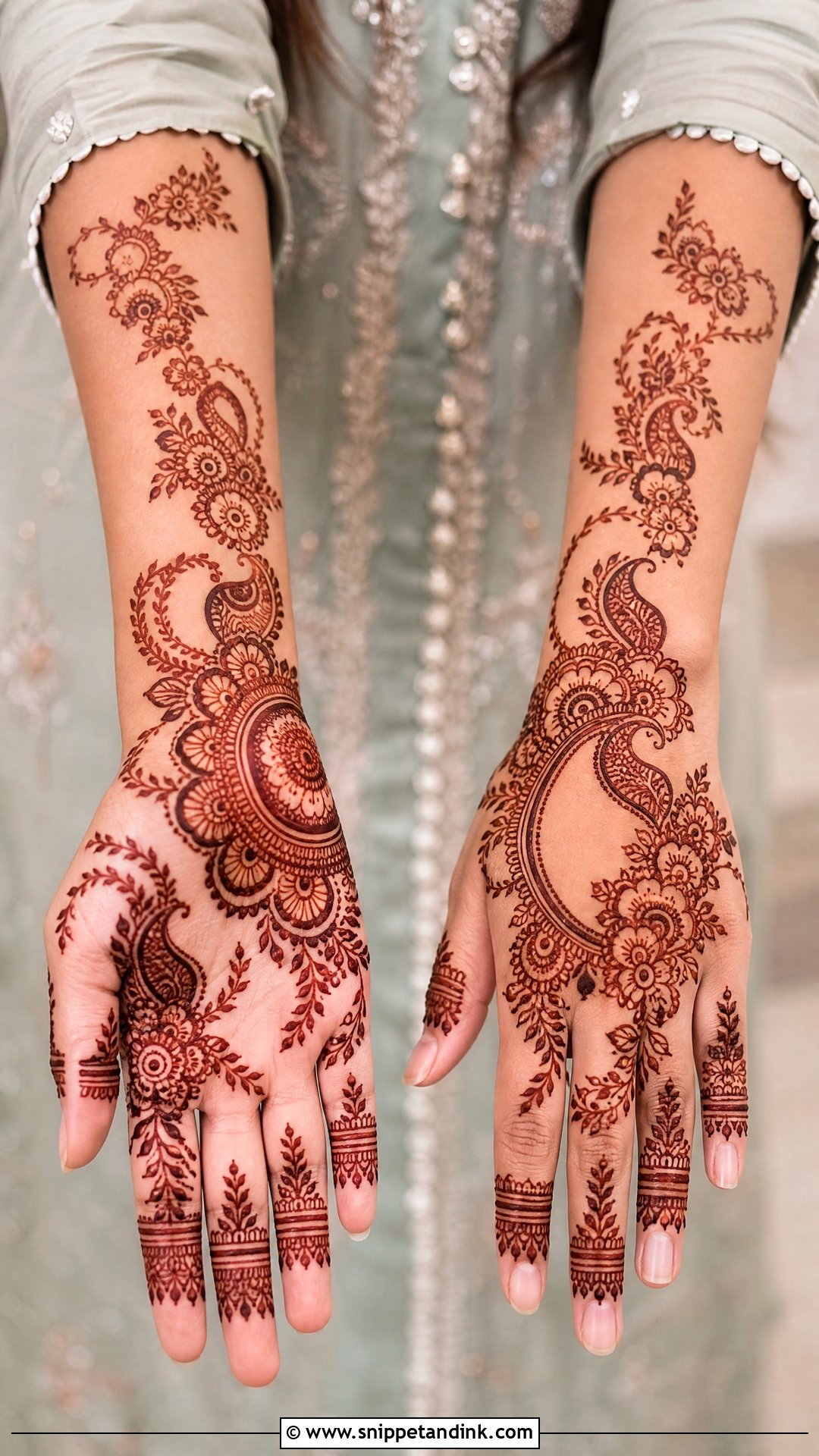
A simple full hand still covers the hand and forearm, but with bigger motifs and cleaner spacing: bold flowers, open paisleys, neat finger bands and a soft wrist bracelet. It’s comfortable through long events and pairs well with lighter makeup and outfits, especially for a Nikkah. The skill lies in placement. Large motifs set in the wrong spot look empty; set well, a simple hand can look more finished than a crowded one.
9. Heavy Pakistani Bridal Mehndi Design
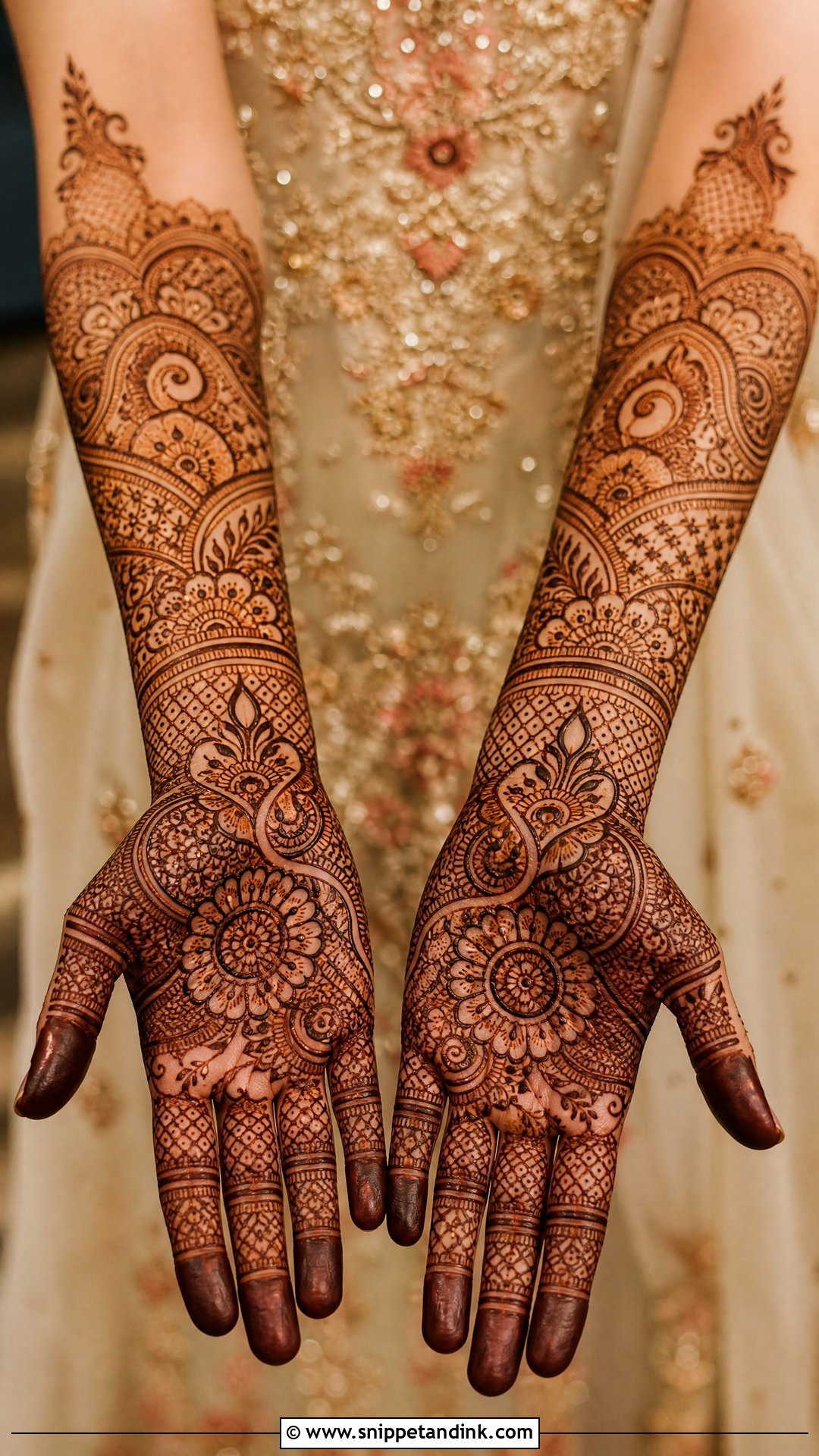
Heavy mehndi fills nearly every part of the hand with fine lines, tiny florals, shaded leaves, mesh, paisleys and layered borders. It’s the classic choice for the baraat with red, maroon and gold. How high it goes depends on your sleeve. Before I start, I ask to see the outfit, because a full elbow-length design under a three-quarter sleeve is hours of work no one sees. A bold centre, a structured cuff and detailed fingers keep heavy work readable.
10. Pakistani Bridal Mandala Mehndi Design
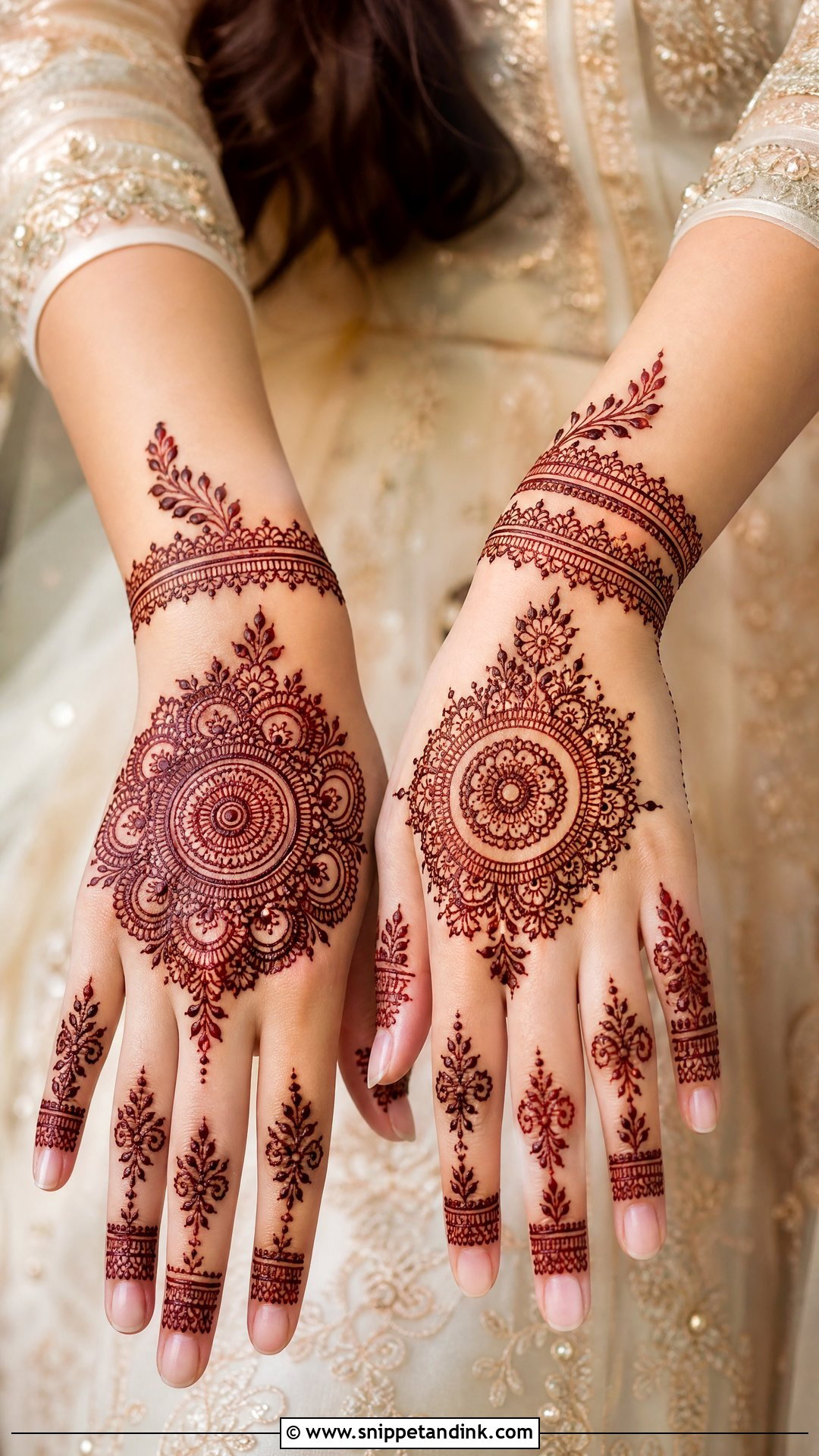
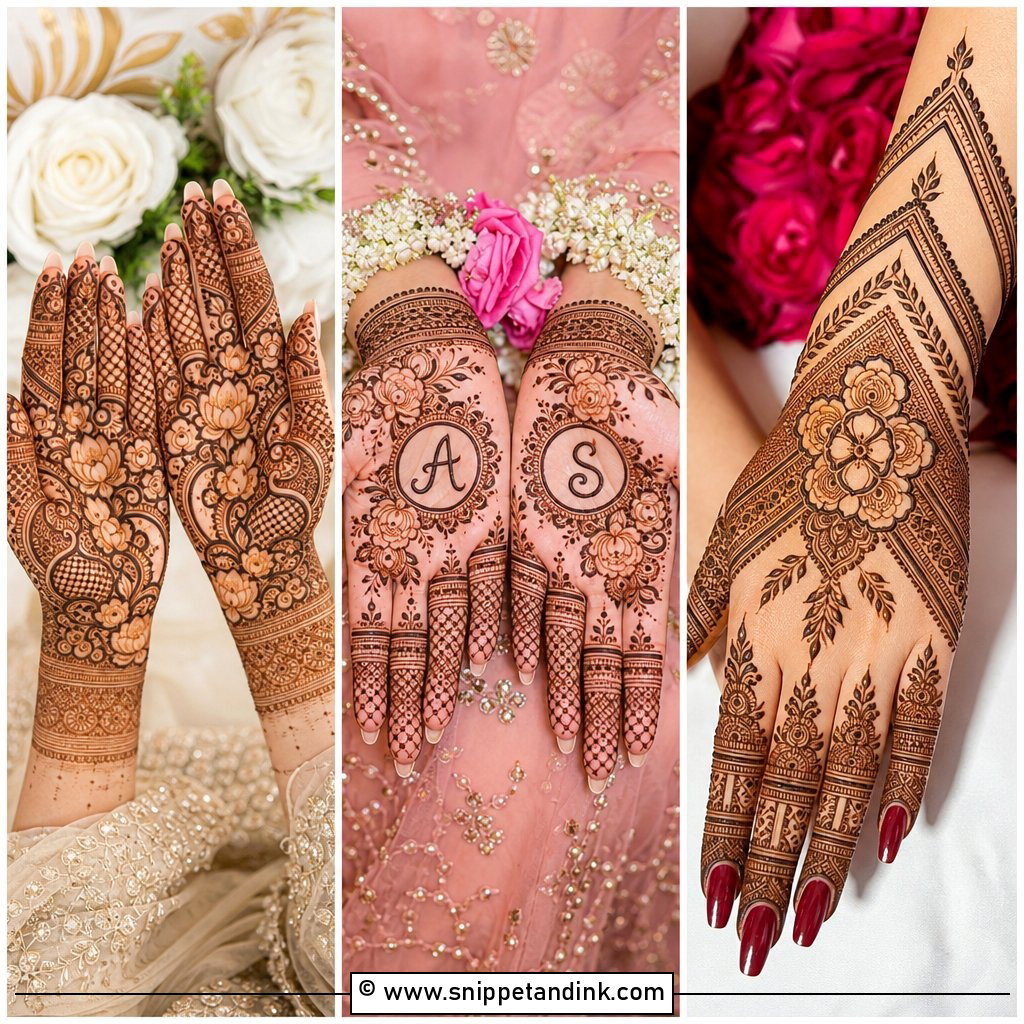
A mandala gives the hand a clear centre, either in the palm or on the back. I surround it with florals, paisleys, dots, vines and wrist bands, and it can stay bold and open or be filled with tiny detail. Mandalas suit brides with smaller hands particularly well, because one round focal point keeps the design from looking cluttered. Getting a true circle freehand on a curved palm takes practice, so check your artist’s portfolio for mandalas specifically.
11. Pakistani Bridal Peacock Mehndi Design
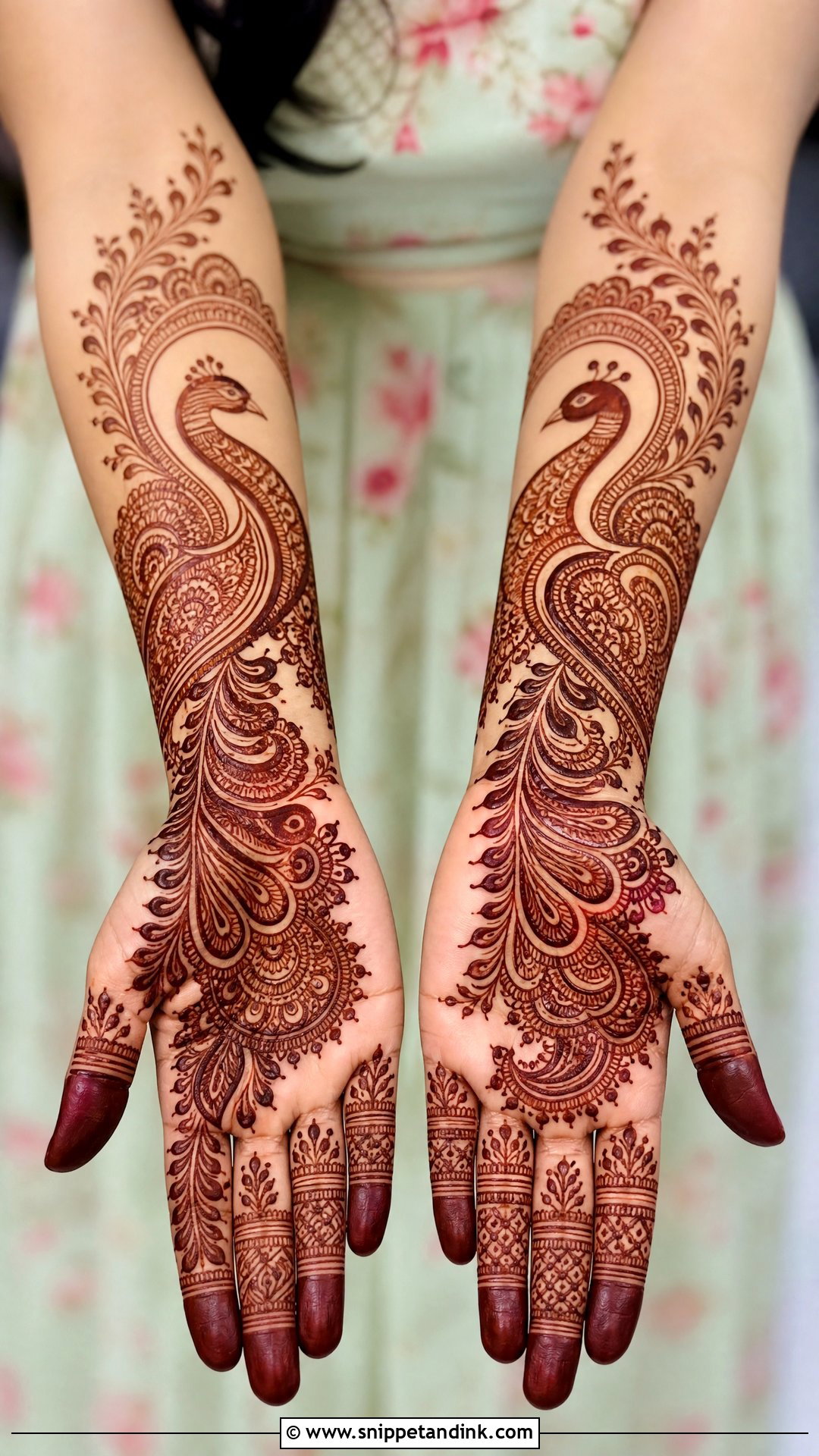
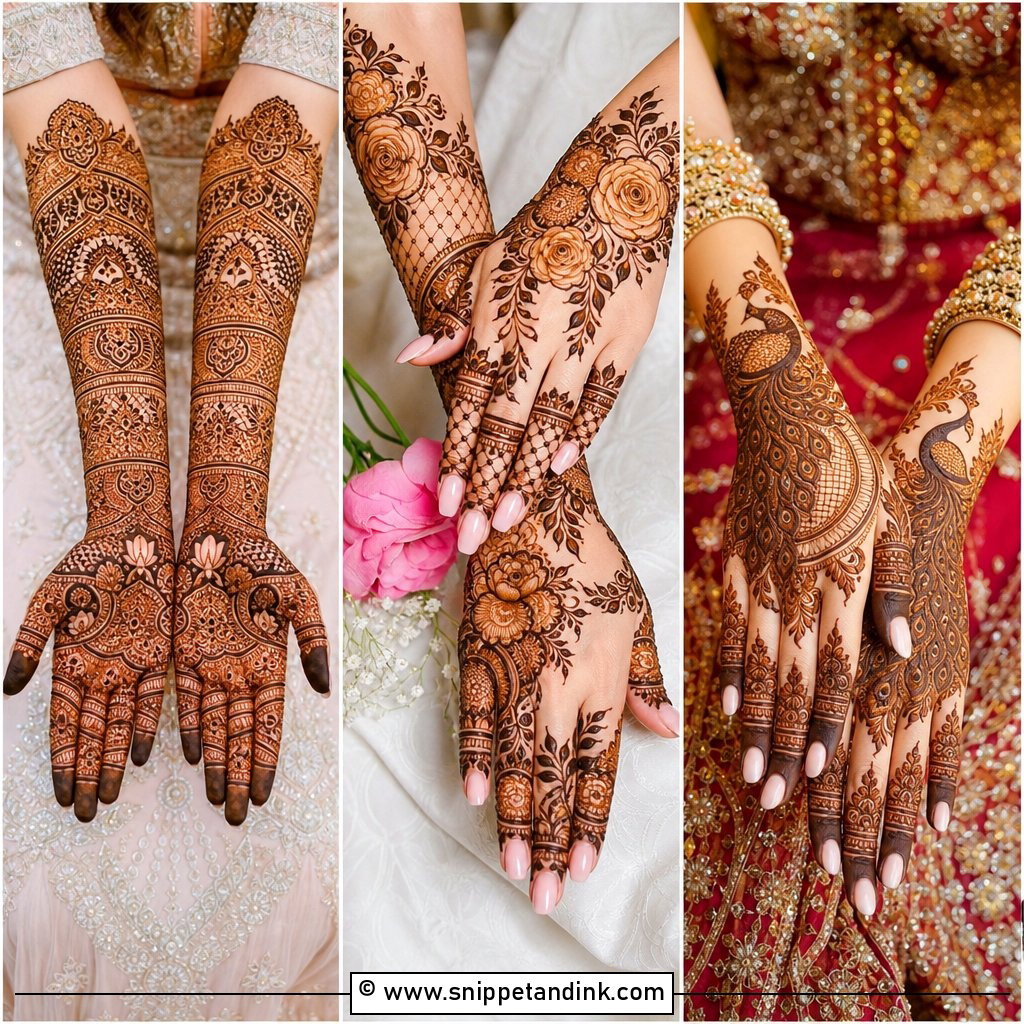
The peacock is a royal, festive motif that works on the palm, forearm or back of the hand, with feathers spreading into paisleys and vines. I draw the curve of the neck and body first, in one confident line, because a hesitant peacock looks lumpy. Fine feather lines, tiny dots and shaded petals finish it. Pair it with a detailed cuff and filled fingertips. It gives a traditional look without the commitment of a portrait.
12. Pakistani Bridal Jaali Mehndi Design
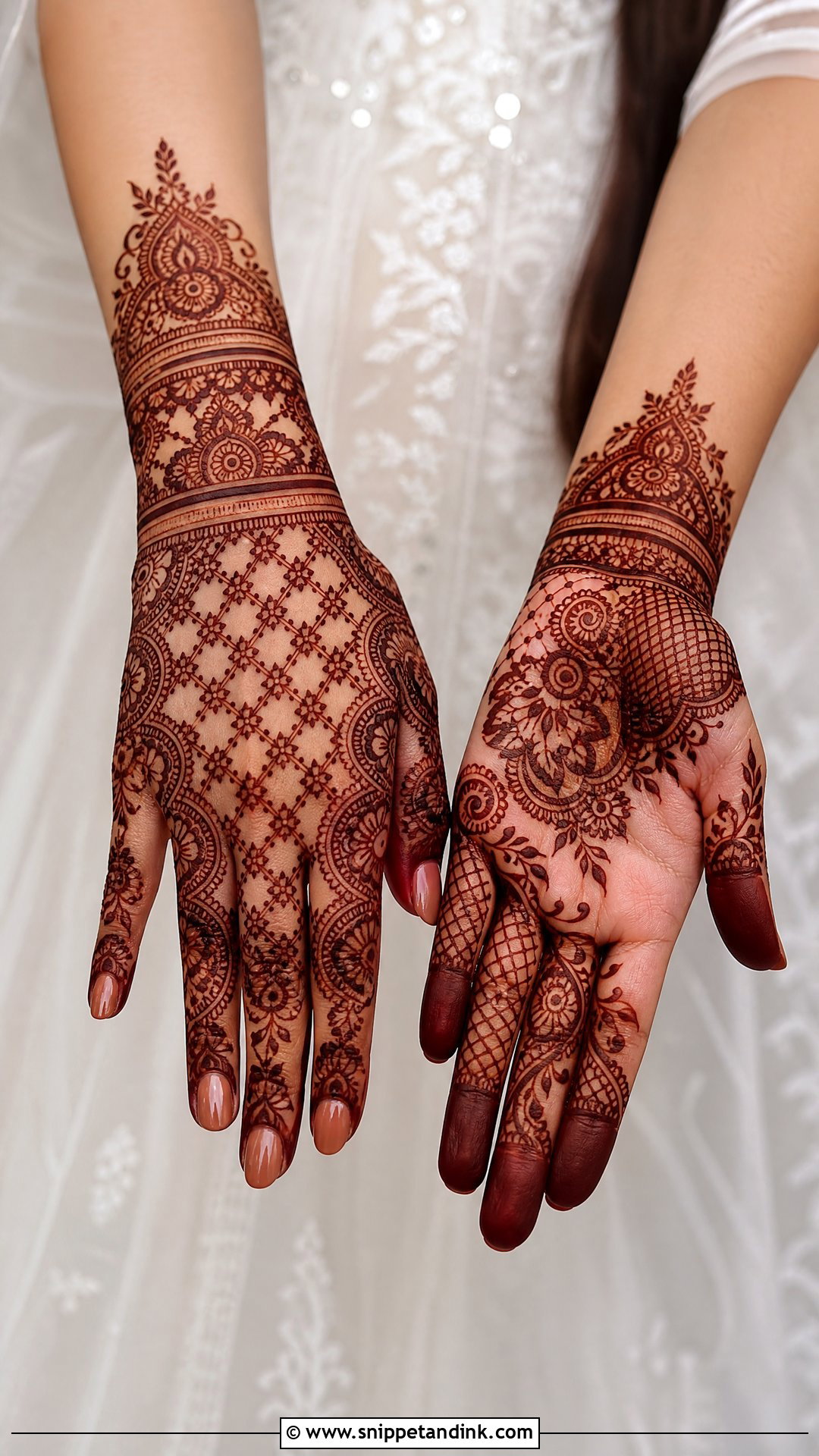
Jaali gives the hand a lace effect that a lot of Pakistani brides love. It can cover the back of the hand, palm, fingers or wrist, usually alongside flowers, paisleys and bracelet bands. Everything depends on line weight. Thick lines make the net look heavy and they close up as the stain darkens. I use a fine cone tip and keep the gaps even; when it’s right, the hand looks like it’s wearing lace under your rings and sleeves.
13. Pakistani Bridal Floral Mehndi Design
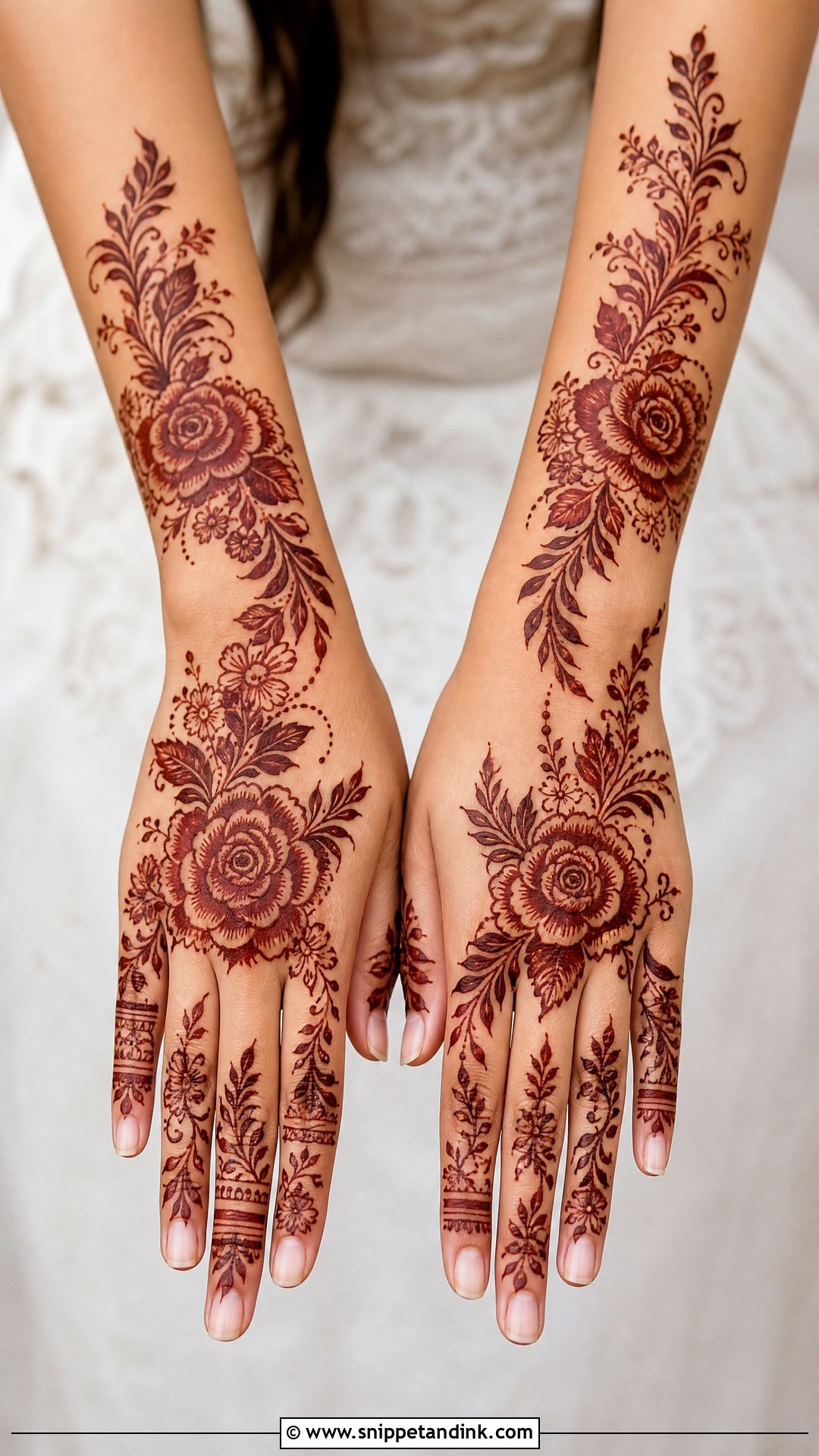
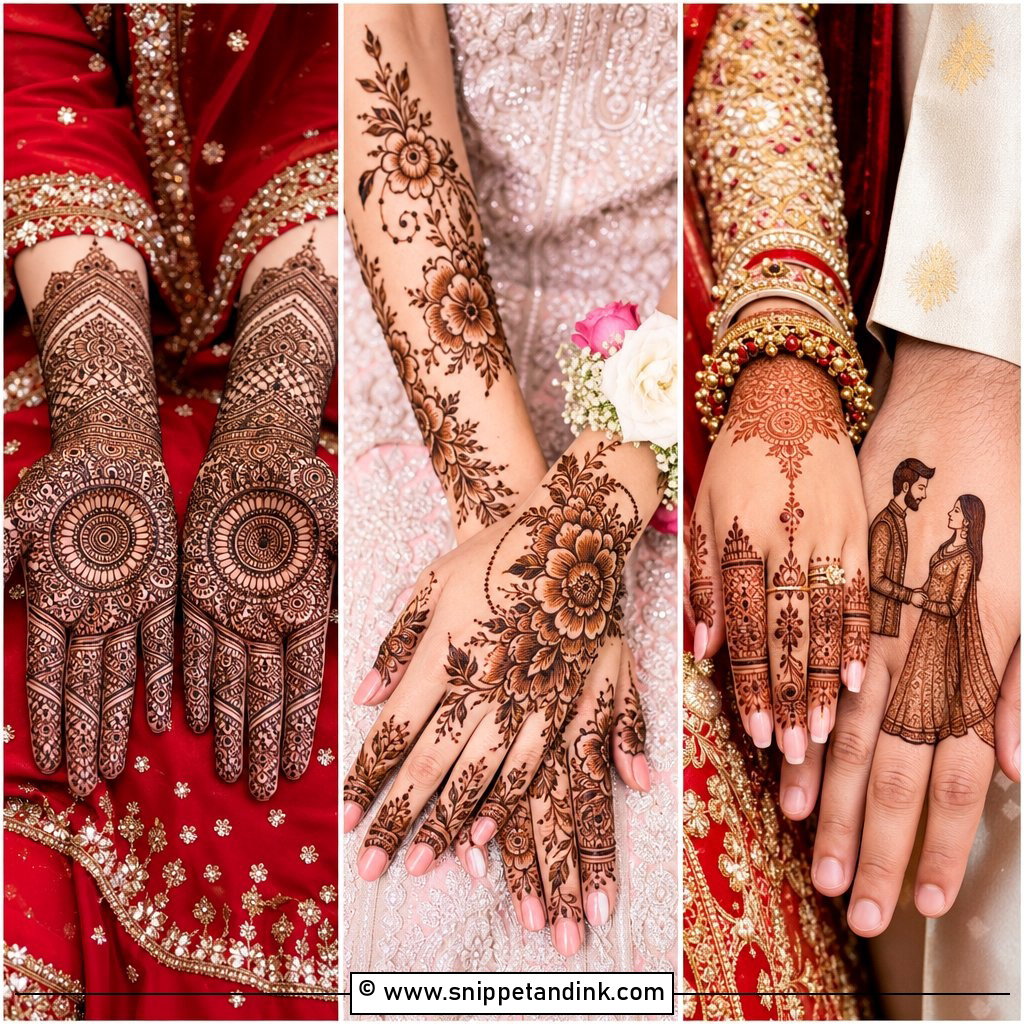
Florals soften a bridal hand: large roses, small blossoms, leafy vines and shaded petals across the palm and forearm. I place them in a diagonal trail, around a mandala or inside a full layout. They suit pastel outfits, an ivory Nikkah or a classic red ensemble equally. For a current look, I combine bold floral outlines with fine Pakistani filling and clean finger patterns, so the flowers stay the focus.
14. Pakistani Bridal Paisley Mehndi Design
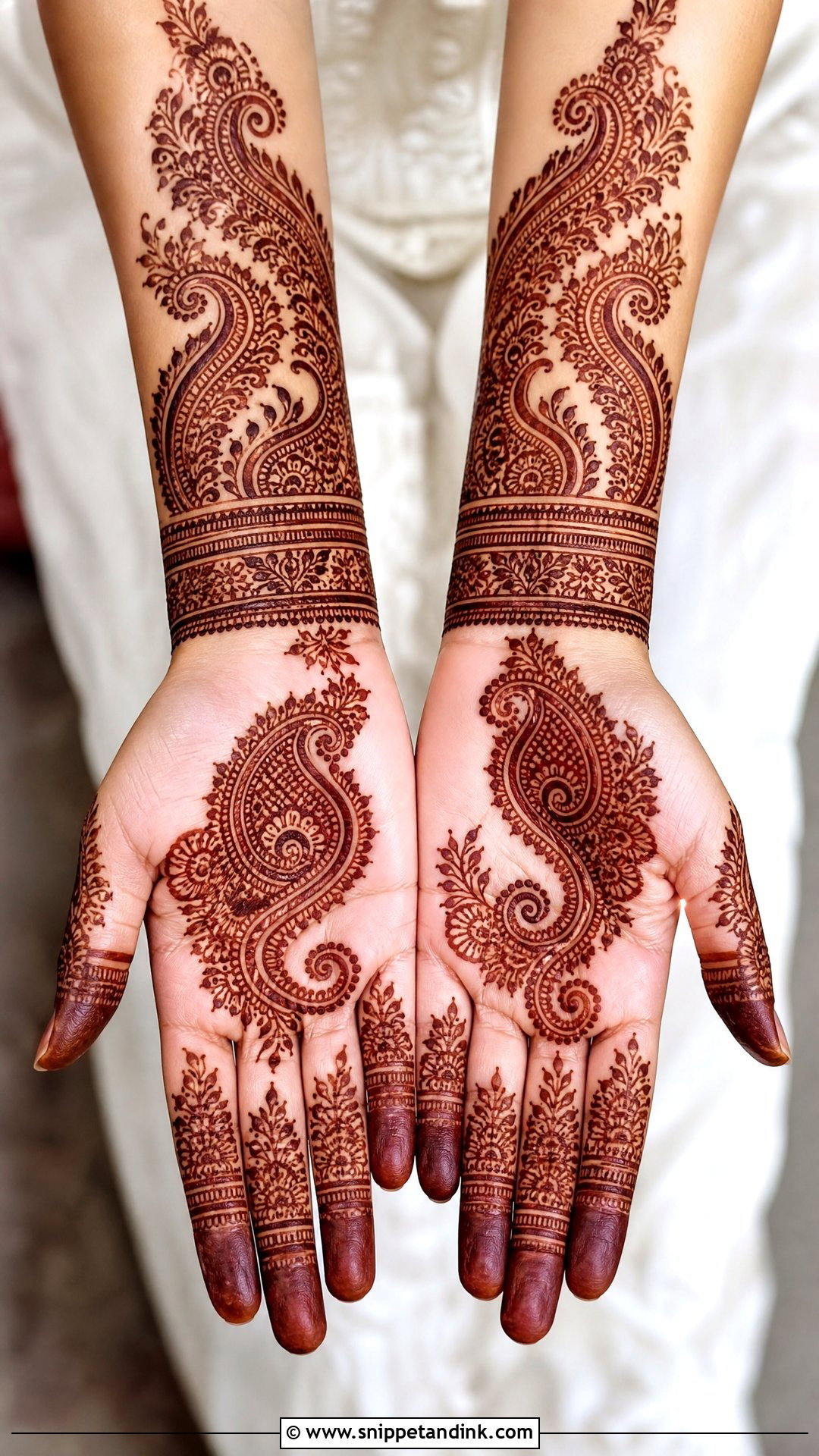
Paisleys have been part of Pakistani bridal mehndi for generations, and they fill space naturally, which makes them ideal for full coverage. Large curved ones go on the palm, smaller ones along the wrist, with leafy extensions toward the fingers. For a traditional finish I pack the insides with detail; for a cleaner look I keep the paisleys bold with open gaps. They mix easily with florals, jaali, dots and mandalas.
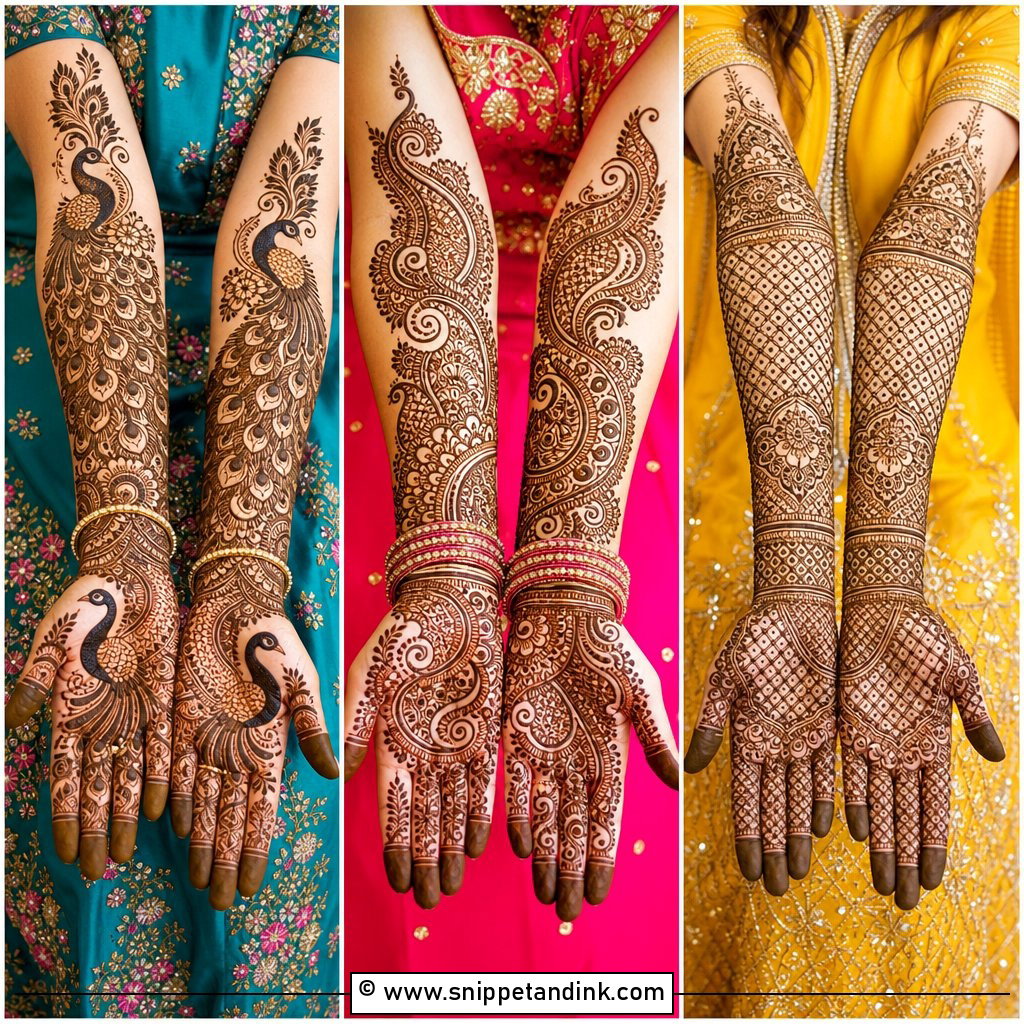
15. Pakistani Bridal Tikki Mehndi Design
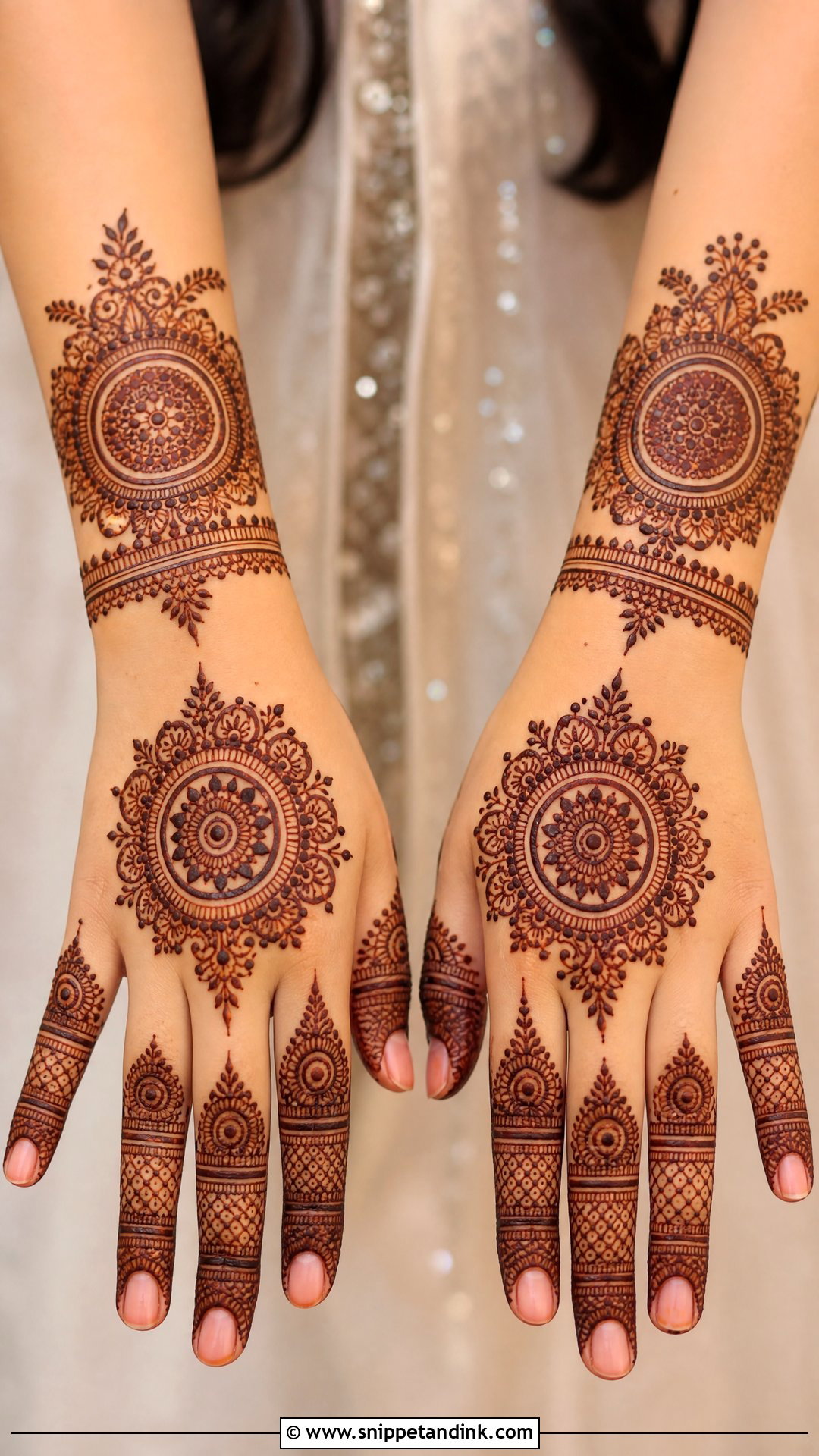
A Pakistani bridal tikki mehndi design is built around one round motif on the palm or back of the hand. A bridal tikki needs more than an Eid tikki: layered circles, floral borders, paisley corners, wrist cuffs and decorated fingers. It suits brides who like symmetry and don’t want dense coverage, and it’s a good fit for a Nikkah or a small wedding. The circle must be even; I mark its edge with dots first and draw from there.
16. Pakistani Bridal Bracelet Mehndi Design
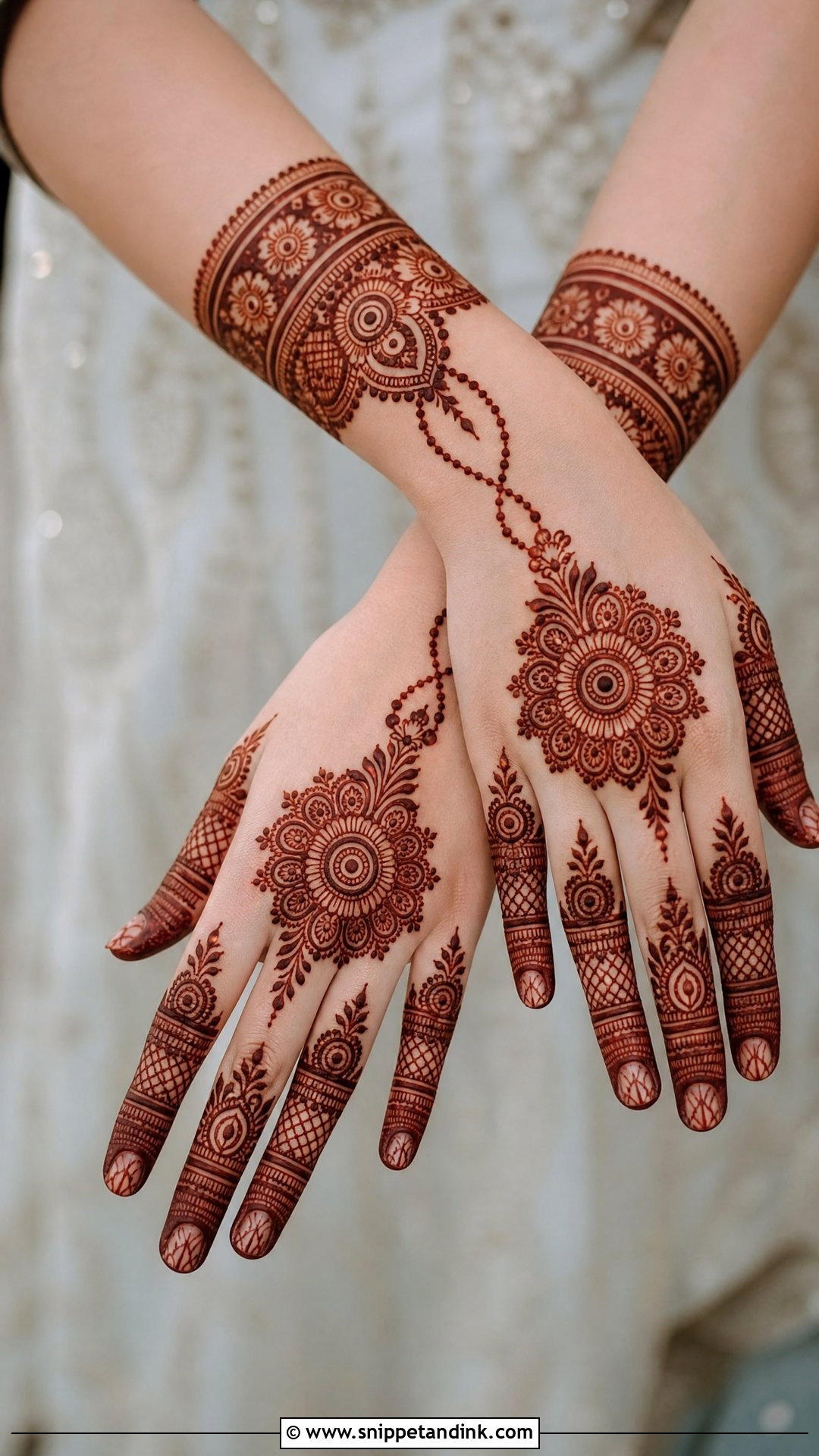
A bracelet mehndi design draws jewelry in henna: a cuff, bangle band, chain or layered bracelet at the wrist, extending to the fingers with florals, vines or jaali. It’s at its best on the back of the hand, next to real rings and bangles. Engagement, Nikkah and walima brides like it for a lighter but still bridal look. The bracelet must connect to the rest of the hand with a chain, trail or dotted line, otherwise it looks pasted on.
17. Pakistani Bridal Finger Mehndi Design
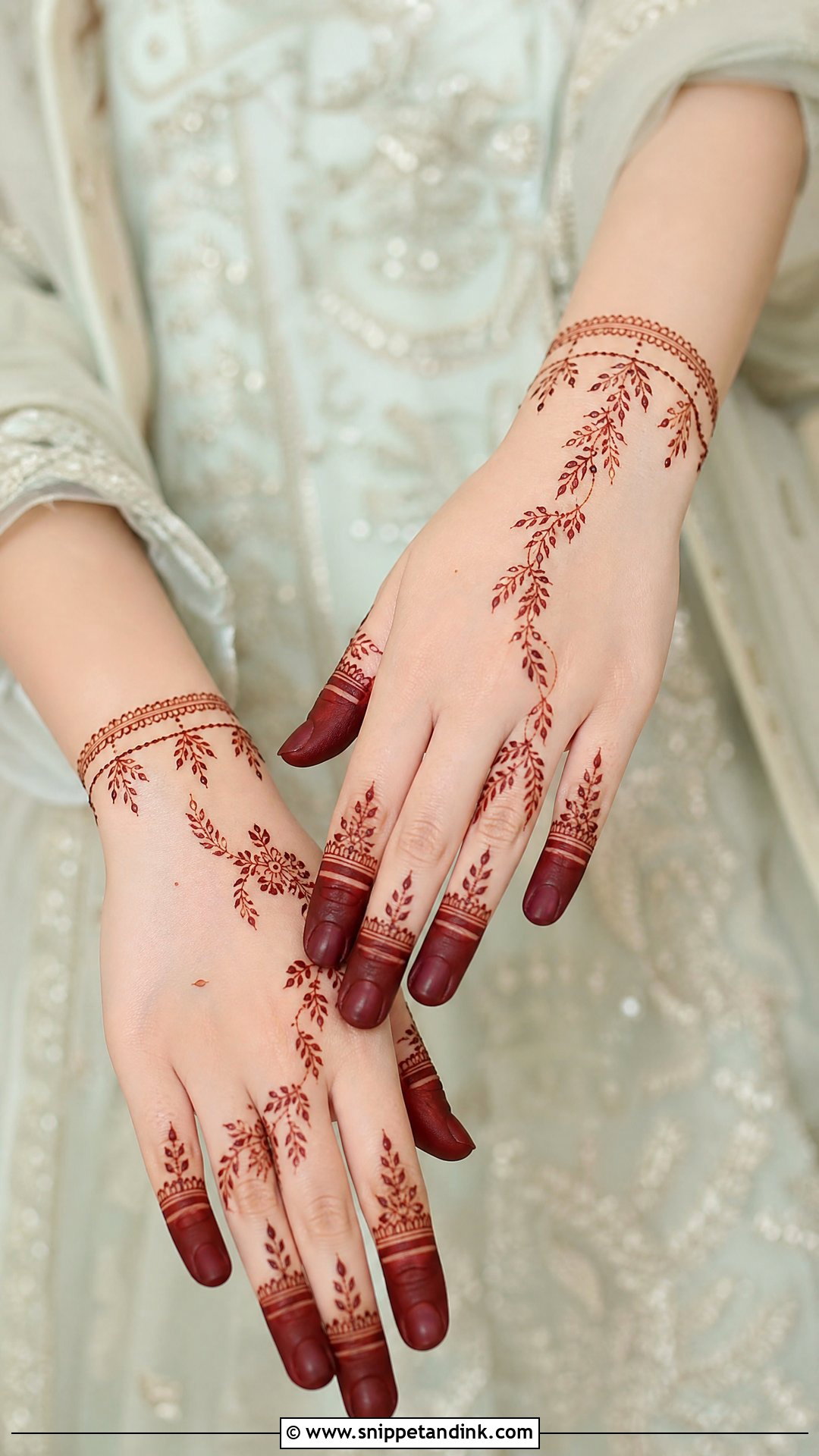
Finger-focused designs put the detail where the rings are: filled fingertips, ring-style bands, tiny florals and slim jaali. The palm or back of the hand gets a lighter mandala, trail or cuff. If you’ve booked nail art, do it before the mehndi; nail polish remover and buffing afterward can lighten the stain around your fingertips. Don’t leave the rest of the hand bare, though, or it reads as unfinished in photos.
18. Pakistani Bridal Minimal Mehndi Design
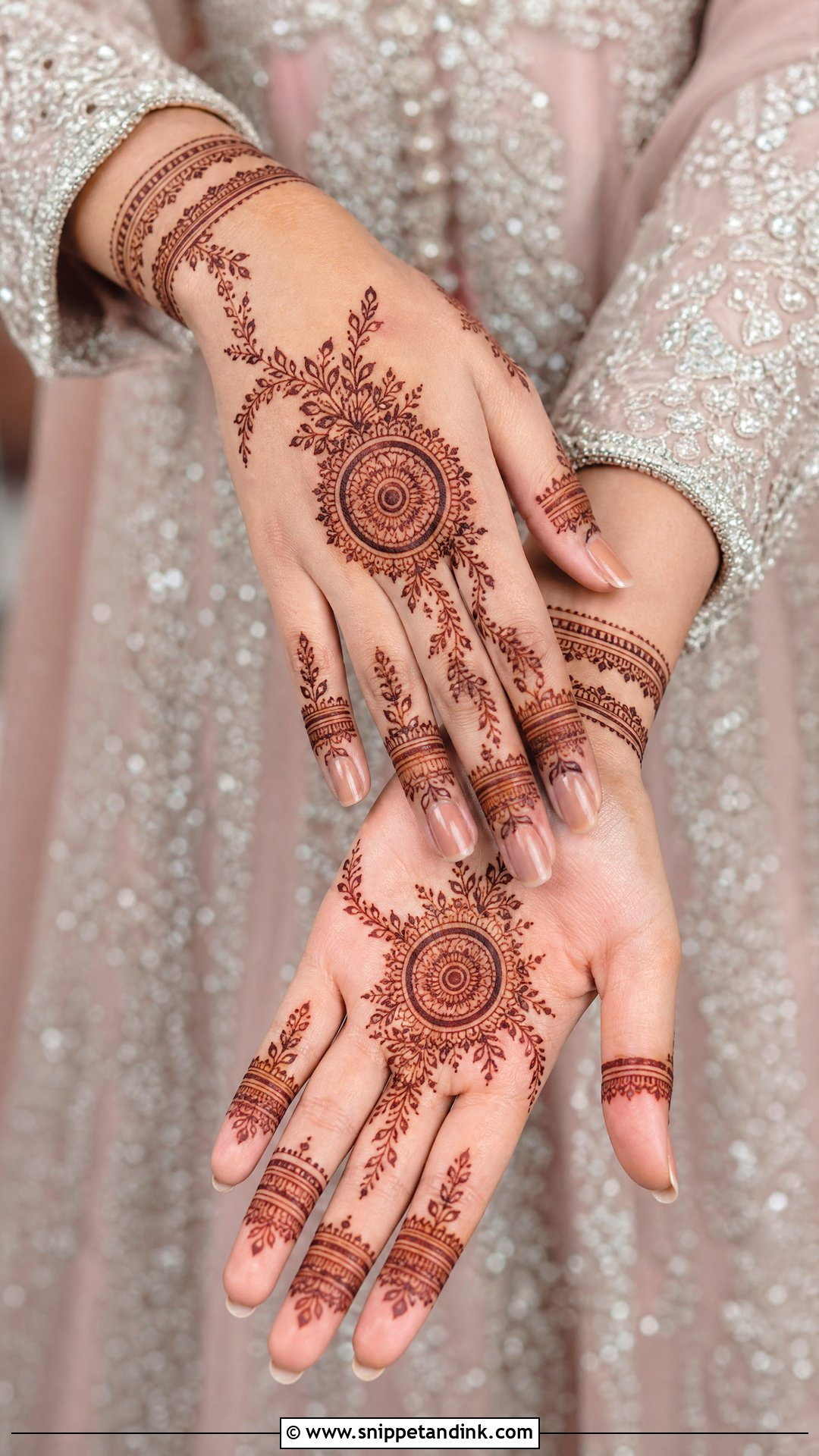
Minimal bridal mehndi suits a Nikkah, a walima or anyone in a lighter outfit: a delicate palm mandala, slim floral vines, decorated fingers and a simple wrist band. It has to look intentional, which means clean spacing, sharp lines and balanced placement. With so little coverage, the stain does all the work, so this is the design where good paste and proper aftercare matter most.
19. Pakistani Bridal Forearm Mehndi Design
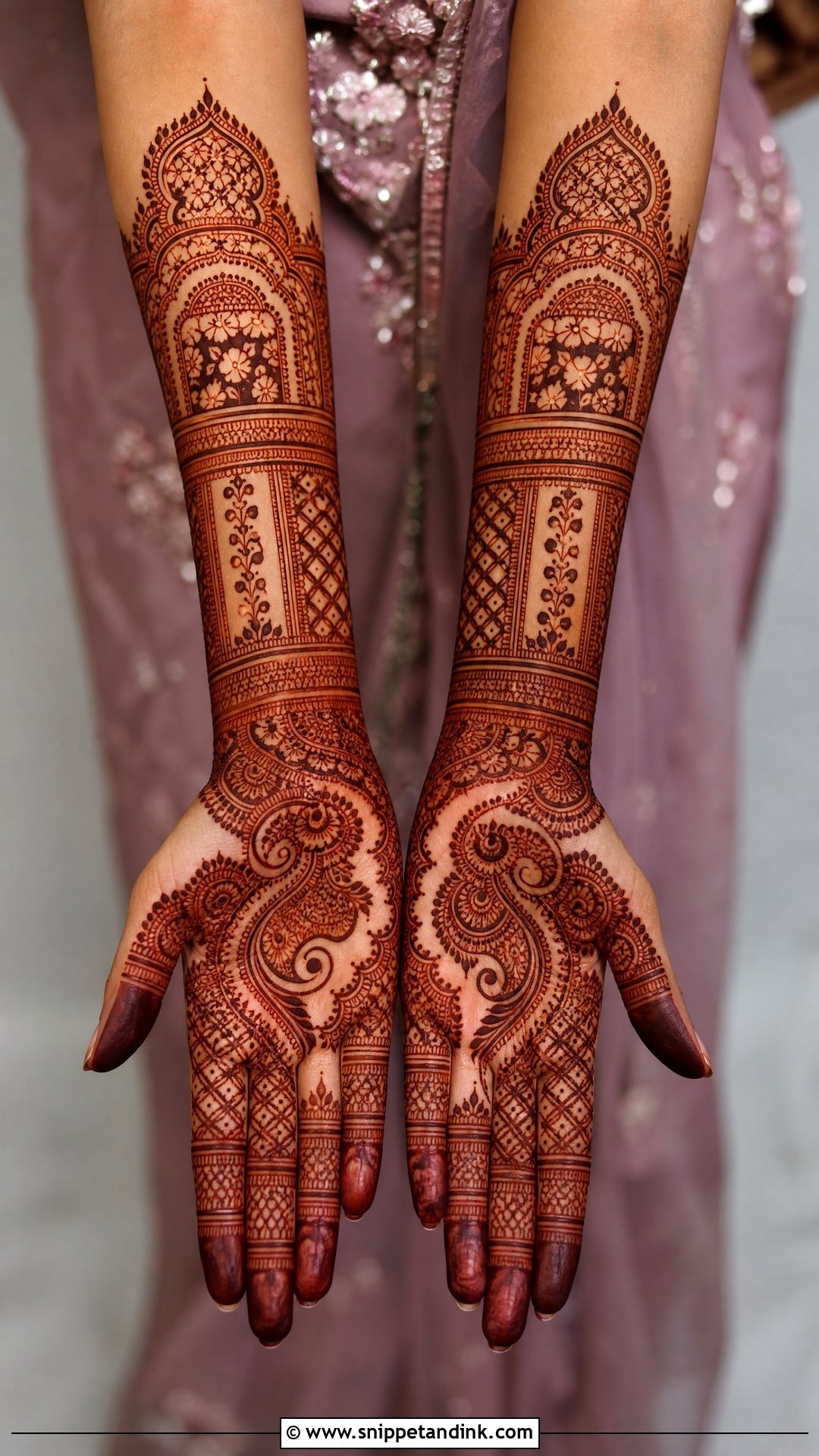
If your sleeves are short, sheer or fitted, the forearm becomes part of the look. I start at the wrist and work upward with panels, paisley chains, vines, jaali bands and dome-like shapes, joining smoothly to the hand. The forearm has more space, so it can carry larger motifs. I mix heavy and open sections here, because a forearm that’s fully dark from wrist to elbow tends to look like one block from a distance.
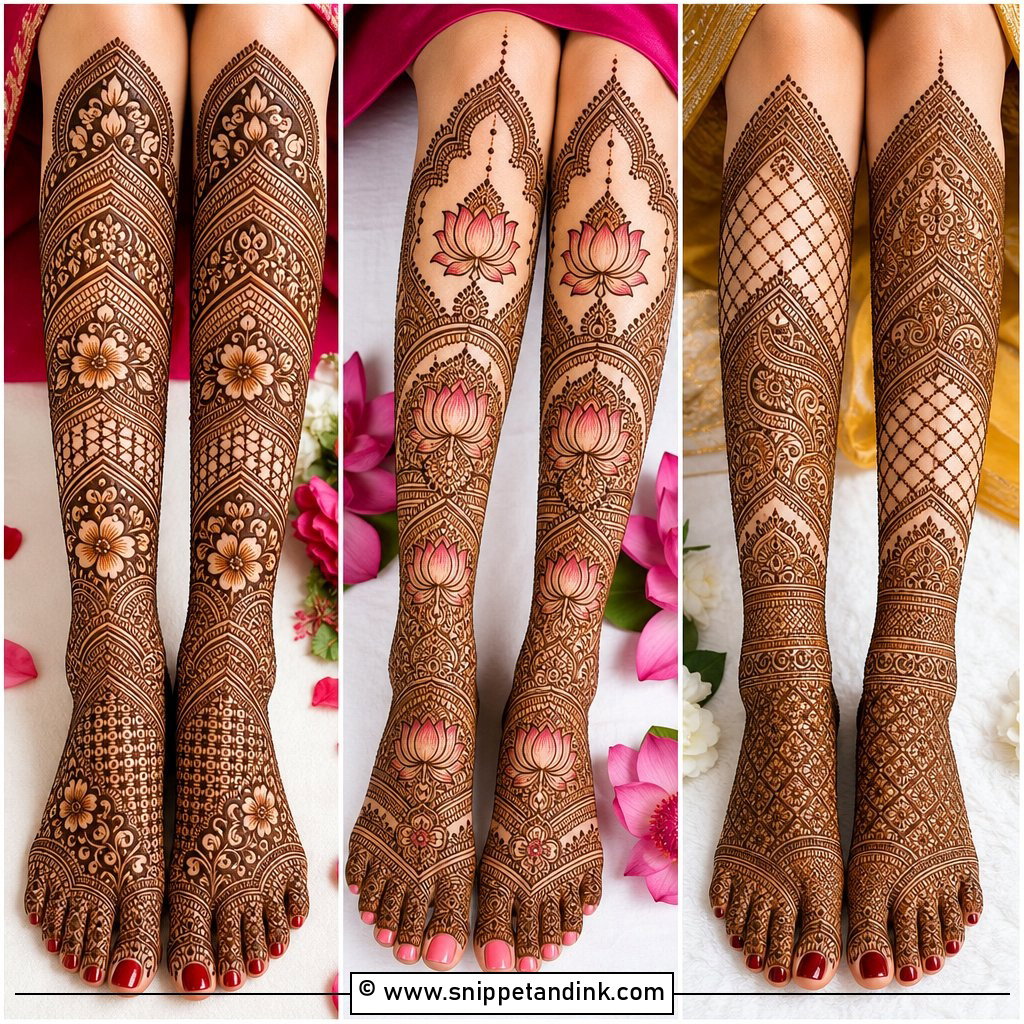
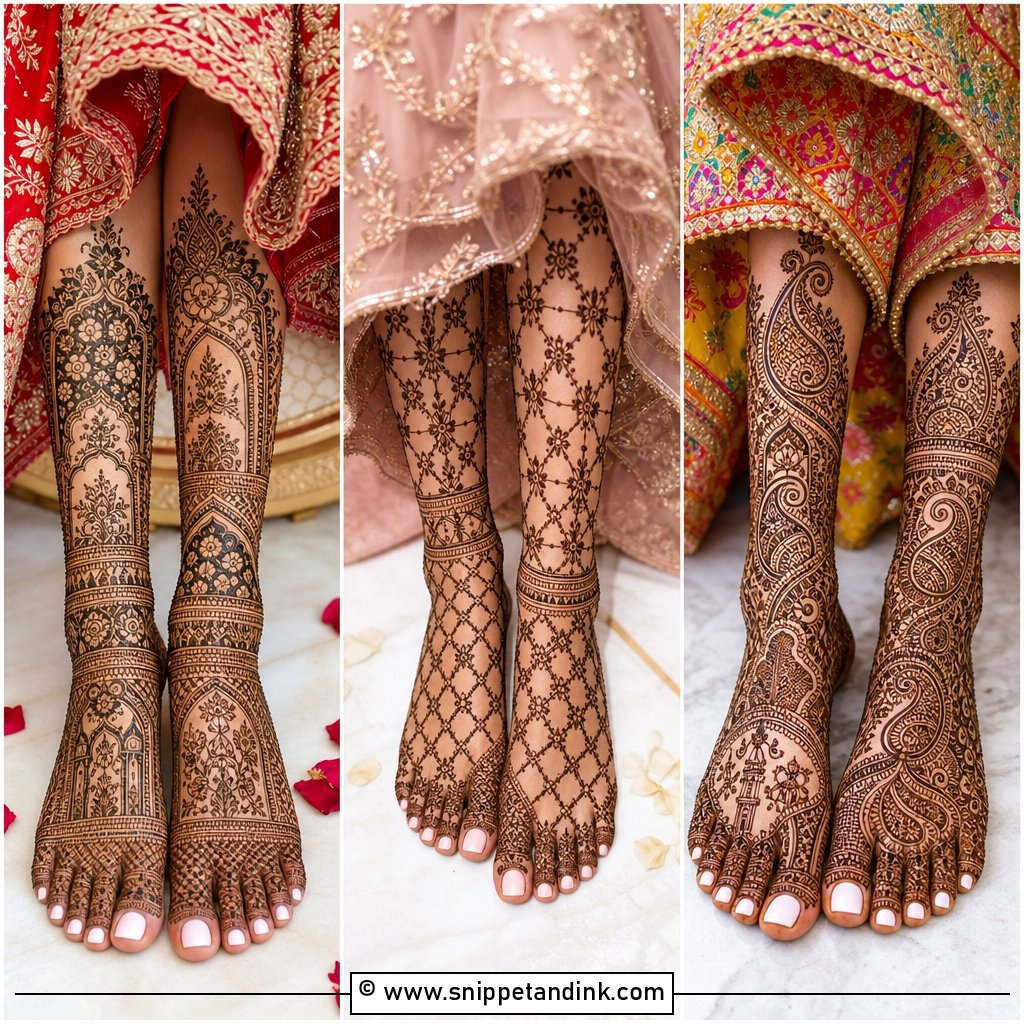
20. Pakistani Bridal Feet Mehndi Design
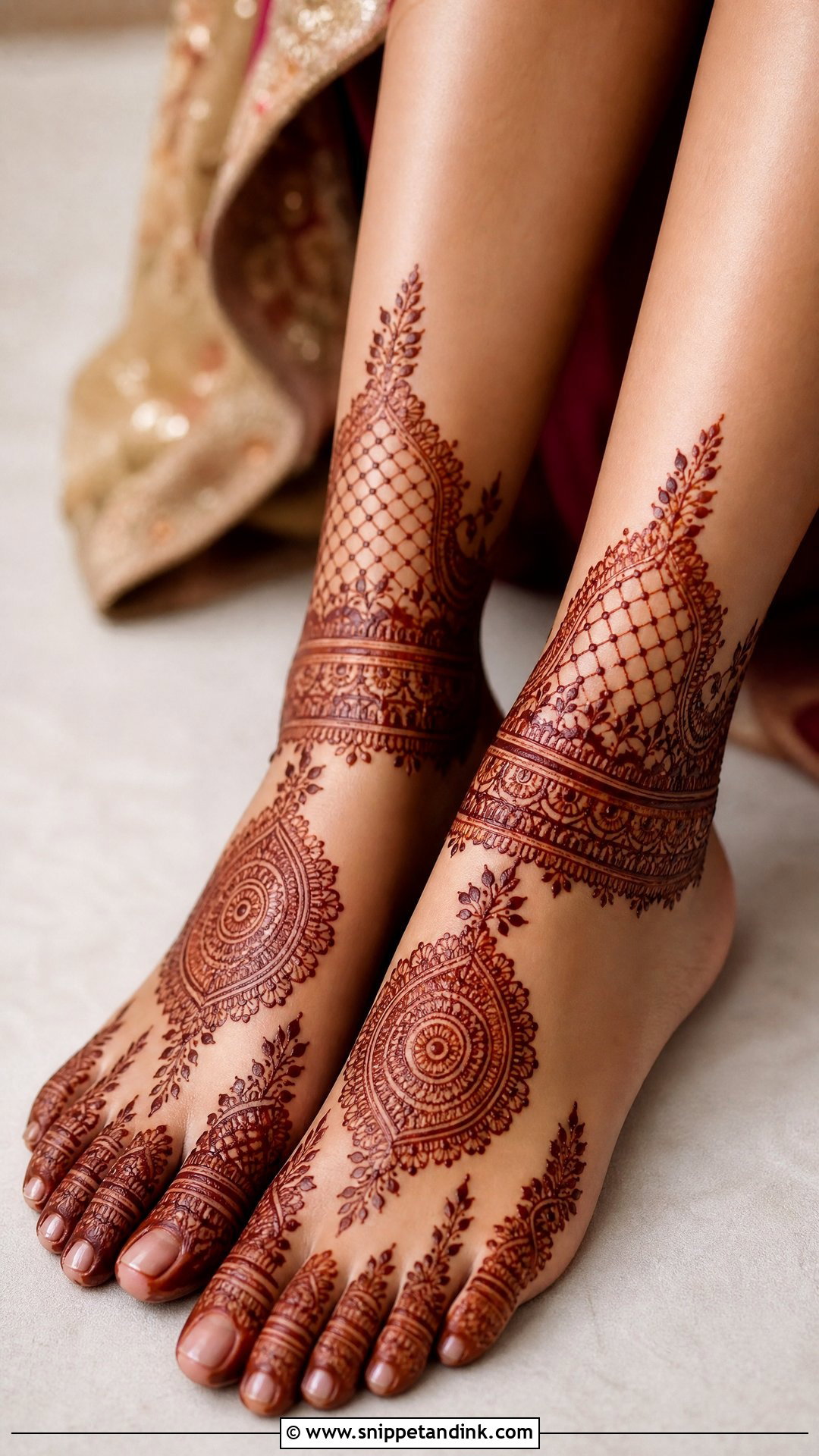
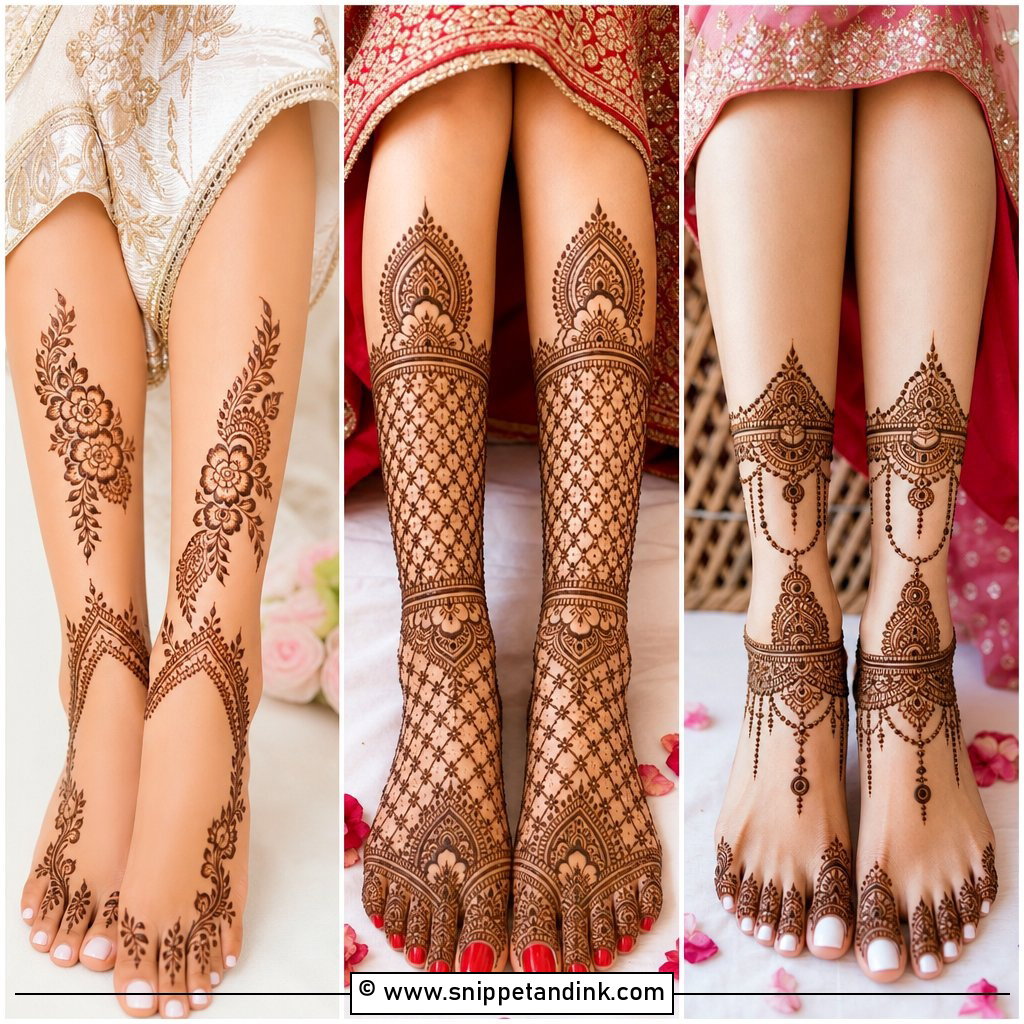
Pakistani bridal feet mehndi completes the dulhan look, especially with sandals, khussa or open footwear. I cover the toes, the top of the foot and the ankle, sometimes the lower leg, with anklet bands, floral trails, paisleys, mandalas or jaali. Keep it lighter near the toes, where detail crowds quickly. Feet take longer to dry than hands and you can’t walk while they set, so I schedule them first or last depending on how long you can sit still.
21. Pakistani Bridal Nikkah Mehndi Design
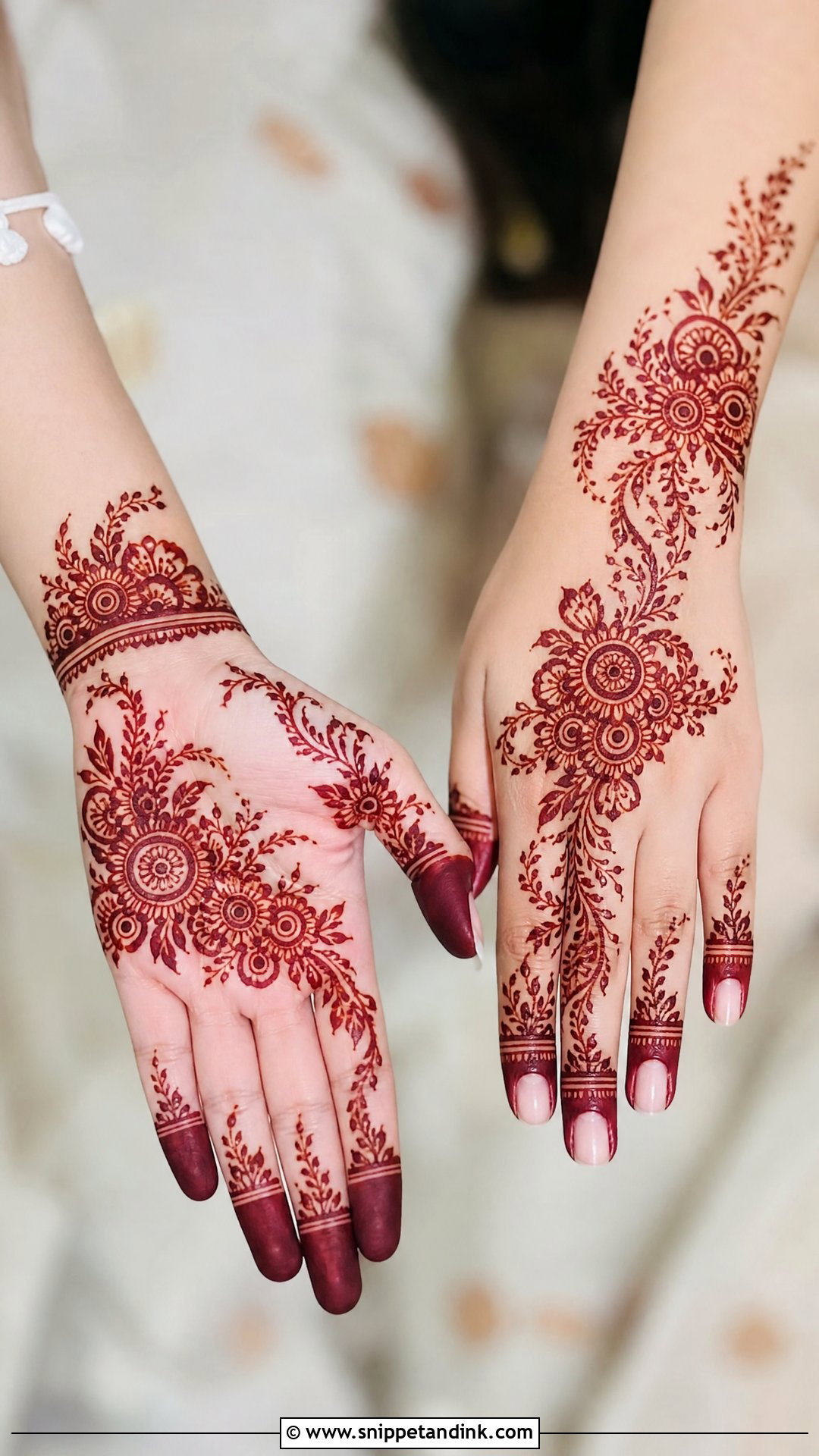
Nikkah mehndi is usually softer than baraat mehndi: floral vines, delicate mandalas, open Arabic trails, slim wrist bands and light finger detail. It pairs well with white, ivory, blush, champagne and pastel outfits. It can cover the hands fully with open spacing or stay to the palm, back of the hand and wrist. I keep lines thin and motifs few so the hands look calm during a quiet, solemn ceremony.
22. Pakistani Bridal Barat Mehndi Design
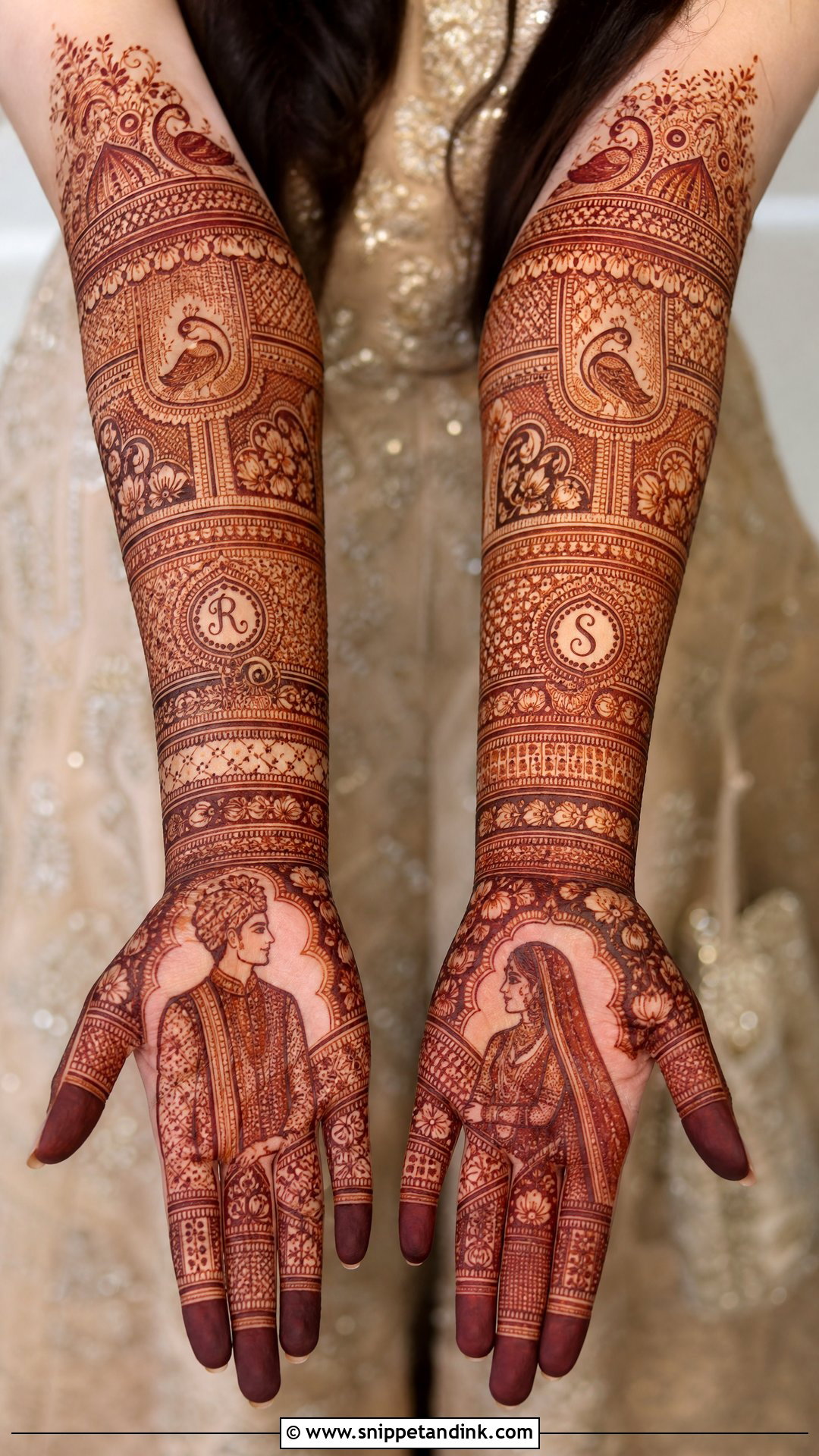
The baraat design is usually the fullest a bride wears: palms, backs, forearms and feet, with bride and groom figures, peacocks, paisleys, florals, jaali and hidden initials. Baraat outfits are heavily embellished, so the mehndi needs to hold its own. Deep maroon looks particularly rich against red, gold, rust and emerald. I sketch the layout on paper with the bride first. It’s the only way to keep a design this large clear and unmuddled.
23. Pakistani Bridal Walima Mehndi Design
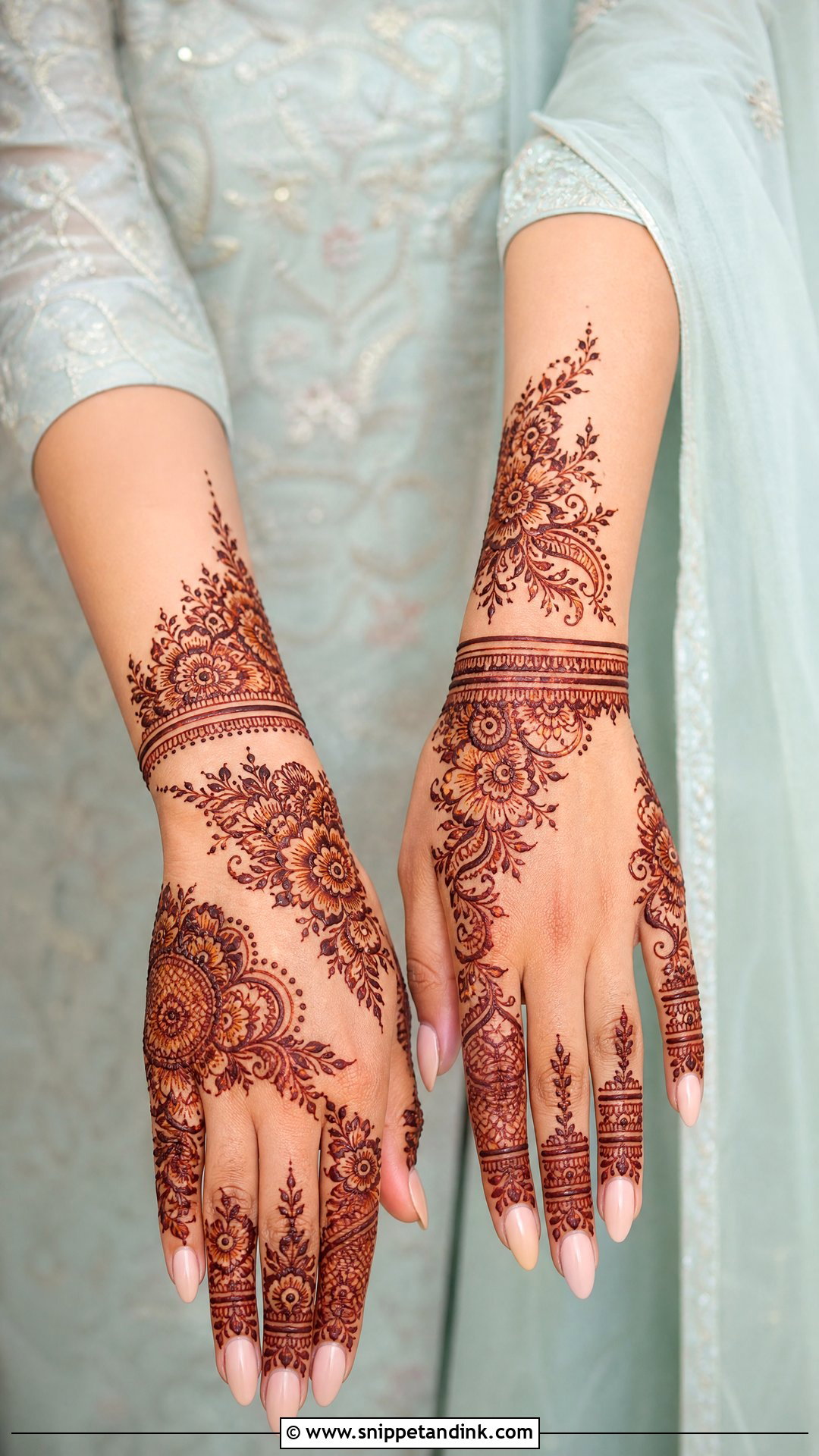
By the walima, the stain from the baraat mehndi is usually at or just past its darkest, so a fresh design isn’t always needed. Many brides simply keep their bridal mehndi; others add a few touch-ups on the fingers, wrist or back of the hand. If you want a new design for the walima, keep it light and open, with florals, bracelet patterns or Arabic trails that won’t clash with the older stain. Brides in pastel, silver or gold outfits usually prefer that cleaner look.
24. Pakistani Bridal Rasm E Henna Mehndi Design
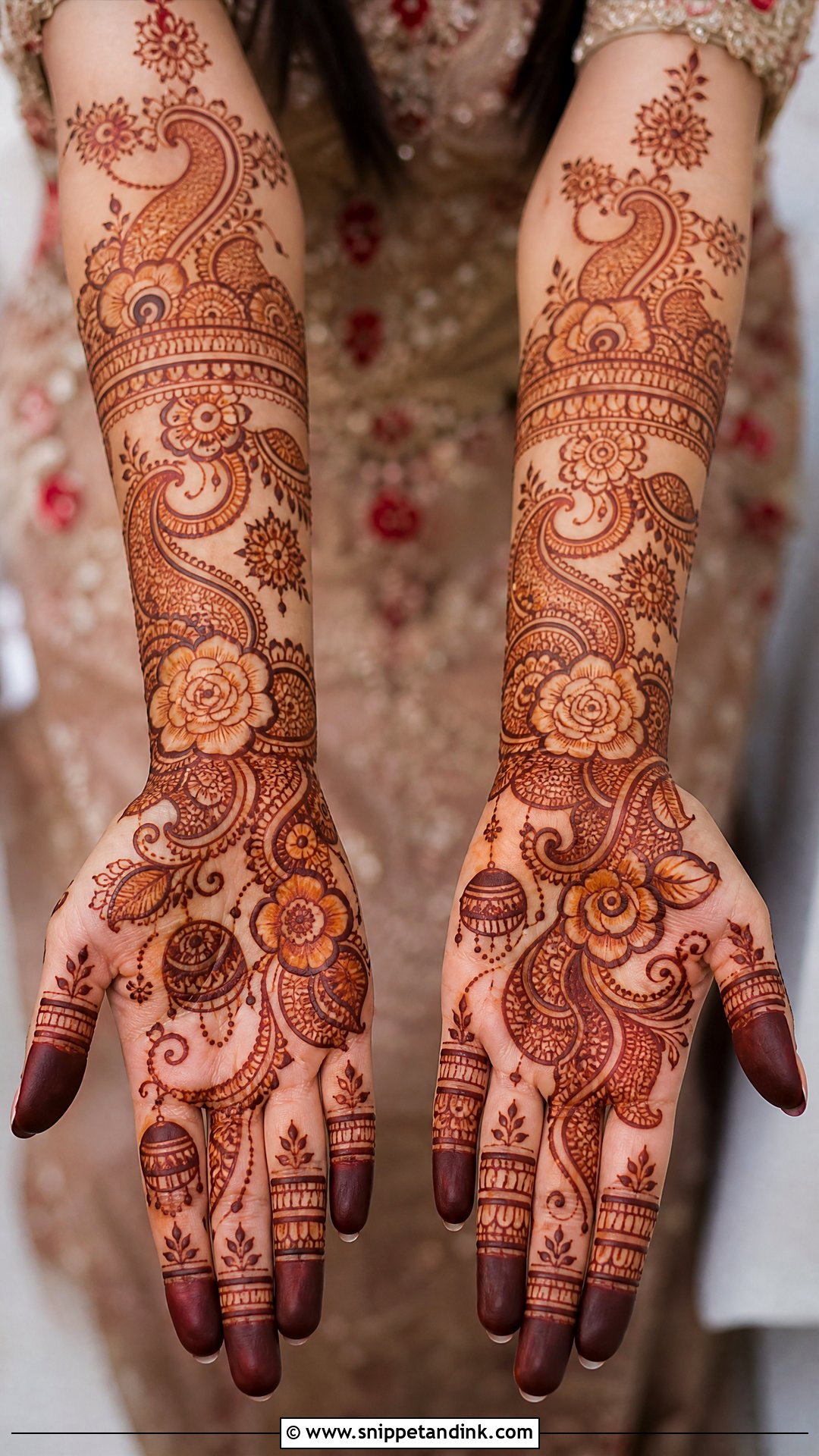
Rasm-e-henna is colourful, loud and family-centred, and the mehndi can be playful: floral palms, paisley trails, bold finger work, dholki-inspired motifs and cuffs. How much to do depends on your schedule. If the main bridal mehndi is being applied separately before the baraat, keep this one lighter. If this is the night your bridal mehndi goes on, go full hands and forearms, and make sure the timing lets the stain peak for the baraat.
25. Modern Pakistani Bridal Mehndi Design 2024
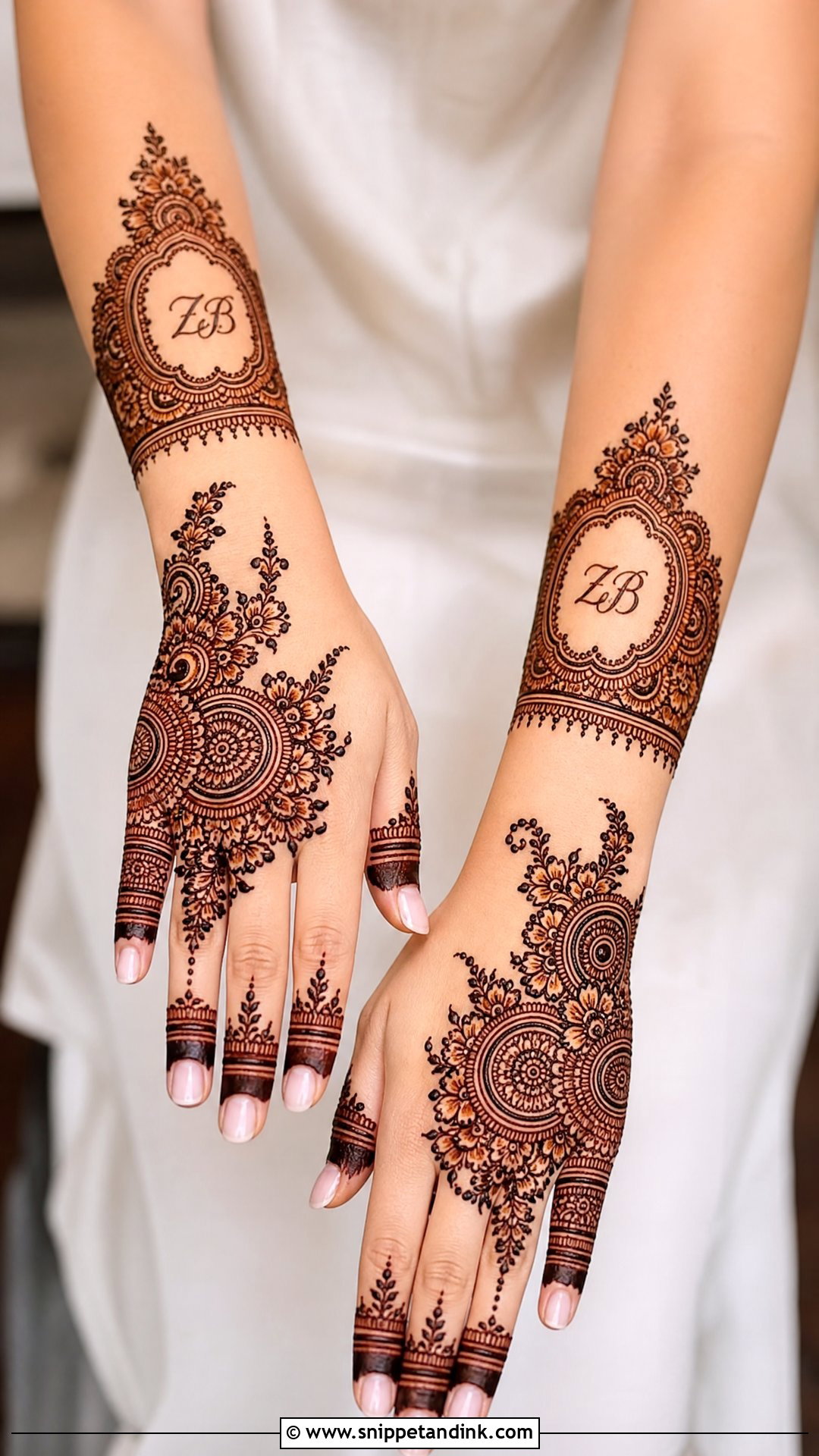
Modern Pakistani mehndi keeps the old motifs but rearranges them: split mandalas, diagonal floral trails, negative-space cuffs and personalised initials. It doesn’t need to cover every inch to look bridal, and it works with both heavy lehengas and sleek modern outfits. Keep the lines crisp and the pattern easy to read. I’d suggest it if you want something fresh but not experimental.
Is the Cone Fresh? Paste Questions I’d Want Answered
The design gets all the attention, but the paste decides the colour. Good bridal henna is made from finely sifted henna powder, lemon juice or water, sugar and an essential oil, then rested so the dye releases. It stays fresh for only a few days at room temperature, so artists either mix close to the date or keep cones frozen.
- Ask whether the cones are freshly mixed for you or bought ready-made. Pre-packed cones vary a lot in quality.
- Ask what’s in the paste. Natural henna stains orange first and darkens over a day or two.
- Avoid any cone that promises a black or instant dark stain. Those can contain PPD or other chemicals that cause severe skin reactions.
- If you have sensitive skin, ask for a small patch test on your inner arm a few days before.
- If you’re pregnant, ask which essential oil is used; some artists switch to a gentler one.
Feet need their own plan
Feet stain beautifully, often darker than hands, but they dry slowly and you can’t walk on wet paste. Wear loose open shoes to the session, have someone ready to carry things for you, and keep the paste on overnight with socks pulled on loosely once it has set.
Your Hands Through Every Function
The right bridal mehndi matches your outfit, the function, your hand shape, your jewelry and how long you can sit. Some brides love heavy full hands with peacocks, paisleys and jaali; others prefer simple mandalas, Arabic trails or minimal Nikkah layouts. What makes Pakistani bridal mehndi special is the way it mixes tradition, detail and personal meaning. Save the references you love, talk through coverage with your artist, and work backward from the baraat so the stain is at its deepest when it matters.
You'll Like These Ideas:


Leave a Reply