
Not every bride wants full-arm henna for her engagement, and most don’t need it. What she needs is a design that holds up in ring close-ups and family portraits and doesn’t make a long day of greeting guests uncomfortable. In my bookings, the requests split roughly three ways: full Indian work, airy Arabic trails and small back-hand designs with initials or a ring motif. Below is my round-up of beautiful Engagement Mehndi Designs for Bride, each with a note on how it behaves once the paste comes off.
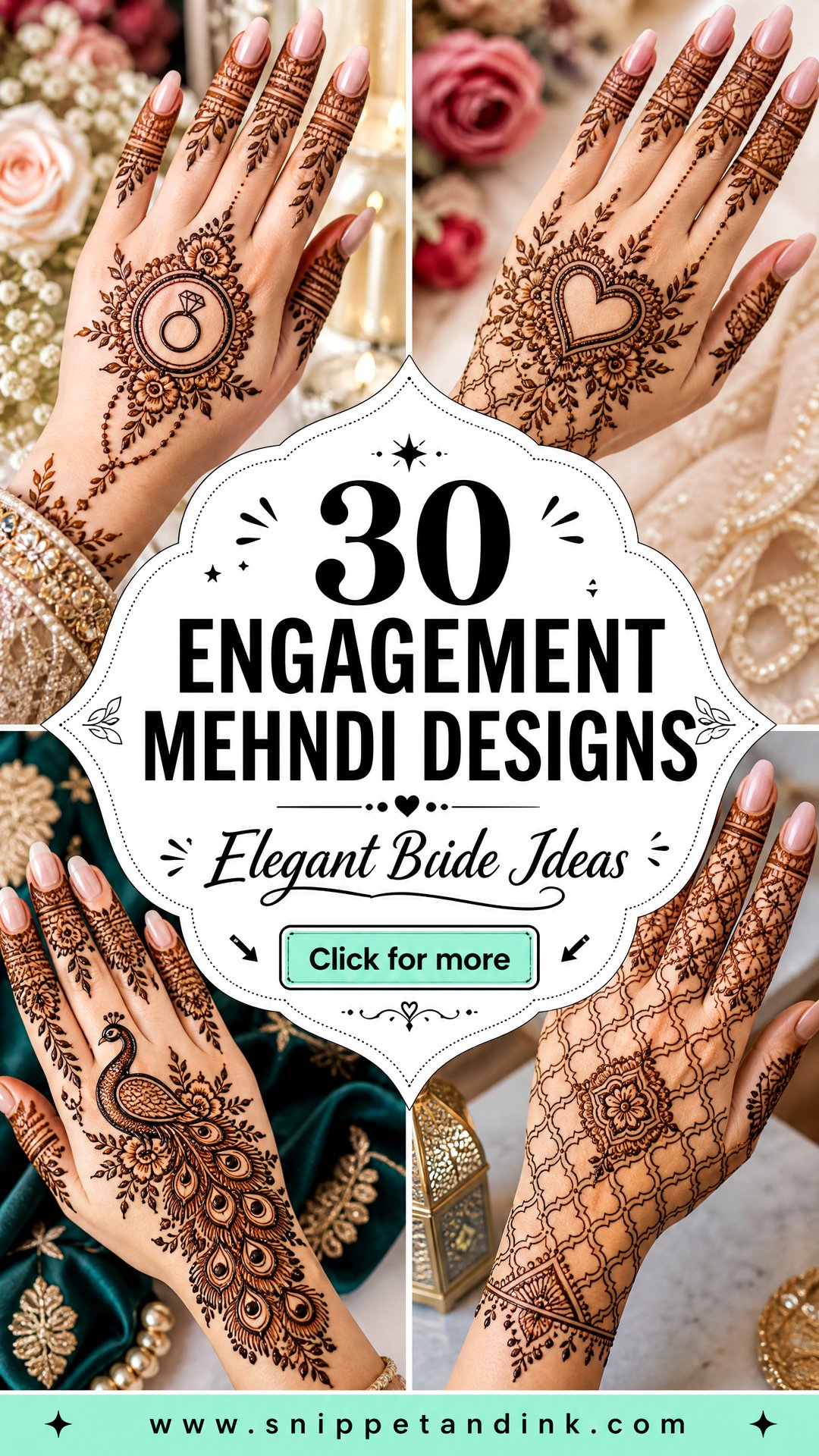
Let Your Sleeves and Bangles Set the Coverage
Before we talk motifs, I ask what you’ll wear on your arms. Henna that disappears under a sleeve or a stack of bangles is time spent for nothing, and the wrong length can make an outfit look unfinished.
- Full-length sleeves: put the detail on the fingers and the back of the hand, and stop at the wrist.
- Elbow or three-quarter sleeves: carry the design a few inches above the wrist so there’s no bare gap.
- Sleeveless or short sleeves: this is the outfit for forearm extensions, if you want them.
- A heavy bangle stack or chooda: keep the wrist light, since it will be covered, and move the cuff detail higher or lower.
- Haath phool: leave a clear path on the back of the hand for the chain, or draw the henna to echo its shape.
Bring the outfit, or at least a photo of you wearing it, and the jewelry you plan to use. I’d rather adjust the design at the start than discover halfway through that the cuff sits right under your bangles.
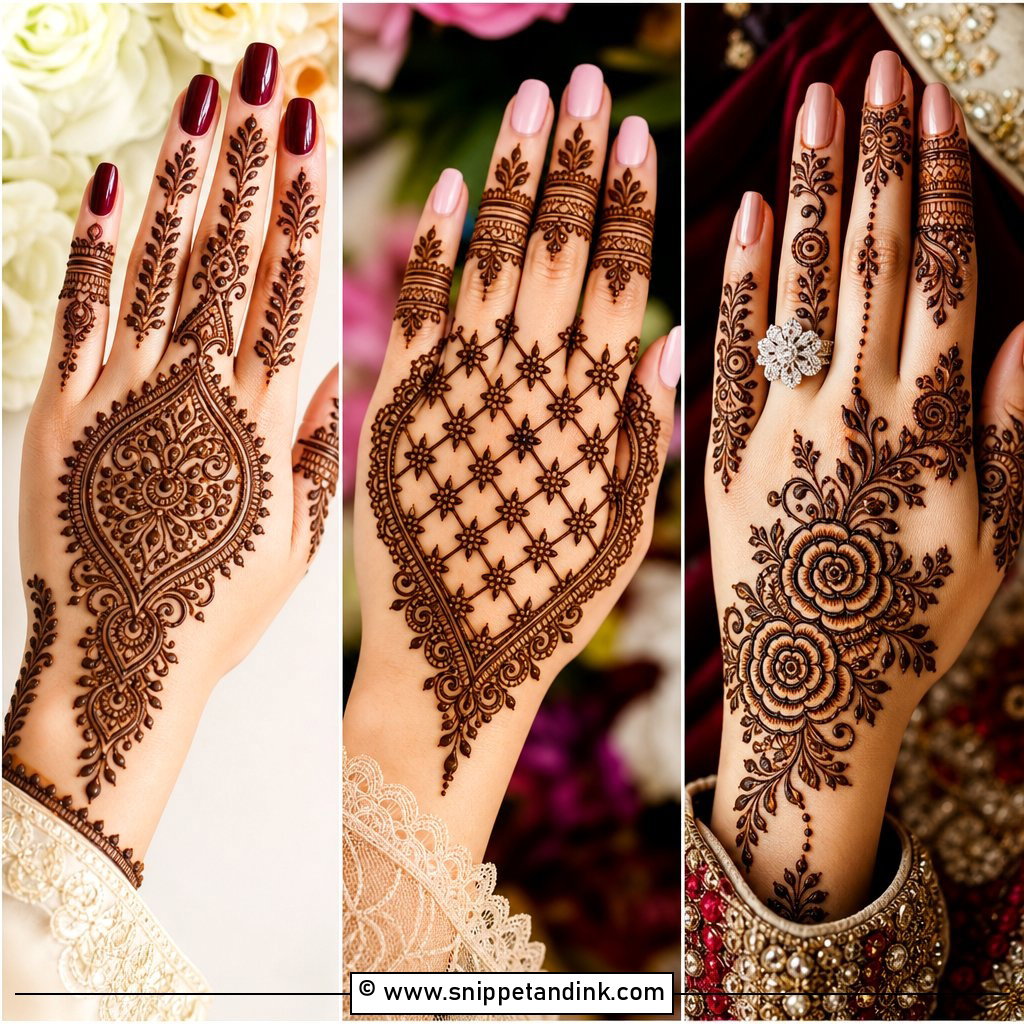
1. Full Hand Engagement Mehndi Design
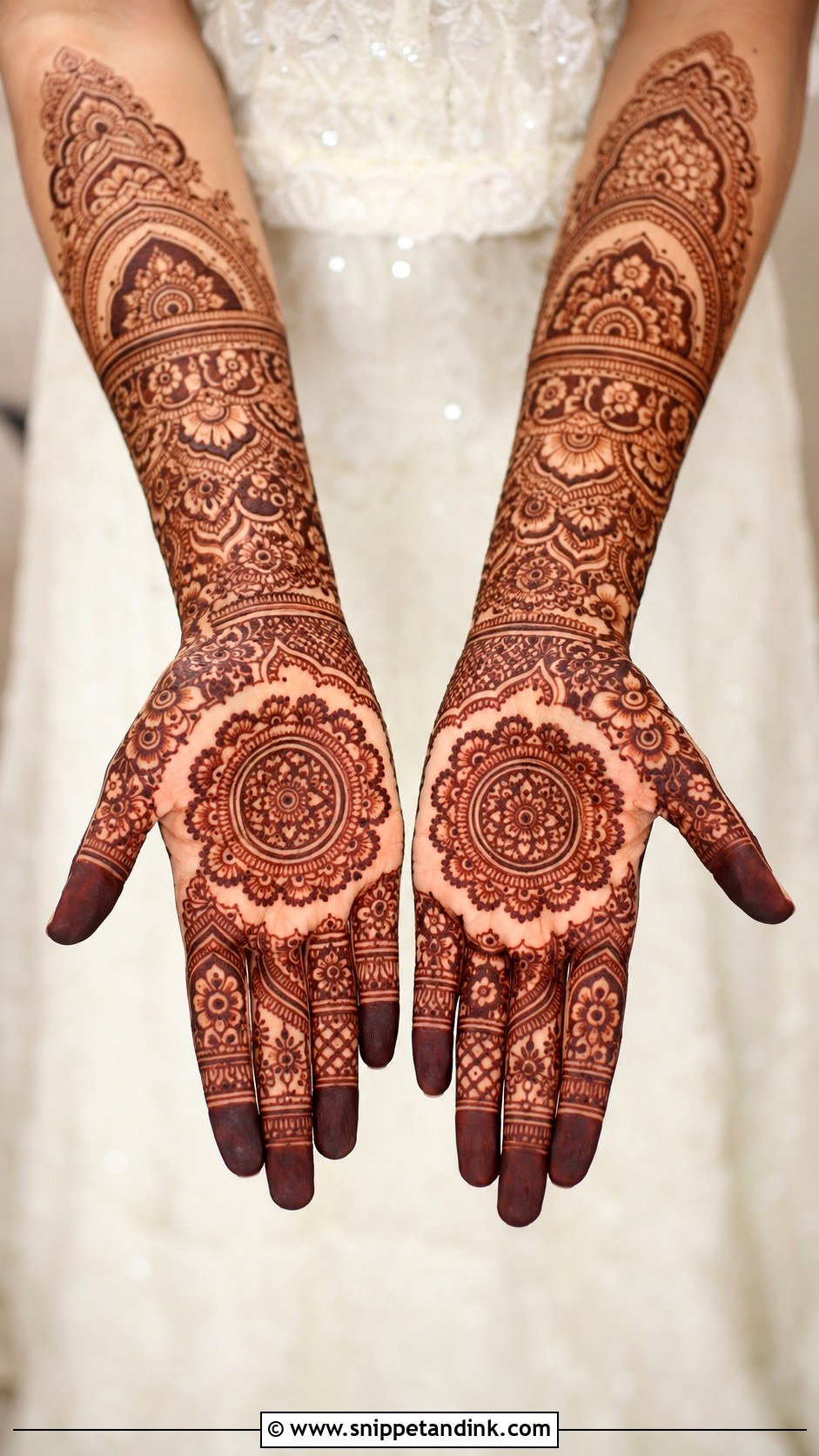
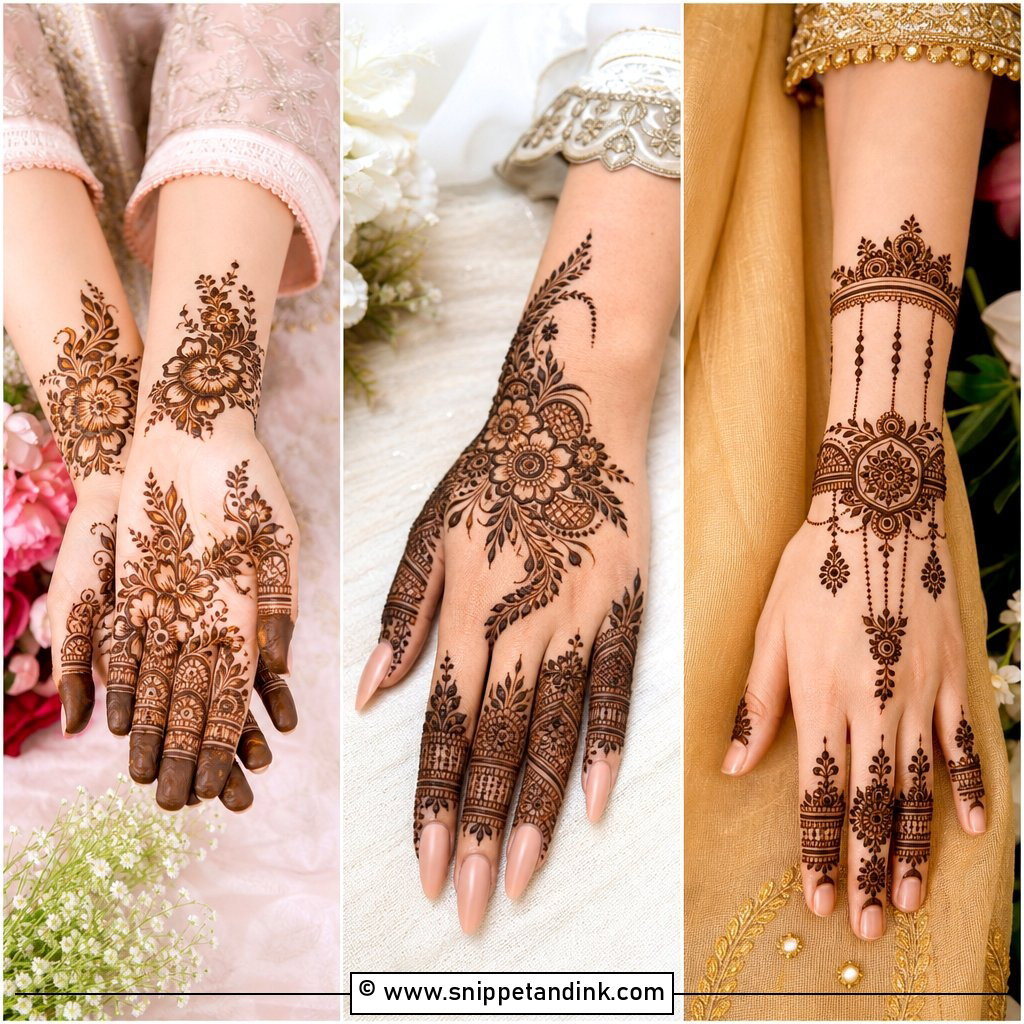
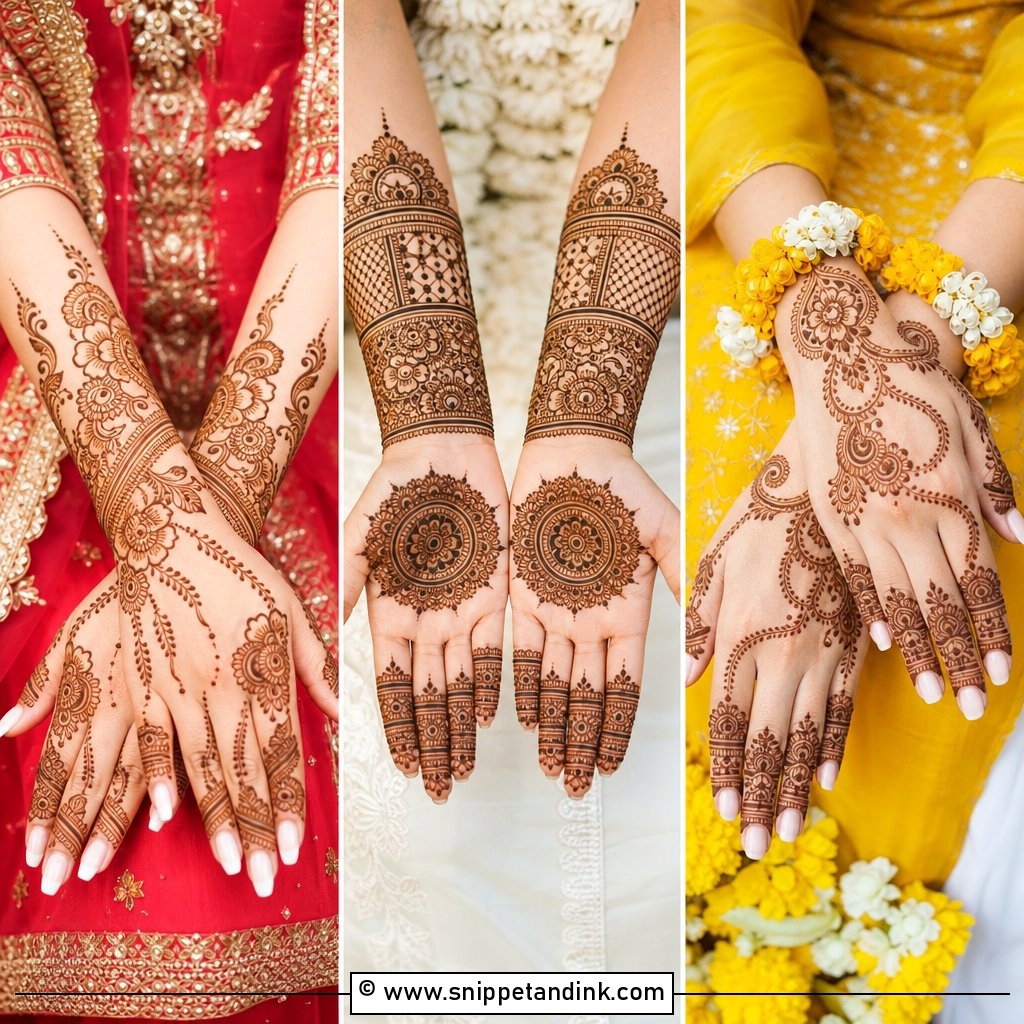
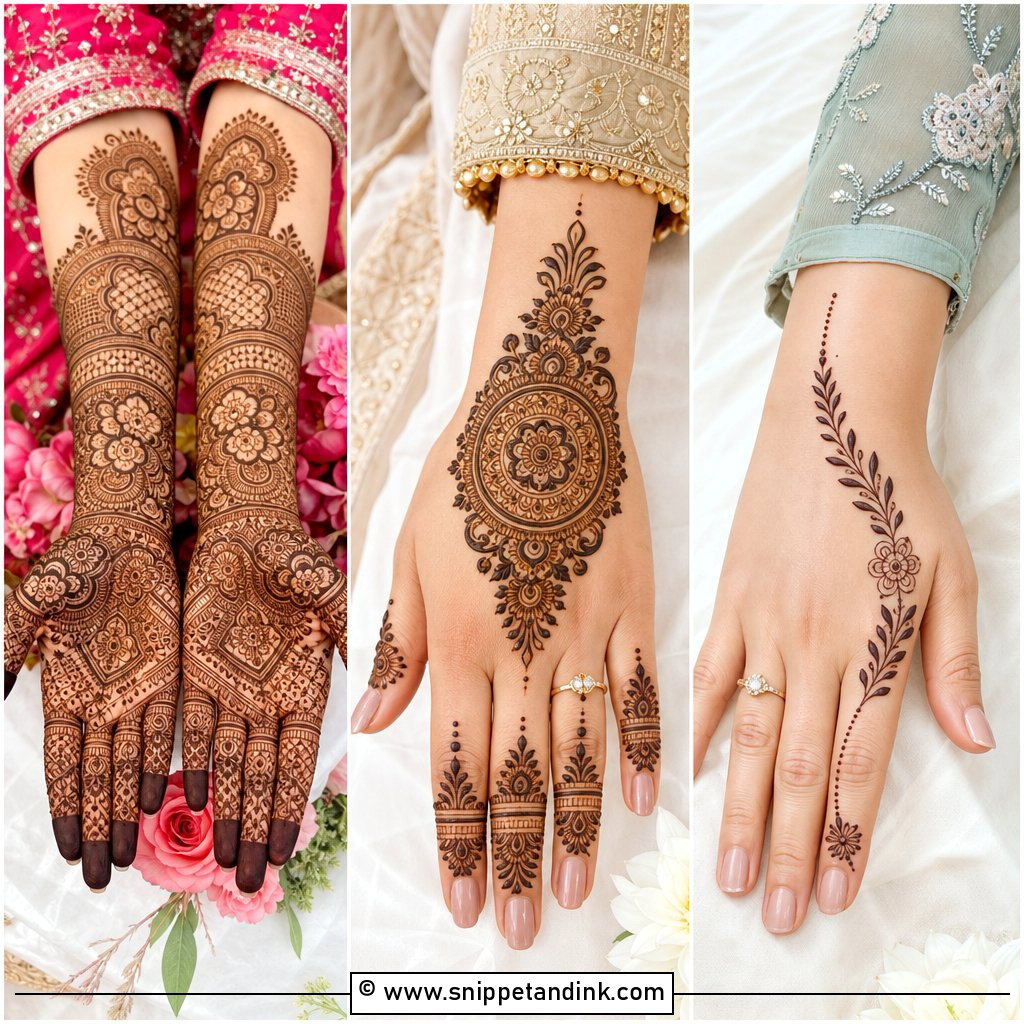
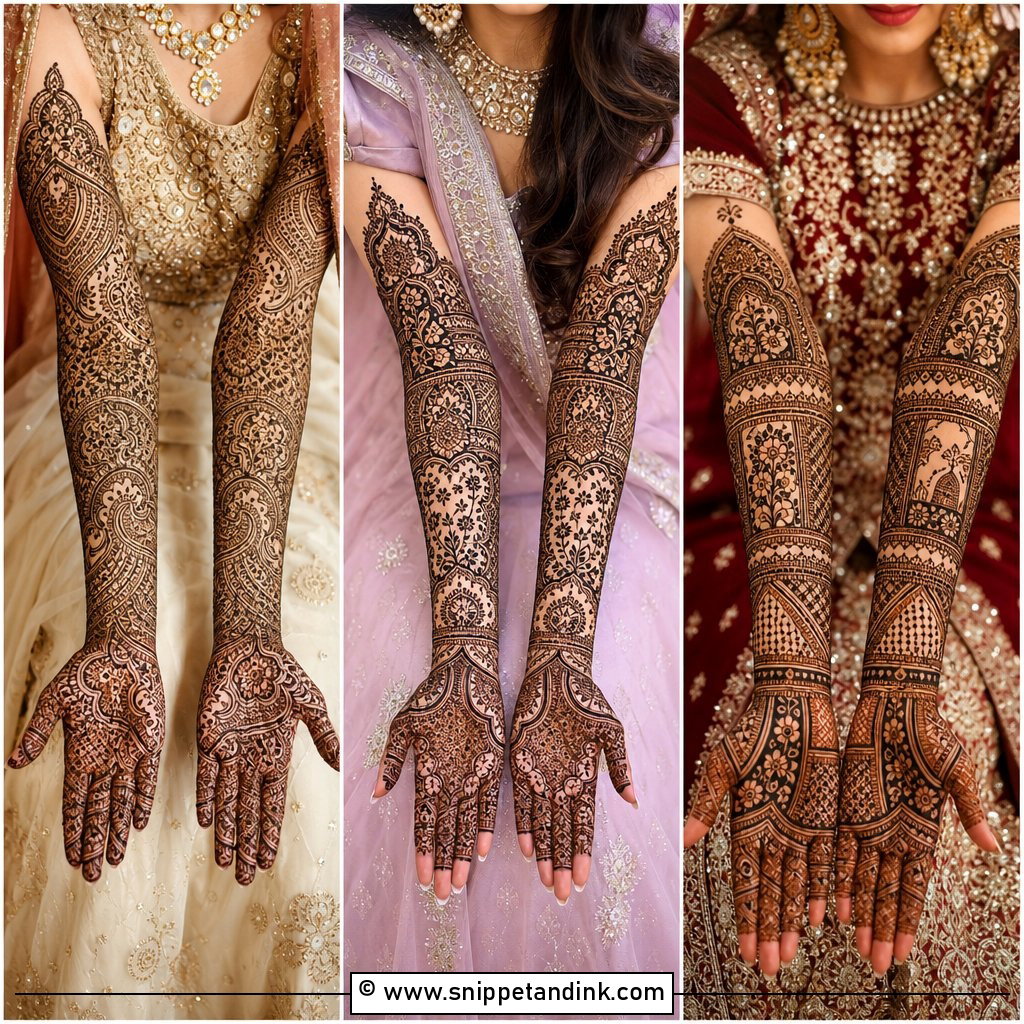
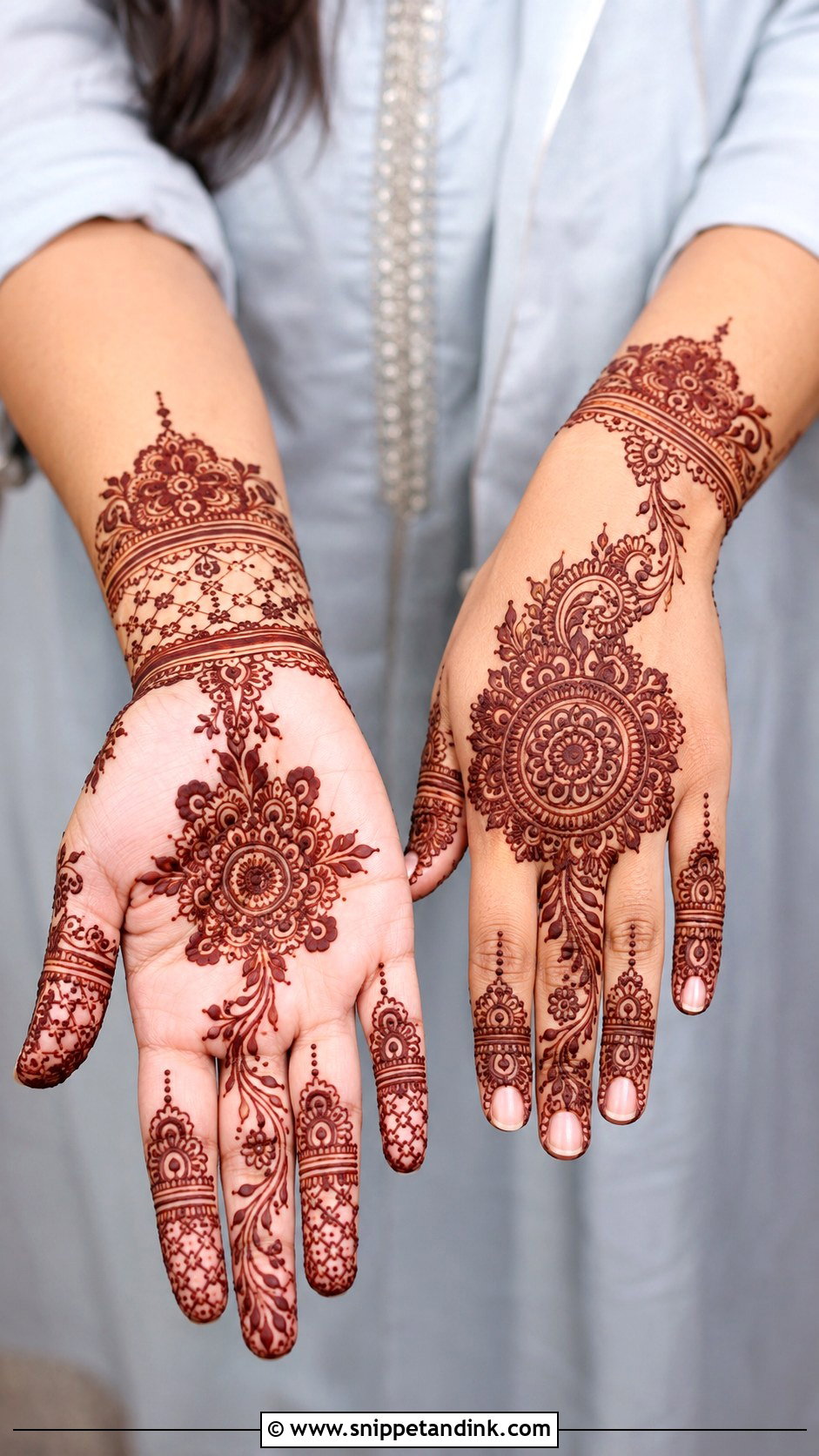
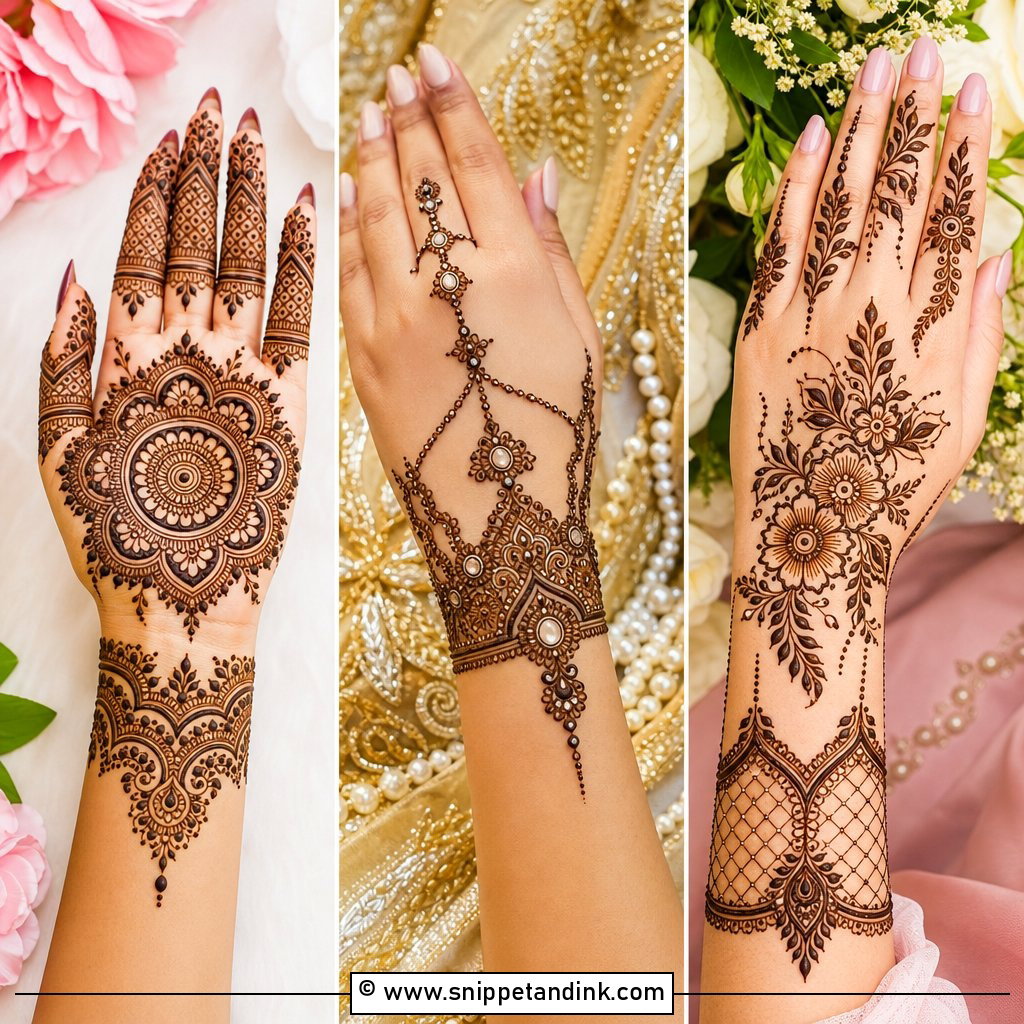
Full hand henna starts with dark filled caps on the fingertips, the part of the hand that stains deepest, then moves into floral vines, paisleys, a mandala centre and wrist bands. I like to give the palm a ring symbol, initials or a small couple motif, and match the back of the hand with bracelet-style cuffs. For an engagement I stop a few inches above the wrist rather than running up to the elbow. It sits well with lehengas, sarees and shararas, but budget two to three hours for it.
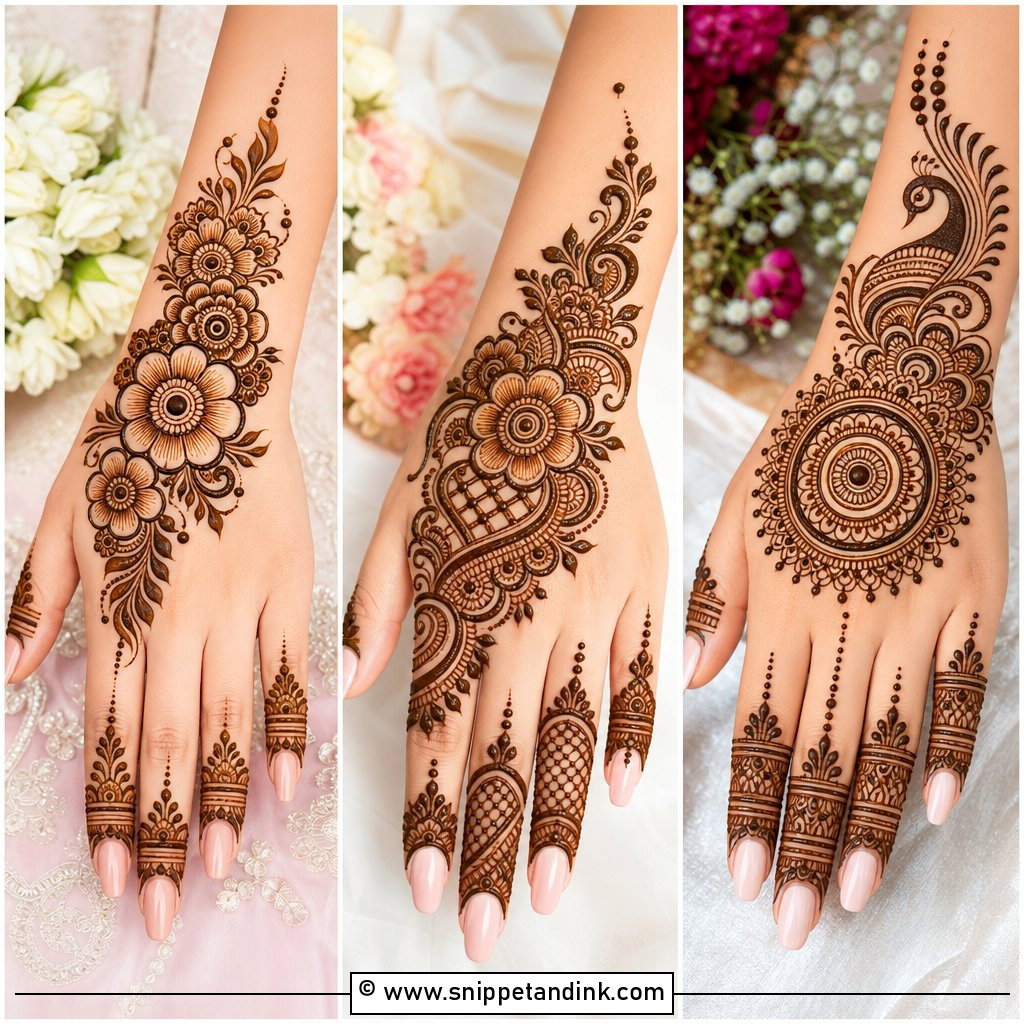
2. Arabic Engagement Mehndi Design
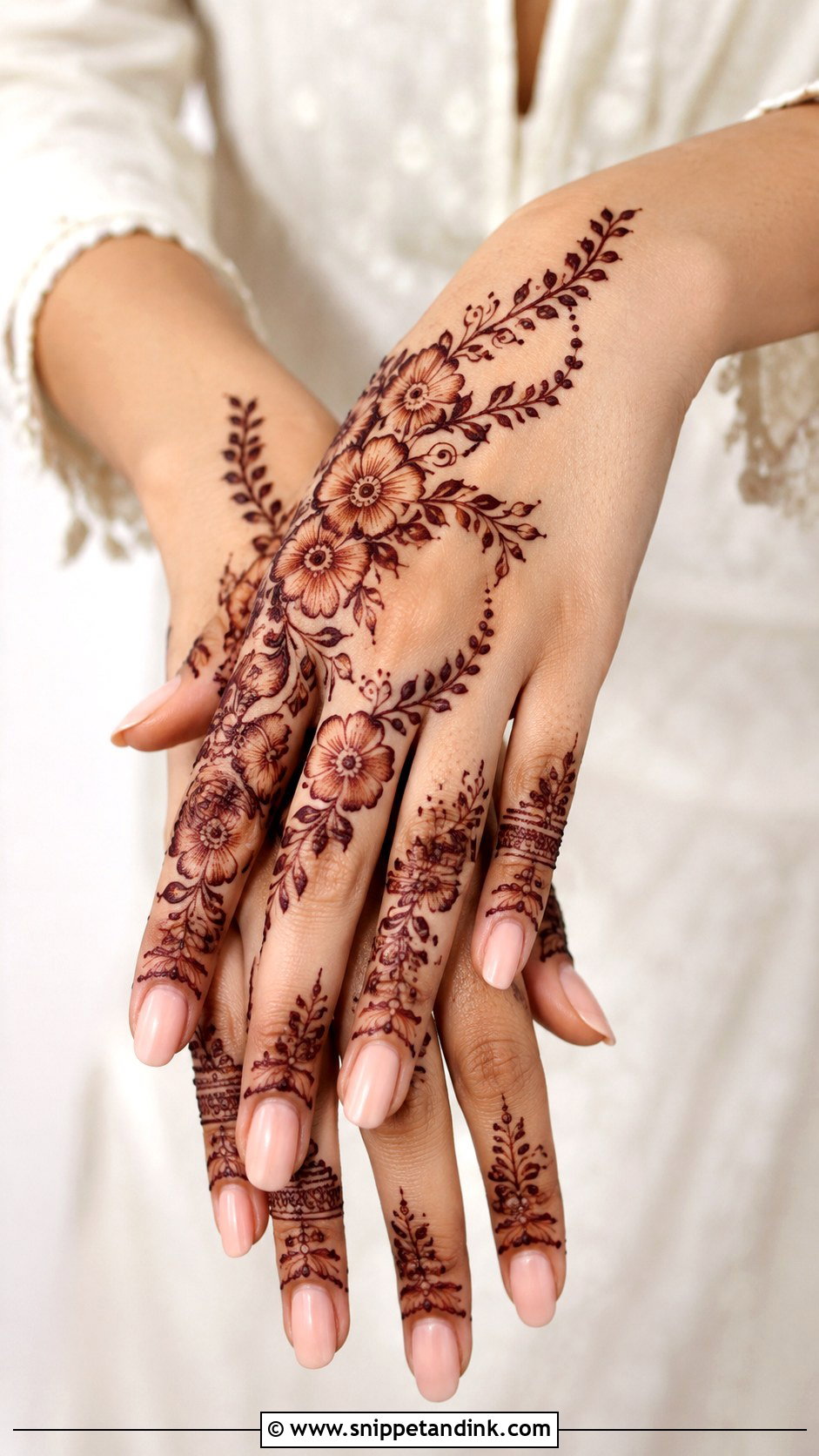
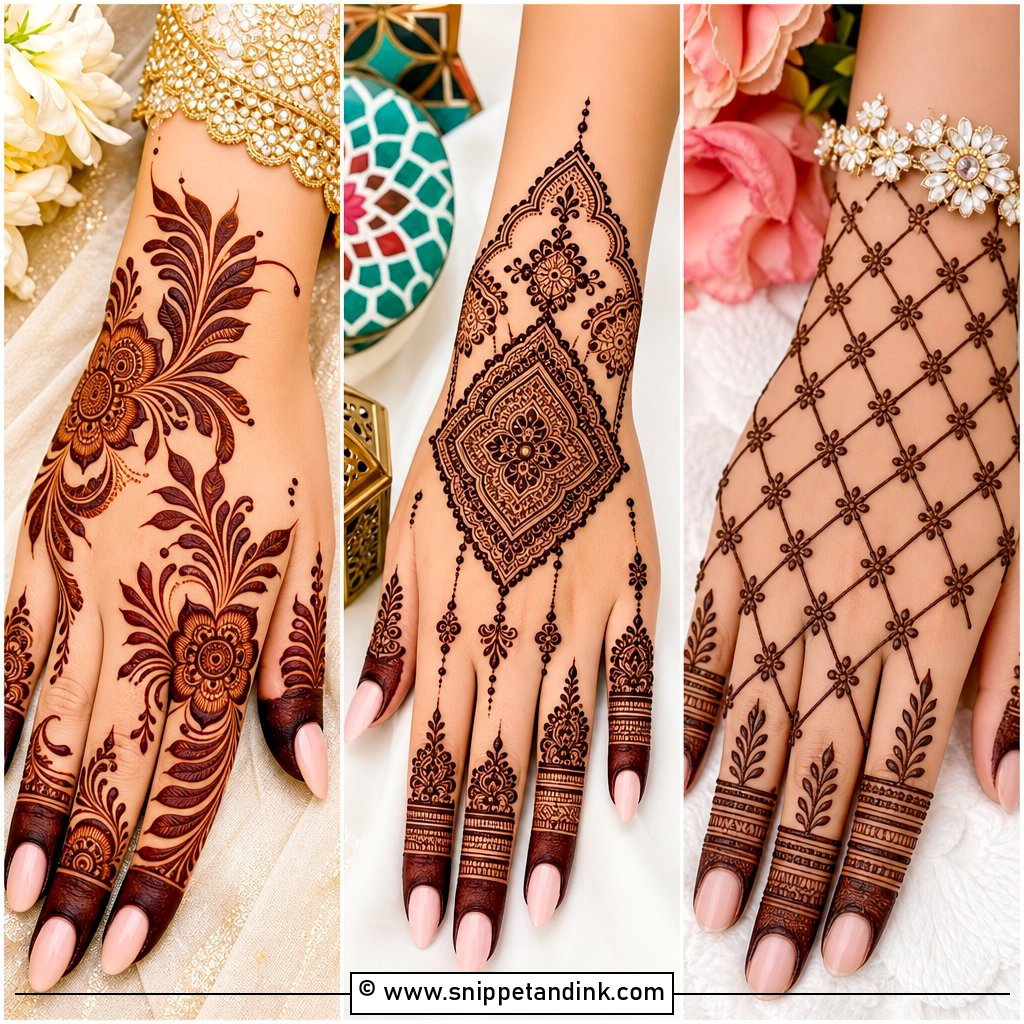
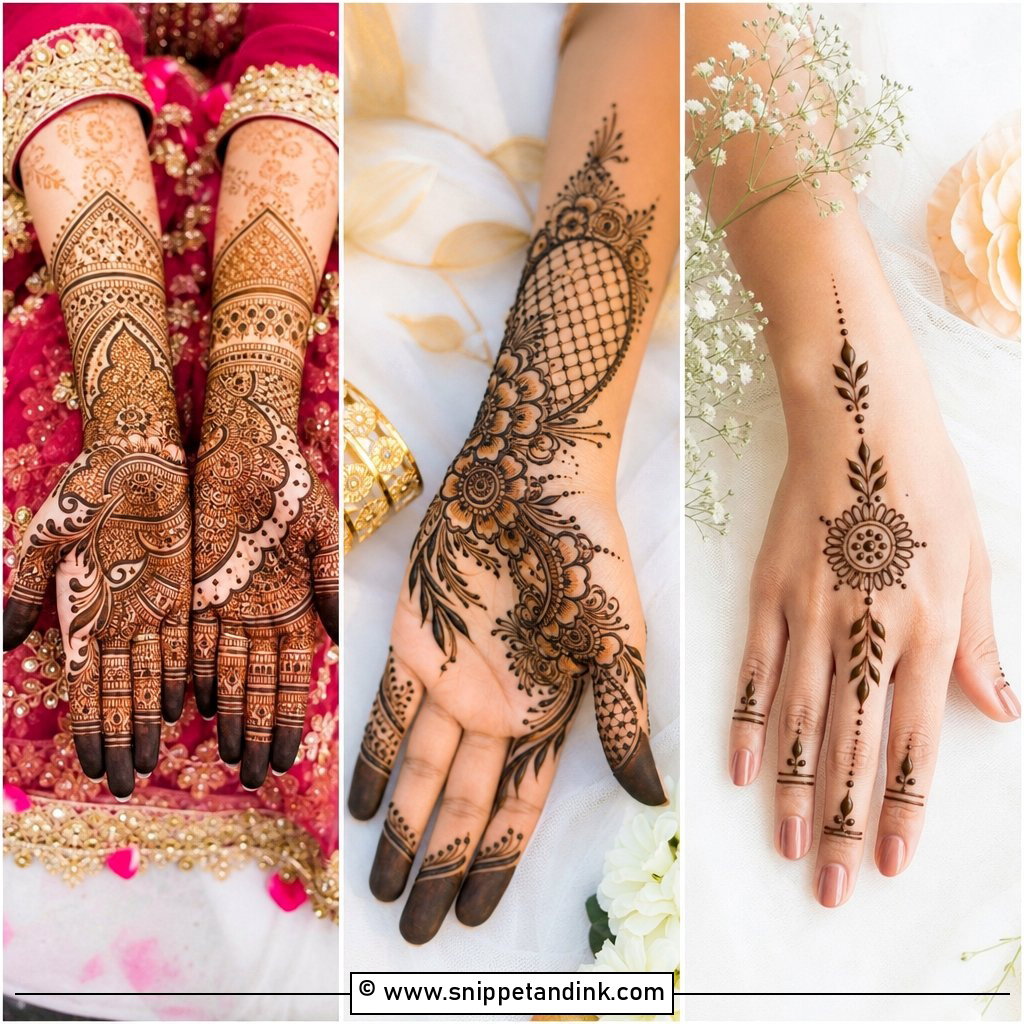
Arabic henna runs diagonally from one side of the wrist toward the index or middle finger in bold flowers, vines and shaded petals, with plenty of empty skin between them. Those gaps are useful at an engagement: your nail colour and rings show clearly. It’s also quick, often under an hour for both hands. I’d recommend it to anyone wearing soft glam makeup, since the two share the same light touch.
3. Indo Arabic Engagement Mehndi Design
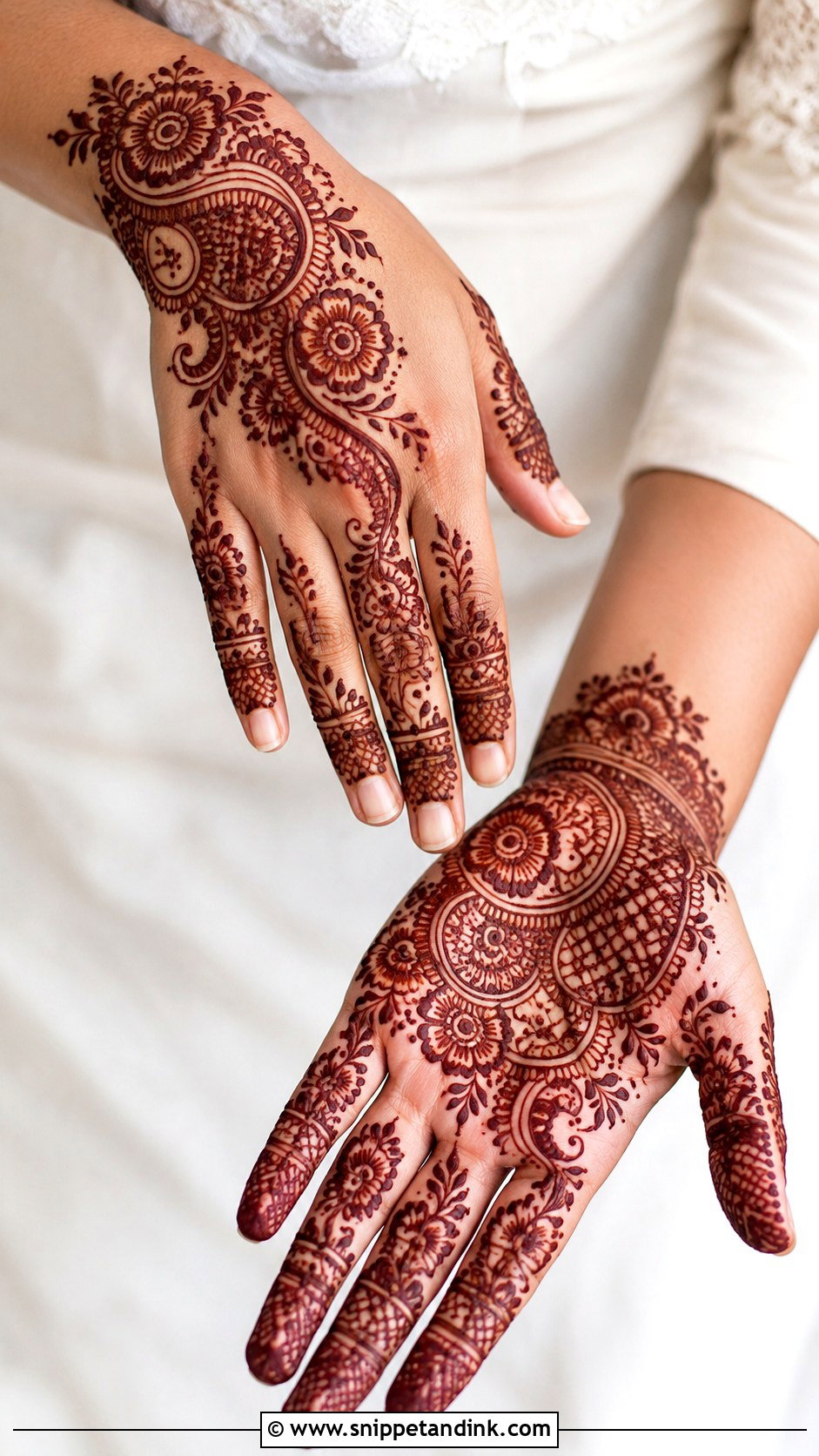
Indo-Arabic puts Indian fine detail inside an Arabic layout. I draw large floral trails first, then fill some sections with paisley blocks, mesh and dots, leaving other areas open. The palm can hold a mandala or ring motif; the fingers get detailed bands and leafy tips. It’s the safest middle ground I know, visible in photos without looking crowded, and it suits both traditional outfits and gowns.
4. Back Hand Engagement Mehndi Design
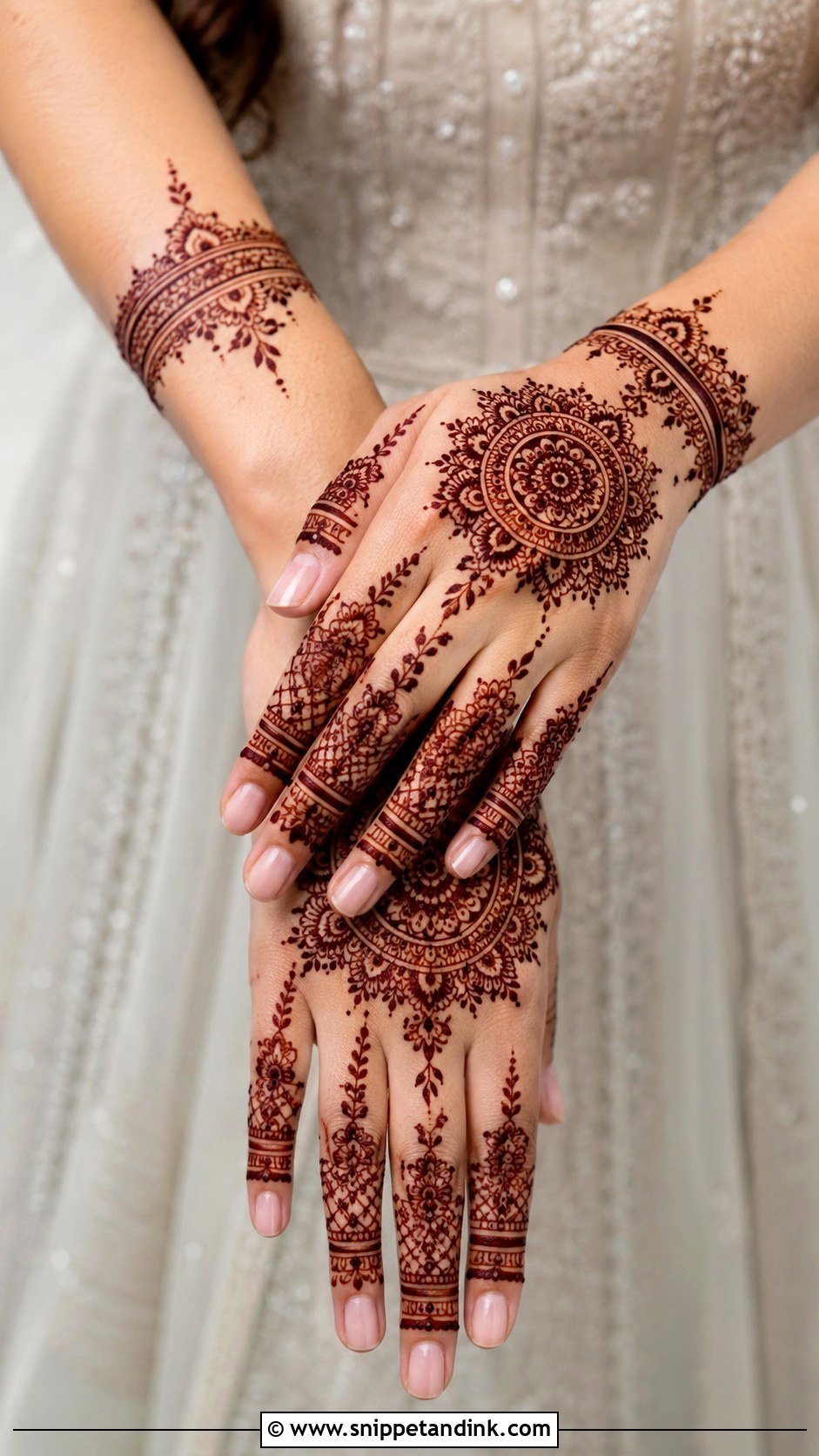
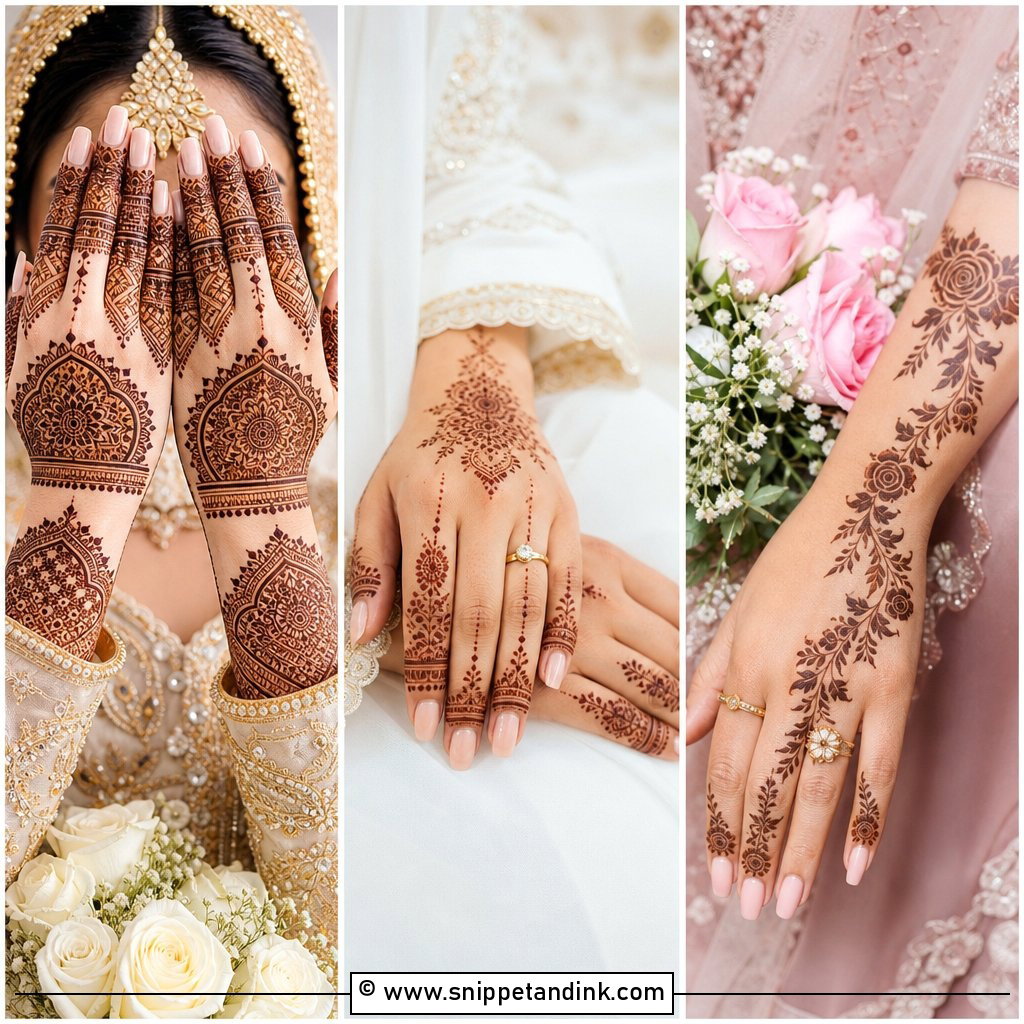
The back of the hand is the angle every ring photo uses. I build a central mandala, send floral chains toward the fingers and close the wrist with bracelet bands, keeping the ring finger’s base fairly open. Dense work reads royal; airy spacing reads soft. Either way, it feels lighter to wear than palm henna, because the back of the hand doesn’t touch anything while the paste dries.
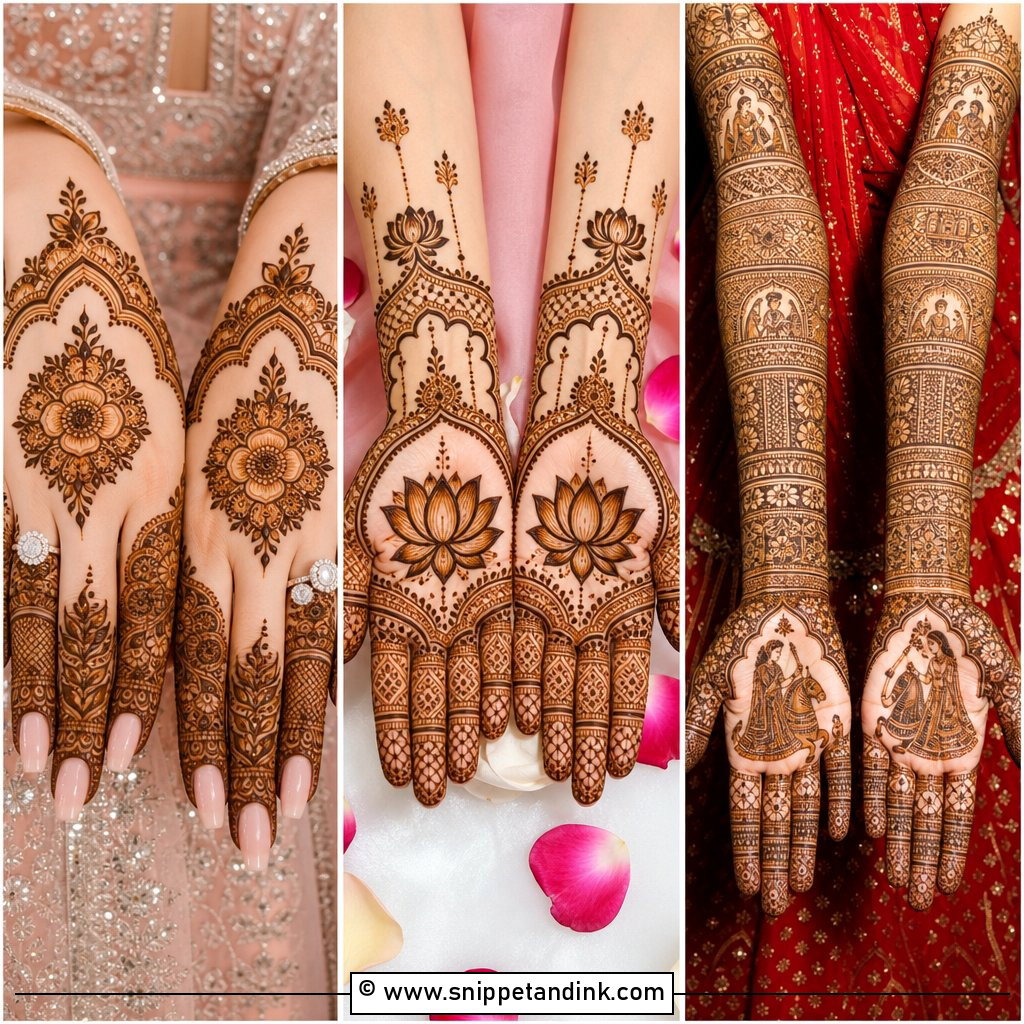
5. Front Hand Engagement Mehndi Design
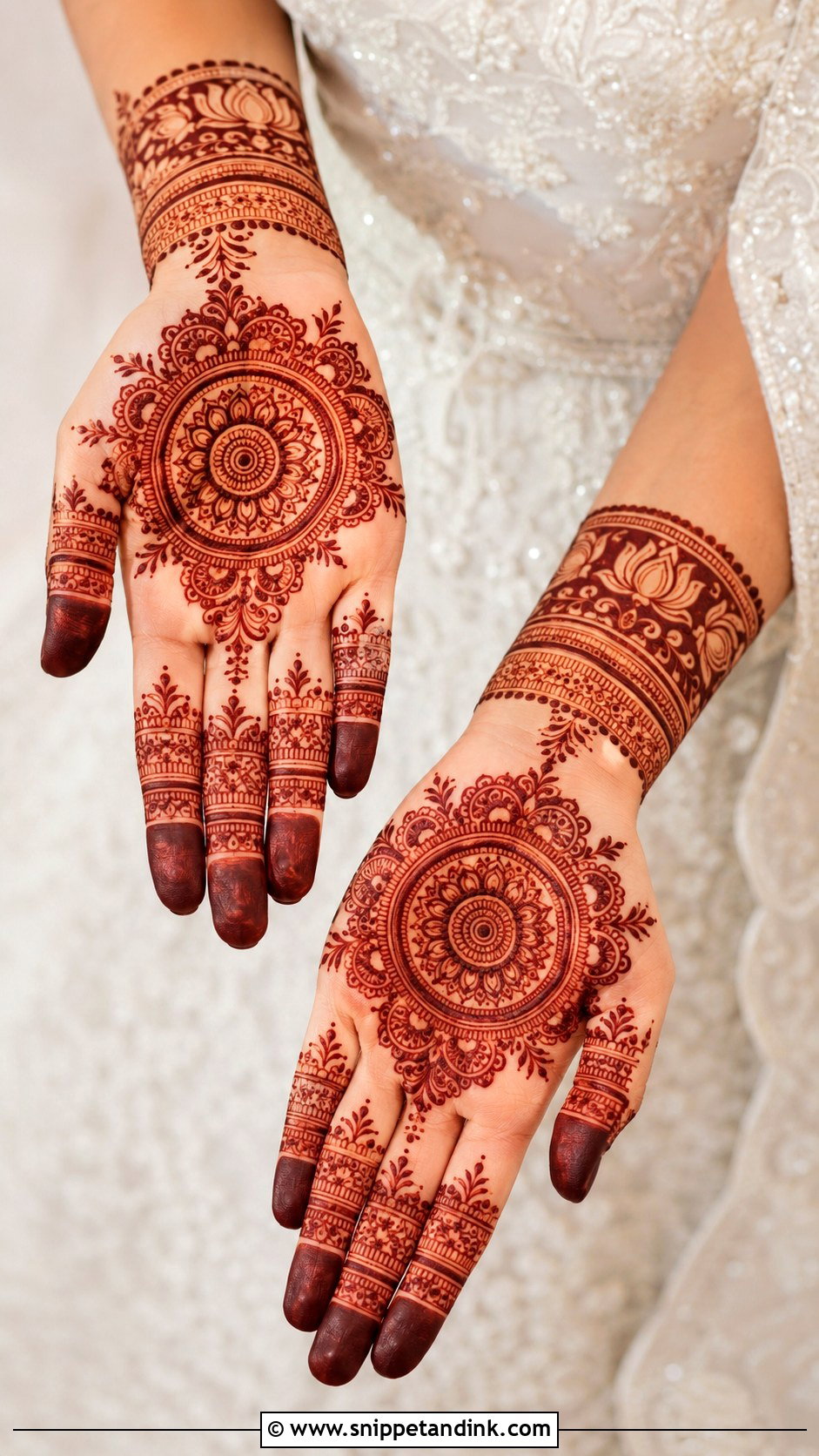
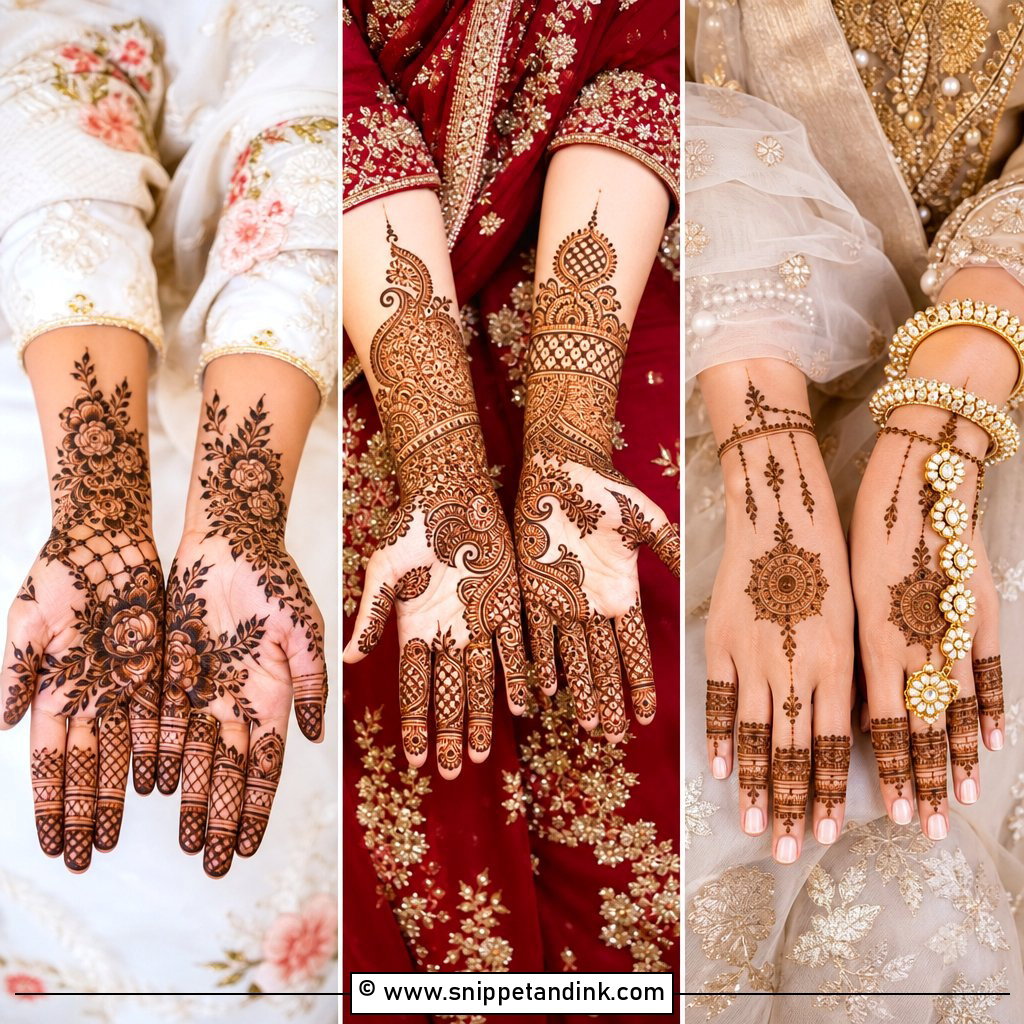
Palm henna is the classic bridal placement and gives the darkest stain, since the skin there is thicker and holds the dye well. I centre it on a mandala, lotus, peacock or heart-shaped couple motif, then fill around it with paisleys, vines, dots and jaali. Fingers get coordinated bands and dark tips. If your ceremony includes rituals where you hold your palms open, this is the placement worth prioritizing.
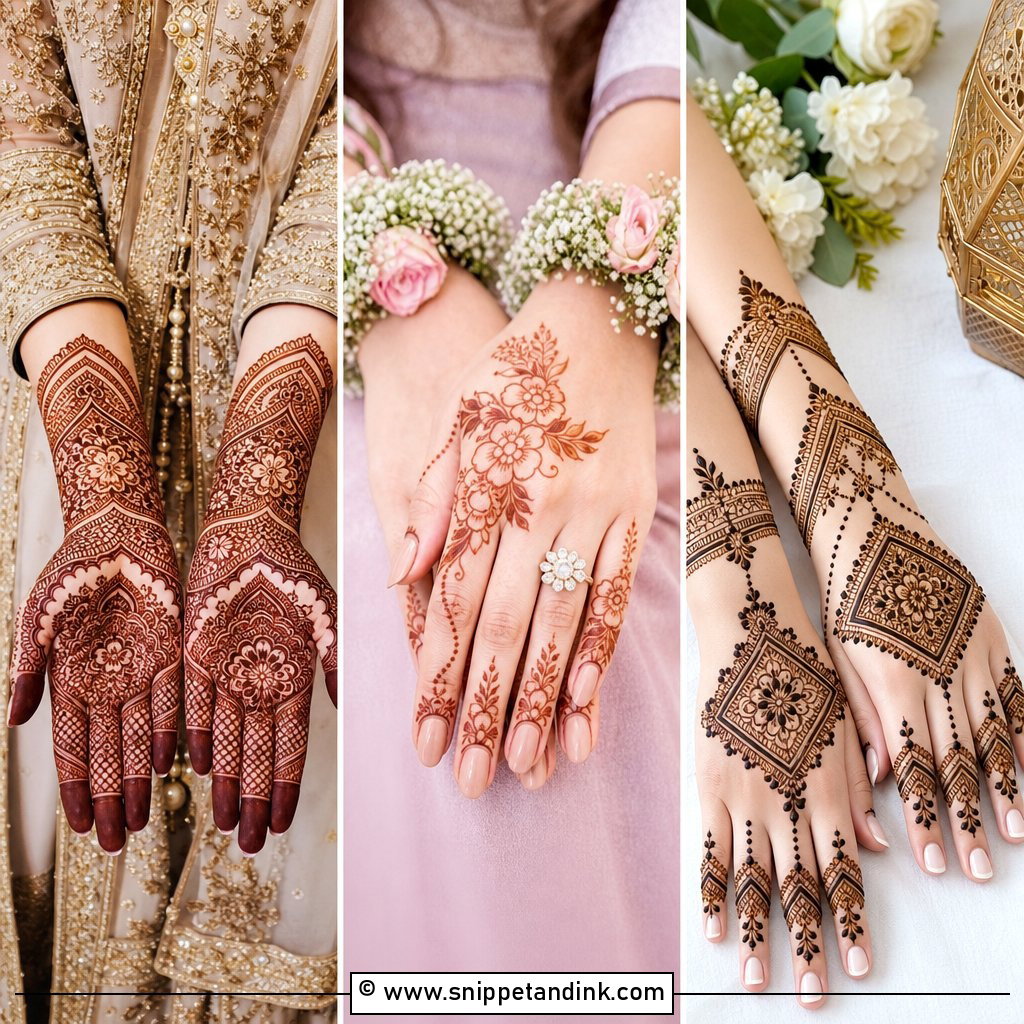
6. Simple Engagement Mehndi Design
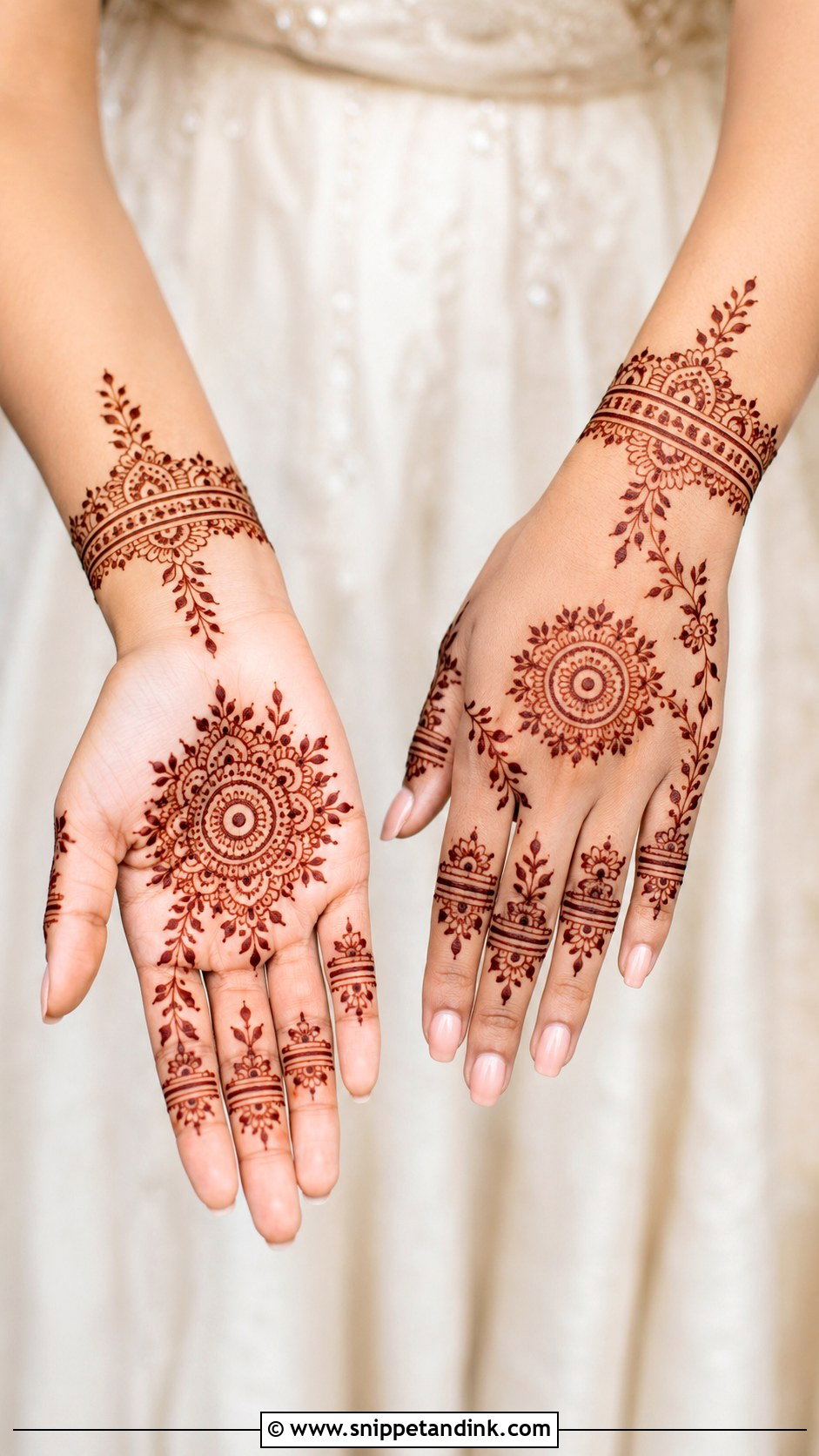
Simple doesn’t mean plain; it means fewer, better-placed lines. My usual simple set is a neat palm mandala, light floral vines, slim finger bands and a small wrist cuff, with a bracelet pattern and delicate chains on the back. It takes less than an hour. Small ceremonies and lighter outfits suit it, and it still looks bridal when the spacing is balanced.
7. Minimal Engagement Mehndi Design
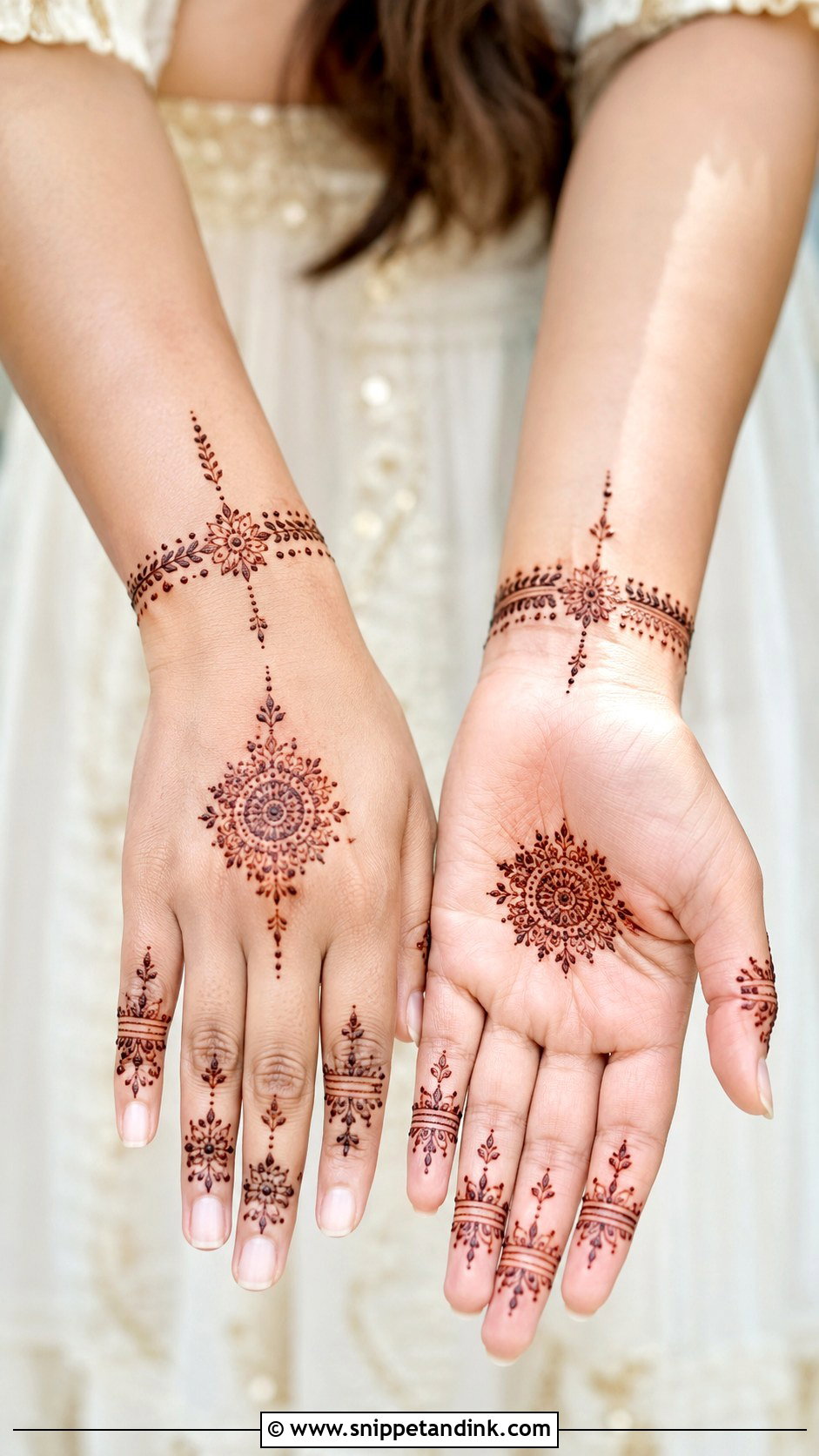
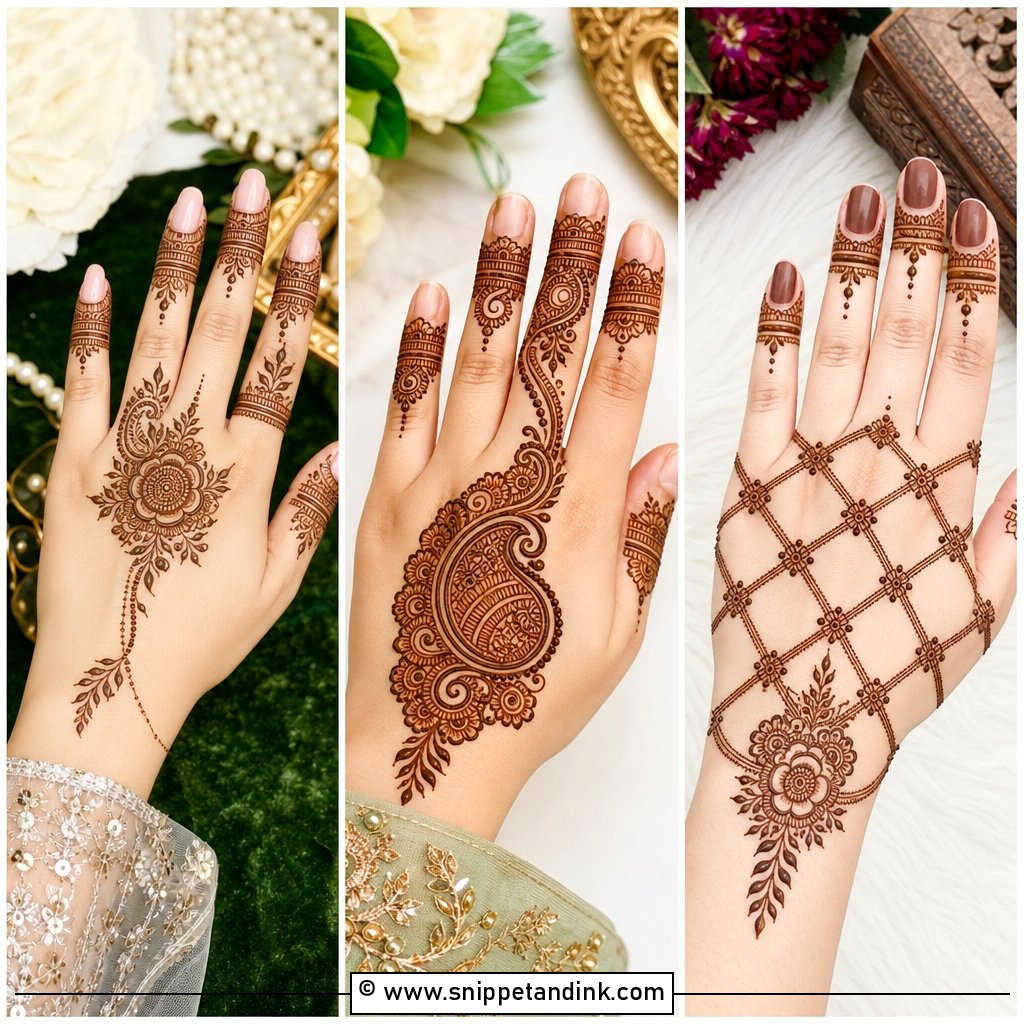
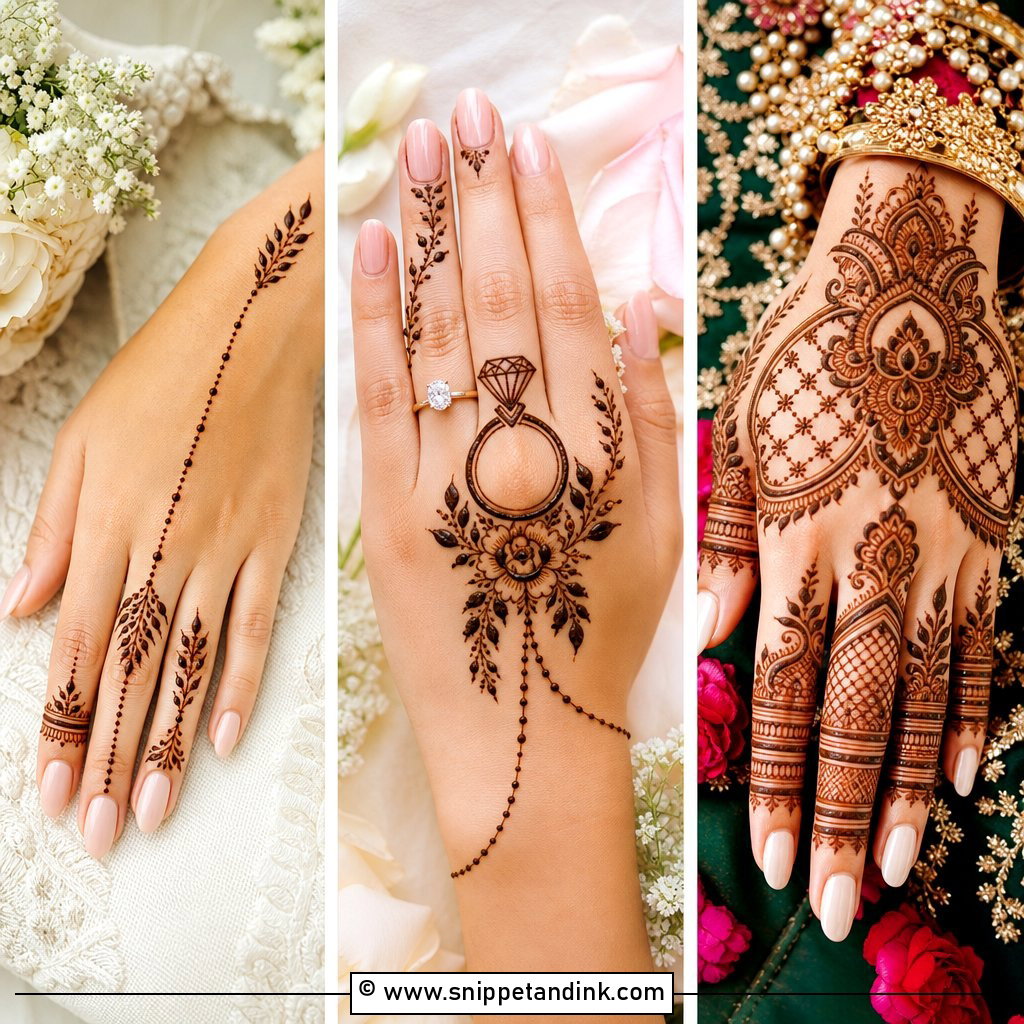
Minimal henna is precision work. I draw one motif on the back of the hand, fine finger lines, tiny flowers and a slim bracelet at the wrist, sometimes with a small mandala or ring symbol on the palm. Diamond rings and pastel outfits look good next to it. Since every line is on display, I use a very fine cone tip and work slowly; a minimal design drawn fast is the easiest kind to ruin.
8. Engagement Mehndi Design With Ring Motif
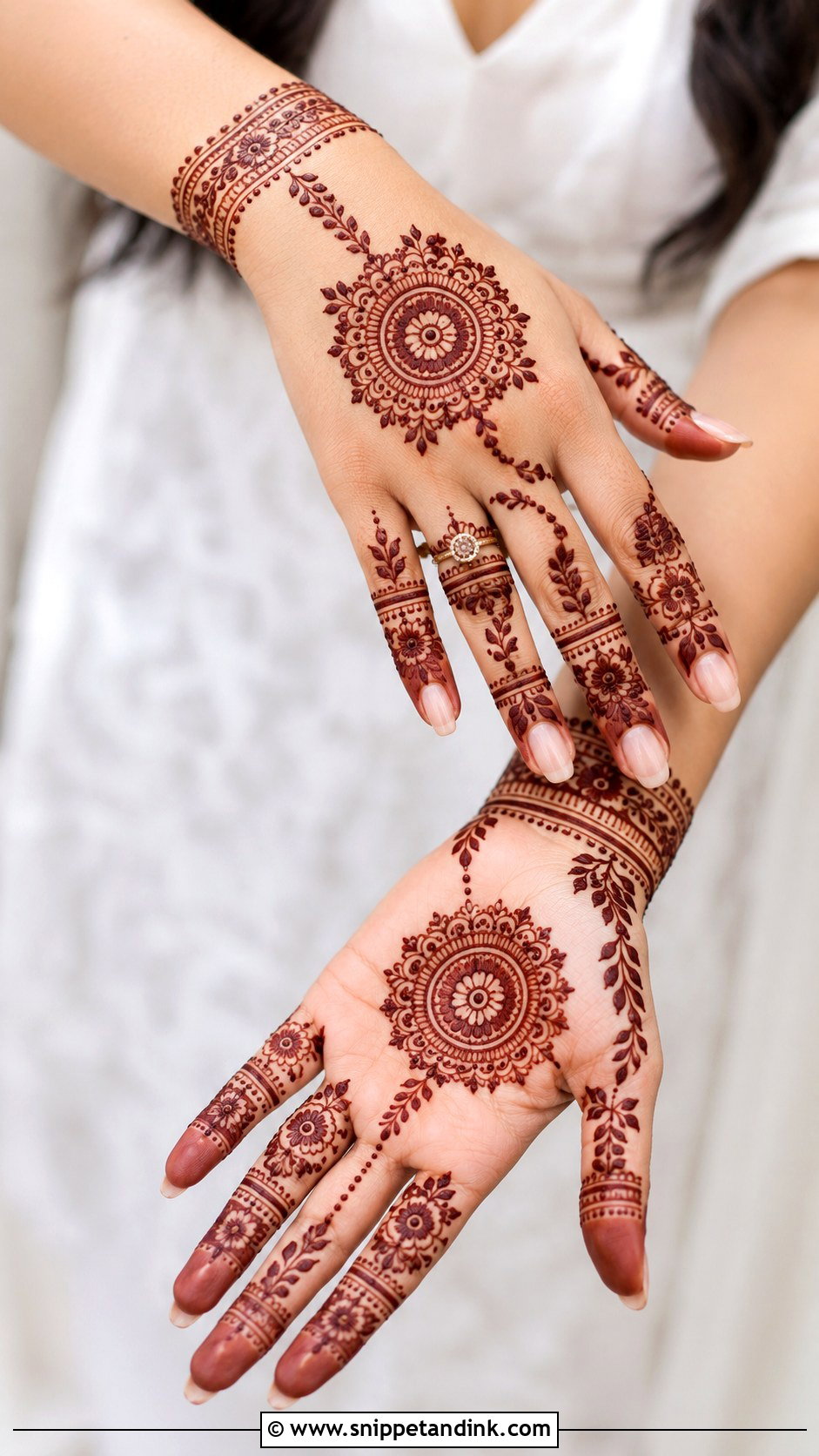
The ring motif turns the ceremony itself into the theme. I frame the ring finger with small vines and dotted chains and a fine circle near the base, then echo it on the palm with a larger ring-shaped mandala. Bracelet bands on the back lead the eye toward the ring. I avoid dark filling right where the ring sits, both so the stone stays visible and because henna under a band rubs off unevenly within days.
9. Engagement Mehndi Design With Initials
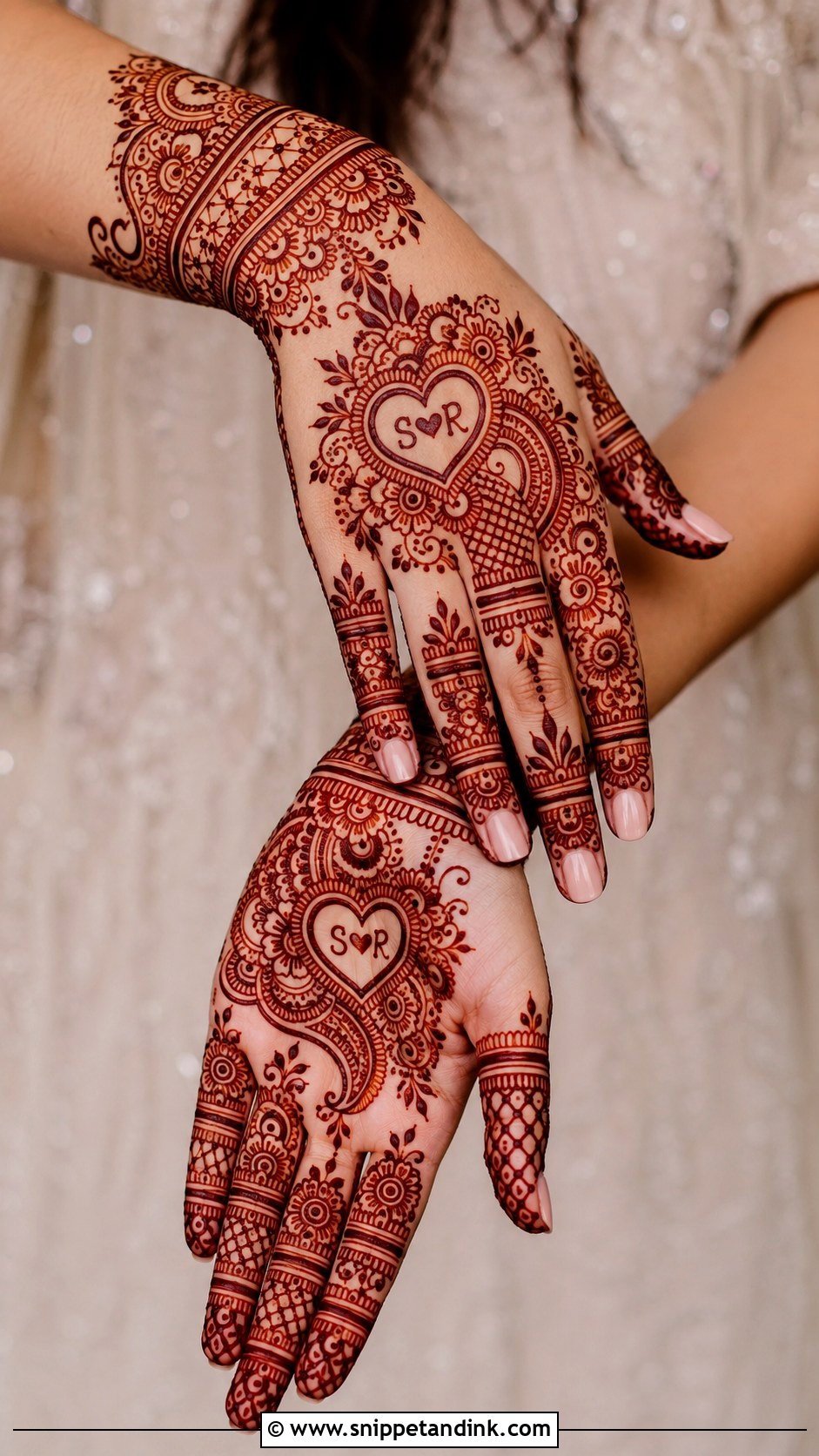
Initials hidden in the design give your partner something to search for. I place them in a heart, between paisley curves, inside a mandala or along the wrist band, and sometimes add the date if there’s room. They need to be readable without shouting, so I draw the letters a little larger than feels natural; thin lettering blurs as the stain deepens.
10. Engagement Mehndi Design With Heart
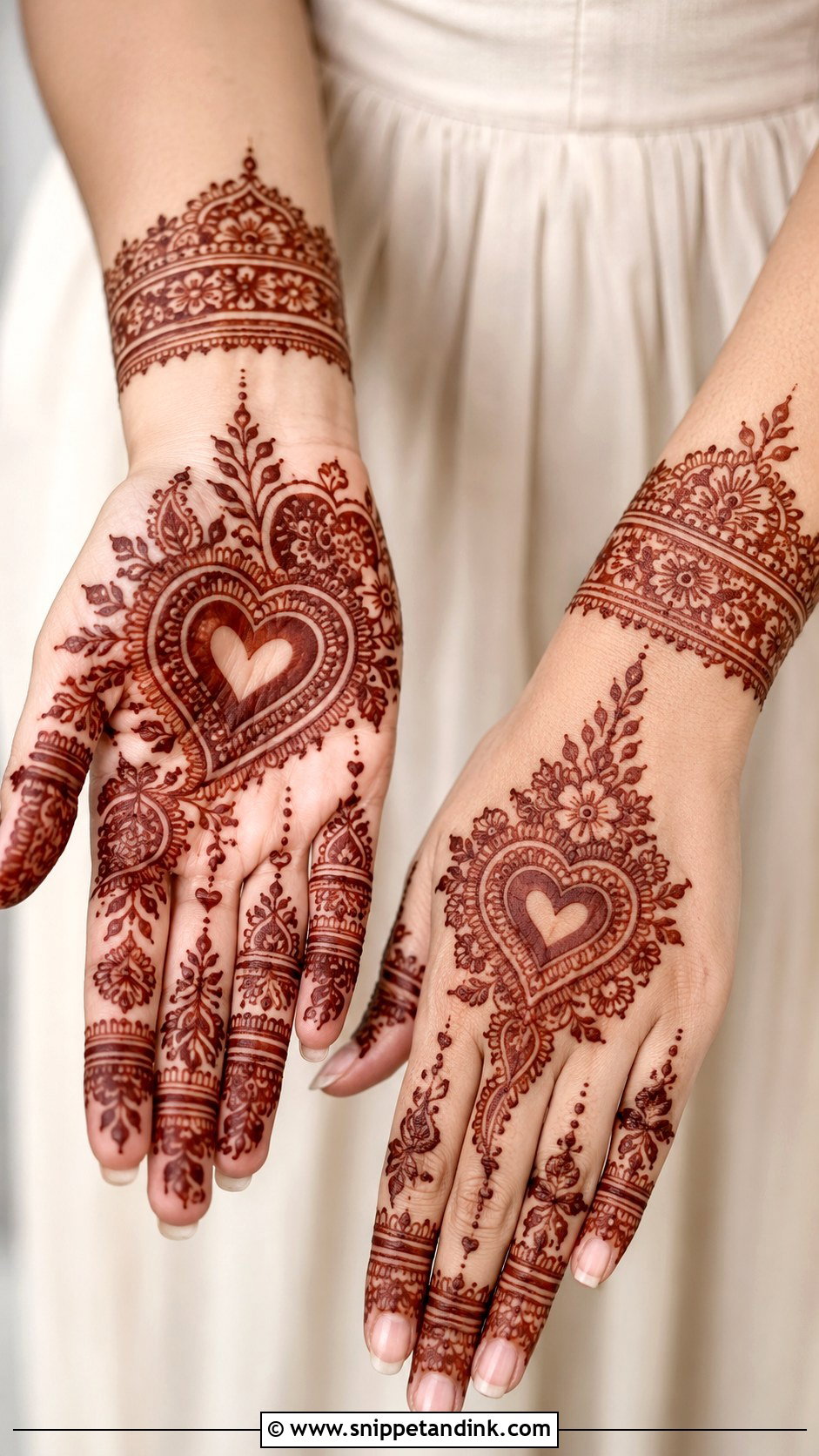
A heart is romantic, but on its own it can look like a sticker. I surround it with florals, paisleys and dot trails so it belongs to the design. It can sit at the centre of the palm, near the wrist, or as two halves that join when you hold your hands together, which makes a sweet photo. Keep the heart shape refined and balanced so the hand still reads bridal.
11. Engagement Mehndi Design With Couple Name
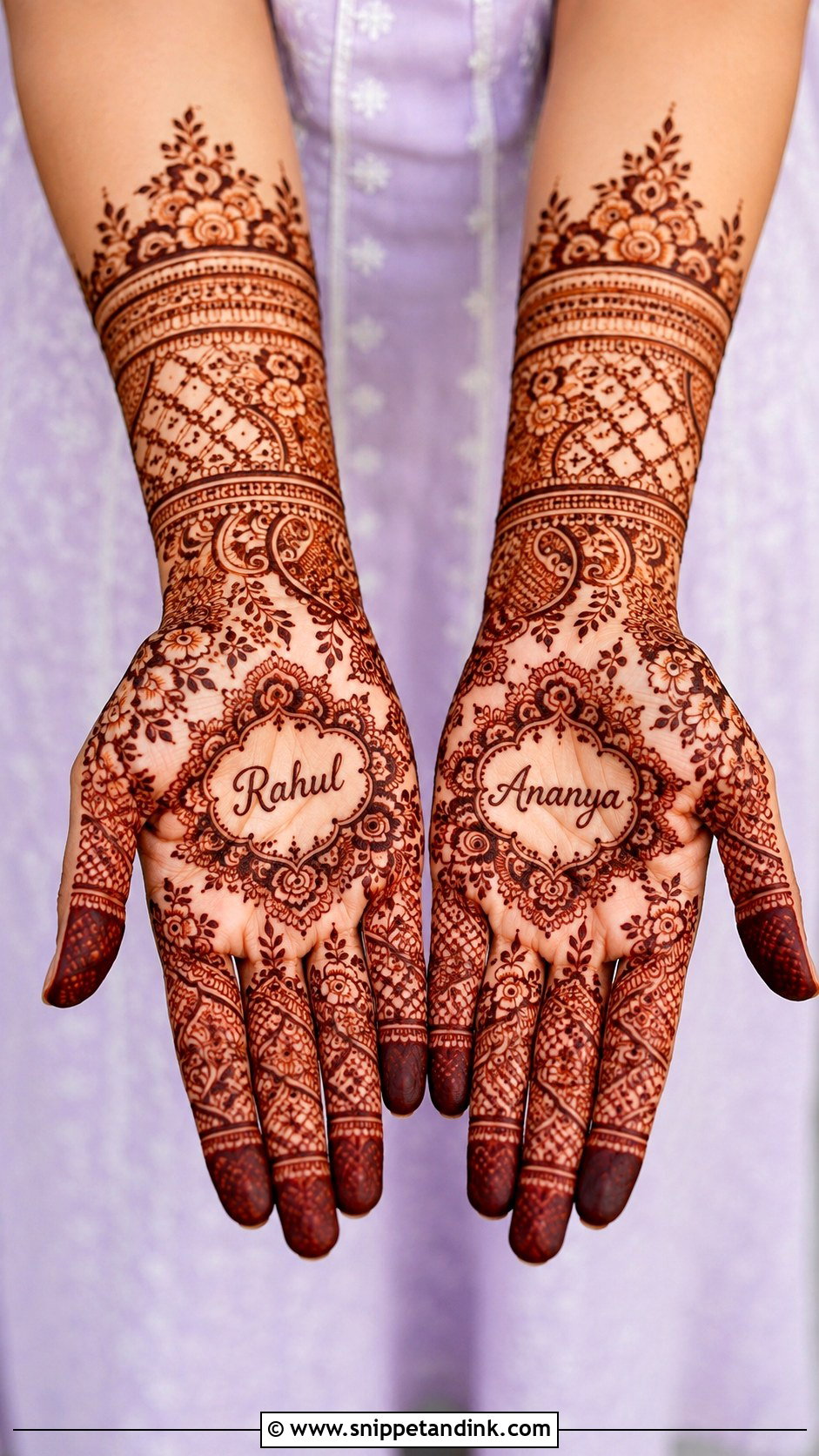
Names are trickier than initials. A design with your couple name can run along the wrist, sit inside a palm frame or hide in paisley work, but text needs space around it to stay legible. Urdu and Hindi script often flow into henna more naturally than block English letters. Write the exact spelling on paper for your artist; I check it twice before the cone touches skin, because a mistake can’t be fixed.
12. Engagement Mehndi Design With Date
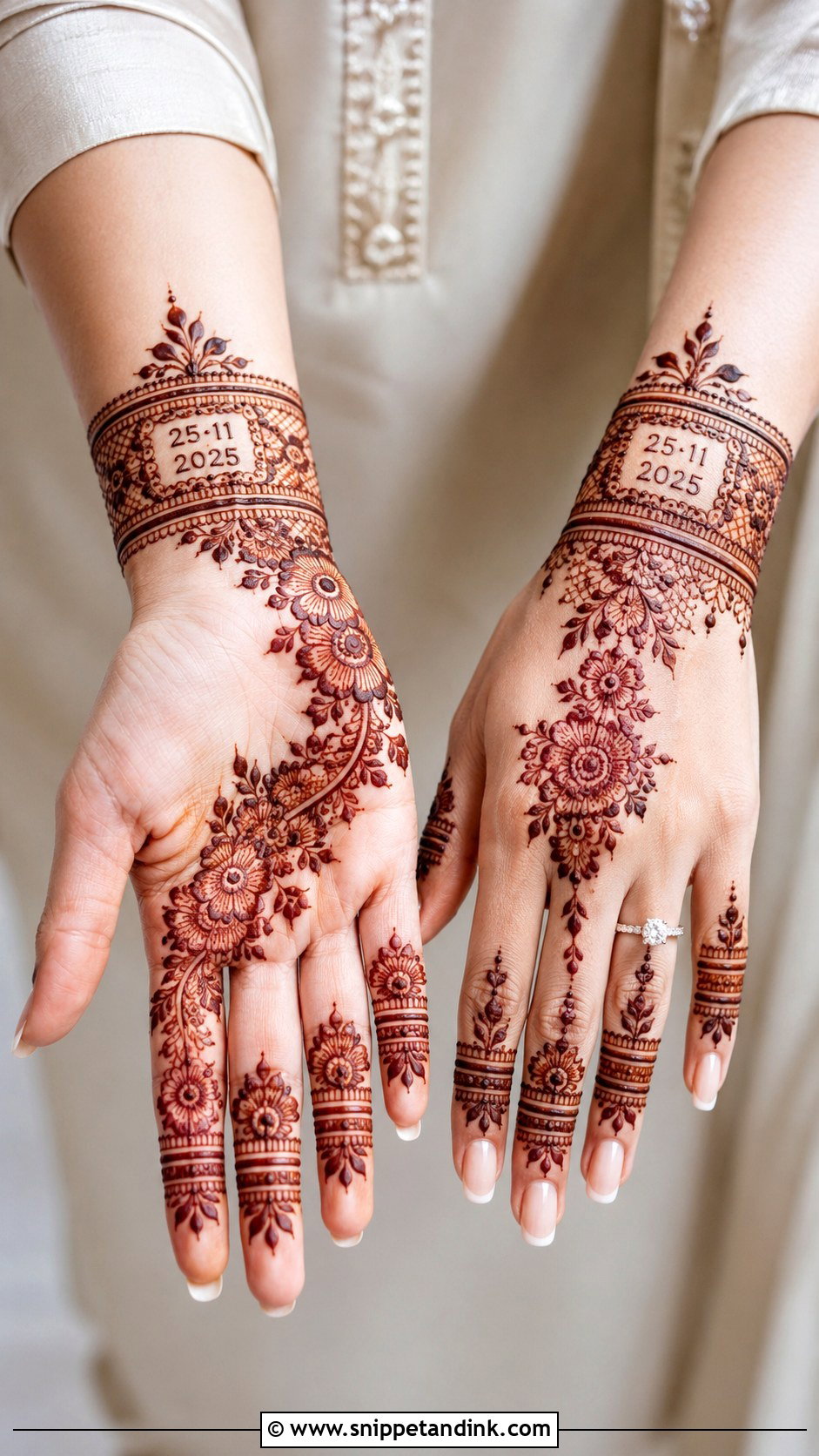
A date turns henna into a memory you can photograph. I write it in small numbers on the wrist cuff, inside a mandala border or near the thumb side of the palm, with soft florals and lace-like patterns around it so it blends in. The thumb side is a smart spot: it shows when you hold your hand up but disappears when you don’t.
13. Floral Engagement Mehndi Design
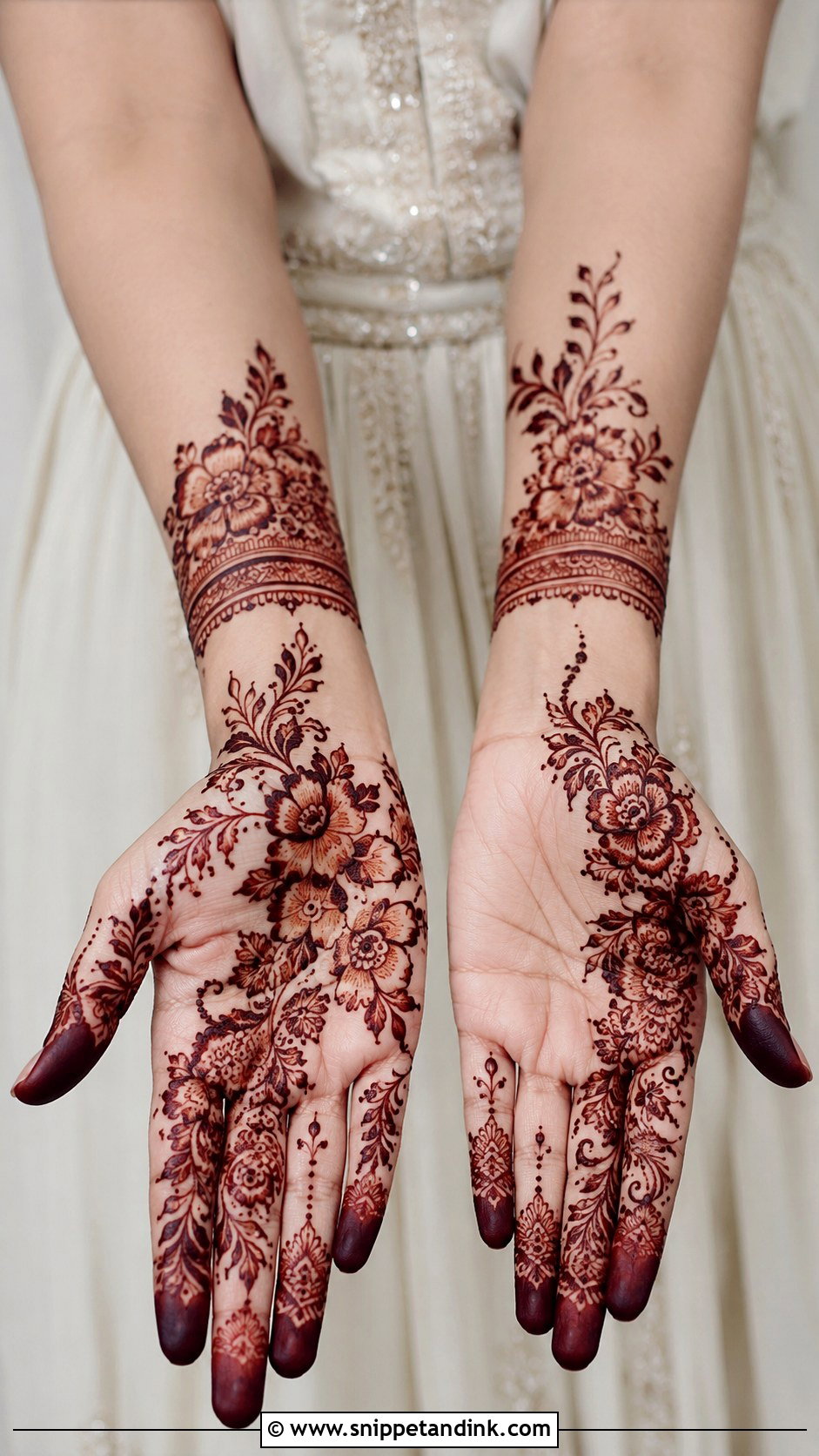
Florals adapt to almost any outfit. I scatter blooms across the palm with leafy trails toward the fingers, and on the back place larger shaded flowers along a diagonal. A mix of bold flowers and fine fillers looks richest in photos. If your design is mostly florals, ask for clear separation between petals; when petal outlines touch, the stain fuses them into one dark shape.
14. Paisley Engagement Mehndi Design
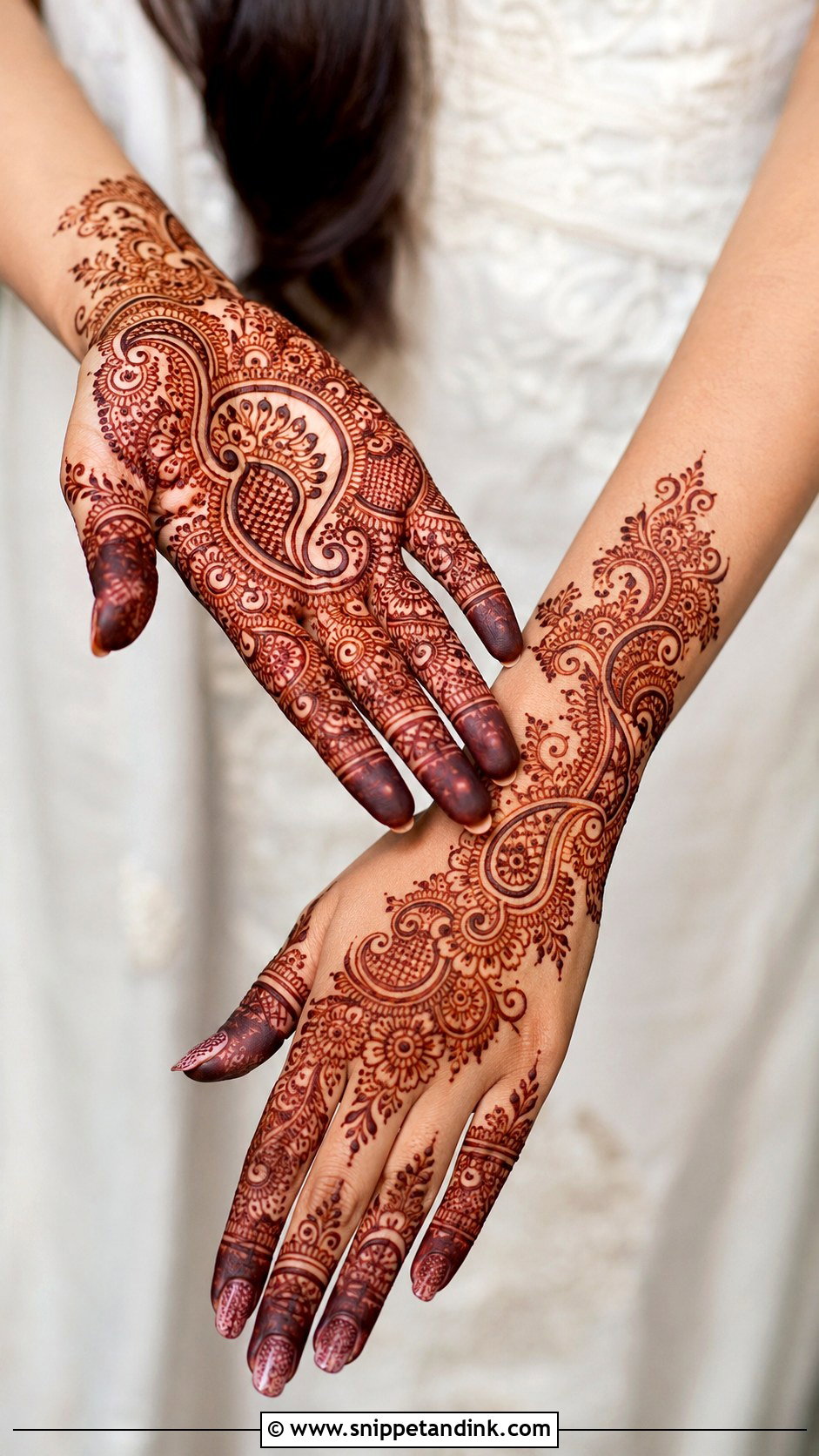
Paisleys follow the curve of the hand, which is why they photograph so well. I put large paisleys on the palm, smaller ones around the wrist and paisley bands on the fingers, with dots, vines and mesh between them. For an engagement I usually make the palm dense and the back a little lighter, a balance that keeps the hand from looking heavy.
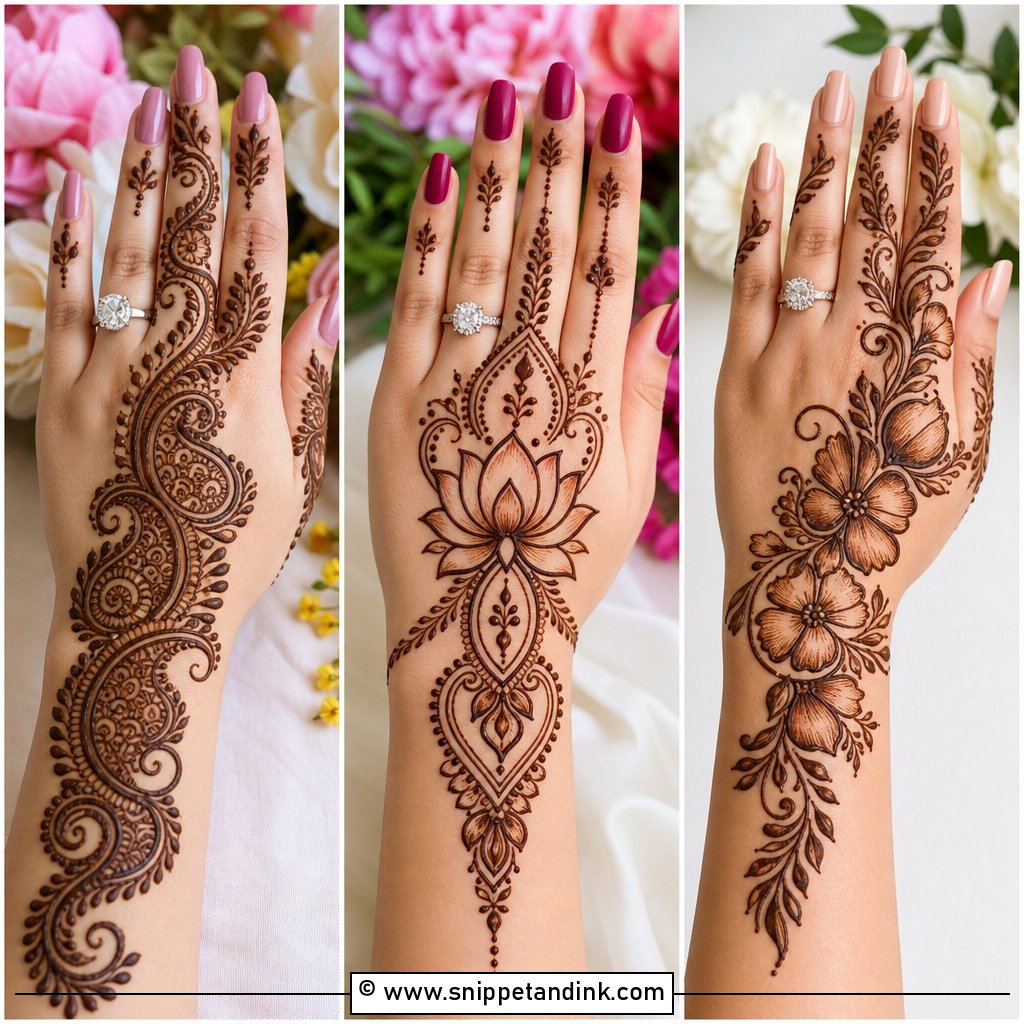
15. Mandala Engagement Mehndi Design
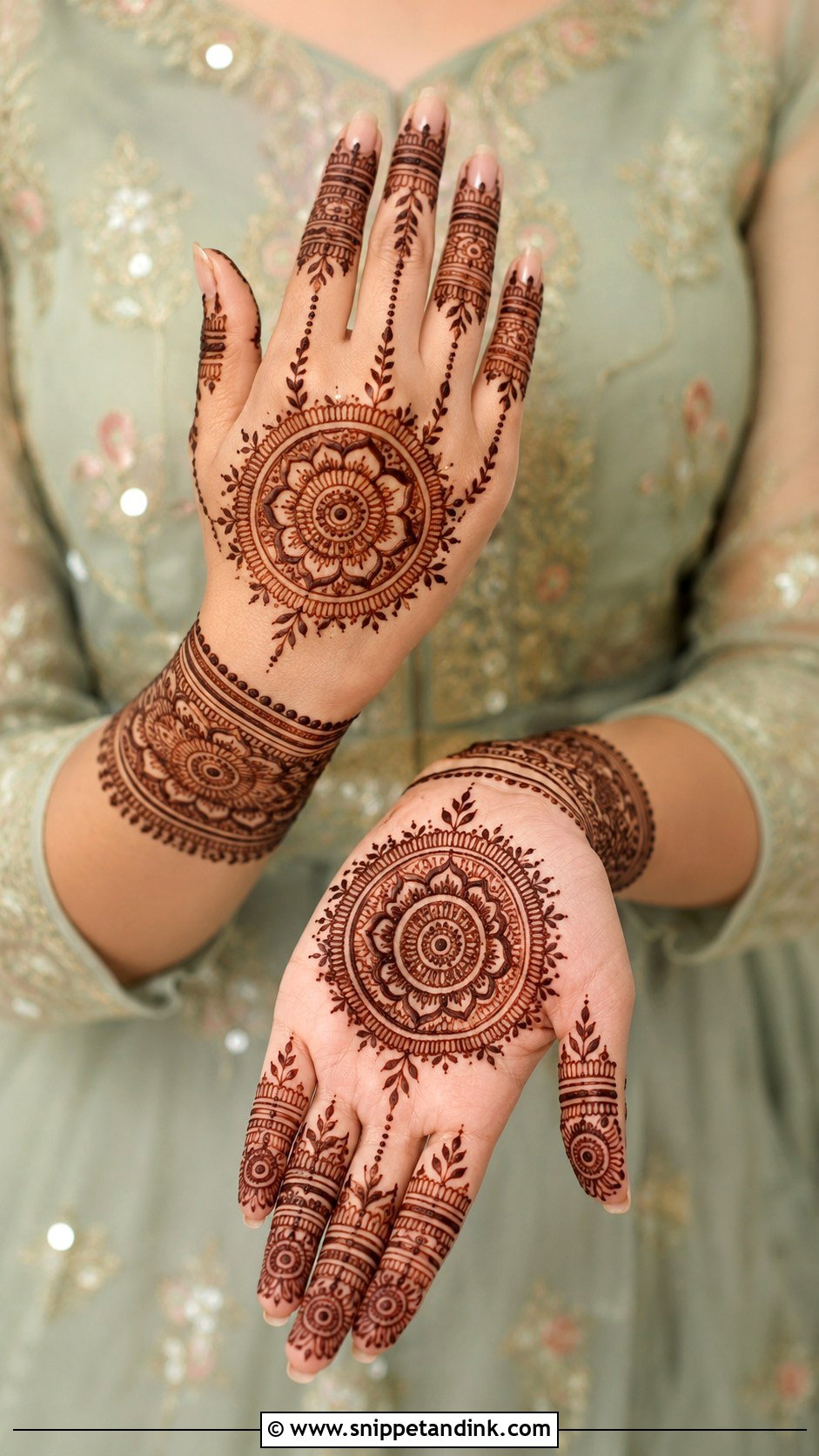
Mandala designs are all about symmetry. The palm gets a round mandala with petals, dots and circular borders; the fingers get bands and dark tips; the wrist a slim cuff. A matching mandala can sit on the back with chains toward the fingers. I build mandalas from the centre outward, one ring at a time, and compare the two hands at each ring.
16. Jaali Engagement Mehndi Design
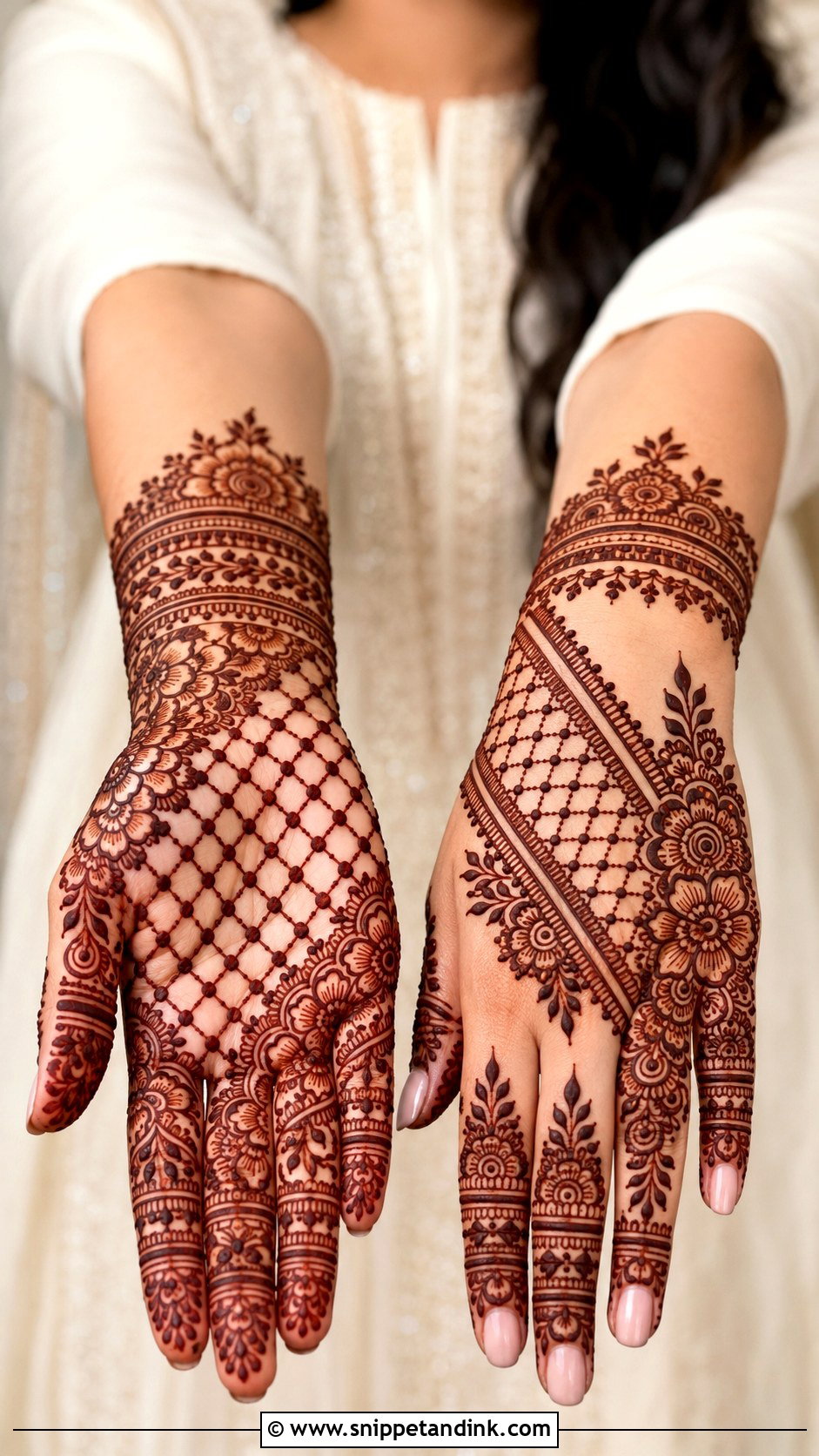
Jaali gives coverage that still lets skin show through. I place mesh panels on the palm with floral borders around them, or run them diagonally on the back of the hand. Even spacing is everything; a crooked grid is the first thing anyone notices in a close-up. Brides who want detail without a very dark hand tend to like it.
17. Peacock Engagement Mehndi Design
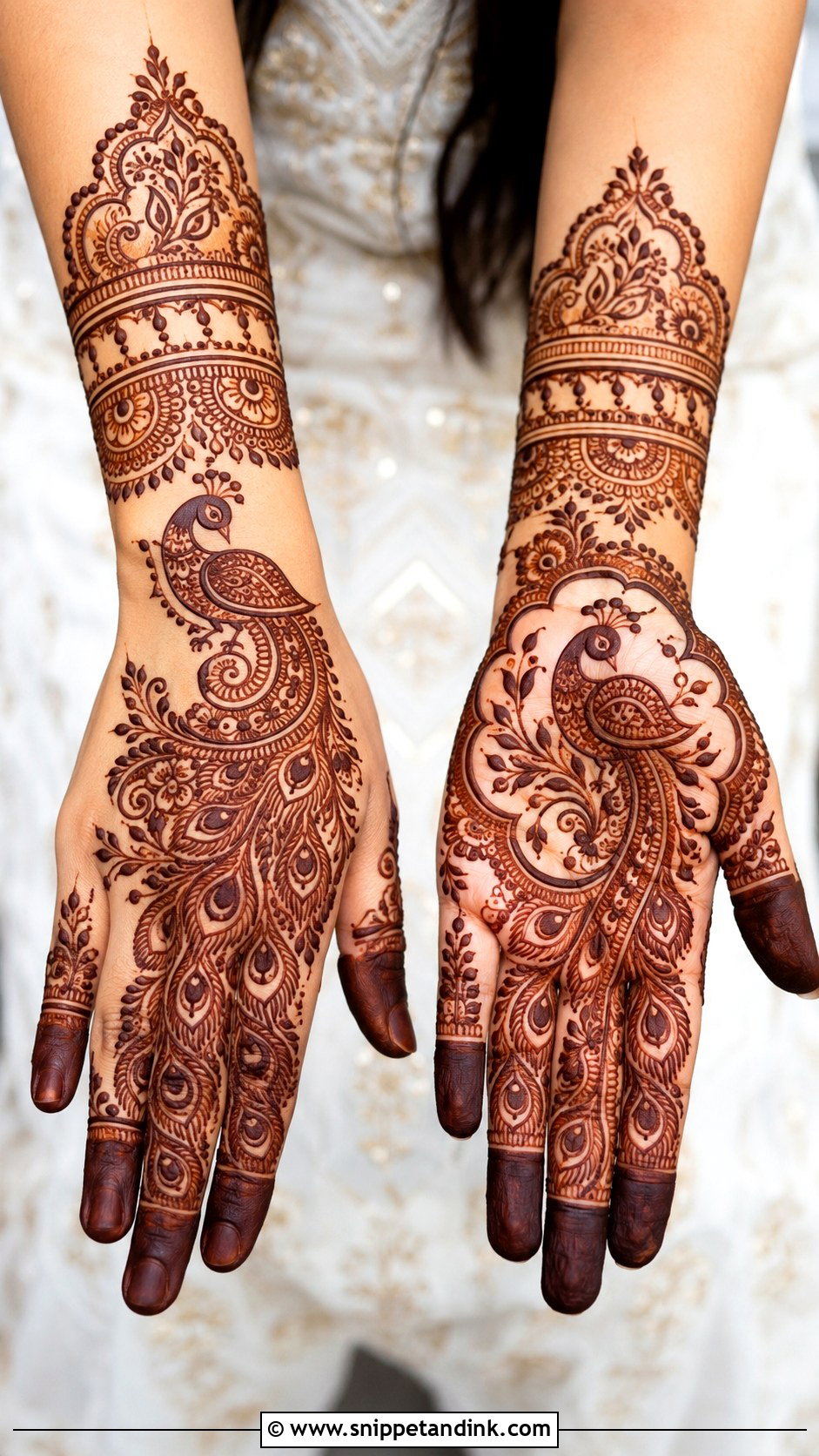
The peacock is a traditional motif and needs a confident hand. I place it on the palm, near the wrist or as part of a side pattern, with feather details flowing into paisleys and vines. A smaller feather trail on the back links to the bracelet bands. Keep the bird clear but not oversized. Rich colours and silk outfits suit it best.
18. Lotus Engagement Mehndi Design
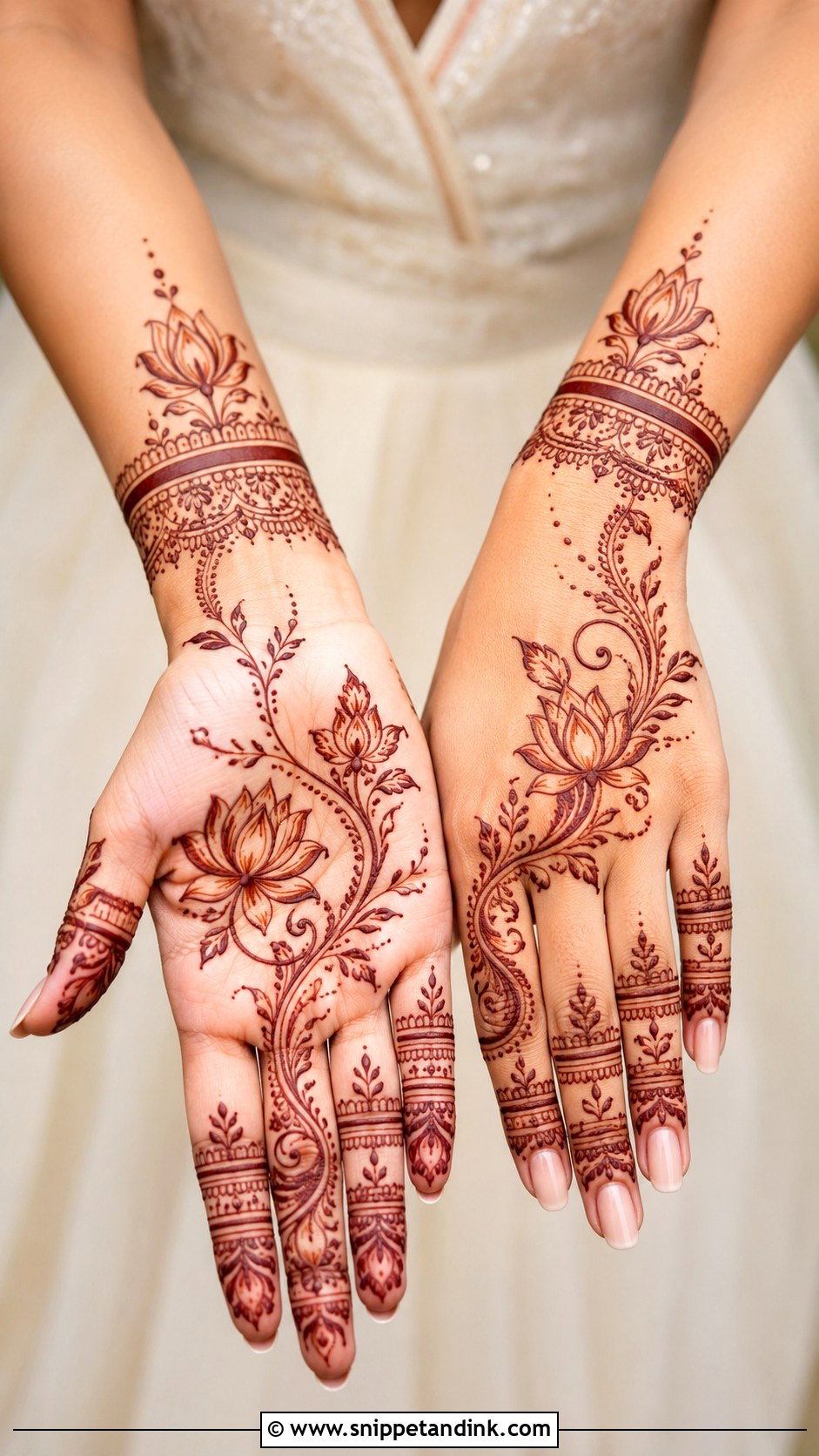
A lotus brings a calm mood to the design. I draw it in the centre of the palm, at the wrist or along a diagonal trail, with curved leaves, dots, slim finger bands and open space around it. Its petals need to stay clean and open so they’re still readable when the stain darkens. Ivory, peach and rose outfits pair well with it.
19. Bracelet Engagement Mehndi Design
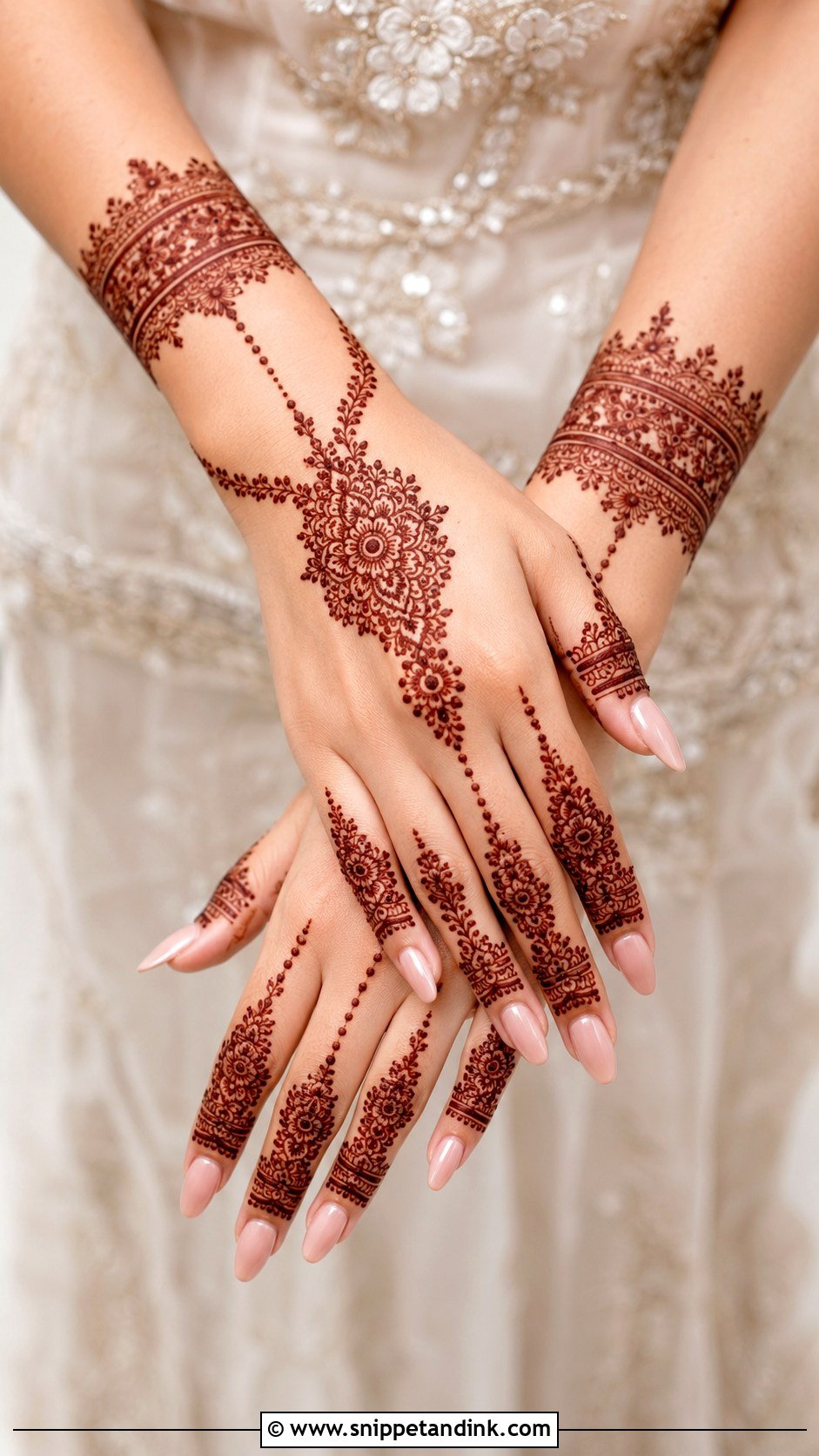
A bracelet design treats the wrist cuff as the main piece, connected to the fingers with chains, flowers or dotted lines, with a central motif on the back like a hand ornament. The palm stays simple. It’s useful when you want rings and bangles to stay visible. I draw the cuff with the wrist resting flat and then check it again turned over, since a cuff that looks even on top can drift on the underside.
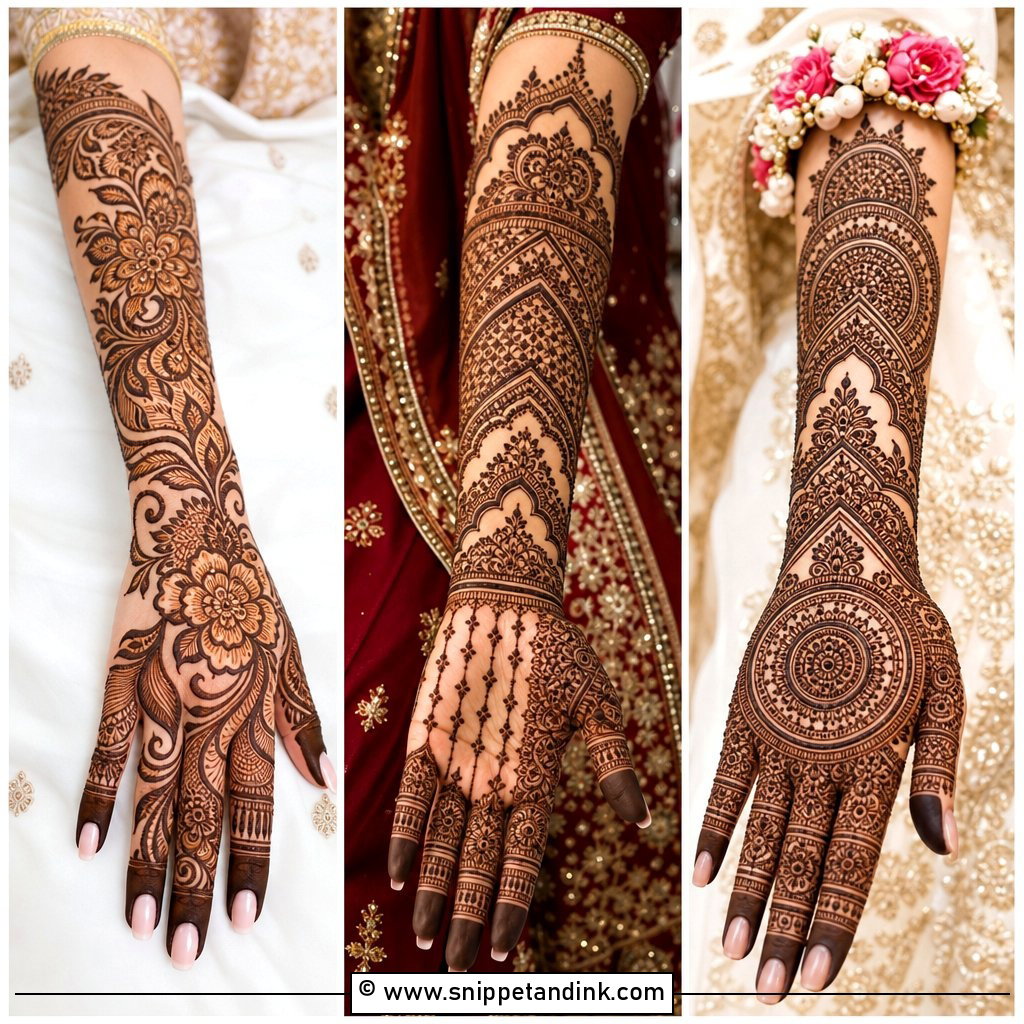
20. Finger Engagement Mehndi Design
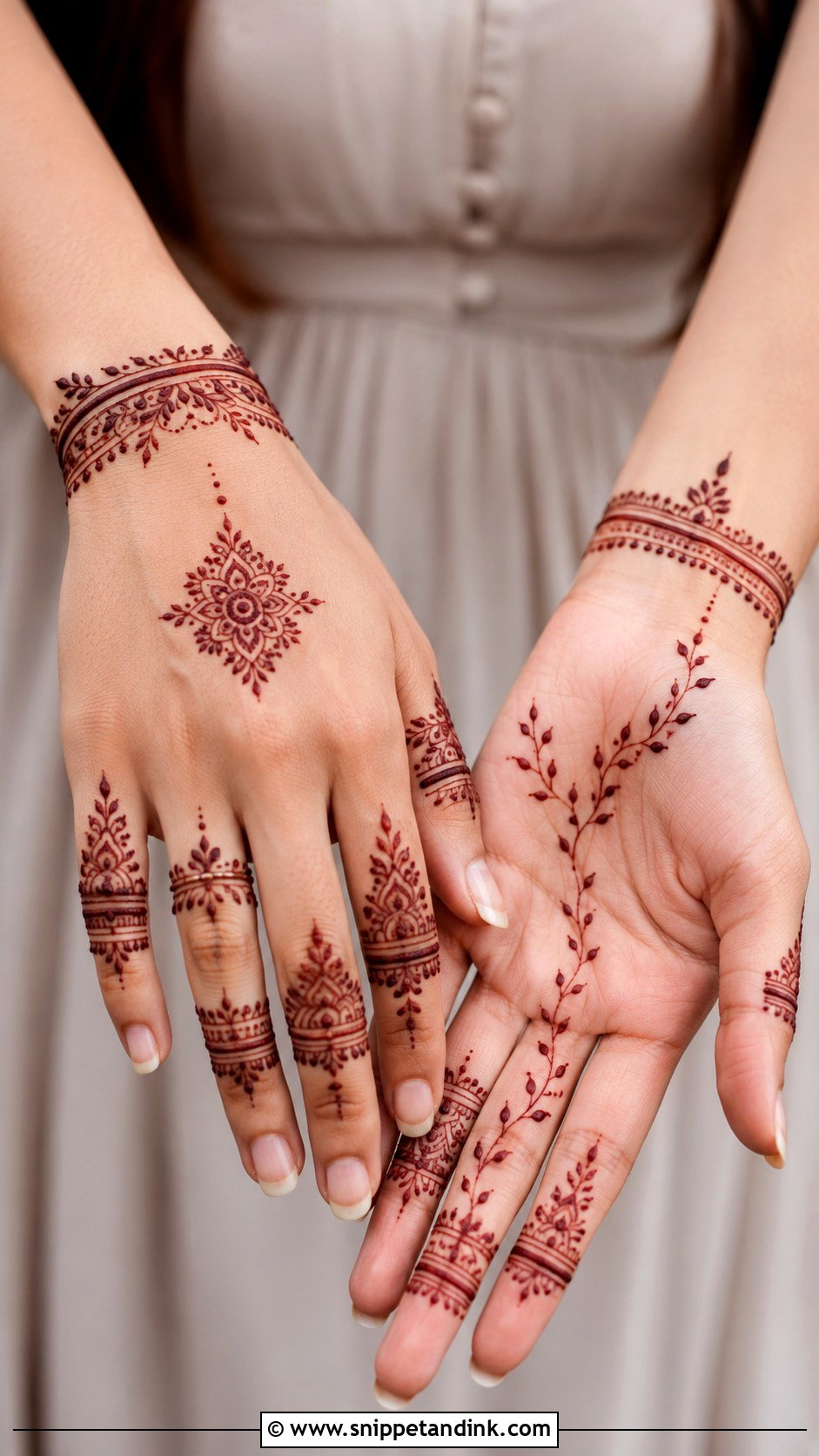
Finger henna feels complete only when all ten fingers are planned together. I use coordinated patterns across the fingers, a small motif on the back and a slim wrist detail, with extra attention on the ring finger in the form of tiny flowers or a ring-frame pattern. A light mandala or vine on the palm connects everything. Ring photos love it.
21. Khafif Engagement Mehndi Design
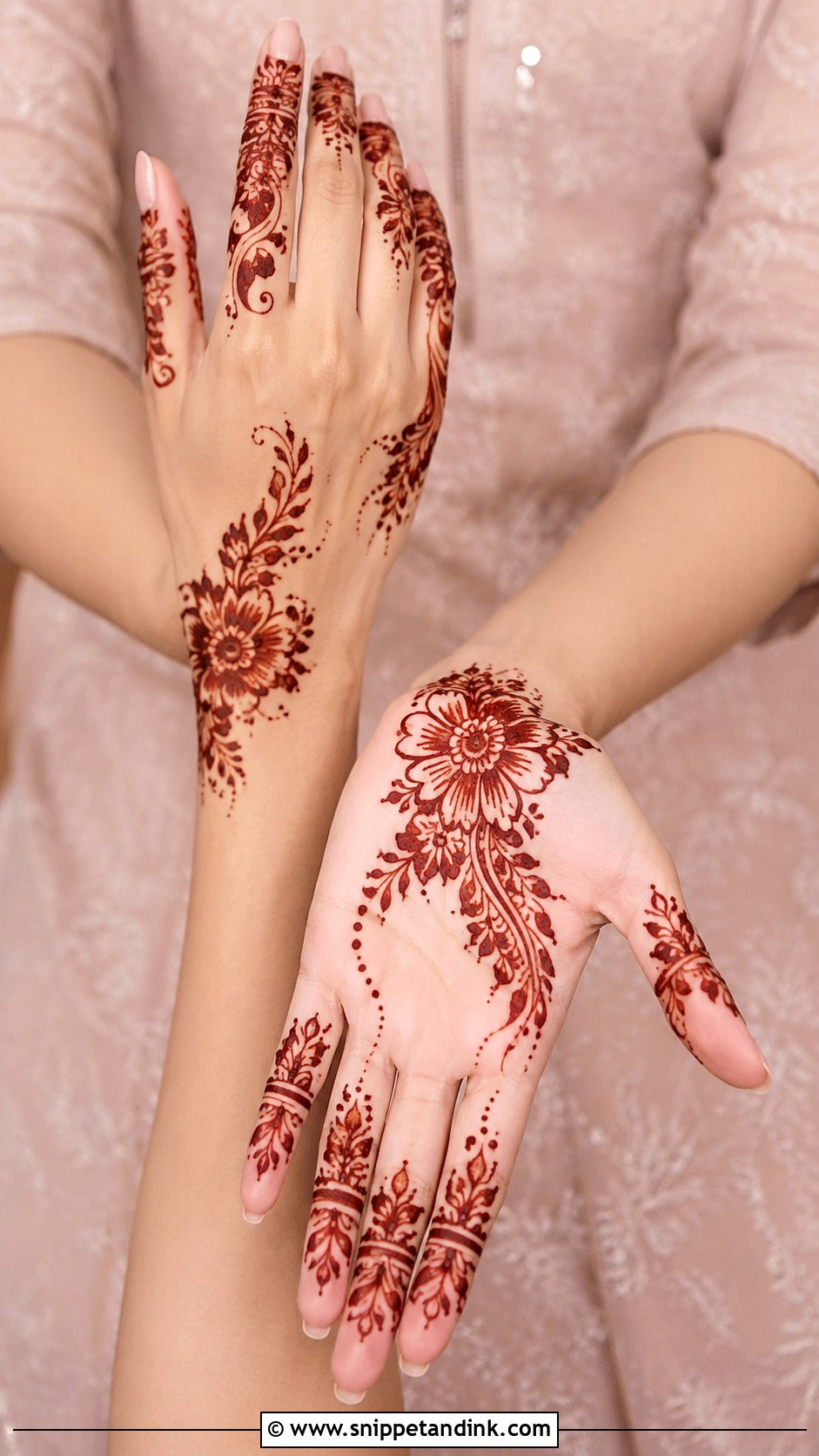
Khafif means ‘light’, and the style lives up to it: thin floral lines, leafy curves, tiny dots and deliberate empty space. It can cover the palm and back lightly and still look detailed. Because everything depends on fine, steady lines, I’d only book an artist whose portfolio shows real khafif work. Lighter outfits and simple jewelry suit it.
22. Moroccan Engagement Mehndi Design
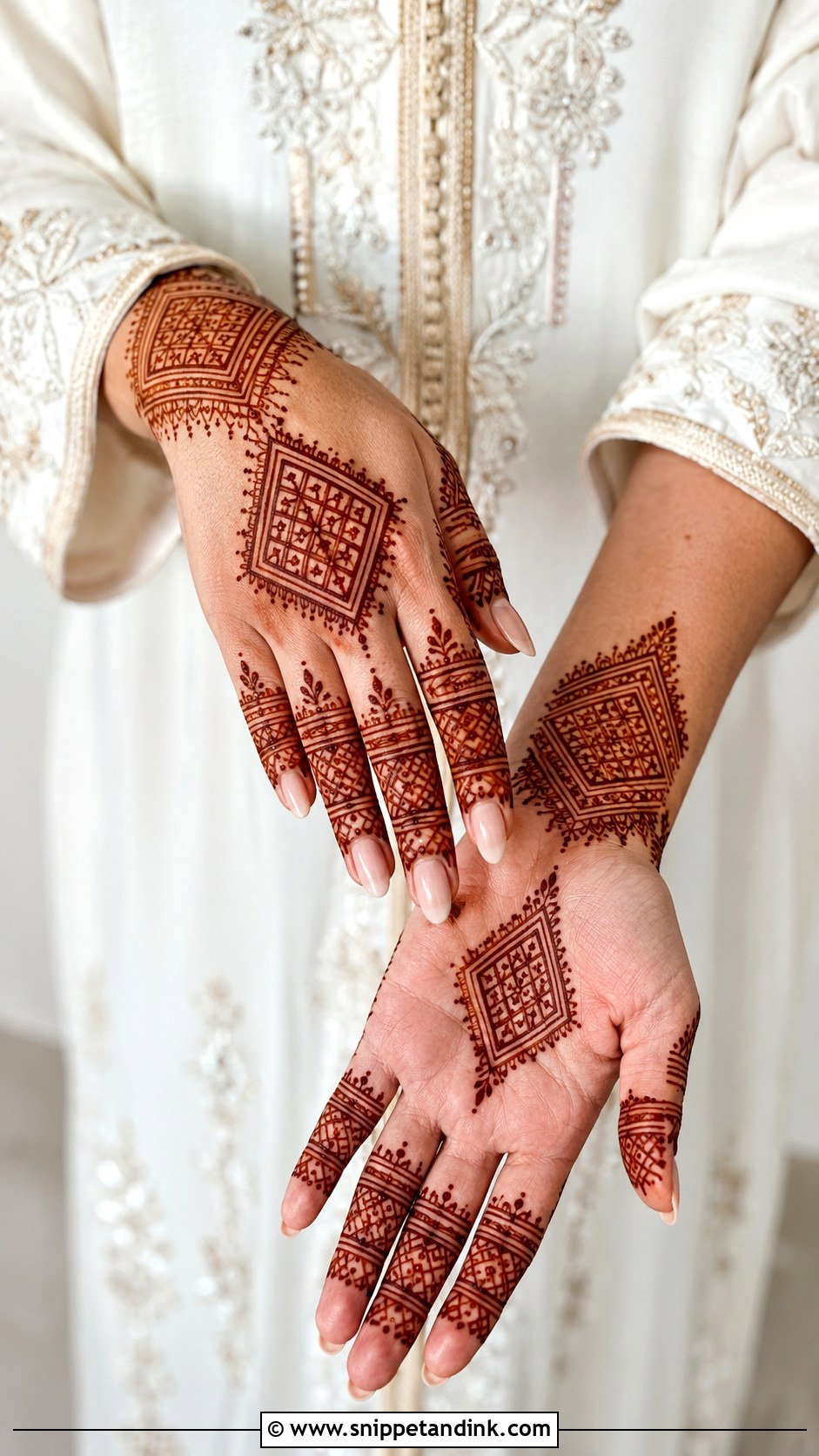
Moroccan henna is geometric: diamond grids, angular bands, clean lines and dotted accents across the palm and back hand. Fingers get matching geometric rings and the wrist a structured cuff. Straight lines are harder to draw freehand than curves, so I use the creases of the hand as guides. It suits contemporary outfits and fusion lehengas.
23. Gulf Engagement Mehndi Design
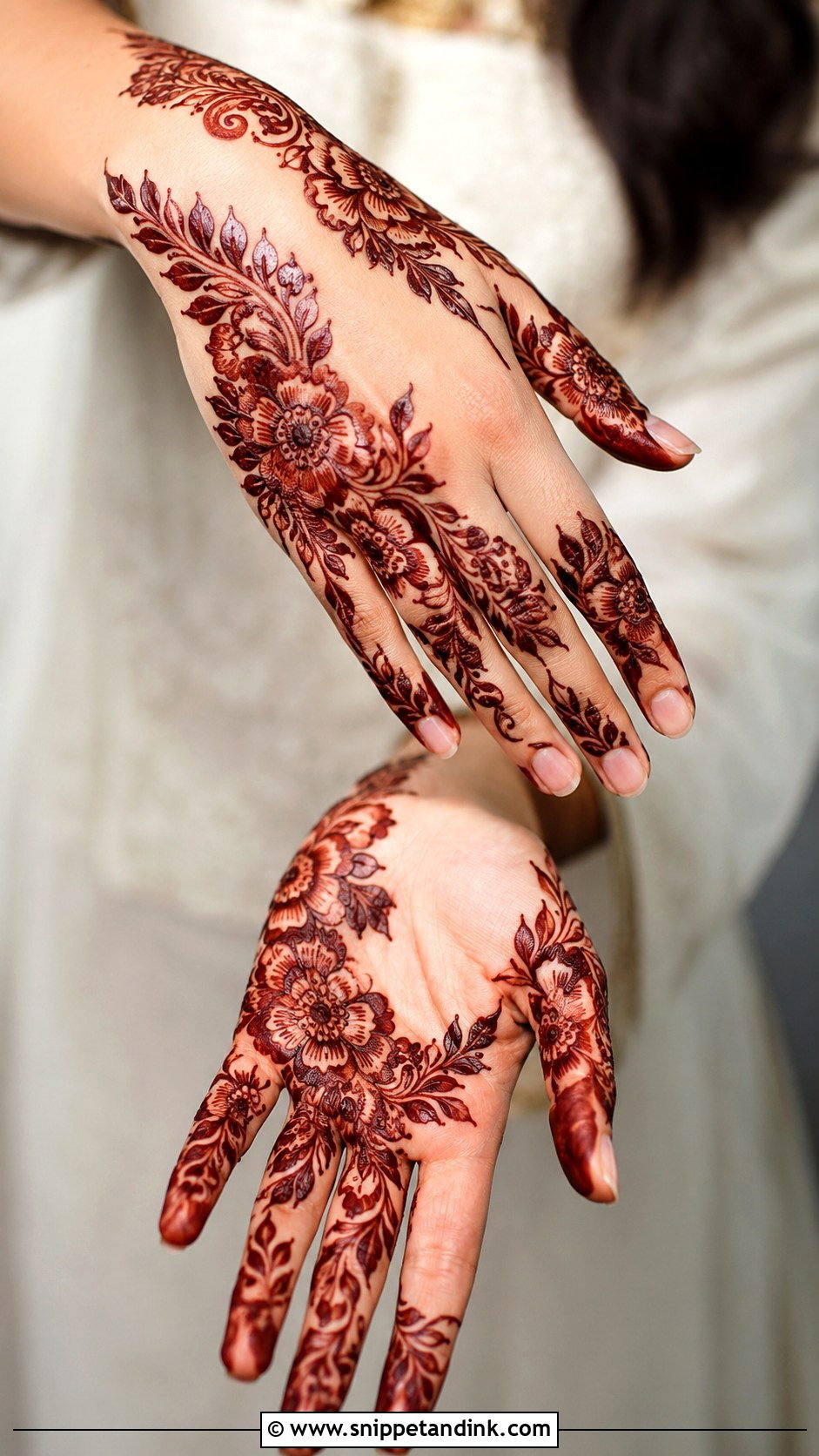
Gulf or Khaleeji henna uses large florals, leafy trails, thick outlines and open spaces. On the back of the hand, a dramatic diagonal vine; on the palm, a lighter matching pattern. The bold contrast is the point, so lines must be clean and well spaced. It’s faster to apply than heavy Indian work, which is handy when you have other preparations the same day.
24. Rajasthani Engagement Mehndi Design
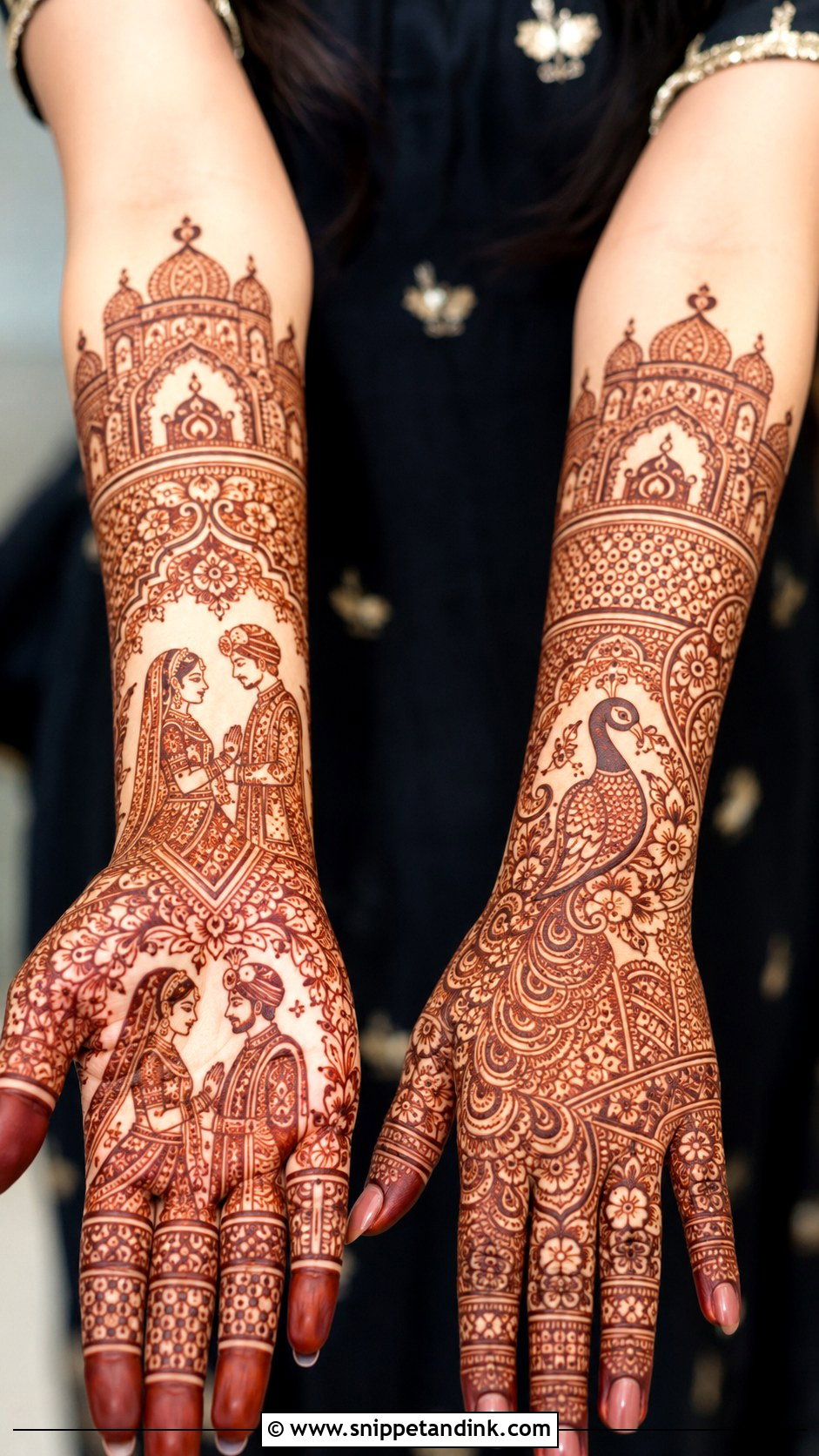
Rajasthani henna is full of culture: small bride and groom figures, peacocks, paisleys, palace-style borders and dense finger work. For an engagement I usually stop it at the wrist or lower forearm. The palm carries the main story motif and the back gets bands and florals. Figure work takes time and skill, so check that your artist has drawn faces before, not only florals.

25. Marwari Engagement Mehndi Design
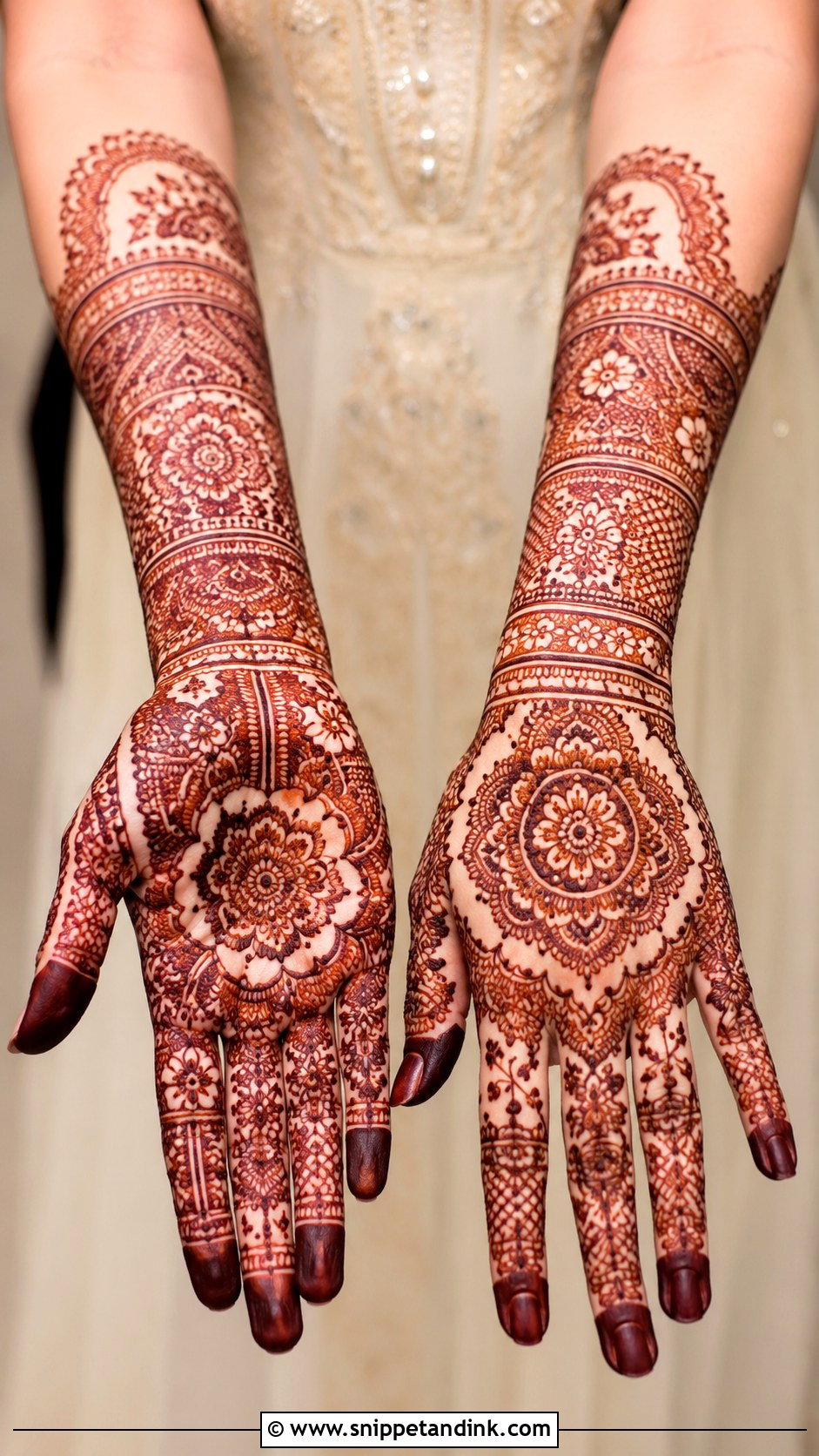
Marwari henna is fine, packed and symmetrical, with paisleys, floral blocks, small figures and ornamental borders across the palm, fingers, wrist and part of the forearm. The back often has a central mandala framed by mesh and bangle-like bands. These patterns look crowded if rushed, so allow more time than you would for Arabic work.
26. Pakistani Engagement Mehndi Design
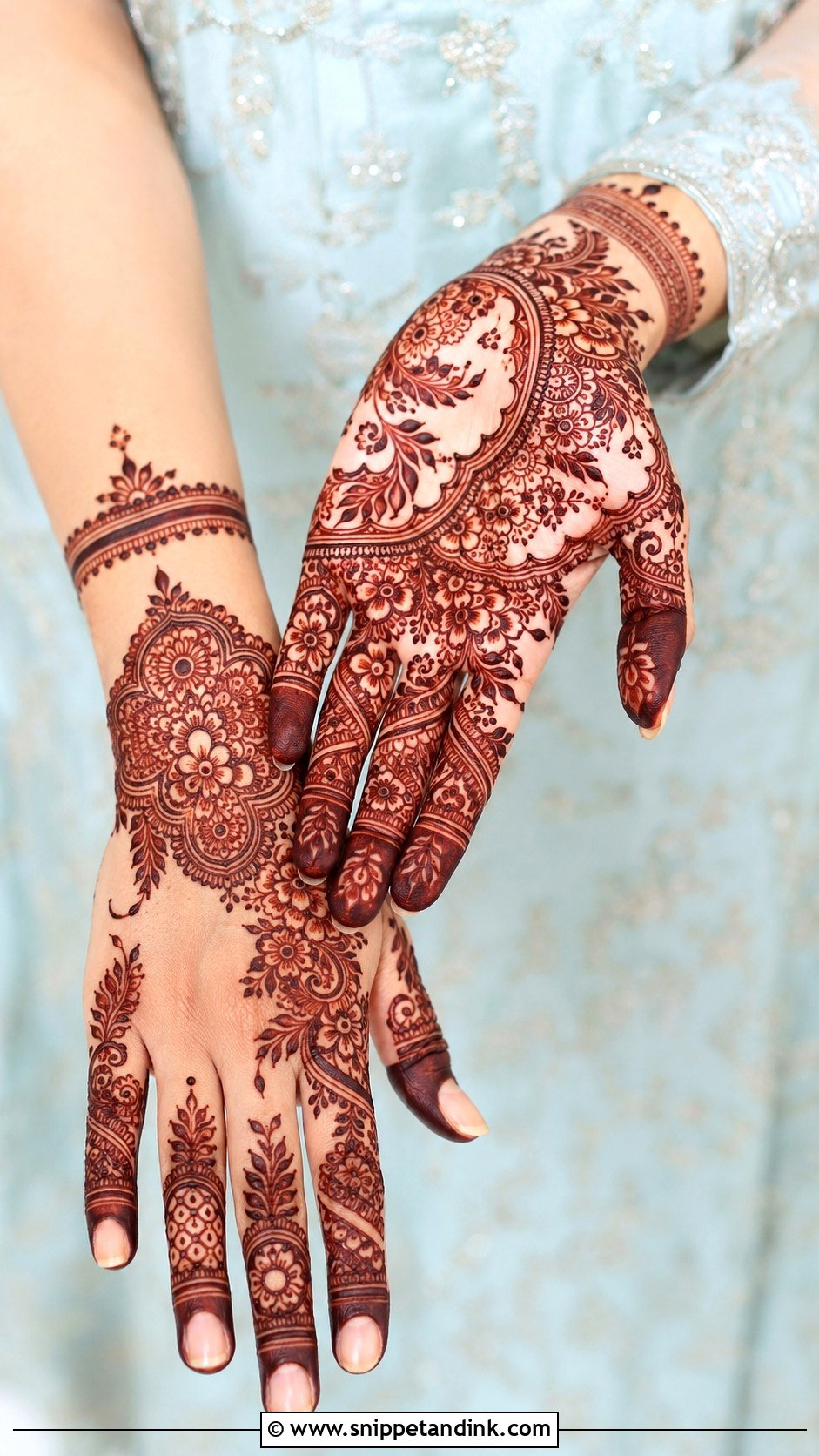
Pakistani engagement mehndi design sits between dense Indian coverage and airy Arabic spacing, with floral vines, paisley panels, mandalas, shaded Arabic elements and delicate finger work. Brides often choose a heavy palm with a lighter back. It pairs well with ghararas, shararas and long kameez with embroidered dupattas. Initials, a date or a ring motif add a personal note.
27. Modern Engagement Mehndi Design
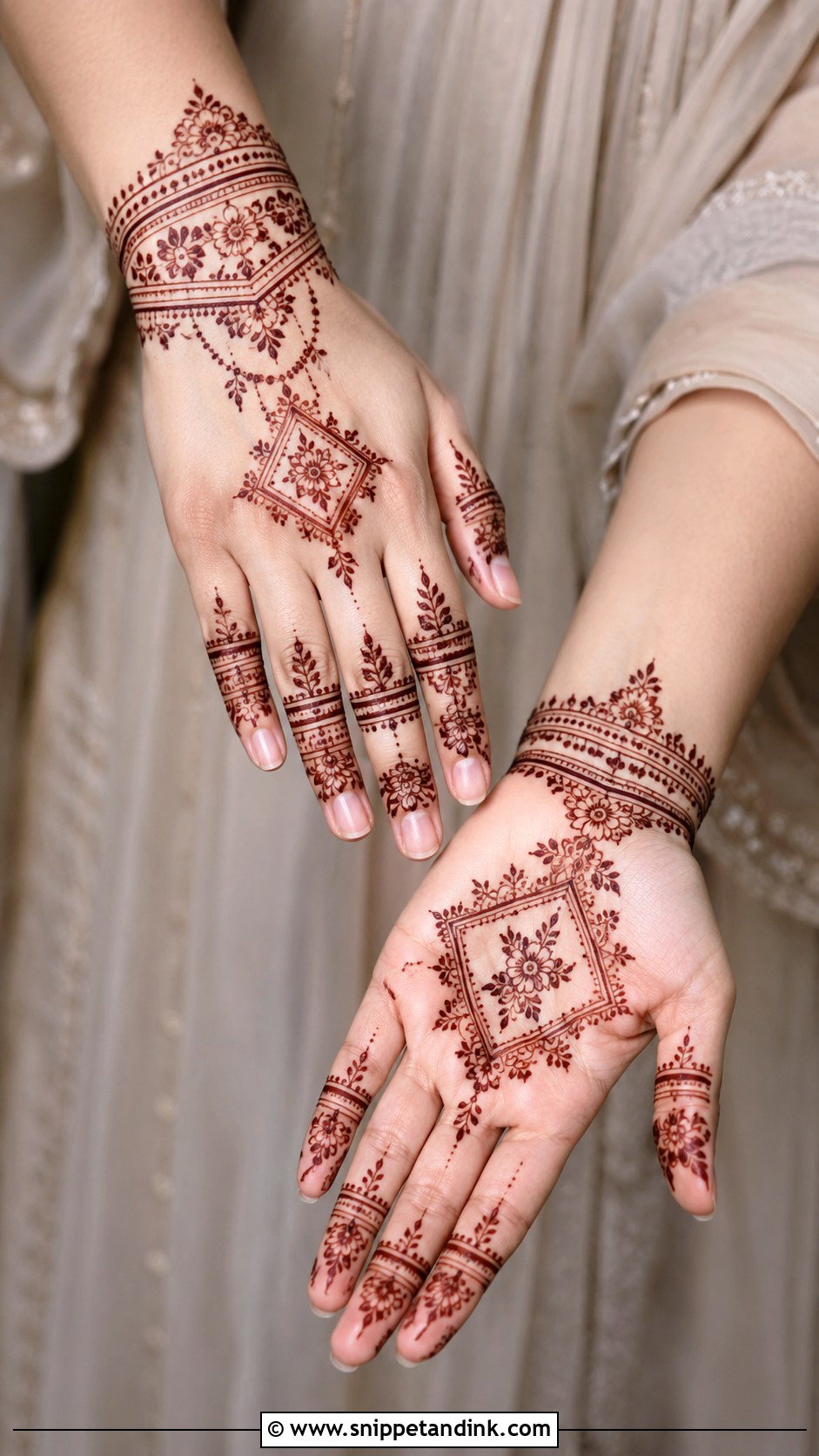
Modern henna is about balance and placement: negative space, geometric cuffs, fine florals, finger rings and one statement motif on the back or palm. The ring finger gets a delicate frame and the wrist a bracelet finish. I plan modern layouts with light dots first, because with so much open space, one misplaced motif throws the whole hand off.
28. Shaded Engagement Mehndi Design
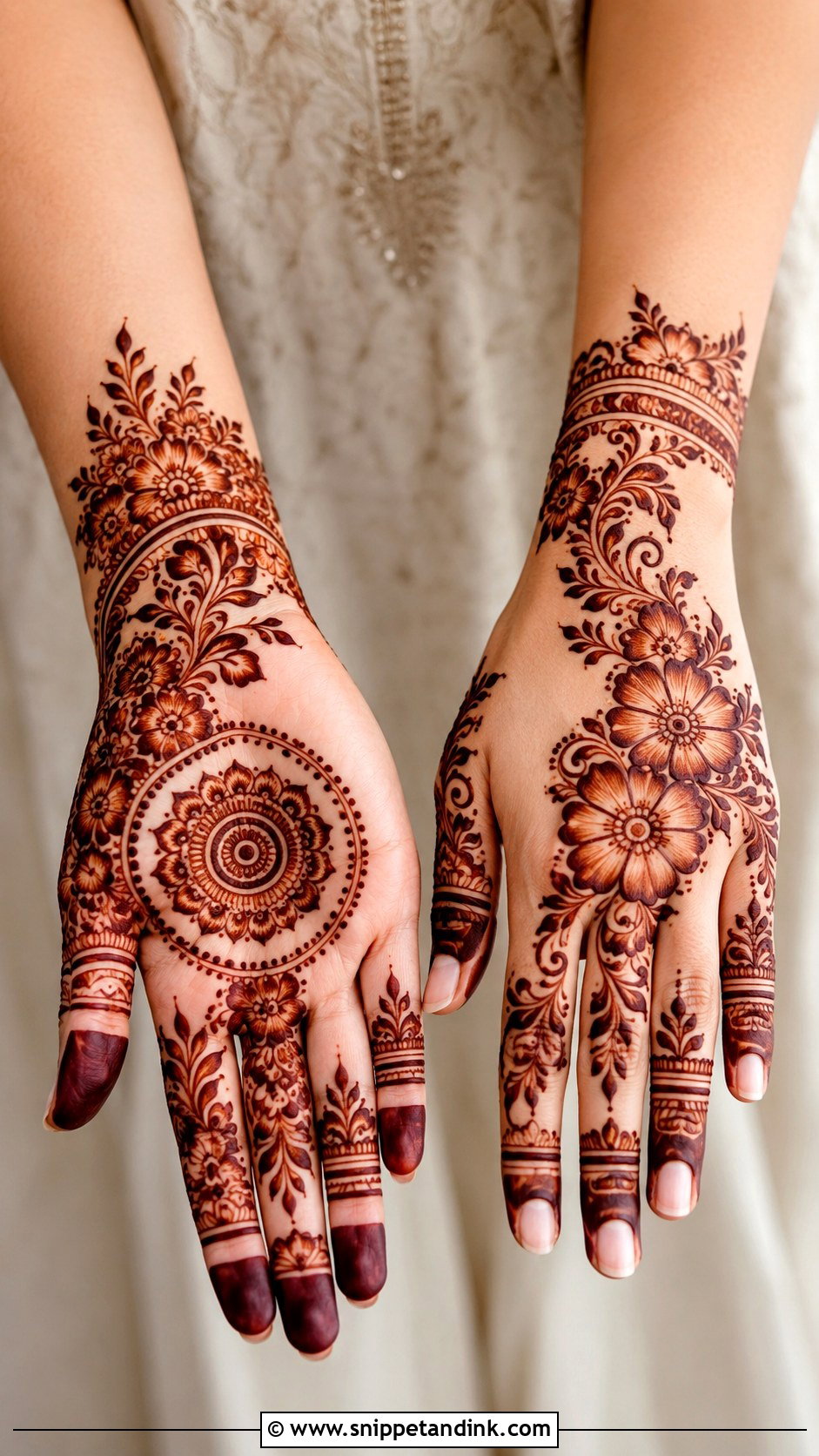
Shading adds depth without dense line work. I fill petals and leaves with a thinner layer of paste, which stains lighter than the bold outlines, creating a gradient. It works best in Arabic and Indo-Arabic layouts. Smooth, even shading is the goal; patchy filling looks like smudges once the stain develops.
29. Half Hand Engagement Mehndi Design
Half hand henna covers the fingers, palm and wrist, or the back of the hand up to the wrist only. A central motif, vines, paisleys and a bracelet cuff give a bridal feel in half the time. It’s what I suggest when the engagement day is packed or when the wedding henna will be heavy. Balanced spacing keeps it from looking unfinished.
30. Engagement Mehndi Design For Short Hands
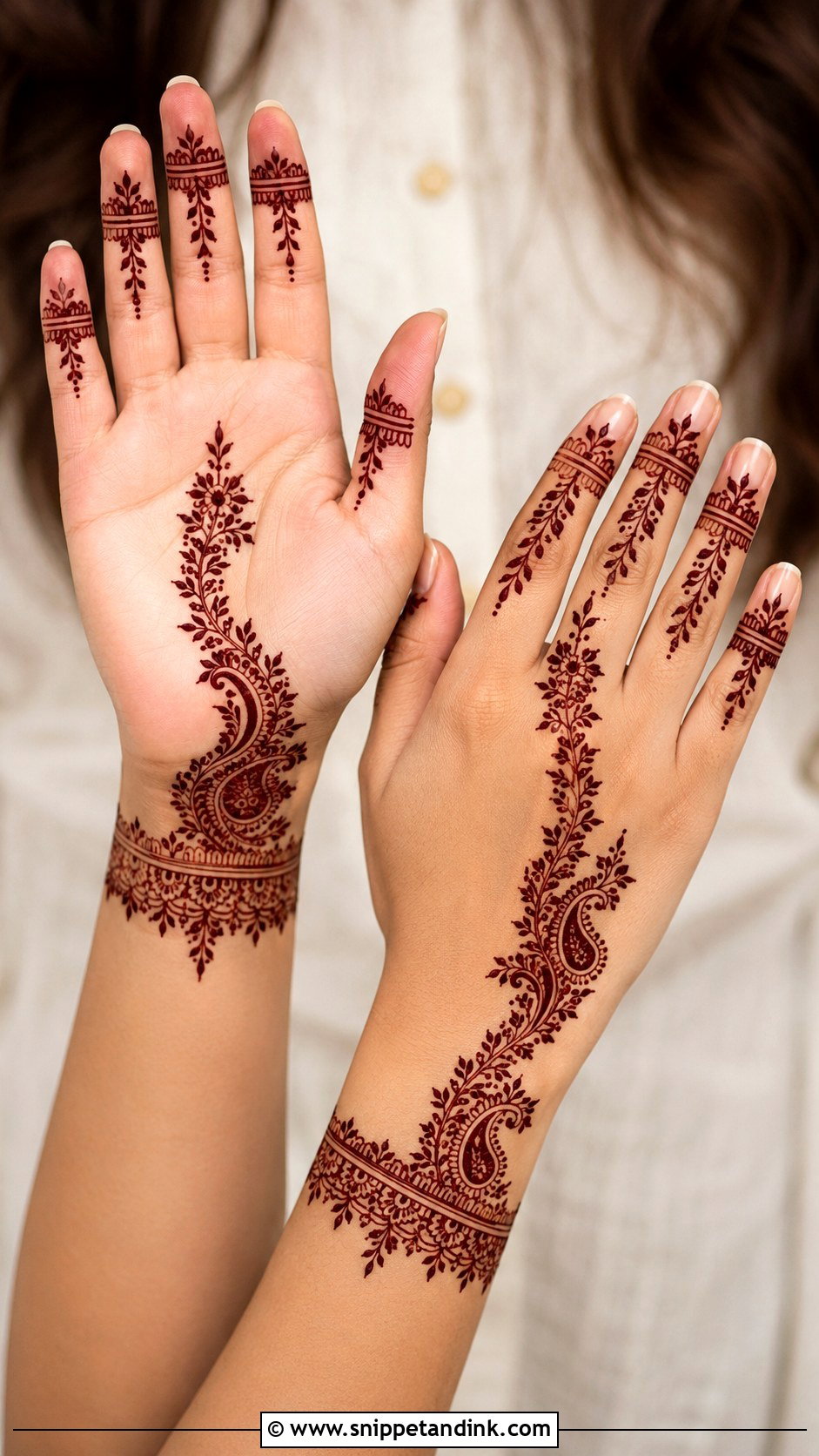
On short hands, I aim for length. Vertical vines, slim finger bands, narrow paisleys and a modest palm motif all help, and oversized flowers don’t. On the back, a diagonal Arabic trail or bracelet-chain layout lengthens the hand. A slim wrist cuff matters too; a wide one cuts the hand shorter visually.
Hours With Wet Paste on Both Hands
Nobody warns brides how helpless they’ll feel with paste drying on both hands. Planning for it makes the session much easier.
Before you sit down
Eat a proper meal, use the bathroom, tie your hair back and put your phone where someone else can hold it for you. Wear a loose top that opens at the front. If you need to stay reachable, set your phone to answer through earbuds.
While it dries
Sit somewhere warm with your hands resting palm up. Ask someone to feed you and hold your drink with a straw. Avoid touching your face or hair, since any smudge leaves a faint stain that lasts days.
Sleeping with the paste on
Overnight paste gives the best stain. I suggest wrapping each hand loosely in a soft cotton cloth or medical tape over tissue so the paste doesn’t flake onto the bed. Avoid plastic wrap for long periods; trapped sweat can blur fine lines. Scrape off what’s left in the morning rather than washing it.
Your Ring Photo, Your Sleeves and the Hours You Can Sit
The right engagement henna fits your ceremony, outfit and patience for sitting still. Brides who love tradition lean toward full hand, paisley, peacock, Rajasthani or Marwari designs; modern brides often choose minimal, bracelet, finger, Moroccan or negative-space layouts. Personal touches like initials, names, dates or a ring motif work best when they’re subtle. Think about the ring photos, your jewelry, your sleeve length and how long you can sit before you settle on a layout.
You'll Like These Ideas:






Leave a Reply