
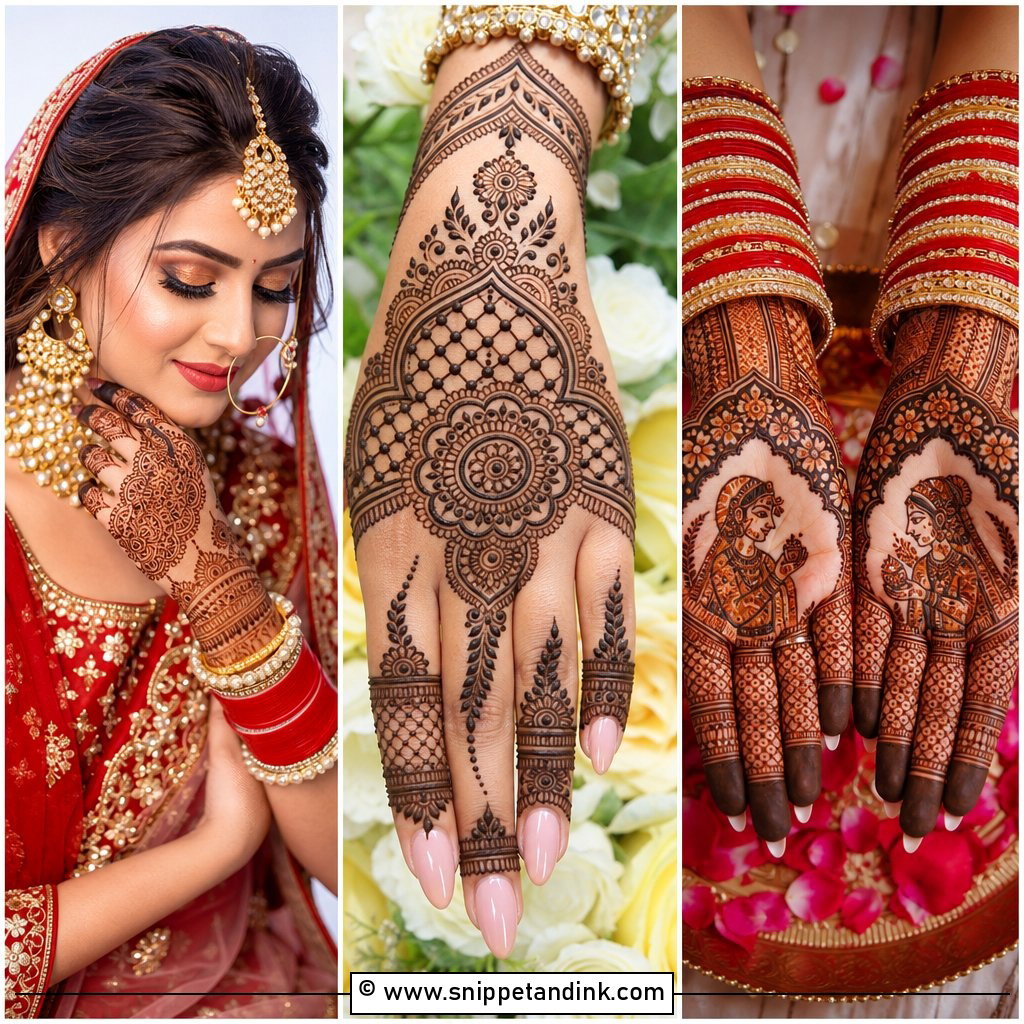
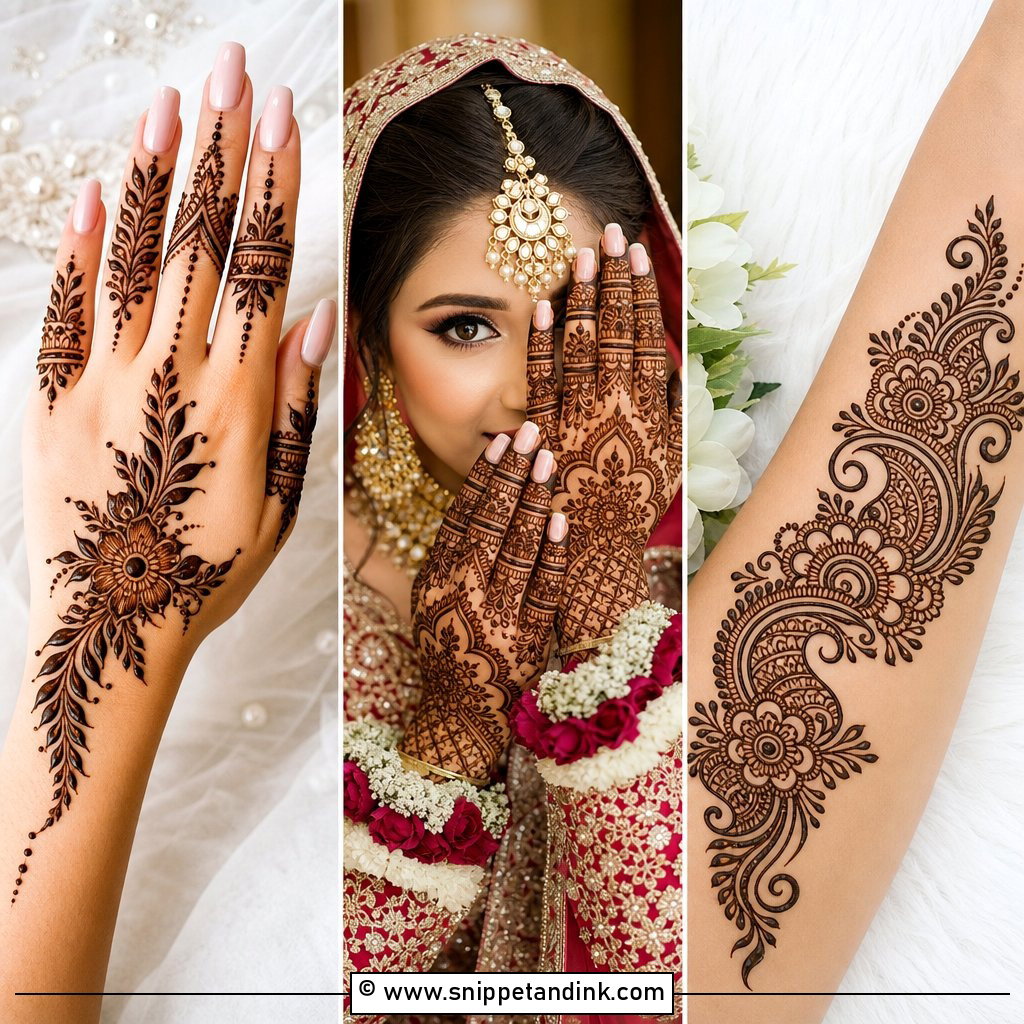
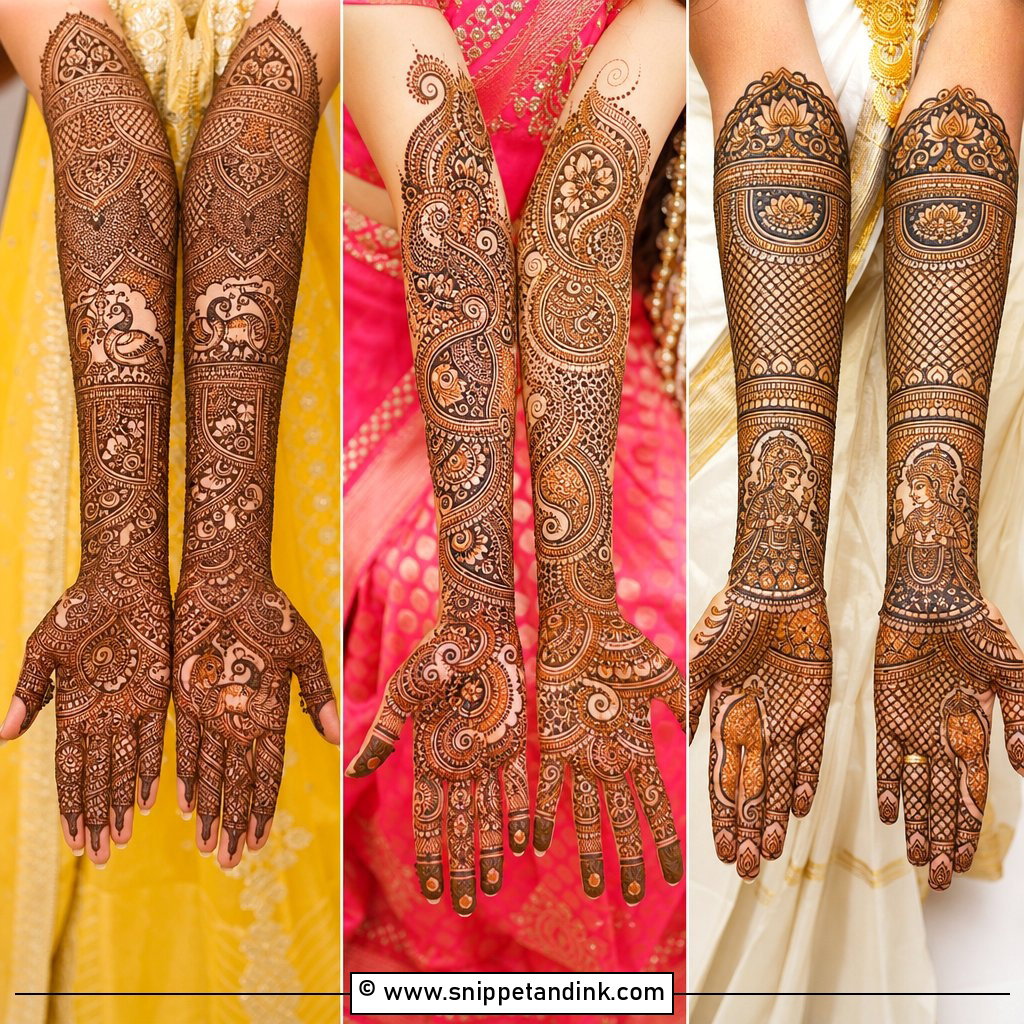
A bride’s mehndi carries more than pattern. Families sing through the application, an aunt checks the colour the next morning, and the design ends up in more close-ups than almost anything else she wears. Bridal henna today ranges from dense Indian detail to open Arabic flow, with Indo-Arabic, portrait, mandala, jaali and negative-space layouts in between. Some brides want a royal wrist-to-elbow design; others want something lighter they can comfortably wear through four days of functions. I’ve gathered 25 designs below with notes on how each one is applied and how it settles once the stain develops, so you can bring a clearer brief to your artist.
How Far Up the Arm Should Your Mehndi Go?
Coverage is the first decision I ask a bride to make, because it sets the sitting time and shapes every motif choice that follows. Your outfit decides more than you’d think.
- Hands to the wrist: the lightest bridal option. It sits under bangles and suits full-length sleeves, but most of a heavy chooda will cover the wrist work.
- Hands to mid-forearm: what most brides choose. It shows below elbow-length and three-quarter sleeves and leaves room above the chooda.
- Hands to the elbow: the full traditional look. It suits short or sheer sleeves where the arm is visible and needs the longest sitting.
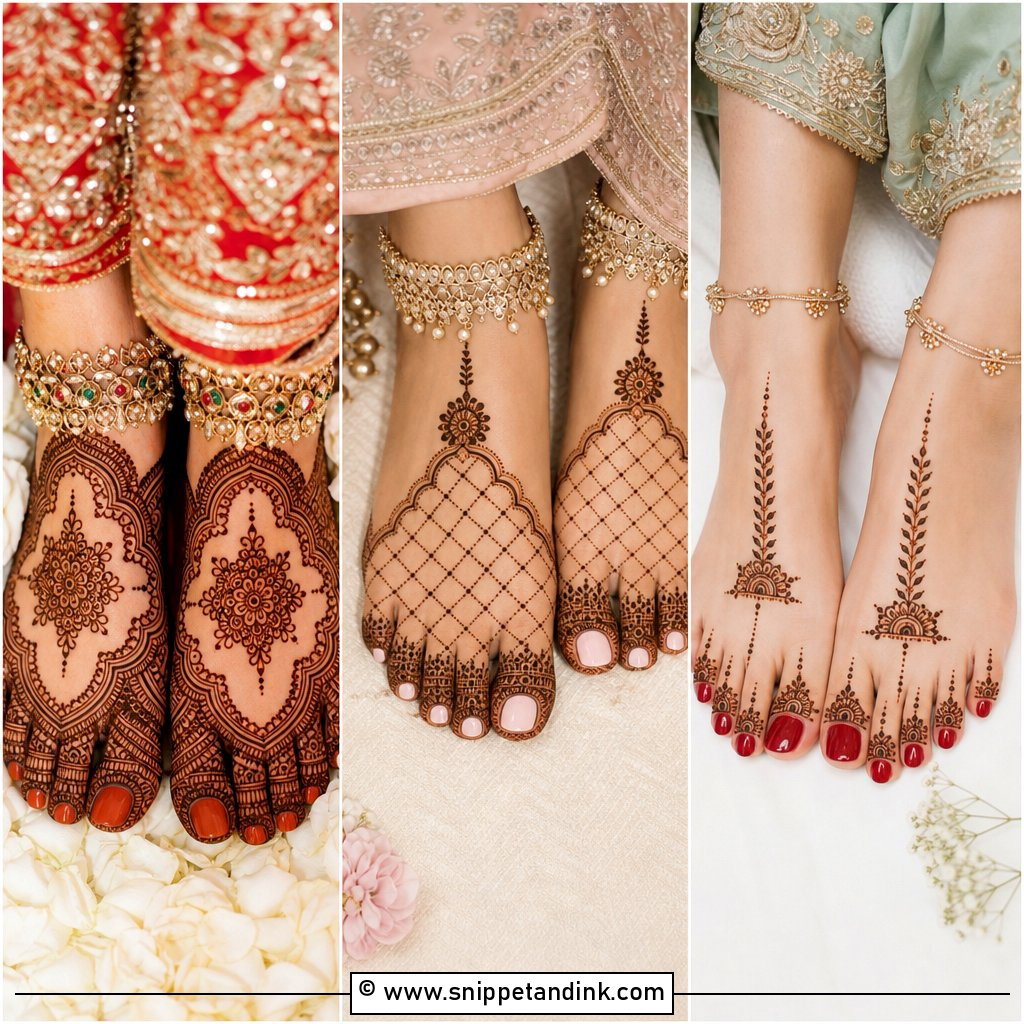
- Feet are a separate decision and add more time, so mention them when you book.
Bring a photo of your blouse or kurta to the consultation. I’d rather design around the sleeve than draw something beautiful that ends up hidden.
1. Full Hand Dulhan Mehndi Design
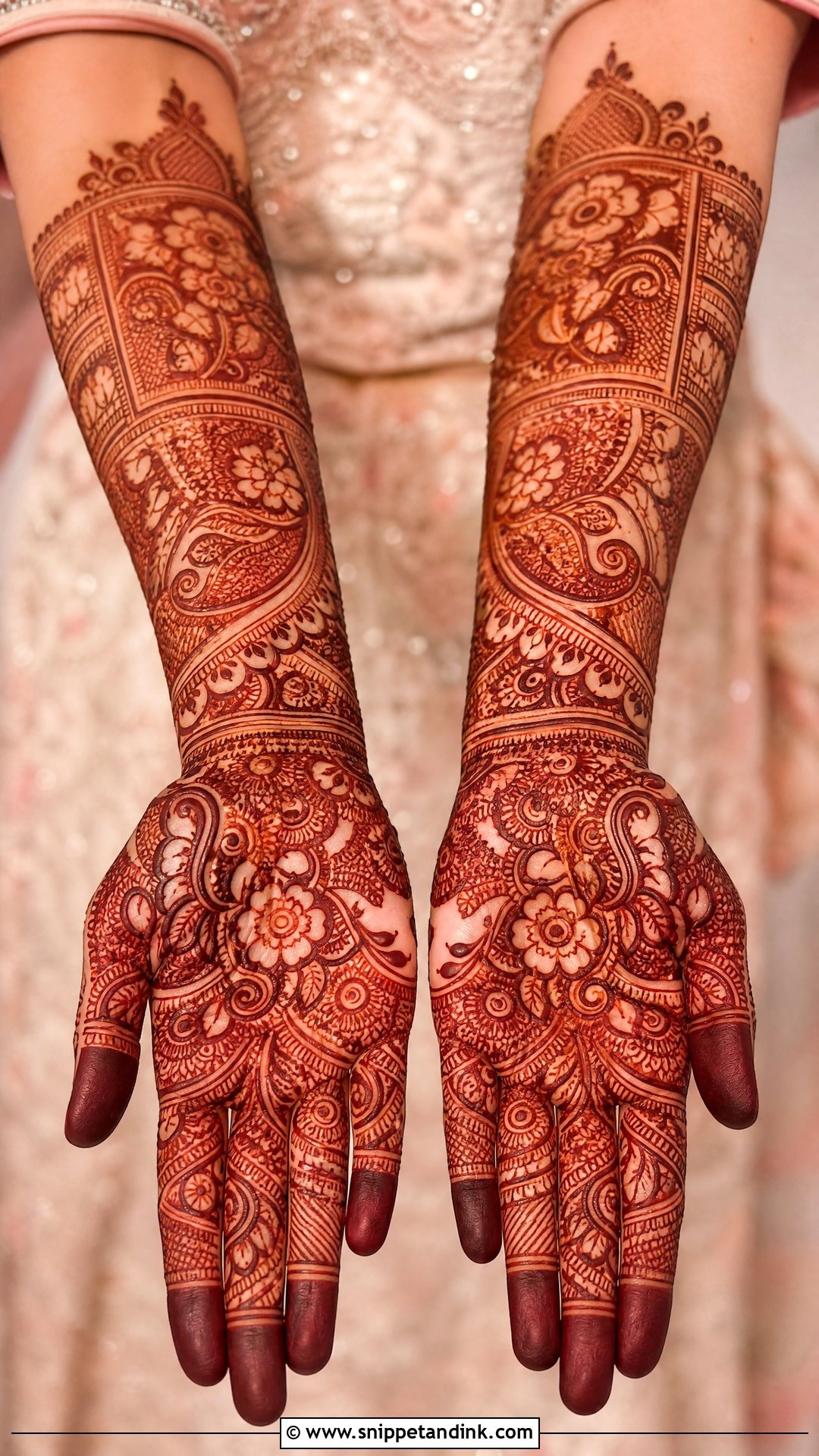
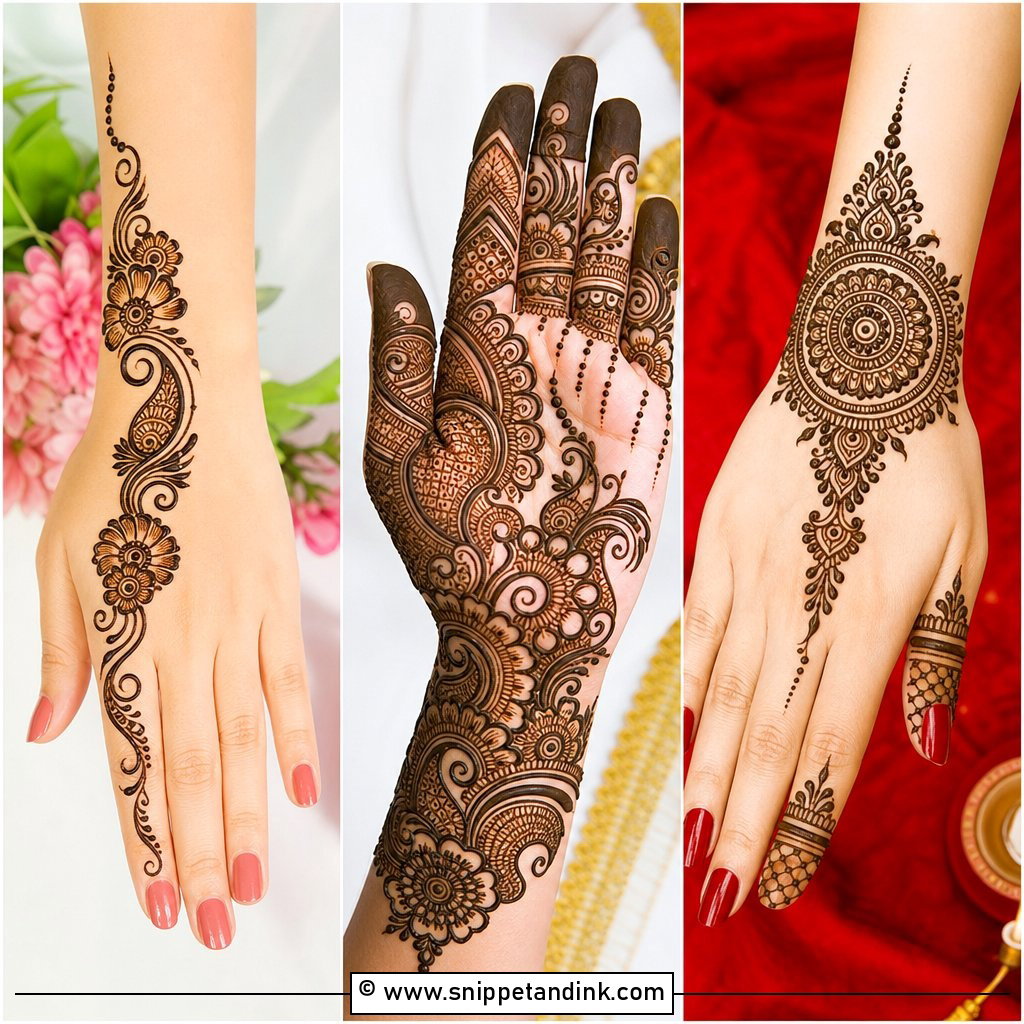
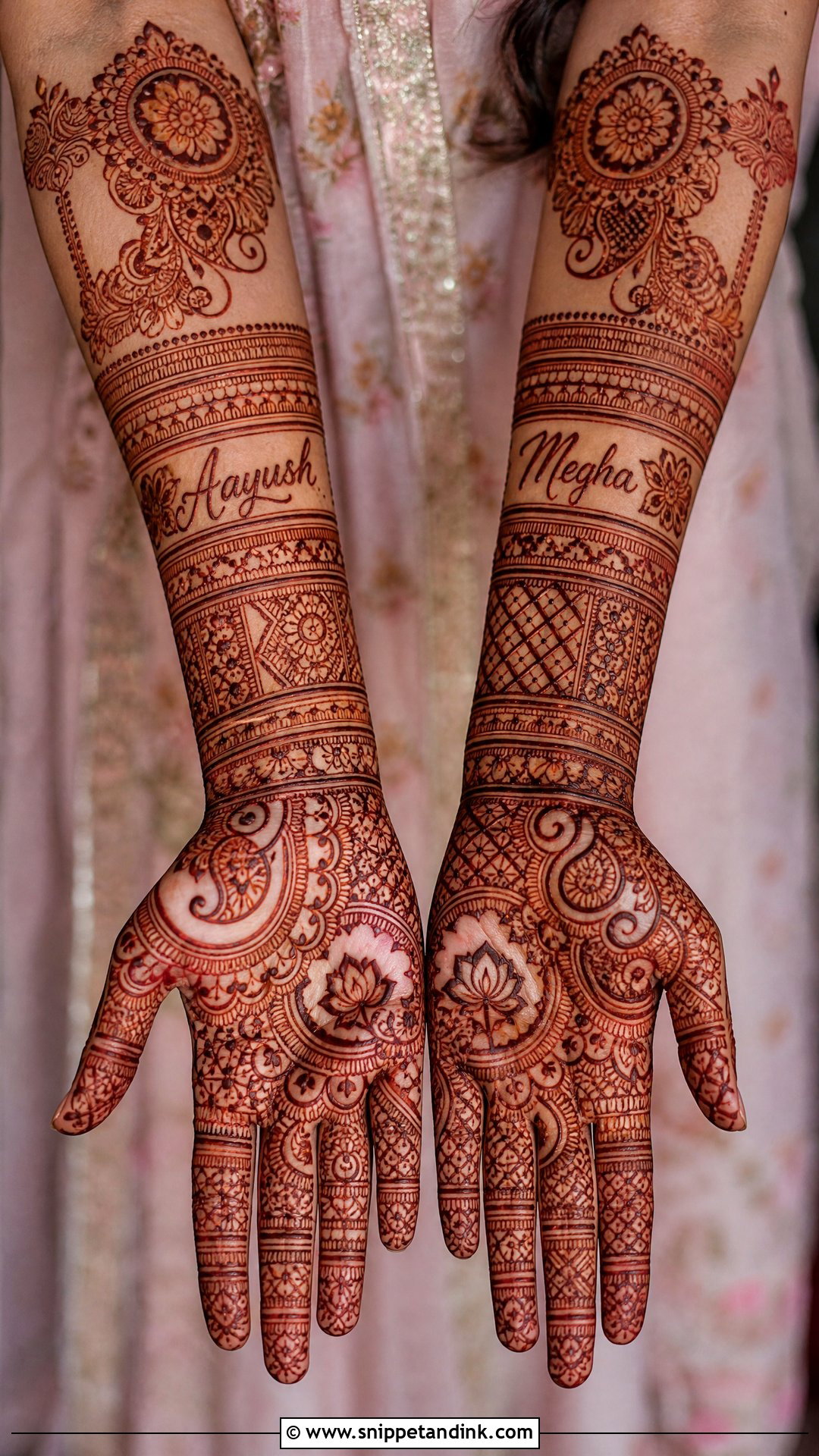
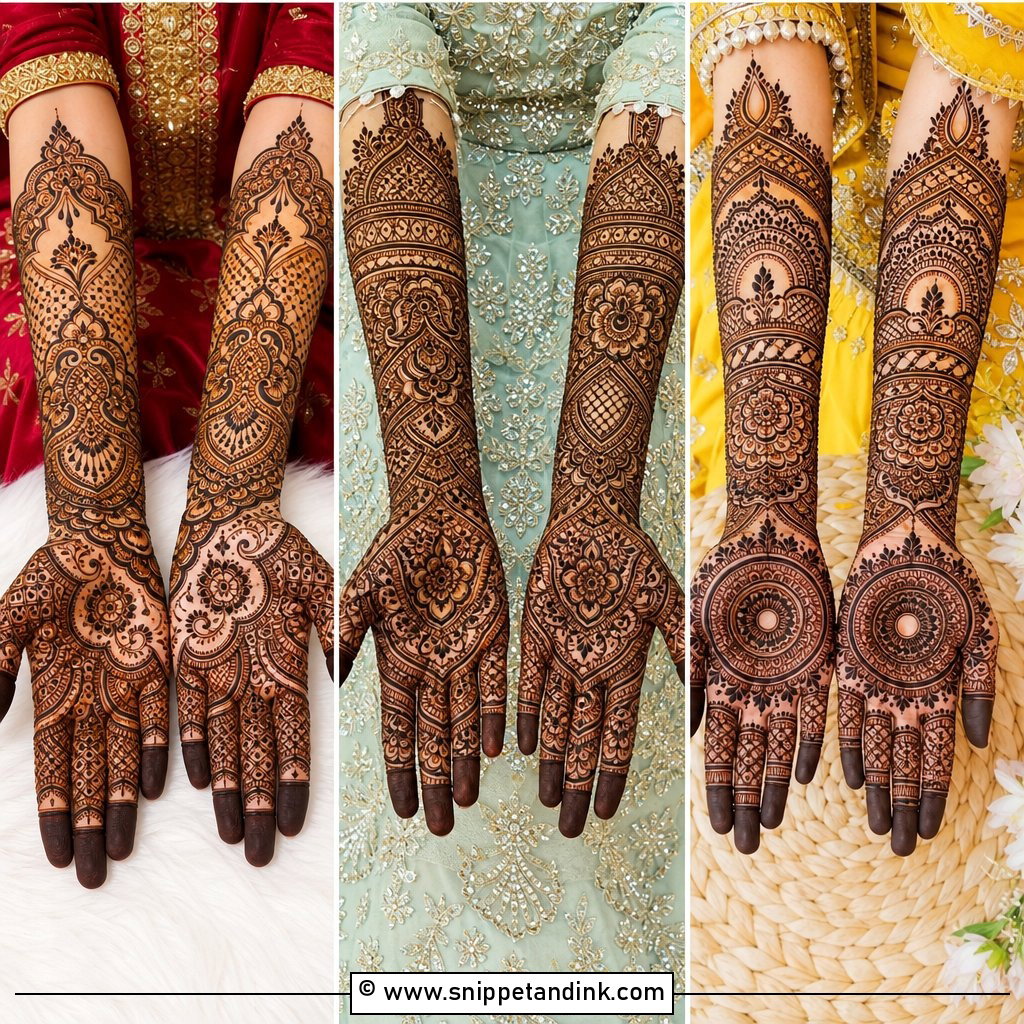
Full hand coverage, fingertips to forearm, is still the design most brides picture first. Palm, back of the hand, wrist and lower arm are all filled with fine lines, paisleys, florals and shaded areas. What separates a good full hand from a messy one is breathing space. I leave small gaps of bare skin around the key motifs, particularly near the wrist and the centre of the palm, because once the stain darkens, those gaps are what keep the design readable. It sits comfortably with bangles, rings and kalire.
2. Indian Bridal Mehndi Design
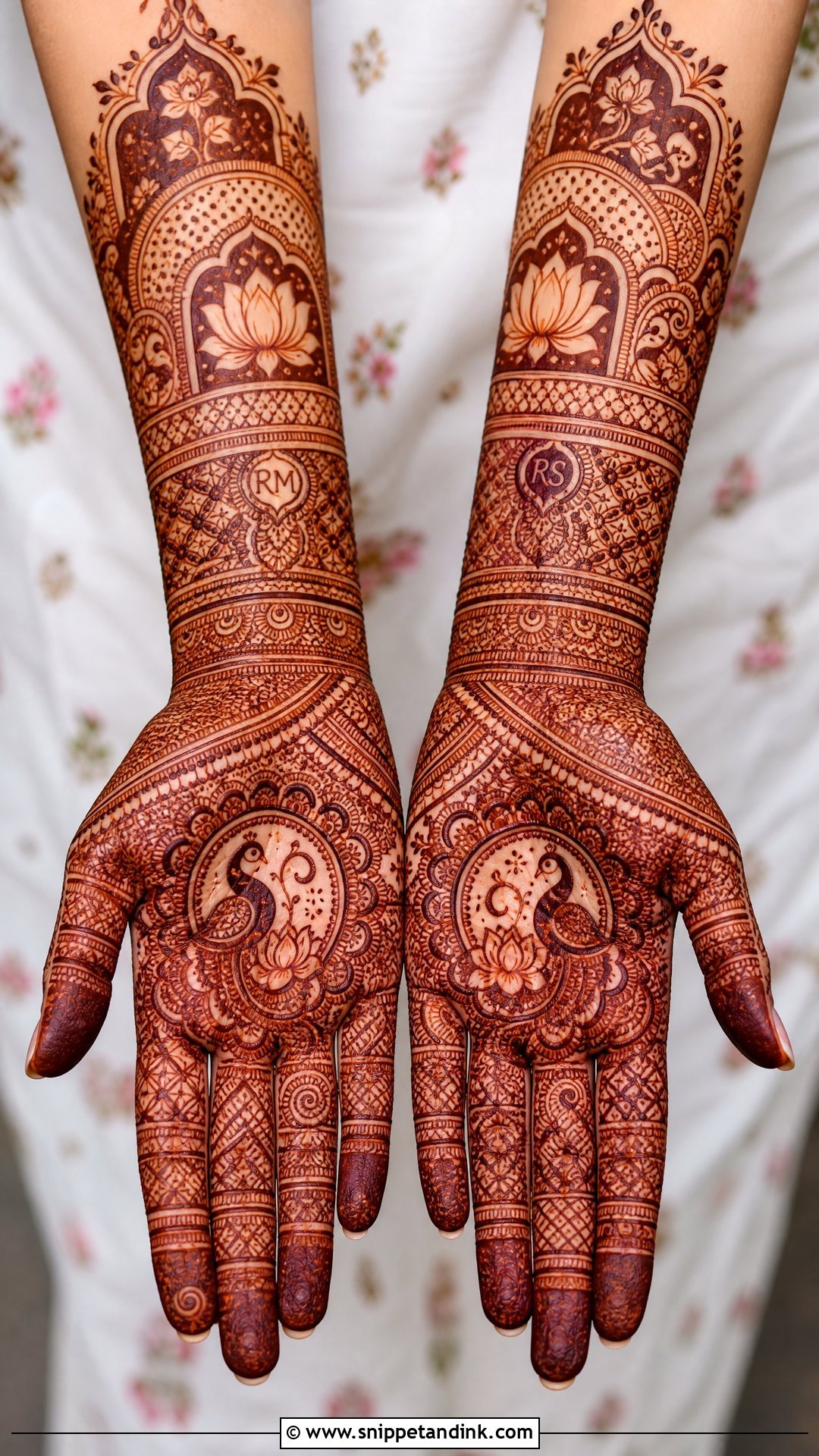
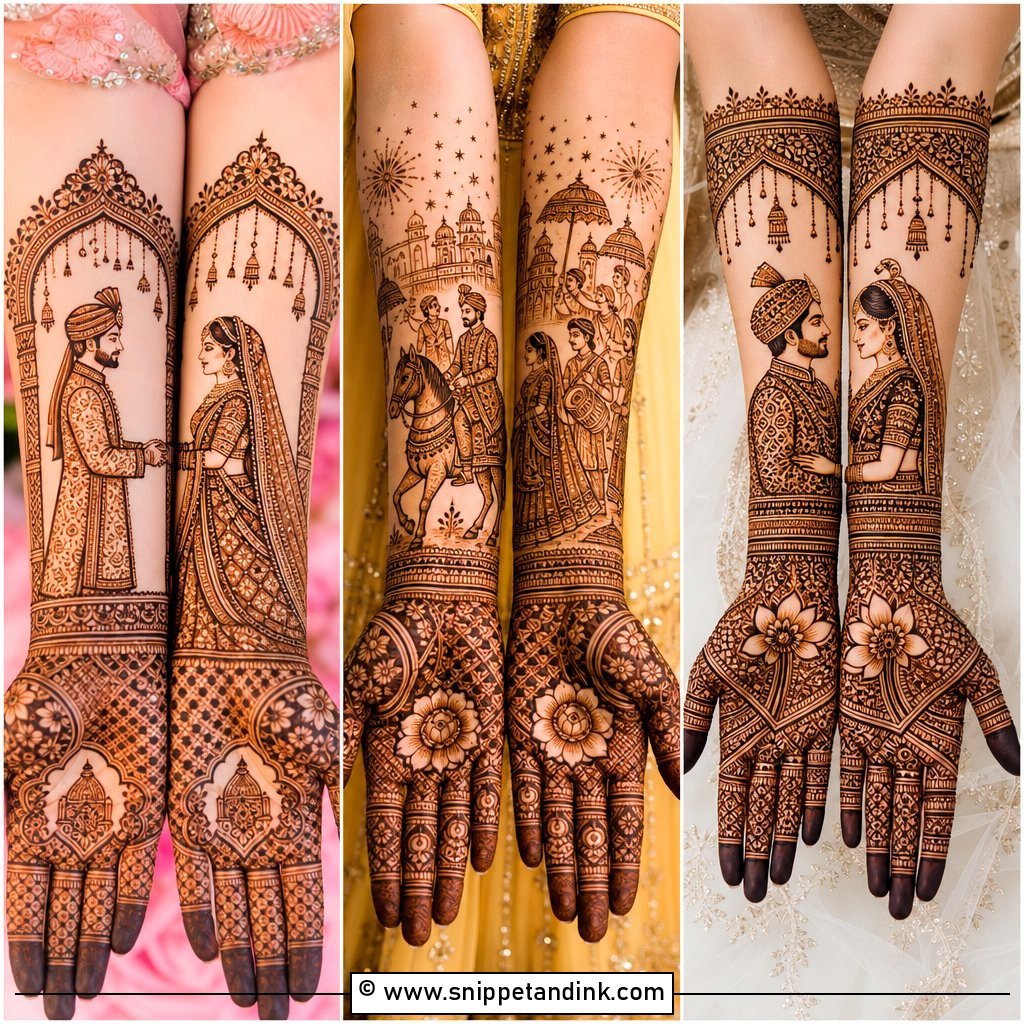
Traditional Indian bridal mehndi is about density and symbolism: paisleys, lotus, peacocks, bride-groom figures and fine filler covering the hands completely, sometimes up to the elbows. It belongs alongside traditional embroidery, temple jewellery and red, maroon or gold outfits. I often slip small baraat elements or initials into the filler for a personal layer. Be ready to sit still for a long time. This is the slowest style on the list, and rushing it is how lines start to blur.
3. Arabic Bridal Mehndi Design
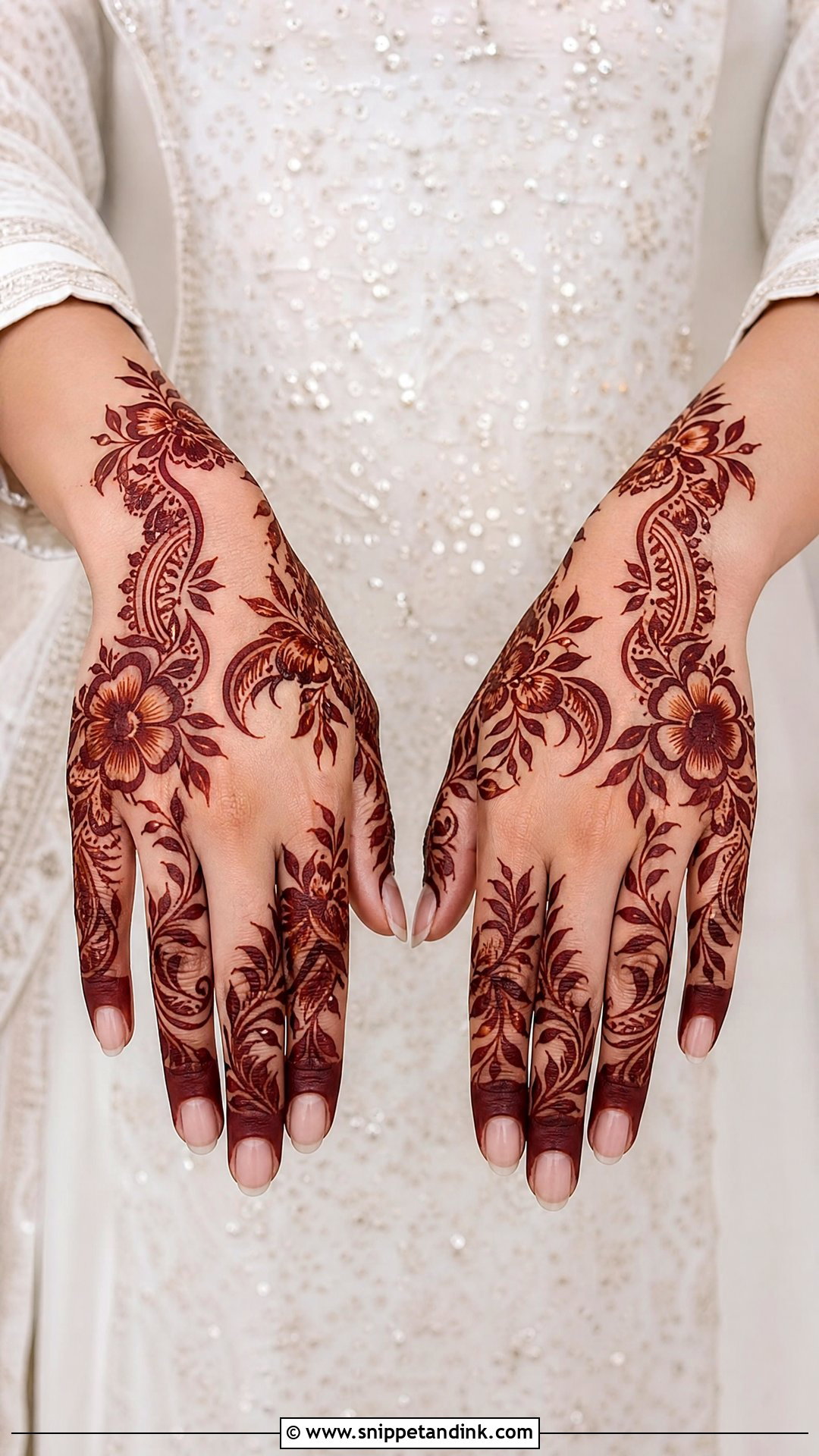
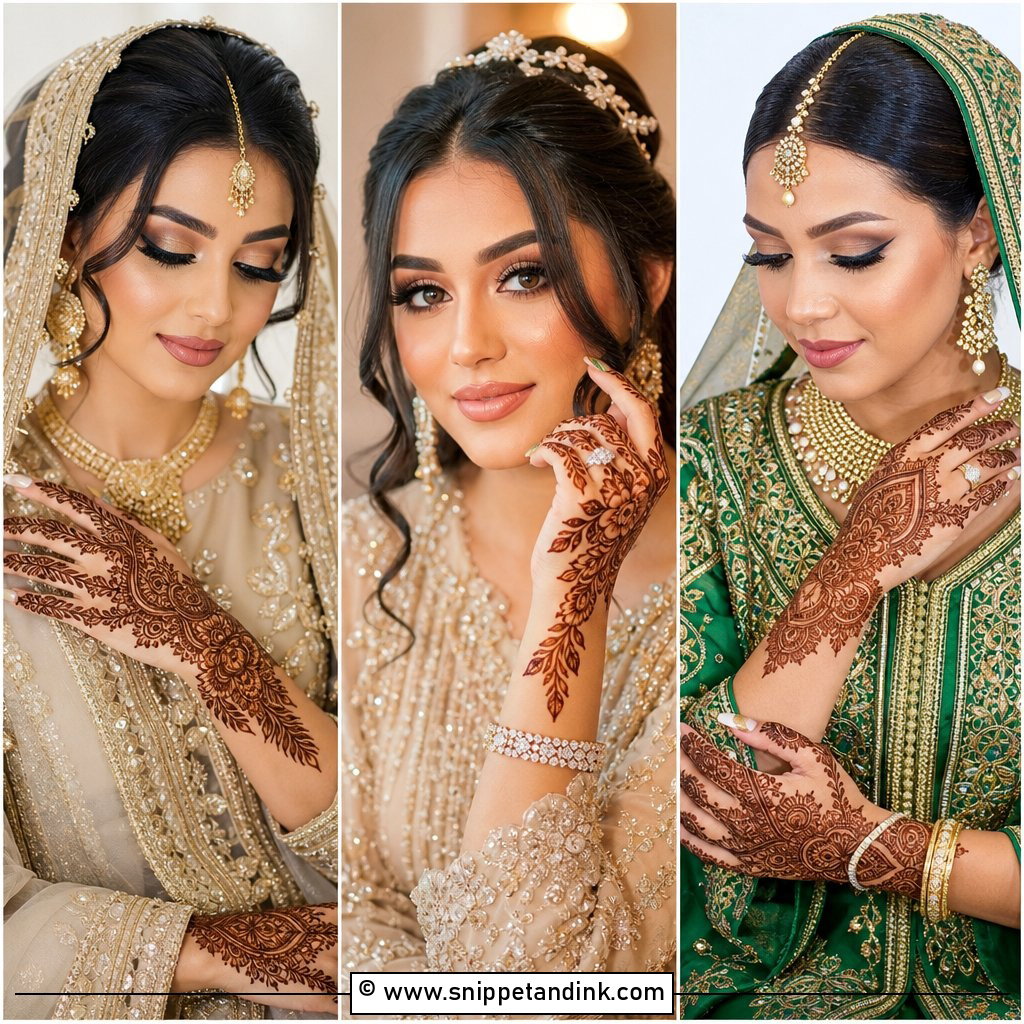
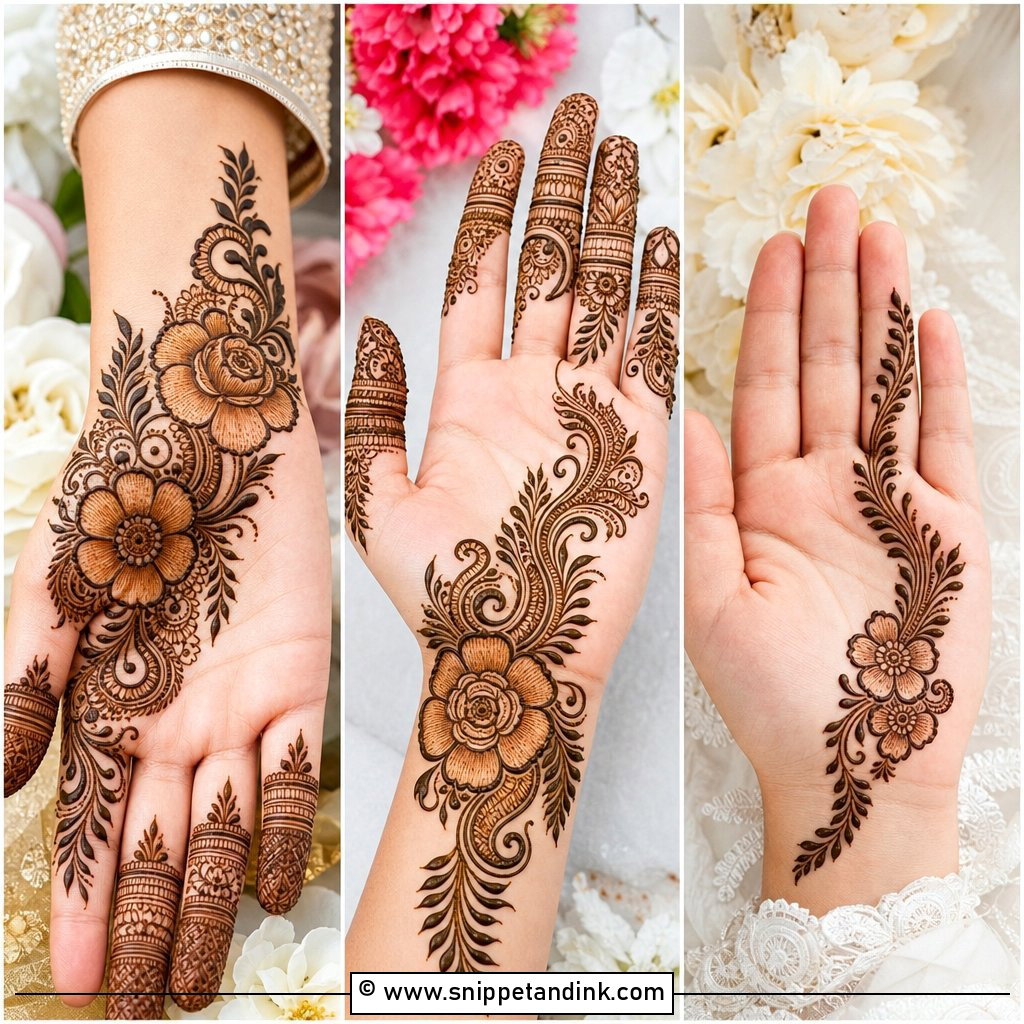
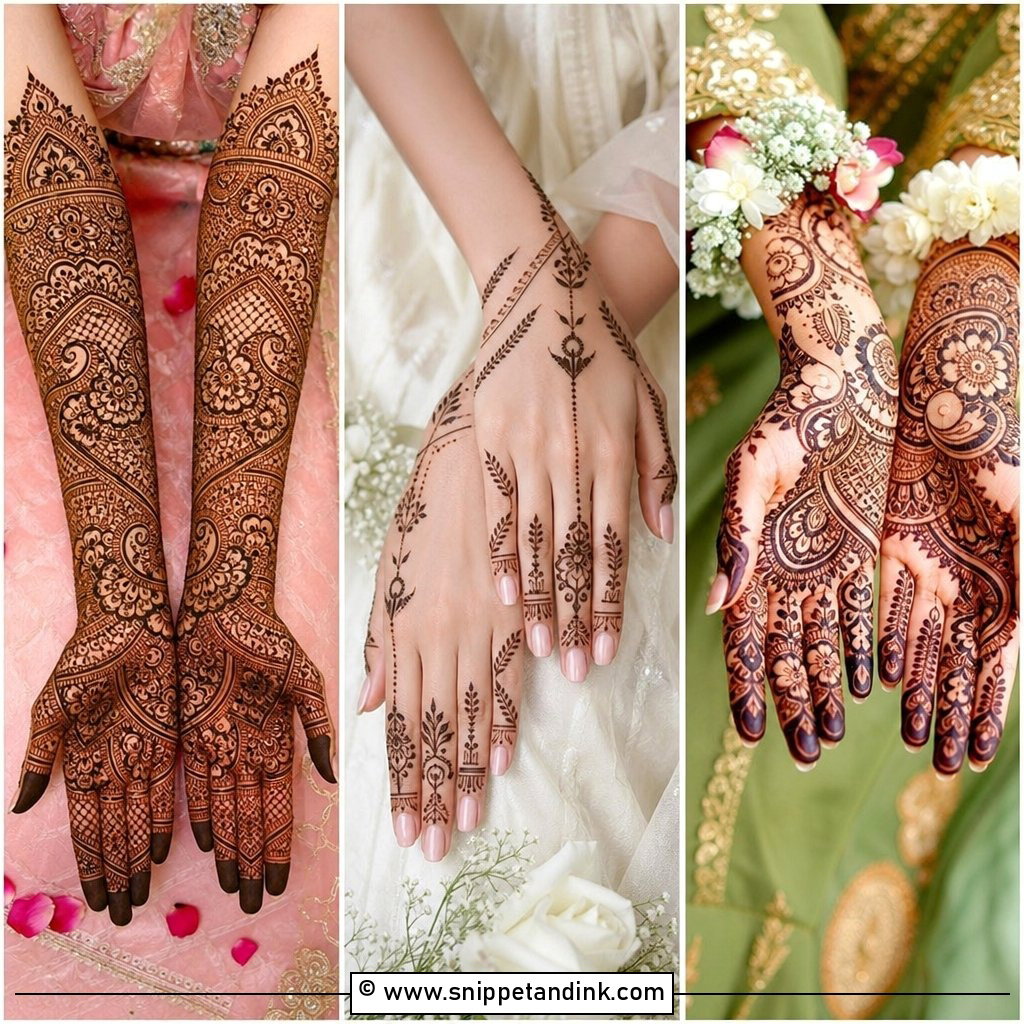
Arabic bridal mehndi moves. Bold flowers, leafy vines and shaded petals trail across the hand with open skin around them, and the result looks rich without being crowded. For a bride, I extend the trail to cover more of the hand while keeping that diagonal movement. Fingers get detailed bands. It’s also the style that sits most comfortably beside heavy jewellery, since the open skin gives rings and haath phool room to show.
4. Indo Arabic Bridal Mehndi Design
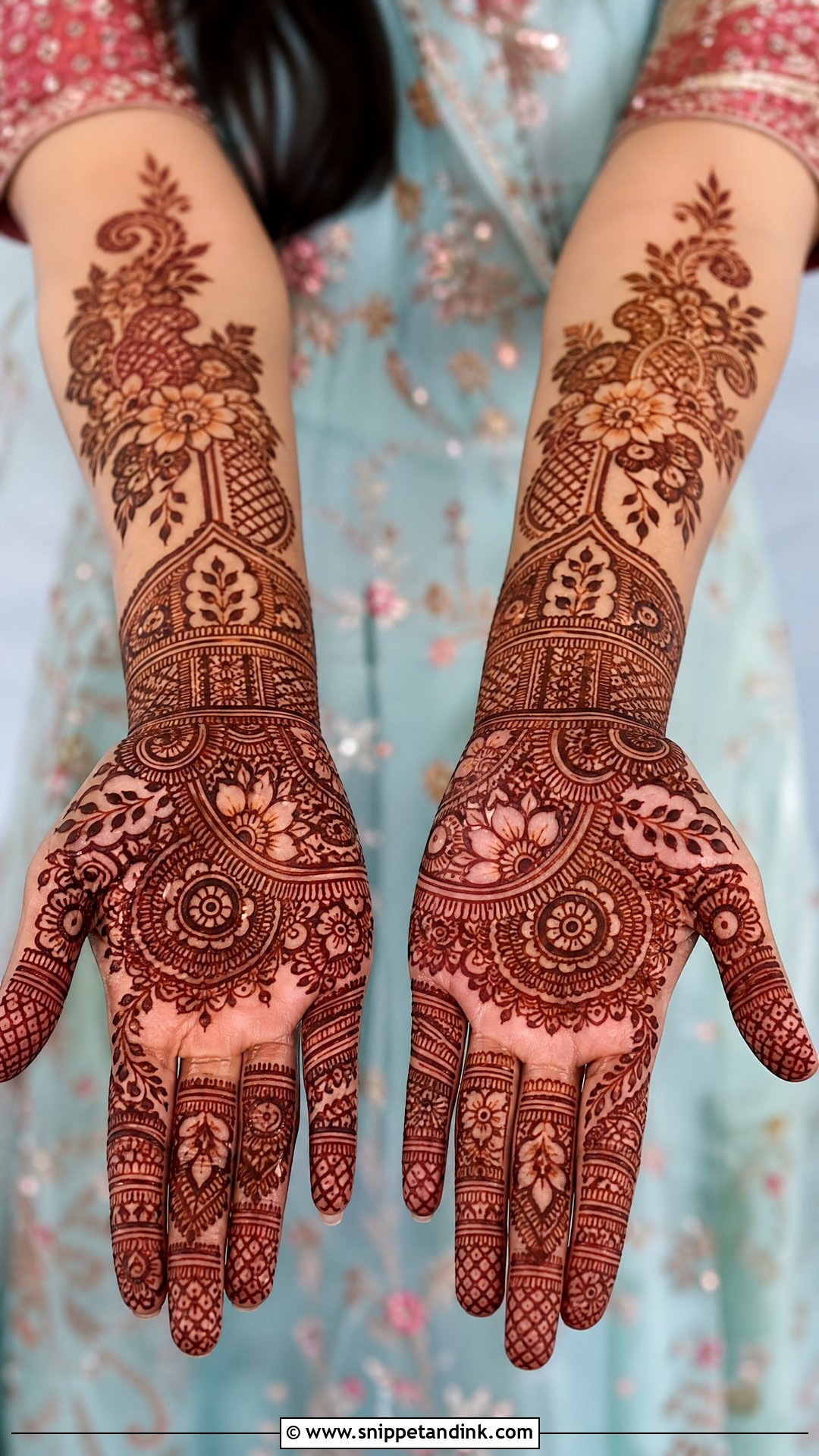
Indo Arabic is the compromise I recommend most often. It borrows Arabic’s flow and spacing, then fills sections with Indian mesh, paisley trails and mandala centres. You get bridal coverage without the packed feel of full traditional work, and it’s quicker to apply. It translates well across engagement, nikah, sangeet and wedding looks. For a stronger bridal effect, I make the wrist cuffs heavier and the fingertips more detailed while keeping negative space around the main motifs.
5. Rajasthani Bridal Mehndi Design
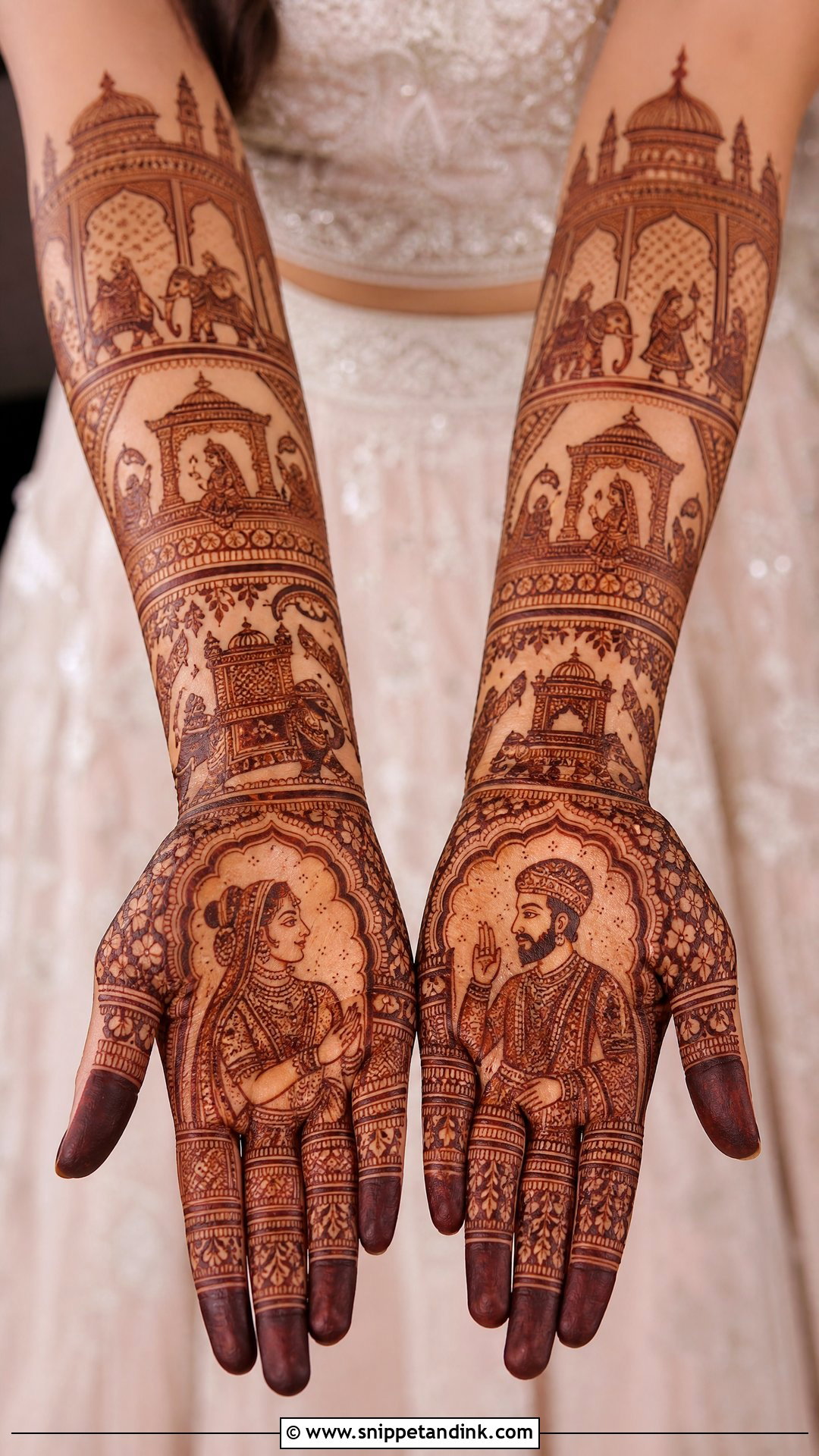
Rajasthani bridal mehndi design tells a whole wedding story: dulha-dulhan figures, palace arches, elephants, peacocks, musicians and the baraat procession, usually covering both palms and arms symmetrically. It’s one of the most elaborate options there is. The skill lies in fitting so many figures in without crowding, so look at an artist’s previous Rajasthani work after staining, not just fresh paste. It pairs naturally with kundan jewellery and heavy bangles.
6. Dulha Dulhan Mehndi Design
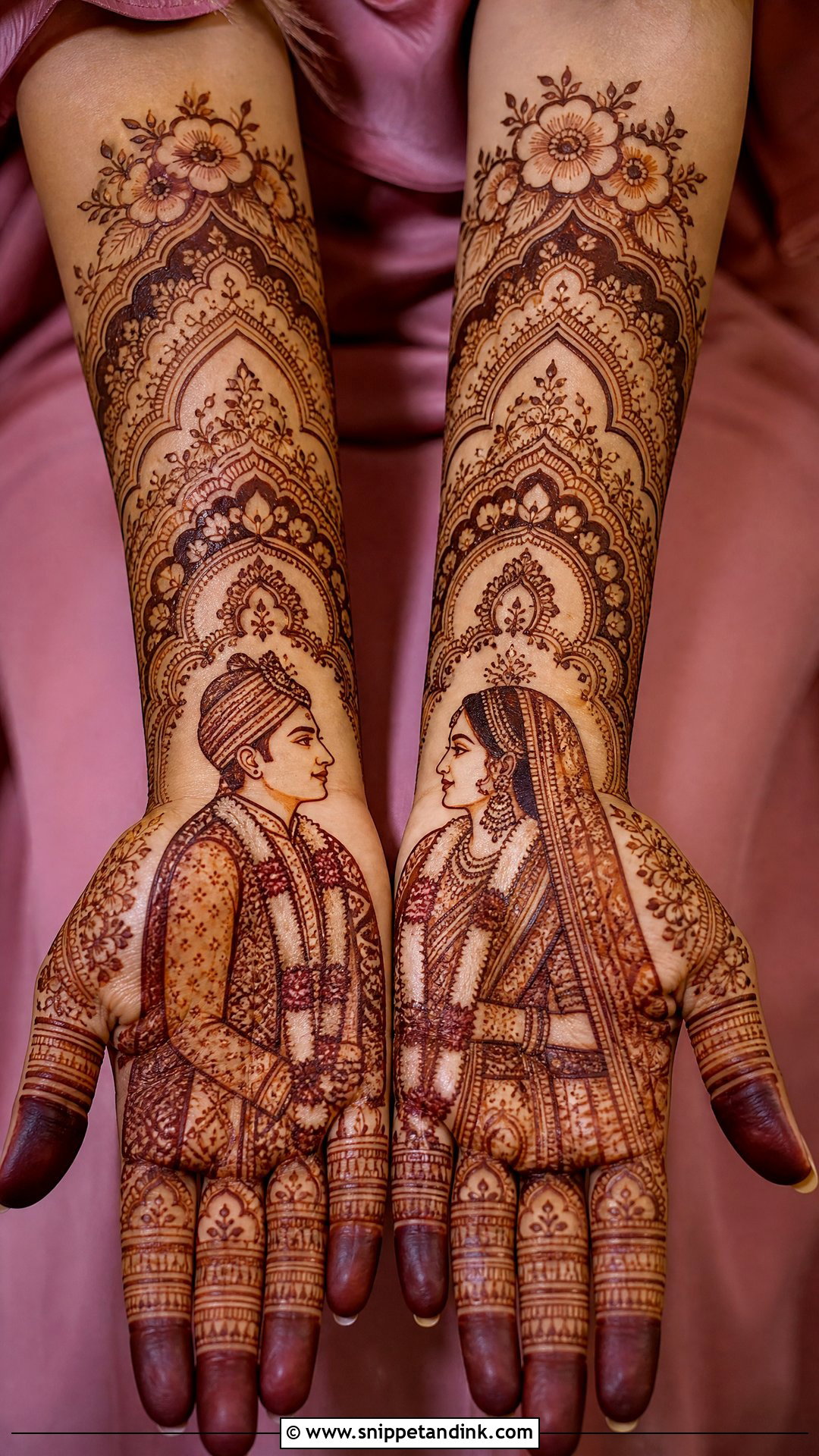
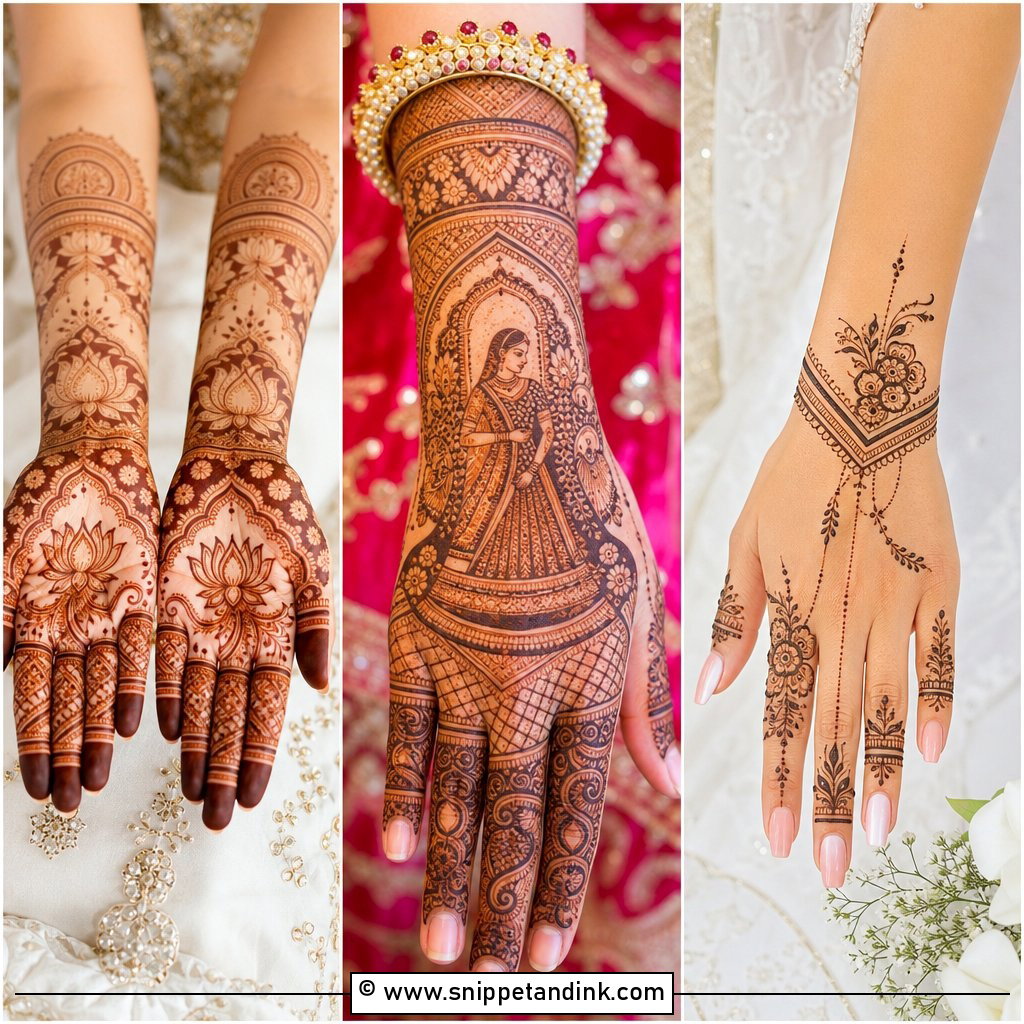
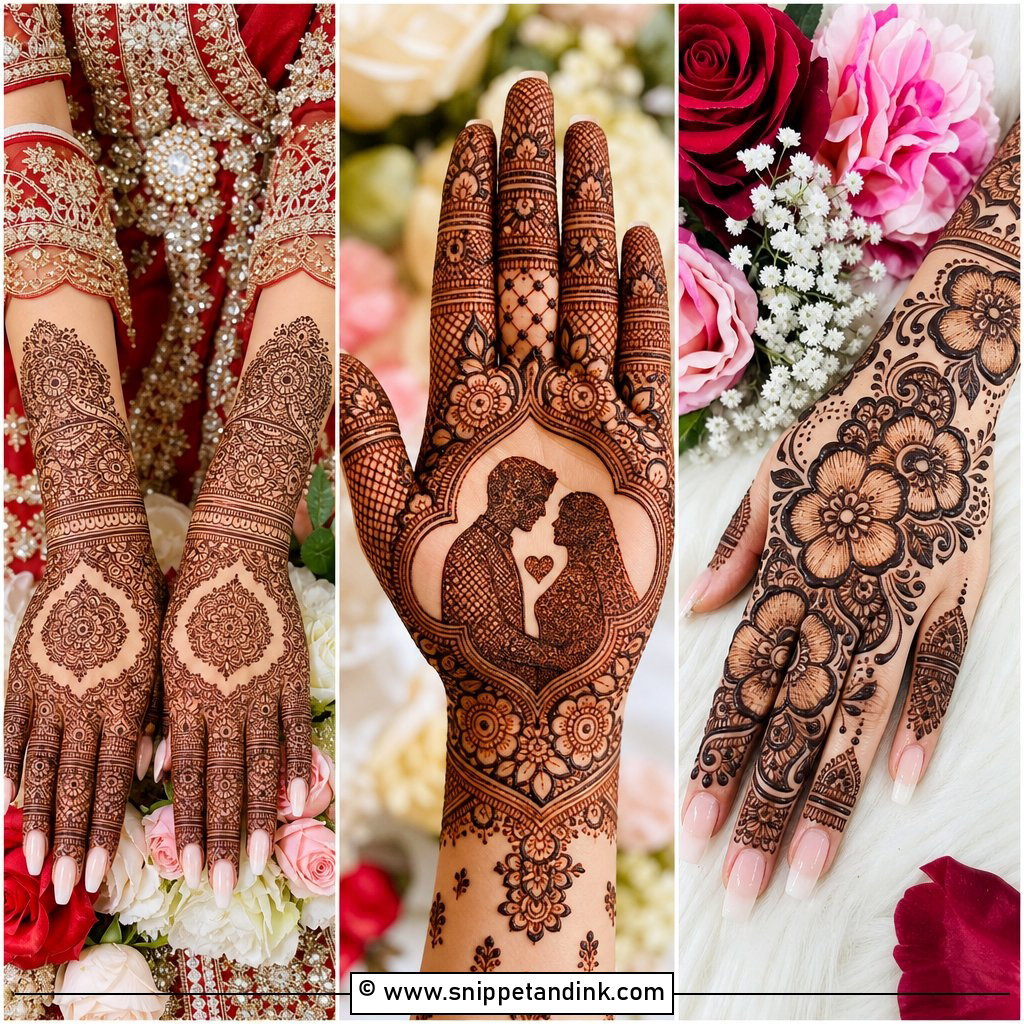
Dulha dulhan mehndi design puts the couple on the palms: bride on one hand, groom on the other, framed by arches, flowers and paisleys. Some versions add a varmala, doli or mandap scene. The mistake I see most is figures drawn too small, so faces and outfits blur once the stain darkens. I’d rather draw the couple larger with simple features and fill the rest of the hand with traditional pattern. These designs come into their own during mehndi-night close-ups.
7. Bridal Portrait Mehndi Design
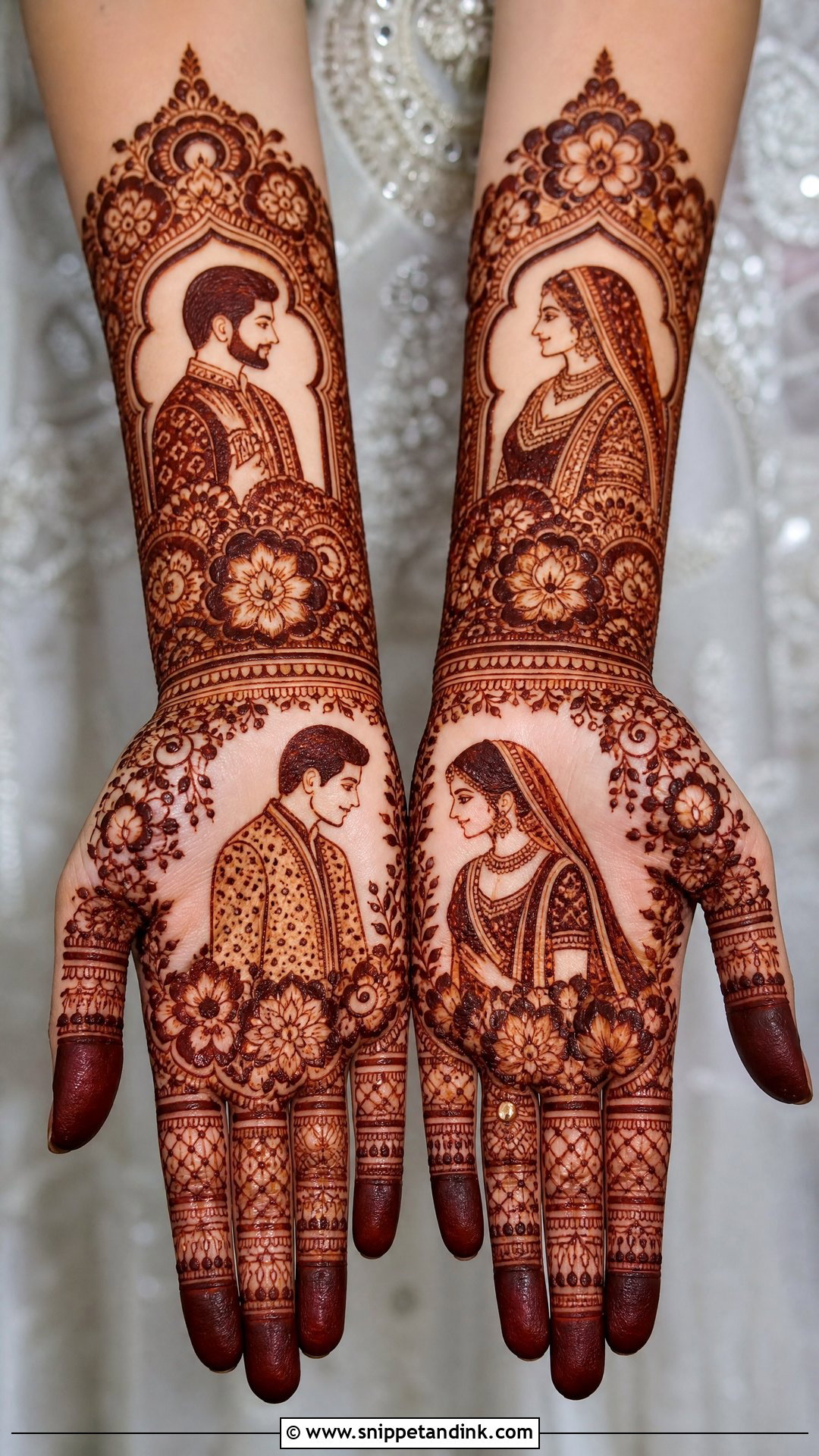
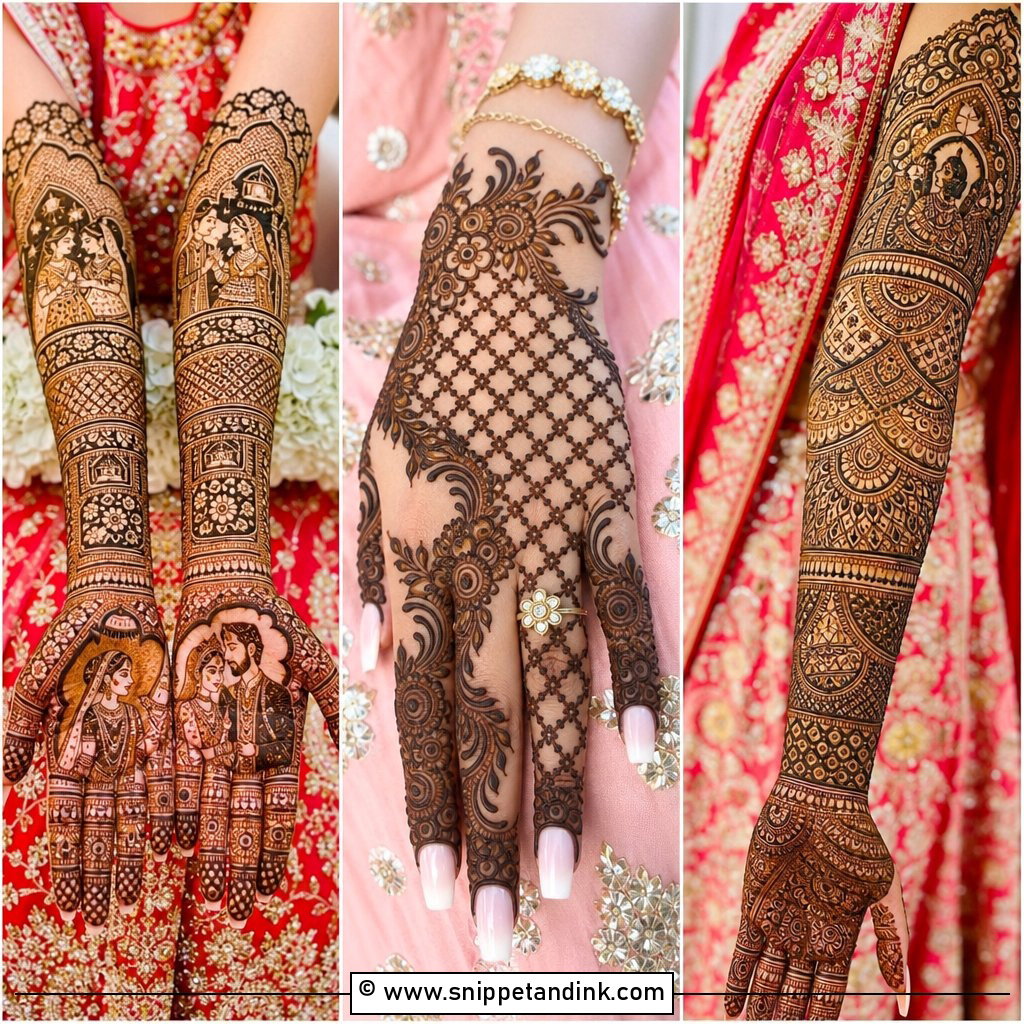
Bridal portrait mehndi design can be realistic or semi-realistic: the couple’s faces, a bridal pose, a moment from how you met. Portraits need flat, open space, so they usually go on the palm or forearm, framed by jaali and floral borders. Facial work can’t be corrected once the paste touches skin, so book an artist who has done many portraits, and send reference photos well in advance so they can practise the likeness on paper first.
8. Mandala Bridal Mehndi Design
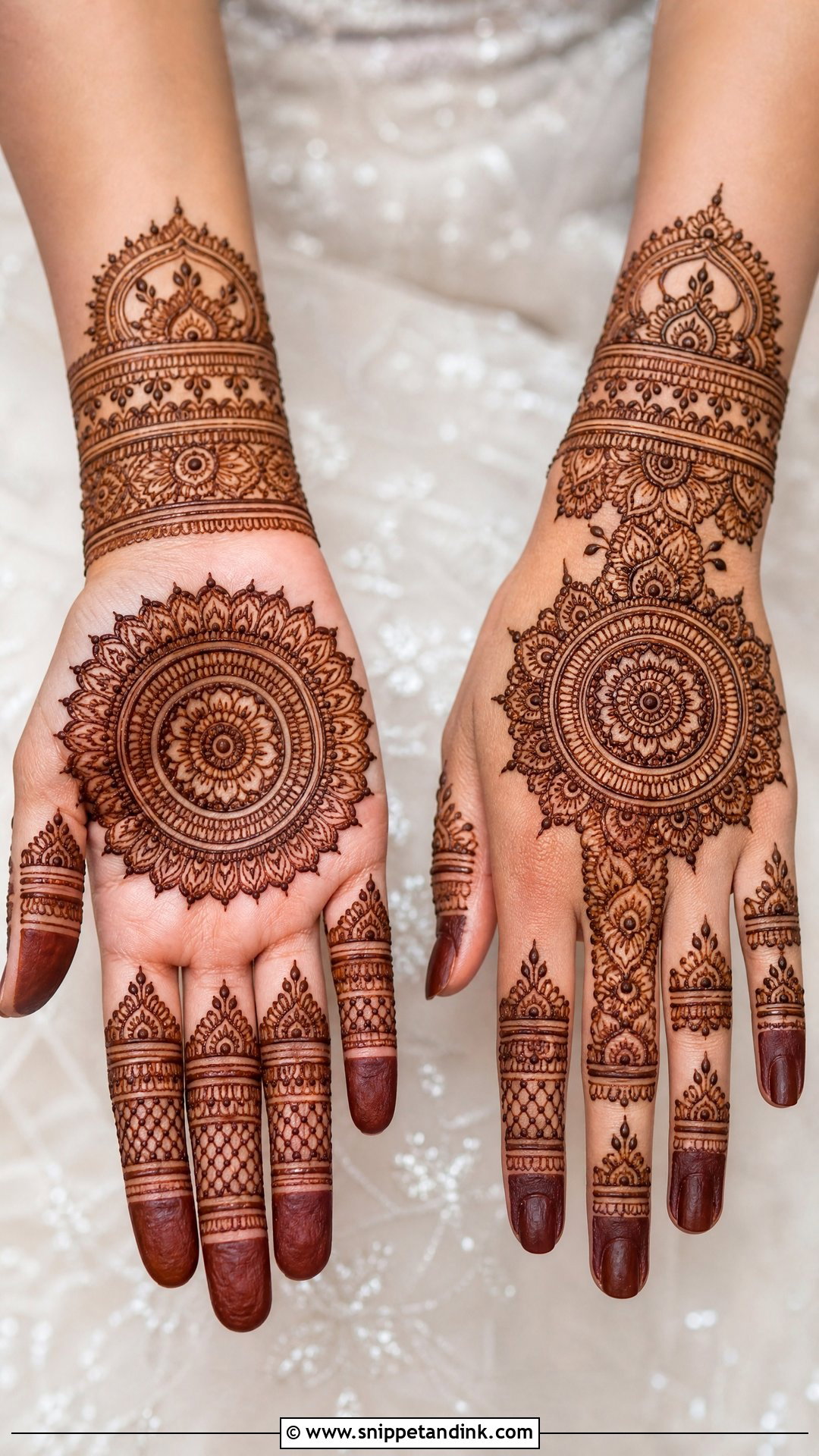
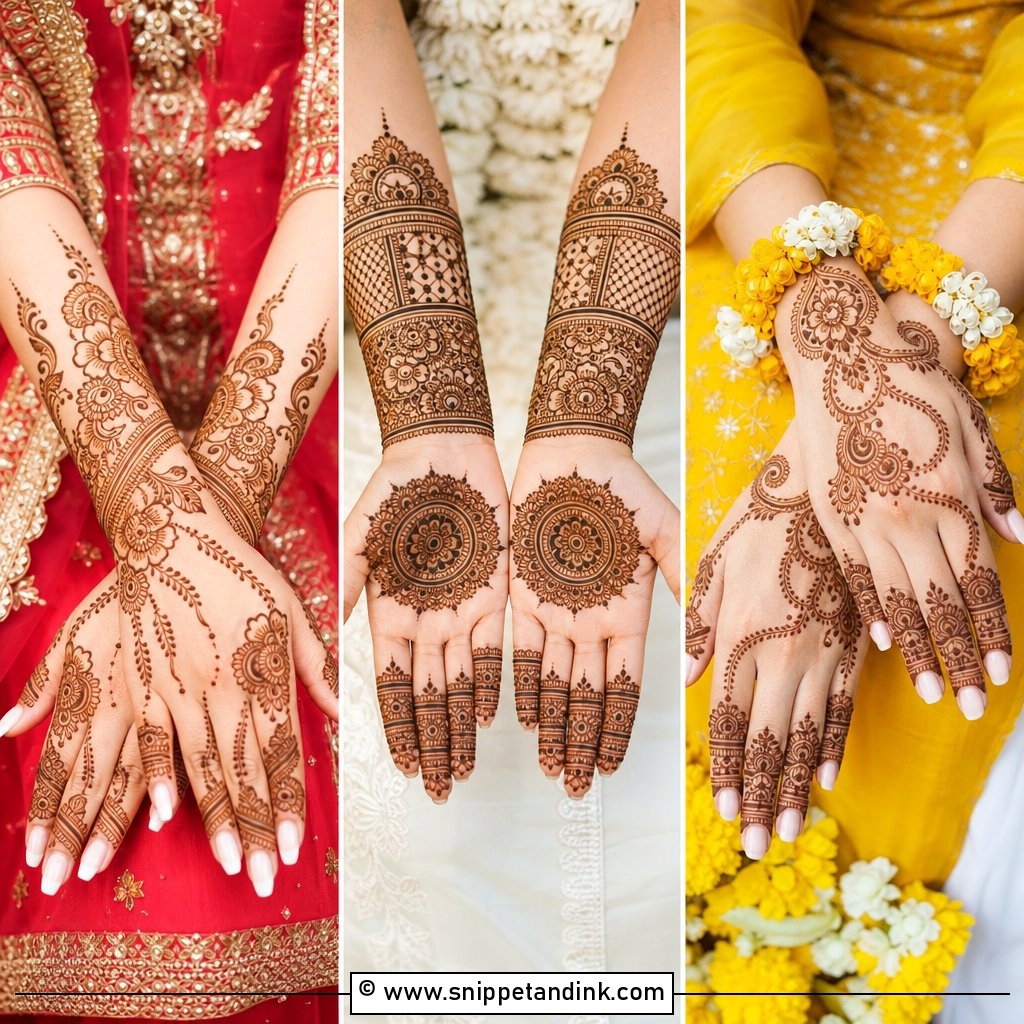
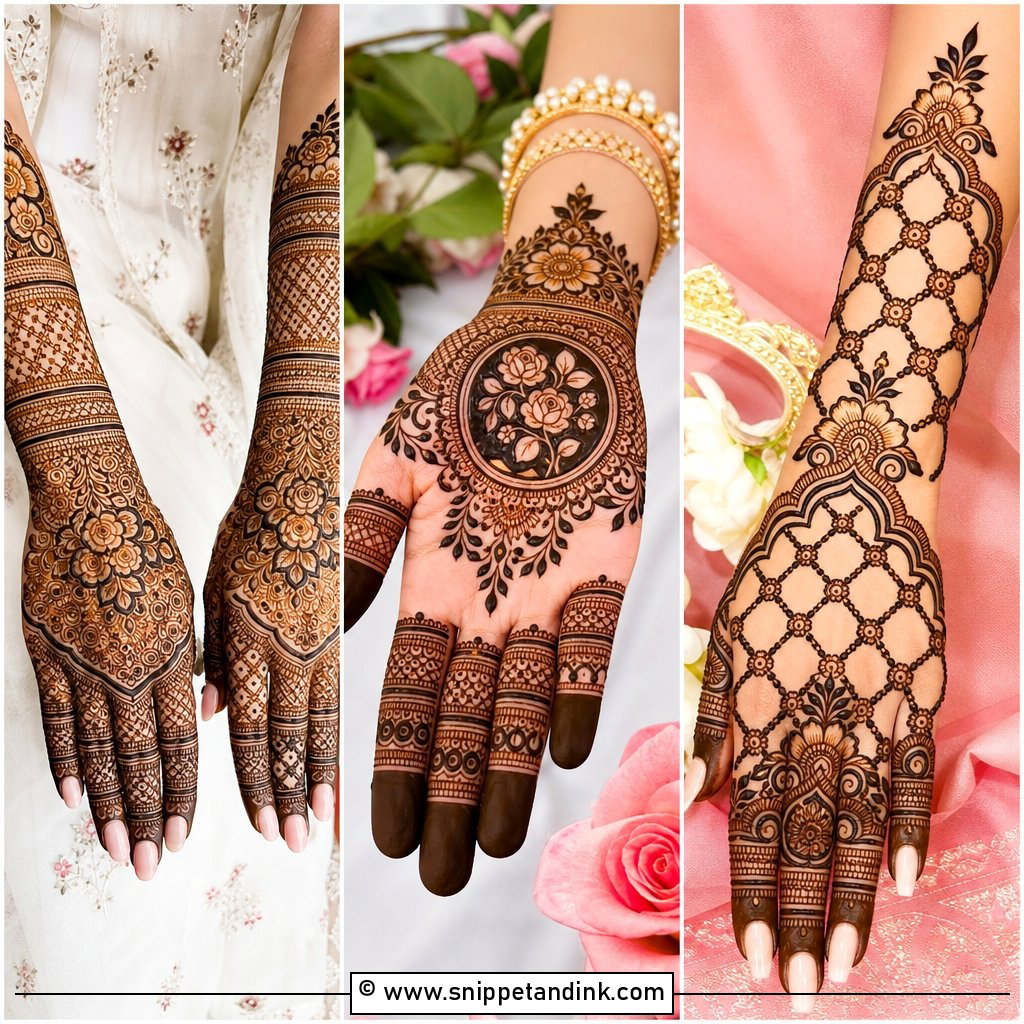
Mandala bridal mehndi design builds outward from a central circle on the palm or back of the hand, ring by ring, with petals, dots and fine borders. A single mandala looks too simple for a bride, so I add finger detail, bracelet-style wrist work and paisley cuffs or floral forearm bands. I draw the first circle on both hands before filling either, because mirrored mandalas only look right when their centres line up. A deep maroon stain makes the rings look crisp.
9. Peacock Bridal Mehndi Design
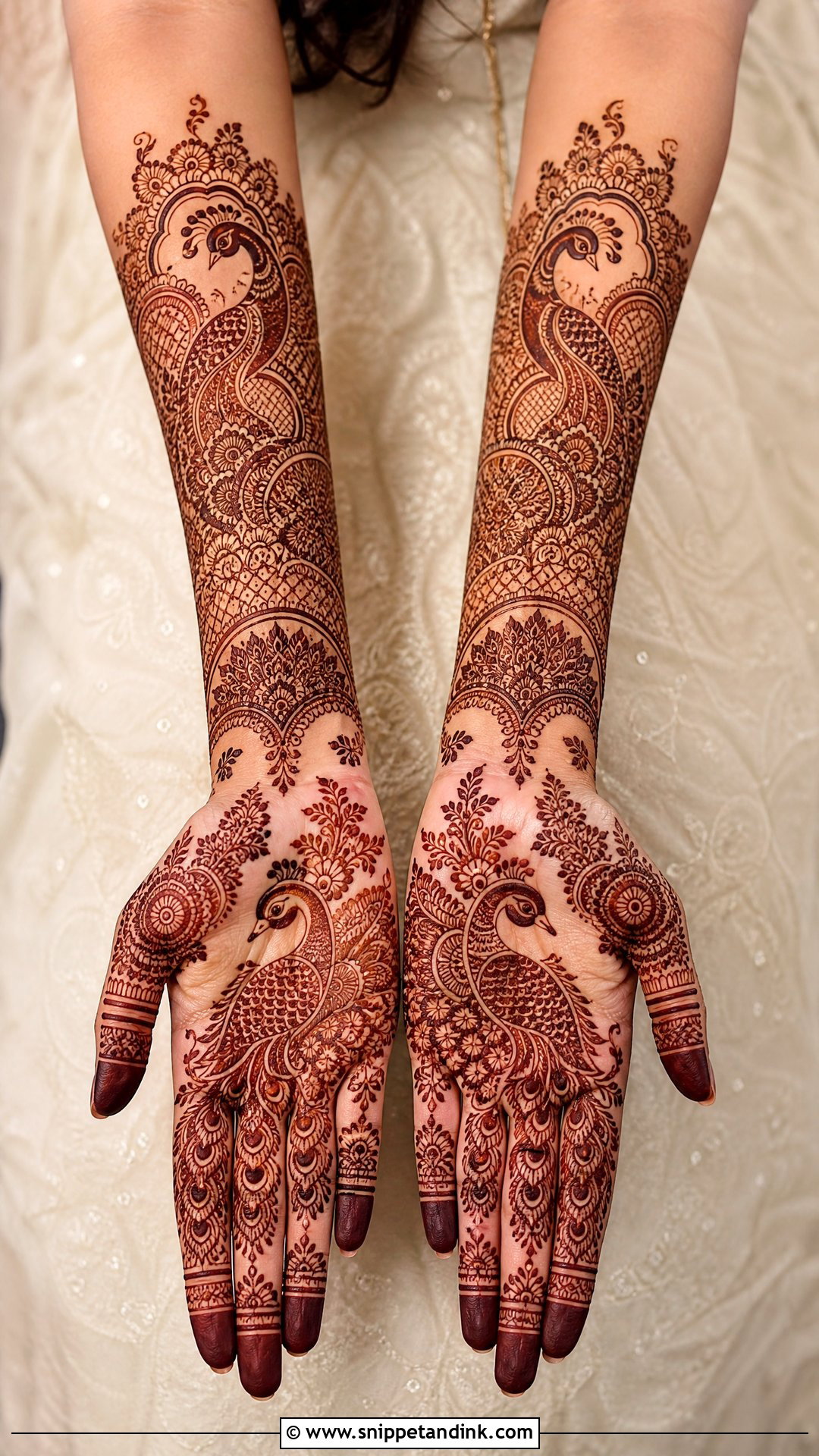
Peacocks are a festive favourite, and on a bridal hand they need to belong to the full design rather than float alone. One large peacock per hand, or a facing pair across both hands, works well on the palm, wrist or forearm. I draw the body and neck first, then let the feathers spread into paisleys and filler. They suit lehengas with zari or sequin work, especially in emerald, teal or royal blue.
10. Paisley Bridal Mehndi Design
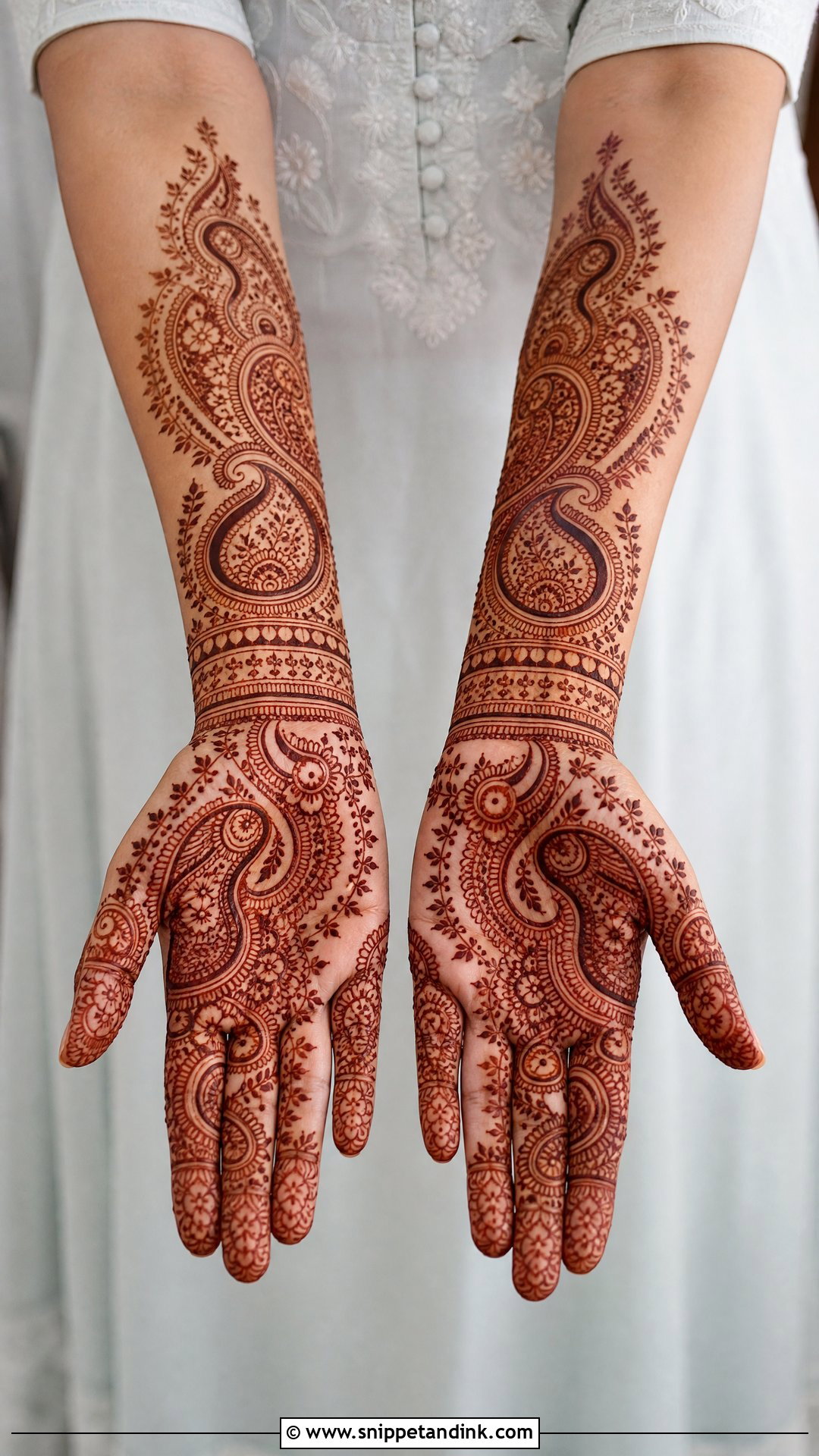
Paisleys are the oldest friend a mehndi artist has. They can flow from the wrist to the fingers, wrap around the palm or layer into a full-hand pattern, with large paisleys as focal points and smaller ones as filler. This is my suggestion when a bride wants traditional mehndi but no figures or scenes. Detailed fingertips, wrist cuffs and forearm bands finish it. Few designs suit as many outfits.
11. Jaali Bridal Mehndi Design
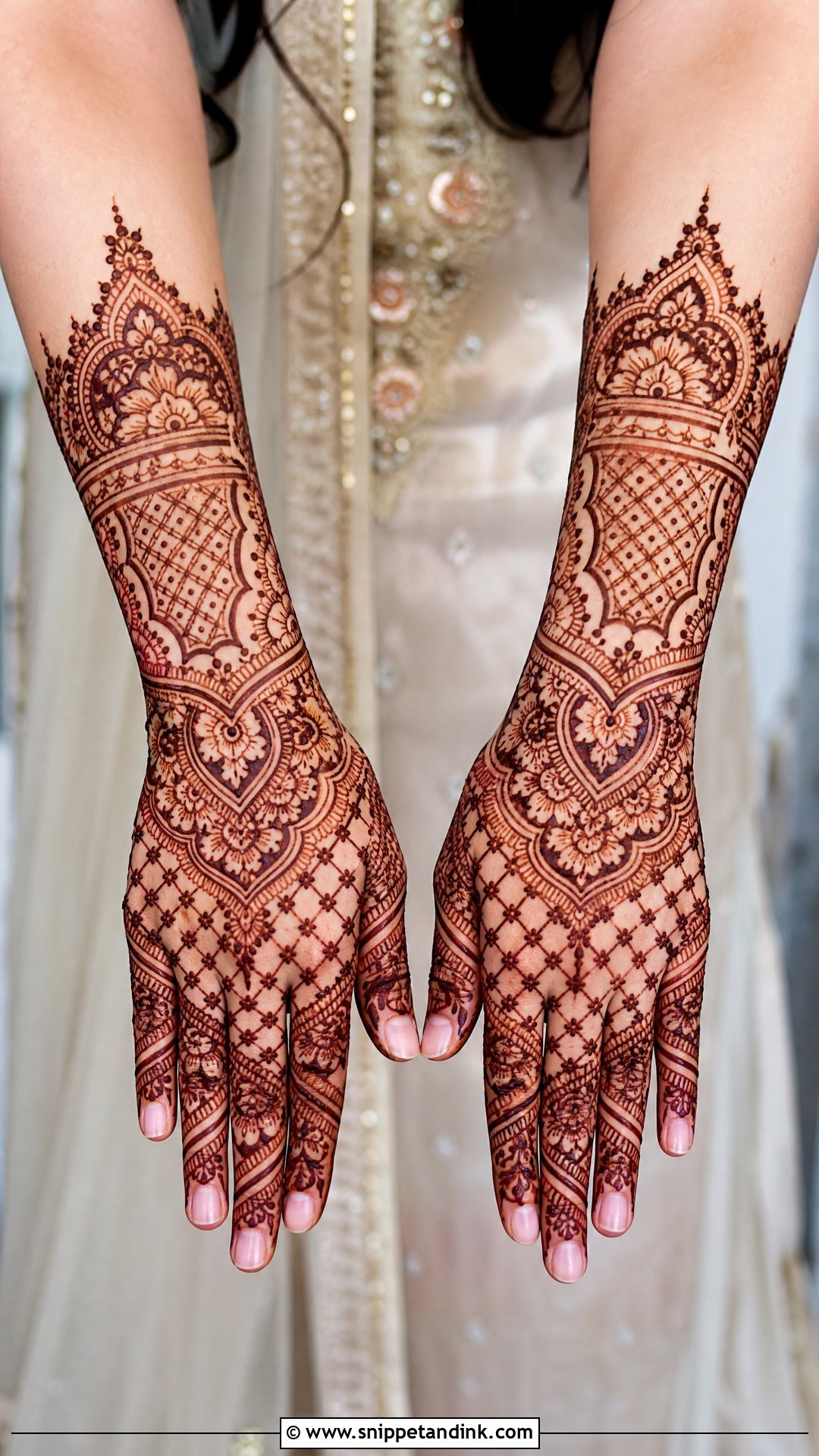
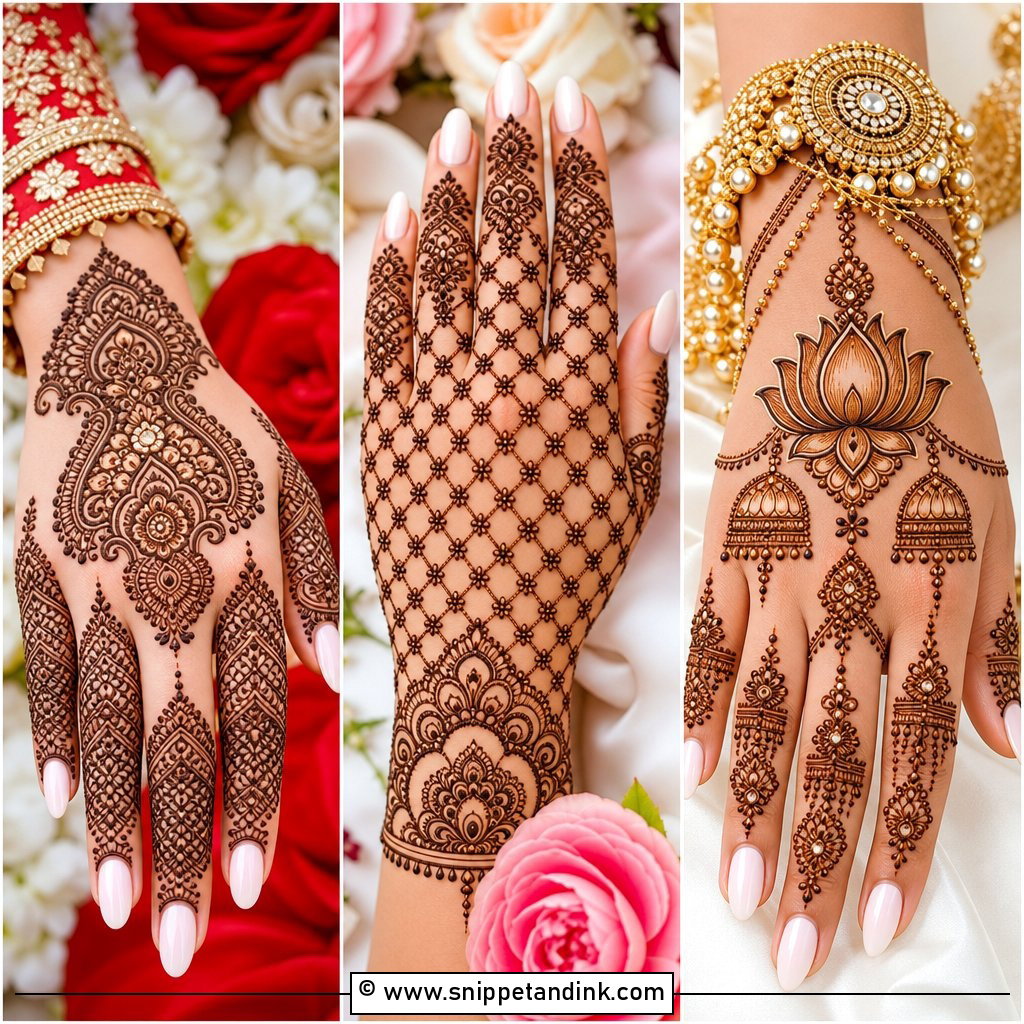
Jaali is net-like mesh that gives the hand a lace finish. It can cover part of the palm, back of the hand or forearm, framed by flowers, paisleys and borders. The grid has to be even; one uneven row draws the eye immediately, and that only gets worse after staining. I keep my cone tip fine and steady for jaali and rest my hand on the bride’s to stop drift. It matches embroidered sleeves and net dupattas nicely.
12. Floral Bridal Mehndi Design
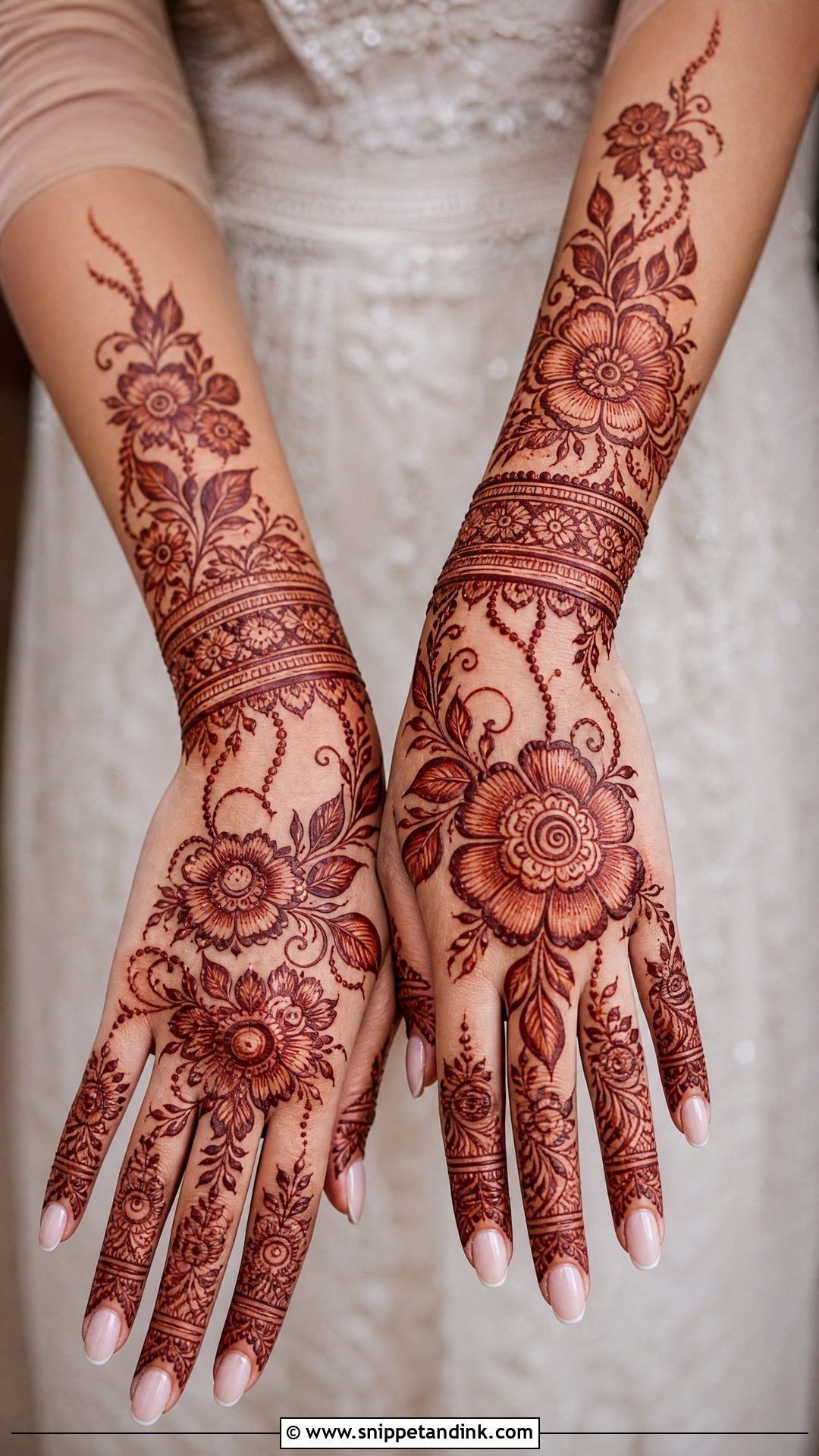
Floral mehndi is the gentlest of the bridal styles, and it suits day weddings, garden ceremonies and pastel lehengas. Large flowers, small blossoms and shaded petals curve from the fingertips toward the wrist. Without storytelling motifs to anchor it, florals can look casual, so I give the main blooms strong outlines, fill the fingertips and finish with an ornate wrist band. Those three things are what make it read as bridal.
13. Lotus Bridal Mehndi Design
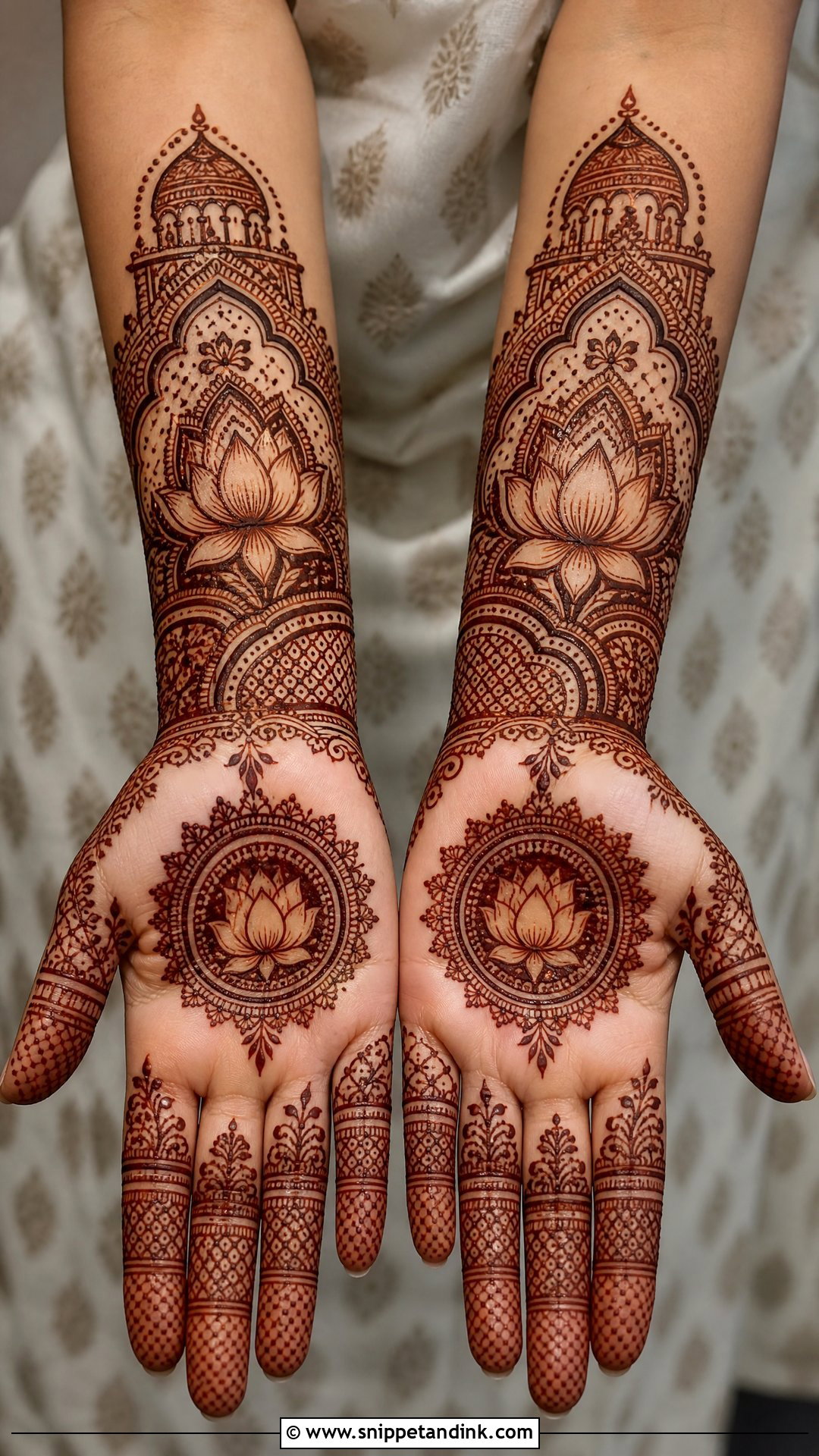
Lotus motifs bring calm to a busy hand. I use the lotus as a central palm motif, a wrist cuff detail or a repeating pattern along the forearm, often next to mandalas or temple arches. Petal outlines need to be bold enough to stay visible once the stain settles. It sits well with silk sarees and Banarasi lehengas. Fine dots and curved lines around the flower fill out the bridal look.
14. Elephant Bridal Mehndi Design
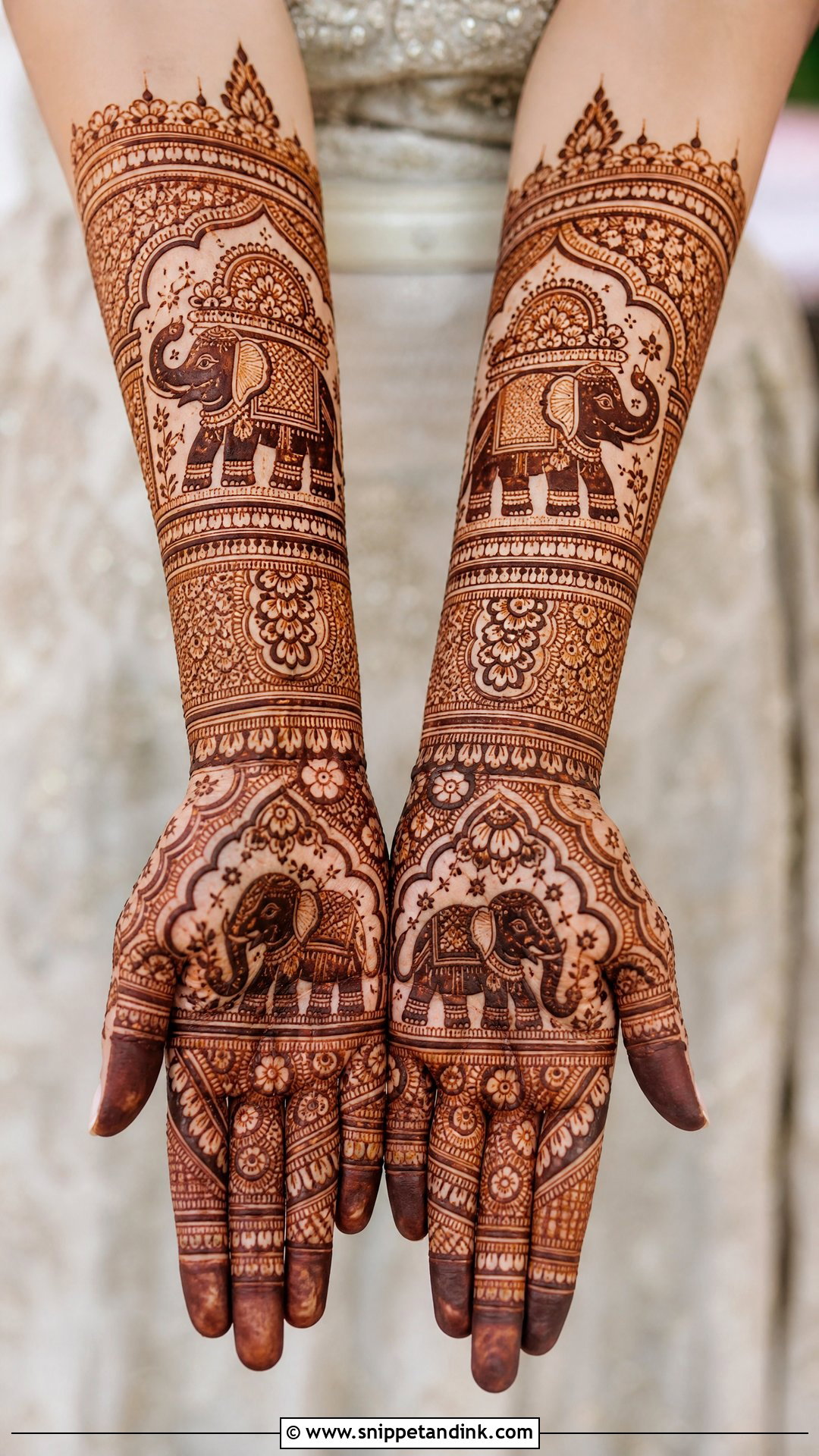
Elephants carry a sense of ceremony, with decorated blankets, bells and arches. They need space, so I place them on the palm or forearm rather than squeezing them onto fingers. Paisleys, florals and jaali fill around them. It’s a good option if you want something meaningful and festive without portraits, and it suits heritage jewellery and palace-inspired themes.
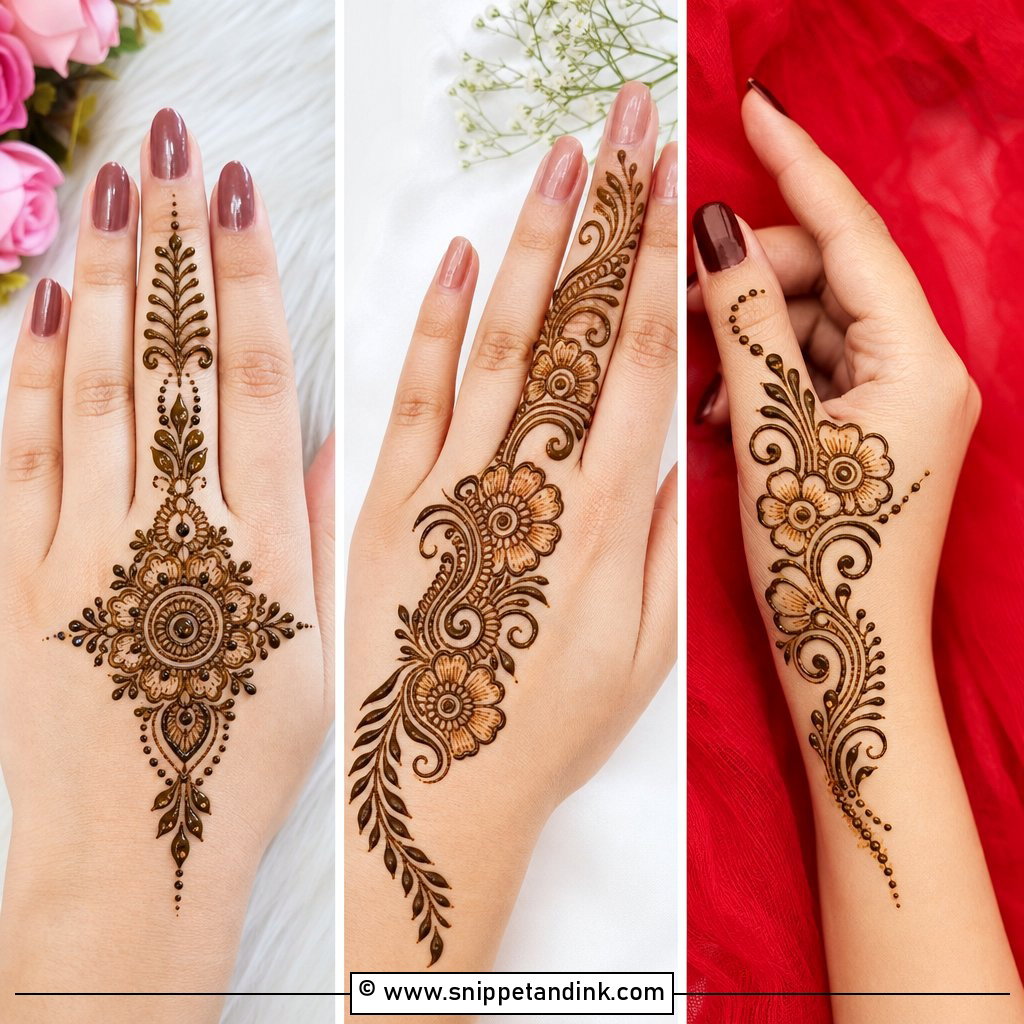
15. Minimal Bridal Mehndi Design
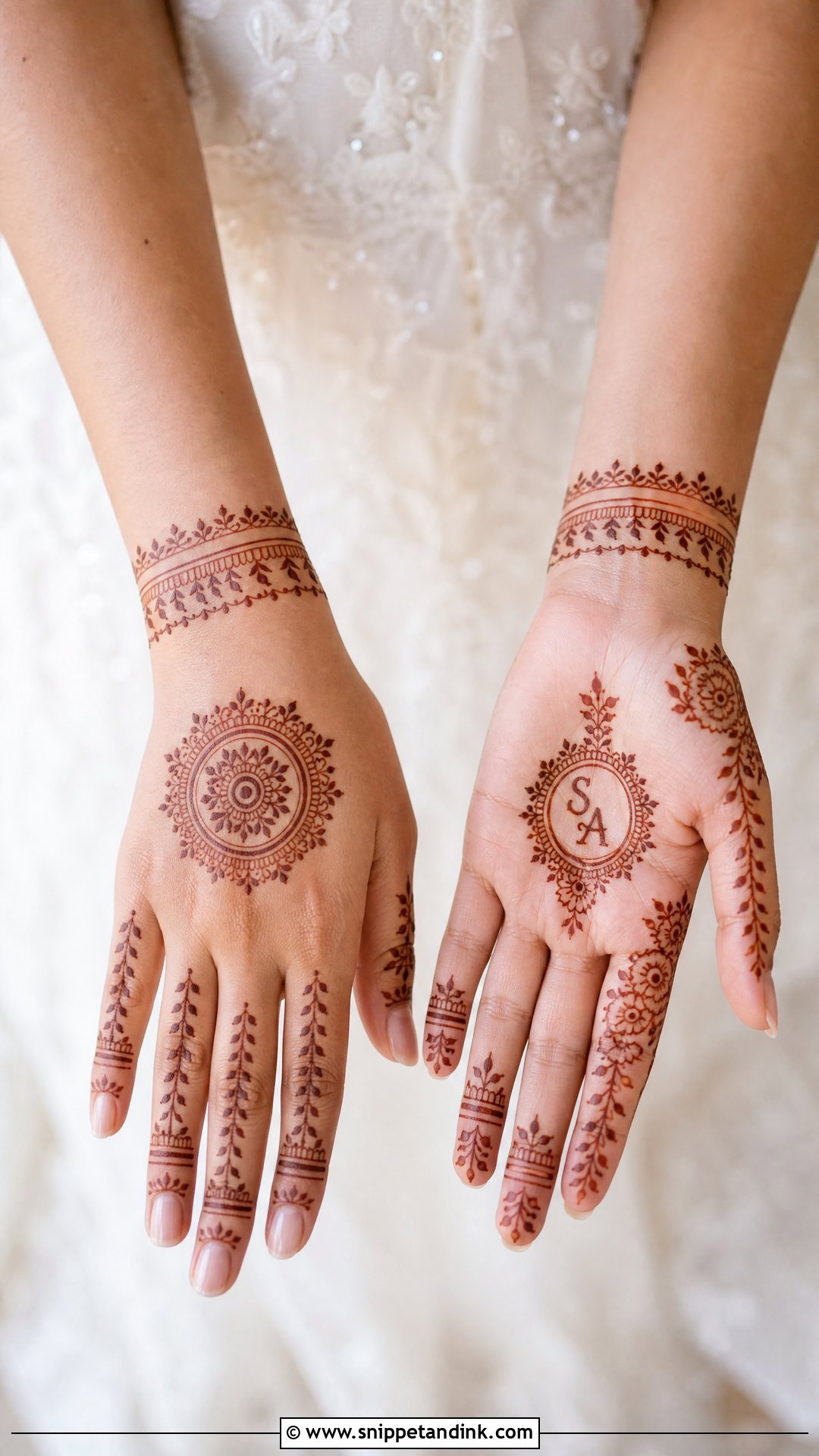
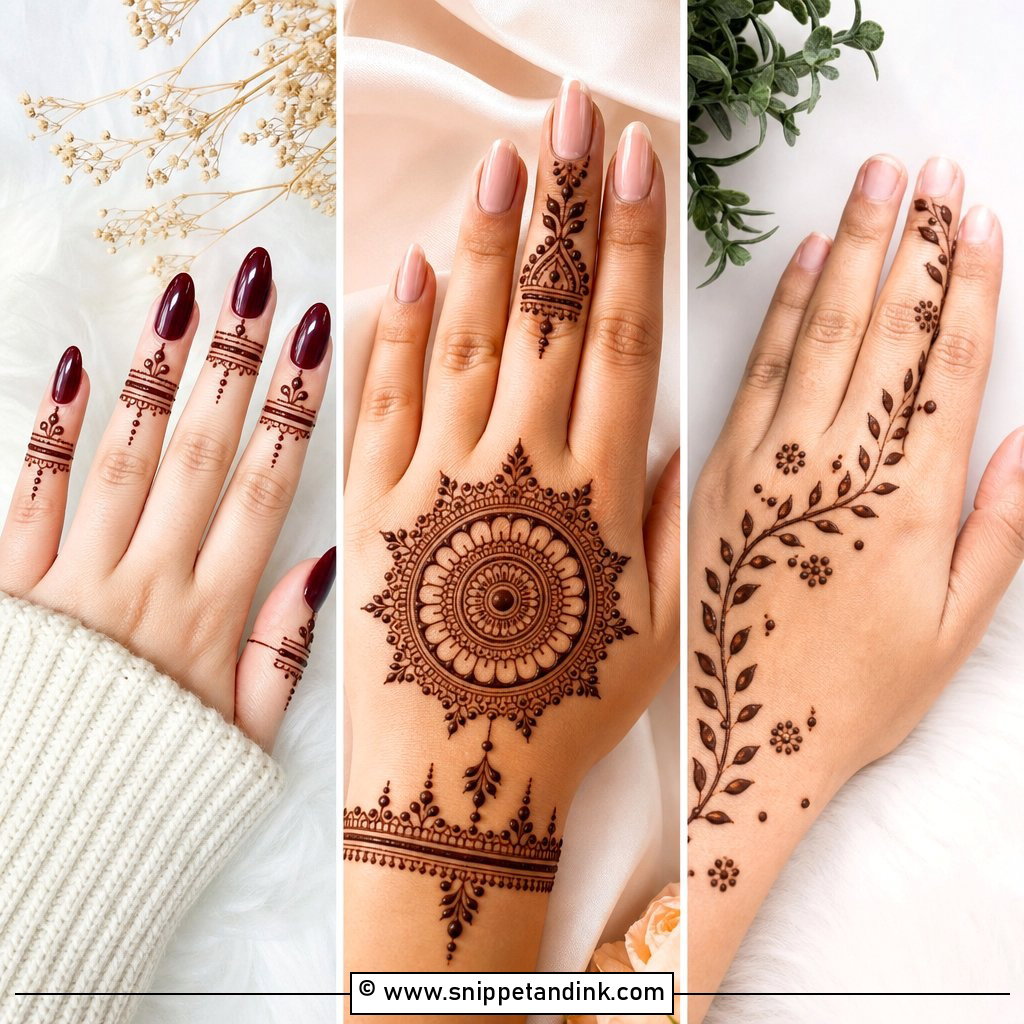
Minimal bridal mehndi leaves plenty of skin showing: a fine mandala, finger details, a leafy trail and a bracelet cuff. The difficulty is making it look intentional. Placement has to be precise and both hands must match, because there’s no filler to hide a mistake. It suits intimate and destination weddings and civil ceremonies. A hidden initial still fits, and it looks particularly clean with simple bangles.
16. Simple Dulhan Mehndi Design
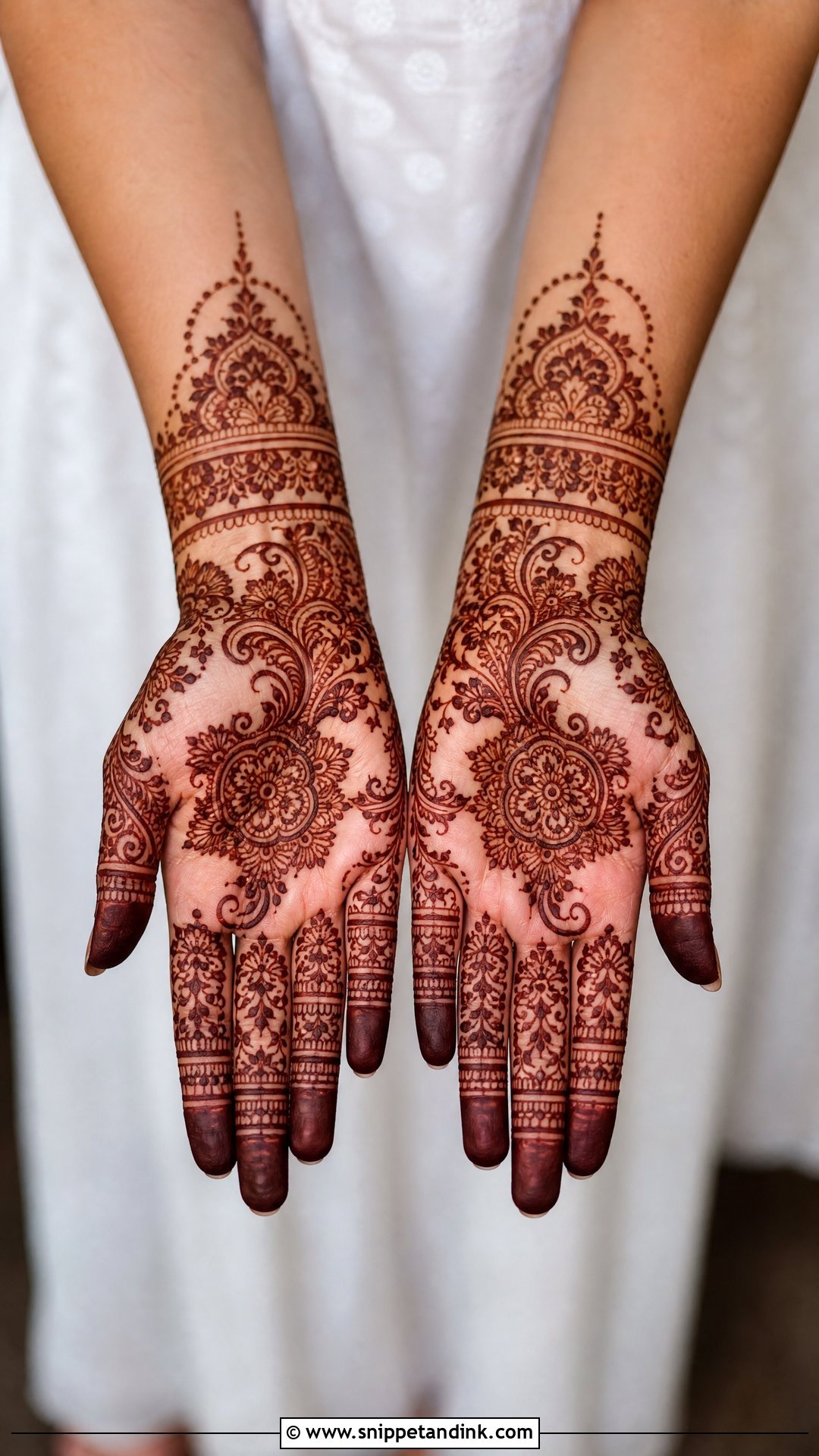
A simpler dulhan design uses a central palm motif, decorated fingers, a wrist band and a short extension toward the forearm. It’s quicker to apply and more comfortable over several days of events. Neat finger work and symmetry are what keep it bridal. I also suggest it to brides with busy schedules, since a shorter sitting leaves more time for the paste to rest undisturbed afterwards.
17. Heavy Bridal Mehndi Design
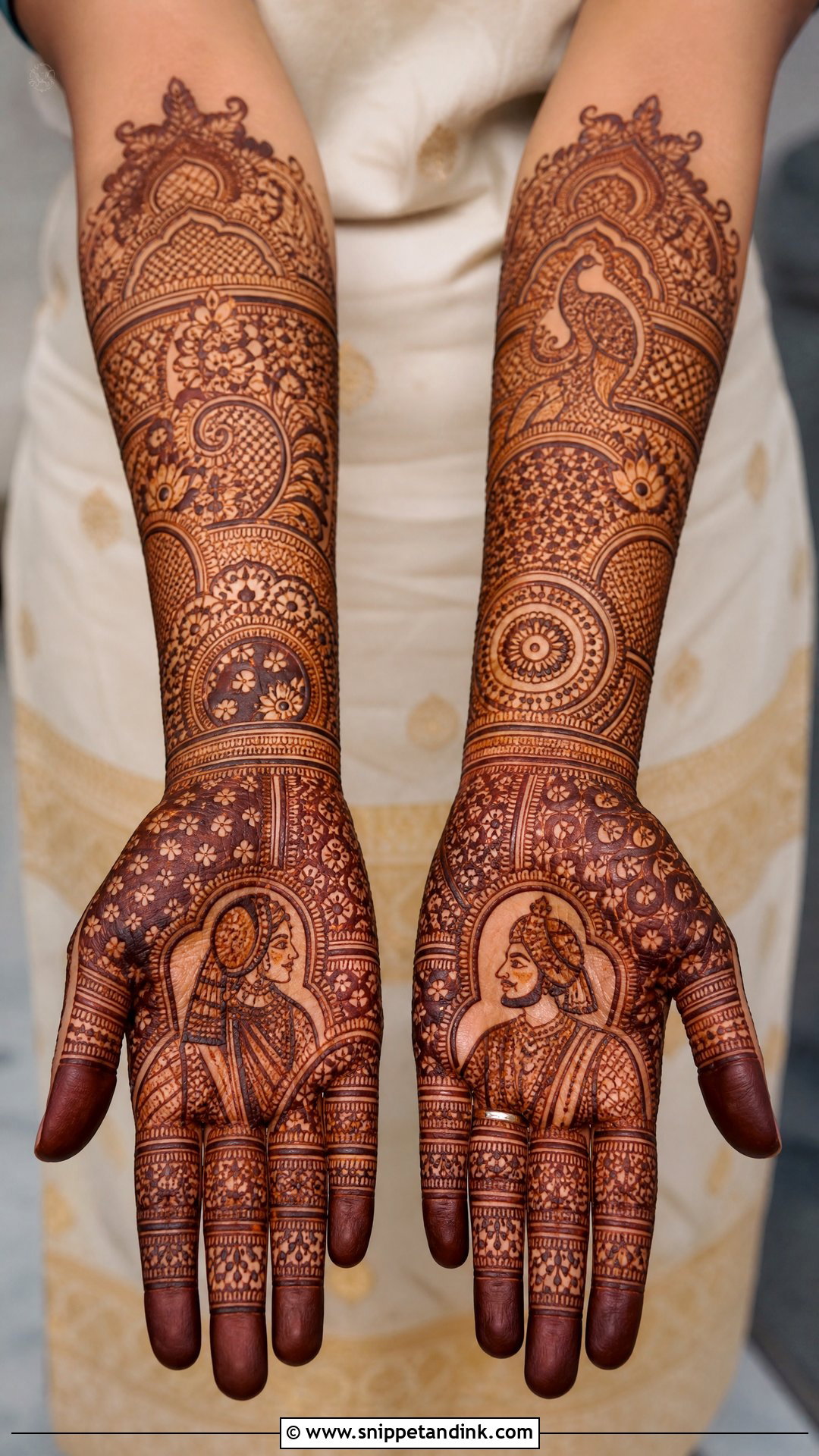
Heavy bridal mehndi is maximum coverage: hands, wrists and arms filled with paisleys, mandalas, portraits, jaali and peacocks. It takes hours, so plan the application early in the day and keep the evening clear. Without clear focal points, dense work turns visually confusing, so I build the design around two or three main motifs and keep the filler finer around them. Fine lines, a deep stain and balanced hands are what make it work.
18. Modern Bridal Mehndi Design
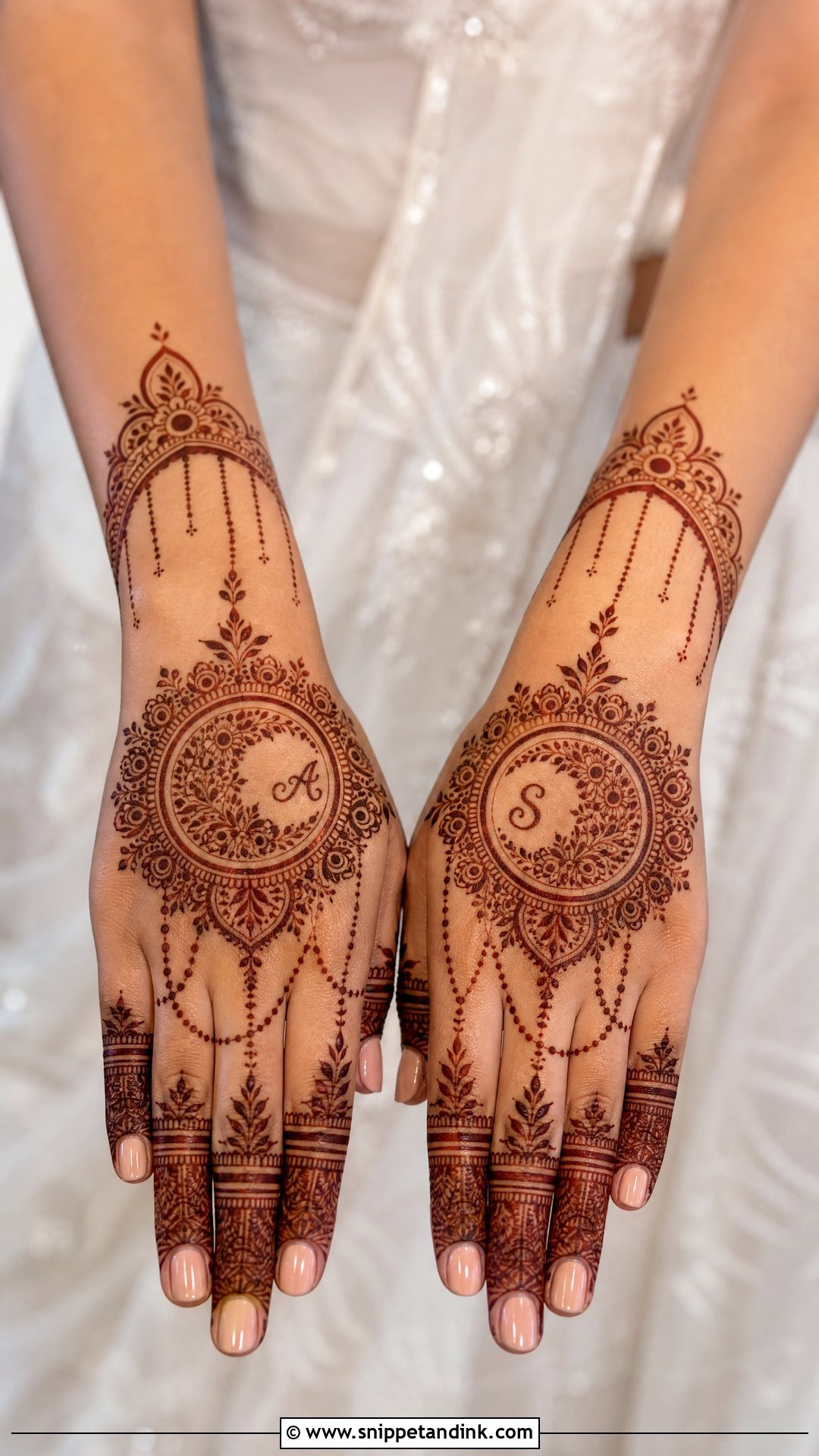
Modern bridal mehndi plays with layout: split mandalas, jewellery-style chains, fine florals, initials, even a wedding hashtag. Coverage can be full or medium. I keep the main motifs bold and the areas between them quieter, which is what keeps a modern design from looking busy. It pairs with contemporary lehengas, fusion outfits and minimal jewellery.
19. Pakistani Bridal Mehndi Design
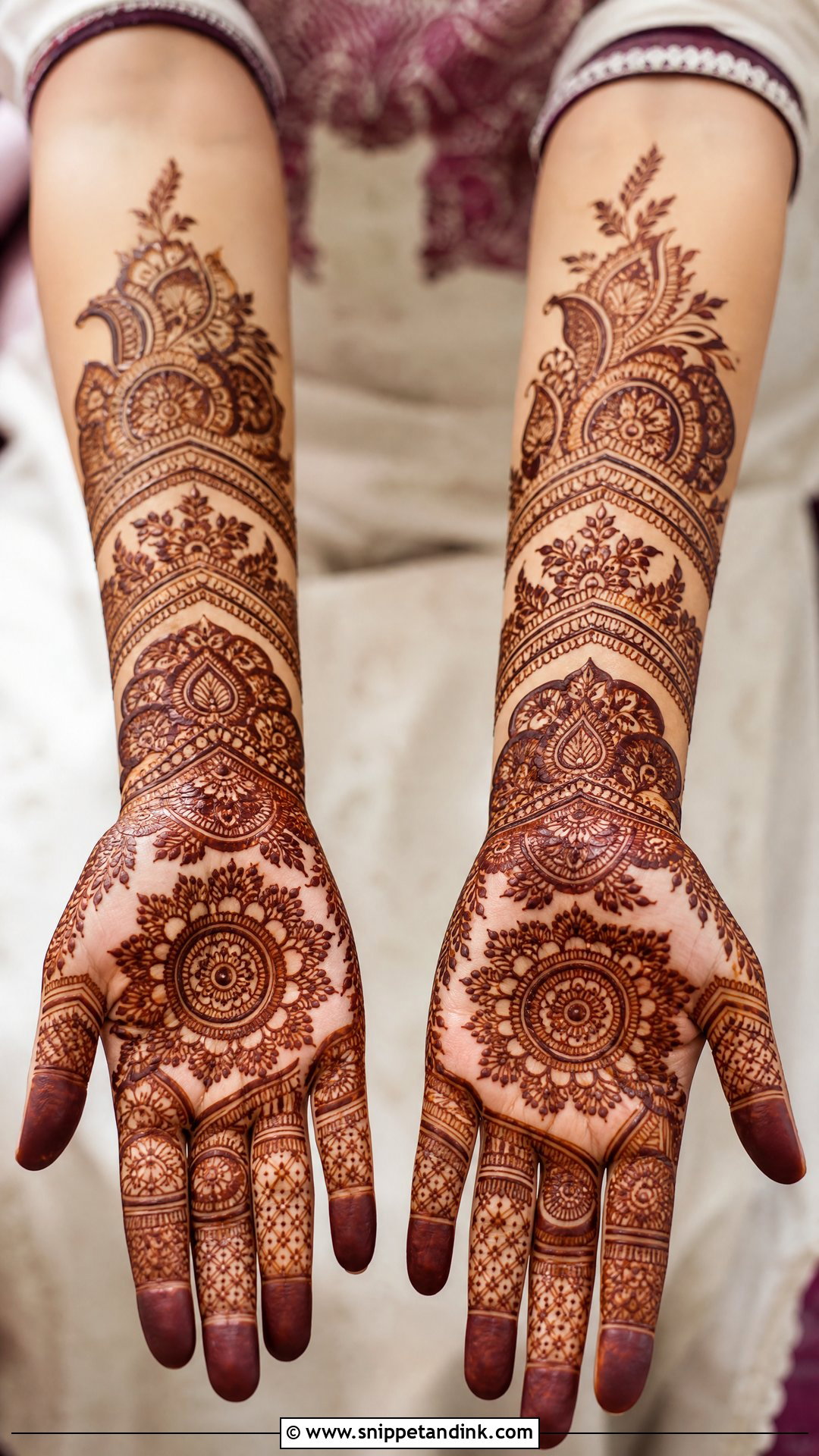
Pakistani bridal mehndi tends to mix Indian density with Arabic flow, so it looks full without losing its spacing. Domes, florals, paisleys and bracelet bands are typical, with detailed fingers. It’s made for nikah, rukhsati and walima functions. A small couple motif or hidden initials add a custom touch, and I place them inside existing shapes so the design doesn’t get crowded.
20. Moroccan Bridal Mehndi Design
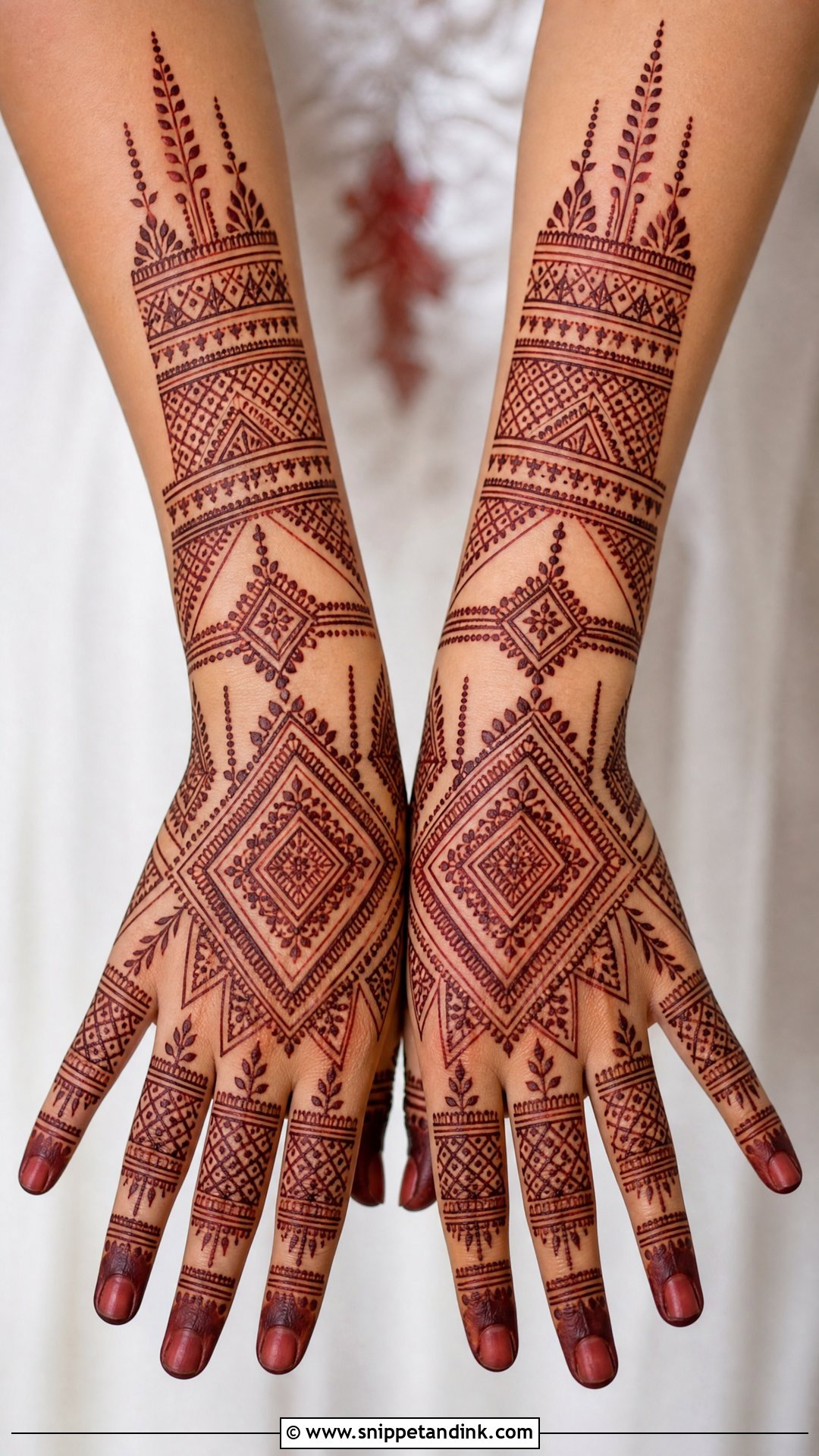
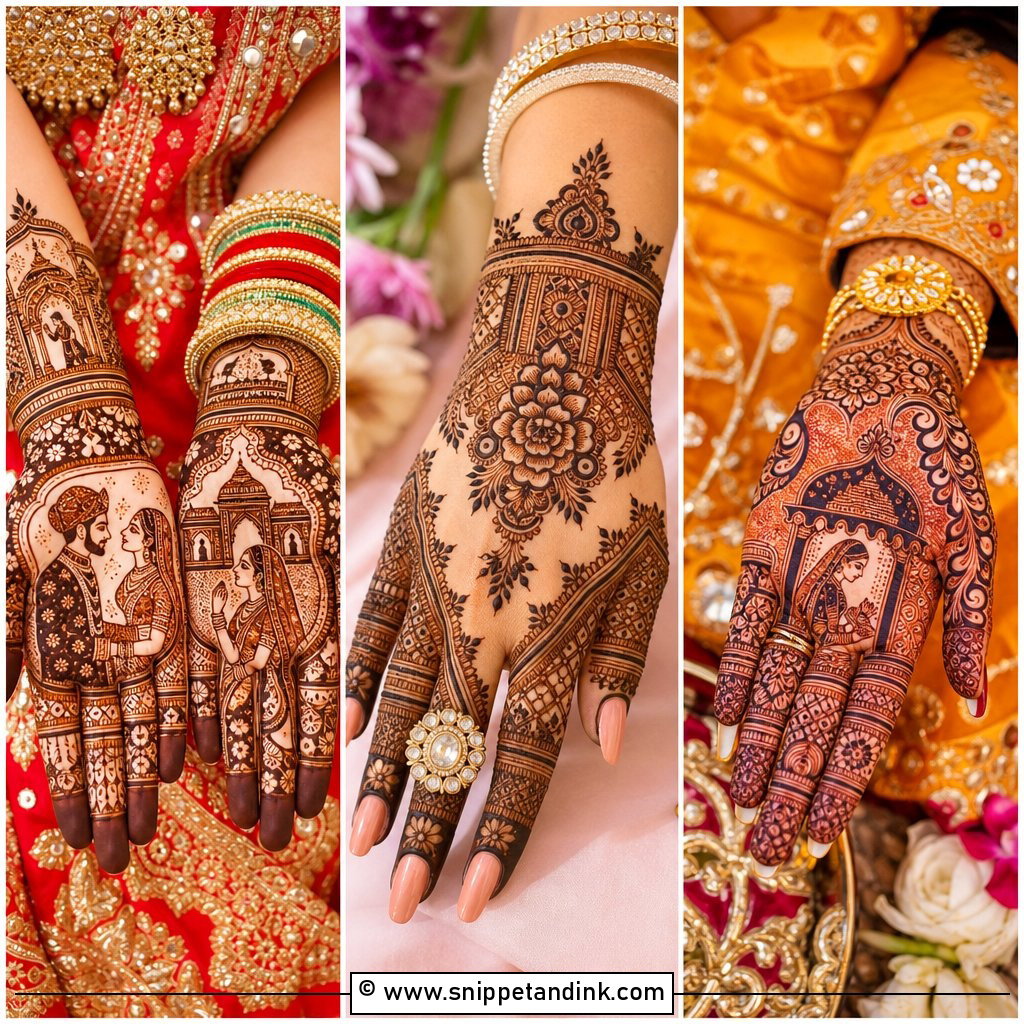
Moroccan mehndi swaps flowers for geometry: diamonds, grids, triangles and dots arranged in strict symmetry across the back of the hand, fingers and forearm. It suits brides who like a modern, graphic look. Straight lines are the hardest thing to draw with a cone, so this style shows an artist’s control more than any other. A few small florals or fine borders soften it if it feels too sharp.
21. Gulf Bridal Mehndi Design
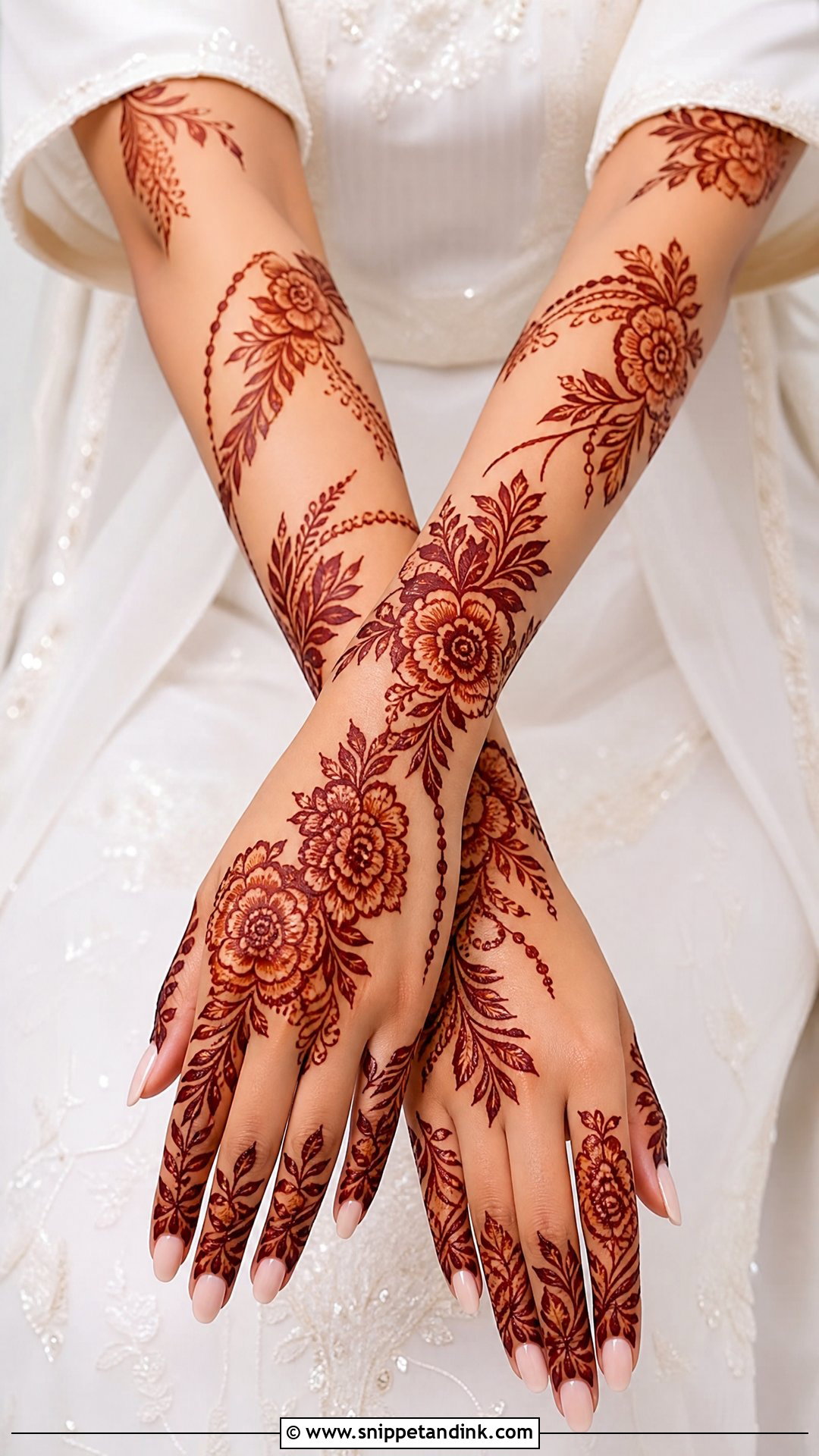
Gulf bridal mehndi, also called Khaleeji henna, uses big flowers, flowing leaves and dramatic open space, usually running diagonally across hand and arm. Thick outlines hold more paste, so these designs often stain darker than fine work. For a bride, I extend the trail up toward the forearm while keeping the airy feel. Strong flower shapes, shaded leaves and detailed fingers complete it.
22. Back Hand Bridal Mehndi Design
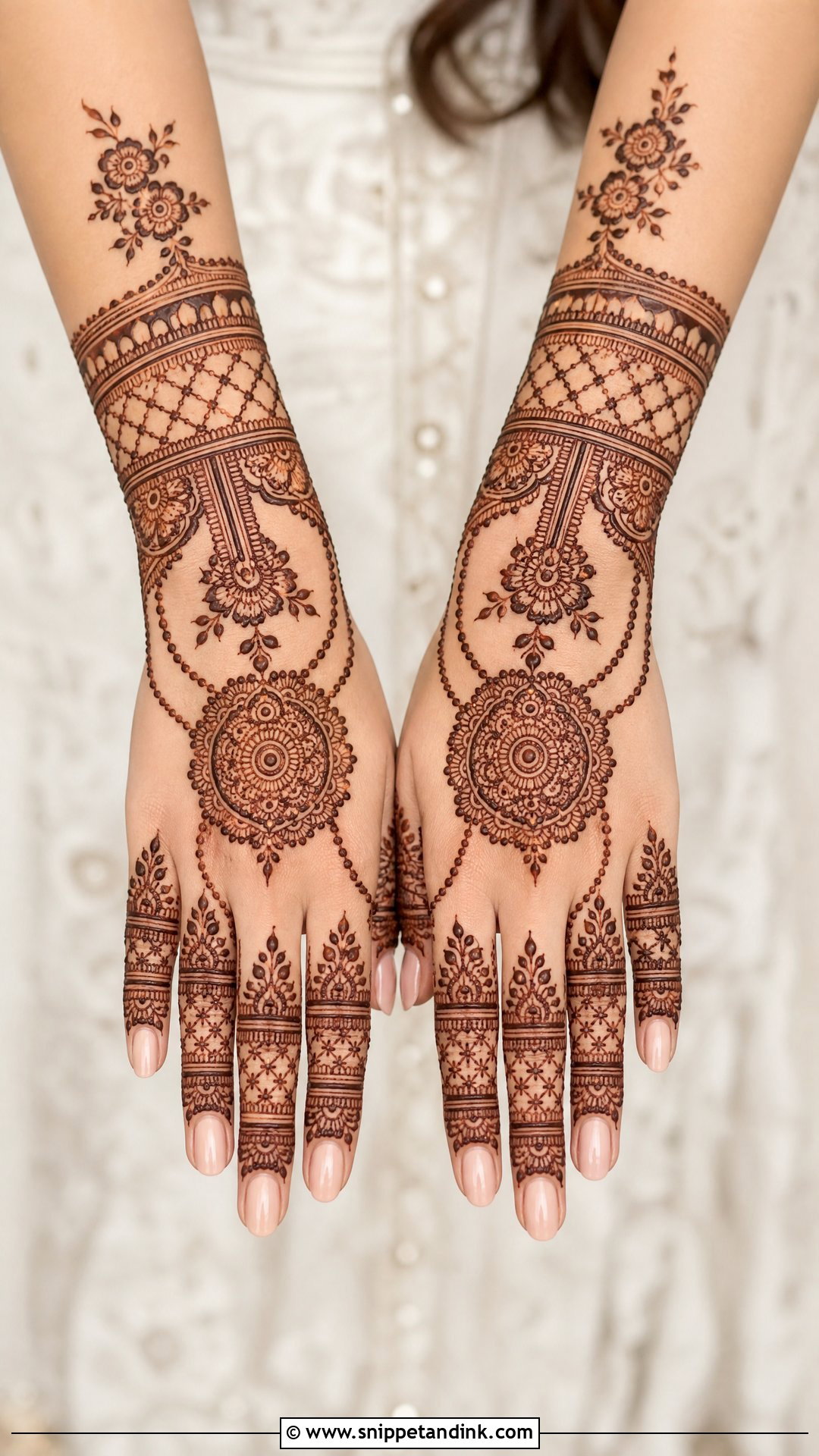
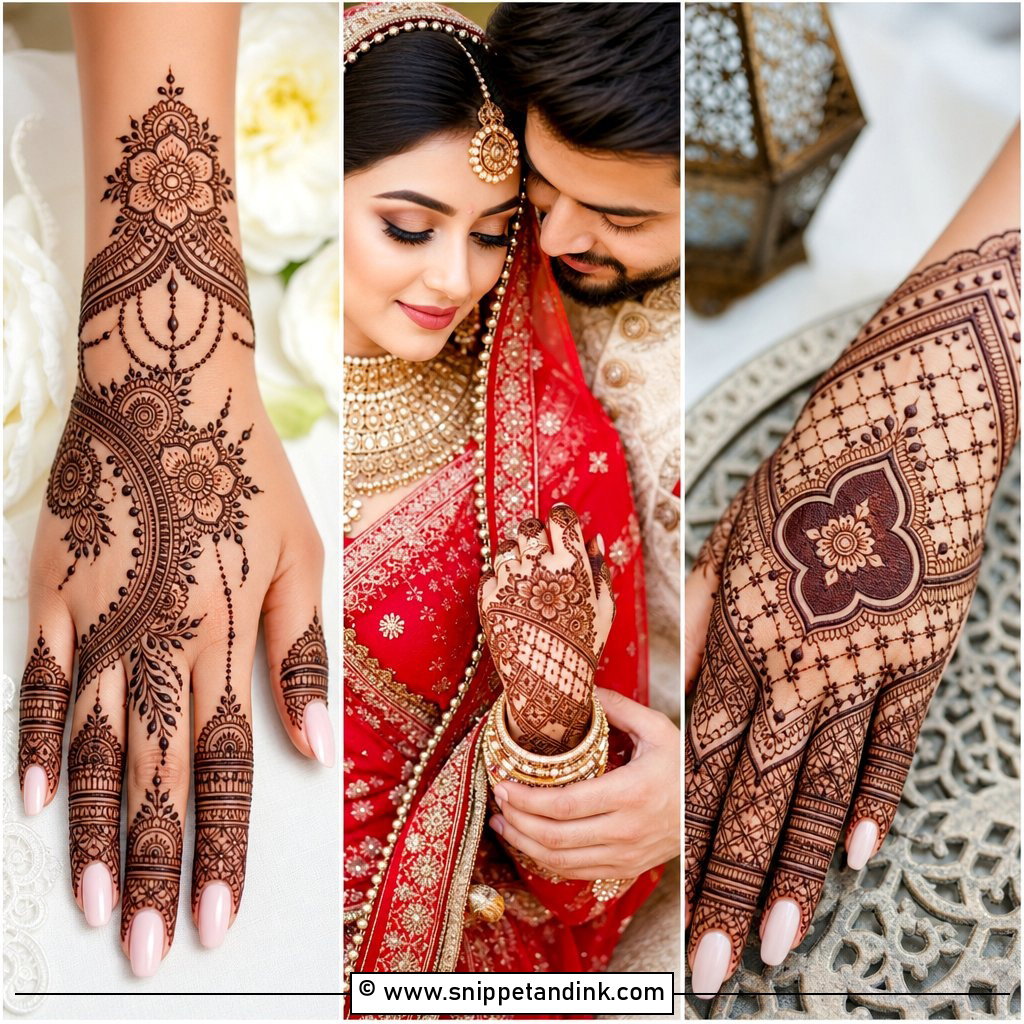
The back of the hand shows up in ring, bangle, kalire and bouquet photos, so it deserves as much planning as the palm. Mandalas, jaali panels, floral trails, finger bands and chain-style details all work here. I usually make it slightly lighter than the palm, which keeps the sitting shorter. If you’re wearing statement rings or haath phool, tell me first, so I can leave space where the jewellery sits.
23. Front Hand Bridal Mehndi Design
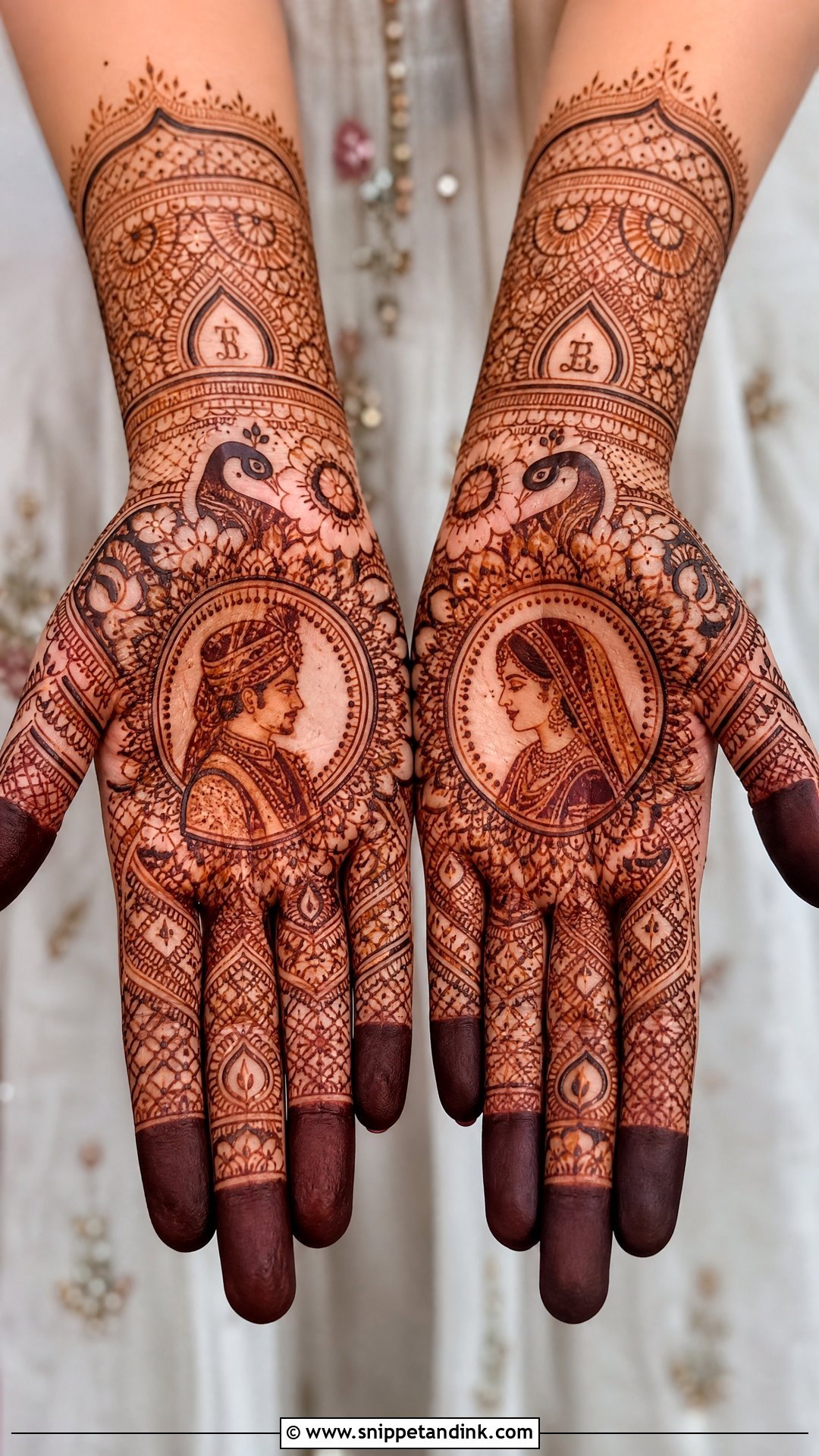
The palm carries the most meaningful work: mandalas, dulha-dulhan figures, peacocks, wedding symbols and hidden initials. It also stains the darkest, because palm skin holds henna better than anywhere else on the hand. I keep the main palm motif clear and surround it with supporting detail so it reads at a glance. If you want traditional photos of your mehndi held up to camera, this is where to spend your time.
24. Wrist To Forearm Bridal Mehndi Design
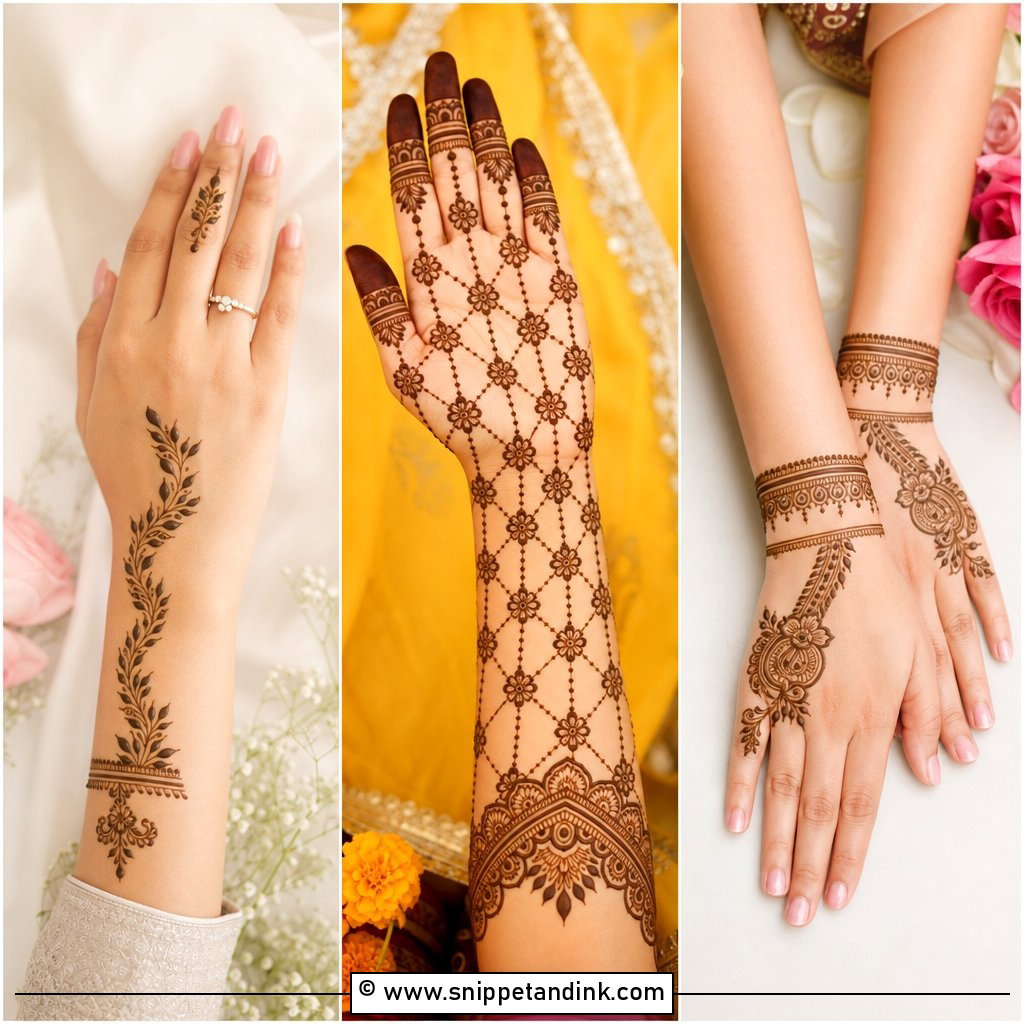
Wrist to forearm bridal mehndi design extends the hand design partway up the arm with cuff bands, paisley trails, vines, jaali or lotus motifs. It suits brides who want richness without going to the elbow. The wrist has to flow on from the palm so the design looks continuous rather than two separate pieces. It looks good with short or sheer sleeves and leaves room for names and dates.
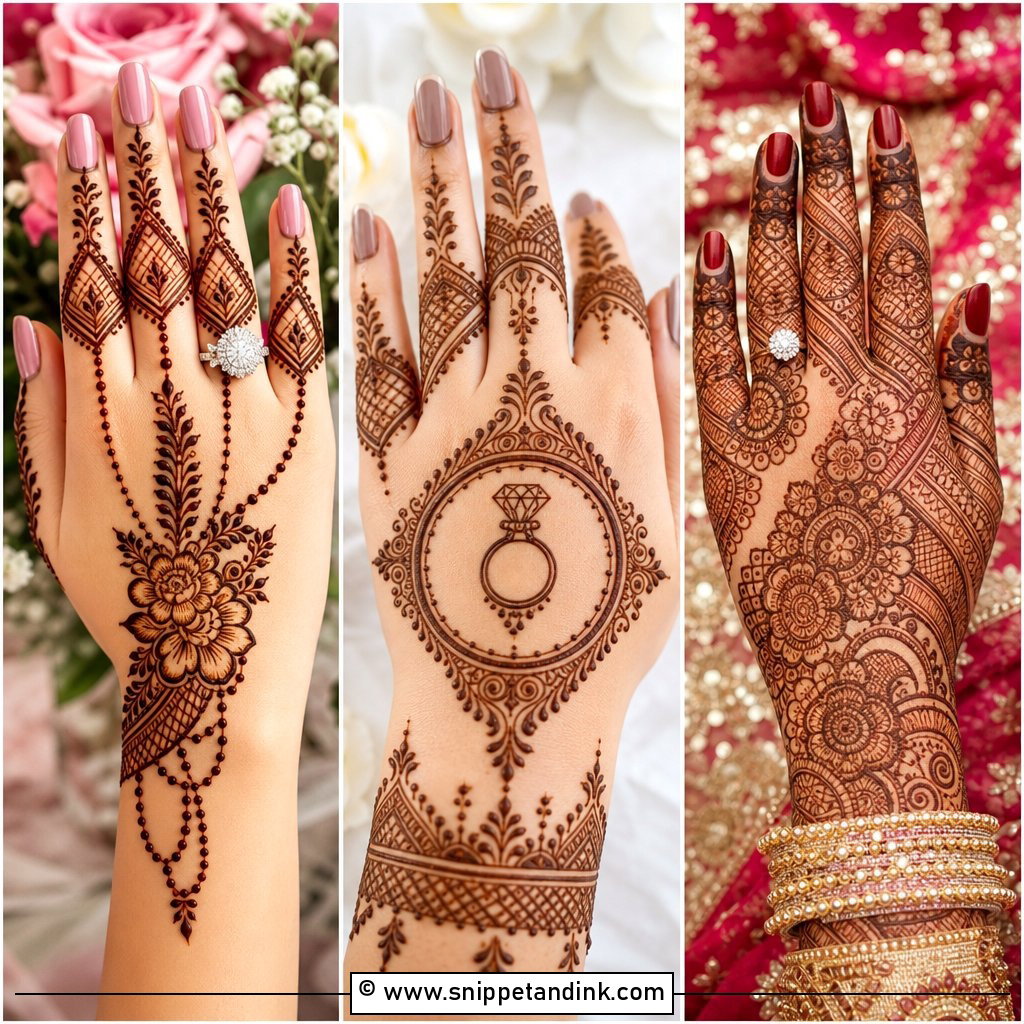
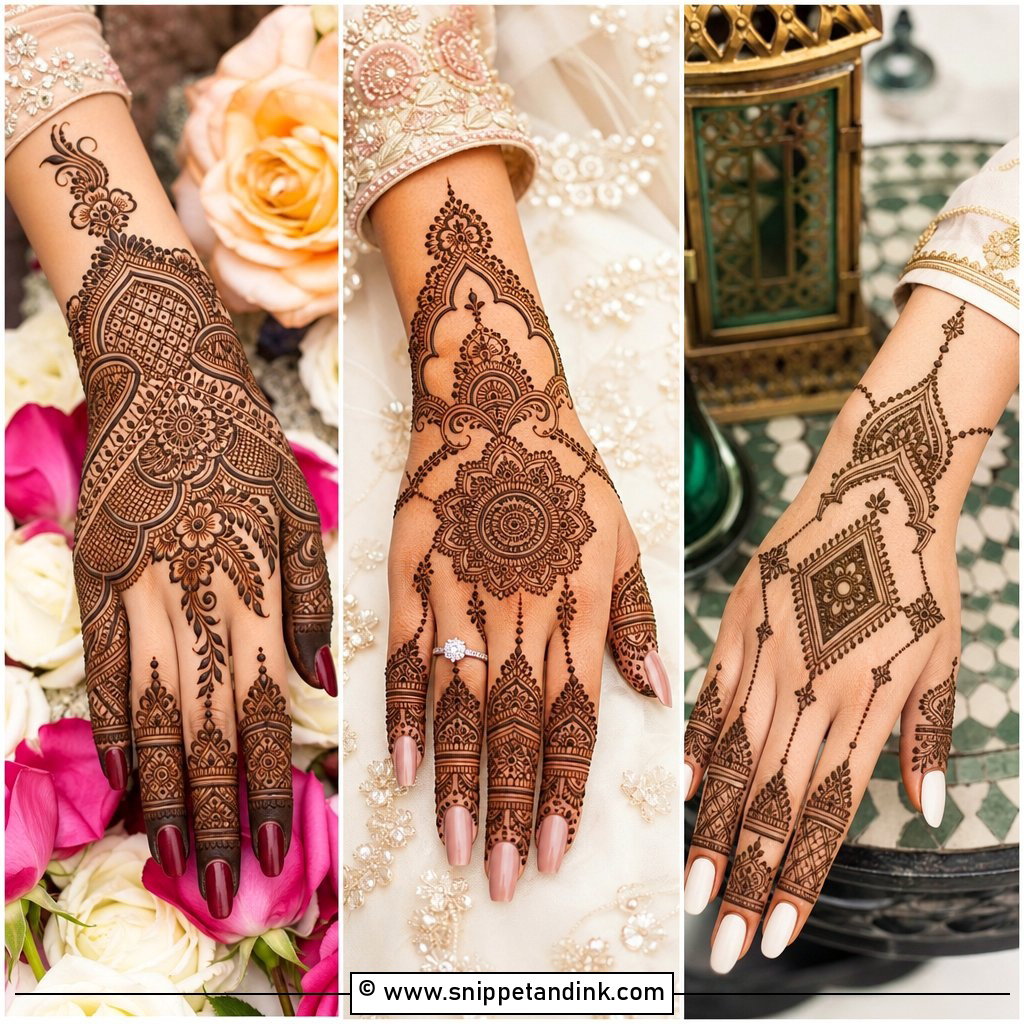
25. Personalized Bridal Mehndi Design
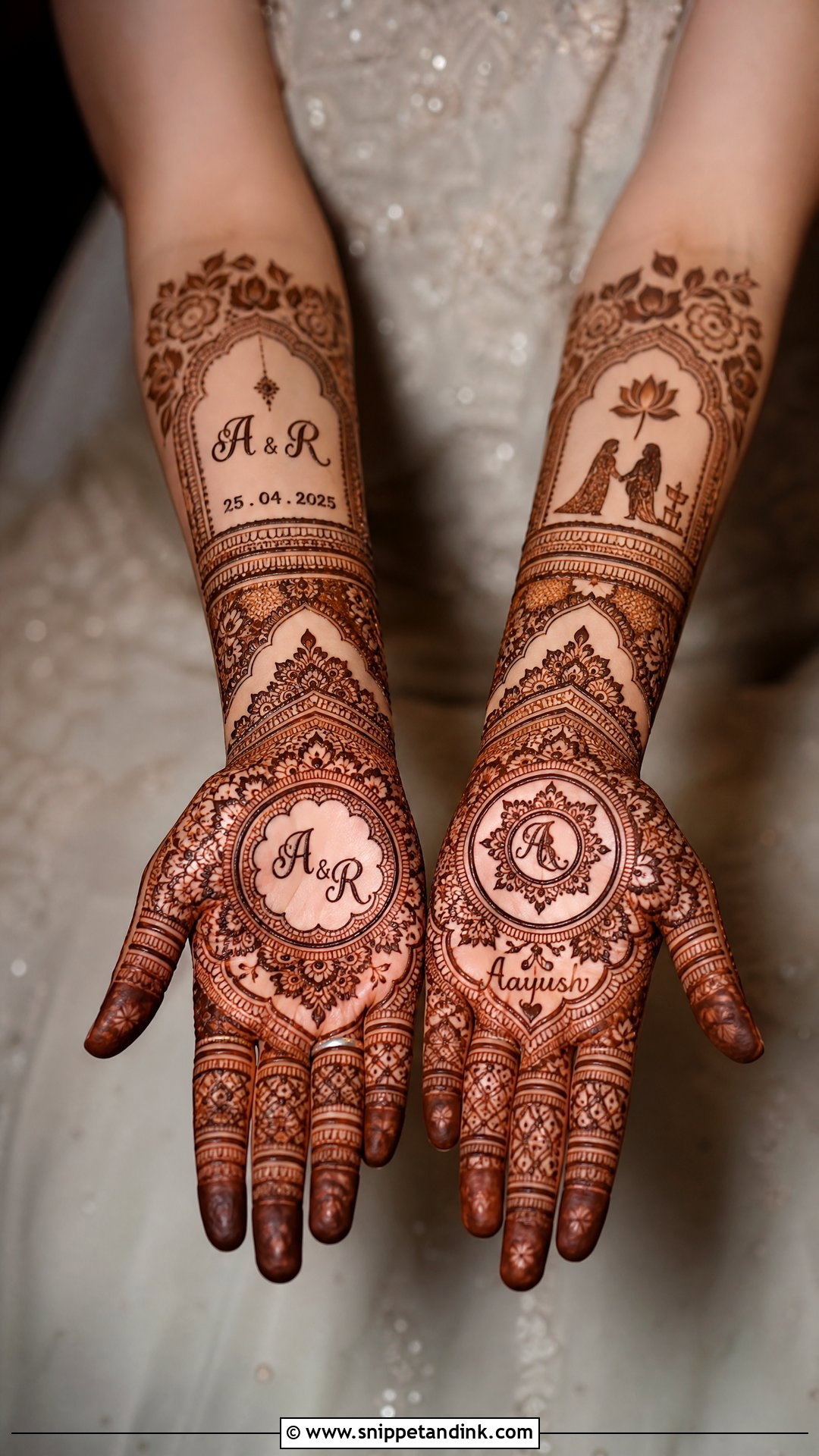
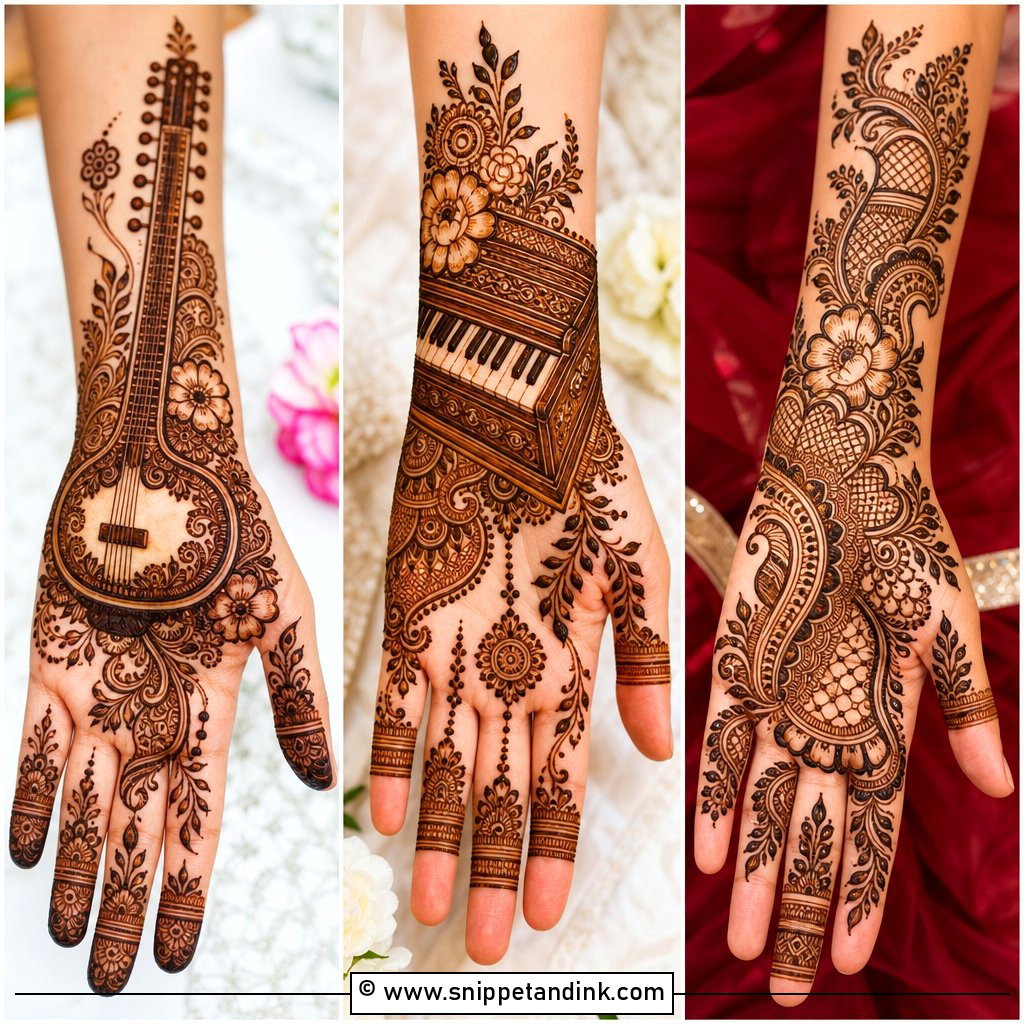
Personal details turn mehndi into a keepsake: the groom’s name, a date, initials, a pet name, a travel symbol or a favourite flower. They should be woven into the design, not dropped in randomly. Send me your list before the appointment so I can plan where each detail sits. Personal touches can be combined with any style, from Indian to Arabic to portrait work.
One Artist or Three? Planning the Mehndi Day
Most bridal mehndi is applied one to two days before the wedding, so the stain is at its darkest on the day itself. A full bridal design can easily take several hours for one artist. If family members also want mehndi at the same event, the bride’s artist shouldn’t be the one doing them; book extra artists for guests so your sitting isn’t squeezed.
Good artists fill their peak-season dates early. Booking a few months ahead is sensible, and if you want a trial, ask for a small sample on one hand so you can see how their paste stains on your skin.
Send your artist this before the booking
- Photos of your outfit, especially the sleeves and any embroidery you’d like echoed.
- Your jewellery: chooda, kalire, rings and any haath phool.
- Names, initials or dates you want hidden, spelled exactly.
- Any skin sensitivities, so the artist can tell you what’s in their paste.
- The date of your first function, so the stain can be timed to it.
On the day, set up a comfortable chair with cushions under your arms, eat beforehand, and ask someone to handle your phone. Then leave the paste on as long as you can.
Which Coverage Fits Your Wedding Week?
Start with the feeling you want, then work outward to coverage. Brides drawn to tradition usually land on full Indian, Rajasthani, peacock, paisley or dulha-dulhan work. Those who want space tend to go Arabic, Indo-Arabic, Moroccan, minimal or personalised. Think about your outfit’s sleeves, your jewellery, the camera angles and honestly how long you can sit. A good bridal design should feel comfortable for the whole week of functions and still look meaningful when you open the album years from now.
You'll Like These Ideas:


Leave a Reply