
Engagement mehndi sits in an odd spot. It has to look bridal in the ring photos, yet it shouldn’t be as dense as the wedding henna, and it often has to fade in time for that second application. When a bride books me for her engagement, the first things I ask are where the ring will be photographed, what she’s wearing on her wrists, and how many weeks until the wedding. Those answers decide whether she gets full-hand Indian work with paisleys and mandalas, an Arabic trail, a back-hand jaali or something minimal on the fingers. Back-hand and wrist designs are the most requested, simply because that’s the side of the hand the camera sees during the ring exchange. Here are the designs I’d put in front of an engagement bride, and how I’d adapt each.
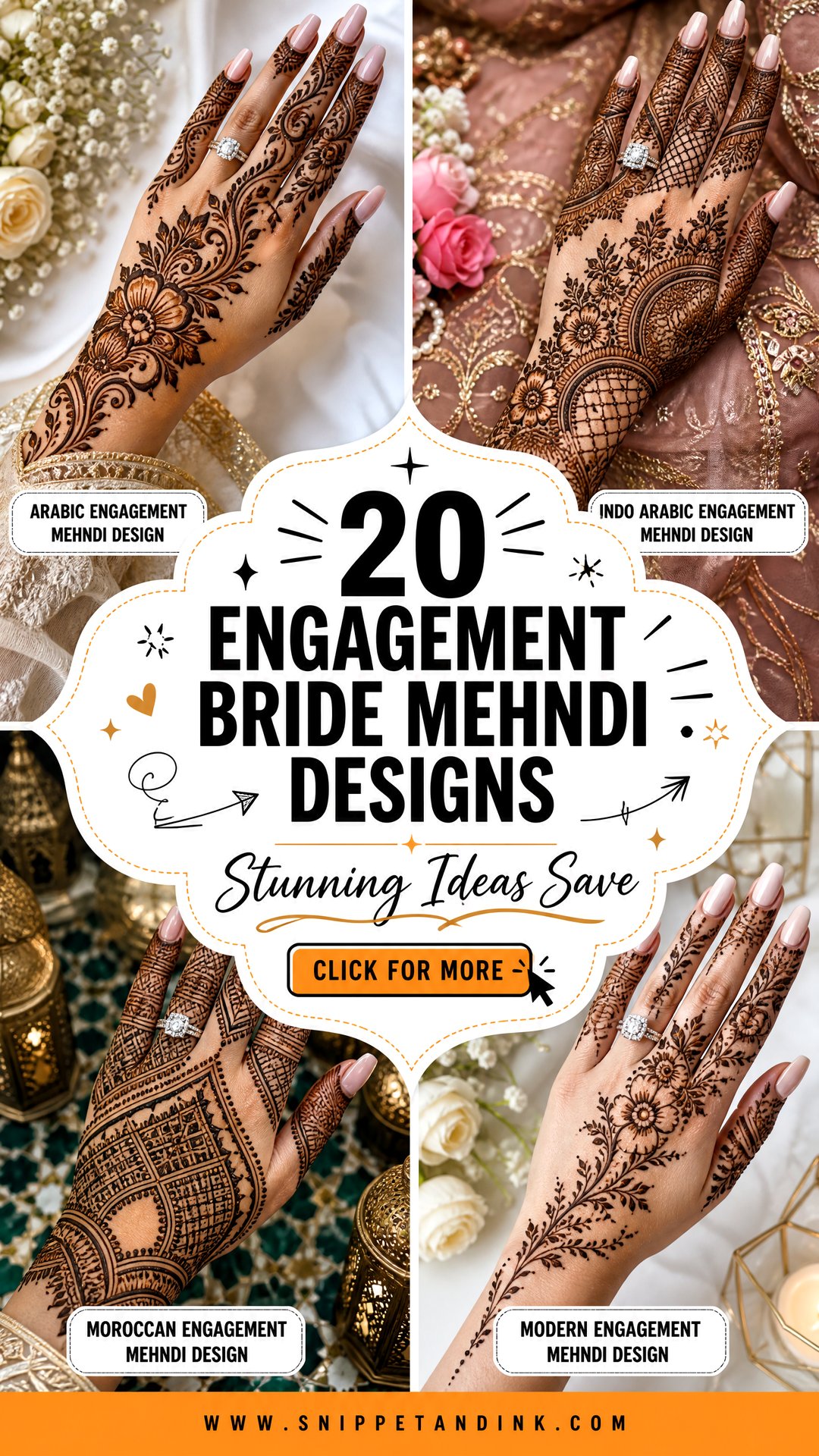
How Far Ahead Should Engagement Henna Go On?
Natural henna comes off the skin bright orange and darkens over the next day or two. The colour usually peaks around 48 hours after the paste is removed. So if your ring ceremony is on Saturday, I’d apply on Thursday, or Friday morning at the latest. Applying the same day gives you an orange stain in every photo.
The other date that matters is your wedding. A good stain fades over one to three weeks as the skin renews, faster on the back of the hand than the palm. If the wedding is only a few weeks after the engagement, I keep the engagement design lighter, mostly on the back hand, so faded lines don’t show under fresh bridal henna.
Questions I ask at booking
- Which hand will wear the ring, and which side will face the camera?
- Are you wearing bangles, a hathphool or long sleeves that cover the wrist?
- How long can you sit still with paste on? Full coverage needs a few hours plus drying.
- Any skin sensitivity or allergies? I patch-test anyone who hasn’t worn henna before.
1. Full Hand Engagement Mehndi Design
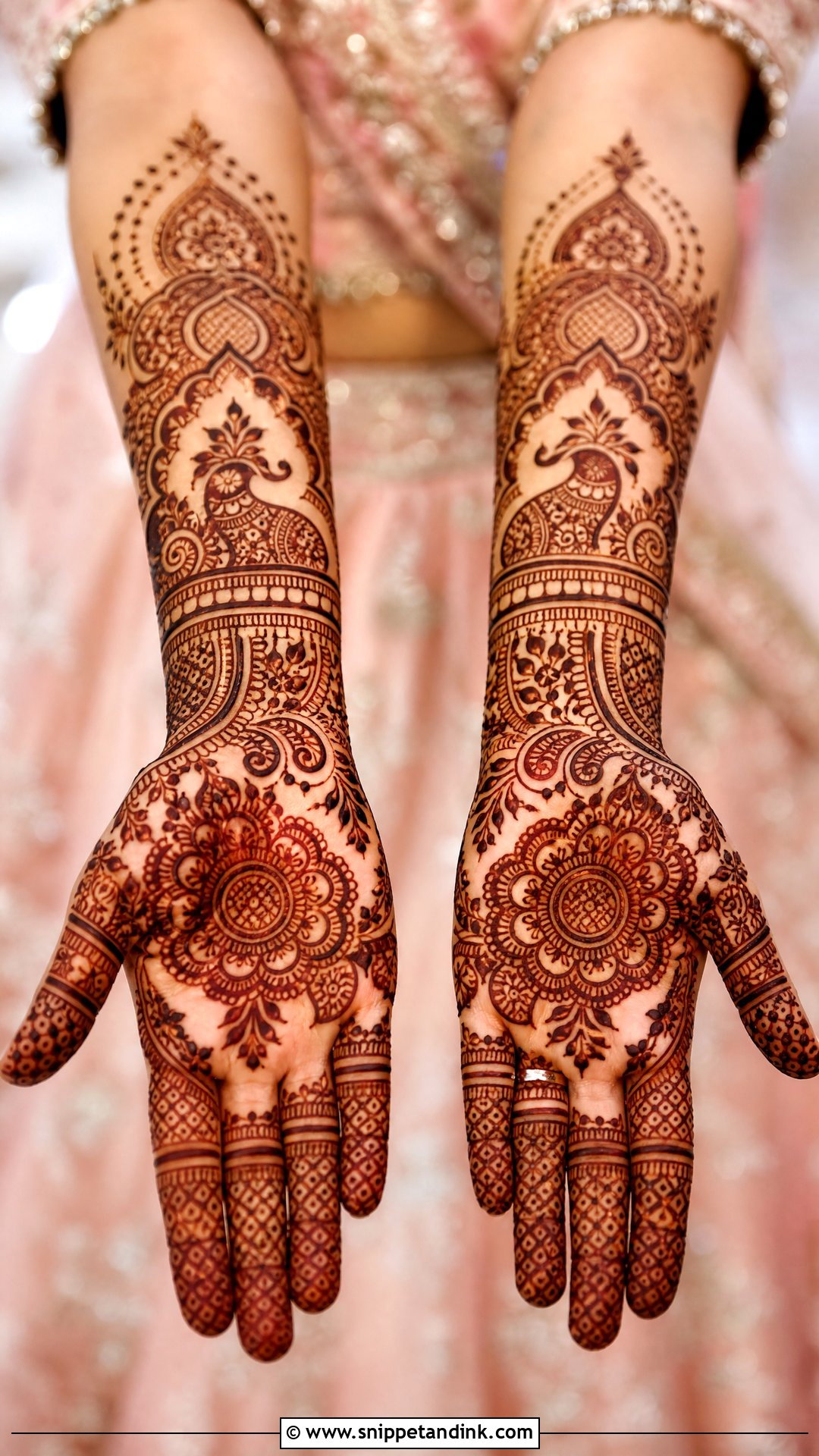
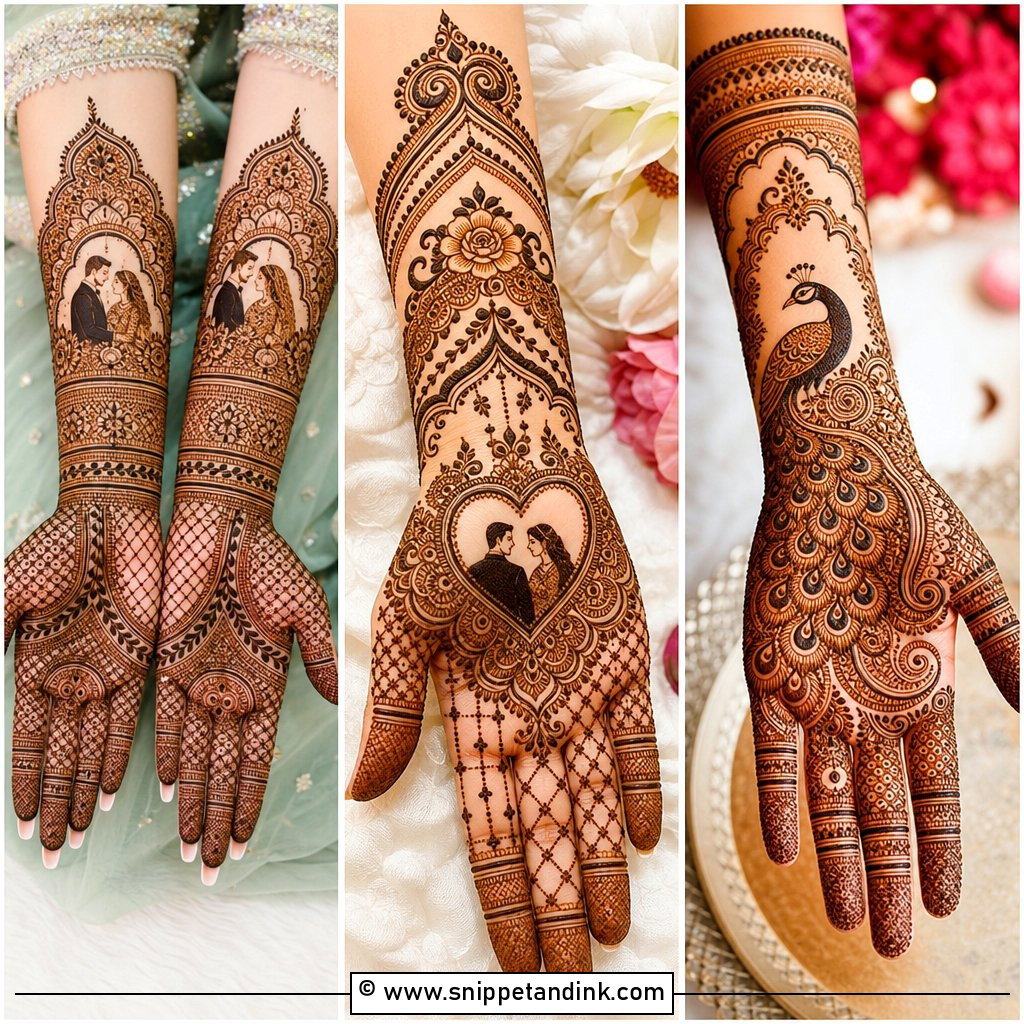
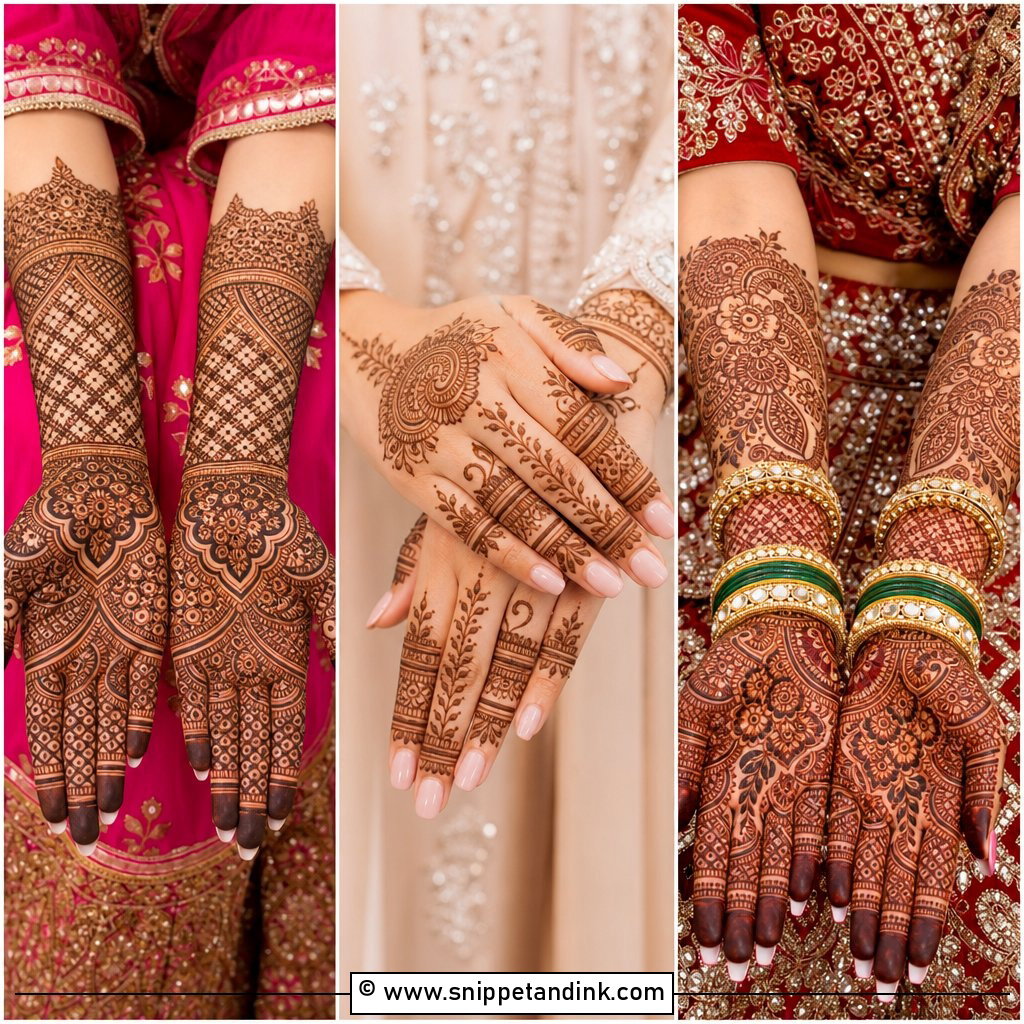
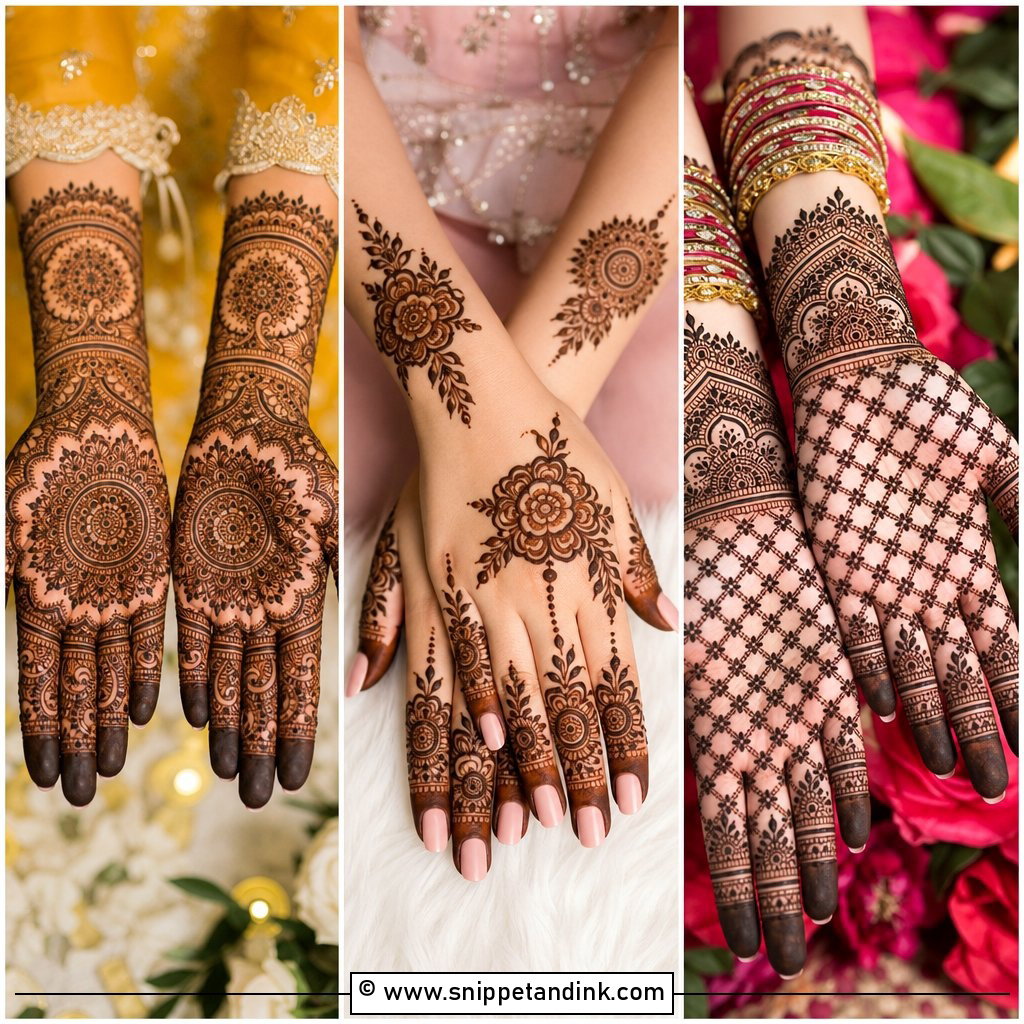
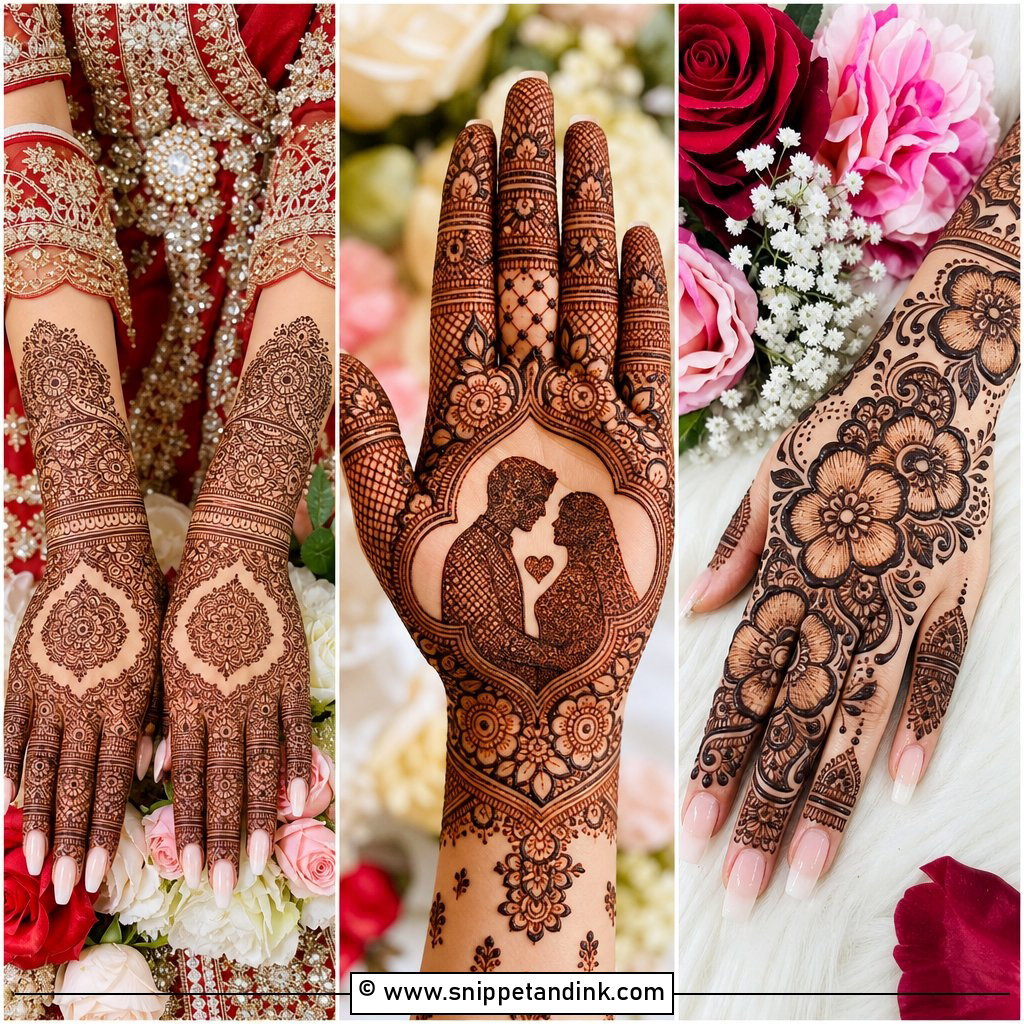
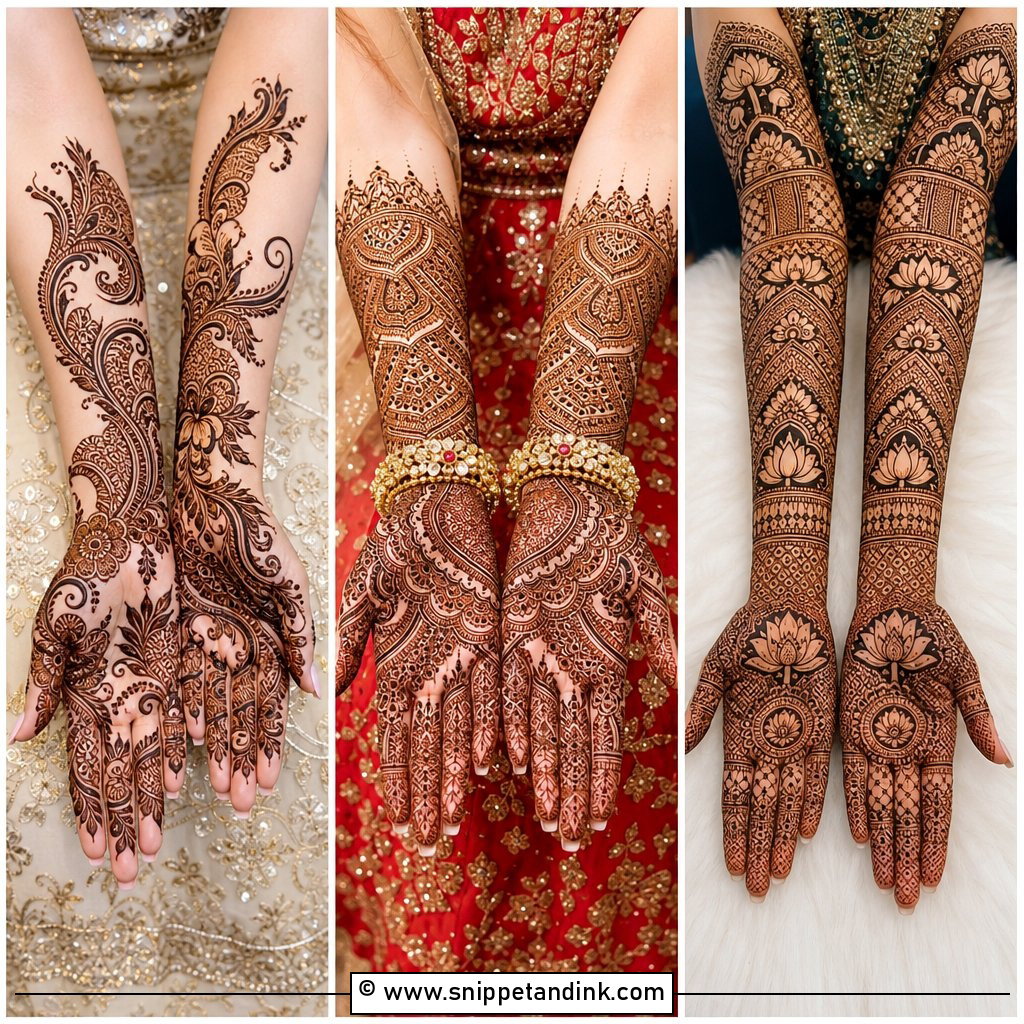
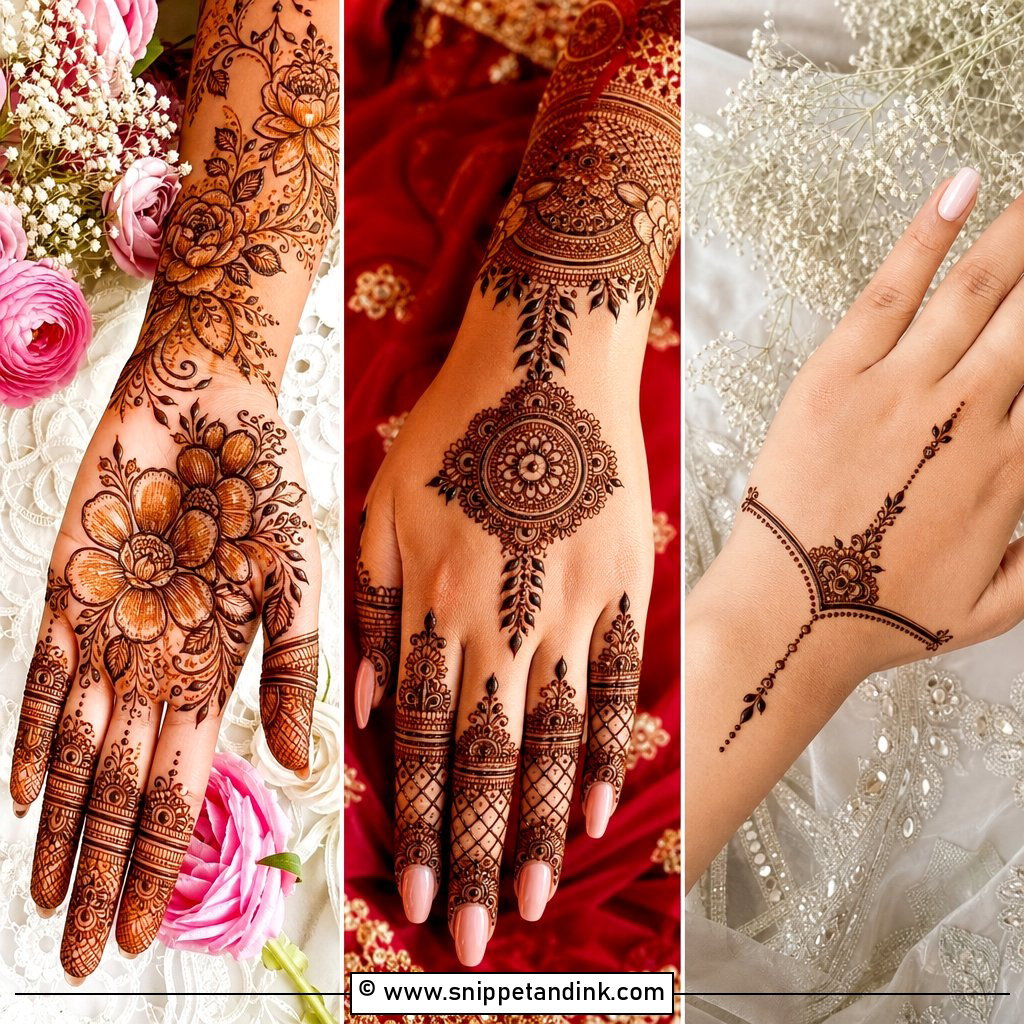
Full coverage across palm, fingers, wrist and lower forearm gives the richest bridal feel before the wedding itself. For an engagement, I deliberately leave the centre of the palm a little more open than I would for a dulhan design, so the motifs breathe and the bride can still use her hands sooner. Paisleys, shaded leaves and a mandala hold it together. It suits heavily embroidered lehengas and sarees, which would swallow a lighter design. Keep the fingers have neat tips and give the wrist a bracelet band, as those are what show during the ring exchange.
2. Back Hand Engagement Mehndi Design
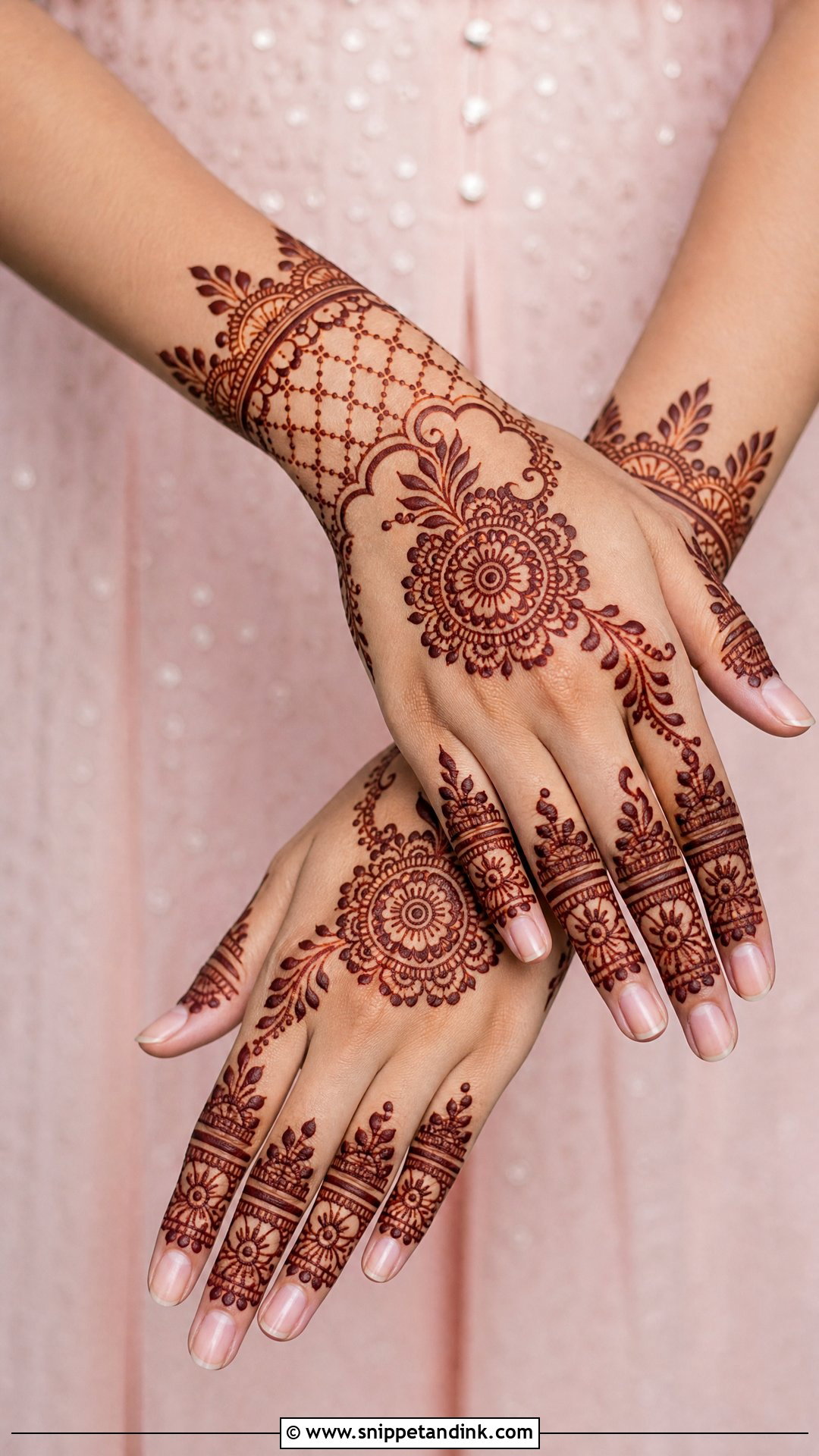
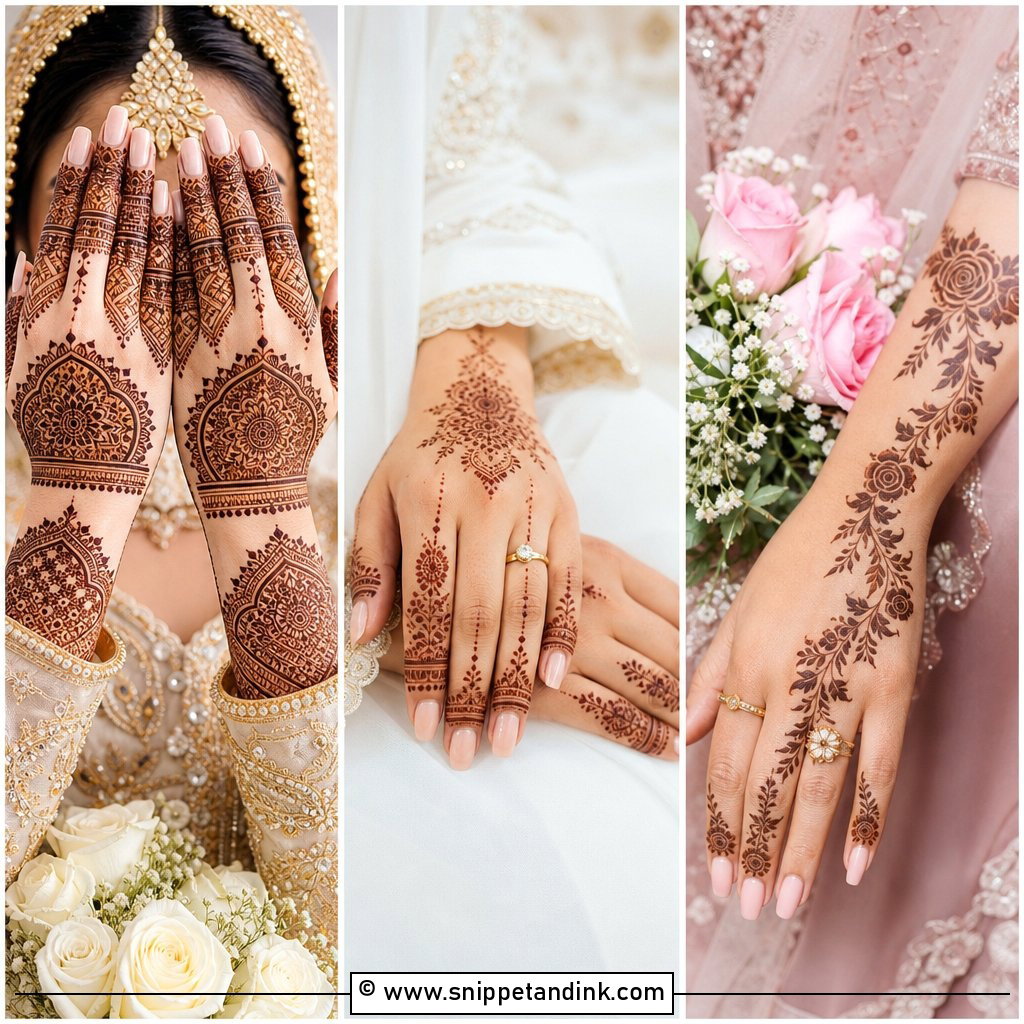
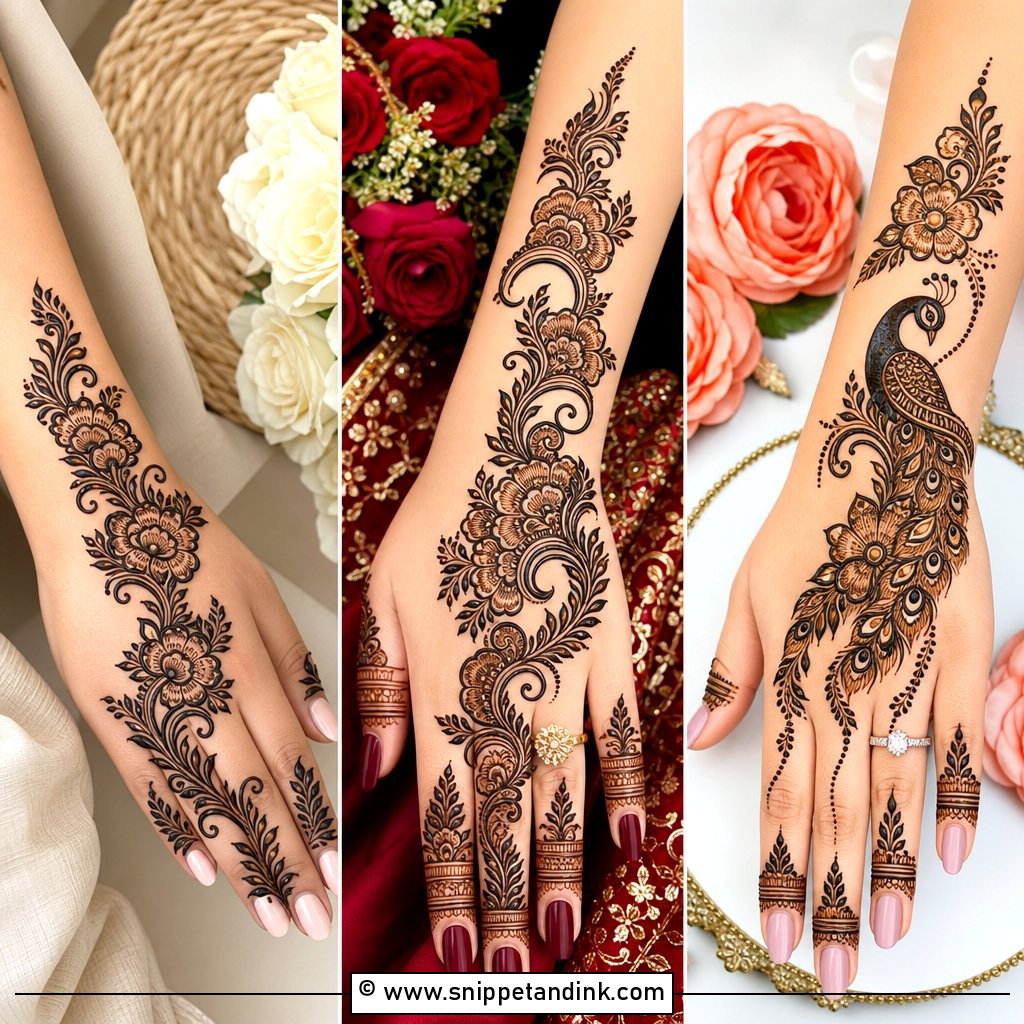
Most ring photos are shot from above, so the back hand is where I put my best line work. A back hand engagement mehndi design usually flows from the fingertips to the wrist with florals, vines, jaali and a bracelet border, while the palm stays free. That’s a real comfort if you’ll be greeting guests and eating at the function. Around the ring finger I use only thin lines; a solid dark block there makes a diamond look dull in close-ups. A central floral cluster or a diagonal Arabic trail frames the hand well.
3. Front Hand Engagement Mehndi Design
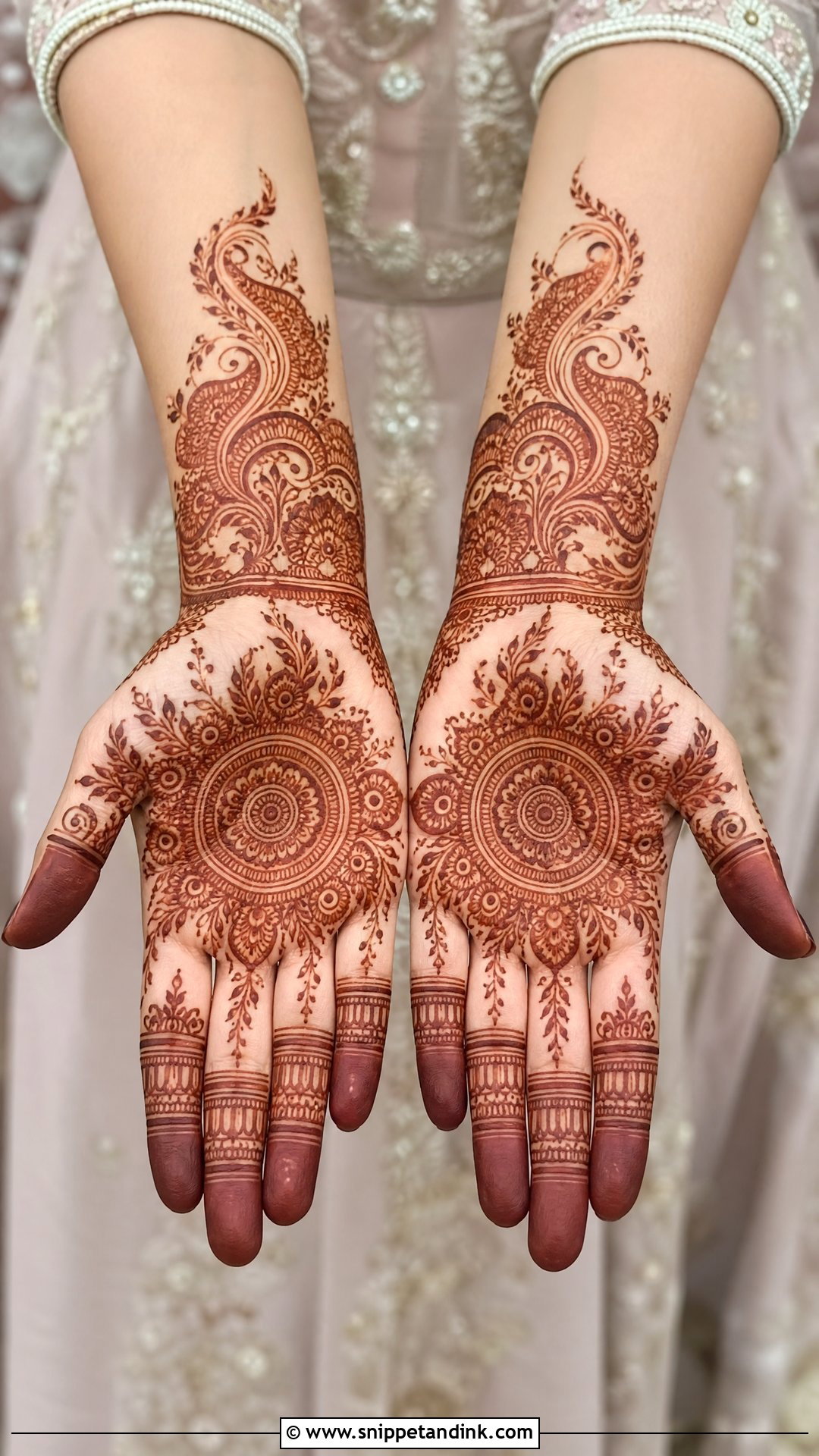
Palm work is what most families picture when they think of bridal henna. A central mandala, curved paisleys, leafy vines and detailed fingers make a classic layout. The palm also stains darkest, because the skin there is thicker, so this is the design to choose if colour depth matters most to you. I leave small negative spaces around each motif so it reads lighter than wedding mehndi. Finish the wrist cleanly and keep the border slim if you’ll wear a hathphool or stacked bangles.
4. Arabic Engagement Mehndi Design
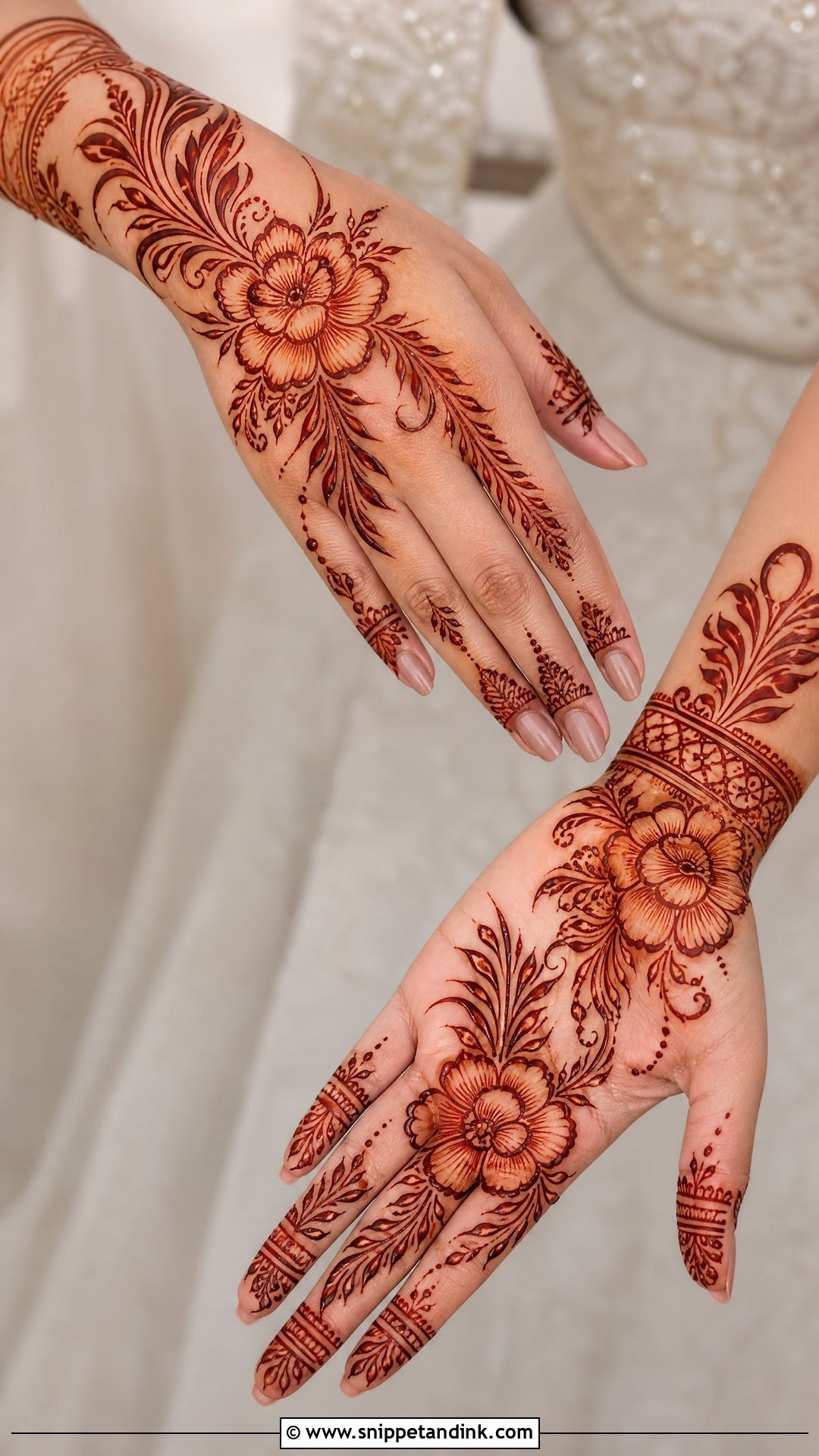
Arabic designs are built on flow and open skin. Bold flowers, curved stems and shaded petals sweep diagonally across the hand rather than filling it, which is why they dry faster and feel lighter to wear. I shade Arabic petals with a thinned stroke from the cone, so each flower has a dark edge fading inward. Small vines and fingertip details finish the fingers, and a soft cuff sits at the wrist. It suits gowns, shararas and pastel outfits, and works on either side of the hand.
5. Indo Arabic Engagement Mehndi Design
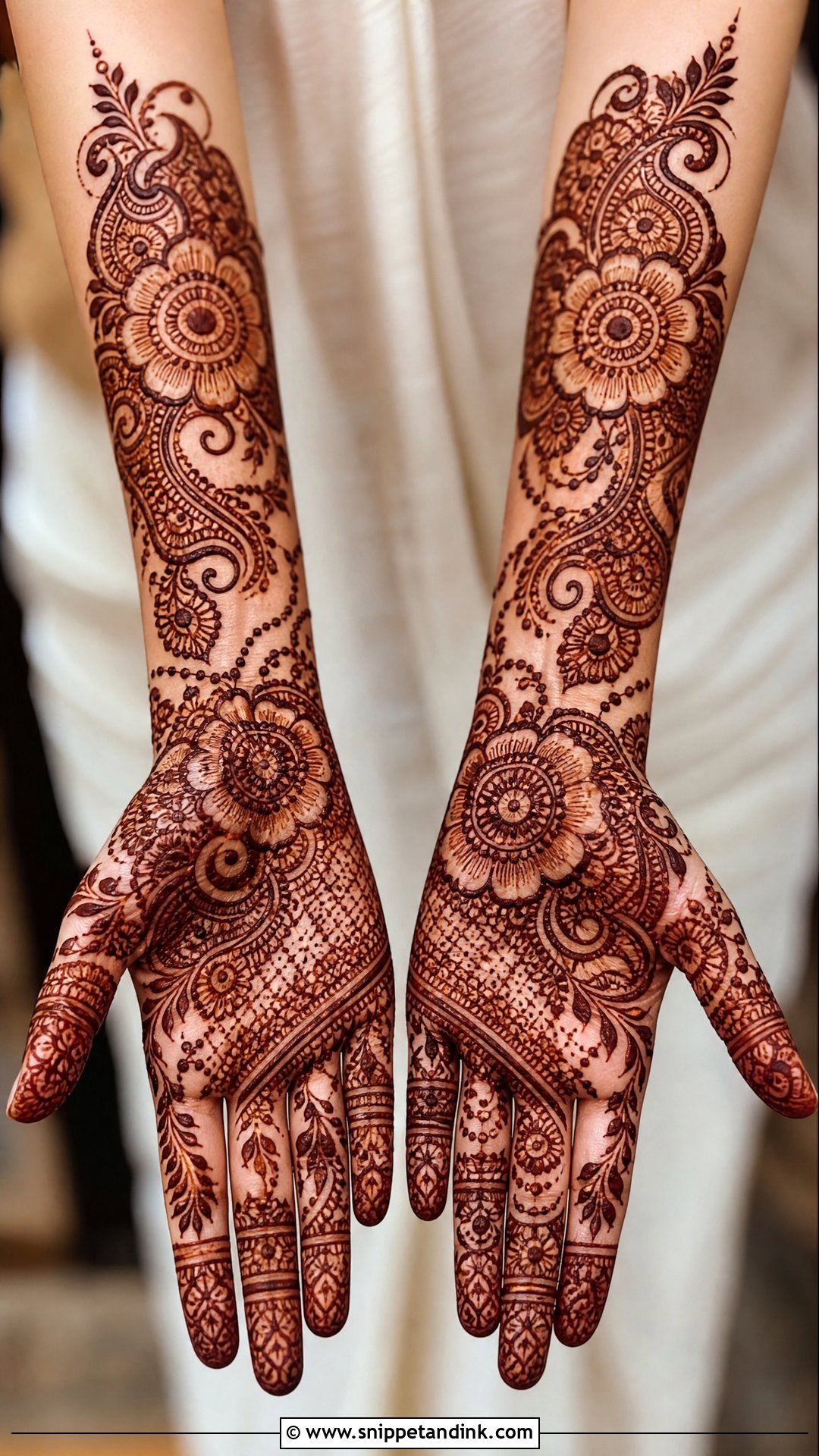
Indo-Arabic takes the sweep of an Arabic trail and fills parts of it with the fine detailing of Indian mehndi. Large flowers and paisleys carry the layout, while lace fillers and small mandala accents give it texture. The common mistake is losing the gaps between motifs; once those close up, it just looks like a busy Indian design. I plan the open channels first, then fill around them. It sits well with both traditional and contemporary outfits, and can run from fingertips to wrist or a little onto the forearm.
6. Simple Engagement Mehndi Design
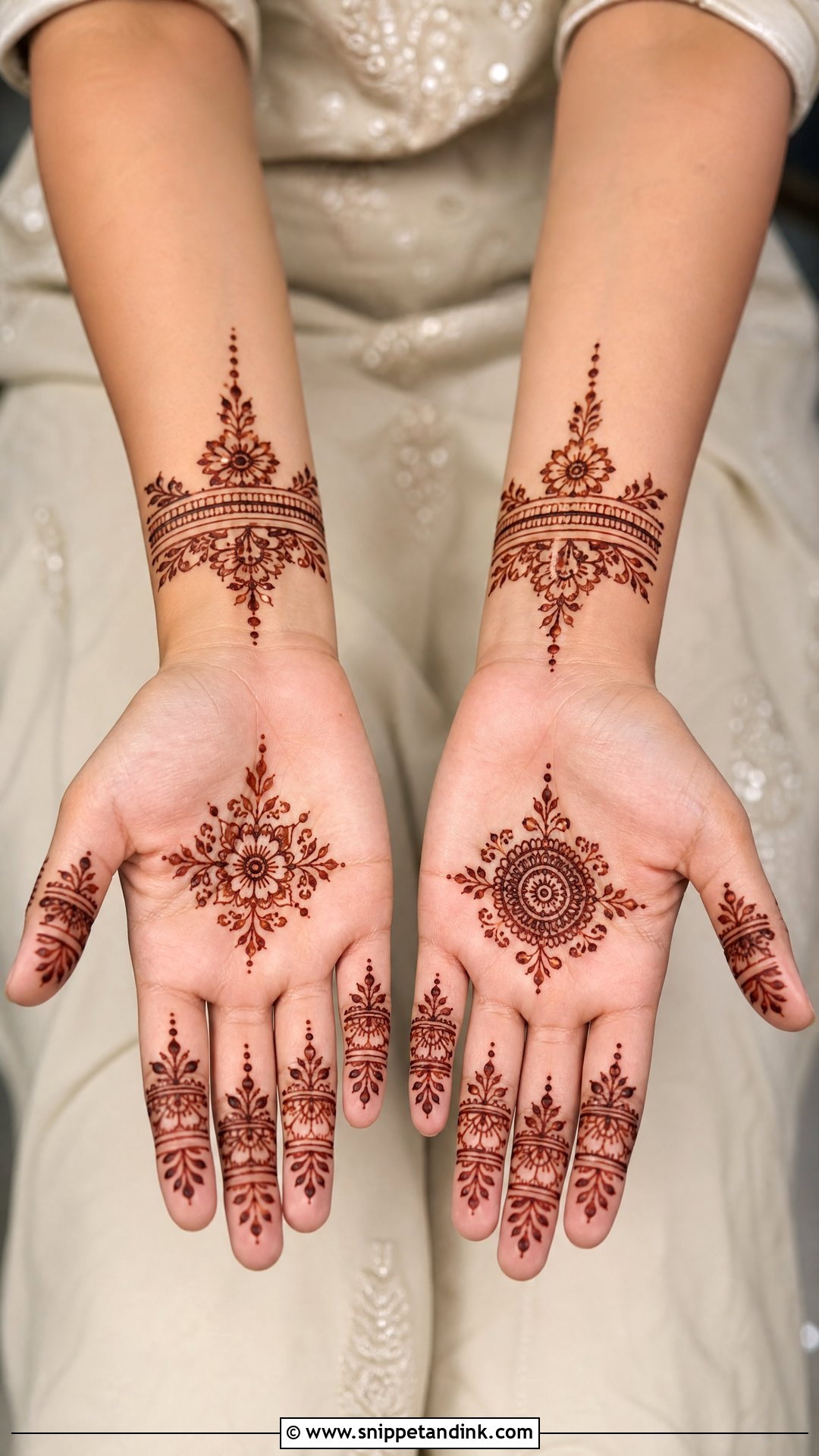
Simple doesn’t mean empty. A well-planned simple design might be one palm motif, neat finger details, a leafy wrist band and a few floral curves, all placed with even spacing. I suggest it to brides with a short ceremony, a minimal outfit, or only an hour before guests arrive. It also keeps the focus on the ring. Fine lines and light shading take less time to dry, which matters if you’re getting ready at home.
7. Minimal Engagement Mehndi Design
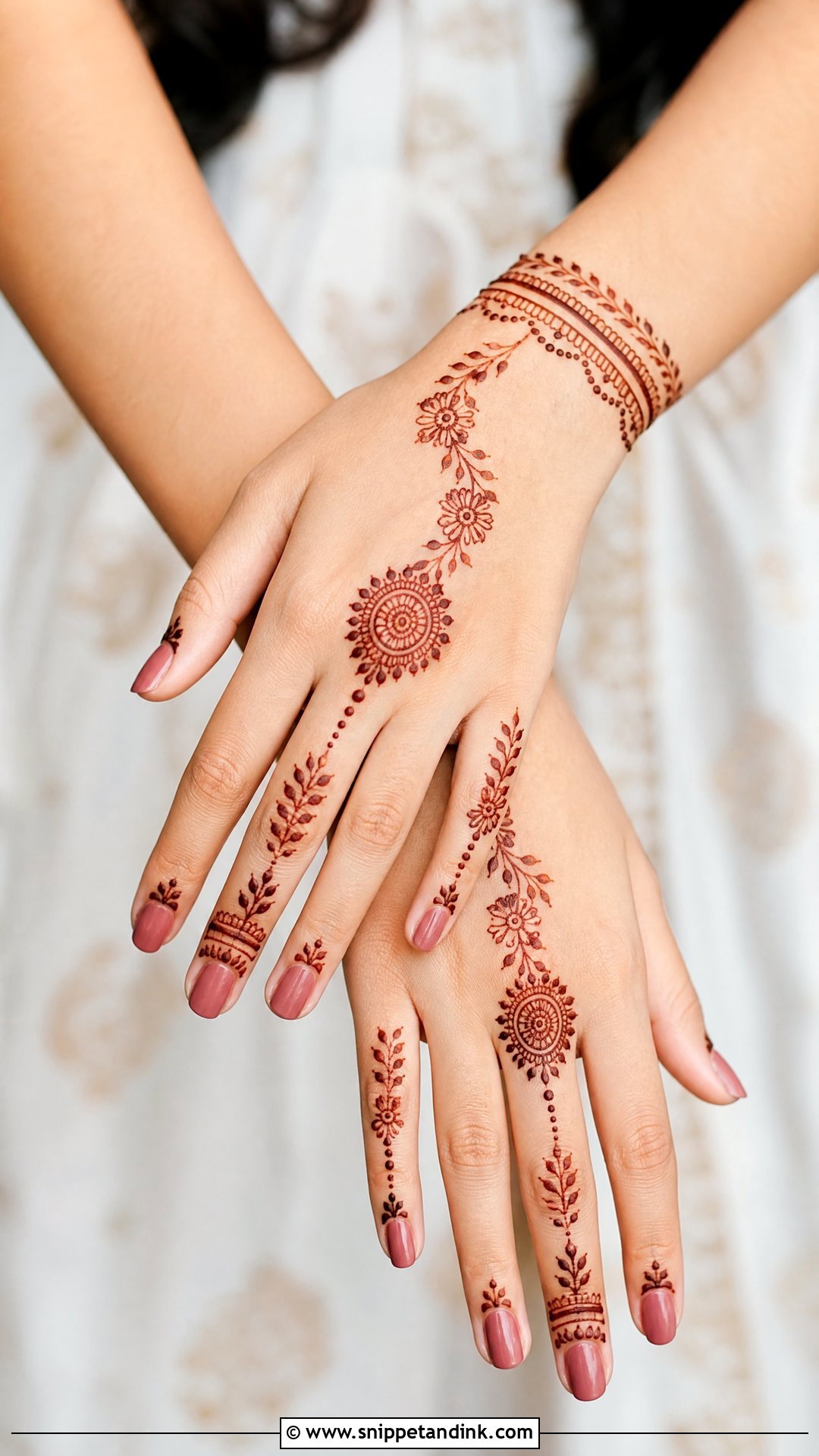
Minimal mehndi concentrates on the fingers, back hand and wrist, with plenty of bare skin. Fine leaf trails, tiny flowers and a small clean mandala are typical. The risk is that a sparse design looks unfinished, so every element has to sit where it connects to the next. I usually anchor it with the ring finger and build outward. It pairs well with diamond rings and contemporary outfits, and suits brides who don’t want a heavy palm stain before the wedding.
8. Floral Engagement Mehndi Design
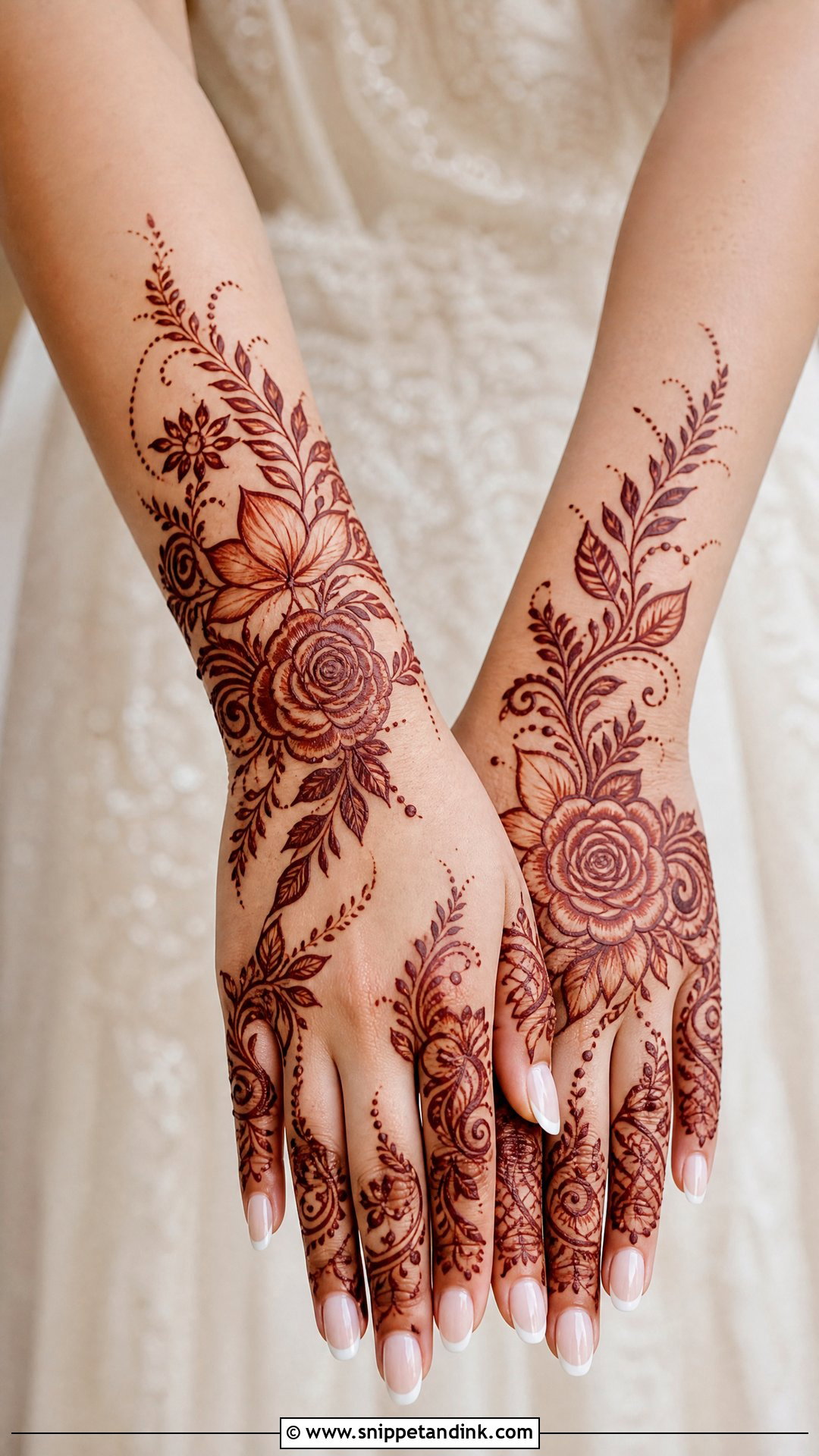
Roses, lotus and petals, vines, and leafy borders make floral mehndi the easiest design to tailor to an outfit. If your dress has embroidered flowers, show me a photo and I’ll echo those shapes in the henna, which ties the look together in close-ups. Big blooms need small fillers and dotted curves beside them so the hand doesn’t look blotchy. A diagonal trail or a flower ring around a central mandala both work on front and back.
9. Mandala Engagement Mehndi Design
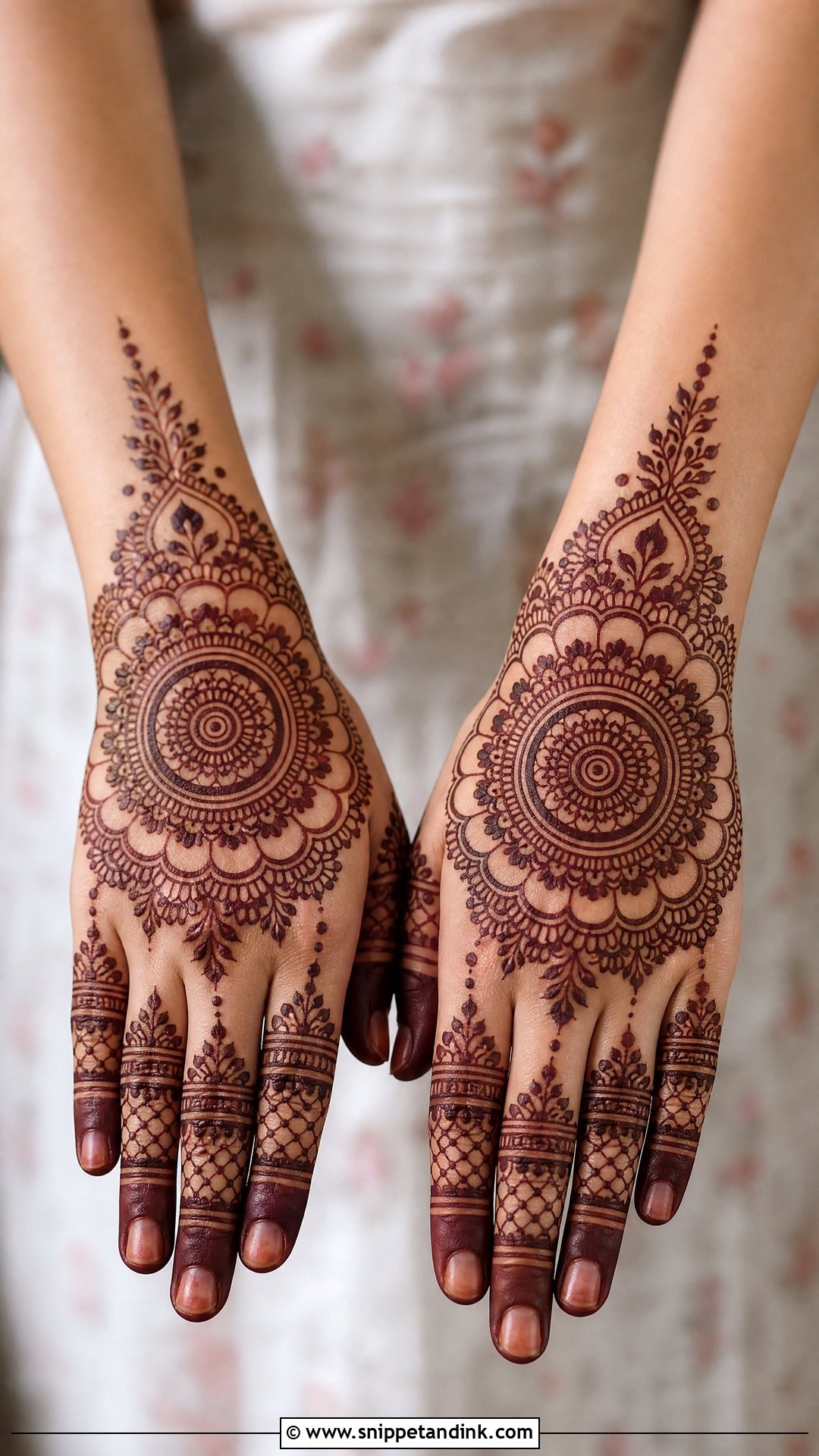
A mandala gives the hand a clear centre, and it reads well from any angle in photos. I start with a small dot and build outward in rings of petals, scallops and fine lines, checking symmetry after each ring because errors compound as the circle grows. For an engagement I keep it medium-sized, about the width of the back of the hand, and extend it to the fingers and wrist with matching bands. An oversized mandala looks heavy and leaves little room for anything else.
10. Jaali Engagement Mehndi Design
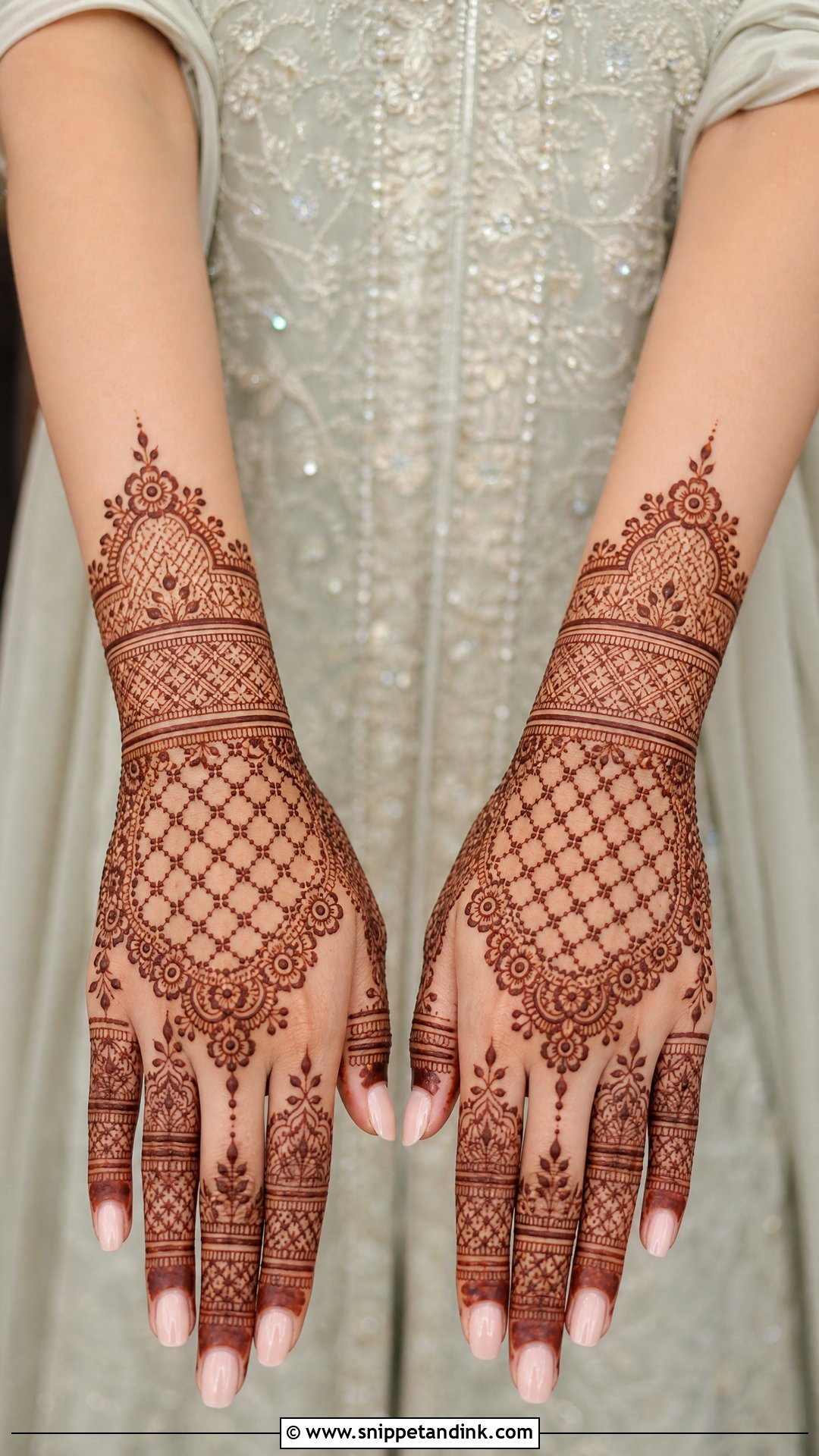
Jaali is the lace of henna, a net of fine crossing lines, and it frames rings and bangles well. I draw the grid with a very fine cone tip and a steady speed, because uneven pressure leaves blobs where lines cross. Diamond-shaped mesh looks crisp; curved mesh looks softer. Don’t let it cover everything evenly. Pair it with florals and open sections so the net has contrast. The back hand is where this design shows best.
11. Paisley Engagement Mehndi Design
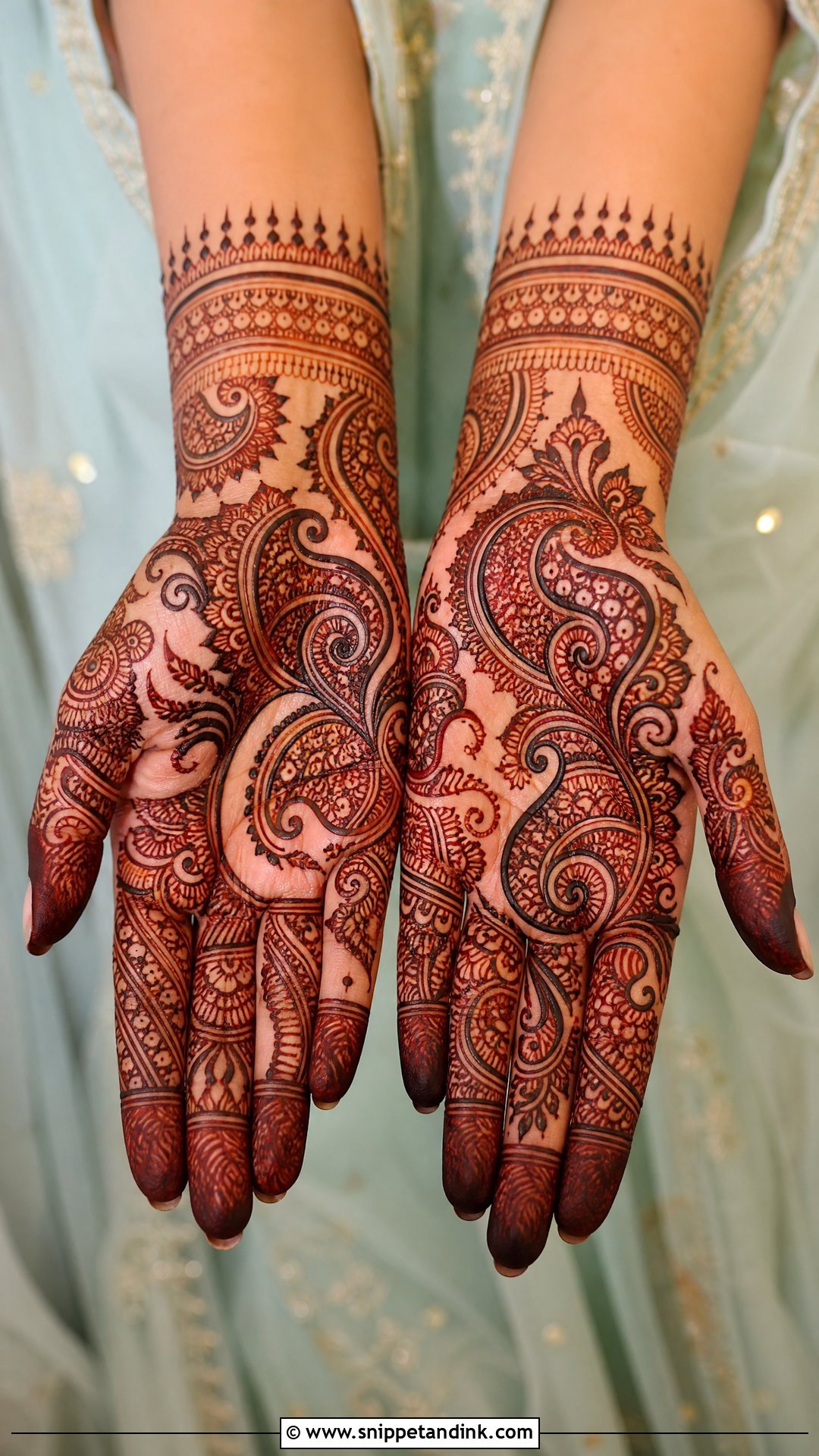
Paisleys are the backbone of traditional mehndi, and they flatter almost any hand shape because the curve adds movement. A typical engagement layout has large paisleys on the palm, smaller ones near the wrist, and light filler around the fingers. I keep coverage medium rather than full bridal density. That way the bride can still use her hands, and the design leaves visual room for her wedding henna. Silk sarees, anarkalis and embroidered lehengas suit it well.
12. Peacock Engagement Mehndi Design
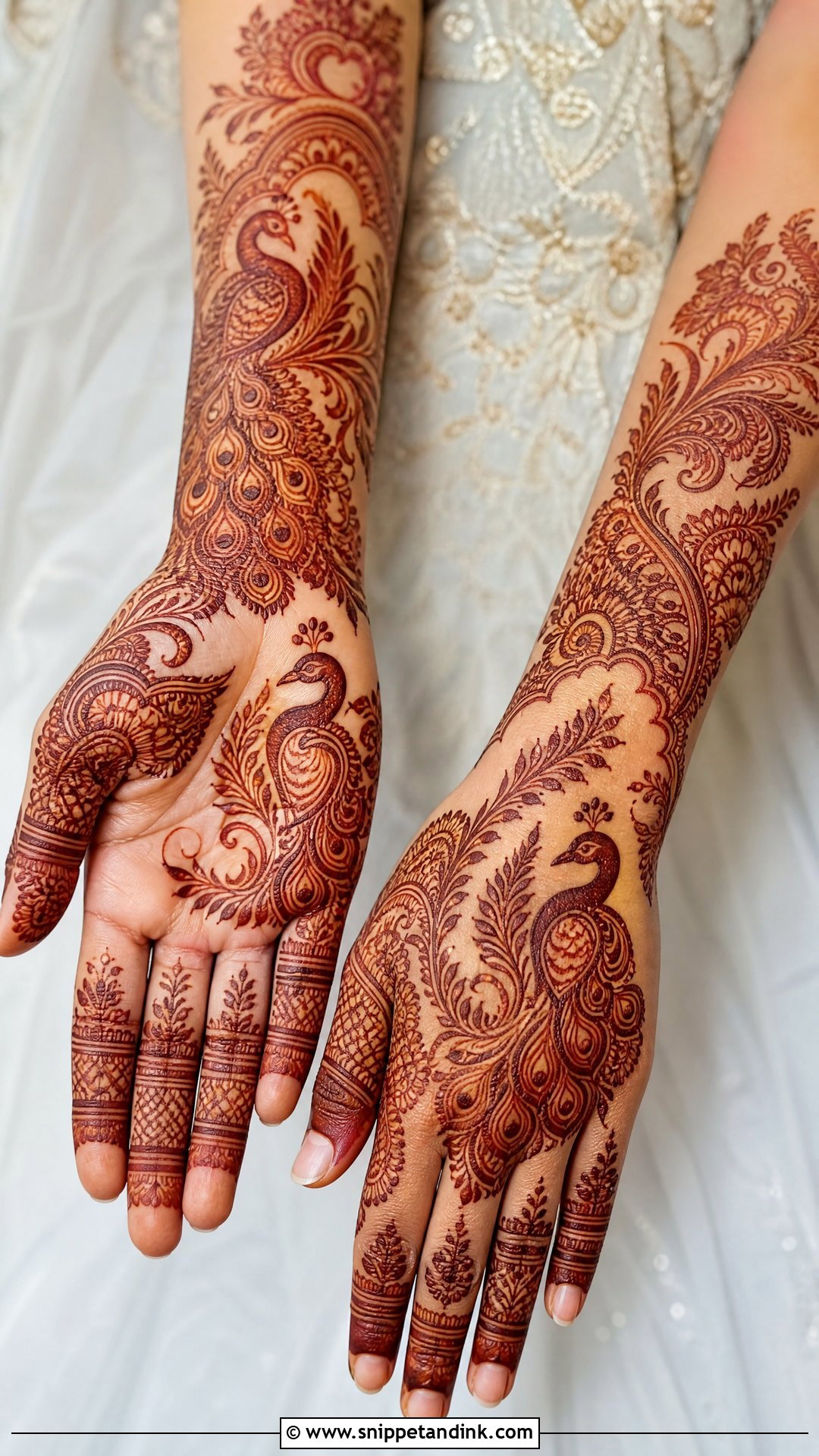
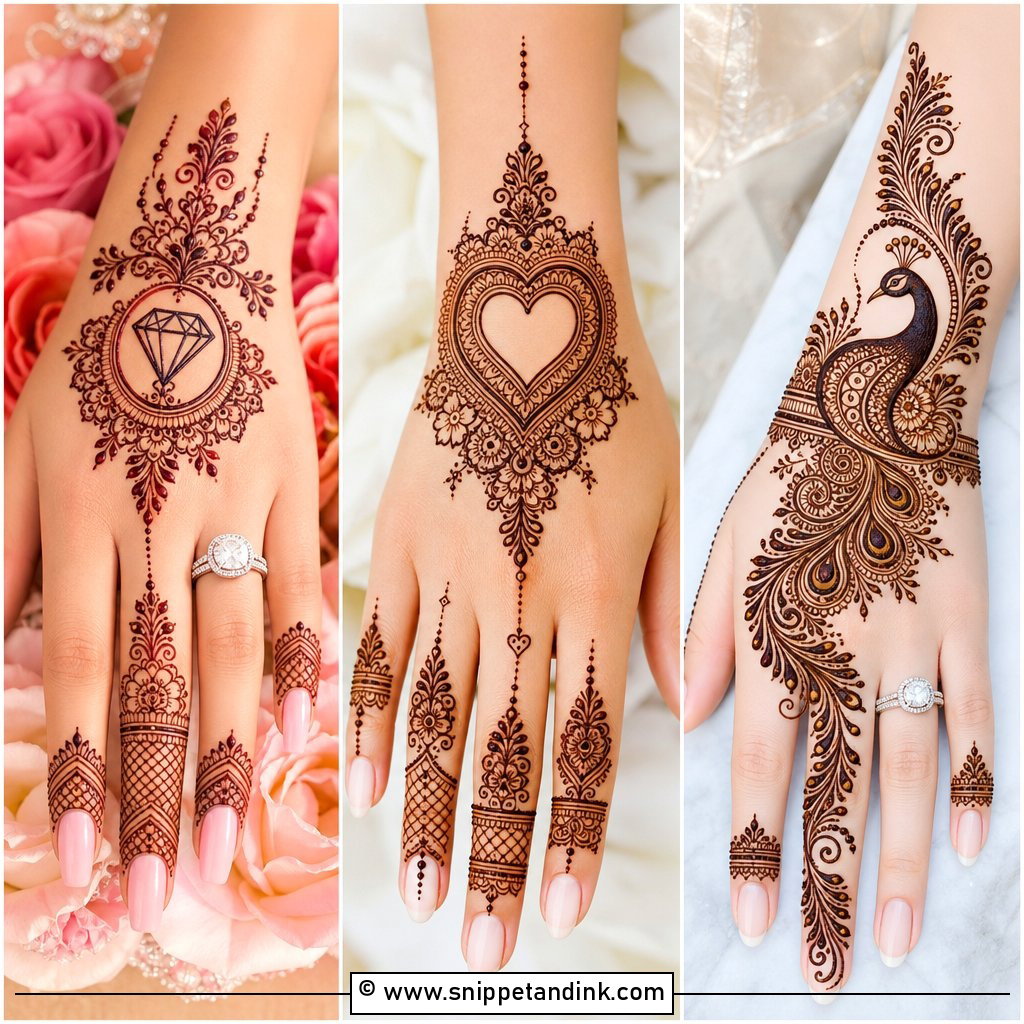
A peacock engagement mehndi design is the most traditional motif on this list. One peacock is enough for an engagement; I usually save the pair facing each other for the wedding. The neck and body need the darkest, cleanest lines, so I draw them first while my hand is fresh, then let the feathers flow into paisleys and vines. Feather-like lines and dots finish the fingers. Jewel-toned outfits with traditional embroidery suit it.
13. Ring Ceremony Mehndi Design
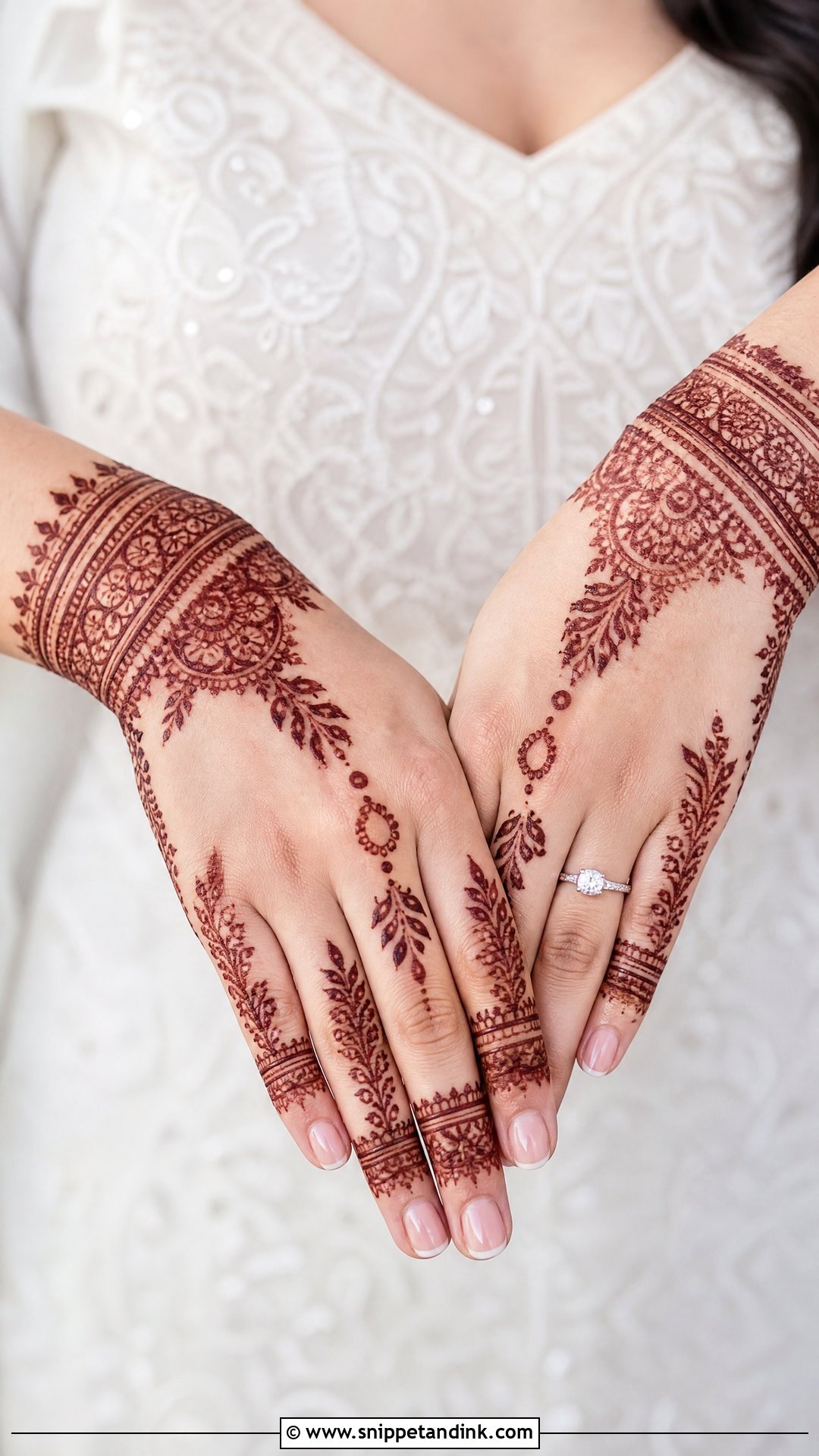
Ring ceremony designs are built around the ring finger. I keep the band of skin where the ring sits almost clear, then frame it with fine lines on either side so the stone stands out against bare skin. Florals cross the back hand, and a bracelet band finishes at the wrist. Some brides add a small heart, initials or a tiny ring motif. Dense dark filler right next to the ring kills the contrast in photos, so I avoid it.
14. Engagement Mehndi Design With Names
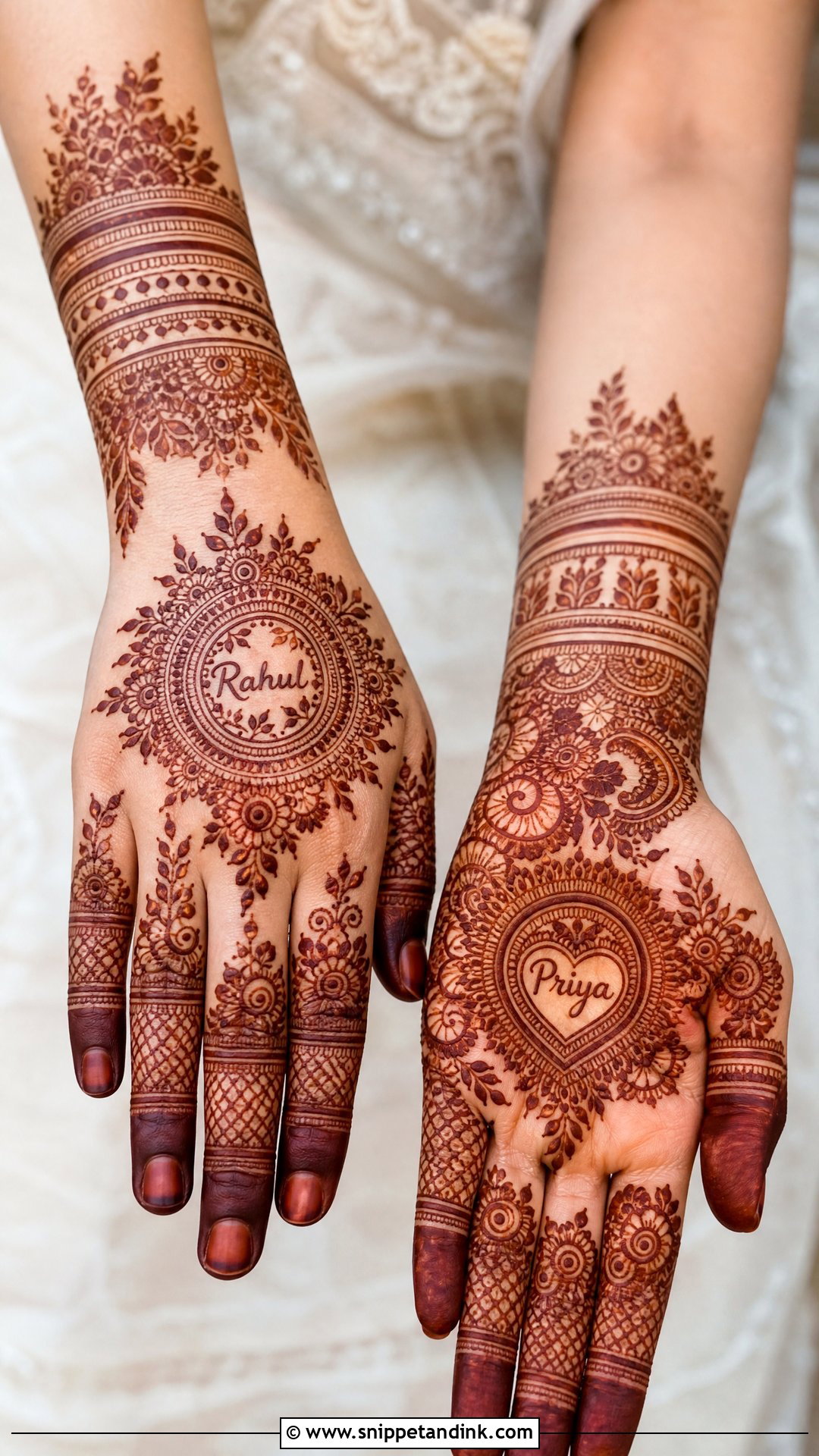
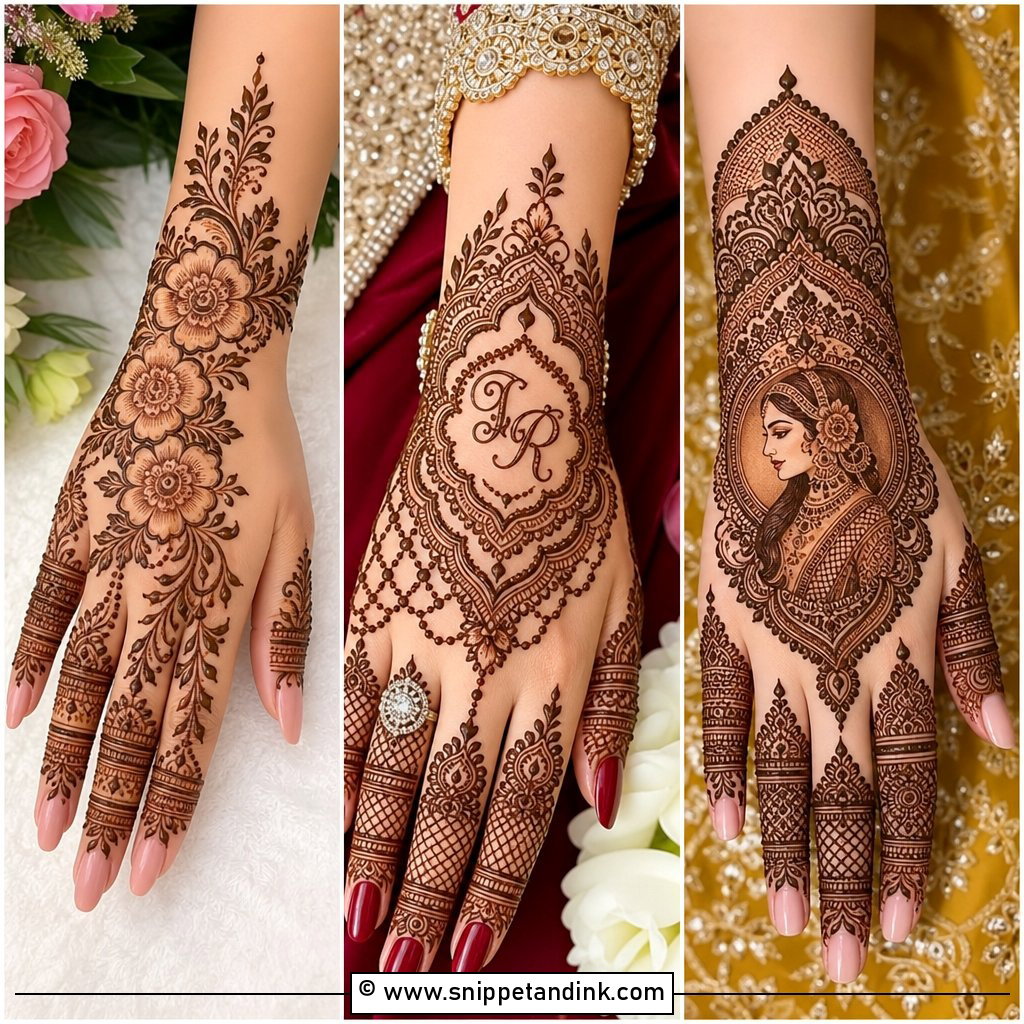
Hiding initials or names in the henna is a tradition many families love, and guests enjoy hunting for them. I tuck one set of names into a paisley, vine or wrist band rather than scattering them around the hand. Letters need a slightly thicker line than filler, or they blur as the stain develops. The rest of the design can stay classic with leaves, dots and shaded petals. Ask your artist to write the names in a practice sheet first so spelling is checked before it’s on your skin.
15. Engagement Mehndi Design With Heart
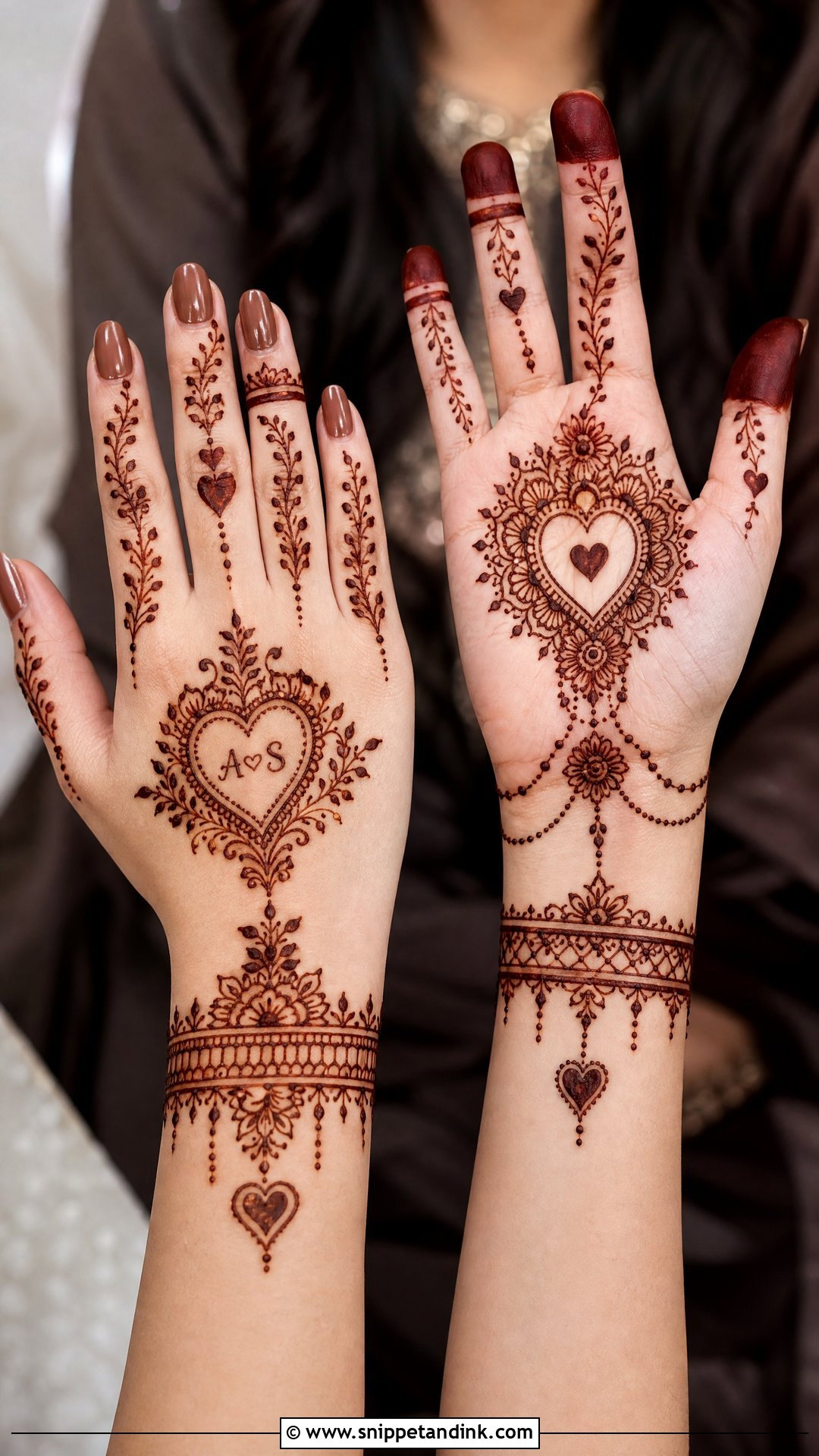
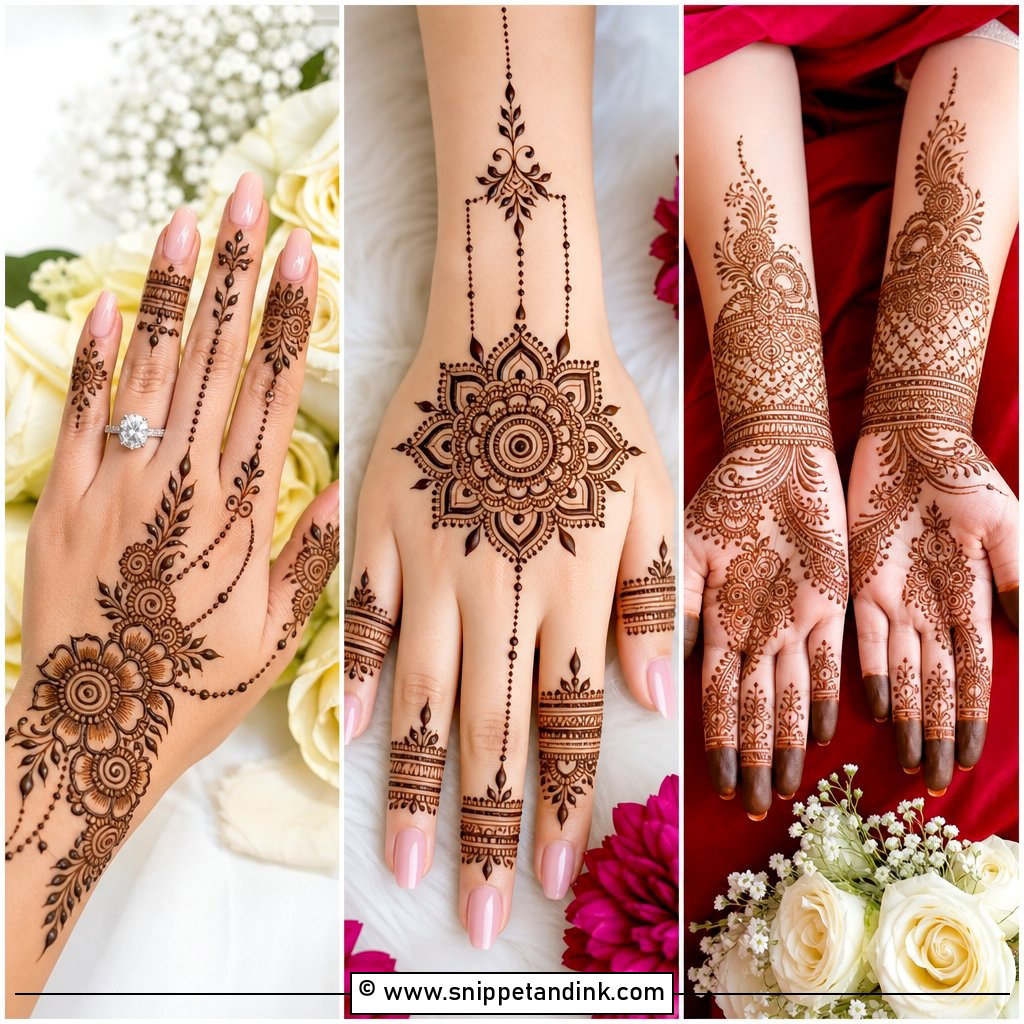
Hearts can look childish if they’re large or outlined in a single thick line. I blend small ones into floral trails, inside a mandala ring, or near the ring finger, sometimes with a shaded centre. Kept small, they read as a personal detail rather than a cartoon. This suits brides in pastel outfits and engagement gowns who want something sweet but still mature.
16. Bracelet Engagement Mehndi Design
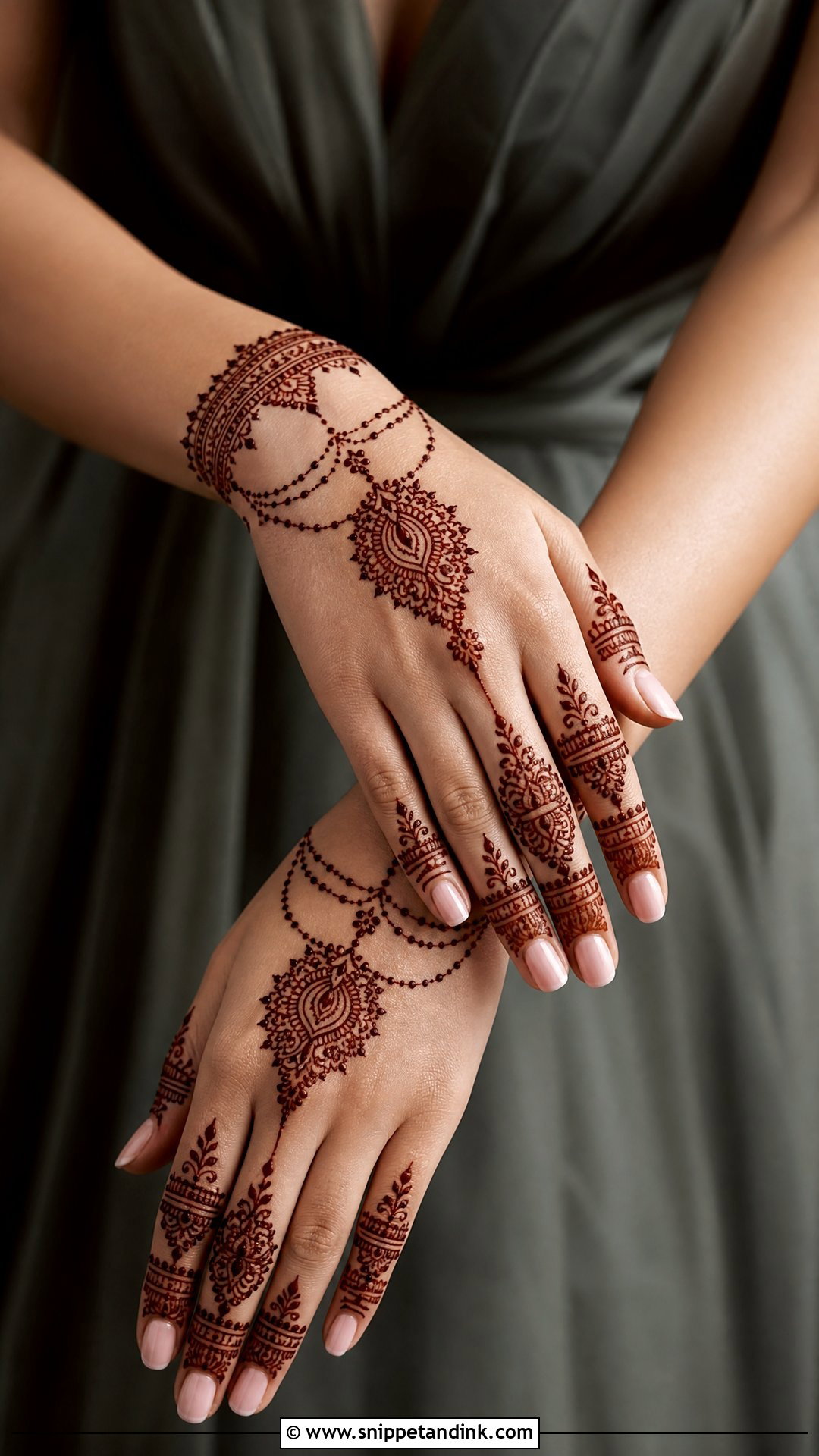
Bracelet designs make the henna look like jewellery: a central motif on the back hand linked to the wrist by chains, dots or fine lines, with matching finger bands. Symmetry is everything here, so I mark the centre of the wrist before starting. If you’re wearing gold bangles or a hathphool, tell your artist; I’ll keep the henna slightly lighter so it doesn’t compete with the metal. It’s a good middle ground between minimal and full coverage.
17. Jewelry Engagement Mehndi Design
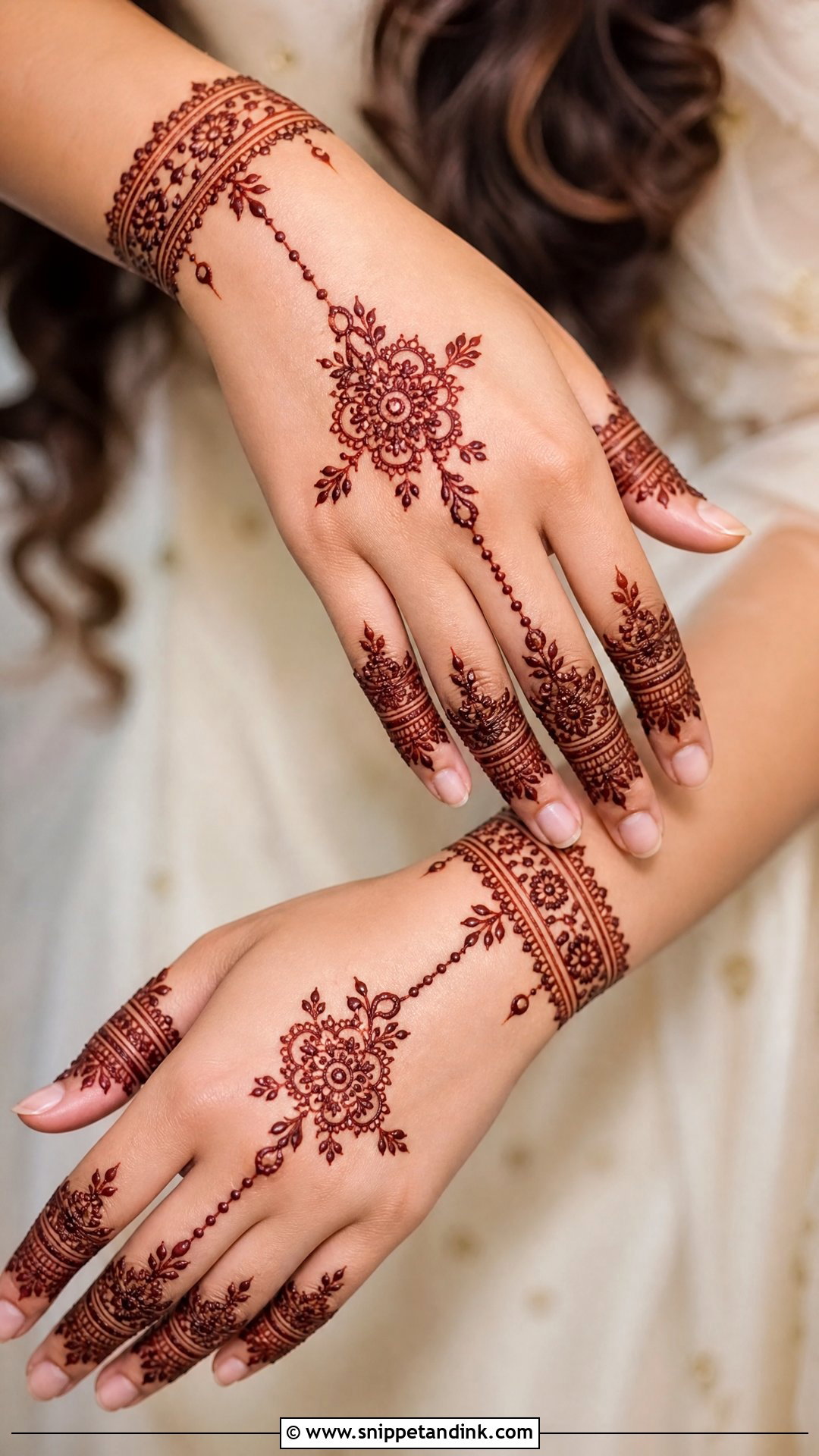
Jewellery mehndi goes a step further, drawing chain patterns, ring shapes, finger cuffs and small hanging drops so the hand looks adorned even without accessories. I often start it at the ring finger and run it to the wrist like a hathphool. Lines must be crisp and the chains left mostly open; filling them makes the piece look heavy. The back hand gives it the most room. It suits a modern bride who wants decoration with plenty of bare skin.
18. Moroccan Engagement Mehndi Design
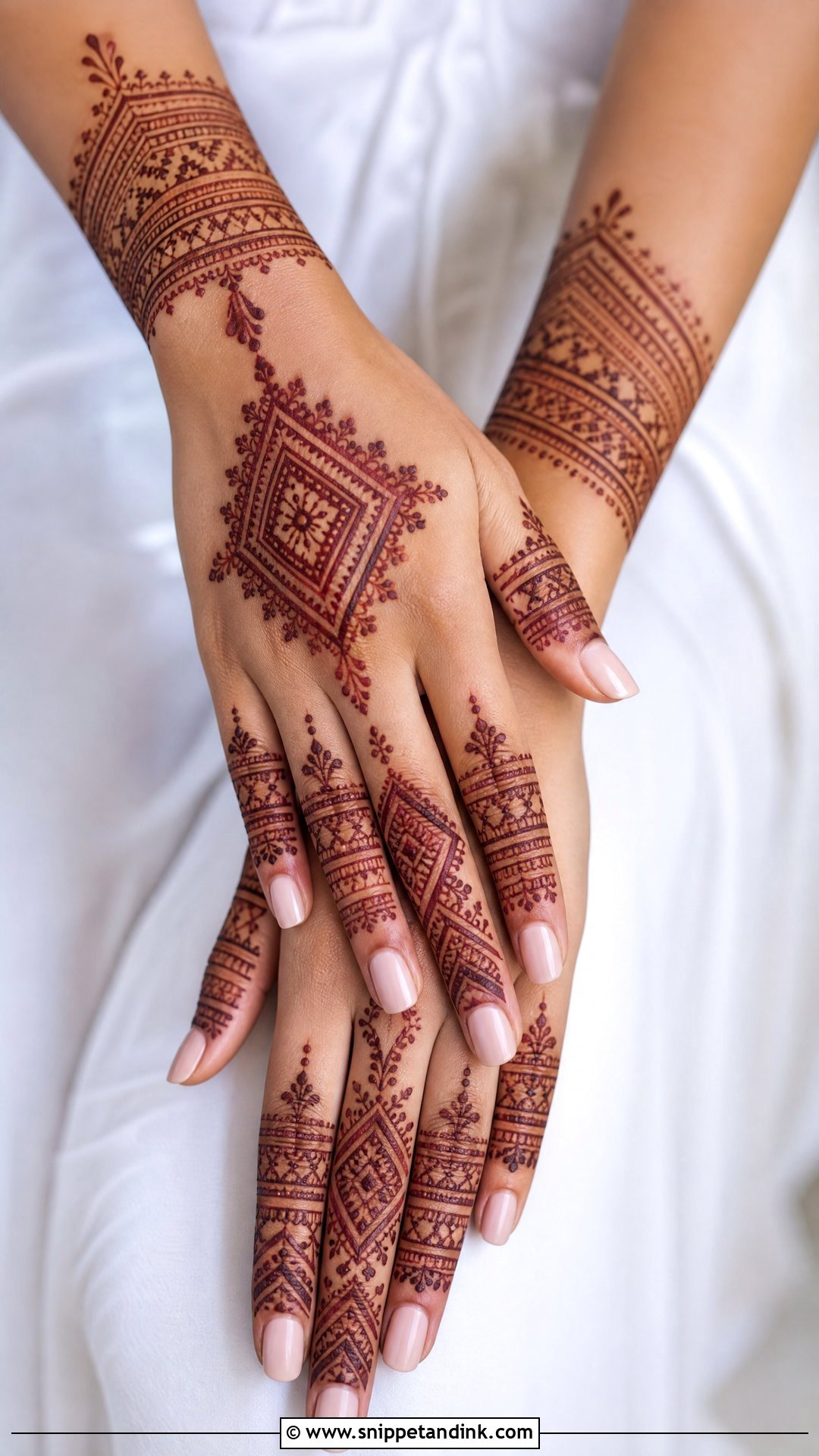
Moroccan work trades florals for geometry: diamonds, grids, lines and structured borders. It’s demanding to draw, because a straight line in henna shows every wobble, so I work slowly and turn the hand rather than my wrist. For an engagement I soften the edges with dots, small leaves or open gaps so it doesn’t look severe. It suits brides who like statement jewellery and clean shapes, and the clear lines photograph sharply.
19. Gulf Engagement Mehndi Design
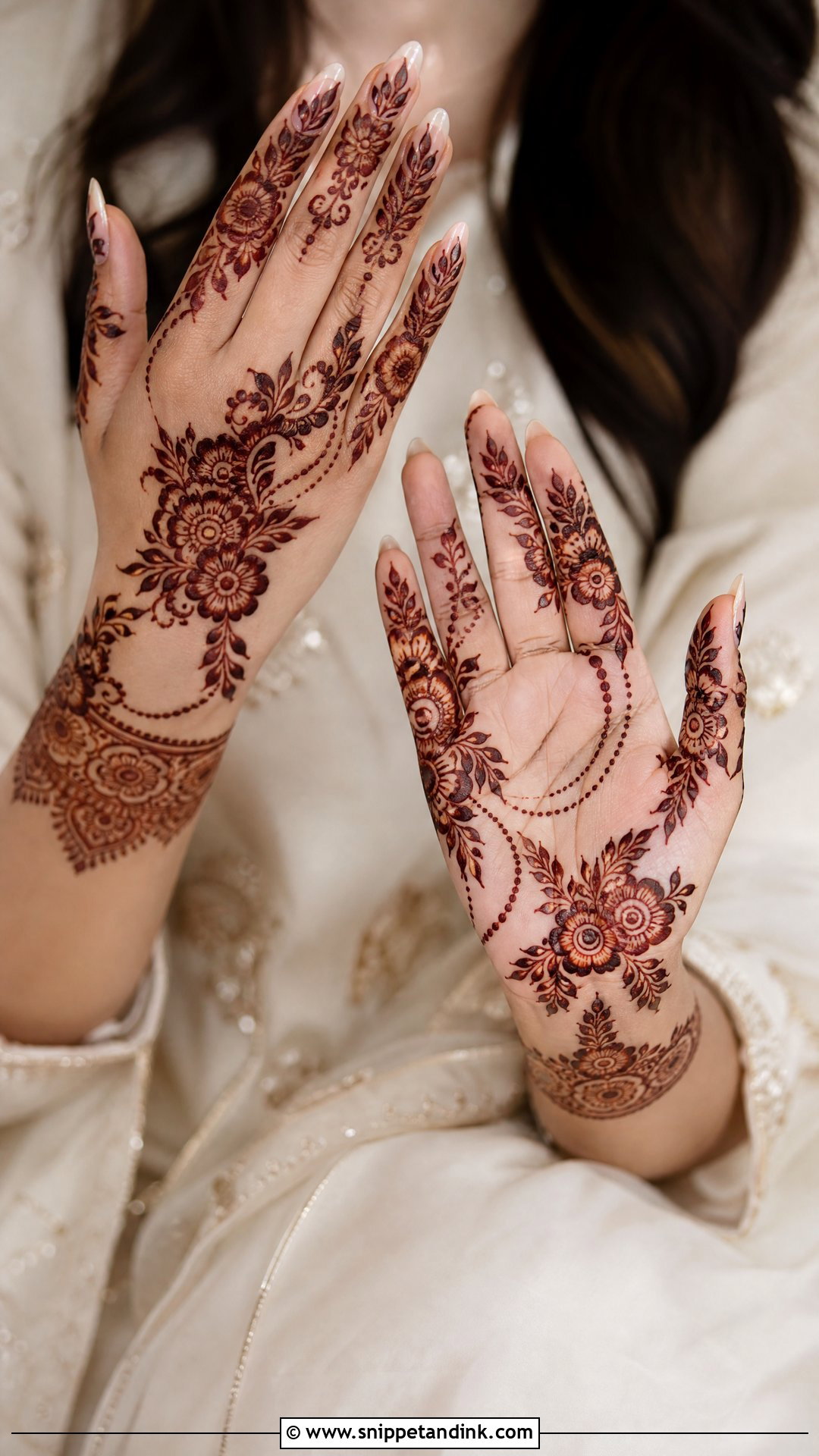
Gulf or Khaleeji mehndi is known for bold flowers, sweeping vines and generous empty space. Larger motifs sit on the back hand or palm in a single trail rather than dense coverage. The flowers are usually outlined thickly and shaded inward, so the stain has strong contrast. Fingers get leafy tips or dotted chains, and the wrist a soft cuff. Gowns, abayas and shararas all pair well with it.



20. Modern Engagement Mehndi Design
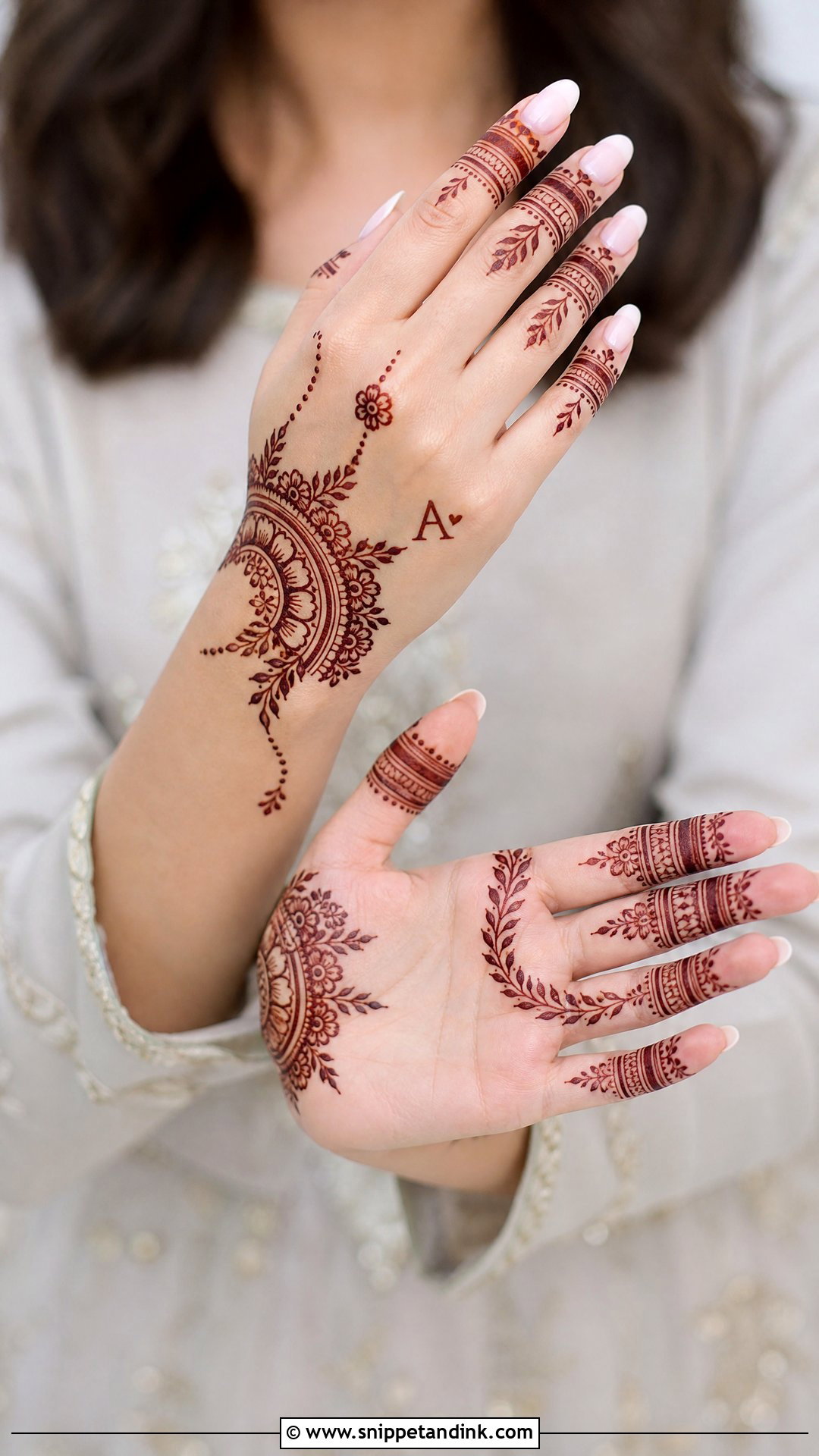
Modern engagement designs combine fine-line florals, half mandalas, finger bands and small personal touches, with lots of open skin. Asymmetry is common: the design might run up one side of the hand only. These designs dry faster and leave a lighter stain, which suits brides with a short engagement before the wedding. I’d keep them on the back hand, where they sit next to the ring and a manicure. Make sure the design still connects from the fingers to the wrist so it reads as one piece.
Getting a Deep Stain After the Cone Comes Off
Half of how dark your henna turns out happens after I’ve left. Leave the paste on as long as you can, ideally six hours or overnight. As it dries, dab on a little lemon and sugar mixture so the paste stays stuck to the skin; avoid soaking it, which makes the design run.
When it’s time, scrape the dried paste off with a blunt edge or your fingers. Don’t wash it off. Then keep water away from the design for as long as possible, ideally until the next day. Warmth helps the colour develop, so keep your hands warm, and a thin coat of natural balm or oil before showering protects it.
One safety point
Real henna is never jet black. Pastes that promise an instant black stain may contain chemical dyes that can cause serious skin reactions. Ask your artist what’s in the cone. A fresh natural paste smells earthy, often of essential oils, and stains orange first before deepening to brown or maroon.
Ring Photos, Outfit and Coverage Decide Most of It
Most engagement brides end up deciding on three things: how much coverage they’re comfortable with, what they’re wearing, and where the ring photos will be taken. Full-hand designs feel traditional; Arabic, minimal, jewellery and jaali patterns feel lighter. If the ceremony centres on the ring exchange, I’d put the main work on the back hand. A personal touch like initials, a heart or a small meaningful motif can go anywhere. Talk your plan through with your artist a week or two ahead so the cone, timing and aftercare are all ready.
You'll Like These Ideas:






Leave a Reply