
The bride’s mother sits for mehndi in the middle of the busiest days of her life. She’s greeting relatives, checking on the caterer and holding the bride’s hand through every ritual, so her design has to look festive in photos and still let her get on with things. When I plan a mother’s hands, I keep her a clear step lighter than the bride, choose motifs that read well from a distance, and think about how long she can actually sit still. Below are twenty designs I apply for mothers, from full-hand traditional work to quick Arabic trails, with notes on drying time, how they stain and what outfit each one sits best with.
Fitting Mehndi Around a Mother’s Hosting Duties
Brides get their hands done and then sit. Mothers rarely can. So before I choose a design for the bride’s mother, I ask when she’ll actually be free, and for how long, because that decides how much of her hand I can cover.
Fresh paste needs about twenty to thirty minutes to dry to the touch, and the longer it stays on afterward, the deeper the stain. I ask for at least six hours, and overnight if she can manage it. That’s hard for someone running the house. A few things help.
- Sit for mehndi a day or two before the wedding rather than on the morning, so the stain has time to darken.
- Do the palm of the dominant hand lightly, or only the back of it, so she can still use her phone and greet people.
- Have someone else lined up to serve food and handle bags while the paste dries.
- Wear loose sleeves that can be pushed above the elbow, and remove rings and watches before starting.
Dry, mature skin can take colour less evenly, so I ask mothers to moisturise well for a few days before but to keep lotion and oil off the hands on the day itself, since any residue blocks the dye from reaching the skin.
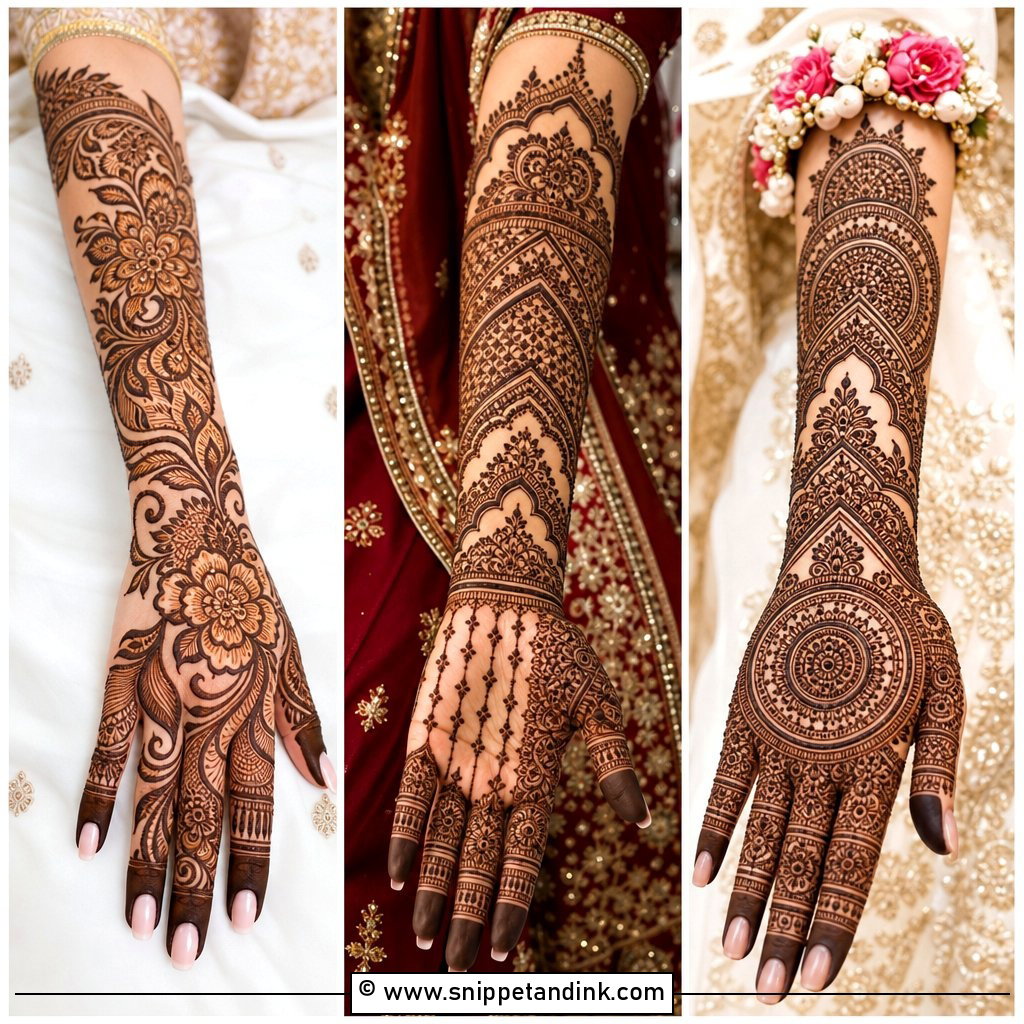
1. Bride Mother Full Hand Mehndi Design
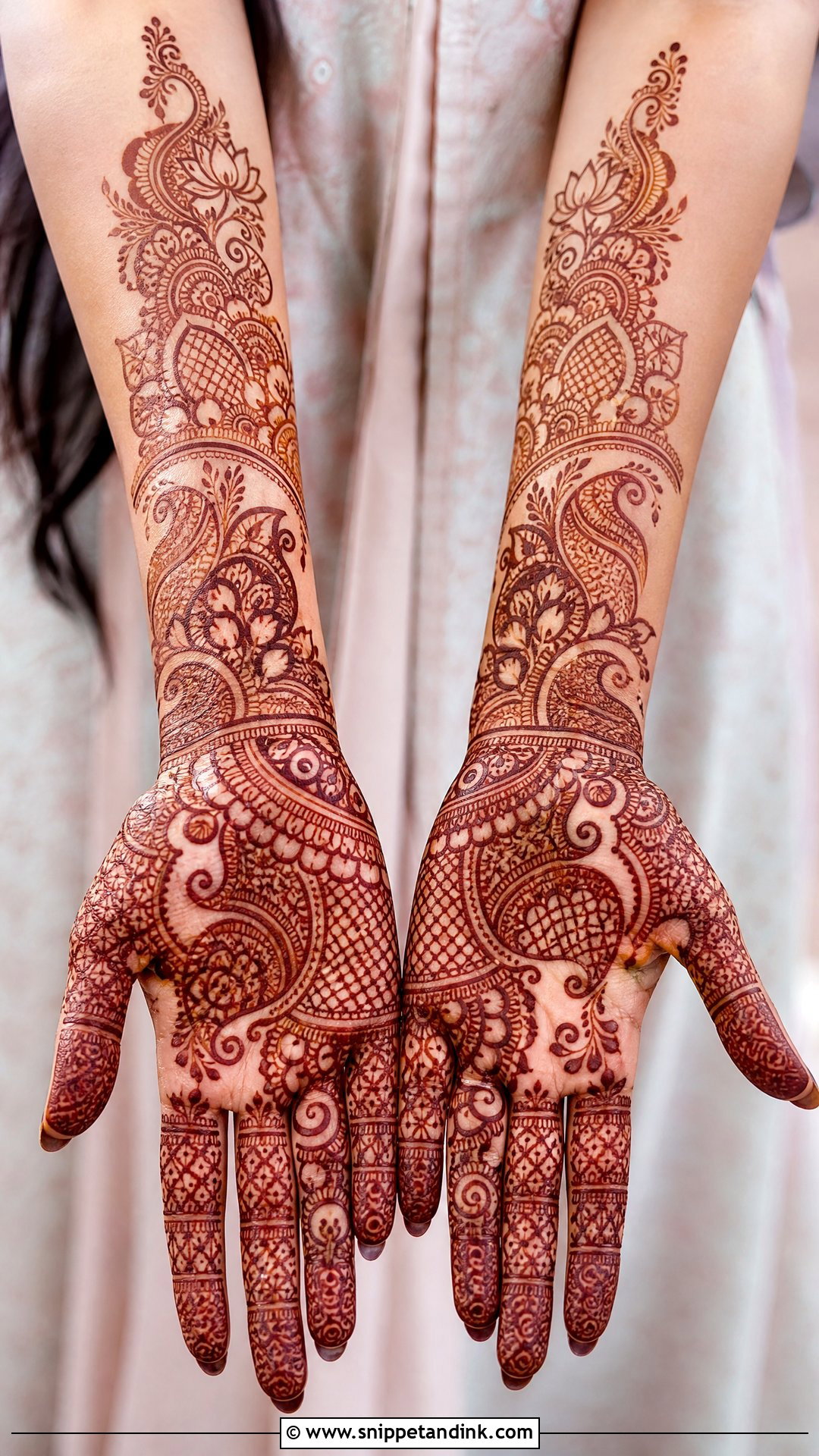
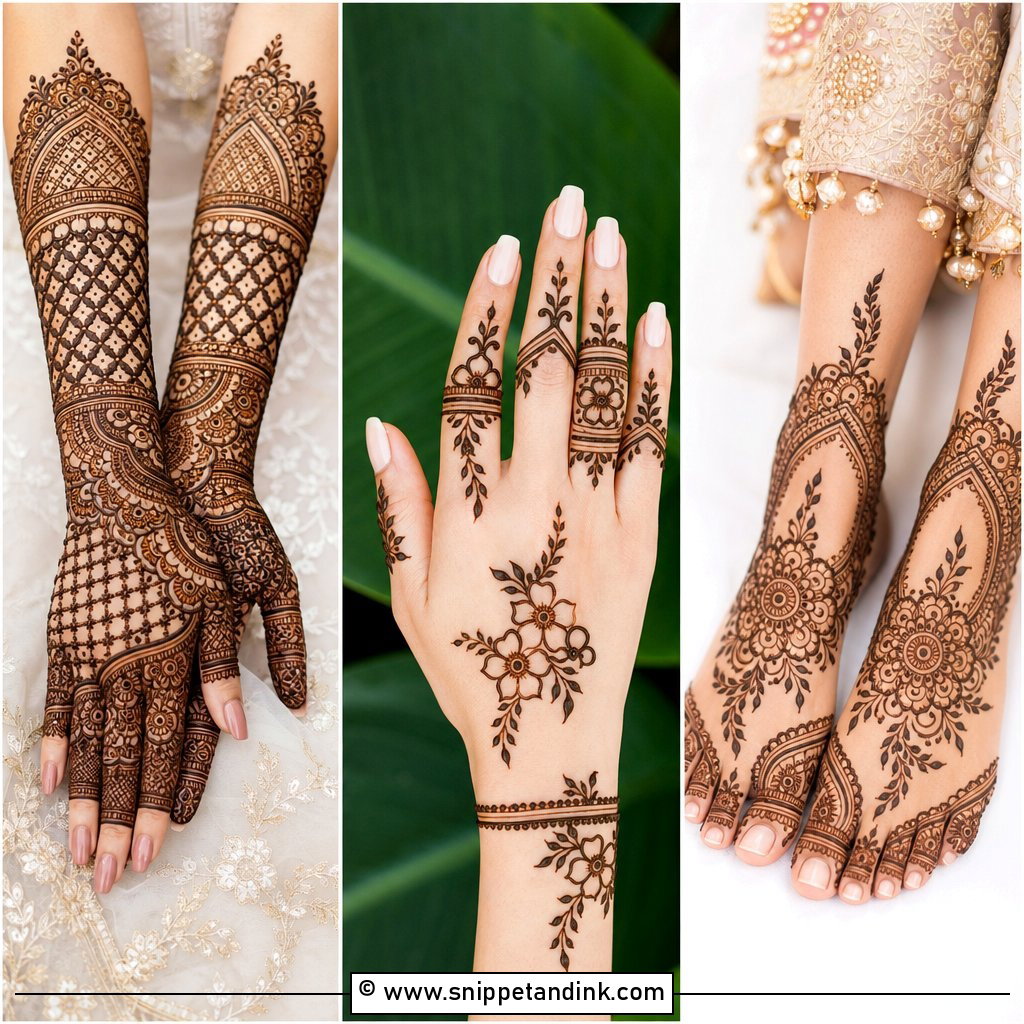
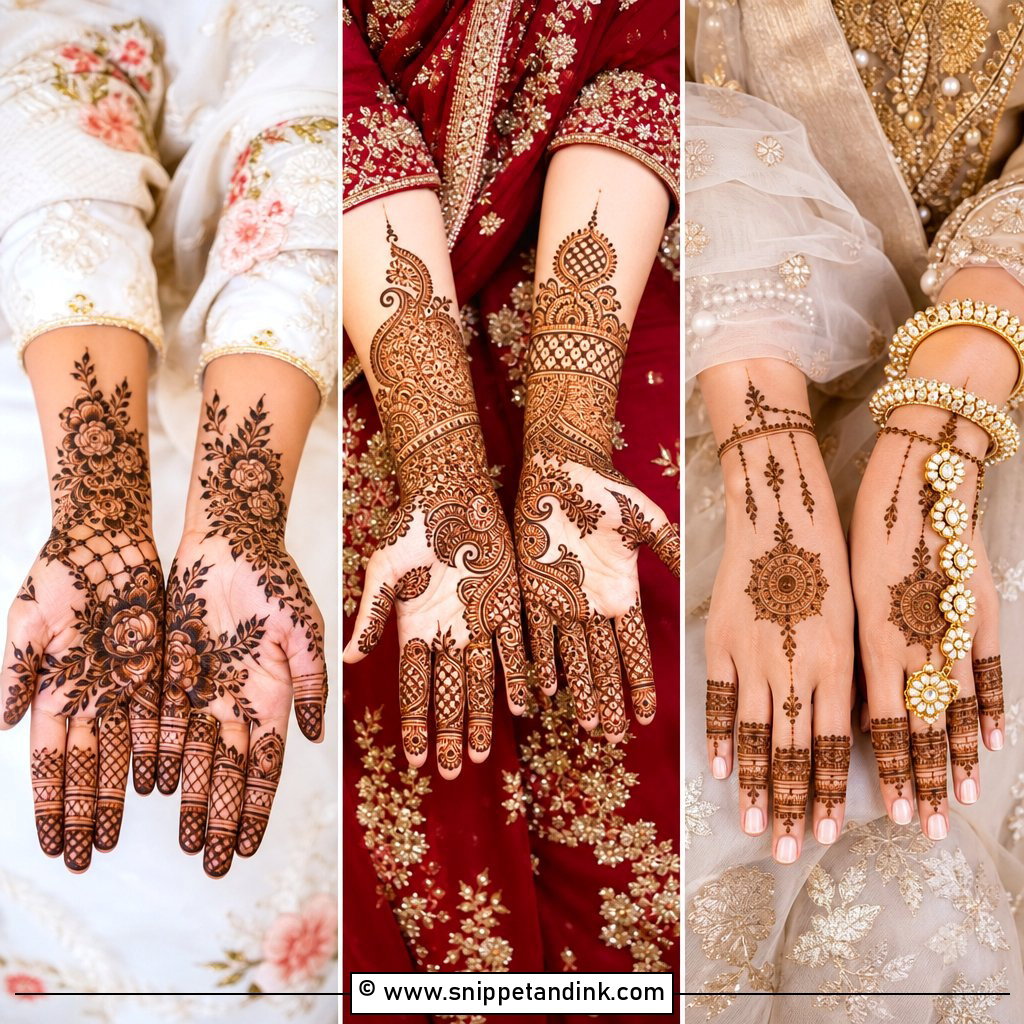
A full hand design covers the palm, fingers, wrist and part of the forearm. For a mother, I open the centre of the palm with a mandala or floral round and build outward with paisleys, lotus and vines, keeping medium spacing between motifs. That spacing matters: on dense fillers, the stain merges into a solid patch, and the design loses its shape in photos. Expect to sit for at least an hour per hand for this one. It suits silk sarees and embroidered lehengas on the main wedding day, when she has time set aside for it.
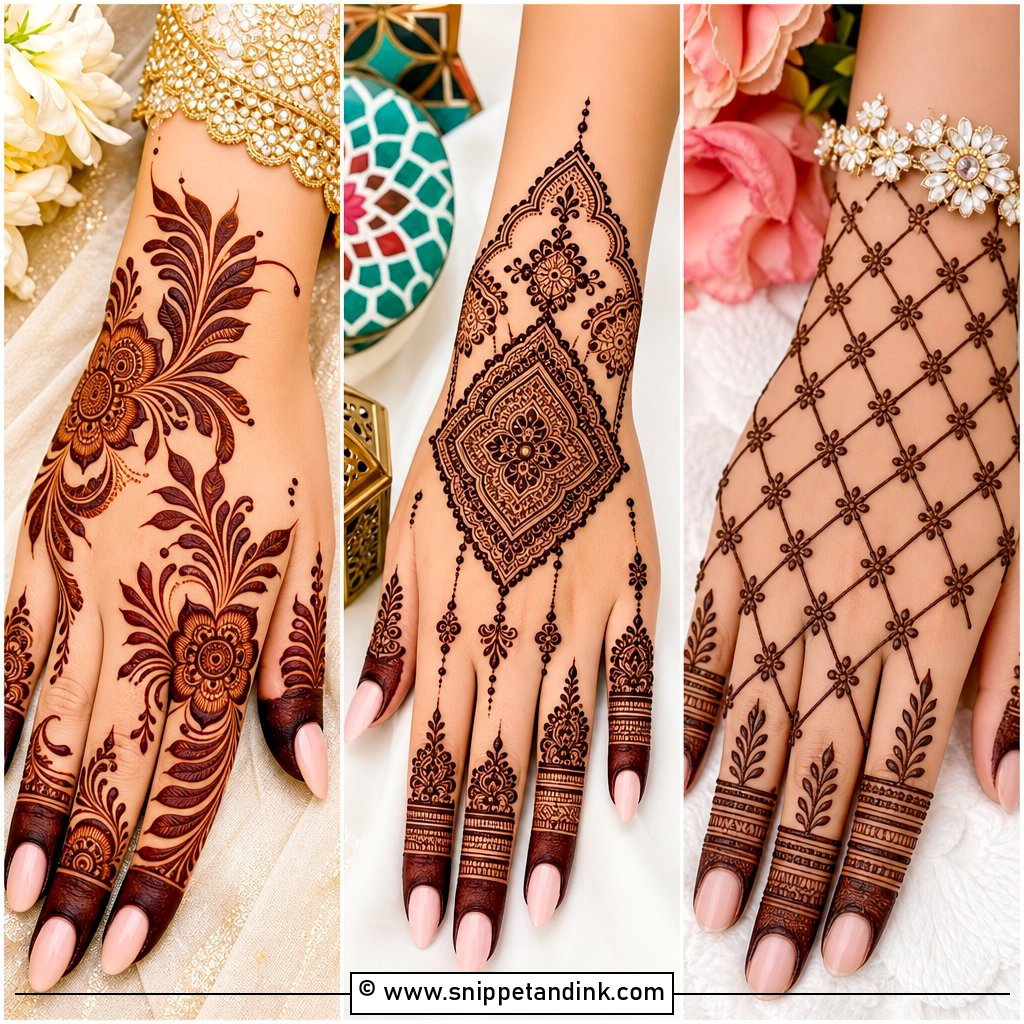
2. Bride Mother Arabic Mehndi Design
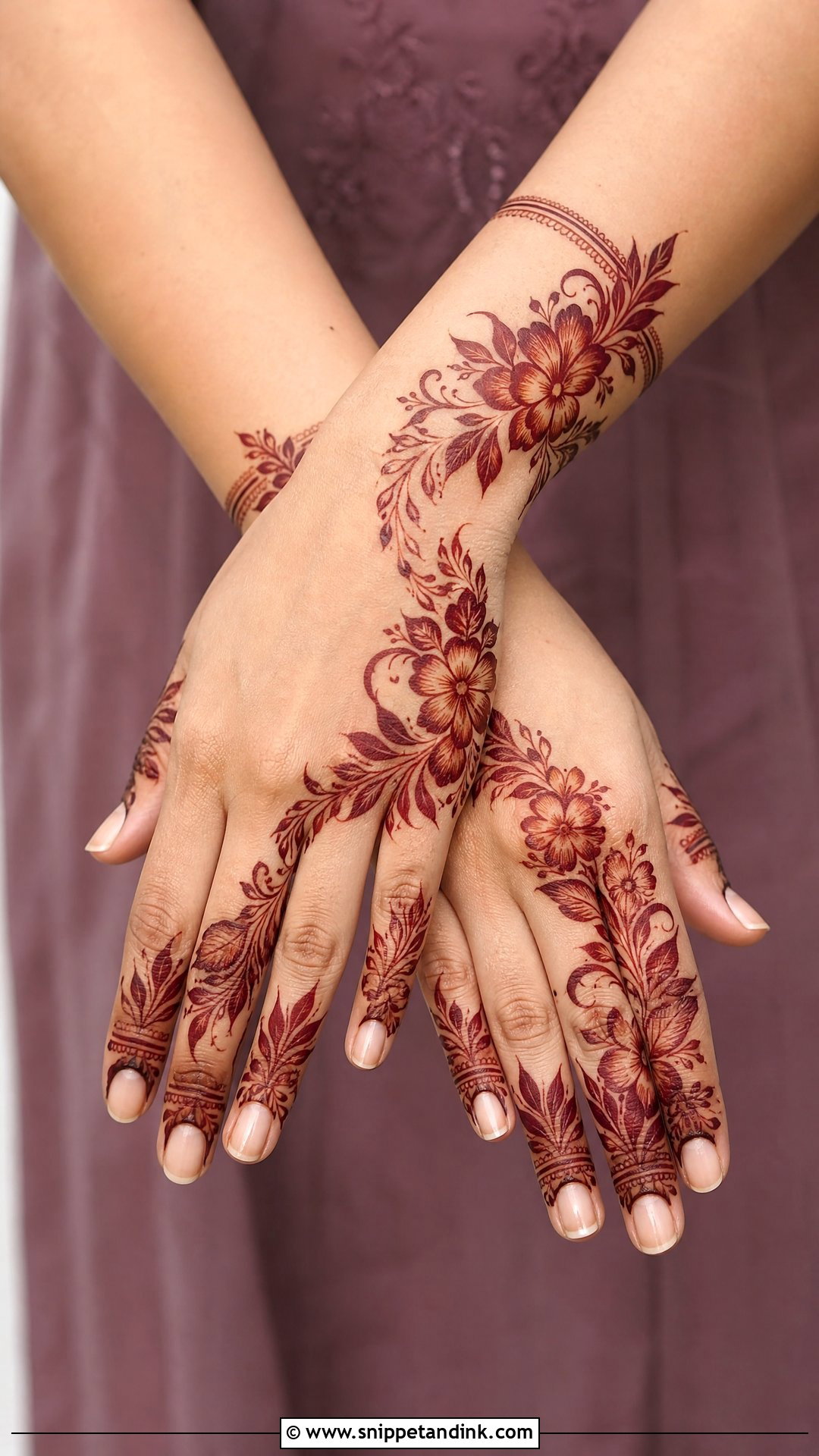
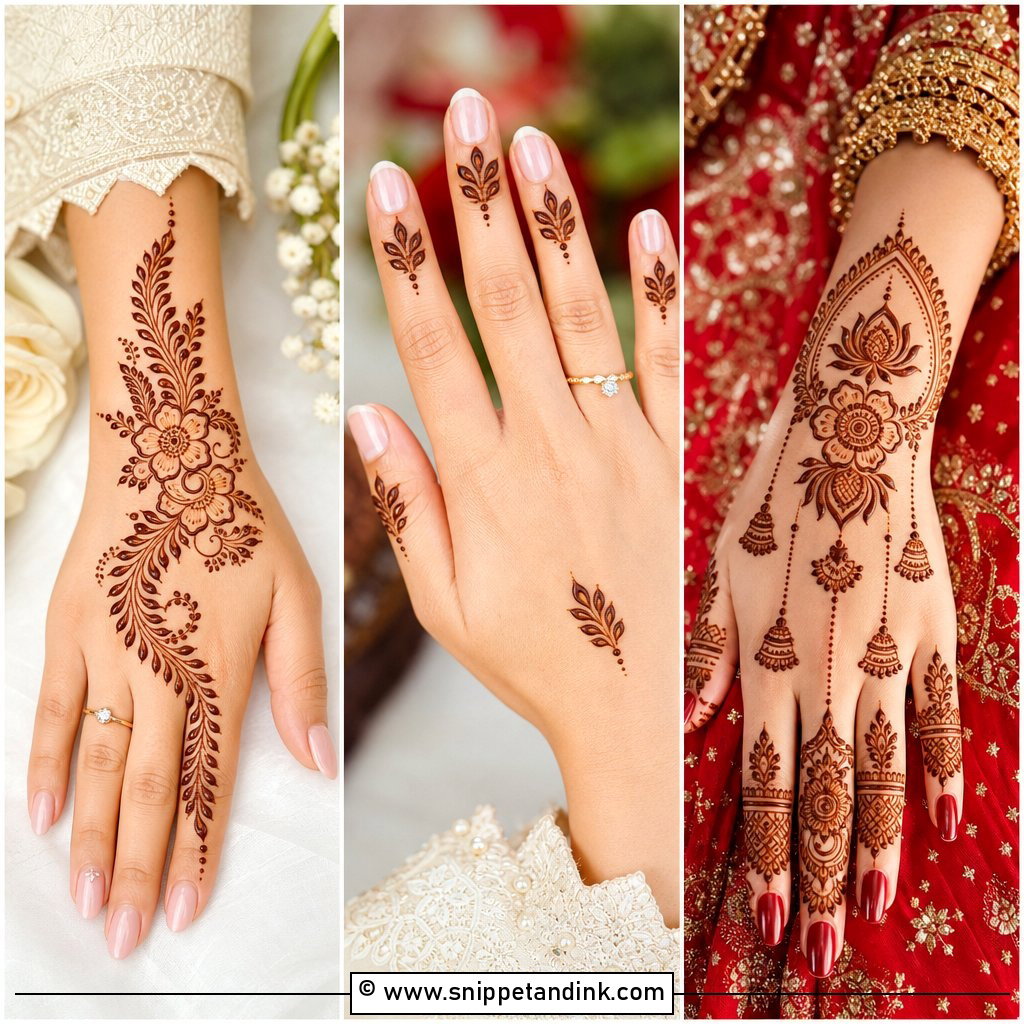
Arabic mehndi flows diagonally across the palm or back of the hand with plenty of bare skin around it, so it’s quicker to apply and quicker to dry. I use large shaded flowers, leafy trails and curved lines. For a mother, I’d go for a slightly fuller Arabic trail than the very thin modern versions, since those can look like a guest’s mehndi next to the bride. Detailed fingertips and a wrist band finish it. It sits well with chiffon sarees and lighter outfits for the smaller functions.
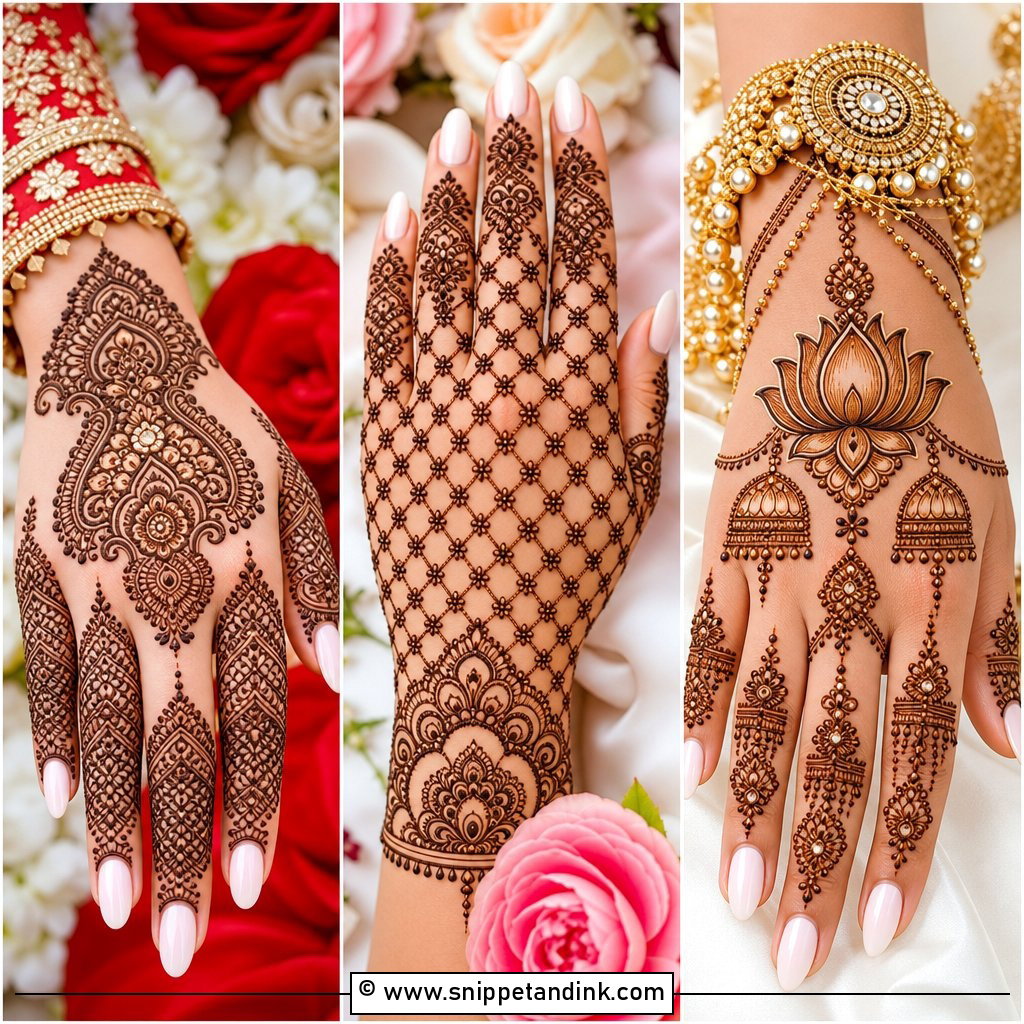
3. Bride Mother Back Hand Mehndi Design
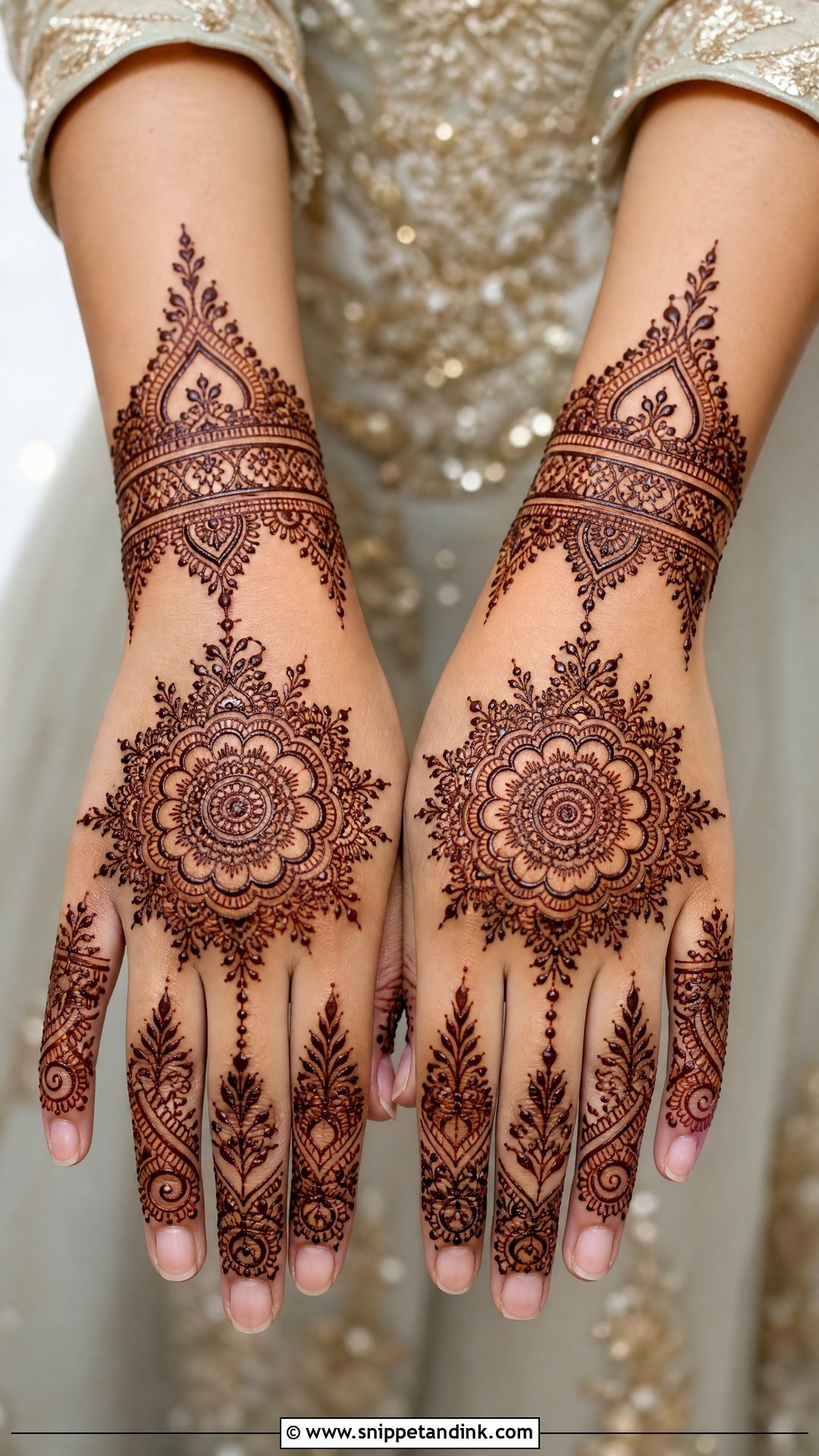
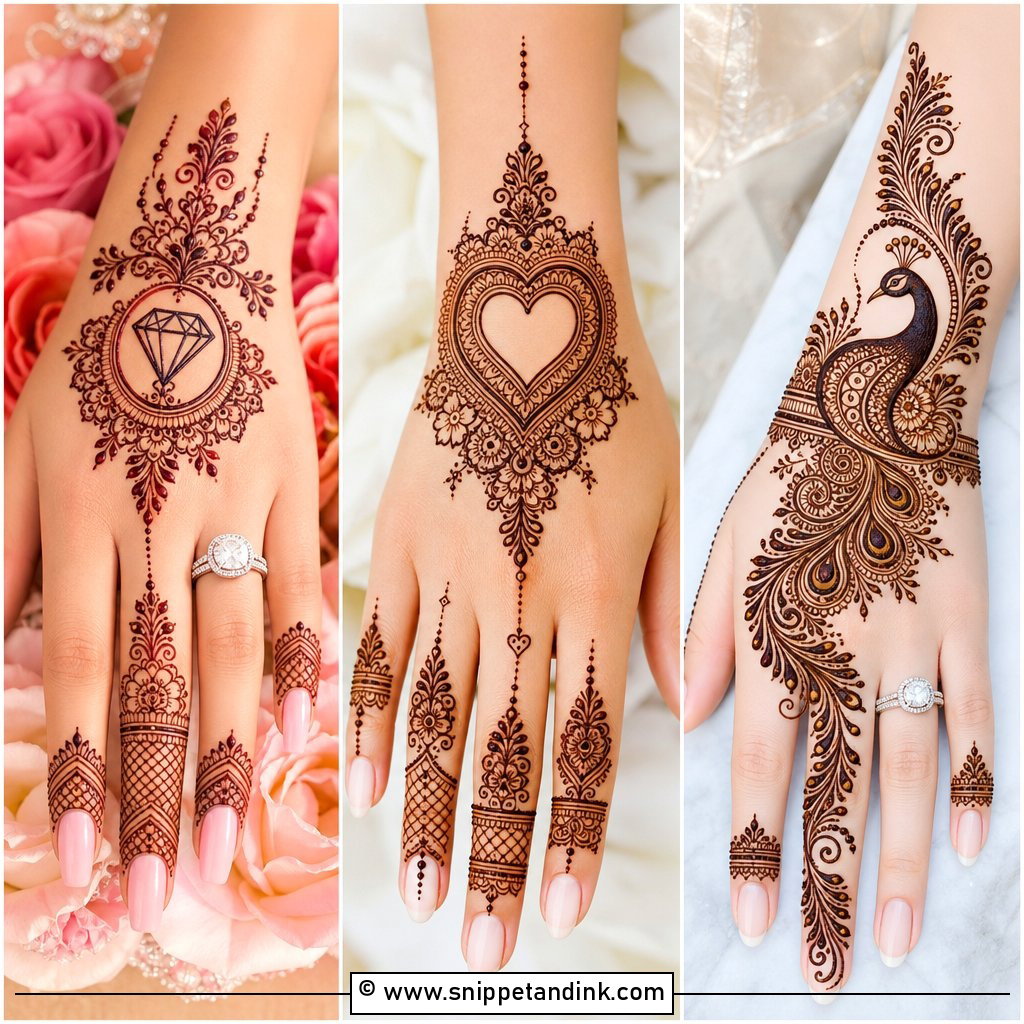
The back of the hand shows in nearly every blessing and ring photo, so I treat it as the face of the design. A bride mother back hand mehndi design usually has a central mandala or paisley cluster with leafy lines reaching toward the fingers and a cuff at the wrist. The skin on the back of the hand is thinner and drier than the palm, so the stain comes out lighter, often a shade or two below the palm. I keep the lines a little bolder here to compensate. It’s a good fit for mothers who want visible mehndi but find palm coverage uncomfortable.
4. Bride Mother Simple Mehndi Design
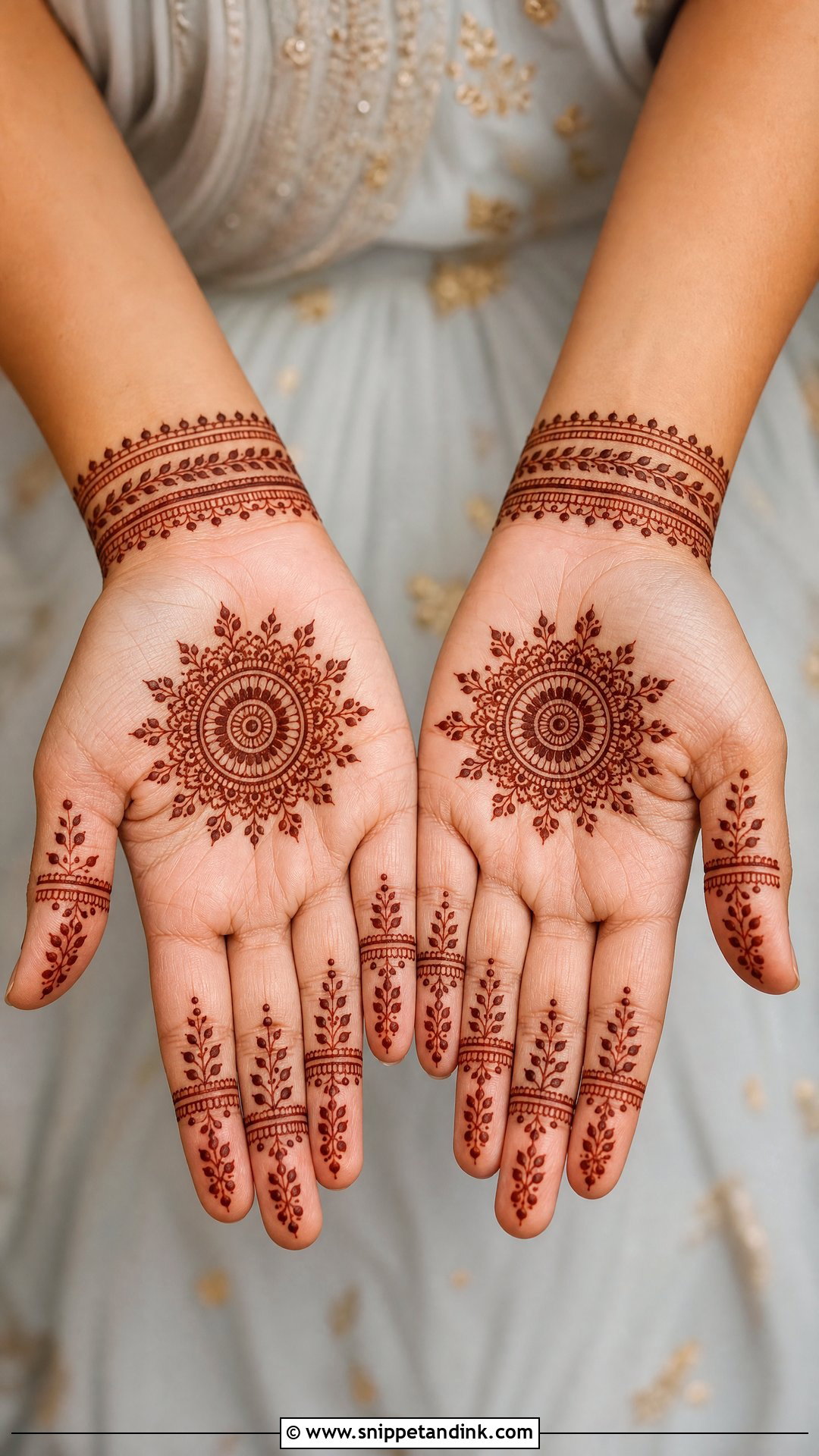
Simple doesn’t mean unplanned. A round mandala in the palm, thin vines on the fingers and a small wrist band can be done in twenty minutes and still look festive. I keep the outlines crisp and the fillers small, because a simple design with one wobbly line looks careless, while a busy one hides mistakes. This suits mothers hosting guests or attending several events in a day. The fast drying time is the real advantage: she can be back on her feet in under half an hour.
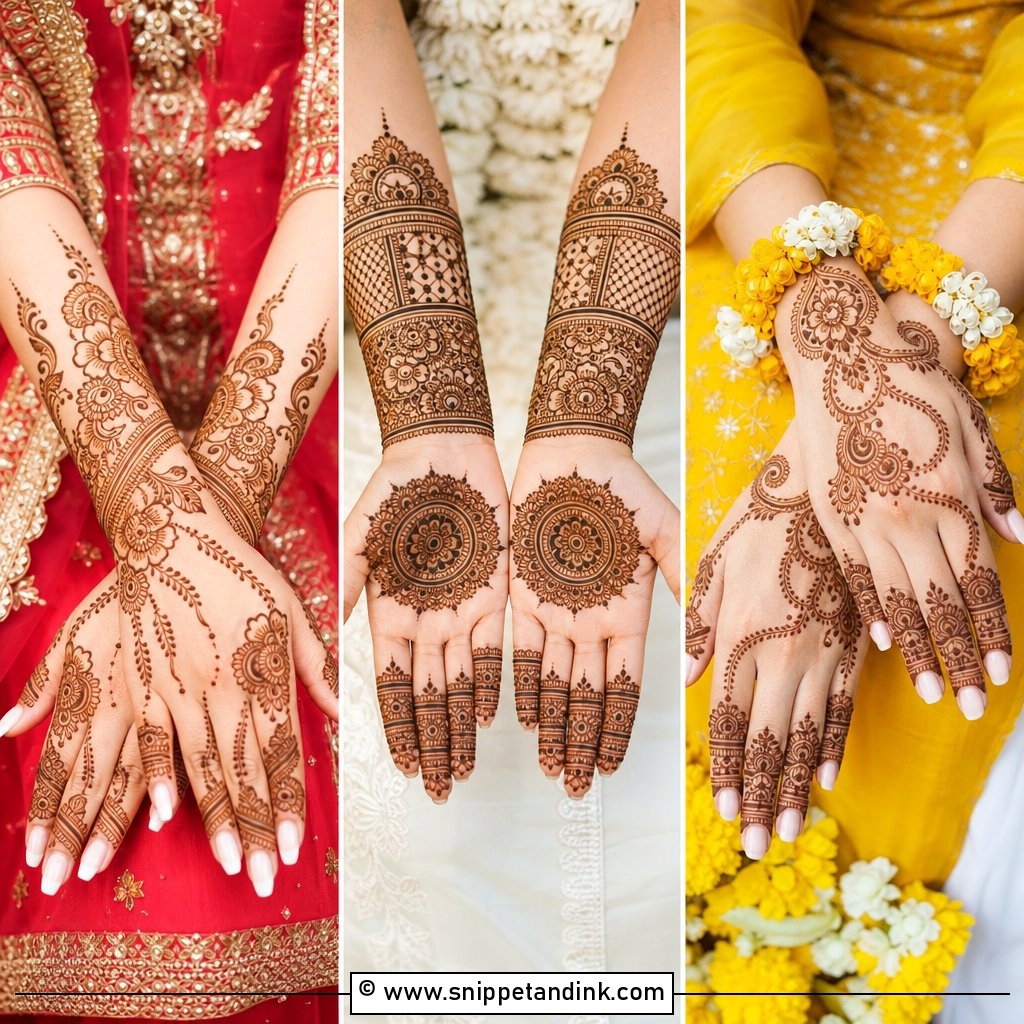
5. Bride Mother Mandala Mehndi Design
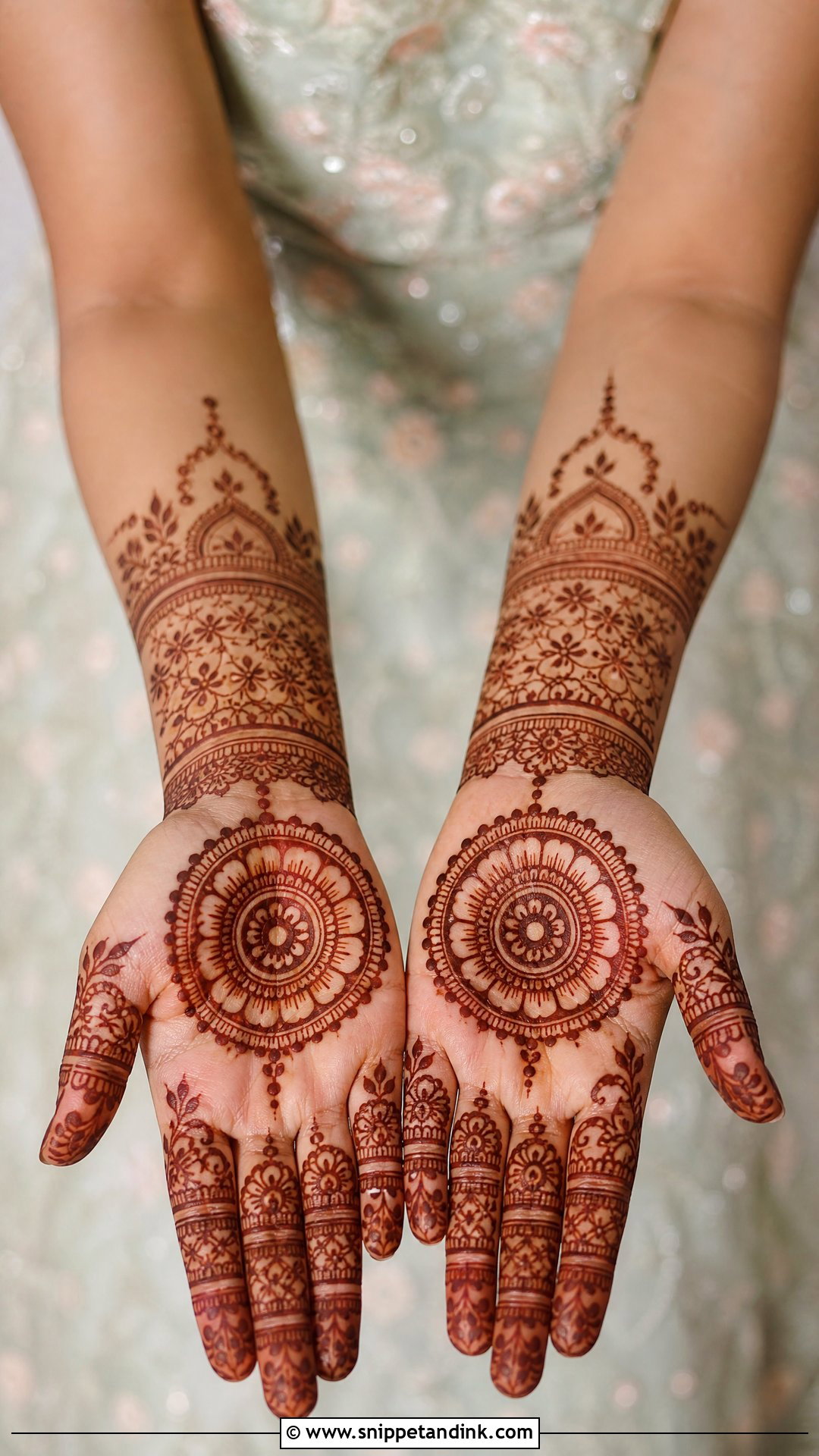
The circular center on the palm gives a mandala design its anchor, and from there I decorate the fingers and wrist with dots, petals or fine jaali. It reads as traditional and calm. To make it more festive, I extend it with paisley corners or a floral band at the wrist. Both hands should mirror each other; a mismatched pair is the first thing people notice when hands are held together in front of a havan or during blessings.
6. Bride Mother Floral Mehndi Design
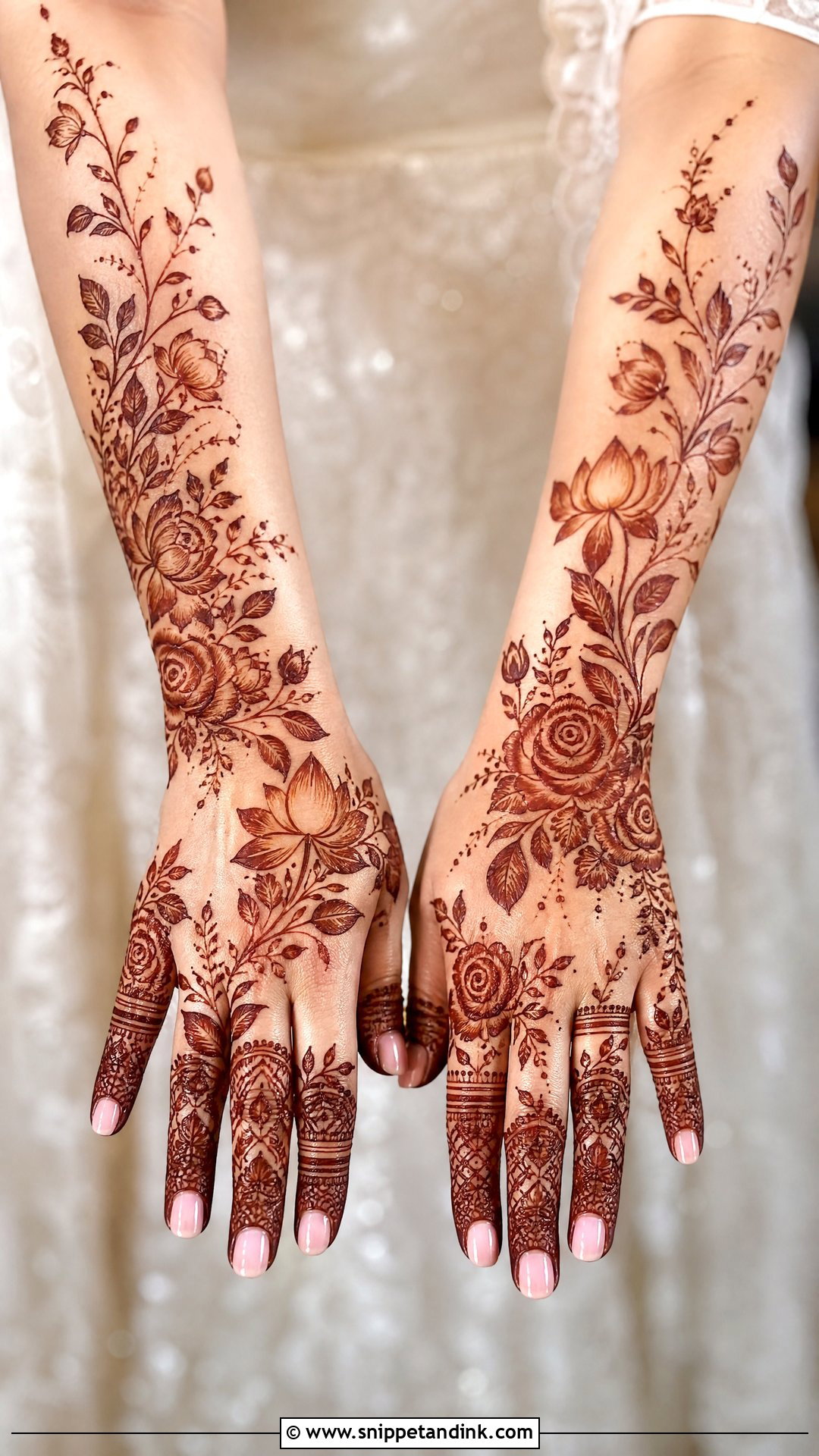
Floral mehndi suits a mother when the flowers are larger and spaced out, with fine lines inside each petal, rather than tiny crowded motifs everywhere. Roses, lotus petals, leafy stems and small buds can cover the palm and back of the hand. A trail from the wrist to the fingers suits lighter outfits; a fuller floral palm suits heavier wedding wear. Open spaces keep it fresh-looking for daytime functions. Tiny, crowded flowers tend to blur once the stain darkens, so I’d steer clear of them for anyone over a certain age whose skin has finer creases.
7. Bride Mother Peacock Mehndi Design
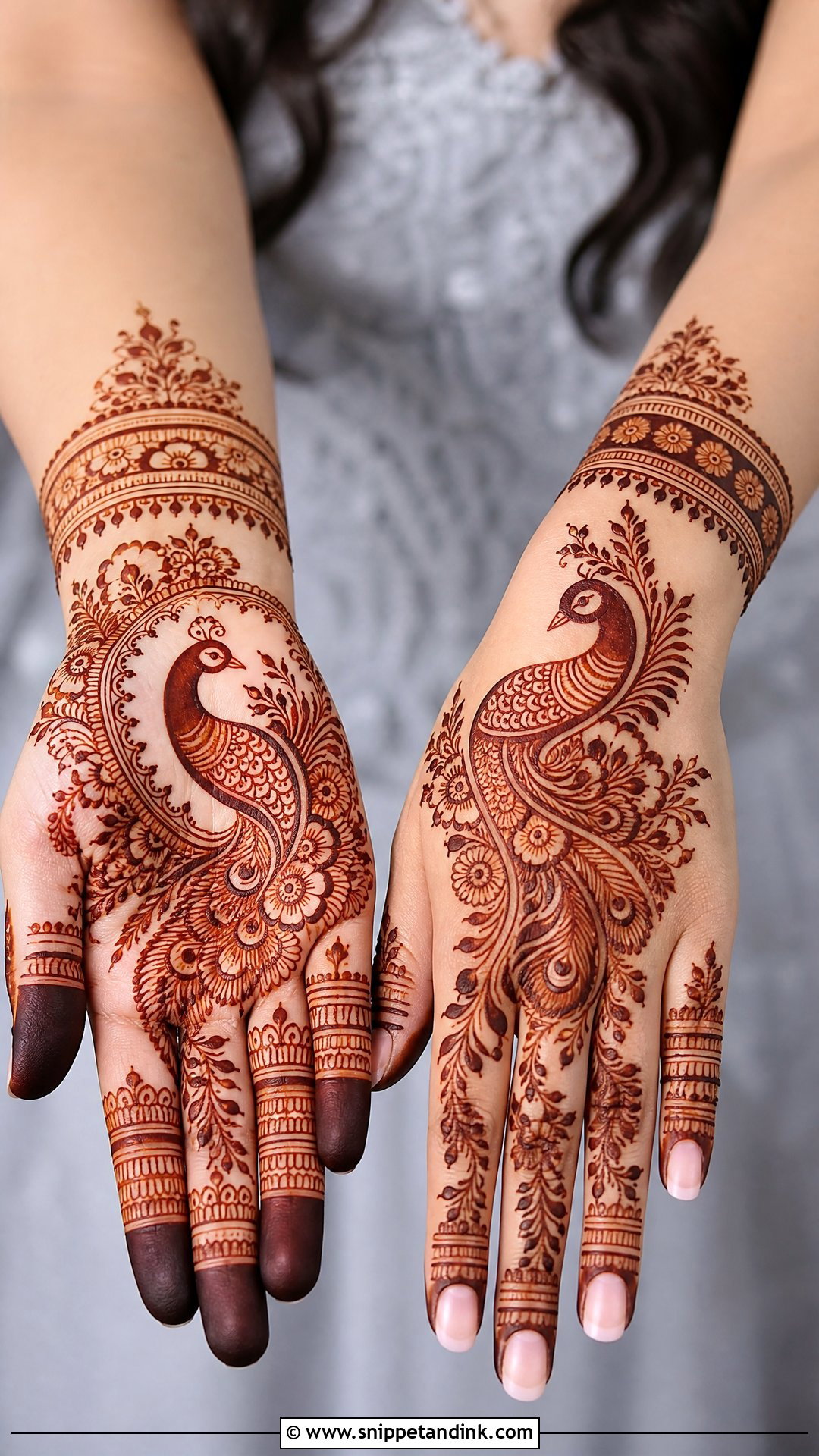
One or two peacocks are enough. More than that turns a mother’s hand into bridal work. I place the peacock on the palm, back of the hand or near the wrist, and surround it with paisleys, vines and feather-like details and curved borders. The neck and feather lines need a fine cone tip and a steady hand, so allow extra time. It looks especially at home with Banarasi and Kanjeevaram sarees and embroidered outfits. Mothers who love traditional Indian mehndi often ask for this one first.
8. Bride Mother Paisley Mehndi Design
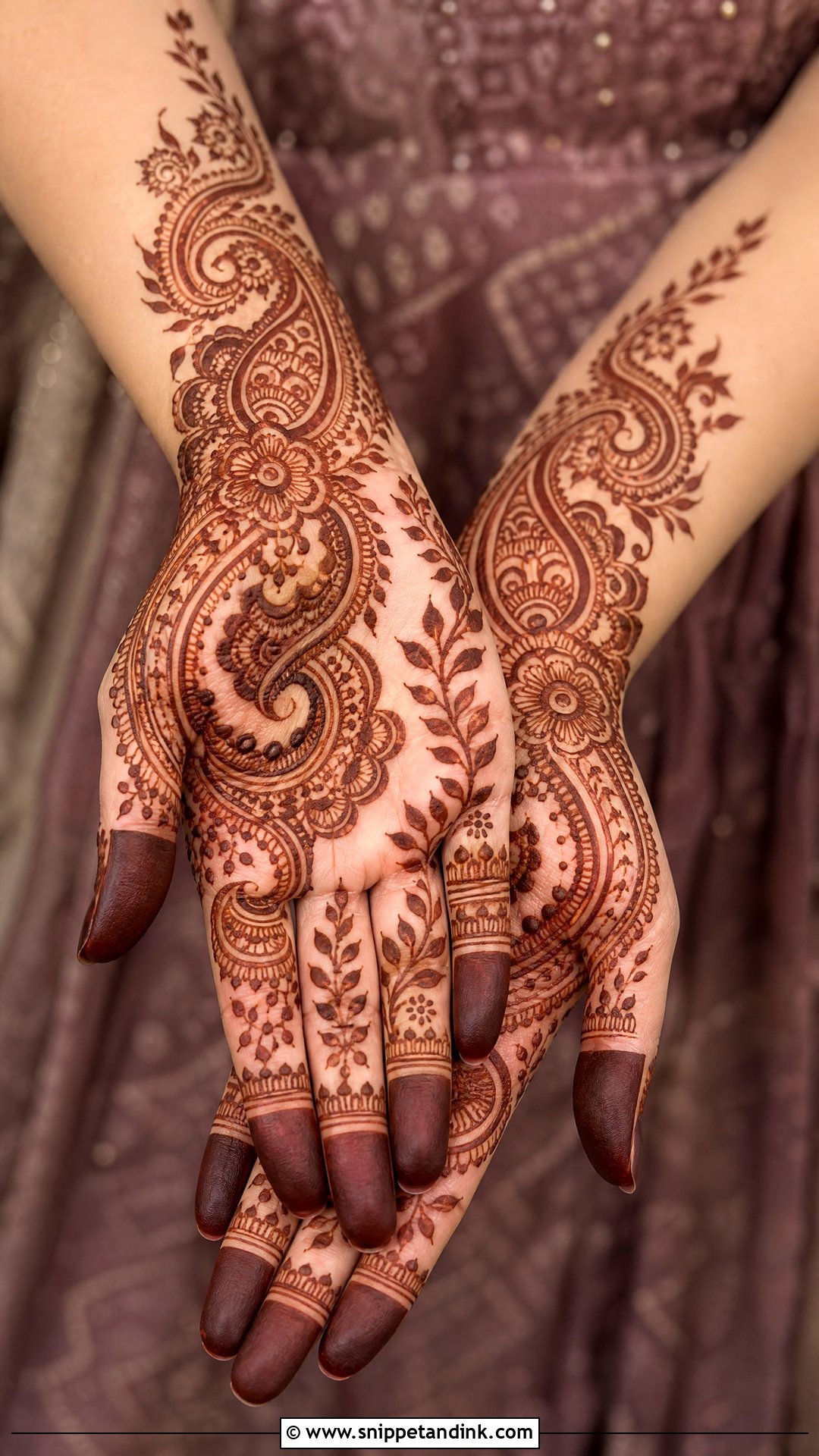
Paisleys fit any hand size because I can stretch or shrink the curve to suit the space. I arrange them across the palm with floral fillings, fine lines and leafy borders, or as a trail across the back of the hand with bangles. They give a full traditional look without figures or bridal storytelling elements, which keeps the mother’s hands distinct from the bride’s. I keep them medium-sized so the inner detail survives the stain. Silk, georgette, brocade and velvet outfits all sit well with this design.
9. Bride Mother Jaali Mehndi Design
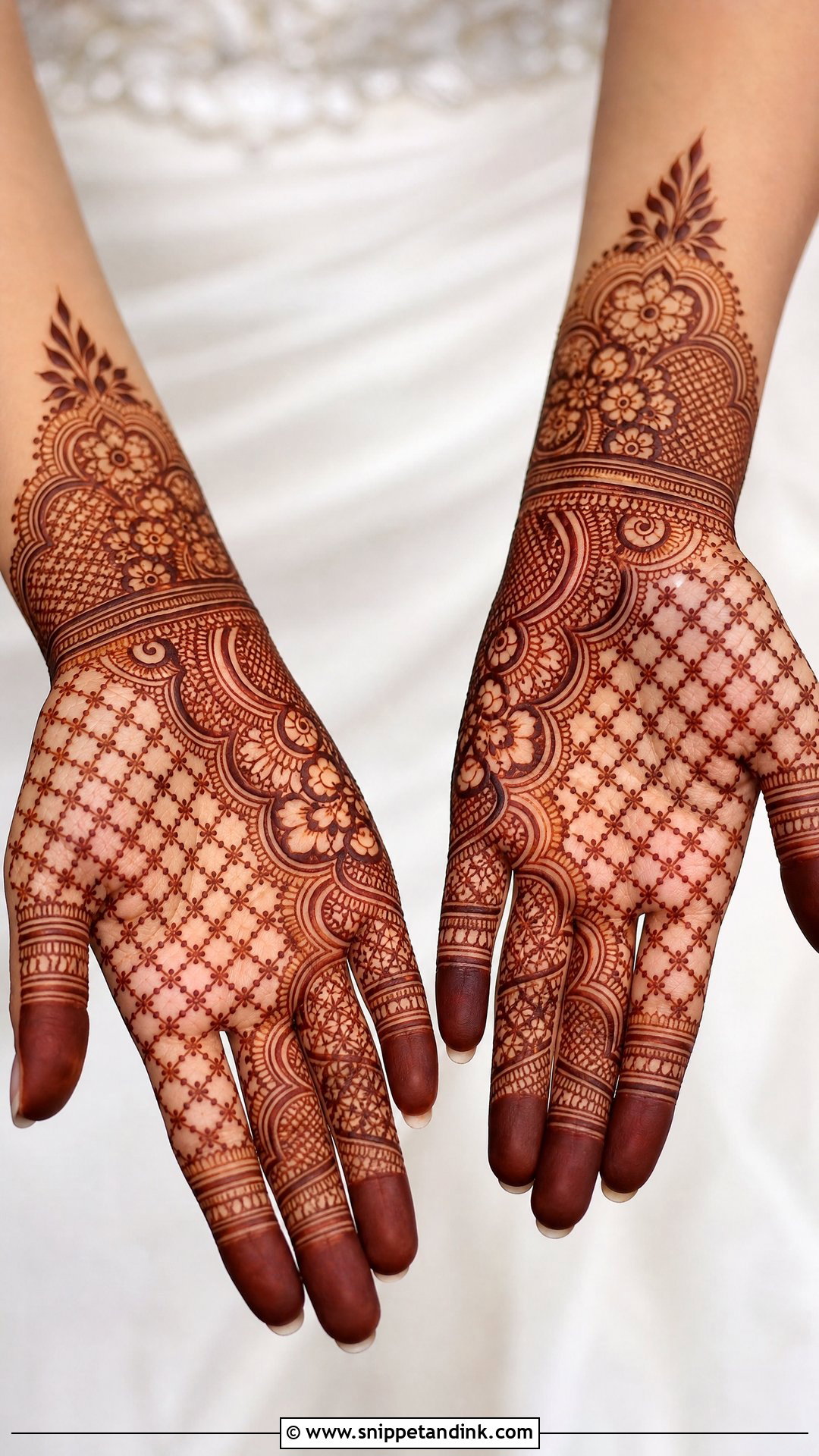
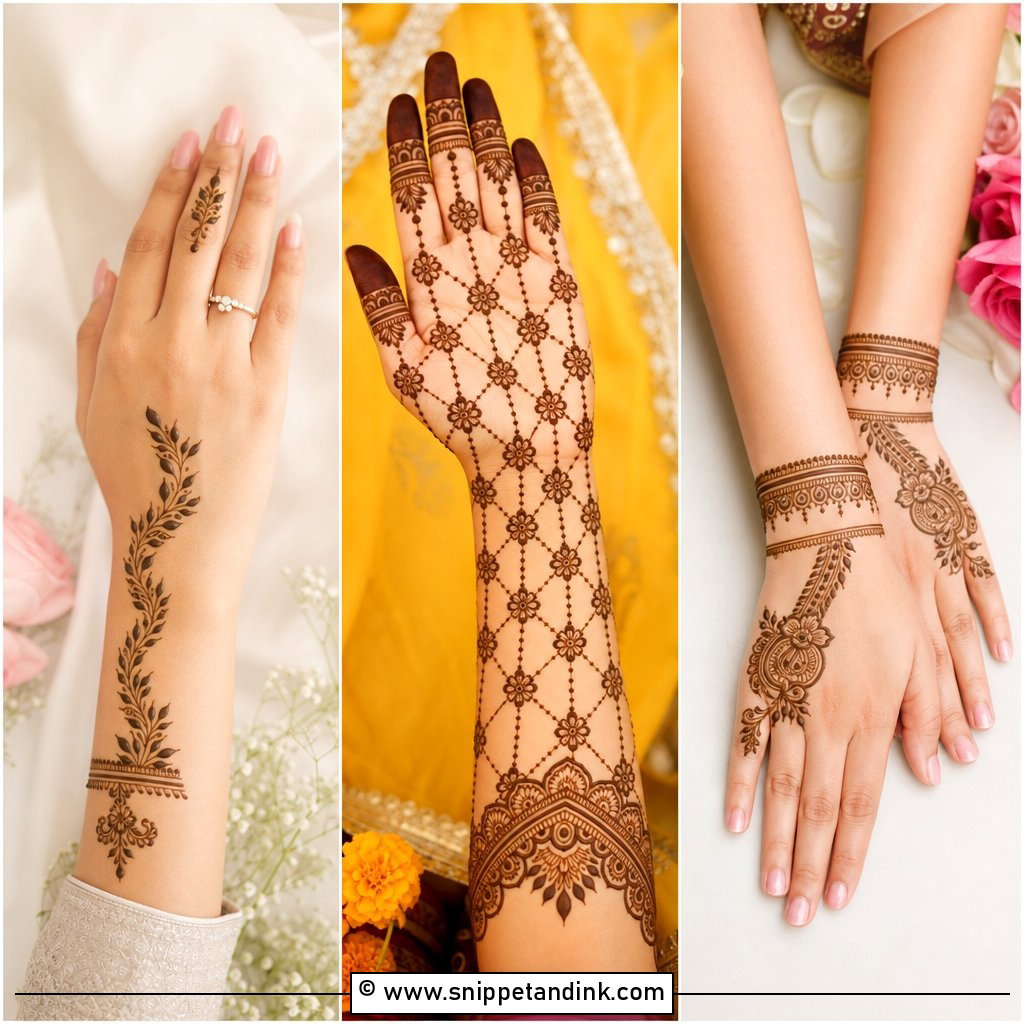
Jaali is a fine net pattern that looks like lace on the skin. On its own across a whole palm it gets repetitive, so I mix it with florals, mandalas or paisley borders and leave open space around the bolder motifs. Near the fingers and wrist on the back of the hand, it can look like lace gloves. The grid lines need consistent spacing; if they’re too tight, the stain floods the gaps and the net disappears. In close-up photos, clean jaali gives the hand real texture.
10. Bride Mother Indo Arabic Mehndi Design
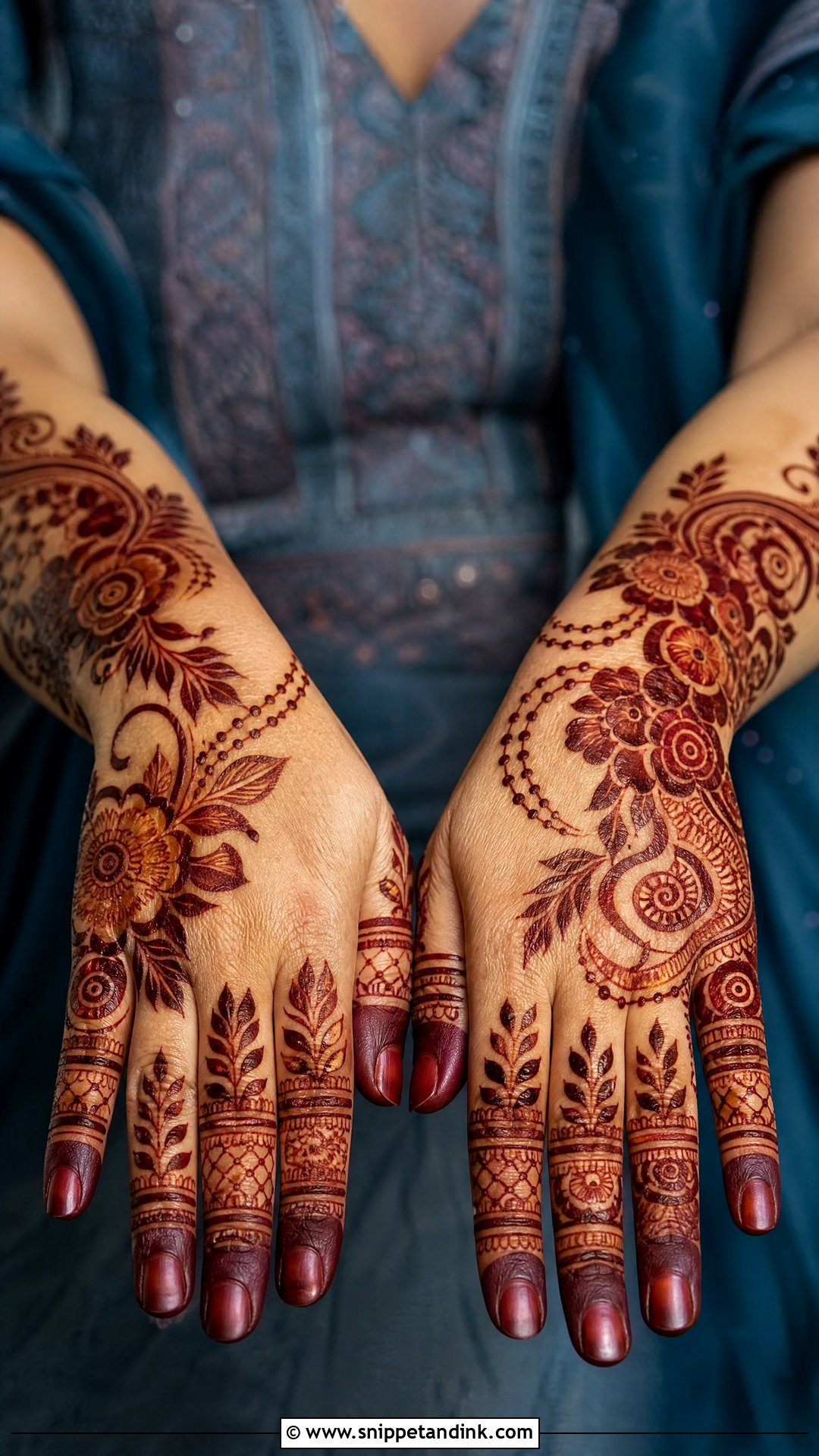
Indo-Arabic combines the open flow of Arabic mehndi with the detailed fillers of Indian work. Bold flowers, paisleys, shaded leaves and fine fingertip patterns sit alongside bare skin, which keeps it lighter to wear and easier to dry. It suits palms and backs of hands. I find it works across engagement, sangeet, mehndi night and the wedding morning, so a mother can wear one design through several events if her schedule doesn’t allow a fresh application each day.
11. Bride Mother Bracelet Mehndi Design
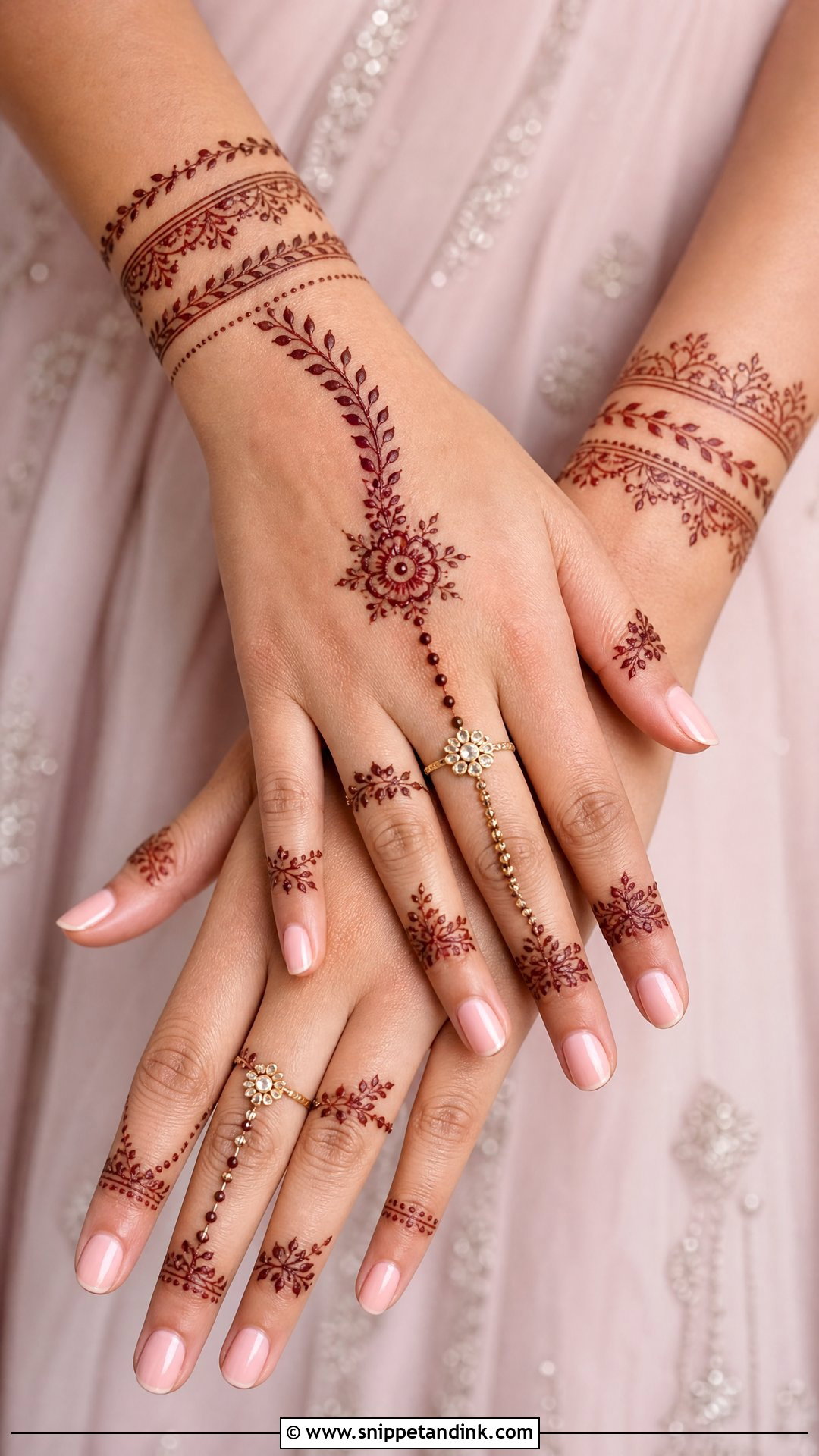
A bracelet design draws hand jewellery onto the skin: a wrist cuff, chains running up to finger rings and fine connecting lines. For the mother of the bride, I add small flowers, leaves and dots around the cuff so it feels festive enough. The palm can stay plain or carry a small mandala. It takes about fifteen to twenty minutes a hand and pairs well with bangles and rings. Keep real rings off until the paste is scraped, or they’ll smudge the finger chains.
12. Bride Mother Finger Mehndi Design
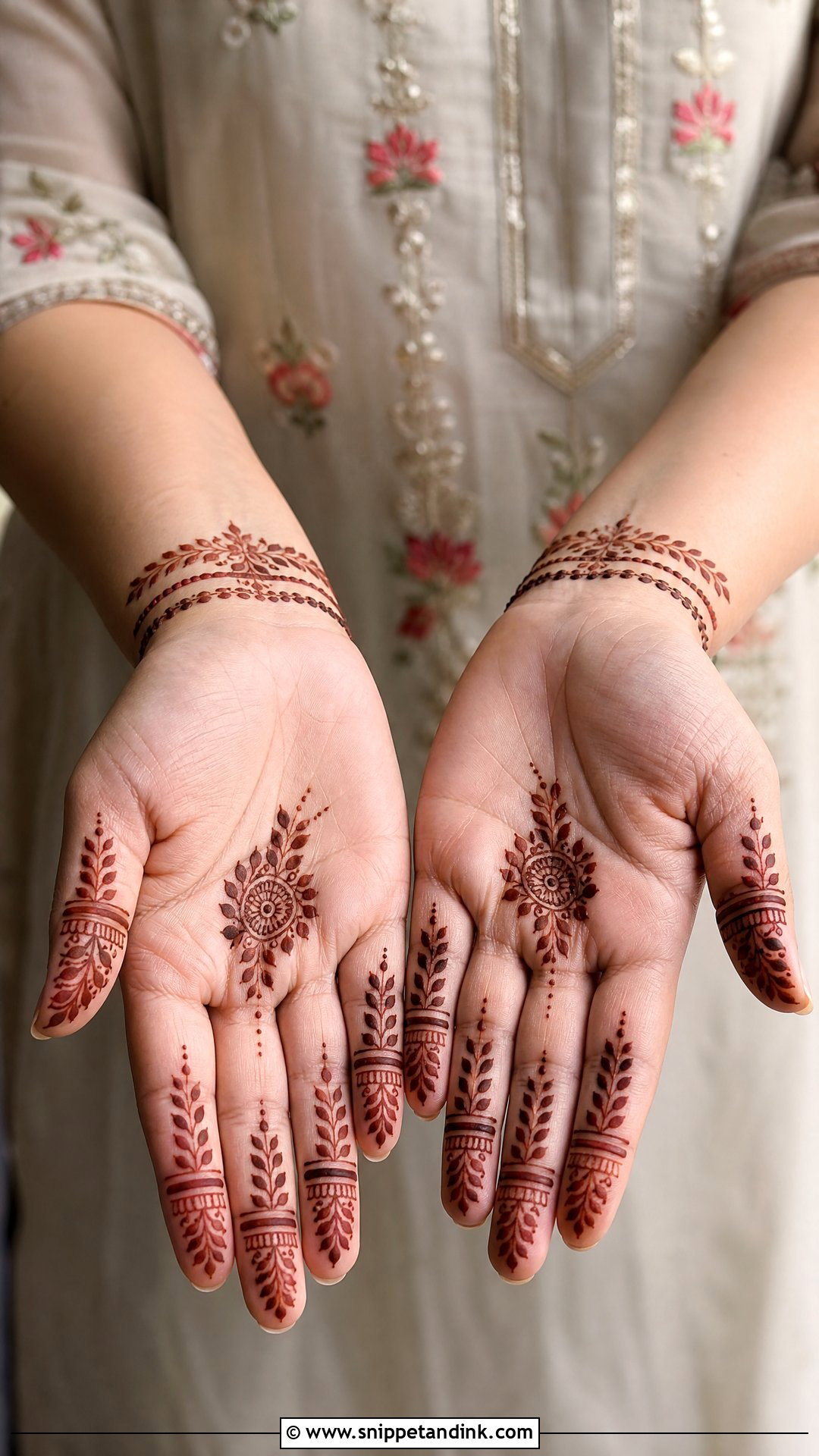
Concentrating the detail on the fingers keeps the palm free for work, which is why mothers who are running the household during the wedding often choose this. I use vines, leafy bands, tiny florals and filled fingertips, with a small palm motif or wrist band to finish. It dries quickly. The fingertips stain the darkest of anywhere on the hand, so even a light design here reads well. Thick filled blocks can look heavy on fingers, so I keep to crisp lines.
13. Bride Mother Palm Mehndi Design
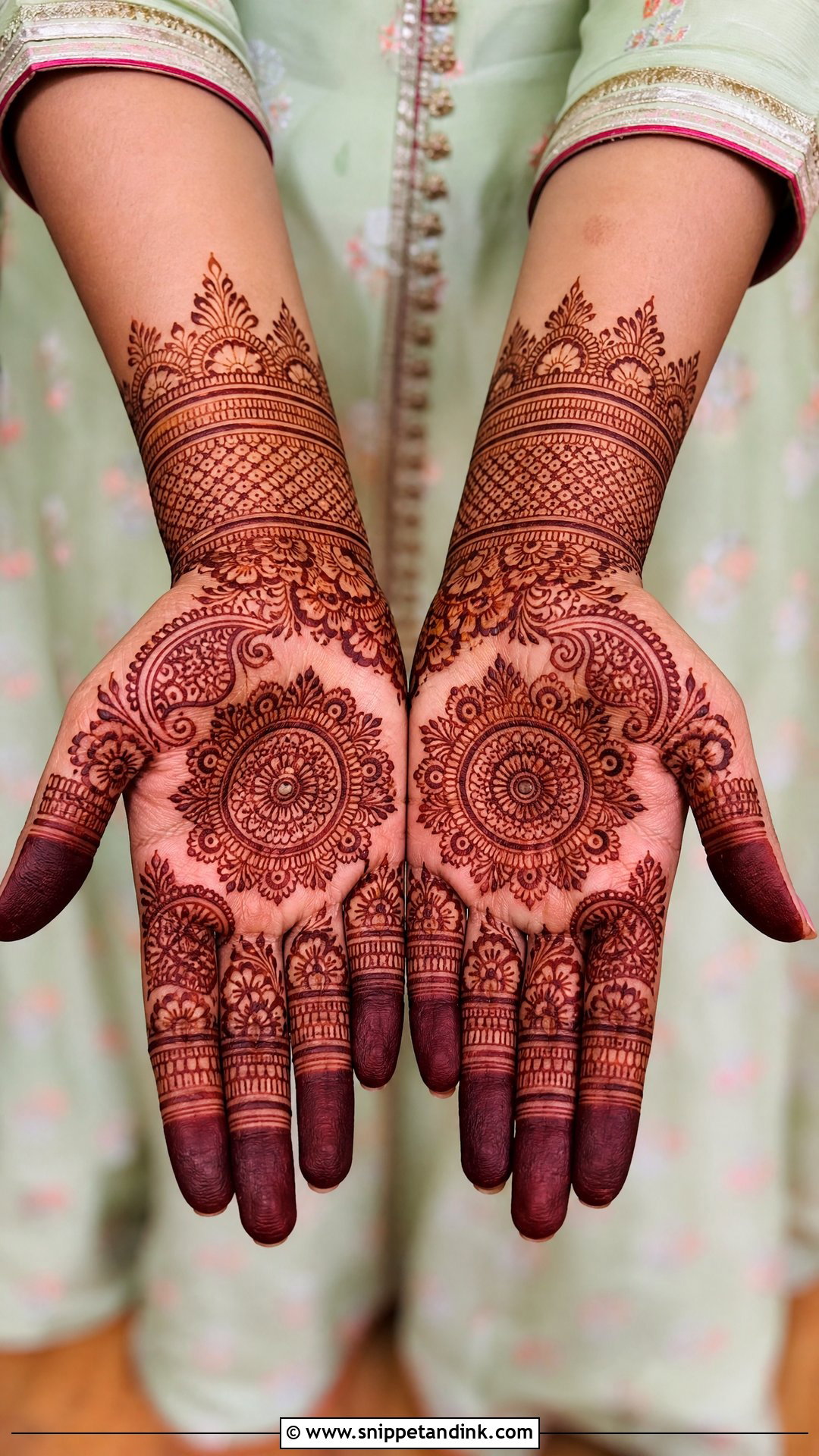
The palm takes the deepest stain of any part of the hand, because the skin is thicker there, so palm work gives the richest colour. I usually place a mandala centre, paisley side panels, floral borders and detailed fingertips. It shows in prayers, blessings and family rituals where the palms face up. A good palm design leaves small breathing spaces around each motif so the pattern stays readable. If the palm is detailed, I keep the back of the hand lighter for balance.
14. Bride Mother Minimal Mehndi Design
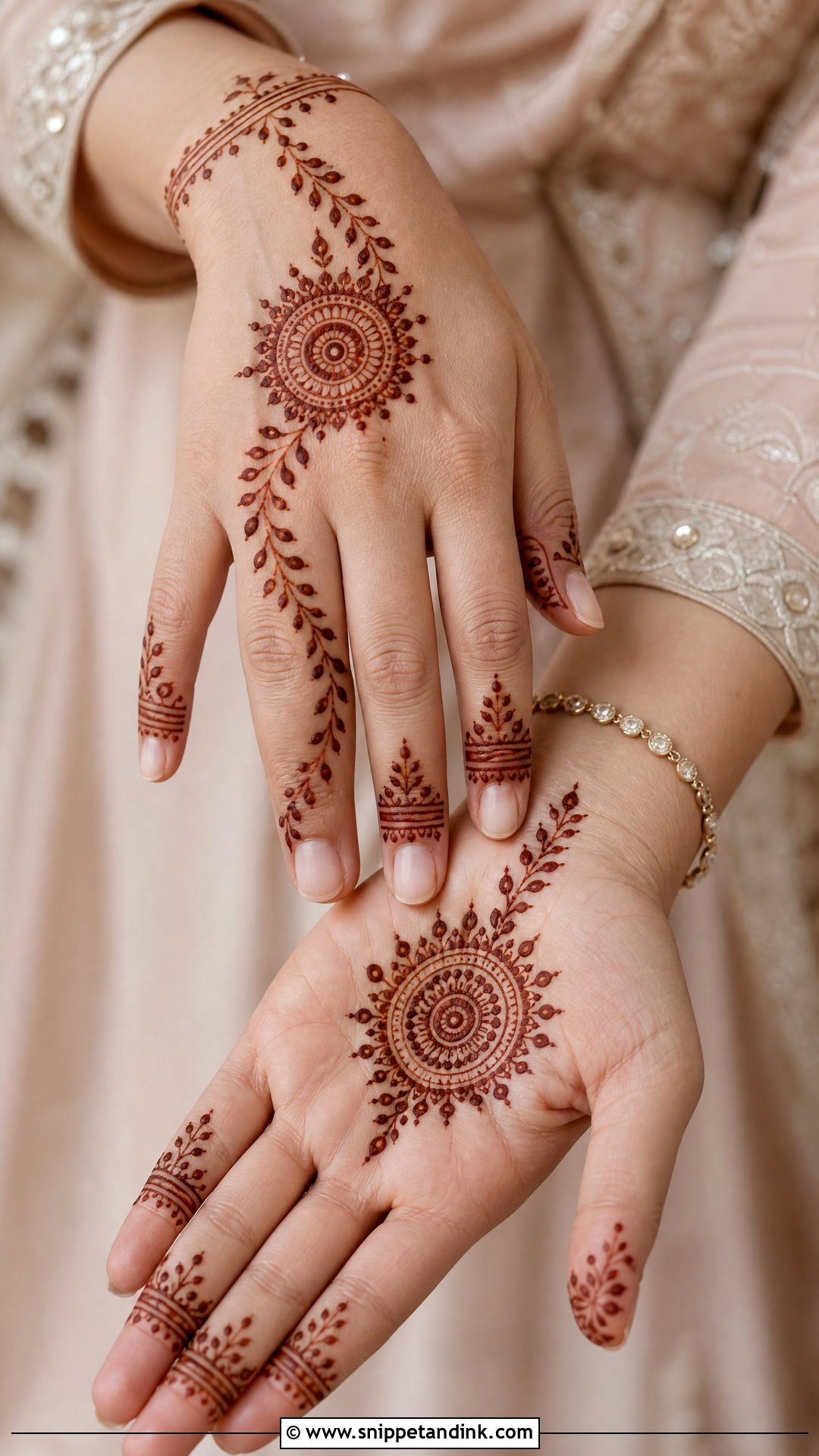
Minimal mehndi still needs a clear start, centre and finish, or it looks like the artist ran out of time. I’d do a small mandala, slim leafy trails, dotted borders and fine finger accents, then close it with a bracelet band at the wrist. It suits modern sarees, pastel lehengas and simple salwar suits. For mothers who don’t usually wear henna, this is the comfortable choice, and it’s quick enough to fit between other jobs.

15. Bride Mother Rajasthani Mehndi Design
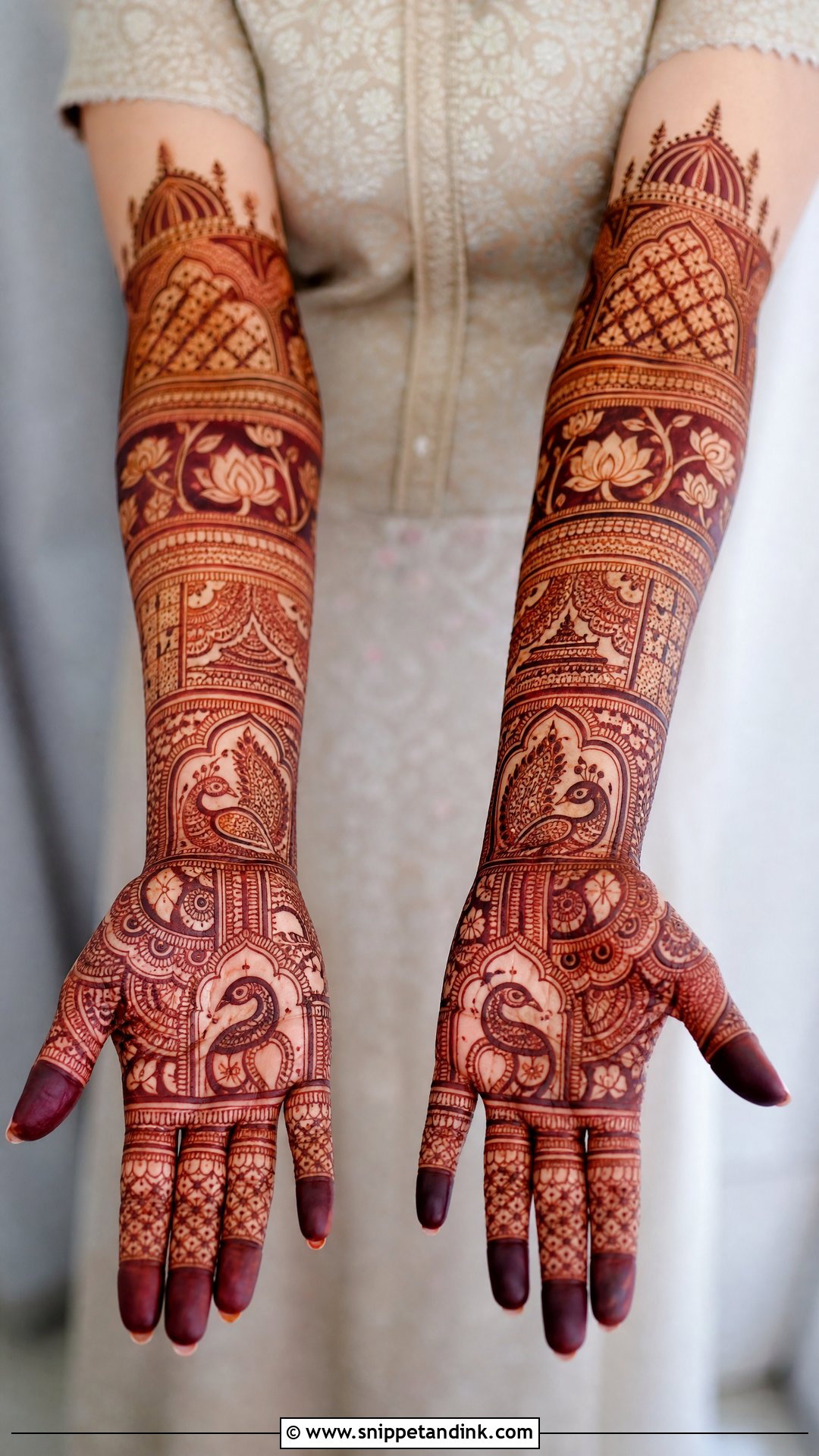
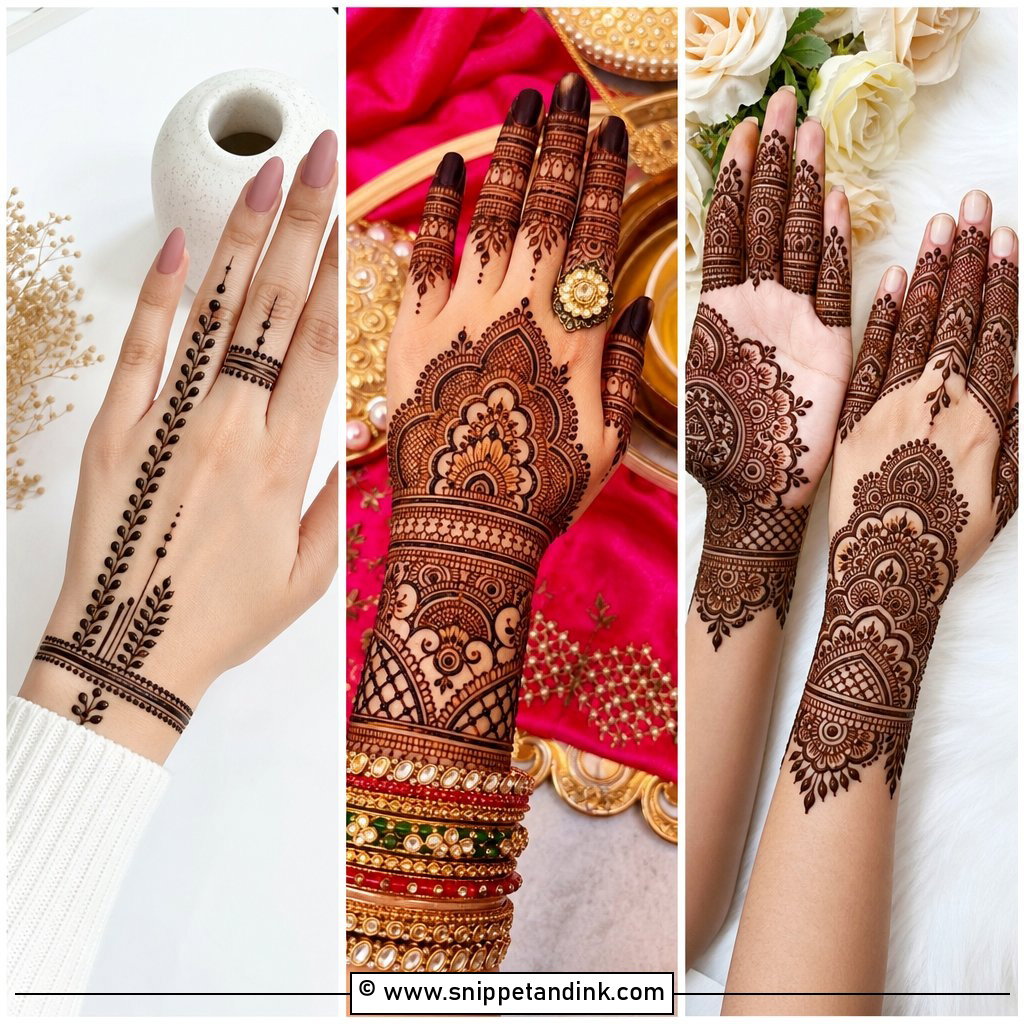
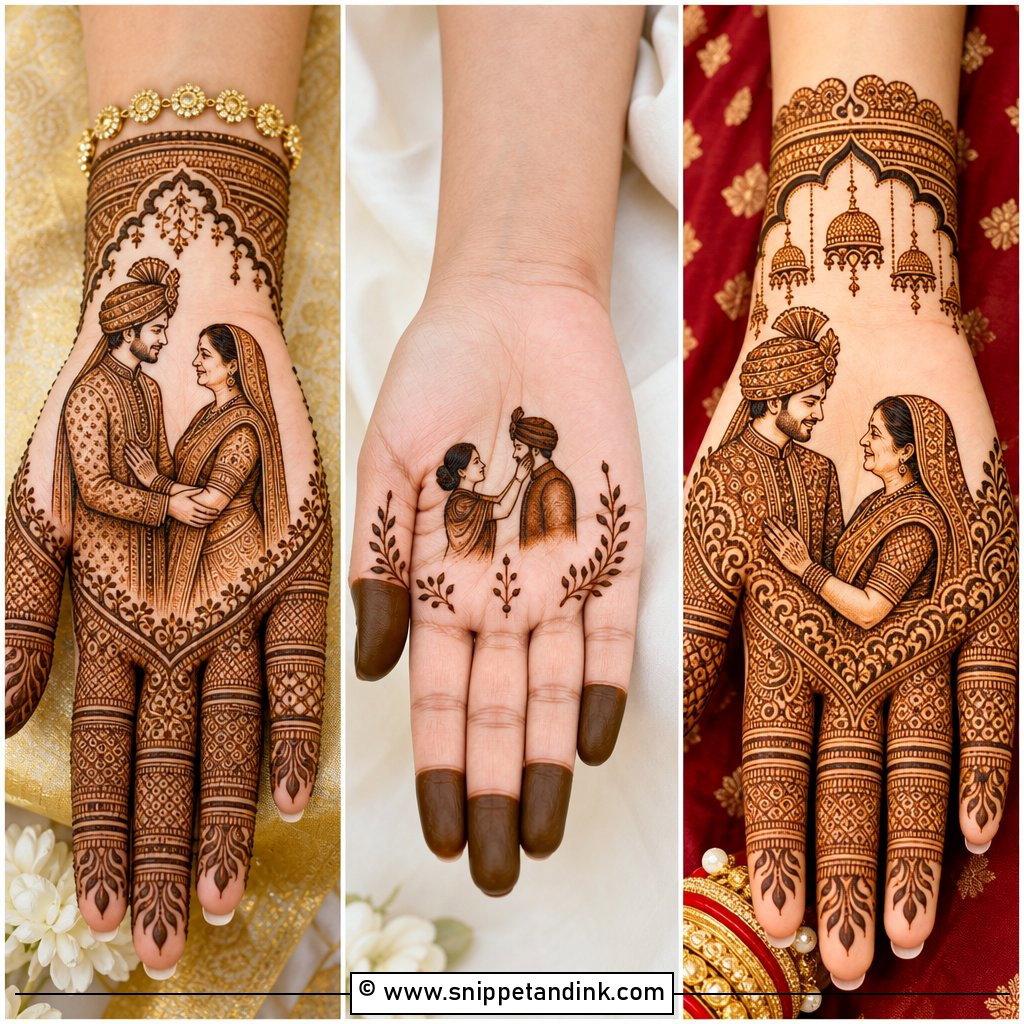
Rajasthani mehndi is dense and figurative by tradition, so for a mother I pull it back to its classic elements: peacocks, paisleys, domes, lotus and fine checks, at medium density over the palm and wrist. Full bridal storytelling with figures belongs to the bride. It pairs with colourful lehengas, bandhani sarees and traditional jewellery. This one takes time, often over an hour a hand, so it’s best done on a day when she can sit through it rather than squeezing it in before guests arrive.
16. Bride Mother Moroccan Mehndi Design
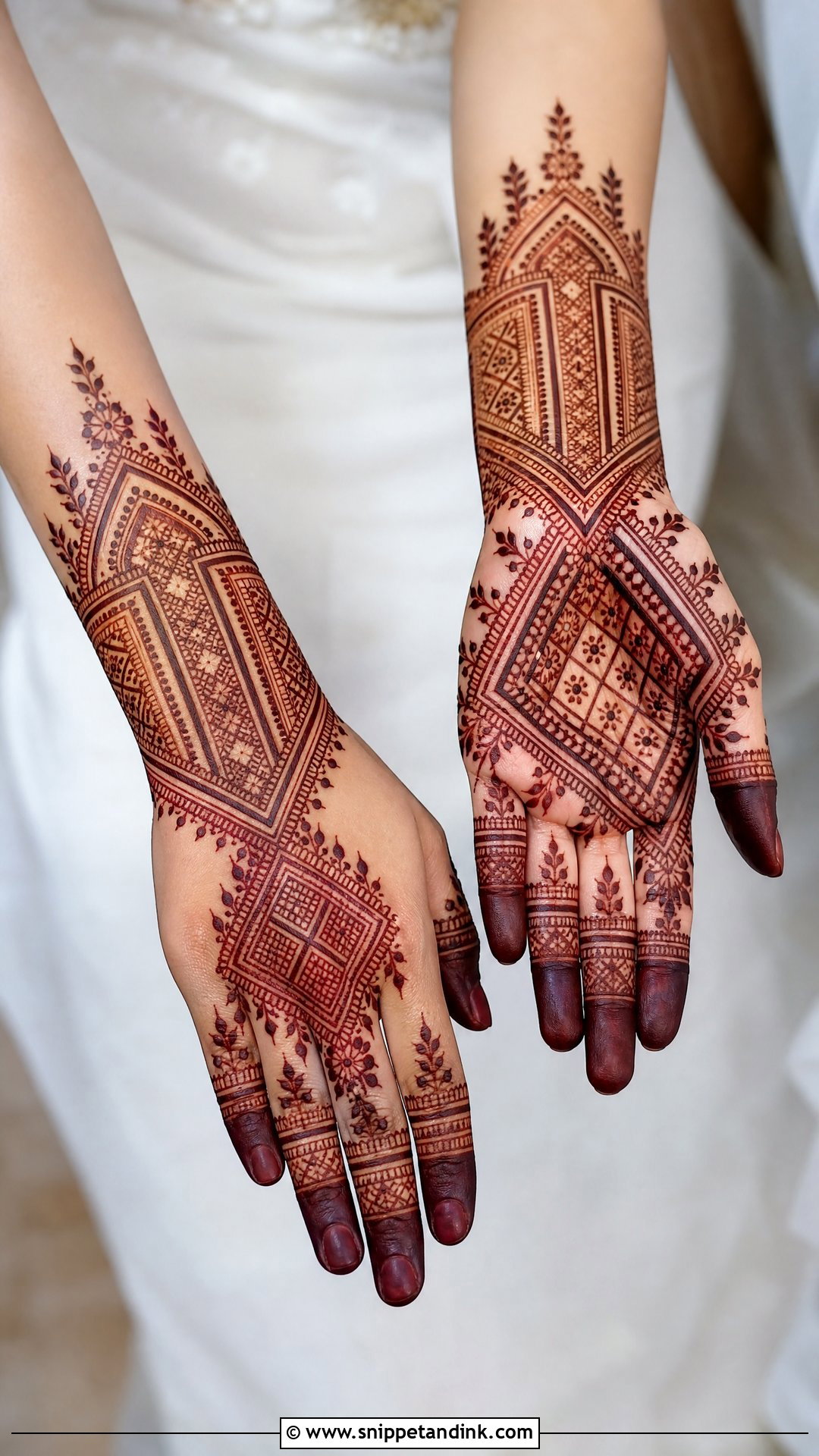
Moroccan mehndi is built on geometry: diamonds, lines, dots, grids and angular borders instead of florals. For a wedding, I soften it with small leaves or flowers near the wrist and fingers. It stands apart from Indian and Arabic styles and adapts to broad or small hands because the shapes scale easily. Straight lines show every tremor, so this is a design where the artist’s experience really shows. It suits solid-colour sarees and Indo-western outfits.
17. Bride Mother Gulf Mehndi Design
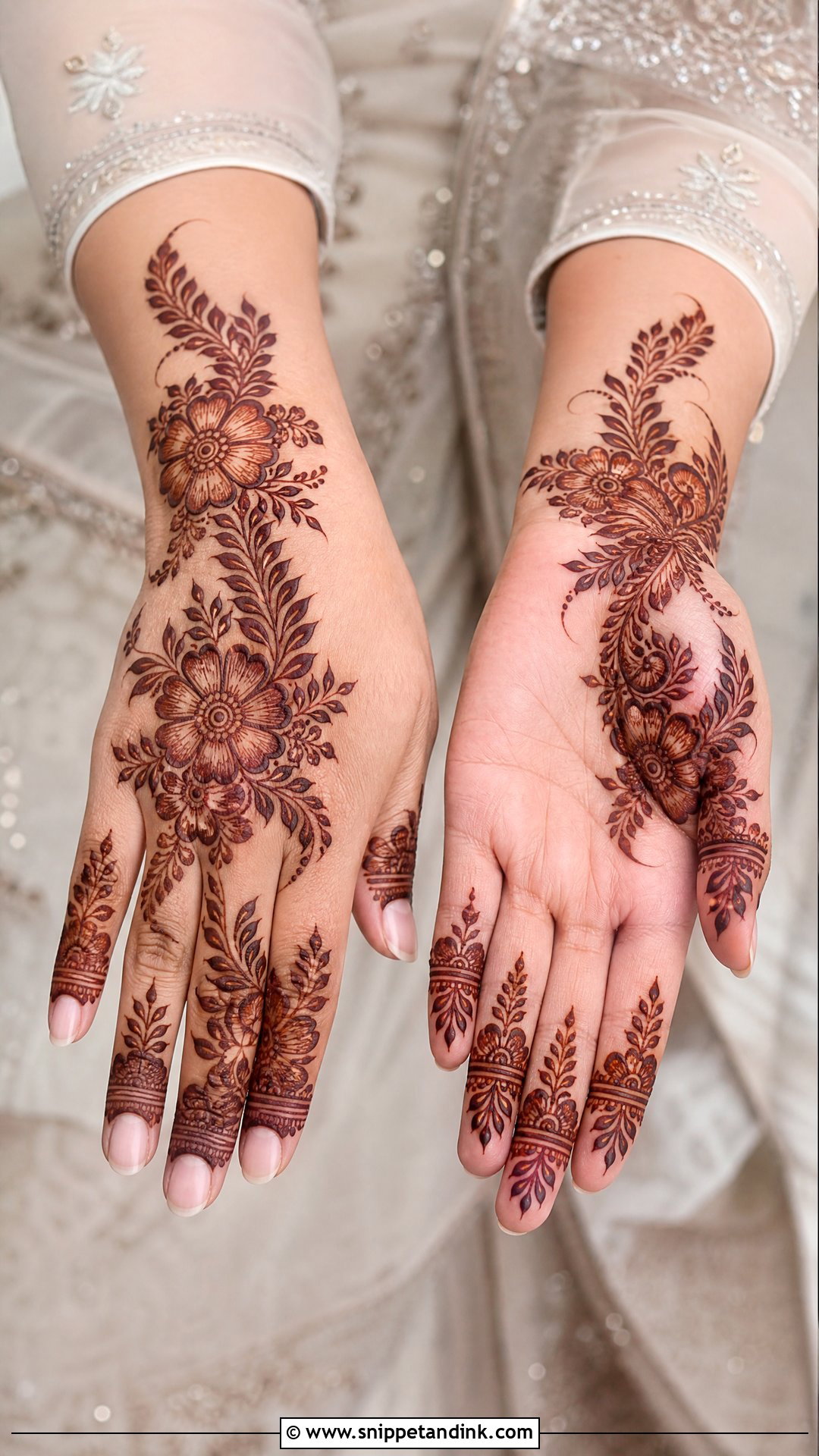
Gulf or Khaleeji-style mehndi uses large flowers, leafy curves, shaded petals and plenty of open skin. I start at the wrist and move diagonally across the back of the hand or palm, using thick outlines against thin inner lines for depth. The bold shapes read clearly in evening photos, under warmer artificial light. It gives a mother a rich look without dense coverage, and it’s fairly quick to apply. Gold bangles finish it nicely.
18. Bride Mother Half Hand Mehndi Design
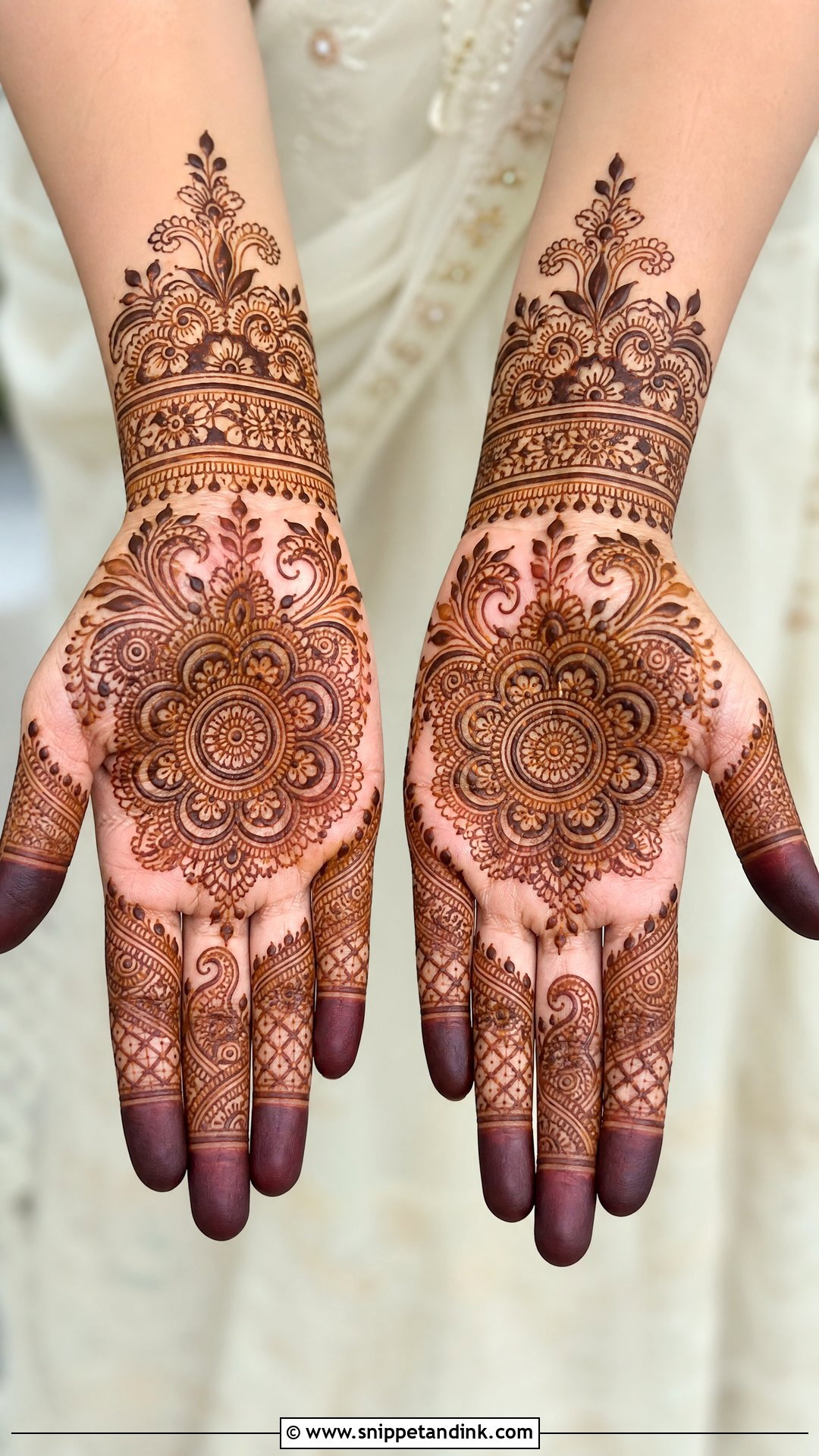
Half hand covers the fingers, palm and wrist and stops before the forearm. The detail that makes or breaks it is the wrist finish: a band or scalloped border gives it a deliberate end, so it doesn’t look cut off. Mandalas, florals, paisleys or Indo-Arabic trails can fill it. It gives enough detail for photos without the sitting time of full arms, and it works from mehndi night through to the reception. For a lot of mothers, it’s the right middle ground.
19. Bride Mother Forearm Mehndi Design
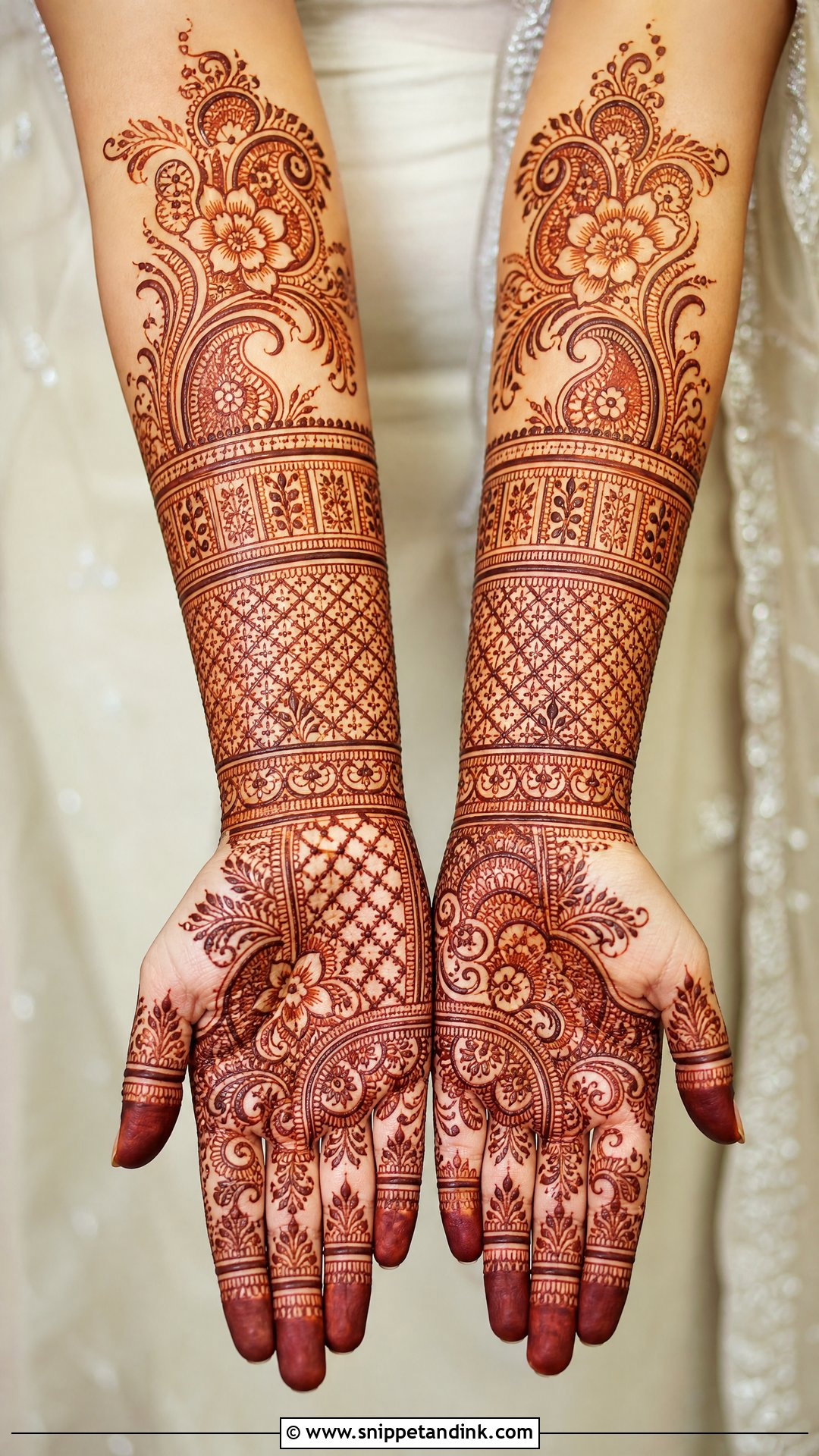
A wrist-to-forearm mehndi design suits mothers in short sleeves or elbow-length blouses. I start at the fingers or palm and extend up the forearm with floral bands, paisley vines, cuffs or jaali panels, keeping the hand more detailed and letting the pattern taper as it goes up. That taper flatters the arm and avoids a heavy sleeve effect. The forearm stains lighter than the palm, so don’t be surprised if it looks orange-brown while the hand is deep maroon. It shows nicely when she holds a thali, a dupatta or her daughter’s hand.

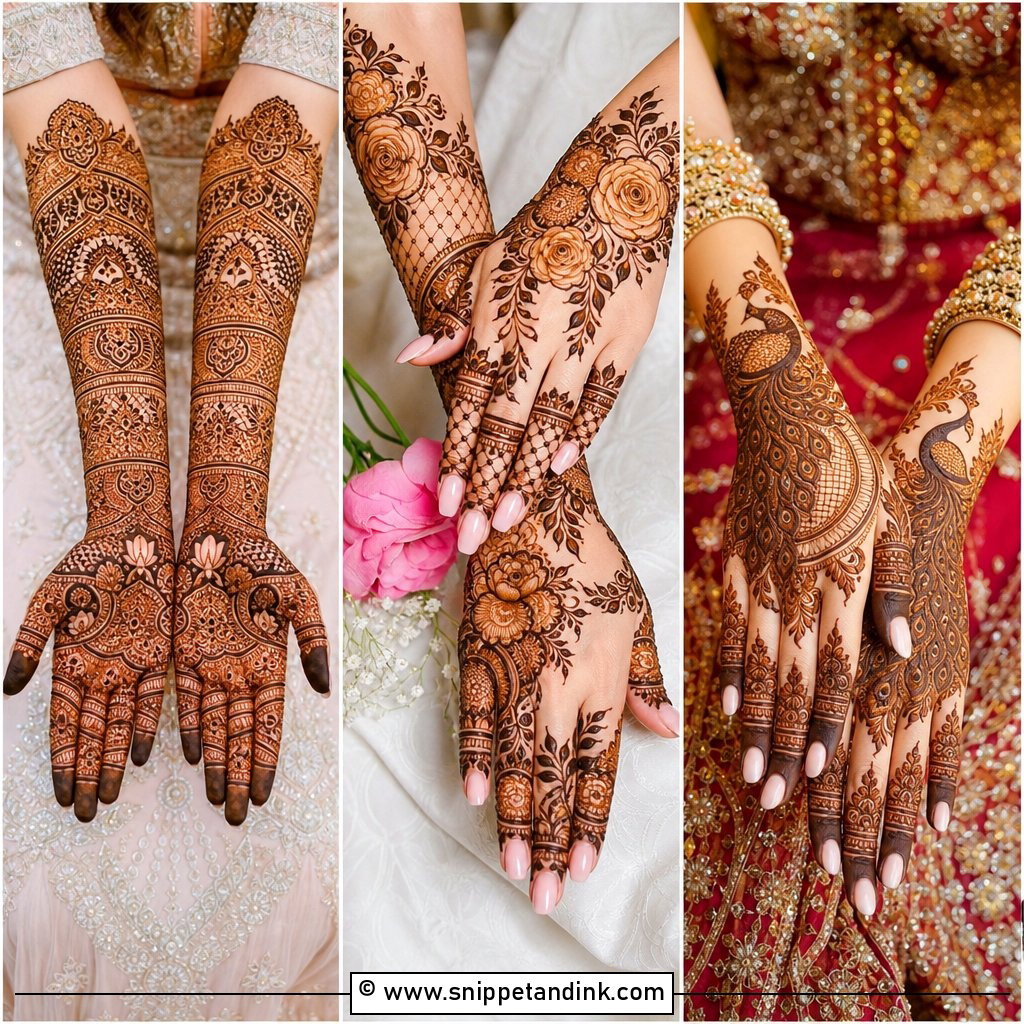
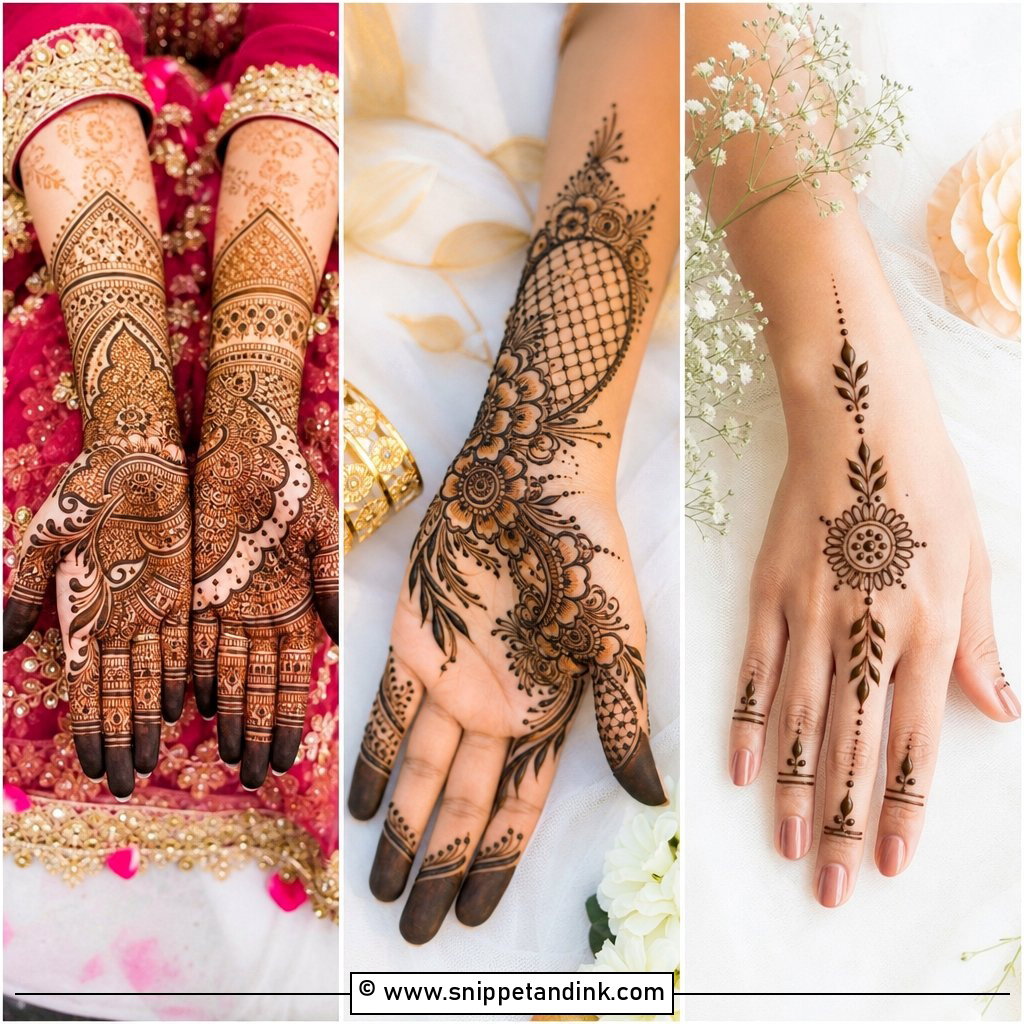


20. Bride Mother Matching Mehndi Design
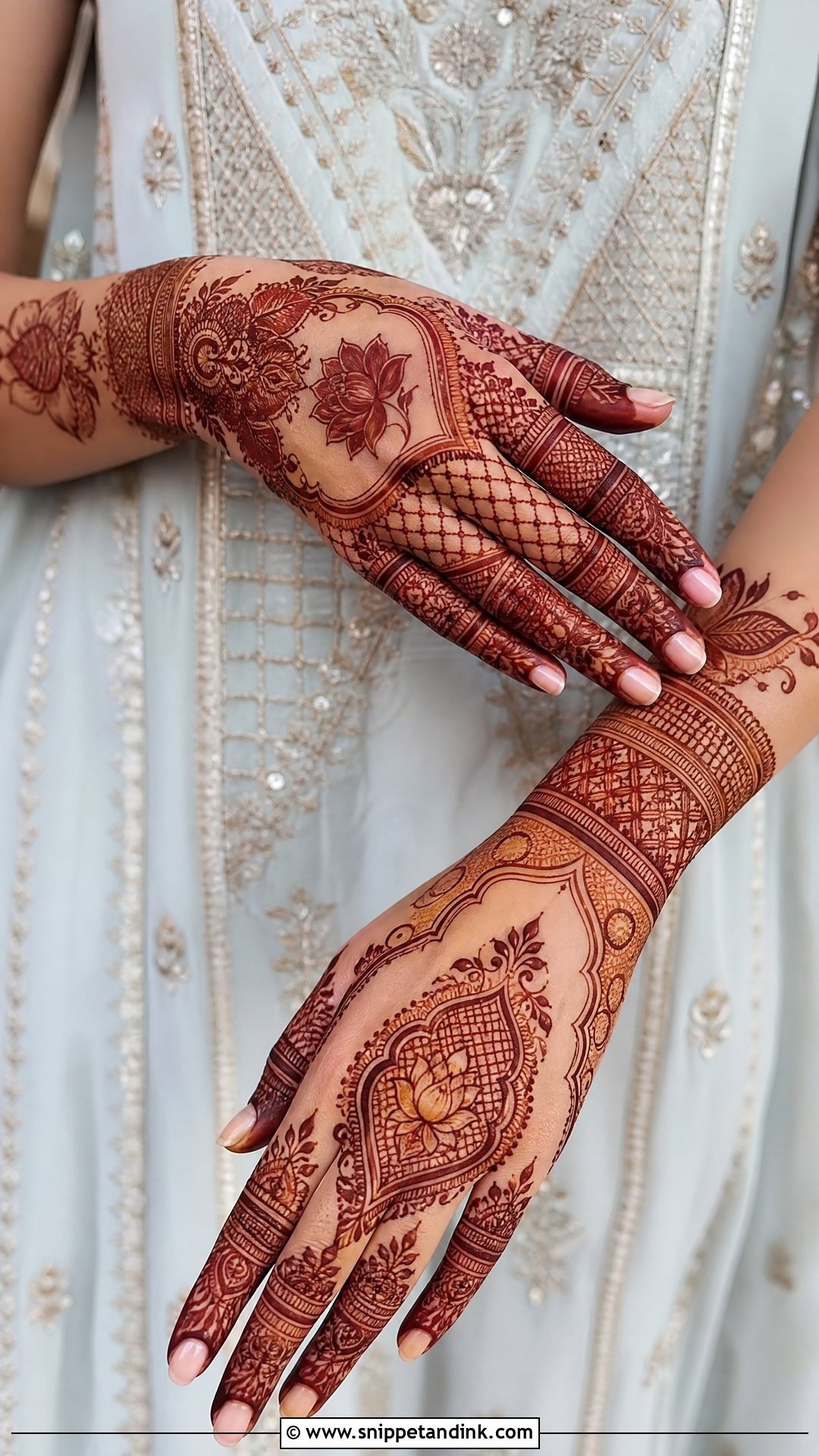
Sharing a motif with the bride is one of my favourite requests from mothers. The mother’s design should echo the bride’s without copying its density: if the bride has lotus motifs, the mother wears a simpler lotus palm; if the bride has jaali or paisleys, the mother carries a lighter version on the back of her hand. One shared motif is enough. Copying the whole design makes the hands look like a set, and the bride’s work loses its place as the centrepiece. It’s lovely when their hands meet in photos.
From Orange to Maroon Over the Next Two Days
When the paste comes off, the stain is a bright orange. That’s normal. Natural henna keeps oxidising for about forty-eight hours, deepening to brown or maroon. What you do in that window shapes the final colour.
- Once dry, dab on a little lemon and sugar mix to keep the paste stuck to the skin.
- Leave the paste on for six hours or more, then scrape it off with a blunt edge. Don’t wash it off.
- Keep water away from the hands for the next twelve hours or so.
- Keep the hands warm. Some families warm cloves over a pan and hold the hands over the smoke; plain warmth works too.
- A thin layer of balm or coconut oil before bathing protects the stain from soap.
A Word About Black Henna
Any cone that stains black in an hour almost always contains PPD, a chemical dye that can cause blistering and lasting allergic reactions. Natural henna never stains black. If a mother has sensitive skin or has reacted to hair dye before, I do a small test patch on the inner arm a few days ahead, and I only use fresh natural paste.
Her Hands Will Be in Every Blessing Photo
A mother’s mehndi should look festive in the blessing photos and still let her run the wedding. Full hand, Arabic, mandala, floral, paisley, jaali, bracelet and minimal designs all work when they match the outfit, the function and how long she can sit. Deeper traditional coverage suits the main wedding day, and lighter designs suit the smaller events. Clean lines and good spacing matter more than how much of the hand is covered, so choose an artist whose finished work you’ve seen in person and agree on the design before the day.
You'll Like These Ideas:


Leave a Reply