
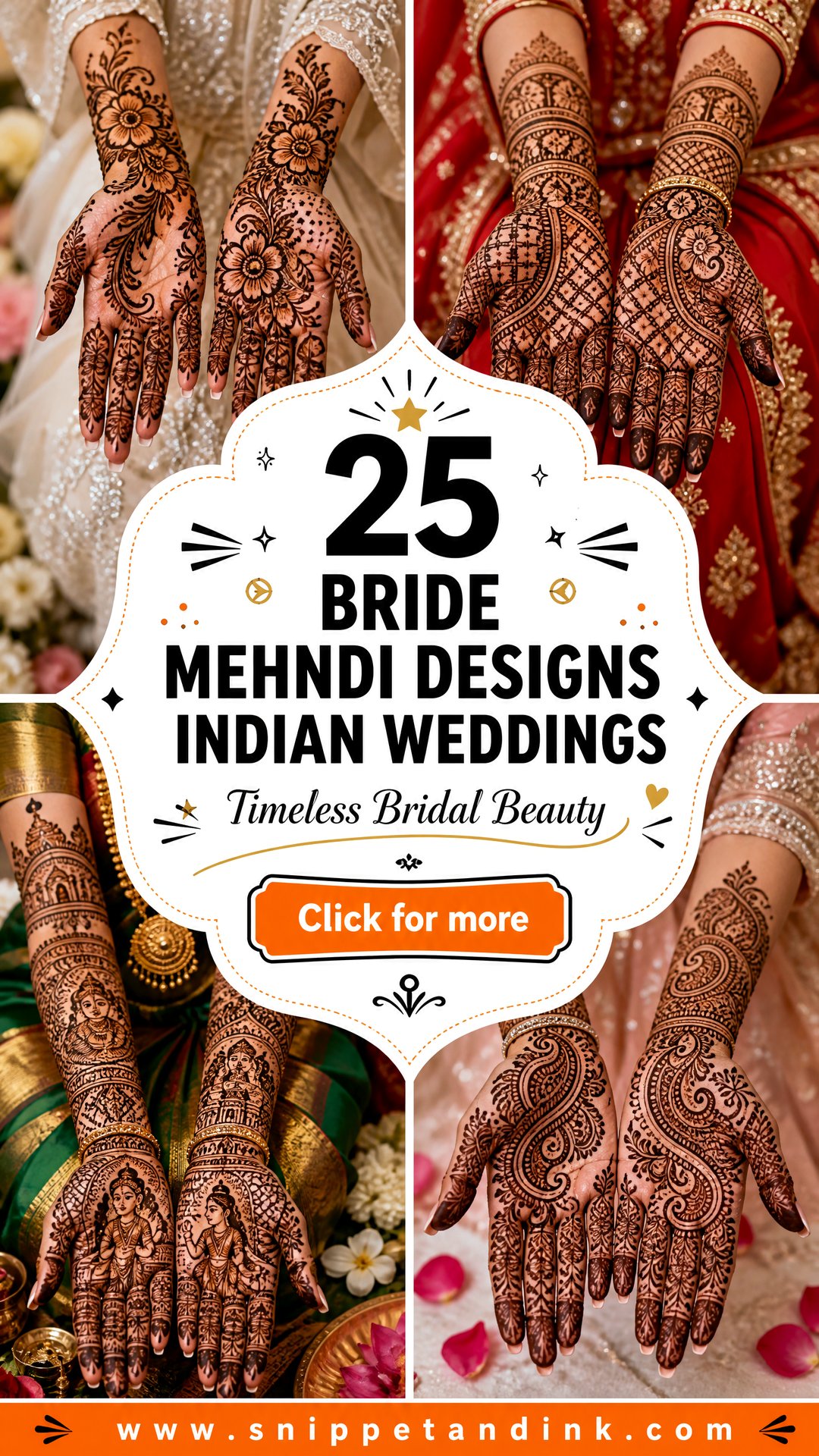
Bridal mehndi is the one detail of an Indian wedding that is grown, not bought. The paste goes on as a dark green-brown line, flakes off as an orange mark, and deepens over the next two days into the colour you’ll see in every ring and bangle photo. As an artist, I plan the design around that process as much as around the pattern. Brides now ask me for everything from royal full-hand patterns to open Arabic trails, portrait work, initials, lotus and peacock motifs, jaali grids and modern negative-space layouts. Below are 25 bridal designs, with notes on coverage, how each one stains and what to tell your artist before the session.
Scheduling the Session So the Stain Peaks on the Wedding Day
Natural henna never looks its best the moment the paste comes off. It starts out bright orange and darkens over the following day or two as it oxidises in the skin, toward a deep red-brown. That’s why I ask brides to plan their mehndi one to two days before the wedding, not the morning of. A bride who has mehndi on the day itself walks down the aisle with an orange stain that won’t reach its full colour until after the reception.
Timing also depends on coverage. Simple hand designs might take an hour or two. Full bridal hands and arms, with portraits or dense fill, can take several hours, and adding feet takes longer. Ask your artist for an honest estimate and build in rest breaks, a meal, and someone to help you while your hands are wet.
Before Your Appointment
- Exfoliate gently the day before; skip it on the day, since freshly scrubbed skin can be sensitive.
- Don’t apply lotion, oil or sunscreen to your hands and feet before the session. They block the paste from bonding with the skin.
- Book waxing, manicures and pedicures before mehndi, never after.
- Wear something with loose or short sleeves that you won’t need to pull over your hands.
1. Full Hand Bridal Mehndi Design
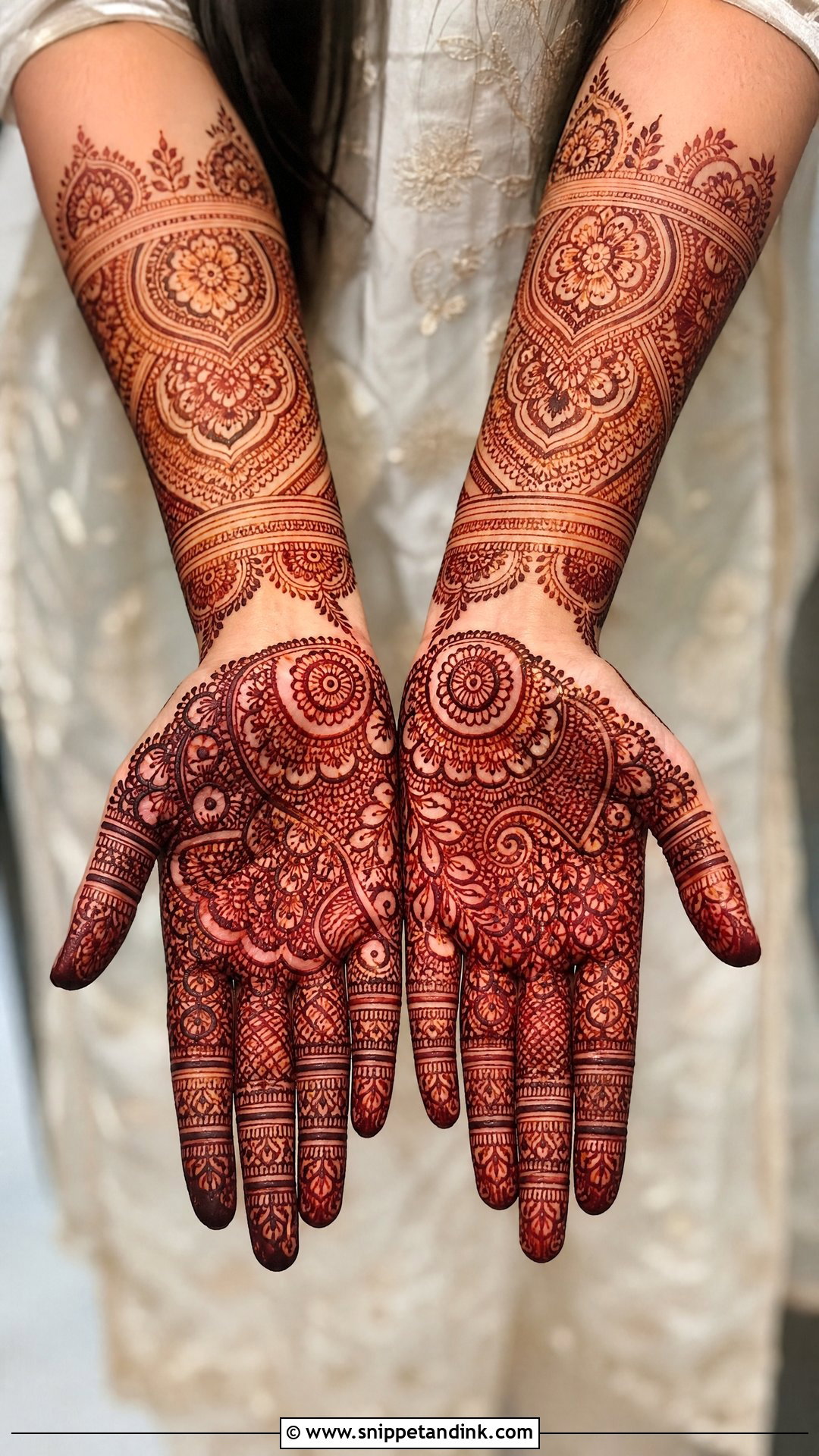
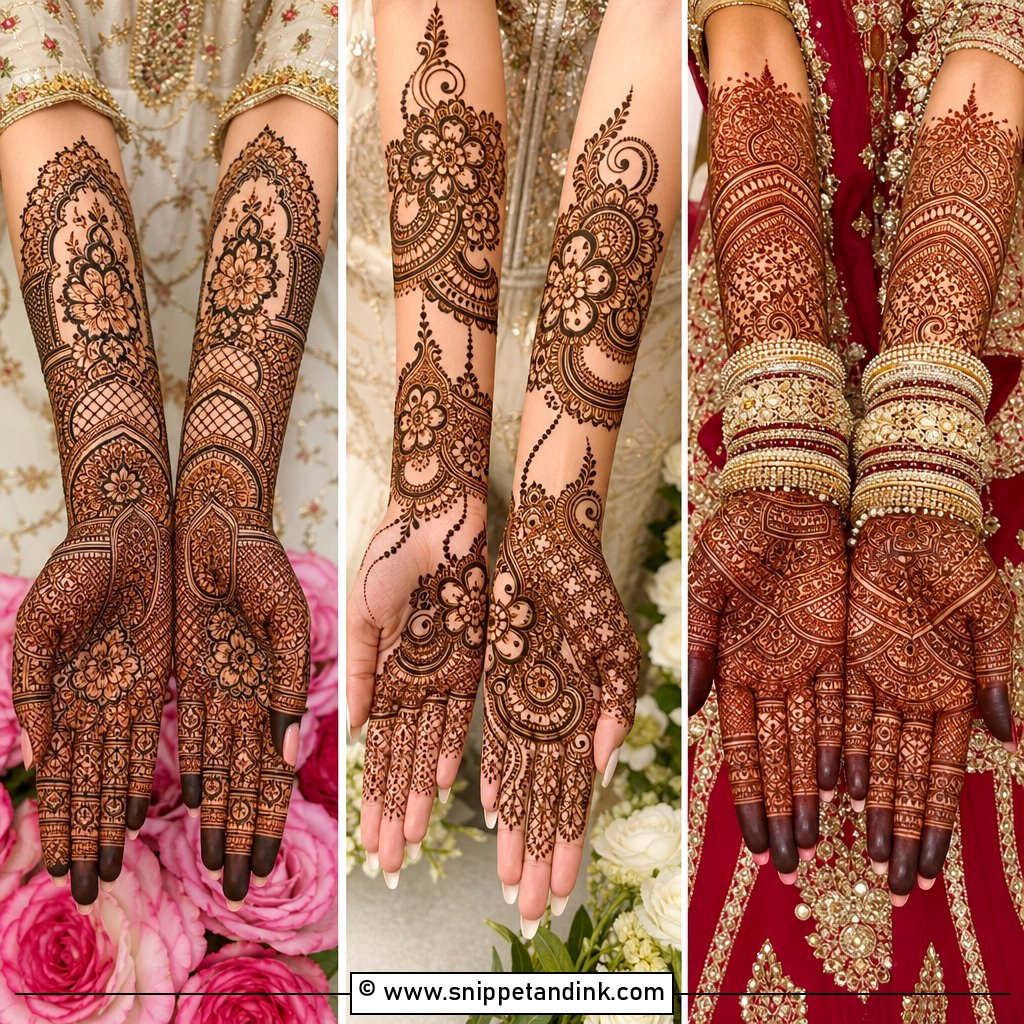
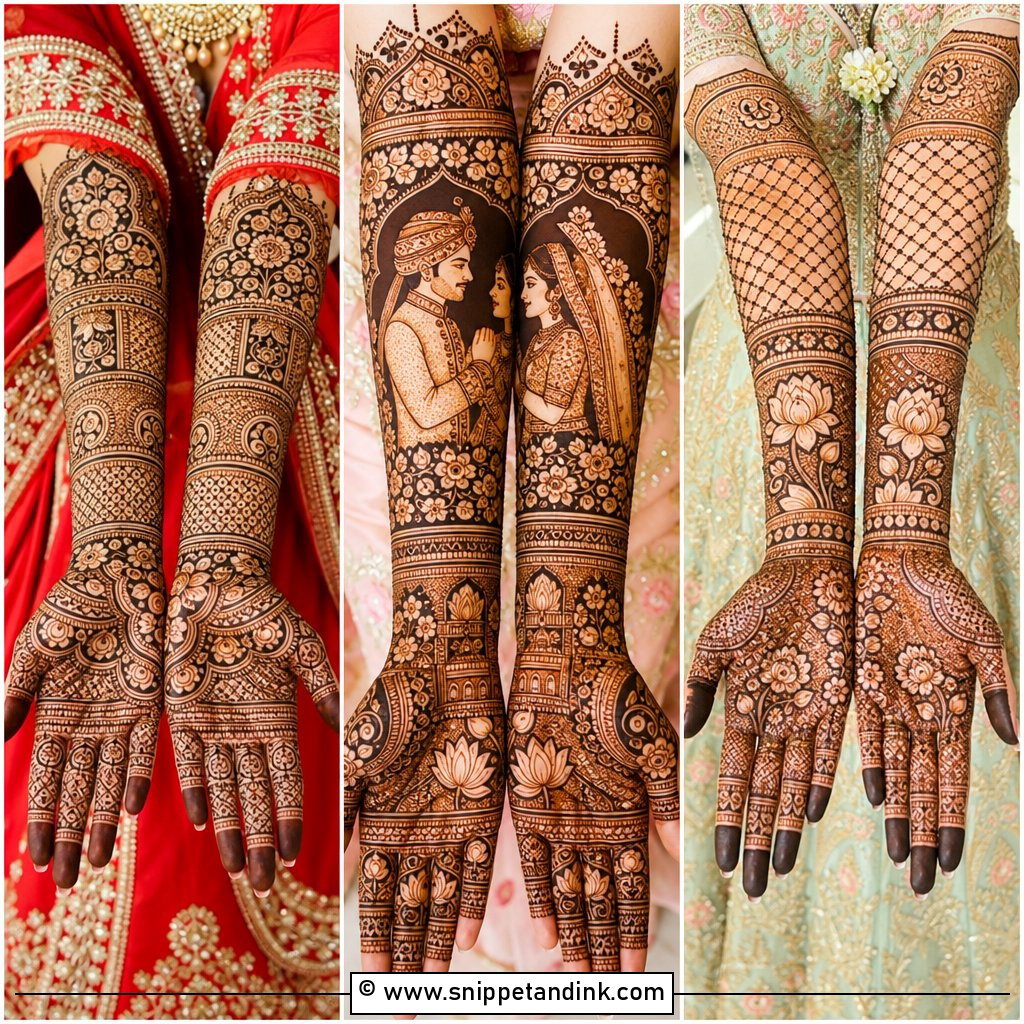
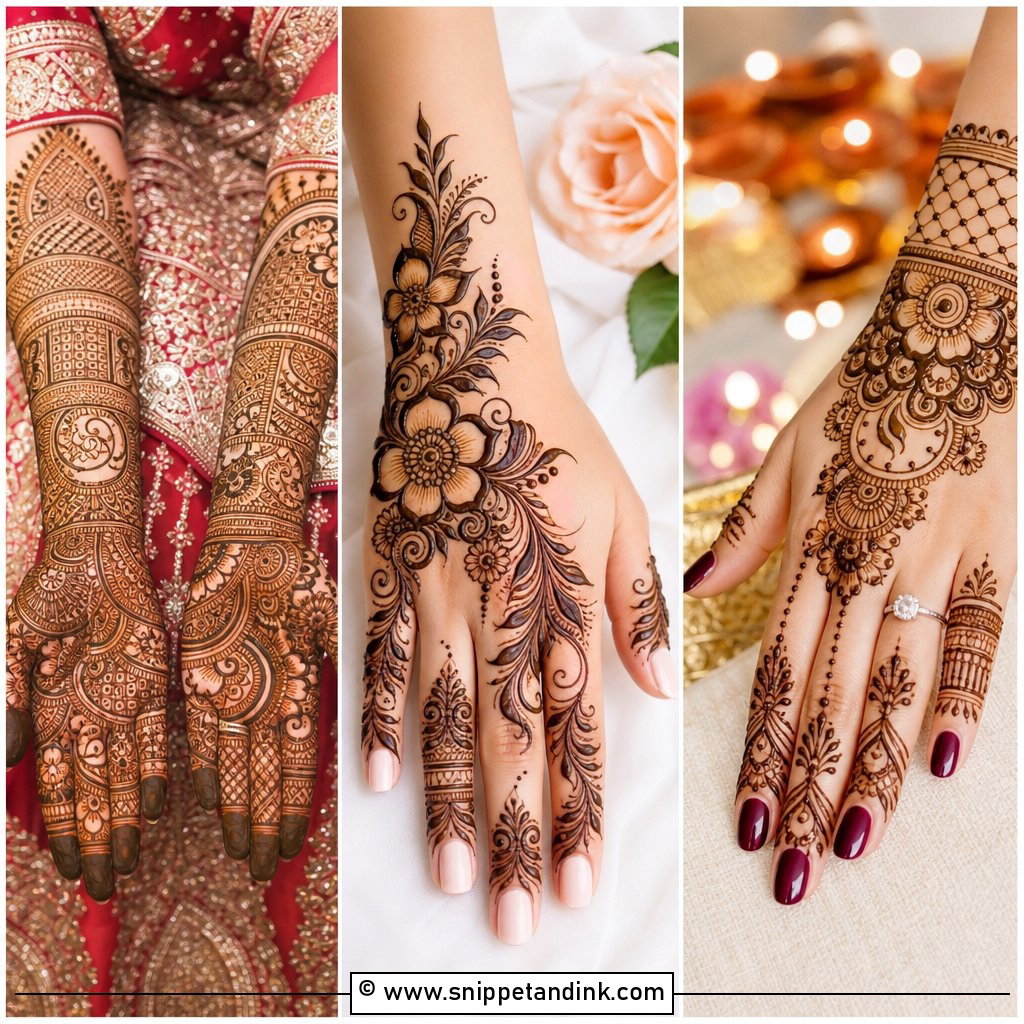
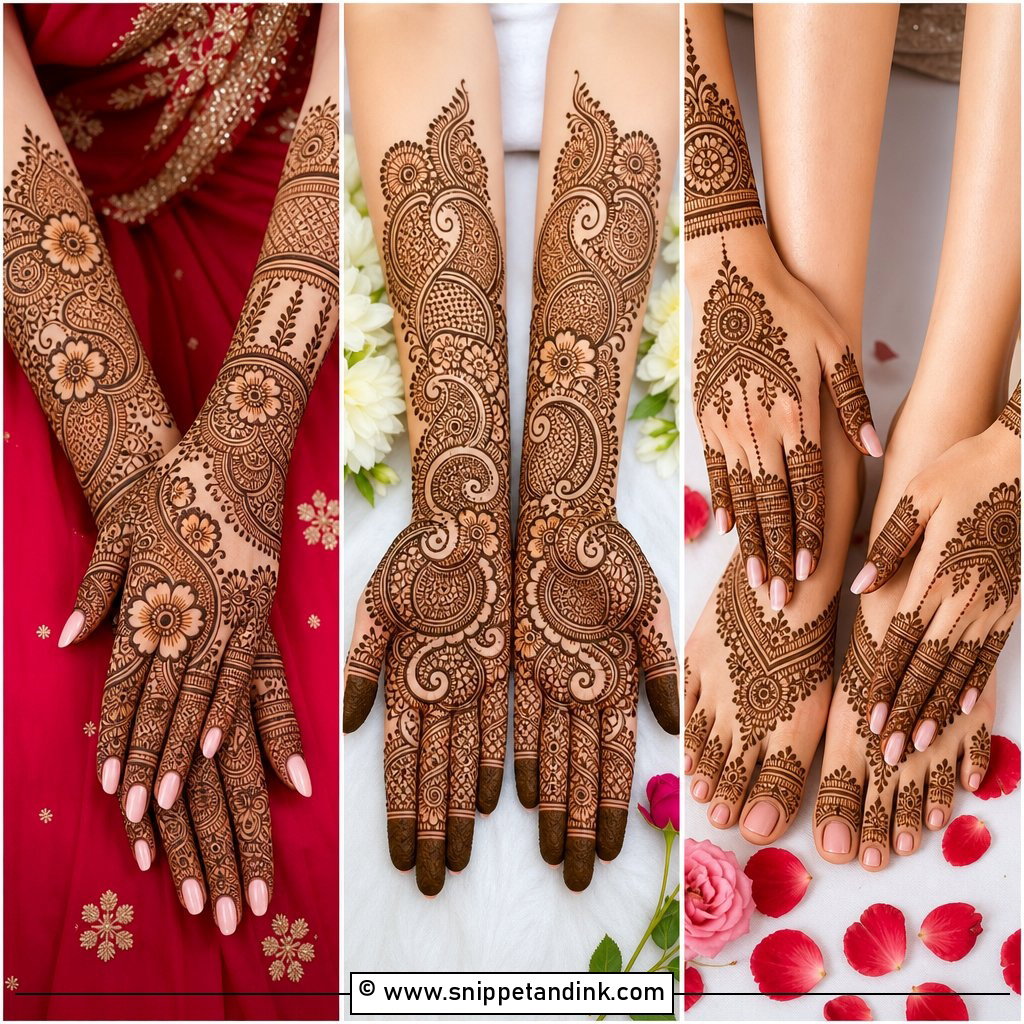
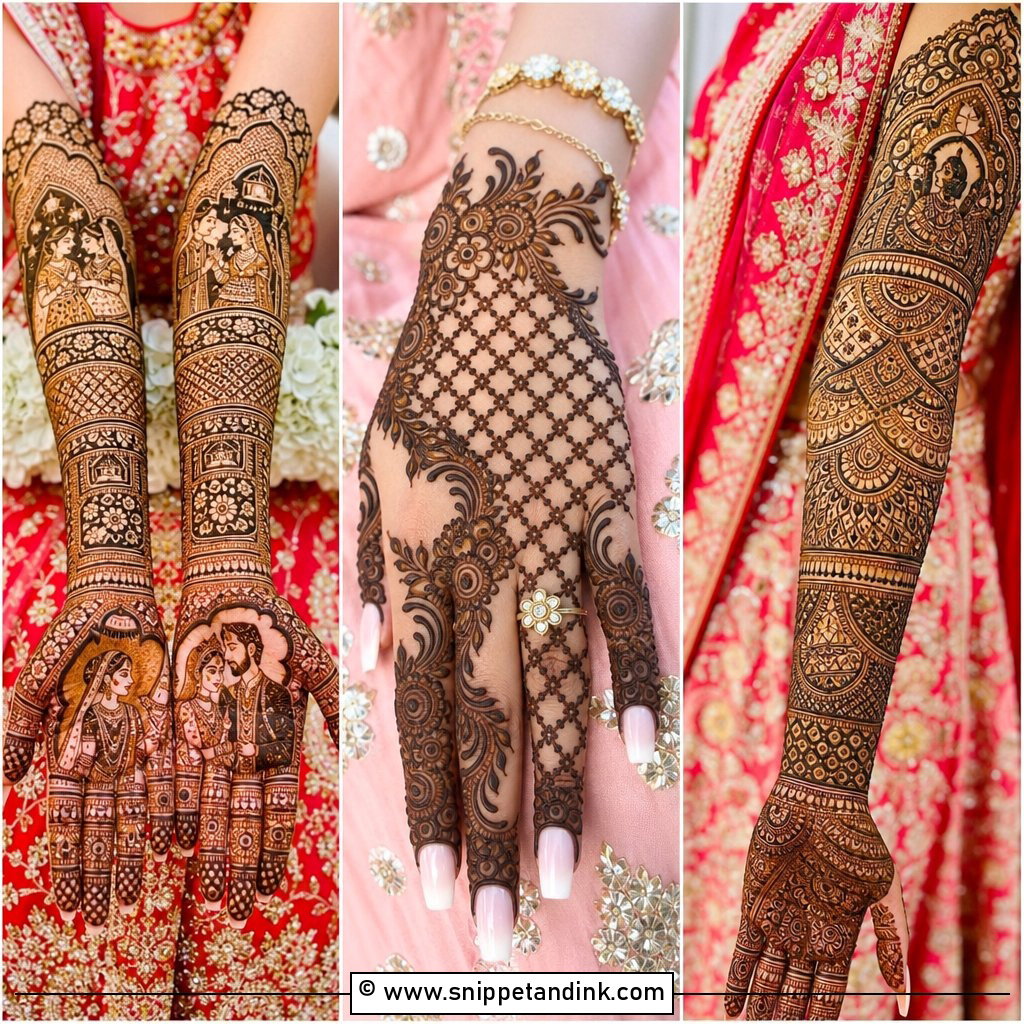
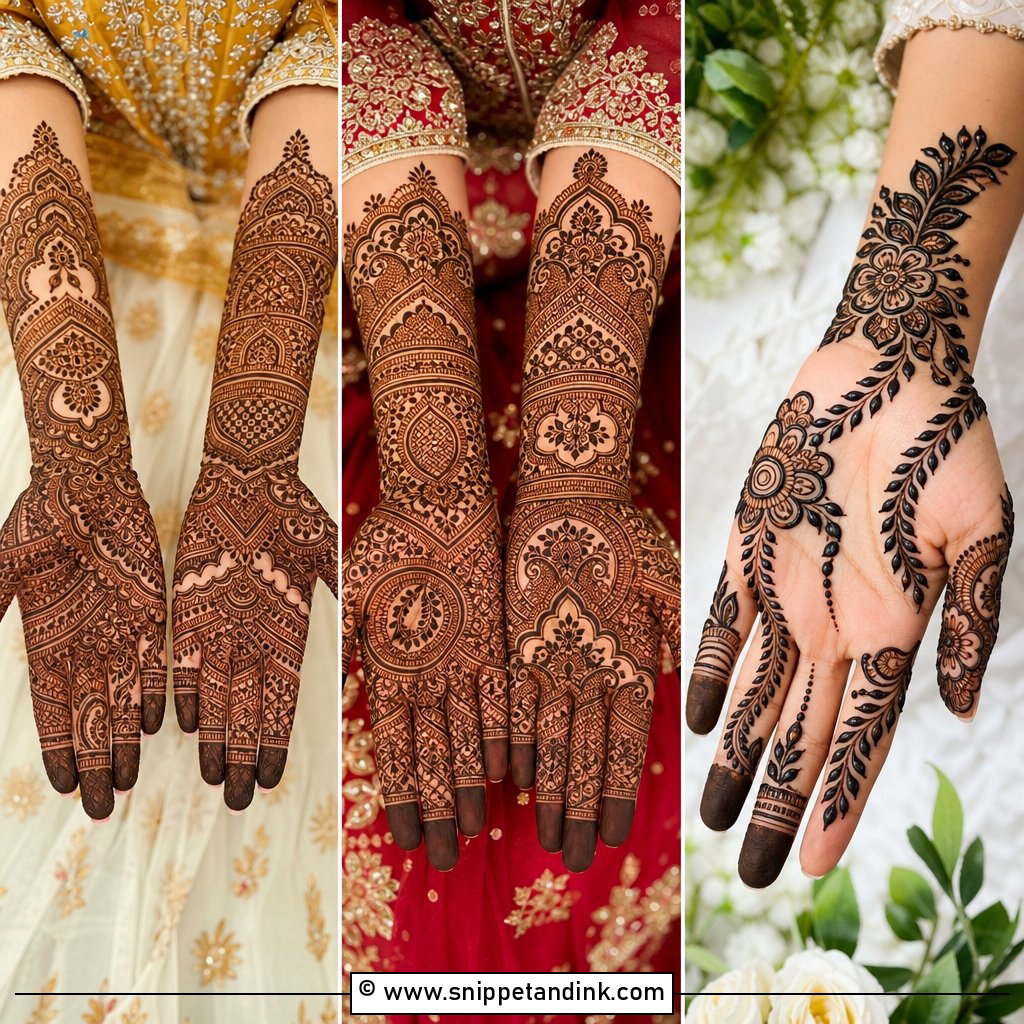
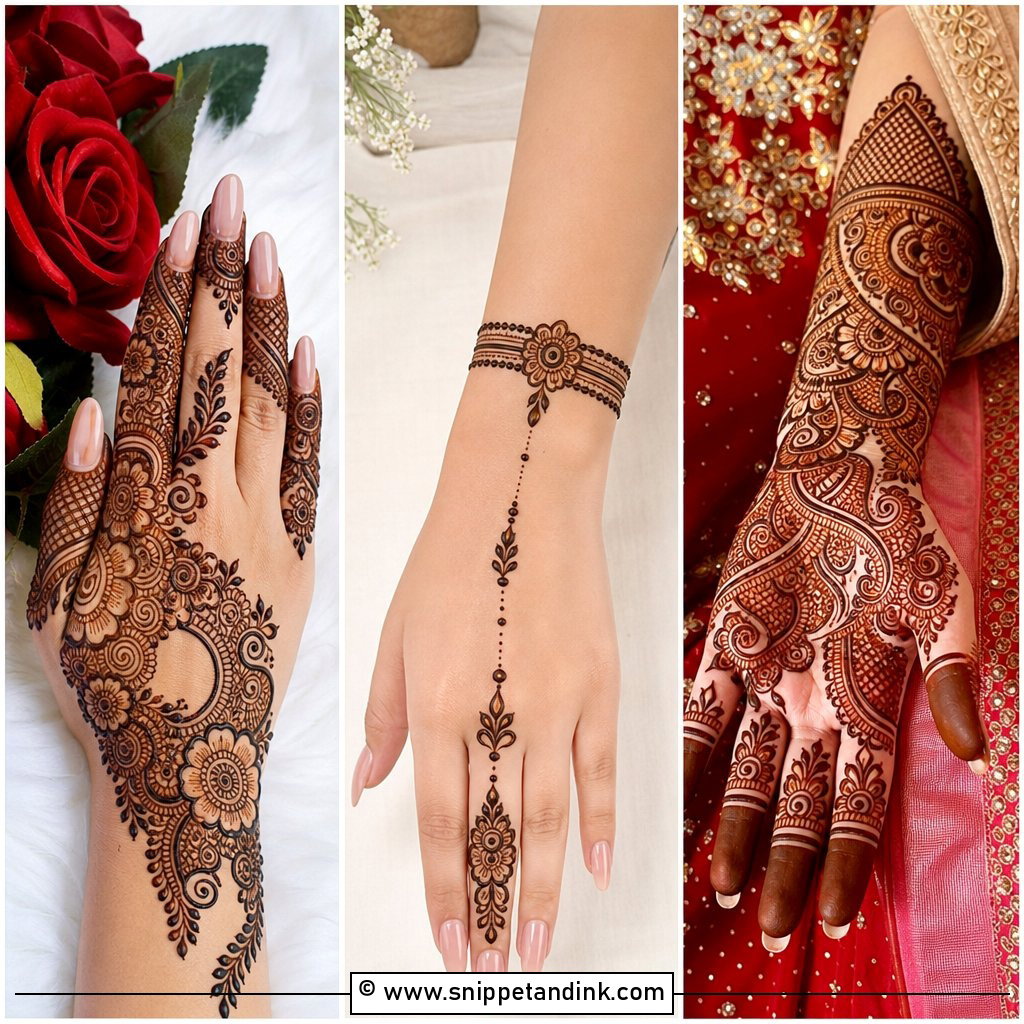
Full-hand coverage, fingertips to forearm, is still what most brides picture when they think of dulhan mehndi. Paisleys, florals, mandalas, vines, small checks and dense filler all fit into it. When I map a full hand, I mark the main focal points first, usually the palm centre and the wrist, and only then fill the gaps, because filling first is what makes a design look crowded. The palm and fingertips stain darkest, the forearm lightest, so the heaviest detail belongs where the colour will be strongest. It suits any regional outfit, from a red lehenga to a silk saree.
2. Royal Bridal Mehndi Design
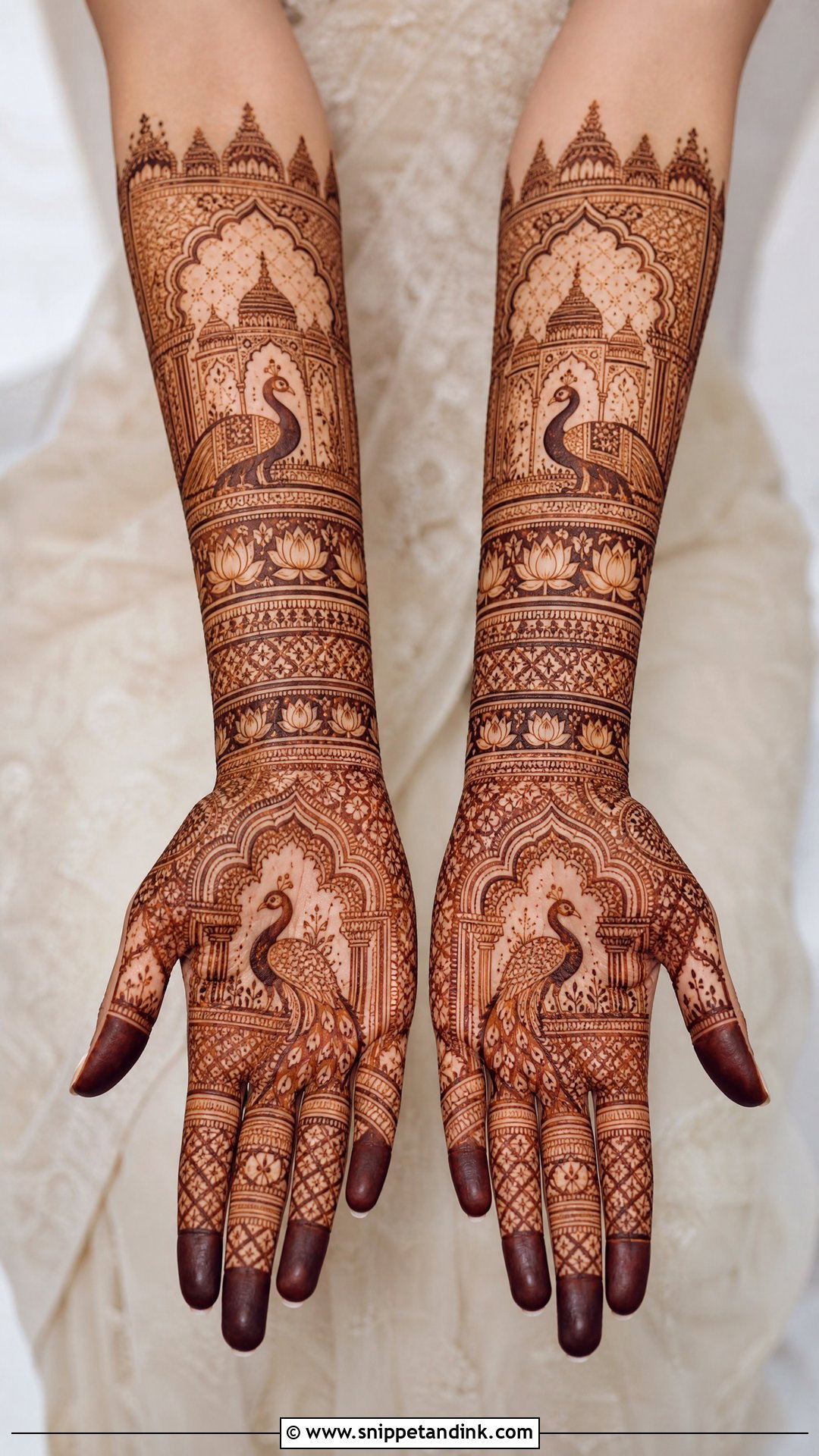
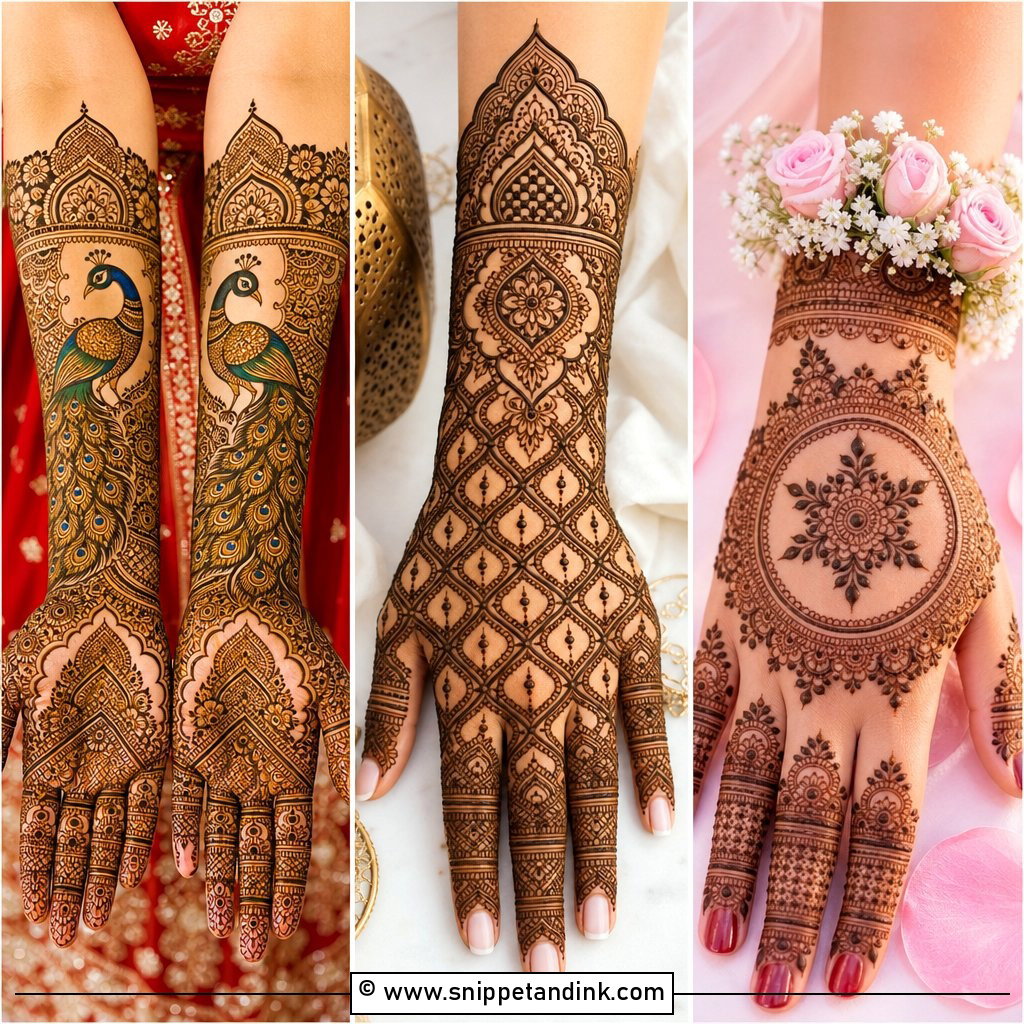
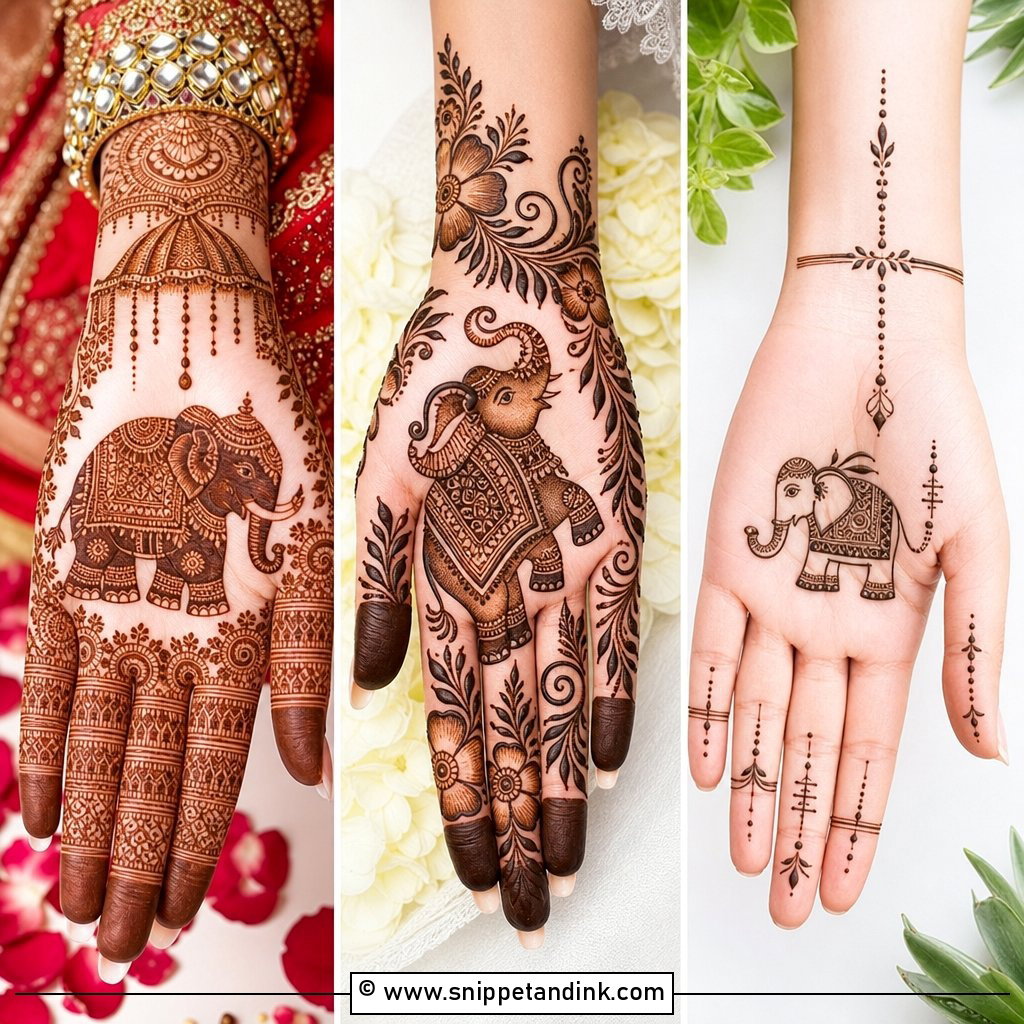
Royal designs bring in palaces, domes, elephants, peacocks, lotus borders and ornamental wrist cuffs, usually covering both palms and running toward the elbow. They frame bangles and kaleeras well at heritage venues. My advice is to pick one royal theme, palace arches with peacocks or elephants with lotus bands, rather than every motif at once. A single theme repeated across both hands reads as grand; five themes read as busy.
3. Indian Bridal Mehndi Design
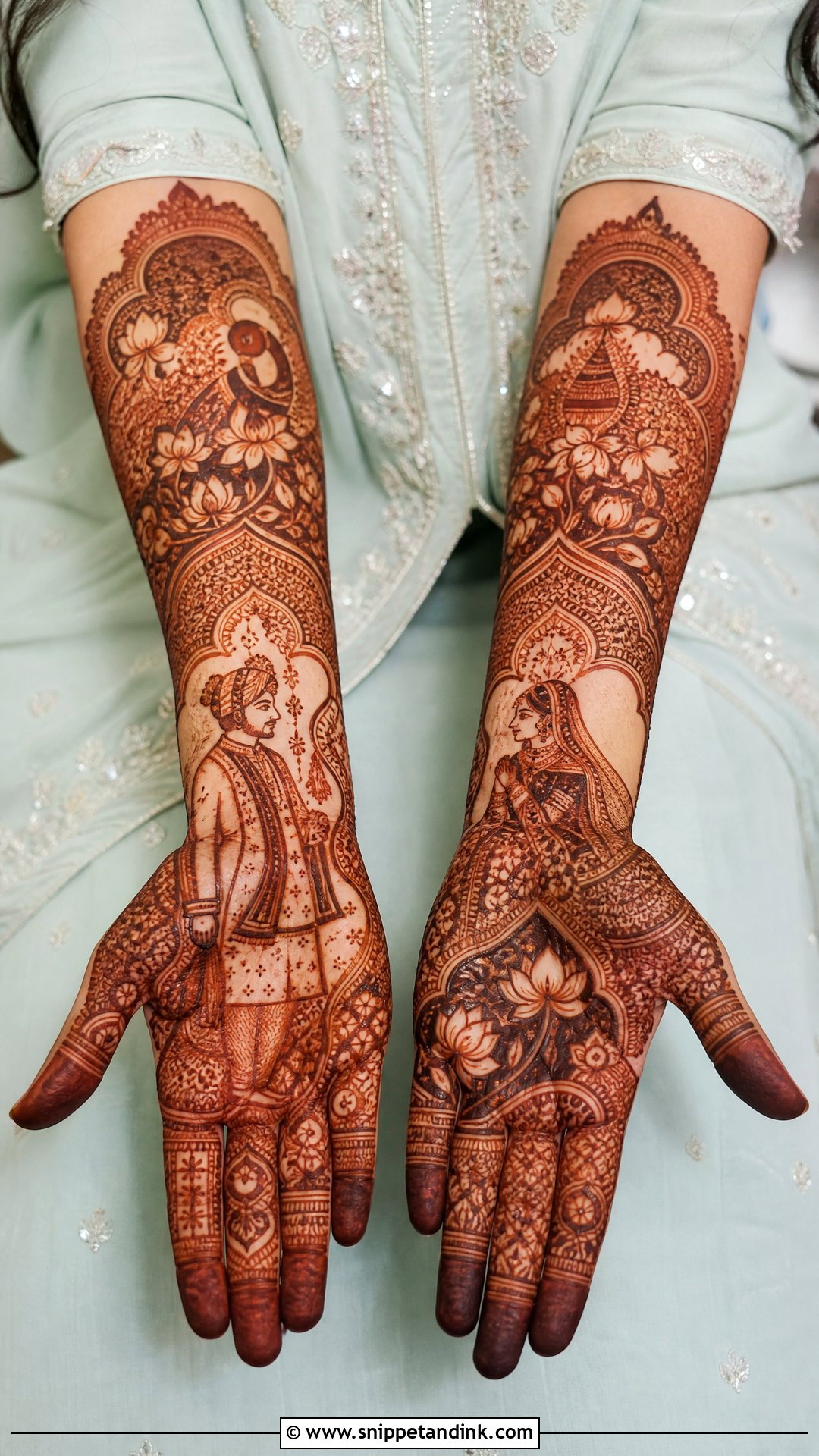
A classic Indian bridal layout puts central artwork on the palm, detailed bands and tips on the fingers, and bracelet patterns on the back hand. Paisley trails, lotus flowers, bride and groom figures, peacocks, mandalas and leafy vines all belong here. If your outfit has heavy embroidery, I keep the spacing between motifs a little wider, since dense mehndi next to dense zardozi tends to blur together in photos.
4. Arabic Bridal Mehndi Design
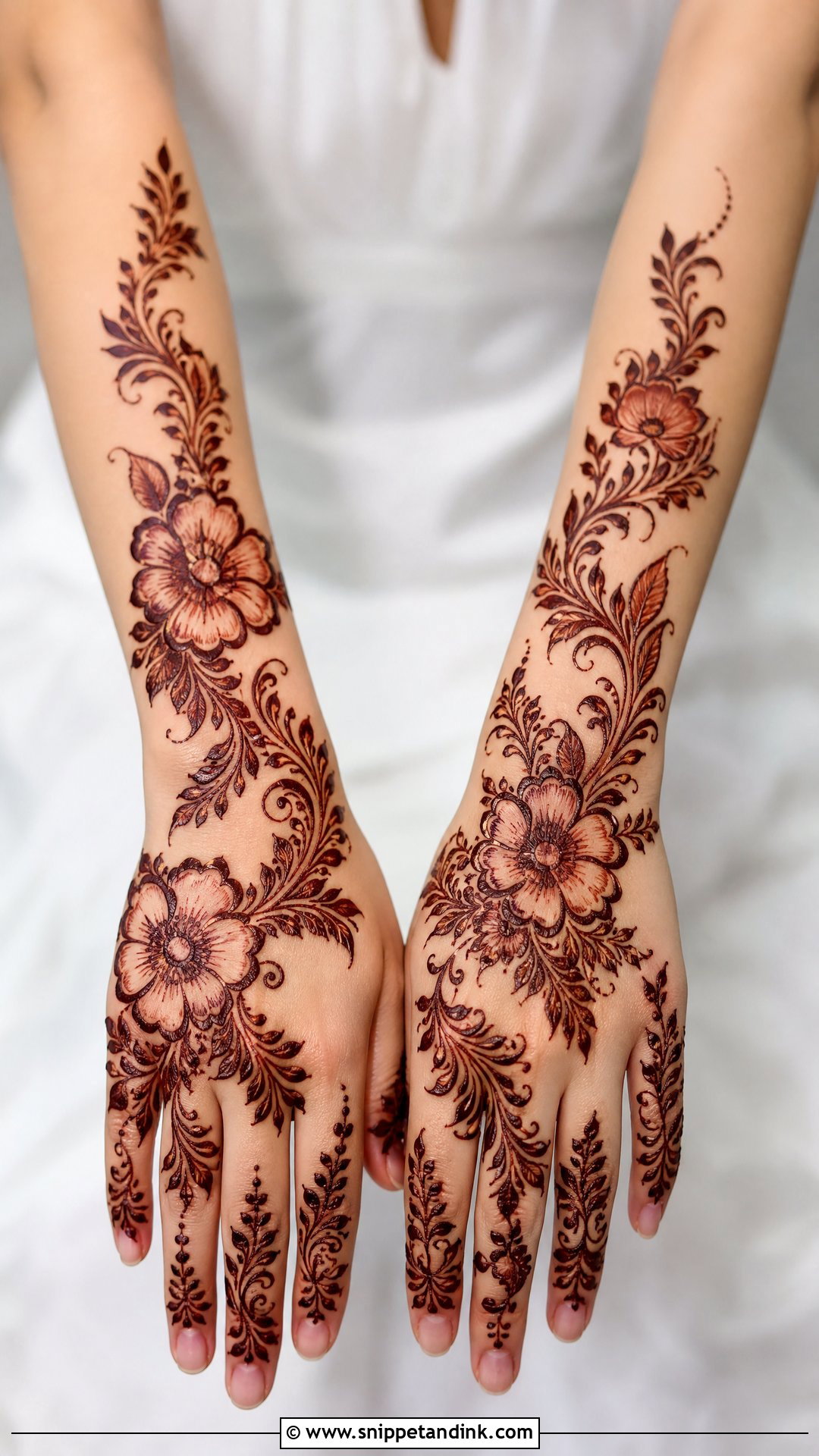
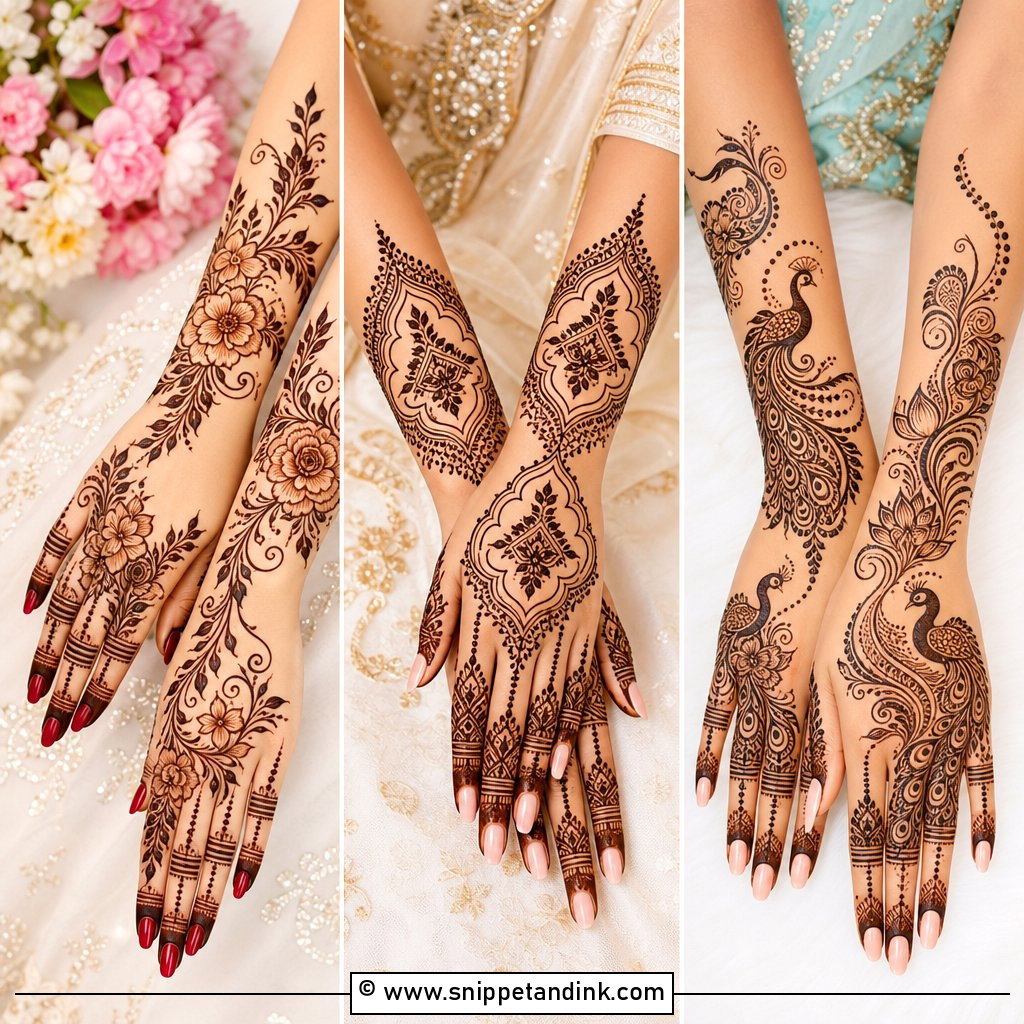
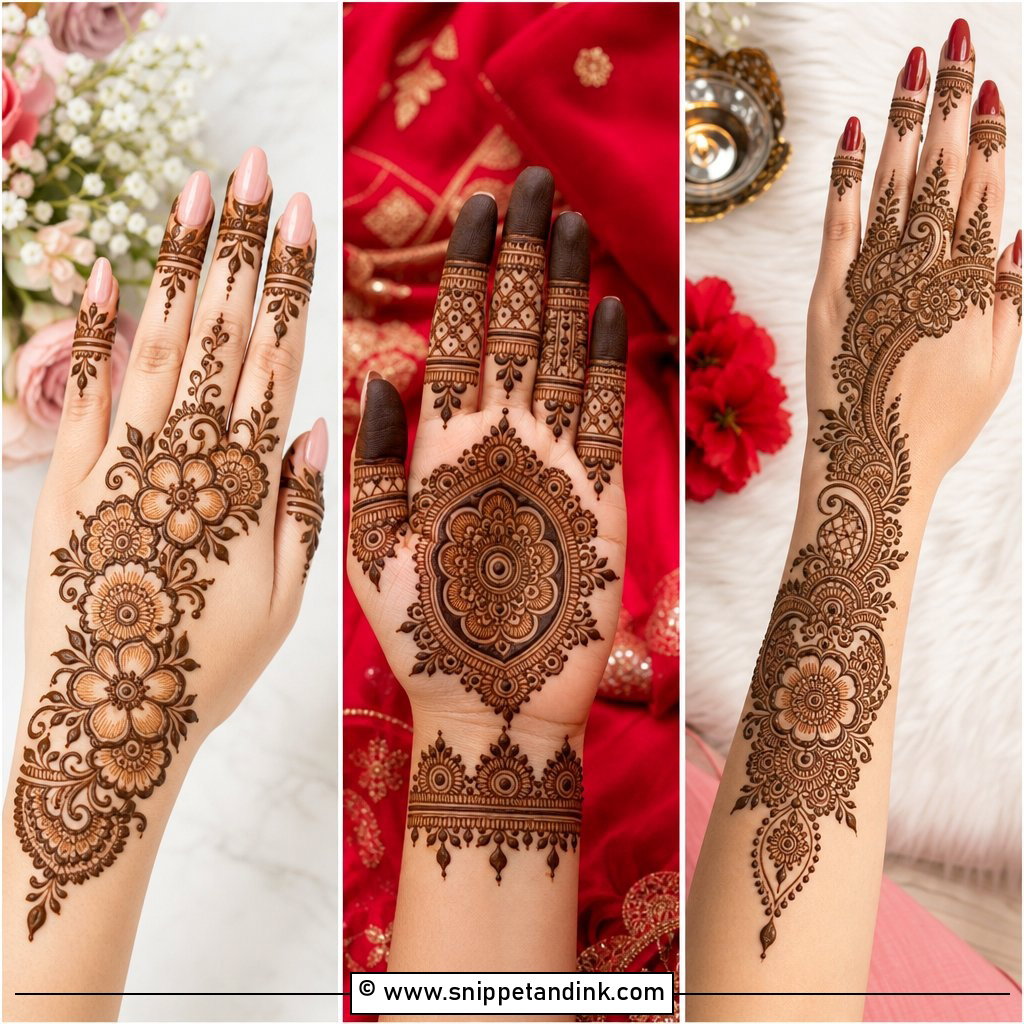
Arabic mehndi runs diagonally across the hand with large flowers, flowing vines and visible skin between motifs. It’s lighter than dense Indian work, and it’s my usual suggestion for an engagement, nikah or sangeet, or for a bride who doesn’t want to sit for hours. To make it read as bridal, I extend the trail up the forearm and add shaded petals and wrist cuffs. Because each motif has room around it, the stain looks bold and clean.
5. Indo Arabic Bridal Mehndi Design
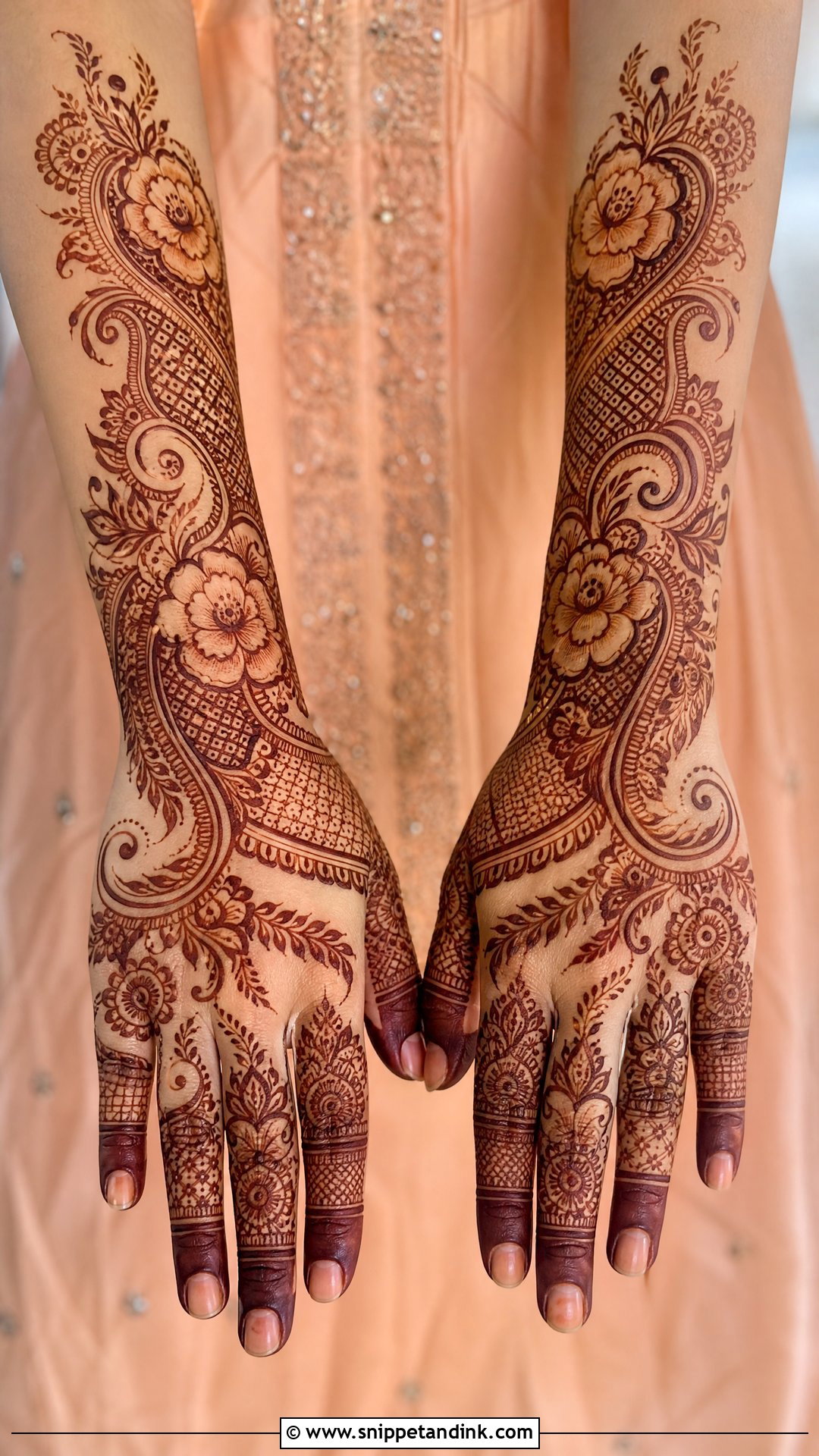
Indo-Arabic mixes the fullness of Indian work with Arabic flow: large flowers, paisley curves, shaded leaves, fine mesh and detailed fingers. It looks decorated without covering every inch. I often keep the palm more detailed and the back hand airier, which also shortens the session. The bold outlines stay visible from a distance, so it holds up in wide shots as well as close-ups.
6. Rajasthani Bridal Mehndi Design
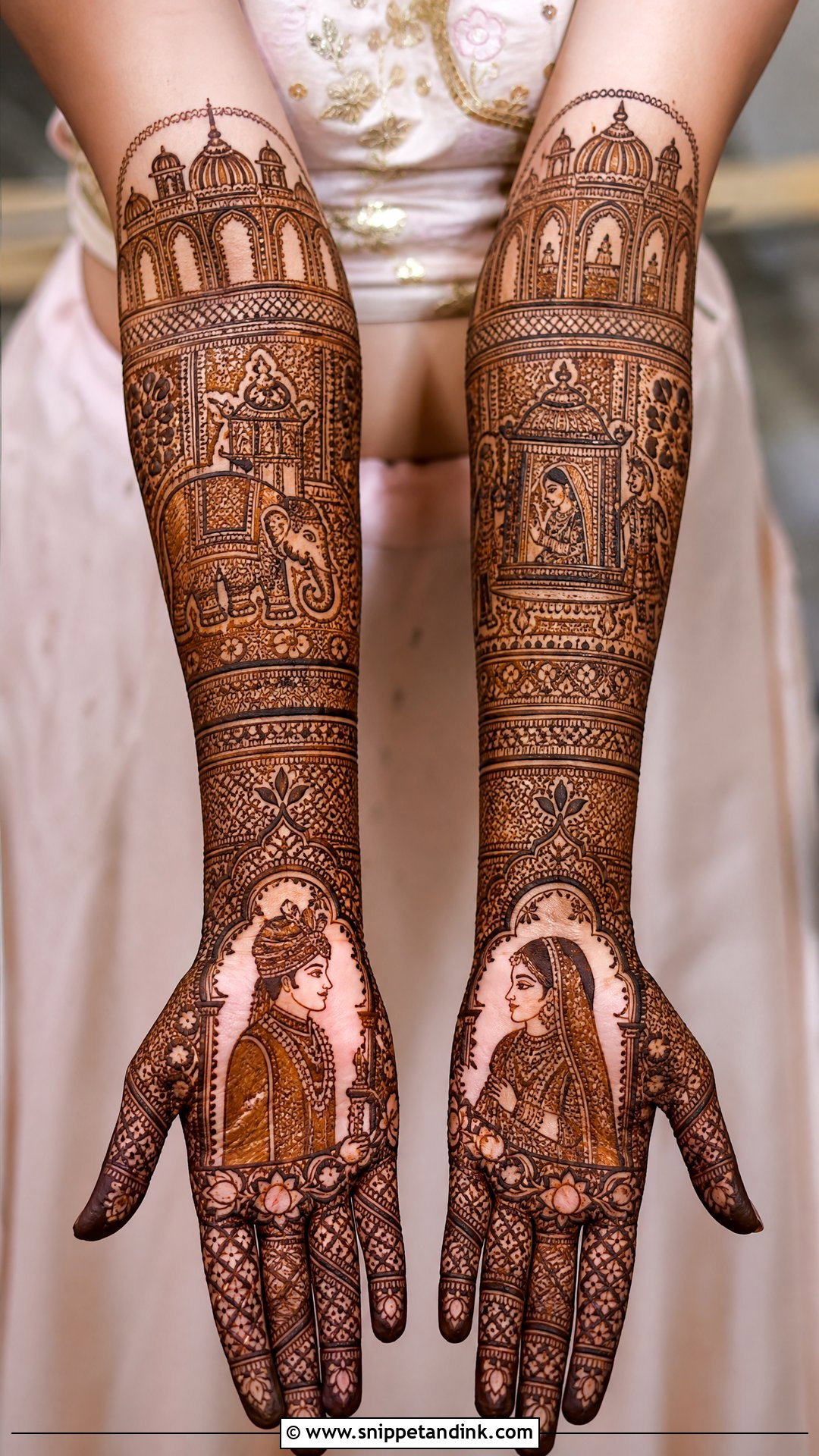
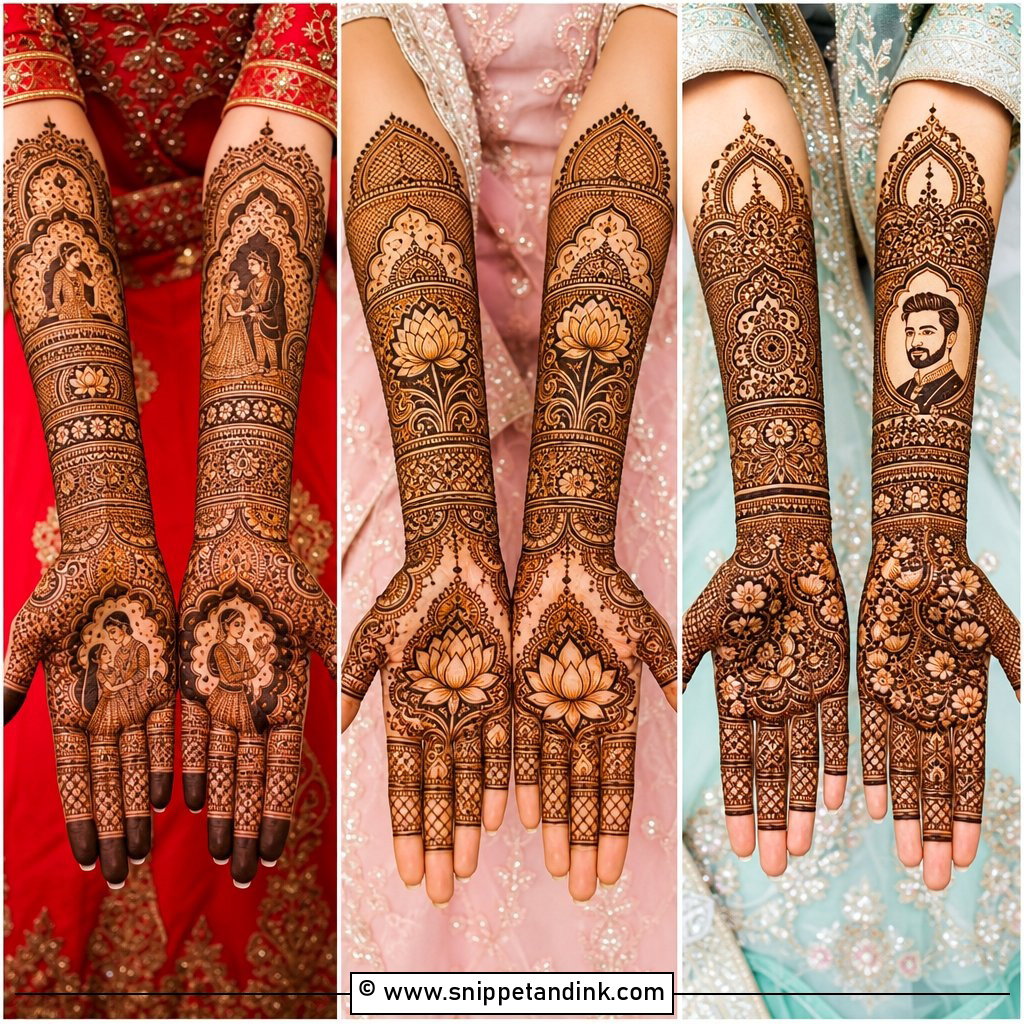
Rajasthani mehndi tells a story: bride and groom portraits, elephants, processions, palanquins, peacocks and palace windows, often across the full hand and past the forearm. It is slow work. A full Rajasthani bridal set on both hands and arms can take several hours, so book an artist experienced in figures and plan the day around the sitting. You can add your wedding date, initials or details from your venue. It pairs naturally with gota work and kundan jewellery.
7. Marwari Bridal Mehndi Design
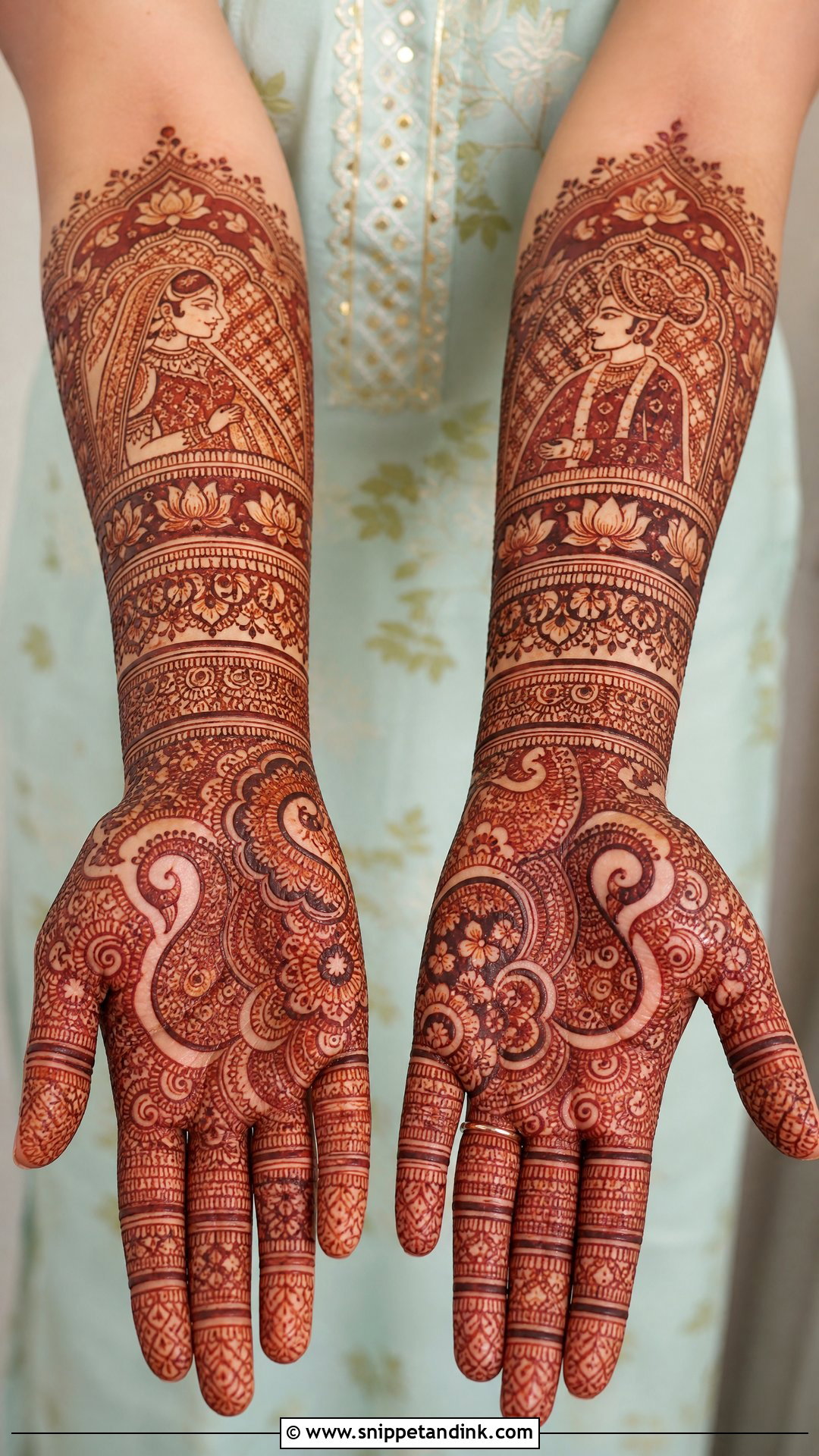
Marwari designs are dense and symmetrical, with peacocks, lotus flowers, bride-groom art, paisleys and fine ornamental borders, which is why so many brides choose them for a proper dulhan mehndi look. They suit red, maroon, orange and gold outfits. Hidden initials sit well inside the filler sections. Because the palm is heavy, I often keep the back hand cleaner with jewellery-inspired bands, so the two sides don’t compete.
8. Gujarati Bridal Mehndi Design
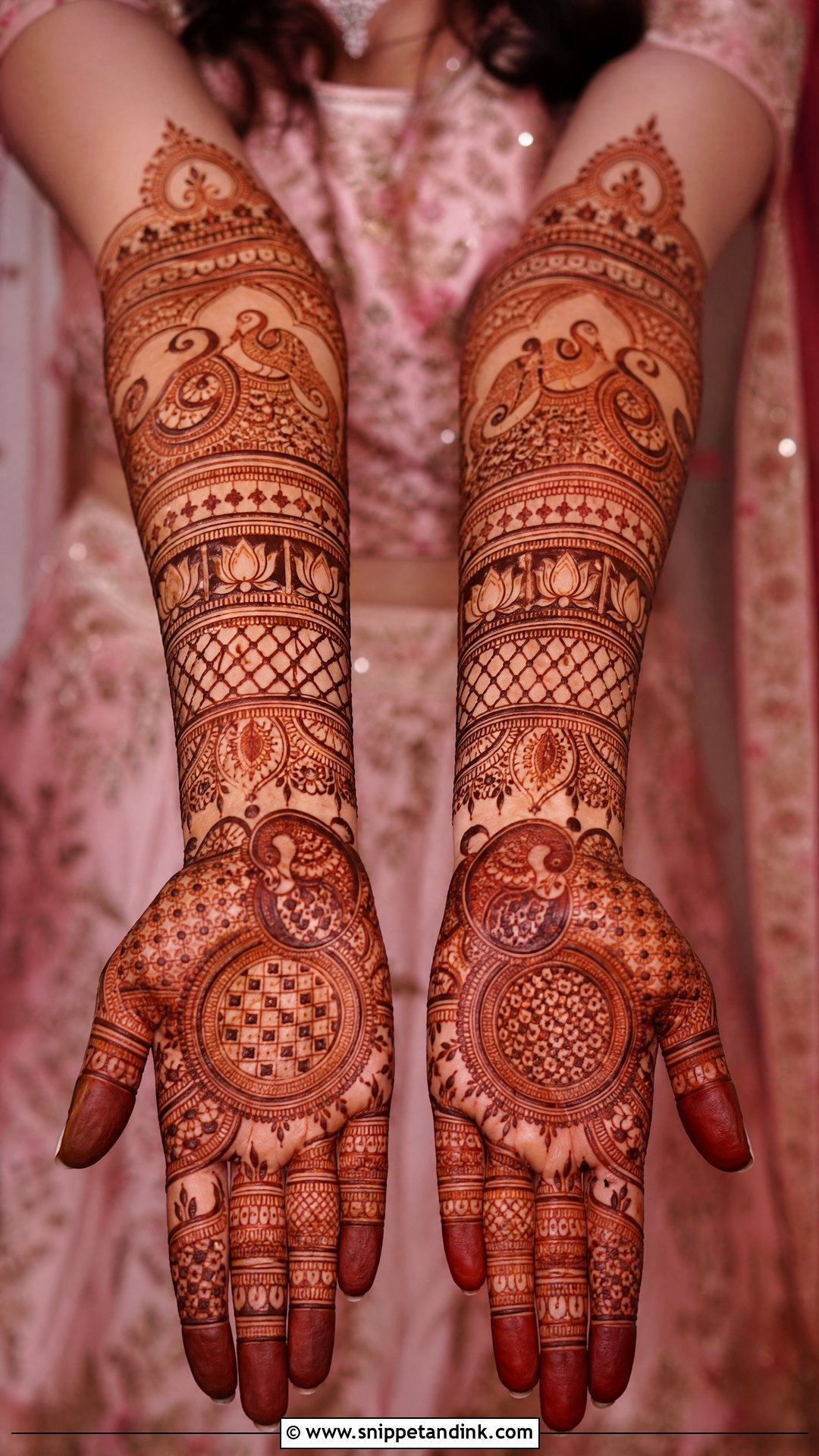
Gujarati bridal mehndi often brings in dandiya sticks, peacocks, mandalas, paisleys, lotus borders, bride-groom figures and fine checkered fills. It can be full-hand or a slightly lighter forearm design, with the palm carrying the most detail. Small symbols from your ceremony or the embroidery on your outfit make it personal. It sits naturally beside mirror work, bandhani and bright bridal colours.
9. Punjabi Bridal Mehndi Design
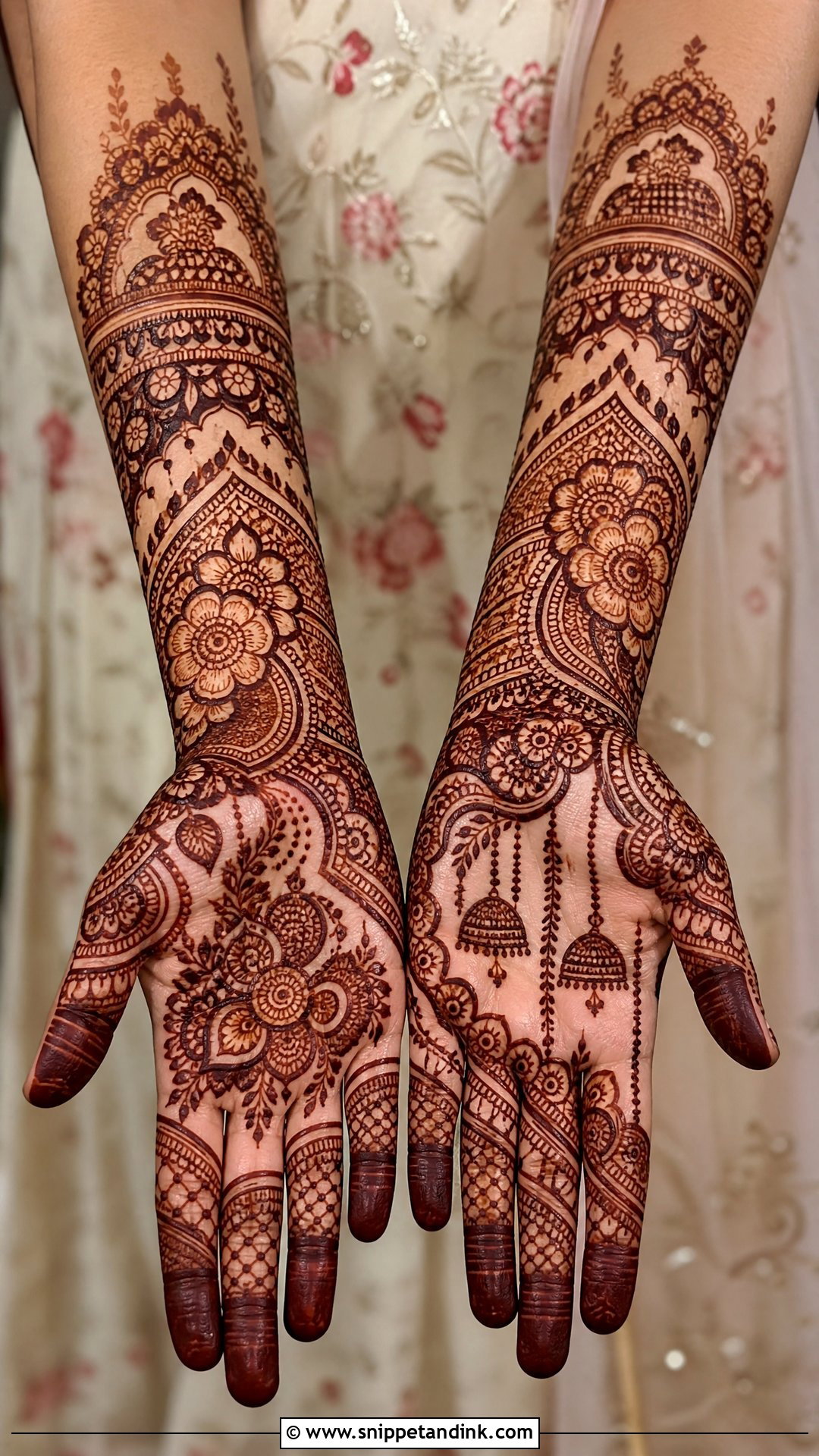
Punjabi mehndi tends to be bold and easy to read: large florals, paisleys, leafy vines, mandalas, dhol motifs, kalire-inspired details and initials. Since the chooda covers much of the forearm, I place the strongest back-hand motifs between the knuckles and the wrist, where they’ll still show. A little negative space around the main motifs keeps a dense Punjabi design looking modern.
10. South Indian Bridal Mehndi Design
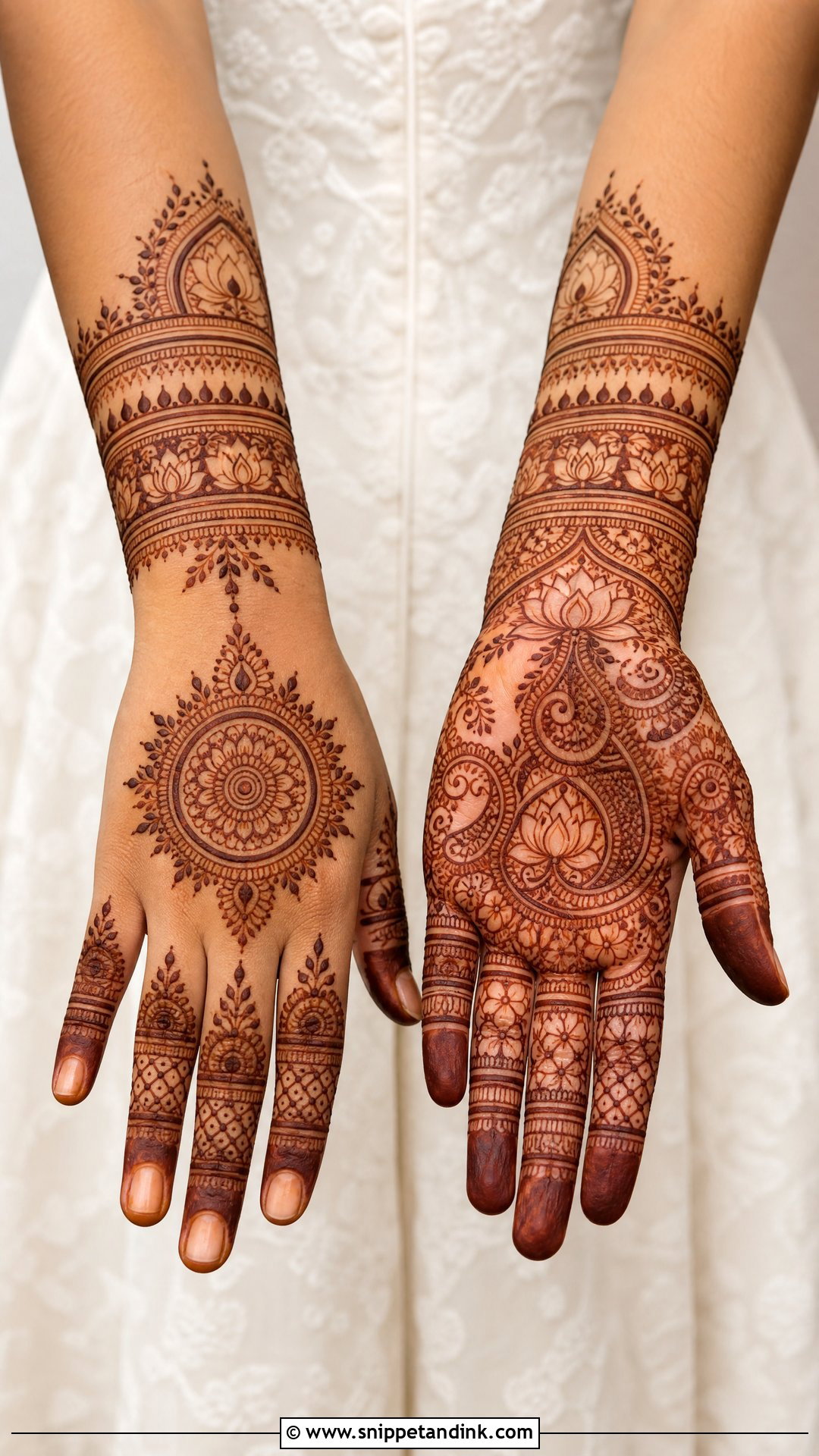
South Indian mehndi traditions vary a great deal by region and family, so I always ask what’s expected at home before designing. Many brides choose lotus flowers, mango paisleys, mandalas, leafy borders and jewellery-style wrist patterns rather than heavy portrait work. Neat palm mandalas, decorated fingers and delicate forearm bands sit well with silk sarees and temple jewellery. Keeping motifs clean and symmetrical lets the gold stand out.
11. Minimal Bridal Mehndi Design
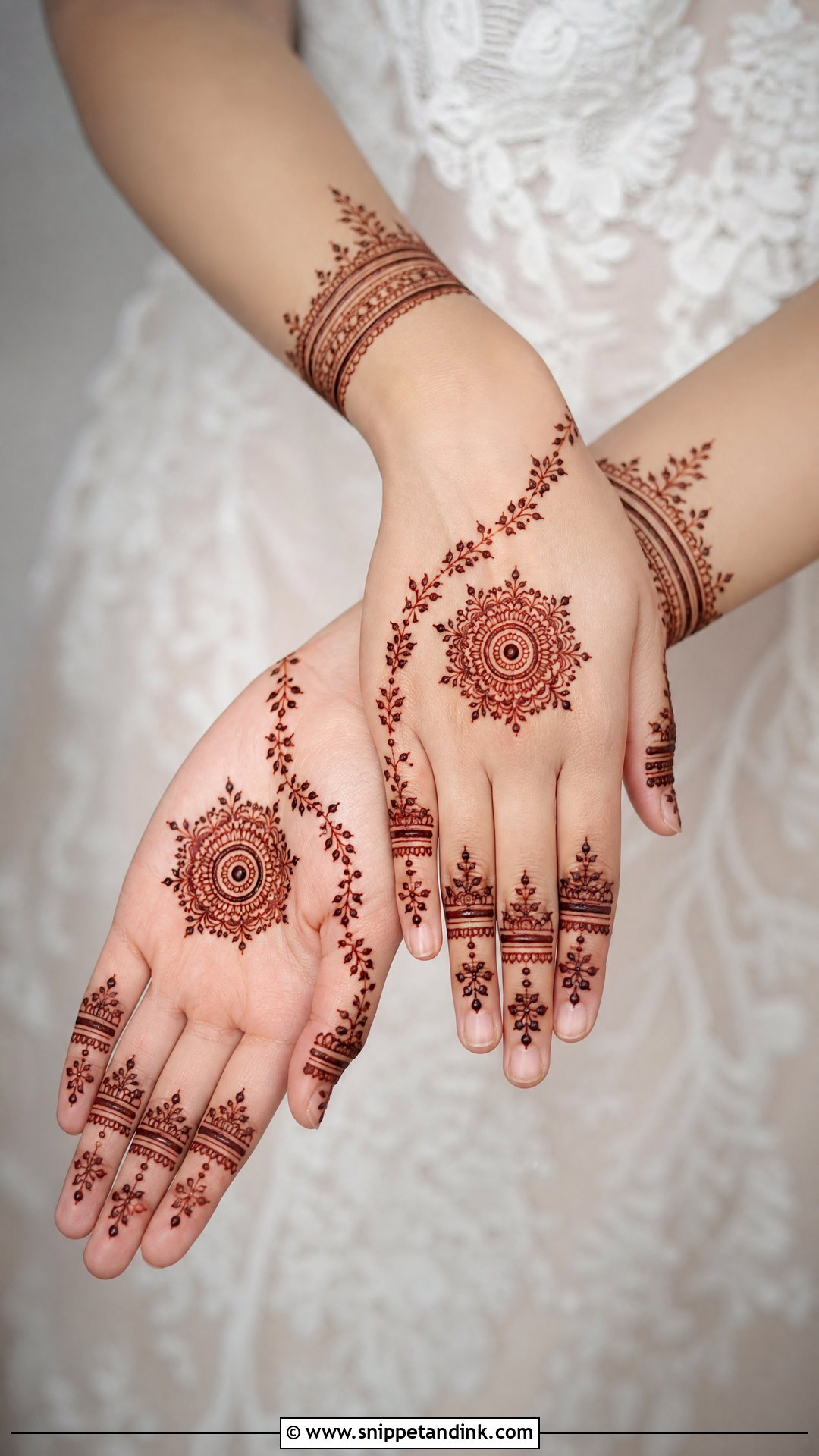
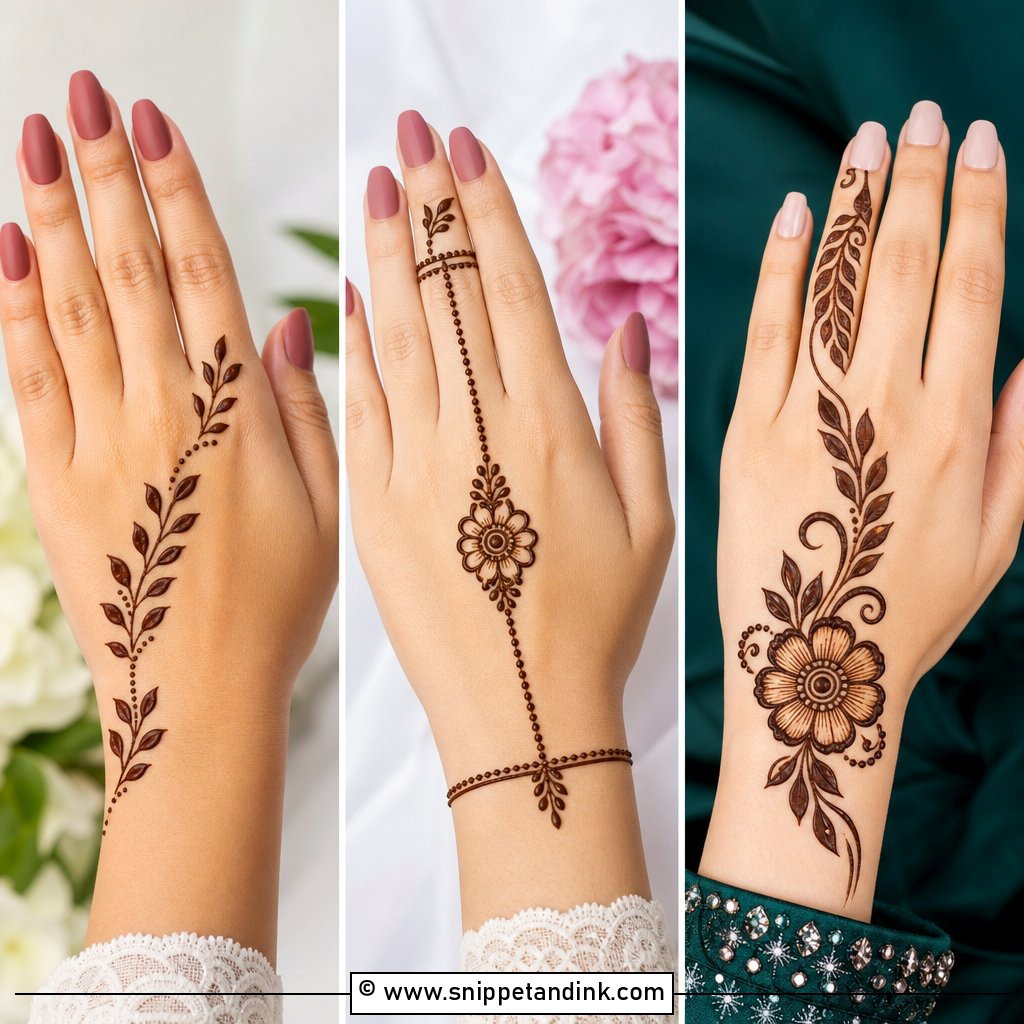
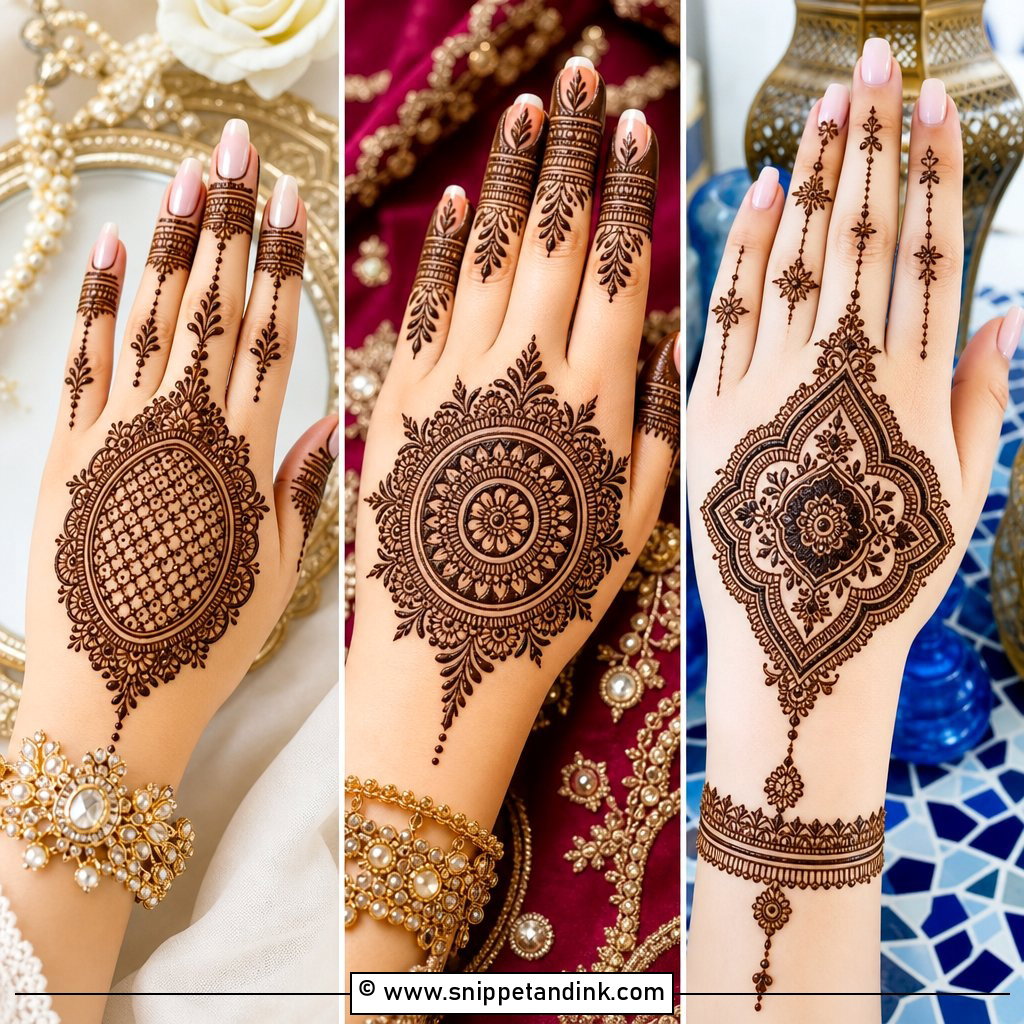
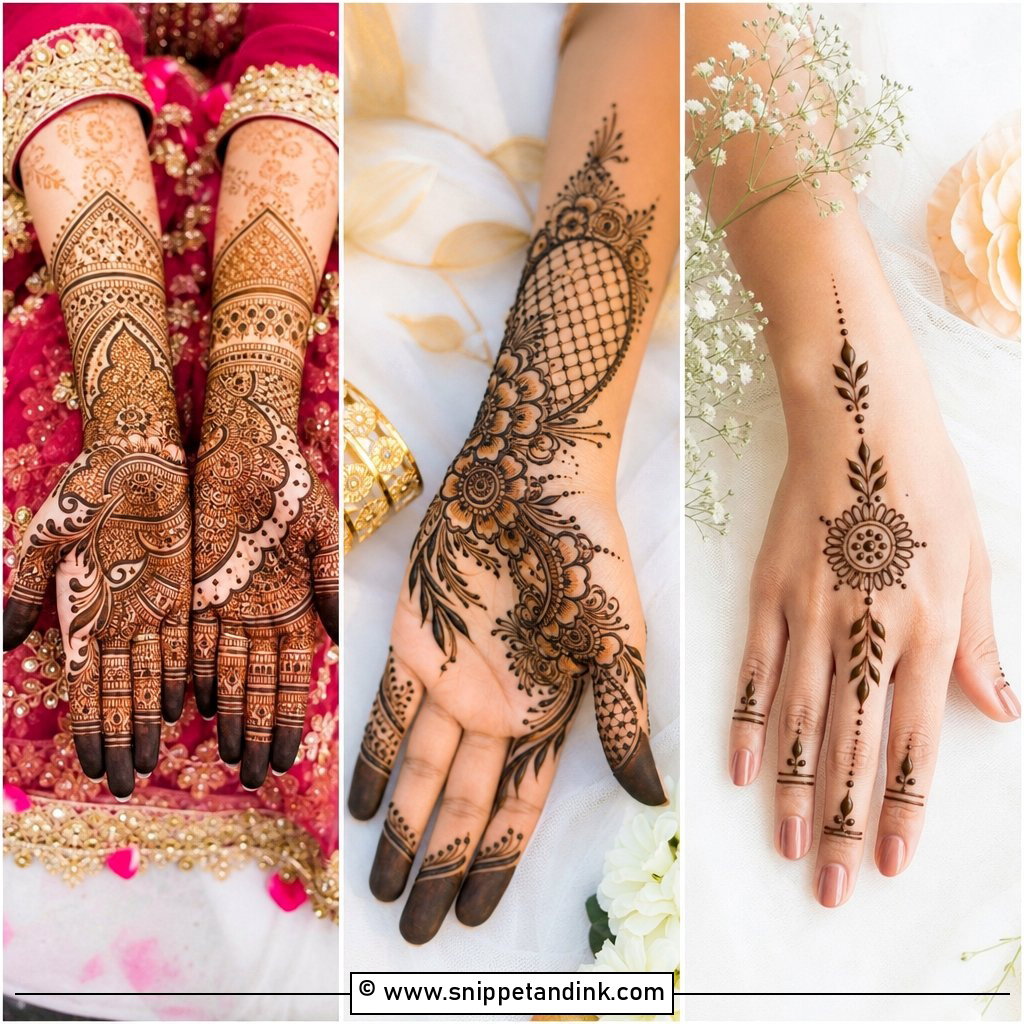
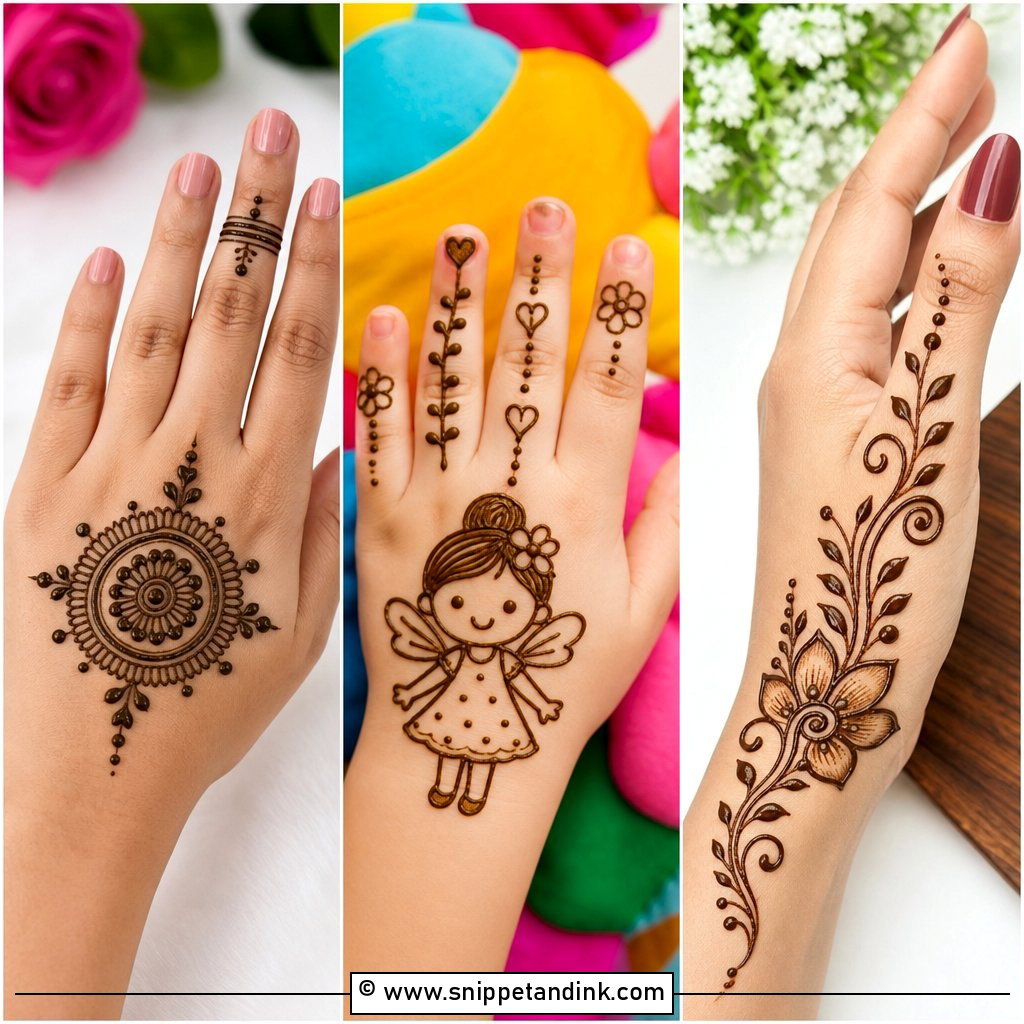
Minimal bridal mehndi might be a palm mandala, delicate finger bands, slim wrist cuffs and small floral trails. It suits intimate weddings, court ceremonies, destination weddings and pastel outfits. The risk is that it looks casual, so I hold it to bridal finishing: precise lines, even spacing and matching patterns on both hands. A tiny wedding date or initials keeps it personal.
12. Simple Bridal Mehndi Design
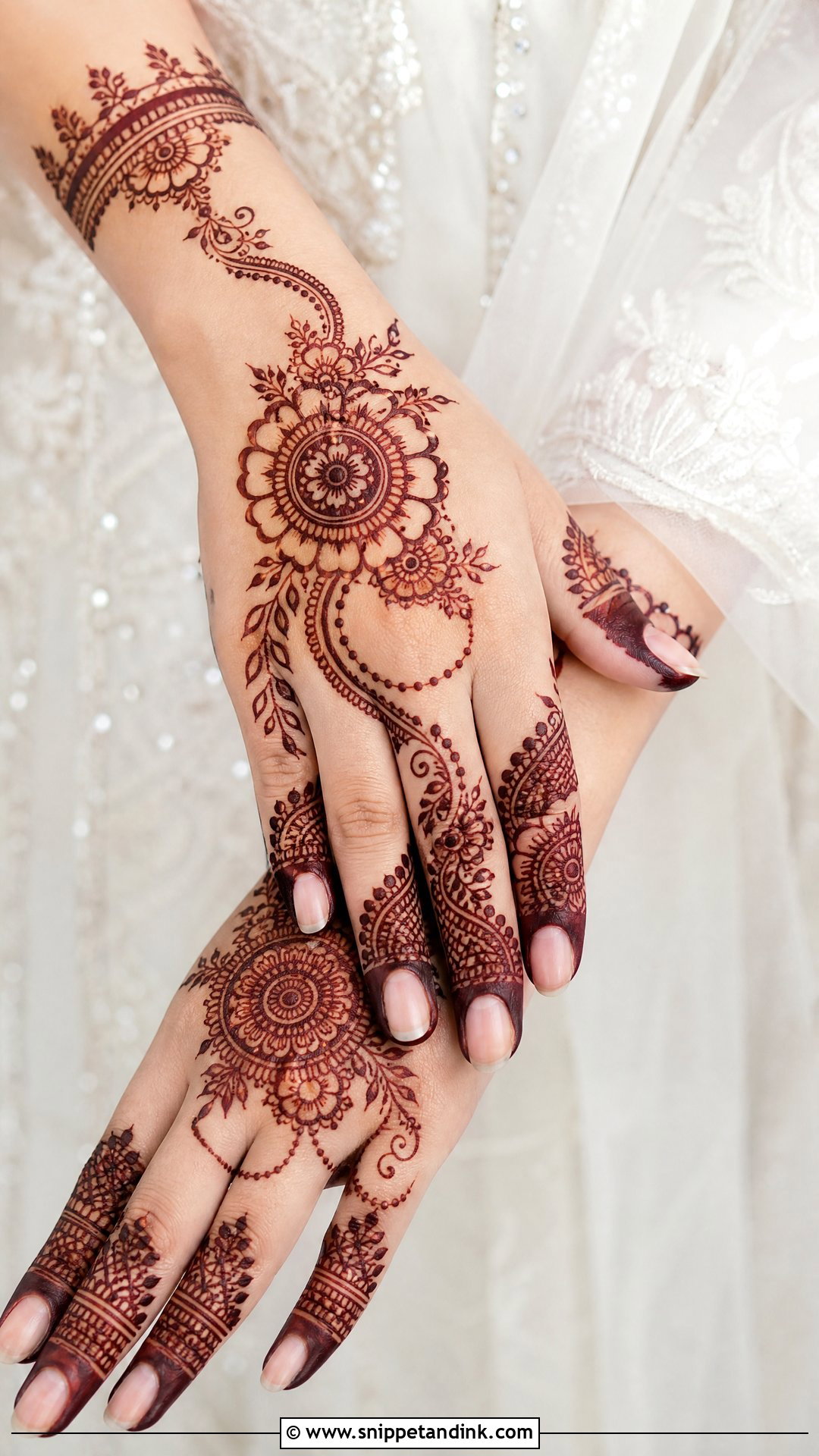
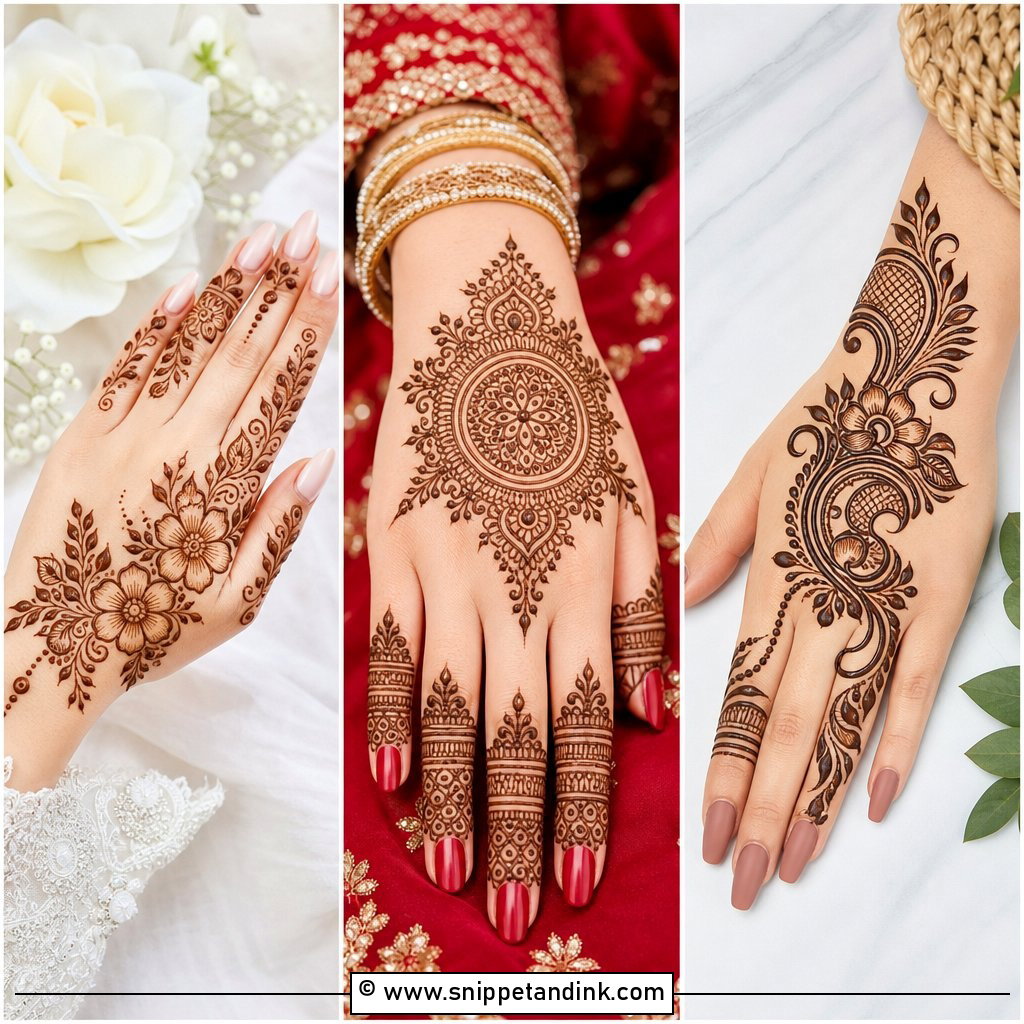
Simple doesn’t mean plain; it means less crowded. Florals, paisleys, curved vines, dotted borders, mandalas and clean finger detail can all appear. This design suits brides with a shorter session or who need comfort across several events, and it works well for bridesmaids. For the bride, I keep the palm a little richer. With clean lines and a deep stain, a simple design holds its own in photos.
13. Modern Bridal Mehndi Design
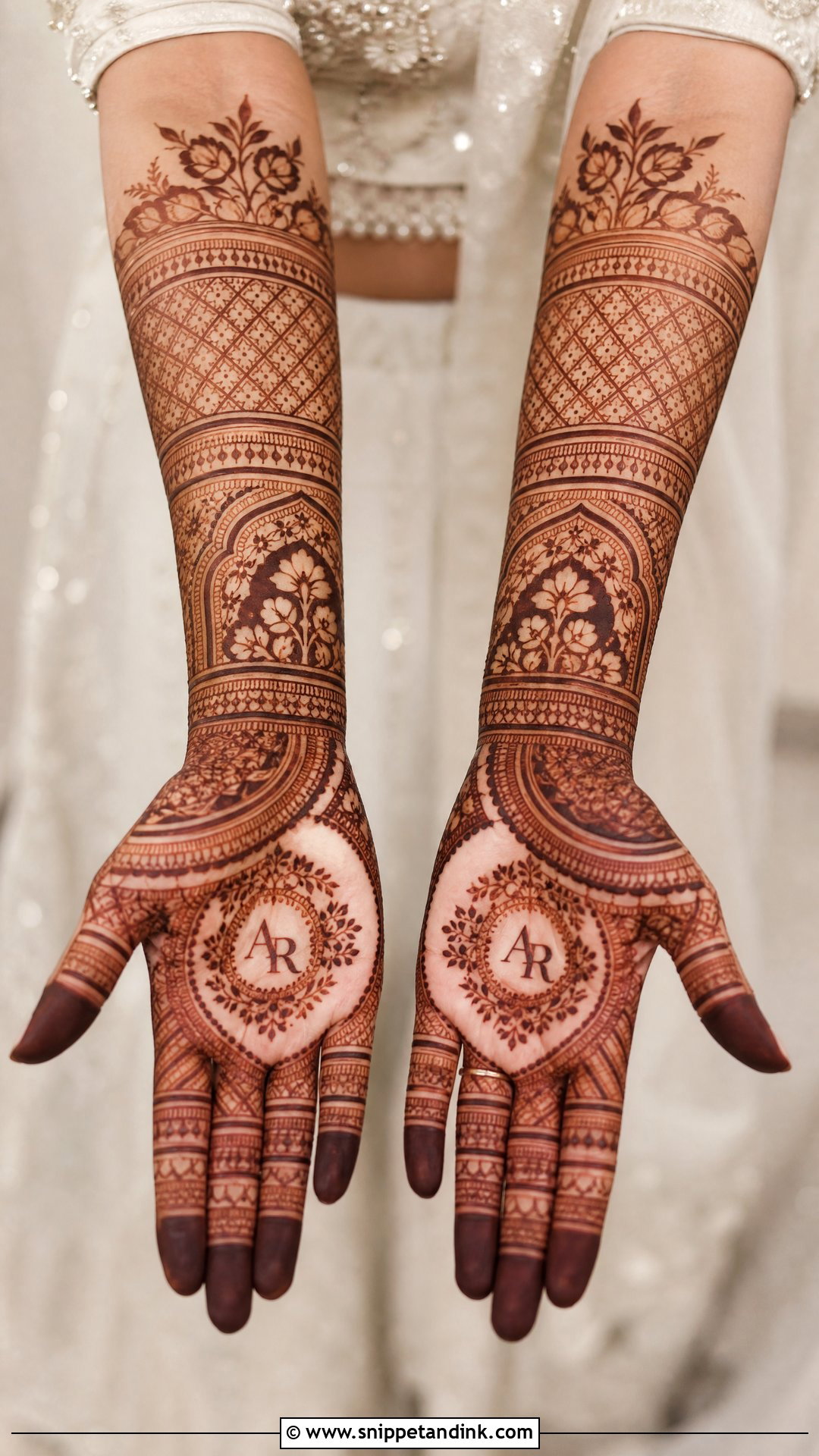
Modern layouts lean on negative space, bracelet bands, geometric grids, portrait accents, initials, dates and sleek floral trails. They suit contemporary, pastel or fusion outfits. Pick two or three strong elements instead of every traditional pattern, for instance a mandala palm with modern wrist cuffs and detailed fingers. Negative space only works if the lines around it are crisp, so cone control matters more here than in dense work.
14. Personalized Bridal Mehndi Design
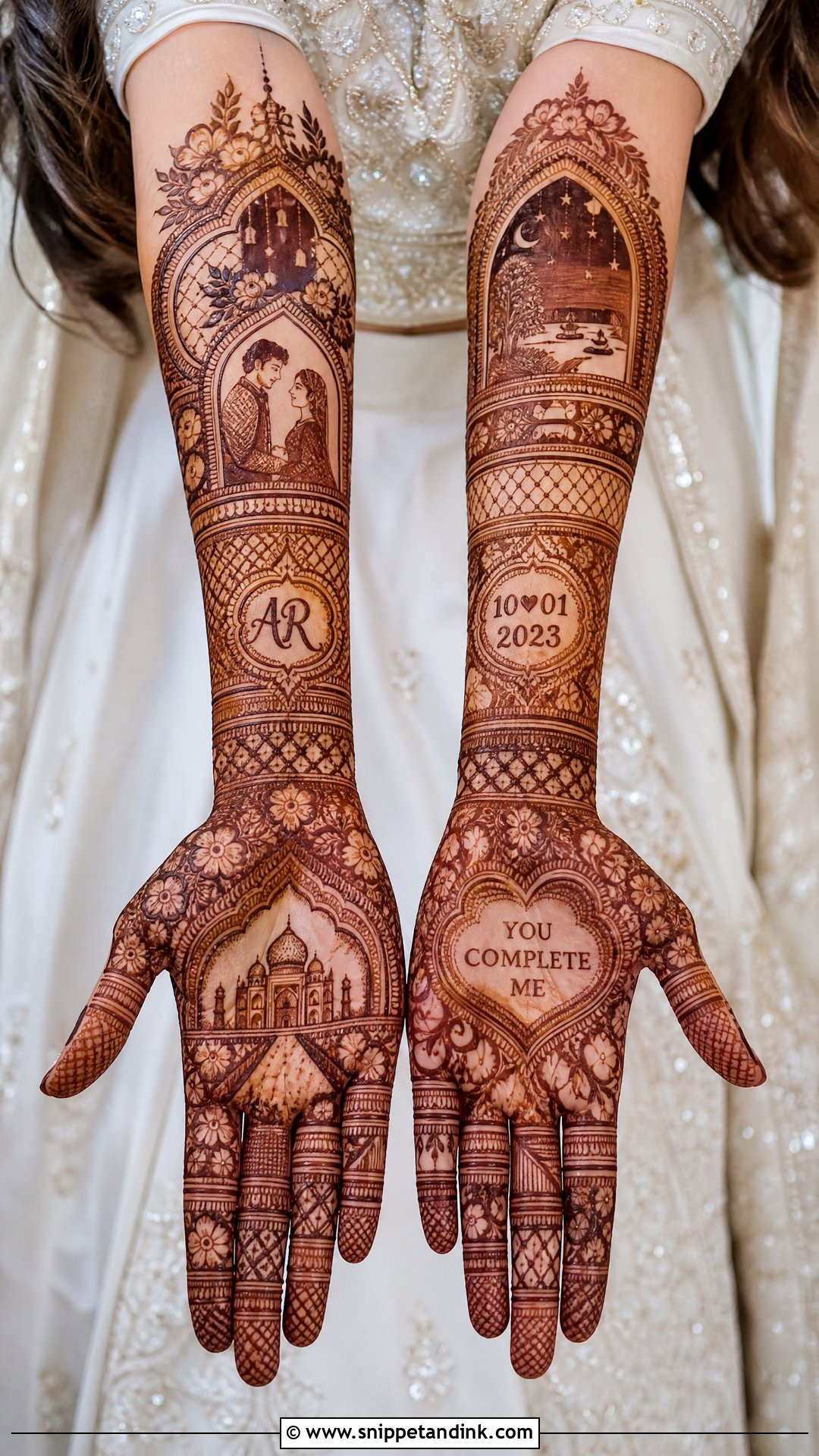
Personalised designs can hold initials, the wedding date, a proposal symbol, a favourite city, a venue outline, a meaningful flower, or the groom’s hidden name. The trick is blending them into the layout. I hide initials inside paisleys, run the date along a wrist band, or tuck small symbols near the palm centre, and keep the rest balanced with florals, jaali and vines. Lettering needs a fine cone tip and steady paste; it’s worth checking that your artist is comfortable with it.
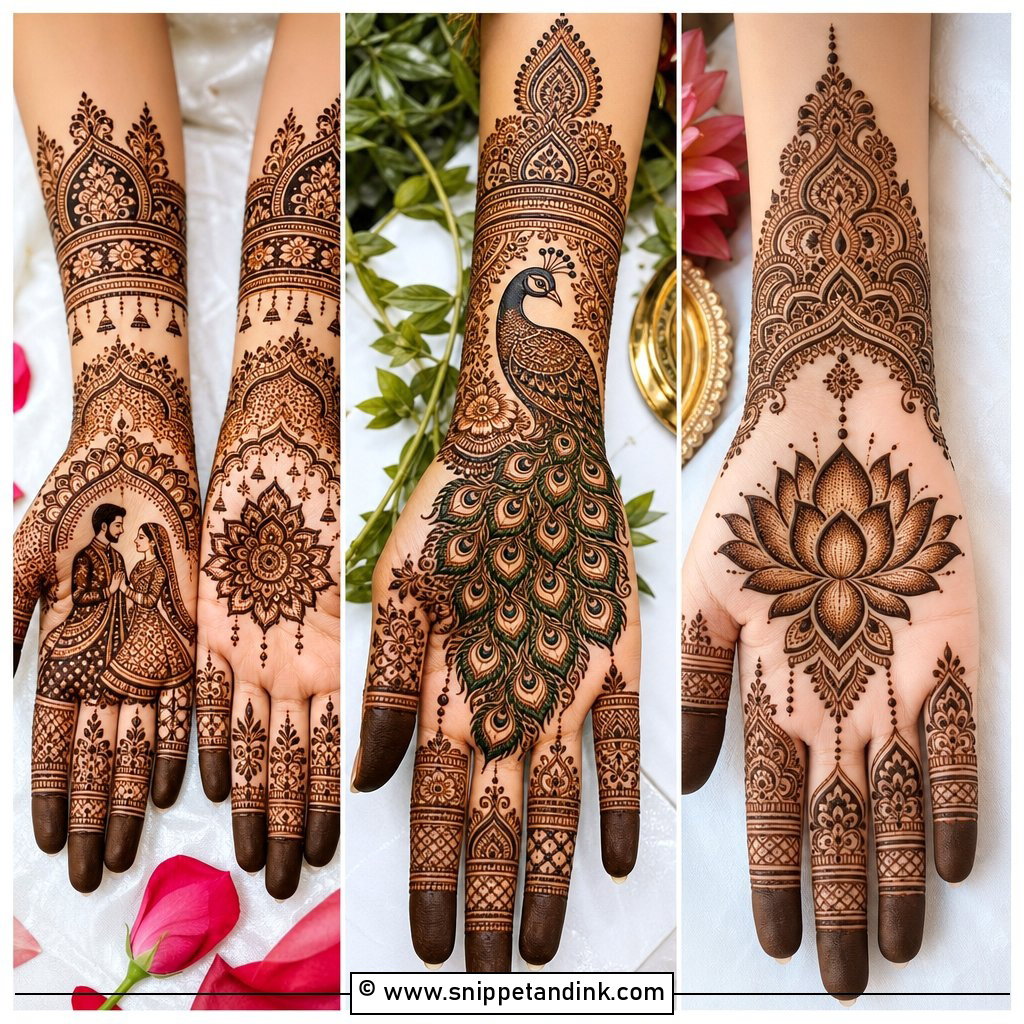
15. Bride Groom Mehndi Design
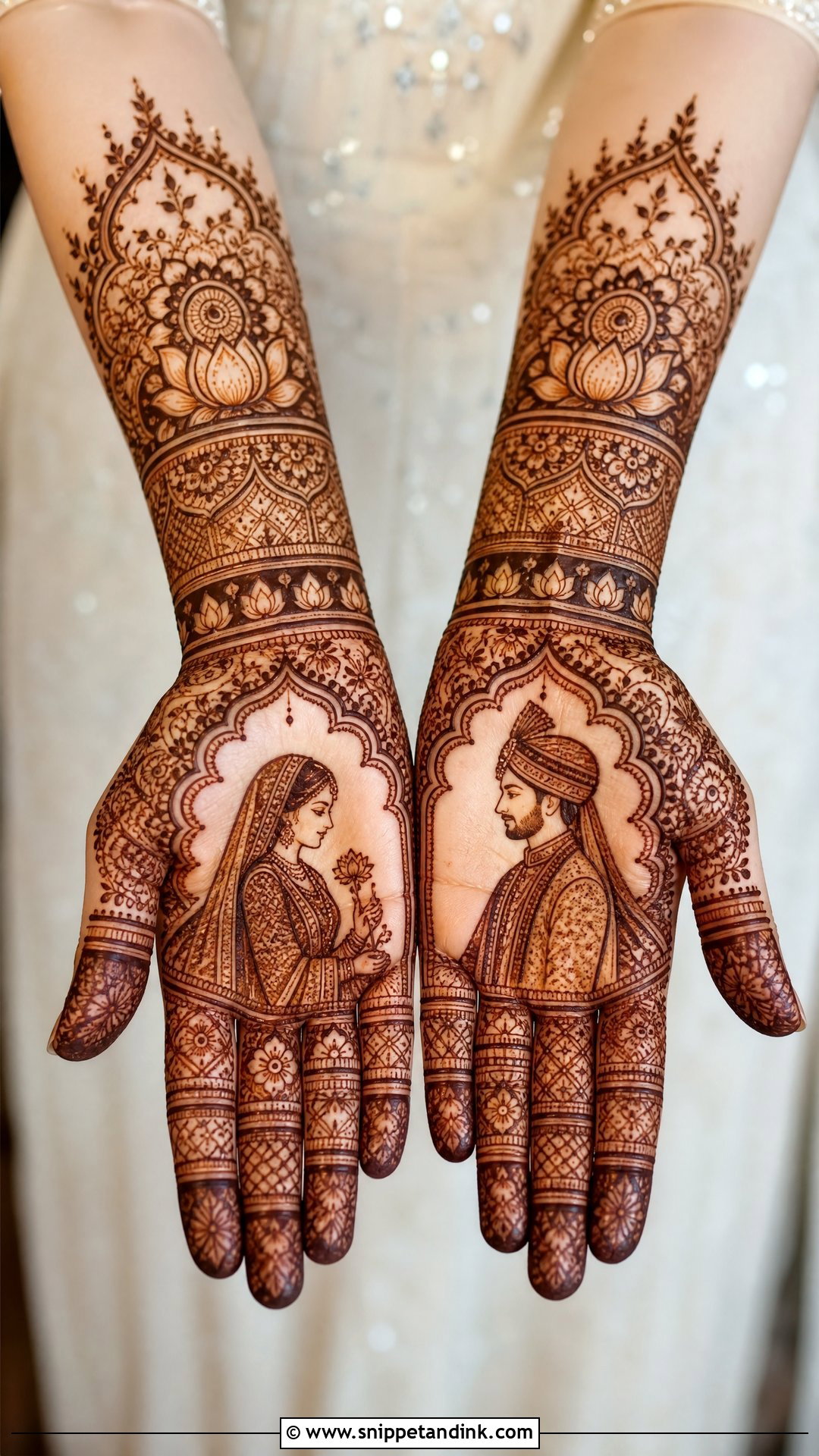
Bride and groom portraits on the palms are the traditional keepsake, usually framed by mandalas, arches, lotuses or wedding scenes. Portraits need space, so this works best with full-hand coverage. Facial balance is the hard part of miniature work: a slightly uneven eye changes the whole expression, so look at an artist’s previous portrait work before booking. Forearms can carry paisleys, peacocks or palace motifs.
16. Peacock Bridal Mehndi Design
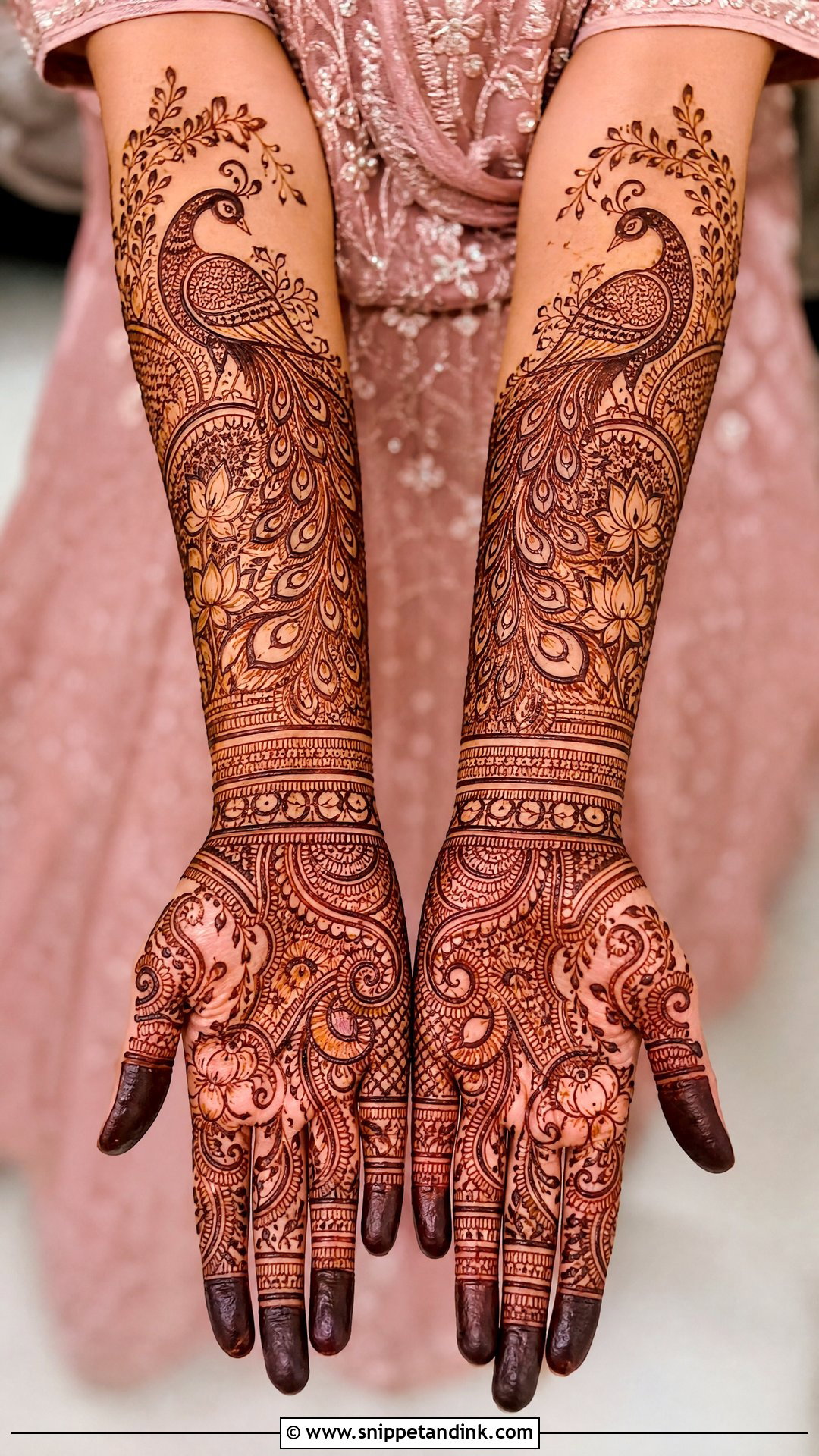
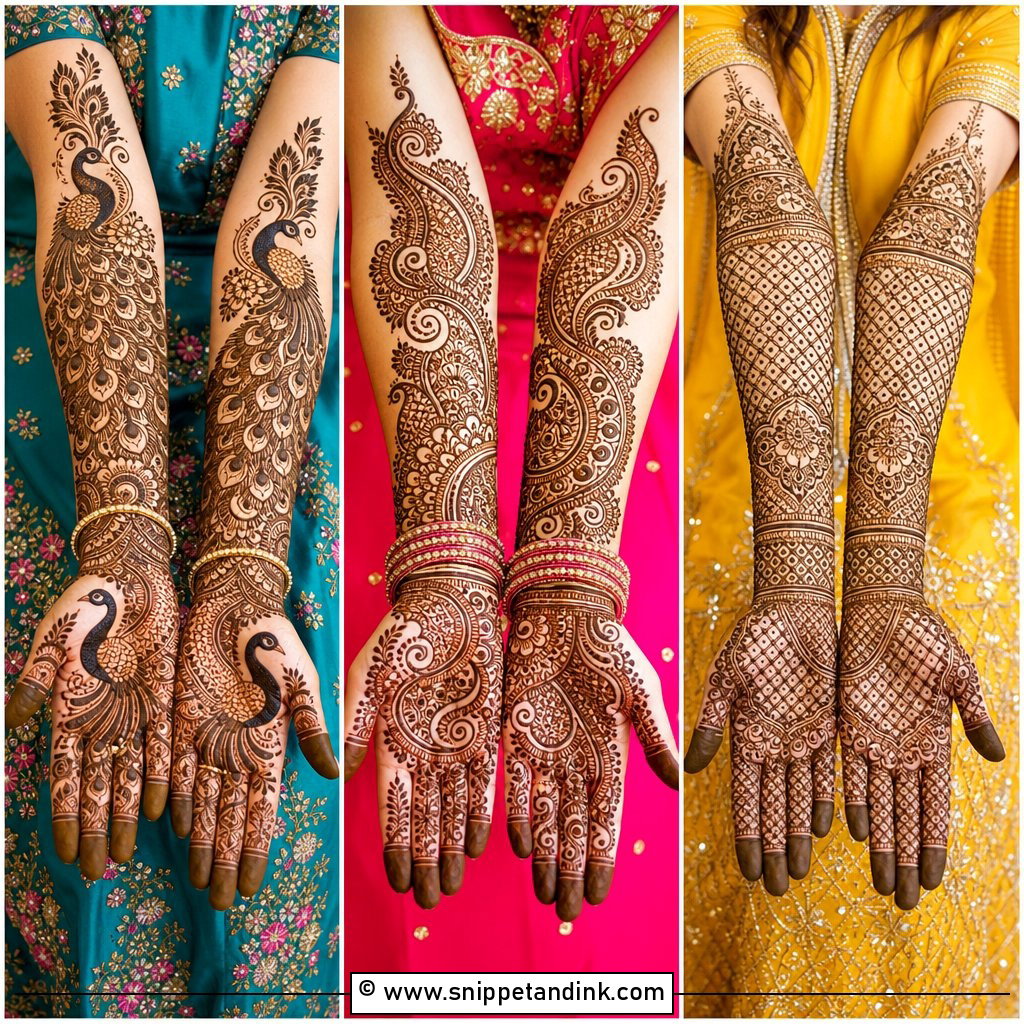
Peacocks bring movement to the hands: one large bird on the palm, mirrored peacocks on each hand, or feathers sweeping up the forearm. They pair well with paisleys, lotus flowers, vines and fine mesh. I extend the body into feather trails and echo those lines on the fingers. Don’t overfill the feathers; clean feather shapes read clearly once the stain darkens, while heavy fill turns into a solid patch.
17. Lotus Bridal Mehndi Design
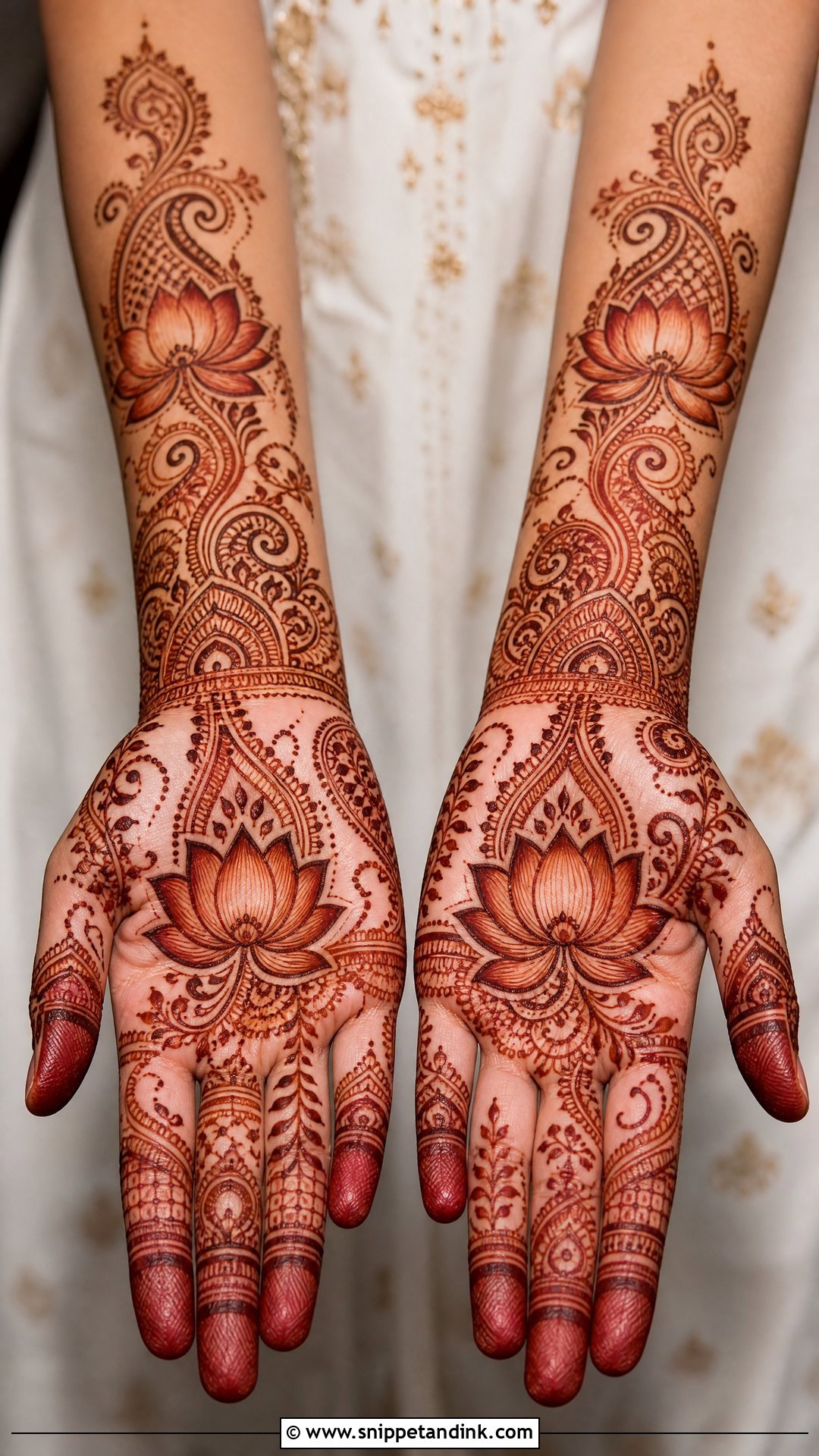
The lotus works as a central palm motif, a wrist border, a forearm pattern or a back-hand trail, in both heavy and minimal designs. It’s a favourite with pastel lehengas, silk sarees and temple jewellery. Pair it with paisleys, dots, mandalas and leafy vines. For a modern finish, I draw larger lotuses with open space around them; for a classic one, I fill the petals with fine linework and shading.
18. Mandala Bridal Mehndi Design
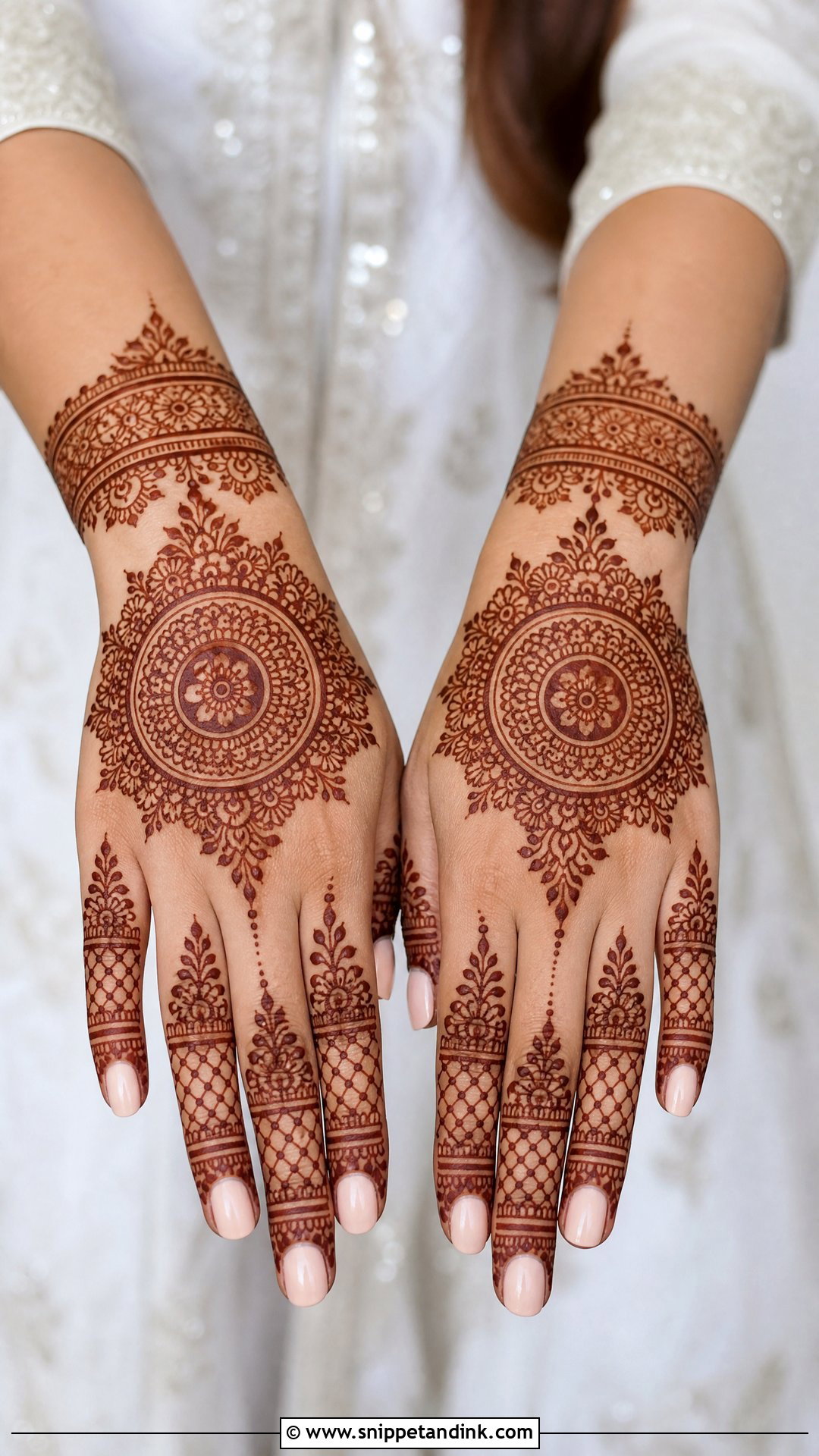
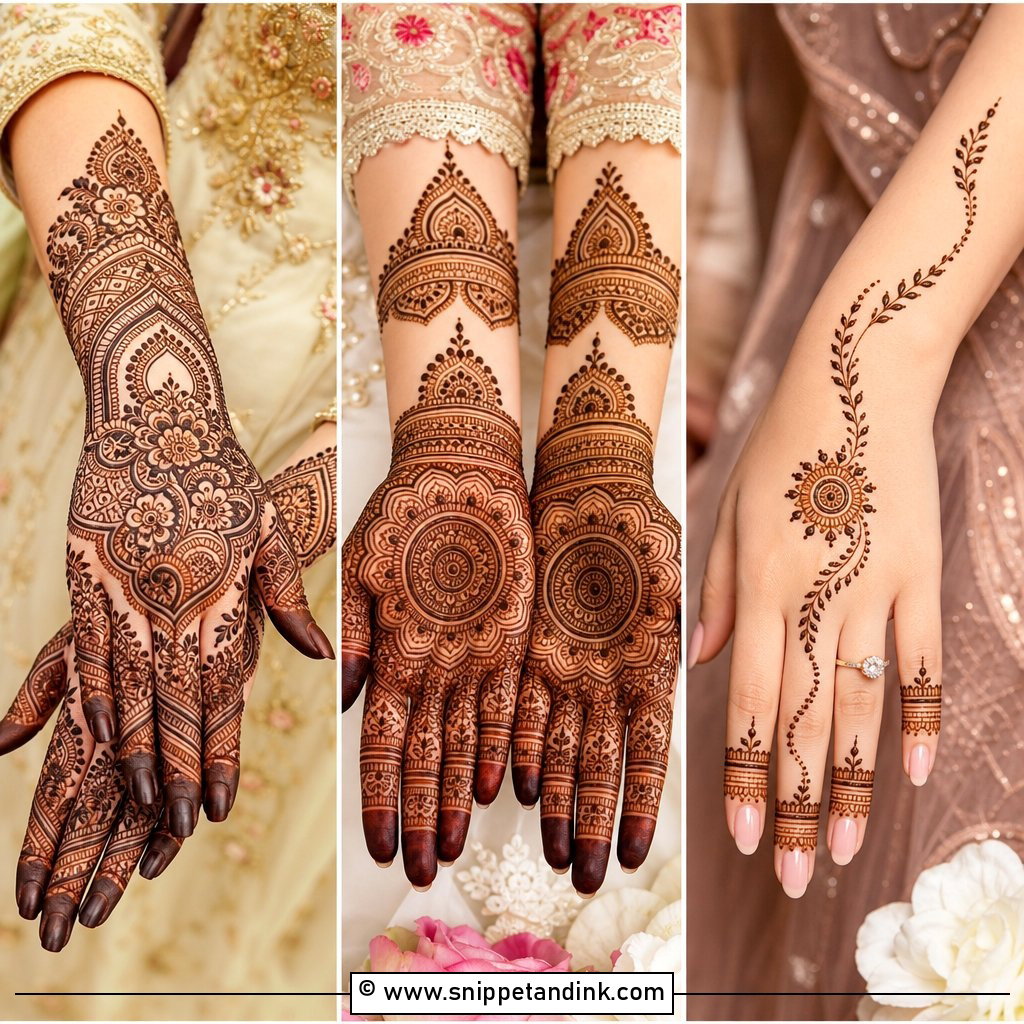
A mandala on the palm creates a strong focal point, while fingers, wrists and forearms carry bands and floral extensions. Mandalas suit brides who like symmetry, and they make both hands look balanced in photos. A perfect circle on a curved palm is harder than it looks; I start from the centre point and build outward ring by ring. Paisleys, jaali, lotus borders and shaded leaves can surround it, and the back hand can carry a matching circular motif with bracelet details.
19. Jaali Bridal Mehndi Design
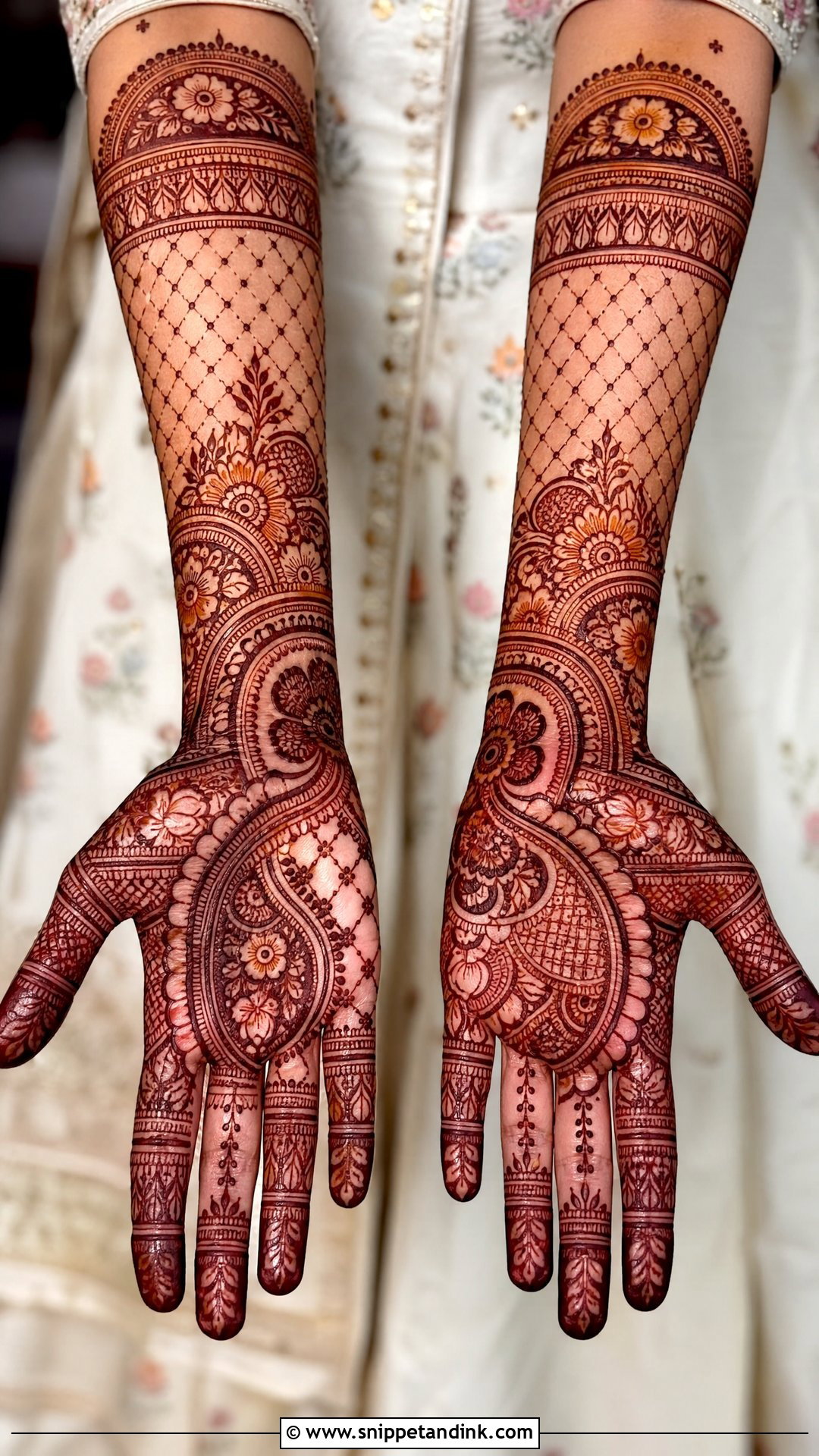
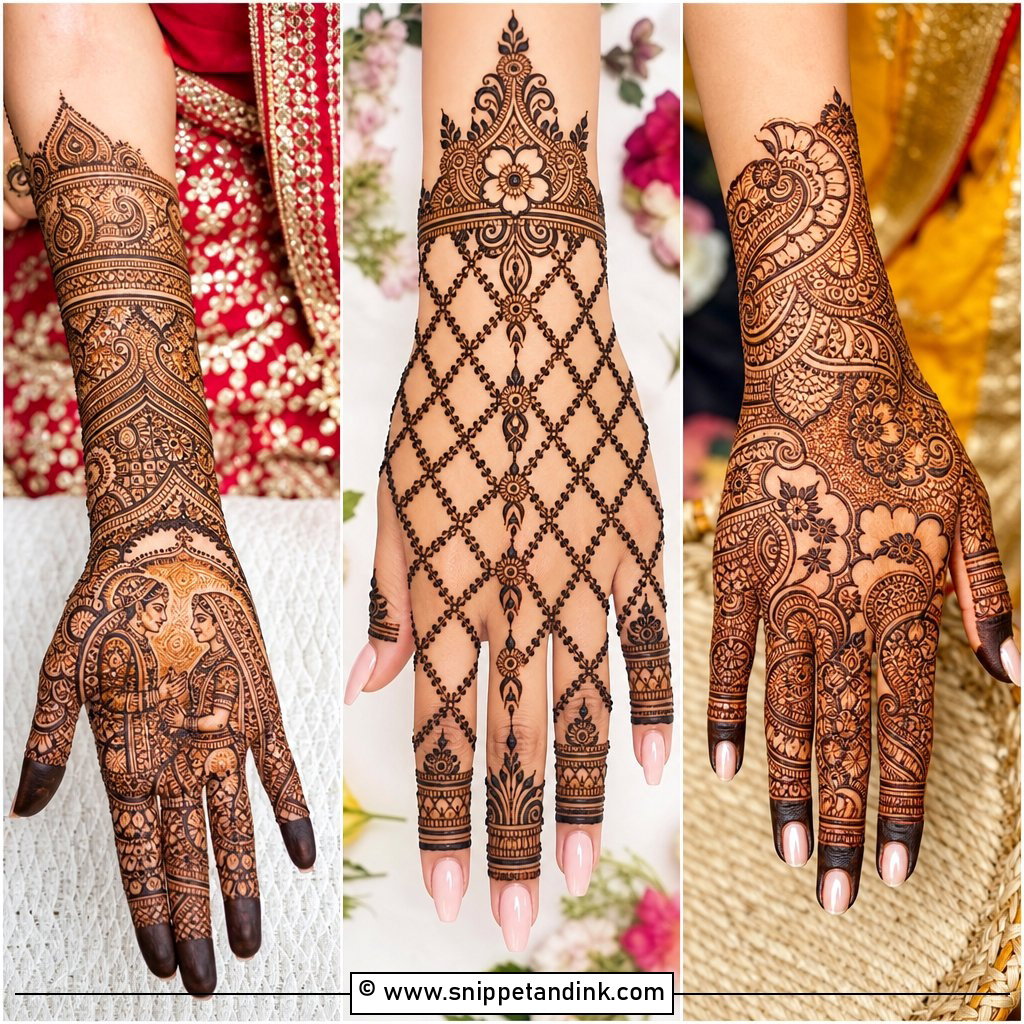
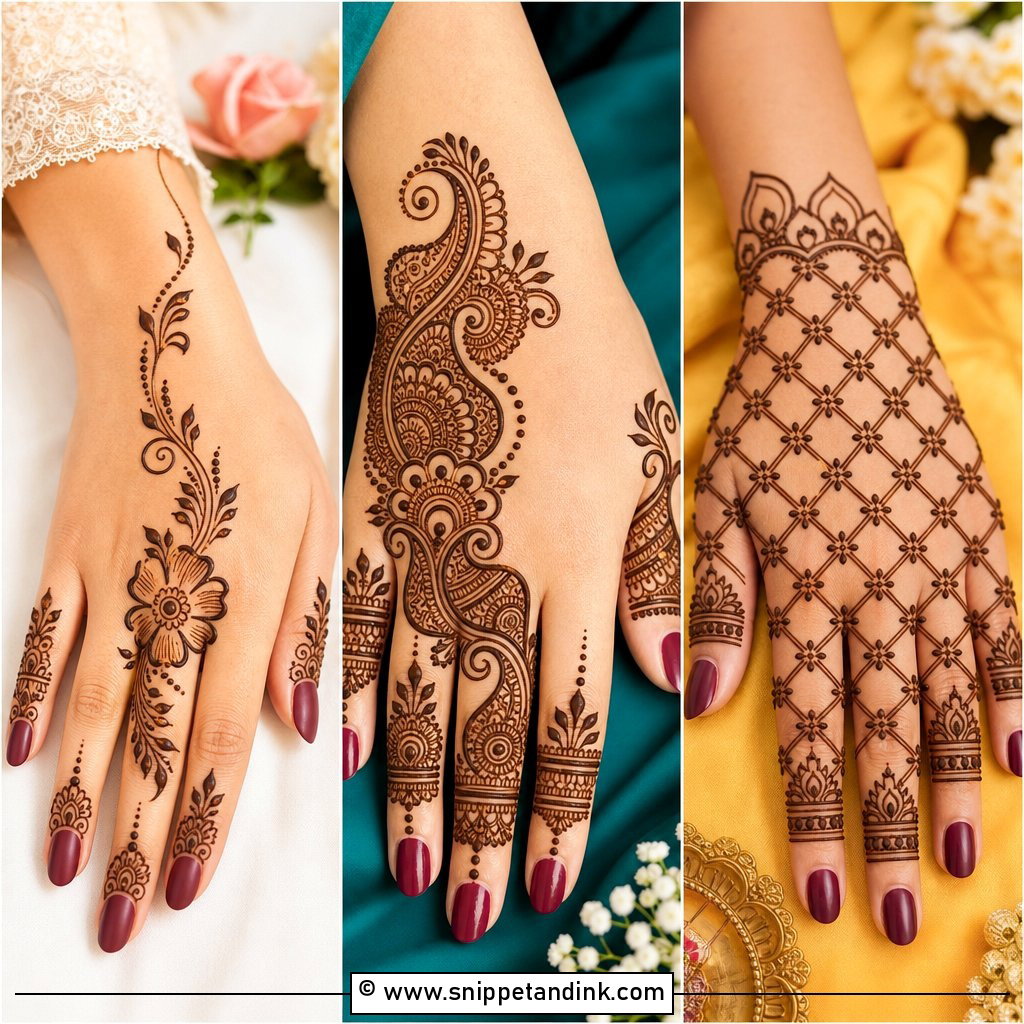
Jaali is net-like work, usually on the back hand, wrist and forearm, sometimes framing palm motifs. It adds texture without making a hand look heavy, and it pairs with florals, paisleys, cuffs and mandala centres. I vary the grid size, finer mesh near the fingers and larger checks near the wrist, which gives depth. Jaali shows rings, bangles and hand jewellery off very well. It also needs a steady hand: one wobbly line in a grid is easy to spot.
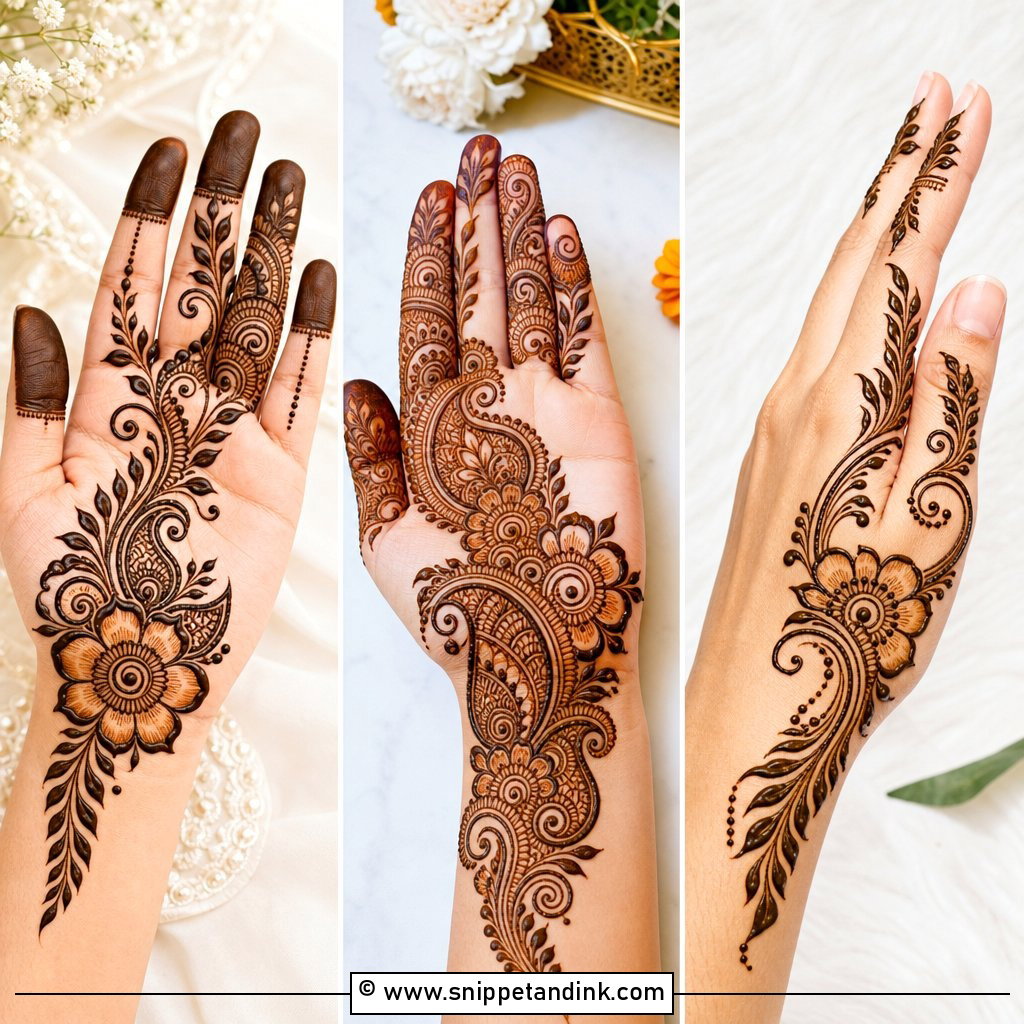
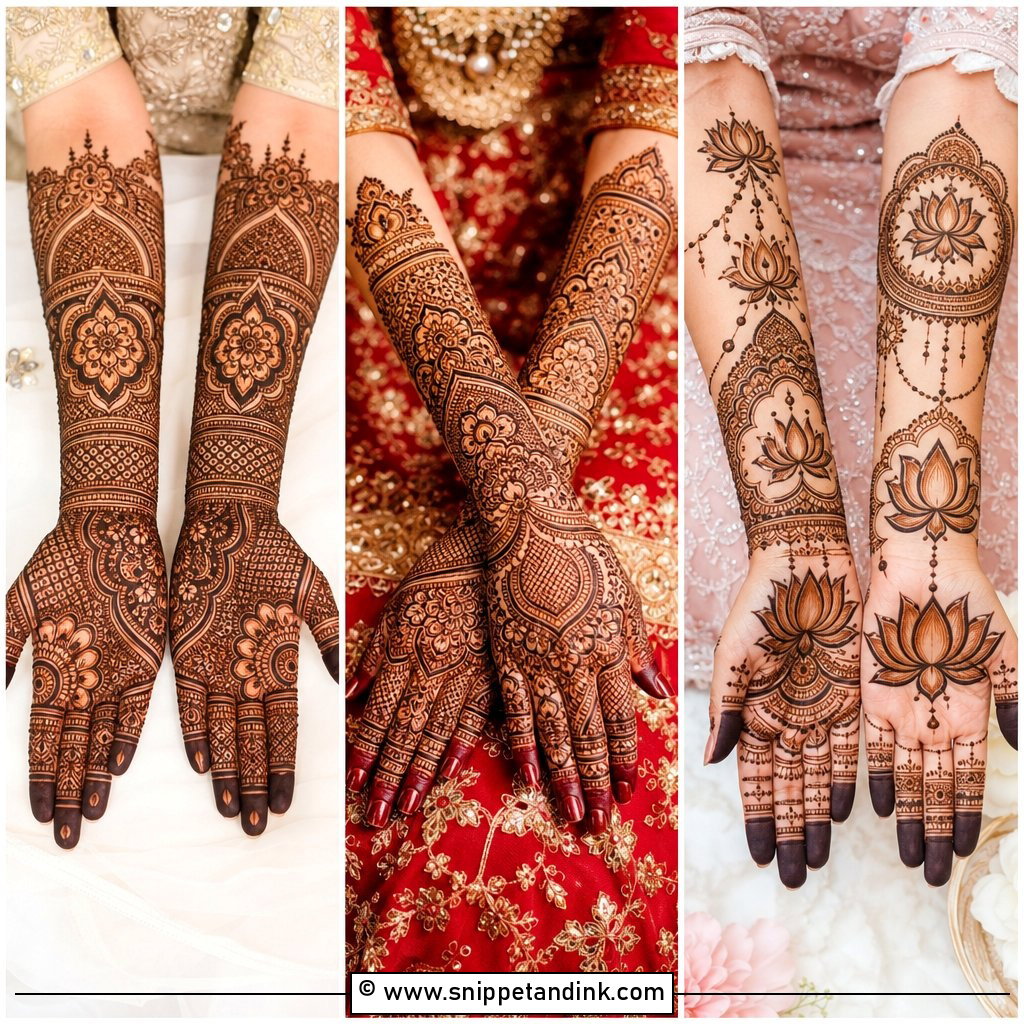
20. Floral Bridal Mehndi Design
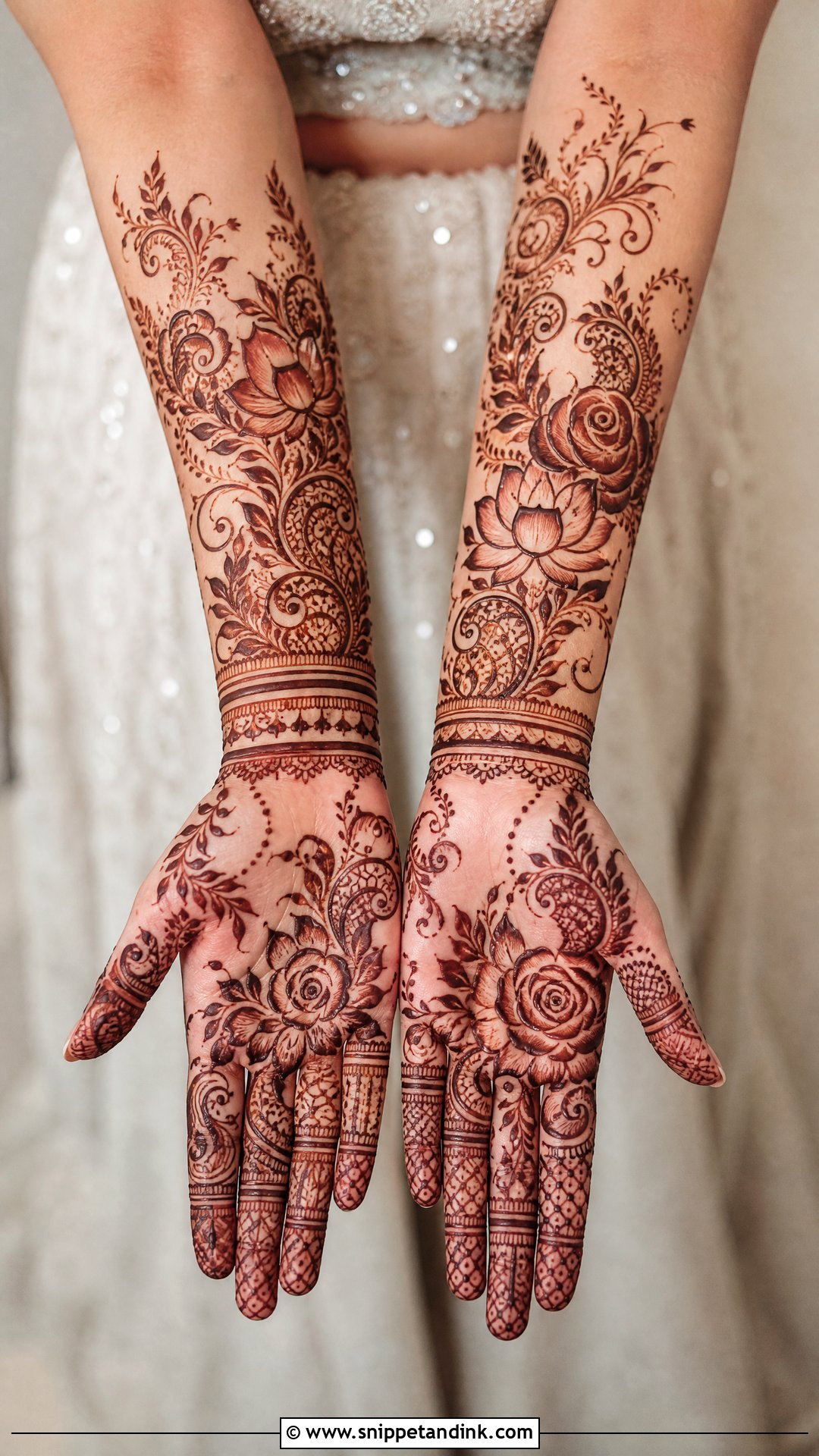
Floral designs suit any hand shape and work as full Indian coverage, an Arabic trail or Indo-Arabic fusion. Roses, lotus blooms, leafy vines, shaded petals and small filler flowers are the usual mix. They suit pastel outfits, floral lehengas and daytime ceremonies. Large flowers with detailed fingers and a decorated wrist-to-forearm layout keep it bridal. Bold petals give a clear contrast against the skin once the stain develops.
21. Paisley Bridal Mehndi Design
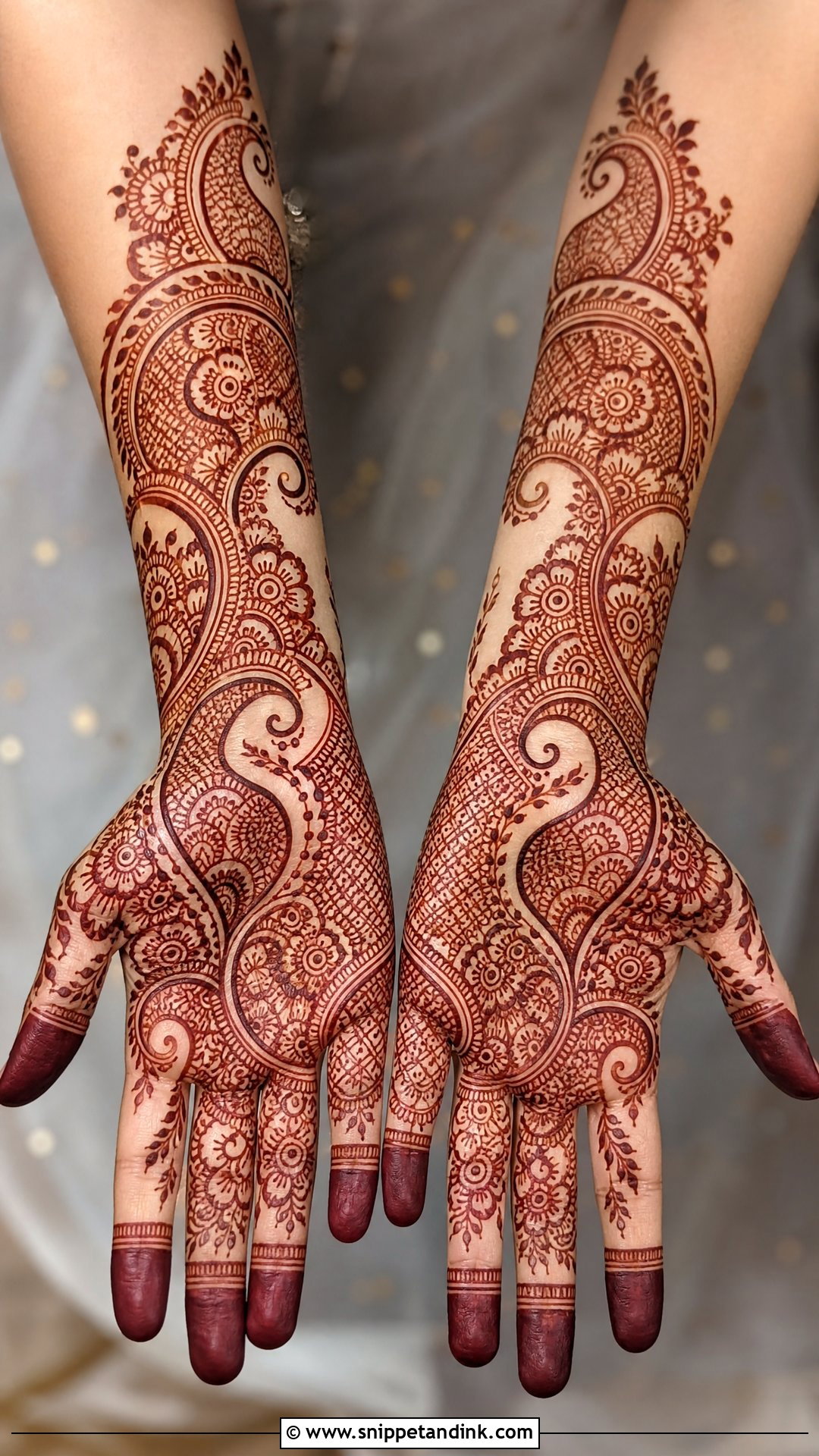
Paisleys are curved, graceful and combine with almost every motif. They can fill the palm, run along the forearm or form bold back-hand trails, with no portrait work needed. Mixing large paisleys with tiny floral fills, dotted outlines, leafy vines and mesh gives a rich effect. The fingers can carry small paisley tips. It works for heavy and simple coverage alike.
22. Back Hand Bridal Mehndi Design
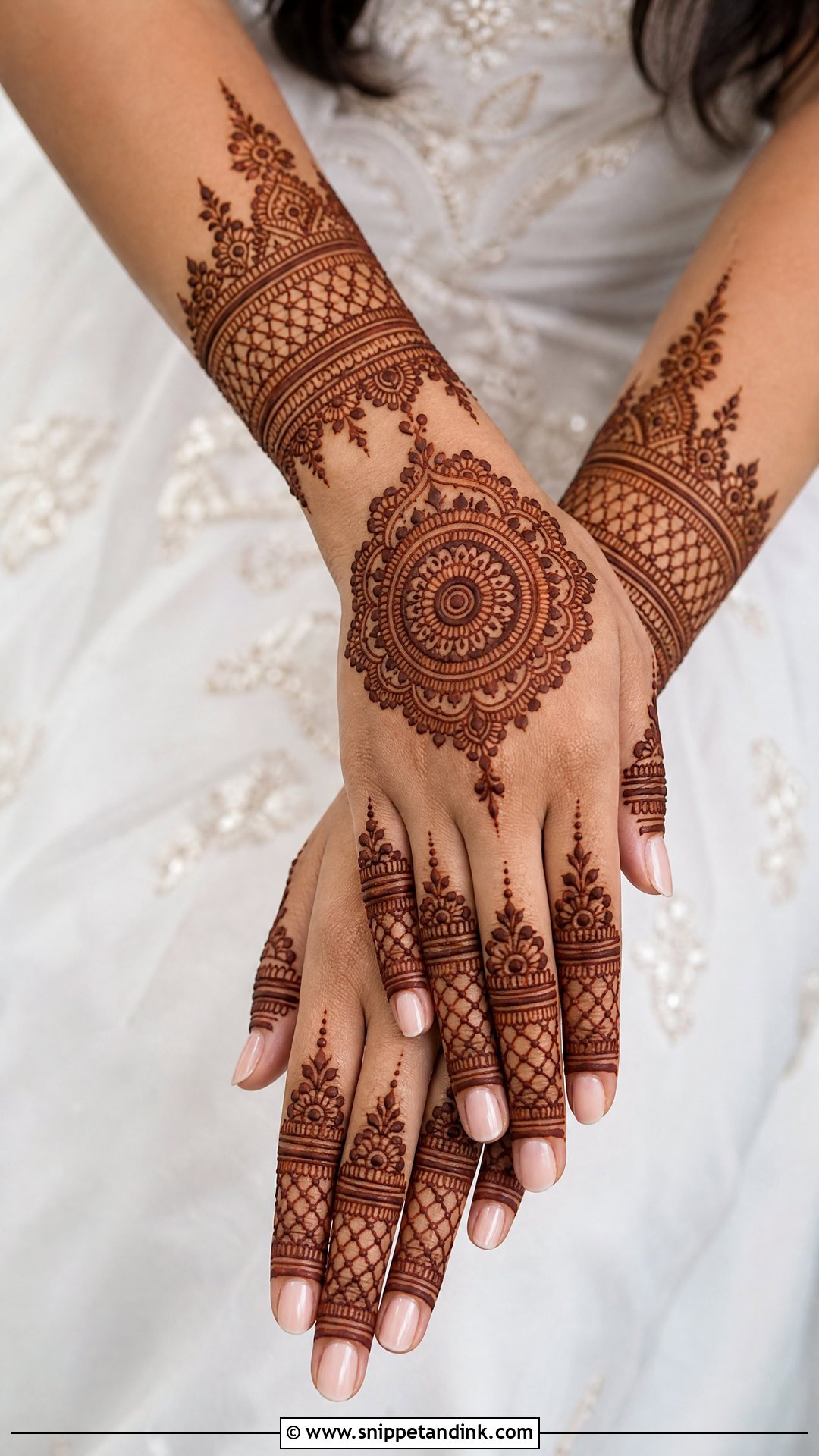
The back hand is what shows in ring, bangle and bouquet photos, so it deserves as much planning as the palm. It might hold mandalas, bracelet cuffs, floral trails, jaali, finger bands and wrist extensions. I usually keep it slightly more open than the palm so jewellery stands out. The back of the hand also stains lighter than the palm, so finer detail there can fade into a blur; bolder lines read better.
23. Front Hand Bridal Mehndi Design
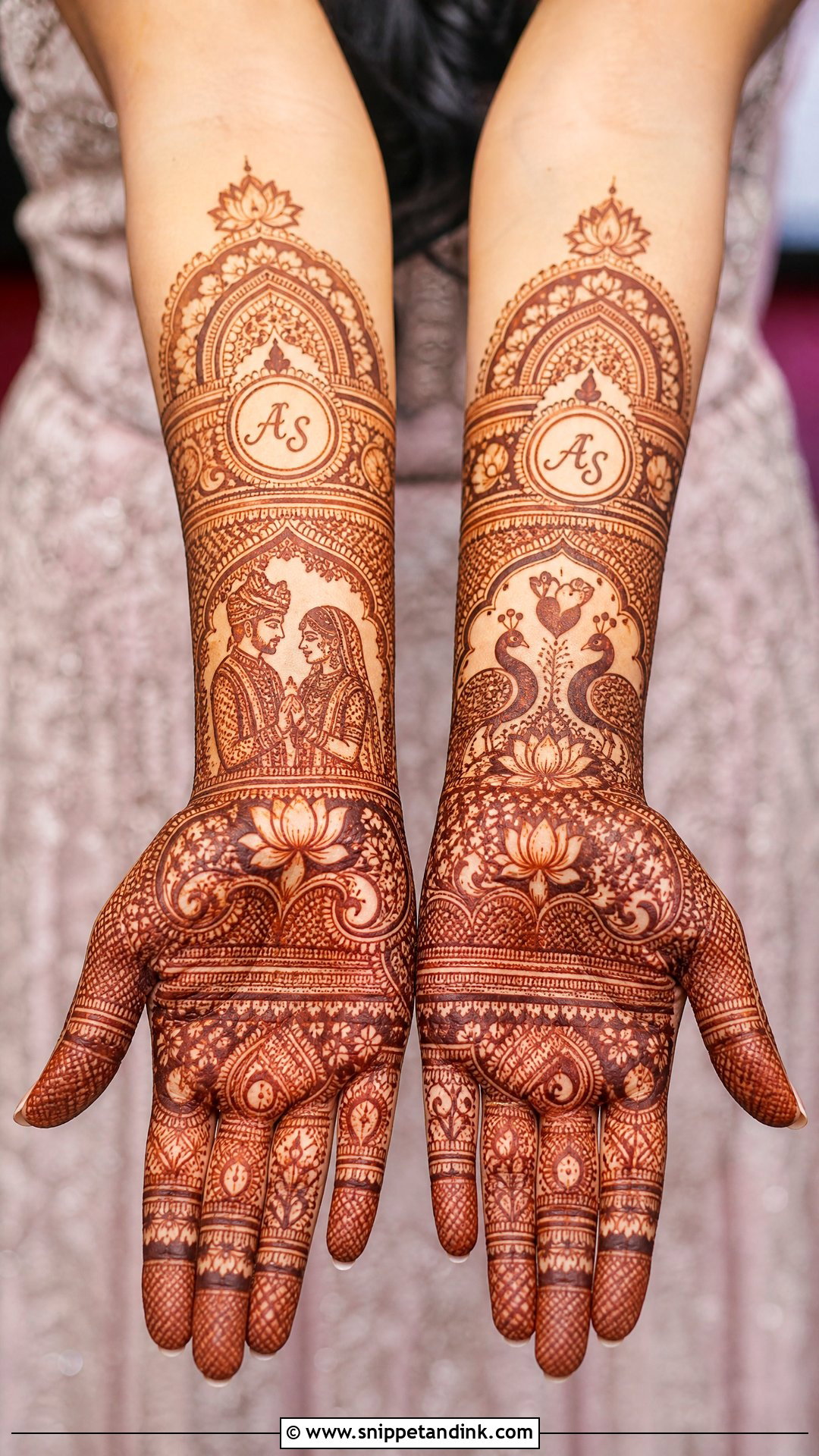
The palm carries the most detailed and meaningful part of a bridal layout, since it holds colour best. It’s where bride-groom art, mandalas, lotuses, peacocks, initials and wedding symbols go. I design palms so they read as one picture when you place your hands side by side, whether that’s mirrored symmetry or two scenes that connect. The wrist and forearm should follow the same design language.
24. Bridal Mehndi Design For Short Hands
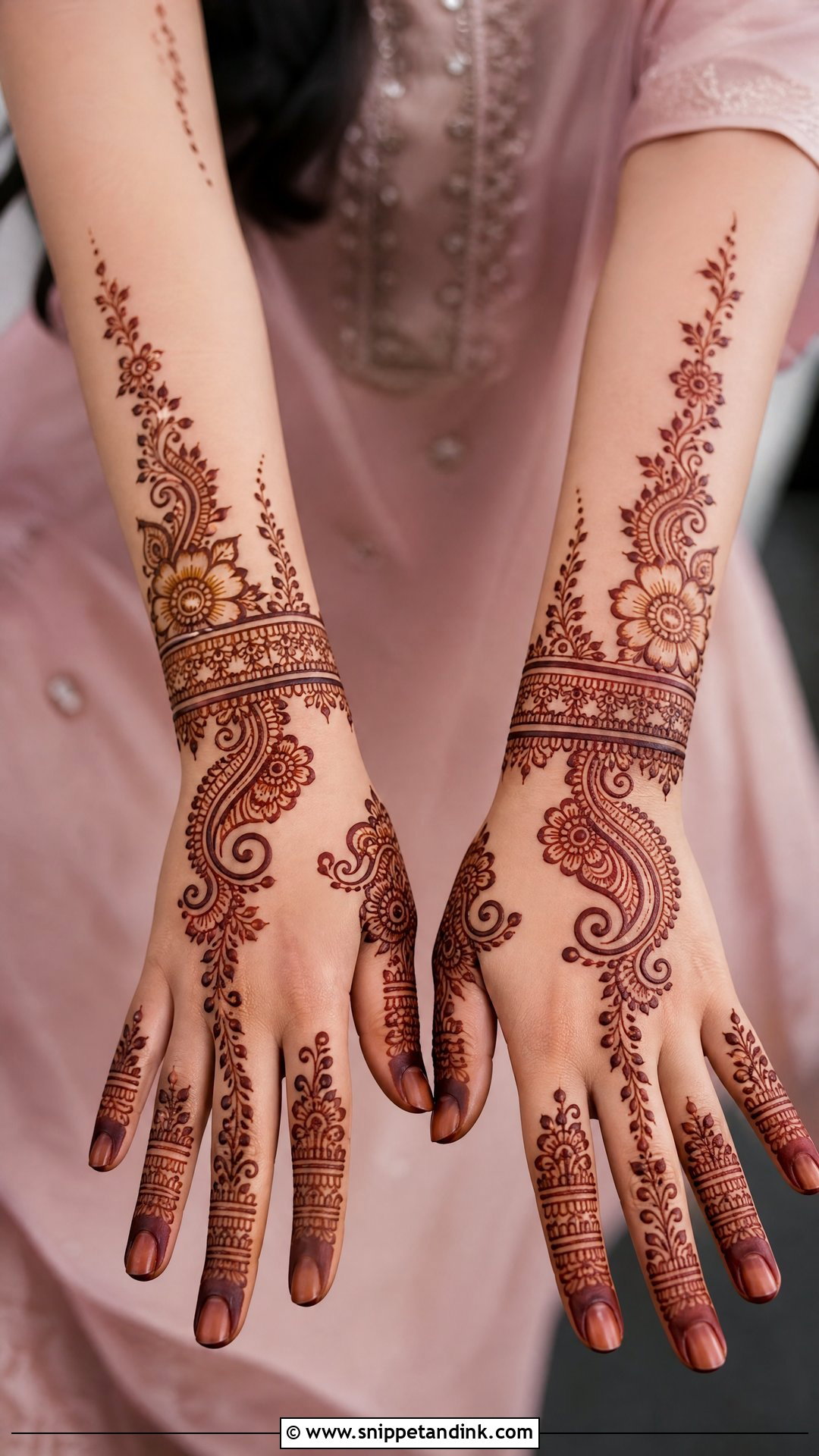
On shorter or smaller hands, I aim to add length rather than fill space. Vertical trails, slim paisleys, fine vines, narrow wrist bands and open spacing all help. Very large central motifs make a small palm look smaller, so medium mandalas and elongated finger patterns work better. A diagonal Arabic or Indo-Arabic layout leads the eye upward. Extending slightly past the wrist adds length without crowding the palm.
25. Bridal Mehndi Design For Feet
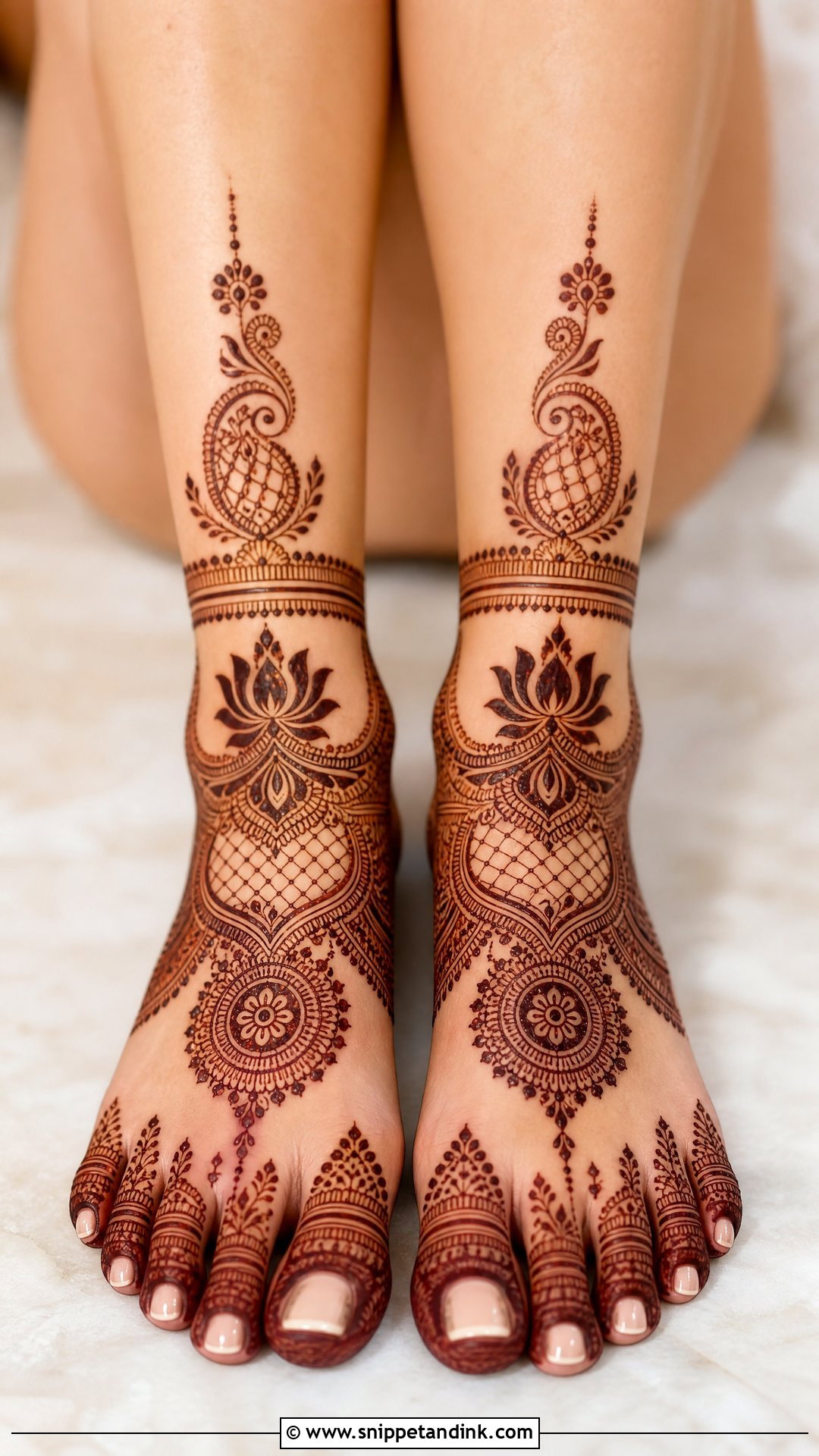
Bridal mehndi design for feet completes the look with anklets, toe rings and a lehenga or saree. Anklet bands, lotus motifs, paisley trails, mandalas, jaali and decorated toes are all common, and some brides prefer a cleaner pairi style. I echo borders or motifs from the hands so the set matches. Feet usually stain deeply, and I keep the soles simple since you’ll be walking on them.
Sealing, Scraping and the First 48 Hours of Aftercare
How long the paste stays on is the biggest factor in how dark the stain gets. I recommend leaving it on for at least six to eight hours, overnight if you can. As it dries, a dab of lemon and sugar mixture helps it stick to the skin rather than cracking off early. Keep your hands warm; warmth helps the colour develop.
When it’s time, scrape the dried paste off with a blunt edge or rub it off with your fingers rather than washing. Try to keep water off the stain for the next twelve to twenty-four hours. A thin layer of natural oil or balm before showering protects it. The colour will keep darkening for up to two days.
Why I Won’t Use Black Henna
Real henna stains orange to deep red-brown, never jet black. Products sold as black henna often contain chemical dyes such as PPD, which can cause serious skin reactions and lasting sensitivity. If a paste promises an instant black stain, it isn’t natural henna. Ask your artist what’s in her cones; a good artist mixes her own or will tell you exactly what she uses.
Sitting Down With Your Artist and Your Lehenga Swatch
The right mehndi for you depends on coverage, outfit, ceremony mood and what you want it to mean. Some brides want full traditional Indian coverage, others want open Arabic trails or a few personal motifs. Whatever you choose, it should photograph well and feel comfortable through long events. Save clear reference photos, agree on timing with your artist, and plan your aftercare so the colour peaks when it matters.
You'll Like These Ideas:


Leave a Reply