
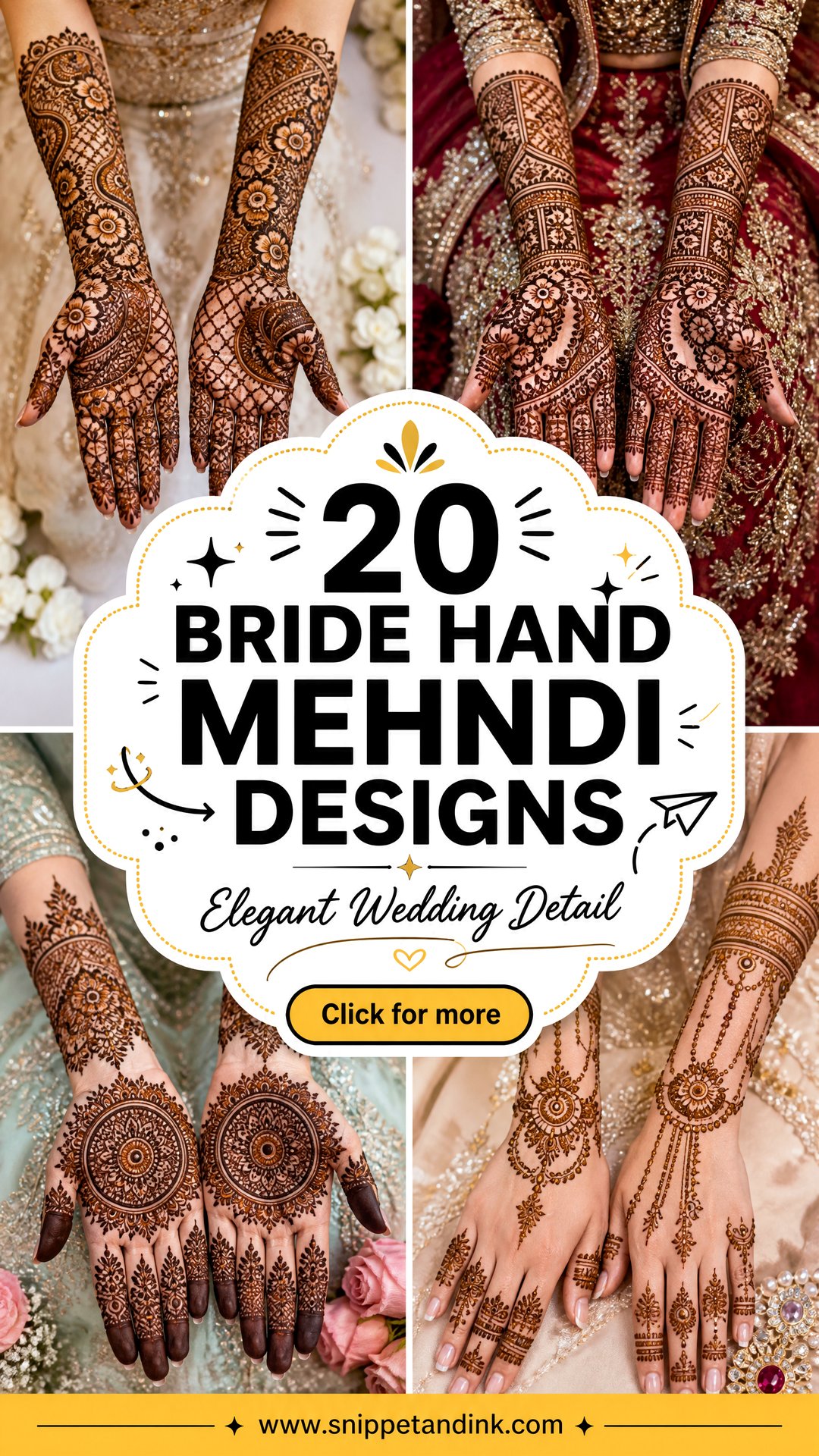
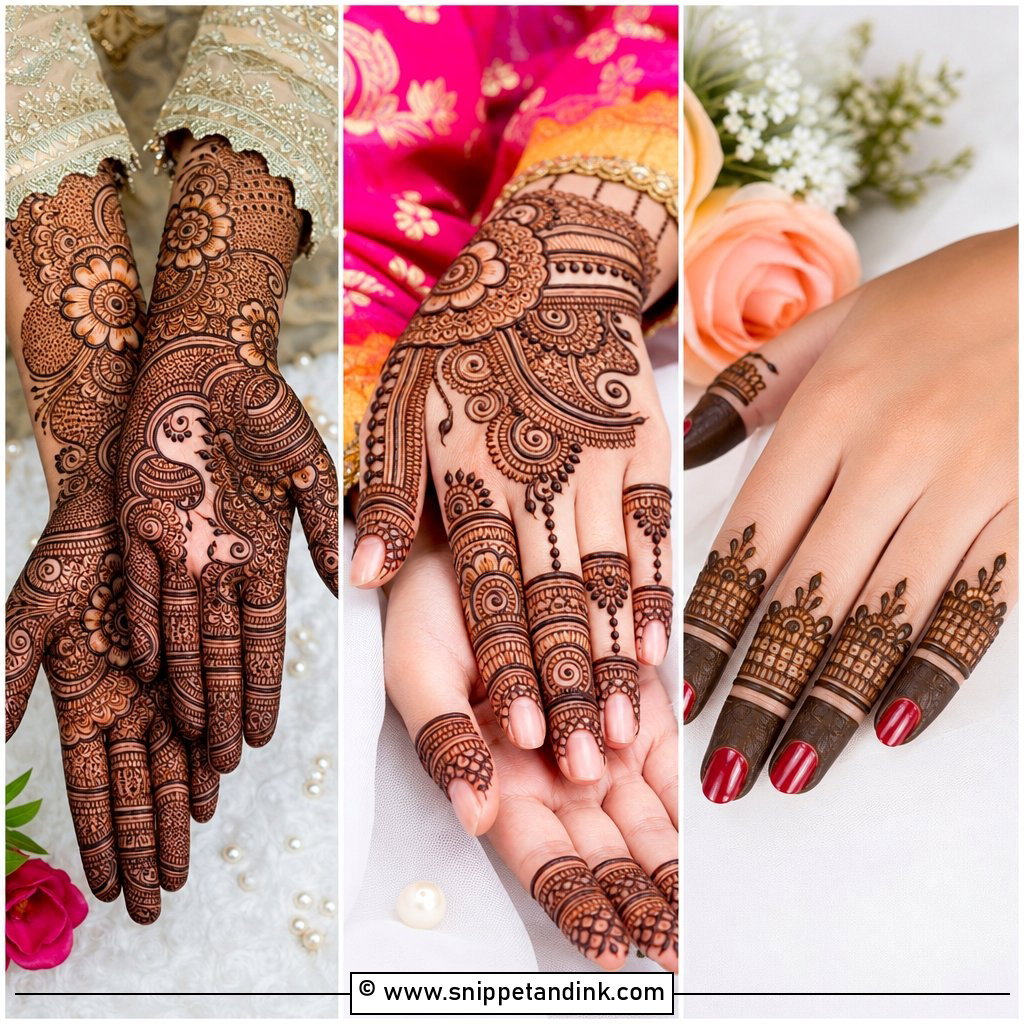
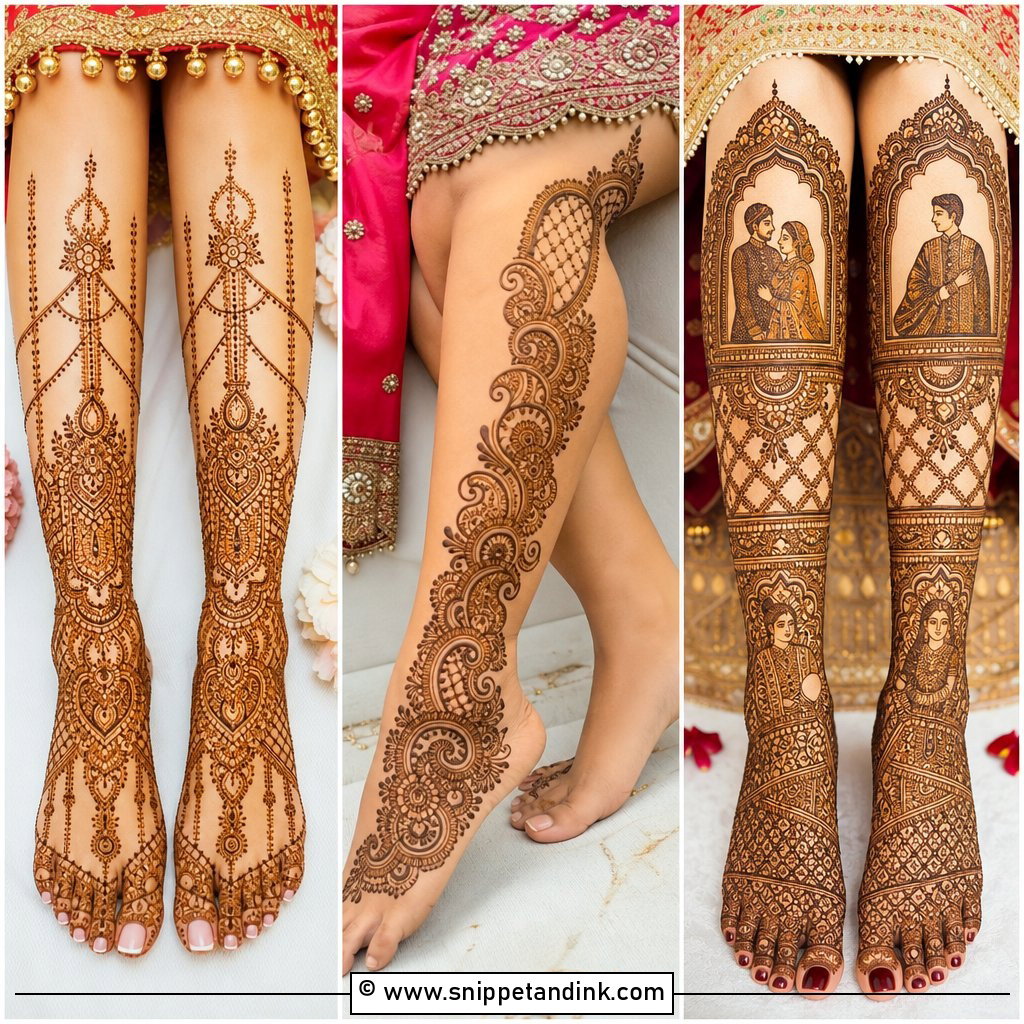
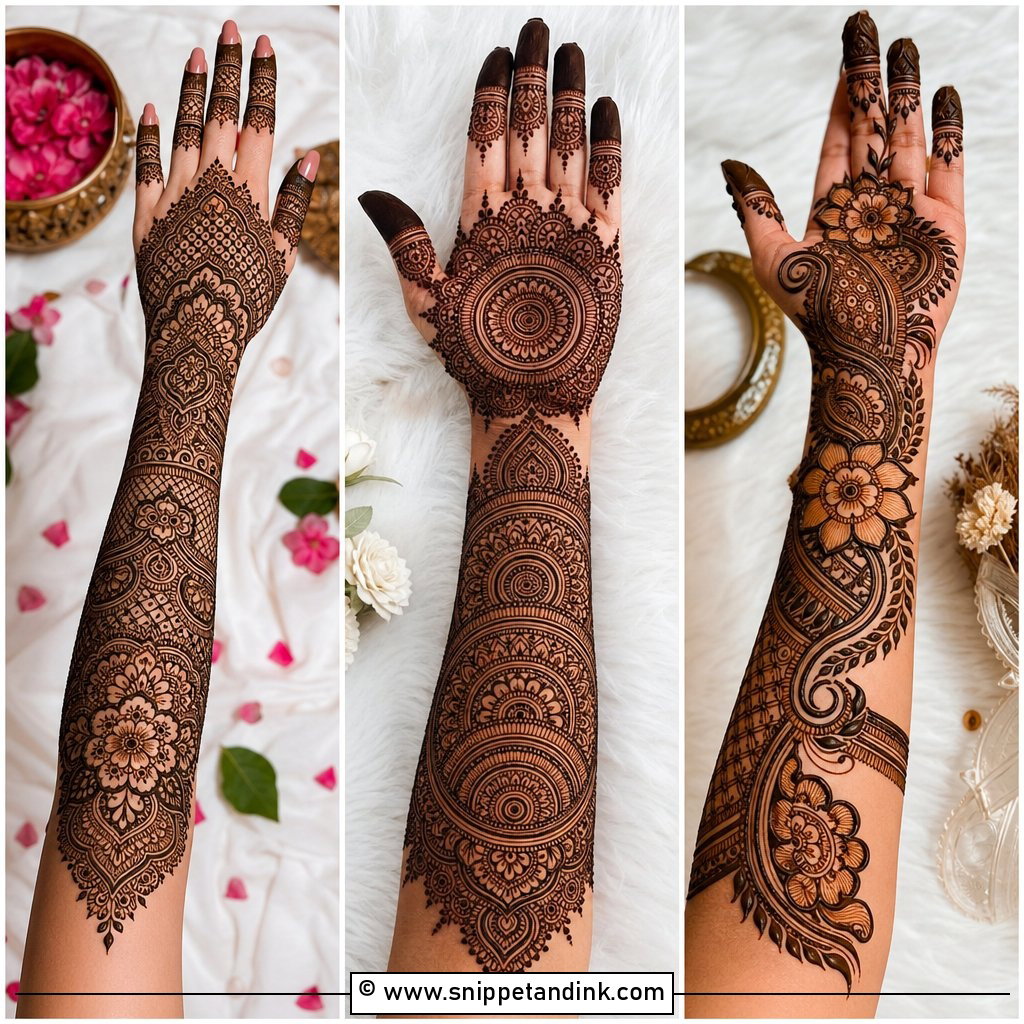
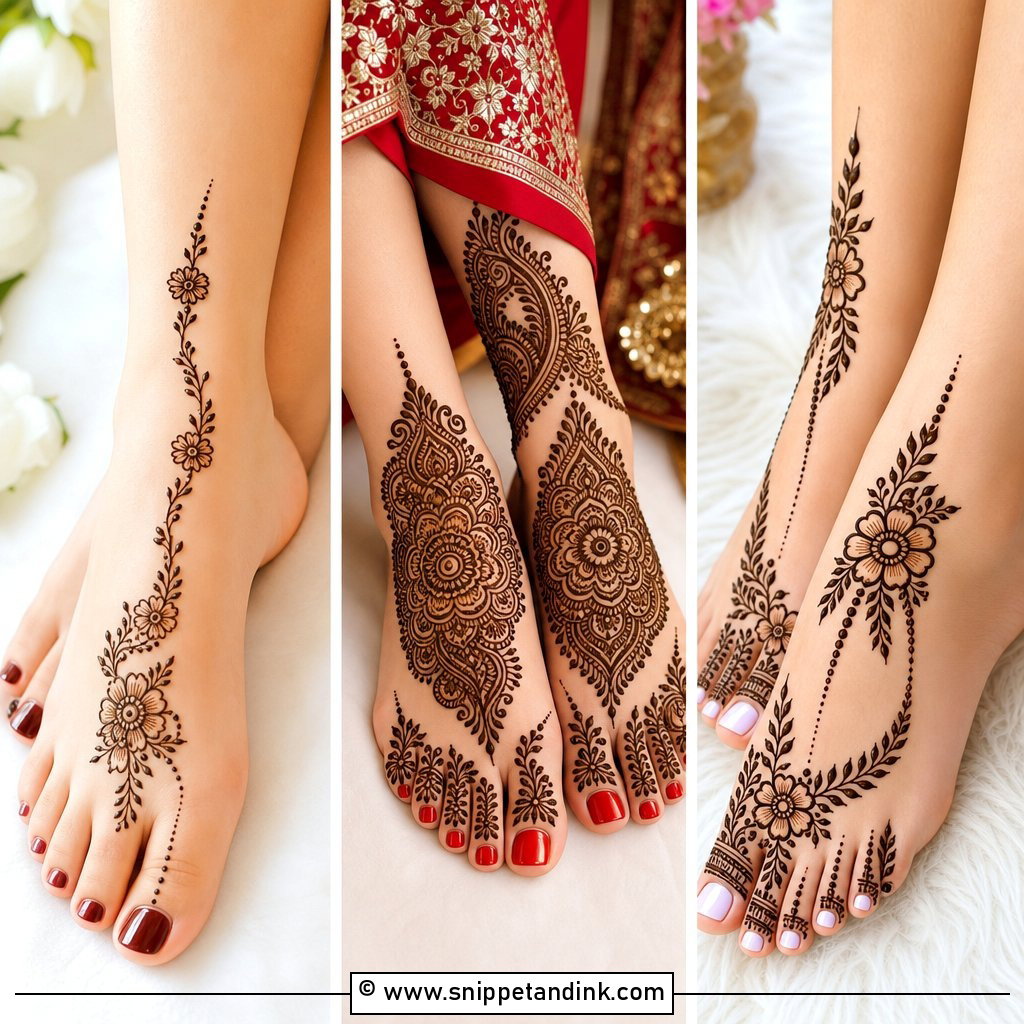
When I plan bridal mehndi, I think of the hand as one canvas, from fingertips to forearm, not a palm with a few motifs added around it. A full bridal hand has to read clearly in a close-up ring shot and still look balanced when you’re standing with your arms at your sides. It also changes after I leave: the stain starts orange and deepens over the next two days toward reddish-brown or maroon, so the design has to look right at its darkest. Below are 20 complete hand layouts I’d offer a bride, from dense Indian work and airy Arabic trails to modern negative space, with notes on how each one is built and who it suits.
Mehndi Night Falls Two Days Early for a Reason
Natural henna doesn’t stain at full color straight away. When the dried paste comes off, the skin underneath is bright orange. Over the next day or two it oxidizes and deepens to reddish-brown or maroon. That’s why I always advise booking the application one to two days before the wedding, not the morning of.
The other thing brides underestimate is time. A full bridal set on both hands and forearms can take several hours, and detailed Rajasthani or portrait work takes longer still. Plan for it:
- Eat beforehand and keep someone nearby to feed you and help with drinks once your hands are wet.
- Use the bathroom before I start.
- Exfoliate gently the day before, and arrive with clean skin and no lotion or oil, which block the stain.
- Finish waxing, manicures and any hand treatments before the application, not after.
Palms and fingertips stain darkest because the skin there is thicker. Backs of hands and forearms come out lighter, which is completely normal and part of why I adjust line weight for each area.
1. Full Hand Indian Bridal Mehndi Design
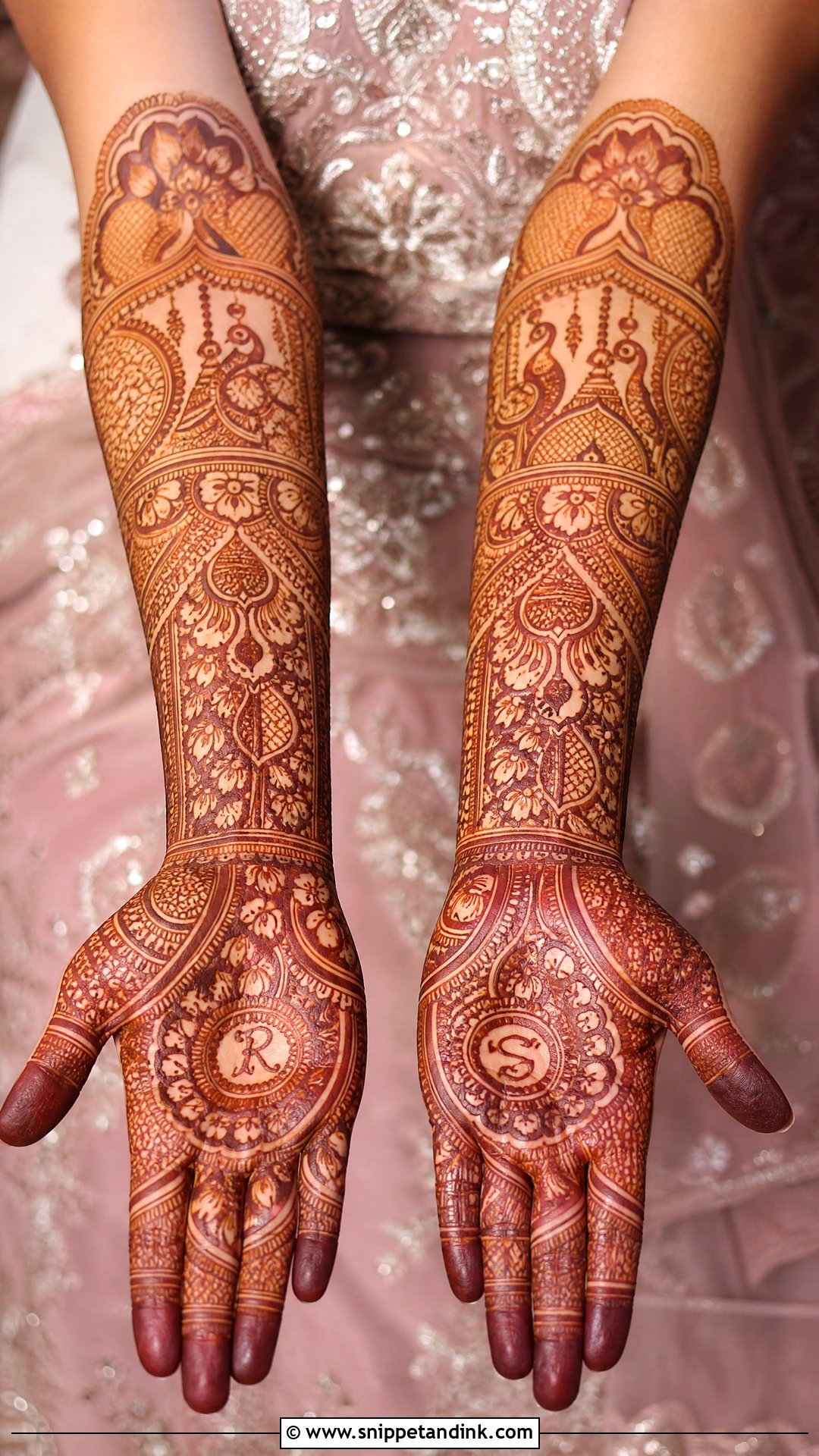
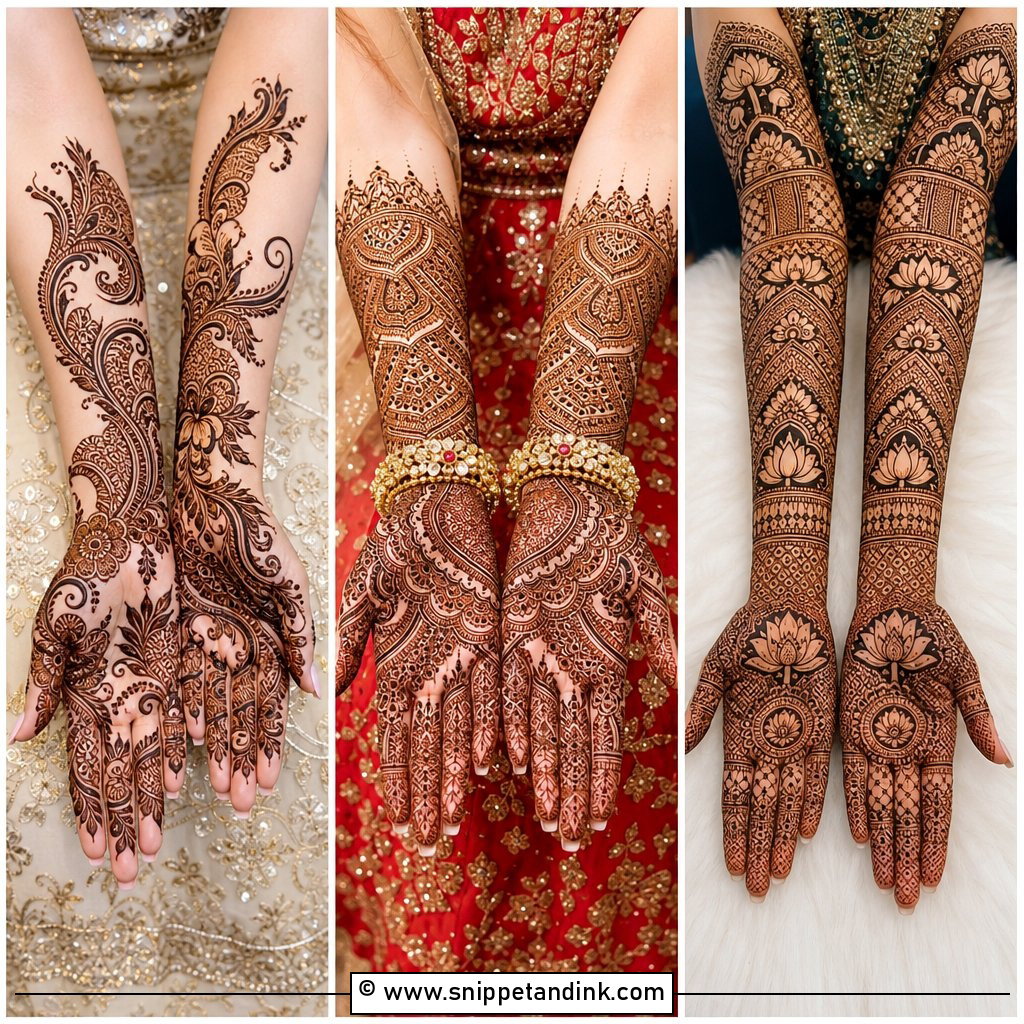
Full Indian coverage is the most time-consuming layout I draw, and the one where planning matters most. I start with the palm centerpiece, then the finger tips and the wrist band, and only after that fill the spaces between with paisleys, peacocks, flowers and fine fillers. Working outward like that keeps the spacing even. Initials or small bride-and-groom figures sit well inside the larger shapes. With heavy bangles and a lehenga or saree, this coverage looks complete; with lighter jewelry it can feel like a lot. Ask for neat outlines, because dense work turns muddy if the lines touch.
2. Arabic Bridal Mehndi Design Full Hand
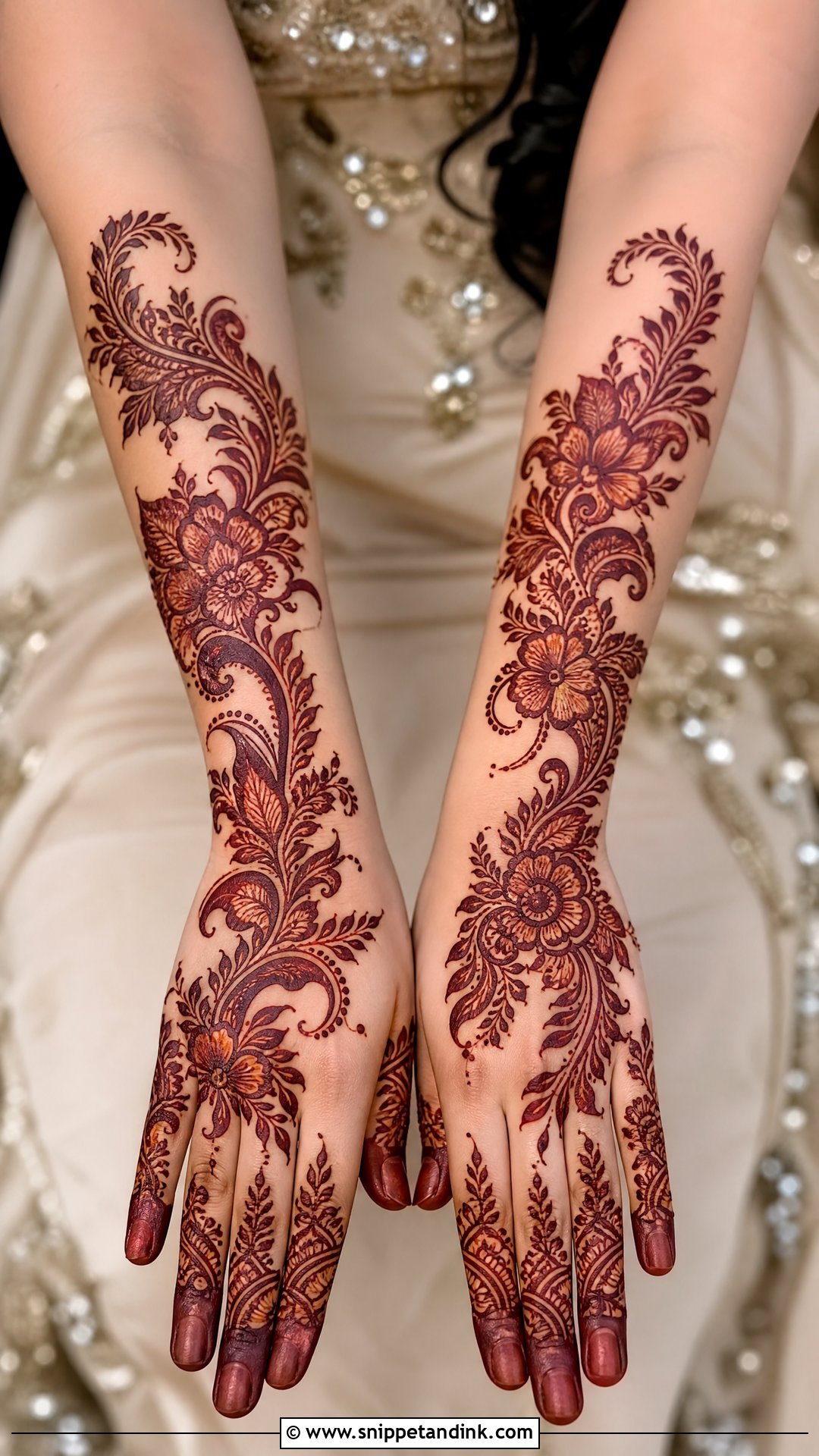
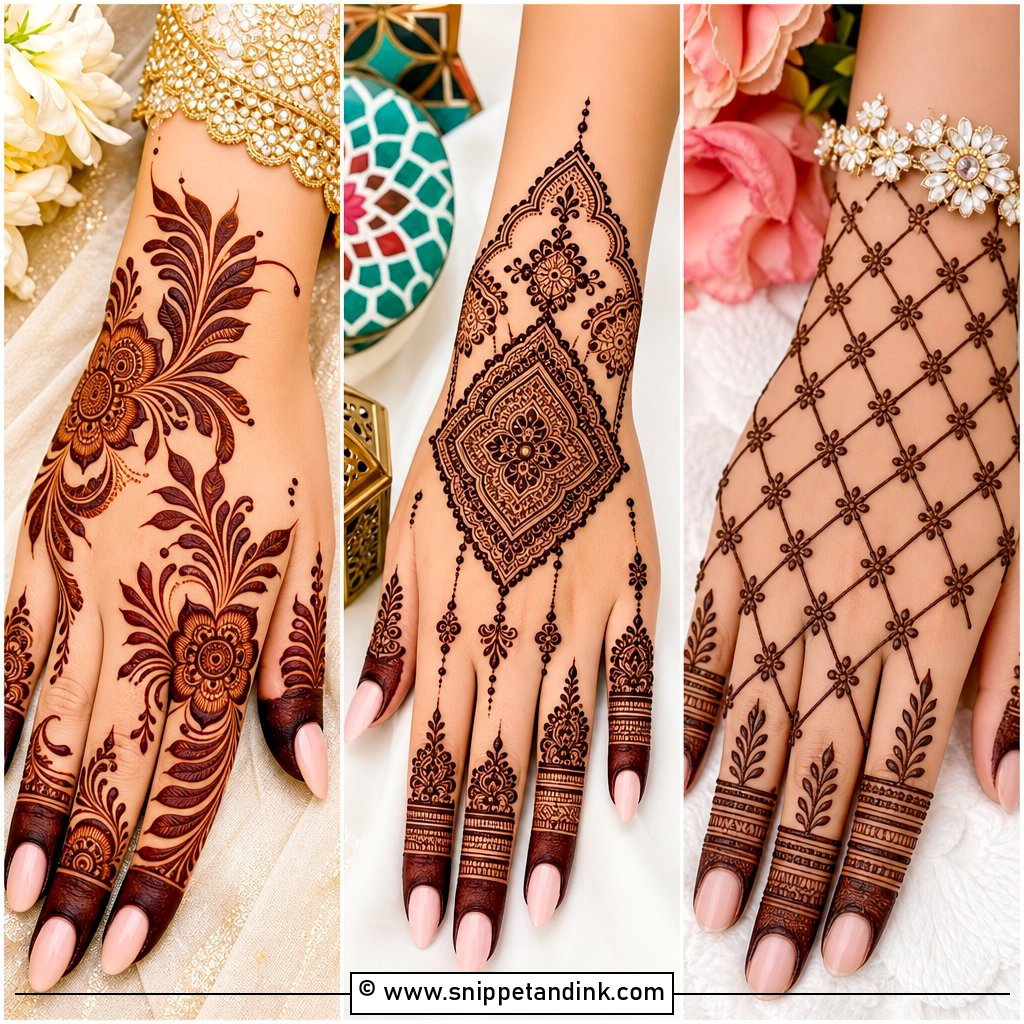
Arabic layouts run diagonally from the fingertips across the back of the hand toward the wrist, which naturally lengthens the hand. Large flowers, leafy vines and bold paisleys are drawn with a thicker cone line, and the open space between them is part of the design. Because there’s less filling, it’s quicker to apply and easier to sit through. The one place I don’t cut corners is the fingers: connected finger work is what makes it look bridal rather than like a party design. It’s the layout I’d suggest with lighter jewelry or a modern outfit.
3. Indo Arabic Bridal Mehndi Design
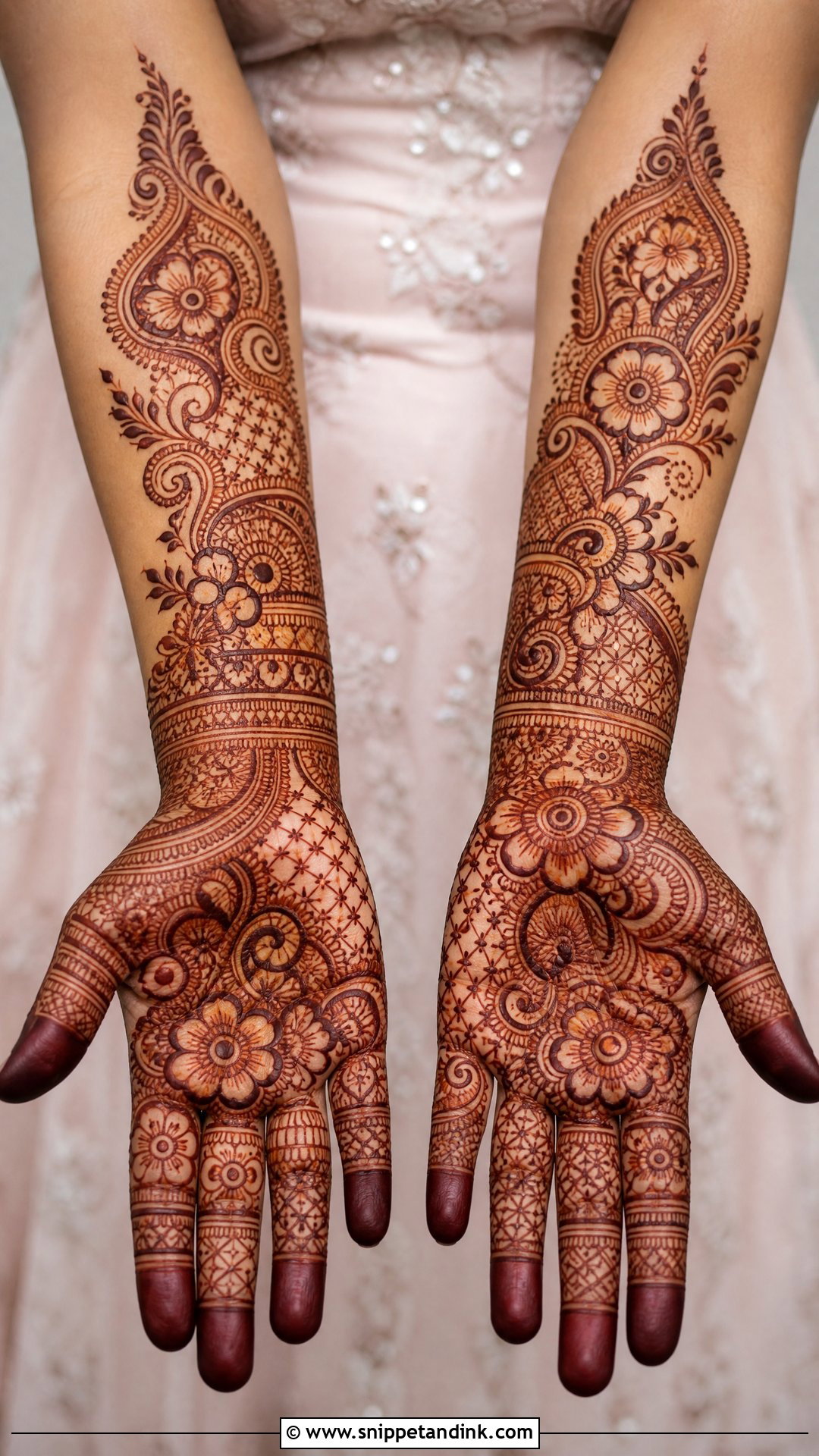
Indo-Arabic takes the bold flow of Arabic henna and fills its larger shapes with Indian detail. In practice I draw the big floral trail first, then add fine jaali on the fingers, paisley bands at the wrist and shaded leaves on the forearm. Shading is done by thinning the line or dotting rather than filling solid. Brides who want coverage without a fully packed hand usually land here. It reads well from a distance because the large motifs carry it, and up close the fine work holds the eye.
4. Bridal Mehndi Design Front Hand
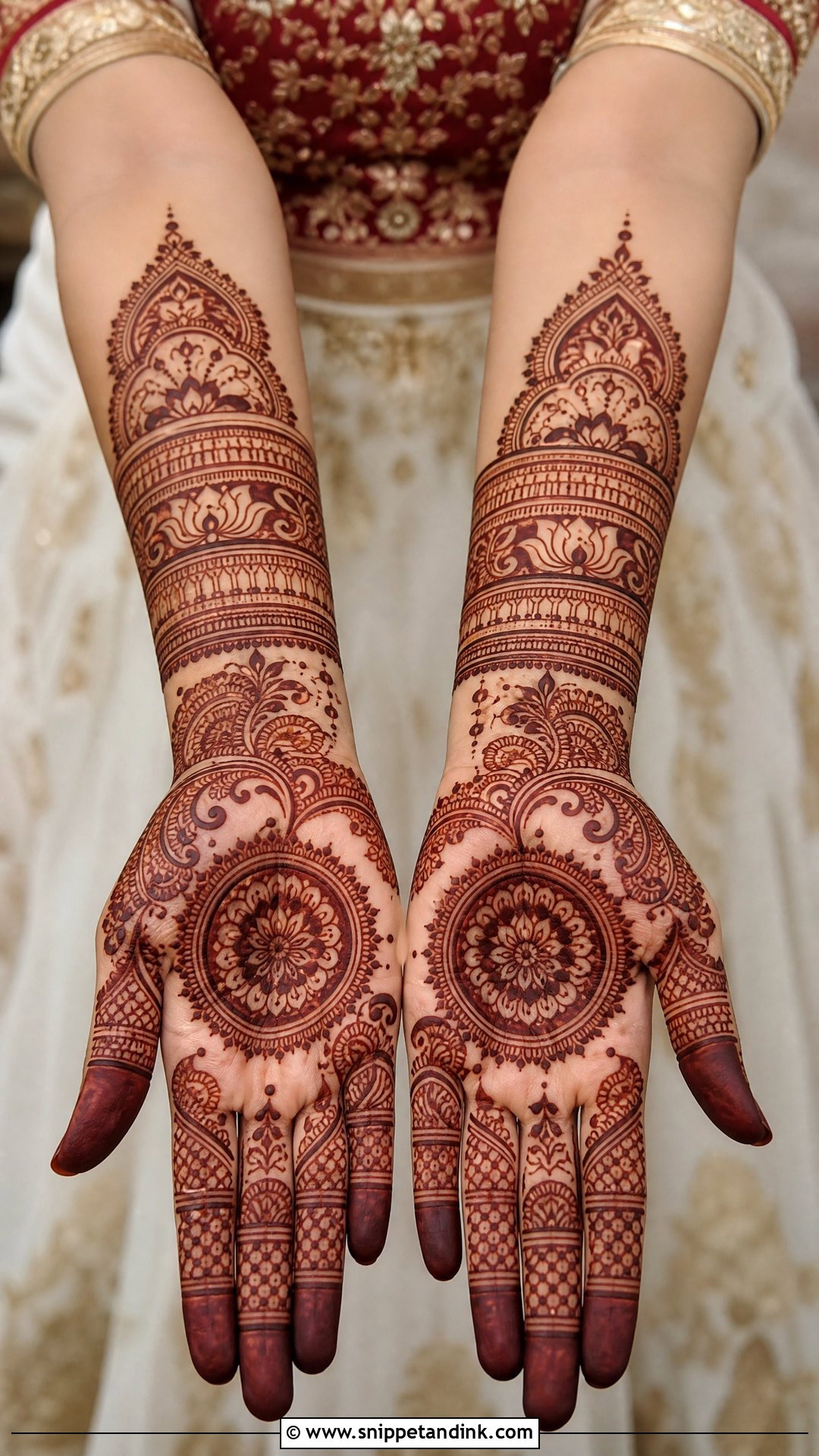
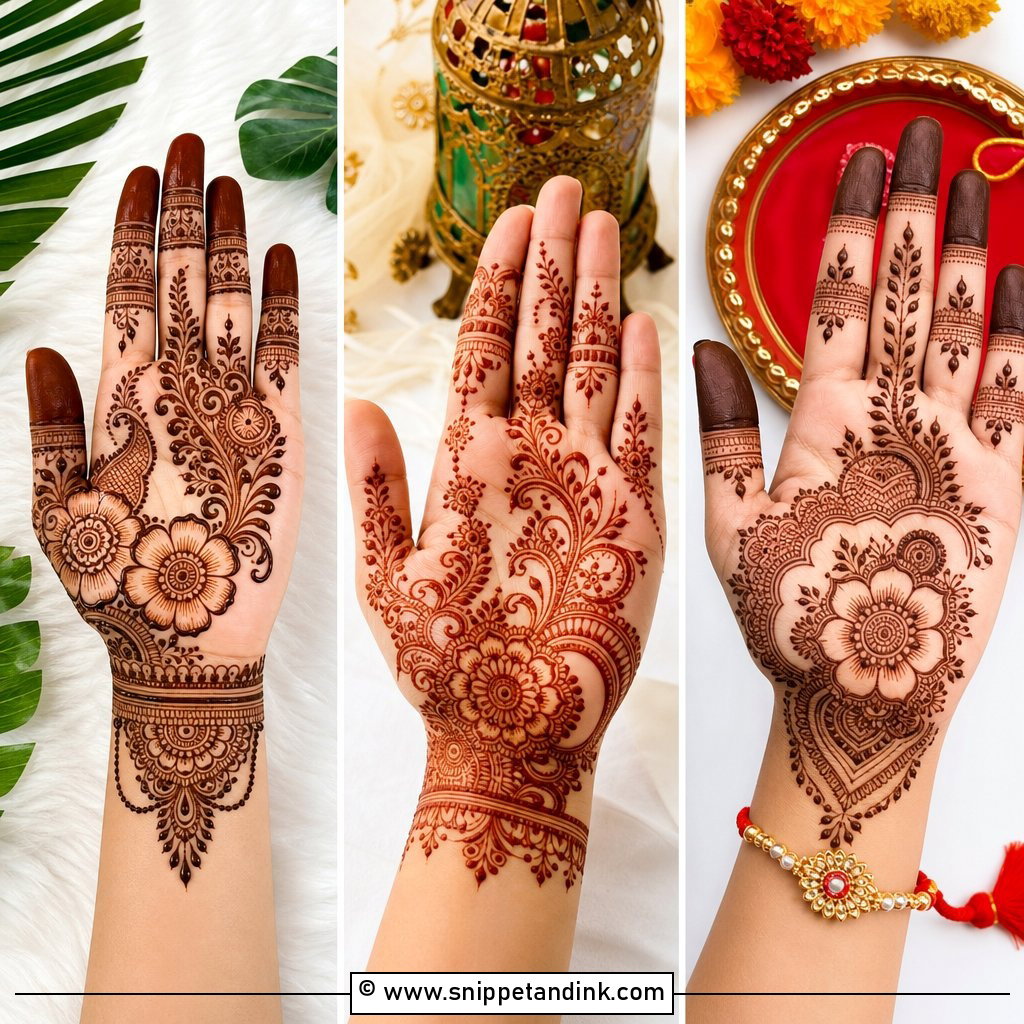
The palm is the most photographed part of bridal mehndi, and it’s also where henna stains darkest, so I give it the strongest artwork. A large mandala, a lotus, a peacock or bride-groom figures go in the center, with fully detailed fingers in lines, dots and fine mesh. The wrist gets bracelet-like bands that connect into the forearm. I keep the space immediately around the centerpiece slightly lighter. If everything is equally dense, the eye has nowhere to land and the palm looks crowded.
5. Bridal Mehndi Design Back Hand
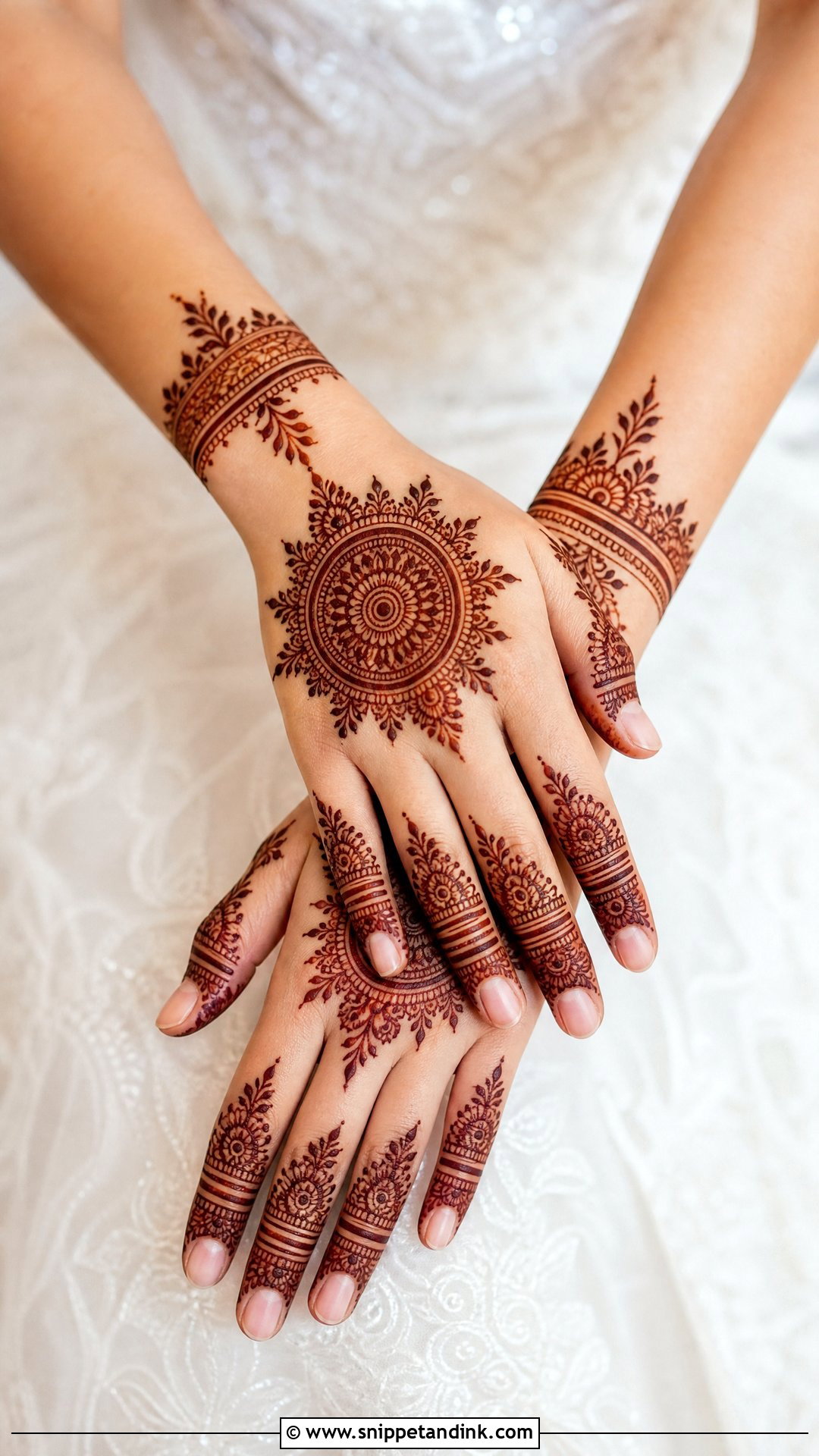
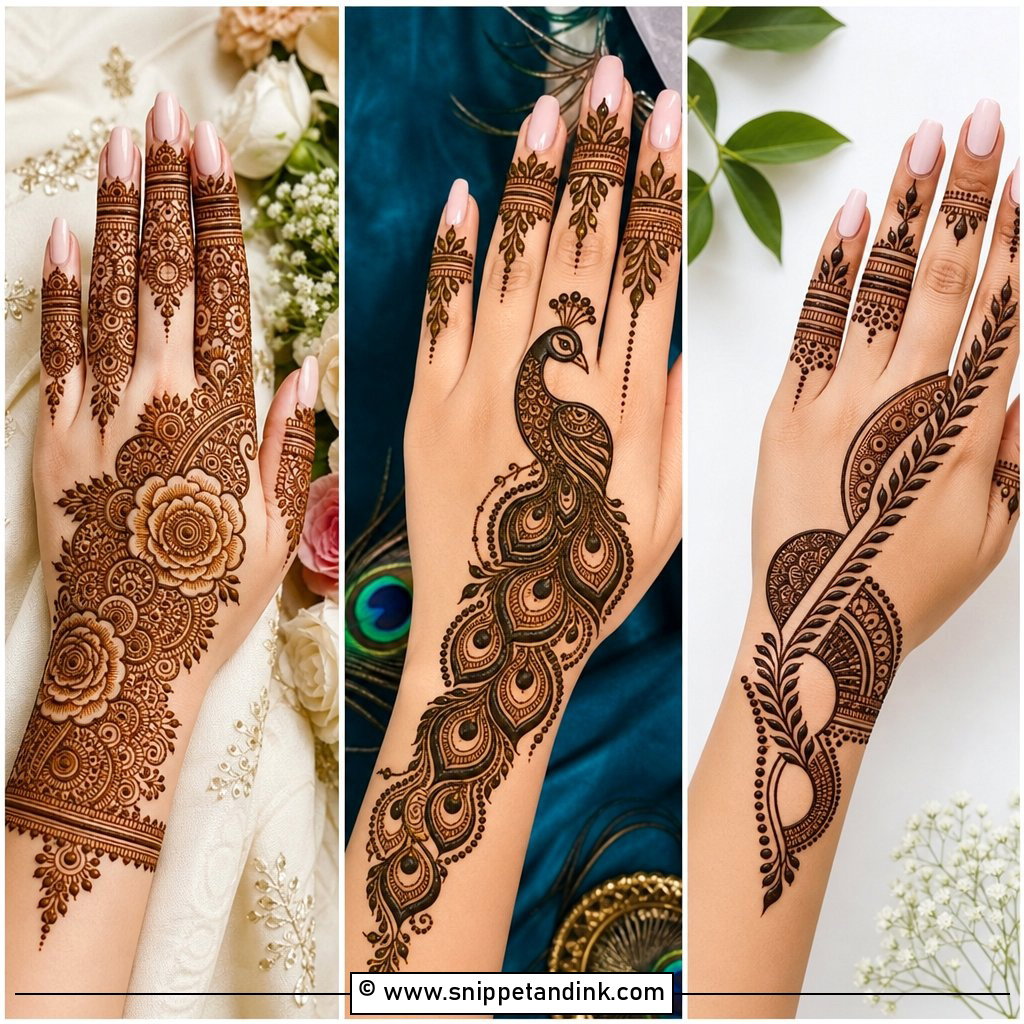
The back of the hand shows up in every ring shot, but its skin stains lighter than the palm, so I use bolder lines here. A central mandala, a floral bracelet, leafy trails and finger caps are the usual pieces, and I shape them around the knuckles so they move naturally when you flex your hand. If you’ll wear a hathphool or statement rings, tell me before I start, because I’ll leave room for the chains to sit. Dense or minimal, the back hand should still read as connected from fingertip to wrist.
6. Rajasthani Bridal Mehndi Design Full Hand
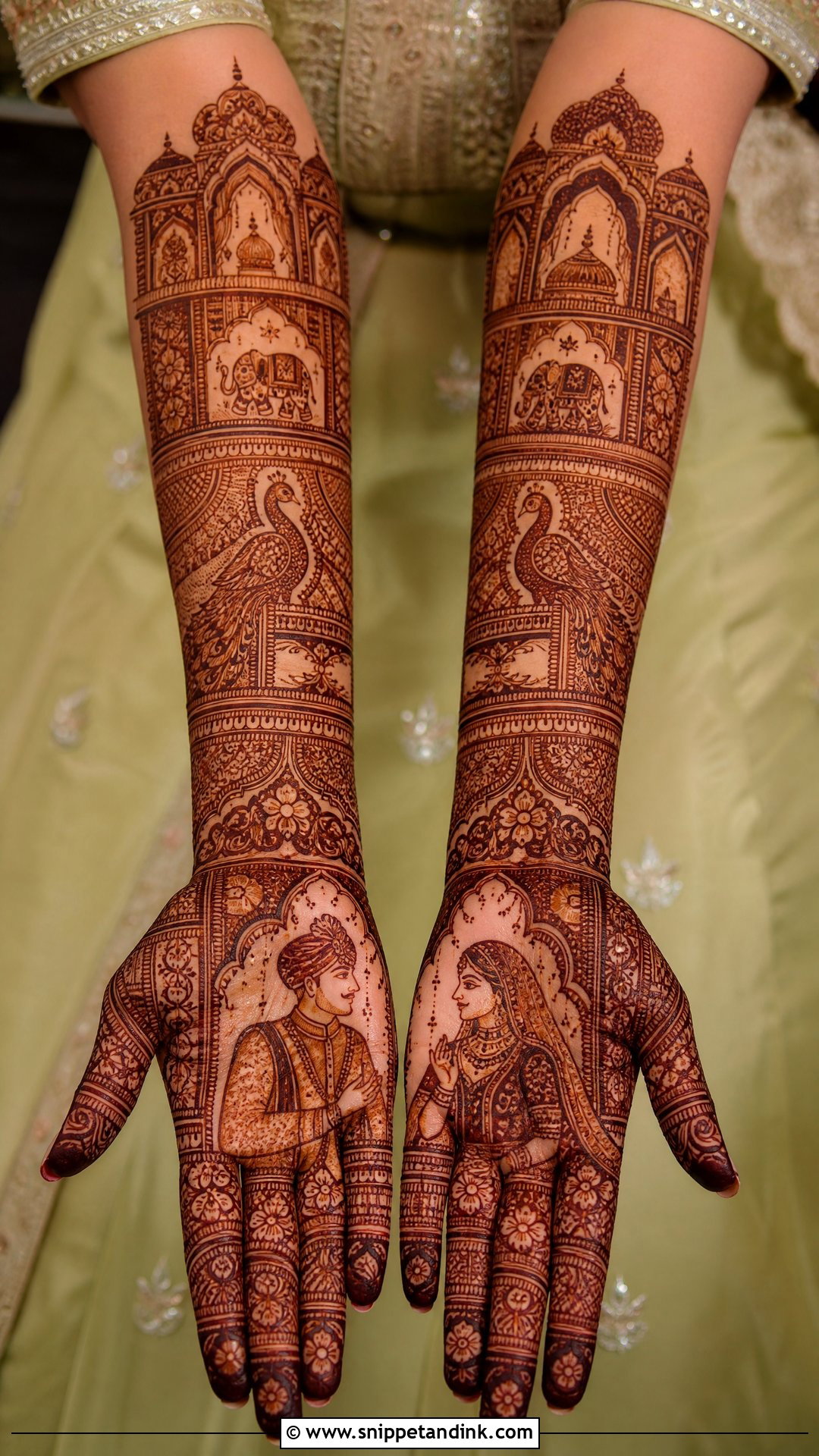
Rajasthani work is detail-heavy: bride and groom portraits, palace arches, elephants, peacocks, lotuses and very fine filler, usually up to the elbow. It takes a long sitting, and the bride needs to be prepared for that, with food, water and someone to help her. Faces and figures are where an inexperienced hand shows first, so look at an artist’s previous portraits before booking. Clean, symmetrical lines are what make it look regal rather than busy. Red, maroon and gold outfits suit it.
7. Marwari Bridal Mehndi Design
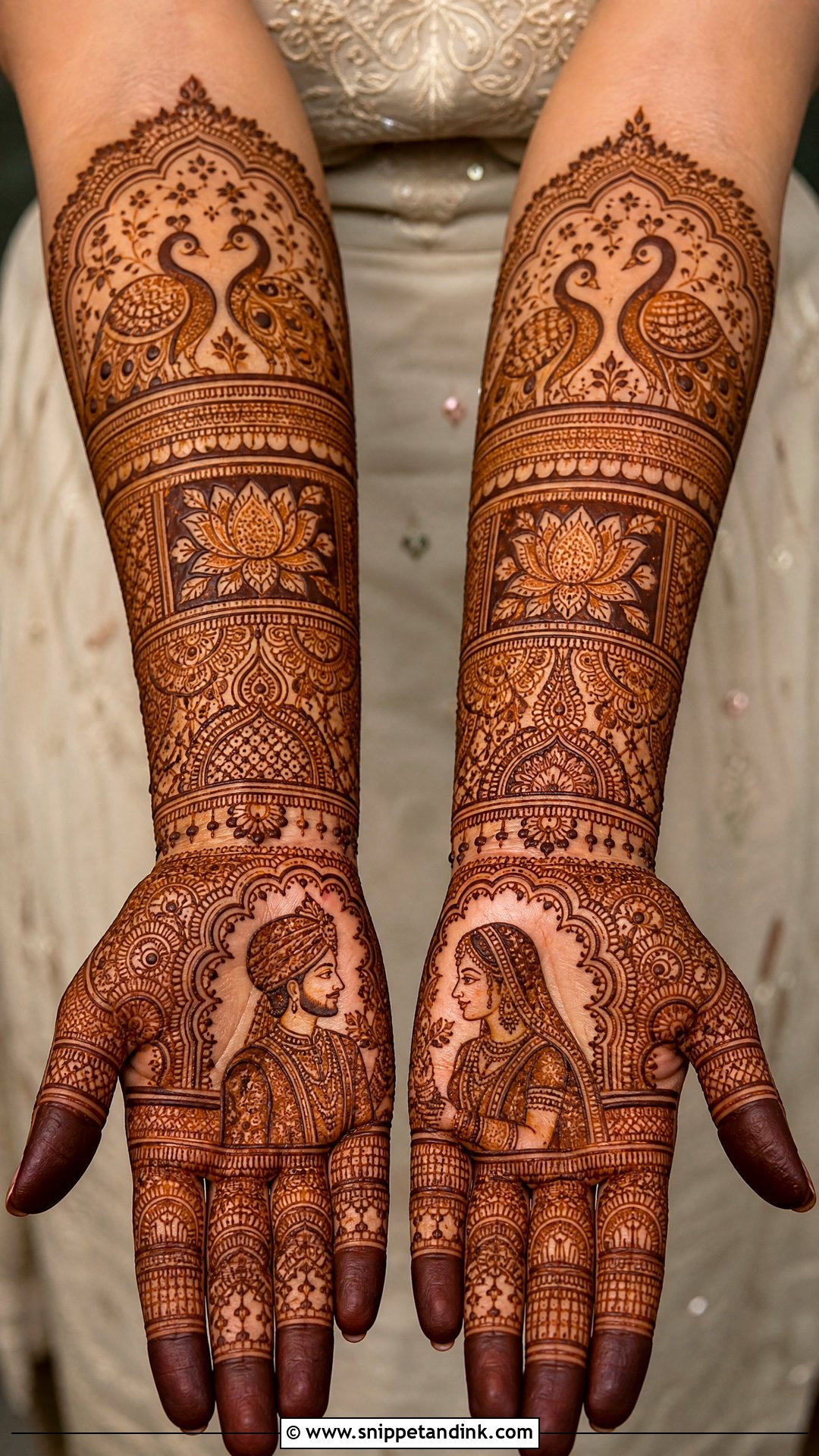
Marwari bridal mehndi is dense and festive, built from peacocks, dulha-dulhan figures, floral panels, fine paisleys and ornamental wrist bands. The palm carries the heaviest artwork while the fingers get lines, leaves and small repeated patterns. I draw the two hands as a coordinated pair, mirrored in structure but not identical in detail, which looks more natural in photos where both hands appear. It holds up well through long ceremonies because there’s no bare patch from any angle.
8. Pakistani Bridal Mehndi Design Full Hand
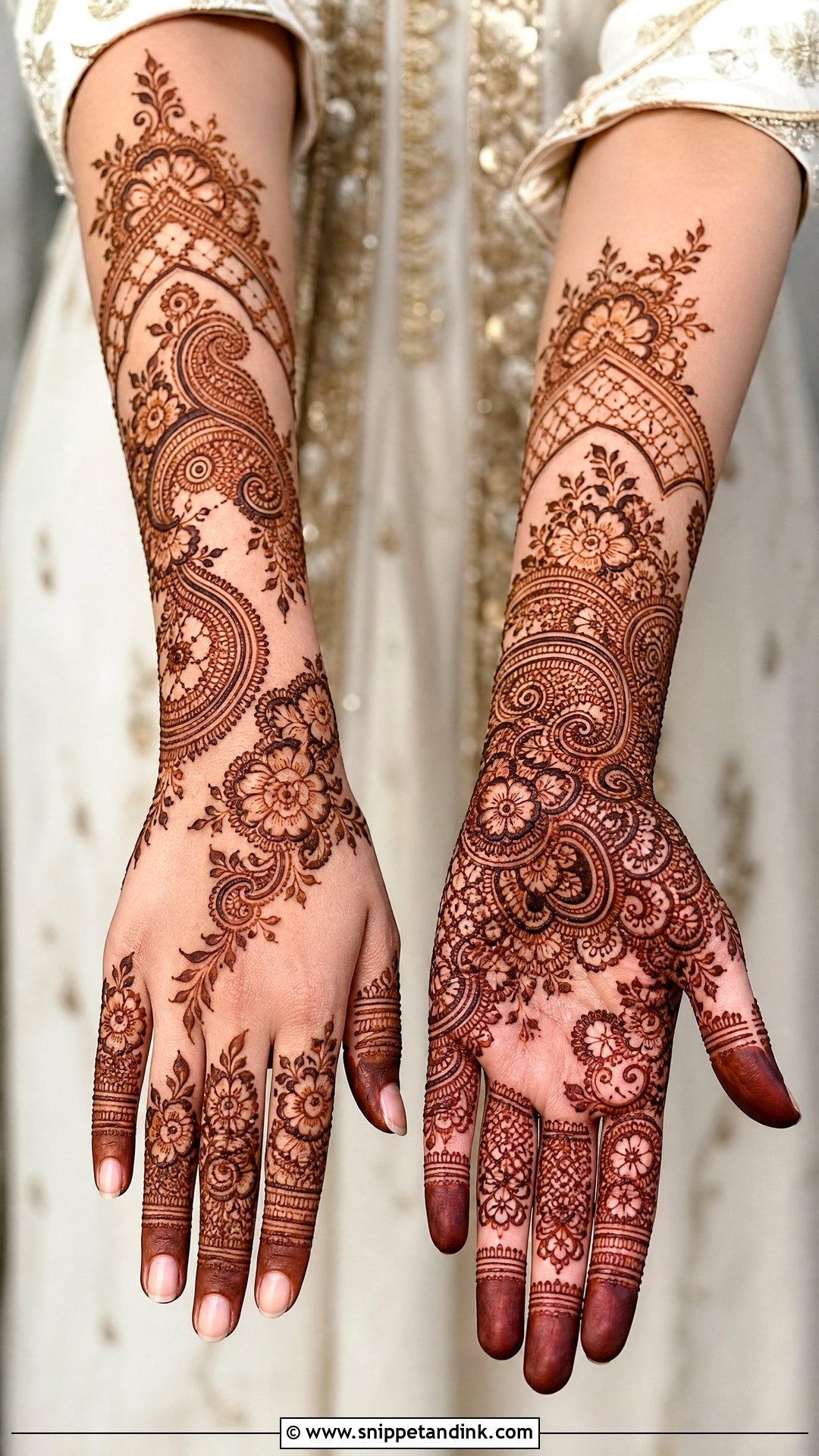
Pakistani bridal mehndi full hand designs mix Indian detail with Arabic flow, using floral vines, shaded petals, jaali, paisley clusters, cuffs and detailed finger work, but with open space left between sections. That breathing room is what keeps it refined. Shading is done in thin, curved strokes inside petals, which really comes through once the stain darkens. Keep nails simple or neutral so the mehndi stays the focus.
9. Royal Bridal Mehndi Design
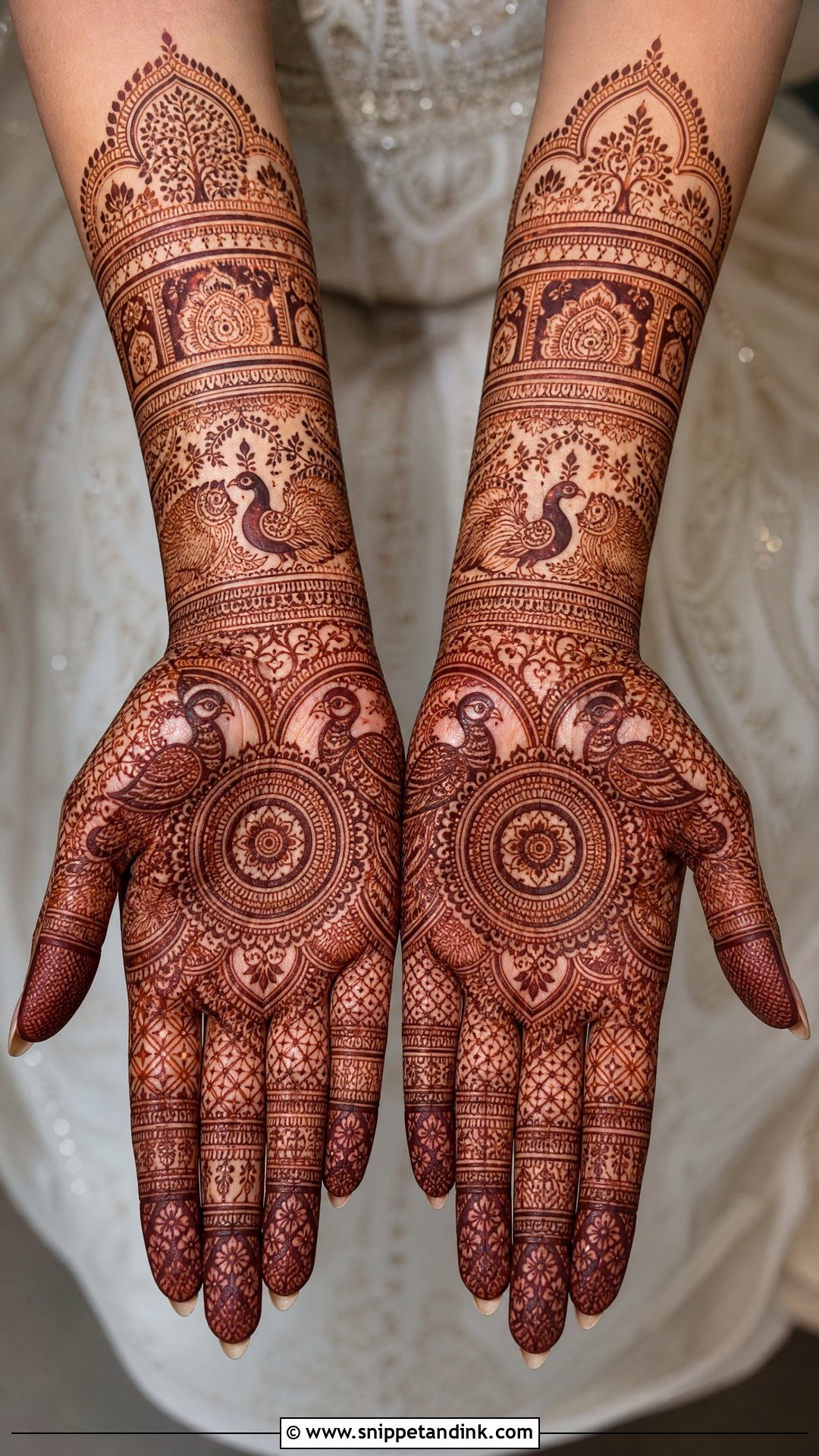
Royal layouts look grand because of their structure, not their density. I plan them like jewelry: a strong palm centerpiece, layered wrist cuffs, peacock and lotus details, mesh sections and forearm panels shaped like domes or arches. Without that clear layout, the same motifs just look busy. This style goes with heavy outfits and traditional jewelry. Symmetry between the two hands is especially important here.
10. Peacock Bridal Mehndi Design
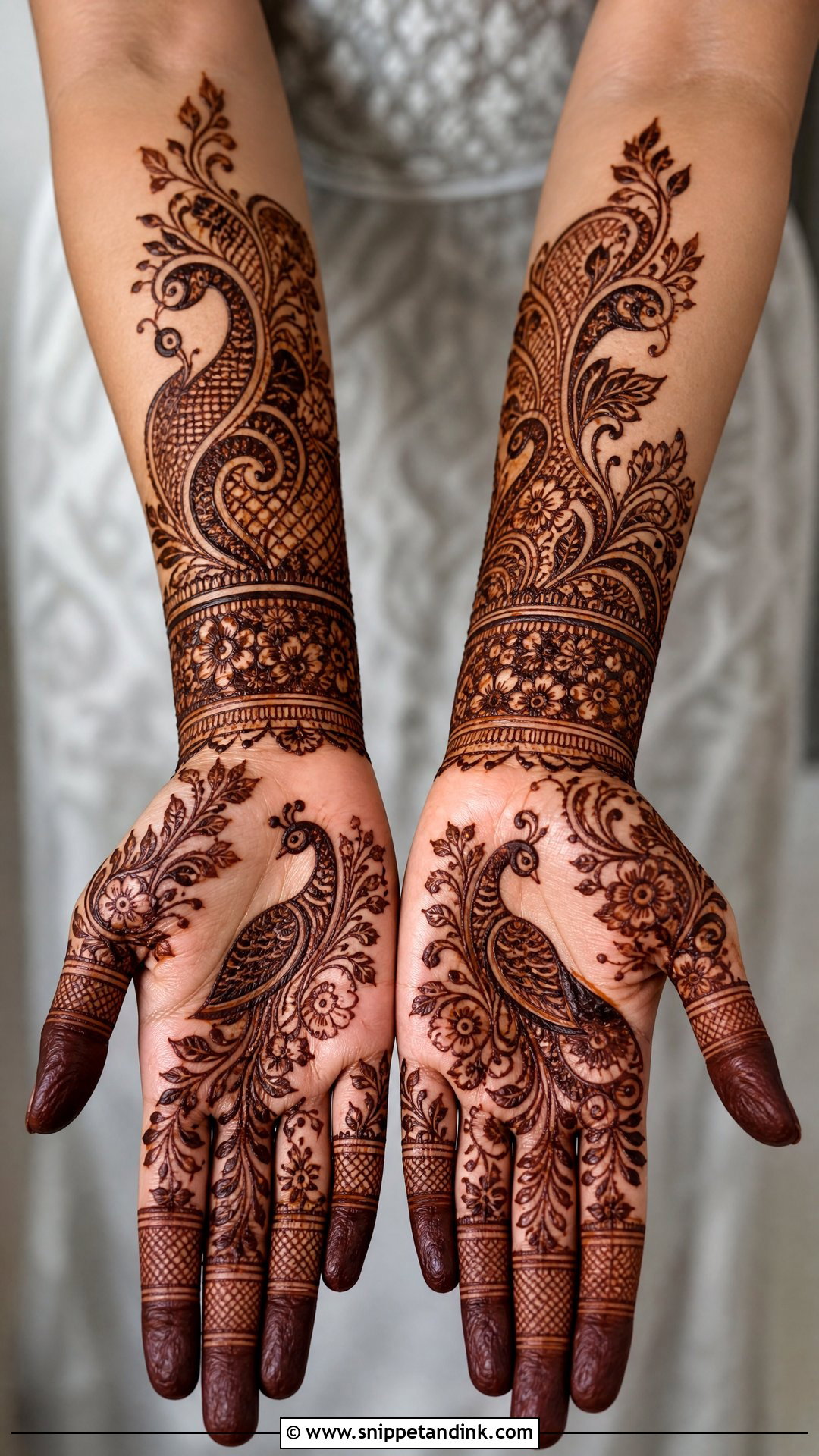
Peacocks are one of the motifs I’m asked for most, and the most common problem is a bird lost under fillers. I draw the peacock first with a bold outline, then let its feathers extend into paisleys, florals and wrist bands. Inside the feathers, delicate shading or dots give texture. The fingers carry small feather-inspired details to keep the theme. Placed across the palm or the back of the hand, it reads clearly when the outline is strong.
11. Lotus Bridal Mehndi Design
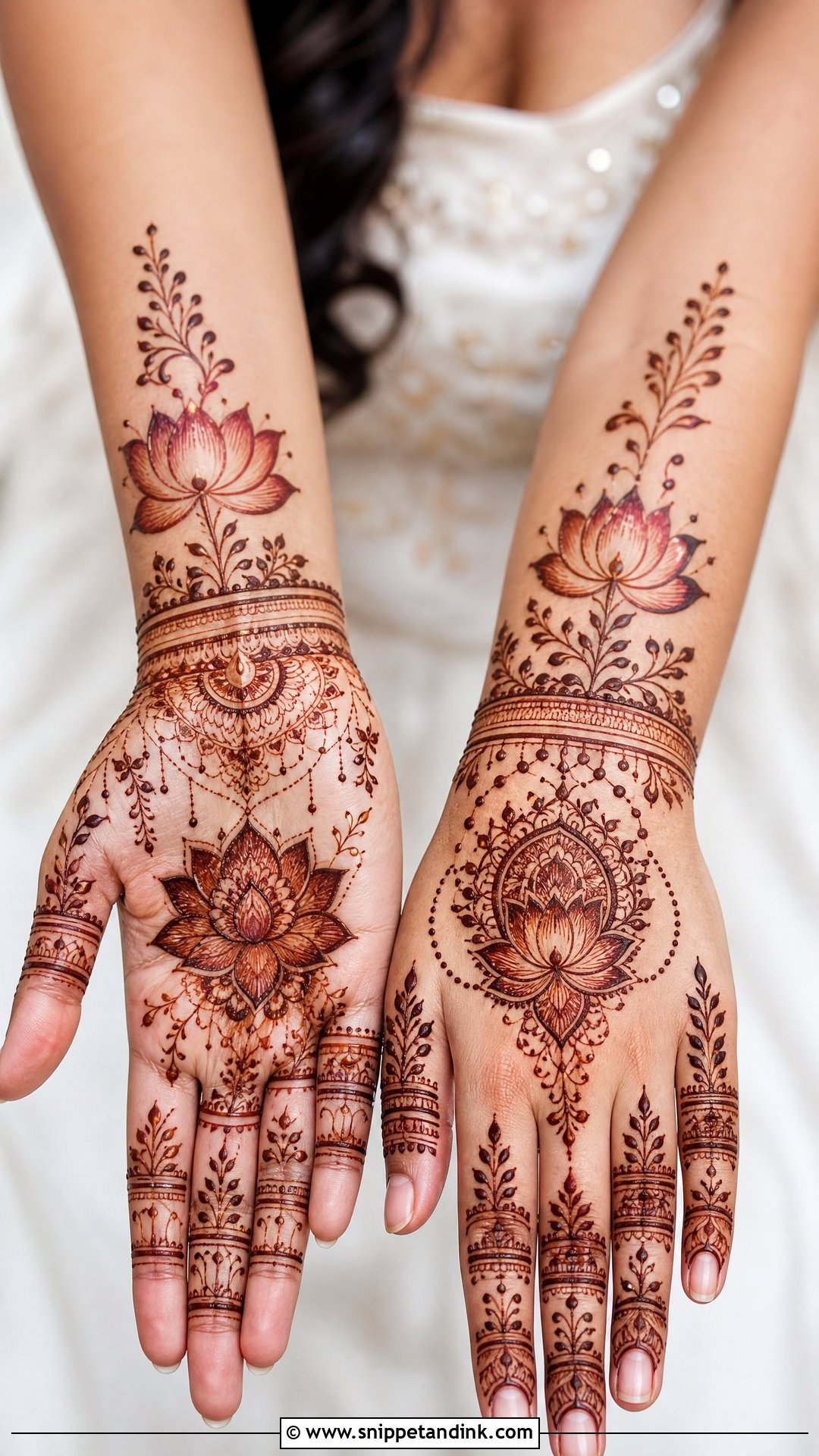
Lotus designs are cleaner than most traditional layouts because the petals are big, layered shapes. A large lotus in the palm, smaller blooms at the wrist and leafy vines toward the fingers make up the front; on the back, a lotus mandala with bracelet bands and detailed fingertips. I keep each petal layer even in width, because uneven petals are very visible once the stain darkens. It can be drawn bold or delicate, so it suits heavy and minimal outfits alike.
12. Mandala Bridal Mehndi Design
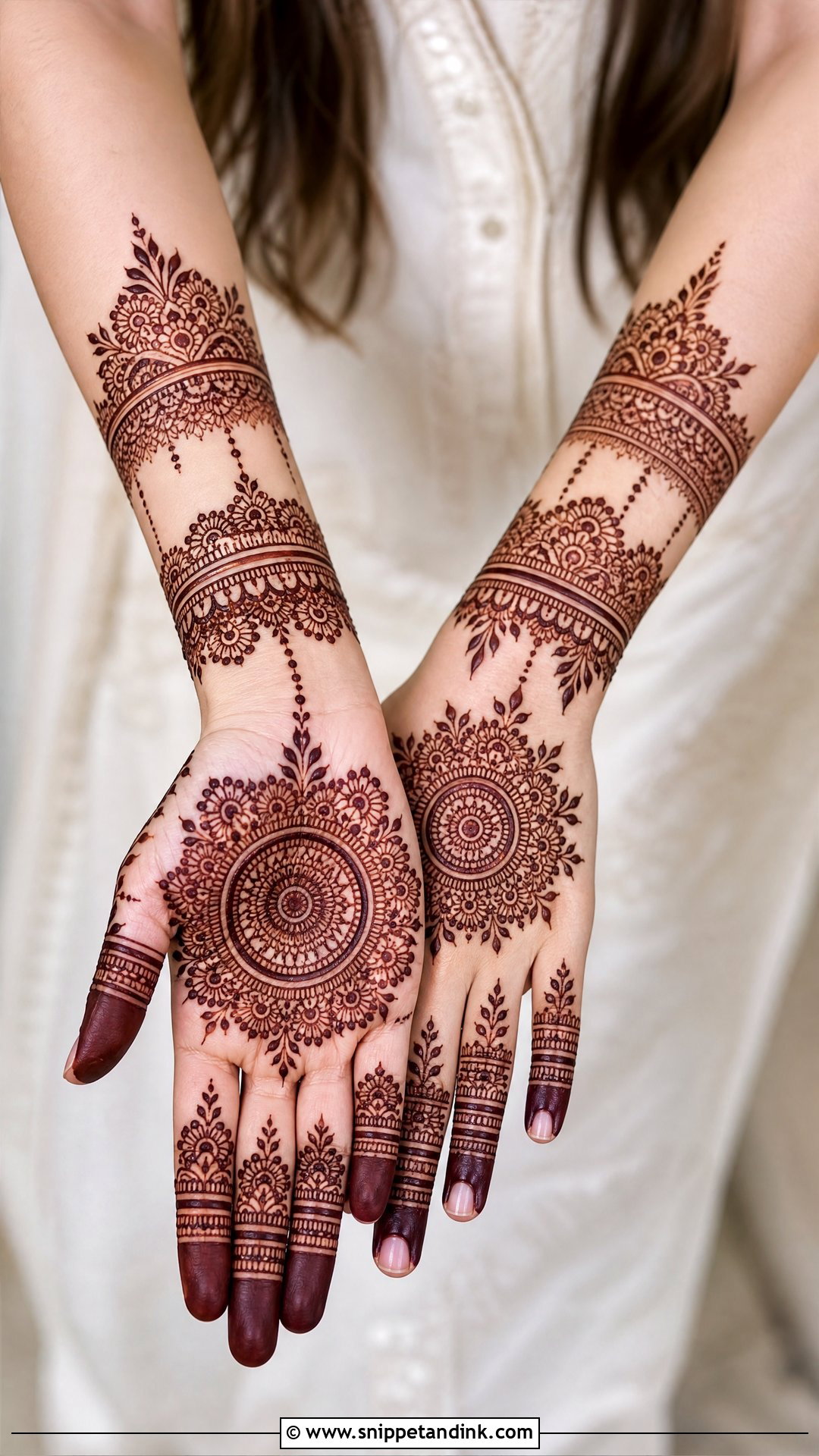
Mandalas live or die on placement. A circle that sits a little off-center on the palm looks wrong in every photo, so I mark the center of the palm before I draw. The round mandala is then surrounded by flowers, dots, leaves and fine filler, with heavily detailed fingers and bands or vines on the wrist and forearm. It works on the front and the back of the hand, and coverage can be scaled up or down easily.
13. Jaali Bridal Mehndi Design
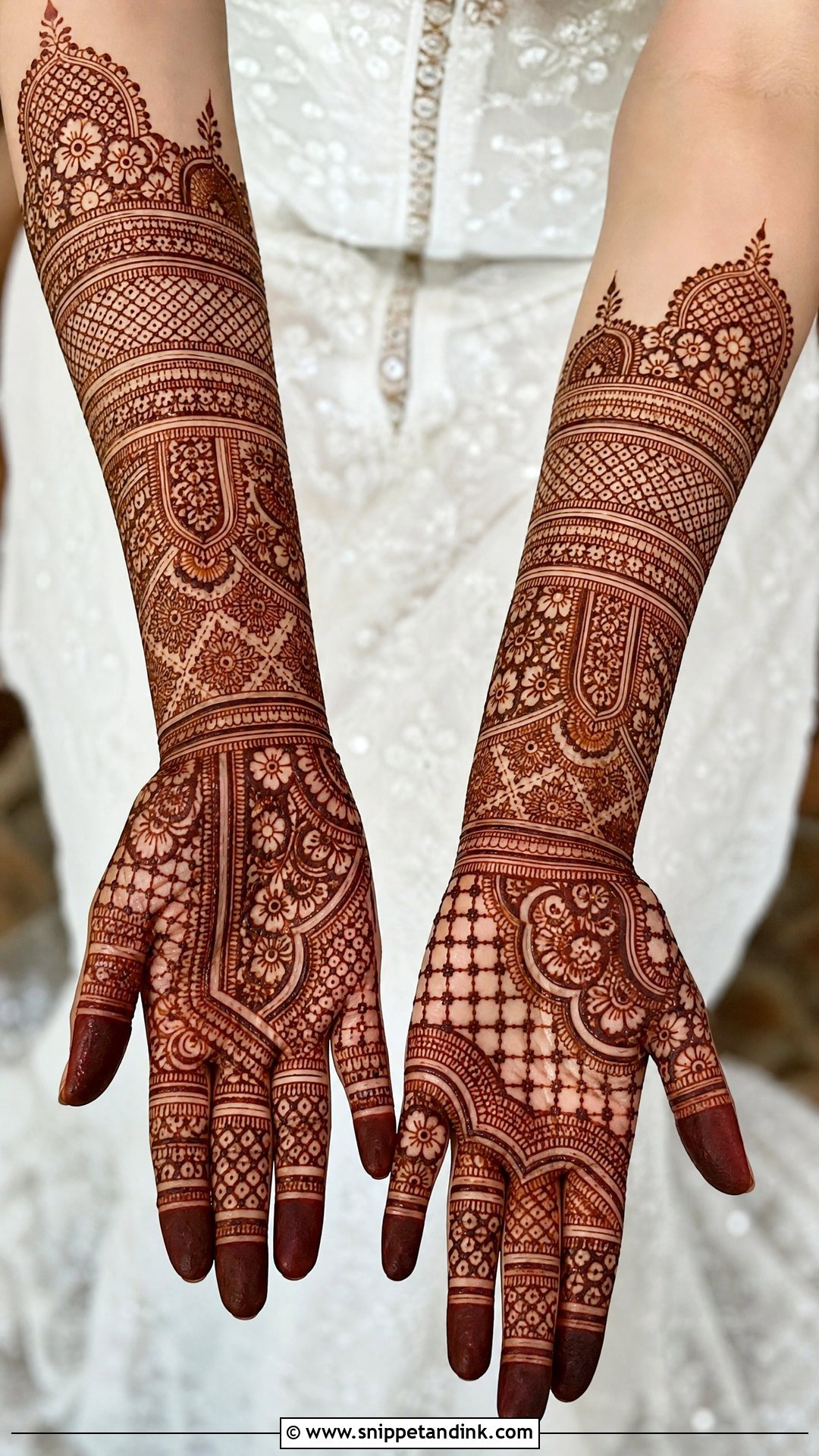
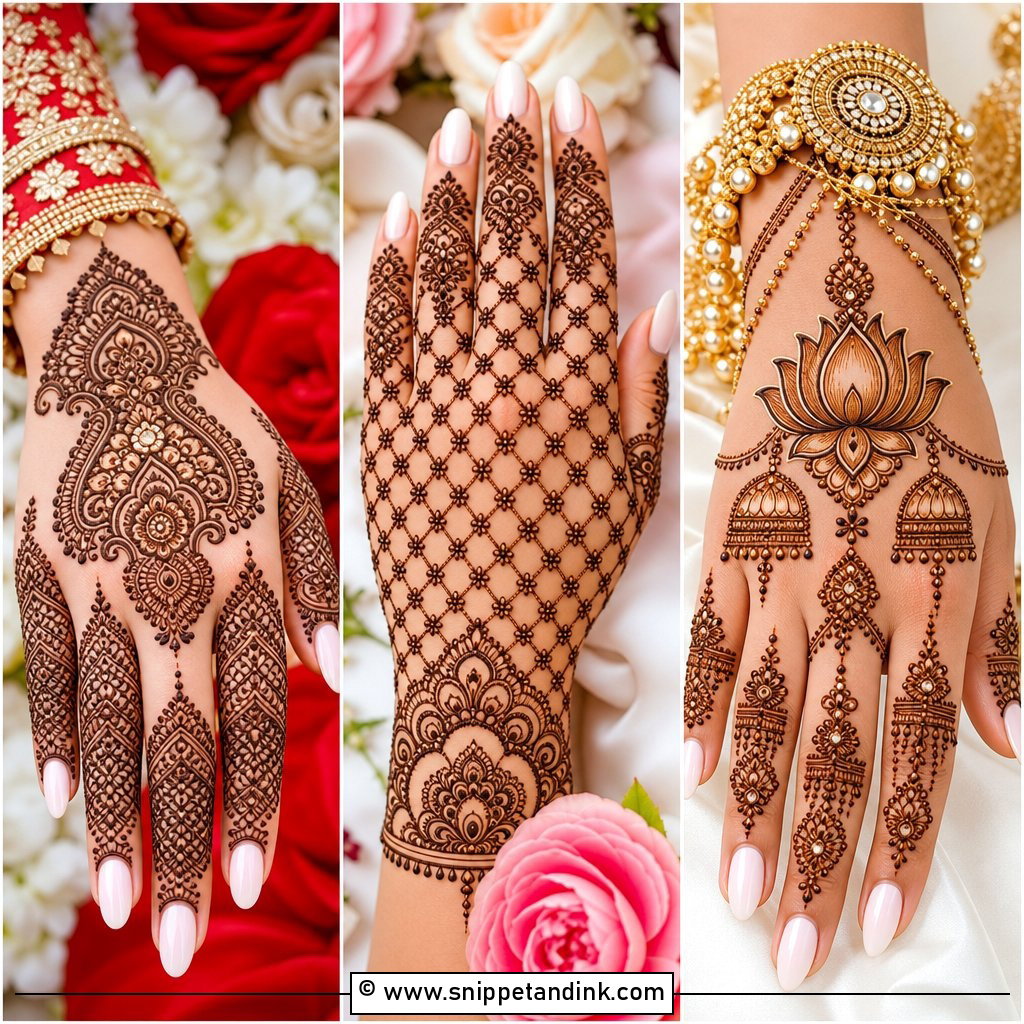
Jaali is mesh work, and it creates a lace effect across the palm, back, fingers and wrist. The mesh can be diagonal, square, curved or mixed with tiny flowers. Spacing is everything: I draw the outer frame of each mesh panel first, then fill the grid, because freehand mesh tends to drift and widen. Very fine lines can blur as paste spreads in warm weather, so I use a fine cone tip and well-strained paste. Up close, in a ring shot, the texture of good jaali is hard to beat.
14. Minimal Bridal Mehndi Design
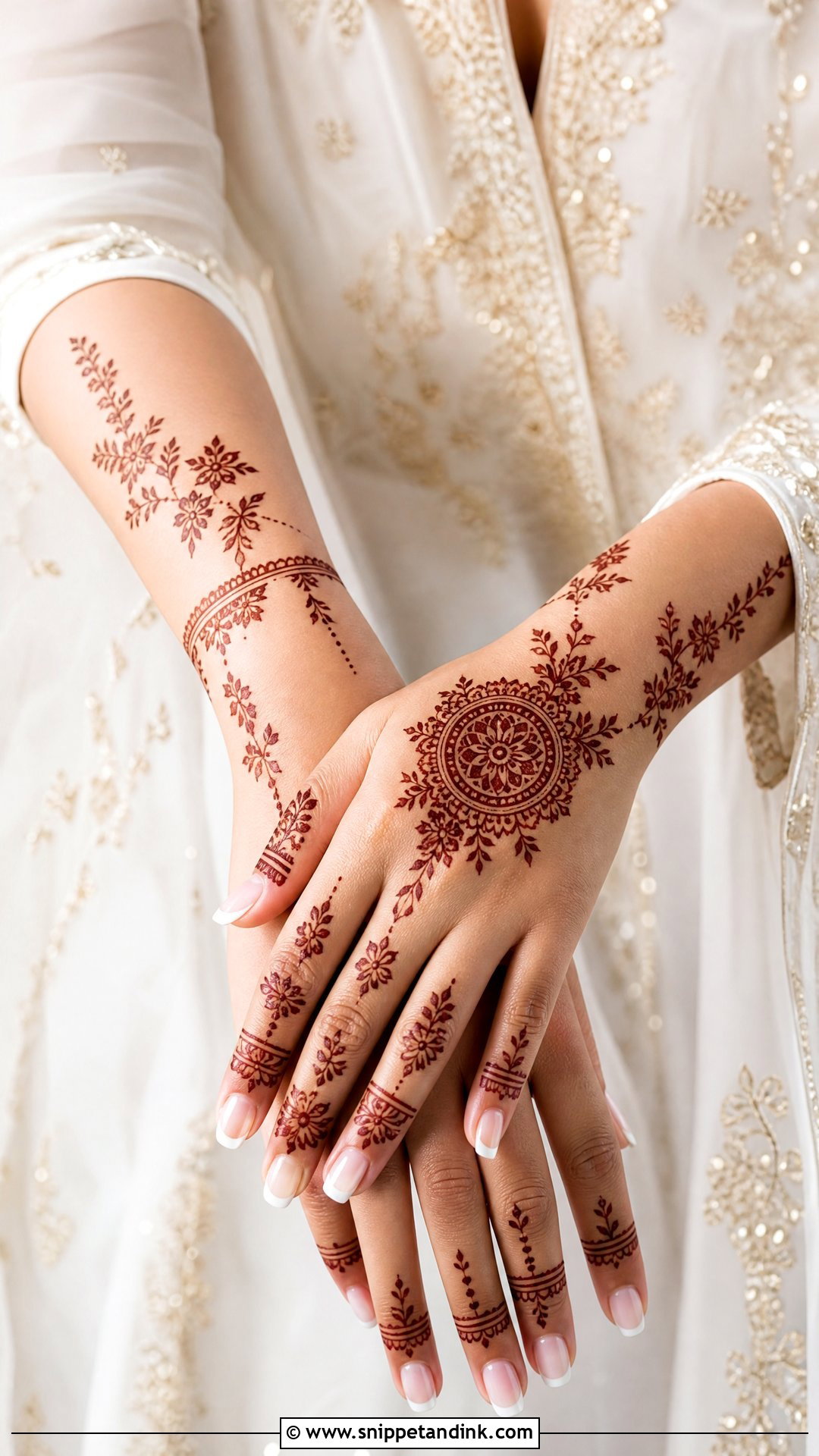
Minimal doesn’t mean unplanned. A clean palm mandala, delicate finger details, a slim wrist bracelet and a few floral trails toward the forearm can look completely bridal if they connect. On the back of the hand, negative space, leafy vines and simple fingertip patterns do the work. Courthouse weddings and small ceremonies suit it well. Crisp lines matter even more here, since there’s nothing to hide a wobble.

15. Modern Bridal Mehndi Design
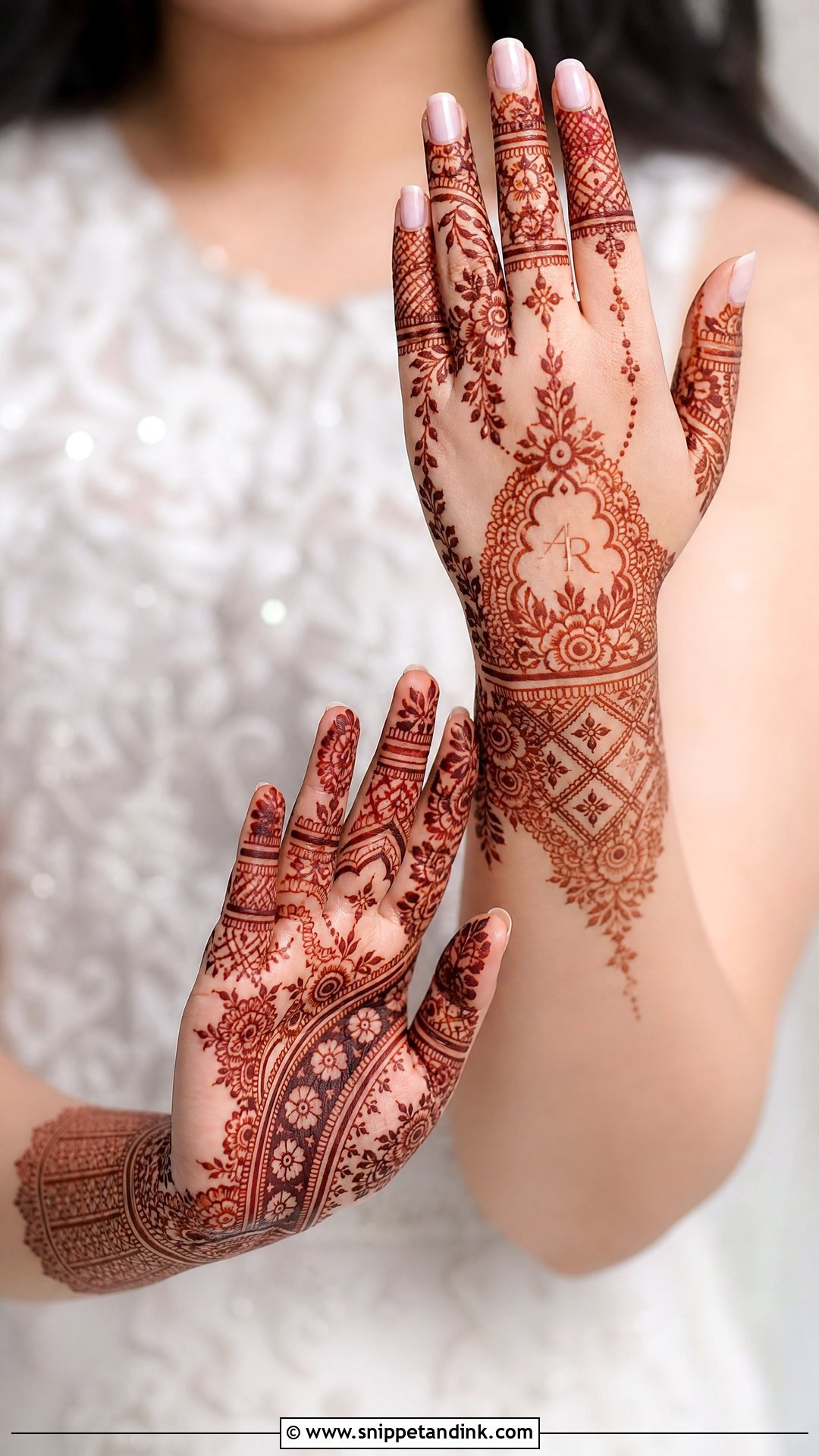
Modern mehndi mixes clean spacing, geometric panels, floral vines, half-hand coverage and finger-focused detailing. It’s less crowded than traditional work but still bridal. Strong outlines and neat negative space are the two things I watch most. Initials, a wedding date or a small personal symbol fit easily into a modern layout. Contemporary lehengas, fusion outfits and soft glam makeup sit well with it.
16. Personalized Bridal Mehndi Design
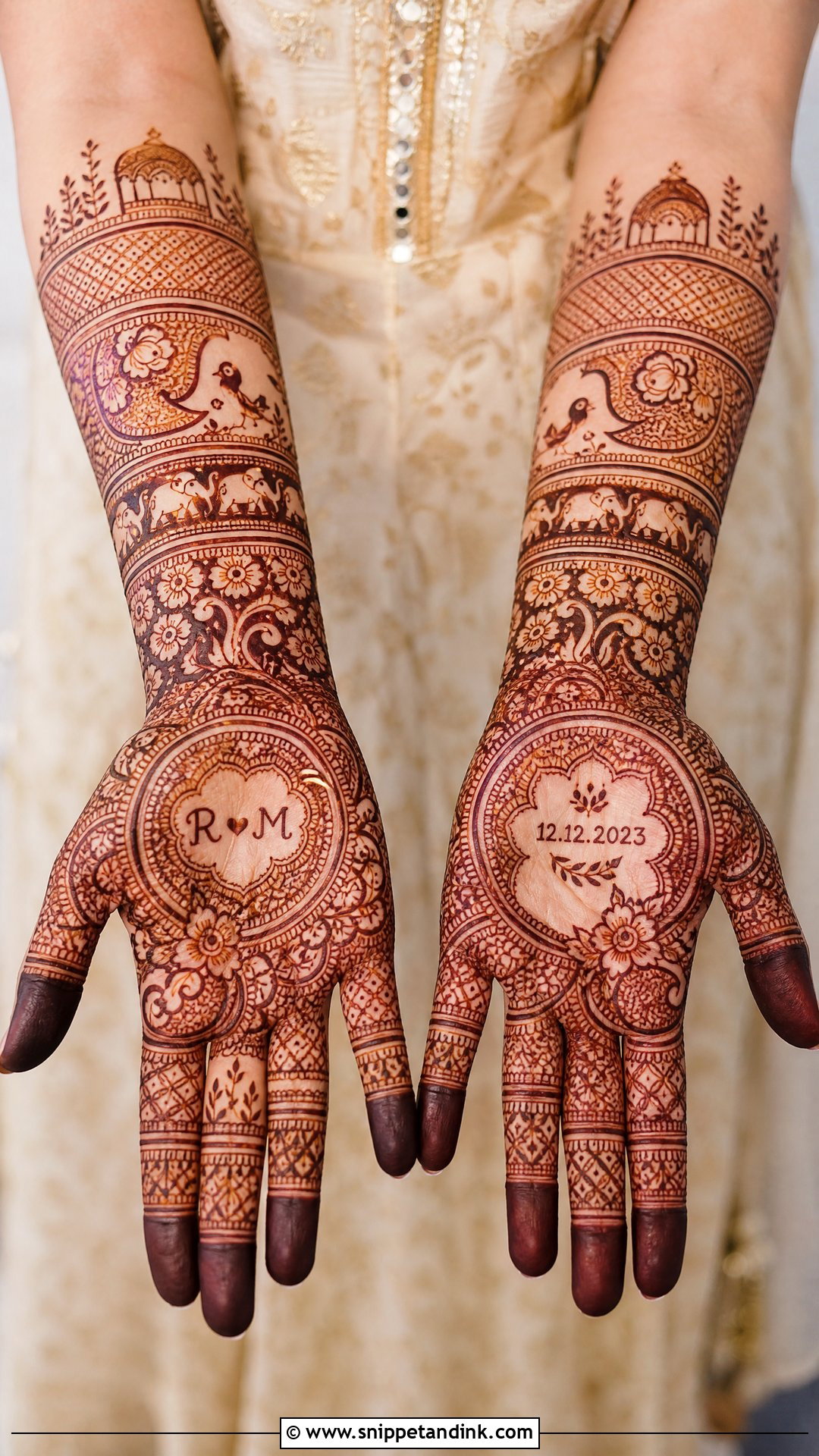
Personal details turn the hands into a small wedding story: initials, the date, meaningful symbols, a place, a pet or a cultural detail. I hide them inside paisleys, flowers, mandalas or forearm panels, so they’re found rather than shouting. Keep the number of personal elements small, three or four at most, or the bridal structure gets lost. The palm, finger, wrist and forearm sections should still read clearly. It’s also a fun game for the groom to find his initials.
17. Bride Groom Mehndi Design
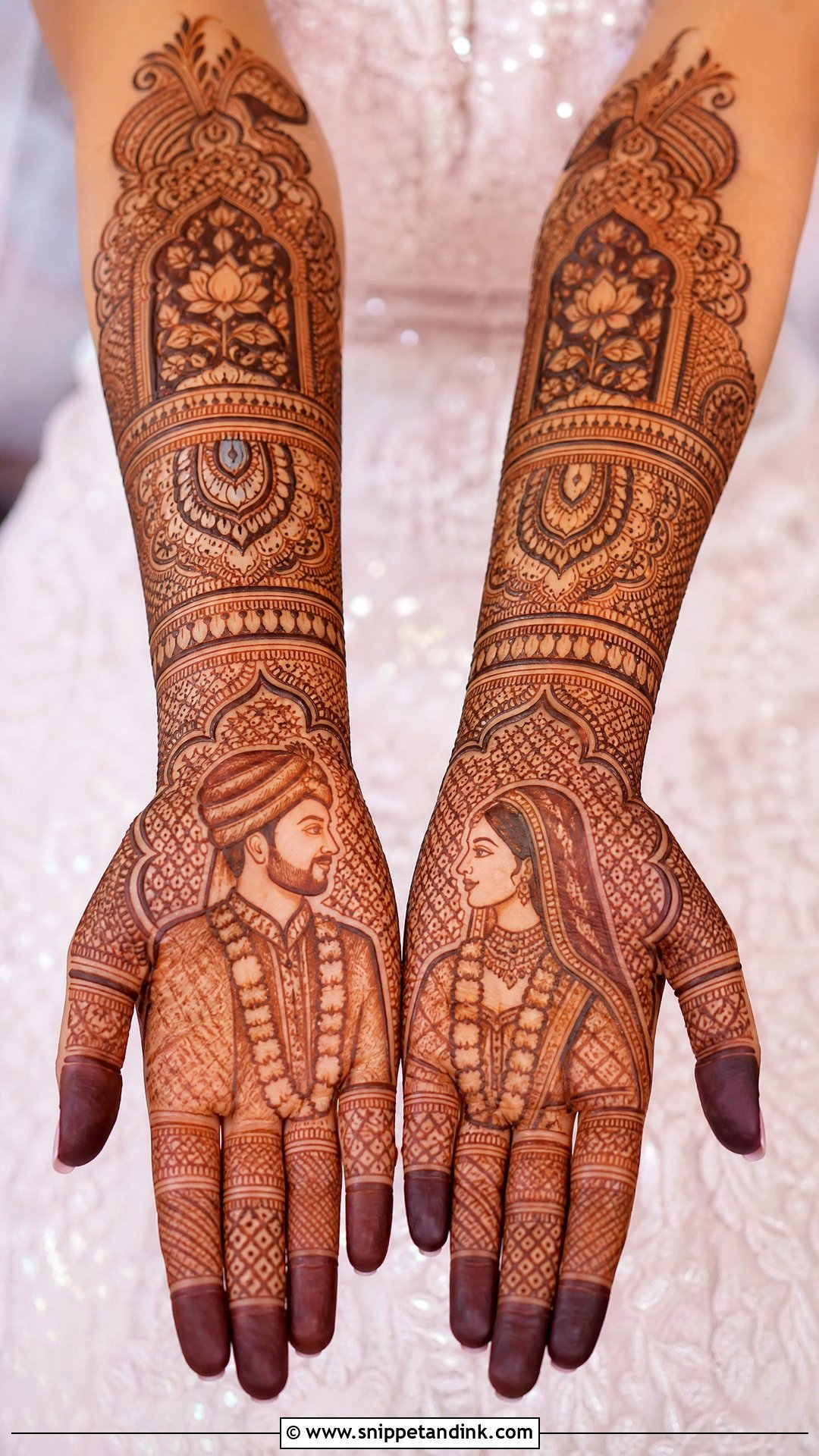
Bride and groom portraits usually go one on each palm, so when your hands come together the figures face each other. They’re surrounded by florals, paisleys, mandalas and fine filler, sometimes with garlands, a doli or ceremony details. Faces need space, so this design works best with full coverage. Fingers and wrists stay detailed but lighter than the portraits. Before booking, look closely at the artist’s past faces; they’re the hardest part to draw well.
18. Jewelry Bridal Mehndi Design
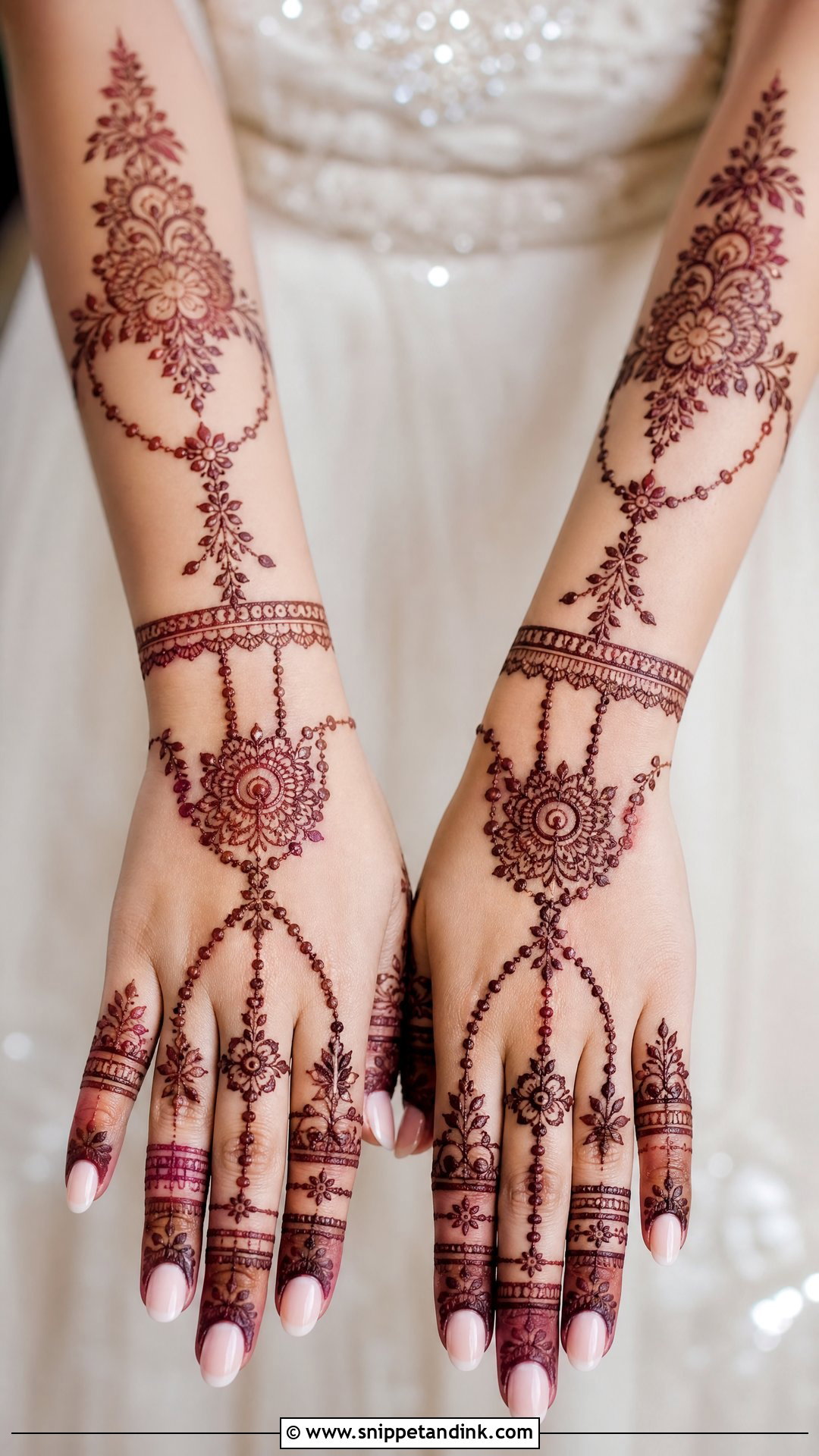
Jewelry-style mehndi looks like hand ornaments: ring chains, hathphool patterns, bracelet cuffs and finger bands, with wrist-to-forearm detailing. On the back of the hand the chains follow the natural shape of the fingers and knuckles. If you’re wearing real hand jewelry, I make sure the drawn chains don’t sit exactly where the real ones will, or they compete. Clean lines and soft curves are what make each ornament visible.
19. Gulf Bridal Mehndi Design
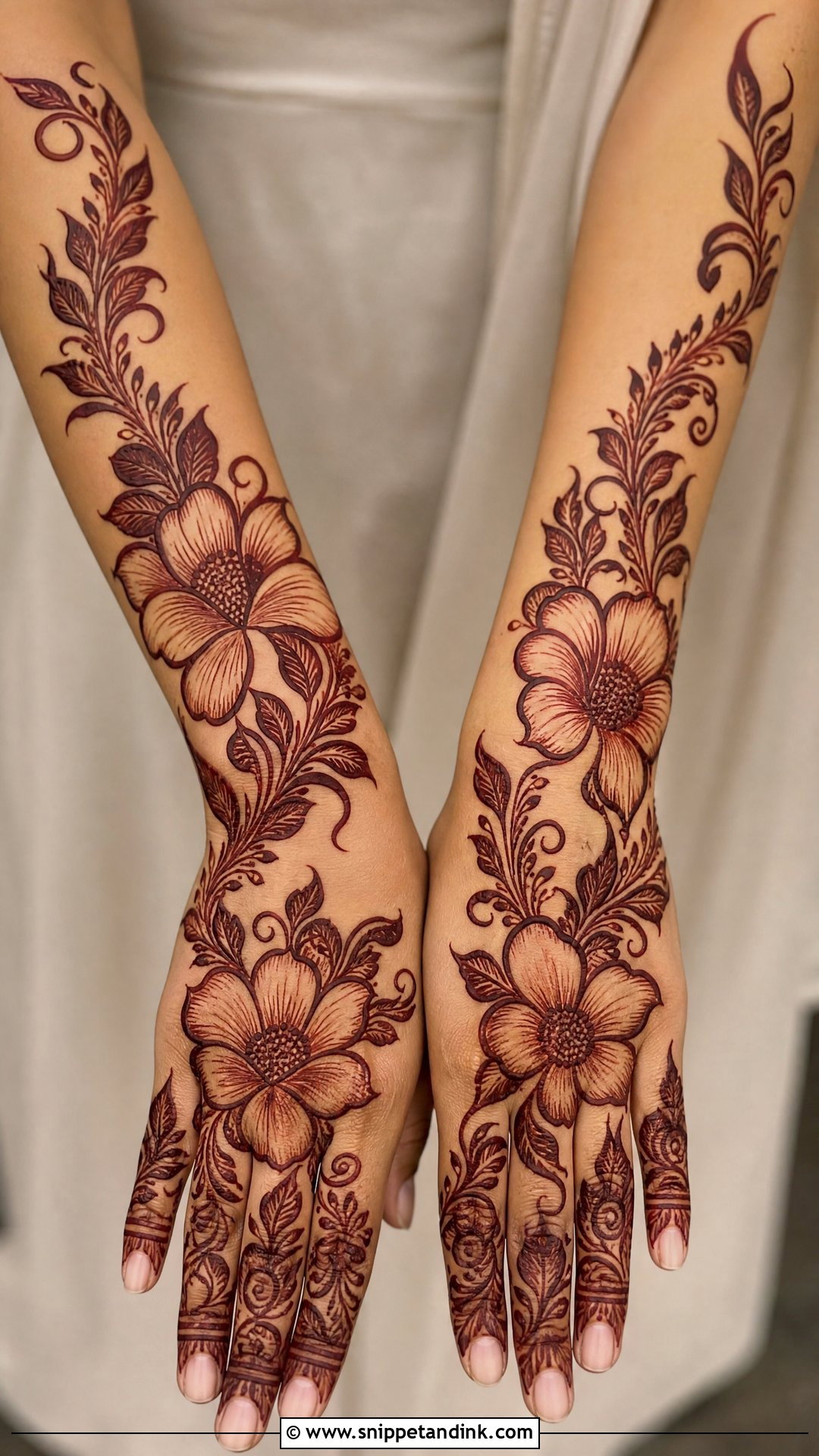
Gulf or Khaleeji-style mehndi uses large flowers, leafy vines, shaded petals and thick outlines with open space around them. The paste is applied with a heavier line than Indian work, and shading is done by thinning or smudging the edge of a petal. It’s less packed but still rich. The back of the hand suits it particularly well. A deep maroon stain makes the bold lines stand out even more.
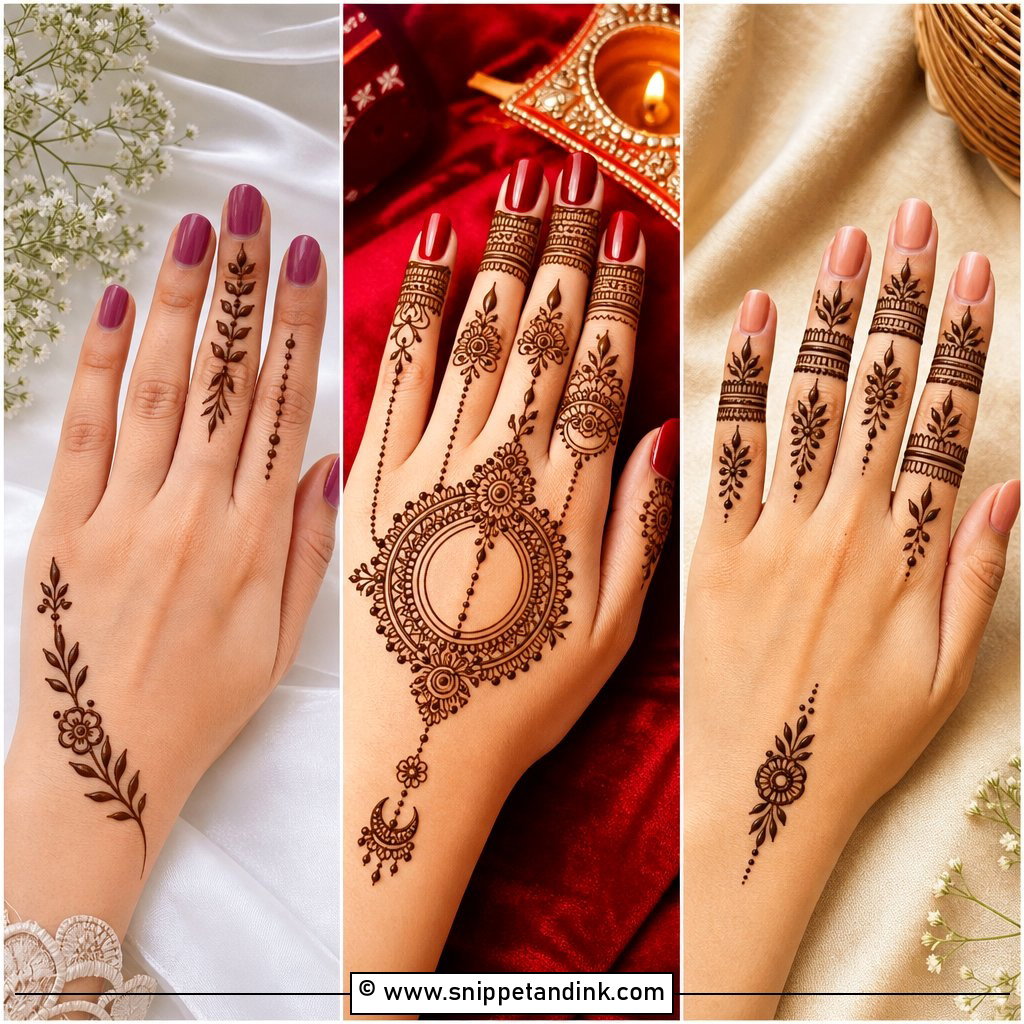
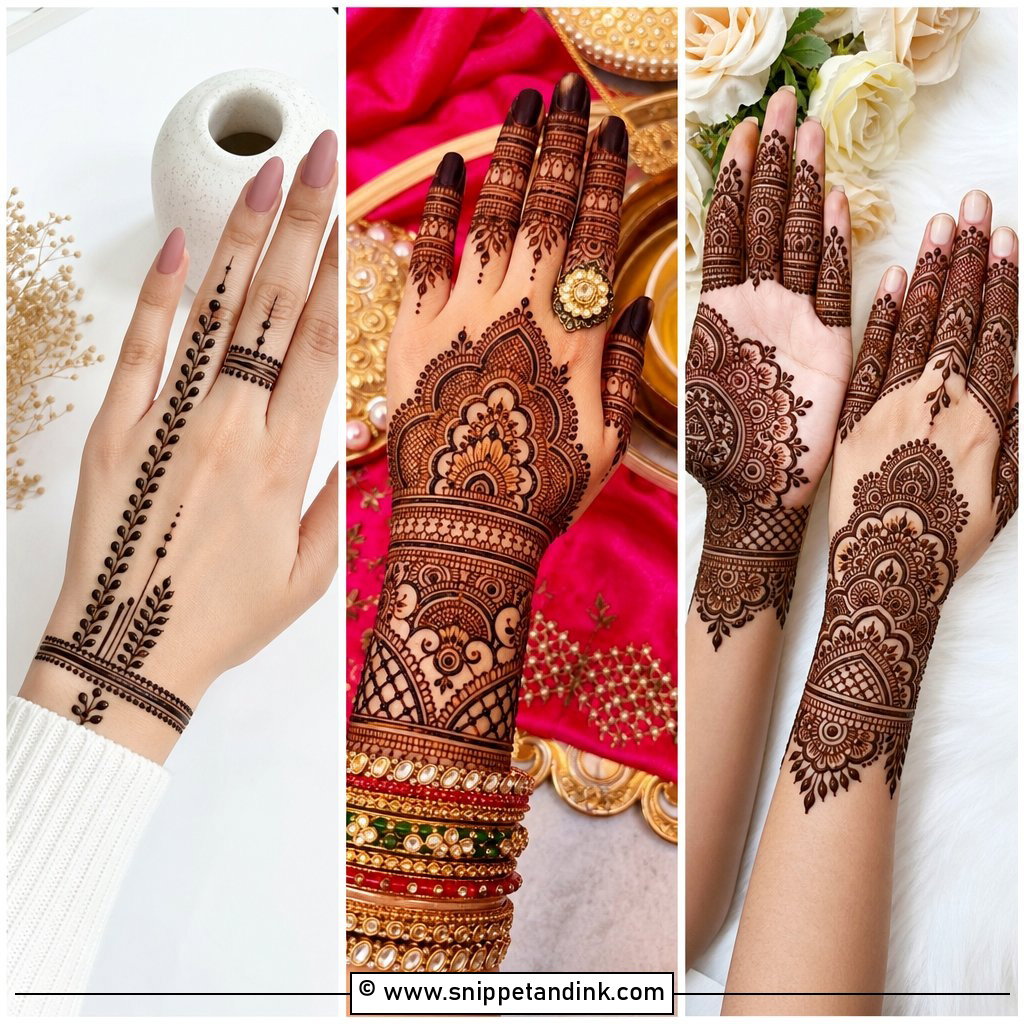
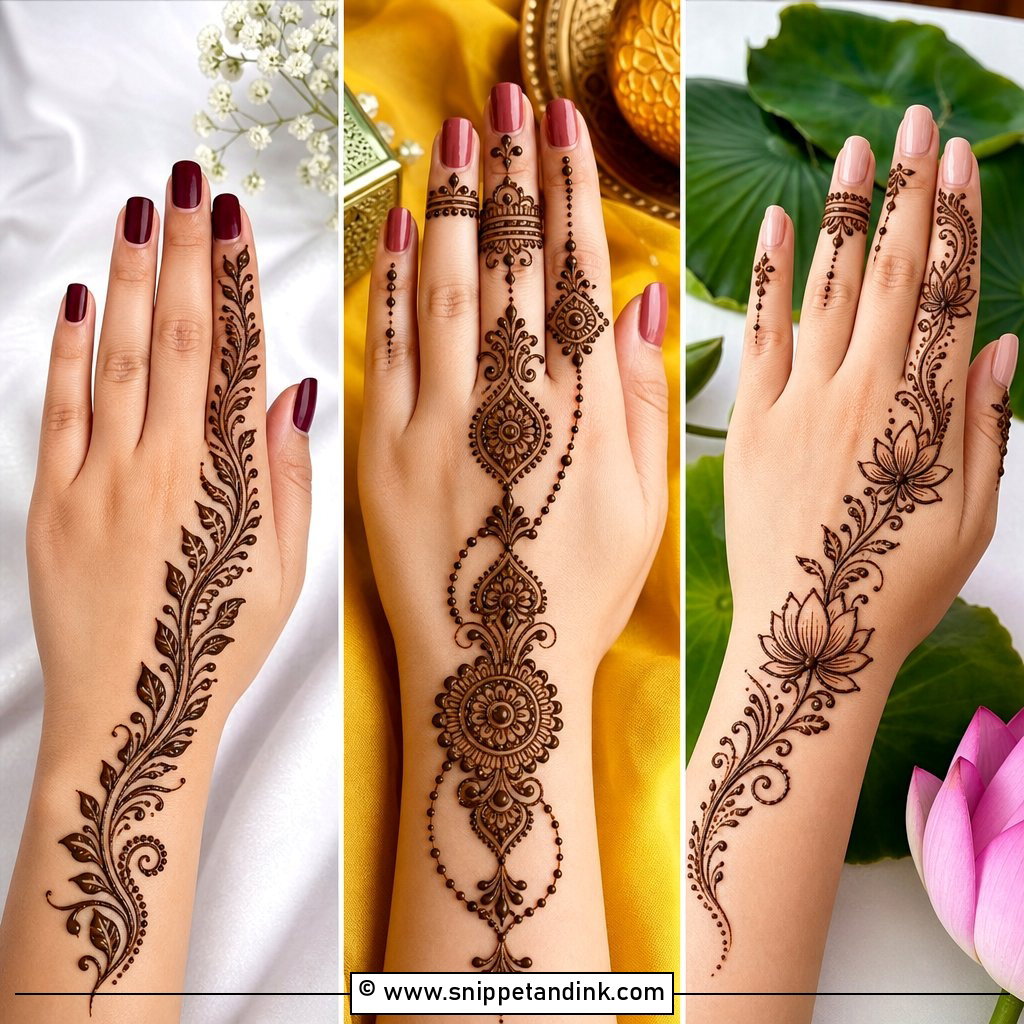


20. Moroccan Bridal Mehndi Design
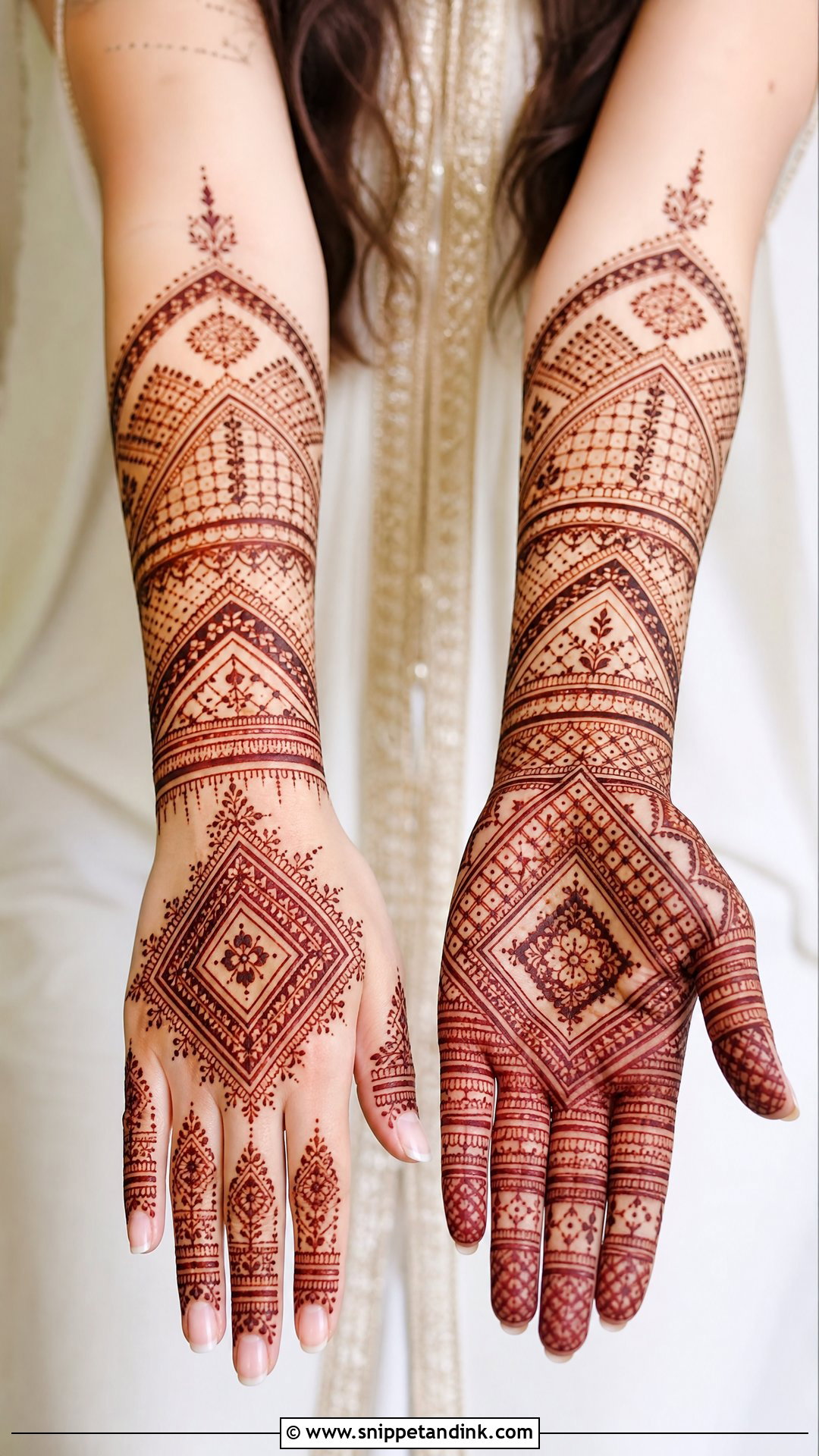
Moroccan designs are geometric: diamonds, triangles, lines, dots and grids arranged in symmetrical bands. A full hand Moroccan design runs from the fingers to the wrist and forearm. The trick is following the hand’s natural shape, so the geometry bends around the knuckles rather than looking stiff. Small floral or mandala touches can soften it. It’s a good choice for a bride who wants something sharp and different.
Aftercare That Decides How Dark the Stain Gets
Once I’ve finished, the stain is in your hands. Here’s what I ask every bride to do.
- Let the paste dry fully, then dab on a lemon and sugar mix to keep it moist and stuck to the skin.
- Keep the paste on for as long as you can, ideally six to eight hours or overnight. Wrap loosely if you’re sleeping in it.
- Scrape the dried paste off with a blunt edge or your fingers. Don’t wash it off.
- Avoid water for as long as possible afterward, ideally the rest of the day. Water too early stops the stain developing.
- Keep your hands warm. Warmth helps the stain deepen, which is why many brides hold their hands near a gentle heat source.
- Rub a little balm or natural oil on the design before showering, to protect it.
What I won’t put on a bride’s skin
Black henna and so-called instant dark cones often contain chemical dyes such as PPD, which can cause serious allergic reactions and scarring. Real henna is never jet black. If you’ve never had henna before, ask your artist for a small patch test a few days ahead, and ask what’s in the paste. A good artist will tell you exactly.
Coverage, Outfit and the Photos You’ll Keep
The easiest way to decide is to start with coverage, then think about your outfit and the photos you want. Full Indian, Rajasthani, Marwari and bride-groom layouts are traditional and grand. Arabic, Gulf and minimal designs are lighter and modern. Indo-Arabic, Pakistani, mandala, lotus, jaali and jewelry patterns sit in between. Bring photos of the ones you like to your artist, talk about spacing and how long you can sit, and plan your application so the stain is at its darkest on the wedding day.
You'll Like These Ideas:



Leave a Reply