
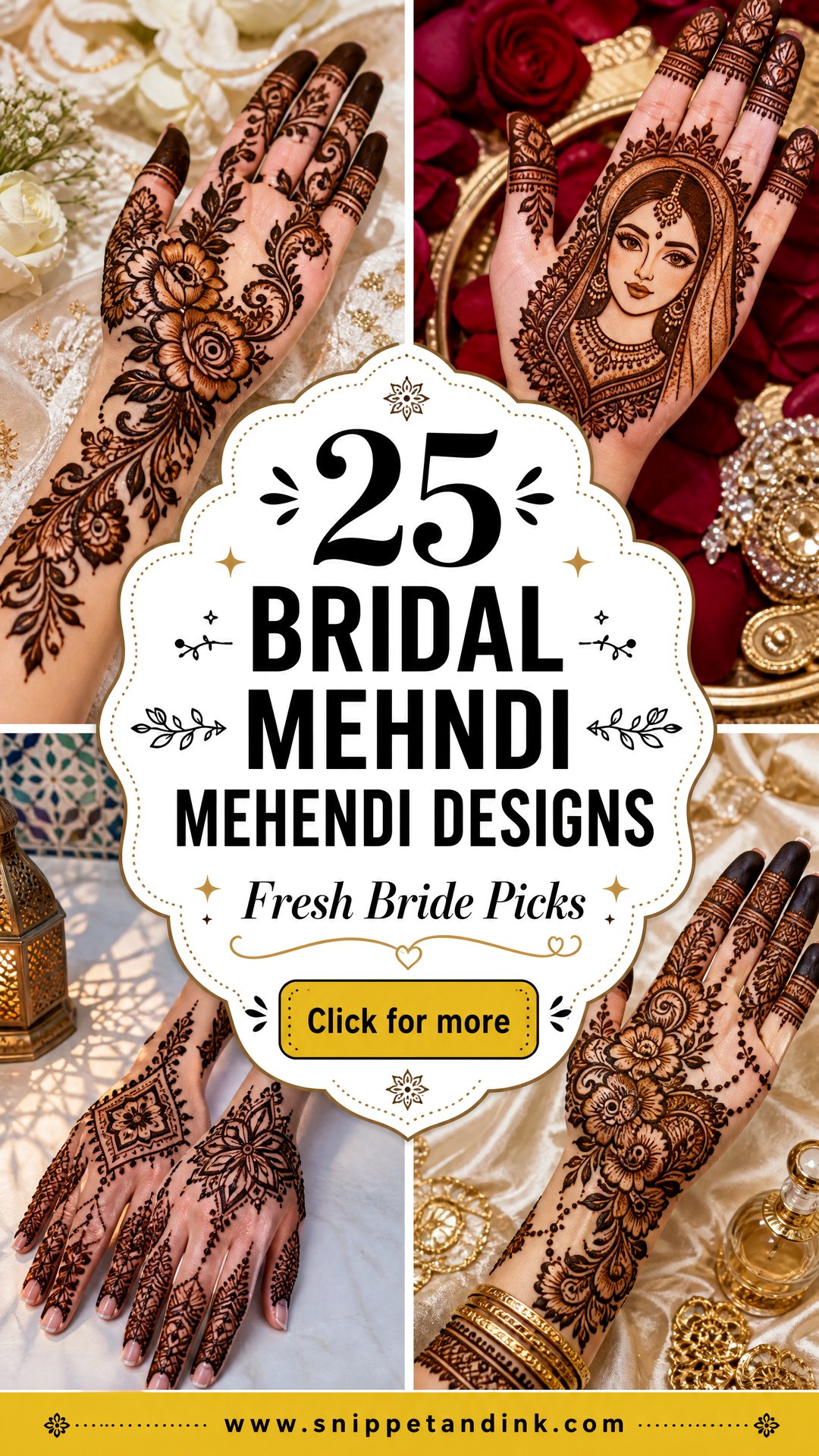
A bridal booking with me usually starts with a phone full of saved photos and a question: which of these will actually work on my hands? This collection runs from dense full-hand Indian work and royal Rajasthani motifs to Arabic trails, portraits, peacocks, lotus, mandalas, jaali and dulha dulhan themes, then into lighter territory: minimal, modern, jewellery-style, Moroccan, Gulf, finger, wrist-to-forearm, feet, white and glitter. With each one I’ve added what I look at as the artist, so you can tell which designs suit your outfit and your schedule before you sit down for six hours.
Sizing the Design to Small Palms, Short Fingers or Wide Wrists
A design you saved on a hand model may not sit the same way on yours. Before I start, I look at your hands relaxed on a cushion, then ask you to make a fist, because both shapes will show up in photos.
- Small palms: fewer, larger motifs. A crowded portrait or a dense Rajasthani scene loses its faces and figures on a small canvas.
- Short fingers: diagonal Arabic flow or vertical finger bands make them look longer. Horizontal stripes across every finger do the opposite.
- Long, slim fingers: these carry fine jaali and delicate rings beautifully. You can afford more detail at the fingertips.
- Wide wrists or forearms: a tapering design that narrows toward the elbow looks more graceful than a heavy straight band.
If you sweat a lot in your palms, tell your artist. Damp skin makes paste slide and lift, and she may work the palms first while they’re cool, or fan them as she goes.
1. Full Hand Indian Bridal Mehndi
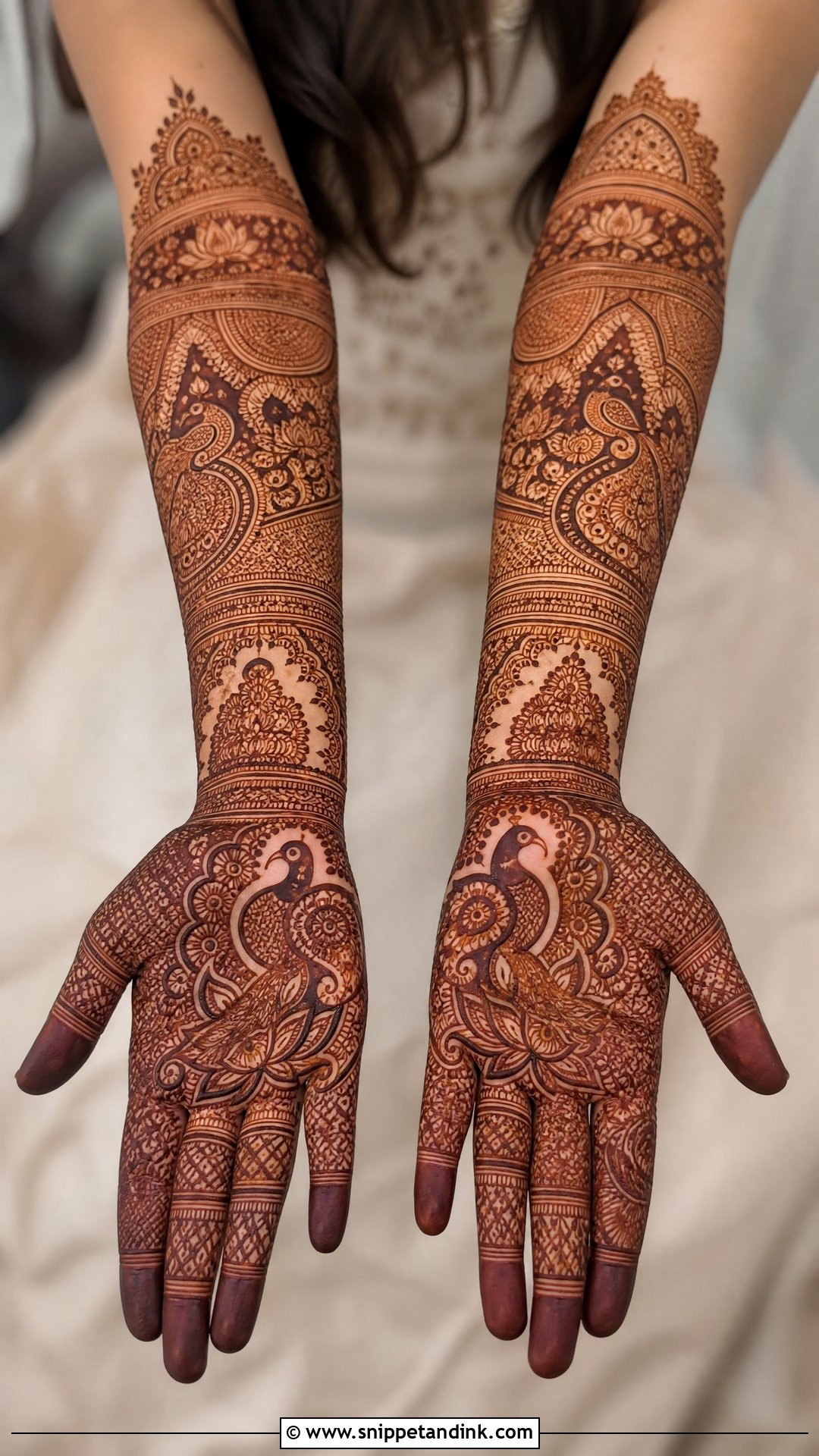
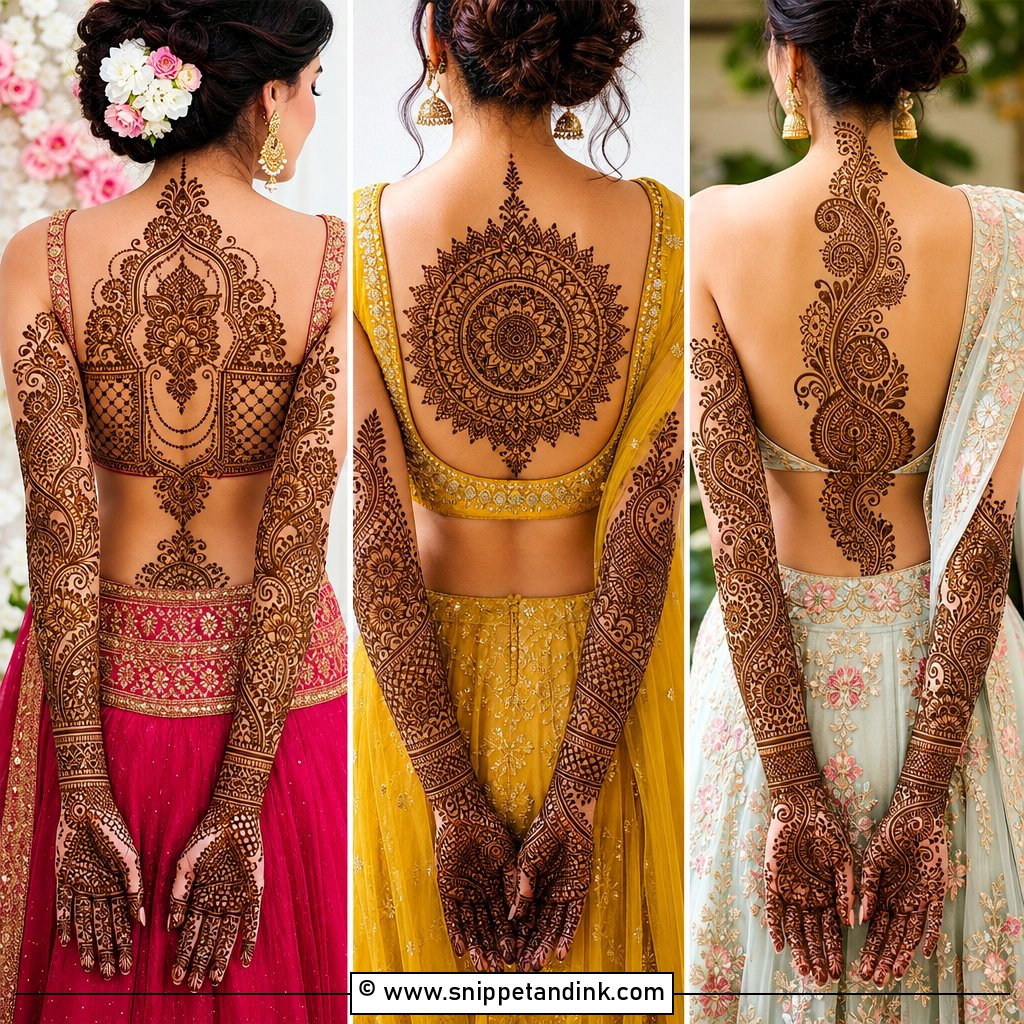
Full hand Indian mehndi leaves almost no bare skin between fingertips and forearm. Paisleys, lotus, peacocks, vines and mandalas sit in layers, with tiny filler stitching them together. It belongs with red and maroon outfits and with a bride who wants her hands noticed. The difficulty is keeping it readable. I build the big shapes first on both hands, then fill, so the two hands match in structure even though the filler wanders. If an artist starts filling before the frame is laid, you’ll get the crowded, uneven look this style is sometimes blamed for.
2. Rajasthani Bridal Mehndi
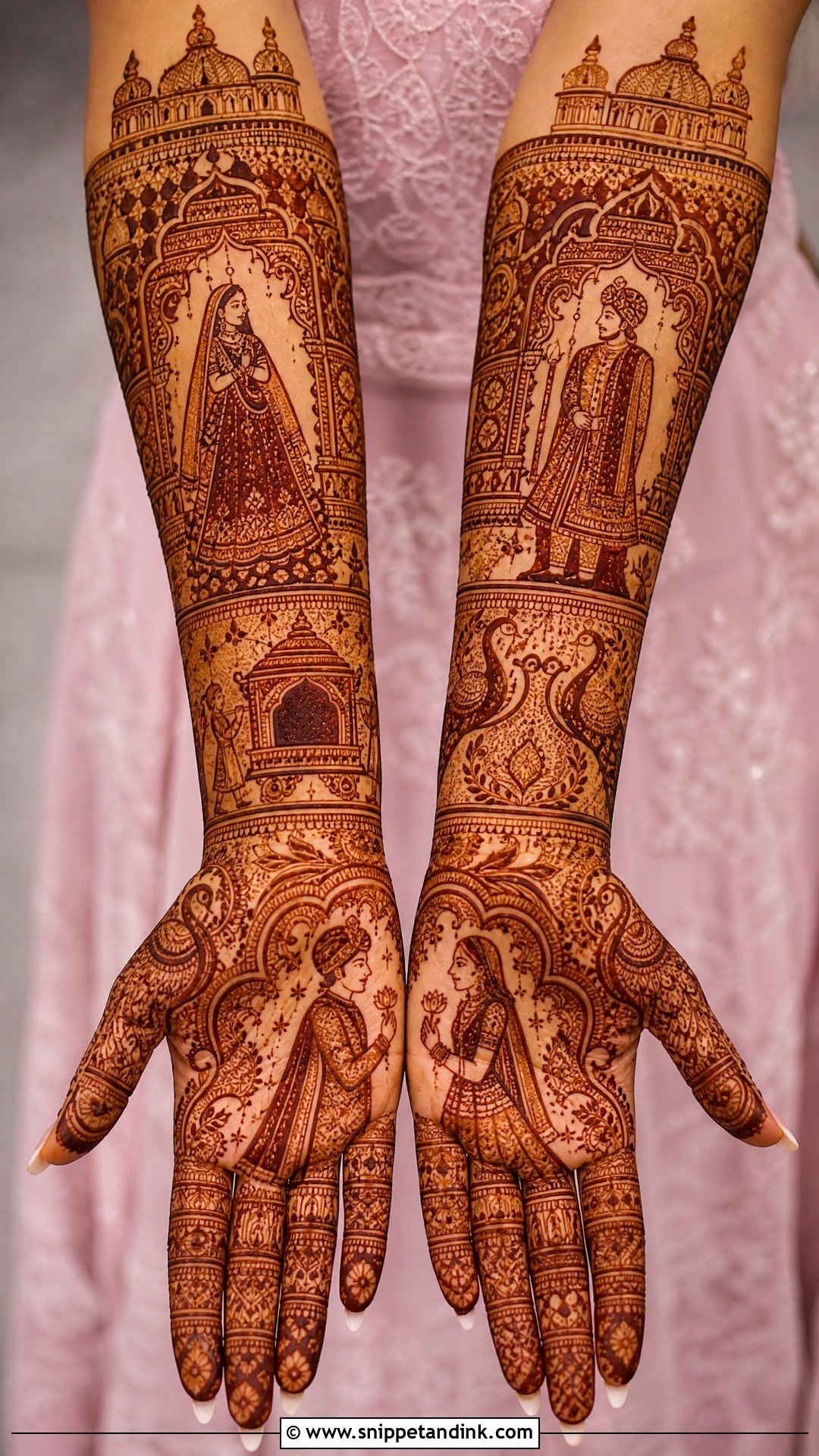
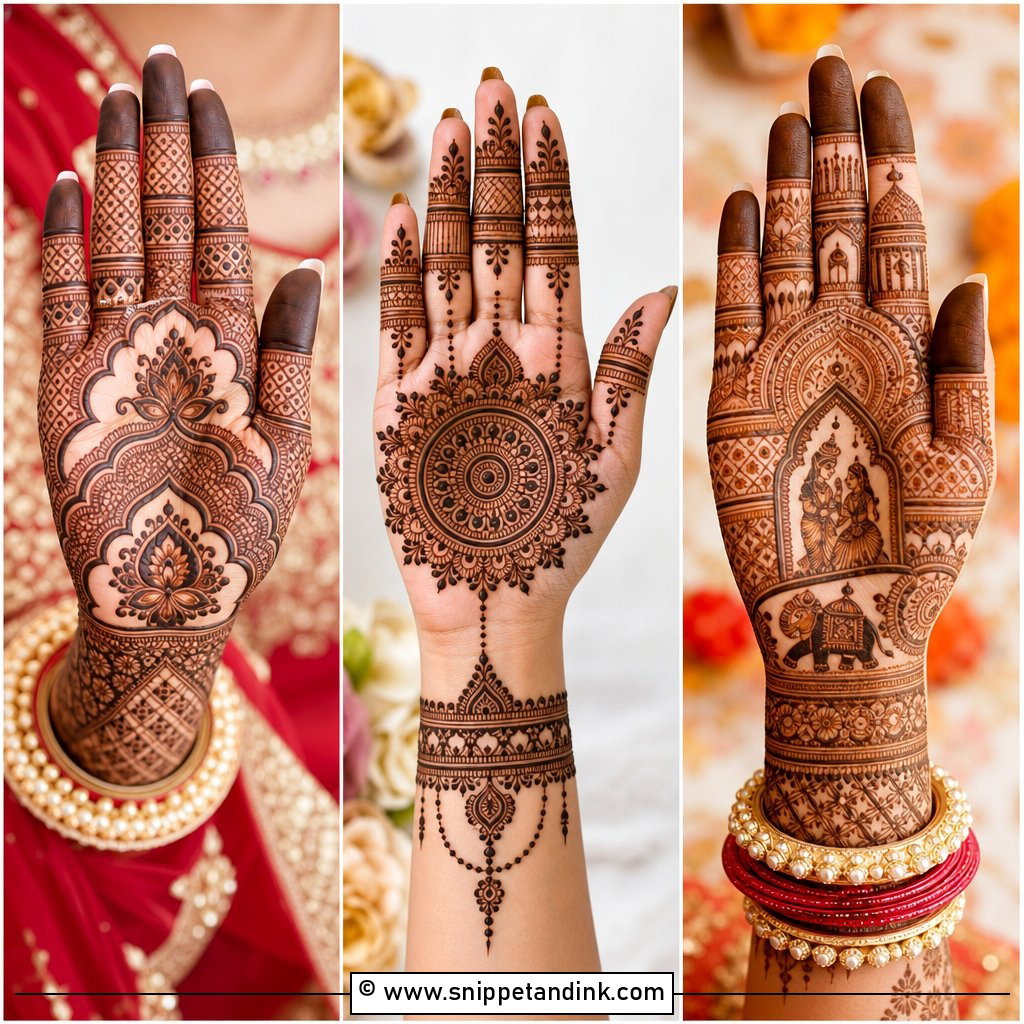
Rajasthani henna is narrative. Bride and groom figures, jharokha windows, a doli, elephants, peacocks and palace borders run from fingertips to forearms, and families often read the hands like a picture book. It’s the most time-hungry style here, and line work this dense stains very dark, which is part of its appeal. I tuck initials or the date into the architecture, along a window arch or the edge of the doli, where they’re found rather than seen. Book an artist who shows you finished Rajasthani stains, not just paste.
3. Arabic Bridal Mehndi
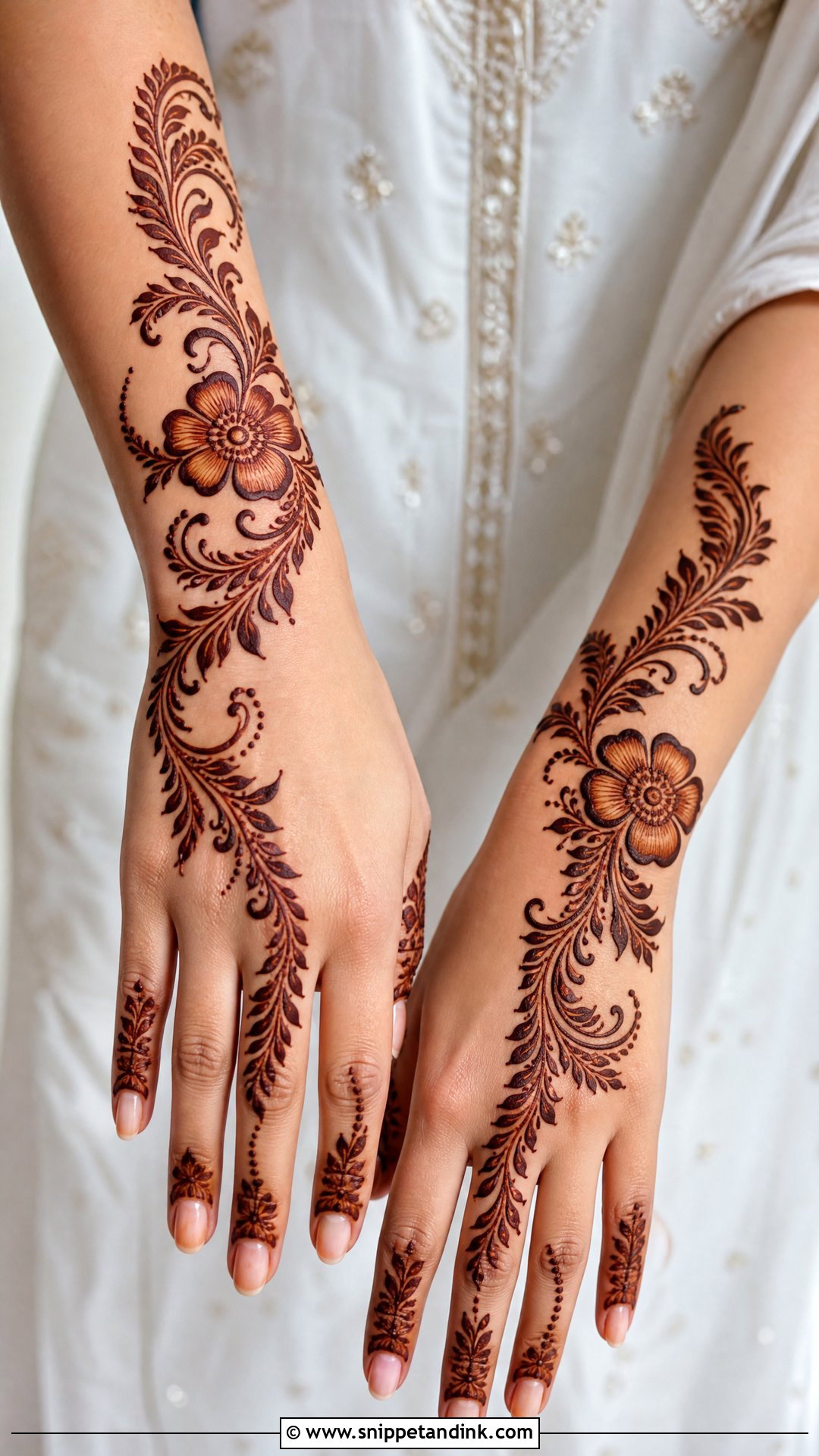
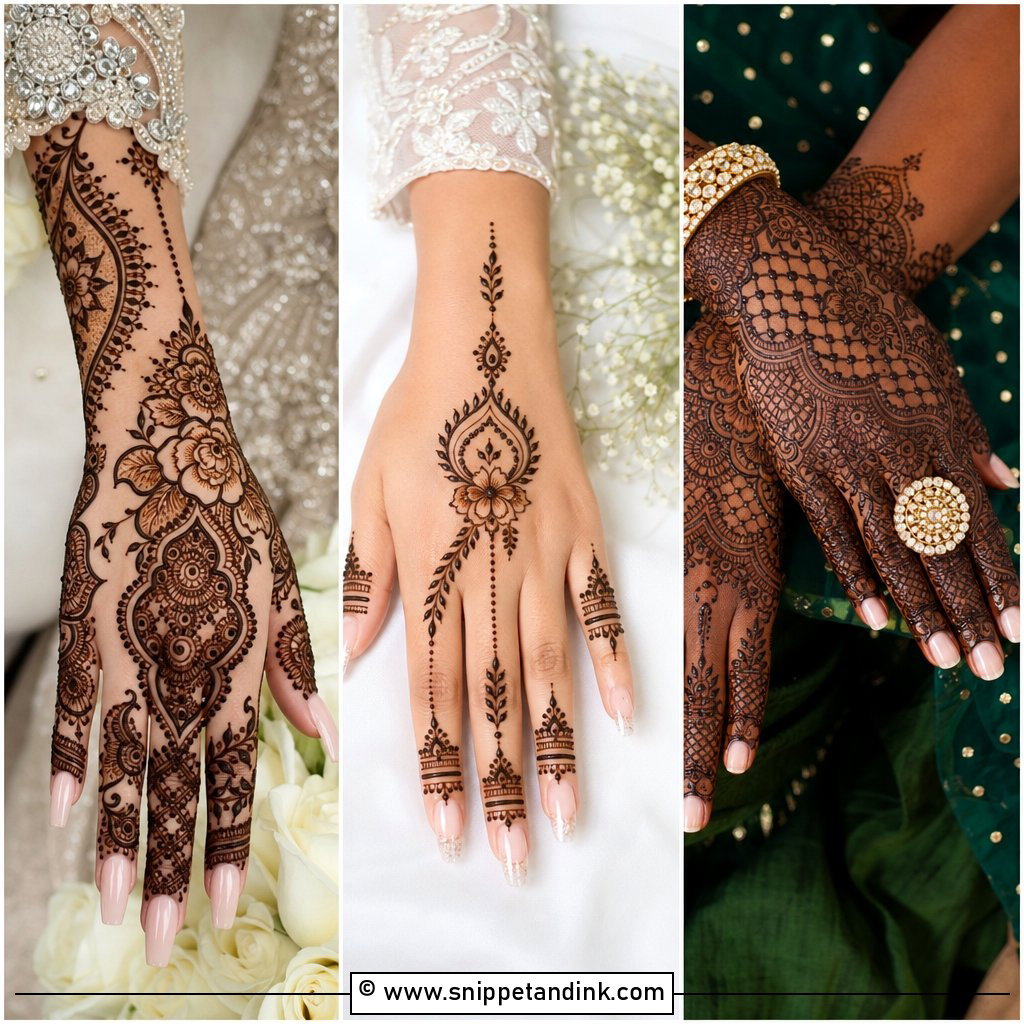
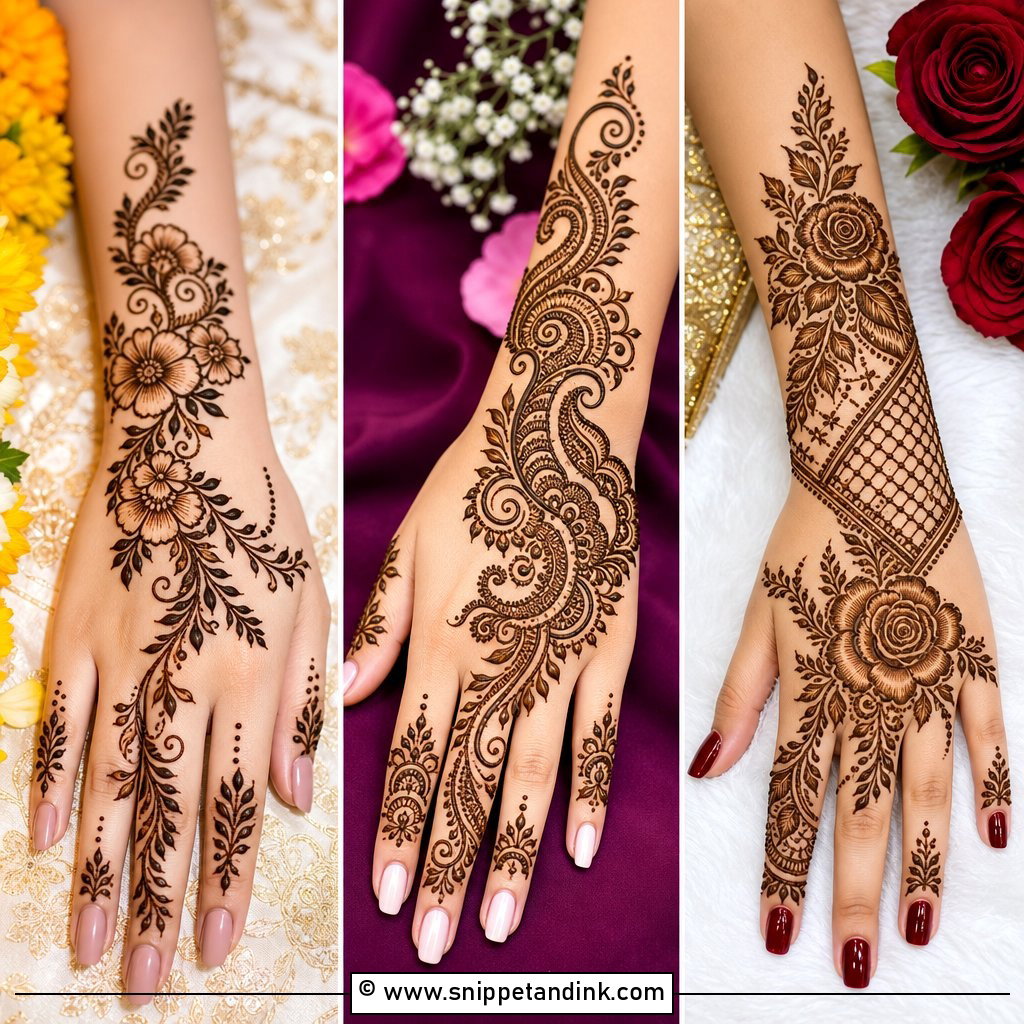
Arabic bridal hands are about flow: bold flowers, leafy vines and long curves with clear skin between them. It can stop at the wrist or run into a full-hand layout. I reach for it when a bride needs to be done in a couple of hours, or when her outfit is contemporary and dense Indian fill would feel heavy beside it. The bigger shapes stay legible from the back of a room and on the back of the hand in ring photos, where fine filler tends to vanish.
4. Indo Arabic Bridal Mehndi
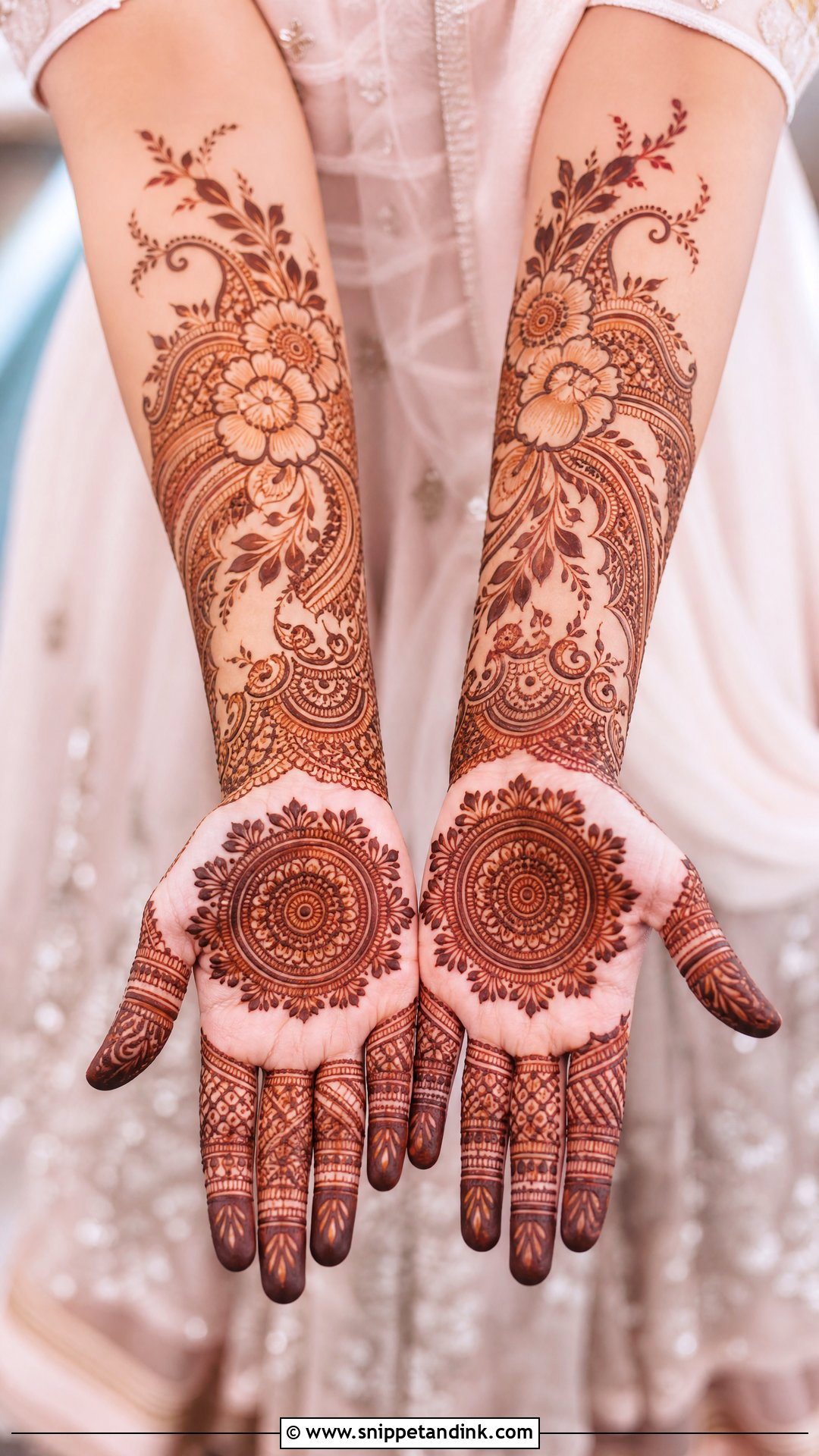
Indo Arabic bridal mehndi gives you Arabic movement with Indian fill tucked inside it: large floral vines and shaded petals, paisley borders, a mandala on the palm, fine work on the fingers. The skill is deciding where the empty space goes. I leave it running in a diagonal channel so the eye follows the hand from fingertip to wrist, which also makes shorter fingers look longer. It suits a bride who wants tradition for the rituals without a fully packed hand.
5. Portrait Bridal Mehndi
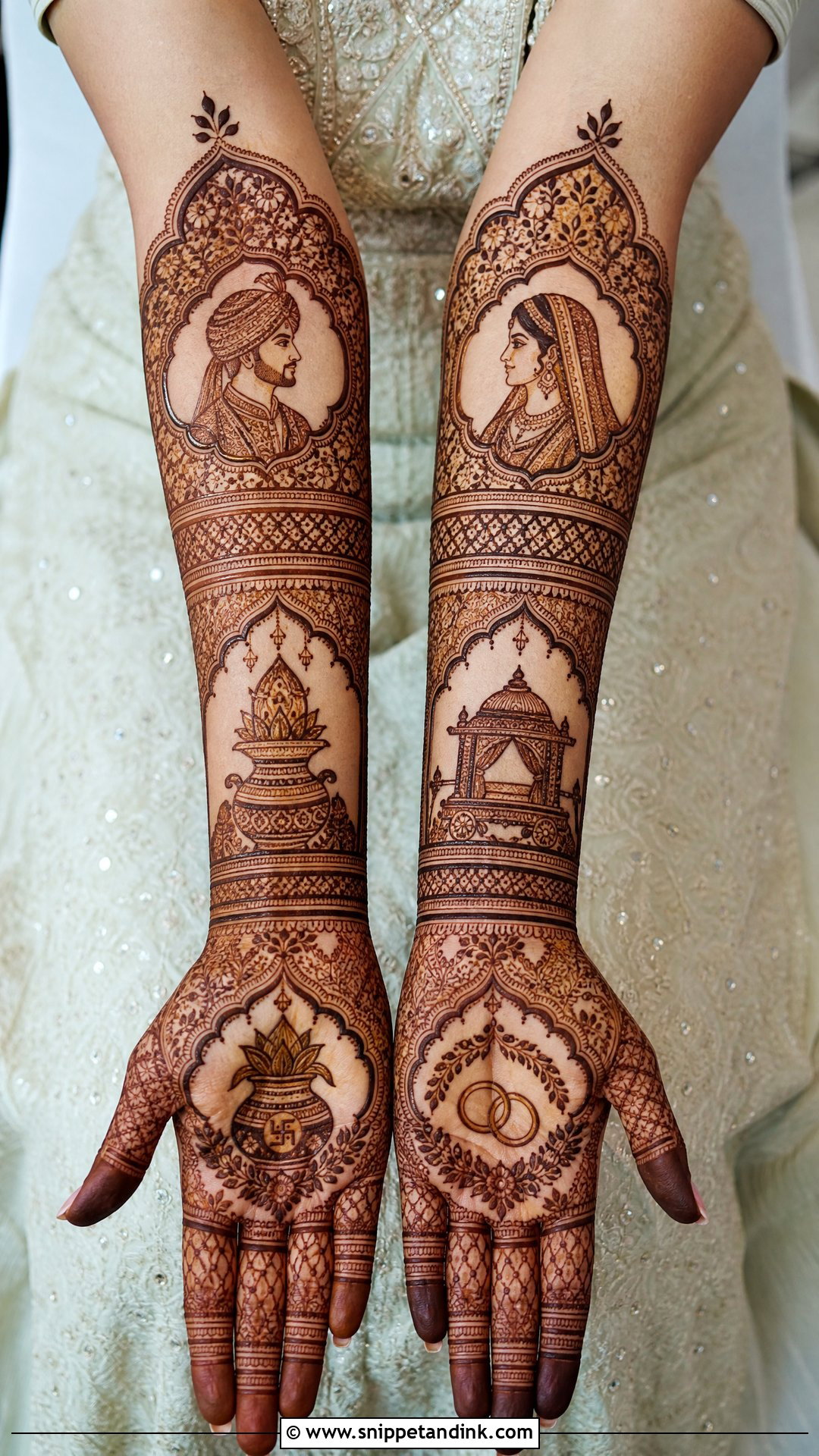
Portraits of the couple on the palms or forearms, framed by paisleys, florals and wedding borders, sometimes with a varmala, a doli or musicians nearby. The faces are the whole point, so everything else should step back. Henna lines swell a little as they stain, which is why I draw portrait faces slightly larger than looks natural in paste; otherwise the eyes and mouths fill in. Only hire someone who can show you healed portraits close up.
6. Peacock Bridal Mehndi
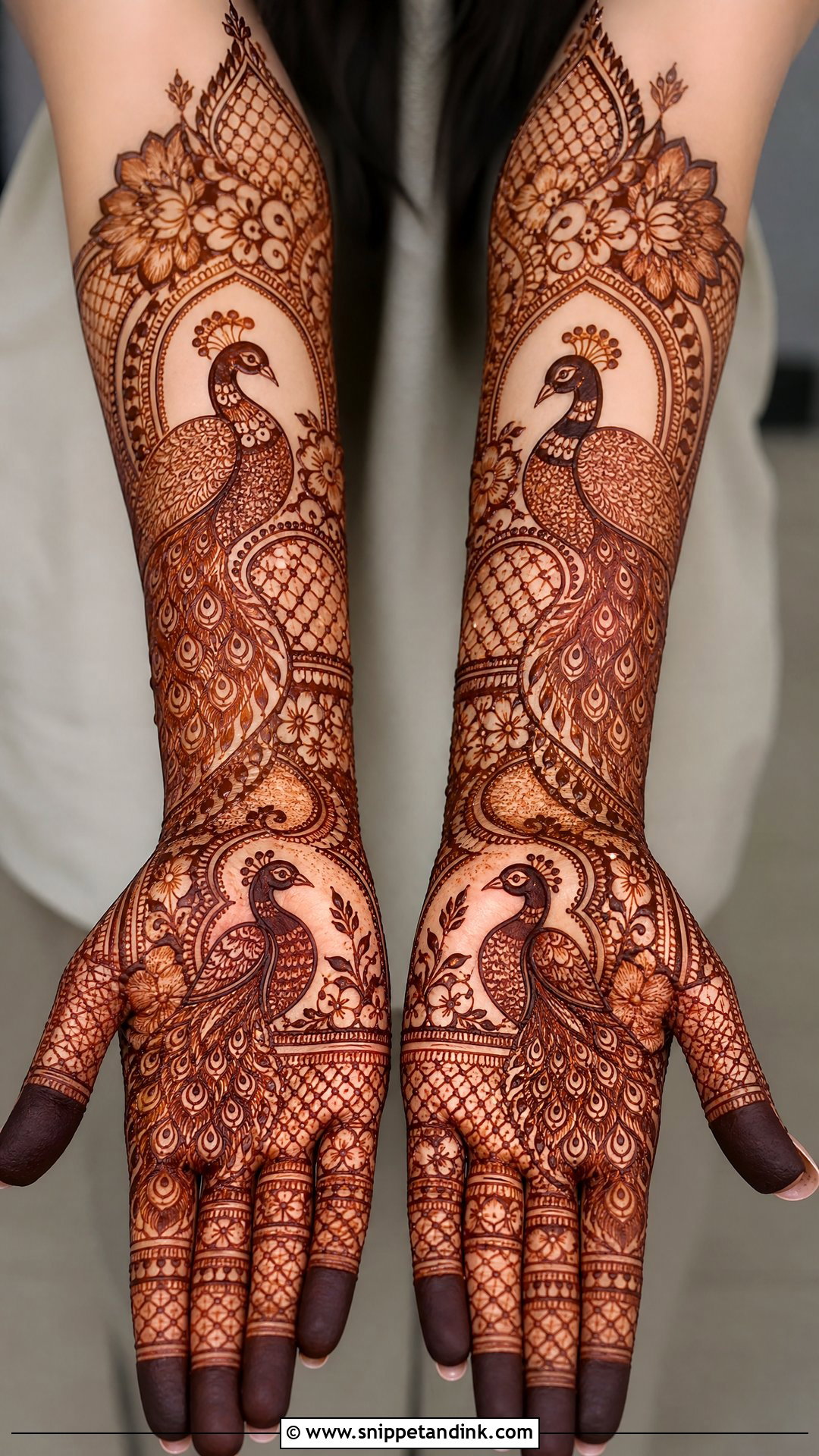
Peacocks give a bridal hand rhythm. The curved neck and the long tail carry the eye across the palm or up the forearm, and paisleys, petals and mesh fill around them. A mirrored pair, one on each hand, makes the palms work as a set when you hold them together for photos. One large peacock on the palm with a feather trail to the wrist is the lighter version. I draw the eye of the feathers with a small open centre, because filled solid it stains as a dark blob.
7. Lotus Bridal Mehndi
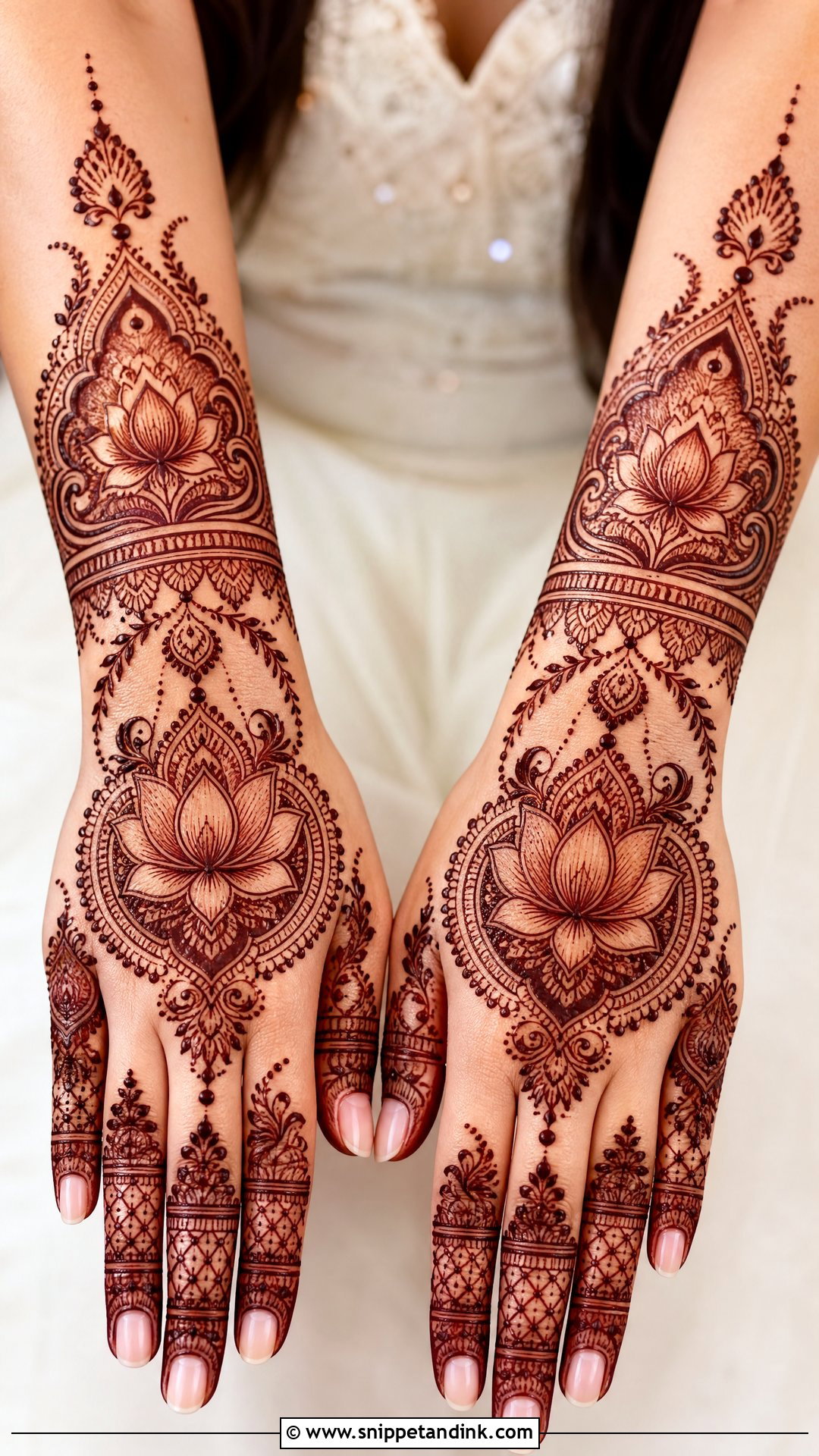
Lotus blooms can carry a whole design on their own: big ones on the palms and back hands, or small repeated flowers up the wrist and forearm, set in fine mesh, leafy borders and dots. It sits well with pastel outfits, temple jewellery and silk. My advice is to keep the petals as outlines with a little open space inside. Filled-in lotus shapes look rich in paste and muddy in stain, especially on the drier back of the hand.
8. Mandala Bridal Mehndi
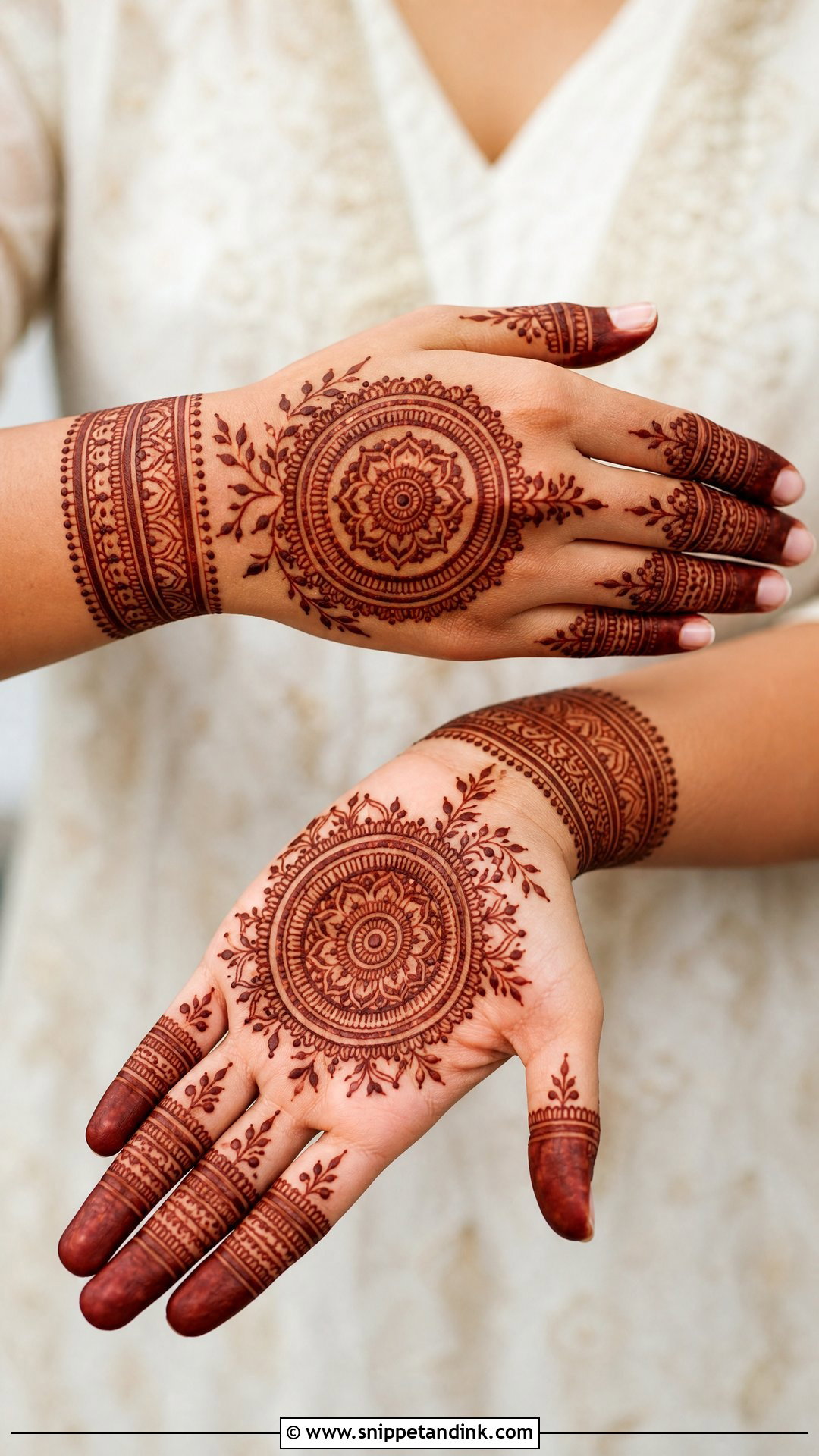
A mandala gives the eye one place to land. On the palm or the back hand, rings of flowers, dots, vines and paisleys radiate from a centre, and for bridal coverage the rings extend into wrist cuffs and up the forearm. On the back hand a big mandala with finger chains and a bracelet cuff can read like a piece of jewellery. The join from mandala to forearm is where I take the most care, because a hard stop at the wrist makes the forearm look like a separate tattoo.
9. Back Hand Bridal Mehndi
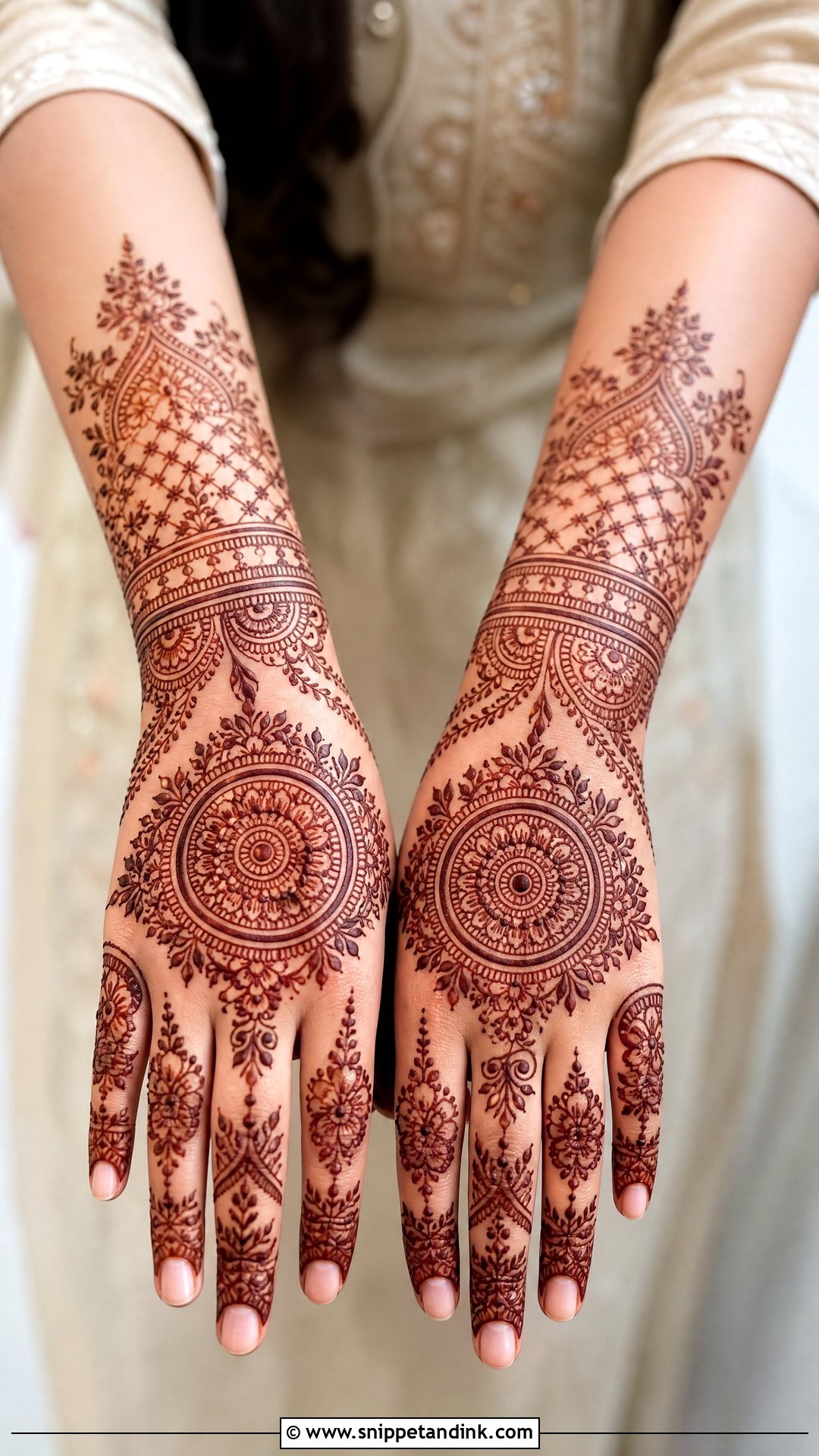
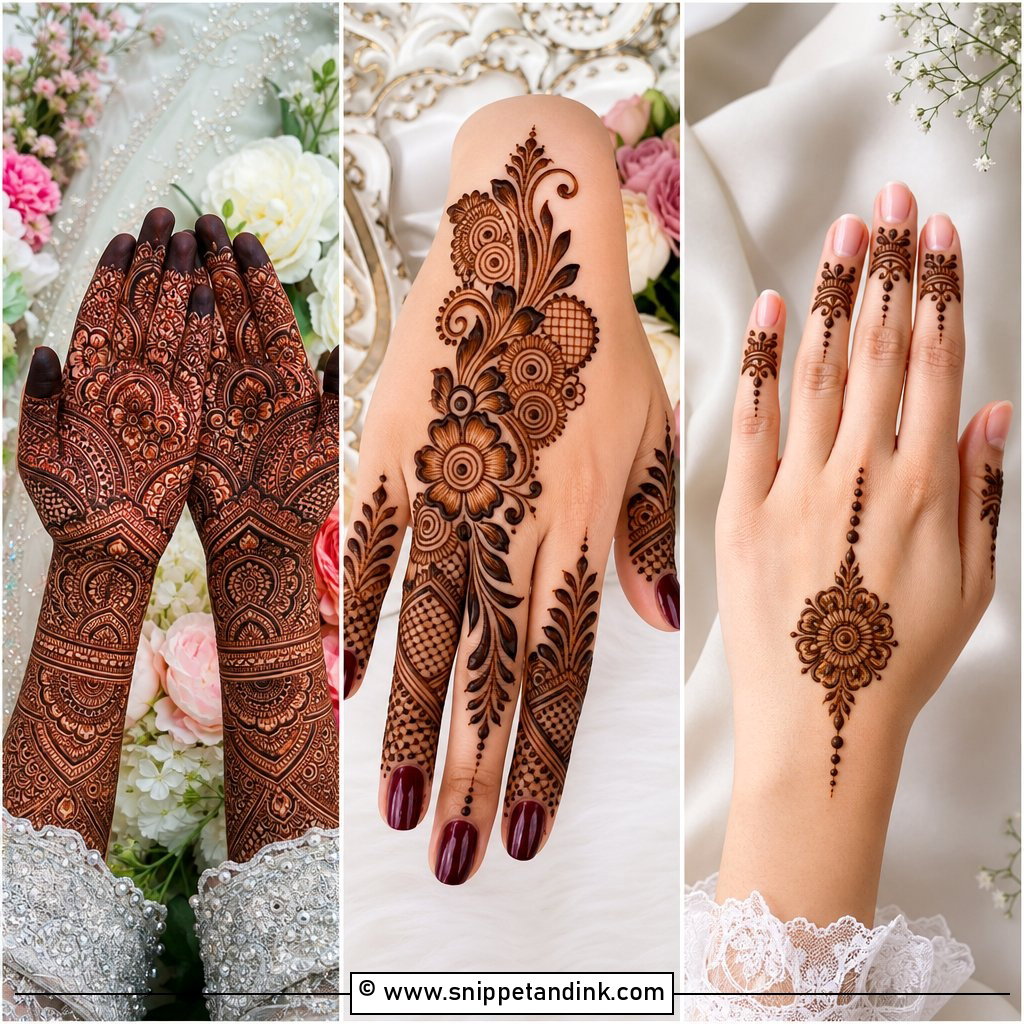
Back hand bridal mehndi is what shows when rings go on, when you hold a bouquet and in most candid frames. A typical bridal back hand has a central mandala or floral net, a bracelet cuff, finger detail and an extension toward the forearm, though open Arabic trails work too. Look at your jewellery first. Bold kundan bangles and a big ring want cleaner henna with breathing room; simple jewellery can take a heavier back-hand layout without anything fighting.
10. Front Hand Bridal Mehndi
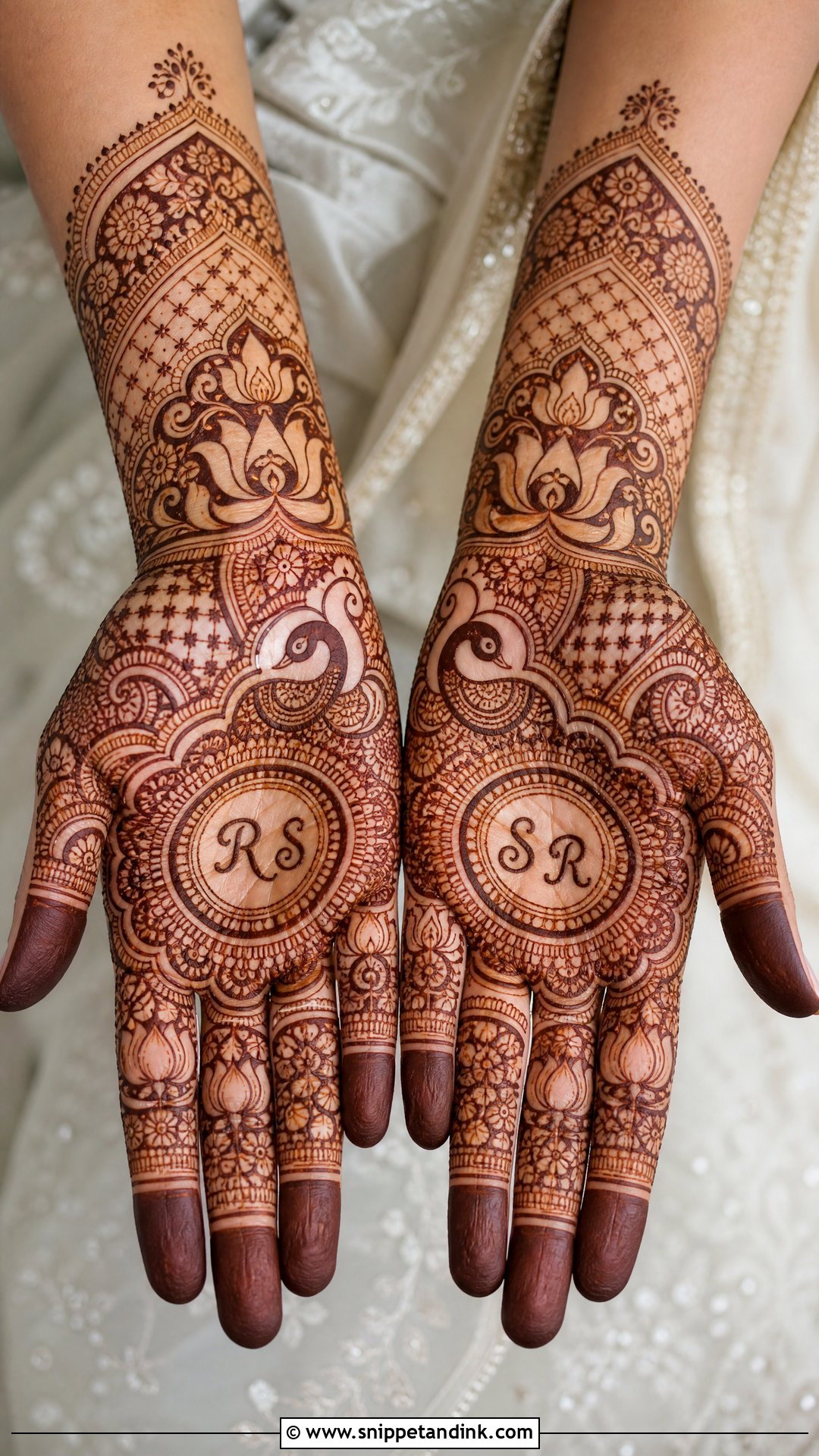
Front hand bridal mehndi lives on the palms, which are what get photographed during most rituals. Mandalas, paisleys, peacocks, lotus, jaali panels and initials all find a home here. Palms take the darkest stain on the body, so this is where fine detail rewards you most; dense Indian work looks rich here, and Indo-Arabic gives more air. I usually coordinate the two palms without copying them line for line, which keeps them balanced and a bit more interesting when held side by side.
11. Minimal Bridal Mehndi
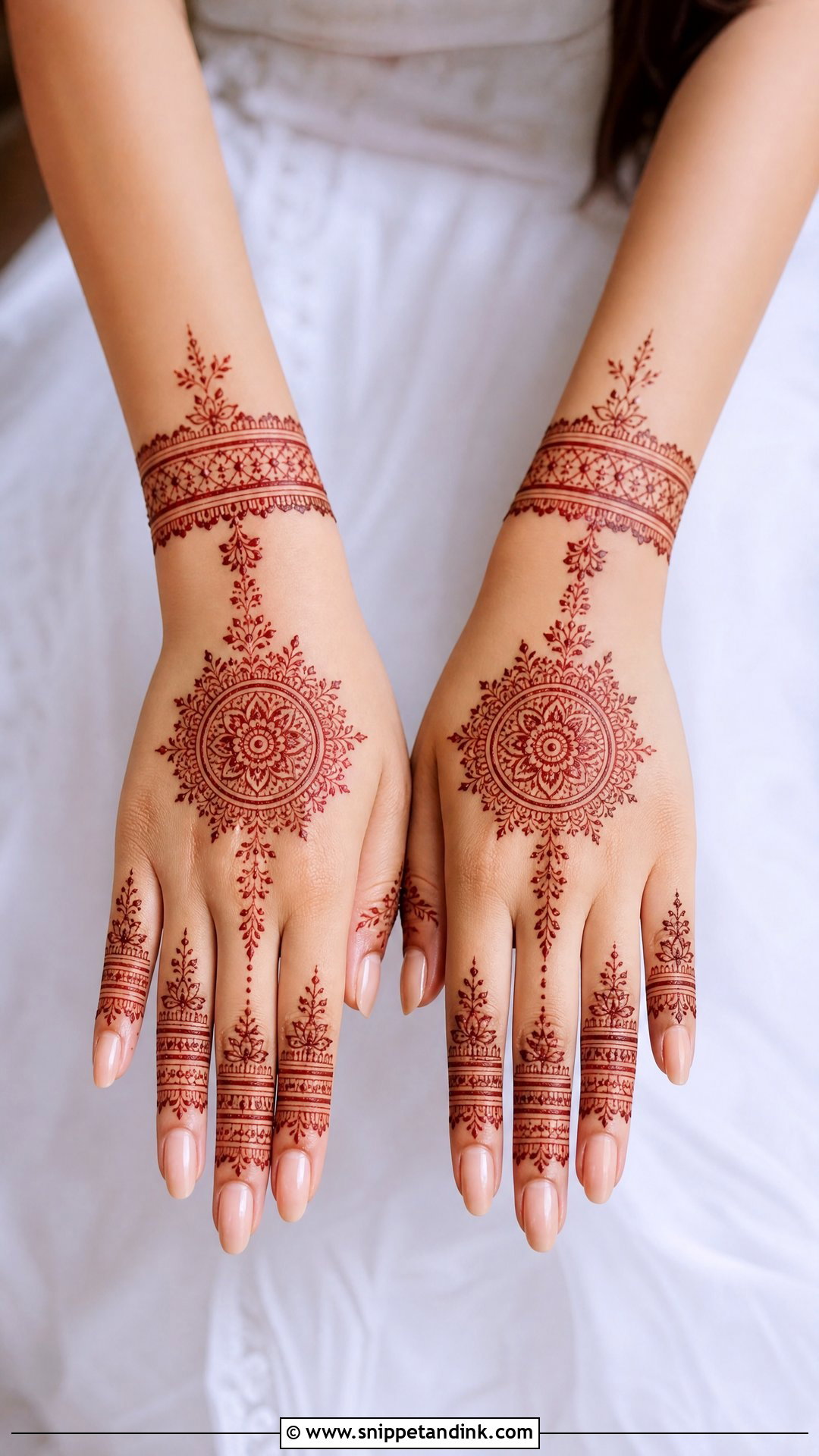
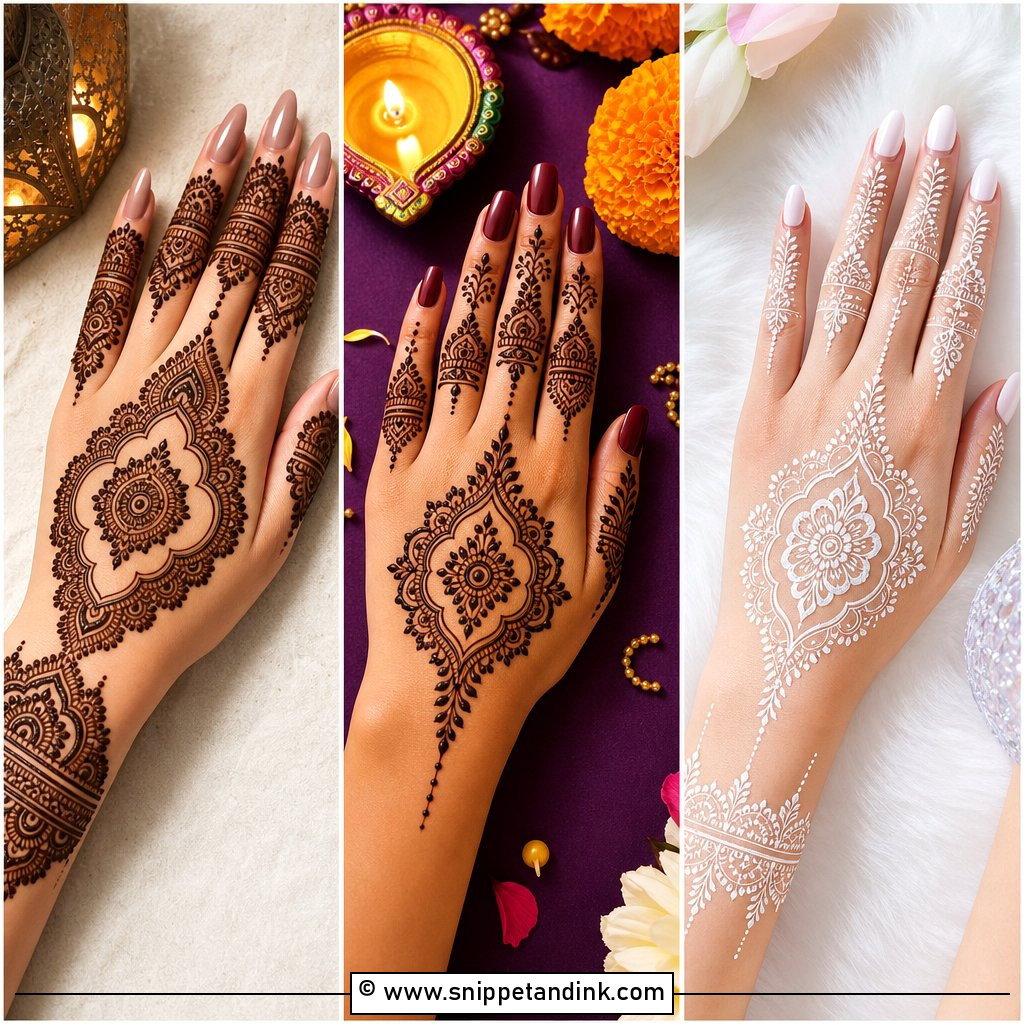
Minimal bridal mehndi uses a few delicate elements, perhaps a small mandala, a slim floral trail, fine finger work and a bracelet line at the wrist, and treats the bare skin as part of the design. It suits intimate weddings, civil ceremonies and lighter outfits with delicate jewellery. With so little henna there’s nowhere for a shaky line to hide. A tiny lotus or initials can make it feel bridal rather than casual, but the real marker is a confident finish at the wrist.
12. Modern Bridal Mehndi
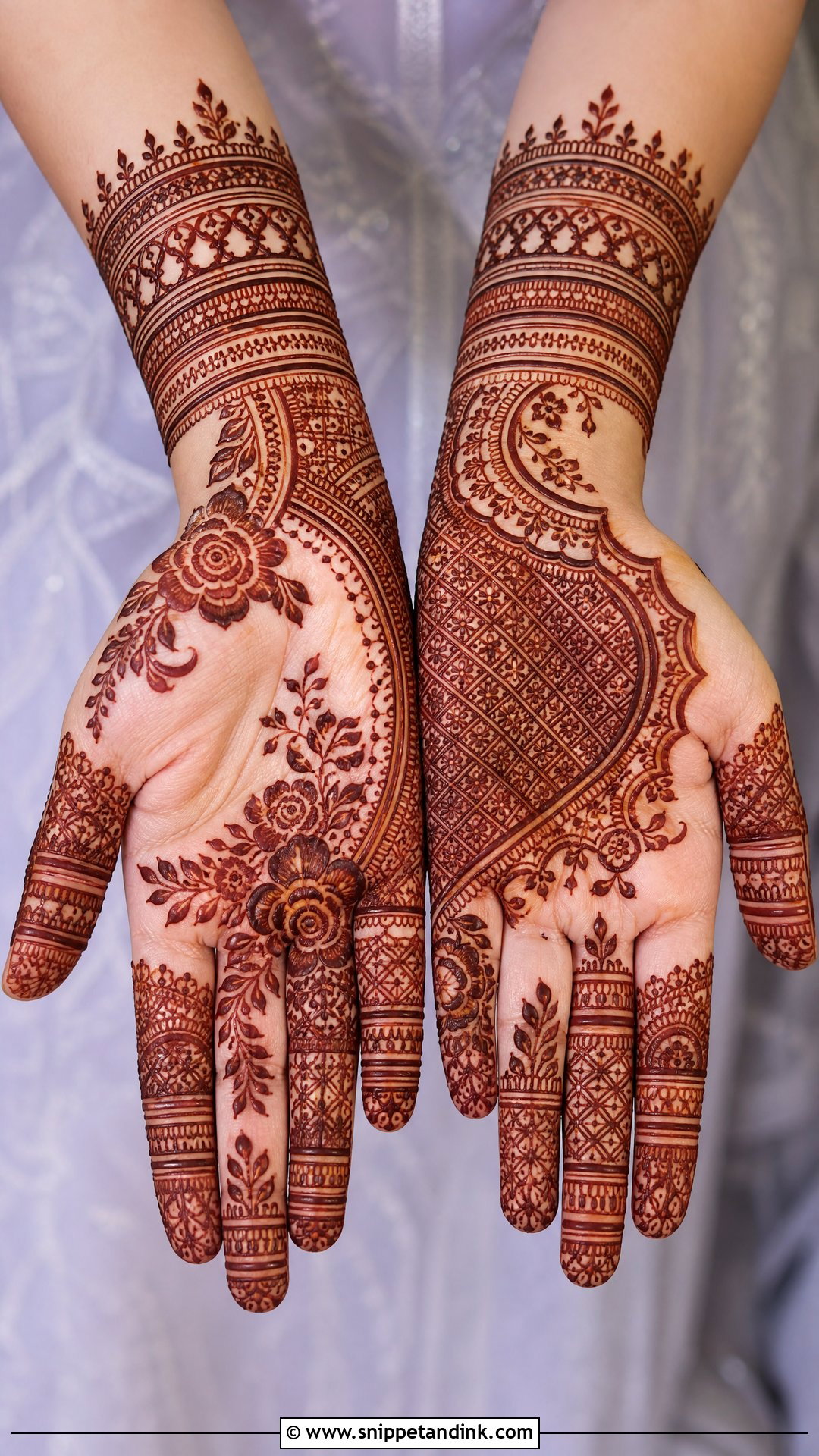
Modern bridal designs organise the hand: geometric borders, bold florals, half-and-half palms, bracelet cuffs, clean finger patterns and planned gaps. Some brides ask for a different design on each hand, which can look editorial if both share a scale and a motif. The danger with planned emptiness is that it can look accidental. I keep the main motifs bold and the filler tight so the gaps clearly belong to the layout.
13. Personalized Bridal Mehndi
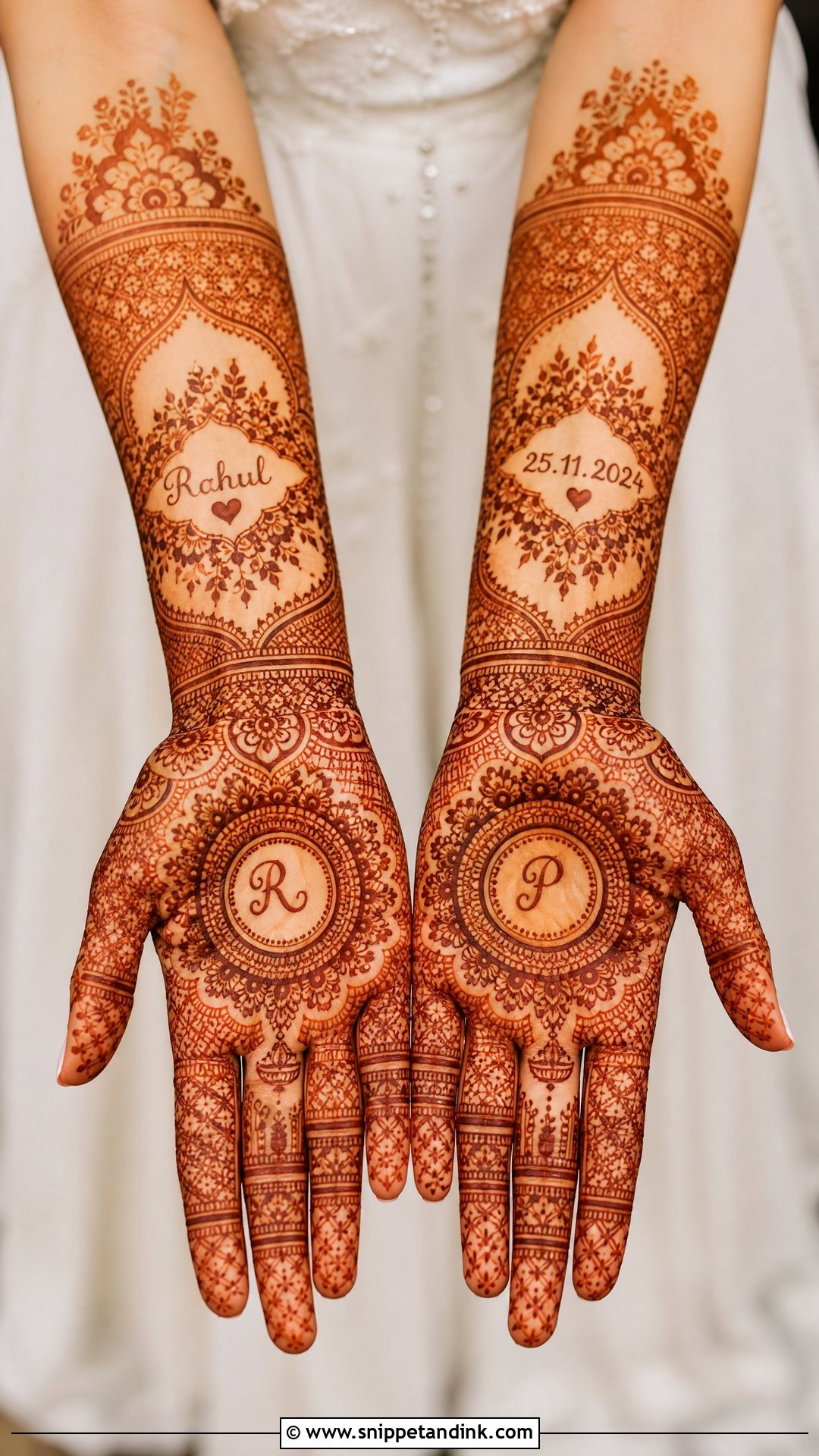
Personal details I’ve been asked to hide include the groom’s name, the date, a proposal symbol, a favourite city skyline, a pet, a plane, small cultural marks. They go inside paisleys, mandalas, floral frames or forearm panels, with enough bridal pattern around them to keep the design coherent. Size is where these go wrong. Anything smaller than a fingernail tends to blur once the stain sets, so I scale symbols up a little and simplify them. Send your artist clear reference images a week ahead so she can sketch them in properly.
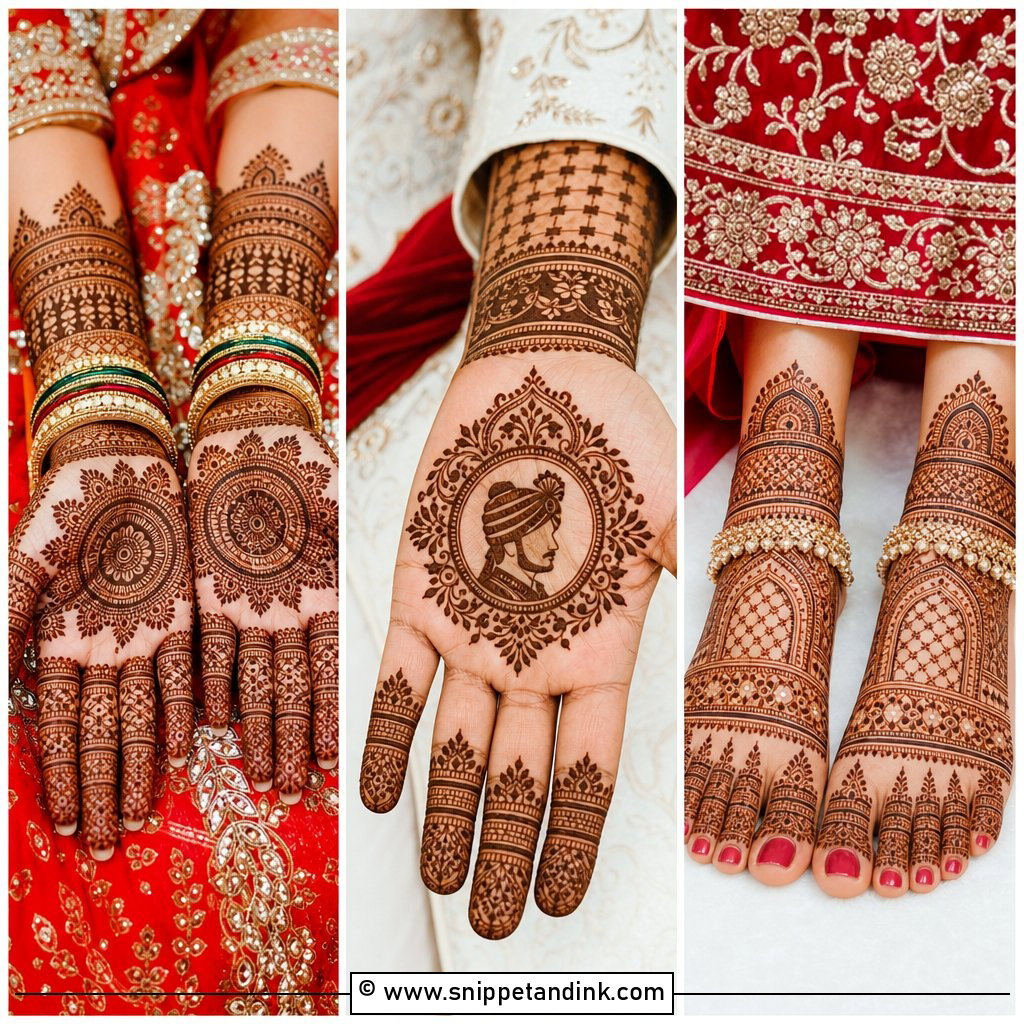
14. Dulha Dulhan Bridal Mehndi
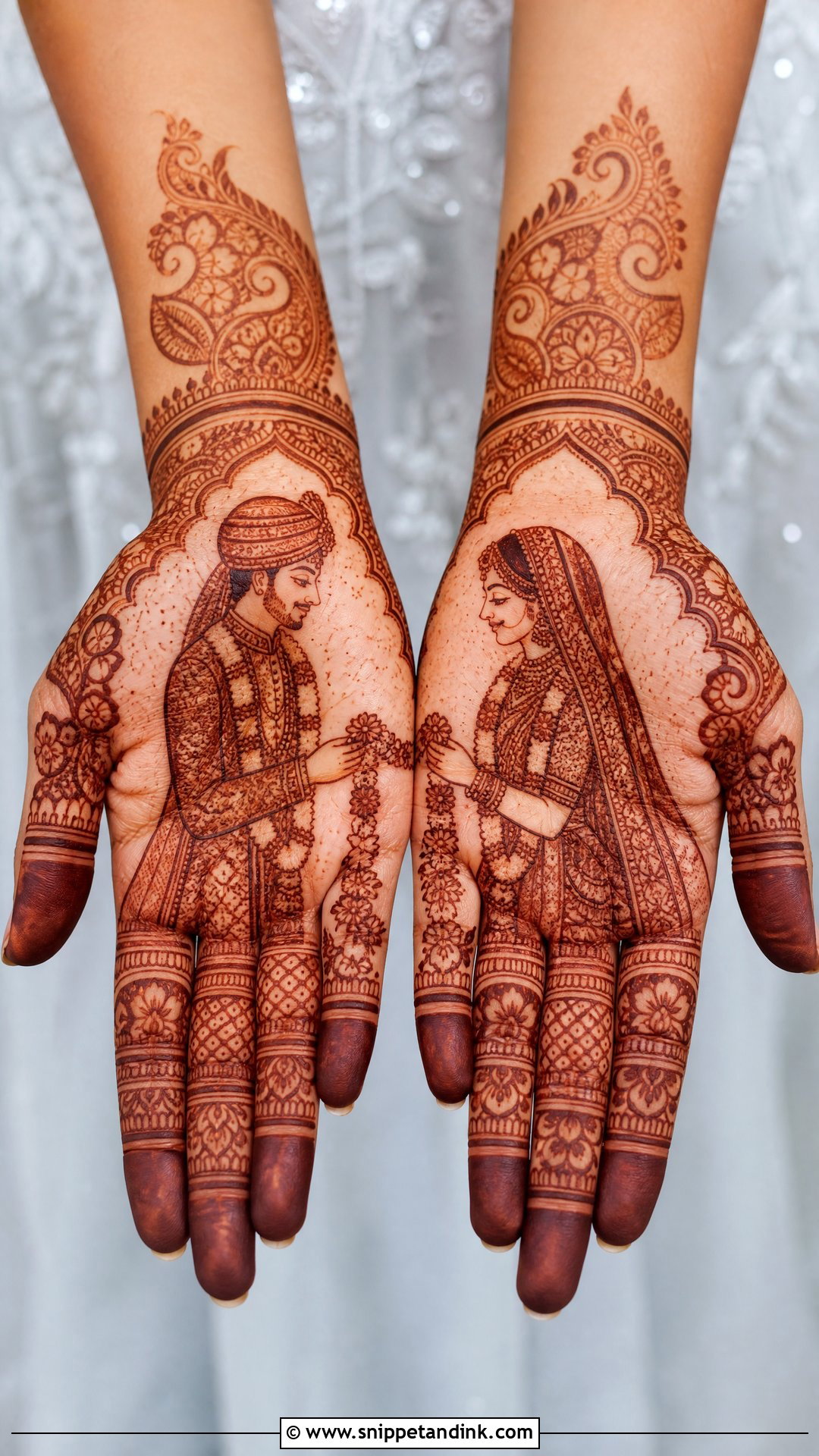
Dulha dulhan bridal mehndi puts the bride on one palm and the groom on the other, framed by wedding motifs, flowers, paisleys and borders, sometimes caught mid-varmala. Hold the palms together and the scene completes, which is a photo couples love. These figures are simpler than true portraits, so they’re more forgiving for a mid-level artist. Ask for clean outlines and a ring of space around each figure, then let the dense fill live on the fingers, wrists and forearms.
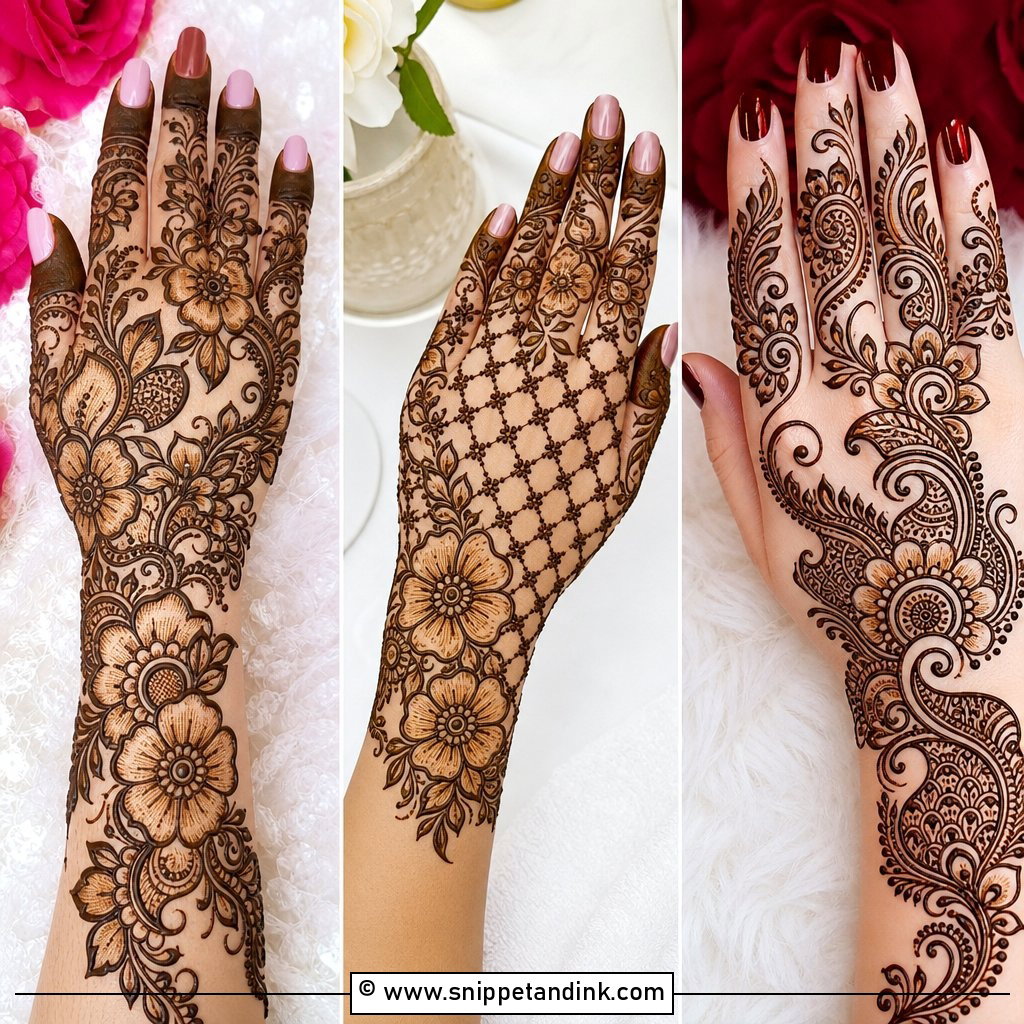
15. Jaali Bridal Mehndi
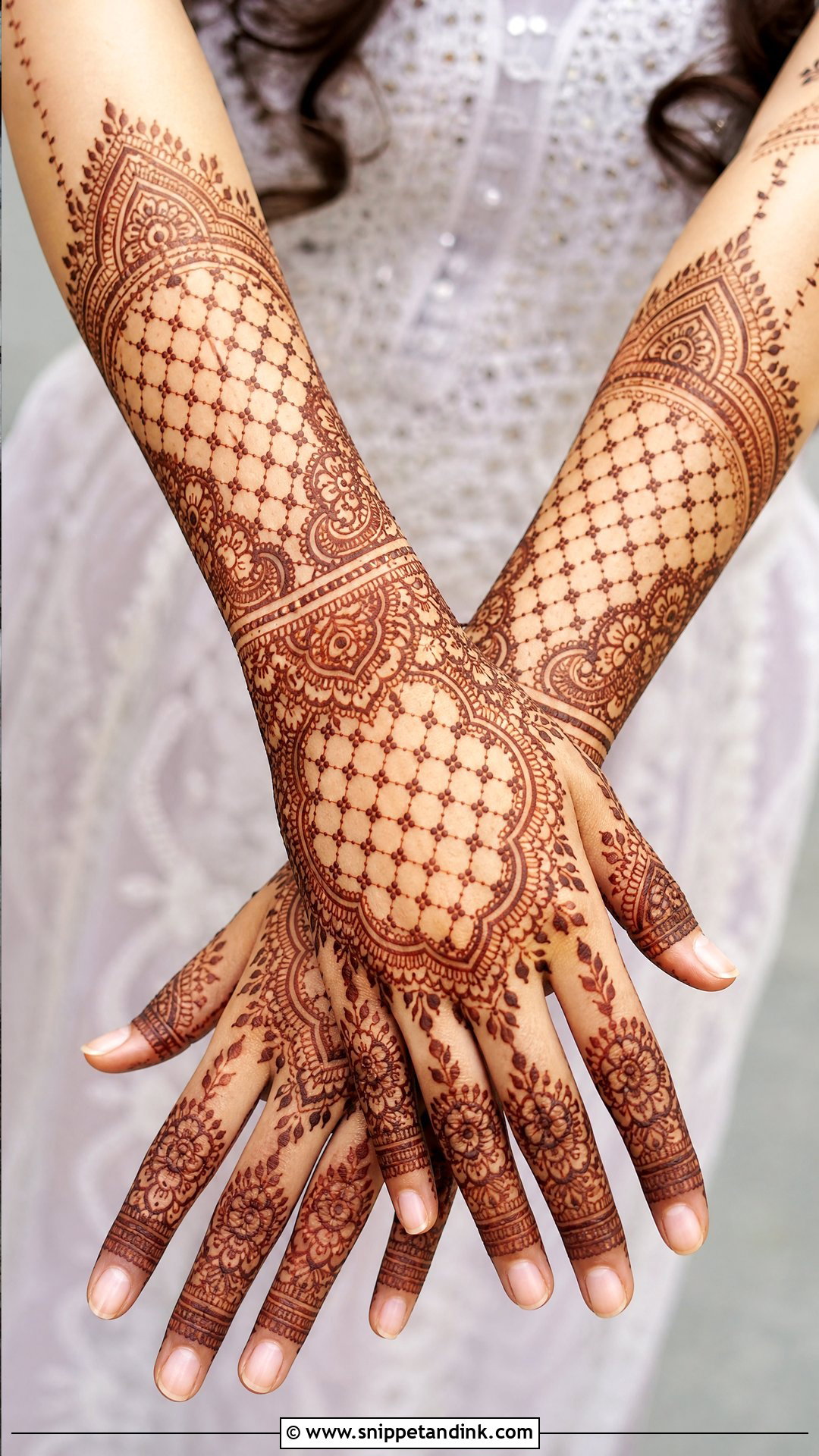
Jaali is mesh: a net of fine lines over the palms, back hands, wrists or forearms, broken up with flowers, paisleys, dots and bracelet borders. Small tight cells look traditional; wider cells with bold Arabic flowers look lighter. On the back of the hand it reads like a lace glove. Paste consistency matters more here than almost anywhere, because if it’s slightly too wet the lines bleed into the cells and the net turns into patches.
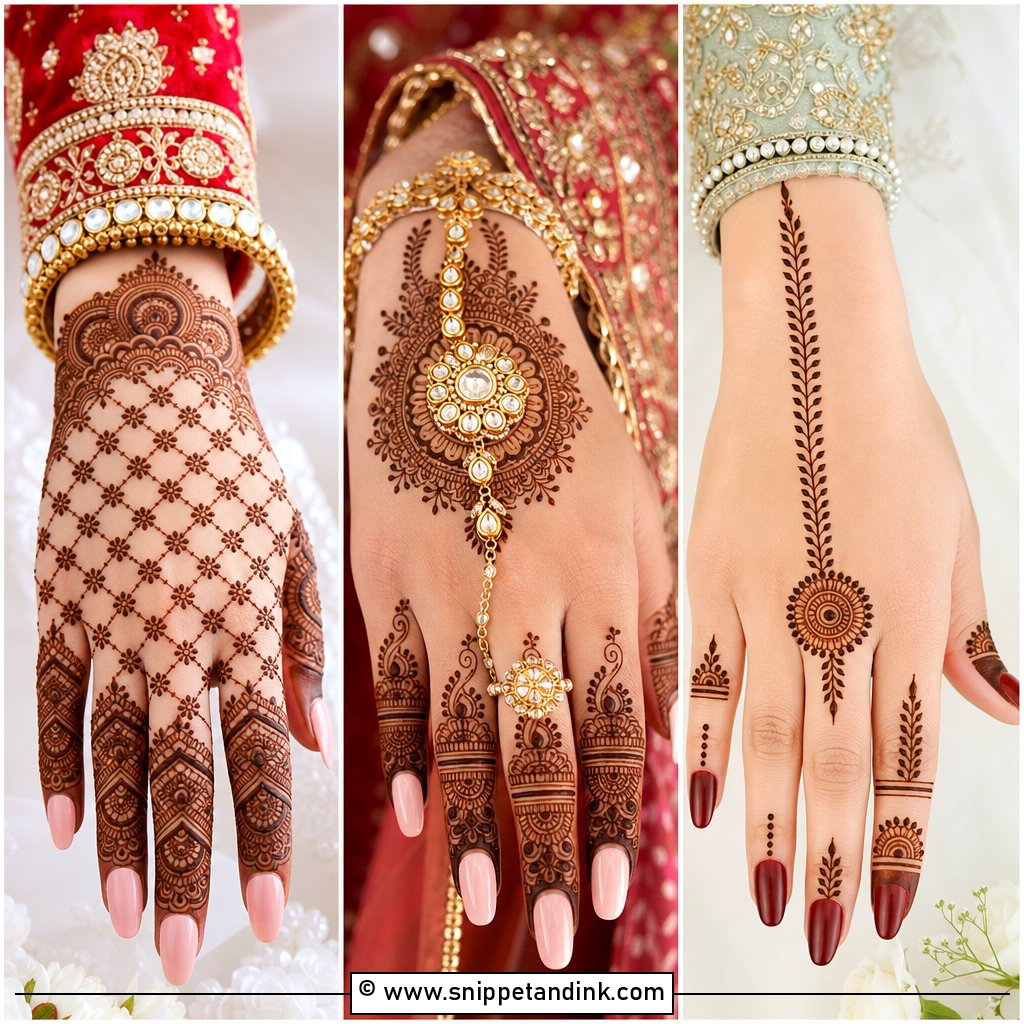
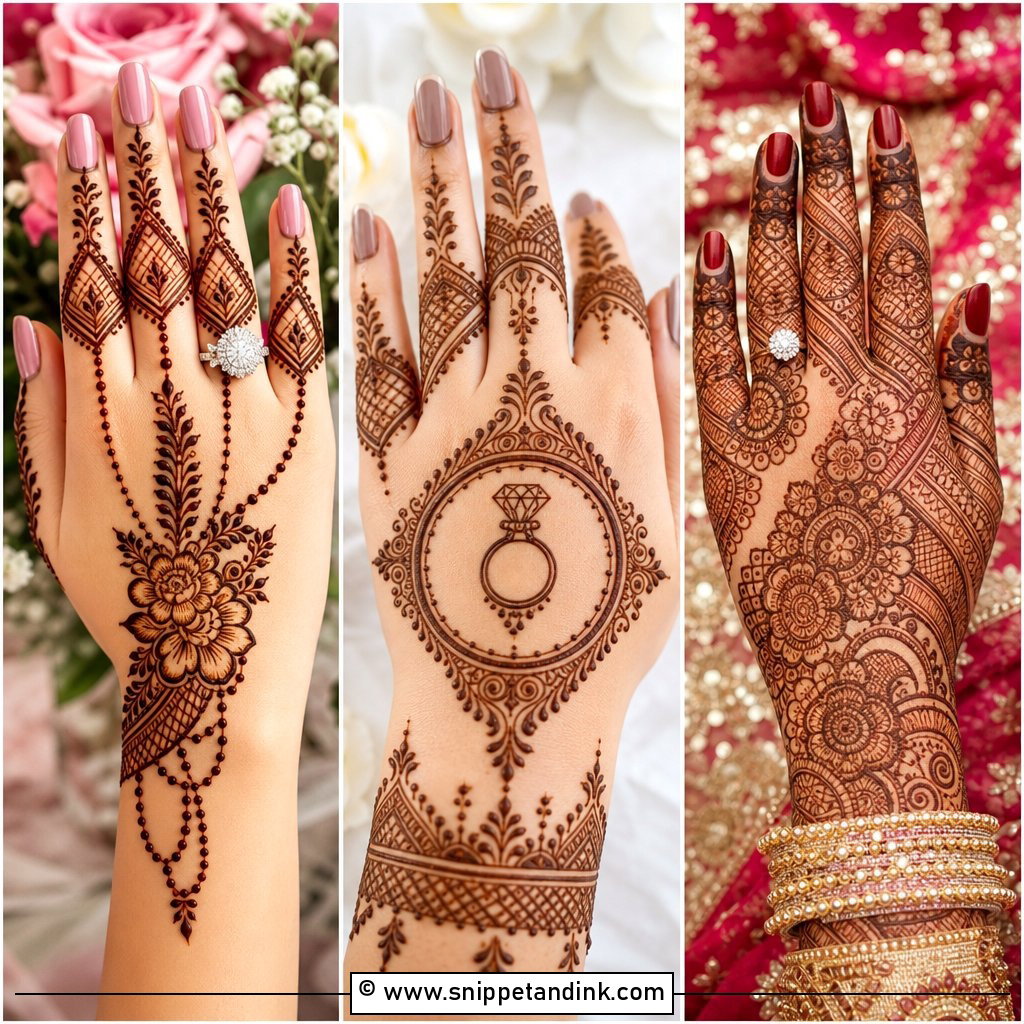
16. Jewelry Bridal Mehndi
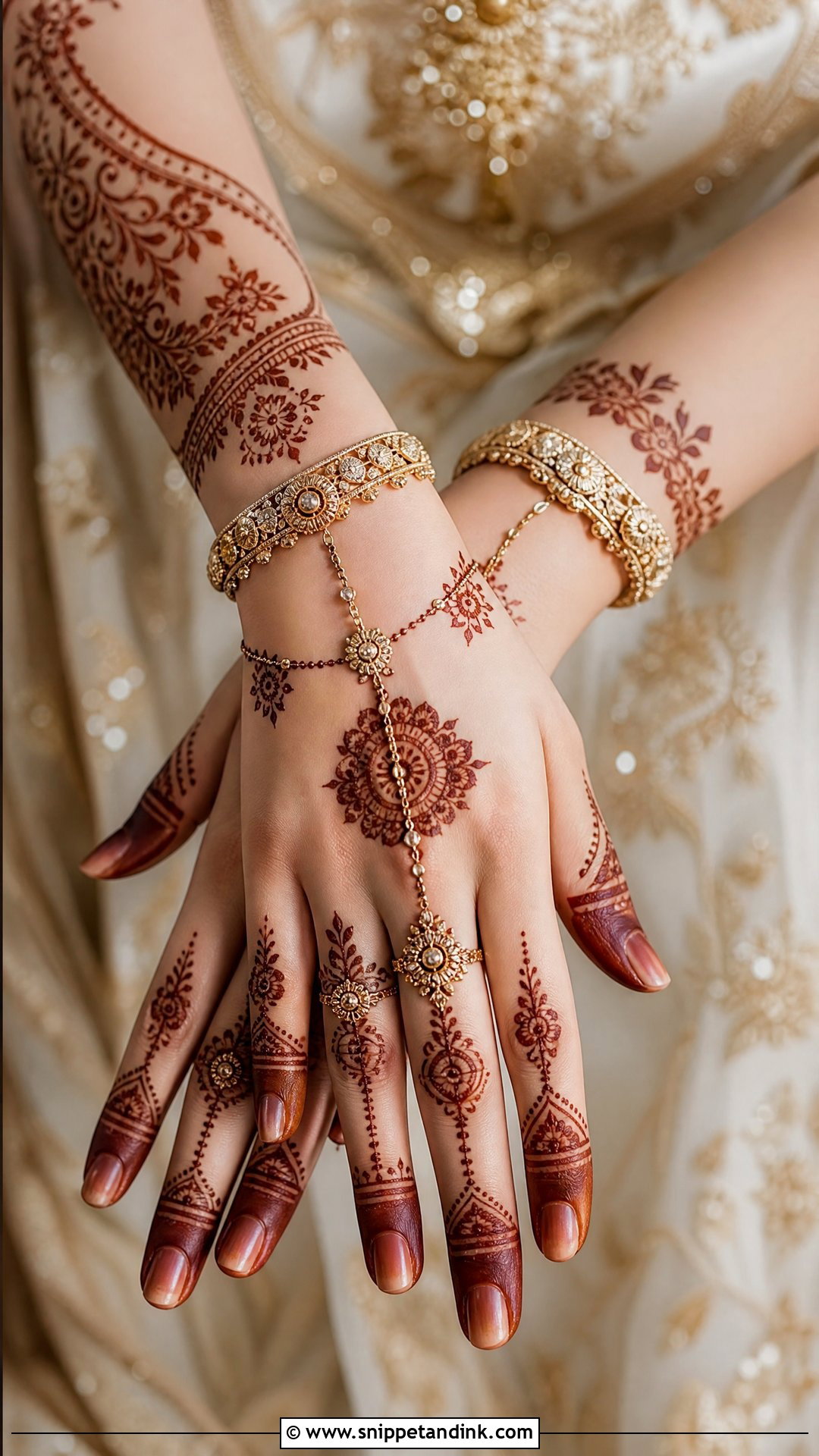
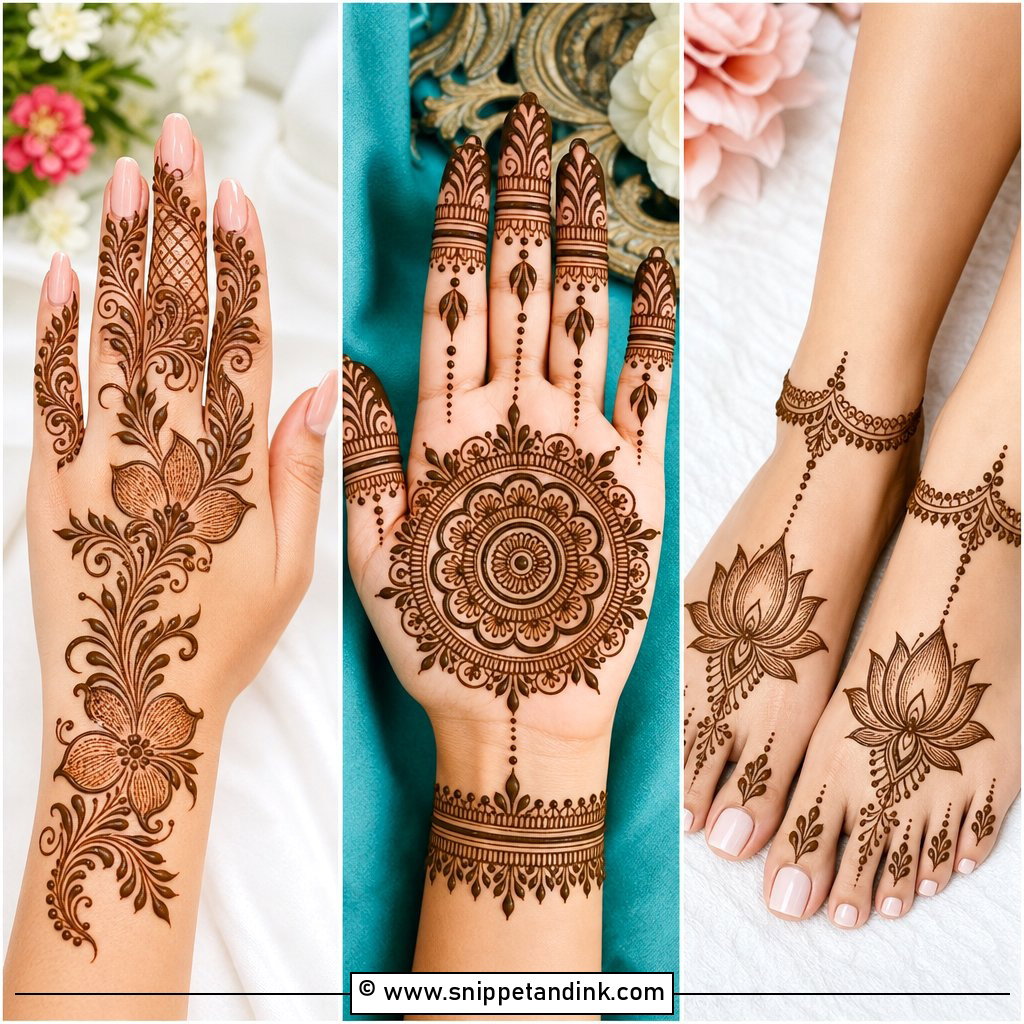
Jewellery-style henna draws the ornaments on the skin: ring chains, a hathphool, bracelet cuffs and finger bands. It’s especially good for the back hand. I always ask what you’ll wear on top. Heavy rings and stacked bangles want a more open henna version so the real pieces don’t sit on a second layer of drawn ones. With simple jewellery, a fuller henna jewellery design adds the richness instead.
17. Floral Bridal Mehndi
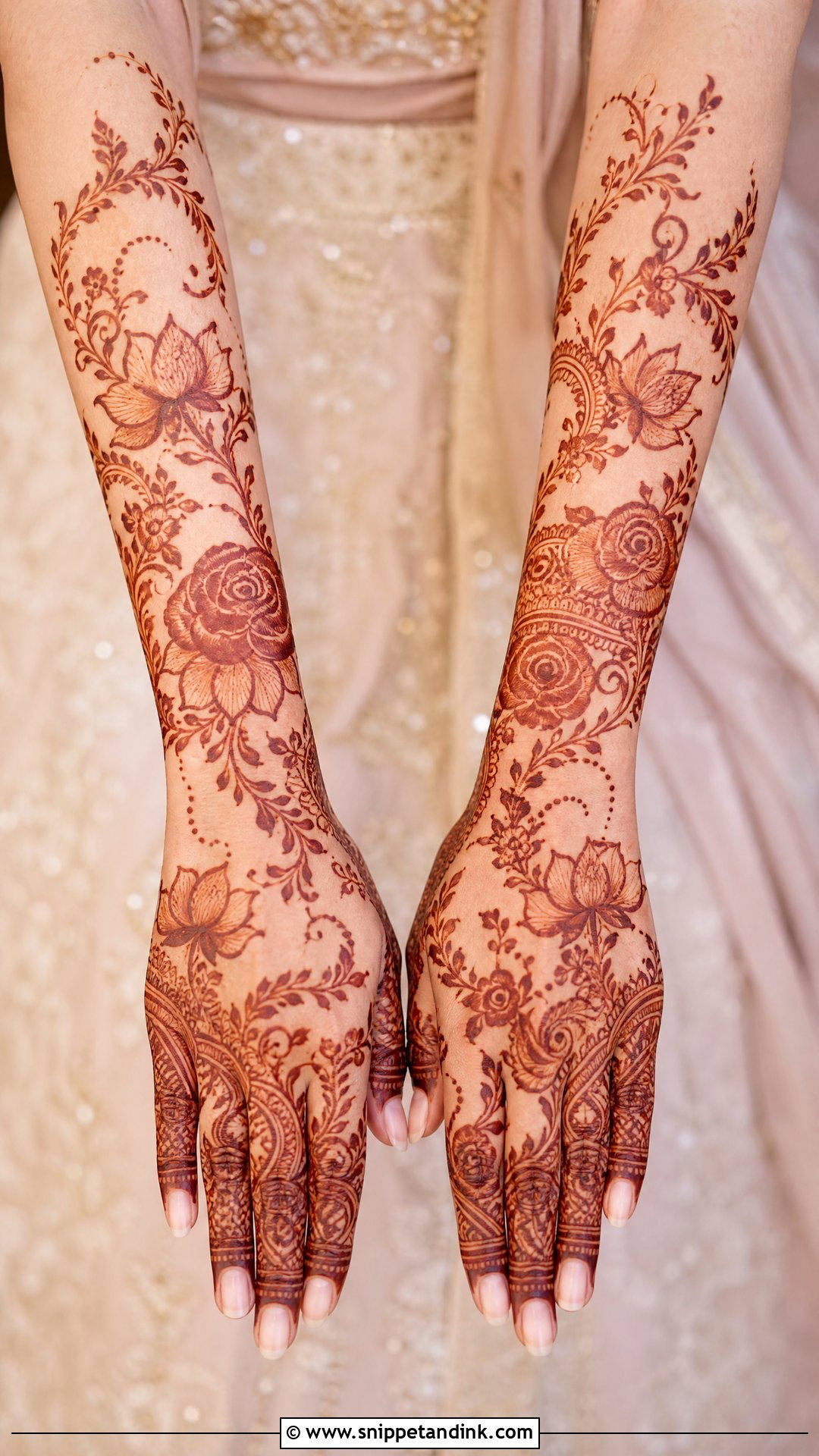
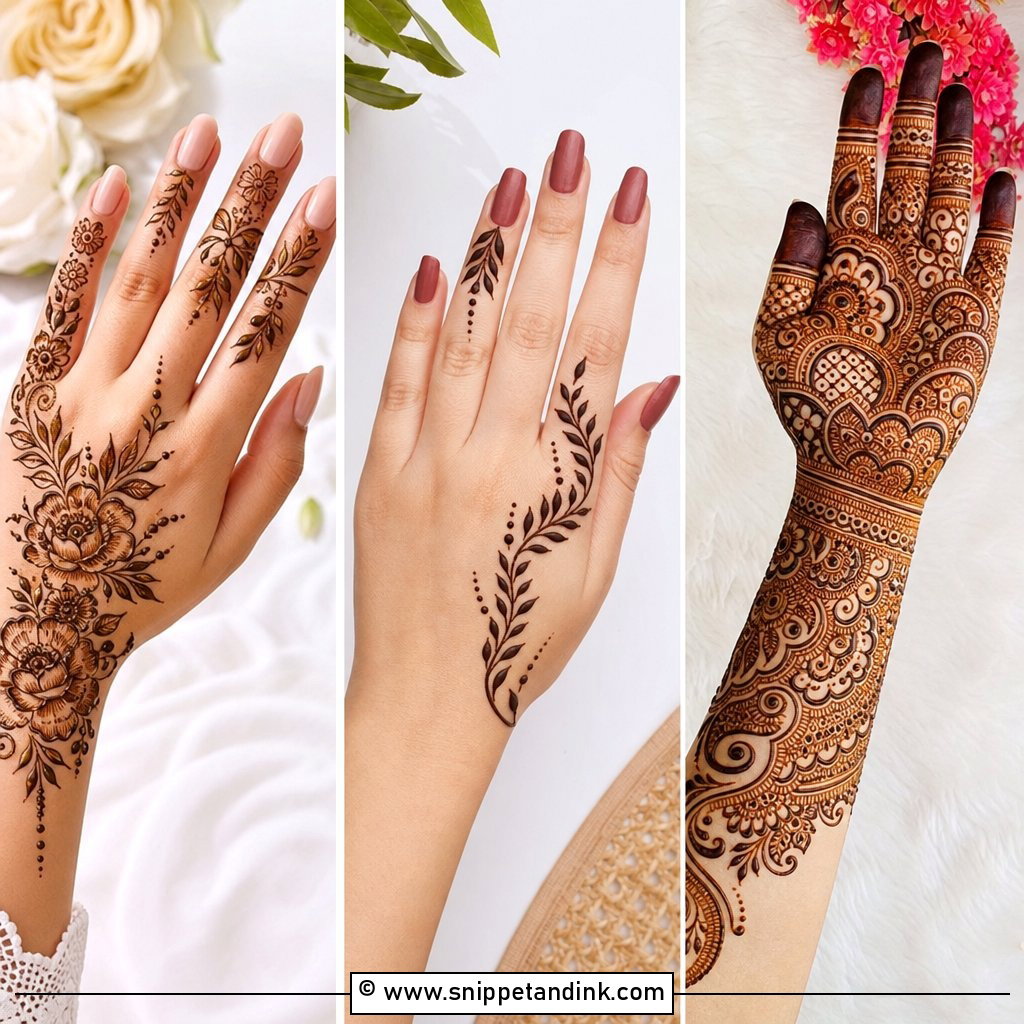
Floral henna adapts to almost any outfit: roses, lotus, small buds, leafy vines, shaded petals and curling borders, packed tight like Indian work or spaced like Arabic. Big blooms read modern; small ones read traditional. The single thing I do to keep it from looking repetitive is vary the flower sizes, a large anchor bloom, a couple of mediums, and small buds filling gaps, the way flowers actually grow.
18. Paisley Bridal Mehndi
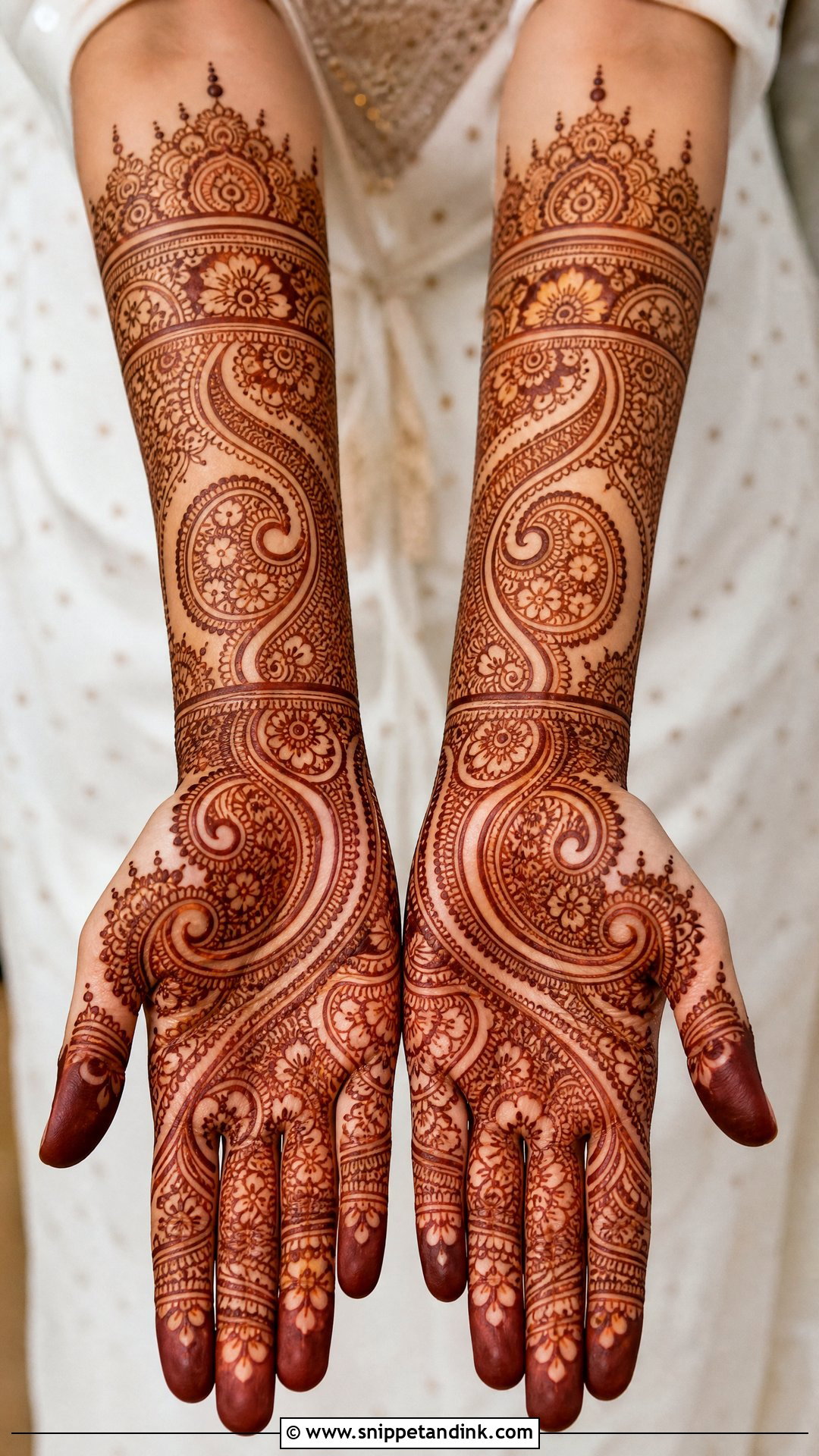
Paisleys rarely let a bride down. The curved teardrop shapes run across palms, wrists and forearms and get filled with dots, petals, lines and small mesh, and they sit comfortably beside peacocks, florals, mandalas and leafy borders. Packed tightly they give classic Indian coverage; spaced out they lean Indo-Arabic. I mix three or four paisley sizes on a hand so the design stays easy to read instead of turning into a uniform carpet.
19. Moroccan Bridal Mehndi
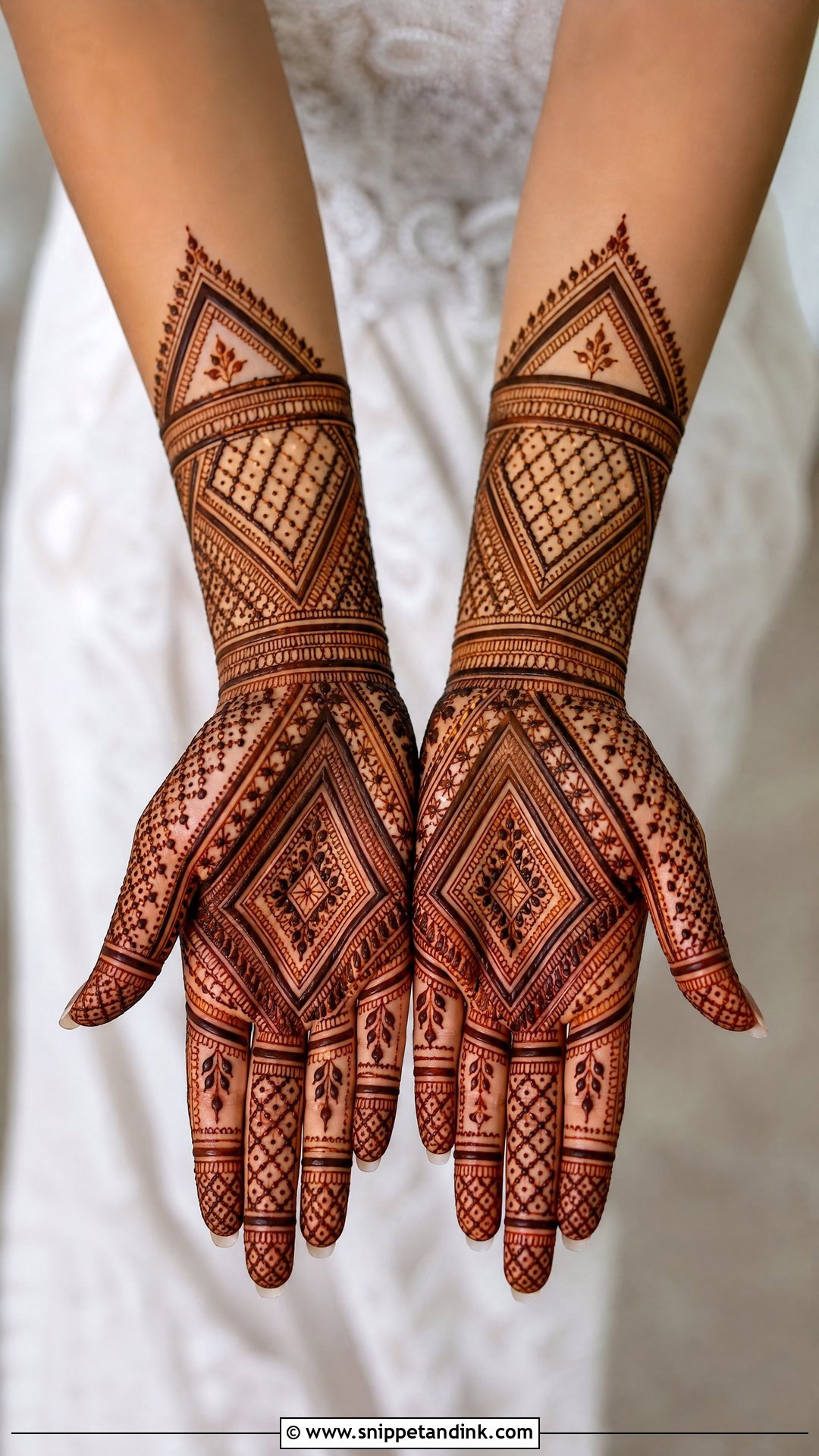
Moroccan henna replaces flowers with geometry: diamonds, triangles, grids, dots and ruled borders laid across palms, back hands, fingers and wrists. It suits brides who love symmetry and want something less familiar than paisleys. You can soften it with a few small flowers, but keep the geometry in charge. Precision is everything; I set the main lines with guide dots before drawing, since a slanted band is the first thing a camera catches.
20. Gulf Bridal Mehndi
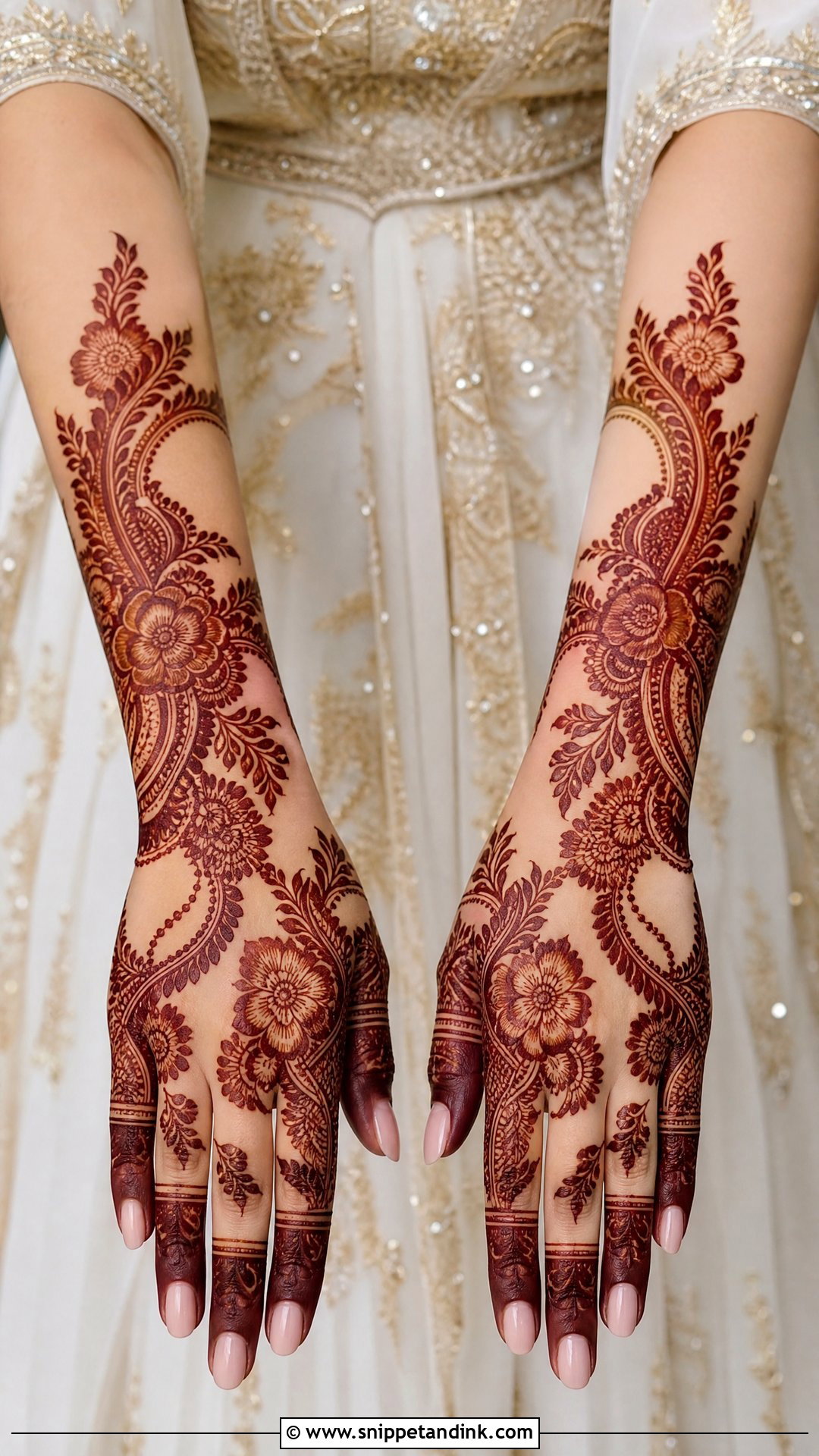
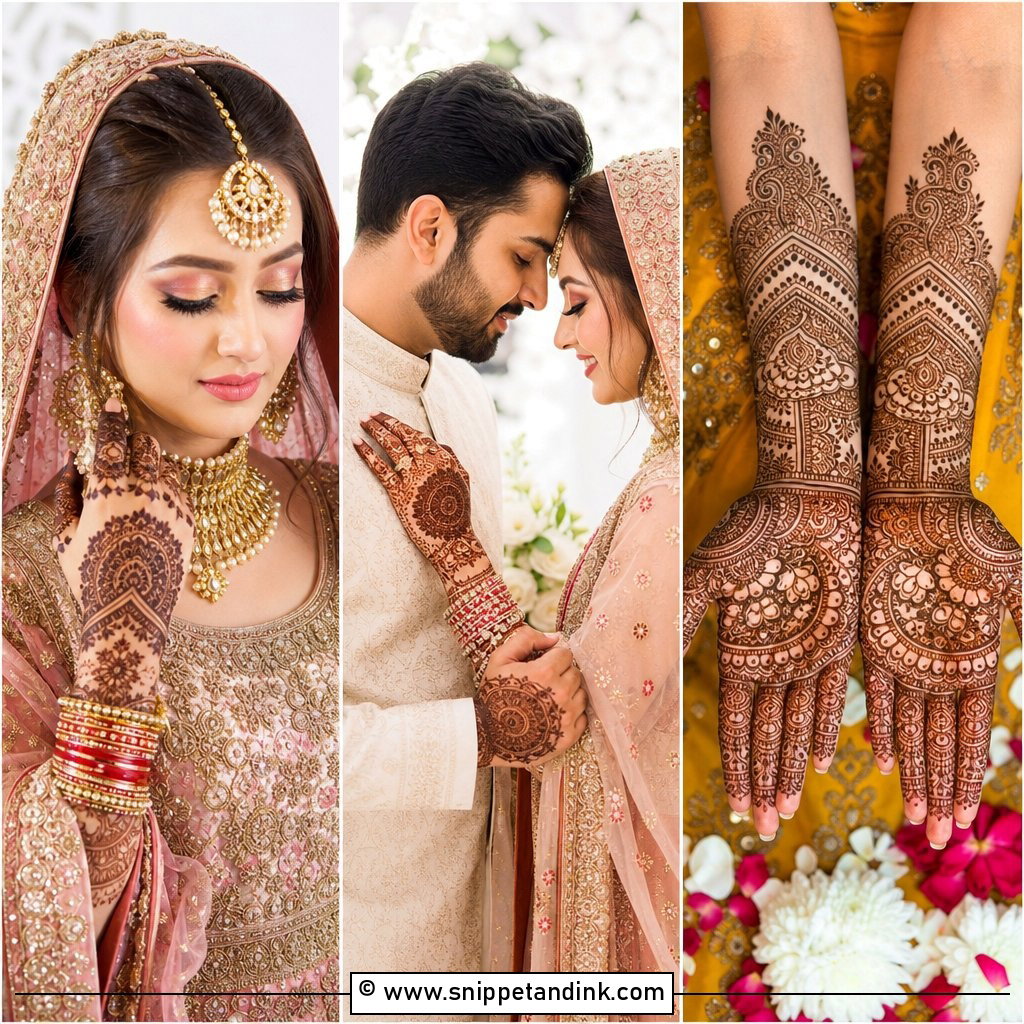
Gulf, or Khaleeji, henna places large shaded flowers and leafy trails in wide sections across the hand with deliberate open space, sometimes running to the forearm. Each bold motif is placed for impact rather than packed in. It suits brides who want drama without density and pairs easily with gowns, sarees, lehengas and modest outfits alike. The thick outlines stain clearly and stay visible in photos taken from a distance.
21. Finger Bridal Mehndi
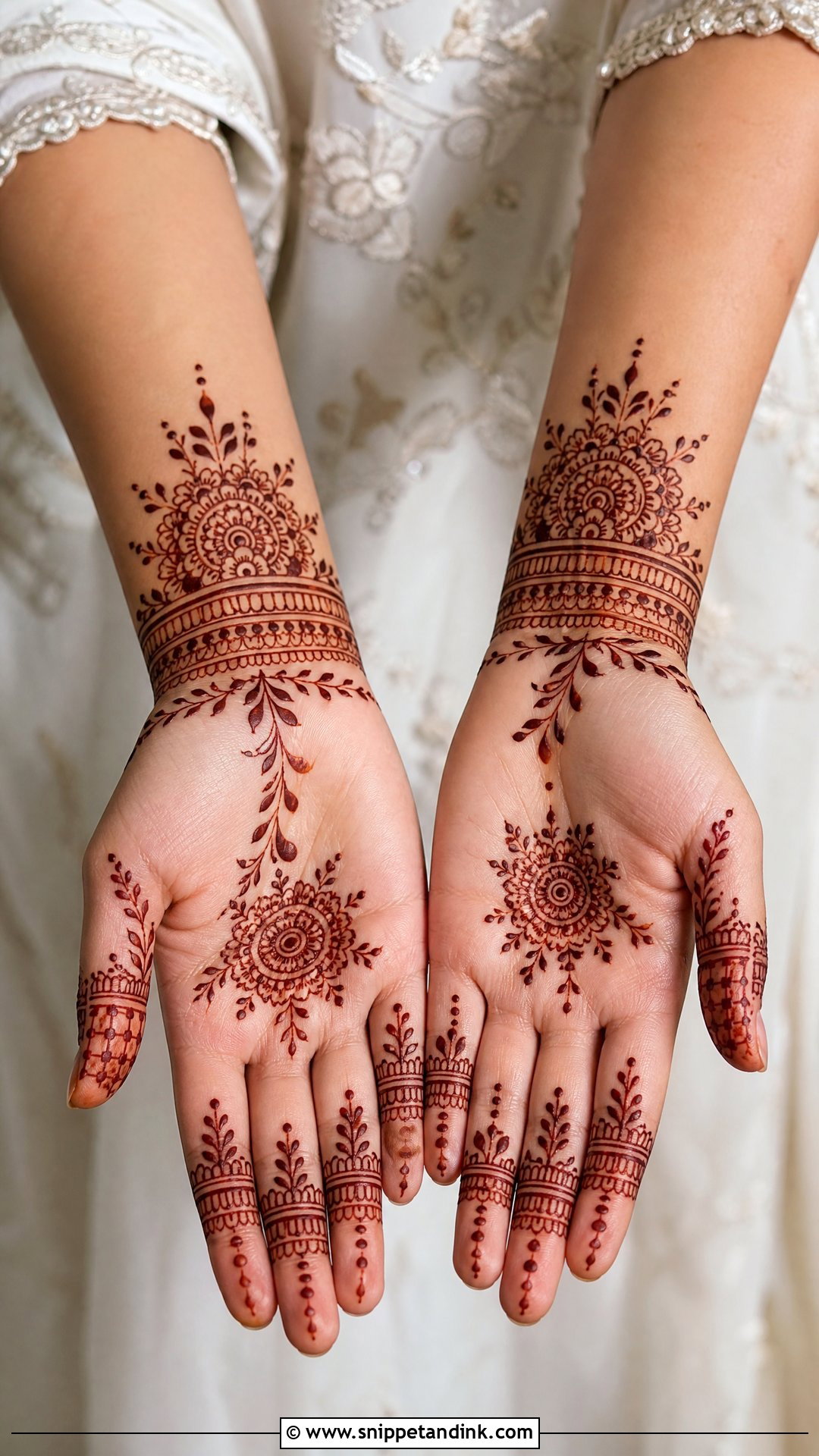
Finger-focused bridal mehndi decorates the fingers heavily and keeps the palm open or lightly marked, with a wrist cuff and a small central motif. Rings and nail colour become part of the look. I’d suggest it for engagements or for brides who simply want less. To keep it bridal rather than casual, connect the finger work to the wrist with a line or a vine. Without that link the fingers look like an afterthought.
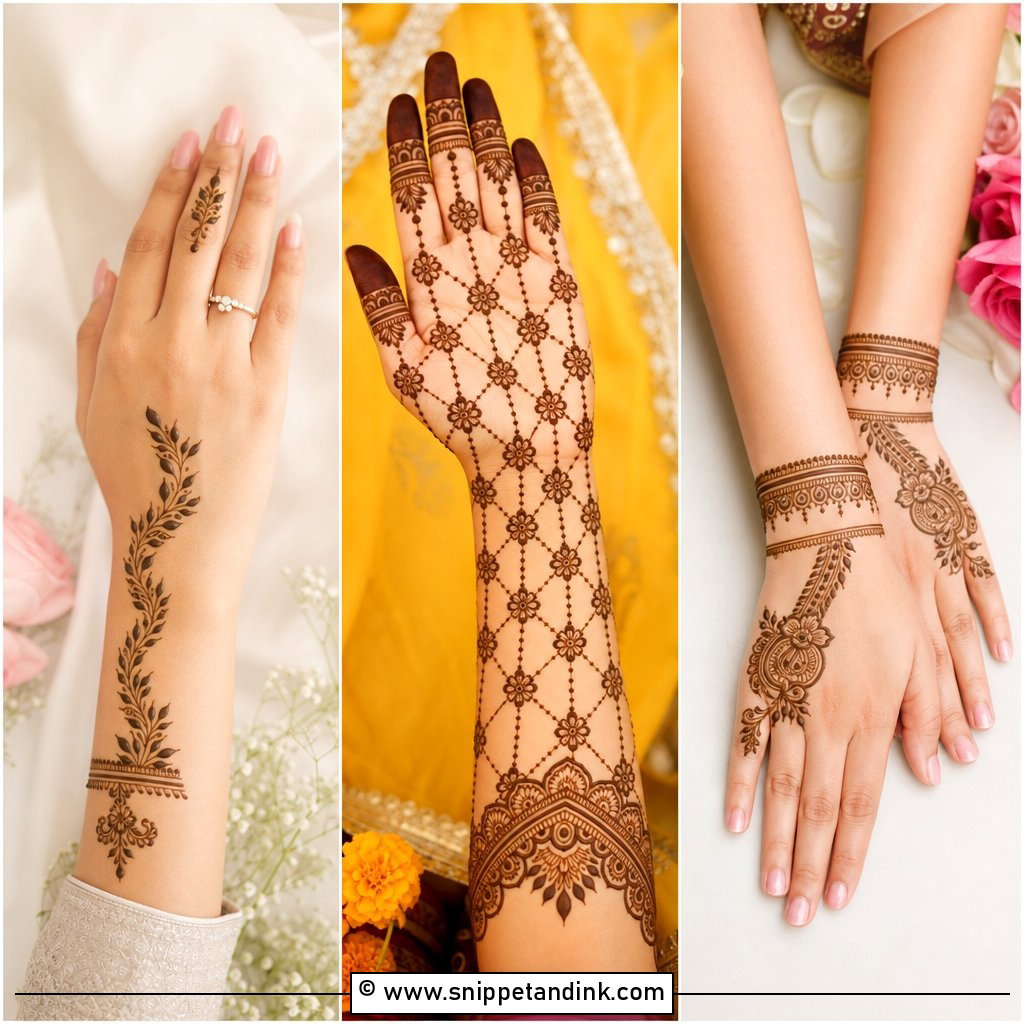
22. Wrist To Forearm Bridal Mehndi
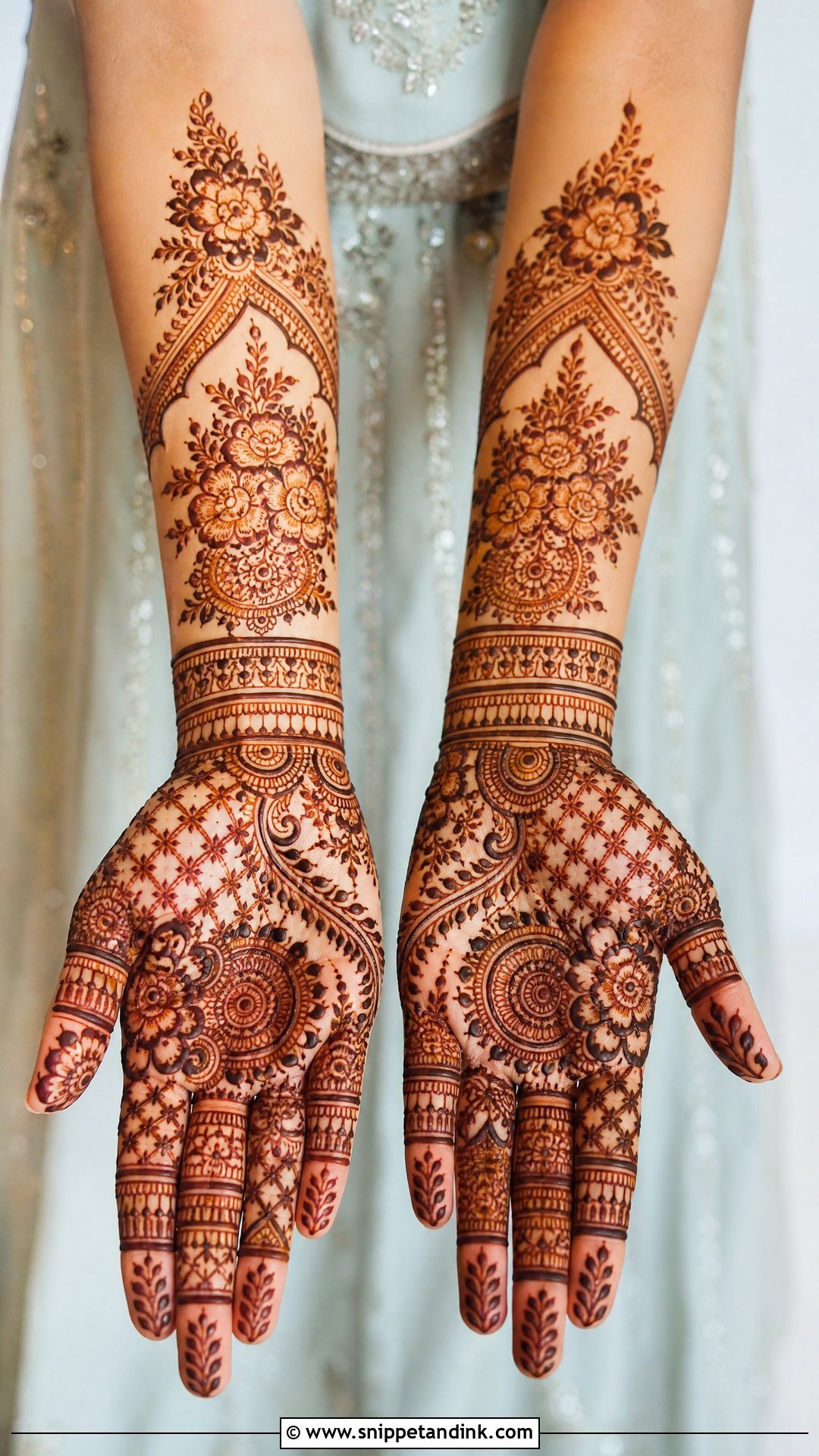
Wrist to forearm work gives a sleeve effect without going all the way to the elbow. Detailed palms or back hands flow into bracelet bands, vines, paisley panels or mandalas along the forearm, so the henna shows above the bangles. I taper the design as it climbs, wider at the wrist, narrowing toward the elbow, because the forearm itself narrows and an even-width band looks heavy and boxy. It’s a good fit for formal functions with three-quarter sleeves.
23. Bridal Mehndi For Feet
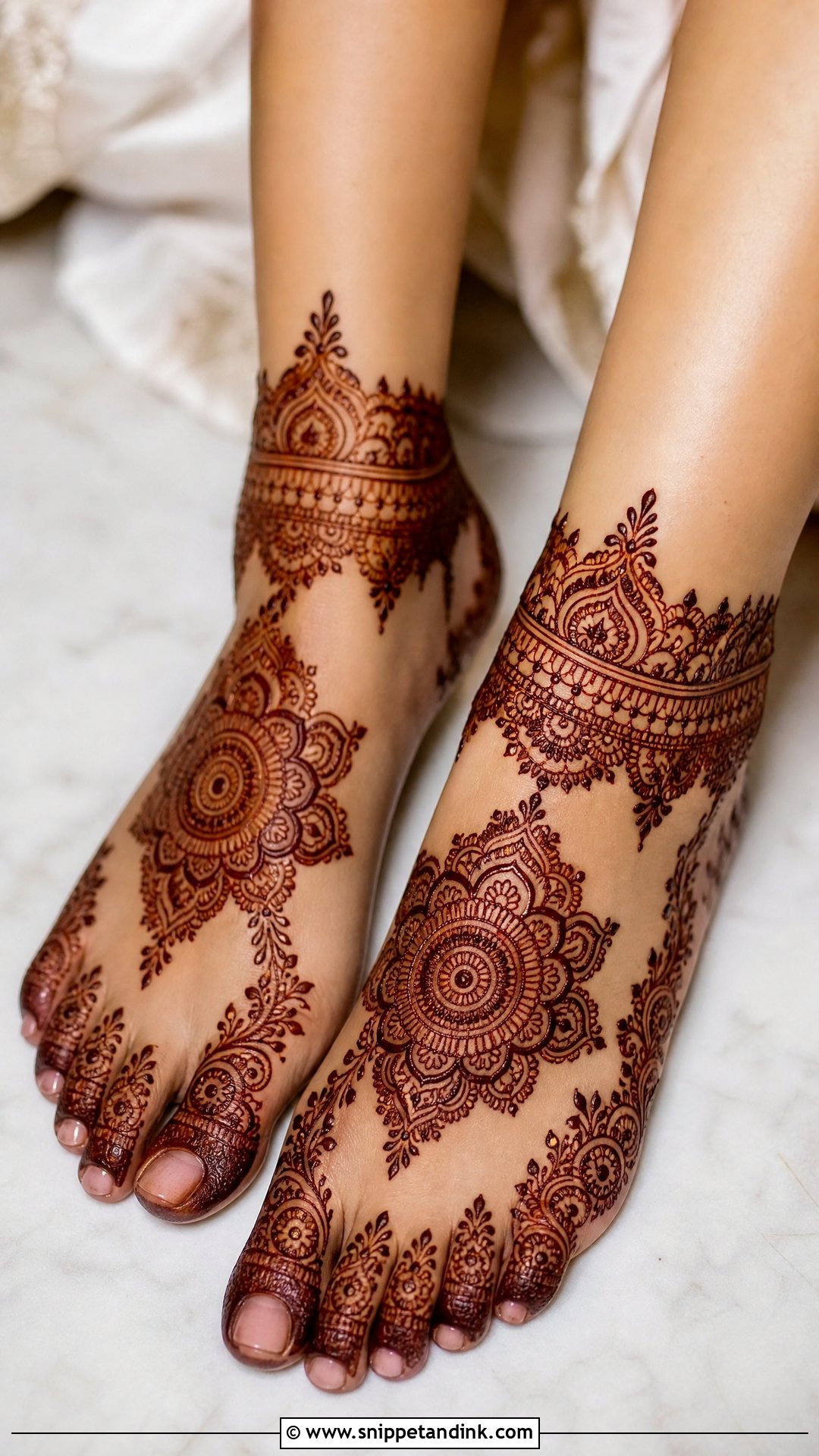
Bridal feet get decorated toes, anklet borders, floral trails, mandalas, paisleys and side-foot detail, sometimes running above the ankle. Feet stain darker than hands, so even a moderately open design looks rich. Some brides find the session ticklish or uncomfortable, especially on the soles, so I keep foot work efficient. Pick the density by your shoes: embellished sandals want an open layout, plain ones can take more.
24. White Bridal Mehndi
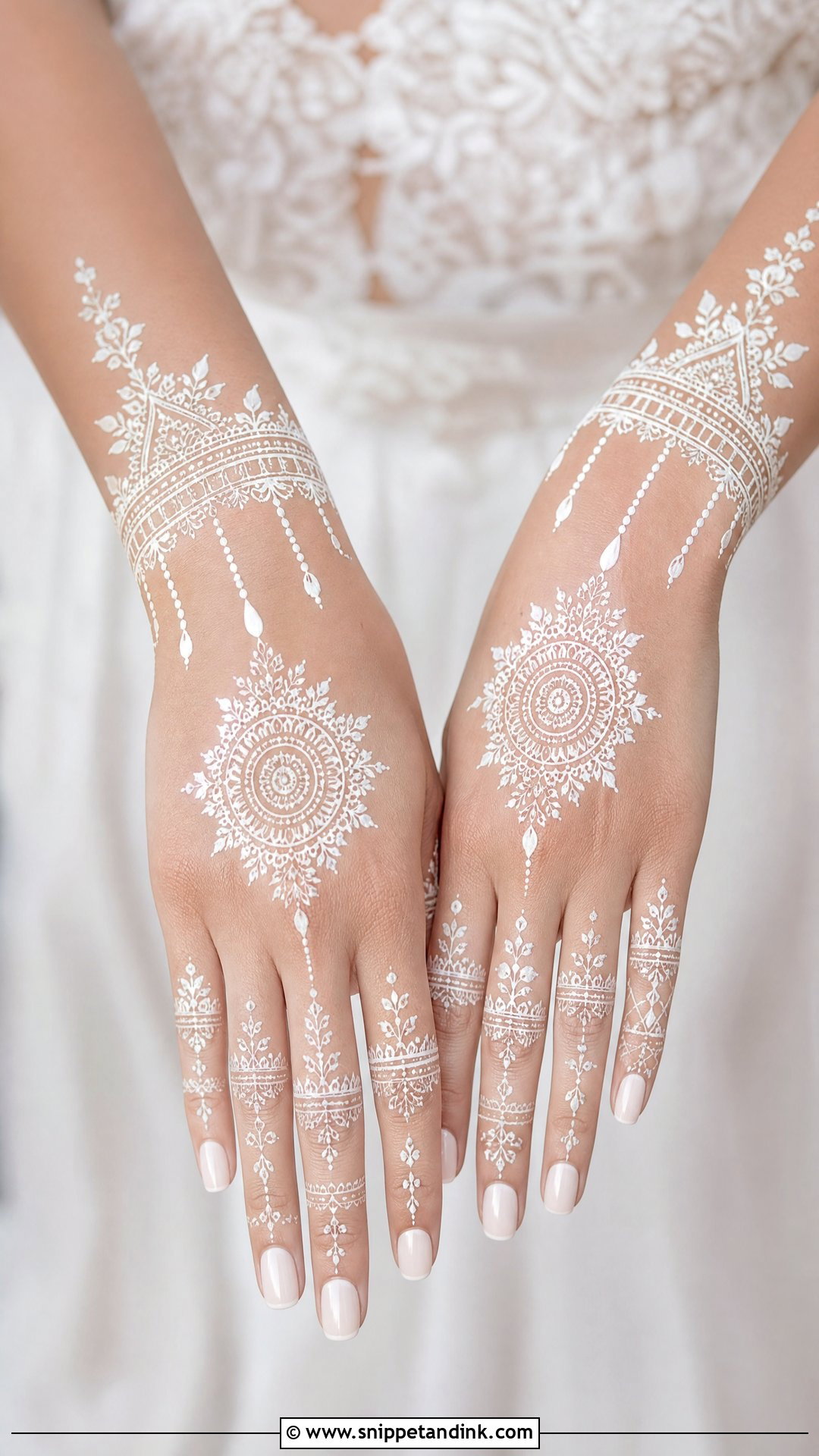
White bridal mehndi isn’t henna. It’s a white body-art paste that sits on the skin instead of staining, used for lace florals, mandalas, jewellery patterns and finger designs. Against pastel or ivory outfits it’s eye-catching, and there’s no stain to wait for. It smudges and wears off within a day or so, so I apply it after the bride is dressed and ask her to avoid rubbing her hands together. Medium spacing keeps the white lines crisp. Patch test it on your inner arm a few days before.
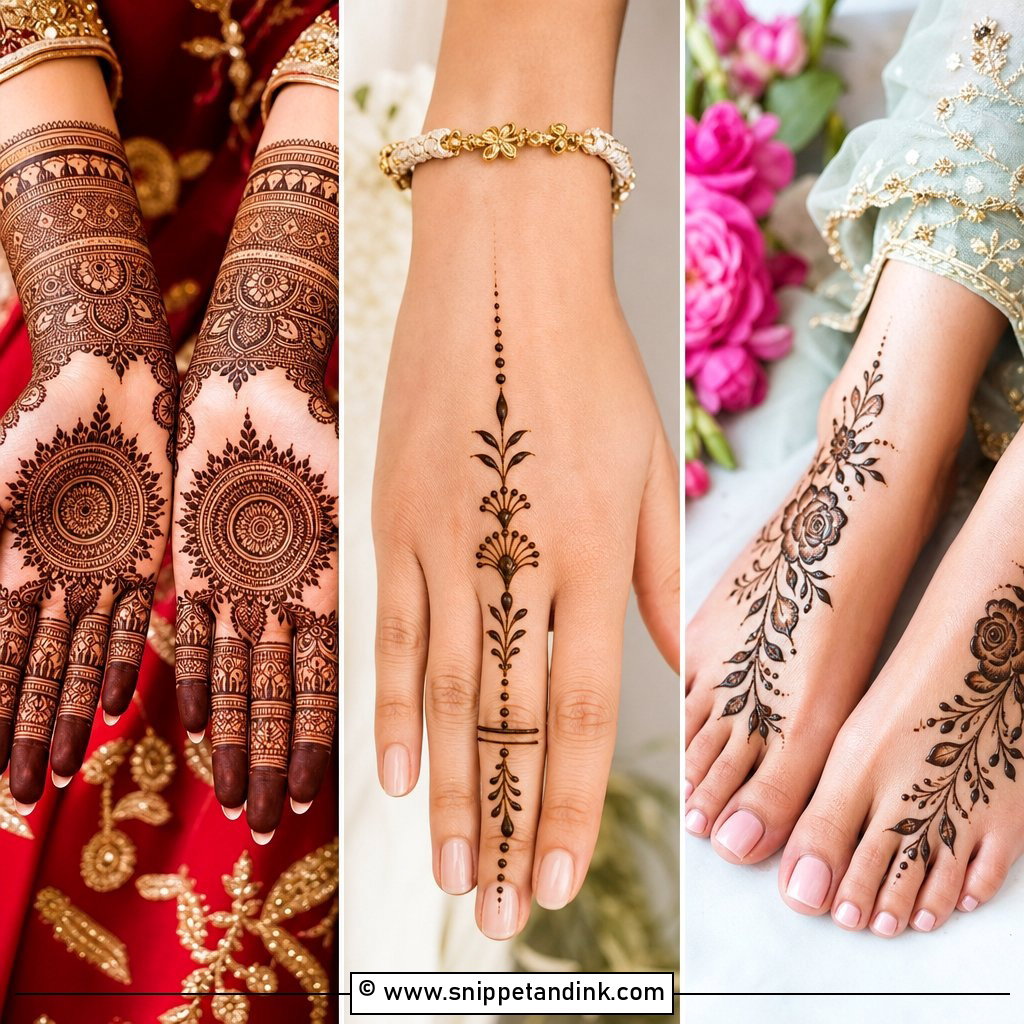
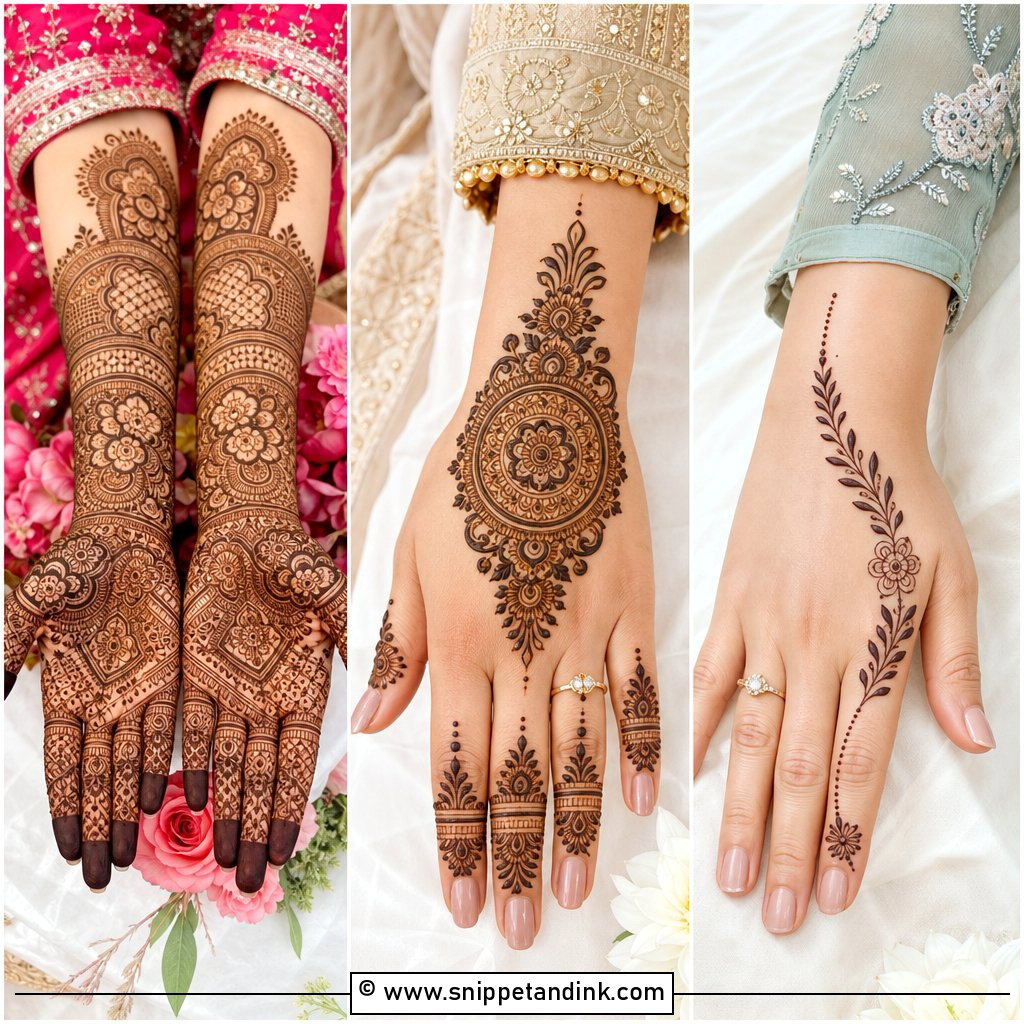


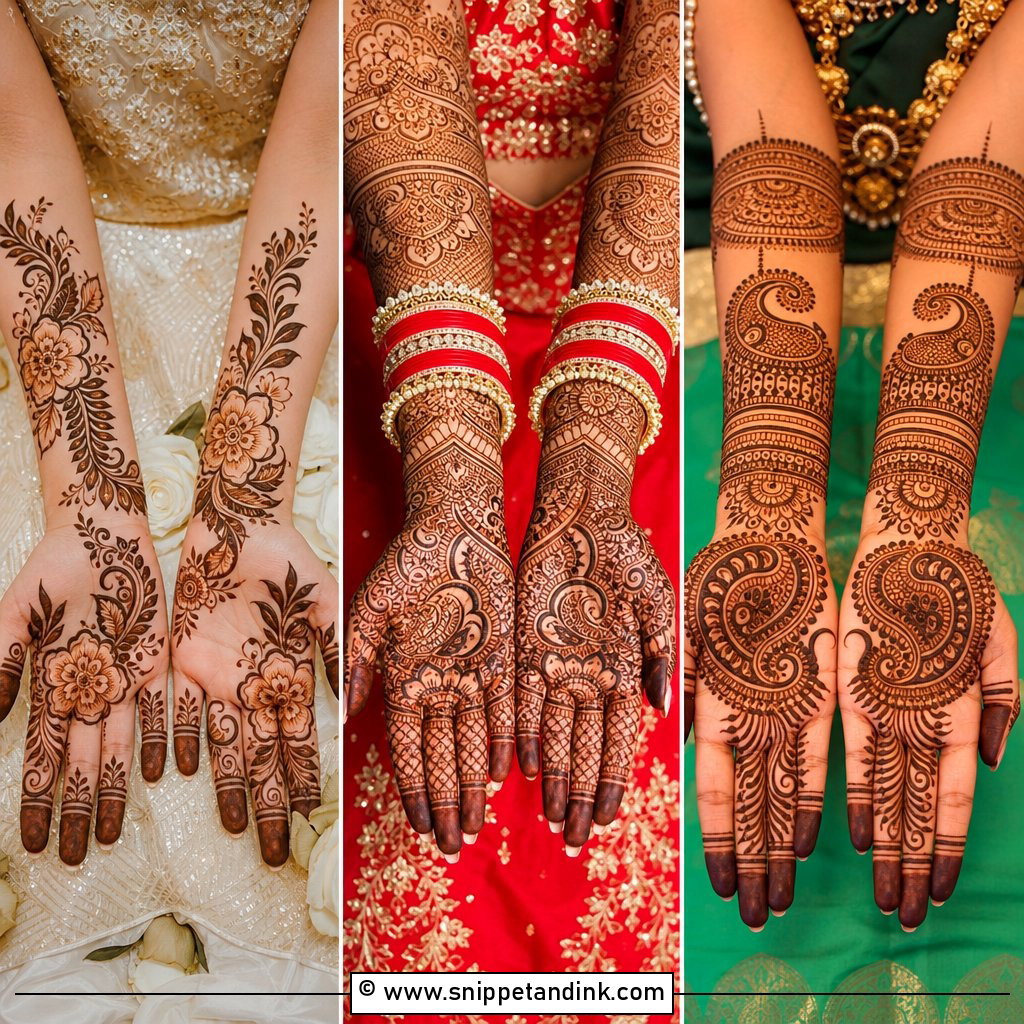
25. Glitter Bridal Mehndi
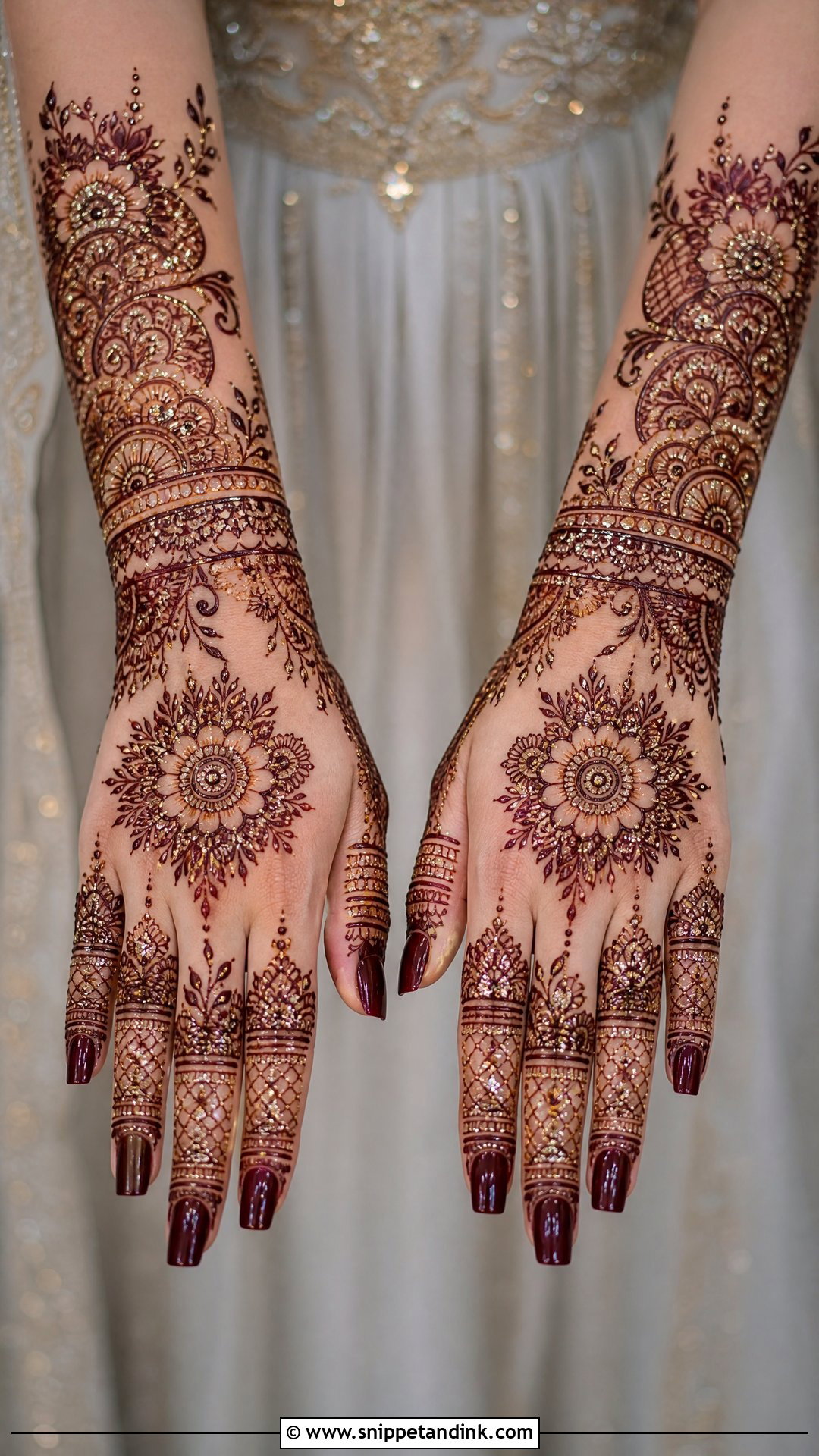
Glitter mehndi adds sparkle to a henna-style design, usually as accents on flowers, mandalas, borders or fingertips, in gold, bronze, maroon or champagne to match the jewellery. It’s typically applied with a cosmetic-grade adhesive or glitter gel over the pattern, and it’s for a single event, not the whole wedding week. Use it on a few focal points rather than every line, or it looks messy. Never put glitter adhesive over fresh henna paste; the paste needs to dry and come off first.
Protecting the Colour Through the Wedding Week
A good stain peaks a day or two after the paste comes off and then fades slowly over one to three weeks, palms first because that skin renews fastest. A few habits make the difference between hands that still look bridal at the reception and hands that look patchy.
Do these before the henna, not after
Waxing, scrubs, facials on the hands and any manicure with soaking should be finished before your henna appointment. Exfoliating after henna lifts the stained top layer of skin. Paint your nails before as well, or ask the artist to leave the nail beds clear.
Things that quietly strip the stain
- Alcohol hand sanitiser, used again and again through a long day.
- Chlorinated pools and hot tubs, which matters for destination weddings.
- Harsh dish soap and hot water. Wear gloves if you end up helping in the kitchen.
- Scrubbing your hands dry. Pat them instead, and use a plain oil or balm before bed.
If you’re adding white or glitter work for the reception, that goes on the day itself, over a stain that has already settled. It will rub off easily, so ask for it last, after you’re dressed.
Your Outfit Sets the Coverage, Your Artist Sets the Detail
The best bridal mehndi is the one you’ll be comfortable wearing through every function. Dense Indian work suits some brides; Arabic spacing, modern symmetry or a few hidden personal details suit others. Decide coverage from your outfit, jewellery and schedule, then judge each artist on her finished stains, especially if you want portrait, Rajasthani or heavy jaali work. Bring your references, and be ready for your artist to adjust them to the length and shape of your hands.
You'll Like These Ideas:





Leave a Reply