
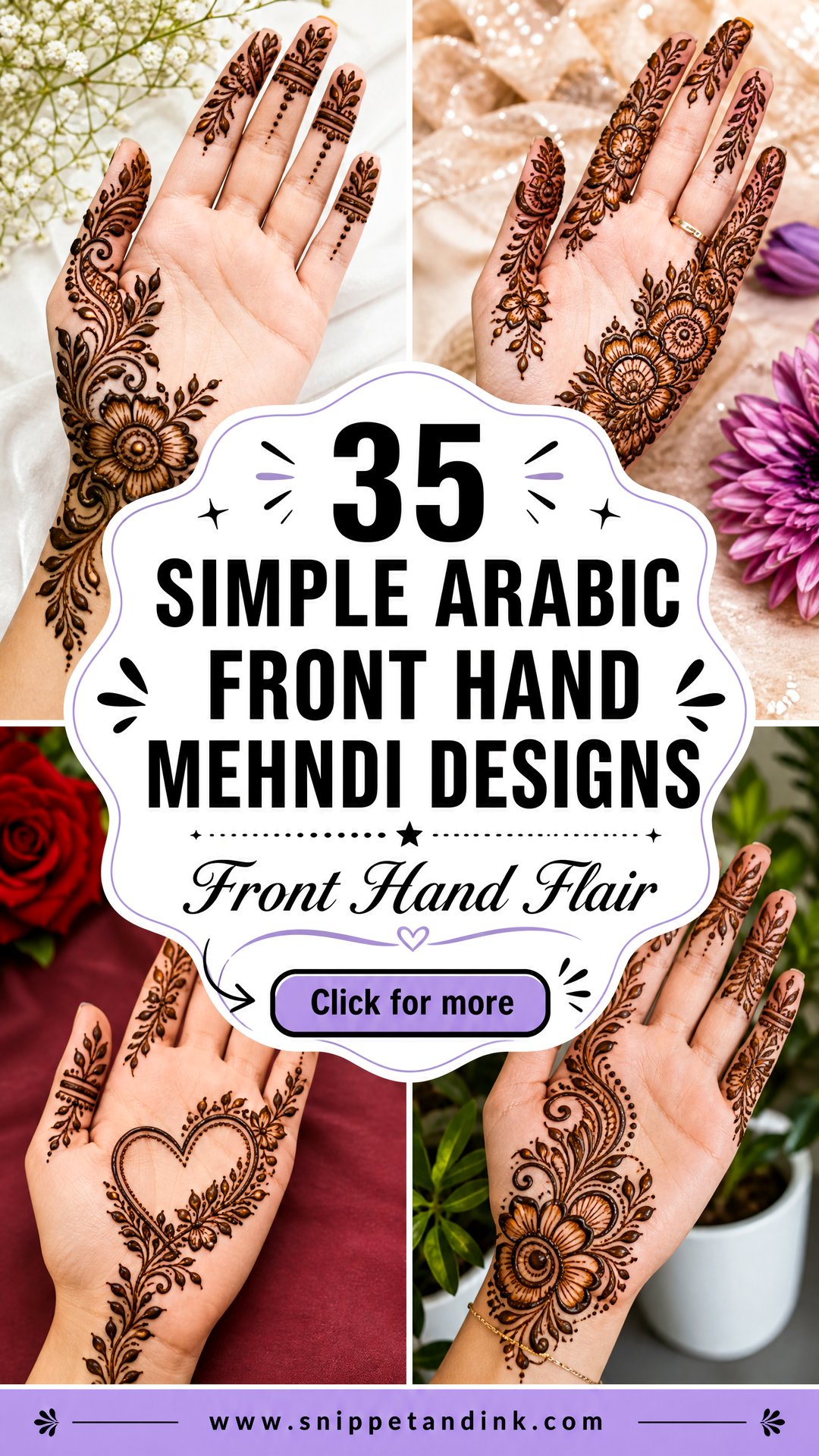
The palm is the best canvas on the hand for colour. Its skin is thick and takes henna deeply, so even a light Arabic pattern there finishes a rich reddish brown. Arabic work relies on a diagonal flow, bold outlines and bare skin between motifs, which is exactly why it suits people who want decorated hands without sitting for hours. Below are the front hand layouts I draw most often, from a single floral trail to a fuller palm for a wedding, plus modern negative-space looks for anyone who prefers more skin than pattern. I’ve noted where each one sits on the palm and what tends to go wrong with it.
Placing an Arabic Trail So It Follows Your Palm
An Arabic design lives or dies by its direction. Before I start, I ask the person to relax their hand, and I look at three things: the main creases, the length of the fingers and which hand they use most.
Work with the creases, not across them
The palm folds along the heart line, the head line and the curve around the thumb. Paste sitting across a deep fold cracks when the hand closes, and that part of the design stains patchy. I tuck flowers between the creases and let thin vines cross them, since a fine line survives bending much better than a filled petal.
Choose the finger the trail ends on
Ending at the index or middle finger lengthens the hand. On short fingers, I avoid ending on the thumb, which pulls the eye sideways and widens the palm. If the palms will be shown together in photos, I mirror the trail so both point inward or both point outward.
Think about the hand you use
The dominant hand gets used sooner, gets washed sooner and usually ends up a shade lighter. I apply it second so it has the least time to be disturbed, and I keep its design a touch simpler if the person has to work or cook the next morning.
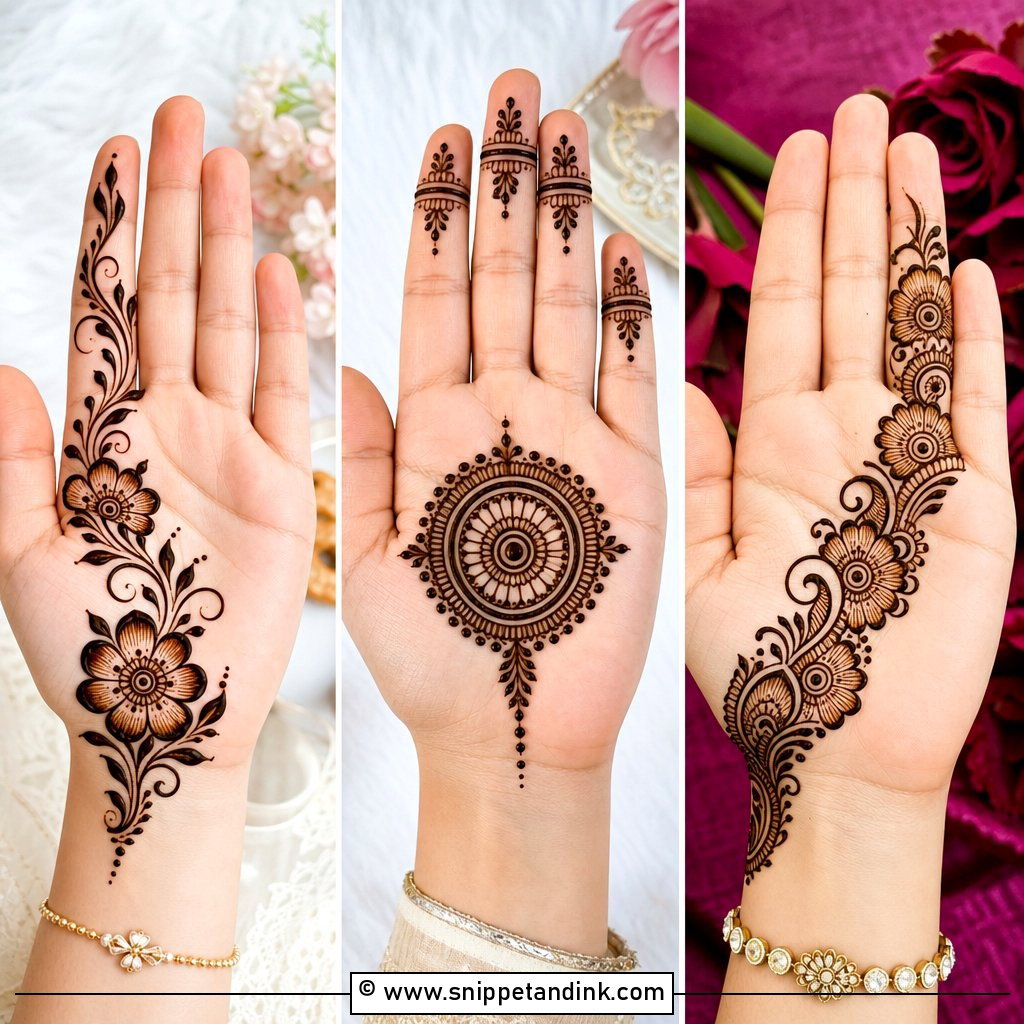
1. Simple Arabic Floral Front Hand Mehndi Design
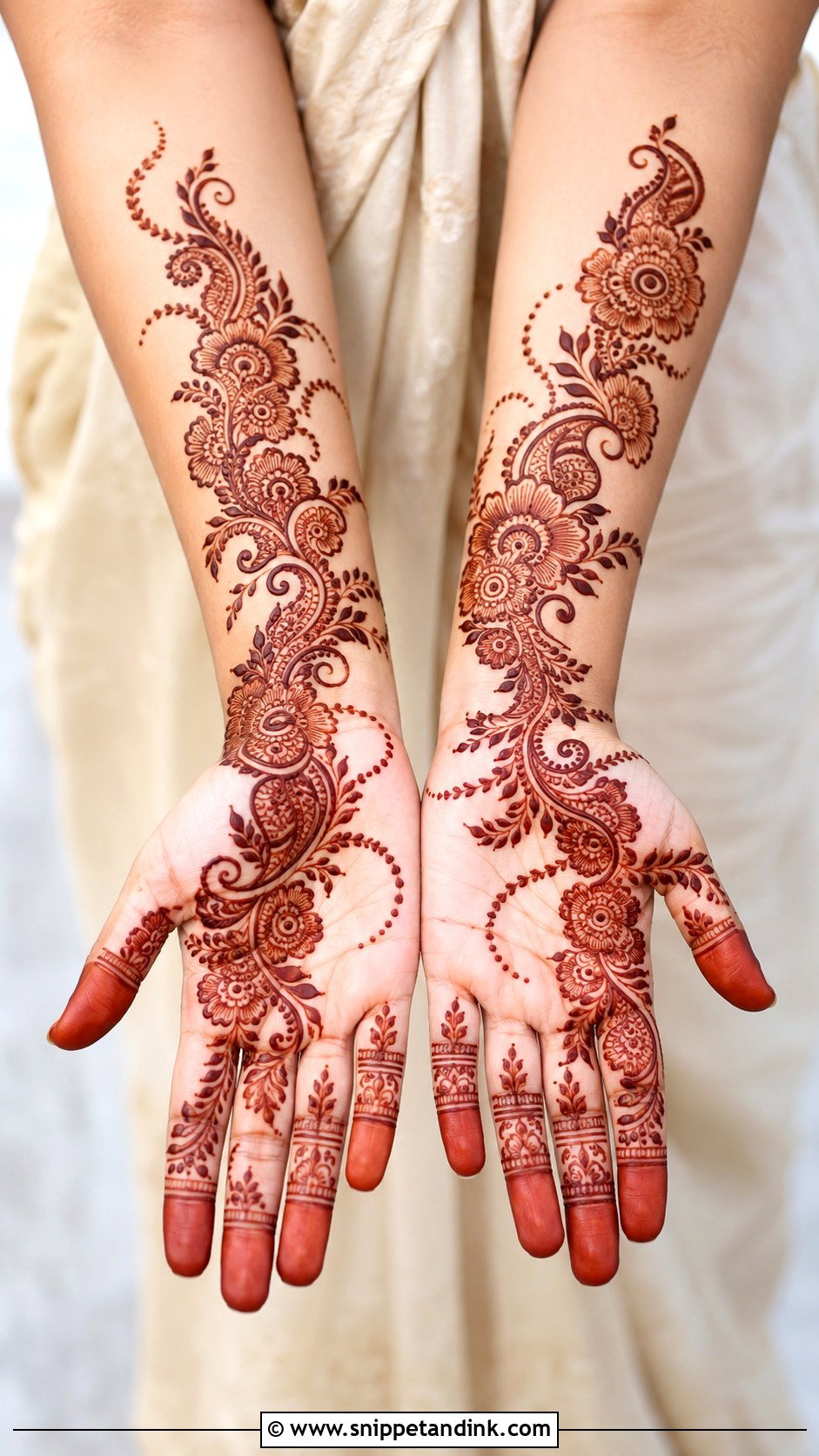
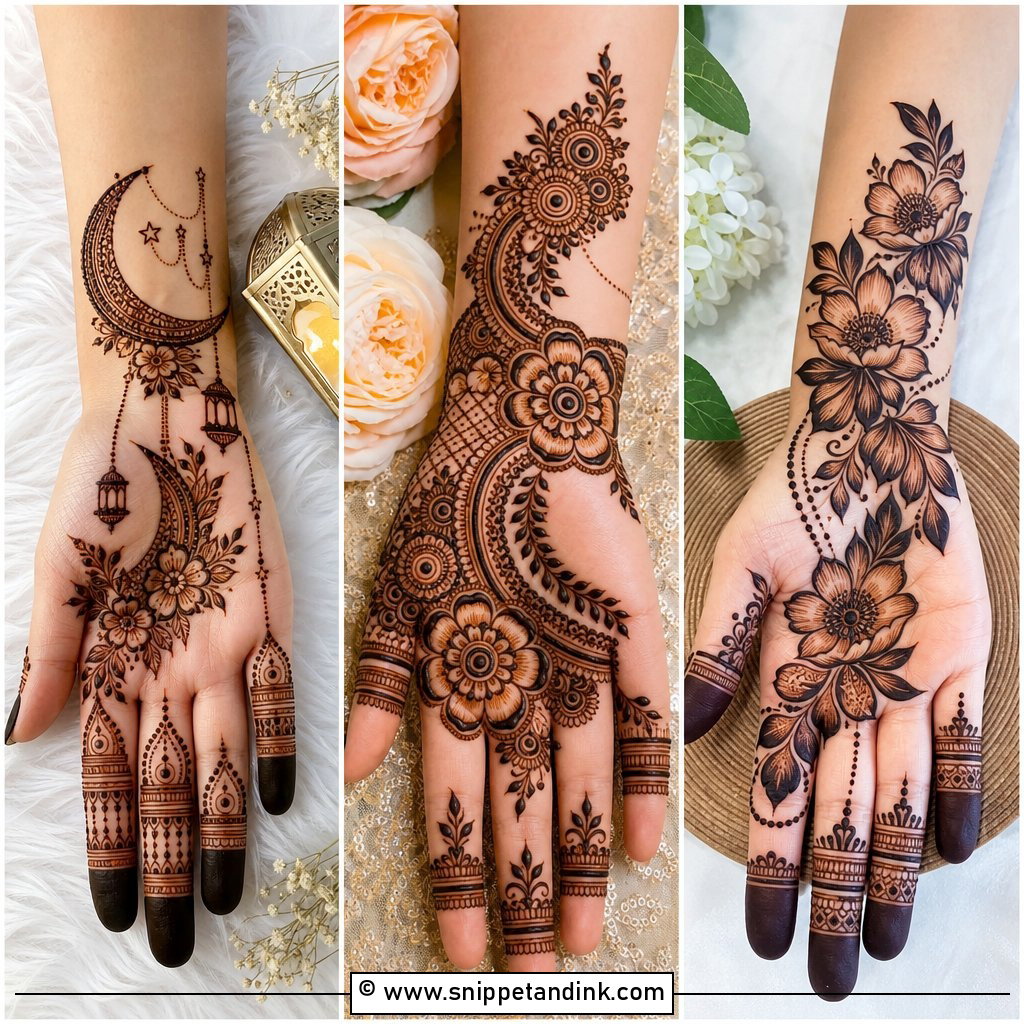
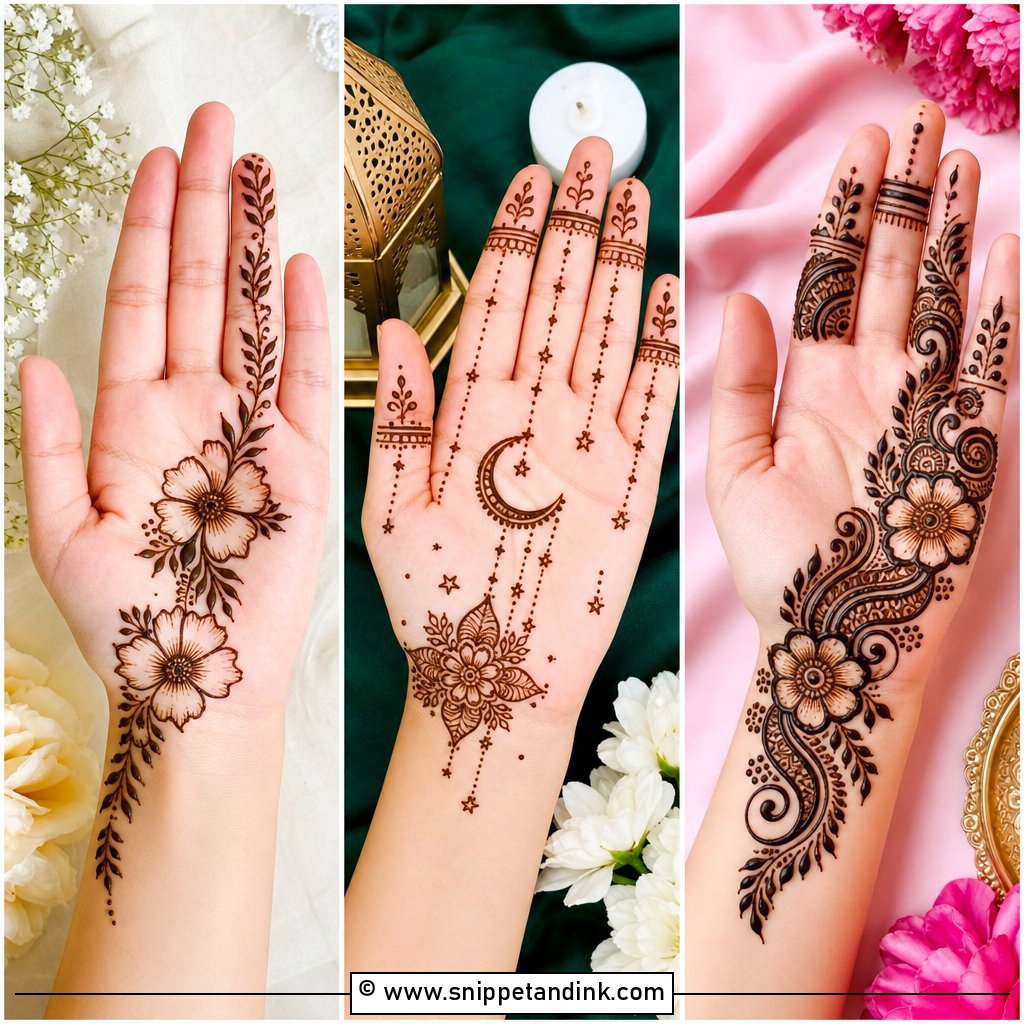
One large flower on the palm, a vine running up toward the fingers, and plenty of skin showing between the leaves. That’s the whole idea, and it’s why I often start new clients here. Small leaves and dots fill the gaps without turning the palm solid. The flower needs to sit a little below the centre of the palm, not in the middle, so the vine has room to travel before it reaches the fingers. It suits teens, bridesmaids and first-timers equally well.
2. Simple Arabic Rose Front Hand Mehndi Design
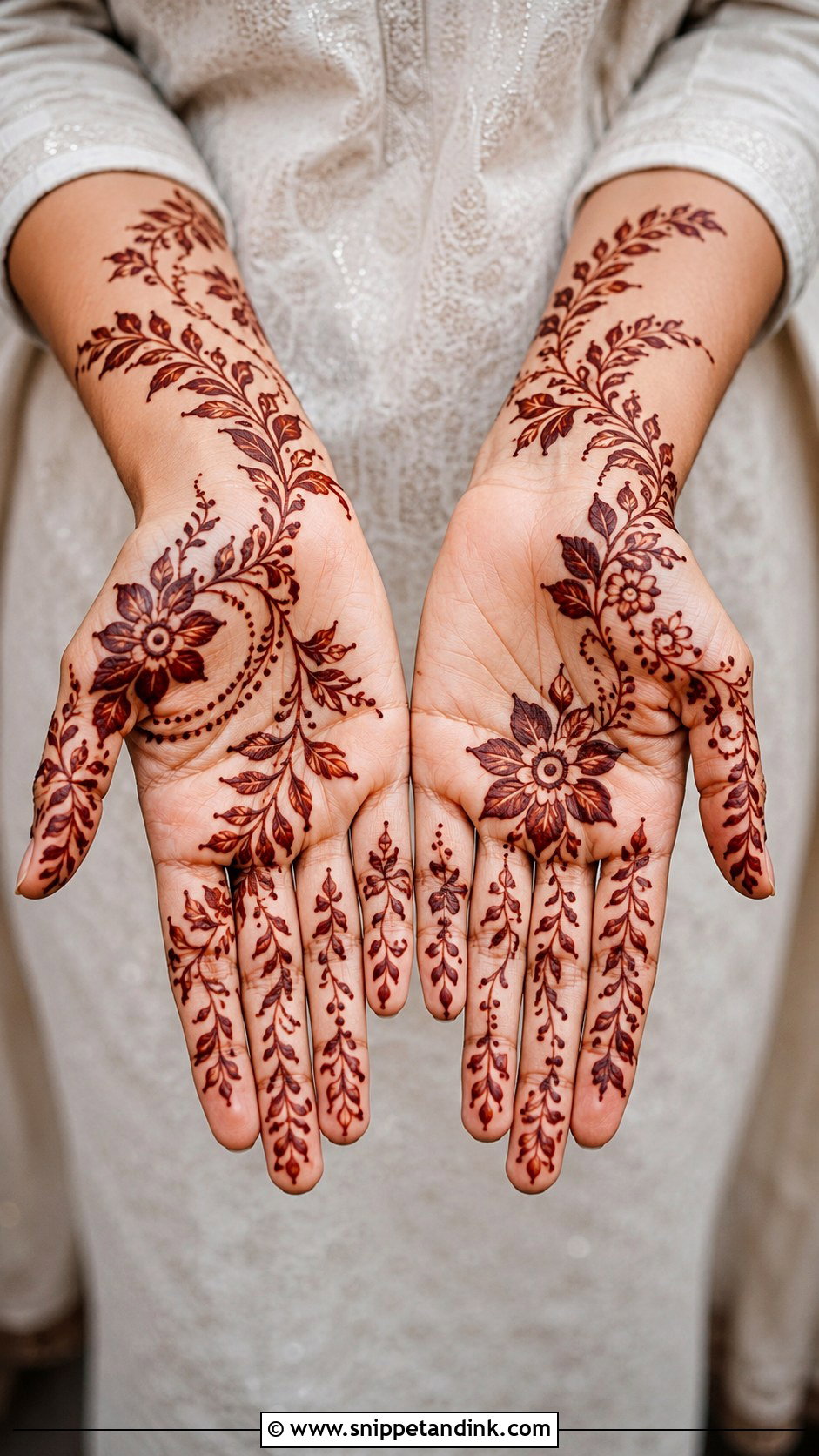
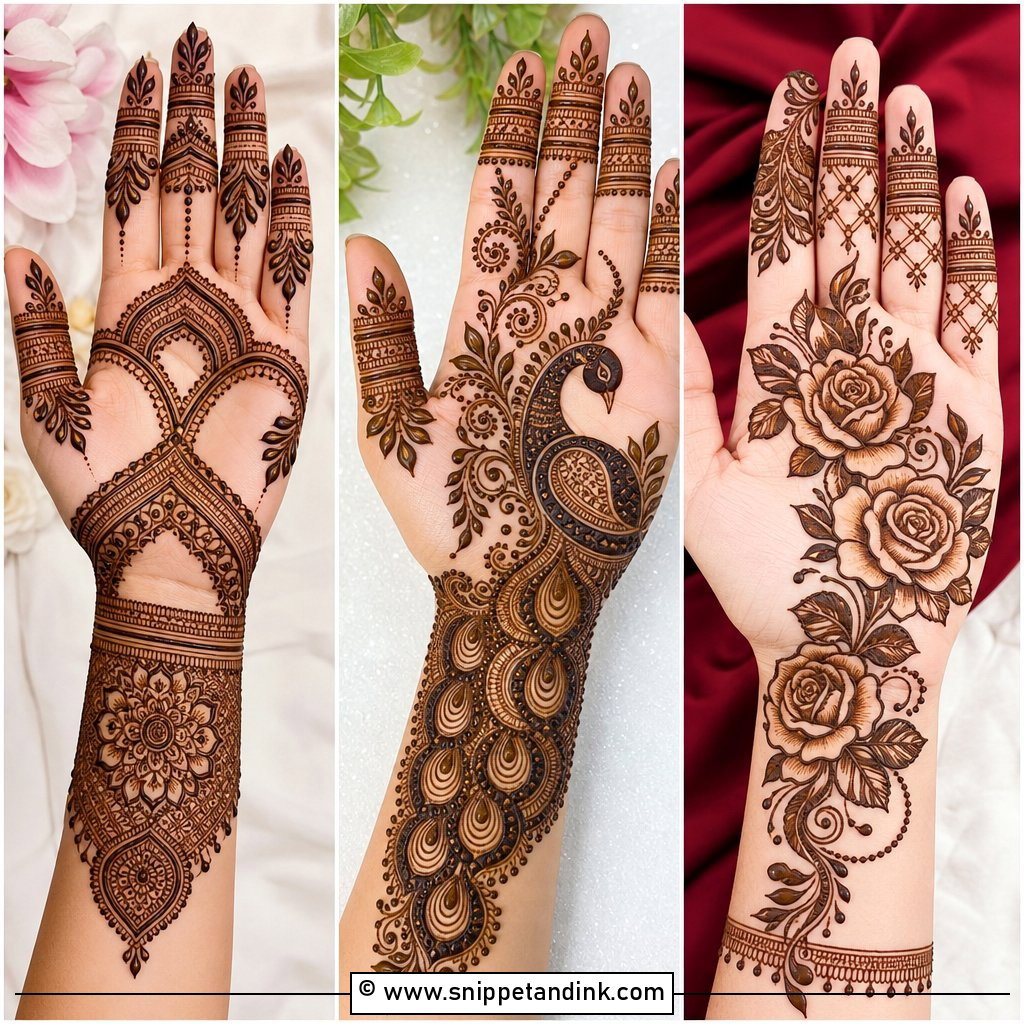
Roses only work in Arabic henna if the petals are big and rounded. One or two blooms sit on the palm with curved stems reaching for the index or middle finger, and the fingers carry tiny leaves, dots or half-flower tips. I resist filling the petals with fine lines; on a palm, those lines close up as the stain darkens and the rose loses its shape. Bold outer petals with one or two inner curves read clearly at an engagement party or an Eid lunch.
3. Simple Arabic Paisley Front Hand Mehndi Design
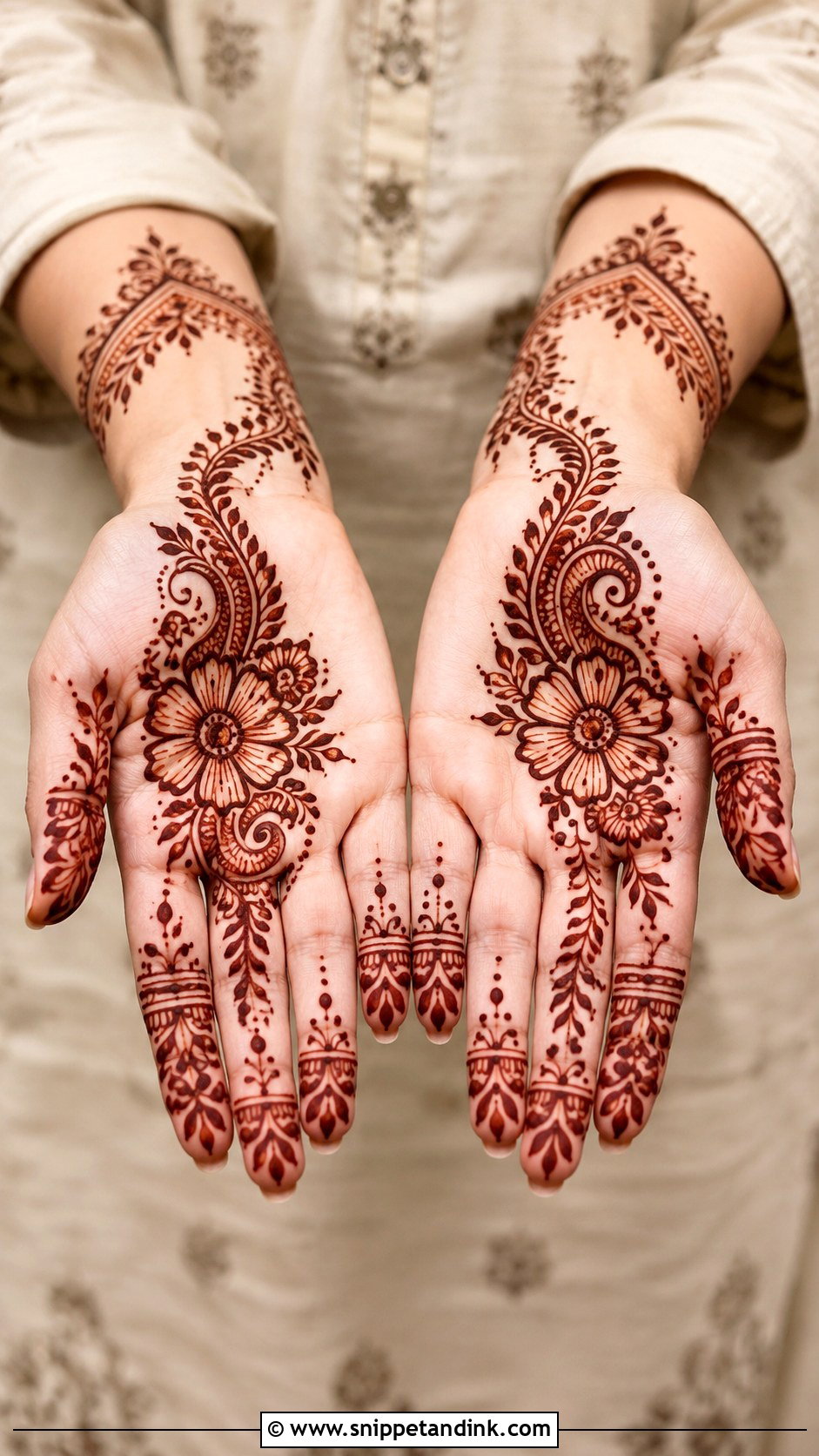
A paisley placed in the middle of the palm naturally points the design toward one finger, so the diagonal comes almost for free. Small flowers and leaves flow off its tail, and the trail lengthens the look of the fingers. Keep the outline thick and put only a few lines, dots or petals inside. The commonest mistake I correct is filling every gap around the paisley; Arabic work depends on those gaps.
4. Simple Arabic Mandala Front Hand Mehndi Design
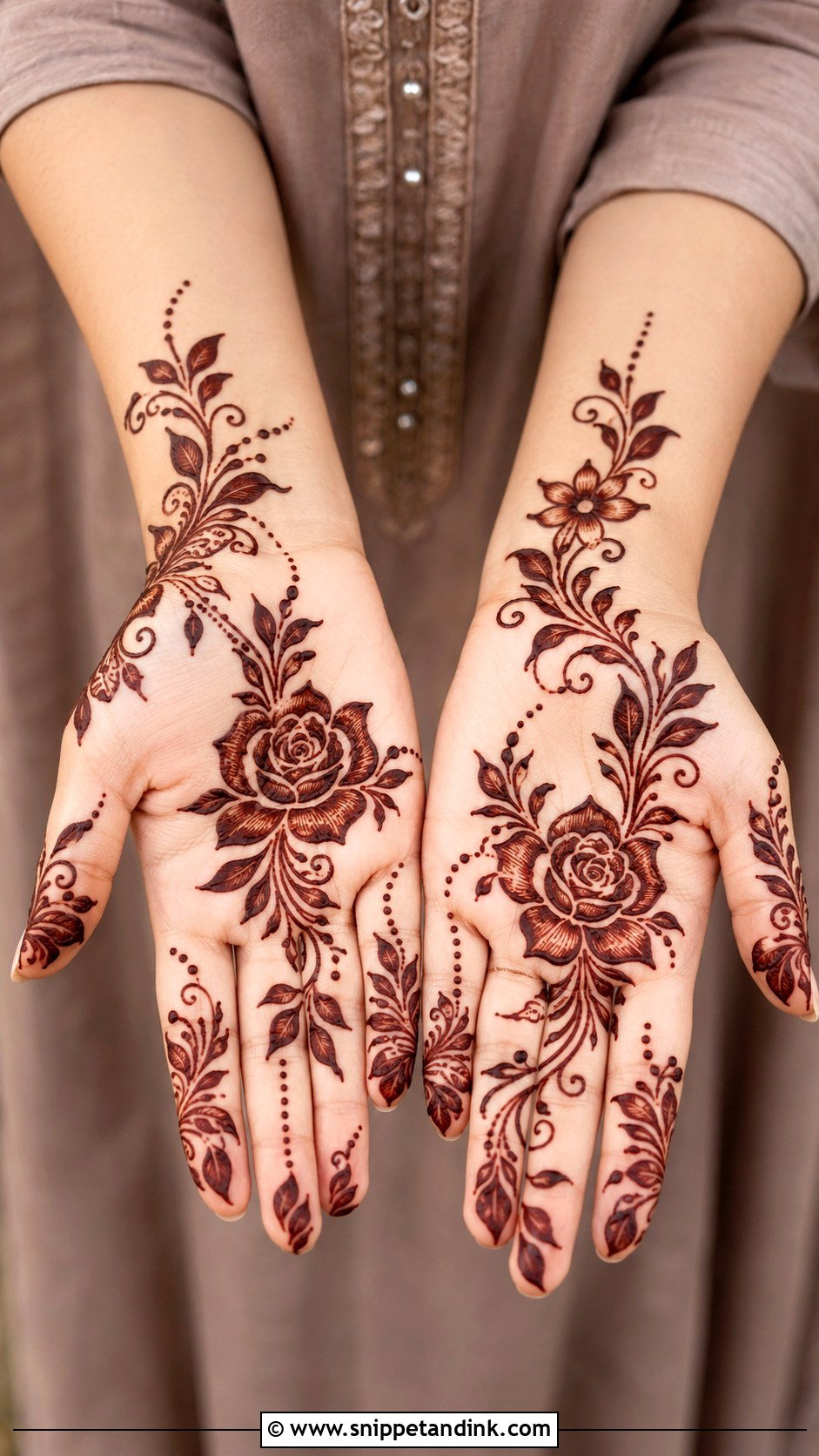
Arabic layouts usually avoid the centred look, but a round floral mandala on the palm with curving vines around it is a handy compromise for people who like symmetry. Slim bands, petals and dotted lines dress the fingers. I keep the outer ring of the mandala clean and skip heavy shading inside it; a dense centre on the palm stains so dark it can look like one solid spot from a distance. It suits Eid, Diwali and small wedding functions.
5. Simple Arabic Finger Front Hand Mehndi Design
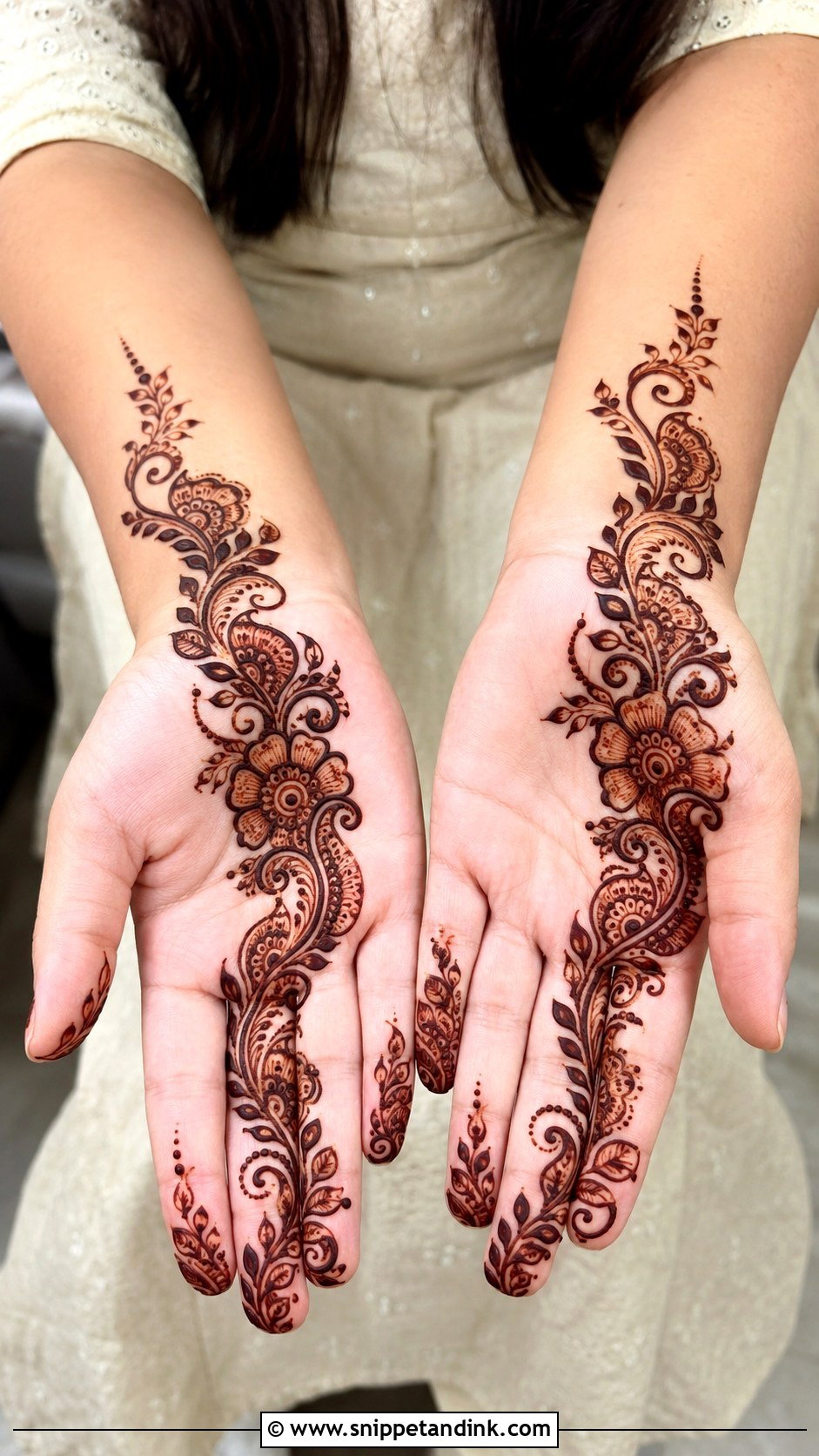
Short on time? Put most of the work on the fingers. The palm gets just one small flower or a single leafy line, and each finger carries its own detail: a dotted chain, a leafy band, a small paisley tip. Fingers stain darker than almost any other part of the hand, so this design looks fuller than it is. Keep the strokes flowing and spaced, otherwise it slides from Arabic into a filled Indian finger pattern.
6. Simple Arabic Palm Front Hand Mehndi Design
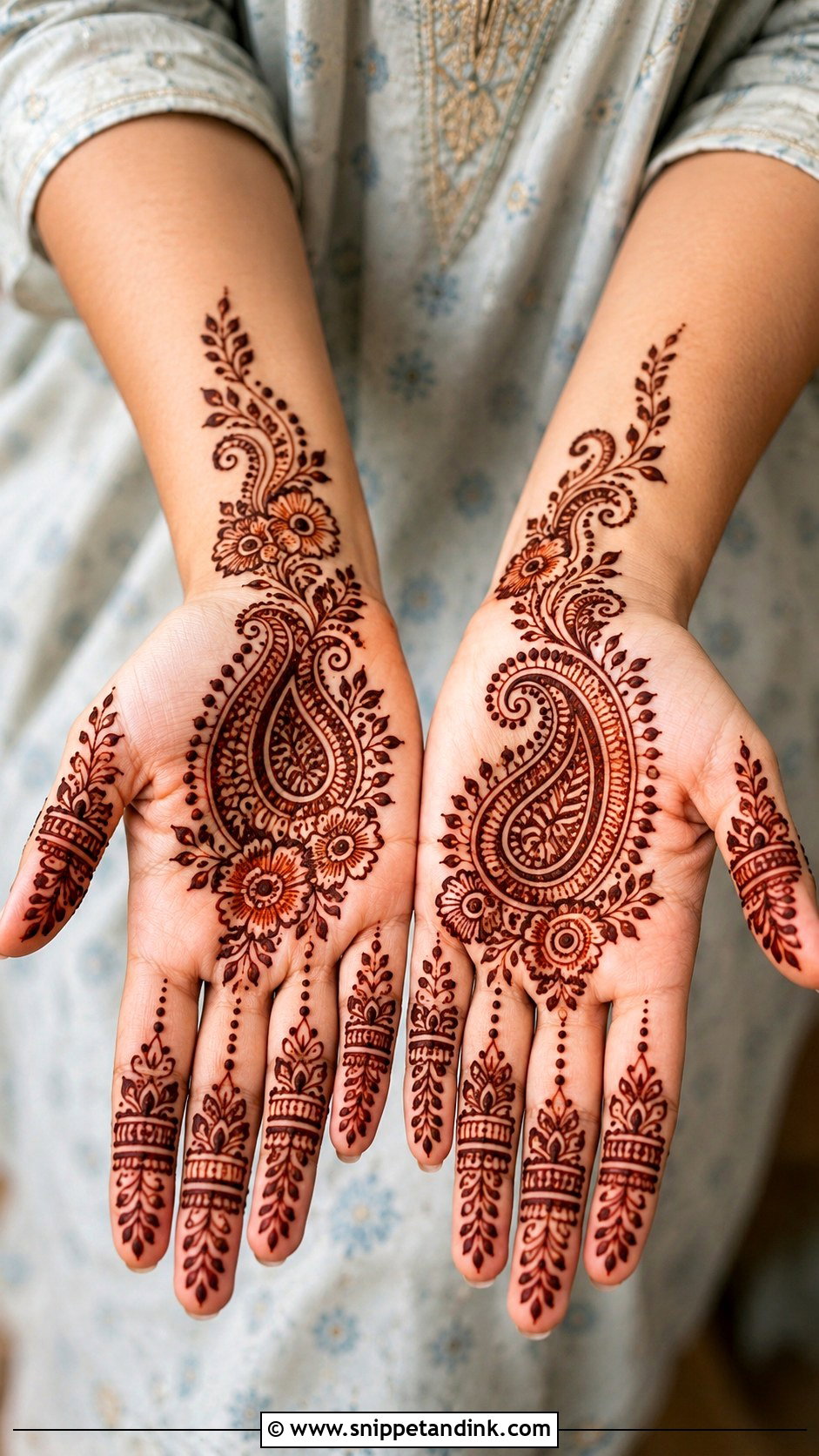
This one weights everything onto the palm and keeps the fingers almost bare: a large flower, paisley or mandala in the centre, curved leaves around it, and only caps or thin lines on the fingertips. The palm has the most room for big, confident shapes, which helps anyone still learning. I finish with one curved border or a leafy line at the wrist. Avoid running the main flower over the deep crease at the base of the thumb; it flexes every time you grip something.
7. Simple Arabic Full Front Hand Mehndi Design
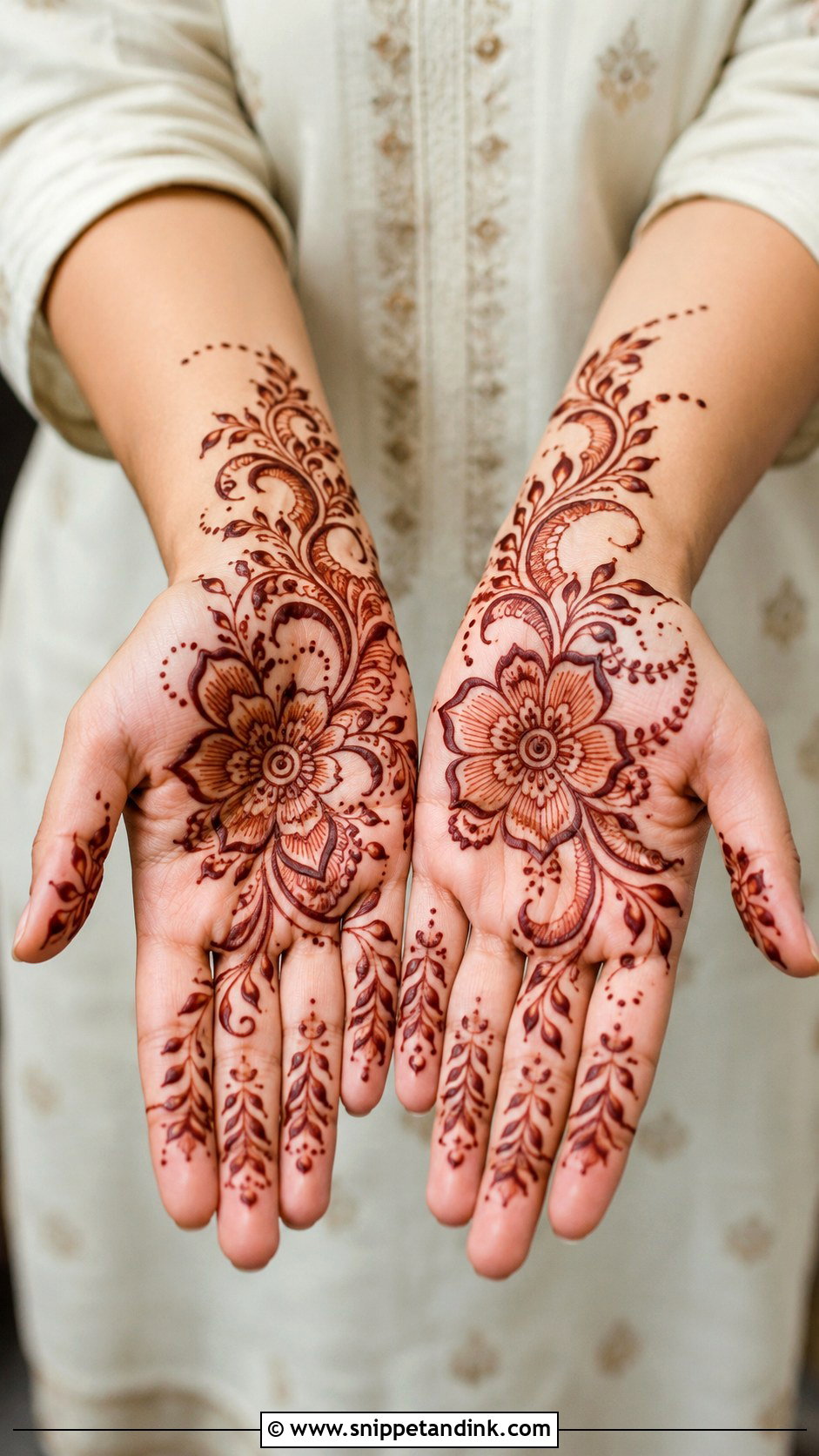
Full coverage across the palm, fingers, and wrist, but with Arabic breathing room. The trail usually runs from the wrist to the index finger with flowers, paisleys, leaves and dots. I pick two main motifs and repeat them in different sizes, which keeps the hand coherent without packed filling. It’s quicker to apply and easier to read from across a room than dense bridal work. Bridesmaids and Eid hands are where I use it most.
8. Simple Arabic Bracelet Front Hand Mehndi Design
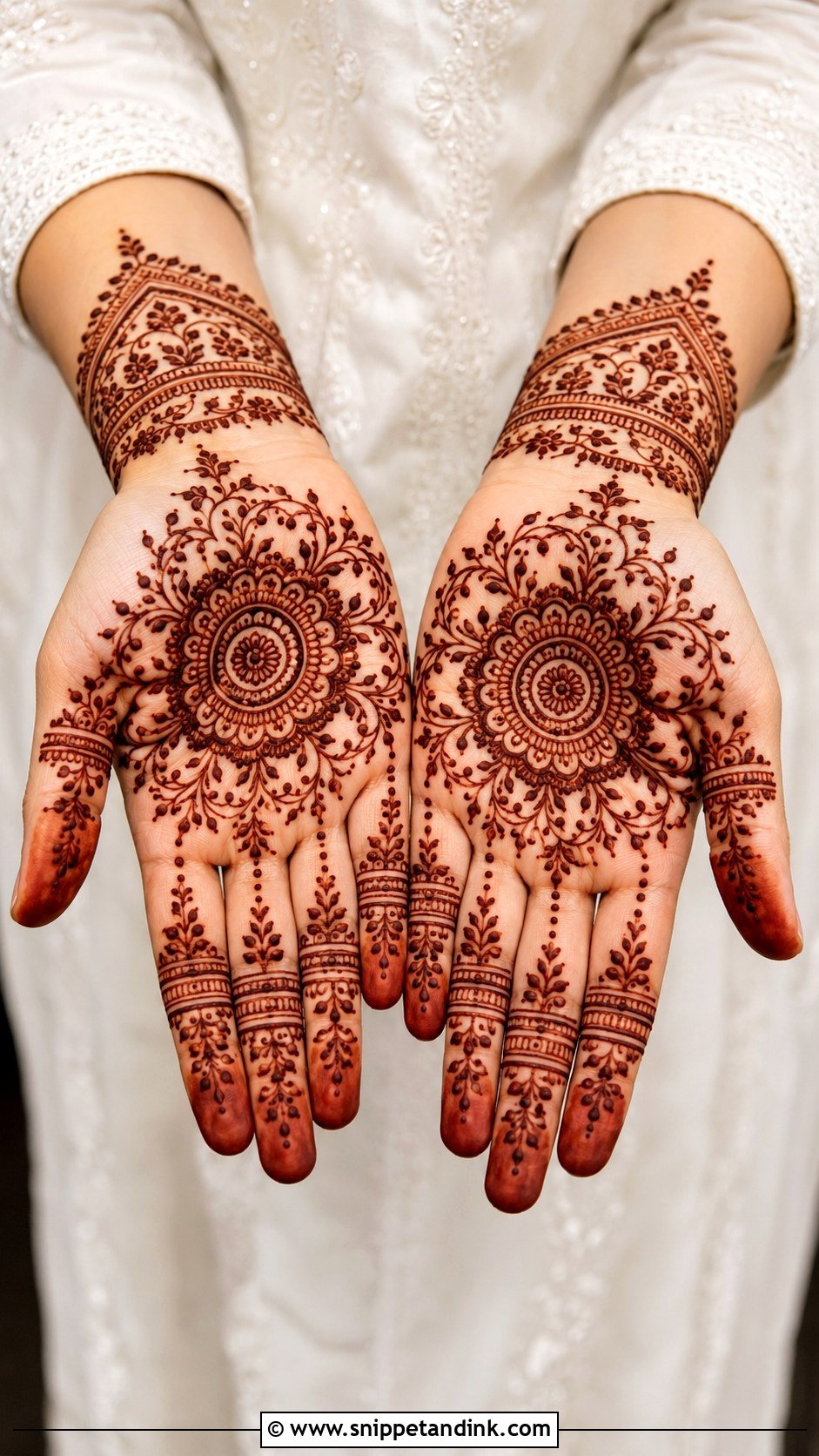
The wrist gets the jewellery treatment: a neat band, a scalloped border or a leafy bracelet, with a light floral trail climbing the palm above it. Dots above and below the band finish it, and slim rings or leafy tips on the fingers echo it. I size the band to the bangles the person is wearing. If the henna sits right under a stack of bangles, half of it disappears, so I move it a finger’s width toward the palm.
9. Simple Arabic Bail Front Hand Mehndi Design
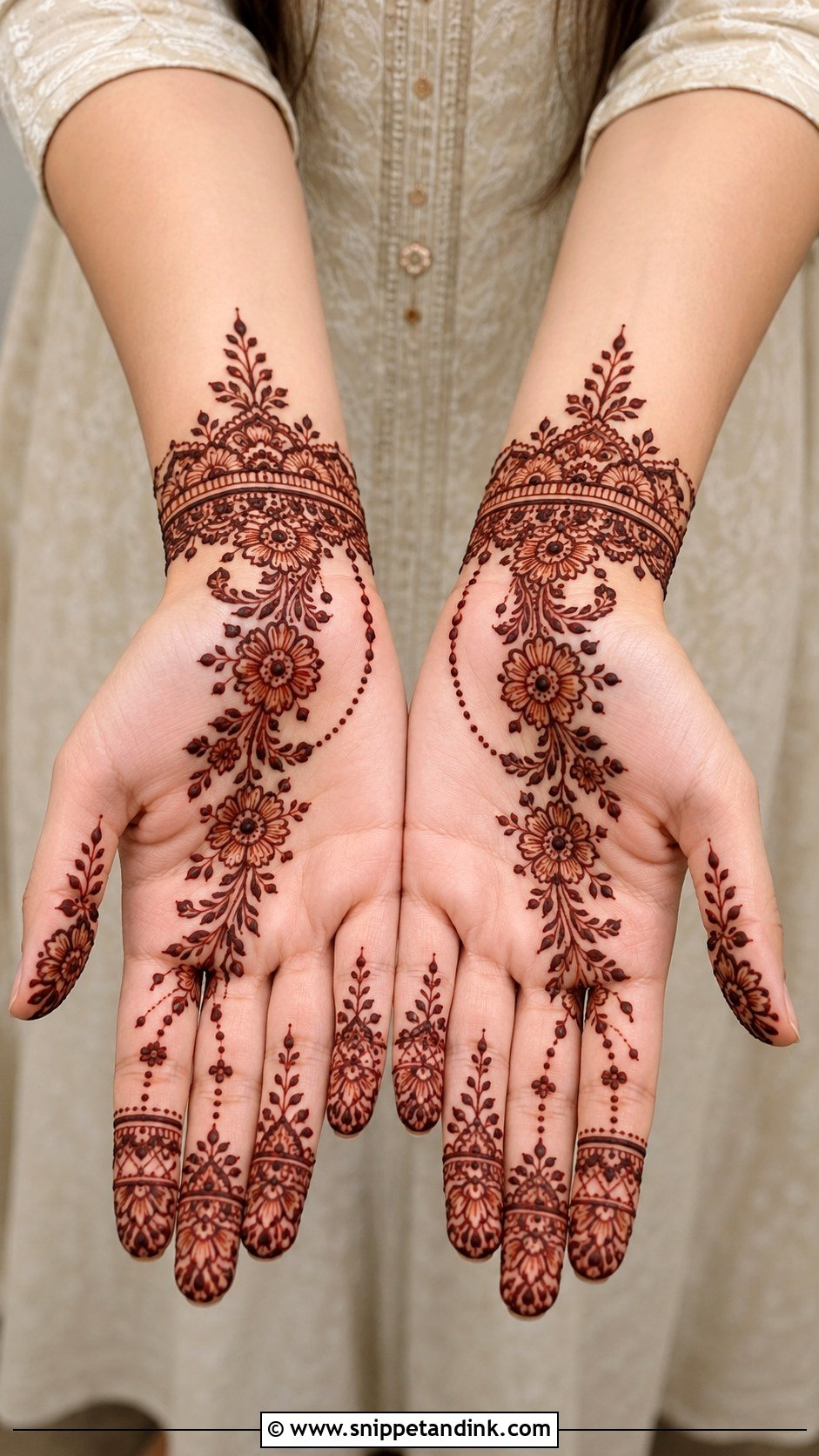
Bail simply means a vine or creeper, and on the palm it’s a single trail from the wrist, across the palm, to one finger, with flowers, leaves, paisleys and dotted curves along the way. It’s quick and it’s hard to get badly wrong because you only follow one path. I leave both sides of the palm open and decorate the other fingers lightly, so the trail stays the focus. For left-handed people I mirror the direction, so the trail ends on the side they want shown.
10. Simple Arabic Leaf Front Hand Mehndi Design
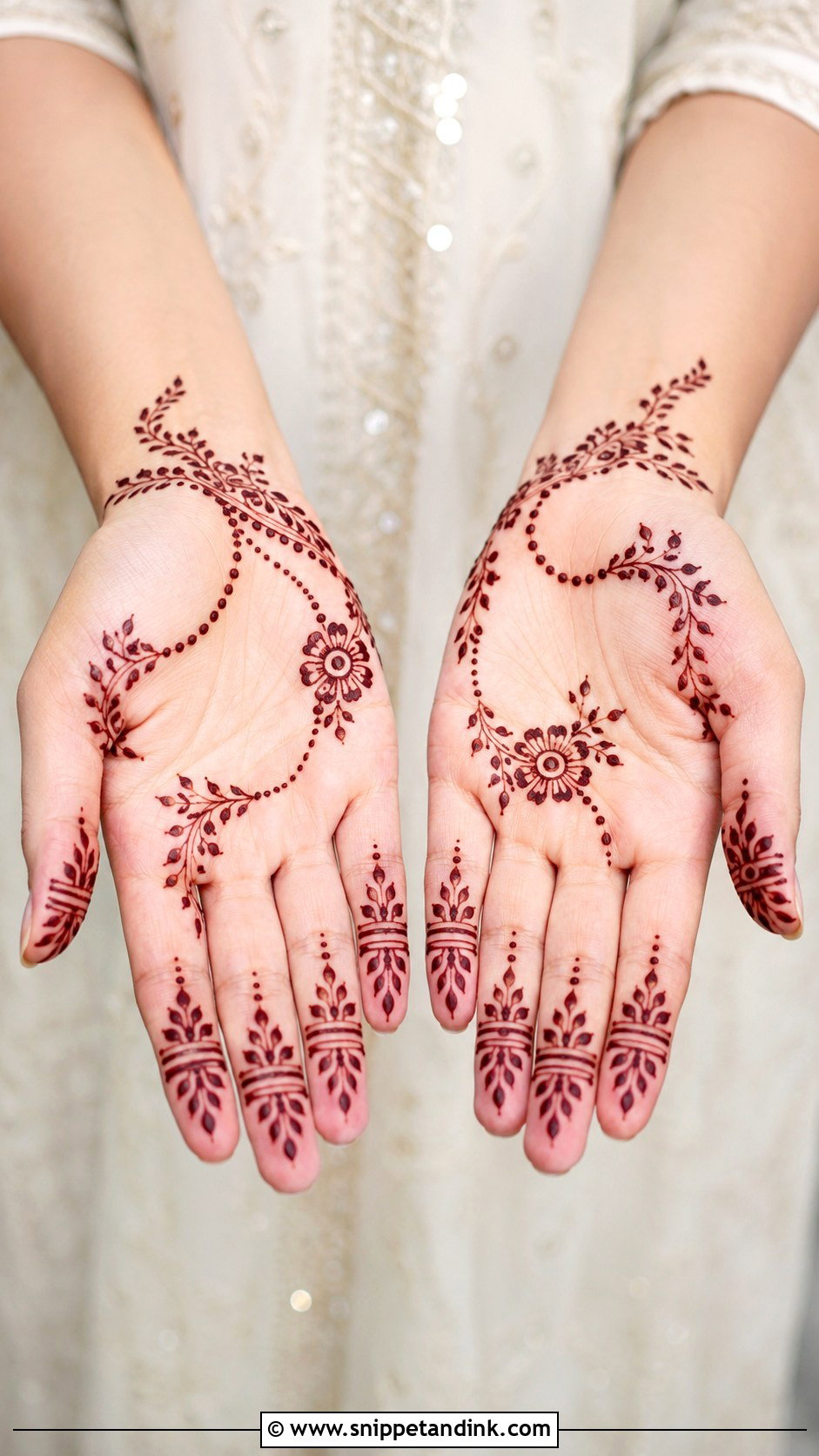
Leaves are the easiest motif to repeat neatly, and varying their size is what makes a leafy palm move. I start with a small flower low on the palm, then run long curved leaves up toward the fingers and sometimes add a leafy bracelet at the wrist. Dots and fine curves fill the spaces. It’s an easy daytime choice for family gatherings, and the leaf tips usually stain a deep reddish brown because the fingers and upper palm take colour so well.
11. Simple Arabic Peacock Front Hand Mehndi Design
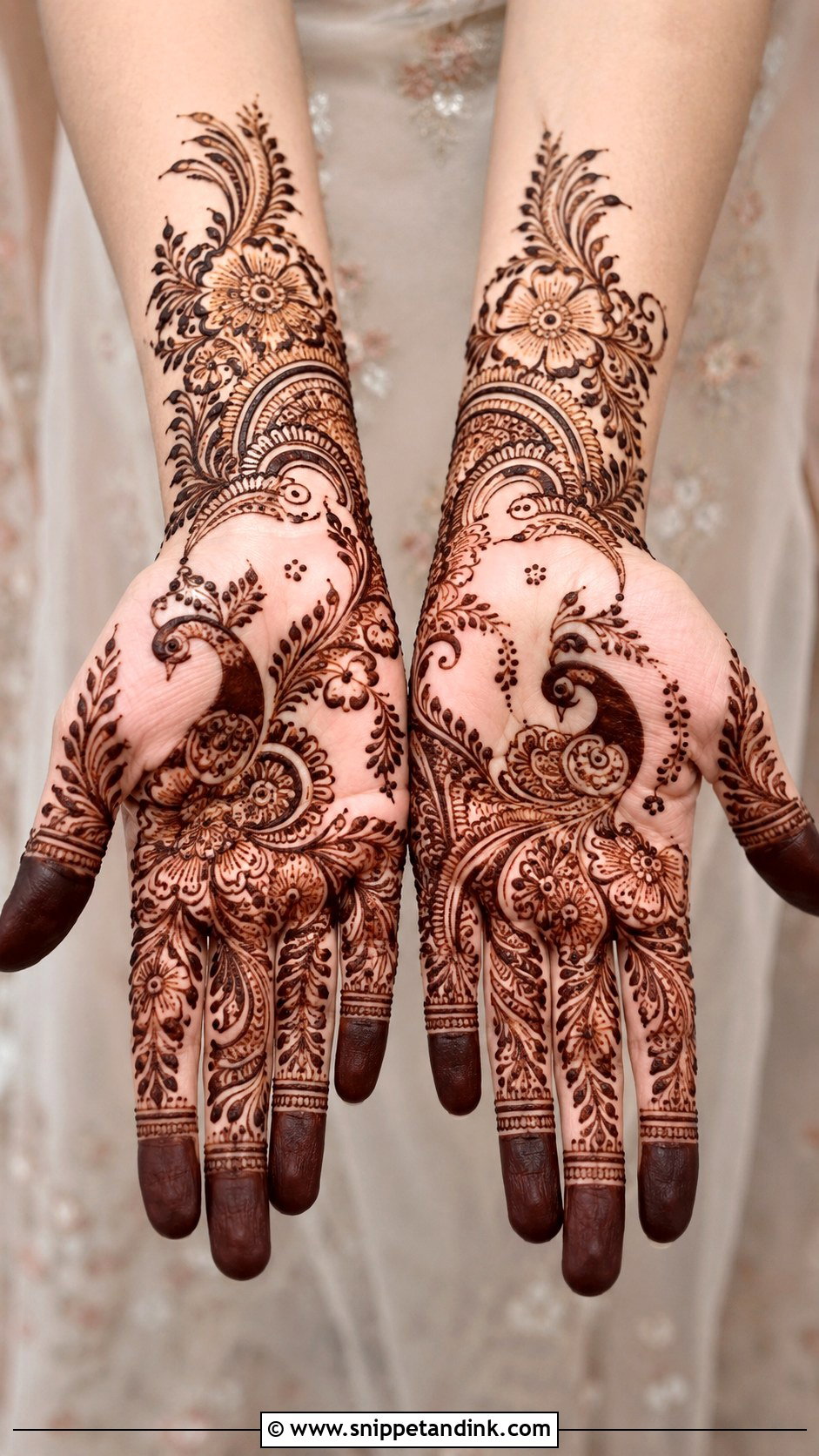
A peacock in Arabic style should be one clear shape, not a miniature painting. I draw the body in side profile on the palm and sweep the tail feathers toward the wrist or fingers, using bold feather lines, a few dots and a flower or two. The fingers stay minimal. It’s a good pick for a sangeet or a wedding if you want a traditional motif without dense coverage. Keep the beak and neck crisp; those two lines decide whether it reads as a peacock or a vague bird.
12. Simple Arabic Jaali Front Hand Mehndi Design
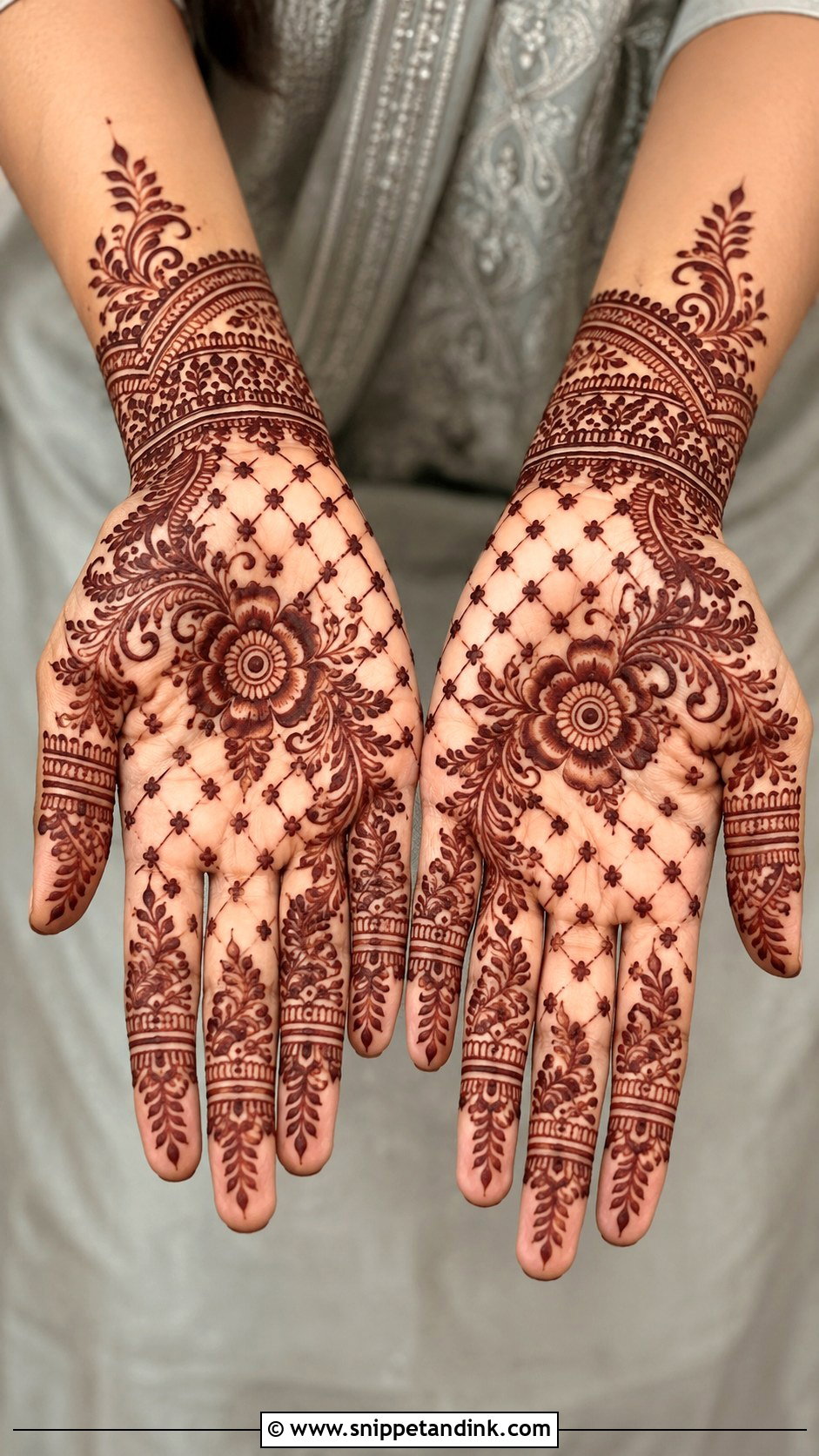
Jaali is a net of crossing lines, and on a simple front hand I confine it to one patch, either a section of the palm or a strip at the wrist. A flower, paisley or leafy trail sits beside it so the hand stays balanced. Tiny dots at the crossing points add sparkle without extra filling. The lines need to be very evenly spaced; on the palm, uneven jaali is more noticeable than on the back of the hand because the colour is so much darker.
13. Simple Arabic Negative Space Front Hand Mehndi Design
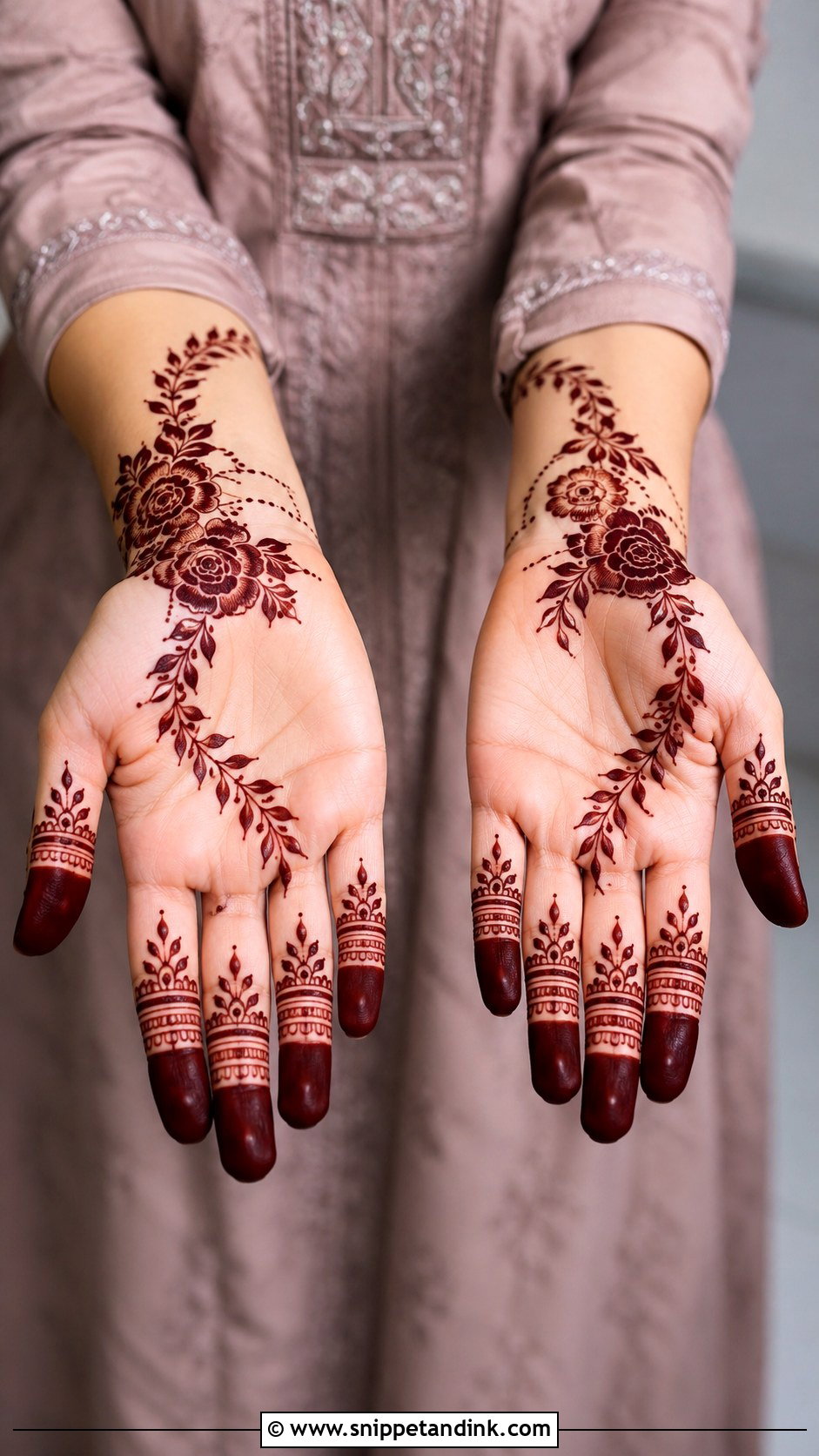
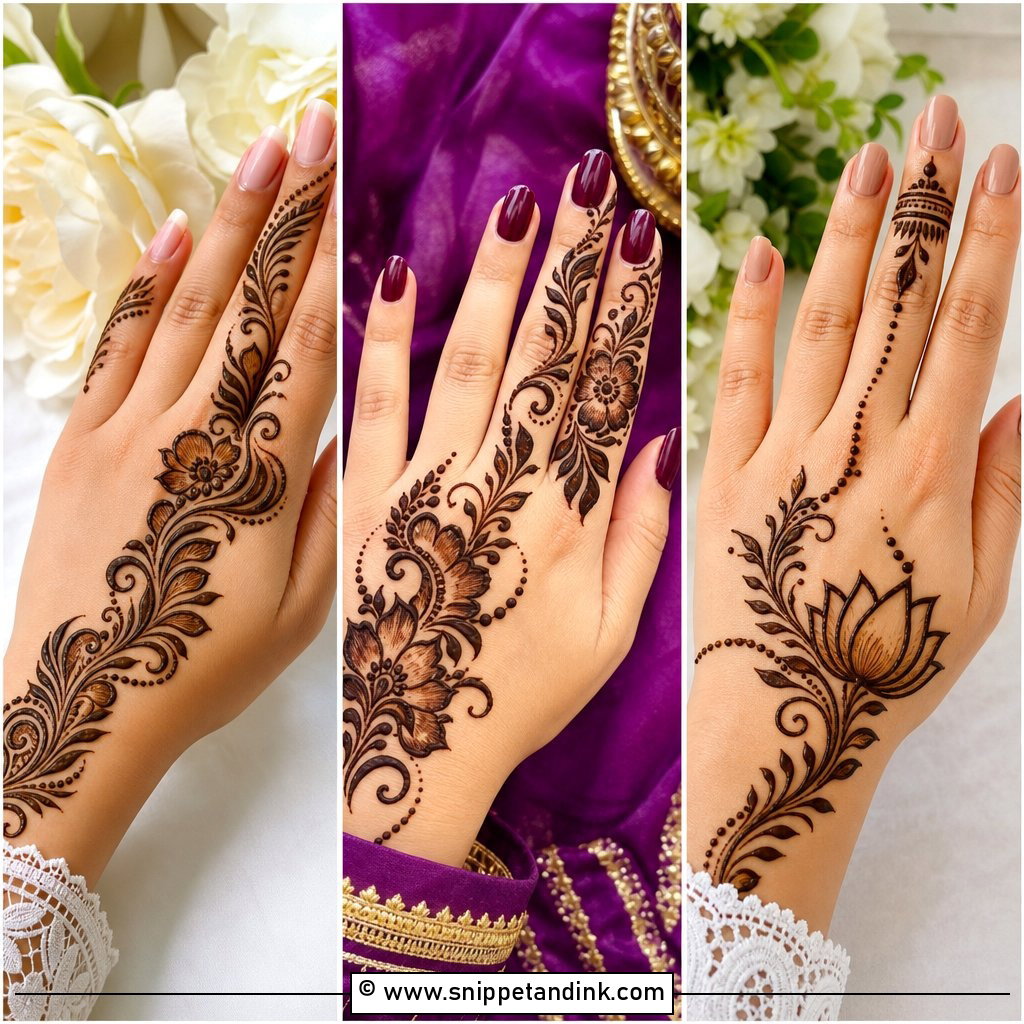
Negative space is a deliberate choice, not a gap I forgot to fill. A bold flower on the palm, a thin leafy trail and plain finger bands, with clear areas of skin left between each element. It suits small hands especially well because the pattern never looks cramped. The discipline is in the outlines: with fewer motifs, each one has to be clean, and I avoid fillers entirely.
14. Simple Arabic Chain Front Hand Mehndi Design
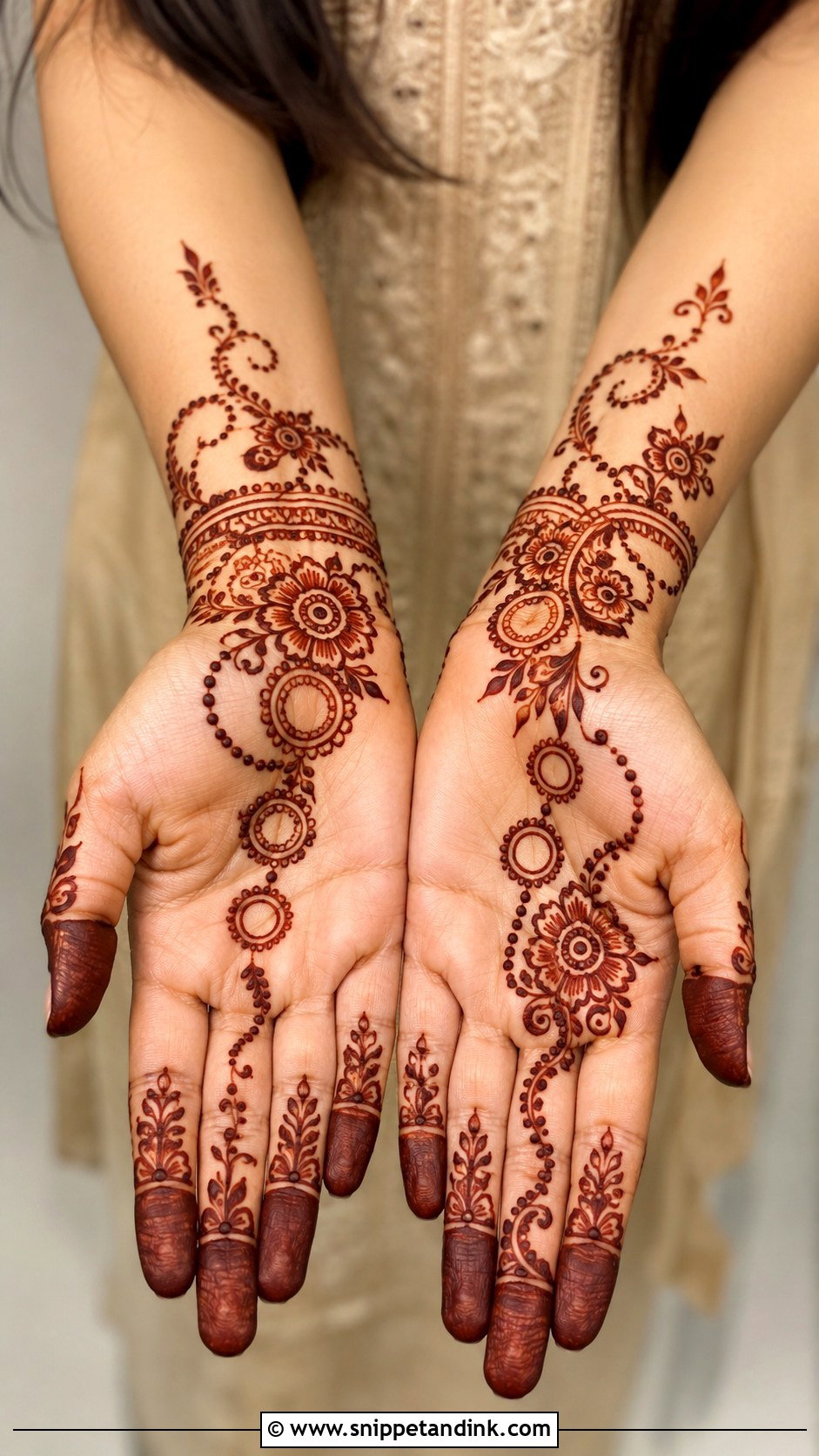
Chains carry the eye from the wrist to the fingers: dotted lines, curved strands and small floral links joining a palm flower, a bracelet band and ring-like finger details. Dotted work is forgiving for beginners because a slightly misplaced dot doesn’t show the way a broken line does. What does show is inconsistent dot size, so I keep the same pressure on the cone from start to finish. It’s a pretty option for Eid, an engagement or a guest at a simple wedding.



15. Simple Arabic Eid Front Hand Mehndi Design
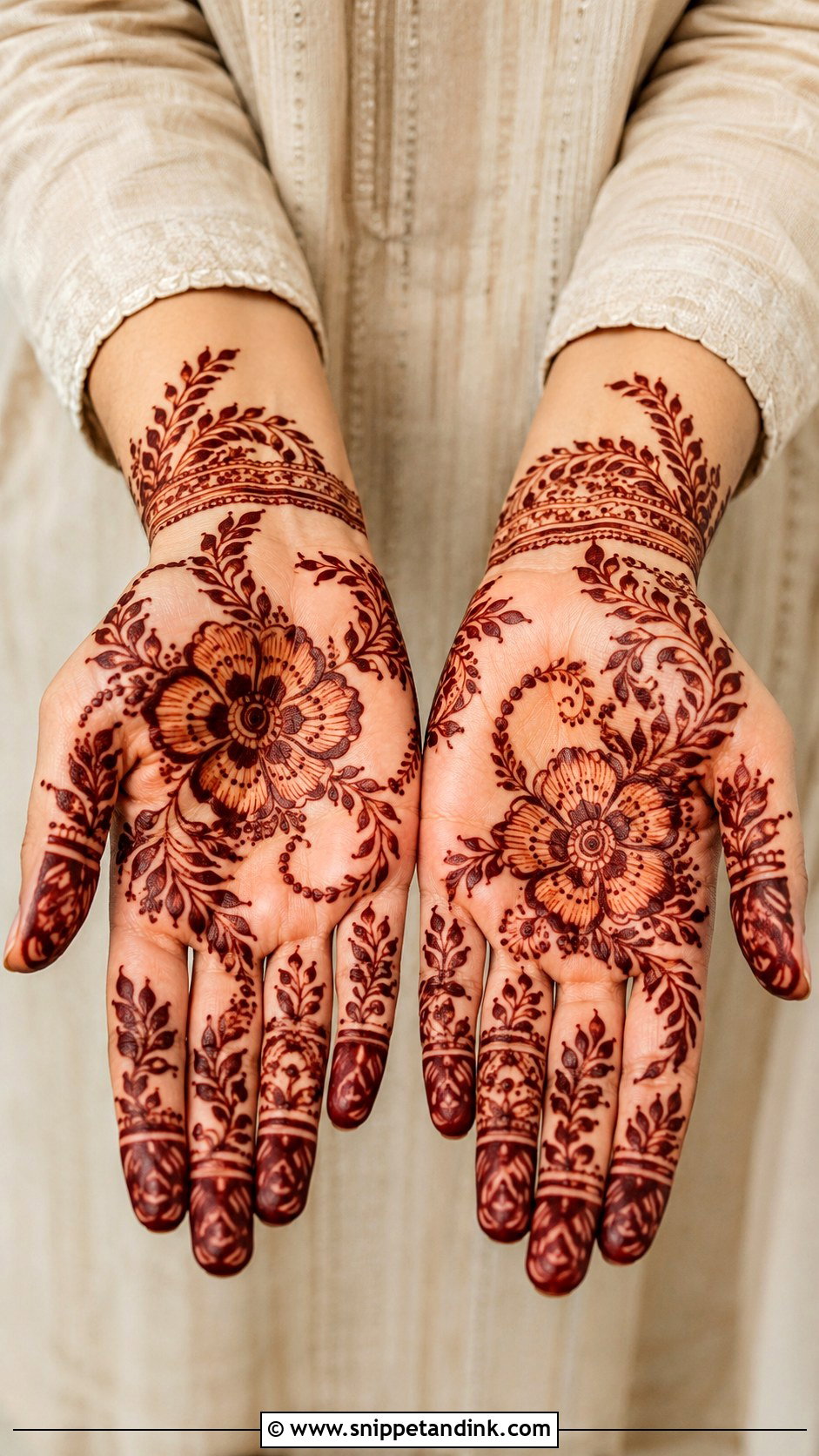
Eid henna has to be festive and fast, because it often happens the evening before with a queue of cousins waiting. A floral palm motif, leafy finger trails and a soft wrist border cover it. Arabic layouts suit the occasion because the bold shapes stain rich without dense filling, and they dry before anyone needs to help in the kitchen. A few extra dots around the flowers make it feel celebratory. The same layout scales up or down easily for girls, teens and adults.
16. Simple Arabic Wedding Guest Front Hand Mehndi Design
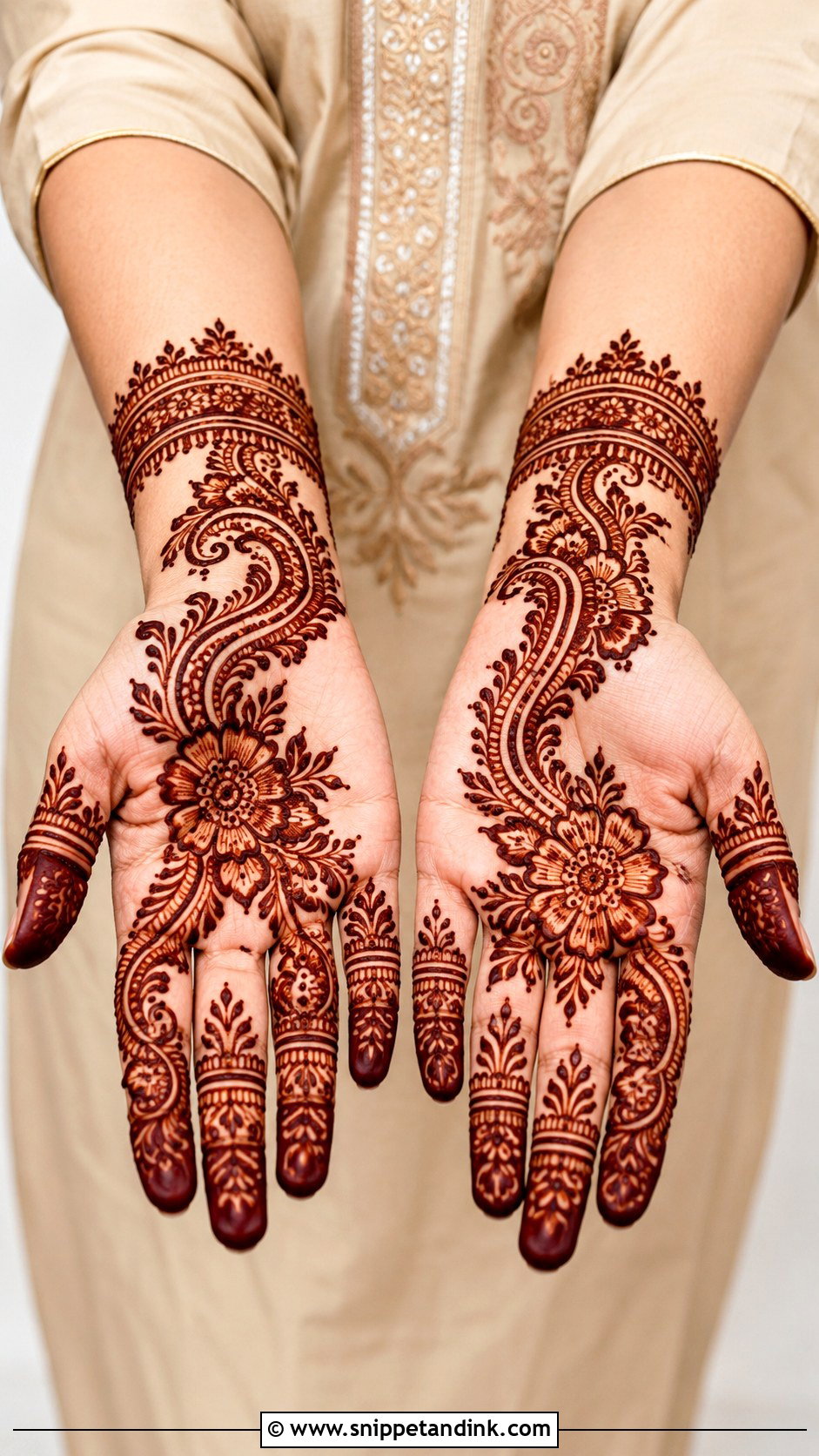
Guests should look dressed for a wedding without being mistaken for the bride. One main motif on the palm, such as a flower or paisley, flowing toward the fingers, with a wrist cuff below and slim bands or leafy tips above. It sits comfortably with rings and bangles. I give the main motifs a bold outline and keep the inner detail light, which keeps the hand clear in photographs taken from a distance.
17. Simple Arabic Bridal Front Hand Mehndi Design
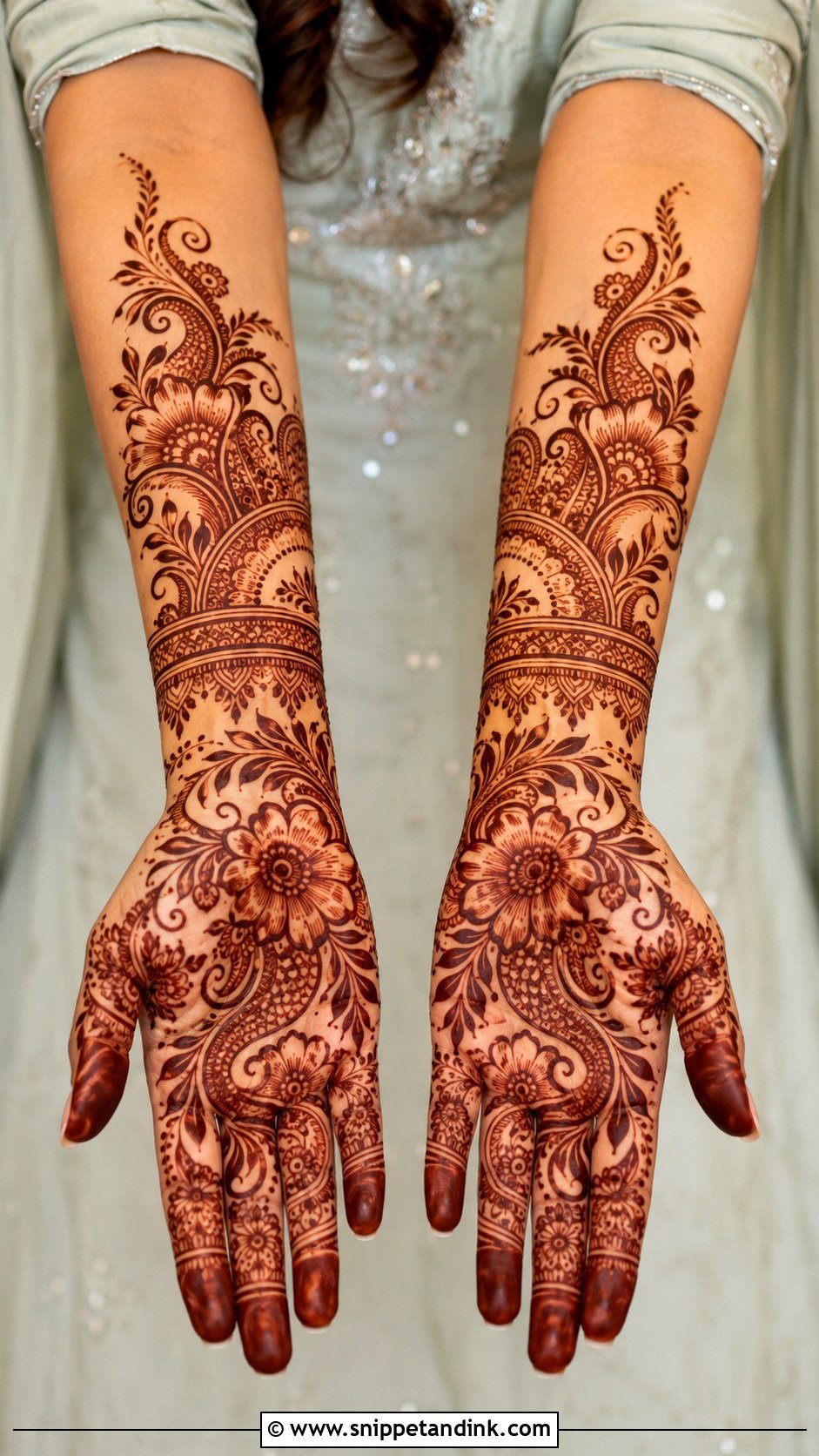
Plenty of brides now ask for lighter henna, especially for a nikah or an intimate wedding. This version still covers the palm, fingers, and wrist, but with larger flowers, paisleys, leafy trails and soft shading instead of packed detail. A diagonal flow lengthens the hand, and a neat cuff at the wrist gives the bridal finish. The two hands should mirror each other closely; in ceremony photos the palms are often held up side by side, and a mismatch is obvious.
18. Simple Arabic Engagement Front Hand Mehndi Design
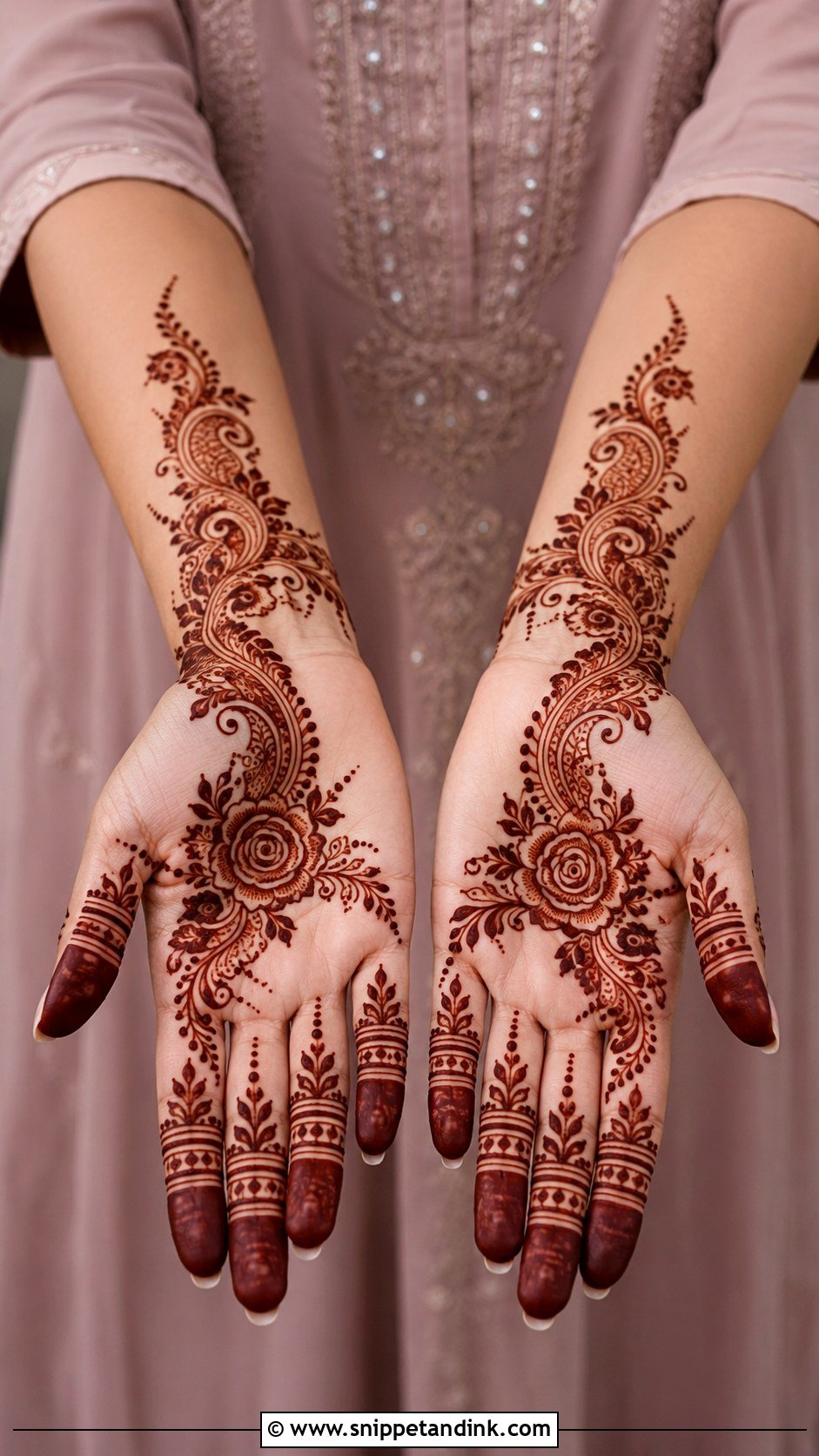
Engagement henna is mostly photographed around the ring, so I plan from the ring finger outward. A simple Arabic engagement front hand mehndi design can carry a central rose, a curved paisley trail and bracelet-style detail at the wrist, with a band on the ring finger that sits below where the ring will go. Keep the palm open around the main motif. A few dots near the fingertips finish it without stealing attention from the stone.
19. Simple Arabic Minimal Front Hand Mehndi Design
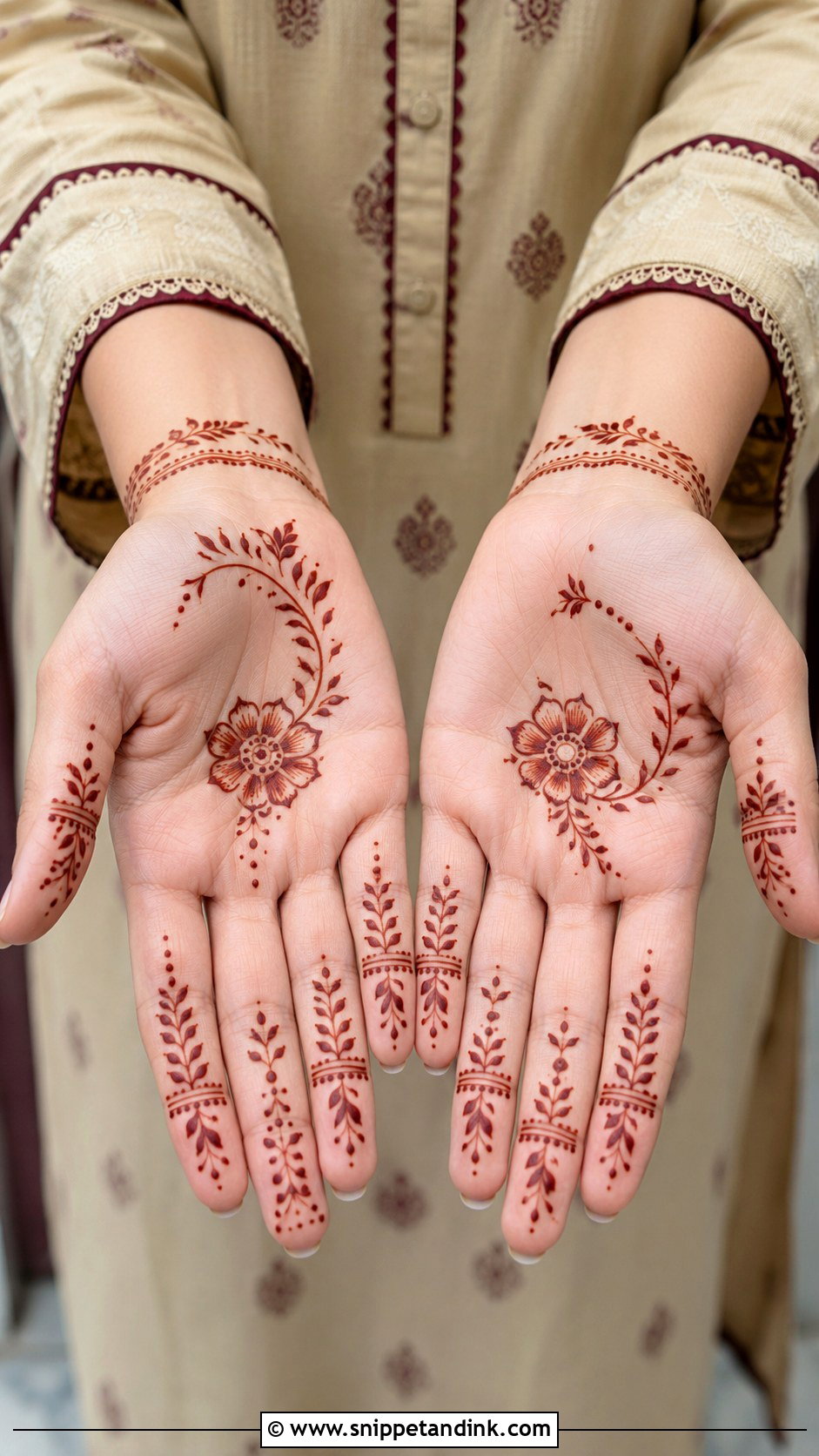
Sometimes the right amount of henna is very little. A small flower on the lower palm, one curved leafy line toward the index finger and a few finger accents can be enough. The wrist can stay bare or take one thin line. It’s practical for office days and small gatherings, and it doesn’t overwhelm short fingers. With so few lines, each dot and curve has to be placed carefully, so this is not the design to rush.

20. Simple Arabic Shaded Front Hand Mehndi Design
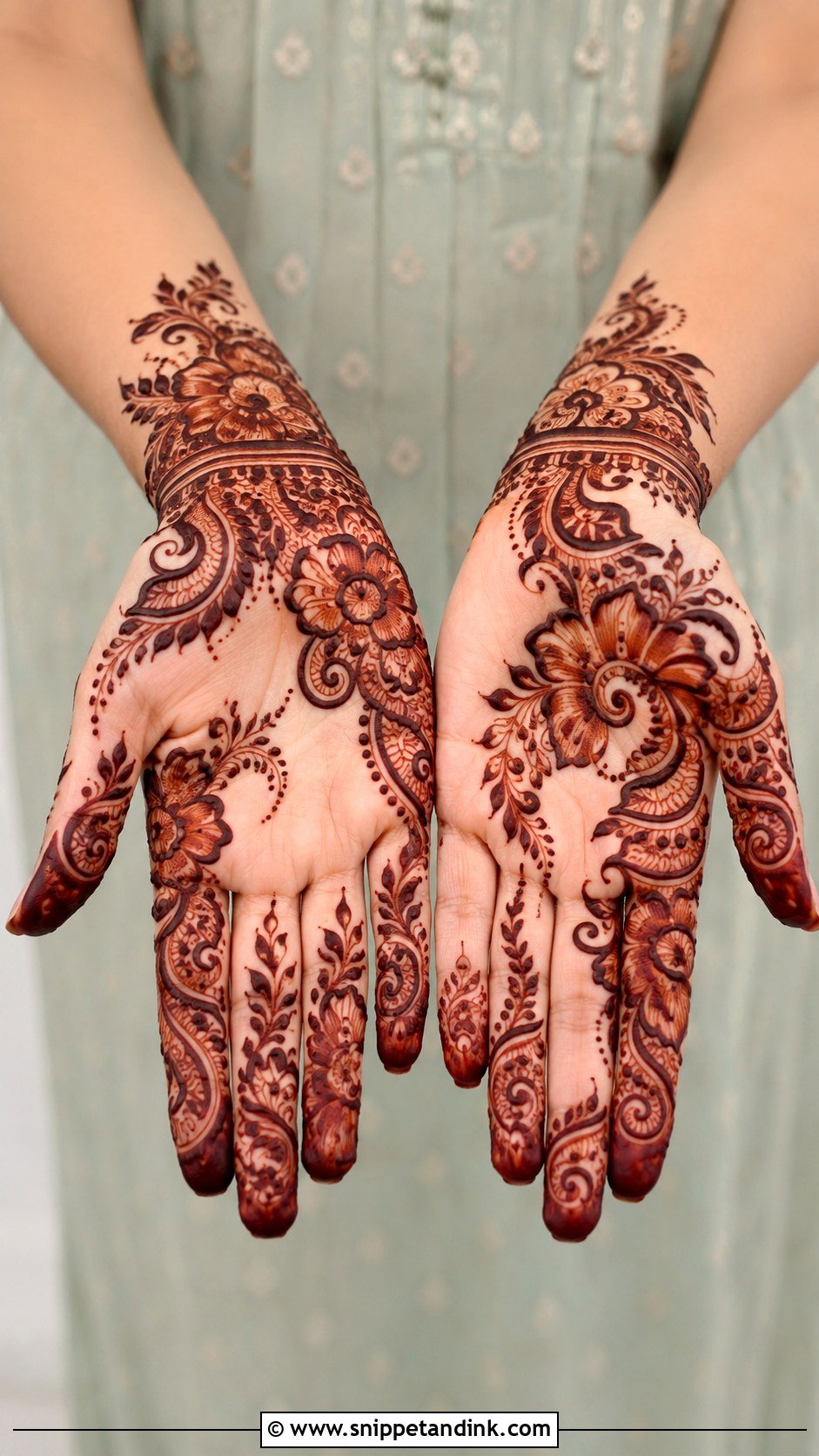
Shading in henna means thin, close strokes inside a petal or leaf that stain lighter than the solid outline around them, which gives depth. On the palm, I shade one large flower and leave the smaller vines to the wrist and fingers plain. Strokes go in one direction and stop short of filling the shape. Overdo it and the shaded area stains as dark as the outline, and the depth disappears.
21. Simple Arabic Half Hand Mehndi Design
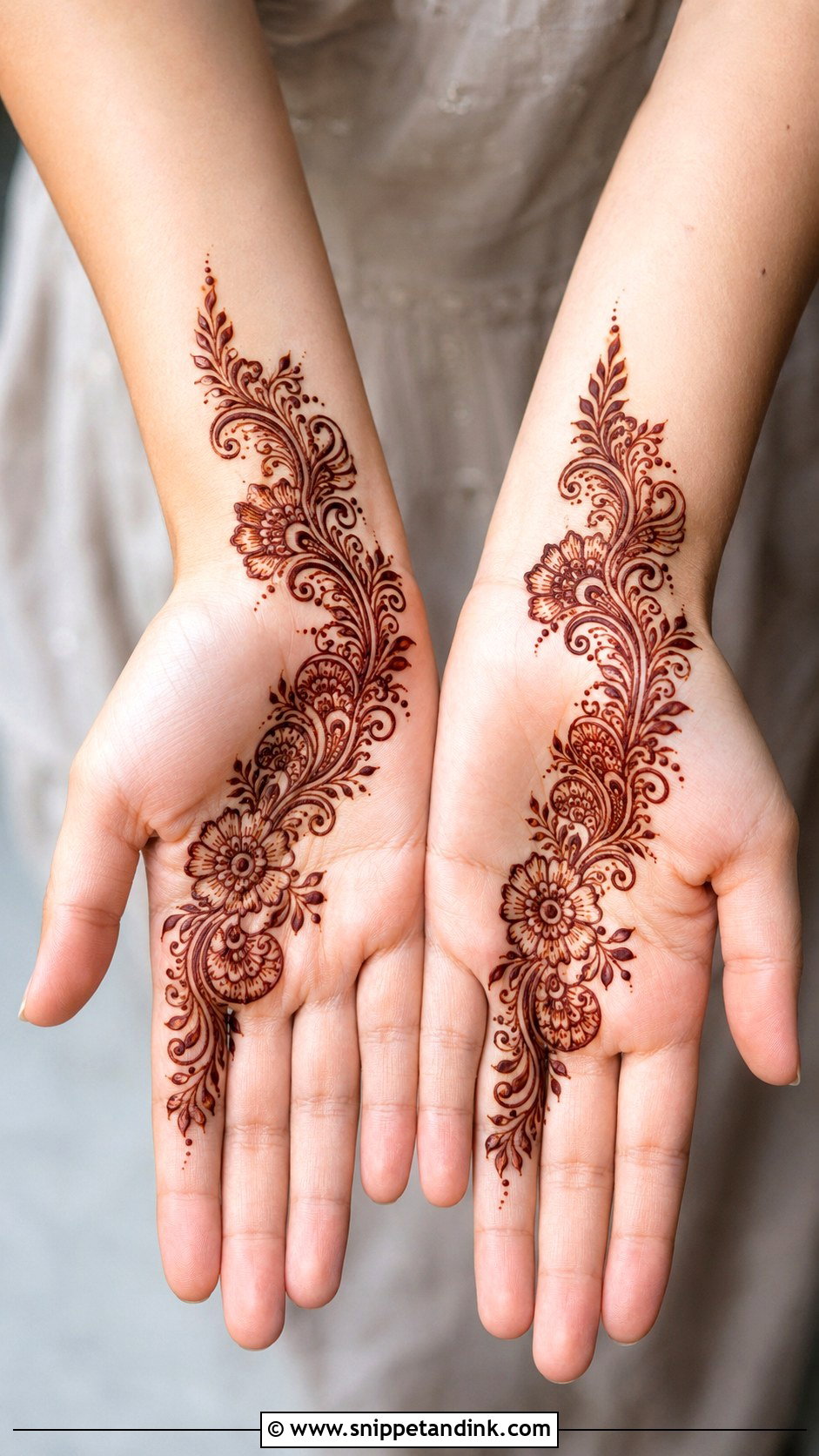
Half coverage on the front usually means from the wrist to the middle of the palm, or from the palm up into the fingers. A diagonal floral trail is the easiest route: one large flower, a few leaves, a small paisley, and the other side of the palm left open. The fingers can take light decoration or stay almost bare. When someone arrives an hour before an event, this is what I suggest, since it dries quickly.
22. Simple Arabic Wrist To Finger Mehndi Design
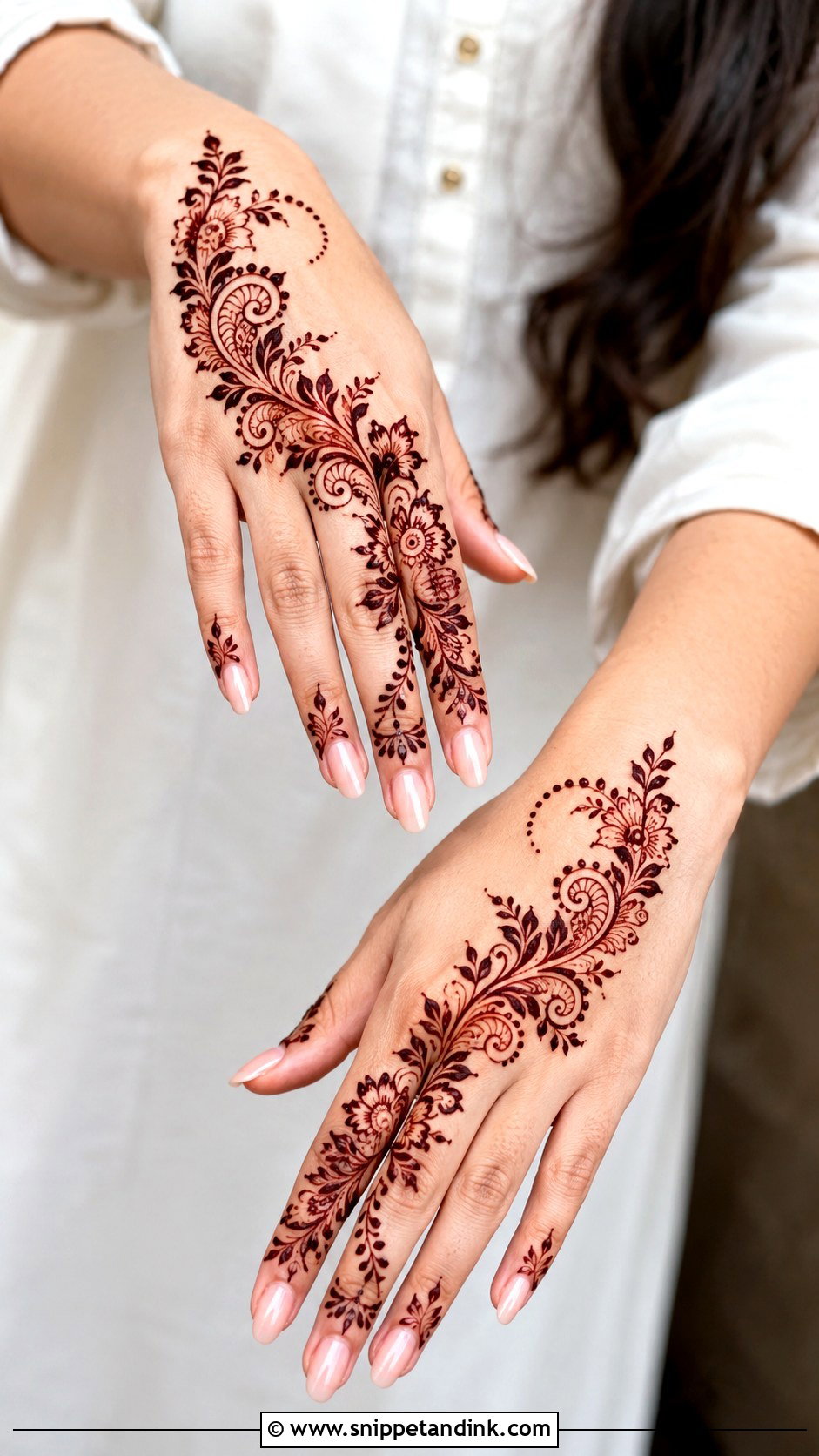
A floral cuff at the wrist, then a single line of flowers, leaves, paisleys and dots travelling diagonally to one finger. That direction is what makes the hand look longer. I steer the trail to the index or middle finger on most hands; ending at the little finger shortens the look. Keep the empty spaces clean and give the other fingers small bands or dots so they don’t look forgotten. It works for Eid, weddings and family gatherings.
23. Simple Arabic Ring Front Hand Mehndi Design
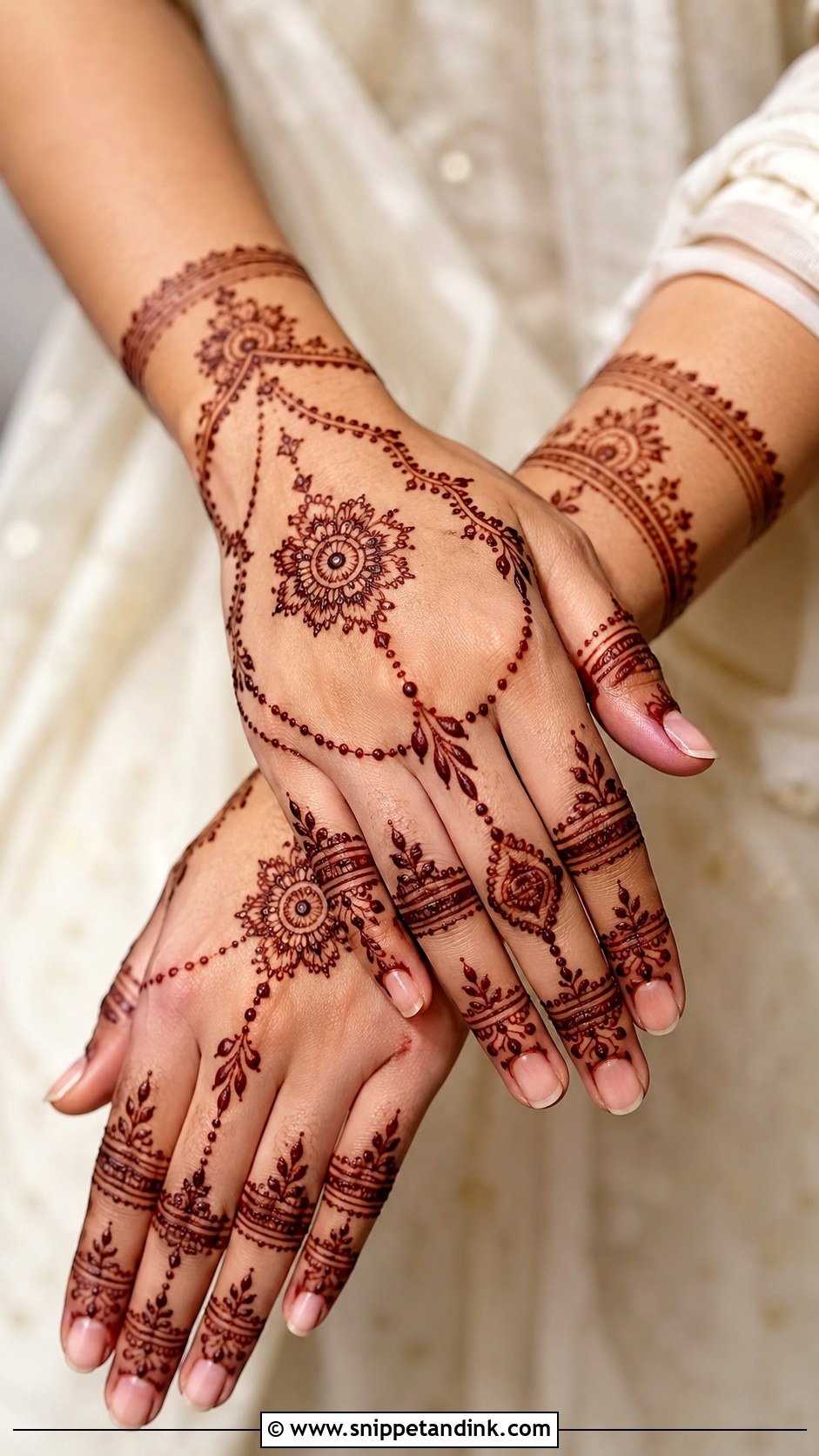
Thin ring bands on each finger, a chain leading down into the palm and a small floral or paisley motif in the centre. The fingers carry most of the charm, so the palm can stay light. I keep the bands slim and evenly spaced, and I place them between the knuckles, not on them; a band drawn over a knuckle cracks as soon as the finger bends. Dots along the chains soften the look for an engagement or a girls’ night.
24. Simple Arabic Lotus Front Hand Mehndi Design
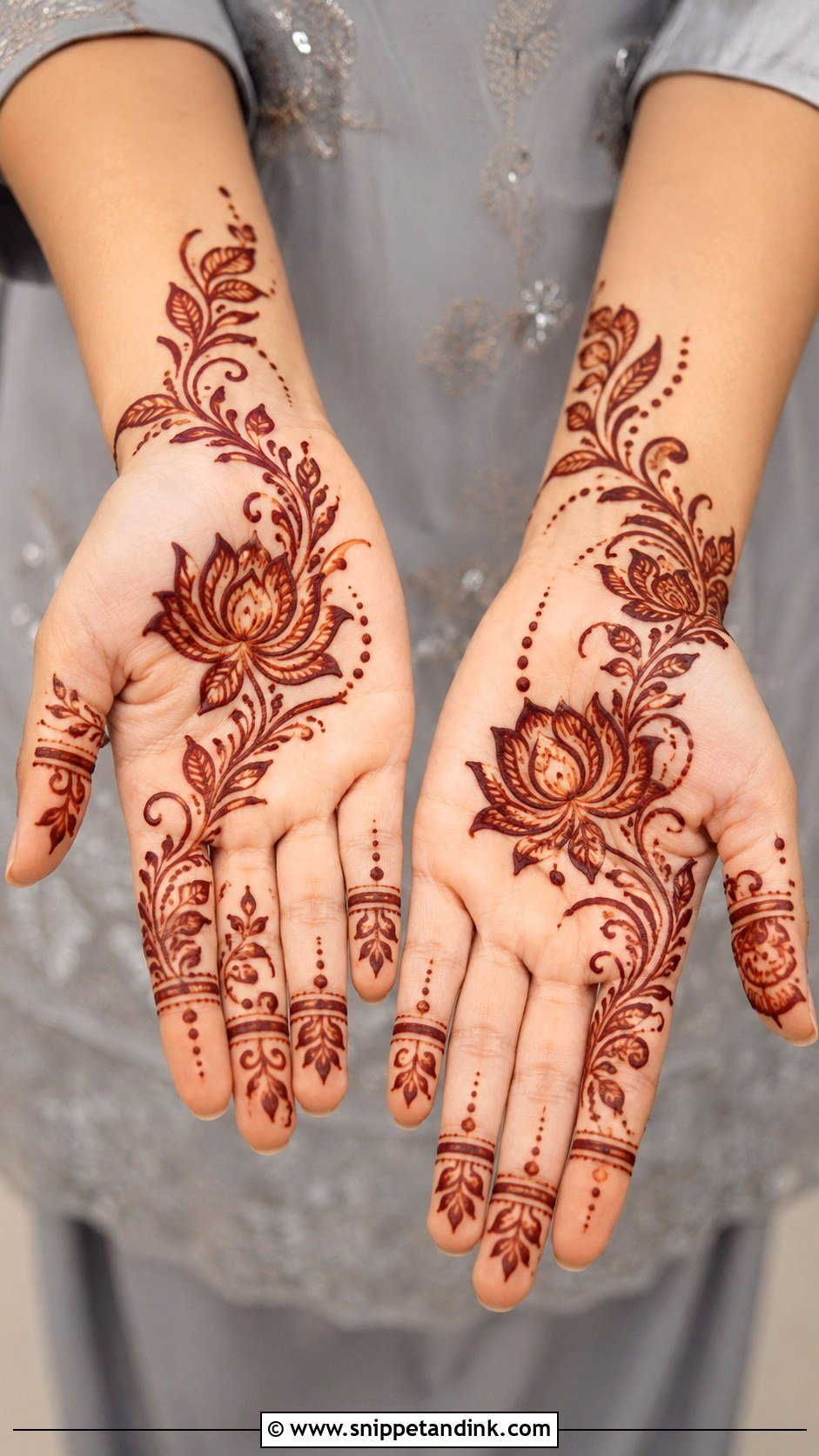
The lotus is easy to recognise, so it needs very little around it. I place it on the palm or near the wrist, give the petals bold outlines and only a few inner lines, then extend curved leaves and small petals toward the fingers. Open Arabic spacing keeps it visible. A few dotted curves near the fingertips tie the hand together, and it sits well with traditional outfits.
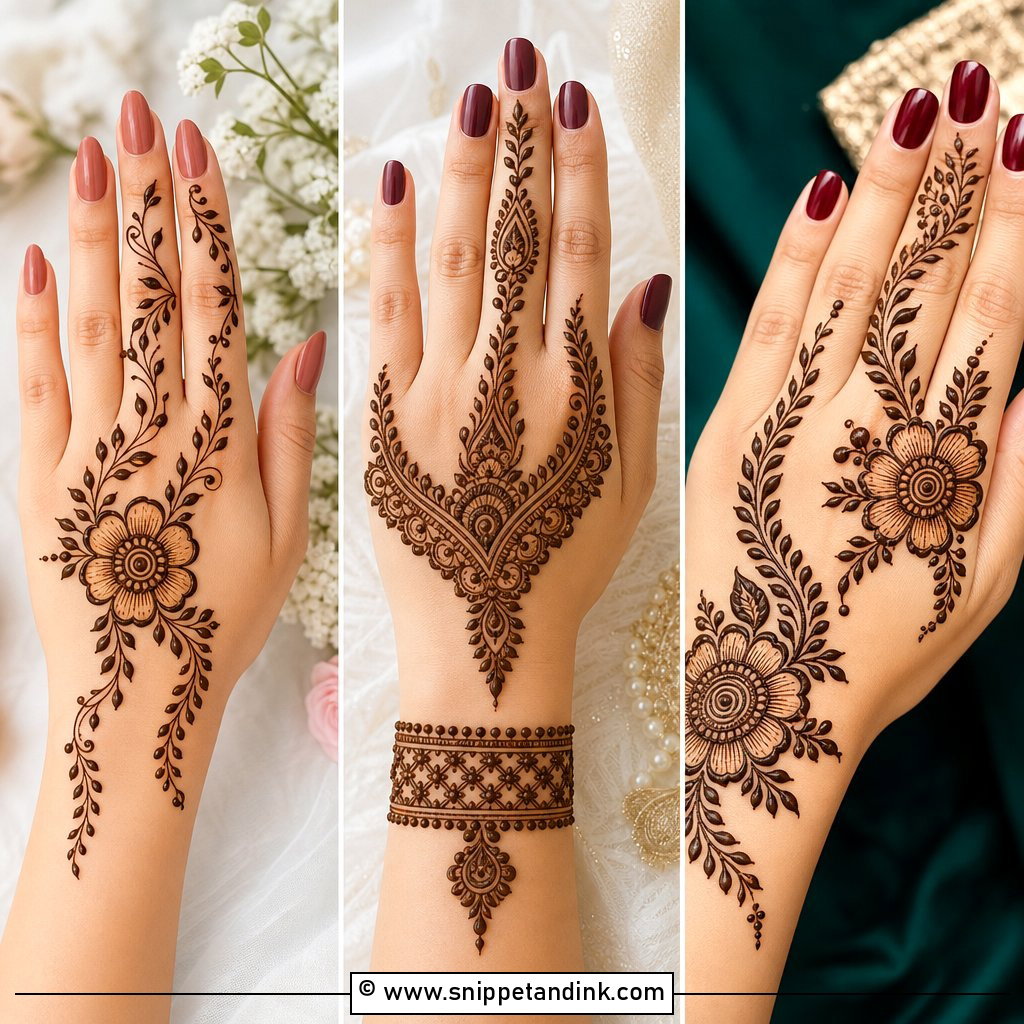

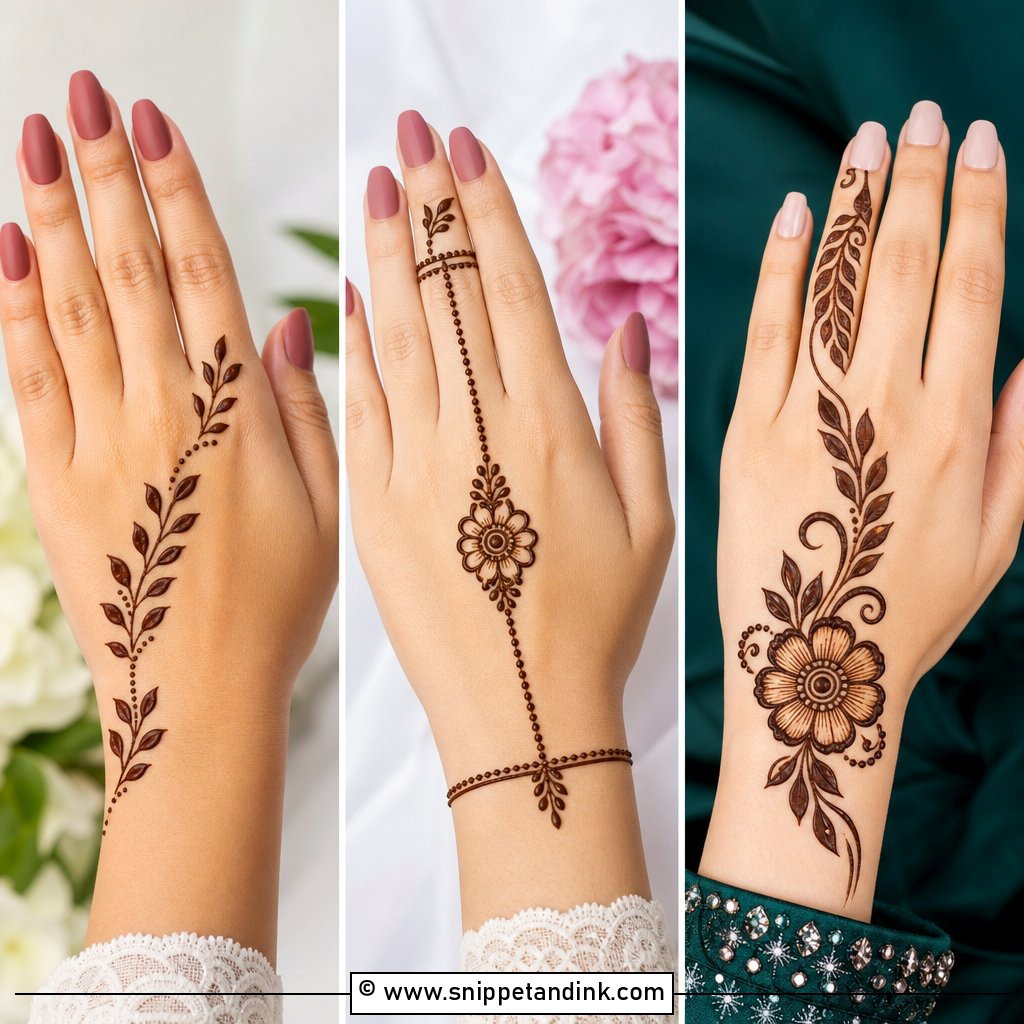
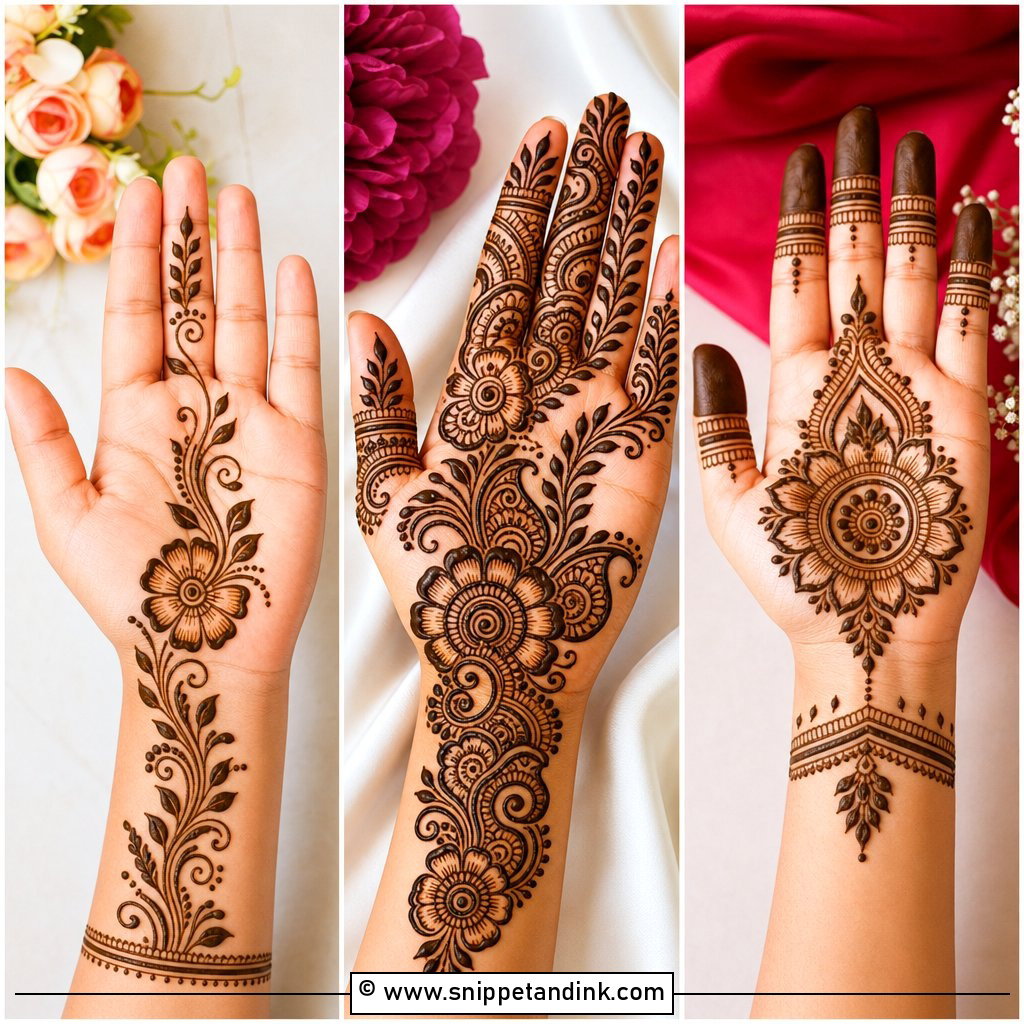
25. Simple Arabic Geometric Front Hand Mehndi Design
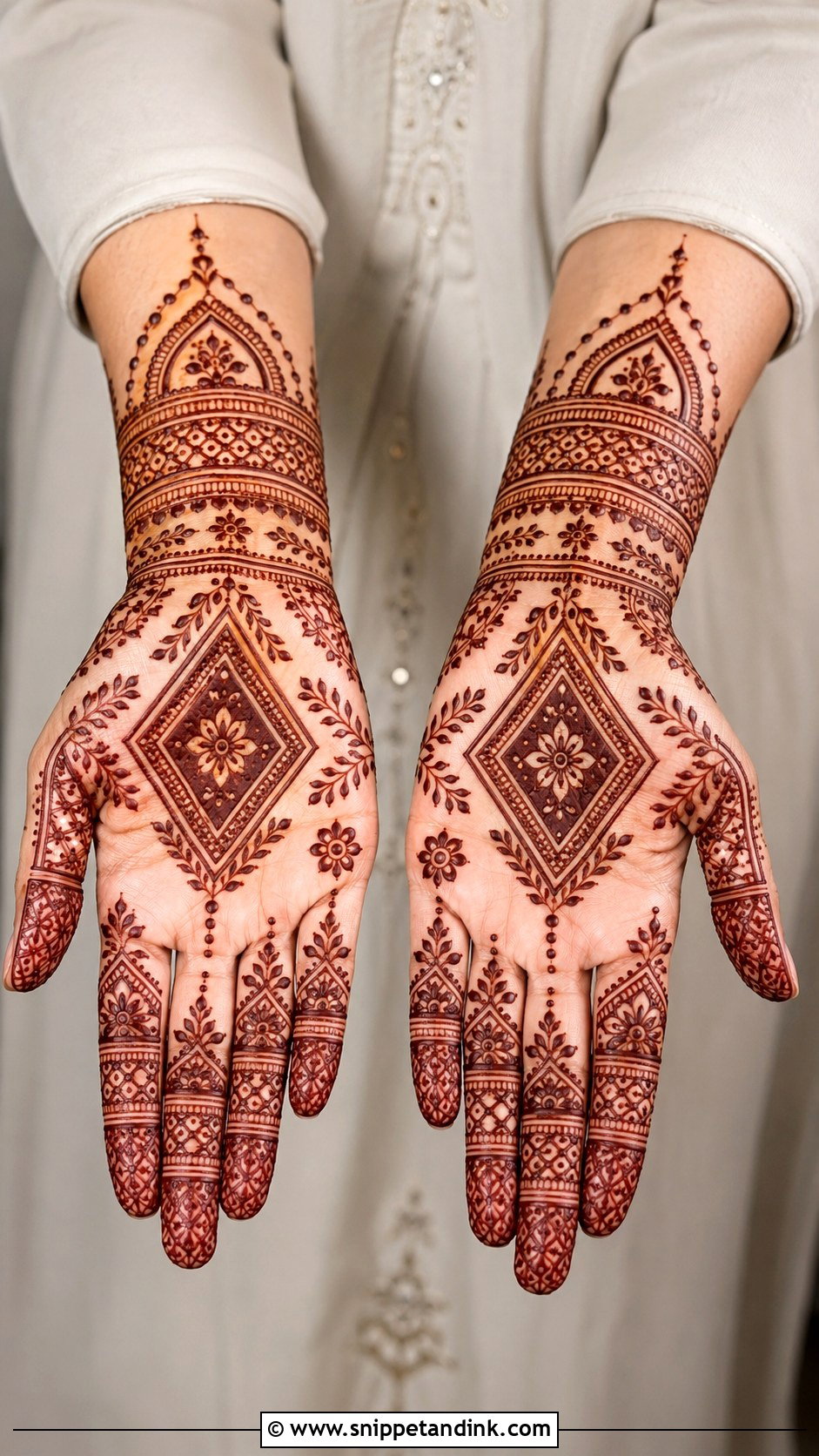
Diamond lines, small triangles and slim bands mixed with a few flowers or leaves give Arabic henna a modern edge. A geometric cuff or a diamond jaali patch on the palm, with matching line work on the fingers, is the usual layout. I always add some curves; pure geometry on a palm can feel harsh. The shapes must be even. A lopsided diamond stands out much more than a lopsided petal, so this suits a steady hand or a patient artist.
26. Simple Arabic Khafif Front Hand Mehndi Design
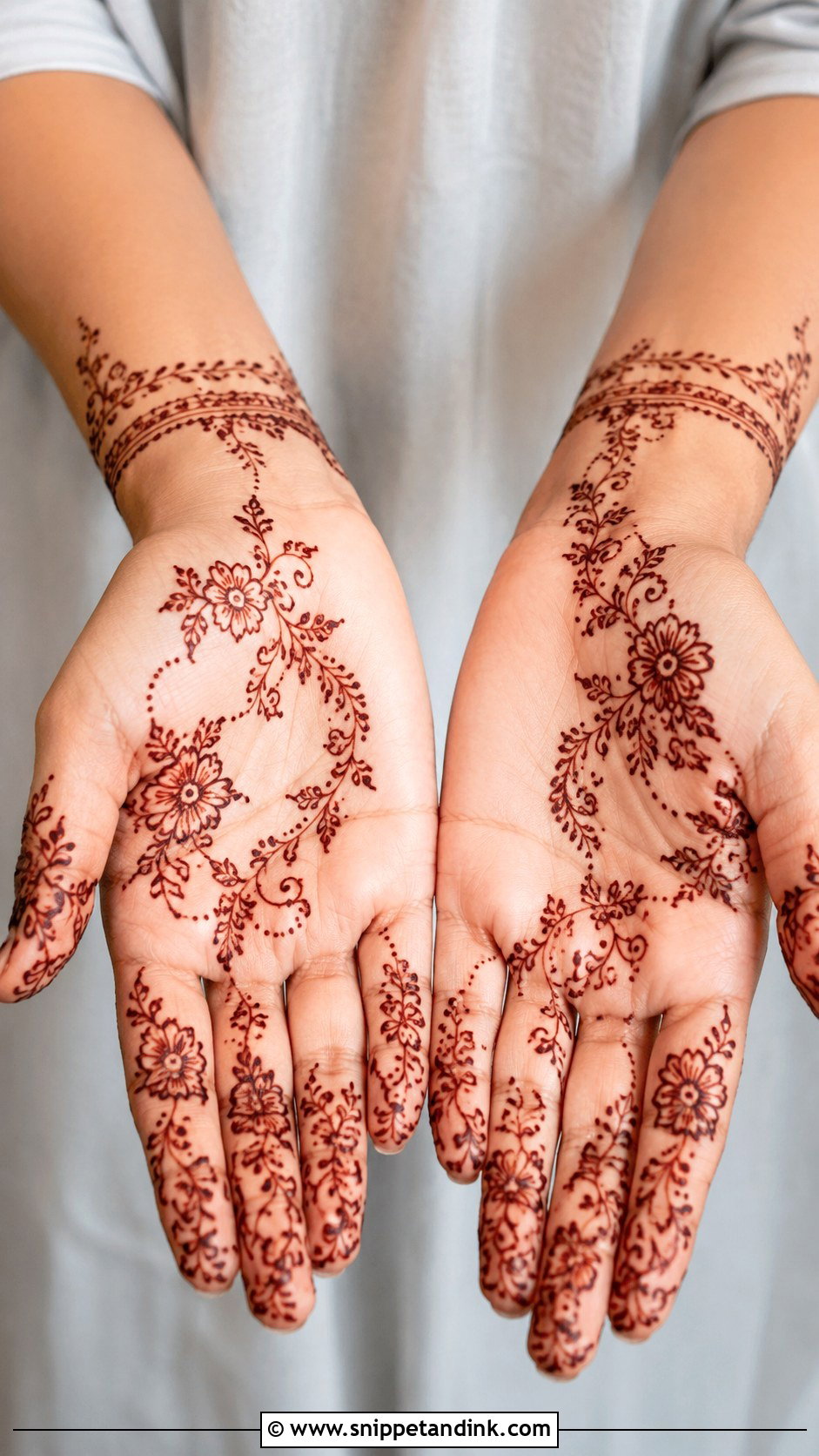
Khafif means light, and the style is known for fine, delicate lines. To keep it simple, I build an open main trail and add the fine detail only along it: thin floral vines, tiny leaves, dotted curves and soft lines at the wrist. The palm is never packed. Applying it yourself? Cut the cone tip as small as you can manage and work slowly, because fine lines break easily if the paste is too thick or the cone is squeezed unevenly.
27. Simple Arabic Gulf Front Hand Mehndi Design
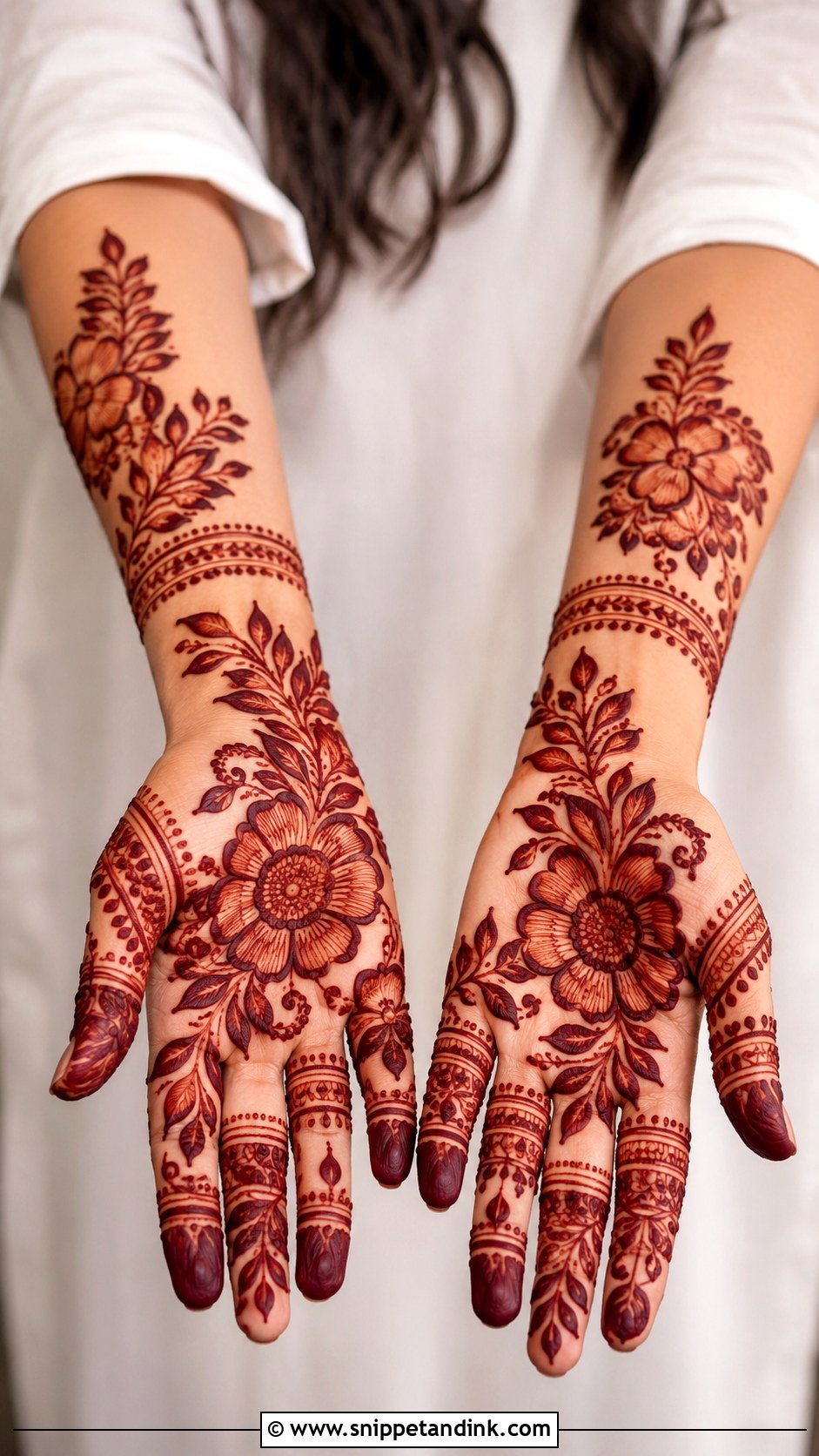
Gulf-style henna uses big flowers, thick outlines and generous leafy trails, so it looks substantial even with plenty of bare skin. On the front hand, a large palm flower moves down toward the wrist on curved vines, with bold tips, small leaves and dotted bands on the fingers. Thick outlines hold more paste and stain deeper, which is why this style is so visible in photos. Leave clear space around each main motif or the bold lines start to crowd each other.
28. Simple Arabic Dubai Front Hand Mehndi Design
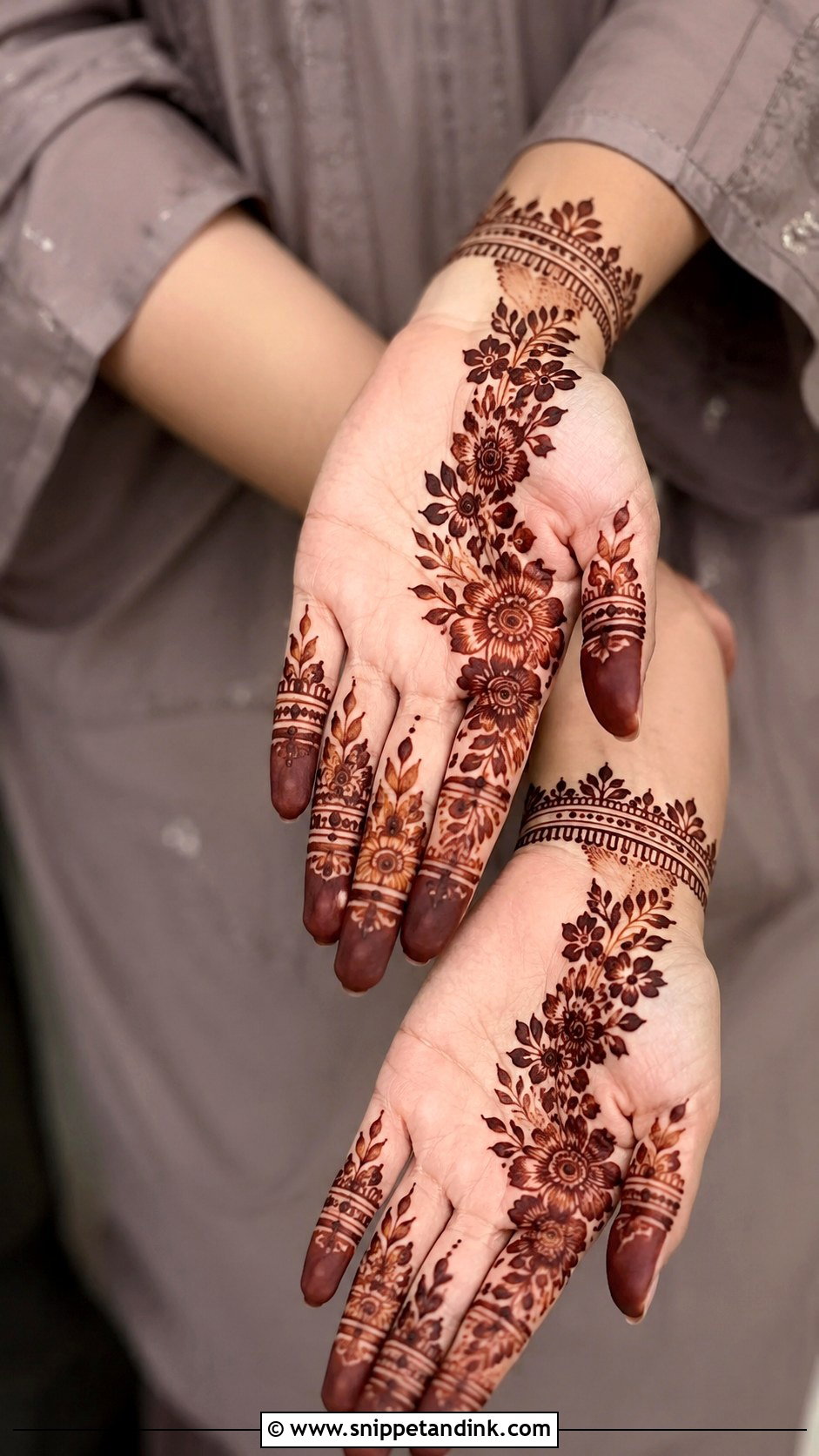
What people call Dubai style is sleek and bold: a diagonal floral trail with clean outlines, neat finger detail and a slim cuff at the wrist, leaving part of the palm open. Larger motifs replace tiny fillers, which keeps it quick to apply. It suits parties, Eid and guest outfits. It looks sharpest when the stain develops to a deep maroon, so give it the full time on the skin and keep it away from water afterwards.
29. Simple Arabic Indo Arabic Front Hand Mehndi Design
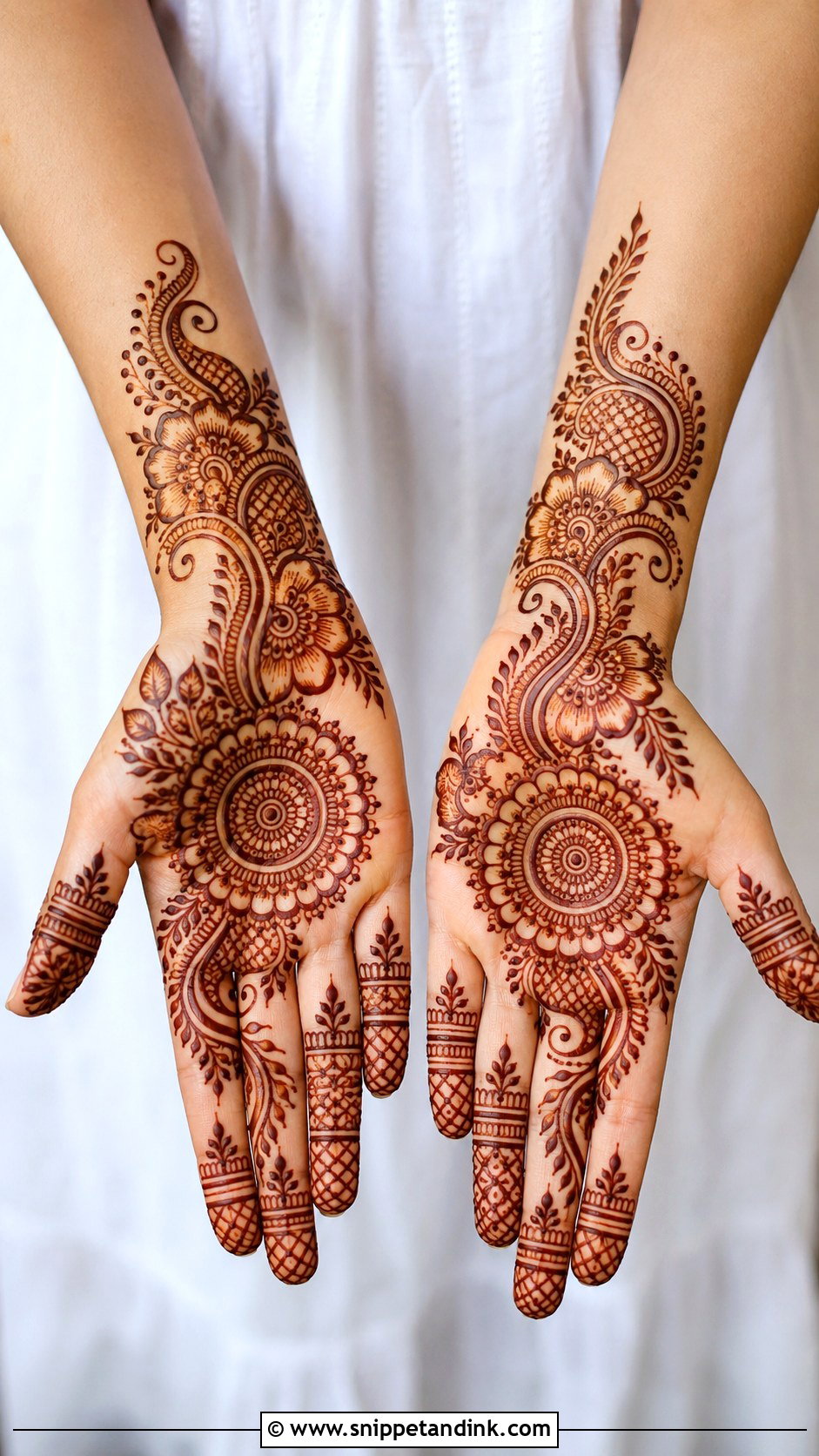
Indo-Arabic takes an Indian element, usually a small mandala or a paisley, and places it within flowing Arabic flowers and vines. The main motif sits on the palm and the trail drifts toward one side, with light bands, dots and leaves on the fingers. I resist the urge to fill the empty areas; once they close up, it simply becomes Indian mehndi. It’s a good middle ground for weddings and family functions.
30. Simple Arabic Round Tikki Front Hand Mehndi Design
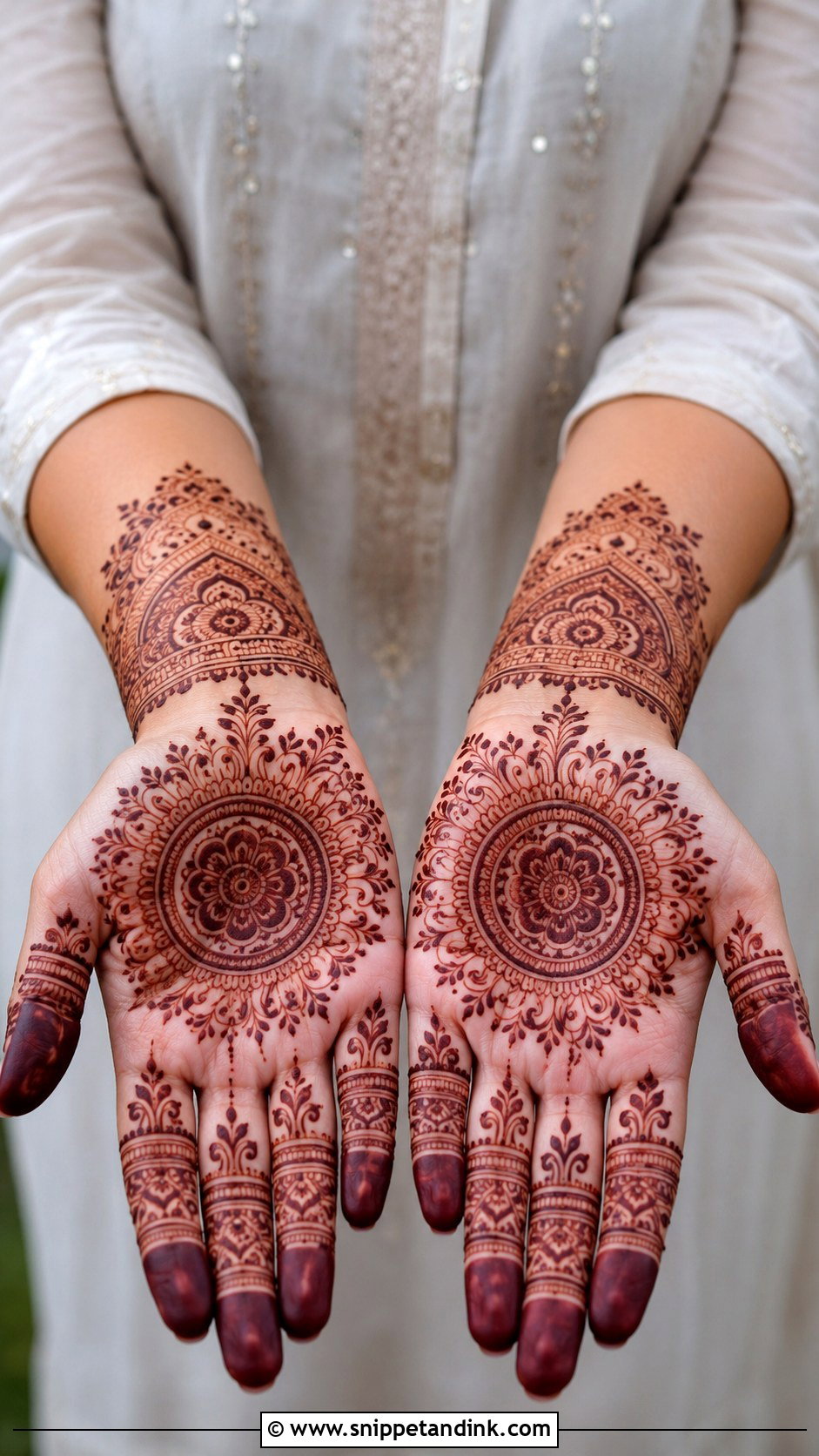
The tikki is a circle in the centre of the palm, sometimes a floral mandala, and it pairs well with Arabic vines and leaves around it. Simple bands, leafy tips or tiny florals finish the fingers. Young girls love it, and beginners find it manageable because the main shape is so clear. I keep the circle bold and leave the surrounding area airy so the hand doesn’t look crowded.
31. Simple Arabic Heart Front Hand Mehndi Design
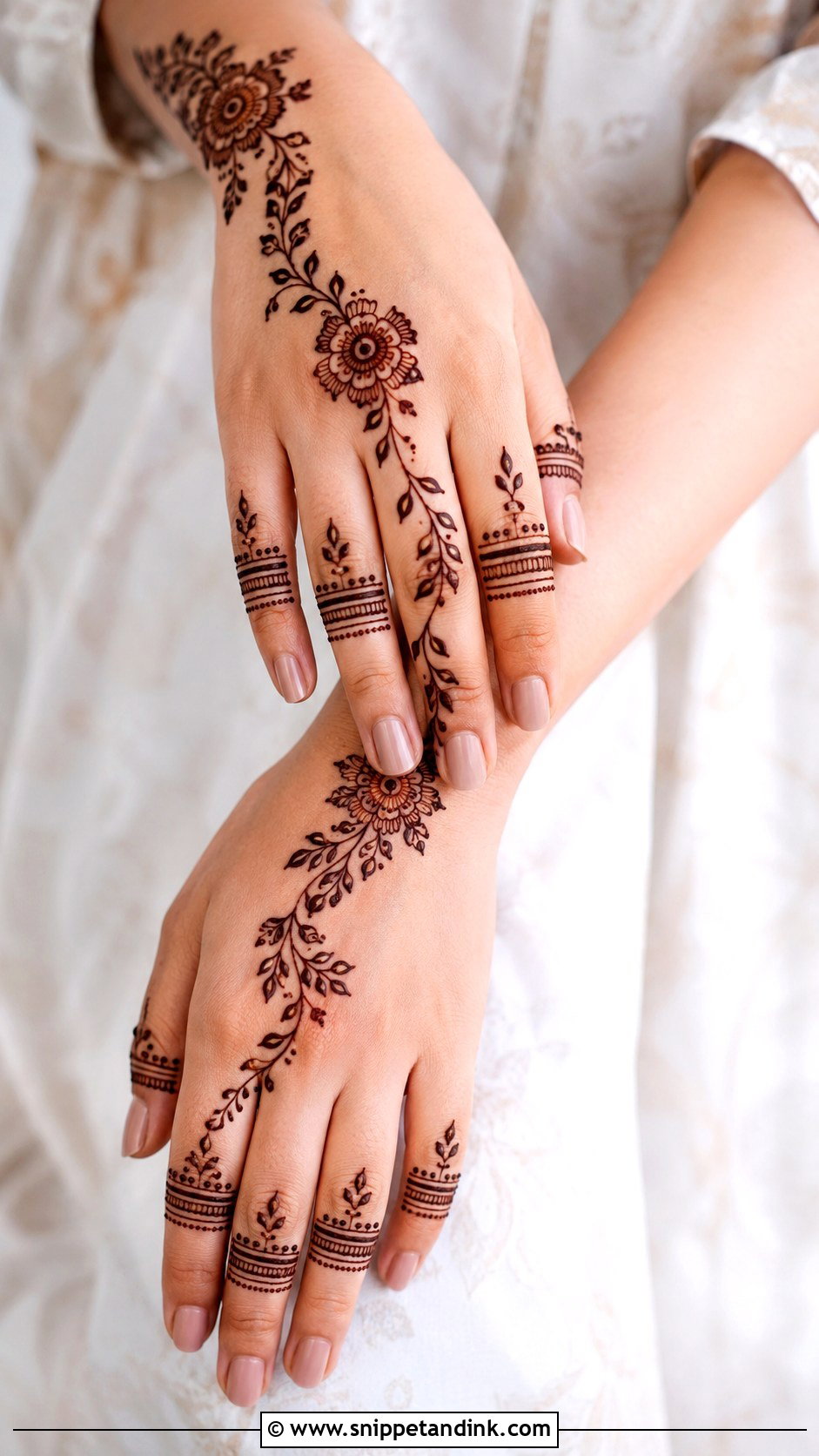
A small heart tucked into a floral palm pattern or worked into a curved vine adds a playful touch for an engagement or an anniversary. I surround it with leaves, dots and a paisley or two, so the design still reads as henna rather than a doodle. Keep the heart small. A large one dominates the palm and looks out of place next to the floral work. Thin bands or dotted trails on the fingers finish it, and it’s easy to personalise with a small initial inside.
32. Simple Arabic Kids Front Hand Mehndi Design
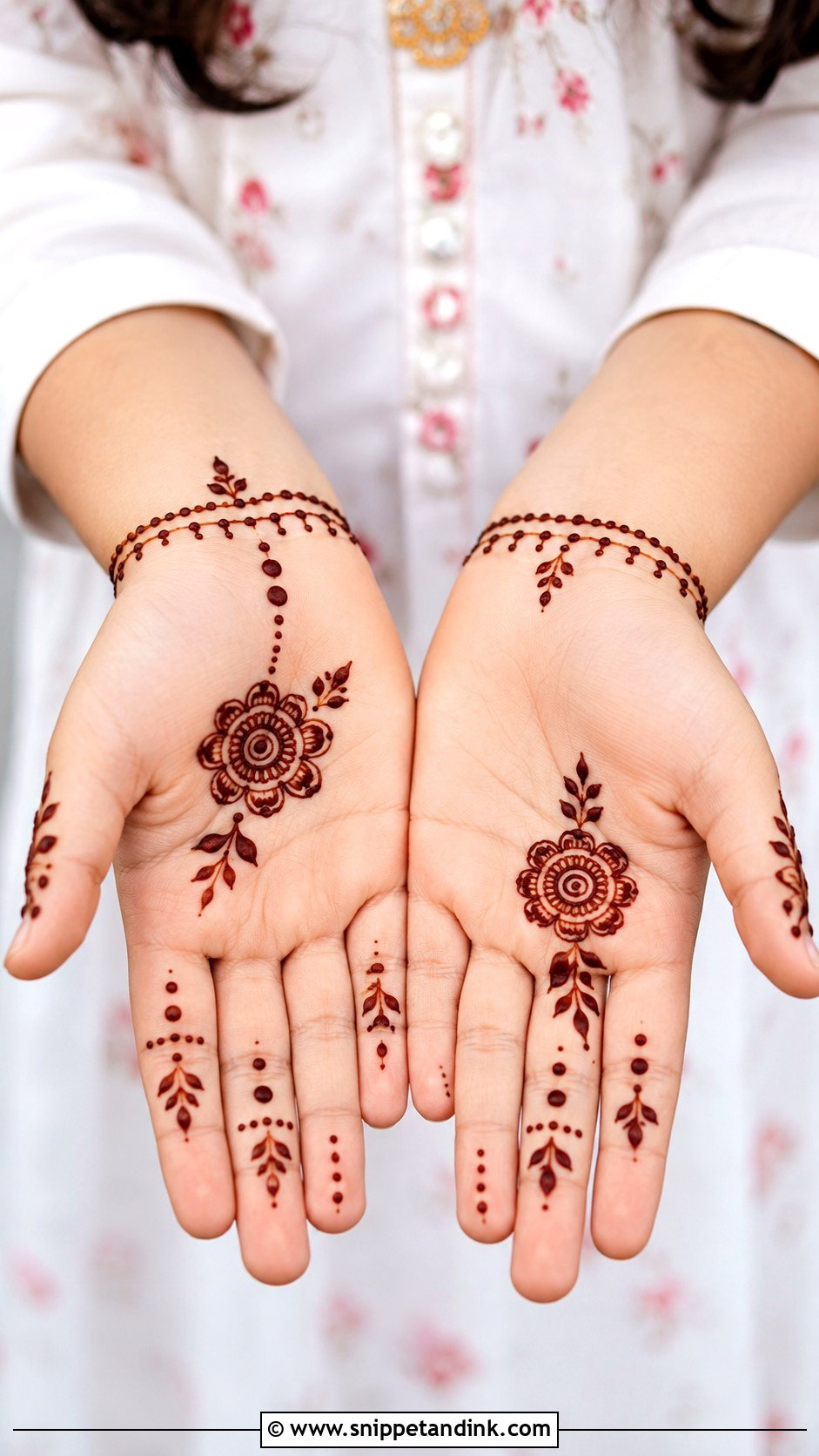
Children need designs that are quick and comfortable: a small flower on the palm, a few leaves and dotted lines on the fingers, maybe a tiny bracelet at the wrist. Rounded, soft shapes suit little hands. I keep it light because a child who has to keep still for long will move before the paste dries. Use only natural henna, and walk away from any product that promises an instant black stain; that is not henna and can cause serious skin reactions.
33. Simple Arabic Teen Front Hand Mehndi Design
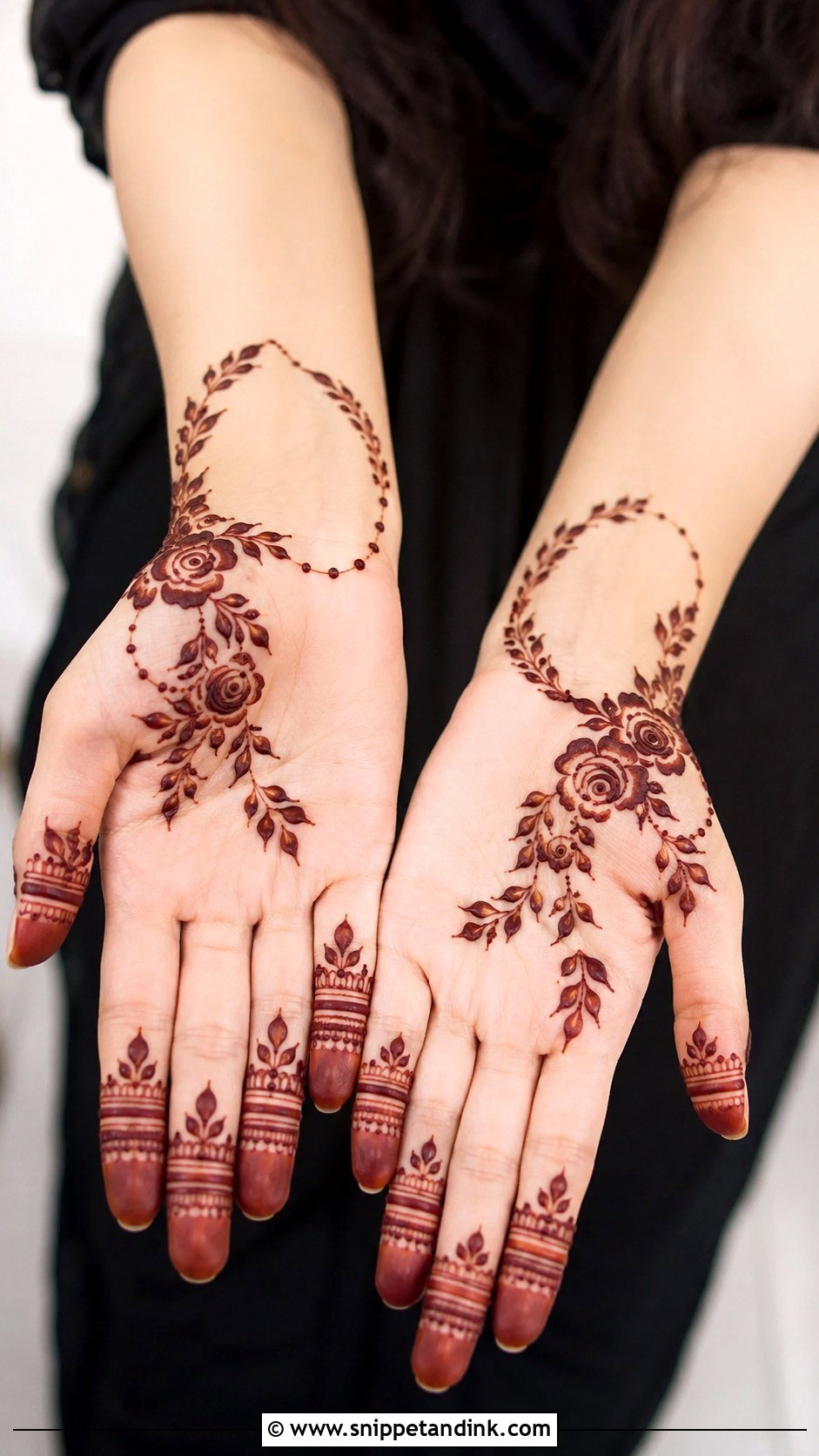
Teens usually want something that feels current rather than bridal. A small rose trail on the palm, finger bands and a slim wrist line give enough decoration for photos. Open spacing reads modern, and dotted chains or tiny leaves near the fingertips add personality. I keep the palm motif simple and let the fingers carry the detail, which suits Eid, birthdays, family weddings and school events.
34. Simple Arabic Beginner Front Hand Mehndi Design
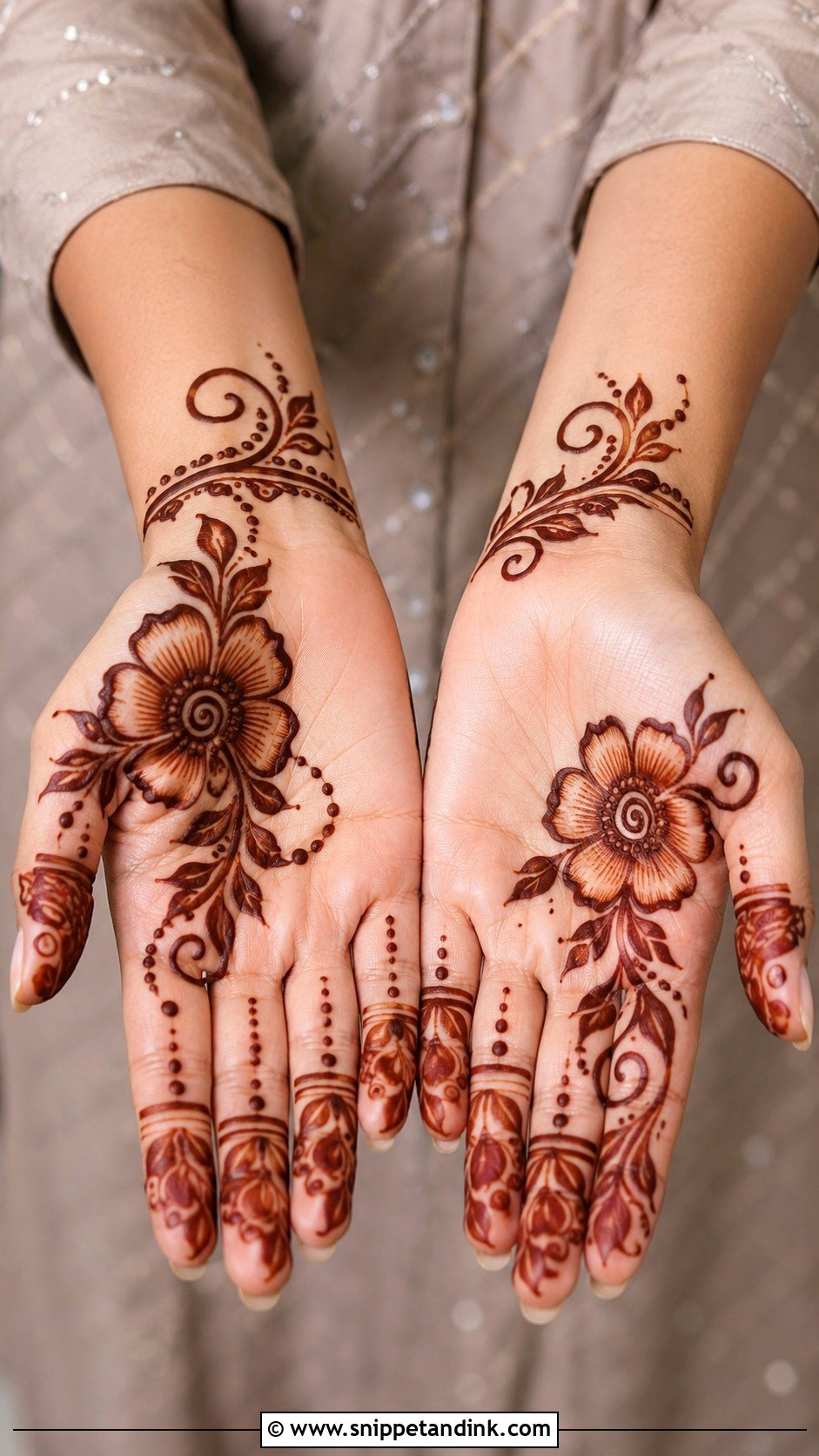
New to the cone? A beginner Arabic front hand design should use large, easy shapes: one flower on the palm, two or three leaves and a curved vine joining them, then dots and short lines on one or two fingers. Arabic spacing helps here, because small wobbles are less visible with skin around them. Hold off on fine filling until your hand is steadier. Bold outlines and simple repeats give you a design that looks finished, even on a first attempt.
35. Simple Arabic Modern Front Hand Mehndi Design
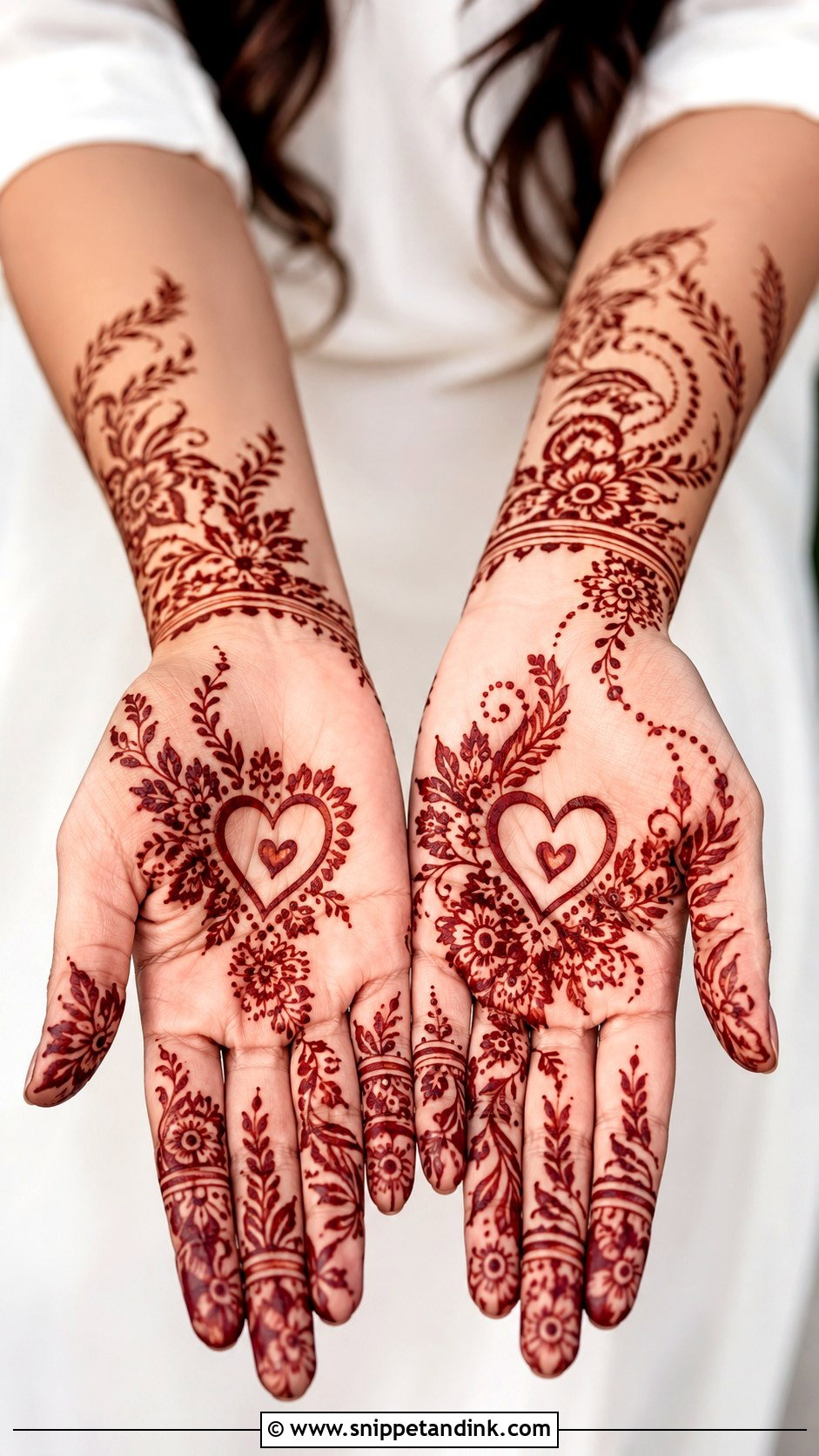
Modern Arabic henna is about placement: one bold floral trail, sleek finger bands and a minimal touch at the wrist, with deliberate bare skin around everything. It works with a lehenga or with jeans. Clarity is what makes it photograph well, so I keep the lines smooth, the dots even and the motifs balanced. It’s proof that front hand henna doesn’t need to be heavy to look finished.
Why Is One Palm Darker Than the Other?
It’s the most common worry I hear the day after an application, and it almost always has an ordinary cause. The palm is skin like anywhere else; it reacts to warmth, friction and water.
- The paste came off sooner on one hand, often the one used to eat, scroll or pick things up.
- One hand was washed earlier, sometimes without noticing, when rinsing a cup or helping in the kitchen.
- One hand stayed colder. Henna develops more slowly on cool skin, so a hand resting on a cold floor or next to an air conditioner lags behind.
- The lines on one hand were drawn finer, because artists tend to tire on the second hand. Thinner paste means a lighter stain.
A mismatch on the first morning often evens out as the colour keeps deepening over the next day, so wait before you judge it. Keep both hands warm, keep them dry for as long as you can, and don’t scrub the lighter one to match. If it’s still noticeably lighter on the day of the event, a ring or bangles on that hand balance the look in photos far better than anything you can do to the stain.
Your Palm Does Half the Work
Arabic front hand henna is flexible: flowers, paisleys, vines, mandalas, bracelets, chains and open space can be combined in endless ways. Keep it minimal for everyday wear, make it festive for Eid, or carry it fuller for an engagement or a wedding. Beginners do well with it because the shapes are bold and the movement is clear. Let your occasion, the shape of your hand and how long you can sit still guide the choice, and the palm’s natural colour will do the rest.
You'll Like These Ideas:










Leave a Reply