
The bridal hands people call Kashees style have a recognisable signature: dense Pakistani bridal detailing, strict symmetry from one hand to the other, bold floral bands and a stain that settles into deep maroon. What makes it look expensive rather than busy is planning. Every motif gets a defined section, and the eye is given somewhere to rest between them. The designs below run from full forearm coverage to a light bracelet for a nikah, with notes from my side of the cone on what each one asks of the bride’s time, skin and patience.
When to Sit for Bridal Mehndi So the Stain Peaks on Time
Henna doesn’t show its true color when the paste comes off. It starts bright orange and darkens over the next day or two as it oxidises, reaching its deepest shade at around 24 to 48 hours. That’s why I book most brides one or two days before the main event, not the morning of.
- Wax, shave, exfoliate and get any manicure done before your appointment. After henna, these strip the stain.
- Arrive with clean, dry skin and no lotion or oil, which block the dye from soaking in.
- Ask your artist whether they mix their own paste. Fresh natural henna is usually kept chilled or frozen until it’s used.
- Plan for the full sitting plus drying time, and arrange for someone else to drive you home.
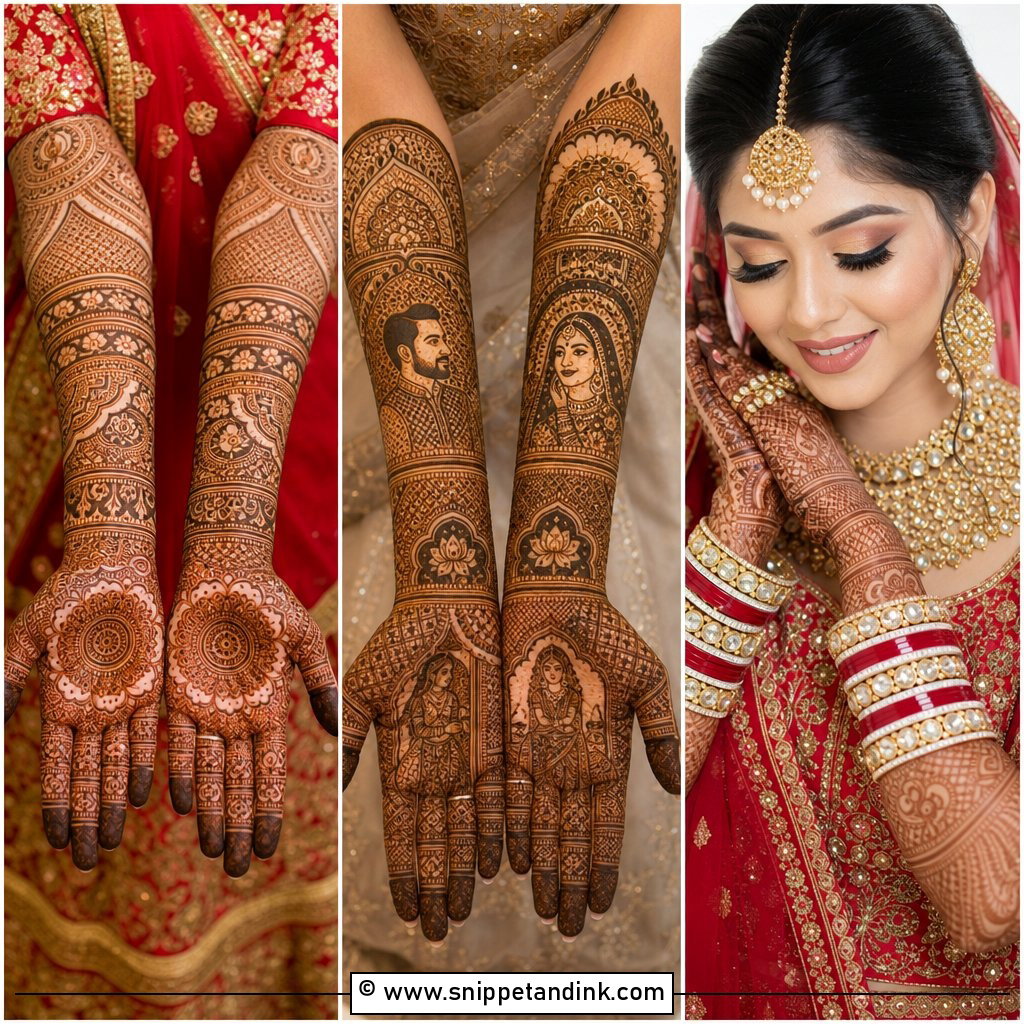
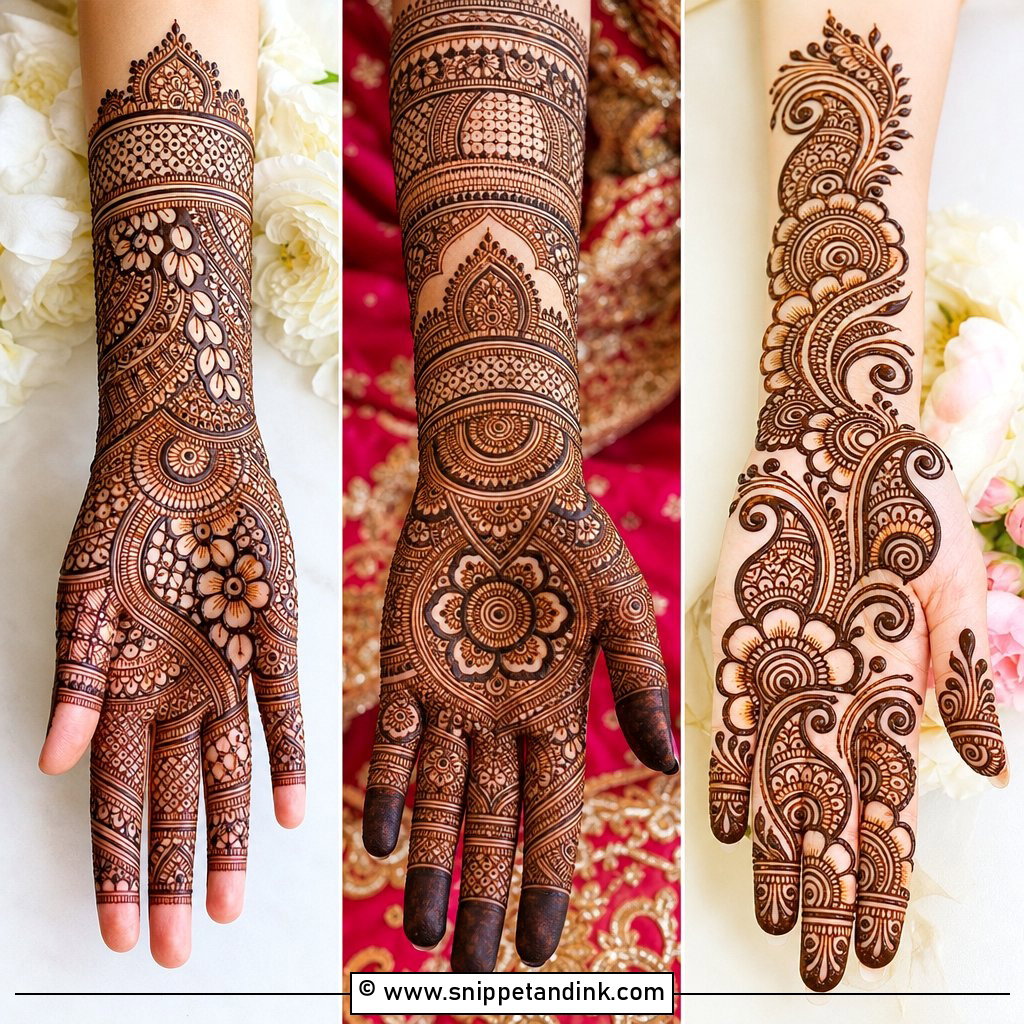
1. Kashees Full Hand Bridal Mehndi
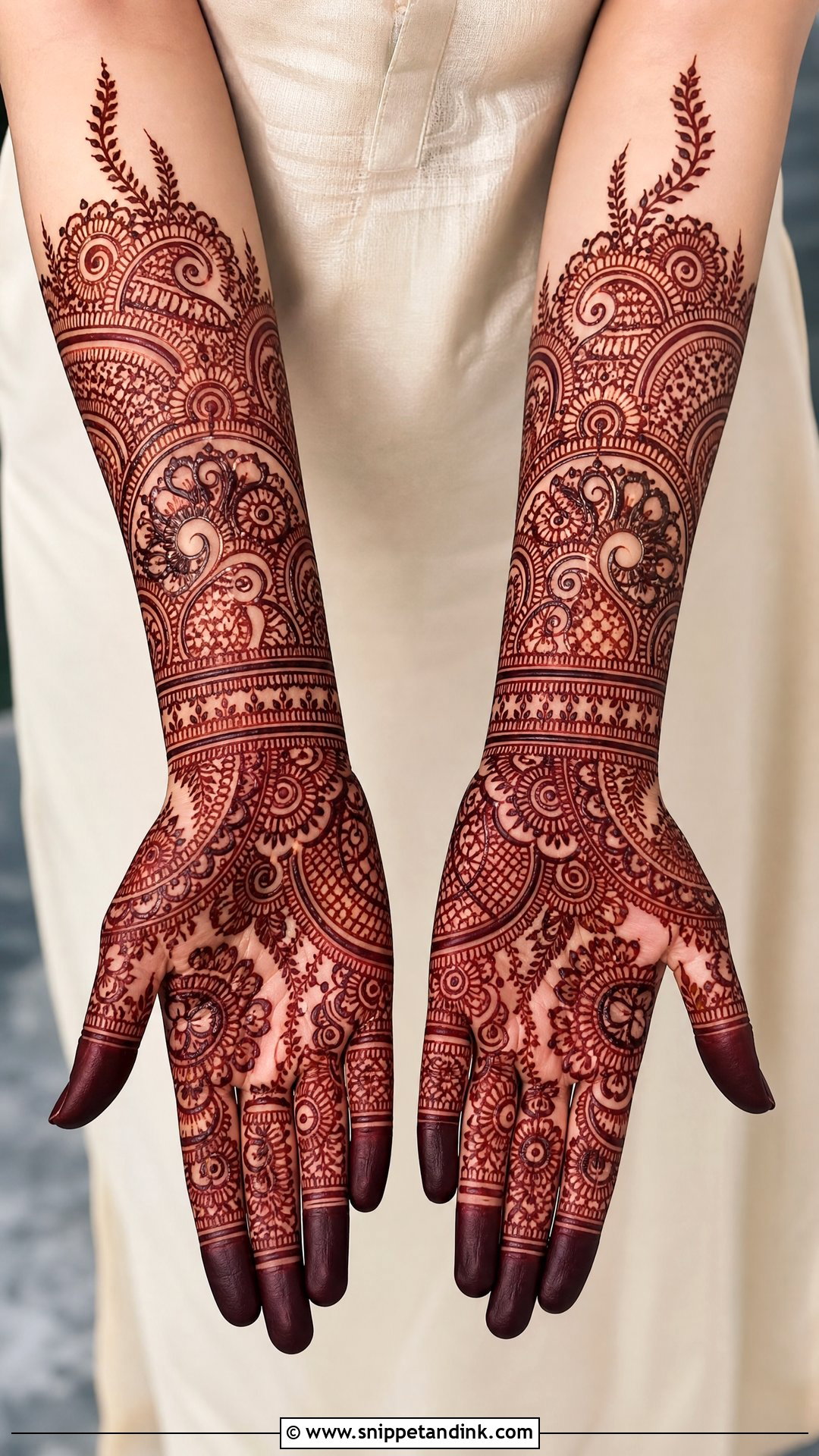
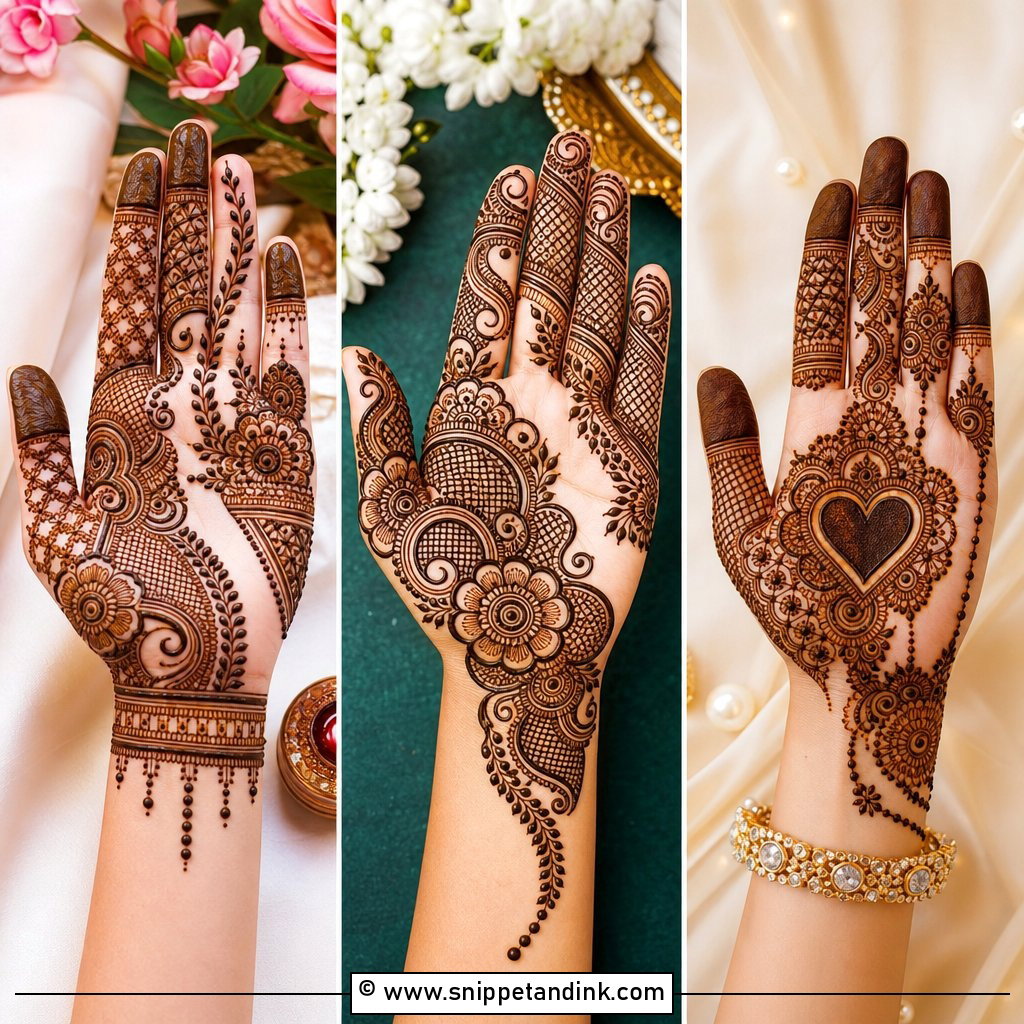
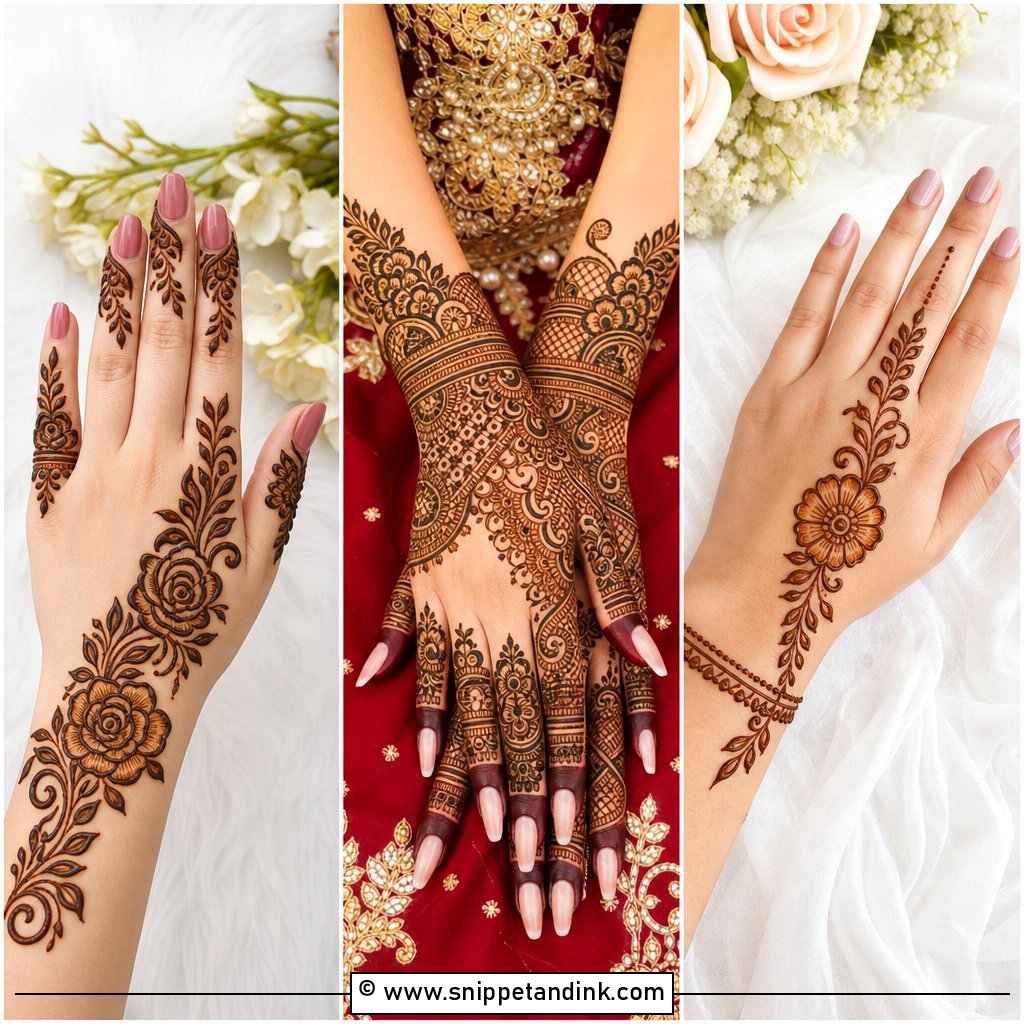
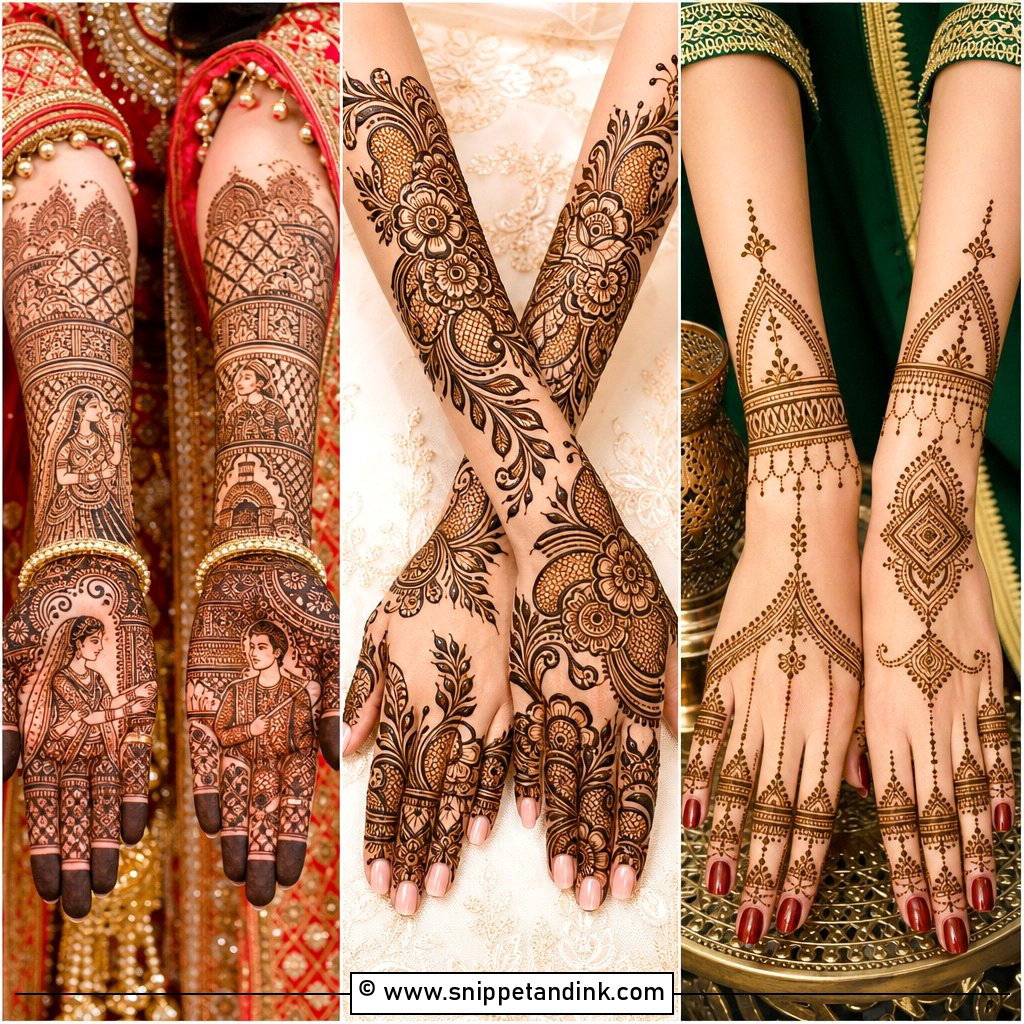
Full hand coverage, fingertip to forearm, takes the longest sitting of anything here. Several hours is normal for both hands and arms, so plan to eat beforehand and have someone handle your phone. I divide the hand into zones before I start: palm medallion, finger panels, wrist band, then the arm, so the paisleys and vines connect rather than collide. Keep the palm detailed but leave fine gaps, because henna lines spread slightly as they dry and a packed palm can stain as one dark patch. Baraat brides get the most out of this in close-up hand shots.
2. Kashees Front Hand Bridal Mehndi
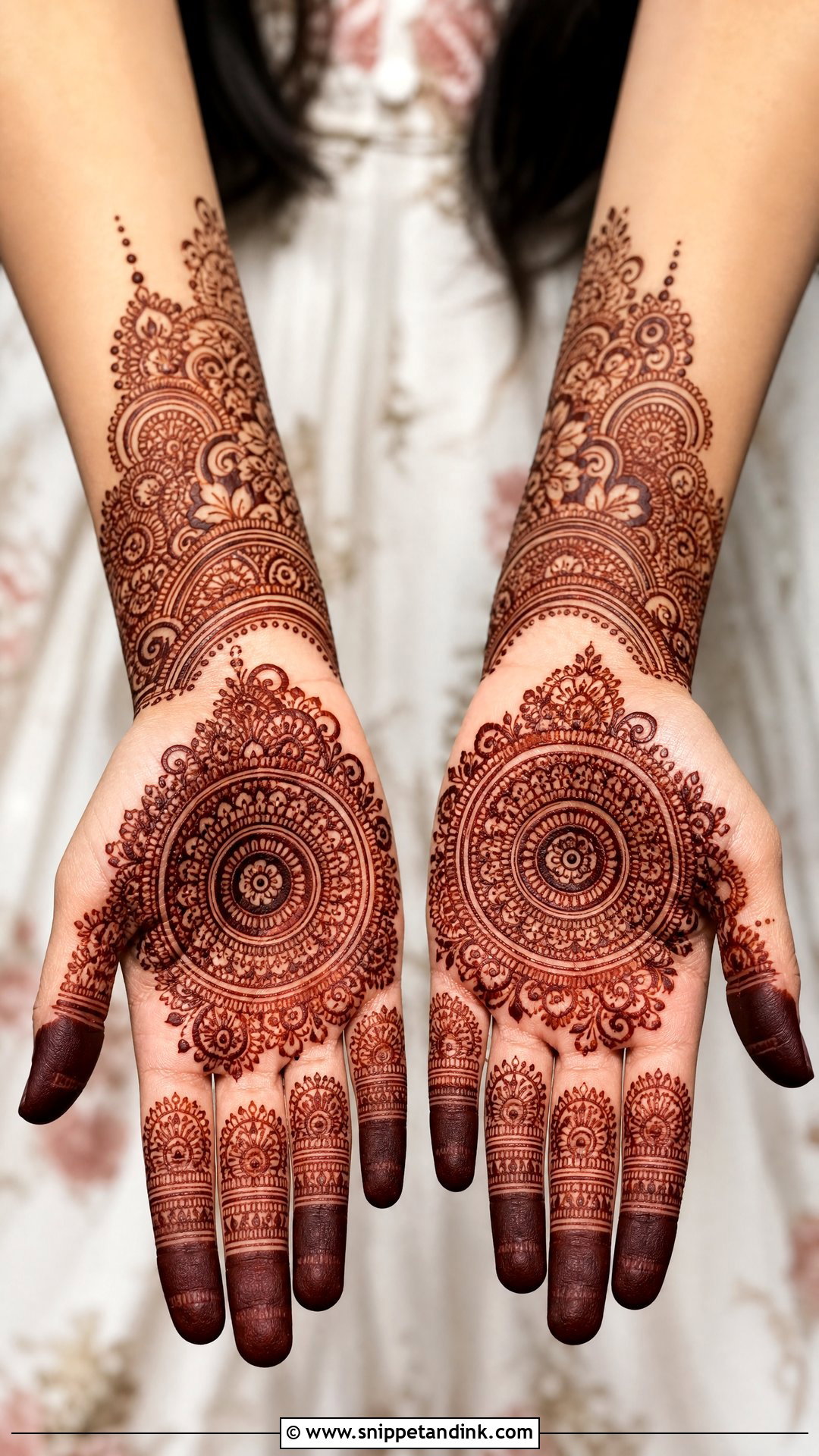
The palm stains darker than anywhere else on the hand, which is why the front is where the main artwork goes. I usually start with the center, a mandala, a portrait or the couple’s initials, and work outward with paisleys, shaded leaves and lace lines. Filled fingertips frame the fine work. Make sure the wrist band is drawn as part of the palm design, not added later, or the hand looks cut off from the arm in ring shots.
3. Kashees Back Hand Bridal Mehndi
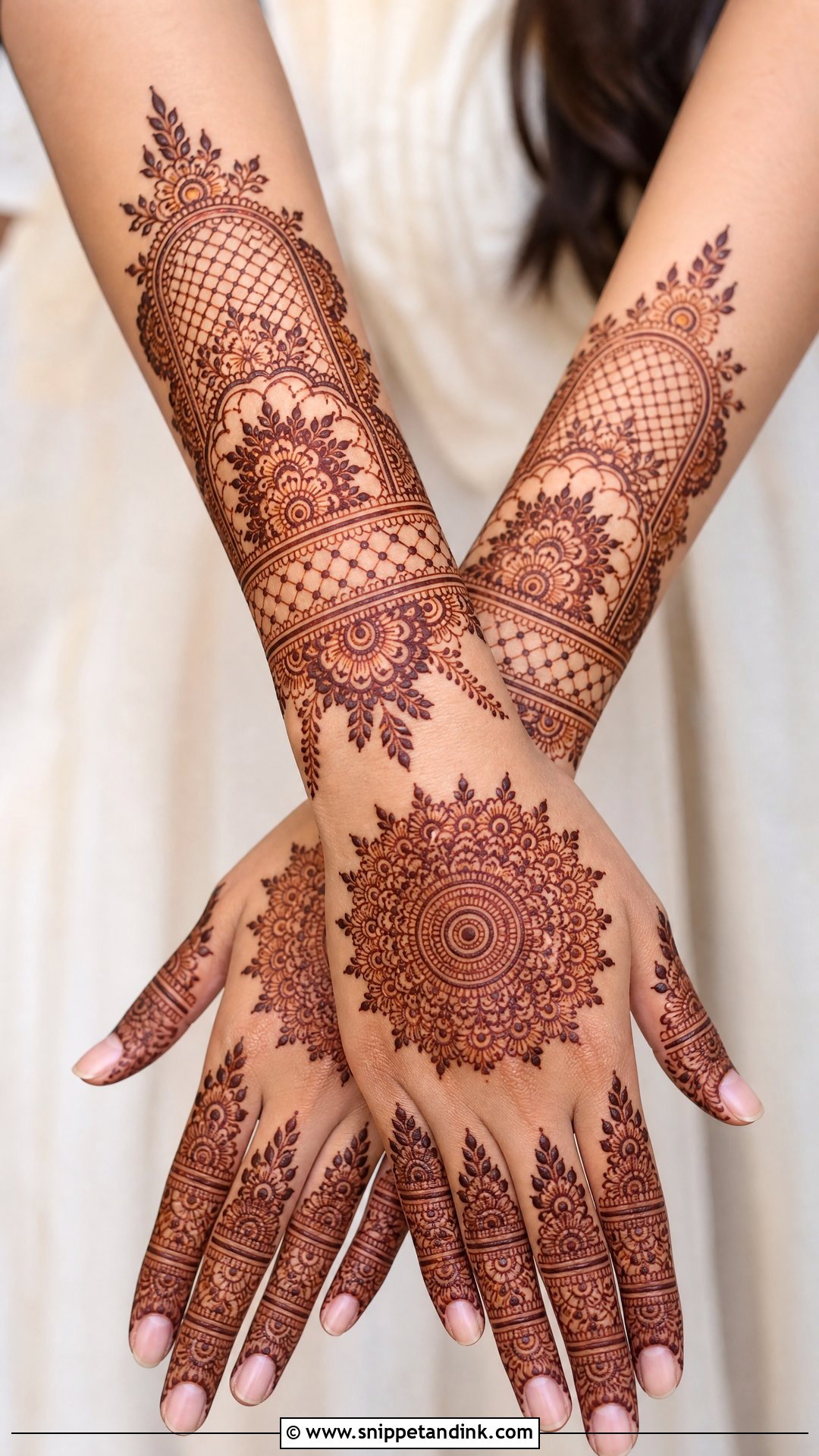
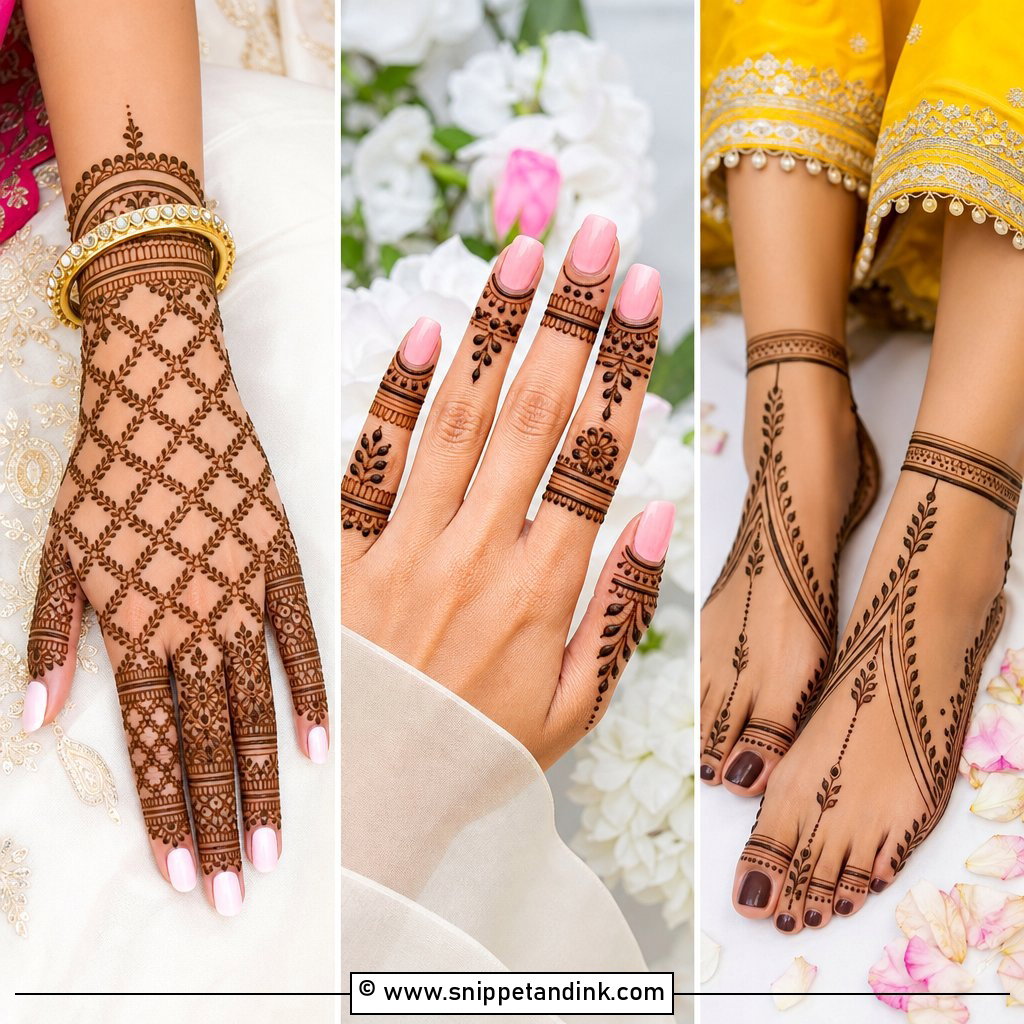
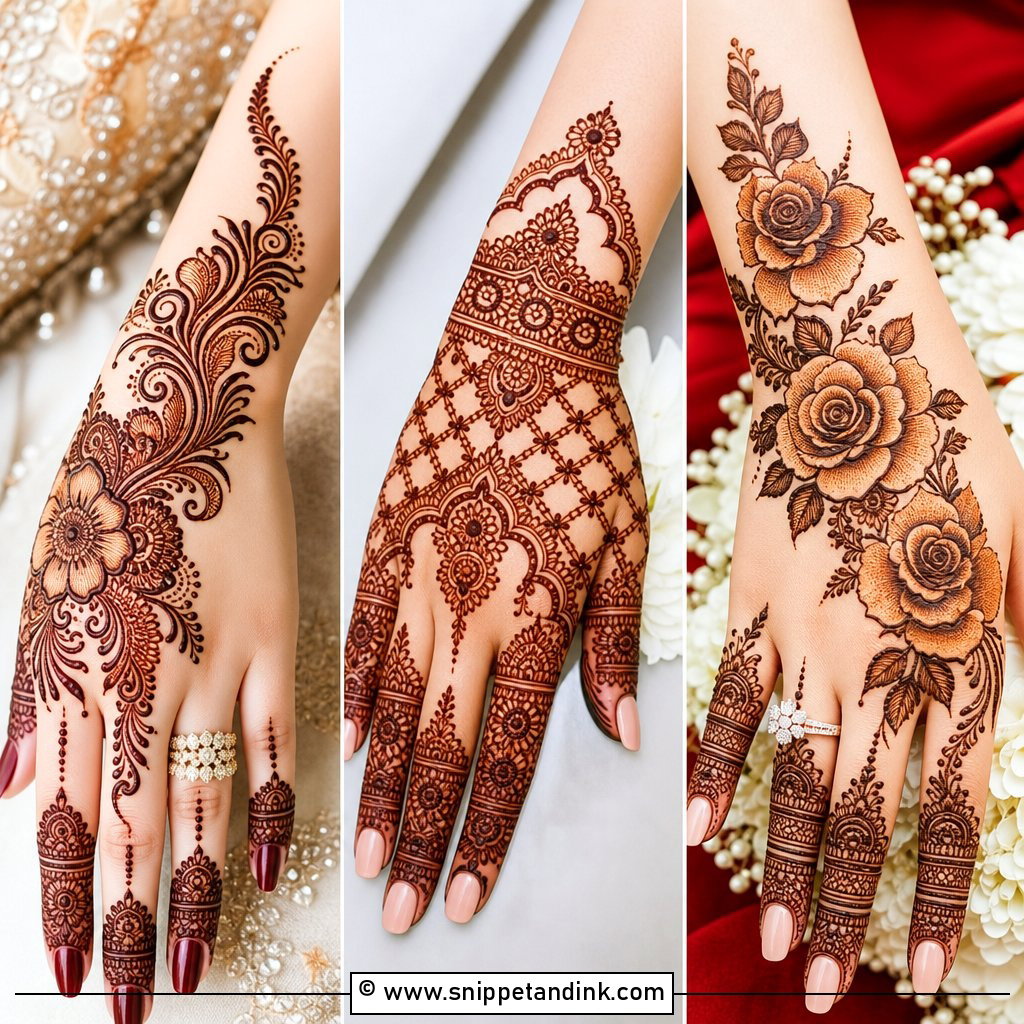
Back of the hand is what everyone sees when you hold a bouquet or adjust your dupatta, but the skin there is thinner and stains lighter than the palm. I compensate with bolder lines and fewer hair-thin fillers, since fine work on the back can fade to orange. A central mandala, a floral trail or a jaali bracelet all work. Carry the design past the wrist; stopping at the knuckles looks unfinished next to rings and bangles.
4. Kashees Heavy Bridal Mehndi
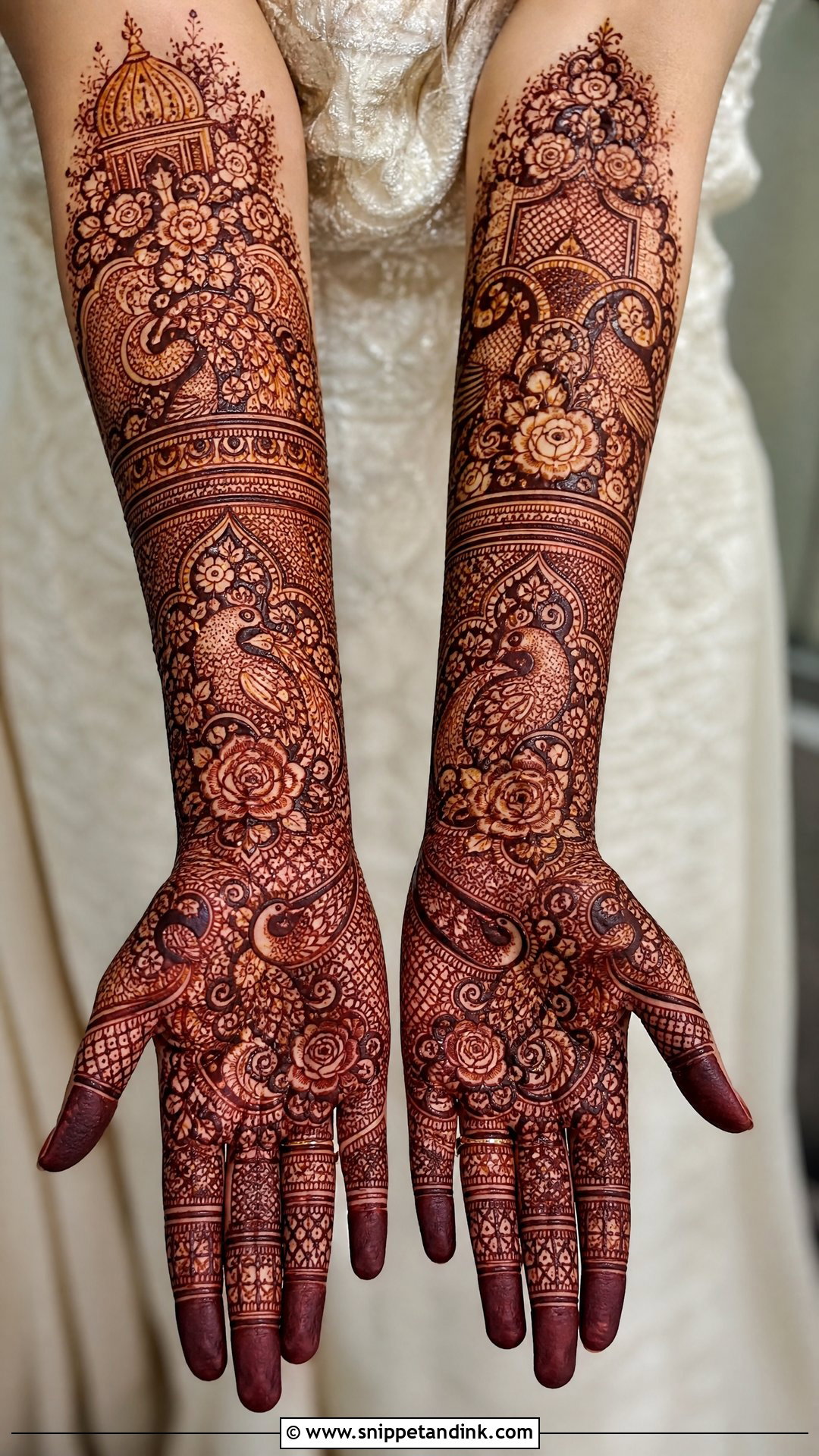
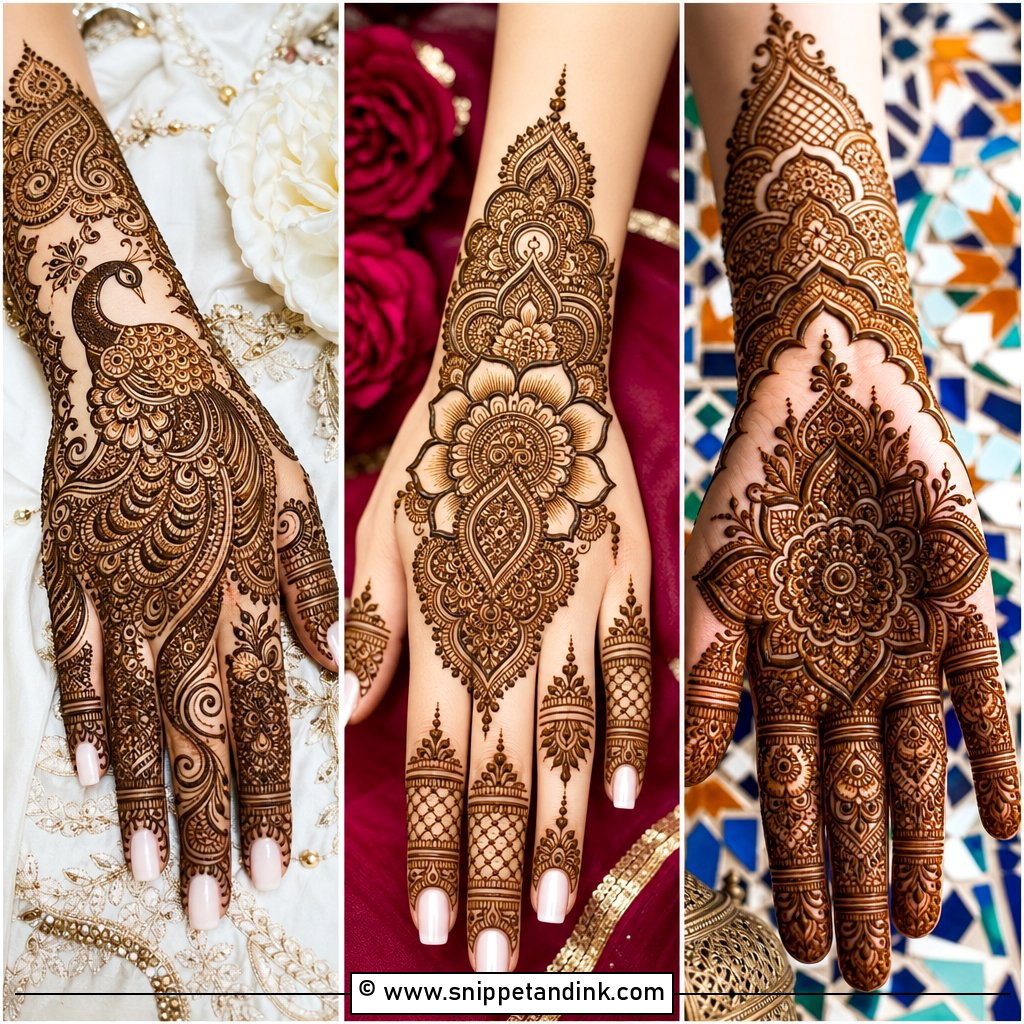
Heavy designs leave almost no bare skin: peacocks, paisleys, rose clusters, domes and jaali panels layered across palms, hands and arms. The risk is that it all darkens into one block. I plan negative space around each major motif, a thin halo of bare skin, so the peacock still reads as a peacock on day two. Expect the longest application time and the longest drying time. If you’re nervous about sitting still that long, a semi-heavy version gets most of the effect.
5. Kashees Simple Bridal Mehndi
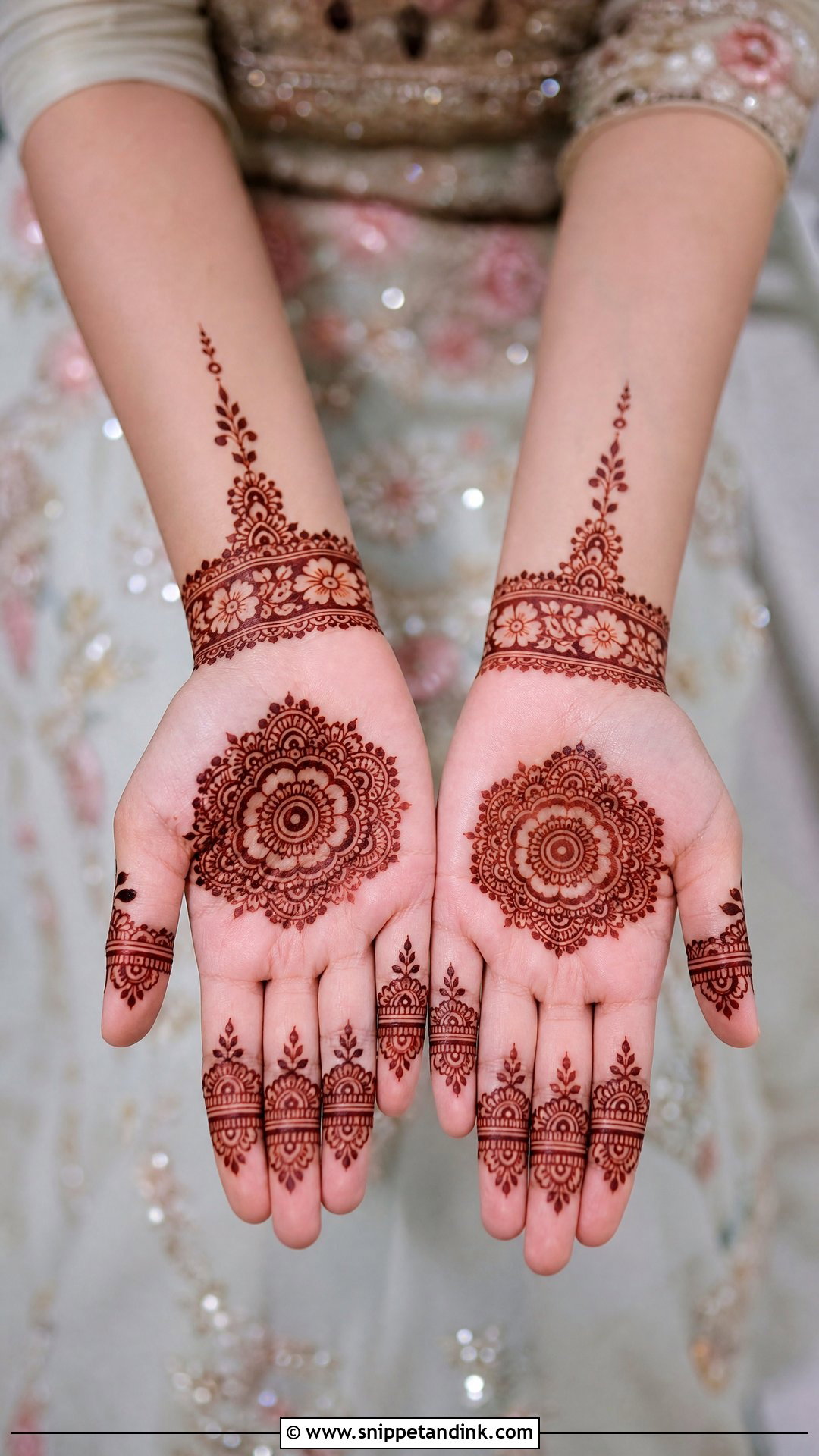
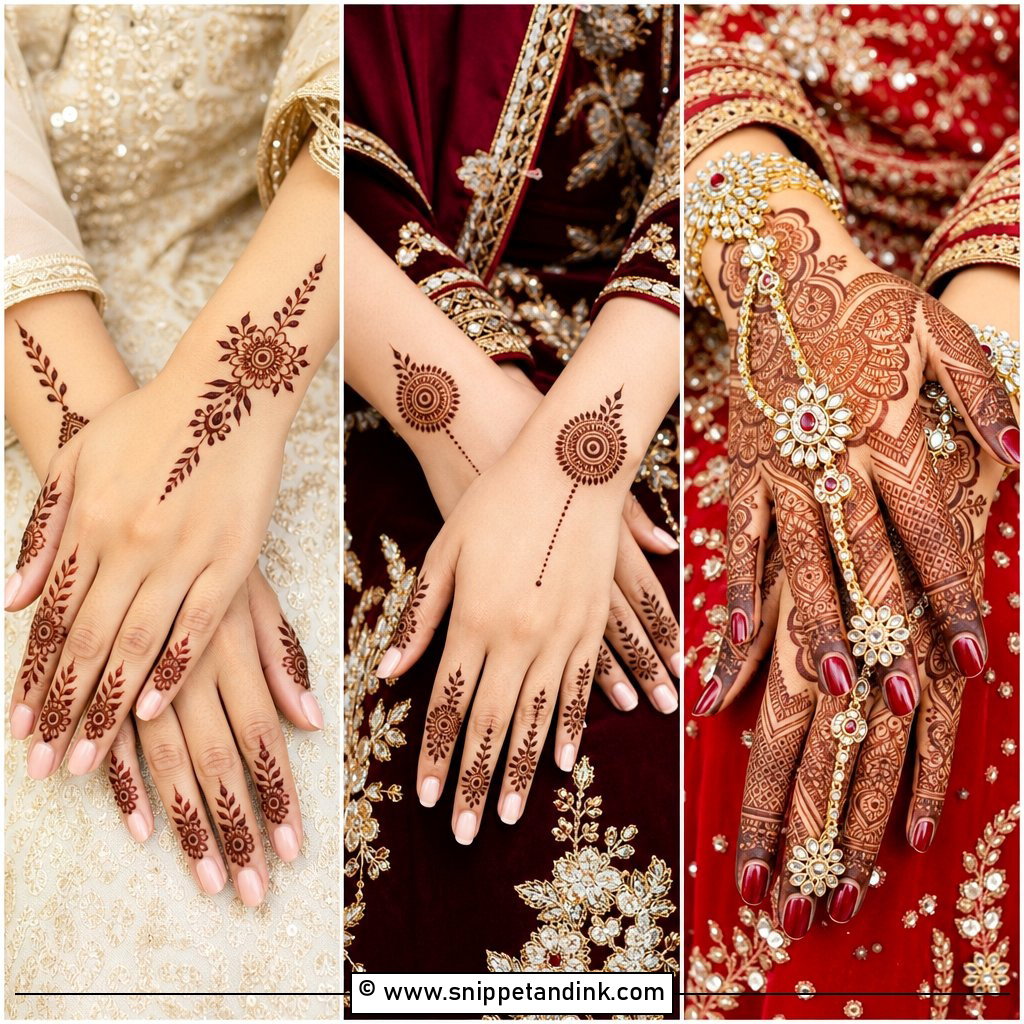
Simple bridal hands are harder than they look, because there’s nowhere for a shaky line to hide. Open space, larger motifs and fewer fillers mean every curve is on show. A palm mandala, a floral cuff and neat fingers make a full set. It suits a nikah, an intimate wedding or a bride wearing little jewelry. Natural henna and even spacing make it look considered, not quick.
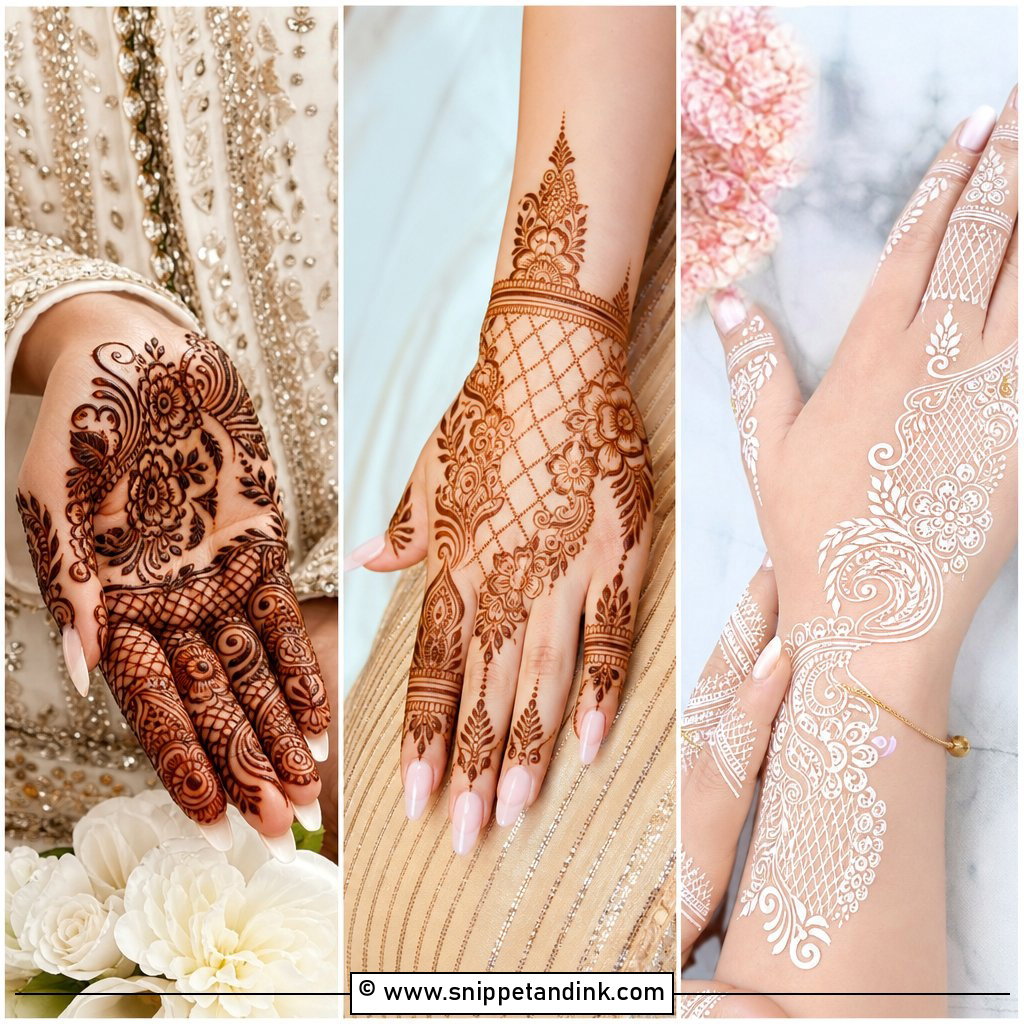
6. Kashees Arabic Bridal Mehndi
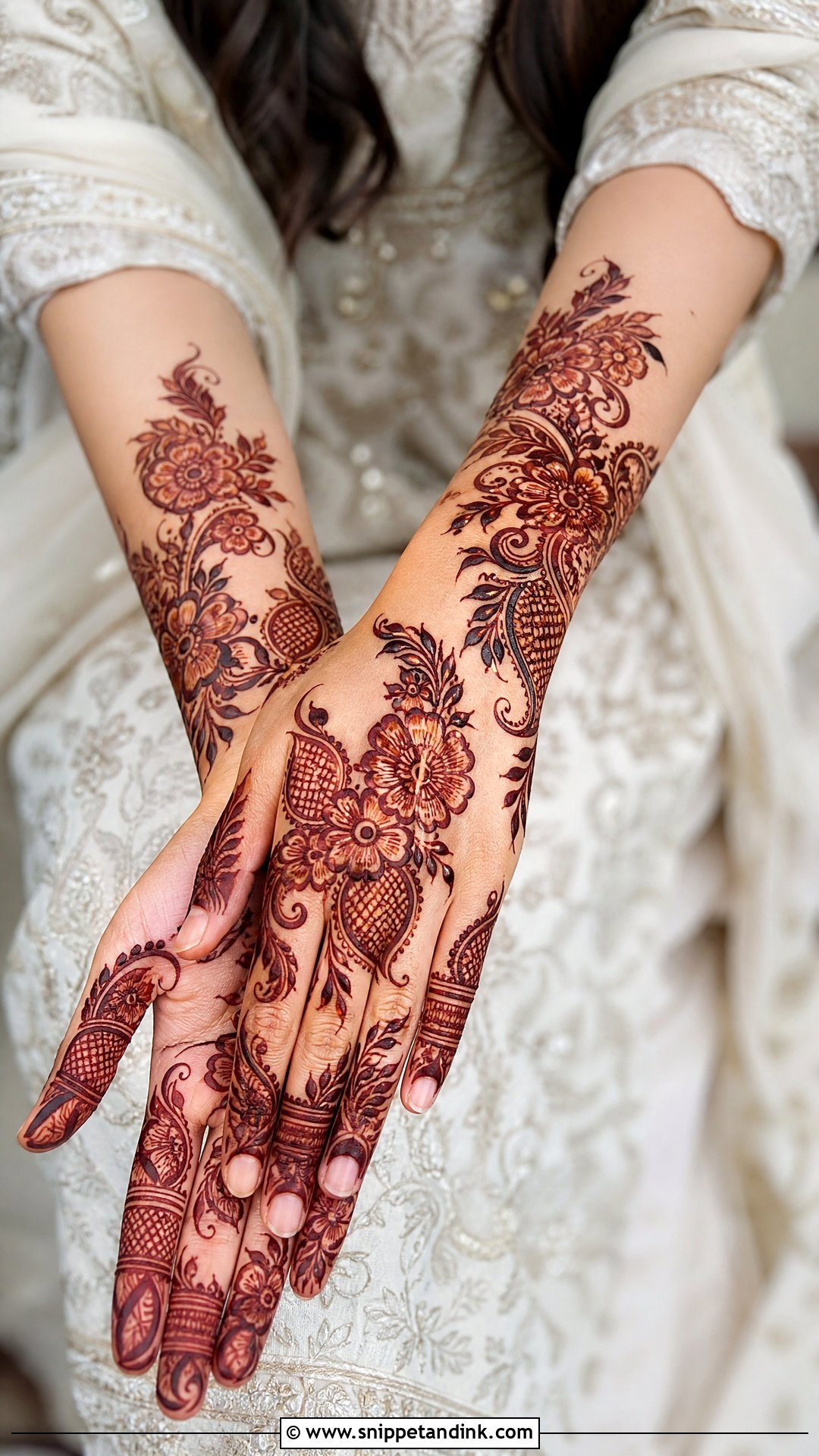
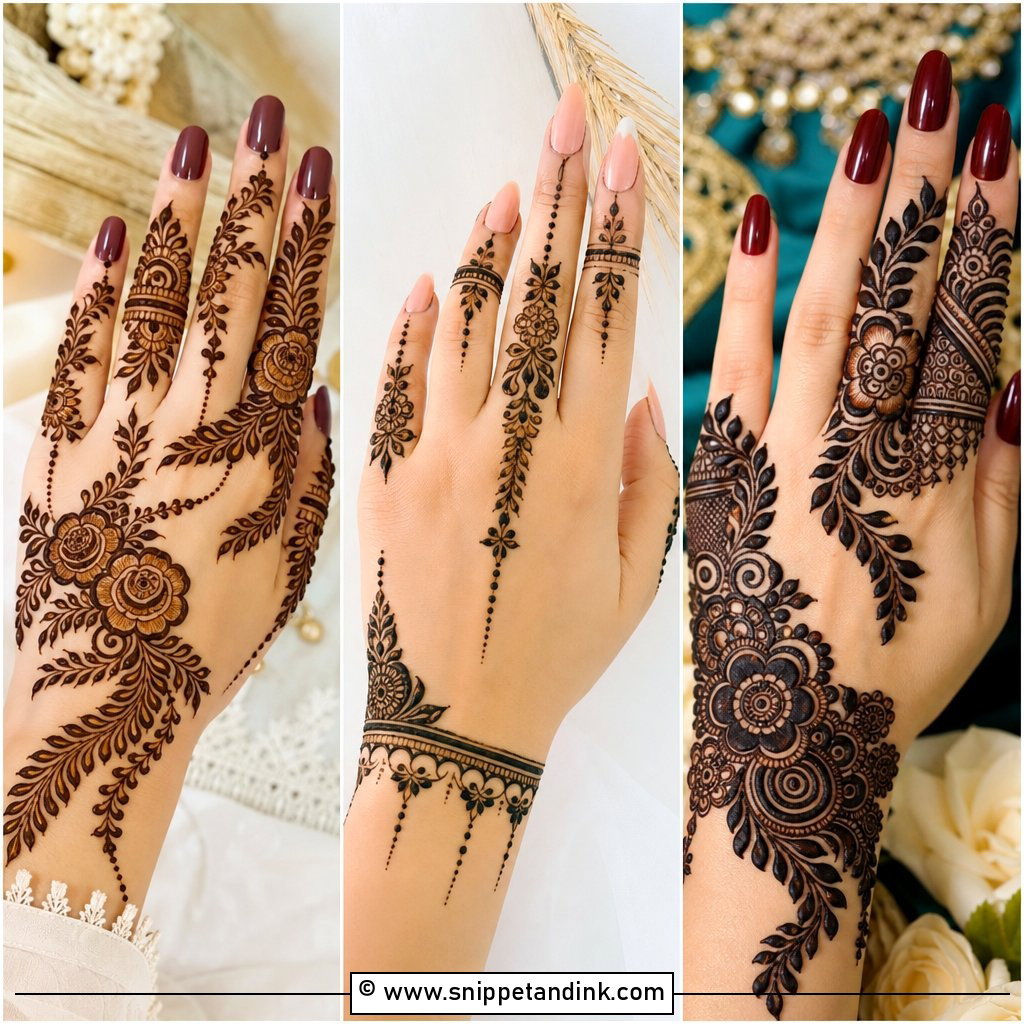
Kashees Arabic bridal mehndi runs diagonally across the hand in bold flowers, vines and shaded petals, leaving skin visible between them. Shading is done by thinning the line or using a lighter fill, and it only shows if the paste is fresh and the stain is strong; faded shading just looks patchy. It’s quicker to apply than full coverage, which is handy for walima or for bridesmaids. To make it bridal, extend the trail to the forearm and add a cuff.
7. Kashees Indo Arabic Bridal Mehndi
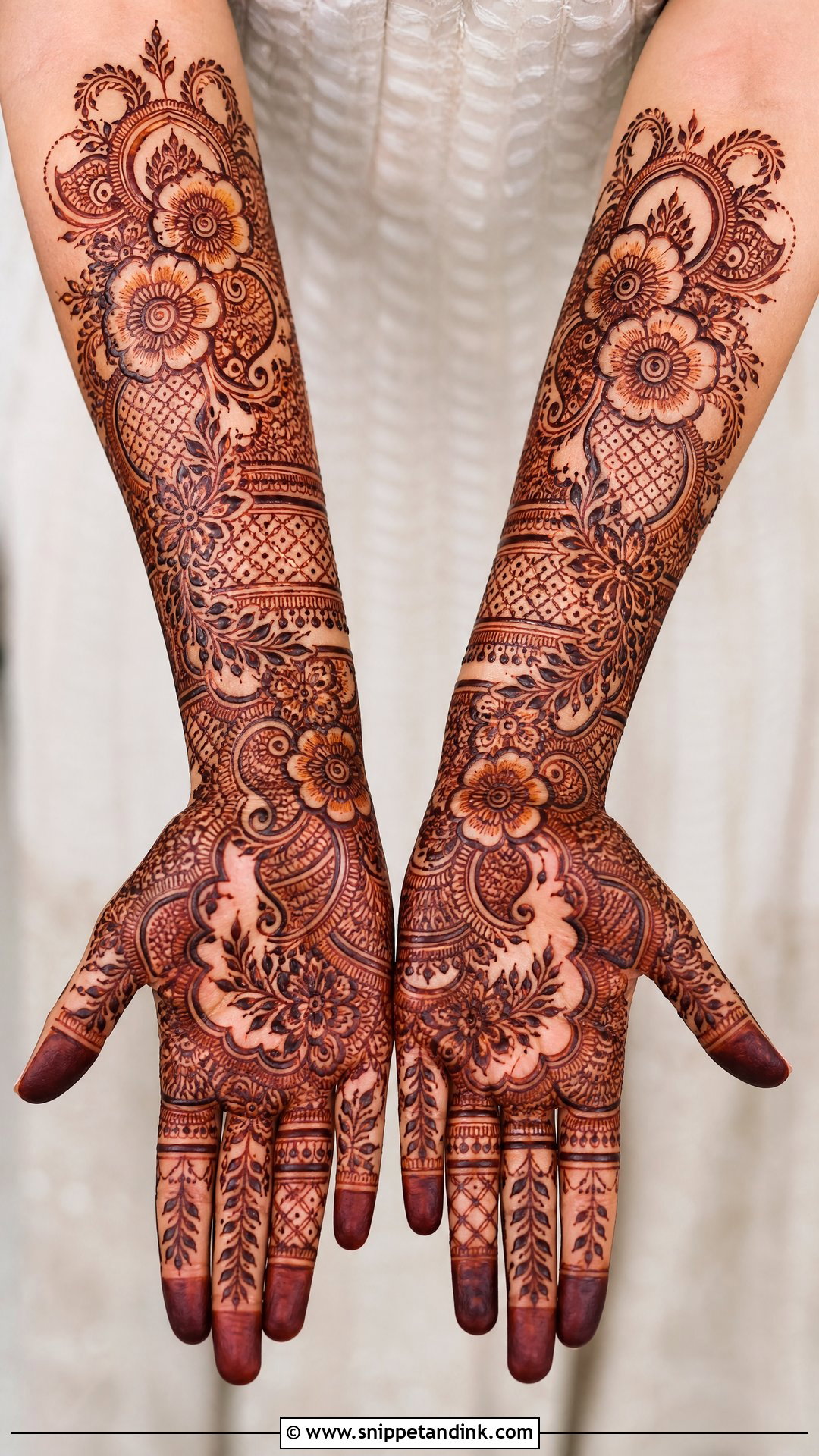
Indo Arabic sits between the two traditions: a bold diagonal floral trail with fine Indian-style fillers packed around it. Here’s how I keep it readable. The trail is drawn with a thicker line, the fillers with a much finer one, and that contrast does the work. Too many fine lines in the trail itself and the shape blurs. It suits lehengas, ghararas and shararas alike.
8. Kashees Tikki Bridal Mehndi
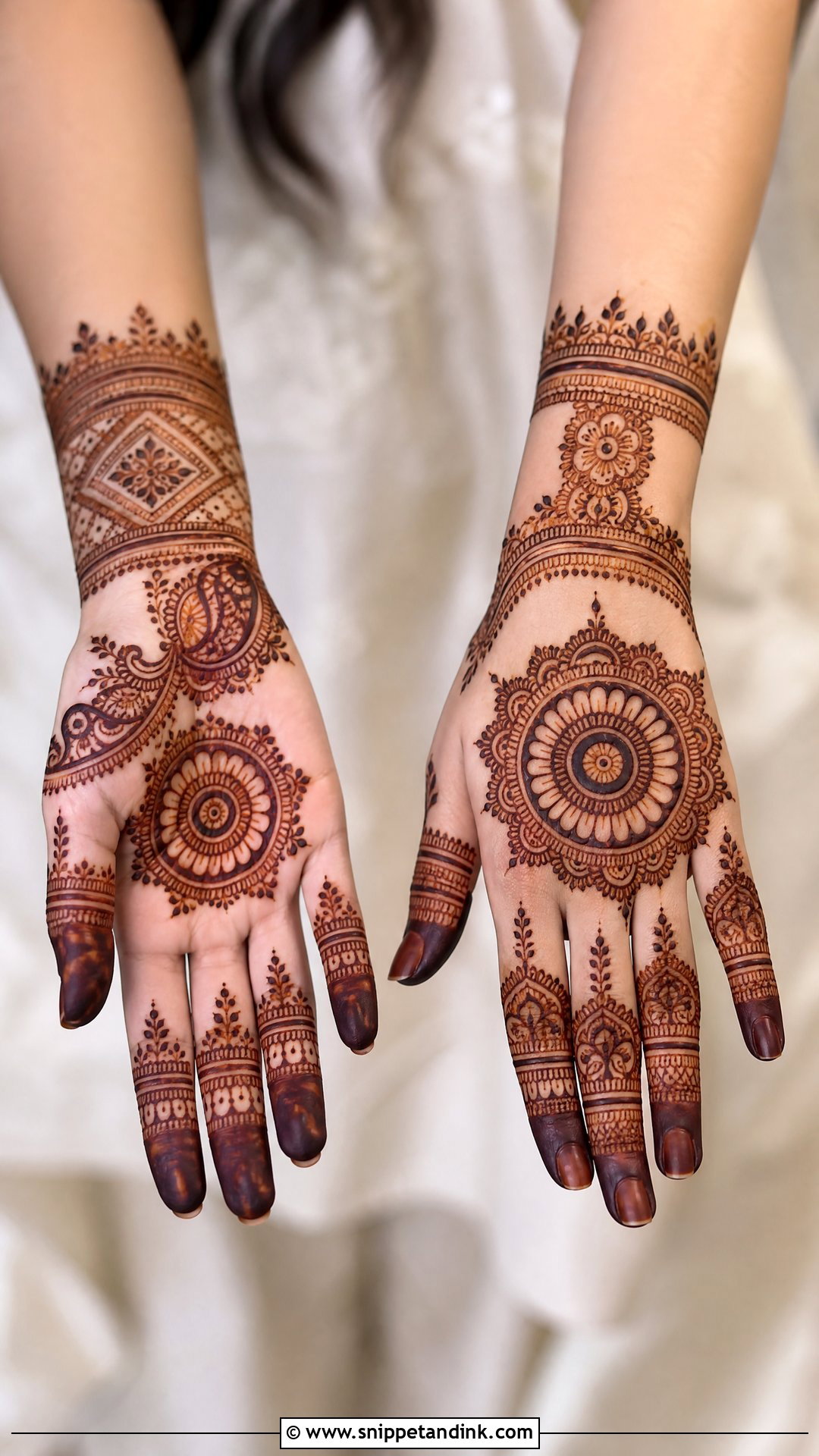
A tikki design builds the hand around one classic round centerpiece, ringed with petals, dots and fine lace. Getting the circle truly round on a curved palm is the skill, so I mark its edge with a few faint dots before drawing. The fingers take geometric lines or leafy tips. A small palm-only tikki reads as a guest design; for a bride, I extend the pattern onto the wrist and forearm.
9. Kashees Mandala Bridal Mehndi
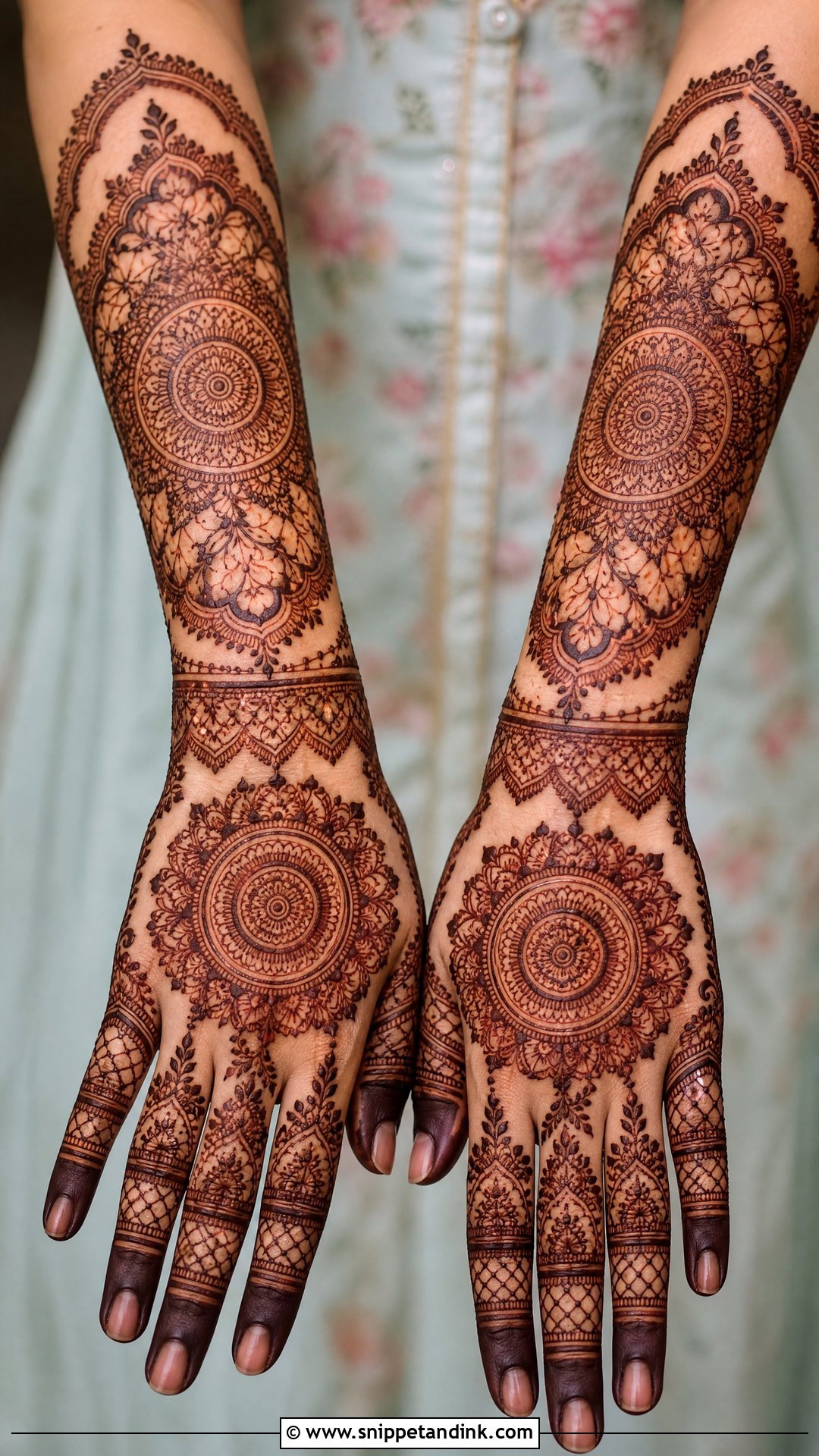
Mandalas suit almost every hand shape, which is their quiet strength. A large one on the palm or back makes small hands look fuller and draws the eye along long fingers. I draw the outer ring first and fill inward, so the proportions stay right. Open or densely layered, it’s easy to personalise with initials or a date hidden in a petal. Add wrist cuffs and matching fingertips for a full bridal set.
10. Kashees Jaali Bridal Mehndi
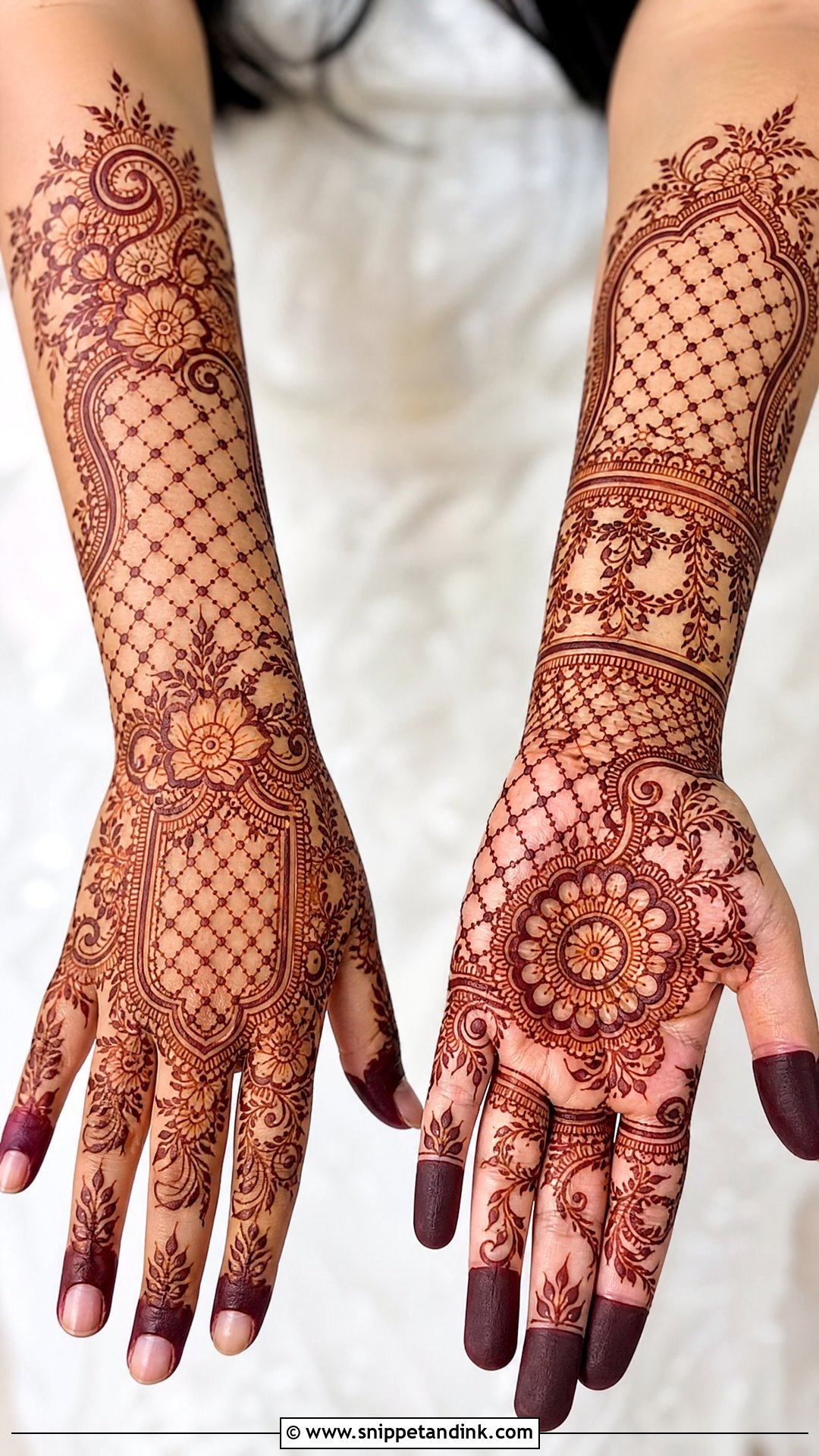
Jaali is a netted grid that lets the skin show between the lines, so the stain looks crisp rather than dark all over. The lines have to be even. If the grid squares shrink or lean as the cone moves across the hand, it looks wobbly once stained. I keep the lines slightly apart because henna paste spreads a touch as it settles. Pair it with flowers, paisleys or a bold fingertip pattern.
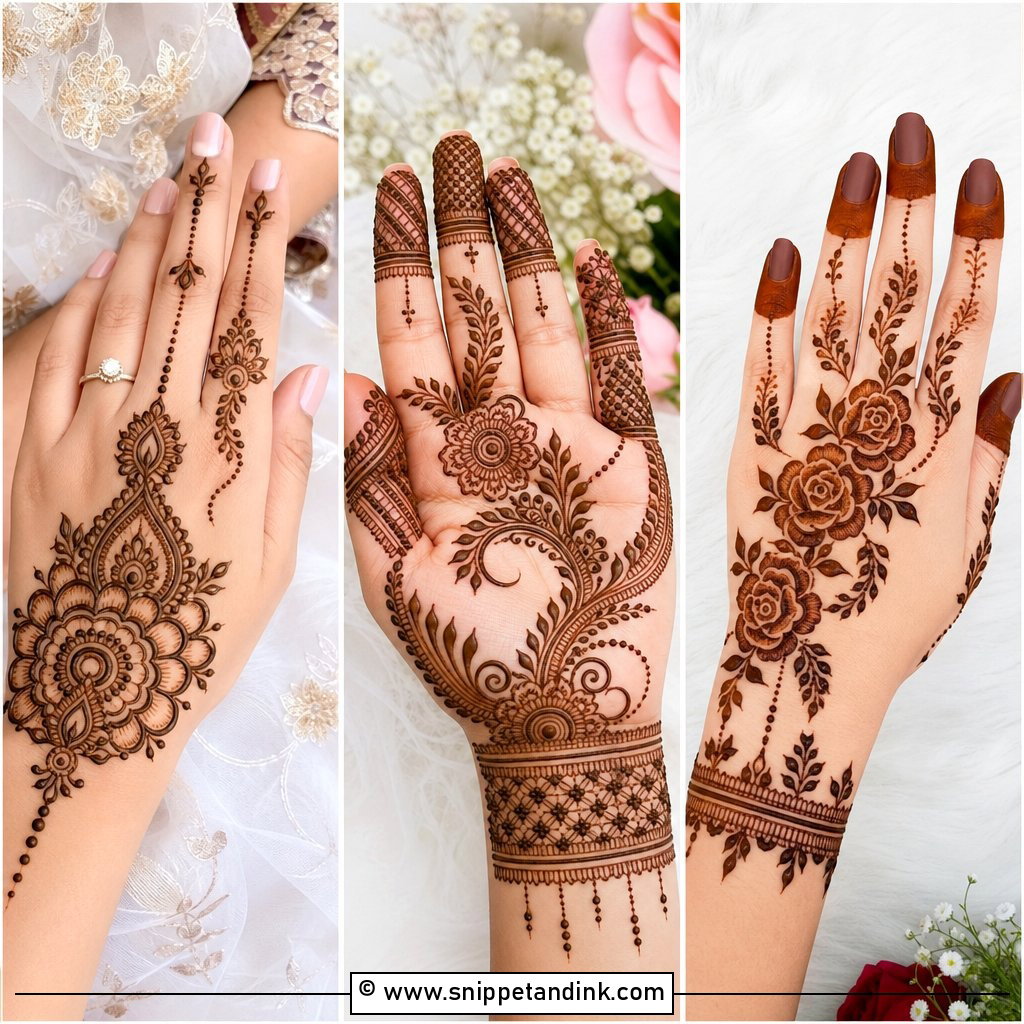
11. Kashees Floral Bridal Mehndi
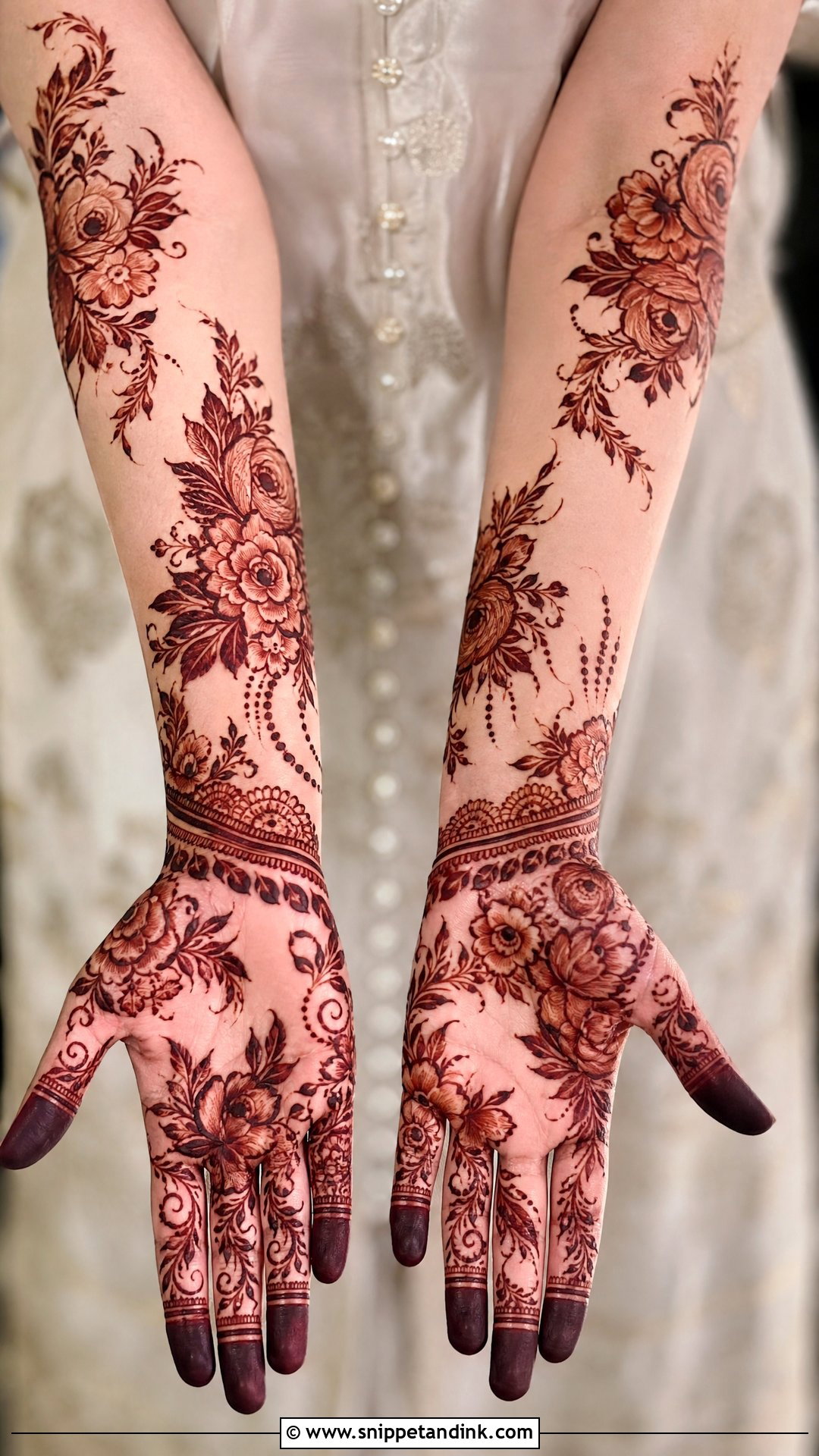
Floral designs are easy to wear with pastel outfits and soft makeup, but they need a mix of scales. All big roses looks casual; all tiny blossoms looks crowded. I anchor a hand with two or three large flowers, then fill with smaller buds and leaves, and finish with a wrist band. The design can cover the hand fully or follow a diagonal path.
12. Kashees Paisley Bridal Mehndi
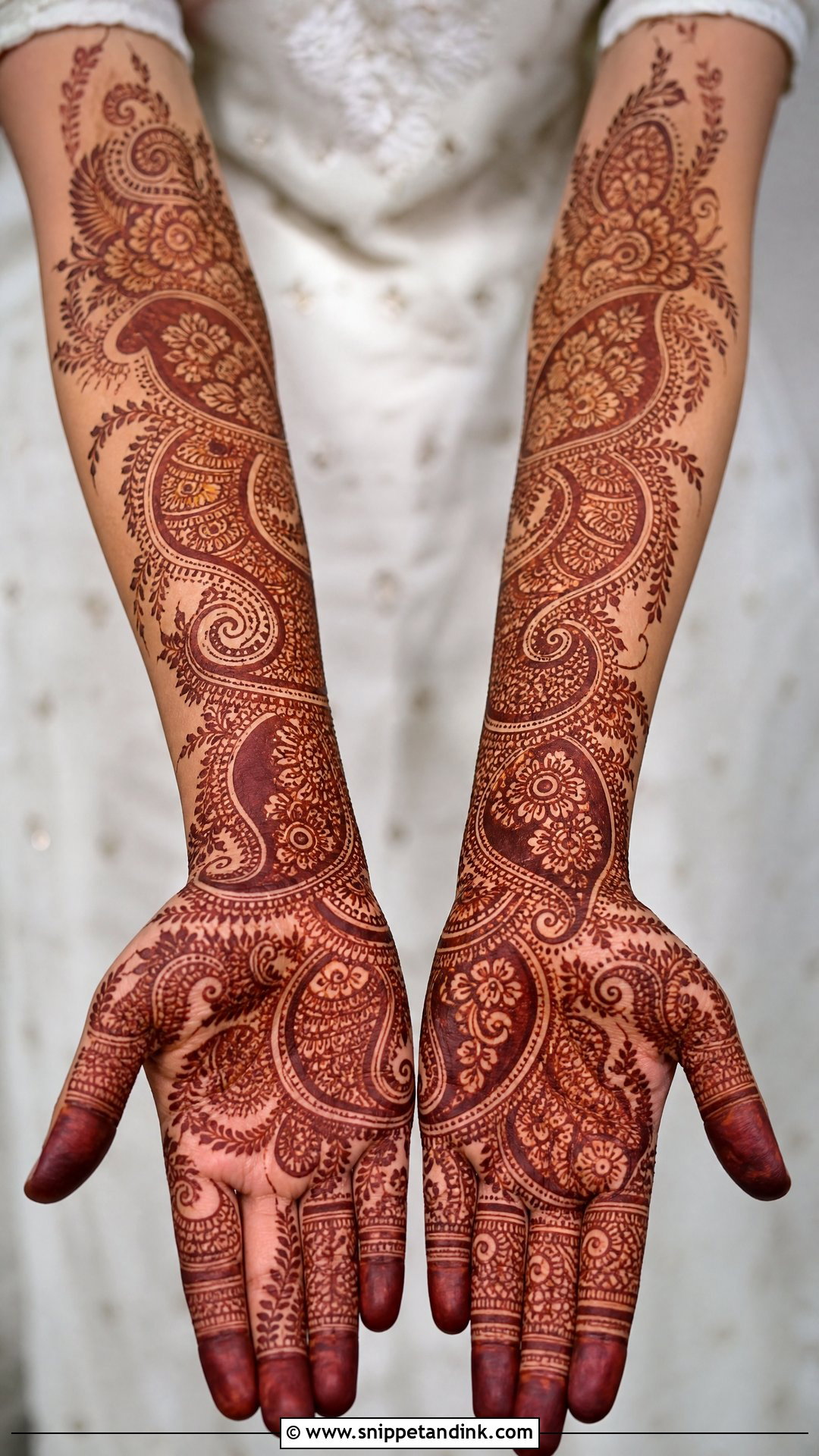
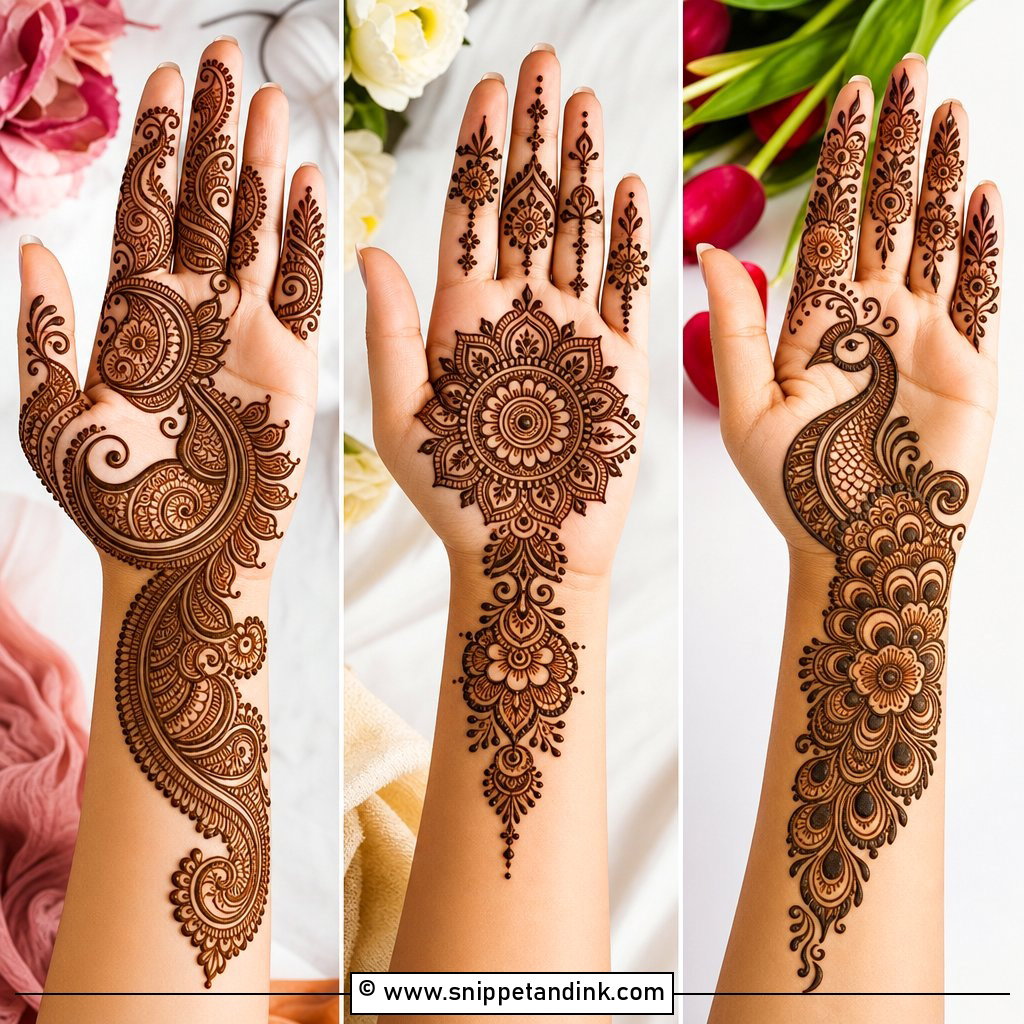
Paisley is the classic bridal shape, and its strength is how it fills a curve: along the wrist, around the base of the thumb, or stacked up the forearm. I vary the sizes deliberately, a few large ones for structure and smaller ones to close gaps, and fill each with dots, lines or tiny flowers. It blends with mandalas, peacocks and jaali without competing.
13. Kashees Peacock Bridal Mehndi
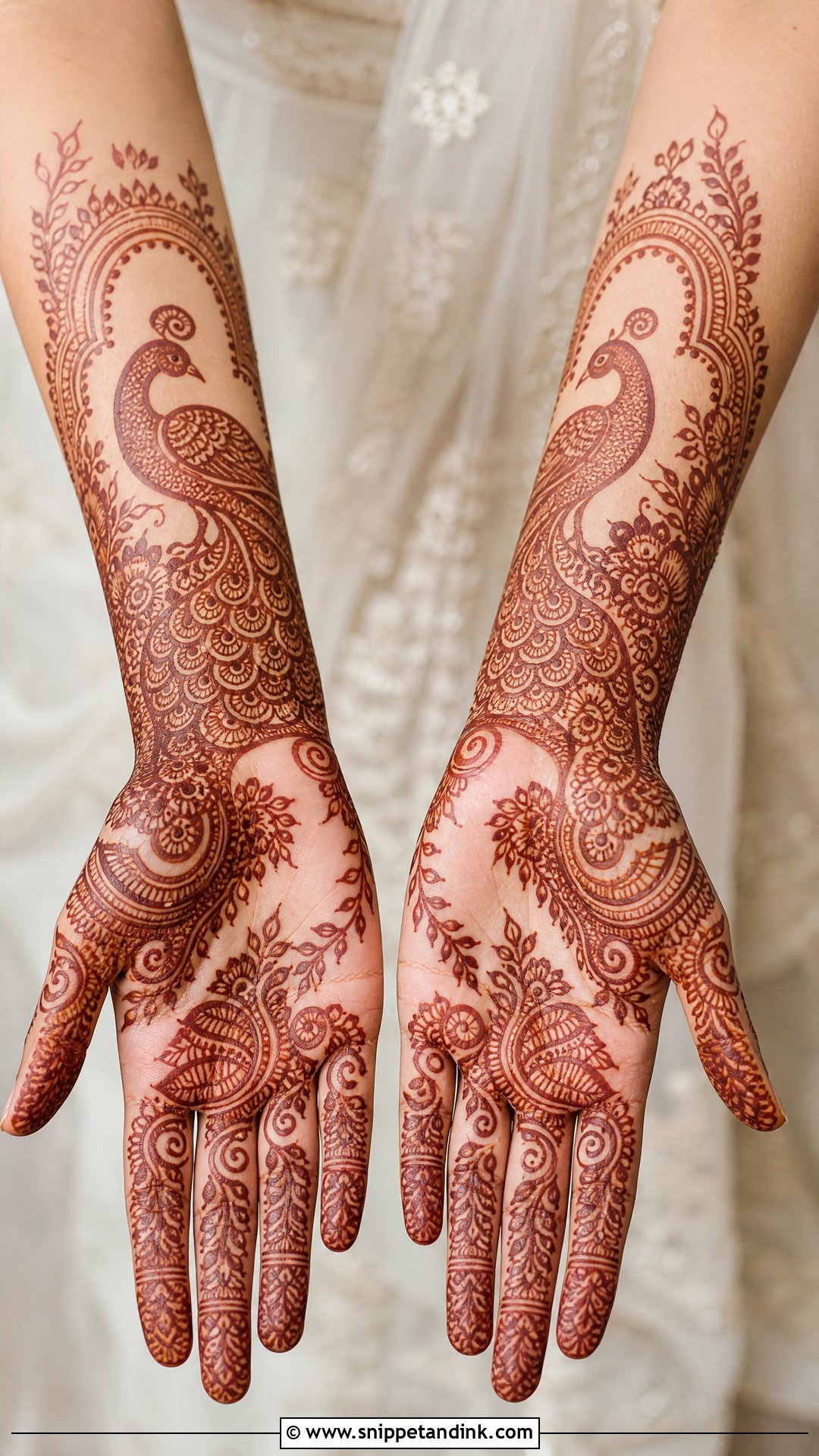
A peacock gives the hand a clear focal point, whether it sits on the palm, the wrist or the forearm. The neck and the feather eyes are where it fails: if the lines there are too tight, the shape fills in and the bird disappears after the stain darkens. I draw the outline with a slightly heavier line and leave space inside the feathers. It pairs well with richly embroidered outfits.
14. Kashees Portrait Bridal Mehndi
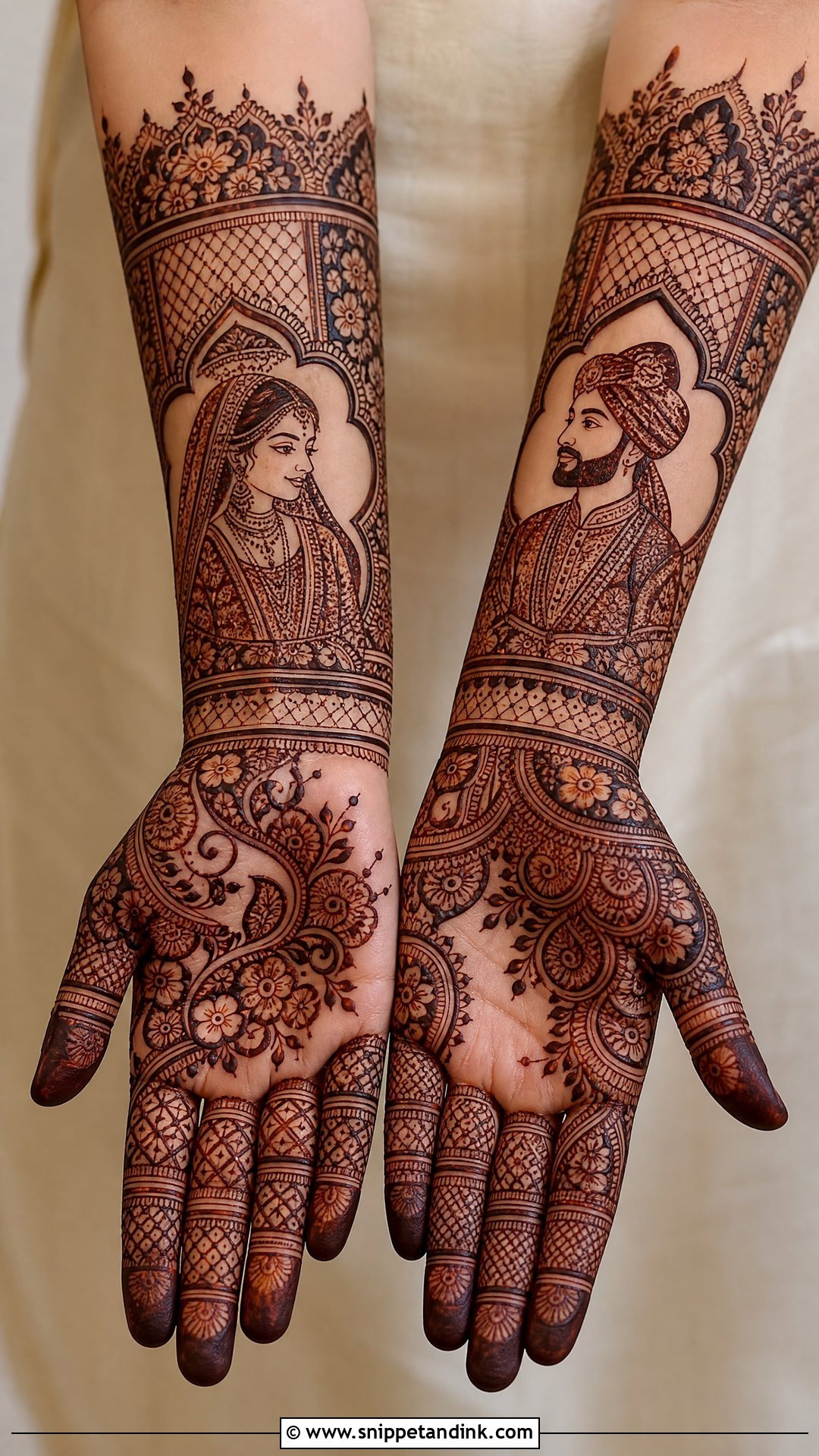
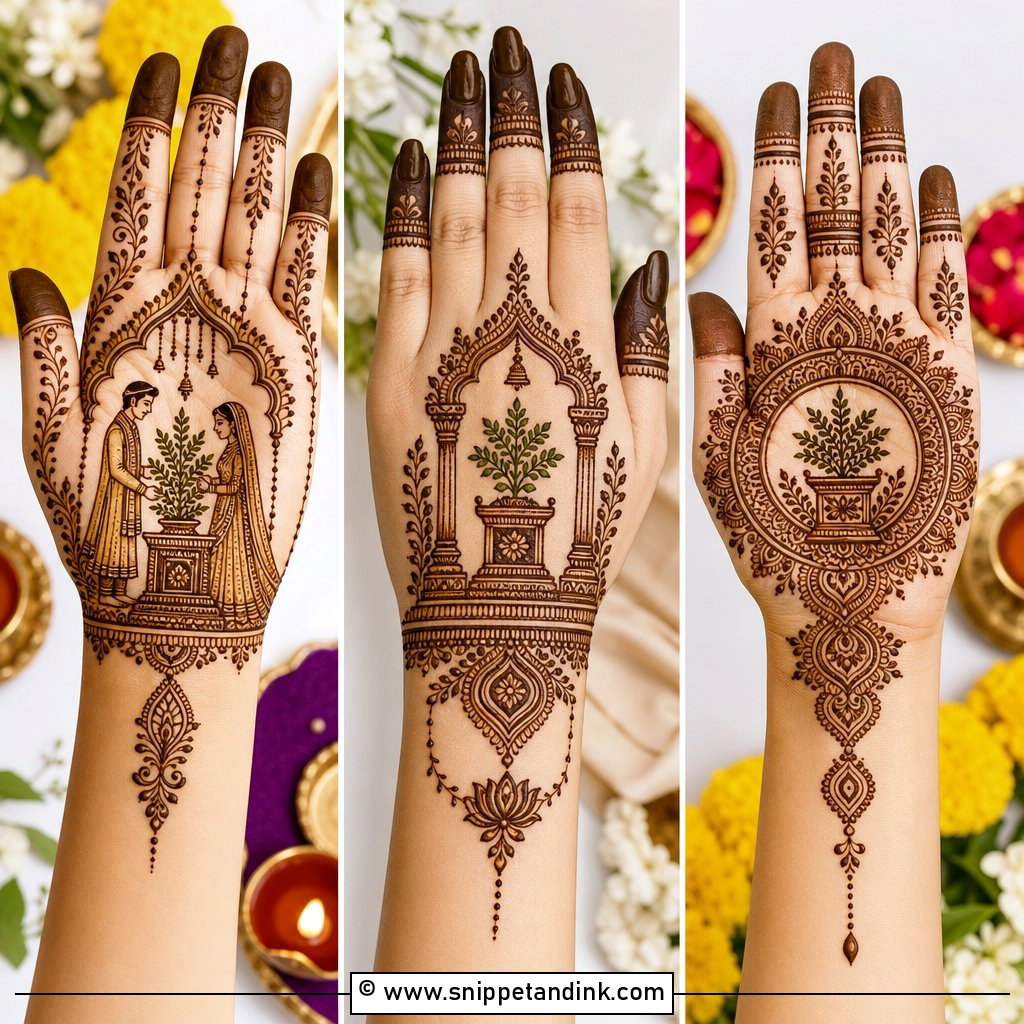
Portrait mehndi places faces, doli scenes, rings or meaningful symbols on the palms, with florals and jaali around them. Faces are the most technical thing I draw, because a millimetre off on an eye or a lip changes the expression. Ask to see photos of an artist’s past portraits after the stain has developed, not just wet paste. Keep the patterns around the faces lighter so the portraits stay the focus.
15. Kashees Dulha Dulhan Bridal Mehndi
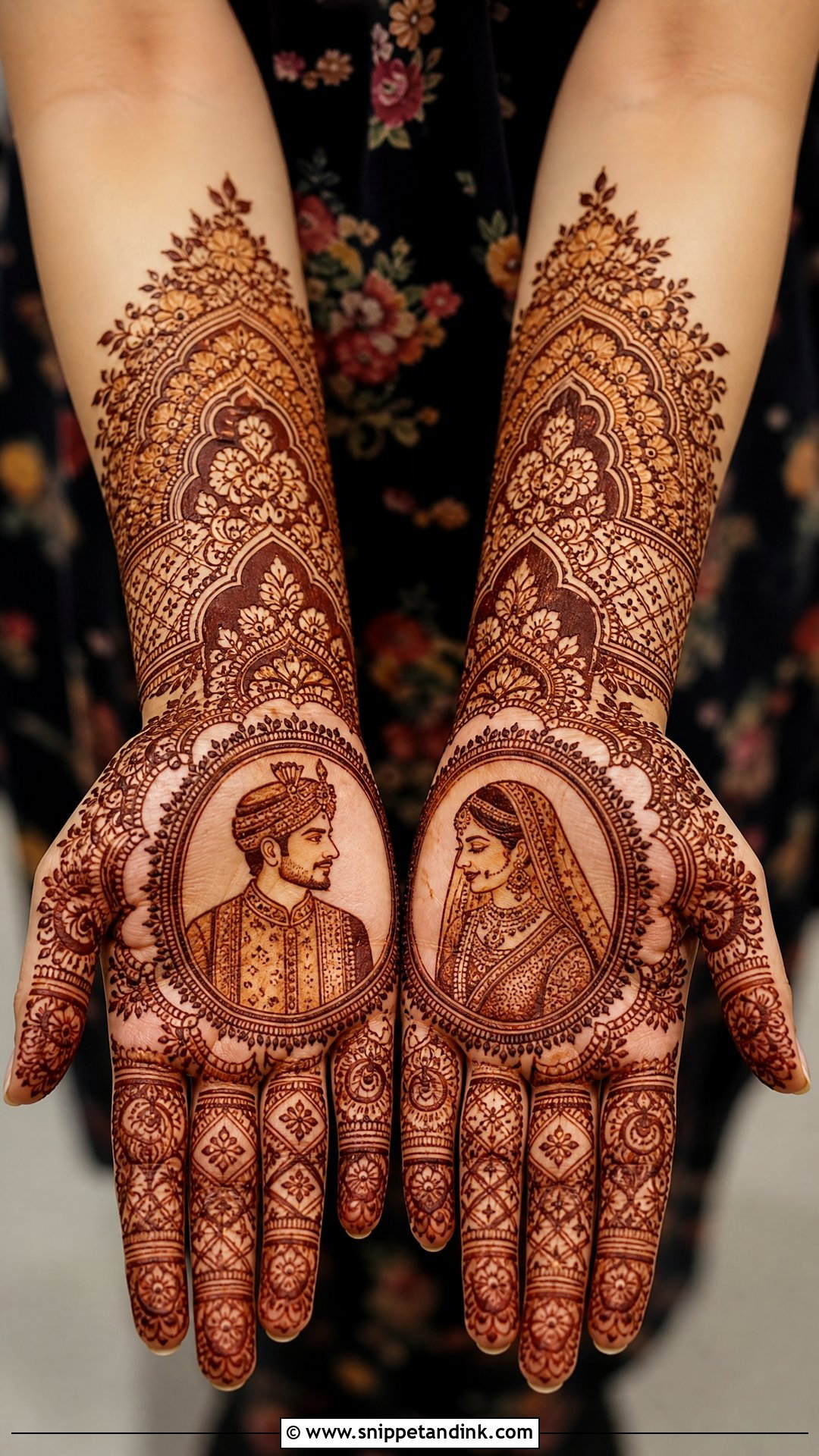
Bride on one palm, groom on the other, framed to match: this is a design that tells its story the moment you open your hands. The two portraits have to be the same size and sit at the same height, which I check by holding both hands side by side before drawing the frames. Mandalas, floral borders and jaali fill the rest. Matching wrist cuffs pull it all together.
16. Kashees Name Hidden Bridal Mehndi
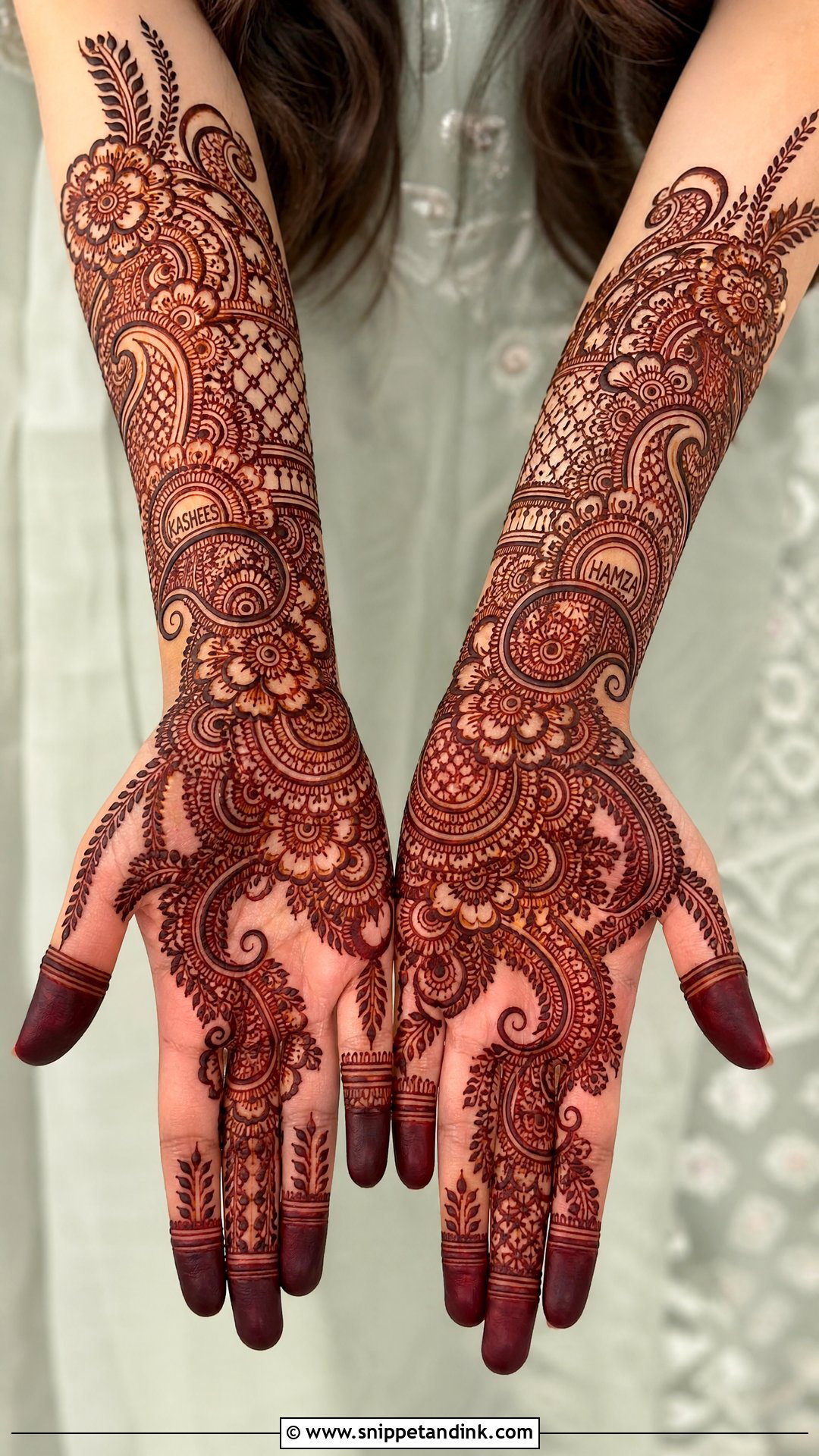
Hiding the groom’s name or initials is a tradition I always enjoy, since he’s supposed to search for it after the ceremony. The name has to be hidden but findable. I write it in a clear spot, the palm center, a wrist panel or inside an open flower, rather than inside dense filler where it would blur once stained. It works within any style, heavy or simple.
17. Kashees Bracelet Bridal Mehndi
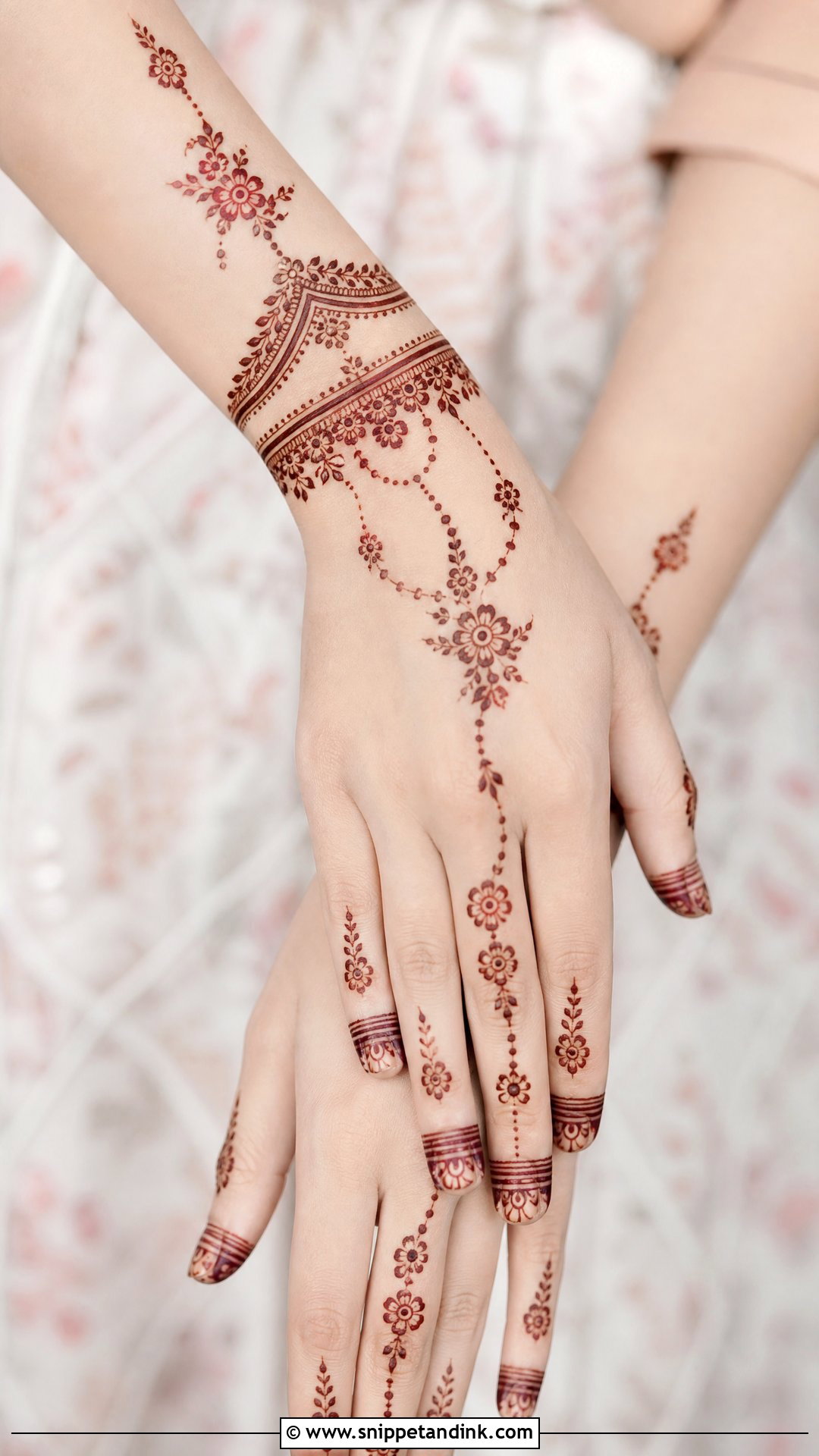
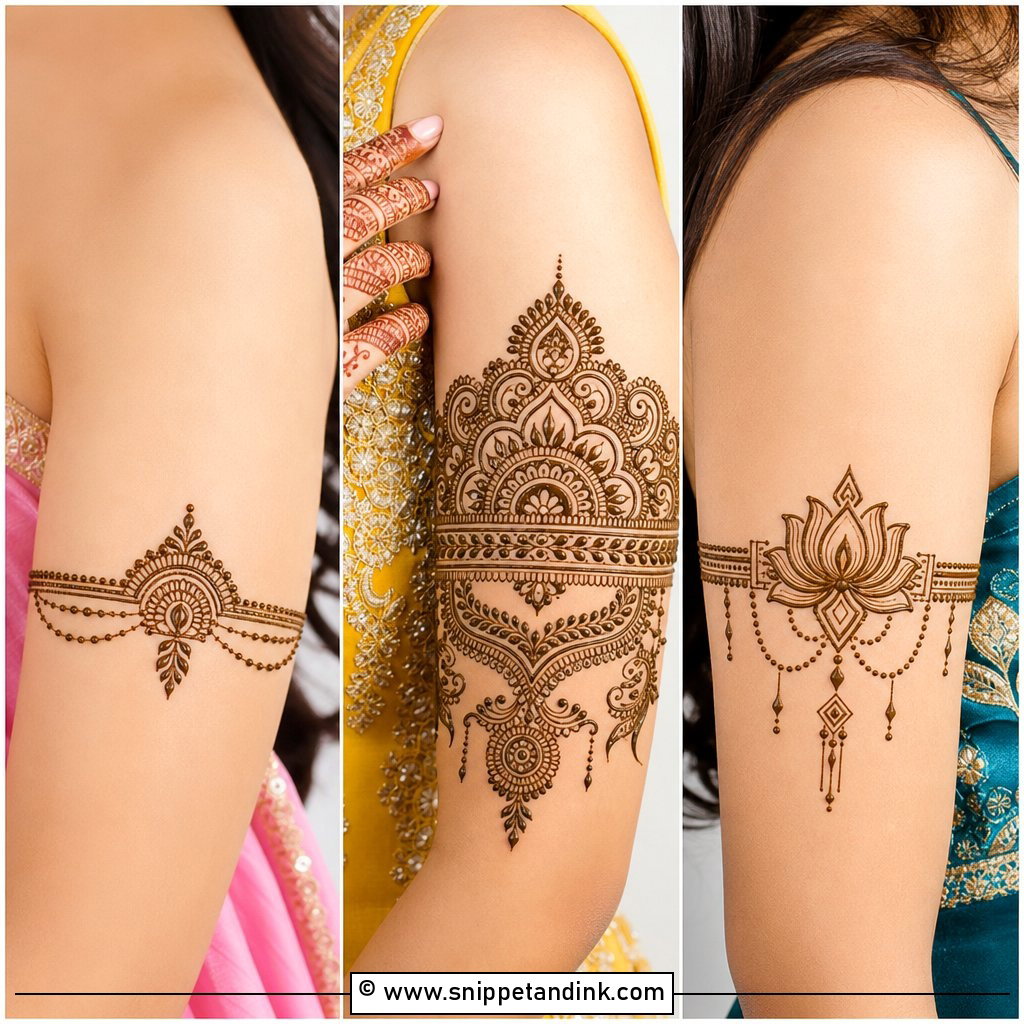
A bracelet design draws a jewelled cuff at the wrist and links it to the fingers with chains, dots or vines. It’s lighter work, so it’s a good pick for an engagement, nikah or walima where you want bridal hands without a full sitting. On the back of the hand it looks like actual jewelry next to rings and bangles. Add a small palm motif or fingertip fill so it feels complete.
18. Kashees Finger Bridal Mehndi
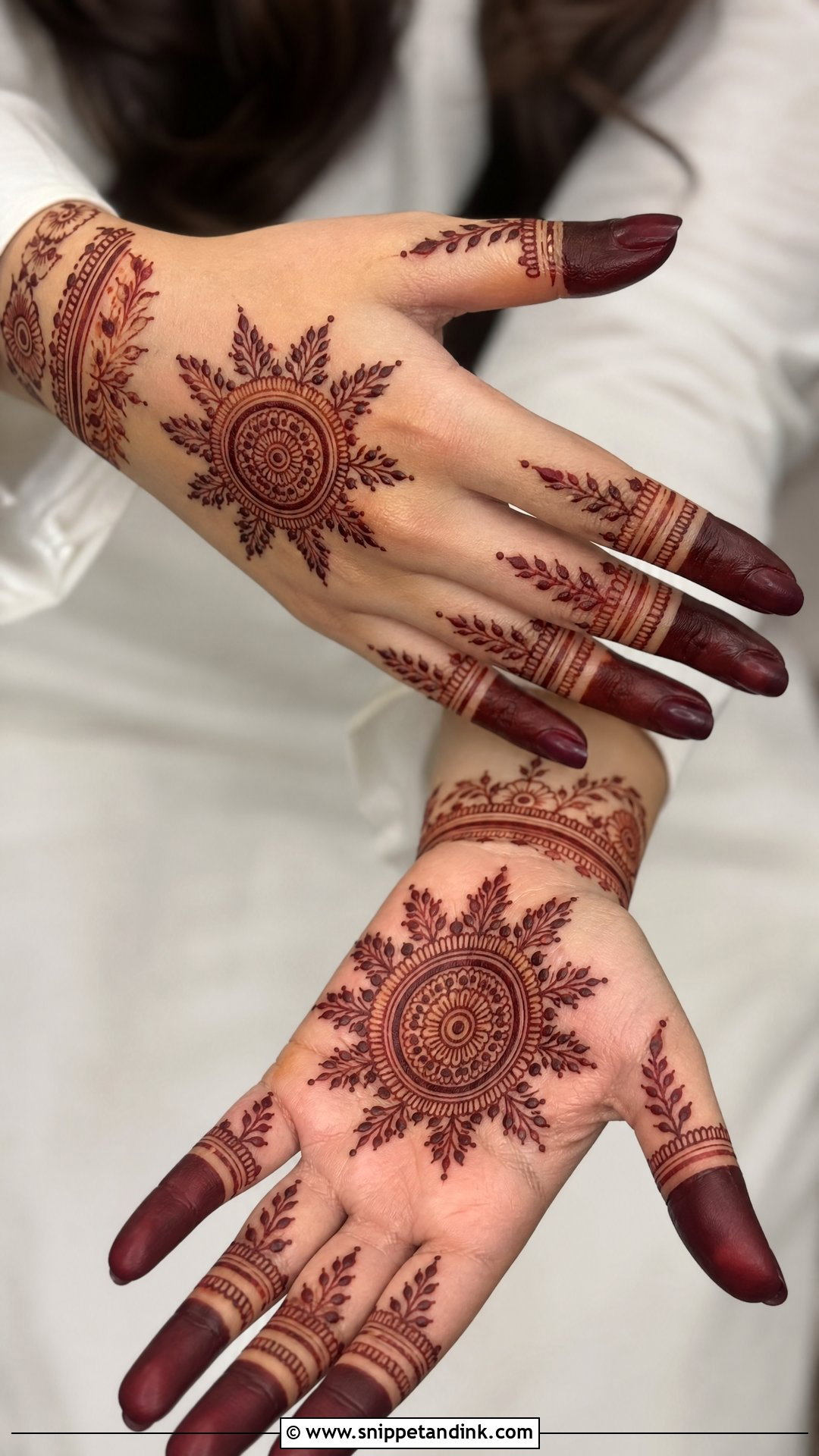
Decorated fingers can carry a whole design, and decorated fingers with filled tips, ring bands and leafy trails look modern next to a lighter palm. I make each finger slightly different but repeat one detail across them, a dot row or a leaf shape, so they look like a set. If you’re having nail art, have it done before the mehndi; filing and polish removal afterwards can fade the fingertips.
19. Kashees Minimal Bridal Mehndi
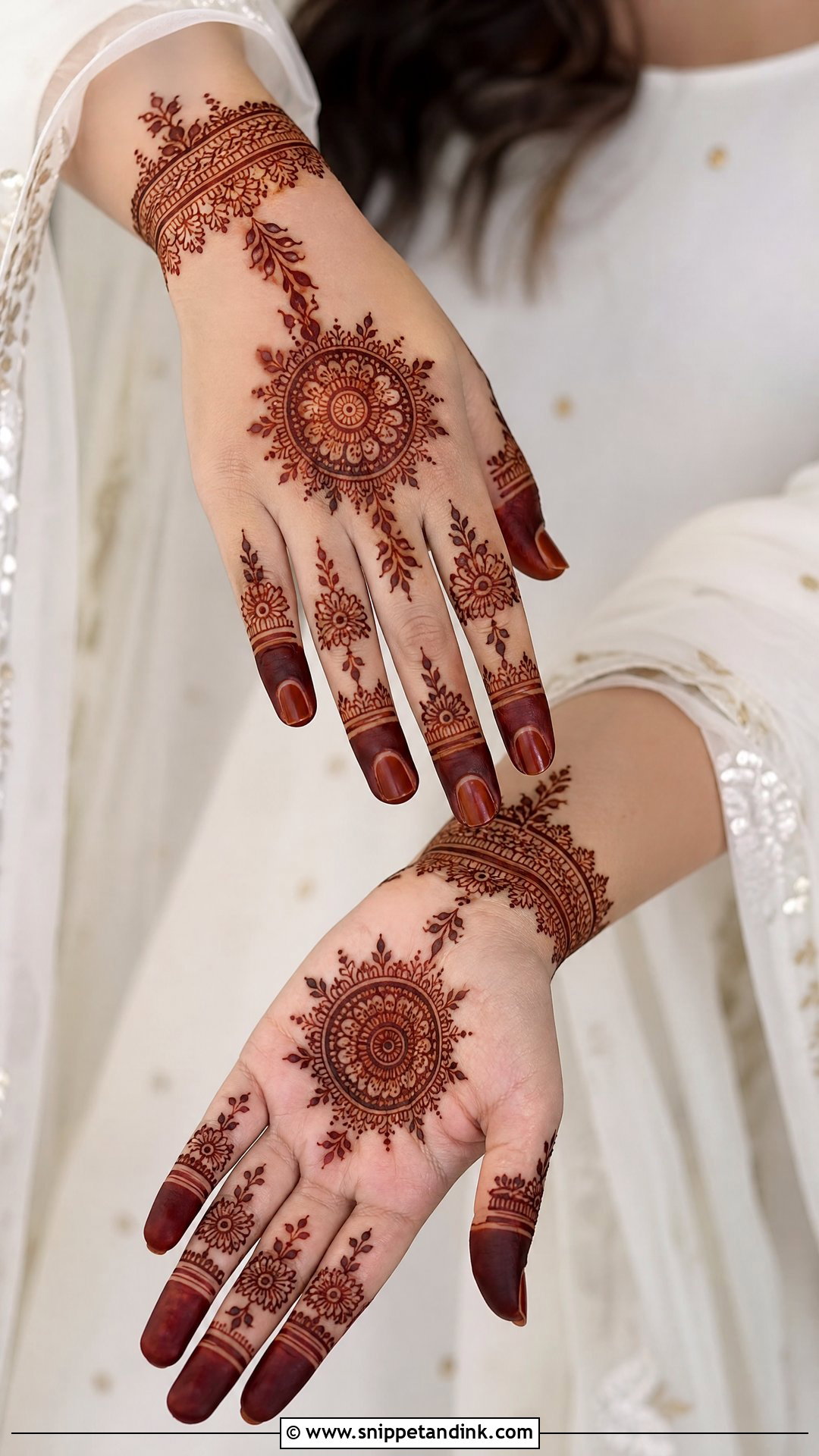
Minimal bridal mehndi needs one strong focal point per hand, a mandala or a neat floral trail, and then restraint. Without that anchor it can look unfinished. A light wrist cuff and crisp fingertips complete it. It suits a nikah, a civil ceremony or a small home function, and lighter outfits generally. A dark stain is essential, because there’s so little of it.
20. Kashees Foot Bridal Mehndi
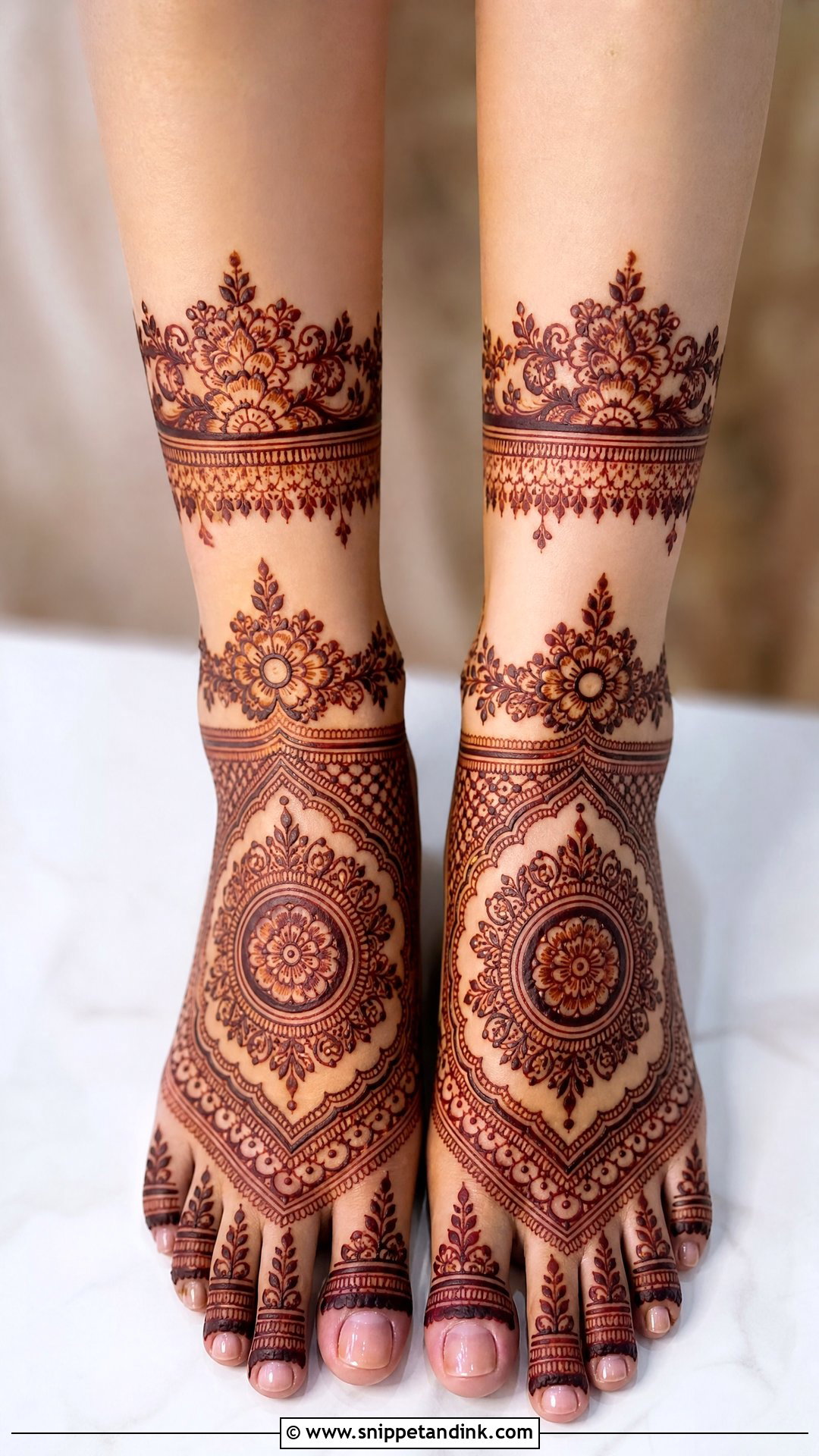
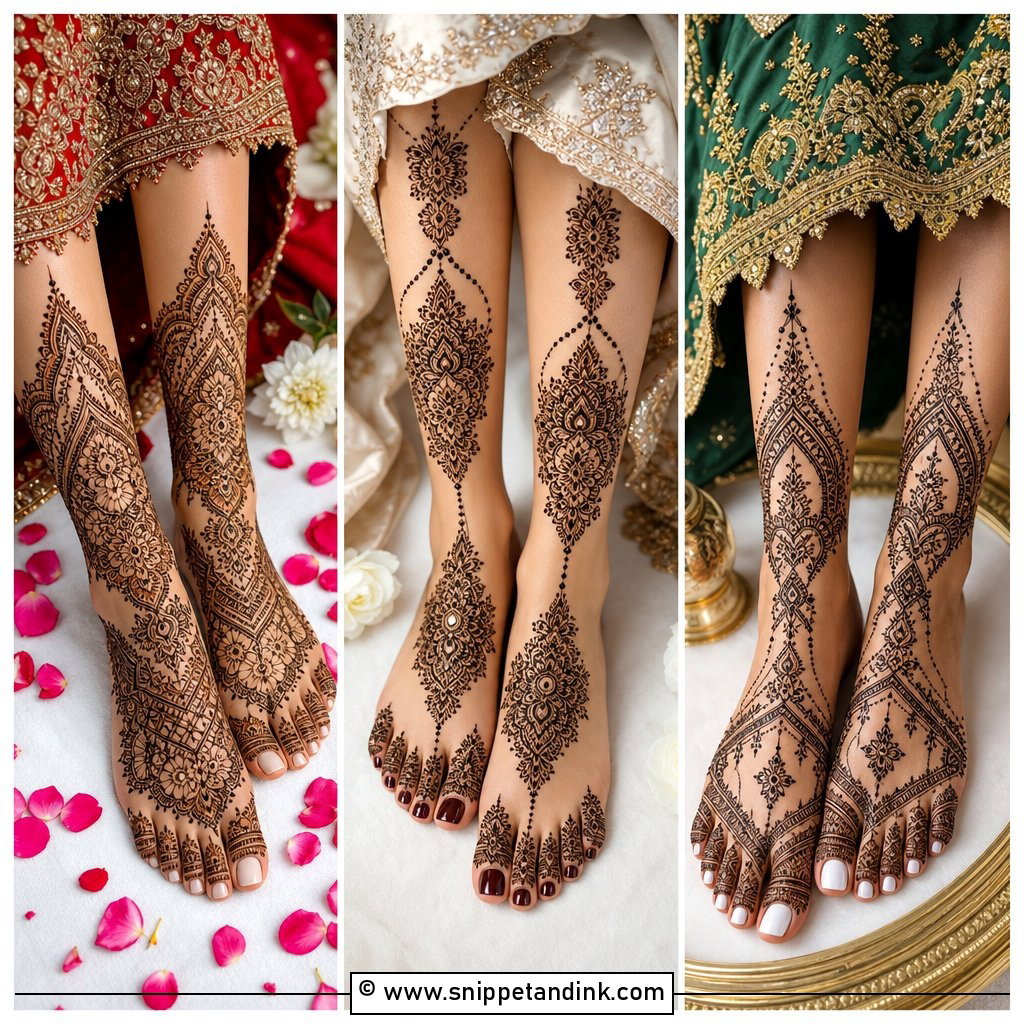
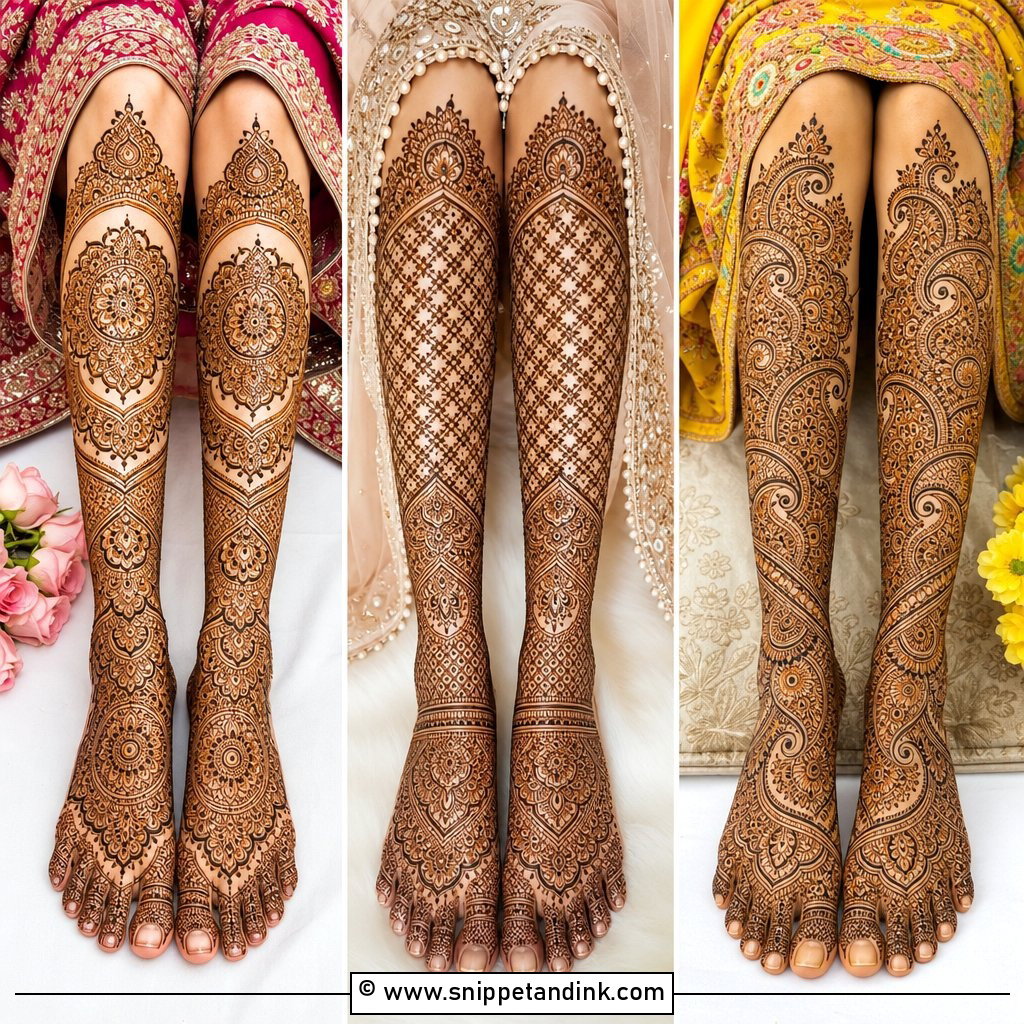
Many brides wouldn’t feel finished without decorated feet. Kashees foot bridal mehndi can cover toes, the top of the foot, ankles and lower legs with florals, paisleys and anklet bands. The soles stain very dark, as palms do, so heavy paste there is unnecessary and makes walking while it dries difficult. I usually do feet after hands, with the bride seated and her legs up. Match the mood of the hand design even if the feet are lighter.
From Wet Paste to Deep Maroon in Two Days
Most of the stain is decided after I leave. Keep the paste on as long as you can bear, ideally six to eight hours or overnight. A dab of lemon and sugar mixture on dried paste helps it stick, and keeping your hands warm helps the dye move into the skin.
When it’s time, scrape the paste off with a blunt knife or your nails. Don’t wash it off. Keep water away for as long as you can, ideally 12 to 24 hours, and if your hands get wet, pat them dry instead of rubbing. A little balm or coconut oil before showering protects the stain.
One kind of henna to refuse
Natural henna stains orange to maroon, never black. Paste sold as black henna or promising an instant jet black stain can contain PPD, a hair dye chemical that causes painful burns and lasting reactions on skin. If a cone smells of chemicals or claims instant results, don’t use it, and ask any artist what their paste contains.
Is Your Design Right for the Hours You Can Sit?
The right bridal design depends on your outfit and ceremony, but also on how long you can sit still and how many days you have before the main event. Full heavy hands suit the baraat; tikki, bracelet, Arabic and minimal designs fit a nikah, engagement or walima. Portraits, hidden names and peacocks make the design personal. Whatever you pick, clean line work and natural henna matter more than how much of your arm is covered. Bring a few saved photos to your consultation and talk coverage with your artist before the day.
You'll Like These Ideas:



Leave a Reply