
Most people who sit down with their first cone expect it to be hard, and it’s far less hard than it looks if the design is built from dots, vines, simple mandalas, florals, paisleys and open skin rather than dense bridal fill. In my experience, beginner henna rewards patience more than talent. Every design below is a complete hand look you can finish on a palm, back hand, fingers, wrist or a short forearm trail, and each one forgives the shaky lines everyone draws at first. They’re festive enough for Eid, Diwali, a family wedding or a school event, and I’ve noted where beginners usually trip up.
Doing Your Own Hands When Only One Is Free
Most beginners practise on themselves, which means drawing with one hand on the other and then swapping. It’s awkward, and a few habits make it much easier.
- Start on the hand you don’t write with. Your dominant hand draws better, so the first side comes out cleaner. The second side will be harder, so plan a simpler design for it.
- Sit at a table with the hand you’re decorating resting on a folded towel. Holding it up in the air makes both hands shake.
- Put the back-hand design on your second side. You can see the back of your hand fully and keep it flat, whereas drawing on your own dominant palm means twisting your wrist.
- Get water, your phone and anything else you’ll need within reach before starting the second hand, because once the first is done you can’t use it.
If the second hand still ends up messy, ask a friend to draw it while you return the favour on hers. Two beginners trading hands usually produce neater work than one person doing both alone.
1. Simple Mandala Mehndi Design
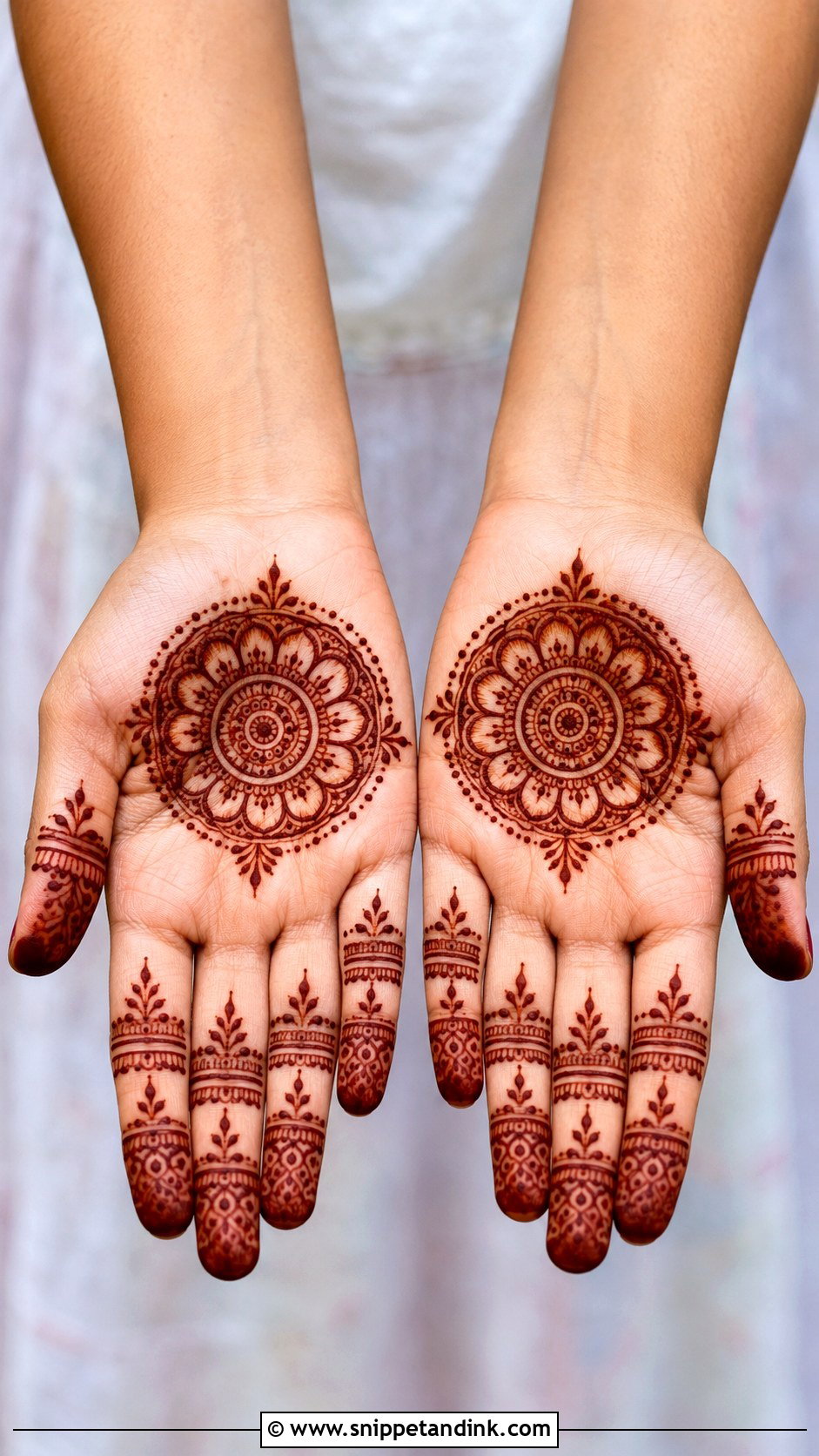
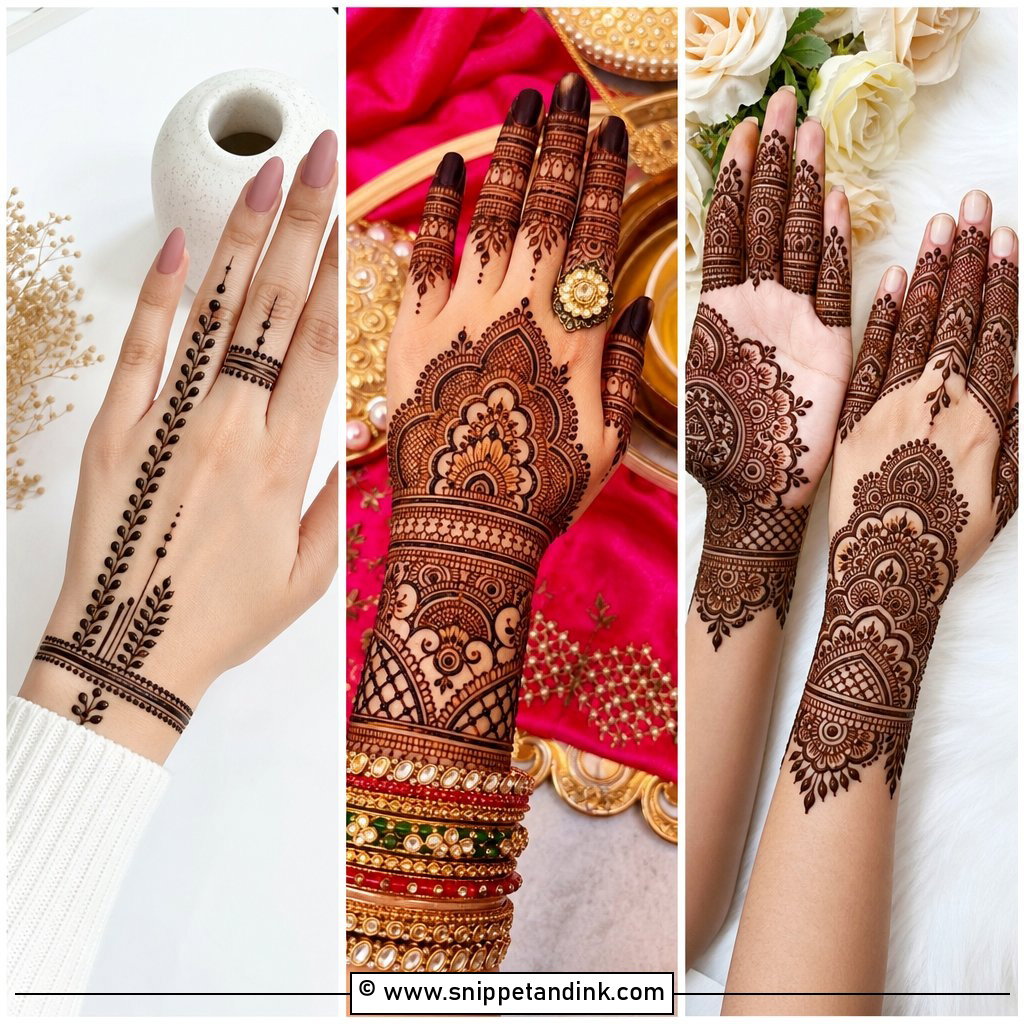
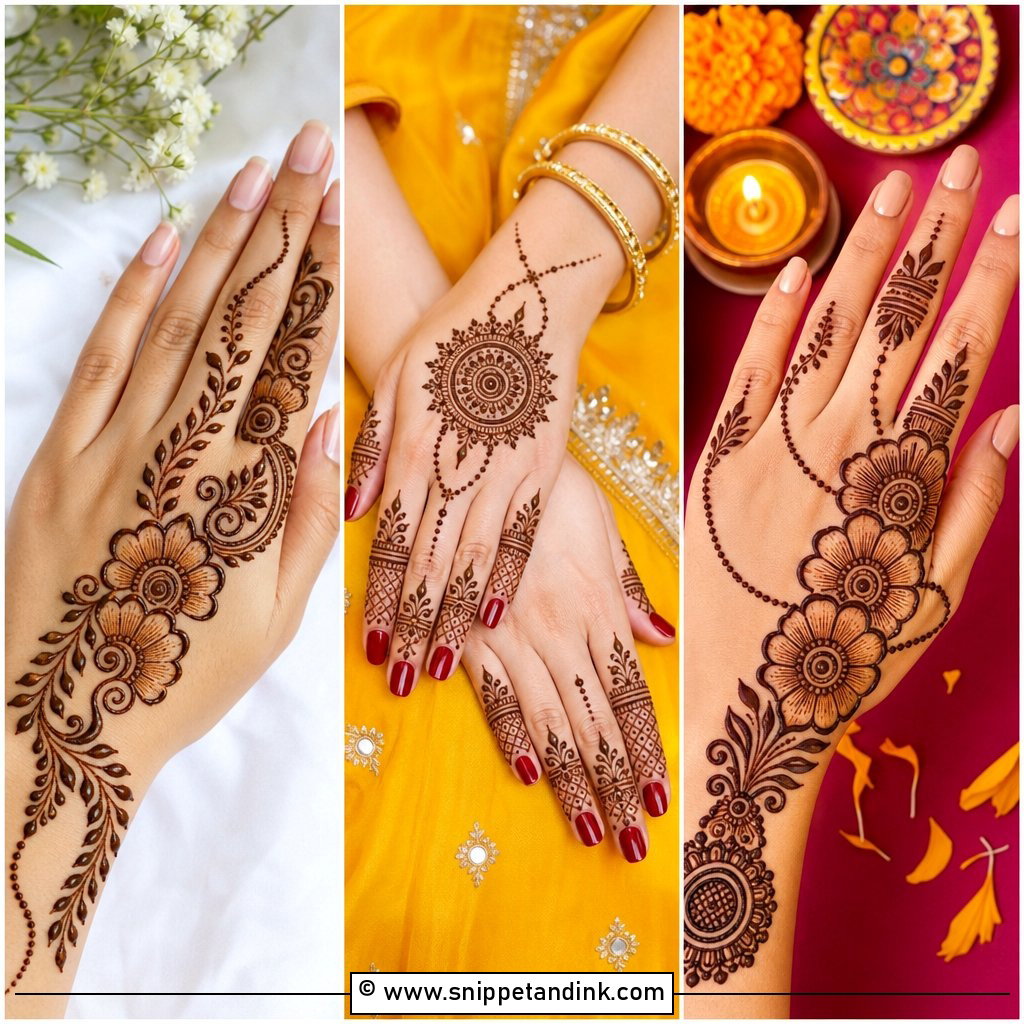
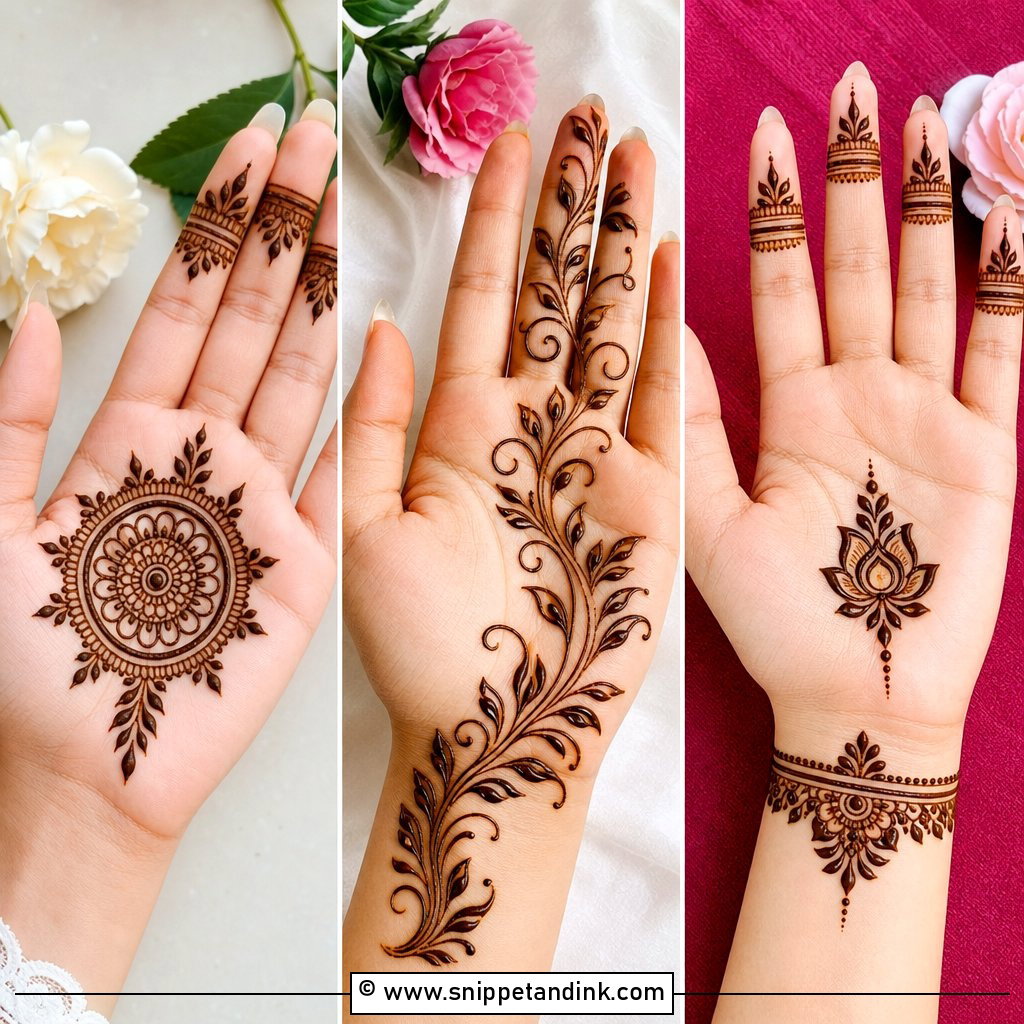
A circle is the safest place to start, because every ring you add hides small wobbles in the one before it. Put the center in the middle of the palm or back hand and build outward with petals, dots and short curved lines. Keep the fingers to tiny dot trails or short leafy bands. My one piece of advice: turn the hand, not your wrist. Rotating the hand as you go lets you pull every curve toward yourself at the same comfortable angle, with slow, even pressure on the cone.
2. Easy Arabic Mehndi Design
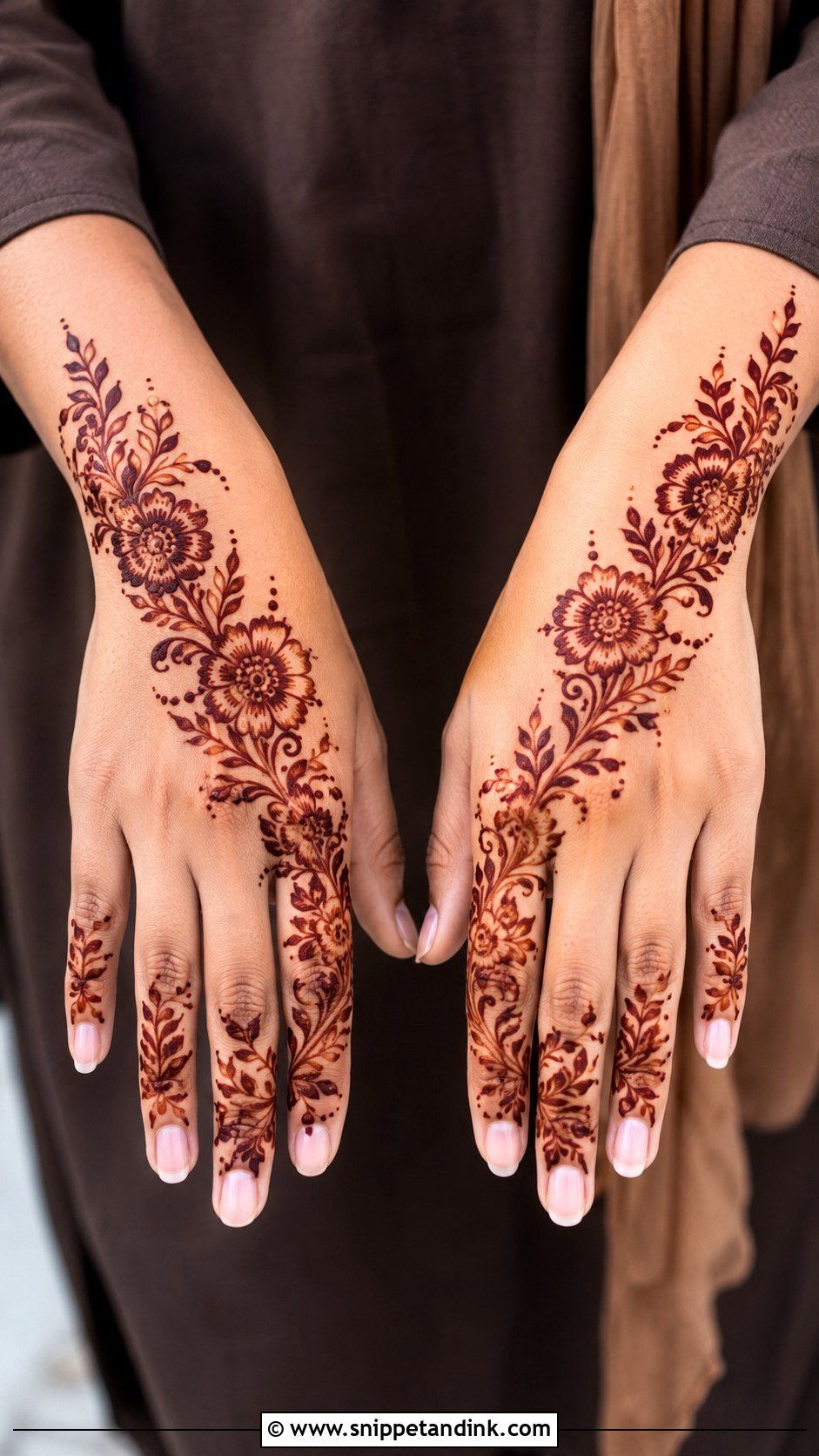
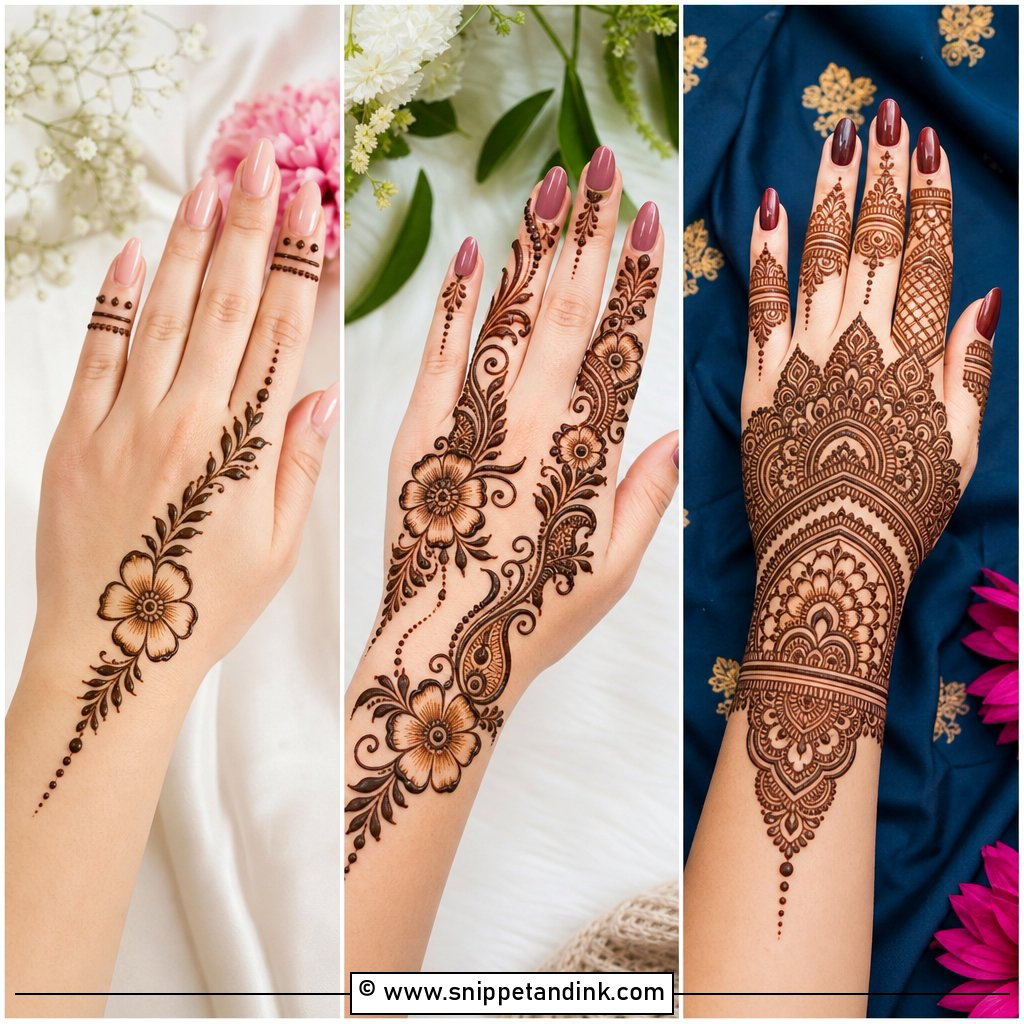
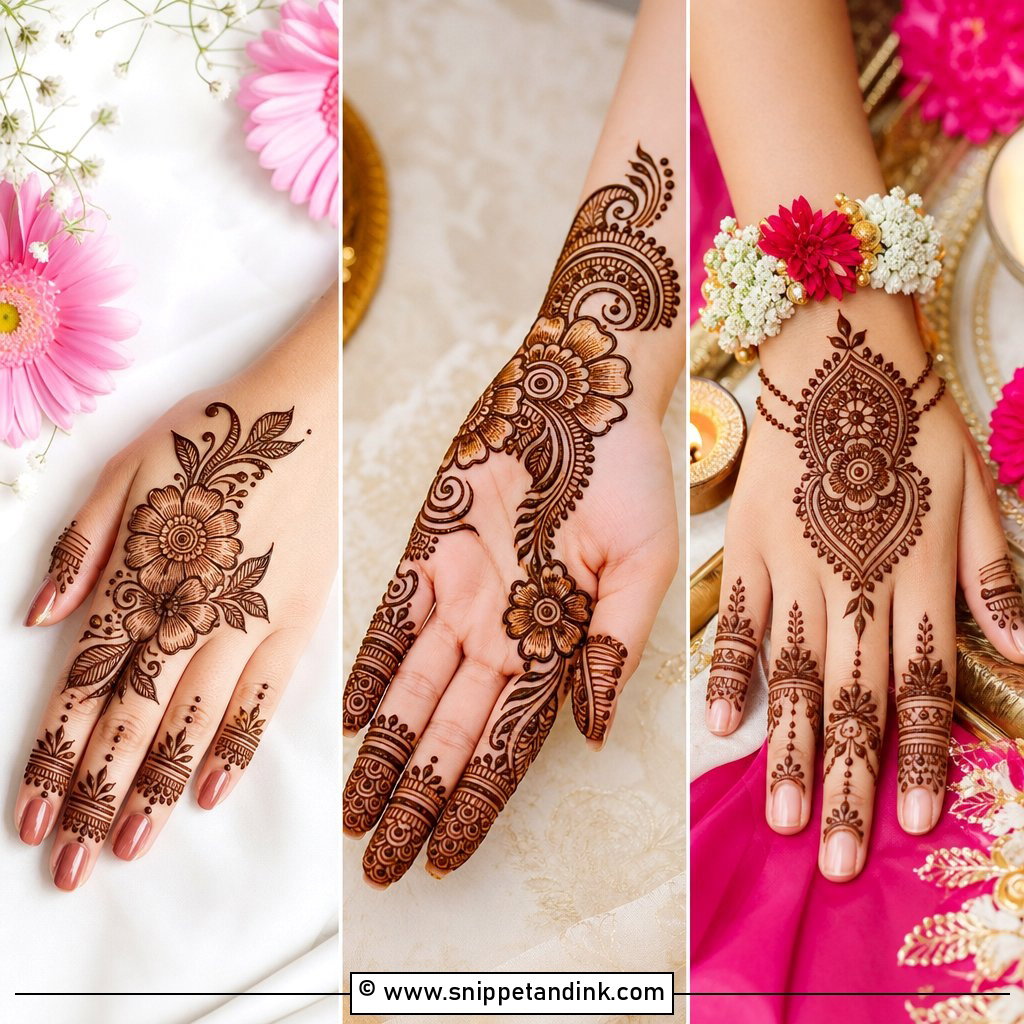
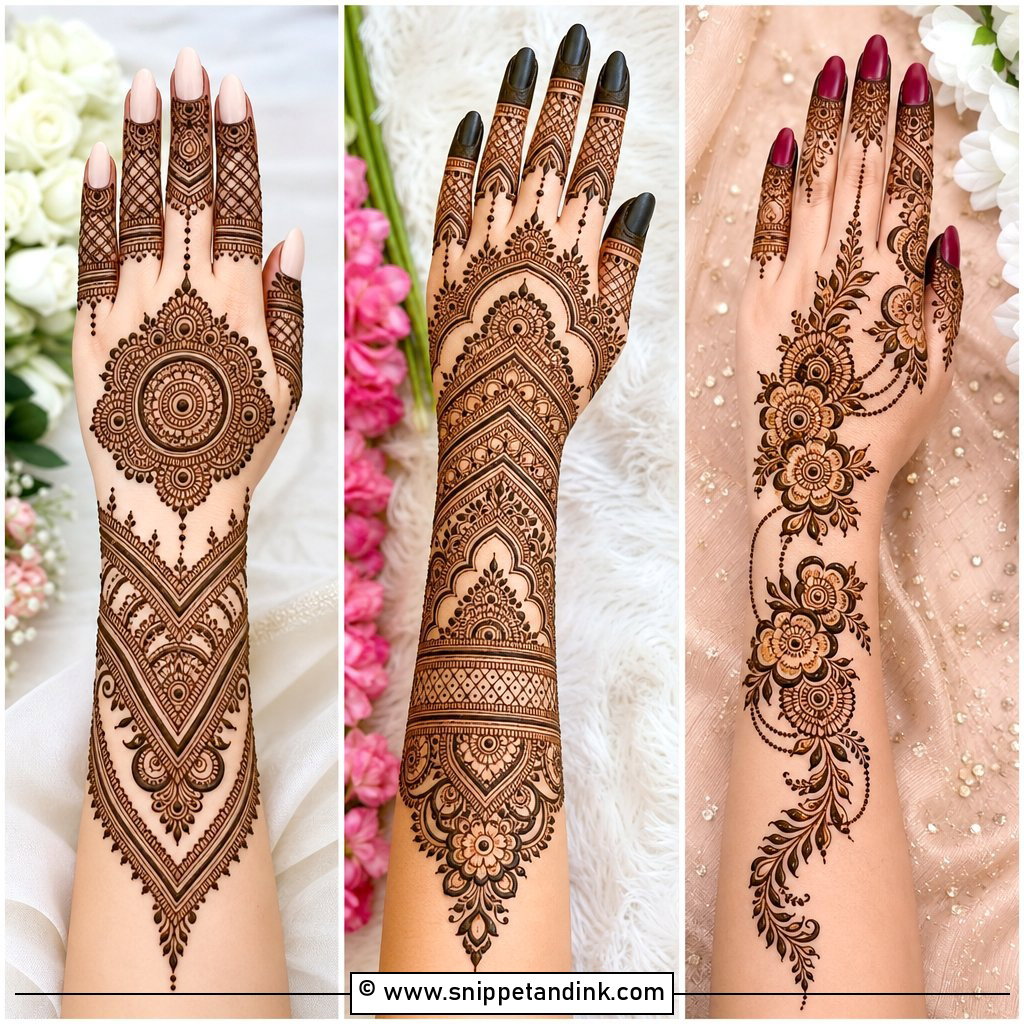
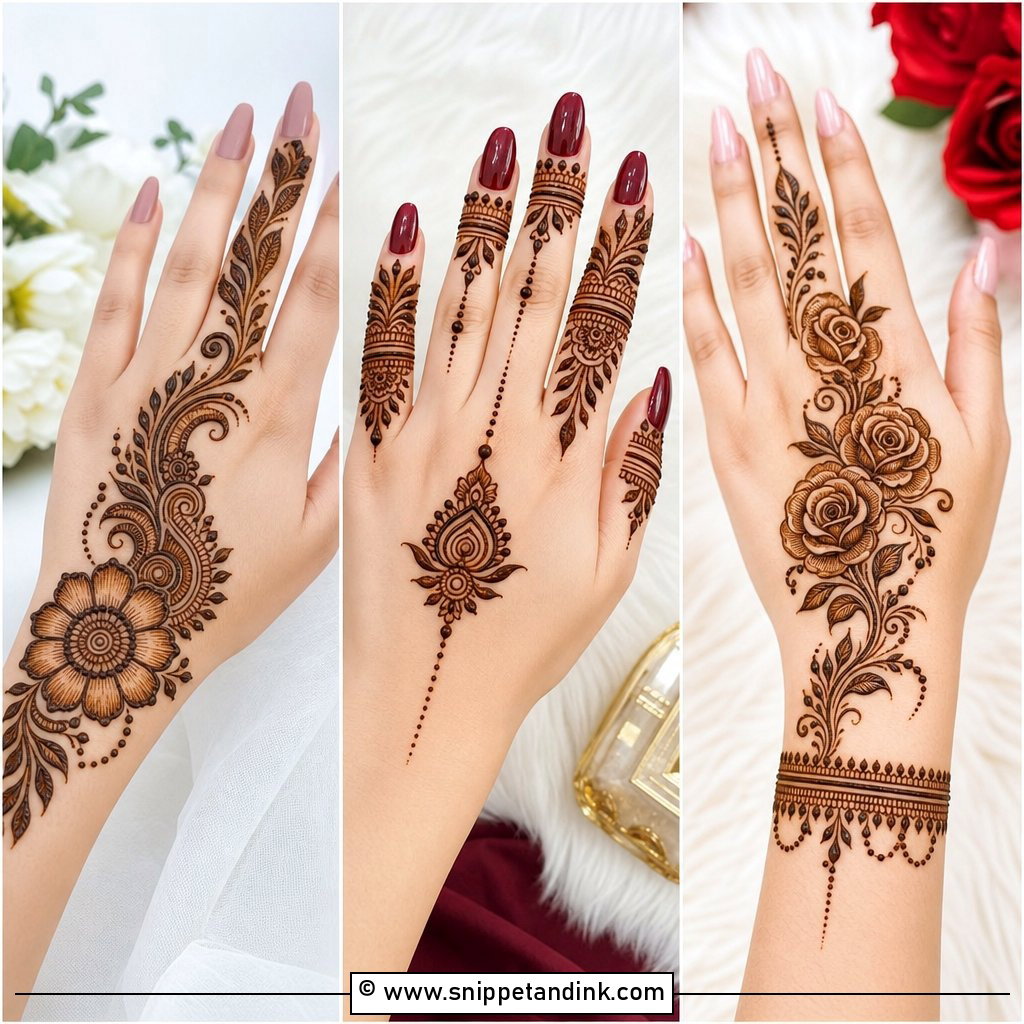
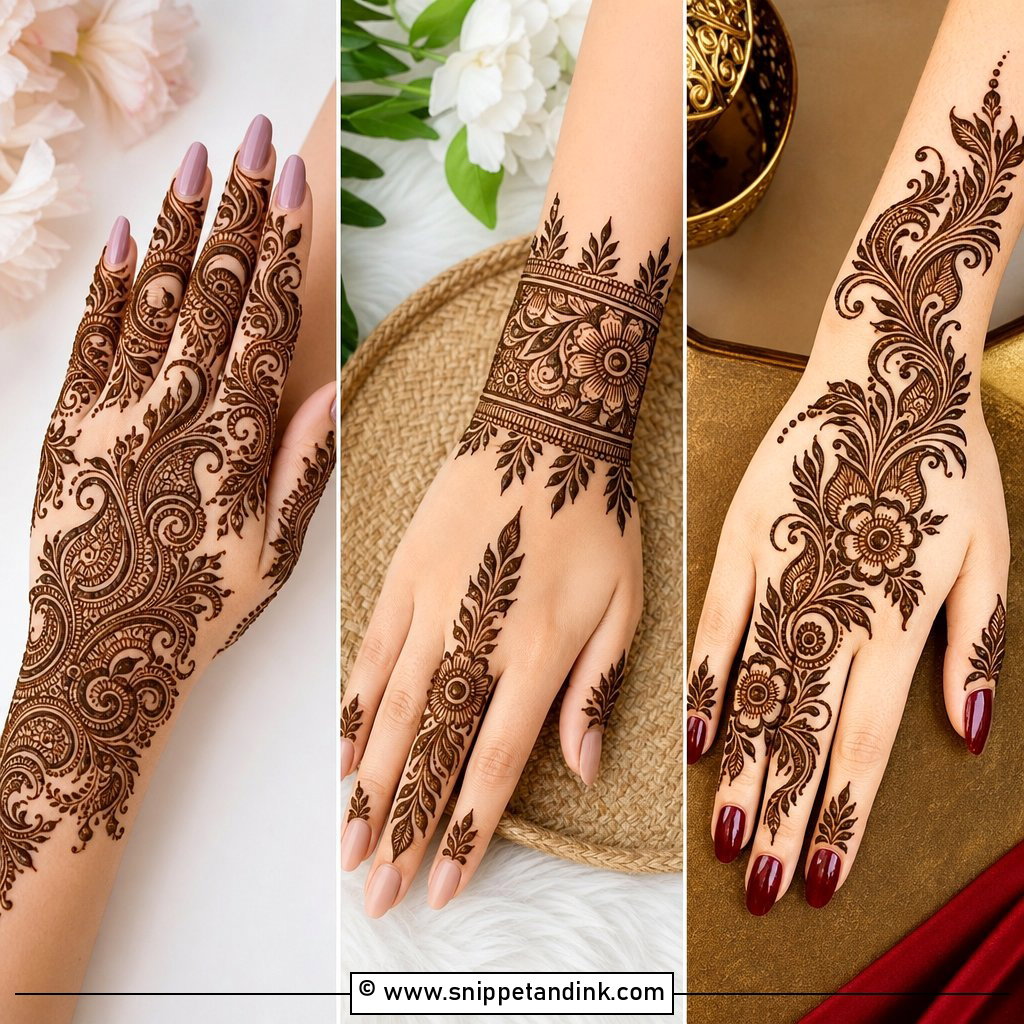
Start at one side of the wrist and travel diagonally toward the index finger with a curved floral trail, then hang simple leaves, small flowers, dots and little filler curves off it. Arabic work uses big motifs and plenty of empty skin, so there’s no pressure to fill anything. Keep it to one side of the hand. If a line shakes, I tell students not to stop and fix it; turn it into a vine or run dots along the edge. Most beginners can finish a respectable Arabic hand on their first evening.
3. Front Hand Floral Mehndi Design
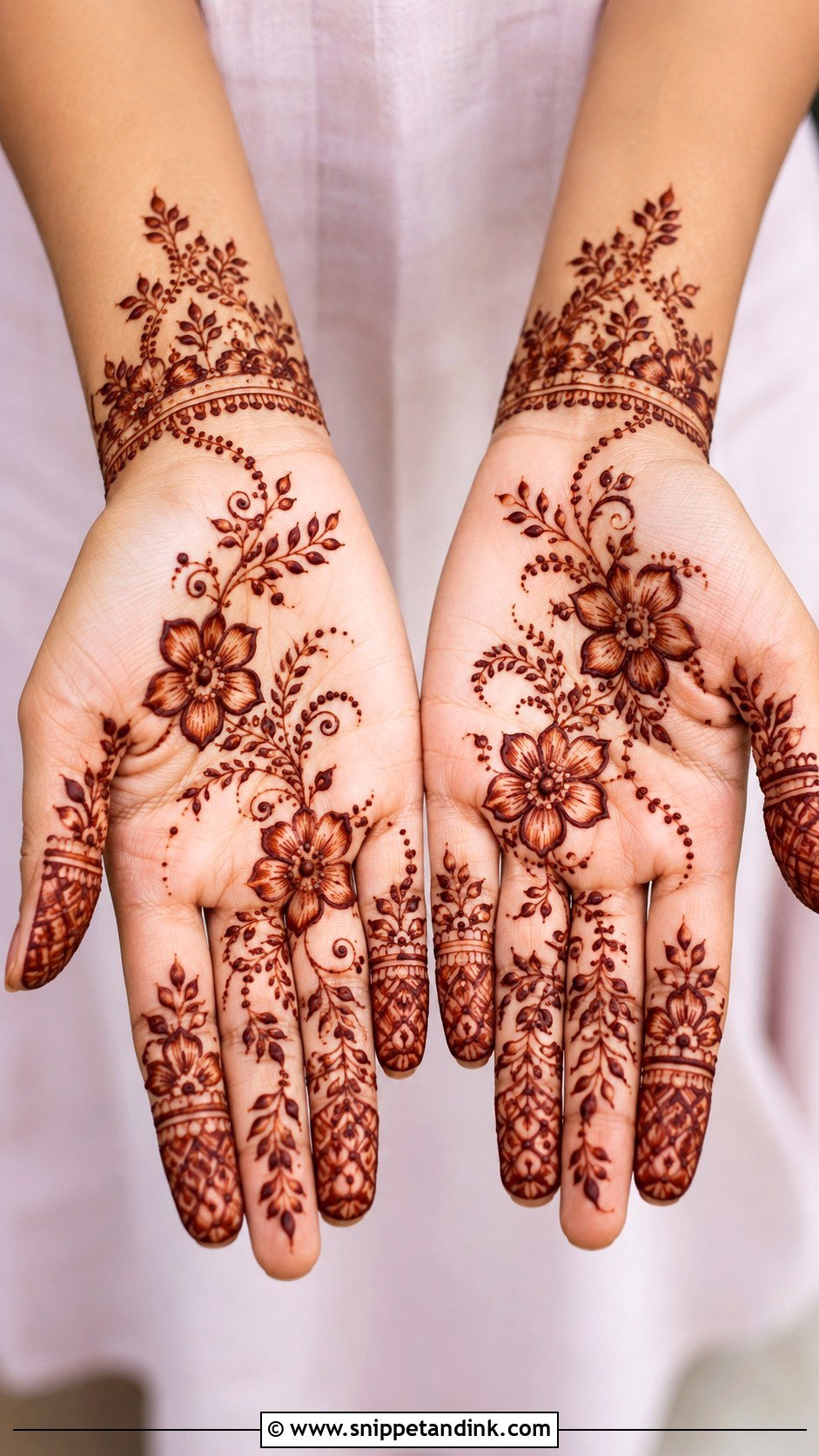
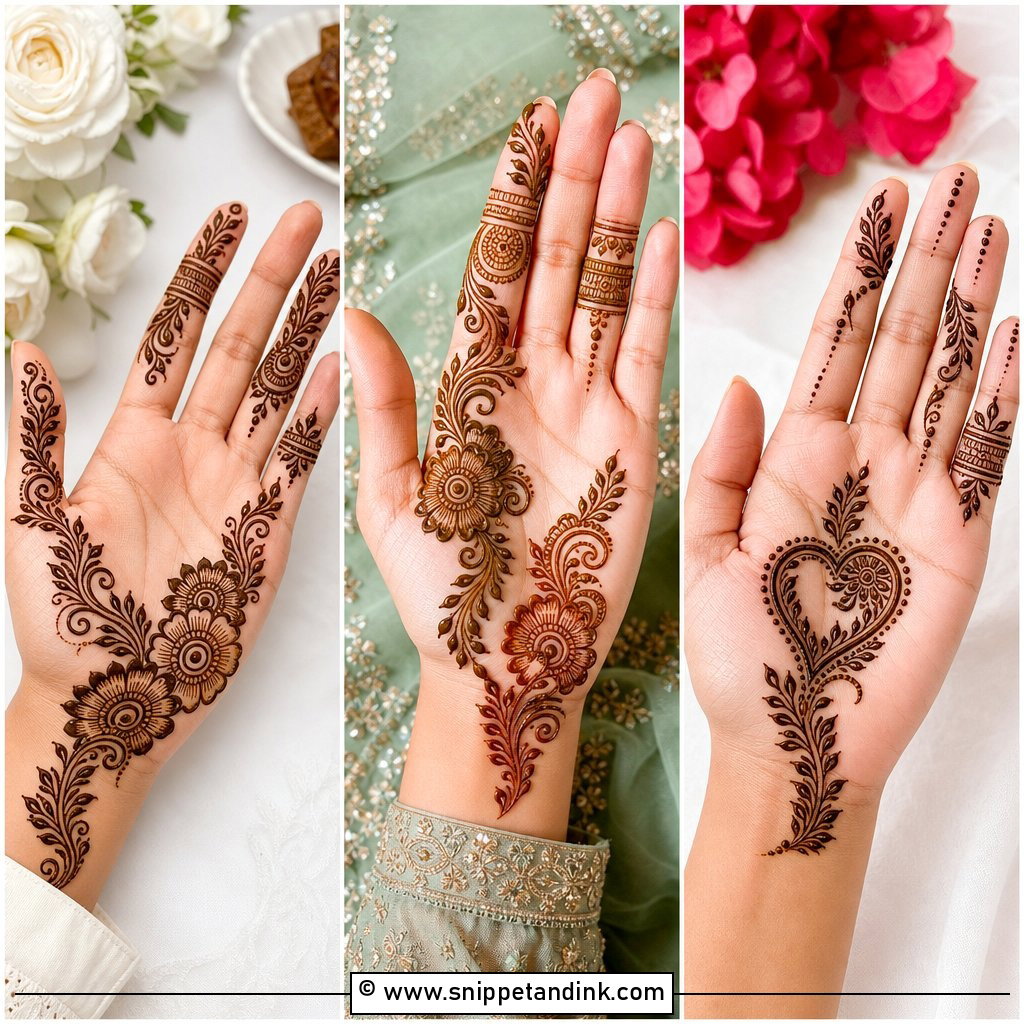
Petals are the most forgiving shape you can draw: if one comes out lopsided, the next one balances it. Set one medium flower near the palm center and link it to smaller blooms near the fingers and wrist, using five-petal flowers, round centers, tiny leaves and dot borders. Leave the gaps between flowers open. Simple finger bands with dots or half flowers near the tips finish it. Draw all the flower centers first and add petals afterwards, so the spacing is set before you commit.
4. Back Hand Finger Mehndi Design
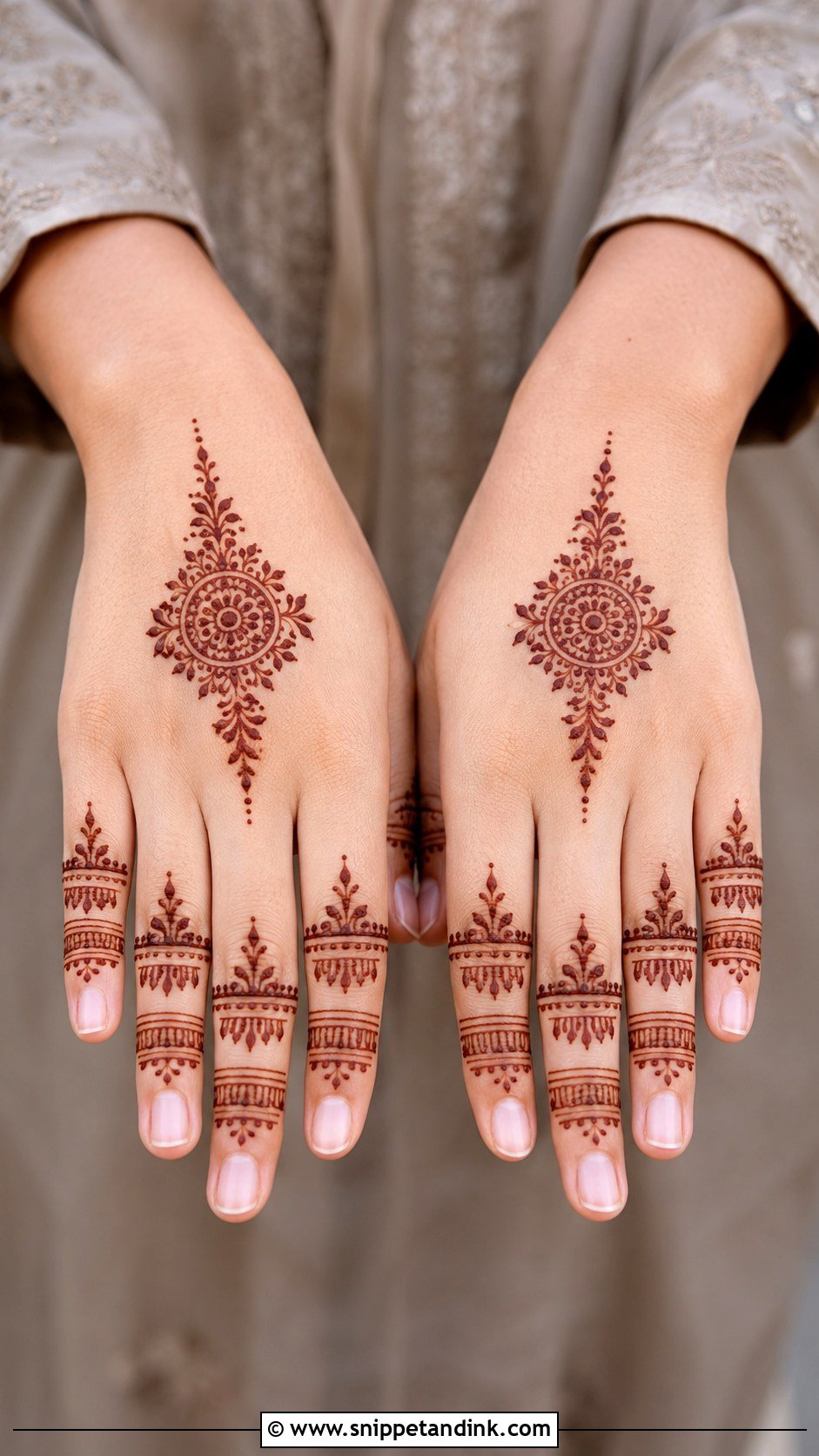
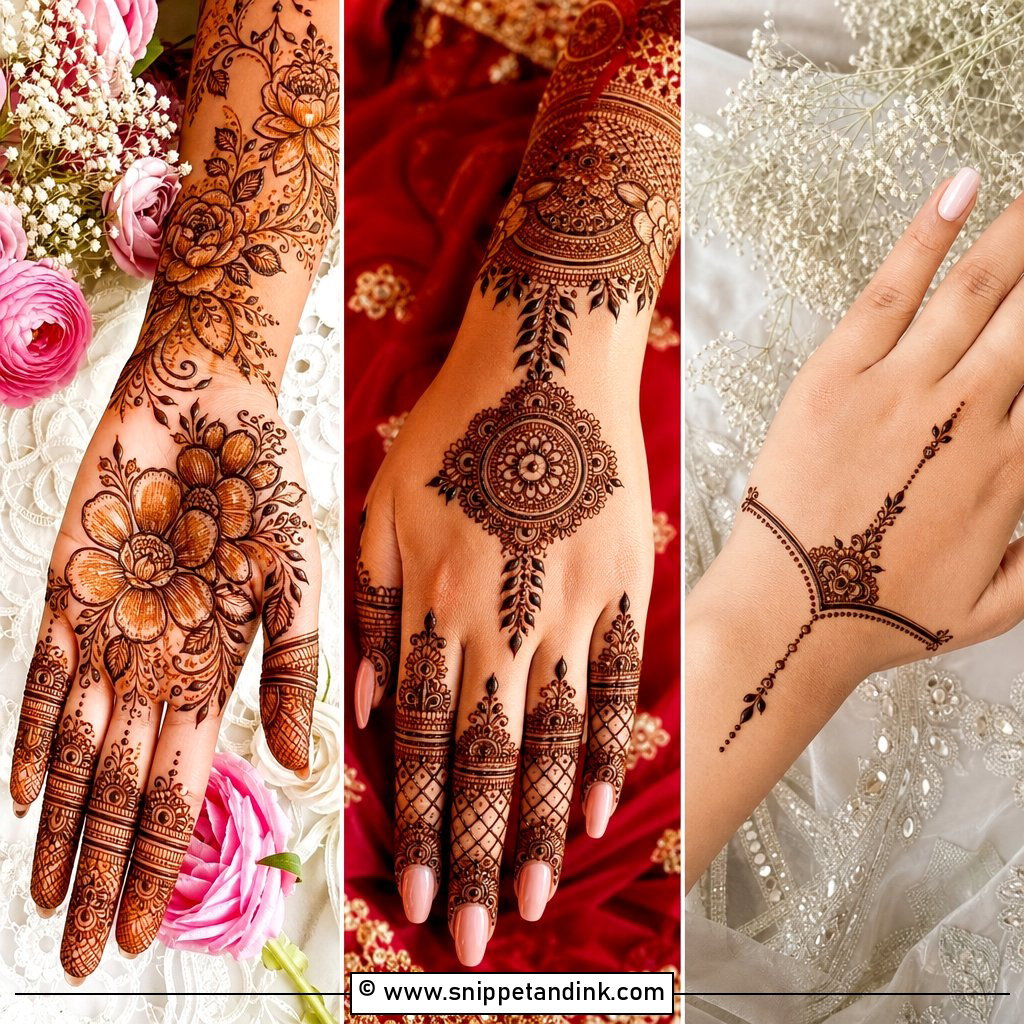
A back hand finger mehndi design breaks the job into short, manageable sections, which suits a beginner well. Give each finger a different simple band: dots, tiny leaves, straight lines, mini checks or small petals. A small mandala, flower or chain in the center of the back hand ties them together, and the wrist can stay plain or get one thin bracelet line. Draw the bands with the fingers spread slightly apart on a table; if they’re touching, you’ll smudge the one next door.
5. Simple Paisley Mehndi Design
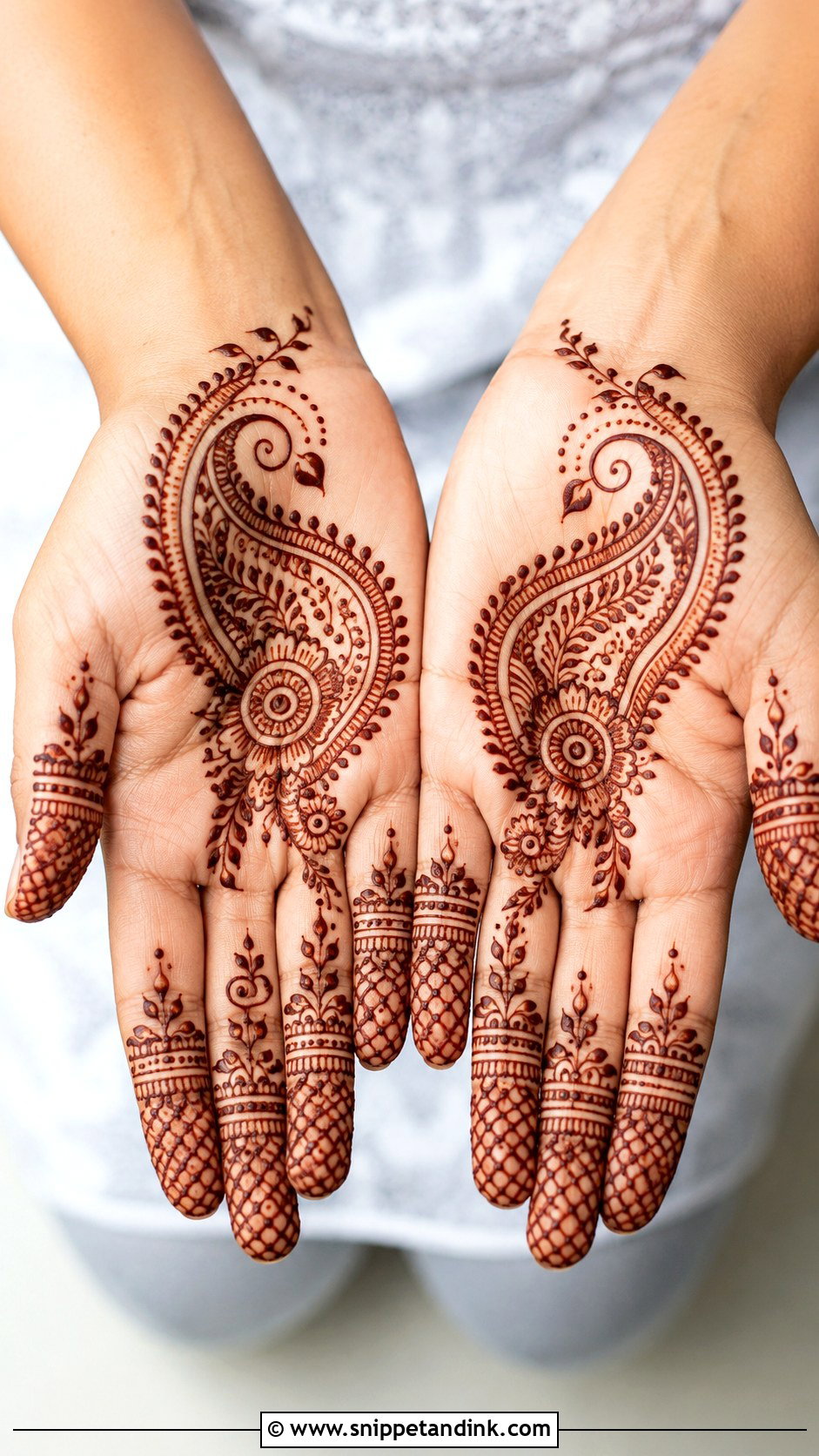
A strong paisley outline carries the whole design, so the inside doesn’t need to be perfect. Draw one large mango shape on the palm or back hand and fill it with small curves, dots, leafy strokes and a single tiny flower, then add a few leaves and a short trail toward the wrist or fingers. Keep the outline a little thicker than the fill. Thicker lines hold more paste and stain darker, which keeps the shape readable from across a room.
6. Easy Leaf Trail Mehndi Design
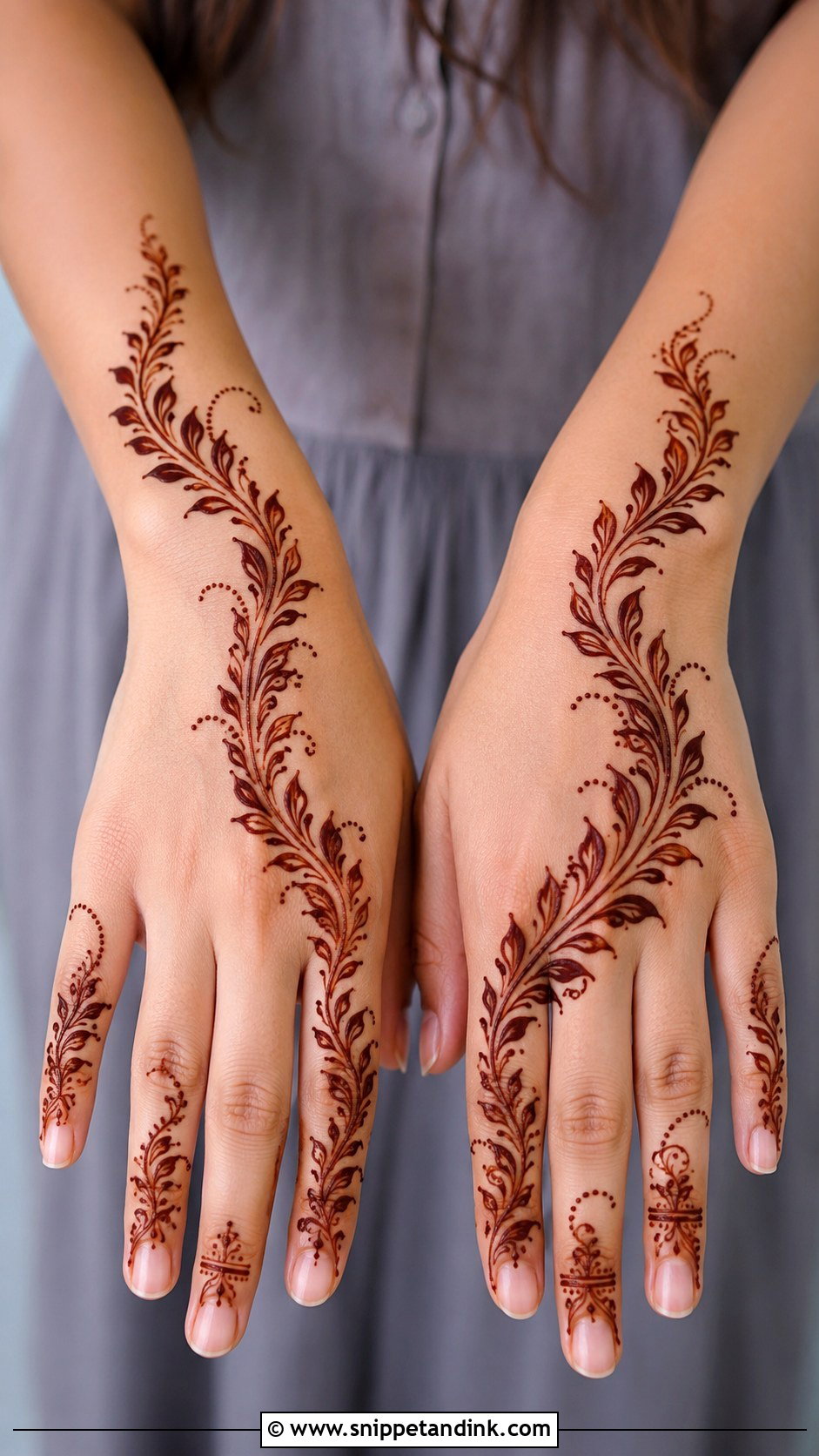
Draw a curved vine from the wrist to the middle finger, or from the thumb side to the index finger, and line both sides with small teardrop leaves. Leave them empty for a light look or fill every other leaf for contrast, then soften the edges with tiny dots. A diagonal trail also makes the hand look longer. If your leaves keep coming out different sizes, start each one at the vine and pull outward; finishing at the vine is what makes them uneven.
7. Beginner Bracelet Mehndi Design
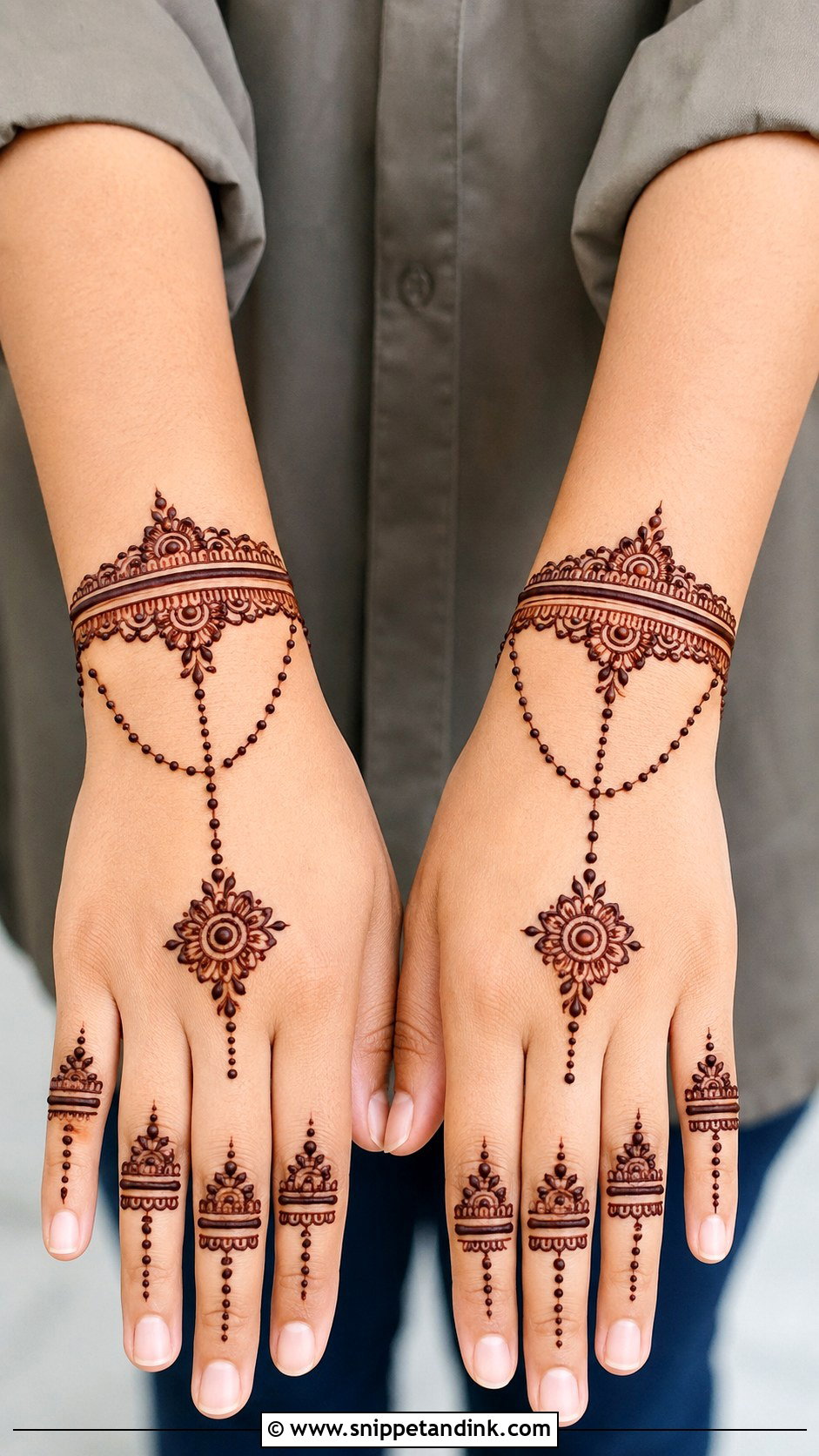
Two or three curved lines around the wrist make a bangle, and the space between them takes dots, small petals, diagonal strokes or tiny leaves. A thin chain or dotted string runs from it to one finger, with a small flower or ring motif on the back of the hand. Draw the wrist lines with the palm facing down and the hand relaxed. Drawn with the wrist bent, the bands look crooked the moment the hand straightens.
8. Simple Gol Tikki Mehndi Design
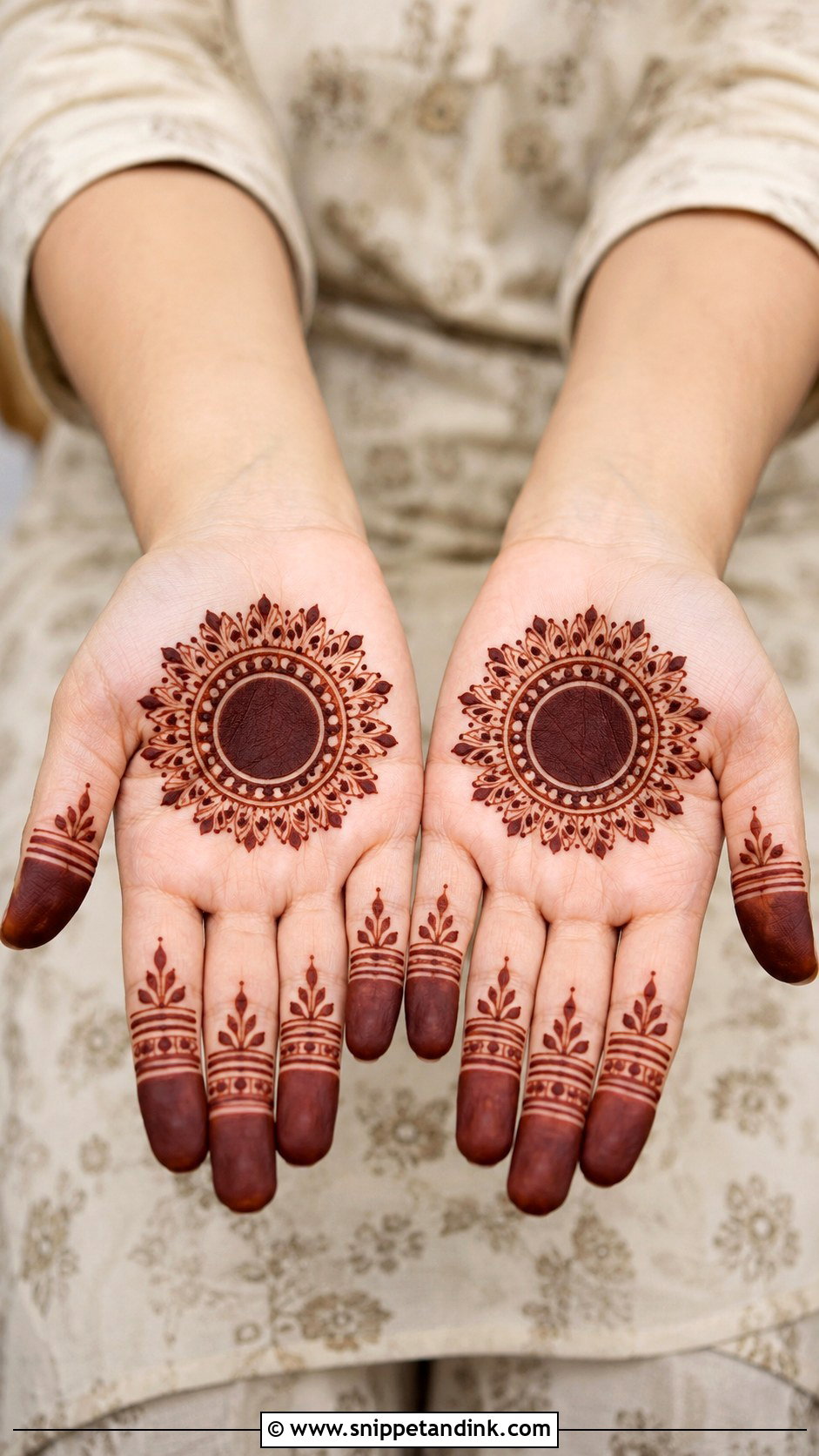
A round tikki in the palm, ringed with petals, dots, half circles or a small scalloped border, with finger patterns so the hand doesn’t look empty. It’s festive, modest and quick, and the fingertips can be lightly capped or banded. Here’s the beginner’s rescue: if your circle comes out lumpy, draw another border around it. Each extra ring evens out the shape, and by the third one nobody can tell.
9. Easy Finger Ring Mehndi Design
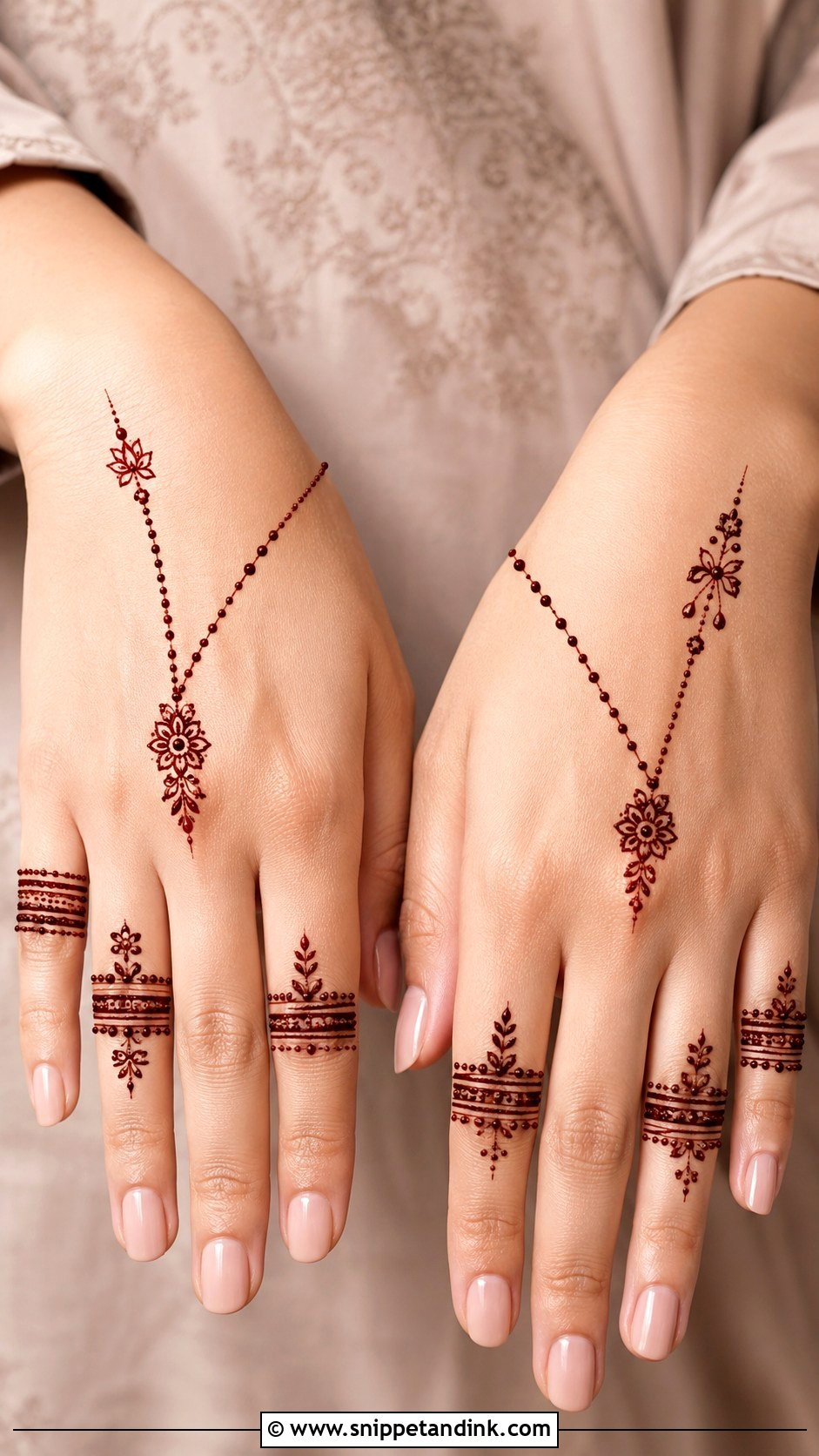
Pick one or two fingers, draw ring bands with dots, lines and tiny florals, and link them to a small back-hand motif with a dotted chain. Leave the rest of the hand mostly bare. It’s a good fit if large shapes intimidate you but you can manage short lines and dots, and teens and bridesmaids like it for casual events. Squeeze lightly for the chain and a little harder for the ring itself, so the ring reads as the heavier piece.
10. Easy Half Hand Mehndi Design
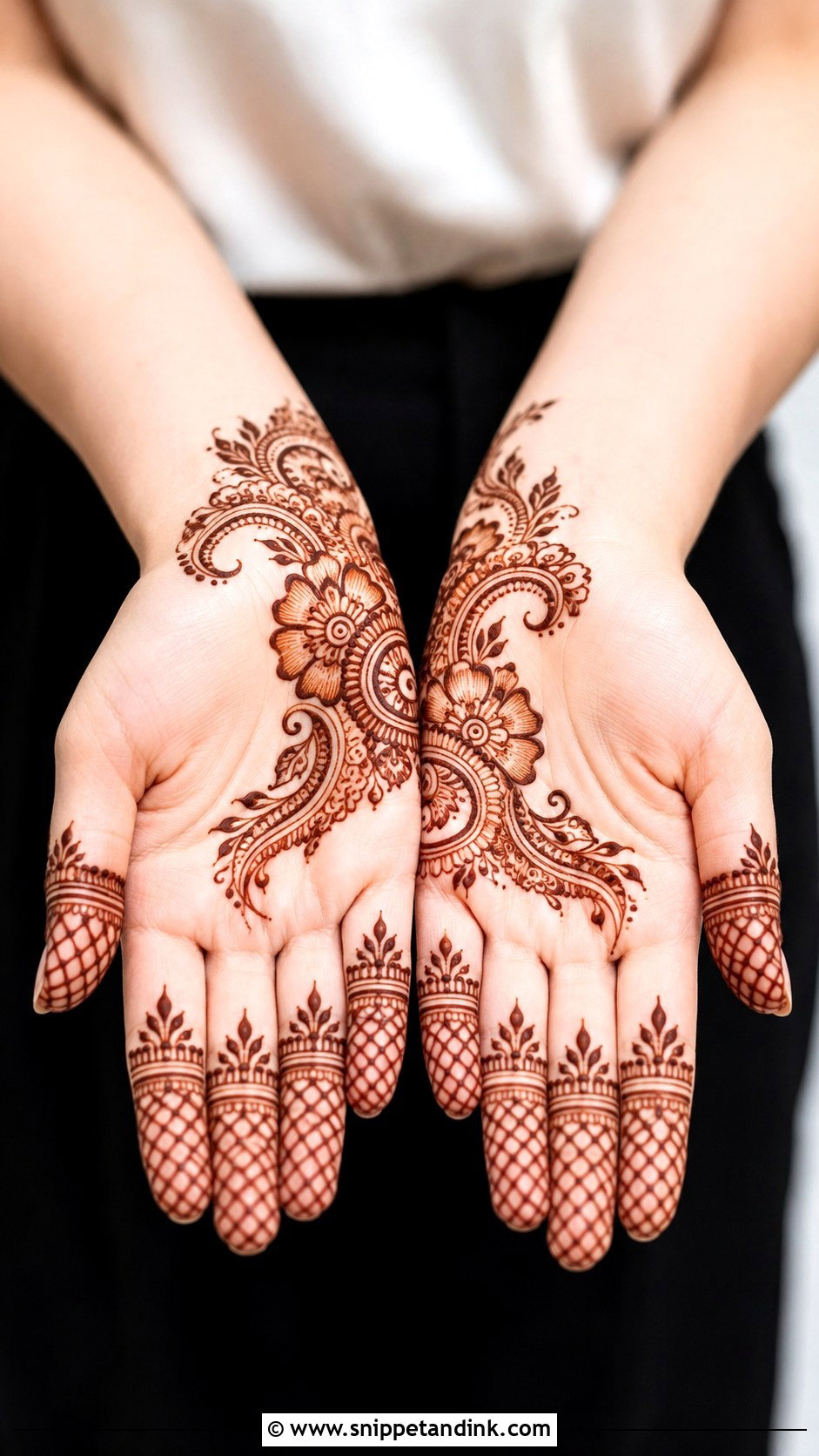
Cover just the lower palm and wrist, or just one side of the back hand, with simple flowers, leaves, dots and curved borders, and leave the rest open. That open area is what spares you from dense fill. I teach this one section by section: finish one small area completely before starting the next, so the first part has time to firm up and you’re less likely to lean on it. A clean border where the design stops makes it look planned rather than abandoned.
11. Simple Jaali Mehndi Design
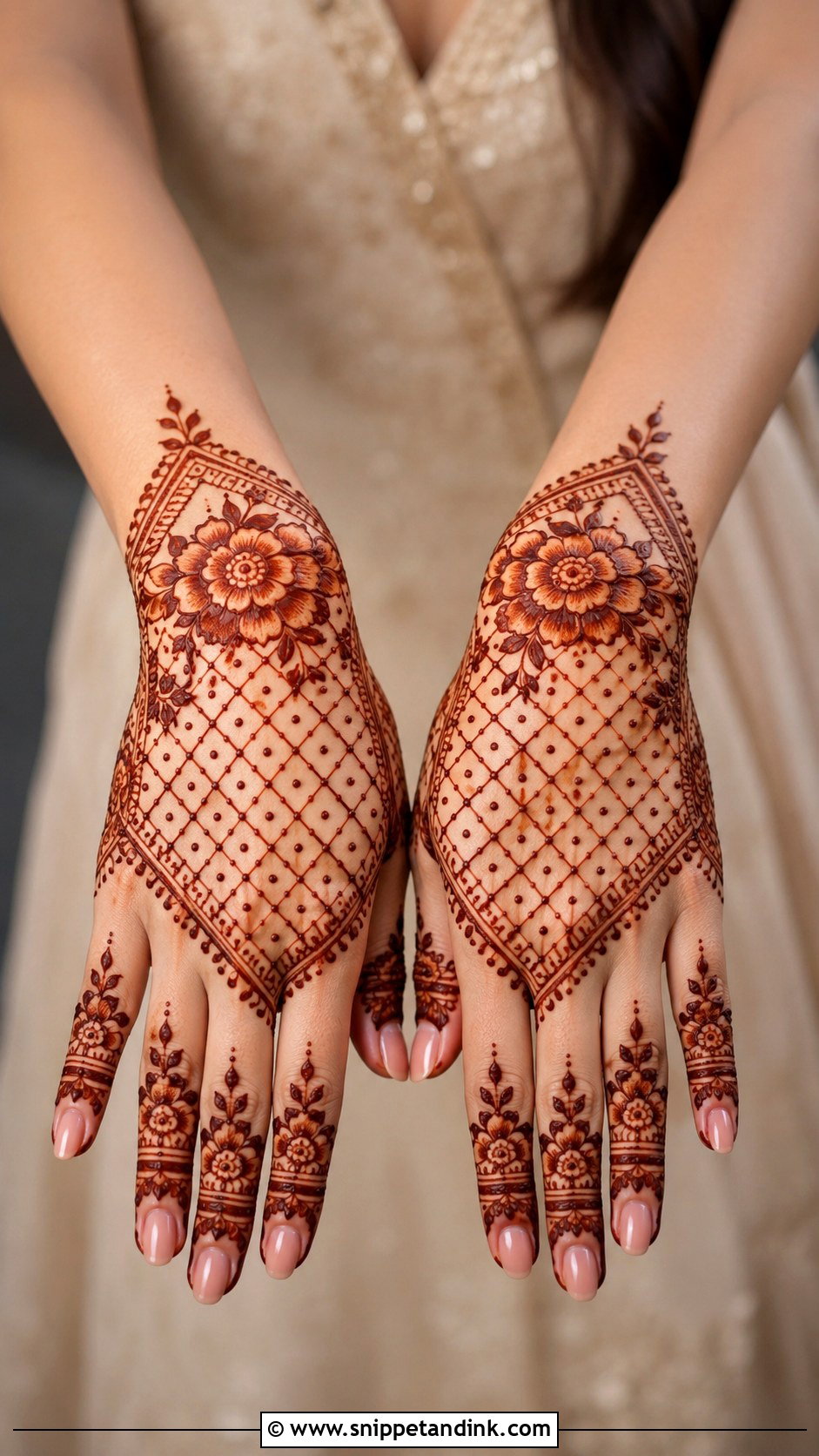
The grid looks complicated, but it’s only crossing diagonal lines with a dot in each diamond. Start small on the back hand, a palm corner or the wrist, then put a flower or paisley beside it to complete the hand. Large grids drift out of line quickly, so keep your first ones no bigger than a coin or two. I wipe my cone tip on a tissue every few lines, because a little dried paste on the tip is what makes jaali lines go ragged.
12. Beginner Rose Mehndi Design
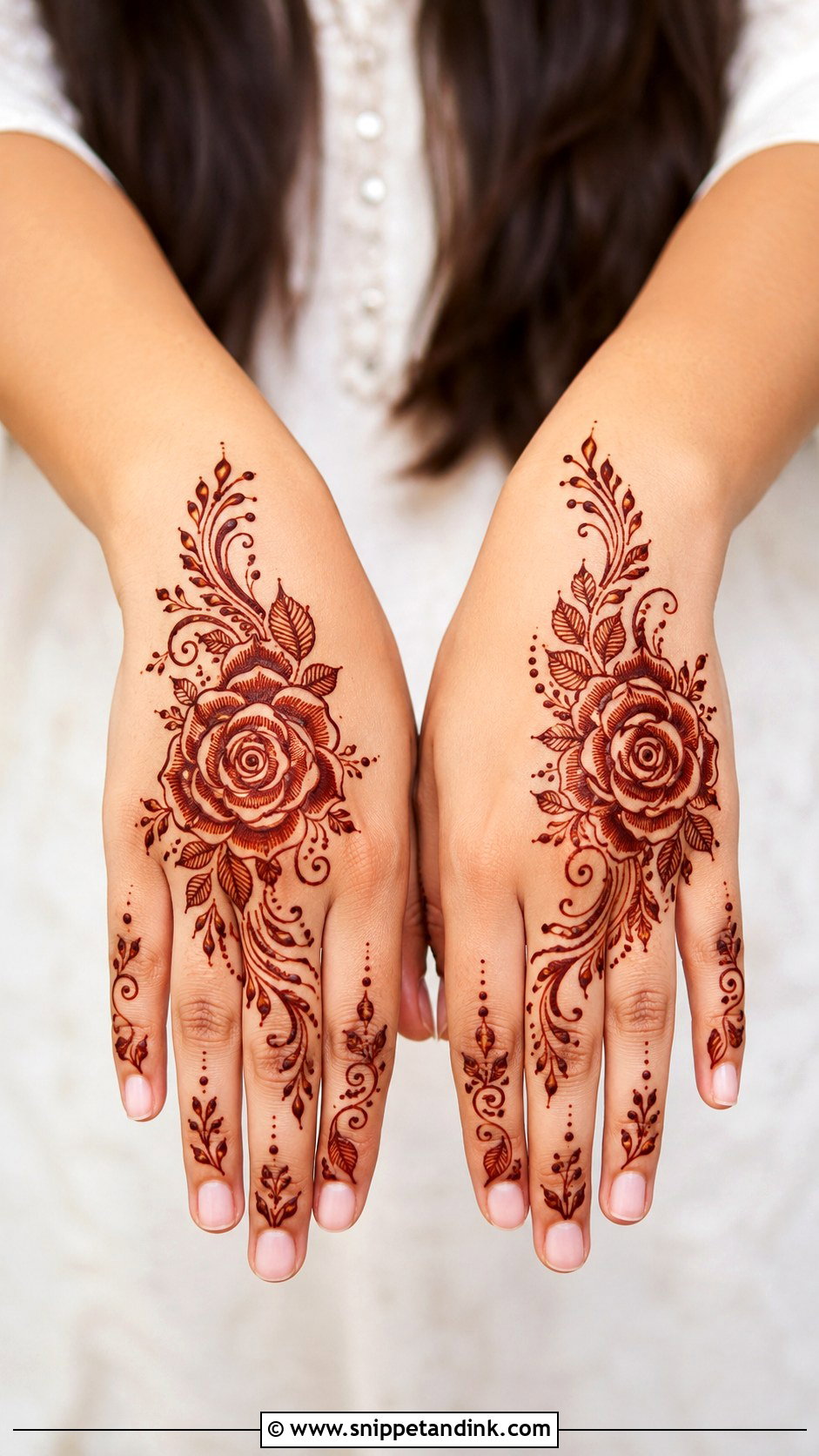
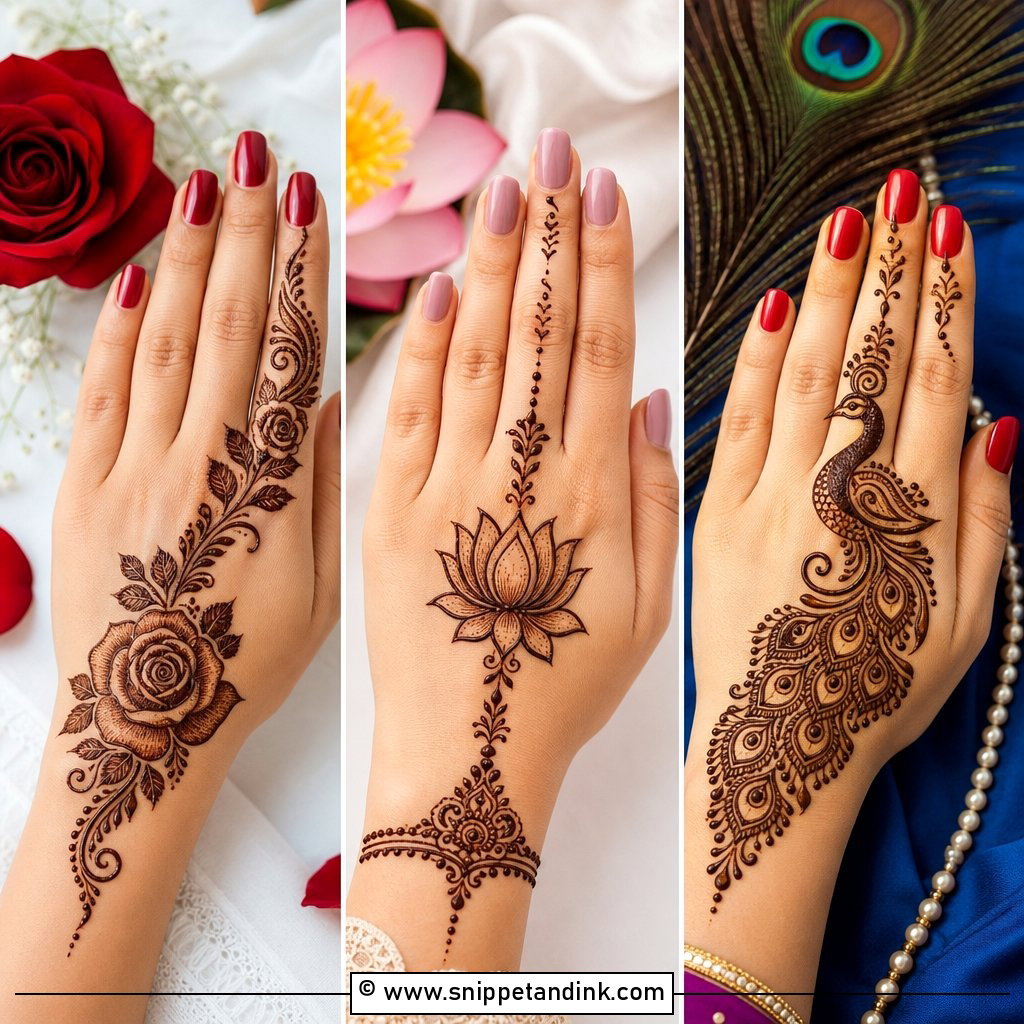
Broken into curves, a rose is easier than it looks. Start with a small spiral for the center, then add loose curved petals around it, letting each one overlap the last. One rose on the back hand or palm, leaves and dotted trails toward the fingers, perhaps a thin wrist line, and you’re done. Roses don’t need symmetry, and an uneven petal can always be hidden by adding another beside it. Make the rose bolder than the leaves so it stays the focus after staining.
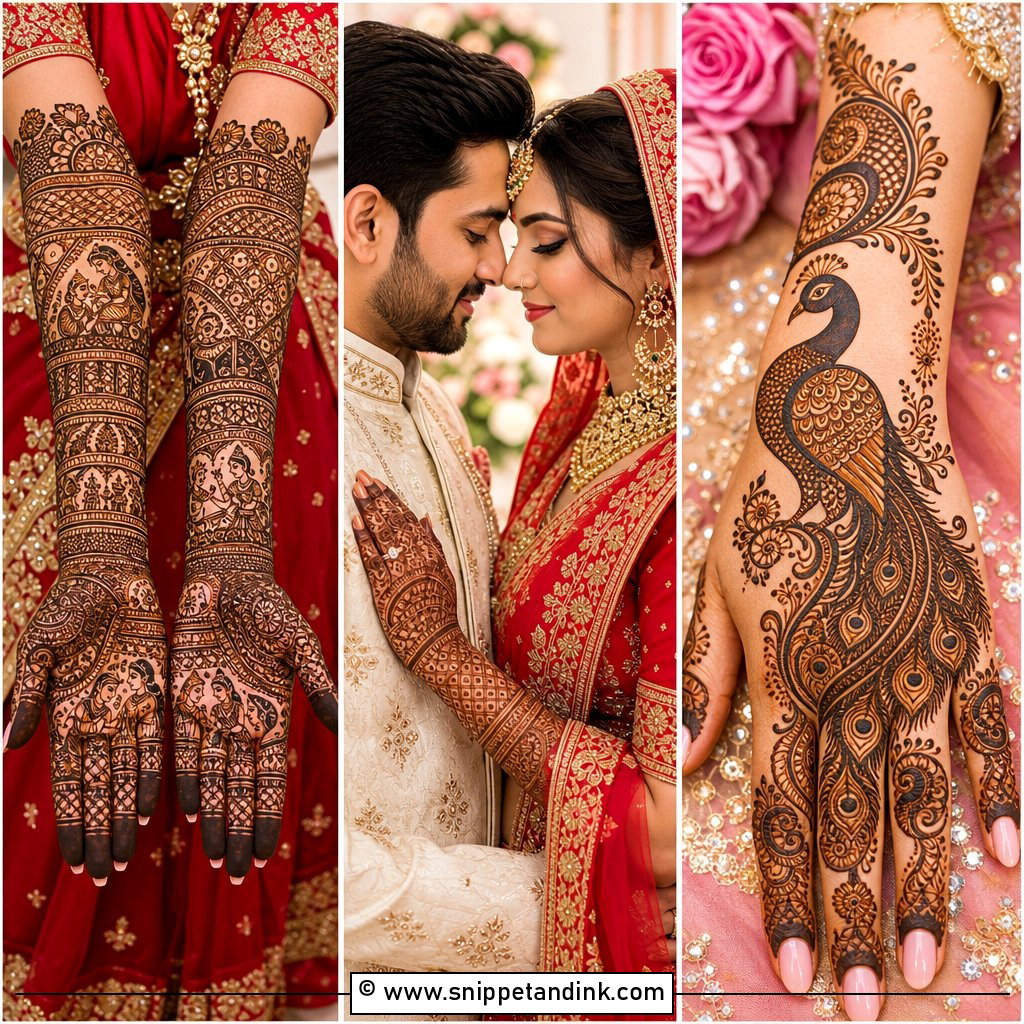
13. Easy Peacock Mehndi Design
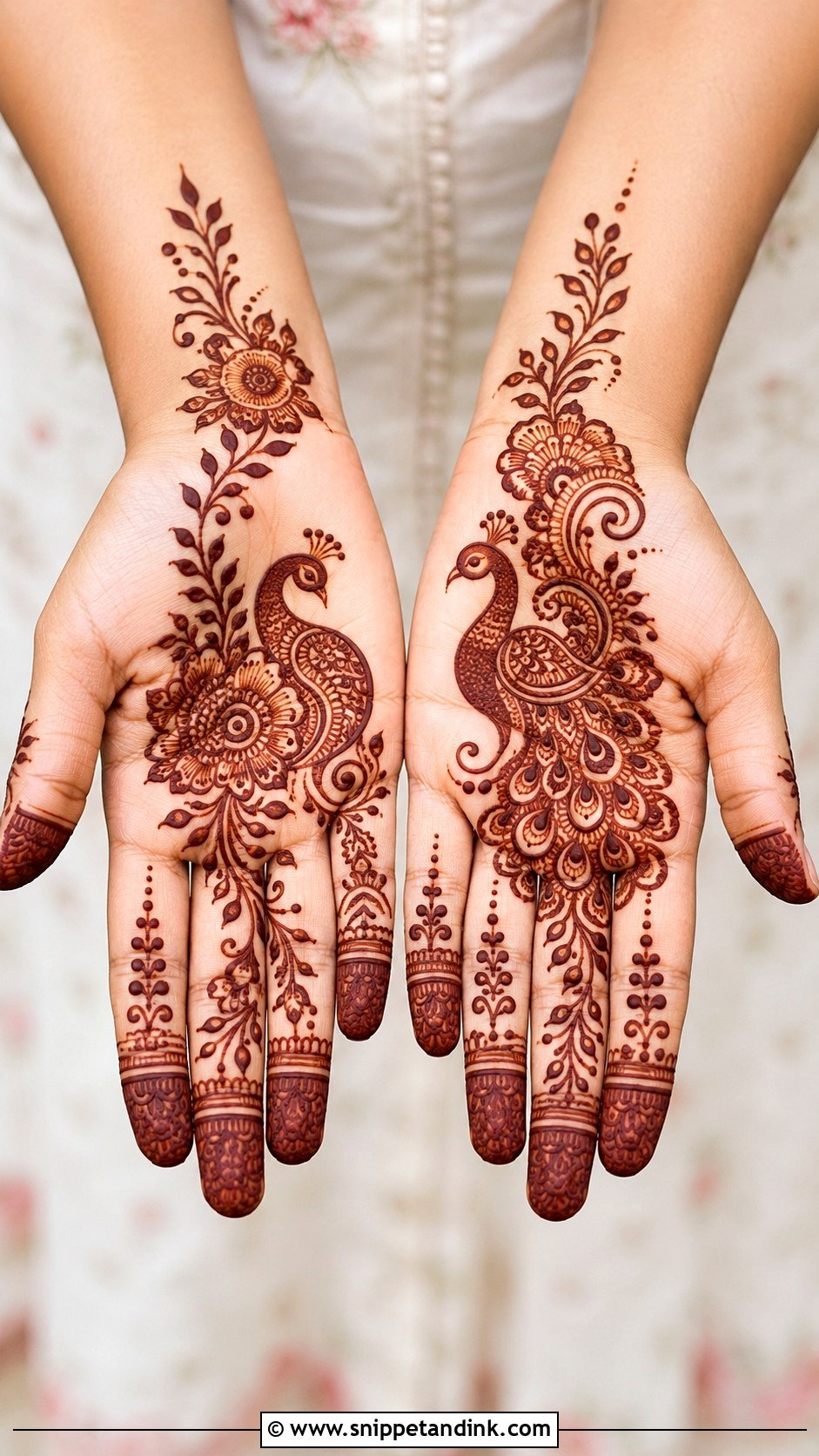
A simplified peacock is small: a curved body on the palm or back hand, a teardrop head with a tiny beak, and feathers made from long curved lines, dots and small leaf shapes instead of heavy detail. Keep it to one side of the hand and balance it with a simple floral trail. The beginner mistake is filling every feather; leave them open and each curve stands out. Draw the head last, once you can see how much room the body left you.
14. Simple Indo Arabic Mehndi Design
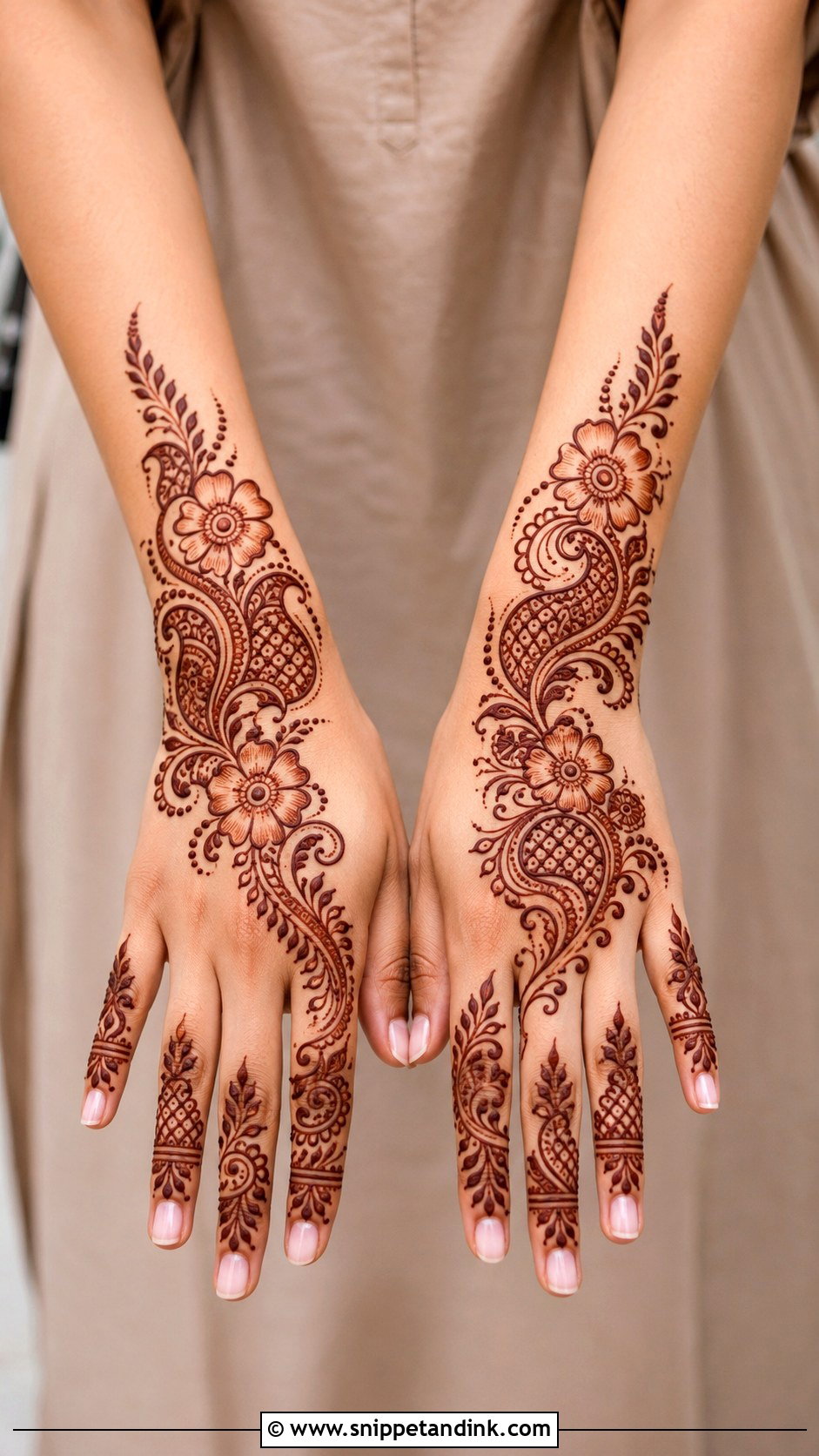
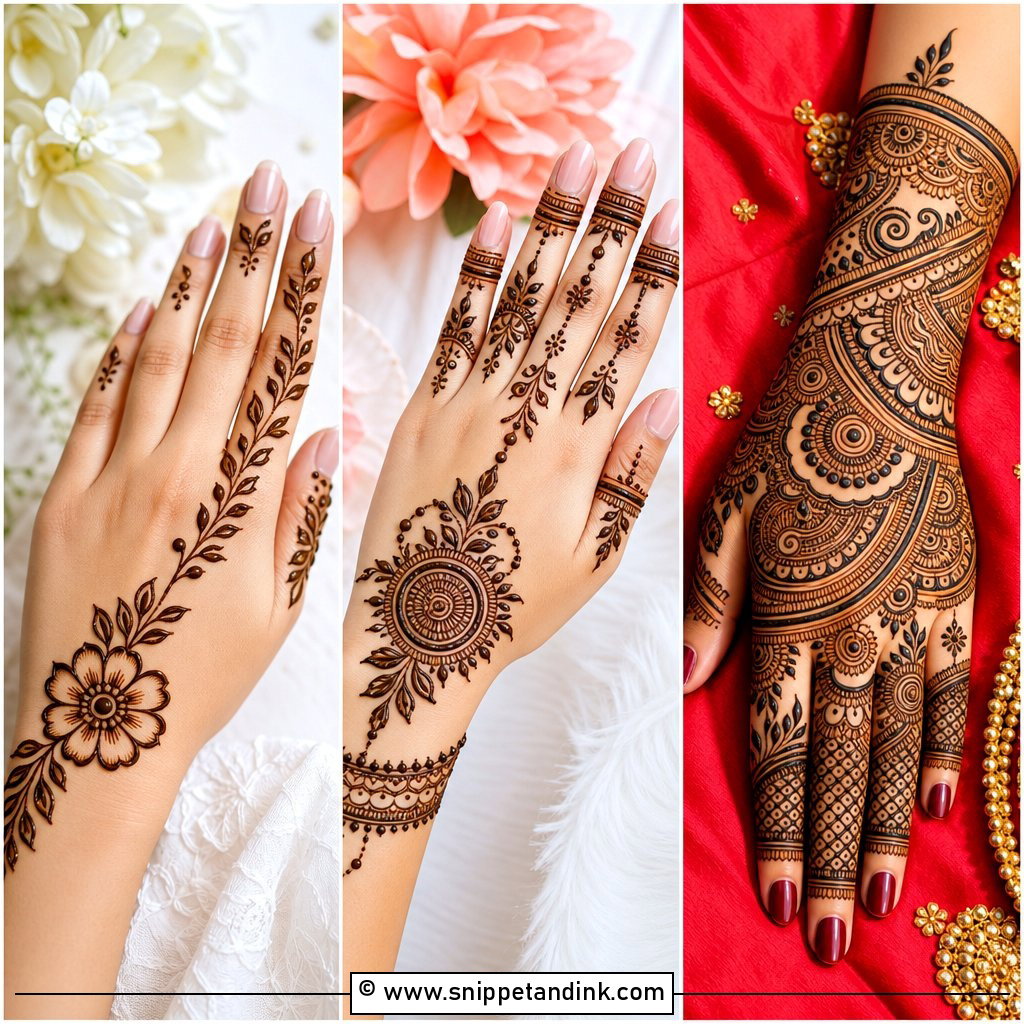
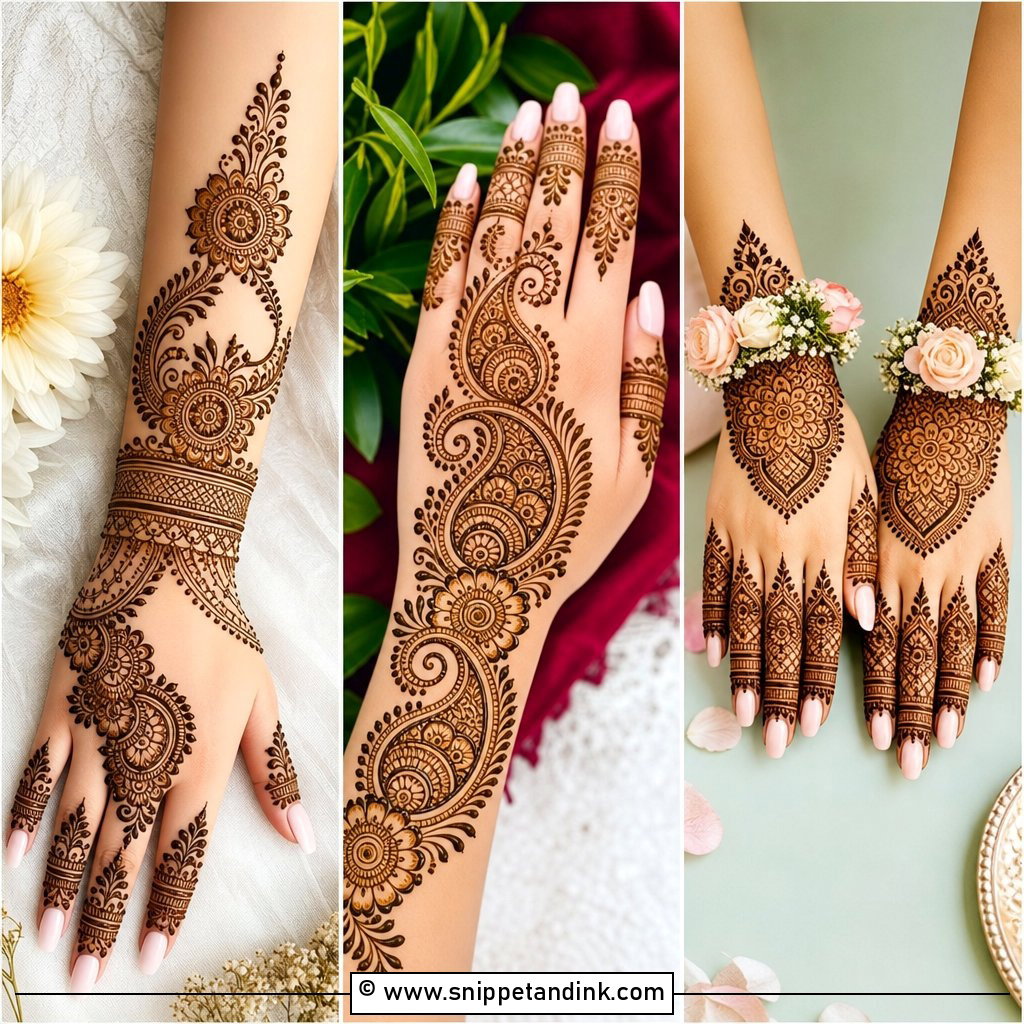
A diagonal floral trail crosses the back hand or palm, with paisleys, leaves, dots and a small jaali section near the wrist, while one side of the hand stays open. The useful habit here is working in two passes: bold outlines first for every flower and paisley, then fine lines inside them. That contrast is what makes fusion work look tidy, and working in passes means your outlines are set before the fiddly parts begin.
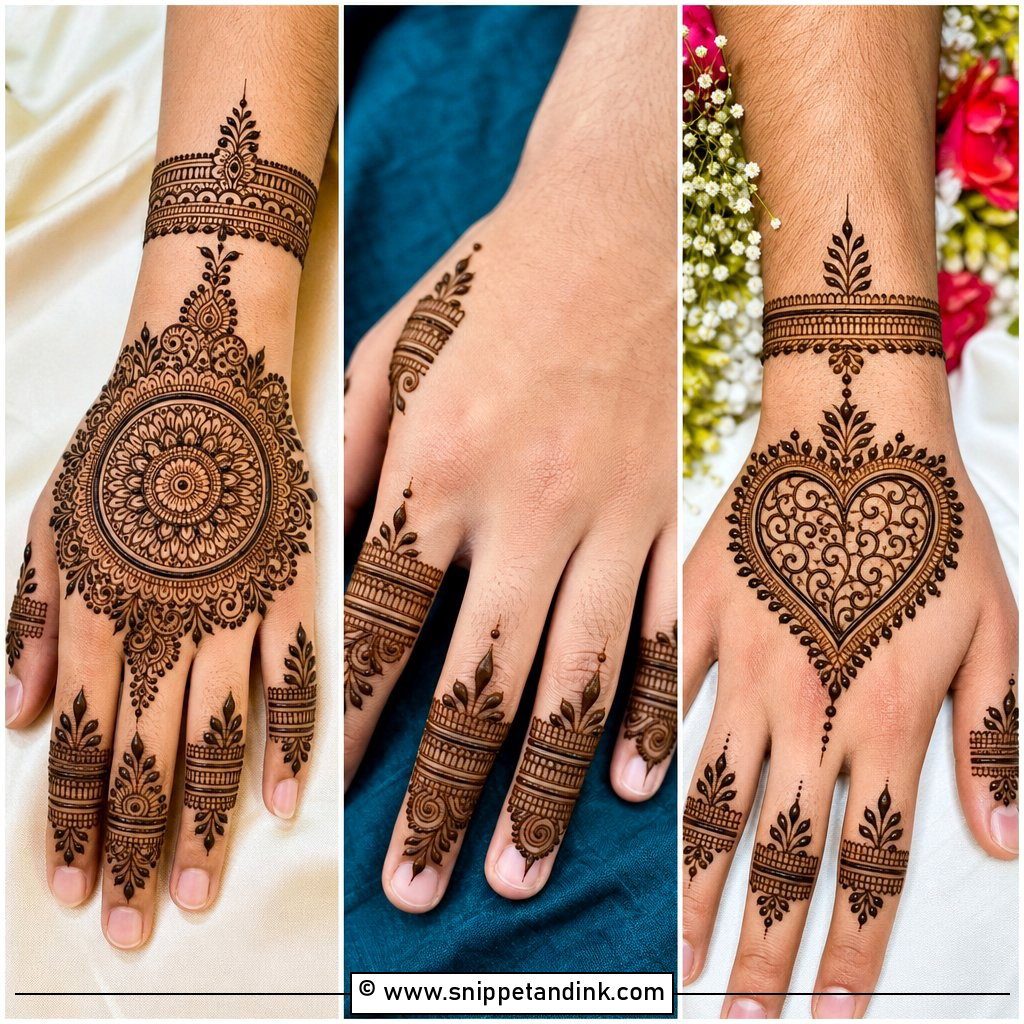
15. Easy Wrist Mehndi Design
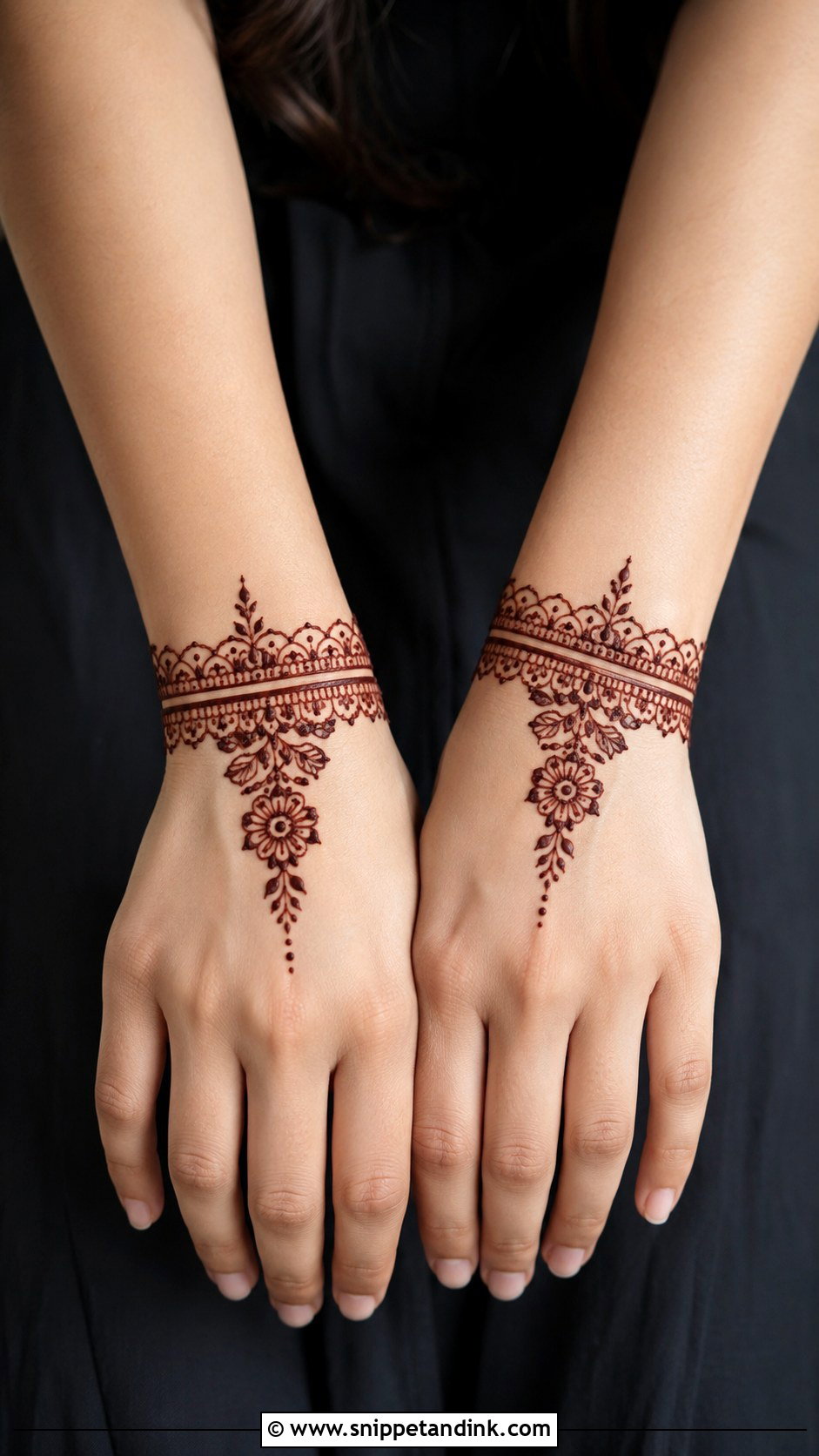
A bracelet band with two border lines, filled with dots, leaves, scallops or diagonal strokes, then a small vine or flower extending toward the back of the hand. Repeated patterns in a small area make it very manageable. Keep the band’s width even all the way round; the easiest way is to place a few guide dots for the top and bottom lines before joining them. It can stand alone or sit beside light finger mehndi.
16. Simple Palm Mehndi Design
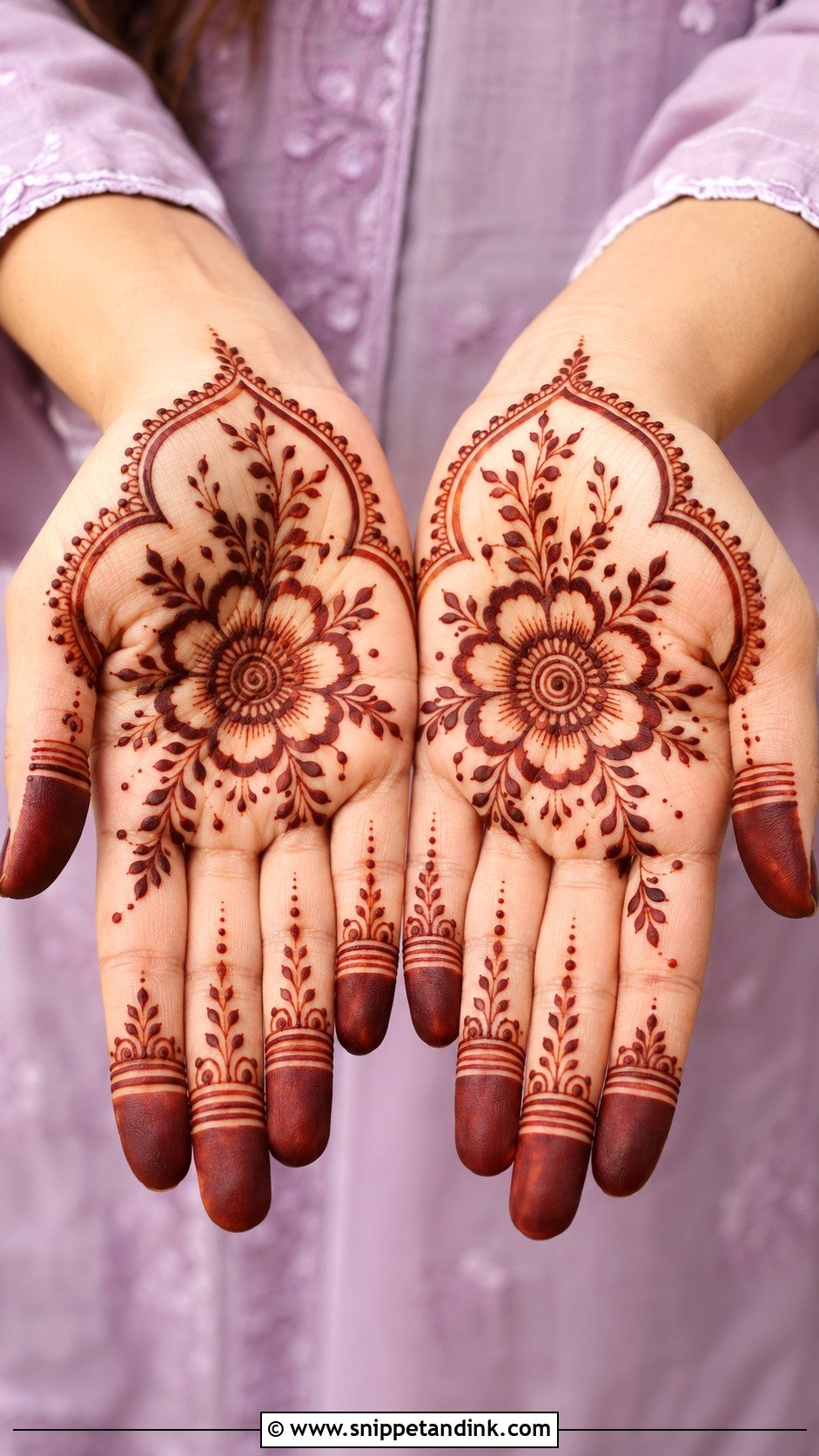
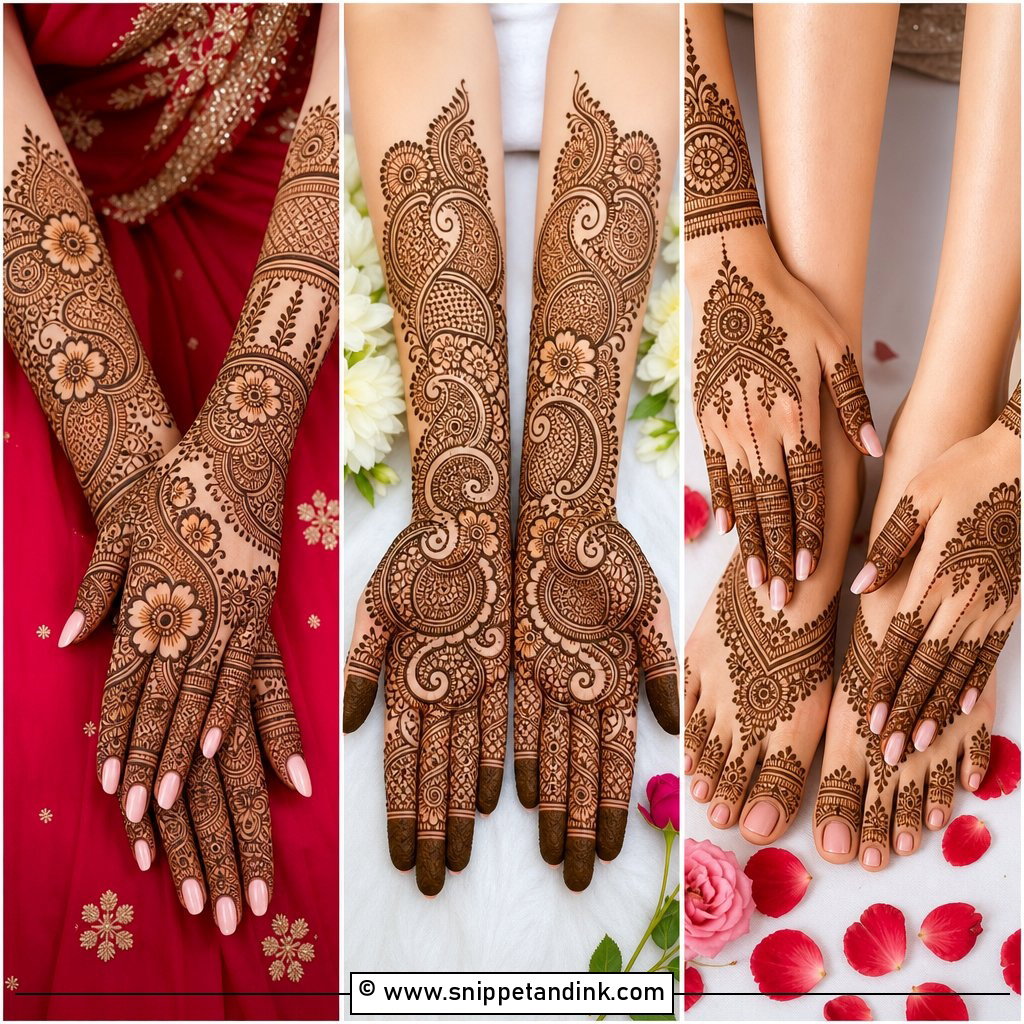
A simple palm mehndi design uses the best practice surface on the body: flat, stable and quick to stain dark. Start with a central flower, mandala or paisley and build around it with short vines, dots, small petals and simple finger accents. Keep the thumb mound light, since it moves a lot and smudges easily. Even a plain pattern looks rich here after drying, so resist overcrowding. Add fingertip caps once you’re comfortable.
17. Easy Back Hand Mehndi Design
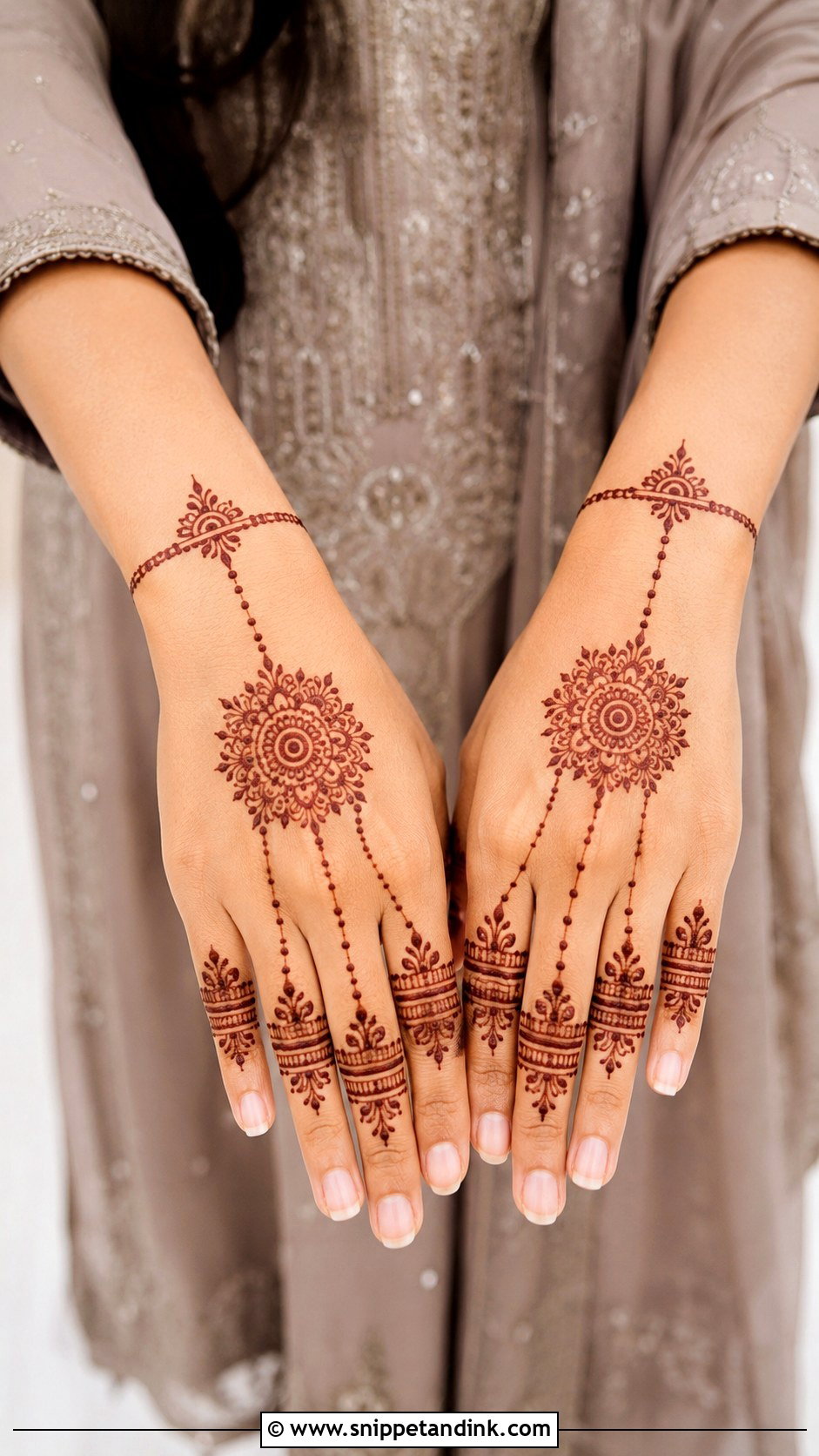
A small mandala or flower sits in the center of the back hand, connected to the fingers with dotted chains or leafy lines, with bands on two fingers and a thin wrist bracelet. Beginners get to practise circles, dots and short lines in one design. If it feels bare, repeat the same small motif on each finger rather than inventing new ones. The back of the hand stains lighter than the palm, so don’t make the lines too thin.
18. Simple Chain Mehndi Design
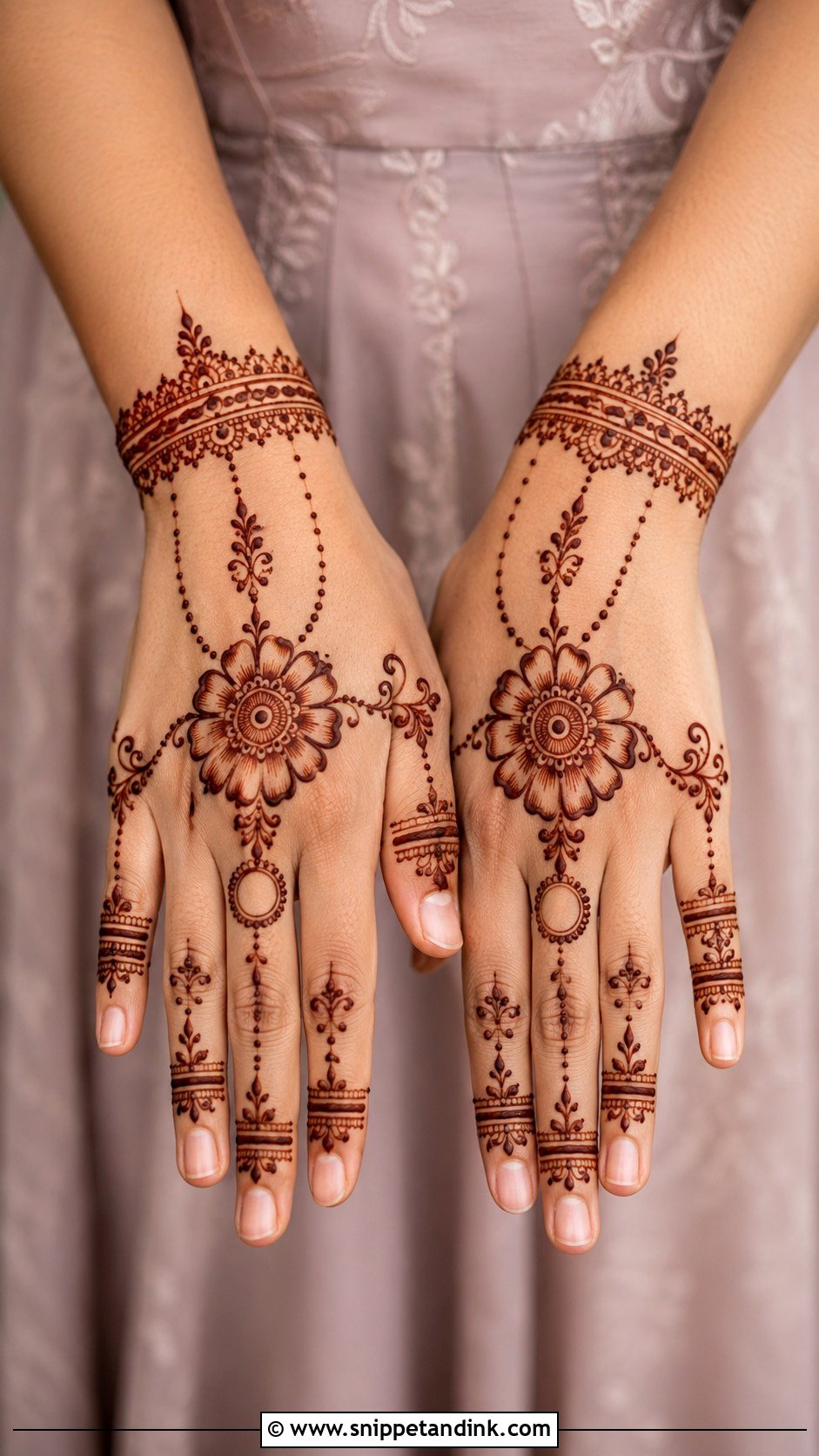
Start with a small flower or mandala on the back hand and draw dotted chains from it to one or two fingers, ending in tiny rings, with a small bracelet at the wrist. Chains made of dots or small loops are easy to control, and dots hide spacing mistakes well. Space the chains well apart. Dots placed too close bleed into each other as the paste settles and turn into a solid line.
19. Beginner Flower Vine Mehndi Design
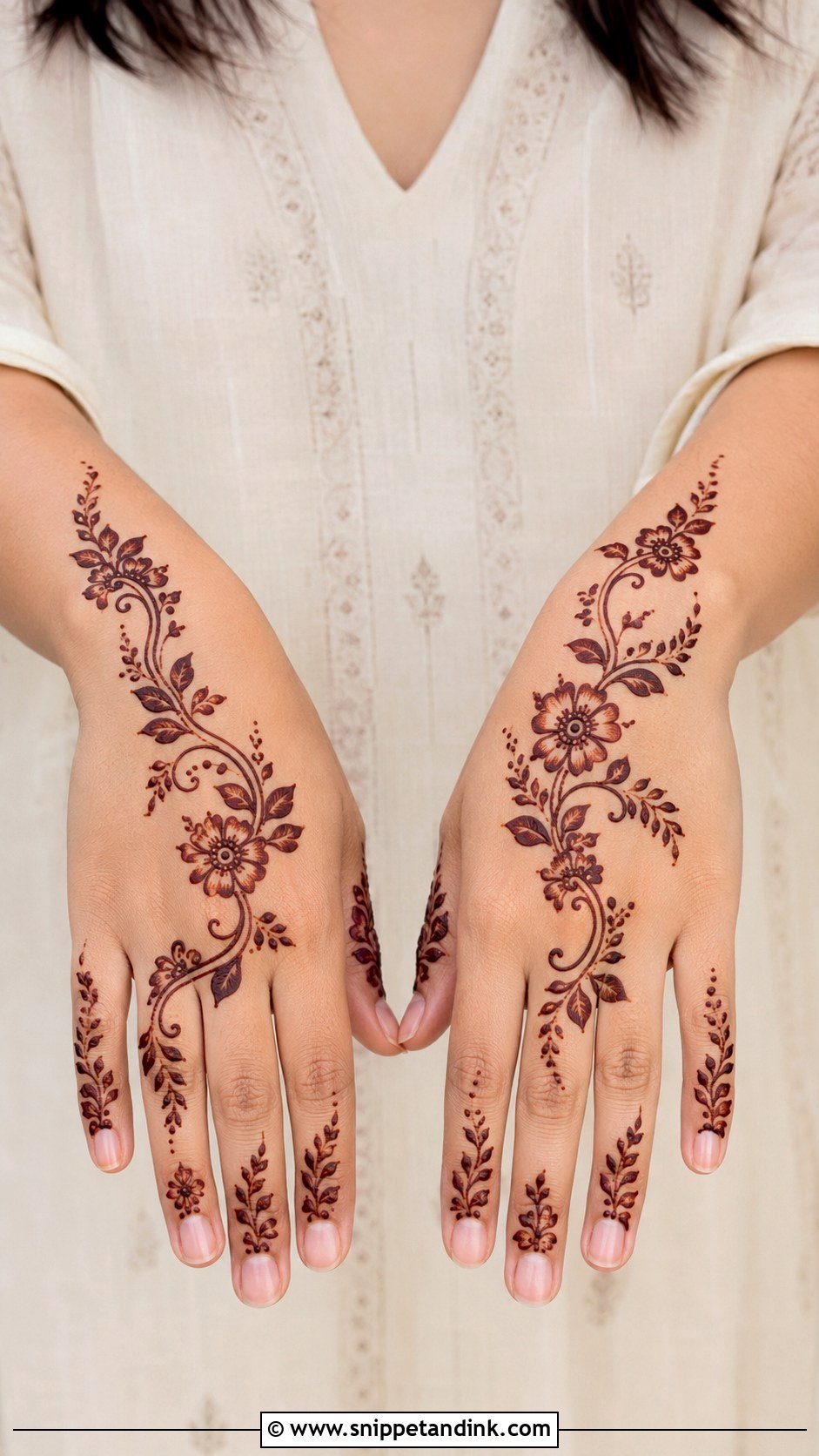
Draw a curved vine from the wrist to the ring finger and place small flowers along it, with leaves between them and dot clusters in the empty spaces. Keep the flowers roughly the same size. The vine teaches movement because it dictates the whole layout. If long lines make you nervous, draw the vine in short curved sections and join them, since the joins disappear once the leaves go on. It works on the palm or the back hand.
20. Simple Butterfly Mehndi Design
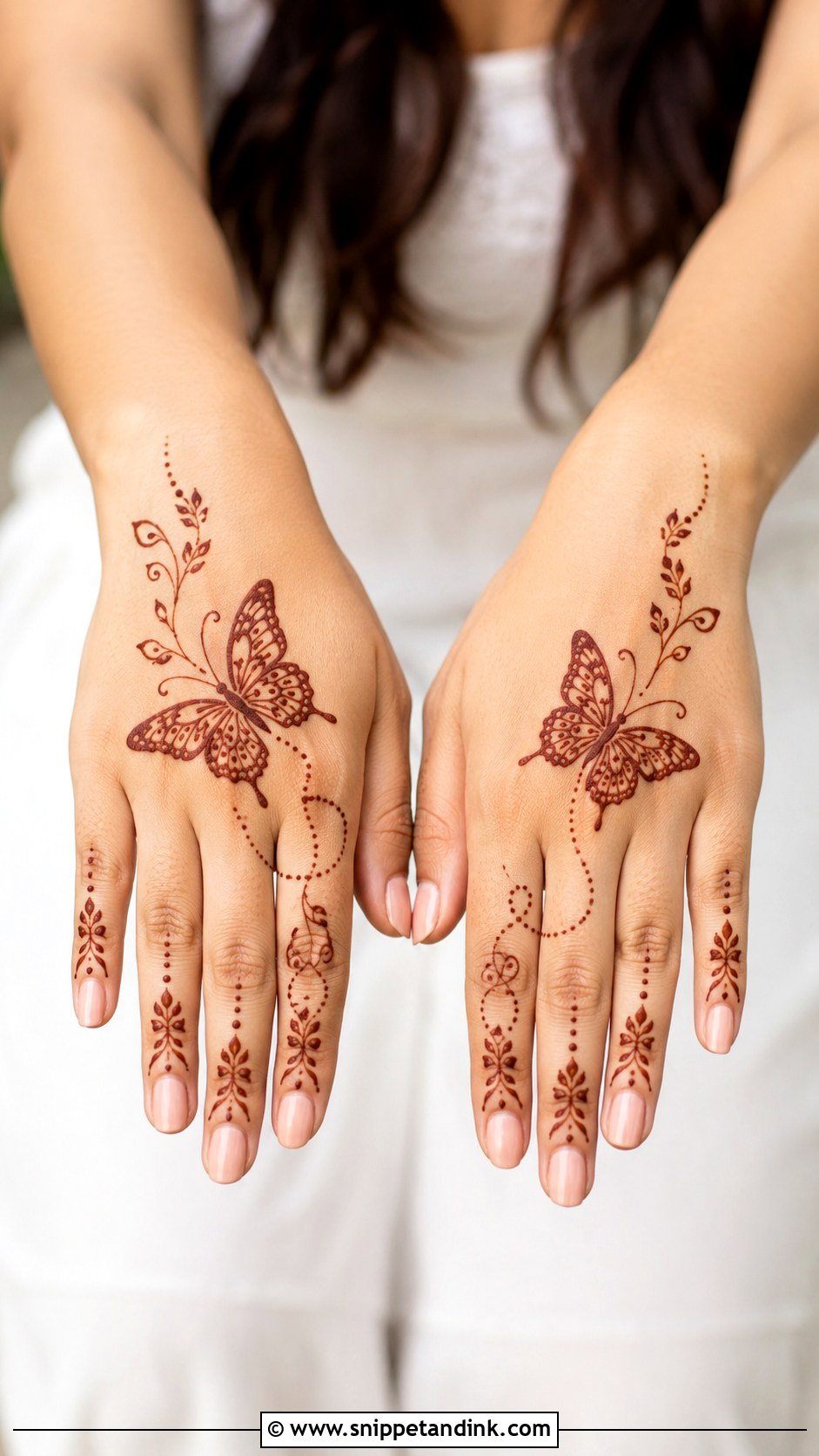
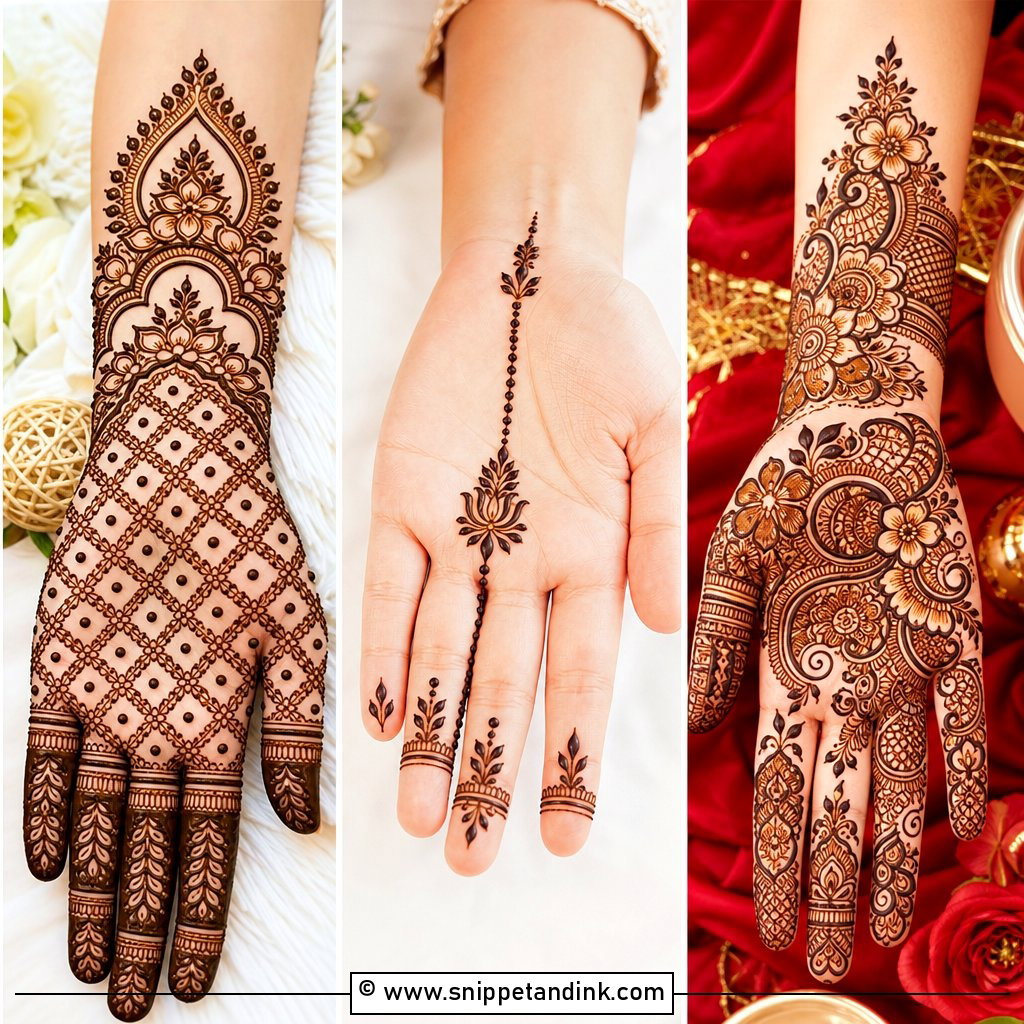
Two upper wings, two smaller lower ones, a slim body. Place the butterfly on the palm or back hand, fill the wings with dots, small curves and tiny leaf shapes, and add a dotted trail toward the fingers or wrist. Kids, teens and spring events suit it. Outline boldly and keep the inside simple. Draw both upper wings before either lower one, which makes it much easier to get them close in size, and small differences only look hand-drawn, not wrong.
21. Easy Minimal Mehndi Design
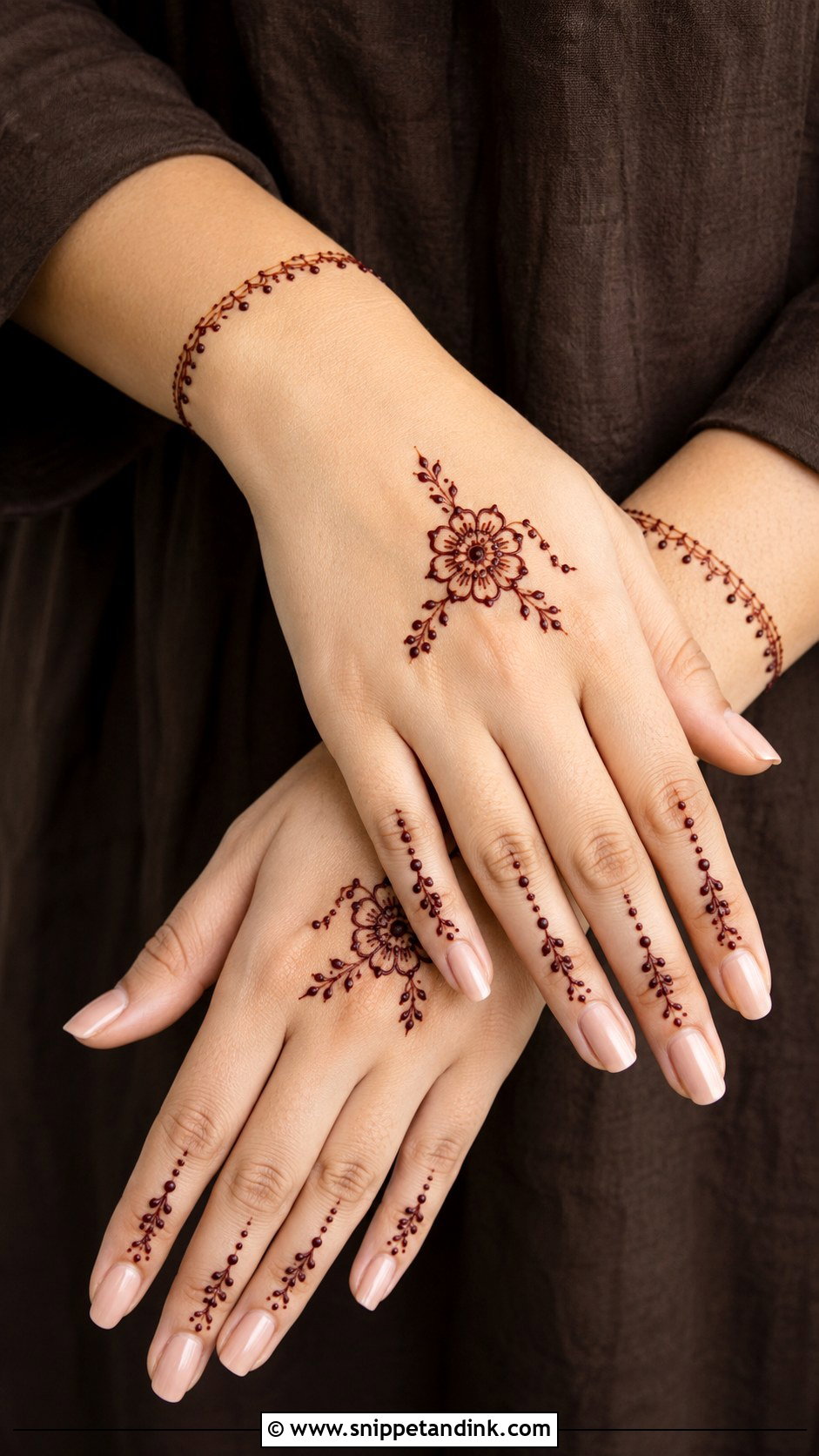
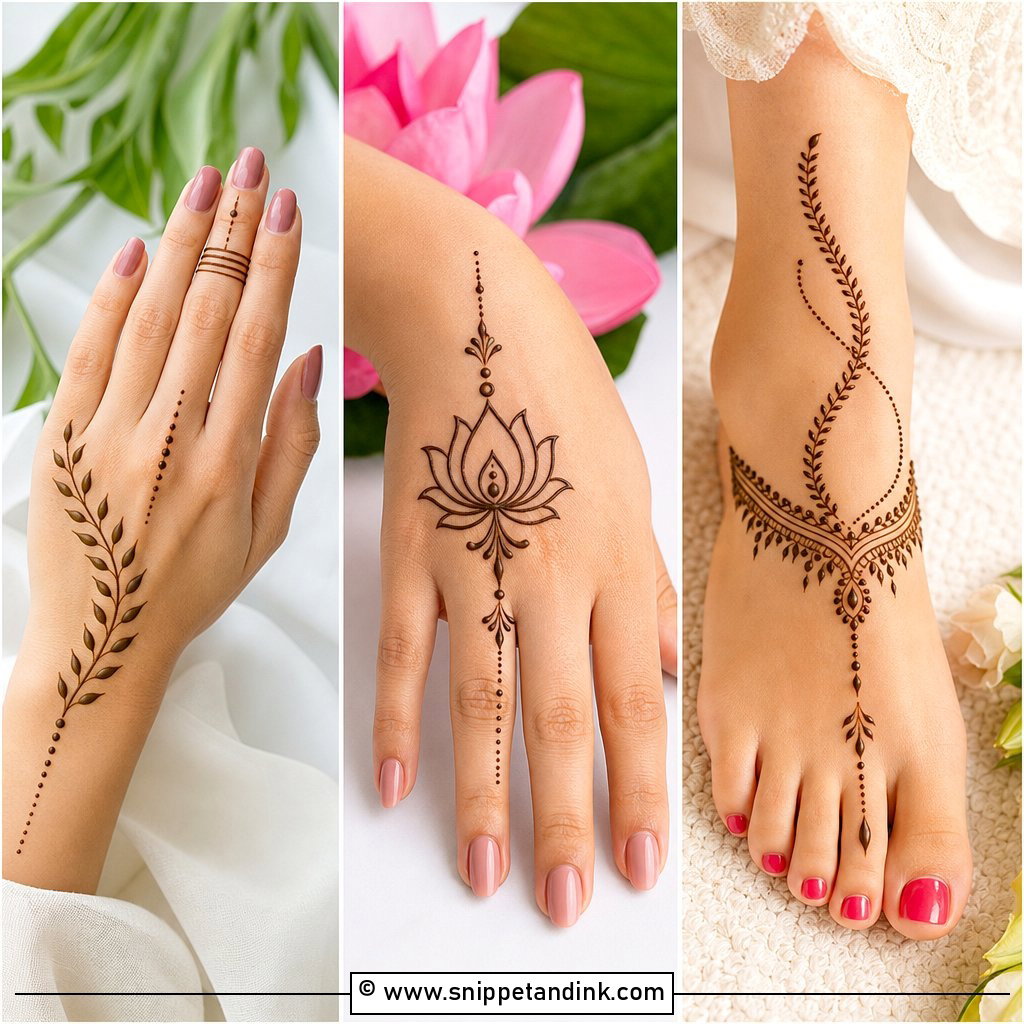
Pick one focal point, a small flower, mandala or leafy branch, and place it on the back hand or palm. Add light finger details with dots, rings or short lines, and keep the wrist almost plain. For subtle henna for everyday wear, school events or small celebrations, this is where absolute beginners should begin. With so few elements, neatness is the whole design: give each one space and let the reddish-brown stain do the rest.
22. Simple Geometric Mehndi Design
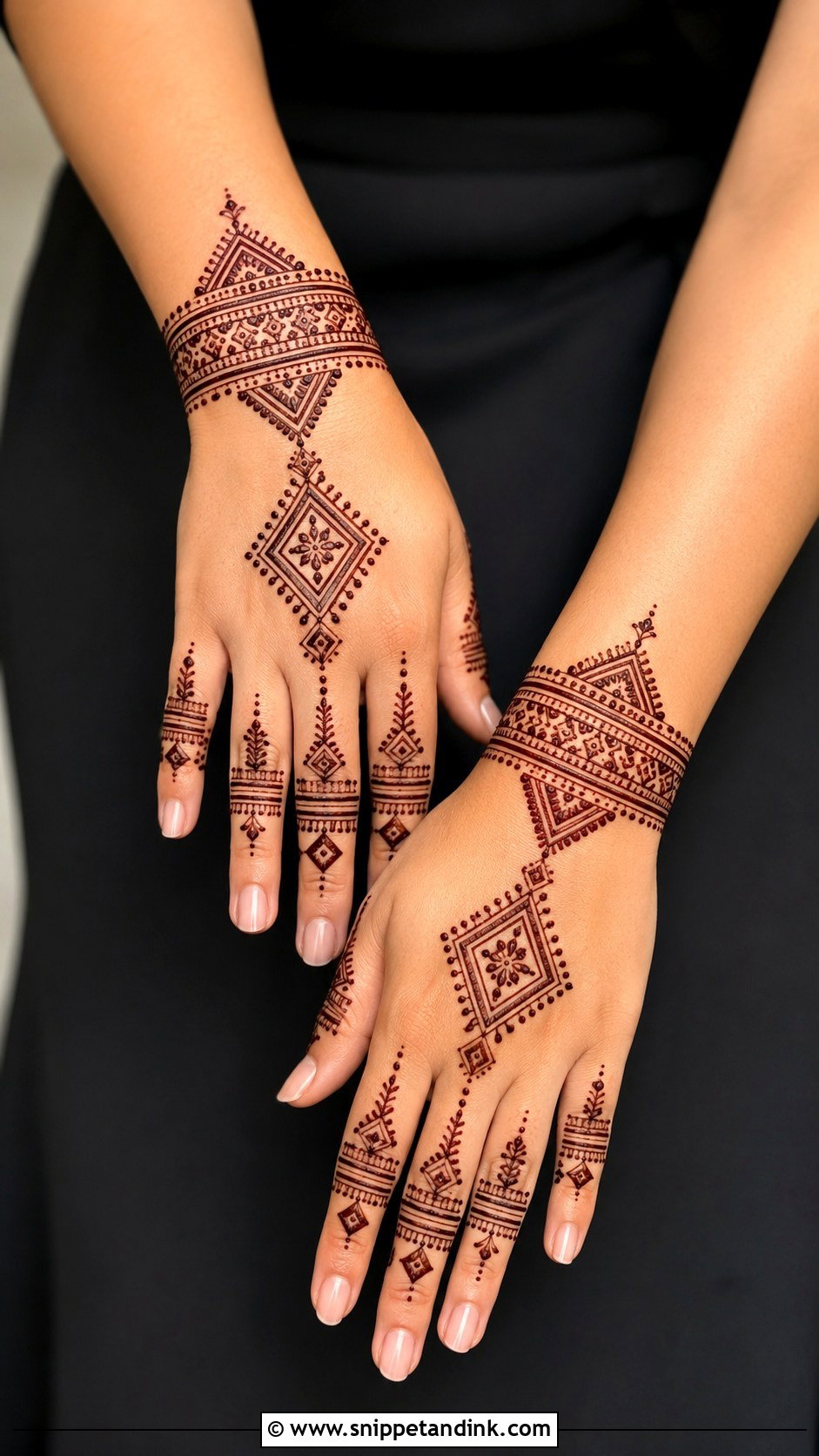
If flowers frustrate you, try triangles, diamonds, squares, lines and dots. Start with a central diamond on the back hand or wrist, add smaller diamonds around it, fill some with dots and leave others empty, then finish with straight finger bands. Long straight lines are where beginners wobble, so build them from short strokes joined end to end. Geometric layouts rely on open spacing and never need to be dense.
23. Easy Eid Mehndi Design
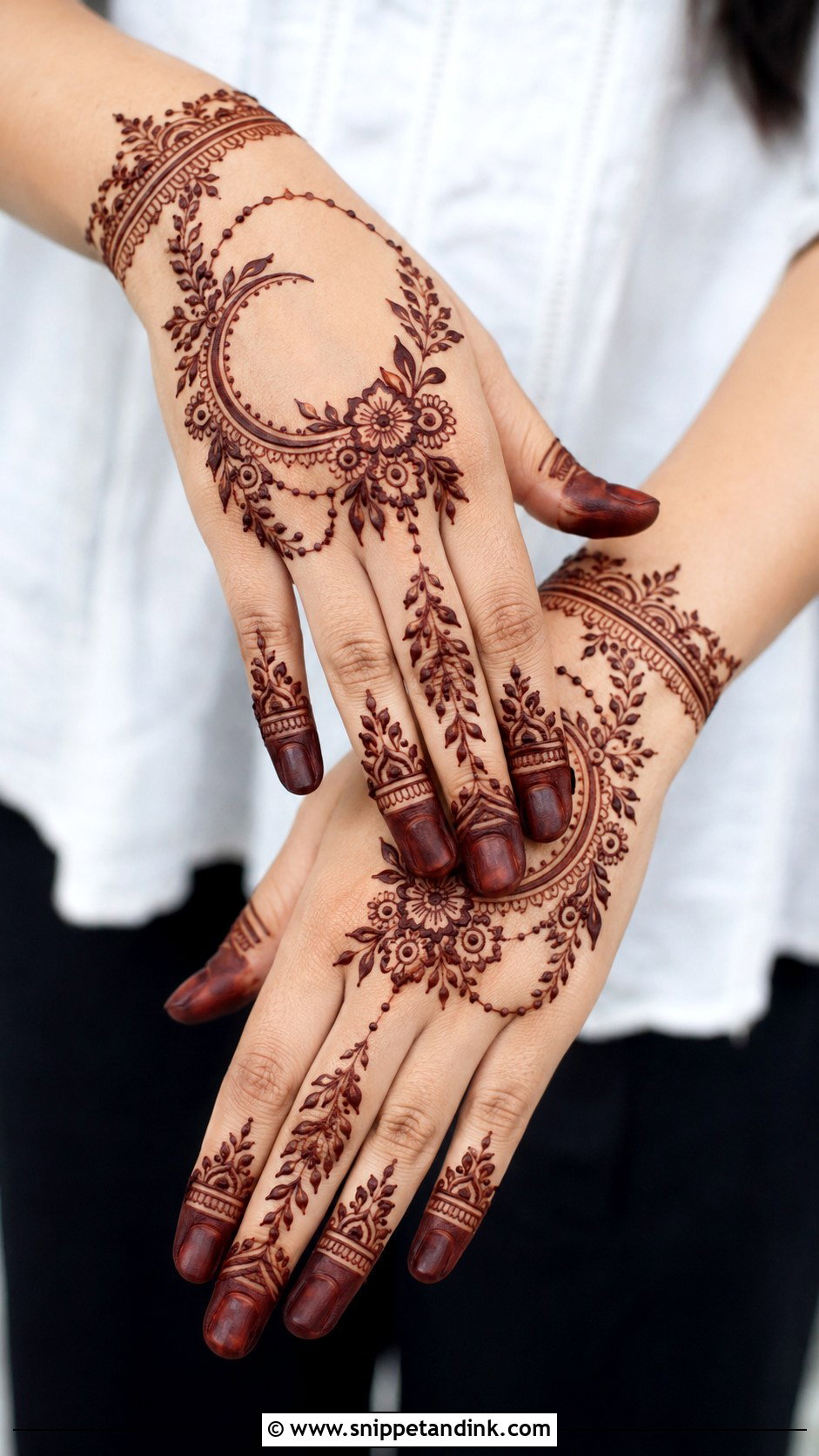
Try a back-hand layout with a crescent curve, small flowers, leafy vines and dotted chains, light finger bands and a simple wrist border. Leave the palm open or give it a small mandala. Repeated dots and petals look polished without any difficult shading. Most people do Eid mehndi at home the night before, so start early in the evening; the paste needs several hours on the skin, and sleeping with it on gives the deepest color by morning.
24. Simple Diwali Mehndi Design
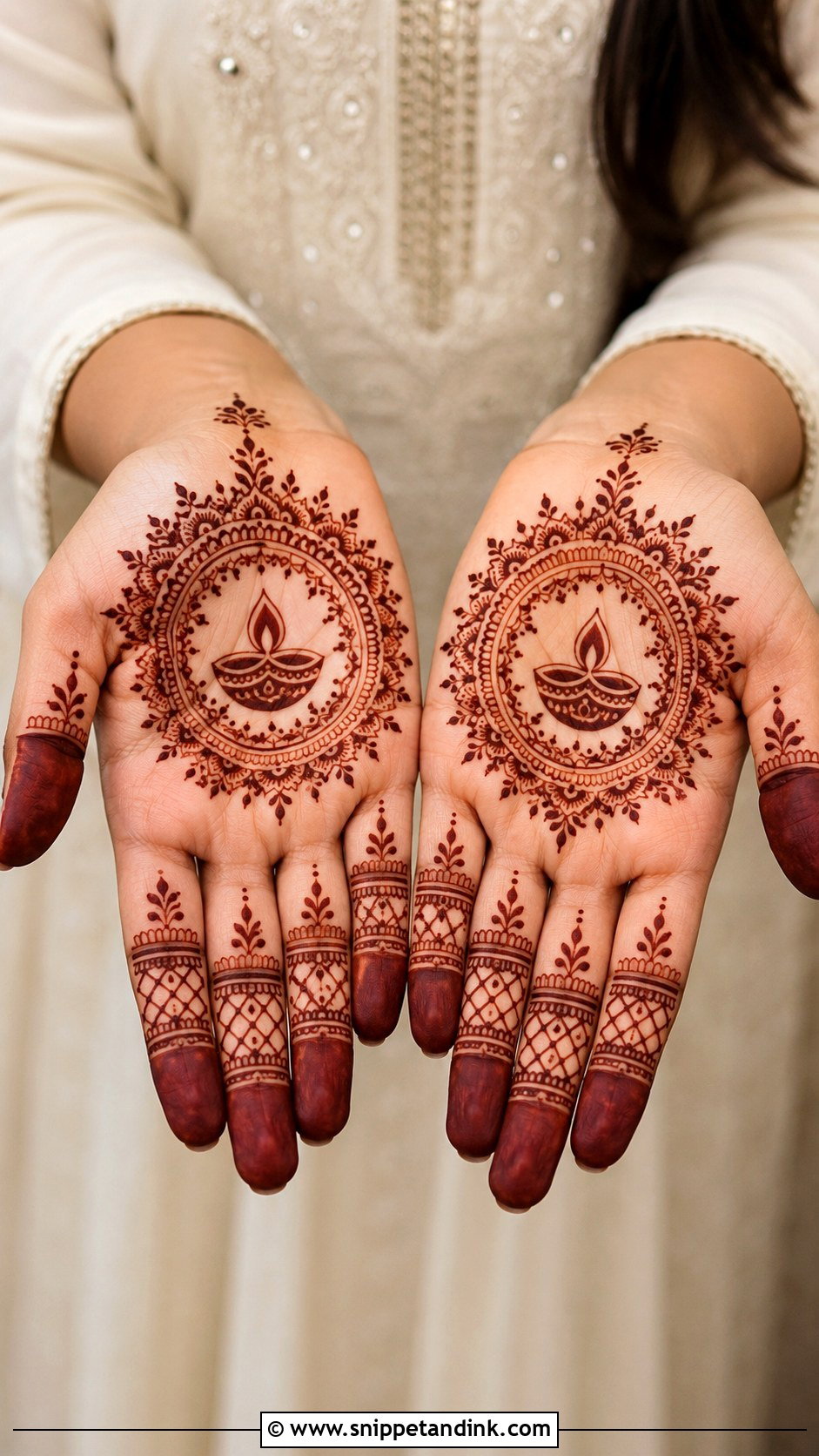
Begin with a palm mandala or a back-hand flower, then add small diya shapes, dots, leaves and curved borders, with tiny bands framing each finger. Medium coverage is enough. Don’t overwork the diyas: a teardrop flame sitting in a small bowl shape reads clearly, while extra detail inside them just blurs. Apply it a day before the festival if you can, so the stain has deepened by the time you’re dressed.
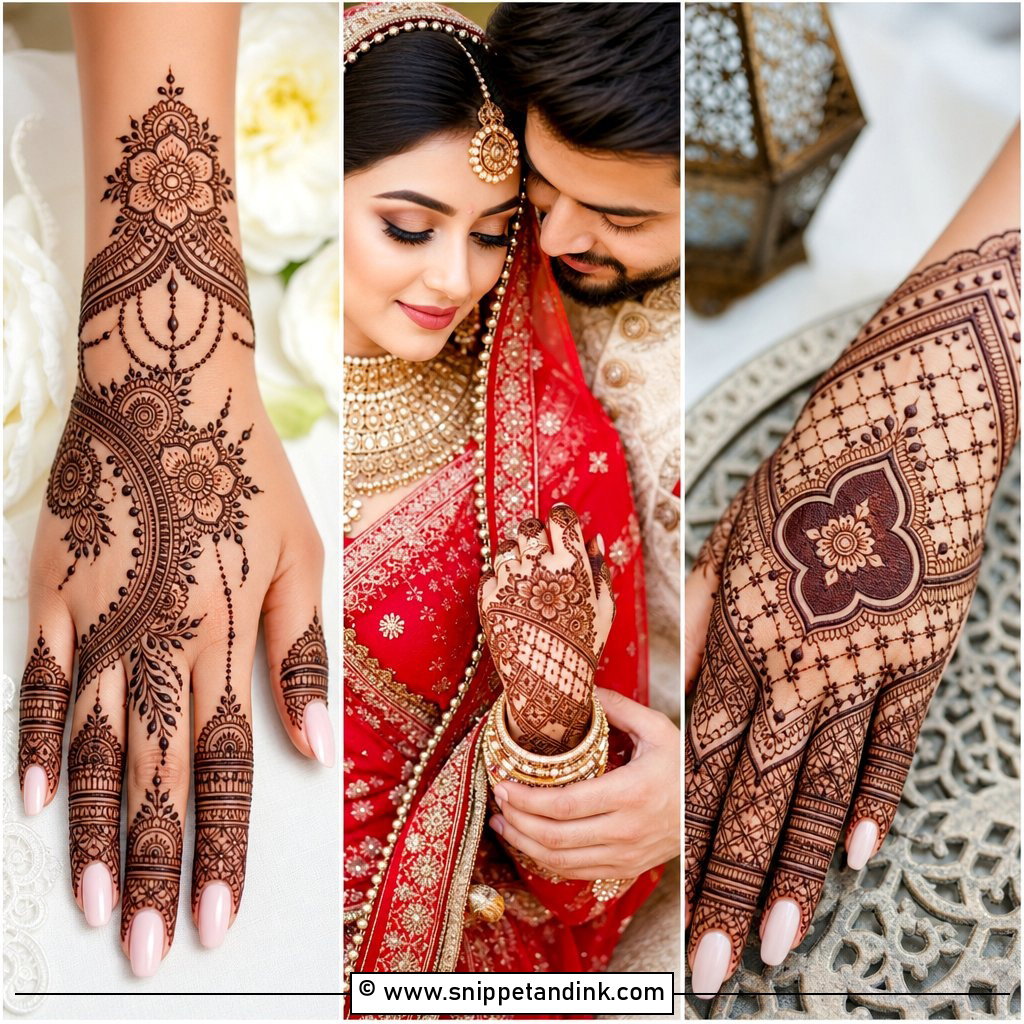
25. Beginner Bridal Mehndi Design
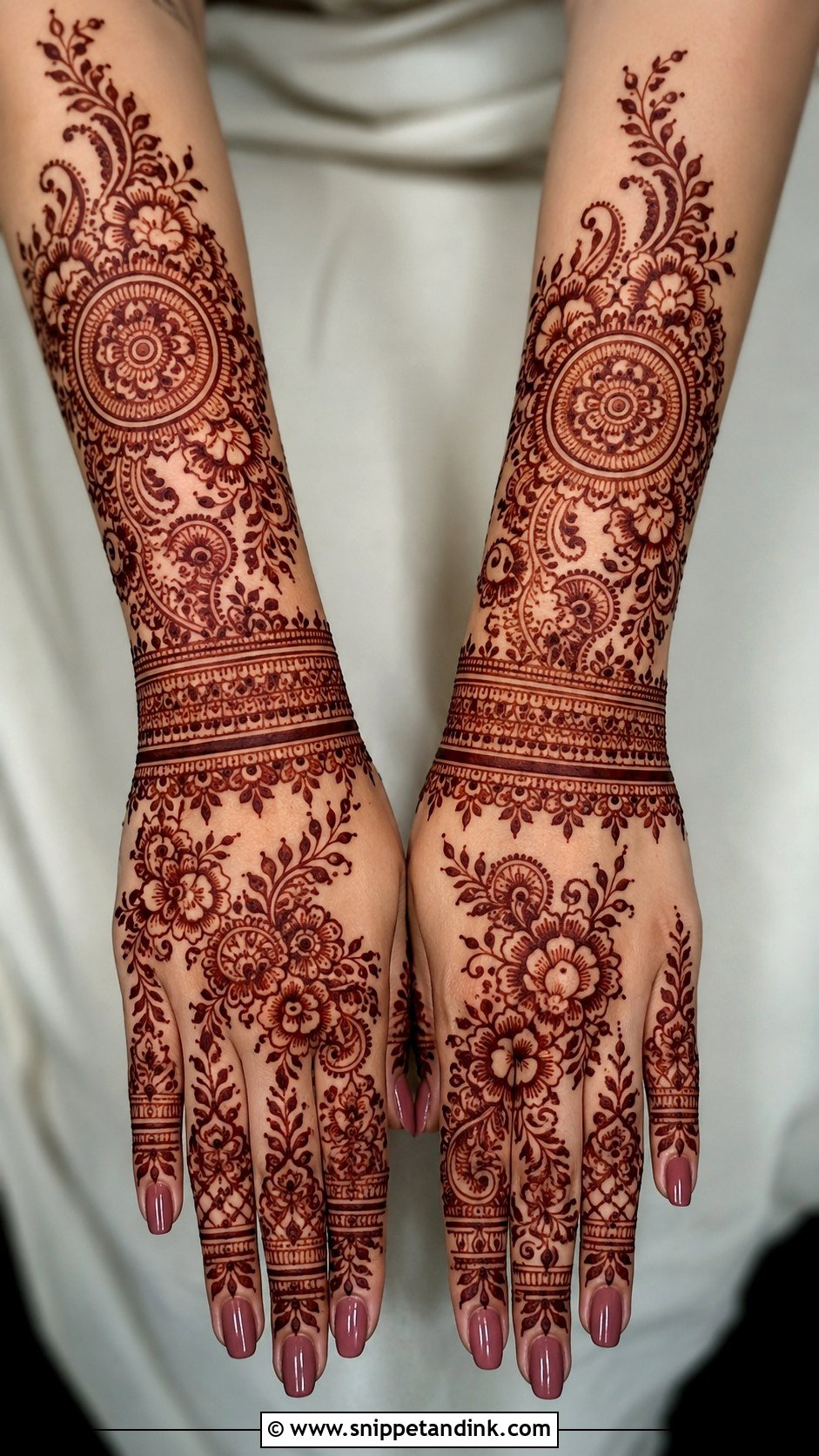
Rather than attempting dense full bridal work, a beginner can build a half-hand bridal layout with flowers, paisley, leafy vines and a wrist cuff, anchored by a small mandala on the palm or back hand. Dotted borders and simple finger fill make it look fuller. It suits bridesmaids, an engagement or a bride who wants light mehndi. Keep symmetry to the broad placement only, because trying to mirror every detail across both hands is what exhausts beginners. If it’s for your own wedding, practise it many times beforehand or book an artist for the day.
26. Simple Kids Mehndi Design
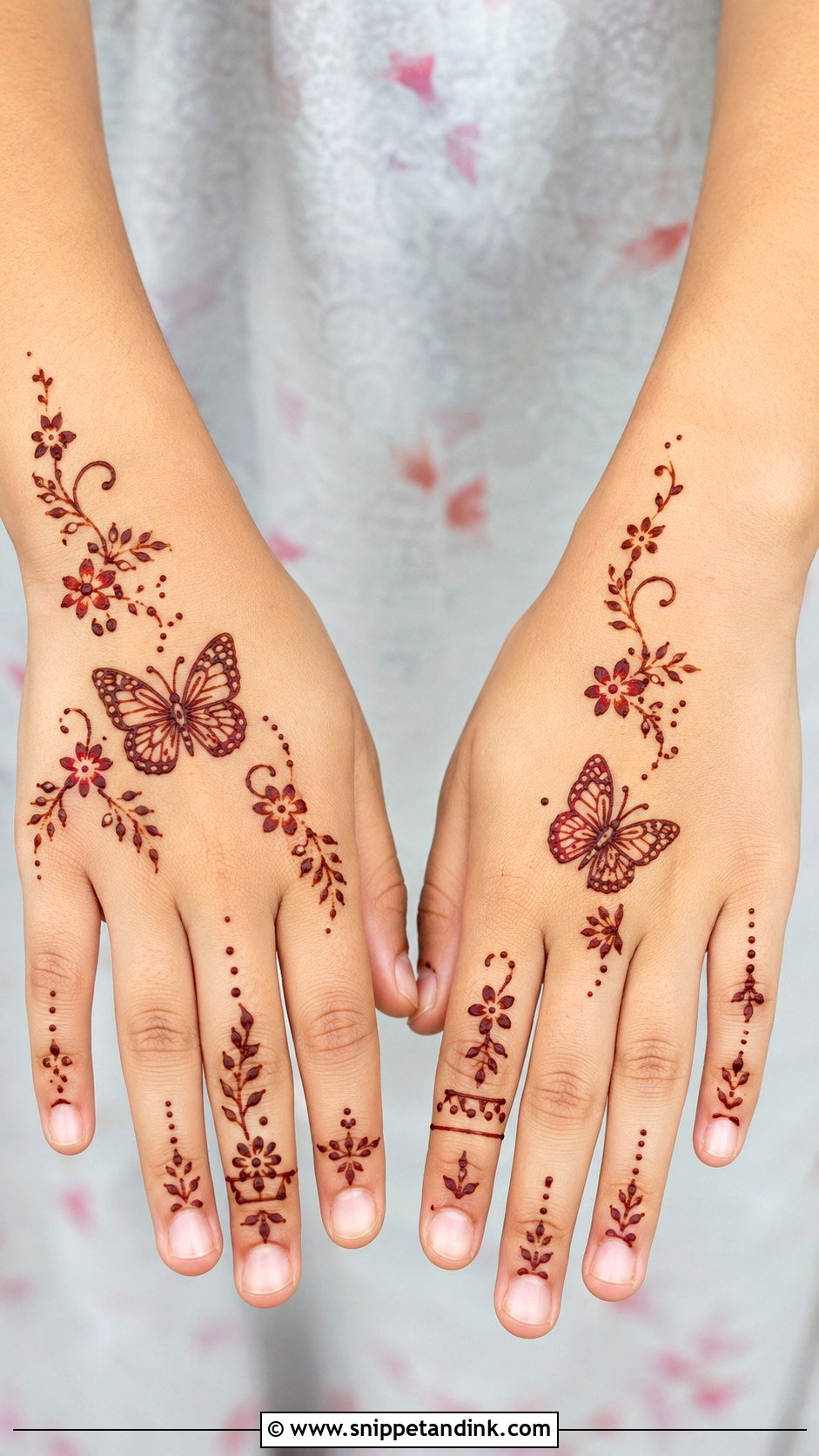
Small motifs work best: a flower, butterfly, heart, star or tiny mandala on the back hand, with dots and short vines. Keep the fingers light, because children move before the paste dries. I always practise a child’s layout on paper first so you can draw it quickly once the child is in front of you. Dense patterns take longer and smudge. Use natural henna only on children; a small, cheerful design with clean outlines looks better on tiny hands than a crowded one.
27. Easy Side Hand Mehndi Design
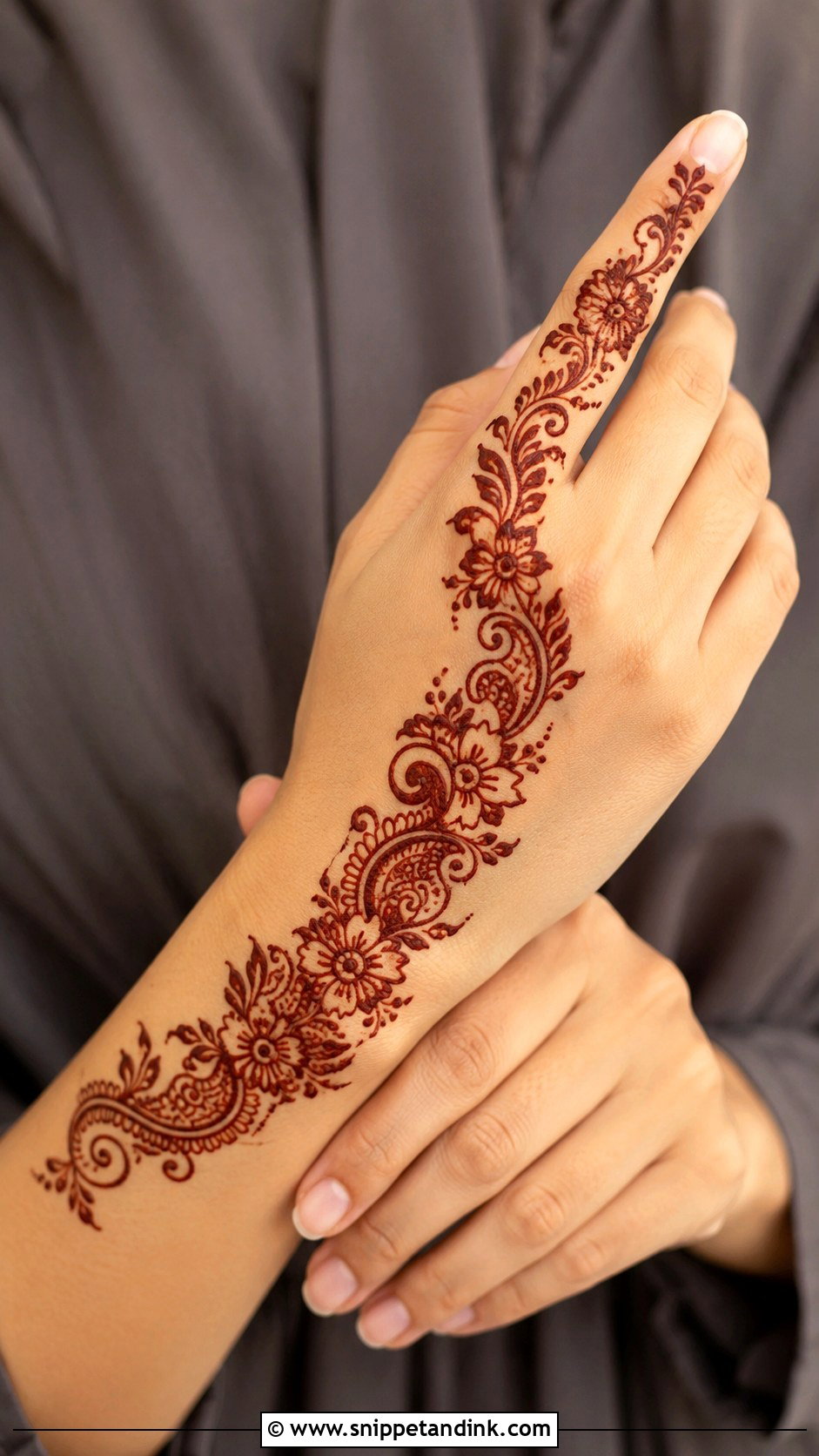
Start near the wrist on one side and move toward the index finger or thumb with a trail of flowers, leaves, paisleys and dots, leaving the center of the hand open. No symmetry is needed, which takes a lot of pressure off. If a section looks empty, add a small dot cluster or a pair of leaves. Join every motif to one flowing line, even a faint one, so the trail reads as a single design.
28. Simple Full Finger Mehndi Design
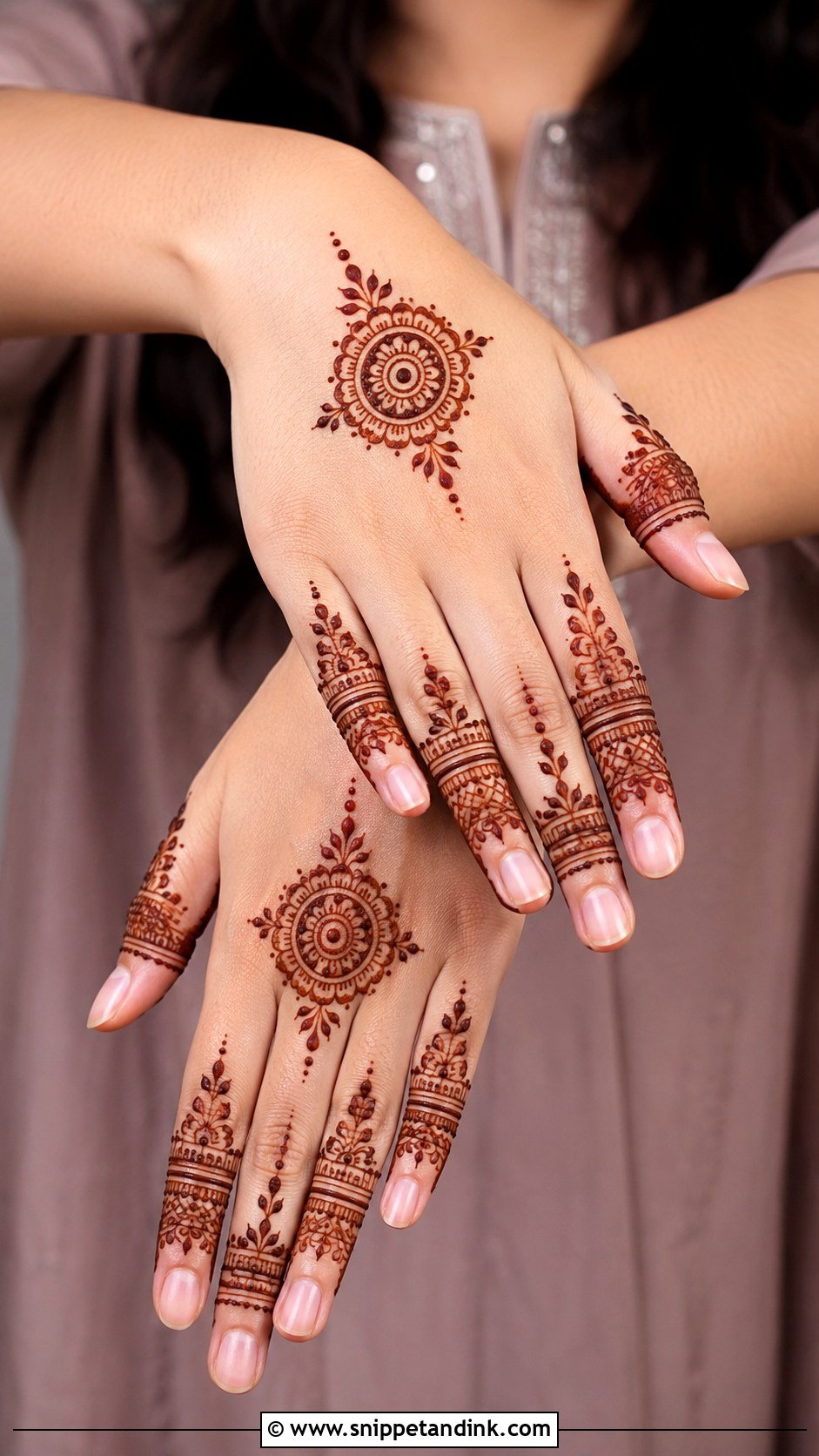
Decorate every finger from tip to base with bands, dots, small leaves and thin lines, then connect them with a small mandala, flower or bracelet detail on the back hand. Fingers are narrow and easy to divide into sections. Vary each finger slightly while repeating the same dot or line style. Go light over the knuckles; paste there cracks every time you bend your fingers, and the stain comes out patchy.
29. Easy Heart Mehndi Design
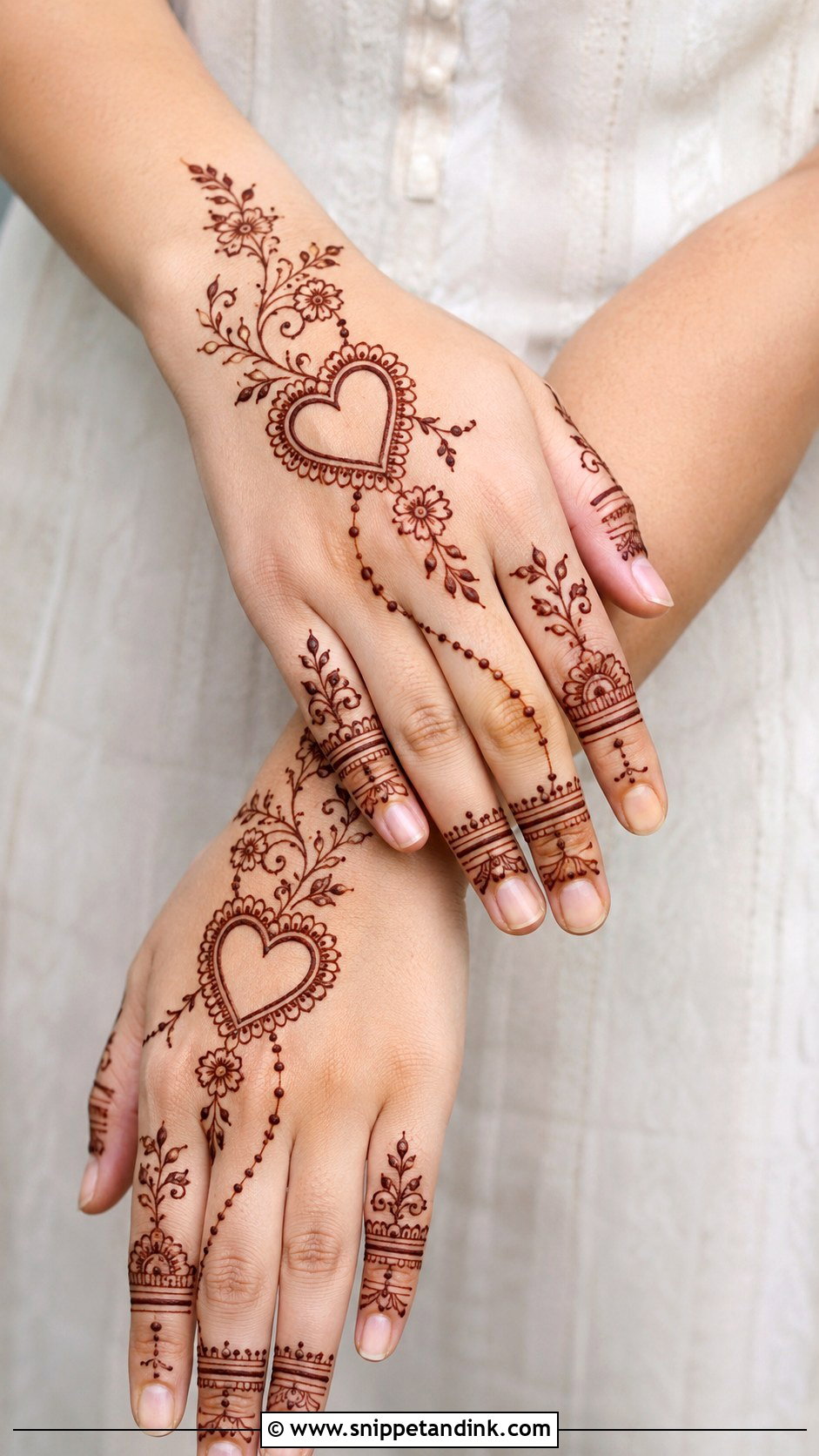
One heart on the palm or back hand, surrounded by dots, tiny flowers and curved vines, or linked to a bracelet chain for a jewelry feel. Keep the outline smooth and slightly bold. Draw the heart as two curves meeting at the point, left side then right, rather than one continuous line, because it’s far easier to make the halves match that way. A few dots or small swirls inside are plenty. Teens and casual celebrations suit it.
30. Simple Foot Mehndi Design
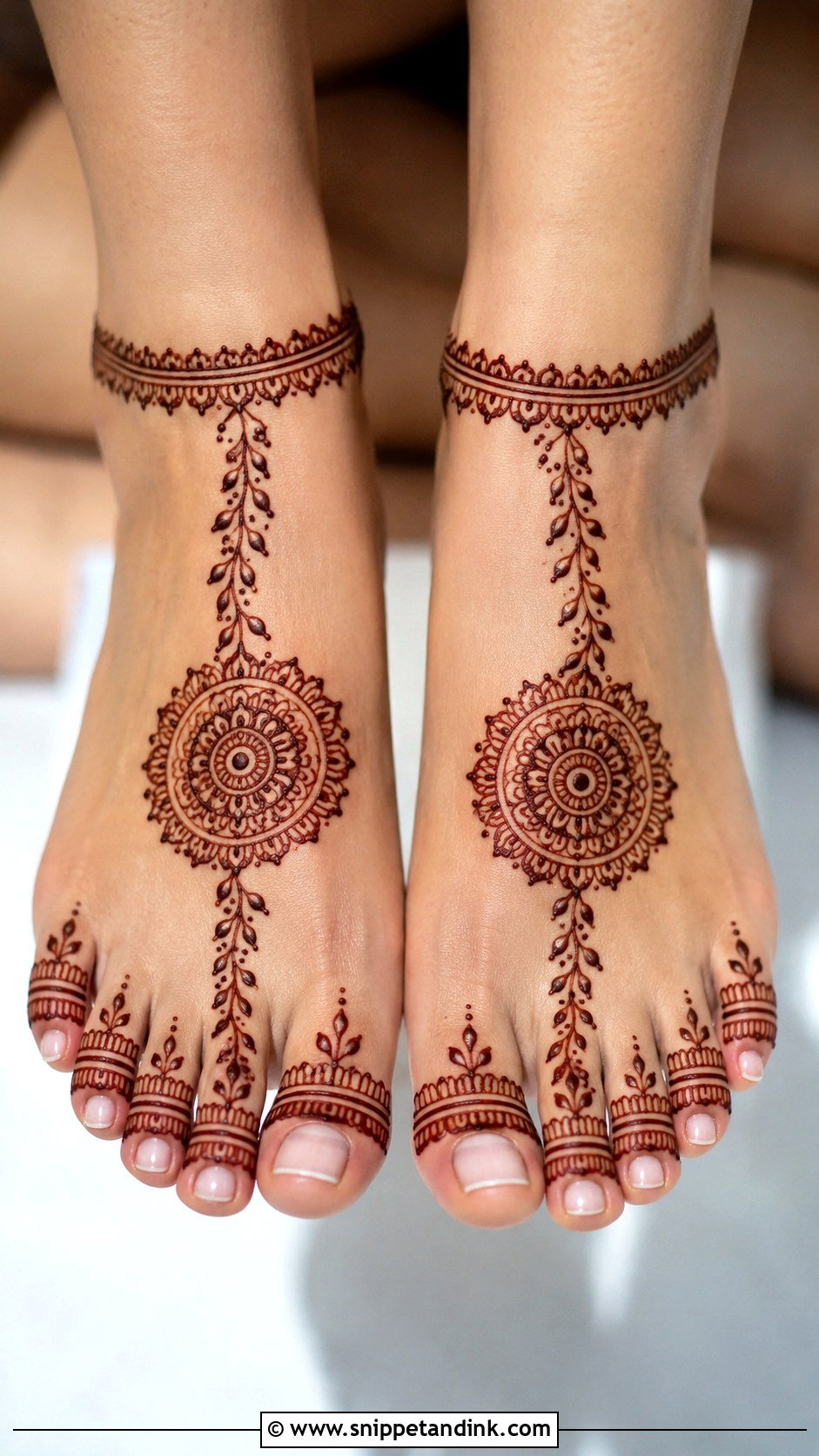
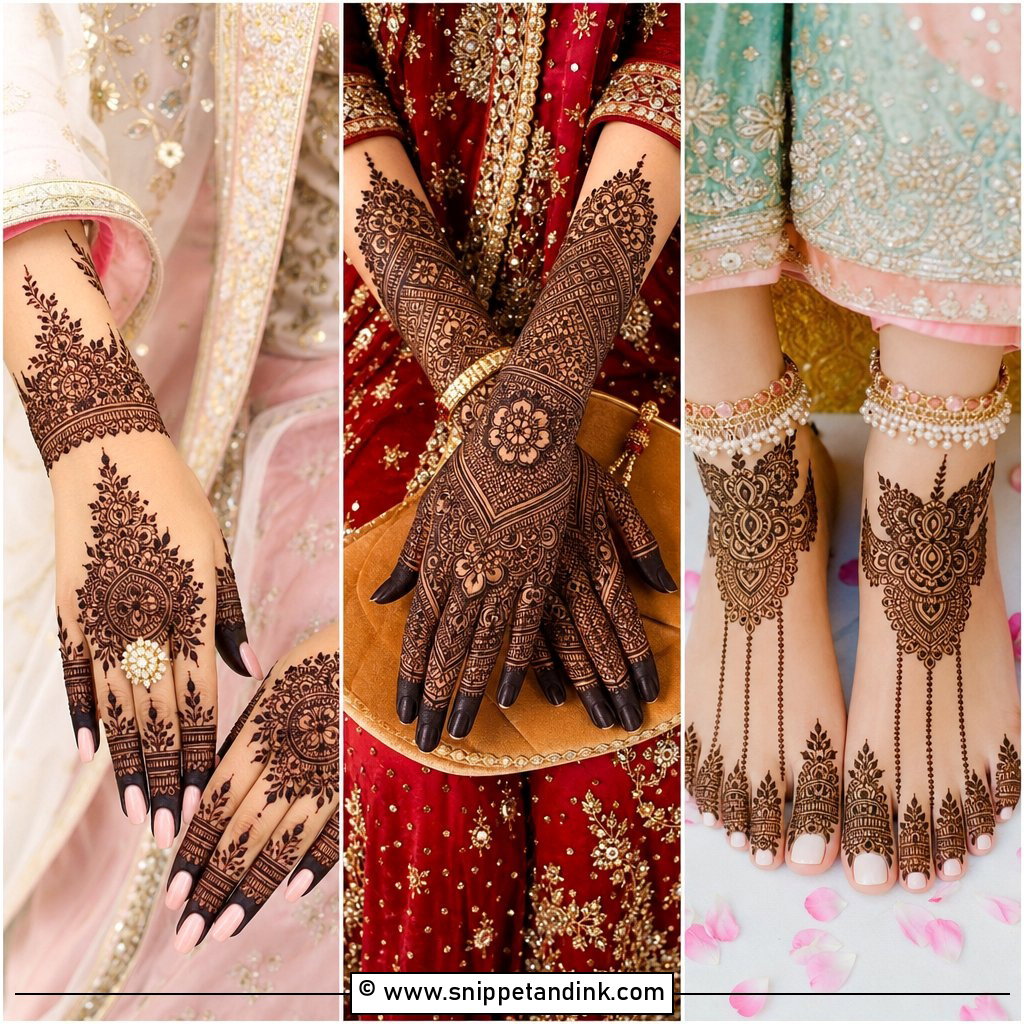
Feet are friendlier than they look because there’s plenty of open skin around the toes and ankle. Put a small flower or mandala near the top of the foot, extend a leafy vine toward the toes, and add tiny toe bands and a light anklet border. Skip dense sole patterns for now; they’re hard to reach and smudge easily. The real challenge is sitting still. Do feet when you can stay put for a few hours, and keep your weight off them until the paste is dry.
31. Easy Anklet Mehndi Design
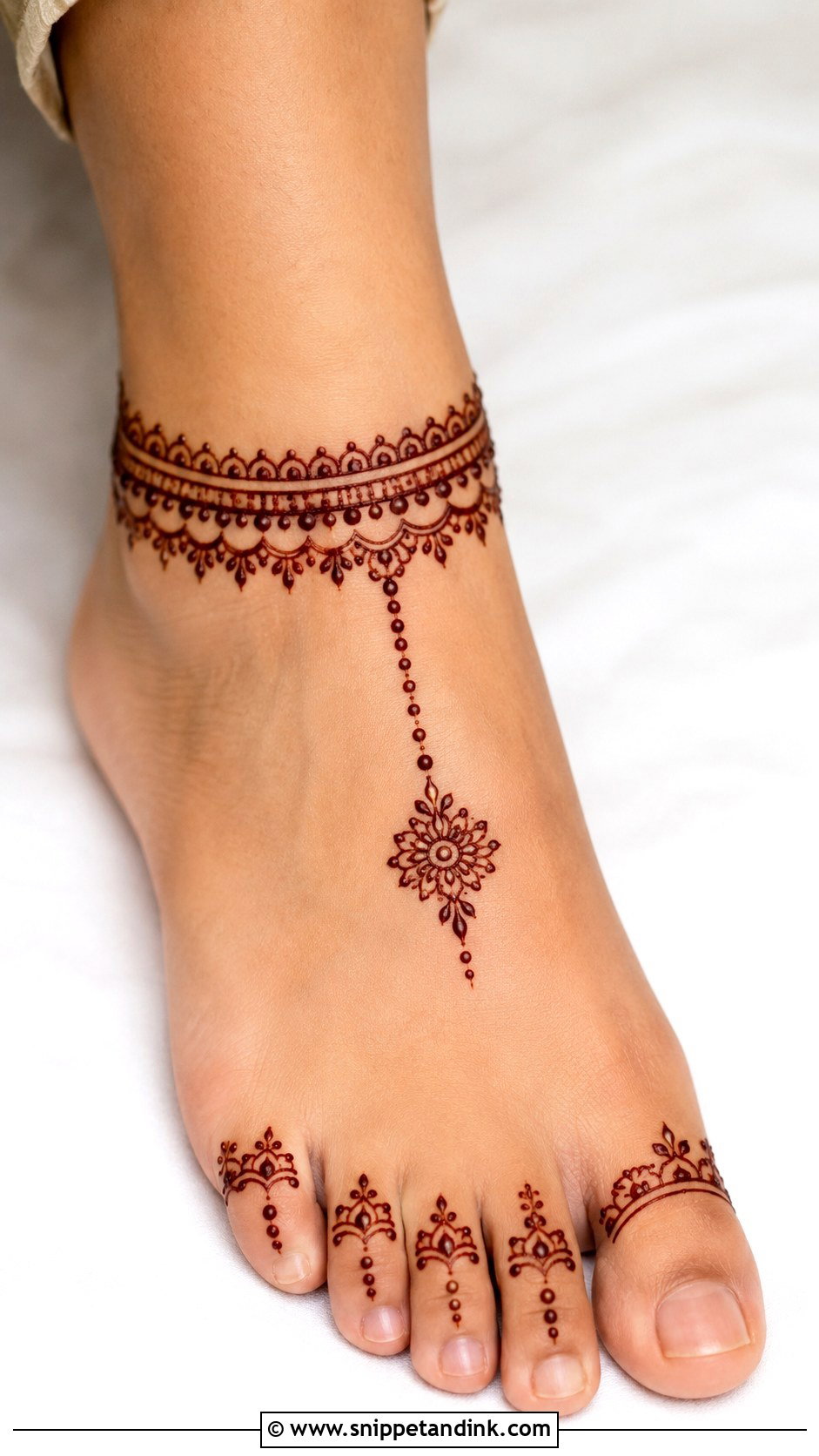
Two thin curved lines around the ankle, filled with dots, tiny leaves, scallops or small flowers, with a short chain dropping toward the top of the foot and ending in a little floral charm. Toes get light dots or simple bands. It’s repeated shapes in a small area, which suits a beginner. Keep the band even and not too thick, and draw it with the foot resting flat so it doesn’t tilt once you stand.
32. Simple Moroccan Mehndi Design
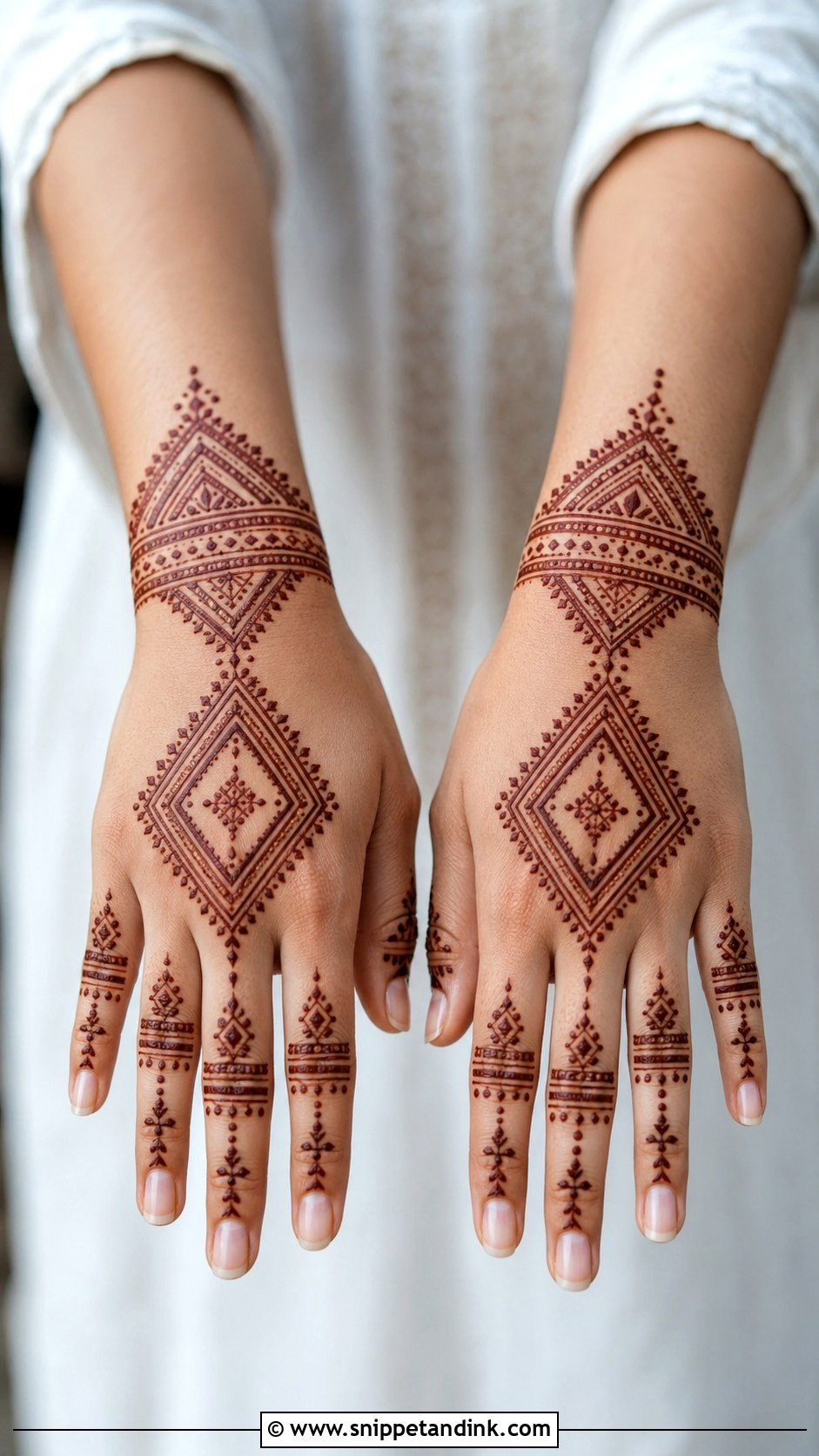
Clean geometry suits beginners who like structure: diamonds, triangles, straight lines, dots and small shaded blocks, arranged in bands or a central panel on the back hand or wrist. It’s a fresh change from floral Indian and Arabic work. Move slowly with short strokes and keep your drawing hand braced on the table. If a line isn’t straight, add dots along its edge, which disguise the wobble well.
33. Easy Gulf Mehndi Design
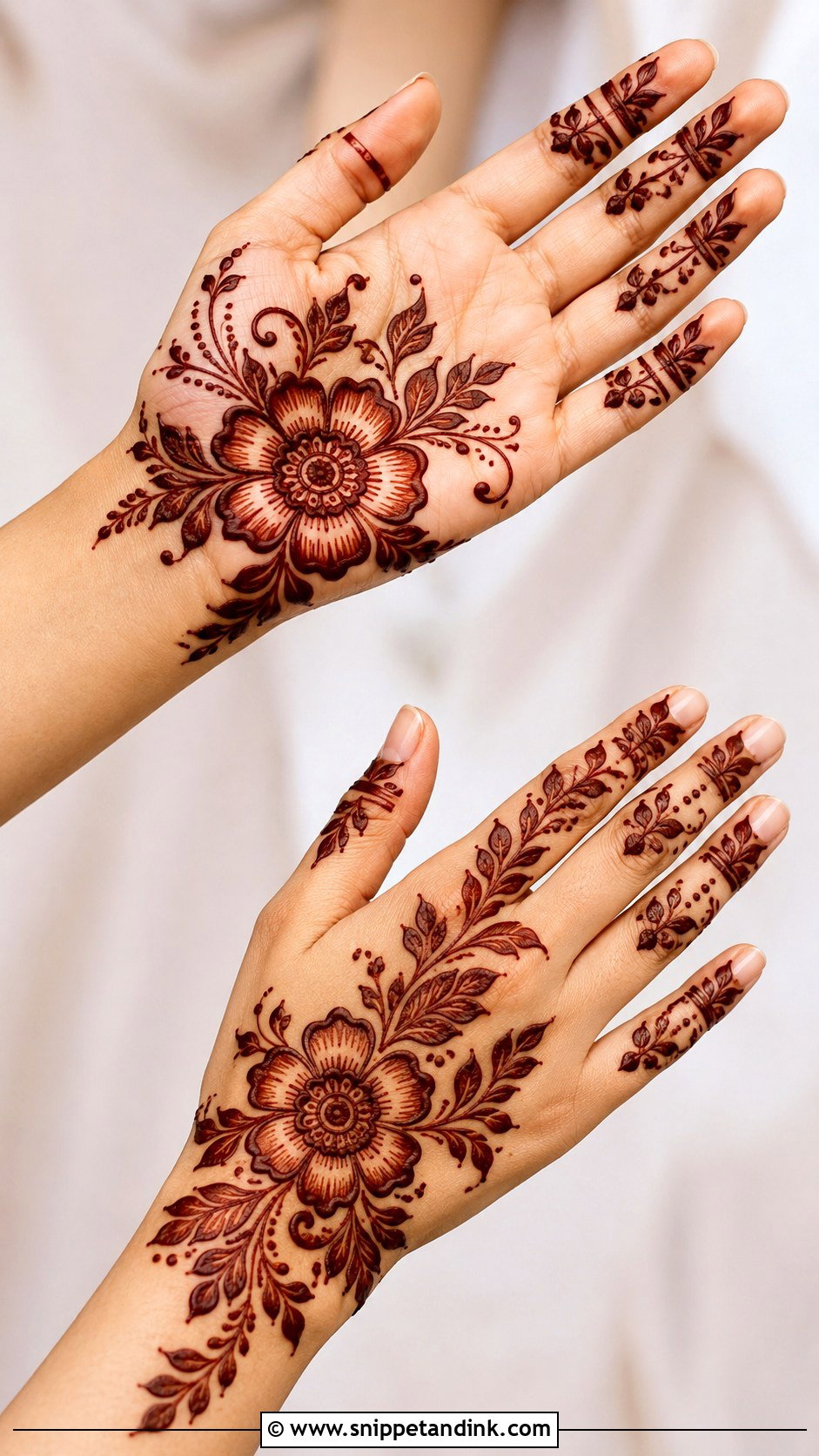
Gulf work uses large flowers, thick leaves and clear spacing, which makes it kinder to beginners than it looks. Place a big flower on the back hand or palm, send leafy vines toward the fingers and wrist, and keep the outlines bold and the inside simple. Dotted fingertips or simple finger bands finish the hand. Gulf-style mehndi is a good pick for Eid, weddings and evening functions when you want impact without fiddly detail.
34. Simple Shaded Mehndi Design
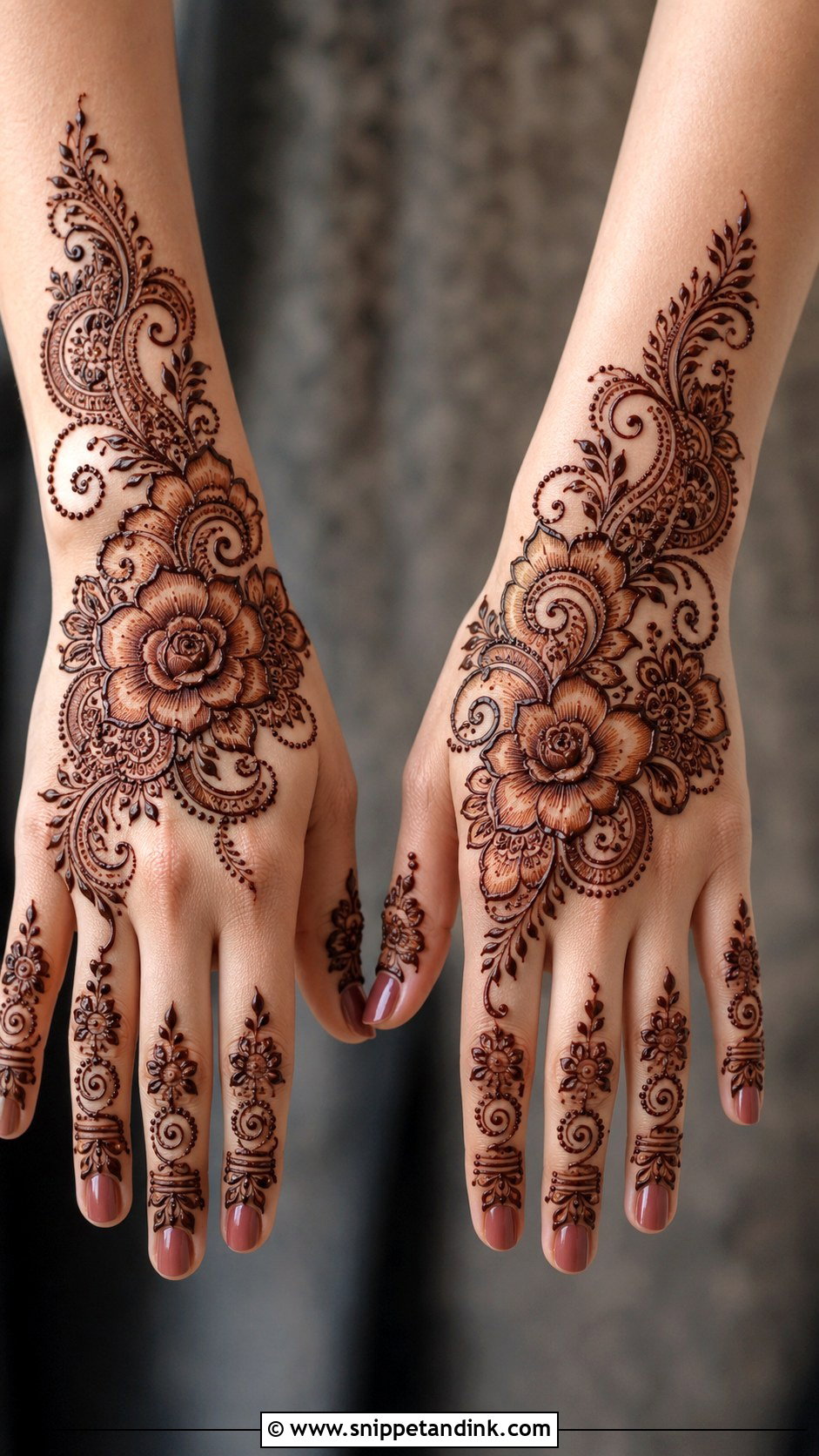
Shading gives a small motif depth. Start with one flower, paisley or mandala on the back hand and shade inside petals or leaves by dragging the cone tip lightly or laying close, thin lines. Keep the rest simple with dots, vines and finger bands. Use shading sparingly, because too much blurs the shape. Practise the pressure on paper first, since shading needs a lighter squeeze than outlining, and keep every outline crisp.
35. Easy Step By Step Mehndi Design
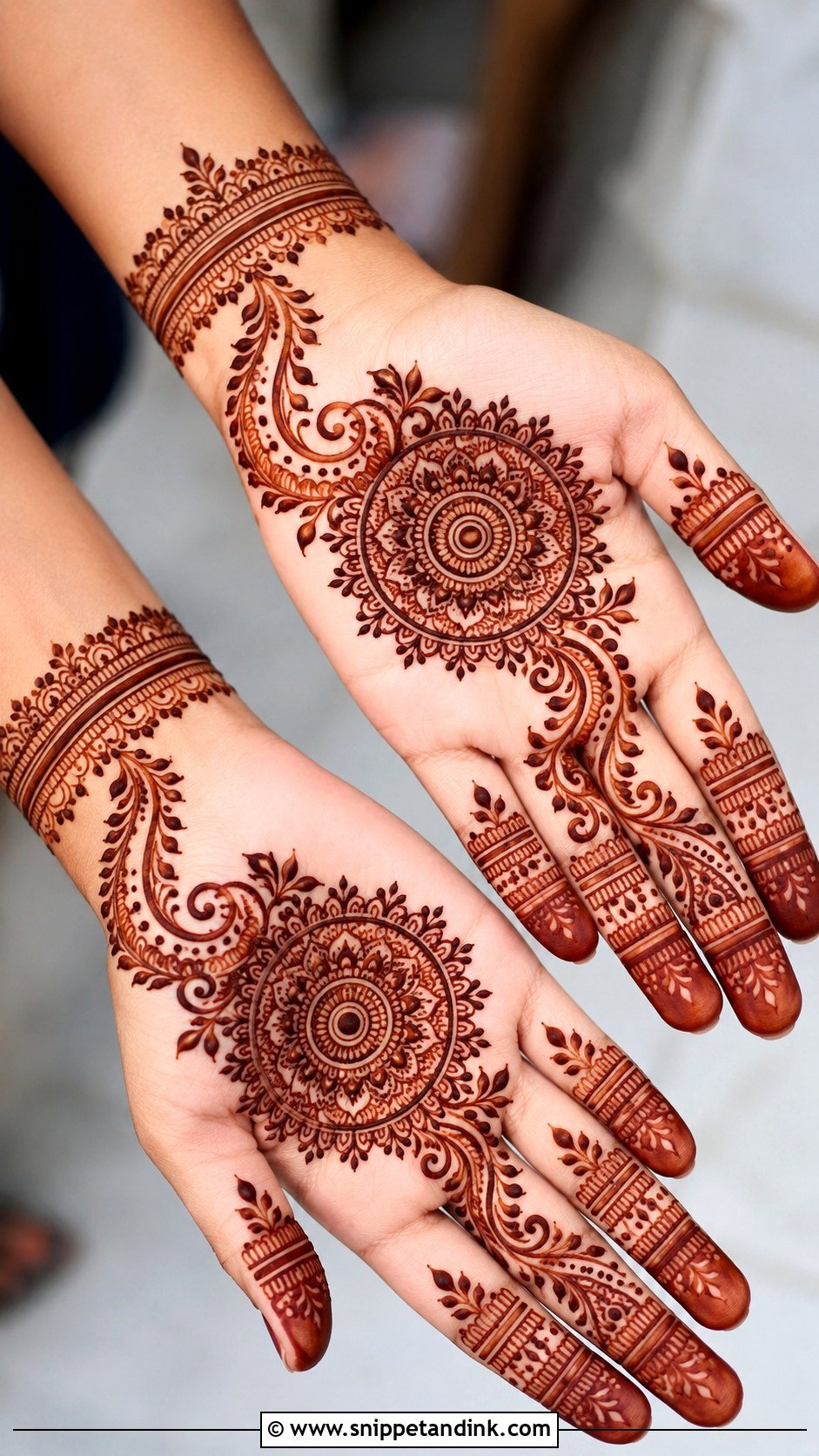
This one pulls the basics into a single hand, in an order that keeps you from getting lost. First a central mandala or flower. Then a curved vine toward the fingers, with small leaves along it. Then simple finger bands and a wrist line. Last, dots and tiny petals in the empty spaces. Each step connects to the one before, so keep it medium-sized and don’t rush. And when something goes wrong, turn it into a dot, a leaf or a curve; that habit alone saves half of all beginner mistakes.
What to Do the Second a Line Goes Wrong
Henna starts staining within minutes of touching skin, so a mistake is easiest to fix straight away.
- Lift the wet paste immediately with a cotton bud or the corner of a tissue, rolling rather than wiping so you don’t spread it.
- Dab the spot with a damp cotton bud. A faint orange mark may remain, but it will be much lighter than the rest of the design.
- If you can’t remove it cleanly, absorb it into the pattern: a smudge becomes a leaf, a blob becomes a dot or a small flower.
- If you only notice a smudge after the paste has dried, leave it. Scrubbing irritates the skin and won’t lift a stain that has already set.
Stopping the cone from causing them
Plenty of mistakes start with the cone rather than the hand. Keep a tissue in your free hand and wipe the tip every few minutes. If the paste suddenly blobs, the tip may have widened, so trim it back with fine scissors or switch to a fresh cone. Fold the top of the cone down as it empties and keep squeezing from there; it keeps the pressure steady, so your lines don’t suddenly thicken halfway along.
Start Small, Then Let the Wrist Fill In
Mehndi gets easier the moment you stop trying to fill the hand and start placing simple shapes well. Mandalas, flowers, leaves, paisleys, chains, bracelets and finger bands make a complete design with no advanced skill at all. Begin with small back-hand or palm layouts, then move on to half-hand, Arabic, Indo-Arabic, foot and festival patterns as your line steadies. Keep tissues nearby, practise your pressure, and leave each design alone until it’s dry. Pick two or three favorites from this list and draw each one several times before moving to the next.
You'll Like These Ideas:


Leave a Reply