
Cone control is the only real barrier to good henna, and it comes from repetition, not talent. That’s why every layout here is a complete hand built from a few repeatable marks: dots, lines, leaves, flowers, mandalas, checks and soft trails. You’ll find front and back hands, fingers, wrists, palms, and Arabic, Indian, Indo-Arabic, Moroccan and minimal styles, all kept within reach of someone still finding a steady pressure. Learn the layouts, then mix them for festivals, family events or an ordinary Sunday. Wash and dry your hands, keep the cone pressure even, and when you want more, there’s a companion set of 35 Easy Mehndi Designs for Beginners.
What Goes in a Starter Henna Kit
You need very little, but each item earns its place. This is what I hand new students on their first day:
- Two or three cones of fresh natural henna, kept in the fridge or freezer between sessions so the dye doesn’t fade.
- Small sharp scissors for snipping cone tips a fraction at a time.
- Cotton buds, toothpicks and tissue for lifting mistakes before they stain.
- A clear plastic sheet or sleeve for practice.
- A small bottle of lemon juice mixed with sugar to dab on once the paste has dried.
- A cushion or rolled towel to rest the working hand on.
Notice what isn’t on the list: anything labelled black henna. Natural henna only stains orange to deep brown, and black pastes often contain PPD, a dye that can burn skin and cause lifelong sensitivity.
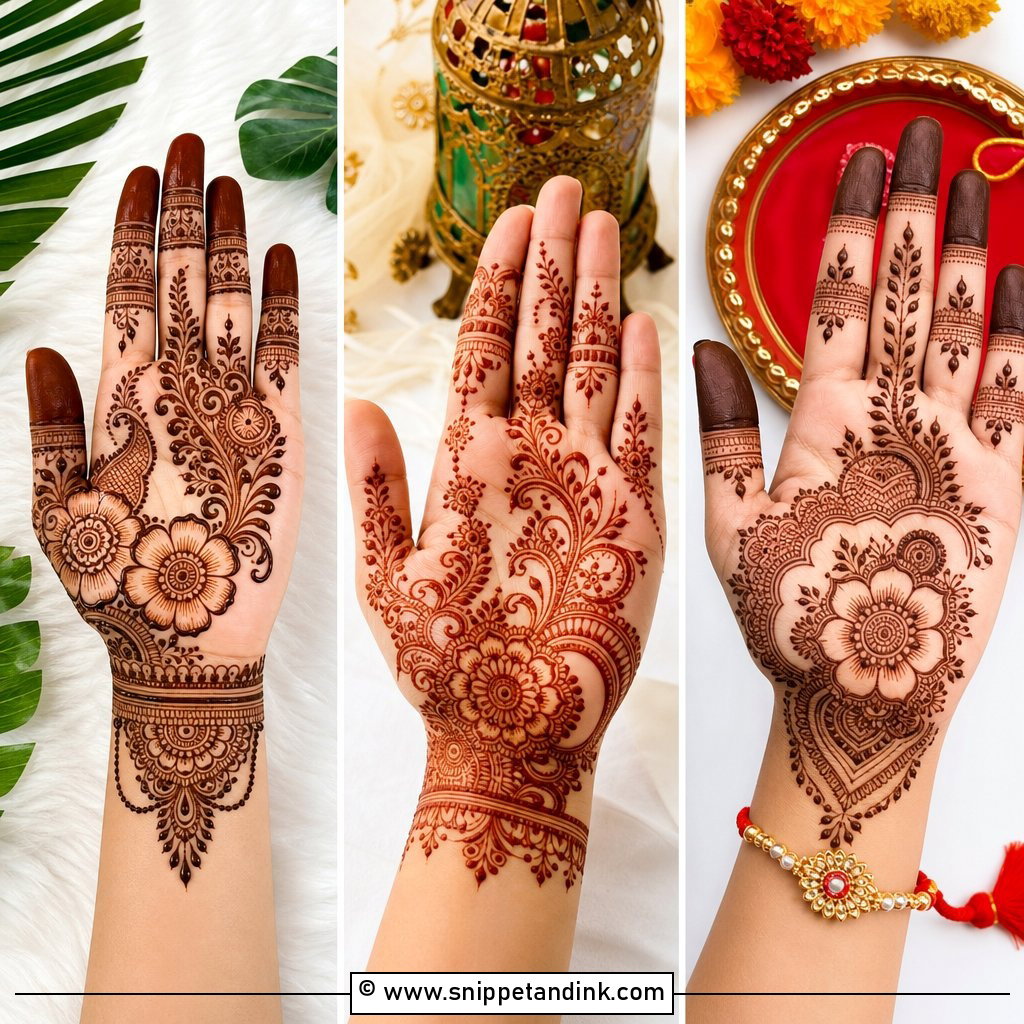
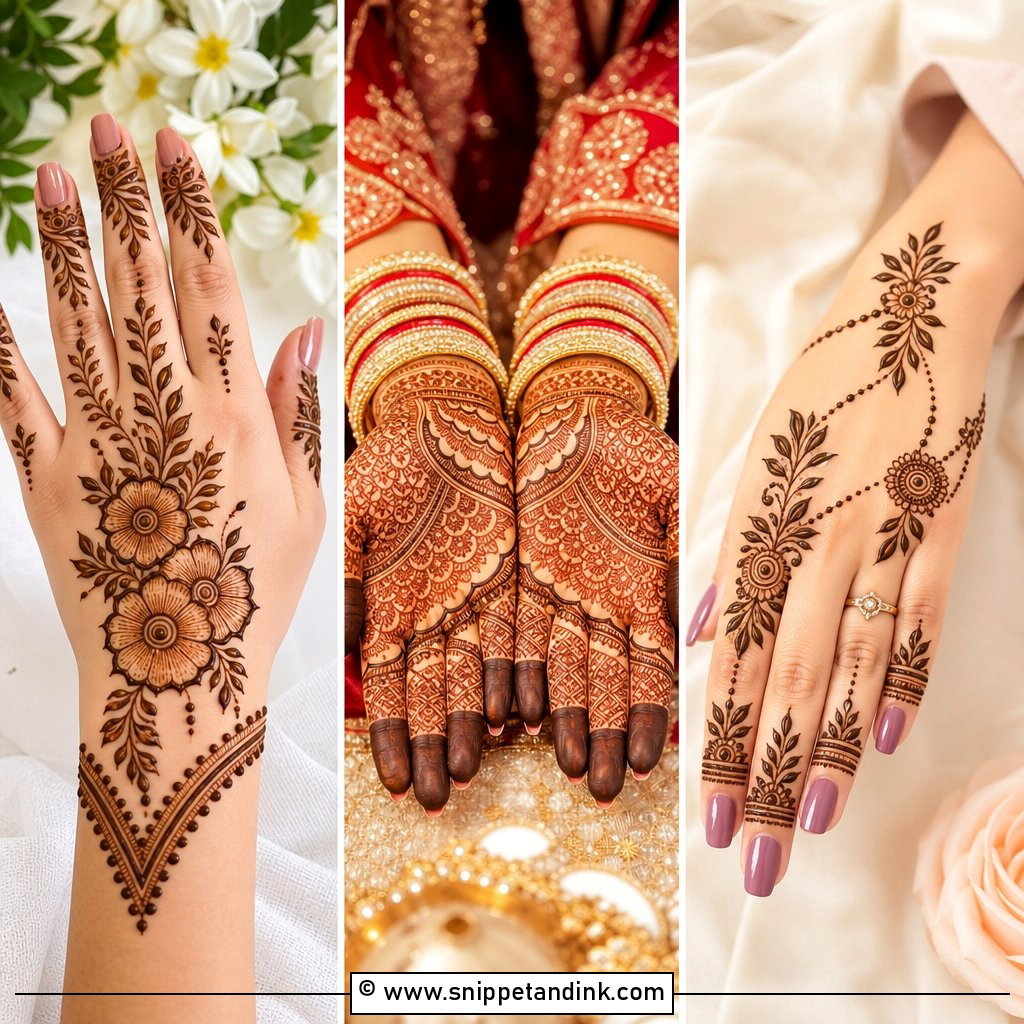
1. Simple Front Hand Mehndi Design
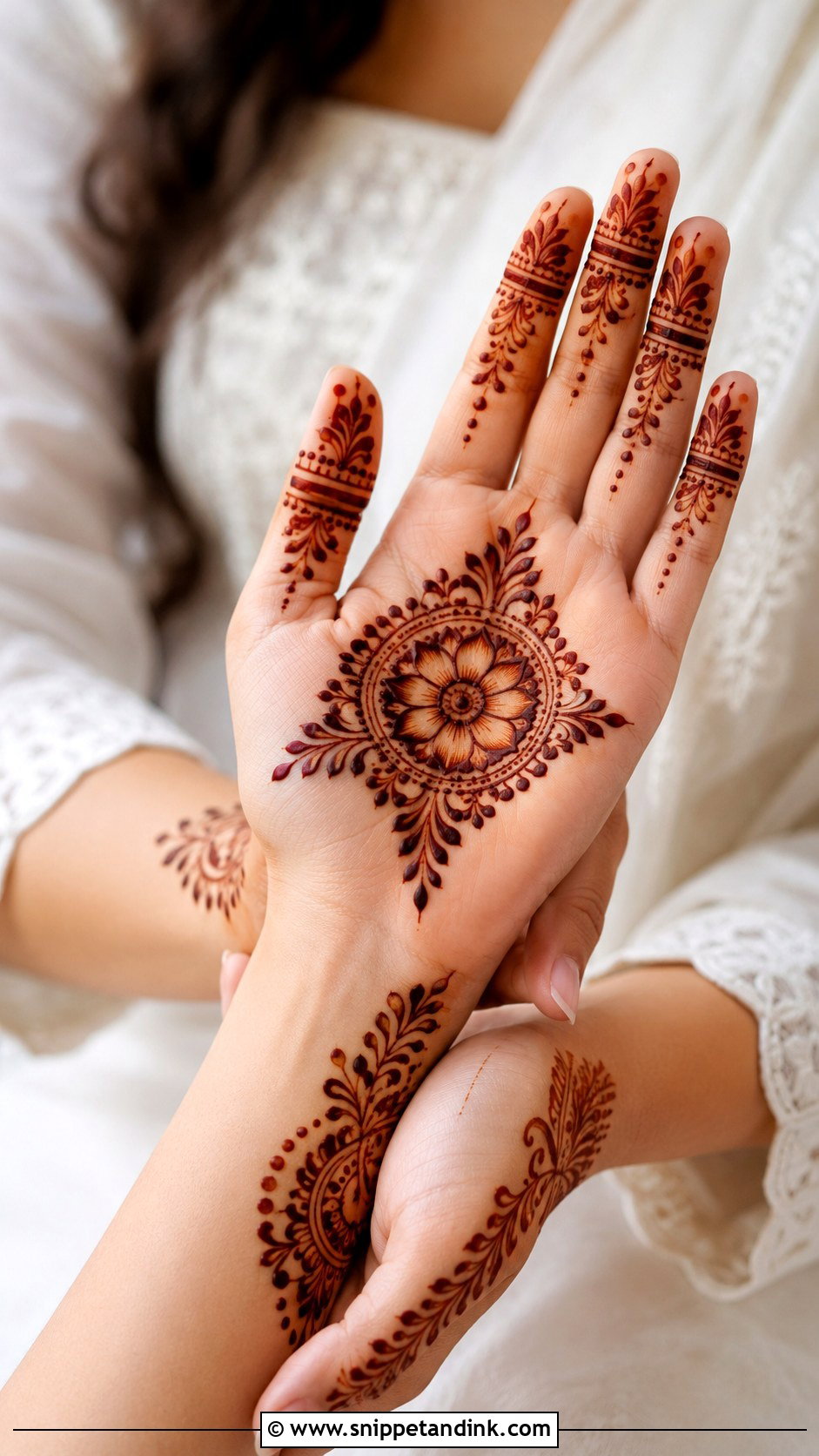
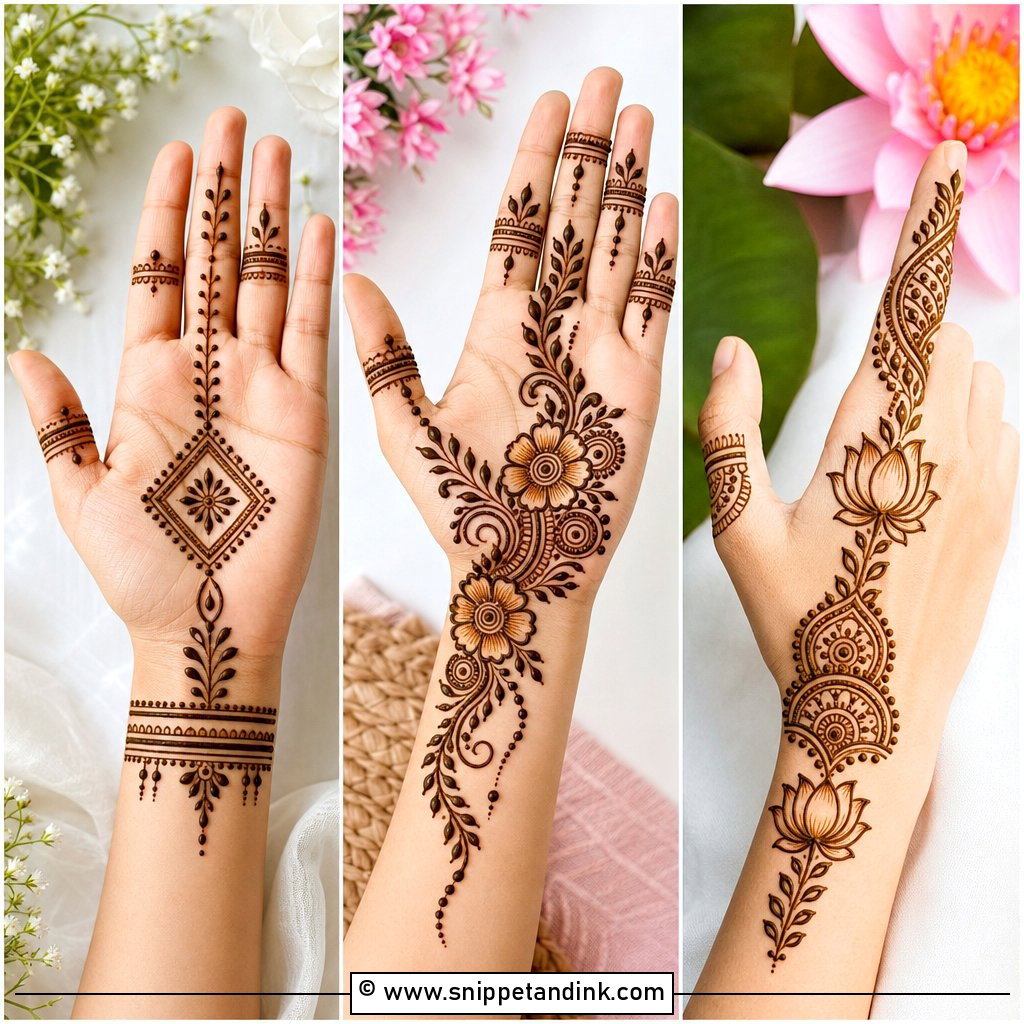
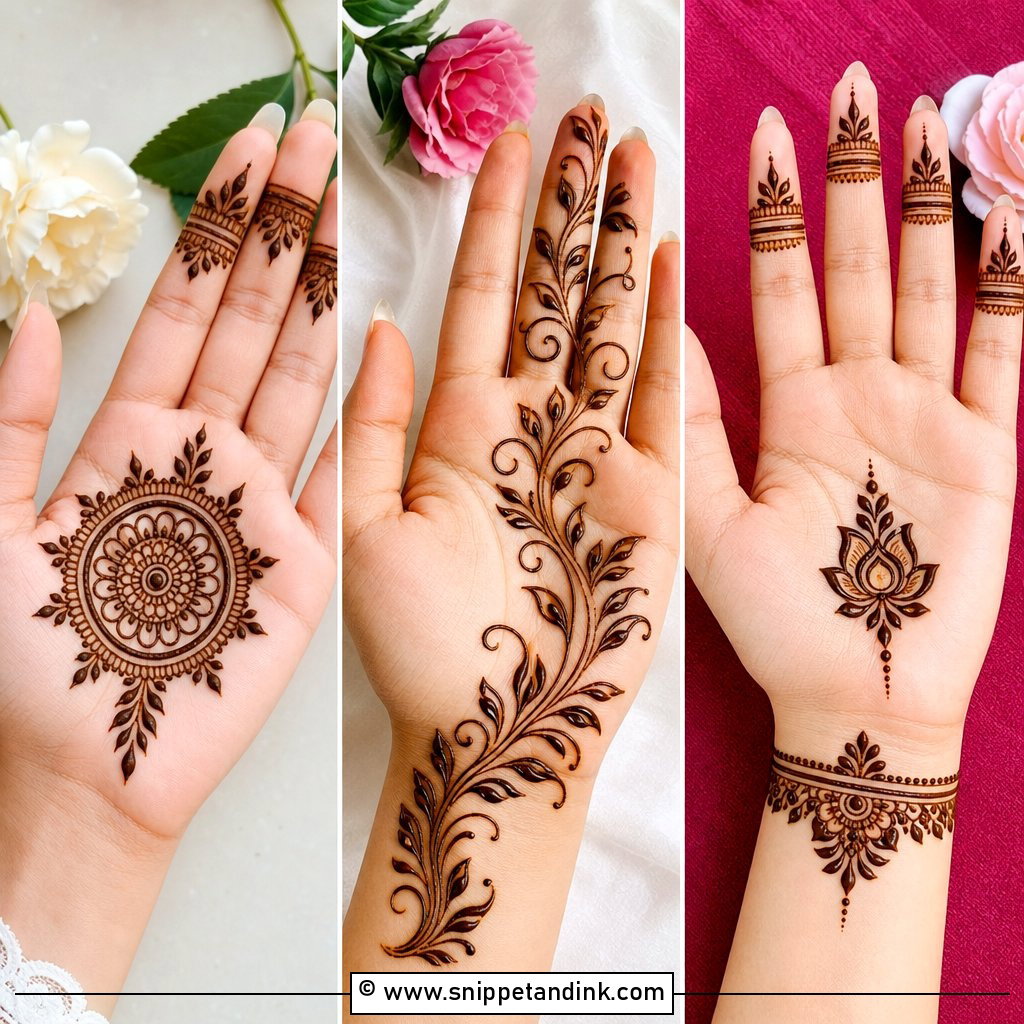
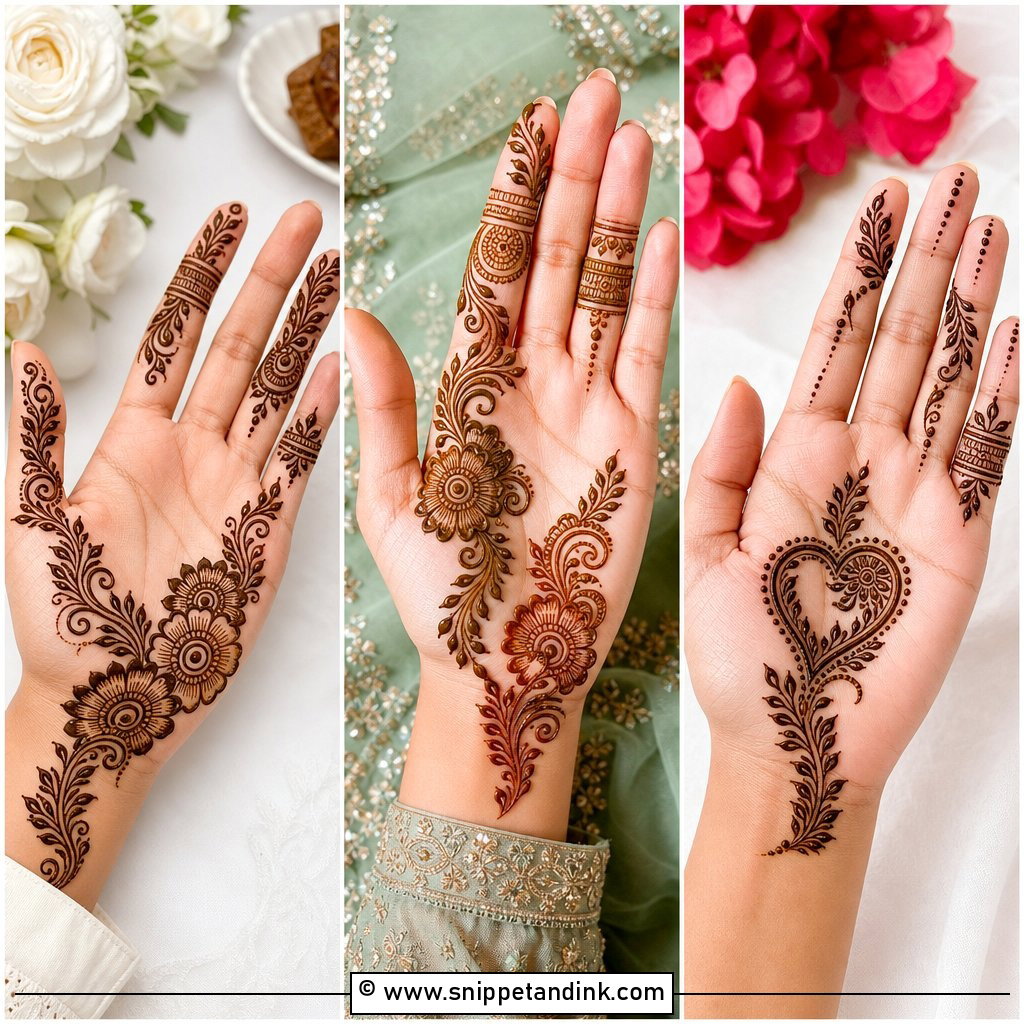
Start with a small flower, circle or mandala in the middle of the palm, then add curved leaves, tiny dots and short vines toward the fingers. Open spacing keeps it clean even when the lines aren’t perfect. Fingers get simple bands, dots and small leafy strokes instead of dense filling. If you only practise one layout this month, make it this one, because it teaches balance and symmetry on the flattest surface of the hand.
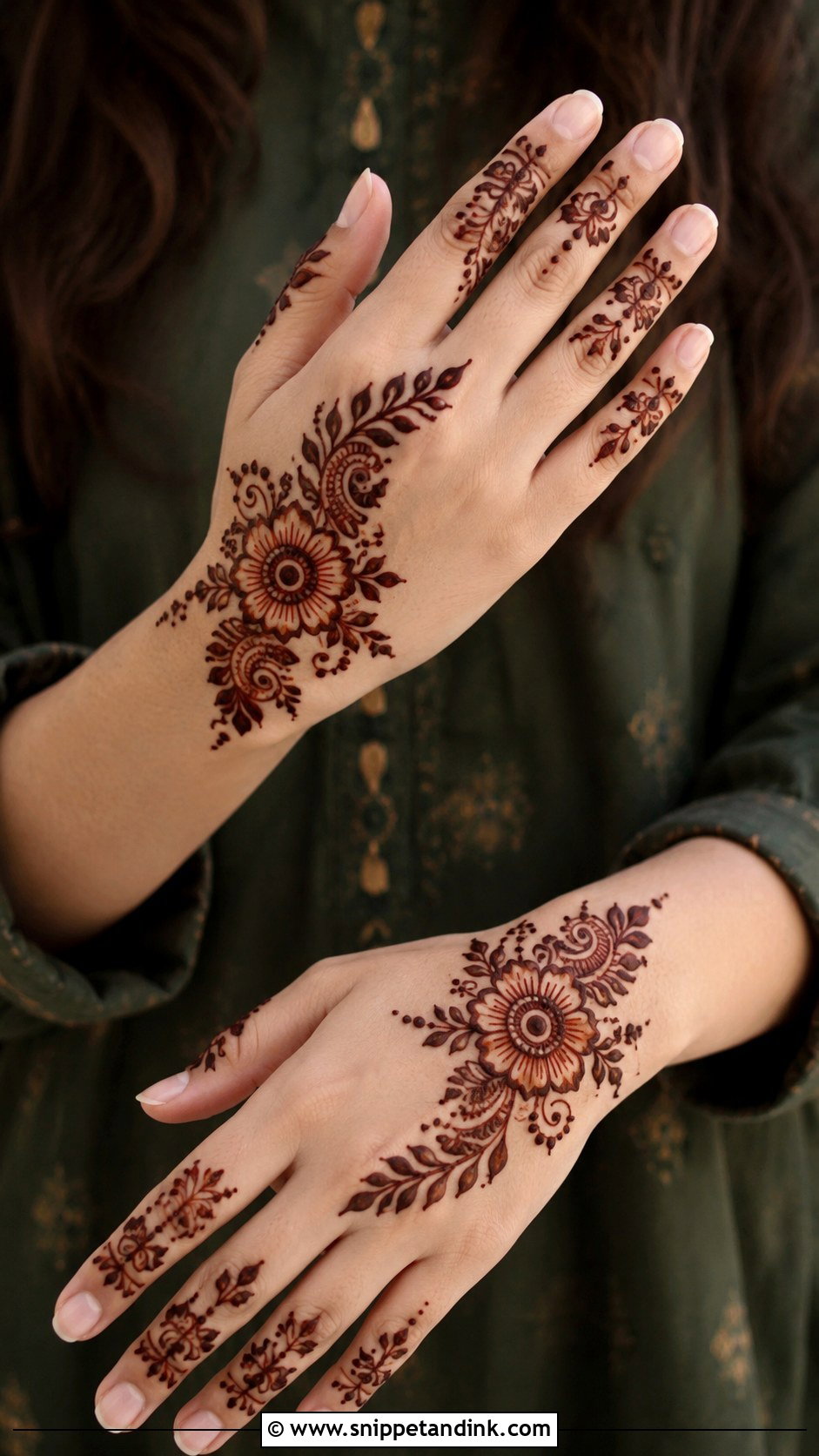
2. Simple Back Hand Mehndi Design
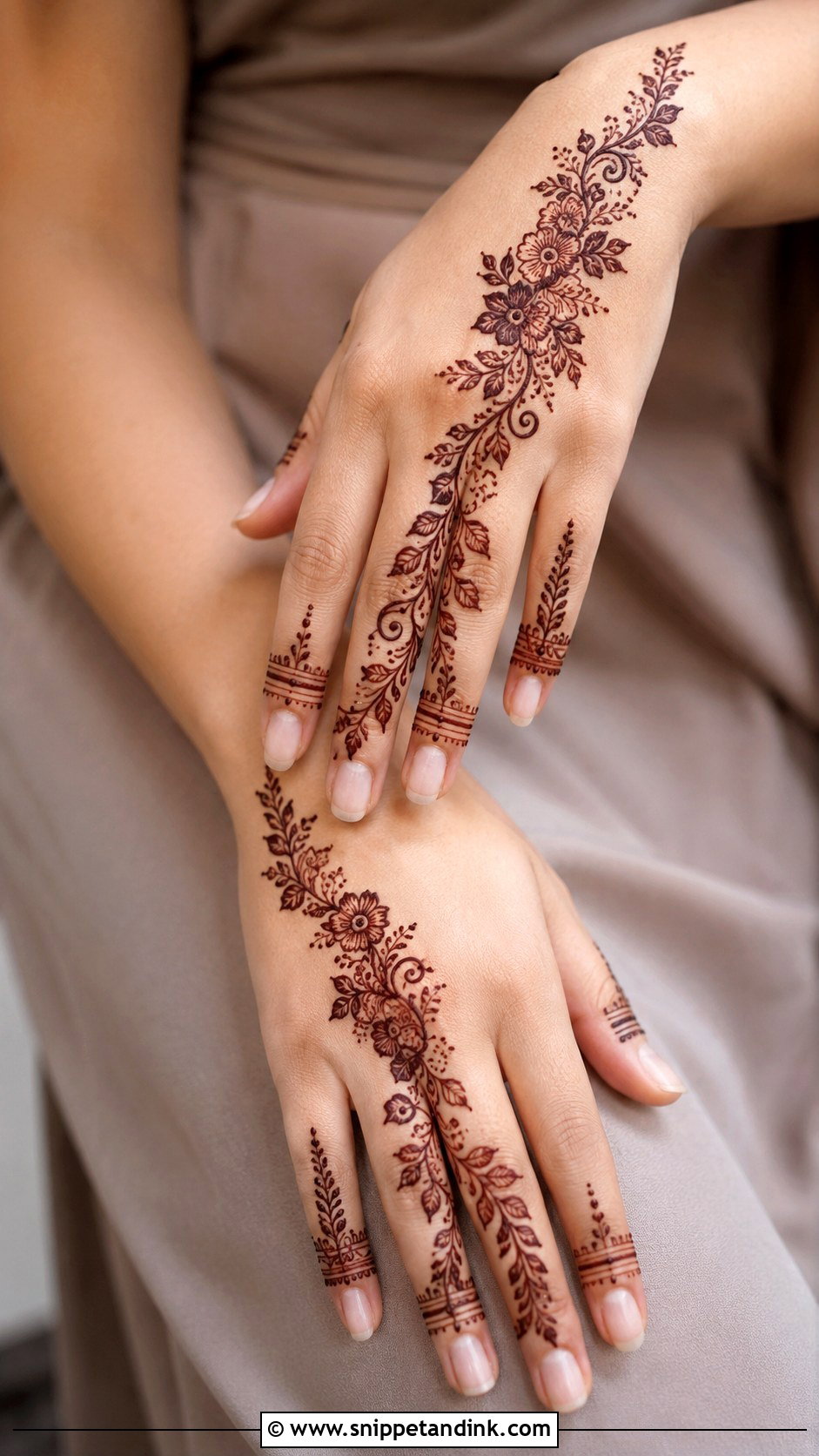
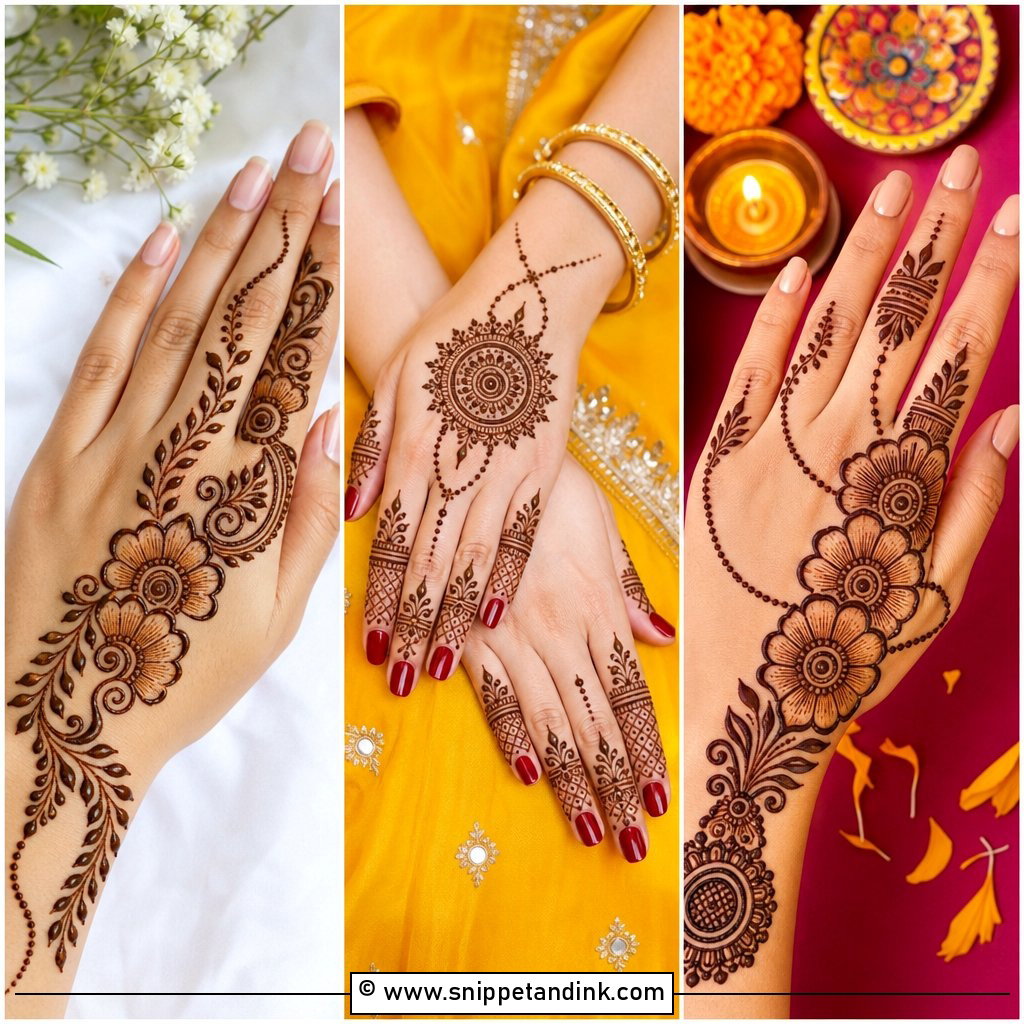
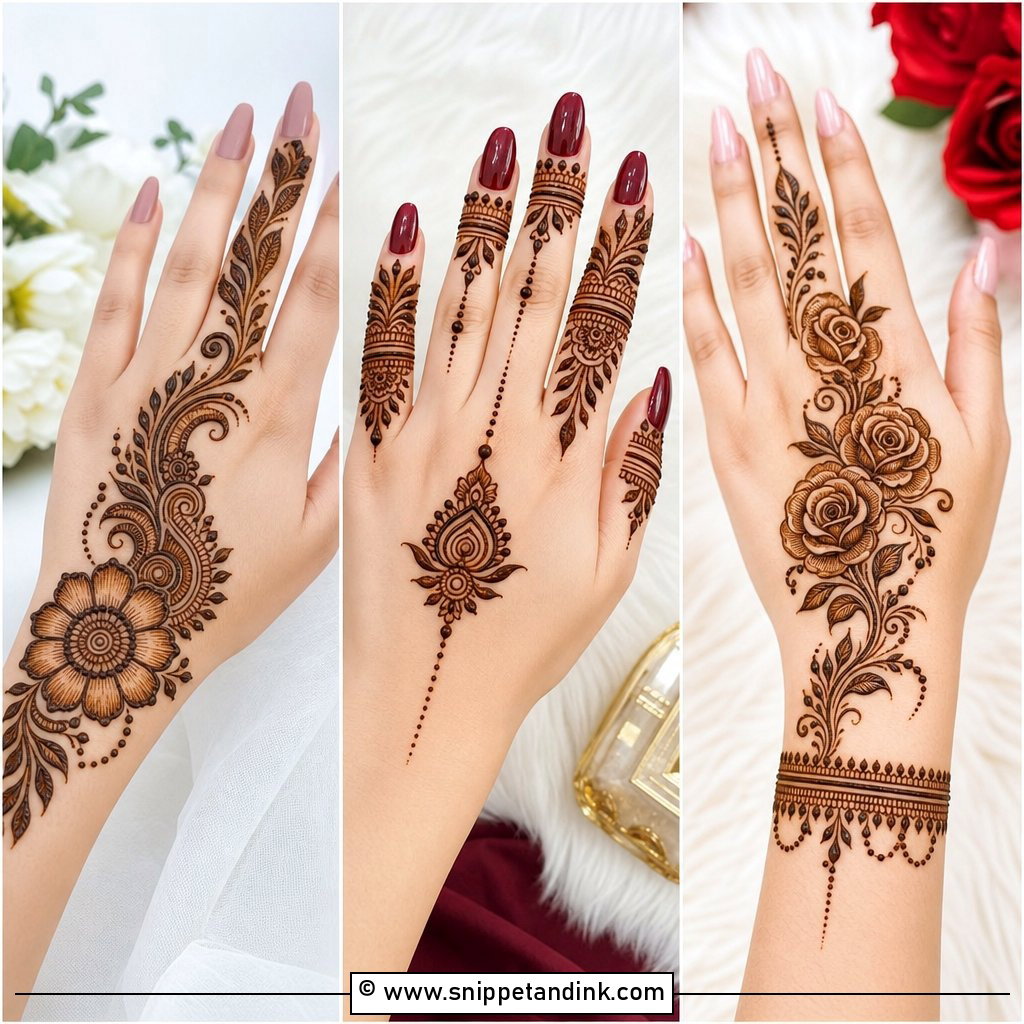
The back of the hand gives you more room for trails. Begin near the wrist with a small floral cluster and let one curved vine travel toward the index finger, with leaves on both sides and dots to fill the gaps. Slim bands, tiny petals or half-flower tips go on the fingers. No heavy shading, no tiny details, just one confident line. Bend the hand slightly over a rolled towel while you work; it stretches the skin smooth and stops the vine from wobbling over the knuckles.
3. Easy Arabic Mehndi Design
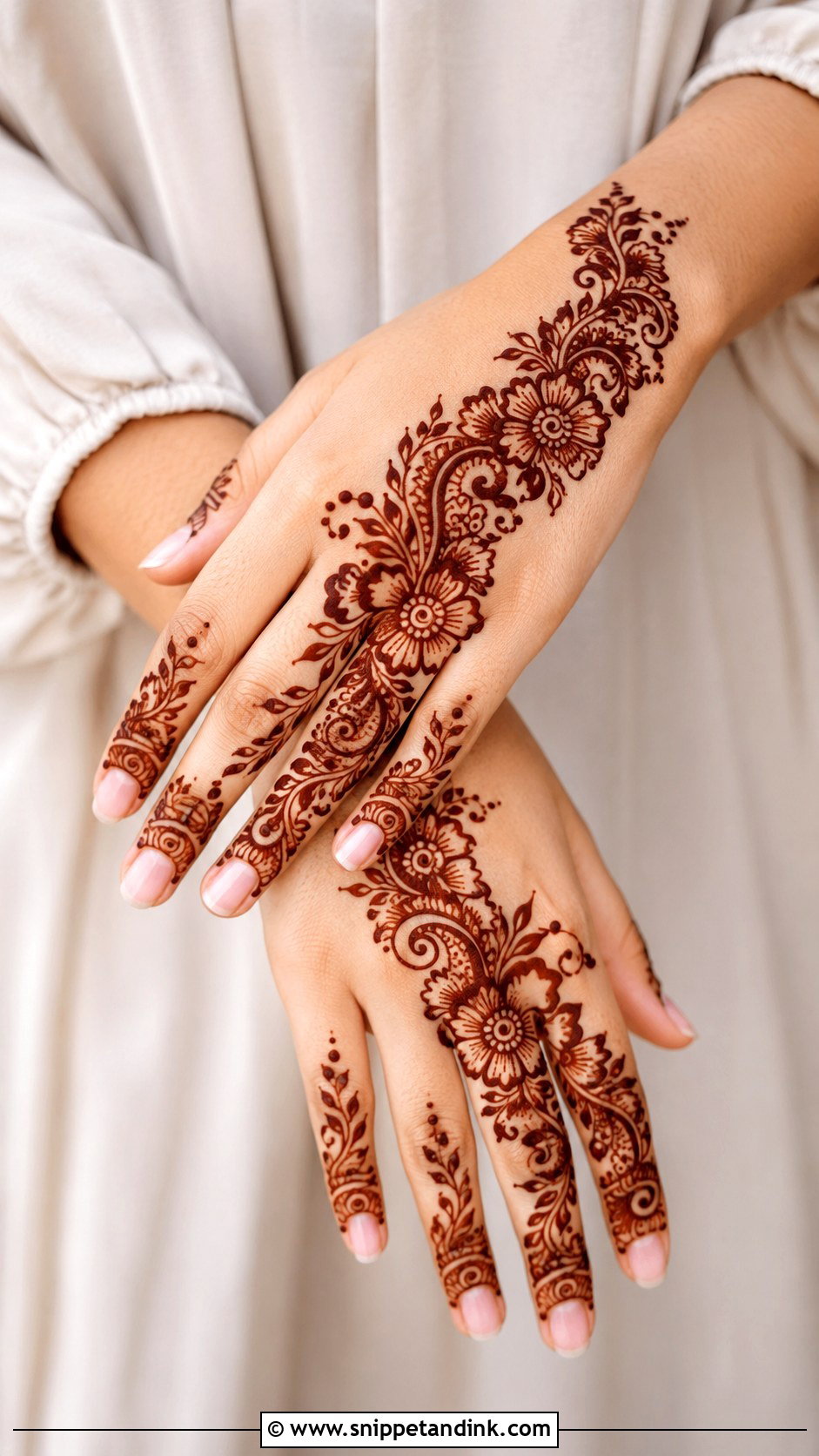
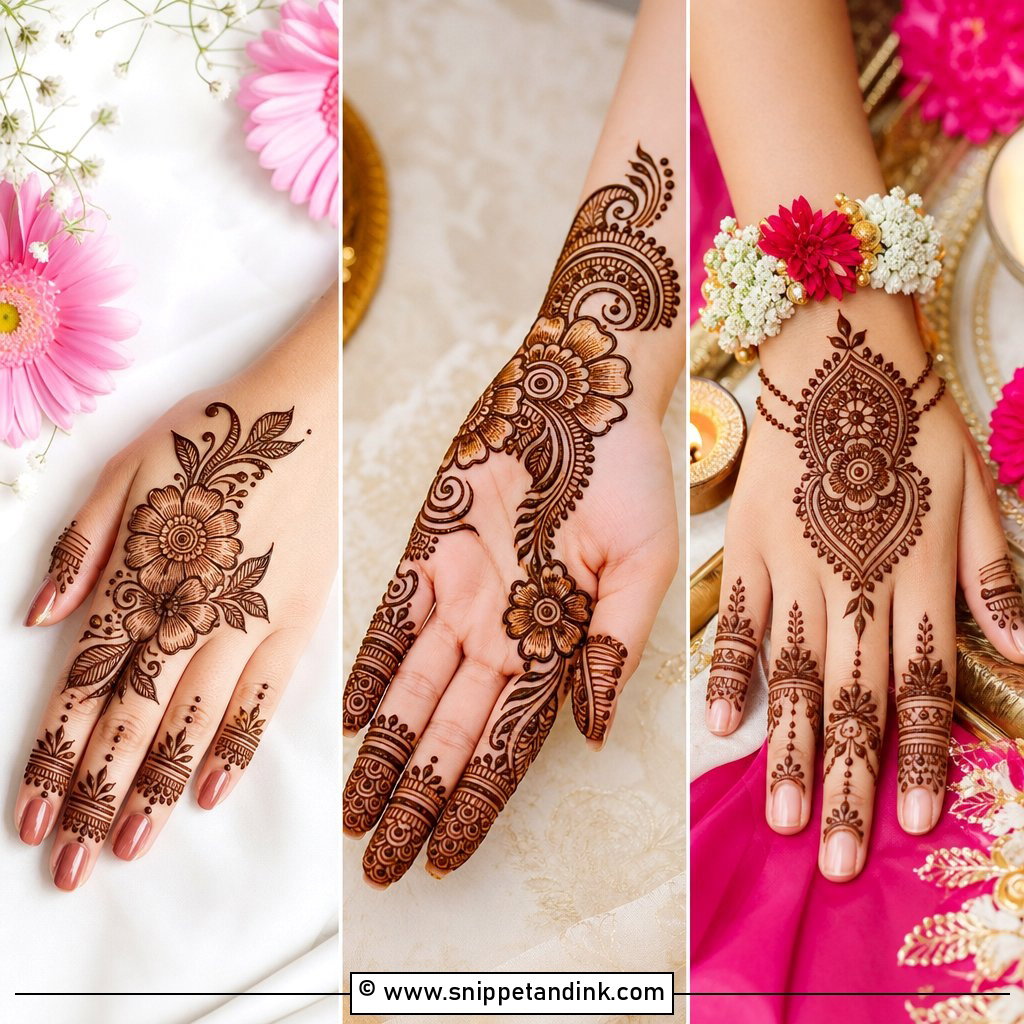
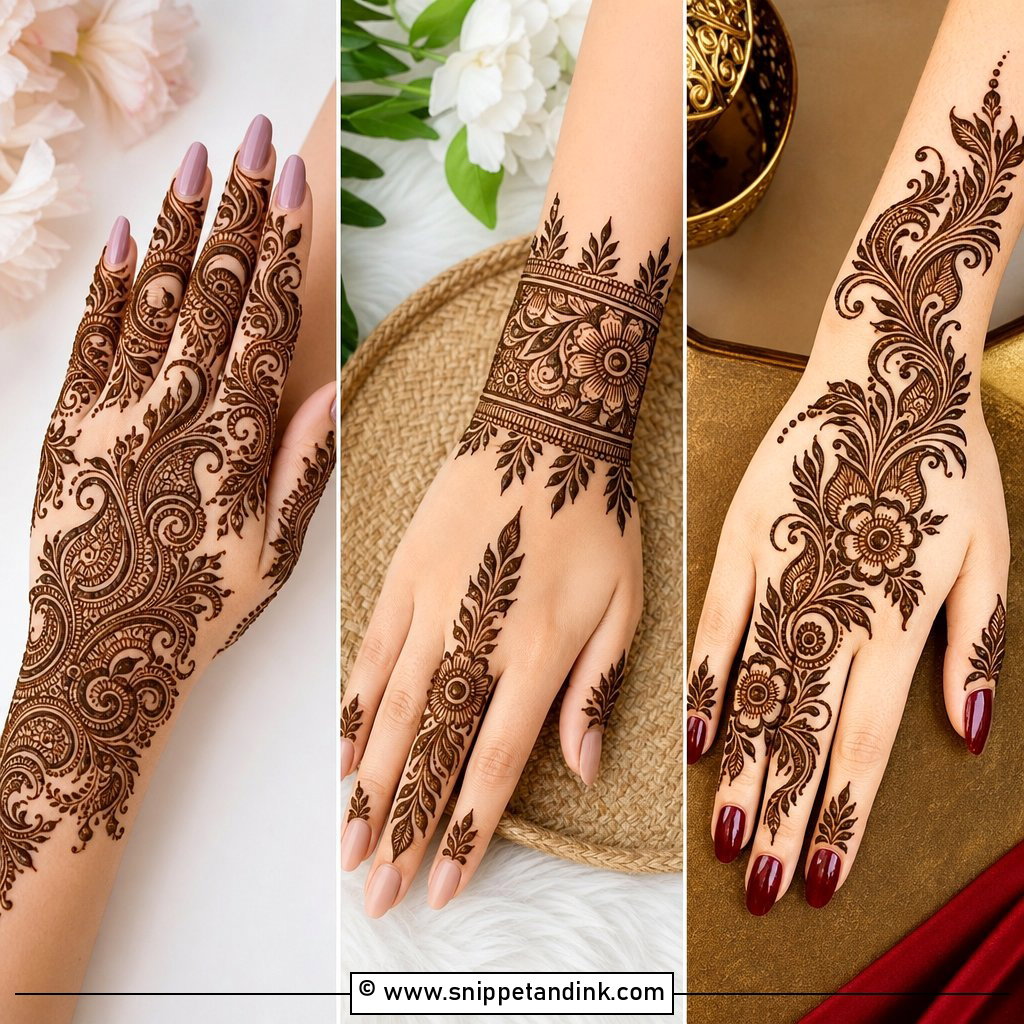
Arabic layouts forgive mistakes because the open areas give the eye somewhere else to rest. The design follows a diagonal from the wrist to one finger: a large flower near the wrist, then leaves, paisleys and small buds along a curve. I keep the outlines thicker than feels natural and the inner details simple. Front hand or back hand, it’s the quickest way to practise a whole design in one sitting without the hand looking empty.
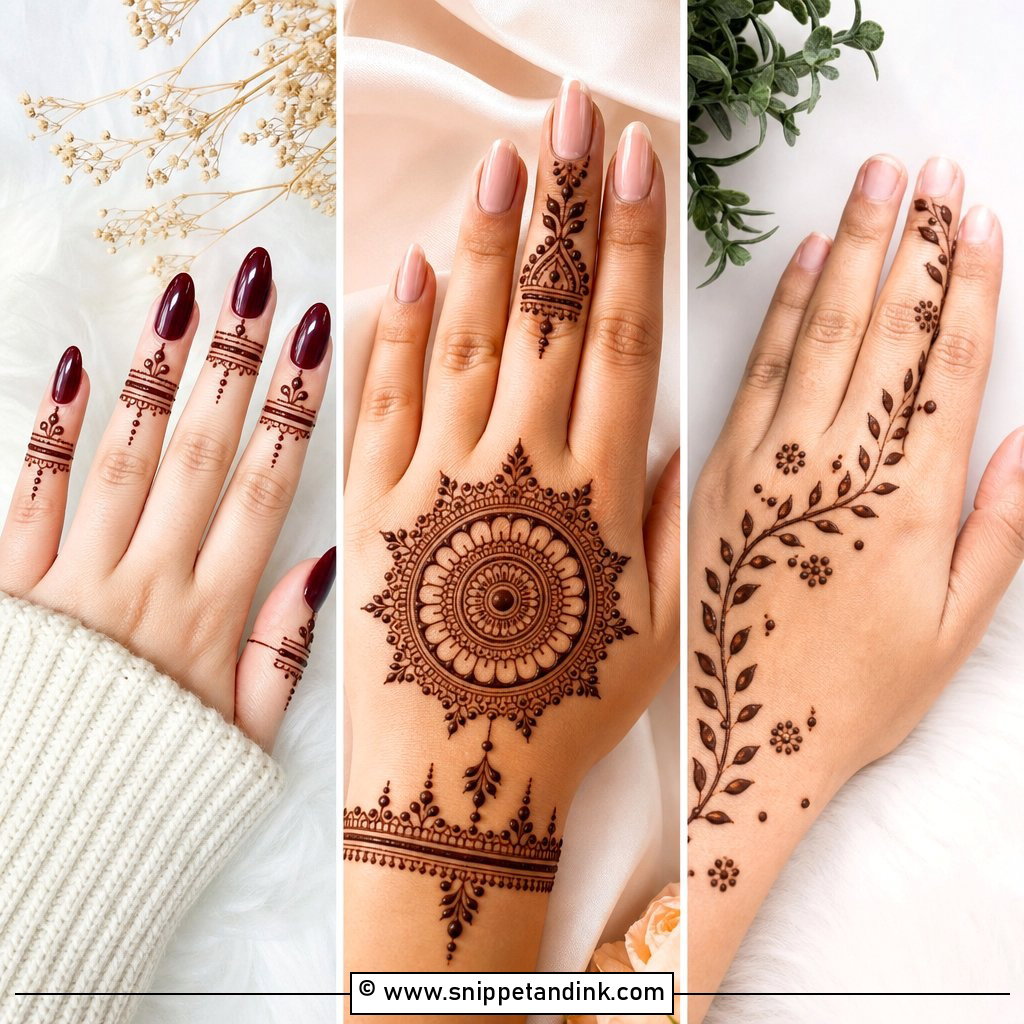
4. Easy Mandala Mehndi Design
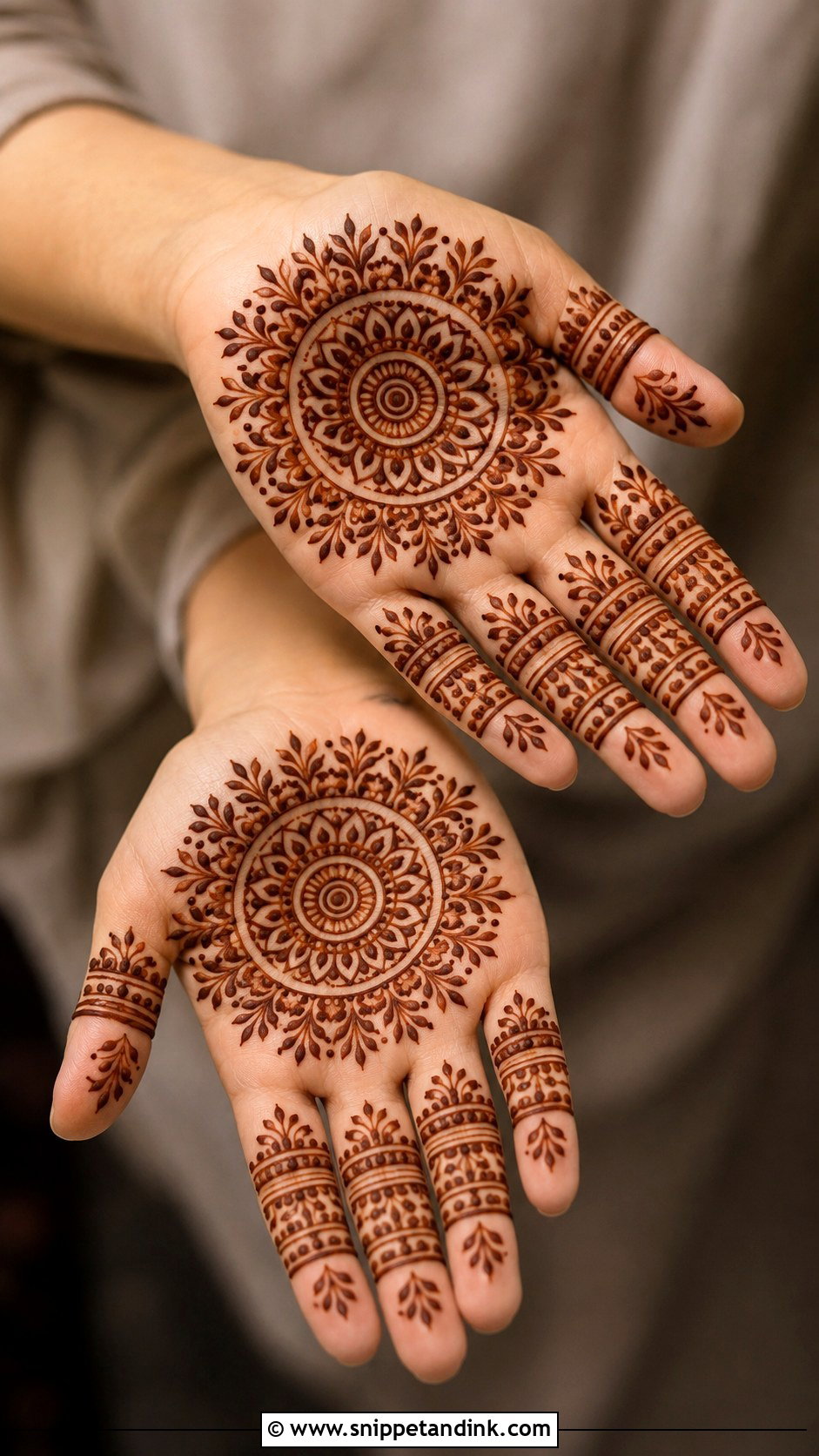
Dot, circle, petals, arches, dotted border: a mandala teaches the order in which most henna is built, from the centre outward. Place it in the middle of the palm or the back of the hand, and keep the fingers to matching dots, rings and small leaf marks. If the circle comes out lopsided, don’t redraw it. Add another border that’s slightly rounder, and the eye will read the outer shape. That’s a trick professionals use too.
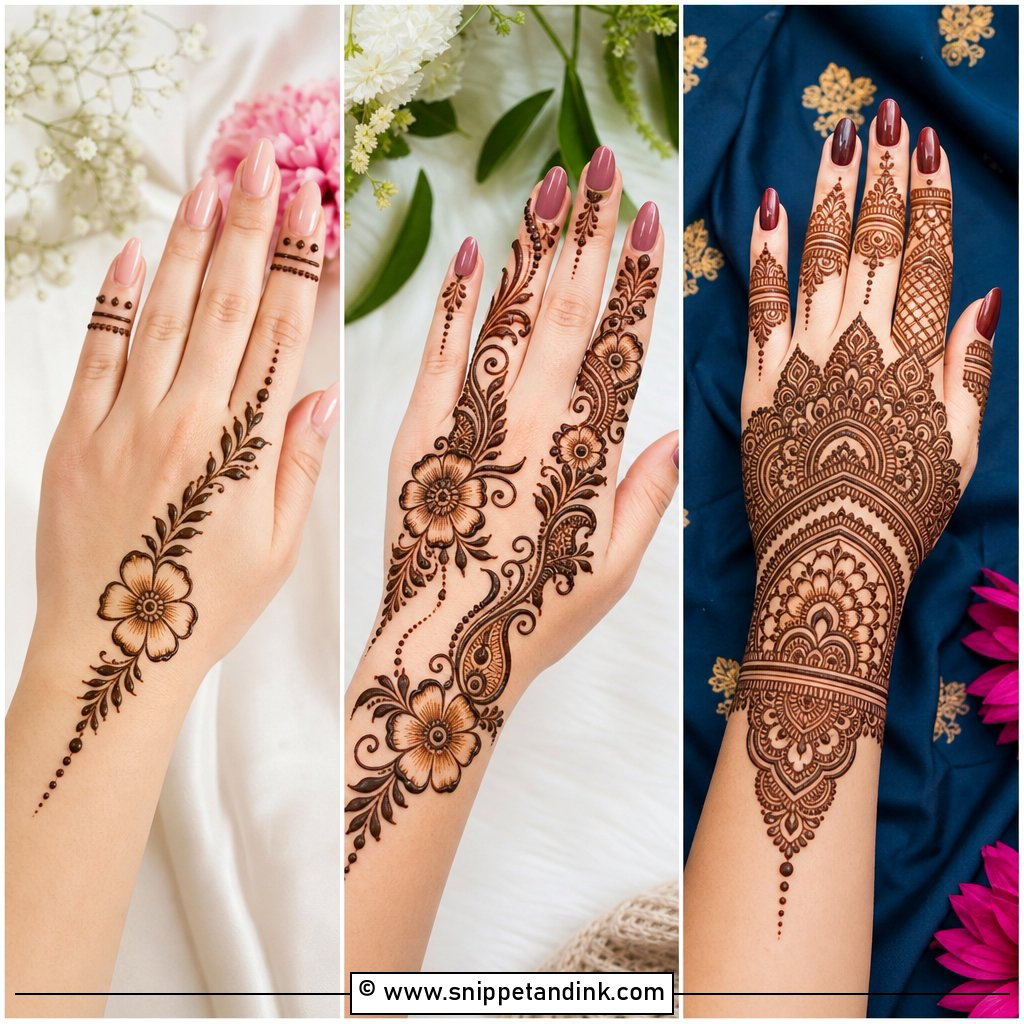
5. Easy Floral Mehndi Design
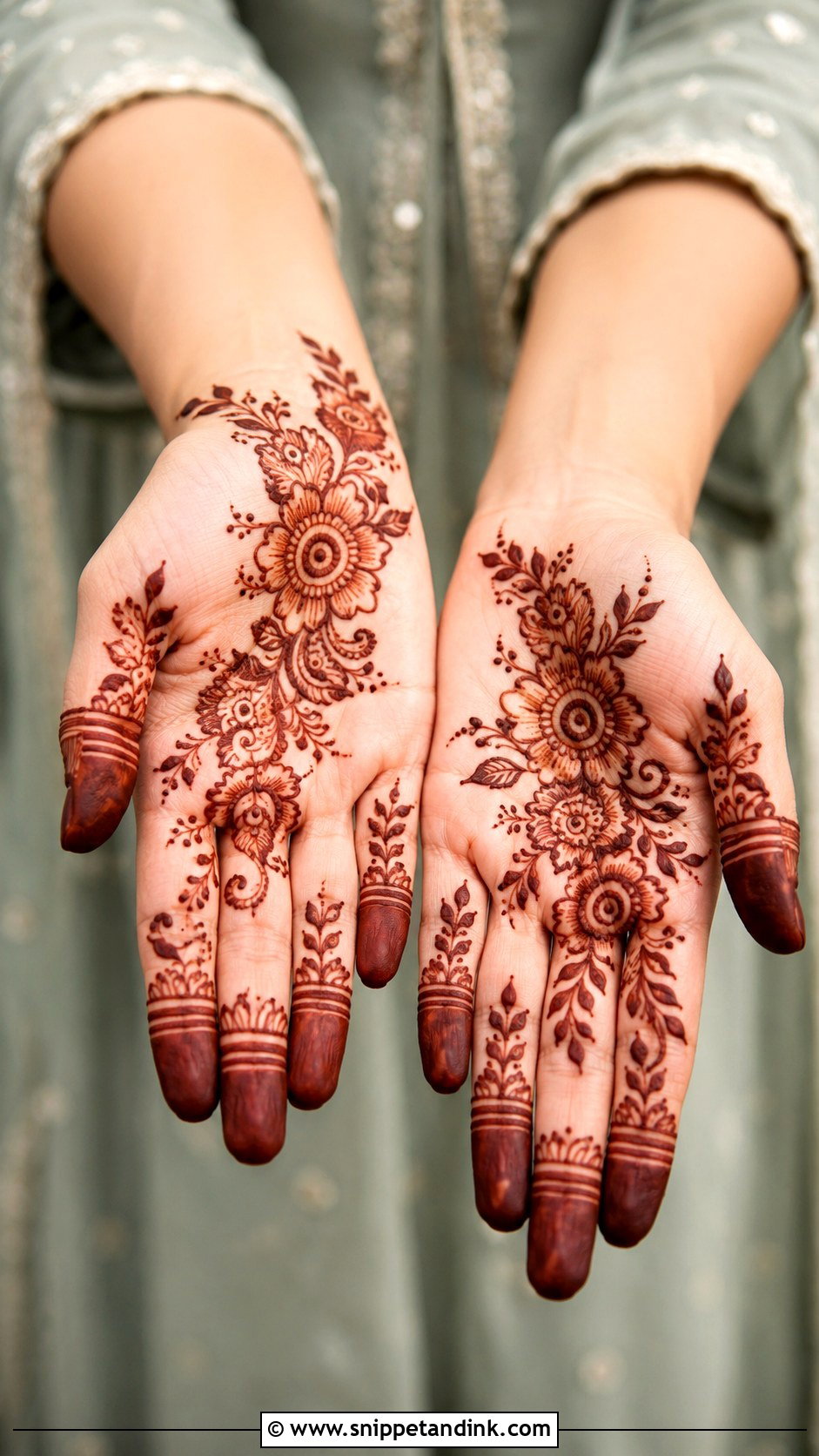
Rounded petals are far easier than sharp ones, so build this hand from one medium flower on the palm or back of the hand, linked by a curved vine to a couple of smaller ones. Leaves, dots and small swirls fill around them; simple petal caps or dotted rings decorate the fingertips. Flowers can change size to fit whatever space you have left, which is useful when your layout drifts. It suits Eid, Diwali and family gatherings without any changes.
6. Easy Finger Mehndi Design
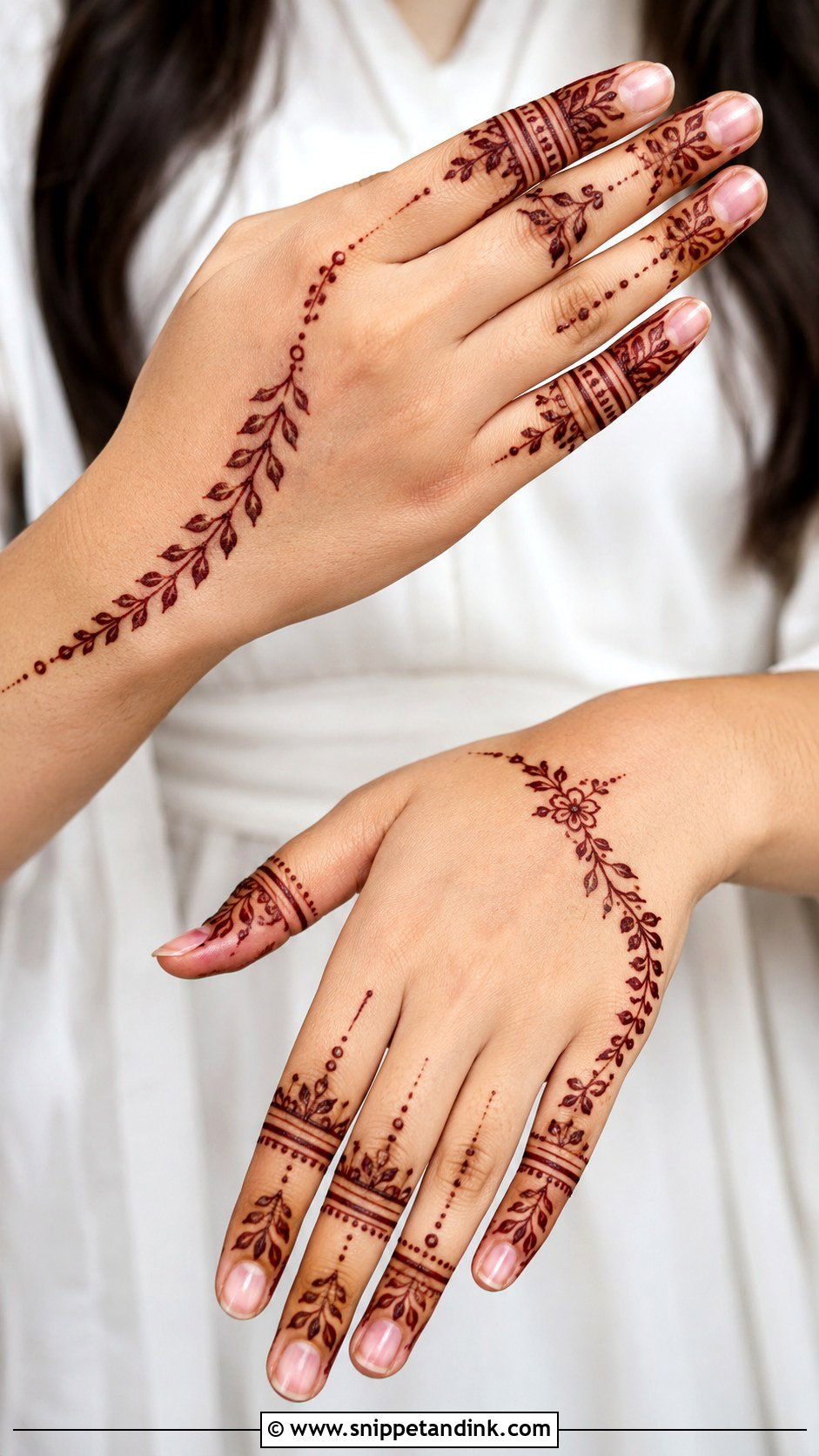
Fingers only, palm mostly empty. Pick one main finger, usually the index or middle, and run a vertical leafy line from the fingertip to the knuckle, then give the others lighter bands so the hand balances. A tiny wrist bracelet is optional. It’s quick and modern, and it’s a good drill for straight lines and even spacing, since five fingers side by side show any inconsistency immediately.
7. Easy Palm Mehndi Design
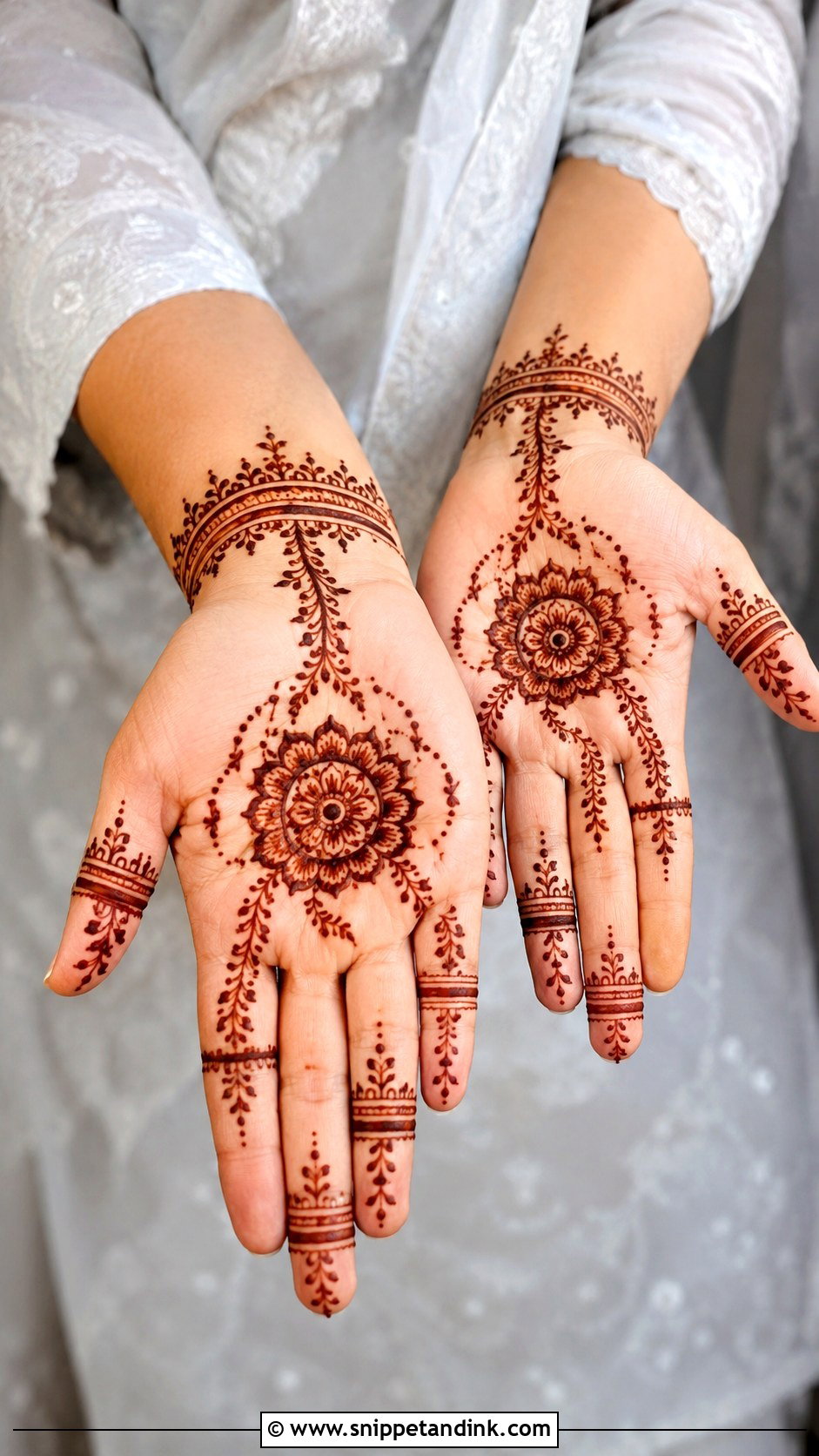
Centred and controlled: a round tikki or flower in the middle of the palm, a single ring of petals, small vines reaching toward the base of each finger, and space left unfilled. Short horizontal bands, dots and tiny arches decorate the fingers. I give this to students in their first week. You get a traditional look without the pressure of bridal detail, and because the palm takes the deepest colour on the body, even thin lines come up rich.
8. Easy Wrist Mehndi Design
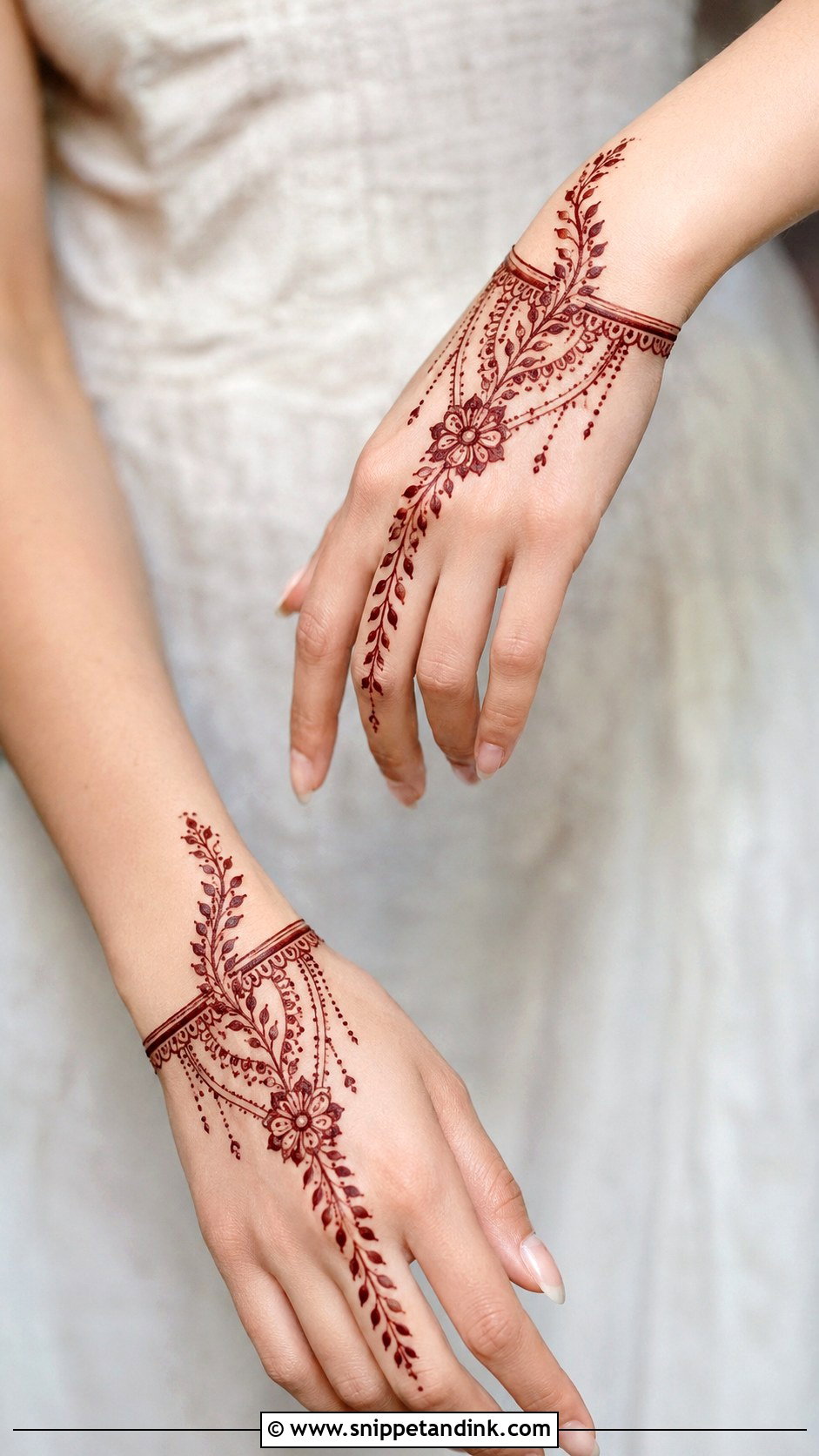
Two curved lines around the wrist act as rails, and everything else fills between them: dots, leaves, small flowers or checks. From the centre of that band, one soft vine reaches toward the back of the hand or palm, kept thin and open. The rails make this easy, since you always know where the edge is. Keep the band a little above the wrist crease, where the paste won’t crack every time you bend your hand.
9. Easy Bracelet Mehndi Design
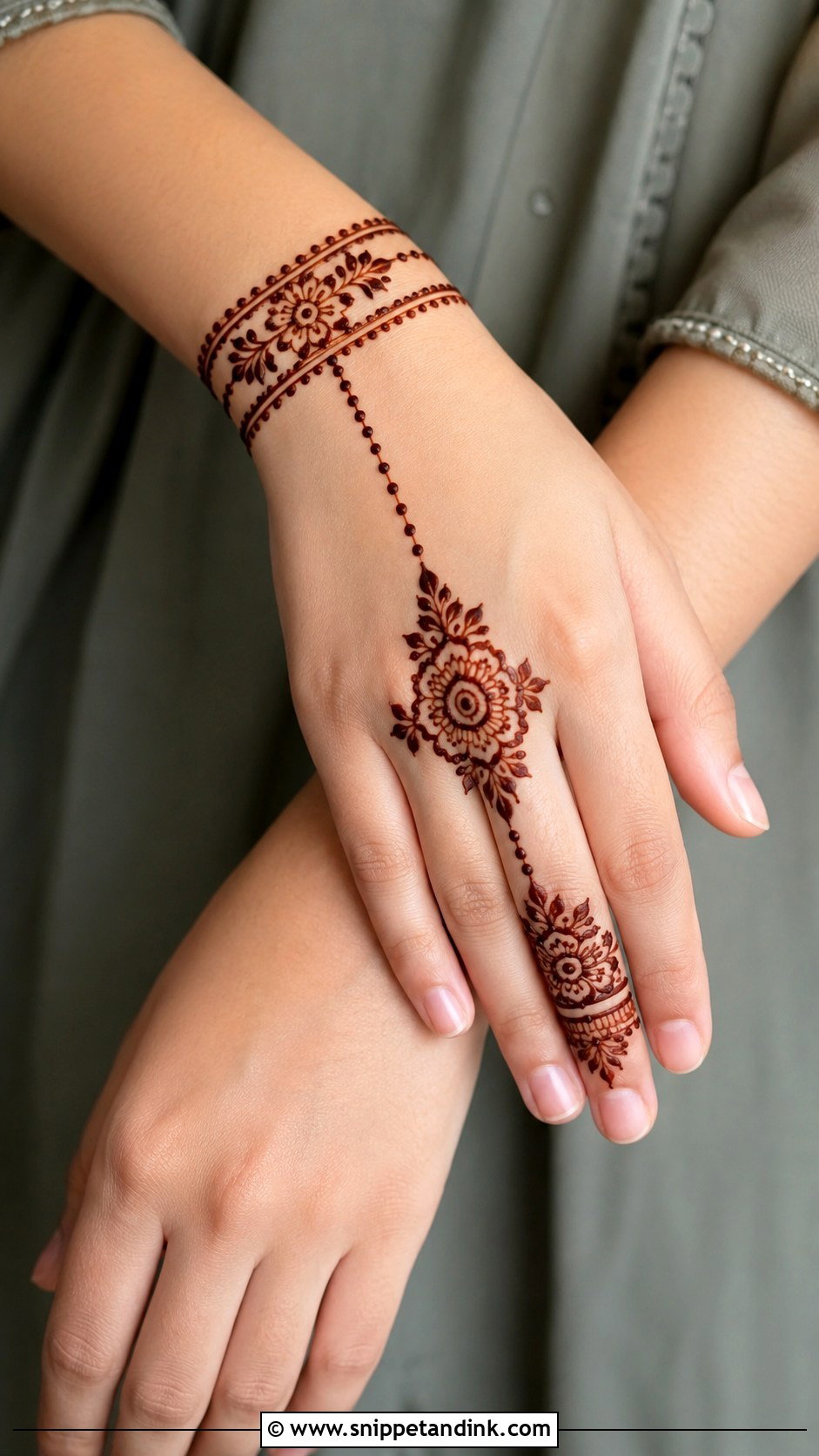
Parallel lines make a cuff around the wrist; hanging dots, tiny leaf chains and one small flower at the centre turn it into a bracelet mehndi design. Link the cuff to one finger with a chain of dots or small loops, then give that finger rings and a leafy tip. Leave everything else open. It looks harder than it is, and it reads best on the back of the hand, where real jewellery would sit.
10. Easy Bail Mehndi Design
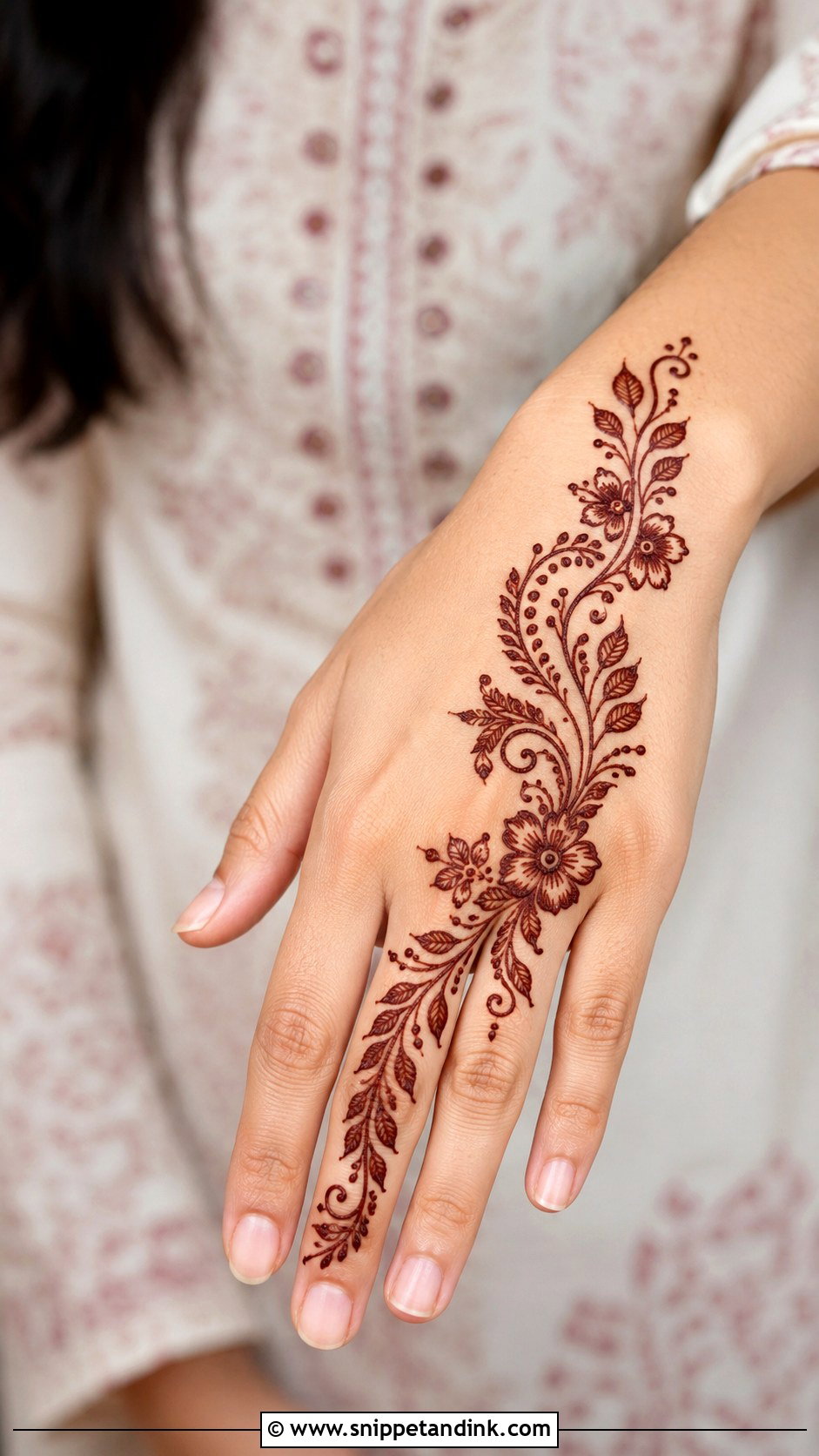
Bail means creeper, and that’s exactly what this is: one flowing vine travelling diagonally from the wrist toward the index finger. Draw the stem first in a single stroke if you can, then add leaves, small flowers and dots along it, spaced well apart so any slip is easy to correct. The fingers stay simple. You get full-hand movement without full-hand coverage, and it’s the best curve practice in this whole list.
11. Easy Paisley Mehndi Design
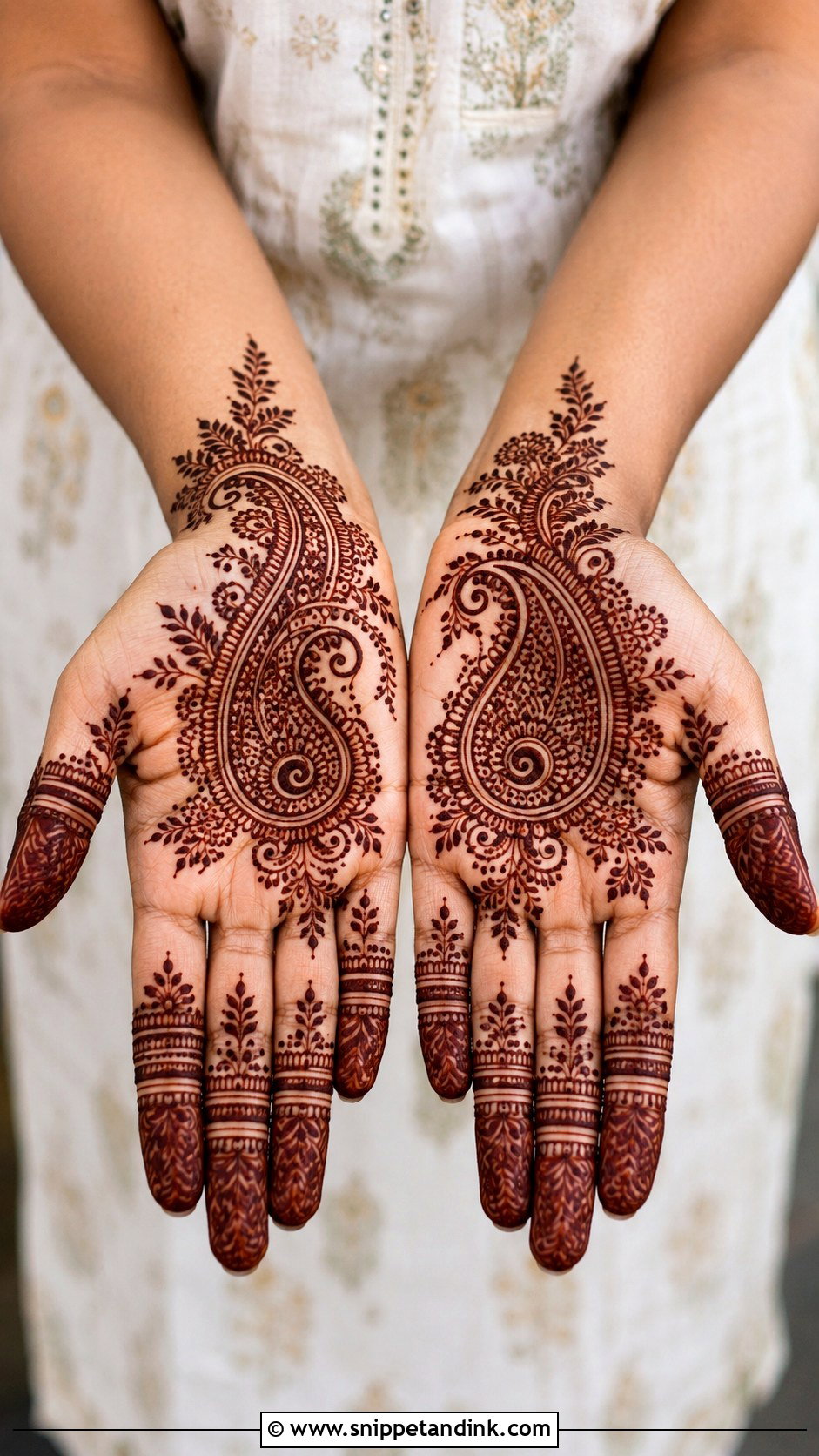
Paisleys run through both Indian and Arabic mehndi, and one large one is enough to anchor a beginner’s hand. Outline it slowly on the palm or back of the hand, then fill it with dots, small curves and tiny leaf strokes. A flower at its base and a few vines around it finish the layout; fingers stay light. What it teaches is the difference between an outline and a fill, which every more advanced design depends on.
12. Easy Leaf Mehndi Design
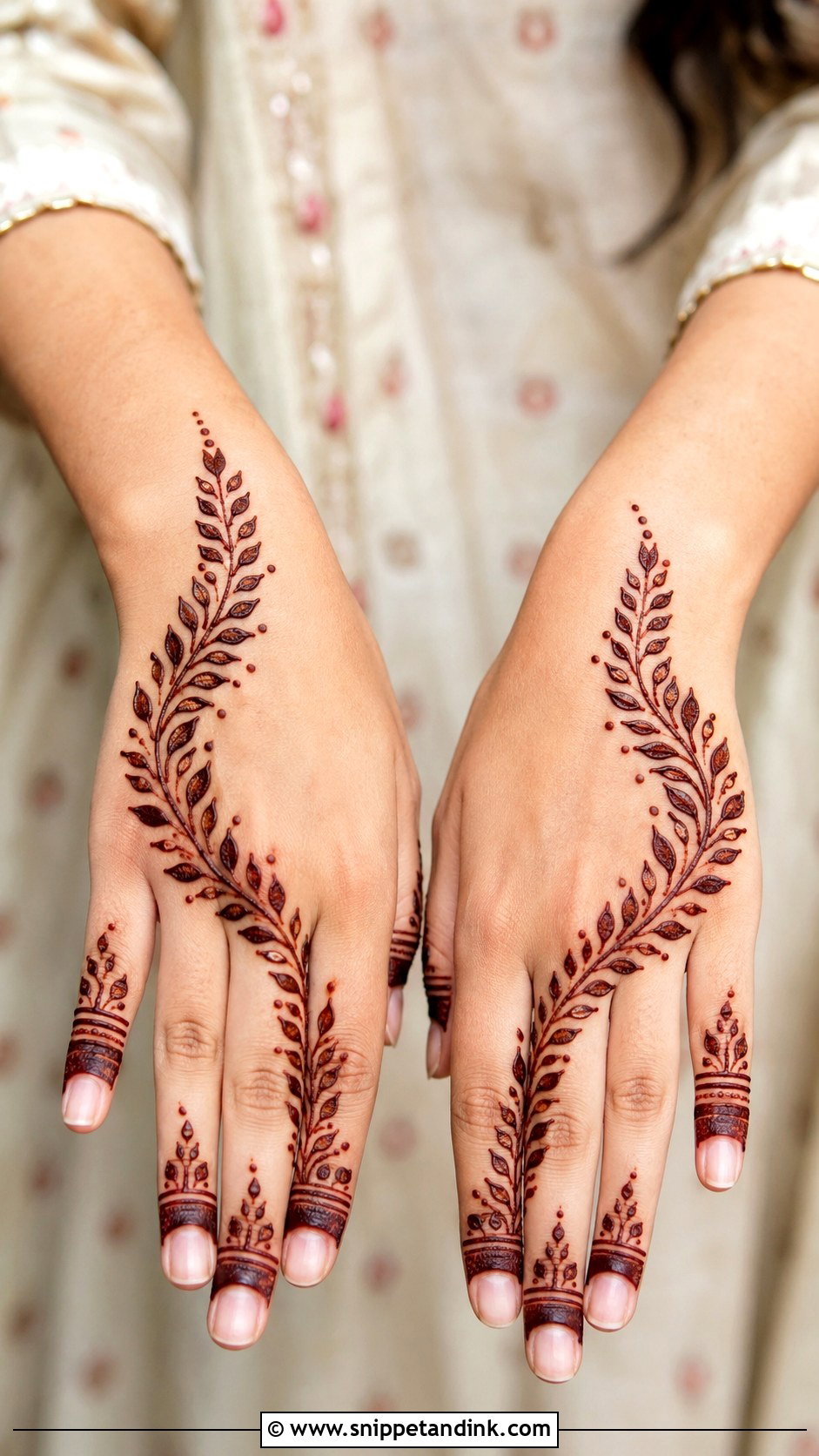
Each leaf is two short curved strokes meeting at a point. Repeat that along a curved line from the wrist to the middle finger, add dots between the leaves for rhythm, and you have a complete hand. A small flower at the wrist or centre adds fullness, and little leaf bands decorate the fingertips. I use it as a warm-up before every class, because the same mark repeats dozens of times and your pressure evens out by the end of one hand.
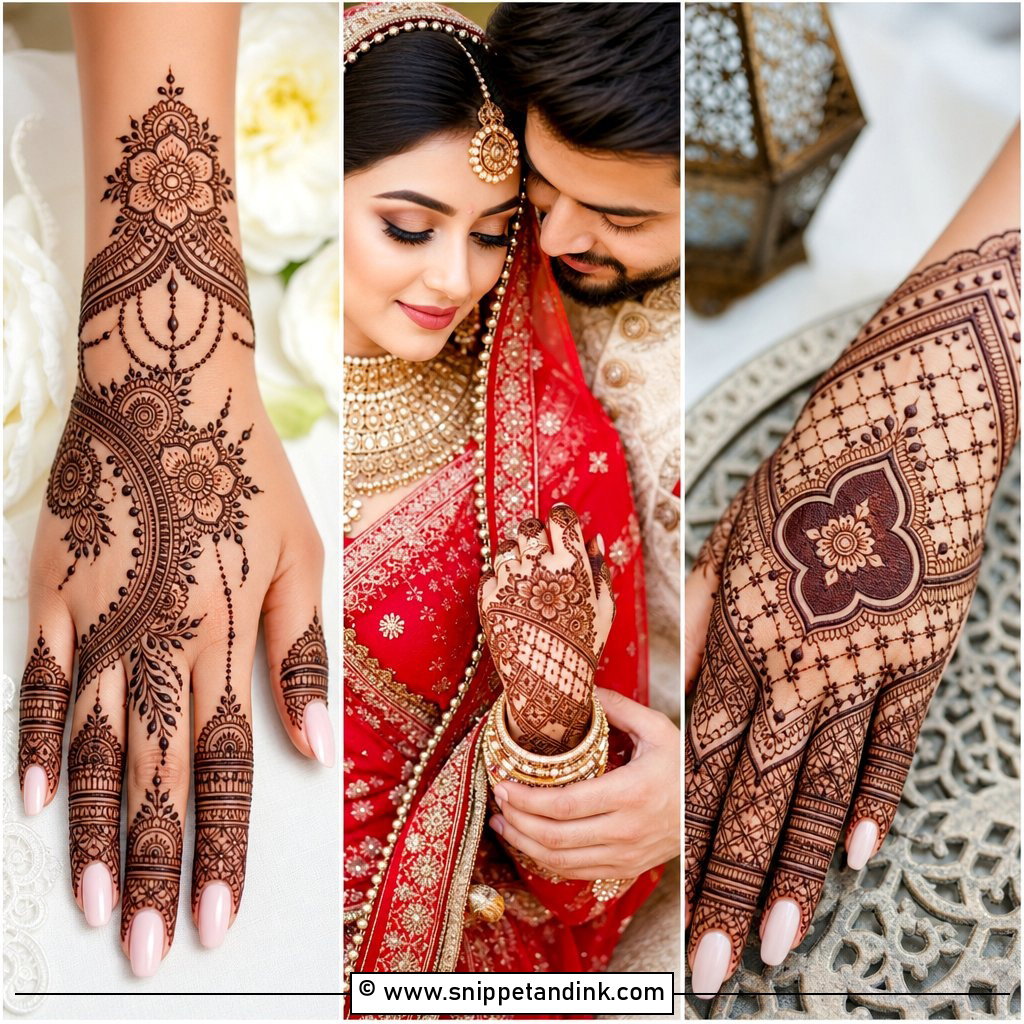
13. Easy Flower Vine Mehndi Design
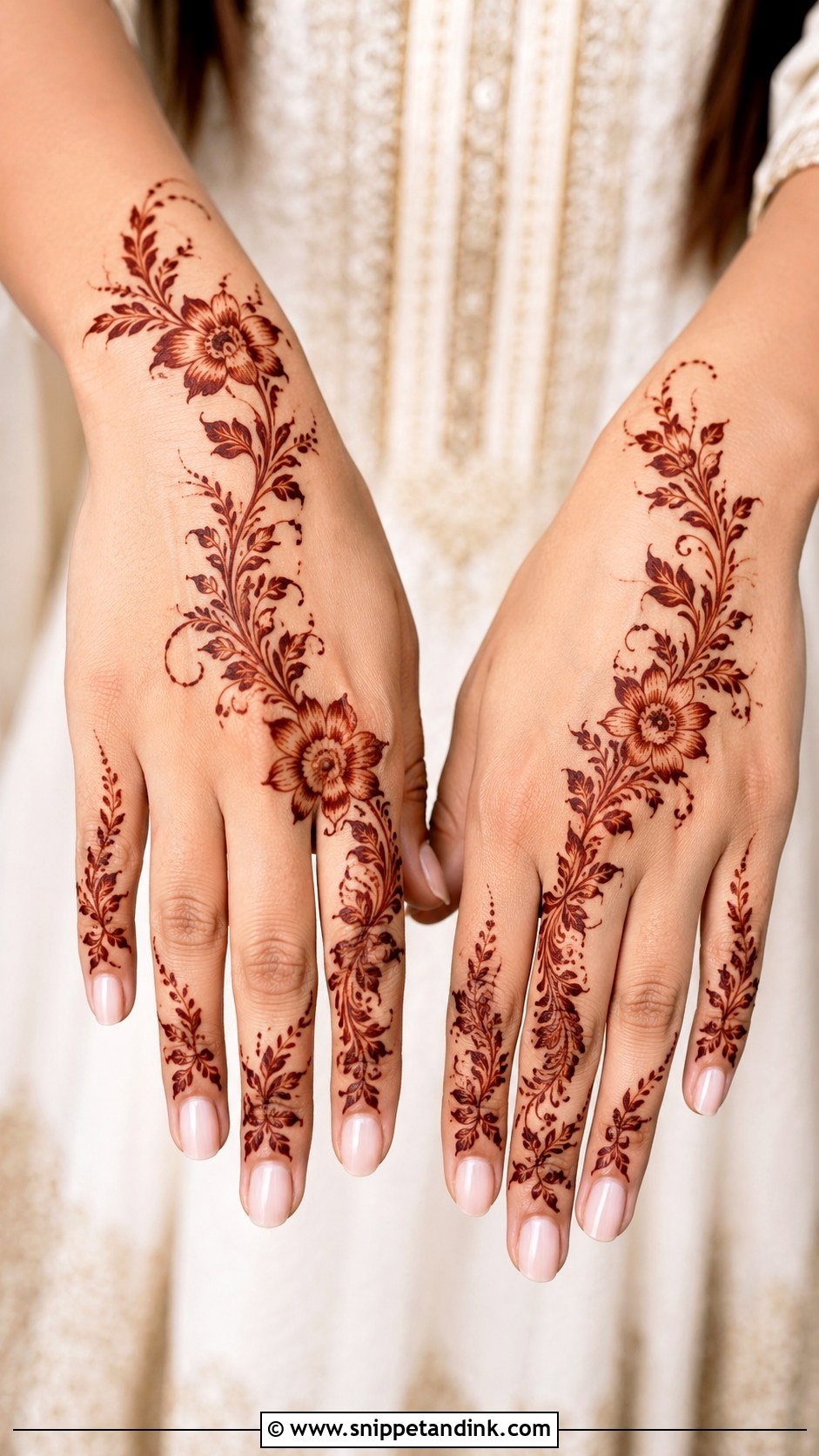
Combine a flower at the wrist with a vine curving gently toward the fingers, and set two or three smaller flowers along it with space between them. Leaves, dots and tiny curls fill the gaps. Repeated flowers create a richer effect than the effort involved, which is why this looks more advanced than it is. Match the finger bands to the vine’s direction so the hand reads as one movement.
14. Easy Indo Arabic Mehndi Design
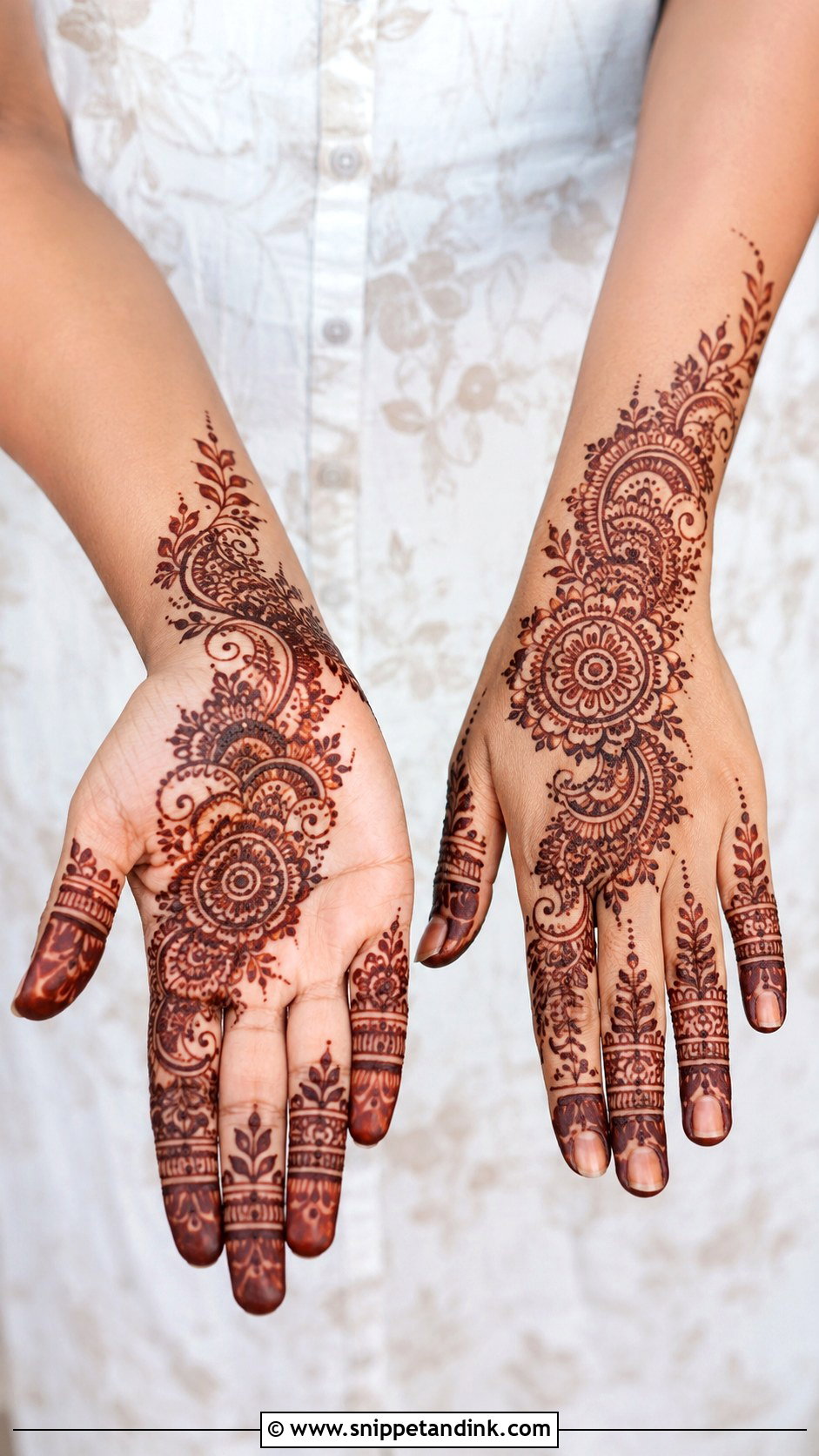
An Indo-Arabic mehndi design uses an Arabic diagonal trail as its skeleton and then adds Indian touches: small mandalas, paisleys, dots and fine borders. A flower at the wrist, a paisley in the centre and leafy movement toward one finger is a complete hand. The lesson here is layering. Lay the trail first, step back, and only then decide where Indian detail helps; filling as you go almost always overcrowds it.
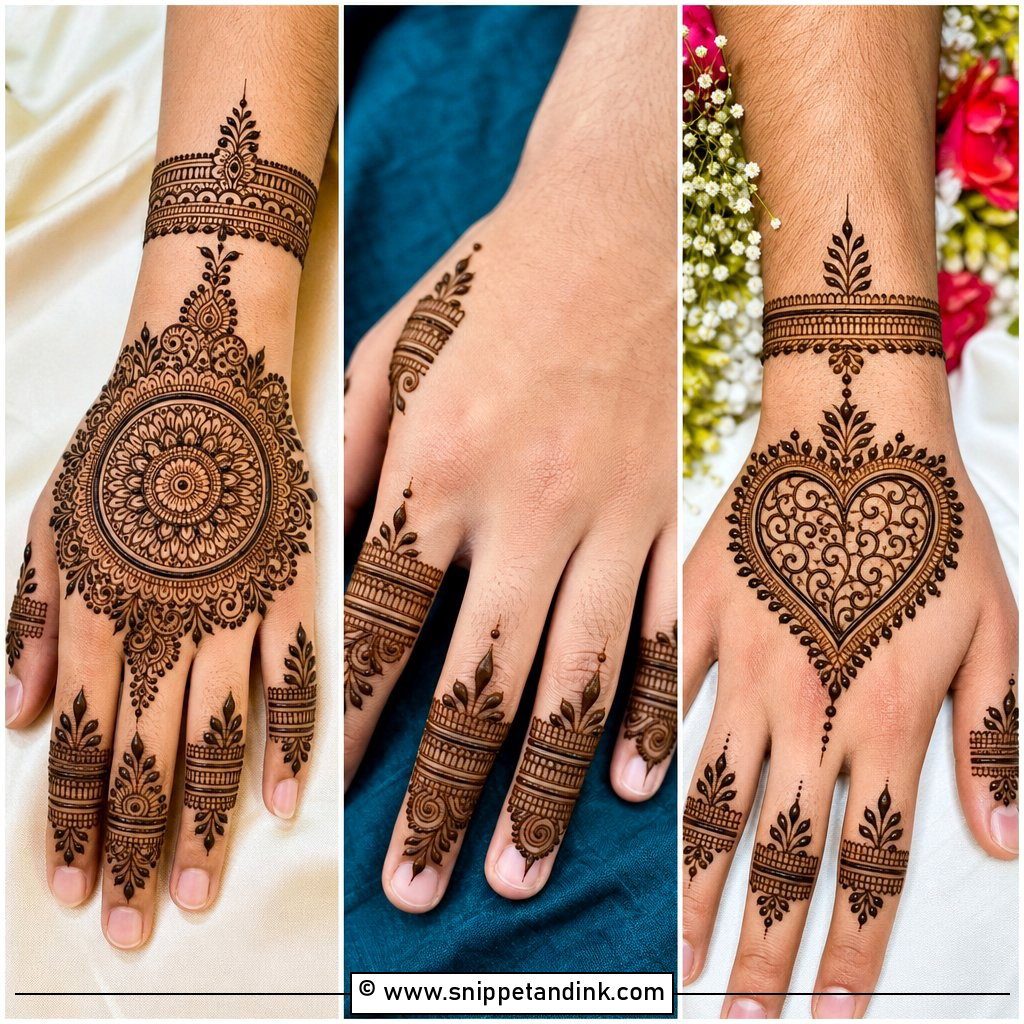
15. Easy Indian Mehndi Design
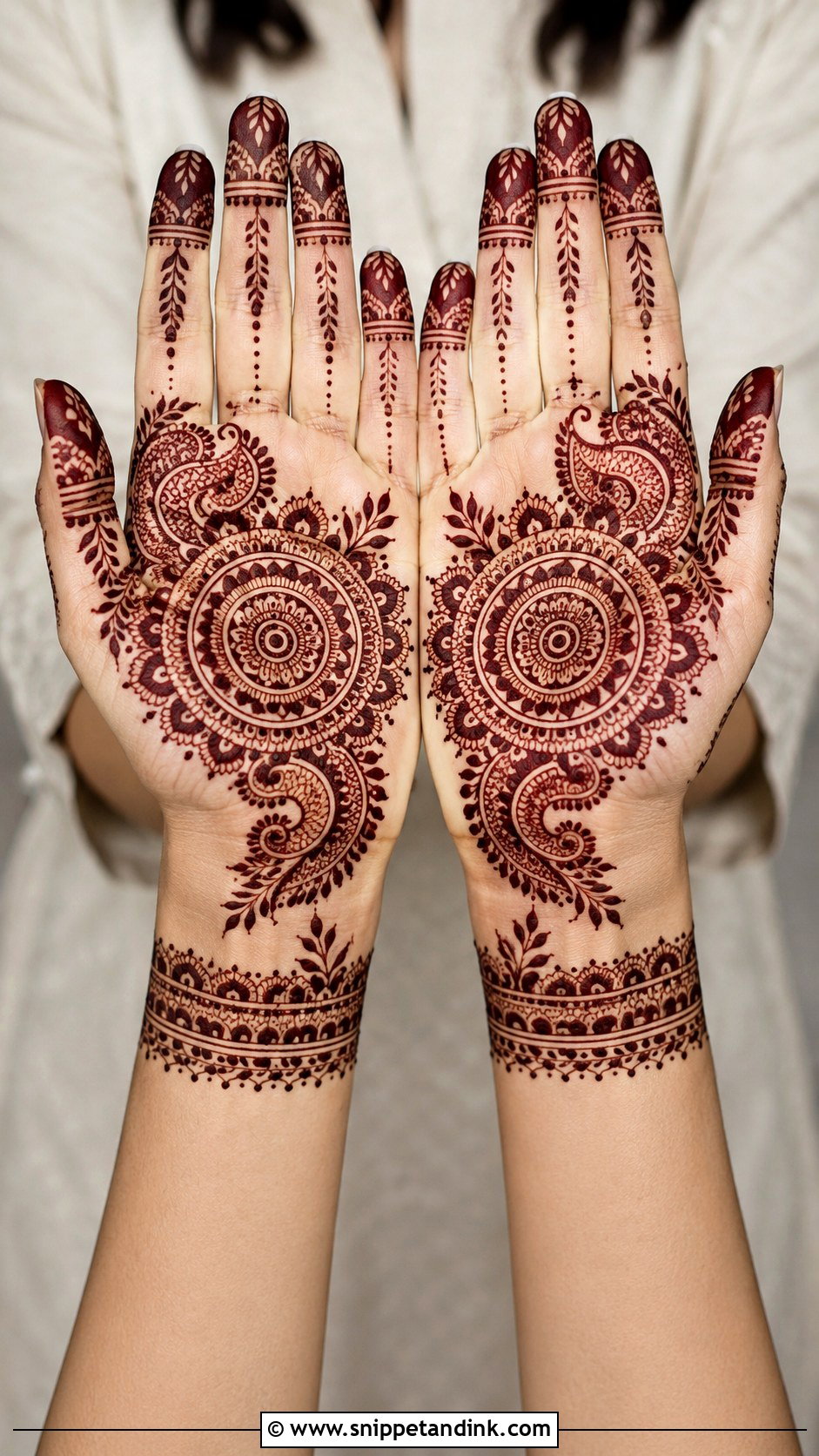
Traditional doesn’t have to mean hours. A palm mandala or flower, simple paisleys and leafy curves around it, dotted borders leading to the fingers, basic finger patterns with lines, dots, small arches and petal bands, and a light wrist border. That’s a full Indian hand. It carries Diwali, pujas and family weddings comfortably, and you can finish it while the chai is still warm.
16. Easy Moroccan Mehndi Design
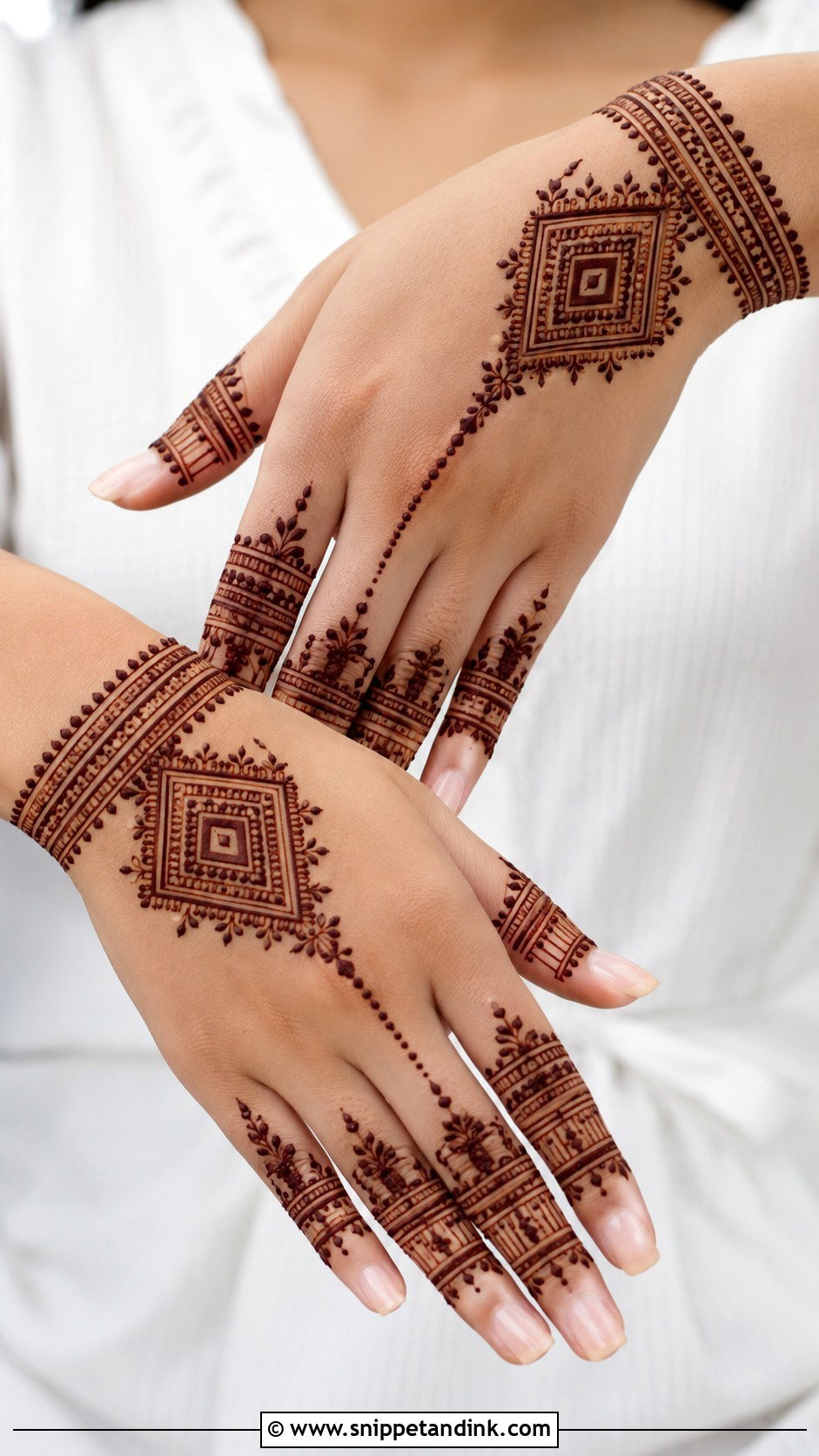
Clean geometry: lines, diamonds, checks and dots. Start with a central diamond on the back of the hand or palm, add straight bands toward the fingers and wrist, and fill selected spaces with tiny dots or small triangles. Keep it symmetrical but uncrowded. I draw each straight line as a short stroke, lift, and continue, because long single lines tend to bow. Learners who find petals fiddly often prefer this.
17. Easy Gulf Mehndi Design
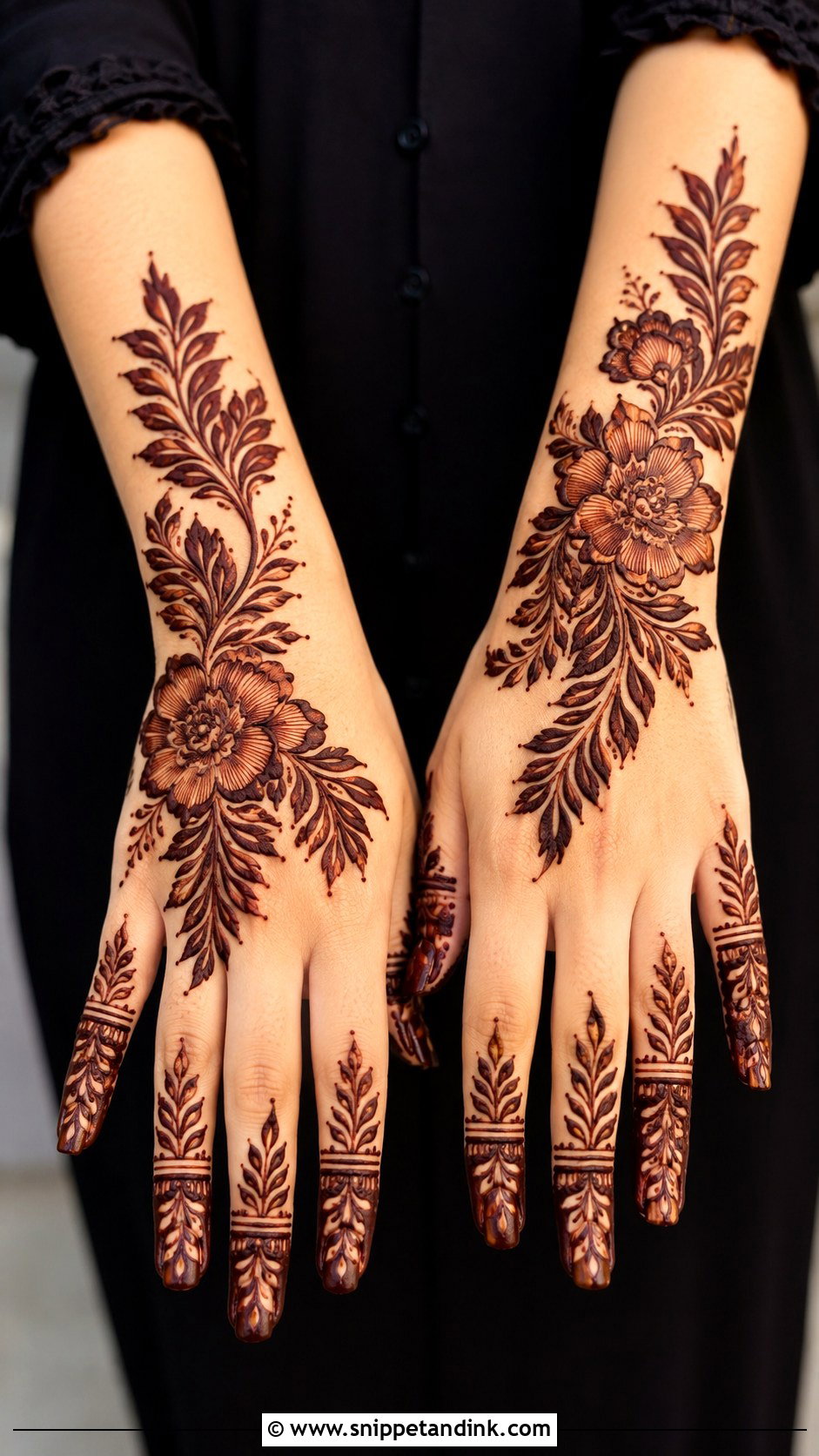
Bold and open: a large floral cluster on one side of the hand with thick leafy vines extending toward the wrist and fingers, surrounded by generous empty space. Simple shading inside the petals, bold tips, dots and leafy bands on the fingers. Gulf-style henna is mostly about confident outlines, so snip your cone tip a fraction wider for this one. The back of the hand shows it off best.
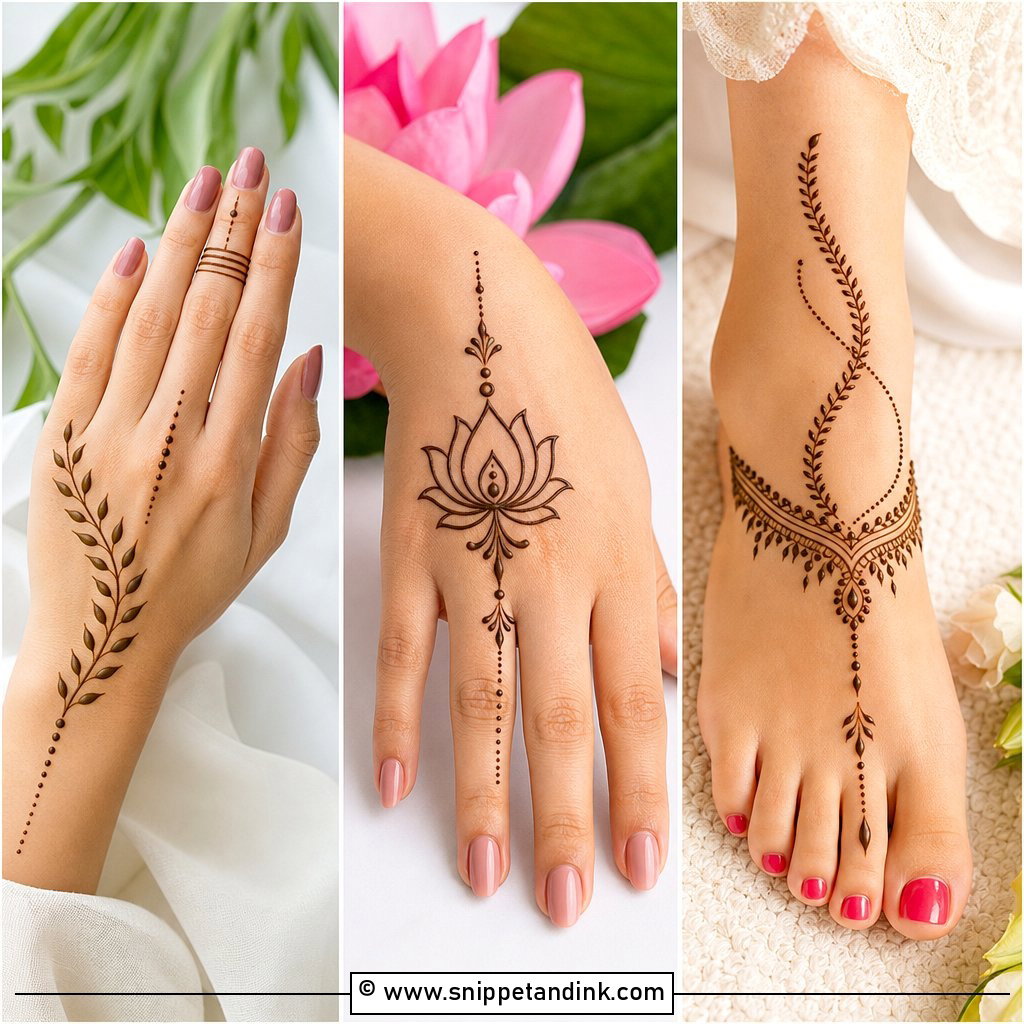
18. Easy Minimal Mehndi Design
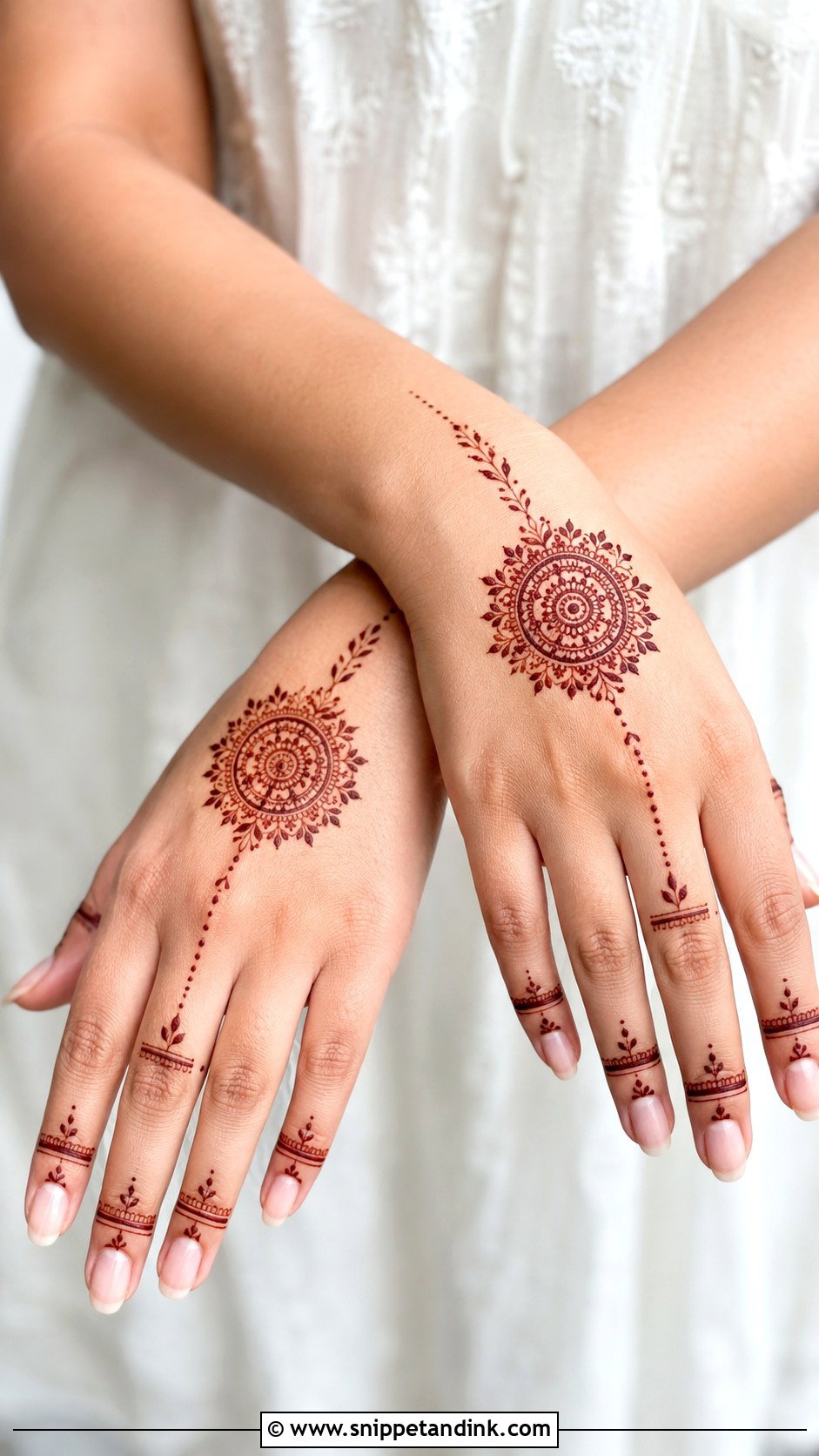
One small motif placed neatly, such as a tiny mandala, a flower or a leaf chain, on the back of the hand or palm, plus fine finger rings and a few dotted lines. Most of the skin stays bare. It’s quick and suits school and the office. Just know that minimal designs show every line, so it’s better as your fifth design than your first.
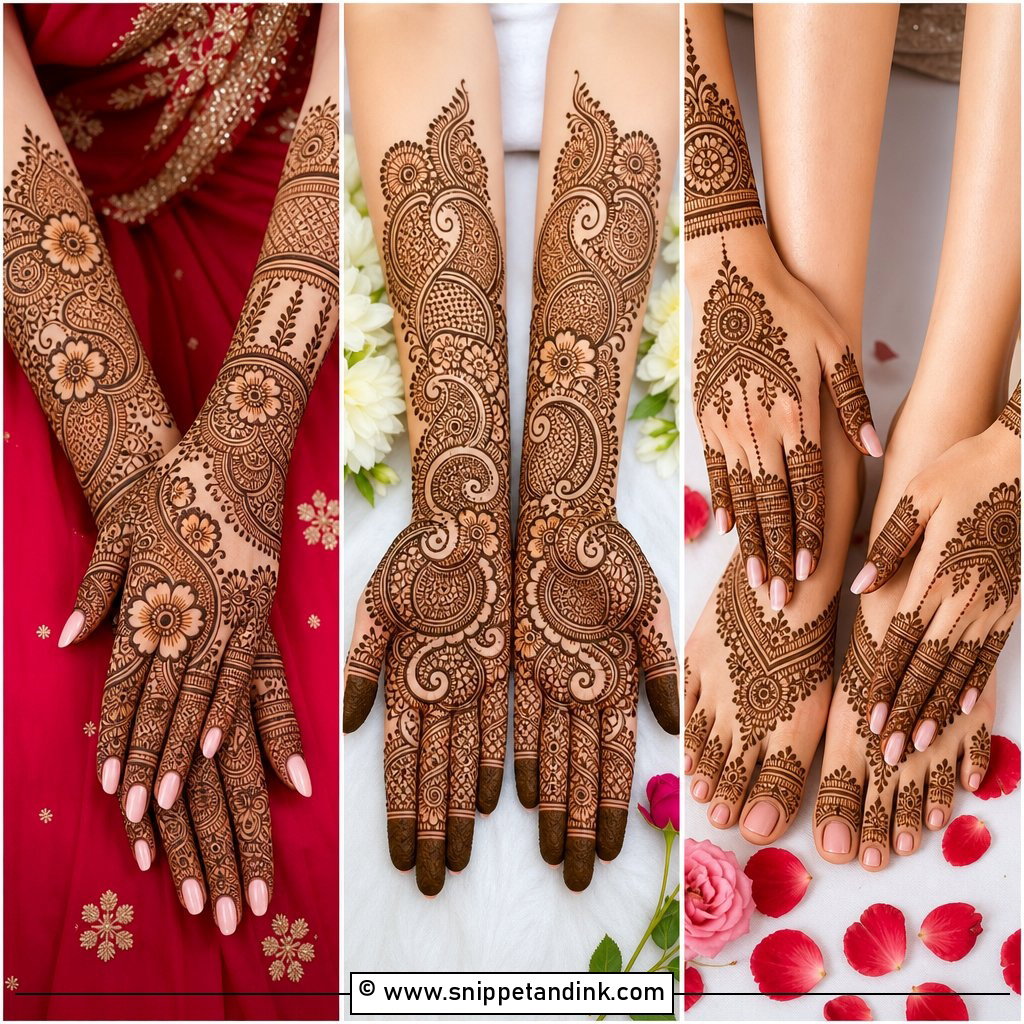
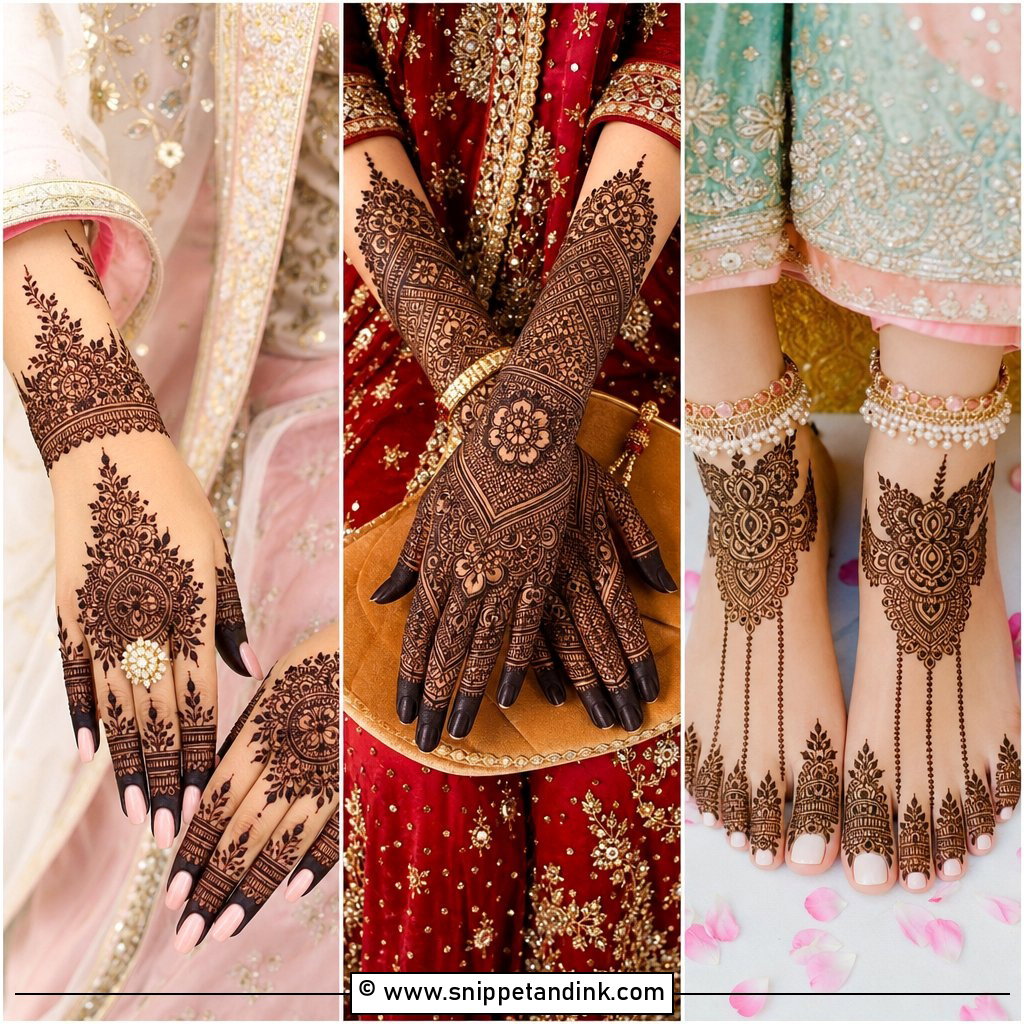
19. Easy Full Hand Mehndi Design
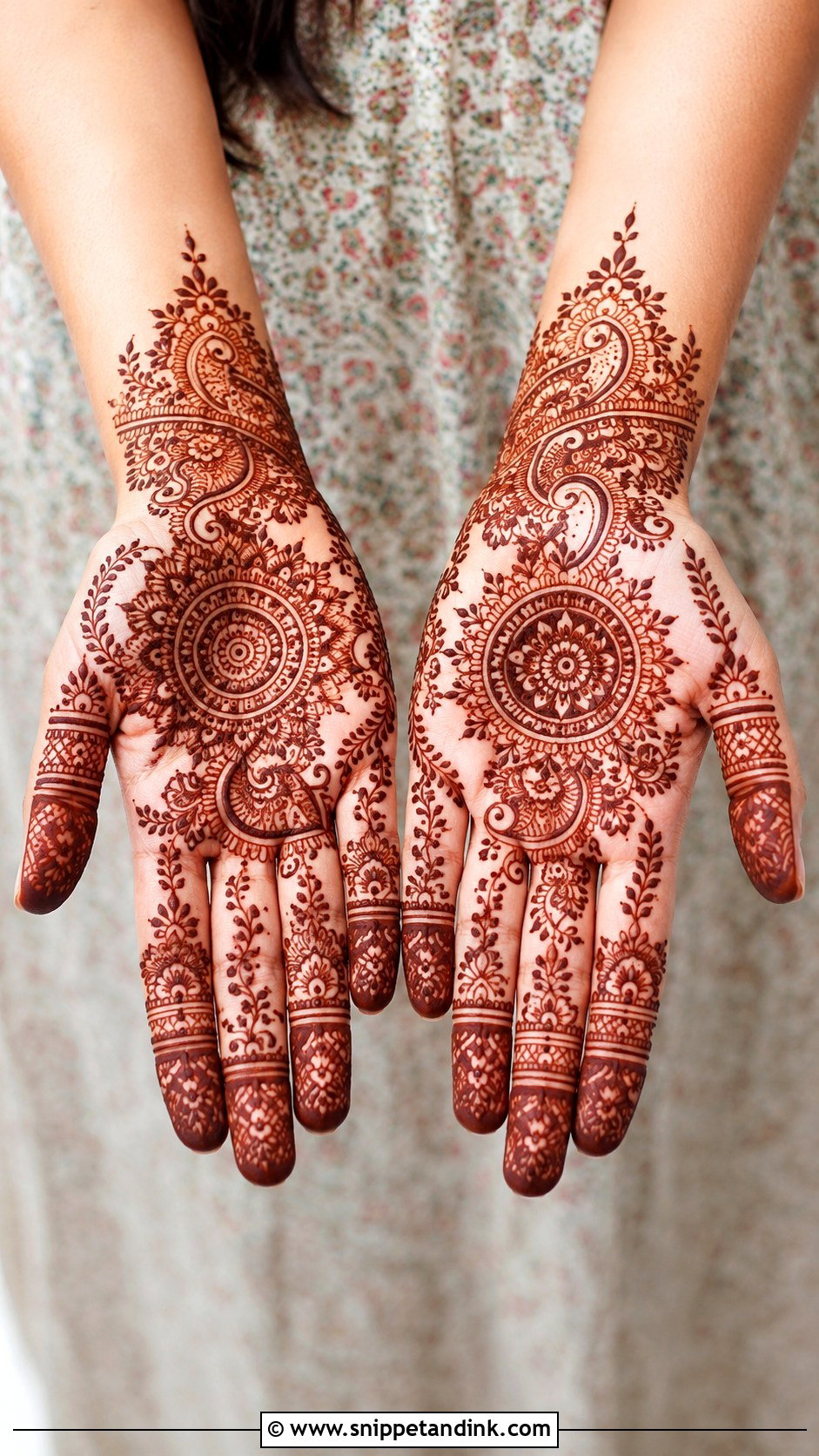
Big motifs are the secret to a beginner’s full hand. Start with a wrist band, place a flower, paisley or mandala at the centre, then connect the sections with simple vines, dots and curved borders; fingers get repeated bands and small leaves. Gaps between motifs keep it tidy. The real skill this builds is layout planning, so sketch the placement with tiny dots before committing to any outline.
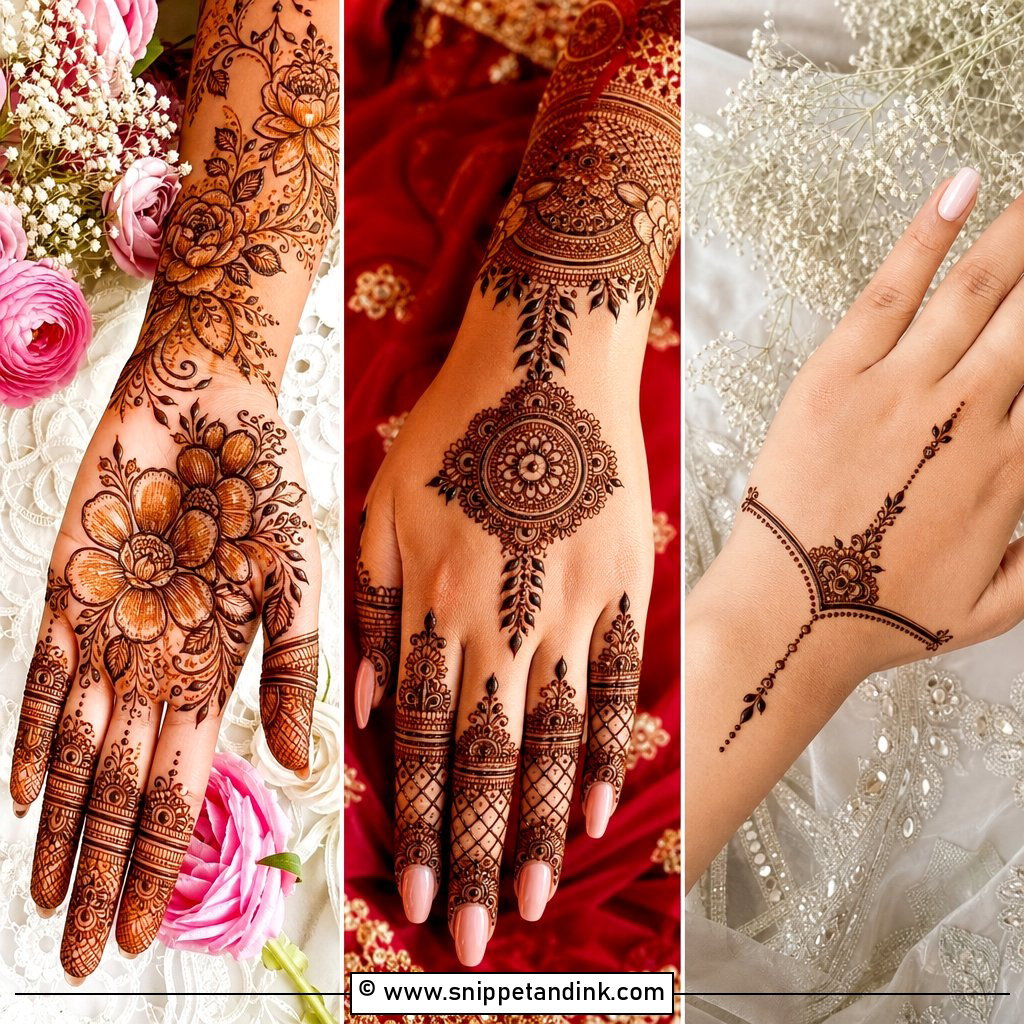
20. Easy Half Hand Mehndi Design
Only the palm, or only the back of the hand from the wrist to the middle. One main flower or mandala with short vines and dotted borders around it, fingers lightly decorated or partly bare for a modern touch. It teaches composition, how to fill a defined area without crowding it, and it dries faster than a full hand.
21. Easy Round Tikki Mehndi Design
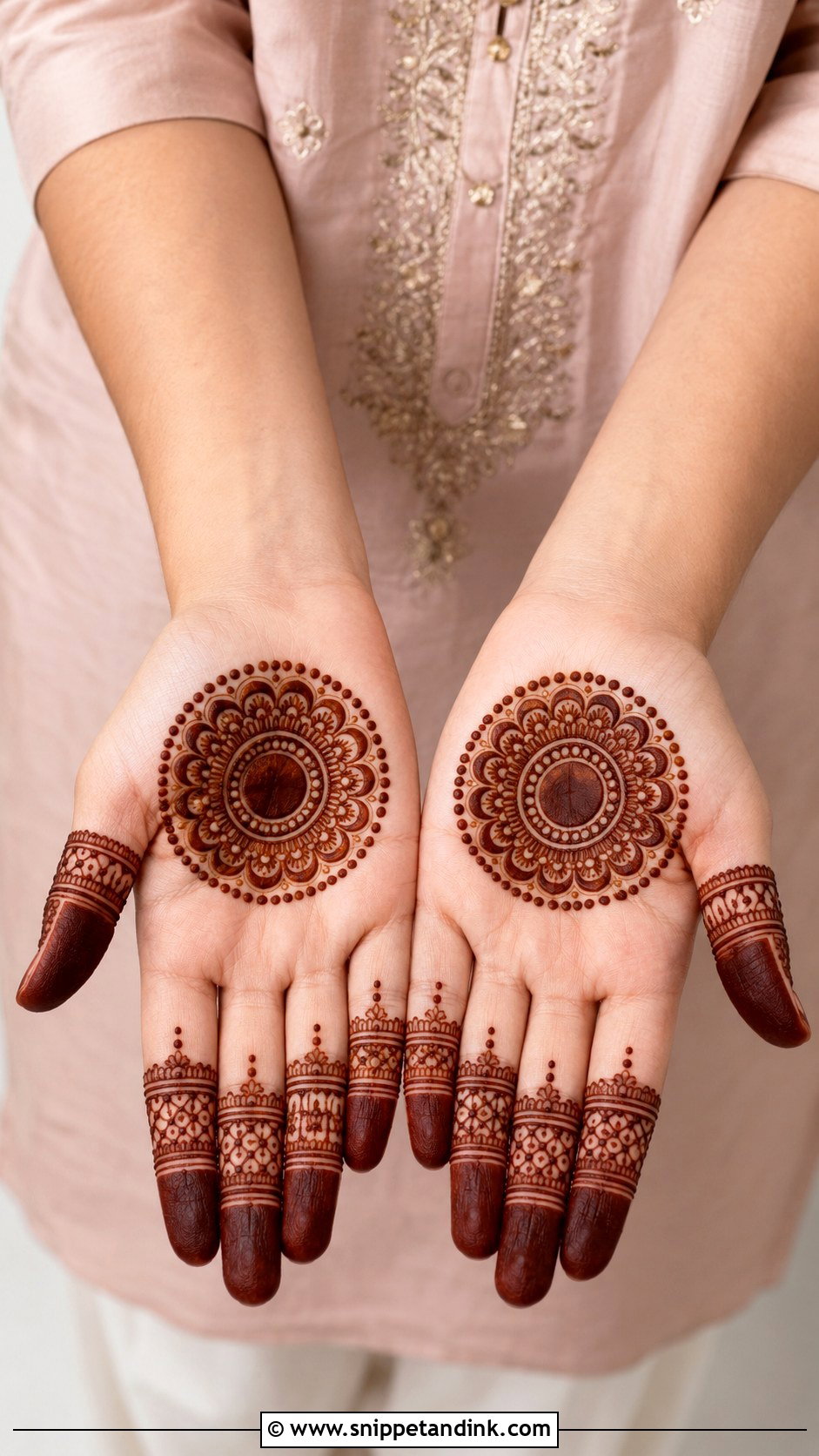
A clean circle in the centre of the palm, petals, dots and small arches around it, then a second or third border to build it up. Matching dots, rings and fingertip caps on the fingers, and an optional light wrist band. Everything stays in one place, so you never lose track of the design. Fill the centre solid; once it darkens it gives the palm that deep traditional disc.
22. Easy Back Hand Mandala Mehndi Design
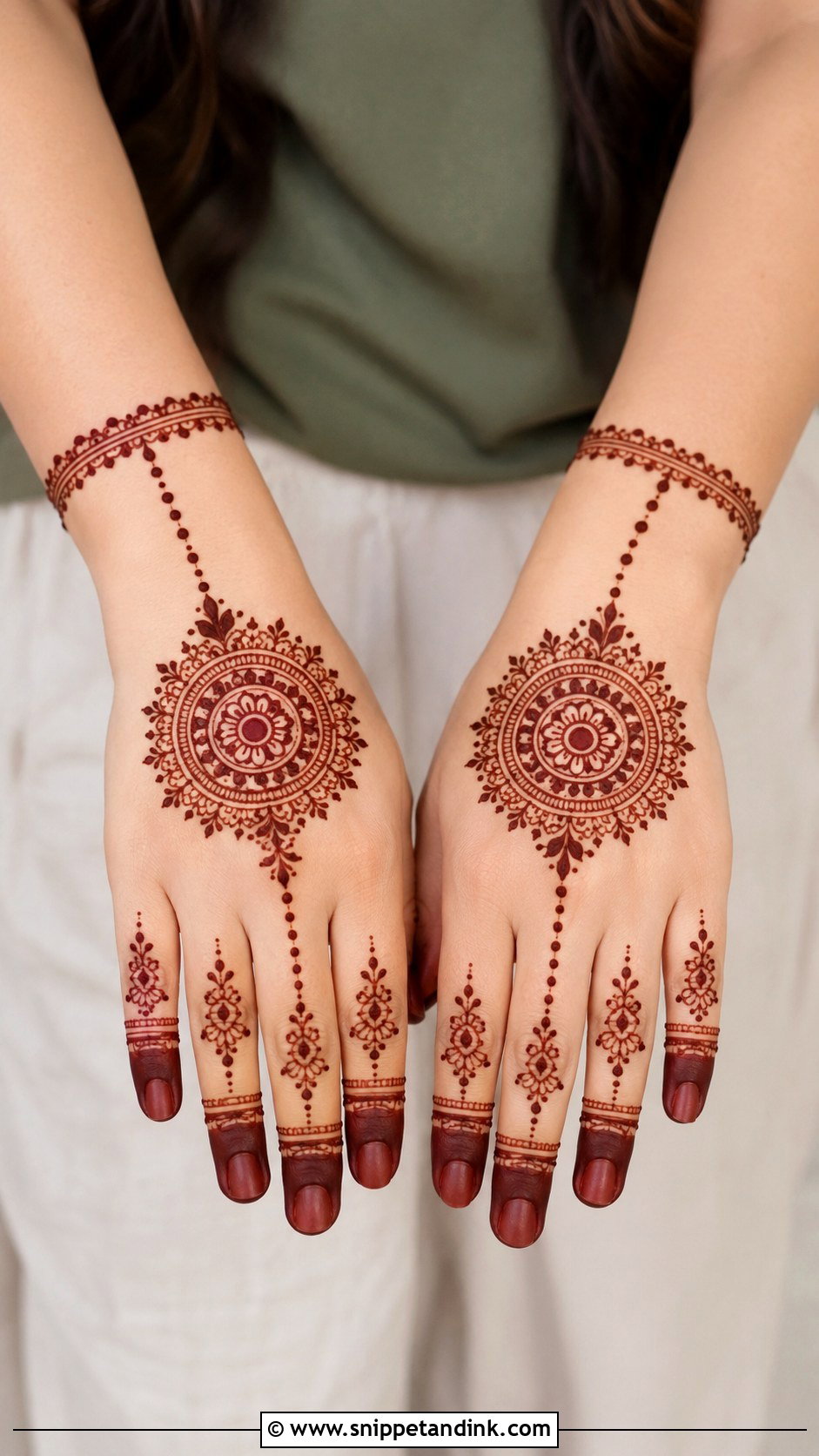
On the back of the hand a mandala starts to look like jewellery. Draw it in the centre, connect it to the fingers with dotted chains or slim leaf lines, put simple rings around each finger and lightly fill the tips. Keep the circles medium-sized; very small rings close up as the stain develops and turn into one dark blot. A small wrist border completes it for festive outfits and photos.
23. Easy Front Hand Arabic Mehndi Design
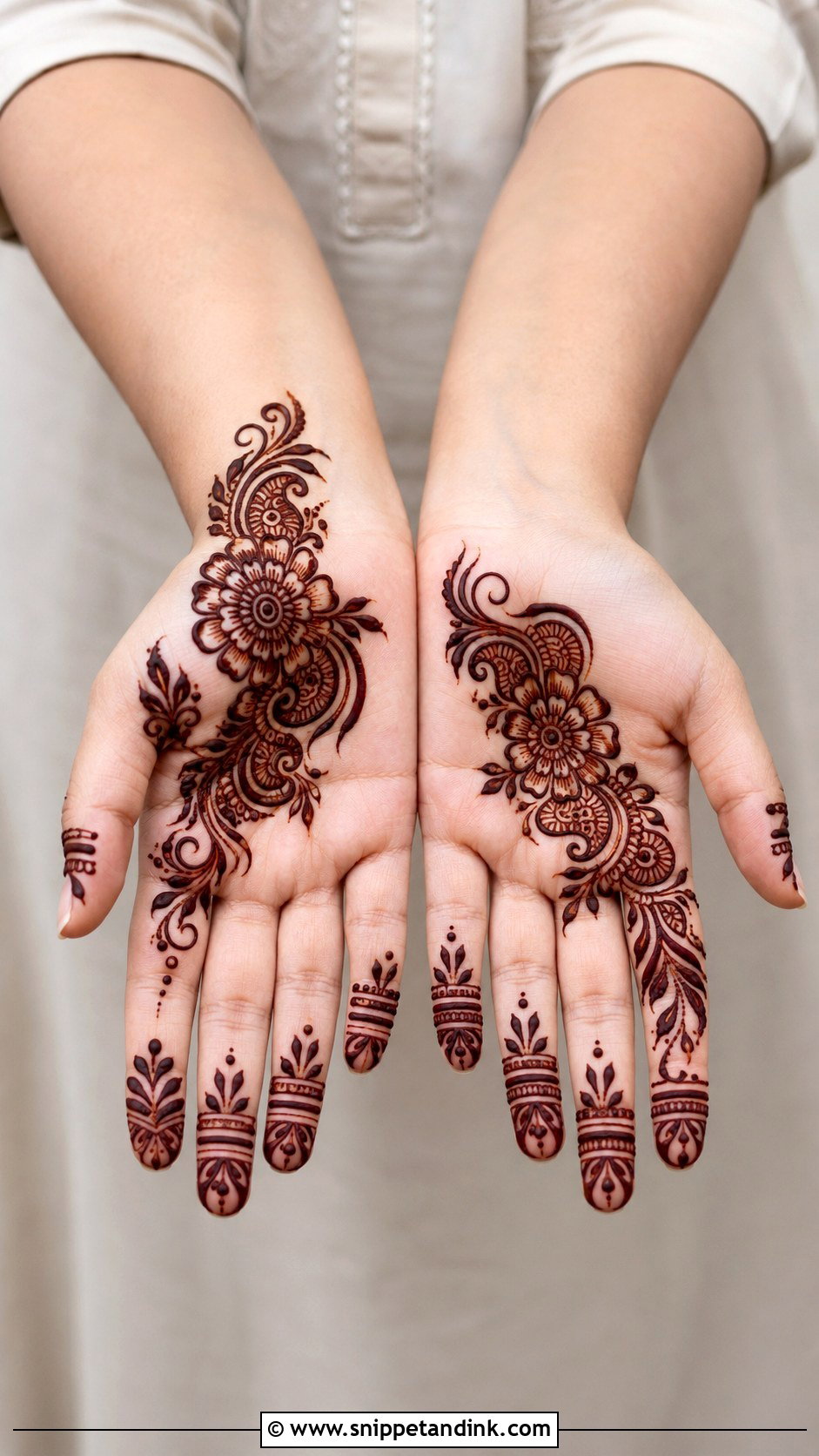
Start on one side of the wrist and move diagonally across the palm toward the index finger, placing big flowers, soft leaves and curved paisleys along the path. Leave space around the trail; fingers get bands, dots and small leaf tips. A front hand Arabic mehndi design is easier to finish neatly than a symmetrical palm because nothing has to mirror anything else, which makes it a reliable choice for Eid or a party.
24. Easy Back Hand Arabic Mehndi Design
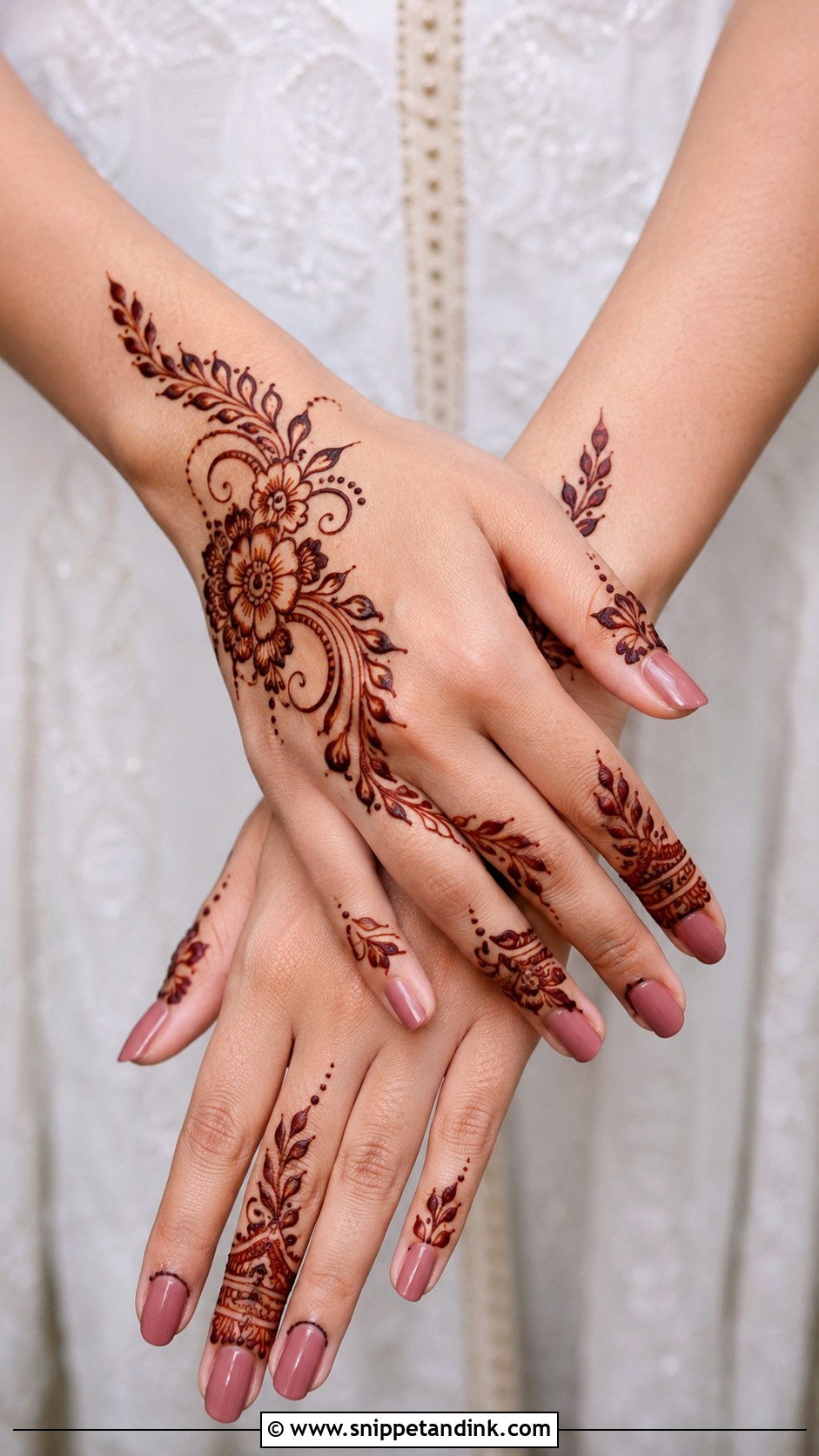
A flower near the wrist or side of the hand, then a curved vine toward the middle finger with leaves and small buds along it, spaces kept clear. Here’s the detail that makes it look finished: give the finger the vine reaches a fuller pattern than the others, so the trail appears to continue up it. The rest stay simple. Good practice for bold outlines and smooth curves.
25. Easy Jaali Mehndi Design
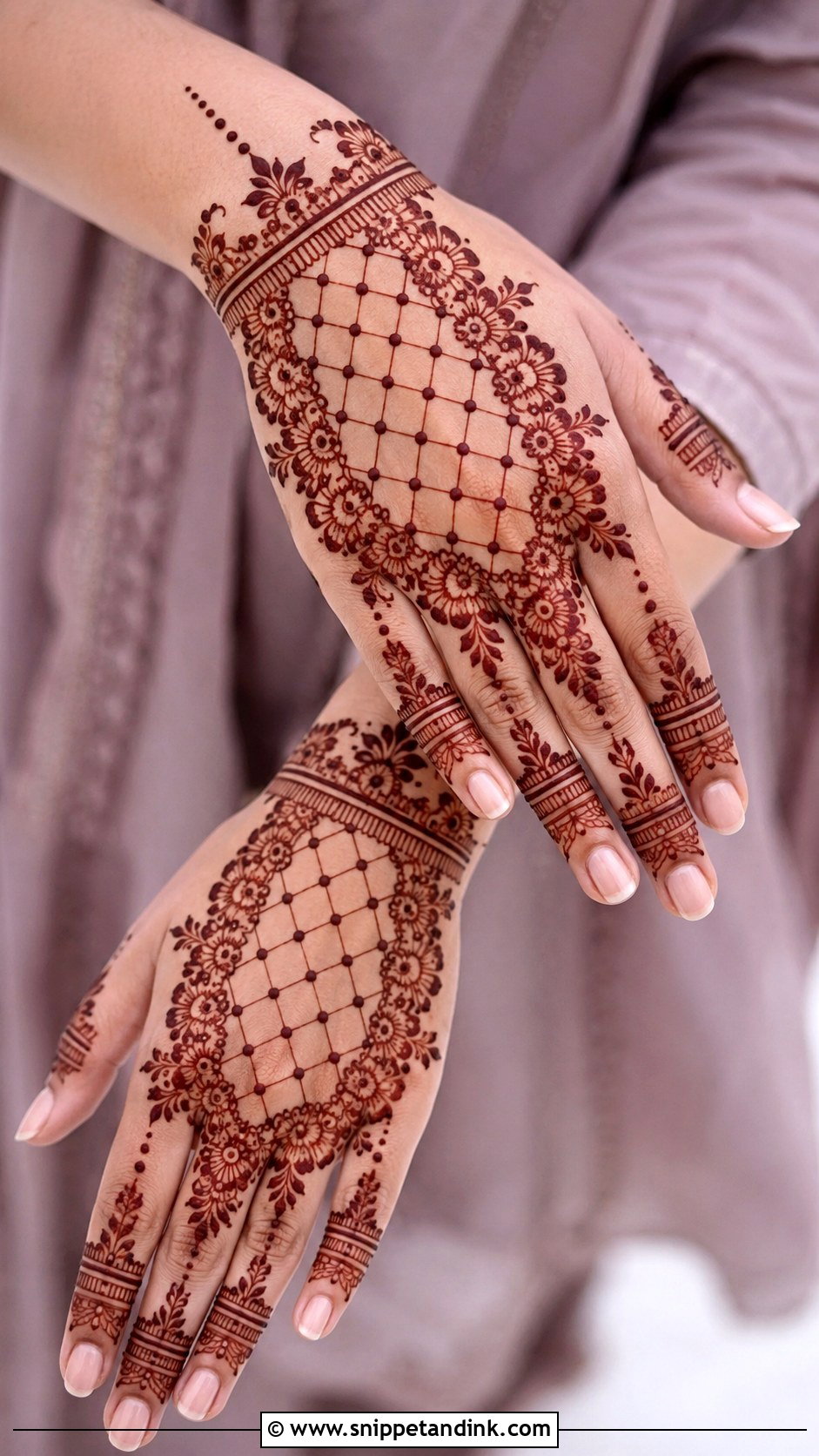
Diagonal lines one way, then crossed the other way, with tiny dots at each meeting point. Keep the jaali small at first, on the back of the hand or the wrist, and pair it with a flower, mandala or leafy border so it reads as a design rather than a pattern sample. I mark the corners of the panel with dots before drawing, which keeps the mesh from drifting wider at one end.
26. Easy Lace Mehndi Design
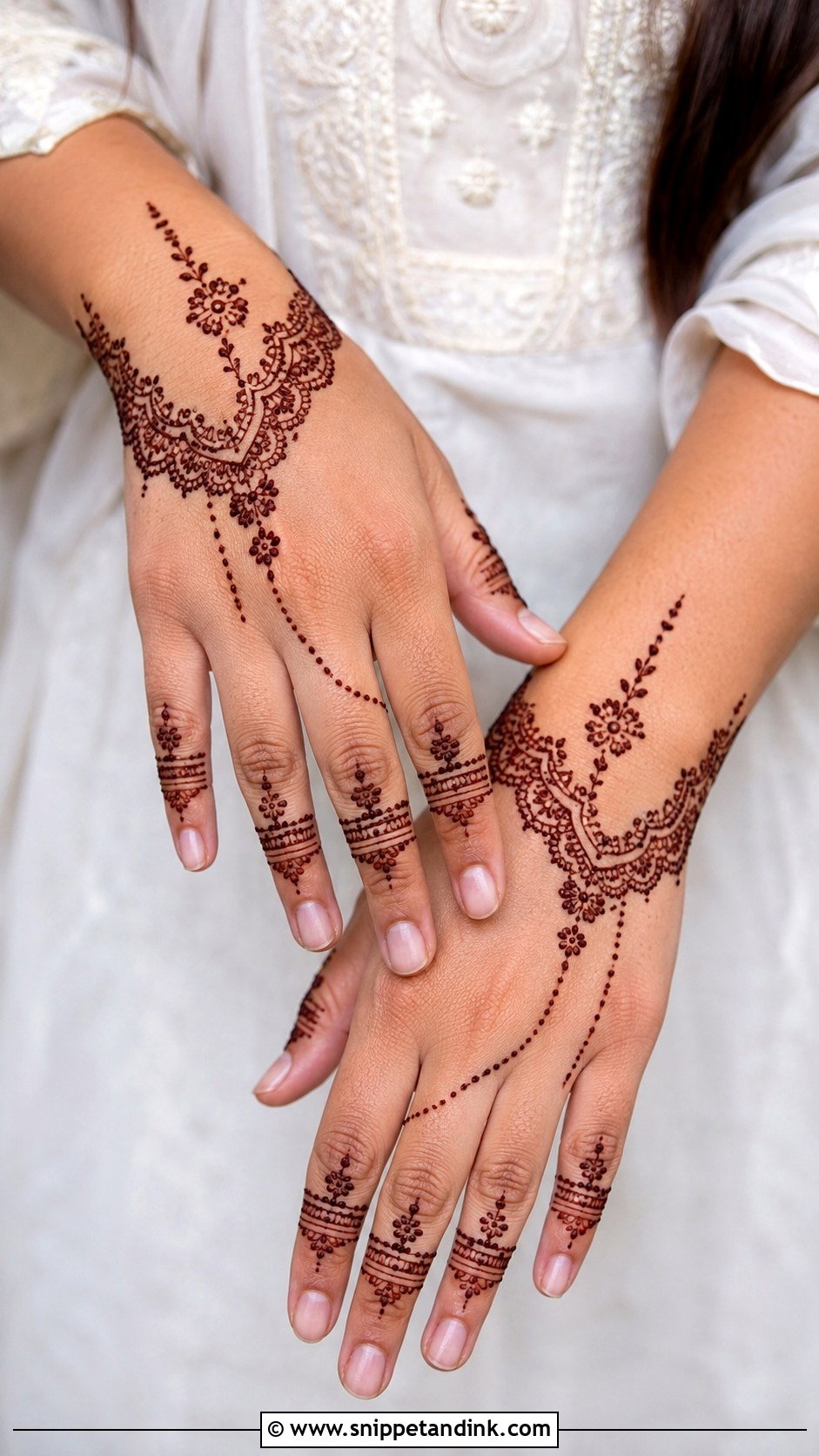
A curved border across the back of the hand or wrist, edged with small scallops, dots and tiny flowers, gives the effect of lace. Extend it lightly toward the fingers with thin chains and simple bands, and keep everything airy. Scallops are just a row of small identical arcs, so this is good practice for repeating one shape at one size. It suits parties and family functions.
27. Easy Jewelry Mehndi Design
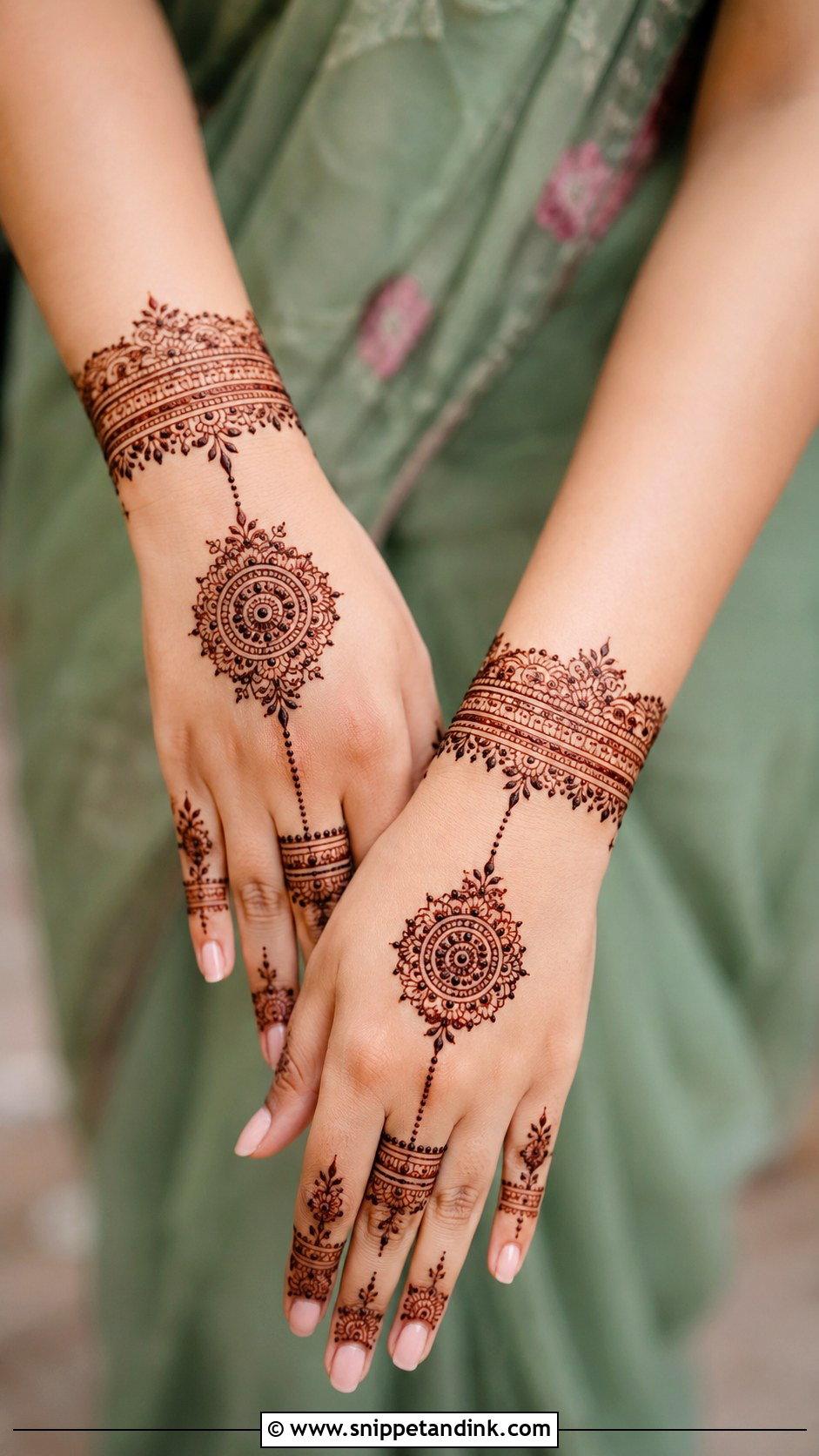
Rings, chains and bracelets drawn in henna. A bracelet around the wrist, a dotted chain to the middle finger, a small flower or mandala on the back of the hand as the main ornament, and rings plus a fingertip pattern on the connected finger. Keep the other fingers simple so the jewellery effect stays readable. The chain is mostly dots and short lines, which almost anyone can manage.
28. Easy Peacock Mehndi Design
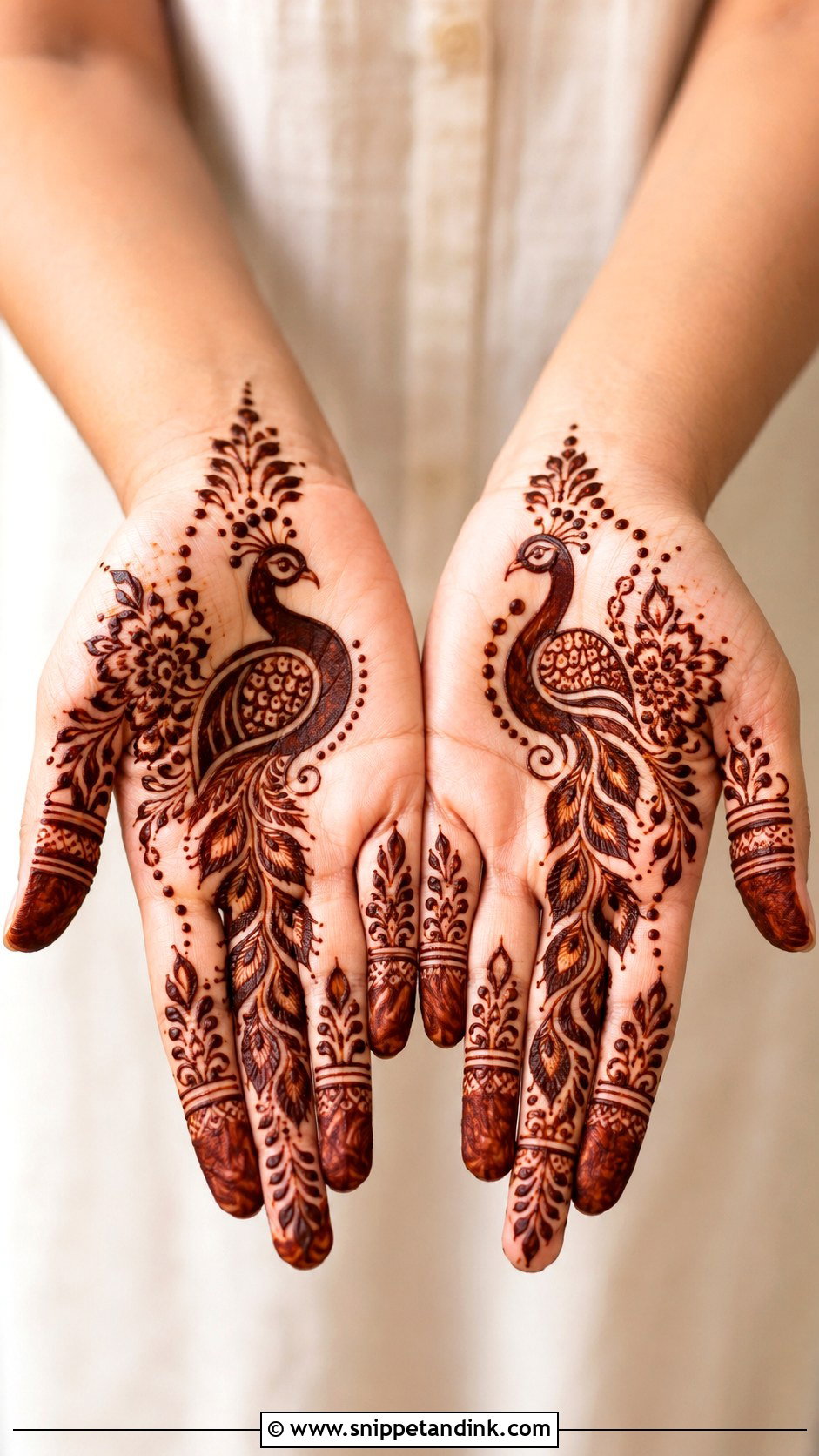
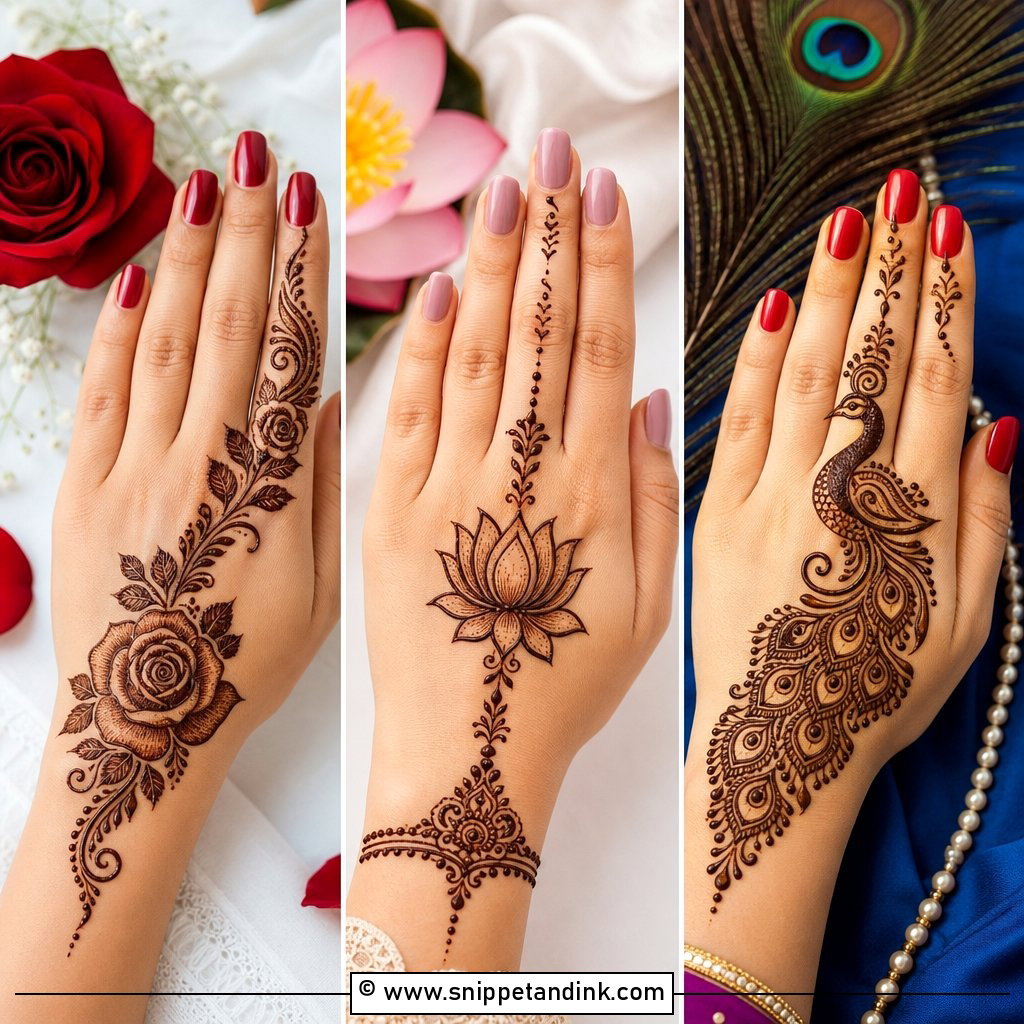
Keep the bird simple: a curved neck and a teardrop body on the palm or back of the hand, with a few large feather shapes behind it rather than many tiny ones. Fill the feathers with dots, lines and small curves. Leaves or a simple border complete the hand, fingers stay light. Large feathers matter, because small filled ones merge together once the stain darkens and the peacock loses its shape.
29. Easy Lotus Mehndi Design
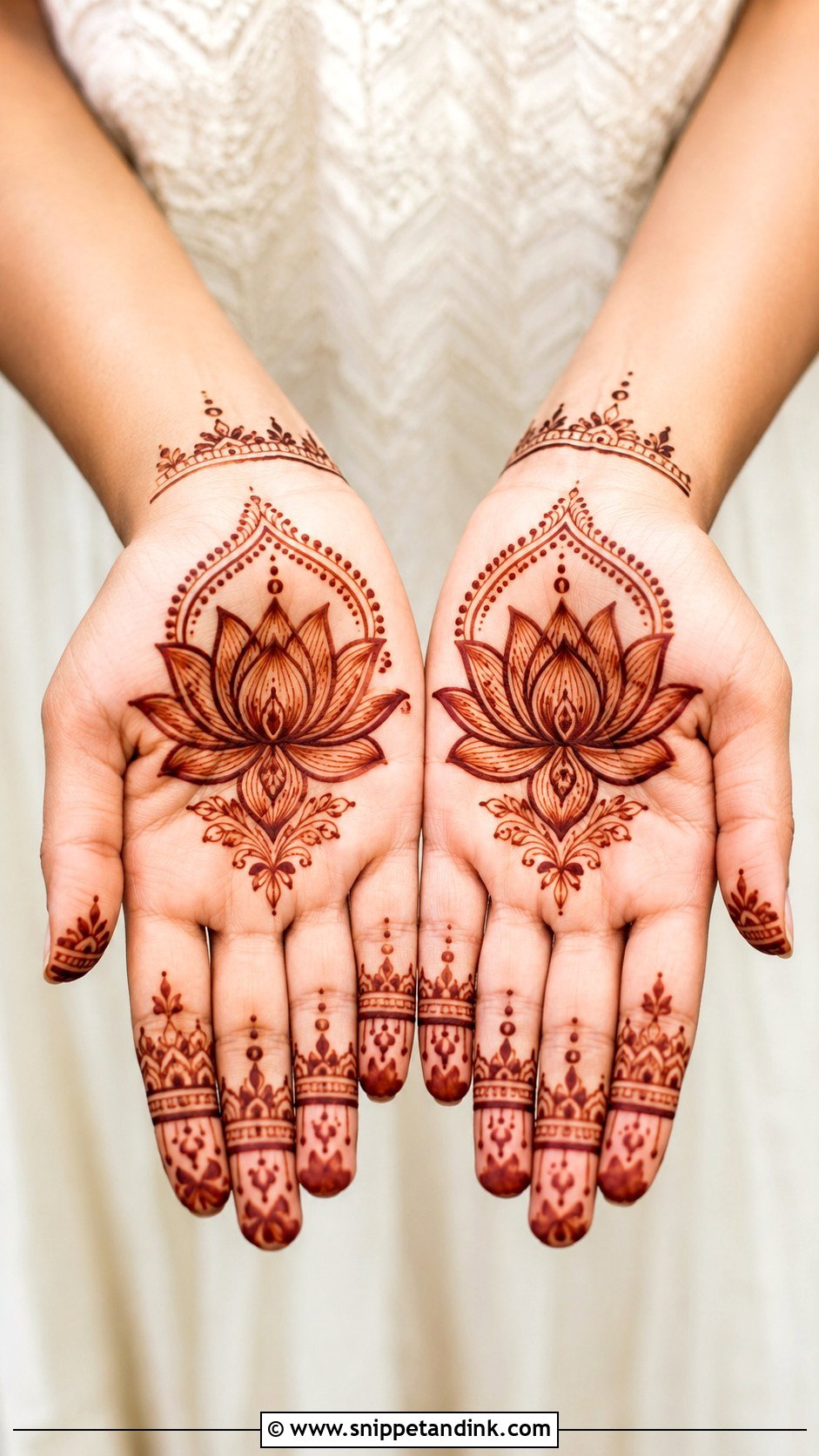
Rounded petals stacked in layers, drawn one section at a time, make the lotus easier than it looks. Place it in the centre of the palm or back of the hand, add leaves below and a few dotted curves around it, then a simple vine toward the fingers or wrist. Matching petal bands go on the fingers. Draw the front petals first and tuck the back ones behind; working the other way round leaves overlapping lines.
30. Easy Shaded Mehndi Design
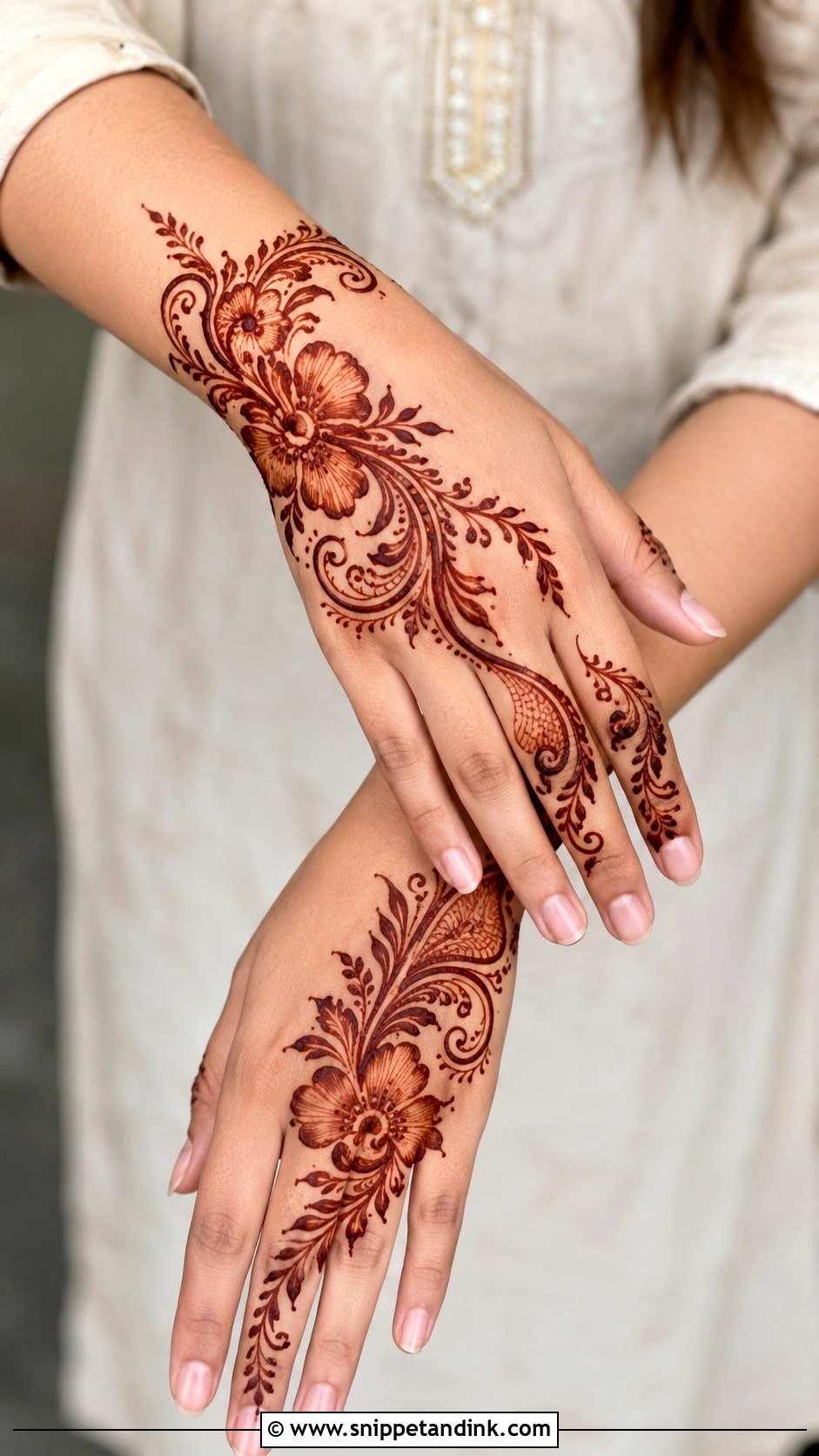
Once basic flowers and leaves come easily, shading is the next step. Take a flower trail or Arabic vine, outline it, then add light shading inside the petals with thin parallel lines or a softly filled edge on one side only. I’d keep it gentle: shade one side, never both. Dots and small curls finish the open spaces, and fingers get shaded tips or simple ring bands. It looks noticeably richer than an outline-only hand for very little extra effort.
31. Easy Dotted Mehndi Design
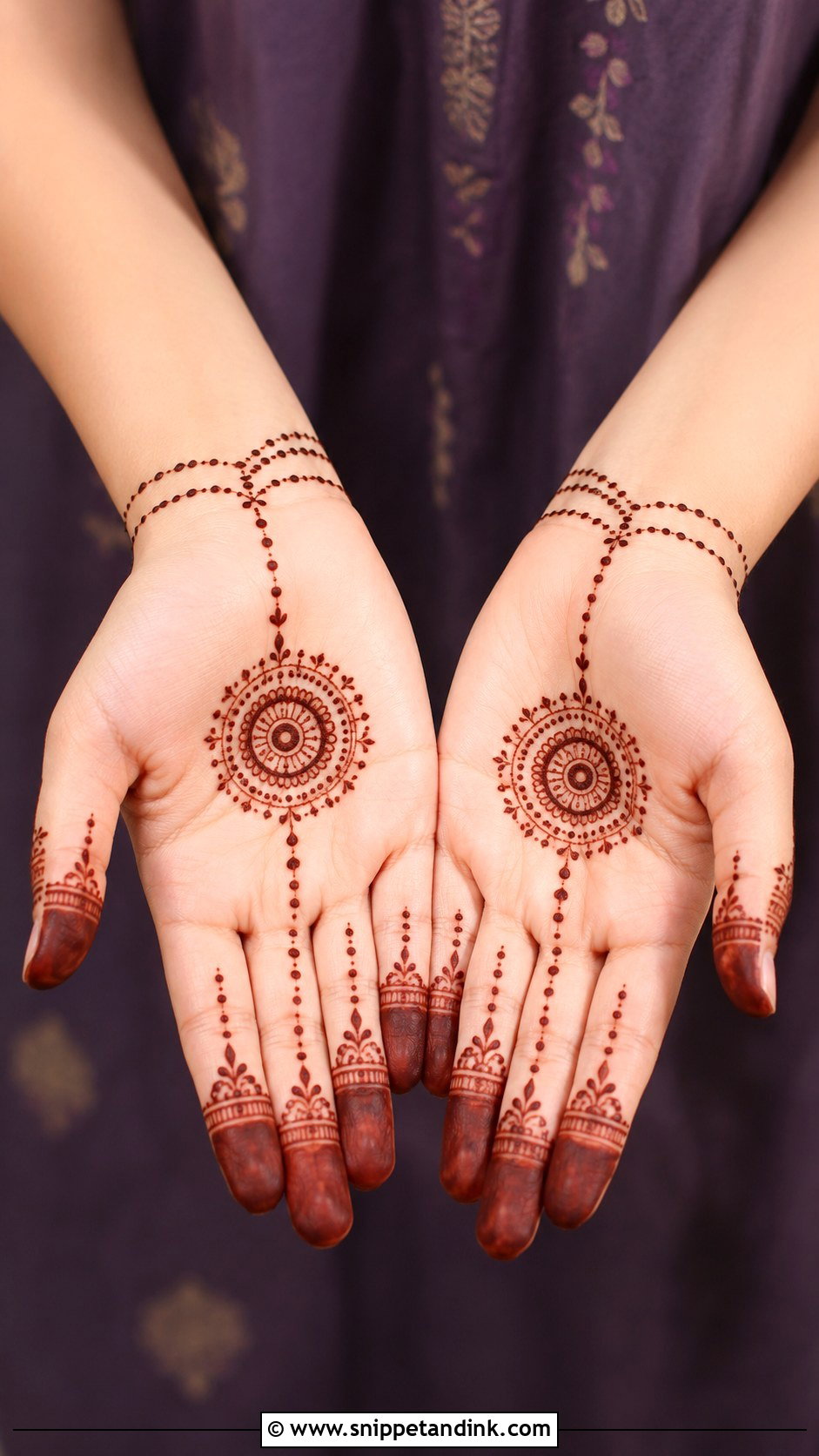
Dots are the most underrated tool in henna. Build a small mandala or flower at the centre, then make chains, rings, borders and tiny curves entirely from dots running toward the fingers and wrist. They fill gaps, hide slightly uneven areas and dry fast. Aim for dots of one size spaced evenly; that rhythm is what makes a simple hand look professional.
32. Easy Kids Mehndi Design
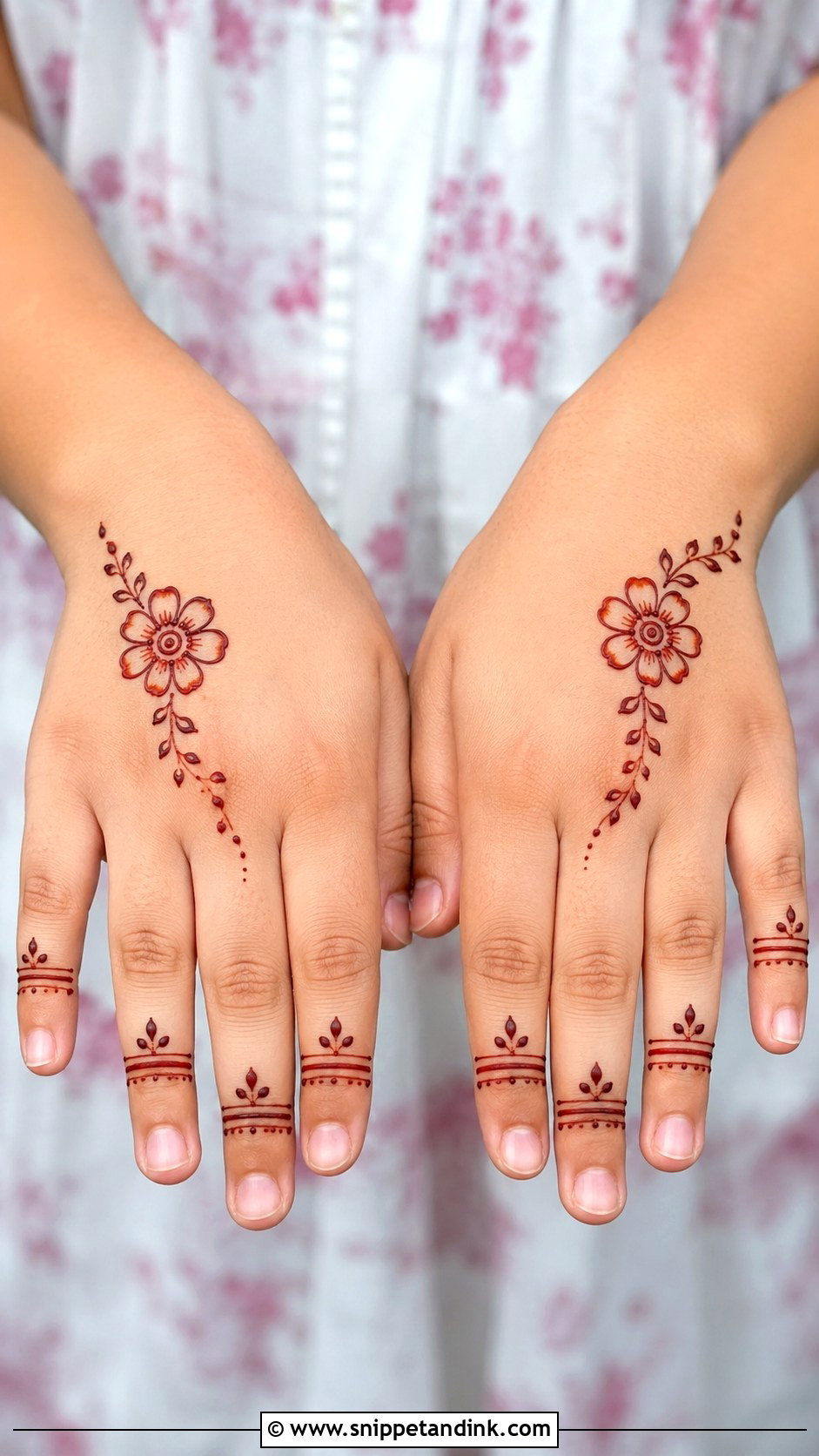
Children need speed. One small motif, a flower, a heart-shaped floral or a tiny mandala, on the palm or back of the hand, with a short vine, a few dots and simple finger rings. Dense coverage is a mistake, because they won’t sit still long enough for it to dry. Bold lines, minimal details, and natural henna only: never black cones or instant-dark pastes on a child’s skin.
33. Easy Eid Mehndi Design
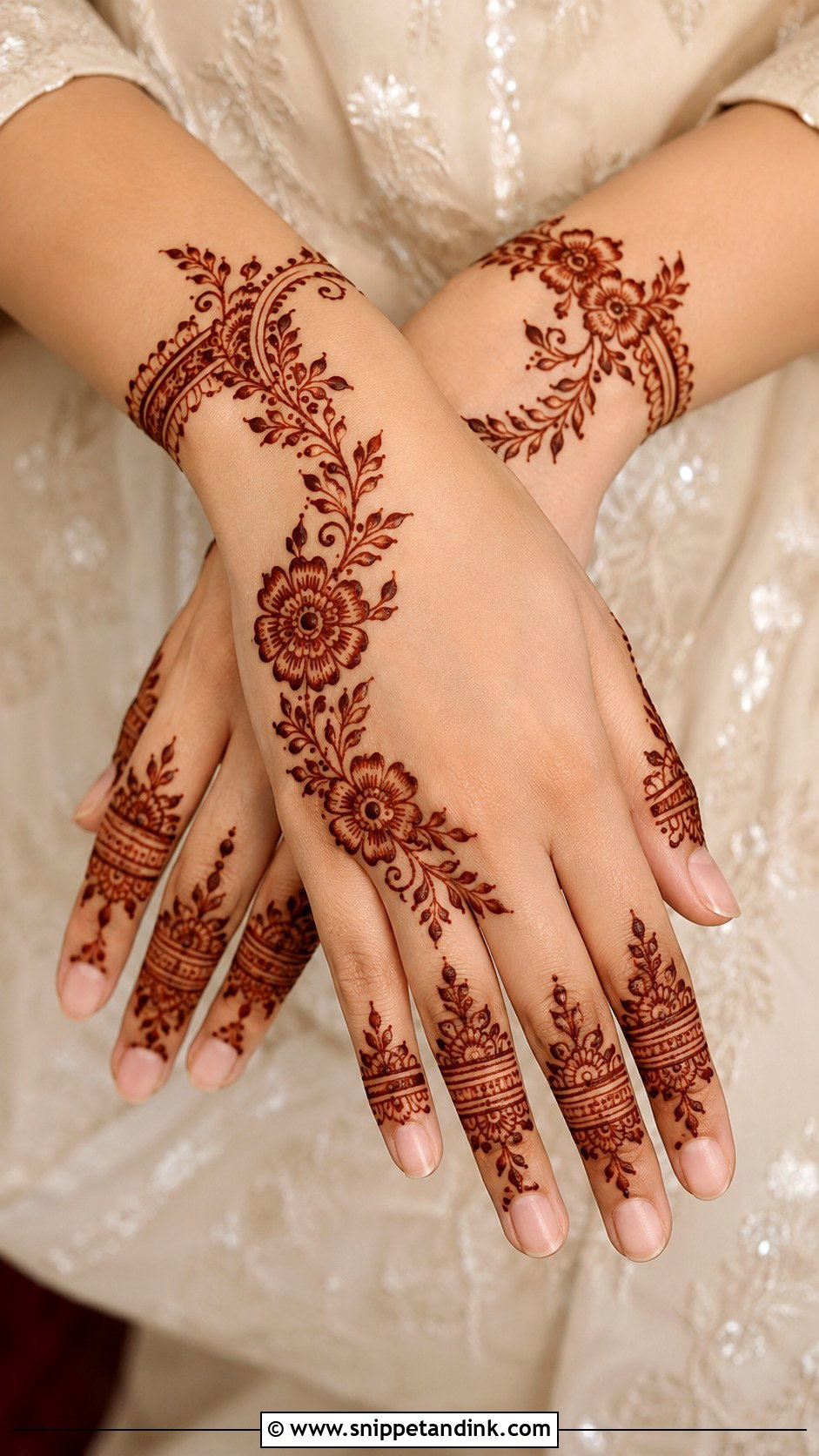
A back hand flower trail, a wrist bracelet and simple finger bands make a festive Eid hand that a beginner can finish in an evening. Start with a bold flower near the wrist and move upward with leaves and dots; a small mandala or paisley in the centre adds detail if you have time. Open spacing keeps it fresh. Apply it early enough the night before that the paste stays on while you sleep, and the stain will be darker by the time the family gathers.
34. Easy Bridal Mehndi Design For Beginners
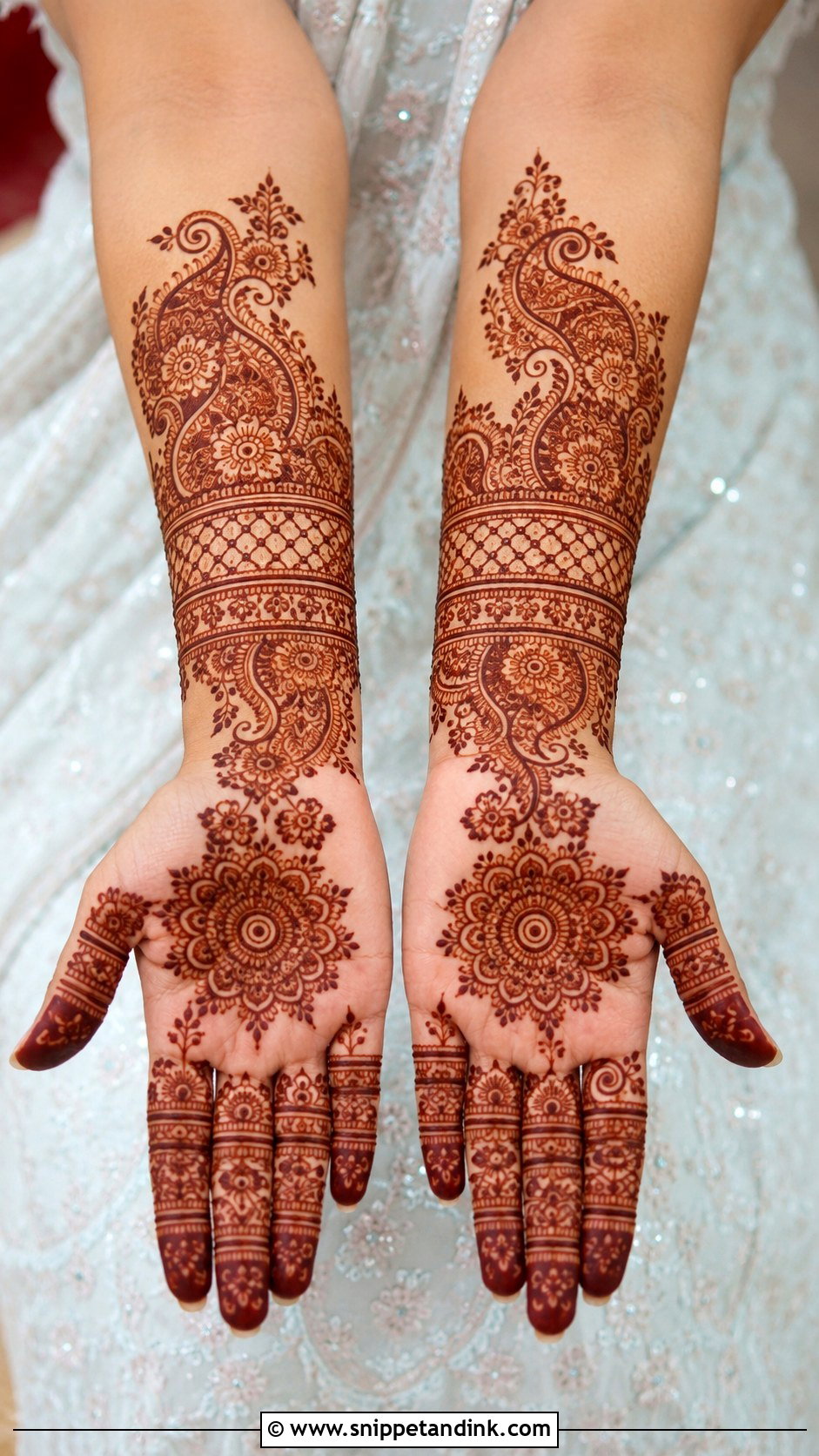
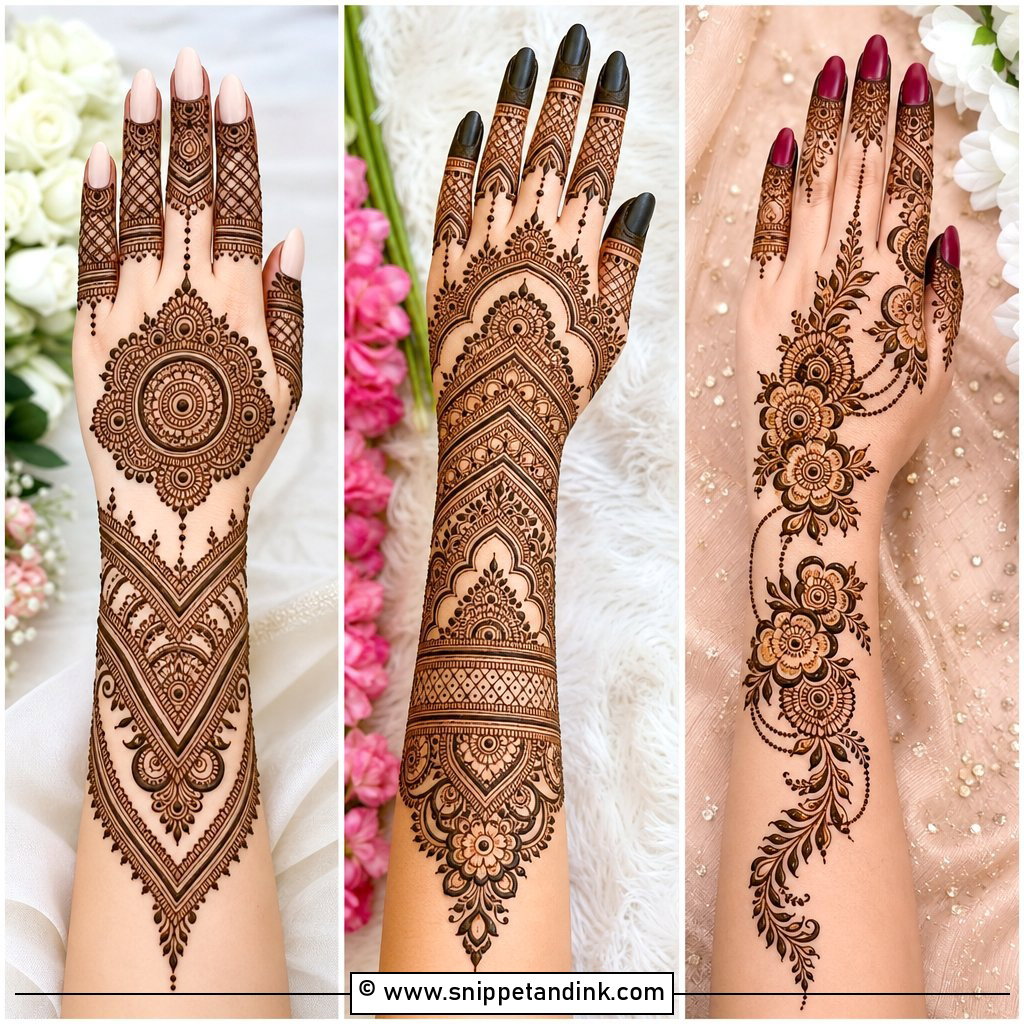
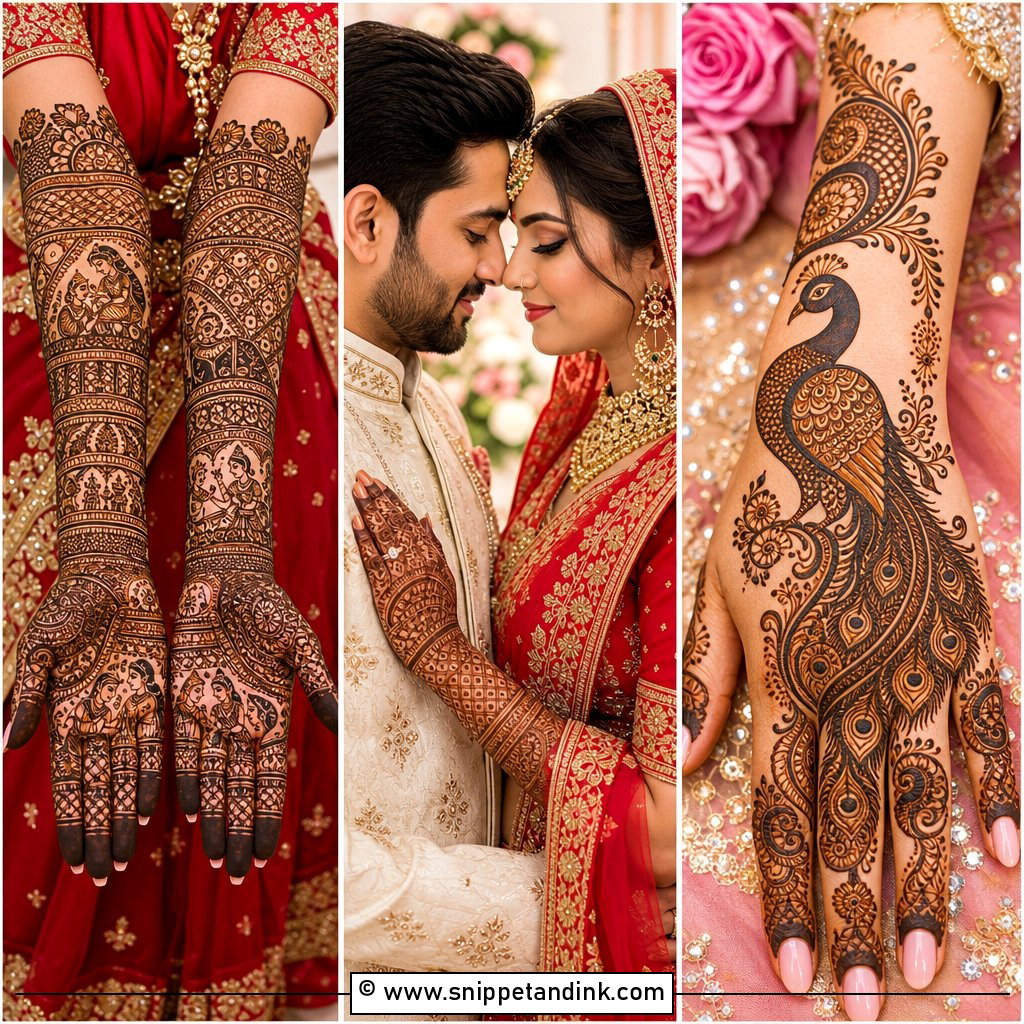
Bridal structure, beginner scale. A wrist cuff, a palm mandala, a paisley trail and decorated fingers, connected by small flowers and dotted borders, with larger motifs that are easier to draw. It can run from wrist to fingers while still keeping small open spaces. I teach this to bridesmaids and to anyone practising for a sister’s engagement, because it shows how bridal mehndi is organised without asking for portraits, tiny fills or exact symmetry.
35. Easy Modern Mehndi Design
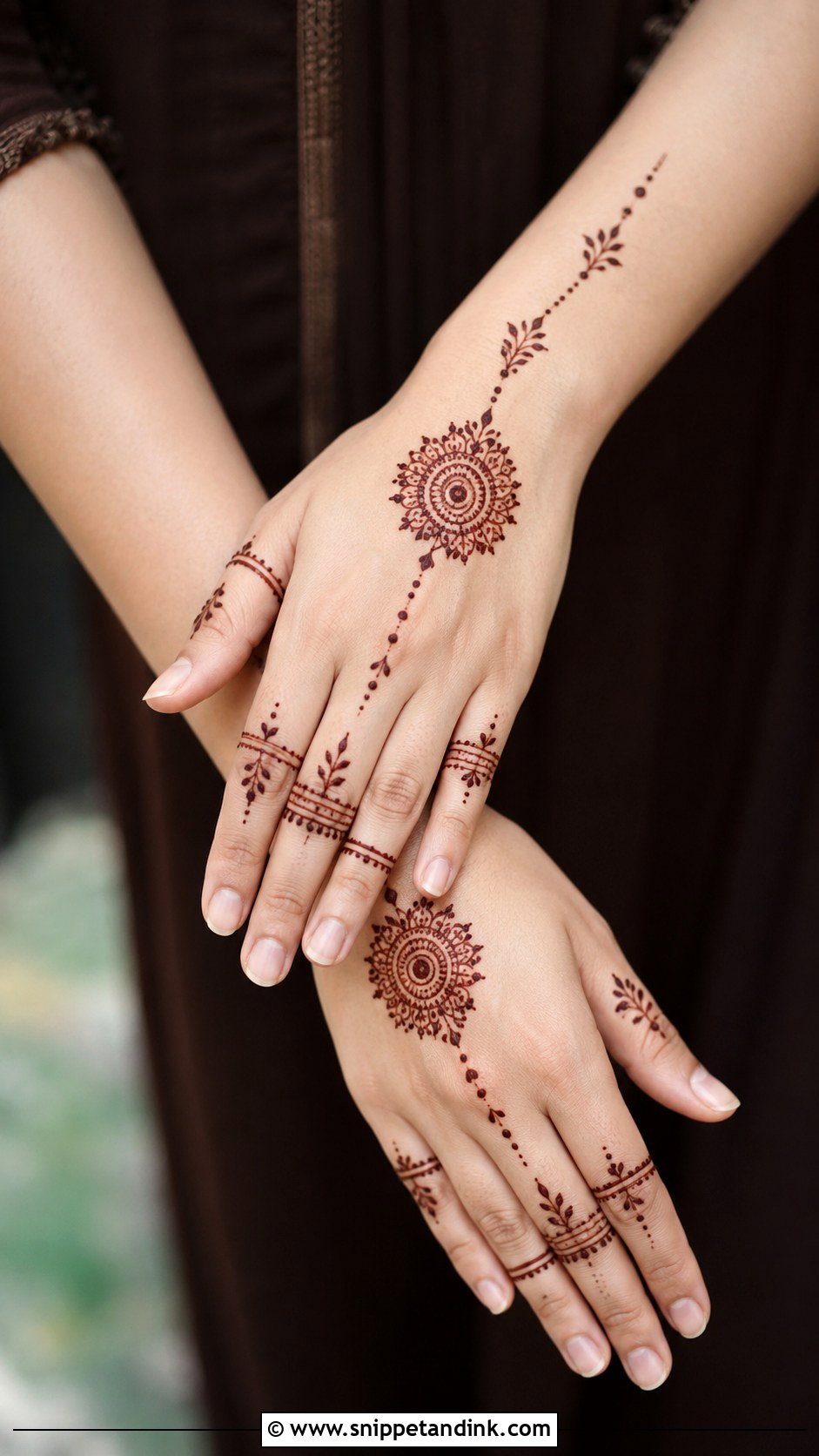
Negative space, fine lines, finger rings and one main motif on the back of the hand or palm. A small mandala linked by a dotted chain to a wrist bracelet does the job, with a few leafy accents along one side if you like. No heavy filling. For anyone drawn to minimal fashion-inspired henna, it’s a quiet lesson in placement: where you put the one motif matters more than how detailed it is.
A Month of Practice, Ordered From Easiest to Hardest
The designs above aren’t listed in order of difficulty, so here’s the sequence I’d follow. In the first week, stick to dotted, leaf and wrist designs, which train pressure and spacing. Week two moves to the tikki, the palm mandala and the bracelet, where you learn to build outward from a centre. Week three is for Arabic and bail trails, practising long curves and diagonal flow. In week four, try jaali, shading, the peacock and the bridal-inspired layout, which combine everything. Don’t move on just because the calendar says so. If your week-two mandalas still drift oval, stay there another few days; the trails in week three will be easier for it.
Practising on Friends and Family Safely
The moment you move from paper to other people’s hands, a few habits matter. Apply only on clean, unbroken skin, and skip anyone with a fresh cut, a rash or recent waxing. If someone has sensitive skin or allergies, put a small dot of paste on the inside of the arm a day beforehand and check it. Use a fresh cone tip, or at least a wiped one, between people. And be honest about what your paste is: if you mixed it yourself, know which essential oils went in, because people sometimes react to the oil rather than the henna.
Repetition Is What Makes a Beginner’s Henna Look Confident
Good henna doesn’t have to be crowded or slow. Pick one design that matches where your hand is now, such as a mandala, a flower vine, a bracelet or a simple Arabic trail, and draw it until it feels boring. Then add paisleys, jaali, shading and fuller layouts one at a time. Keep the cone pressure steady, let the paste dry fully, and resist rushing the last details. Traditional Indian hands and modern minimal ones both come from the same basic strokes, repeated patiently.
You'll Like These Ideas:


Leave a Reply