
A cake covered in piped buttercream rosettes looks full of flowers before a single real bloom goes near it. That’s the appeal: texture on every side, no fondant, and a finish that reads from across the room. Rosettes can be crisp and white, softly colored, vintage, rustic or dramatic depending on the tier count and the size of each swirl, and they sit happily over vanilla, almond, lemon, champagne, strawberry or chocolate sponge. I’ve laid out 30 versions below, with the details I’d check as the person holding the piping bag.
The Star Tip Behind Every Cake Below
Every rosette here starts with a large star tip and one motion: a spiral from the center outward, finished with the tail tucked toward the next rosette. An open star tip gives wide, deep ridges; a closed star tip gives tighter ridges that look more like rose petals. Neither is better, but they photograph differently, so it’s worth asking which one your baker uses.
Size changes everything. Large rosettes look relaxed and modern and cover a tier quickly. Small ones look intricate and vintage but take far longer, which shows up in the price. I pipe from the bottom row up, so each new row hides the tails of the one below.
Consistency is most of the technique
Buttercream that’s too soft gives blurry, melting ridges. Too stiff, and the spiral cracks at its edges. I pipe a test rosette on parchment before touching the cake. If the ridges still look sharp after a few minutes at room temperature, the batch is ready.
1. White Rosette Wedding Cake
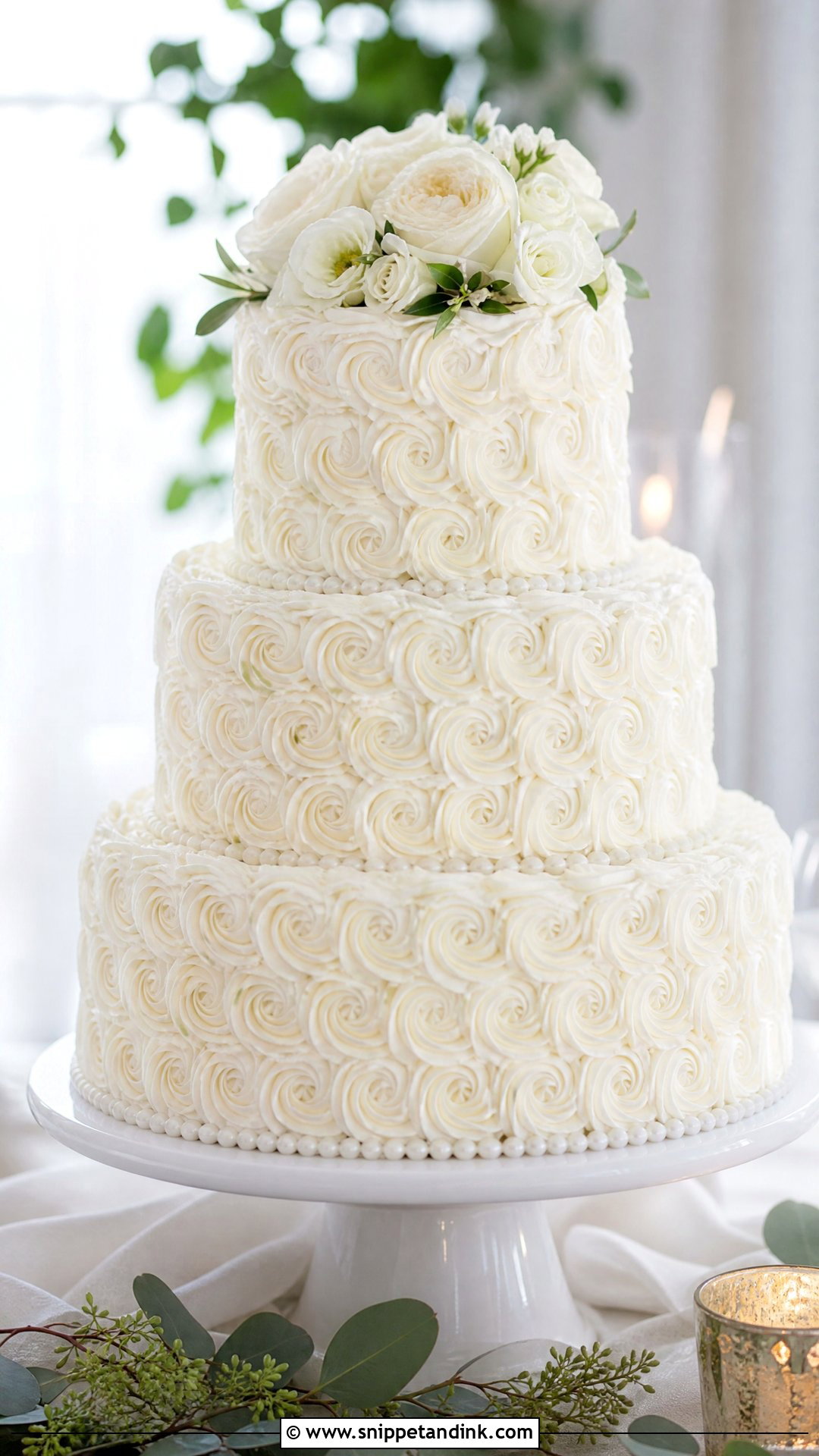
All-white rosettes are the version I pipe most, and the one with nowhere to hide. Without color, the eye goes straight to the spacing, so I mark rows lightly on the crumb coat before I start and keep every swirl the same size. The texture means it needs very little else: greenery, white flowers, a few pearls or a clean ribbon at the base. It fits ballrooms, gardens and church weddings equally well. Vanilla, almond or champagne cake keeps the flavor as classic as the outside.
2. Three Tier Rosette Wedding Cake
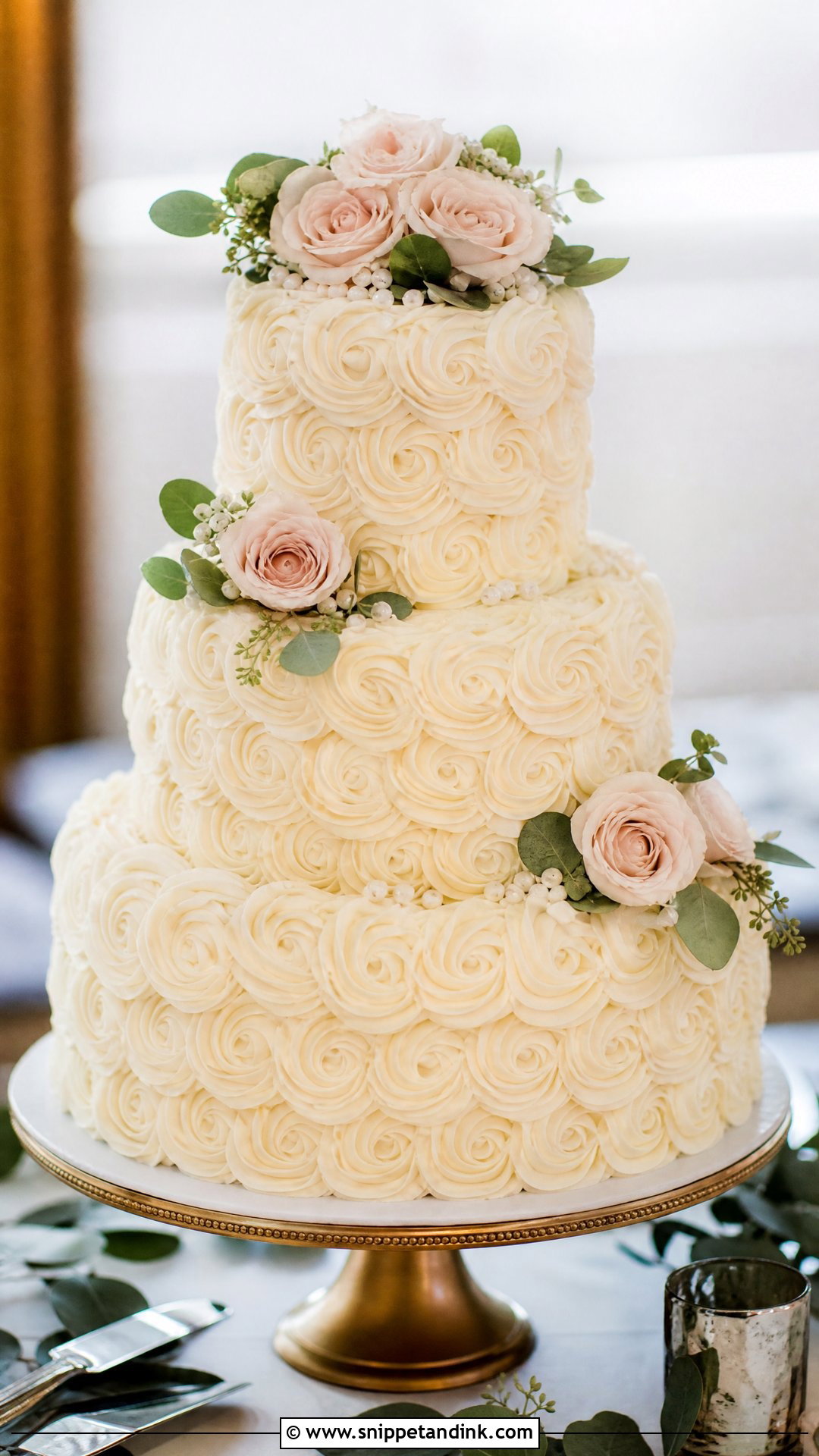
On a three tier cake I scale the rosettes to the tier: larger on the bottom, smaller and tighter on top. Same-size rosettes on every tier make the top look clumsy and the bottom look busy. You can cover all three, or alternate rosette tiers with smooth ones for contrast, which also saves piping time. Fresh roses, eucalyptus or a small topper add detail if you want it. Three tiers also gives you room for two or three flavors.
3. Pink Rosette Wedding Cake
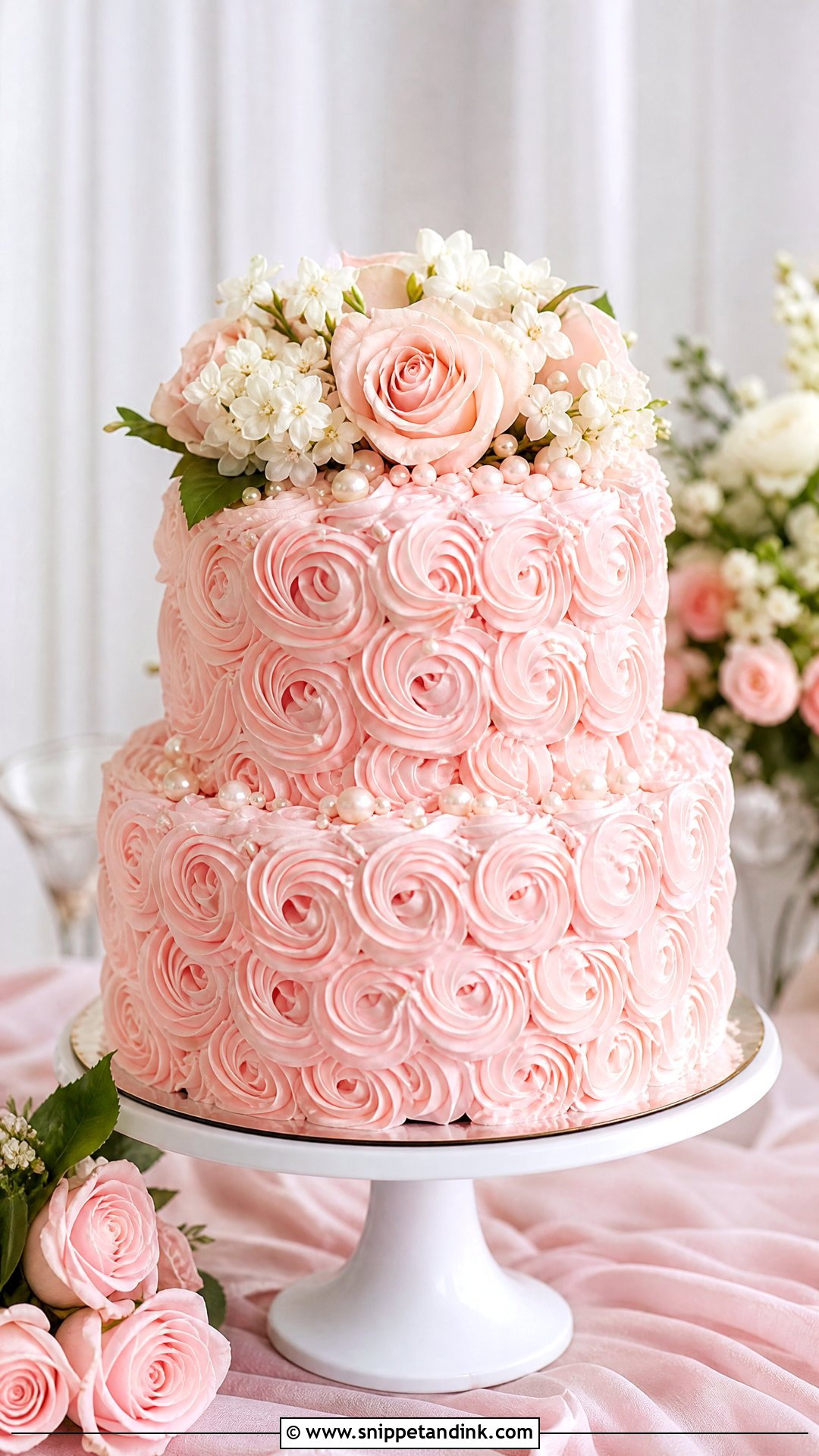
With pink, tinting is the whole job. Buttercream deepens for a few hours after coloring, so I mix it a shade lighter than the target and let it rest before piping. Blush is the safest romantic shade, and dusty rose feels more grown-up. Cover the whole cake, or pipe one pink tier under white or ivory ones. Strawberry or raspberry sponge suits it, and a few fresh pink roses, gold touches or pearls keep it bridal rather than playful. Deeper rose tones suit a bolder dessert table.
4. Blush Rosette Wedding Cake
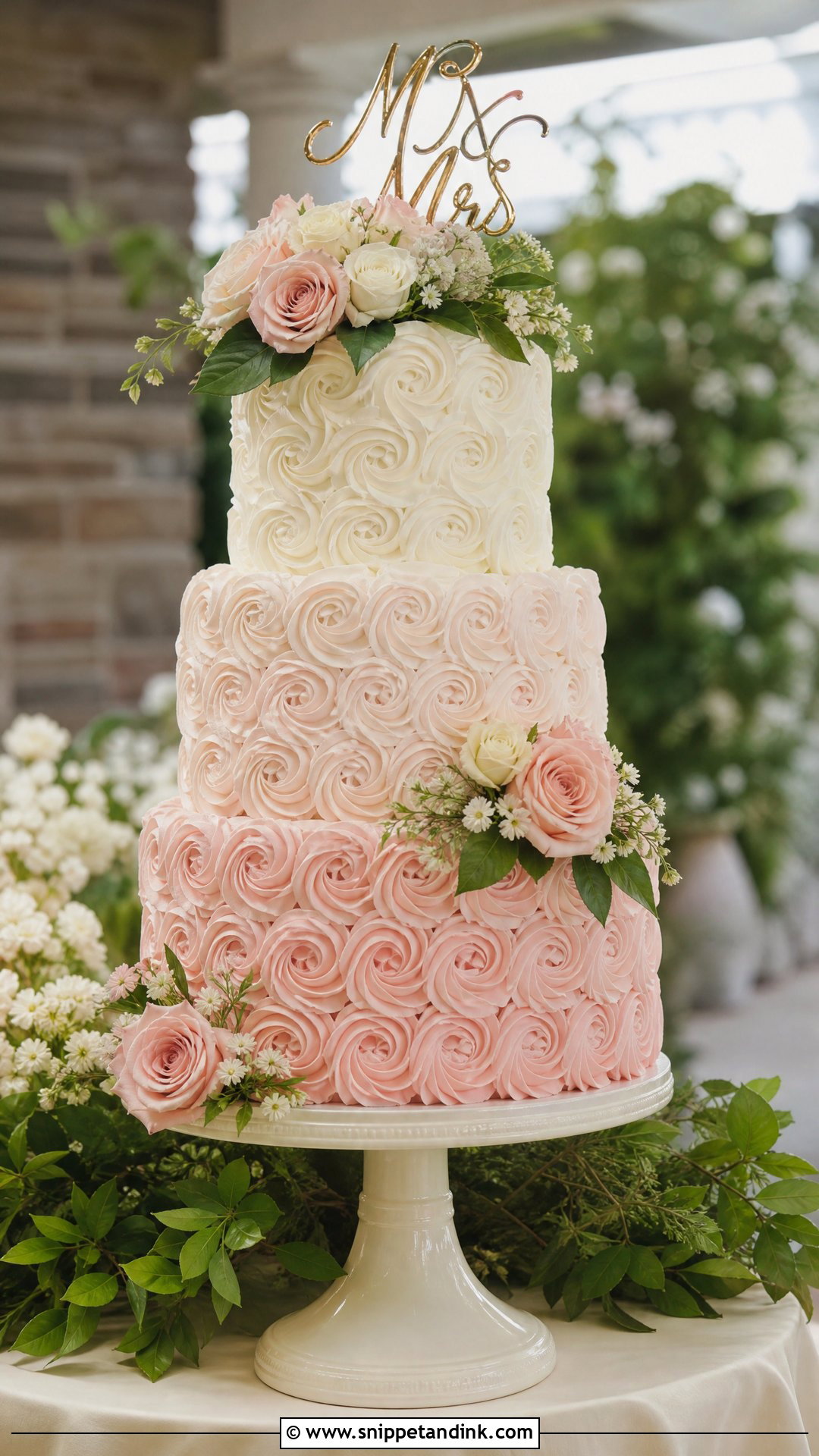
Think of blush as the neutral of the pink family. It sits well beside ivory, champagne, sage, dusty blue and gold, which is why it fits so many palettes. Rosette piping softens it further, since each ridge casts its own small shadow. I like a blush ombre that deepens toward the bottom tier, though a full blush cake works too. Almond, vanilla bean or lemon with raspberry filling suits the color, finished with silk ribbon, garden roses or a few sugar pearls.
5. Ivory Rosette Wedding Cake
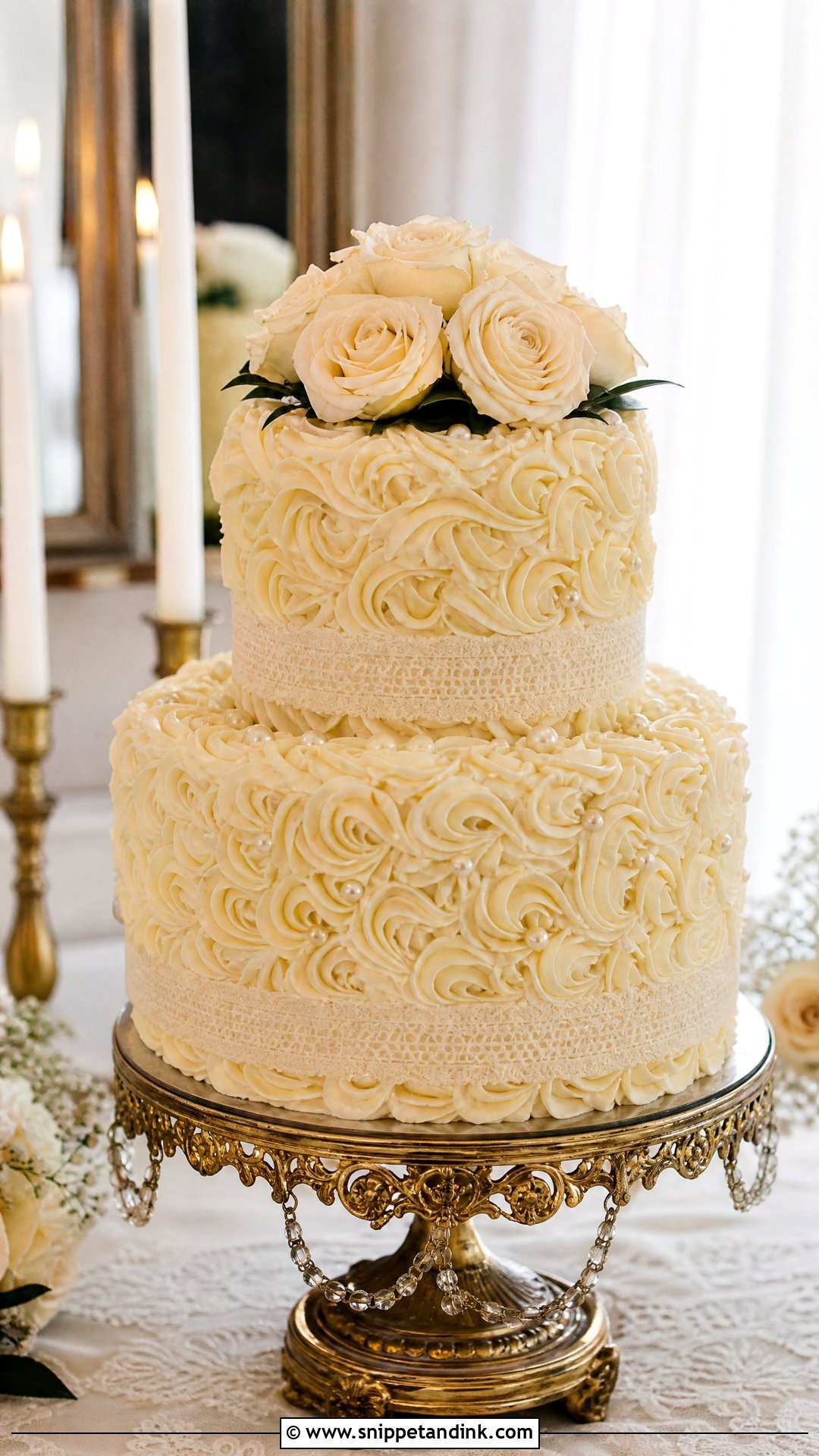
For rosettes I actually prefer ivory to white: the ridges show more depth because the color isn’t bouncing all the light back. Real butter gives buttercream a natural ivory tint, so it’s also the easiest shade to achieve without whitening. It suits antique gold stands, lace linens and soft greenery at vintage, rustic and candlelit receptions, with butter almond or coconut cake inside. Keep it to a few fresh flowers at the base, or add pearls or a gold monogram topper for something richer.
6. Buttercream Rosette Wedding Cake
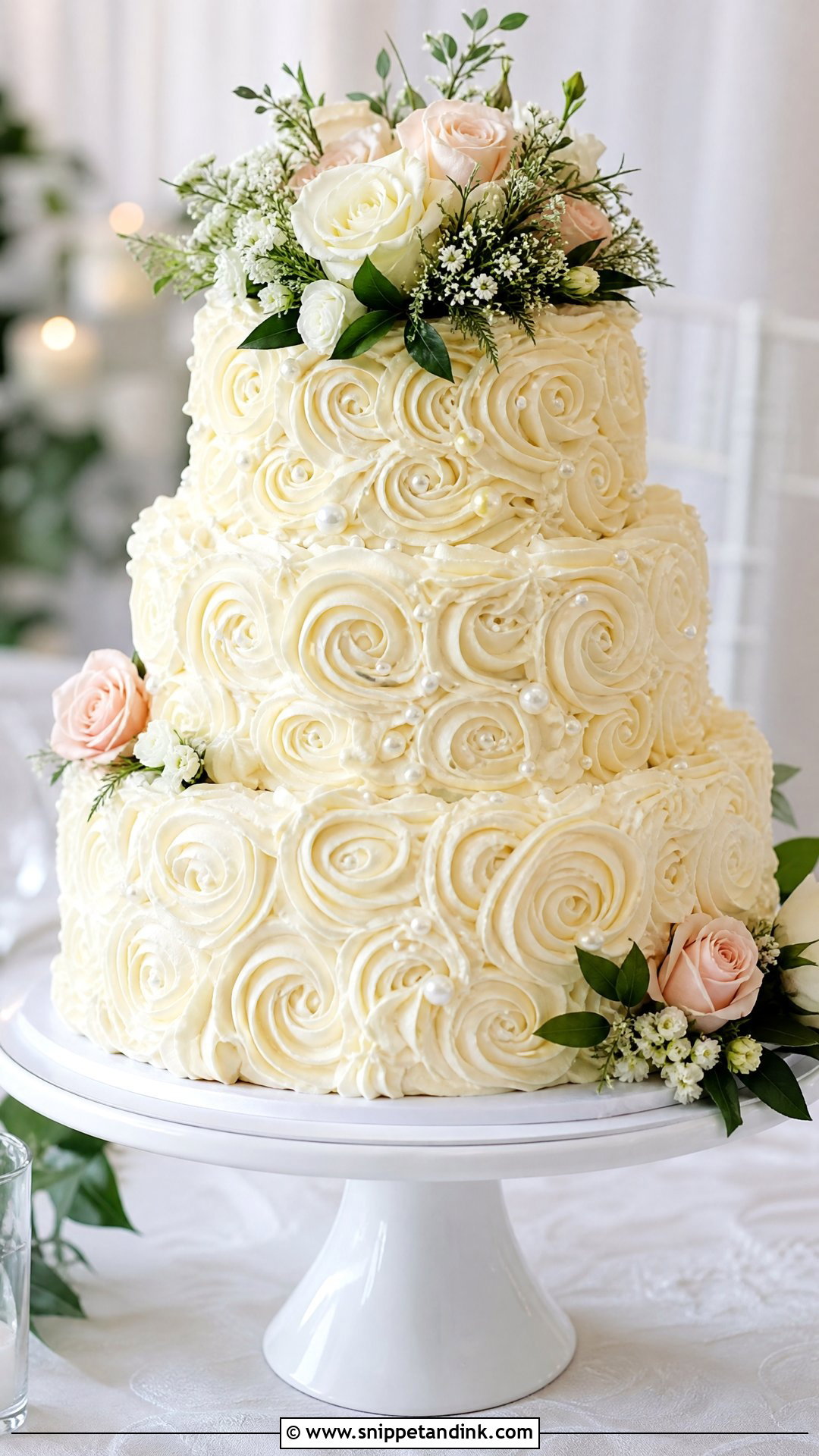
Every cake on this list is buttercream, so this one is really about which buttercream. Swiss meringue is silky and less sweet, but it softens faster and its rosettes have rounder, gentler ridges. American buttercream is sweeter, crusts on the surface and holds sharp ridges longer in a warm room. Tight spirals, large open roses or mixed sizes work in either. The finish feels homemade in the best way, without fondant’s chew. Whichever you pick, ask your baker about chilling and how long the cake can sit out before the reception.
7. Ombre Rosette Wedding Cake
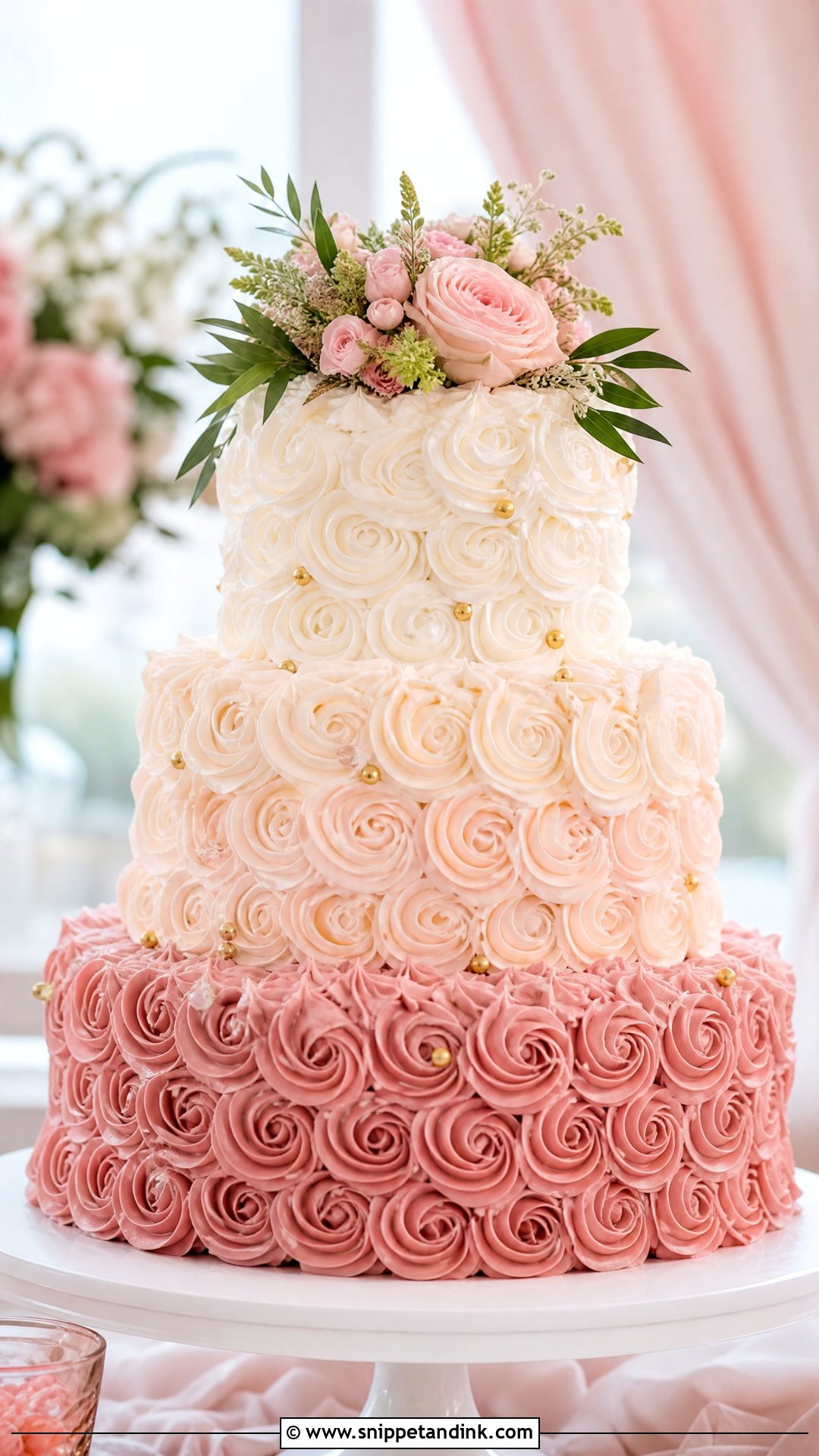
Ombre suits rosettes better than smooth frosting, because the swirls blur the line where one shade meets the next. I mix the darkest shade first and lighten it with white for each row, which keeps the hue consistent. The color usually starts deepest on the bottom tier and fades upward: blush to white, lavender to ivory, peach to cream, dusty blue to white. It can echo bridesmaid dresses or linens. Keep the decoration minimal so the fade stays clear; a small flower cluster or a metallic topper is enough.
8. Champagne Rosette Wedding Cake
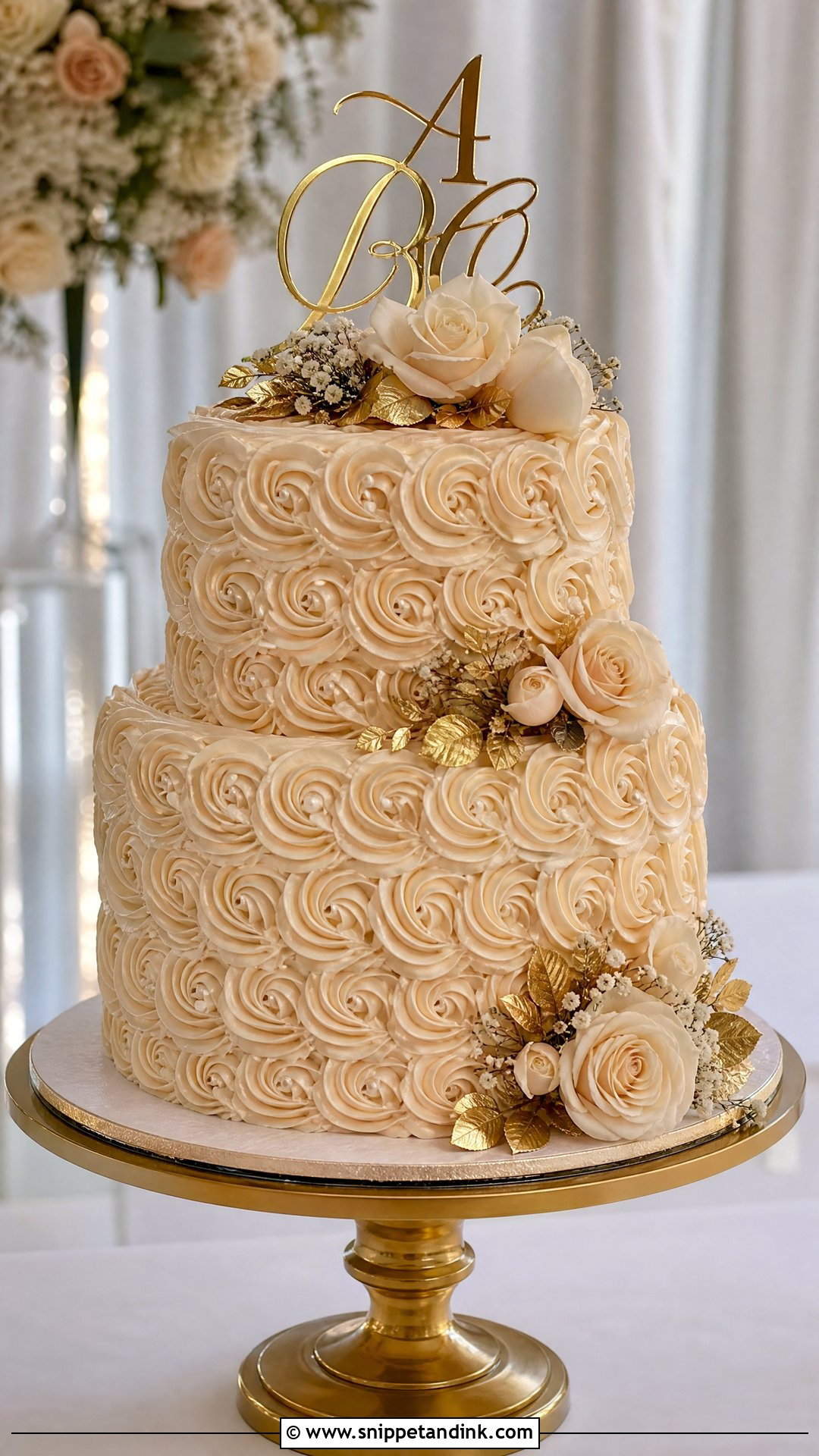
This is a soft beige-gold buttercream, and under warm lighting it glows. It pairs with gold, ivory, blush, taupe and pearls, and suits evening weddings, hotel ballrooms and barns lit with string lights. The color comes from a little ivory and brown gel, so there’s no flavor change, and champagne, vanilla bean or almond cake can match the name inside. Edible pearls, soft roses or a brushed gold topper finish it beside neutral flowers and candles.
9. Gold Rosette Wedding Cake
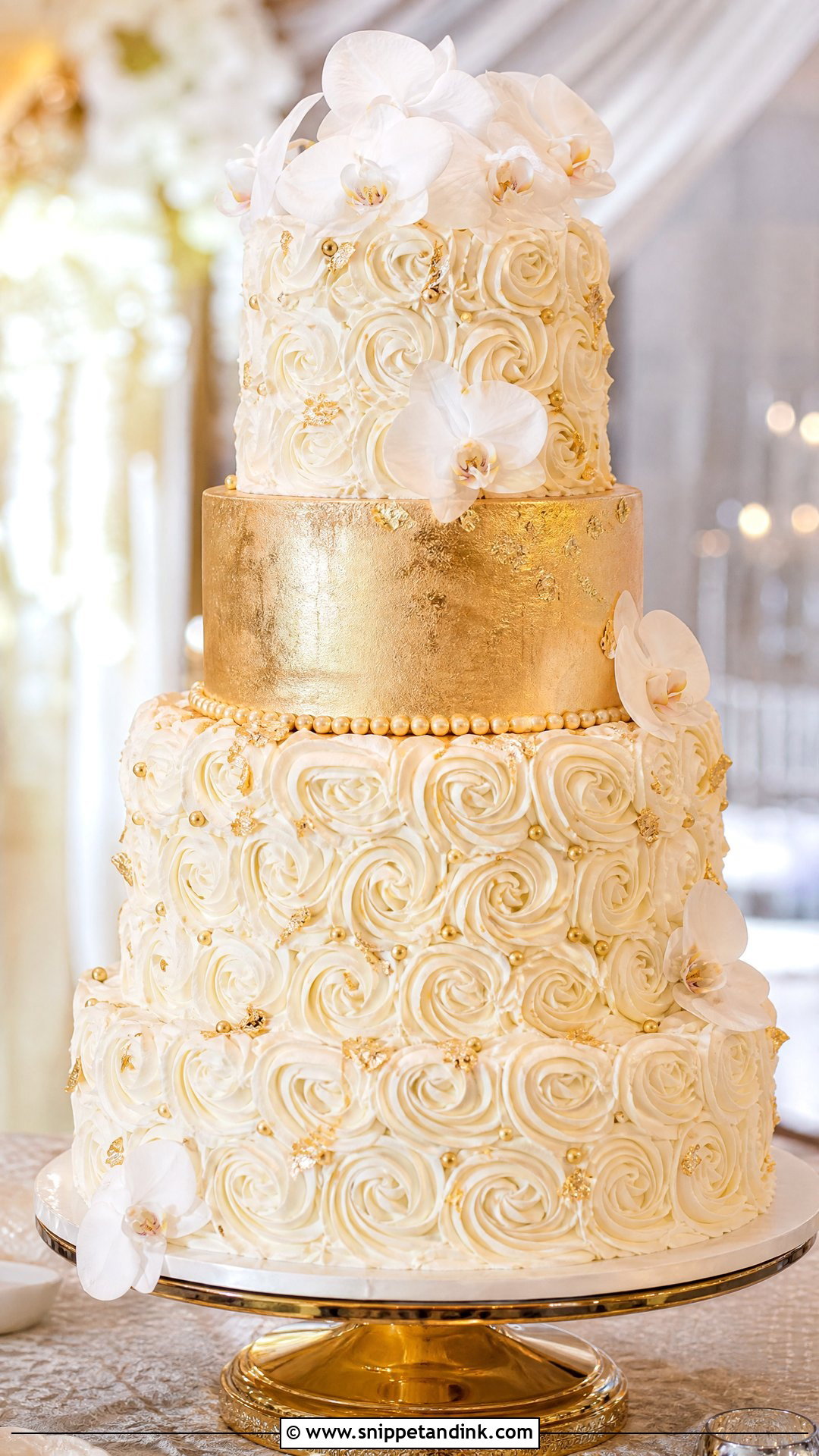
Gold over every rosette looks heavy and hides the piping. I’d use it in small accents: ivory rosettes with touches of leaf, gold pearls, or one smooth gold tier sitting between rosette tiers. That smooth metallic tier is usually fondant, since painted gold streaks on soft frosting. Ballroom, black tie and modern receptions with warm metal details suit it, with champagne or caramel cake inside. Gold draws attention to every curve, so the piping around it has to be clean.
10. Rustic Rosette Wedding Cake
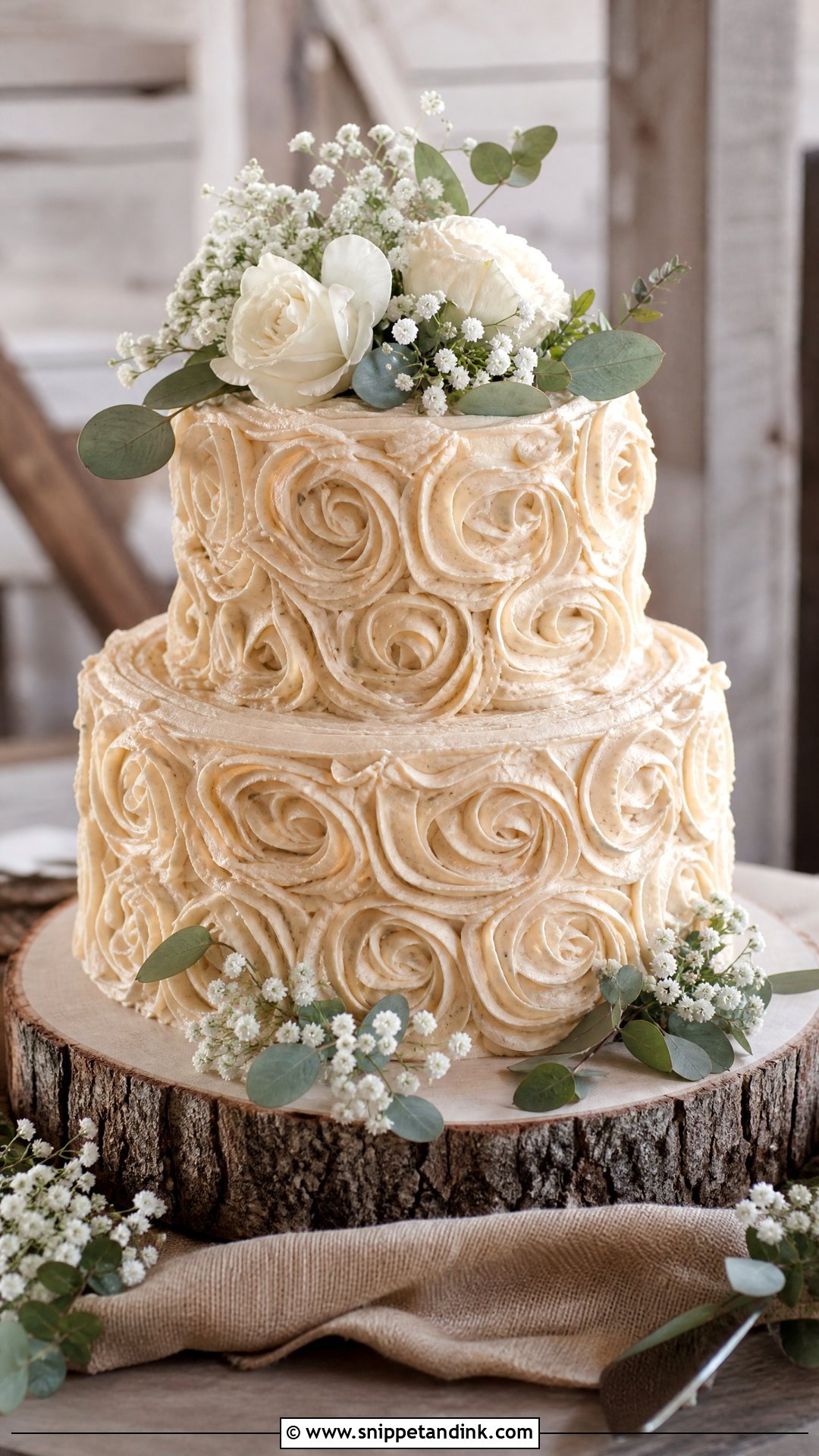
Rustic is the version where I let the rosettes go a little loose, with slight variation in size and spacing that gives the cake warmth. Ivory or soft white buttercream suits wood slices, greenery and garden flowers at barns and outdoor receptions. I keep baby’s breath on the table rather than on the cake, since it isn’t considered food-safe. Burlap-style ribbon can work if it’s used sparingly. Carrot or spice cake suit a rustic menu, and a wood stand, soft linens and simple florals complete the dessert table.
11. Vintage Rosette Wedding Cake
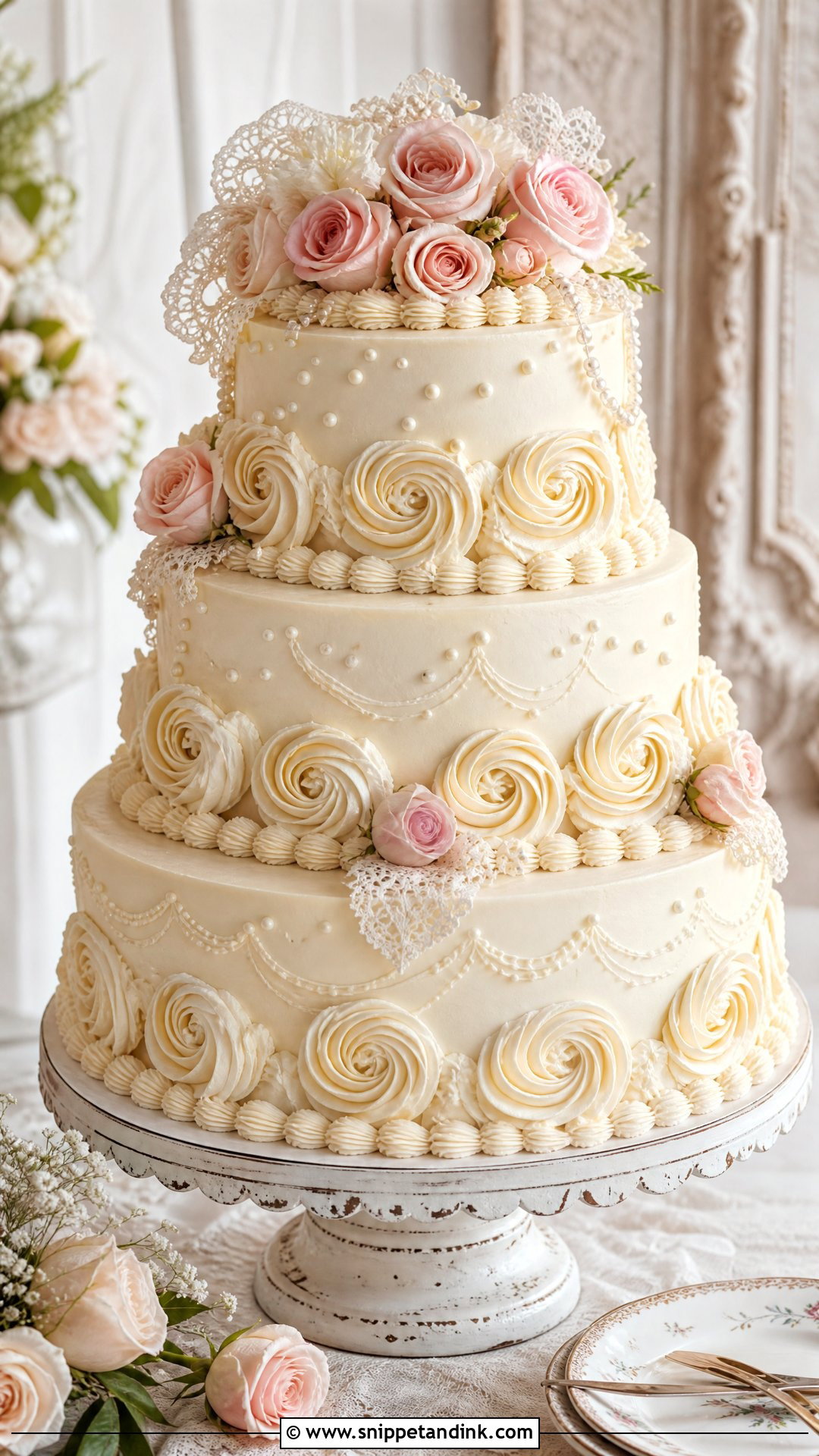
Vintage piping pairs rosettes with shell borders, pearl dots, soft swags and fine trim, the old bakery techniques. On a two or three tier cake I give each tier a different texture, rosettes on one, swags on the next, so the piping reads as a deliberate pattern rather than a crowd. Ivory, blush and pale blue are the colors I reach for. Almond or raspberry-filled vanilla suits the mood, with a small floral topper, cameo-style detail or pearls to finish.
12. Small Rosette Wedding Cake
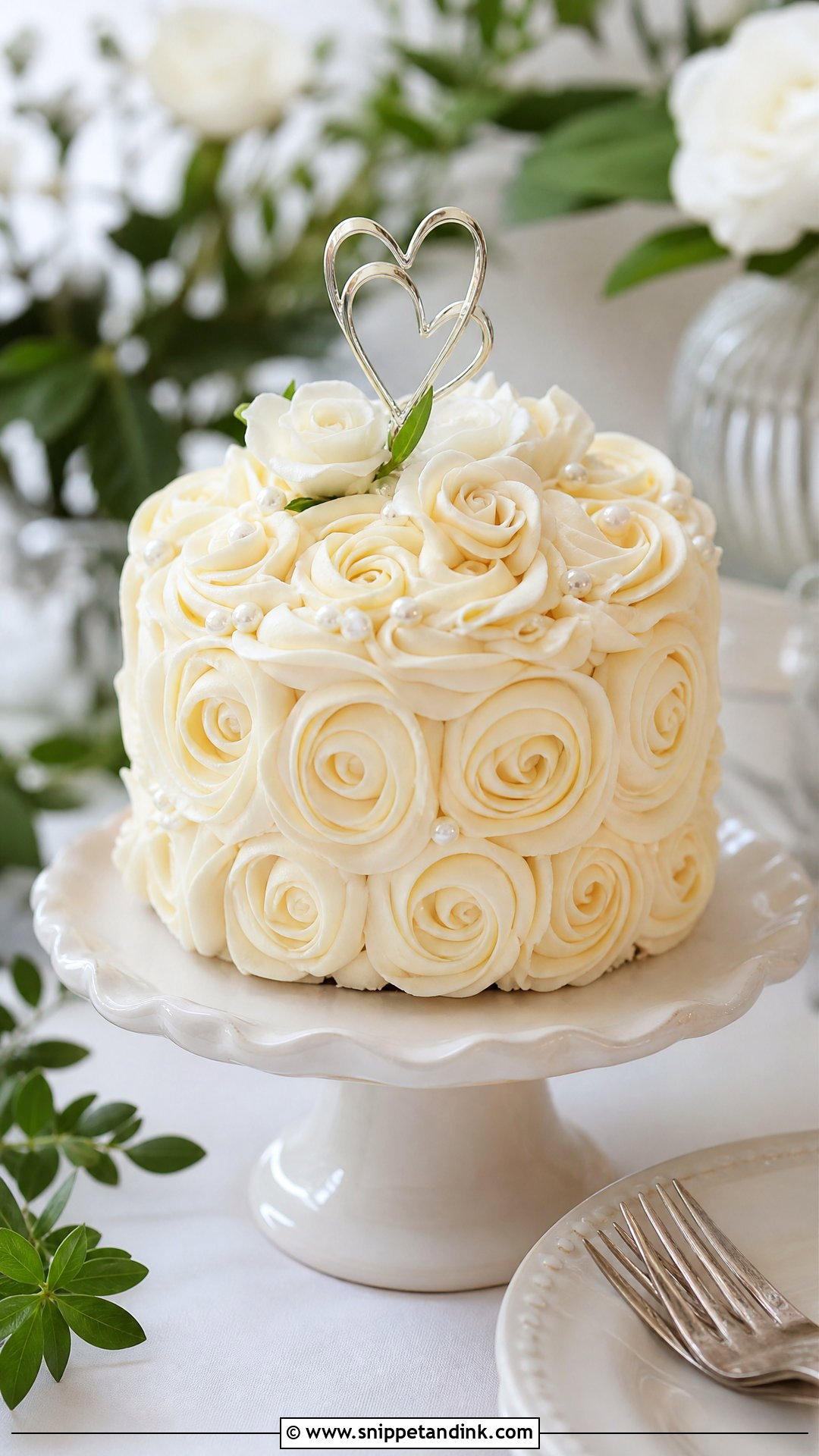
Rosettes are the quickest way I know to make a small cake look generous. A single tier fully covered in piping looks fuller than the same cake smooth-frosted, which makes it a good fit for elopements, intimate weddings and couples serving other desserts or a kitchen sheet cake. White, blush, ivory or soft lavender keep it romantic. A few fresh flowers or a simple topper is all it needs.
13. Two Tier Rosette Wedding Cake
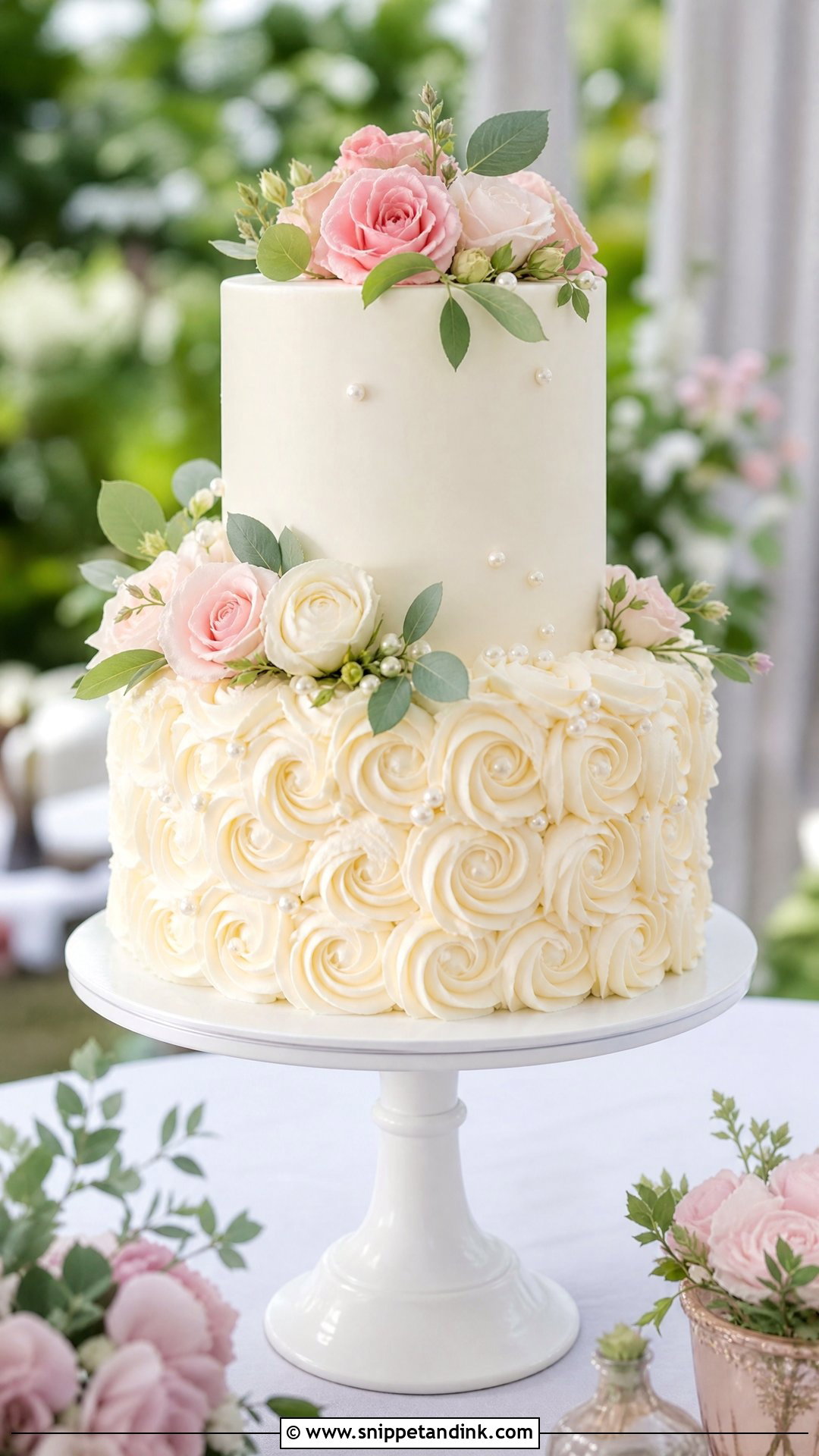
Two tiers is the size I’d suggest for a guest count that doesn’t need three. You can cover both in rosettes or pair one smooth tier with one textured tier. When I mix them, the rosettes go on the bottom so the heavier texture grounds the cake. Soft ivory with blush flowers is a safe pairing, and all-white rosettes feel more classic. Lemon blueberry or almond raspberry work well, and a tall stand adds the height a two tier cake can lack.
14. Tall Rosette Wedding Cake
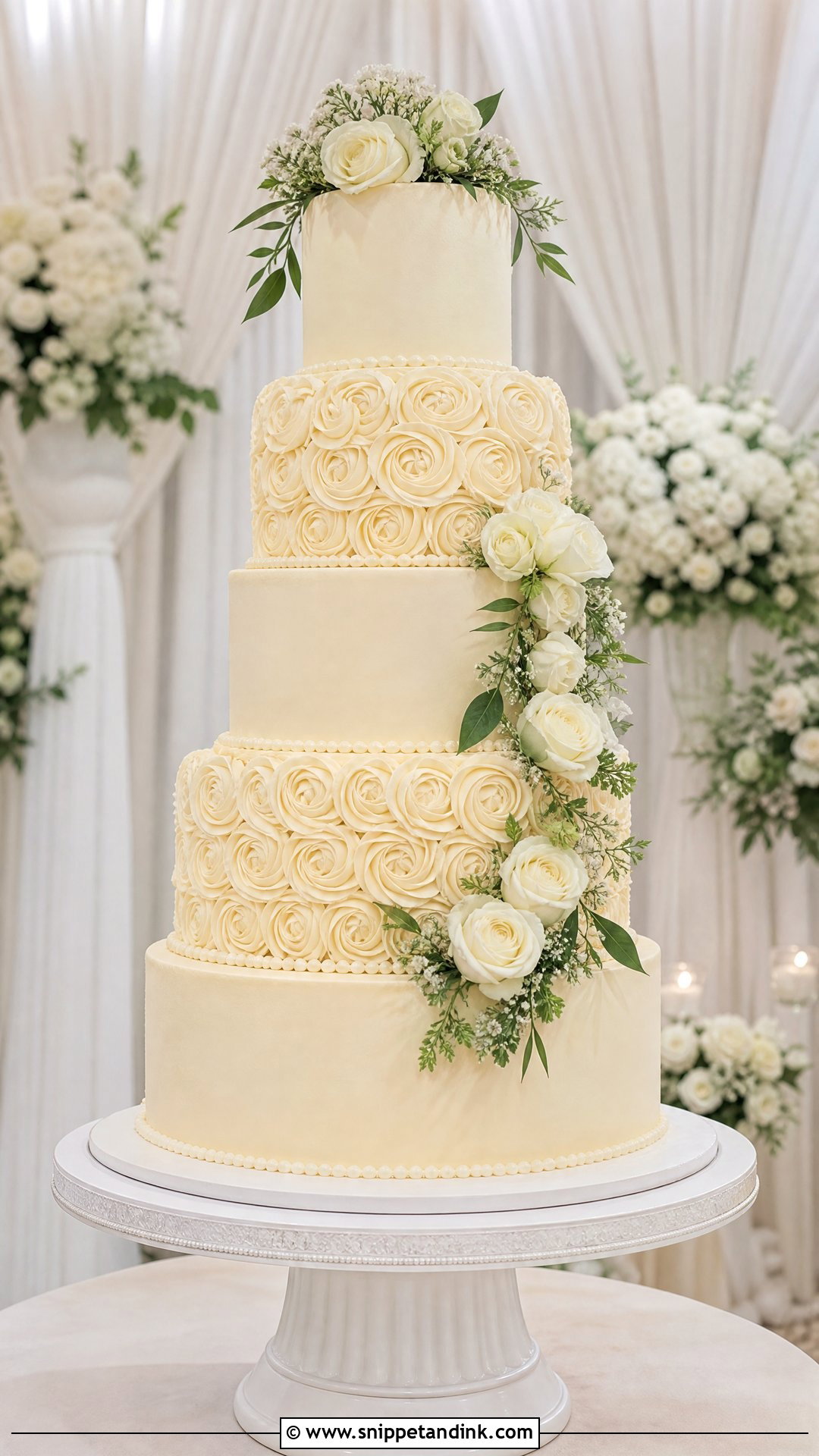
Four or five tiers of rosettes is a lot of buttercream, and weight is the real issue. Every tier needs its own board and supports, and a cake this size usually needs a central dowel through all the tiers so nothing shifts in transit or on the table. That’s experienced-baker territory. To keep it from looking heavy, vary the rosette size by tier or add smooth spacer tiers. White, ivory or a soft ombre suit the scale. Set it where it gets good side lighting, which brings out the shadows in the piping.

15. Rosette Wedding Cake With Fresh Flowers
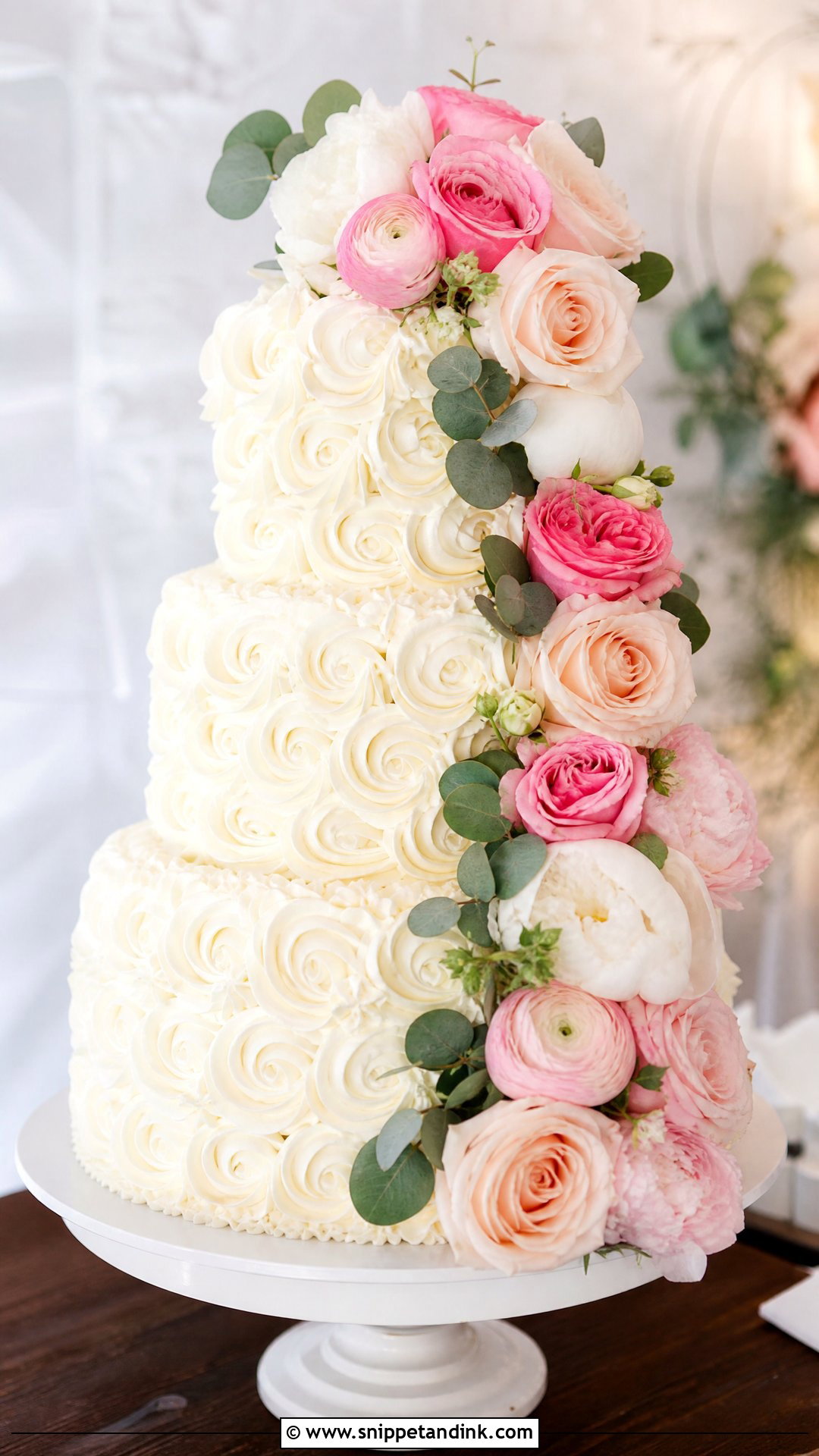
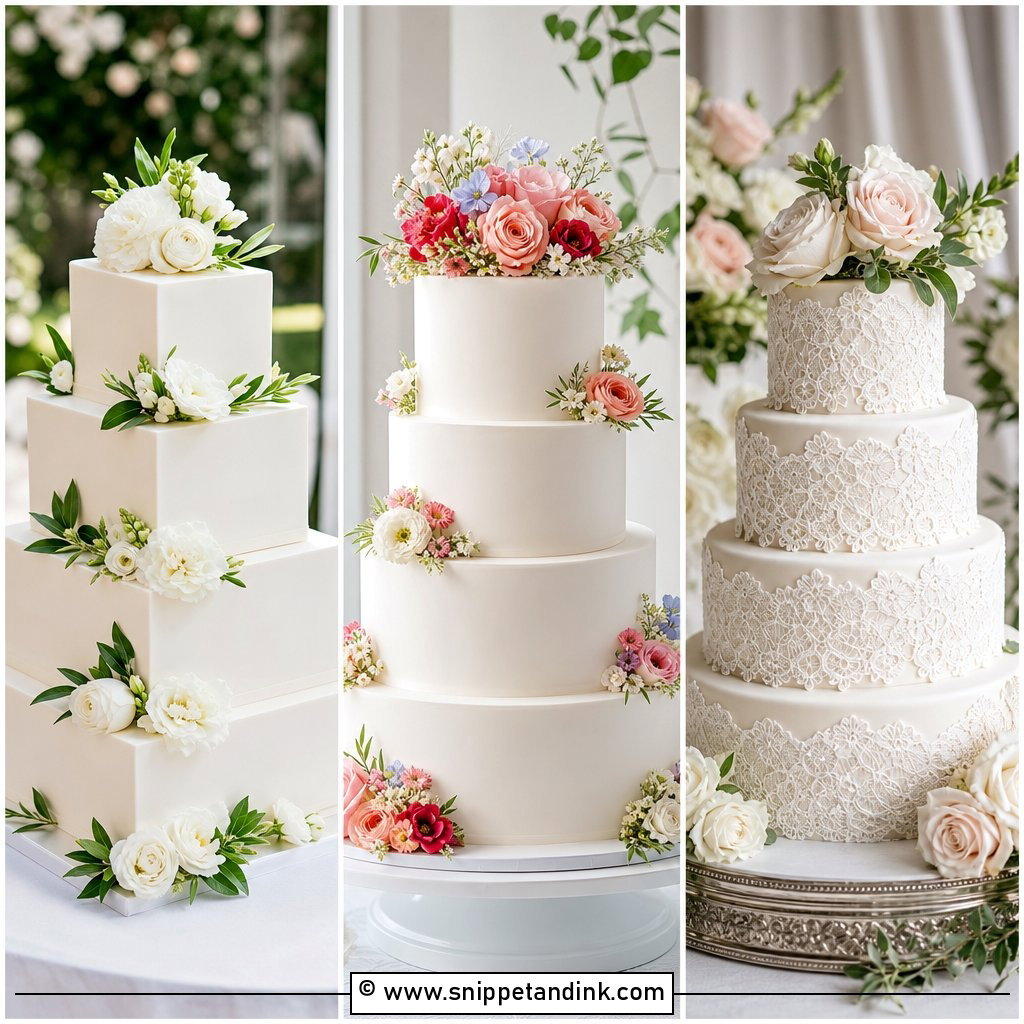
Real flowers and piped ones can share a cake if the real ones stay in a supporting role. I place blooms at the top, along one side or around the base, never scattered across the rosettes, or the piping disappears. Roses, ranunculus, peonies and greenery suit most weddings. Your florist and baker need to agree on which flowers are safe near food and how the stems are protected. White, ivory, blush and pale peach bases all work, with lemon or champagne cake inside.
16. Rosette Wedding Cake With Pearls
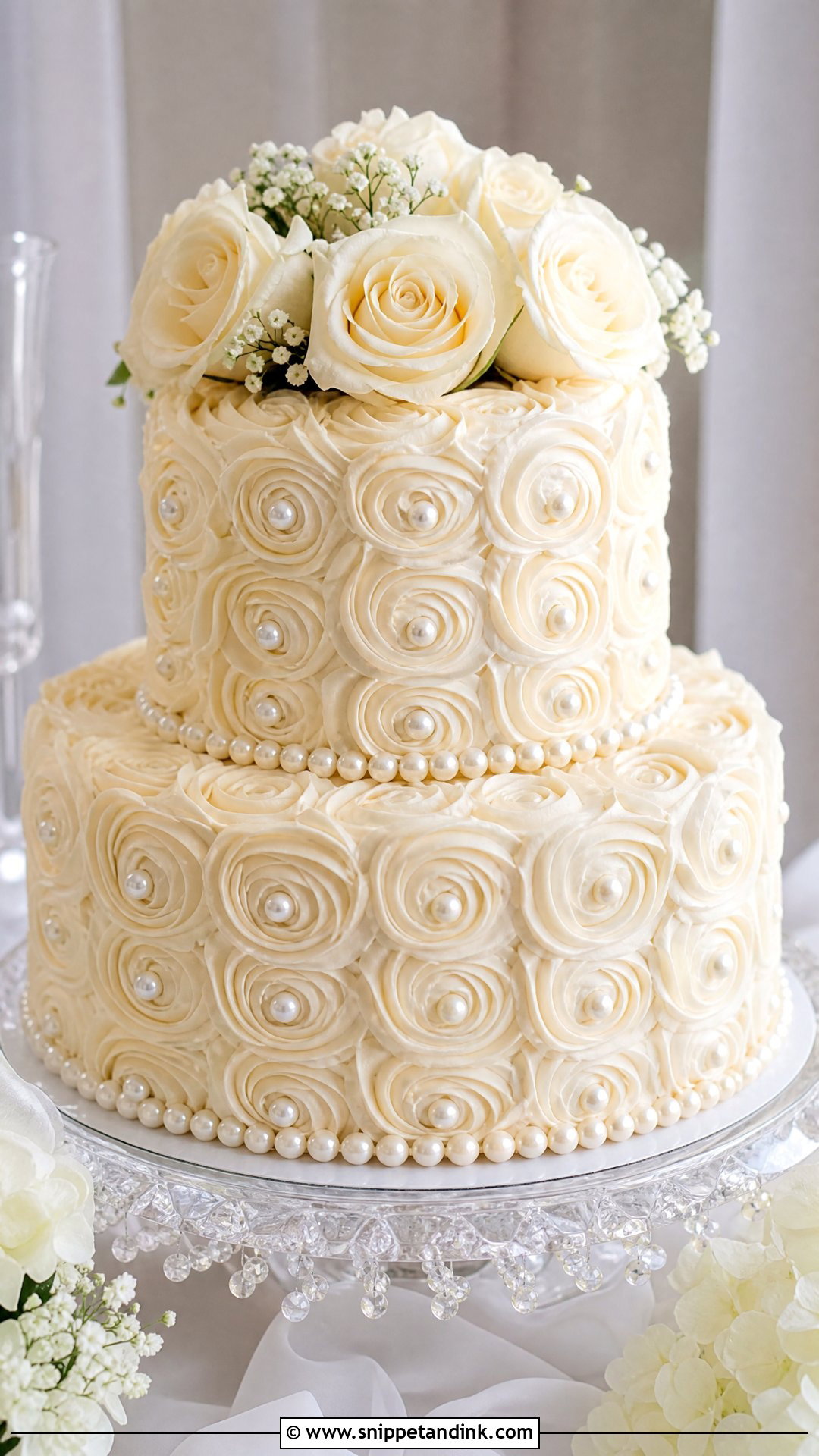
Small edible pearls set into the centers of rosettes make each one look finished, like the middle of a bloom. I press them in while the buttercream is still soft, because once it crusts they just roll off. They can also scatter between swirls or form borders between tiers. Restraint matters; too many and the cake looks crowded. White or ivory is the classic base, though blush and champagne work too, on a crystal, silver or white pedestal with almond or coconut cake inside.
17. Rosette Wedding Cake With Greenery
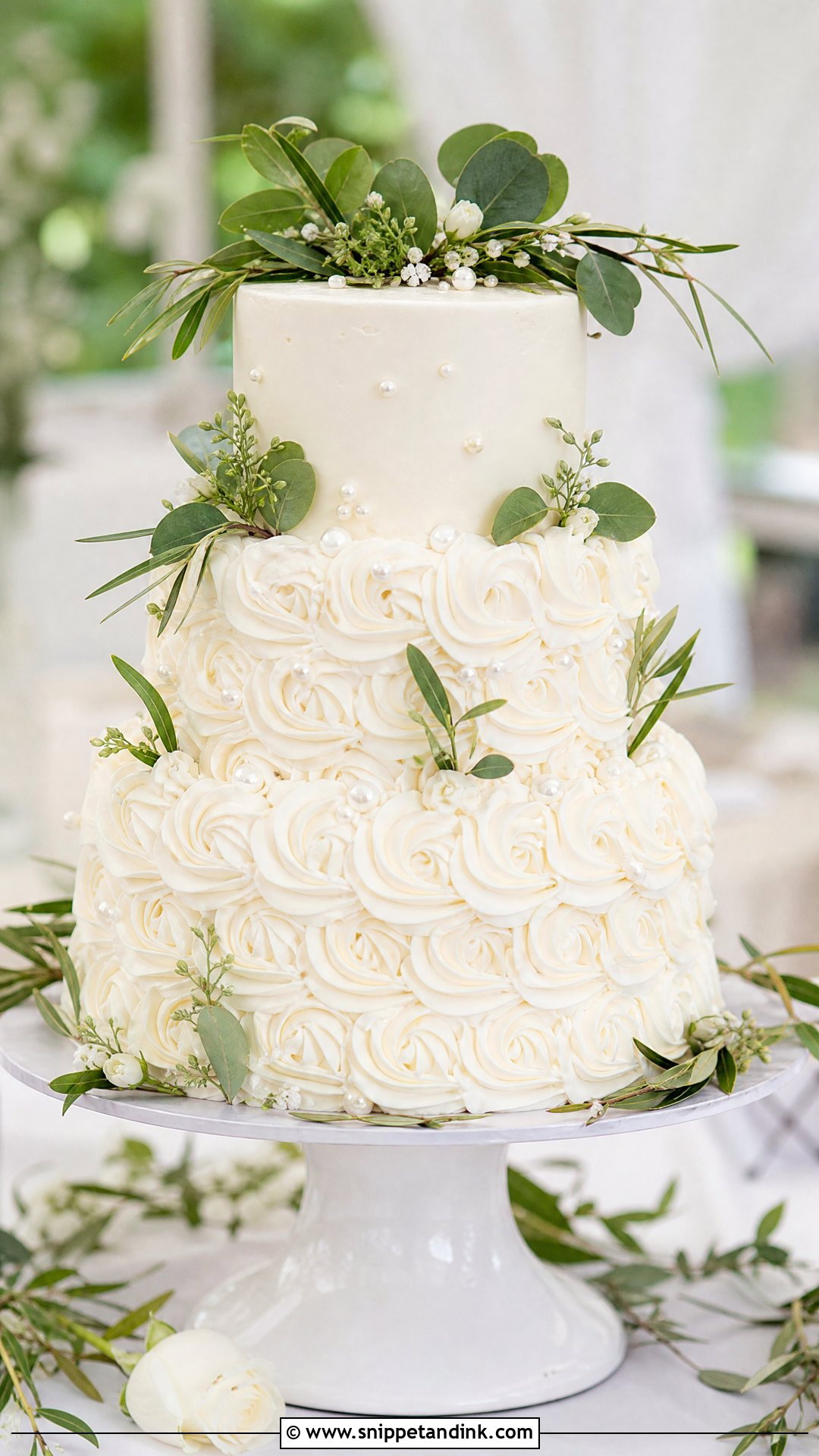
Not all greenery belongs on a cake. Eucalyptus is widely used but is toxic if eaten, so I wrap its stems and keep it away from anything that gets sliced, while rosemary and olive leaves are food-grade and easier to work with. Against white or ivory rosettes, greenery gives a fresh, organic finish at outdoor weddings, greenhouses and rustic receptions. Keep it at the base or cascading lightly down one side so the rosettes stay visible. For a more modern take, use a smooth top tier and pipe rosettes only below. Lemon or coconut cake fits the bright look.
18. Rosette Wedding Cake With Roses
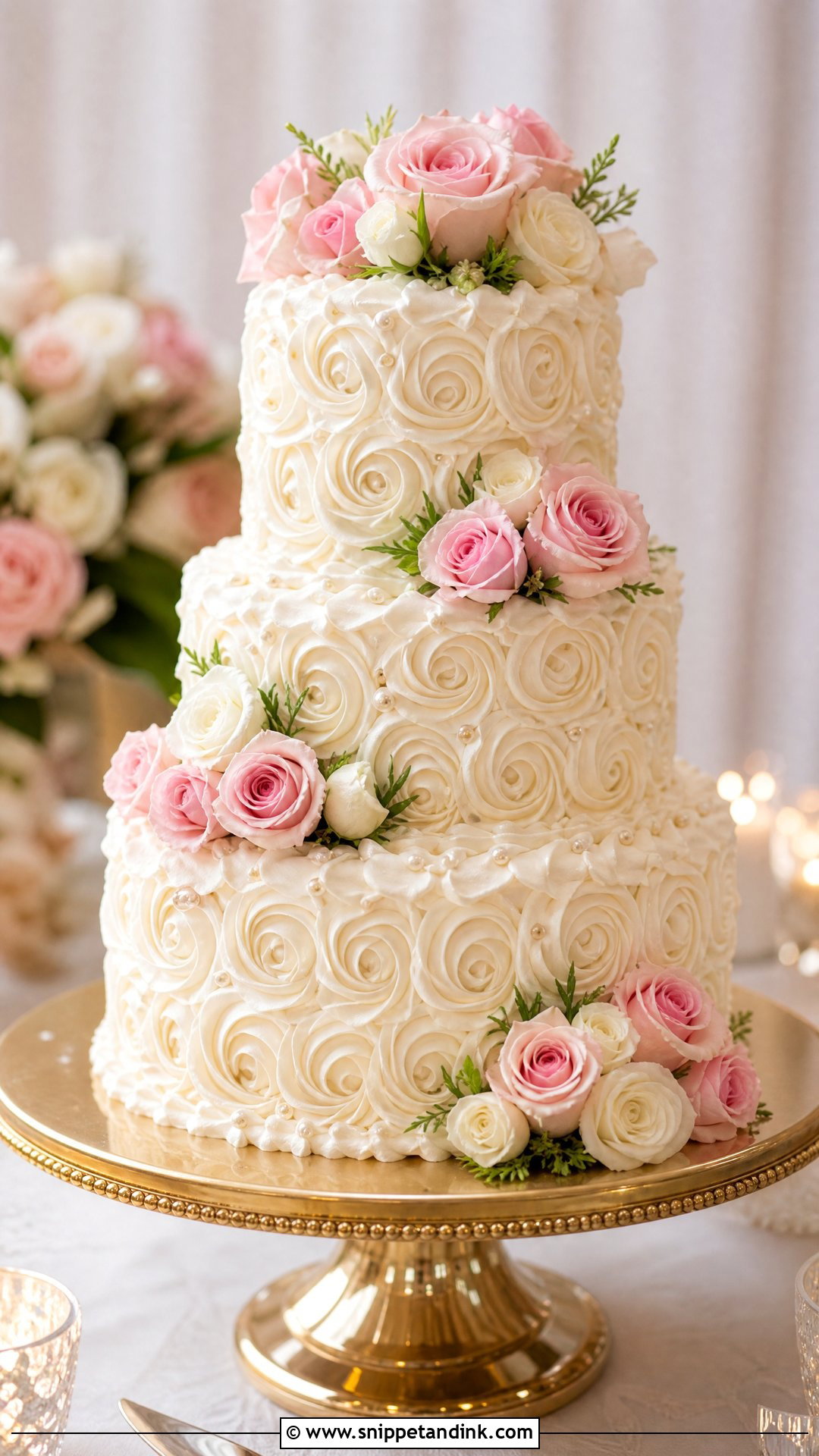
Here the buttercream rosettes act as a background, and real roses add dimension and color on top. White roses look classic, blush is softer and deep red makes a dramatic palette. Clusters work better than scattering. Red roses need a check: damp dark petals can bleed color onto pale buttercream, so they go on dry and close to the reception. A three tier ivory rosette cake with fresh roses suits garden, ballroom and estate weddings, paired with vanilla raspberry or champagne cake.
19. Rosette Wedding Cake With Lace
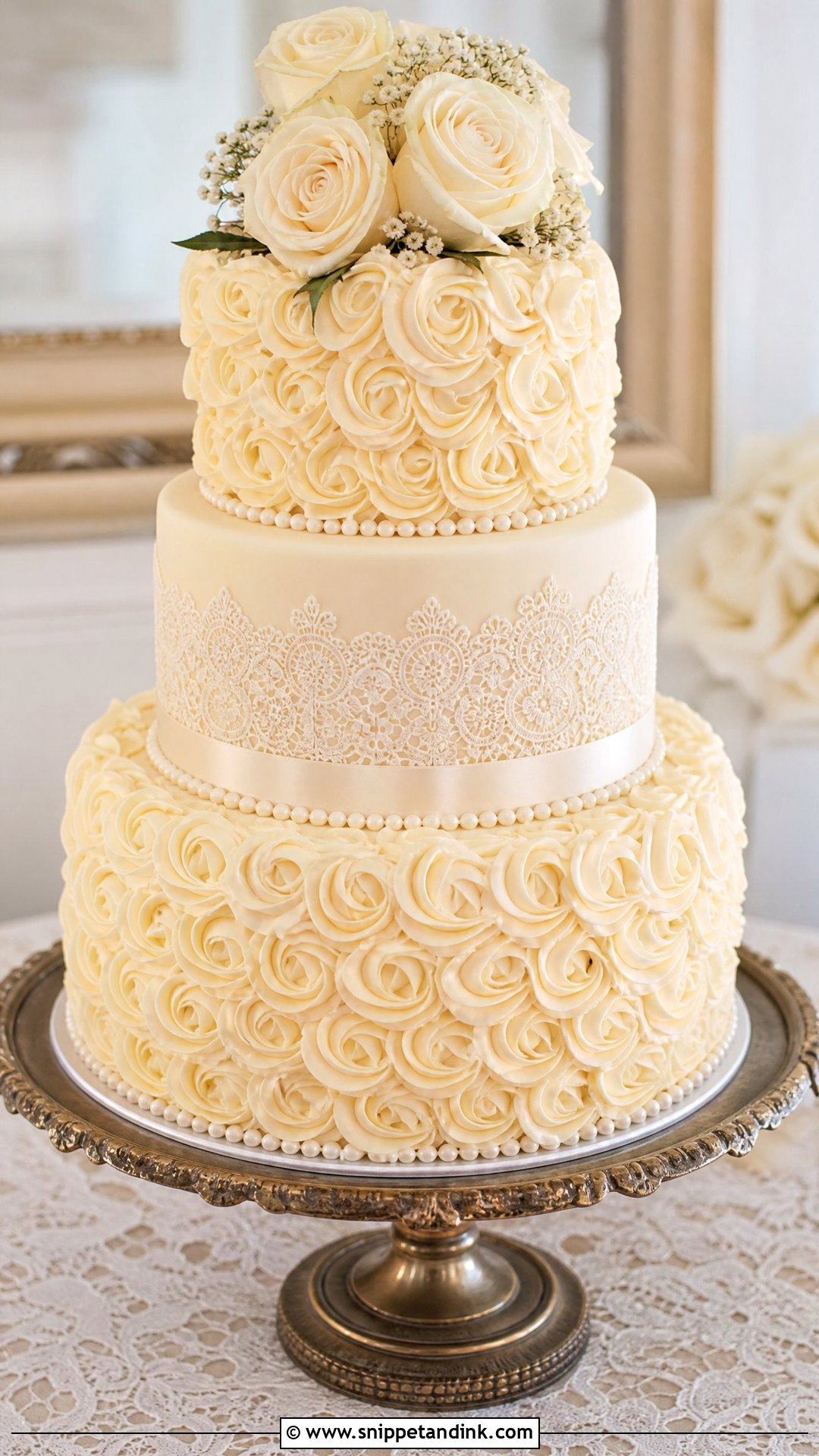
Rosettes and lace both carry a lot of texture, so I keep them on separate tiers: lace on one smooth tier, rosettes on the others. The lace can be piped or cut from edible lace panels. Ivory works especially well here because it looks warm and antique. Tiny pearls or a satin ribbon finish it, and romantic gowns and vintage venues suit it. Almond or coconut cake works inside, and soft lighting with simple flowers keeps the focus on the detail.
20. Rosette Wedding Cake With Ribbon
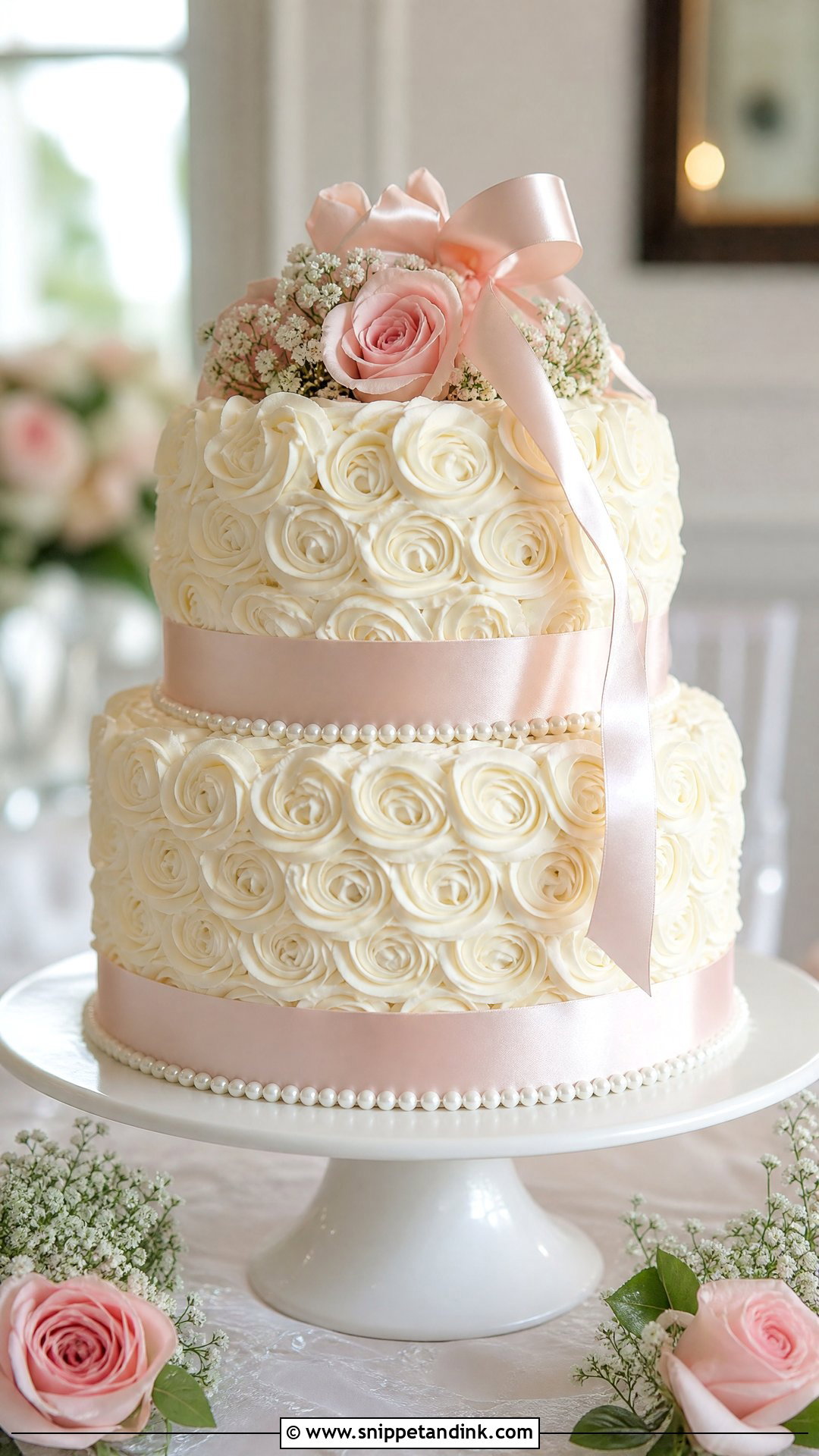
A satin ribbon around the base of each tier gives clean lines against the soft rosette texture. The ribbon has to sit somewhere, though, so I pipe the bottom row slightly smaller or leave a smooth band for it to rest on. Satin soaks up butter, so it needs an acetate strip behind it or a backed ribbon. Blush, champagne, dusty blue, sage and ivory are popular. It’s a good route to color without many flowers or toppers. Match the stand to the ribbon tone.
21. Rosette Wedding Cake With Cake Topper
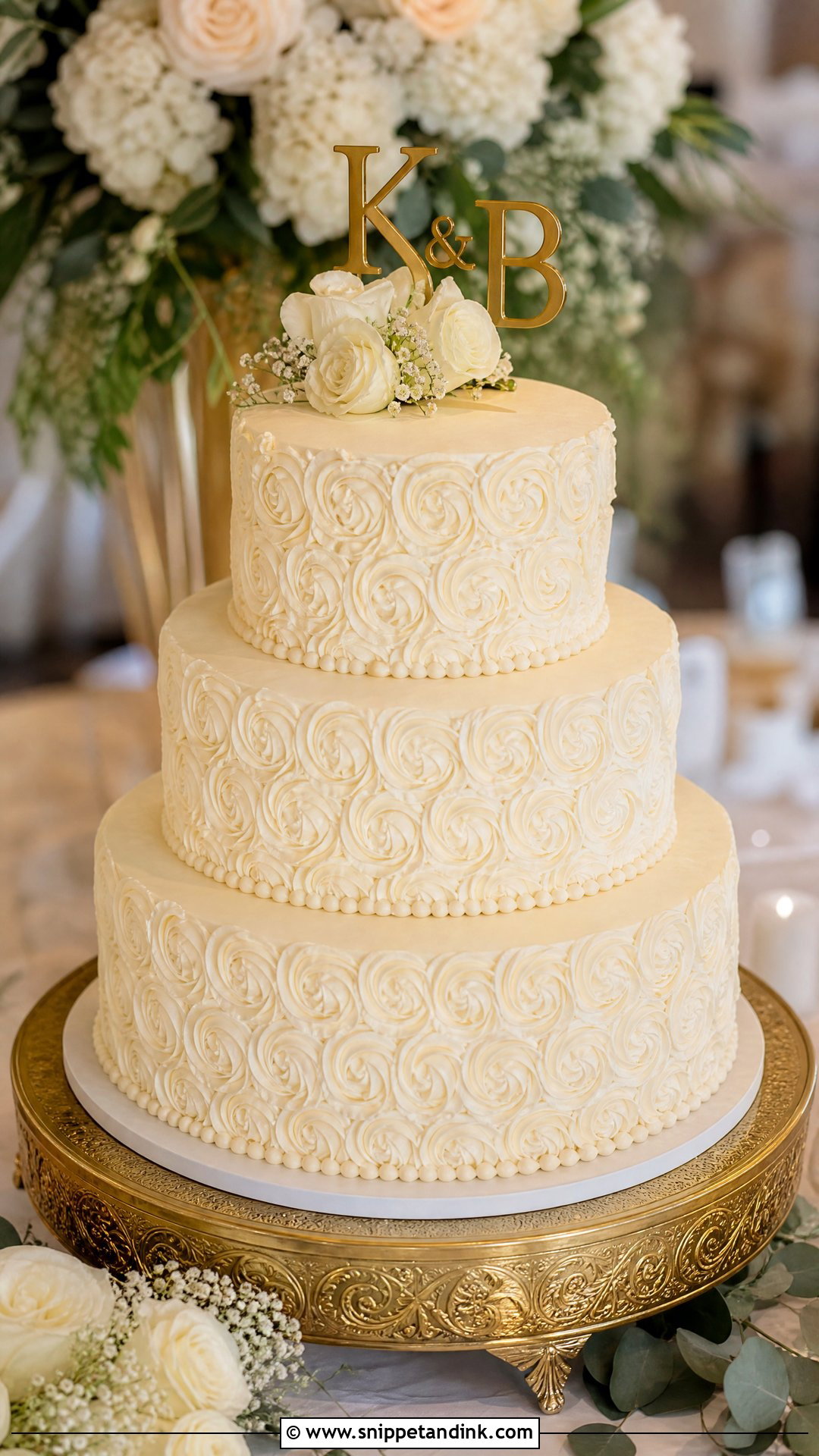
Toppers personalize the cake, from a simple last name to initials, a small “Mr. and Mrs.” sign or a clean acrylic piece. Rosettes already add plenty of texture, so I’d choose a topper with simple lines in gold, silver, white or clear acrylic. The practical point is footing: rosettes across the top leave nothing flat for the topper’s stakes, so I leave a smooth patch in the center of the top tier. It works on one, two or three tiers, with any flavor.
22. Square Rosette Wedding Cake
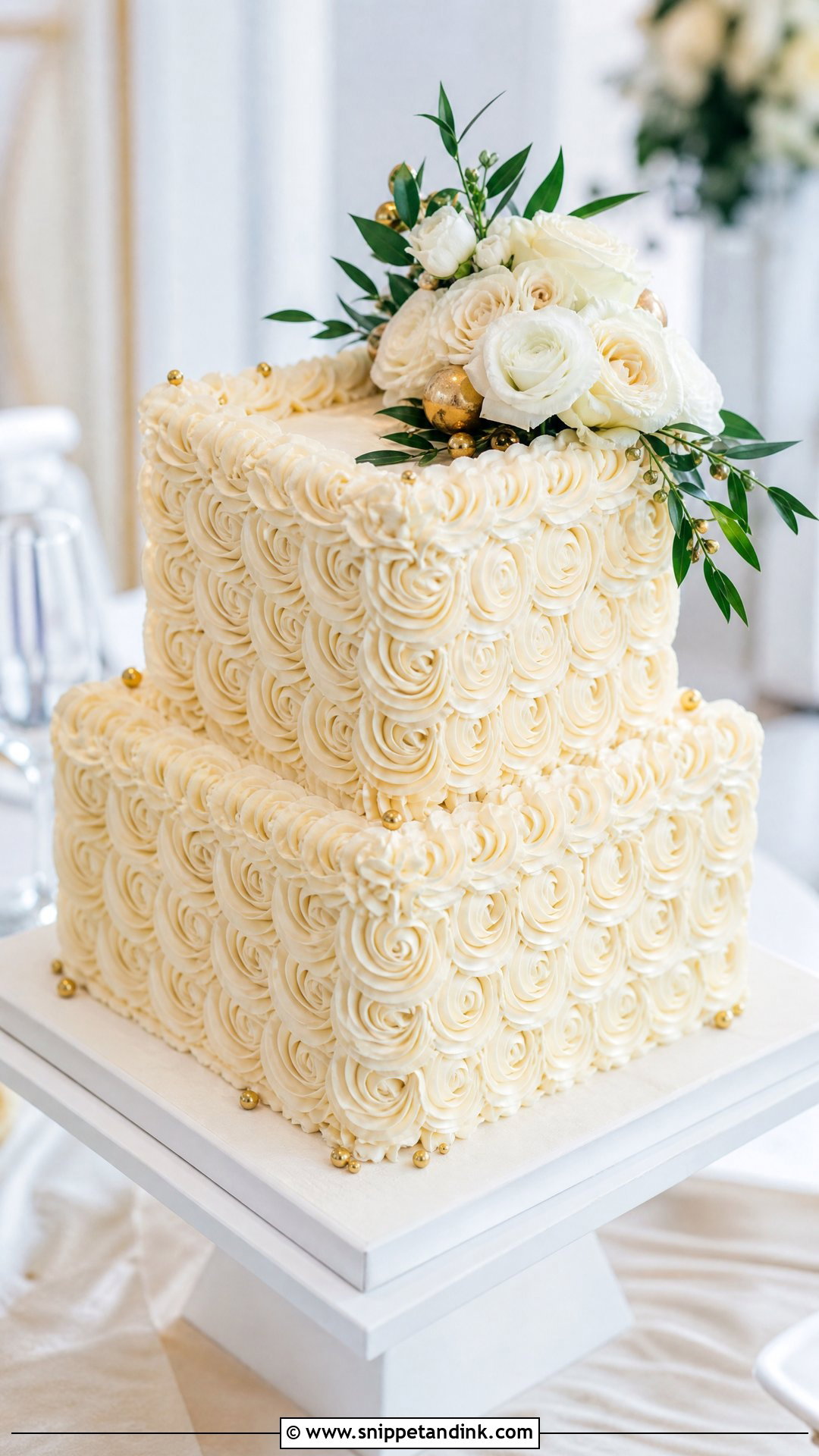
Square tiers make rosettes look more structured. The corners are the hard part, because a rosette has to wrap the edge without leaving a gap or looking squashed, so I pipe the corners first and fill the sides between them. White, ivory, blush and champagne are the easiest colors. A small flower cluster on one corner or a simple metallic topper balances it. Square tiers also cut into neat portions for larger receptions. Vanilla bean or chocolate with buttercream filling suits it.
23. Round Rosette Wedding Cake
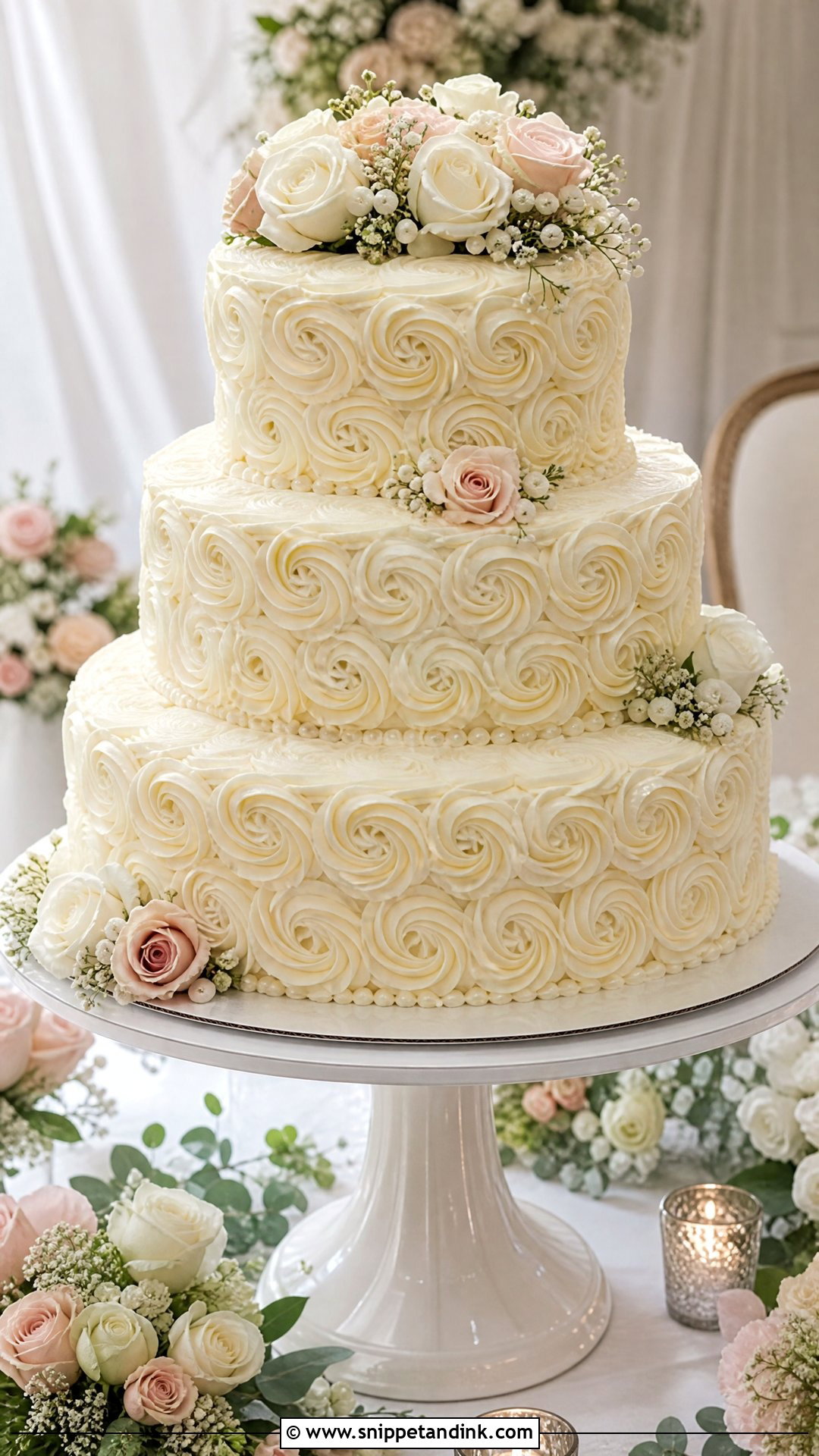
This is the version most people picture. Rosette piping is circular, so it follows a round tier naturally, row after row, with no corners to solve. It can be a single tier or a large multi-tier cake. Round rosette cakes look classic in white and work equally well in blush, lavender, peach or ombre. Flowers, pearls, greenery or a small topper can follow your theme, and almost any flavor sits happily underneath.
24. Semi Naked Rosette Wedding Cake
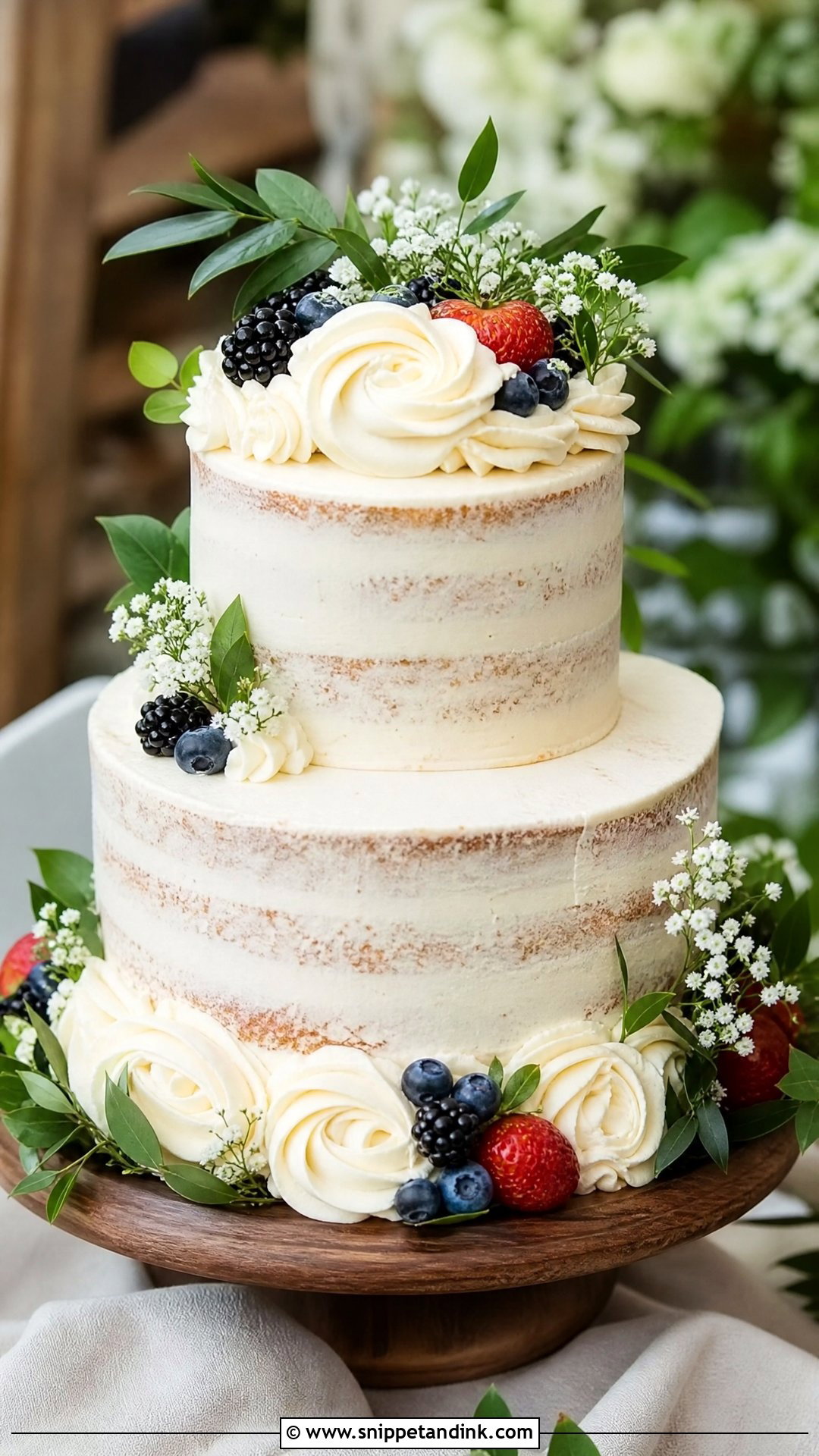
For a lighter take, a semi naked rosette wedding cake has thin frosting scraped back on the sides, with rosette clusters on selected tiers or around the base. Exposed sponge dries faster, so I brush the layers with syrup and assemble as close to delivery as I can. It suits barn weddings, gardens and relaxed outdoor celebrations. Lemon, carrot and almond look good with the layers peeking through, and fresh berries, greenery or small flowers add a natural finish.

25. Rosette Wedding Cake With Drip
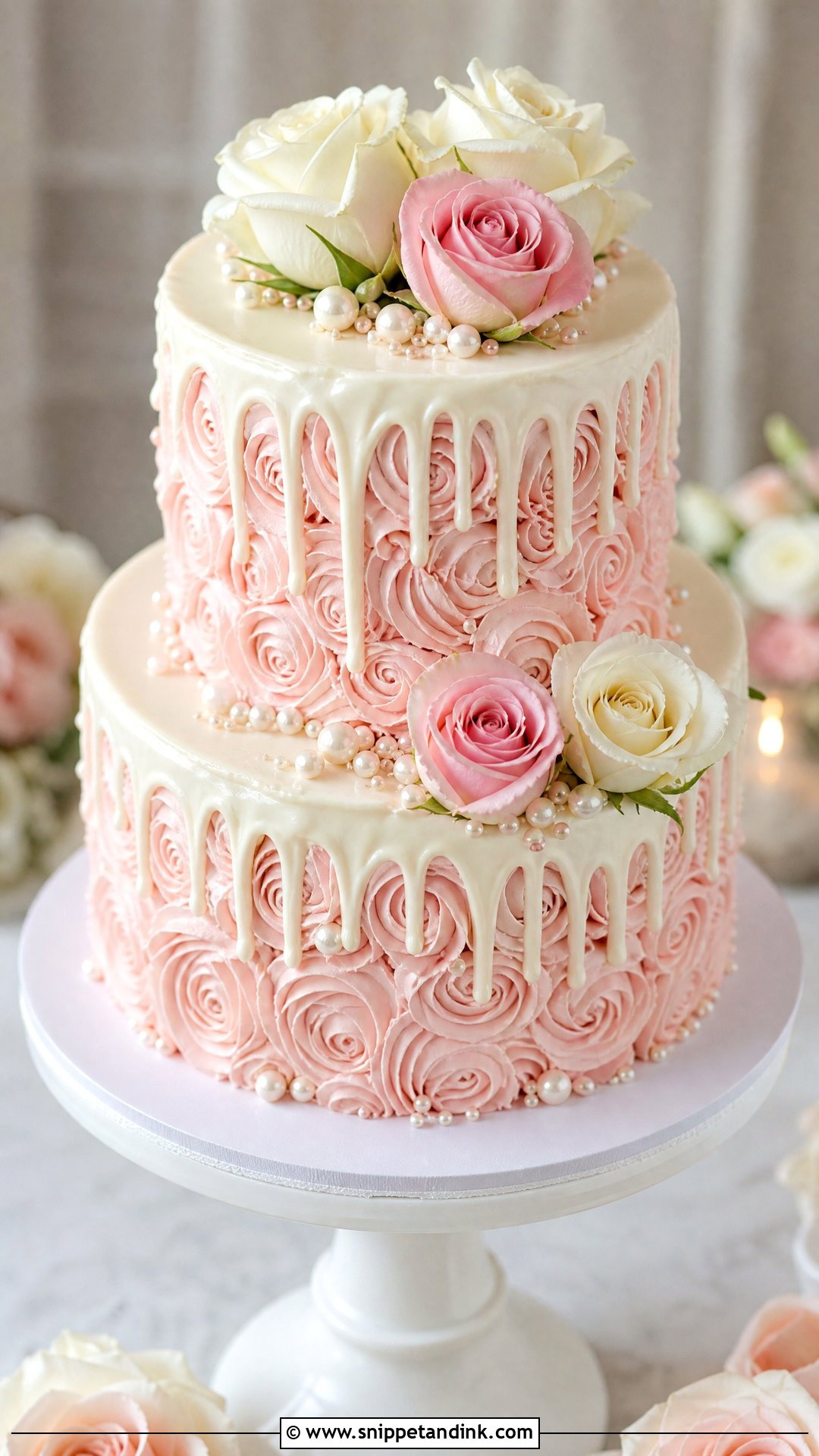
Drips and rosettes compete for the top edge, so I leave a smooth band around the top for the drip, pour it onto a chilled cake, and pipe the rosettes beneath once it has set. White chocolate, caramel or pastel drips all work, and a cool drip stops short instead of running into the piping. Blush rosettes with a white drip, or ivory with caramel, suit couples who want something romantic but not traditional. Flavors like vanilla caramel, chocolate raspberry, lemon or strawberry make the inside as interesting as the outside.
26. Chocolate Rosette Wedding Cake
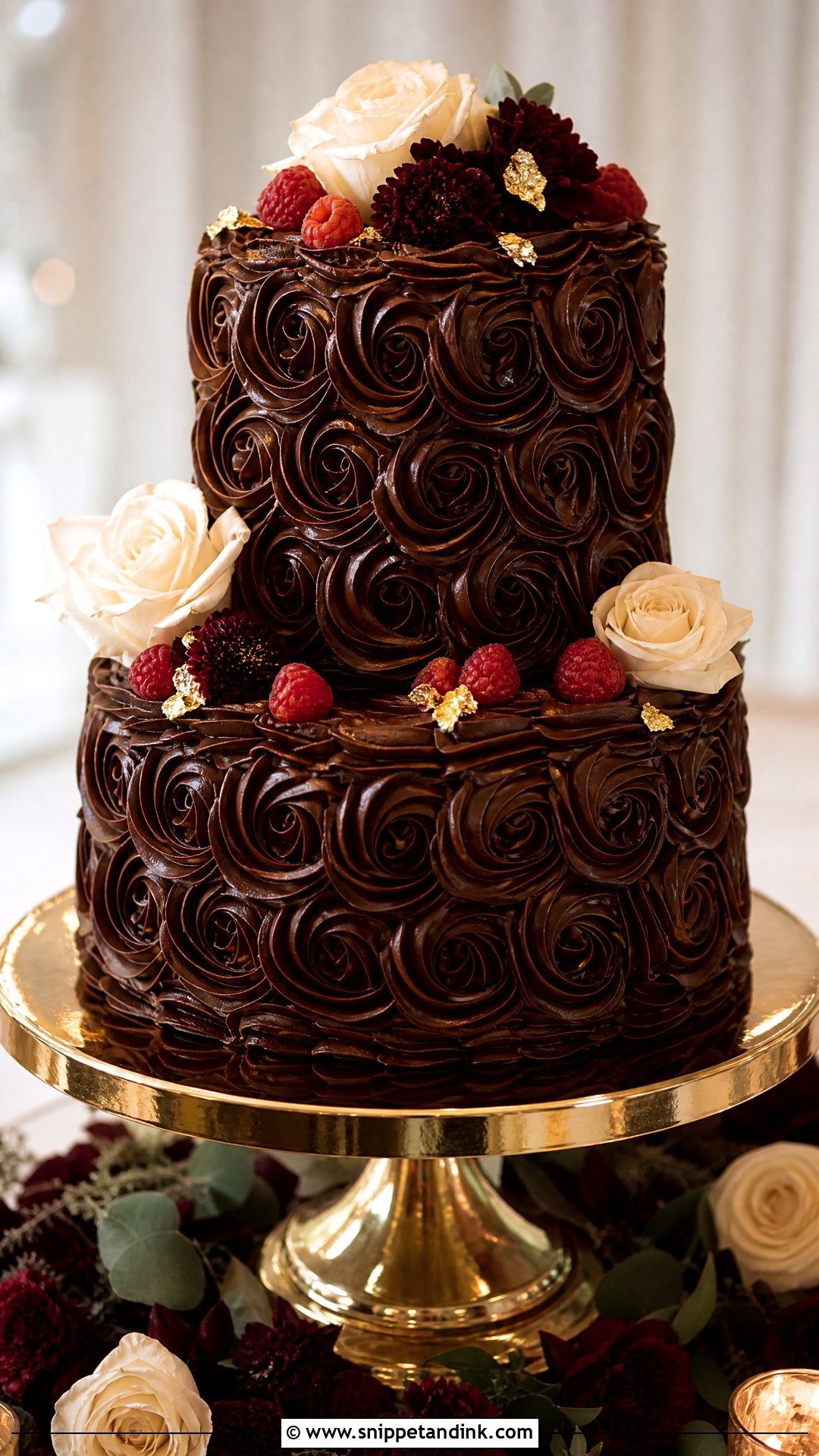
Dark chocolate buttercream gives a bold, rich finish, especially with gold accents, fresh berries or ivory flowers. Ridges are harder to see in dark frosting, so I’d choose larger rosettes here; small ones read as a blur from a distance. For a more classic look, keep chocolate cake inside and pipe ivory vanilla rosettes outside, so guests get the flavor and the cake stays bridal. Raspberry, mocha and salted caramel make good fillings. A gold or black stand suits a modern reception.
27. Red Velvet Rosette Wedding Cake
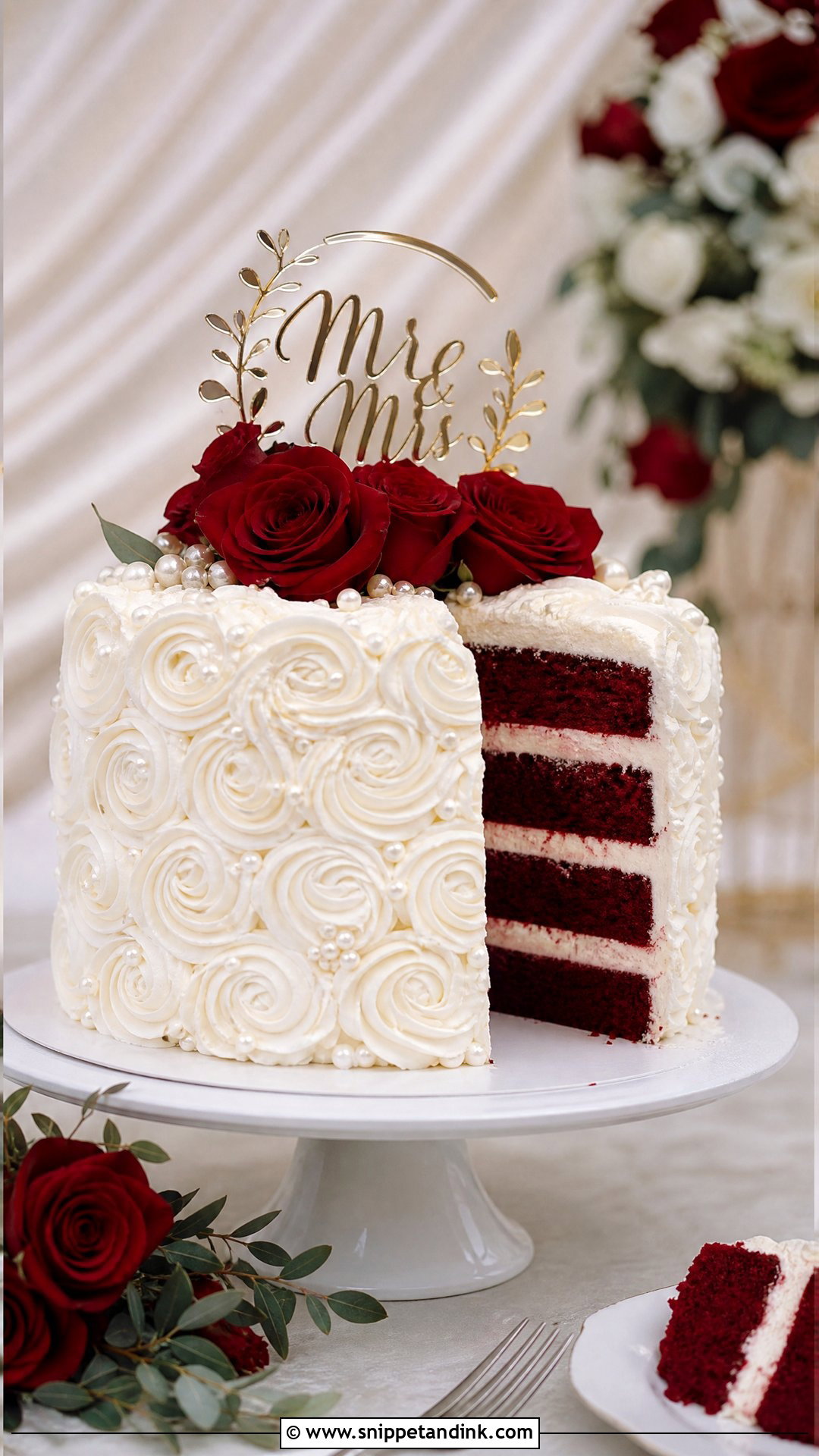
This is a reveal cake: ivory or white rosettes outside, deep red crumb once it’s sliced. Cream cheese frosting is the traditional partner, but it’s too soft to hold rosette ridges for long, so I fill with cream cheese and pipe the outside in a firmer buttercream. Red roses, small pearls or a gold topper can hint at the inside without making the cake look intense. Formal weddings and evening receptions with rich palettes suit it.
28. Lemon Rosette Wedding Cake
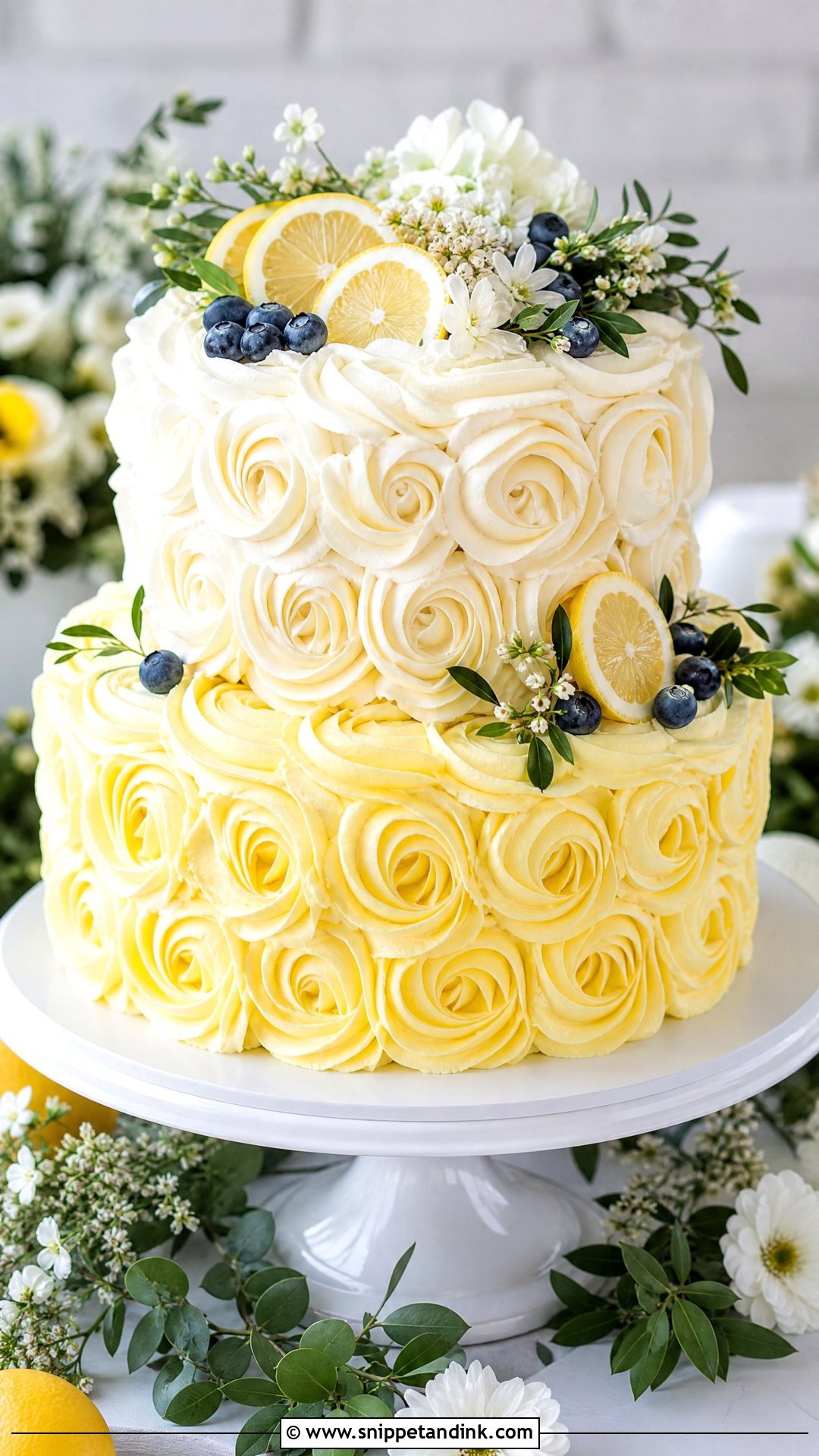
Lemon is the flavor I suggest most for spring and summer, because it cuts through all that buttercream. Pale yellow rosettes look soft and cheerful, while white rosettes with lemon curd filling keep the outside traditional. Curd needs a stiff buttercream dam around each layer, or it pushes out the sides and dents the piping. Fresh flowers, lemon slices, blueberries or light greenery finish it. Keep yellow frosting gentle so it still reads bridal, and set it on a white stand.
29. Strawberry Rosette Wedding Cake
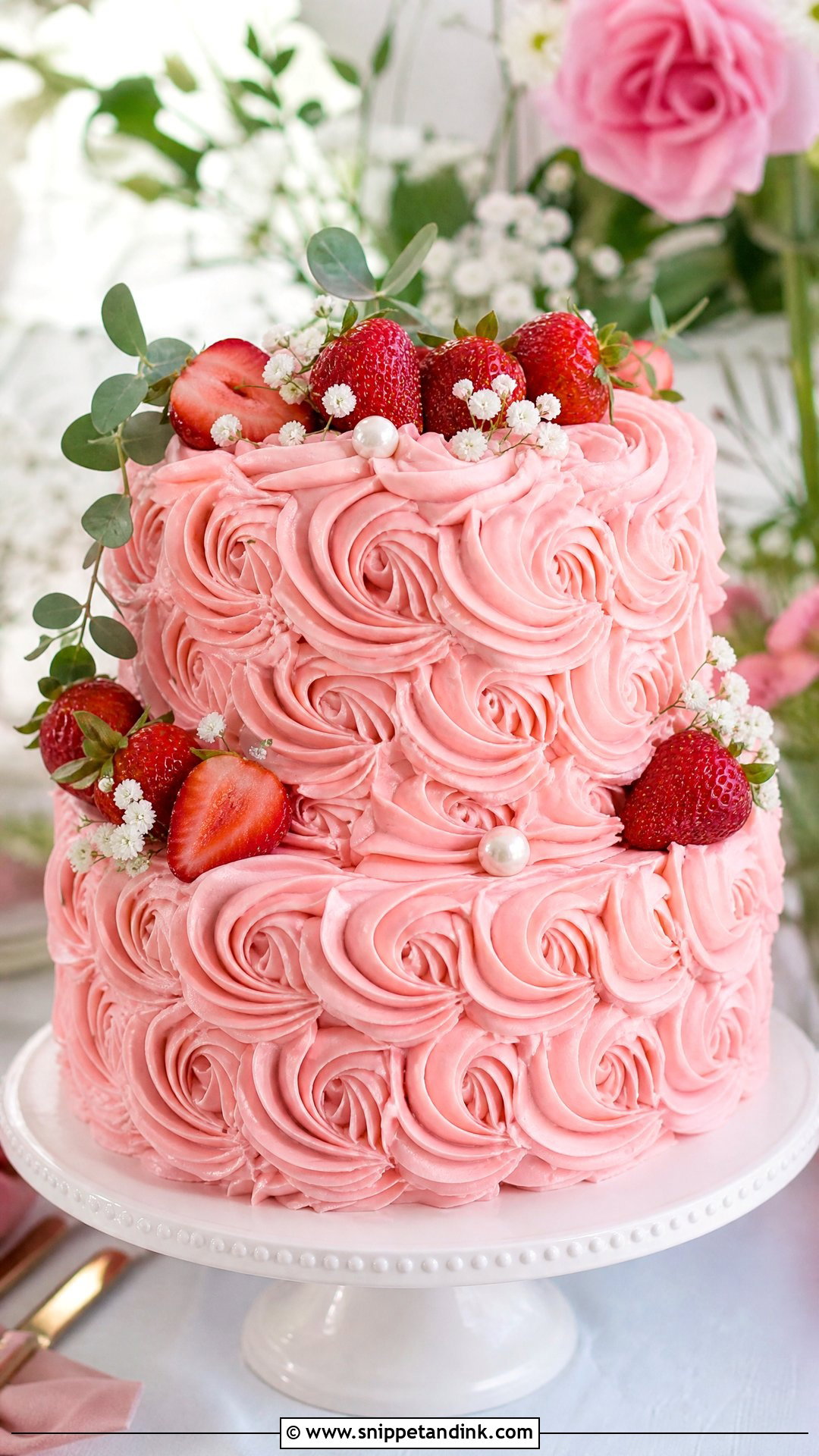
Freeze-dried strawberry powder gives buttercream a natural soft pink and a flavor artificial versions can’t match. Fresh puree thins the frosting and blurs the rosettes, which is why I use the powder. Pink strawberry rosettes, white buttercream with strawberry filling or a blush ombre all work. Fresh berries at the base or on top need to be placed neatly. Vanilla or champagne cake balances the fruit at garden and outdoor receptions, and small white flowers or pearls make it look less casual.
30. Lavender Rosette Wedding Cake
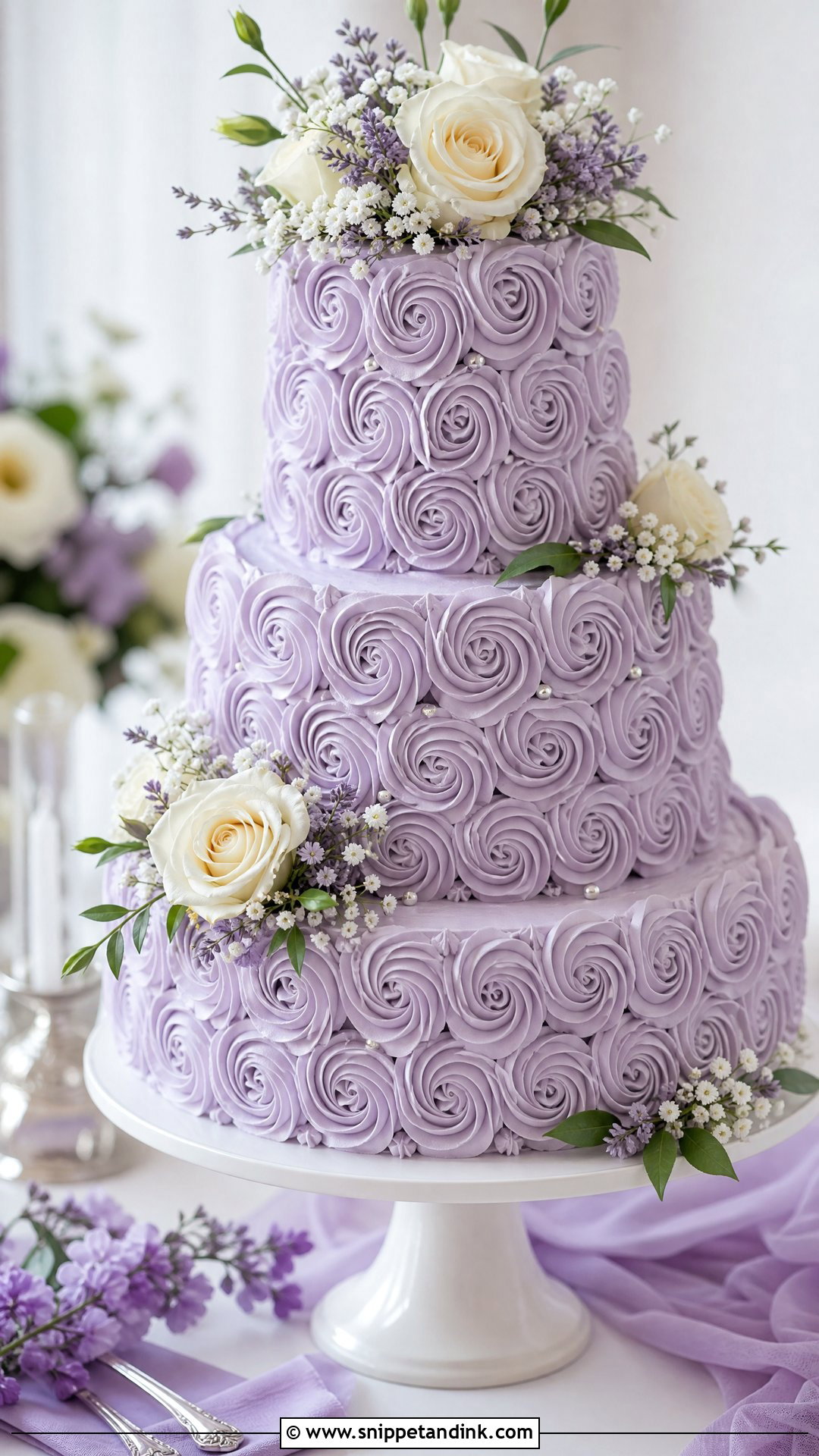
Purple buttercream can drift grey or blue as it sits, and fades under sunlight, so I tint lavender a touch warmer than the target and keep the cake covered until display. Pale, muted lavender rosettes look elegant with ivory flowers, silver accents, greenery or pearls at spring and garden weddings. It can be color only, or you can flavor the cake with it alongside lemon, honey or Earl Grey; culinary lavender is strong, and a heavy hand makes it taste like soap. Two or three tiers with white blooms and a plain stand suit it.
Every Slice Carries Extra Buttercream
A rosette finish puts a much thicker layer of frosting on the outside of the cake than smooth icing does, and guests notice it on the plate. If you or your families don’t love sweet frosting, I’d steer you toward a less-sweet meringue buttercream, a tart filling like lemon curd or raspberry, or simply thinner slices. Some couples put rosettes on the display tiers only and serve a smooth kitchen cake to guests.
Cutting is messier too. The ridges drag under a cold blade and smear across the slice, so whoever cuts should dip the knife in hot water and wipe it dry between every cut. It sounds fussy, but it’s the difference between neat plated slices and torn ones, and most caterers will happily do it if someone tells them beforehand.
Dents happen in the van
Rosettes stick out, so they’re the first thing a box wall or a careless hand flattens. A good decorator brings a bag of matching buttercream to the venue and repairs any damage on site, so ask whether yours does. Once the cake is set up, keep the dessert table out of walkways. A brushed sleeve can flatten a whole row in a second.
Ask to See Their Rosettes Up Close
Rosettes can go simple, dramatic, vintage, rustic, modern or colorful and still look soft. The texture makes a small cake look generous and gives a tall one a full floral finish without much else on it. White and ivory never date, while blush, champagne, lavender, pink and ombre match the cake to your palette. Pick a flavor you love and keep the extras balanced. Before you book, ask for close-up photos of the baker’s rosette work: even spacing and crisp ridges tell you more than any styled shot.
You'll Like These Ideas:








Leave a Reply