
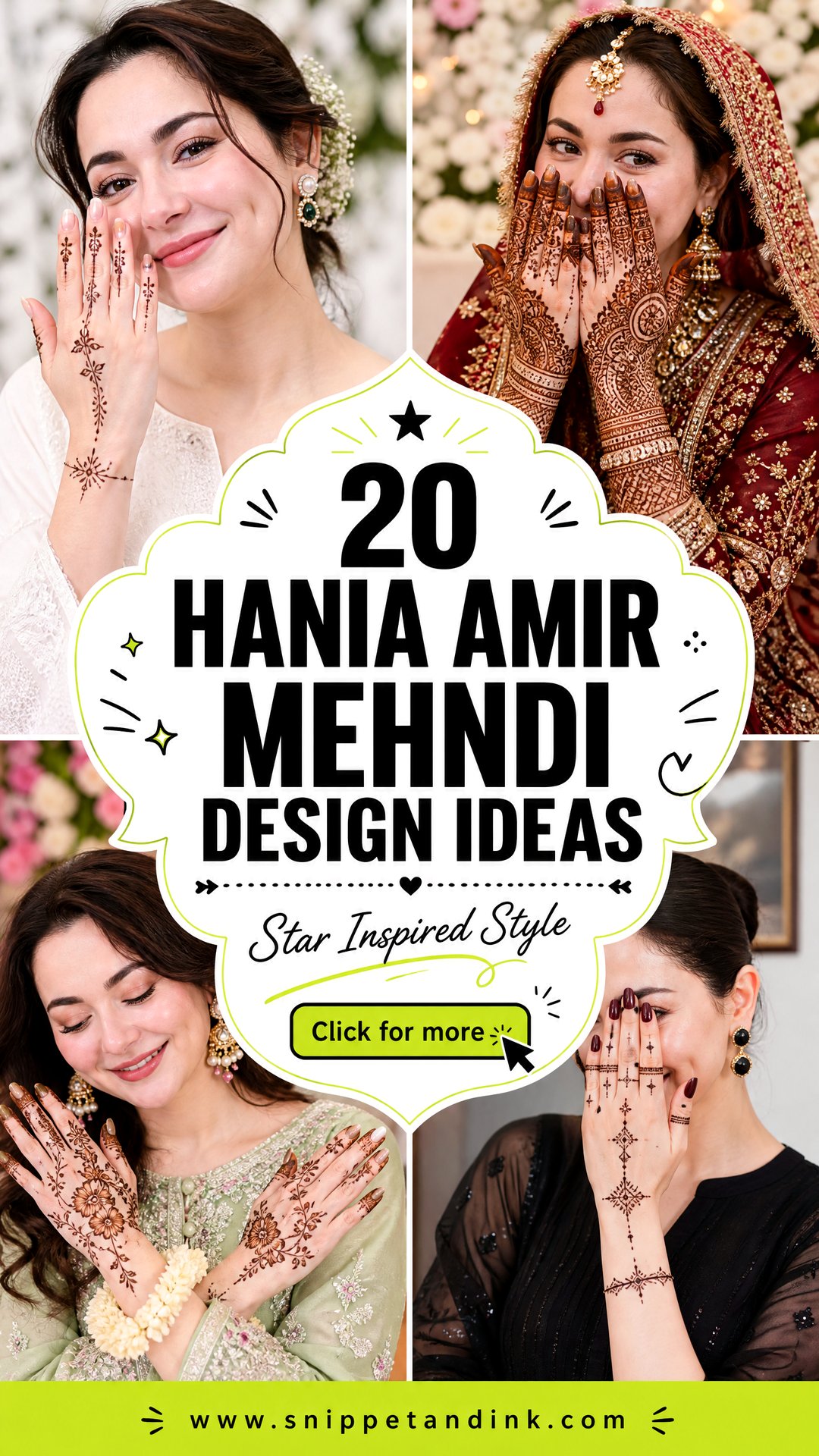
When someone shows me a Hania Amir photo at a booking, what they usually want isn’t a specific pattern. It’s a feeling: fresh, youthful, lightly done, with room left between the motifs so the skin shows through. That spacing is the signature, and it suits Eid, dholki, engagement and nikkah events as much as the main wedding. Below are twenty designs in that spirit, from a single finger trail to full bridal coverage, with notes on how each one stains, how long it takes and what kind of hand it flatters.
Turning a Celebrity Photo Into a Design That Fits Your Hand
A photo from social media is a starting point, not a template. The hand in it has its own size, finger length and skin tone, and often a filter on top. Here’s what I adjust when someone brings one in.
Scale
Small hands and short fingers need smaller motifs and fewer of them. A large flower copied onto a small palm crowds it. On long, slim hands I can stretch a trail further toward the fingertips.
Stain colour
Photos are often edited to look deeper or redder. Your own stain depends on your skin, body warmth and aftercare. Palms and fingertips go darkest; the back of the hand and forearm stay lighter.
Your event
Tell your artist which function the mehndi is for and what you’re wearing. A design for a dholki can be playful; one for a nikkah usually wants to be softer.
Sitting time
Airy designs are quick, but fine line work is slow, and the paste then needs hours to stain. If you have a tight schedule on a function day, say so at booking. I’d rather simplify a design than rush the lines, because shaky outlines show more in a dark stain than in a light one.
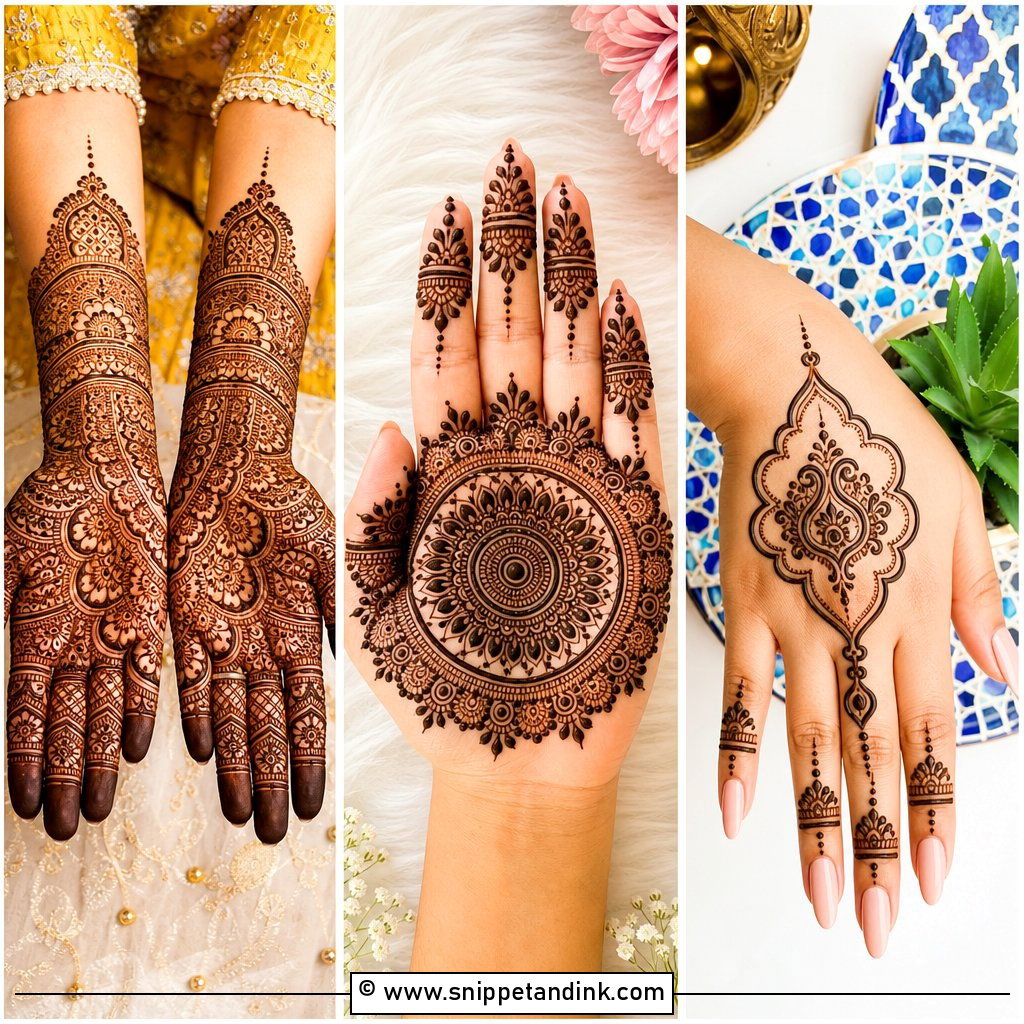
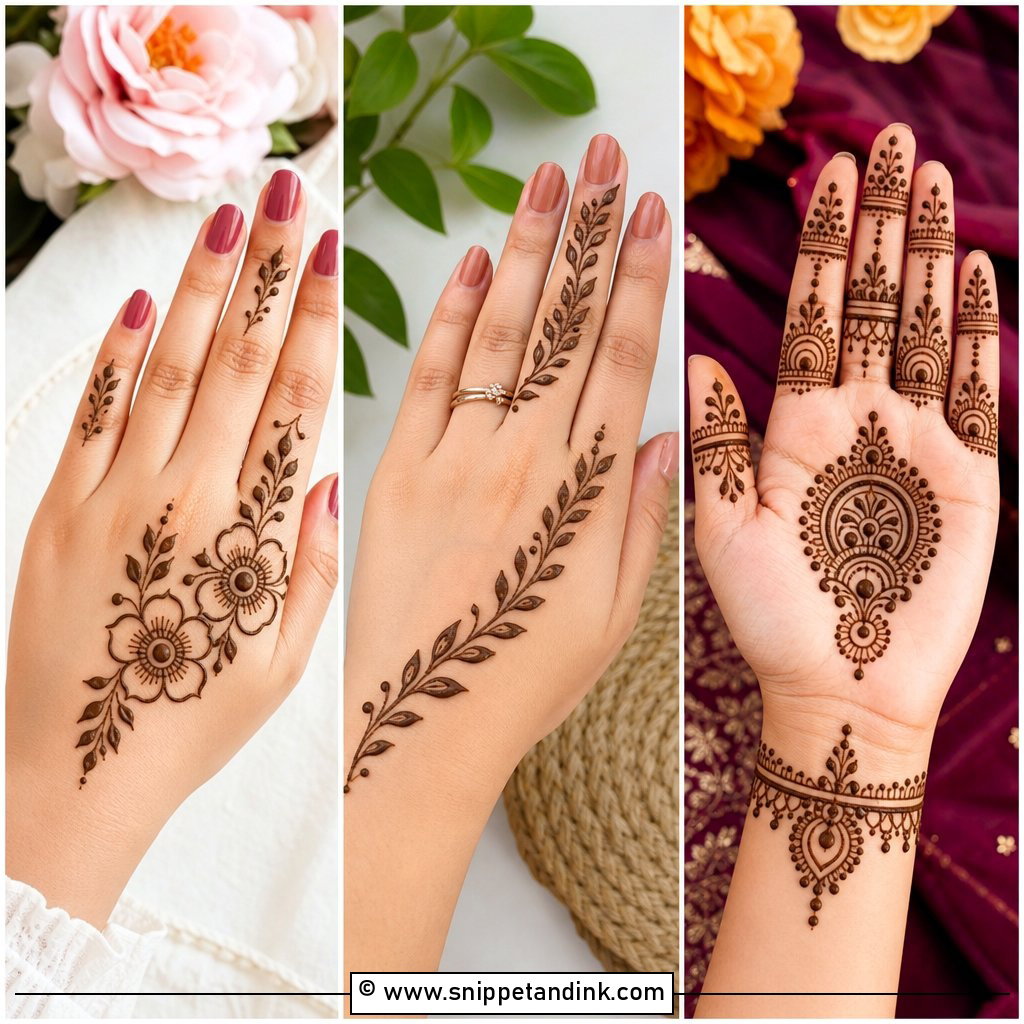
1. Hania Amir Simple Front Hand Mehndi
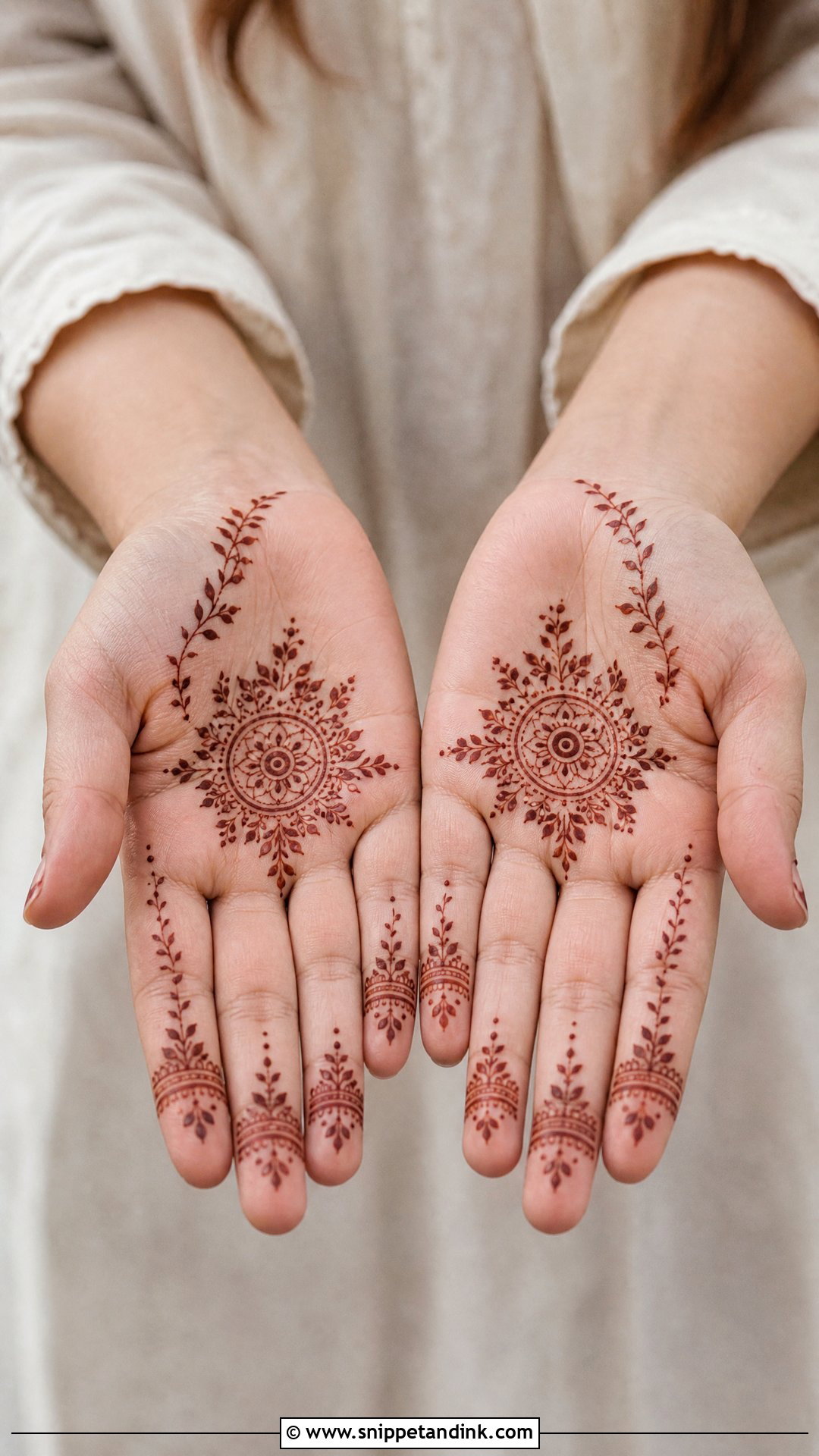
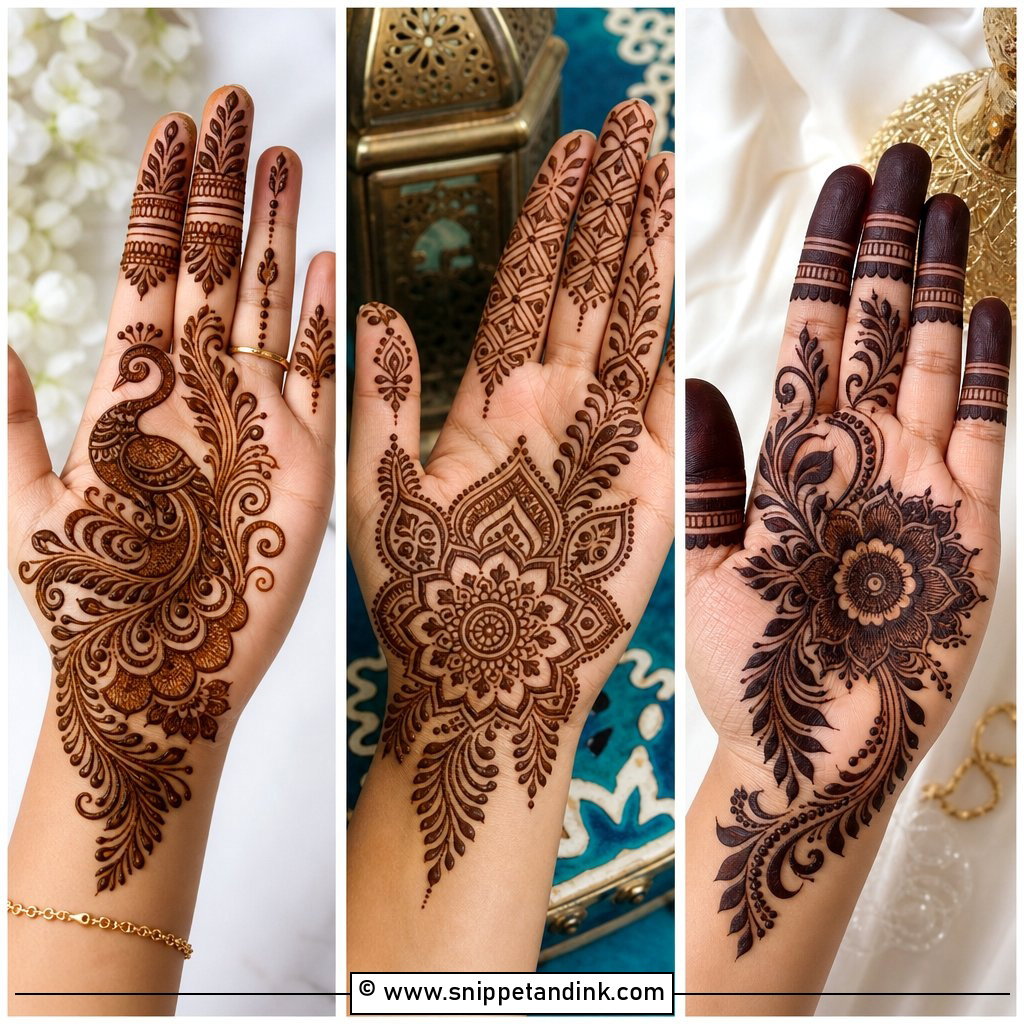
This is the design I’d suggest for a first-timer. A neat mandala in the centre of the palm, soft vines running toward the fingers, tiny leaves, and light finger detailing to finish. The open spaces matter: palm skin stains darkest of anywhere on the hand, so even a light pattern reads clearly there. I outline the fingertips with small dots rather than filling them, which keeps the hand looking clean. It takes well under an hour per hand, so it suits a guest at a family wedding or a quick Eid appointment.
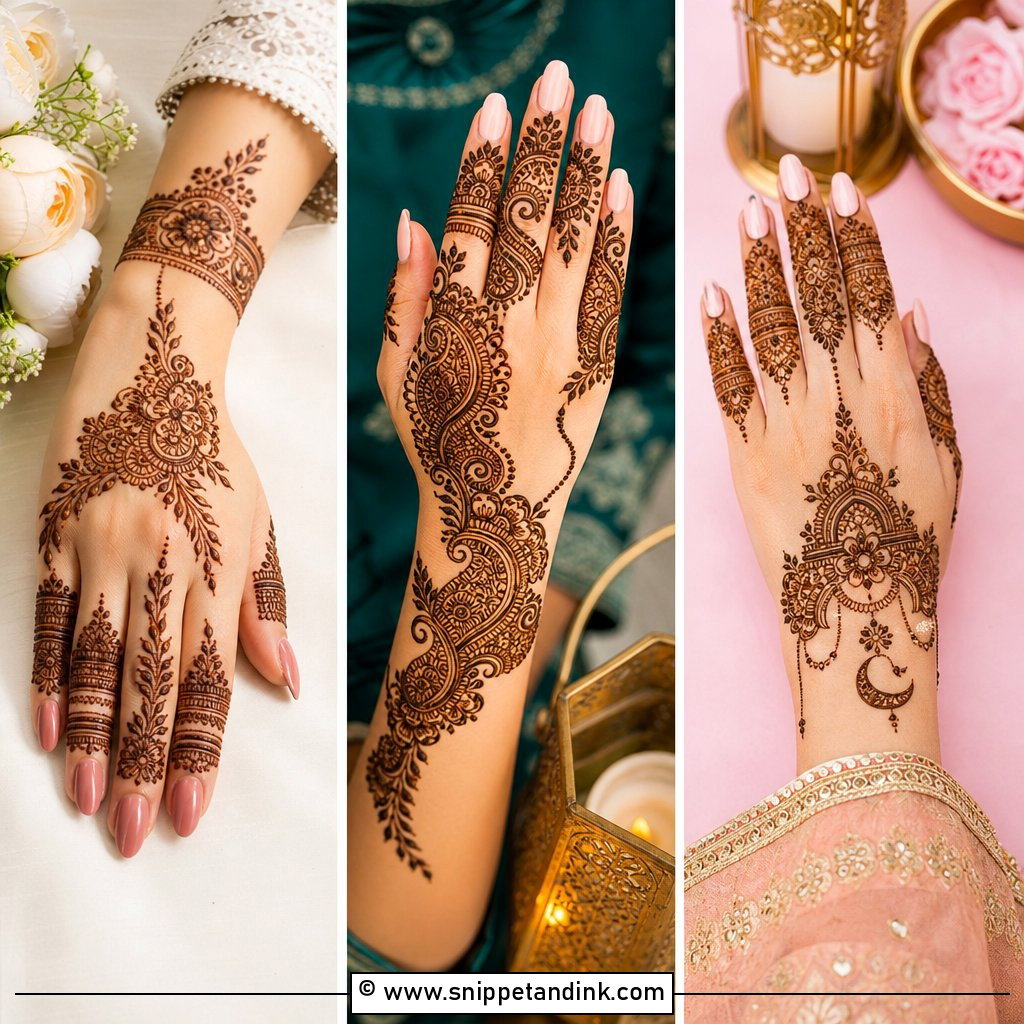
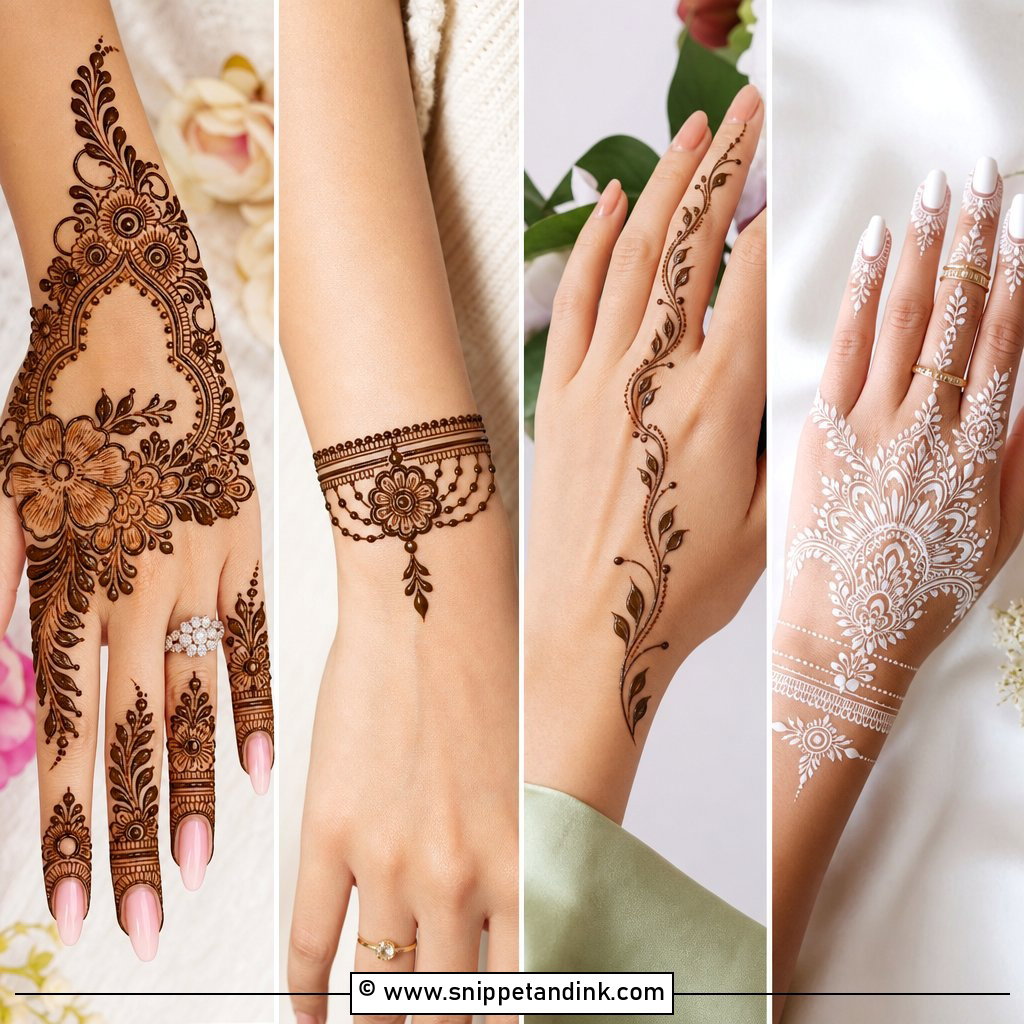
2. Hania Amir Back Hand Mehndi
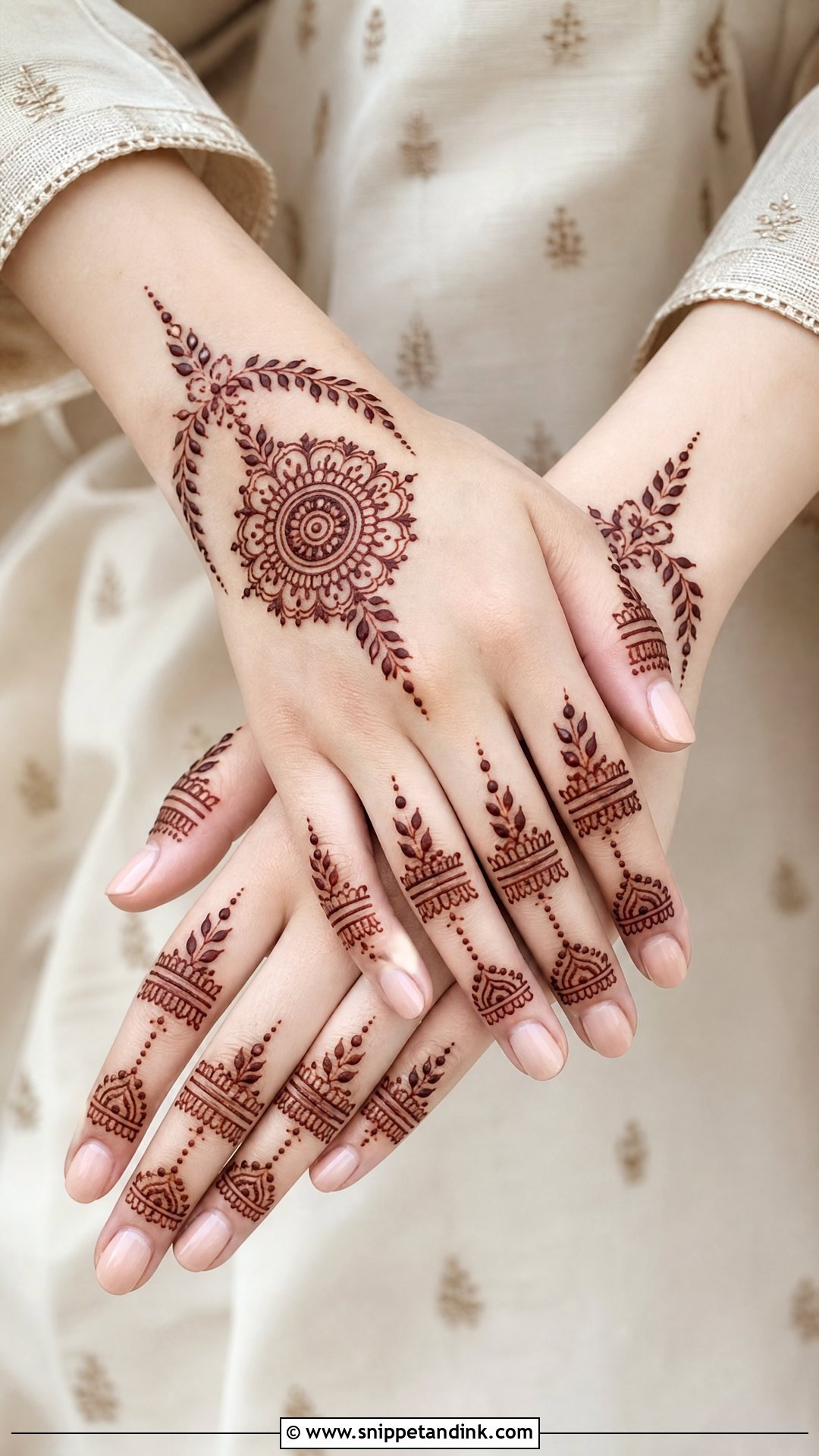
Back hand mehndi gets photographed more than palms because it’s what shows when you hold a glass or adjust a dupatta. I start with a floral mandala in the centre and send fine leafy lines toward the wrist and fingers. The back of the hand stains lighter than the palm, since the skin is thinner and drier, so I keep lines a touch bolder there. Leaving the knuckles open gives a modern look and stops the design from cracking as you bend your fingers. Thin bands and dots on the fingertips are enough.
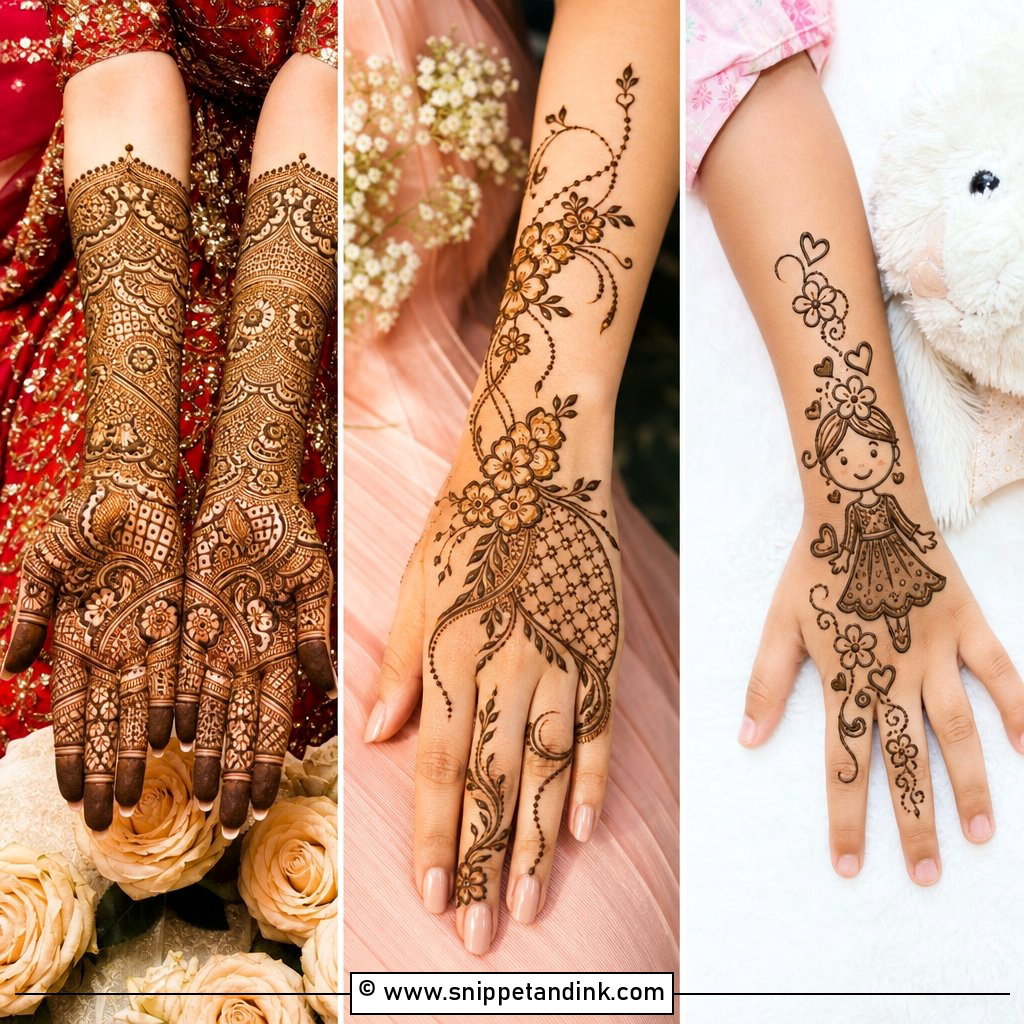
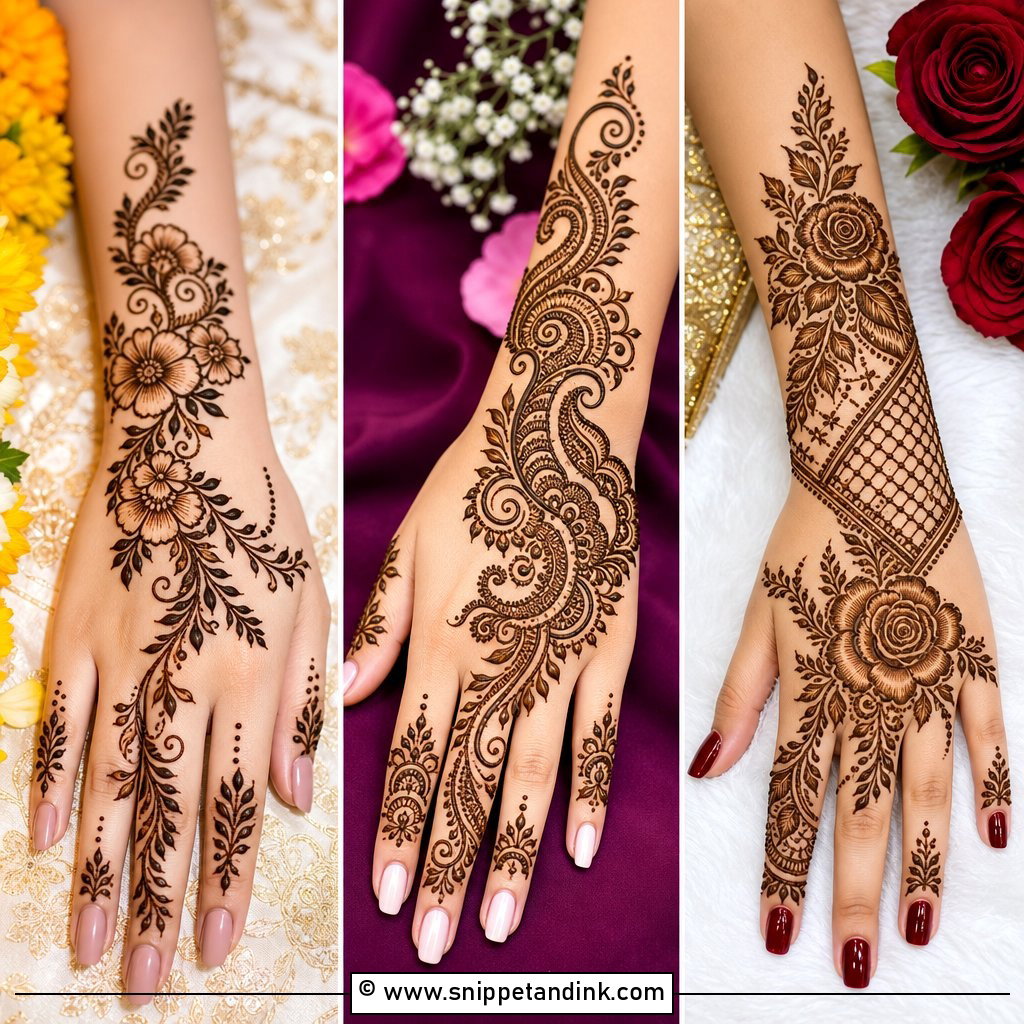
3. Hania Amir Pakistani Bridal Mehndi
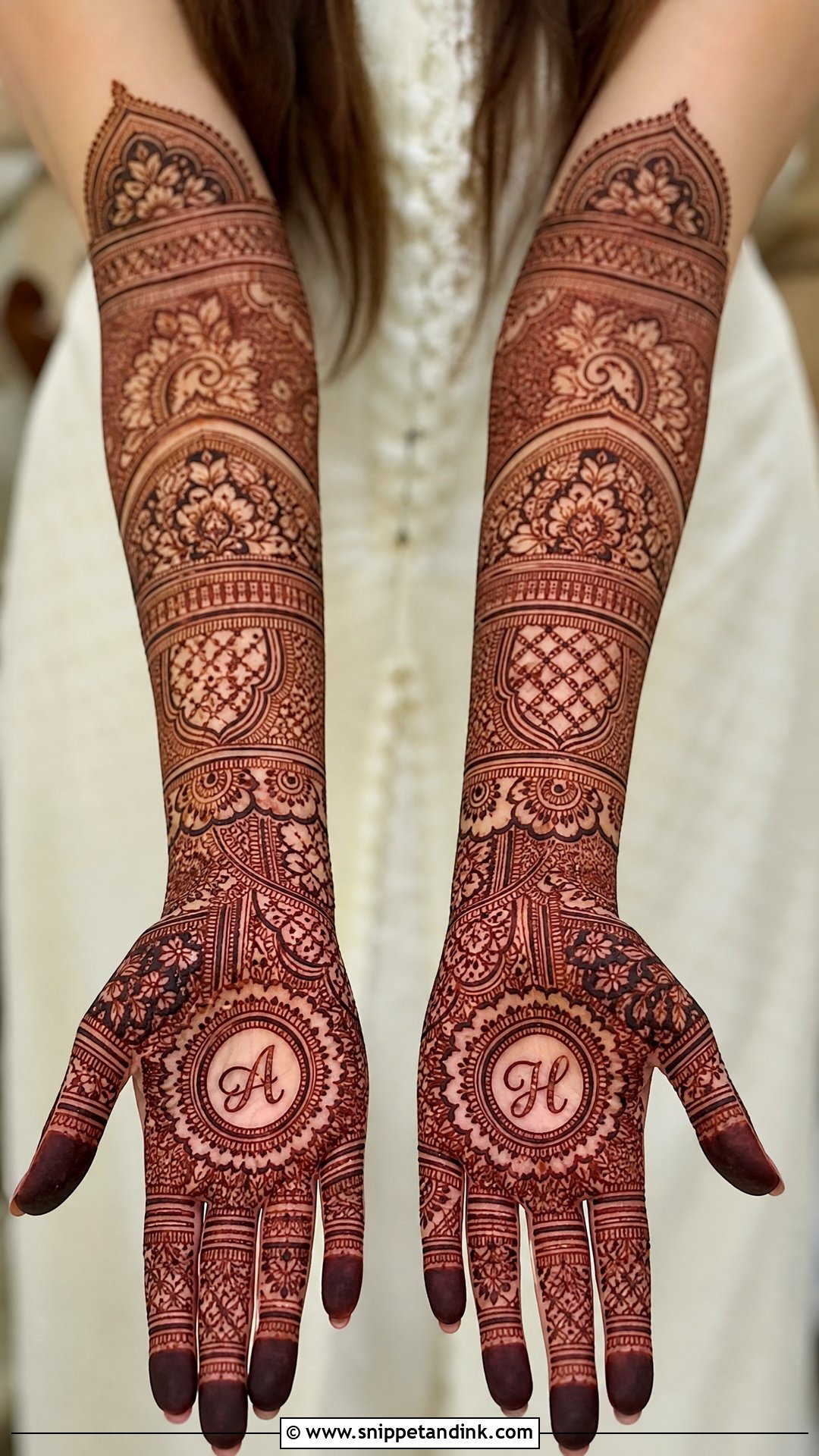
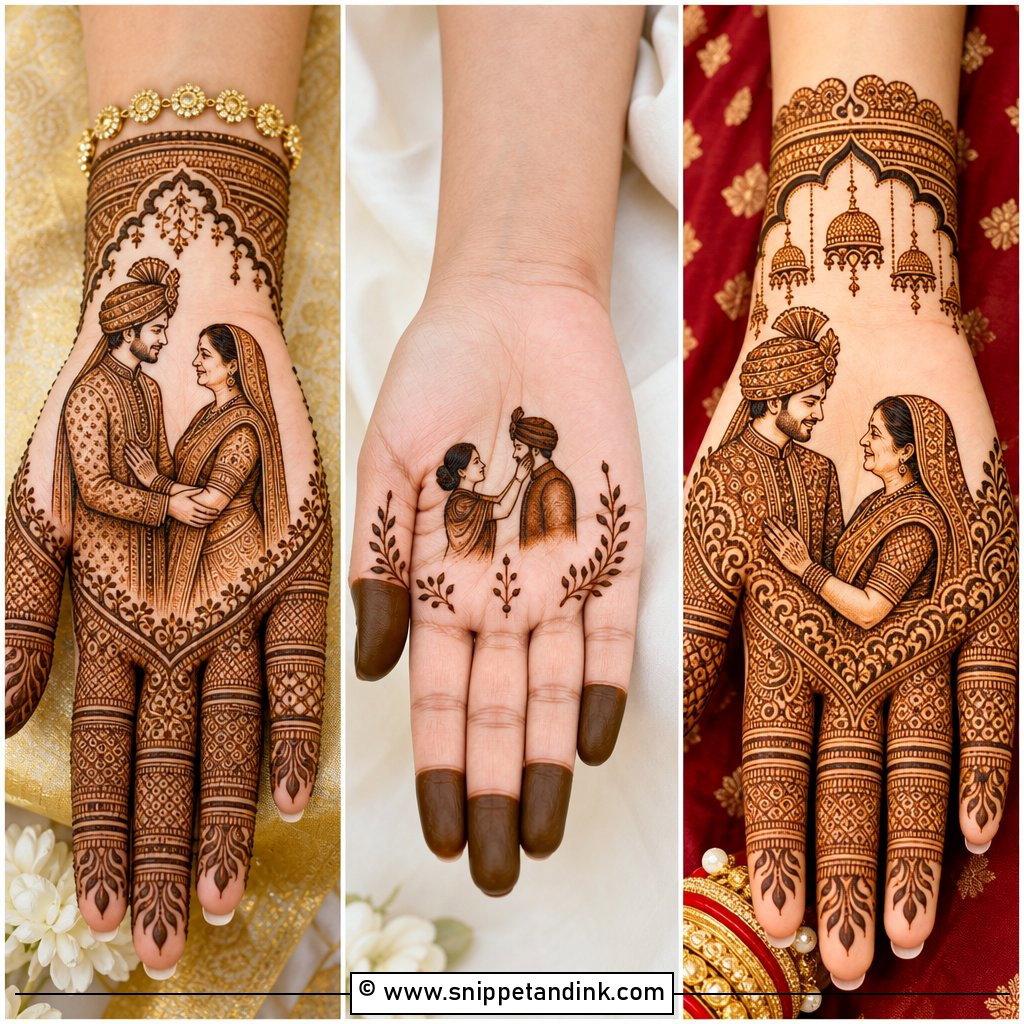
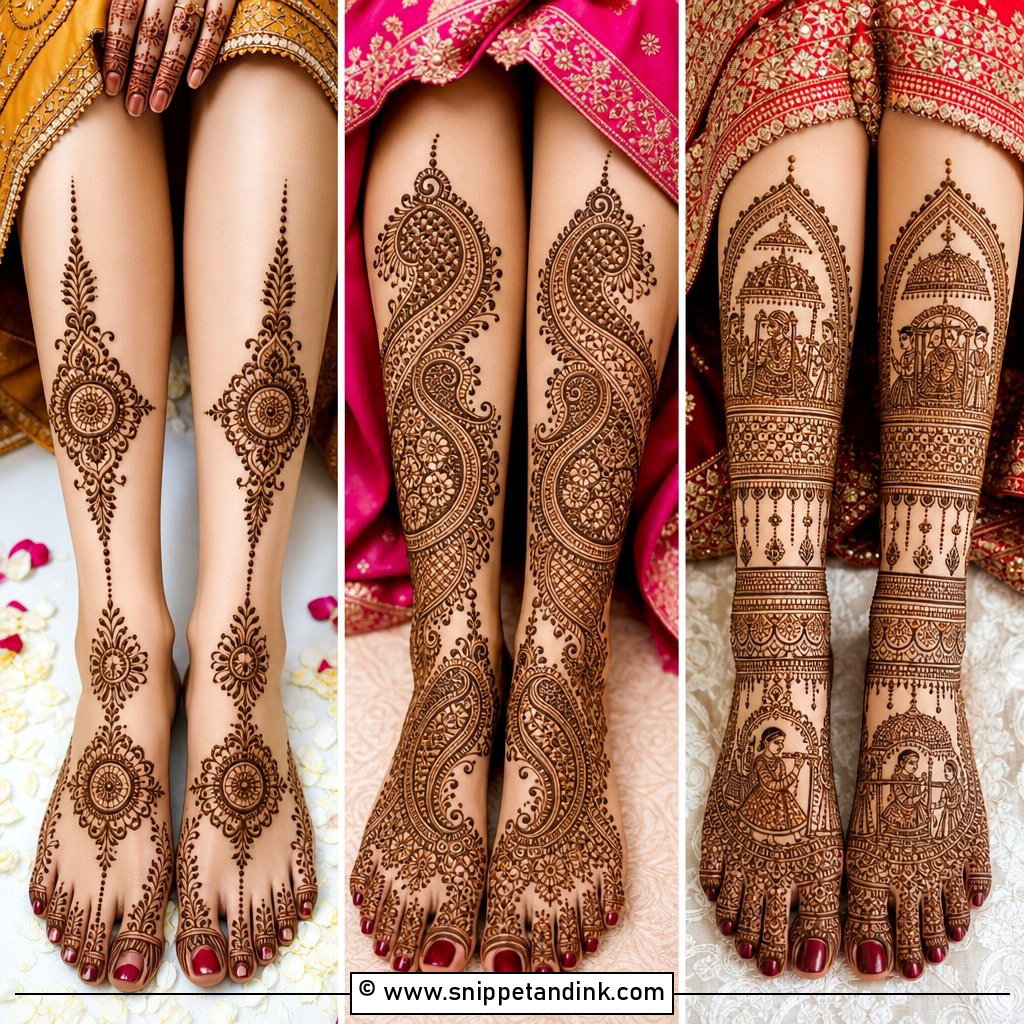
Pakistani bridal mehndi is a long sitting. Palms, fingers, wrists and forearms are covered in florals, paisleys, jaali mesh and shaded vines, and full coverage on both hands and arms can take several hours. I keep the palm the most detailed area and use flowing bands and floral panels on the forearm so the eye has places to rest. Initials, a date or a small bride and groom figure can be hidden in the design for the groom to find. A deep maroon stain looks rich against red, gold, ivory or green bridal outfits.
4. Hania Amir Arabic Mehndi Design
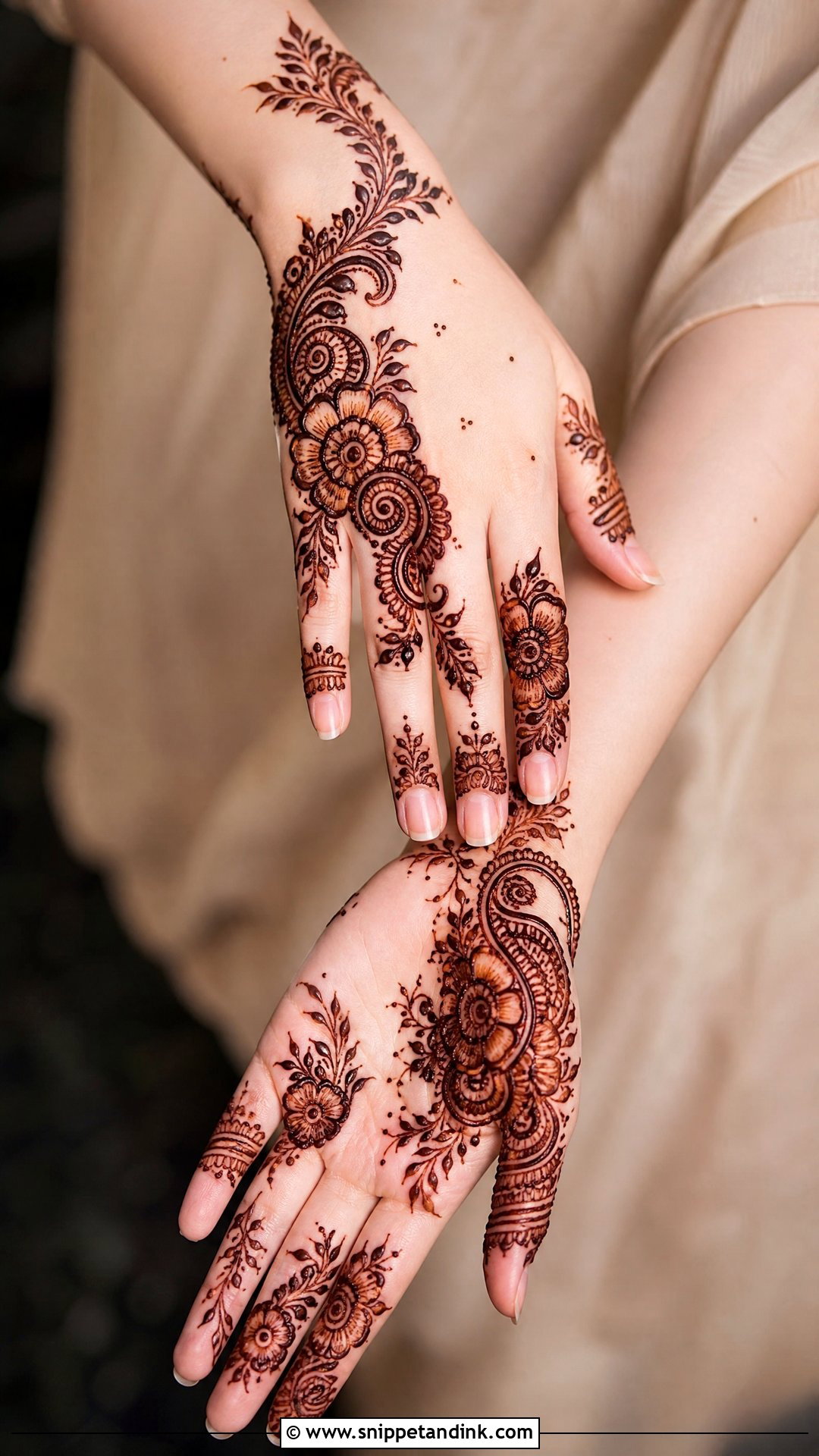
Arabic mehndi is quick and bold. A diagonal floral trail runs from one side of the wrist across the hand to the opposite finger, with large flowers, shaded petals and curved paisleys. The empty space on either side is what makes it look lighter than a full hand. I outline with a firmer cone line and shade inside with a thinner one, which gives the petals depth. It suits bridesmaids and party guests who want impact without sitting for hours.
5. Hania Amir Tikki Mehndi Design
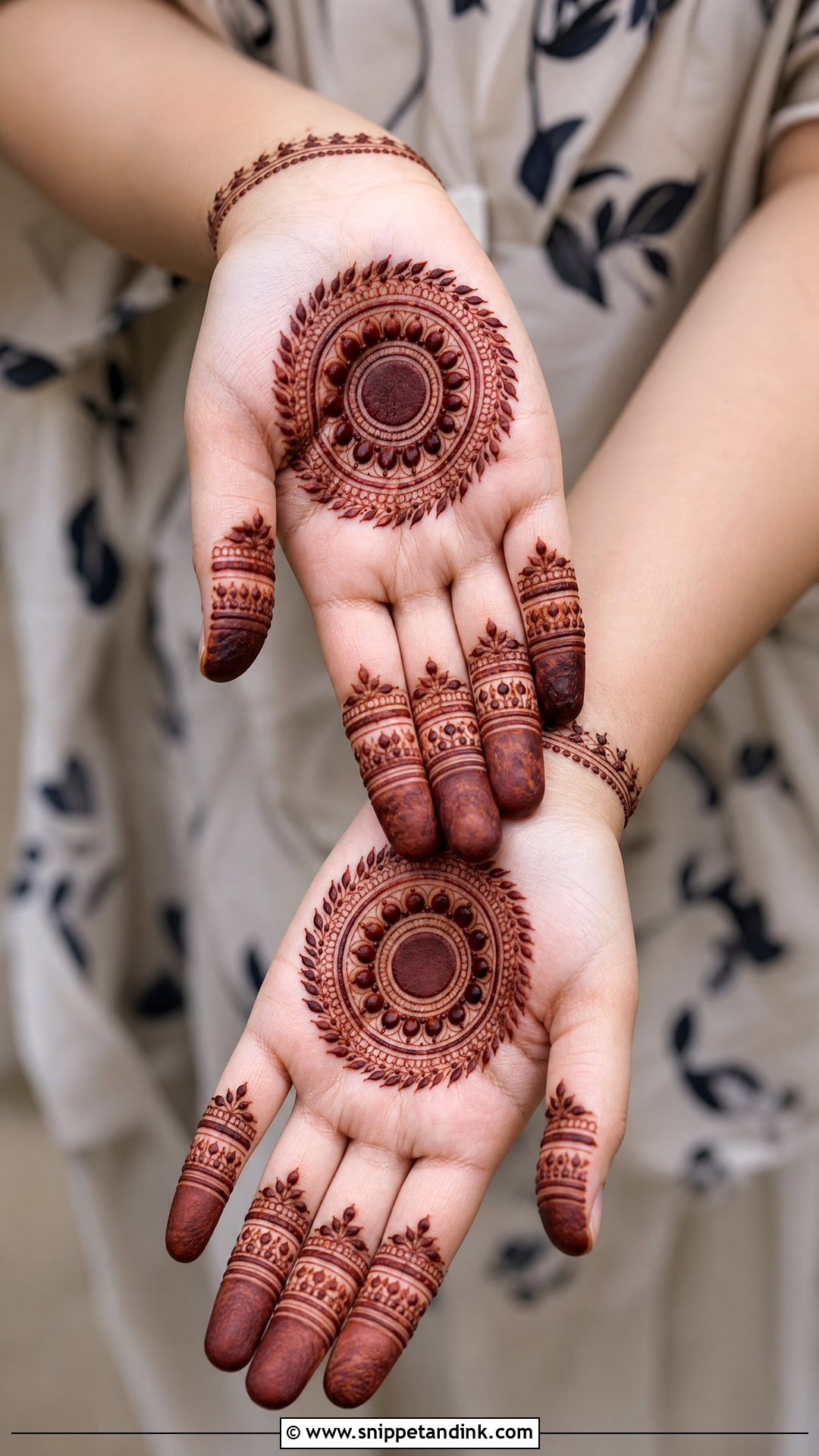
The tikki mehndi design is the round central motif, and its placement decides everything. I set the tikki slightly toward the base of the palm, not dead centre, because that’s where the palm is flattest and the circle stays round when you cup your hand. Dots, petals and fine circles ring it, with matching bands on the fingers. Keep the wrist minimal with a thin chain-style strip. It’s a forgiving design for anyone sitting for mehndi for the first time.
6. Hania Amir Full Hand Mehndi
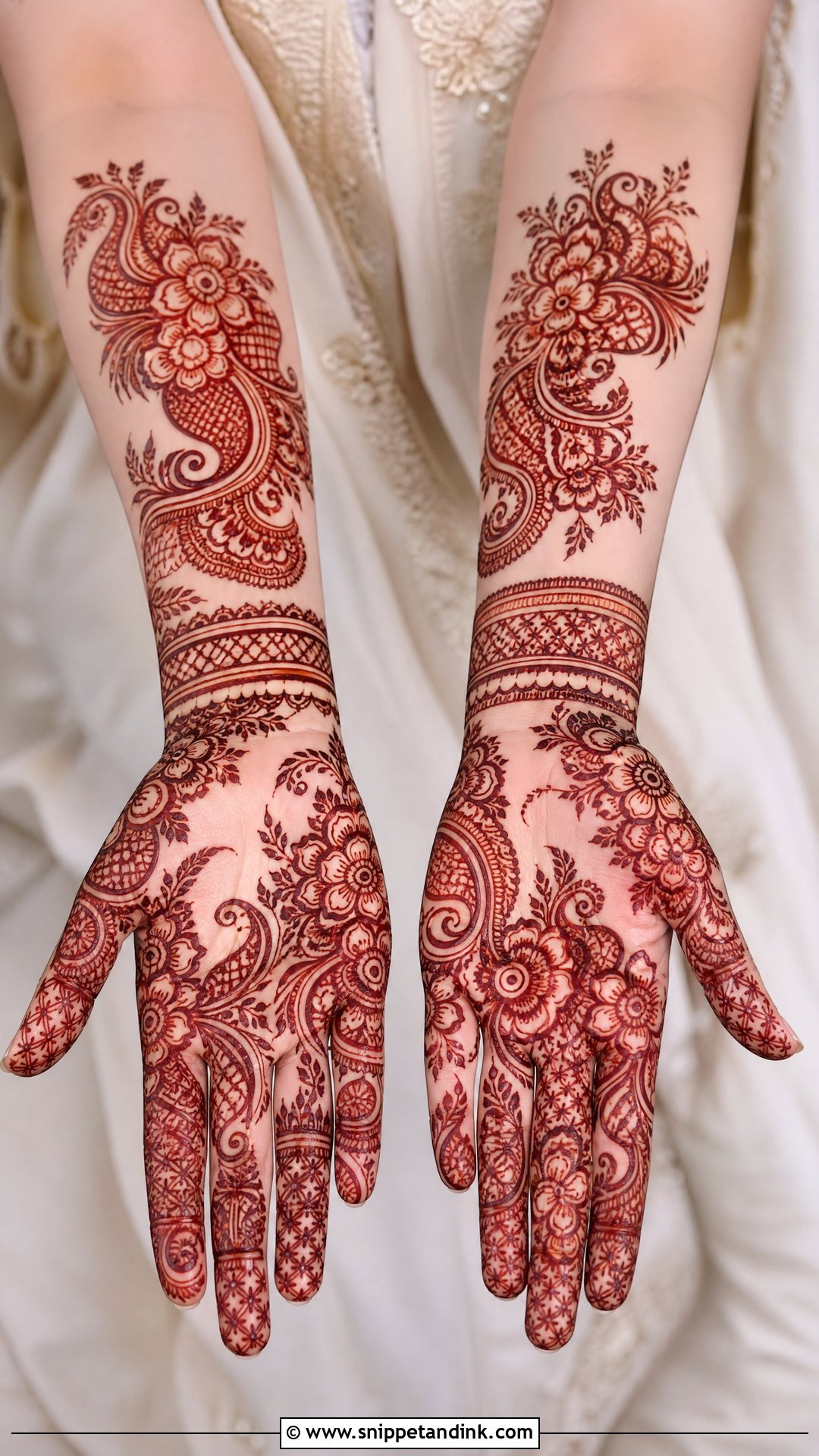
Full hand mehndi works best when the density varies. Floral clusters on the palm, paisley curves near the thumb, detailed fingers, bracelet-style sections at the wrist, and perhaps a short extension toward the forearm. If every area is equally packed, the stain blurs together and reads as a dark patch from a distance. I leave a few open spaces on purpose. It’s well suited to weddings, nikkah celebrations and close family events.
7. Hania Amir Minimal Mehndi Design
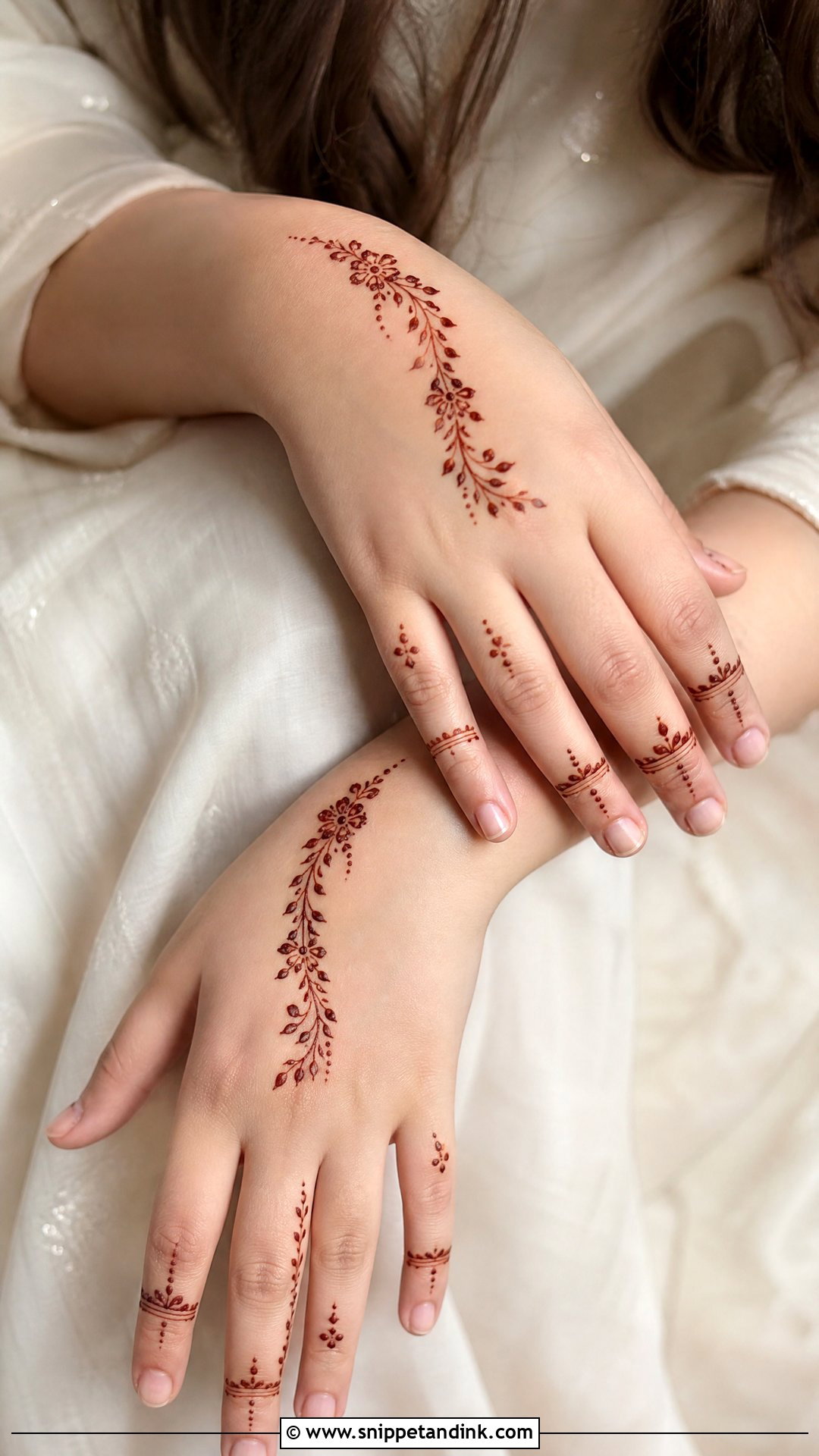
Minimal mehndi is one small flower or mandala at the corner of the palm with a delicate trail running toward one finger. The wrist can stay bare or carry a thin bracelet line. Fine lines need a fine cone tip and a steady hand, so ask your artist to show you their line work before booking. Light designs also fade more neatly than heavy ones, which suits college events, Eid lunches and anyone who needs their hands to look tidy at work a week later.
8. Hania Amir Eid Mehndi Design
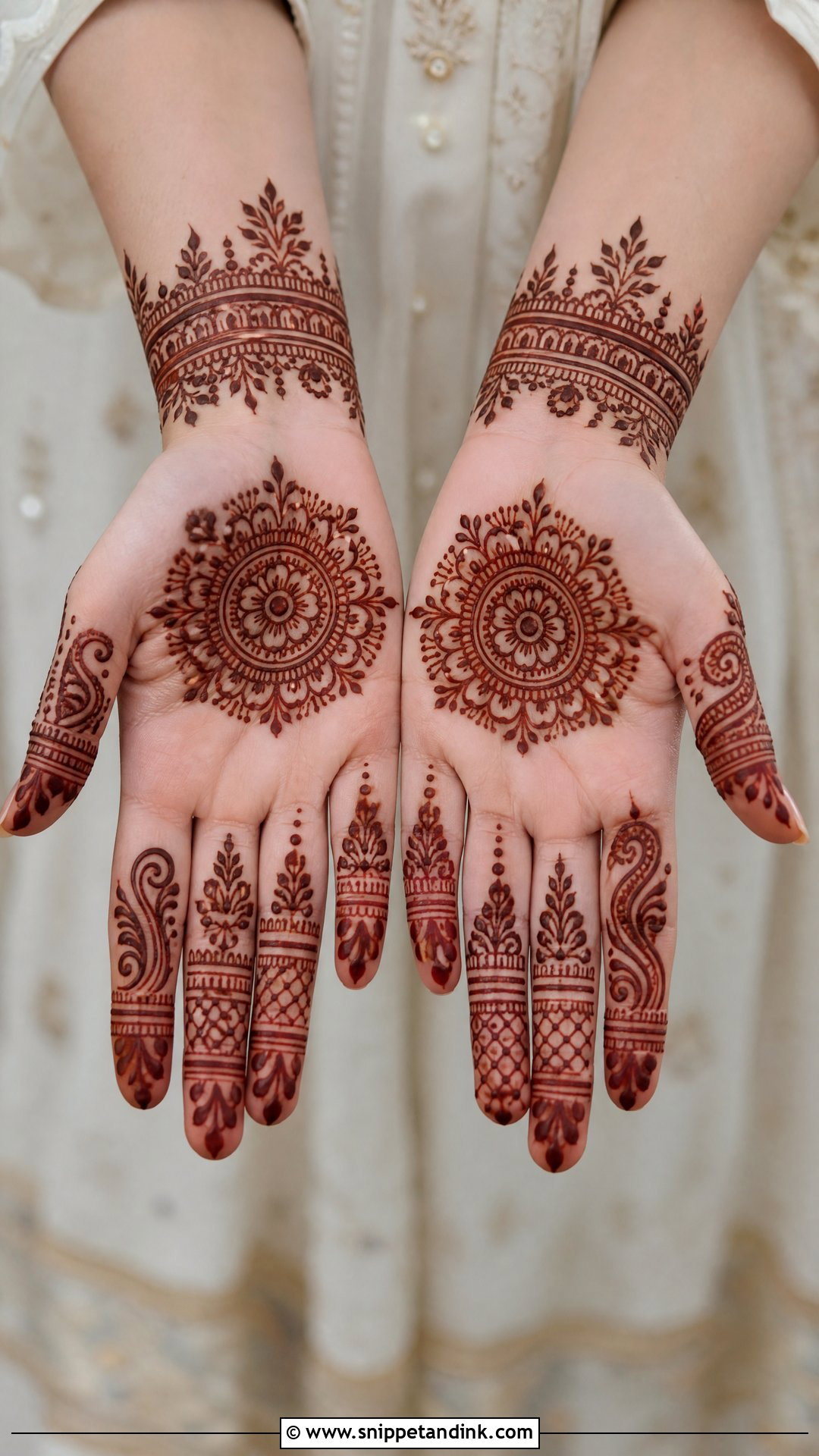
Eid mehndi is usually done in a rush on chaand raat, so I design it to be quick without looking hurried. A floral tikki on the front of the hand, a leafy wrist border and lightly detailed fingers, with a few small paisleys and shaded petals. It sits well with embroidered lawn suits and chiffon dupattas. Because the paste goes on the night before Eid, the stain is still developing in the morning; it will deepen through the day toward its best colour.
9. Hania Amir Dholki Mehndi Design
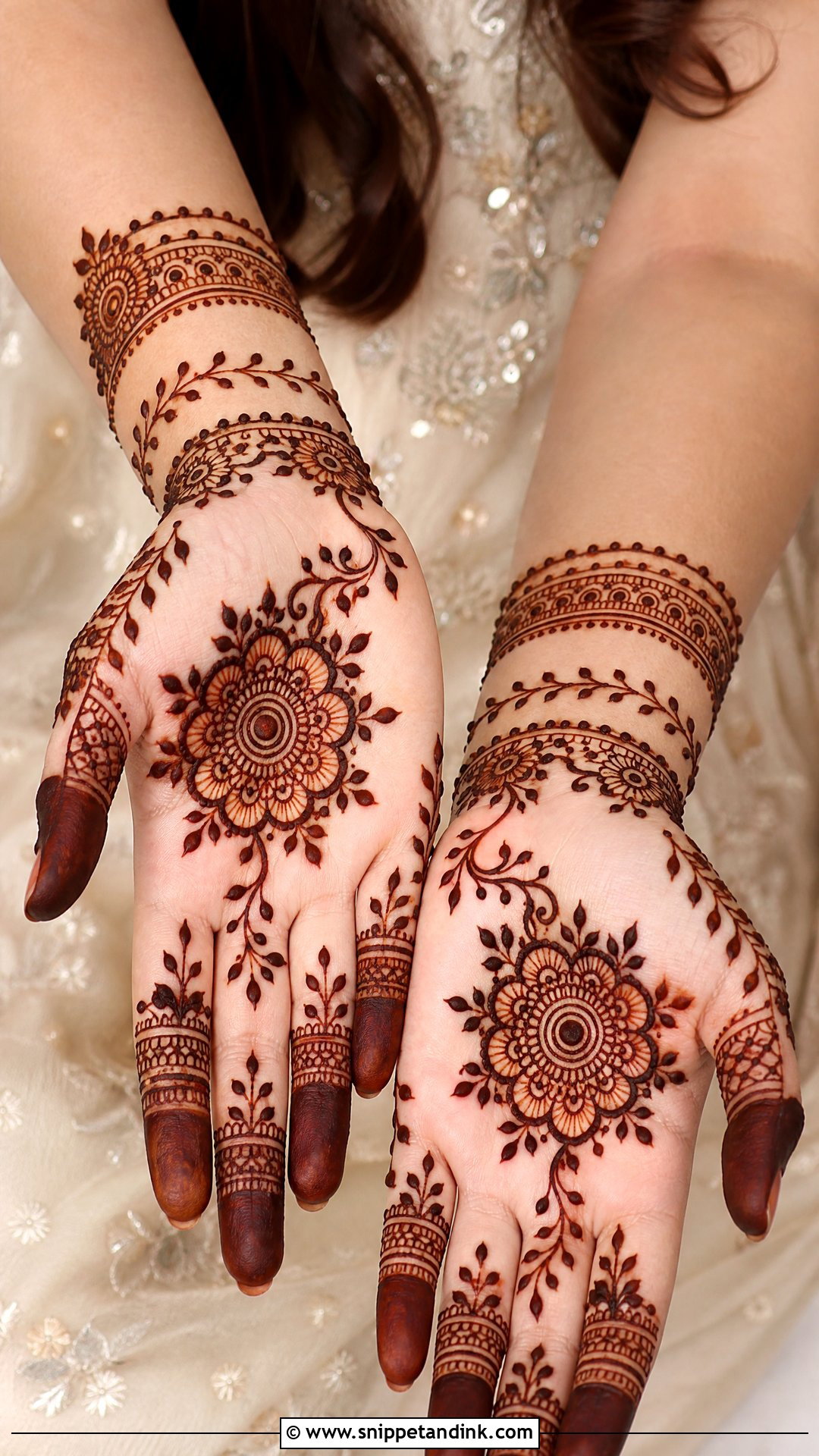
At a dholki, mehndi is often applied while everyone is singing and moving around, so I keep designs lively and fast. Floral trails, round tikki accents and bracelet bands, with alternating patterns on the fingers, leafy tips on two and bands on the others. Mixing filled petals with open spaces keeps it playful. It suits sisters, cousins and bridesmaids. Remind guests to keep their hands still for twenty minutes or so while the paste sets, or the lines smudge.
10. Hania Amir Nikkah Mehndi Design
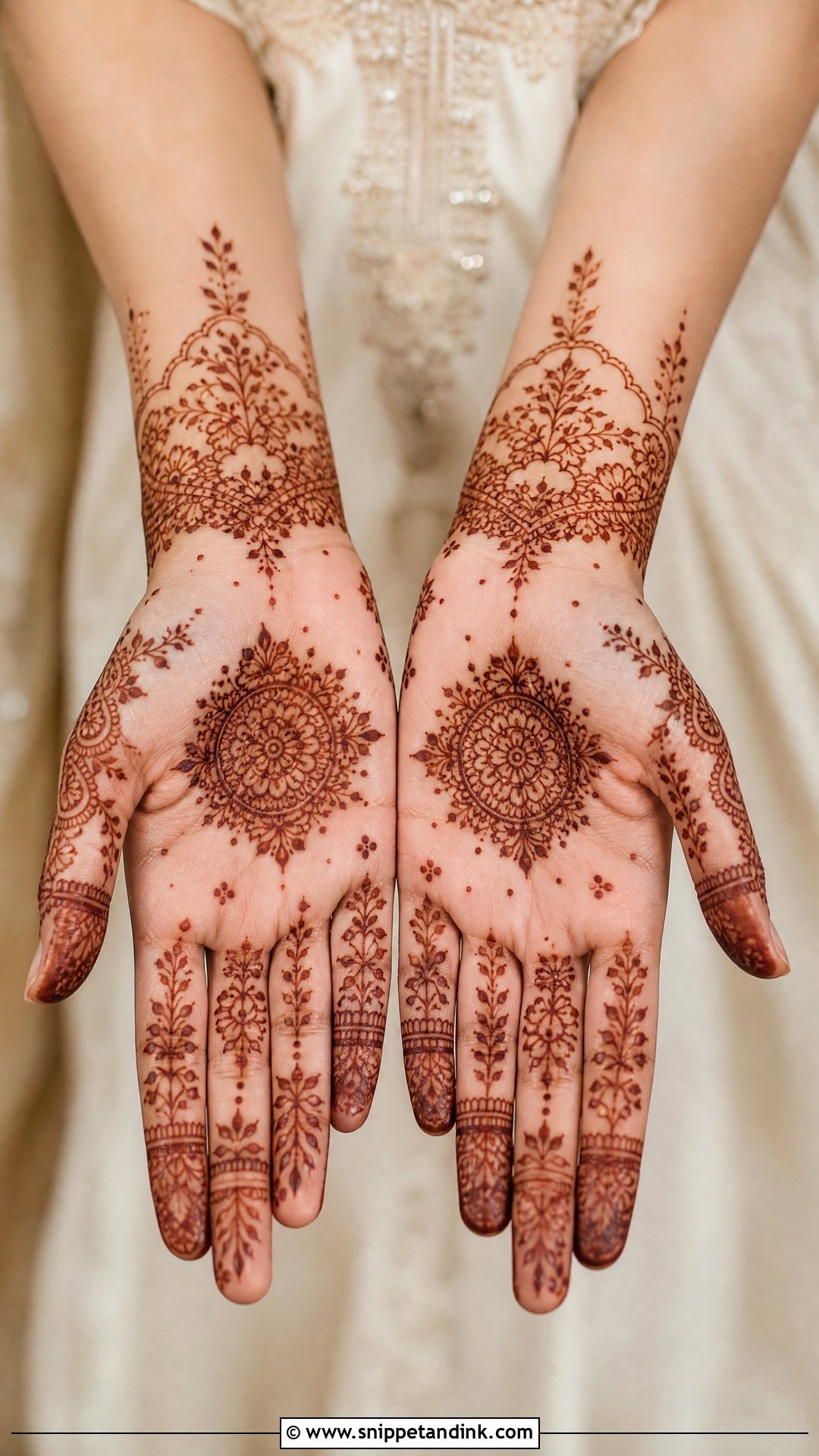
Nikkah mehndi tends to be softer than the main bridal set, especially when the nikkah and wedding fall on separate days. A neat mandala or floral bouquet on the palm, slim leafy lines and tiny dots on the fingers, and light coverage at the wrist. Symmetry gives it a formal look; a diagonal layout feels more modern. It sits well with ivory, pastel or champagne outfits. If the nikkah is a day or two before the wedding, I’d plan the designs together so the hands don’t clash in photos.
11. Hania Amir Engagement Mehndi
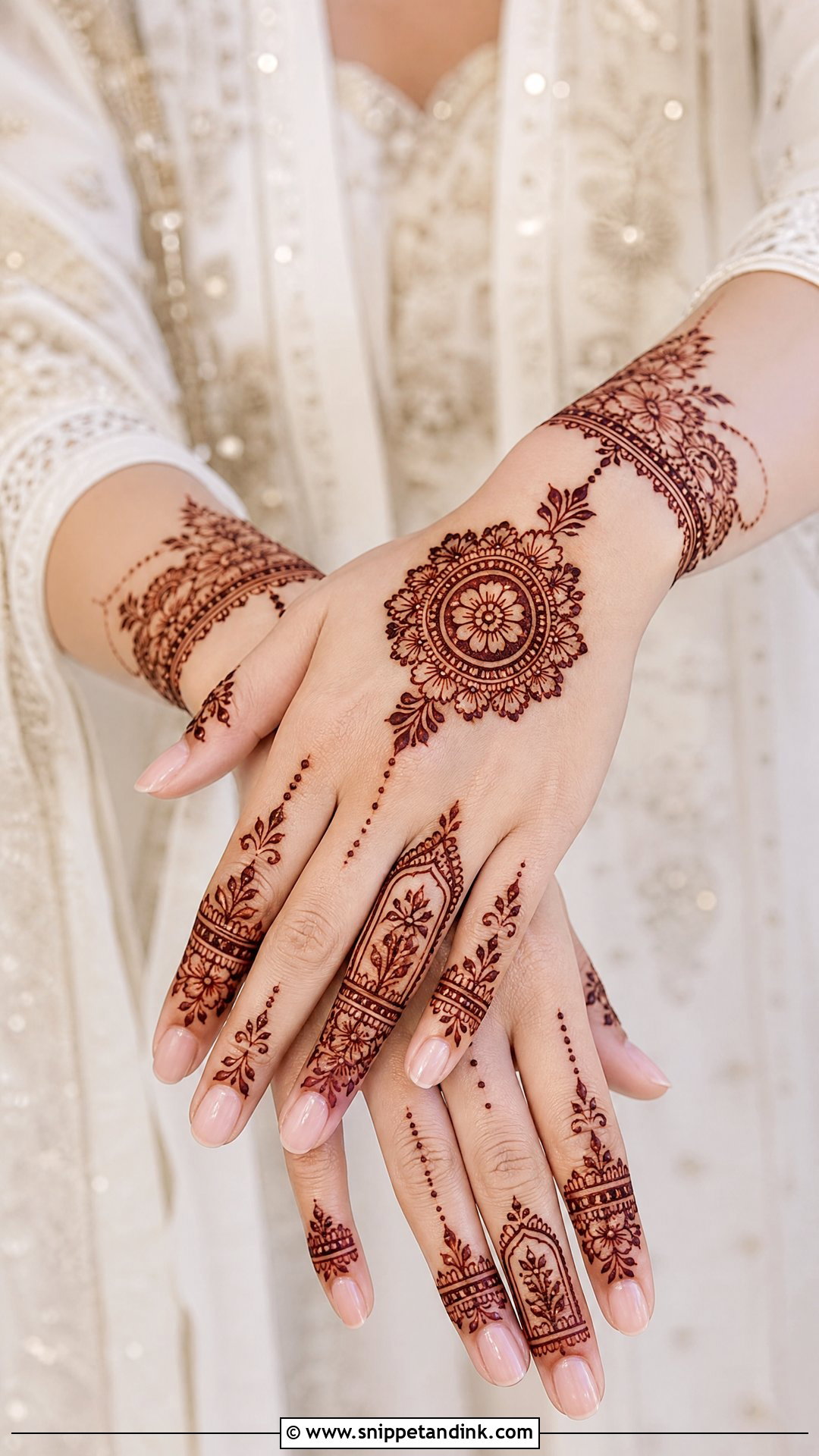
With engagement mehndi, the ring is the point, so I build the design around it. The ring finger gets a light frame, never heavy filling, and the rest of the back hand carries a soft mandala linked to the wrist with fine vines and dots. A packed ring finger hides the ring and makes it look smaller in photos. Leave clean space around the knuckles and keep the fingertips slim. It works for brides and guests alike.
12. Hania Amir Indo Arabic Mehndi
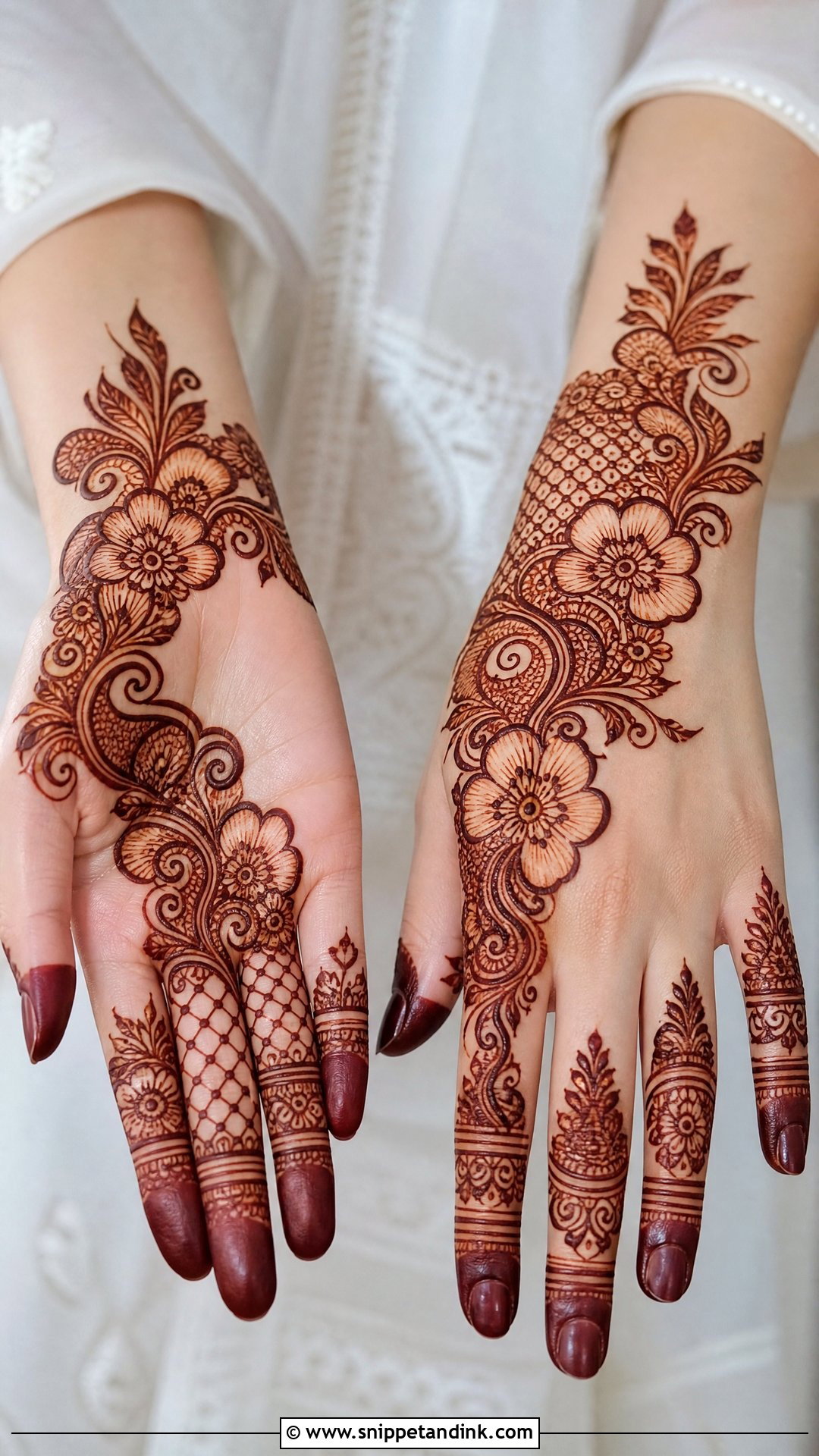
Indo-Arabic mixes the bold diagonal flow of Arabic work with finer jaali and Indian-style detail. Large flowers, shaded paisleys and fine mesh sections run across the hand, with open space kept on part of the palm. I put more detail on the wrist and fingers, which balances the open palm. It’s a good pick for bridesmaids and sisters of the bride who want something richer than Arabic but quicker than full bridal.
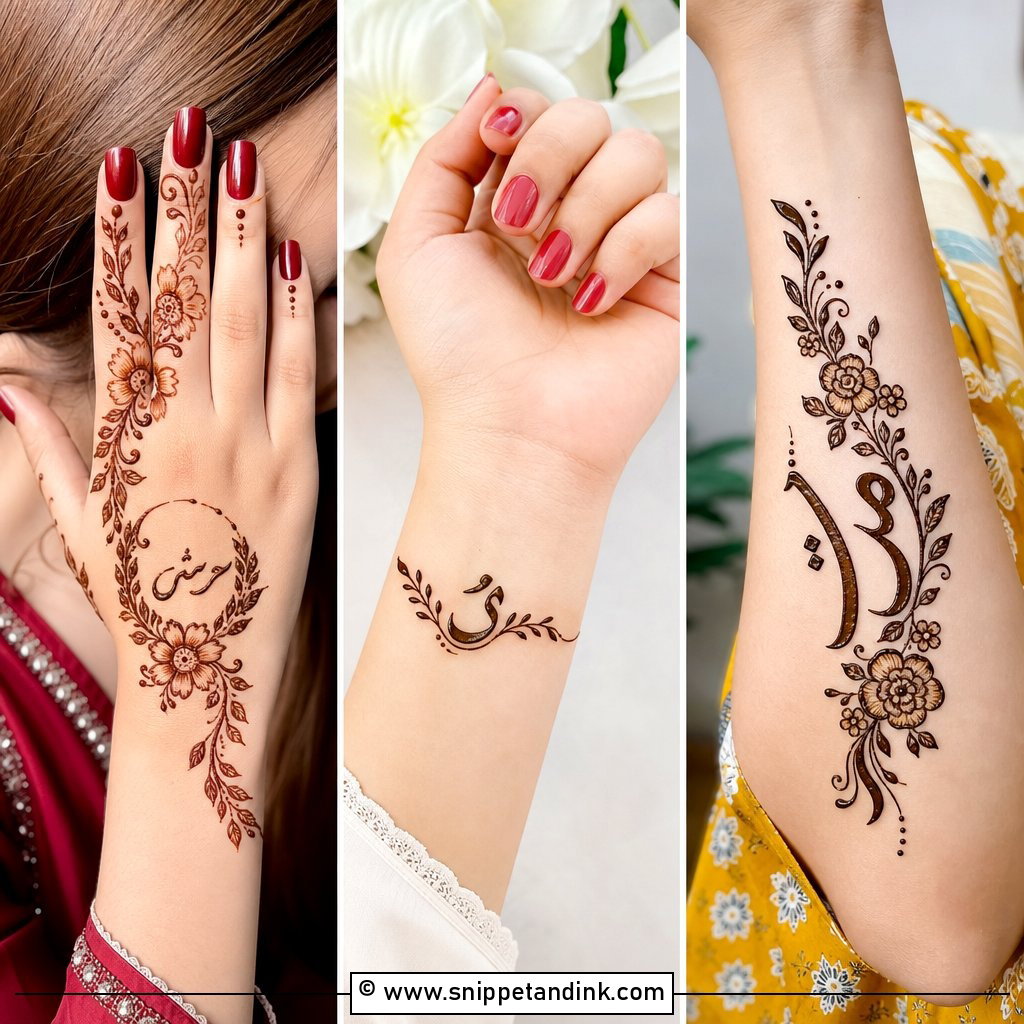
13. Hania Amir Floral Mehndi Design
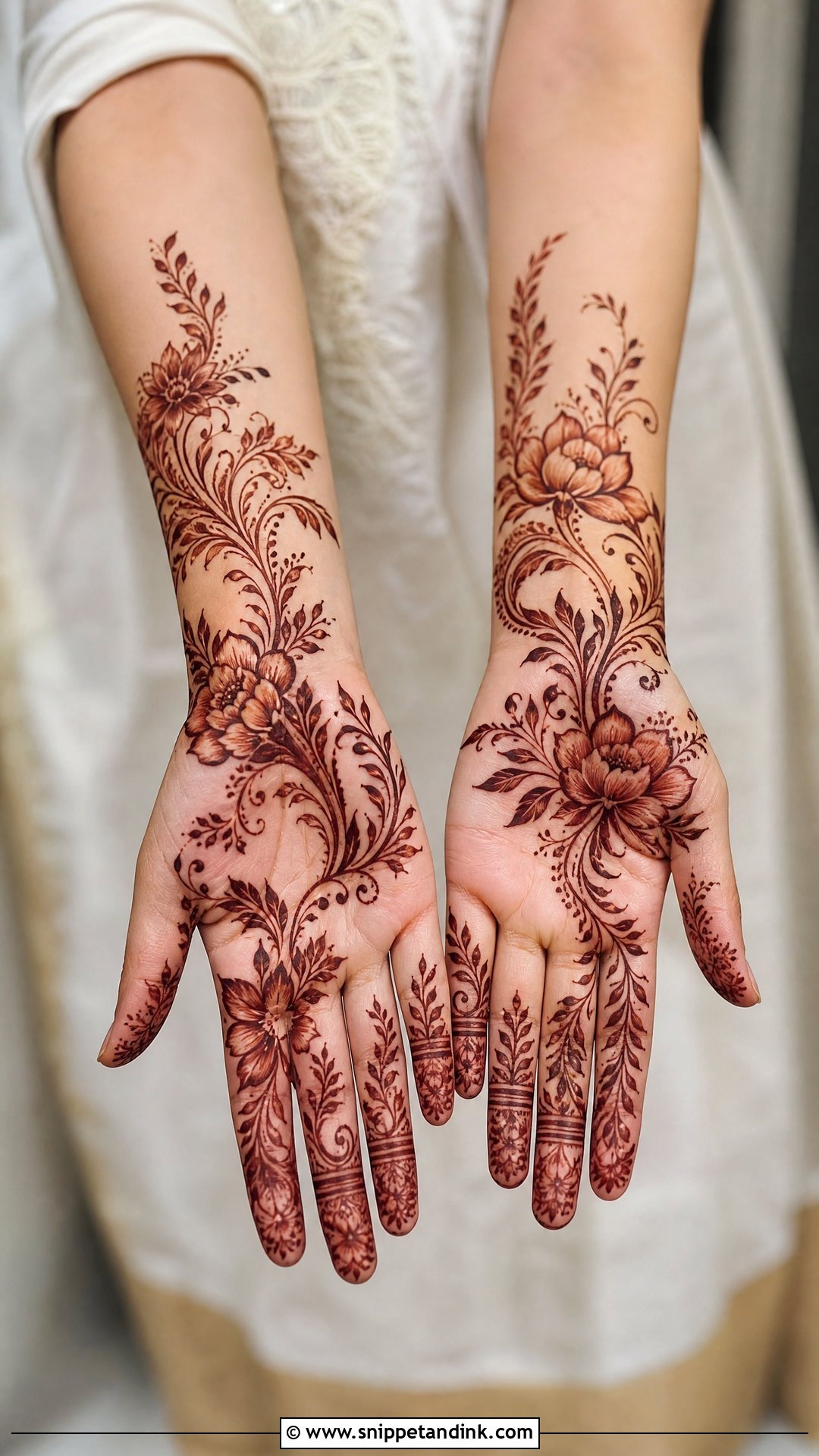
Florals are the most forgiving motif in mehndi because petals don’t need perfect symmetry. I put larger blooms on the palm or back hand and smaller buds toward the fingers, with leafy vines linking them. Shading the petals with a thinner line gives fullness without adding heavy filling, which can crack as it dries. Florals suit every age, which is why they are my default for mixed family groups at Eid or a mayun.
14. Hania Amir Mandala Mehndi Design
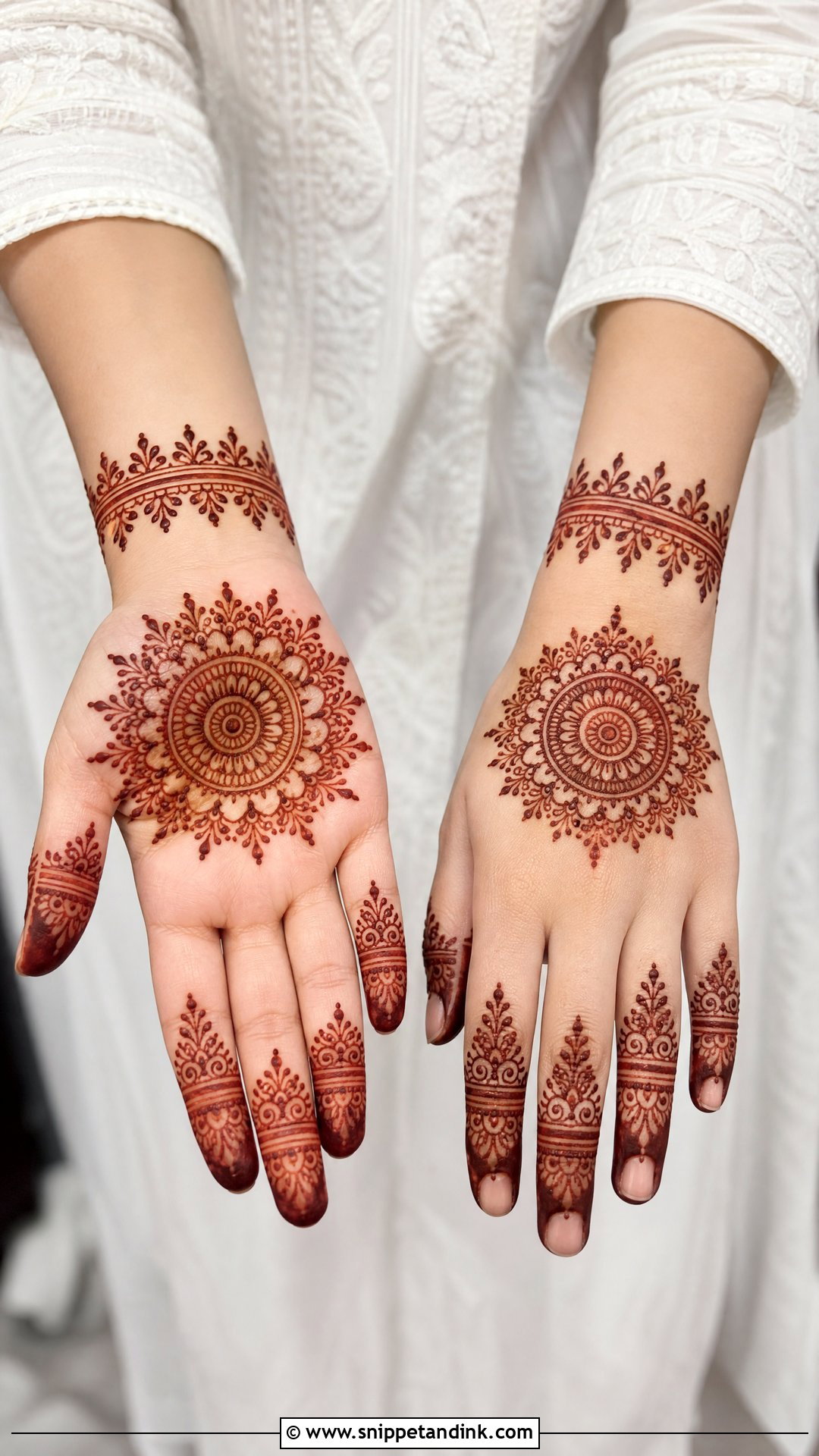
A mandala needs a round, steady centre, so I usually start it with a small dot and build outward in rings of petals, dots and fine circles. On the back of the hand, I centre it between the knuckles and wrist bone. Matching half-mandalas on the fingertips tie the design together. Keep the wrist light with a thin bracelet pattern; a mandala already draws the eye, and too much around it makes the hand look busy.
15. Hania Amir Finger Mehndi Design
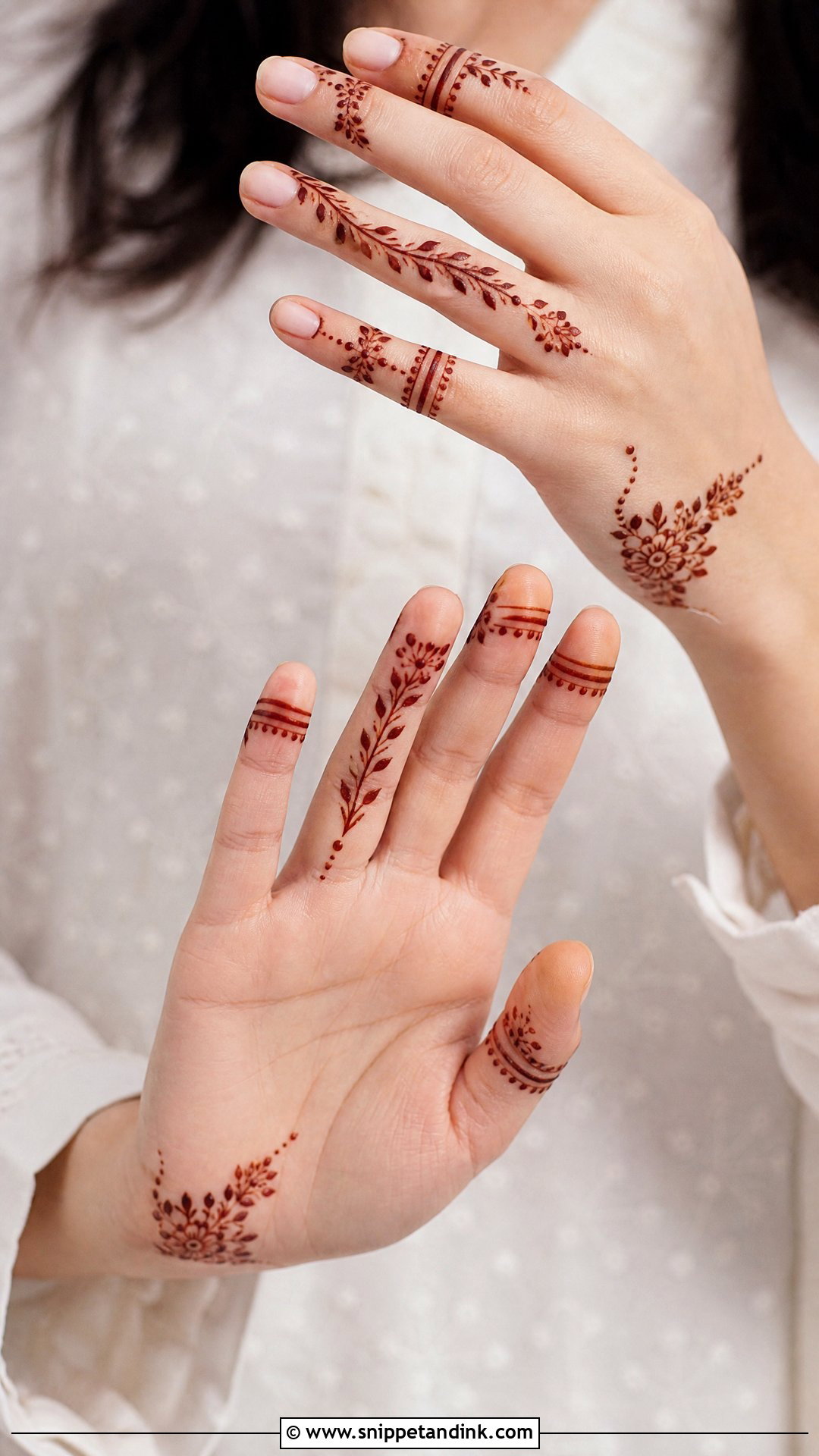
Finger mehndi puts all the detail on the fingers, with the palm left mostly bare apart from perhaps one corner motif. Leafy lines, small florals, dots and slim bands make it look modern. Fingertips stain dark and fast, so this design looks bold even though the coverage is small. Extending one finger’s pattern toward the wrist gives a finished look. It’s a practical choice for women who want festive hands that won’t look out of place at the office.
16. Hania Amir Jaali Mehndi Design
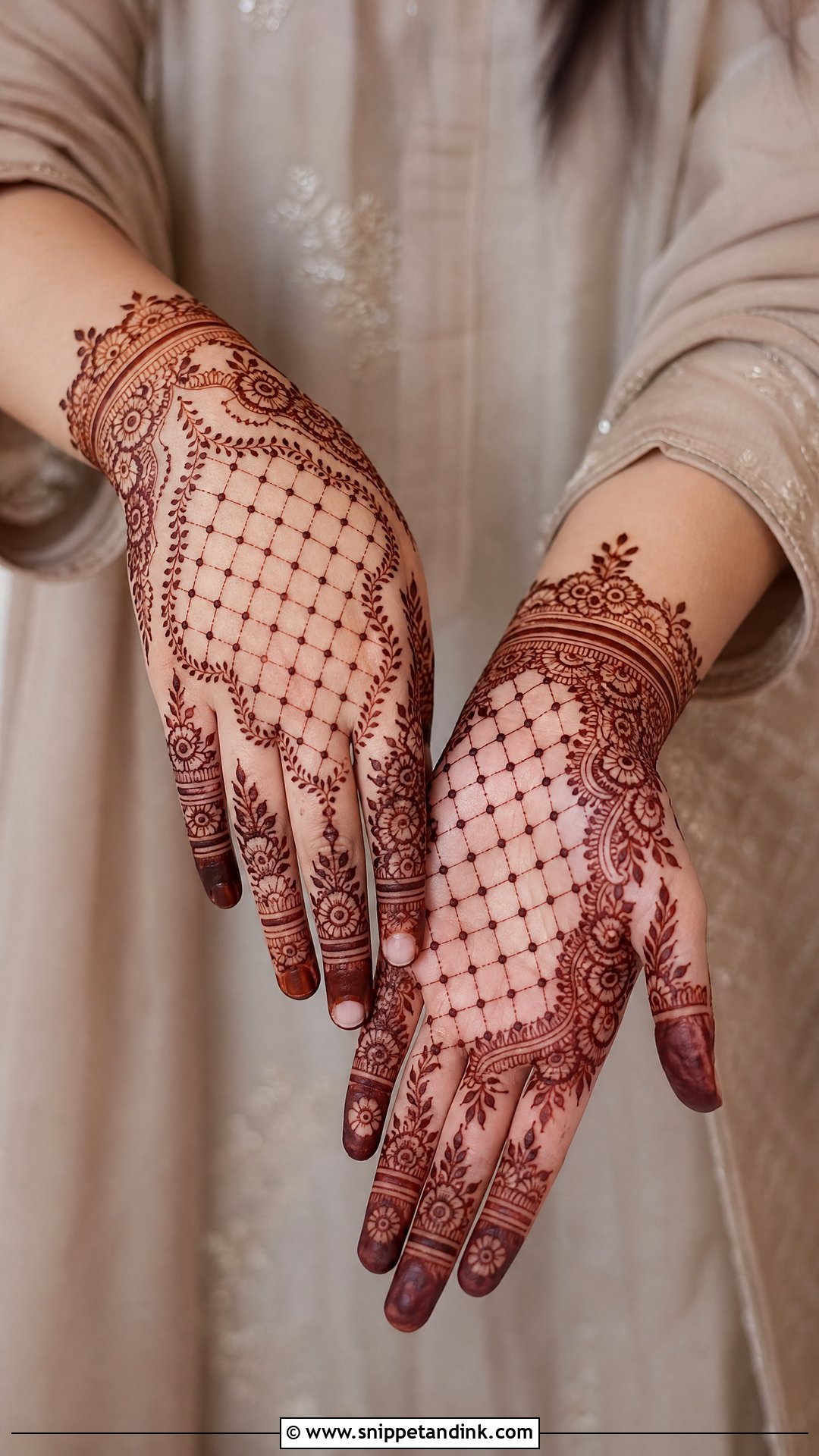
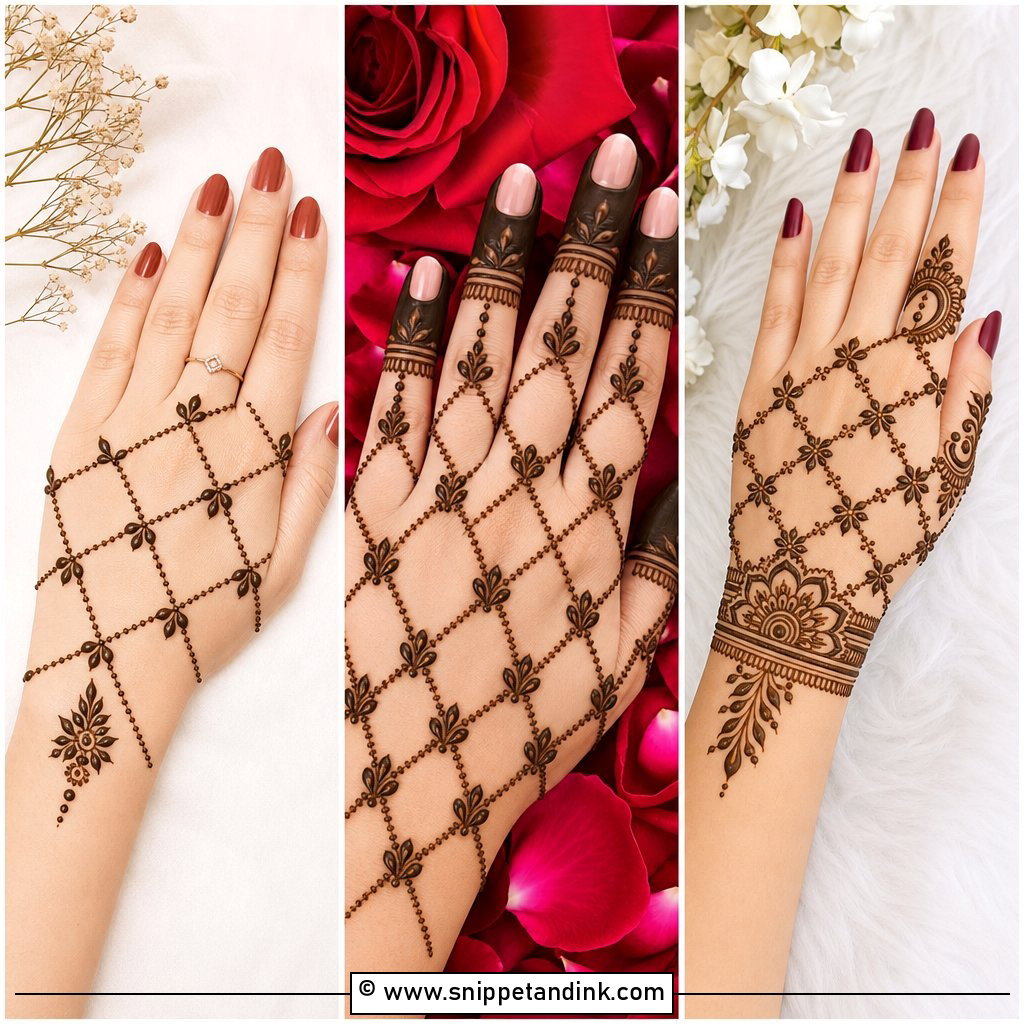
Jaali is the mesh pattern that looks like lace. It depends on even, fine lines, so cone quality matters here more than in any other design. I frame the mesh with flowers, leaves and thin borders, and leave clean space around the wrist and fingers so it doesn’t feel packed. Jaali reads especially well in close-up photos. A deep reddish-brown stain makes the mesh stand out; a pale stain can make it look patchy, so aftercare counts.
17. Hania Amir Bracelet Mehndi Design
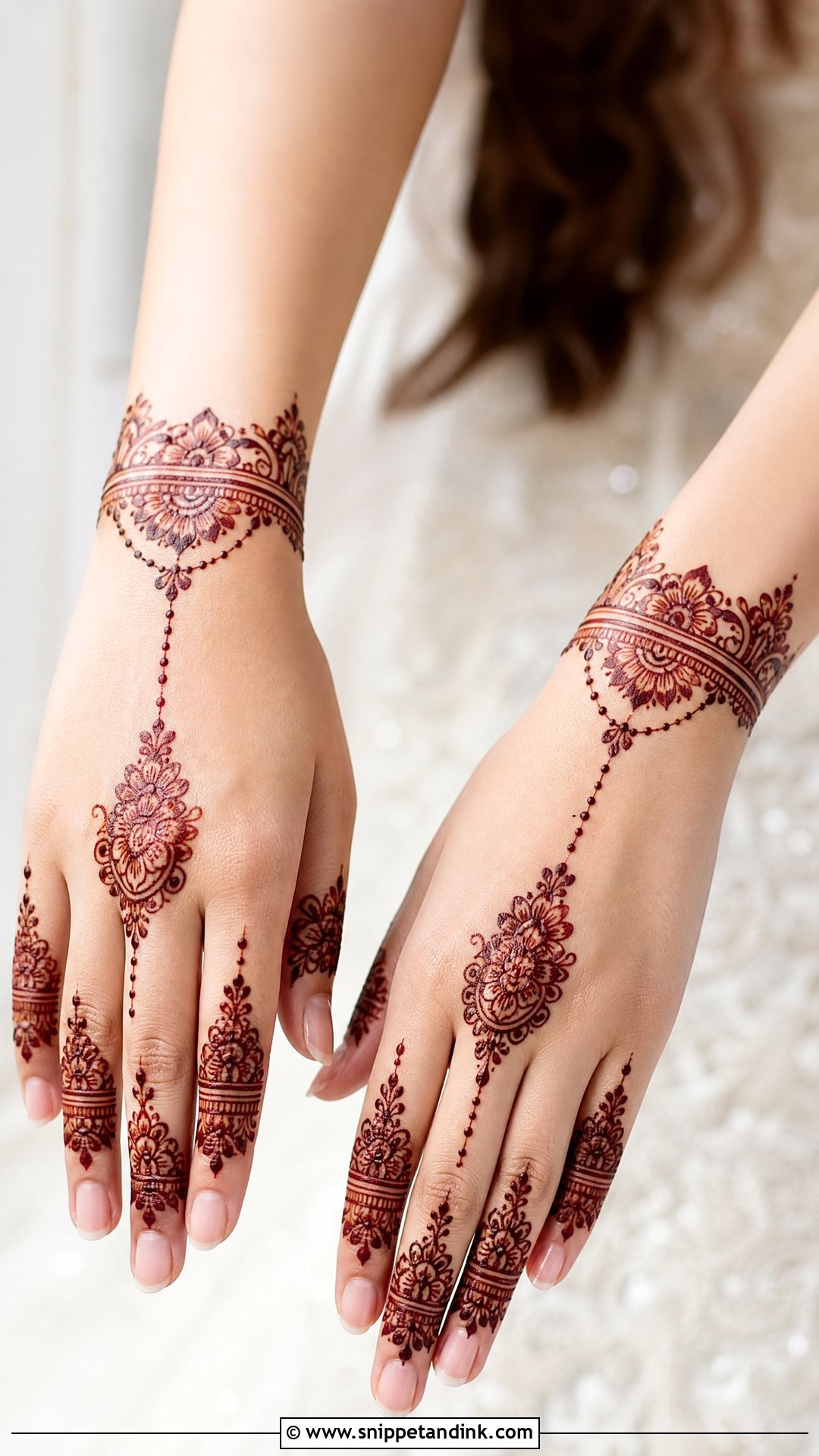
Bracelet mehndi starts with a cuff at the wrist built from floral bands, dots, chains and tiny paisleys, then a fine trail runs toward the middle finger. Keeping the back of the hand open makes the bracelet the focus. It layers well with bangles, which sit right on top of the cuff. One small caution: bangles worn over fresh paste can smudge the design, so put them on after the paste is removed.
18. Hania Amir Peacock Mehndi Design
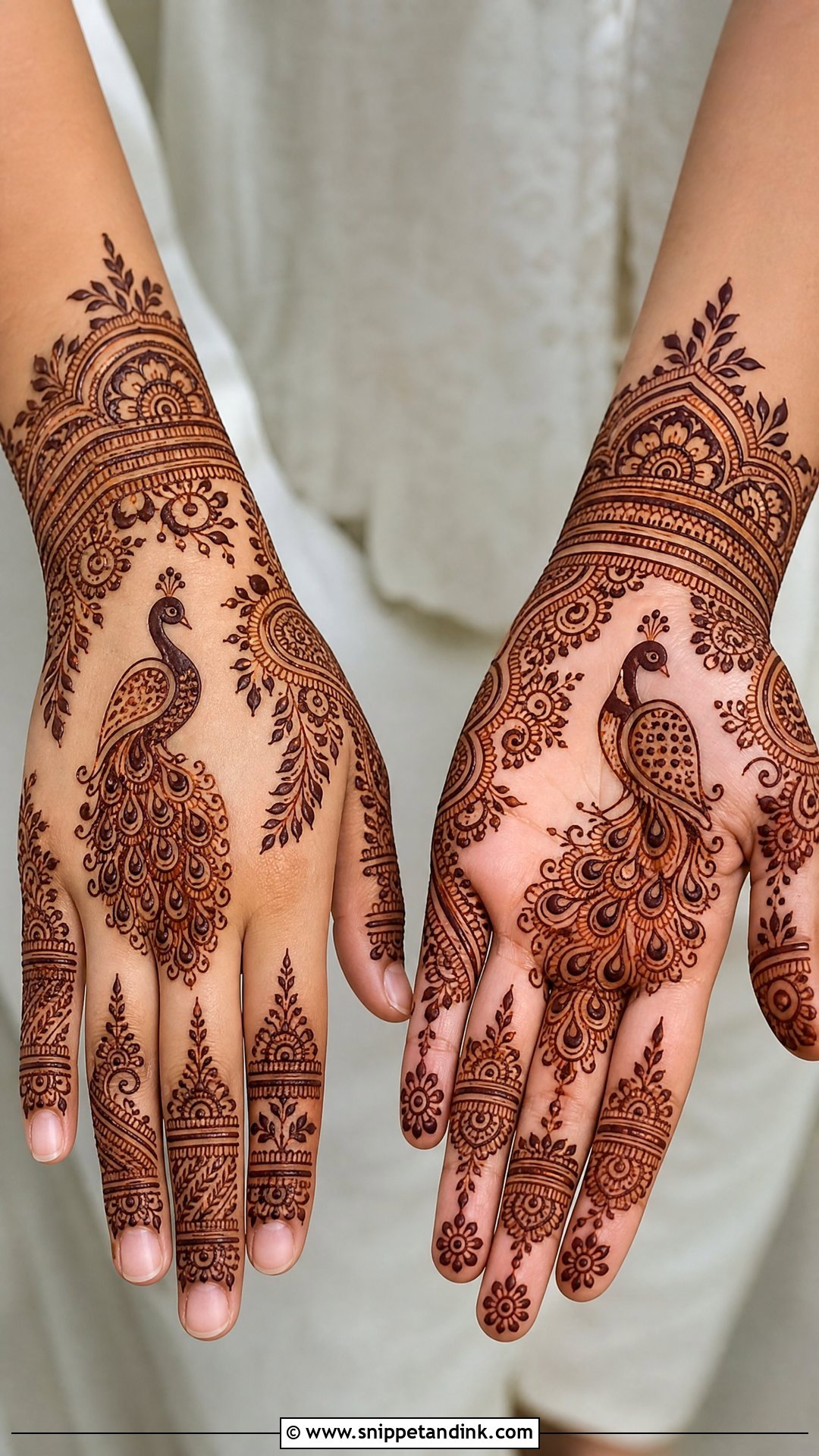
A peacock is the most artistic motif here and the one that needs the most skilled hand. I keep the bird moderate in size so the hand stays balanced, set it on the palm or back hand, and surround it with paisleys and florals. Feather detail on the fingers carries the theme. The fine lines in the tail feathers need a sharp cone tip, so ask your artist whether peacocks are a regular part of their work. A deep maroon stain shows the detail best.
19. Hania Amir Modern Mehndi Design
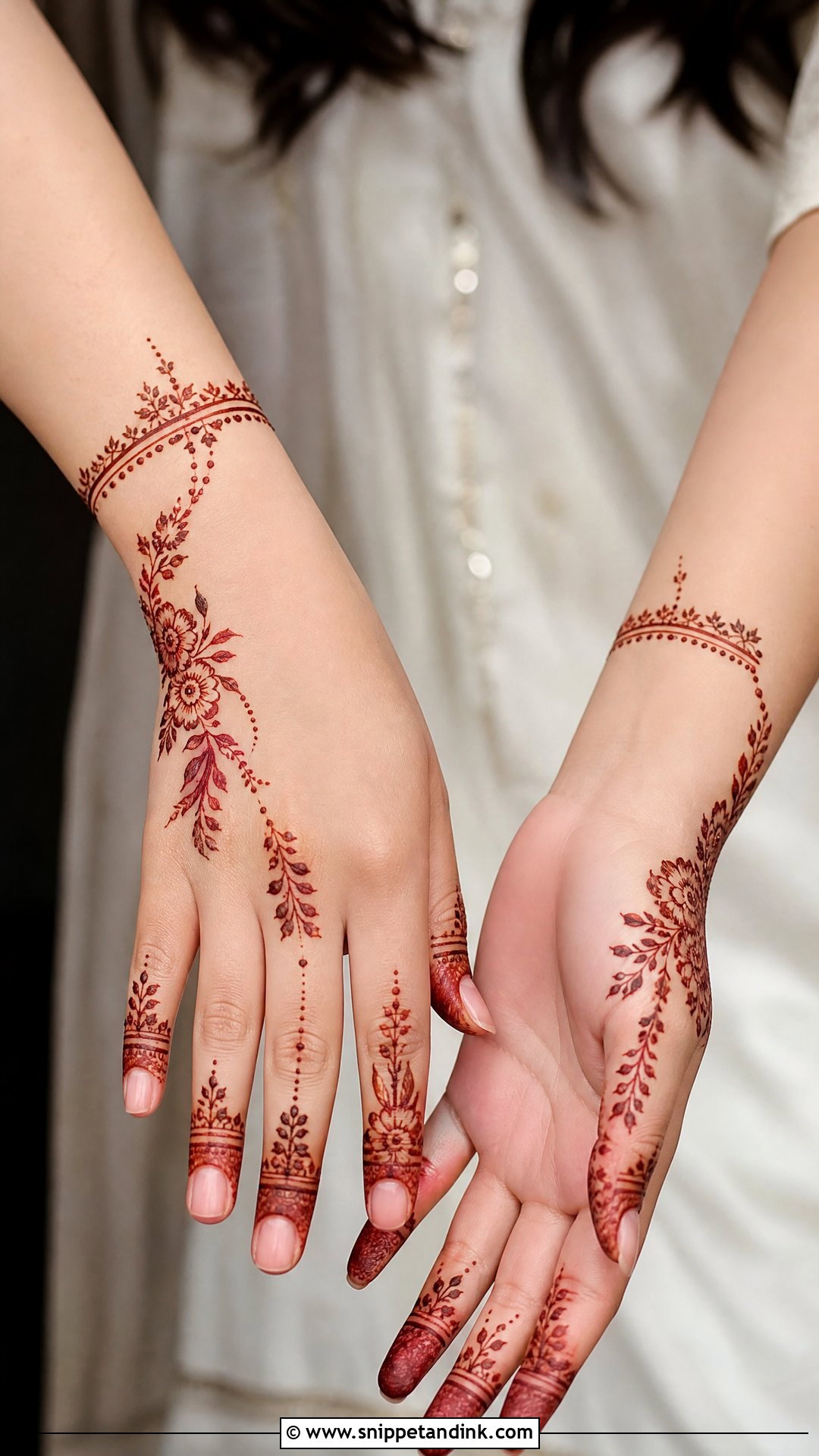
Modern mehndi is about asymmetry and negative space. The main motif sits on one side of the palm or back hand and extends toward the fingers, with dotted trails and slim vines rather than heavy fill. A light wrist border finishes it. This is the closest to the airy celebrity look many clients bring in. It suits Eid, engagement, mayun and wedding guest appointments, and it takes less time than most traditional designs.
20. Hania Amir Heavy Bridal Mehndi
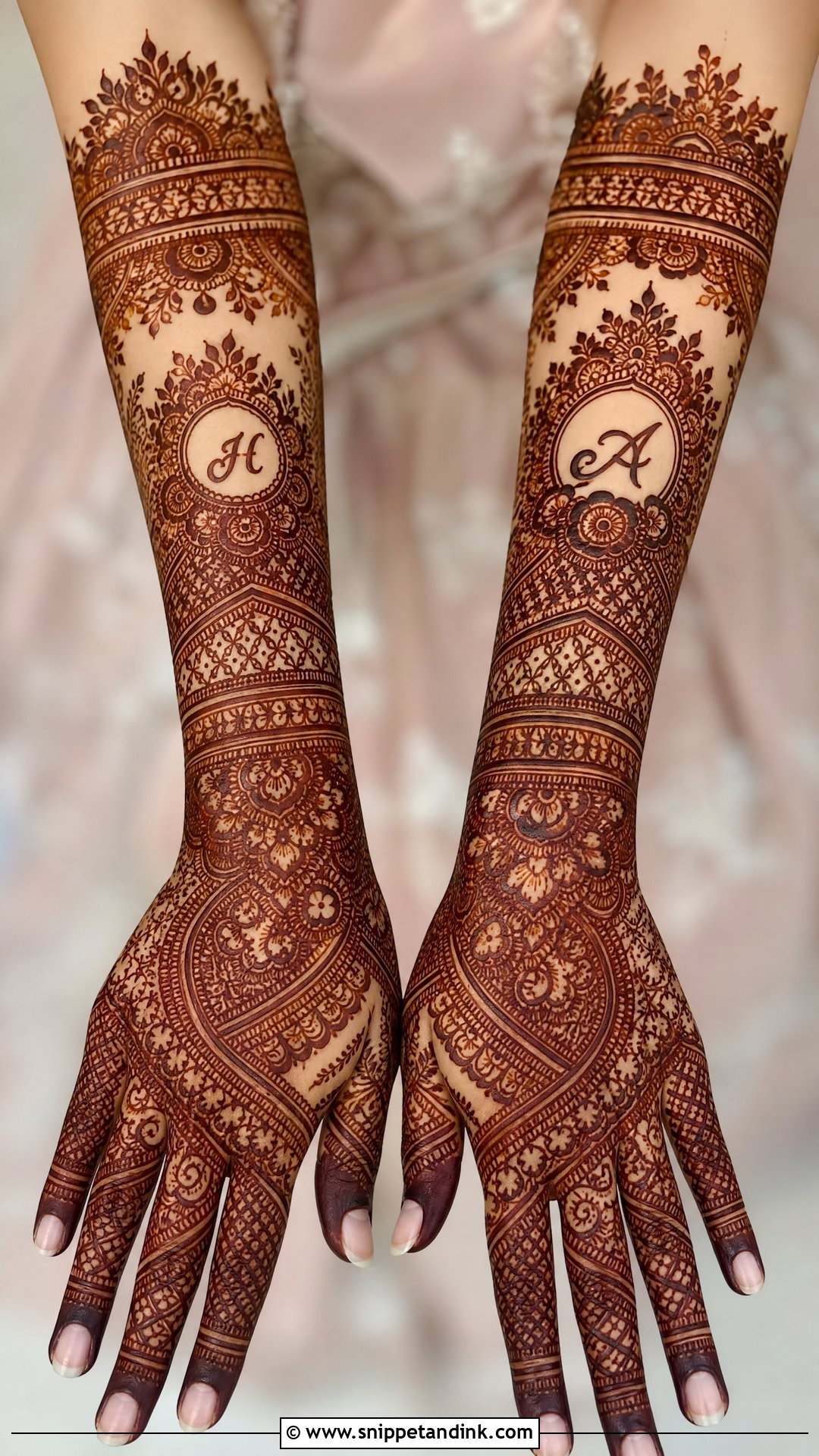
Heavy bridal mehndi covers both hands from fingertips to forearms with paisleys, florals, mandalas, jaali mesh and personal elements such as initials or wedding symbols. I plan it in clear sections, like panels, so it reads as a design and not one dark mass. Fingers are richly detailed, while the palms carry central bridal art. This is a long sitting, so bring water, snacks and someone to feed you. Book it a day or two before the main wedding day so the stain has time to darken.
From Orange Paste to Deep Maroon in Two Days
Fresh henna stain is bright orange when the paste first comes off. That surprises people every time. It darkens over the next 24 to 48 hours as it oxidises, reaching its deepest colour around the second day. That’s why I apply bridal mehndi one or two days before the main event.
- Keep the paste on as long as you comfortably can, ideally six hours or overnight.
- Dab a lemon and sugar mix over the dried paste to keep it stuck to the skin.
- Scrape the paste off with a blunt edge; don’t wash it off.
- Avoid water on the design for the first twelve hours or so.
- Keep hands warm. A cold room slows the stain.
Only use natural henna. So-called black henna often contains PPD, a chemical dye that can cause serious skin reactions. A real henna paste smells earthy and stains orange to brown, never instantly black.
Ask for Her Spacing, Not a Copy of Her Hands
The celebrity style people love here comes from open spacing and fine detail more than any particular motif. From simple tikki patterns to full Pakistani bridal mehndi, each design can be scaled to your event, outfit and hand shape. Softer looks lean on minimal florals, mandalas and bracelets; richer ones on jaali, peacocks and Indo-Arabic coverage. Bring two or three reference photos, then let your artist adapt them to your hands rather than copying them line for line.
You'll Like These Ideas:



Leave a Reply