
Requests at my table have shifted a lot. Fewer people ask for every inch filled; more ask for clear spacing, one or two bold motifs and fine-line detail that still reads from across a room. The styles themselves are borrowed freely now: Indian richness, Arabic flow, Indo-Arabic structure, bold Gulf florals, Moroccan geometry and pared-back modern layouts all sit side by side. Brides still book full-hand coverage, while guests and festival clients lean toward a back-hand trail, a bracelet or decorated fingers. These new mehndi looks cover every age, hand shape and occasion, so below I’ve grouped 35 of them with the practical notes I’d give you before drawing each one.
How Much Coverage Suits Your Role at the Event
The first question I ask isn’t which style you like. It’s who you are at this event, because that decides how much skin we cover and how long you’ll be sitting with me.
The bride
Fingertips to forearm on both sides, sometimes feet too. Expect a long sitting, often several hours, plus drying time. This is the only role where I’d always recommend a trial.
Sisters, mothers and close family
Full or half hands, usually stopping at the wrist or just past it. Enough to look part of the family in photos, while staying visibly lighter than the bride.
Guests, friends and festival clients
Back-hand trails, bracelets, finger work or a palm mandala. These take minutes rather than hours, and you can eat and dance soon after. If you have to work or cook the next morning, choose a back-hand design and keep your palms clear.
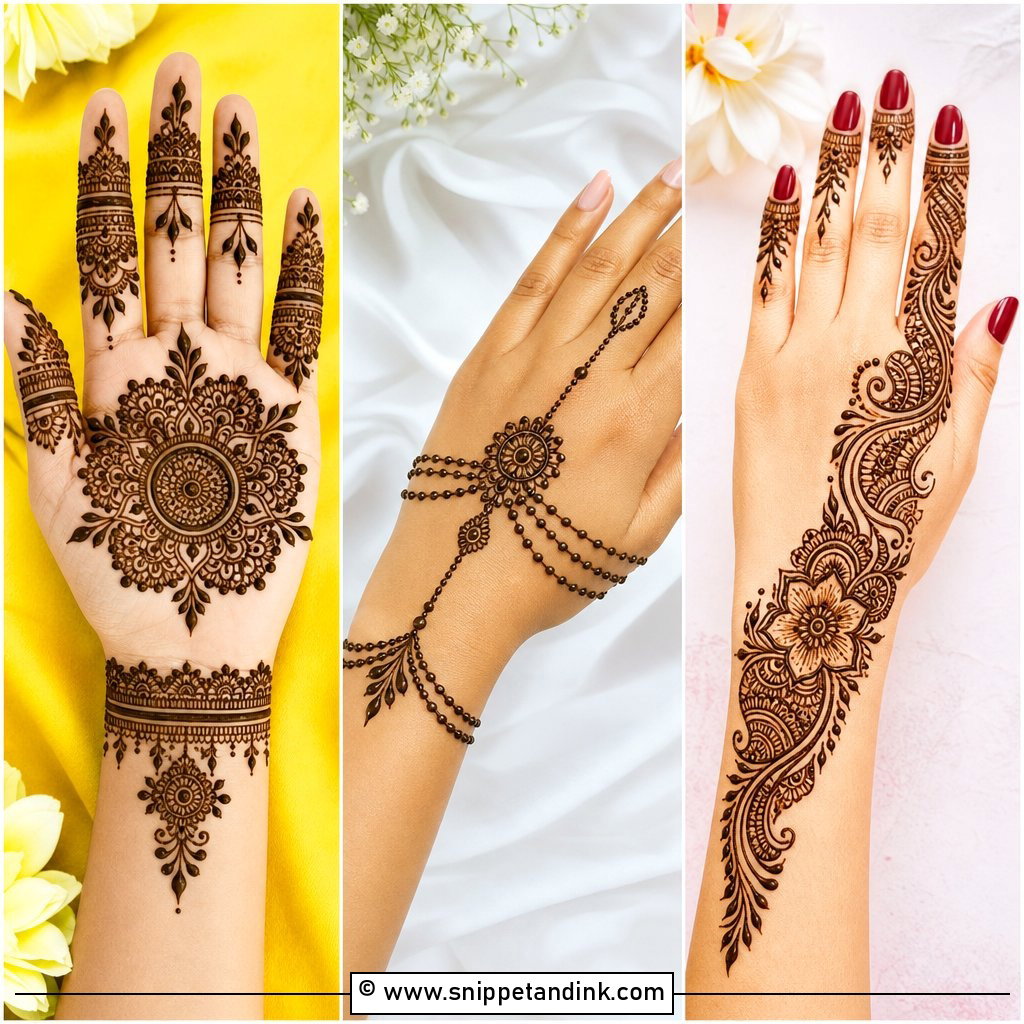
1. Simple Front Hand Mehndi Design
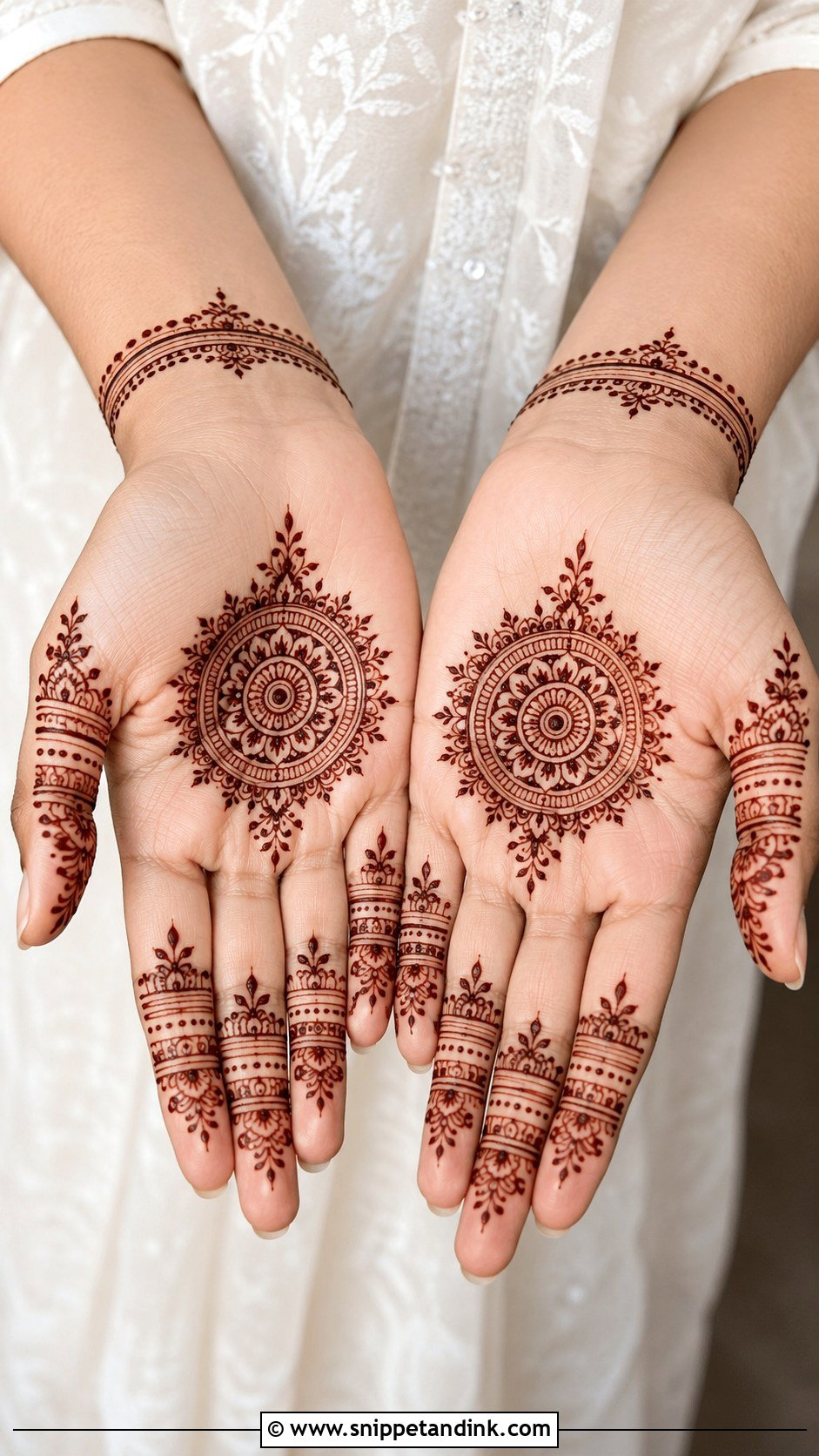
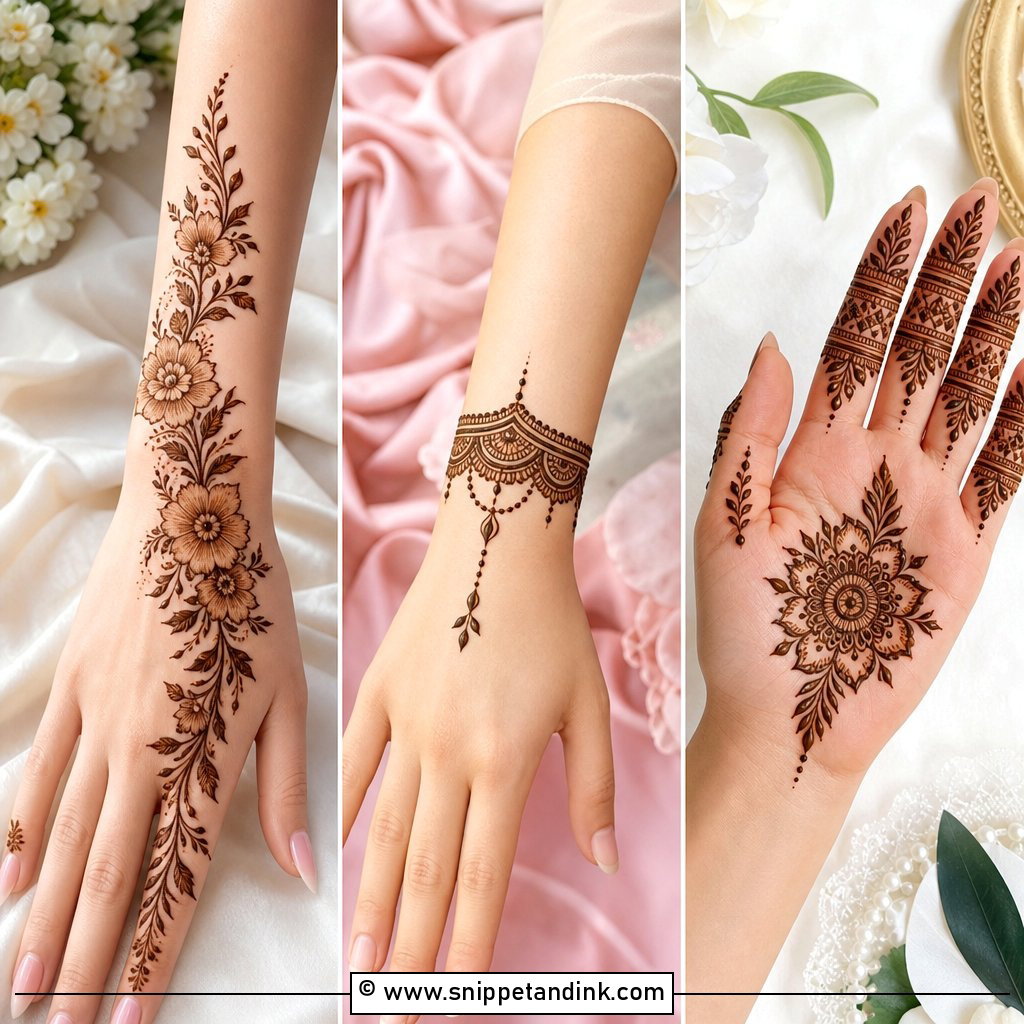
Start in the middle of the palm. A mandala, a flower or a paisley sits at the centre, then dots, leaves and fine lines run out toward the fingers, and a light floral band closes the wrist. What makes it look current is the bare skin between those elements. On the palm that open space pays off, because palm skin is thick and stains deeply, so each line comes out crisp against it. Quick to apply, it suits Eid, engagement parties and family functions equally.
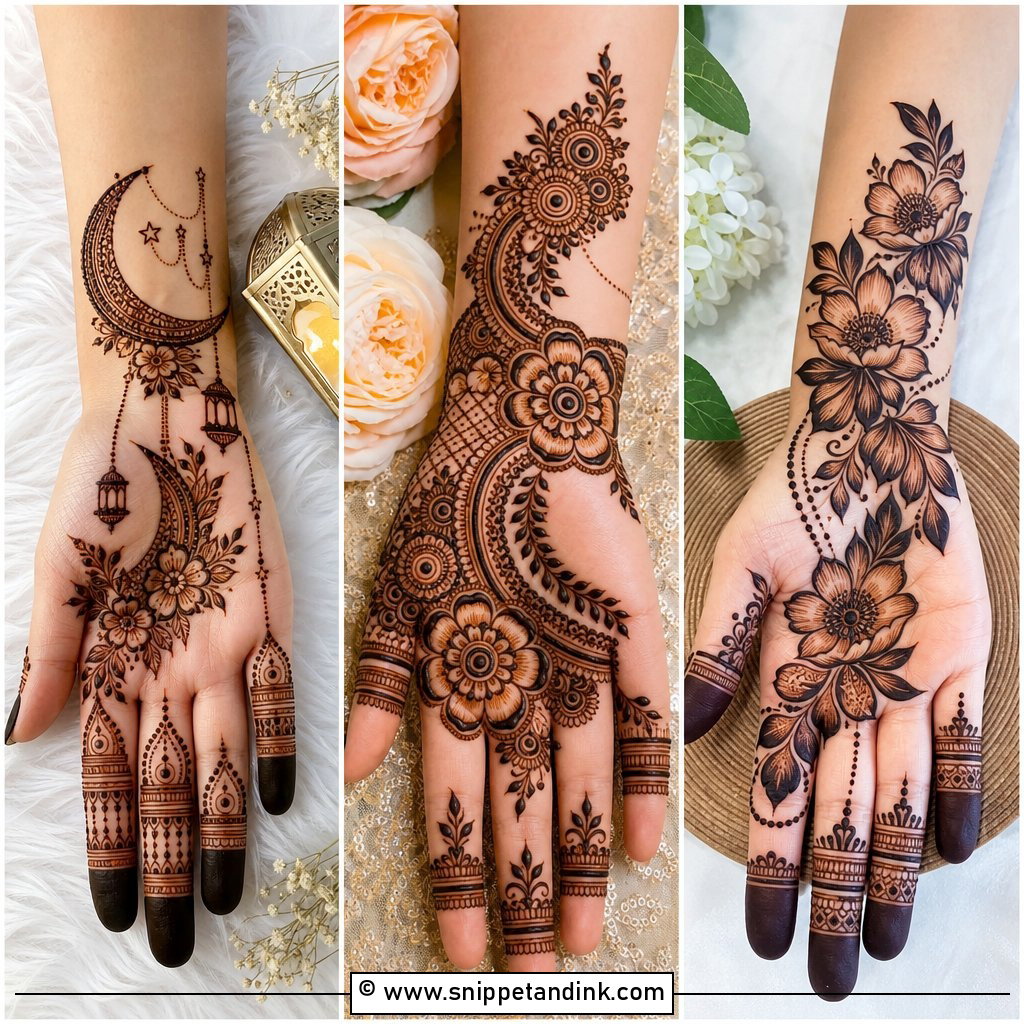
2. Arabic Back Hand Mehndi Design
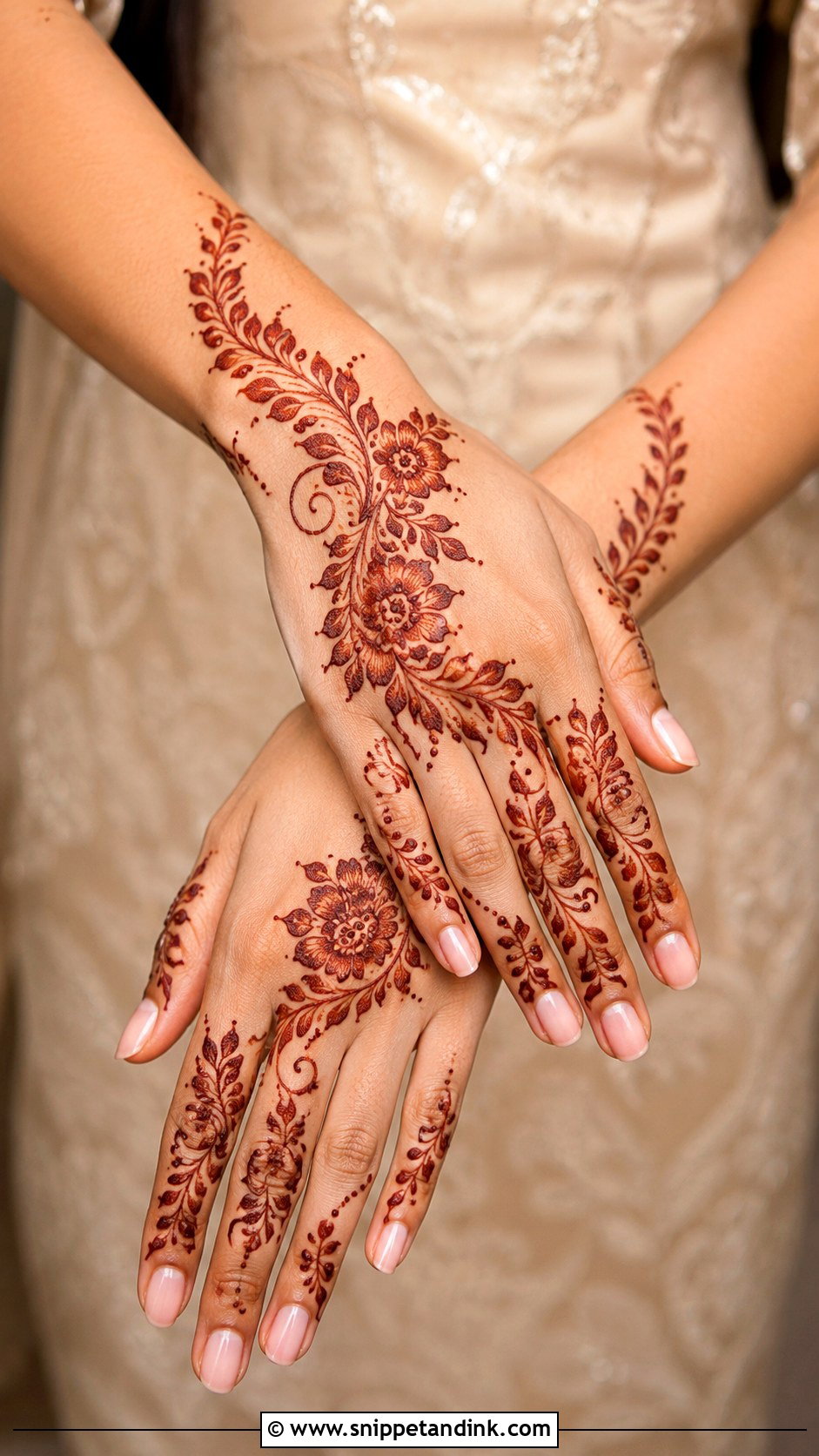
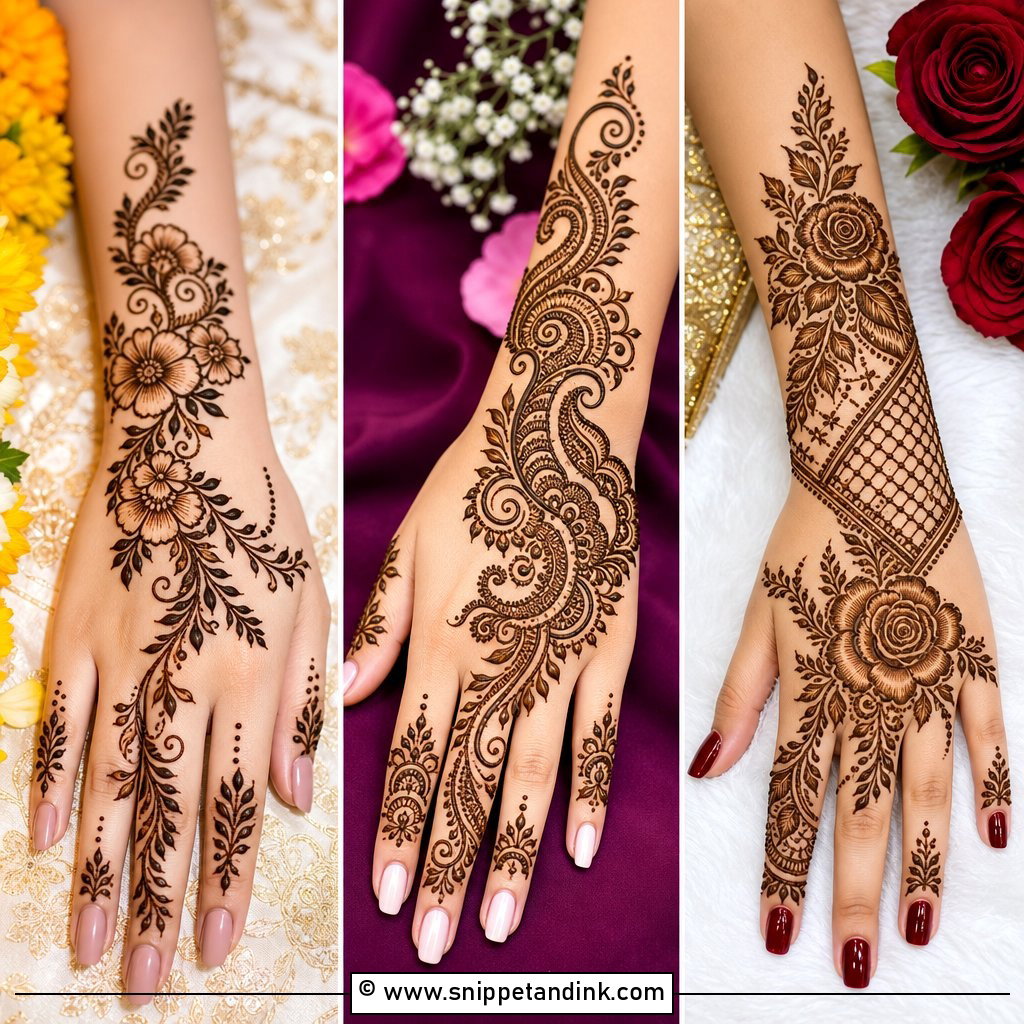
Placement does the work on a back-hand Arabic design. I begin near the wrist and travel diagonally toward the index or middle finger, which visually lengthens the hand. Big floral outlines carry the eye; shaded petals and dotted borders add depth without adding weight. One honest caution: the back of the hand stains a little lighter than the palm, so if you want deep colour here, leave the paste on longer and keep your hands warm afterwards. Bridesmaids and sisters of the bride ask for this constantly.
3. Modern Full Hand Mehndi Design
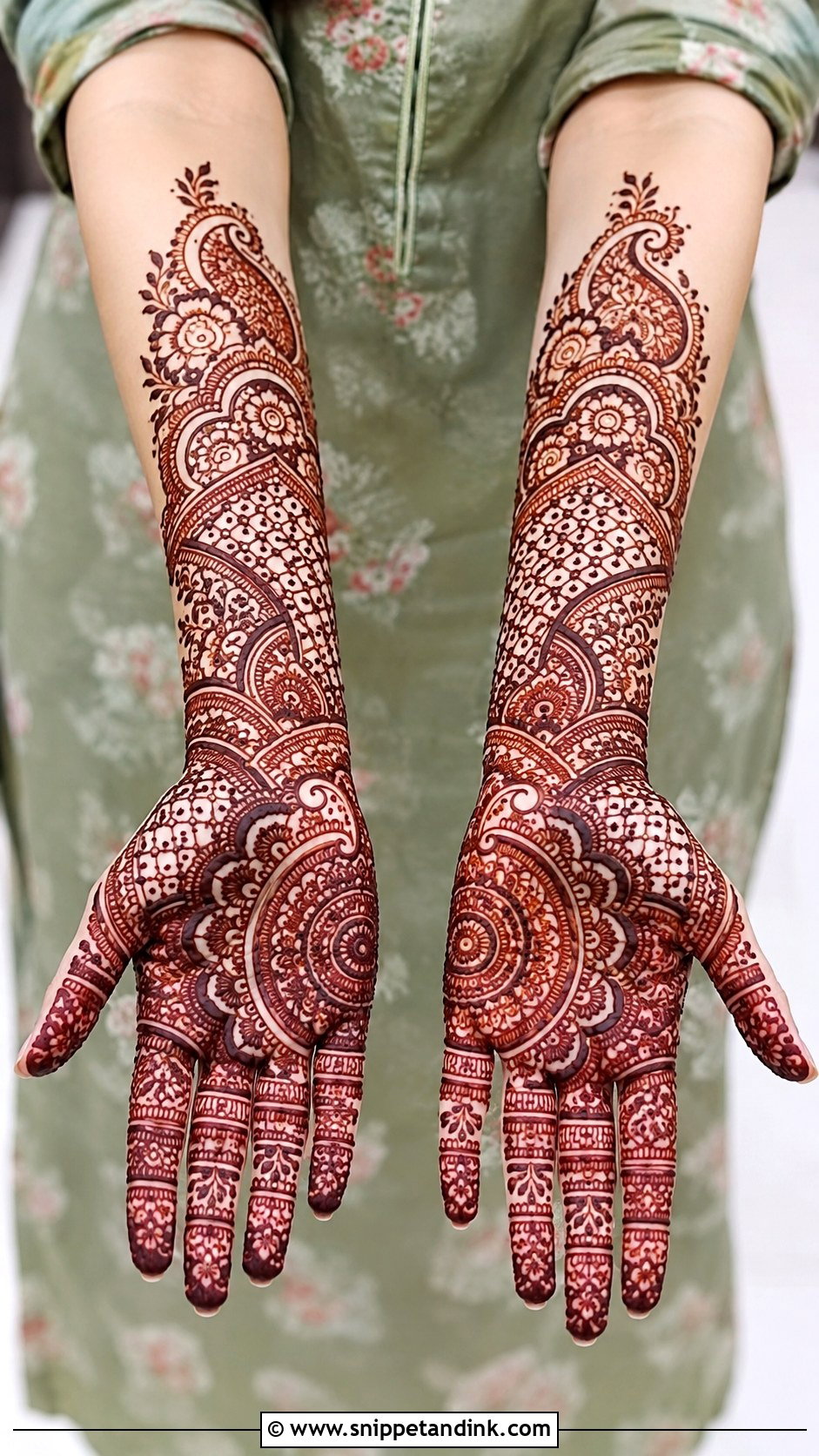
Modern full-hand work keeps the traditional coverage but organises it. I map the palm, wrist and forearm into panels first, then assign each one a job: a mandala here, a paisley cluster there, a strip of jaali, a leafy band. Fingers can be fully filled or semi-filled. The negative space between panels is what separates this from older dense styles, so if you’re briefing an artist, ask specifically for crisp outlines and clear gaps between sections. Plan on a long sitting; even a cleaner full hand takes time.
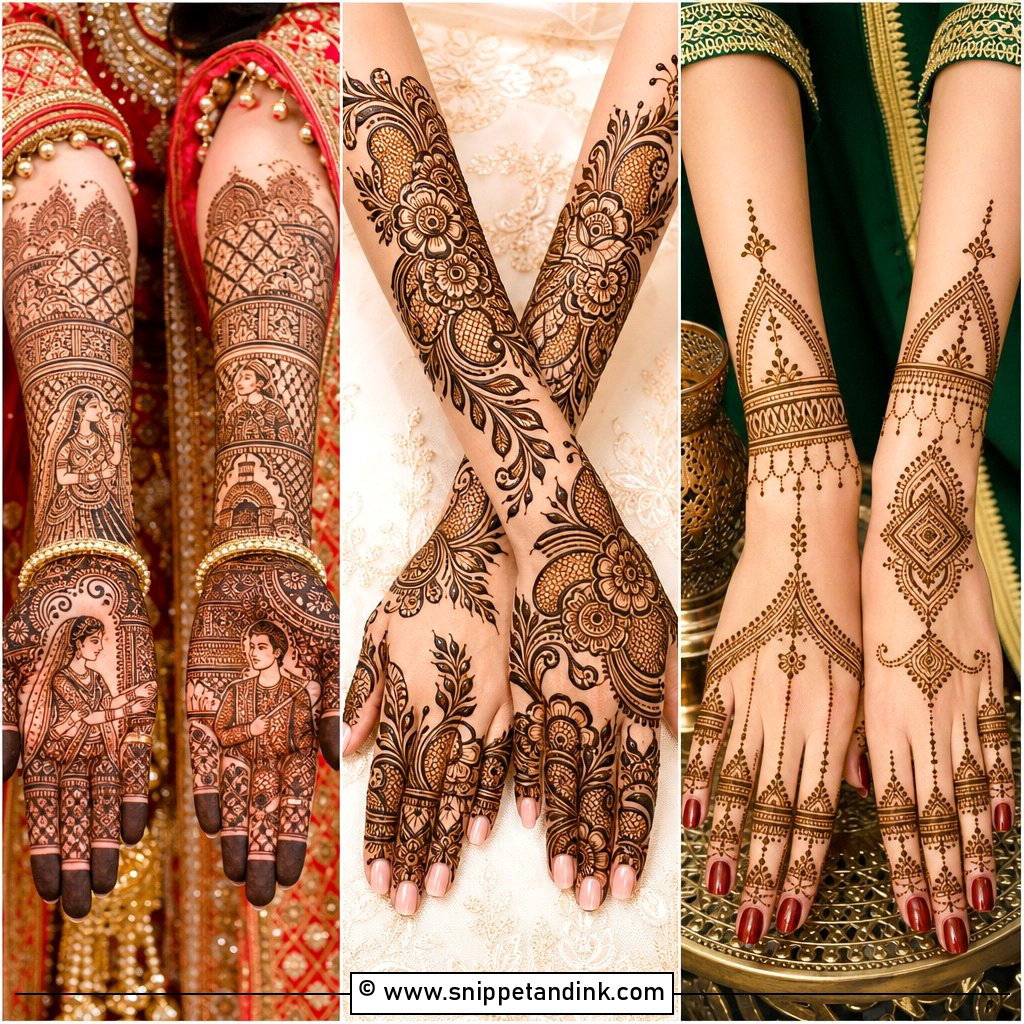
4. Bridal Full Hand Mehndi Design
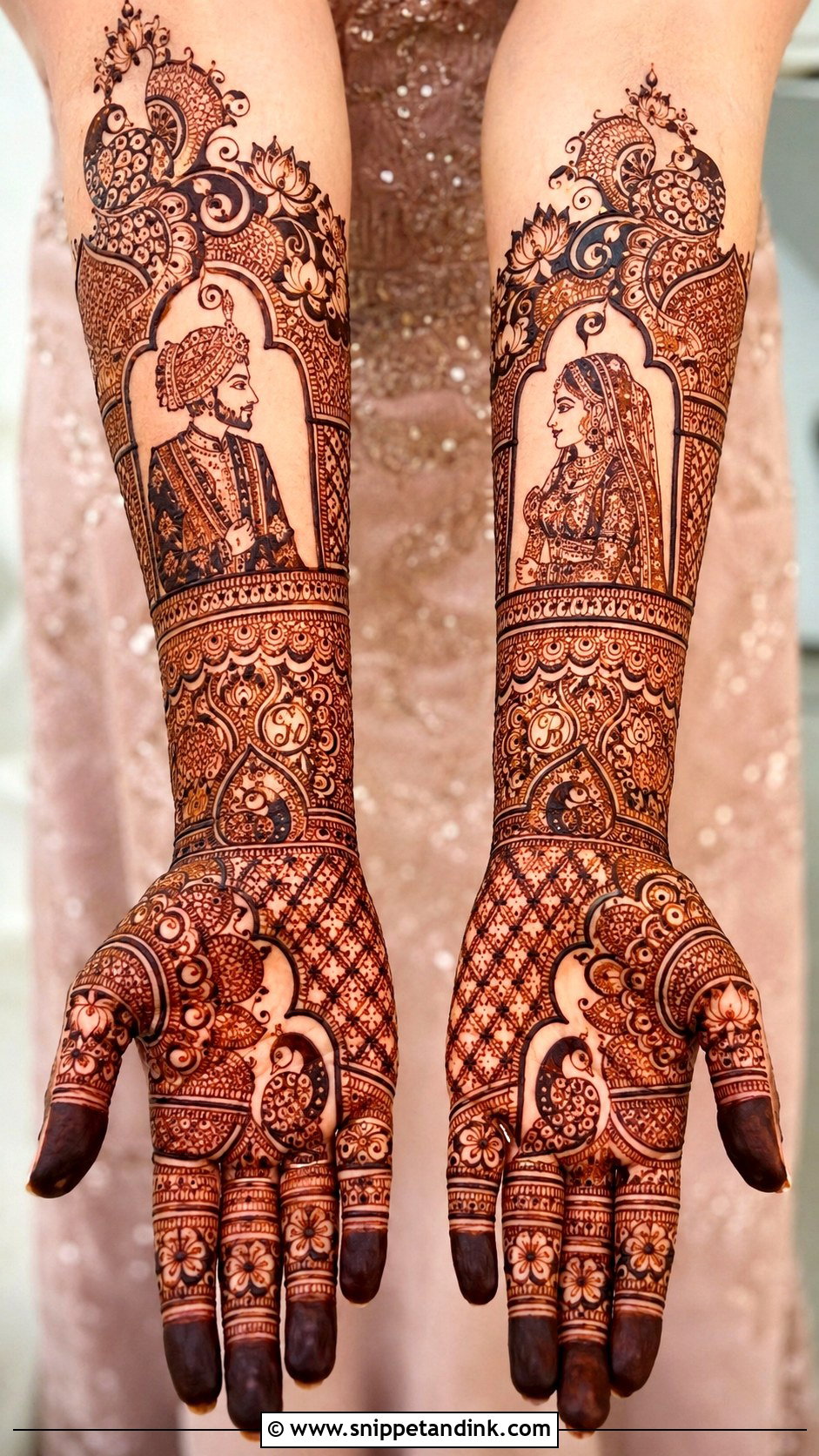
This is the most involved booking I take. A bridal full hand mehndi design runs from fingertips to forearms, often with peacocks, paisleys, lotus flowers, jaali, bride-and-groom figures, kalash motifs and the groom’s initials hidden somewhere for the wedding-night search. Newer bridal work adds cleaner gaps and story panels while keeping that traditional density. I always draw the two hands as a mirrored pair, because they’ll be photographed side by side. The sitting runs to hours, so eat first and empty your bladder before we start.
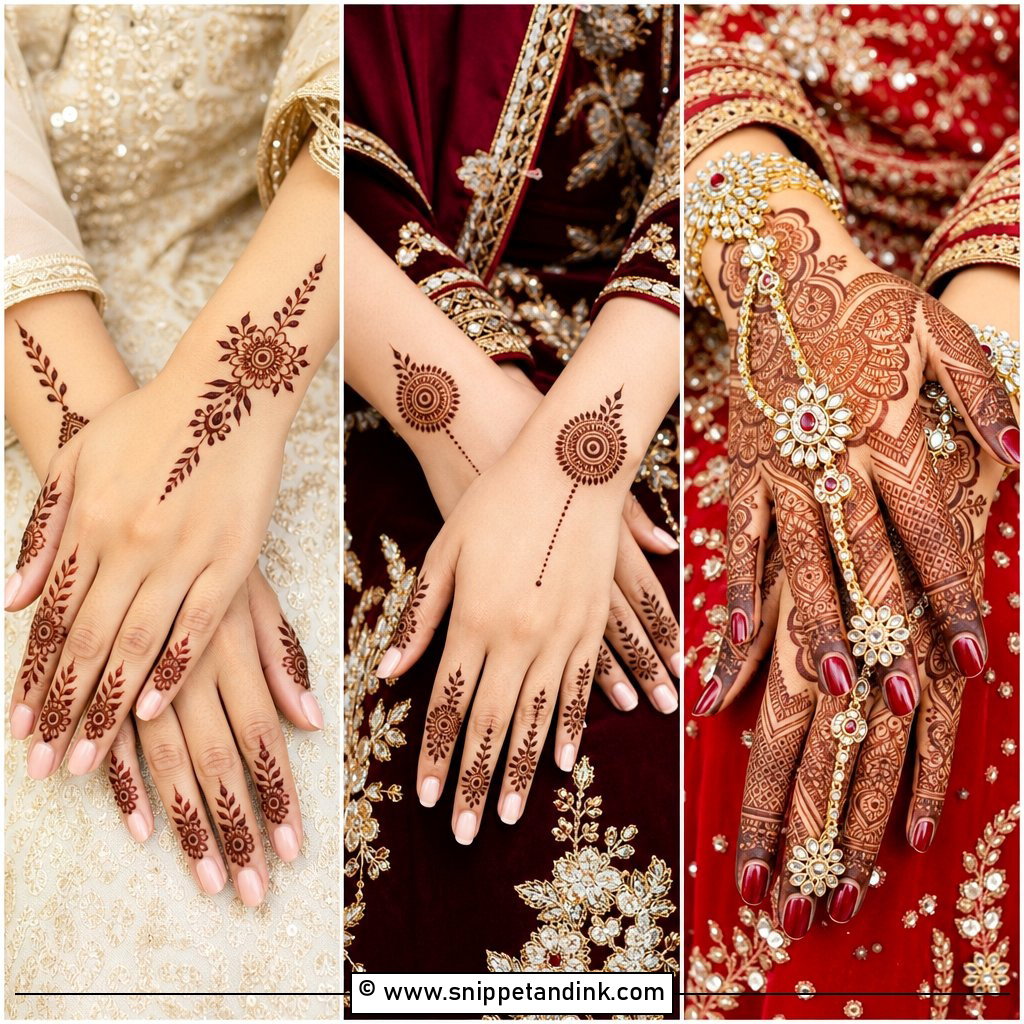
5. Minimal Finger Mehndi Design
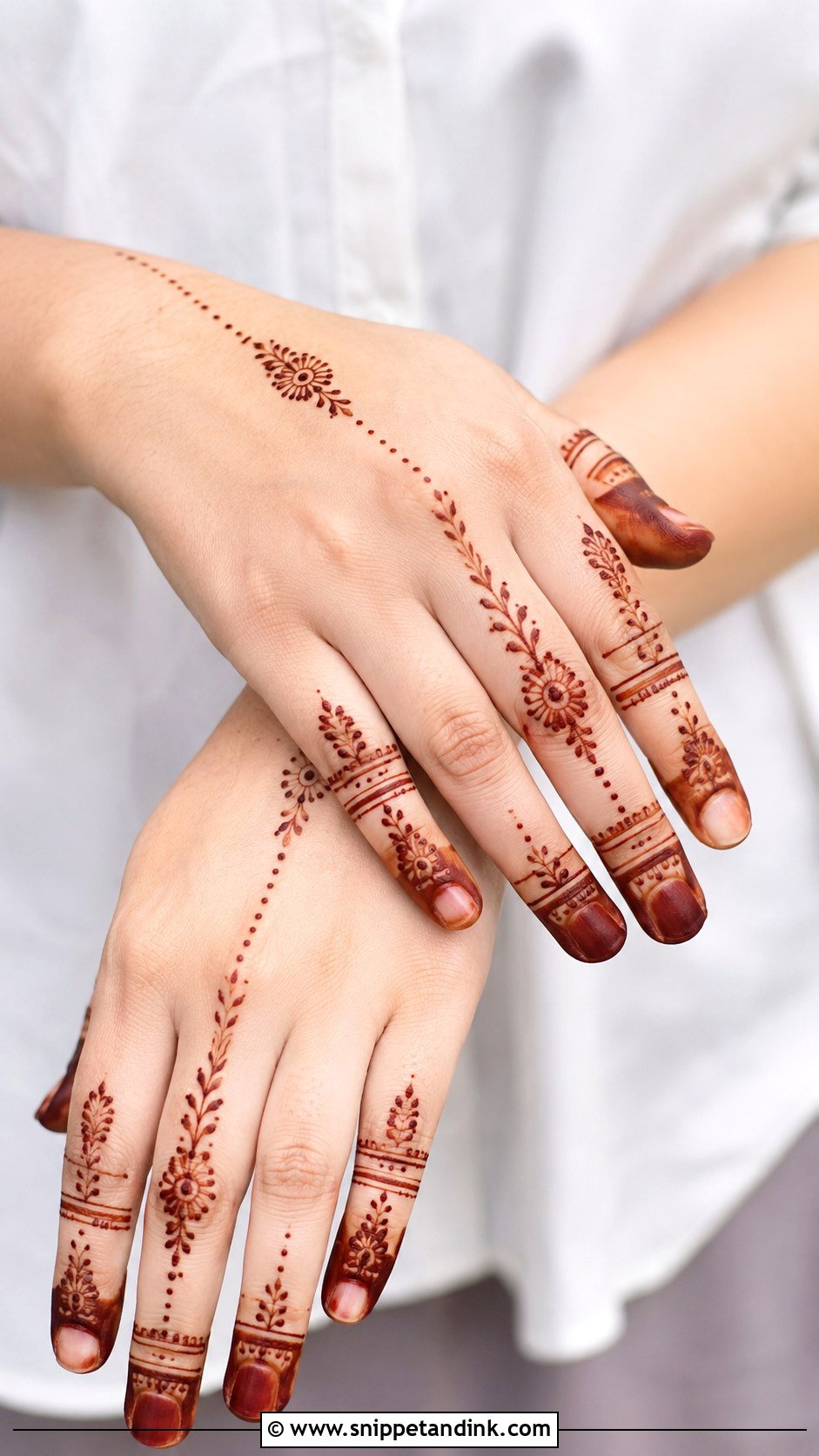
Fingers carry the whole design here, and the palm or back of the hand stays mostly empty. Fine rings, leafy lines, small dots, tiny flowers and filled fingertip caps give a jewellery effect. My trick to keep it from looking repetitive is to vary each finger slightly while keeping the same line weight, so the set reads as coordinated rather than stamped. Add a small wrist detail if the bare hand feels unfinished. College events and low-key celebrations suit it.
6. Mandala Palm Mehndi Design
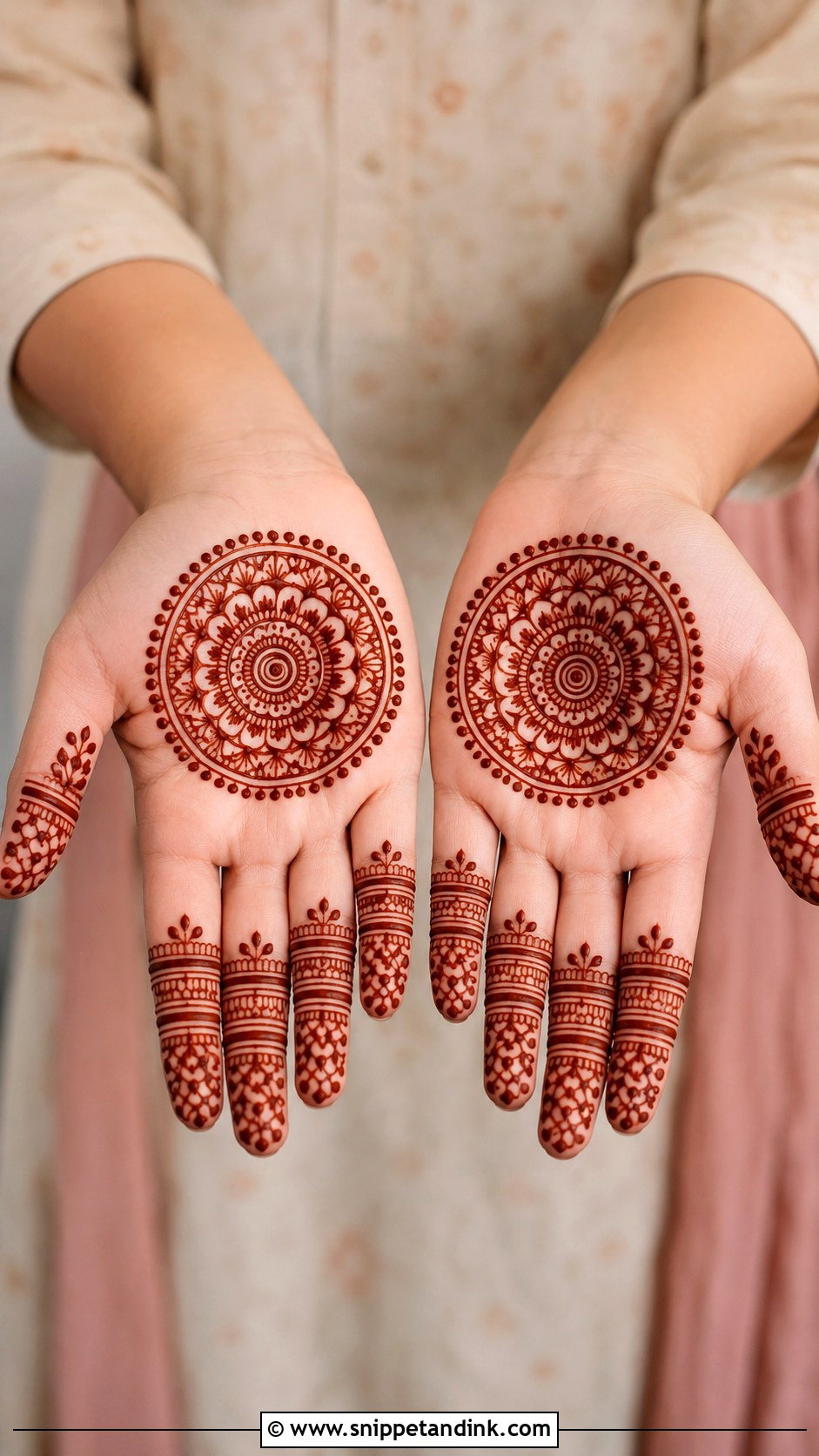
Mandalas never really leave my order book. The round centre sits in the middle of the palm, built outward with petals, dots, tiny leaves, scalloped borders and rings. Fingers get bands or filled tips depending on how heavy you want it. When the palm faces the camera, the mandala becomes the entire picture, so the circle has to be truly round; I draw the centre first and check it from a step back before adding a single ring. Leave clean skin around it for a modern finish.
7. Indo Arabic Mehndi Design
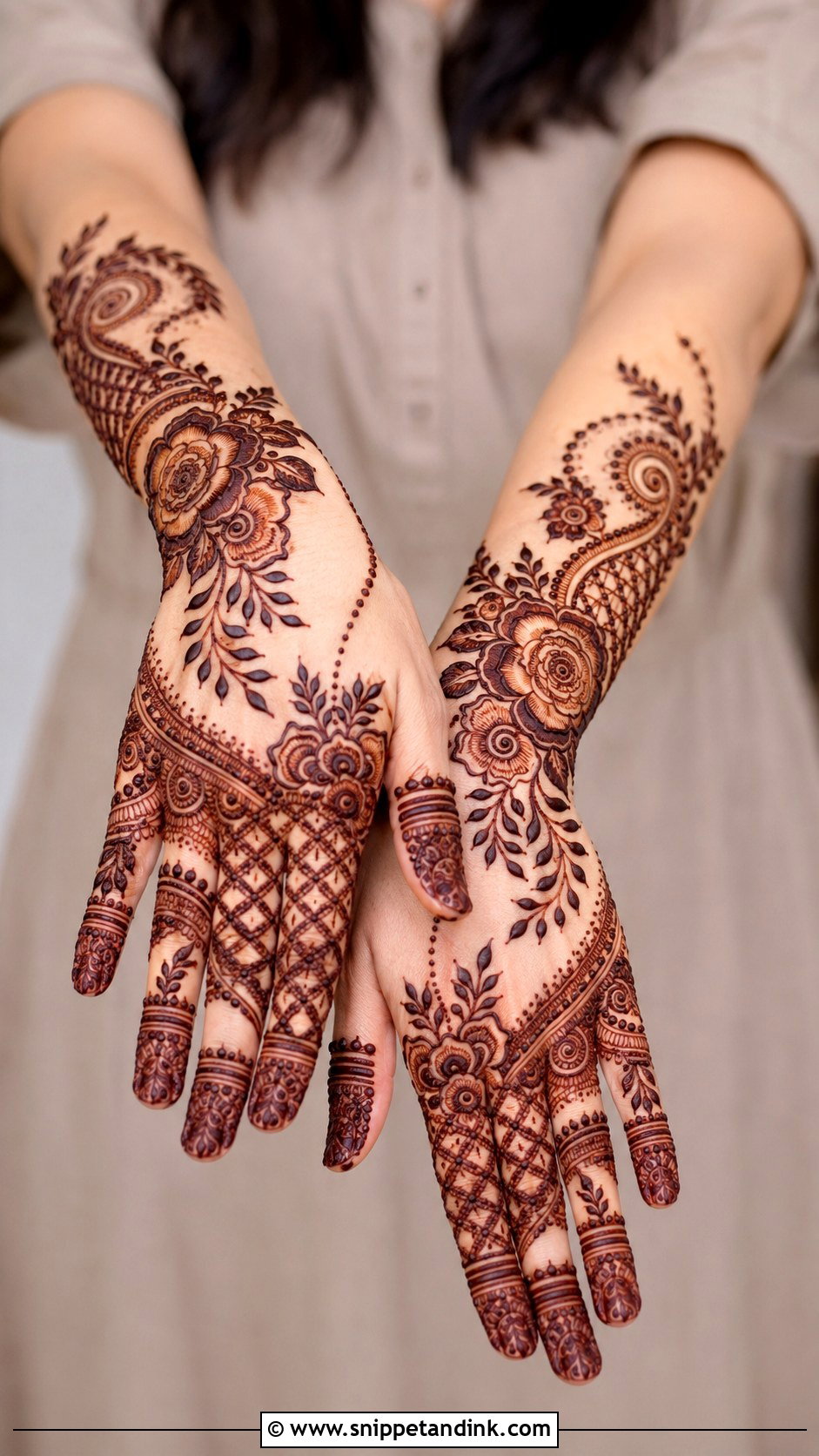
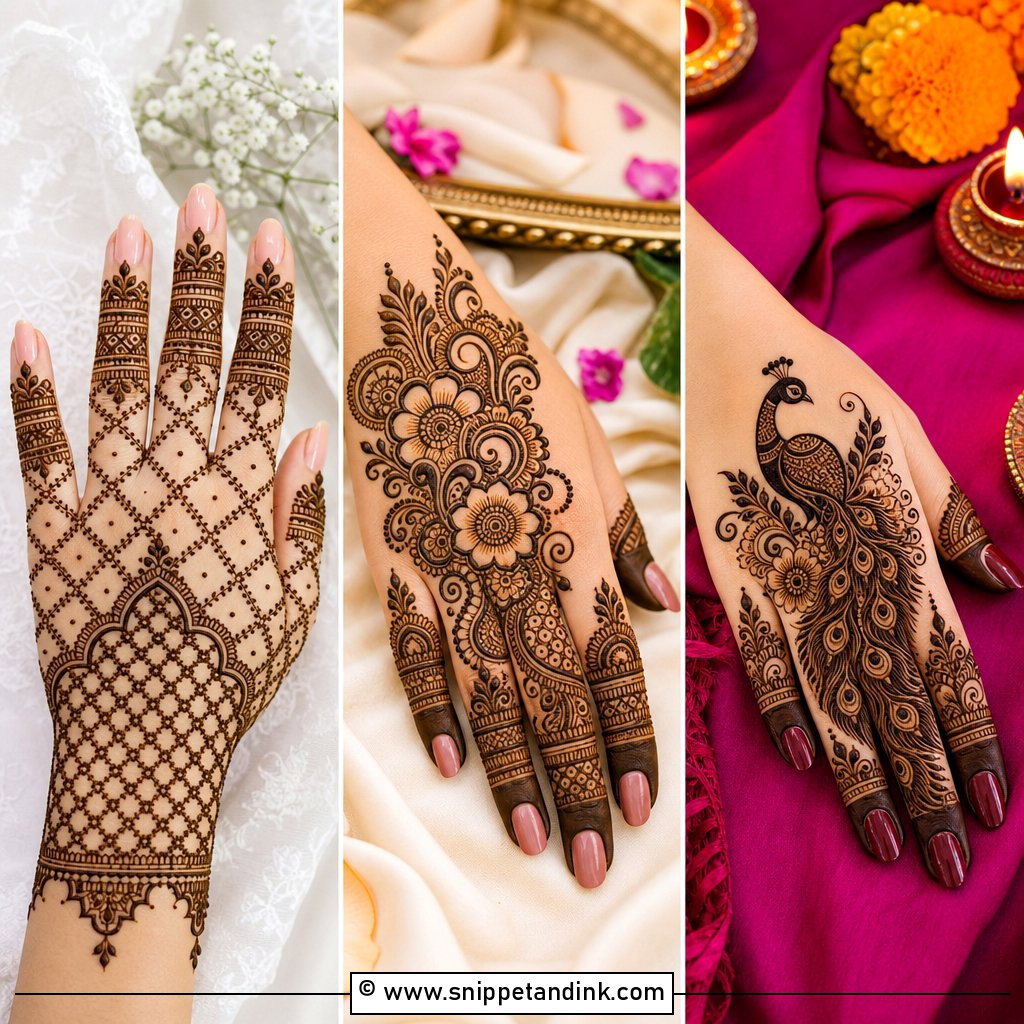
Indo-Arabic is what I suggest when a client loves detail but hates crowding. It takes Arabic’s bold floral flow and fills it with Indian fine work: large flowers, curved paisleys, leafy trails, mesh sections and detailed fingers, usually laid out diagonally or semi-full. The contrast comes from line weight, a thick outer line with thin inner fillers, so I switch to a finer cone tip for the inside. It works on front and back hands and fits weddings, Eid, Karwa Chauth and Diwali.
8. Bridal Back Hand Mehndi Design
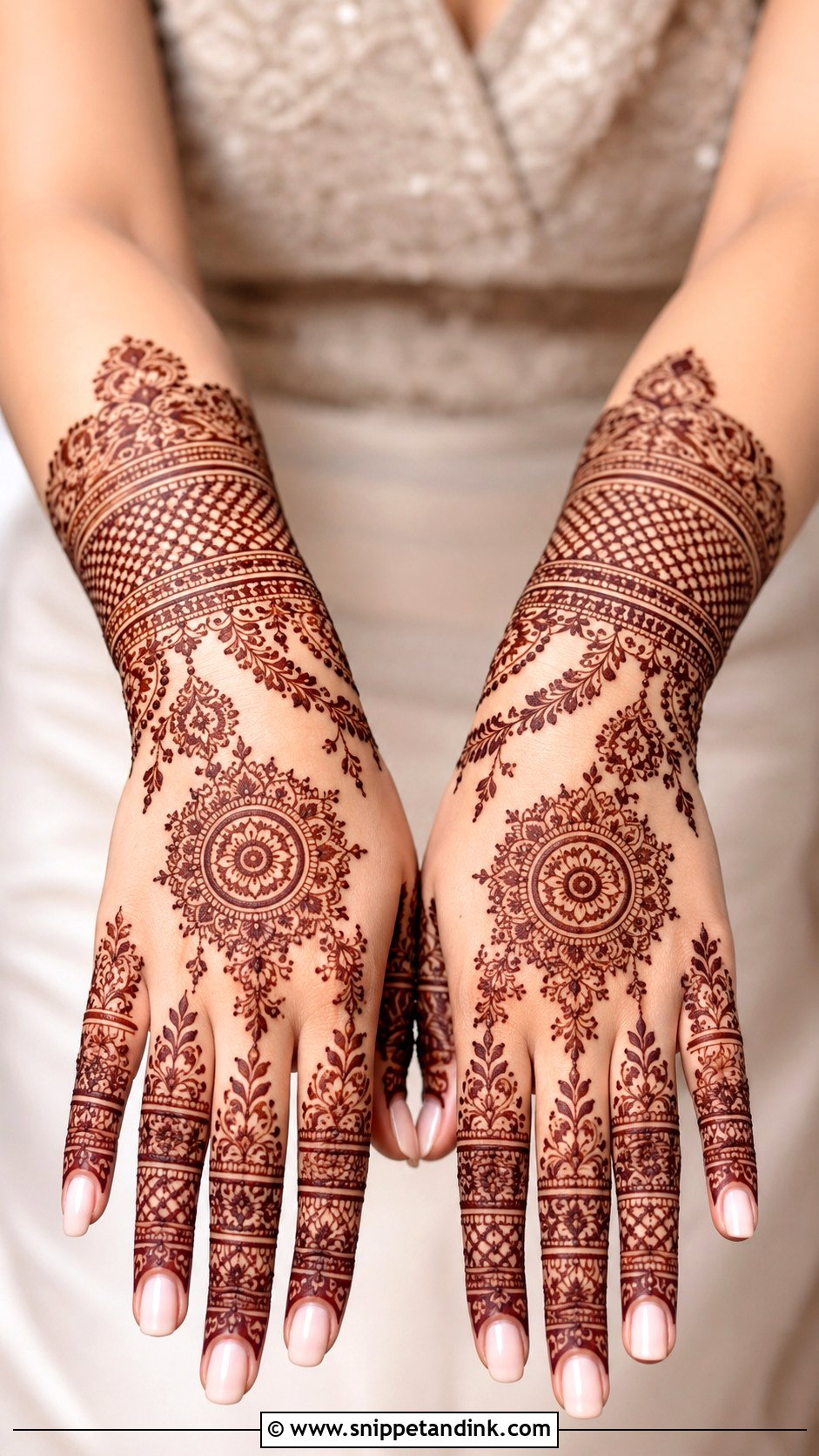
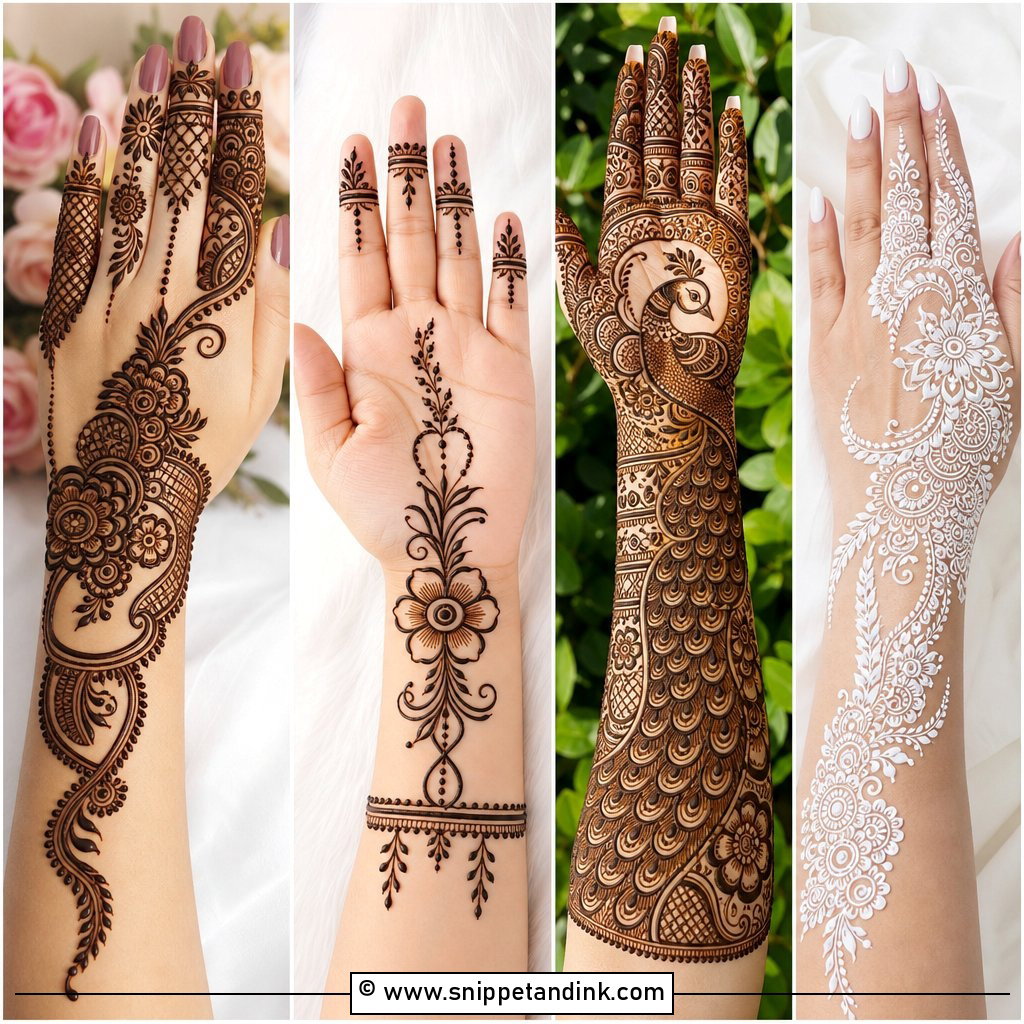
Brides forget how often the backs of their hands appear in photos: the ring shot, the bouquet, the hands resting on the lehenga. A bridal back hand mehndi design has to hold up in all of them. I combine wrist cuffs, finger extensions, floral trails, jaali panels and mandala accents, and plan it around the jewellery, especially a haath phool, so the chains sit over open skin rather than hiding the best motif. Dense at the fingers and wrist, more open across the centre.
9. Floral Trail Mehndi Design
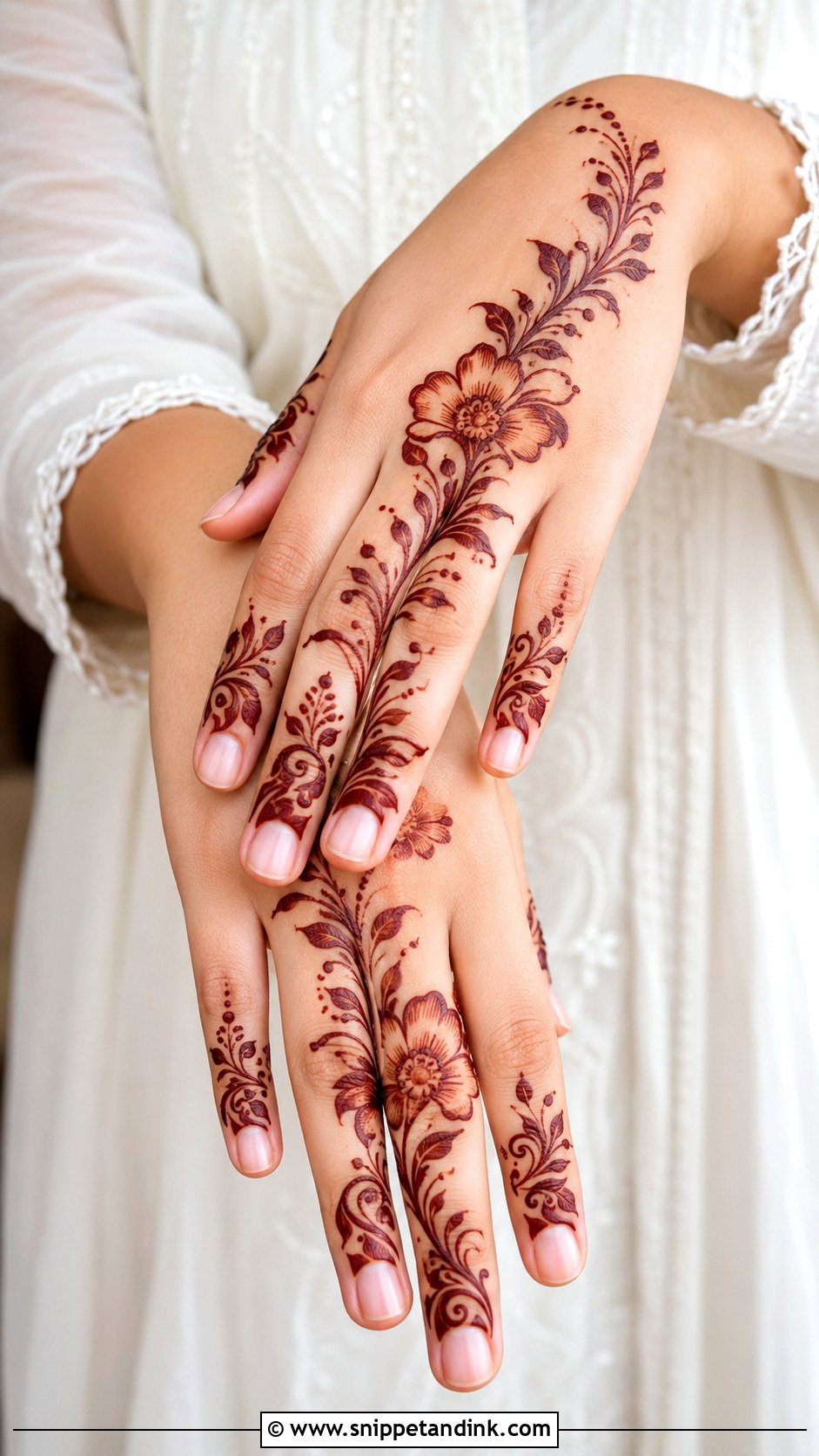
A floral trail moves across the hand like a vine, from the wrist to one or two fingers, built from large flowers, small buds, curved leaves and dotted lines. It belongs on the back of the hand, though it can work on the palm. The trail should curve the way a real stem grows, so I sketch the spine line first and hang the flowers off it. Bold flower outlines with lighter inner shading keep it legible once the stain settles. Haldi, mehndi night and wedding guests all suit it.
10. Peacock Mehndi Design
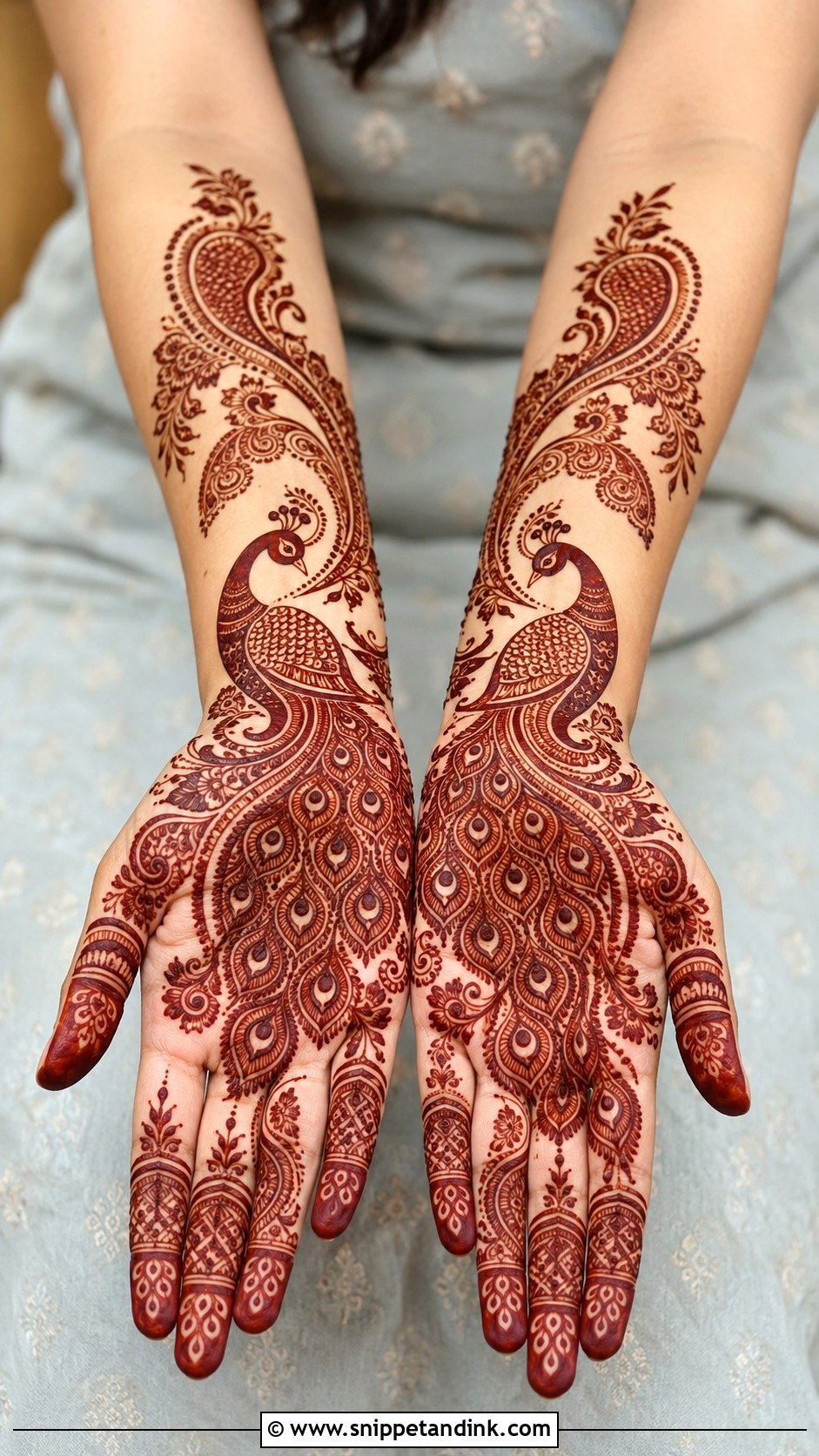
Peacocks are the motif clients ask for and then worry about. Placed on the palm, back hand, wrist or forearm, the feathers can spill into paisleys, florals and curved lines. For a newer look I keep the bird itself bold and surround it with clean fillers rather than dense shading, which tends to stain as a dark mass and hides the shape. The feather detailing is the reason anyone chooses this design, so I give it the most time. Pair it with decorated fingers.
11. Bracelet Mehndi Design
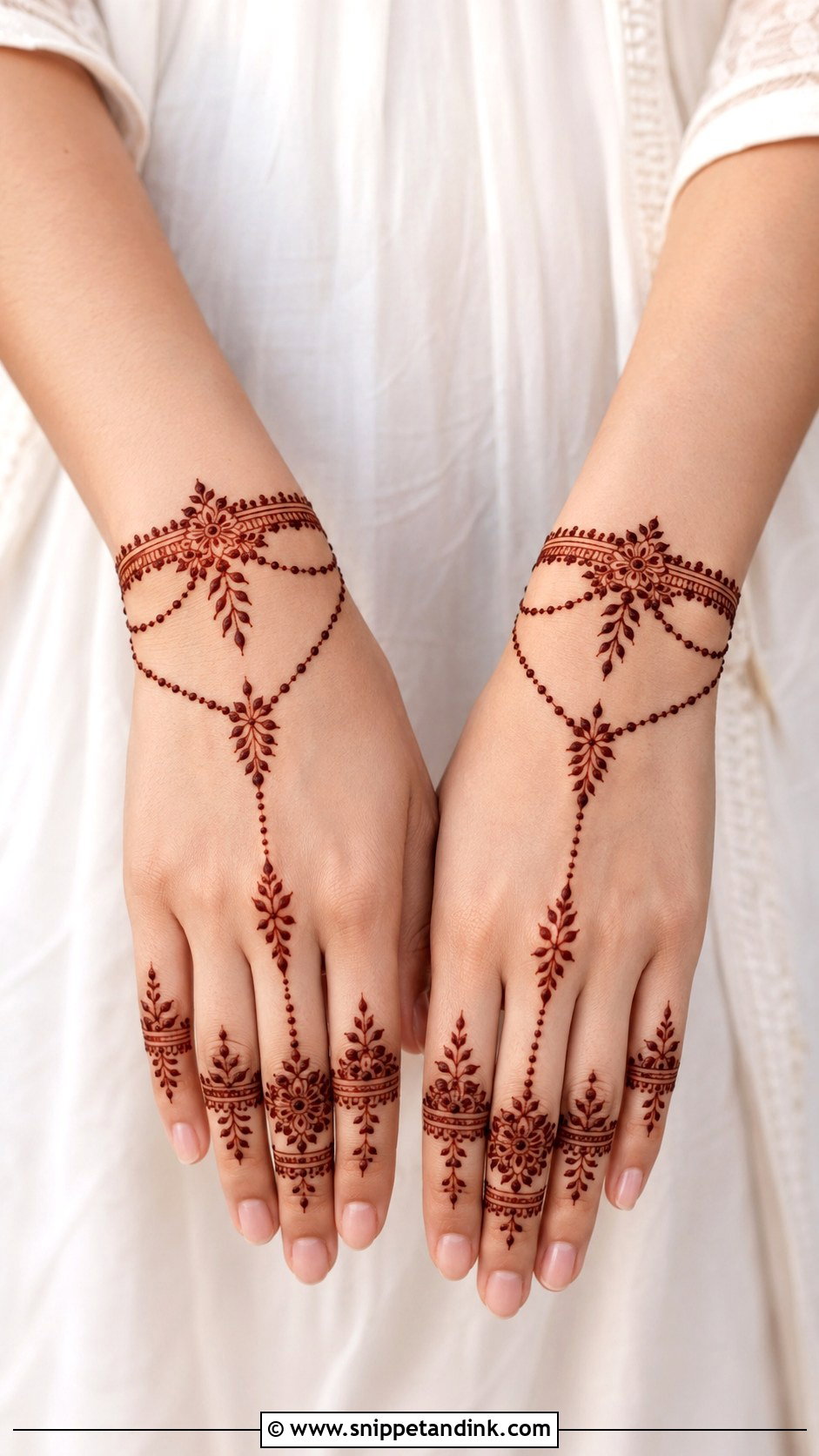
Henna jewellery is the simplest way to explain this one. Bands wrap the wrist, then chains, dots, leaves or small floral links run toward the fingers, sometimes ending in ring details joined by fine lines for a haath phool effect. Because the wrist flexes constantly, I keep the bands slightly further apart than they’d look on paper; close lines blur together as you move while the paste is wet. Bangles and rings sit naturally against it.
12. Jaali Mehndi Design
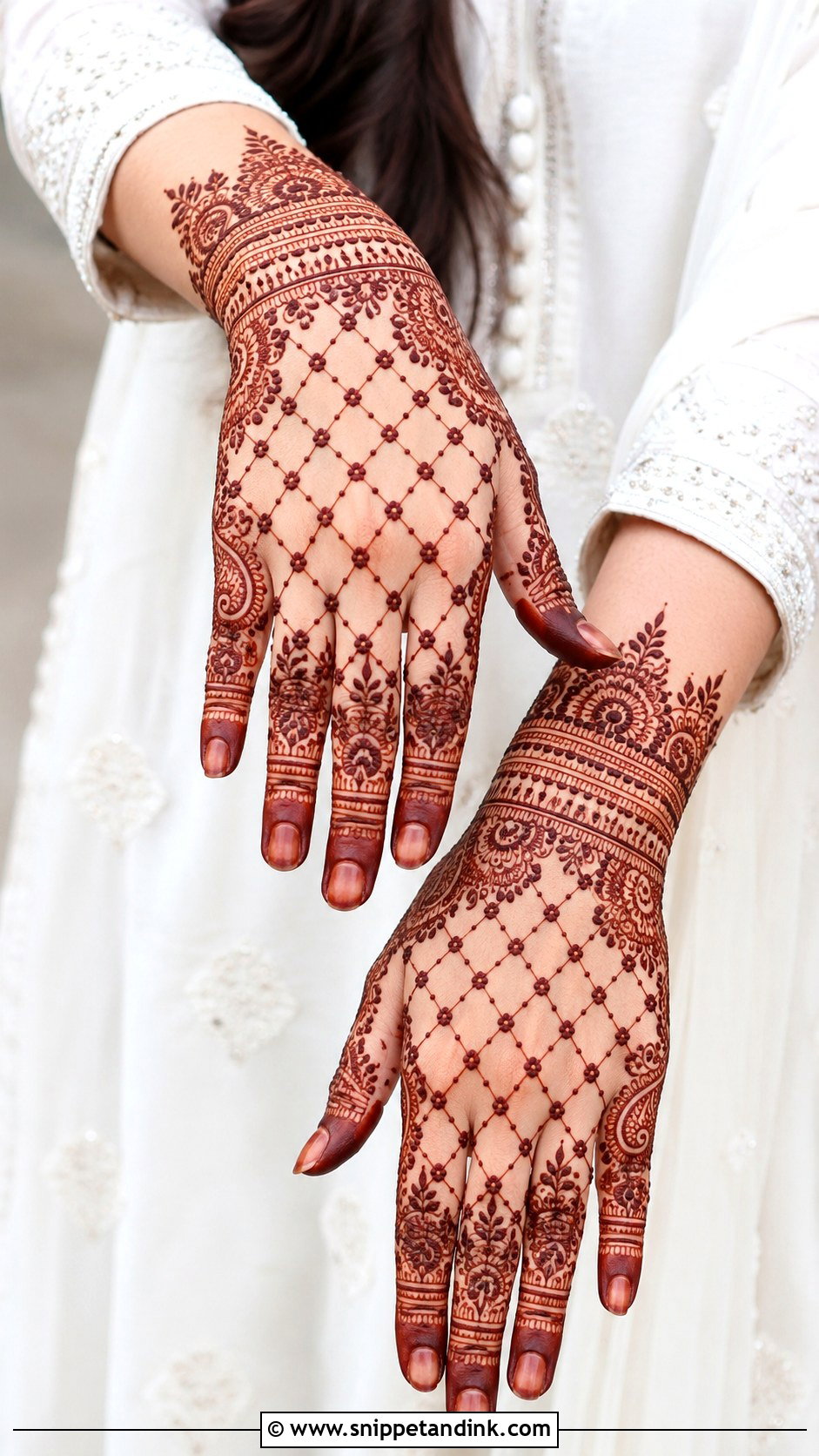
Mesh can cover part of the palm, back hand, wrist or fingers, paired with flowers, paisleys, mandalas or border bands. Newer jaali work places the mesh only in selected areas, so filled sections contrast with open skin. Neatness is the whole game. The grid spaces must be close to identical, and they need to be slightly wider than you’d expect, since henna lines spread a touch as they stain. A tidy grid looks expensive; an uneven one looks rushed.
13. Moroccan Mehndi Design
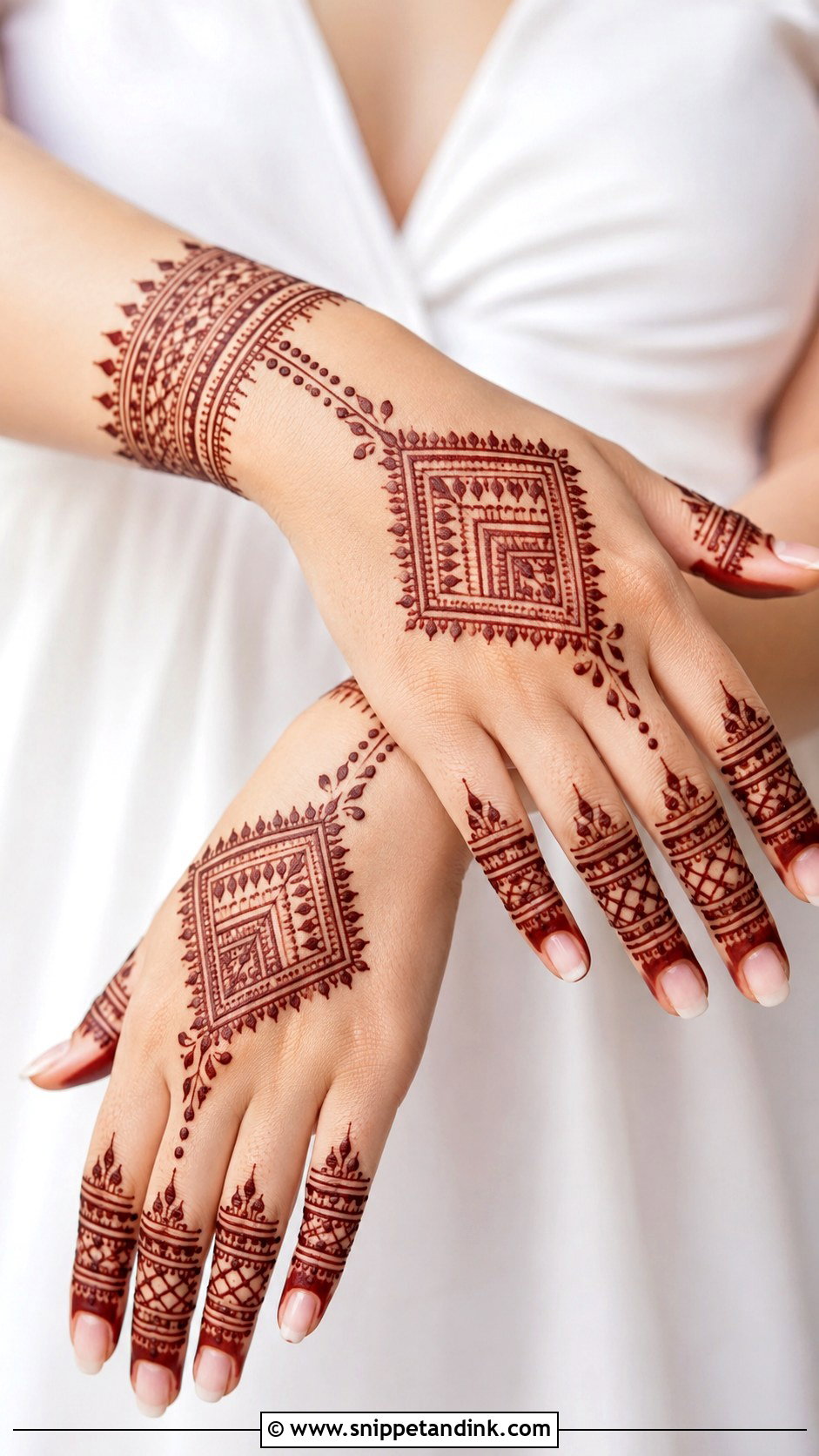
Moroccan mehndi trades soft trails for diamonds, triangles, straight lines, grids, dots and angular borders, arranged on the back hand, palm, wrist or fingers. It looks best with plenty of negative space so each shape stands clear. Straight lines are less forgiving than curves, and a slight wobble is obvious, so I keep fillers to a minimum and let the structure carry it. Clients tired of florals and paisleys usually love it, and it can work for a creative bride too.
14. Gulf Khaleeji Mehndi Design
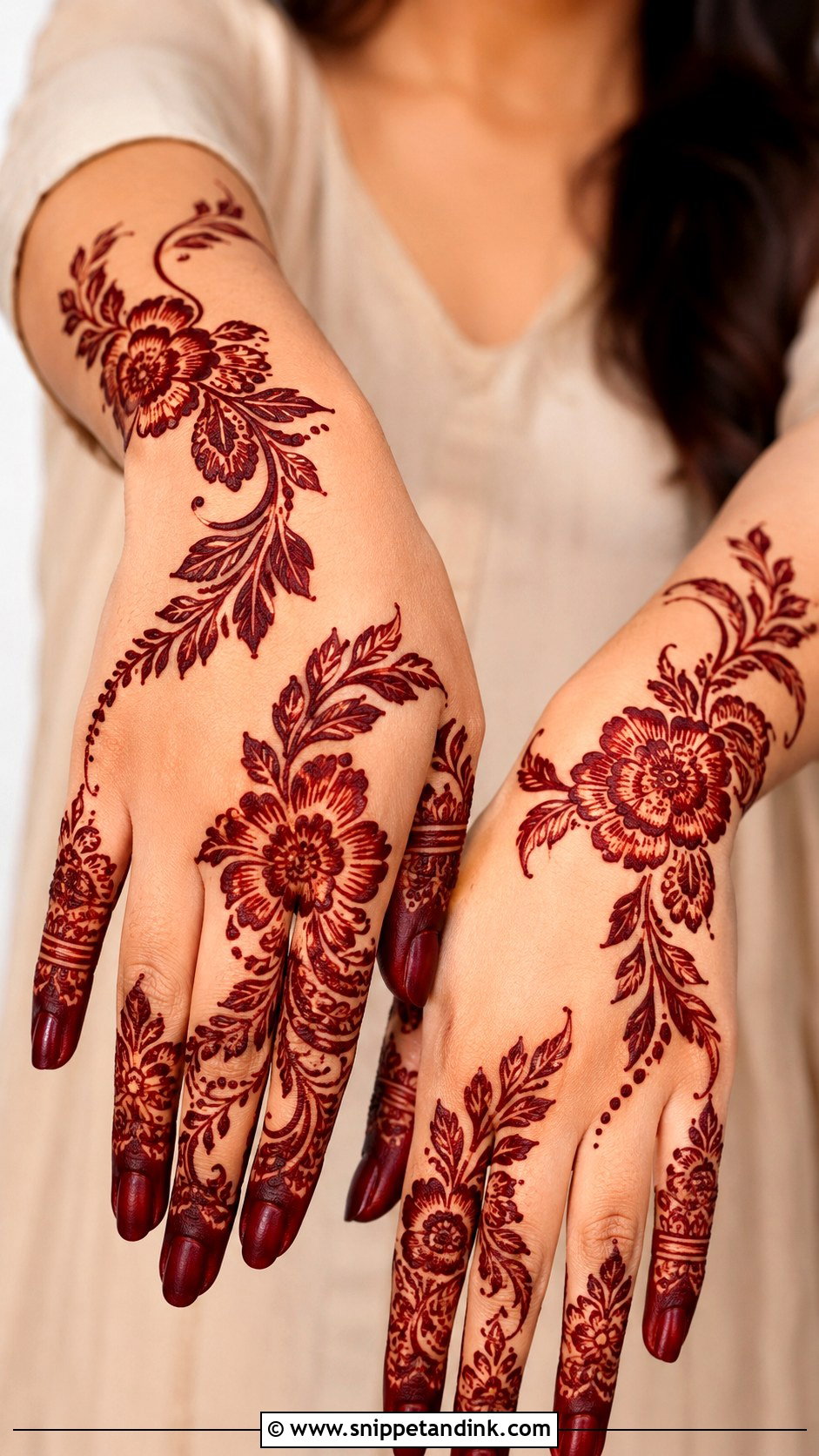
Khaleeji work is all strokes and scale. Flowers run larger, leaves sweep further, and the design can cover the fingers, back of the hand and wrist with wide, deliberate gaps between elements. Those thick outlines need a well-filled cone and steady pressure; a thin, hesitant line defeats the style. Deep maroon stain makes the boldness read best, so this is a design where I push hard for overnight paste and a lemon-sugar seal. Eid and evening weddings are its natural setting.
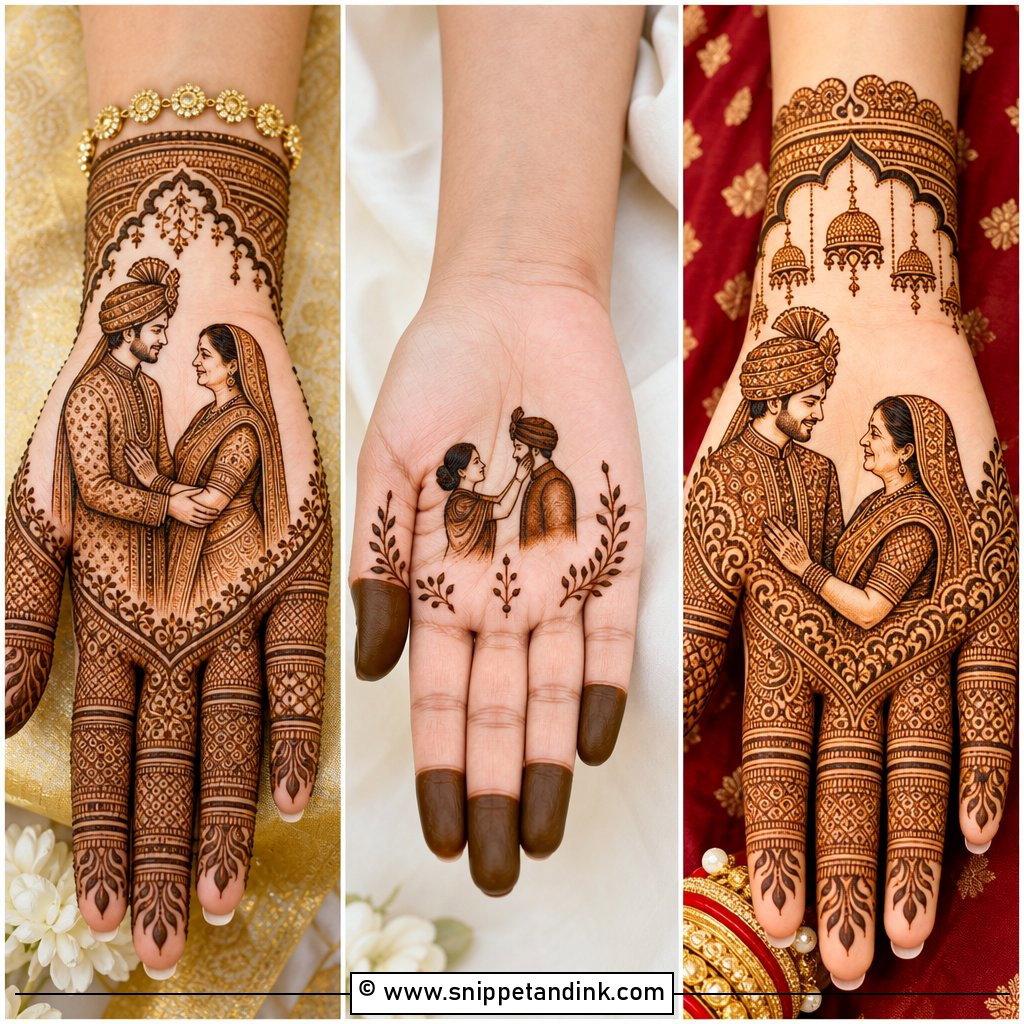
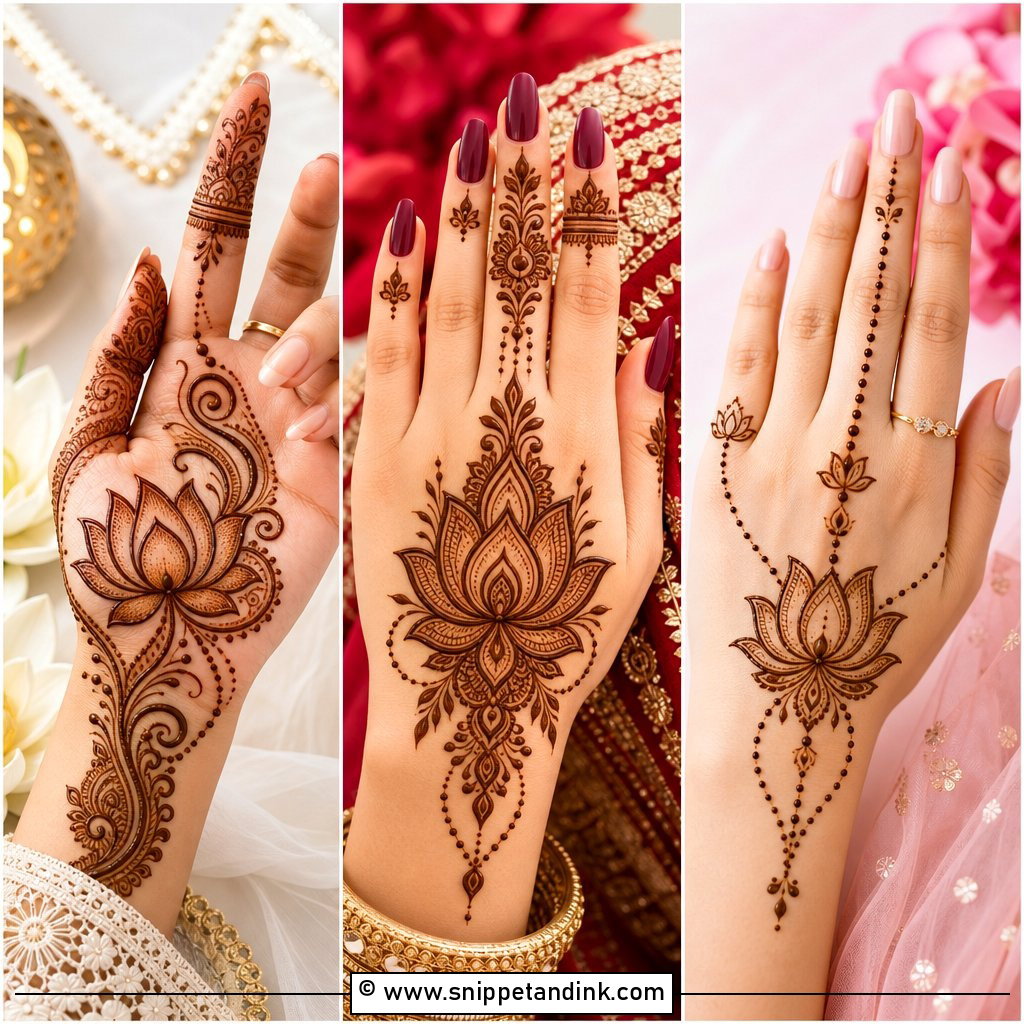

15. Negative Space Mehndi Design
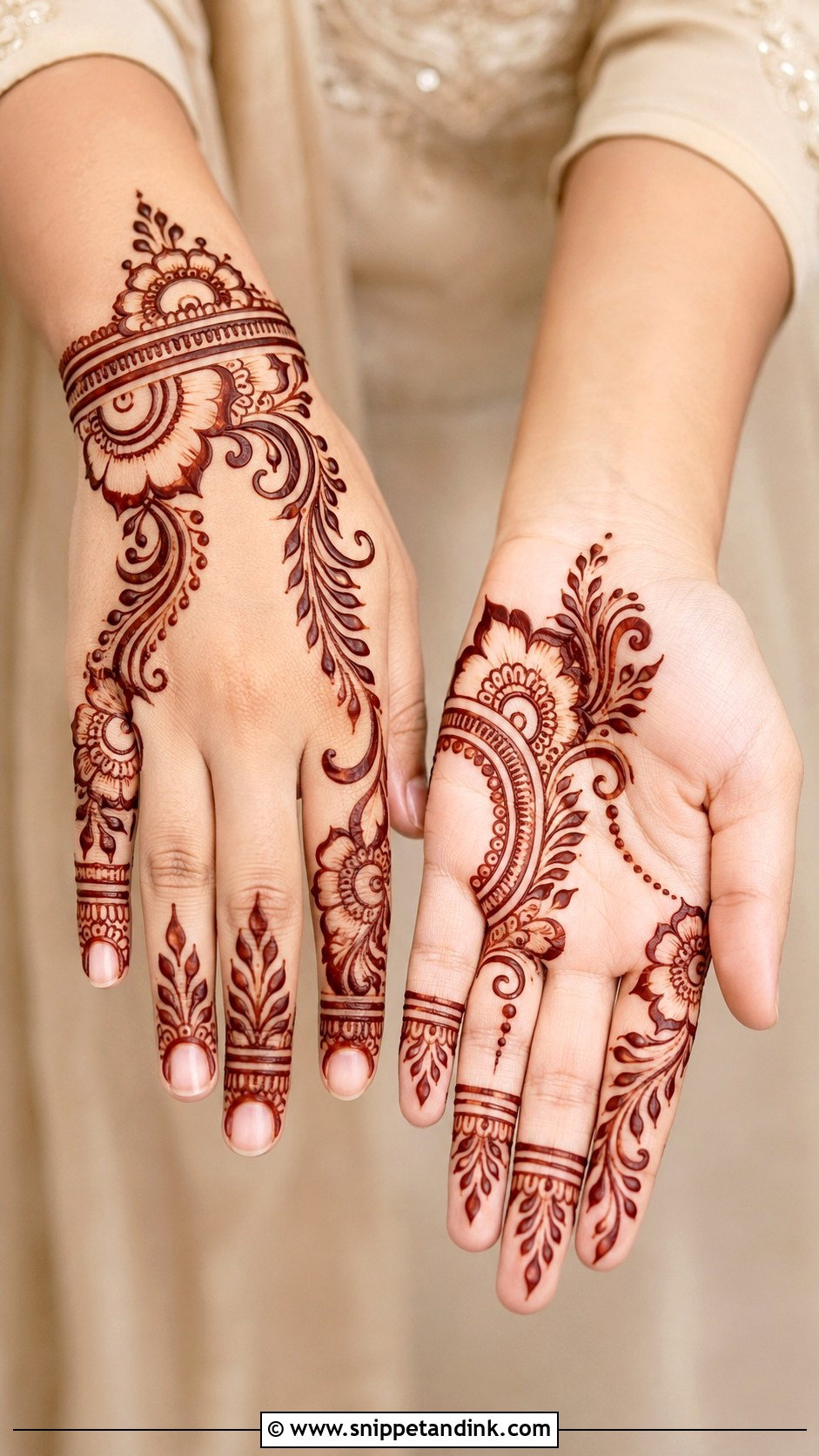
Negative space means the bare skin is part of the drawing. Instead of filling, I outline motifs boldly and leave deliberate gaps, so flowers, mandalas, paisleys and geometric shapes look sharper. It can stay simple or get detailed. The temptation is to drop tiny fillers into every gap; I avoid that, because the moment the gaps fill, the design loses the very thing that made it modern. Back hand, palm and wrist-to-forearm placements all suit it.
16. Easy Eid Mehndi Design
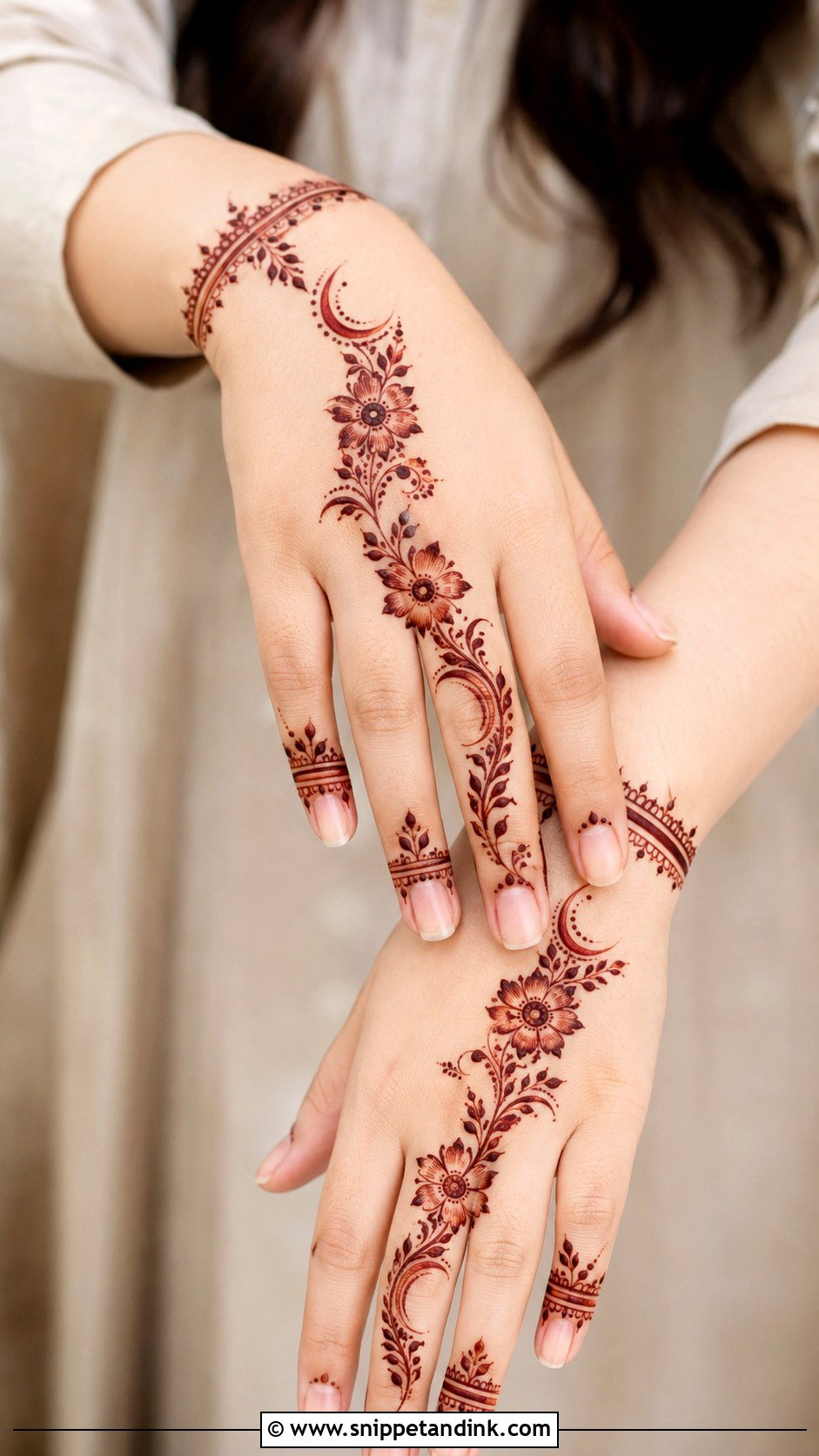
Eid mehndi has to be quick, because I’m usually working through a queue of family members the night before. A back-hand floral trail, simple finger details and a light wrist border is the core, with crescent curves, dots, leaves and small mandalas for a festive note. If you’re applying it at home, keep to a few bold flowers; rushed fine detail at midnight is where smudges happen. Done the evening before, the colour will have deepened by morning prayers.
17. Wedding Guest Mehndi Design
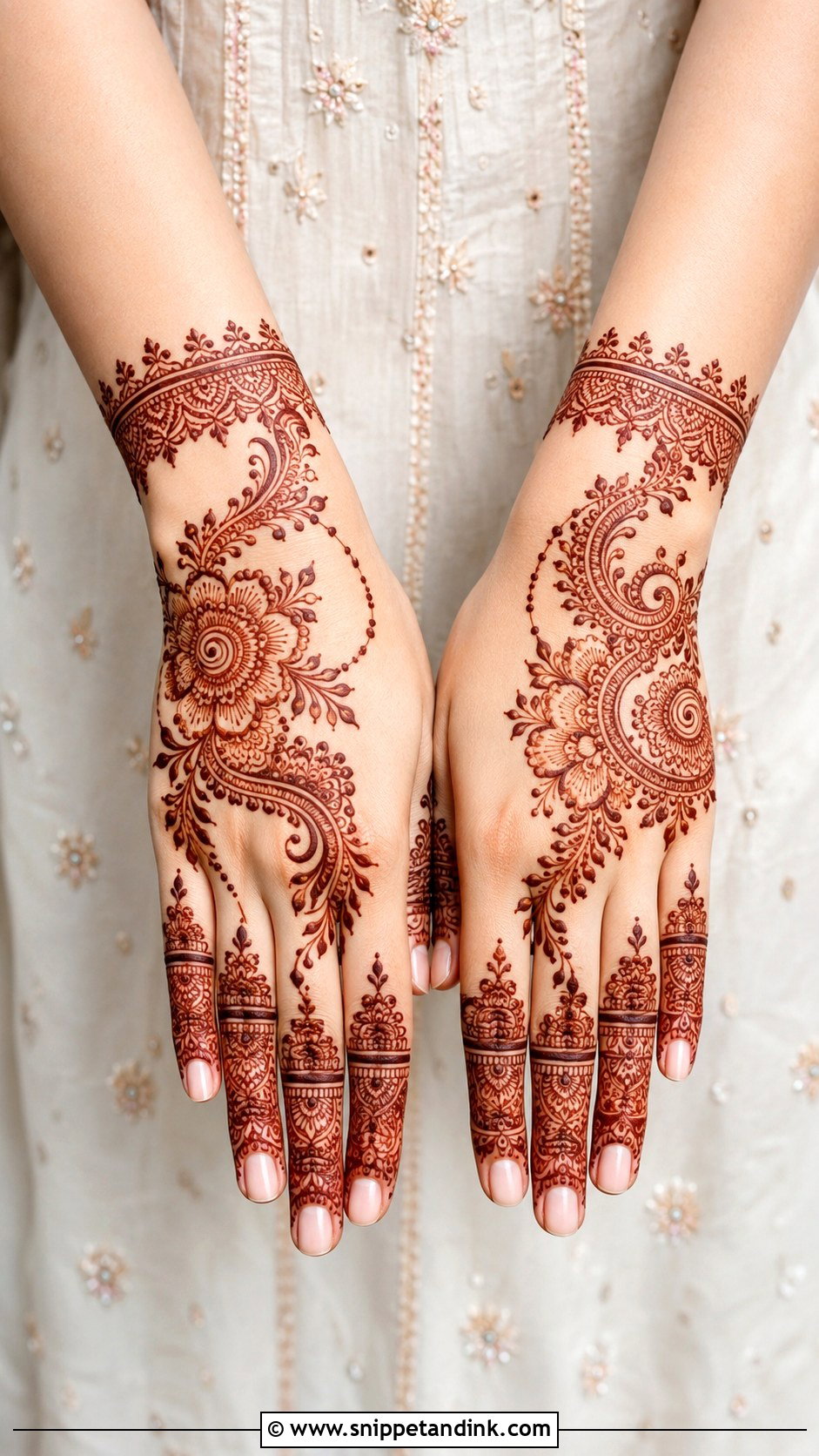
Guest mehndi should read as dressed up without competing with the bride. My standard guest layout is a semi-filled back hand with floral vines, paisley details and decorated fingers, closed by a small cuff or bangle band at the wrist. Medium coverage also dries faster than bridal work, which matters when there’s a queue of cousins. It suits sangeet, nikkah, mehndi night and reception, and sits well with ethnic outfits and bright nail colour.
18. Engagement Mehndi Design
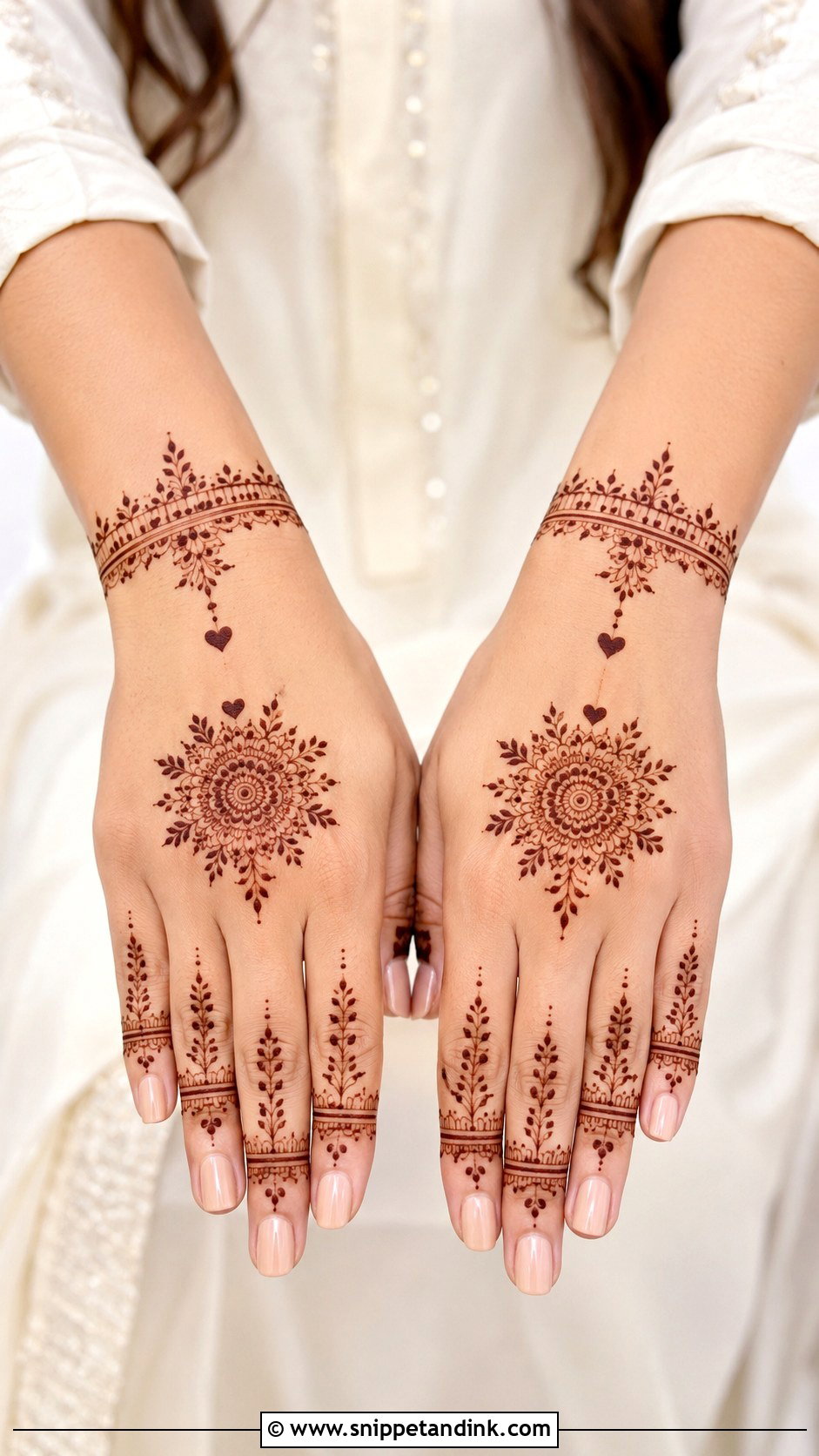
Everything at a ring ceremony points at one finger, so an engagement mehndi design should frame that finger rather than crowd it. I use delicate finger patterns, a soft back-hand mandala, fine florals and a bracelet-style wrist band, with the palm kept simple or given one matching motif. I leave the base of the ring finger lightly drawn so the band slides on without hiding a detailed section. Small hearts are fine if you want them; keep them subtle.
19. Karwa Chauth Mehndi Design
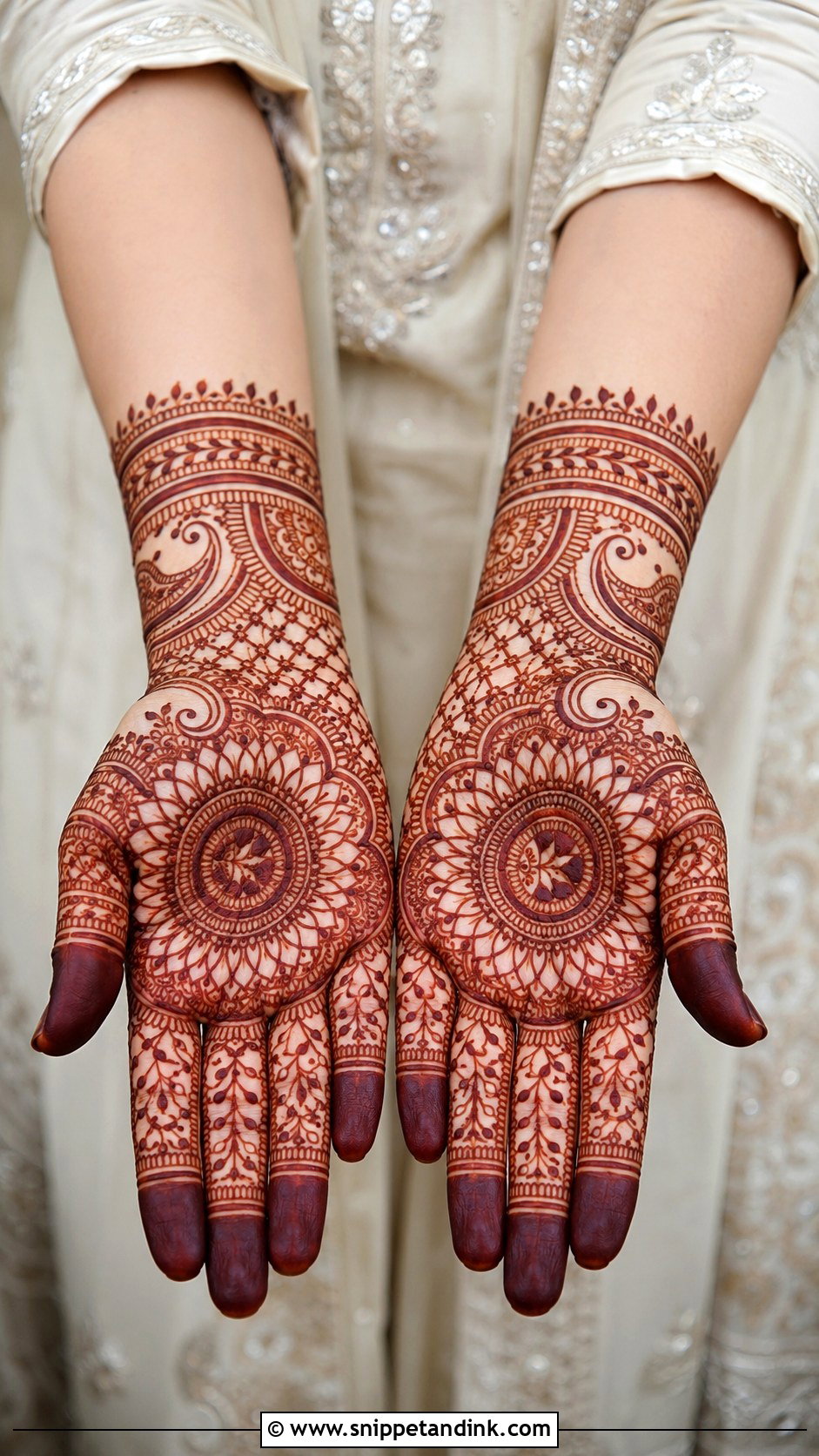
Karwa Chauth mehndi tends to be traditional and full: palms with mandalas, paisleys, lattice sections and decorated fingertips, sometimes with moon curves, the sieve motif or couple details worked in quietly. To update it, I keep the main motifs bold and limit fine fillers to selected areas, which makes the design easier to read once dry. A bangle pattern at the wrist ties it to festive jewellery. Apply it a day ahead so the colour peaks on the day of the fast.

20. Diwali Mehndi Design
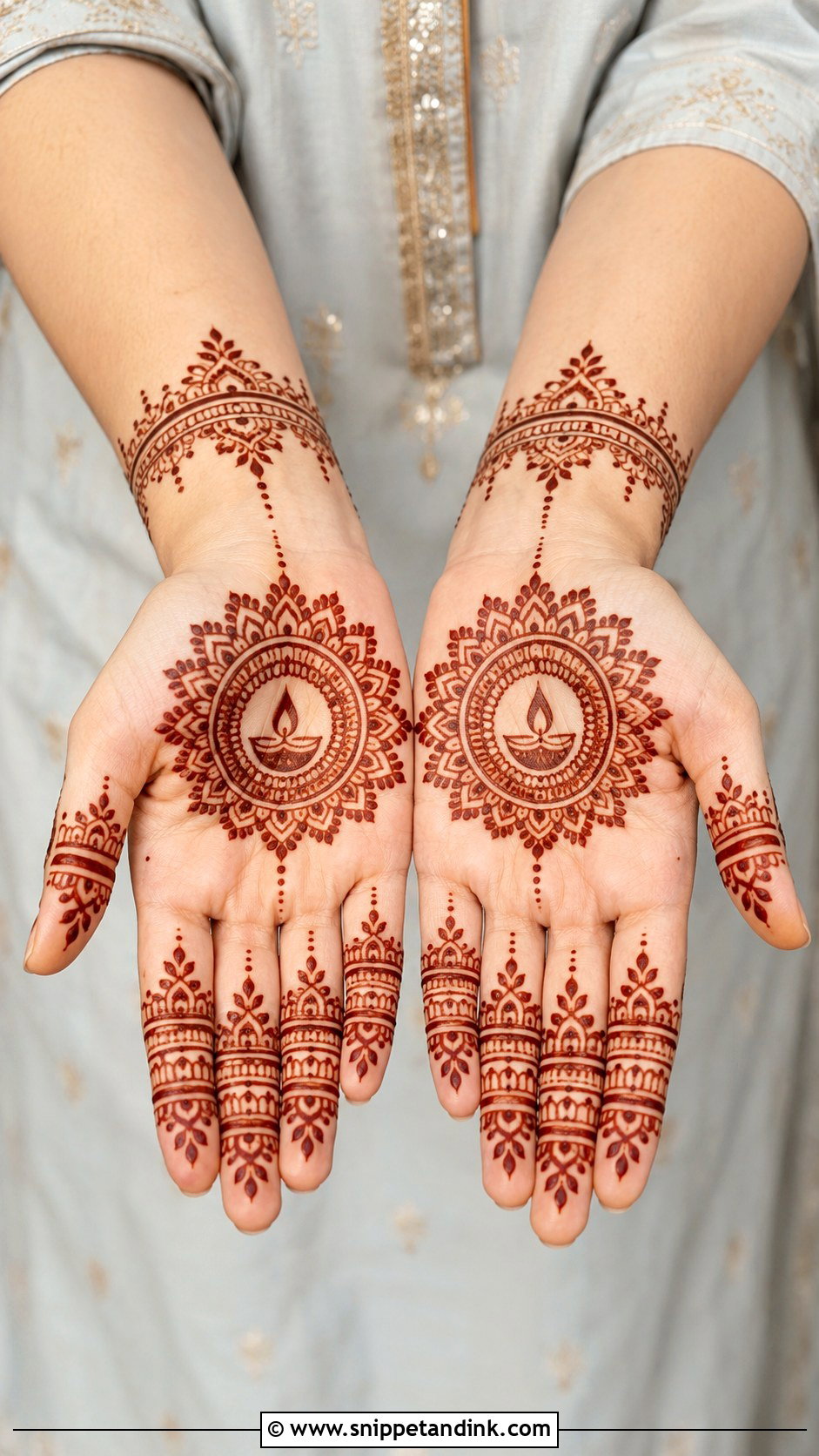
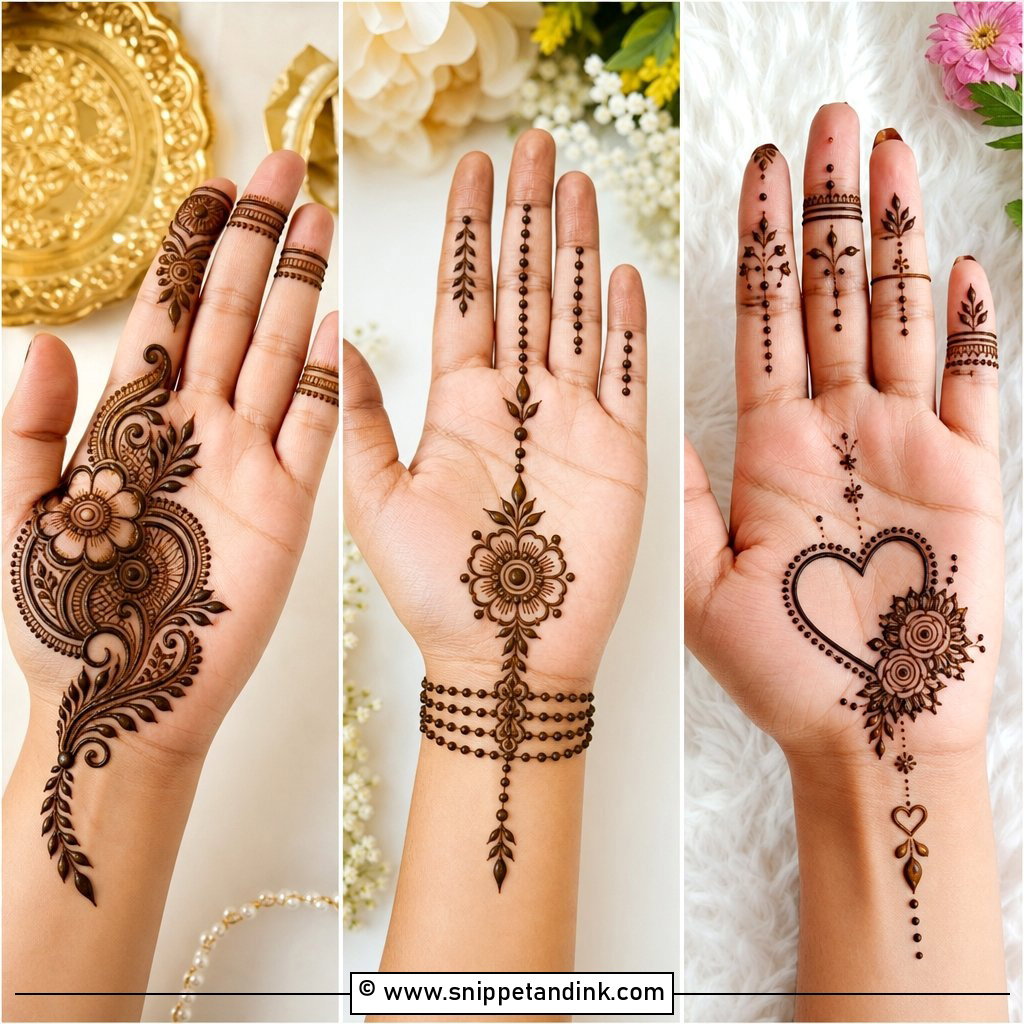
Diwali means your hands are busy: lighting diyas, cooking, serving guests. I usually suggest a central palm mandala with diya-shaped curves, small florals, dots and finger bands, or a back-hand floral trail with a wrist cuff for something dressier. Avoid packing the palm if you’ll be handling food and water a lot the next day, as a crowded palm loses definition fastest. Clear motifs and an uncluttered layout keep it looking festive.
21. Full Finger Mehndi Design
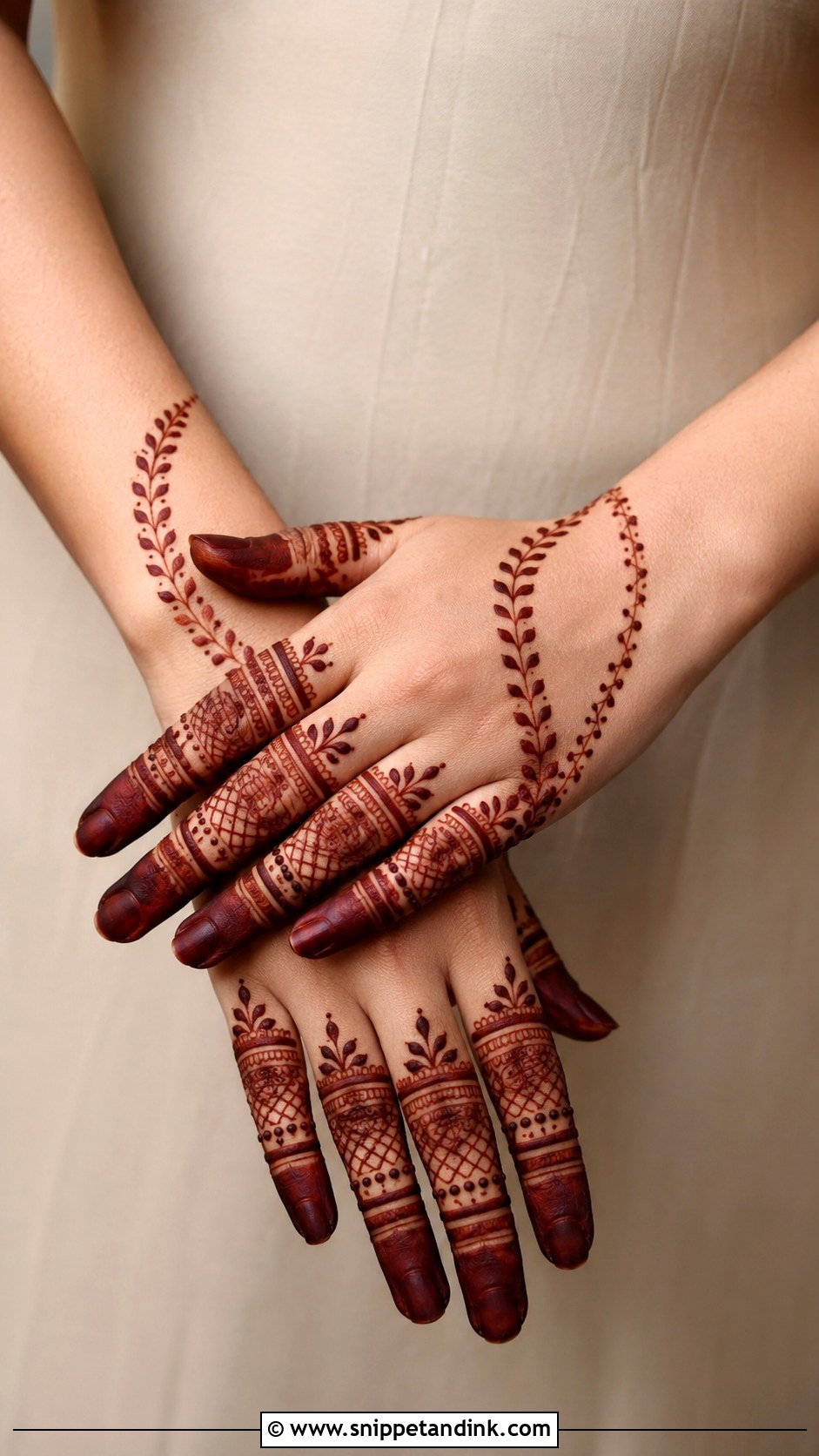
Full finger work makes the fingers the feature while the palm or back of the hand stays mostly open. Each finger gets bands, leaves, dots, mesh and filled tips. Fingers stain more deeply than almost anywhere else, so even modest detail comes out strong, and it draws the eye straight to nail shape and rings in close-ups. Same pattern on every finger, or a coordinated mix. I keep the base of each finger cleaner and let the detail build toward the tip.
22. Half Hand Mehndi Design
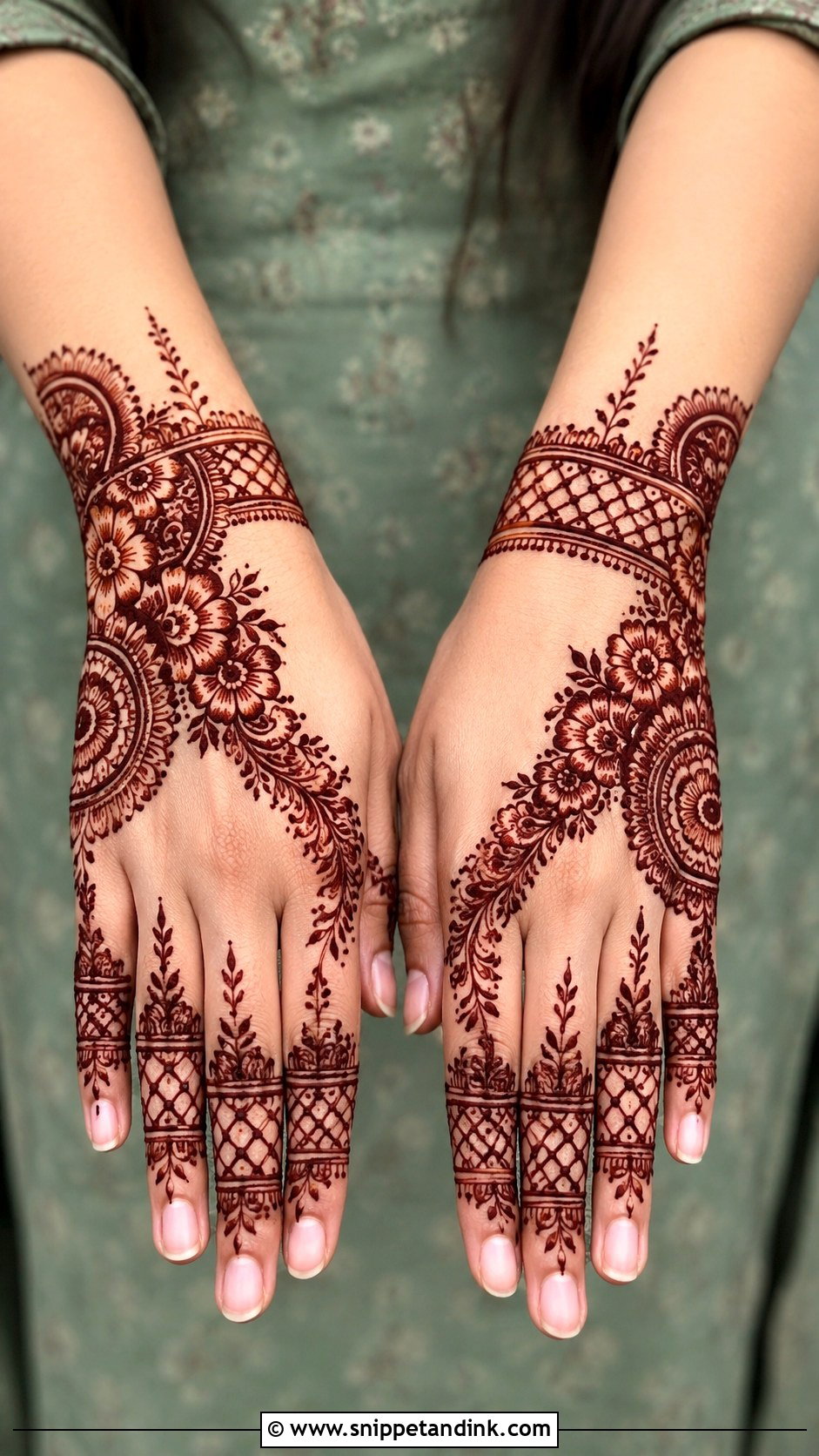
Half-hand designs give noticeable coverage without a packed hand. Coverage can take one side of the palm, the lower half of the hand, or the wrist up to mid-hand, using diagonal Arabic florals, mandala corners, paisley clusters or jaali bands. The risk is looking unfinished, as if the artist ran out of time. I prevent that by always connecting the main motif to the fingers or wrist with dots, small details and a clean border.
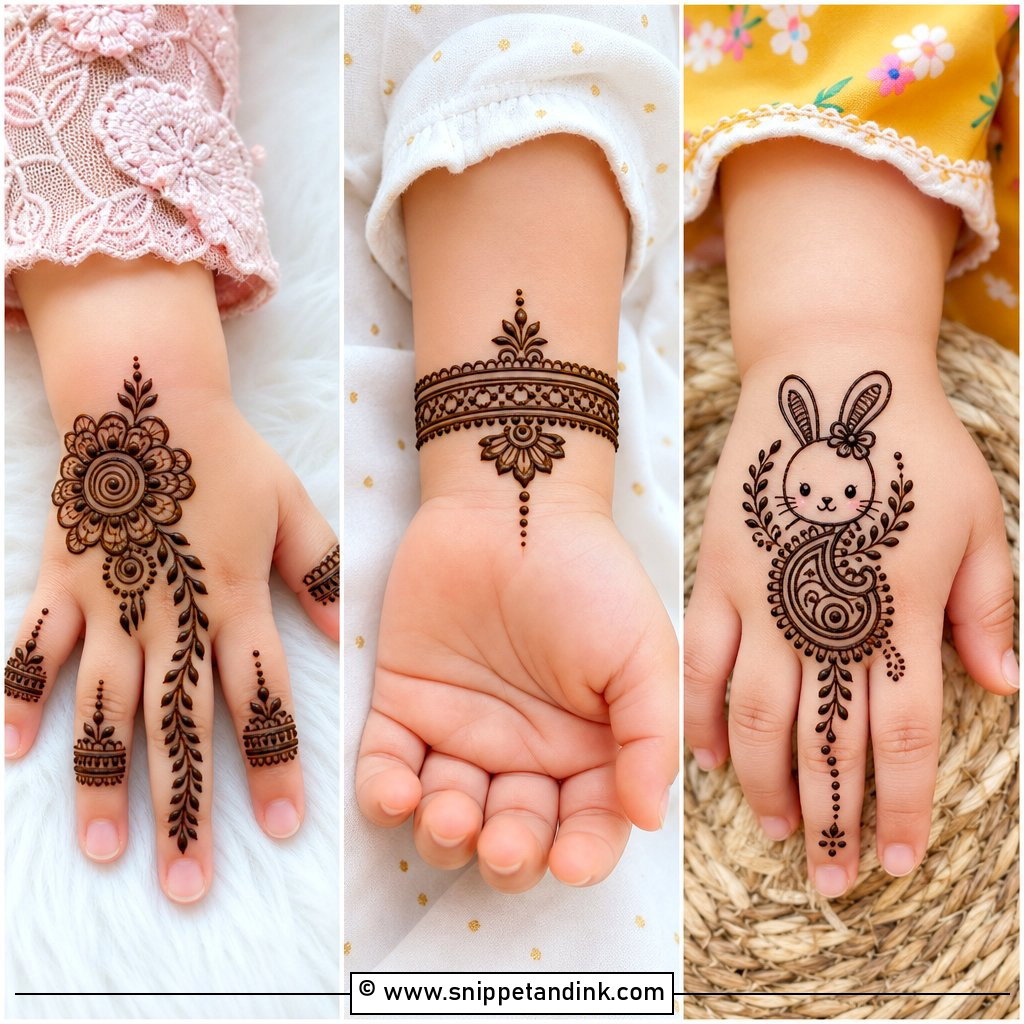
23. Kids Mehndi Design
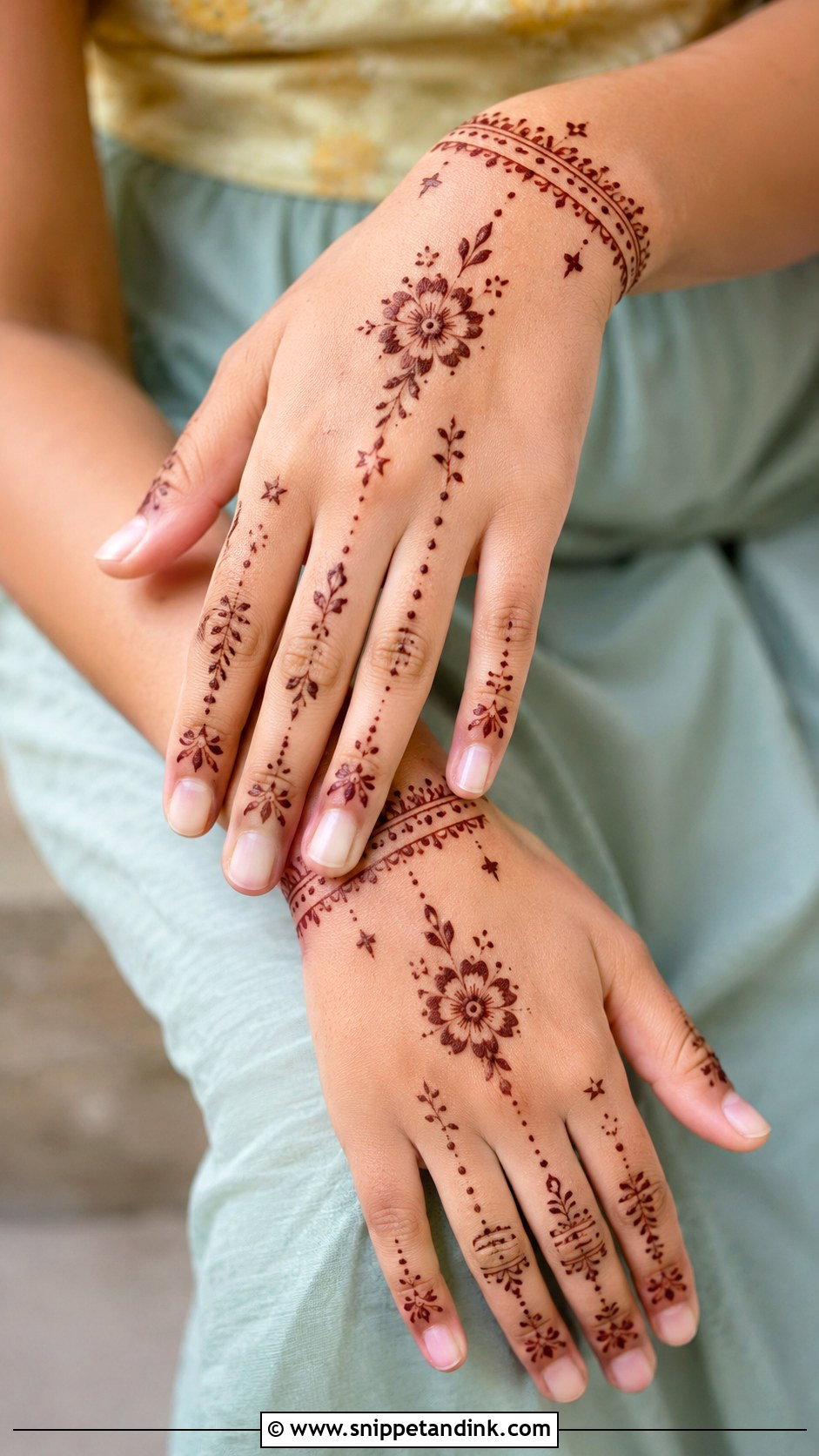
Children want something fast, and parents want something that won’t end up on the sofa. I keep kids’ designs small: one flower or tiny mandala on the back of the hand, finger dots, a light bracelet, or butterflies, stars and leaves. Dense patterns get smudged before they dry, so I avoid them. I only ever use natural henna on children, never black henna or instant-stain cones, which can contain dye chemicals that blister young skin.
24. Teen Mehndi Design
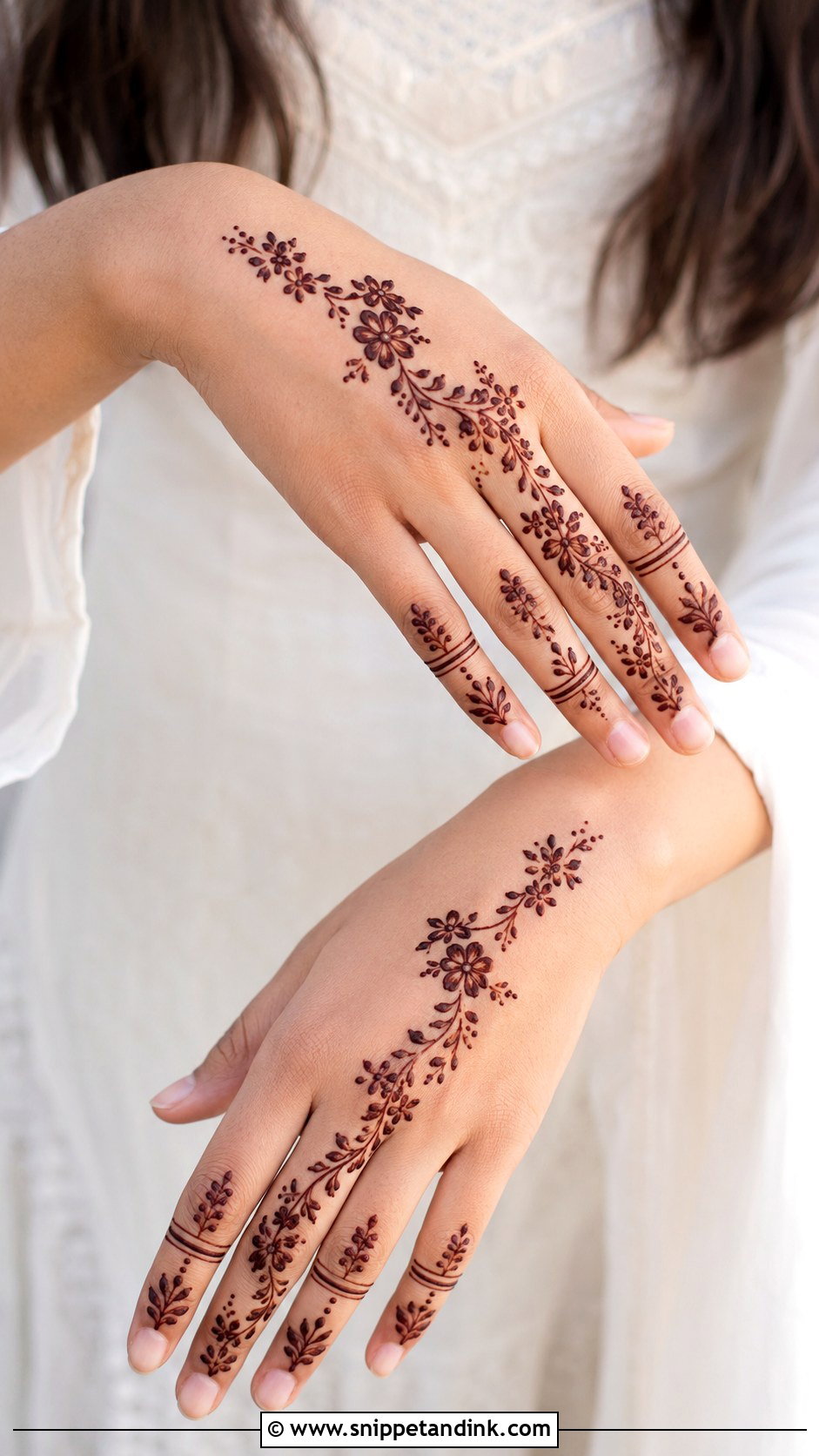
Teens rarely want anything that looks like their mother’s mehndi. Minimal finger bands, tiny flowers, leafy trails and a small wrist detail are the usual brief, often on the back of the hand because that is what shows in phone photos. Asymmetric layouts and fine-line work suit this age group well. I steer away from bridal motifs like paisley chains up the forearm, which instantly make the design read older. School events, Eid and cousins’ weddings are where I draw these most.


25. Pakistani Mehndi Design
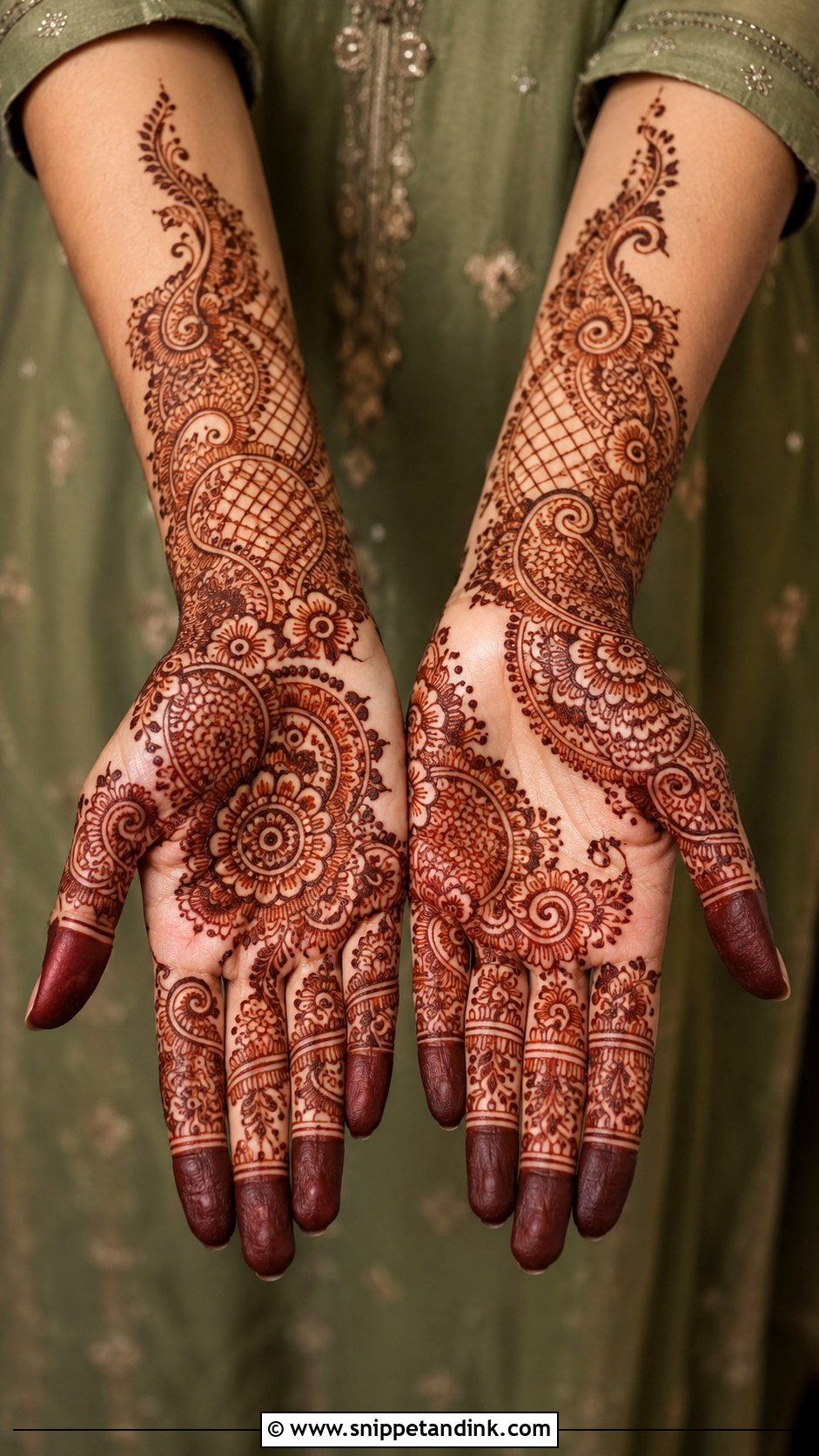
Pakistani mehndi blends Indian detail with Arabic flow: filled fingertips, paisley chains, floral vines, mandalas, leafy borders and fine mesh, either as full bridal hands or a lighter festive version for a dholki. Its grace comes from contrast, dense passages broken by open curves. For a newer take I use bold floral outlines with delicate fillers instead of packing every space equally. The pattern should flow from fingertip to wrist without a visible seam.
26. Rajasthani Mehndi Design
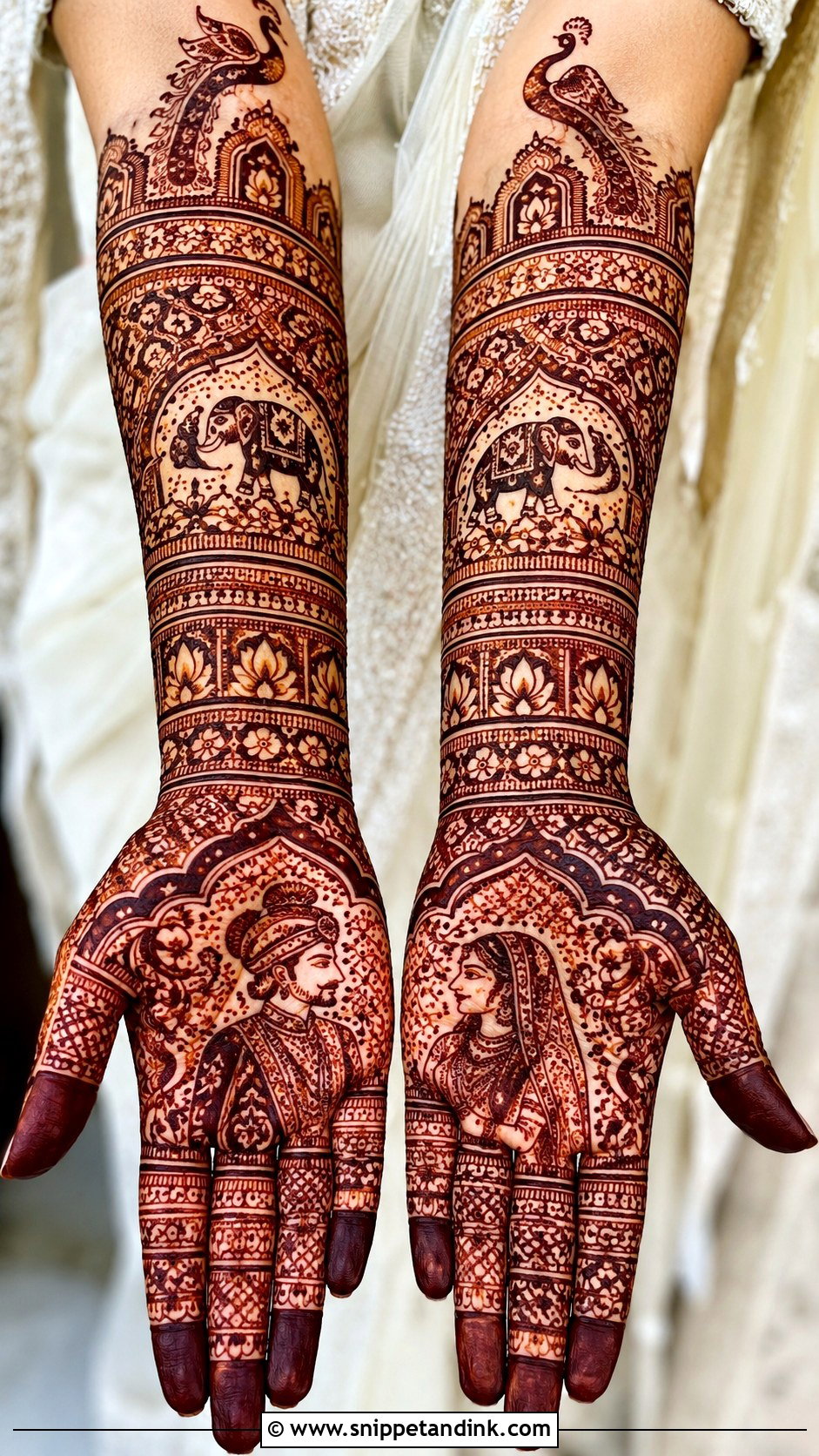
Rajasthani work is storytelling: peacocks, elephants, dulha-dulhan figures, paisleys, mirror symmetry and very fine fillers. Bridal versions cover the hands and forearms completely, while simpler ones focus on the palm and wrist. It asks for patience on both sides of the table; the figures need a fine cone and a steady hand, and the bride needs to stay still. Newer Rajasthani layouts keep the narrative but section it more cleanly, which makes each figure easier to recognise in photographs.
27. Indian Bridal Mehndi Design
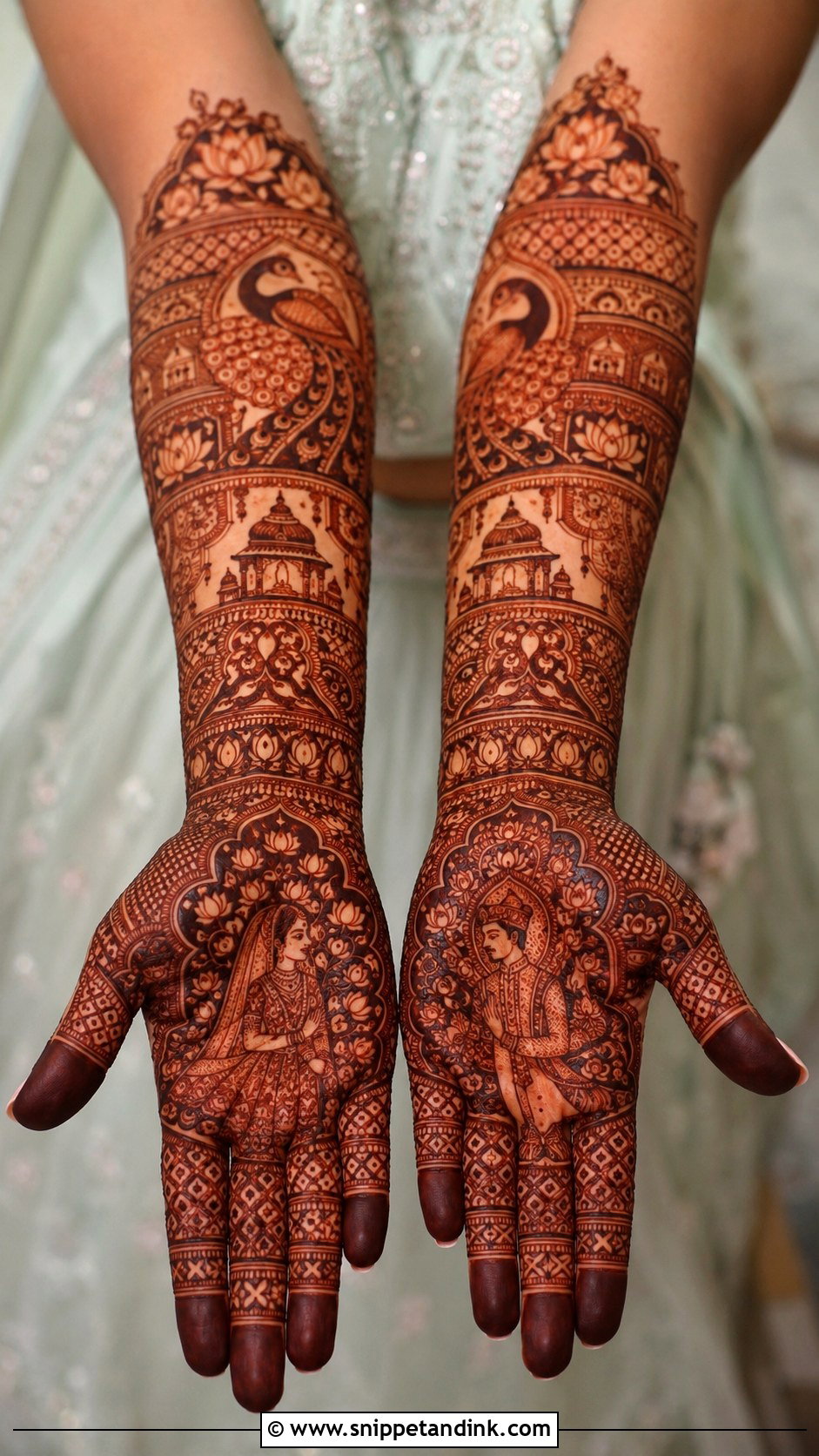
Indian bridal mehndi is the heaviest work I do: both hands from fingertips to forearms, often with matching feet. Lotus flowers, peacocks, paisleys, bride and groom figures, temple borders, jaali and hidden initials are the usual vocabulary, and brides now add personal pieces like the wedding date or a symbol from the proposal. With this much coverage the layout has to be planned before the first line. I keep the large motifs visible and pack the fine fillers around them, never over them.
28. Lotus Mehndi Design
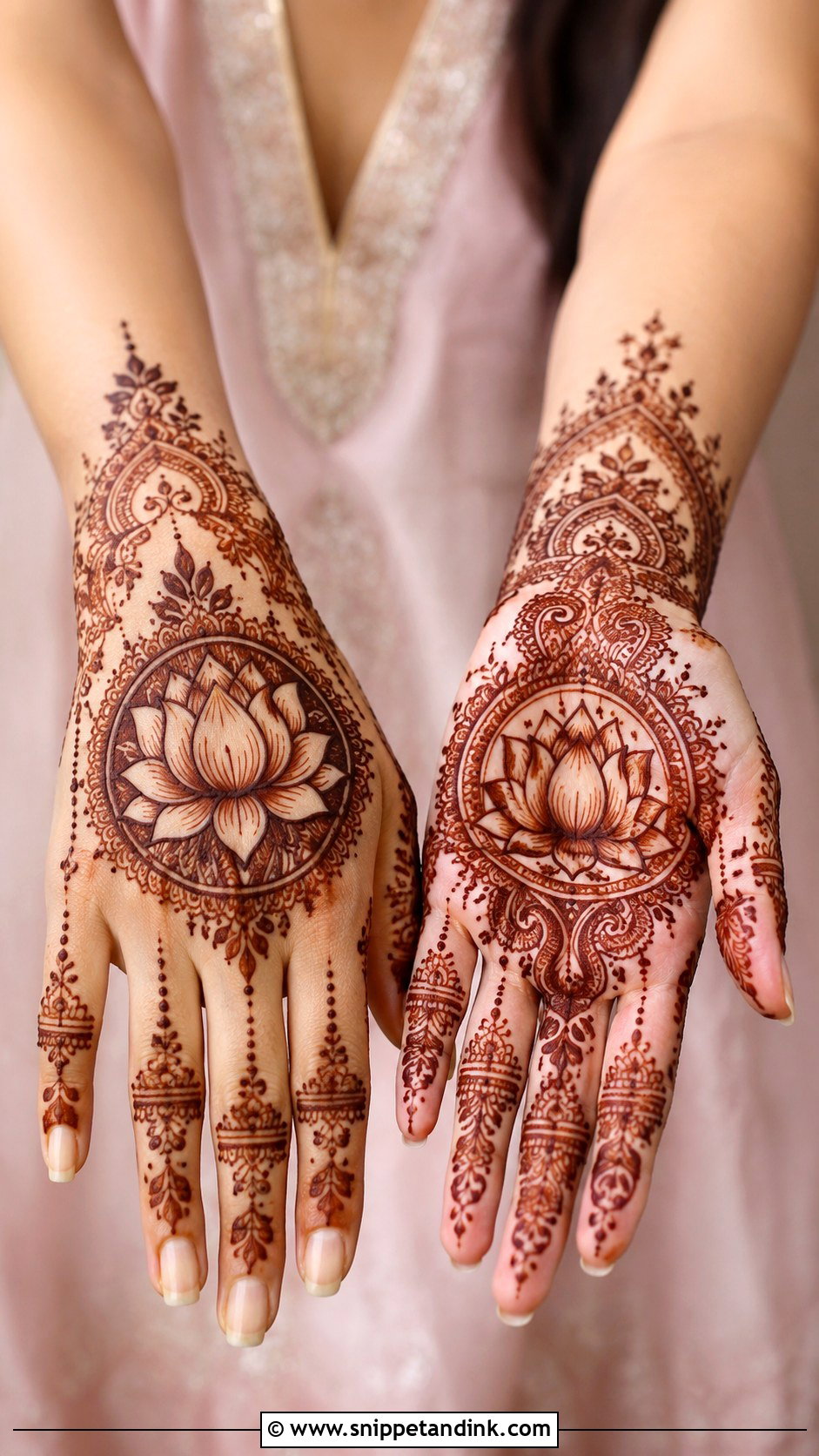
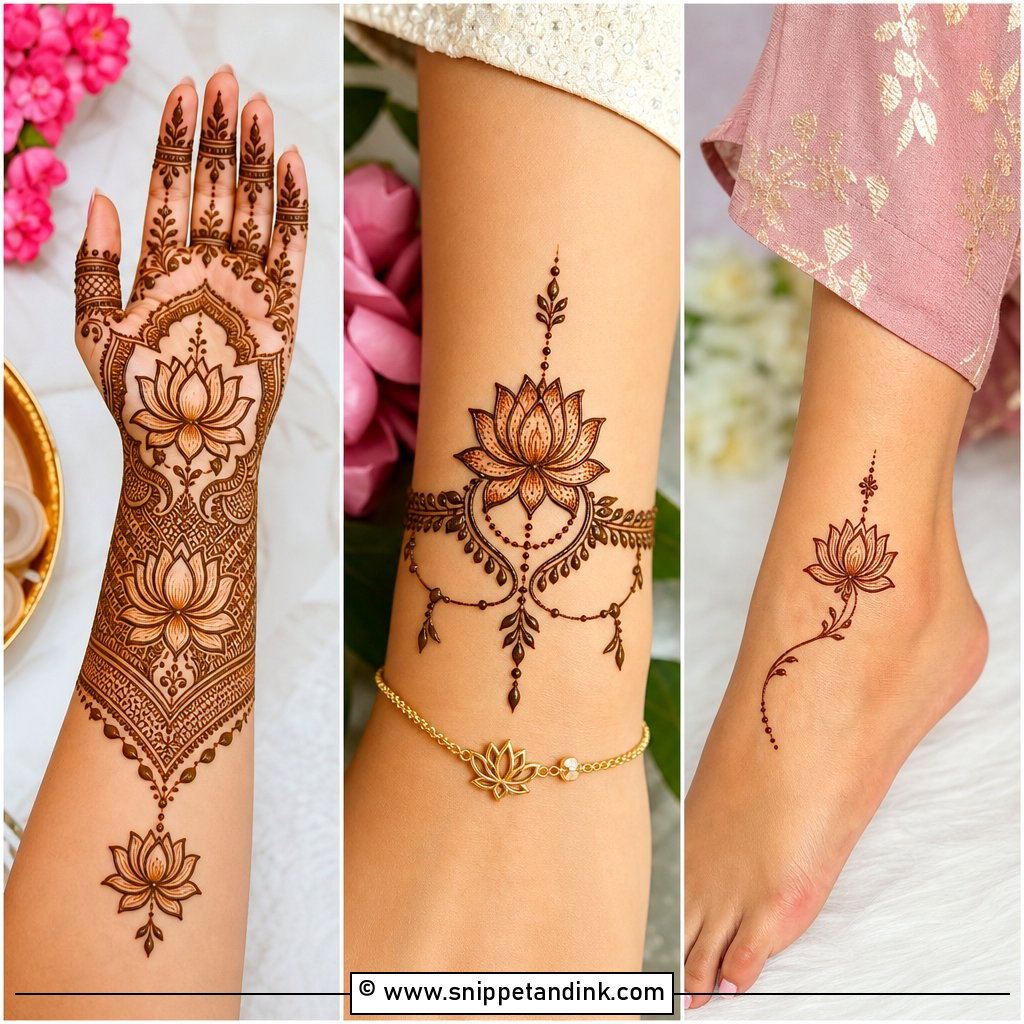
I draw the lotus from the centre outward, layering petals so the back row peeks between the front ones; that overlap is what makes it look like a lotus rather than a generic flower. It can sit in the centre of the palm, on the back of the hand or near the wrist, paired with mandalas, dots, vines or fine mesh. One large lotus with a lighter surround is the newer approach. Puja, Diwali and engagement functions suit it, and it’s a good traditional motif for anyone avoiding full coverage.
29. Paisley Mehndi Design
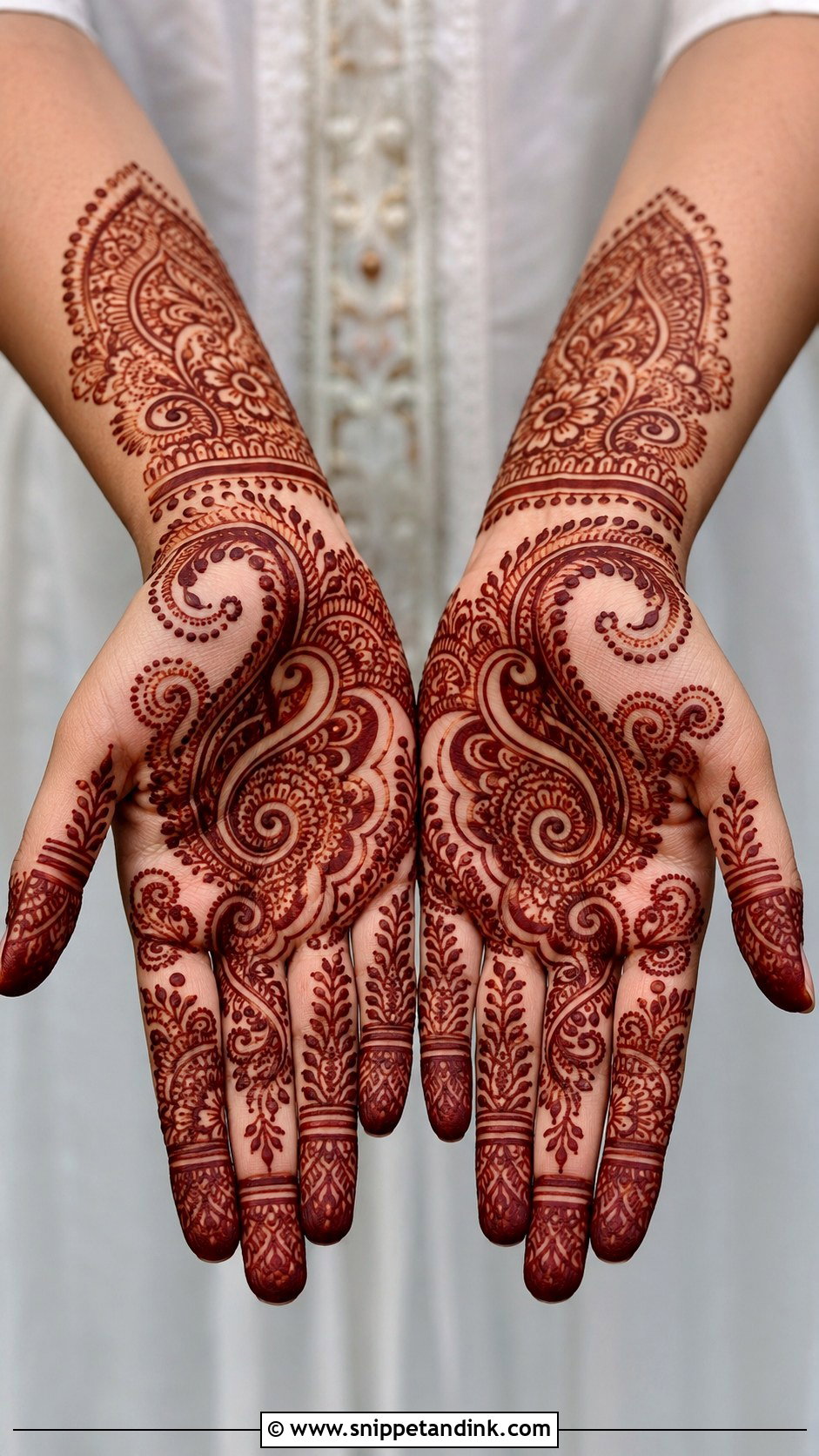
Paisley adapts to almost any layout: a diagonal Arabic trail, a full palm, a wrist-to-forearm run or a bridal panel. Its curved teardrop gives the hand natural movement, and the inside can hold florals, dots, lines, leaves or mesh. For a fresher version I enlarge the paisleys and leave clear space around them. Small paisleys packed tightly together tend to merge into one dark shape as the stain develops, so size matters more than you’d think.
30. Vine Mehndi Design
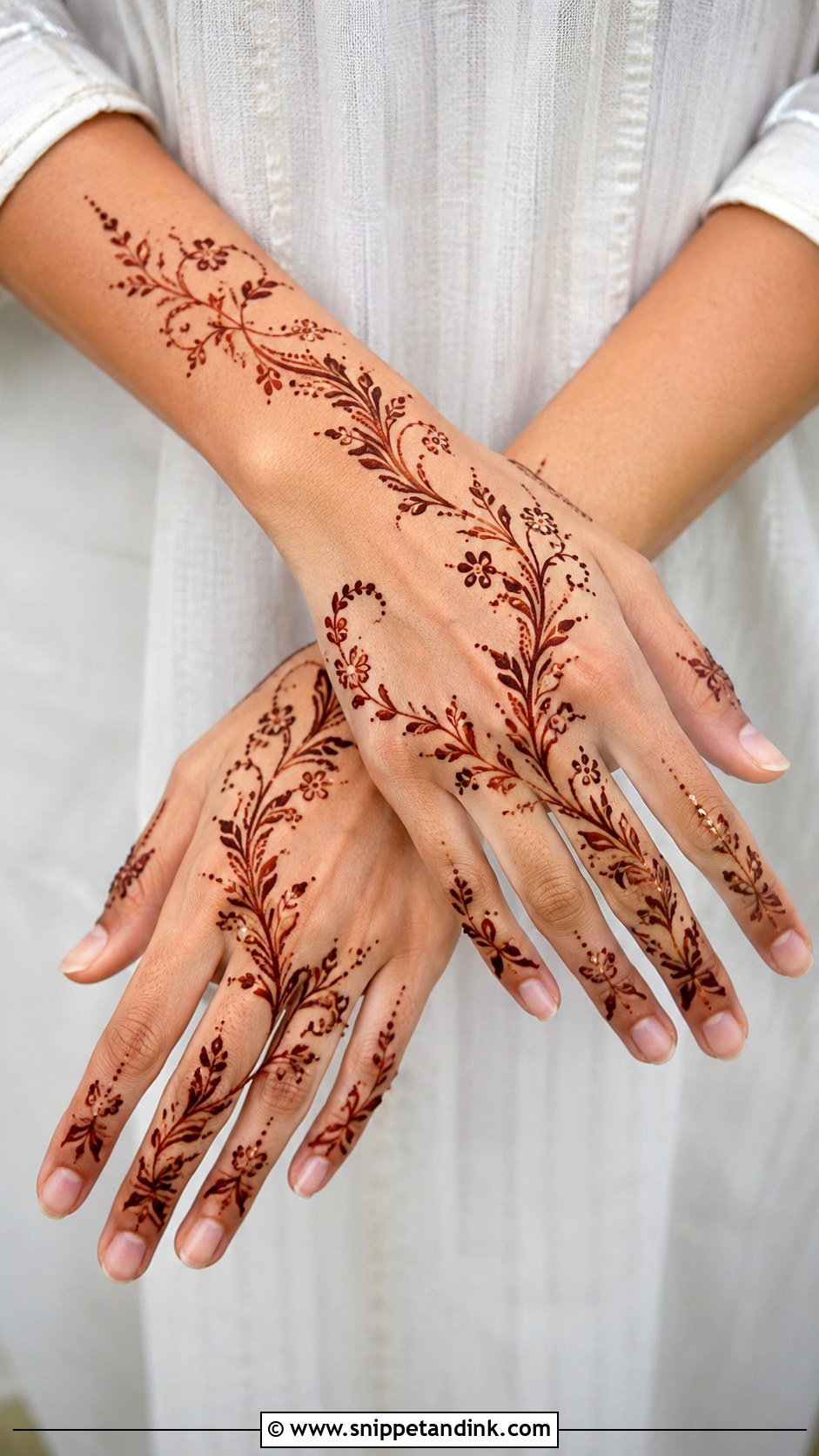
Vines are the lightest full design I draw. Leafy stems run from the wrist to the fingers or diagonally across the back of the hand, with small flowers, buds, dots and curved lines added along the way. The diagonal stem lengthens the hand and looks good with rings. Two things go wrong: leaves spaced unevenly, and a trail drawn too thick, which turns it into a stripe. Thin stem, even leaves, and it suits Eid, haldi and casual parties.
31. Rose Mehndi Design
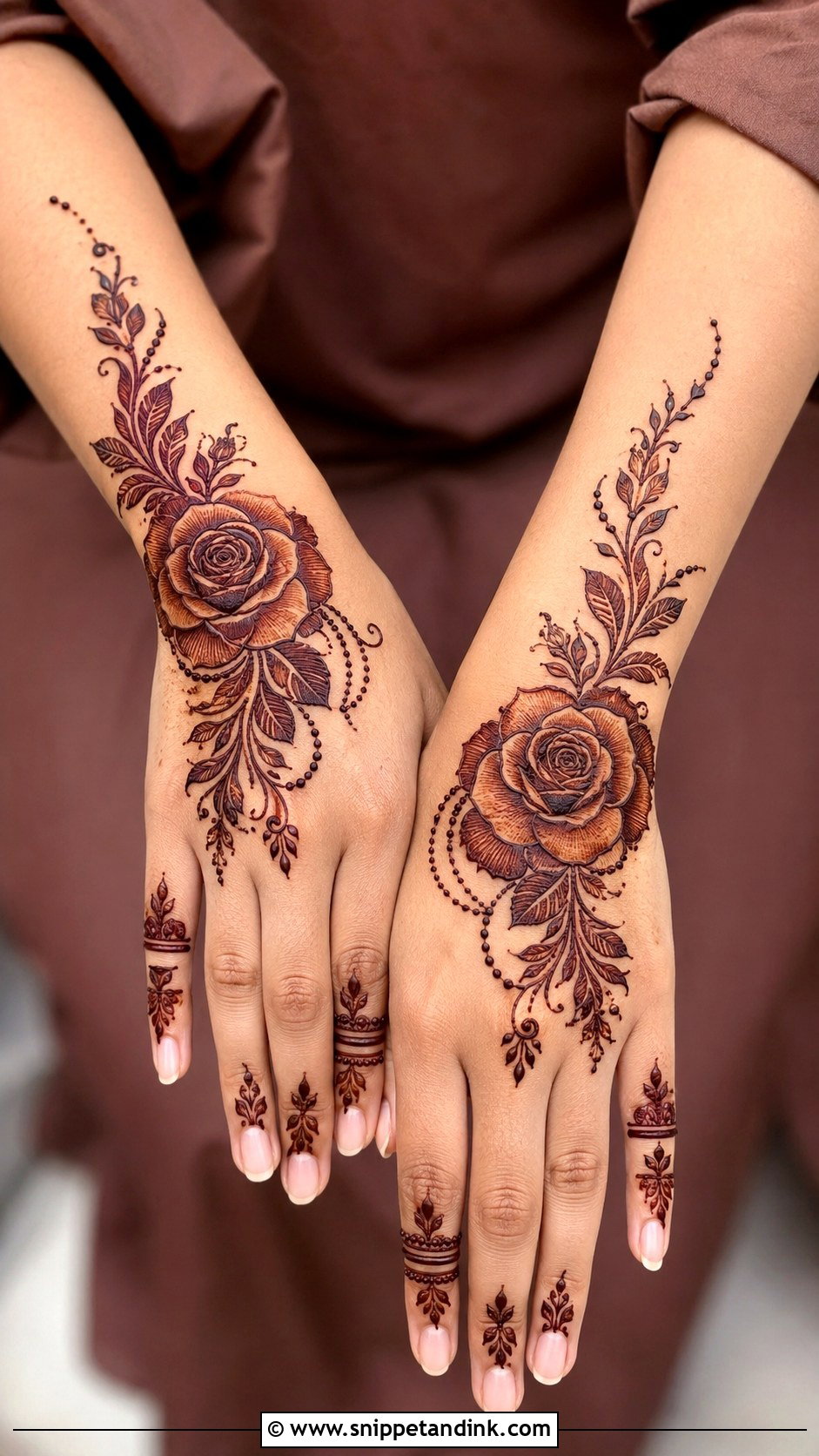
Roses sit on the back hand, palm, wrist or forearm as the main motif, with leaves, dots, shaded petals and light finger patterns to complete them. The common mistake is overfilling the centre of the rose until it stains as a single dark blob. I draw the outer petals bold and keep the centre spiral open and simple, which keeps the flower recognisable after the colour darkens. Floral lovers who find paisley and peacock too traditional usually land here.
32. Geometric Mehndi Design
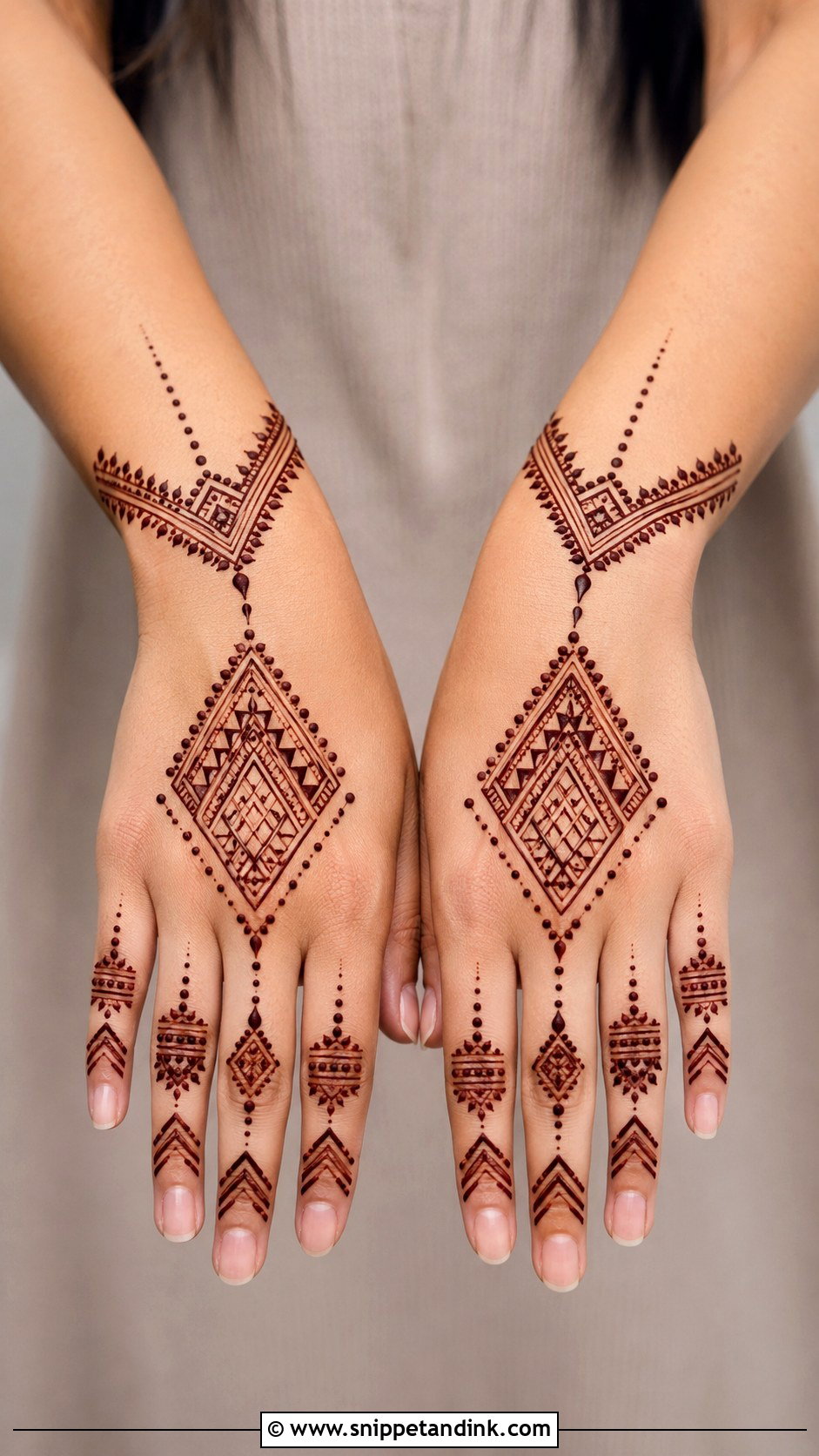
Geometric designs use triangles, diamonds, grids, straight bands, dot rows and angular wrist patterns, either purely Moroccan or softened with Indian and Arabic touches. They read most clearly on the back of the hand and fingers. Symmetry and even spacing are everything, so before committing I place a few guide dots on the skin to mark where lines will meet. Florals are optional here; contrast and structure do the work.
33. White Mehndi Design
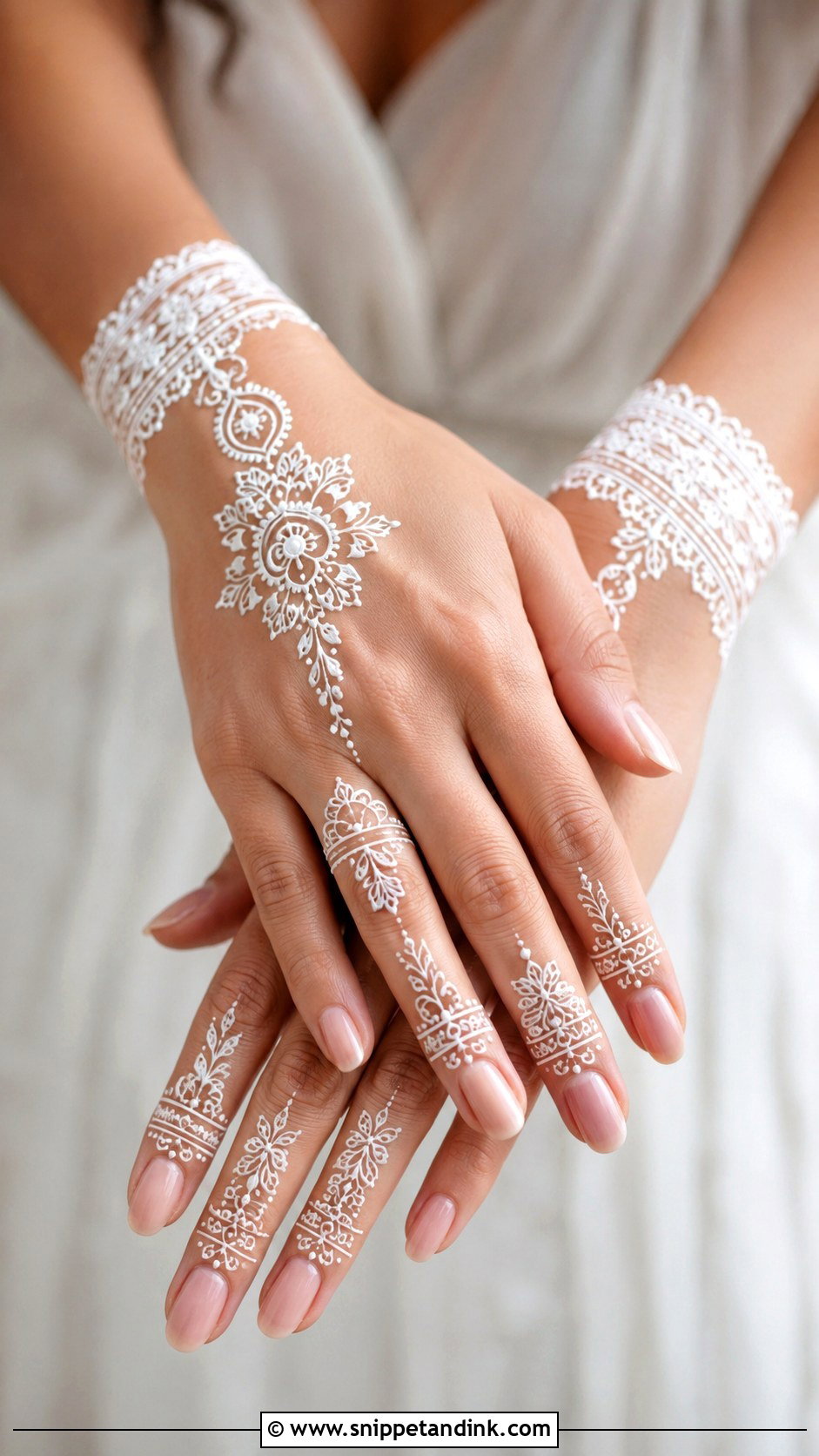
White mehndi isn’t henna and doesn’t stain. It’s a cosmetic body paint or adhesive that sits on top of the skin, usually lasting a day before it rubs or flakes off. Lace florals, mandalas, wrist cuffs and finger details all work in white, and it’s popular for photo shoots, baby showers and some modern bridal looks. White shows every flaw, so keep lines fine and tidy. If you have sensitive skin, patch test it on your inner arm a day before.
34. Glitter Mehndi Design
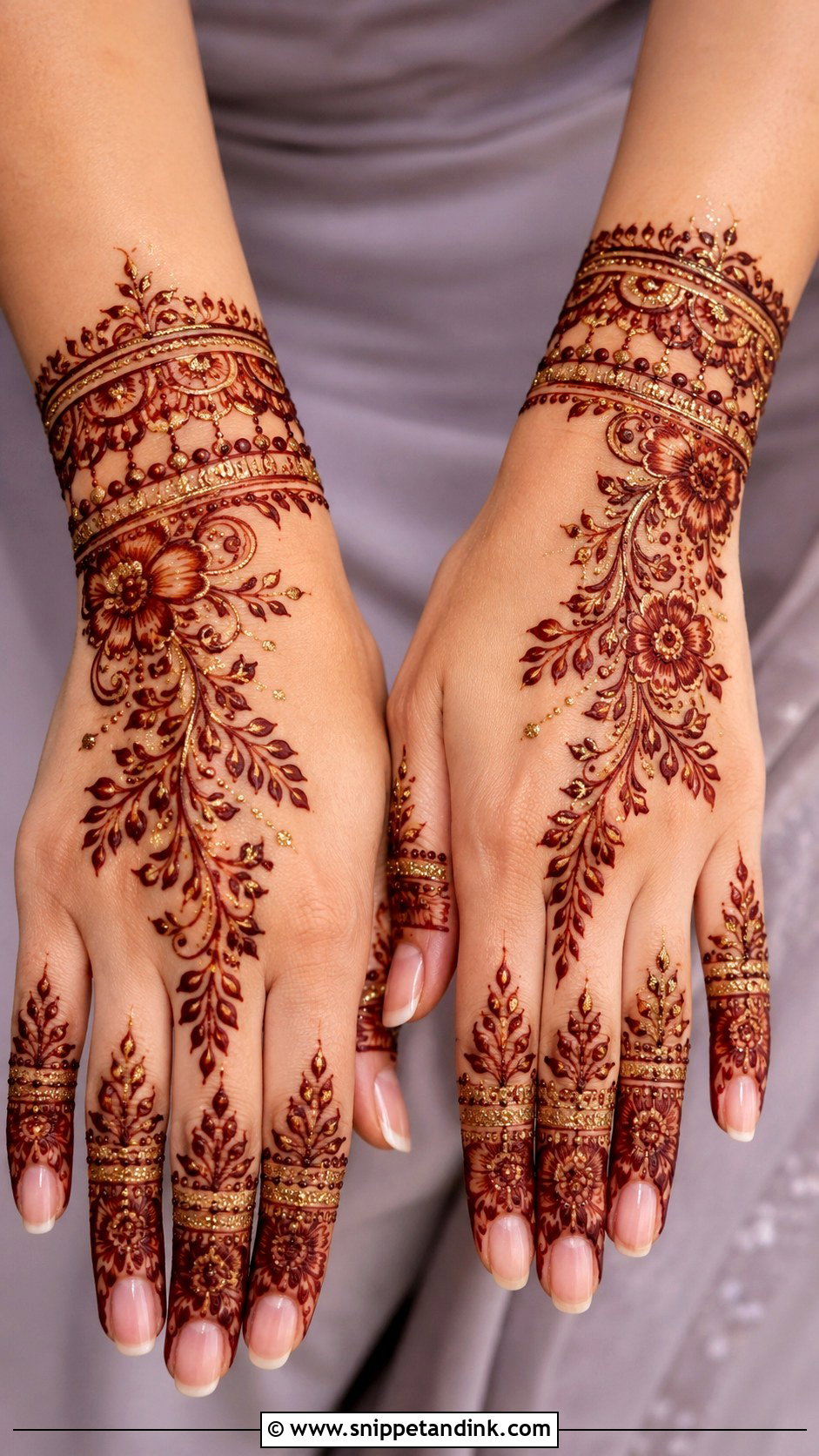
Glitter belongs on top of a finished design, never instead of one. The base is natural henna, a floral back-hand trail, a wrist bracelet or decorated fingers, and only once the paste is dry and removed do I add cosmetic glitter to a few petals or borders. Use it sparingly or the stain underneath disappears. Gold, copper and deep maroon suit traditional outfits. It will wear off within a day, so save it for a single evening event like a sangeet.
35. Forearm Mehndi Design
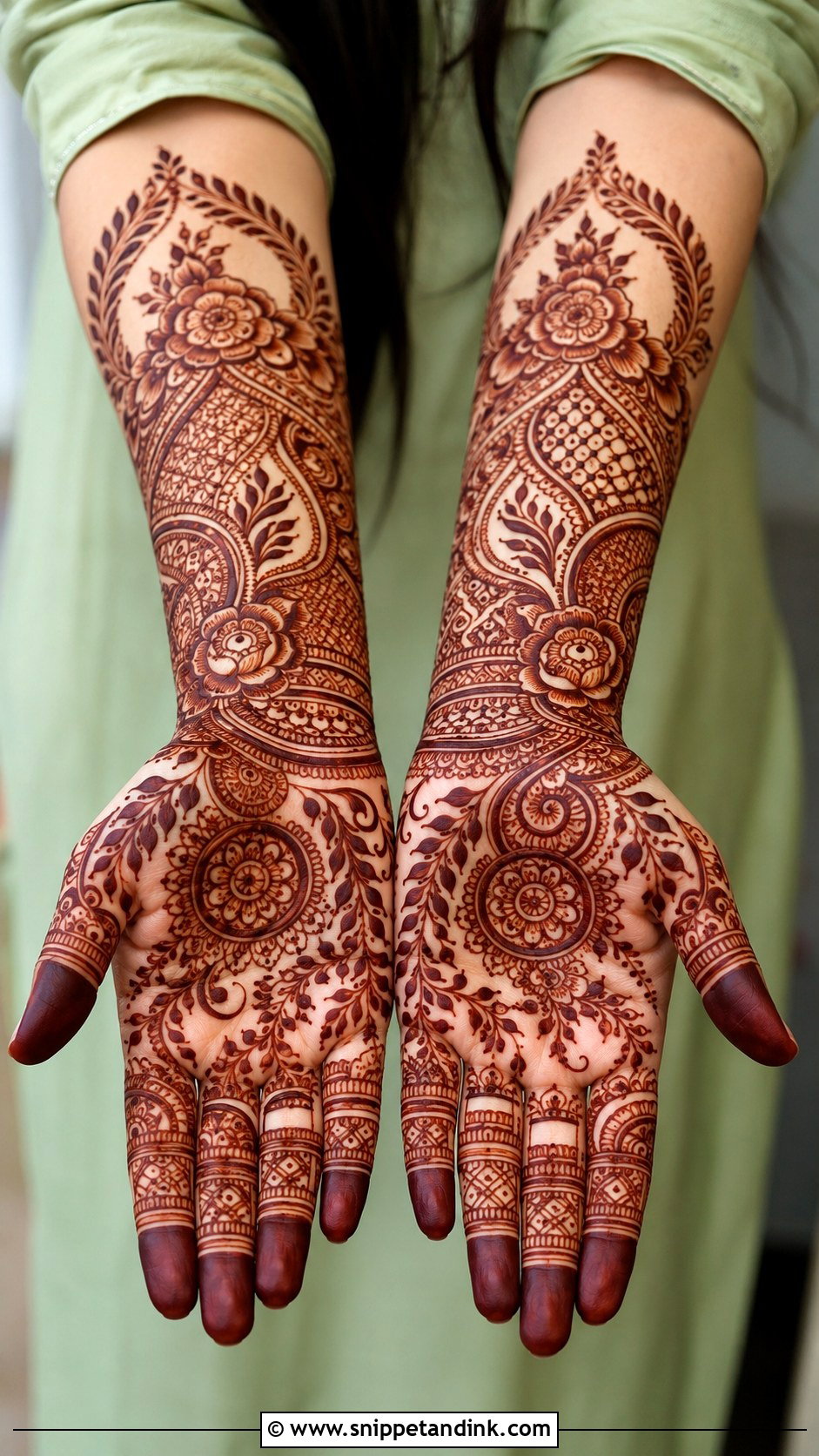
Forearm work extends the composition past the wrist, starting at the fingers and running up the arm with florals, paisleys, mandalas, jaali or leafy vines. Bridal versions are dense; modern ones use more spacing and bigger motifs. The forearm stains noticeably lighter than the hand, so I warn clients the upper section will look softer in colour, and I keep the paste on it as long as possible. The hand and forearm should join as one composition, not two separate drawings.
Reference Photos and Details Your Artist Needs in Advance
A good booking message saves us both a lot of guessing on the day. When someone sends me these, I can quote accurately and plan the layout before I arrive.
- Two or three reference images, ideally showing both the front and back of the hand, and a note on what you like in each (the spacing, the motif, the finger work).
- How far up the arm you want the design, and the sleeve length of your outfit. Coverage hidden under a sleeve is time and money spent on nothing.
- Any jewellery that will sit on the hand, such as a haath phool or stacked bangles, so the best motifs don’t end up underneath it.
- How many people want mehndi and at roughly what coverage level, so I can bring enough cones and plan the evening.
- Any skin sensitivity or reactions to henna or essential oils in the past.
A Bridal Mehndi Timeline From Trial to Wedding Morning
Bridal stain is the one I can’t redo, so I plan it backward from the wedding date.
- A few weeks before: a small trial patch with the actual paste, to check how your skin takes the colour and that nothing irritates.
- Before the mehndi day: get waxing, manicures and any exfoliation done first. Scrubbing or waxing after application strips the stain.
- One to two days before the wedding: the application itself, since henna keeps darkening for about 48 hours after removal.
- That night: leave the paste on as long as you can, wrap it loosely if you’re sleeping in it, and keep your hands warm.
- Next morning: scrape the paste off rather than washing it, and avoid water for as long as practical. The colour you see then isn’t final; it deepens through the day.
Does Your Outfit Have Sleeves? Start the Decision There
Mehndi has changed shape over the years while keeping its roots. For a clean, modern feel, negative space, bracelet, vine and geometric layouts are the strongest picks. If you’re drawn to tradition, paisley, peacock, Rajasthani, Indian bridal and lotus work carry the most meaning. Festivals sit comfortably with Arabic, Indo-Arabic, Eid and Diwali designs. Then narrow it down by practical facts: how much of your arm the outfit shows, how long you can sit still, and what your hands need to do the next day.
You'll Like These Ideas:





Leave a Reply