
A tikki is the round motif at the center of the palm or the back of the hand, sometimes called a gol tikki or a mandala. Everything else in the design is built to lead the eye back to it, which is why it reads so clearly in ring and bangle close-ups. The circle itself can be plain or layered with petals, and what surrounds it decides whether the hand looks Rajasthani, Gulf, Arabic or modern. Below are 20 ways I build around that center, from full forearm coverage to a single palm motif, with notes on how each one stains, how long it takes and where it tends to go wrong.
Why a Round Tikki Turns Oval on Some Hands
The palm isn’t flat. It curves, folds along the heart and life lines and changes shape every time you move your thumb. A circle drawn on a stretched, flattened hand turns into an oval the moment the hand relaxes. That’s why the first thing I do is ask the bride to rest her hand naturally on a cushion, palm up and fingers slightly curved, and only then place the center point.
Size matters as much as position. A tikki that covers most of the palm leaves no room for the design around it, and one that’s too small looks lost in a heavy set. I usually size it relative to the palm, keeping a clear margin before the fingers and wrist.
Information that helps your artist plan the circle
- A few reference photos, with a note on what you like in each one
- How far up the arm you want the design to go
- Whether you want matching or mirrored designs on both hands
- The outfit’s main color and embroidery, so motifs can echo it
- Any events where you’ll need to use your hands soon after
If you have sensitive skin, ask for a patch test of the paste a few days before. Natural henna rarely causes reactions, but some added essential oils can irritate.
1. Full Hand Bridal Tikki Mehndi Design
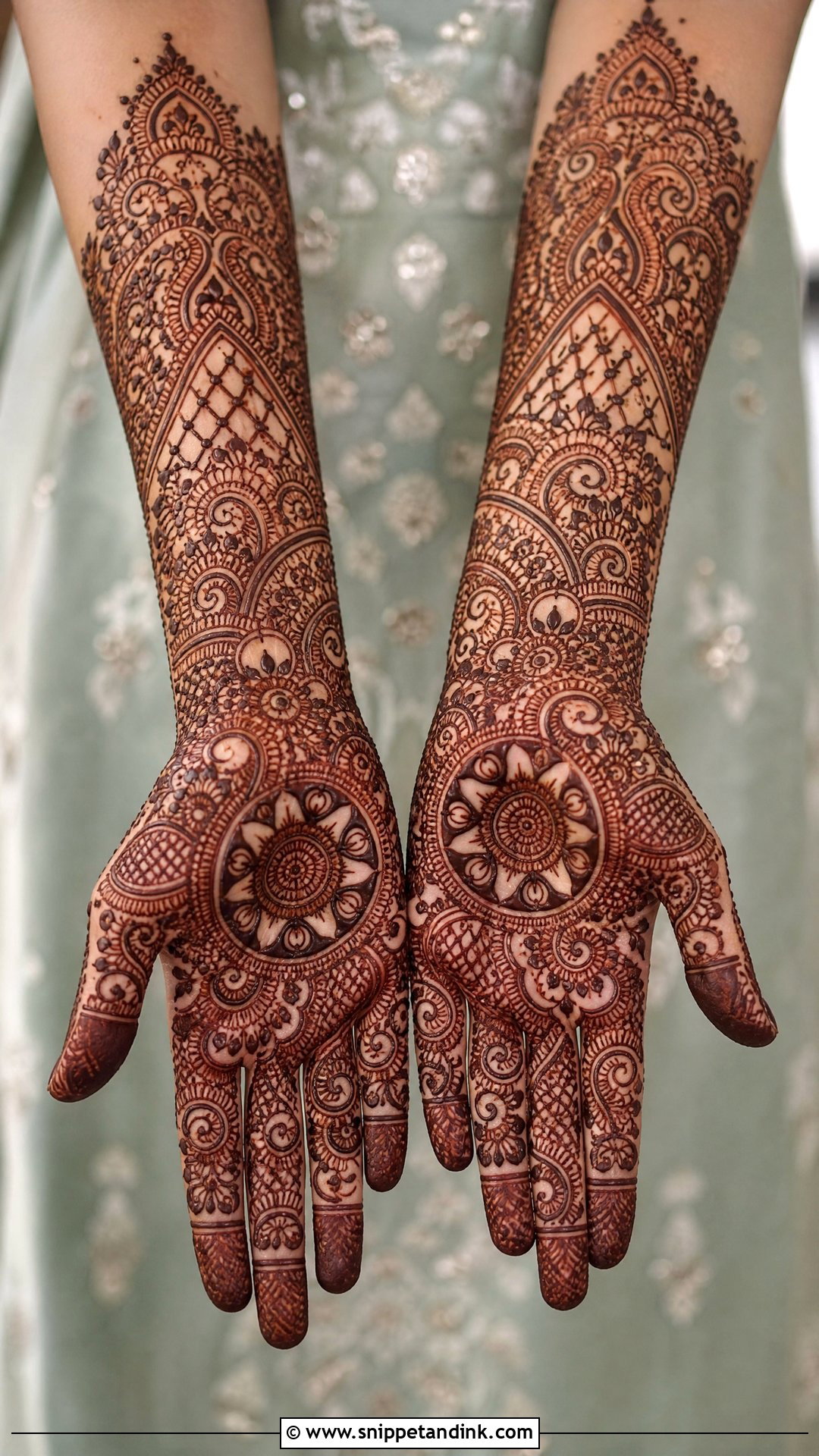
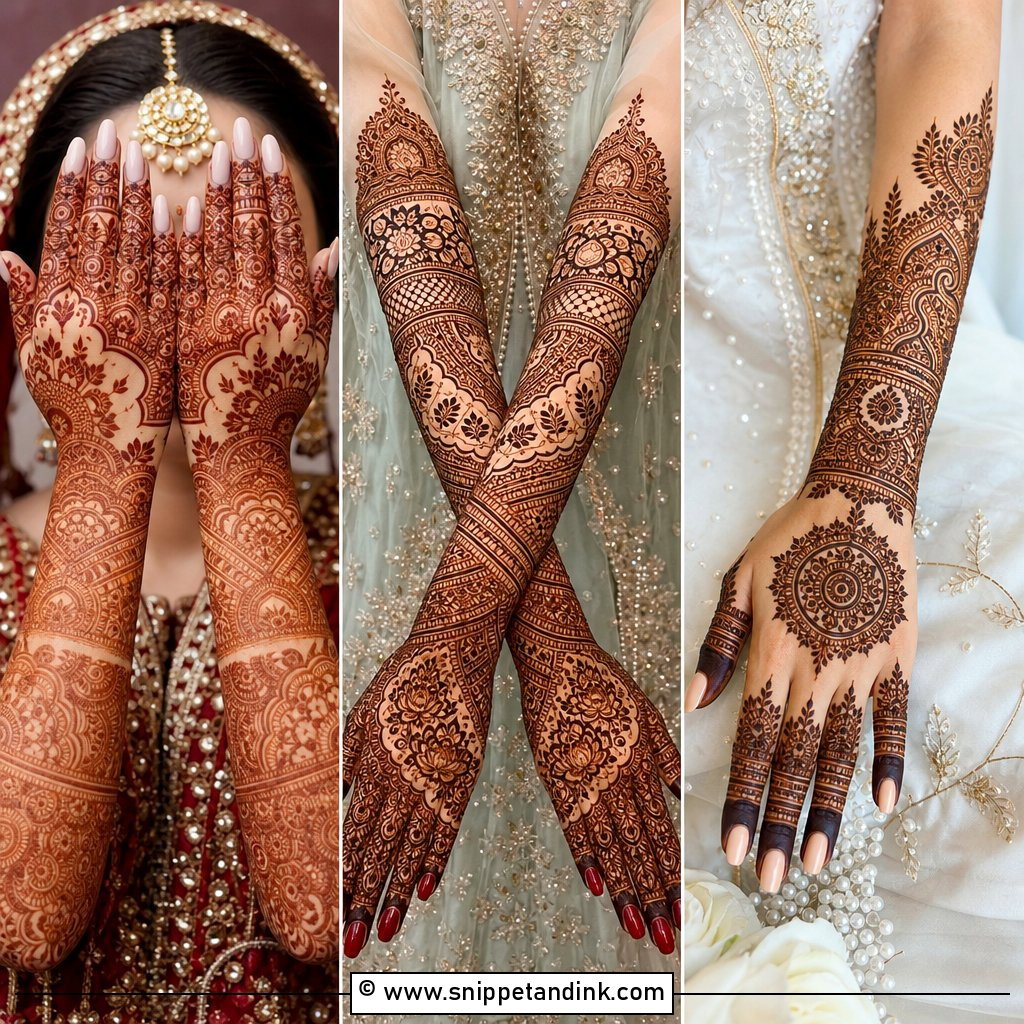
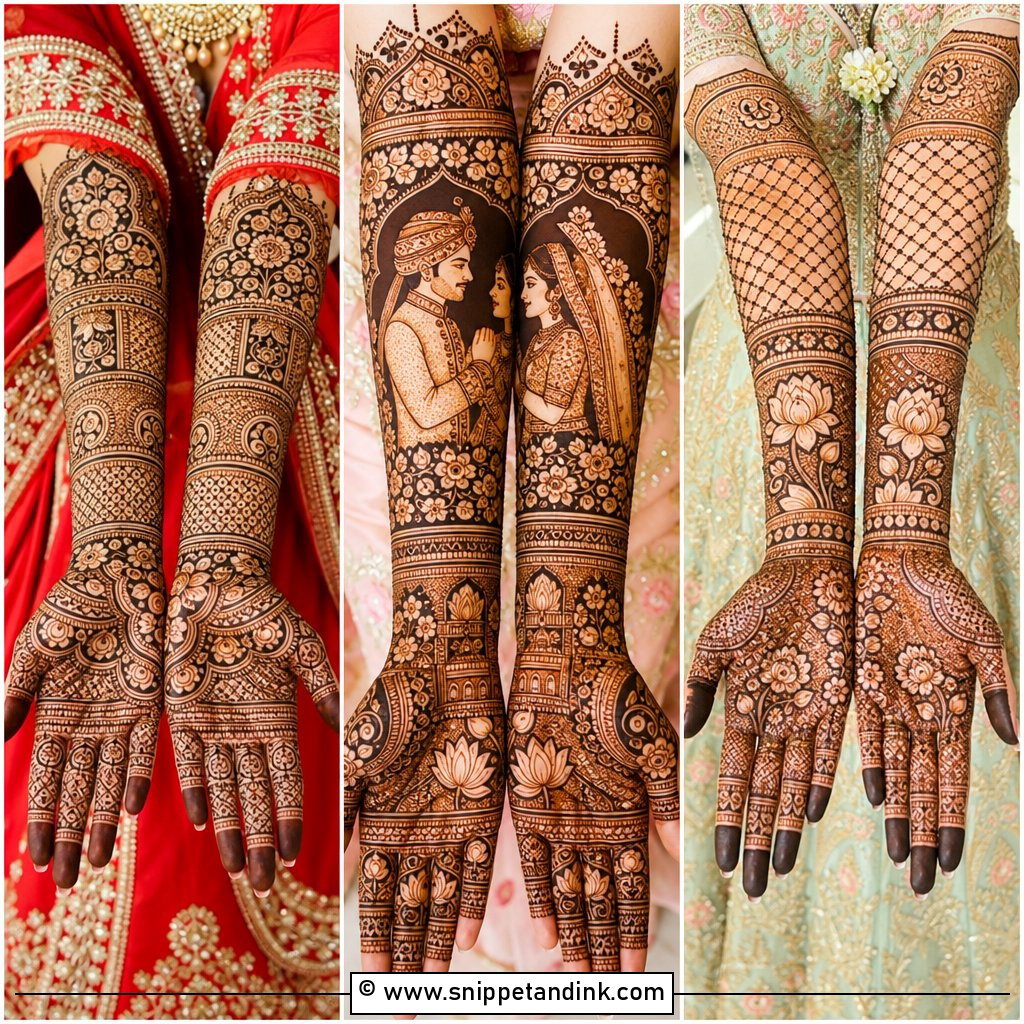
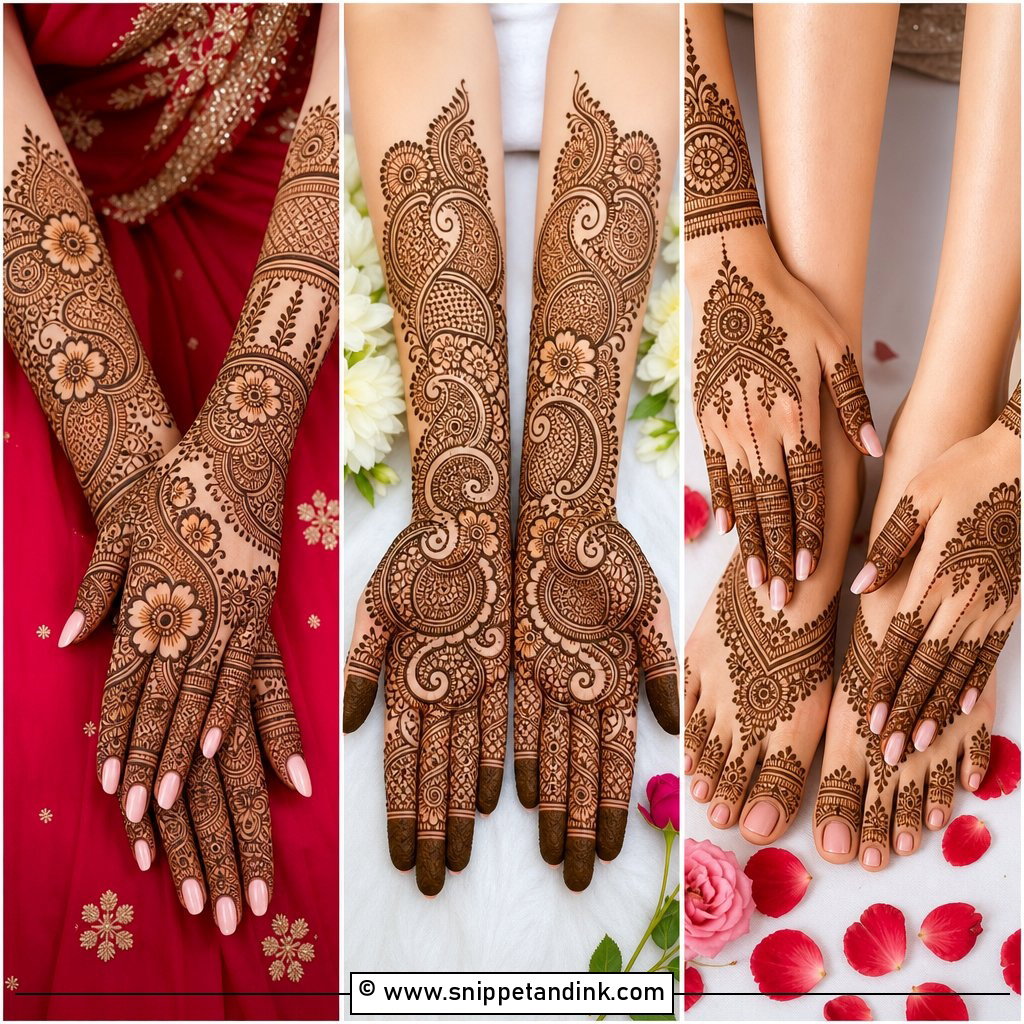
Full coverage starts with the tikki and works outward, never the other way round, or the center ends up squeezed into whatever space is left. I draw a bold circular mandala first, then paisley curls, lotus petals and shaded flowers expanding toward the fingers and wrist. Bracelet-like layers carry it up the forearm. A full set like this can take several hours per pair of hands, so plan to sit through a long session. Ask your artist to keep a thin ring of bare skin around the tikki; that small gap is what stops it disappearing among the filler.
2. Simple Bridal Tikki Mehndi Design
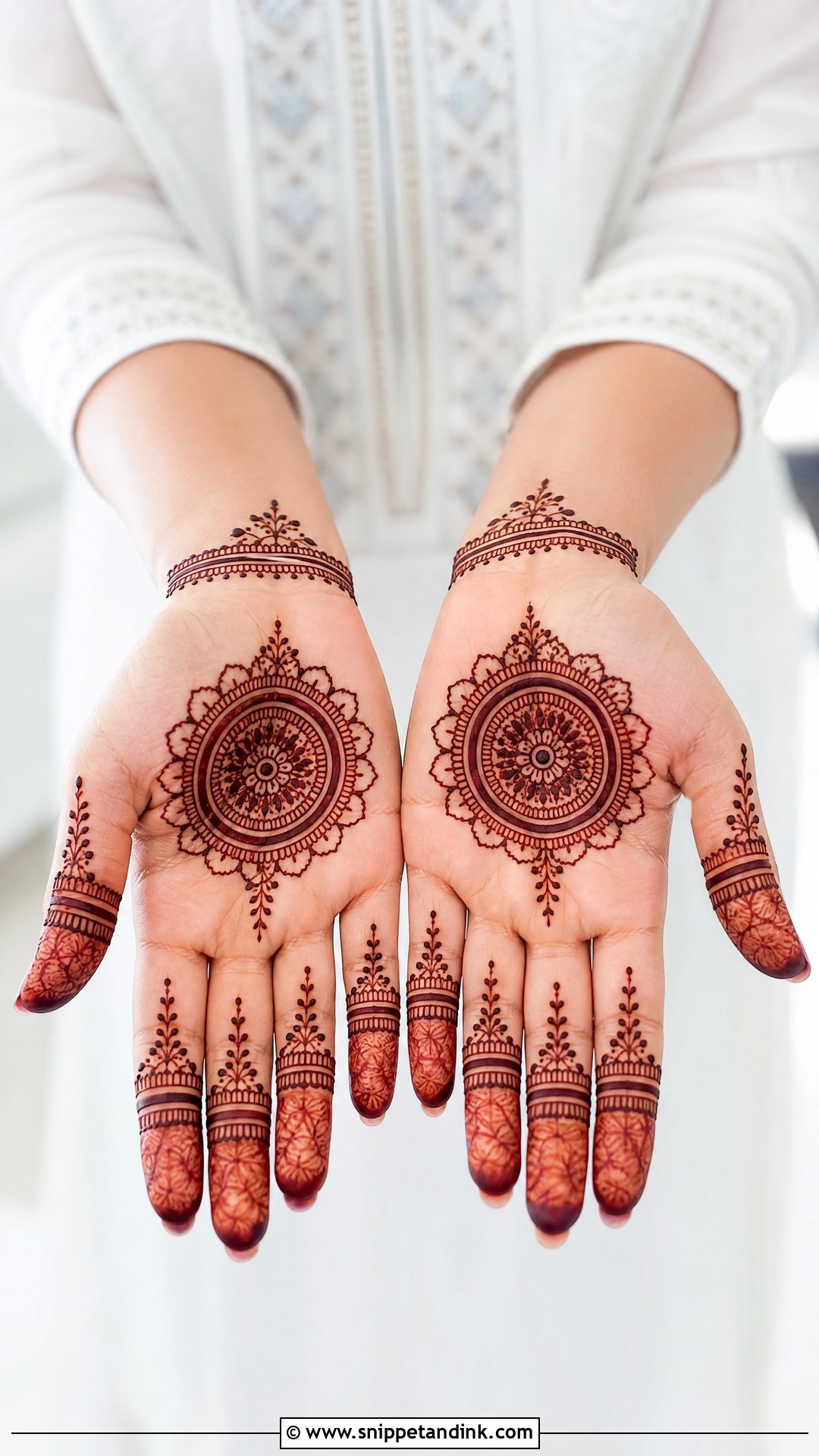
One centered circle with thin petal outlines, a few dots and light leafy strokes is enough to feel bridal when it’s drawn precisely. Fingers get matching tips and clean rings rather than heavy filling. I suggest this for nikkah, engagement or court weddings, and for brides who need to use their hands the next day. With so little on the hand, every wobble shows, so symmetry matters more than in any heavy design. A small tikki also stains darker than large solid areas because the paste lines are fine and dry evenly.
3. Arabic Bridal Tikki Mehndi Design
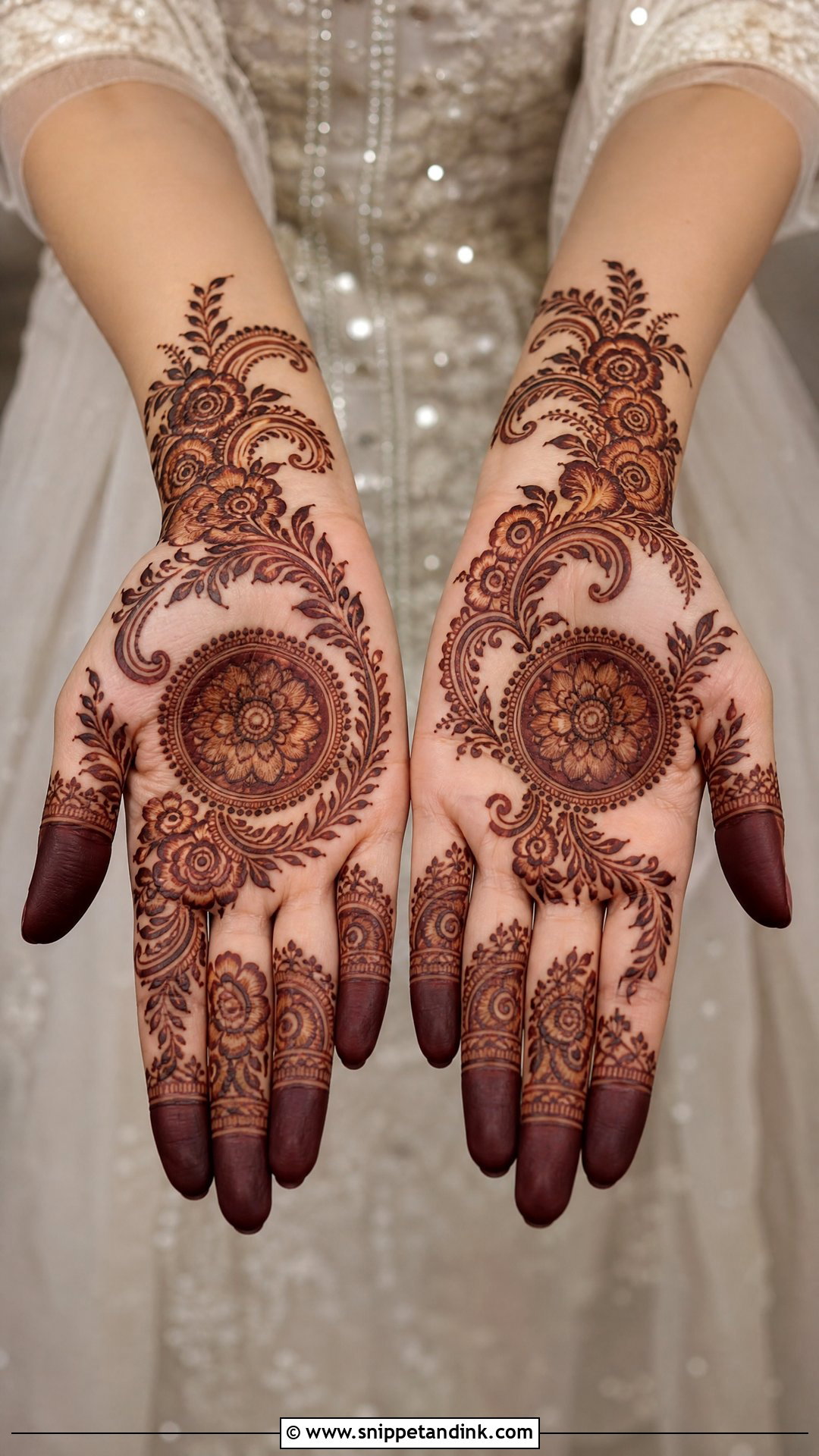
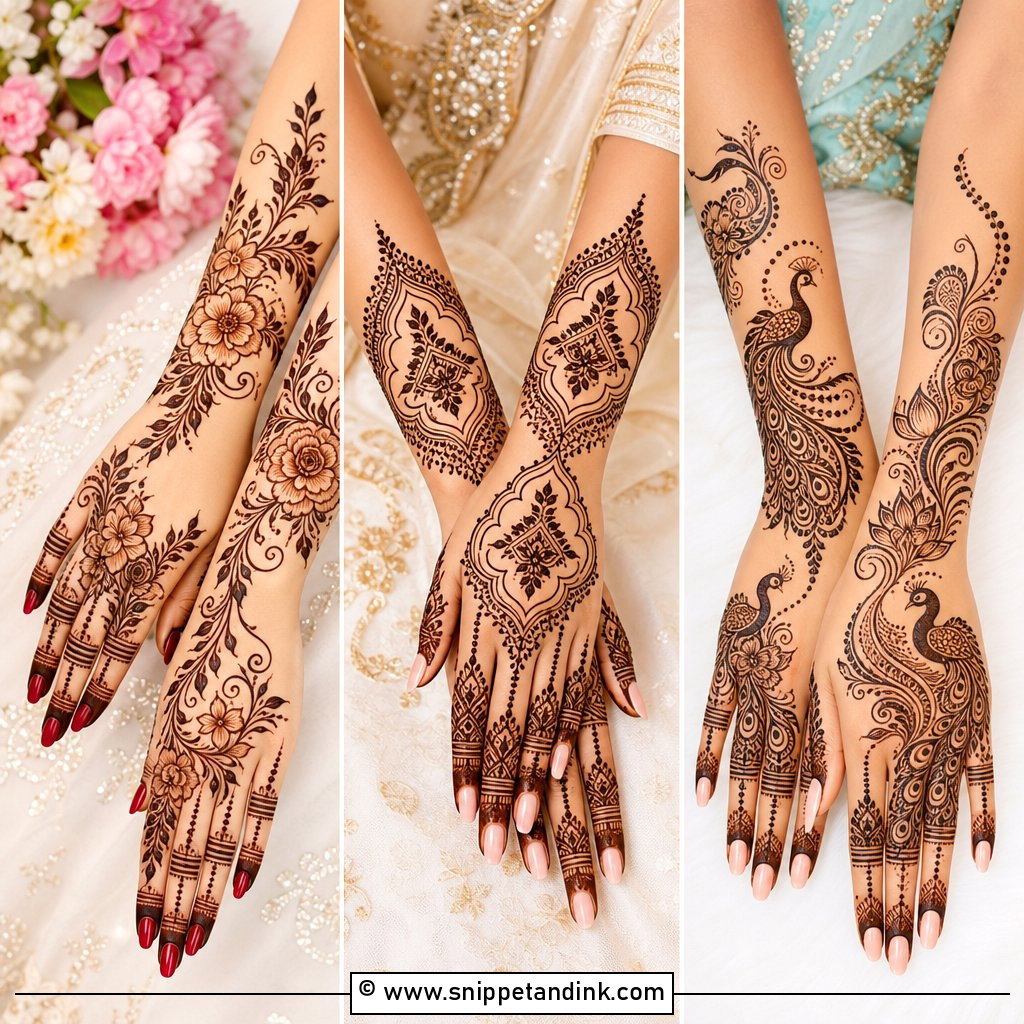
Arabic placement leaves open skin between the motifs, and that negative space is what makes the round palm center pop. I start with a bold floral mandala on the palm, then run a diagonal trail of roses, paisleys and shaded leaves toward the wrist. Fingers are half-filled. It’s quicker to apply than Indian coverage and dries faster, so it suits a busy wedding week. Arabic designs rely on thick outlines; thin cone lines in this style look weak once the stain develops.
4. Back Hand Bridal Tikki Mehndi Design
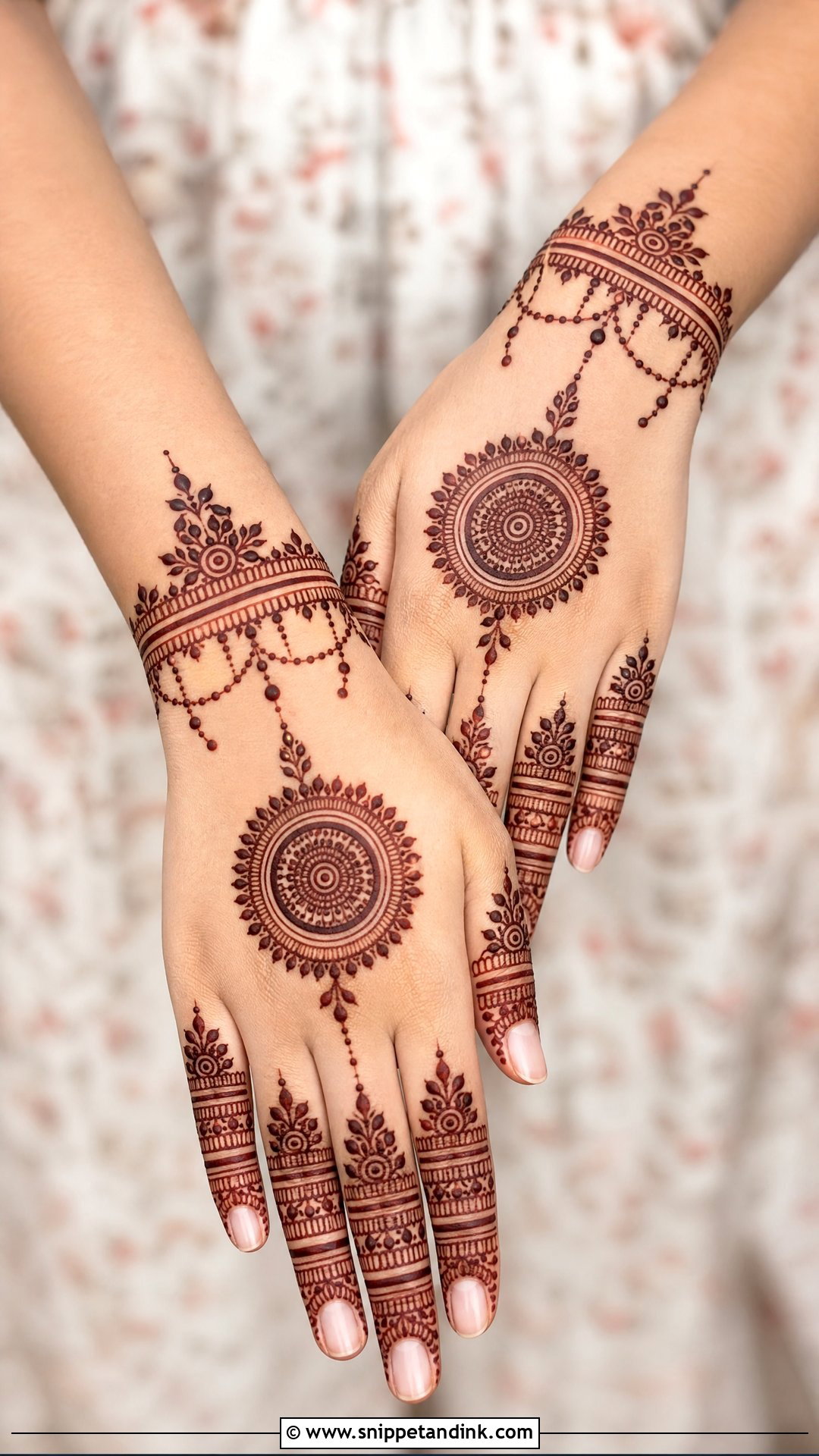
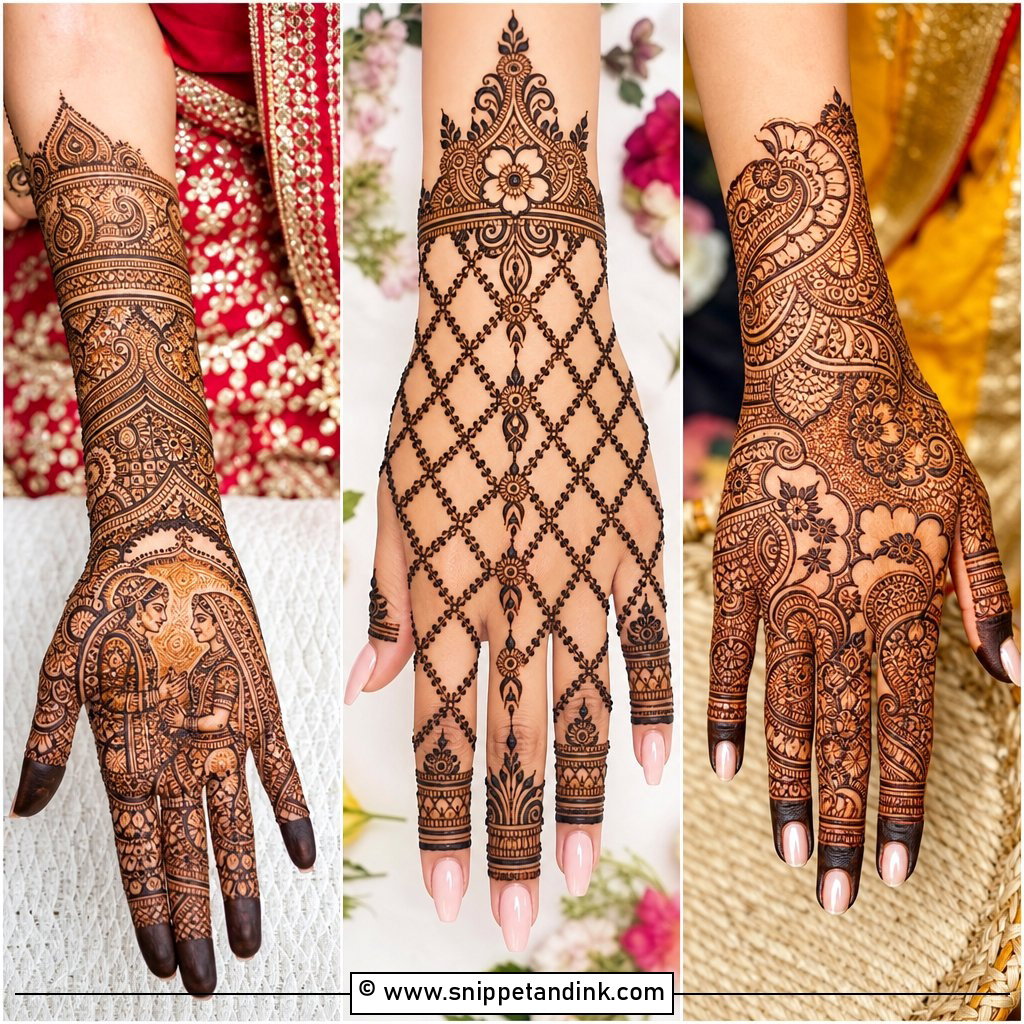
On the back of the hand the tikki frames everything you’ll wear, from rings to bangles. I center it just below the knuckles so it isn’t hidden when the fingers curl. Back hand bridal tikki mehndi photographs well in ring-exchange shots because the motif sits right where the camera is pointing. Fine chain lines connecting the tikki to the wrist or to each finger give a jewelry effect. Back-of-hand stains always come out lighter than palm stains because the skin is thinner and warmer palms hold more color, so I keep the outlines a little bolder here.
5. Front Hand Bridal Tikki Mehndi Design
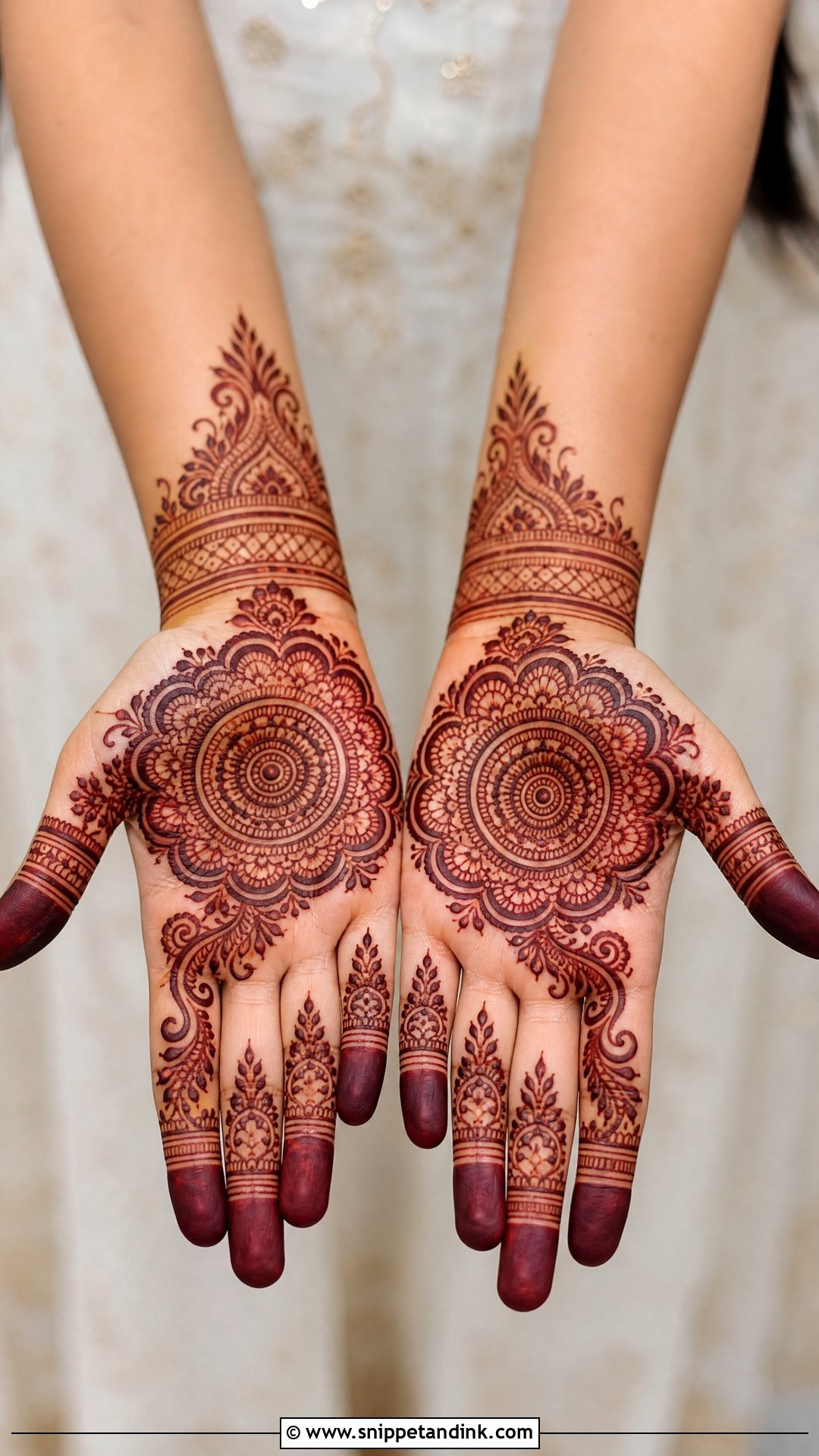
The palm is the natural home of the tikki: it’s the flattest, warmest part of the hand and gives the deepest stain. A large gol tikki built from lotus petals, scalloped circles and tiny paisleys becomes the anchor, and symmetrical vines lead back to it. I draw the circle with the hand resting open, not stretched flat, otherwise it turns oval when the hand relaxes. From there the design can stay on the palm or climb toward the forearm.
6. Indian Bridal Tikki Mehndi Design
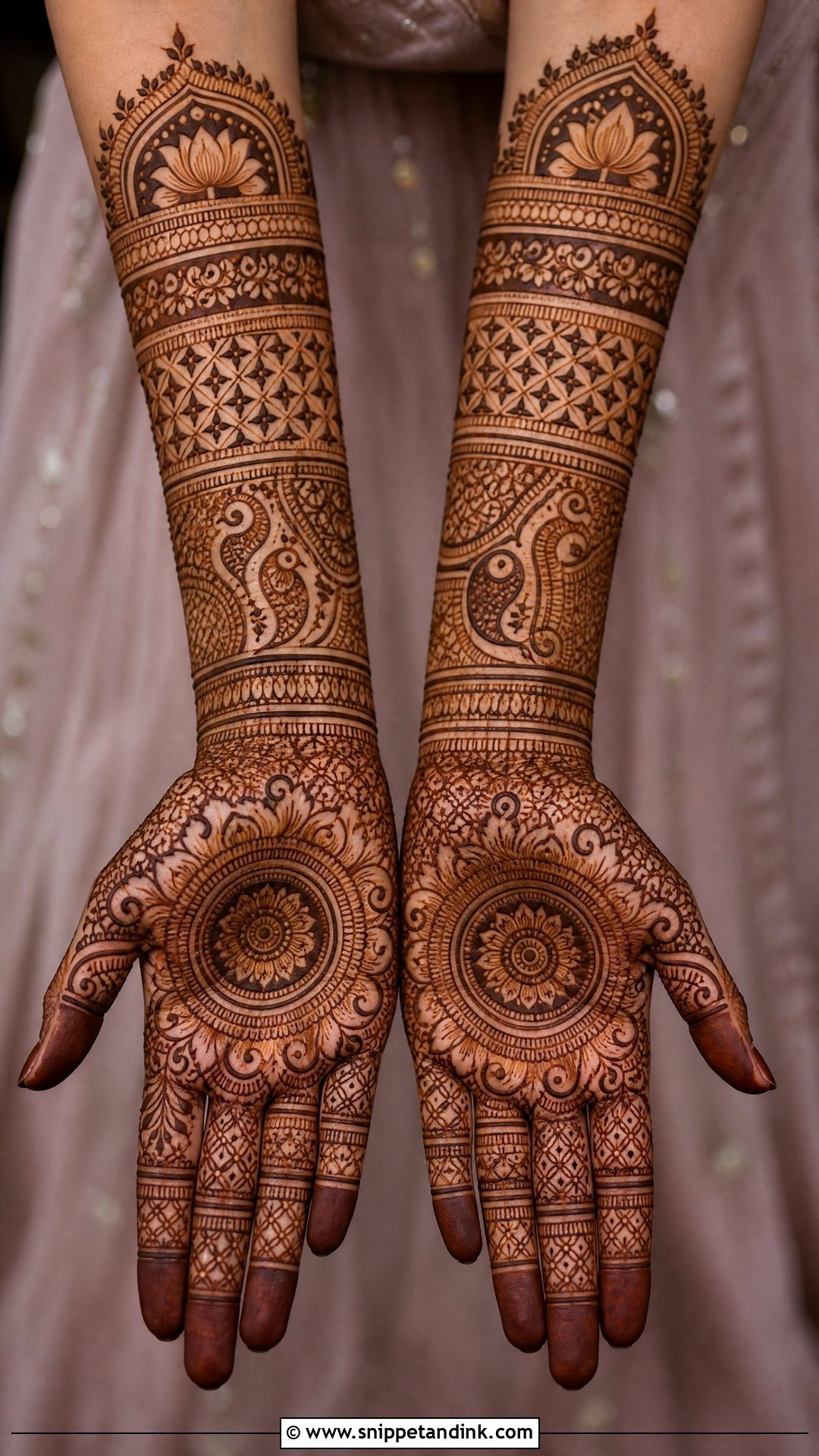
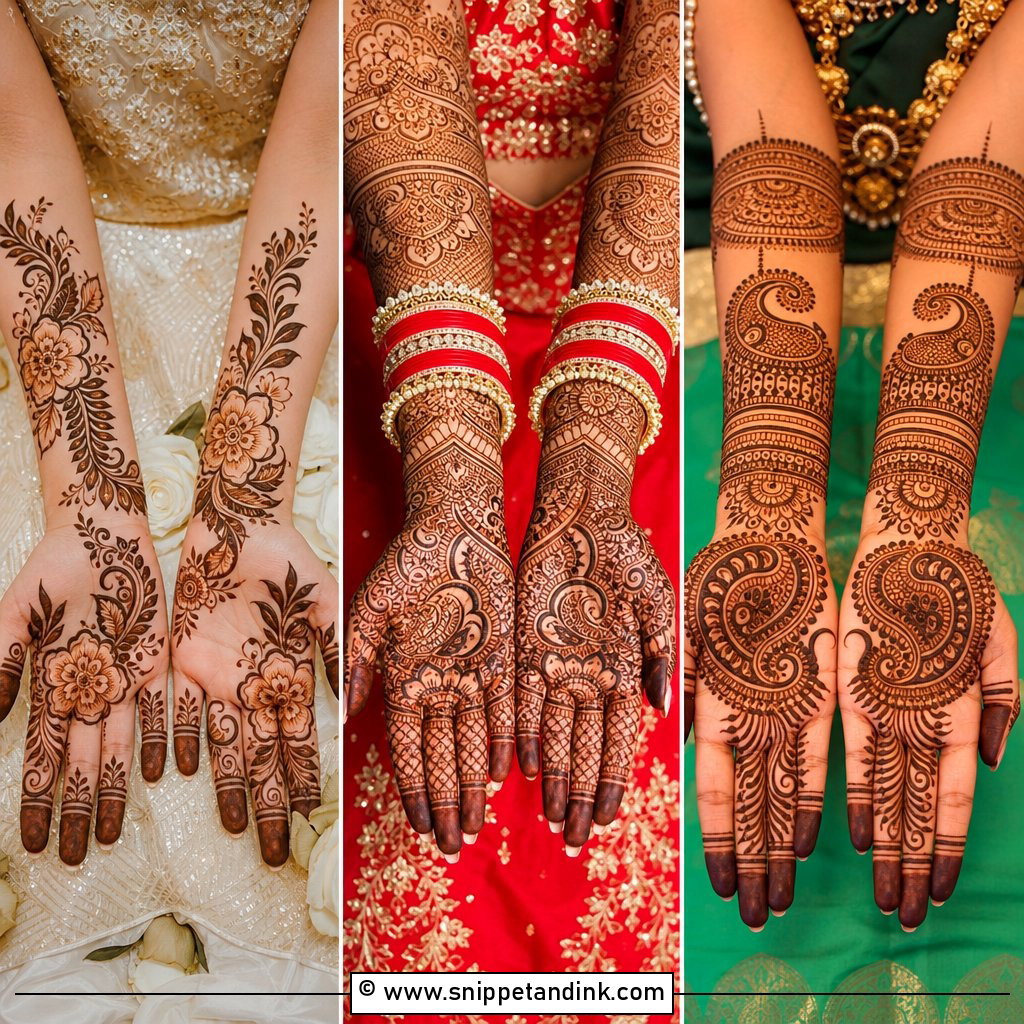
Traditional Indian bridal coverage is dense, with every area filled. The tikki may carry lotus petals, peacock curves and paisley rings, while mango motifs, jaali sections and spirals fill the palm around it. It suits a lehenga, a saree or a gharara and heavy traditional jewelry. Because the filler is so busy, I alternate bold and fine strokes: bold for borders, fine for filling. Without that contrast the hand reads as one brown mass from a few feet away.
7. Pakistani Bridal Tikki Mehndi Design
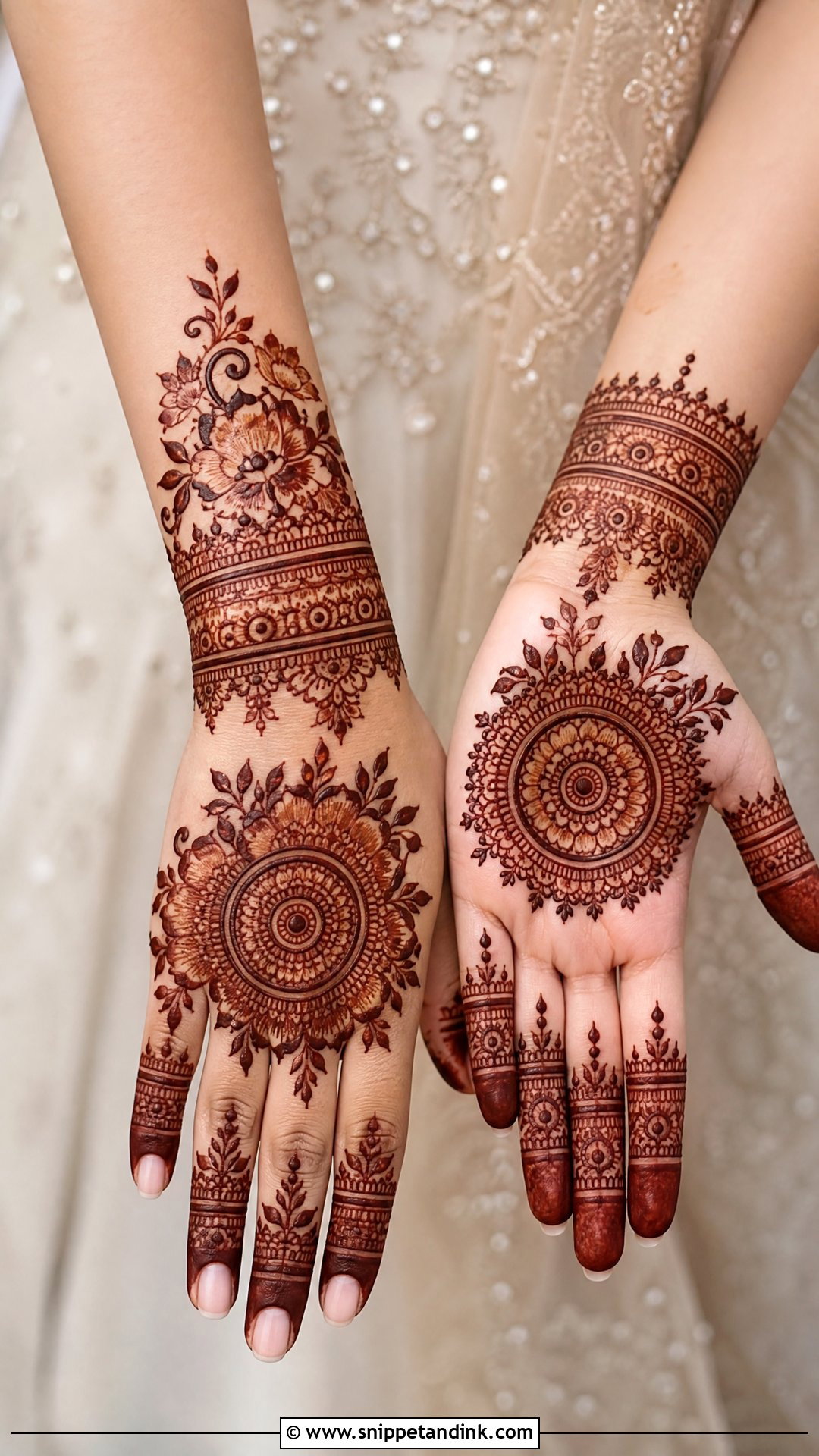
Pakistani bridal hands often combine a detailed tikki with breathing space around it rather than wall-to-wall filling. Fingers carry slim bands, mesh and dotted tips, and the wrist usually gets a cuff that sits naturally under bangles. I find this balance suits brides who want something rich for the barat but won’t feel overwhelmed wearing it for a week of events. The tikki stays crisp because nothing crowds it, and that spacing also helps the paste dry evenly.
8. Indo Arabic Bridal Tikki Mehndi Design
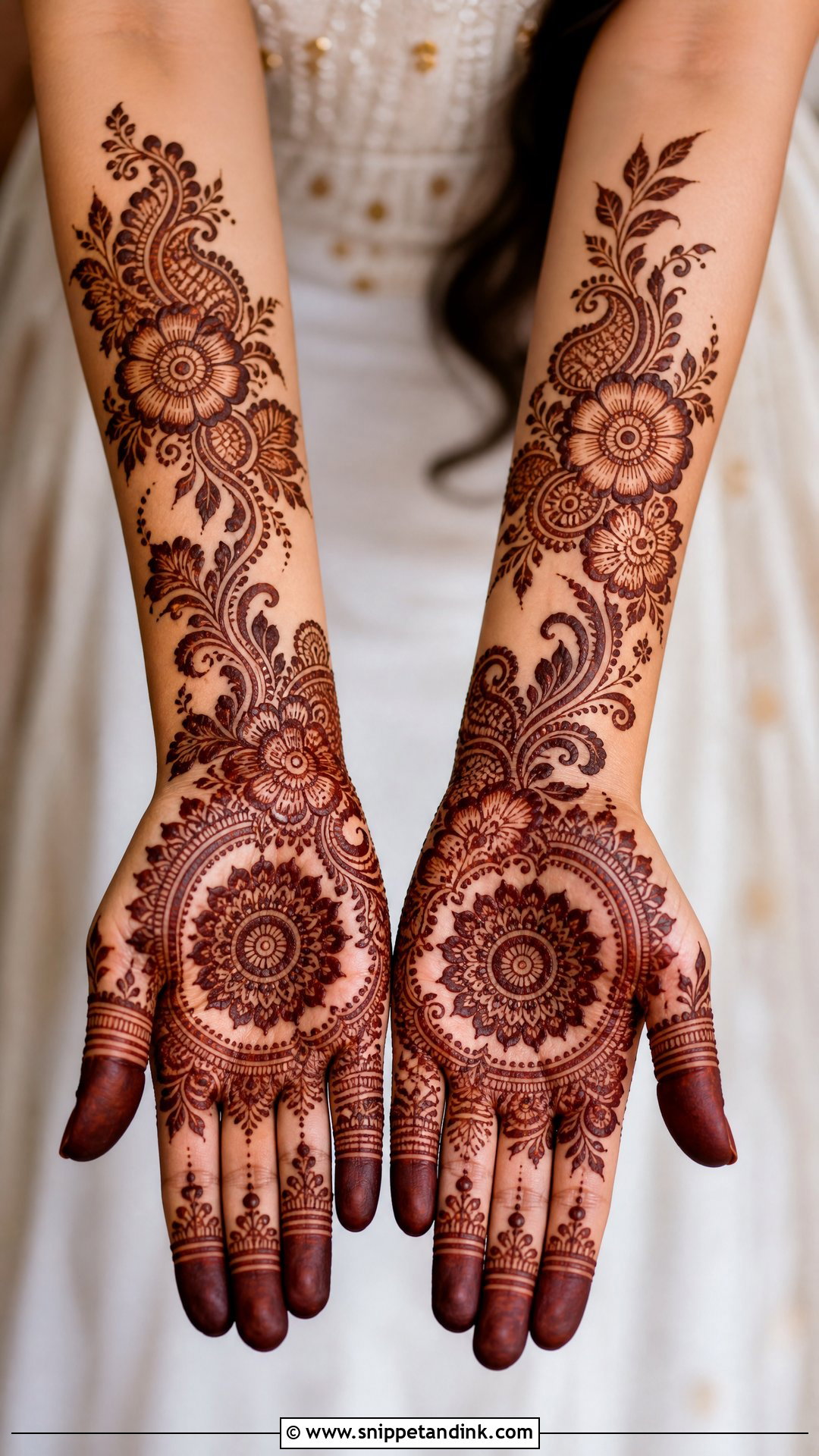
Combining dense Indian work at the center with Arabic flow at the edges is my most-requested middle ground. Indo Arabic bridal tikki mehndi puts a layered round motif on the palm, then lets curved trails of paisleys, flowers and small jaali patches move toward the wrist. I keep the tikki bold and the trail a shade lighter in line weight. It works on both sides of the hand and takes less time than a full traditional set.
9. Floral Bridal Tikki Mehndi Design
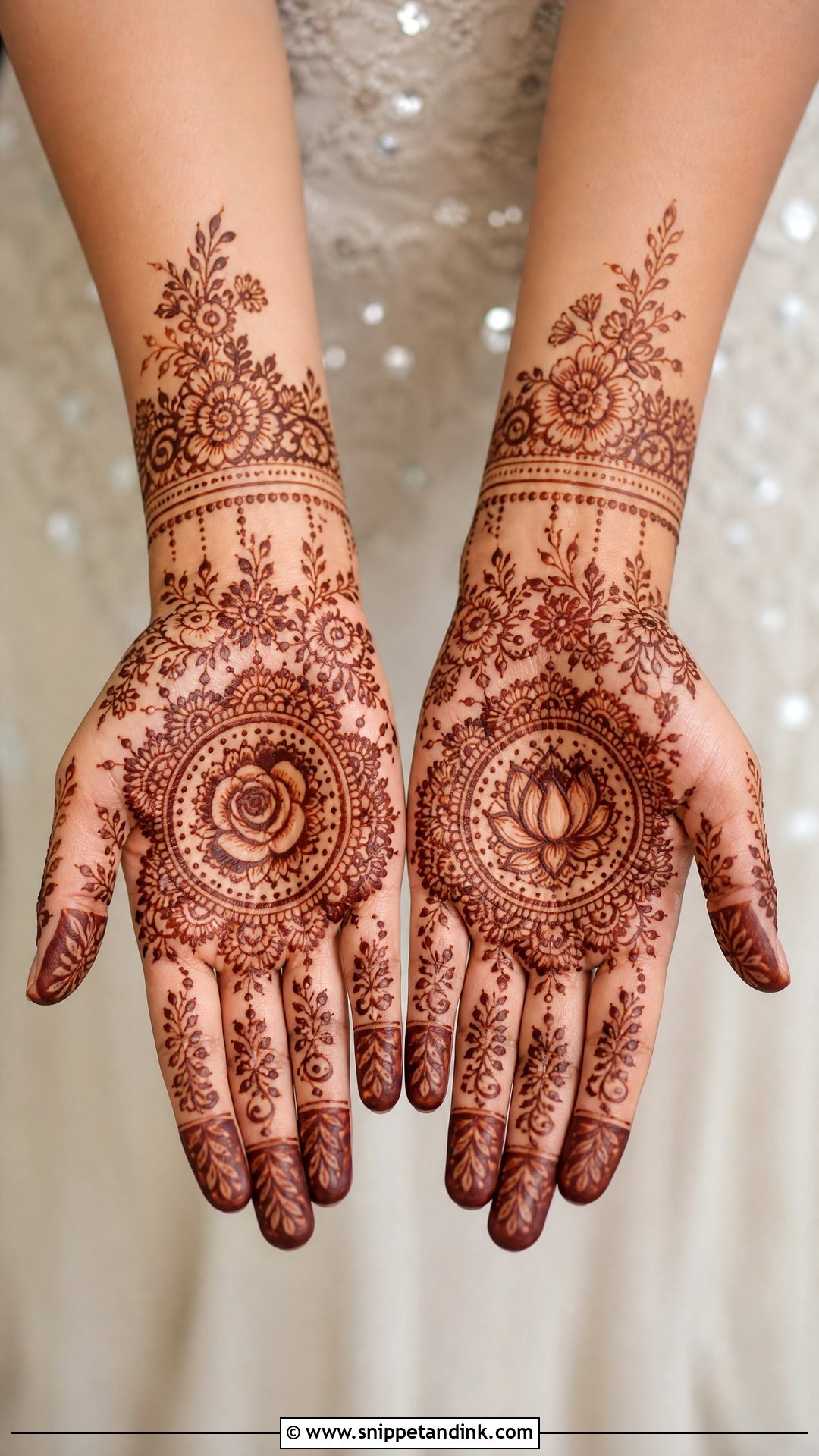
Building the circle from rose layers, lotus petals or a daisy-style mandala gives a softer center than geometric rings. I vary the flower sizes deliberately: one large bloom, several medium, a scattering of buds. When every flower is the same size the design looks printed. Shaded petals, made by dragging the cone lightly, add depth. Floral tikki work suits pastel outfits and daytime mehndi functions, and the fingers finish with petal bands.
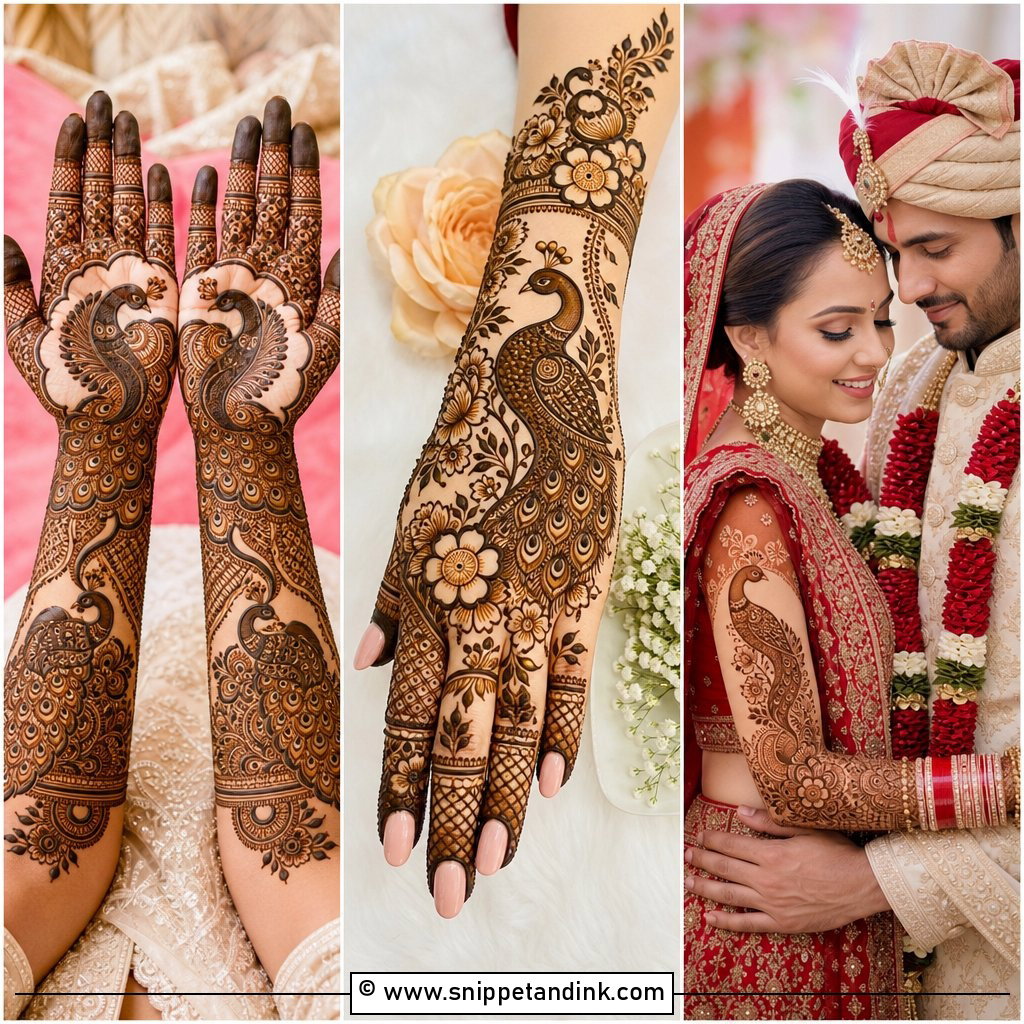
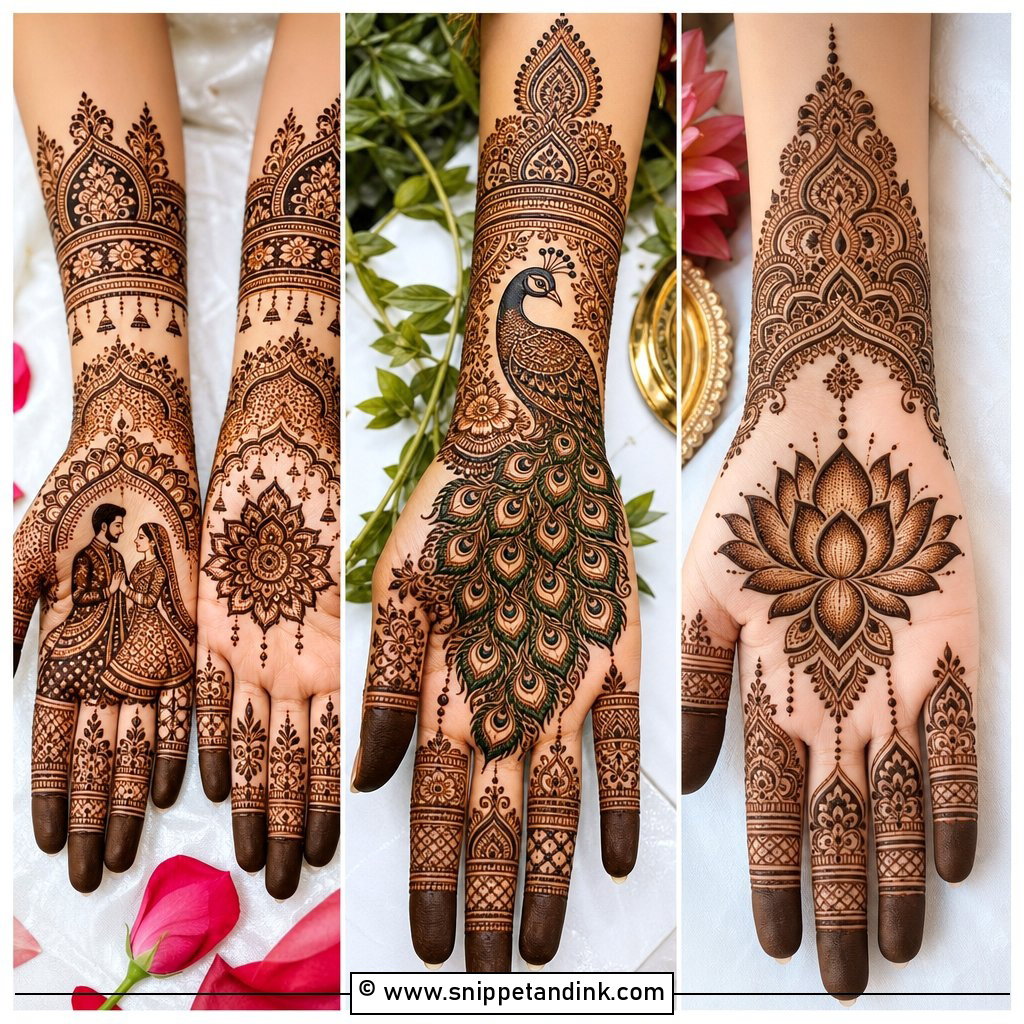
10. Peacock Bridal Tikki Mehndi Design
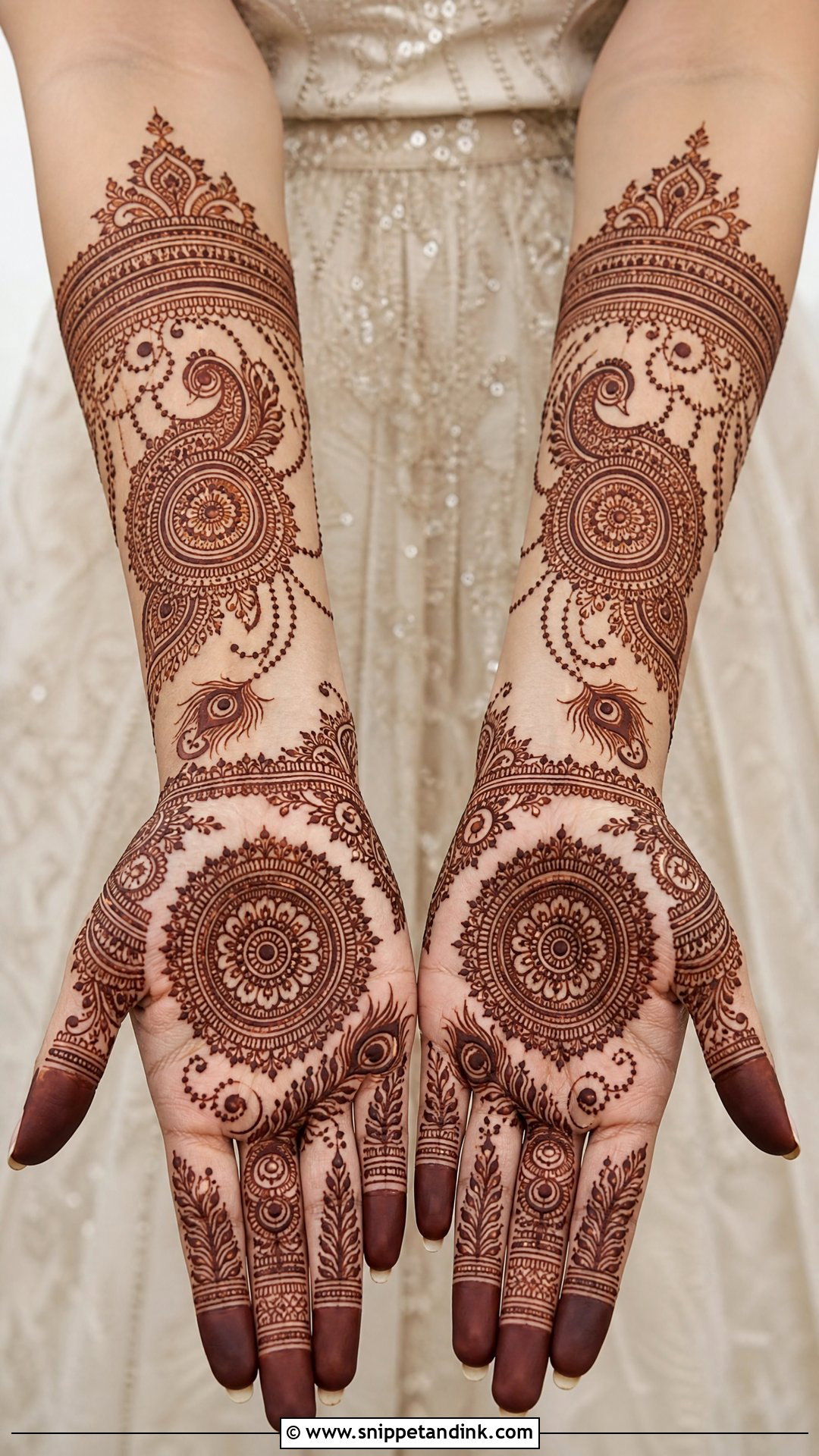
Peacocks are one of the most loved motifs in Indian bridal mehndi, and placement is everything. I arrange the necks and feathers around the tikki rather than over it, so the circle stays the focal point. Feather strokes extend onto the fingers. This motif needs medium to heavy coverage to look intentional. I outline the peacock bodies with a thicker line than the feathers, because fine details soften as the stain deepens, and the bird needs to stay recognizable.
11. Lotus Bridal Tikki Mehndi Design
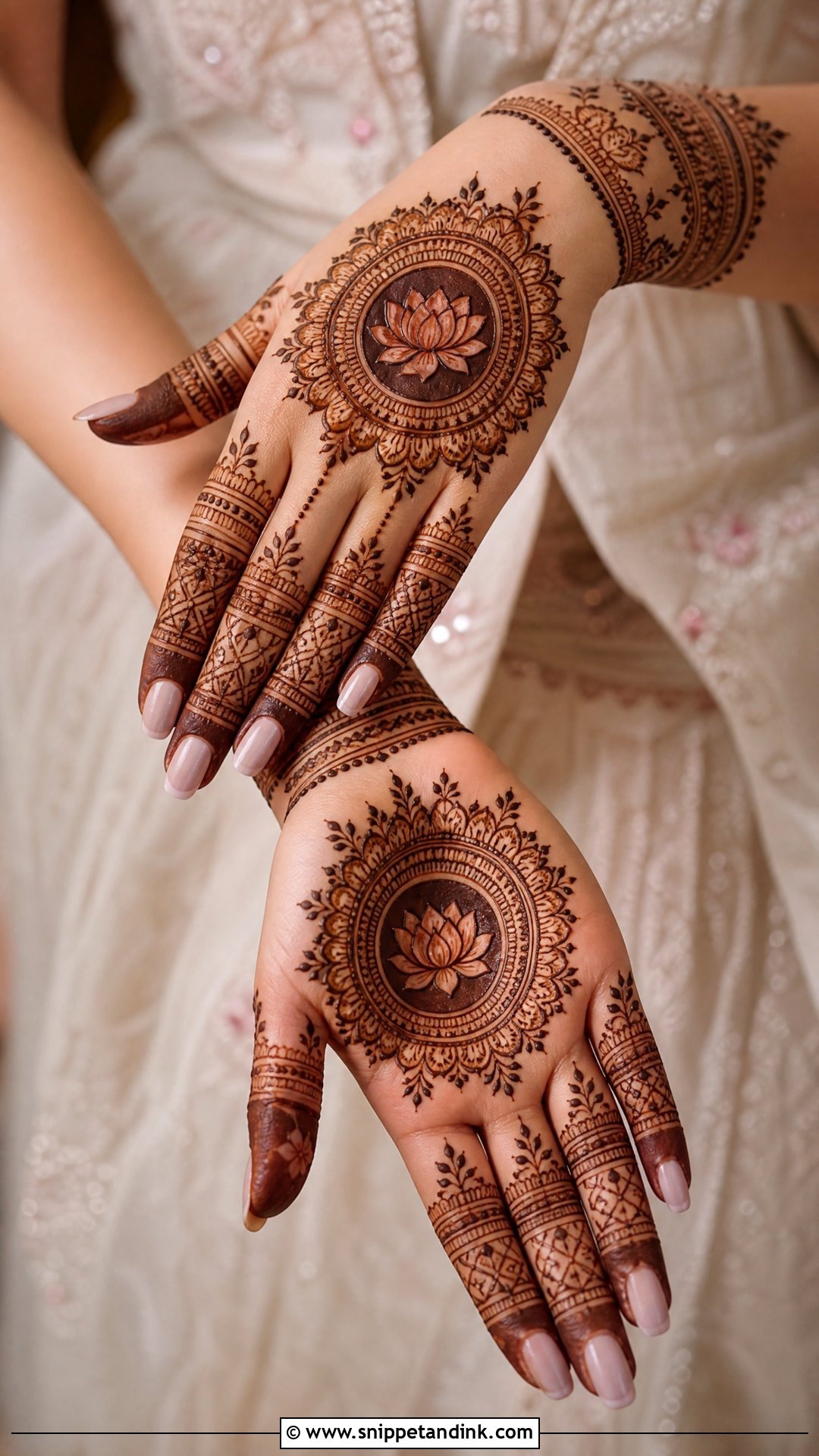
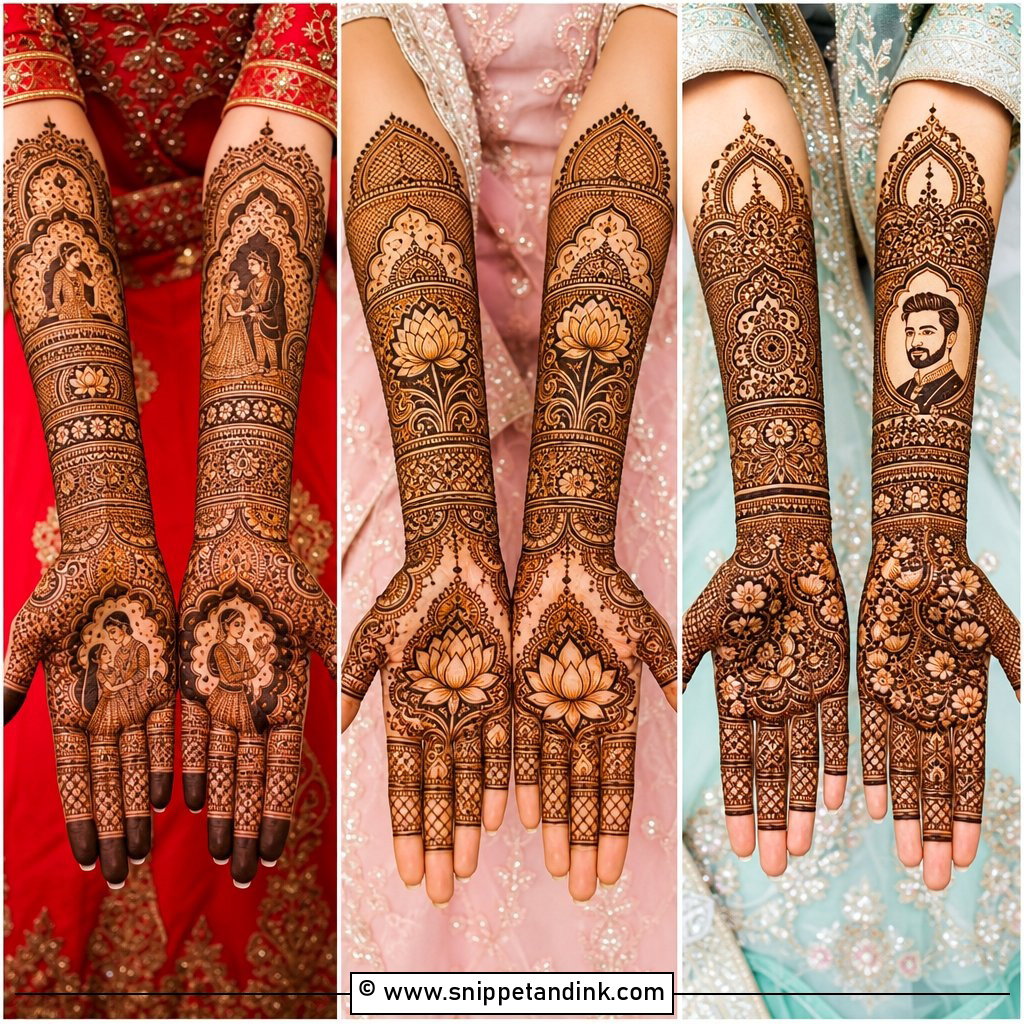
A lotus works naturally as a tikki because its petals already radiate from a center. In Lotus bridal tikki mehndi, I layer two or three rings of petals with clear gaps between them, then add small leaves and scalloped borders. Without those gaps, the petals merge into a blob as the stain darkens. It sits comfortably between minimal and heavy, so it suits an intimate wedding as easily as a large one.
12. Mandala Bridal Tikki Mehndi Design
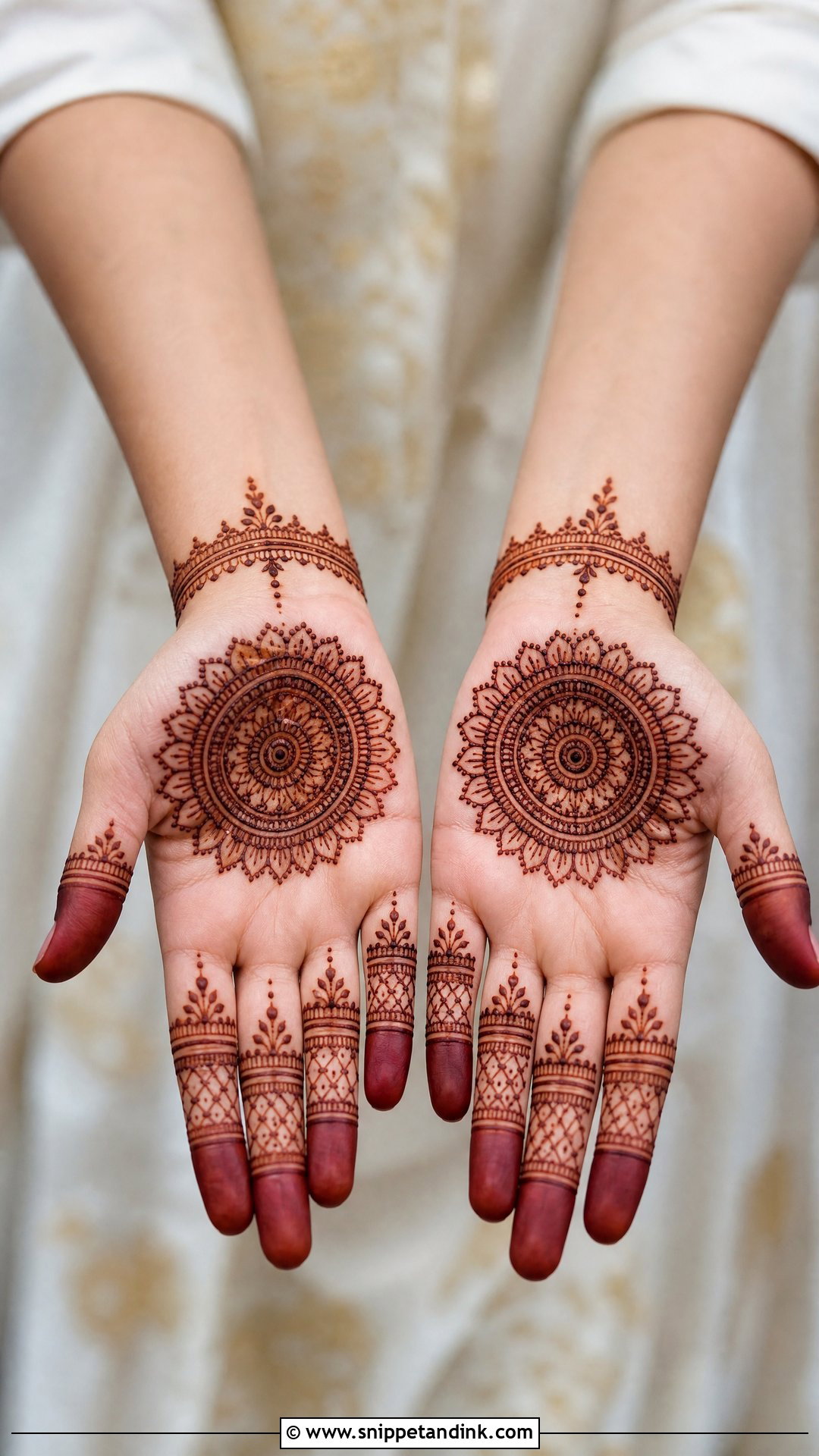
Concentric rings of dots, petals, fine curves and checks turn the tikki into a true mandala. It’s my favorite for brides who like order, since it mirrors cleanly on both hands. Precision is the whole look: uneven spacing between rings is obvious. I mark the center with a single dot and build rings outward, turning the hand between sections so my wrist angle stays the same. The rest of the hand can stay minimal or extend into heavier borders.
13. Jaali Bridal Tikki Mehndi Design
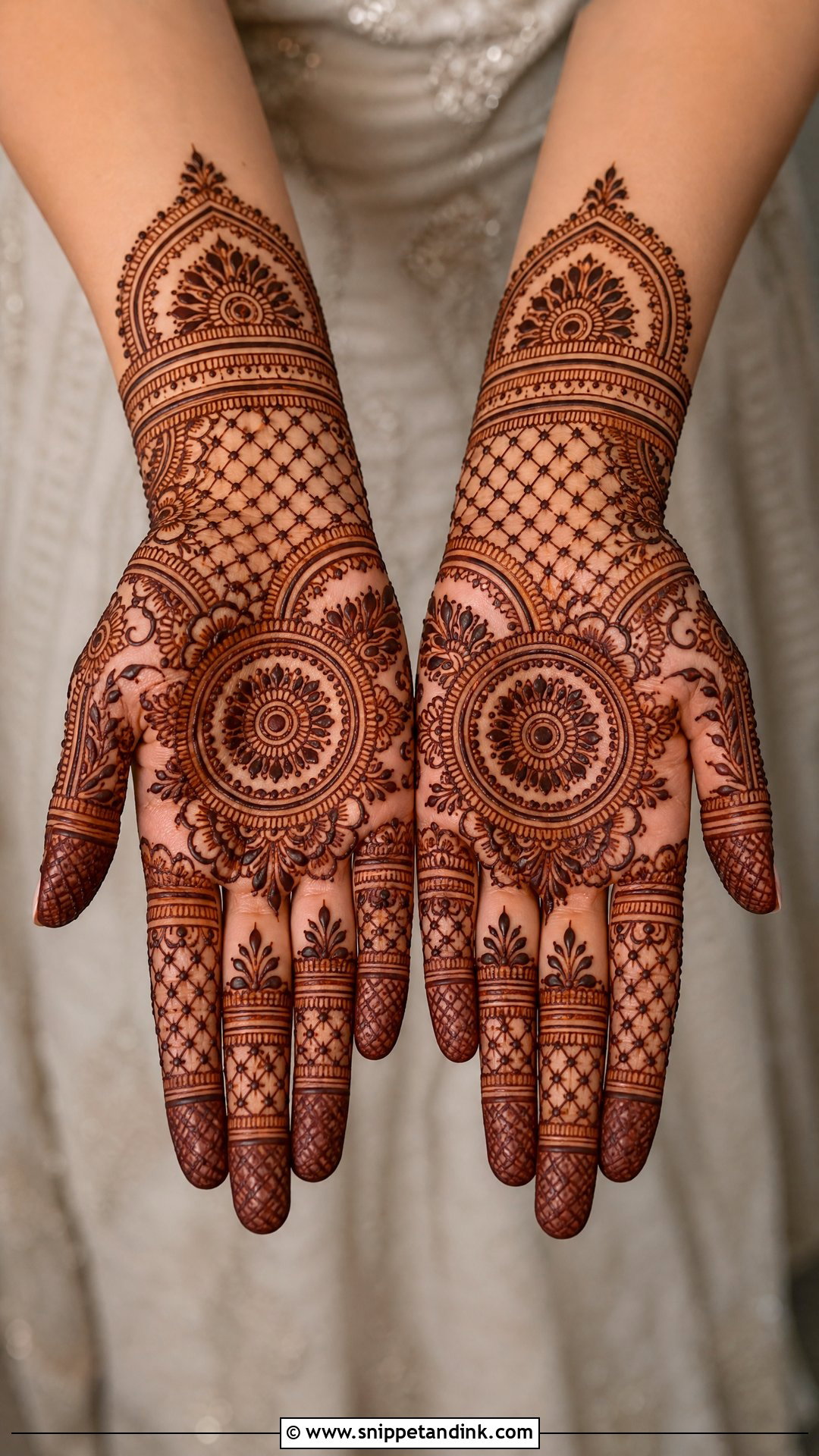
Jaali is a fine net pattern, and placing it around a solid tikki creates contrast between open mesh and dense detail. I draw mesh panels with very thin, even lines, which needs a cone with a fine tip and paste that flows smoothly. Lumpy paste ruins jaali. Slim net sections on the fingers make them look longer. Small floral clusters at the corners stop the grid feeling mechanical.
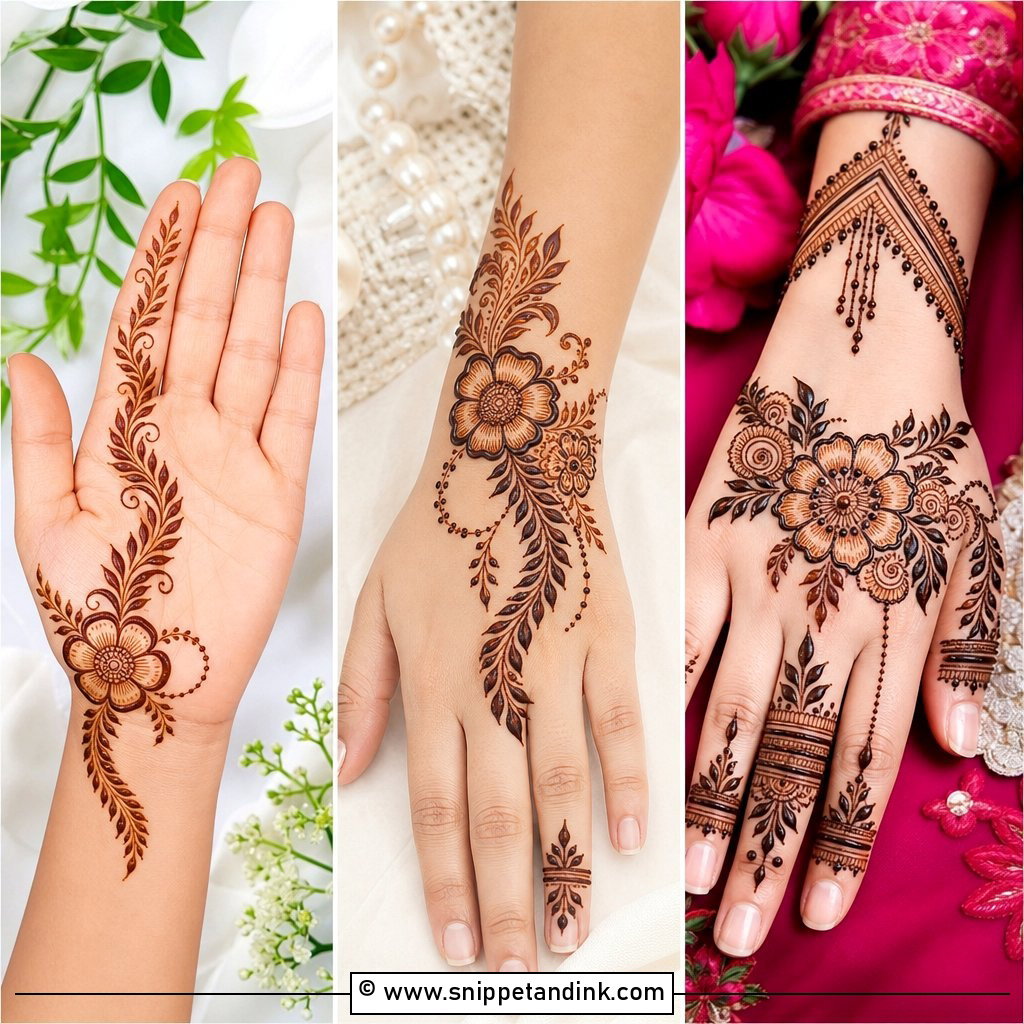
14. Heavy Bridal Tikki Mehndi Design
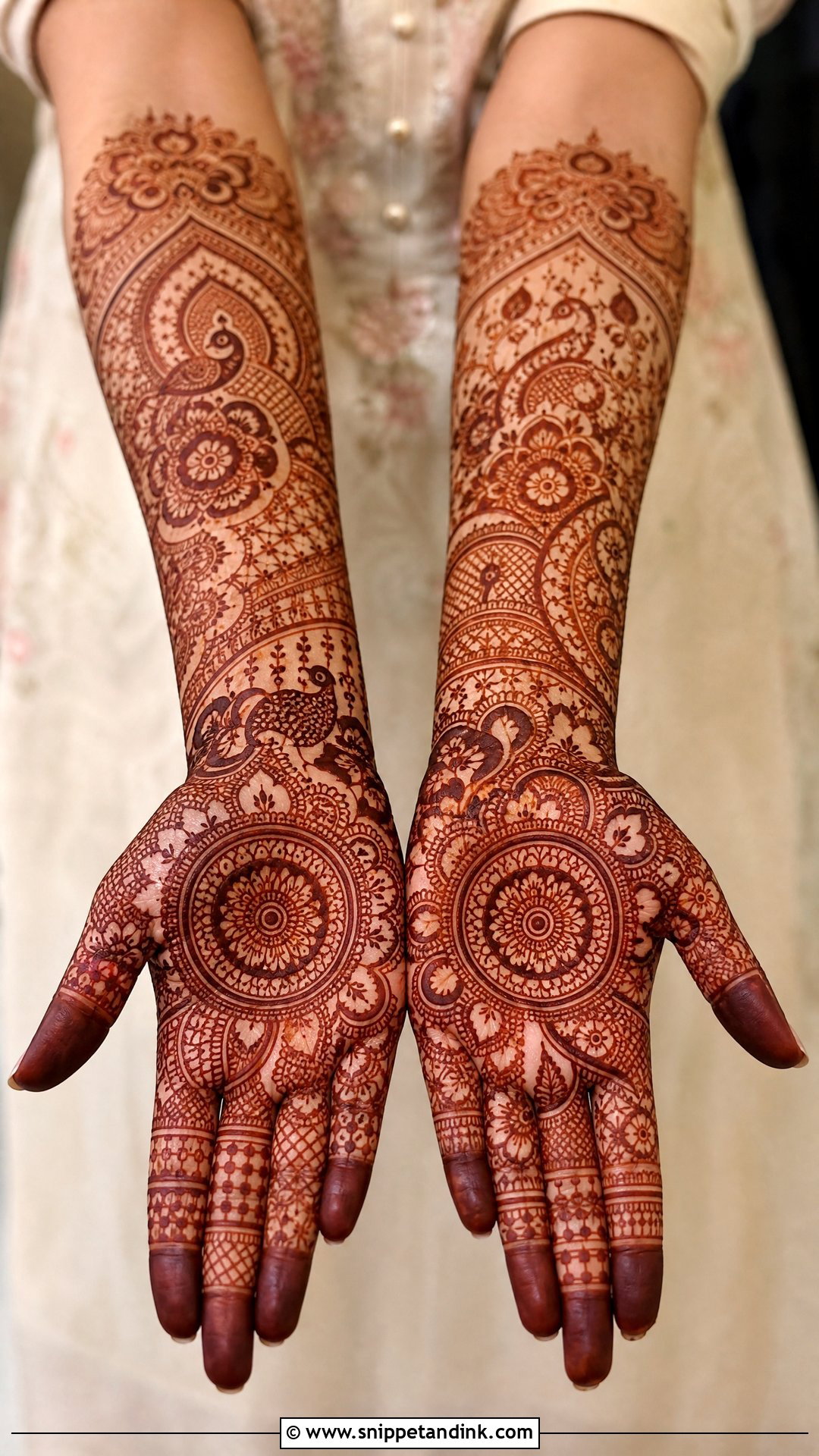
Fingertips to elbow, every space filled: this is the coverage many brides dream of for the main event. Paisleys, florals, vines and peacocks fill the hand around the central circle. It looks grand with traditional outfits and heavy jewelry, and a well-made paste on fully covered hands gives a deep stain. The problem is that density can swallow the tikki. I keep a bold outline around the center and use smaller filler as I move away, so the eye still finds the circle first. Plan for a long sitting and a lot of drying time.
15. Minimal Bridal Tikki Mehndi Design
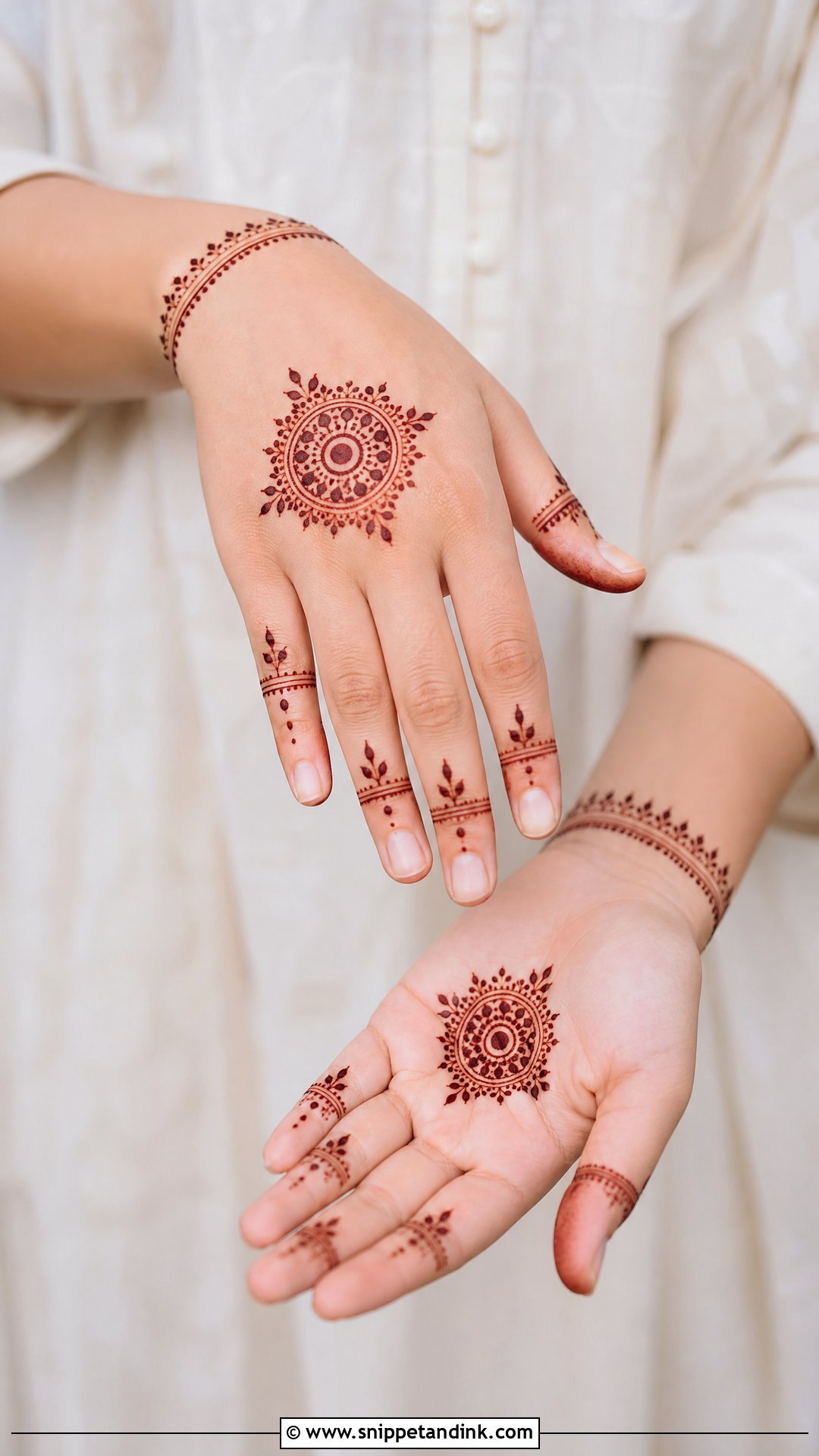
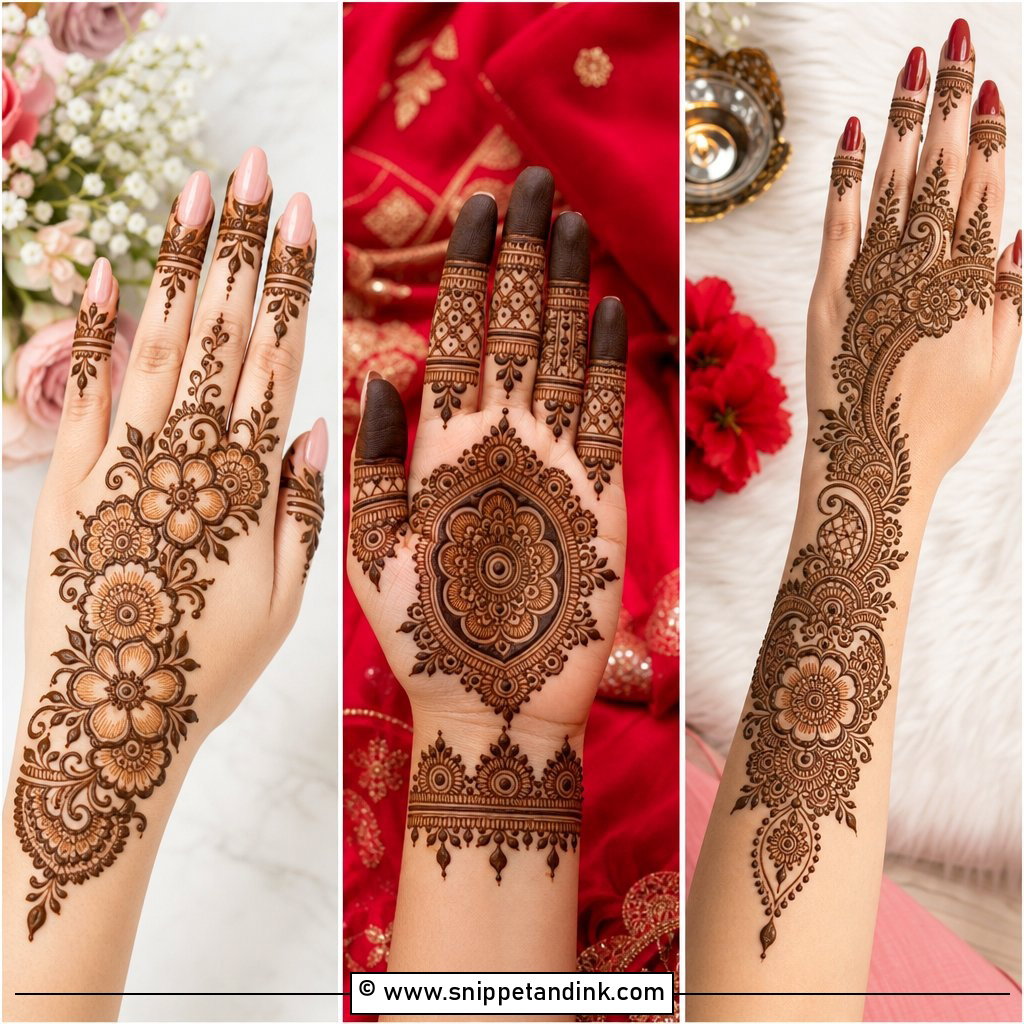
A neat round motif on the palm or back hand, a few finger details and a small wrist accent: minimal tikki work is quick to apply and quick to dry. It suits destination weddings, civil ceremonies and brides who want their rings or nail color to stand out. I’d avoid a completely plain circle, which can look unfinished. A few layered petals inside it make it read as bridal rather than casual.
16. Modern Bridal Tikki Mehndi Design
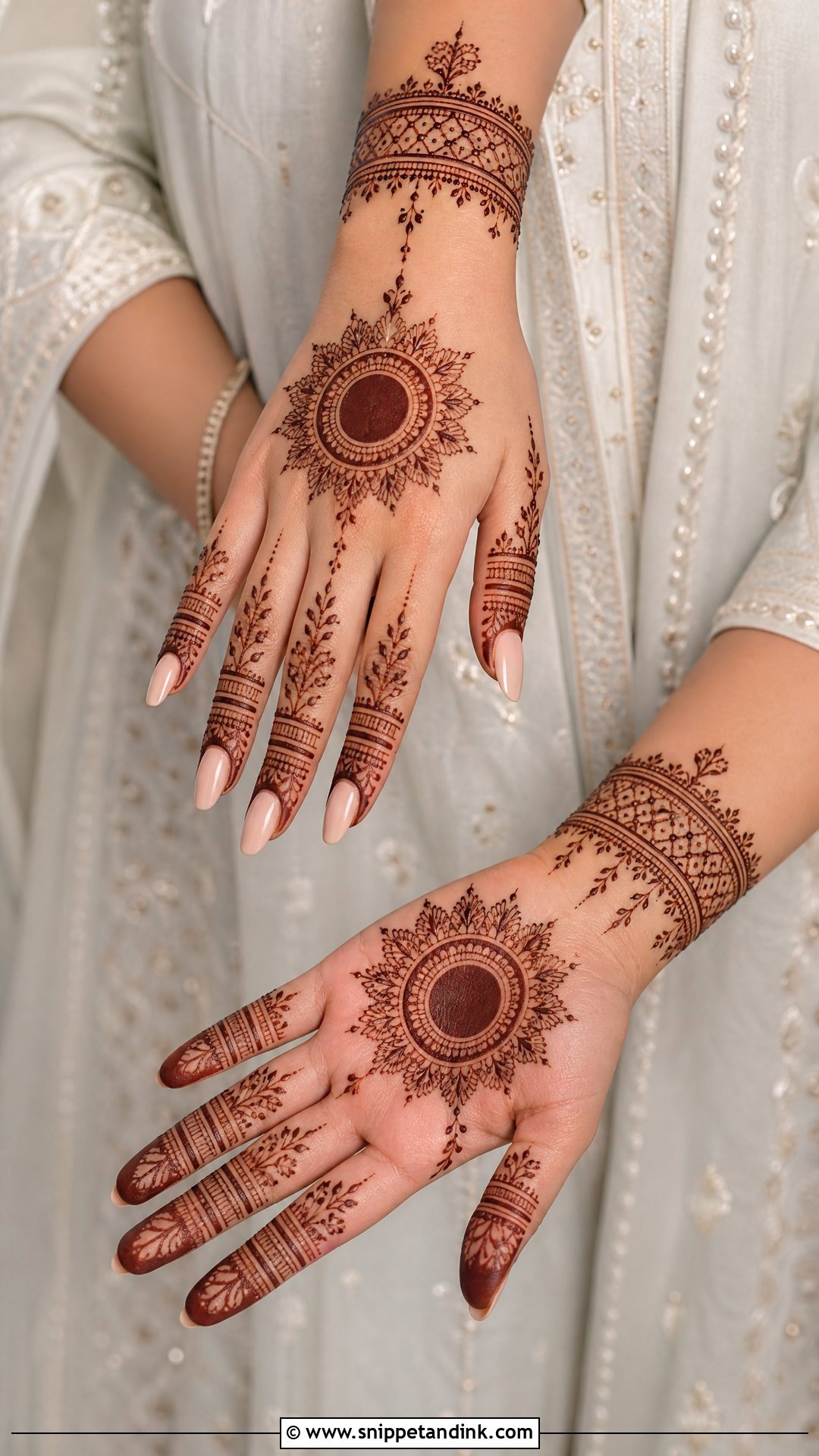
Modern tikki work changes proportion and spacing more than motifs. The circle is often larger, surrounded by negative space, geometric borders or sleek finger bands. Some brides prefer half-filled palms or connected ring-chain layouts. It suits pastel lehengas and fusion outfits. With so much empty skin, every line placement is visible, so this is a design to trial on one hand first if you can.
17. Rajasthani Bridal Tikki Mehndi Design
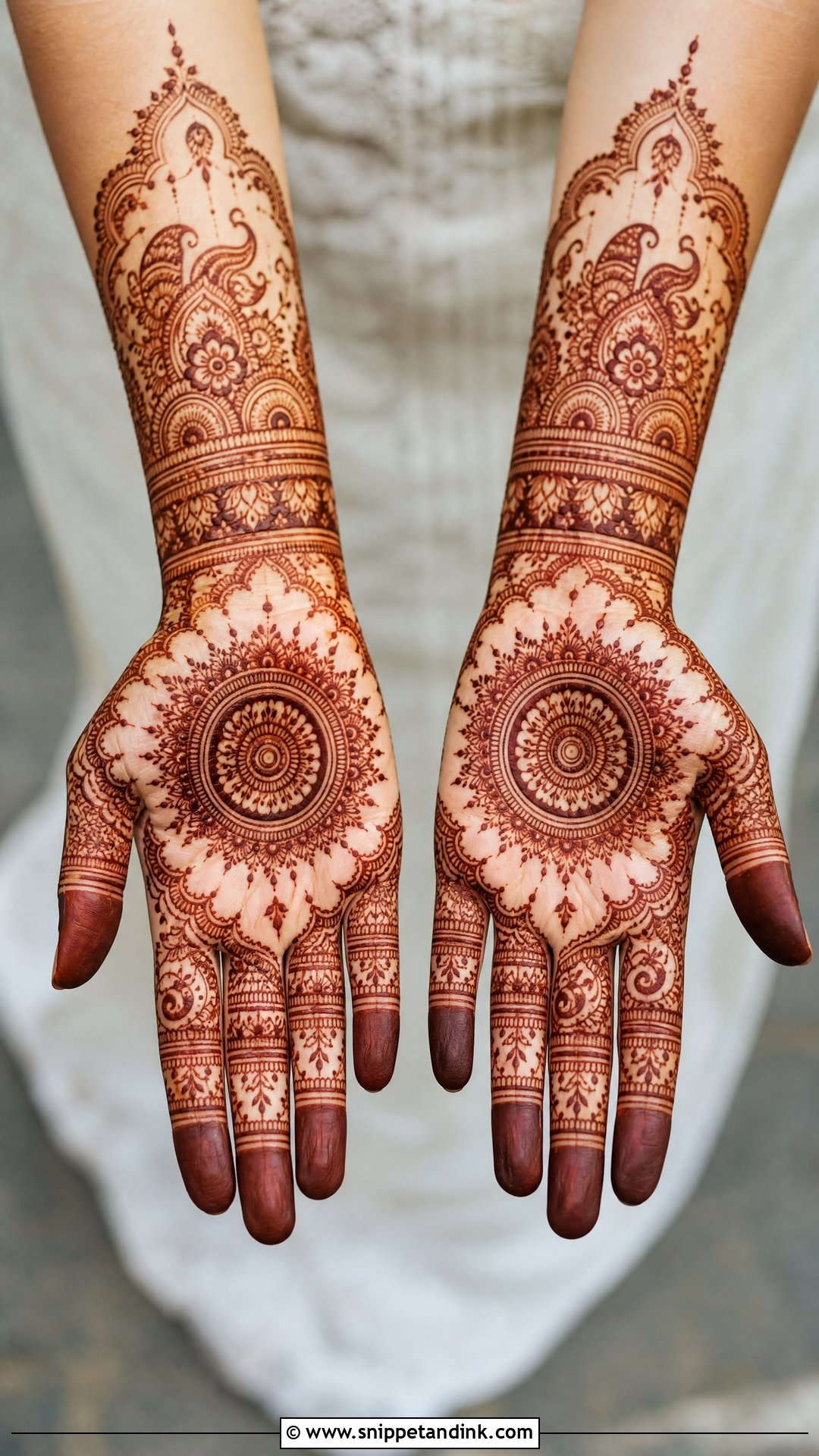
Rajasthani bridal work is the most narrative style here. Beyond the paisleys and floral bands, the forearm may carry bride and groom figures, elephants or arches, while the palm tikki keeps the composition grounded. It takes the longest of any design in this list. I divide the hand into clearly bordered sections before filling any of them; without that structure, the figures blur together once the stain develops.
18. Moroccan Bridal Tikki Mehndi Design
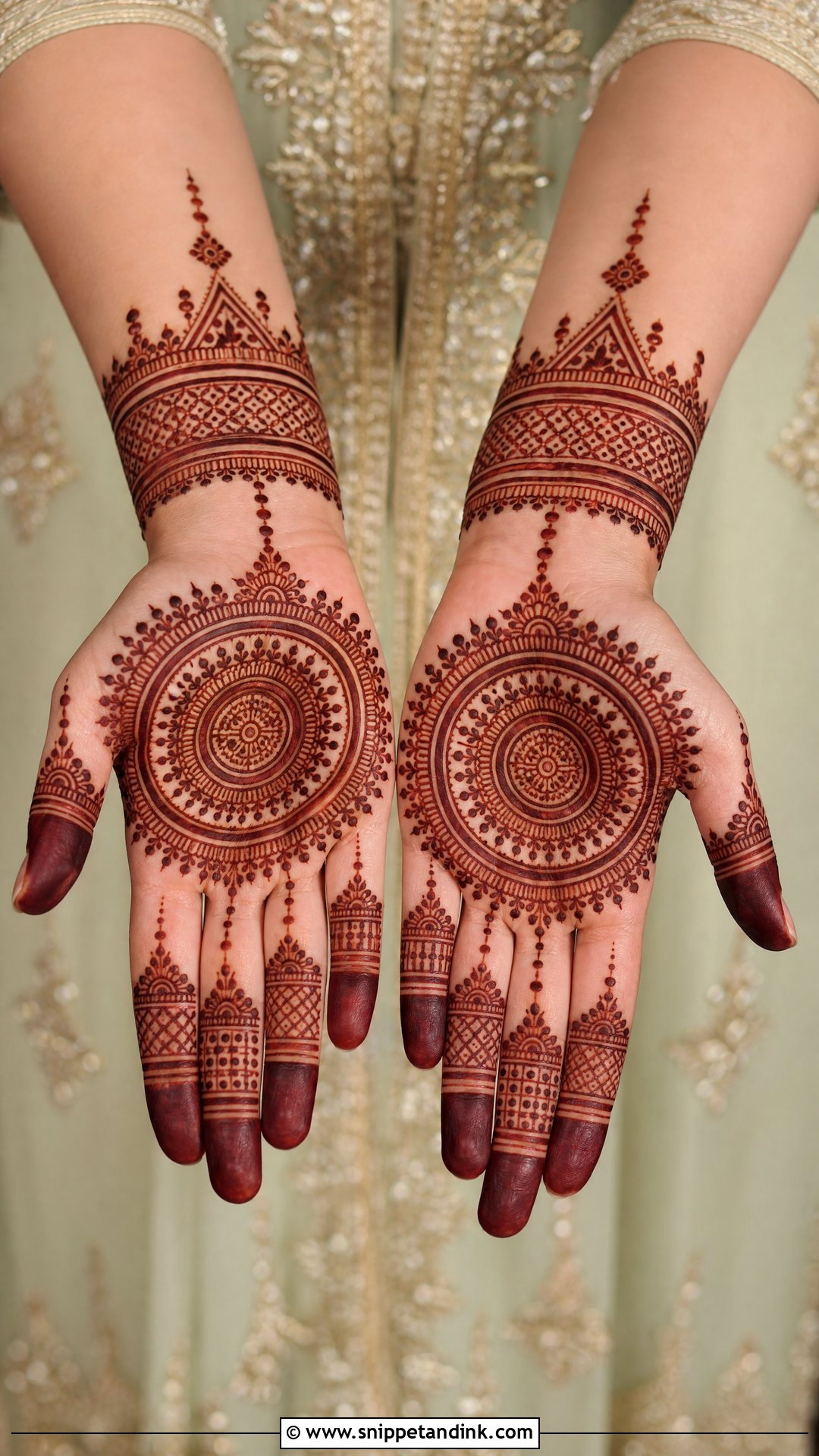
Moroccan-inspired designs swap paisleys for diamonds, triangles, straight lines and dots around a geometric tikki. Fingers get stacked bands and small grids, and the wrist a cuff. Straight lines are less forgiving than curves, so I rest my hand on a support and draw them in one steady pull. Geometry reads bold even with moderate coverage. If the result feels too hard for a bridal look, a few leafy accents around the palm soften it.
19. Gulf Bridal Tikki Mehndi Design
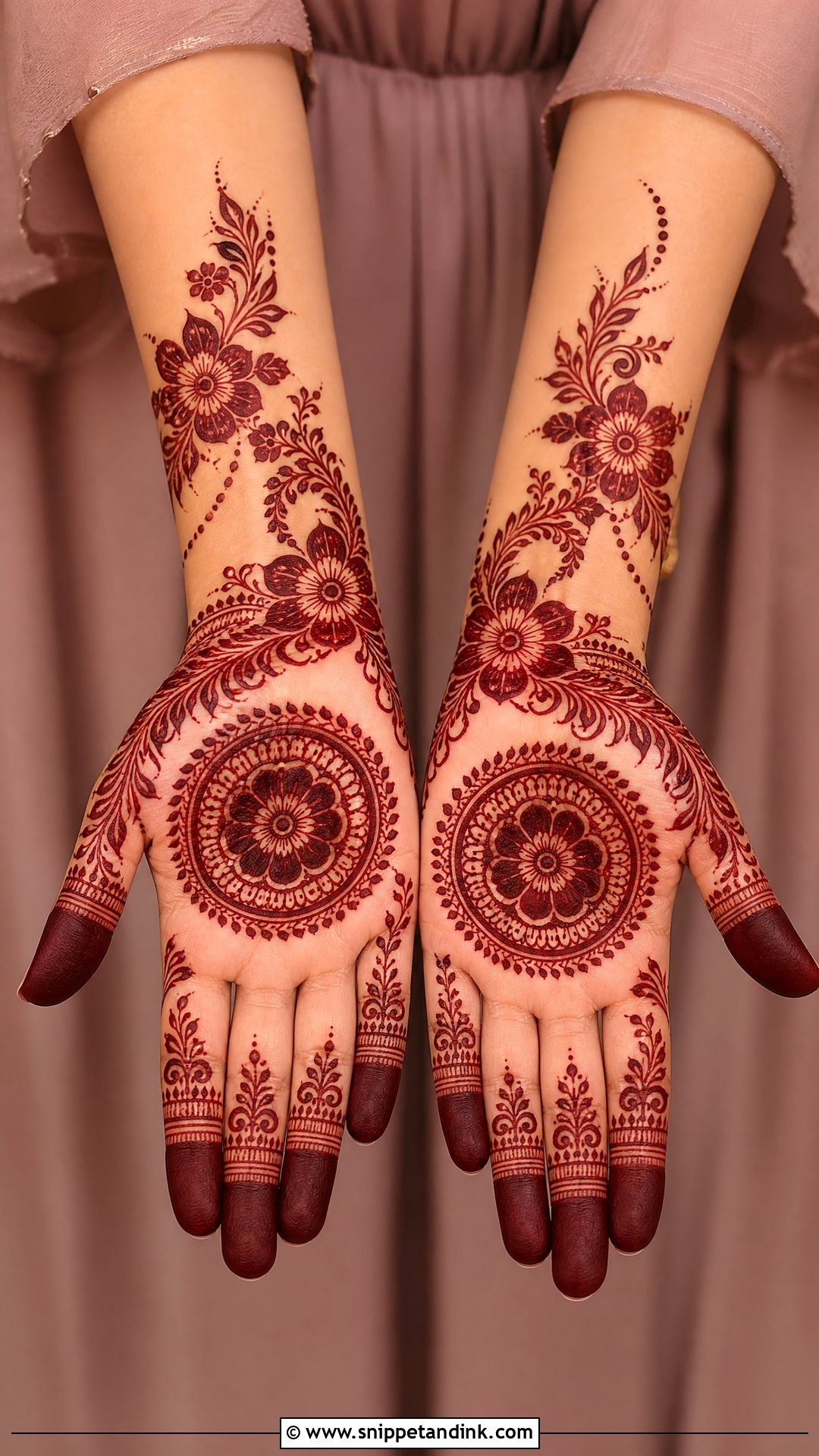
Gulf-style designs use big flowers, wide leafy trails and generous negative space, with outlines drawn much thicker than in Indian work. The tikki sits among large motifs rather than fine filler, so it stays visible from across a room. Fingers get bold tips and floral bands. This style relies on a deep maroon stain; if the paste is weak, the bold outlines look washed out. It suits brides who want impact without dense coverage.
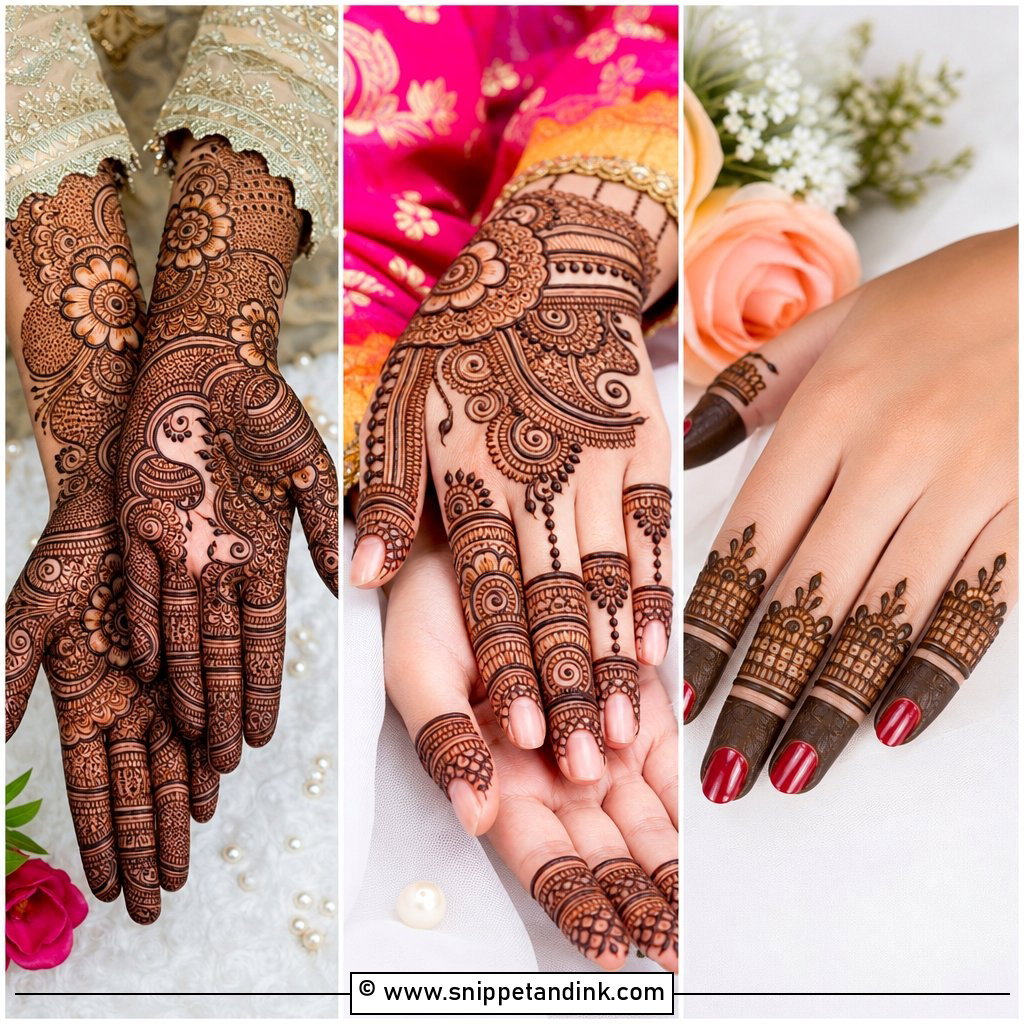


20. Bracelet Bridal Tikki Mehndi Design
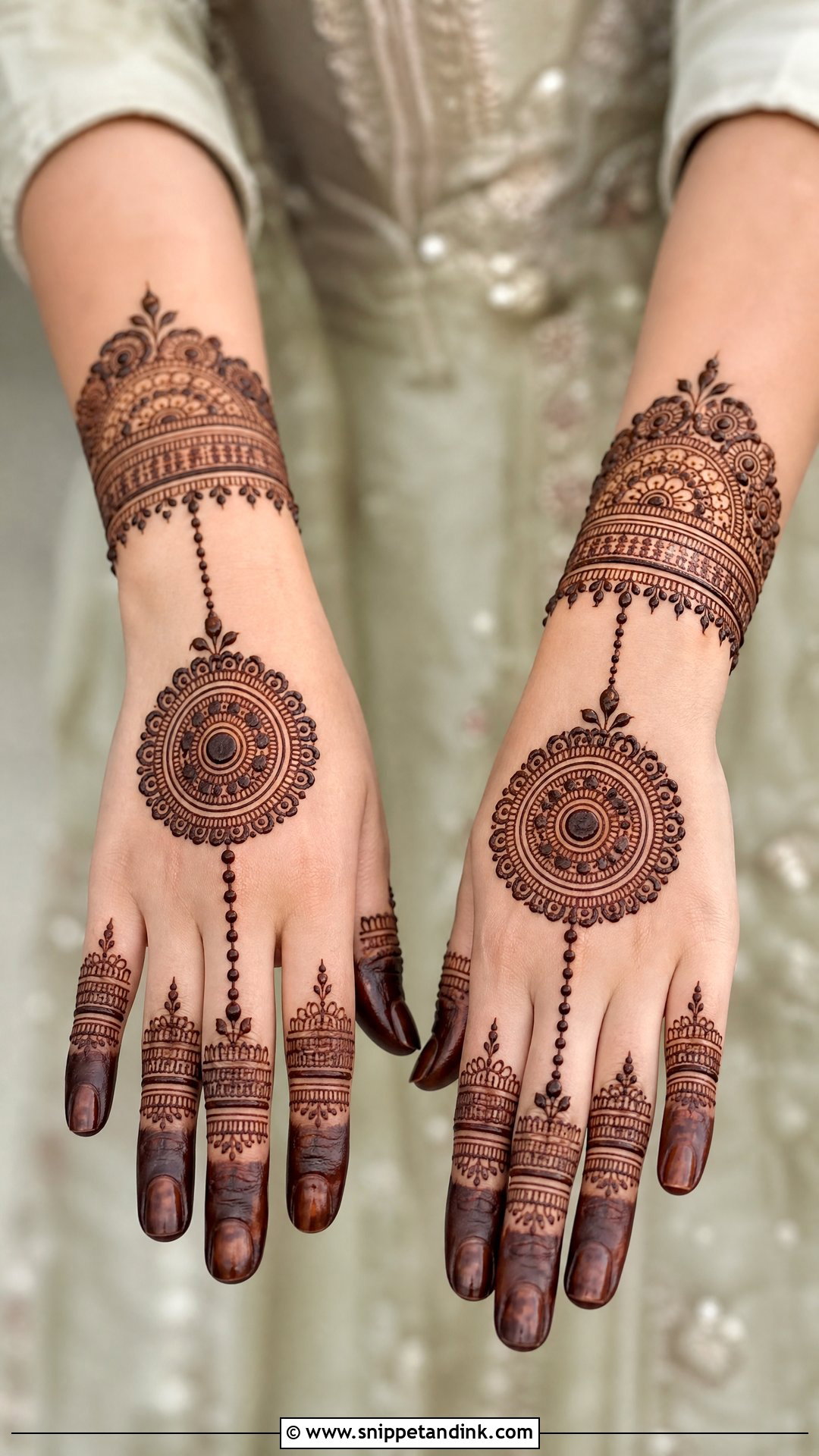
Bracelet styling makes the hand look like it’s wearing jewelry before any is put on. The tikki sits on the palm or back of the hand, and the wrist gets layered bangle bands, chains and floral cuffs. Thin chain lines can run from the tikki to each finger ring, mirroring a hathphool. It works for engagements, mehndi night and nikkah portraits. I keep the wrist bands clean and evenly spaced, since real bangles will sit right on top of them.
From Orange to Deep Maroon: Looking After the Stain
When the paste comes off, the stain is bright orange. That’s normal. Natural henna oxidizes over the following day or two and deepens toward reddish brown or maroon, so the color at the ceremony depends on what you do in those first hours, and on when you book the appointment.
While the paste is on
Keep the paste on as long as you comfortably can; several hours or overnight gives the darkest result. Once it’s dry, I dab a light lemon and sugar mix over it so it stays stuck to the skin and doesn’t crack off early. Keeping your hands warm helps the dye release.
After it comes off
- Scrape the dry paste off with a blunt edge or your fingers rather than washing it.
- Avoid water on the design for as long as you can, ideally the rest of the day.
- Rub a little natural oil or balm over the stain before bathing to protect it.
- Skip scrubs, chlorinated pools and hand sanitizer on the design during wedding week.
Because the stain peaks a day or two after application, I schedule bridal mehndi one or two days before the wedding, not the morning of. Be wary of any paste that promises an instant black stain; true henna never stains black, and dark instant pastes can contain chemical dyes that cause serious skin reactions.
Let the Circle Lead and Build the Rest Around It
A tikki design can be simple, traditional or modern, but it always needs a clear center. Decide your coverage first, from palm only to fingertips to elbow, then the style: floral for softness, jaali for fine detail, peacocks for a traditional look or Arabic spacing for something lighter. Look at your outfit and jewelry together with the design. Share reference photos with your artist early, and agree on how long the session will take so you can schedule it around the rest of your wedding week.
You'll Like These Ideas:





Leave a Reply