
Marwari mehndi is the style I spend the longest on, and the one families get most emotional about. It comes out of Rajasthan and it fills the hand: fine lines, royal motifs, bride and groom portraits, peacocks, elephants, the kalash, mandalas, jaali and palace windows, all packed close. It isn’t only for brides. Sisters, aunts and guests wear lighter versions of it, and the same vocabulary can sit on a palm, a back hand, a wrist, a forearm or the feet. Below are 30 layouts I’d draw, with notes on where each motif belongs on the hand and what makes it read clearly once the stain darkens.
Telling Your Artist Which Hand Holds Which Story
Dense Rajasthani work can’t be improvised in the chair. The more the artist knows before she picks up a cone, the more the hands will look planned rather than filled. These are the things I want to hear at the consultation.
- Which motifs matter to your family. Some households always want the kalash or a Ganesh motif; others want the doli or the baraat. Say so early.
- Whether you want portraits at all. Faces take time and skill, and some brides prefer peacocks or lotus to figures.
- How far up the arm. Wrist, mid-forearm and elbow length change the layout and the hours you’ll sit.
- Names, dates and initials, spelt out in writing, and in which script.
- Your outfit and jewellery. Heavy bangles hide wrist work, so there’s no point in a detailed cuff there.
Set aside real time. Full bridal hands and feet in this style often take most of an afternoon or longer, depending on the artist and the coverage. Eat first, use the bathroom first, and have someone ready to hold your phone.
1. Marwari Bridal Mehndi Design
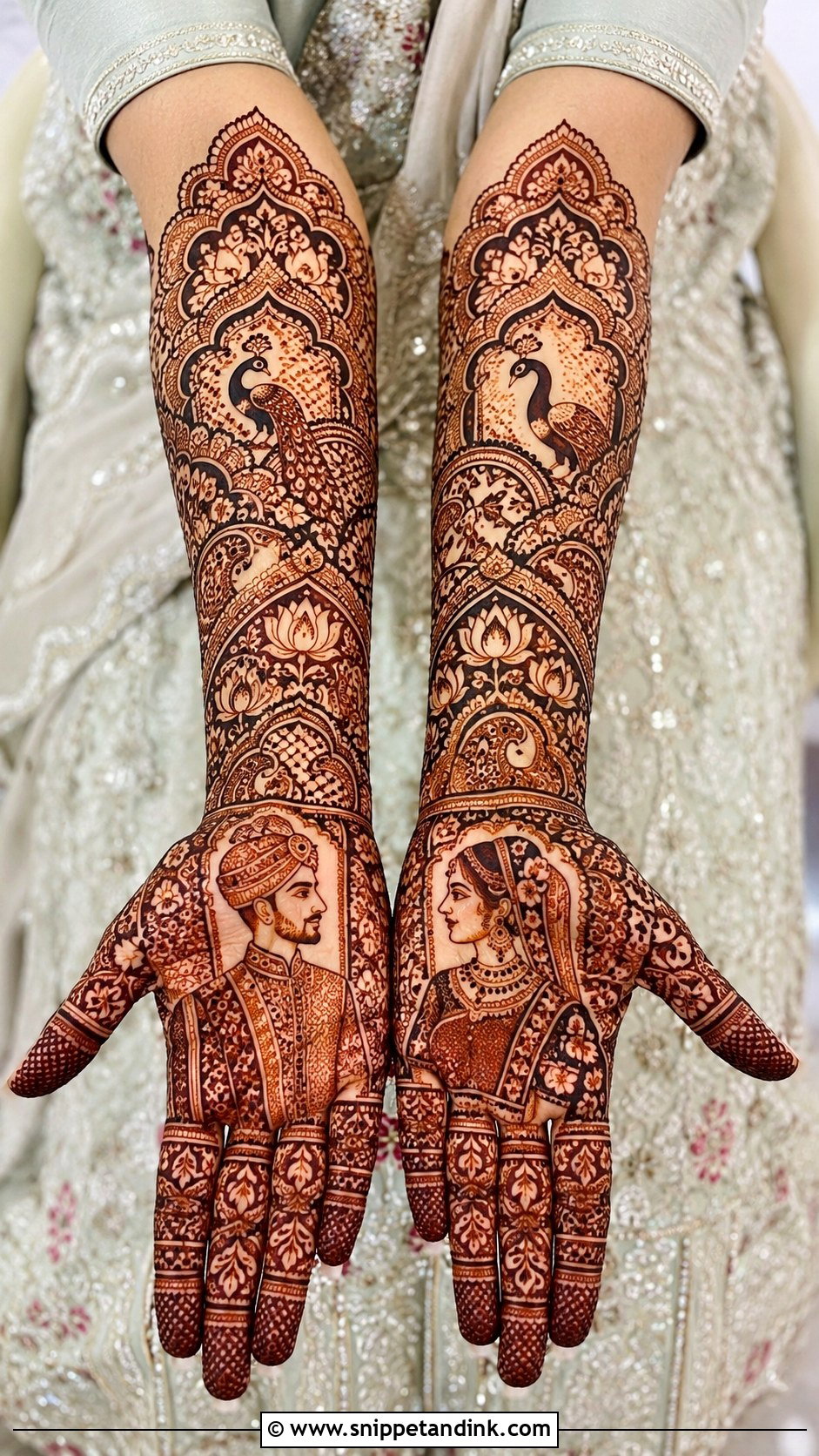
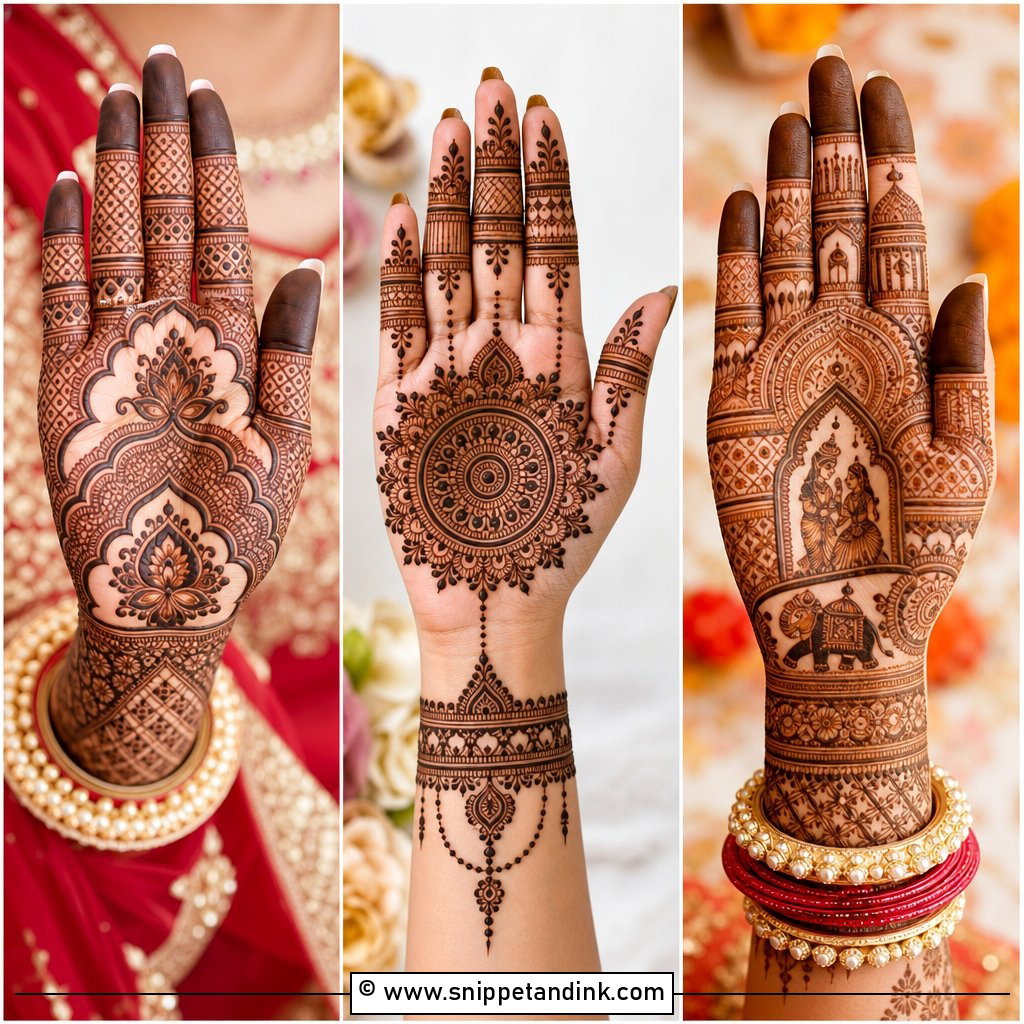
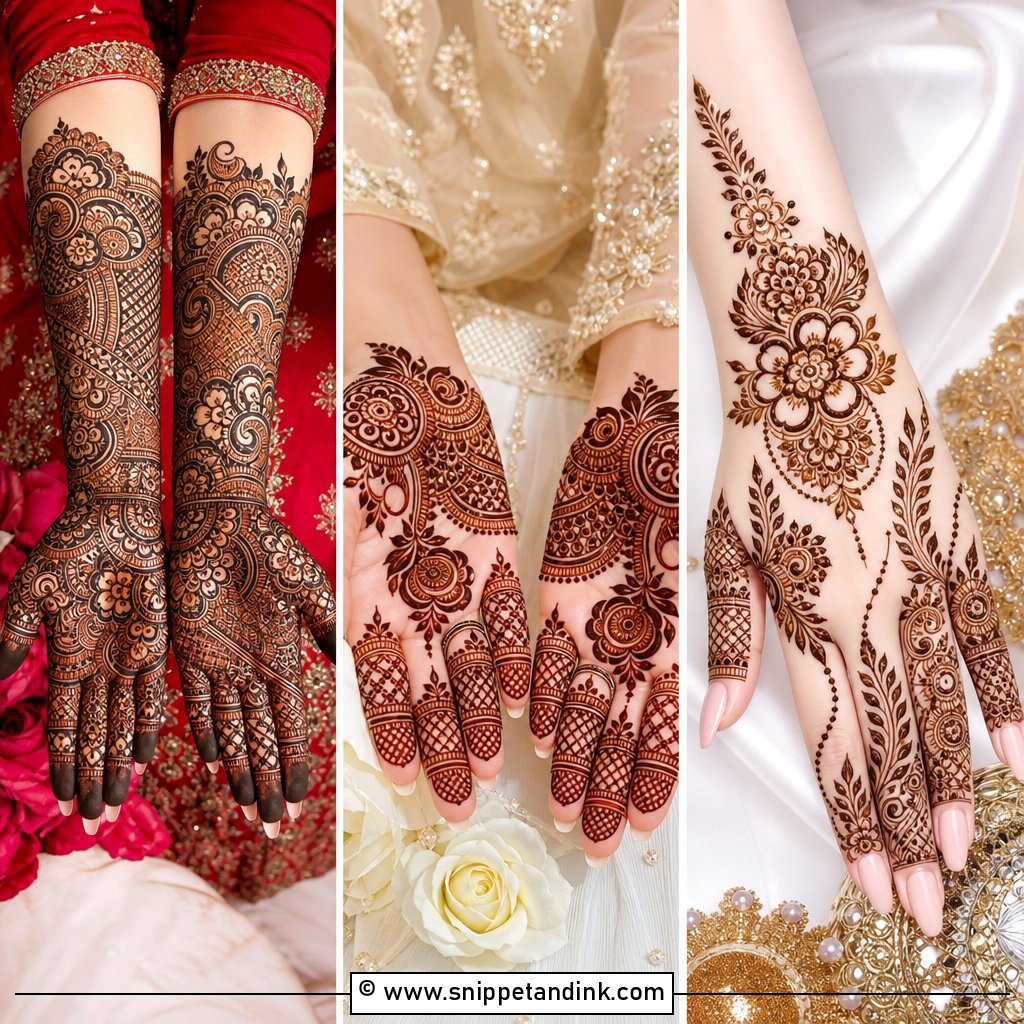
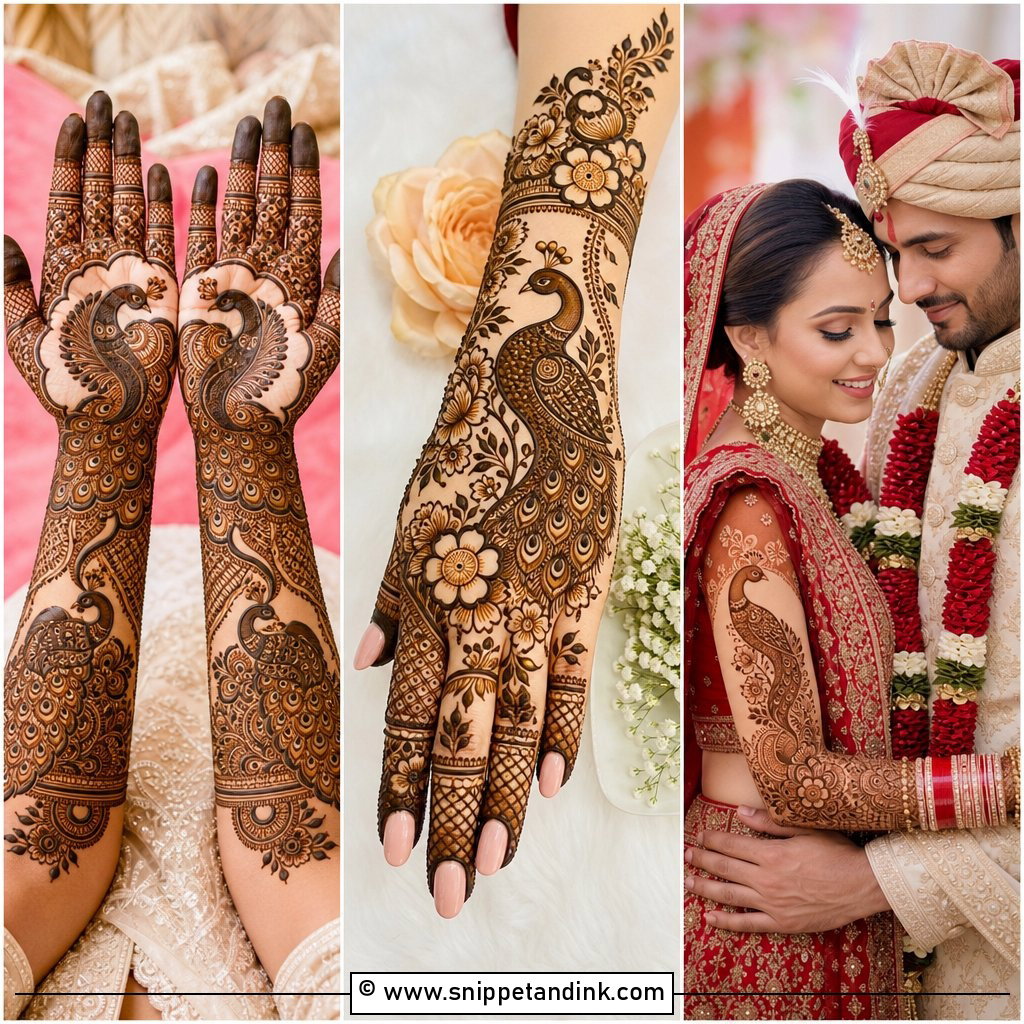
A Marwari bridal mehndi design leaves almost no bare skin from fingertip to forearm. Portraits, wedding symbols, peacocks, flowers and paisleys carry the story, and fine fillers bind them together. When I map it, I draw the two palms as a pair, so that when the bride presses her hands together for the photo the arches and borders line up. Hiding the groom’s name inside a jaali panel or a flower is a lovely tradition, but I keep the letters small and slightly irregular, or he finds it in ten seconds and the game is over.
2. Full Hand Marwari Mehndi Design
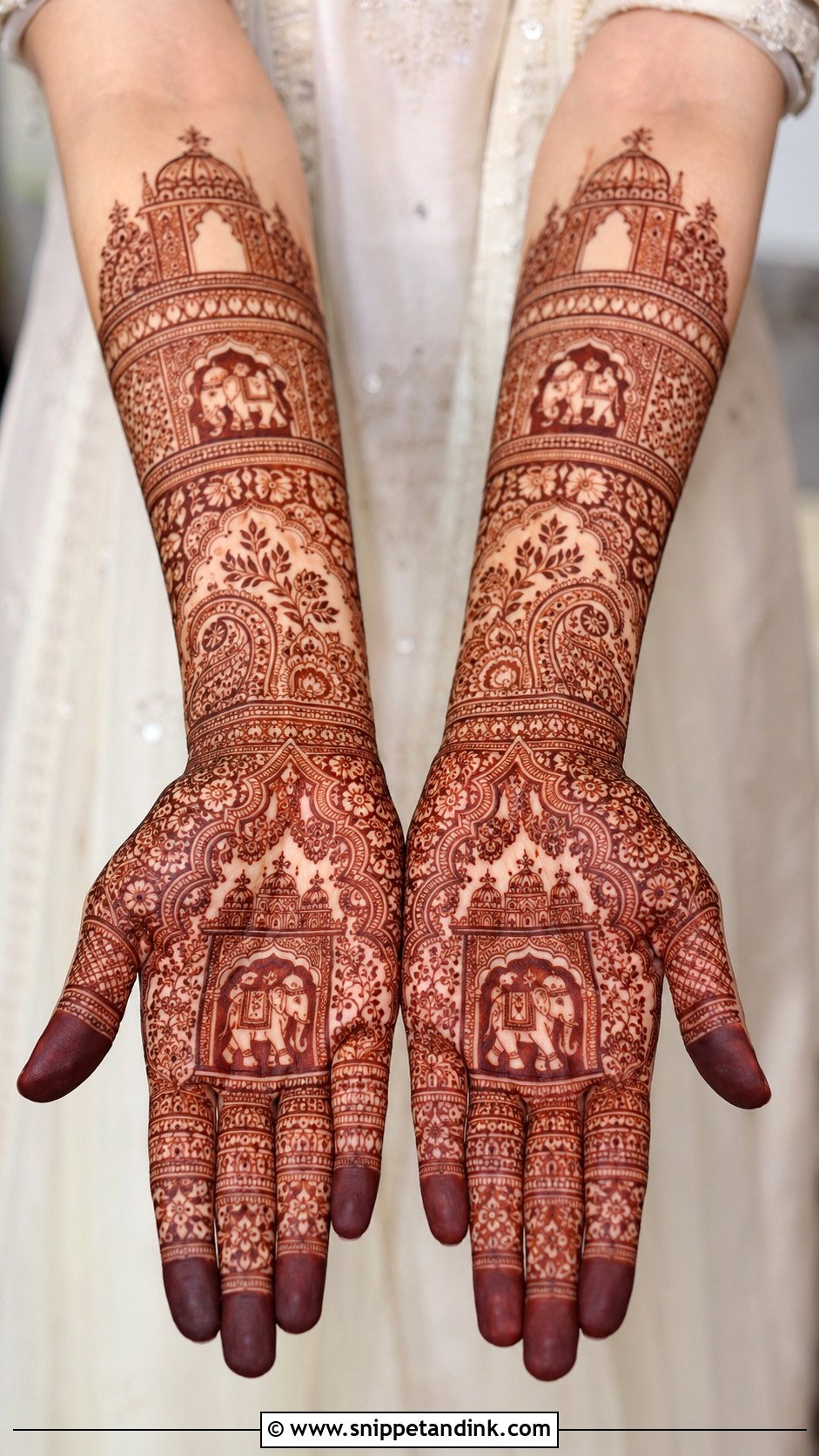
Full coverage runs in a set order on my hands: filled fingertips first, then paisley or floral fingers, then the big palm motifs, then broad wrist bands, then the forearm with elephants, arches, peacocks or a procession. With that much henna, spacing is everything. I use the finest tip of the cone for detail and a slightly thicker line for the borders that separate one section from the next. Skip those borders and a heavy design turns into a dark smudge once the stain deepens. It suits the wedding itself, the engagement and big family functions.
3. Front Hand Marwari Mehndi Design
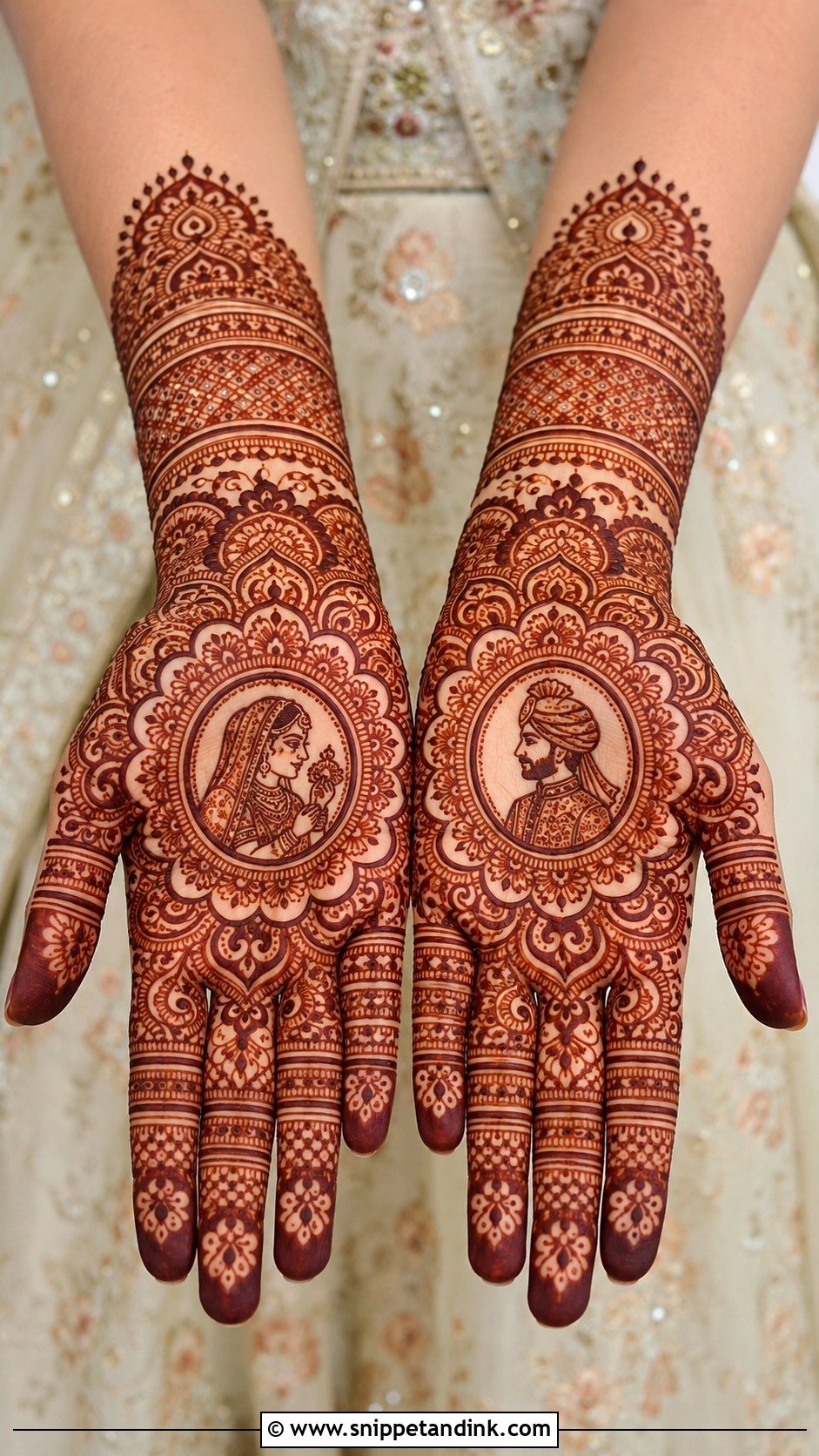
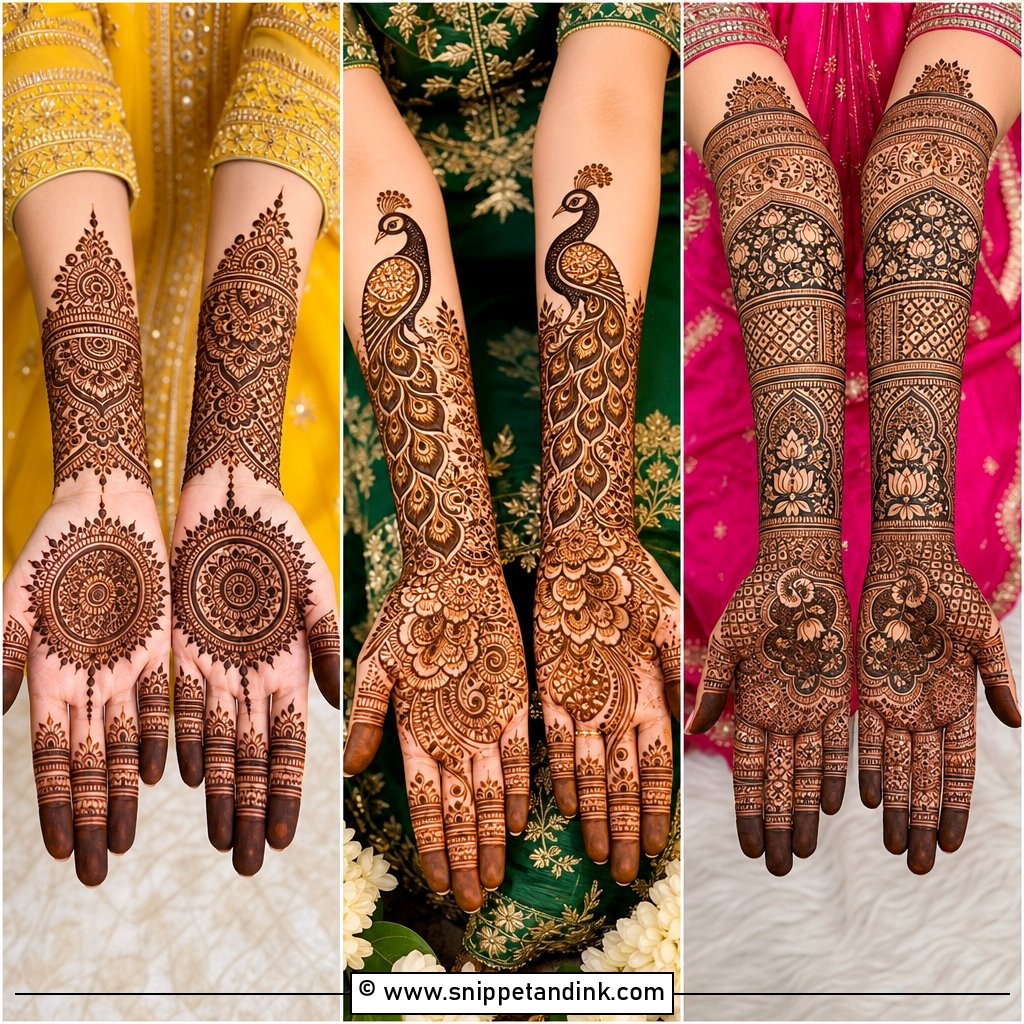
The palm is where the storytelling happens, because it is the largest flat surface and the skin there stains darkest. A classic front hand might hold a central mandala, a portrait on each palm, or a big paisley ringed with vines and checks, with banded fingers, tiny leaves and dots above. My rule is one hero per palm. If the fillers are as busy as the main motif, nothing reads in photos. It looks good holding jewellery or a clutch, and it works for bridesmaids as well as brides.
4. Back Hand Marwari Mehndi Design
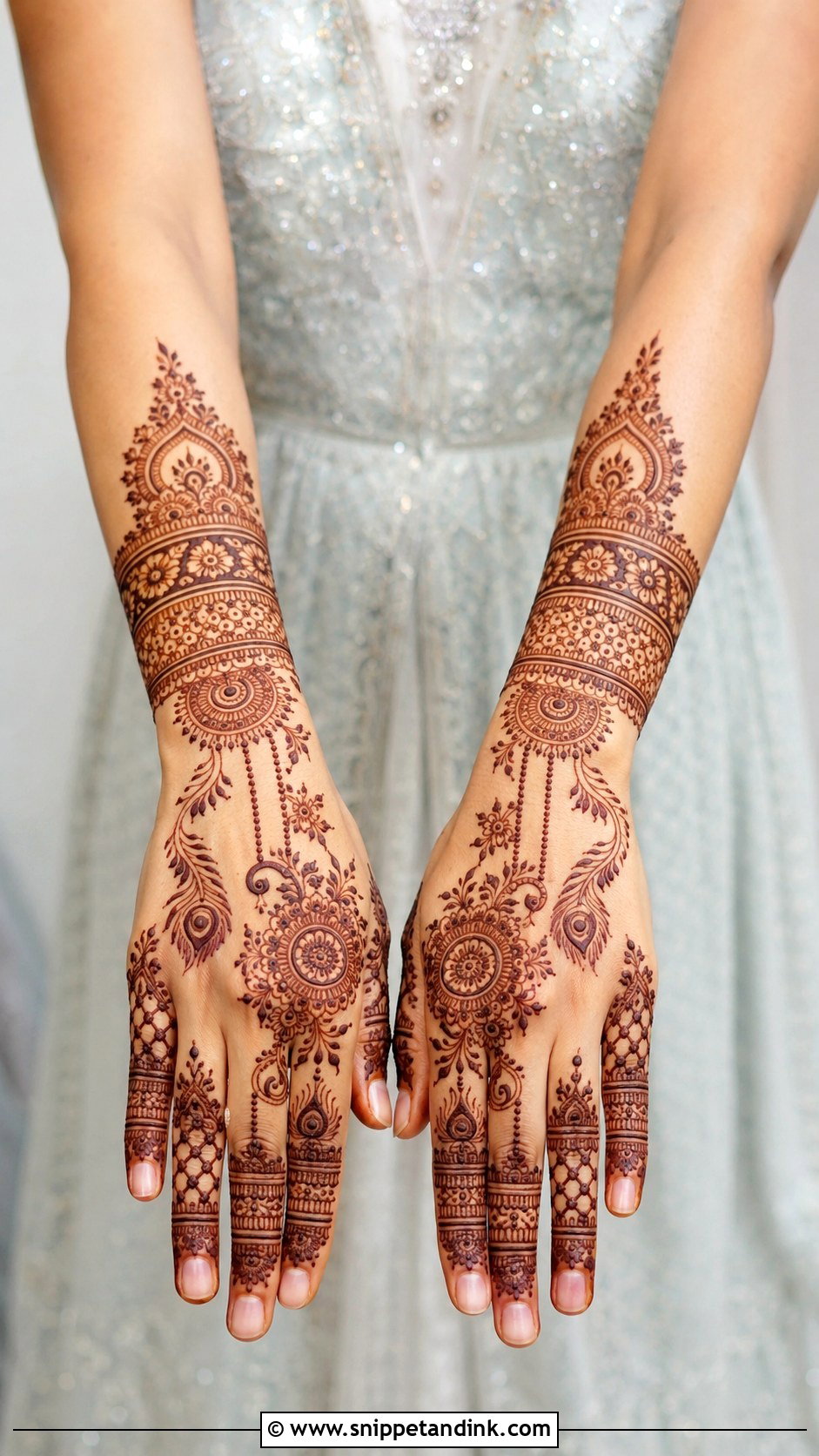
The back hand shows up in more photos than the palm, so I treat it almost like jewellery: bracelet bands at the wrist, ring chains on the fingers, peacock feathers or floral trails between, and perhaps a small jaali panel. A round mandala in the centre linked to each finger by fine chains is the layout I return to most. Skin on the back of the hand stains lighter than the palm, so the lines can be bolder here without looking heavy. Go dense for the wedding or leave some open skin for a festival.
5. Simple Marwari Mehndi Design
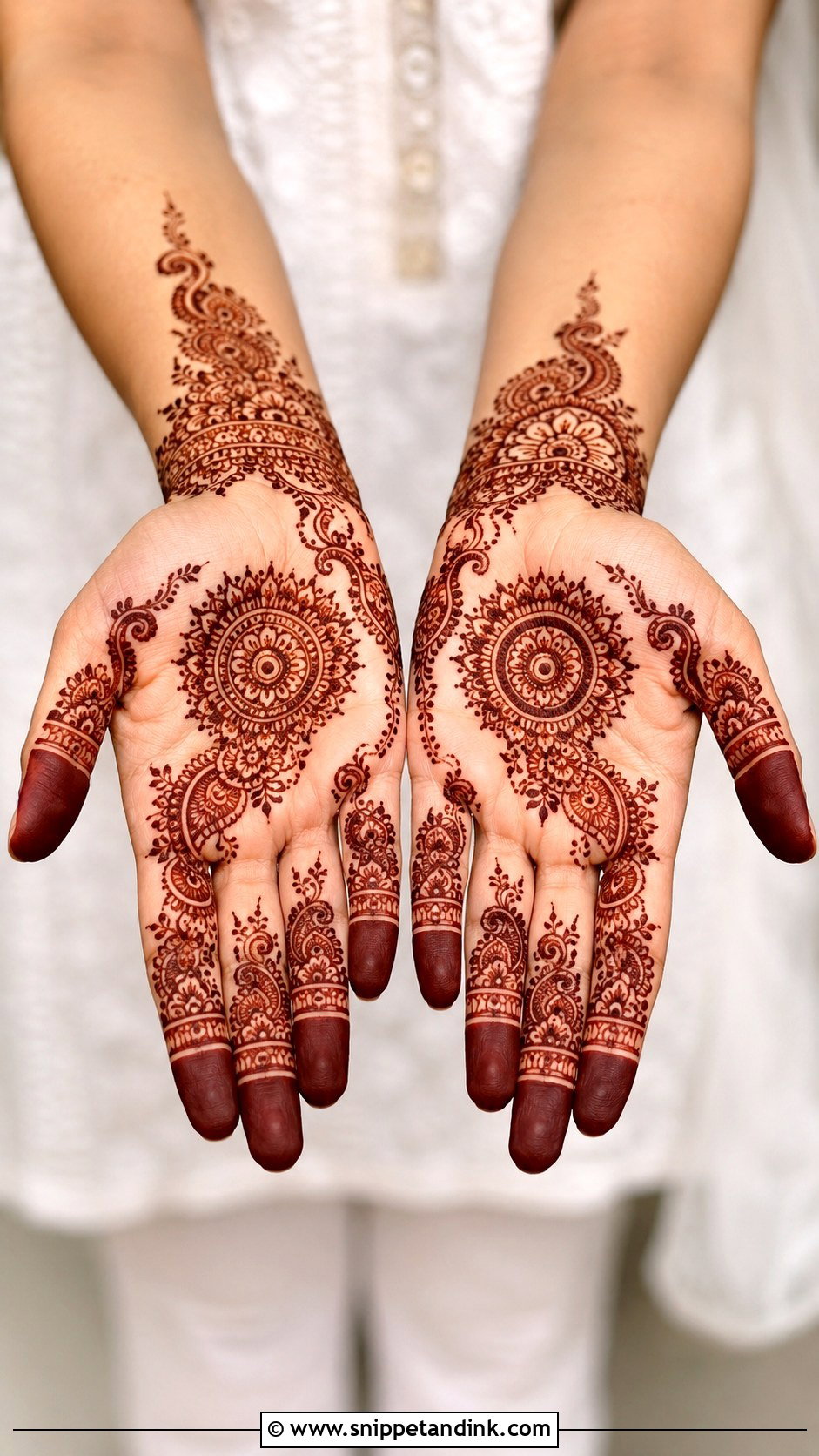
A simple Marwari layout keeps the vocabulary and drops the density. One palm mandala, a paisley trail, neat wrist bands and filled fingertips are enough to say Rajasthan. I’ll add a small peacock, a few lotus petals, a band of checks or a tiny dome, and then stop. The open skin is the point. This is what I draw for guests, young girls and anyone with half an hour rather than half a day, and it dries quickly enough to get back to the party.
6. Traditional Marwari Mehndi Design
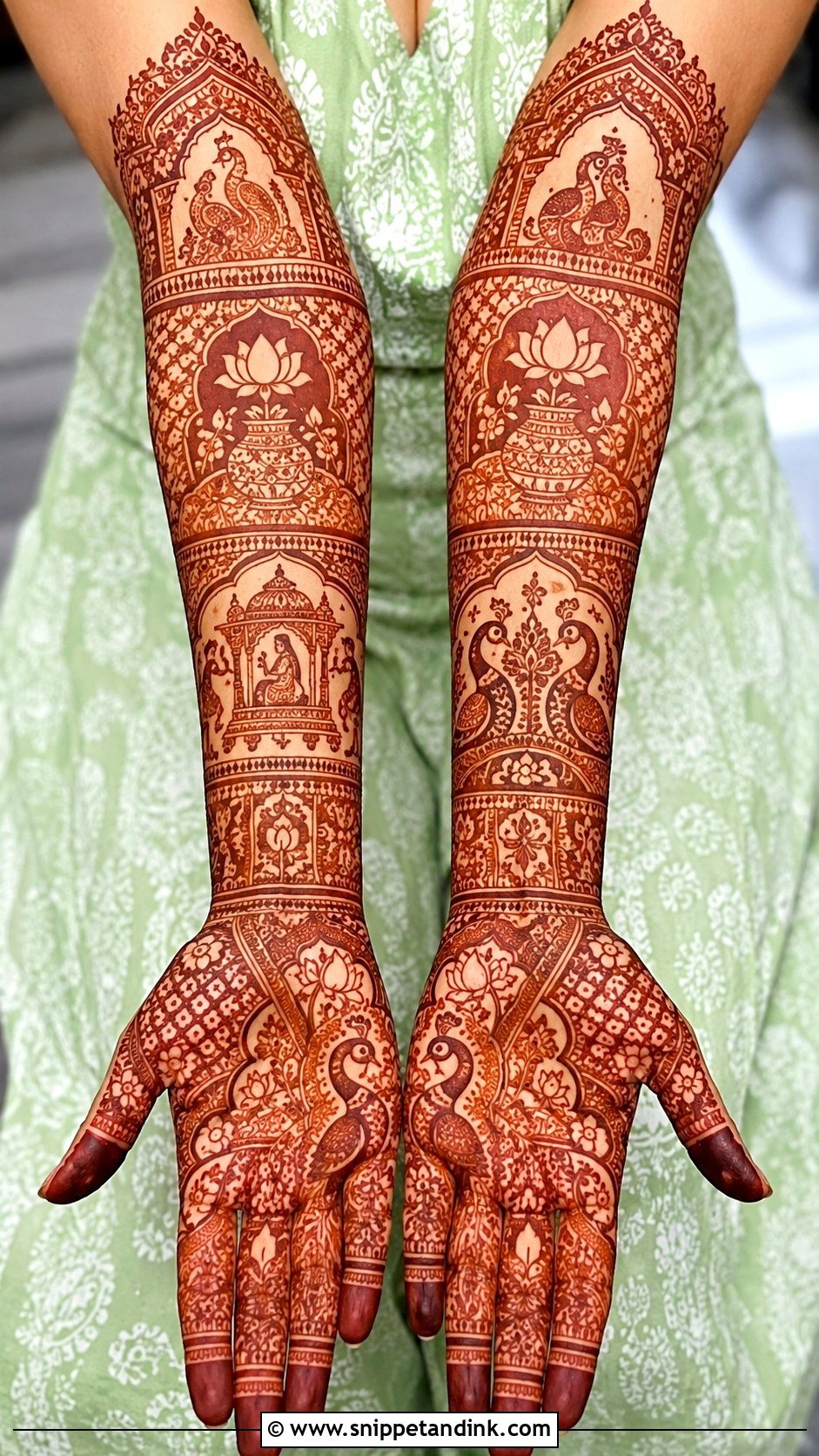
Traditional means dense, symmetrical and full of auspicious symbols: palanquins, elephants, peacocks, lotus, the bride and groom, the kalash and palace windows. Both hands usually tell one story between them. It’s the right choice if you’d rather your mehndi looked like your mother’s than like this season’s trend. The deep red-brown of a good stain sits well against red, maroon, green, gold or ivory. The thing to watch is the main figures: if I fill inside the faces and bodies too heavily, they lose their shape, so I leave those areas airy.
7. Rajasthani Marwari Mehndi Design
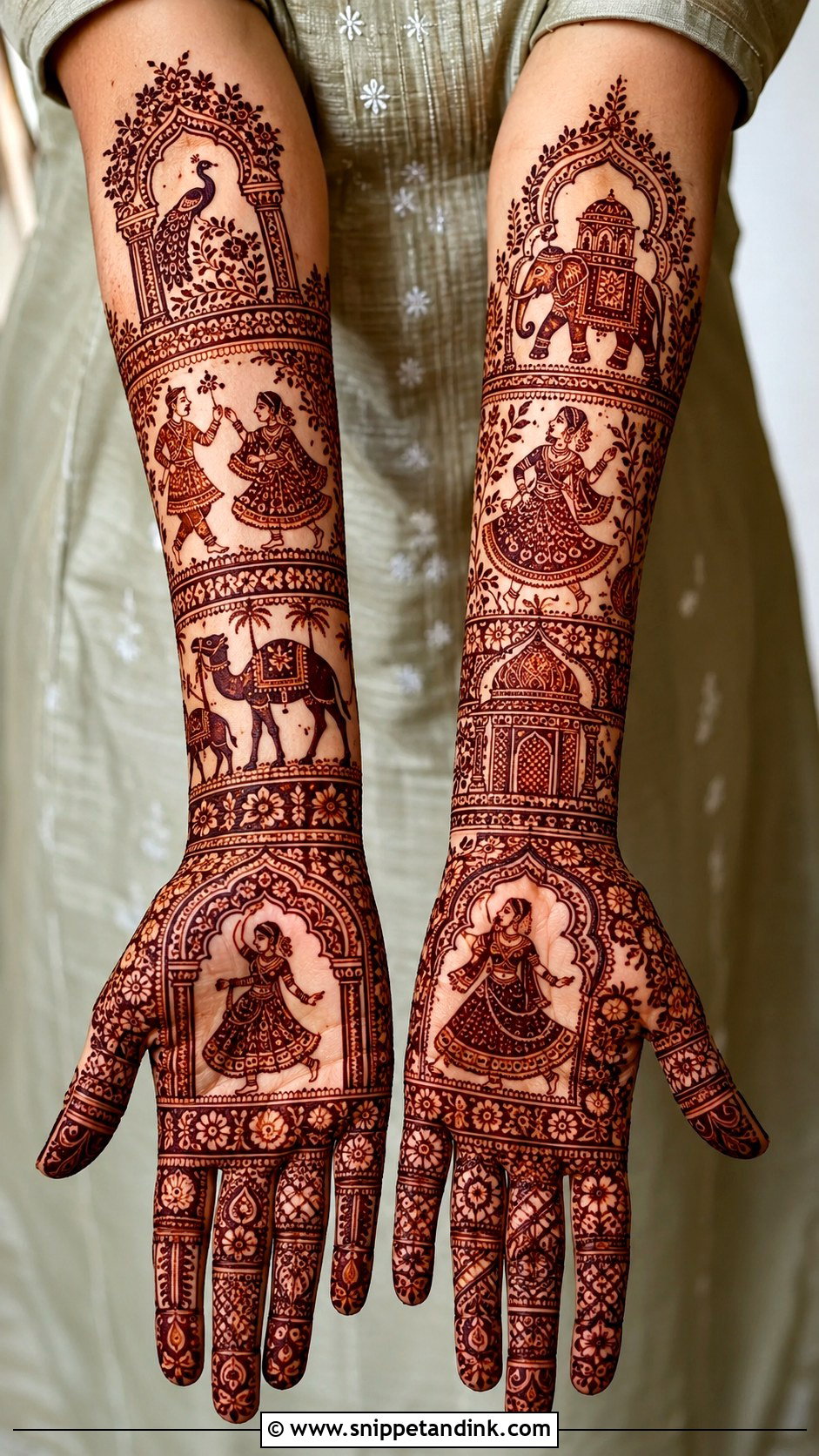
Here the hands start to look like miniature paintings. Folk dancers, camels, elephants, jharokha windows and wedding scenes are drawn as little narrative panels rather than repeating florals. The larger scenes go on palms and forearms where there is room, and dots, leaves, swirls and mesh fill between them. It needs no glitter or colour. The craft is in line weight; a camel drawn with the same thin line as the filler around it will vanish, so outlines of figures are always a touch heavier.
8. Marwari Dulha Dulhan Mehndi Design
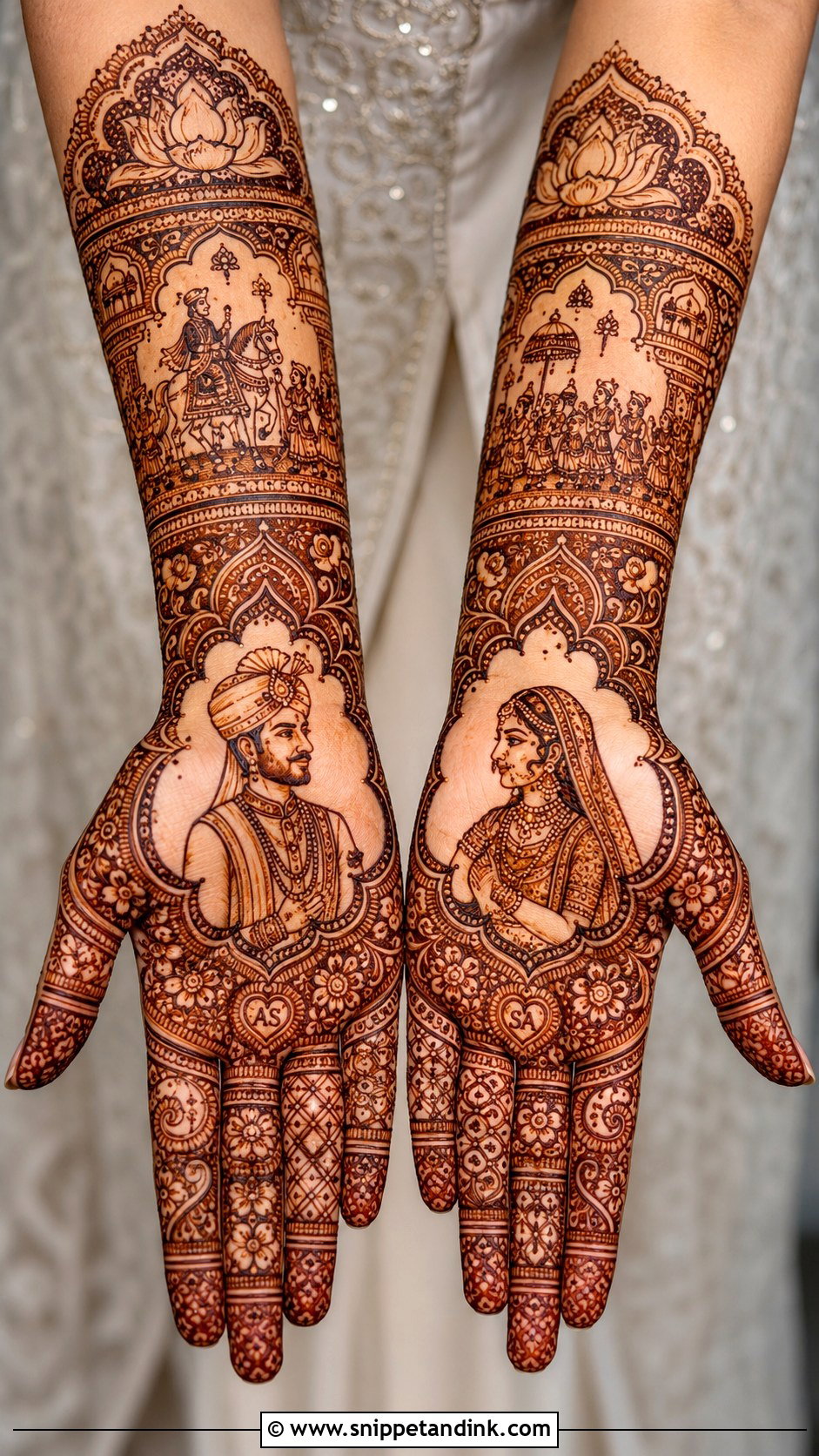
The dulha dulhan mehndi design puts the groom on one palm and the bride on the other, or frames them on the forearms, with lotus petals, arches, a doli, baraat figures, paisleys and mesh around them. Faces are the hardest thing in henna. An eye or a mouth drawn a fraction too heavy makes a portrait look cross, so ask to see an artist’s portrait work in stain photos, not only in fresh paste. Dates, initials or a hidden name can be tucked into the frames.
9. Marwari Peacock Mehndi Design
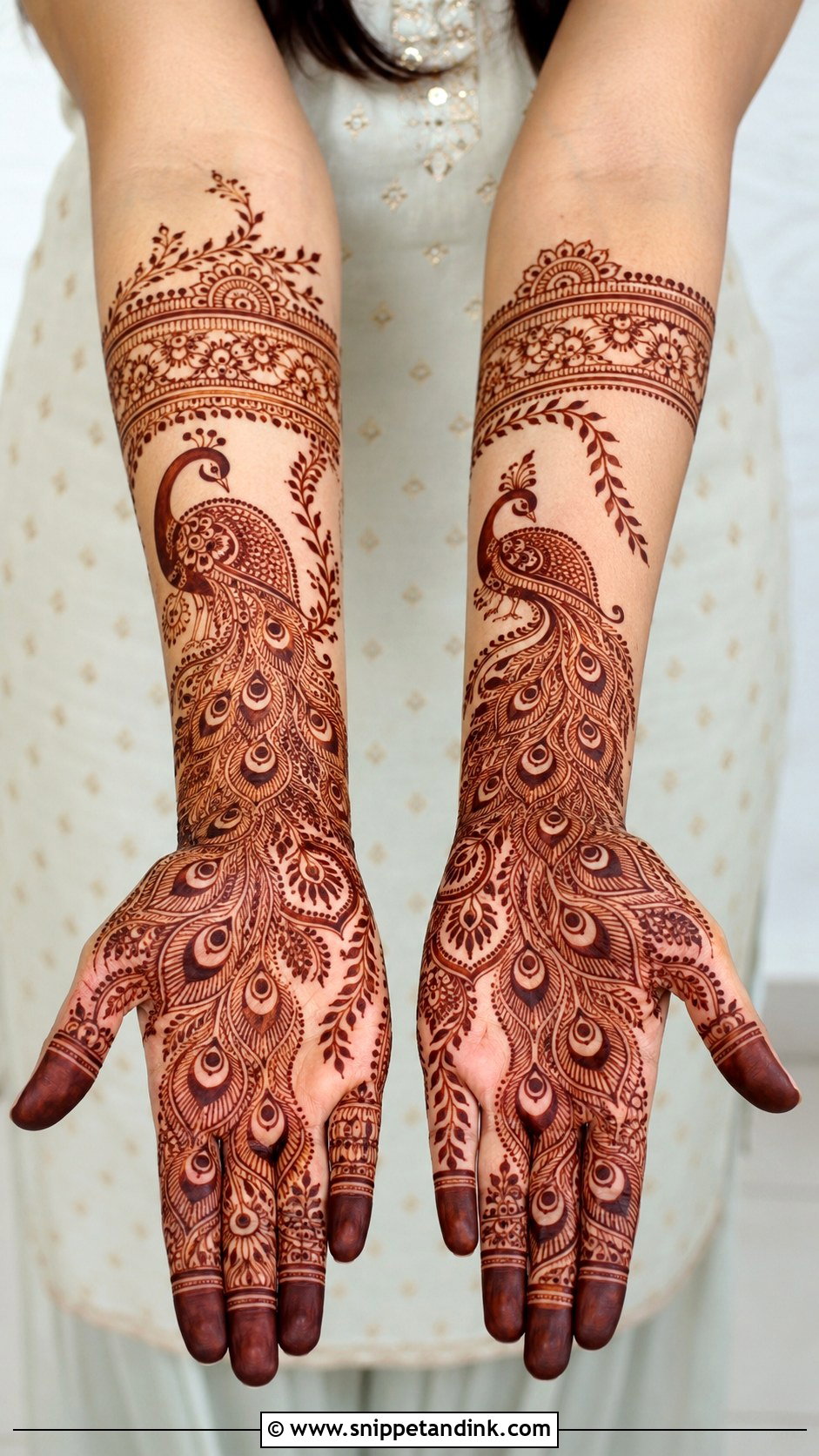
One peacock, placed well, does more than three. I put the body on the palm, wrist or forearm and let the tail feathers sweep up towards the fingers, filled with tiny paisleys, dots, scallops and leaves. The curve of the tail gives the hand a sense of movement that portraits don’t. When a bride tells me she likes the royal feel but not faces on her hands, this is where I steer her, and it suits engagement and sangeet nights well.
10. Marwari Paisley Mehndi Design
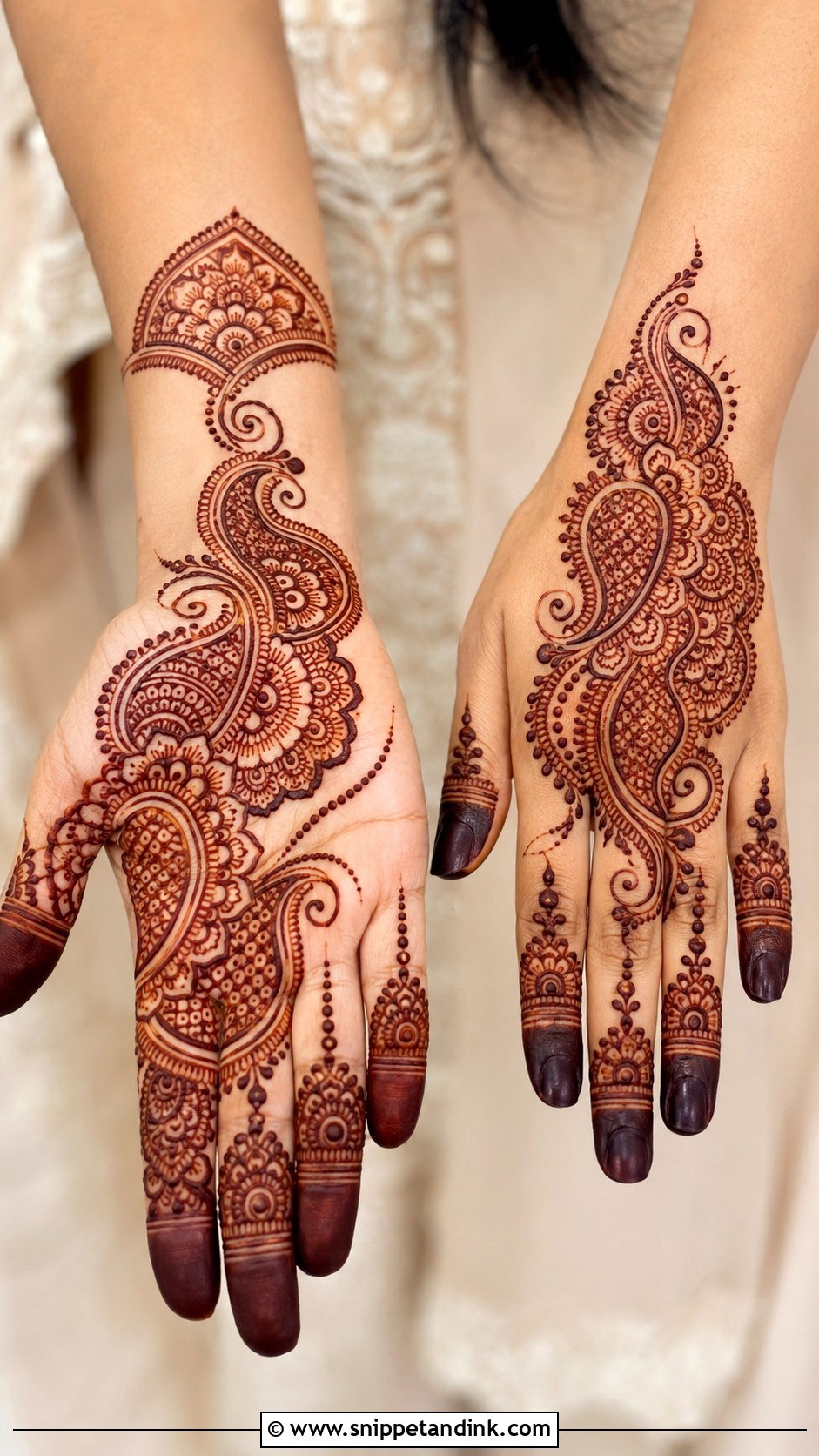
Paisleys are the most forgiving Marwari motif because they stretch to fit any hand. On a narrow hand I draw them slim and tall; on a broad palm, a cluster of large paisleys with bold outlines and delicate filling inside. They are never left empty in this style: tiny flowers, dots, checks, curls and leaves go inside. A diagonal trail of paisleys from forearm to fingers is a quick way to cover a lot of skin with a coherent shape.
11. Marwari Mandala Mehndi Design
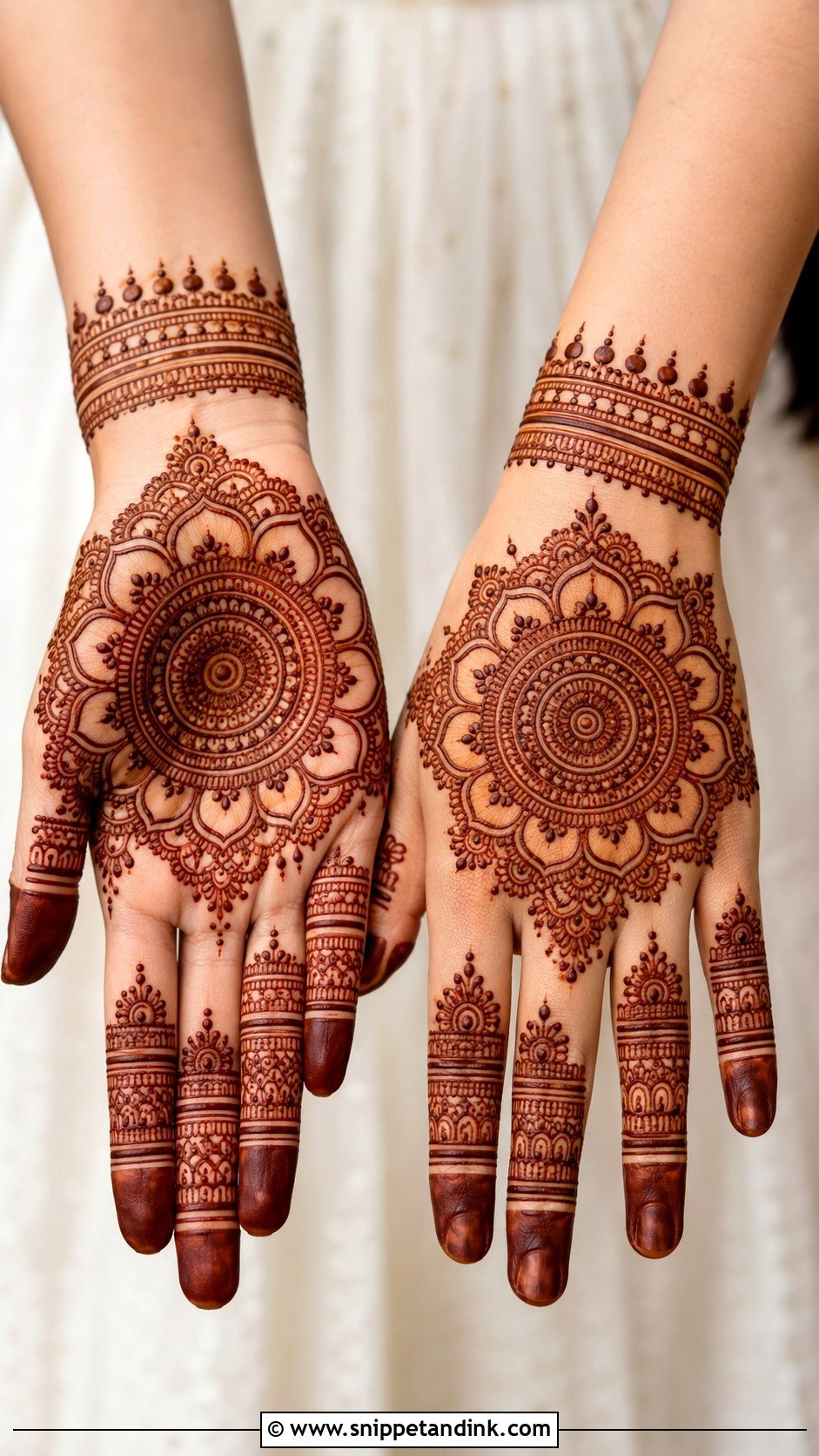
A mandala is simple in structure and unforgiving in practice. It sits on the palm or back hand with rings of lotus petals, dots, leaves and fine circular bands, and in a Marwari layout it is usually paired with filled fingers, a wrist cuff and a few traditional motifs. I always start the centre circle where the hand naturally hollows so it doesn’t look off-centre when the fingers move. Even a slightly uneven ring stands out. It’s a good pick for bridesmaids or pre-wedding events.
12. Marwari Jaali Mehndi Design
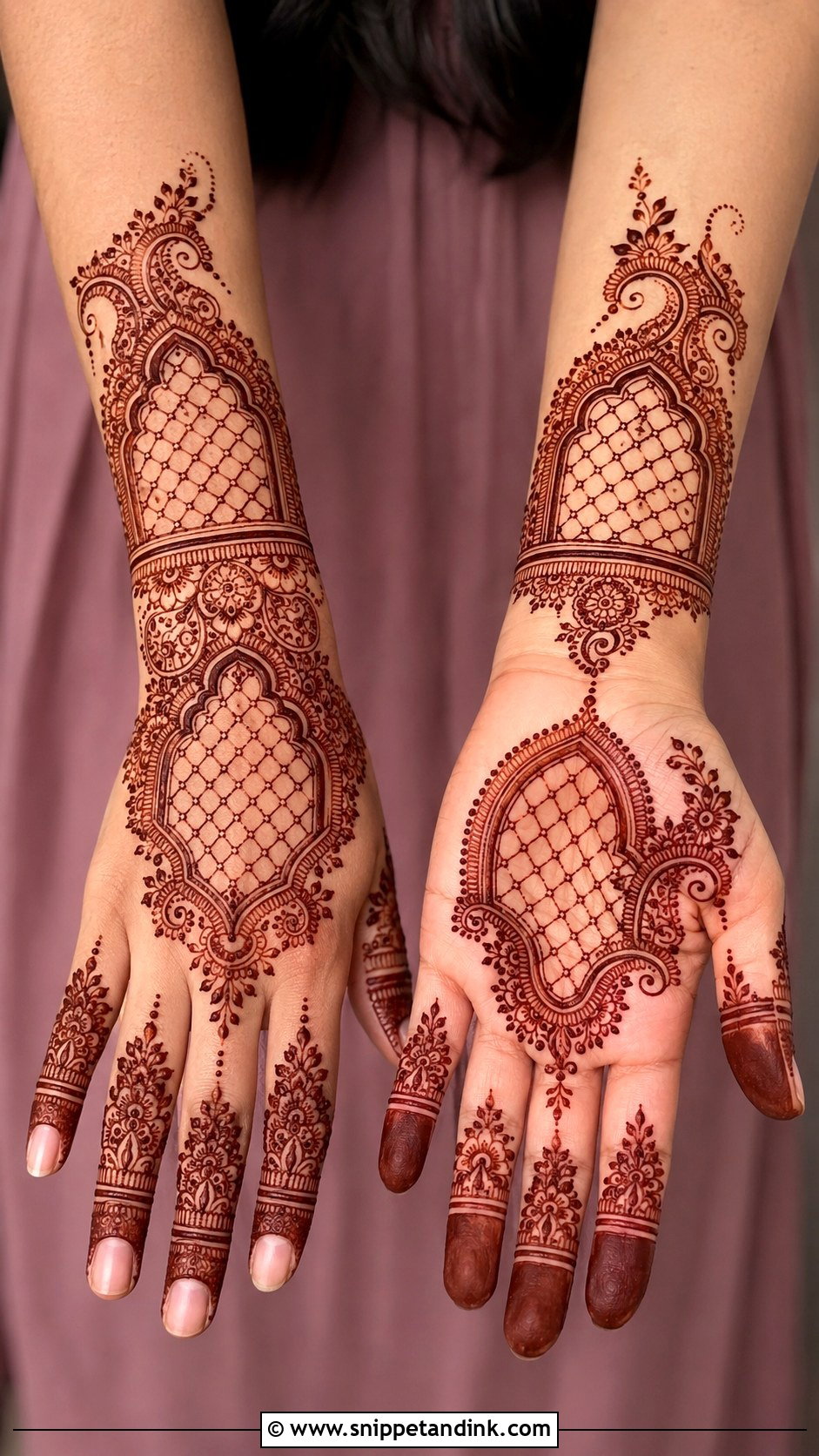
Jaali is a mesh of crossing lines that mimics the carved stone lattice of Rajasthani windows. It goes between larger motifs on the palm, back hand, fingers or forearm. Clean jaali takes a steady hand and a well-mixed cone; if the paste is lumpy, the lines thicken at the crossings and the mesh fills in once it stains. For a bride I pair it with dense borders. For something lighter, a jaali back hand with a bracelet-style wrist is plenty.
13. Marwari Lotus Mehndi Design
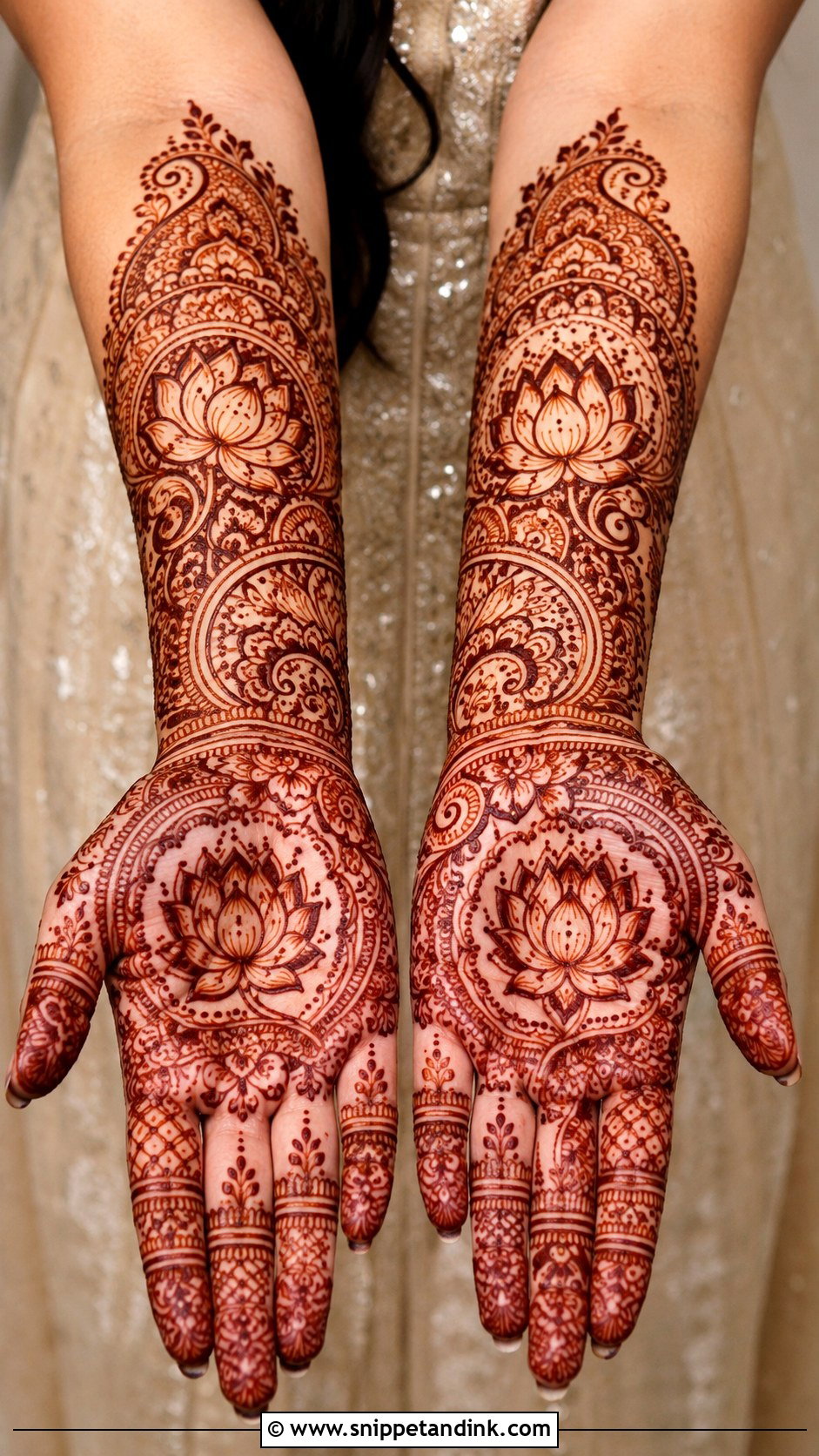
The lotus is auspicious and soft, and it’s a natural fit for puja ceremonies and the engagement. I draw it large on the palm, as layered petals around a mandala, or as a border framing the bride and groom. Each petal gets fine lines and dots inside for depth. The mistake is making every area around it equally dense. Leave a little air round the flower so it stays the focus after the stain darkens.
14. Marwari Elephant Mehndi Design
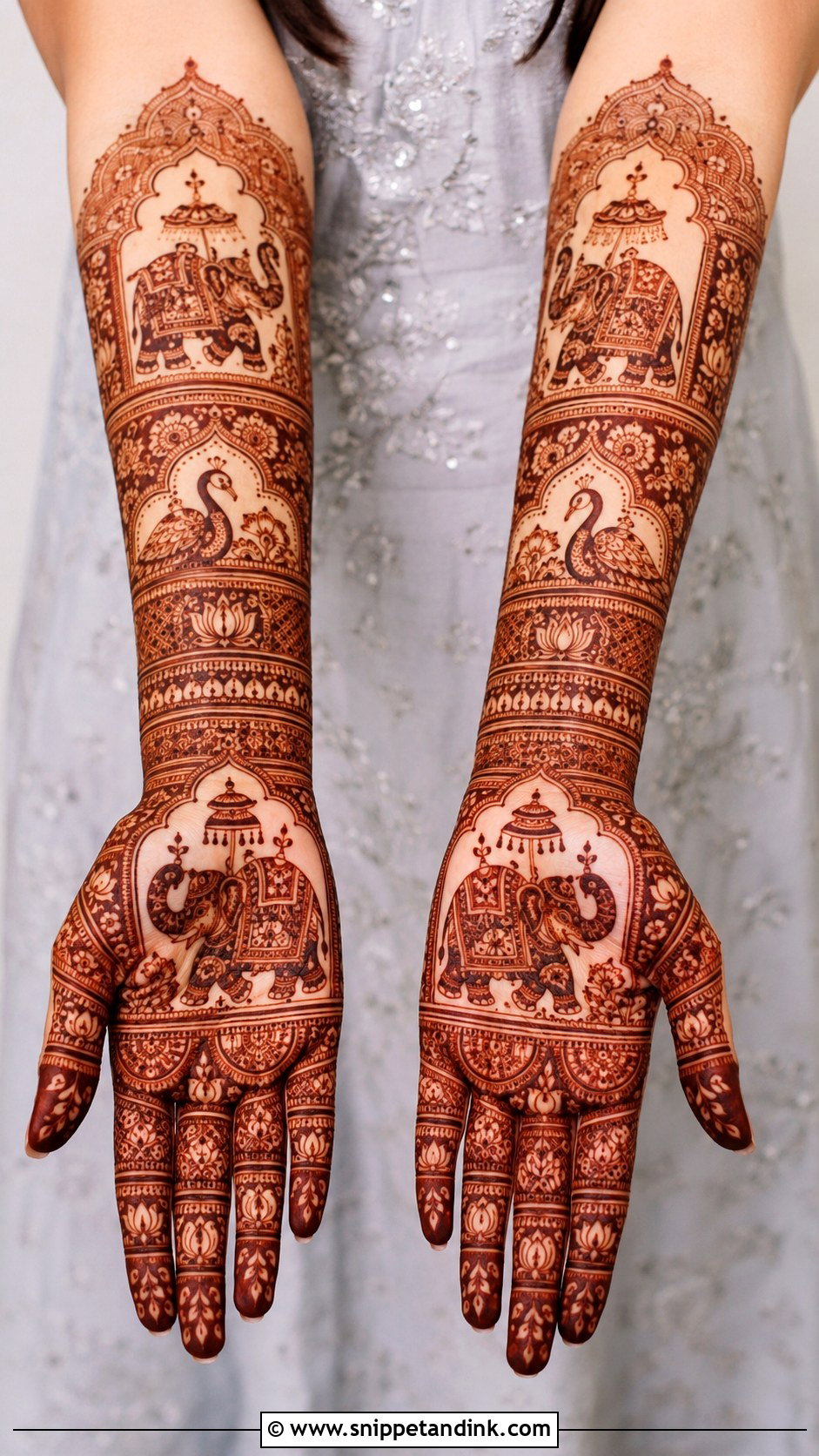
A decorated elephant says royal Rajasthan faster than any other motif. I put it on the forearm or lower palm, with paisleys, florals, mandalas or palace arches around it, sometimes as part of a procession with tiny musicians and a doli. Elephants are big shapes, so they need space; squeezed onto a finger or a narrow wrist they become a blob. Keep the fingers in smaller supporting patterns so the elephant reads as the main event.
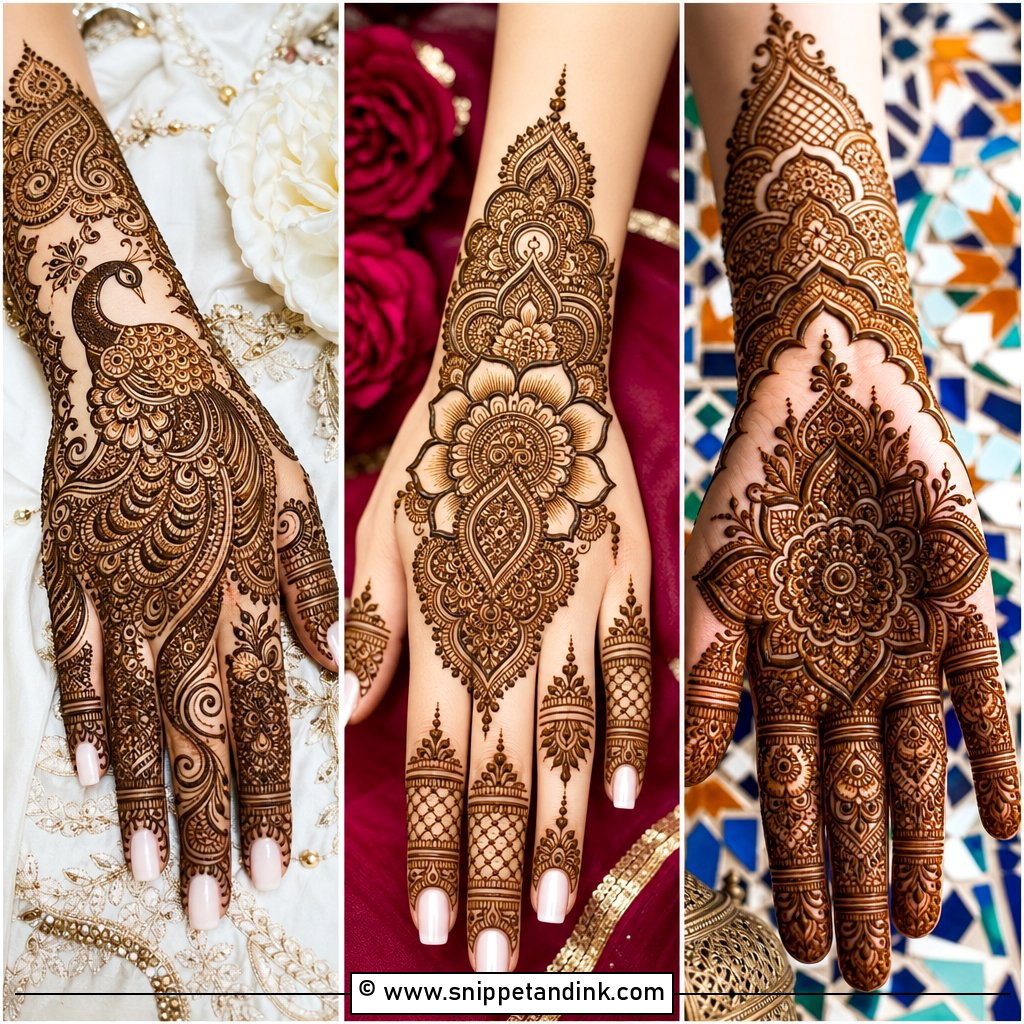
15. Marwari Doli Mehndi Design
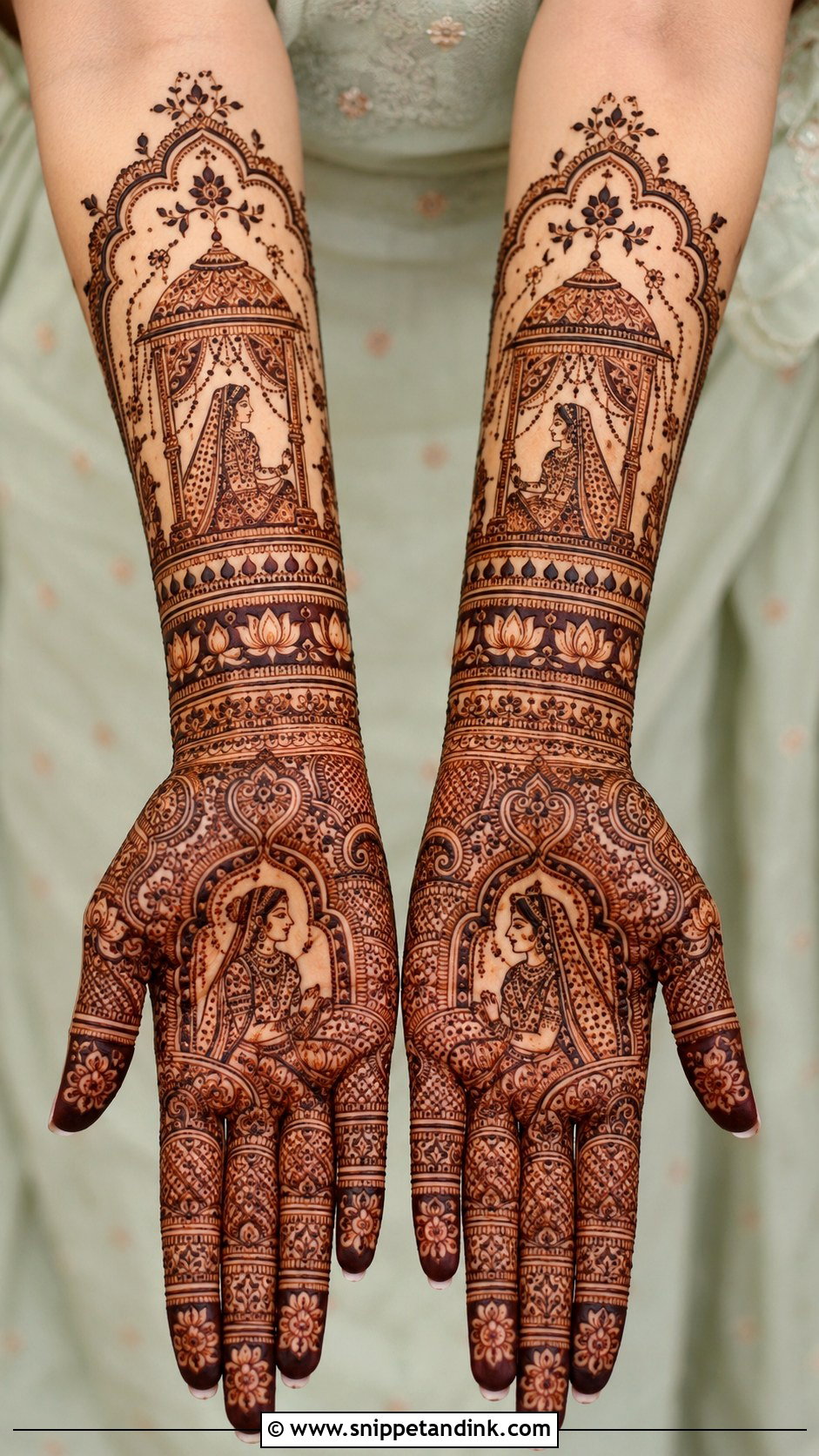
The doli, the bride’s palanquin, carries the farewell and the new beginning, and families often ask for it specifically. I draw it on the palm or forearm with curtains, small carriers and floral borders, often next to the bride’s portrait, a baraat scene, lotus or paisleys. Its outline has to be bolder than its surroundings, because a fine-lined doli in a dense hand is unrecognisable once the stain goes deep. Leave a little breathing space around it.
16. Marwari Baraat Mehndi Design
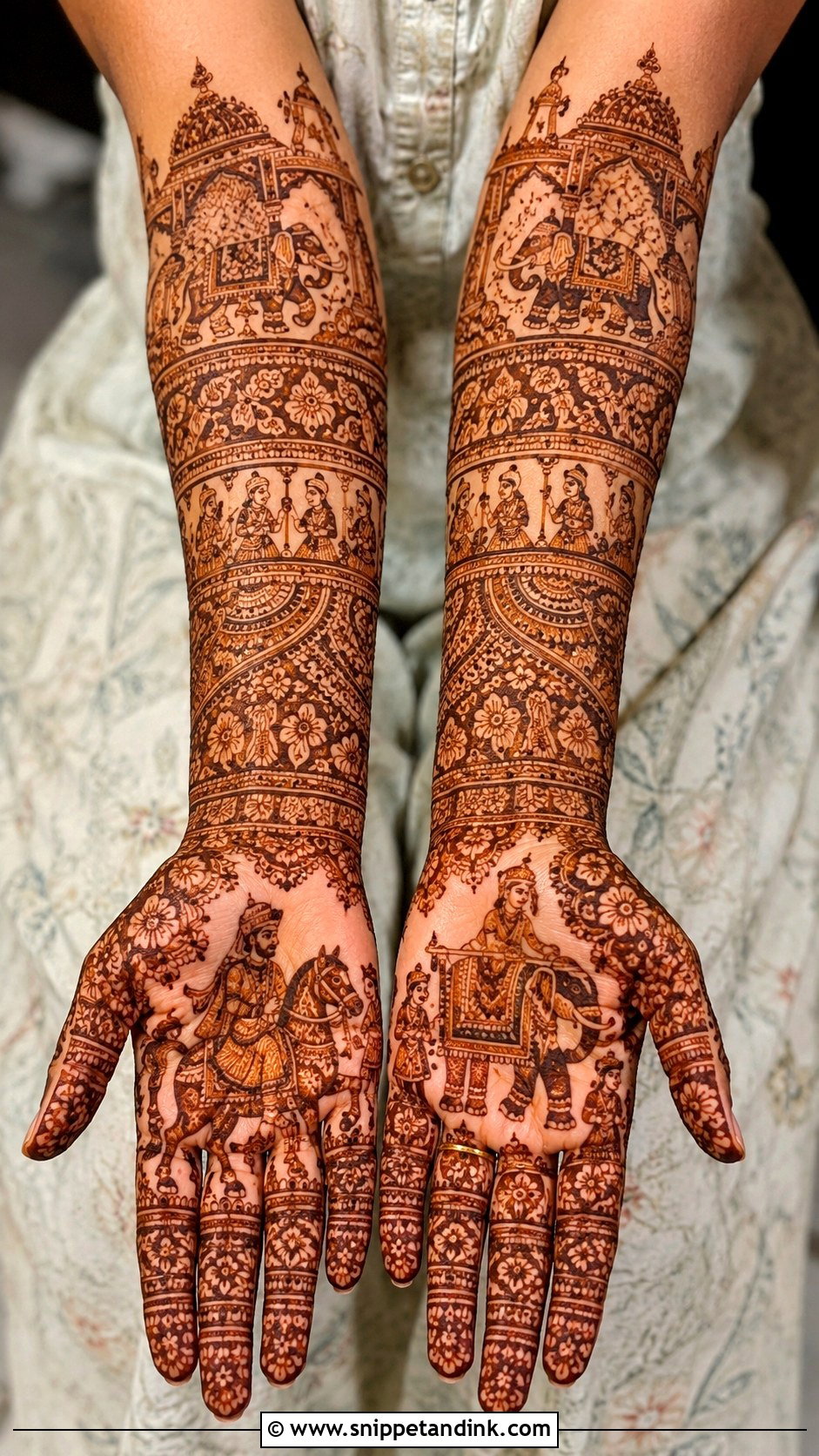
A baraat runs along the forearm: the groom on his horse, musicians, dancers, elephants and the whole procession. Palms carry matching wedding motifs and the fingers take fine fillers. It needs length, so it belongs on full-hand or elbow-length mehndi and nowhere else. The figures are small, which means clean outlines matter more than anywhere in this list. I draw each figure fully before adding any filler near it, or the procession drowns.
17. Marwari Jharokha Mehndi Design
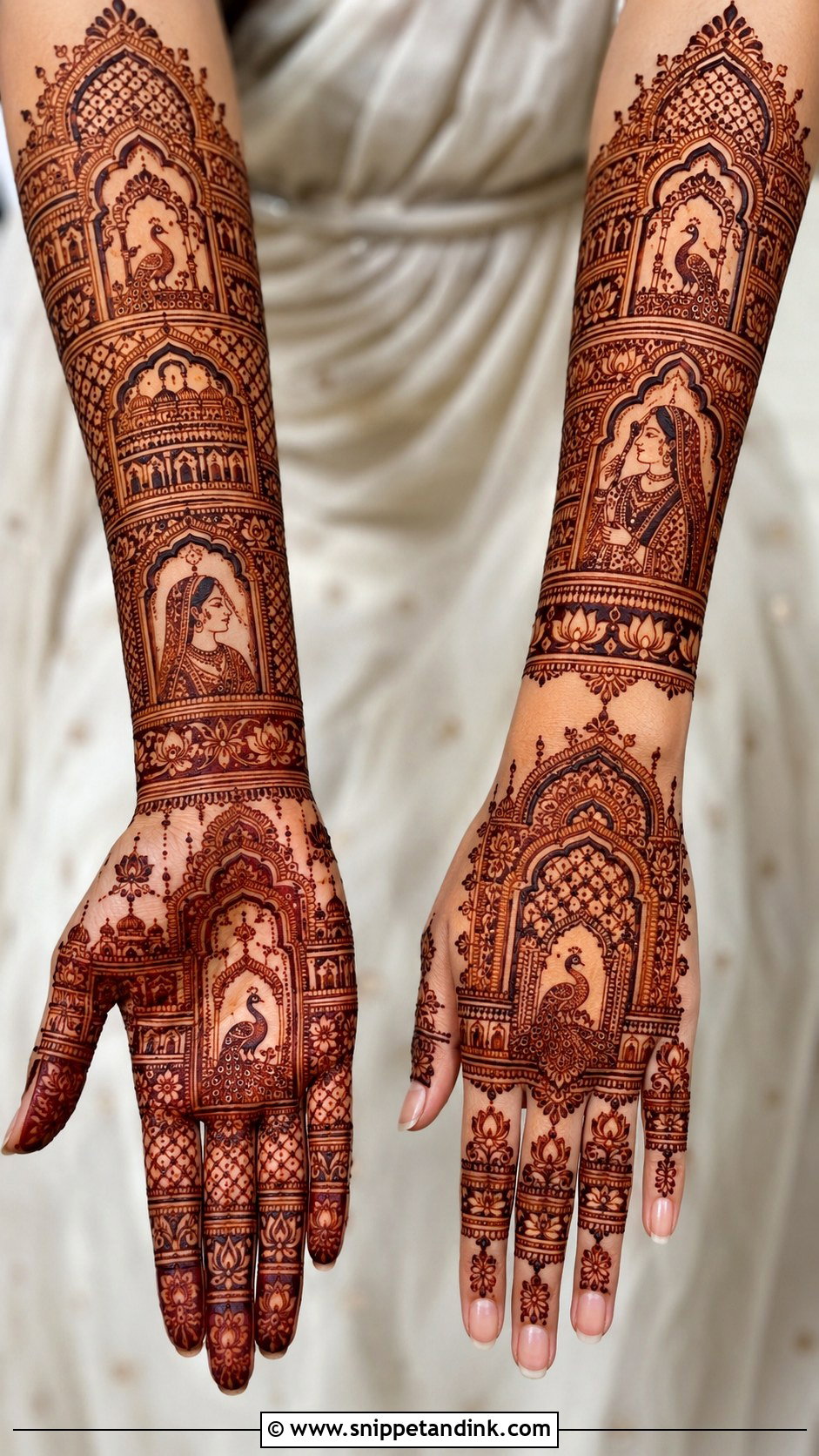
Jharokhas are the arched palace windows of Rajasthan, and they give a design structure where other layouts flow. I build arches, balcony shapes, lattice and borders, then put a portrait, a peacock, a lotus or a small symbol inside each window. Bold outlines on the arches and lighter detail inside make the architecture read. When both palms are framed this way and held together, the symmetry is striking in photos.
18. Marwari Finger Mehndi Design
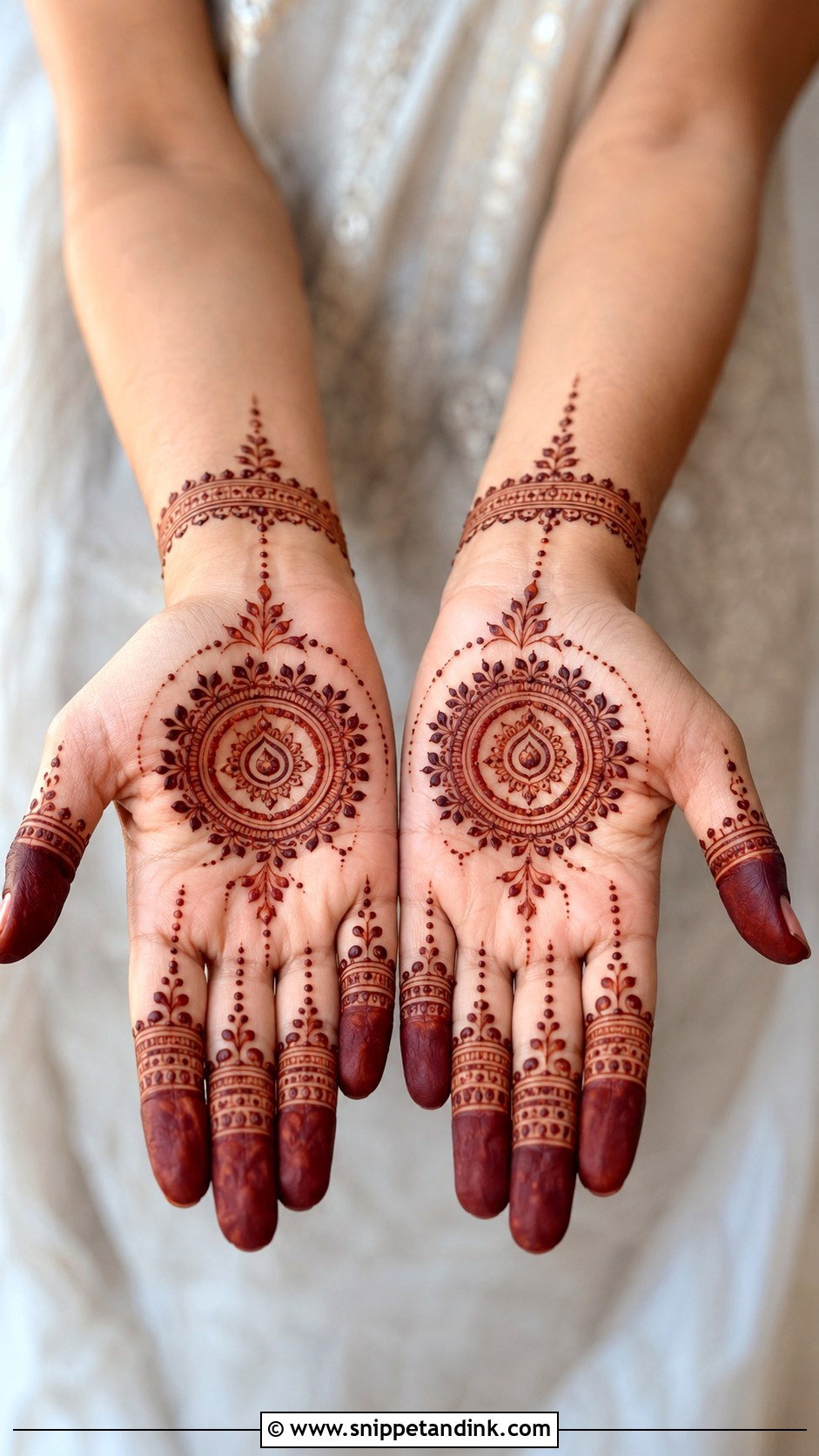
Fingers can carry the whole design. Stacked bands, tiny paisleys, dots, leaf chains, small mesh panels and filled tips go on each finger, and the palm gets something small such as a mandala, lotus or paisley. I deliberately vary each finger: identical fingers look printed. It’s a good choice for sisters of the bride and guests who want something traditional without full coverage, and it shows well with rings and bangles.
19. Marwari Wrist Mehndi Design
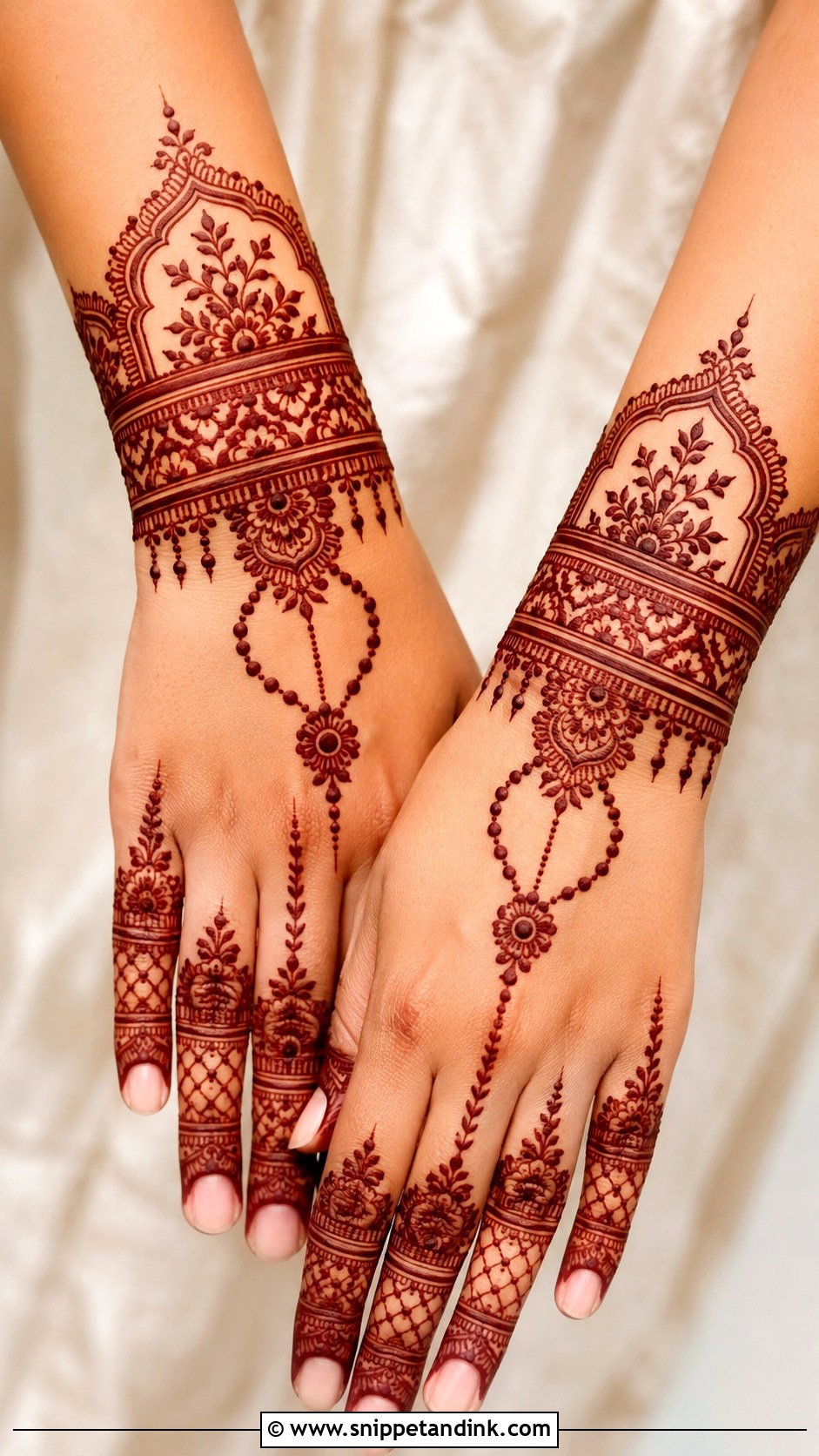
Done well, the wrist reads as a piece of henna jewellery: bracelet bands, thick borders, hanging dots, floral cuffs and small jharokha shapes, linked to the palm by chains, vines or paisley trails. On a full bridal design it’s the transition between hand and forearm. The bands have to be even all the way round, which is harder than it looks because the wrist is not a cylinder. I turn the arm as I go and use a slightly bold outline so the bracelet looks crisp.
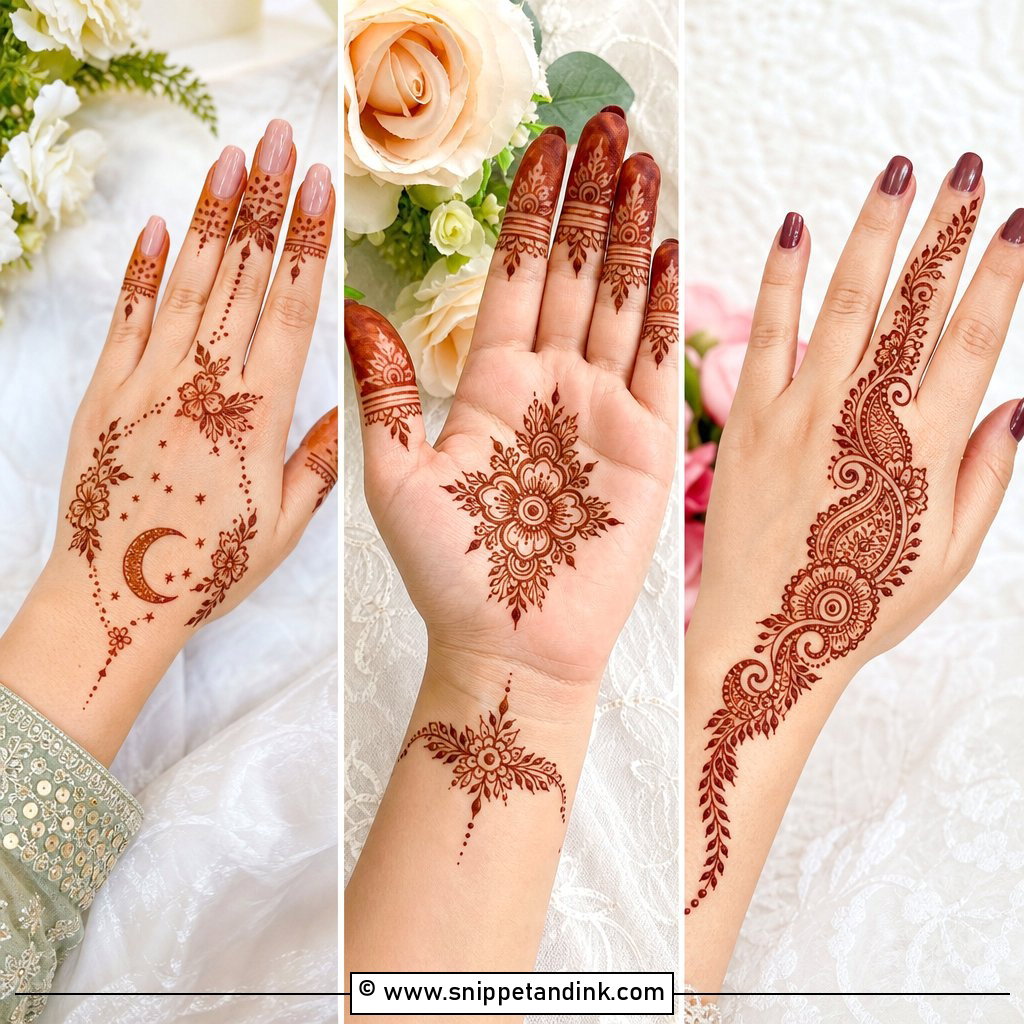
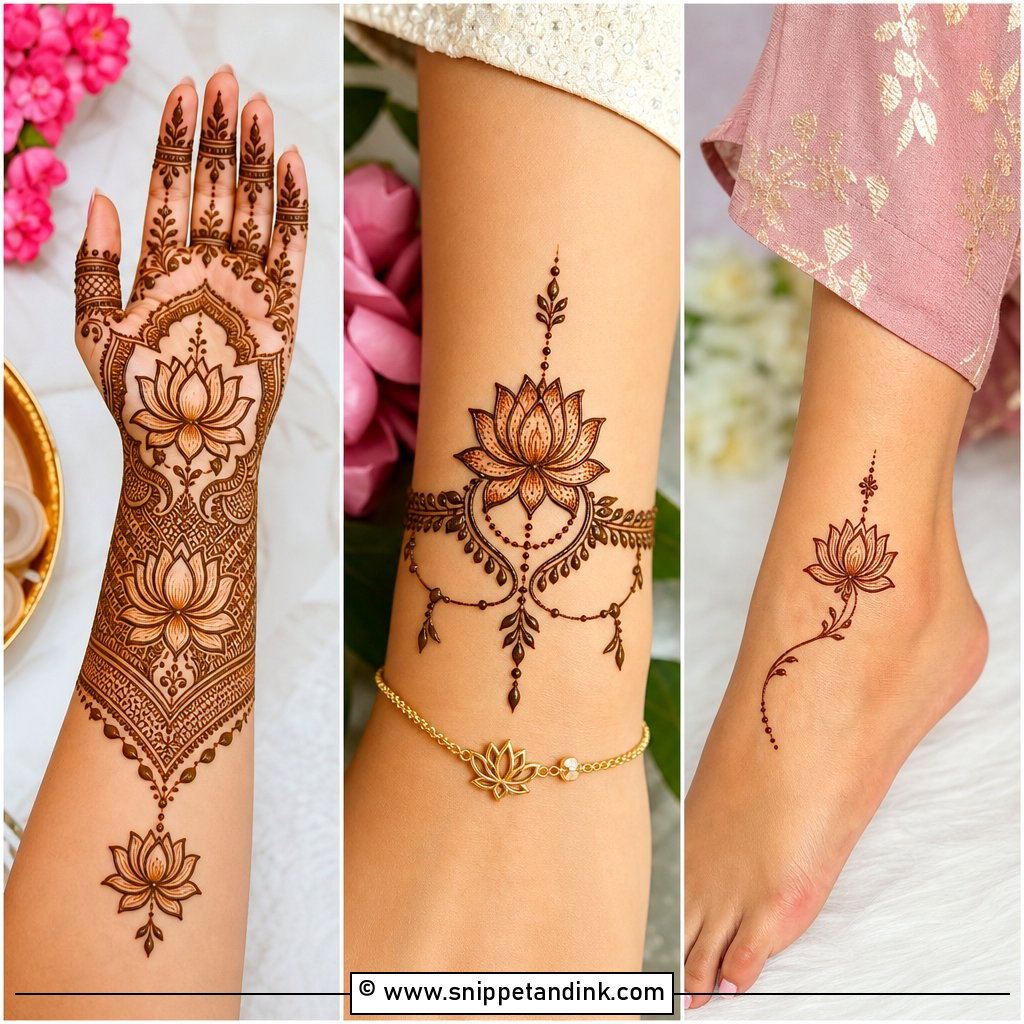
20. Marwari Forearm Mehndi Design
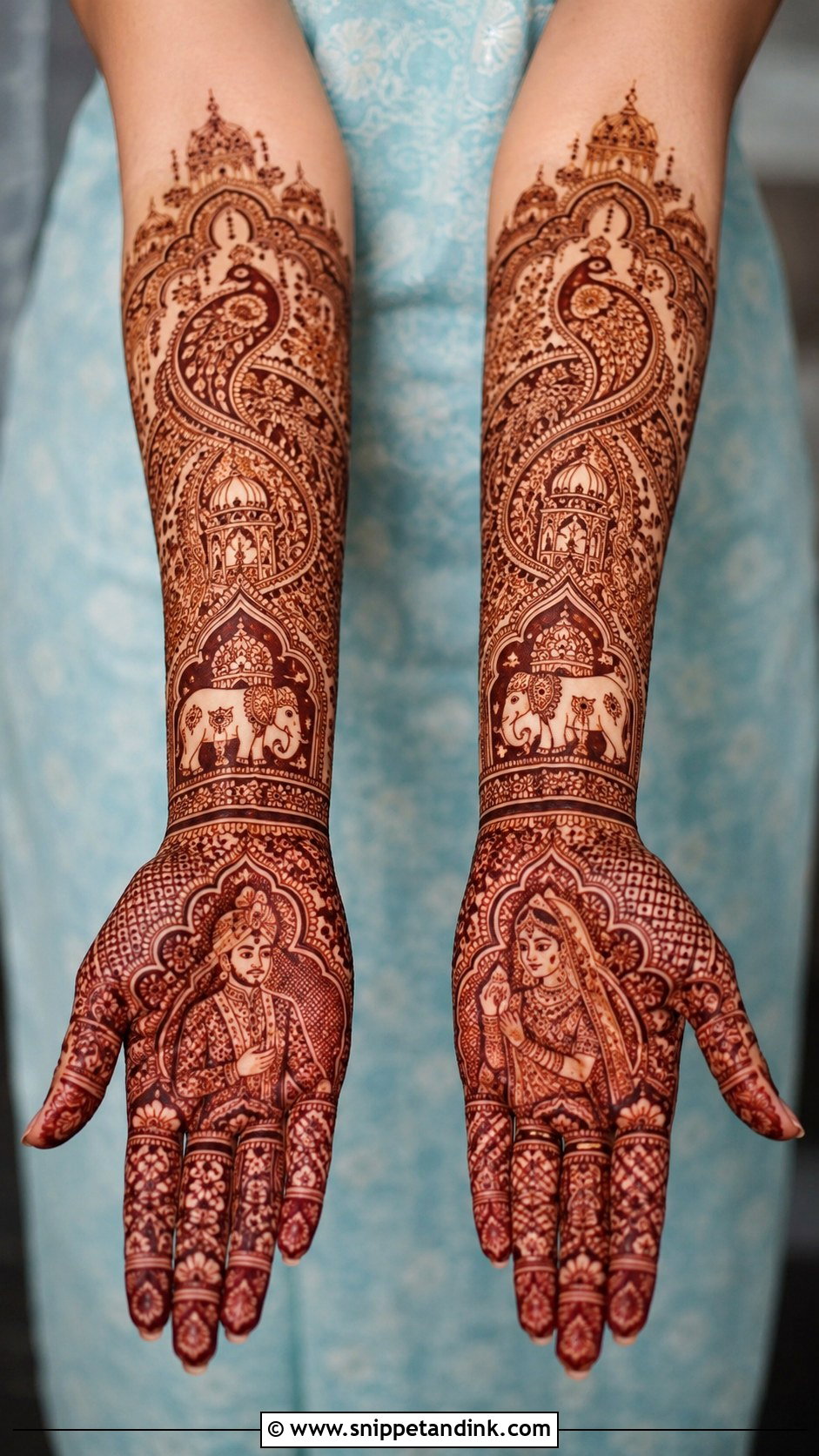
A Marwari forearm mehndi design is where the dramatic motifs go: elephants, baraat scenes, doli, peacocks, palace arches or long paisley panels, joined to the hand by dense florals and jaali. Names, dates and initials fit naturally here. Because the forearm is so visible, I plan it on a clear vertical or diagonal line before I draw anything. Motifs dropped in at random look patchy from a distance, however fine the detail.
21. Marwari Engagement Mehndi Design
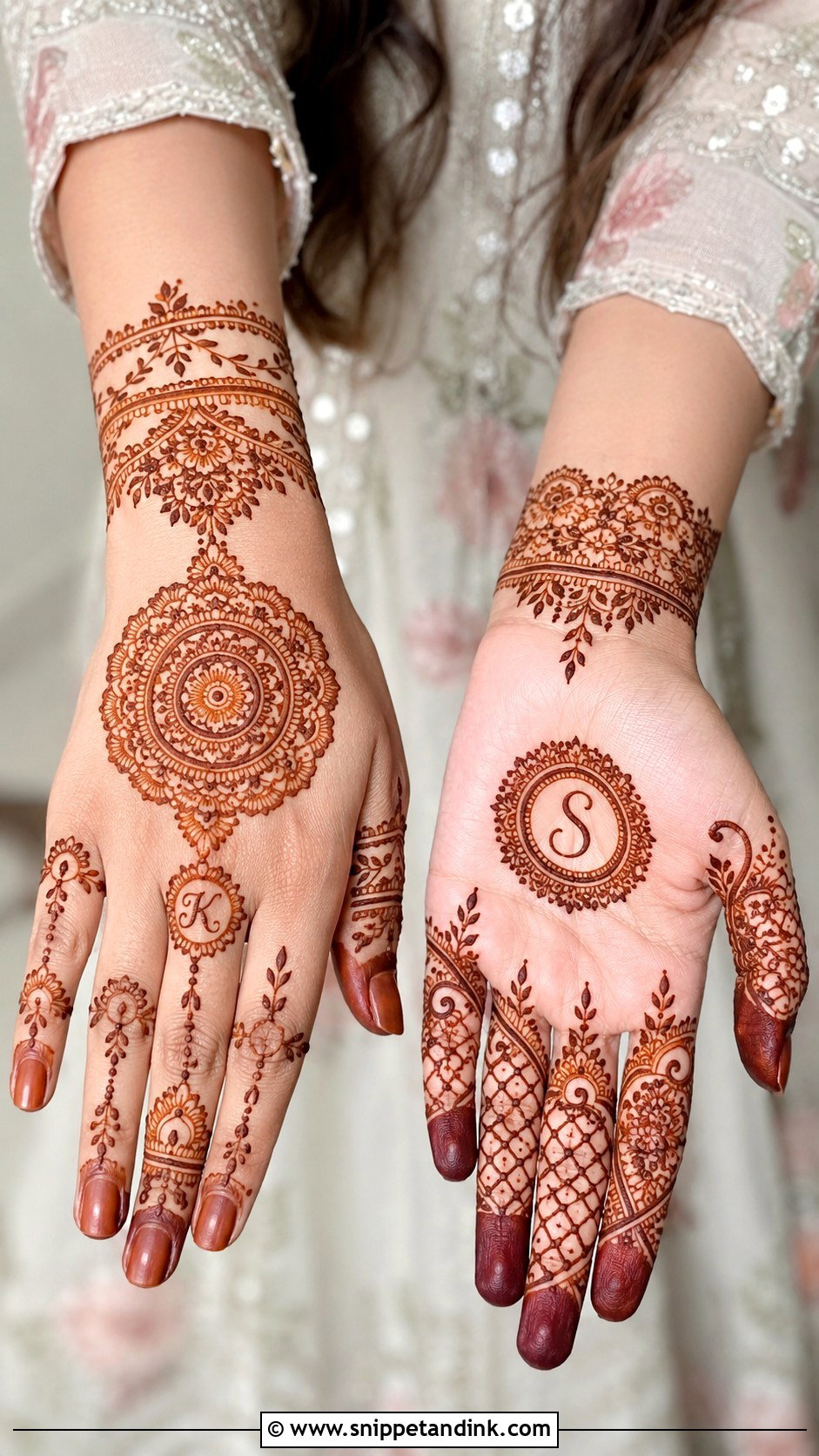
Engagement mehndi should be lighter than the wedding. A neat mandala, slim paisley vines, ring chains on the back hand and a bracelet wrist are enough, with initials or a small couple symbol if you like. Leave the ring finger and the skin around it fairly open so the ring is the thing people see in photos. A lighter design also dries faster, which matters if you have several events in one day.
22. Marwari Wedding Guest Mehndi Design
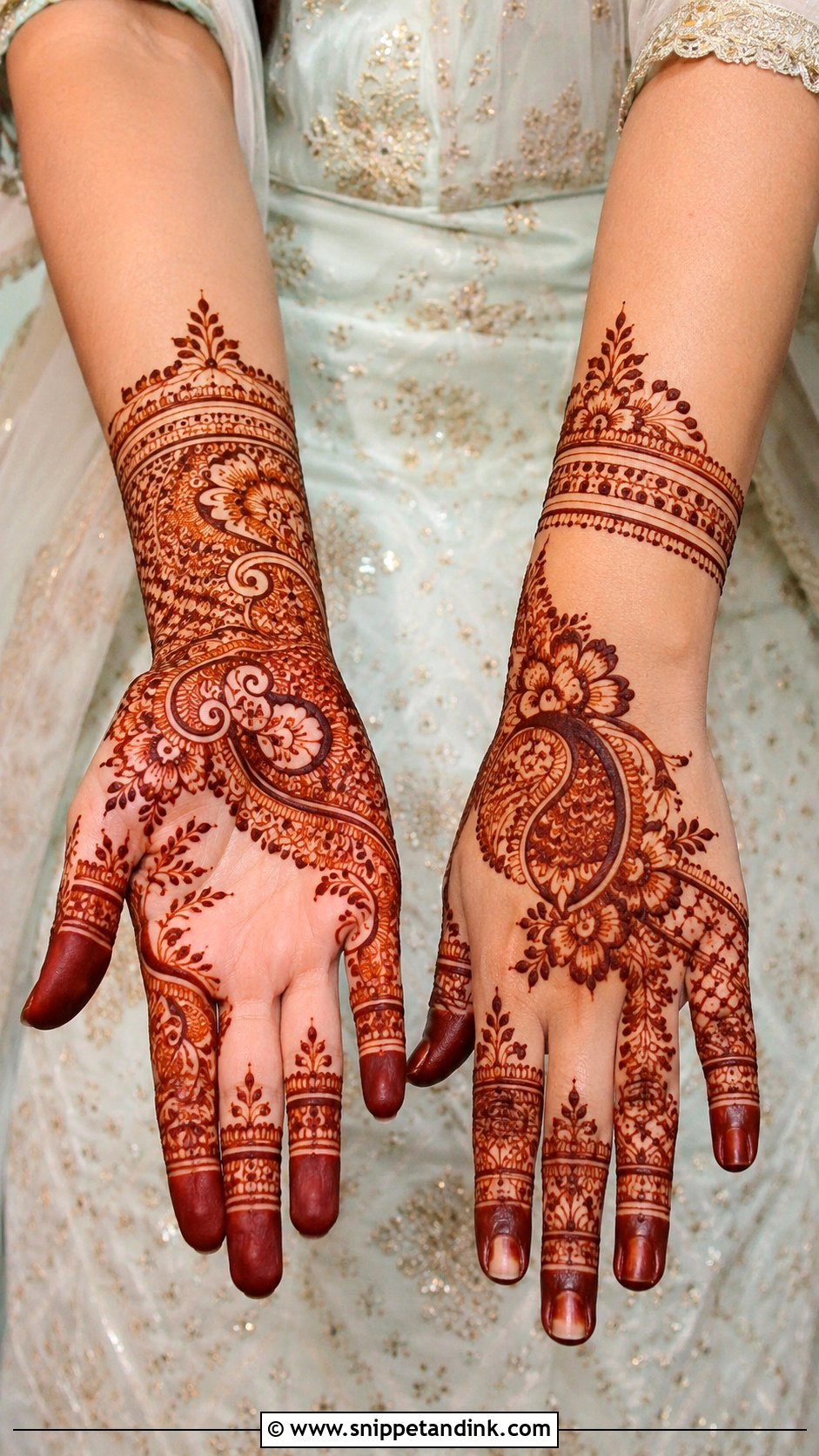
Guests usually want to look festive without competing with the bride. I’ll cover the palm and wrist, or just the back hand, with floral paisleys, a small jaali panel and decorated fingers, built around one strong motif like a peacock or a mandala. It goes with lehengas, sarees, anarkalis and simple ethnic outfits, and it takes a fraction of the time of a bridal hand. Match the density to your outfit: heavy embroidery and heavy jewellery want a lighter hand.
23. Marwari Festival Mehndi Design
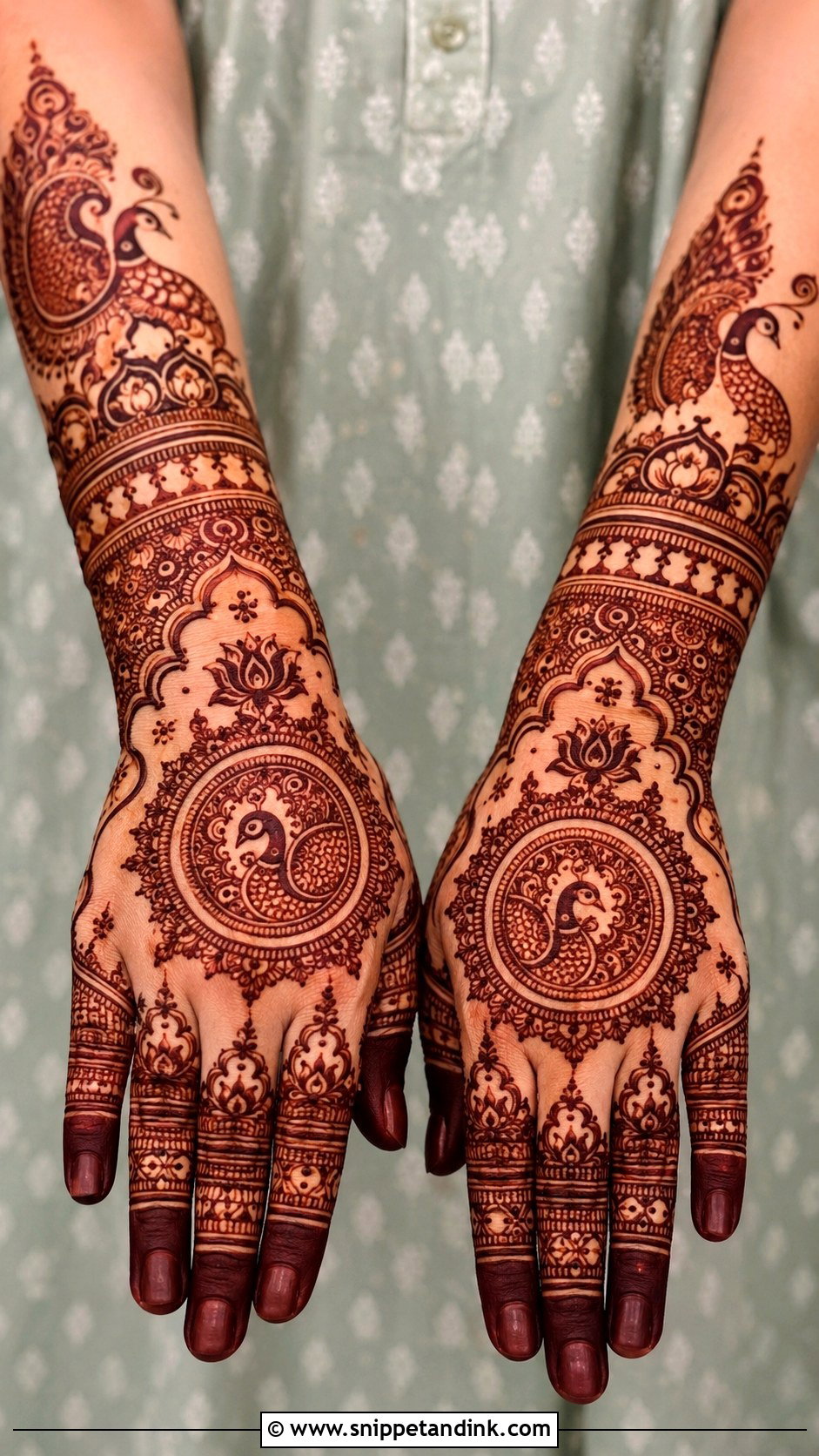
Festival mehndi has to be done quickly and survive a busy day. Mandalas, lotus petals, paisley trails, peacock accents and wrist bands without the full forearm suit Teej, Karwa Chauth, Diwali, Eid and family functions. A palm mandala with decorated fingers is my reliable choice, and a bracelet pattern on the back hand adds richness. Keep the paste on as long as you can even on a festival day; an hour on the skin gives a pale, short-lived stain.
24. Marwari Karwa Chauth Mehndi Design
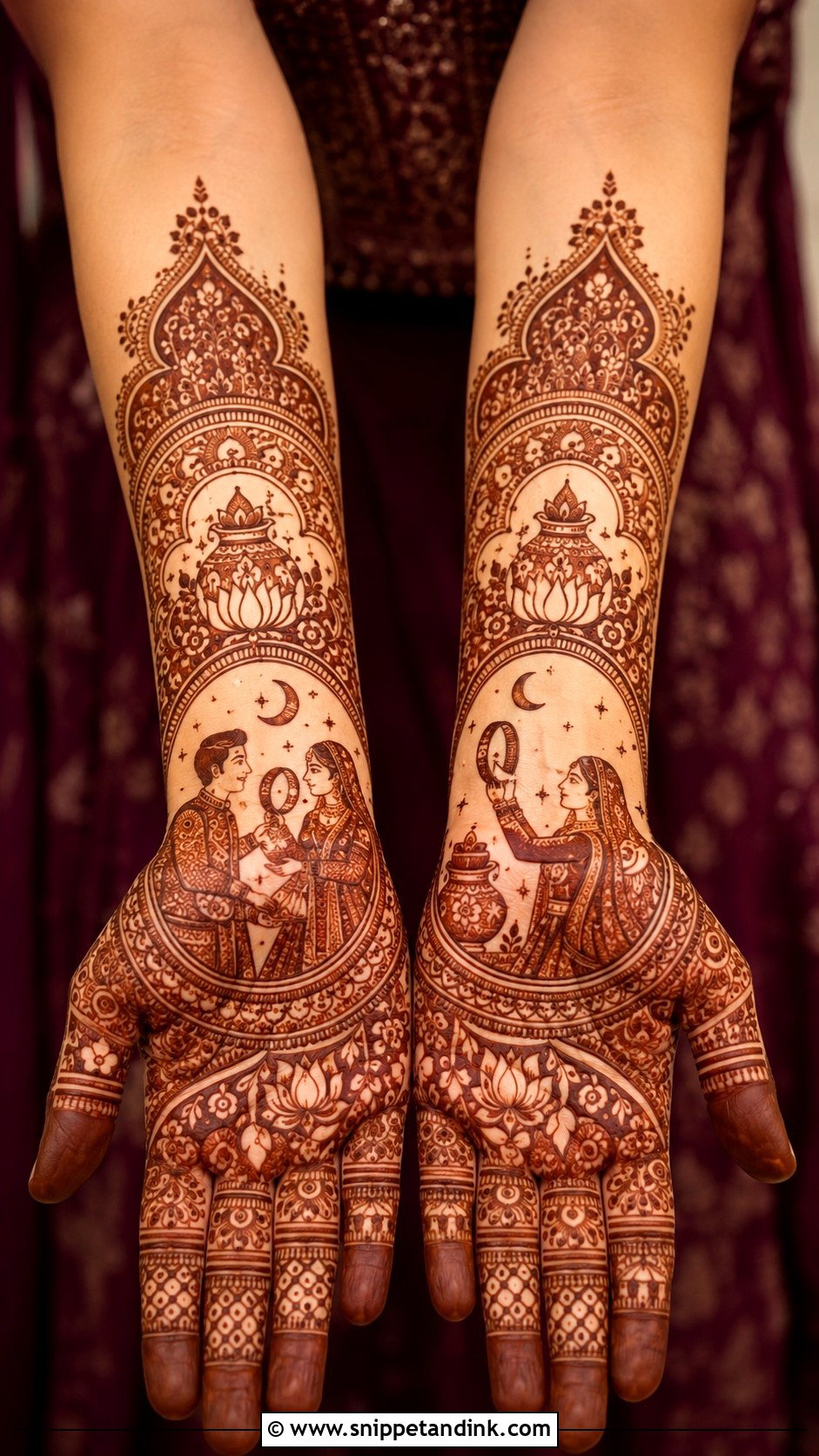
For Karwa Chauth the palm matters most, because that is what’s seen during the rituals. Bride and groom figures, the moon, the kalash, lotus and fine paisleys are the common motifs. I usually put a moon or a couple element in the centre of the palm and frame it with floral rings and Marwari fillers. A full front hand or a lighter back hand with wrist cuffs and finger chains both work. Apply it the evening before so the stain has darkened by the day of the fast.
25. Marwari Teej Mehndi Design
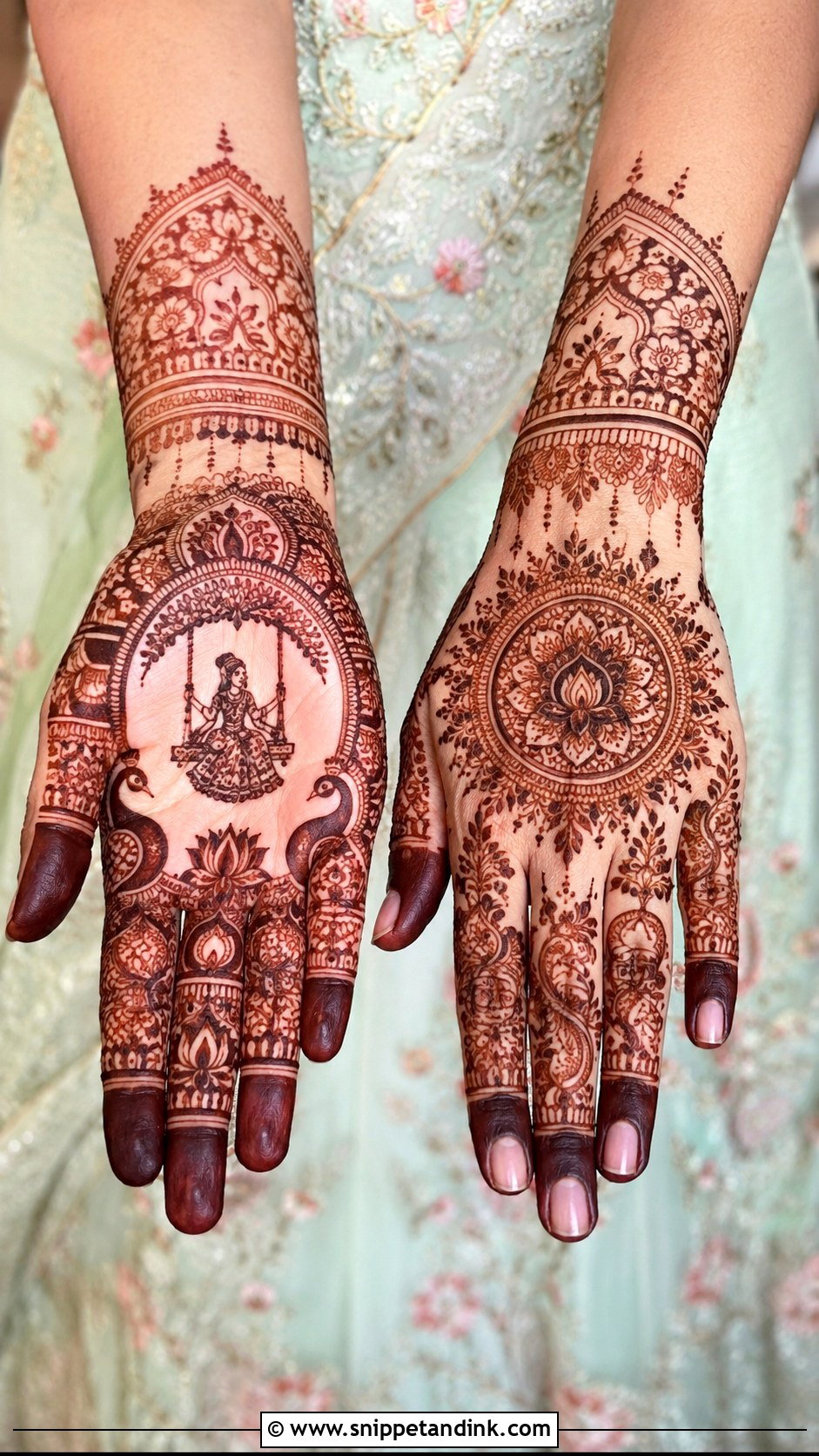
Teej celebrates monsoon, greenery and swings, so I bring in a swing motif, peacocks, lotus, paisleys and mandalas. Medium coverage, fingers to wrist or slightly above, keeps it comfortable for dancing and rituals. Peacocks and vines suit the mood best. Filled fingertips give the deep traditional stain. For a modern touch, I leave the back hand slightly open with a central mandala and a wrist band.
26. Marwari Arabic Mehndi Design
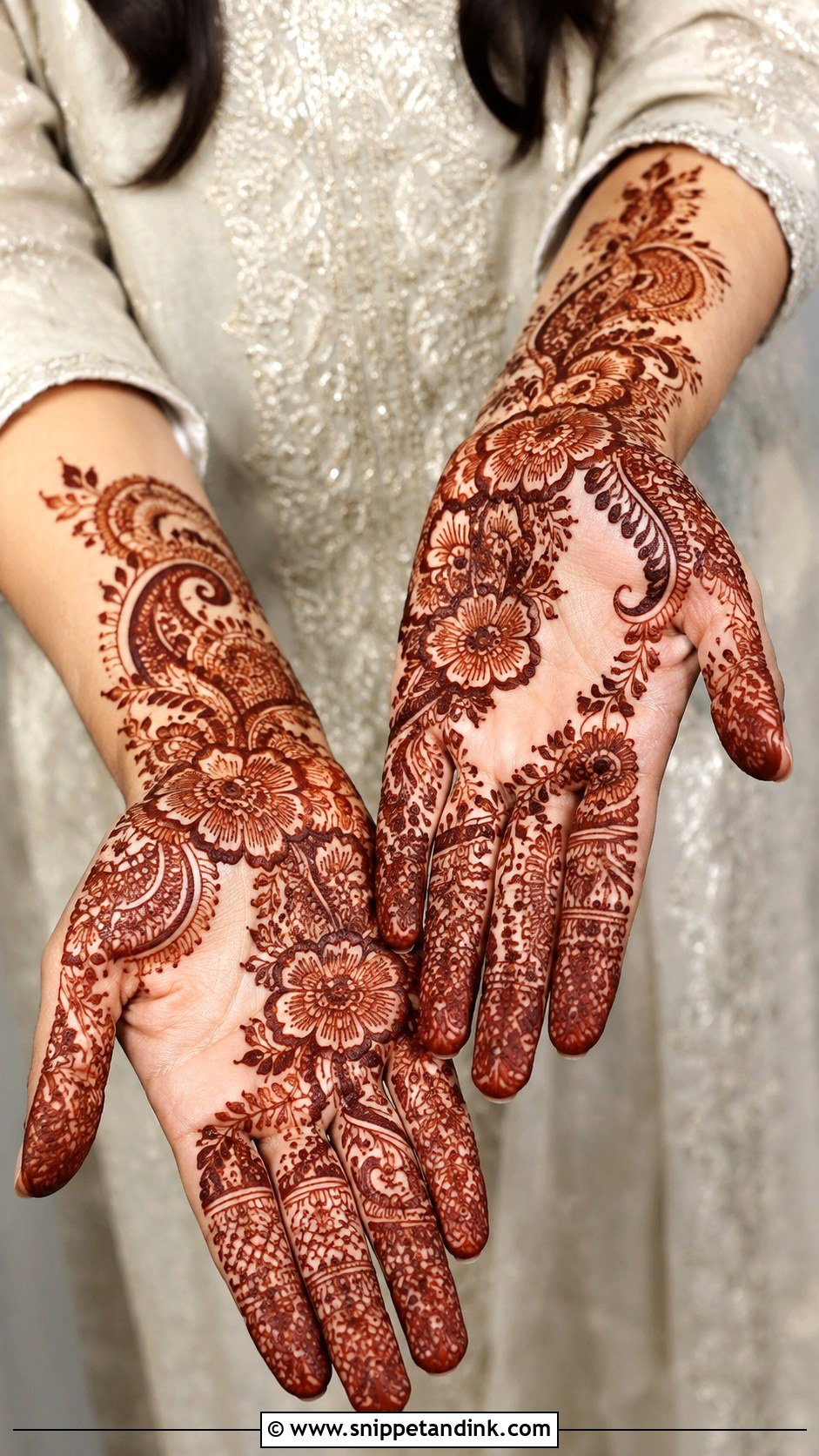
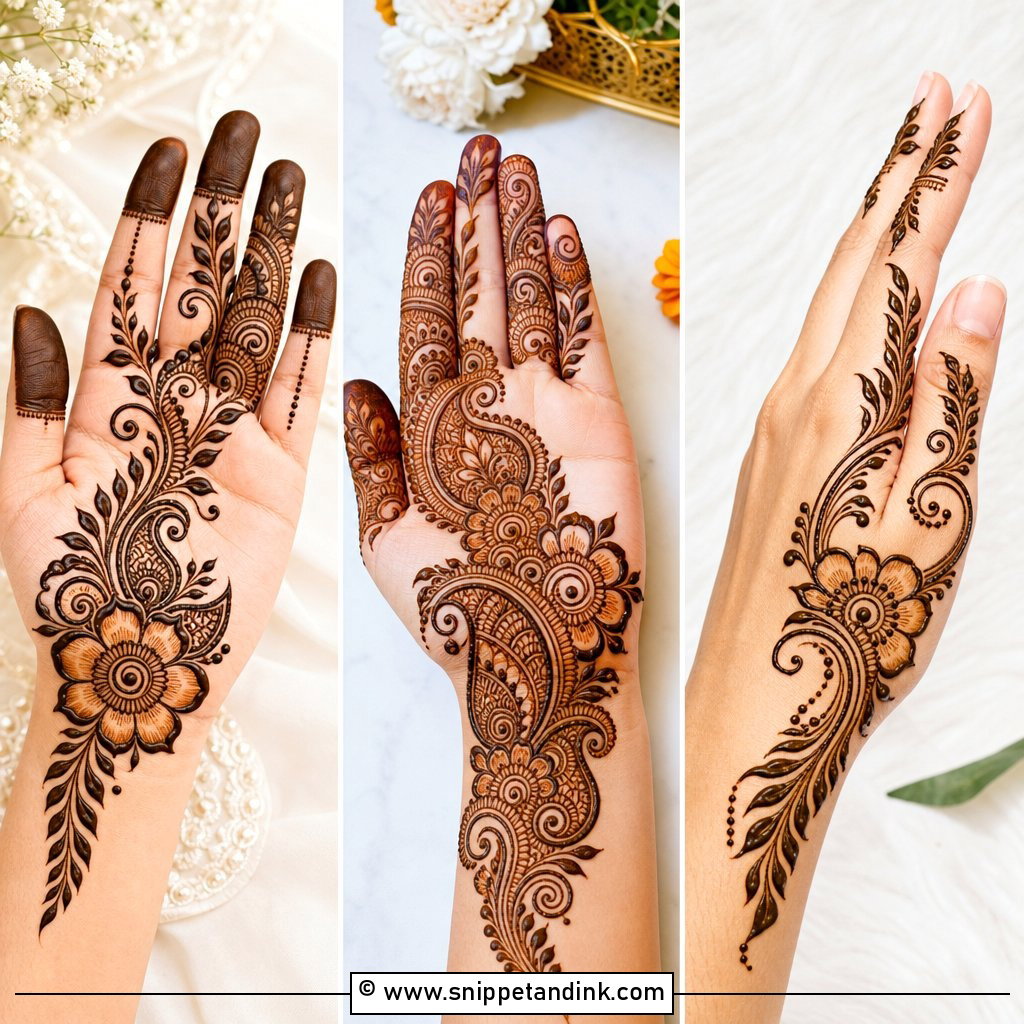
Arabic mehndi runs diagonally from one side of the wrist to the opposite finger, leaving open skin around it. Here I fill that flow with Marwari detail: paisleys, flowers, peacock feathers, leafy trails and small traditional fillers. The open spaces let each motif breathe. It’s lighter to wear and quicker to apply, which is why guests, bridesmaids and brides at pre-wedding events often choose it.
27. Indo Arabic Marwari Mehndi Design
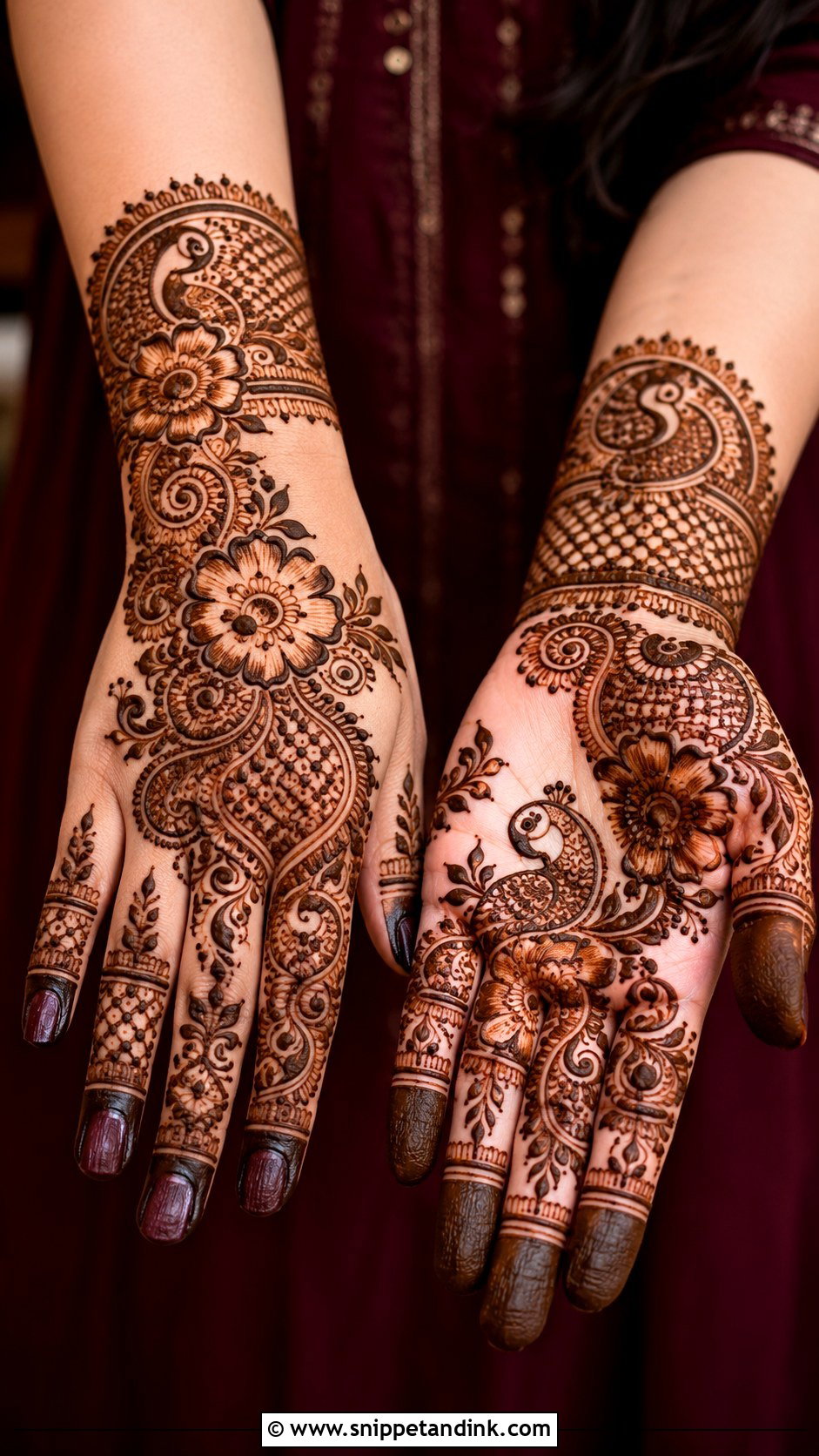
An Indo Arabic Marwari mehndi design pairs the bold flowing shapes of Arabic henna with Indian and Rajasthani detail inside them: big flowers, paisleys, jaali sections, filled fingers, small peacocks or domes. The trick is contrast in line weight. Thick outlines on the Arabic shapes, very fine work inside. If both are the same weight, the design goes flat. It looks good on front and back hands, and it’s a smart choice for a pre-wedding event before the full bridal hand.
28. Modern Marwari Mehndi Design
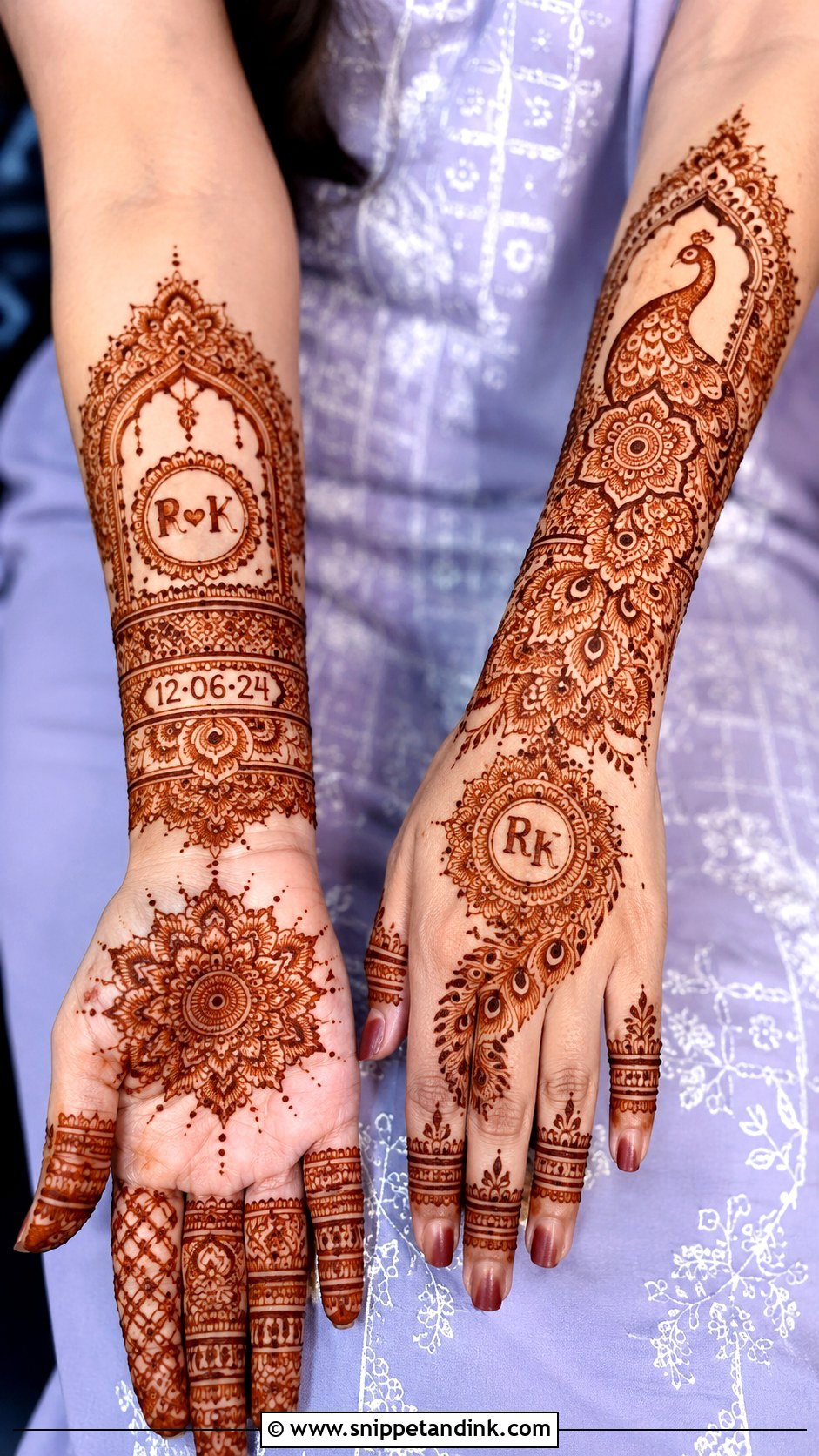
Modern Marwari keeps the motifs and changes the spacing. Portrait frames sit with more room around them, a mandala pairs with a bracelet cuff, peacock trails have open skin either side. Initials, dates, small jaali panels and neat finger work fit in. It suits brides who love the heritage but not the density, and it photographs more cleanly next to contemporary outfits. The motifs must still be unmistakably Marwari, or it just becomes generic henna.
29. Minimal Marwari Mehndi Design
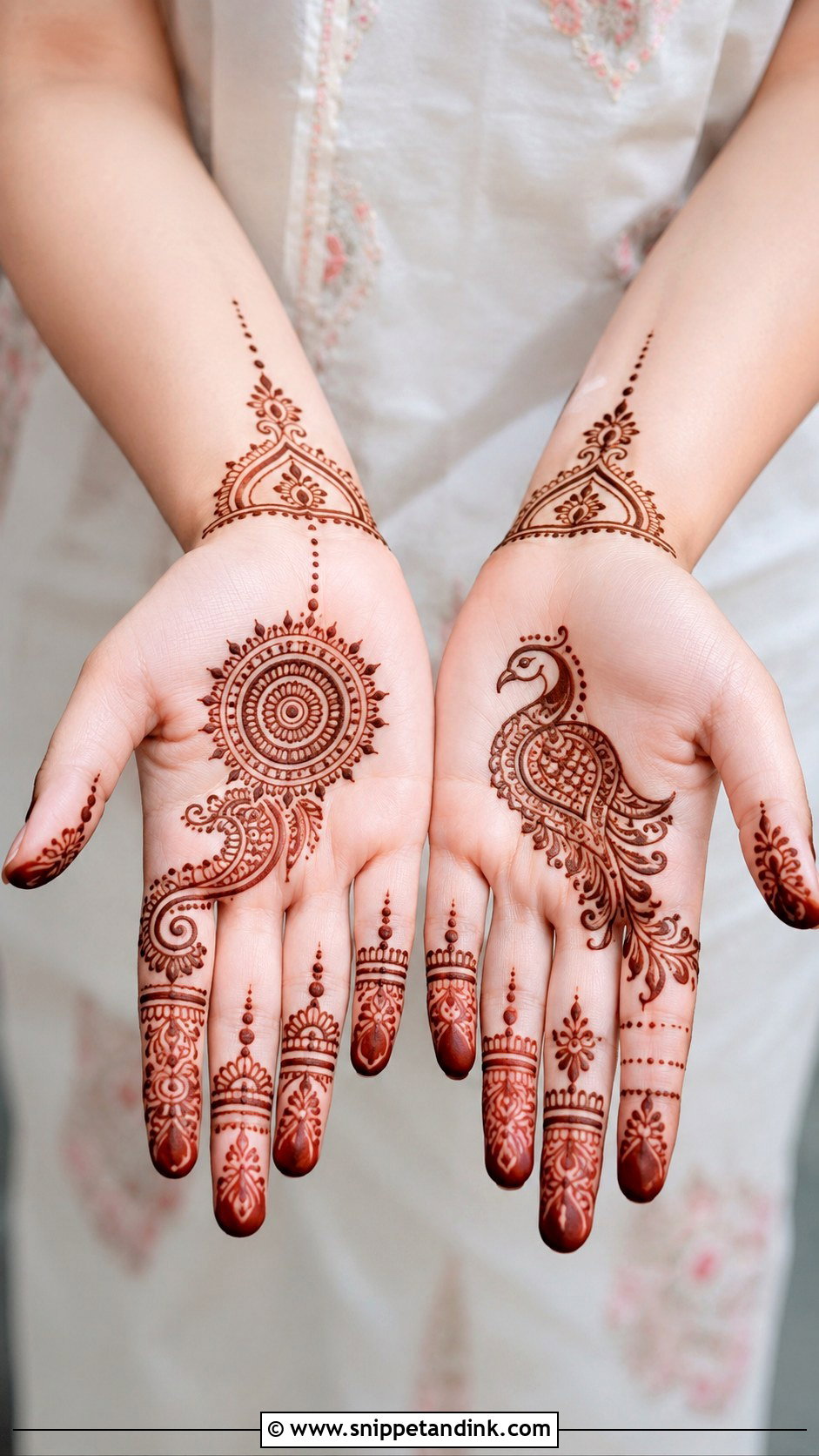
A minimal design can still be recognisably Marwari if one detail carries the identity: a tiny peacock, a lotus or a jharokha arch alongside a small palm mandala, one paisley curve, delicate finger bands and a narrow wrist border. It’s quick, comfortable and suits casual events, office celebrations and young girls. Too plain and it loses the style, so I put fine traditional fillers into one or two chosen areas.
30. Marwari Foot Mehndi Design
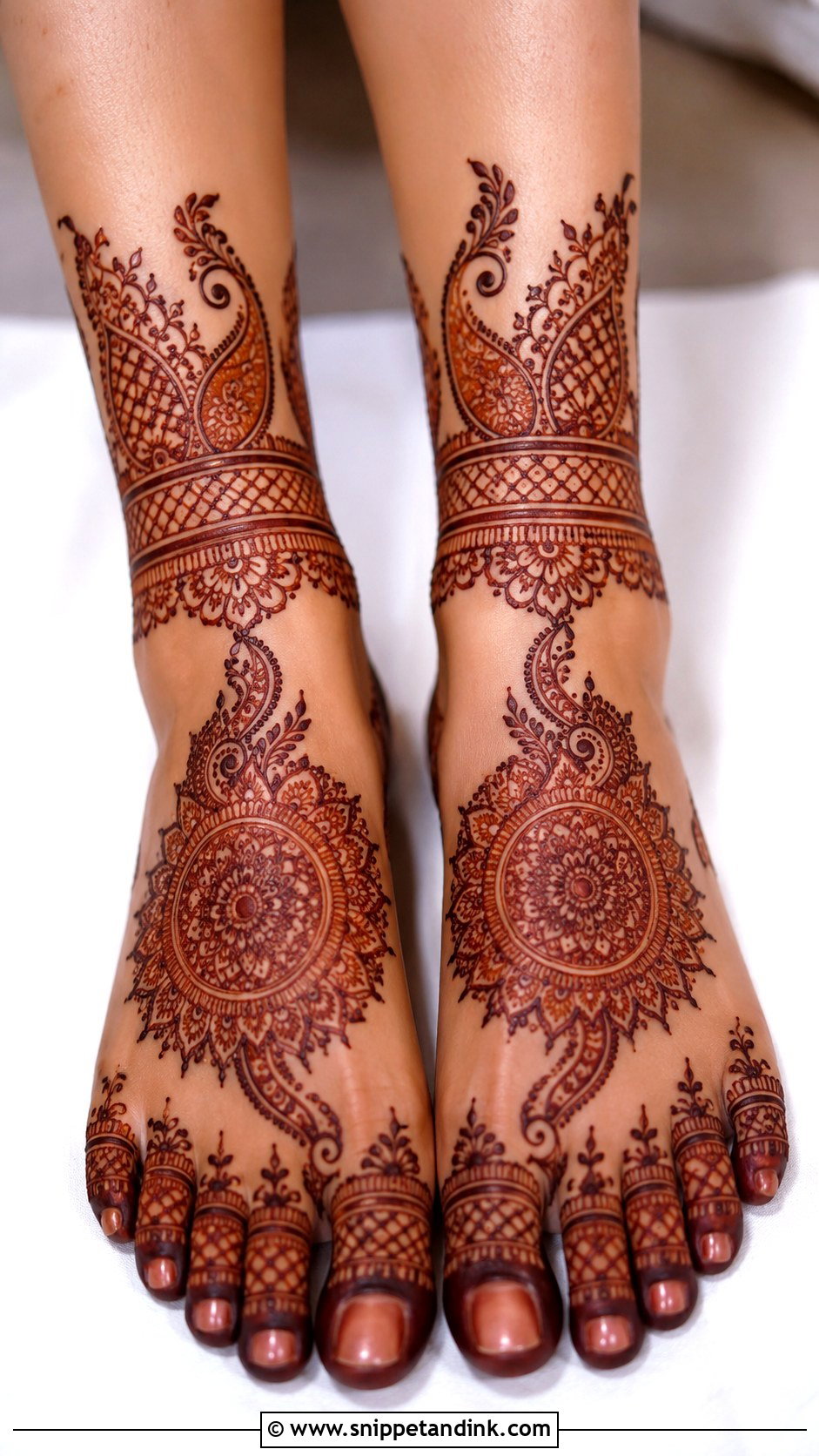
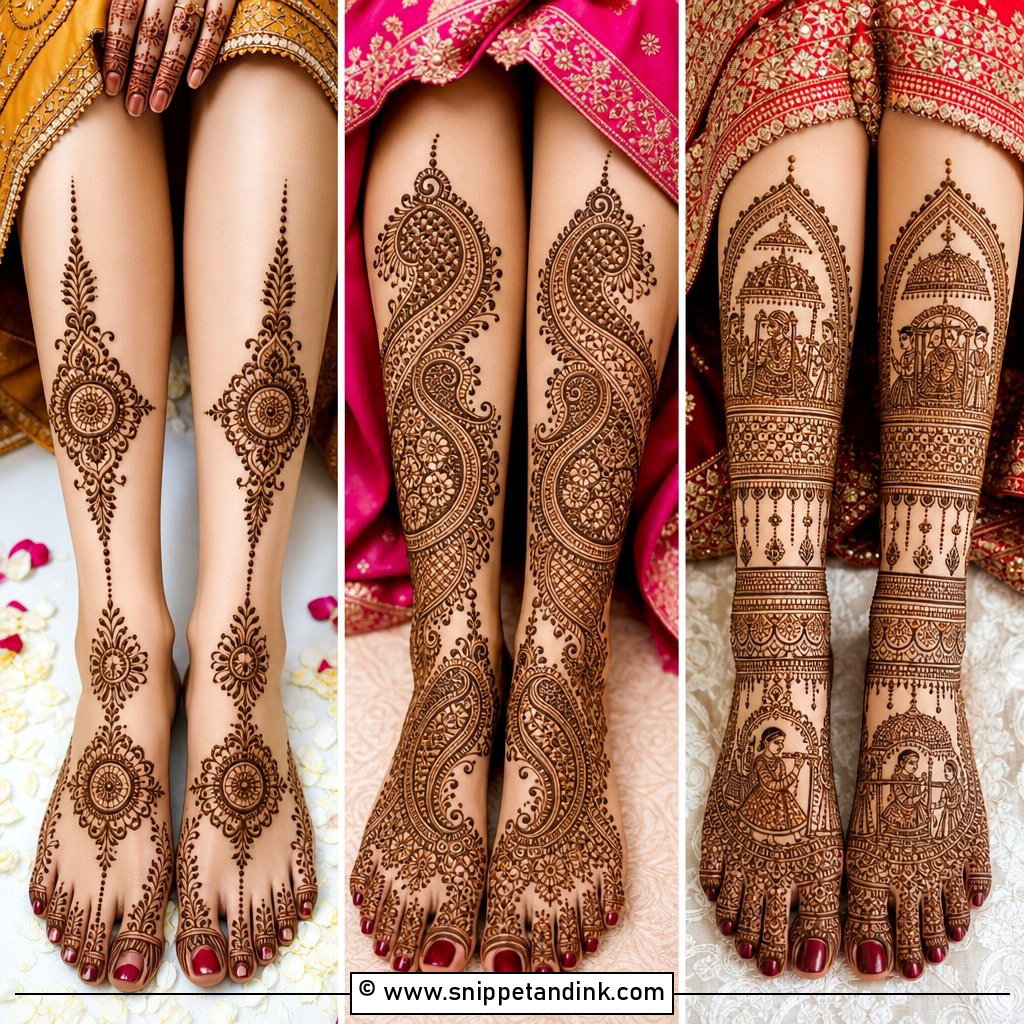
Foot mehndi completes a bridal look and follows the same vocabulary: mandalas, lotus, paisleys, anklet bands, peacock feathers and jaali over the toes, the top of the foot, the ankles and sometimes the lower leg. Brides usually match the density of their hands; guests often choose a lighter toe-and-ankle layout. I put the larger motifs at the centre of the foot and keep fine detail for the toes. Feet stain darker than you’d expect, and the anklet bands need to be symmetrical, because they read like payal in photos. Do feet last and keep them up while they dry.
Getting a Dark Stain to Last Until the Pheras
Natural henna comes off orange and deepens over the next day or two to a reddish brown. That’s why bridal mehndi is normally applied one or two days before the wedding, so the colour peaks on the day itself. What you do in those hours makes the biggest difference.
While the paste is on
Keep the paste on for as long as you can, ideally six hours or overnight. Once it’s dry to the touch I dab on a little lemon and sugar to keep it stuck to the skin. Keep the hands warm. Cold, air-conditioned rooms give a paler result.
Removing it and the day after
- Scrape the dried paste off with a blunt edge or rub it off. Don’t wash it off.
- Keep water away from the design for as long as you can, ideally until the next morning.
- Rub in a little balm or oil before bathing so water beads off.
- Keep bleach, chlorine, ubtan scrubs and harsh soap off the hands. Exfoliating anything near the design fades it quickly.
- Fingertips and palms stain darkest and fade first through handling, so wear gloves for washing up if you must do it.
One warning about black henna
Natural henna never stains black. A paste that promises a jet-black result in an hour may contain chemical dyes that can cause serious skin reactions and lasting marks. Ask your artist what is in her cones; a good one mixes her own and will happily tell you.
Story Hands or Quiet Hands?
Every Marwari design starts with the same question I ask at the consultation: do you want your hands to tell a story, or to frame you quietly? If it’s a story, look at dulha dulhan portraits, the doli, a baraat or jharokha windows. If you want grace over narrative, peacocks, lotus, paisleys, mandalas and jaali do that. For lighter events, the Arabic, Indo Arabic, minimal and modern layouts keep the Rajasthani feel without the hours in the chair. Whatever you pick, bring photos of stained hands, not fresh paste, and choose the artist whose stains you love.
You'll Like These Ideas:
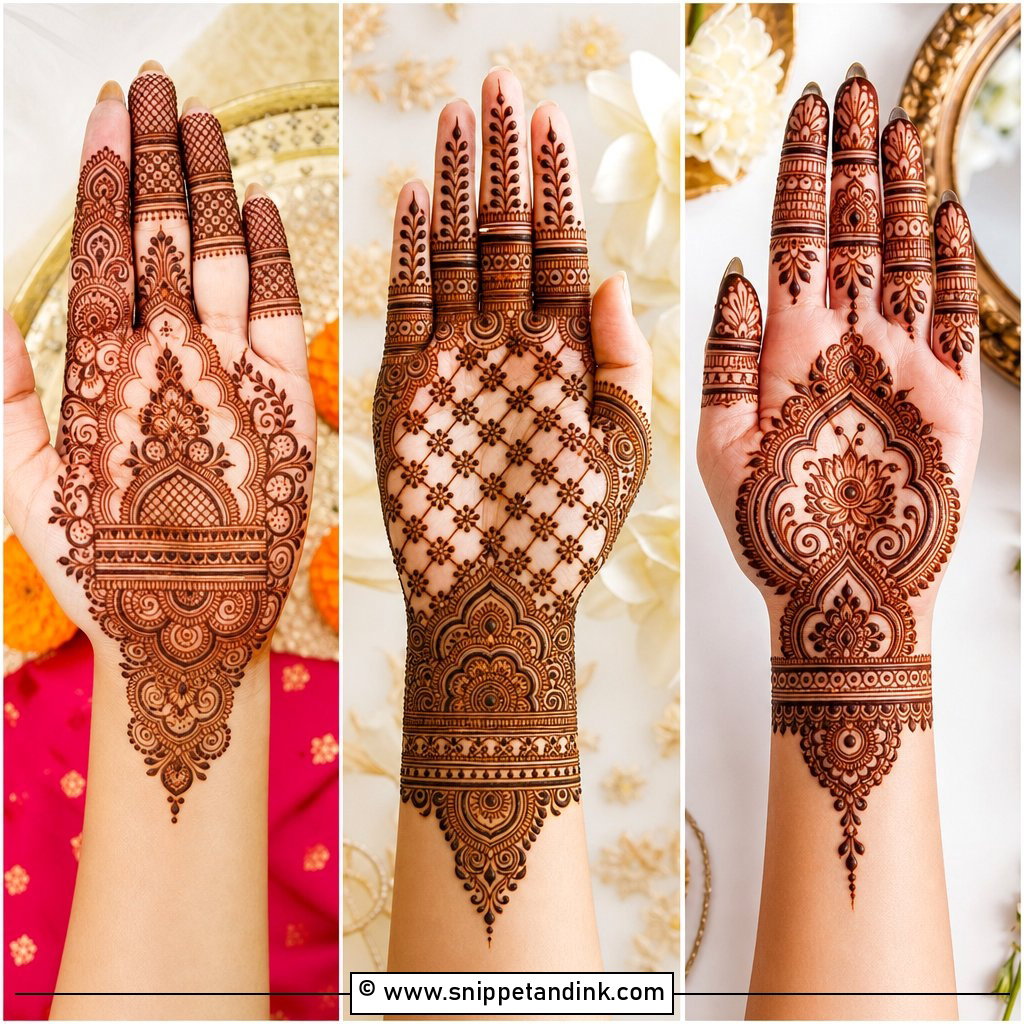
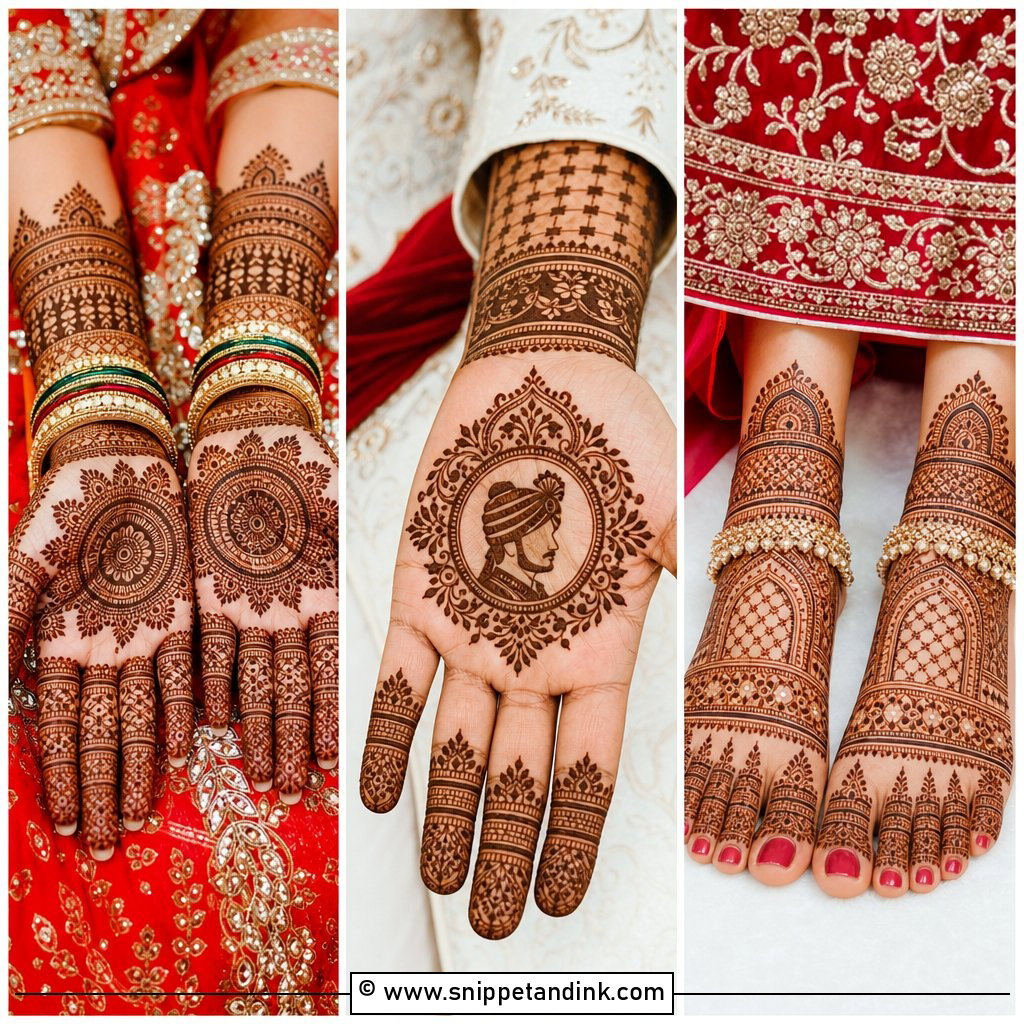


Leave a Reply