
Not every occasion needs henna to the elbow. A compact pattern gives you beautiful henna in the time it takes to drink a cup of tea, and it suits the events where full coverage would feel like too much: an office Eid lunch, a sister’s mehndi night when you’re a guest, Diwali with the family, or a registry ceremony. What I love about small designs is that every line shows. There’s nowhere to hide a shaky petal, so placement and spacing do the work that density does on a bridal hand. Below are 30 compact layouts, palm and back hand, fingers and wrists, with how I’d draw each one and where it tends to go wrong.
Apply It Two Days Early, Not on the Morning
Natural henna doesn’t come off the skin finished. When the paste is first removed, the stain is bright orange, and over the next day or two it oxidizes to reddish brown, sometimes nearly maroon on the palms. A design applied on the morning of an event will still look orange in the photos.
For that reason I book clients a day or two ahead of the occasion. That timing lets the stain reach its deepest color right when it’s needed. Short designs take ten to thirty minutes to draw and dry to the touch in about fifteen to twenty, but the paste should stay on far longer, ideally six hours or overnight, to give the dye time to move into the skin.
Where you place the design also affects how dark it gets. Palms and fingertips have thicker, warmer skin and stain darkest. The back of the hand and the wrist come out a shade or two lighter, which is why I draw lines there slightly bolder.
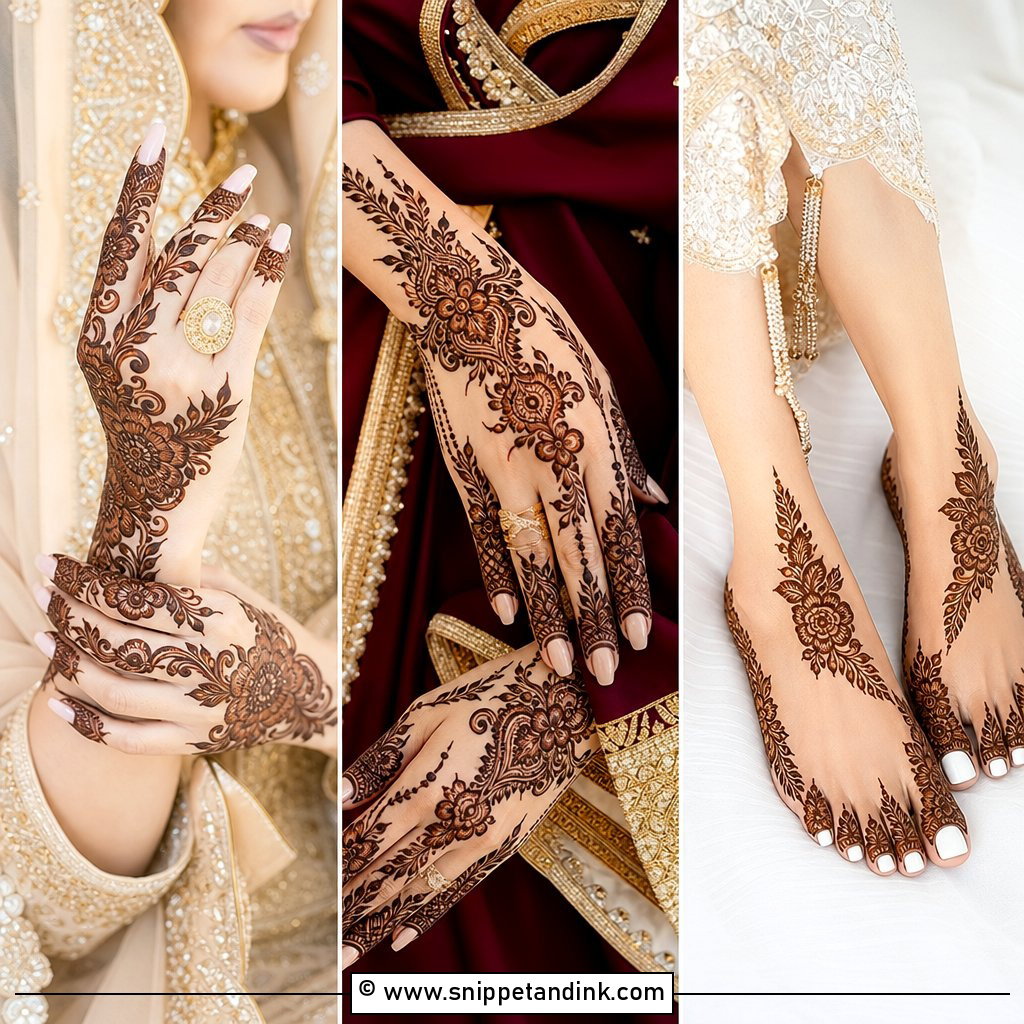
1. Short Front Hand Mehndi Design
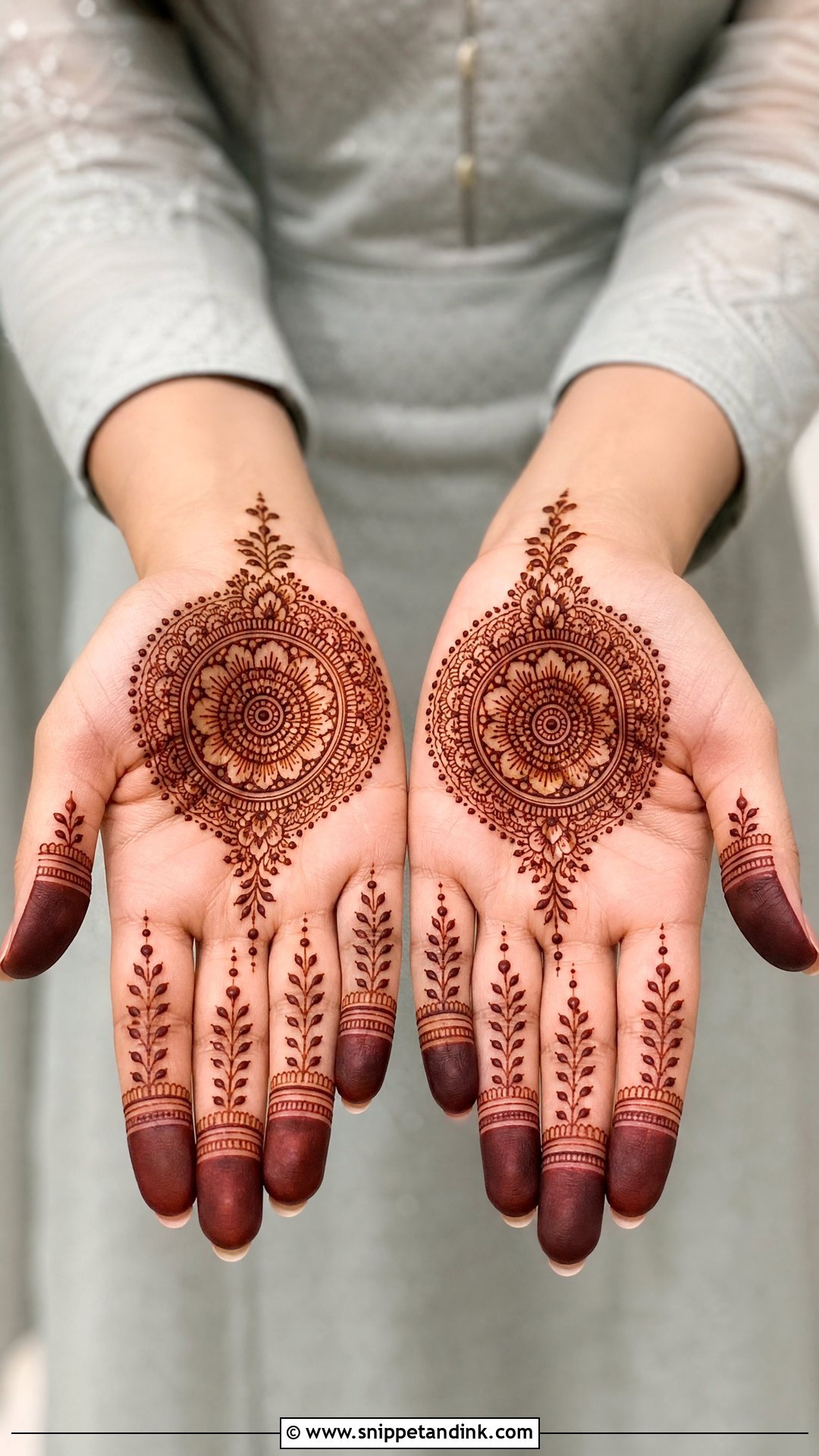
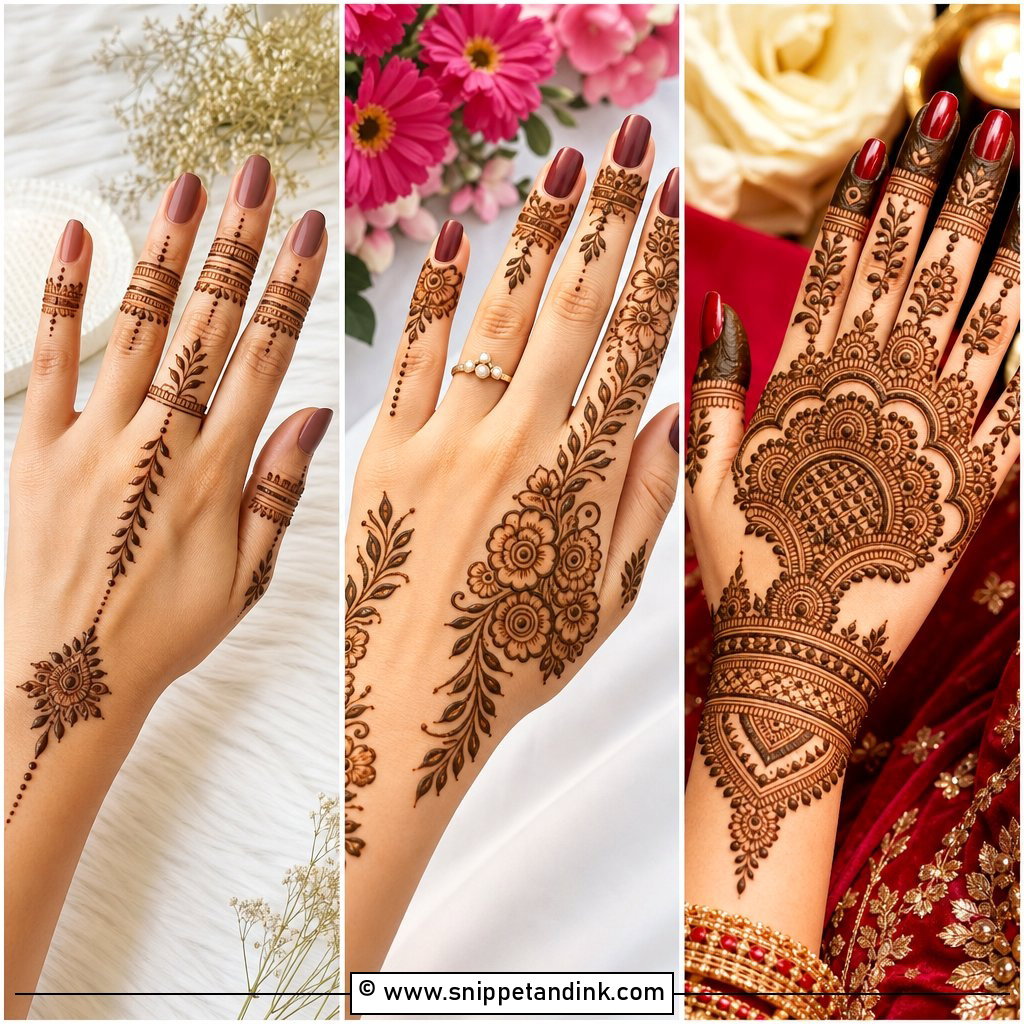
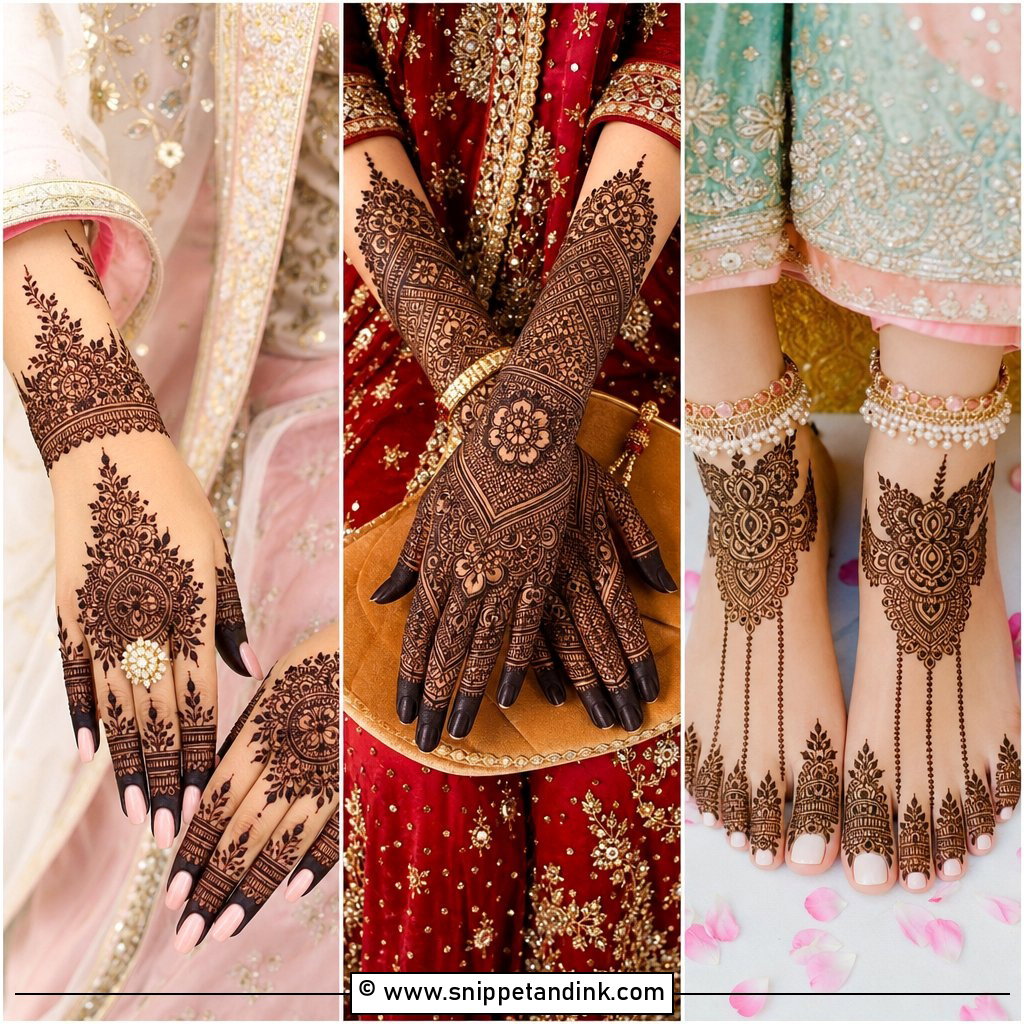
On the front hand, I always start in the center of the palm, because that’s where the eye lands and where the stain comes out darkest. A small mandala, flower or paisley goes there first, then I connect it to the fingers with dots and slim leafy lines. The palm’s thick, warm skin takes henna deeply, so even a modest motif reads strongly once it develops. Keep the finger detail thinner than the center; if both are equally heavy, the hand looks busy rather than finished.
2. Short Back Hand Mehndi Design
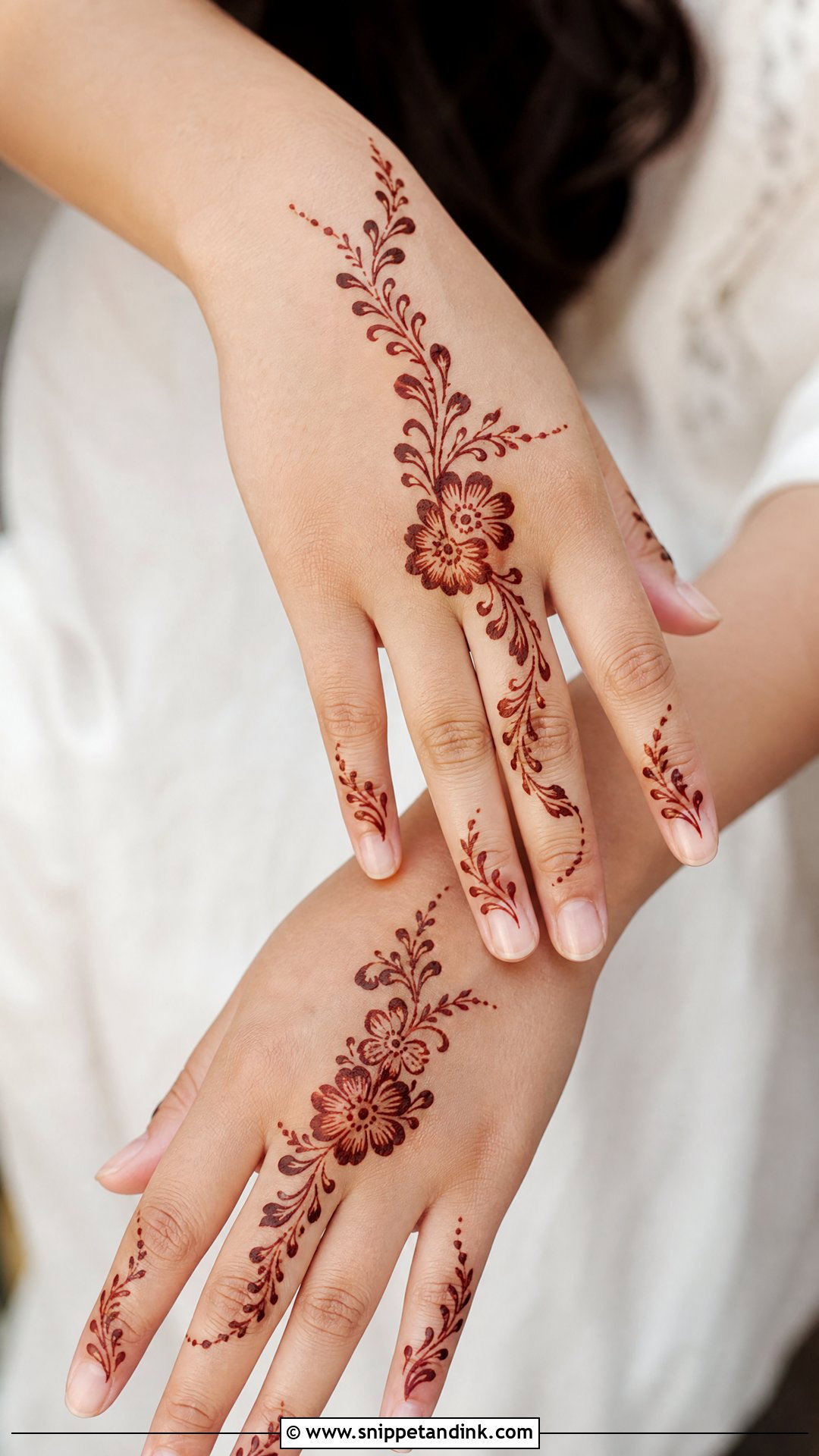
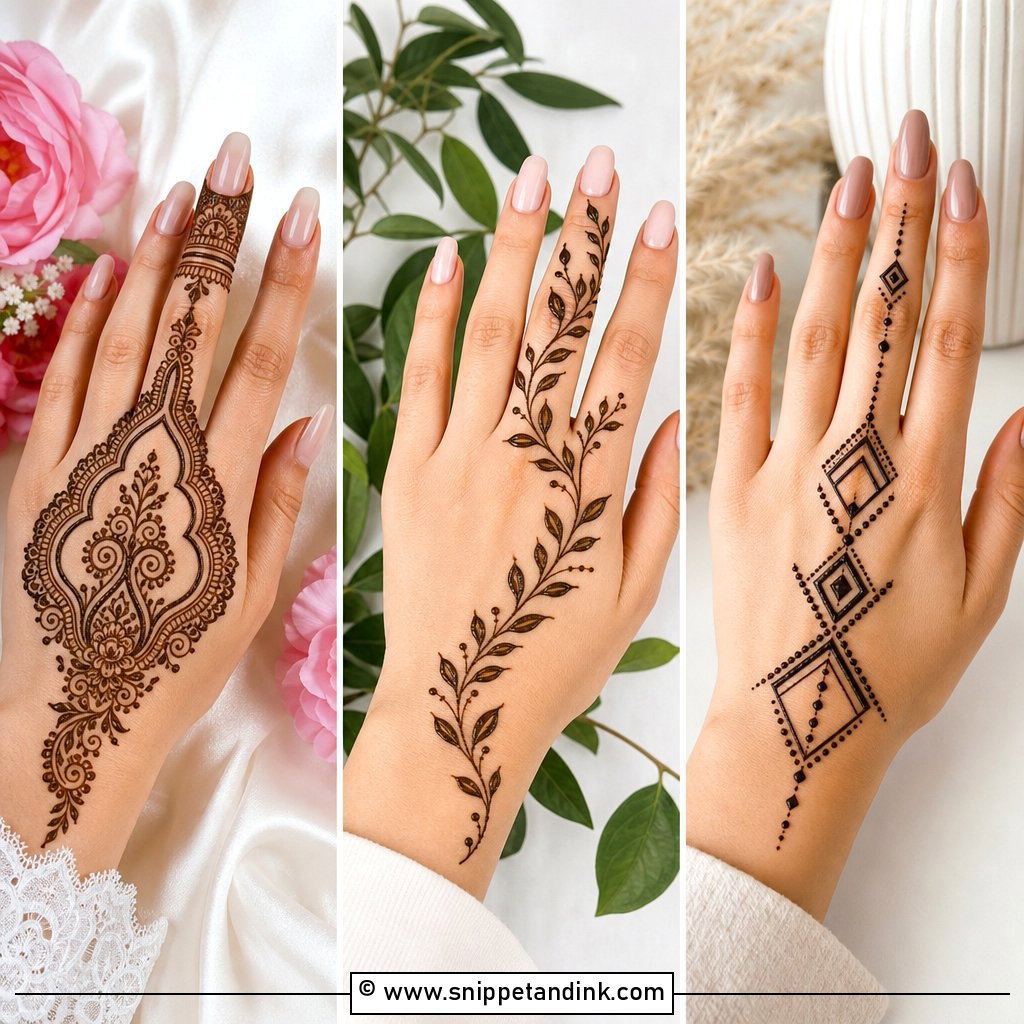
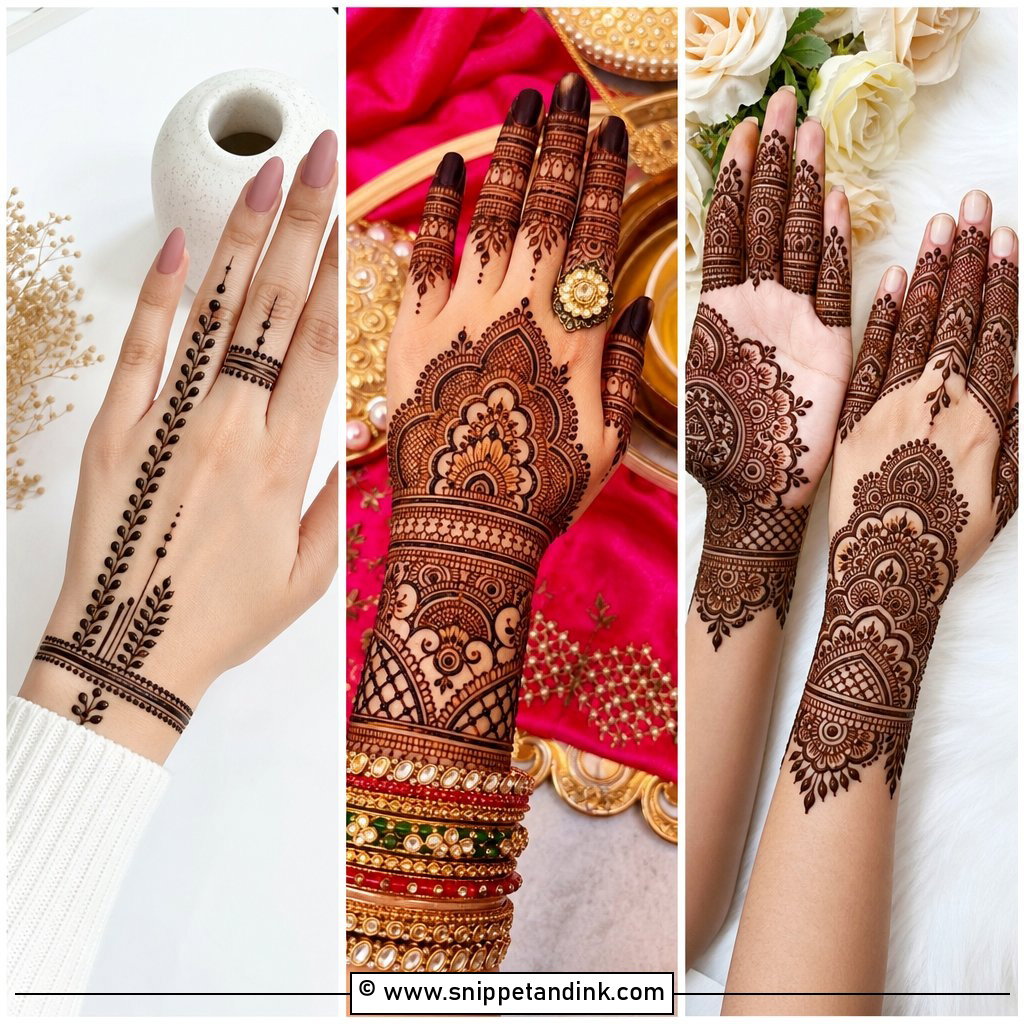
The back of the hand stains lighter than the palm, so I draw back-hand designs with slightly bolder lines to compensate. A small floral cluster near the wrist or center, then a vine running diagonally toward one or two fingers, follows the bones of the hand and makes it look longer. Leave the knuckles open. Henna drawn over knuckle creases cracks as you flex your fingers while it dries, and the stain comes out broken there. Tiny dots and leaves near the finger joints finish it without crowding.
3. Short Arabic Mehndi Design
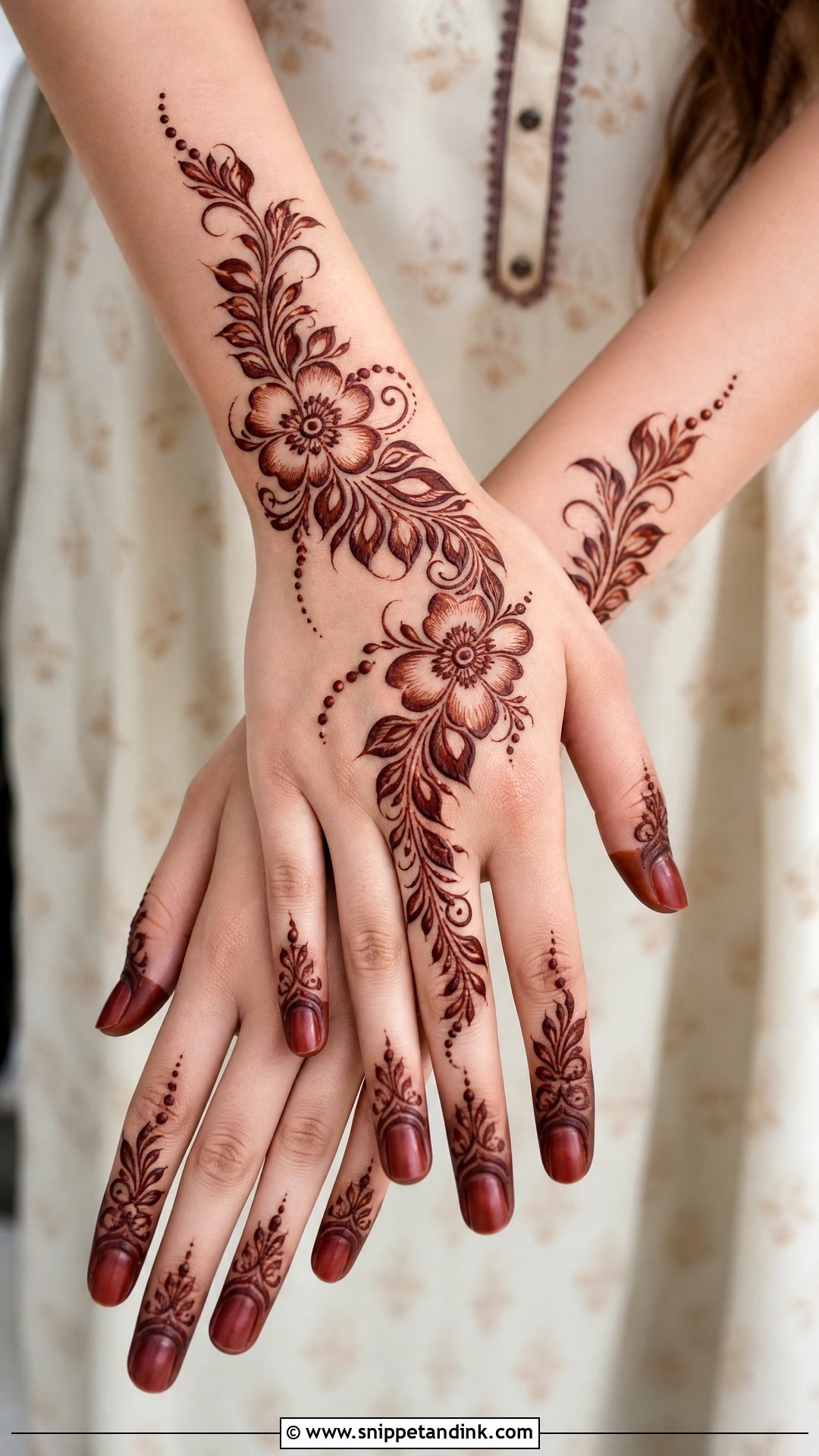
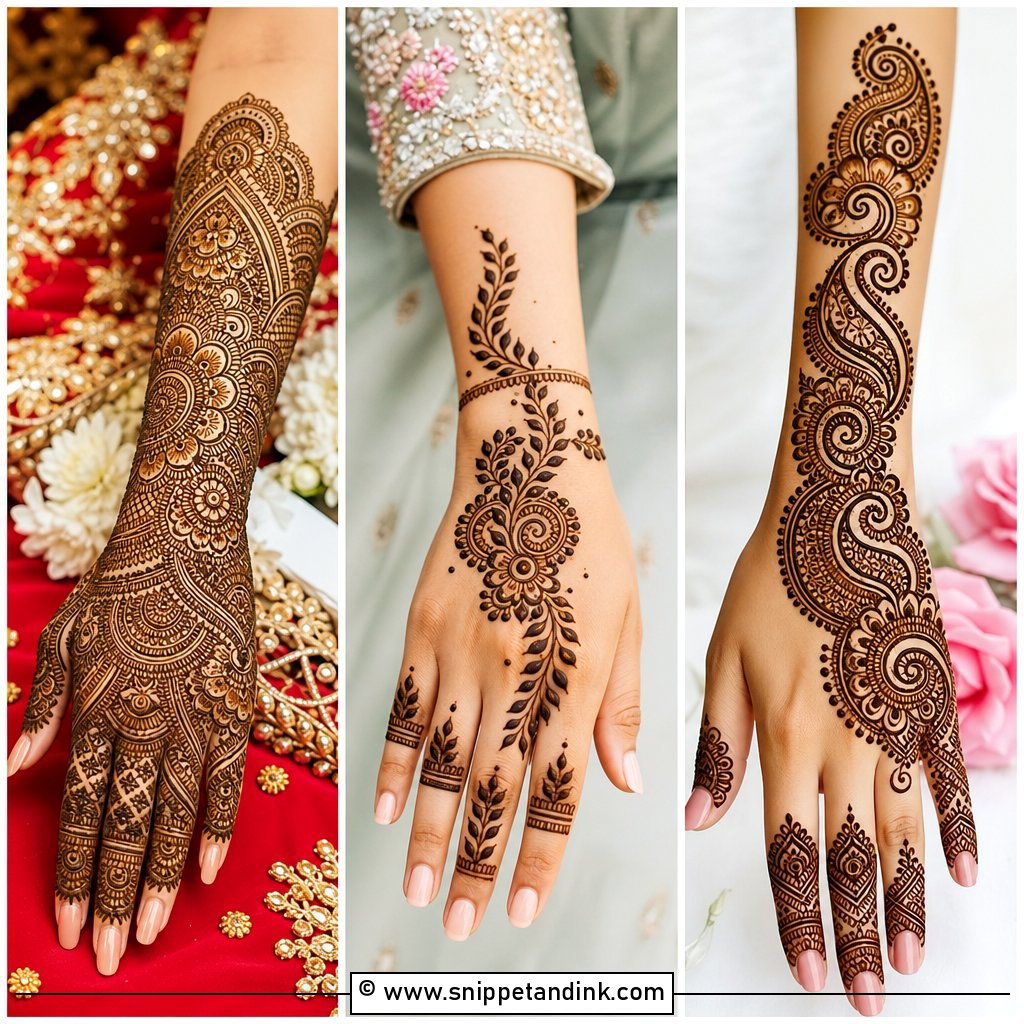
Arabic style is about confident, open flow. I begin near the wrist and pull one curved trail toward the index finger, drawing large petals with a single steady squeeze rather than many small strokes. Shaded leaves are made by filling one half of the leaf with lighter pressure, which gives depth without thick outlines. Beginners find this forgiving because perfect symmetry isn’t expected. The clean gaps of bare skin between motifs are part of the design, so resist filling them.
4. Short Indian Mehndi Design
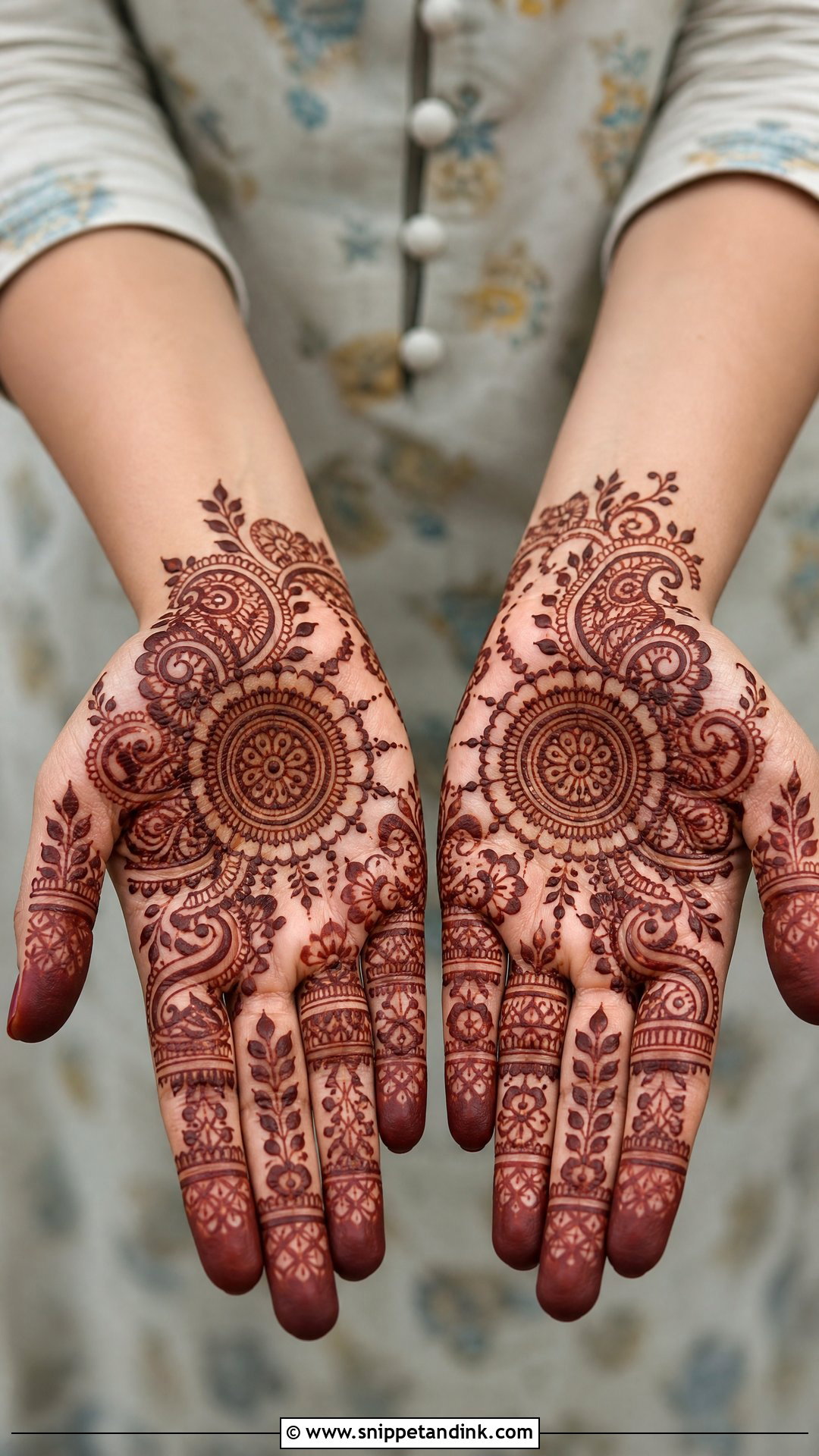
Traditional Indian patterns can stay compact if you pick where the detail goes. I put the richness on the palm and fingers, usually a central mandala ringed with small paisleys and leafy fillers, and keep the wrist simple. Detailed fingertips matter here; a filled tip stains to a deep color and frames the whole hand. This layout suits pujas, Karwa Chauth, Raksha Bandhan and guest mehndi at weddings. It takes longer than an Arabic trail, so allow around half an hour per hand for the fine work.
5. Short Indo-Arabic Mehndi Design
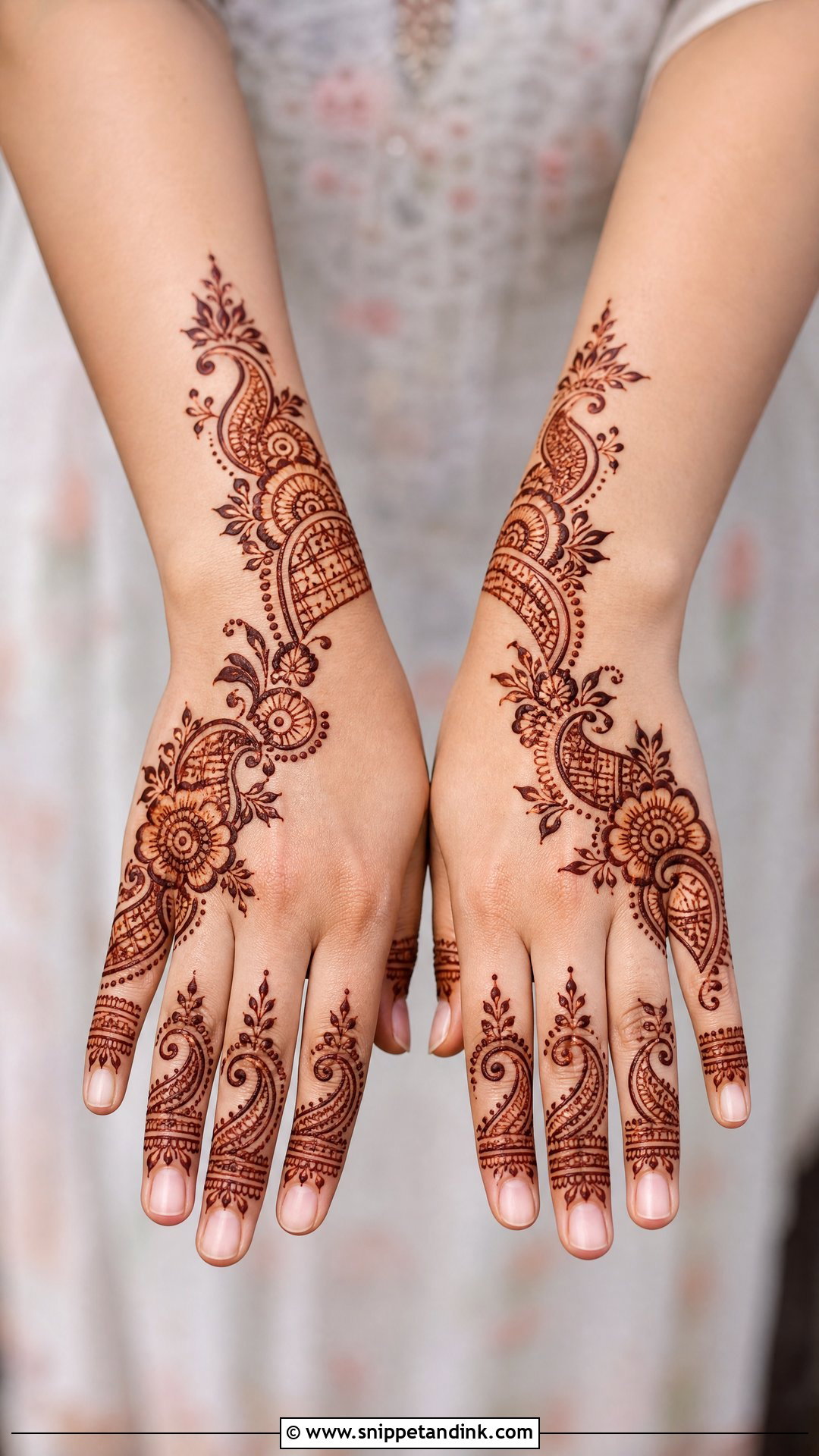
Indo-Arabic blends the bold diagonal of Arabic work with small Indian details: a few jaali squares, fine line fills, a cluster of dots. The mistake I see most is too many disconnected motifs, each pretty on its own but floating on the hand with no link. Choose one main trail and let every detail grow off it. It looks right on the front or back hand and is a popular pick for engagement parties.
6. Short Mandala Mehndi Design
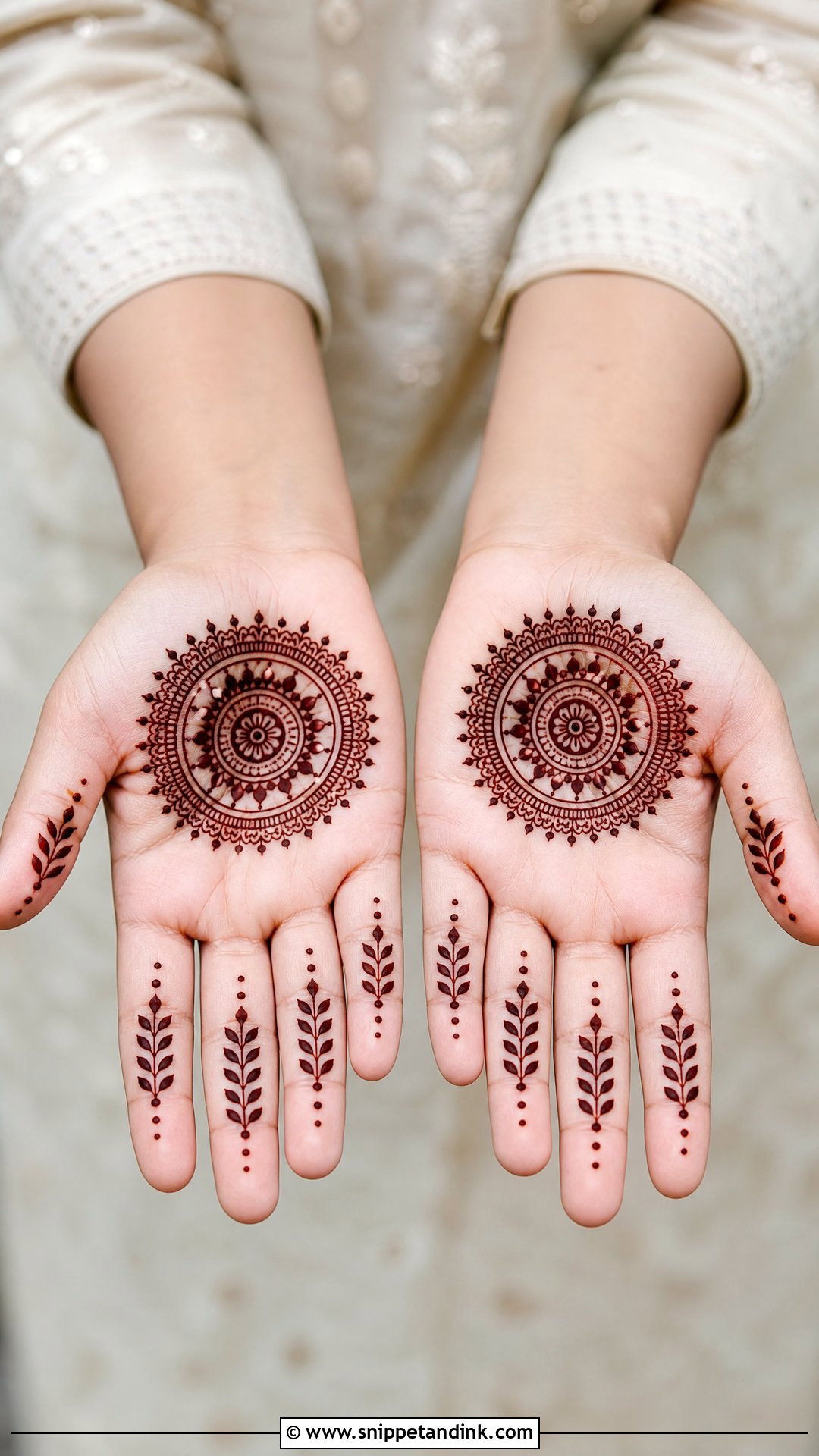
Mandalas reward a steady hand more than a fancy one. I place a small dot where the center will be, then build rings outward, turning the hand rather than my wrist so each circle stays round. The motif sits in the middle of the palm or the back hand, with dots, leaves or fingertip details around it. Leaving the wrist empty and decorating the fingers lightly gives it a modern feel. If the rings come out slightly oval, that’s normal on a cupped palm; it straightens once the hand relaxes.
7. Short Floral Mehndi Design
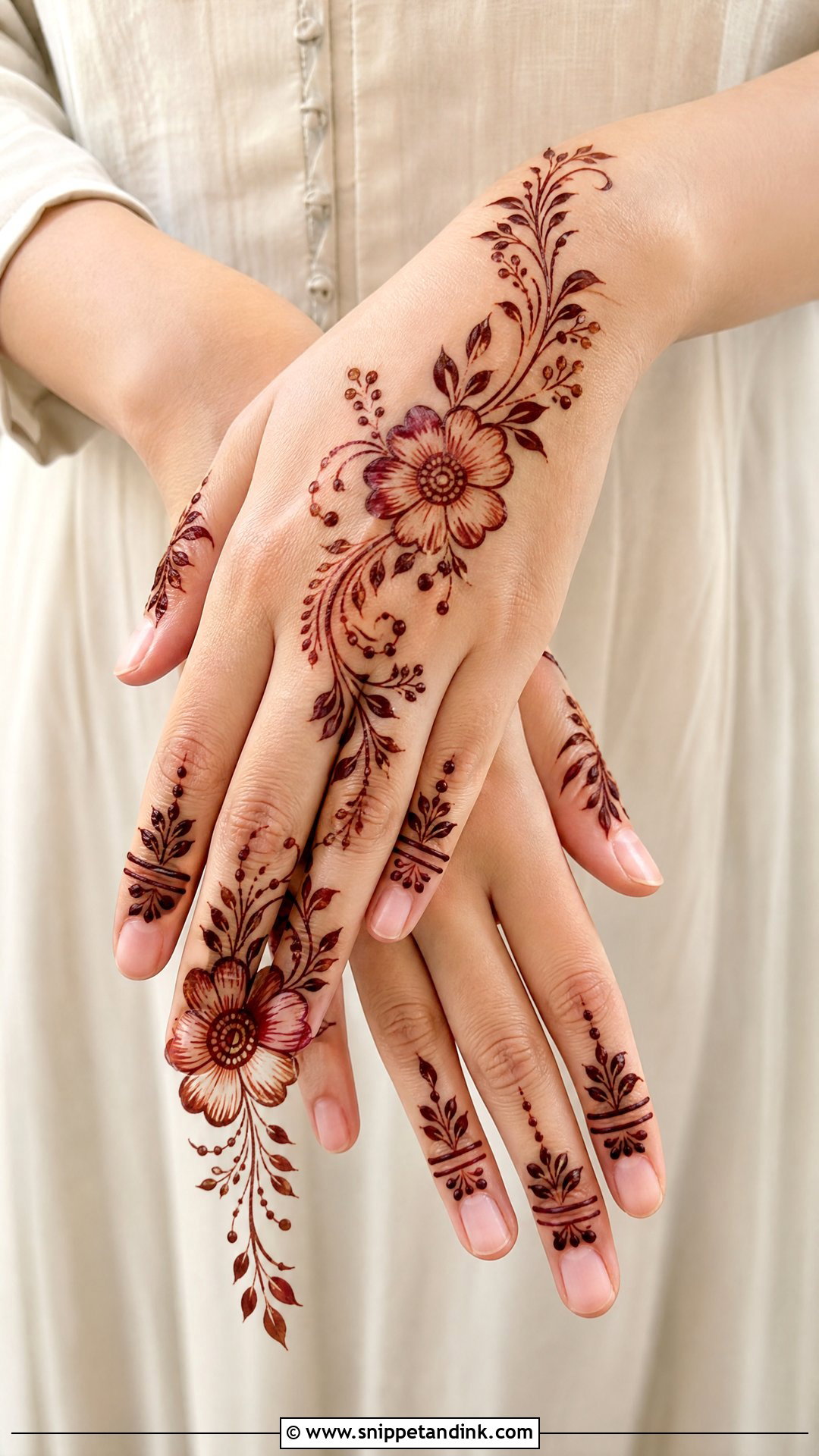
Flowers are the motif most people ask for, and they stain beautifully because petals hold a thick line of paste. I draw one or two medium blooms, small buds and leafy stems, then link them with a curved vine so they don’t look stamped on. They sit well on the palm, the back of the hand, the side of the hand or the wrist. Finish the fingers with small leaves or fingertip caps. Petals drawn too close together tend to merge as the paste spreads, so I leave a hair’s width between them.
8. Short Paisley Mehndi Design
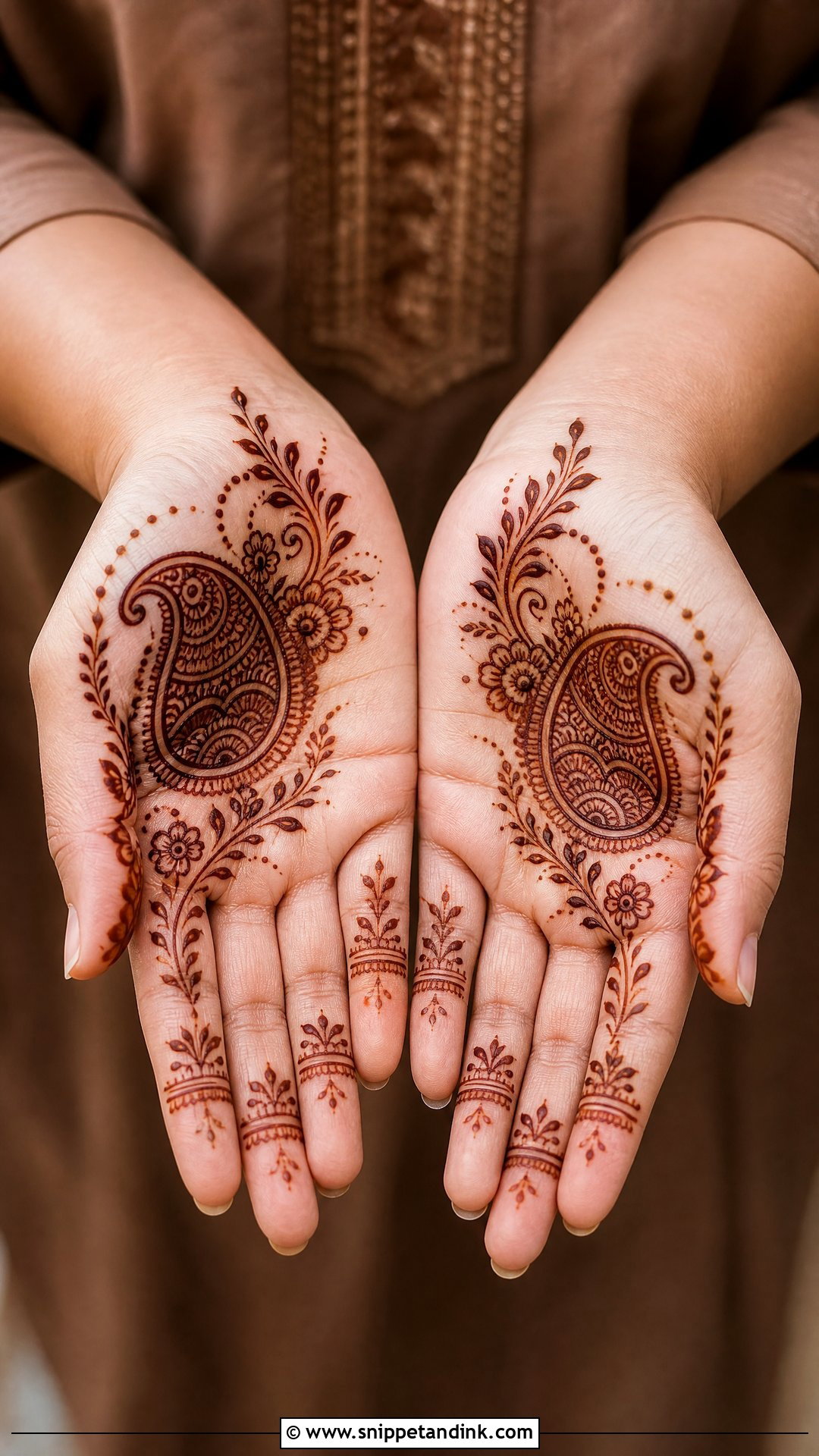
A paisley is a teardrop with a curl, and it carries tradition in a very small space. I draw one bold outline on the palm or back hand and fill the inside with lines, dots or a tiny flower, keeping that inner detail finer than the outline. A soft trail of small vines toward the fingers, or a simple wrist border, gives balance. Overfilled paisleys blur into a dark blob once stained, which is the most common way this design loses its shape.
9. Short Finger Mehndi Design
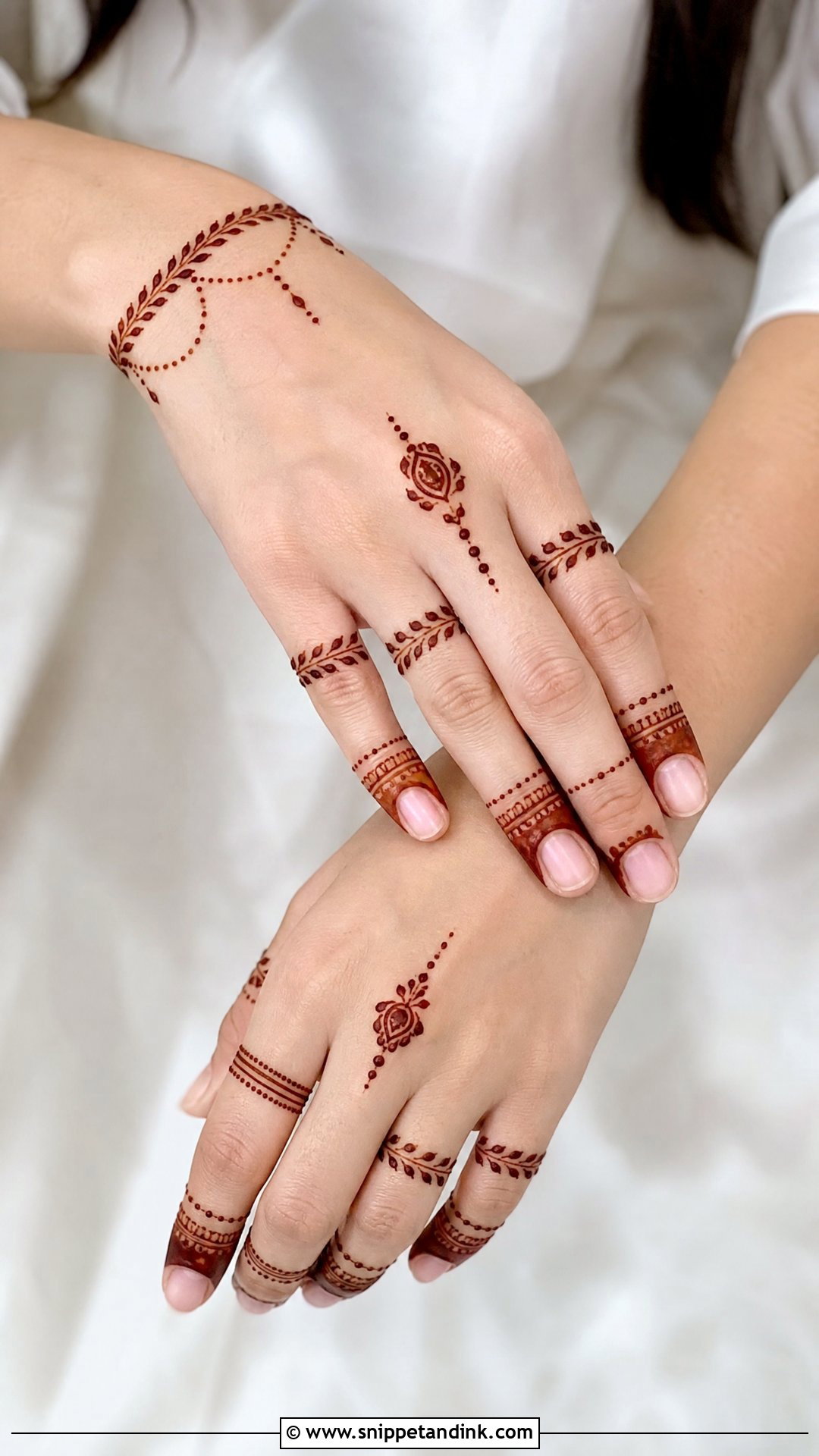
Finger-only designs read like henna rings, and they’re my suggestion for anyone who works with their hands or dislikes a stained palm. Leafy rings, dotted chains, fingertip caps and slim geometric bands all suit. Fingers stain very deeply, so even fine bands show well. Coordinate the pattern across all fingers; random designs on each finger look accidental. A tiny wrist bracelet or a central dot motif ties the hand together.
10. Short Wrist Mehndi Design
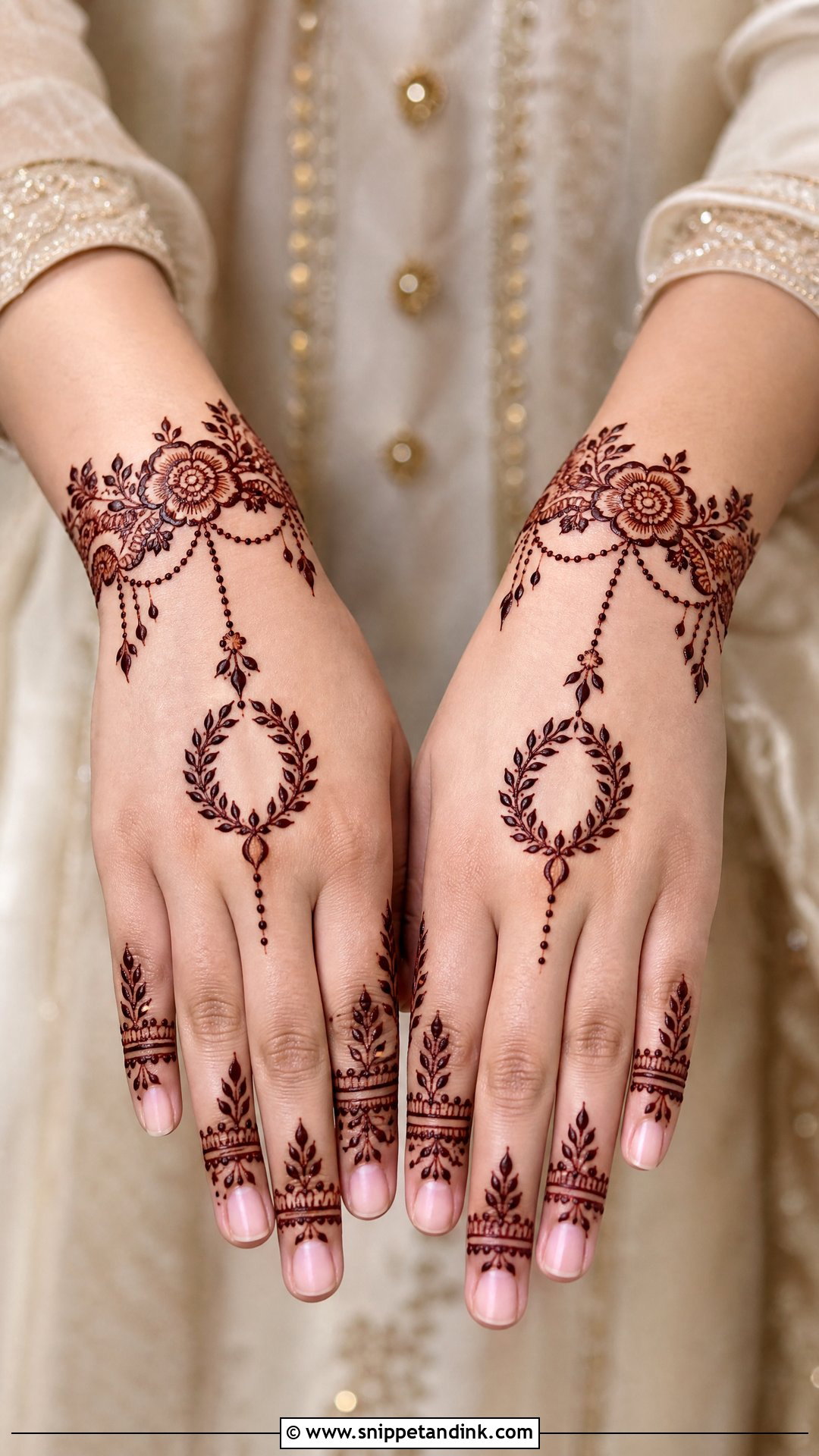
A wrist band is harder than it looks, because the wrist is round and the line has to meet itself evenly. I turn the arm slowly as I draw rather than reaching around it. Floral bands, leafy chains or fine jaali strips all work, and a thin vine running to one finger creates a haathphool look. The wrist stains lighter than the palm, so slightly thicker lines help. A small hanging motif or a dotted chain below the band adds grace without weight.
11. Short Tikki Mehndi Design
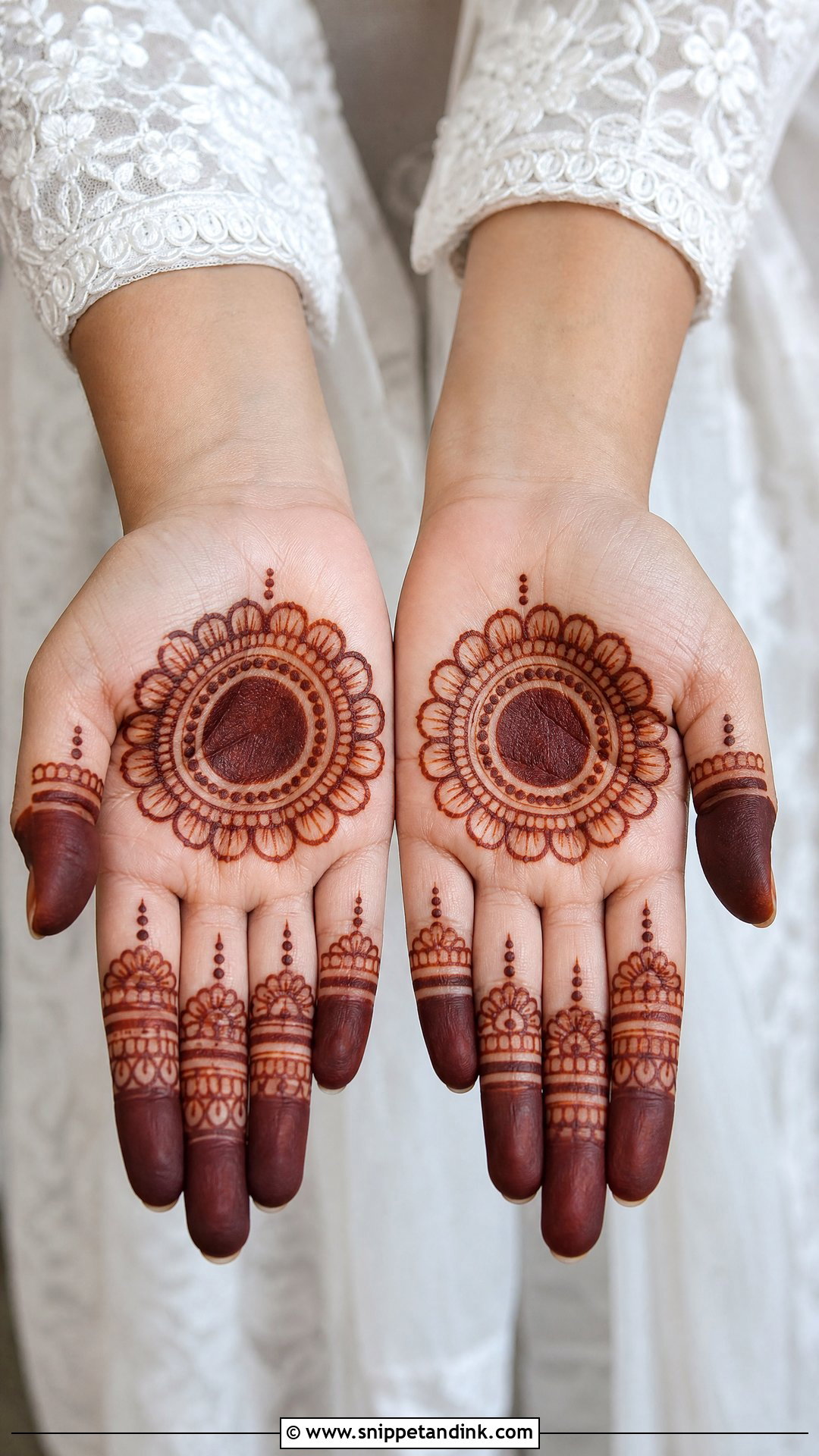
The tikki is the round motif in the middle of the palm, and it’s one of the oldest layouts I draw. A central circle decorated with petals, dots and curved lines, with matching bands or capped tips on the fingers. Its strength is the stain: the circle becomes bold and clear once it develops. A thin leafy outline around the tikki and plenty of open skin keep it neat. Draw the circle in one smooth pass if you can; restarting leaves a visible join.
12. Short Simple Mehndi Design
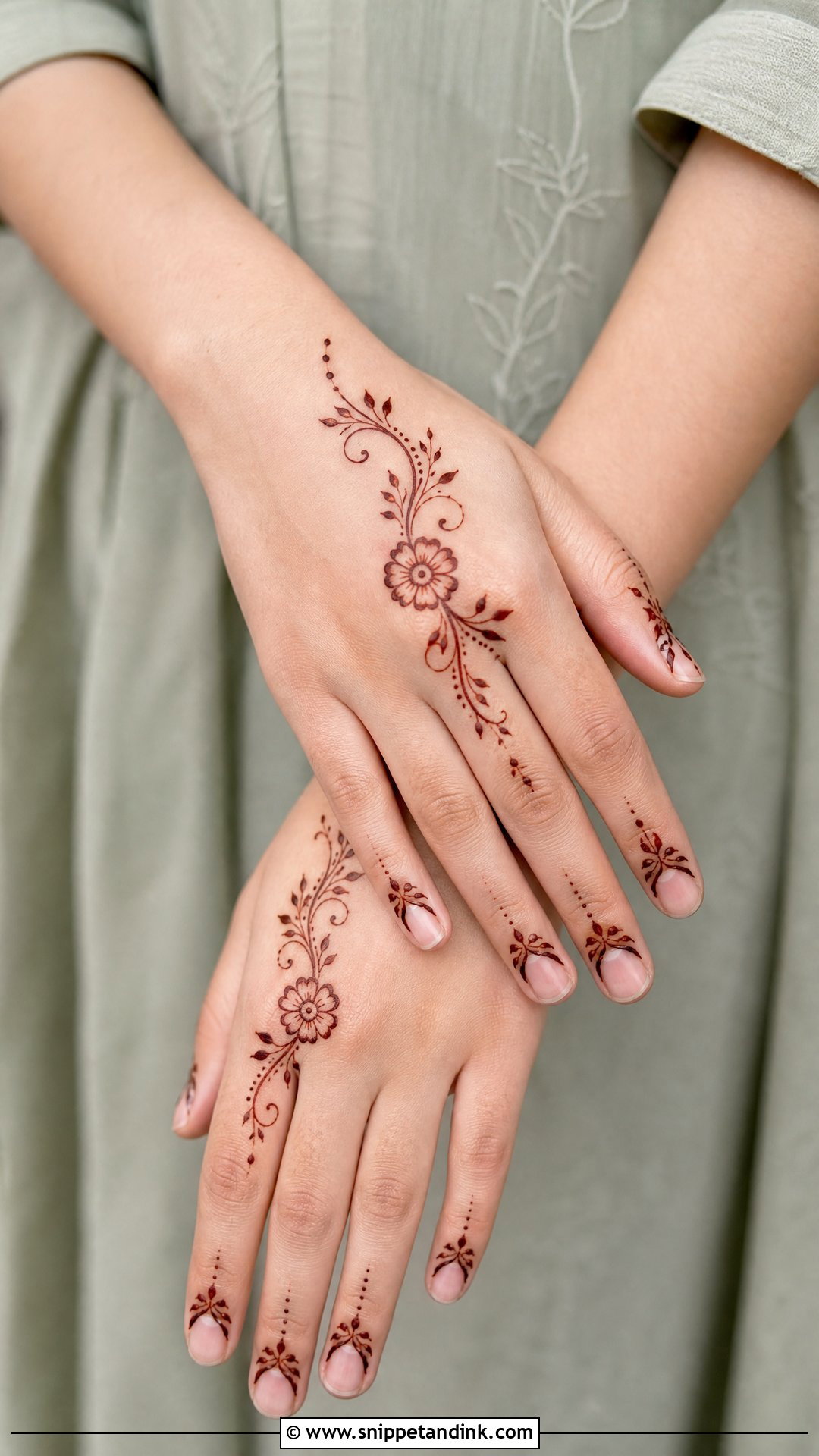
Simple doesn’t mean unfinished. I choose one main motif and support it with two or three smaller details, then stop. Small flowers, dots, leaves, arches and curved trails are all the vocabulary you need, on the palm, back of the hand or side. The clean skin gaps are what make it look fresh. It suits daily wear, school functions and small family events.
13. Short Easy Mehndi Design
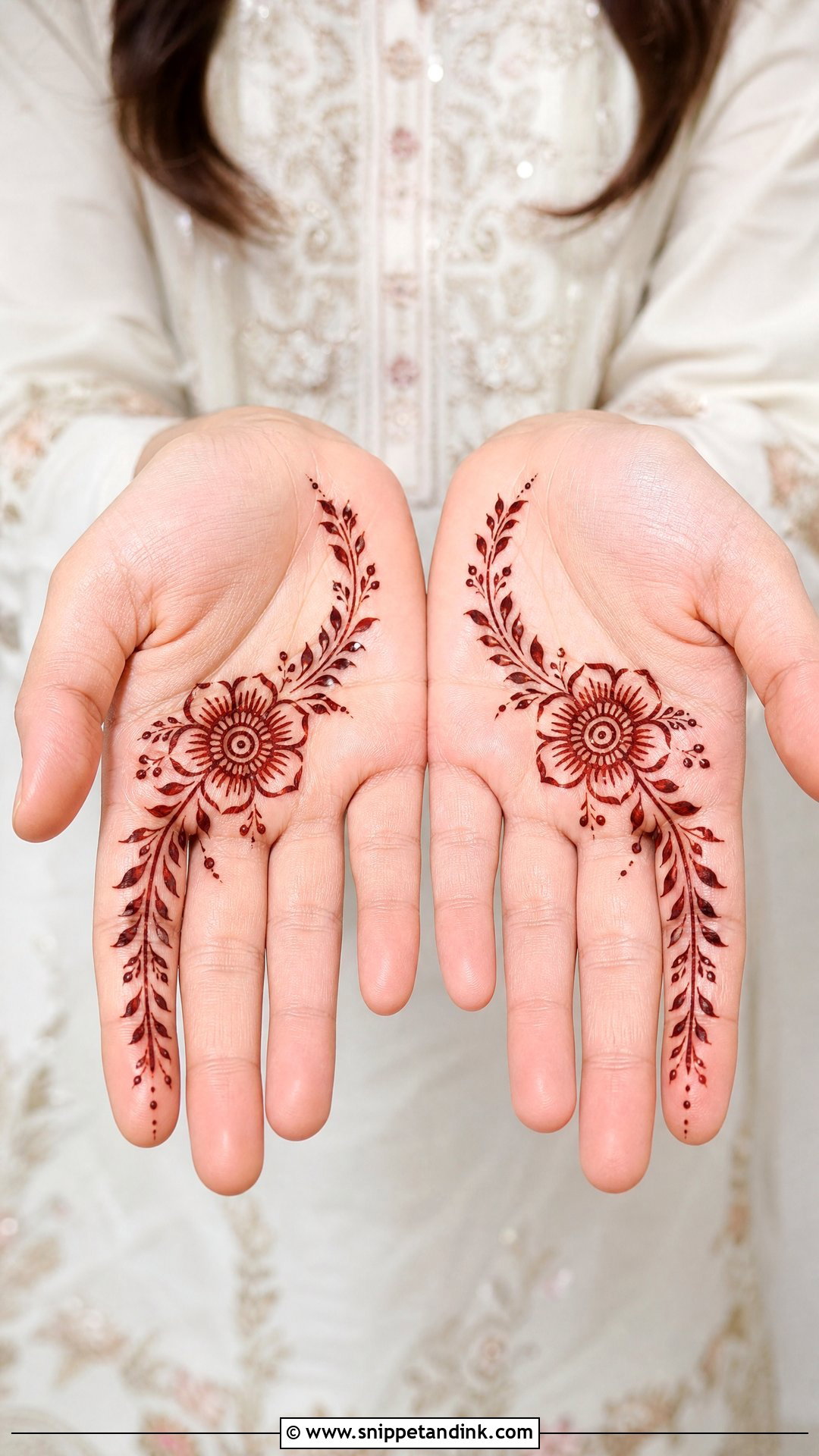
Need something quick before a celebration? Start with a medium flower or mandala, add curved lines, dots and tiny leaves, and decorate only two fingers to save time. Steady cone pressure matters more than skill here. I squeeze gently and draw slowly; a clean outline beats a crowded design every time. If the paste comes out in blobs, the cone tip is cut too wide, and a fresh cone fixes more than practice does.
14. Short Bridal Mehndi Design
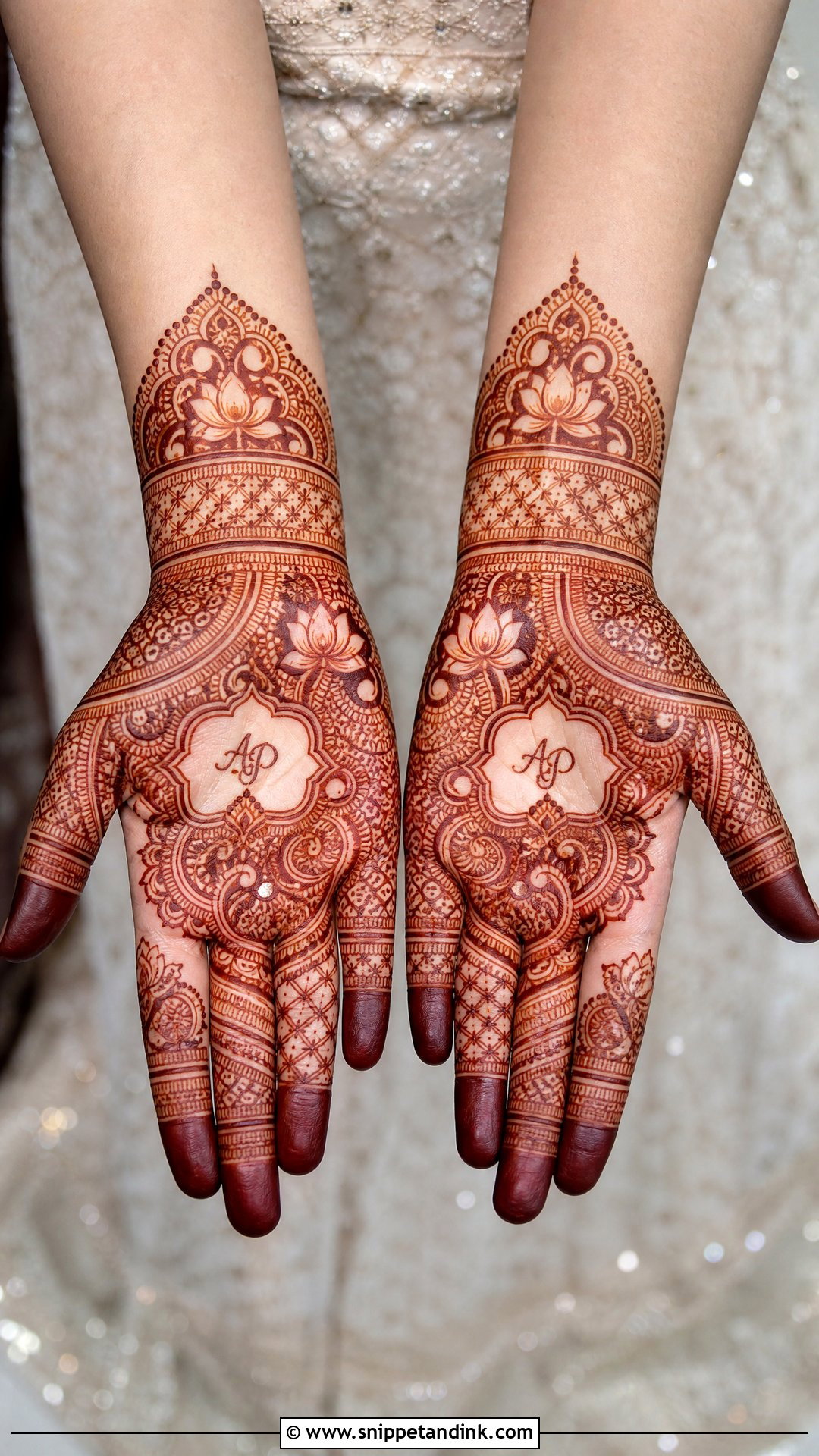
Plenty of brides now ask for compact bridal work, especially for a second event or a smaller ceremony. Paisleys, lotus, jaali, hearts, initials or a small peacock fit into a smaller area if they’re drawn with bridal density. It might cover the palm and stop at the wrist, or run as a rich trail on the back of the hand. It also suits engagement, registry ceremonies and pre-wedding events. My rule for short bridal work is detailed motifs in a small area rather than light patterns spread thin. Initials hidden in the design are a sweet touch, and the couple enjoys finding them.
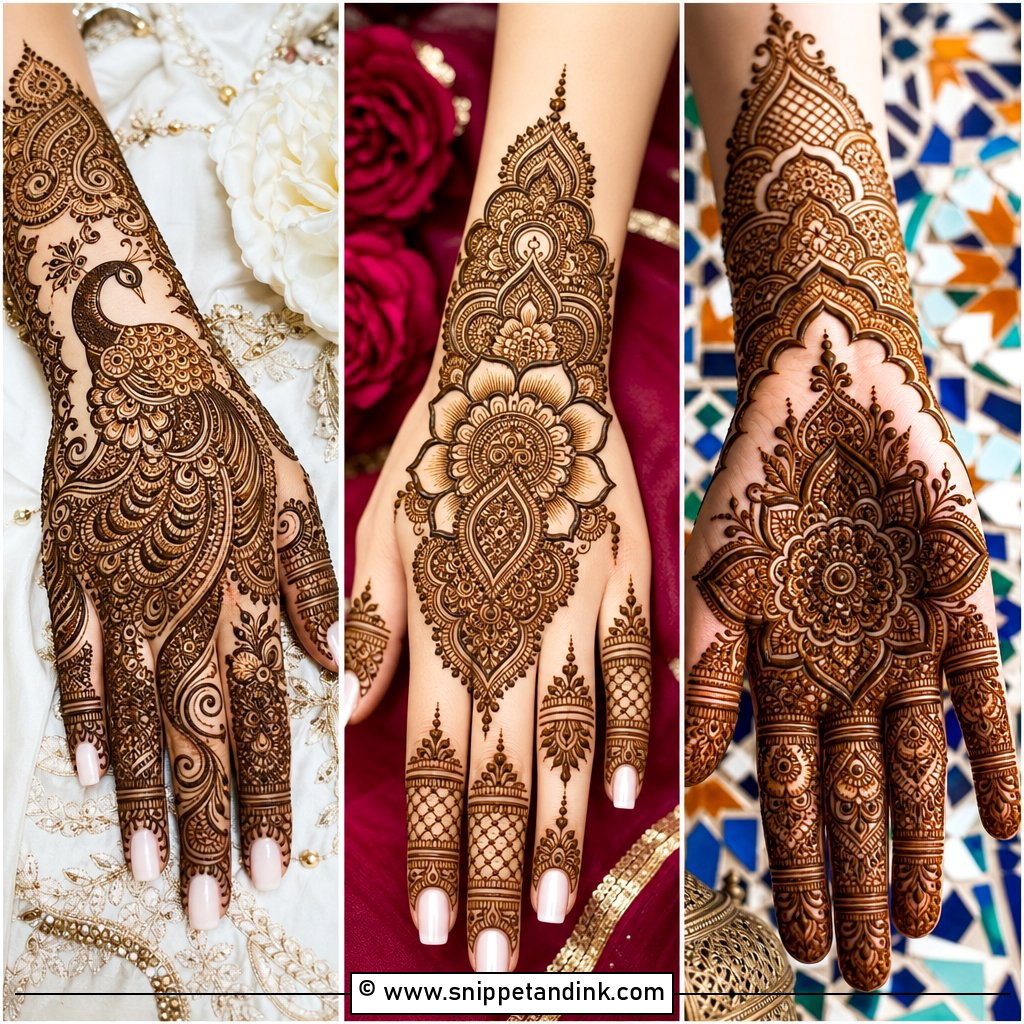
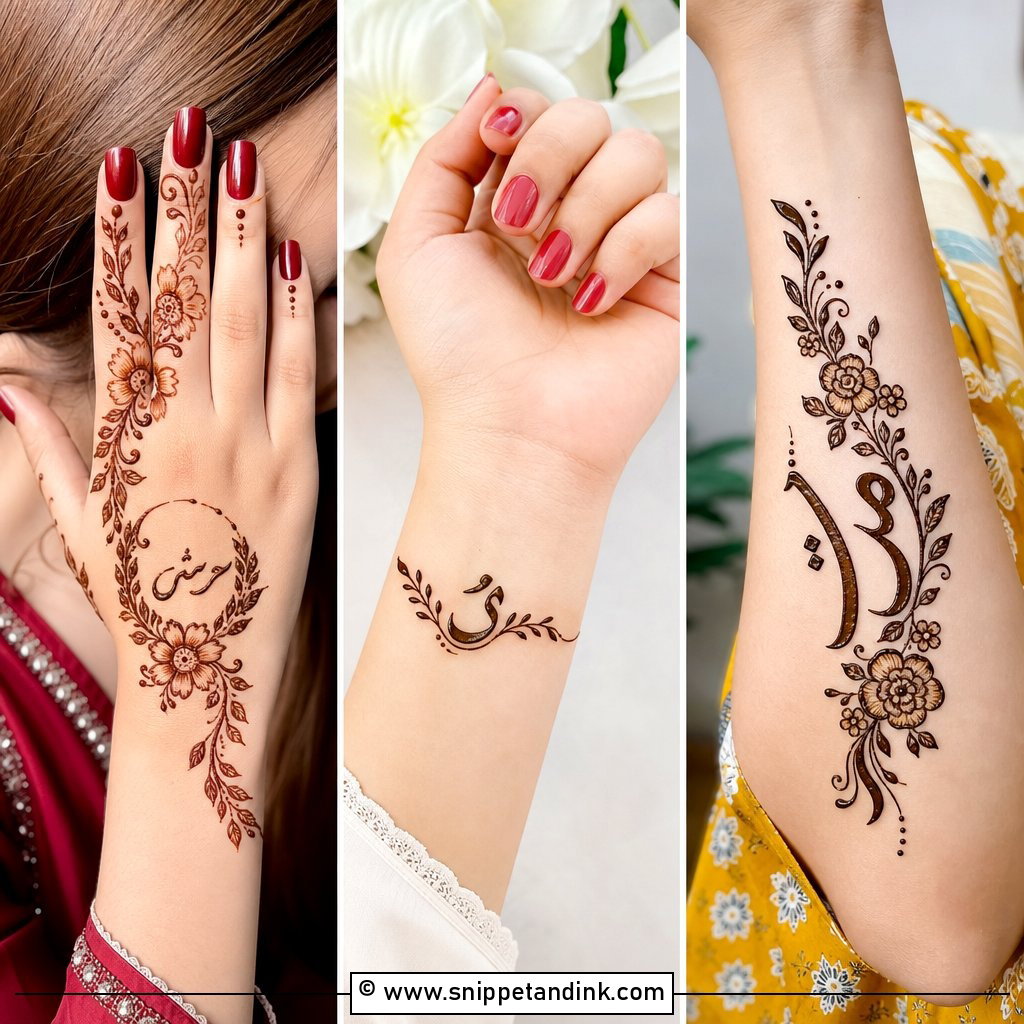
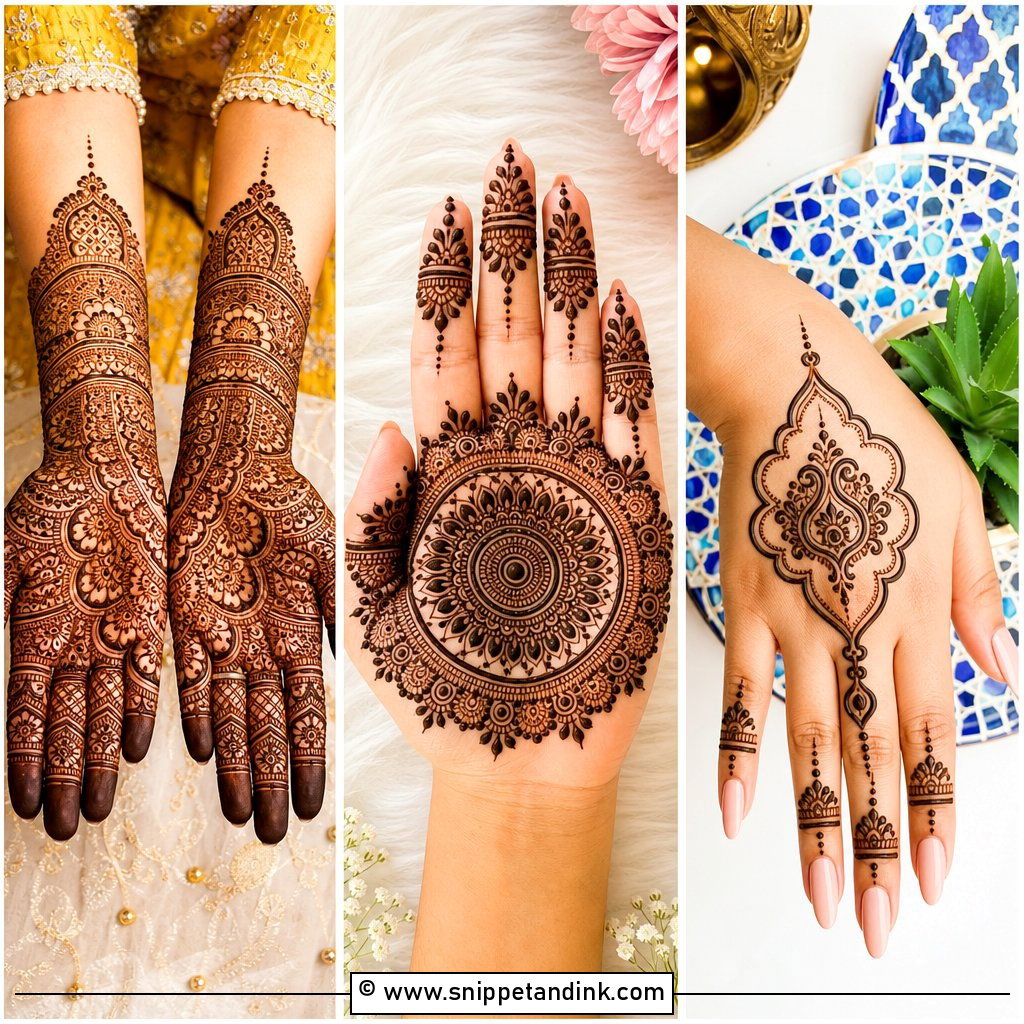
15. Short Eid Mehndi Design
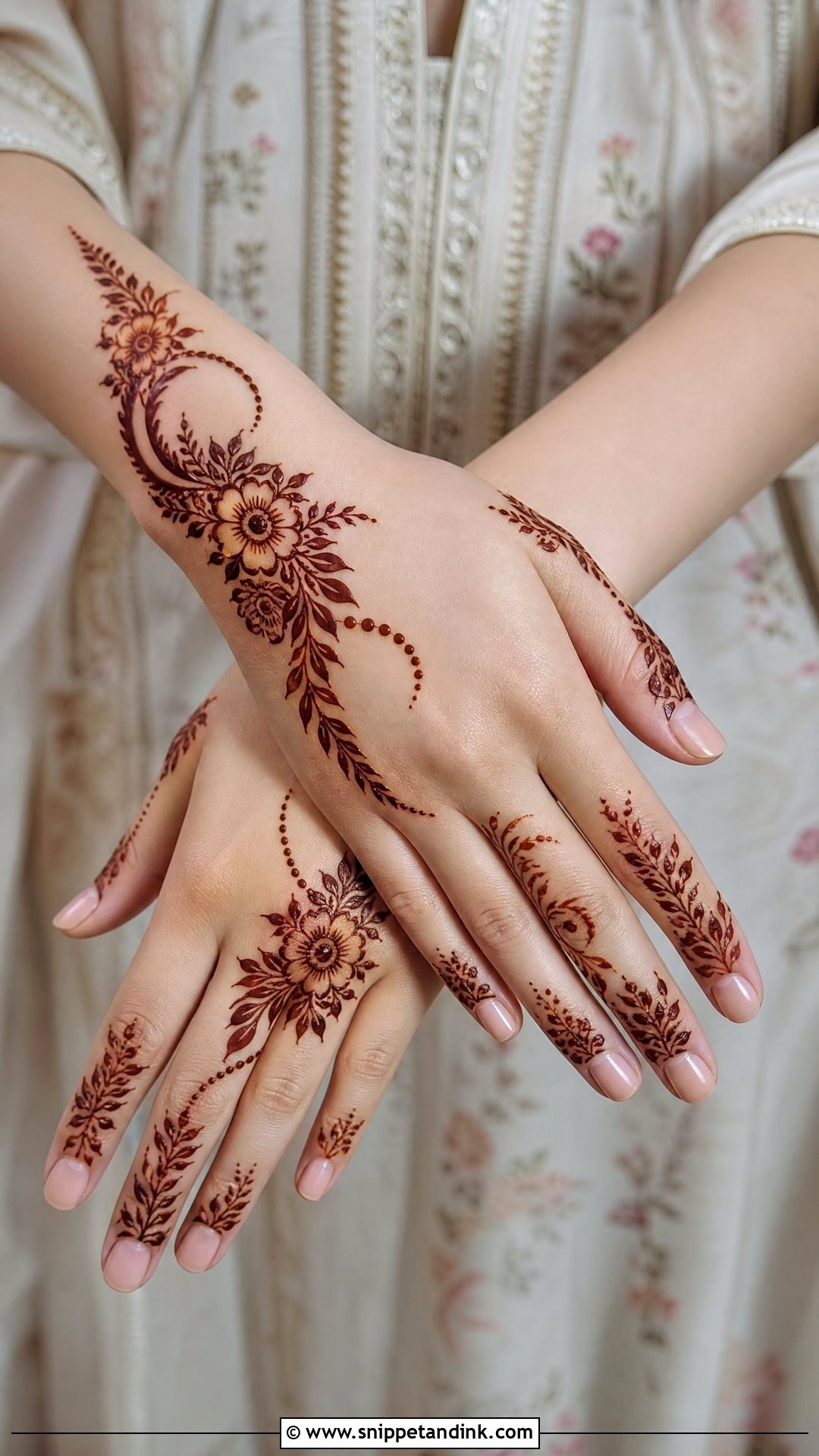
Most families apply Eid henna on Chaand Raat, the night before, and that timing works: the stain darkens overnight and is warm brown by the morning prayers. A day earlier gives an even deeper color for the afternoon visits. A diagonal flower trail on the back of the hand is my most requested Eid design, because it leaves room for bangles and detailed sleeves. Mandala palms, finger bands and bracelet patterns suit too, and moon-like curves add a festive note. Keep the paste on as long as you can sleep with it.
16. Short Diwali Mehndi Design
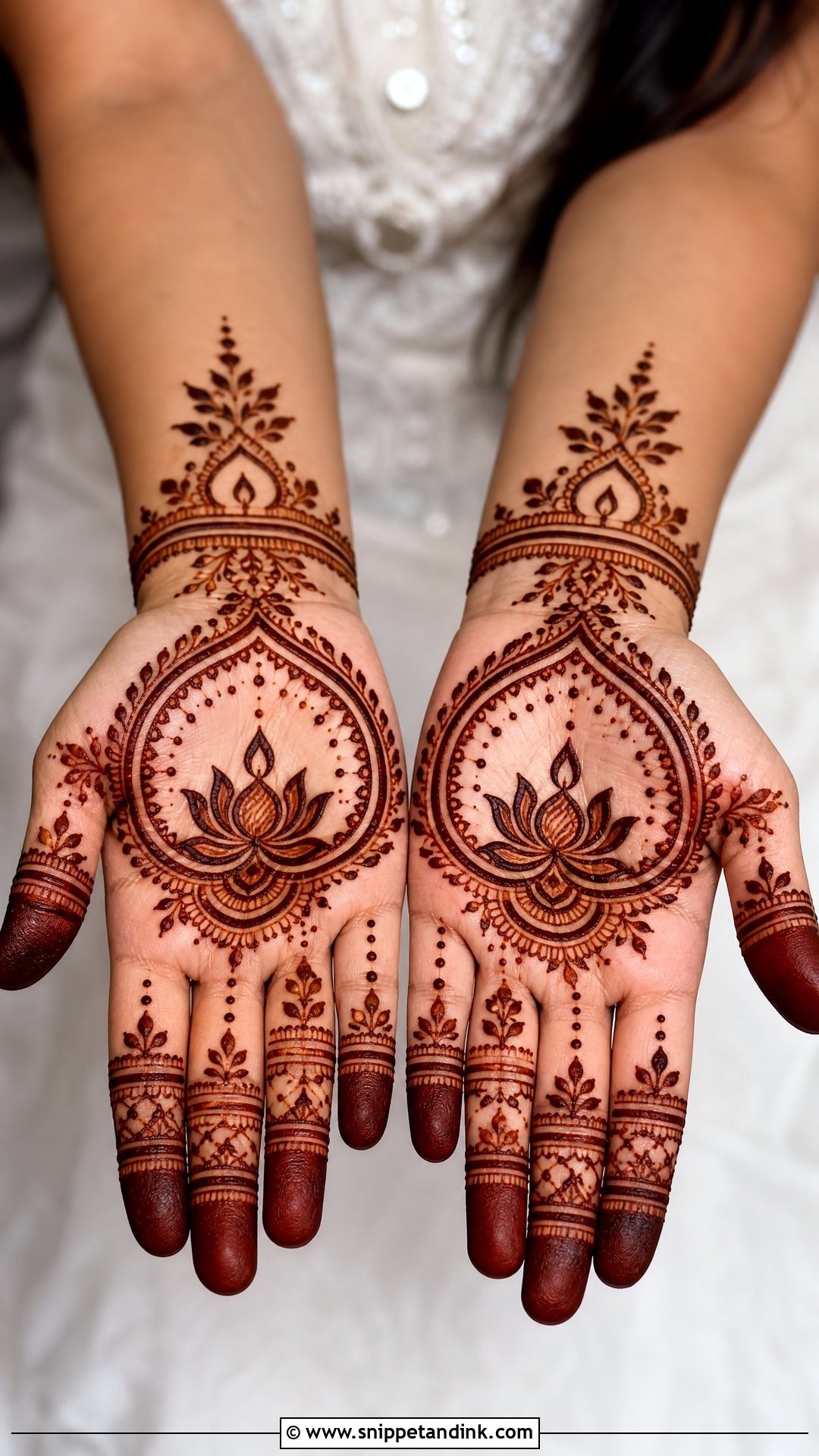
Diwali designs lean traditional: a small mandala, lotus, paisley or diya layout on the palm or back of the hand. You don’t need full coverage to feel festive. Dots can echo the little lamps, and curved borders frame the main motif. With Diwali cleaning and cooking, hands are in water a lot, which fades henna fast, so I keep lines a little thicker than usual for a design that has to survive the week. Let the main motif shine and the smaller details frame it.
17. Short Engagement Mehndi Design
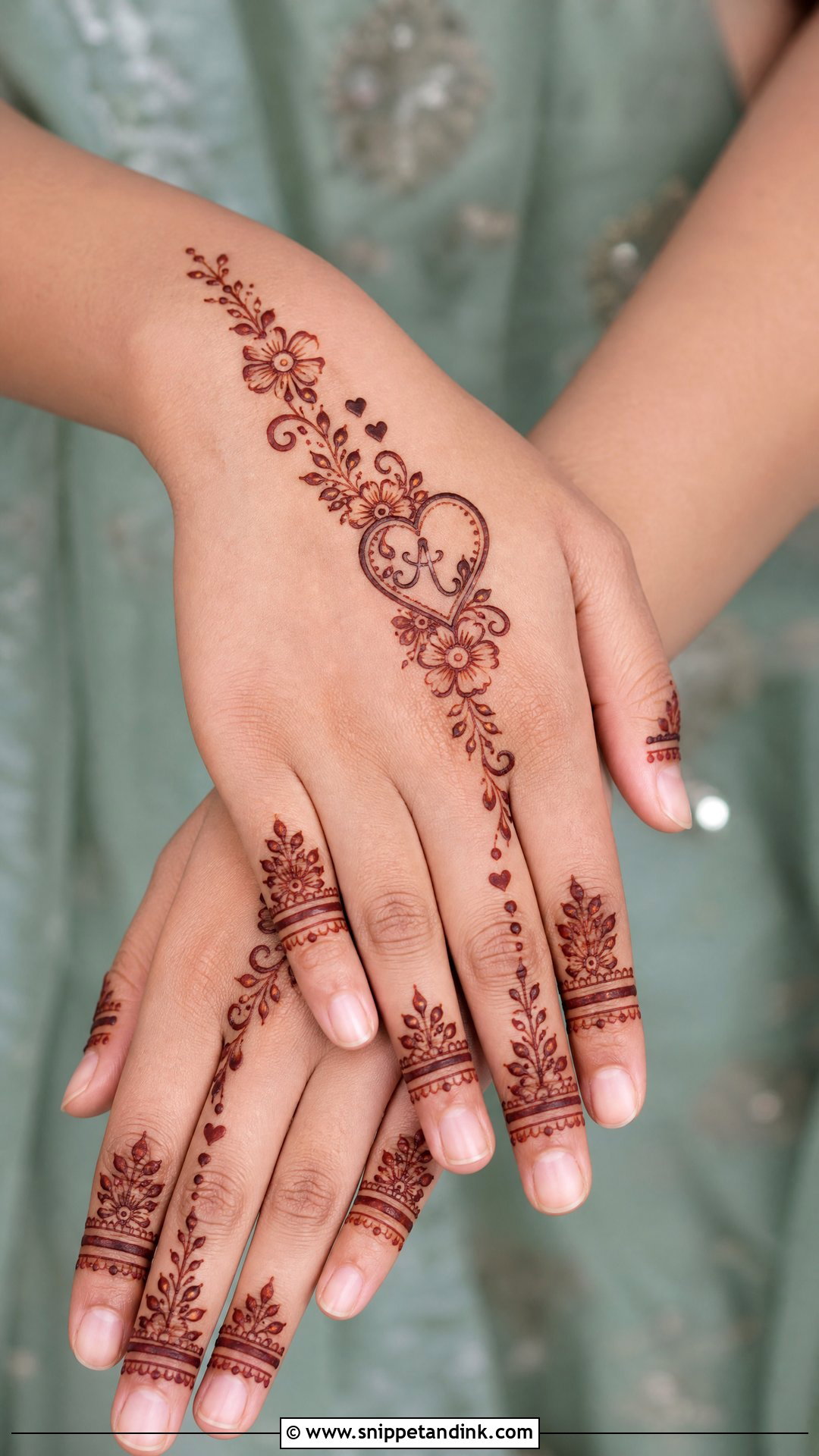
Engagement mehndi has one job: it has to look good next to the ring. That’s why I usually draw it on the back of the hand. A delicate floral trail, a bracelet pattern or a finger-focused design keeps the ring finger’s base clear so the ring isn’t lost in the pattern. Tiny hearts, initials or a soft mandala near the wrist add romance. Keep the fingers detailed and the back of the hand open enough for jewelry to stand out in close-up photos.
18. Short Party Mehndi Design
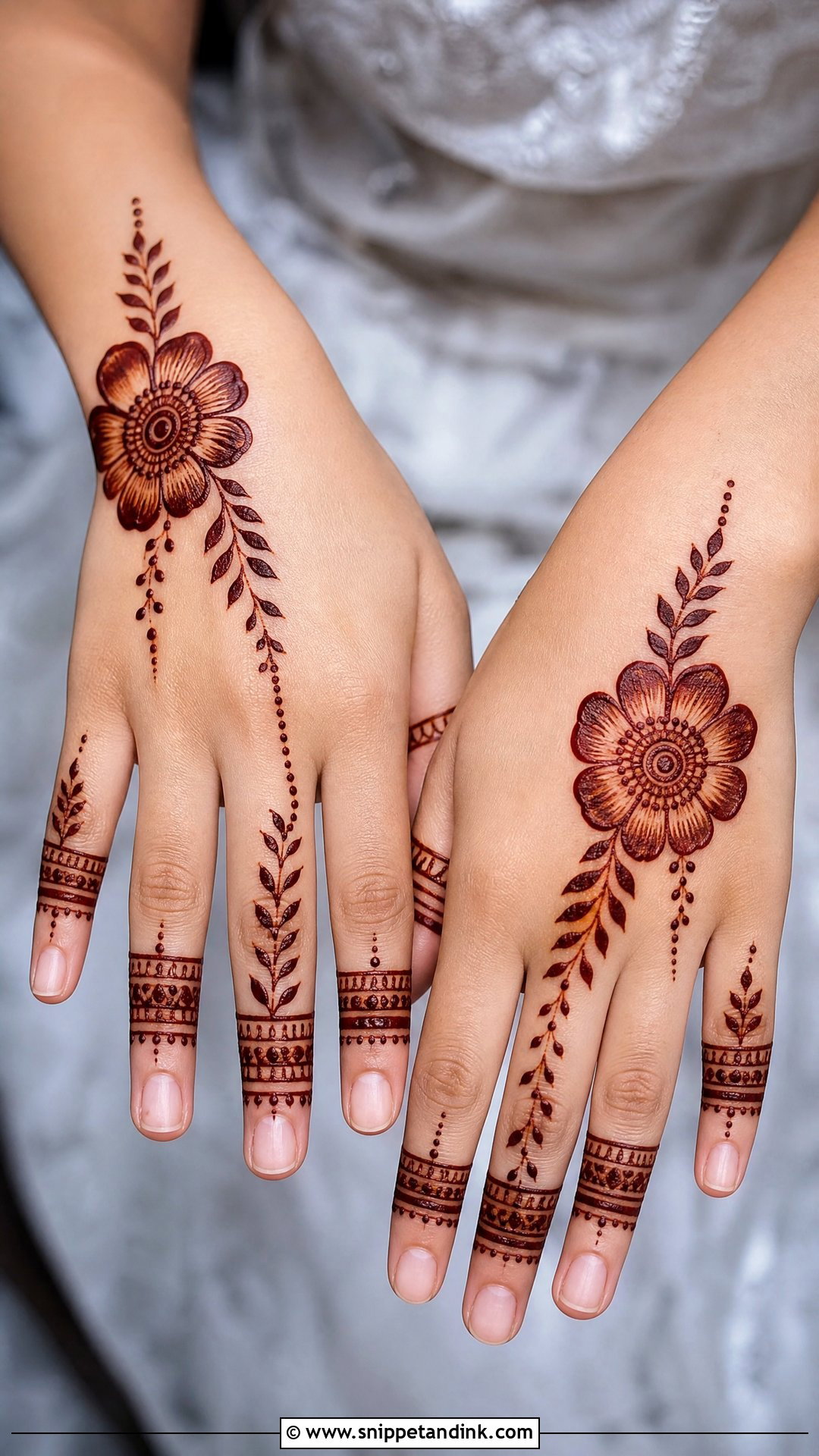
Party designs are about speed and style. Bold florals, leafy trails, finger bands and light geometric details look modern, especially on the back of the hand, where they show while you hold a clutch. Negative space, clean lines and off-center placement make it feel current. A slim wrist-to-finger vine with one bold flower is my quickest party design, and it dries before you’ve finished getting dressed.
19. Short Kids Mehndi Design
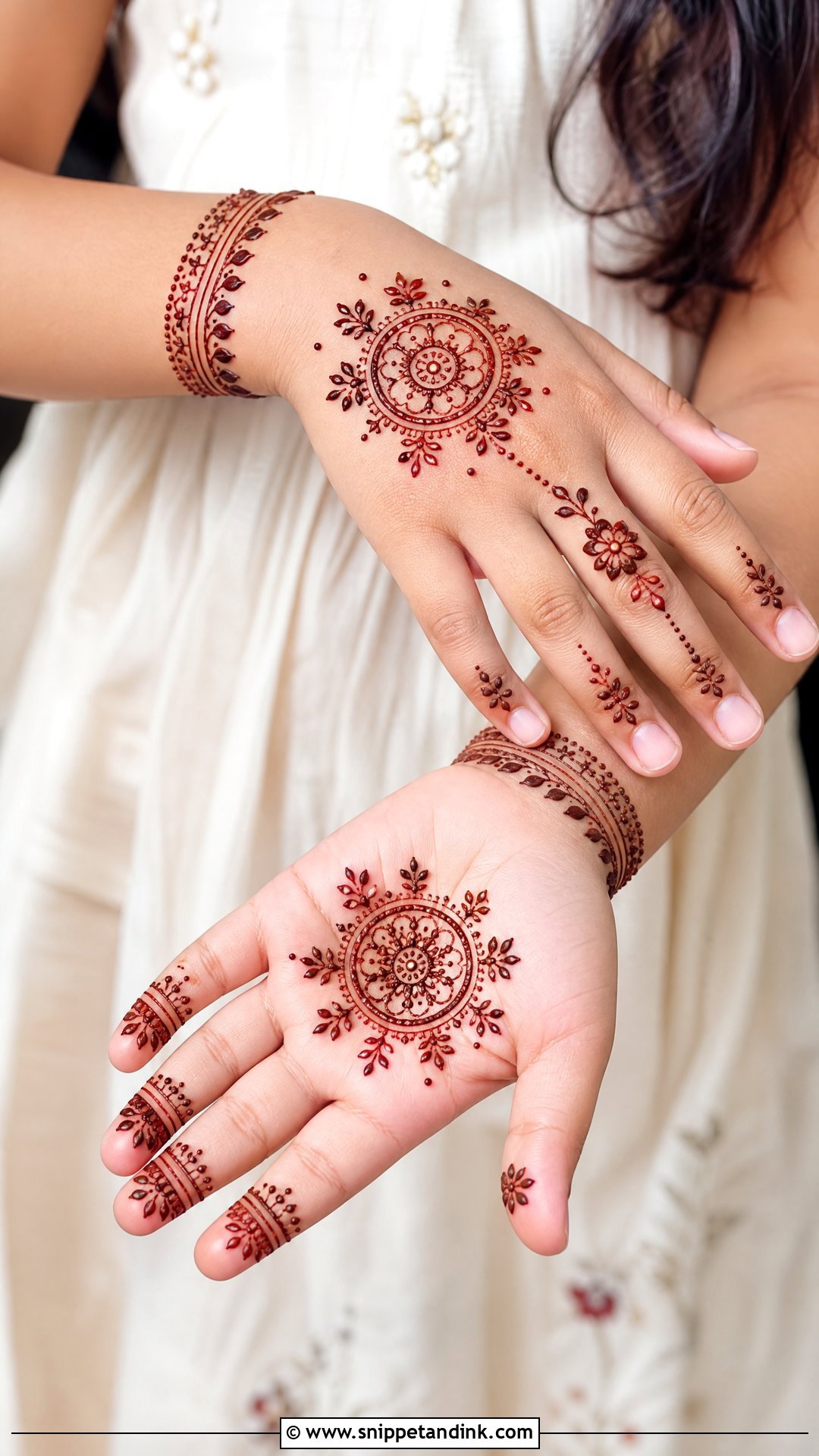
With children, speed is everything. They don’t sit still for long, so I choose motifs I can finish in a few minutes: a palm flower, stars, dots, a small wrist band. Slightly bolder lines help because children rub their hands, smudging fine lines. Use only natural henna on kids, and check the paste before anyone applies it, since black henna can cause serious skin reactions. A small palm flower with decorated fingertips is enough.

20. Short Minimal Mehndi Design
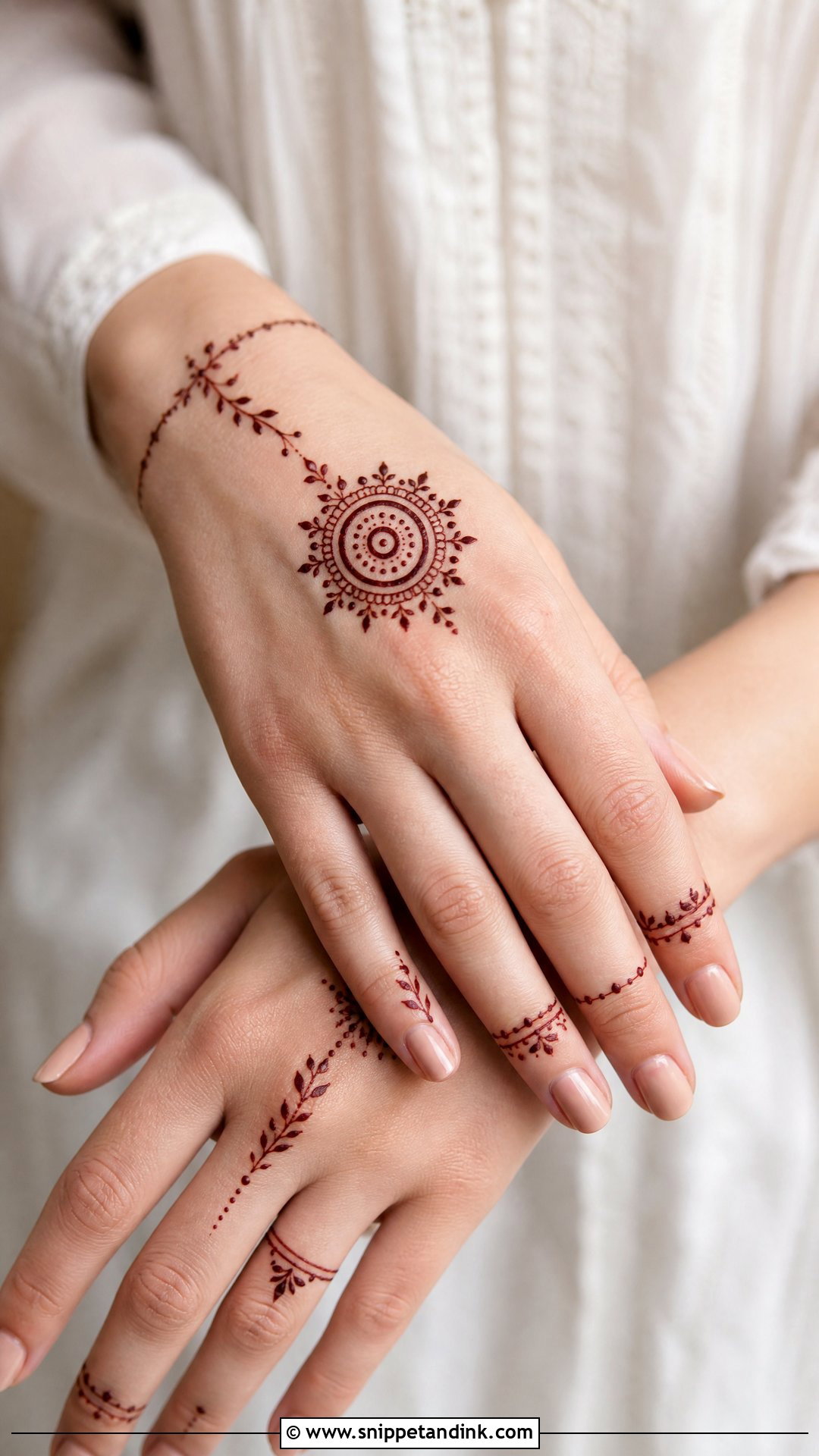
Minimal designs are about what you leave empty. A tiny mandala, fine finger lines, small leaves or a thin wrist vine. Open space makes the pattern feel modern and suits work or casual gatherings. Pick one area of focus, the fingers or the wrist, use thin lines, and don’t add extra dots. I use a very fine cone tip for this style, since thick lines ruin the delicate look.
21. Short Modern Mehndi Design
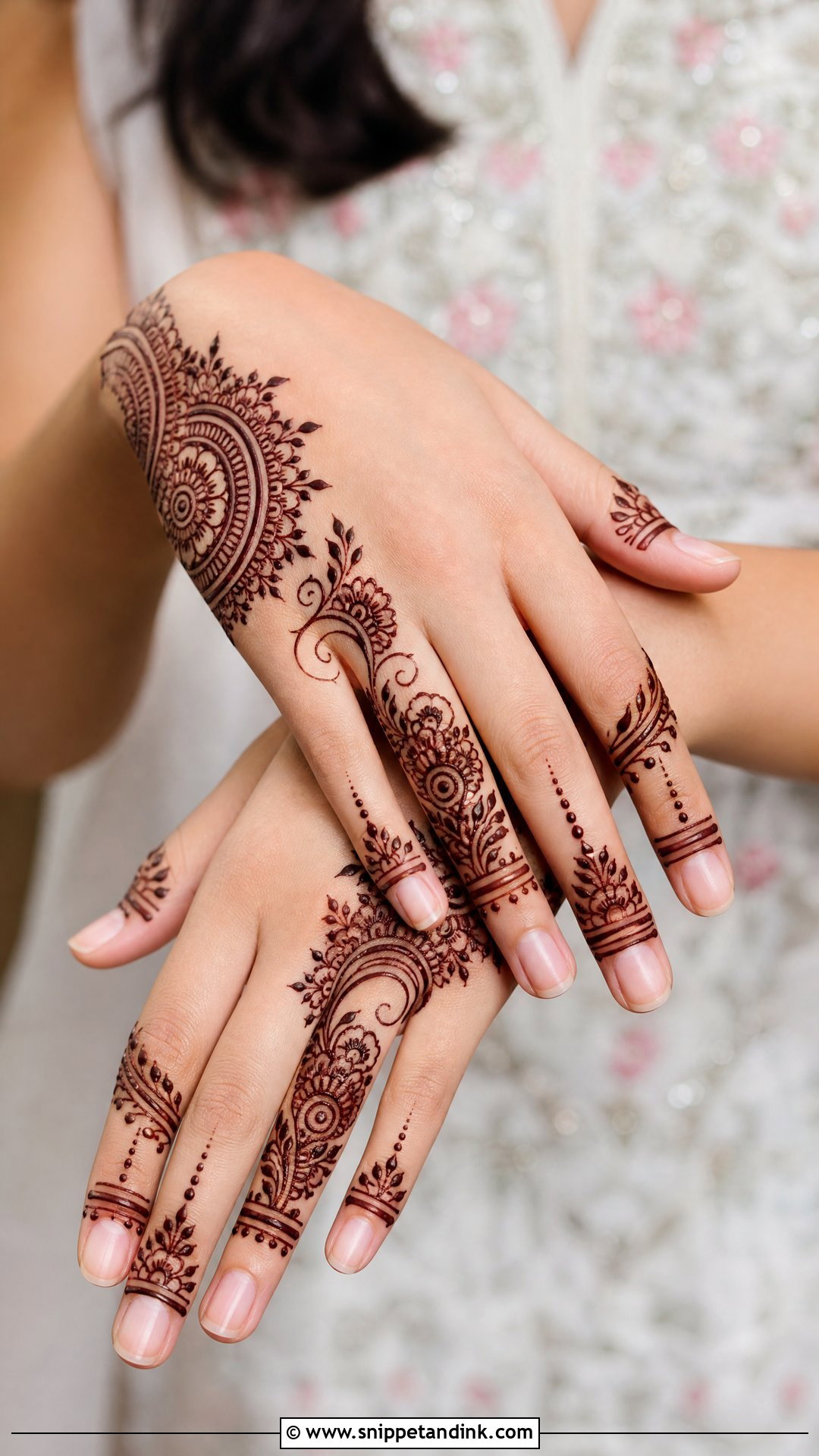
Modern layouts take classic motifs and rearrange the space. Side-hand trails, finger jewelry patterns, half-mandalas and slim leafy curves feel current but still rooted in tradition. They look especially good on the back of the hand. A small mandala near the wrist with two decorated fingers, or a curved floral trail leaving most of the hand open, are good starting points. Sharp lines matter; a wobble shows more in an open layout than in a dense one.
22. Short Jaali Mehndi Design
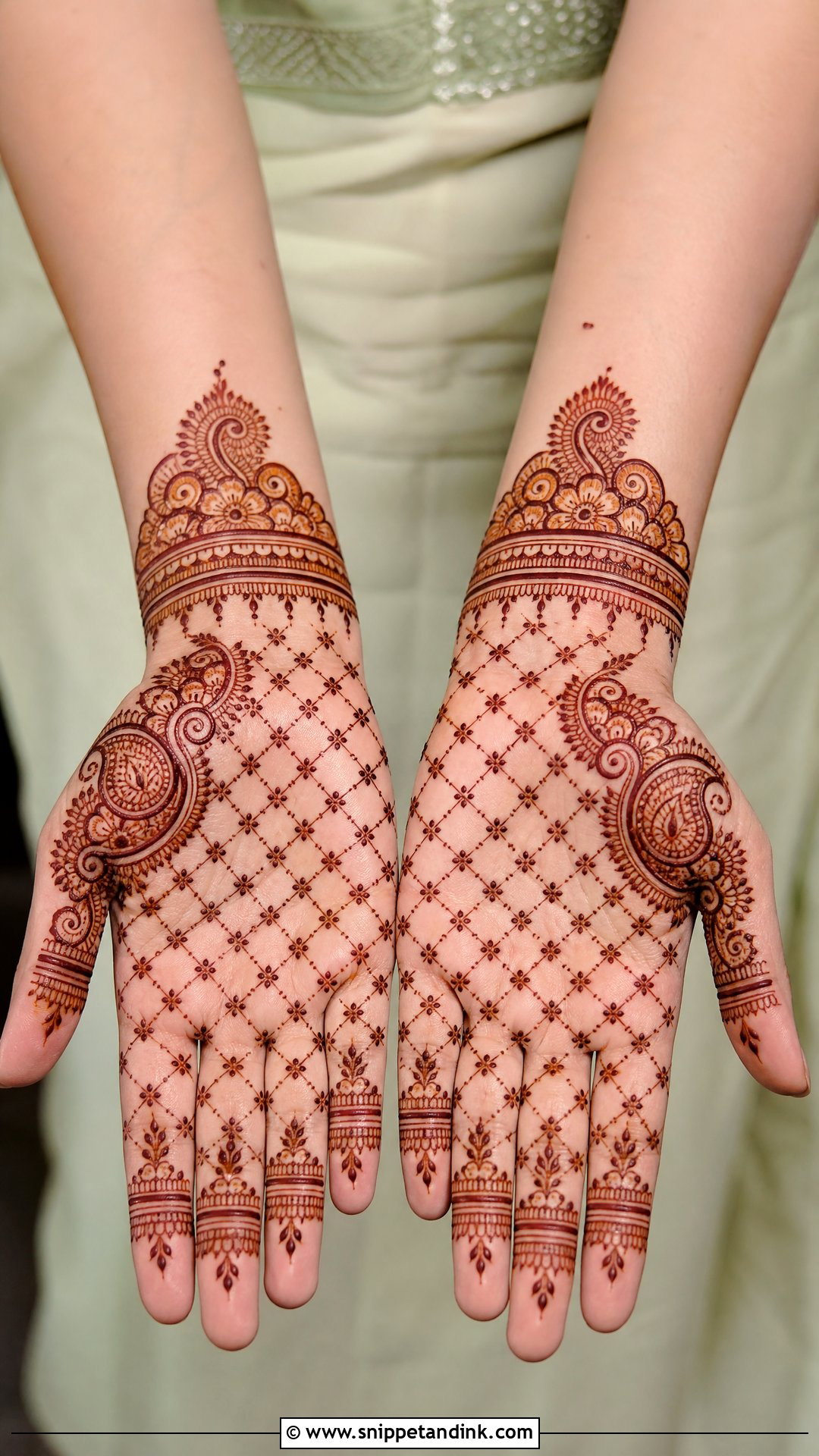
Jaali is the mesh pattern of crisscross lines, and in a small design it works best as one section rather than the whole layout. I put it inside a paisley, beside a mandala, or along the wrist as a neat panel. The grid has to be even and not too tight. Lines drawn too close together merge as the paste spreads, and the stain becomes a solid patch instead of a mesh. Pair it with flowers for softness.
23. Short Peacock Mehndi Design
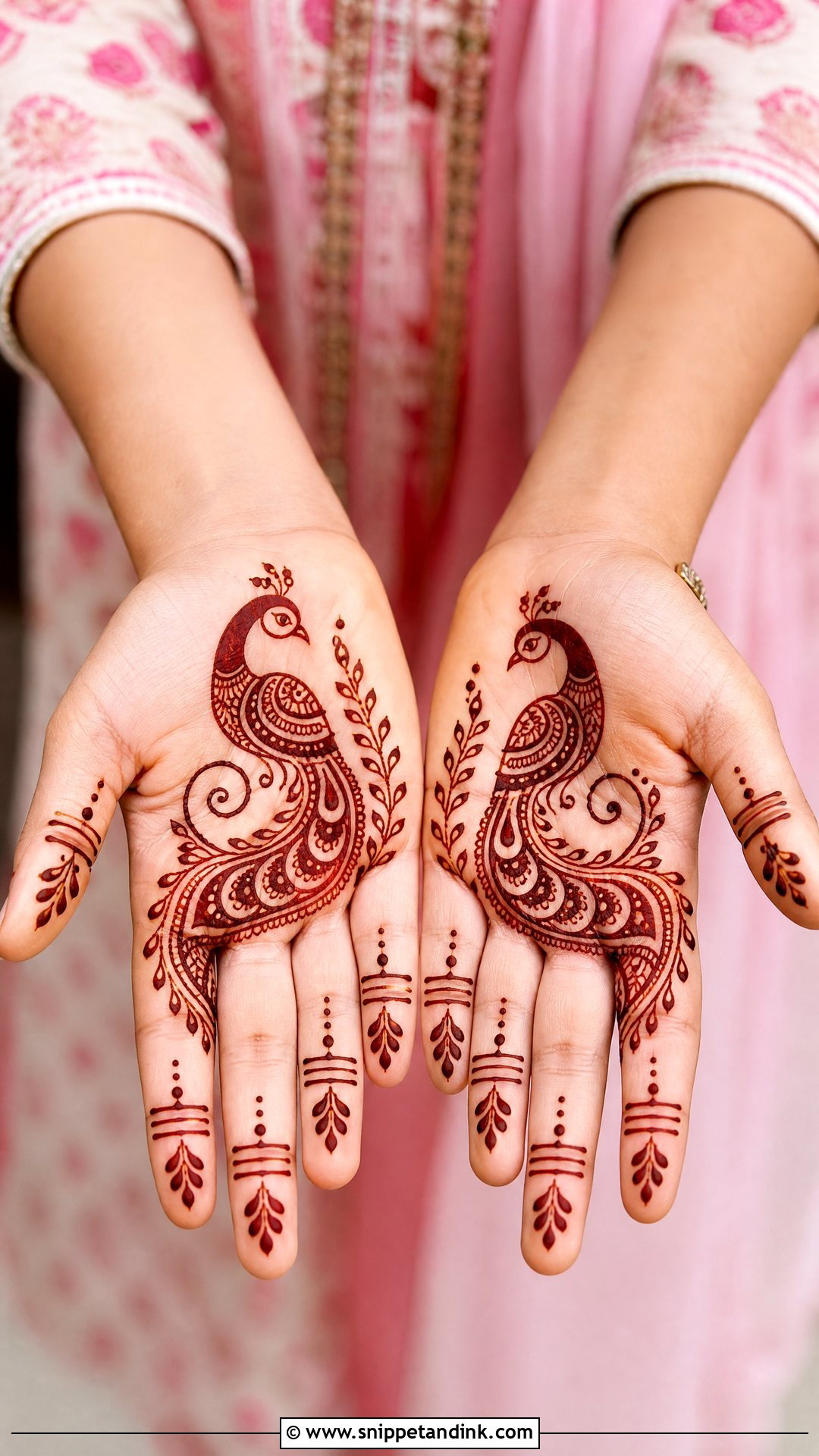
A full-hand peacock needs room, so for a short design I compress it into one compact motif on the palm or back of the hand. Curved feathers, small paisleys, dotted details and a leafy border complete it. Stop the feathers before they climb up the arm. Decorate two or three fingers with matching lines. A bold outline with light inner detail keeps the bird recognizable once stained; too much fill and the peacock loses its shape.
24. Short Lotus Mehndi Design
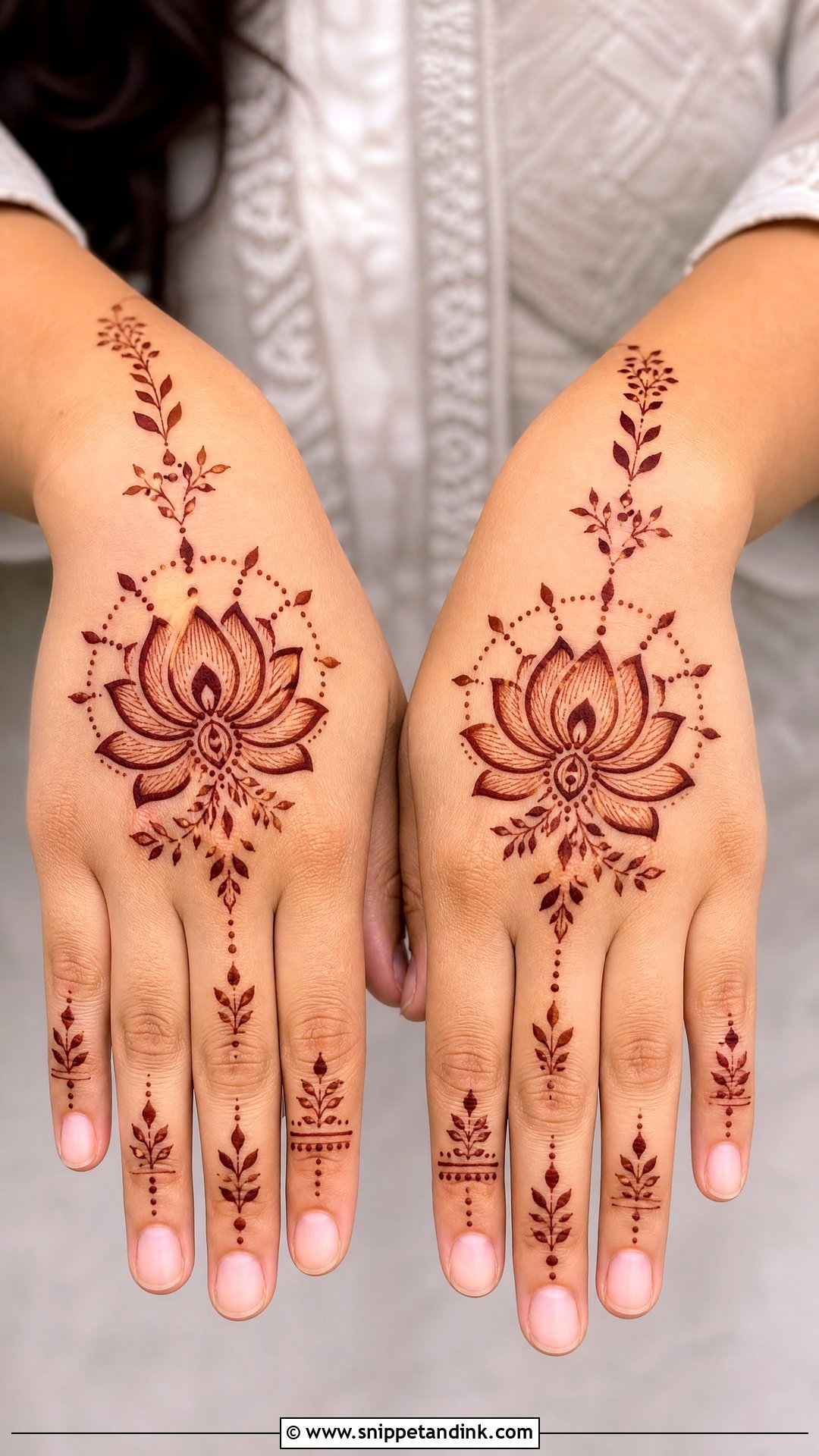
The lotus is easy to recognize, which makes it reliable in small designs. It sits in the center of the palm, near the wrist, or on the back of the hand with a vine toward the fingers. Rounded petals with light shading on the outer layer give fullness without coverage. Dots, leaves, a curved border or a mandala center complete it. It’s a meaningful pick for festivals, wedding guests and traditional ceremonies.
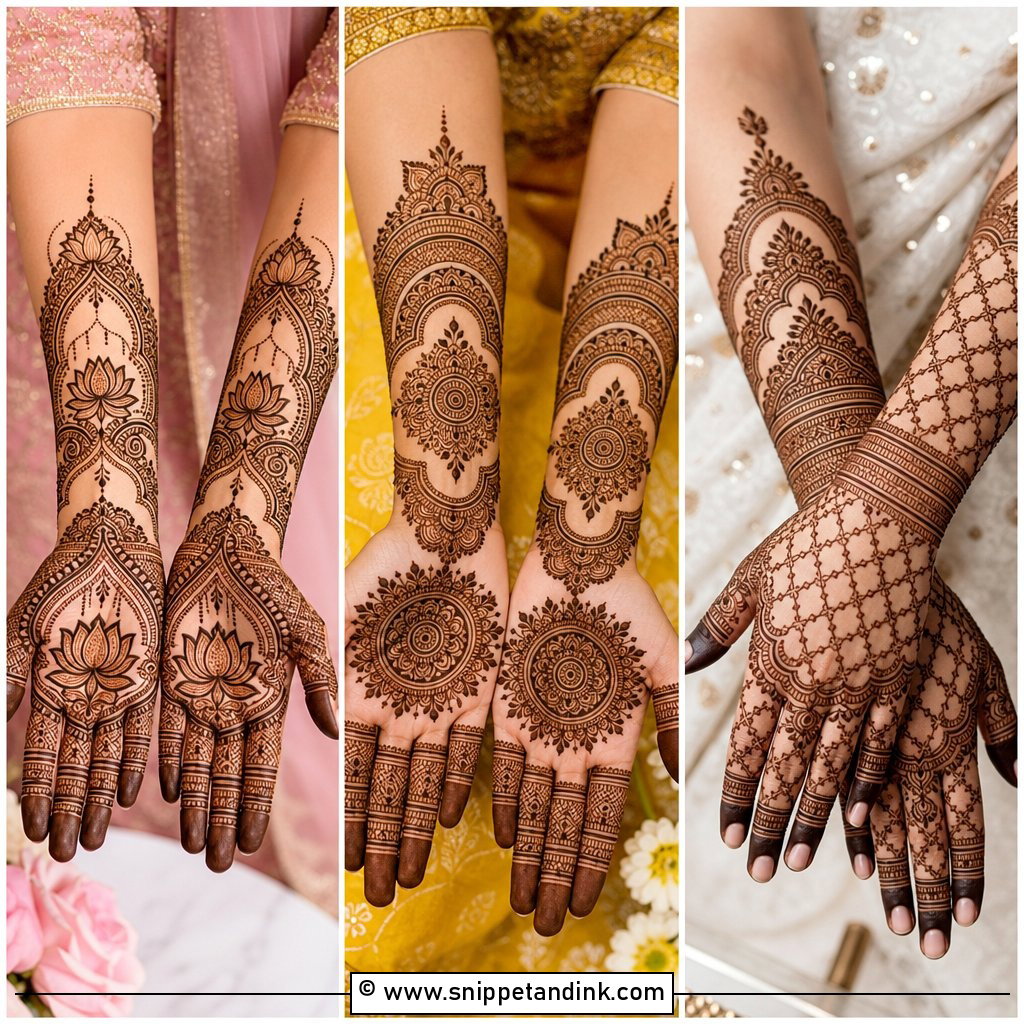
25. Short Bracelet Mehndi Design
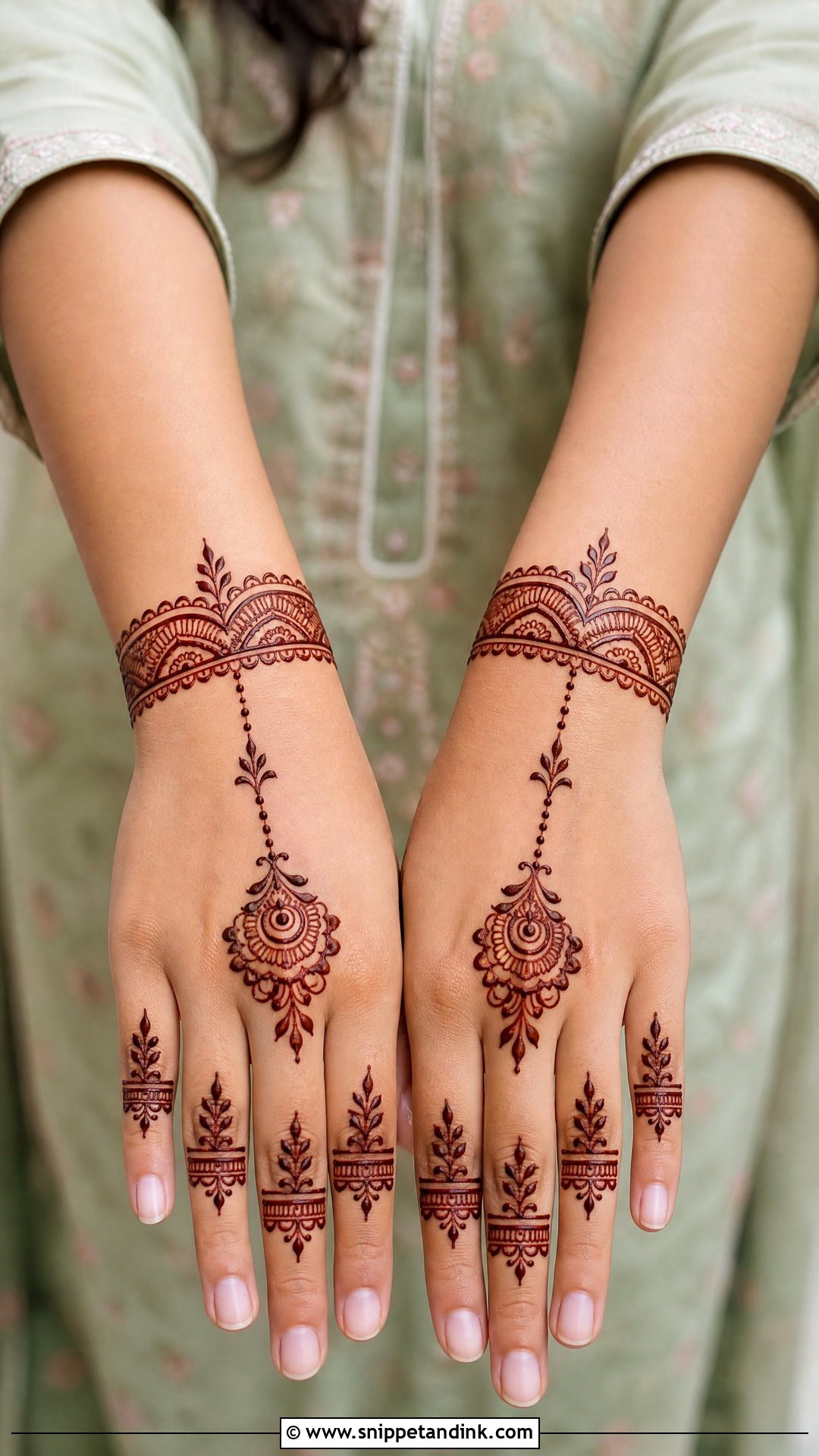
A bracelet design gives the hand a jewelry look. It wraps around the wrist and may run a thin chain to the middle finger for a haathphool effect. Flowers, dots, leaves, scallops or small geometric bands all suit. It’s made for back-hand photos because it highlights the wrist and fingers. Keep the chain slim and the band more detailed for contrast, and add a ring-like motif on the finger to finish.
26. Short Side Hand Mehndi Design
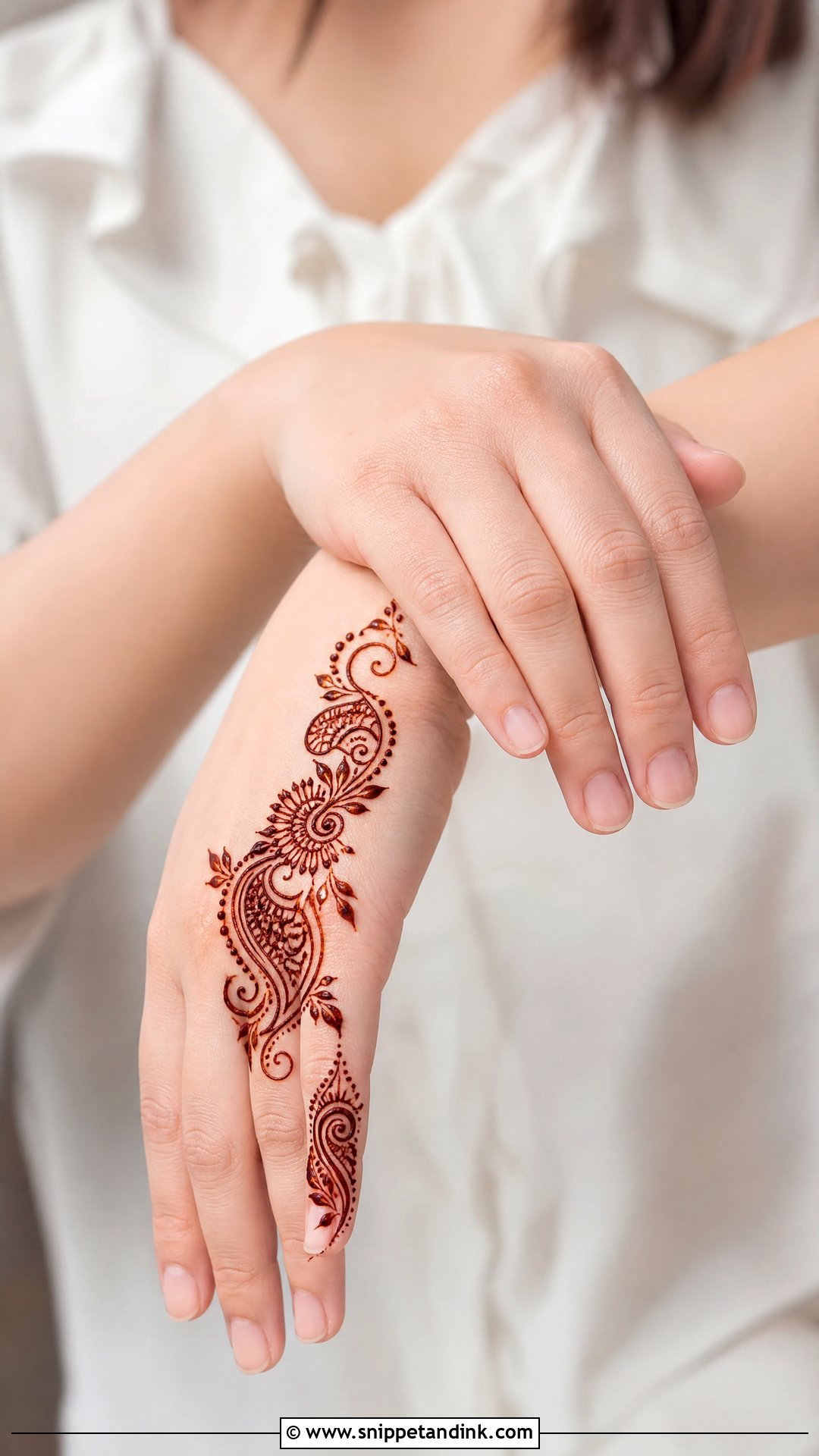
The side of the hand is a placement I suggest to people who want something different. The trail follows the outer edge from the wrist toward the little finger, leaving the palm and back of the hand open. Floral vines, leafy trails, dots or slim paisleys suit it. The outer edge rubs on surfaces all day, so it fades faster than the palm; I’d draw it slightly bolder. Curve the trail rather than drawing it straight, so it follows the hand.
27. Short Moroccan Mehndi Design
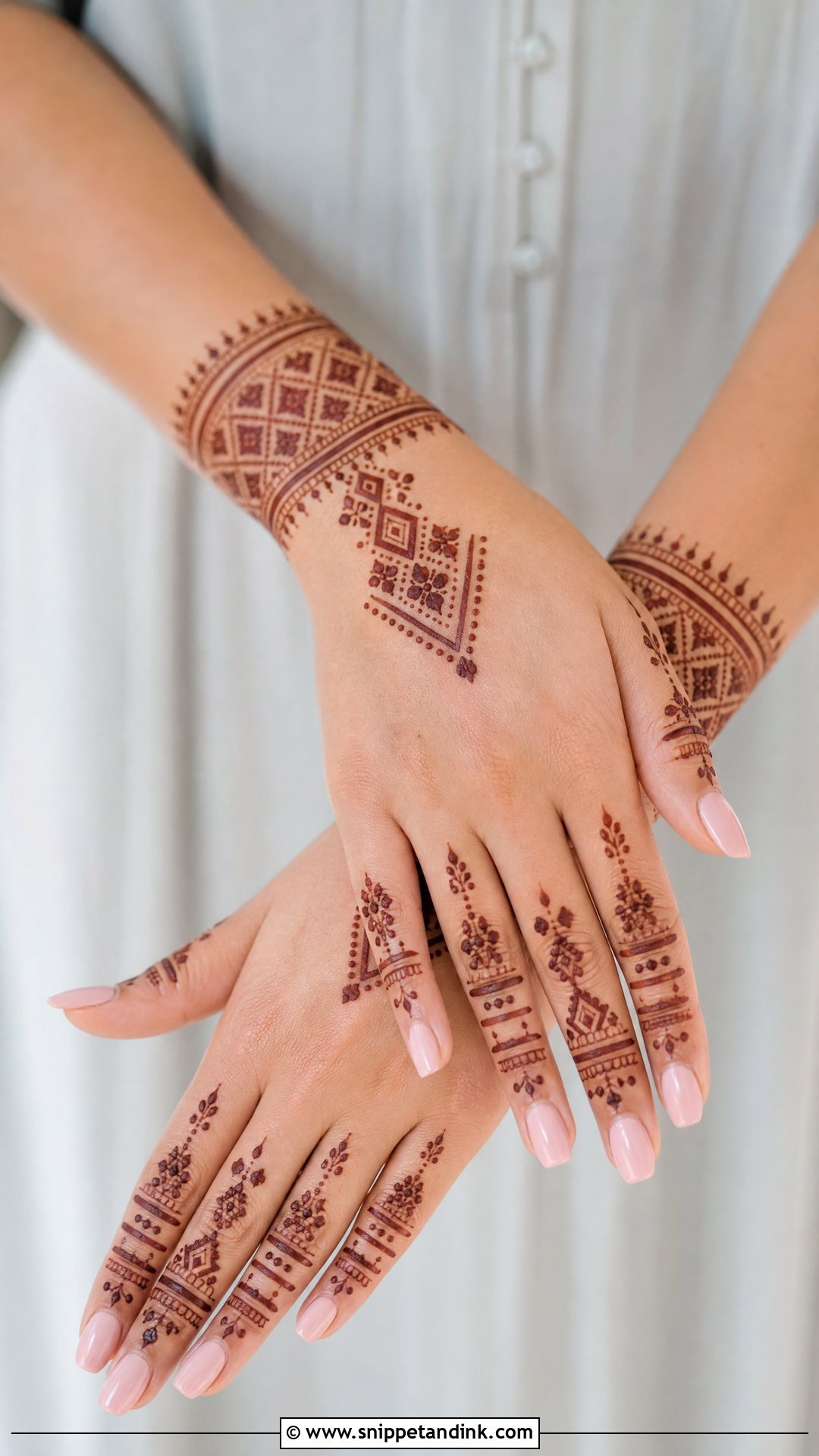
Moroccan-inspired henna is geometric: diamonds, dots, angular bands and clean lines. It feels more graphic than floral Indian or Arabic work. A small wrist band with diamonds plus matching finger details, or a geometric panel on the back of the hand, works well. Symmetry is essential, so I mark key points with tiny dots before drawing the lines. Even spacing keeps the design sharp.
28. Short Gulf Mehndi Design
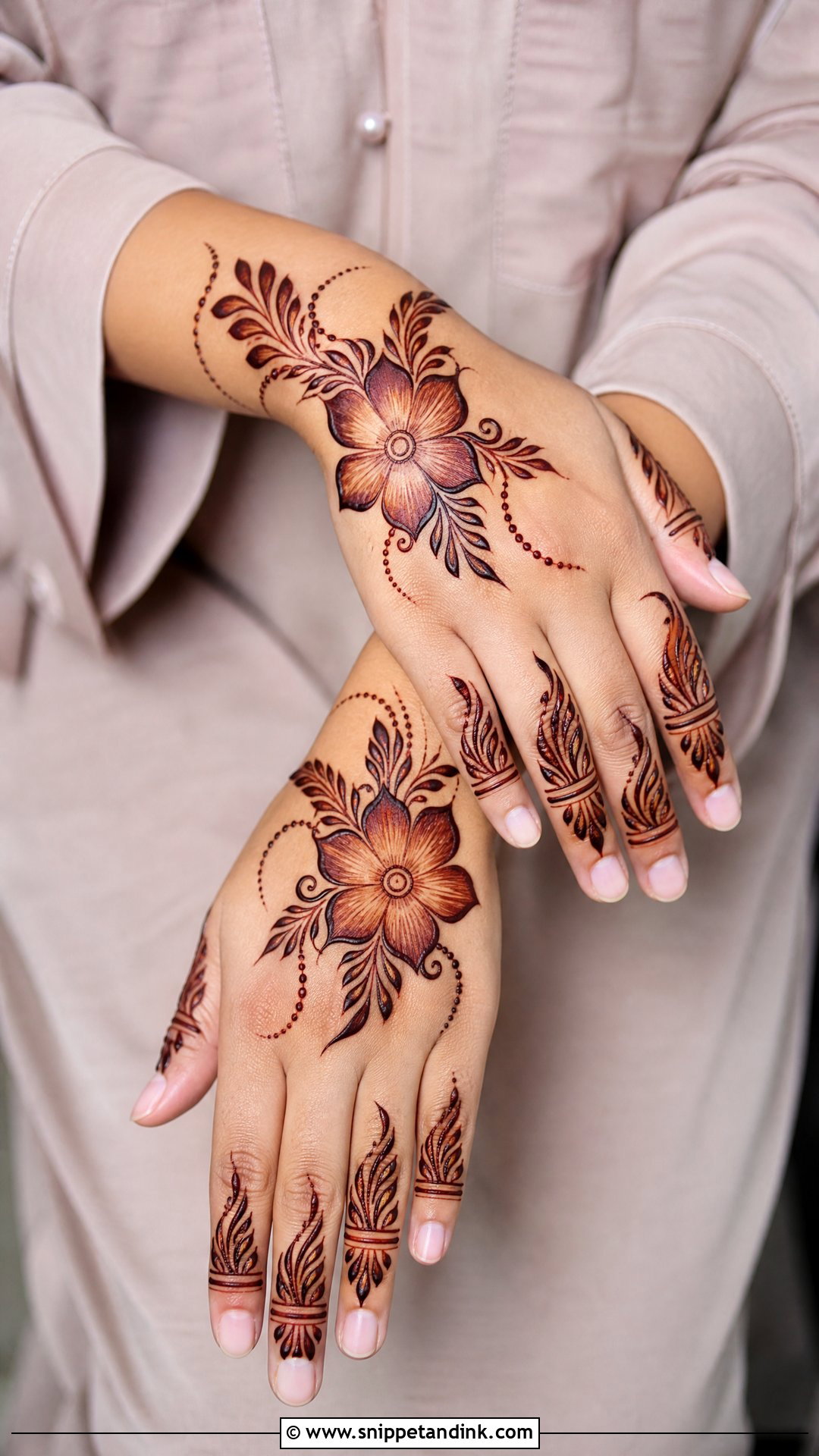
Gulf or Khaleeji-style henna uses bold florals, leafy sprays and open space. It’s less crowded than Indian work but more dramatic than minimal designs. I place a large flower near the wrist or on the back of the hand, then extend leaves and dots toward the fingers. Thick outlines and shaded petals make it stand out. Keep it flowing in one direction and leave gaps open. This style is popular for Eid and weddings.
29. Short Full Finger Mehndi Design
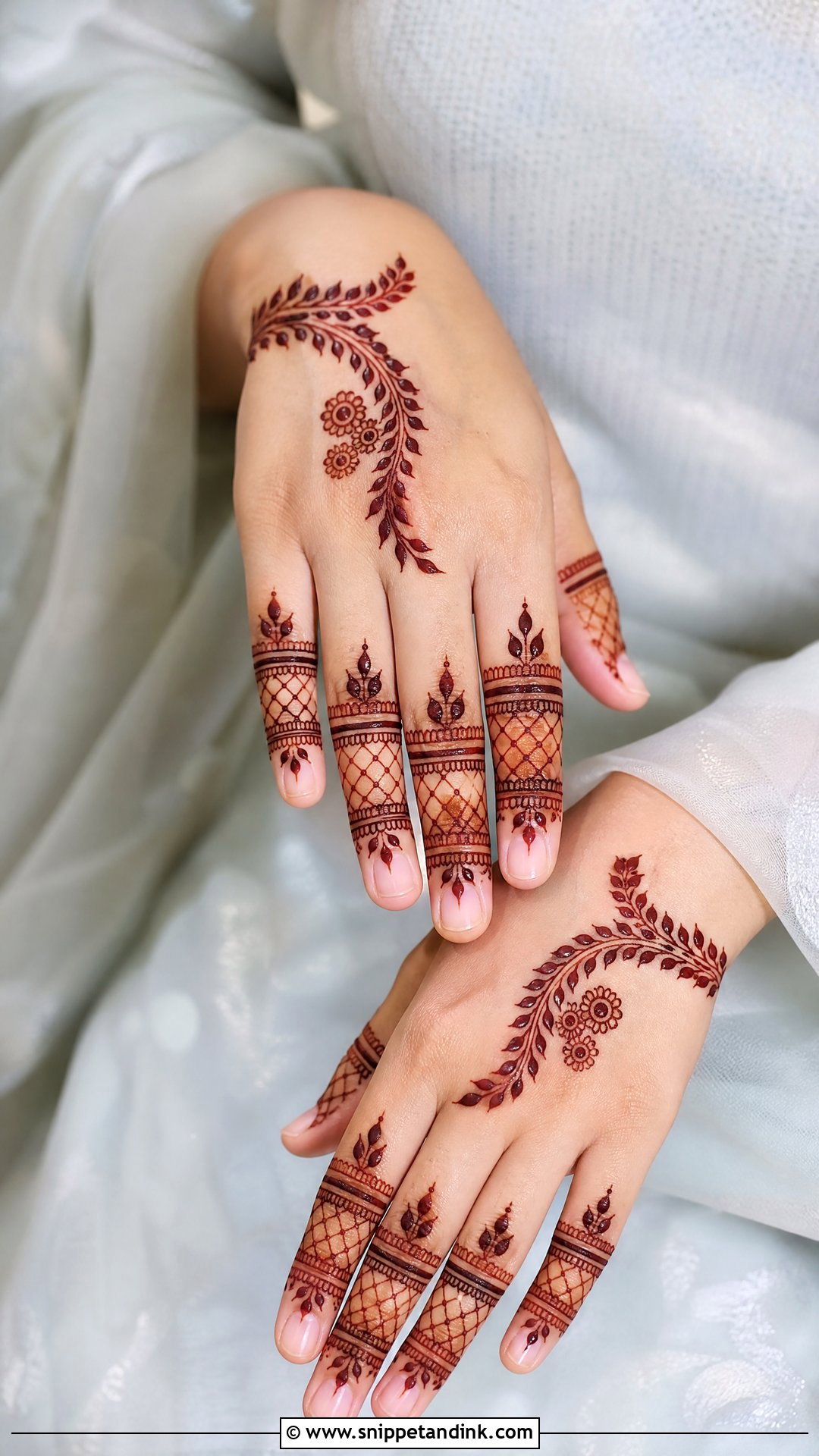
Covering every finger while leaving the palm or back of the hand mostly empty creates a striking look with little coverage. Bands, dots, leafy lines, small flowers or mesh details on each finger; filled tips for tradition or open tips for a modern look. A small motif near the wrist or the center of the back of the hand completes it. Keep the patterns similar across all fingers. It’s ideal if you wear rings, since the fingers become the focus.
30. Short Half Hand Mehndi Design
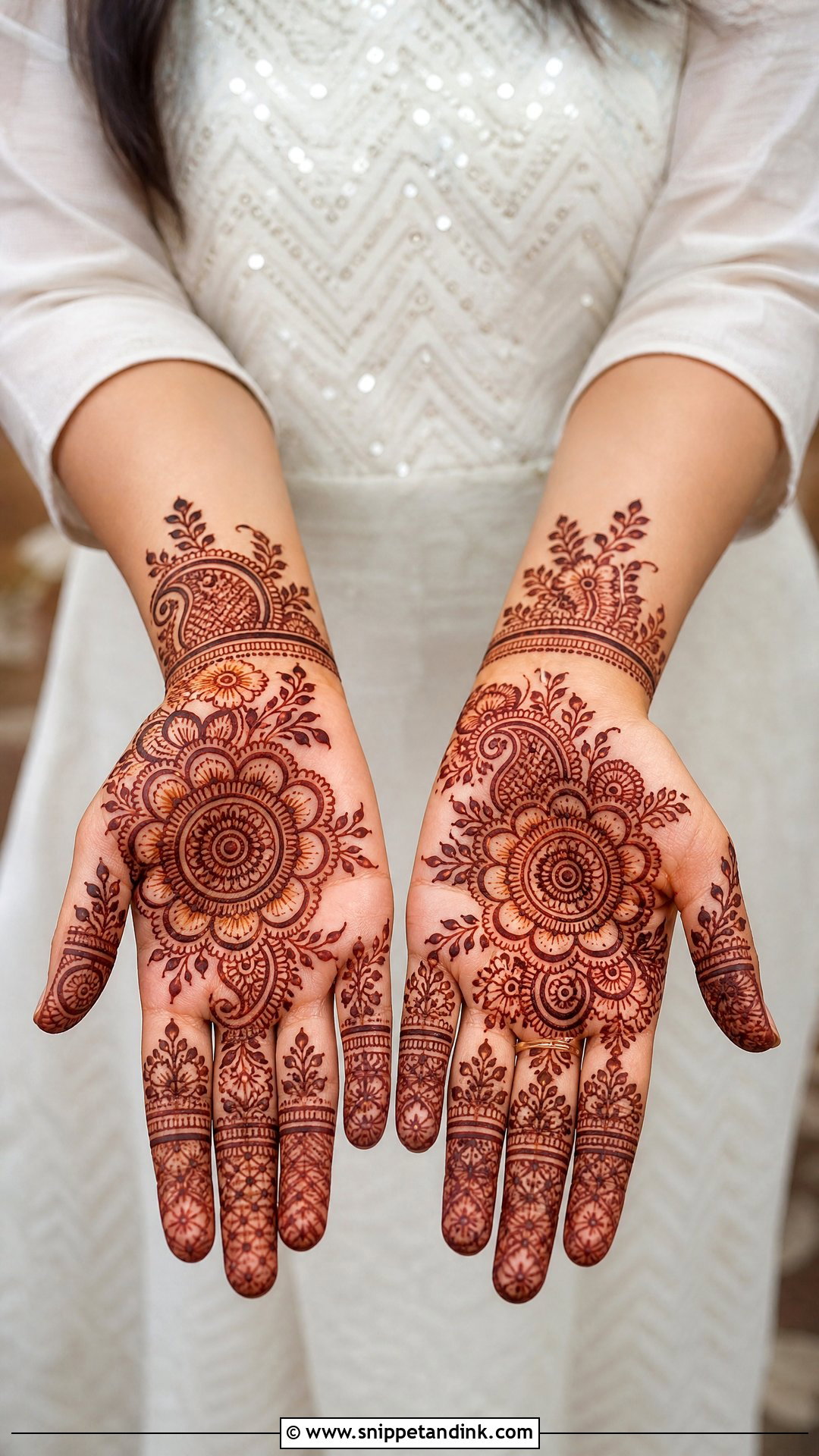
Half-hand coverage sits between minimal and full. It may cover the palm and fingers, or the back of the hand from wrist to knuckles. Floral trails, mandala centers, paisley clusters and Indo-Arabic layouts all suit. Stop at the wrist and avoid heavy cuff designs. Balance filled areas with open space. When I map a half-hand design, I stop the pattern at the wrist crease, because henna drawn over the crease cracks when the wrist bends.
Aftercare for the First 24 Hours
Once the paste is dry, I dab a little lemon and sugar mixture over it. It keeps the paste moist and stuck to the skin, which helps the stain. Then:
- Leave the paste on for as long as you can stand, then scrape it off with a blunt knife or your fingernail. Don’t wash it off.
- Keep water away for about twelve to twenty-four hours. Water at this stage stops the stain from deepening.
- Keep your hands warm. Holding them near a heater or over a cup of tea helps the color develop.
- Skip scrubs, chlorine pools and heavy hand sanitizer for a few days, since all three fade the stain faster.
A short design usually lasts one to three weeks, fading first on the back of the hand and lasting longest on the palm.
Smell the Cone Before It Touches Skin
Natural henna paste is greenish brown and smells earthy, often with a hint of the essential oils used to mix it, like eucalyptus or lavender. It stains orange first and darkens over a day or two. Anything sold as black henna, or a paste that leaves a black mark within an hour, usually contains PPD, a hair-dye chemical that can cause blistering and lasting scars. I’d never use it, and I’d especially avoid it on children. If a vendor at a festival stall can’t tell you what’s in their cone, choose another one.
A Small Design Lives or Dies by Its Stain
Small henna asks for precision more than time. One clear focal point, clean lines and open space between motifs will carry a compact design further than any amount of filler. Pick the placement first, palm, back of the hand, fingers or wrist, then choose the motif that fits that space. Give the paste time to sit, look after the stain for the first day, and even a ten-minute design will develop into a deep, warm color by the time your event arrives.
You'll Like These Ideas:






Leave a Reply