
At most weddings I work, the bride is in my chair for hours, and then the queue starts: sisters, cousins, friends, aunties, kids, each with a photo on her phone and about twenty minutes to spare. This collection is built around that queue. It covers complete hand designs, not single motifs, from quick Arabic trails and palm mandalas to the full coverage some close family will want, with notes on how long each takes, how it stains and which hands and outfits it suits. Bridal options are here too, so you can see where the line between guest and bride usually falls.
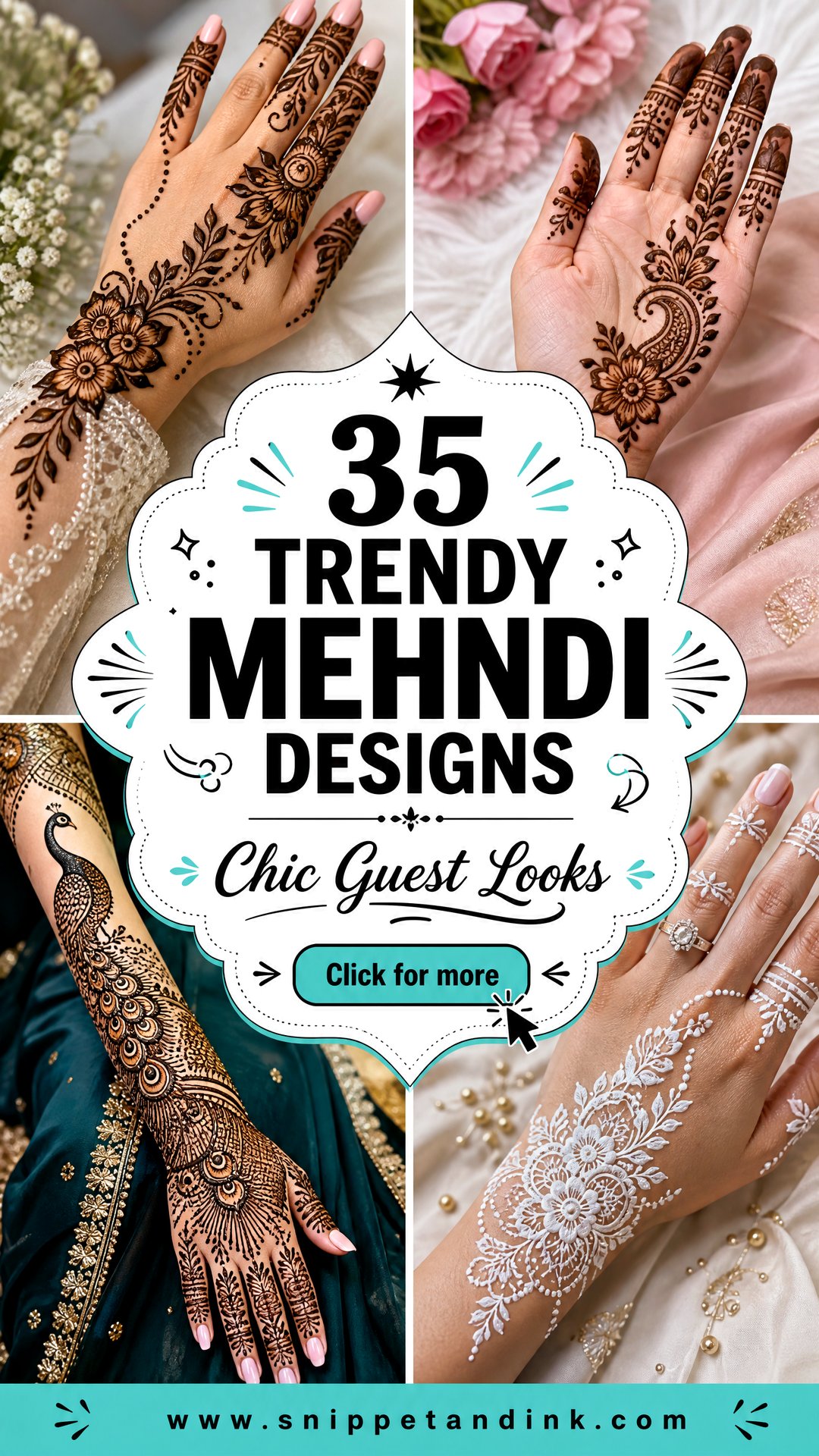
Guest Henna Etiquette at a Mehndi Night
If you’re a guest, the artist at a mehndi function is usually hired by the bride’s family, and her first job is the bride. Guest henna fits around that. A few habits make the evening easier for everyone, including you.
- Stay lighter than the bride. Full arms and dense palms are generally hers; ask the family first if you’re a sister or close cousin who wants more.
- Arrive with a design in mind. A single saved photo speeds up the queue far more than scrolling through options in the chair.
- Pick your hand. Many guests do the back of one hand, or one palm, so they can still eat and hold a drink.
- Wear short or loose sleeves, so nobody has to push a fitted cuff over wet paste.
If you have several functions in one week, get your henna early in the week rather than the night before the wedding. The stain peaks around two days after application, and it’ll look its best at the main event rather than still orange.
1. Arabic Mehndi Design For Back Hand
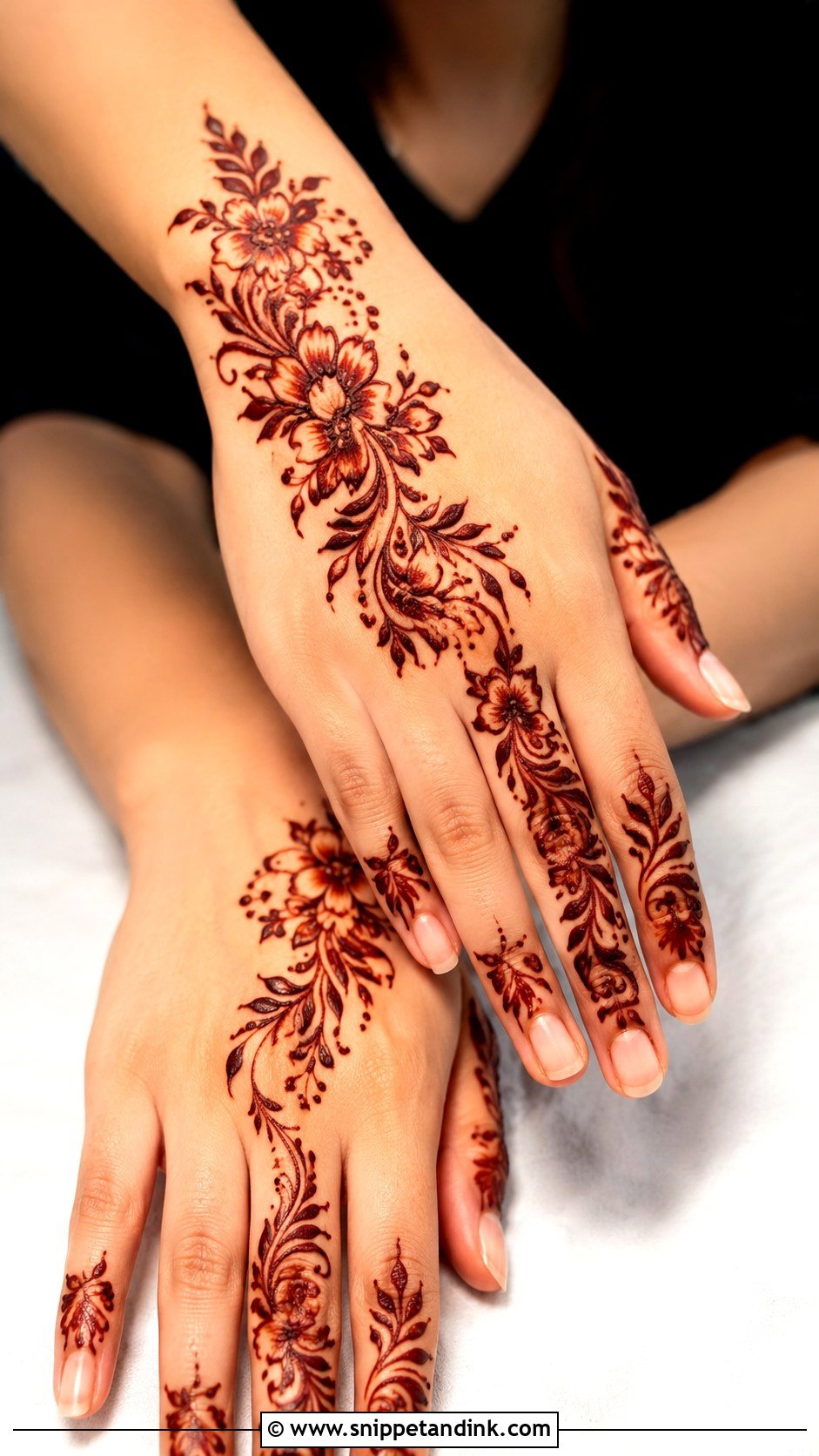
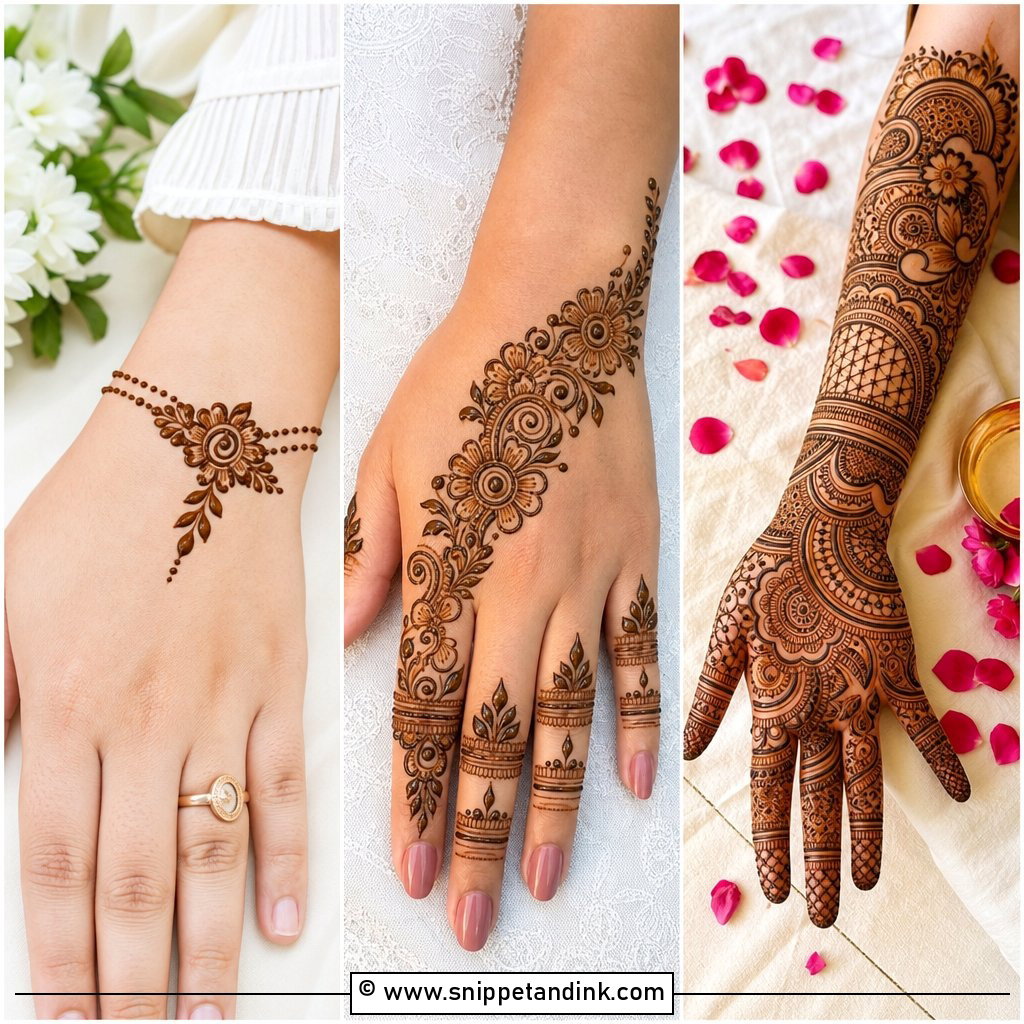
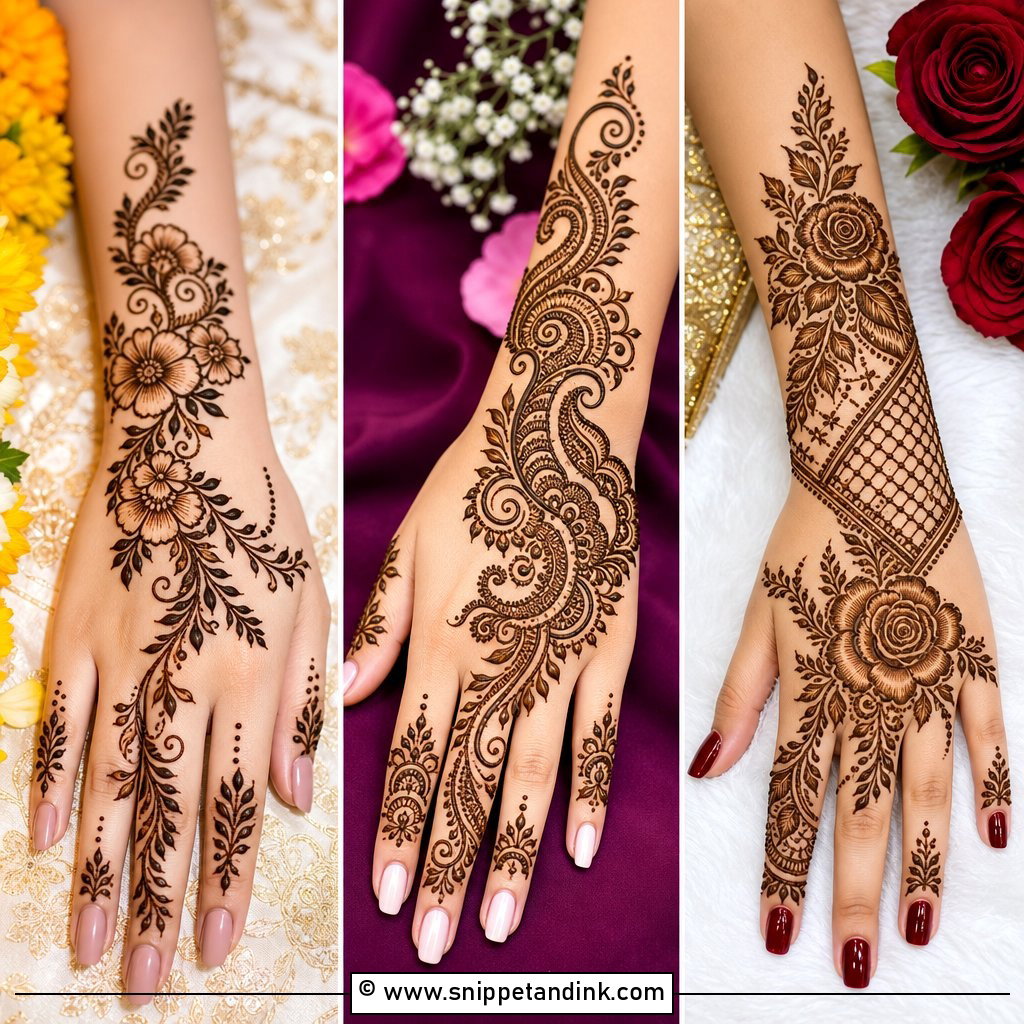
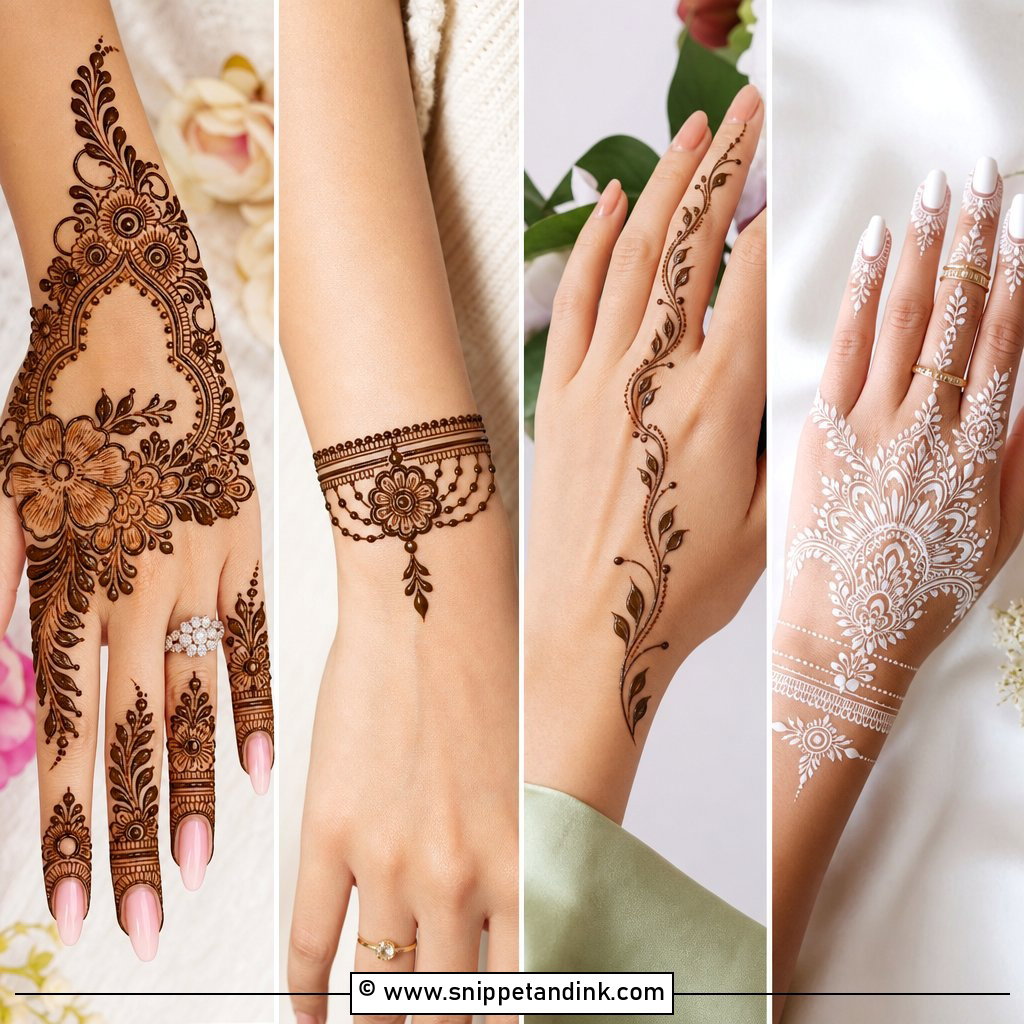
If I had to pick one guest design, it would be this: a diagonal from the wrist to the index finger, big rose-like blooms, curved vines, shaded petals and clean skin around them, with matching bands and leaf chains on the fingers. It takes roughly fifteen minutes a hand and dries quickly because the paste isn’t packed. Bold outlines read well on every skin tone once the stain darkens.
2. Simple Mehndi Design For Front Hand
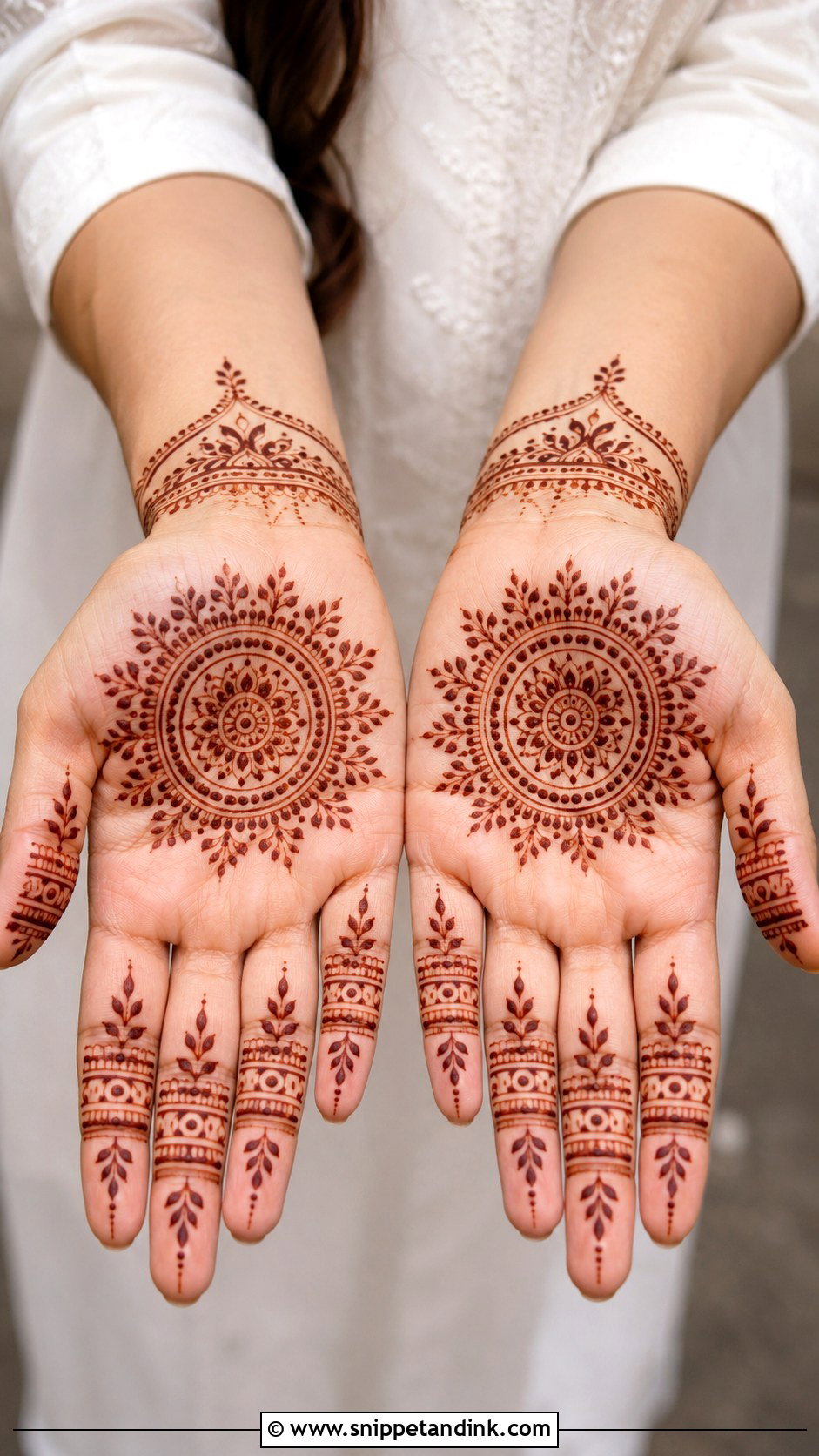
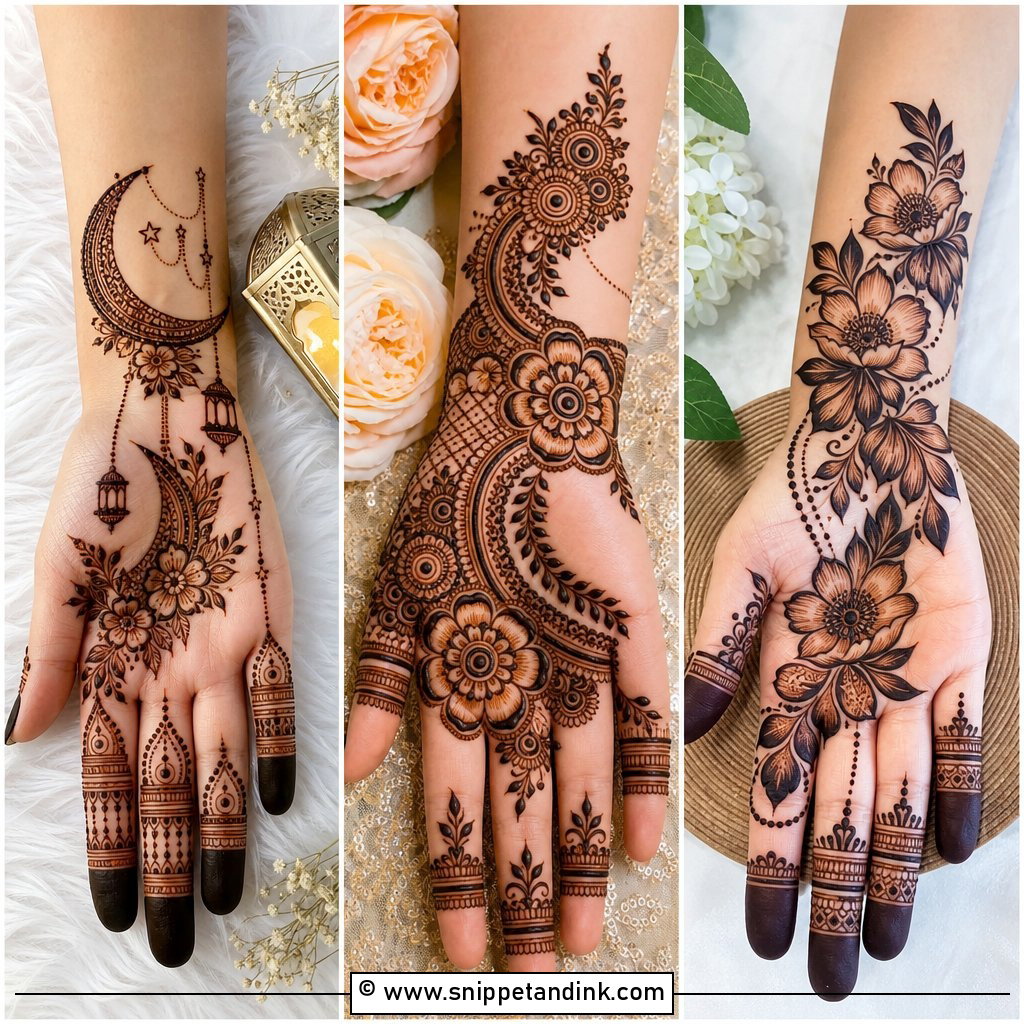
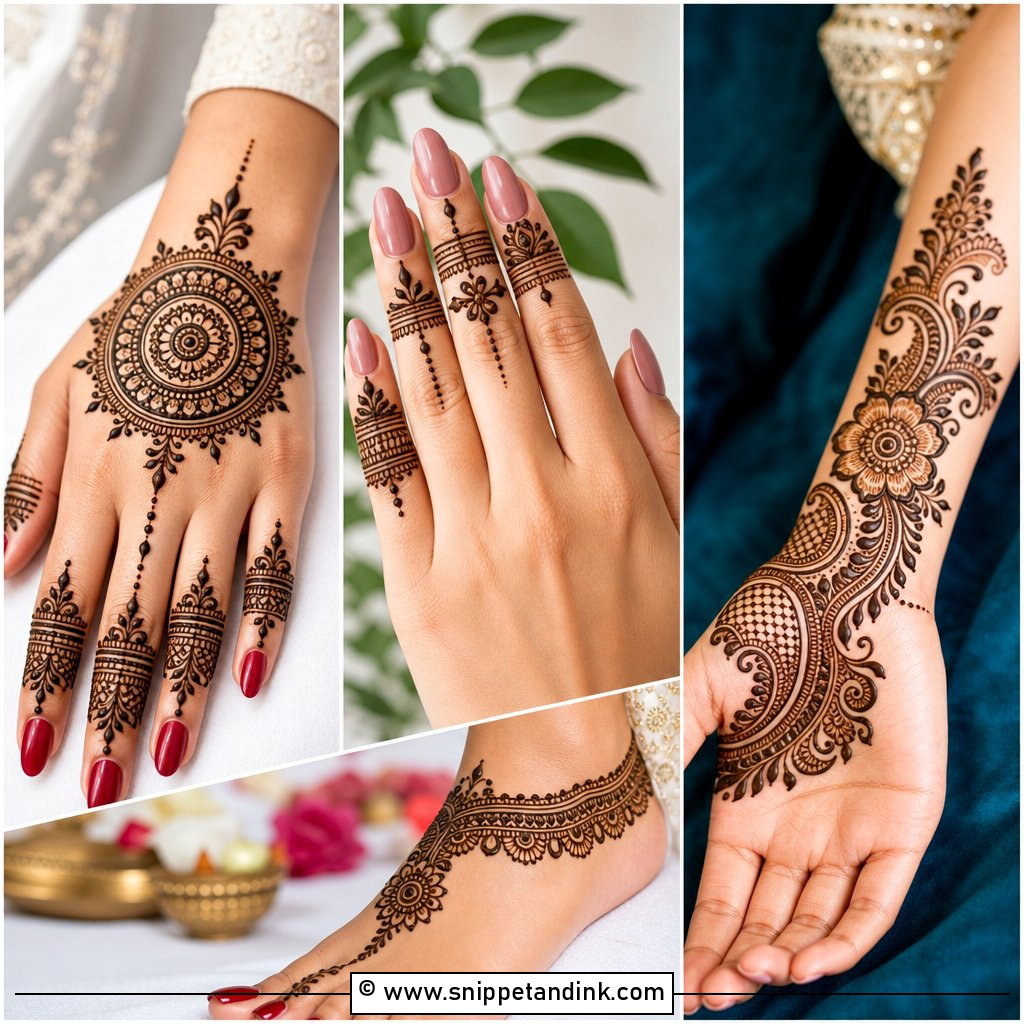
A full palm mandala with light finger detail looks complete without crowding. I keep the center round and clean, then add petals, dots and curved lines, with slim leafy bands or small geometric strips on the fingers. The palm stains deepest of anywhere on the hand, so even a simple version comes out rich. It suits teens, bridesmaids and anyone new to henna.
3. Bridal Mehndi Design Full Hand
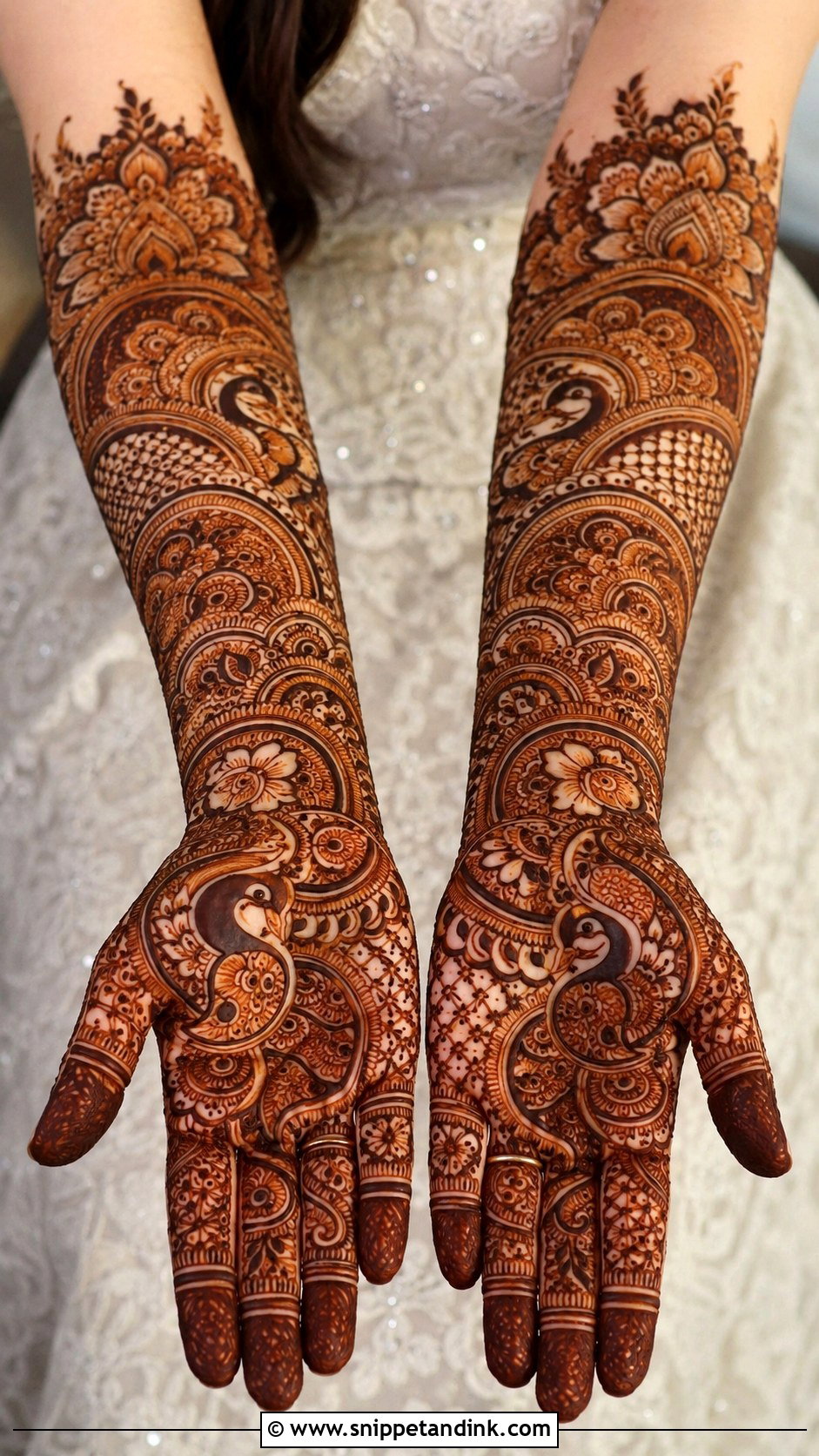
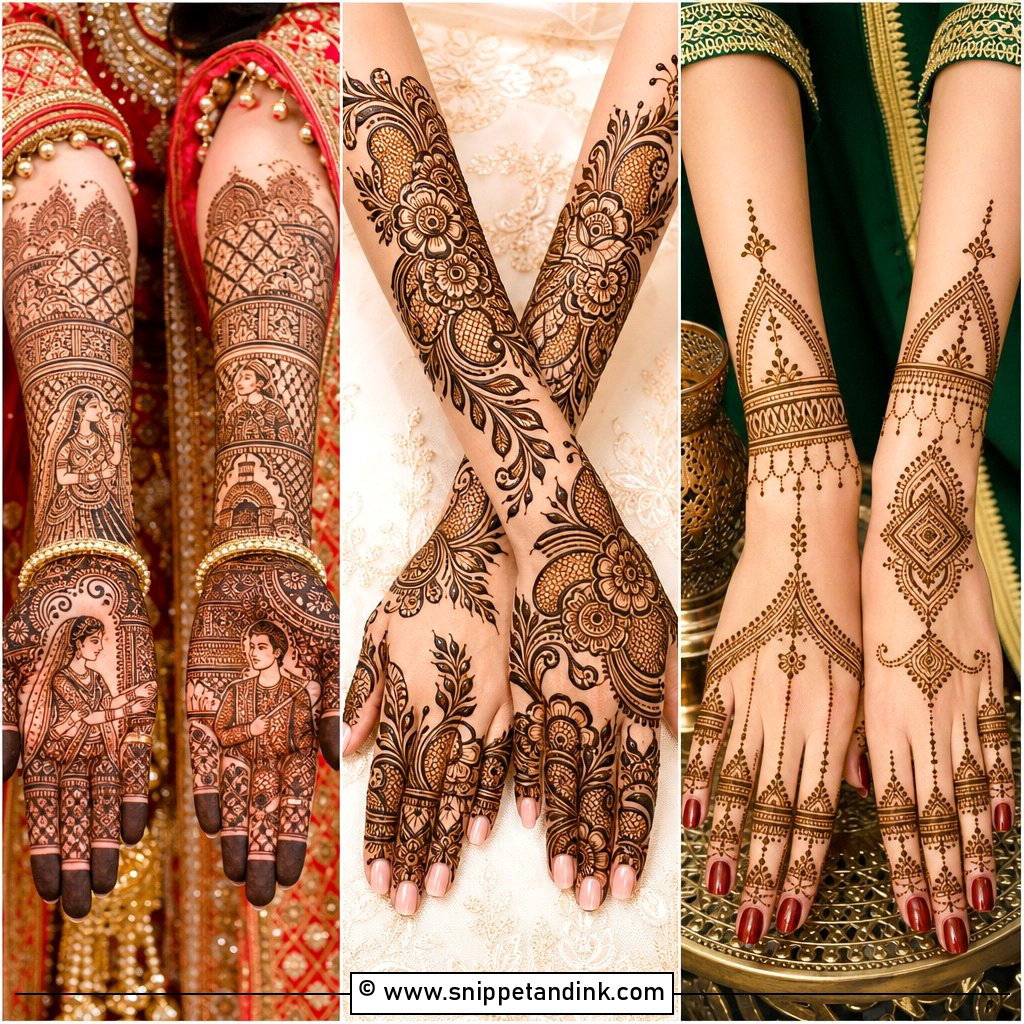
Full bridal coverage starts at the fingertips and runs past the wrist toward the forearm, with dense paisleys, peacocks, florals, jaali and fine fill. Heavy detail without structure looks like a dark smudge from a few feet away, so I place the large motifs on palm and back first, then connect them with borders, vines and small story elements. Initials, couple figures and wedding symbols go in early, before the fill surrounds them. Plan for a long sitting.
4. Indo Arabic Mehndi Design
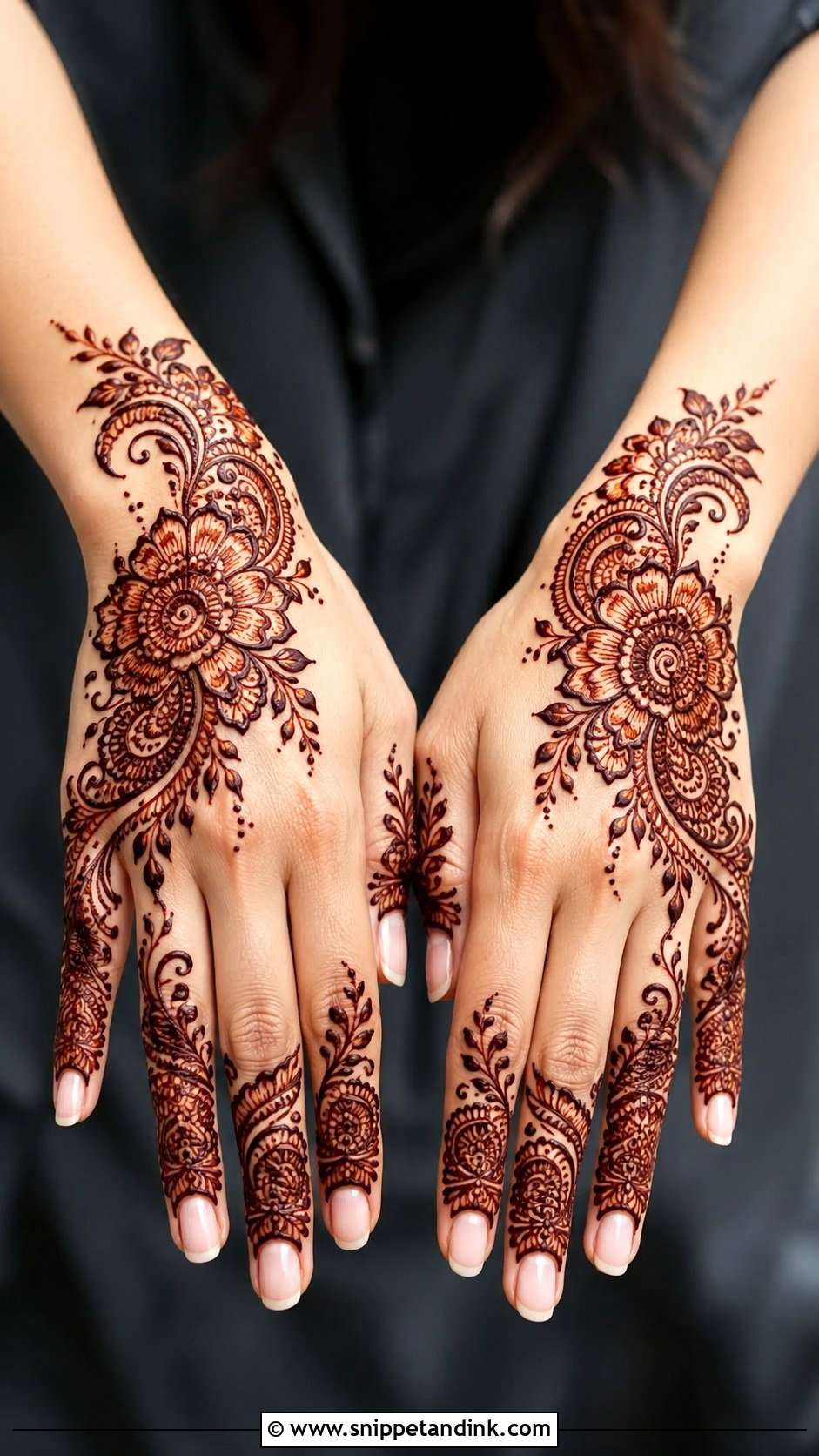
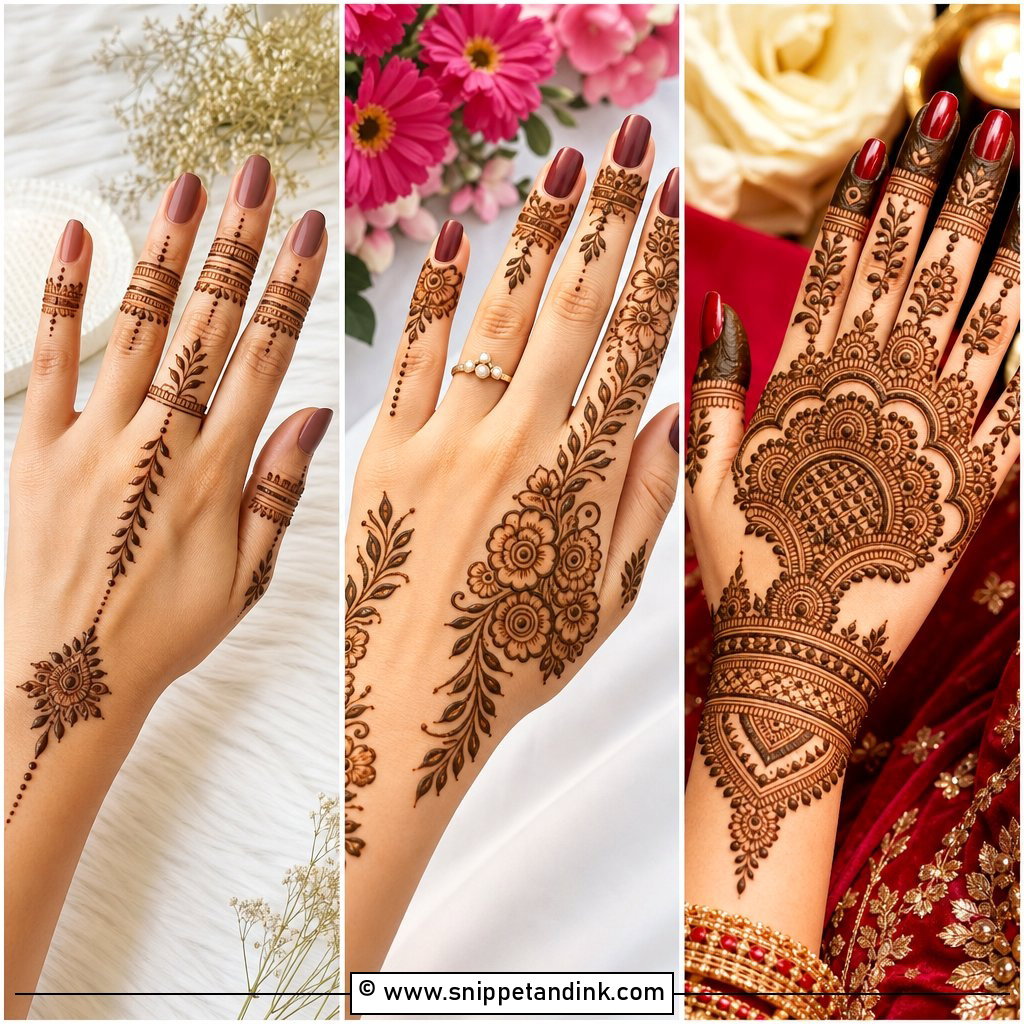
Indo-Arabic puts large flowers and paisleys on one side of the hand and fills selected areas with tiny checks, dots, swirls and leaf veins. That’s drama with less sitting time, which is why it’s the most common request I get from guests who want a bit more than a trail. The back hand looks especially modern with this layout. Ask for matching finger patterns so it runs wrist to fingertip.
5. Minimal Mehndi Design For Hands
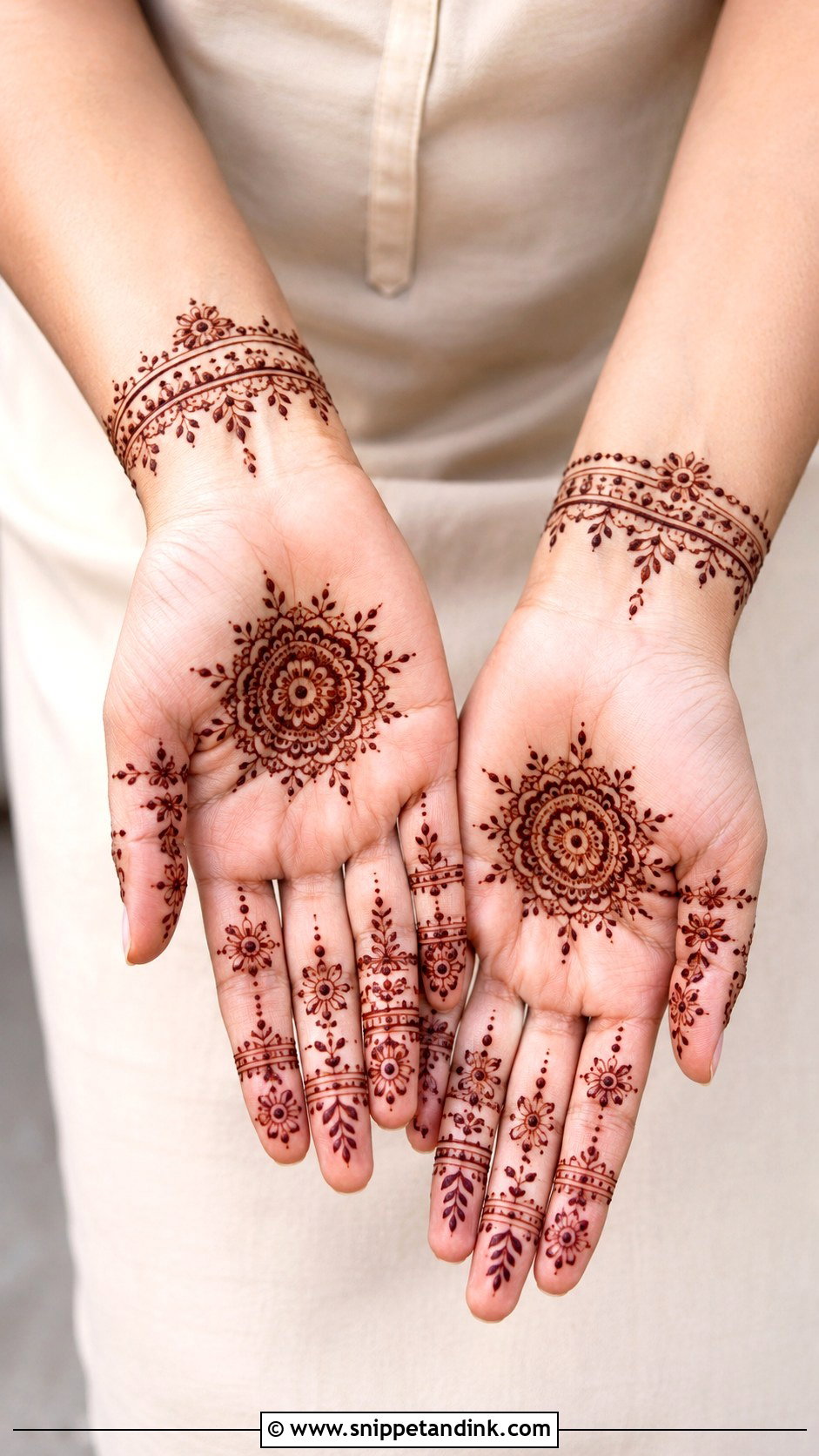
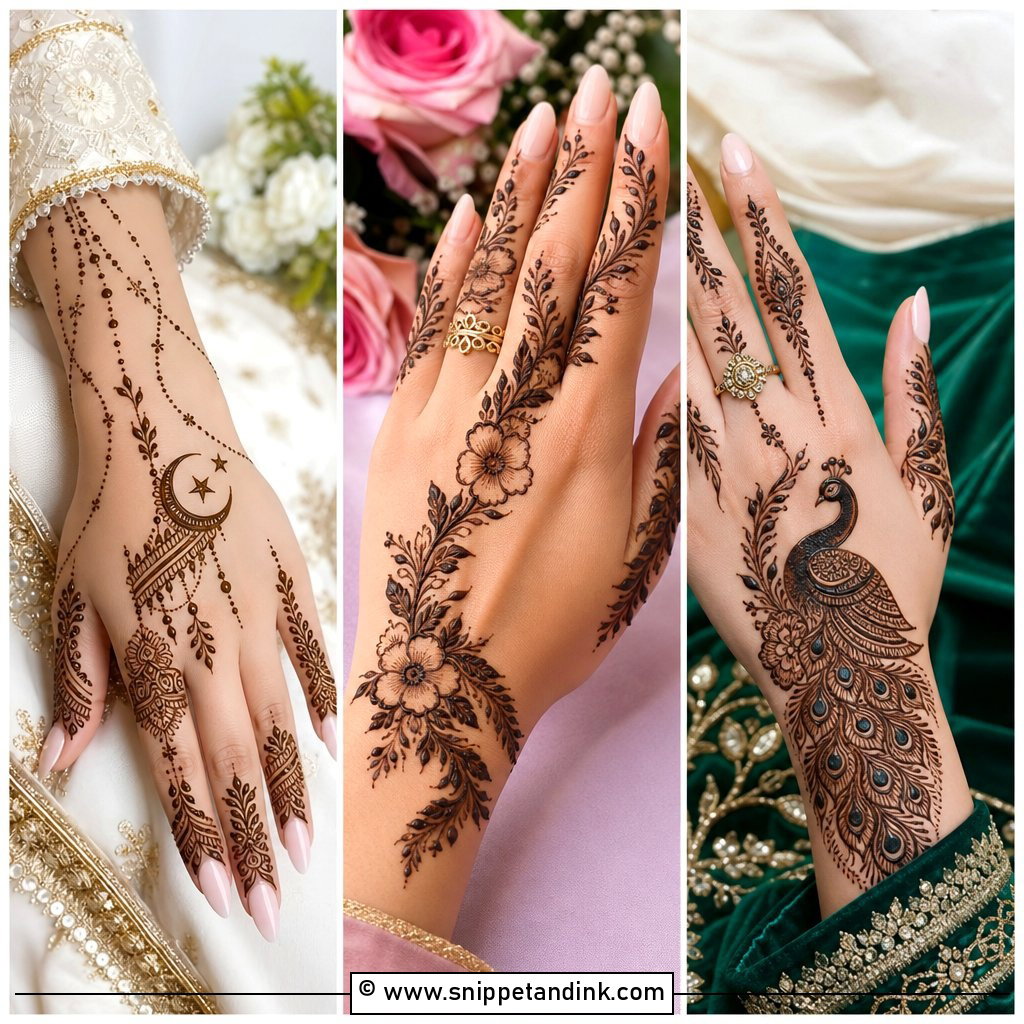
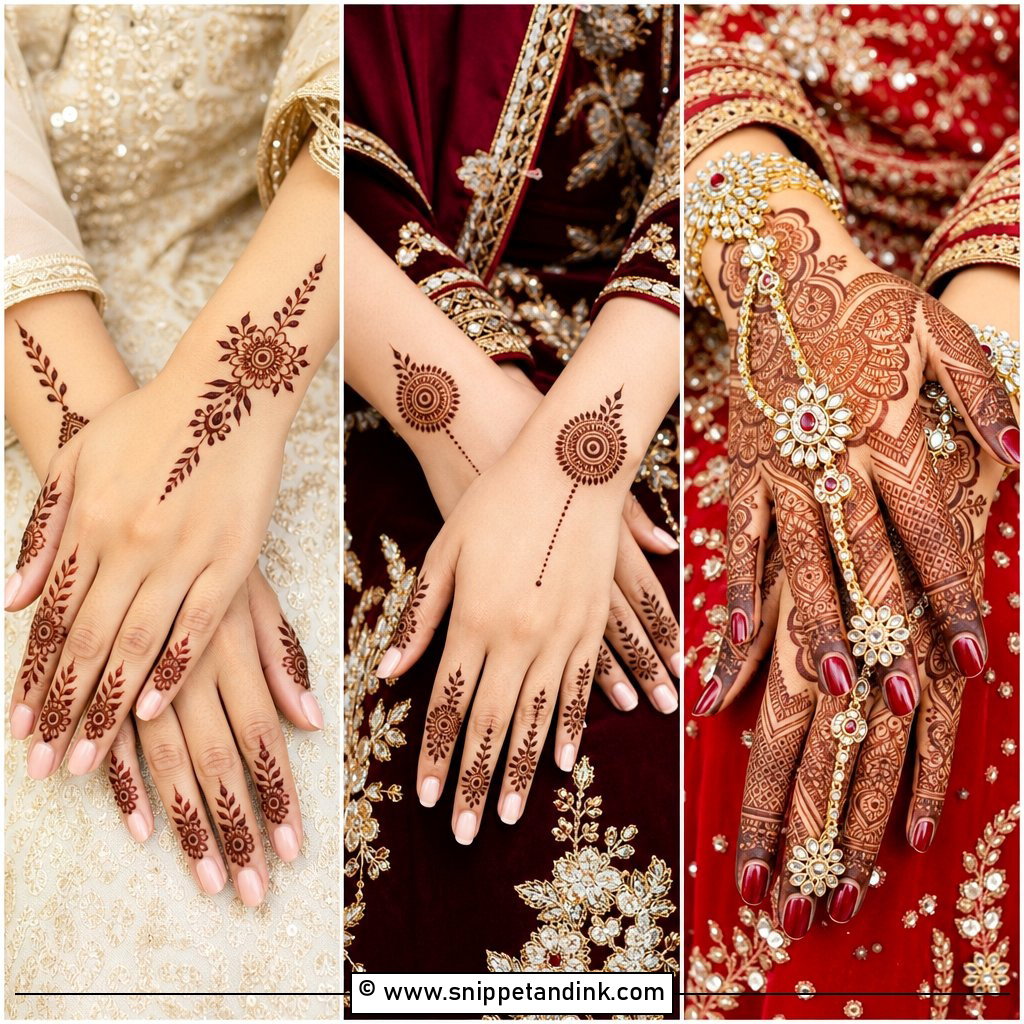
Thin lines, small florals, dots and plenty of open skin: a small mandala, slim finger bands and a fine wrist bracelet can be the entire design. It’s what I suggest to guests with a full day of functions ahead, because it dries fast and won’t get in the way. Minimal lines are unforgiving, so I use a fine tip and work slowly. Rings and bracelets show clearly against it.
6. Mandala Mehndi Design Front Hand
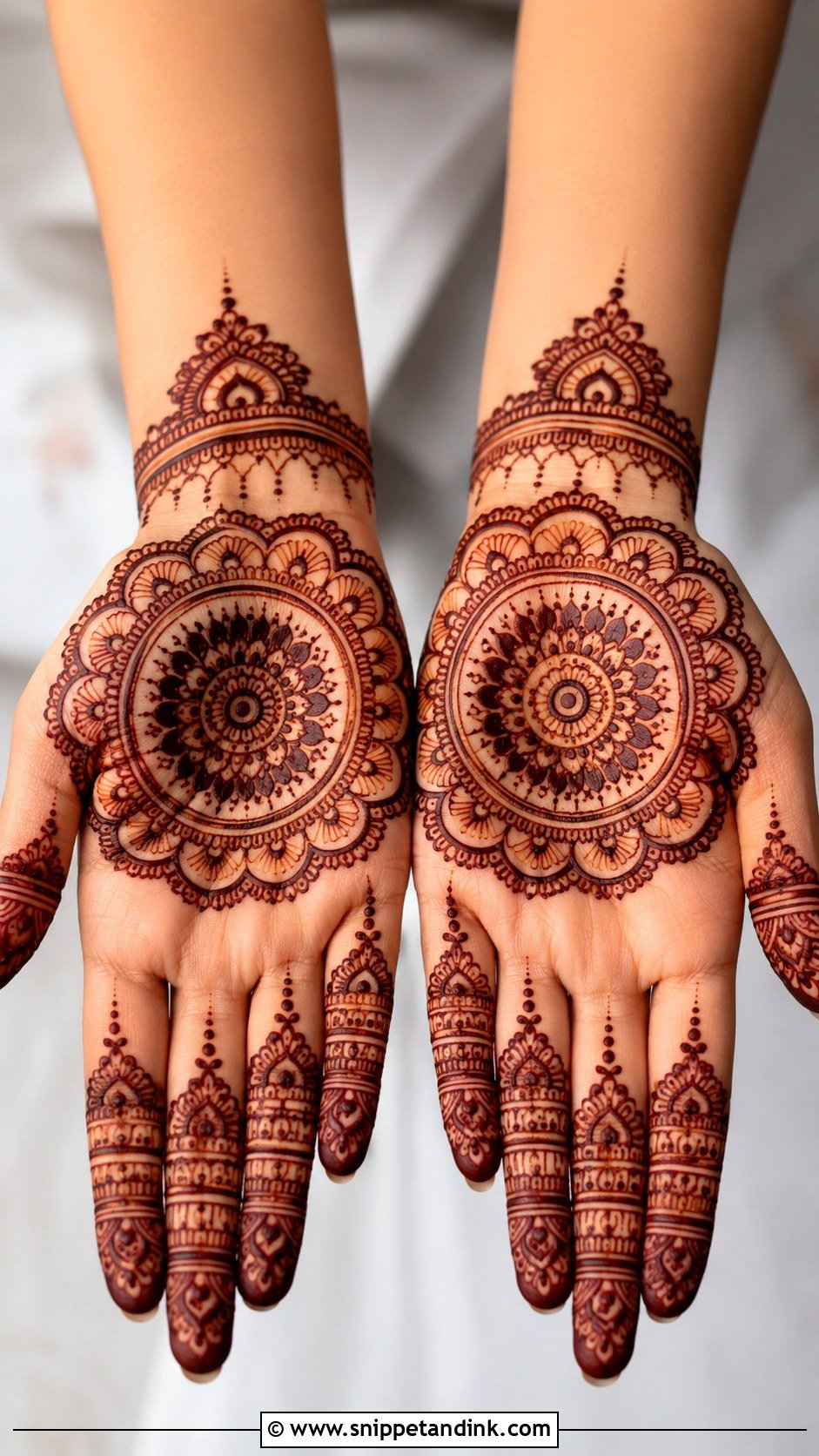
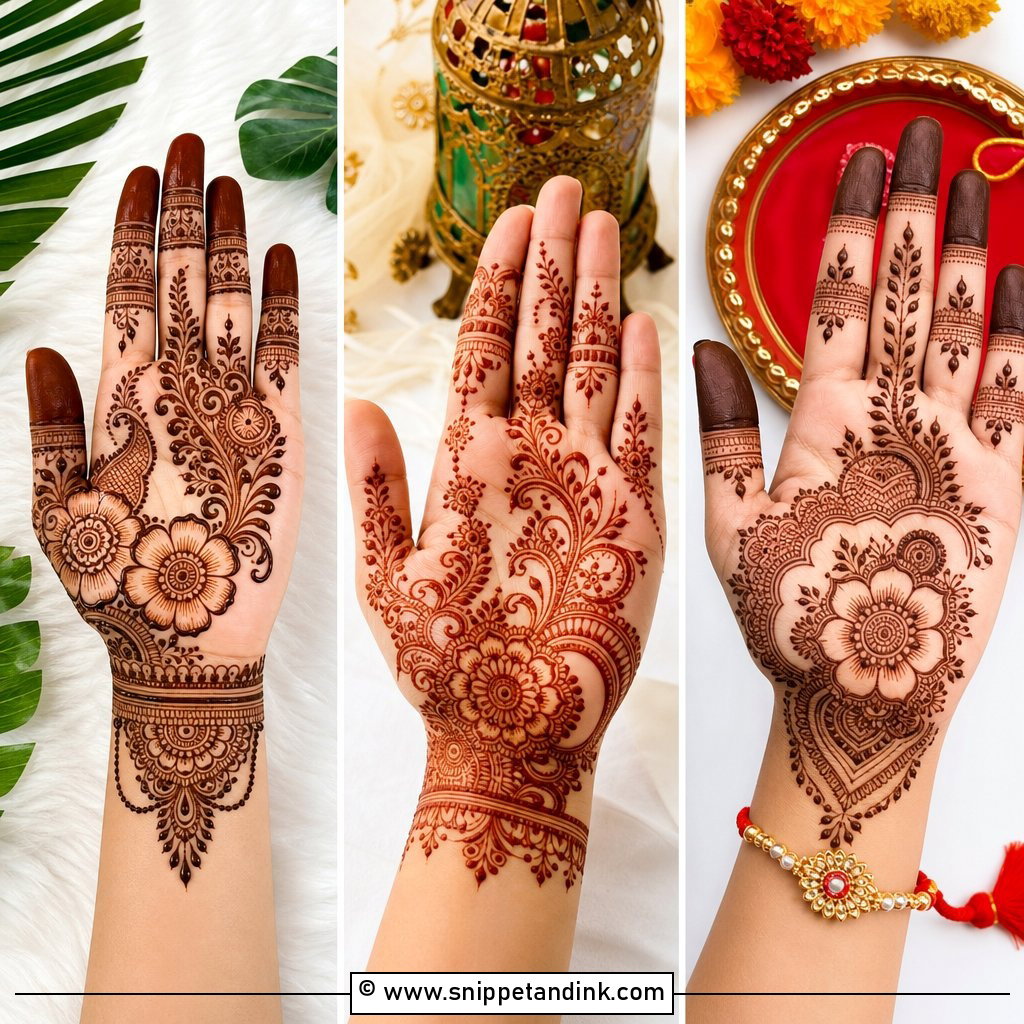
The round motif goes on the palm, ringed with petals, dots, scallops and fine circular borders, and the fingers get coordinated leafy tips, small grids or ring-style bands. I don’t fill the whole palm around it; the crisp circle is the point. Its structure is easy to follow, which makes it a good practice design if you’re learning to apply henna yourself.
7. Floral Mehndi Design Back Hand
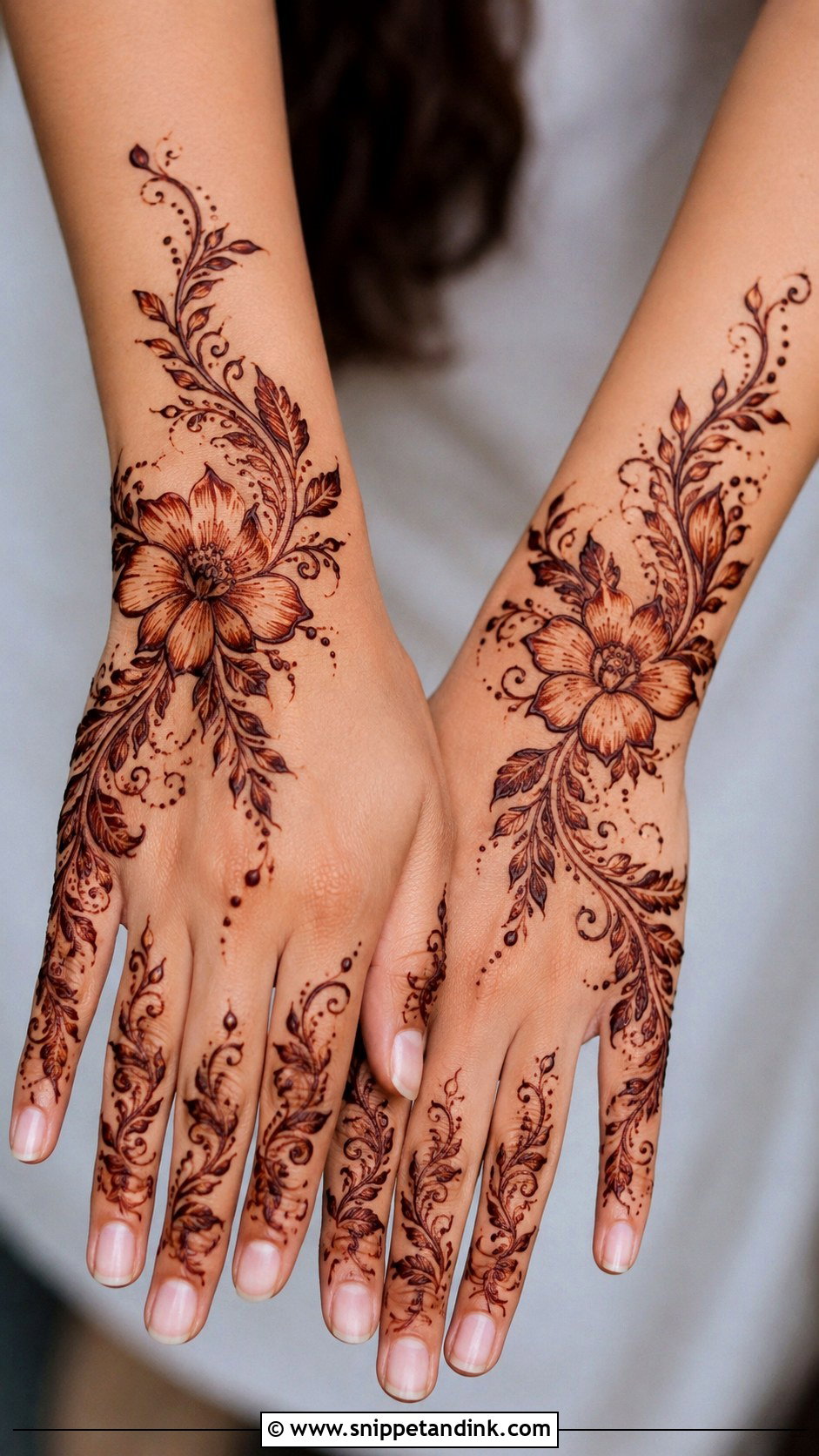
One or two large flowers anchor this, with curved stems, leaves, dots and shaded petals building around them on a slight diagonal that follows the hand. Buds, leafy tips or thin bands go on the fingers. Spring weddings and pastel outfits suit it. I leave real breathing room between each flower and vine, because floral fill on back-hand skin blurs easily once the stain deepens.
8. Modern Mehndi Design Back Hand
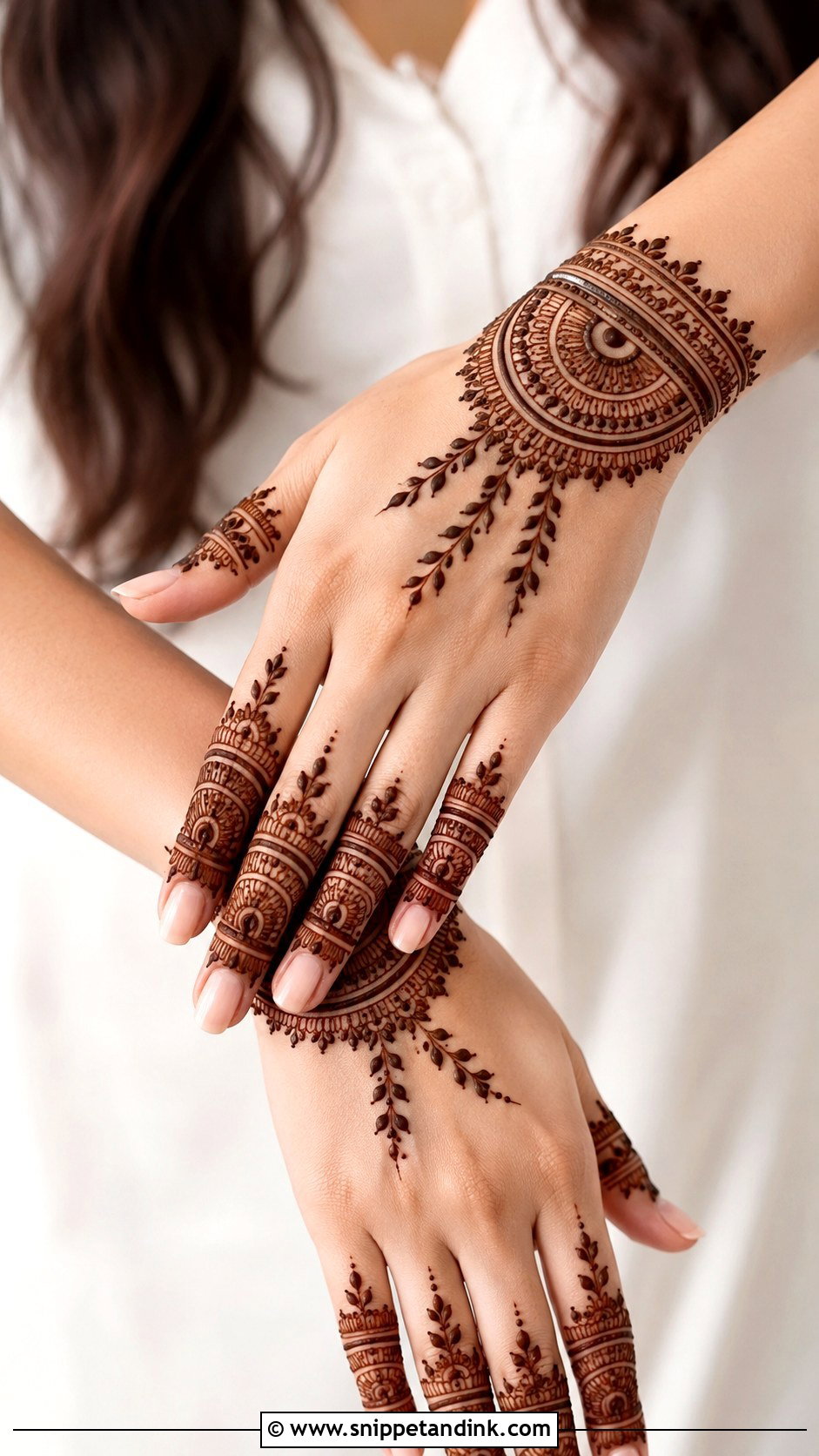
Geometric lines, half mandalas, bracelet bands, leaf trails and open space, often starting at the wrist like a cuff, crossing the center and finishing in coordinated finger art. The risk is that it looks random, so I sketch the main lines with dots before outlining. It sits well with fusion wear and simple jewelry.
9. Pakistani Mehndi Design Full Hand
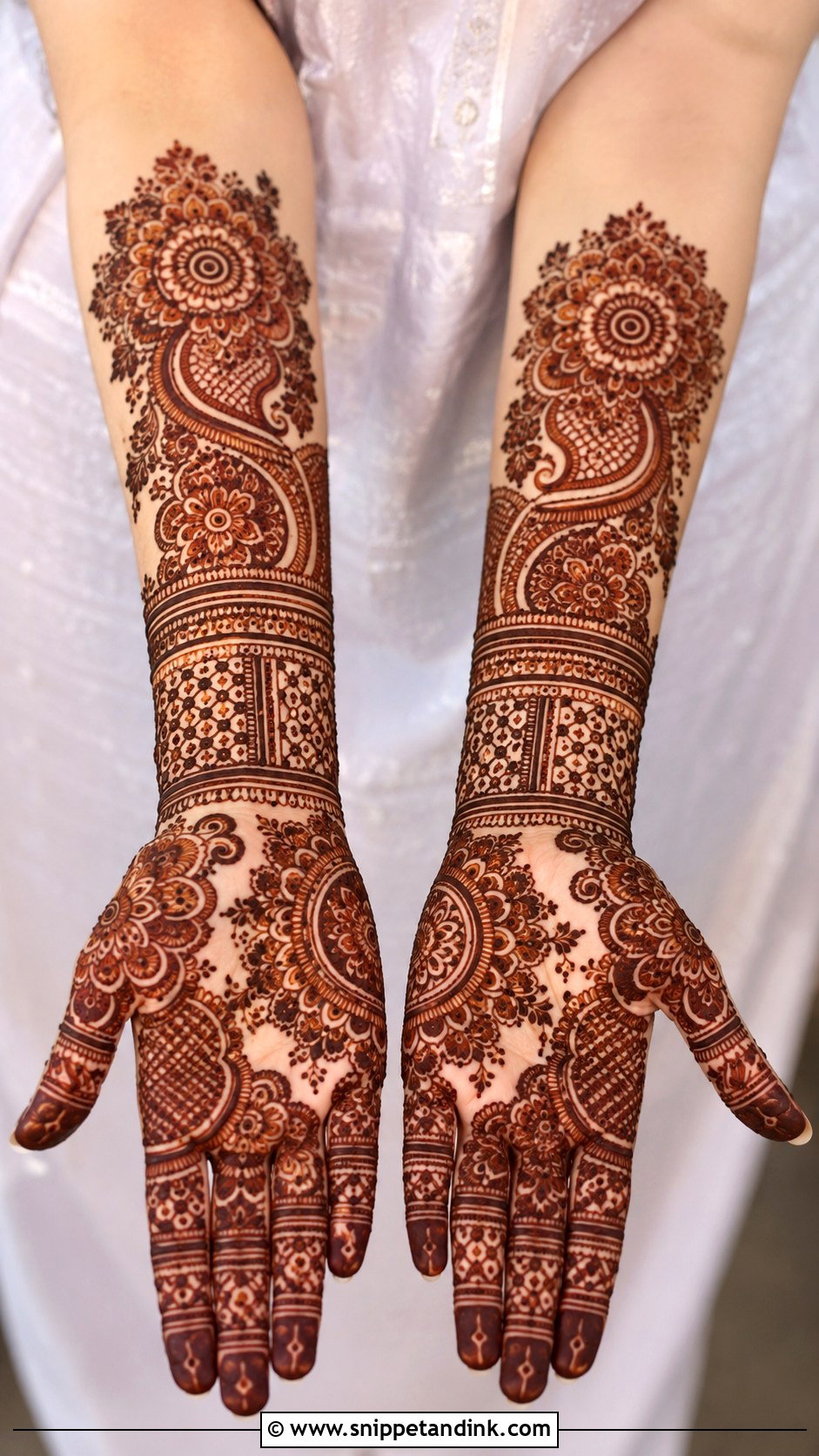
Pakistani full-hand work combines Indian density with Arabic curves: paisleys, floral clusters, mandalas, jaali and bold wrist borders, usually denser on the palm and slightly more open on the back. Fully decorated fingers with fine bands finish it. It’s for brides, close family and formal events. The flow between dense and open areas is what keeps it from looking flat, and it takes a confident hand to judge where each starts.
10. Indian Mehndi Design Full Hand
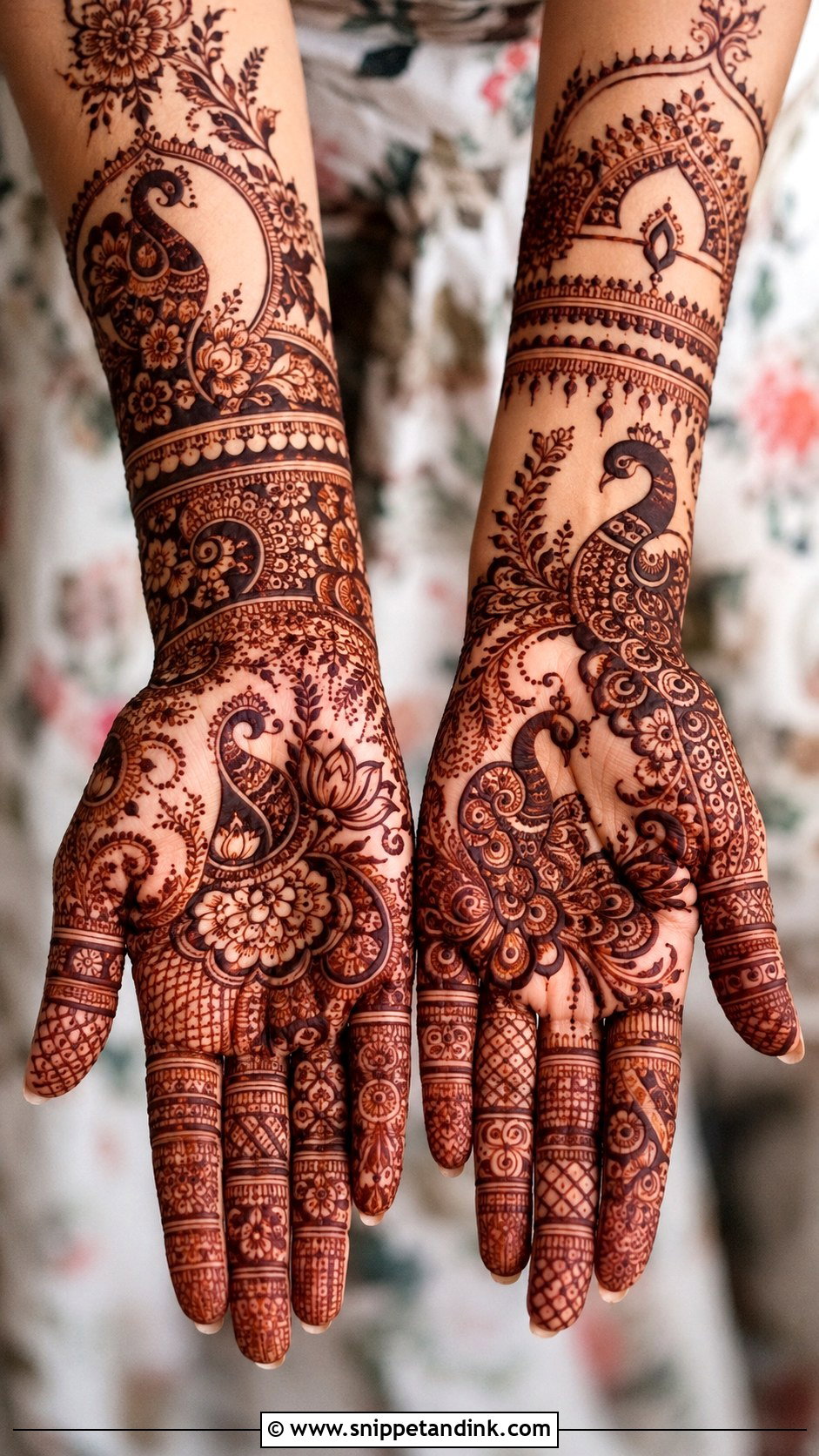
Indian full-hand designs cover palm, back, fingers, wrist and sometimes the forearm with paisleys, peacocks, lotus, mandalas, vines and fine fillers. Even dense work needs clear sections the eye can follow, and that’s what I’m thinking about when I divide the hand before starting. It suits Karwa Chauth, Diwali and wedding ceremonies. Expect a long sitting and a deep, classic stain.
11. Moroccan Mehndi Design For Hands
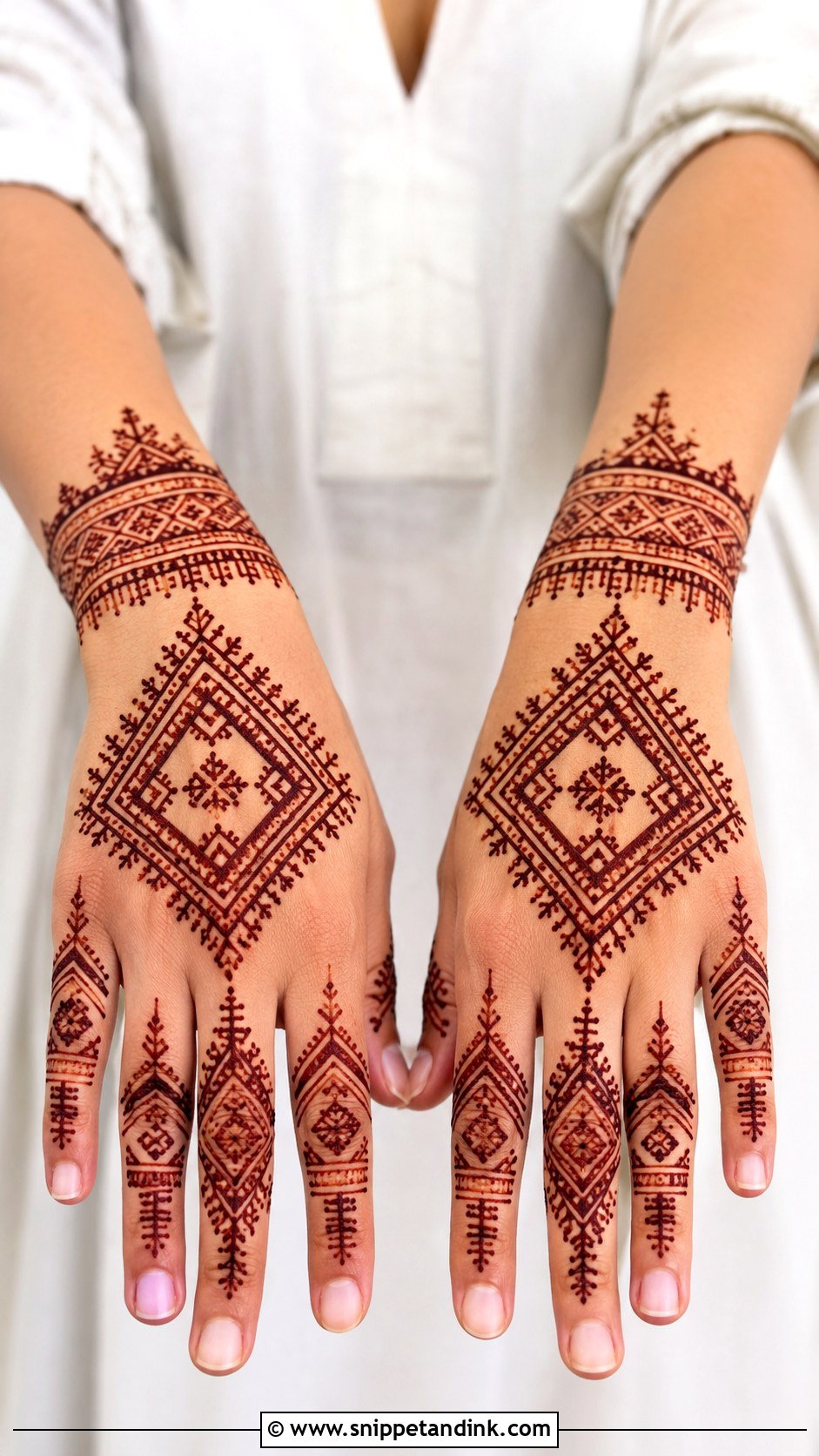
Diamonds, triangles, grids, zigzags and structured bands replace florals here: a strong wrist cuff, a central diamond pattern, neat finger panels. Straight lines lengthen long fingers, which is why I recommend it most for slender hands. On a curved surface, straight lines are hard, so I draw them in short joined strokes. It’s a good pick for a guest who wants something different from everyone else in the queue.
12. Gulf Arabic Mehndi Design
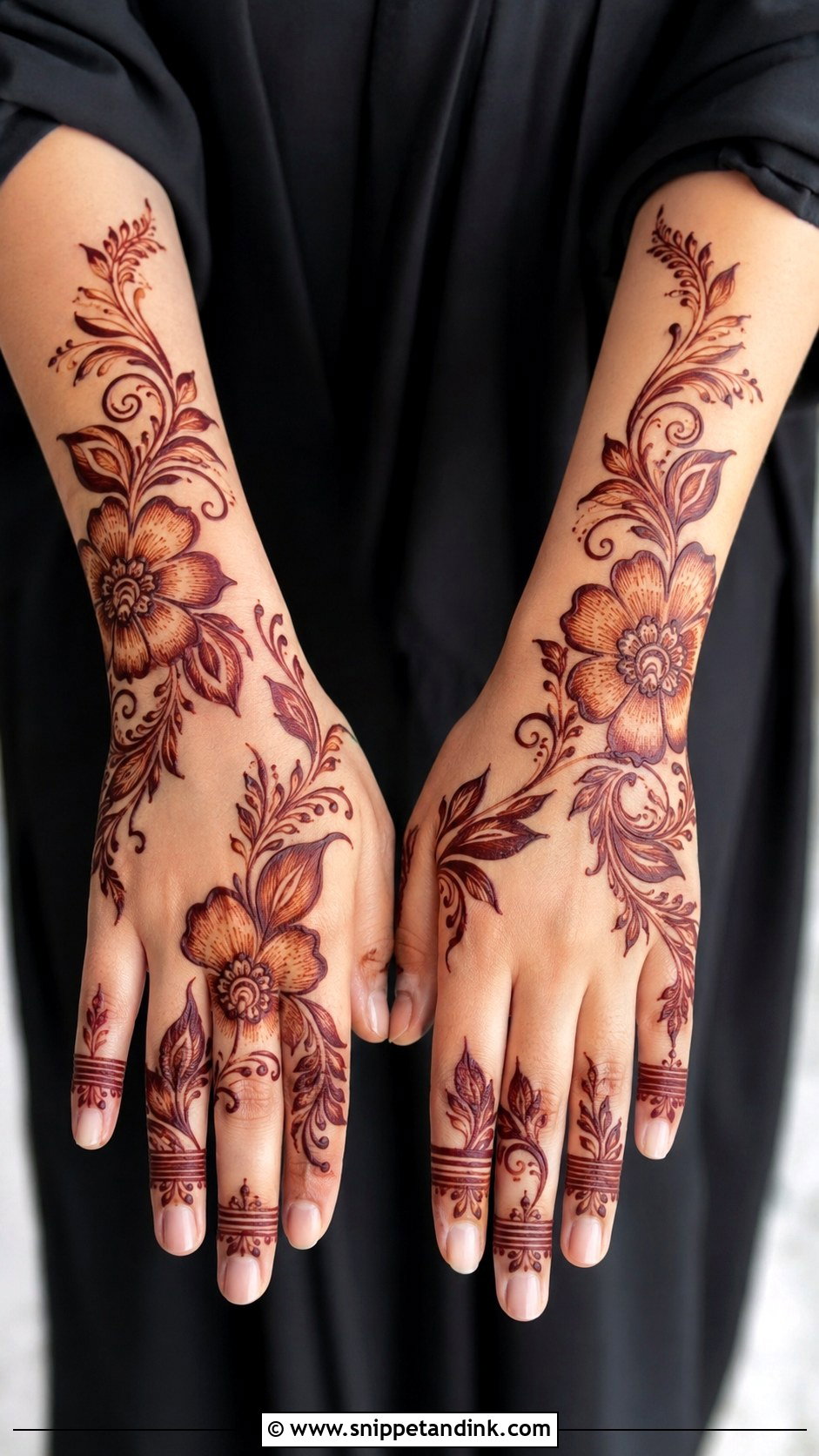
Gulf henna is confident: oversized flowers, shaded leaves and curved trails across the back hand, sometimes extending toward the forearm, with fuller fingertips for balance. It’s less crowded than Indian bridal work and quicker to apply. Thick outlines, soft shading and open skin between motifs produce the contrast. Eid and evening receptions are where it shines.
13. Finger Mehndi Design Full Hand
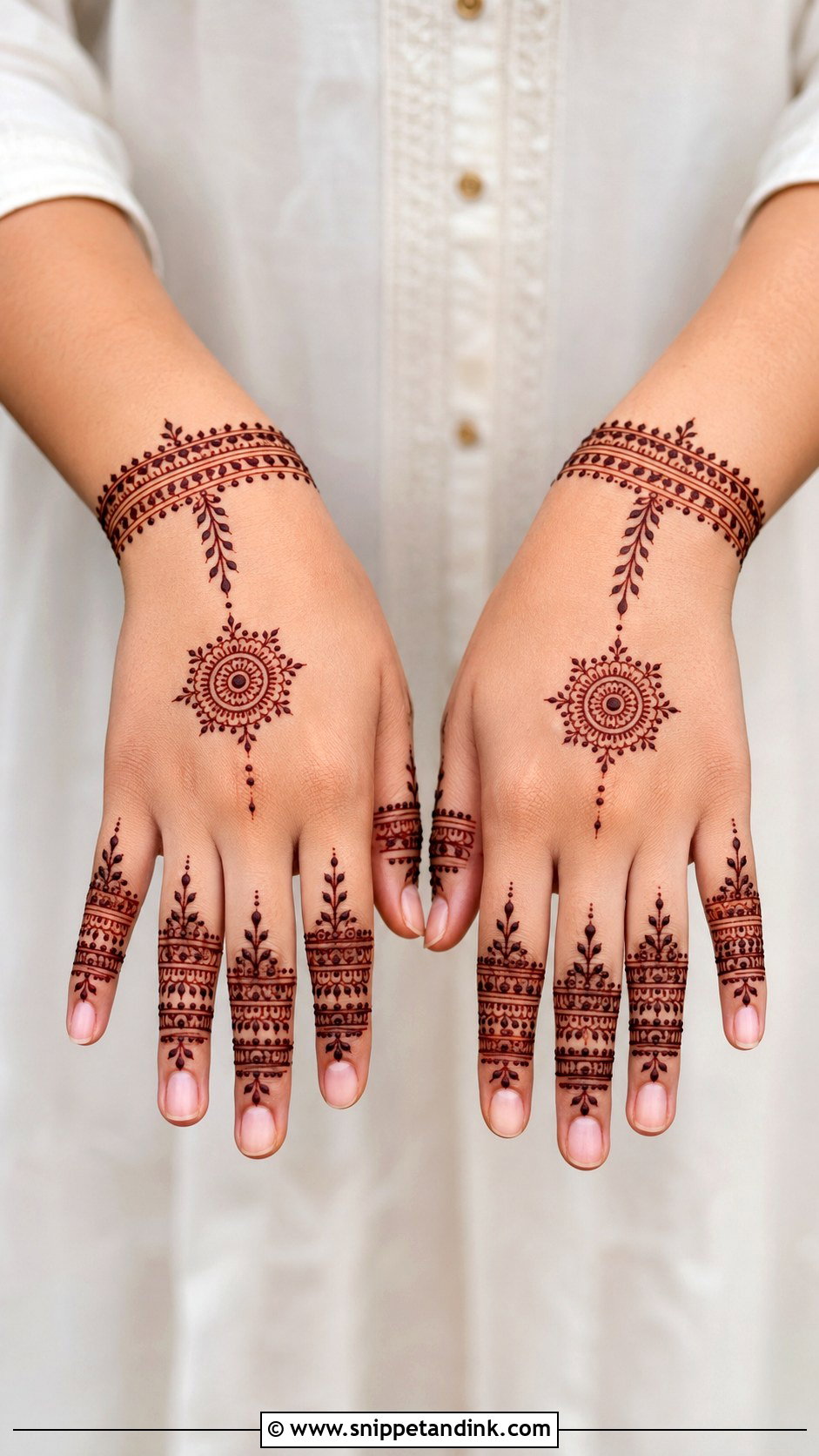
This isn’t a single decorated finger. All ten get coordinated panels, with a small palm or back-hand motif and a fine wrist detail to finish. Leafy strips, ring bands, tiny mandalas or geometric lines all work. Fingertips stain very dark, so this design reads clearly even in low evening light. It’s my suggestion for guests who’ll be eating with their hands at the dinner.
14. Bracelet Mehndi Design Back Hand
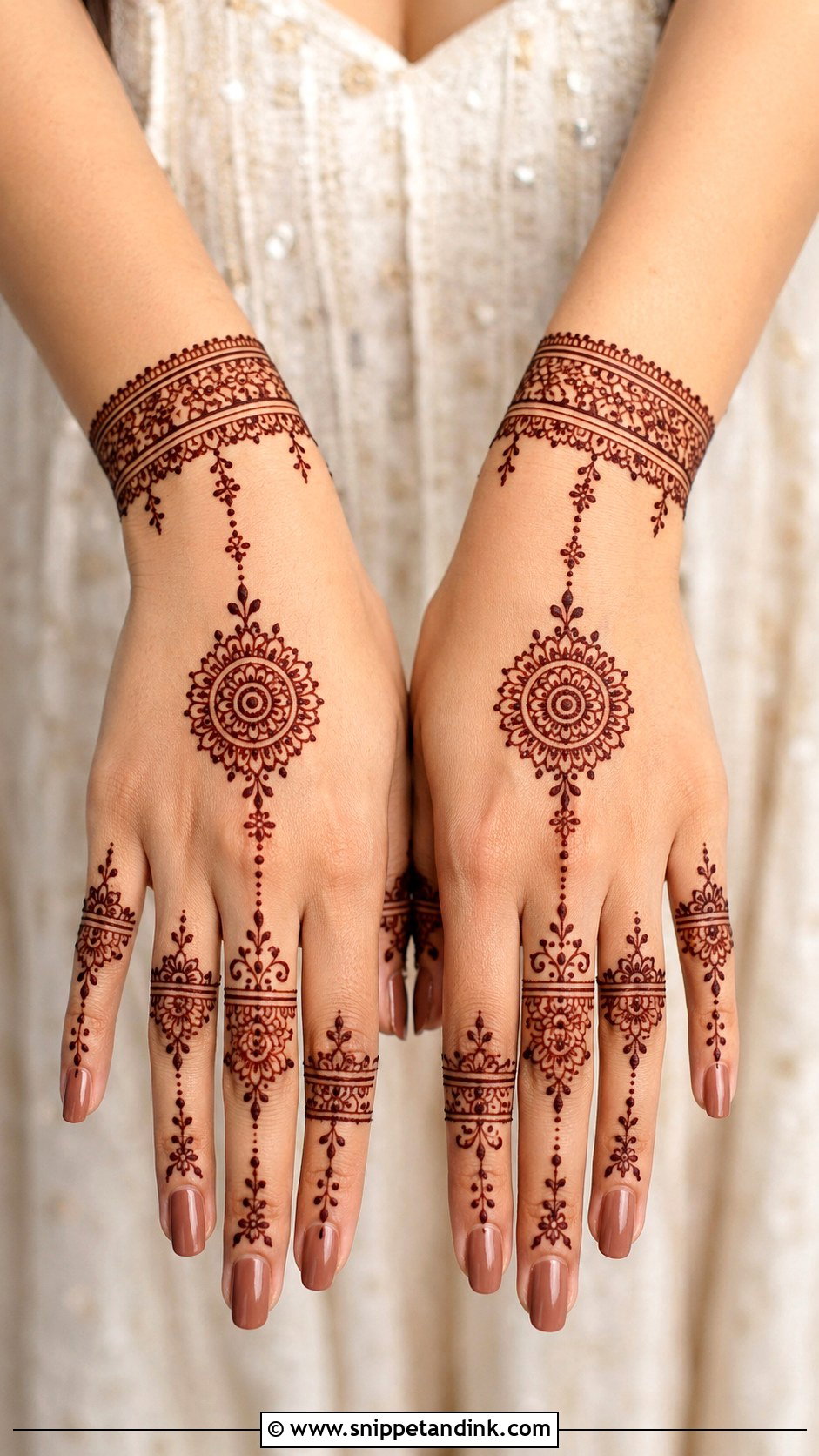
A wrist cuff of chains, dots, florals or lace borders, joined by slim trails to one or more fingers, with a small mandala or flower centered on the back hand. Without heavy palm work, your palms are free again within minutes. Fine lines look delicate; bold outlines read from further away. Draw the cuff with the hand relaxed so it sits evenly when your arm is down.

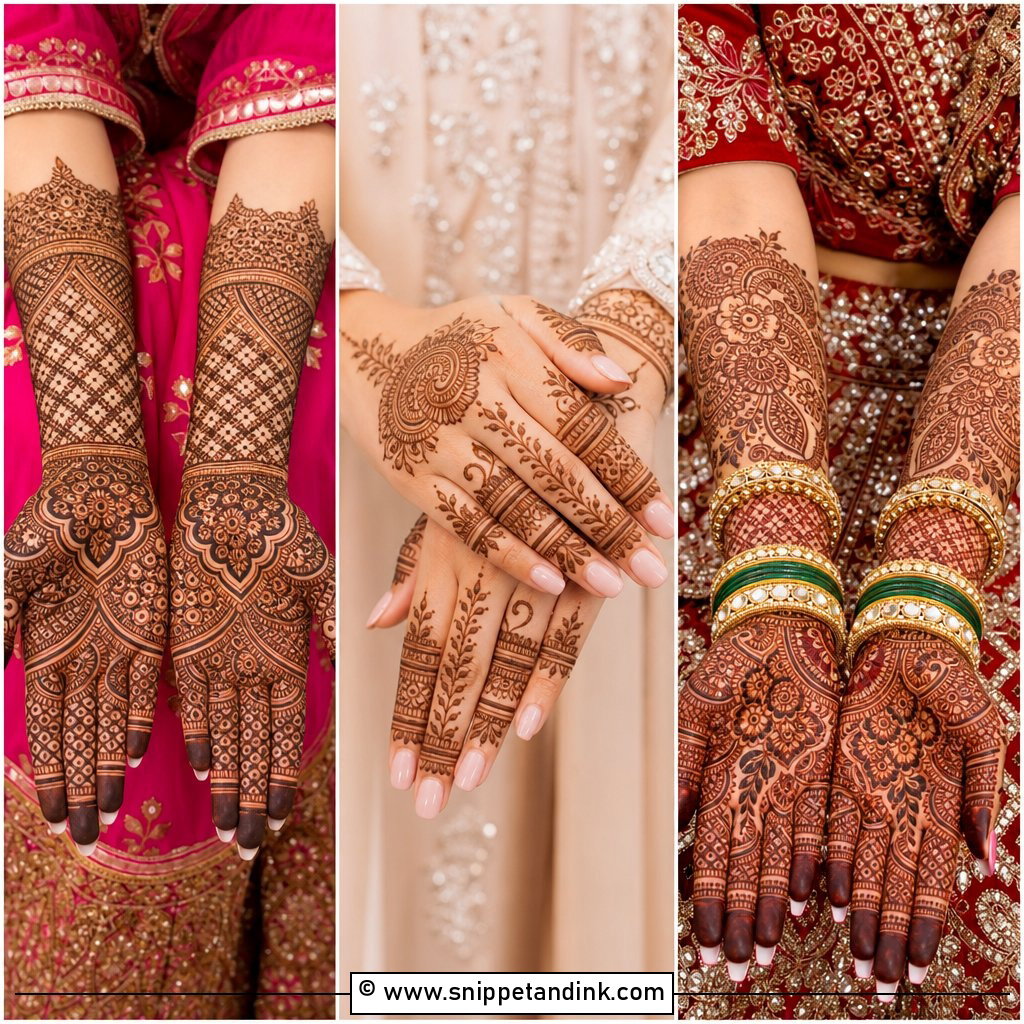

15. Jaal Mehndi Design For Hands
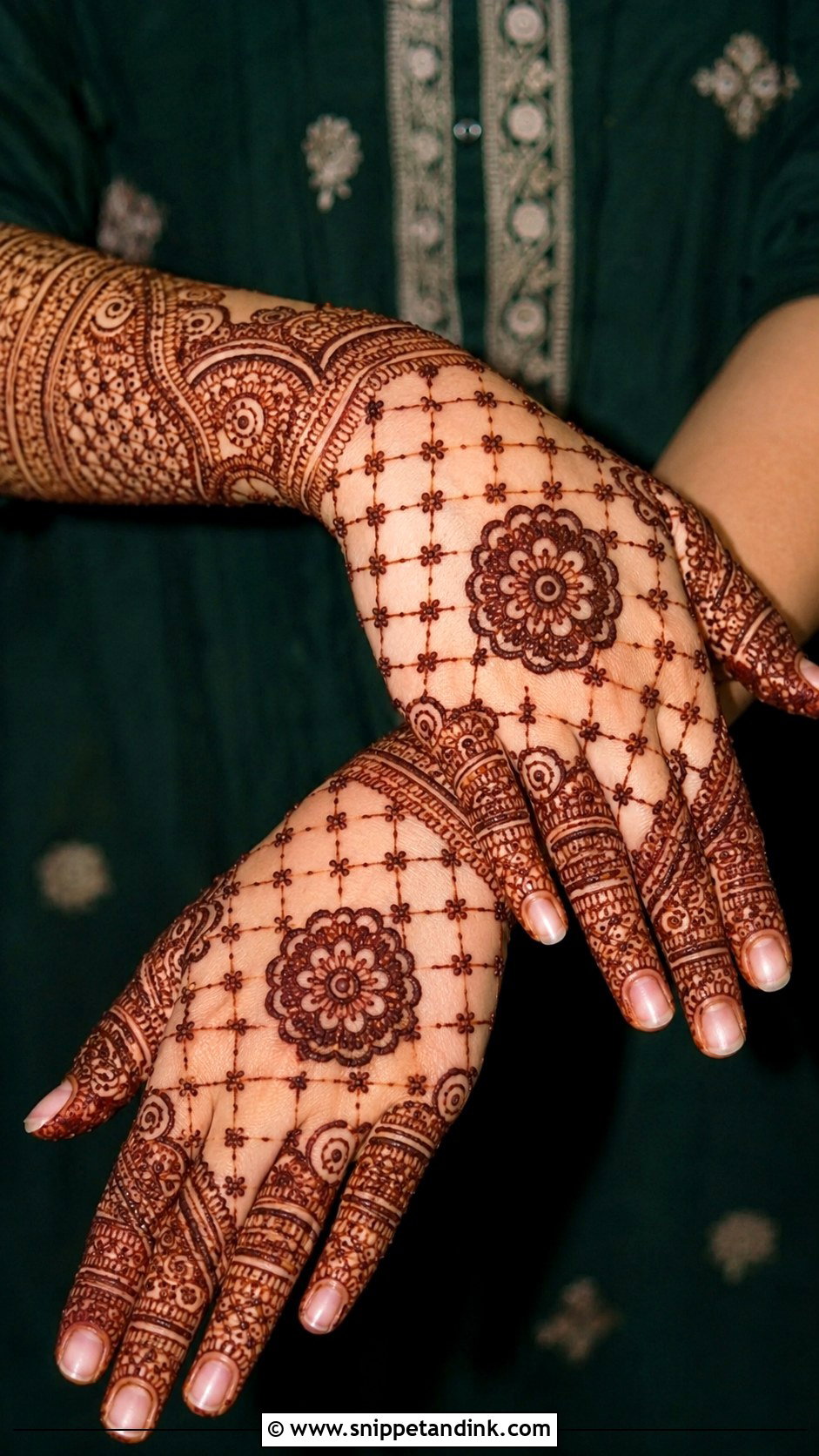
Jaal, or jaali, is a net pattern over the palm, back hand or inside larger motifs, framing a central flower or paisley with mesh panels. The grid has to be even, or it reads as clutter rather than lace. I check the spacing every few rows, since the lines thicken slightly as they stain and tight cells close up. It gives high detail without needing many different motifs.
16. Paisley Mehndi Design Front Hand
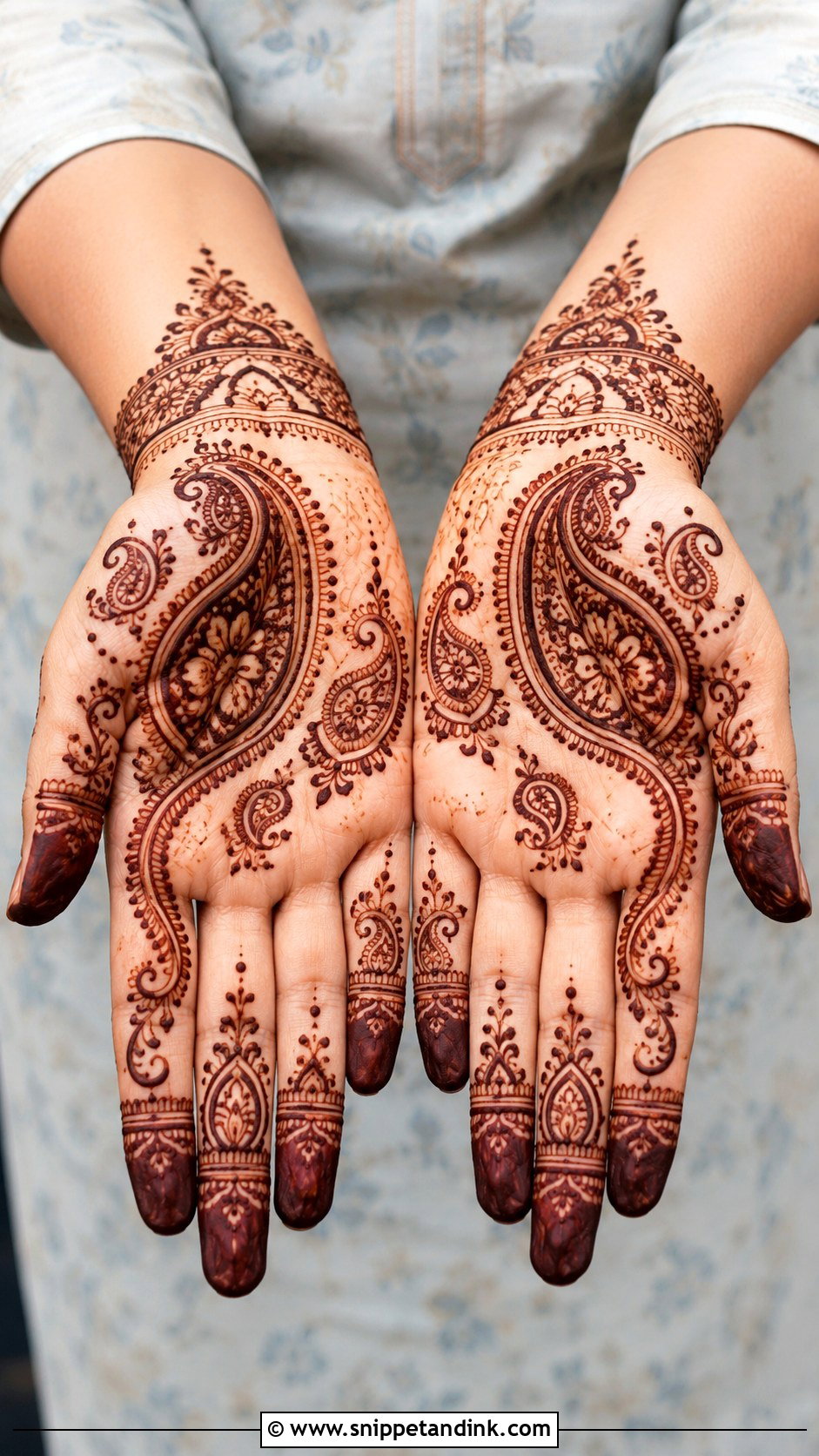
A large paisley laid diagonally across the palm, with smaller ones near the wrist and fingers and florals, dots and fine lines around them. The diagonal gives movement and makes the hand look longer. Paisleys feel traditional without being rigid. For a lighter version, keep the outlines bold and leave the fingers simpler.
17. Peacock Mehndi Design Full Hand
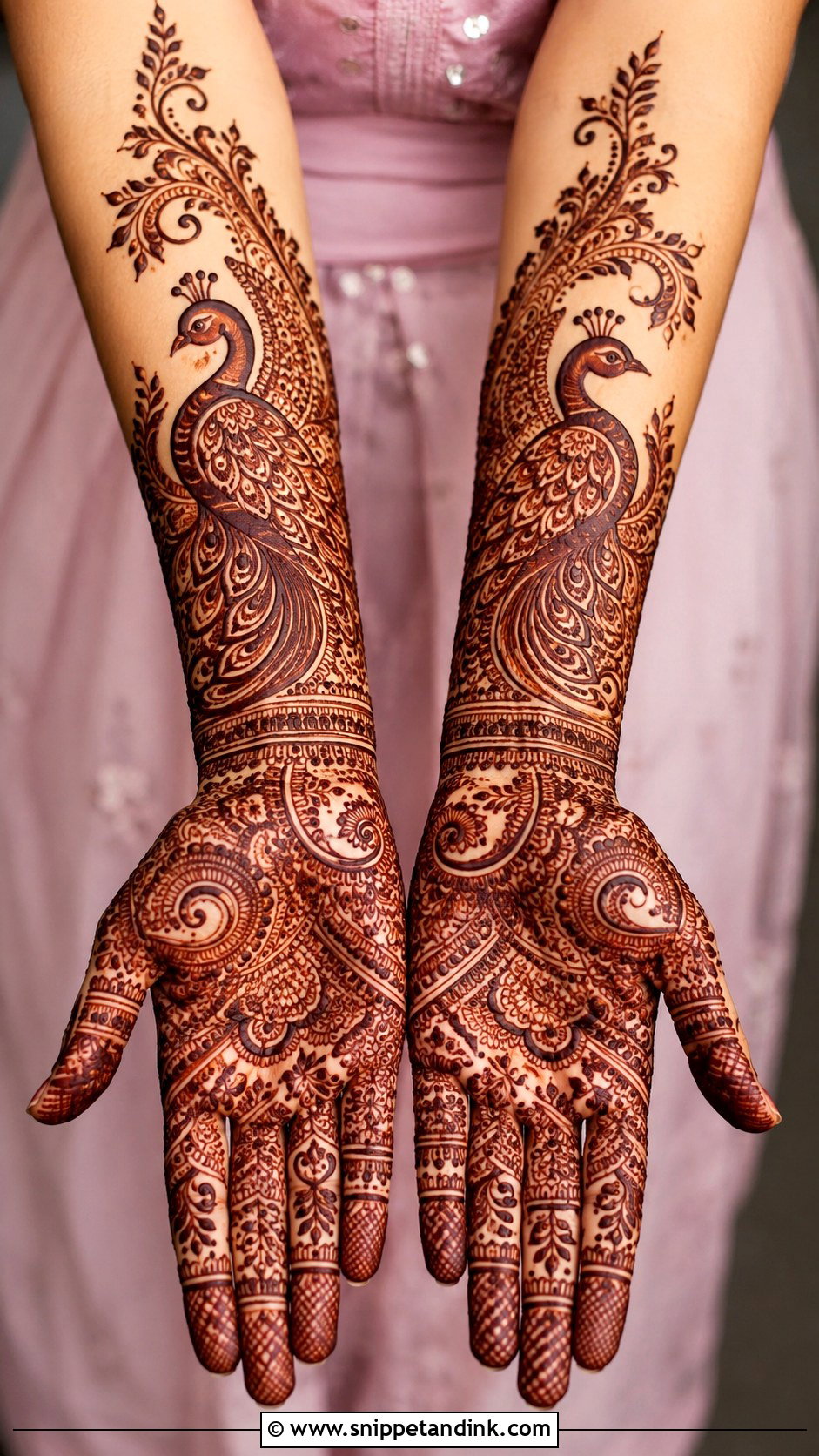
The peacock is the focus, on the palm, back hand or forearm, and everything else is built around it: feathers flowing into paisleys and vines, feather curves on the fingers, a wrist border to tie it up. I get the body and neck outline right before adding a single feather, because a bird with the wrong proportions can’t be rescued by detail. It gives an artist room to show fine line work.
18. Lotus Mehndi Design For Hands
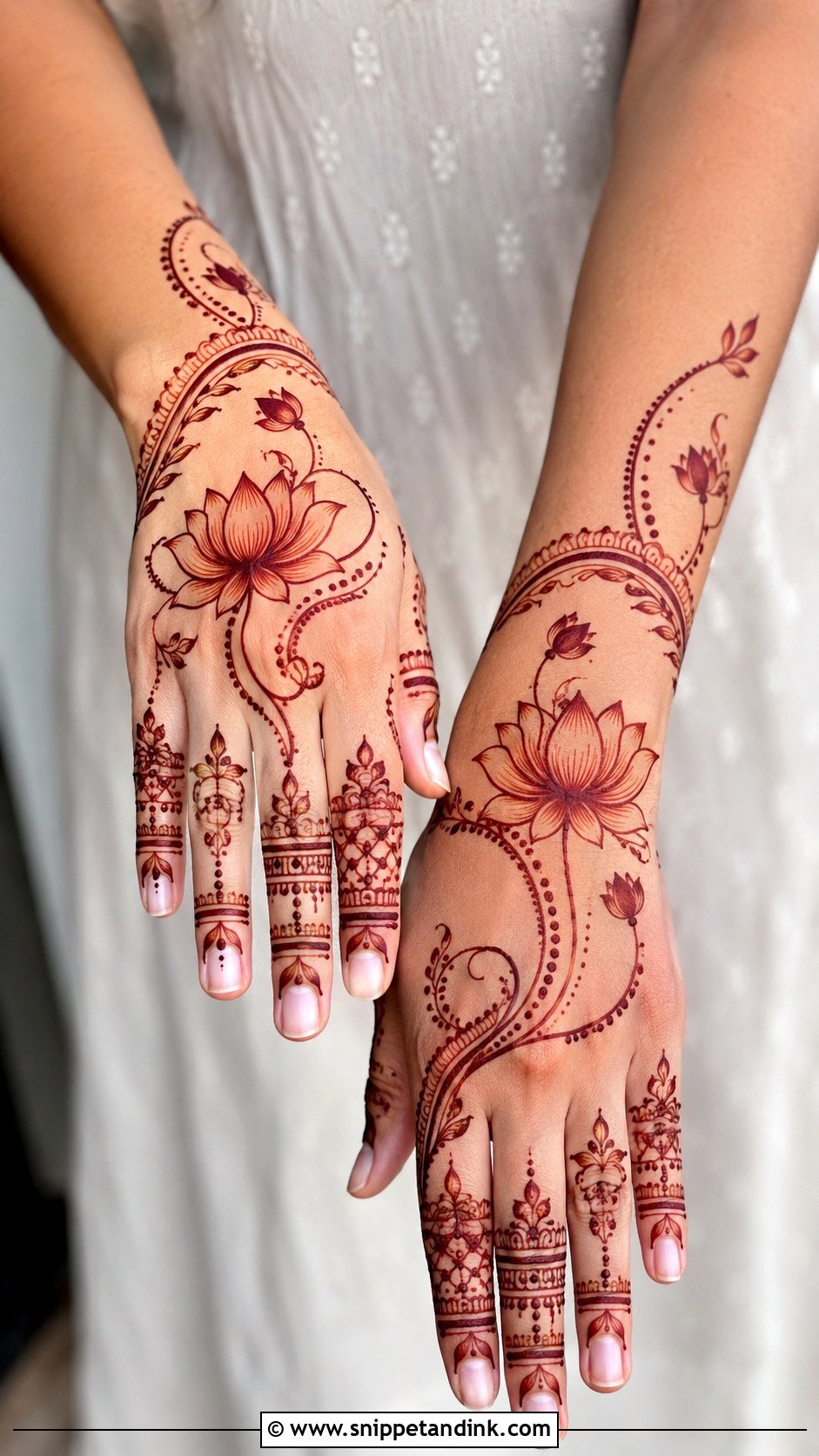
A large lotus on the palm or back hand with fine vines, dots and curved borders around it, and small buds or petal bands on the fingers. For a modern feel I leave negative space around the petals so the flower stays clear once the henna darkens. Even petal spacing is the detail that separates neat lotus work from a rushed one. Pujas and engagements suit it.
19. Rose Mehndi Design Back Hand
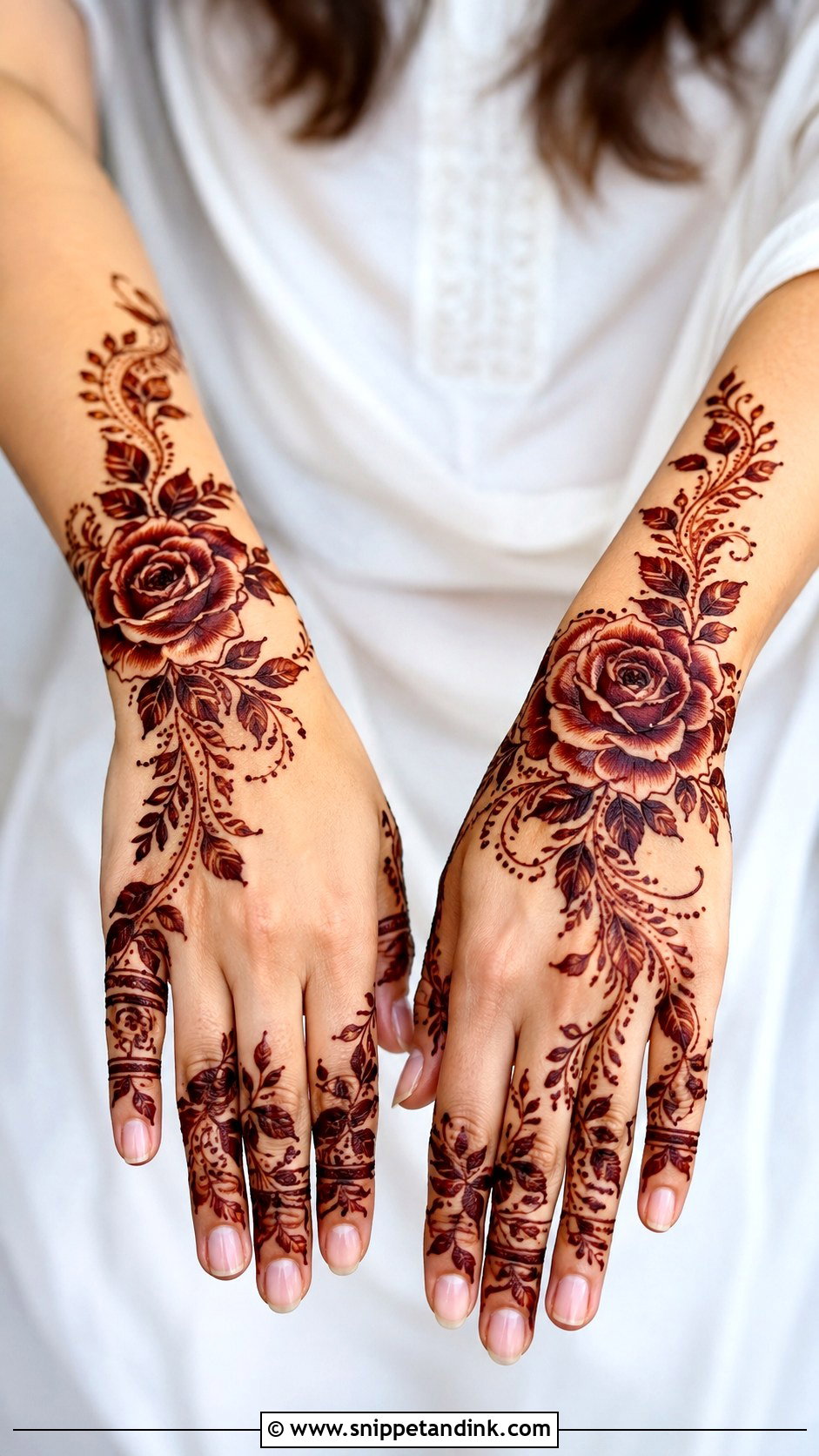
One large rose near the center leads into smaller flowers, leaves and vines heading toward the wrist and fingers. Without shaded petals, roses look like flat circles, so I add graded inner strokes on every bloom. Connect the finger detail to the main trail rather than drawing it separately; otherwise the hand looks like two designs. It’s a reliable guest design for engagements and family events.


20. Shaded Mehndi Design For Hands
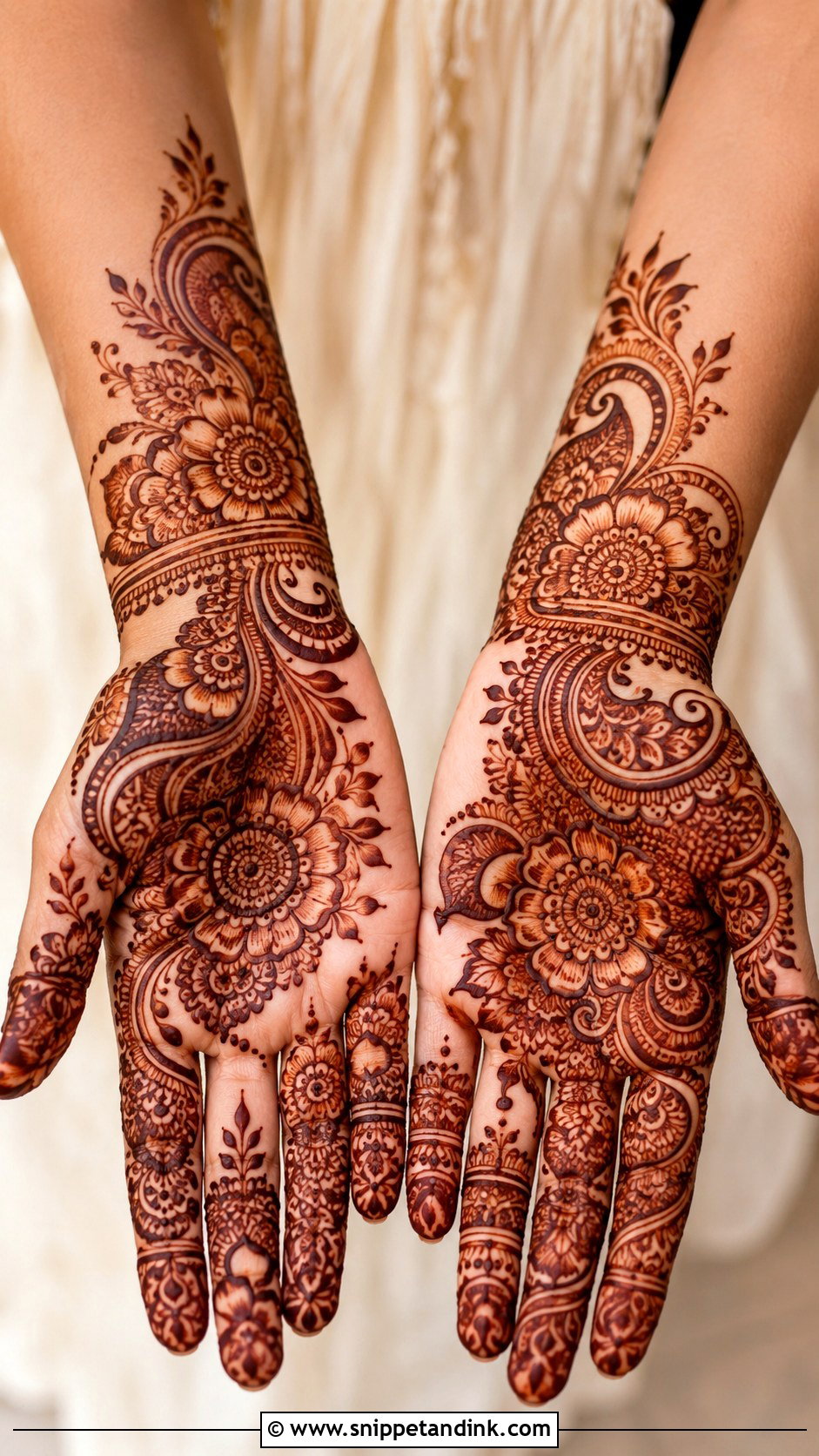
Shading fills flowers, leaves, paisleys and mandalas with light strokes for depth without density. On the back hand, it’s bold floral outlines with shaded petals and leafy trails; on the palm, a shaded mandala with open borders. I build the shade from fine close lines. A thick smear of paste cracks off before it stains and leaves the area patchy.
21. Geometric Mehndi Design Back Hand
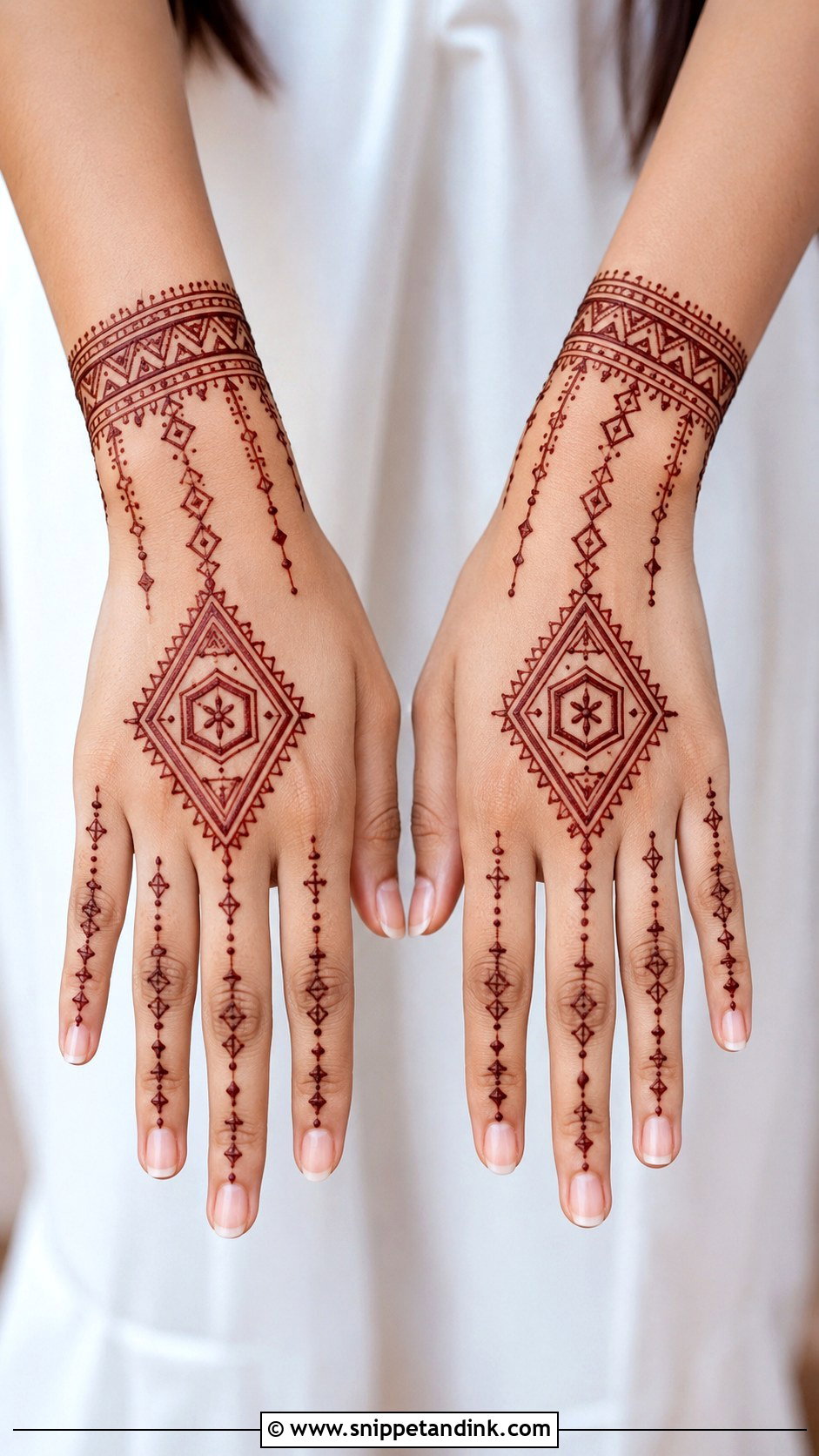
Diamond grids, triangle borders, straight trails and a structured cuff, with a central diamond or hexagon on the back hand linking to finger panels. Precision is the whole design, so look at an artist’s straight-line work before booking her for this. It pairs well with simple kurtas and fusion outfits. Long fingers and short nails carry the clean lines especially well.
22. Half Hand Mehndi Design
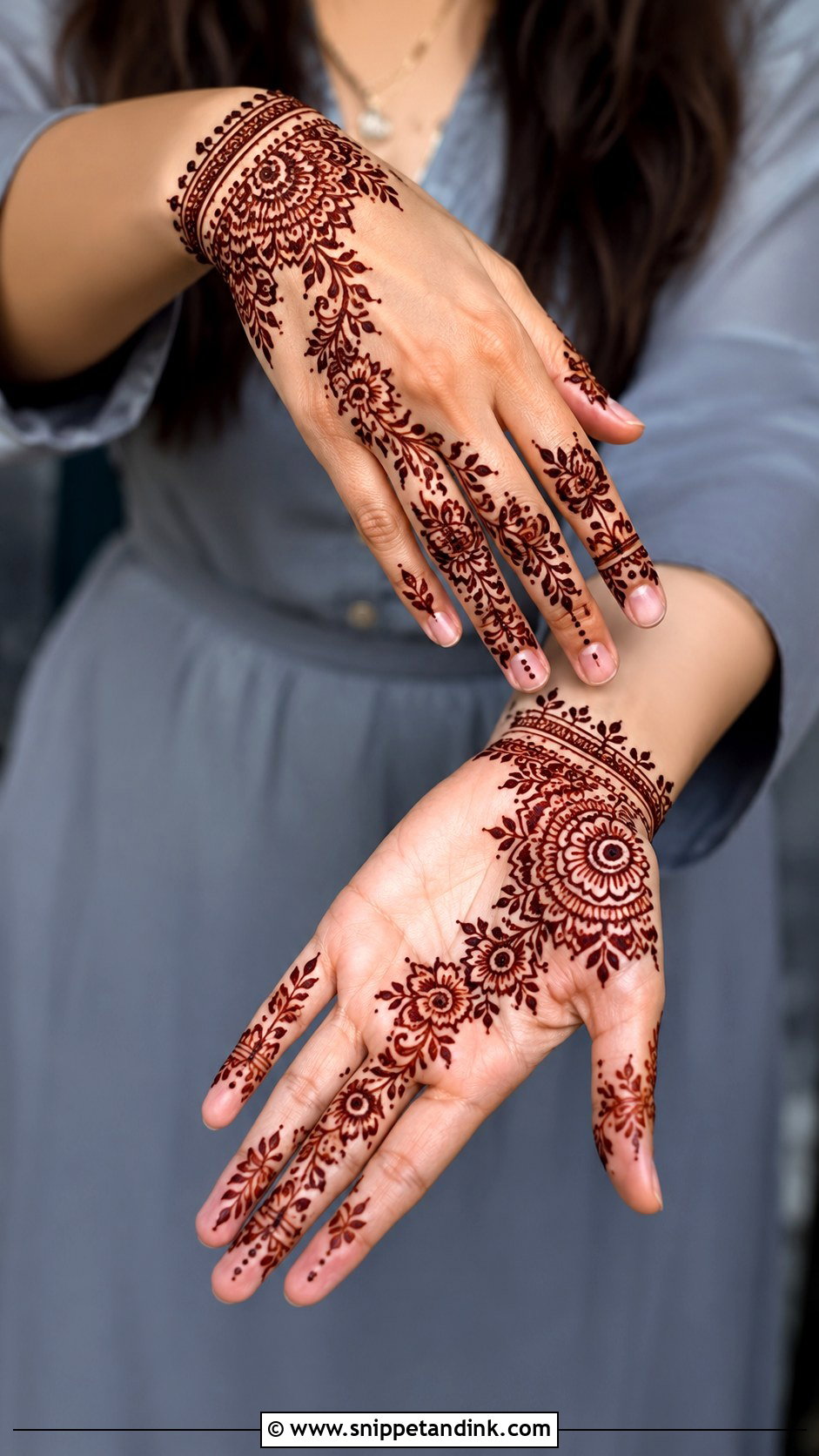
Palm and fingers only, back hand only, or a design that stops neatly at the wrist: a palm mandala with floral fingers and a thin border, or a diagonal trail on the back that leaves space near the thumb. It dries quickly, which matters when you’re the one dressing three kids for the evening. The finishing border has to be clean, or it looks like the artist stopped mid-design.
23. Full Arm Mehndi Design
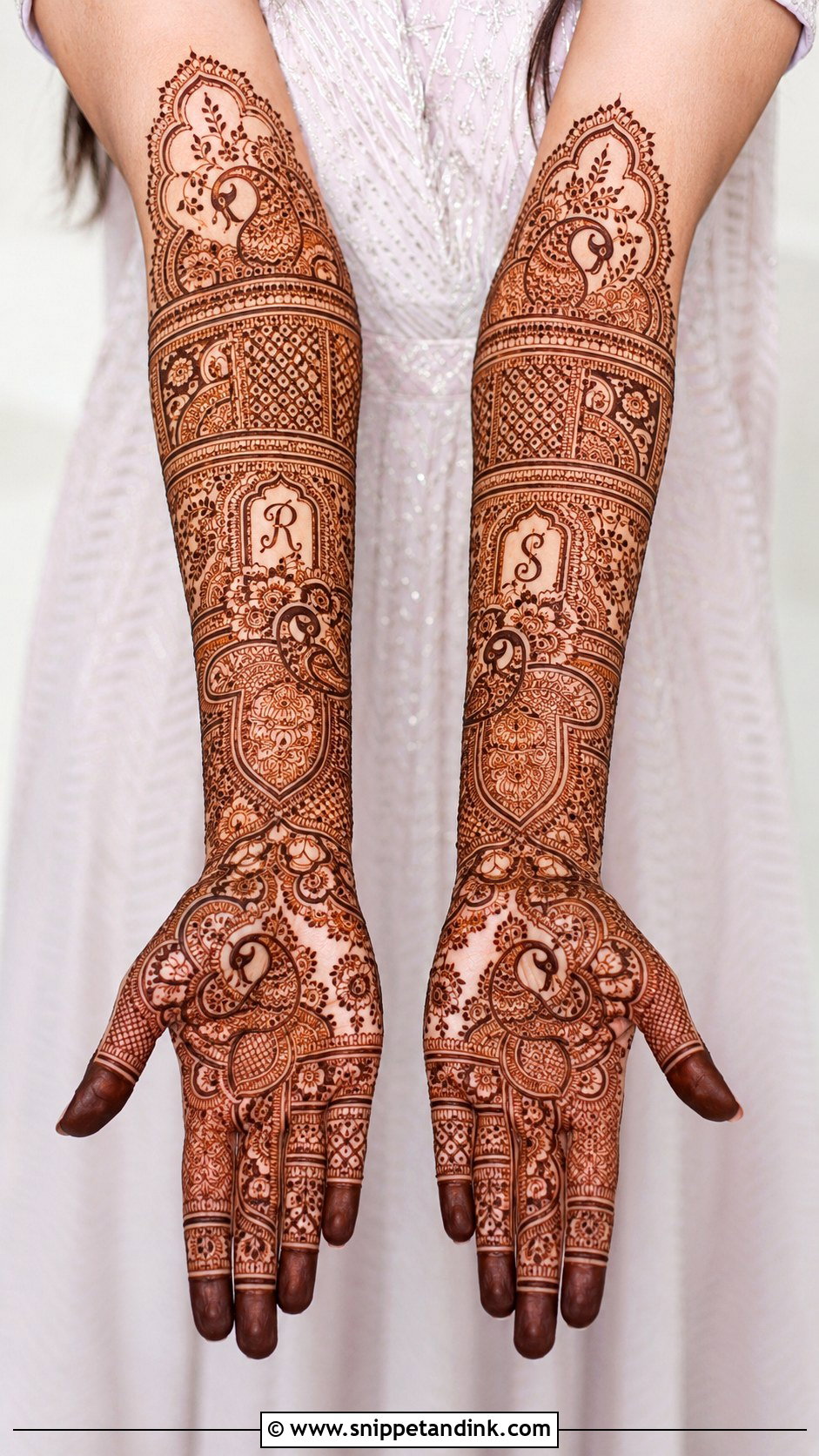
Full arm work runs from fingertips past the wrist, up the forearm and sometimes near the elbow. It needs clear sections: detailed fingers, a palm centerpiece, wrist bands and larger forearm motifs such as peacocks, paisleys, jaali, florals and initials. Forearm skin stains lighter than the hand, so I put the motifs that matter most lower down. Book it when you can sit comfortably for a long stretch.
24. Engagement Mehndi Design For Bride
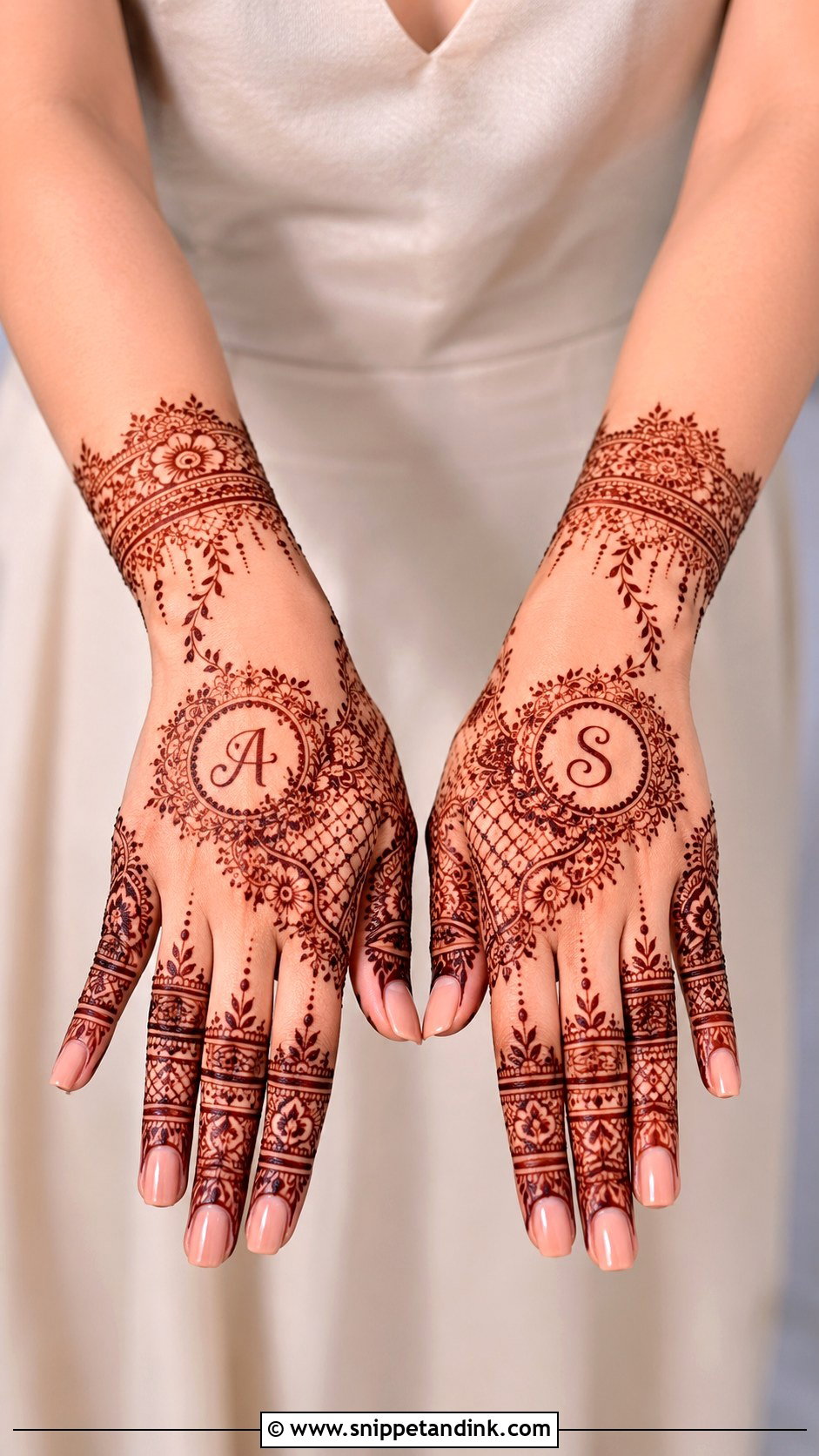
An Engagement mehndi design for bride usually sits a step below the wedding-day work: palms, back hands and wrists with florals, ring-inspired bands, initials and some soft jaali. Indo-Arabic layouts are common because they leave skin showing. Ring photos are close-ups, so the fingers need to be neat on both sides. Initials near the palm or wrist add something personal.
25. Eid Mehndi Design For Hands
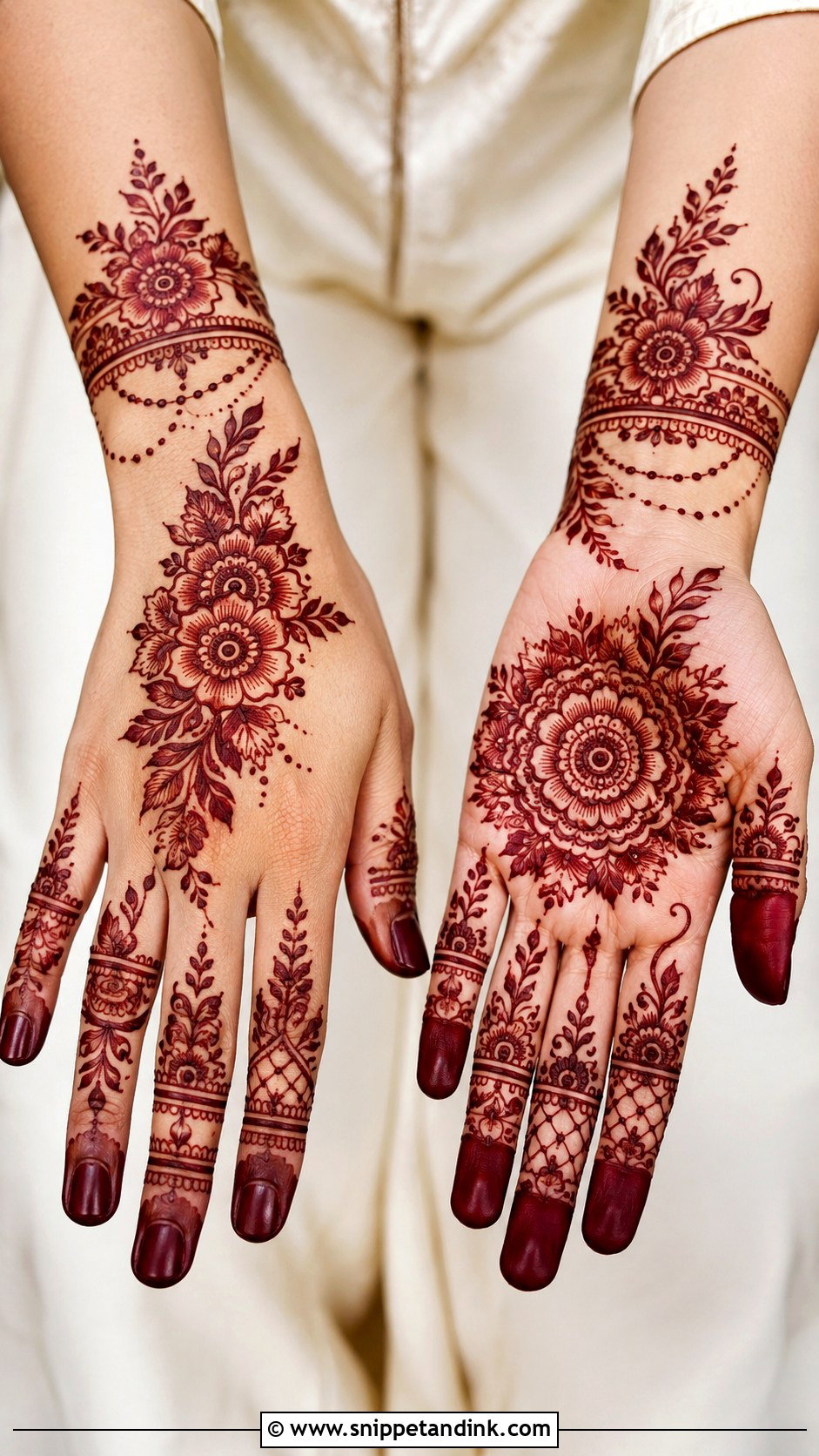
For Eid, a bold back-hand flower with vines toward the wrist and patterned fingers, or a simple palm mandala with decorated fingertips, covers most requests. It has to be comfortable through prayers and visits, so I keep it light enough to dry fast. Natural henna gives the reddish-brown everyone expects. Open spacing keeps it clean in photos.
26. Diwali Mehndi Design Front Hand
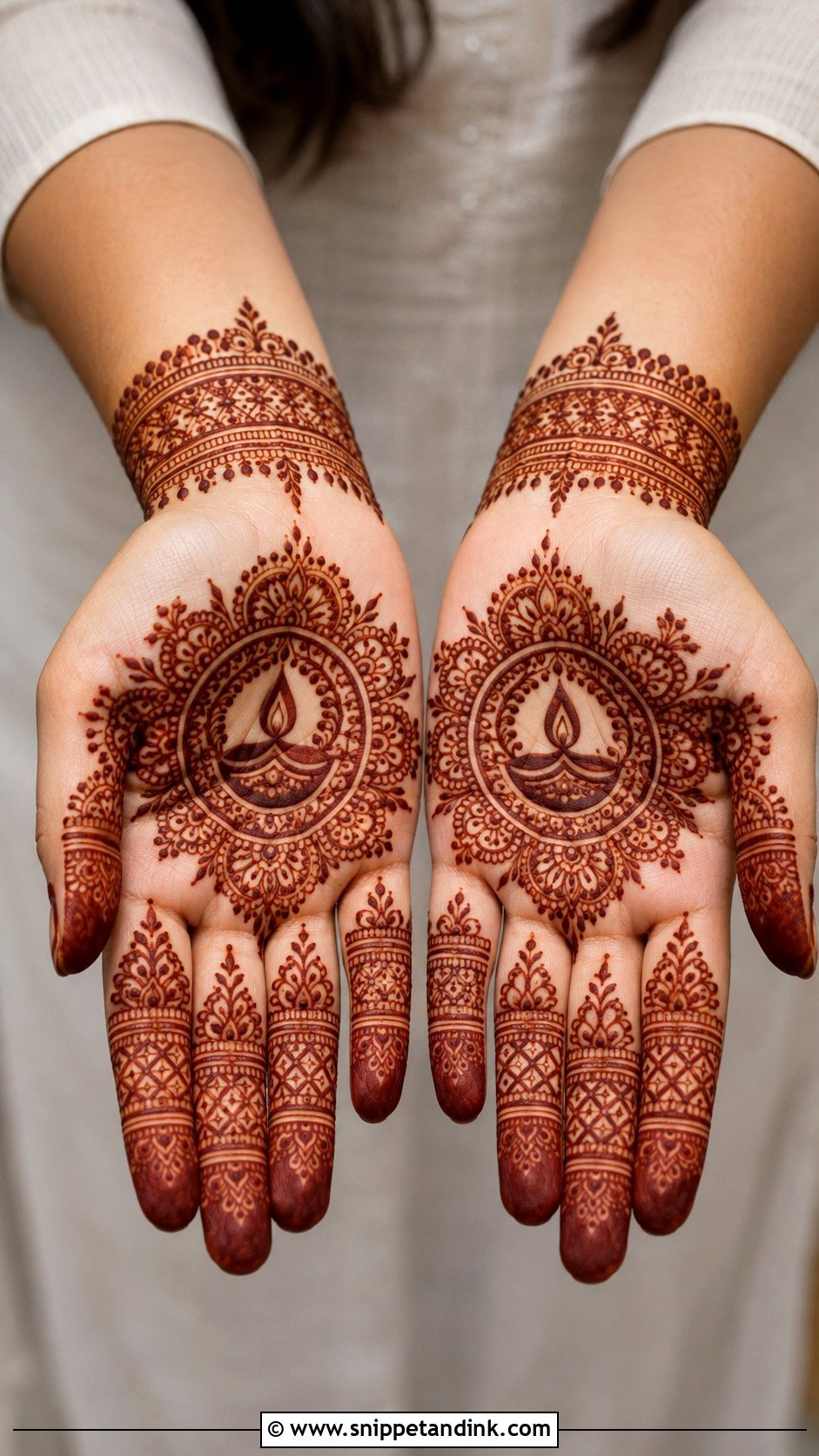
A central mandala, small diya shapes, paisleys, dots and finger patterns, closed with a bracelet border at the wrist. Diwali outfits come with bangles and rings, so I keep the wrist balanced rather than crowded. Dense Indian detail is the richer option; a simpler mandala layout is quicker during a busy week. Either way, get it done before the cooking and cleaning start.
27. Karwa Chauth Mehndi Design
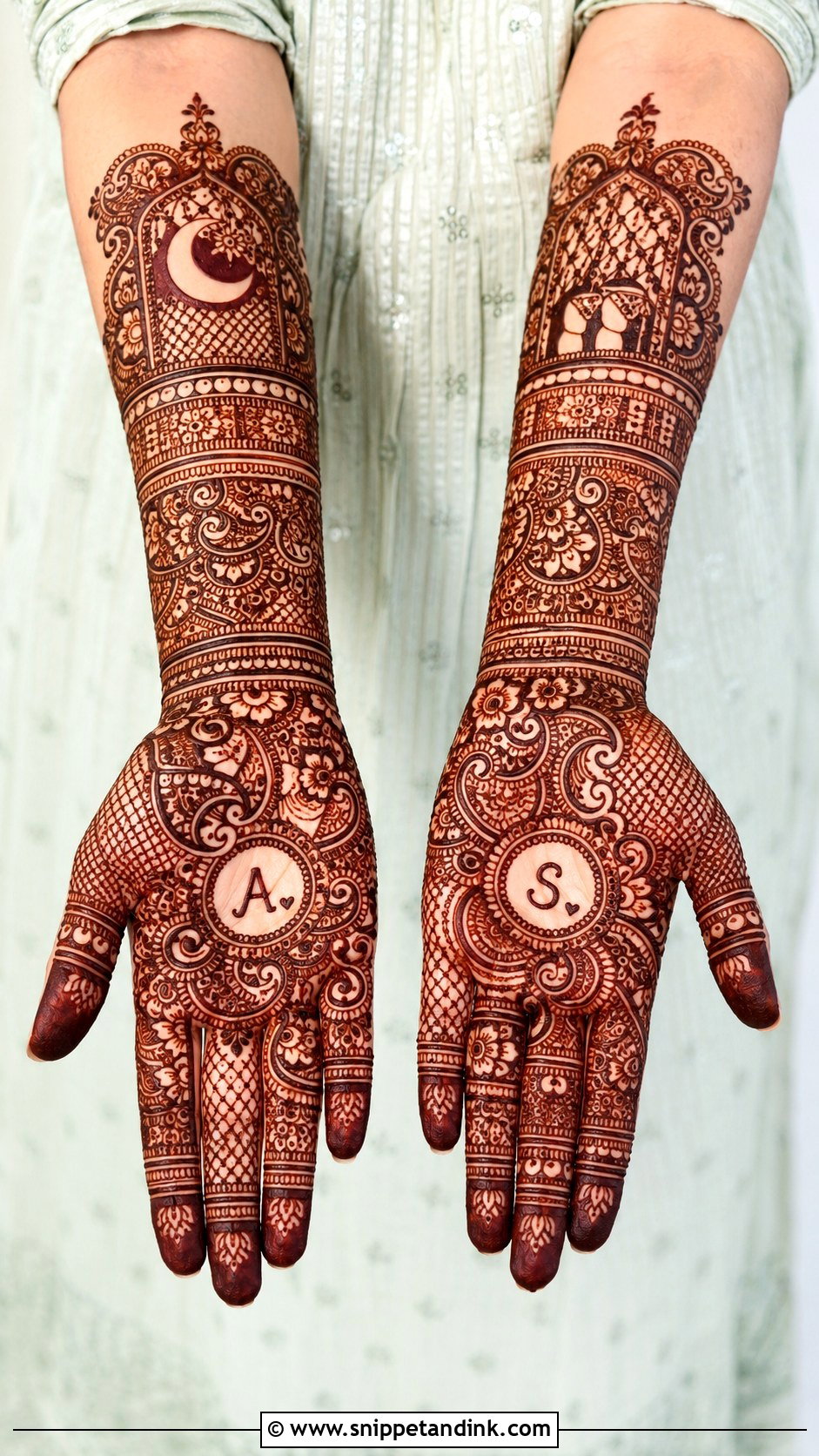
Karwa Chauth calls for full palms, decorated fingers and wrist borders with paisleys, flowers, jaali and small symbolic elements like couple silhouettes, initials or moon details worked into the pattern. Medium to heavy coverage suits the occasion. Organizing the wrist and forearm in bands keeps it from looking busy. Applied the day before, the stain has time to deepen by the evening moonrise.
28. Wedding Guest Mehndi Design
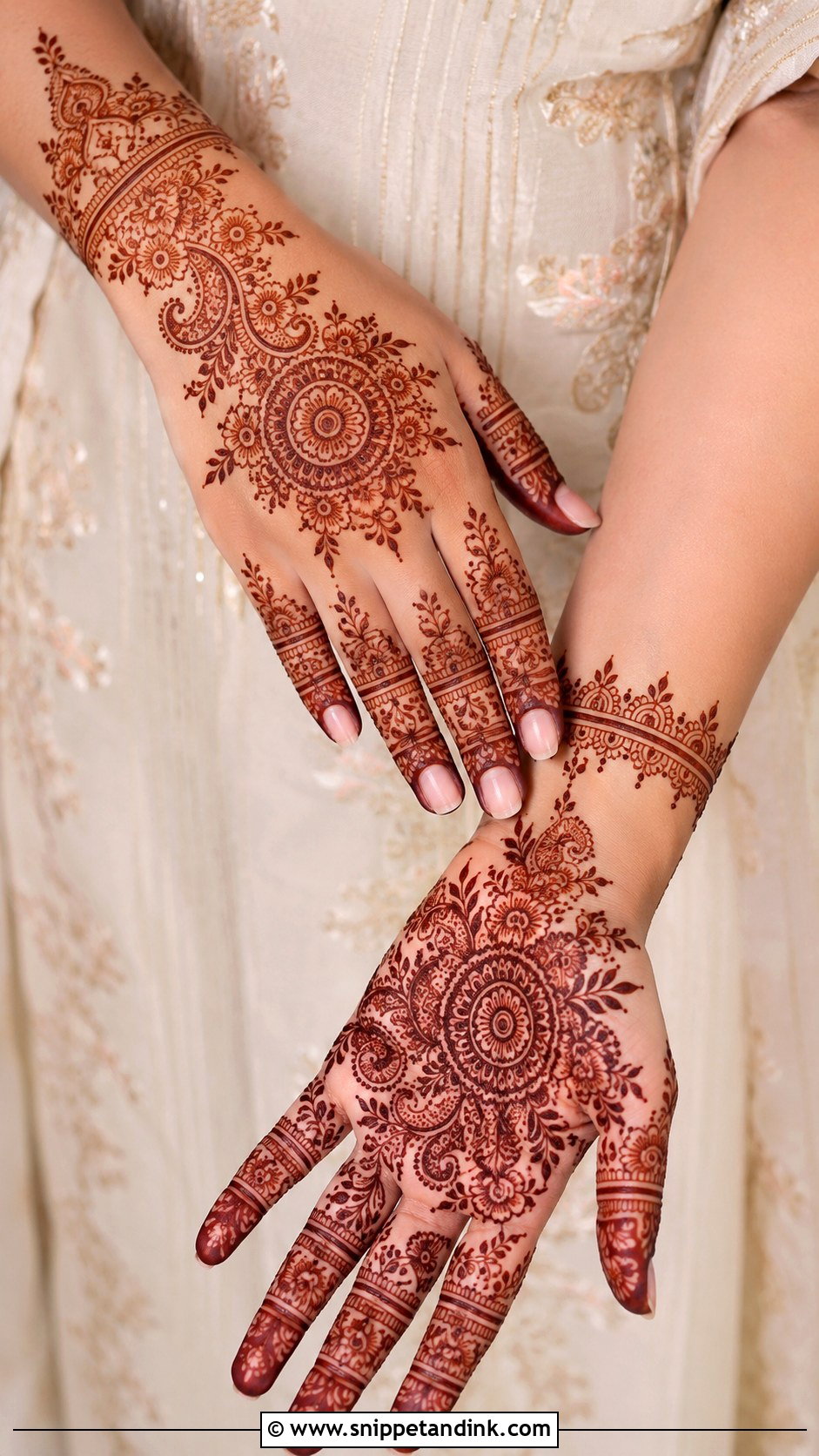
The guest rule I follow: stay a clear step lighter than the bride. A back-hand Arabic trail, a palm mandala or an Indo-Arabic half-hand design all do that. Choose one focal point, a flower, paisley or mandala, then add clean fingers and a light wrist border. It dries far faster than bridal work, which matters when you still need to get dressed. Bold outlines with a little fine fill keep it from looking plain.
29. Kids Mehndi Design For Hands
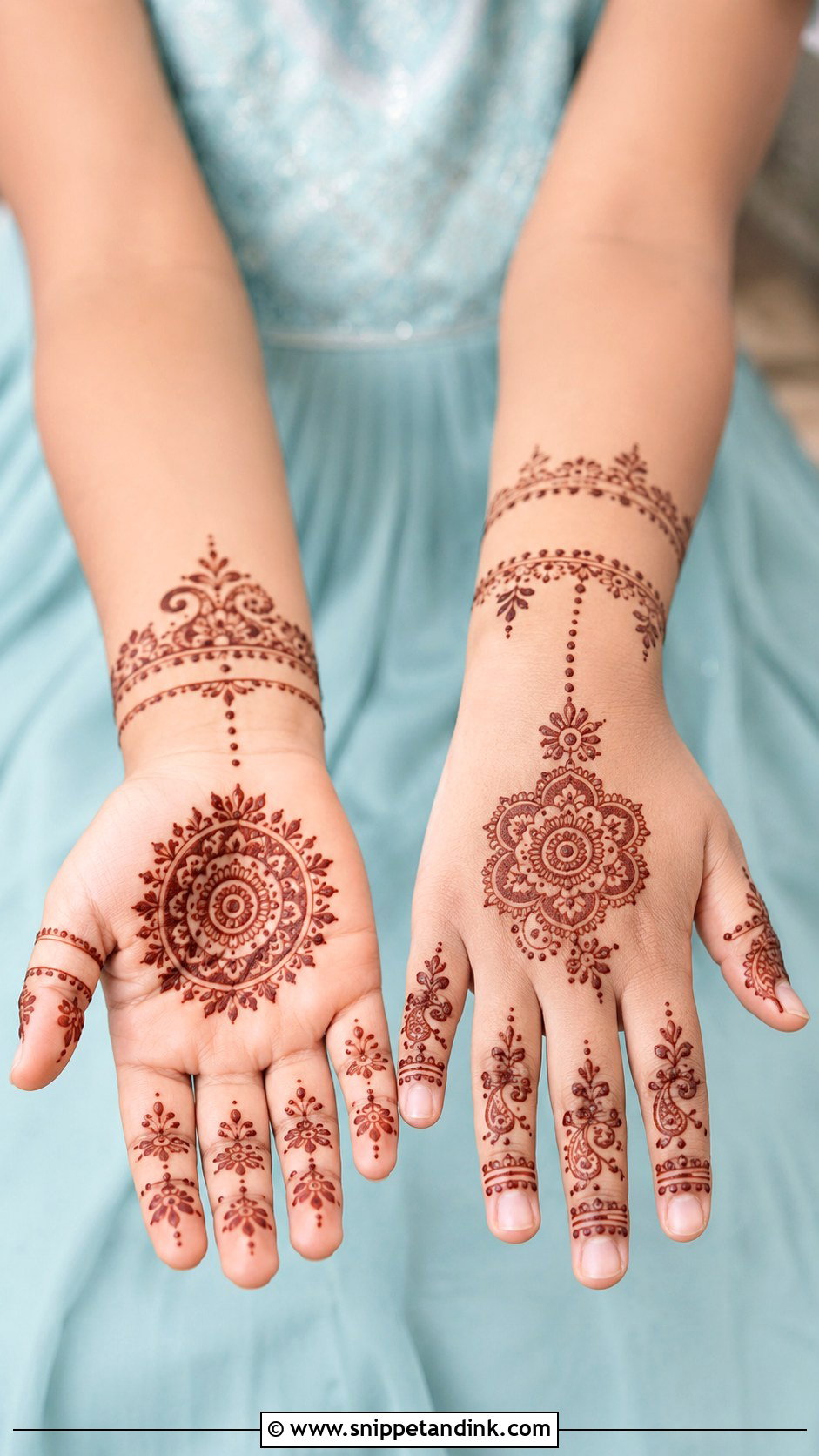
Kids need small, quick designs: a flower or mandala on the palm, dotted trails, tiny leaves and light fingers. Children won’t sit still while dense paste dries. I often do a back-hand bracelet for little ones, since they grab things with their palms immediately. Hearts, flowers, stars and small paisleys keep it fun. Only natural henna on children, never a black cone.
30. Teen Mehndi Design Back Hand
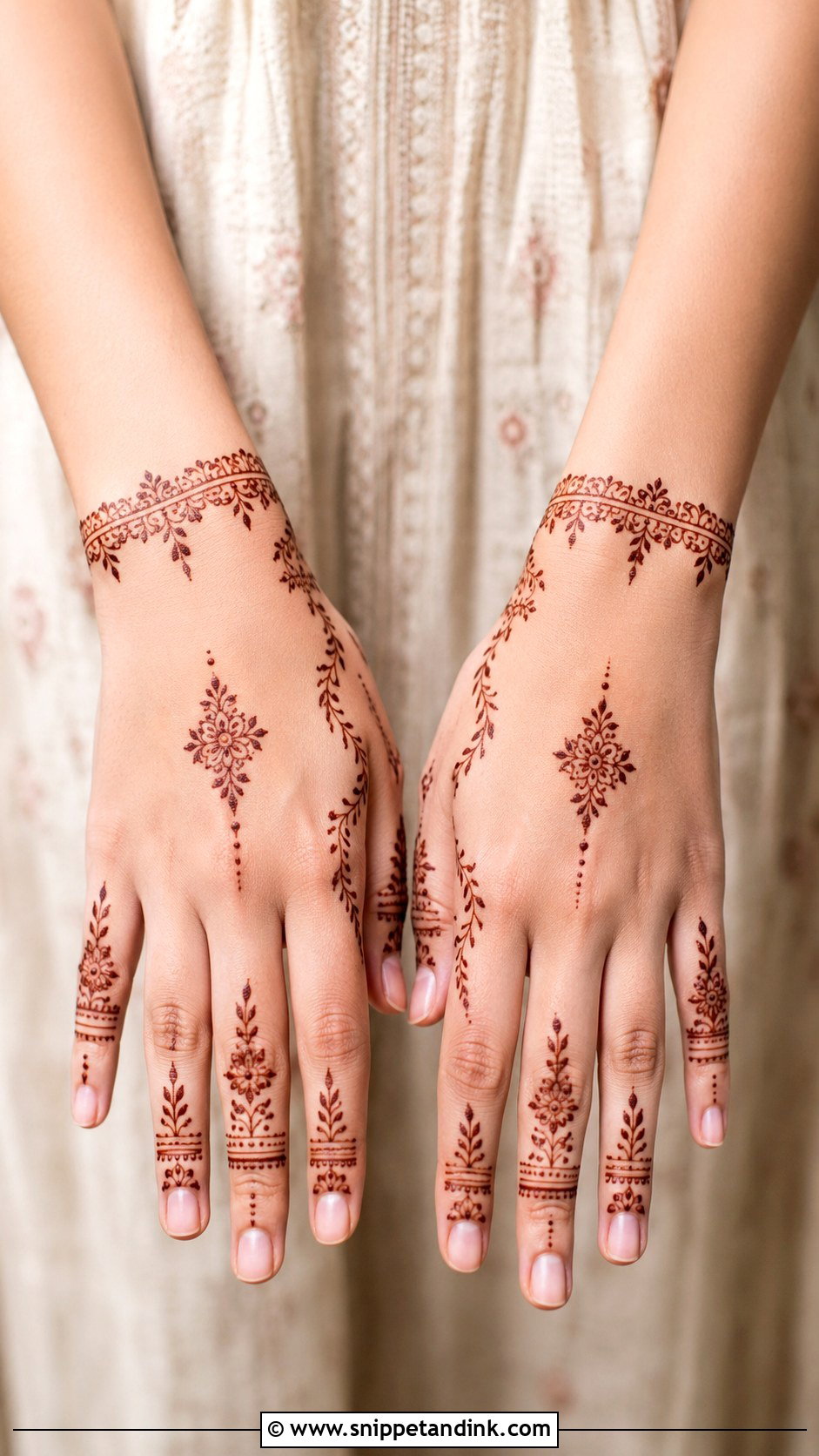
Teens tend to want negative space: fine finger bands, a small center motif, a leafy trail and a bracelet detail. A Teen mehndi design back hand can be a minimal Arabic trail, a tiny mandala chain or a geometric layout. Since many teens wear nail art now, I check the polish color before choosing how dark to make the fingertip detail. Clean lines and balance keep it young rather than heavy.
31. Short Finger Mehndi Design
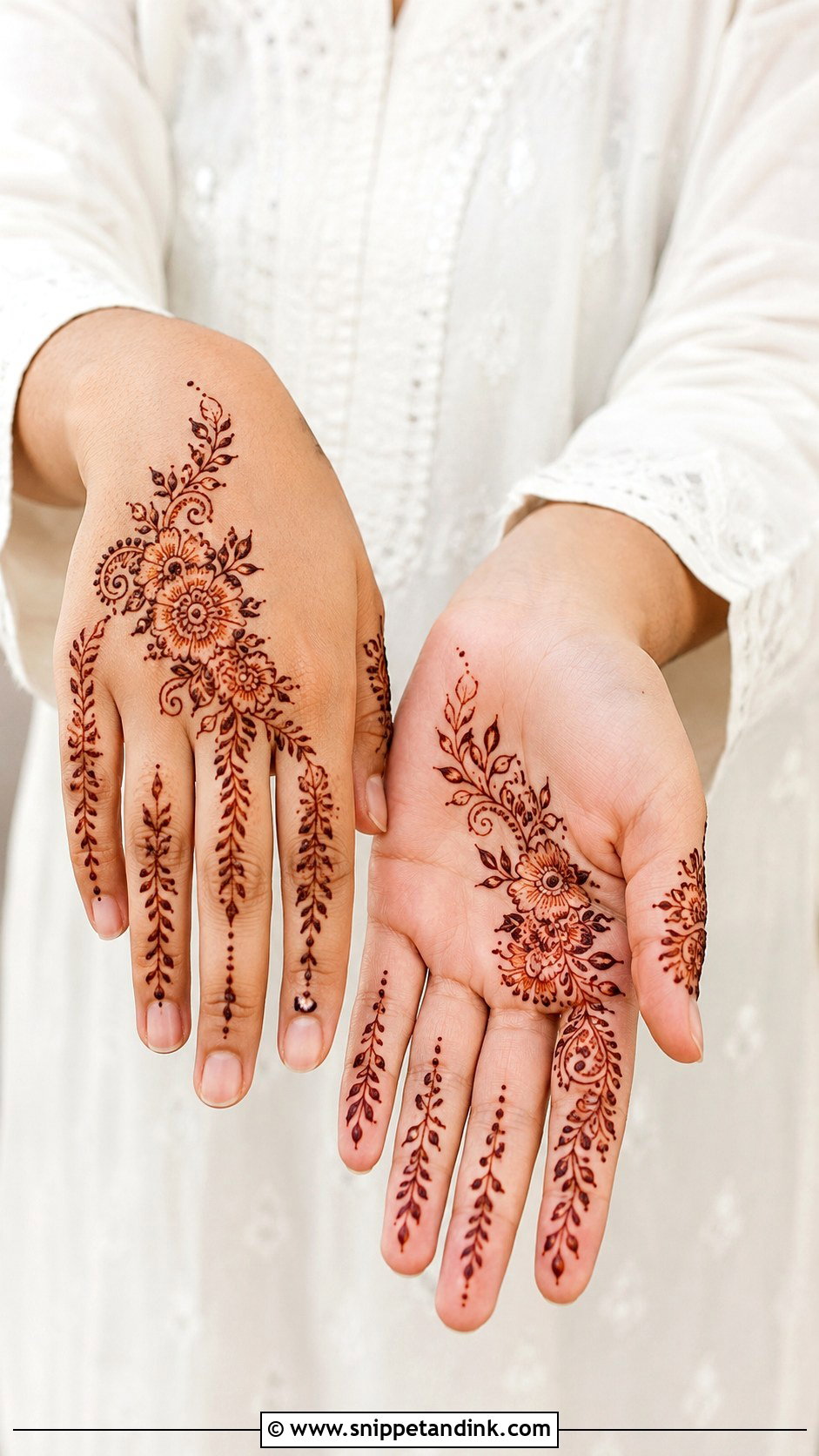
A Short finger mehndi design should make the hand look longer: vertical finger patterns, slim leafy trails and a central motif placed slightly higher on the hand. Thick horizontal bands across each finger do the opposite and shorten them. I use thin lines, dots, small leaves and tapered tips, or a diagonal floral trail on the back. On the palm, a medium mandala with fine fingers keeps everything in proportion.
32. Long Finger Mehndi Design
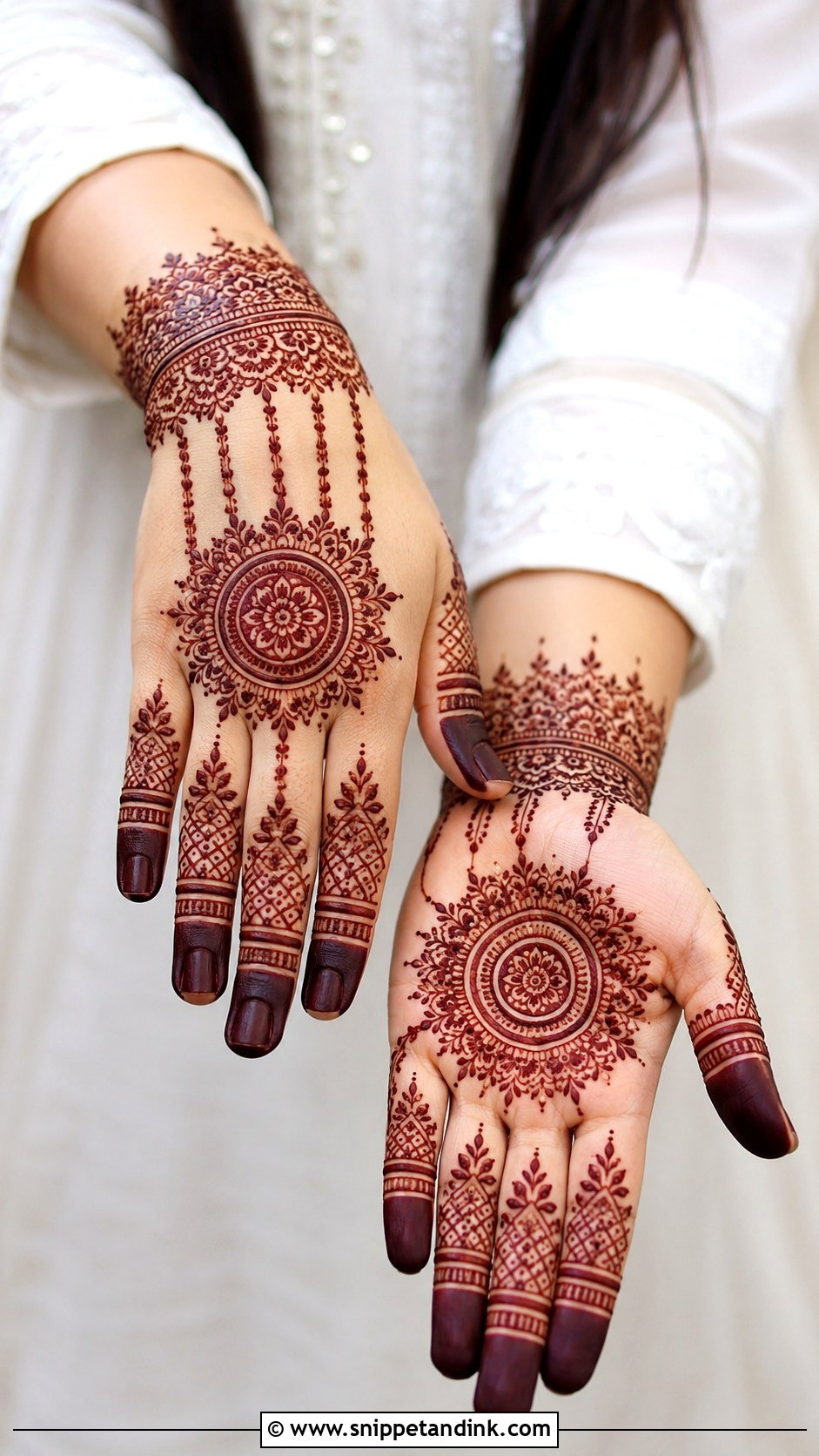
Long fingers can take heavy fingertip fills, layered bands, vertical jaali strips and a detailed centerpiece without looking cramped. Full Indian patterns and geometric layouts both suit them. The thing I watch is connection: if the fingers are richly worked and the palm is sparse, they look detached, so I make sure the wrist or palm carries enough weight to match.
33. White Henna Design For Back Hand
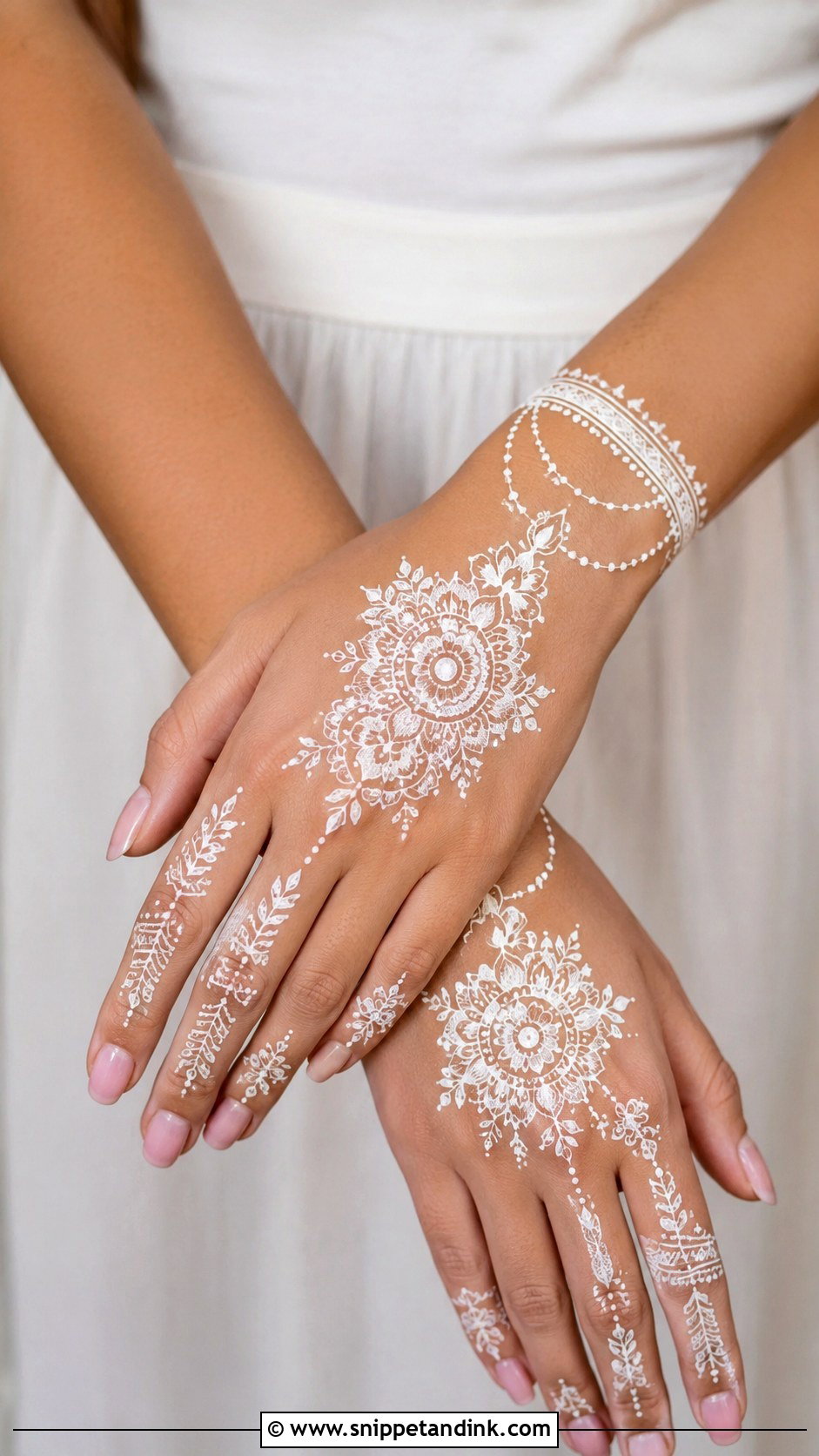
White henna isn’t henna. It’s a body paint or adhesive product that sits on the skin surface and leaves no stain, so it lasts a day or so and rubs off with friction. Lace florals, finger bands, mandalas and bracelet chains read best in white, and the contrast on deeper skin tones is striking. It’s an option for a shoot or a party, not a substitute for a traditional mehndi ceremony. Patch test if your skin reacts to adhesives.
34. Glitter Mehndi Design For Hands
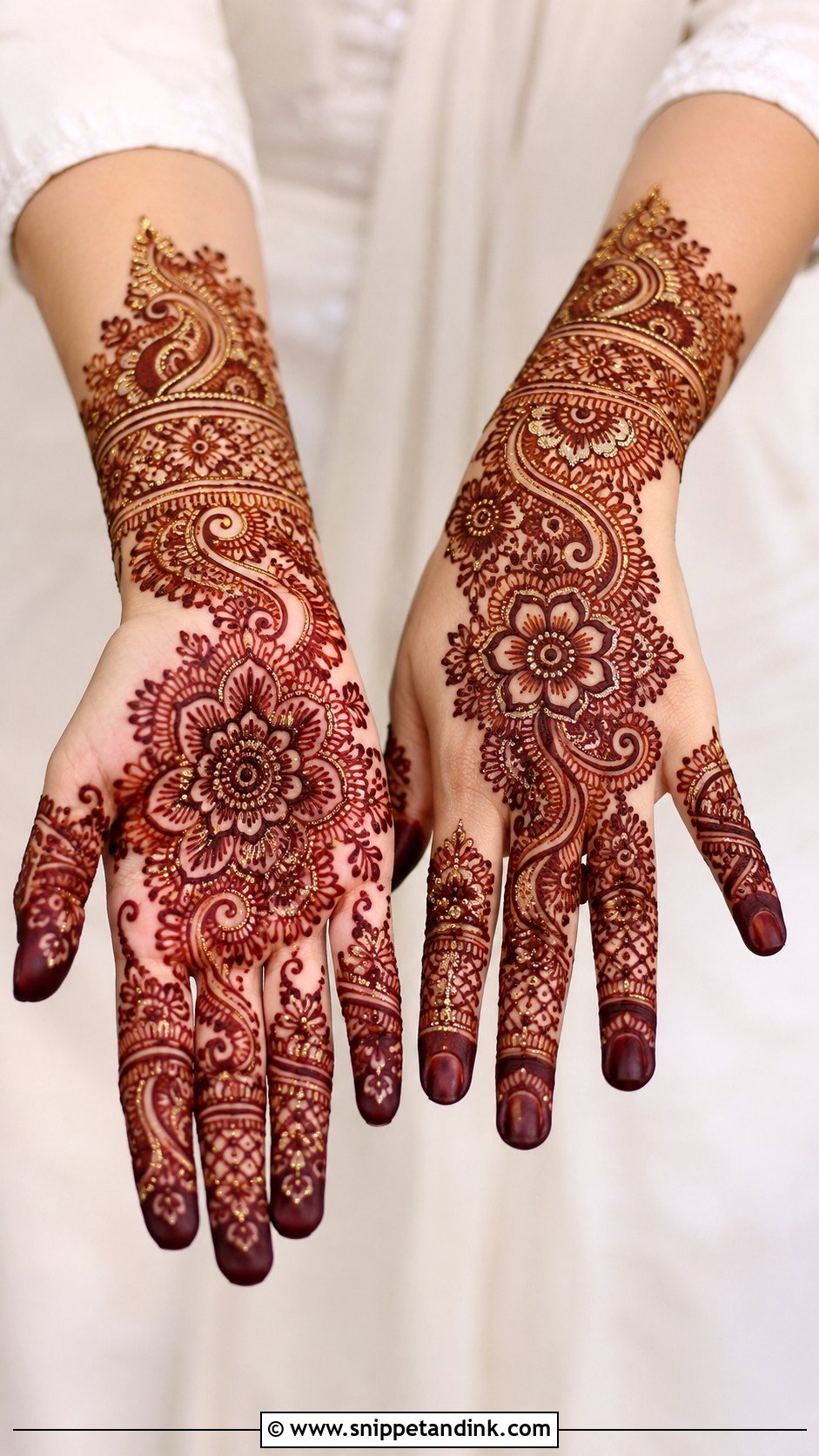
Glitter starts with a regular henna pattern, then accents are added once the paste is off, using a skin-safe adhesive. Florals, paisleys and mandalas give the glitter somewhere to sit without covering the whole design. Gold, copper or maroon go well with traditional outfits. Restrict it to borders, petals or the wrist cuff. Never apply it over irritated or freshly scrubbed skin.
35. Matching Mehndi Design For Both Hands
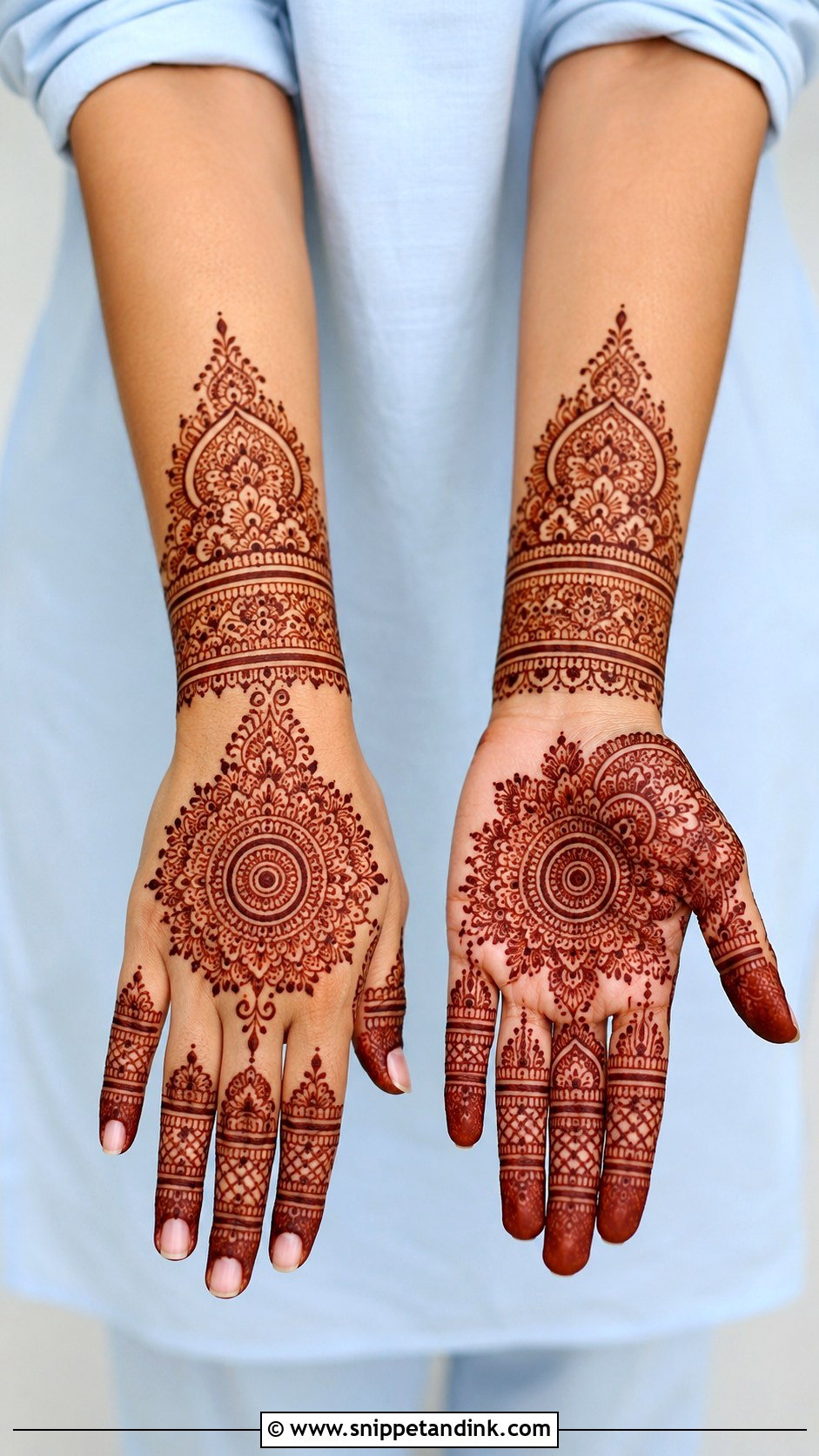
Hands can be fully symmetrical, with the same mandalas, paisleys, florals and fingers on each, or complementary, with the main motif on one hand and smaller echoes on the other. Exact mirroring is harder than it looks, because most people’s hands differ slightly in size, so I adjust the scale rather than copying stroke for stroke. Keep the wrist borders and fingertips consistent. A coordinated pair lifts even a simple design.
Orange, Brown or Maroon With Your Outfit
Henna doesn’t come out one fixed shade. It starts orange when the paste comes off and deepens over a day or two to brown, reddish brown or near maroon, depending on your skin, where on the hand it is and how long the paste stayed on. That changing color is worth planning around, especially for guest outfits that aren’t in classic wedding reds.
How the stain sits with different colors
- Reds, maroons, golds and mustards sit naturally with a deep stain, which is why bridal palettes and henna go together so easily.
- Pastels, mint and powder blue can look a little harsh against a fresh orange stain. Give it the full two days to darken, or choose a lighter, more open design.
- Black and jewel tones make even a medium stain look richer by contrast.
- White and ivory outfits show any transfer, so keep the paste well away from sleeves until it’s scraped off.
Nails matter too. Henna will stain bare nails and cuticles orange, which some people like and others don’t. If you want clean nails, paint them or have your manicure done before your henna, and wipe away any paste that touches them while it’s still wet.
One Focal Point, Two Hands, and Enough Time to Dry
Every design here suits someone, from dense bridal coverage to a minimal back-hand trail or a simple mandala. Arabic, Indian, Indo-Arabic, Moroccan, Gulf, floral, geometric and bracelet layouts all treat the hand differently. Before you sit down, think about drying time, how dark you usually stain, your hand shape, your jewelry and how much coverage your role at the wedding calls for. Natural reddish-brown henna is still what I recommend most, with glitter or white work kept for special moments. Let these trendy mehndi designs give you a starting photo, then let your artist fit it to your hands.
You'll Like These Ideas:





Leave a Reply