
A Nikkah is usually quieter than the mehndi night or the baraat, and the henna should respect that. Your hands will be on show while you sign the nikkahnama, raise them in dua and hold them out for the ring, so I plan a Nikkah design around those few close moments rather than around a stage photo. Below are twenty directions I’d actually draw for a Nikkah bride, from full Indian palms to airy Arabic trails, bracelet patterns and hidden initials. Read each one with your sleeve length in mind, because the cuff decides more than people expect.
When the Paste Should Go On Before Your Nikkah
Natural henna comes off the skin bright orange and darkens slowly. The colour keeps deepening for roughly 24 to 48 hours, so a design applied on the morning of the Nikkah will still look pale in your ceremony photos. I book Nikkah brides one to two days before, which puts the stain near its peak when the camera comes out.
- Full hands and forearms: allow several hours of sitting time, and plan the evening around it.
- Arabic or minimal designs: usually much quicker, so they can fit around other errands that day.
- If the Nikkah and the walima are a week apart, expect the stain to be noticeably lighter at the second event, especially on the backs of the hands.
- White body paint is the exception: it goes on the day itself.
A patch test is worth one short visit
I ask new clients for a small test spot a few weeks ahead. It shows how dark your skin takes the paste and flags any irritation. Never accept so-called black henna for a quick dark result; it often contains a hair-dye chemical that can blister skin and leave lasting marks.
Planning Around the Signing, the Dua and Wudu
At a Nikkah your hands do specific things. You sign, you raise your palms, you receive a ring. I ask brides which hand they write with, because that palm drags across the paper and the heel of it fades first. Ring photos favour the left fingers in many families, so I give them extra detail.
Brides often ask me about wudu. The stain is dye inside the top layer of skin, not a coating, but all dried paste must be scraped away first. If you’re unsure about a particular product, ask your imam rather than guessing.
1. Full Hand Nikkah Bridal Mehndi
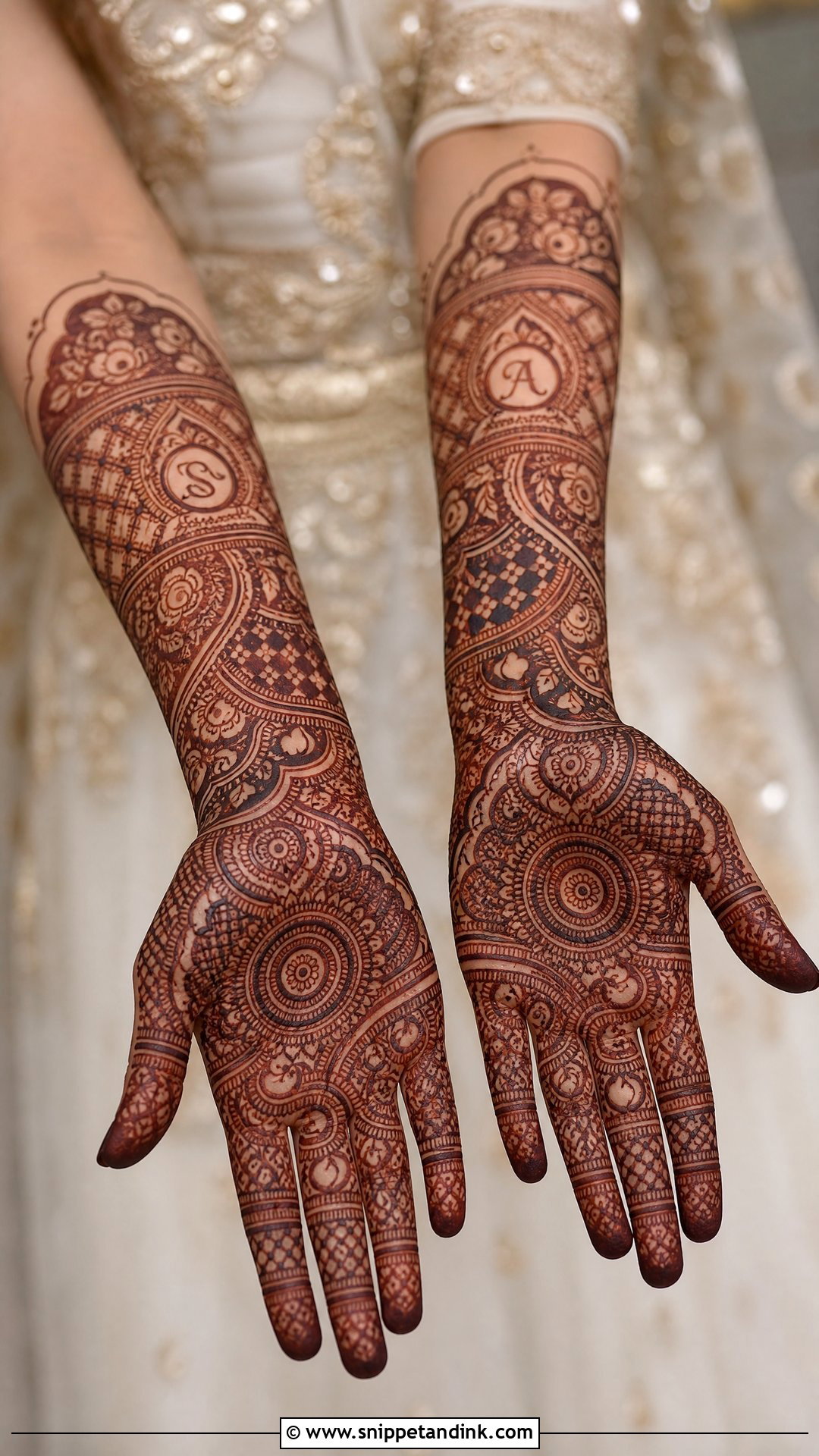
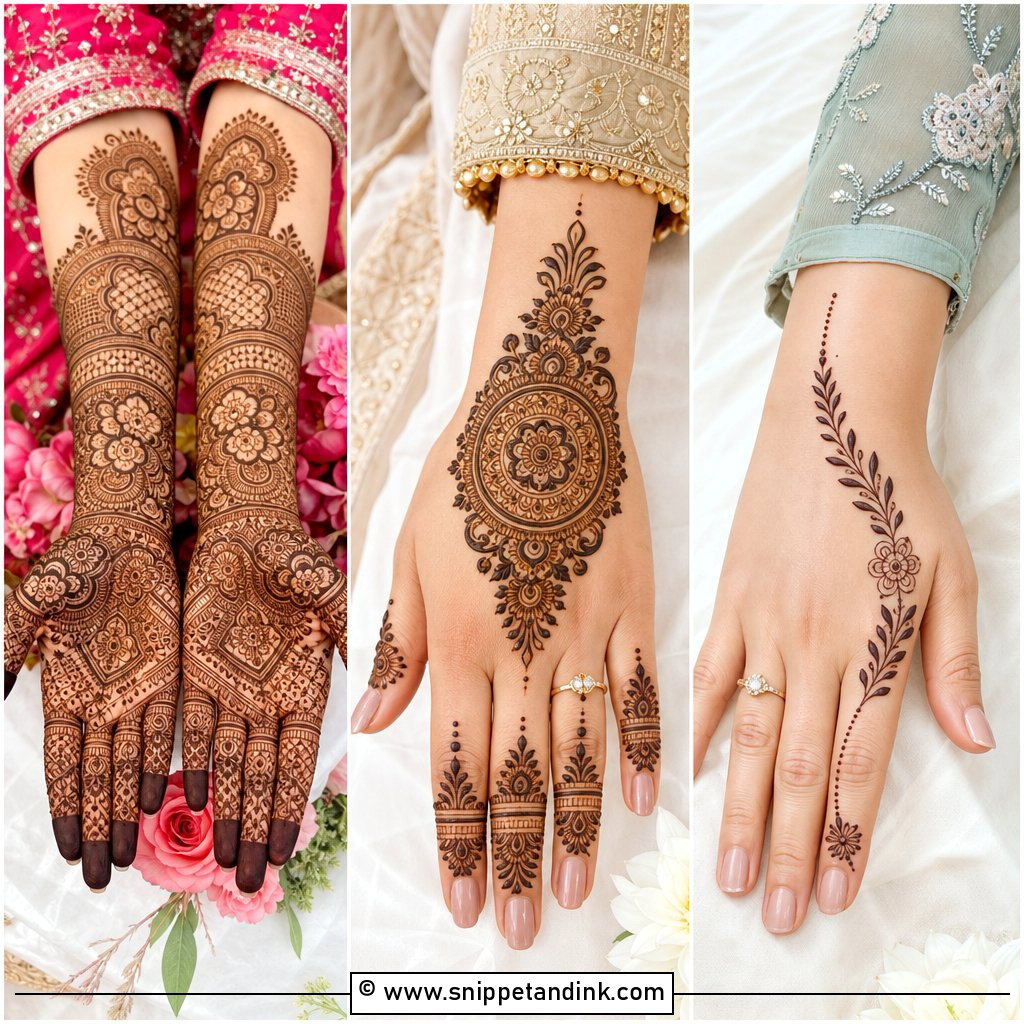
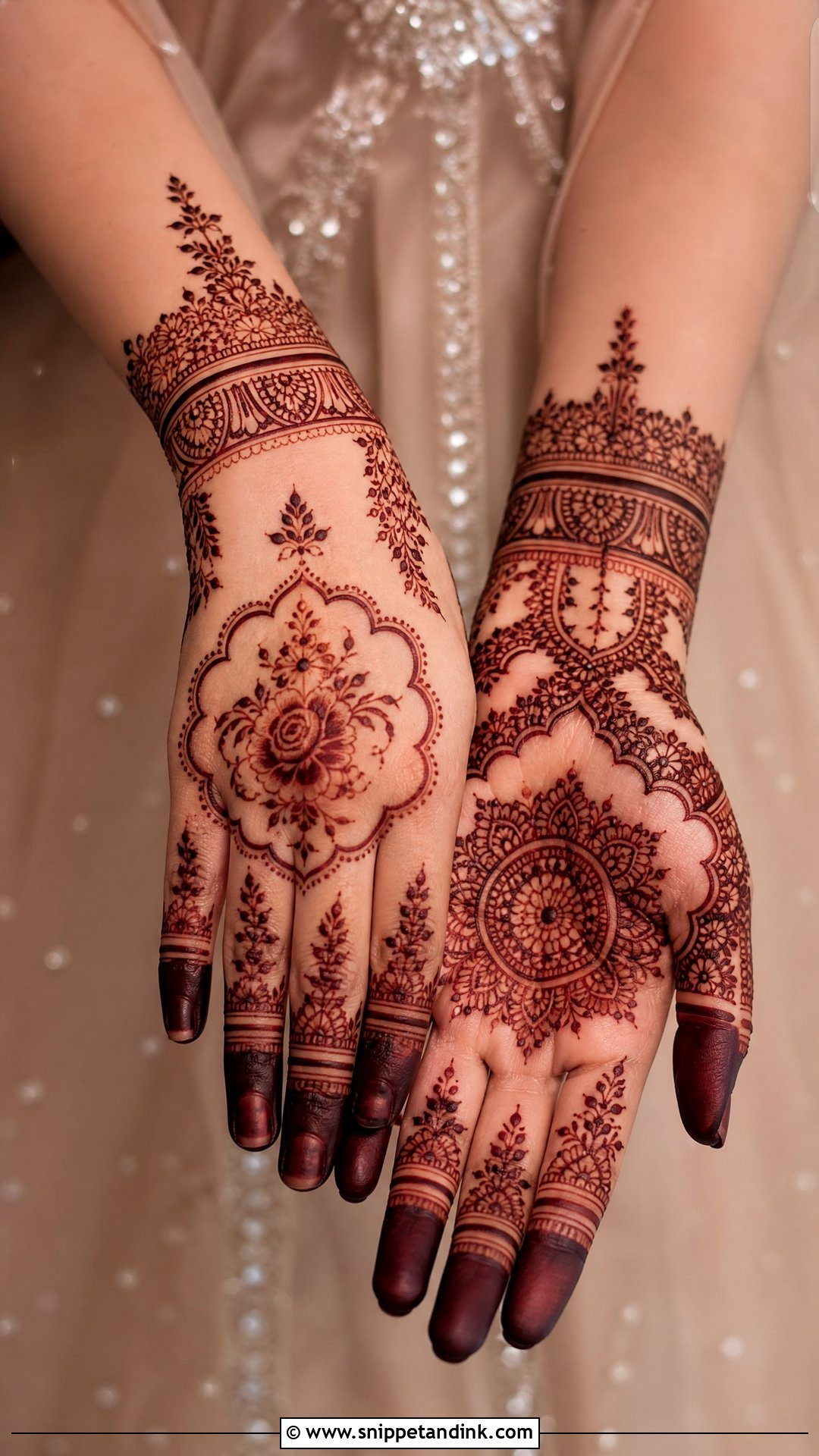
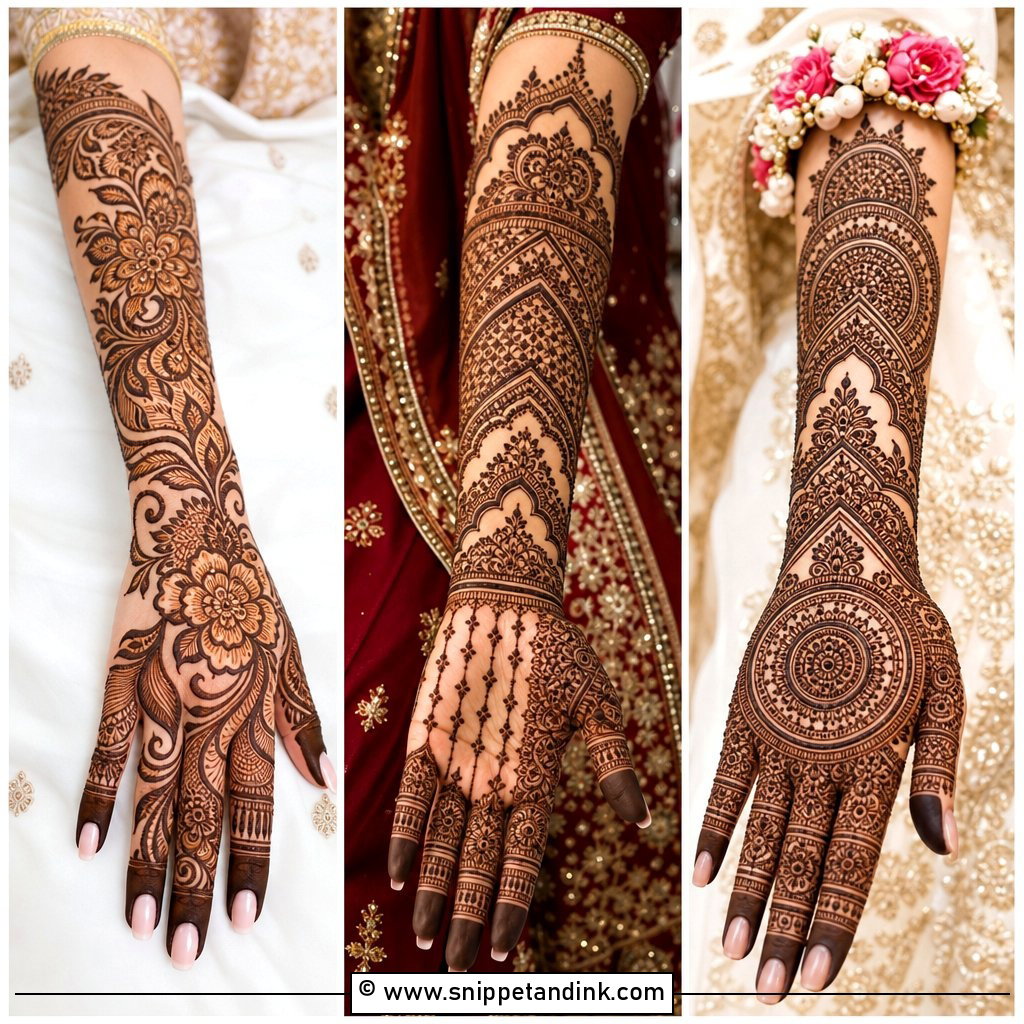
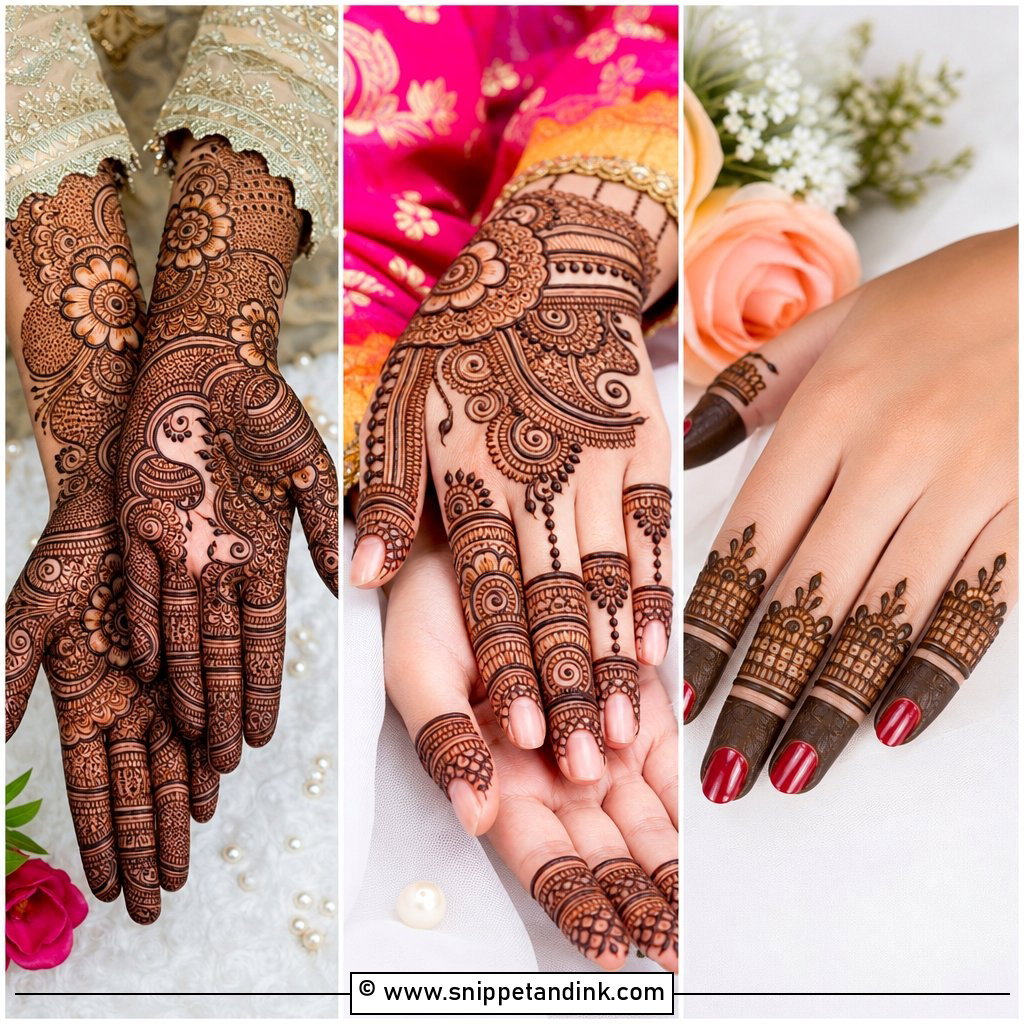
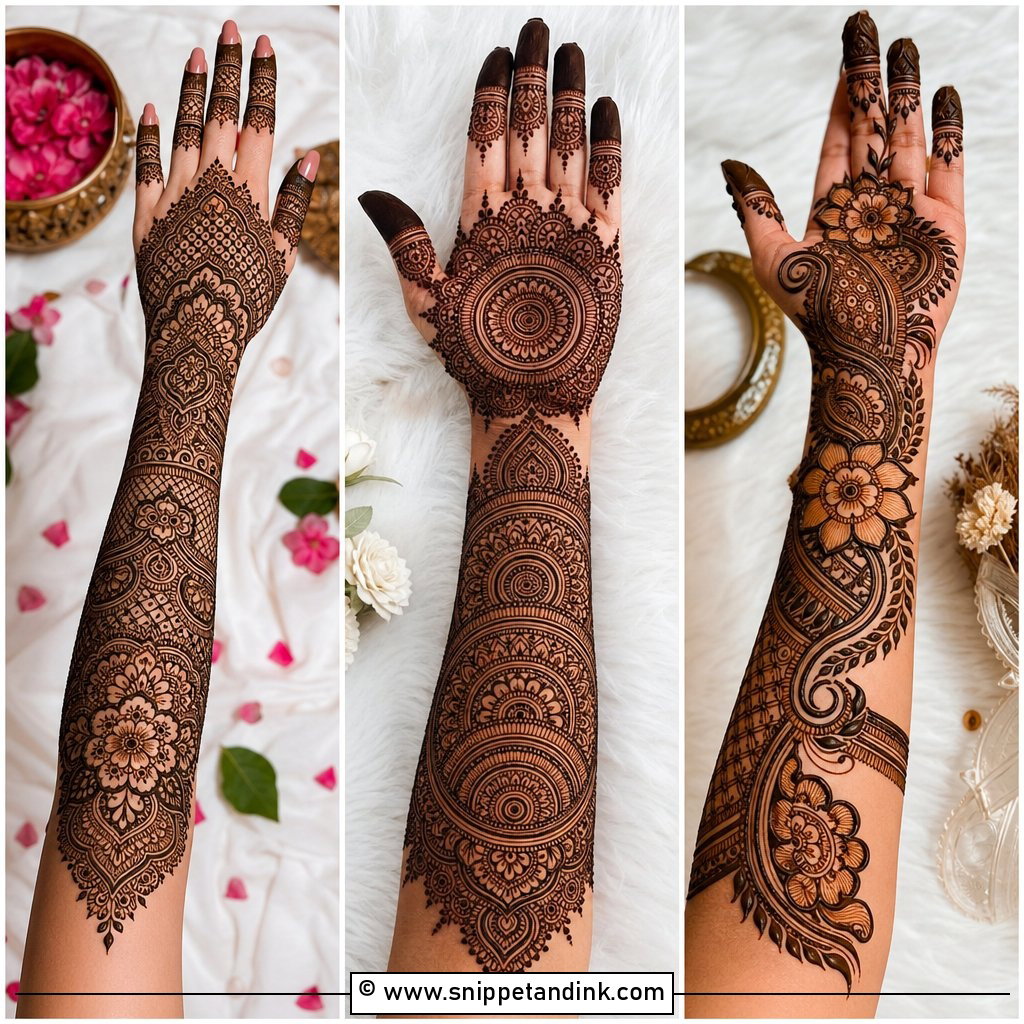
This is the classic I draw most for traditional families: Full hand Nikkah bridal mehndi running from the fingertips past the wrist, sometimes to mid-forearm, with a central mandala, paisley panels and jaali mesh. The trap with full coverage is mud. When every gap is filled, the stain reads as one brown block from a metre away. I leave tiny open channels between panels on purpose, and I tuck any personal details into those quieter zones so they don’t compete with the main motif. With a long embroidered cuff, I stop the design where the sleeve ends so no one pays for detail that disappears under fabric.
2. Arabic Nikkah Mehndi Design
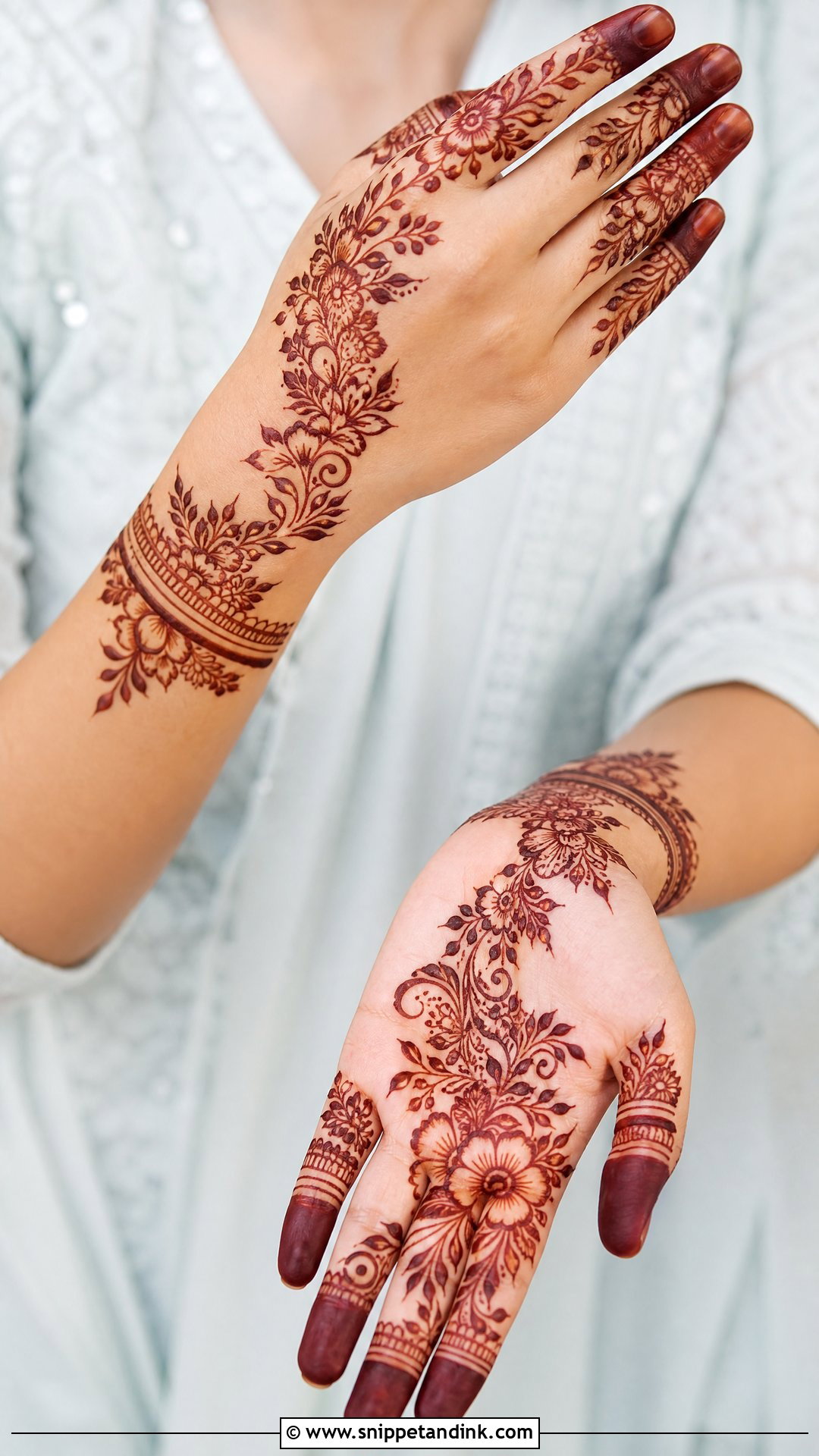
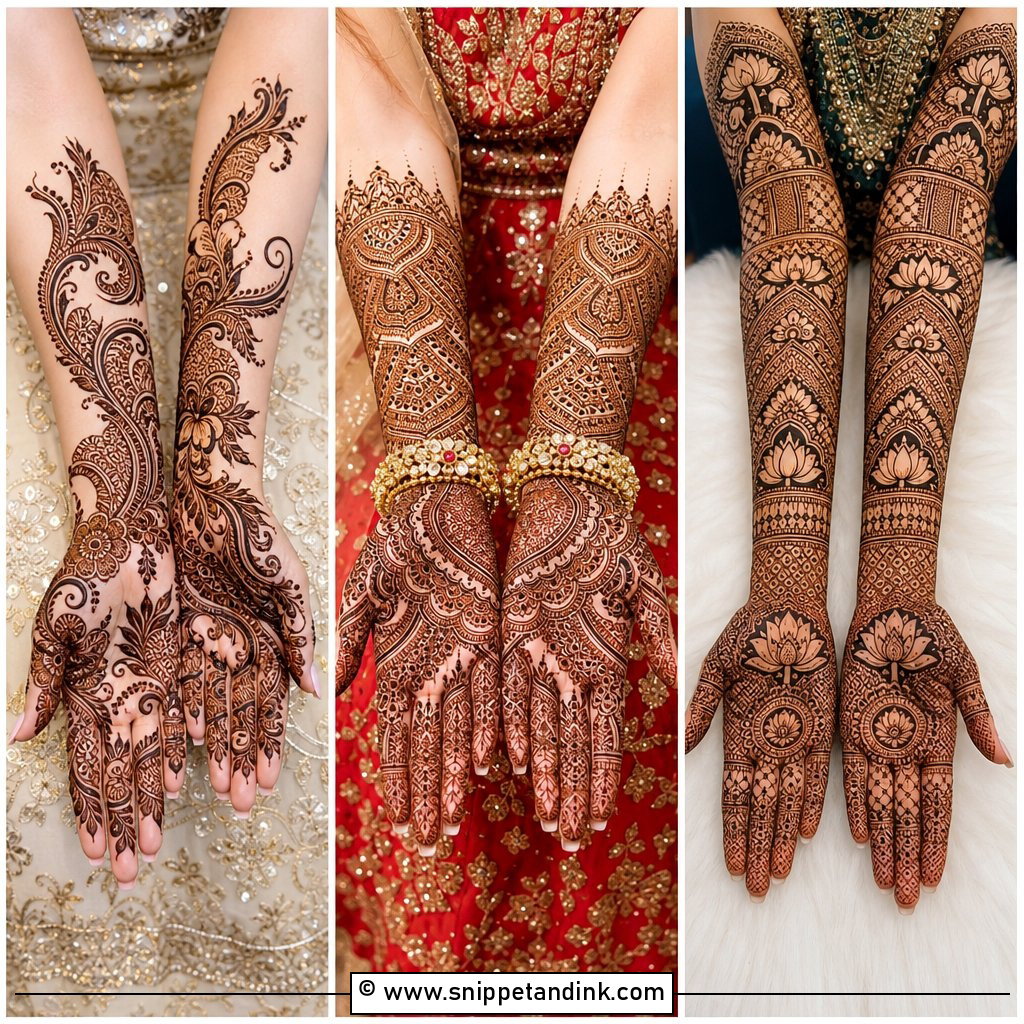
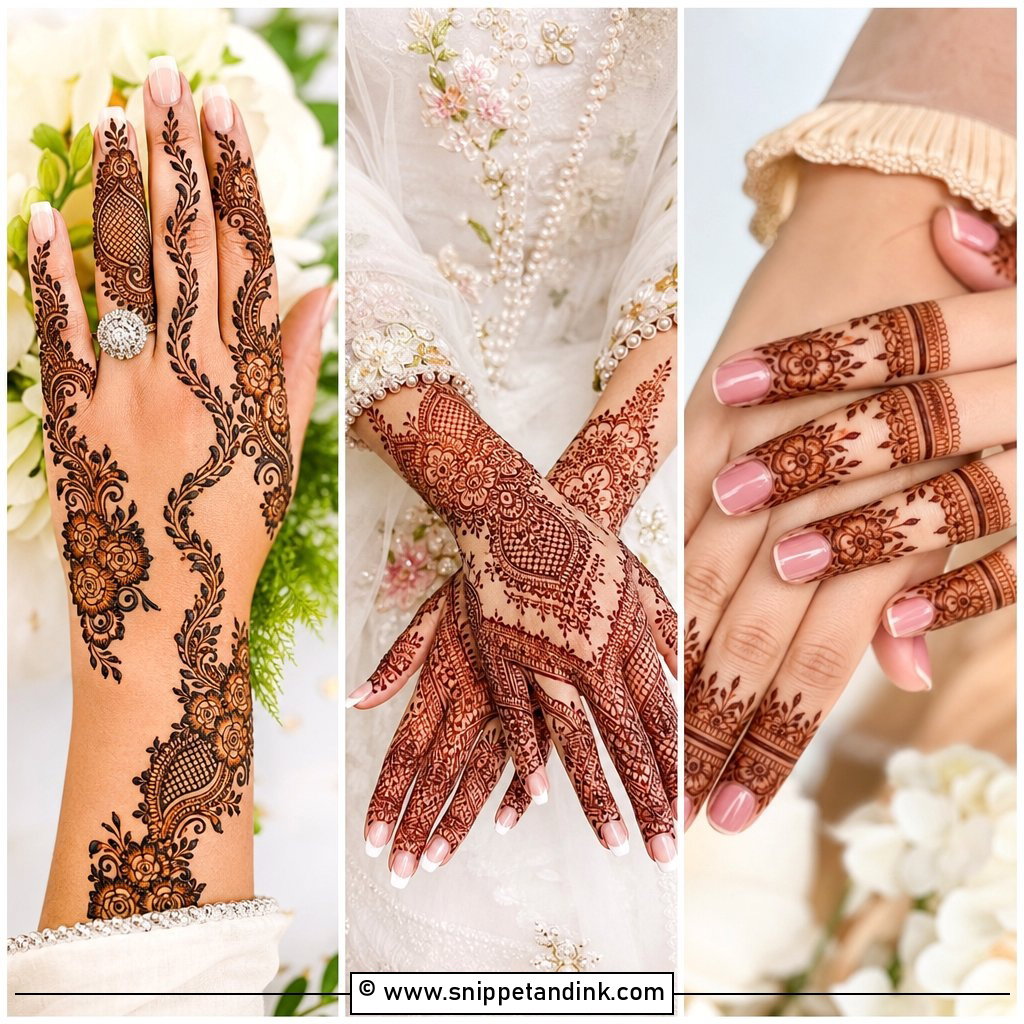
Arabic placement gives you bridal presence without dense filling. The pattern travels diagonally across the palm or the back of the hand in bold flowers, leafy vines and shaded petals, and the bare skin around it does half the work. It’s also far quicker to apply, often under an hour for both hands, which matters in a crowded wedding week. I shade the petals with a thinner cone line rather than solid fill, because solid shading stains unevenly on the back of the hand. Pastel outfits suit it well, ivory and sage especially.
3. Simple Nikkah Bride Mehndi
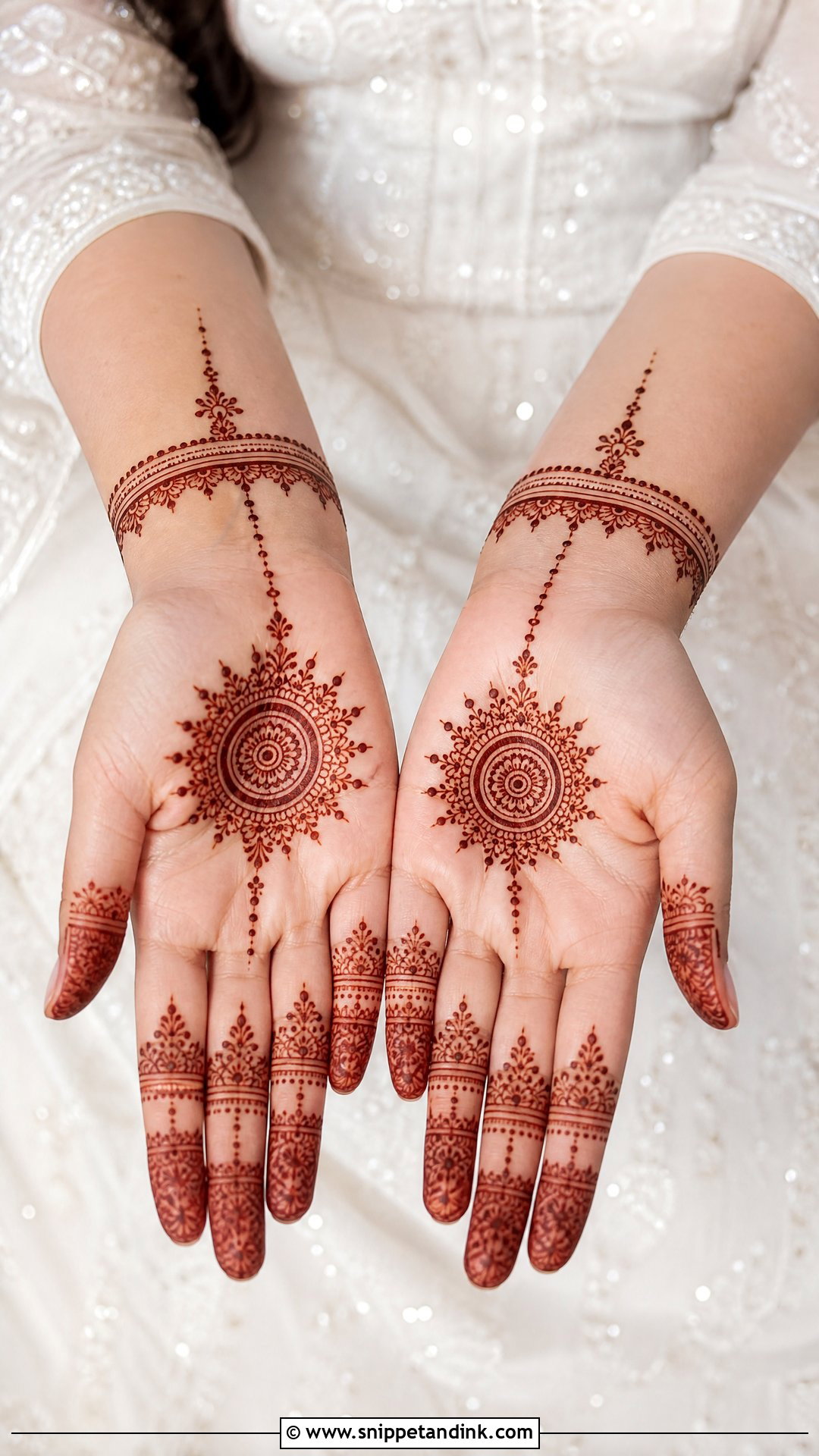
Less coverage means every line is exposed, so a simple design shows wobbles that a dense one would hide. I build these from a small palm mandala, thin finger bands, a dotted vine and a fine wrist bracelet, and I keep the spacing between elements even, measured by eye against the knuckles. It suits a small home Nikkah or a courthouse signing where the bride wears a modern modest outfit. One honest caution: if your skin stains pale, a minimal design can look faint in photos, so ask for a patch test a few weeks out.
4. Back Hand Nikkah Mehndi
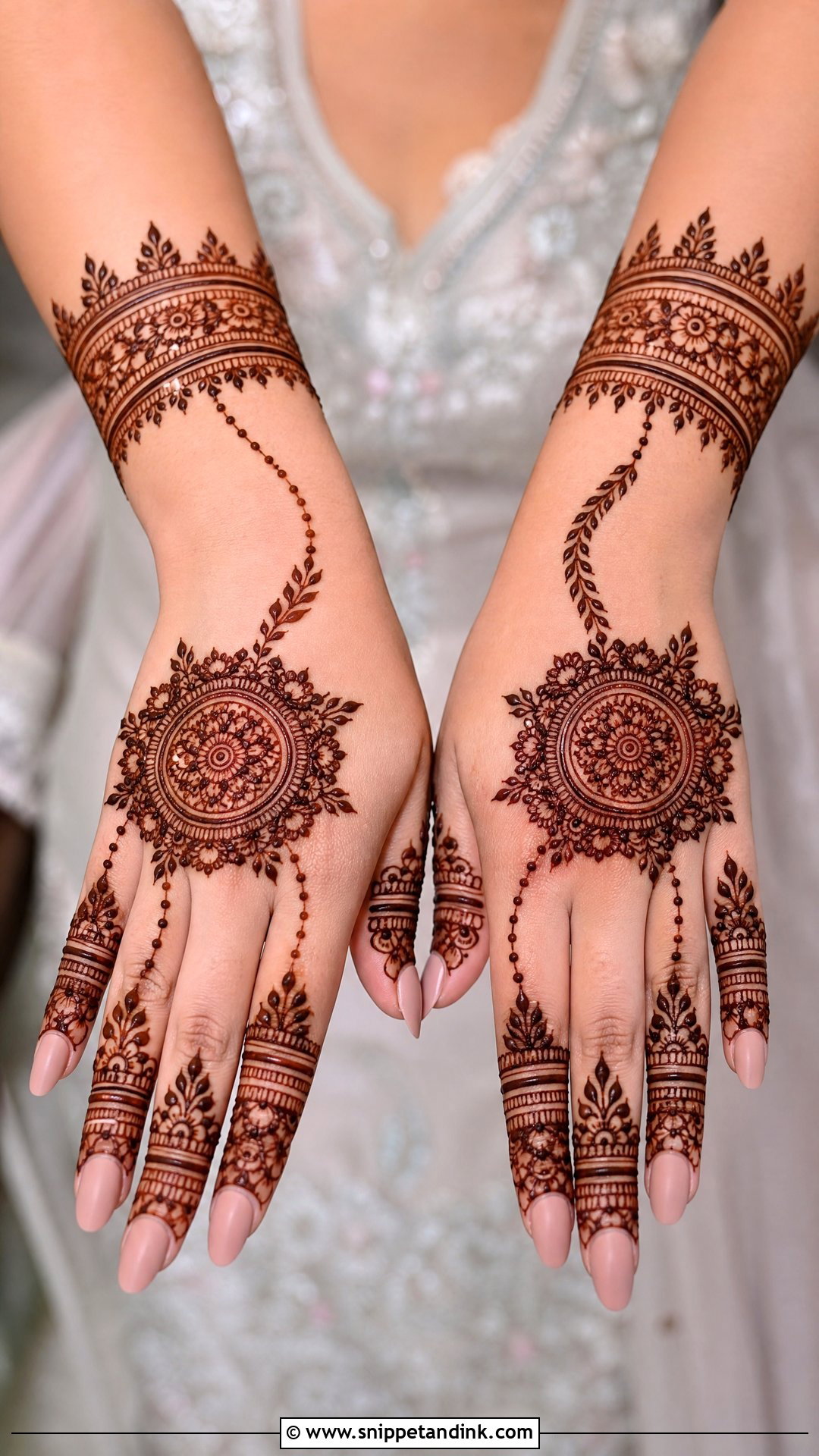
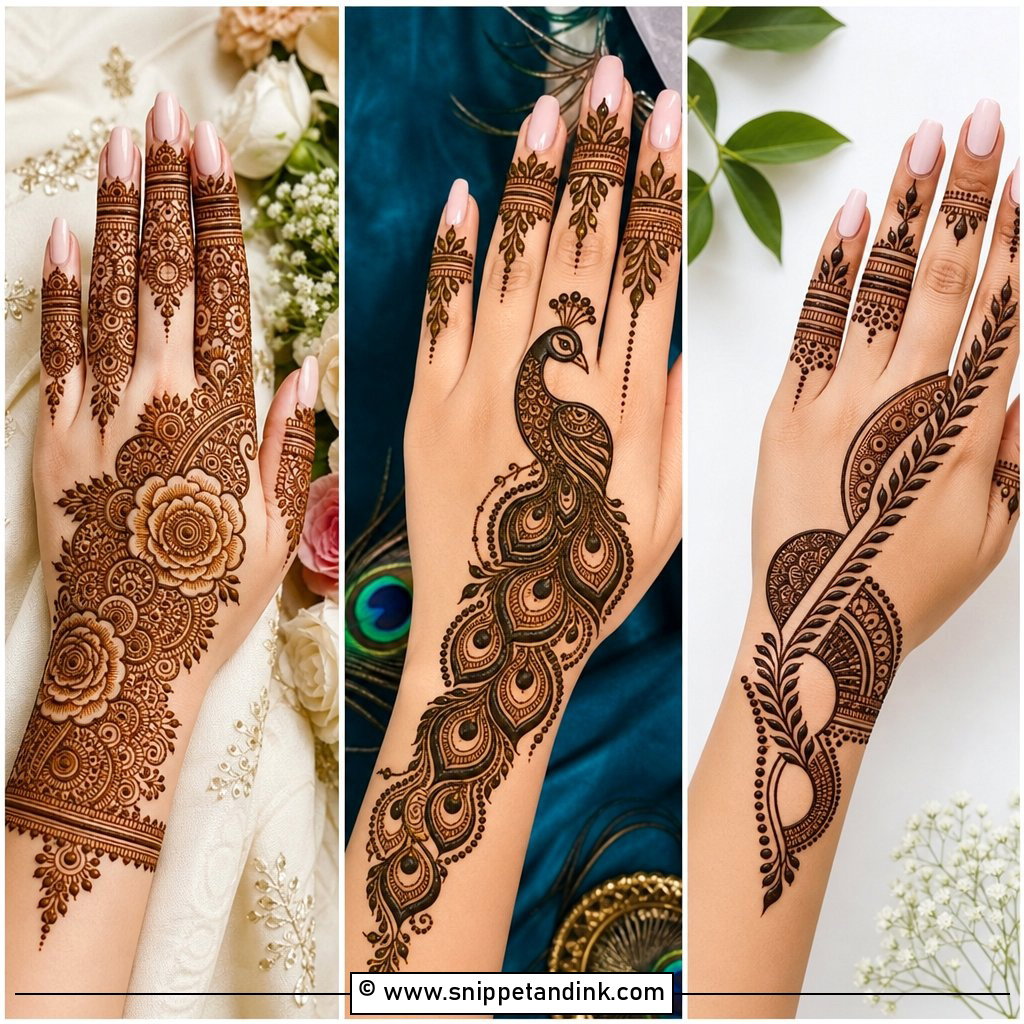
The back of the hand is what the camera catches most, because it faces out when you hold flowers, sign or show your ring. Back hand Nikkah mehndi needs a clear plan from knuckles to wrist: a central floral mandala, bracelet bands, finger caps and a few chain-like links. Expect a lighter stain here than on the palm. The skin is thinner and drier, so the colour usually settles one or two shades softer, and I tell brides that before they compare left palm to right knuckle in the mirror. A sheer or lace sleeve lets this design show through, which I love.
5. Front Hand Nikkah Mehndi
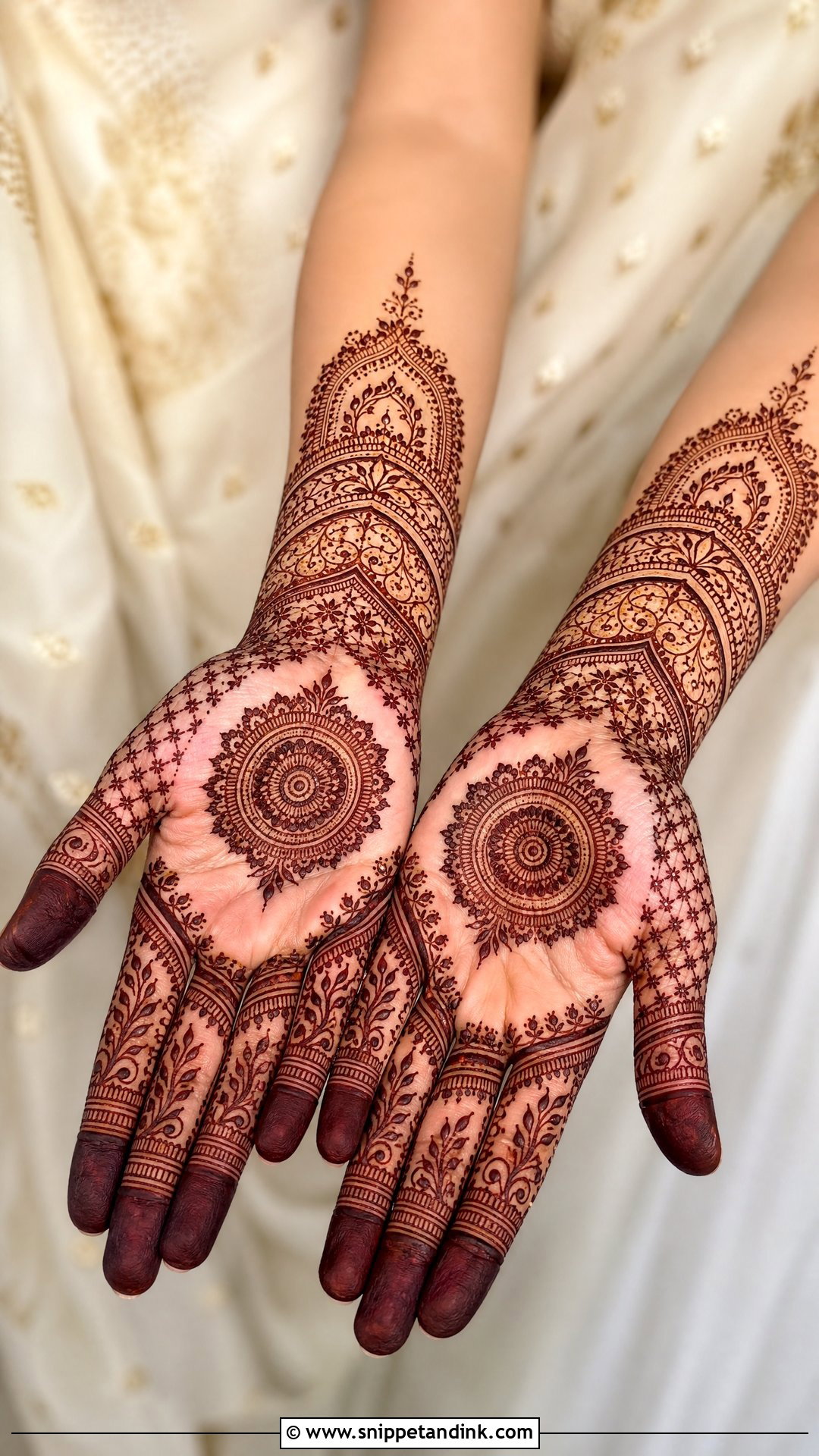
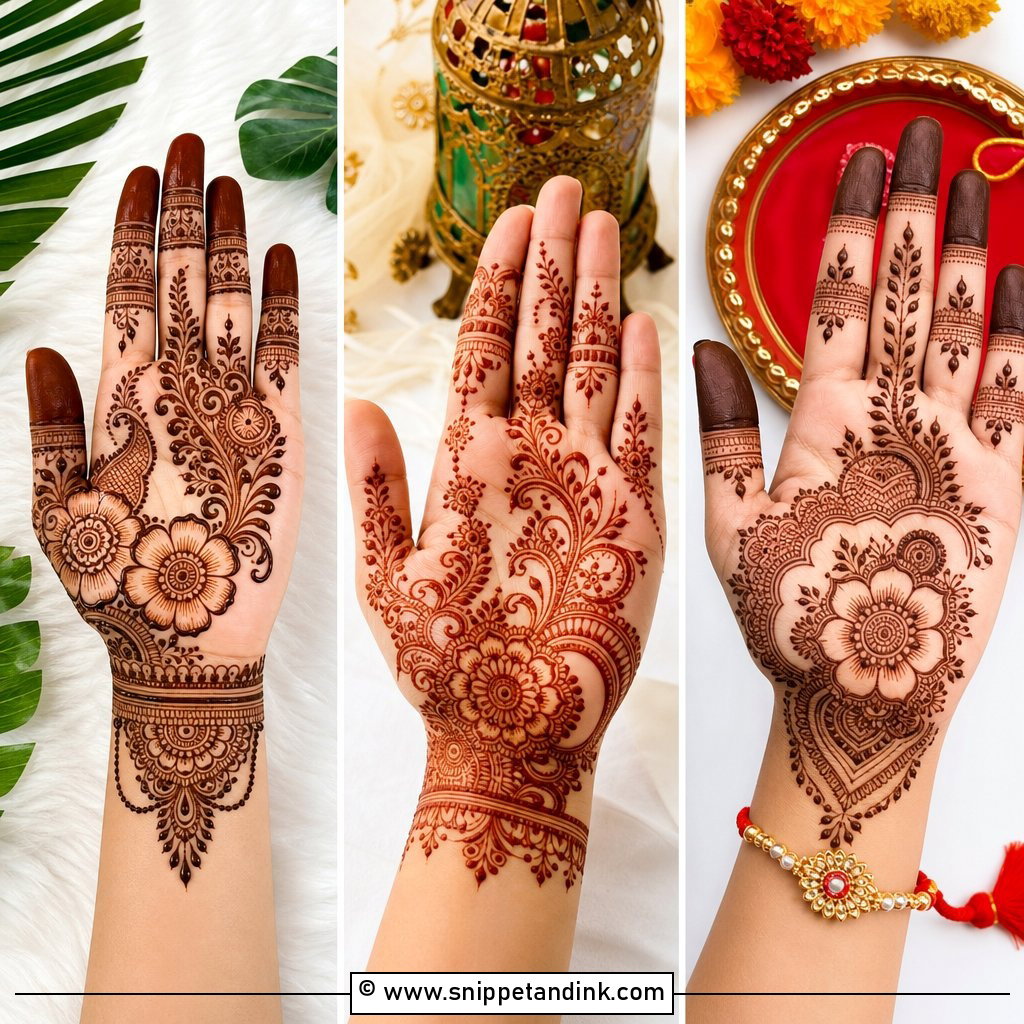
Palms take henna better than anywhere else on the body, so this is where you’ll get your deepest maroon. I centre a round mandala or a framed panel, sometimes with initials hidden inside, then connect it to the fingers with paisleys and vines. During dua your palms face up and toward the camera, which makes this the side worth investing in. Leave some negative space near the heel of the hand; that area rubs against fabric and sheds stain first.
6. Indo Arabic Nikkah Mehndi
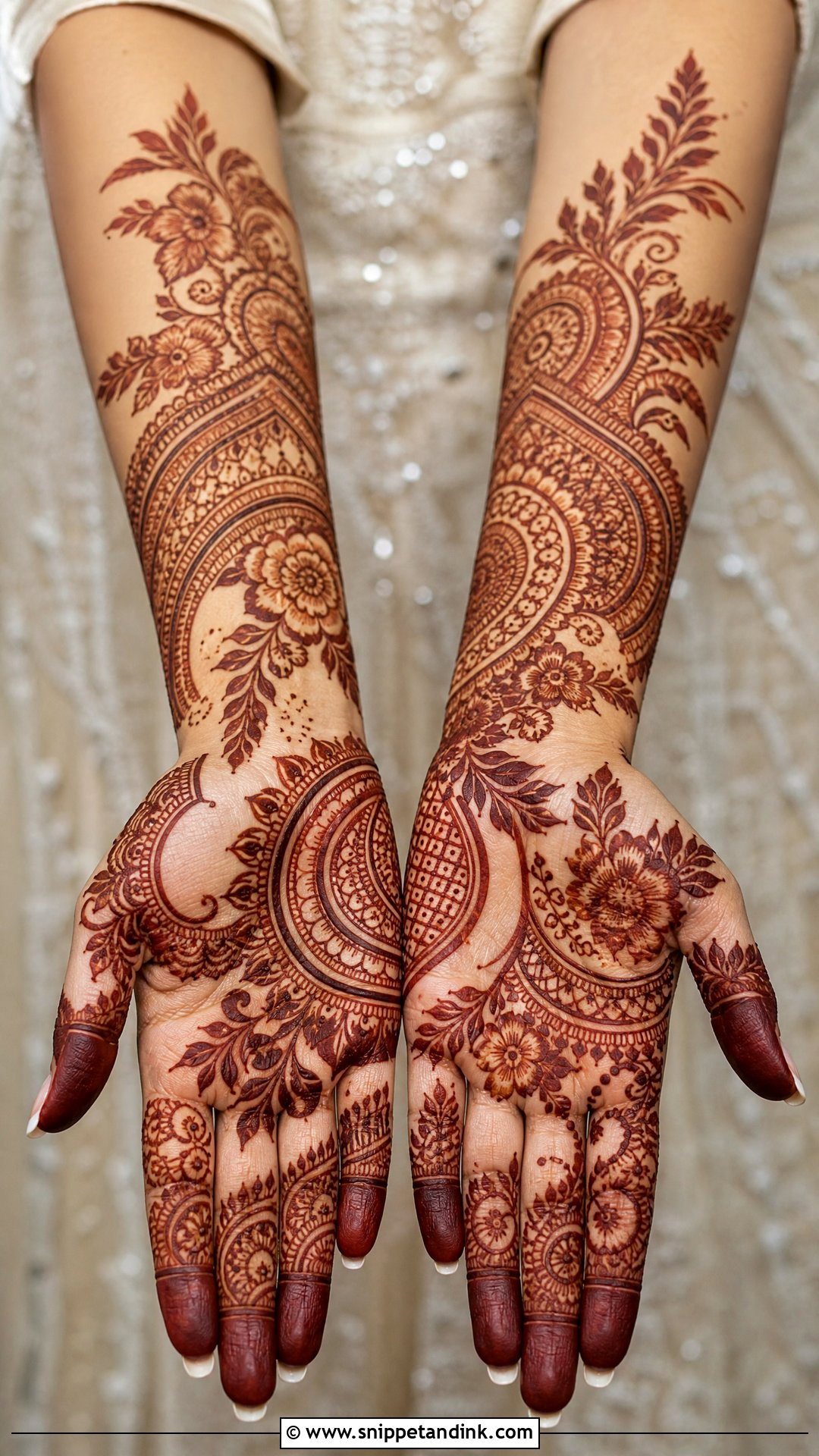
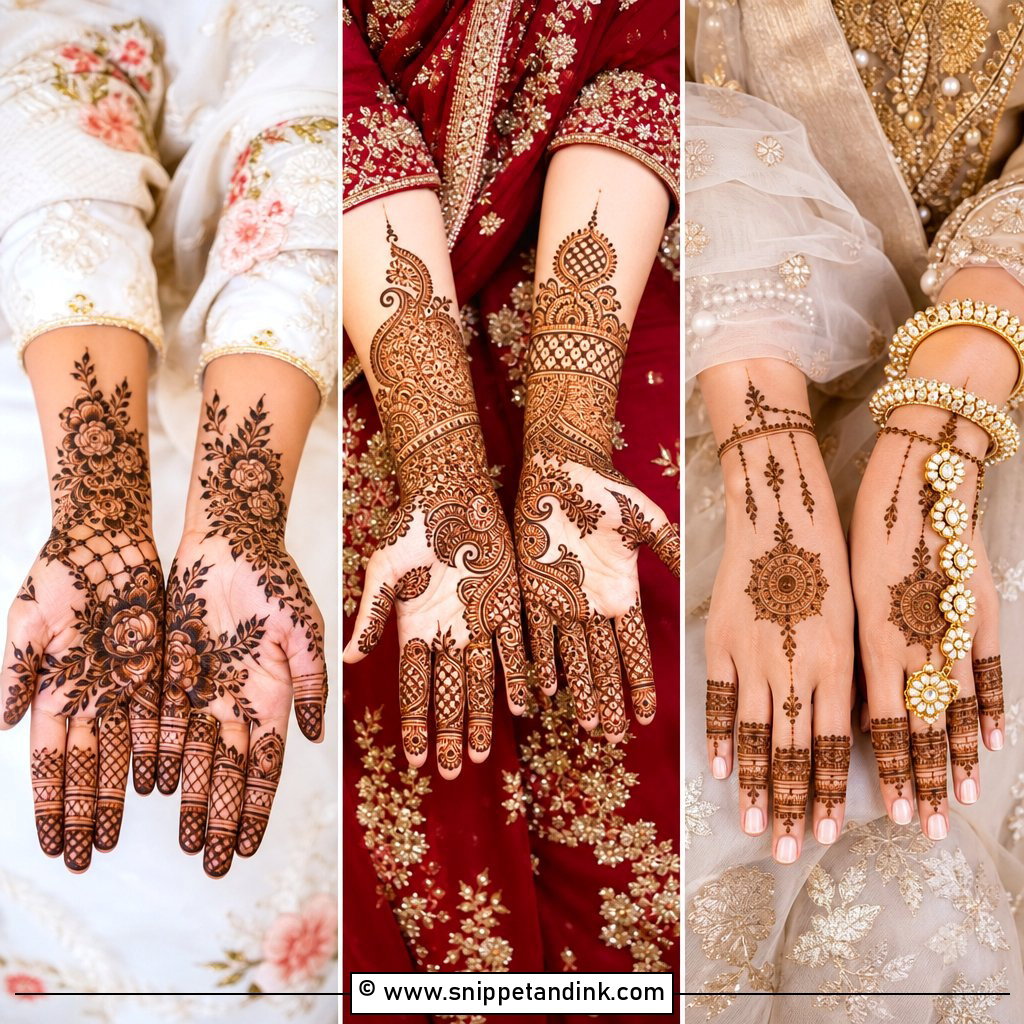
Big Arabic florals plus fine Indian filling is the most requested mix I see for modern Nikkah brides. Indo Arabic Nikkah mehndi can run from fingertips to forearm and still breathe, because the large motifs carry the eye at a distance while the fine lines reward a close-up. The thing I check first is the join between styles. If the paisley border and the bold flower meet awkwardly, the whole hand looks like two designs stitched together, so I sketch the transition with dots before committing the cone.
7. Minimal Nikkah Mehndi Design
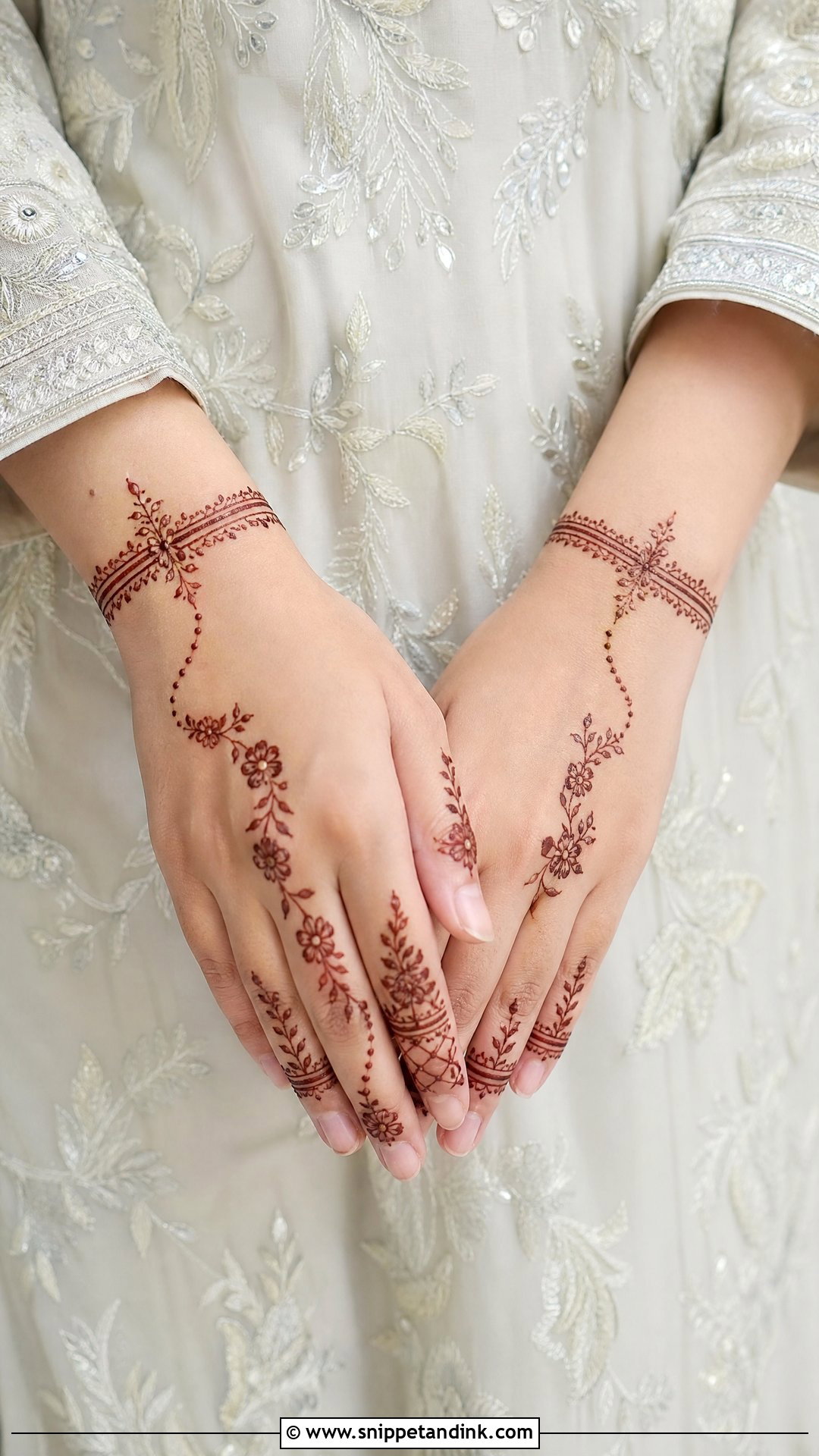
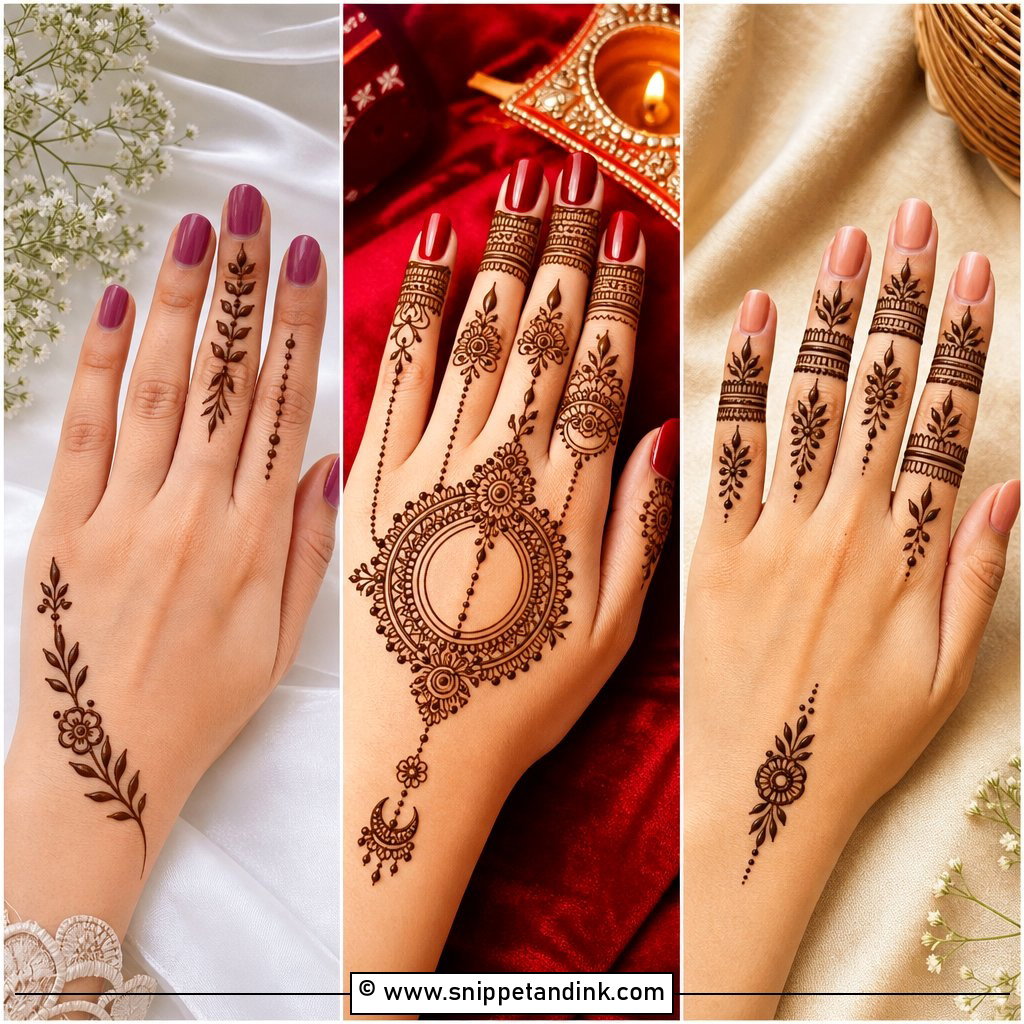
Minimal is not the same as unfinished. Fine lines, slim vines, ring-style finger bands and a light wrist cuff can read as complete if the palm, fingers and wrist all carry some weight. I often suggest this to brides who never wear henna day to day and don’t want to feel unlike themselves at their own ceremony. It also fades gracefully: a light design looks intentional at day ten, while a dense one at that stage just looks patchy.
8. Floral Nikkah Bridal Mehndi
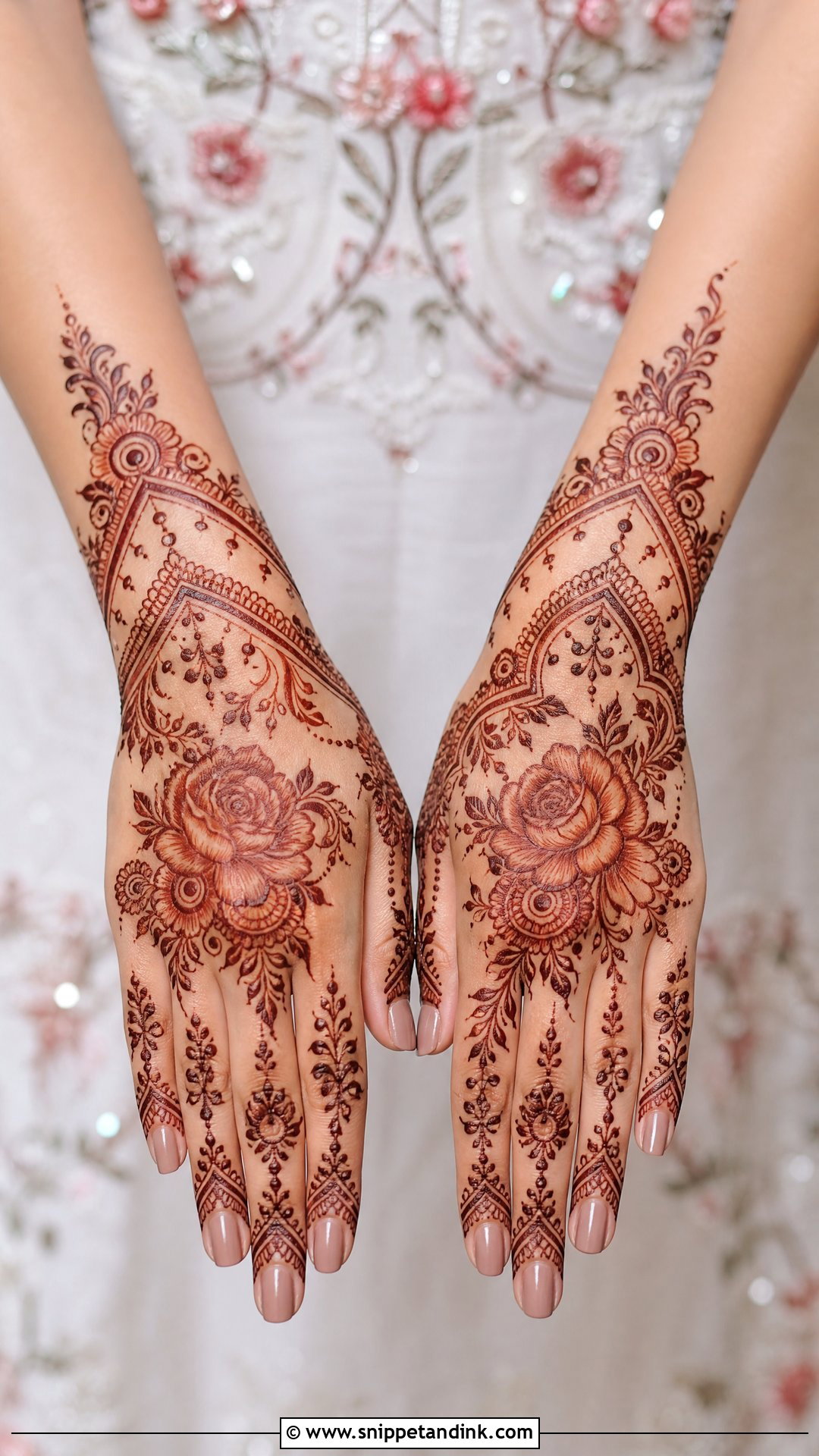
Roses, lotus shapes, small buds, leafy vines and shaded petals cover the palm and back of the hand in this one. The mistake I correct most often is scattered flowers: five separate blooms with no stem between them look like stickers. Run one connecting vine from the fingers to the wrist and the florals suddenly belong together. Bold, open petals lean Arabic; tightly filled ones lean Indian. A thin dotted border around each cluster neatens the edges.
9. Mandala Nikkah Mehndi Design
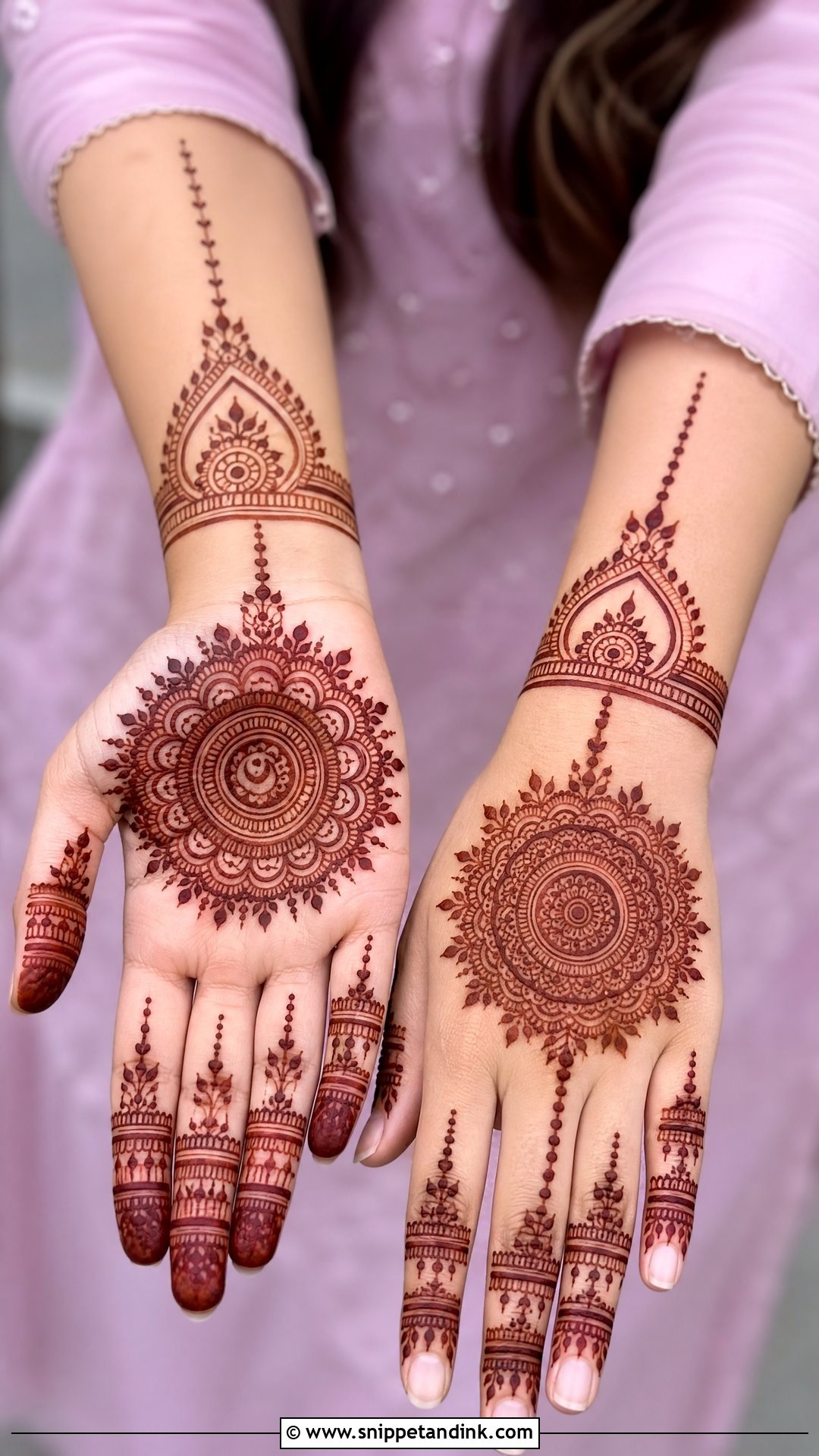
A single round mandala gives the hand a clear focal point and very calm symmetry. I draw the centre circle first, then build rings outward, because a mandala started off-centre can’t be rescued halfway through. Smaller hands carry this well since the circle adds structure without crowding the fingers. Finish with finger patterns, half-mandalas at the wrist and a few dots so the centre doesn’t float alone on the palm.
10. Pakistani Nikkah Mehndi Design
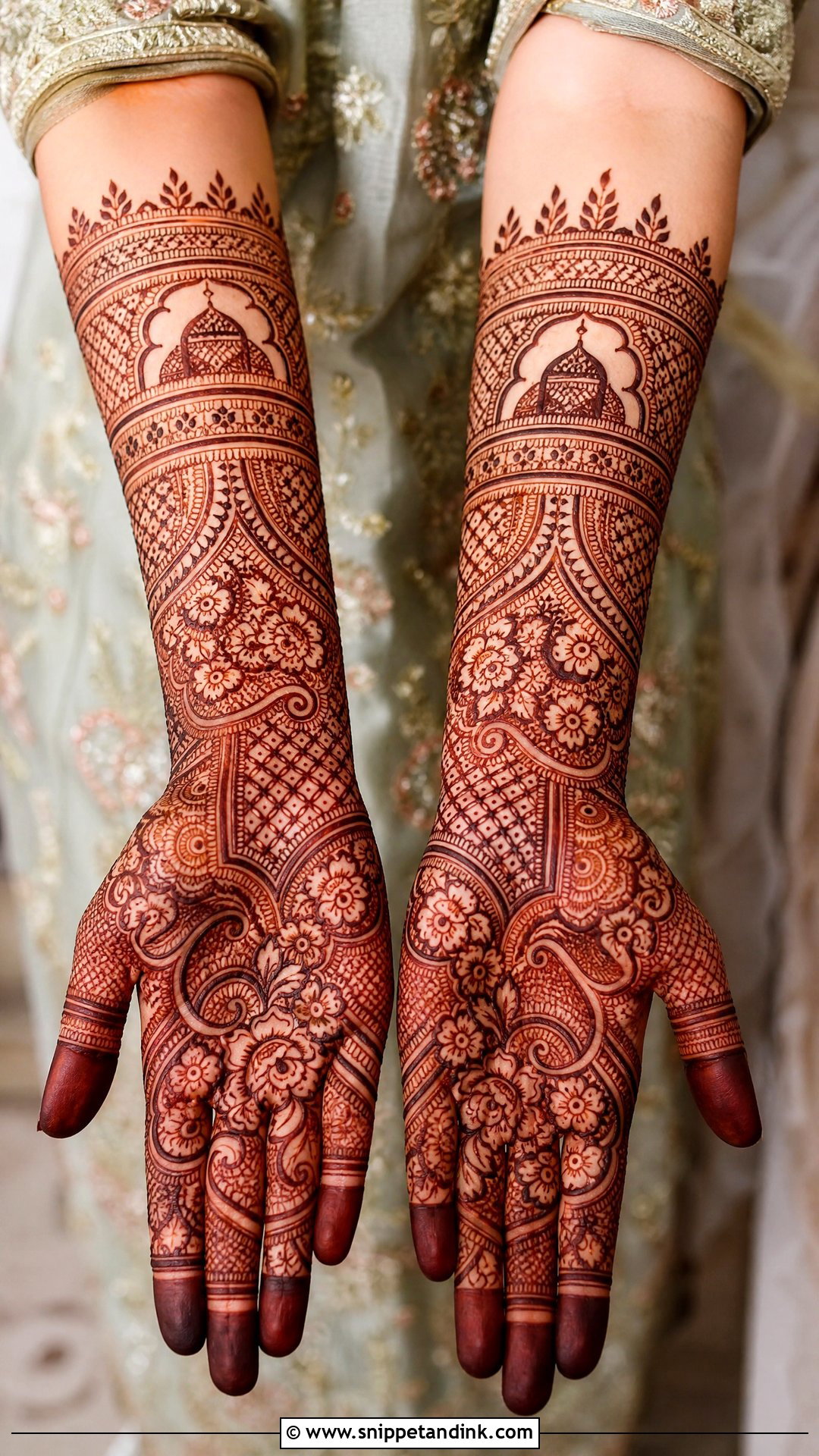
Detailed bridal filling with clean breathing room is the signature of Pakistani Nikkah work. Expect paisleys, domes, fine mesh, leaf borders and a personal element or two, on both palms and backs. I keep the filling thinner than I would for a baraat, since a Nikkah is often the softer event. Shararas and ghararas sit at the wrist in a way that frames the cuff, so I finish the design with a clean band rather than letting it trail under the sleeve.
11. Indian Nikkah Bridal Mehndi
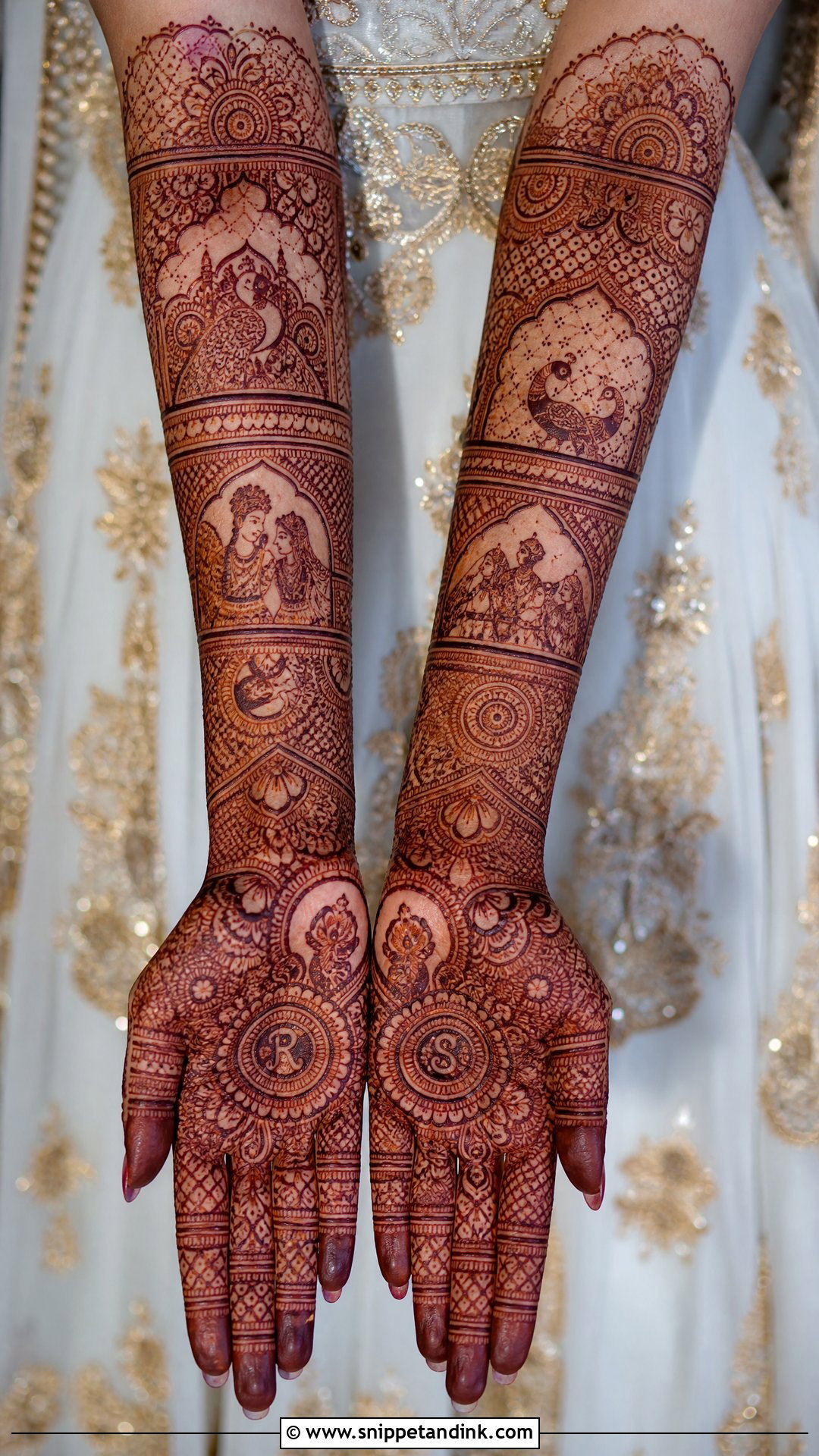
Peacocks, paisleys, mandalas, jaali and tiny storytelling panels define the Indian bridal style, usually across hands and forearms. It is slow work. Two full arms can take several hours, so book the session well ahead and plan to sit still through it. For a Nikkah I soften the wrist with a cleaner border, which also keeps the design from looking cramped under bangles. A hidden date or initials can sit inside a paisley without breaking the rhythm.
12. Gulf Nikkah Mehndi Design
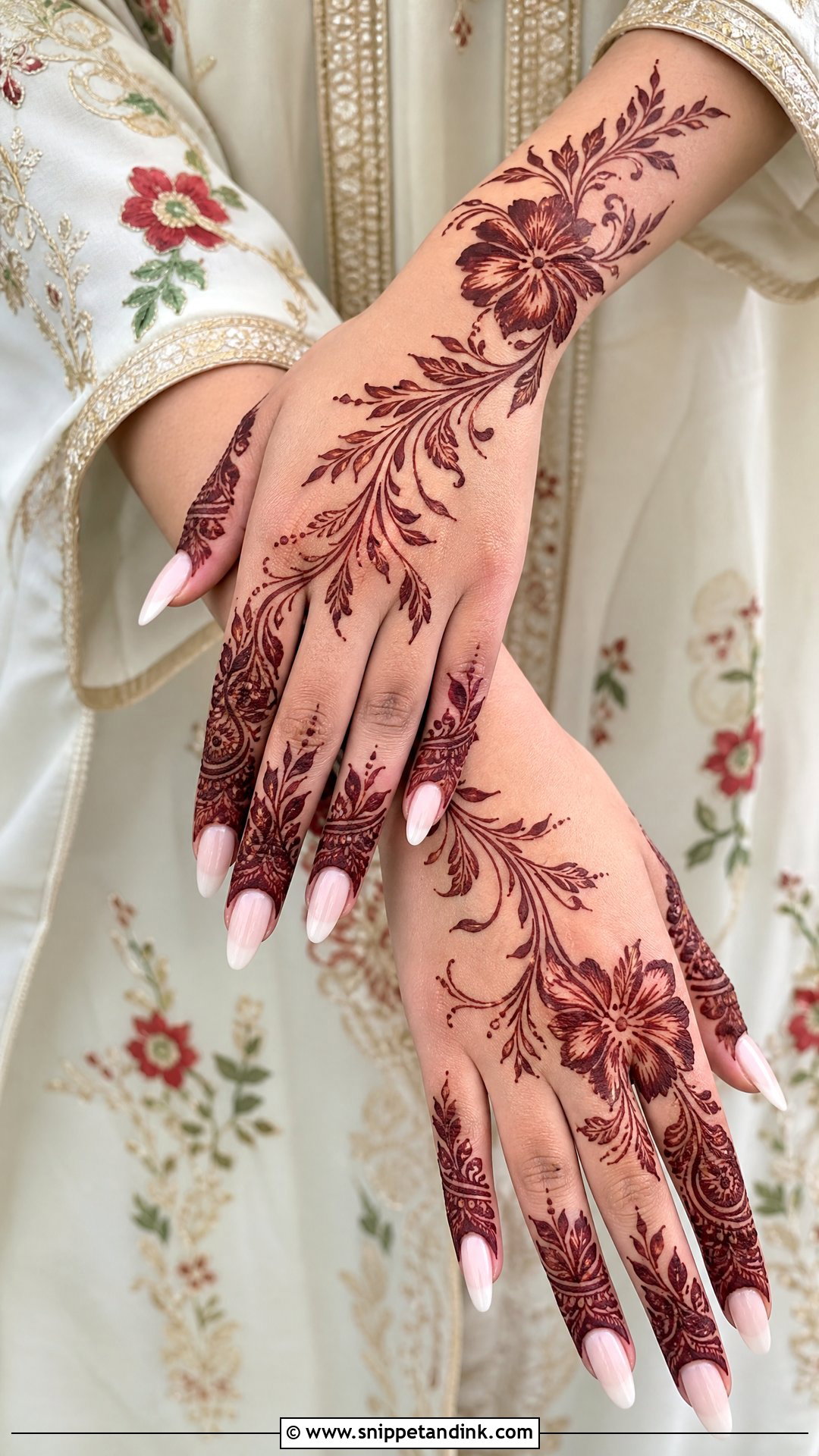
Gulf-inspired henna is big, flowing and confident: large flowers, curved vines and shaded leaves with plenty of open skin, often in one diagonal sweep across the back of the hand. Because the motifs are large, they survive distance shots that would lose fine filling entirely. I keep the fingertips fully detailed, though, otherwise the sweep looks like it stops short. Satin and silk gowns suit it because the plain fabric doesn’t fight the bold lines.
13. Moroccan Nikkah Mehndi Design
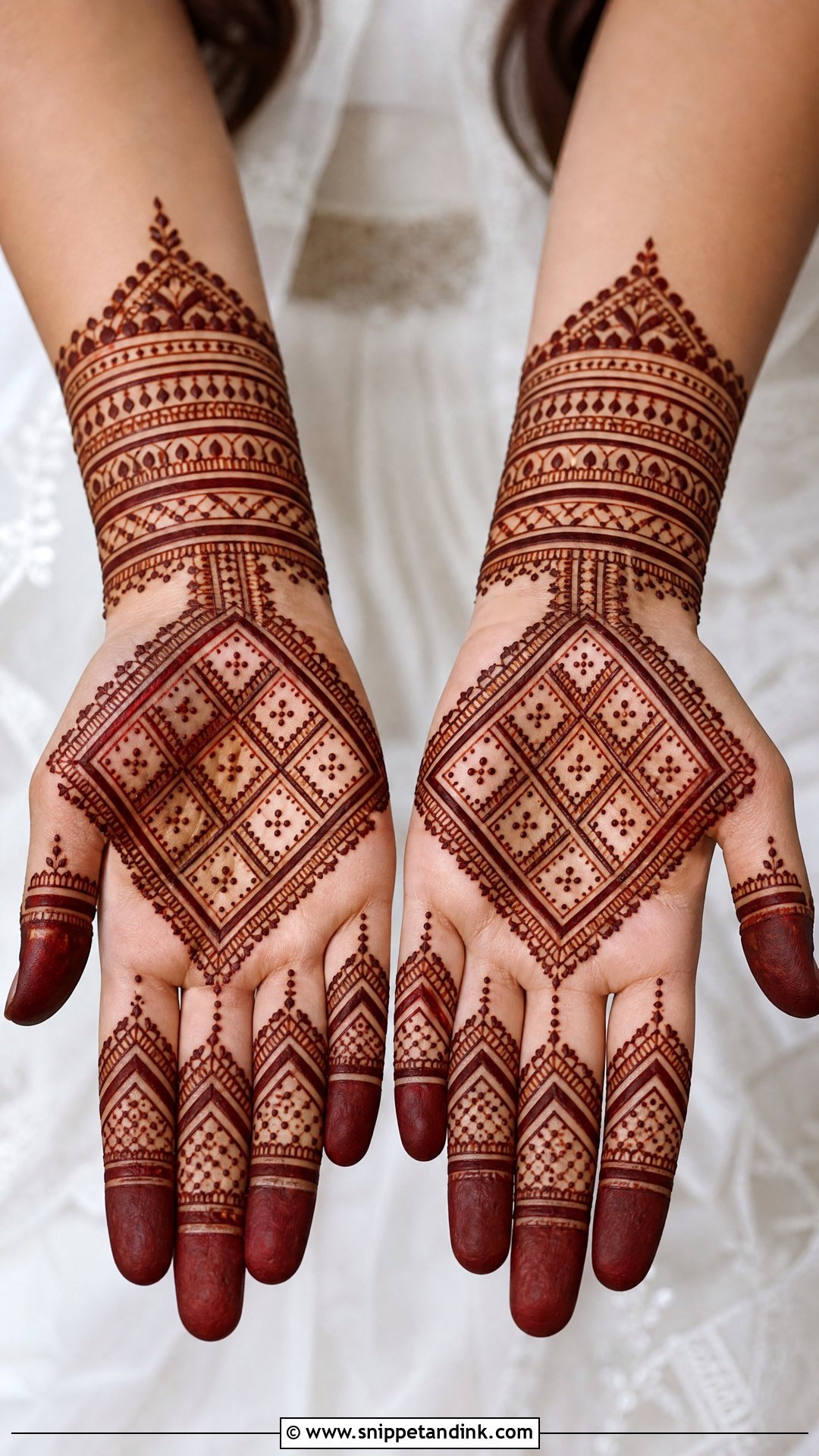
Diamonds, chevrons, dotted grids and strong symmetrical bands give Moroccan henna an architectural feel that’s very different from floral work. Geometry is unforgiving. A grid that drifts by a few millimetres across four fingers shows instantly, so I mark guide dots before drawing any straight line. Long fingers carry the pattern best. If the look feels too severe for your ceremony, a few fine dots or tiny leaves along the borders warm it up without losing the structure.
14. White Nikkah Mehndi Design
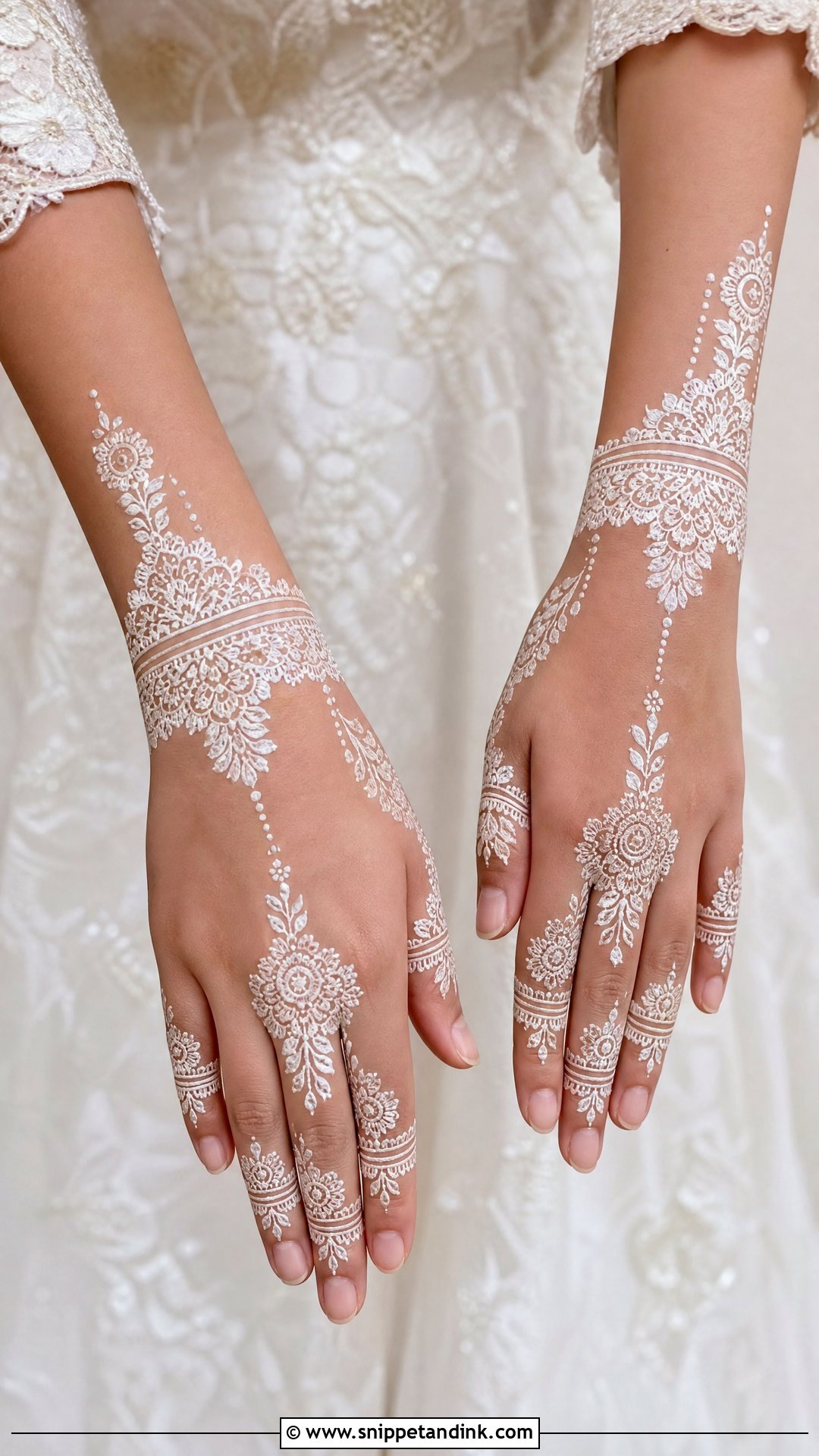
White mehndi isn’t henna at all. It’s a cosmetic body paint or adhesive design, so there’s no stain, and it lasts a day or two at most before it cracks or rubs away. I treat it as decoration for the ceremony and its photos, lovely with ivory, silver and pearl themes. Apply it the day of the Nikkah, not before, and keep hands away from water until the pictures are done. If you want colour that stays for the walima, book natural henna instead or pair the two on different areas.
15. Finger Nikkah Mehndi Design
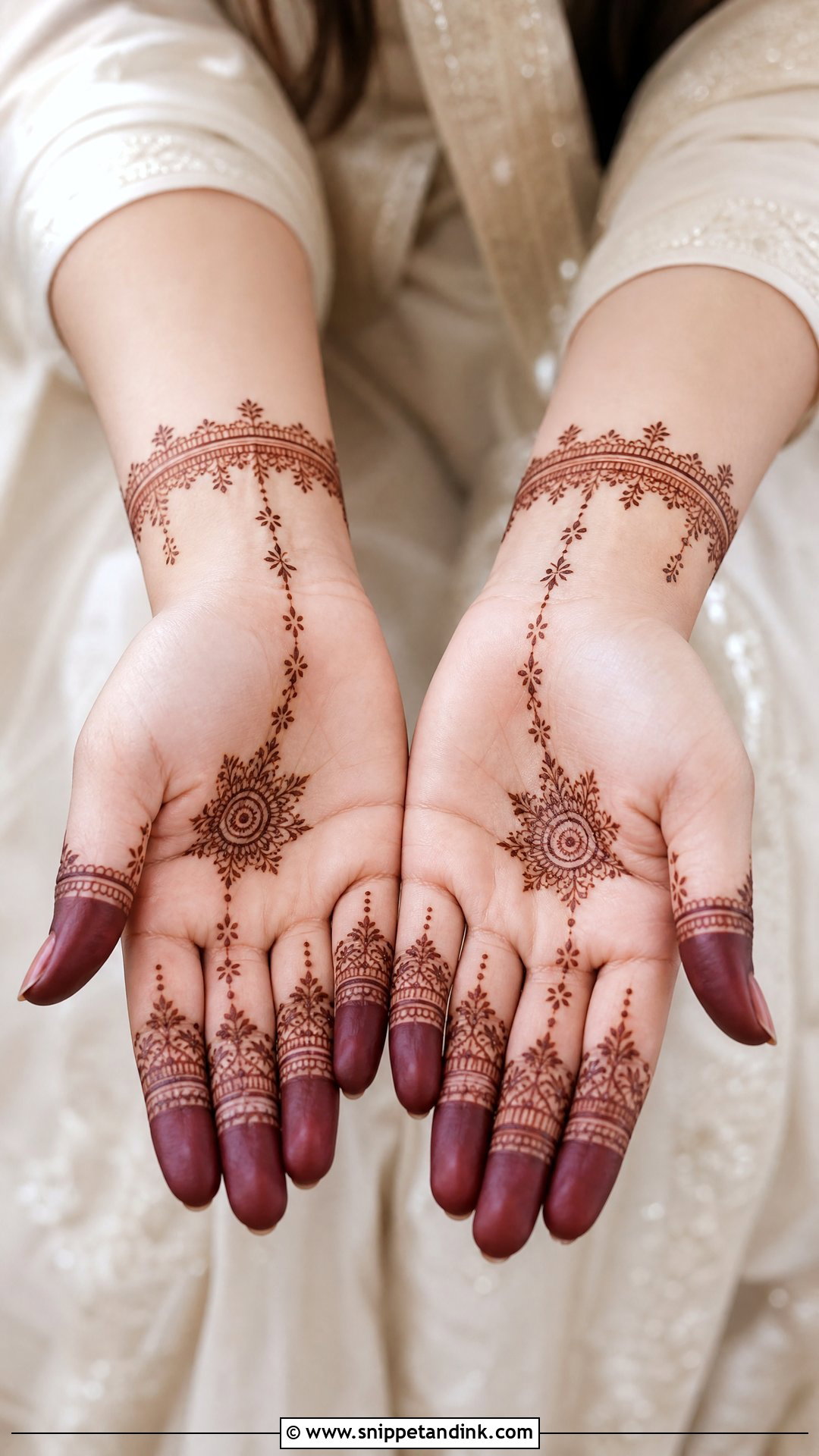
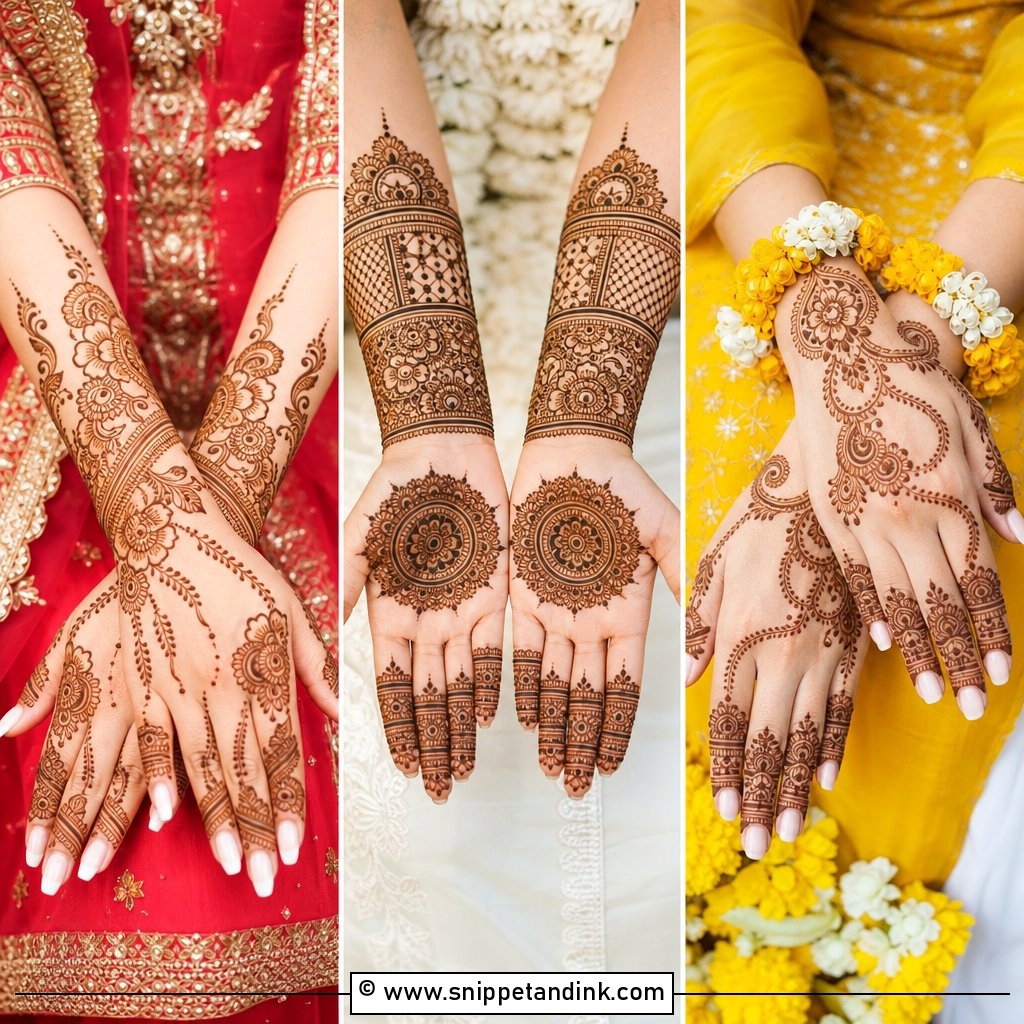
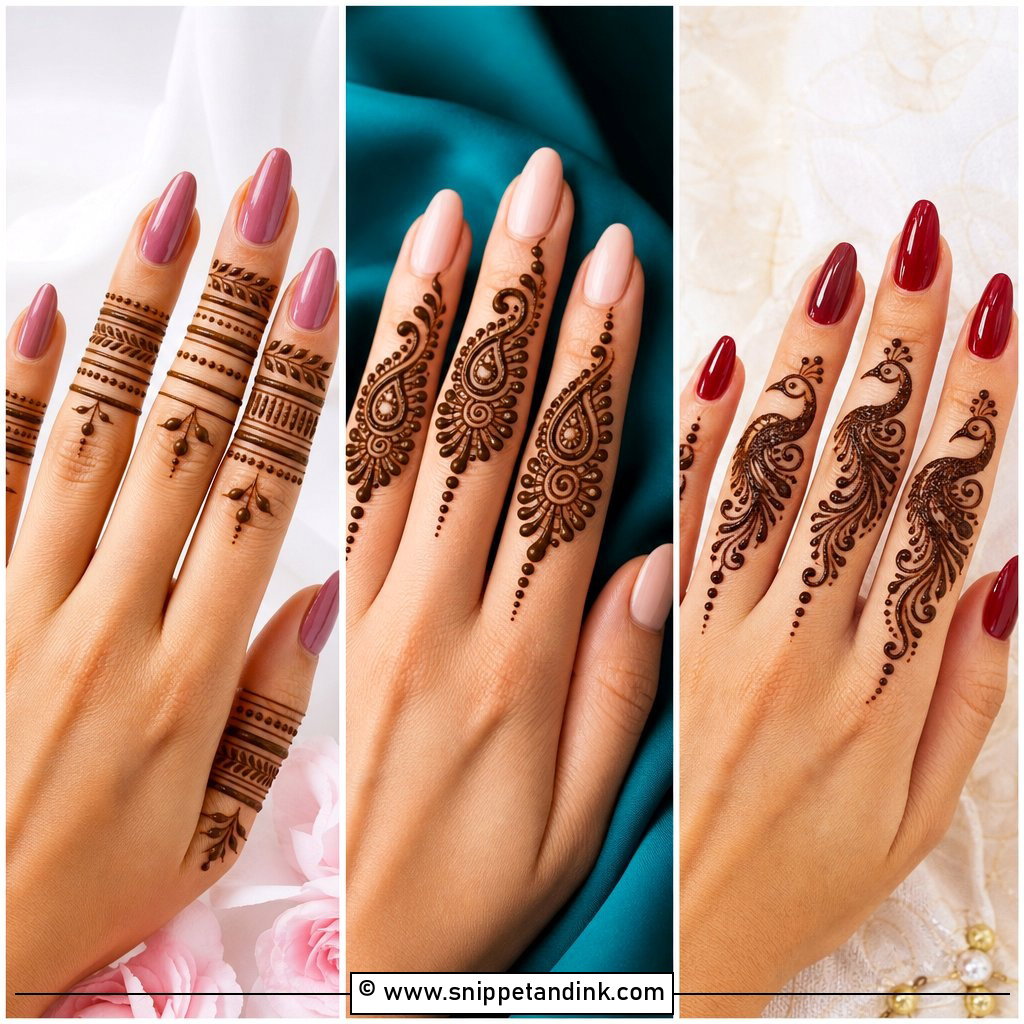
Fingers carry the ring shots, and this design treats them as the main event. Rather than leaving the palm bare, I add a light central motif and a soft wrist band, then build detailed finger sections with rings, dots, vines and mini florals. Keep the finger patterns related but not copied exactly, so the hand looks drawn rather than stamped. Fingertips stain darkest of all, and a deep maroon tip is the detail people notice first.
16. Bracelet Nikkah Mehndi Design
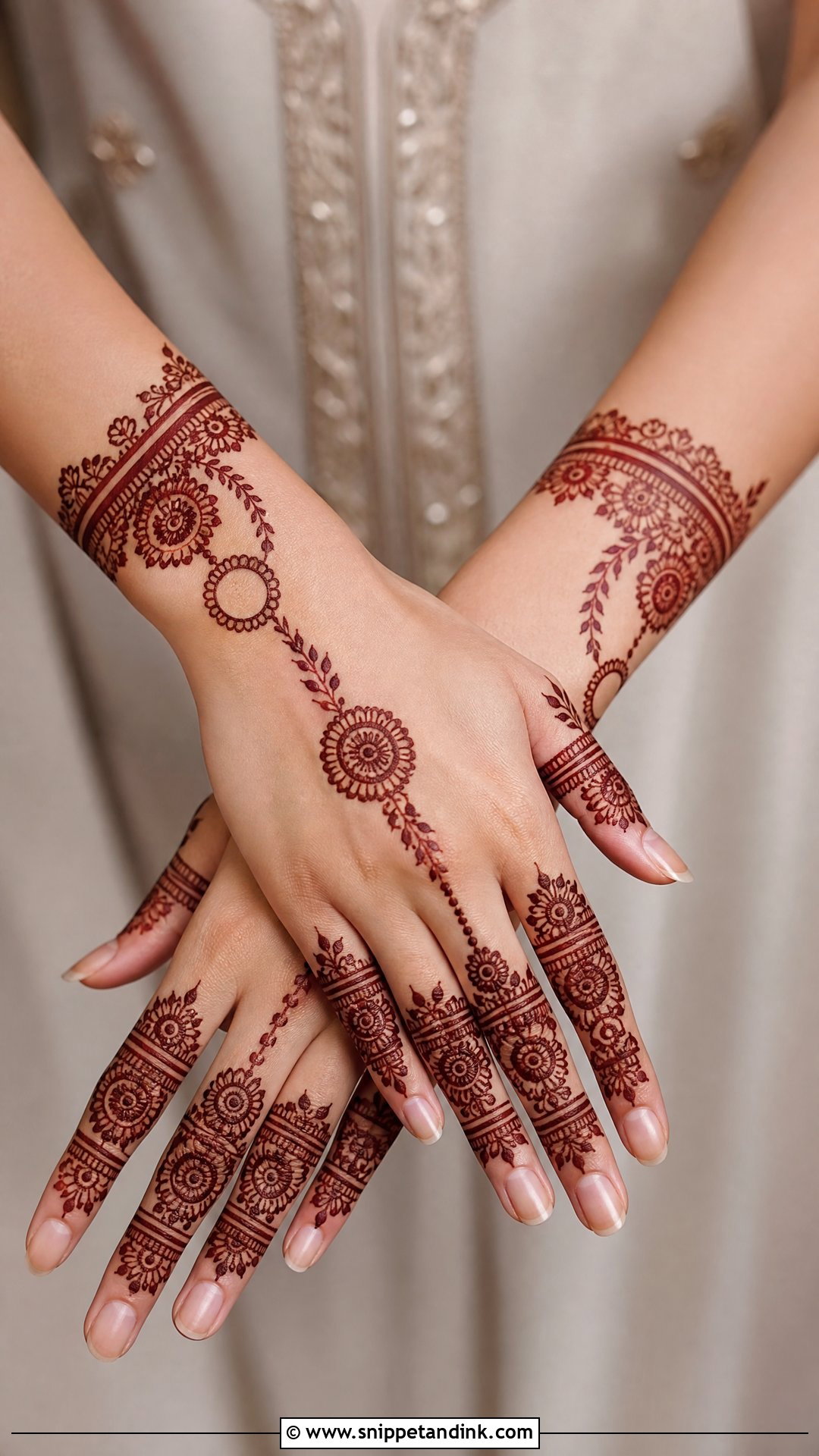
A bracelet design turns henna into jewellery: wrist cuffs, chain details, ring links and a floral centre on the back of the hand. It’s a smart option if you’re wearing fewer bangles or a plain cuff. The chain lines are thin, so I use a tighter cone tip and steady pressure; uneven pressure is what makes a chain look beaded in one place and broken in another. A small paisley near the wrist keeps it reading as bridal rather than as a casual party design.
17. Peacock Nikkah Bridal Mehndi
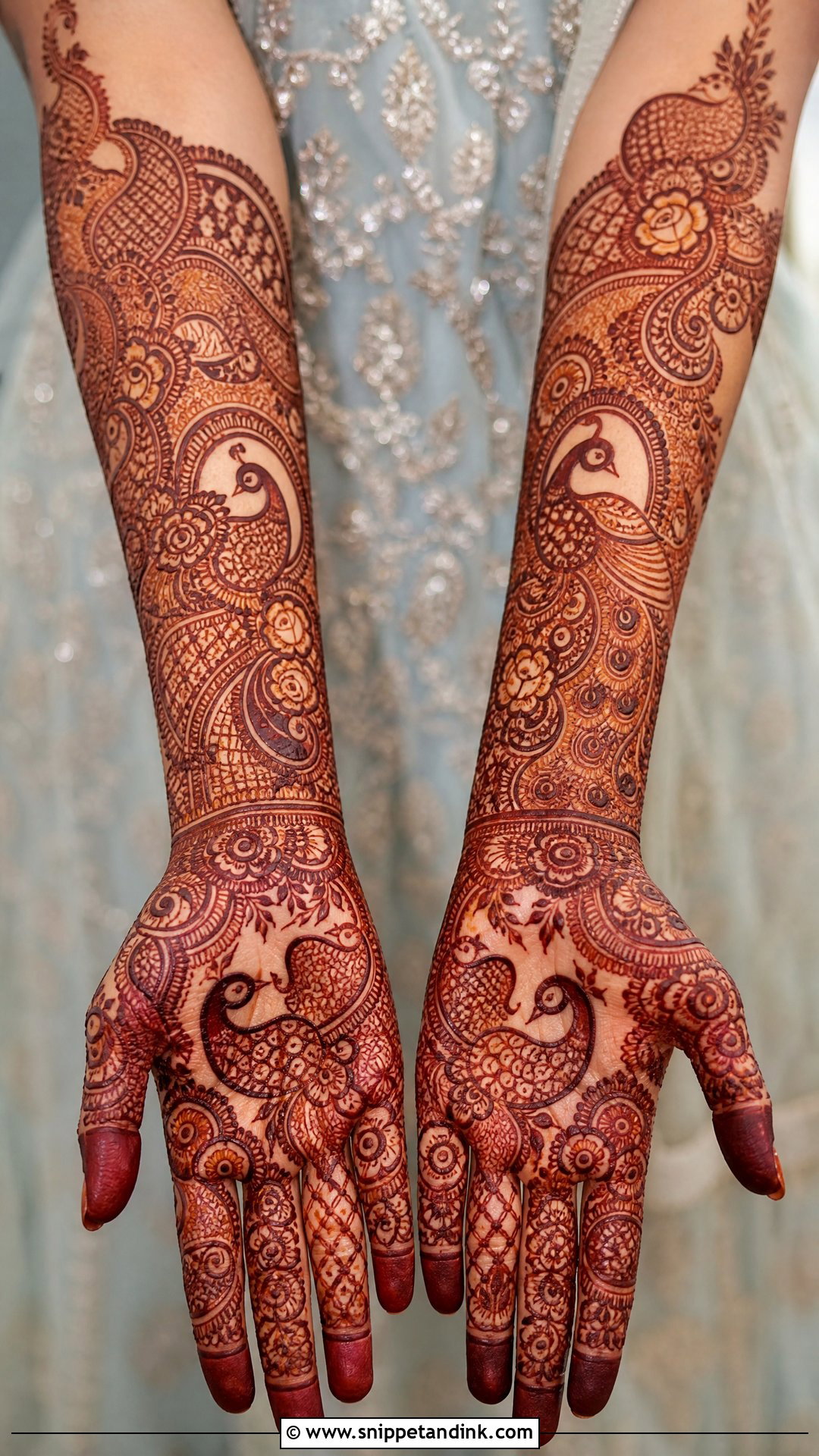
The peacock belongs to heritage bridal henna, but it needs company. A single bird floating in empty palm looks unfinished, so I surround it with feathers, paisleys, florals and fine mesh. Drawing a peacock well depends on the neck curve; if that line is stiff, the bird looks like a duck, which is why I take more care there than anywhere else. Fine outlines and soft filler keep it suited to the Nikkah, and it sits naturally with embroidered dupattas and antique gold.
18. Jaali Nikkah Mehndi Design
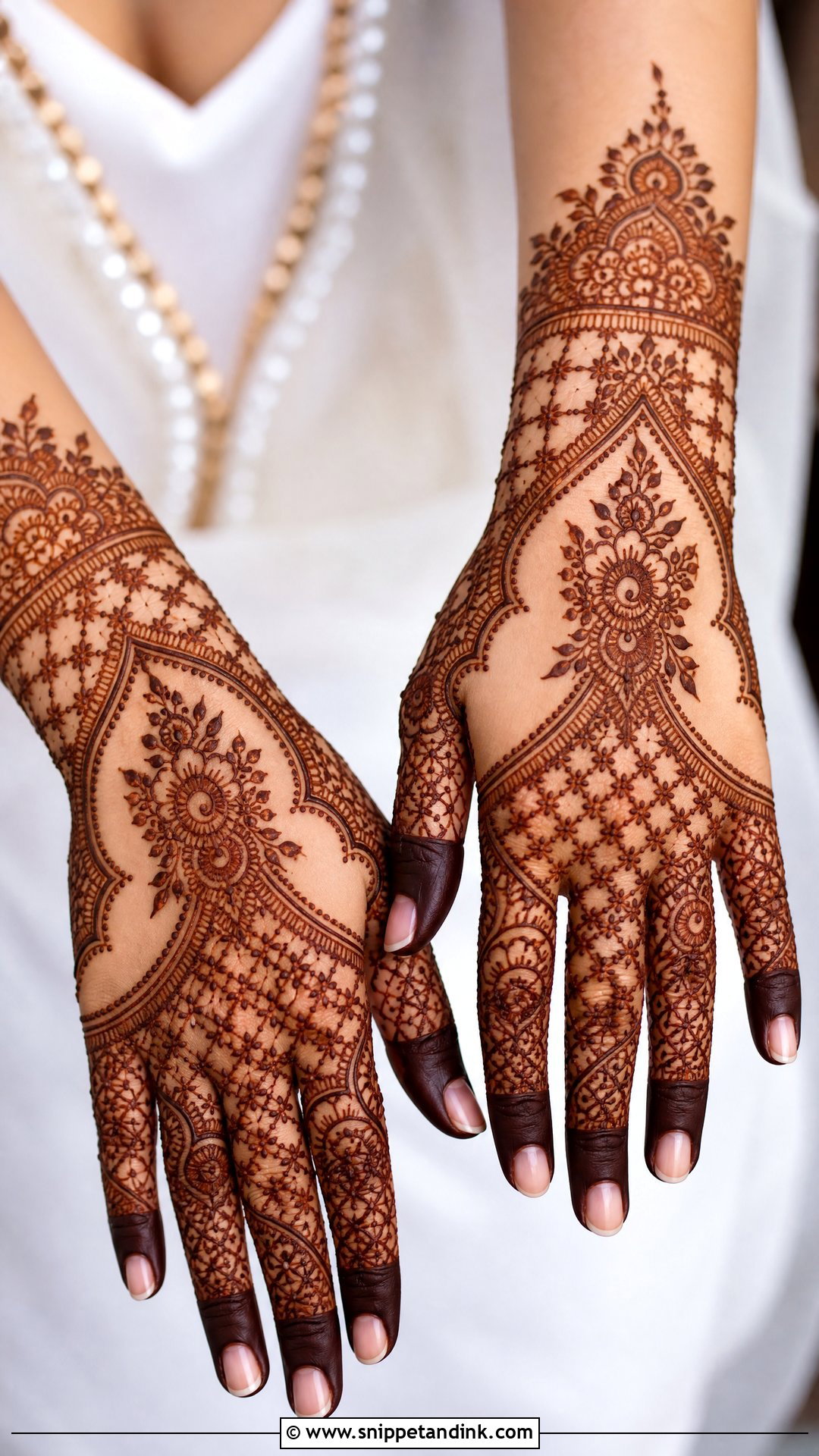
Jaali, or mesh, gives henna a lace finish that reminds many brides of the embroidery on their dupatta. I use it as a feature on palm, back or wrist, but always balance it with a few solid motifs; an all-mesh hand stains flat and loses depth in photos. The grid has to be drawn with even spacing, and the cone lines must not touch while wet or the holes fill in. The open squares let skin show through, which keeps a dense-looking design surprisingly light.
19. Personalized Nikkah Mehndi Design
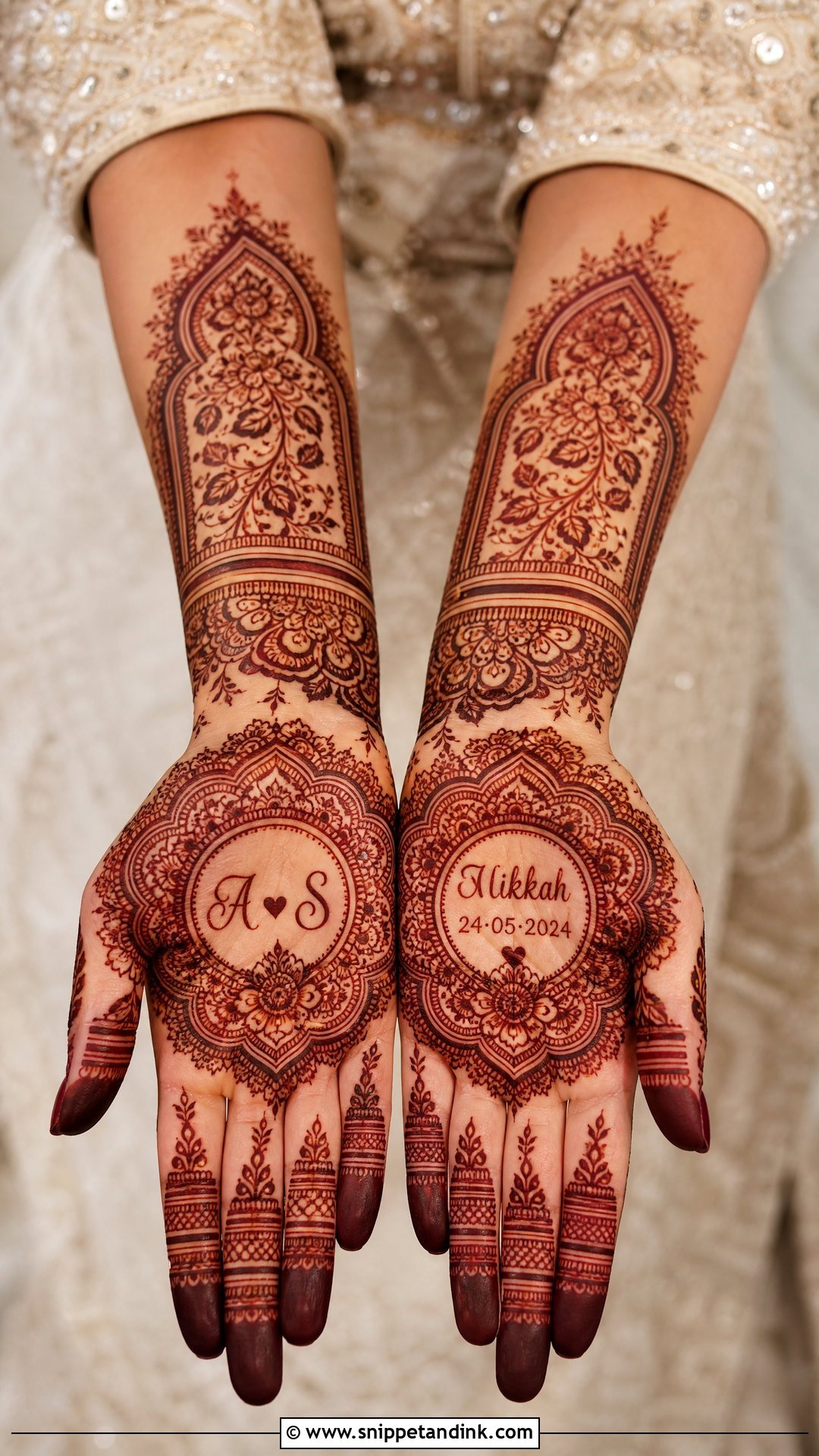
Personal details are what brides return to in their photos years later. The couple’s initials, the Nikkah date, a tiny ring, a meaningful flower or a hidden word can all sit inside paisleys and vines. I keep the main structure classic, a mandala palm or an Arabic trail, then add the custom pieces last so they blend in. Write out exactly how you want the letters spelled before the session; I’d rather confirm a spelling twice than draw it wrong on your palm.
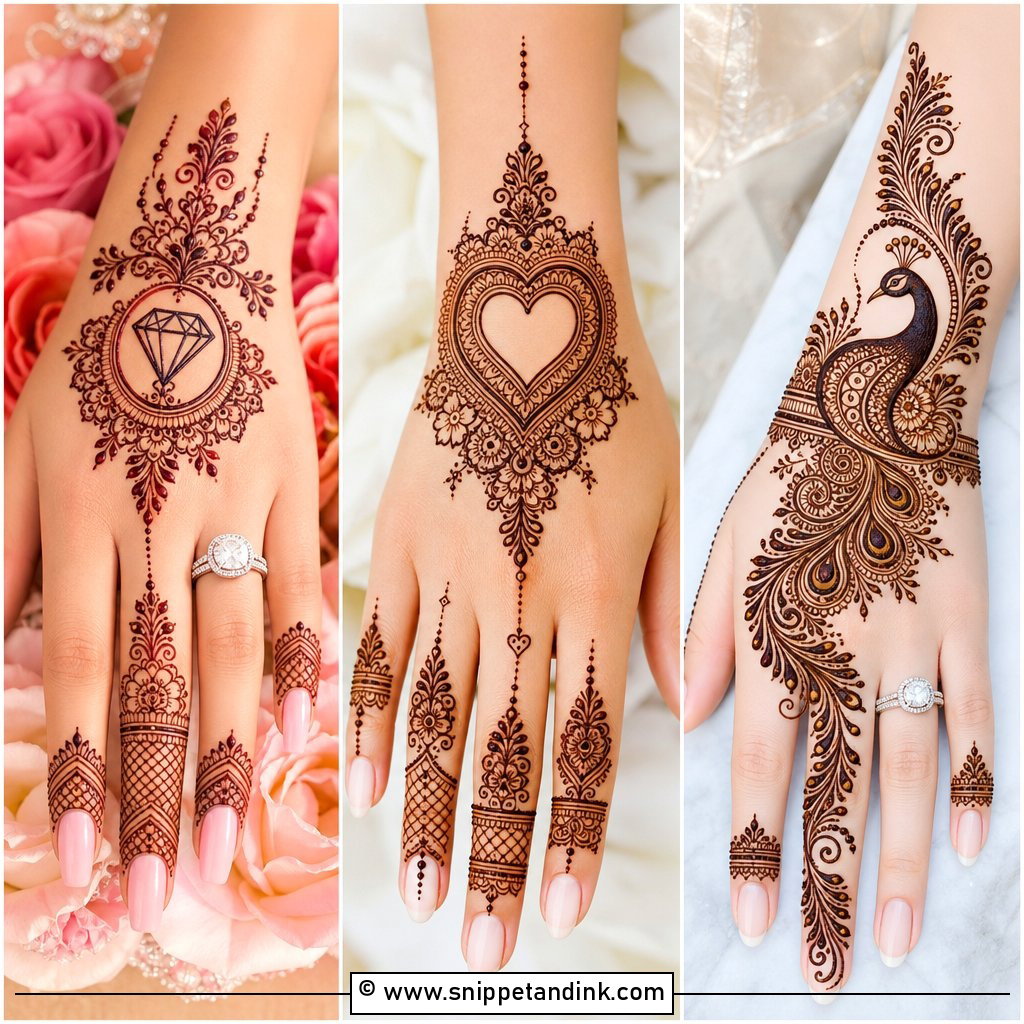
20. Modern Nikkah Bridal Mehndi
Clean composition and deliberate spacing sum up the modern Nikkah look: slim floral trails, geometric borders, fine finger work and bracelet cuffs, with negative space treated as part of the design. It sits well with contemporary modest gowns and minimal lehengas. The test I use is to step back a metre. If the hand reads as one intentional shape from fingertip to wrist, it’s working, even when coverage is light. Initials or a small date fit easily into the open areas.
Coaxing the Darkest Stain From Your Paste
Most of the colour is decided in the first day after I put the cone down. Aftercare is boring, and it works.
- Keep the paste on for at least six to eight hours. Overnight is better if you can sleep with your hands wrapped loosely in tissue.
- Dab on a little lemon and sugar mix once the paste is dry to the touch, so it stays stuck to the skin instead of flaking off early.
- Keep your hands warm. Warm skin takes the dye more readily than cold skin.
- Scrape the dried paste off with a blunt edge or your fingernail. Don’t wash it off.
- Avoid water for the next 12 to 24 hours where you can, then skip soap scrubs, chlorine and exfoliating products on your hands until after the ceremony.
Expect a little unevenness between palm and back, and between your two hands. That’s normal skin behaviour, not a bad application. A light coat of balm before bathing helps the stain last into your first week of married life.
Sleeve Length, Skin and the Stain You Can Expect
The right Nikkah design is the one that suits your sleeves, your jewellery and how much of your hands will actually be seen at the signing. Full traditional work, a simple Arabic trail, detailed fingers or a bracelet on the back of the hand can all be right for the right bride. Natural henna gives a reddish brown that deepens toward maroon over a couple of days, and how dark it goes depends on your skin, the paste and how patiently you leave it on. Bring a photo of your outfit to your artist, and let the cuff guide where the design stops.
You'll Like These Ideas:



Leave a Reply