
Brides spend a lot of time choosing the palm design and then let the back of the hand be an afterthought. That’s a mistake, because the back is the side that faces the camera when you hold a bouquet, adjust your dupatta or show off your ring. I plan it as its own piece of work. The 20 layouts below run from full Indian coverage and Arabic trails to mandalas, jaali, peacocks, lotuses, portraits and white henna, with notes on how each one stains and wears. For more ideas beyond these, browse our Latest Unique Back Bridal Mehndi Designs collection.
Why the Back of Your Hand Stains Lighter Than the Palm
Henna dye binds to the outer layer of skin, and the palm has a much thicker outer layer than the back of the hand. So the same paste, left on for the same time, will usually give a deep maroon on the palm and a lighter reddish brown on the back. Brides are often surprised by it the first time.
It doesn’t mean the back can’t look rich. It means the design has to account for it:
- Choose bolder outlines and a little shading on the back instead of very fine filler, which can fade into faint lines.
- Leave the paste on the back of the hand at least as long as on the palm. It needs that time even more.
- Keep the back of your hands warm after application. A warm room or holding your hands near a gentle heat source helps the stain develop.
- Exfoliate a day before, not on the day. Freshly scrubbed skin is fine; skin with lotion or oil on it at application time stains patchily.
1. Full Hand Back Bridal Mehndi Design
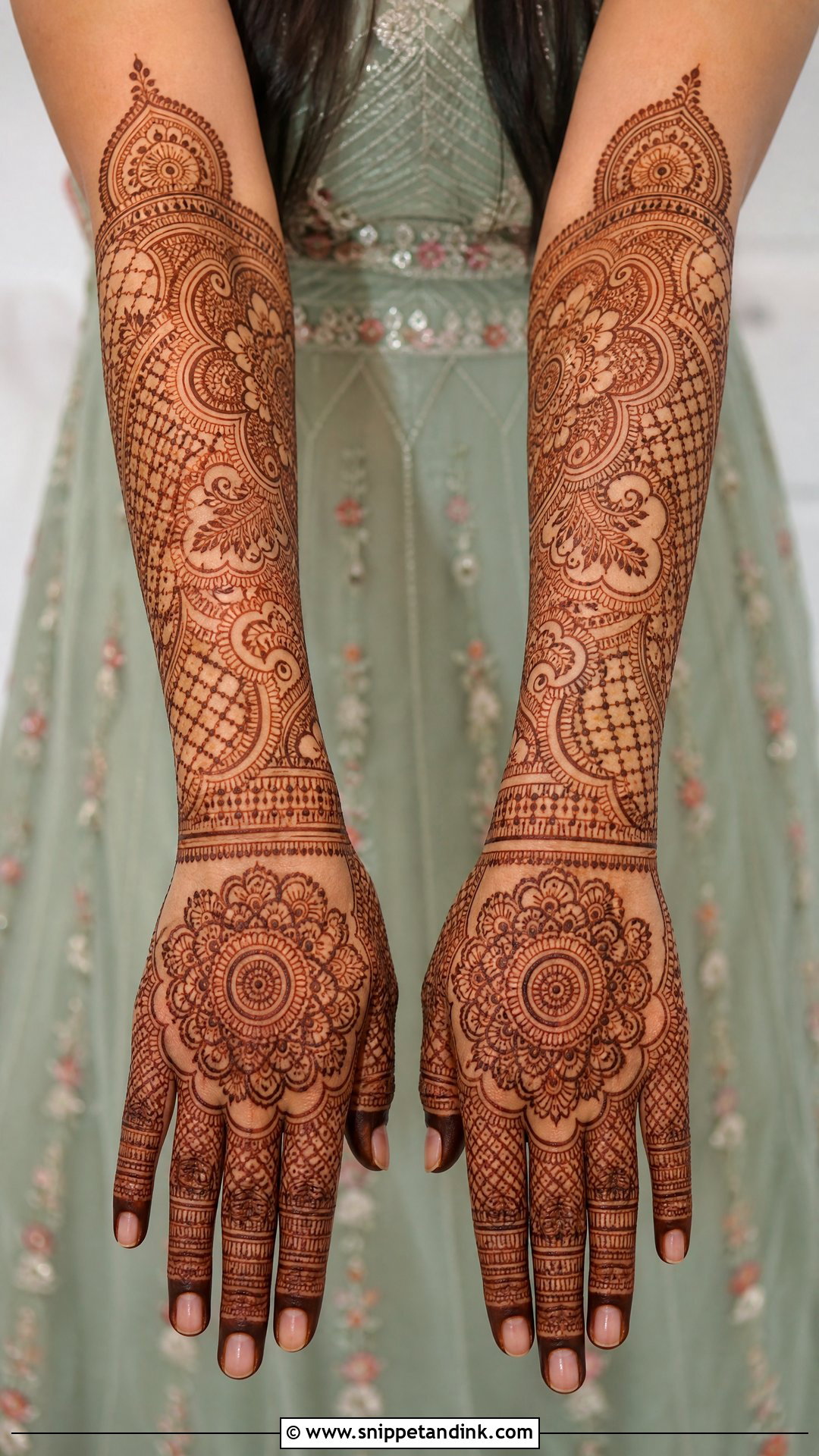
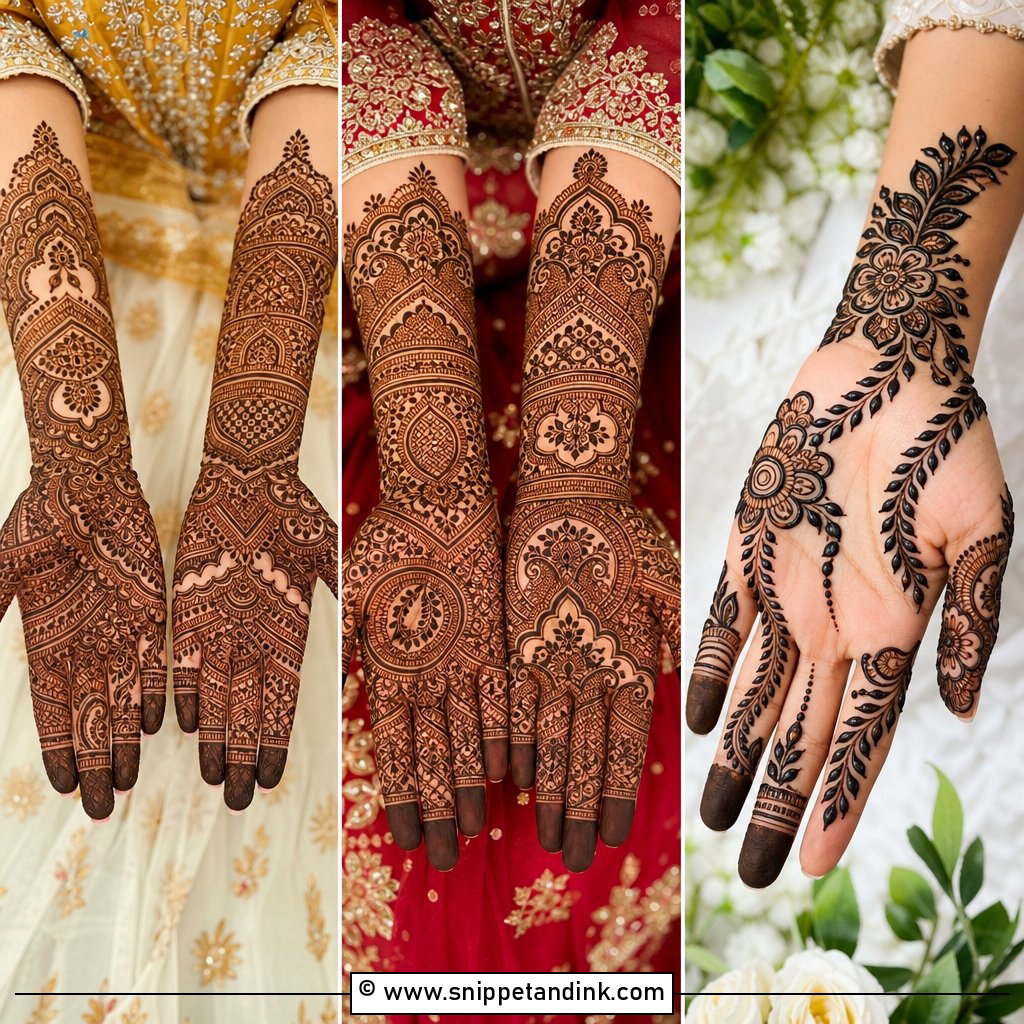
Full coverage on the back starts with heavily detailed fingers, moves into a central floral, mandala or paisley layout, then fills the wrist and forearm with bracelet bands, vines and fine filler. Even coverage is what makes it work, and that’s harder on the back than on the palm, because the skin over the knuckles and tendons is uneven and lines can wobble. I ask brides to rest the hand flat on a cushion with fingers slightly spread while I draw. Hidden initials or a date tucked into a paisley or jaali section keep it personal, and it sits well under chooda and bridal sleeves.
2. Arabic Back Bridal Mehndi Design
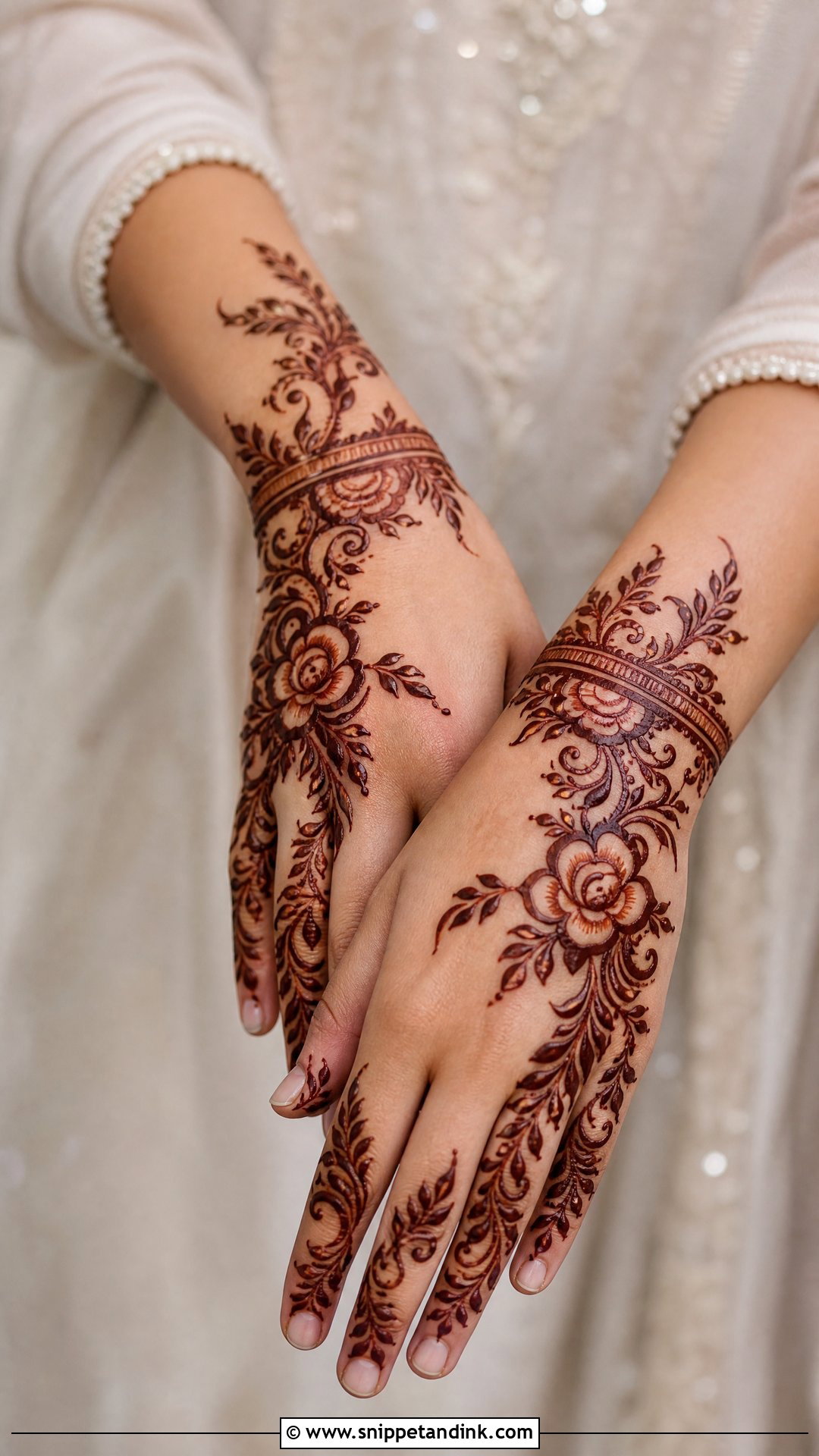
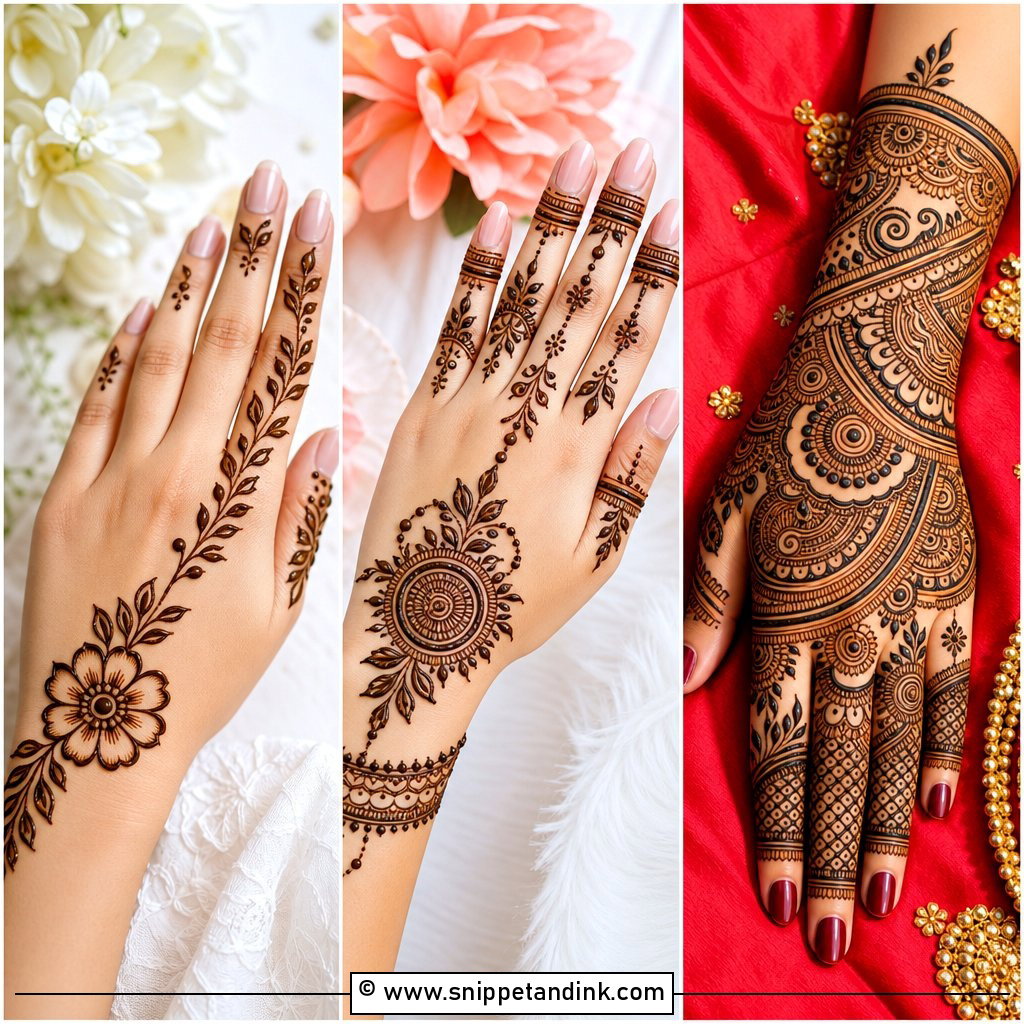
Arabic designs read clearly even from across a room. Bold flowers, curved leaves and diagonal trails cross the back of the hand, with matching bands and leafy tips on the fingers and sometimes a floral cuff at the wrist. Because it leaves so much skin open, it suits the nikah, reception or a destination wedding as well as the main day. For a more bridal finish I keep the flower outlines bold and add fine shading inside the petals. It’s quicker to apply than full coverage, which helps if you’re booked on the same day as other functions.
3. Indo Arabic Back Bridal Mehndi Design
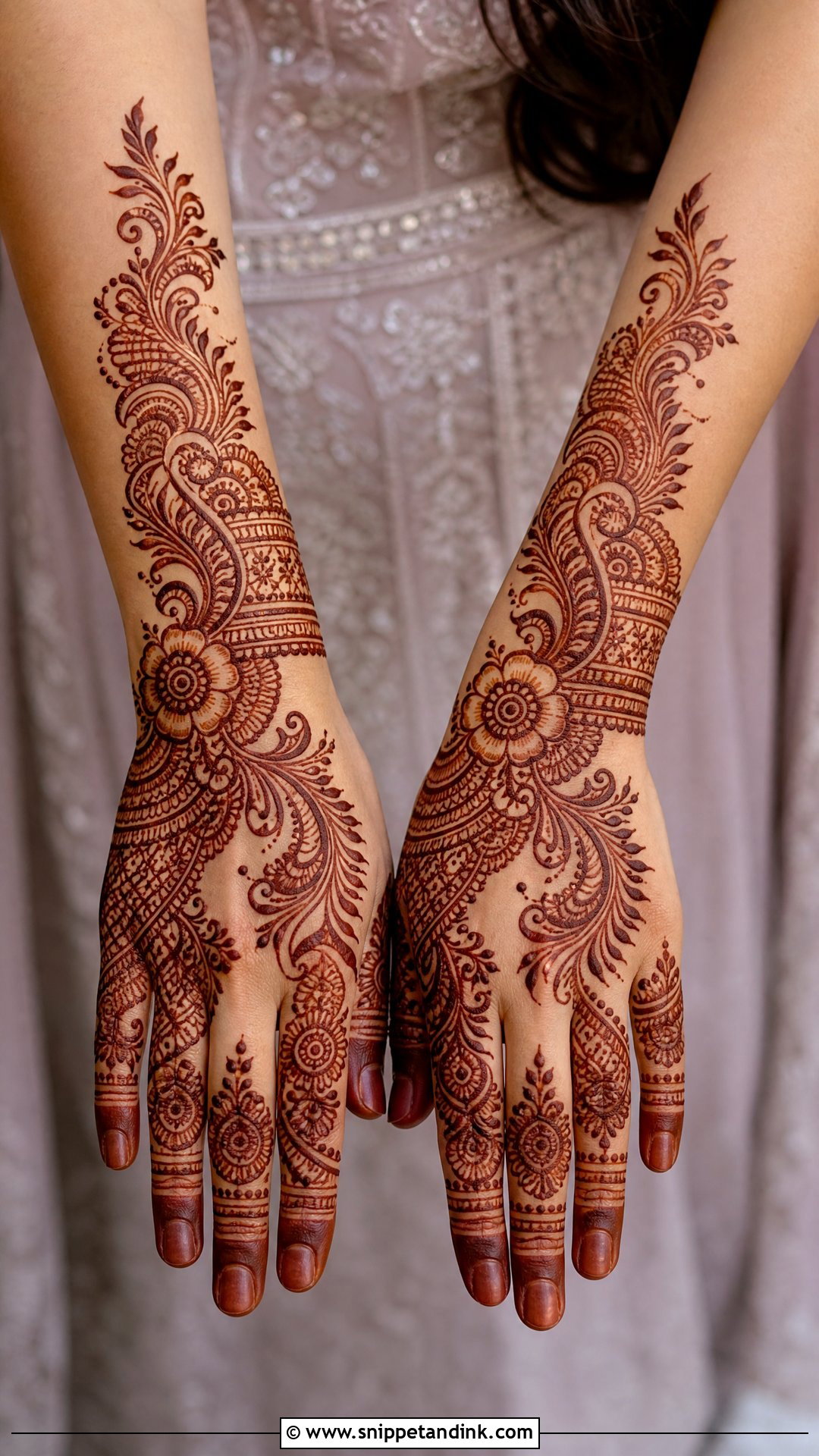
Most of the brides who come to me undecided end up here. An Indo Arabic back bridal mehndi design takes the bold diagonal flow of Arabic work and fills around it with Indian jaali, paisleys, swirls and leaf clusters. I plan the empty spaces before drawing, so the hand looks clean rather than half-finished. The diagonal line also lengthens the fingers, which flatters shorter or broader hands. Initials near the wrist fit naturally into this layout.
4. Mandala Back Bridal Mehndi Design
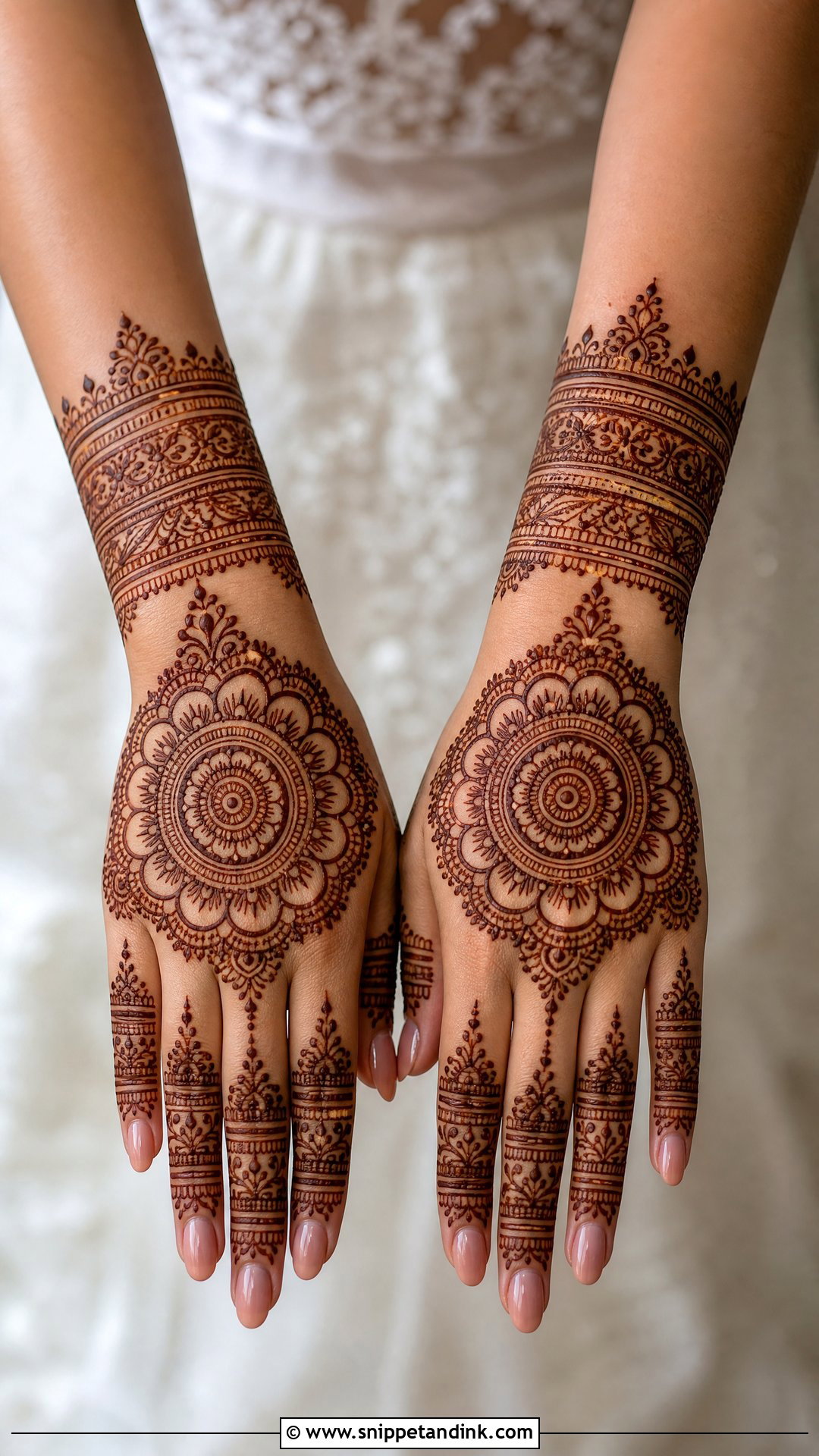
A mandala back bridal mehndi design looks simple until you see it done with bridal detail. The round mandala sits in the centre of the back hand, ringed with petals, dots, small leaves and thin circular borders, with ring bands and shaded tips on the fingers and a bracelet at the wrist. Placement is everything: I centre it slightly toward the knuckles, not the middle of the hand, so it lines up with a hathphool and doesn’t disappear under the chooda. A layered version with tiny paisleys inside each petal keeps it from looking basic.
5. Jewelry Back Bridal Mehndi Design
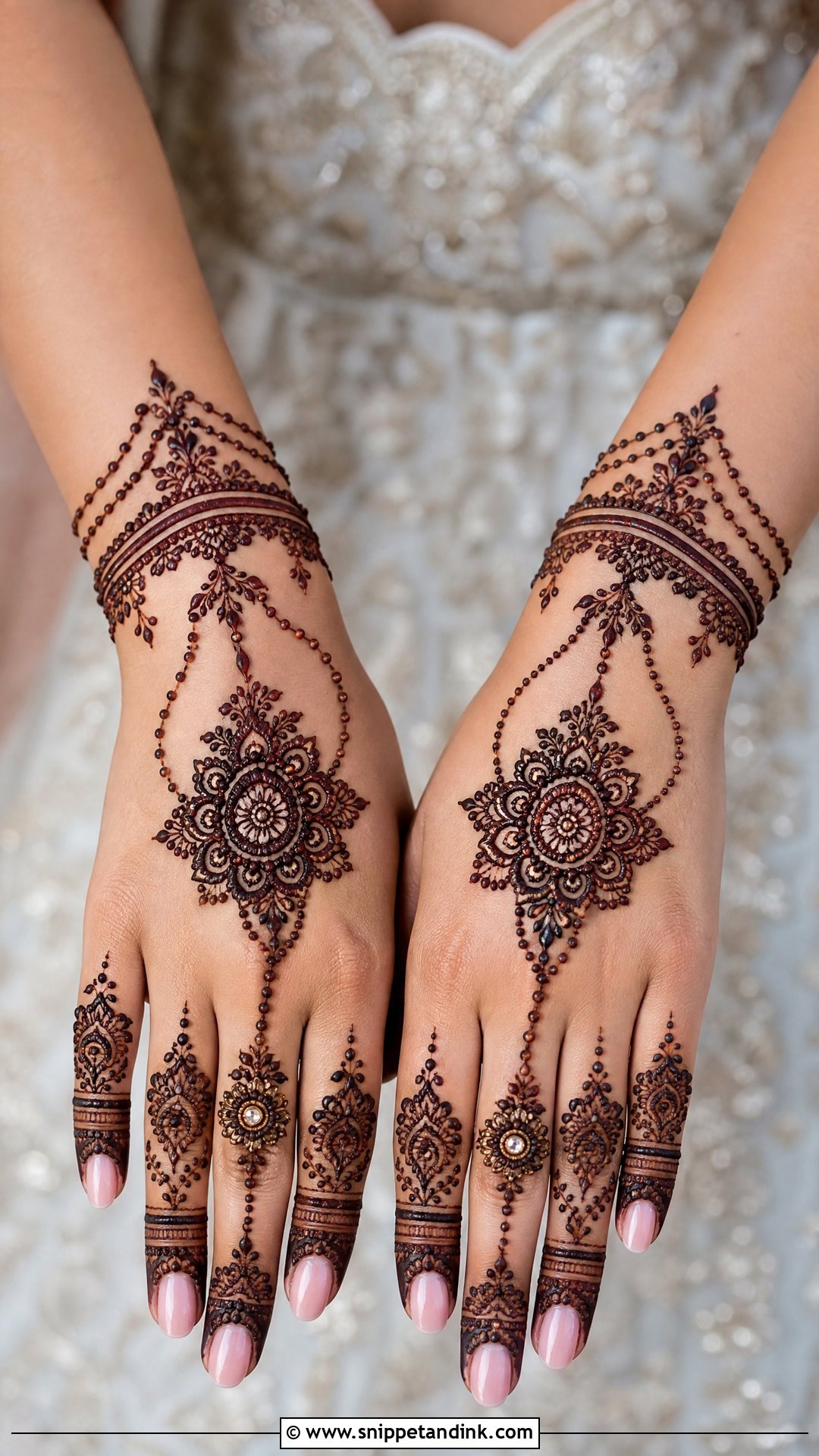
Henna drawn as jewelry mimics a hathphool, rings, hand chains and bracelets. A floral or mandala centre connects to ring shapes on the fingers through fine dotted chains, and the wrist carries bands, scalloped borders and small hanging details. If you’re wearing a real hathphool, tell your artist before she starts, because henna chains drawn exactly under real ones end up hidden. I usually offset them slightly so the two layer instead of overlapping. Keep the chains thin and the central motif detailed.
6. Minimal Back Bridal Mehndi Design
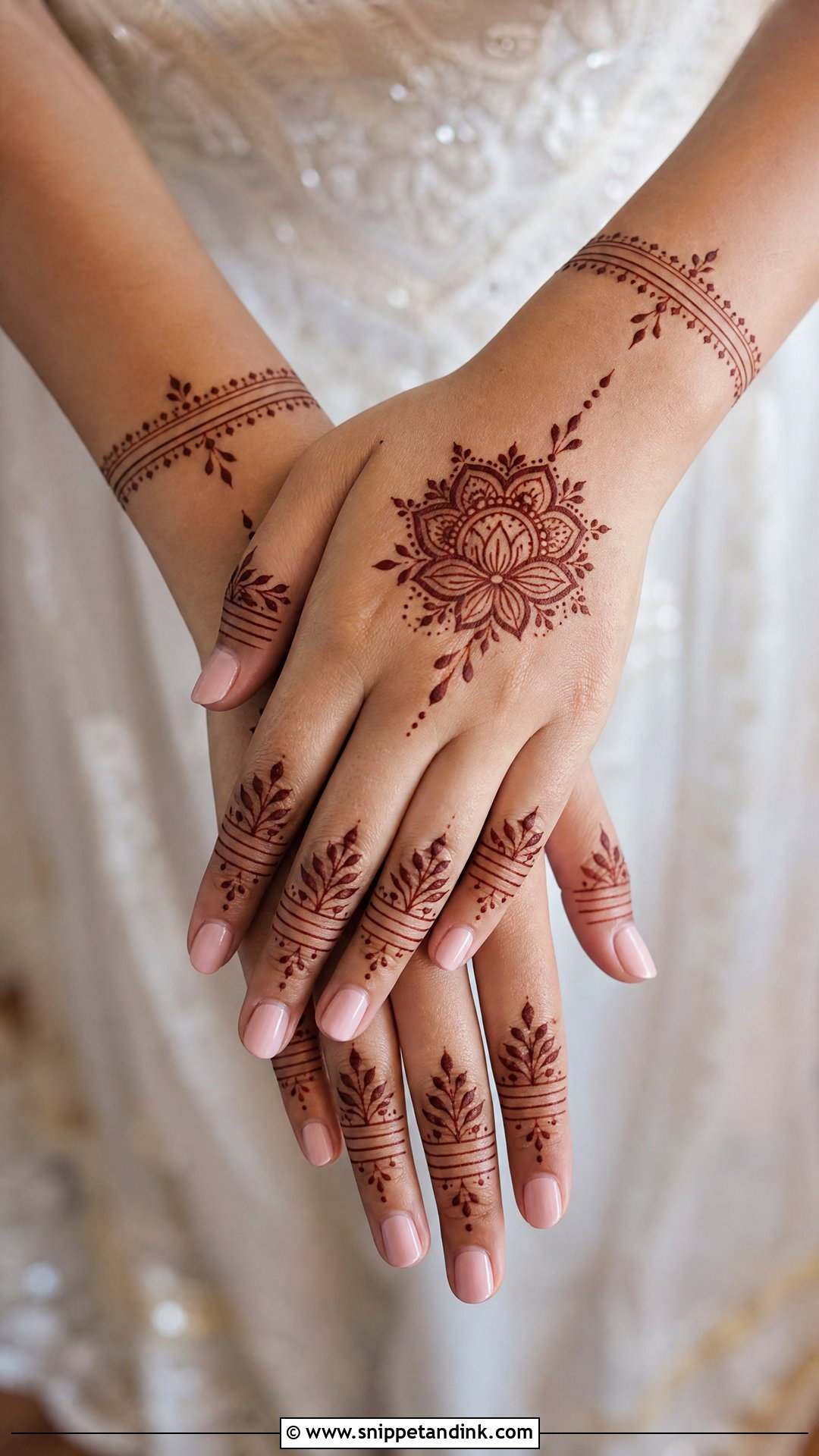
One strong centrepiece, a mandala, lotus, floral bunch or paisley cluster, with the rest of the hand left open apart from fine finger details, soft vines and a simple wrist band. Minimal henna still feels bridal when the lines are neat and the spacing is intentional, and that’s the catch: there’s nowhere for a shaky line to hide. It suits intimate weddings, civil ceremonies and modern outfits. Micro dots, tiny initials or a negative-space border make it feel considered rather than plain.
7. Jaali Back Bridal Mehndi Design
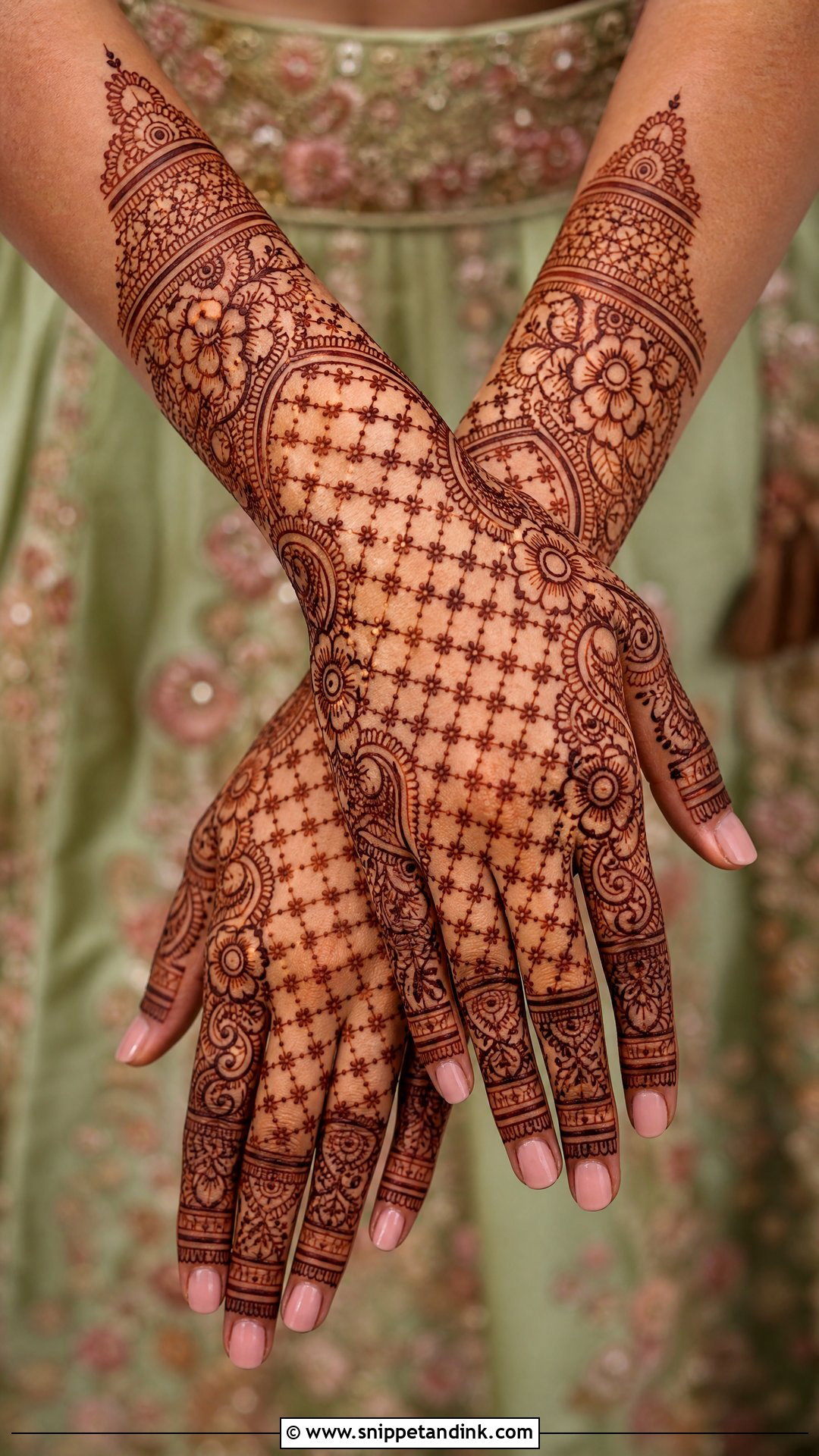
Jaali is the mesh that gives henna a lace finish, usually mixed with florals, paisleys and bracelet cuffs. The common failure is drawing the net too tight: as the stain darkens, closely spaced lines merge and the lace turns into a solid brown patch. I vary the mesh sizes, add tiny dots where lines cross, and break it up with bold motifs so it never looks flat. Done well, it gives a detailed hand a fabric-like polish, and slim rings keep the pattern in front.
8. Peacock Back Bridal Mehndi Design
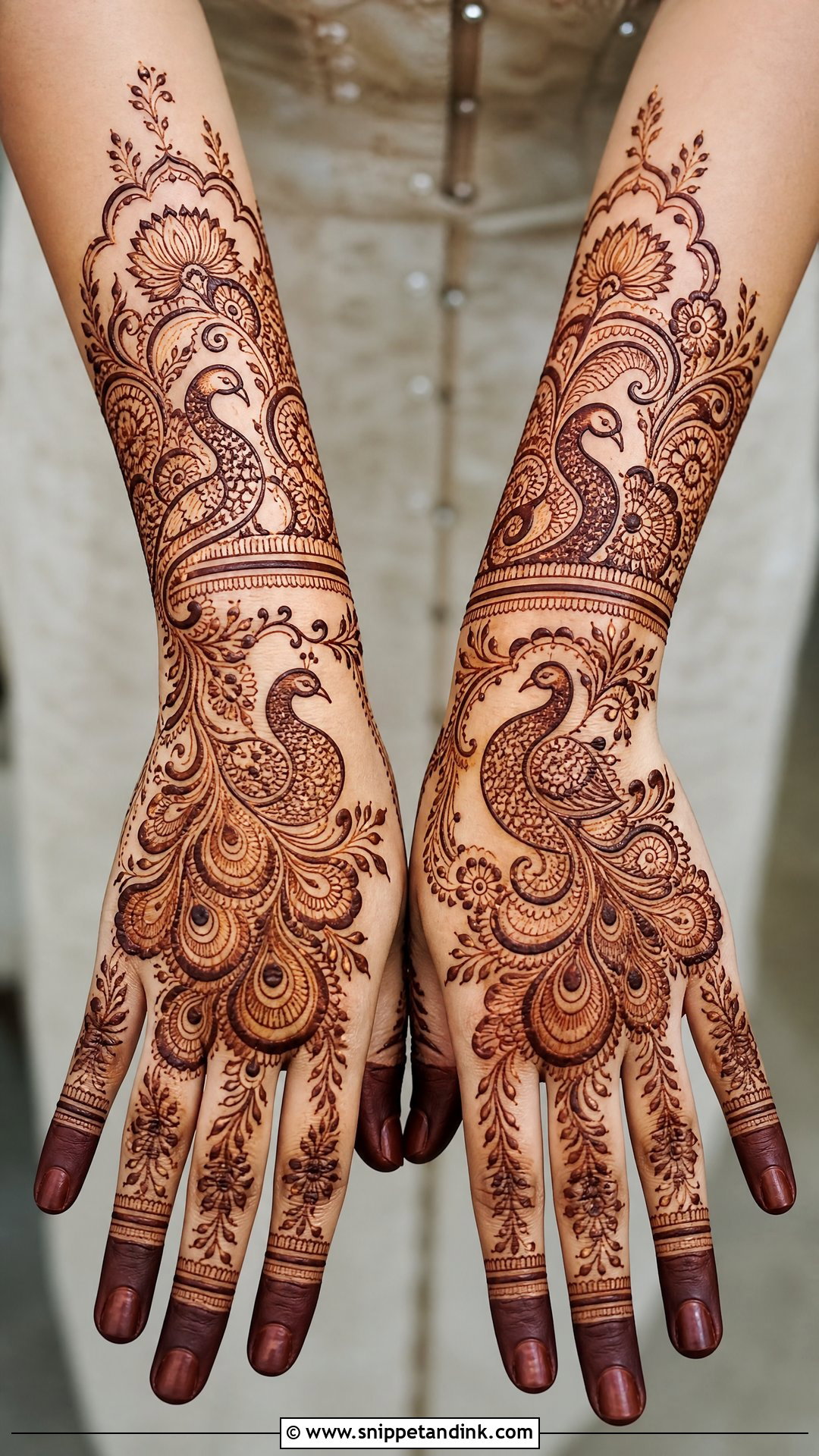
Peacocks are as traditional as bridal henna gets. A peacock back bridal mehndi design can put the bird near the centre of the hand, along the wrist, or flowing diagonally toward the fingers, with the feathers filled with fine lines, curves, dots and shaded petals. Paisleys, lotuses and vines fill around it. I draw one clear peacock rather than several small ones; on the back of the hand there isn’t the space for more than one to read properly once the stain settles.
9. Rose Back Bridal Mehndi Design
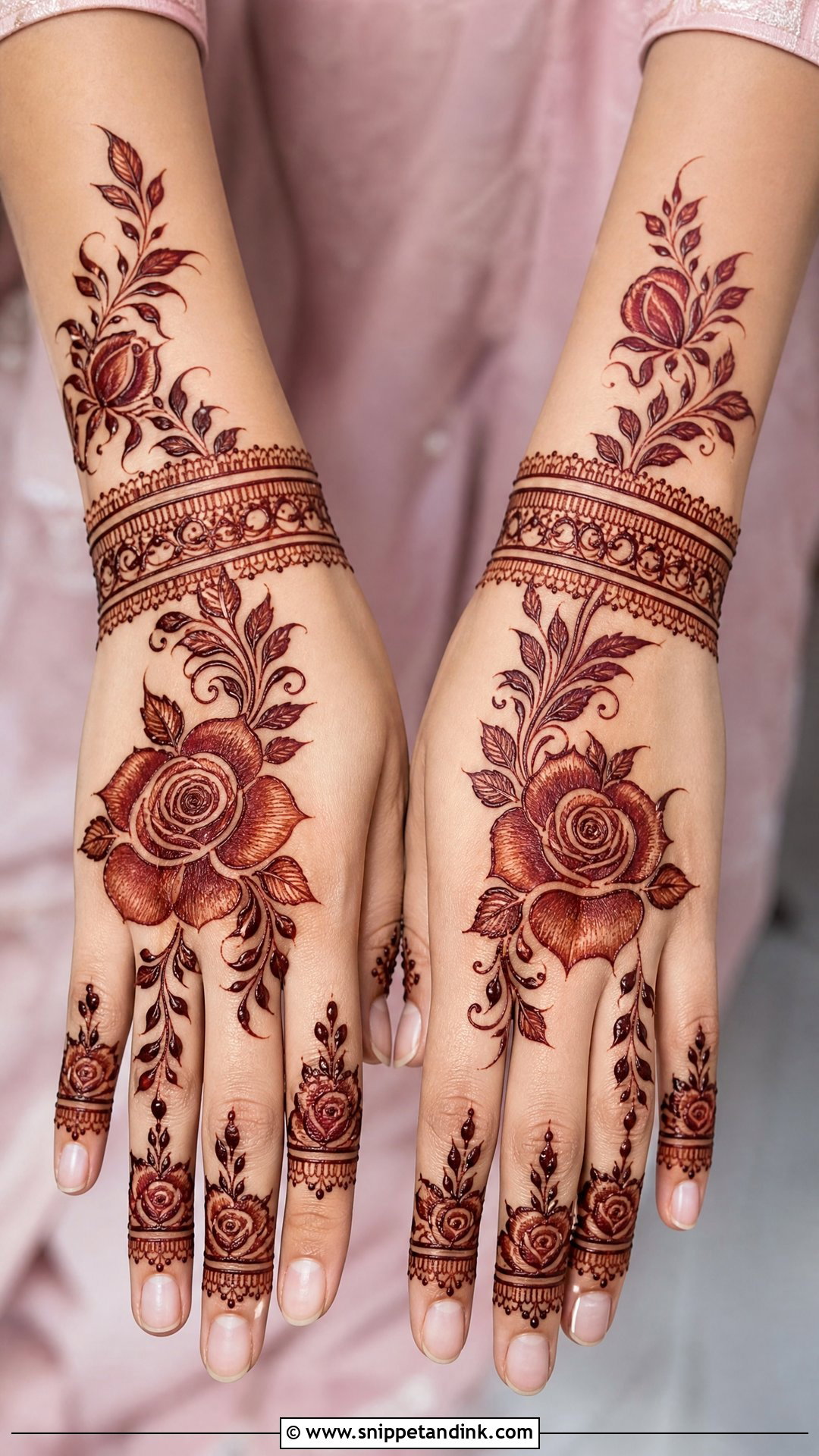
Large roses across the back of the hand, joined by vines, shaded leaves and thin wrist bands, with rosebud tips or leafy rings on the fingers. Roses feel romantic without the weight of dense filler, and they sit well with pastel or red outfits. My favourite trick here is contrast: bold rose outlines against delicate Indian filler, so the flowers stand out clearly when the photographer is a few feet away. Without that contrast, roses can look like generic florals.
10. Lotus Back Bridal Mehndi Design
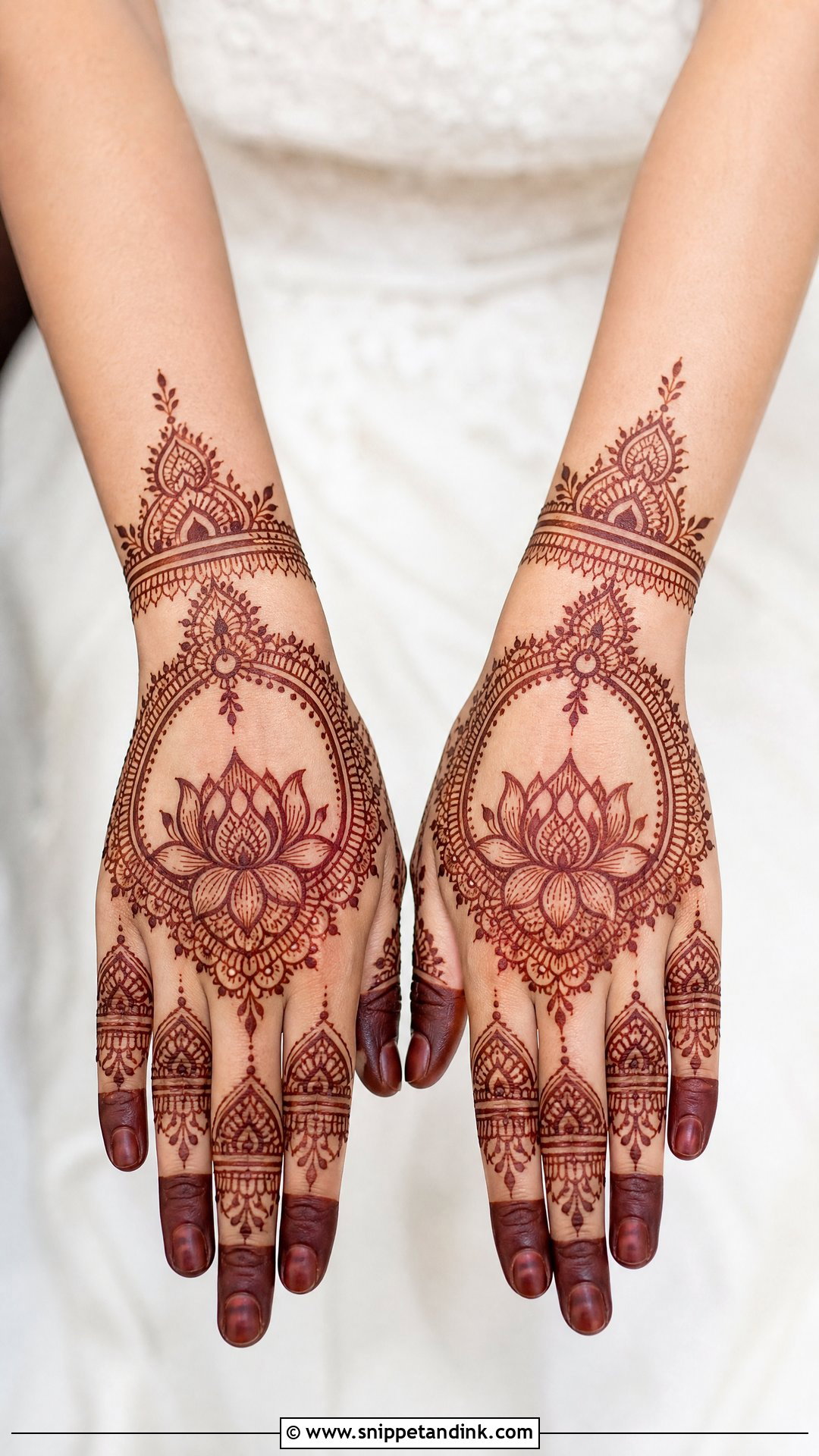
The lotus works as a single central motif or repeated vertically from the wrist up to the fingers. Its broad petals give a soft shape that suits slim and fuller hands alike, and it feels traditional without being the motif everyone else at the wedding is wearing. Dots, fine lines, mandala borders and a little jaali fill around it. Keep the petals clean and well spaced. Overfilling the inside of each petal hides the shape, and on the back of the hand, where the stain is lighter, that detail gets lost anyway.
11. Paisley Back Bridal Mehndi Design
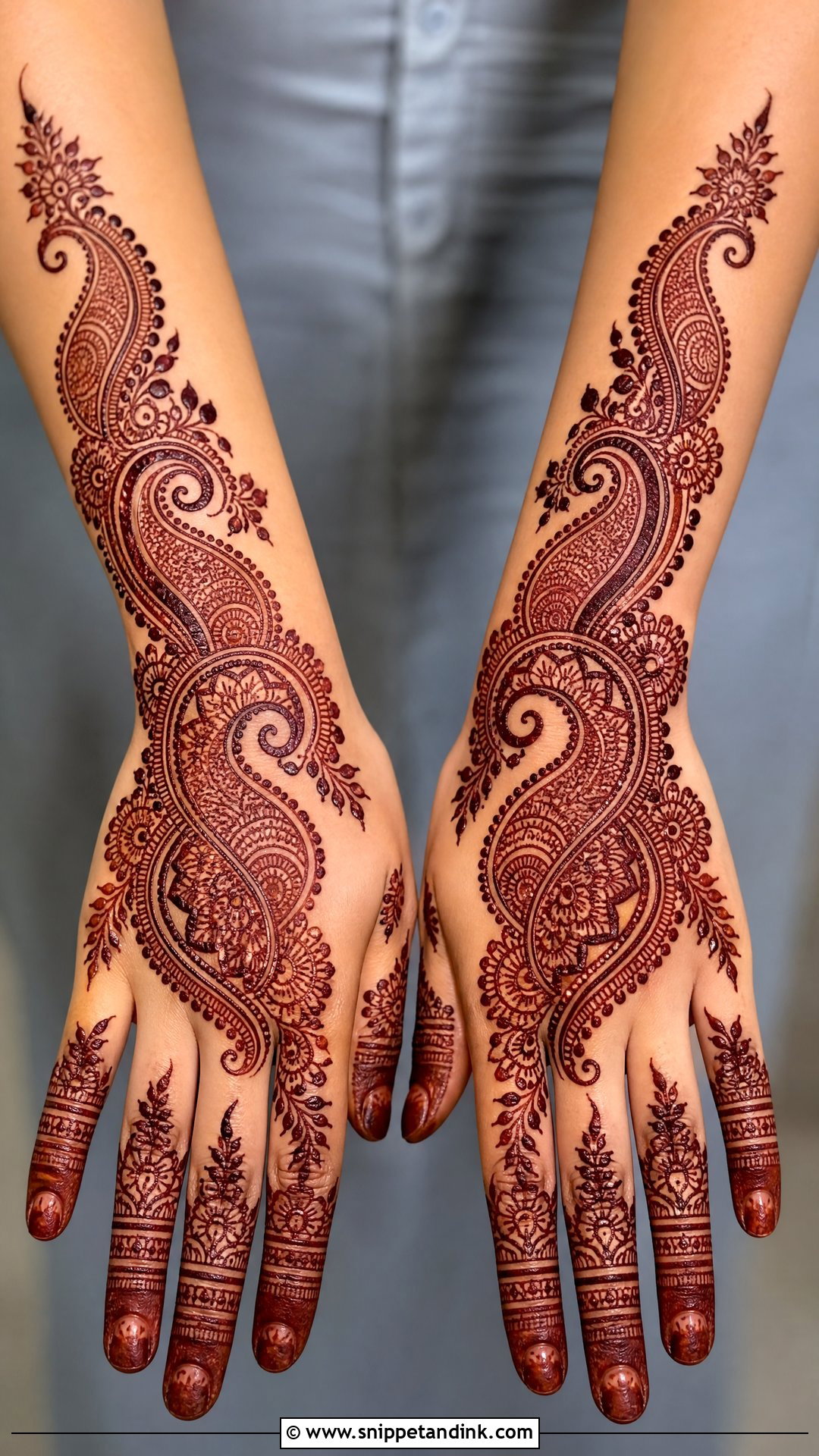
Paisleys are the most dependable motif in bridal henna. They can run in a diagonal trail, sit in a central cluster or fill the whole hand in layers, each one packed with tiny florals, curves, dots and leaves. Dense paisley work suits a traditional bride; a more open arrangement looks modern. Ask for different sizes and directions. When every paisley points the same way, the hand looks like a printed repeat instead of hand-drawn work.
12. Portrait Back Bridal Mehndi Design
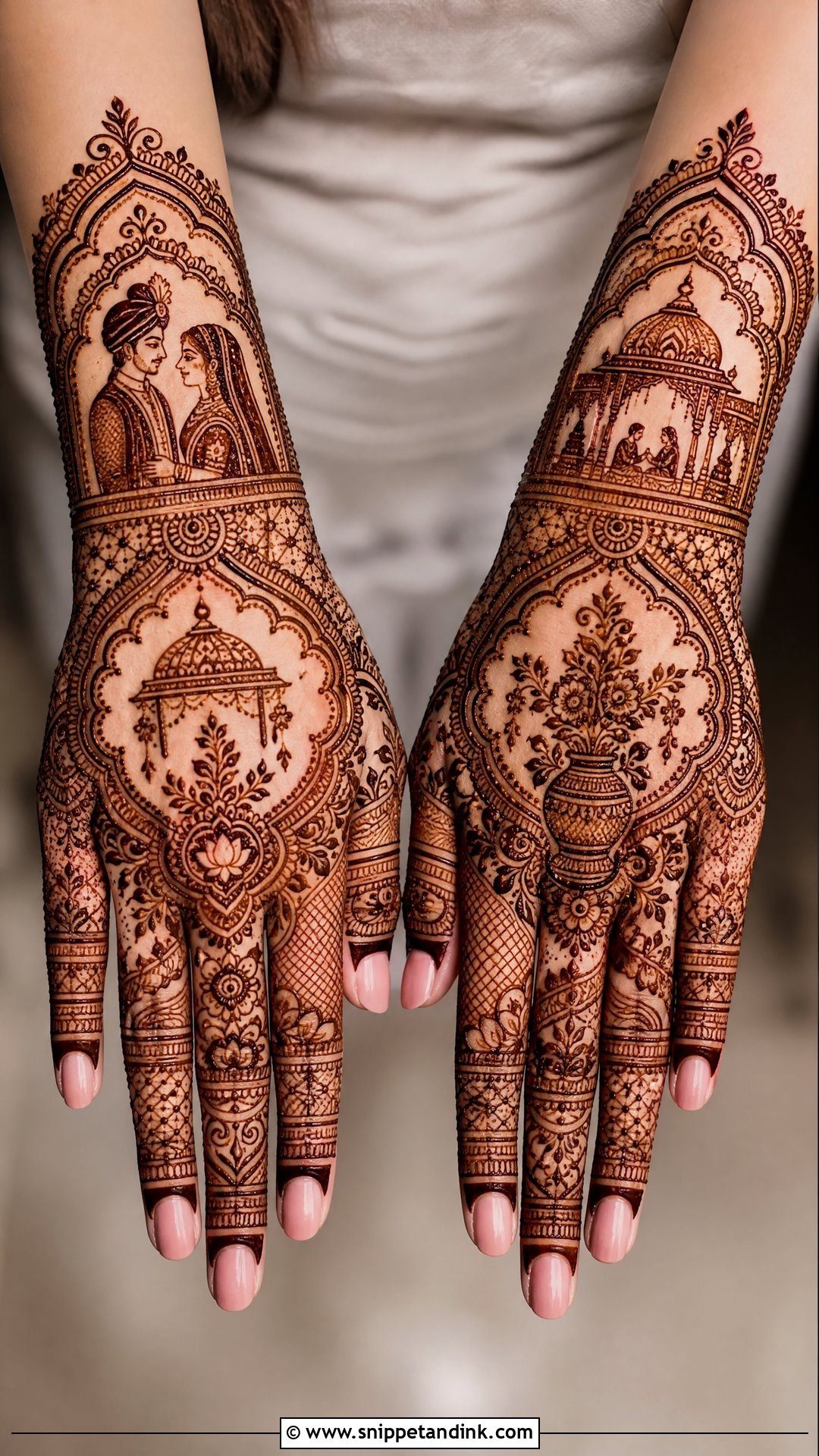
Portrait work tells a story: a small bride and groom figure, wedding symbols or a couple detail on the back of the hand, framed with florals, arches, jaali and paisley borders. I’d only book this with an artist who shows you portrait work she has done before, because small faces need very controlled, fine cone lines and an unsteady hand turns them into smudges. Medium to full coverage gives the figures room, especially if the wrist and forearm are included. Keep the space around the portrait clear so it stays readable after the stain darkens.
13. Gulf Back Bridal Mehndi Design
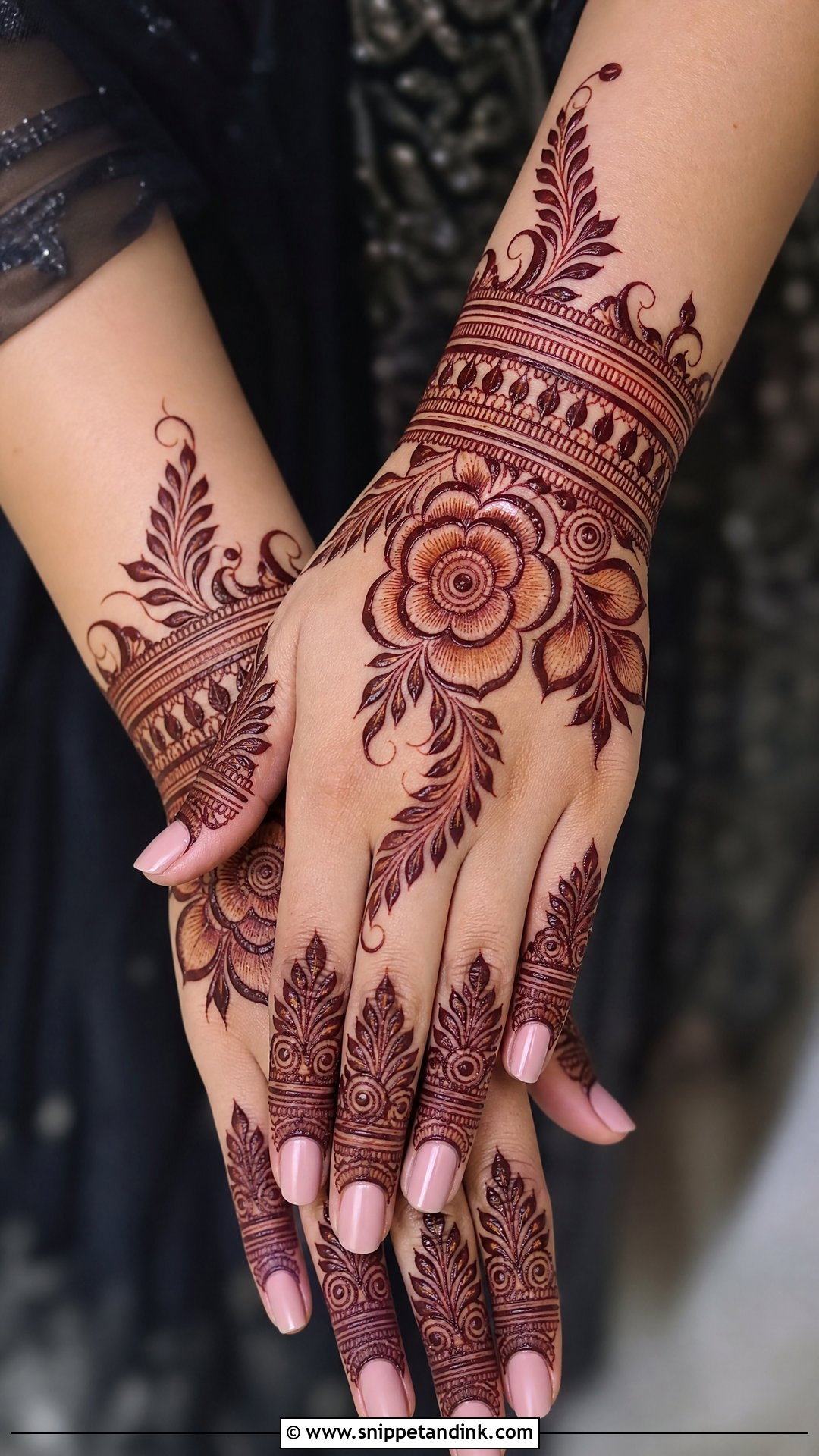
A Gulf back bridal mehndi design, also called Khaleeji style, is all about bold flowers, leafy curves and confident empty space. Large florals usually cover one side of the back hand and leave the other side bare, with heavy fingertips or big petal shapes on the fingers. Gulf work uses a thicker cone line than Indian filler, and that thickness is why it holds a strong, dark stain. A bracelet border at the wrist and shading inside the flowers gives it a wedding finish.
14. Moroccan Back Bridal Mehndi Design
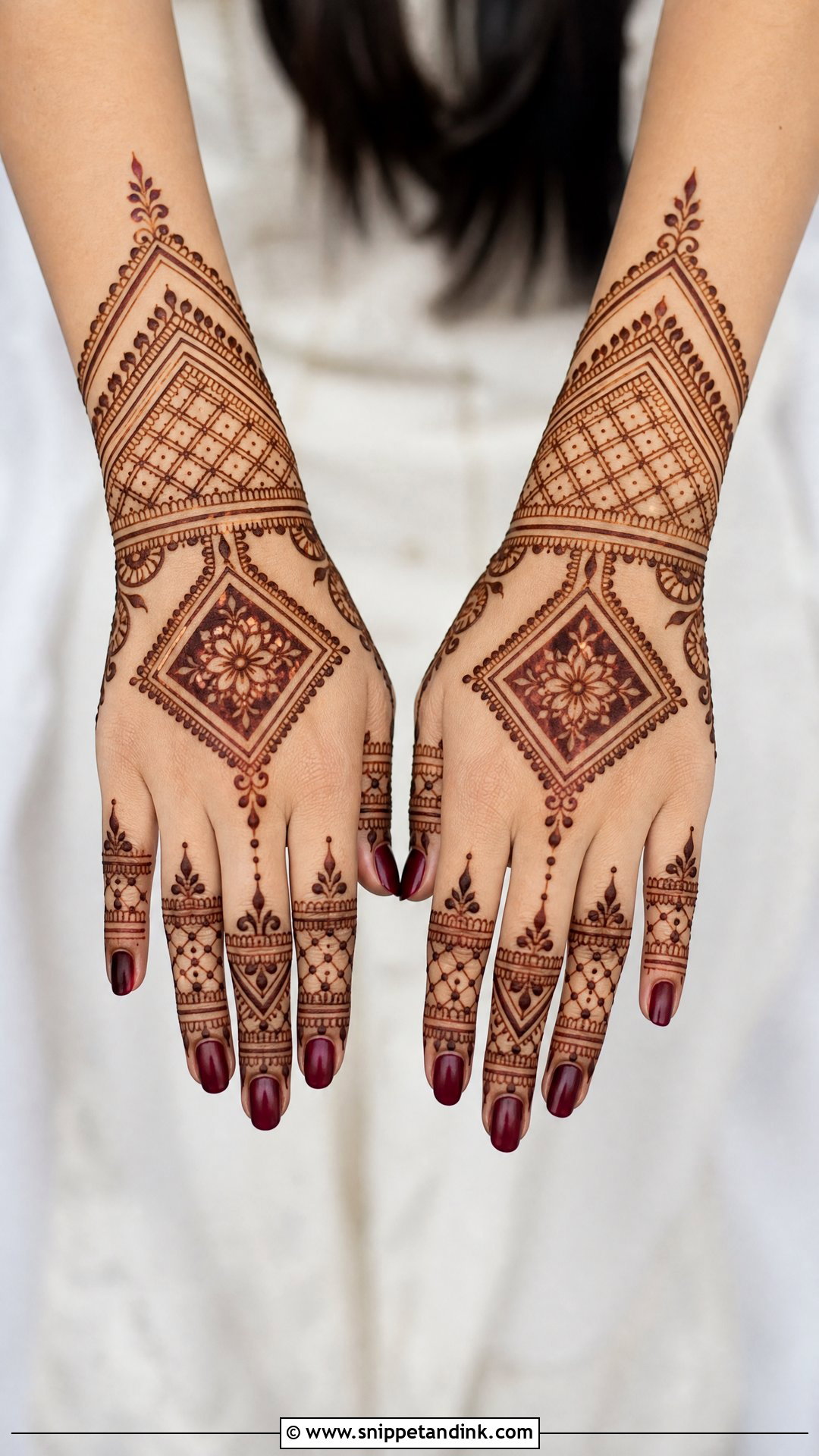
Moroccan henna gives the back of the hand a geometric edge: diamonds, lines, grids, triangles, chevrons and structured bands instead of flowers. For a bride I soften the geometry with floral borders, dotted chains and a decorated wrist cuff. It matches contemporary jewelry, sleek sleeves and fusion outfits. Straight lines are less forgiving than curves on a hand that bends, so I draw them with the fingers held straight and recheck alignment after every section. Detailed finger bands and a strong centrepiece stop it from looking too plain.


15. Negative Space Back Bridal Mehndi Design
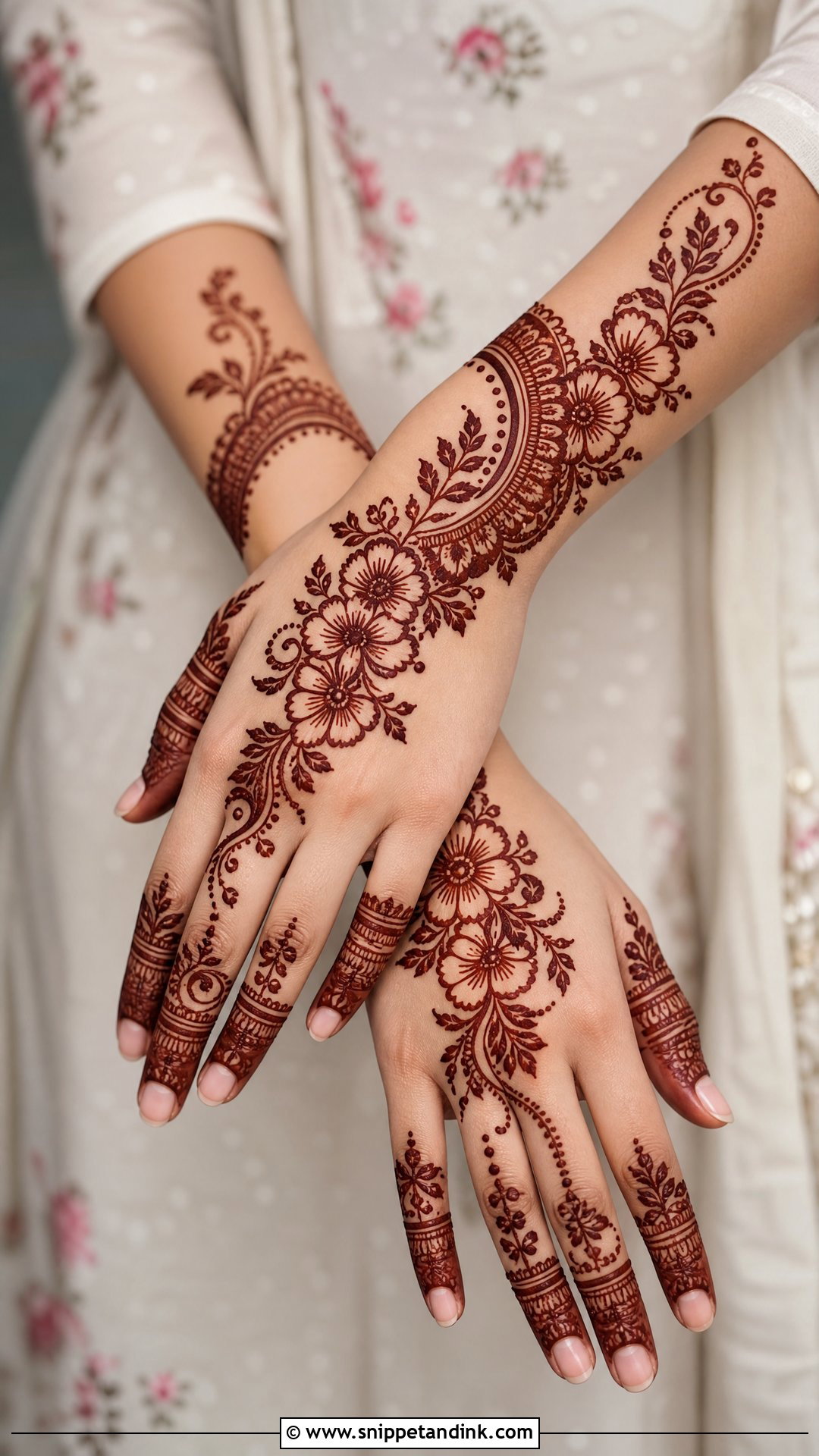
Here the bare skin is part of the design. Clean gaps between bold motifs make the hand look airy, using floral trails, half-mandala borders, leafy vines or open jaali panels. Rings, nail art and bangles all stand out against it. Planning matters more than drawing: I sketch the main shapes lightly first, because every empty space has to look intentional, not like the artist ran out of time. Bold outlines, crisp dots and balanced finger details keep it feeling bridal.
16. Bracelet Back Bridal Mehndi Design
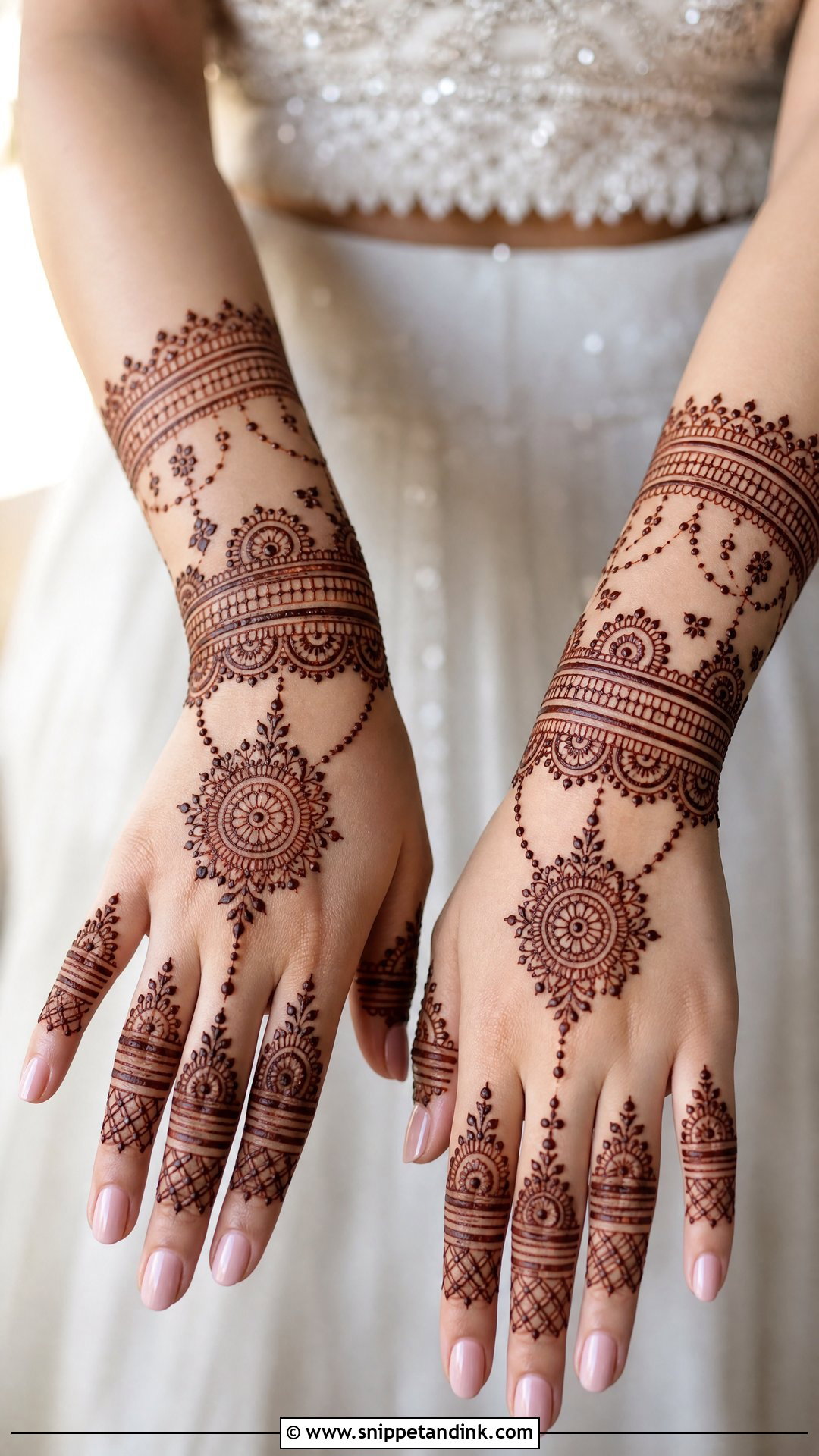
The wrist and lower back hand get most of the attention here, drawn as layered cuffs with scalloped edges, floral borders and chains that connect to the central motif. Ring patterns and fine lines on the fingers finish the jewelry effect. It blends naturally with bangles or kalire, though heavy bangles rub against the wrist all day and can lighten the stain there, so I place the main band slightly toward the hand. Tiny hanging bead shapes below the band make it your own.
17. Finger Heavy Back Bridal Mehndi Design
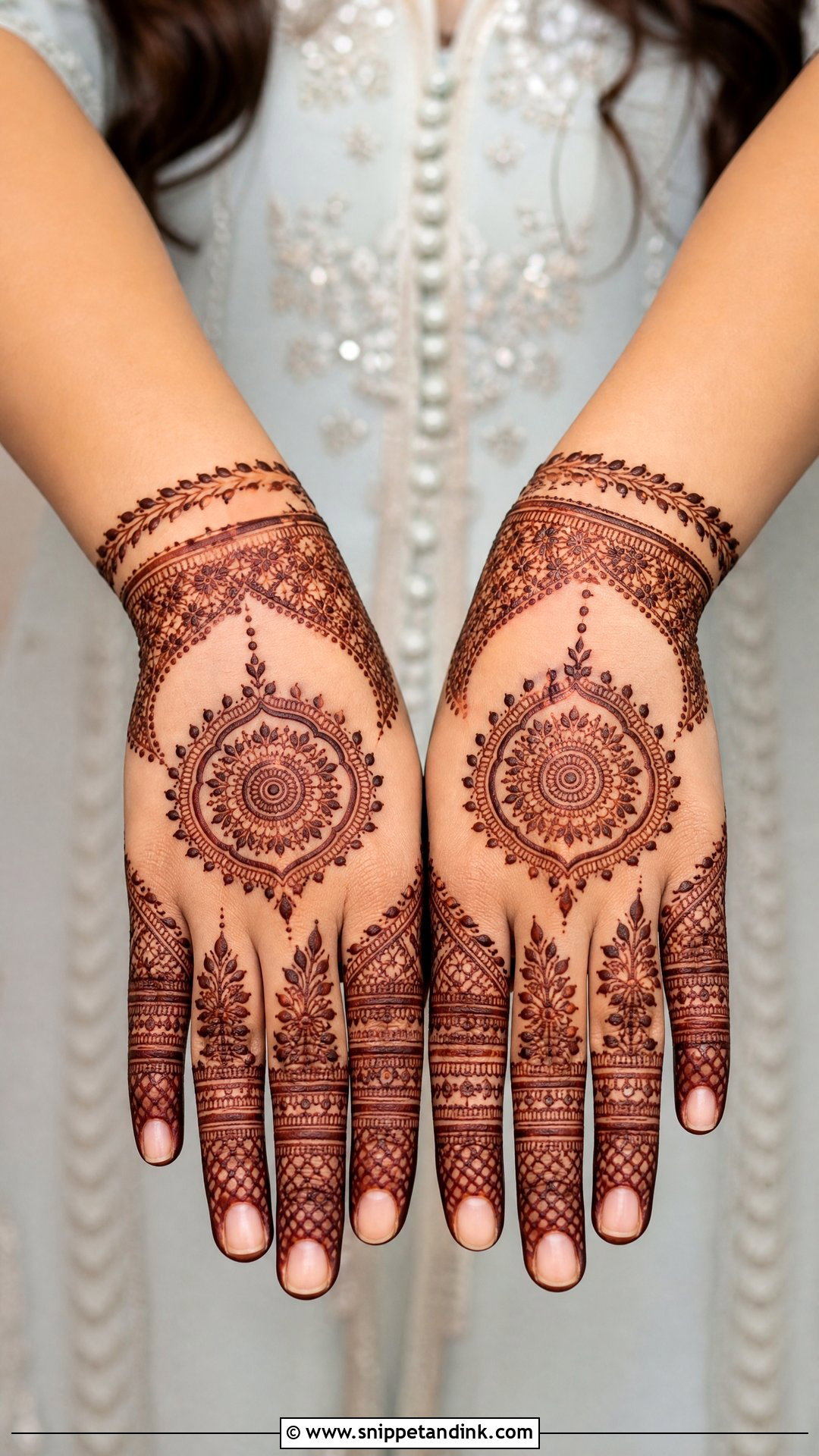
Each finger carries its own connected pattern, with leafy bands, tiny florals, dots, mesh and shaded tips, while the back of the hand stays lighter with a mandala, cluster or thin vine. In ring photos the fingers do the talking. Fingertips also stain darker than almost anywhere else on the back of the hand, so this layout gives you strong colour where it shows most. Keep the patterns aligned across the fingers, or the hand looks uneven when you hold it out.
18. Half Hand Back Bridal Mehndi Design
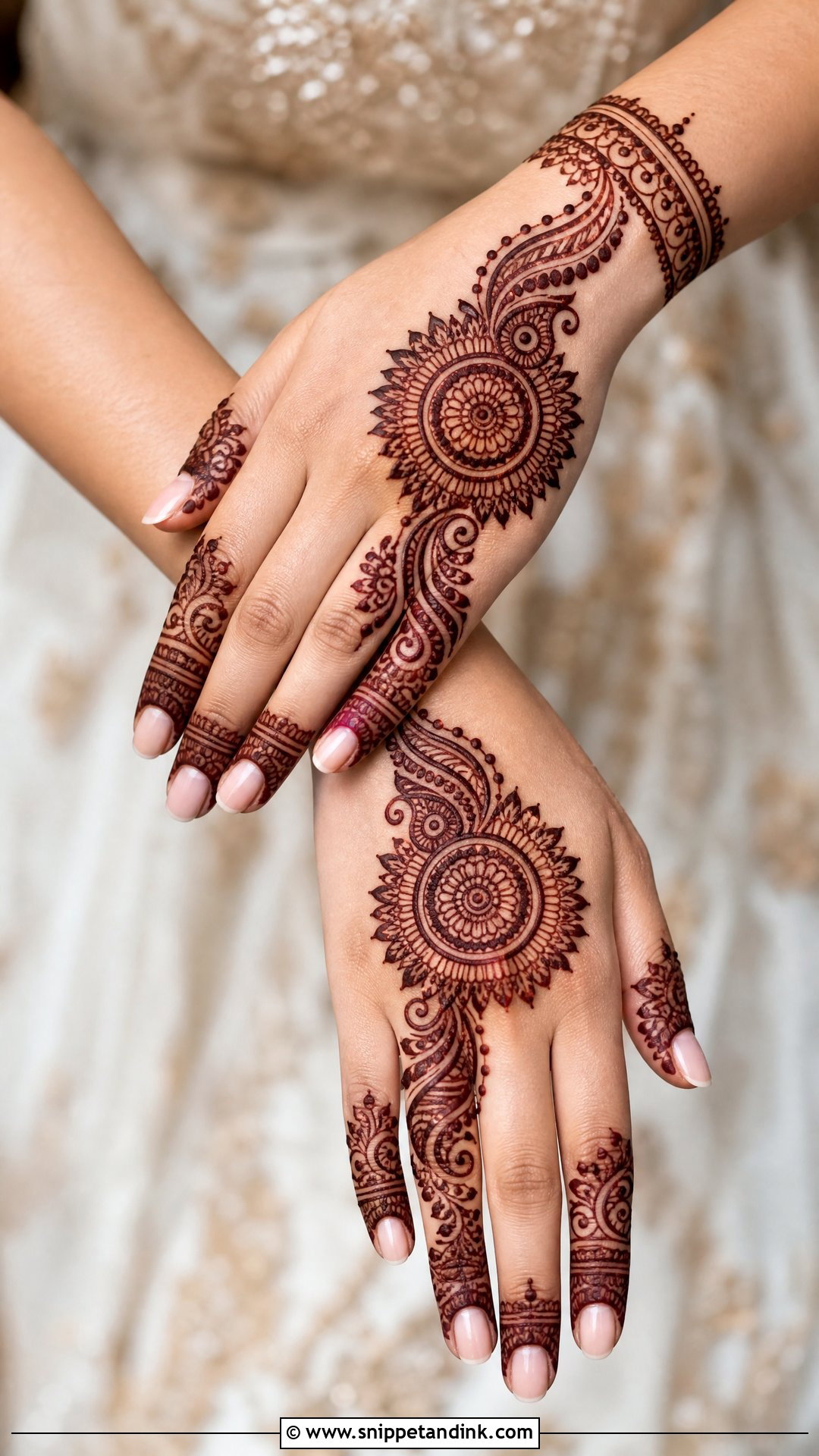
Half coverage takes in the fingers, the back of the hand and the wrist, stopping before the forearm. The layout can be Arabic, Indo-Arabic, mandala-based or floral. Application is quicker and the hands feel lighter through long wedding events, and the forearm stays clear for heavy bangles. What separates a bridal half hand from a casual one is the ending: I always close it with a finished wrist border, never a line that just stops.
19. Personalized Back Bridal Mehndi Design
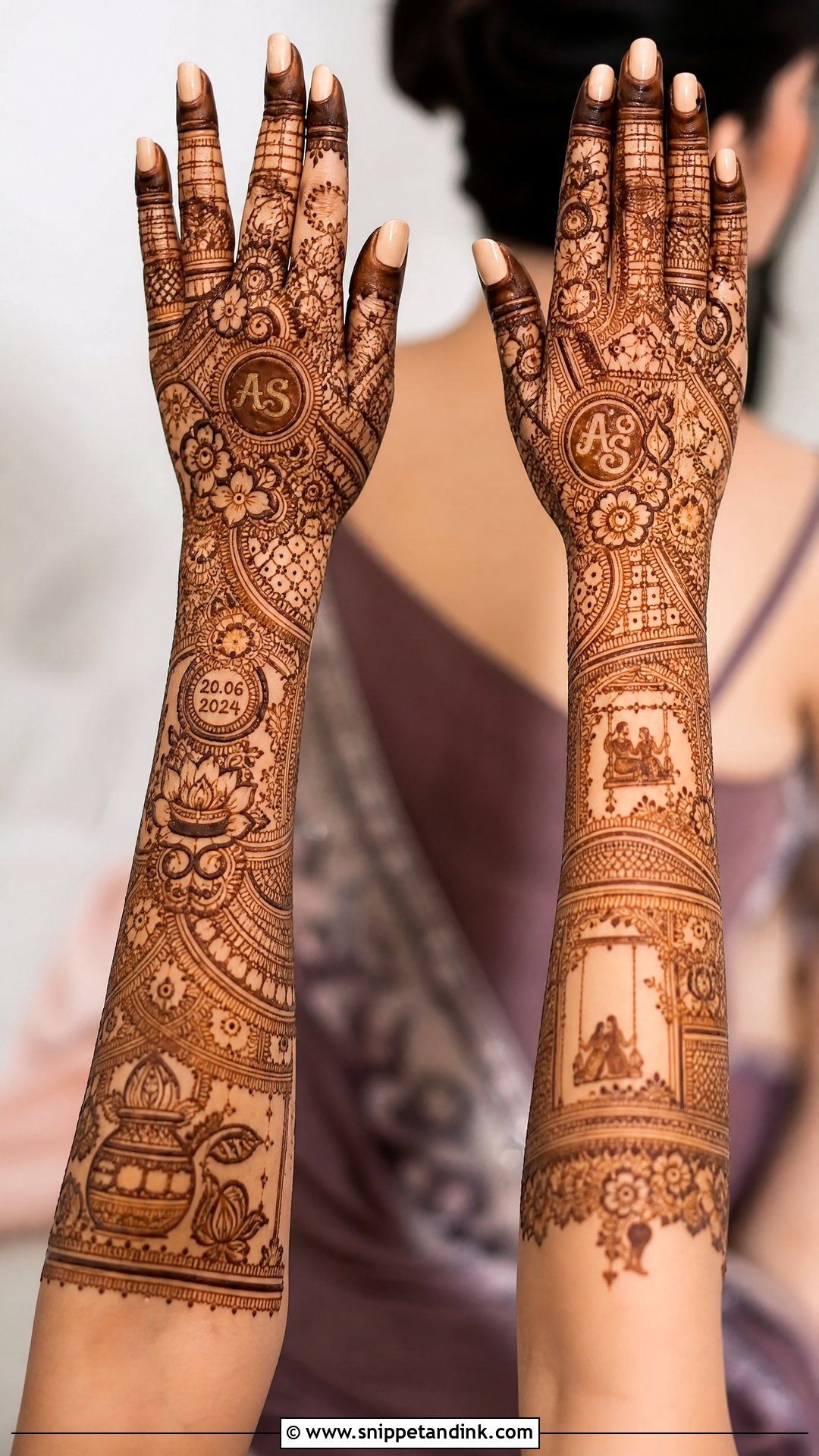
A personalized back bridal mehndi design adds meaning without making the hand busy. Initials, the wedding date, a small symbol, a favourite flower or a cultural motif can sit inside a traditional paisley, mandala, jaali or Arabic base. The back of the hand suits this because it shows clearly in photos. Subtle placement is the rule. I tuck names into borders, petals or wrist bands so they feel drawn in, not pasted on, and I always write them out on paper for the bride to check first.
20. White Back Bridal Mehndi Design
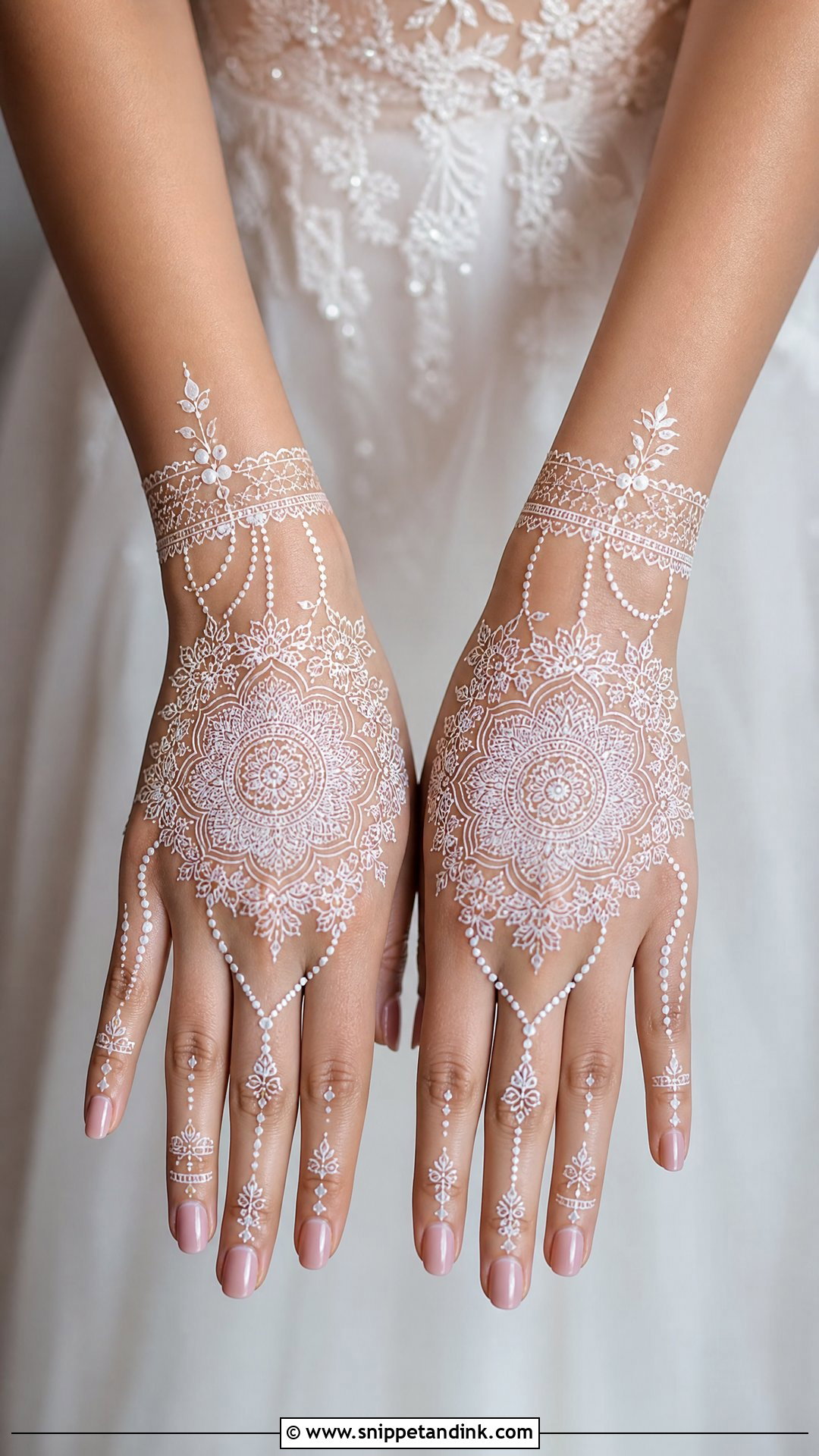
White mehndi isn’t henna at all. It’s a cosmetic body paint, usually with an adhesive base, that sits on top of the skin and washes off rather than staining. That makes it useful for pre-wedding shoots, reception photos or a fashion-led look with lace patterns, florals, mandalas and jewelry chains on the back of the hand. It pairs well with pastels and silver jewelry. Do a small patch test a few days before, because some brides react to the adhesive, and keep the pattern uncrowded so it doesn’t look like a sticker.
What Your Chooda and Kalire Will Cover
A chooda sits on the forearm from the wrist upward, so a full bridal design under it is partly hidden in every photograph. I ask brides wearing one to bring it, or at least tell me how far up the arm it reaches. Then I put the most detailed wrist work just below where the first bangle falls, and keep the forearm section simpler. Kalire hang from the bangles and swing across the back of the hand, so a large central motif there gets covered when you hold your hands down.
Hours in the Chair, Planned Properly
Full bridal henna on both sides of both hands, plus feet, is a long sitting. Most artists work one hand at a time, and you can’t use either hand comfortably until the paste has set.
- Book it a day or two before the wedding, so the stain has time to darken.
- Wear a loose, front-opening top and use the bathroom just before we start.
- Eat first, or have someone ready to feed you. Wet paste and a plate of food don’t mix.
- Tell your artist which hand you’ll use most at the wedding; I often start with that one, so it has the longest time to dry and stain.
Start With the Outfit, Then Draw the Hand
The easiest way to narrow these down is to start with what you’re wearing and work toward the hand. Full Indian coverage feels rich and traditional; Arabic and Gulf patterns look open and bold. Mandala, jaali, bracelet and jewelry layouts hold up in close-ups, and a personalized detail adds your own story. For something modern, negative space, Moroccan geometry or white mehndi can feel fresh. Bring your outfit photos, your bangles and your hathphool to the consultation, and choose a design you’ll still be comfortable sitting through for the hours it takes.
You'll Like These Ideas:










Leave a Reply