
The designs brides asked for in 2025 had one thing in common: spacing. Arabic floral trails, dense Indian bridal fills, Indo-Arabic fusion, mandala back hands, jewelry-style fingers and negative-space layouts all lean on clear gaps so the stain reads in photos. Full storytelling bridal mehndi hasn’t gone anywhere, but more brides now want a lighter second design for the engagement, Eid or a family function. Below are 25 complete hand looks, and for each I’ve added what I think about while drawing it: where the pattern should stop, how long it takes, and which hands it flatters.
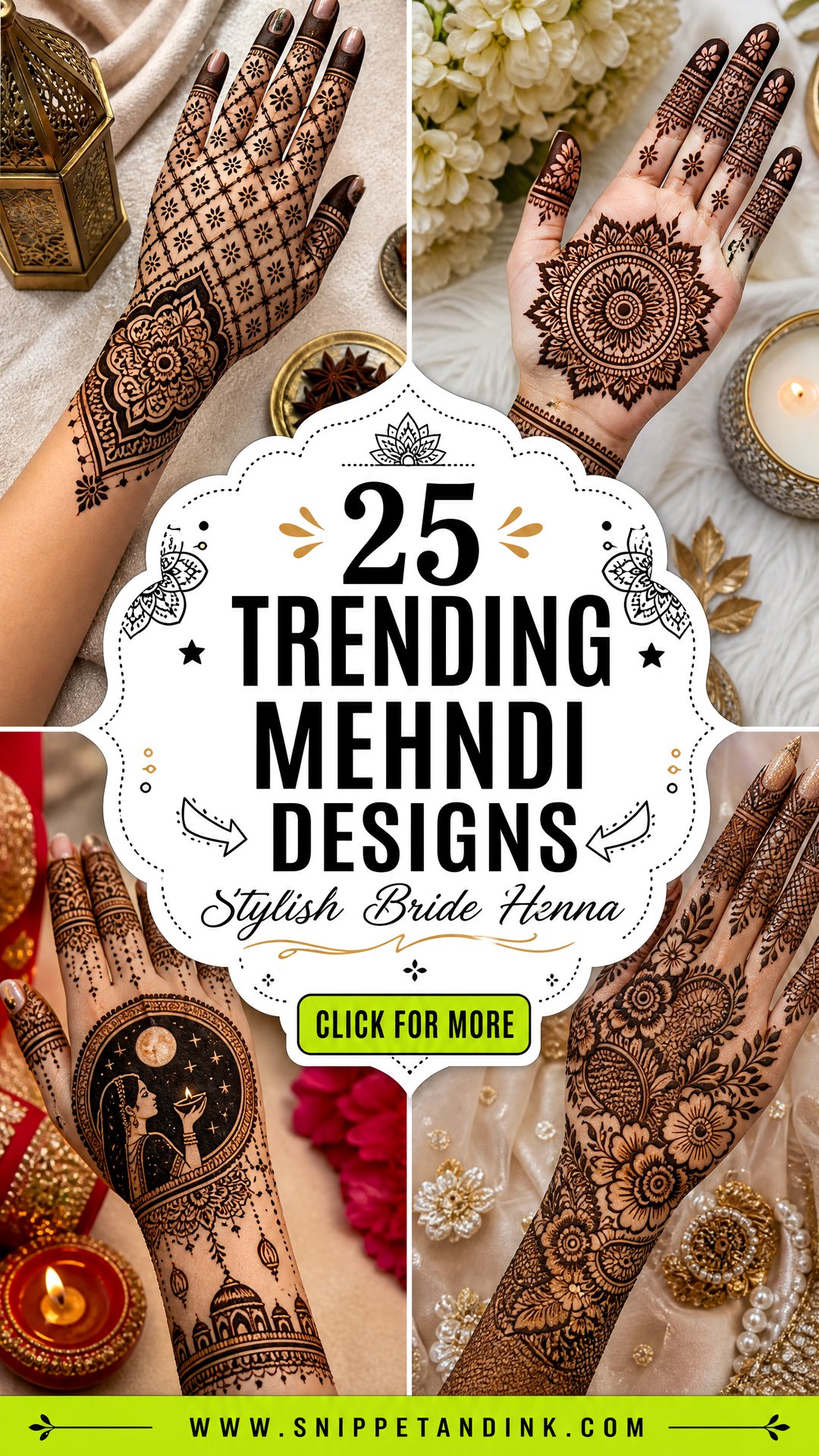
A Deep Stain Starts Days Before the Cone
A mehndi stain doesn’t appear at full color when the paste comes off. It starts bright orange and darkens over roughly 24 to 48 hours, so I schedule bridal mehndi one or two days before the wedding, never the morning of.
Preparing your skin
- Exfoliate, wax or shave a day or two before your appointment, not afterward; anything that removes skin removes stain.
- Arrive with clean, dry skin and no lotion, oil or sunscreen on the hands or feet.
- Get manicures and pedicures done before, since soaking and scrubbing fade a fresh stain.
- Eat first and use the bathroom; a bridal session can last hours.
Ask your artist what’s in the paste. Natural henna is a plant powder mixed with liquid, sugar and essential oil, and it stains in shades of orange to deep brown. Anything promising jet-black color within an hour is likely to contain PPD, a hair-dye chemical that can cause severe reactions. I’d avoid it entirely.
1. Arabic Floral Mehndi Design
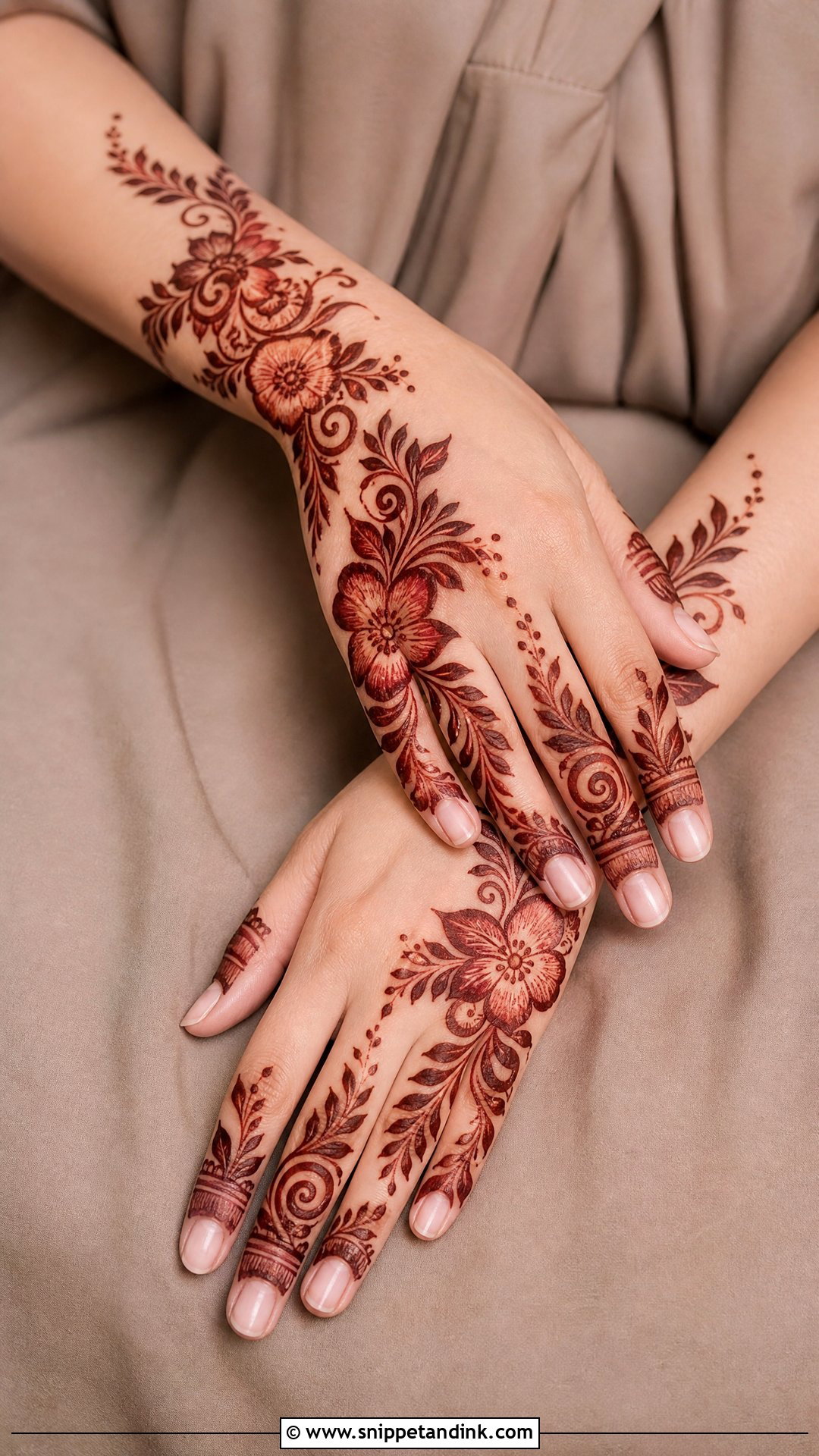
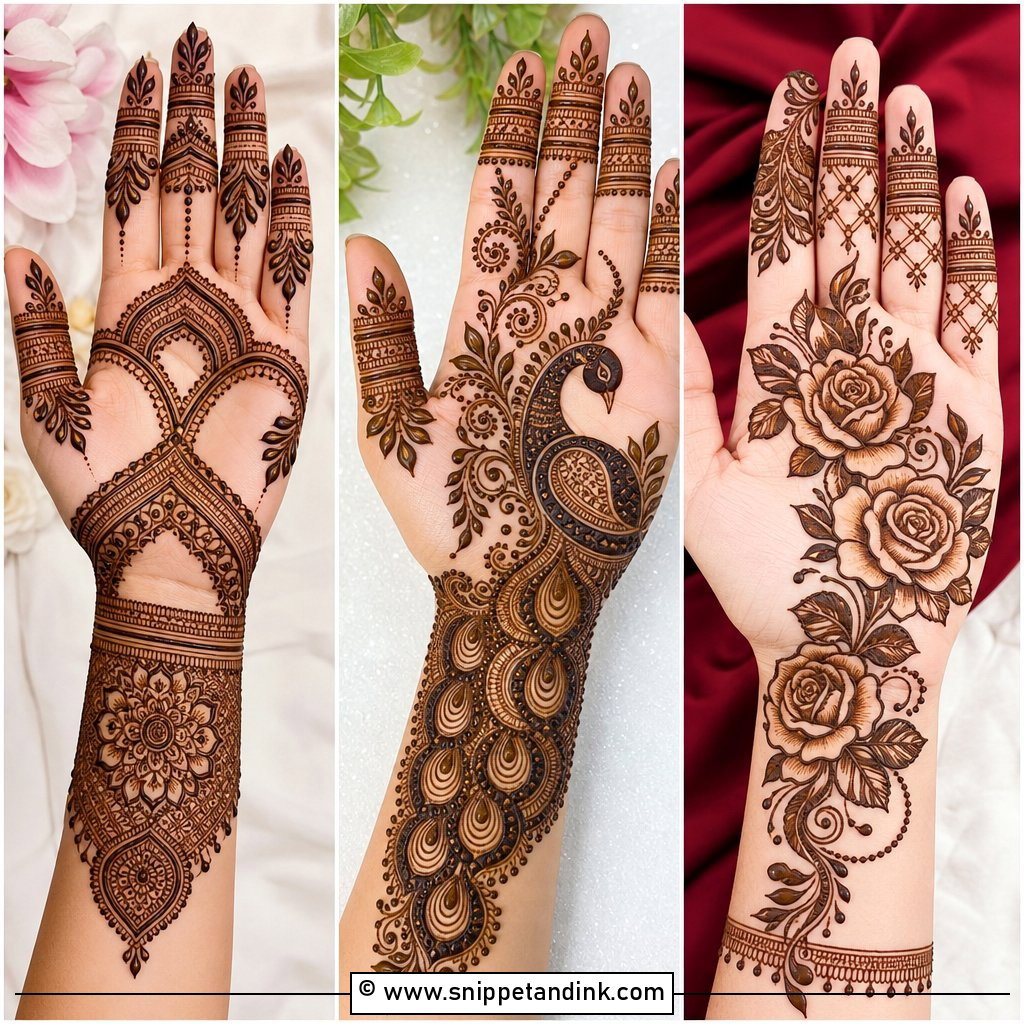
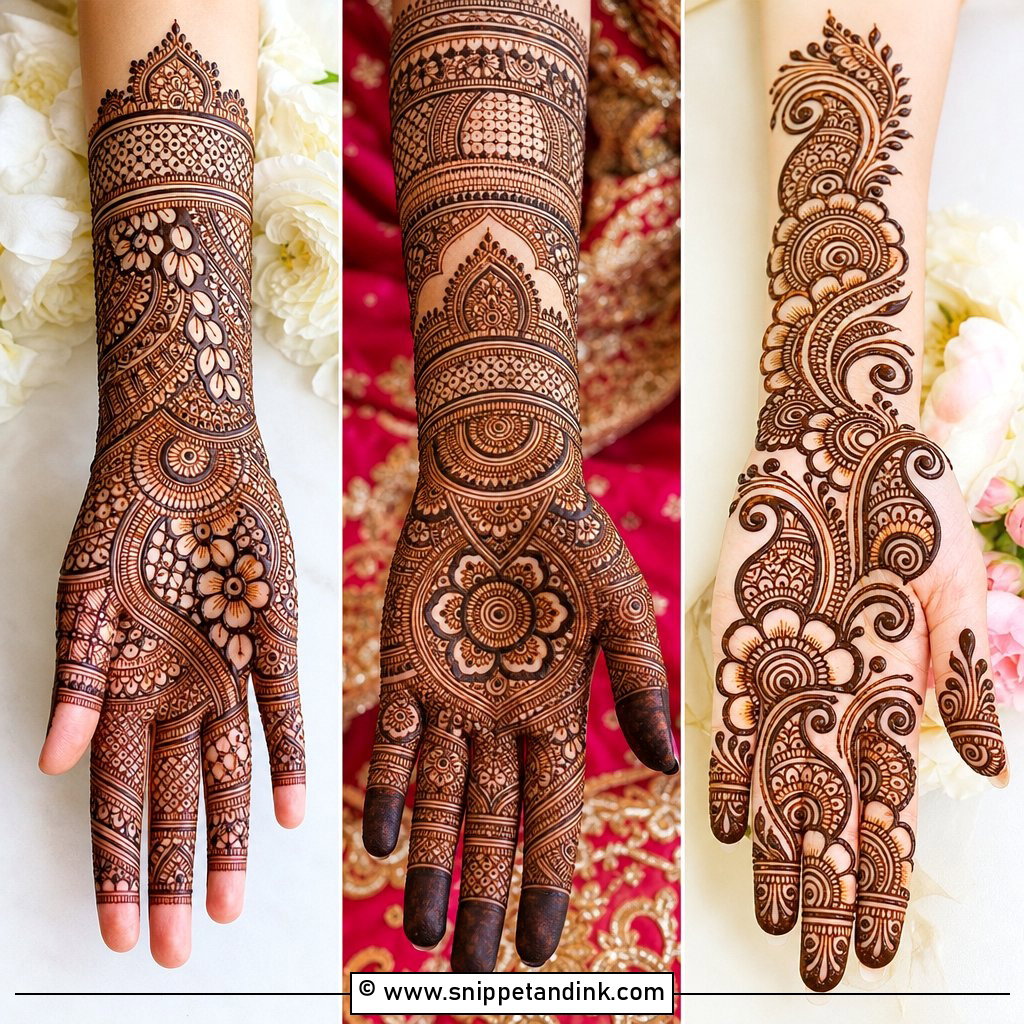
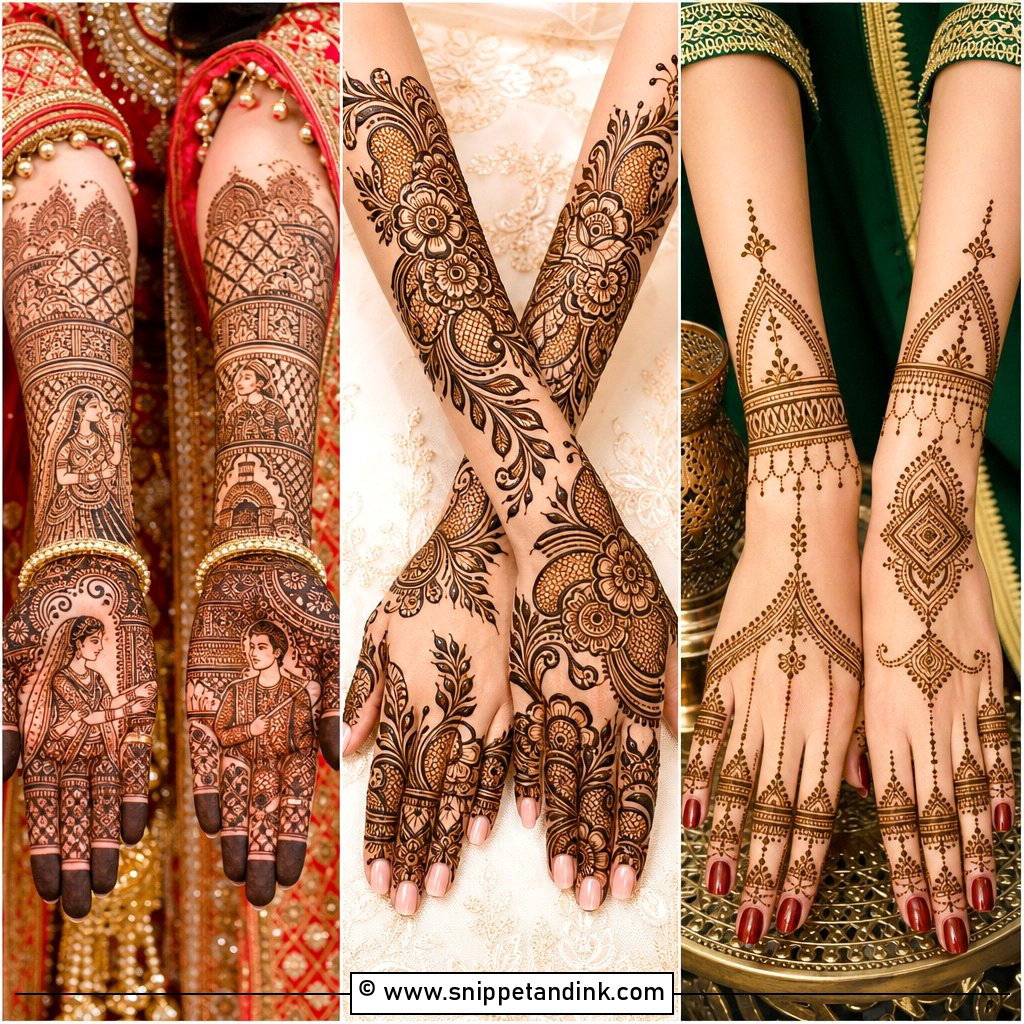
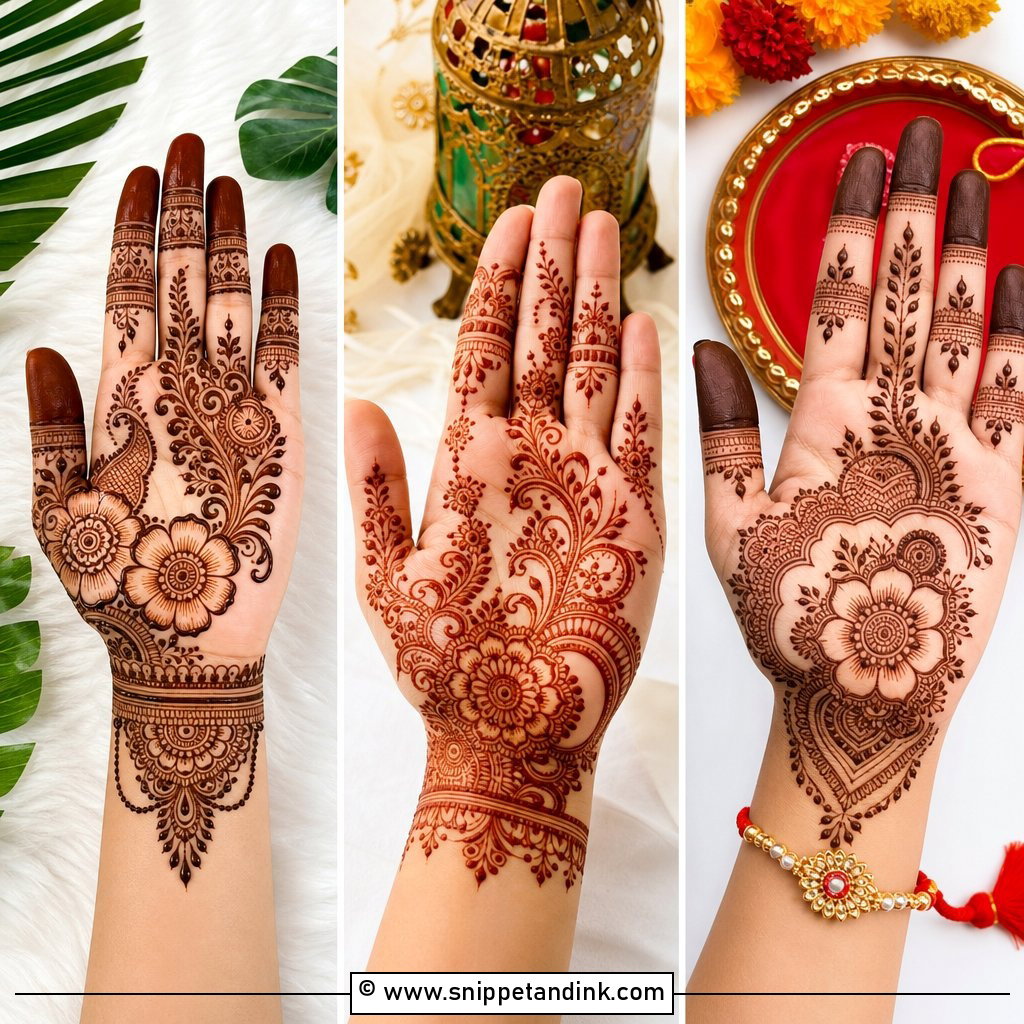
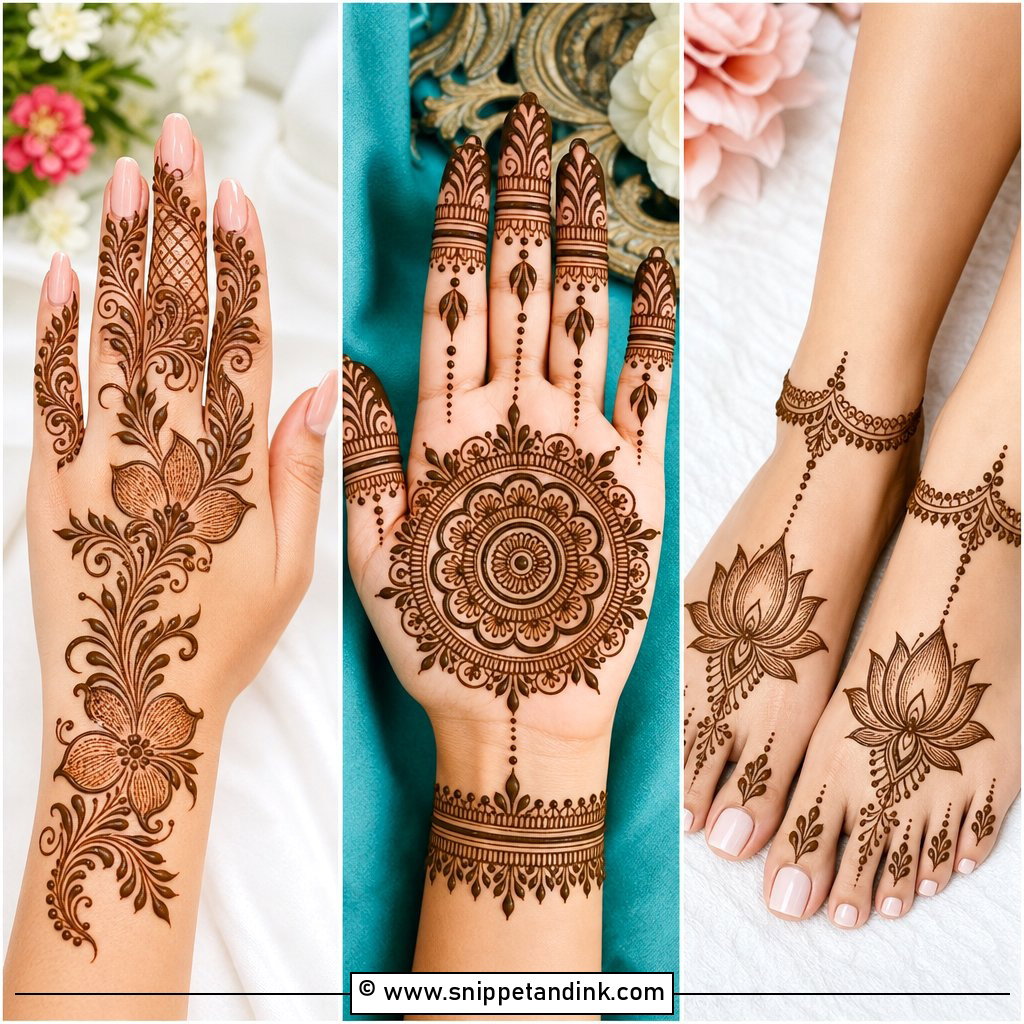
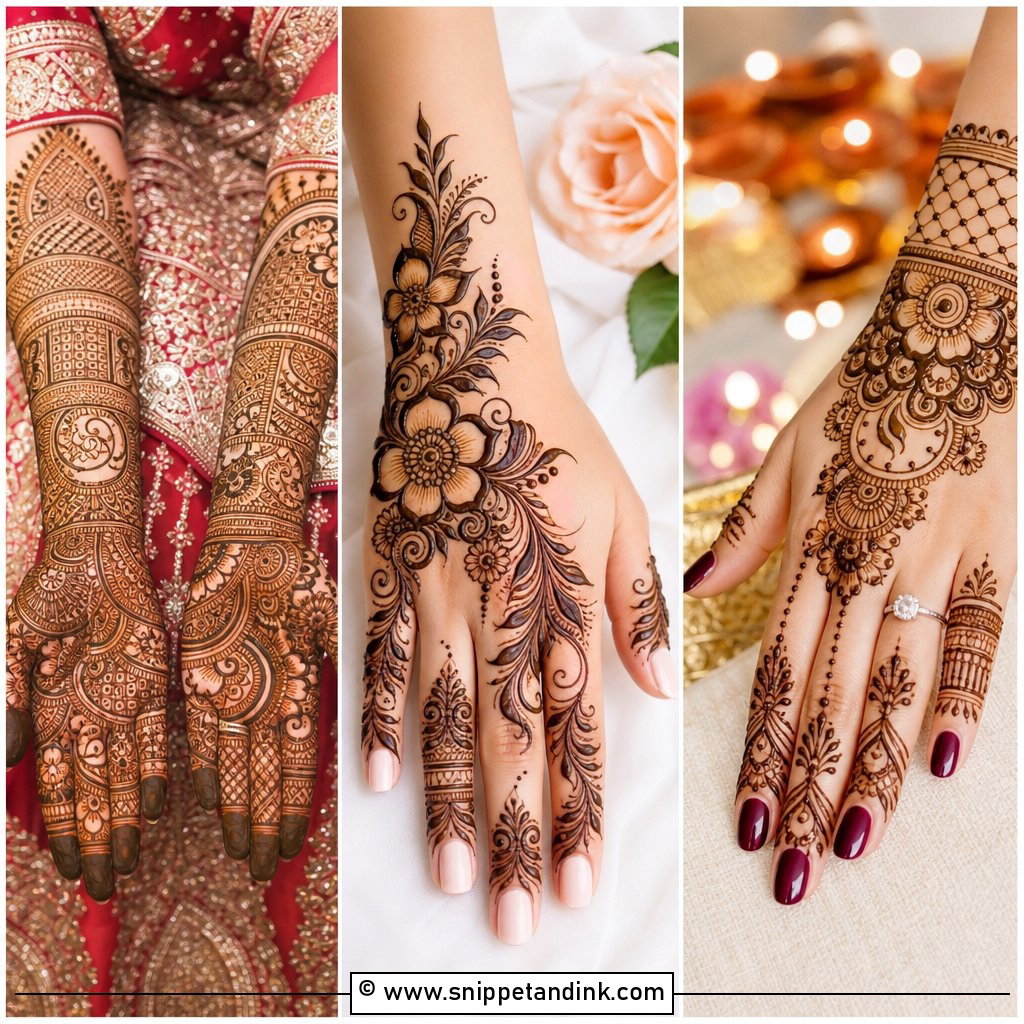
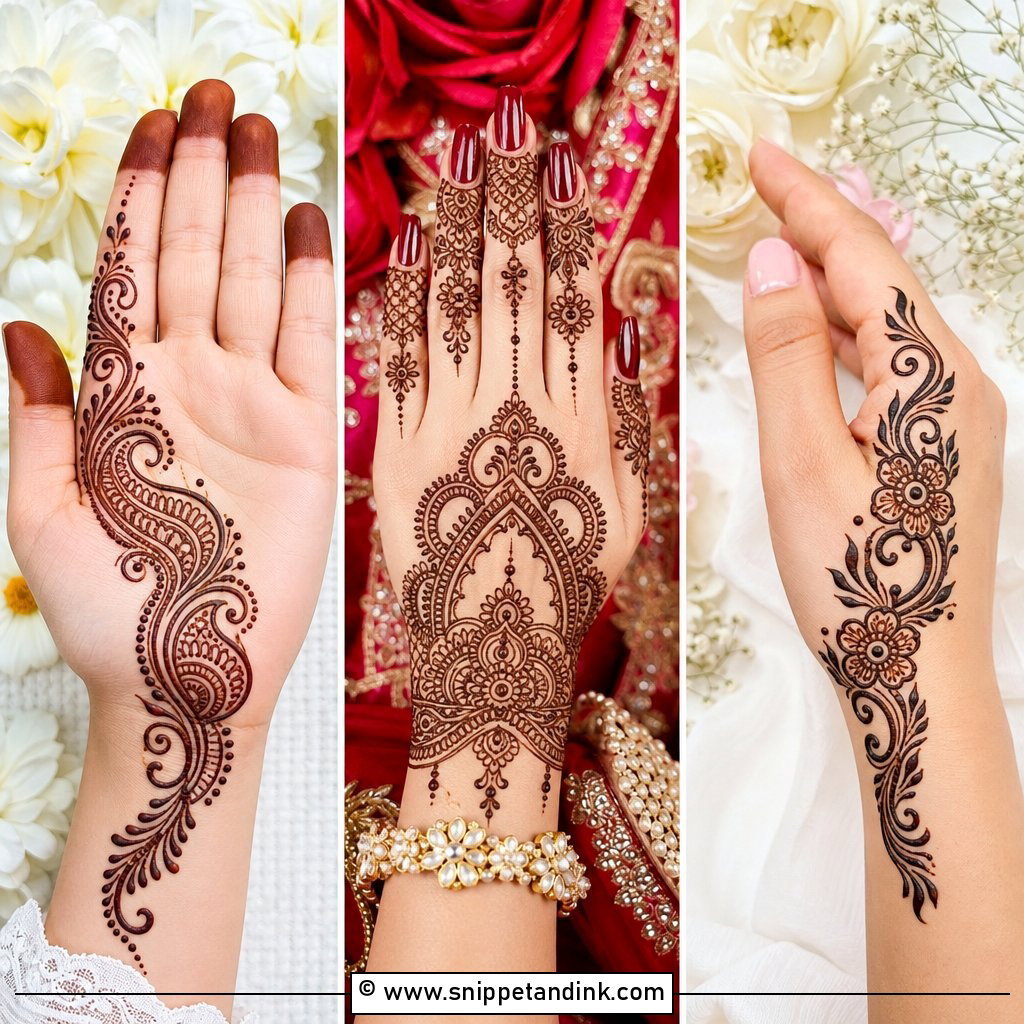
This is the design I can usually finish fastest, and it’s the one people recognize from across a room. Arabic floral mehndi design starts near the wrist, runs diagonally across the palm or back hand and finishes on the fingers, with large shaded flowers and leafy vines. That diagonal line is why it suits almost any hand: it draws the eye along the fingers and makes broad hands look slimmer. I keep the outlines bold and the shading lighter, because heavy fill inside every petal stains as one dark blob.
2. Full Hand Bridal Mehndi Design
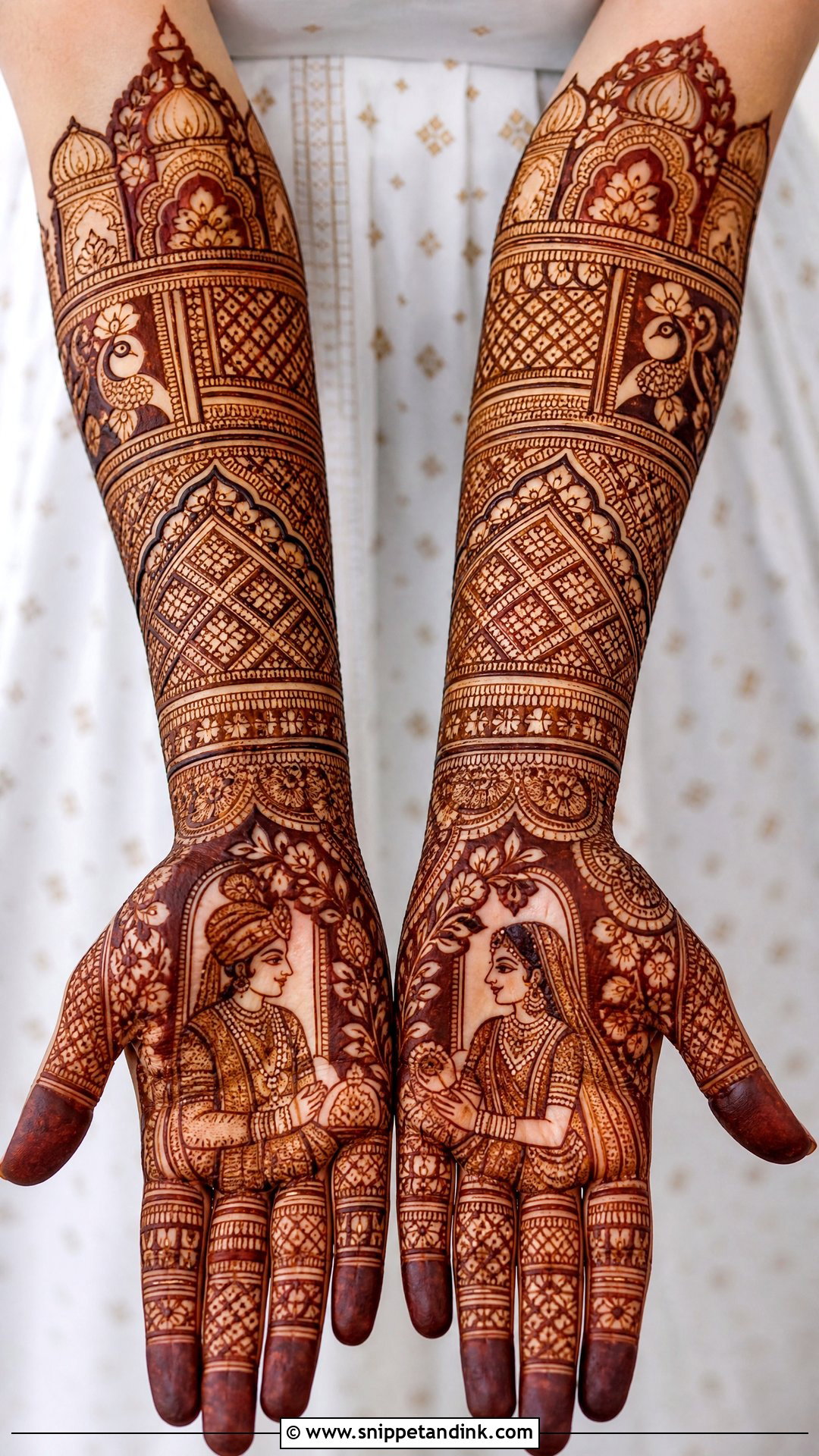
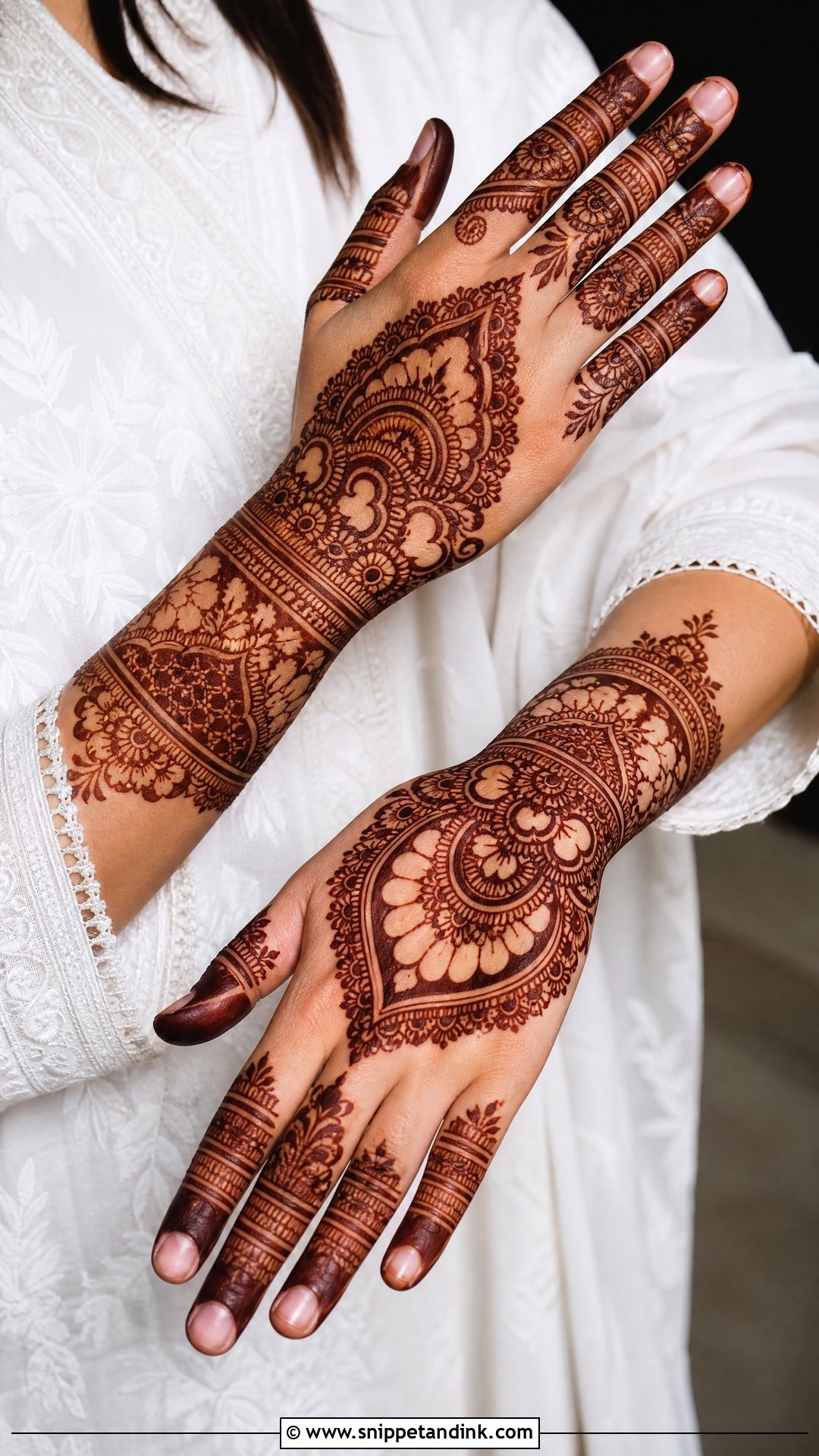
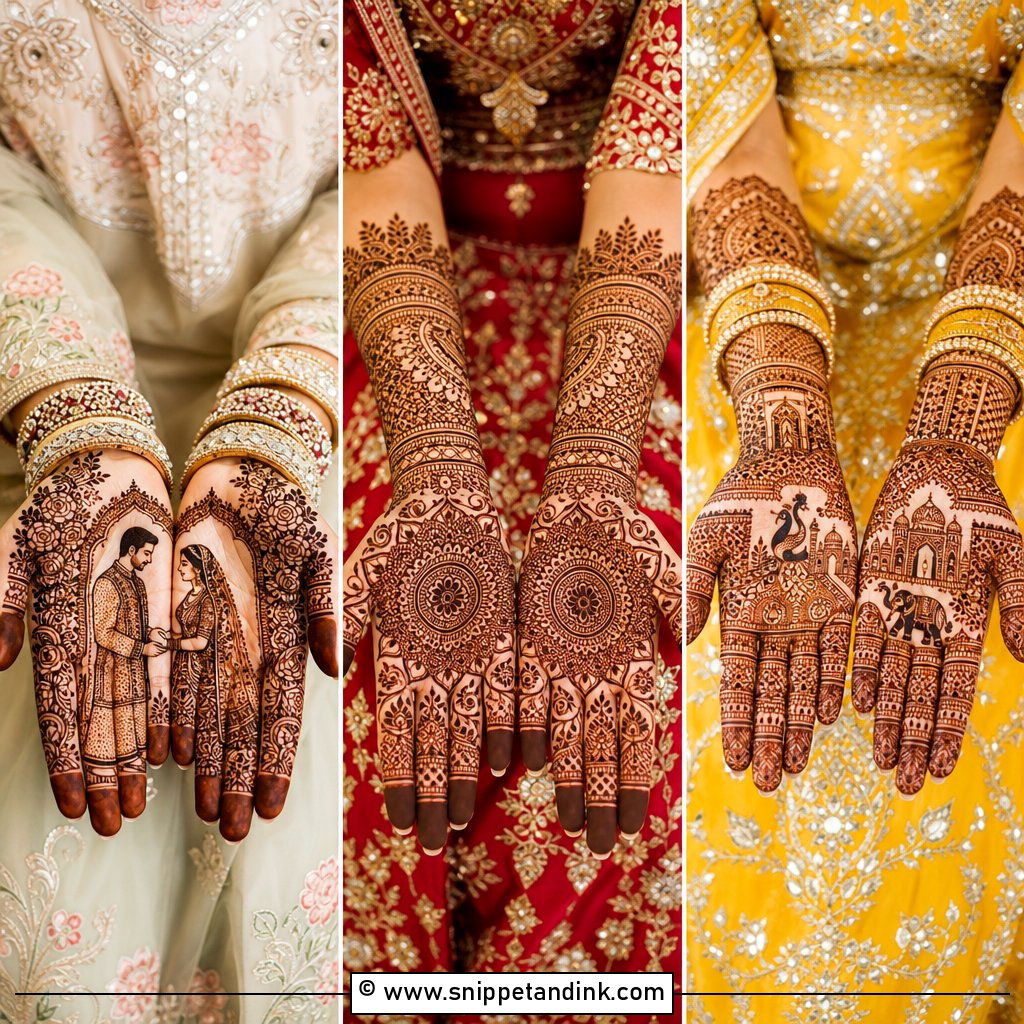
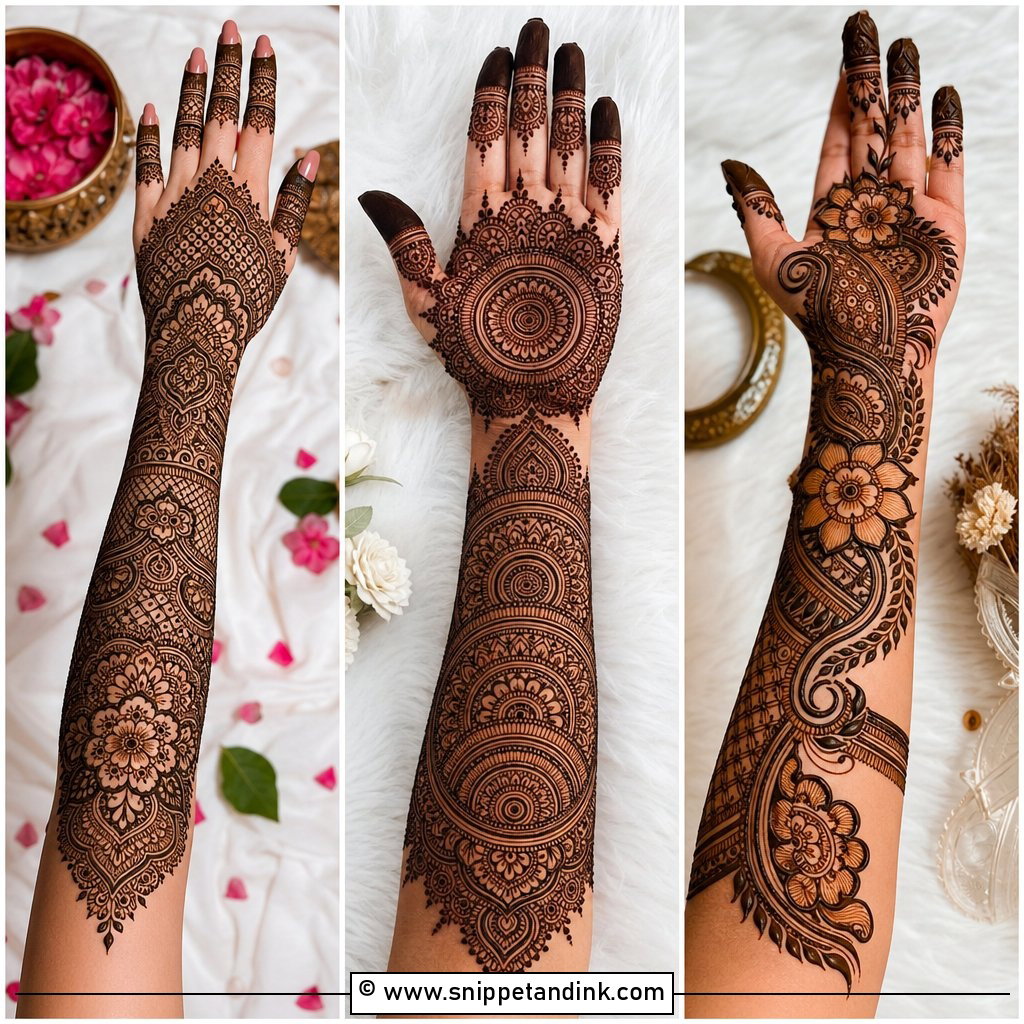
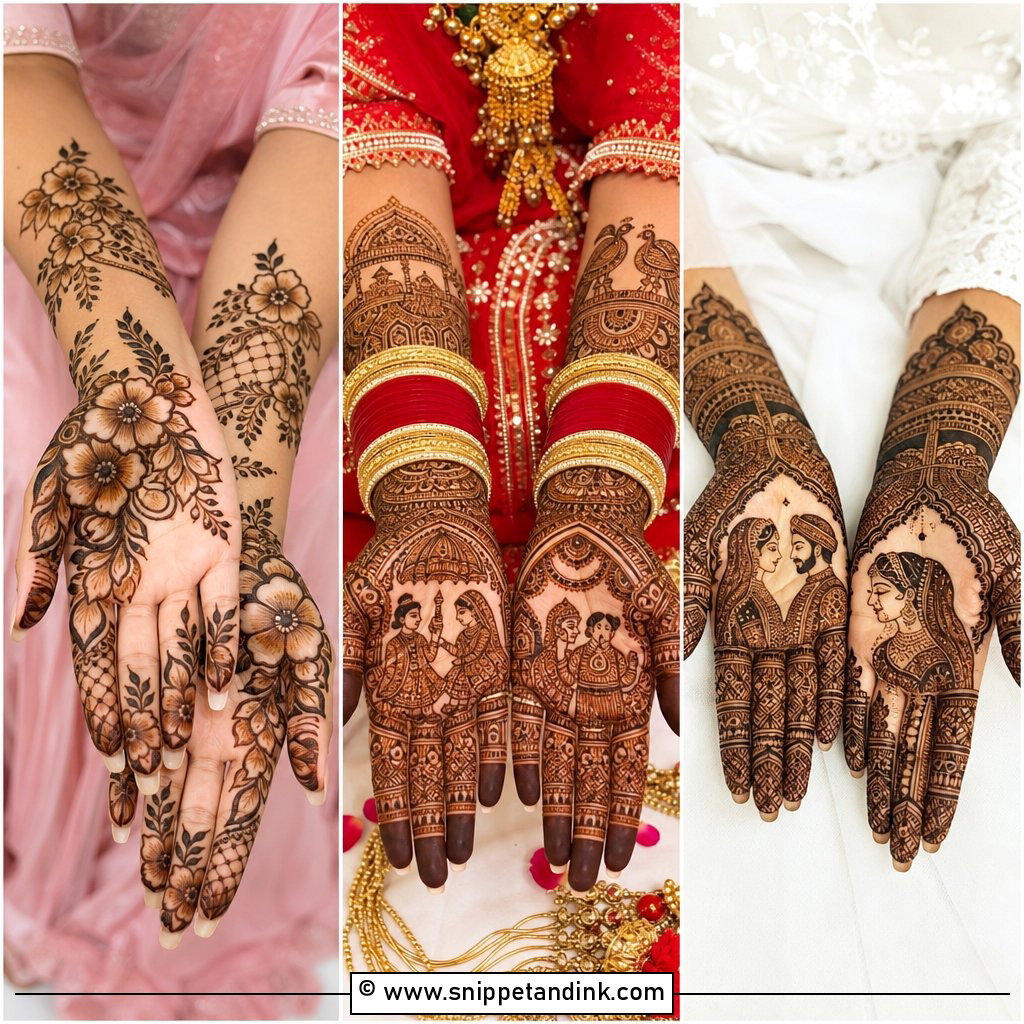
Brides still book the heavy, traditional version more than anything else. Full hand bridal mehndi design covers palm, back hand, wrist and forearm with paisleys, lotuses, peacocks, mandalas, jaali and often hidden initials. What keeps it from looking crowded is structure: I divide the arm into bands and panels before drawing a single motif. Expect to sit for several hours for both hands, and keep the paste on overnight if you can. Fresh, natural henna with no chemical additives gives the deepest result.
3. Minimal Front Hand Mehndi Design
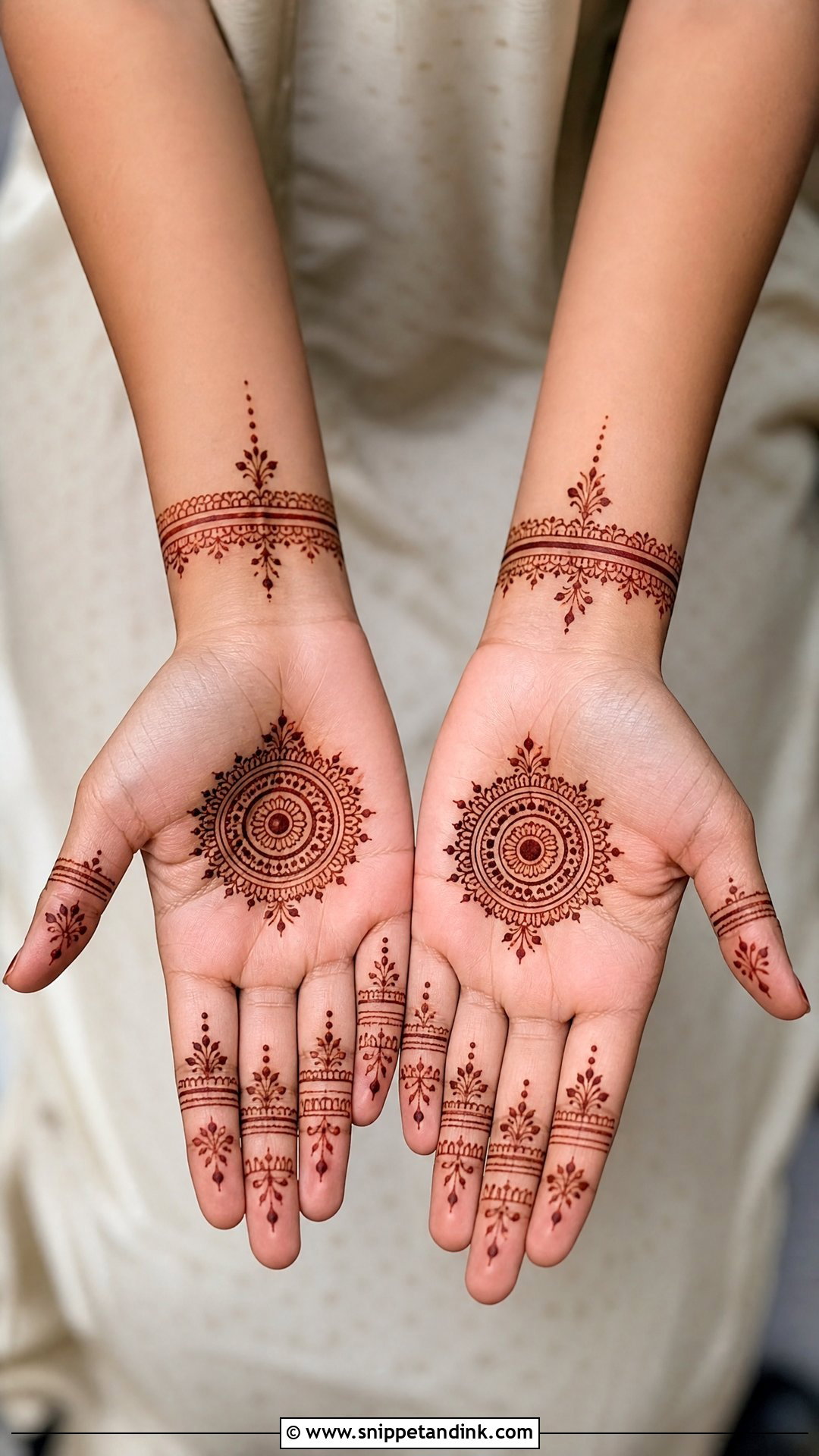
One motif in the center of the palm, then fine lines and dots on the fingers, and that’s it. The open skin around a minimal design makes the stain look sharper once it develops. I suggest it for college events, office-friendly festivals and small family functions. The challenge is precision: with so little drawn, a wobbly line or uneven dot spacing shows, so I use a fine-tipped cone and slightly thinner paste here.
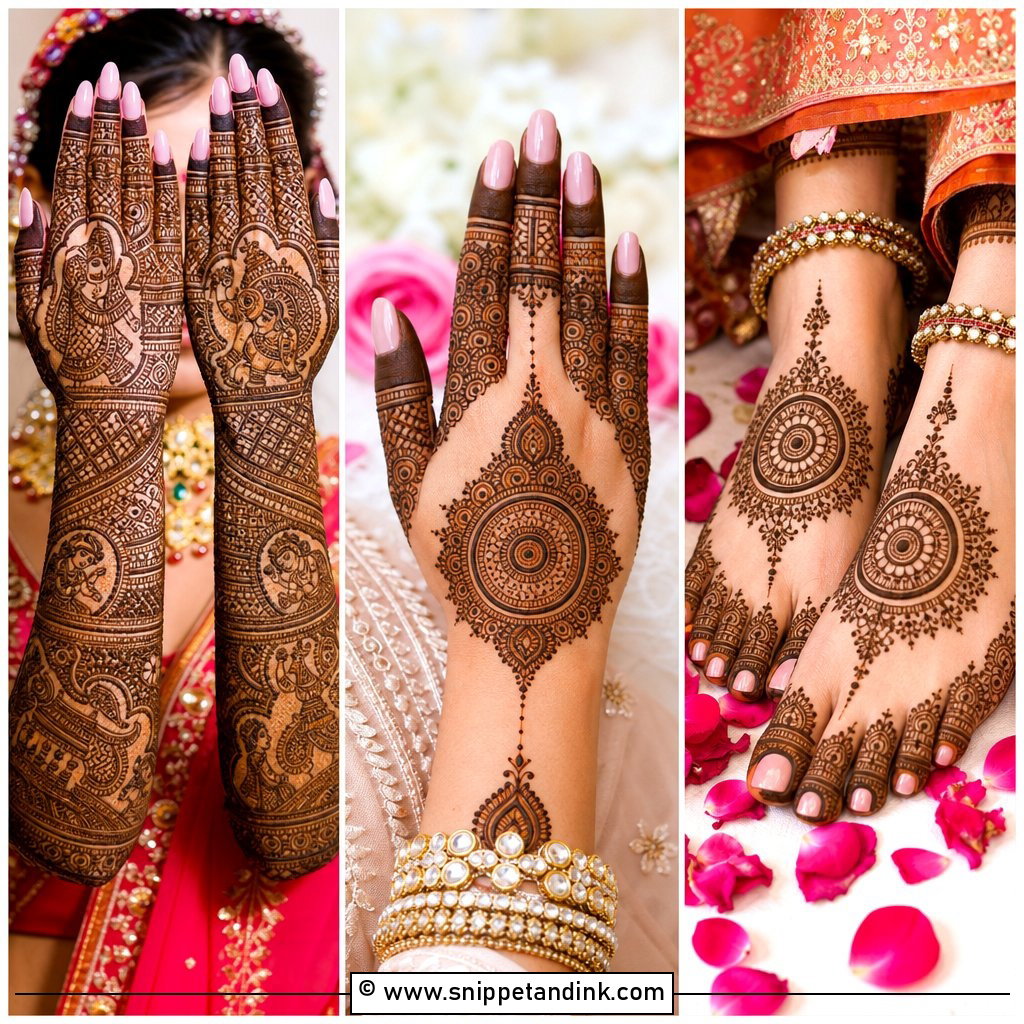
4. Back Hand Mandala Mehndi Design
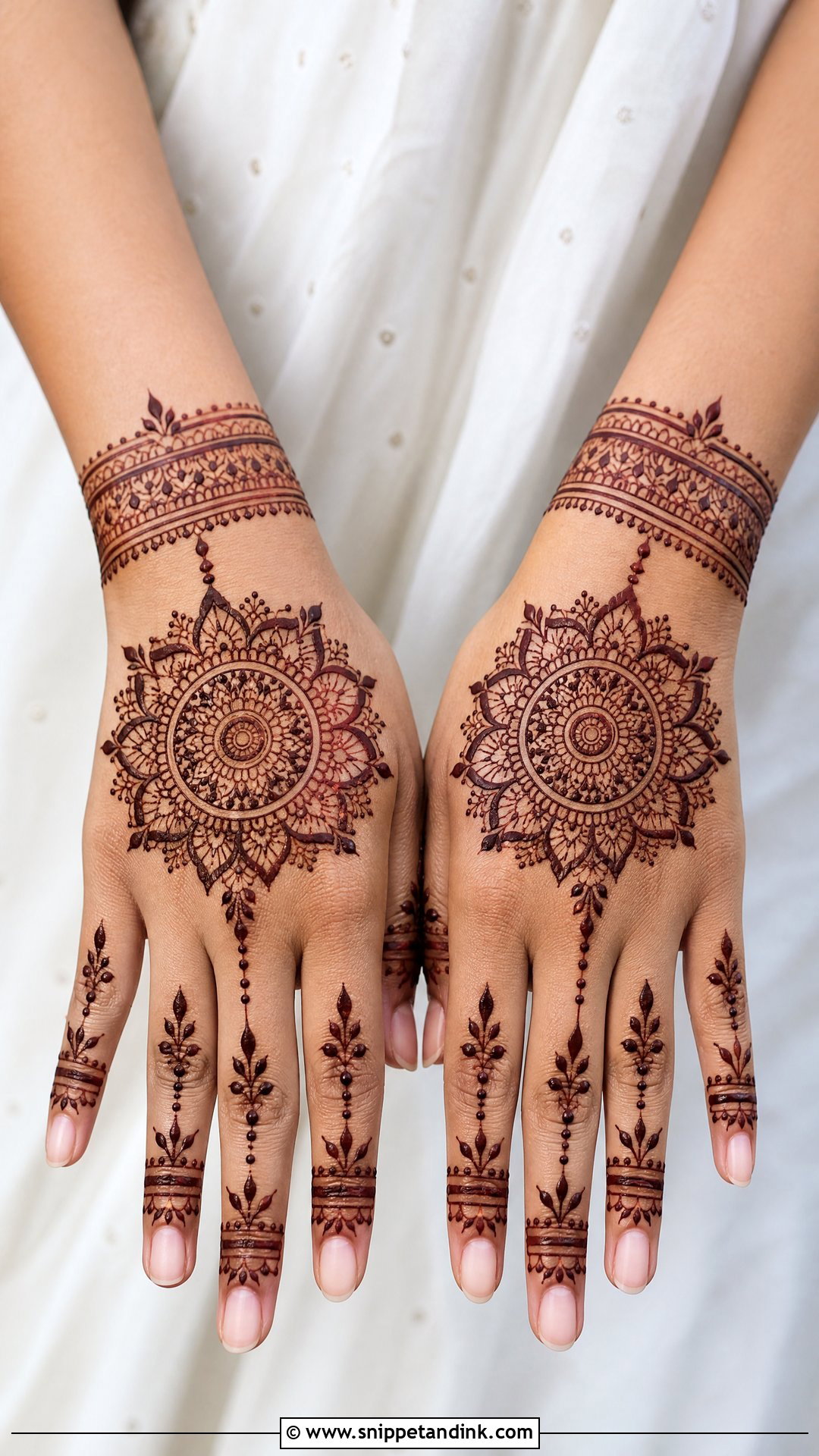
A circular mandala in the center of the back hand, linked to finger patterns and a wrist band, is symmetrical and quick to read in photos. Some versions stay minimal; others add layered petals, jaali and leafy accents. I find it easiest on bridesmaids and sisters who need a matching set done in one evening. The wrist band has to sit level with the wrist bone, and each finger should carry the same detail, or the whole hand looks slightly off.
5. Indo Arabic Mehndi Design
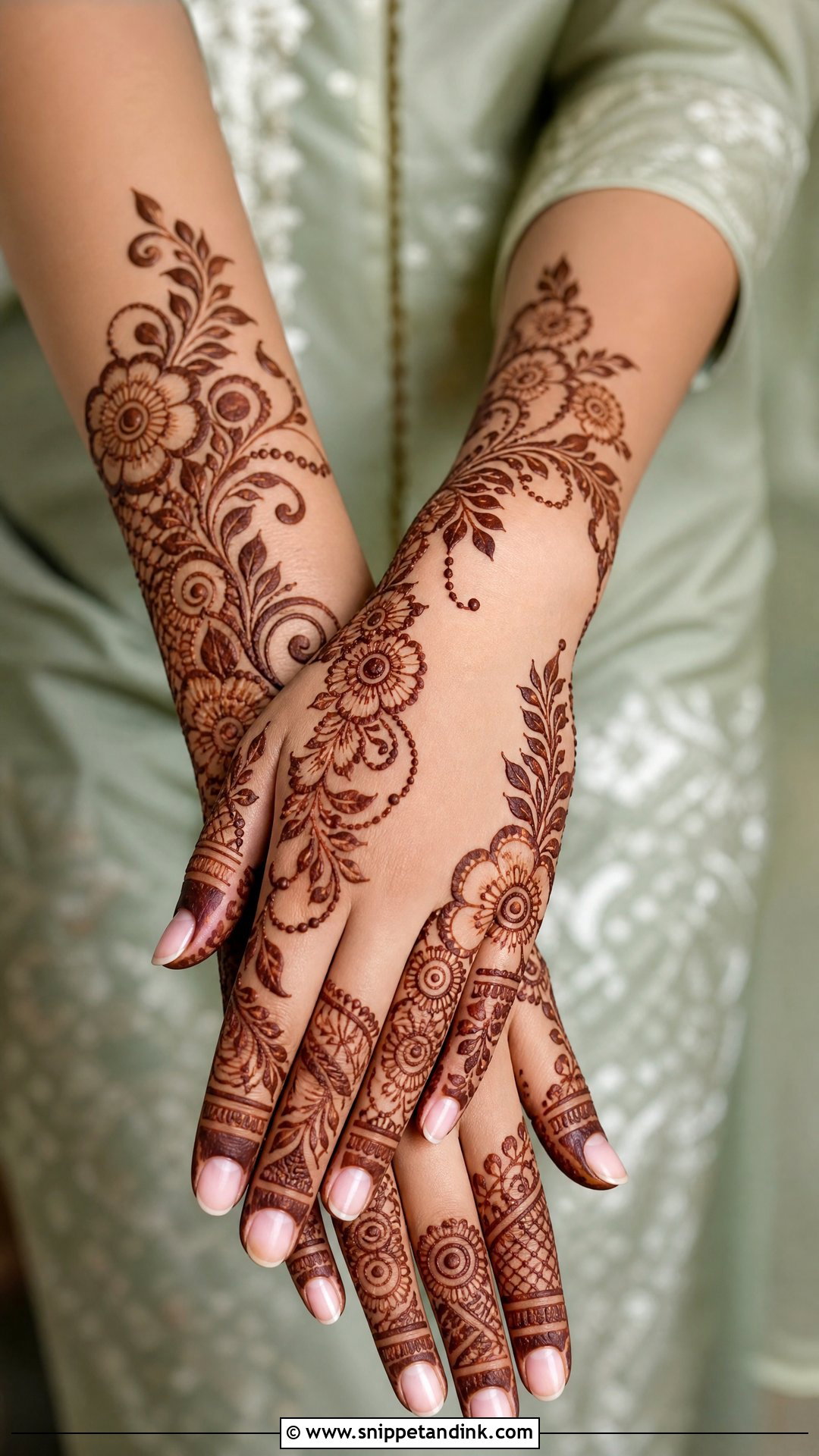
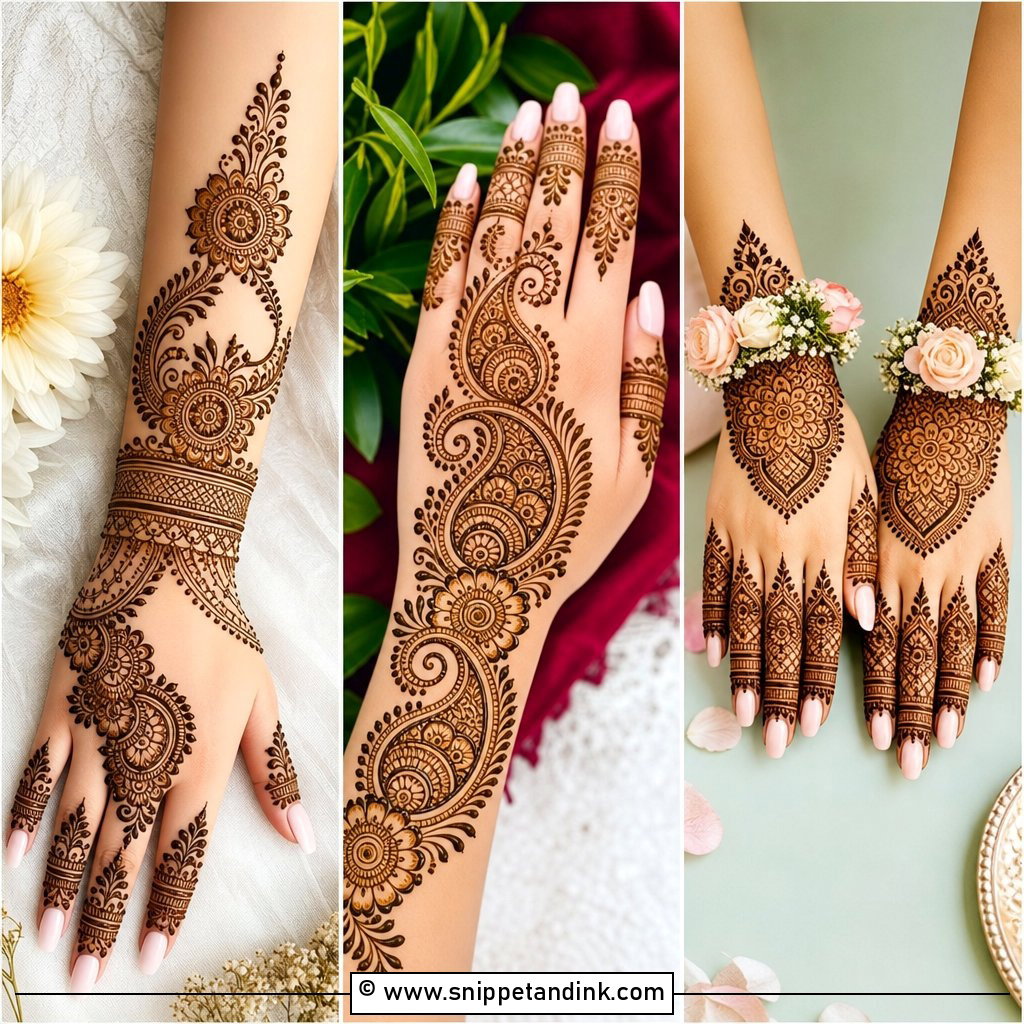
Indo-Arabic fusion takes the open, flowing layout of Arabic mehndi and fills parts of it with fine Indian detail: paisleys, mesh, dots and curved fillers inside bold flowers. It feels festive without the heaviness of bridal coverage, which makes it popular for engagements, Eid, Diwali, Karwa Chauth and guests. Because the outlines are thick, it still reads from a distance. I keep the flow diagonal or along one side of the hand, which looks more current than a centered layout.
6. Simple Finger Mehndi Design
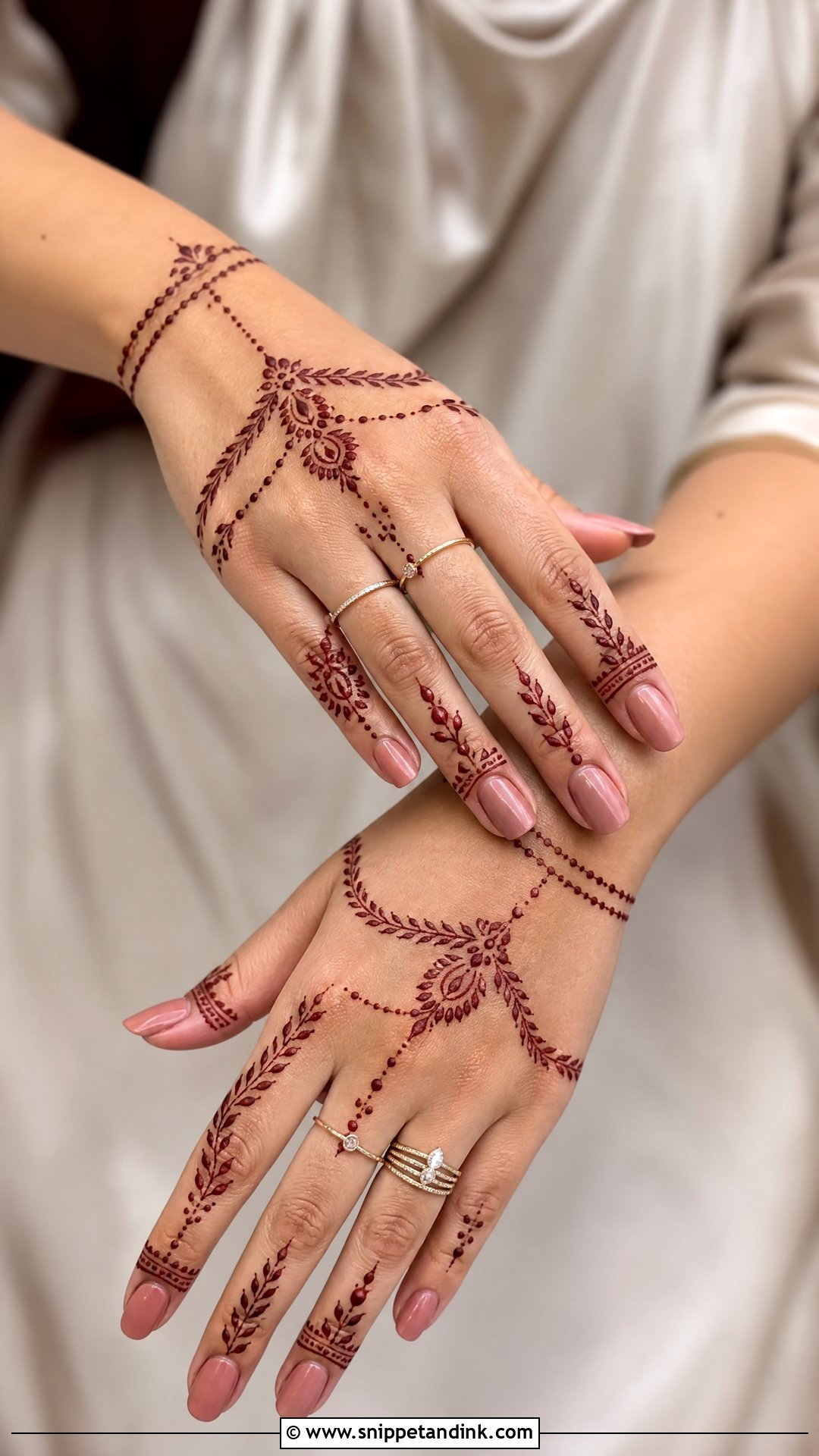
Finger-only designs give the effect of jewelry: rings, fine bands, tiny flowers and dots, sometimes a thin chain linking the fingers to a small wrist bracelet. They take a fraction of the time of a full hand and suit people who need to keep their palms usable. On short fingers I keep each band narrow and leave skin between rings, which makes the fingers look longer. Fingertips stain darkest of anywhere on the body, so even a small design shows up clearly.
7. Bridal Portrait Mehndi Design
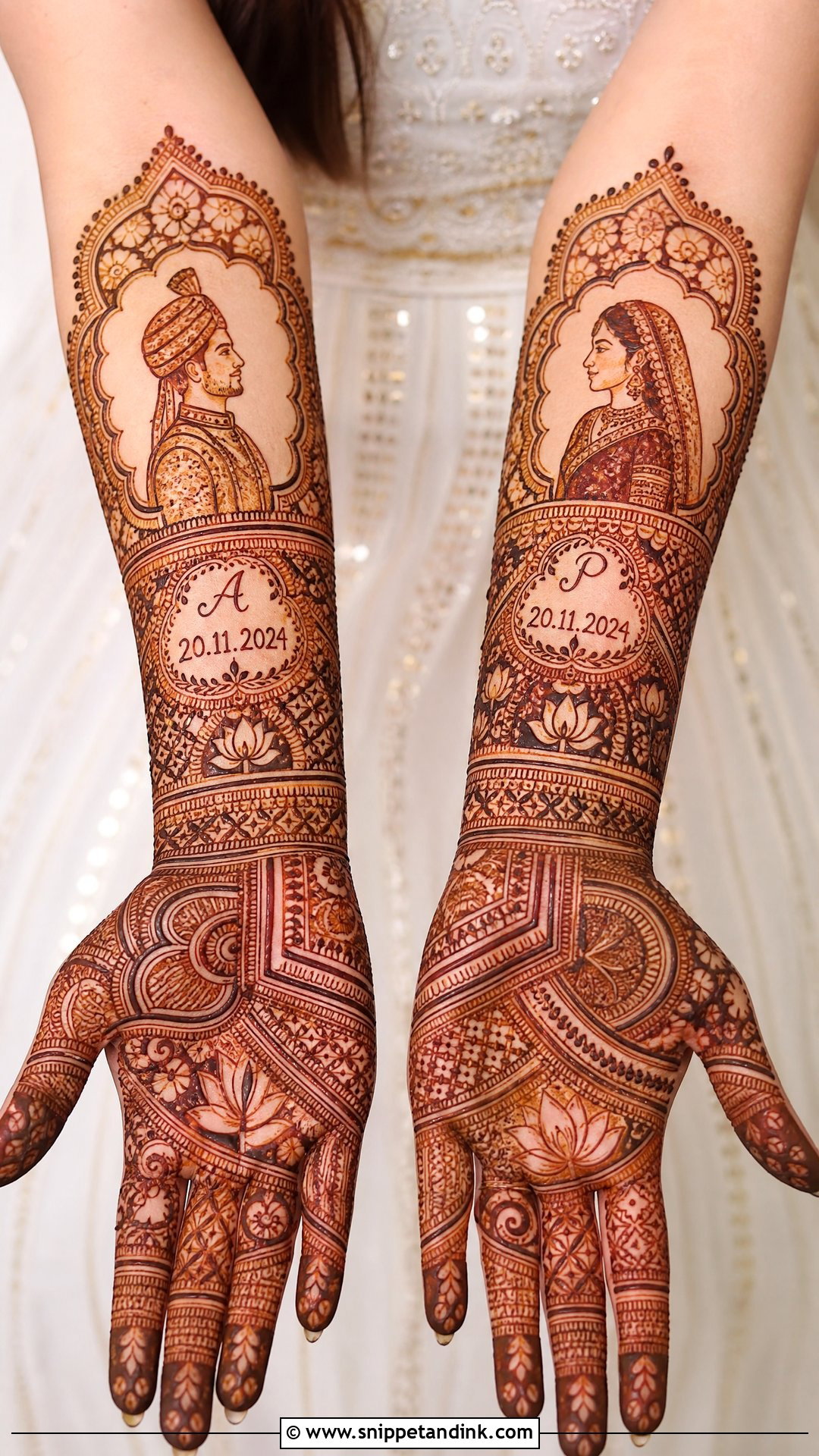
Portrait mehndi puts the bride and groom’s faces on the palms, usually surrounded by wedding symbols, dates, initials and motifs such as elephants or royal borders running up the arms. Faces are the hardest thing I draw in henna, since the paste spreads slightly as it dries and a line that’s too thick changes an expression. Ask to see your artist’s past portrait work before booking. Cleaner layouts with space around the figures are popular now, because the faces stay readable once the stain darkens.
8. Moroccan Geometric Mehndi Design
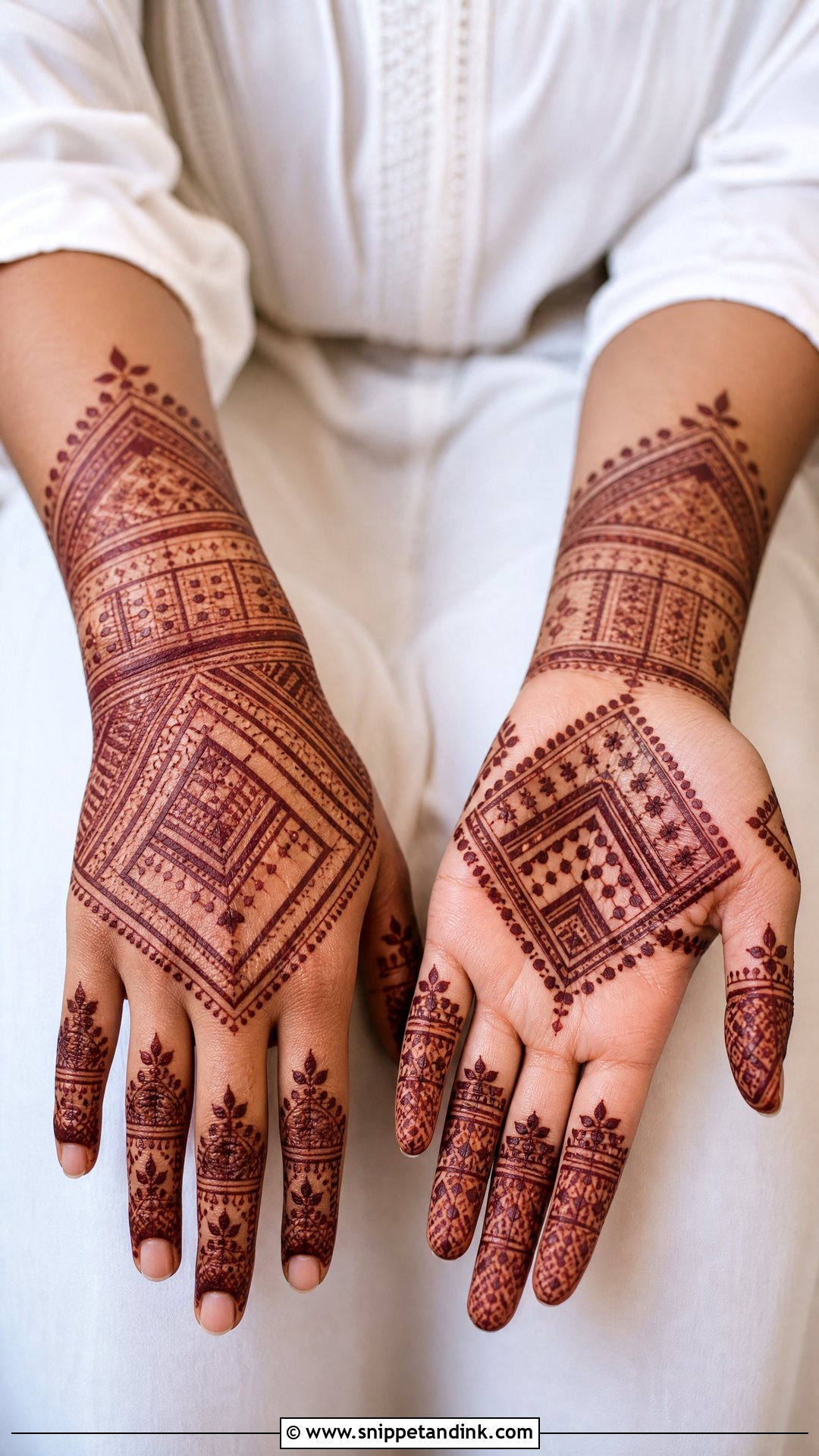
Geometric Moroccan-style mehndi swaps vines for diamonds, triangles, grids, chevrons and straight lines. It covers palm, fingers and wrist like patterned jewelry and suits anyone tired of floral work. Straight lines are less forgiving than curves, so I’d only choose it if you can keep your hand very still. It’s popular with bridesmaids and fashion-led festive outfits, and it looks its best when every gap between lines is the same width.
9. Gulf Khaleeji Mehndi Design
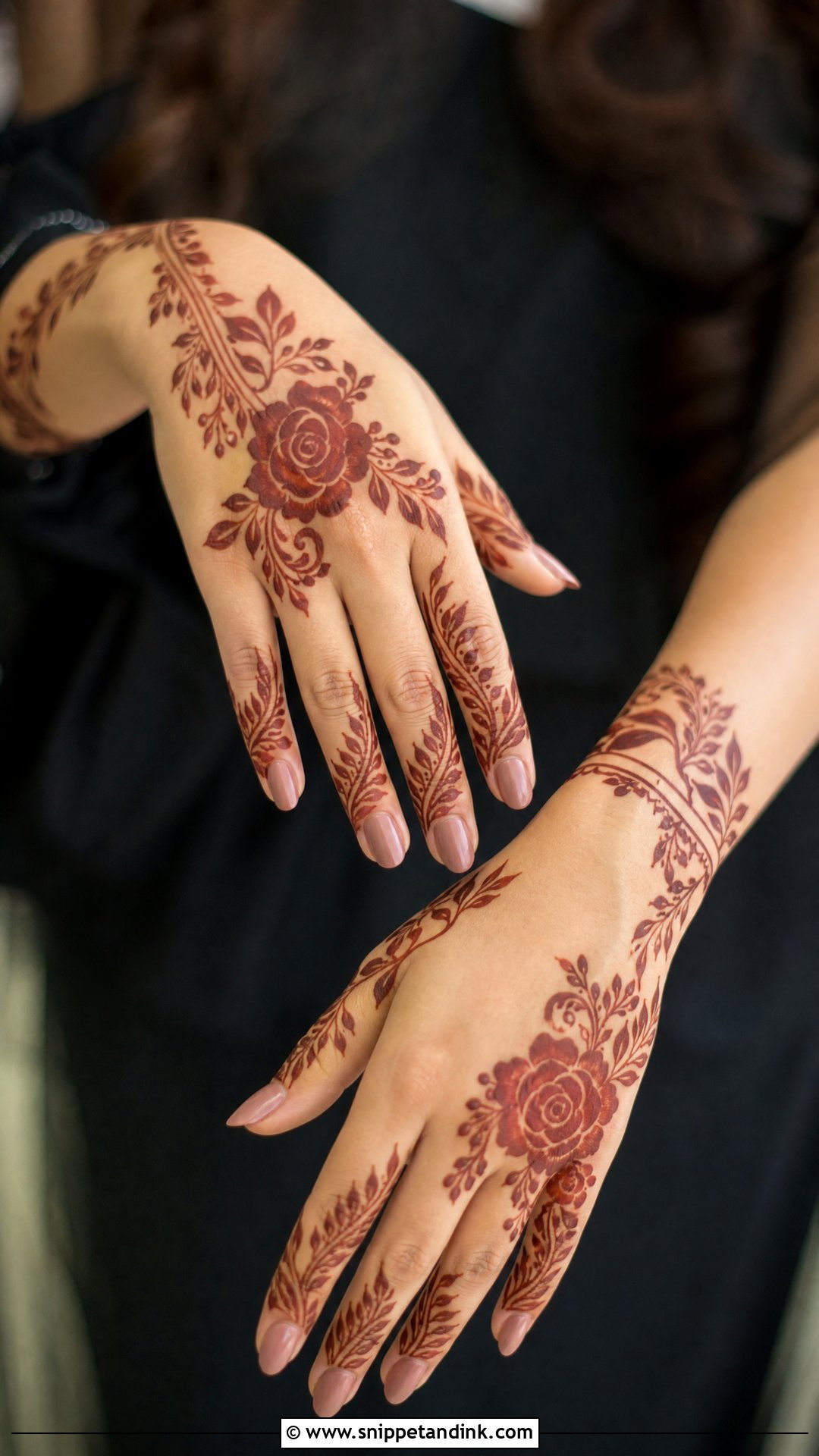
Khaleeji designs use big, bold flowers, long leaves and a lot of open skin. The pattern runs in one graceful curve over fingers, back hand and wrist, so it’s quick to apply and very bold. I build the thick outlines with a slightly wider cone tip and fill some petals with shading. It suits Eid, nikah functions and evening events, especially for people who want a luxurious look in under an hour. The open skin is part of the design, so I resist adding fillers.
10. Peacock Bridal Mehndi Design
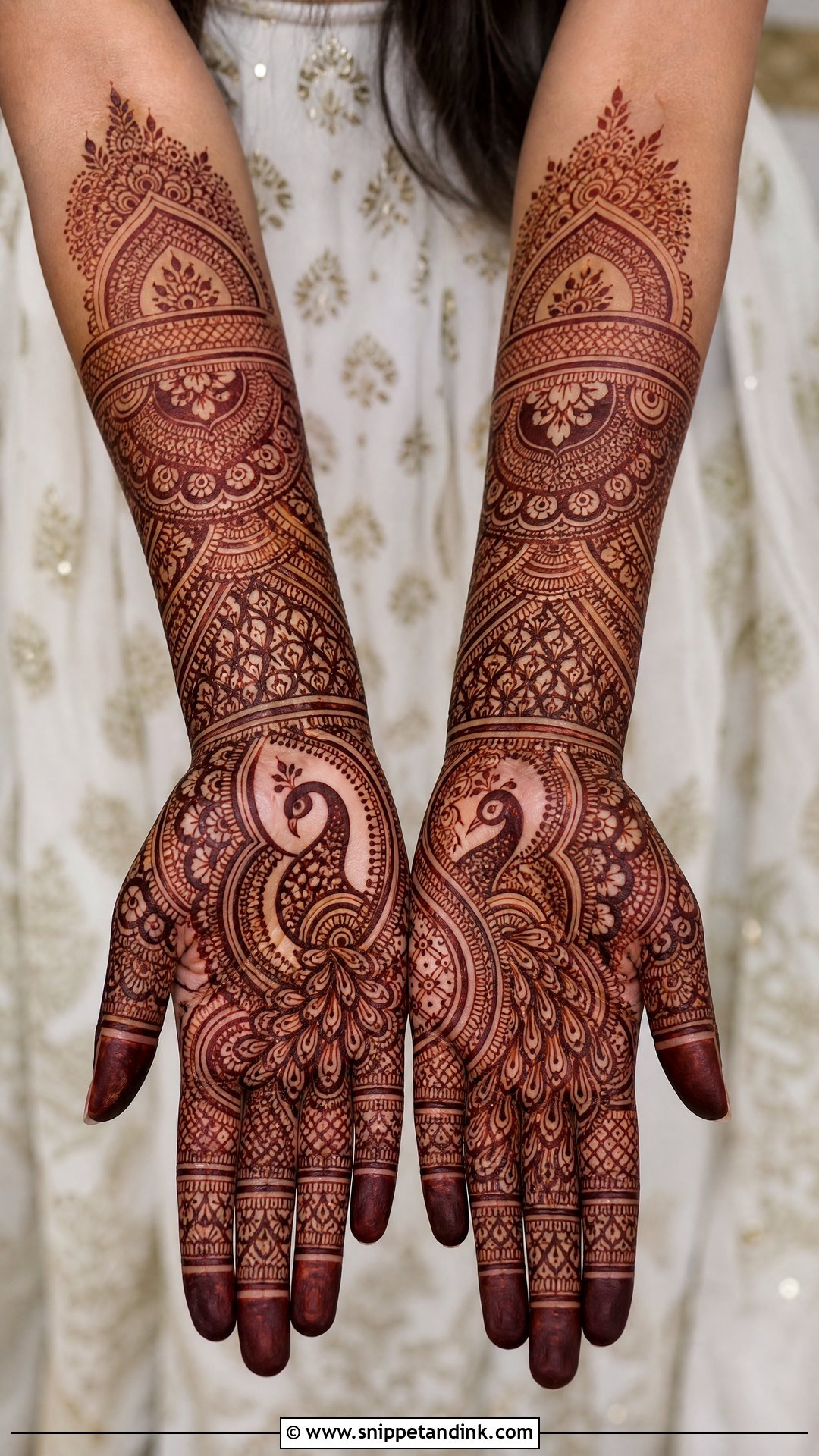
The peacock is one of the oldest bridal motifs, a symbol of beauty and celebration, and it can sit on the palm, the wrist or the forearm. Around it go paisleys, flowers, feathers and fine fillers. The common mistake is drawing the feathers as a separate element; they should sweep into the surrounding pattern. A lighter version with a single peacock on each palm works well for the engagement or sangeet.
11. Lotus Bridal Mehndi Design
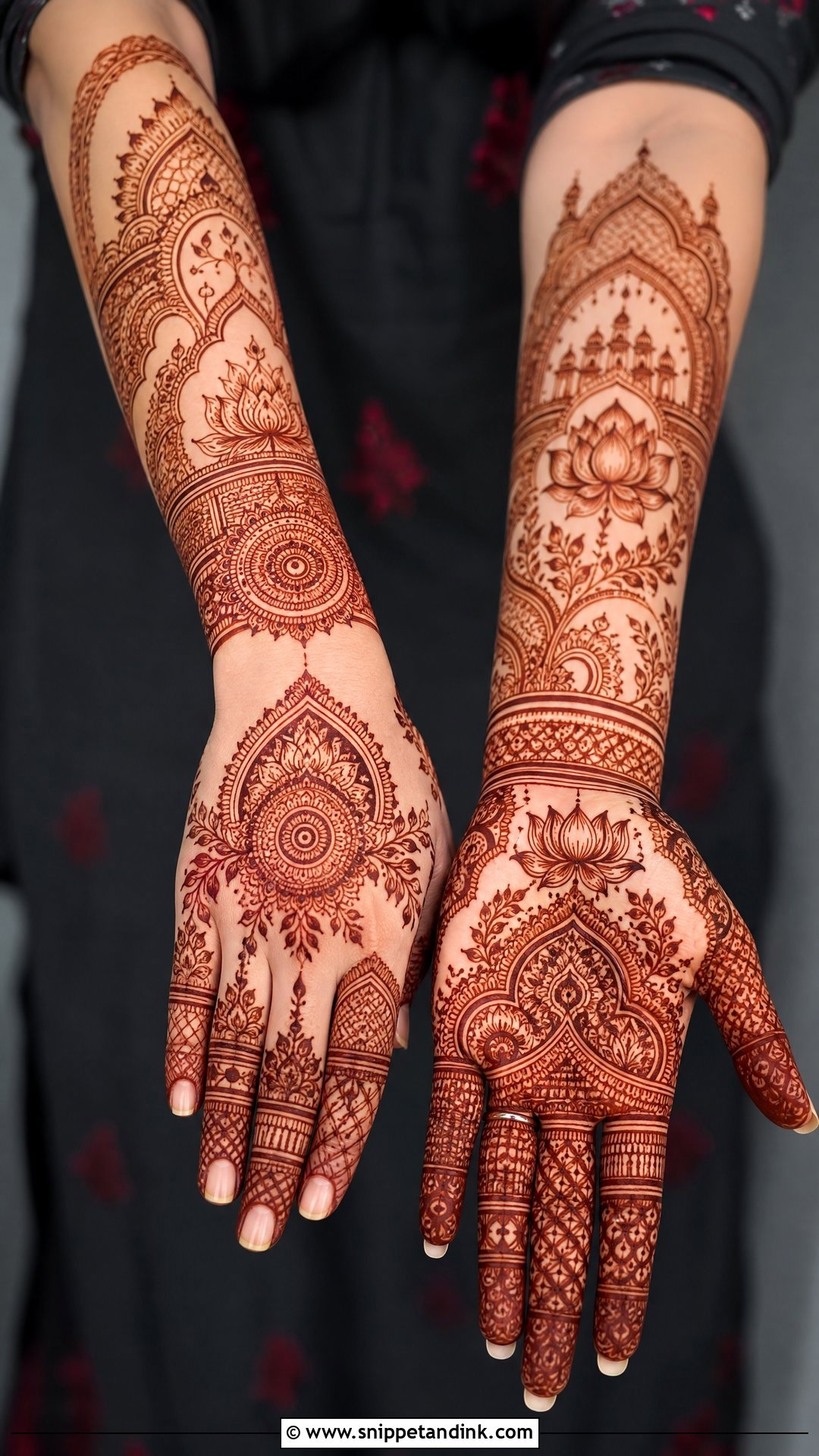
Lotus motifs carry religious and symbolic meaning for many families, and they fit naturally into temple patterns and mandalas. The flower can be a large palm centerpiece, a wrist border or repeated along the forearm. I map lotus positions on both hands before starting, so when you hold your palms side by side the flowers line up. It’s a good middle path for a bride who wants a bridal look without portraits.
12. Jaali Back Hand Mehndi Design
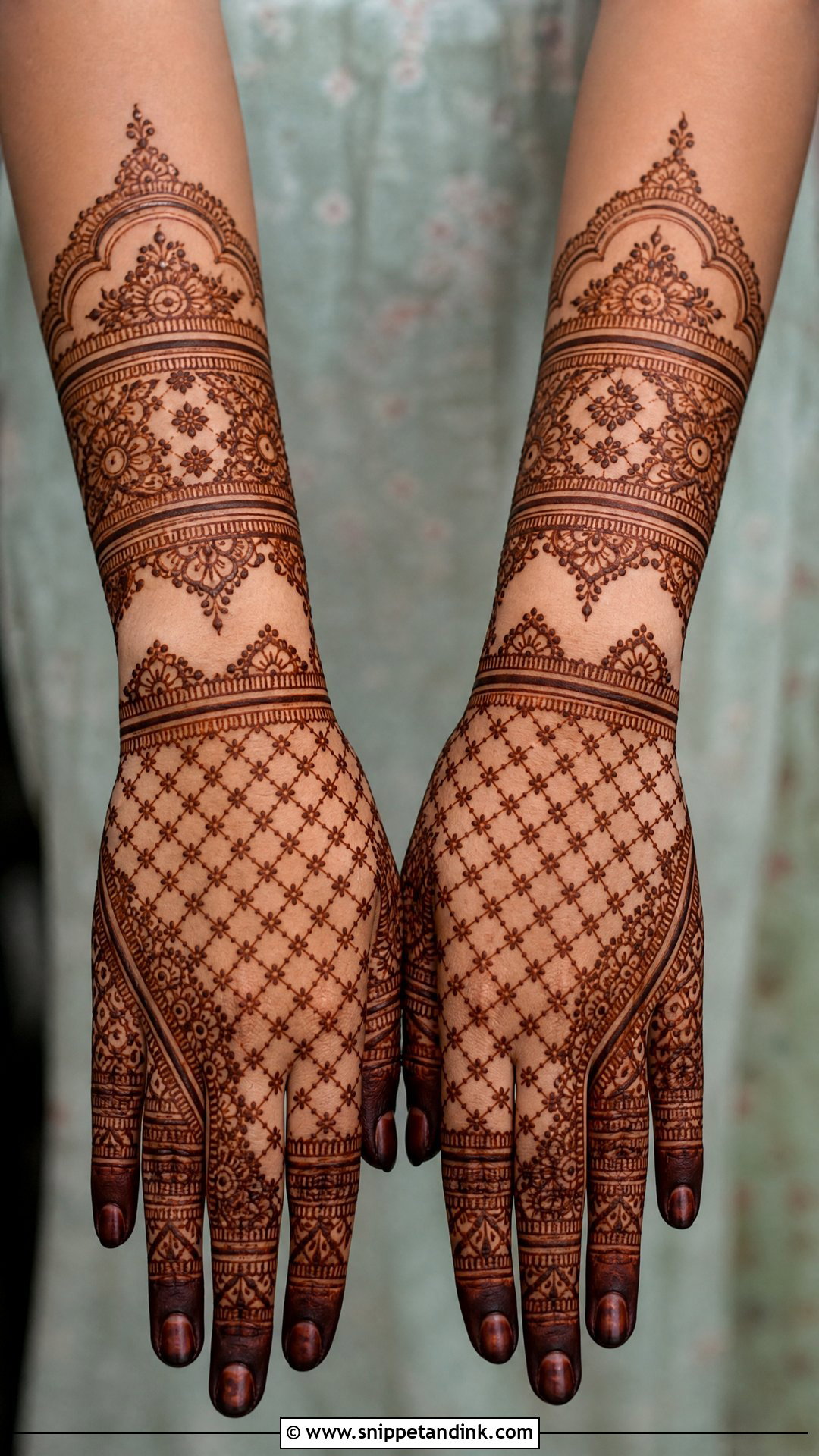
Jaali, a fine crisscross mesh, gives the back of the hand a lace effect, usually with floral corners, decorated fingers and sometimes a wrist cuff. It looks detailed while staying light enough for guests and bridesmaids. Mesh needs even line spacing; if the grid gets wider toward the wrist, it looks rushed. I draw the outer border first, then the grid inside it, which keeps the lines straight.
13. Bracelet Mehndi Design
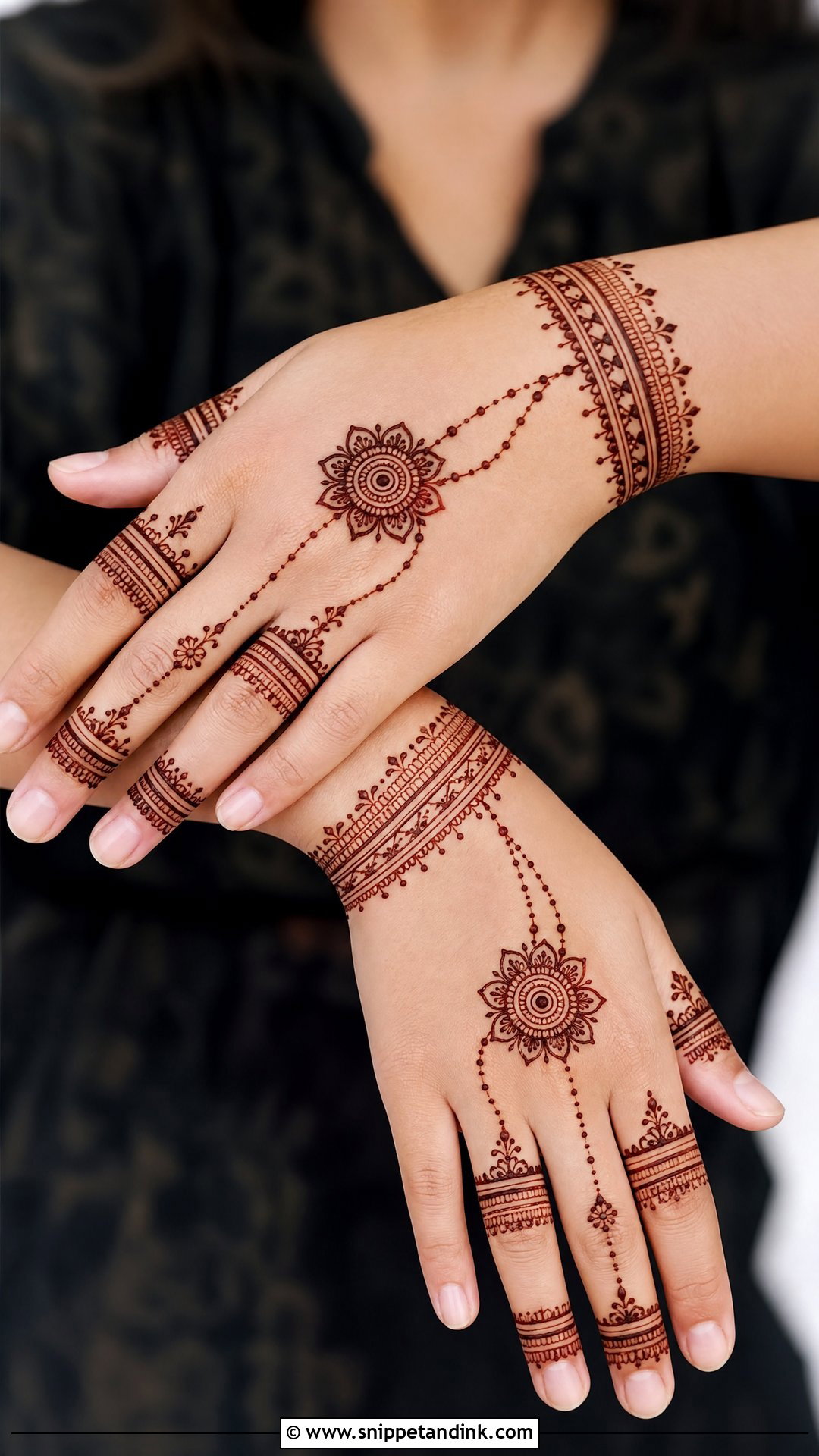
Wrist cuff, chain lines, finger rings and one central flower or mandala together make henna that imitates hand jewelry. Often called Bracelet mehndi design, it can be minimal or detailed and suits parties, Eid, Raksha Bandhan and small weddings. The connecting chains are the hard part: they need to run in smooth, even arcs from wrist to fingers. Thin, delicate chains make the center motif stand out.
14. Negative Space Mehndi Design
Negative space is the trend that asks the most planning of the artist. The gaps between flowers, bands and mandalas become part of the design, so they have to look deliberate. I usually sketch the layout lightly with a thin line before committing. It works on the palm, the back hand or along the forearm, and brides now use it for engagement designs and modern bridal layouts. Crisp outlines matter more here than anywhere.
15. Shaded Floral Mehndi Design
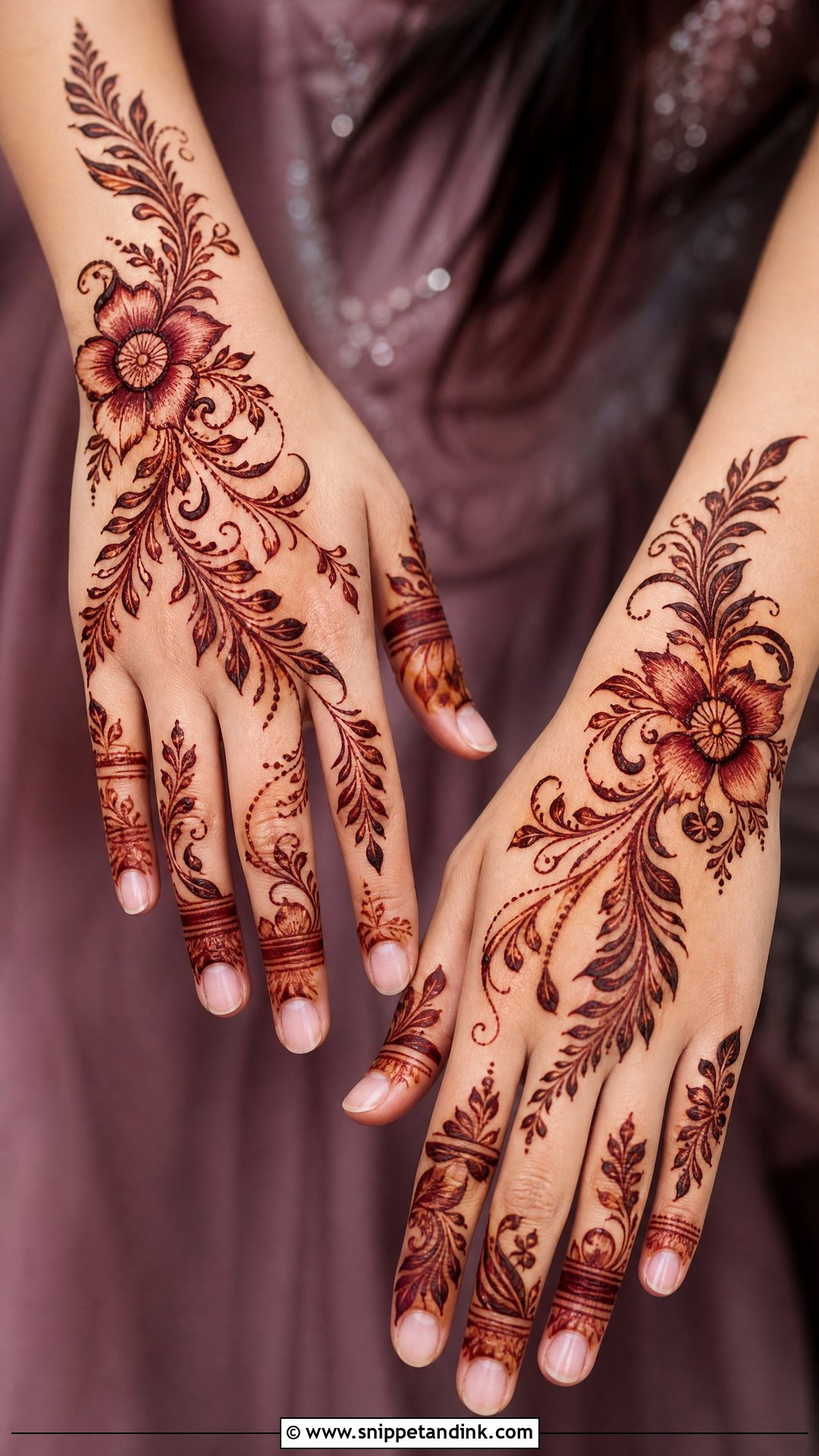
Shading gives flowers depth: I outline each petal boldly, then fill it partly with fine strokes or a thinner layer of paste so it stains lighter than the outline. Roses, lotuses and leafy vines suit it. Flowers in mixed sizes look more natural than identical ones repeated. Shaded designs can go wrong if every petal is filled solid, since the stain then loses all its dimension.
16. Rajasthani Bridal Mehndi Design
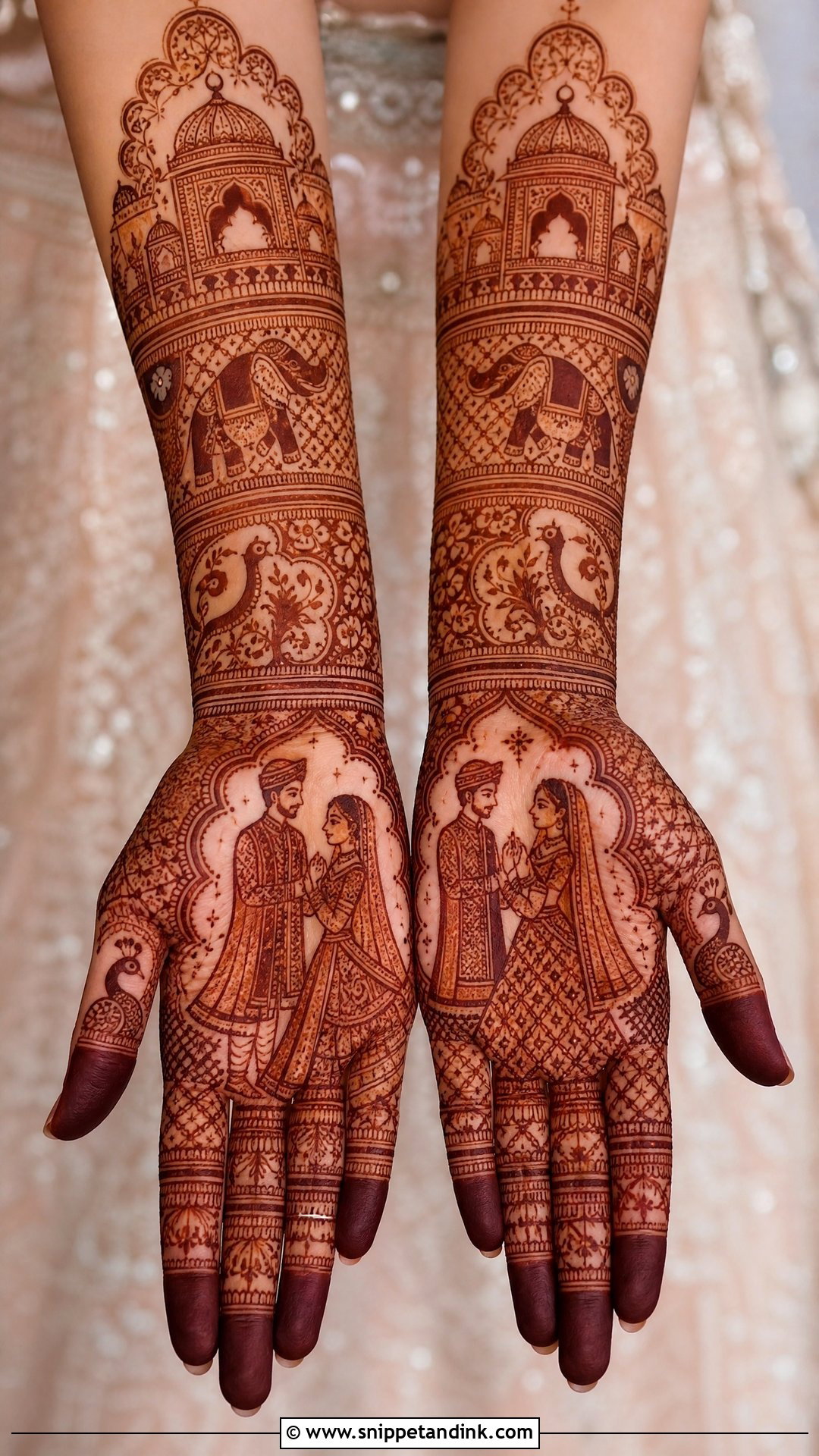
Rajasthani bridal mehndi is the densest style here, with bride and groom figures, elephants, palaces, peacocks, paisleys, mirrored palms and heavy fillers from fingertips to forearms or higher. Many artists now organize it into clearer panels so each motif can be seen. It takes the longest of any design in this list, often most of a day for both arms. I’d book it for a bride who can sit patiently and keep the paste on overnight.
17. Mandala Front Hand Mehndi Design
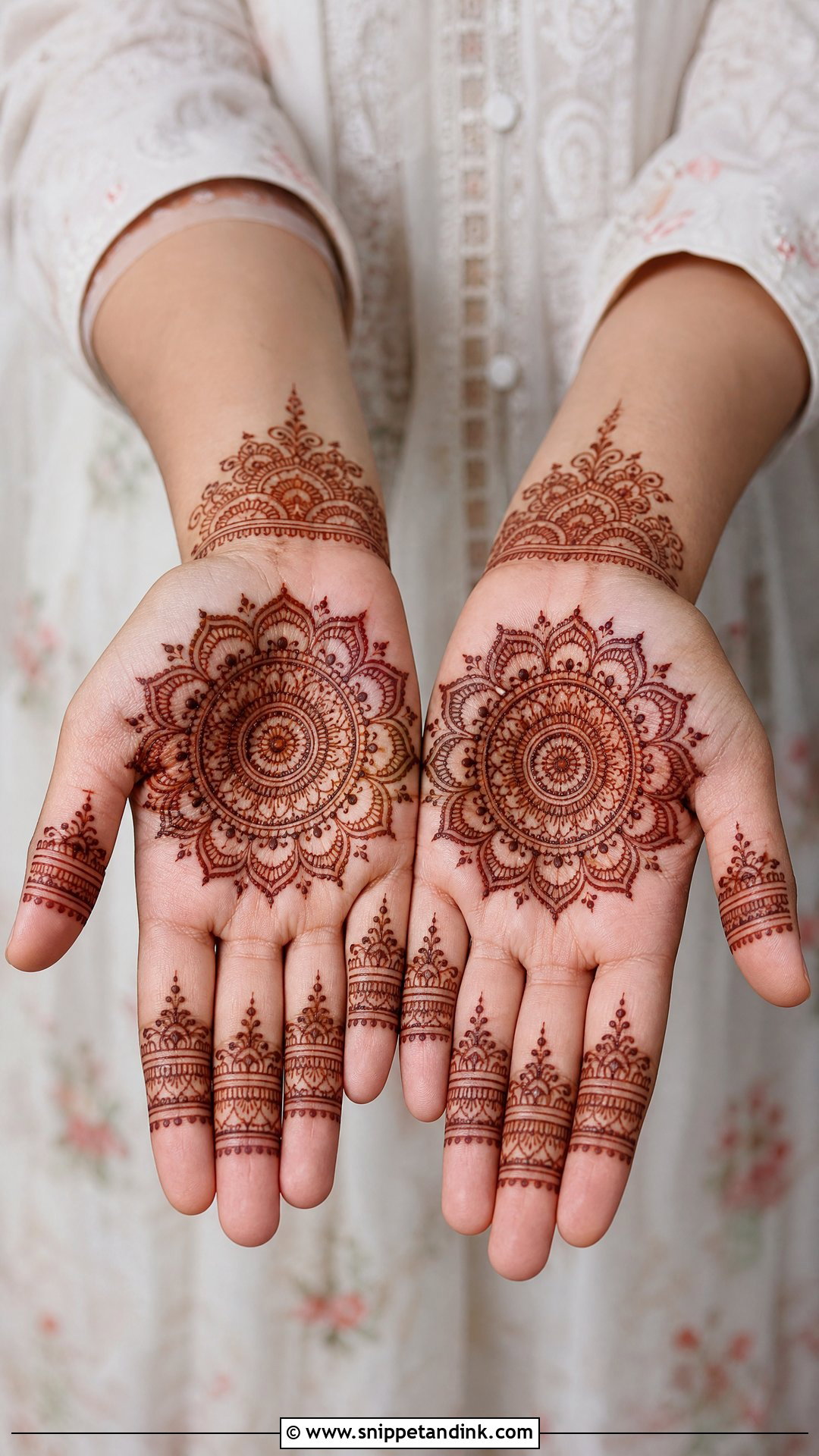
A palm mandala with matching finger details and an optional wrist border is one of the most versatile designs I do: festivals, poojas, family events and relaxed weddings all suit it. Symmetry is the whole appeal, so I start at the dead center of the palm and build outward ring by ring. Leaving skin around the mandala keeps it from looking heavy. It’s also the design I’d recommend to anyone learning henna.
18. Engagement Mehndi Design
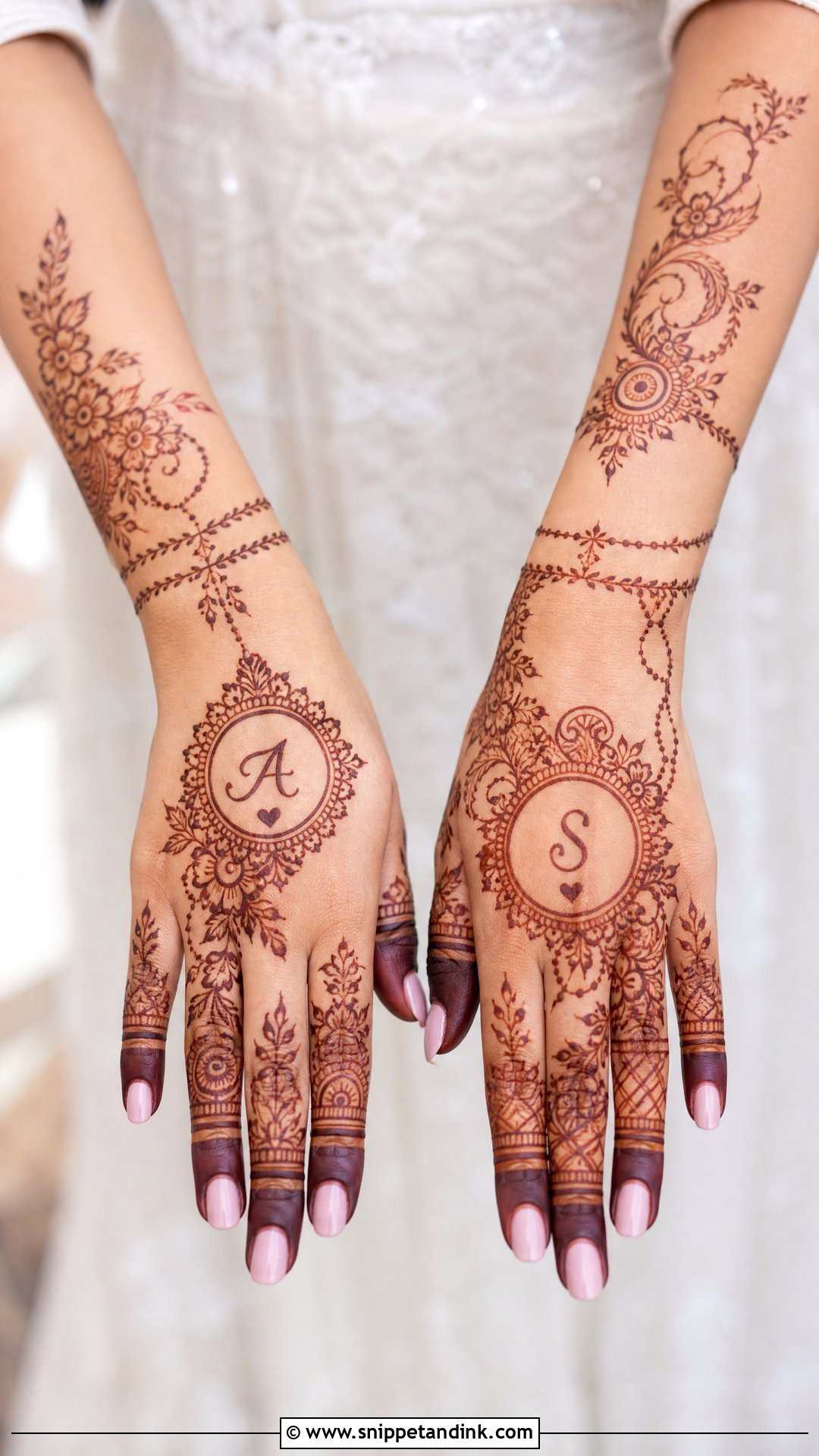
Lighter than bridal but still romantic, these designs often mix floral vines, ring motifs, initials and bracelet-style back hands. Engagement mehndi design tends to cover fingers, palm and wrist with a little of the forearm. I leave the ring finger lighter so the engagement ring stands out in photos. Arabic and Indo-Arabic layouts are especially popular for this event. Hidden initials or a date can go in a small, discreet panel.
19. Eid Mehndi Design
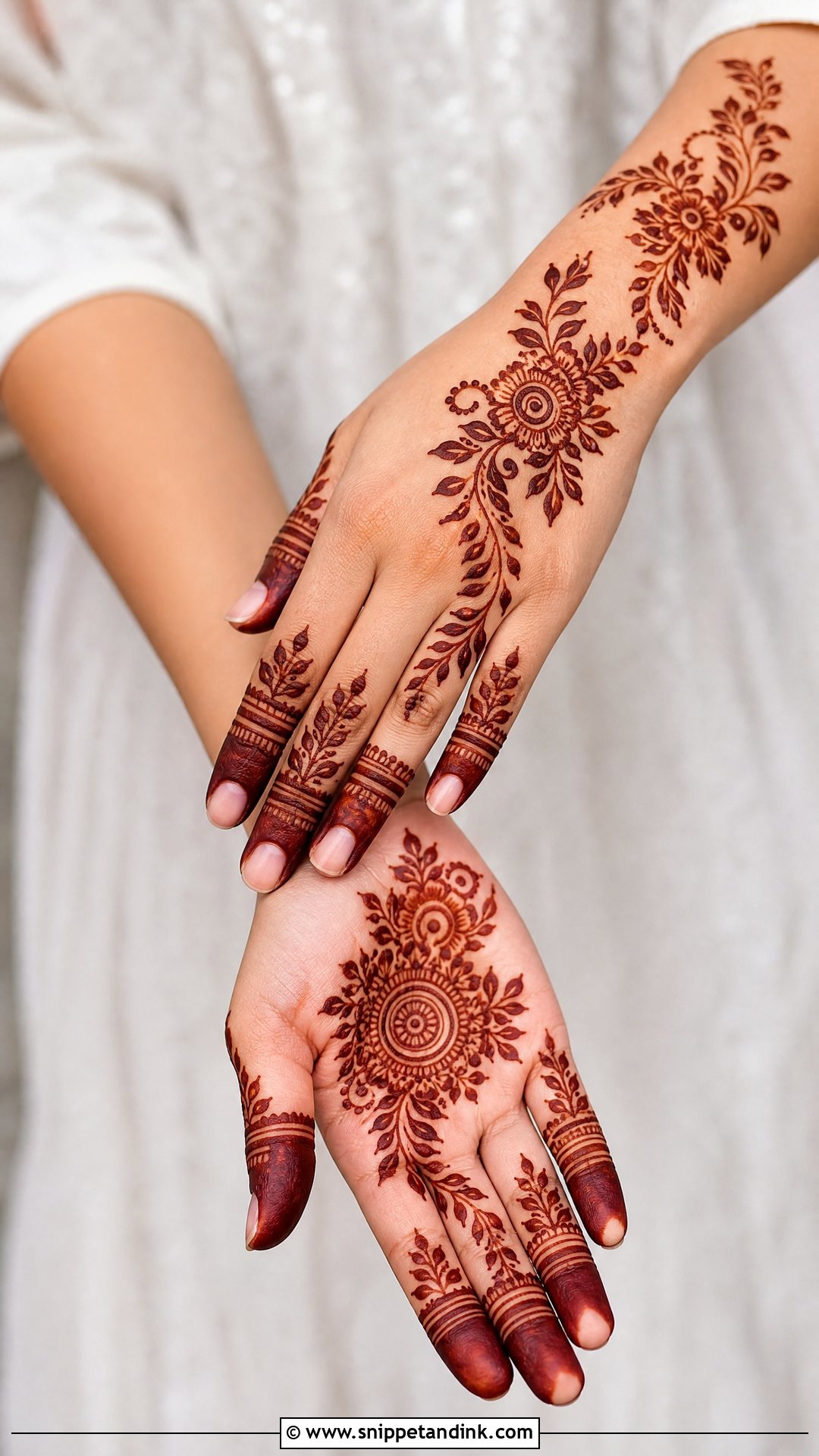
Eid mehndi is usually done the night before Chand Raat or on the eve itself, so speed matters. Arabic trails, bold back hand vines, mandala palms and bracelet styles are all quick to apply and let the stain show against open skin. Match the boldness to the outfit: a fine floral trail suits a pastel suit, a Gulf-style design suits rich colors. I keep both hands coordinated, mirroring rather than repeating the pattern.


20. Karwa Chauth Mehndi Design
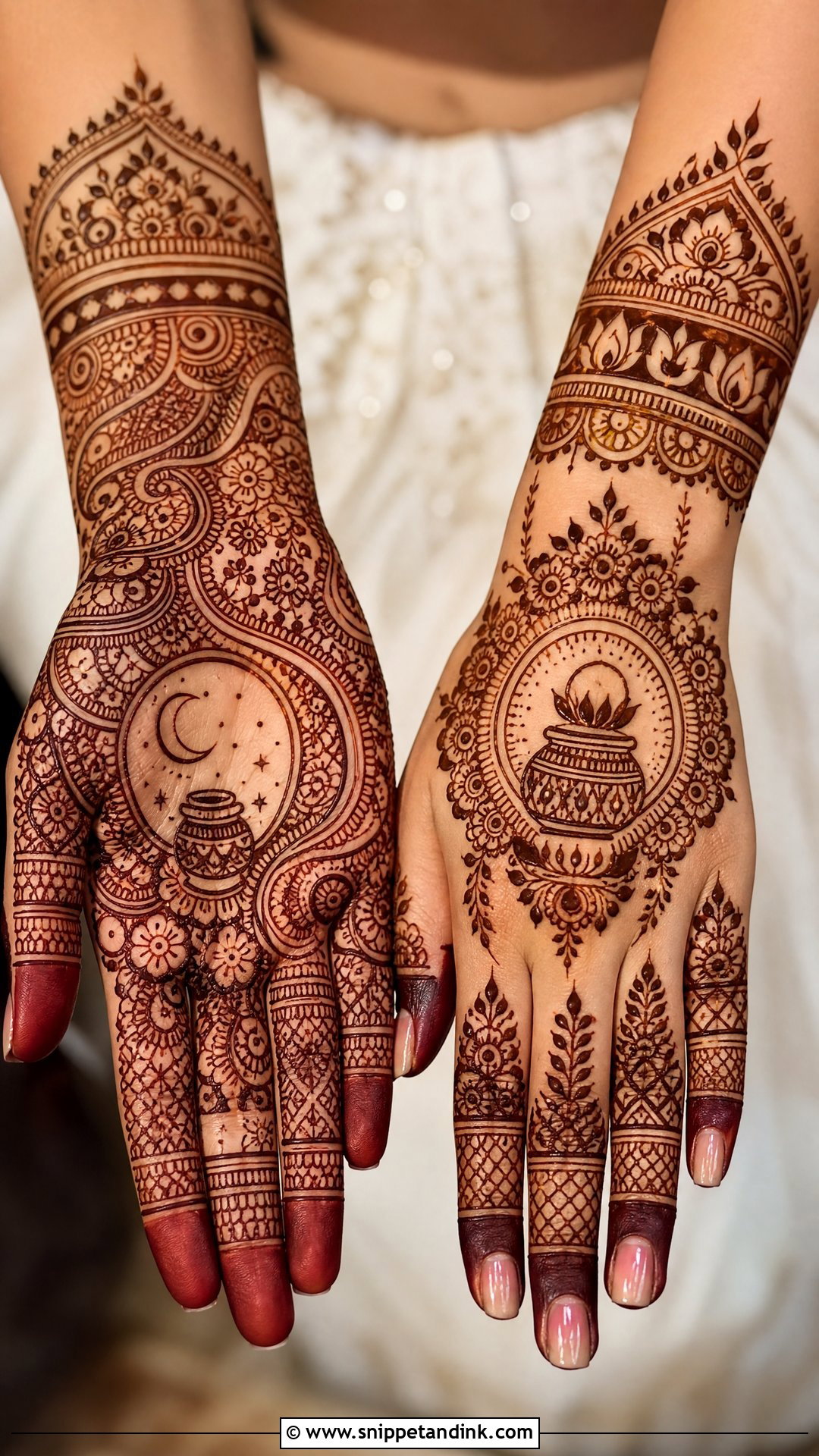
Karwa Chauth designs often carry moon motifs, kalash shapes, paisleys and flowers across full palms and decorated fingers. Many women now ask for classic elements with clearer spacing. Because it’s usually applied the evening before, I tell people to keep the paste on overnight and avoid water the next morning, so the stain has time to deepen before the fast and the evening puja. A tiny personal symbol or initials can be tucked in.
21. Modern Bridal Mehndi Design
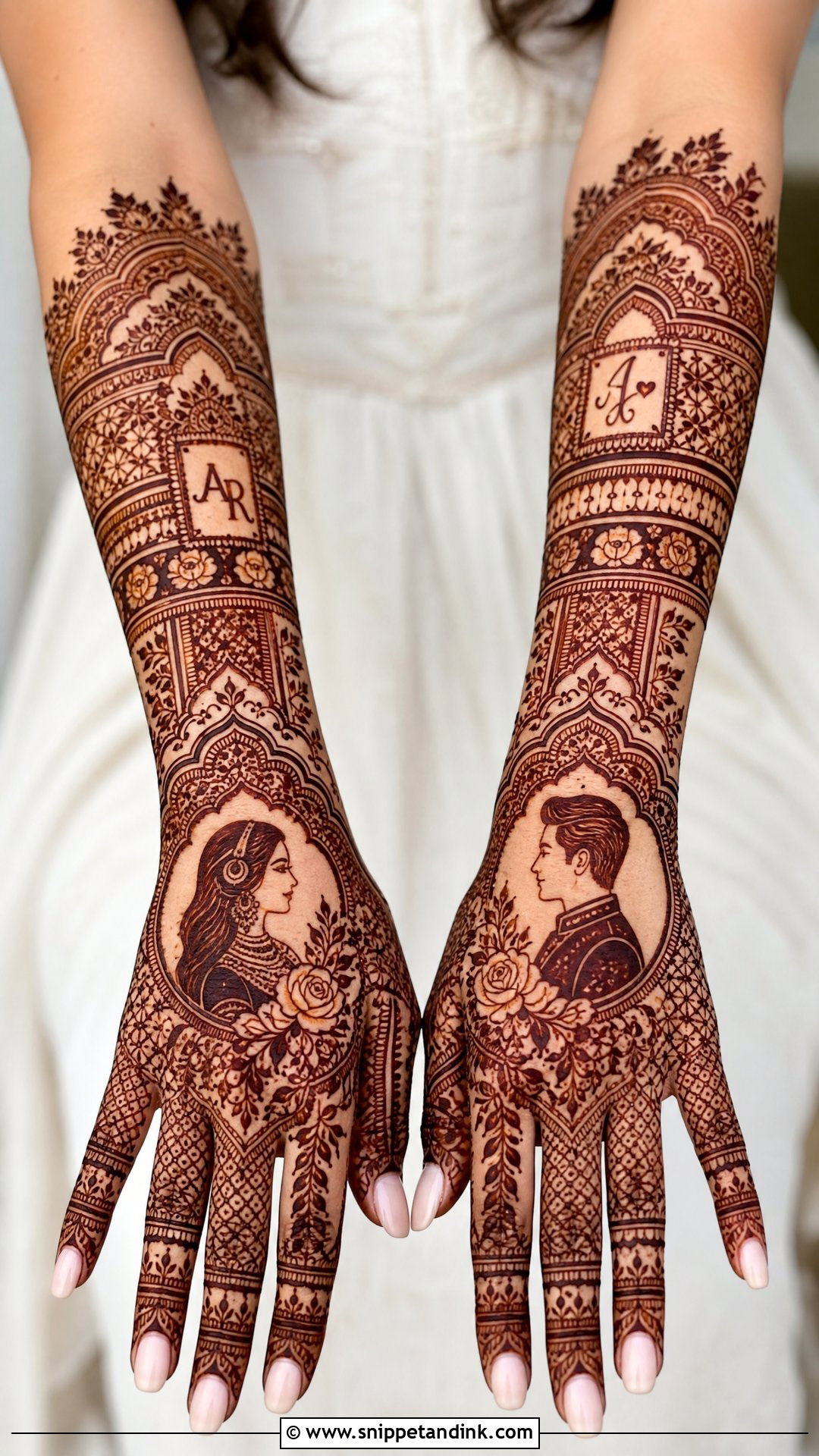
Modern bridal layouts keep the bride’s coverage but drop the rule that every inch must be filled. Negative space, bold florals, initials, clean portrait panels, geometric bands and wrist-to-forearm sections all appear. Coverage can be full hand, half hand or extended bridal, depending on the outfit and ceremony. Every section should still connect from fingers to forearm, so the eye travels along the arm. Without that flow it looks like a collection of stickers.
22. Half Hand Mehndi Design
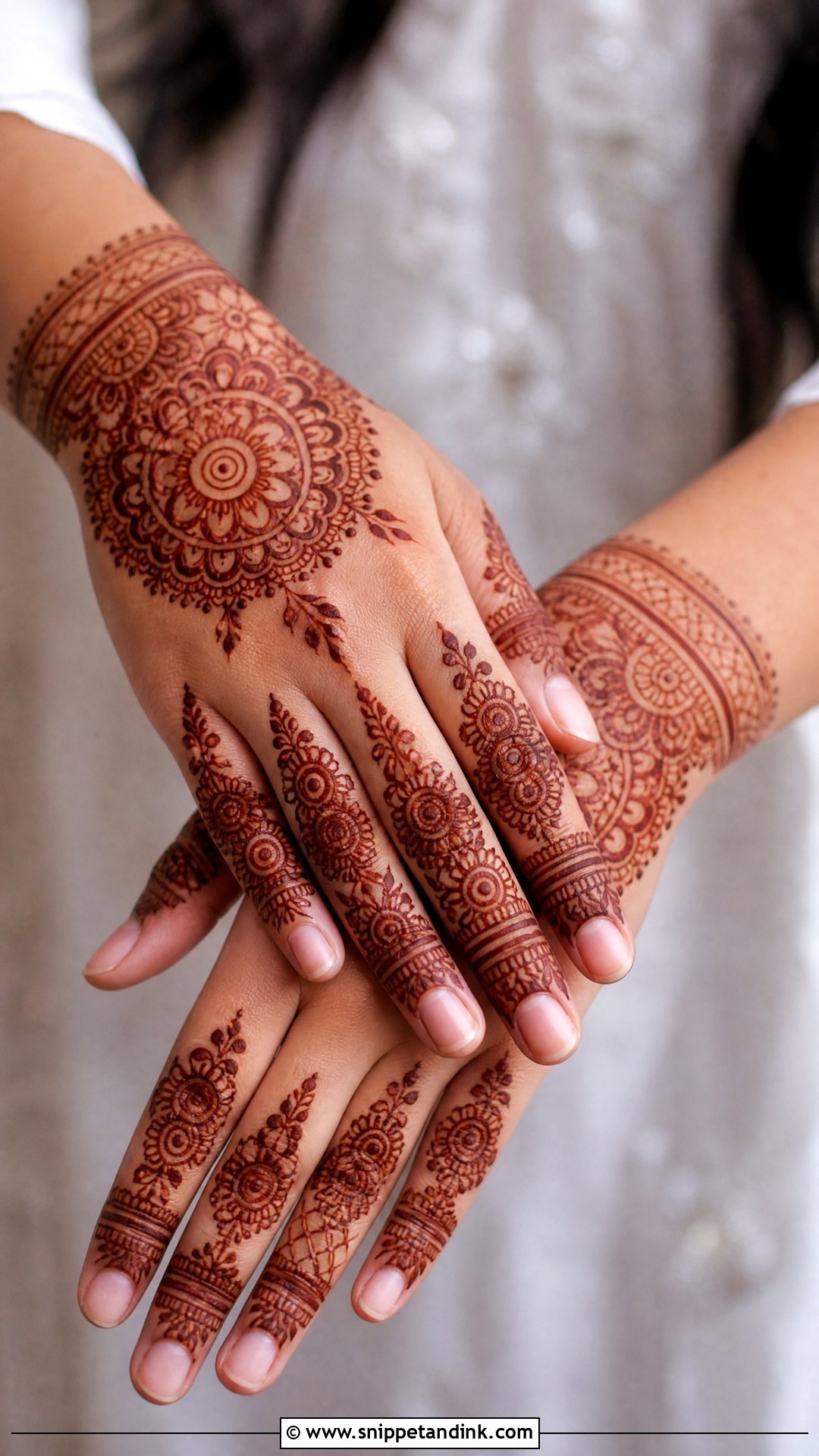
Half hand mehndi covers fingers, palm and wrist and stops before the forearm. It might be a back hand bracelet or a palm with mandalas and paisleys. It’s quicker to apply and dries faster, which suits festivals, small weddings, family functions and bridesmaids. The top edge is where it can look unfinished, so I close it with a floral or banded border right at the wrist crease.
23. Kids Mehndi Design
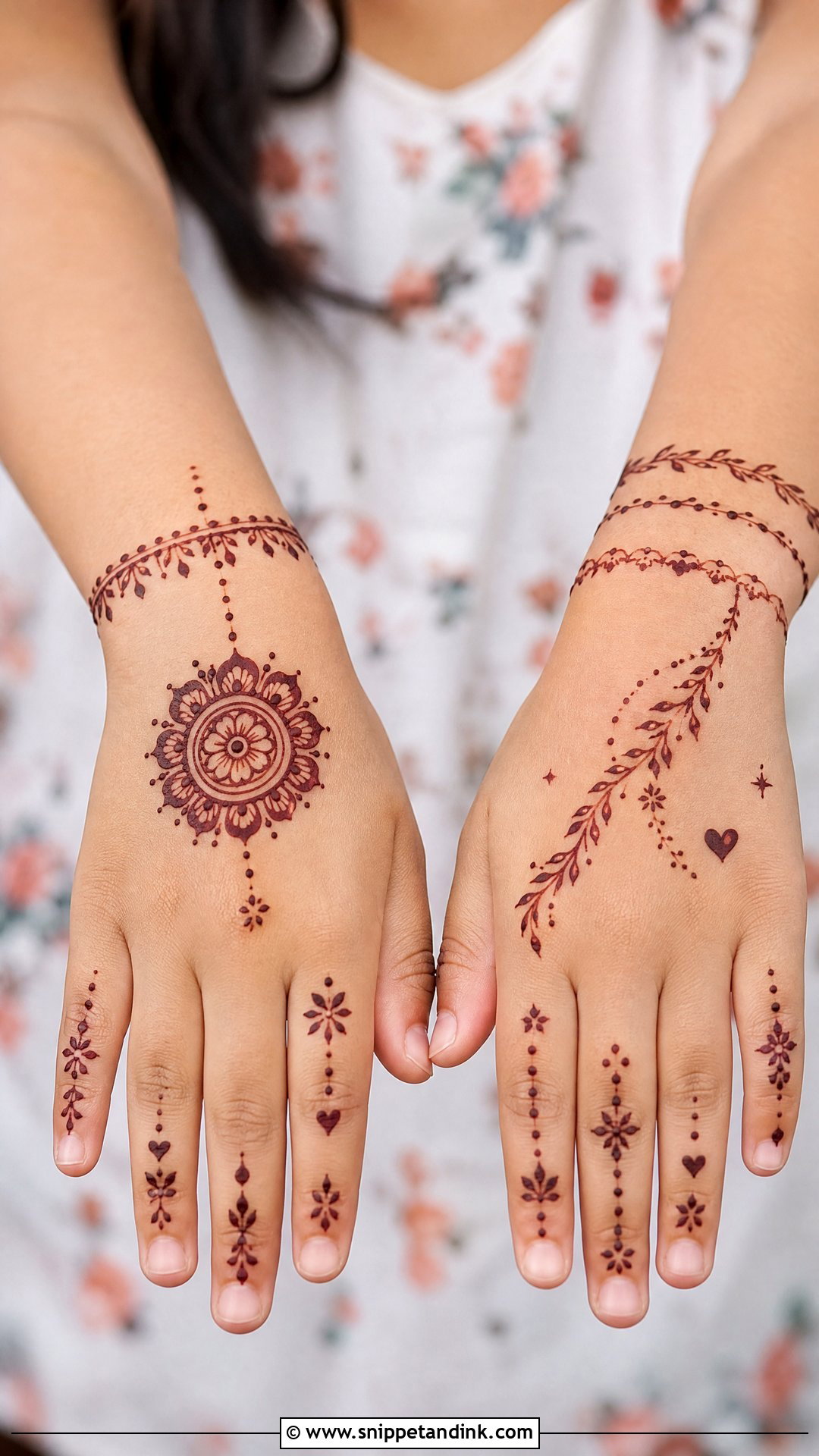
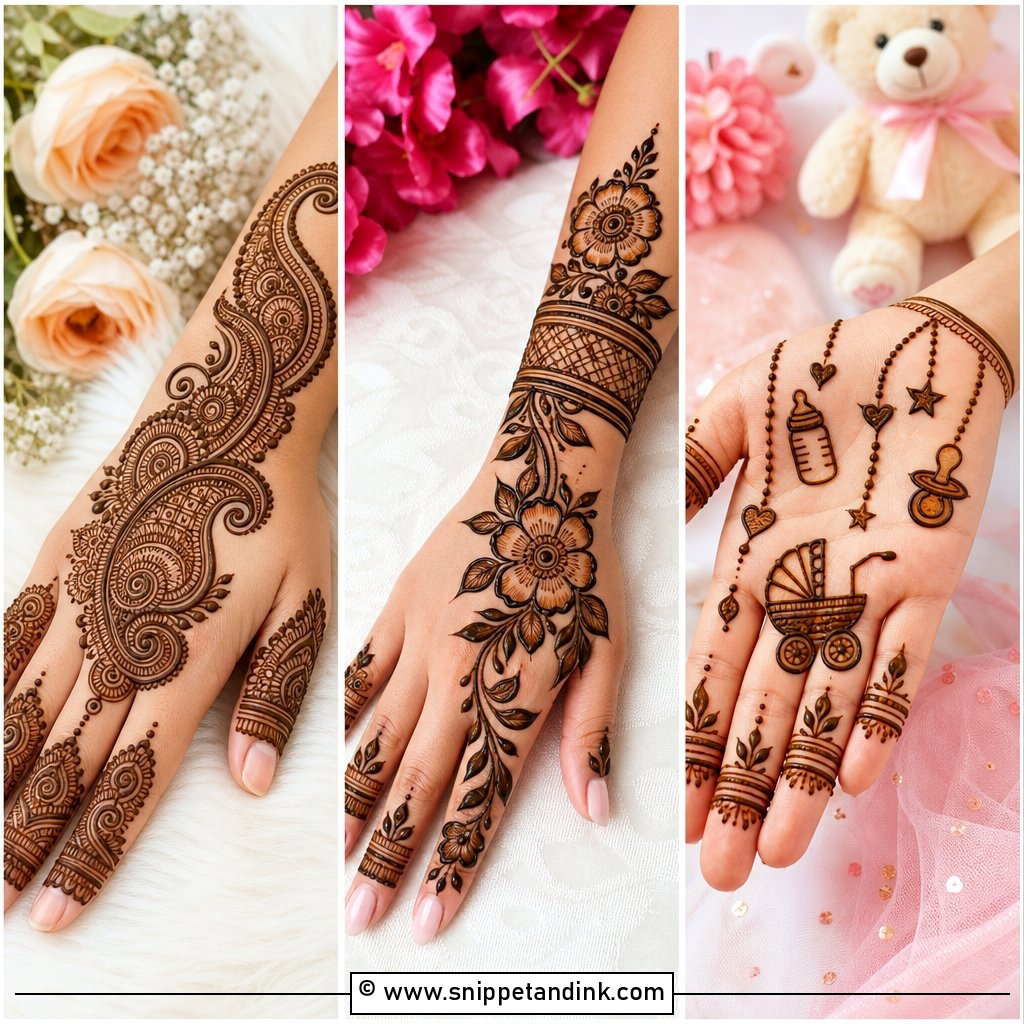
Children rarely sit still, so their designs need to be finished in minutes. Kids mehndi design usually means small flowers, tiny mandalas, hearts, stars and finger dots. Back hand designs smudge less than palms, because small hands grab things. Use only natural henna on children and never black henna, which can contain PPD and cause serious skin reactions. A small bracelet with finger details is plenty for Eid, weddings or birthdays.
24. Groom Mehndi Design
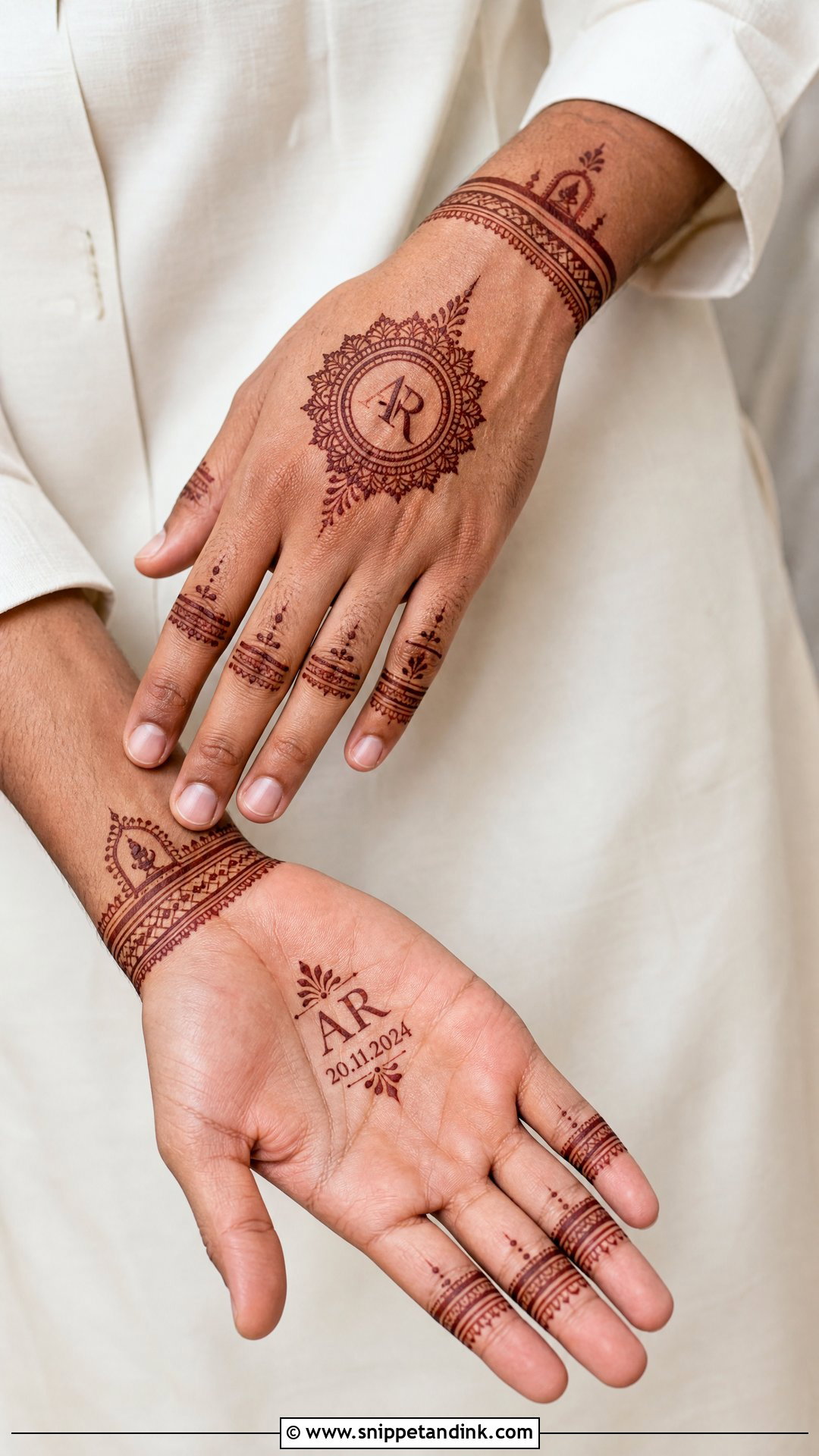
More grooms are wearing henna now, usually small and symbolic: initials, the wedding date, a little mandala, geometric bands or a wrist pattern. Some take it on the palm for the ceremony; others prefer a subtle back hand design. I use bold, simple lines, since thin details on larger hands can look faint. Natural henna stains darker on the palm than the back of the hand, so I place anything meaningful on the palm.


25. Foot Mehndi Design
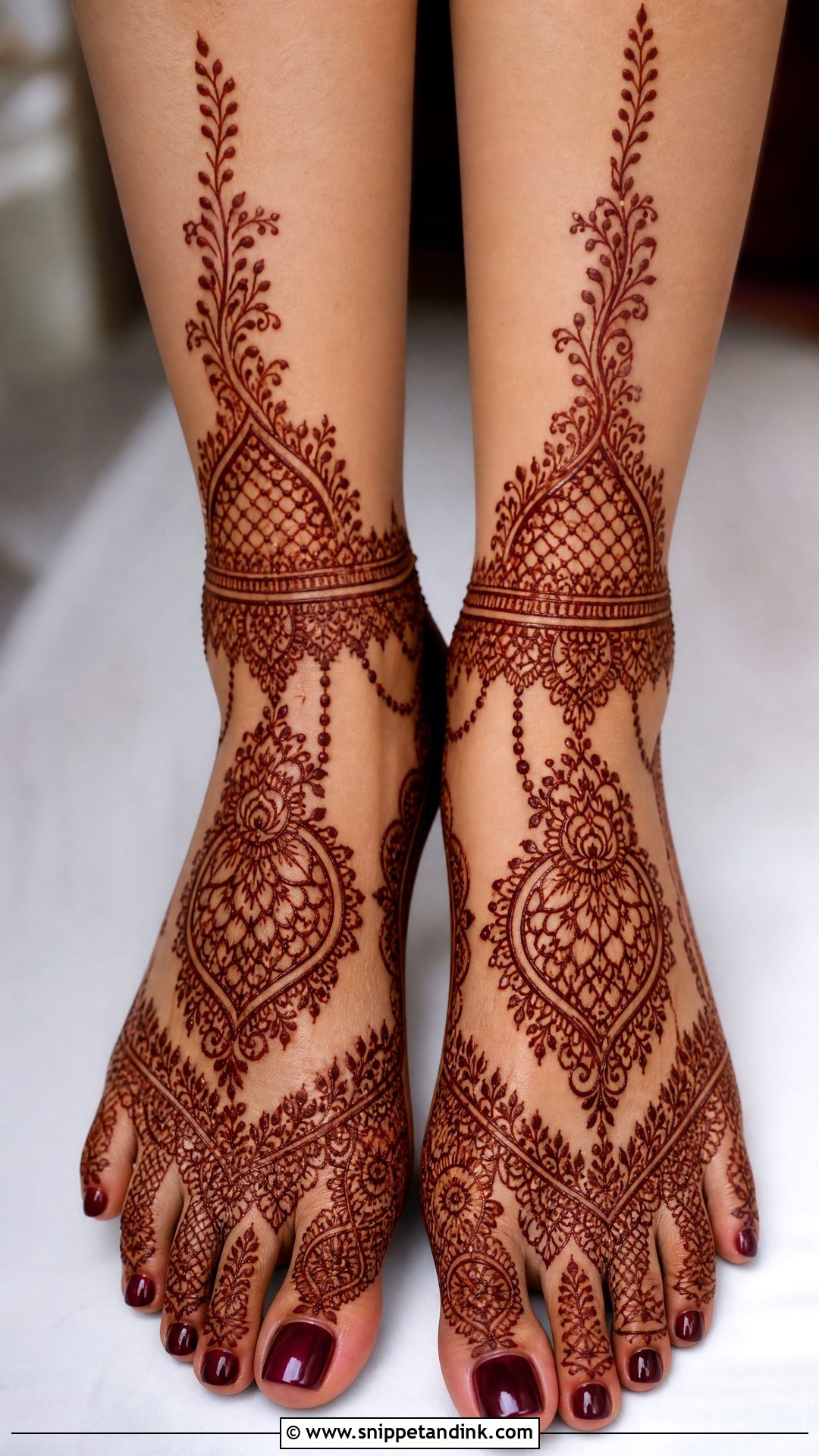
Foot designs range from an anklet band and toe details to bridal coverage over the toes, top of the foot, ankle and lower leg. Feet stain very well, often darker than arms, but they’re the hardest to keep still and the paste is easily smudged walking. I apply feet last in a bridal session and ask the bride to stay seated until it’s dry. Motifs should frame the shape of the foot, with the ankle band level and the toes decorated evenly.
Aftercare From the First Scrape to Day Three
Most of the color comes from what you do after the artist leaves. Here’s the routine I give every bride:
- Keep the paste on as long as you can, ideally six hours or overnight. A dab of lemon and sugar helps it stay stuck to the skin.
- Scrape it off with the back of a butter knife or your nails, never with water.
- Stay away from water for as long as possible, ideally 12 to 24 hours.
- Keep the hands warm; the stain develops faster with body heat.
- Avoid hand sanitizer, chlorine and harsh soaps for the first few days.
Why your palms and arms won’t match
Henna stains thicker skin more deeply, so palms and fingertips go darkest while the forearms and back of the hand stay lighter. That’s normal, not a sign of bad paste. I plan the most detailed motifs where the skin will hold them best. A good stain typically lasts one to three weeks, fading from the edges where skin renews fastest.
If the color looks pale orange the morning after, don’t panic. I tell brides to judge the stain on day two, not day one.
Plan the Design Around the Day It Has to Peak
The clearest trend across all of these is balance: cleaner, more personal designs that still use traditional motifs. Brides lean toward Rajasthani, portrait, lotus or modern bridal work, while guests and festival looks favor Arabic florals, mandalas, bracelets, jaali and finger designs. Choose for your hand shape, your outfit and how long you can sit still. Then let fresh natural henna, careful spacing and good aftercare do the rest.
You'll Like These Ideas:







Leave a Reply