
Most brides who book me this year don’t want one heavy pattern copied from a catalog. They want something that fits their outfit, survives a long day of rituals and holds up in close-up ring shots and phone videos. Some still ask for full Indian hands with palaces, peacocks and portraits; others want Arabic spacing, a fusion layout, bracelet bands or a single mandala with initials. I’ve gathered the bridal styles I draw most, with honest notes on time, stain and who each one suits, so you can arrive at your consultation with a clear direction.
What I Ask Every Bride at the Consultation
A good bridal design is mostly settled before the wedding week. These are the questions I go through, and having answers ready saves time and gets you a design that fits.
- How high should it go? Wrist, mid-forearm or elbow decides the length of the sitting more than anything else.
- What are your sleeves like? Anything hidden by a sleeve is time you don’t need to sit for.
- Which jewelry will you wear on your hands? A haathphool, kalire or a full chooda changes where the open spaces go.
- Do you want personal elements? Names, dates and scenes need to be agreed in advance.
- When is each function? I time the application so the stain peaks for the main ceremony, usually one to two days before.
- Do you have allergies or sensitive skin? If you’ve never had henna, we do a small patch test first.
1. Full Hand Indian Bridal Mehndi Design
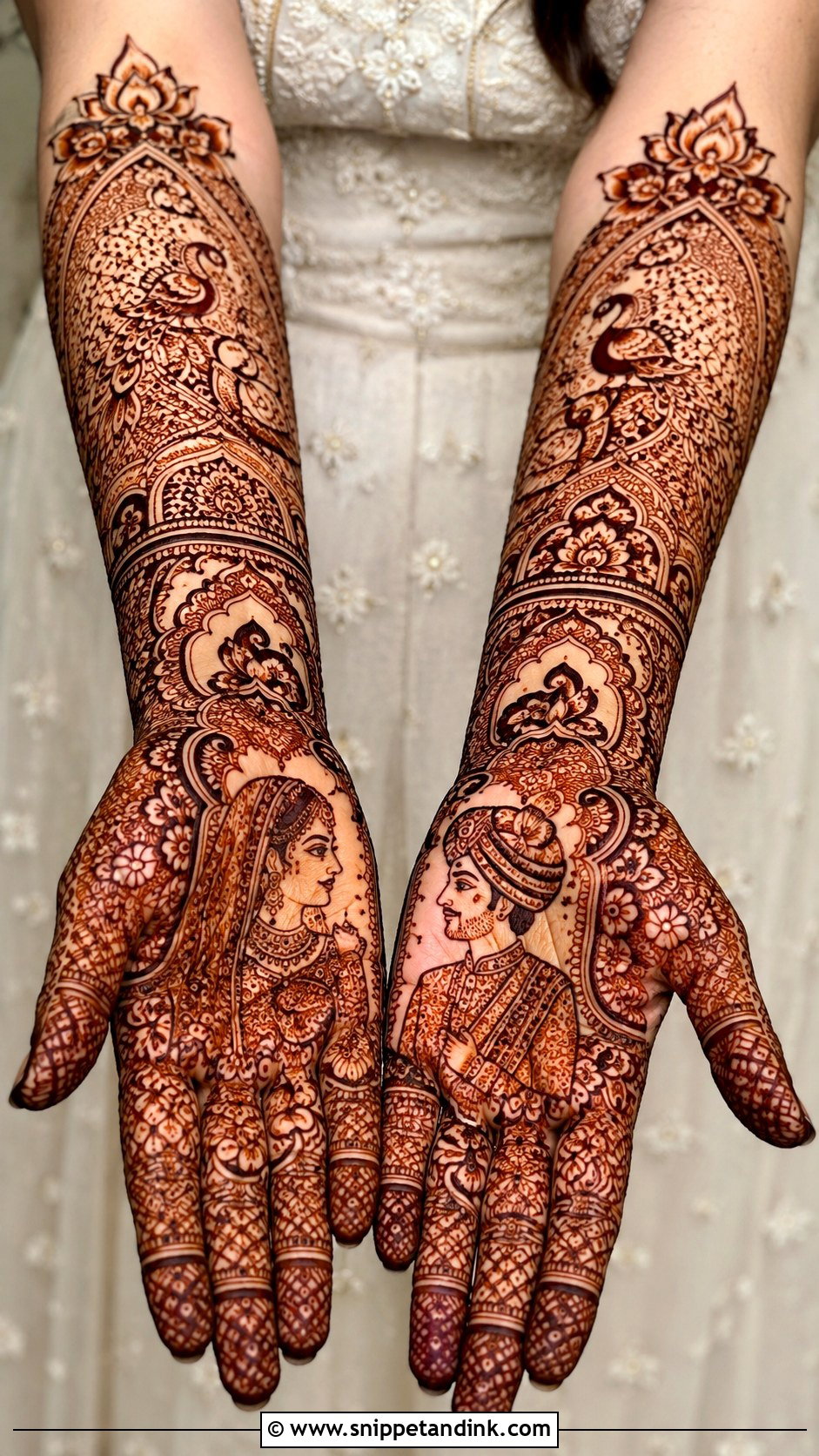
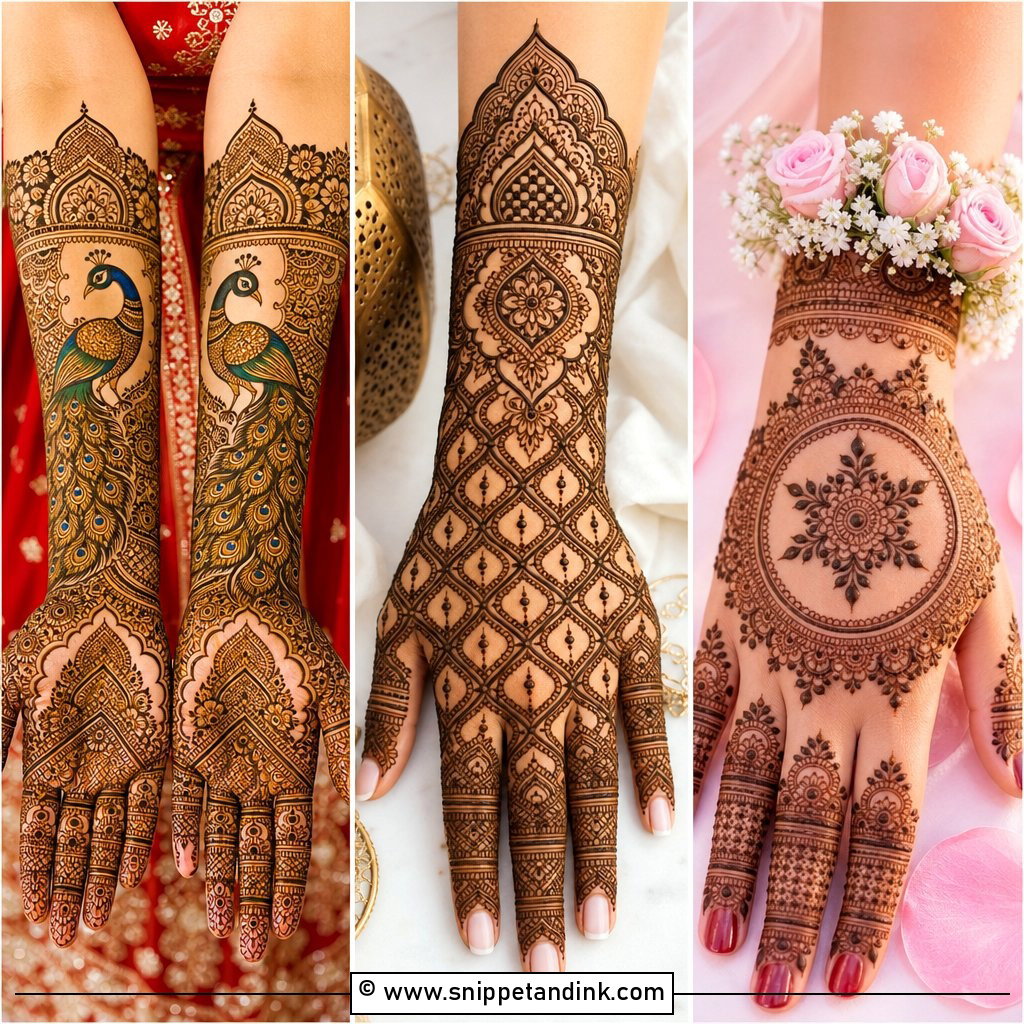
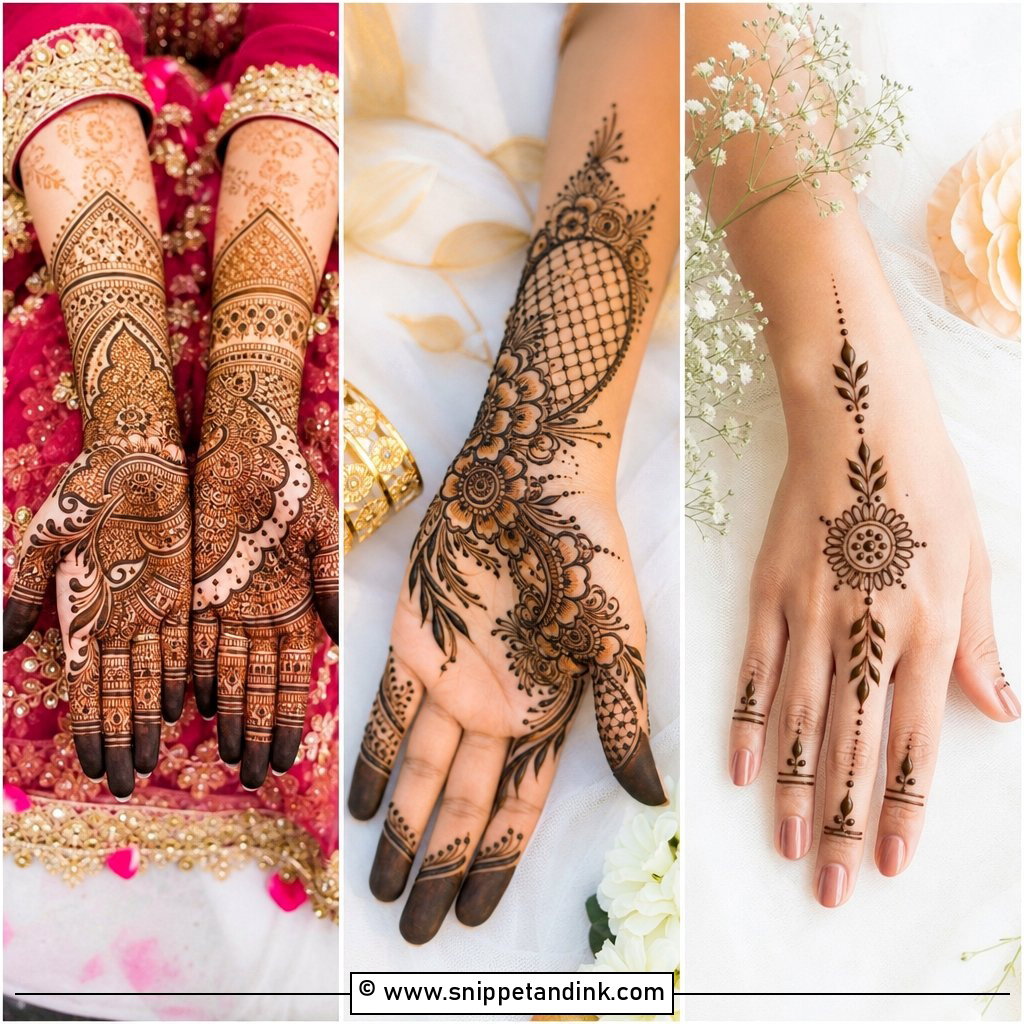
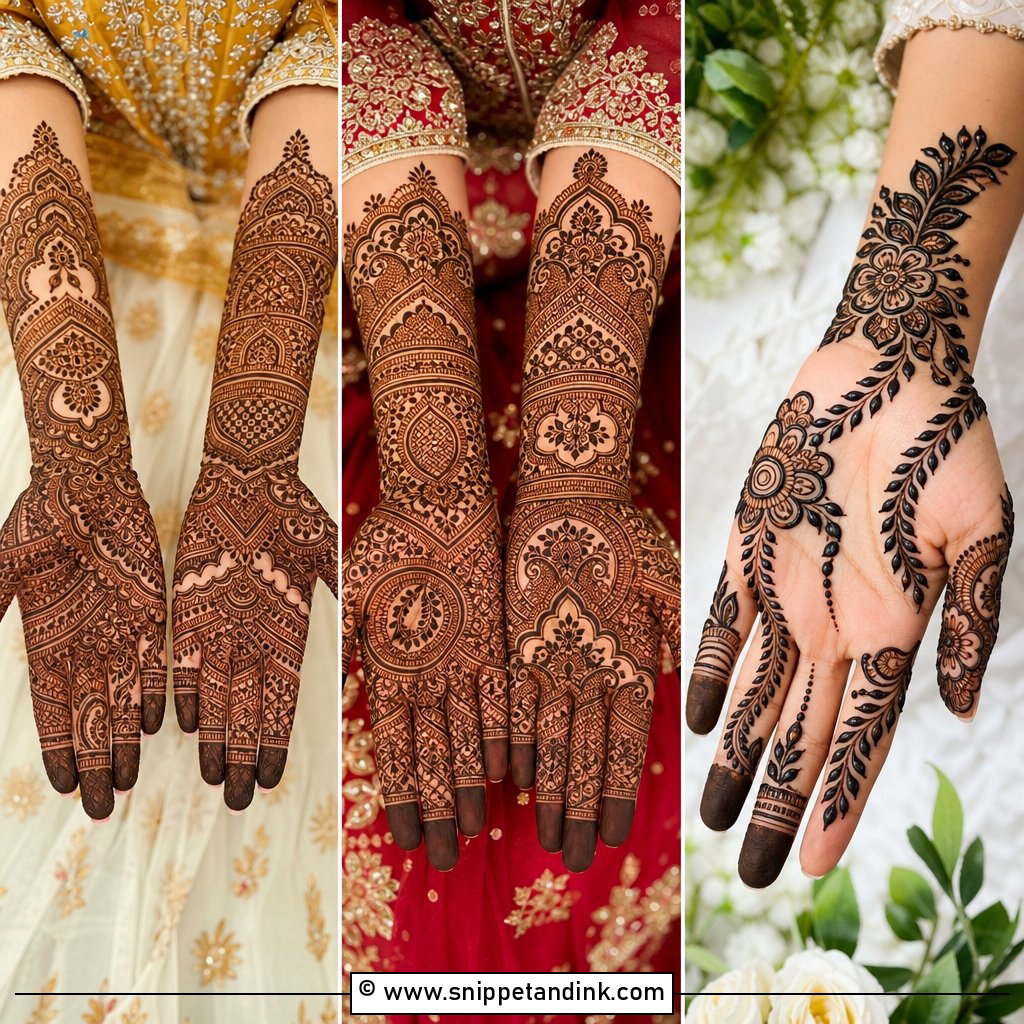
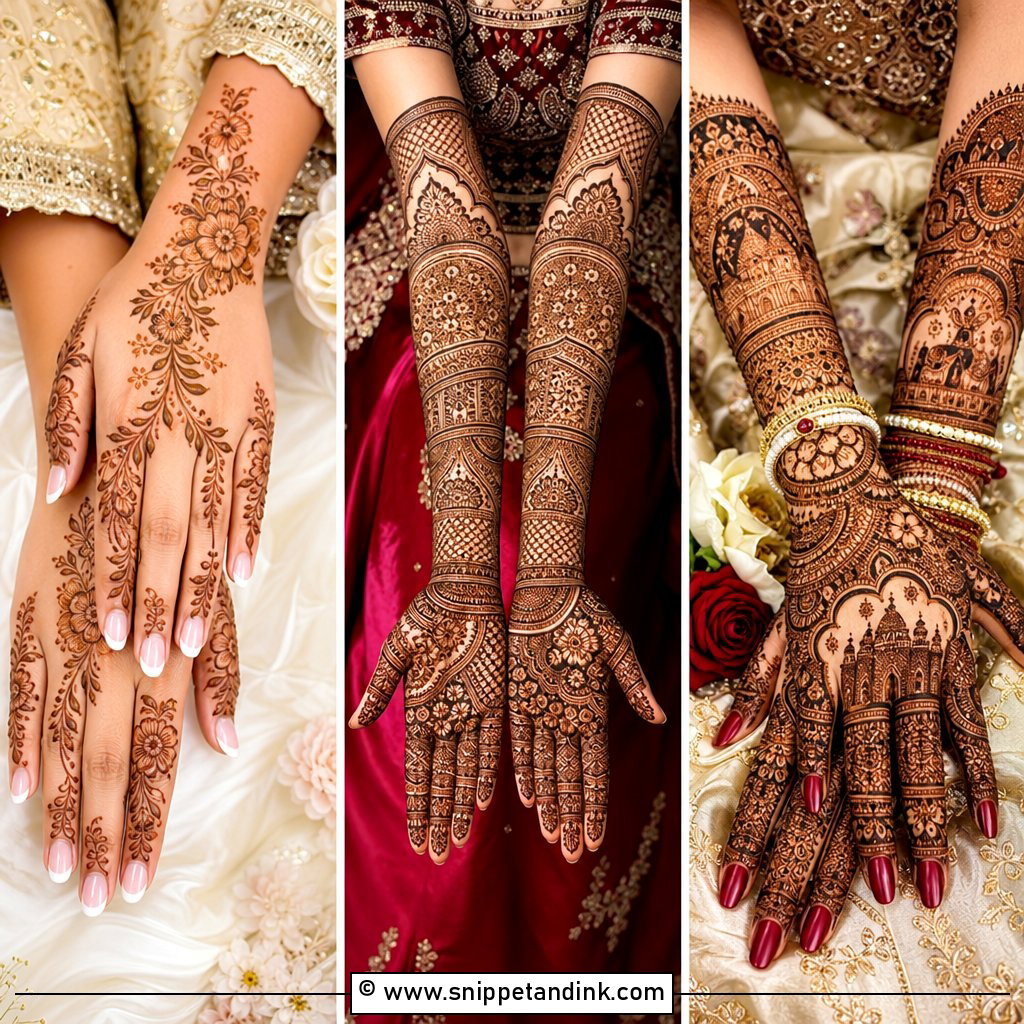
Full Indian coverage starts at the fingertips and runs past the wrist, often onto the forearm, with paisleys, lotus, peacocks, jaali, vines and tiny filler. Palms may carry bride-and-groom figures, wedding bells, a doli or hidden initials, and the backs mirror them with cuffs and fine finger work. It matches heavy lehengas and embroidered sarees. I leave narrow channels of bare skin between sections; without them, dense filler stains into a single dark mass and the detail you sat hours for disappears.
2. Arabic Bridal Mehndi Design Full Hand
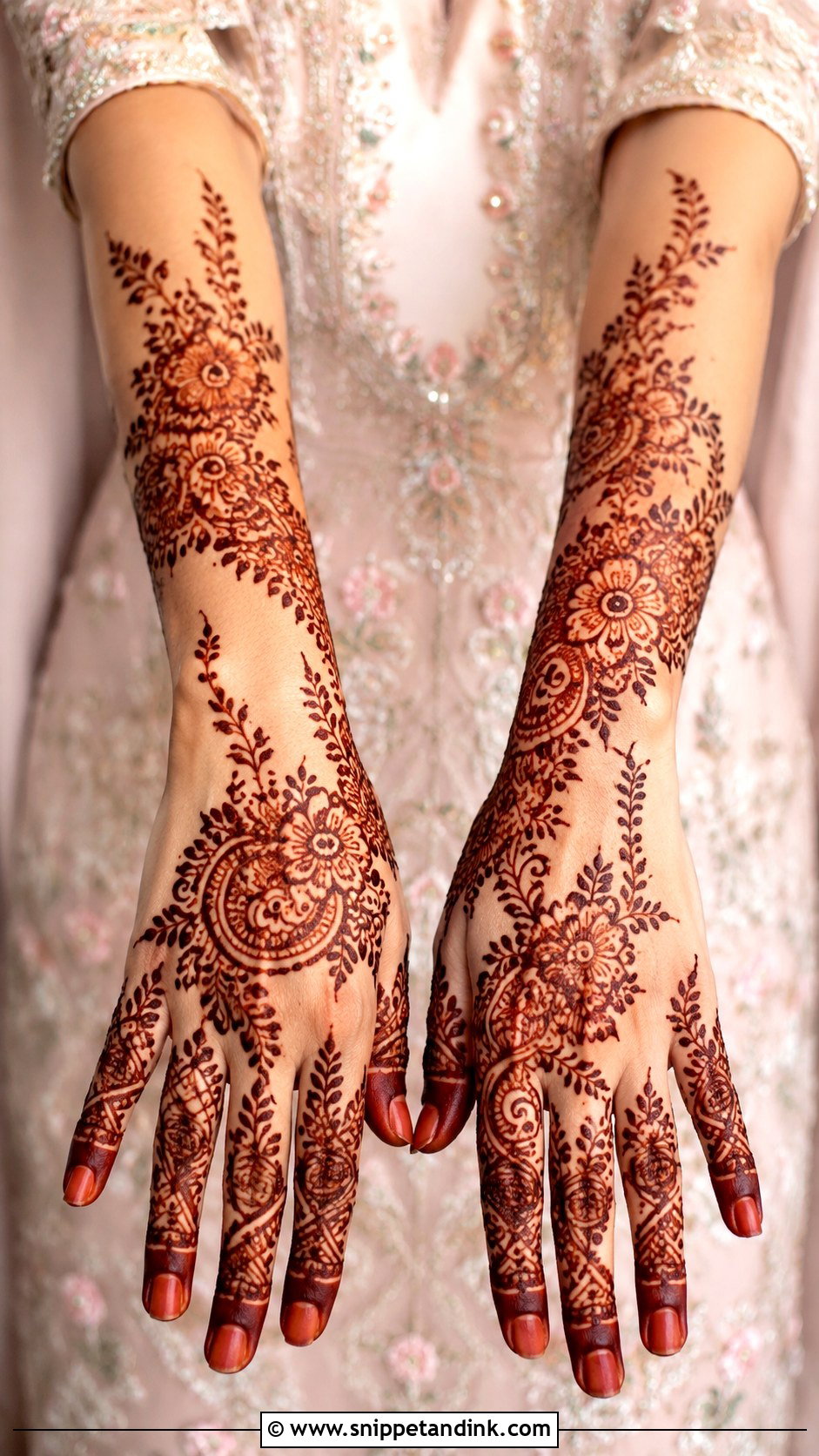
Arabic bridal work runs diagonally from wrist to fingers with large florals, leafy trails, paisley curves and bold outlines, leaving visible skin between. It’s lighter to wear through long functions and much quicker to apply. To make it bridal, I fill the fingertips, add a bracelet band at the wrist and shade inside the bigger flowers. It suits nikah looks, destination weddings and modern outfits where dense filling would feel too formal.
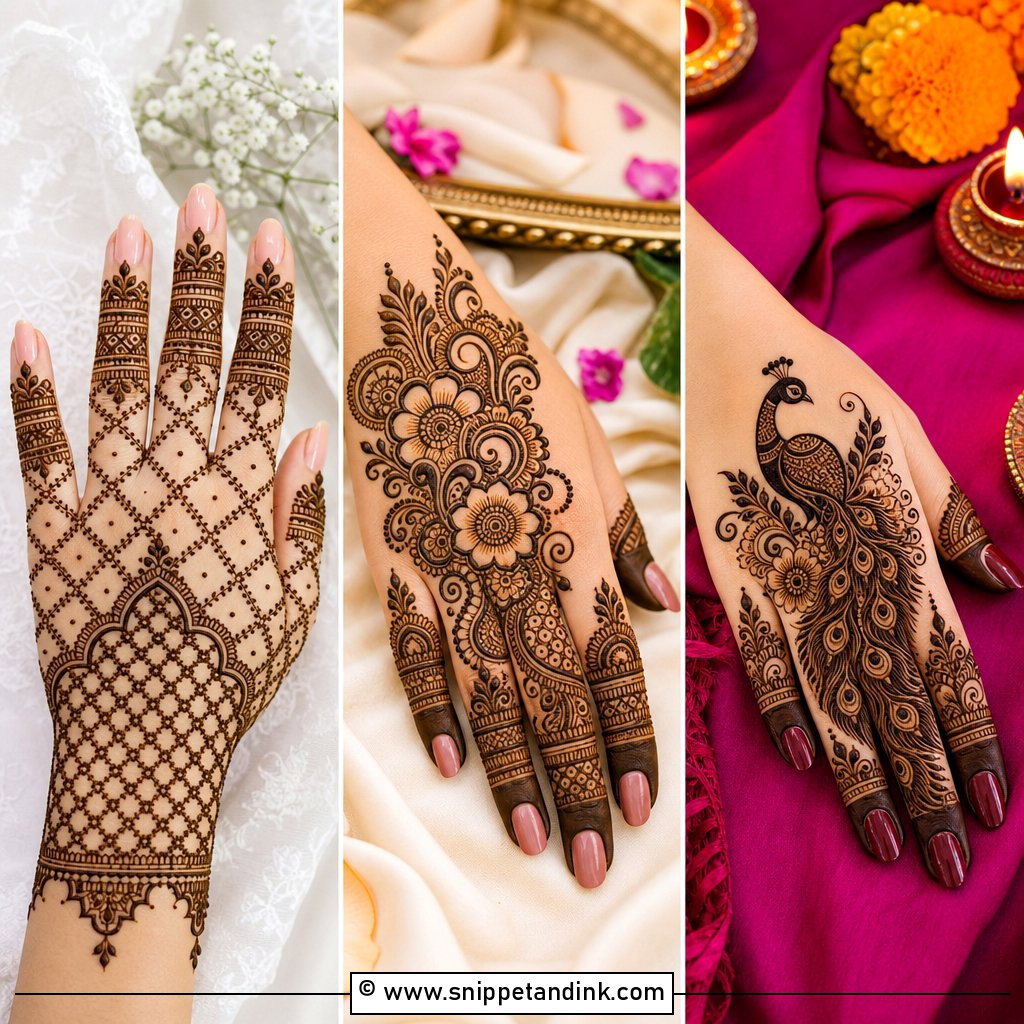
3. Indo Arabic Bridal Mehndi Design
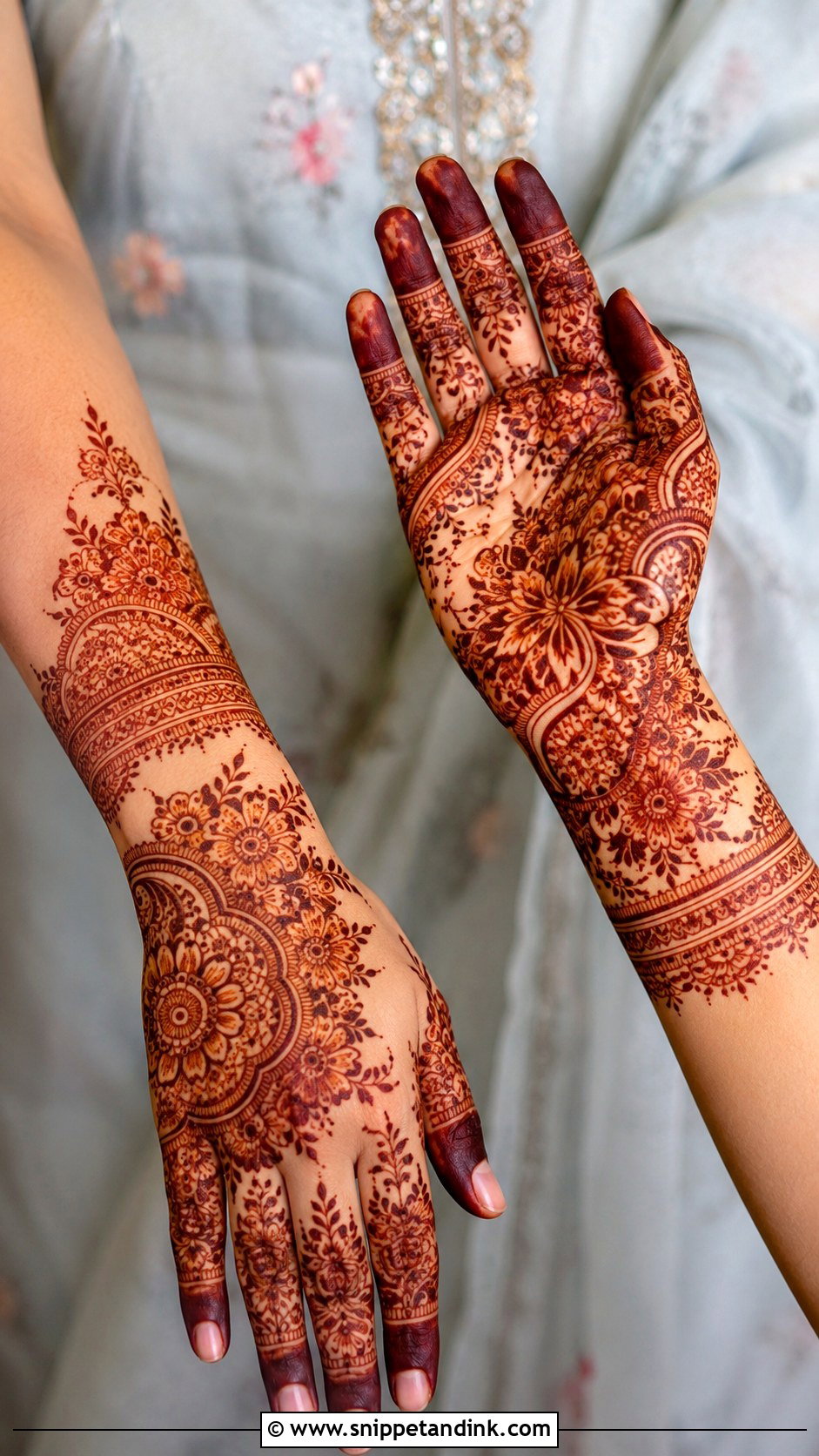
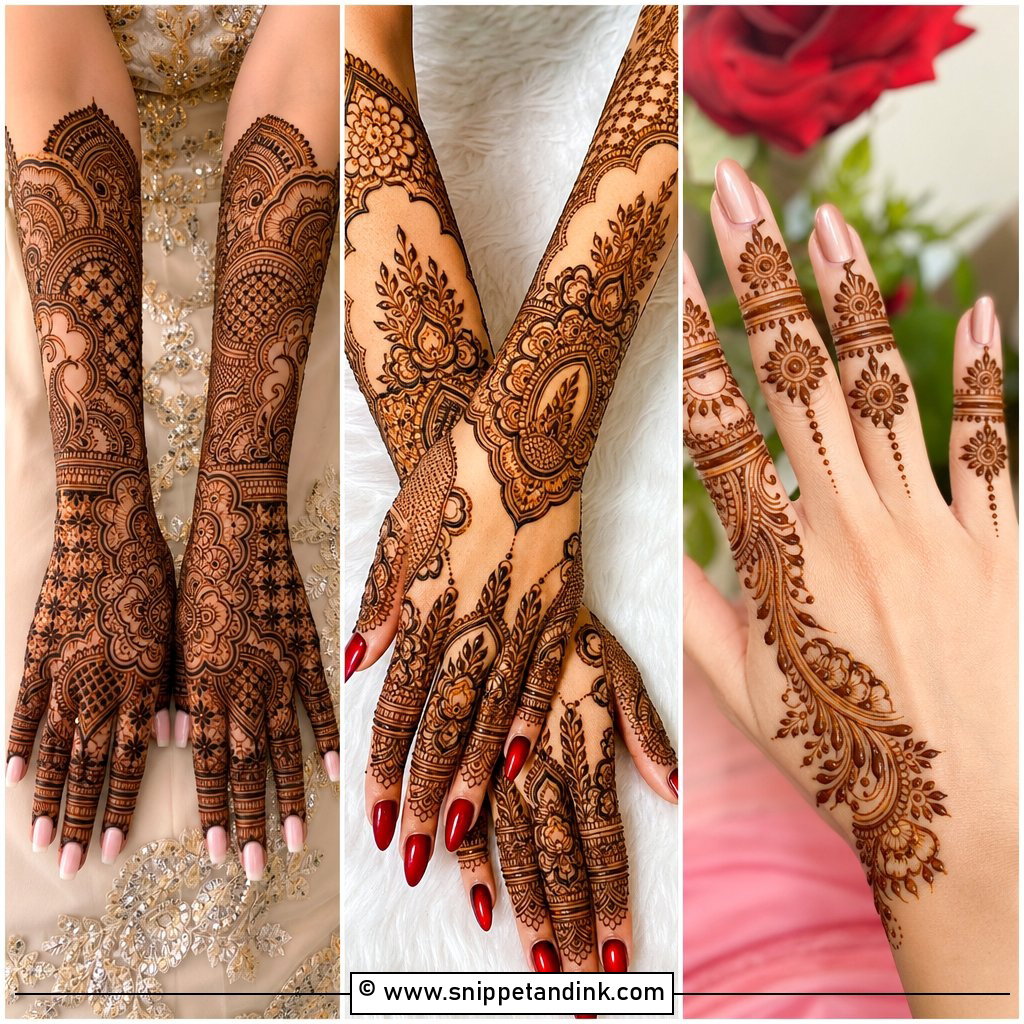
Indo-Arabic bridal mehndi pairs Arabic flow with Indian detail: big floral trails, paisley bands, mandala sections, vines and fine net work. A layout I often use puts Indian-style motifs on the palms and Arabic spacing on the backs, which keeps the backs clean for ring photos. It’s the most adaptable bridal style I know, and it works with nearly any outfit.
4. Rajasthani Bridal Mehndi Design
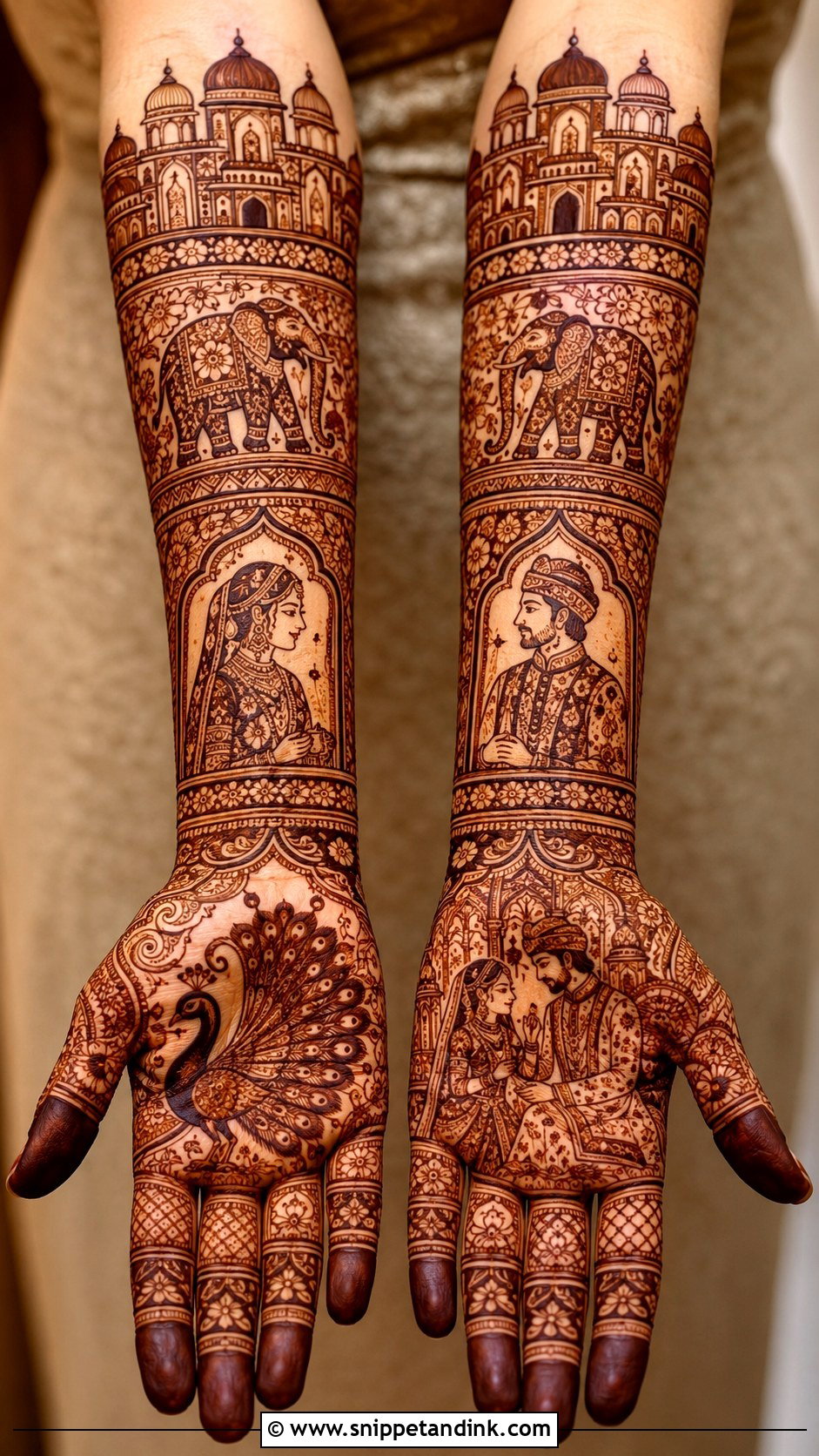
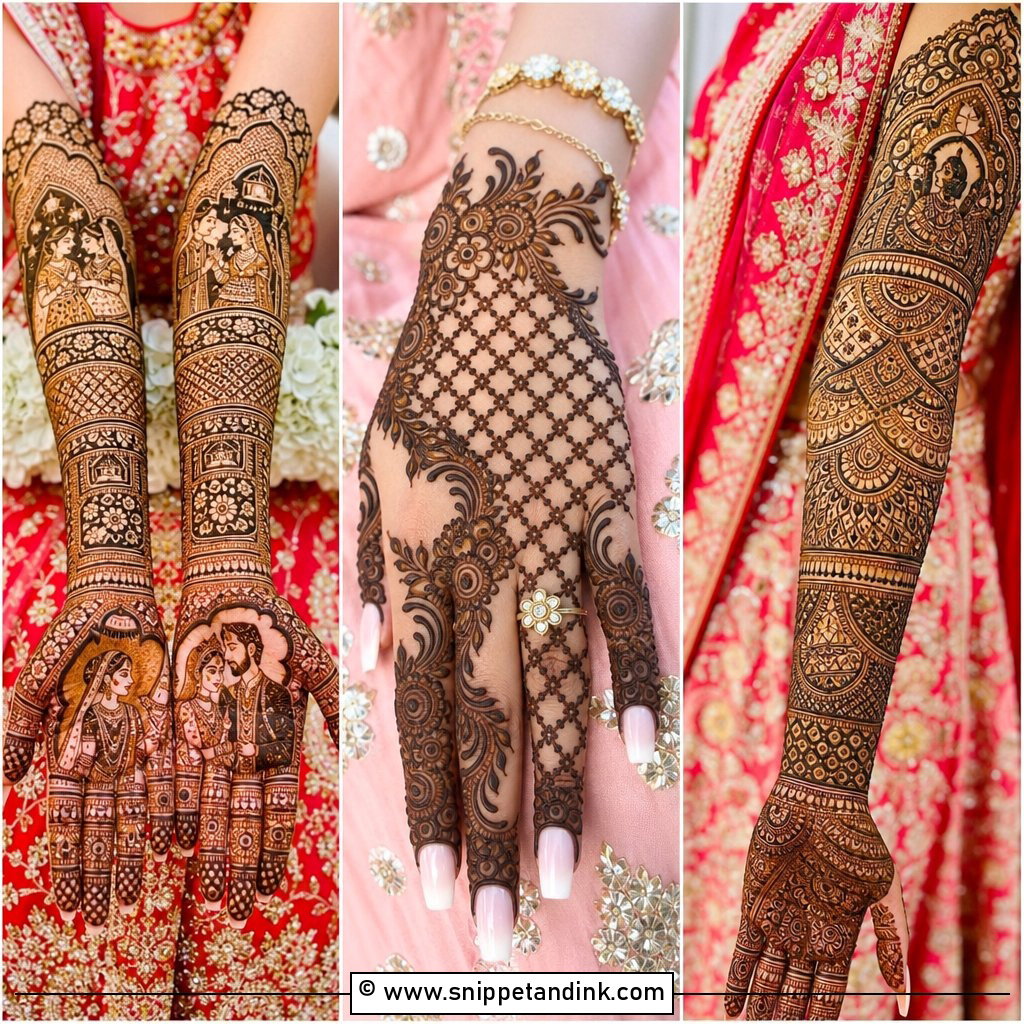
Rajasthani bridal work is storytelling at full density: palaces, elephants, peacocks, bride-and-groom portraits, doli scenes and jewelry-like borders, covering hands and arms with almost no empty skin. The palms show the ceremony and the backs carry jaali, cuffs and symmetry. Only book this with an artist who draws this style regularly, and give it a long sitting the day before the wedding. It belongs with red, maroon, gold and ivory.
5. Marwari Bridal Mehndi Design
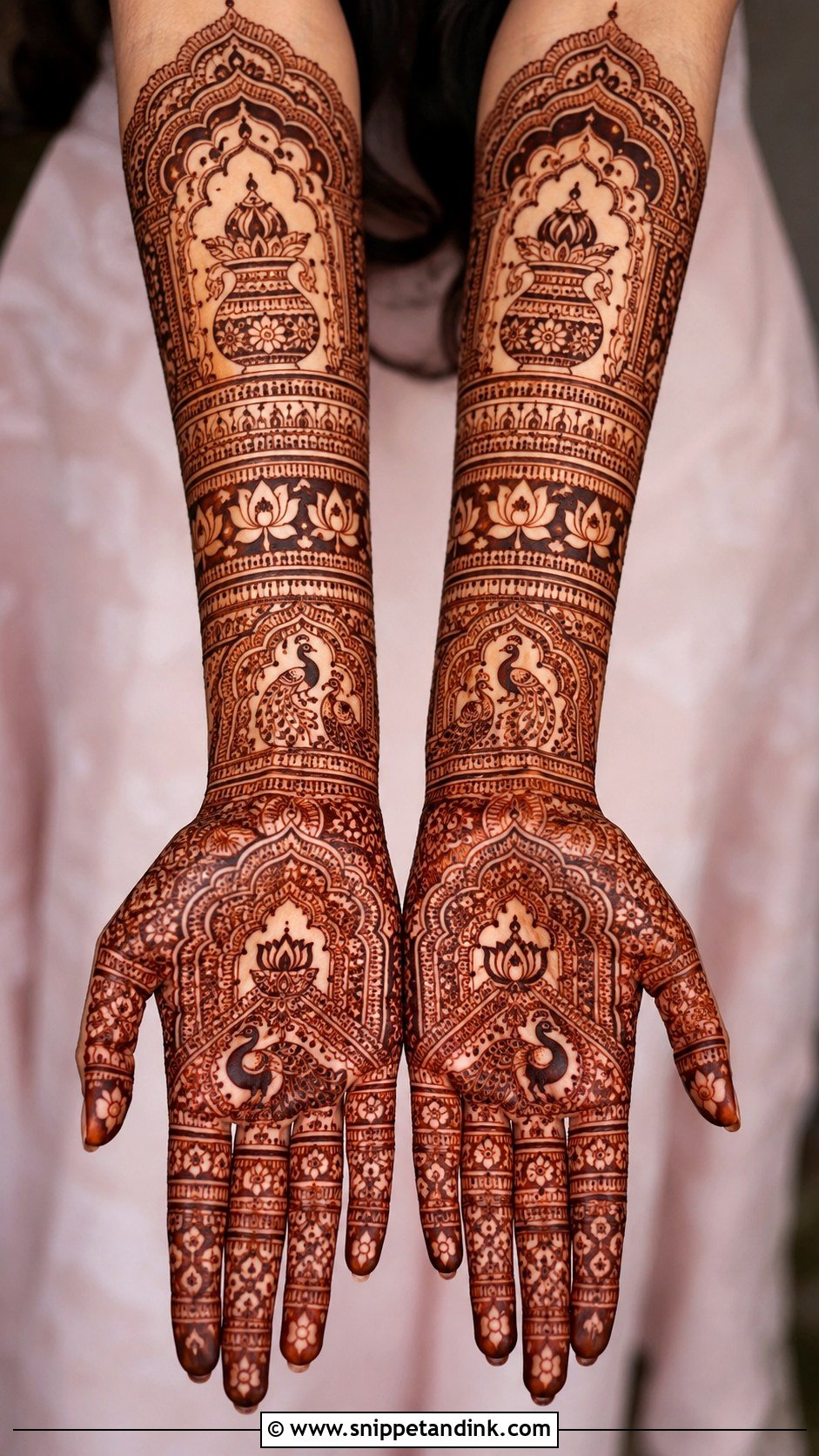
Marwari bridal mehndi uses fine lines, dense fillers and traditional symbols such as peacocks, kalash, mandaps, paisleys, lotus and bride-groom art, but it’s often arranged more openly than the heaviest Rajasthani work, so the hand stays readable. Fingers are filled richly, the palms hold a central story element, and the wrists and forearms get bands and arches. I keep each symbol framed so it reads on its own at portrait distance.
6. Pakistani Bridal Mehndi Design
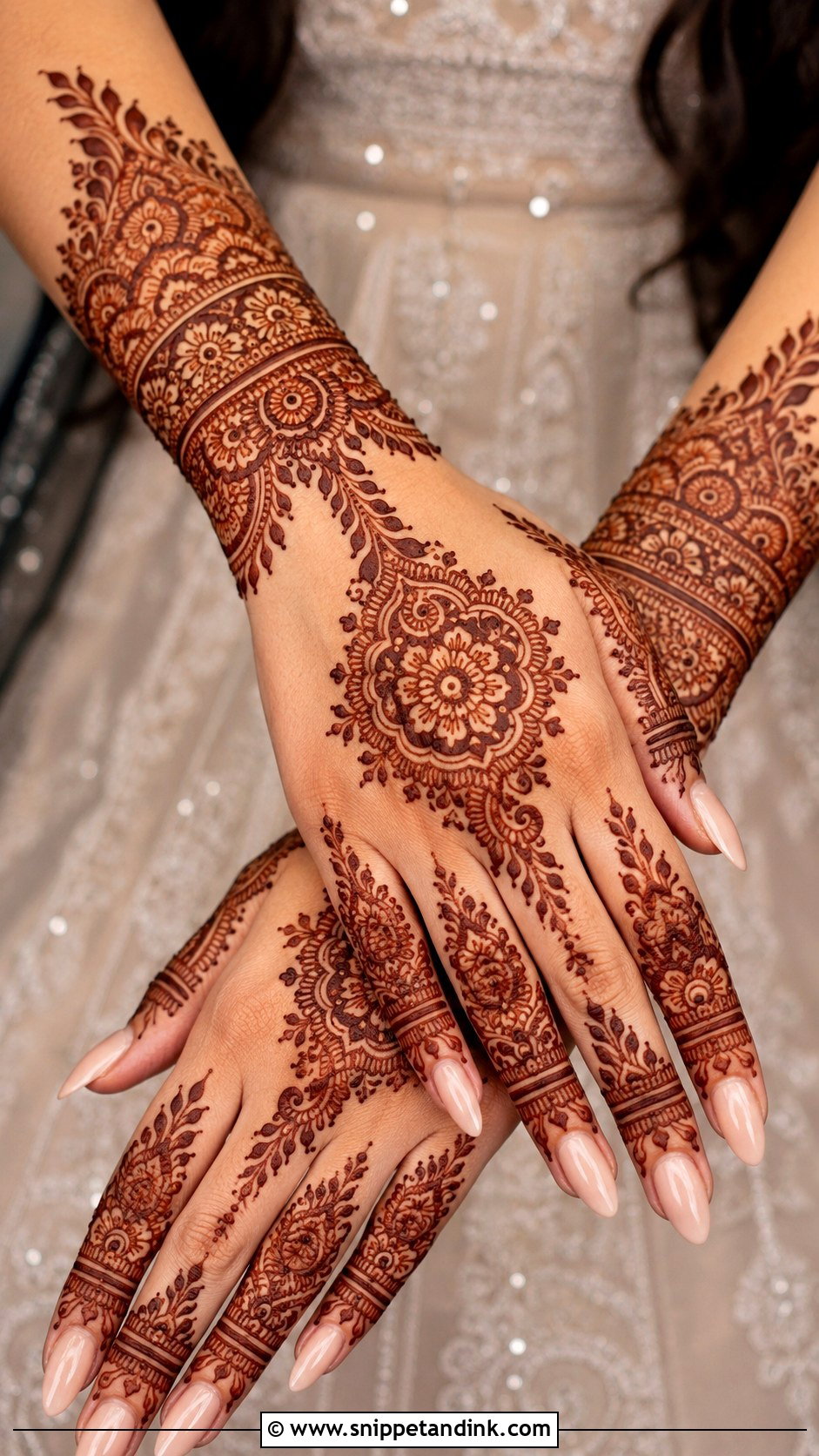
Pakistani bridal mehndi tends to flow more softly: floral vines, paisleys, mandalas, leafy trails, light shading and ornamental cuffs, full coverage that still moves. Palms are often symmetrical, while the backs show bold floral clusters and bracelets. It sits well with sharara, gharara and heavily embellished lehengas. Initials or the date hidden in the vines are easy to add here, since the curving lines give natural hiding places.
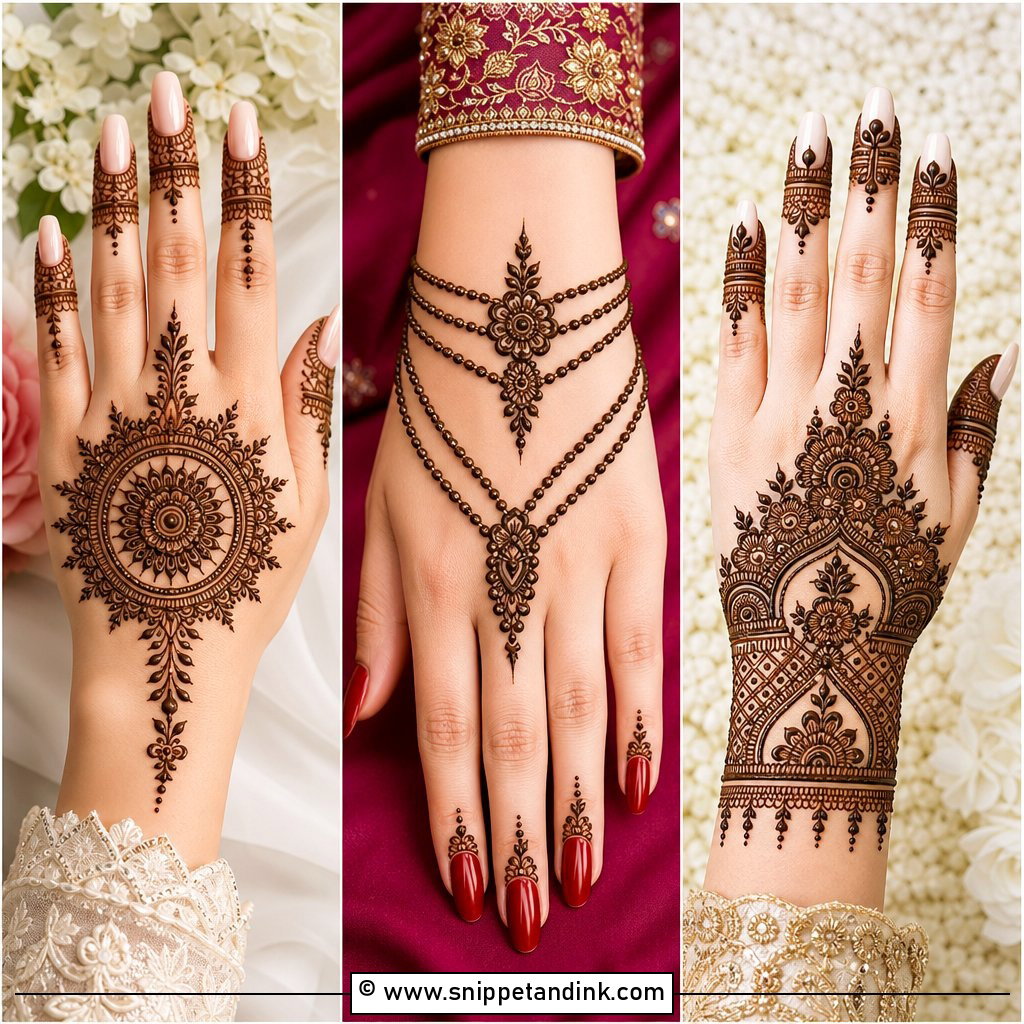
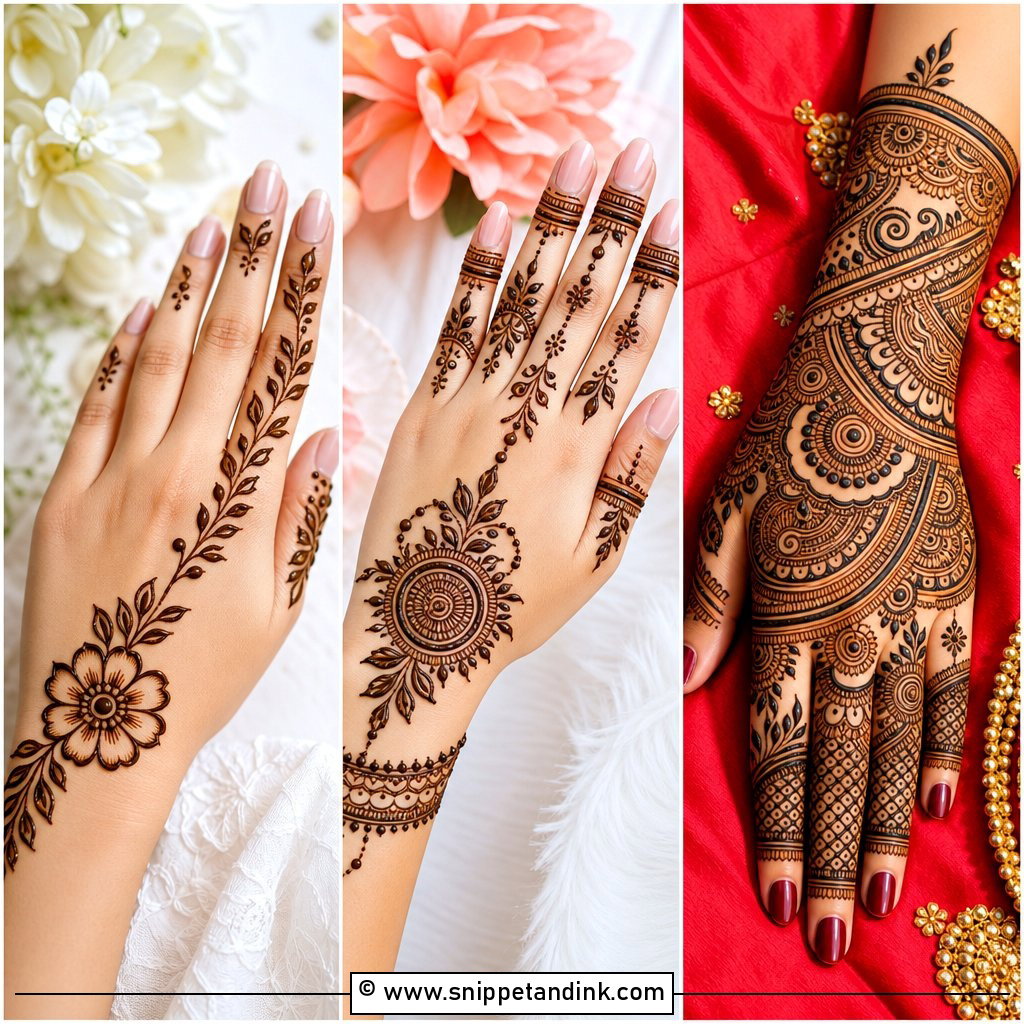
7. Minimal Bridal Mehndi Design
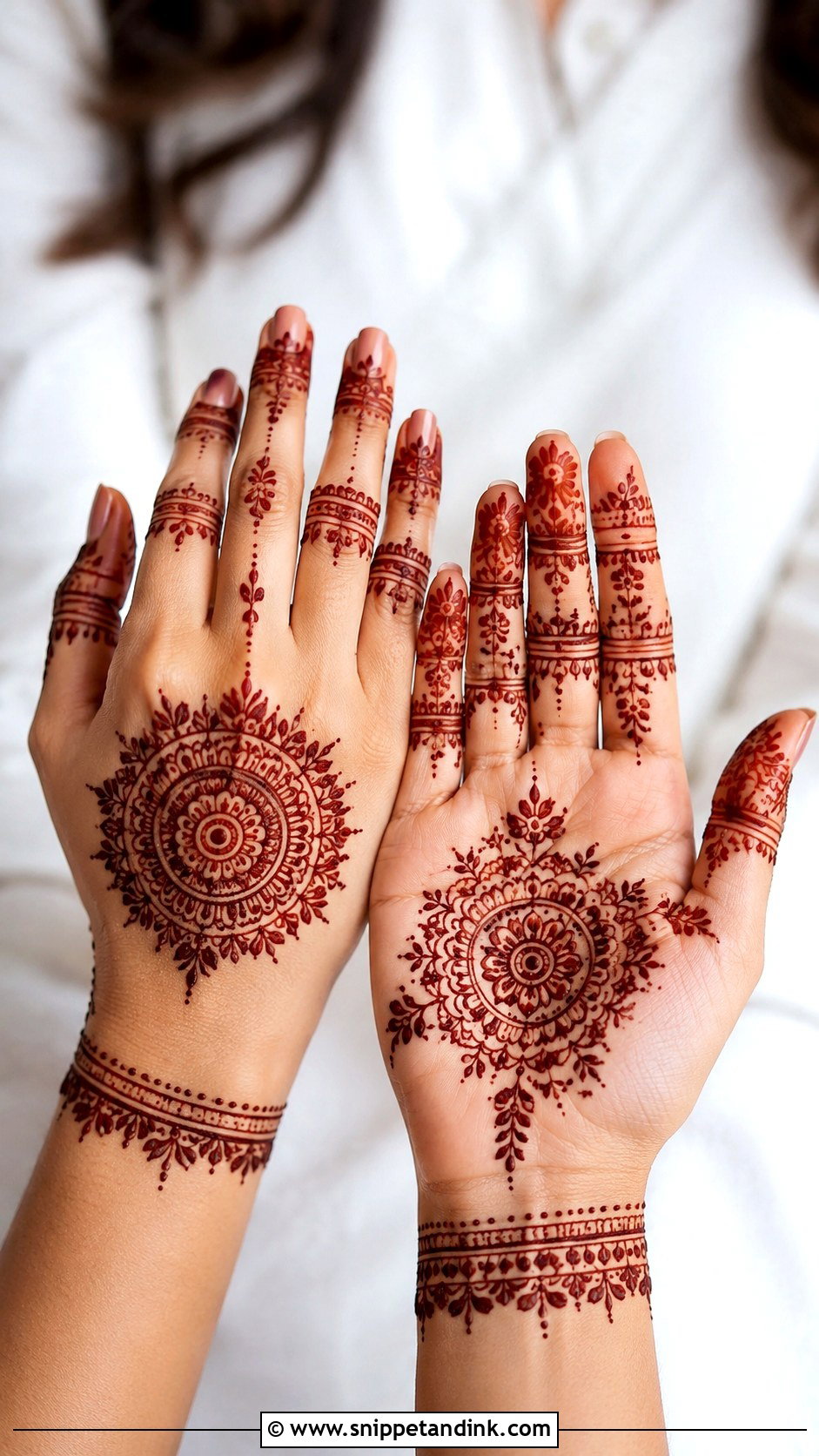
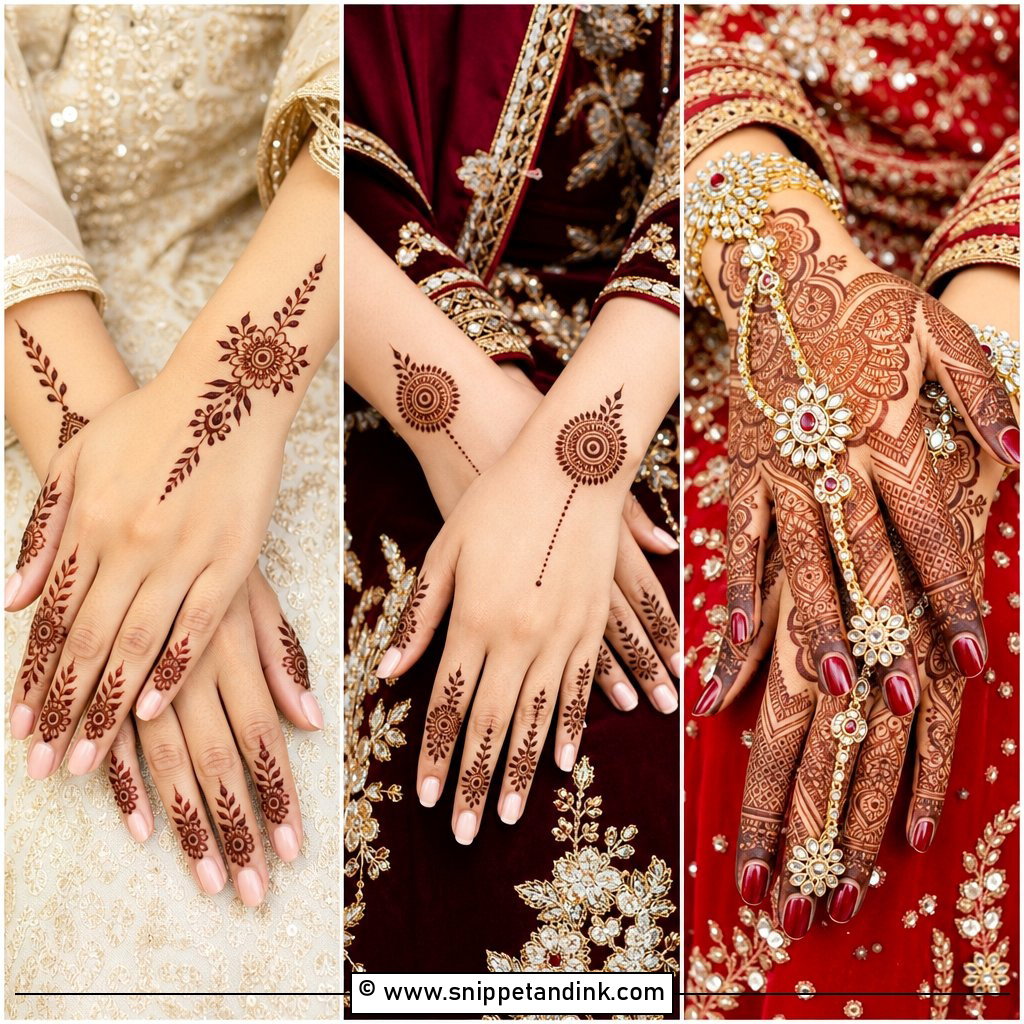
Minimal bridal work is clean mandalas, delicate fingers, slim wrist bands, small florals and plenty of negative space. It suits civil ceremonies, intimate weddings and brides wearing lightweight jewelry. The planning has to be more careful than with heavy work, because there’s nothing to hide behind. I connect a central motif on the back of the hand to the finger detail so it reads as one design, and I’d add initials or a meaningful flower to make it feel bridal.
8. Modern Bridal Mehndi Design
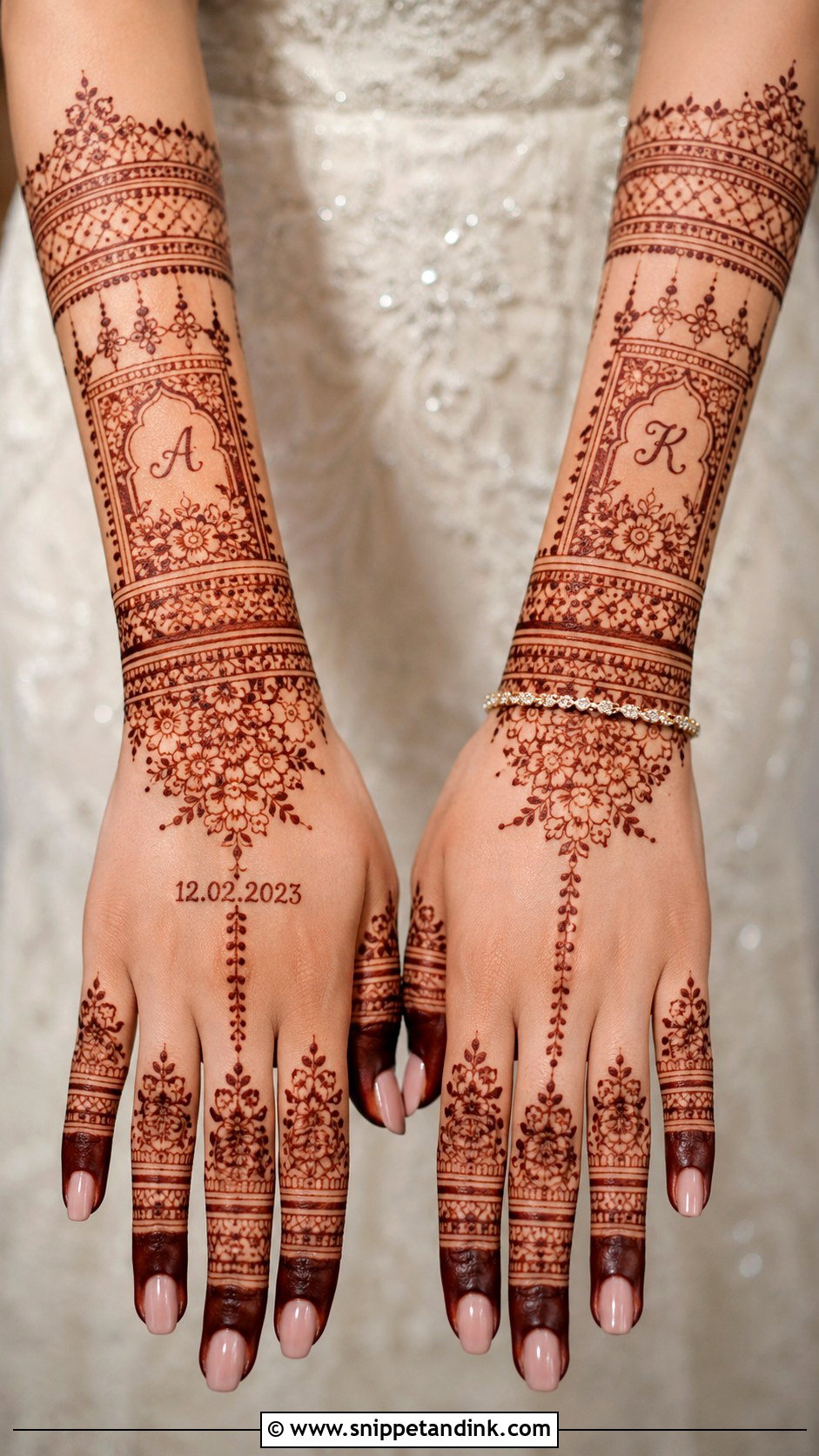
Modern bridal designs use geometric bands, floral panels, bracelet cuffs, initials, dates and negative space instead of covering the whole hand. They suit contemporary lehengas, pastels and fusion gowns. I often cover the palm and back of the hand and keep the forearm light. You can ask for mirrored hands or slightly different motifs on each. What makes it work is restraint; one extra filler motif in a modern layout makes it look unfinished rather than full.
9. Simple Bridal Mehndi Design Full Hand
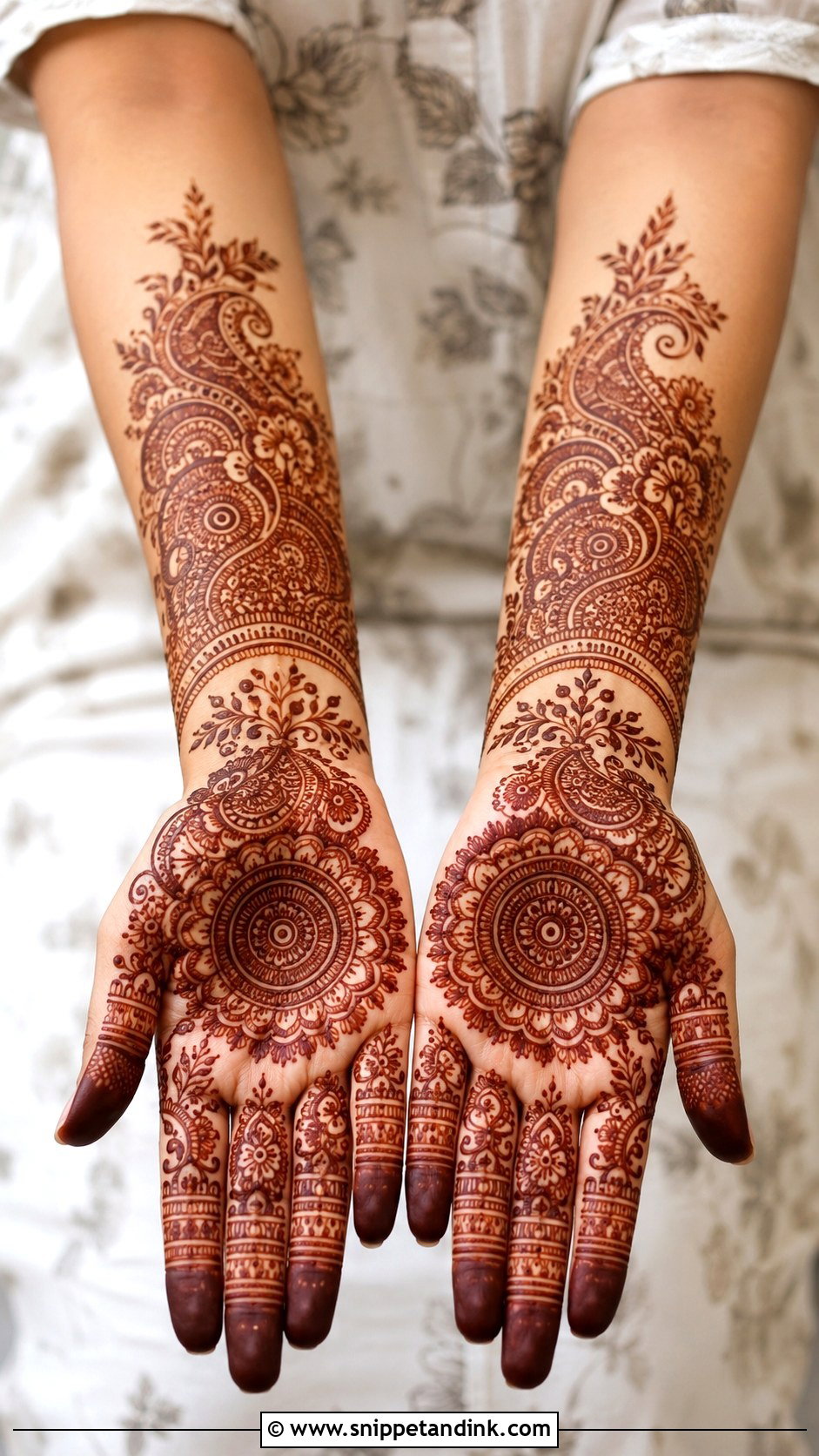
Simple full-hand work gives complete coverage with bigger, less crowded motifs: large paisleys, floral vines, mandalas, leafy borders and clean fingers. It applies noticeably faster than Rajasthani or portrait styles, which matters if your mehndi day is packed. It still reads bridal once you add wrist cuffs, small initials, dotted chains and a forearm border. Larger motifs also fade more evenly over the following week than dense filler.
10. Heavy Bridal Mehndi Design
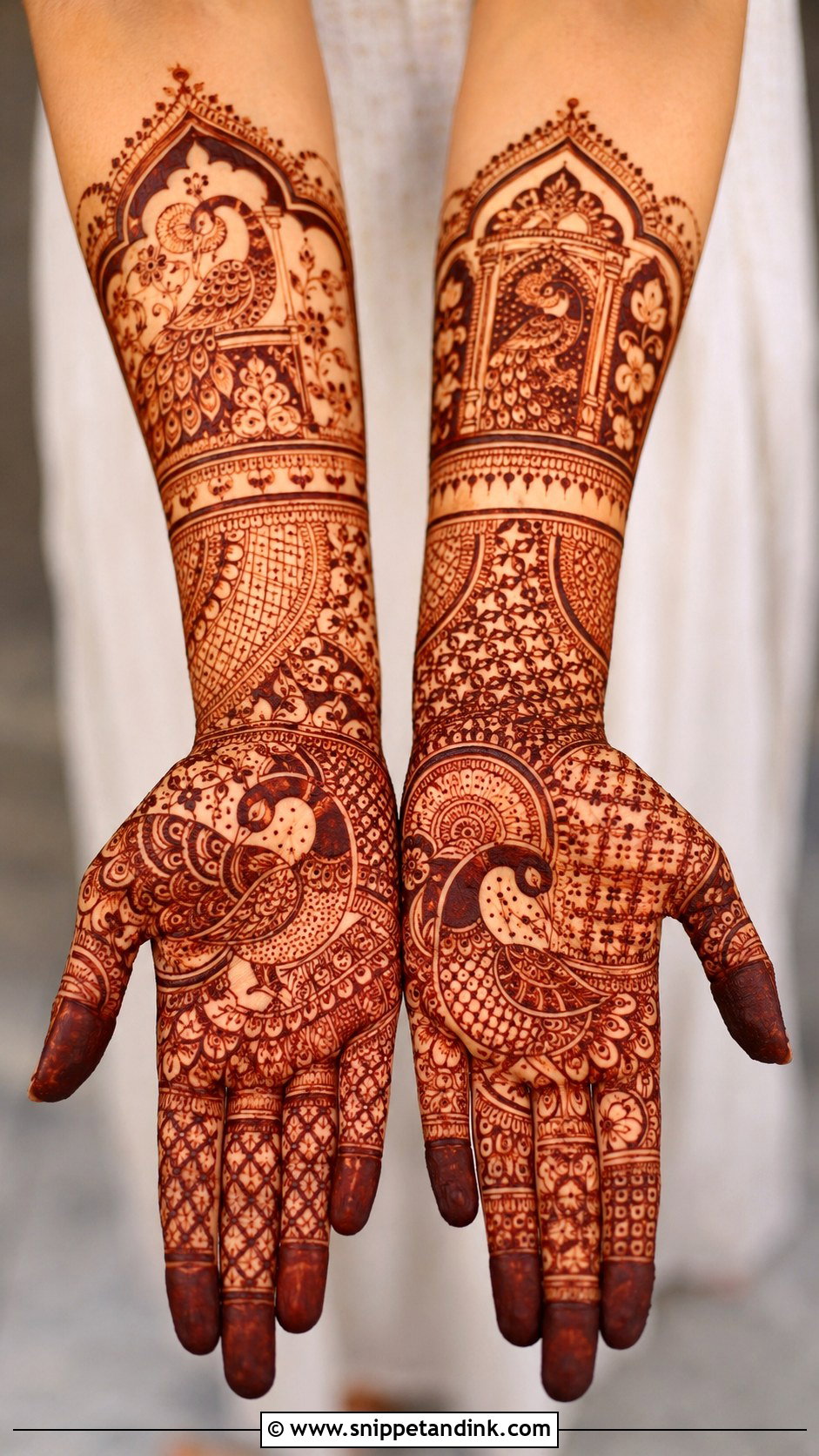
Heavy bridal mehndi runs over hands, wrists, arms and feet, sometimes to the lower legs, with layered peacocks, paisleys, florals, jaali, mandaps and wedding symbols. There’s something to notice in every section, which is exactly why it needs structure. I divide the arm into clear bands with borders between them, so the eye has places to rest. It takes many hours, so book the appointment early in your schedule and don’t let anyone rush it.
11. Portrait Bridal Mehndi Design
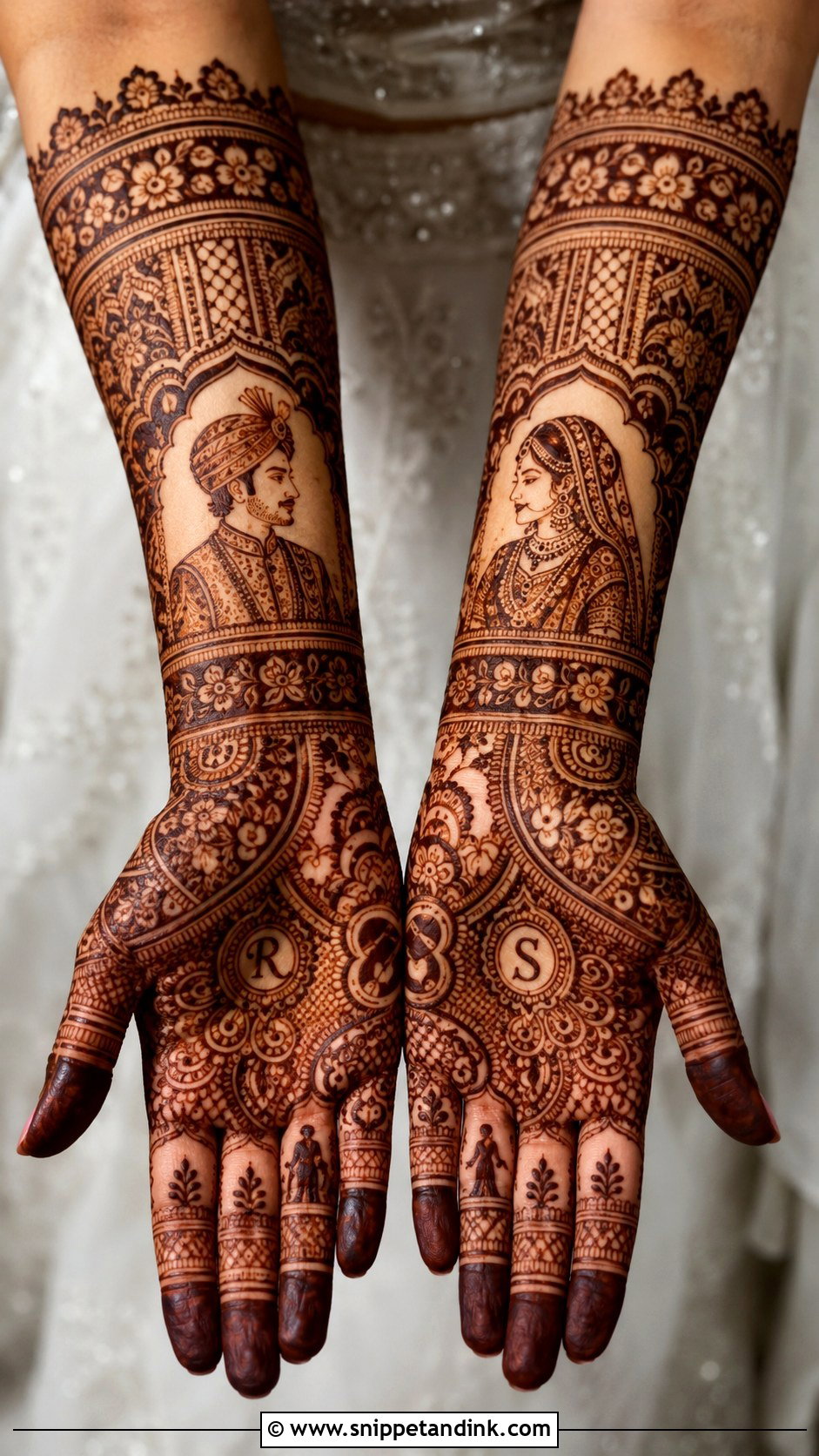
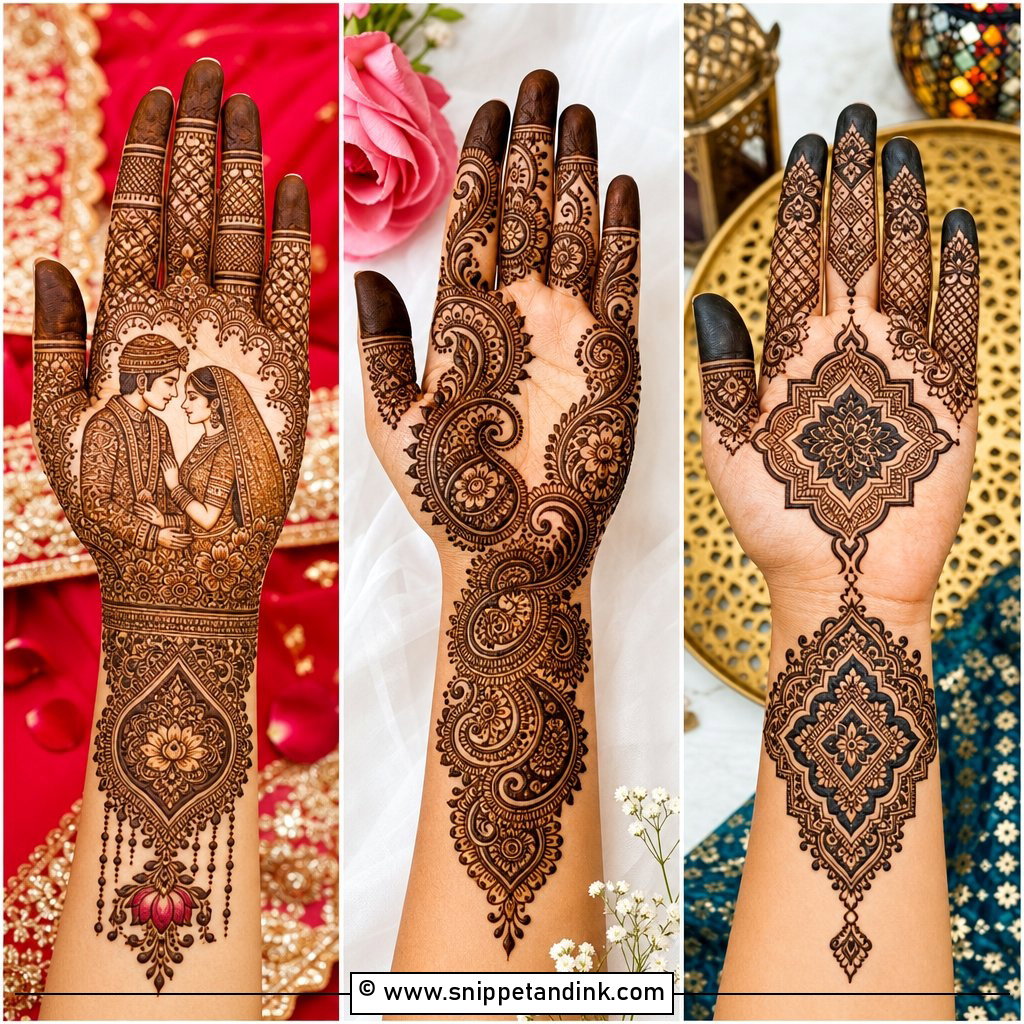
Portraits put the couple, a proposal scene, a pet, a landmark or a cultural symbol on the palms or forearms, framed by florals, jaali, paisleys and filler. It’s the most personal design you can ask for, and the most skill-dependent. Ask to see the artist’s earlier faces specifically, not just their florals. I keep the surrounding pattern lighter around each portrait so the faces stay the focus once the stain darkens.
12. Bride Groom Bridal Mehndi Design
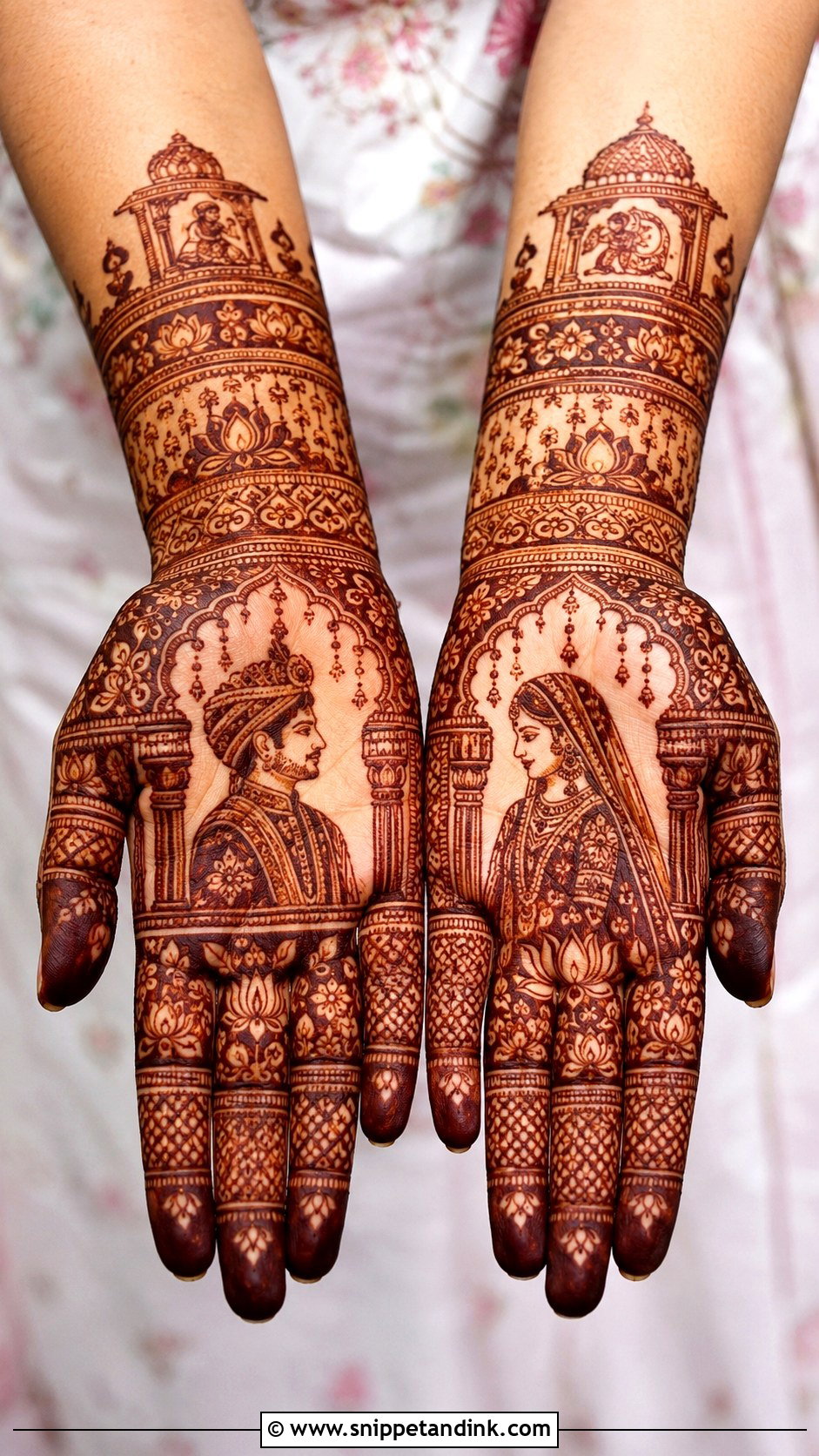
The bride goes on one palm and the groom on the other, so the scene completes when your hands come together, surrounded by mandap arches, lotus, peacock borders, a doli and paisleys. The groom searching for his initials is part of the fun. I draw the figures slightly larger than the reference photos usually show and keep tiny details away from the faces; small features blur as the stain develops, and an unclear face is the most common disappointment with this style.
13. Peacock Bridal Mehndi Design
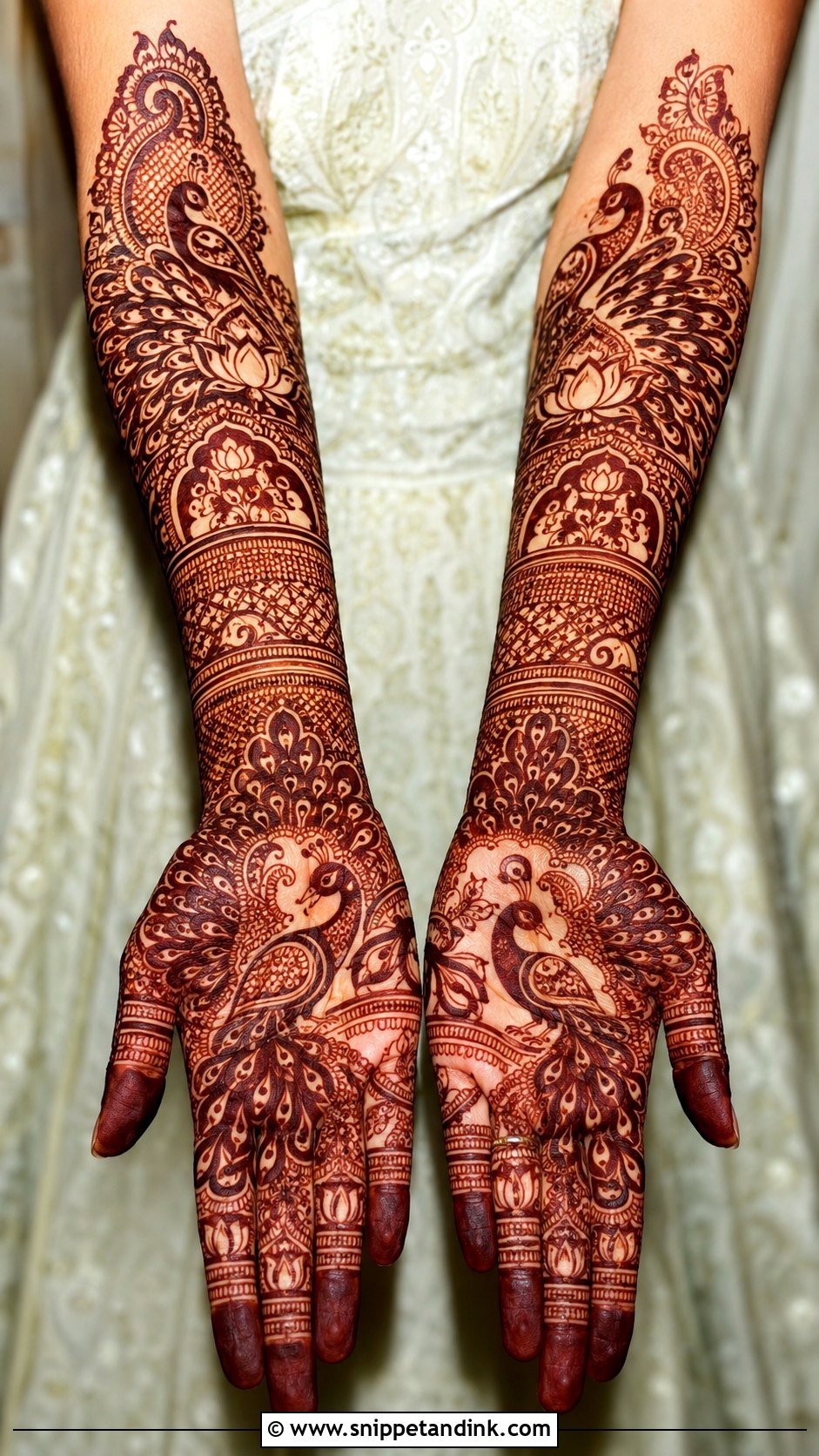
Peacock bridal mehndi can be a palm motif, a forearm centerpiece or a trail across the back of the hand, with feathers carrying curves, dots, leafy lines and small paisleys. It’s traditional without being as dense as storytelling work. I use one bold peacock as the focal point and keep the fillers around it fine. Two large peacocks on one hand compete with each other.
14. Lotus Bridal Mehndi Design
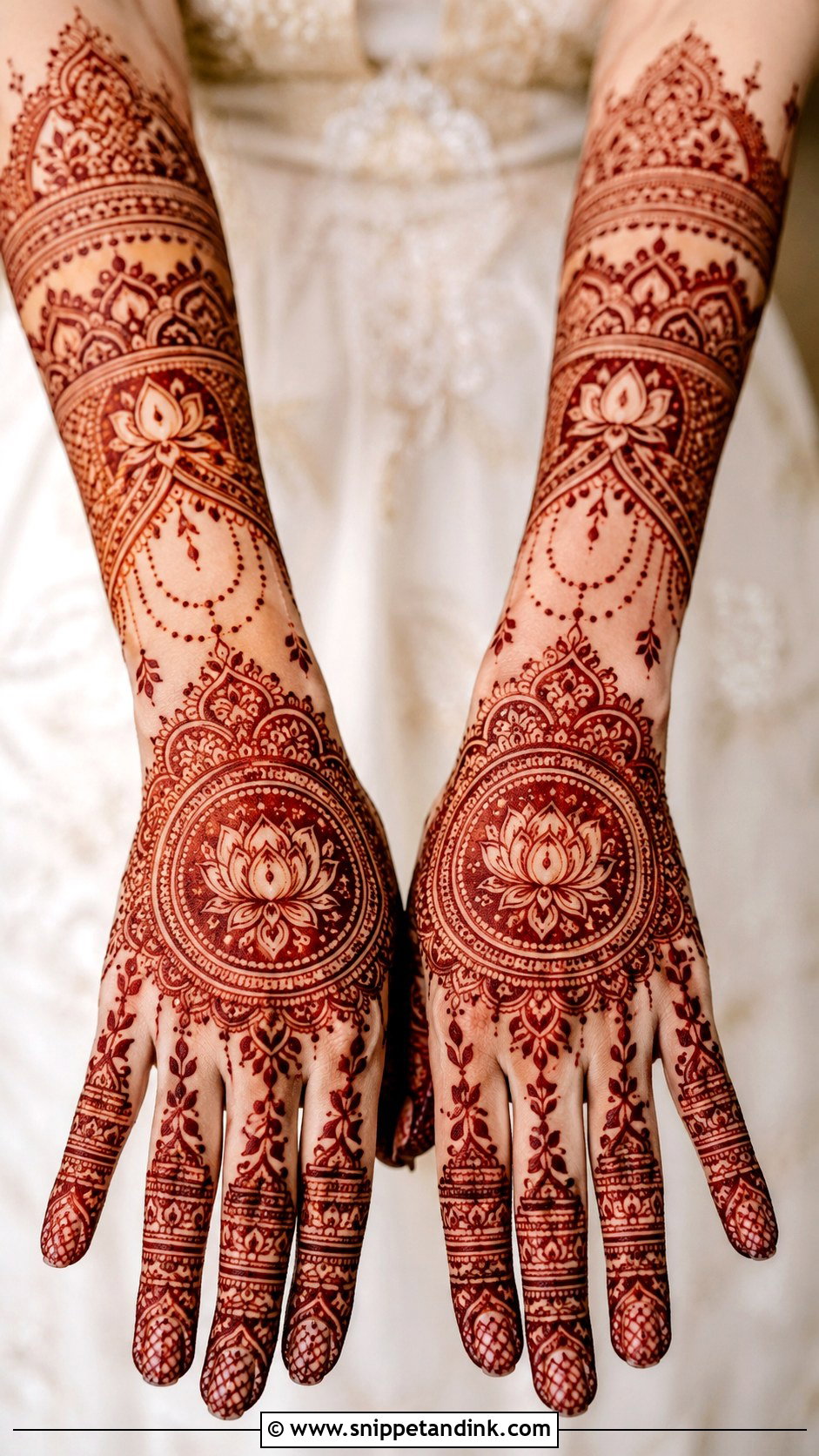
Lotus can be the center of the palm, a mandala on the back of the hand or a border repeated along the wrist and forearm. It’s feminine without busyness and suits pastel outfits and temple jewelry. Vines, dotted chains, paisleys and fine mesh give it depth. A full-hand lotus layout with detailed fingers and cuffs is the most polished bridal version. I keep a hairline gap between petal layers so they don’t merge as the paste settles.



15. Mandala Bridal Mehndi Design
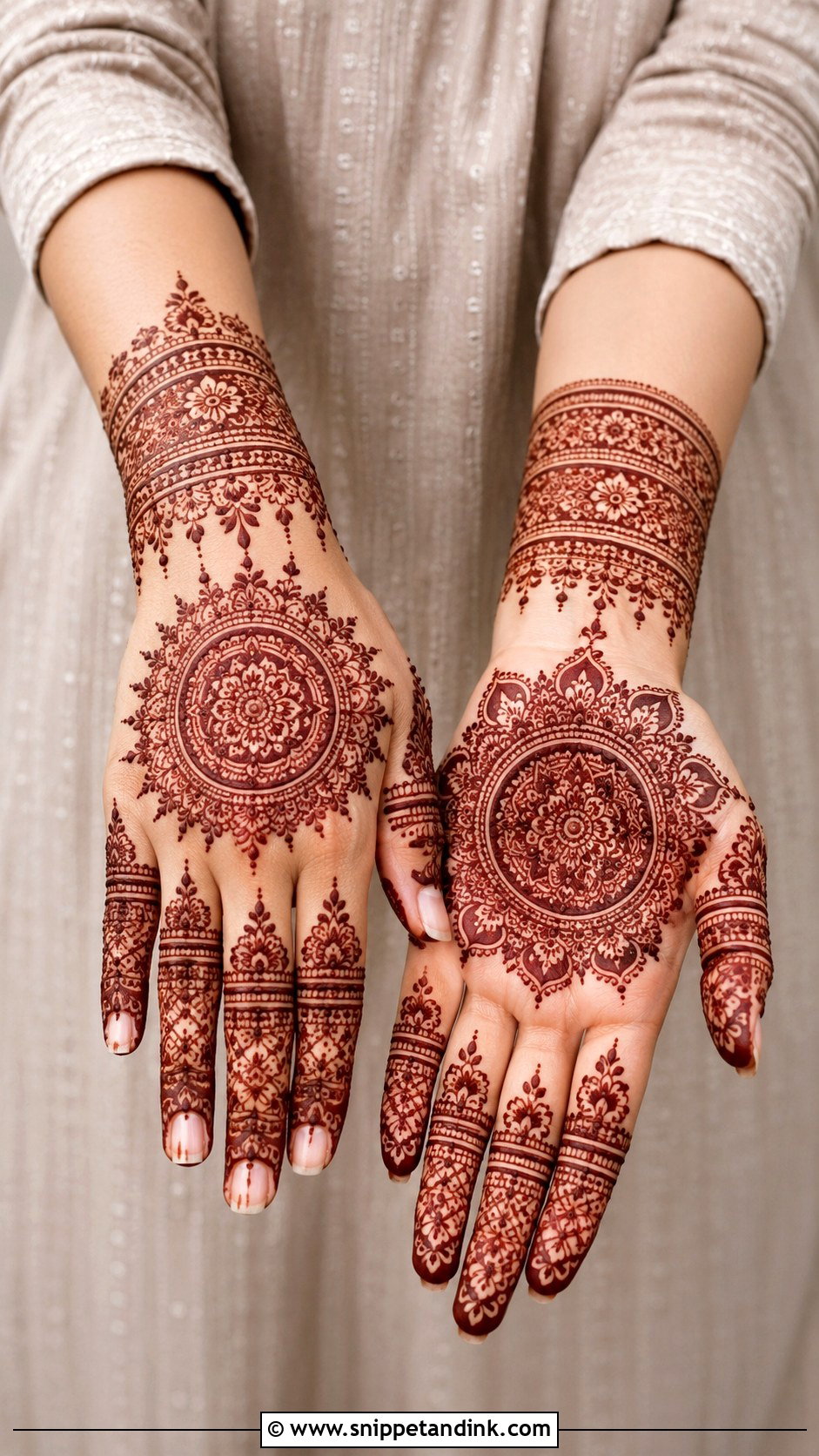
Mandala bridal mehndi uses a large circle on the palm as the anchor, with fine lines, dots, florals and bracelet bands on the fingers and wrist. The back of the hand can repeat the mandala or use a smaller floral circle linked to finger chains. It suits simple and detailed bridal looks equally. For a more bridal feel, I tuck tiny paisleys or initials into the outer rings and add a soft forearm extension without breaking the circle.
16. Jaali Bridal Mehndi Design
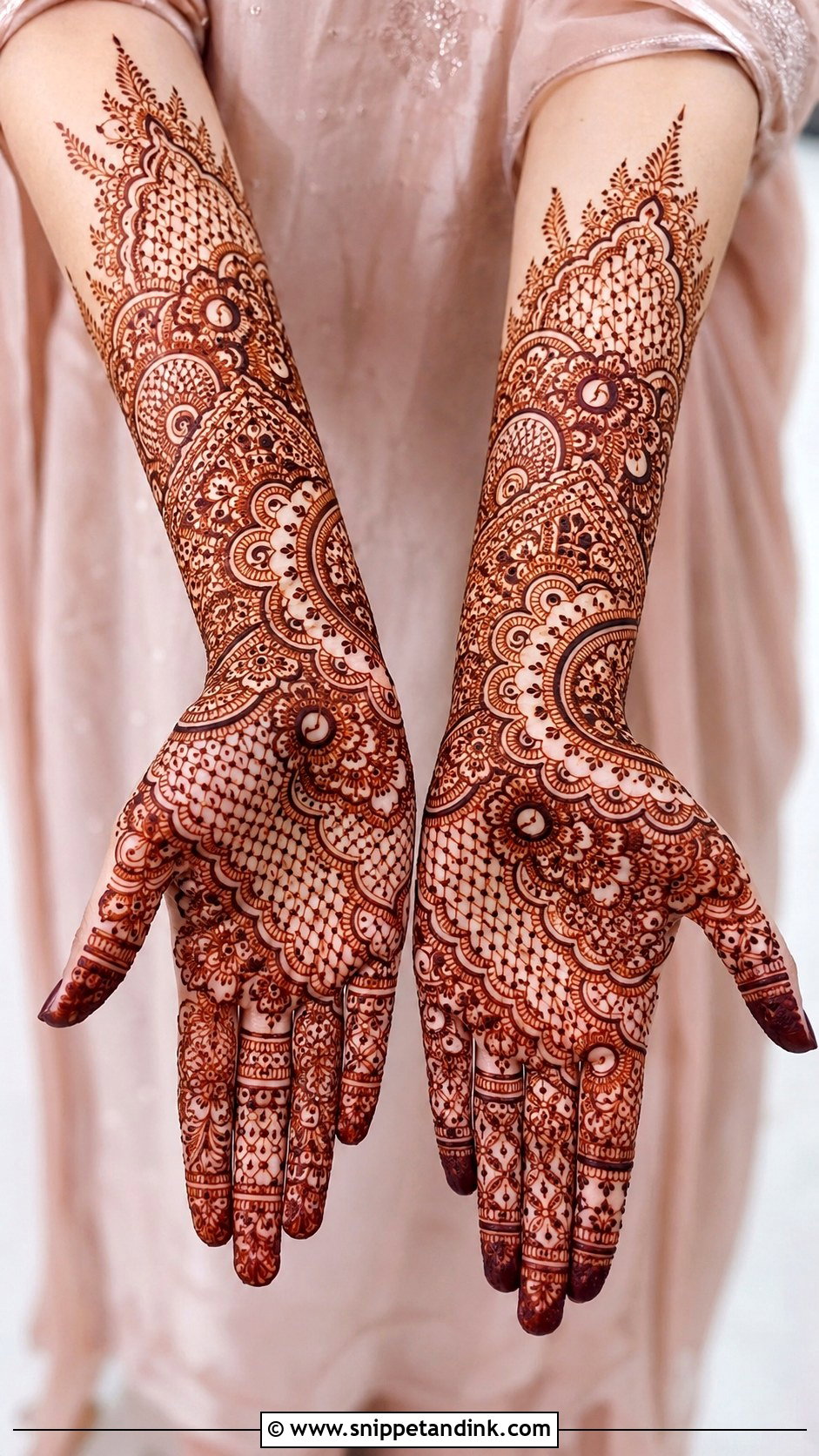
Jaali brings a lace effect to the palm, back hand, wrist or forearm, mixed with florals, paisleys and bold borders. On the back of the hand, jaali panels frame rings and bangles neatly, which is why I place them there most often. Combine it with negative space and clean cuffs for a modern feel, or fill each cell with dots and tiny flowers for a traditional one. Uneven mesh is the giveaway of a rushed job, so give the artist time for it.
17. Floral Bridal Mehndi Design
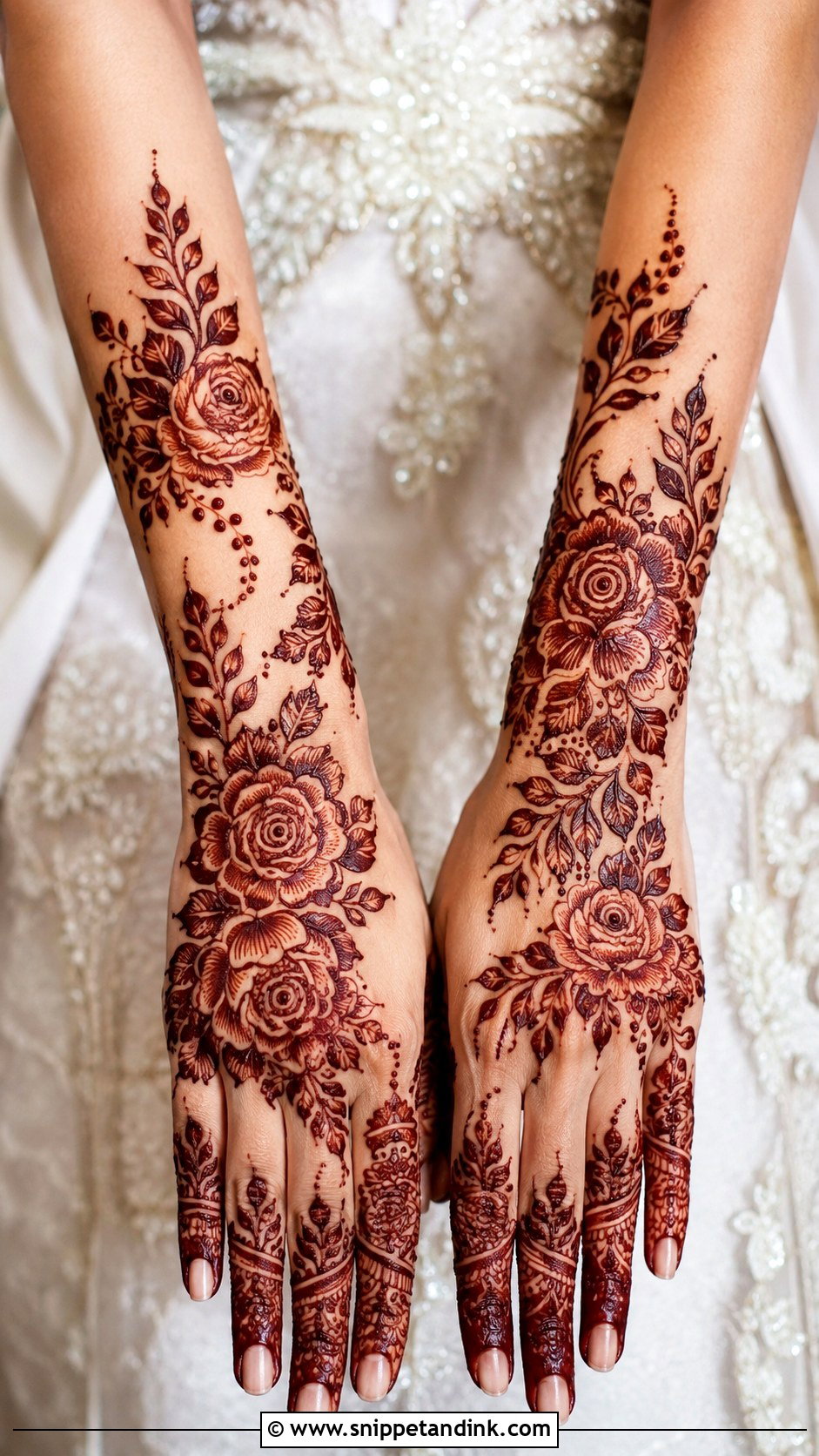
Florals can be airy, Arabic-bold or dense and Indian. Large flowers suit the back of the hand; smaller blossoms fill palms, wrists and forearms. Roses, lotus, vines, leaves and dotted trails are all easy to adapt to any outfit color. I vary the flower sizes deliberately, since the same bloom repeated at the same scale looks stamped rather than drawn. Paisley borders, bracelet cuffs and detailed tips complete it.
18. Paisley Bridal Mehndi Design
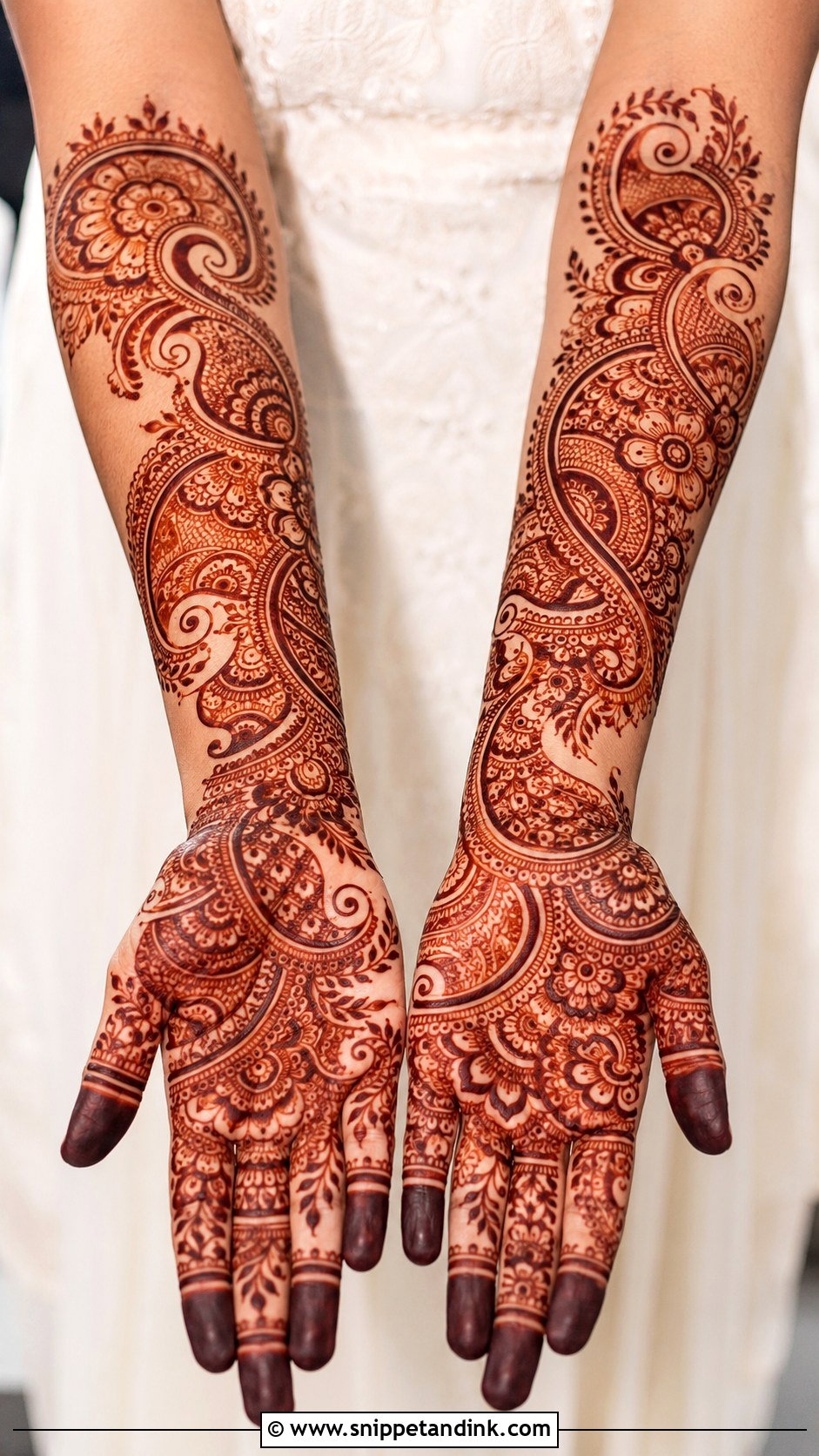
Paisleys fill a hand naturally and work on palms, wrists, fingers and forearms, which is why they’re the backbone of full bridal coverage in Indian, Pakistani and Indo-Arabic designs. Leafy borders, floral centers, dotted curves and fine shading dress them up. I layer them in at least three sizes. The same paisley repeated everywhere flattens the design; mixed sizes give it movement.
19. Jewelry Bridal Mehndi Design
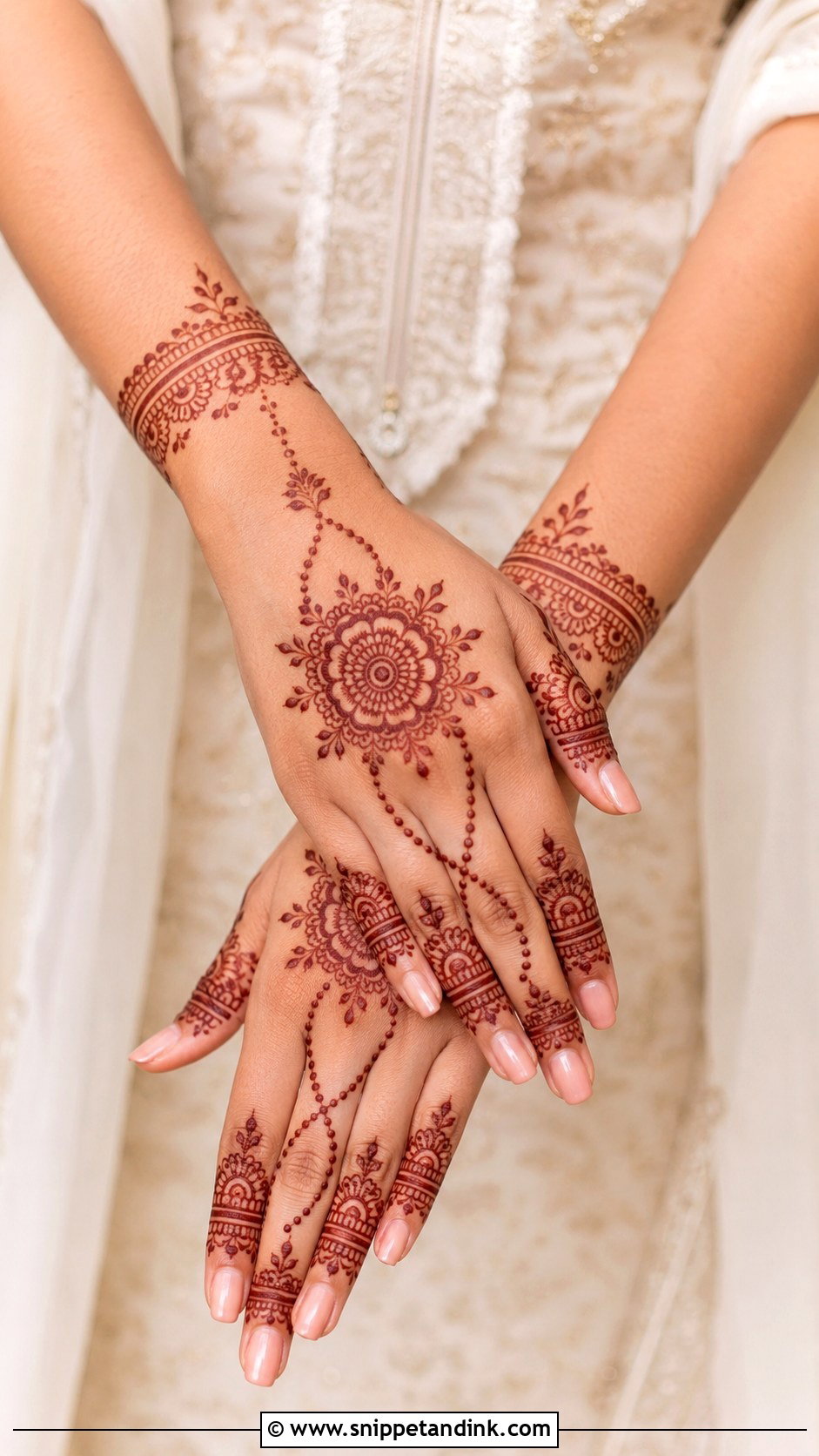
Jewelry mehndi draws a haathphool, bangles, rings and chains in henna: a central floral or mandala motif linked to each finger by delicate chains, with cuff bands and bead-like dots at the wrist. It frames rings and nail art on the back of the hand. It suits engagement ceremonies, receptions and minimalist weddings. For a bridal version, I extend the cuff slightly onto the forearm and add small paisleys or floral panels.
20. Bracelet Bridal Mehndi Design
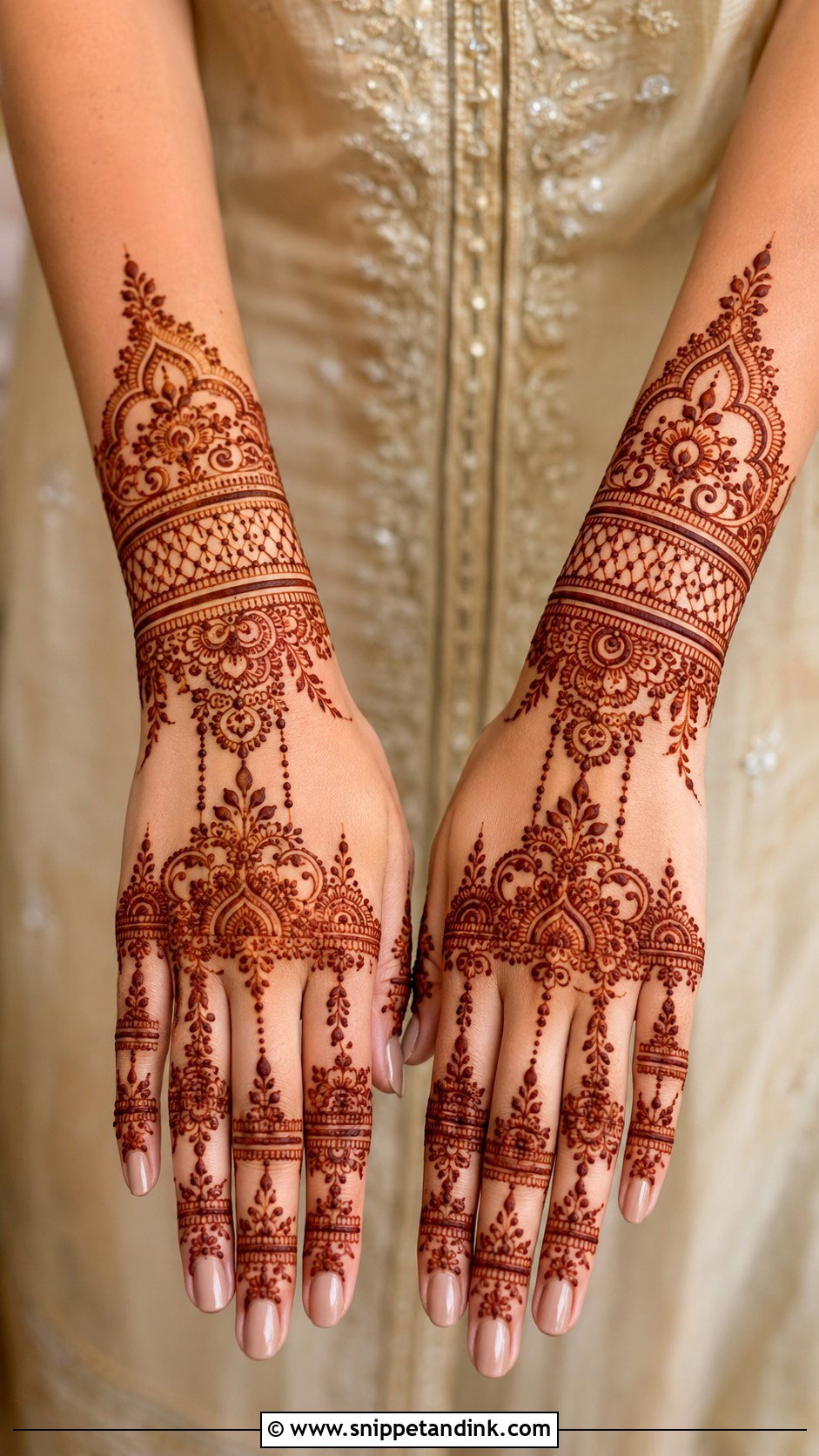
Bracelet designs put the weight on bold wrist bands, cuffs and finger detail, with layered bangles, floral cuffs, jaali bands and chains stretching toward the fingers. It’s henna jewelry without heavy palm coverage, and it stands out with sleeveless or sheer sleeves. Pair it with a palm mandala or a floral trail on the back. Real chooda and bangles sit over the wrist, so I place the main band where it’ll still show between them.
21. Finger Bridal Mehndi Design
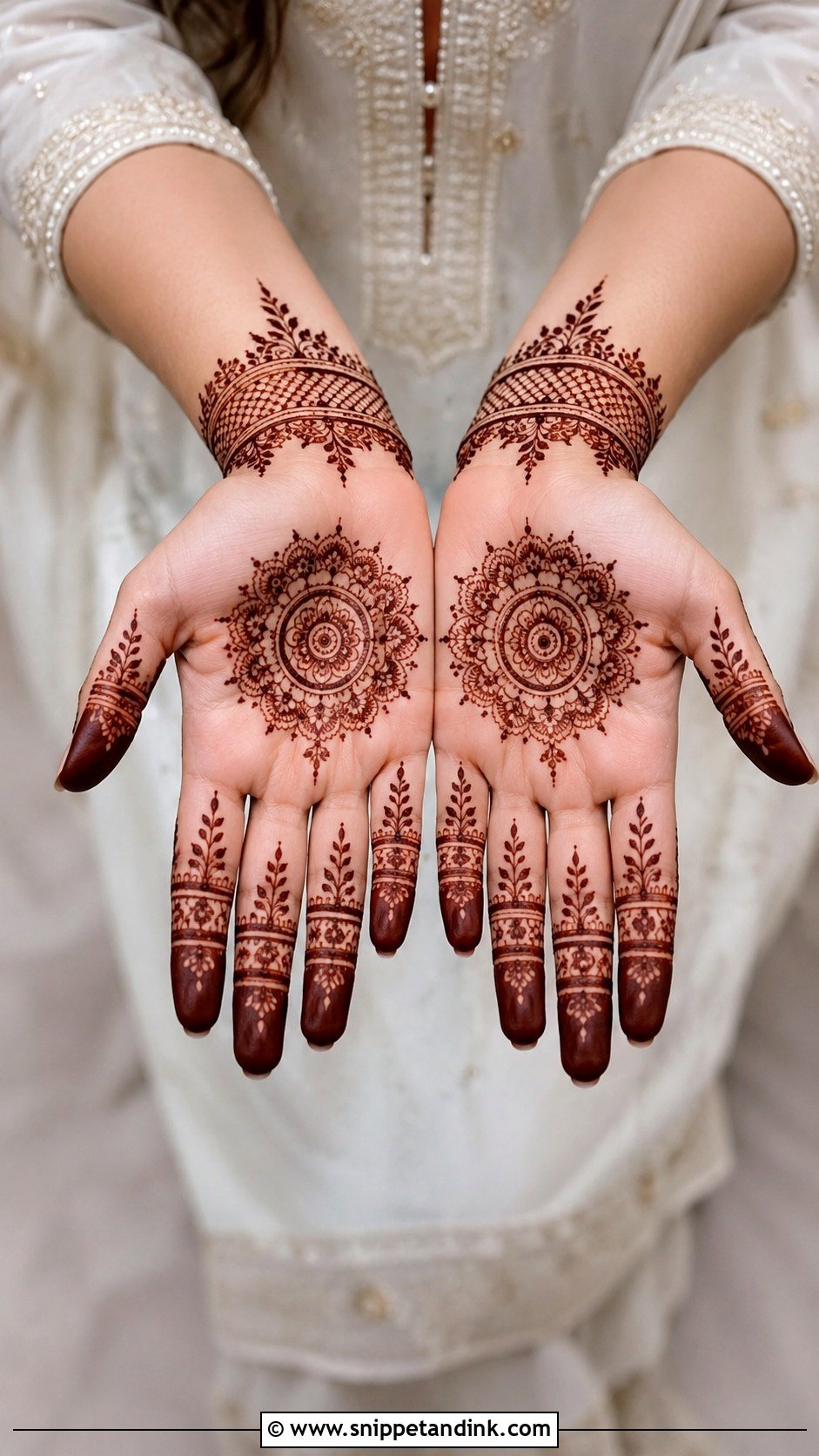
Here the fingers are the main feature rather than filler. Each finger can carry its own pattern of leafy lines, mesh panels, tiny florals, dotted chains or bands, while the palm stays simpler. It shows up well in ring shots and varmala photos. I fill fingertips neatly and fully, because they stain the darkest of anywhere on the hand, and I keep paste thin near the cuticle so it doesn’t bleed.
22. Back Hand Bridal Mehndi Design
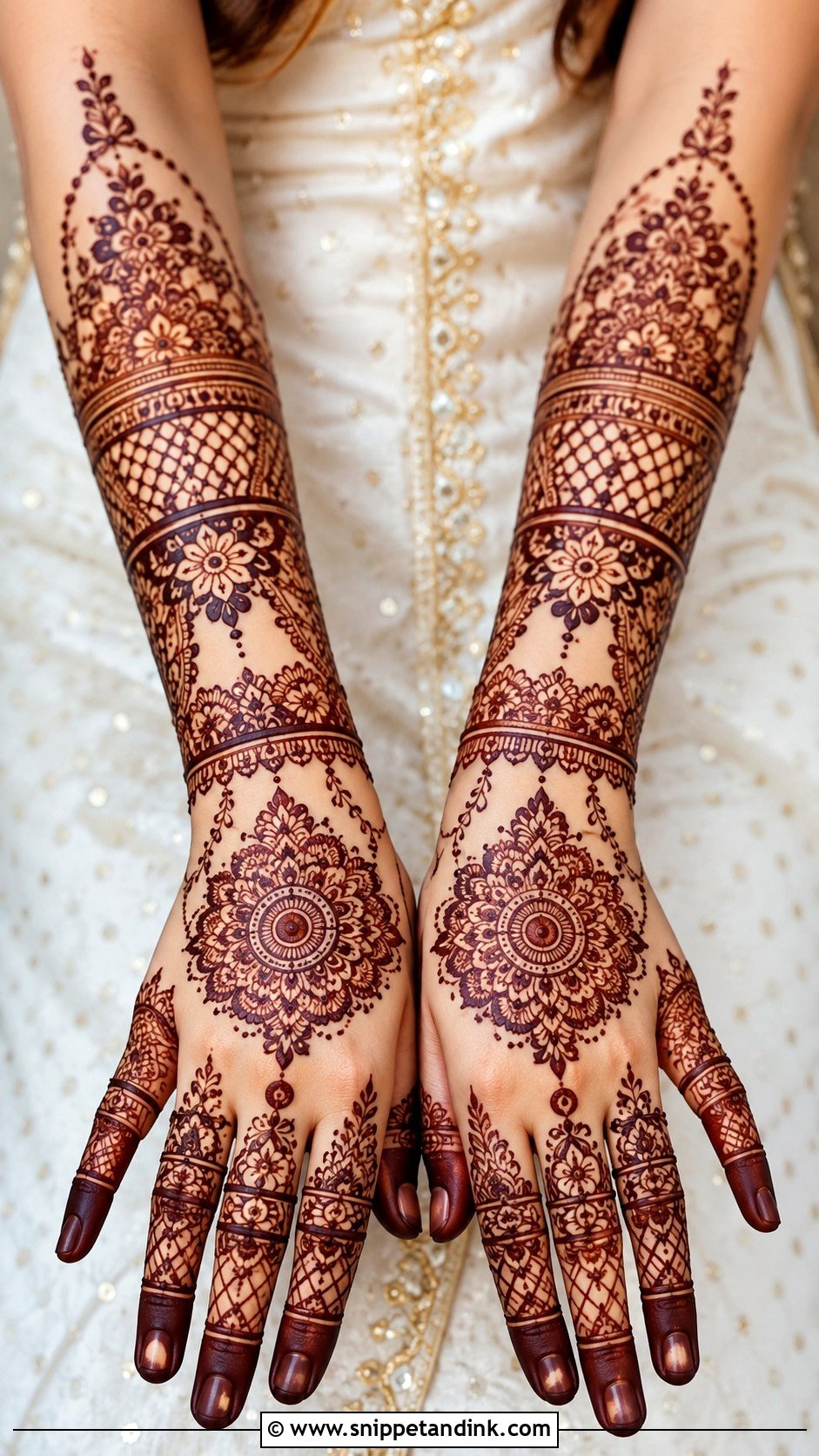
Back hand bridal mehndi appears in almost every hand photo, so it has to work with rings, bangles and poses. Mandala centers, jewelry chains, floral trails, jaali panels and Arabic vines all suit it. For a bridal version, extend it from the fingers to the wrist or forearm. The back of the hand stains a little lighter than the palm, so I use bolder outlines there. Balance both hands so they look like a pair.
23. Front Hand Bridal Mehndi Design
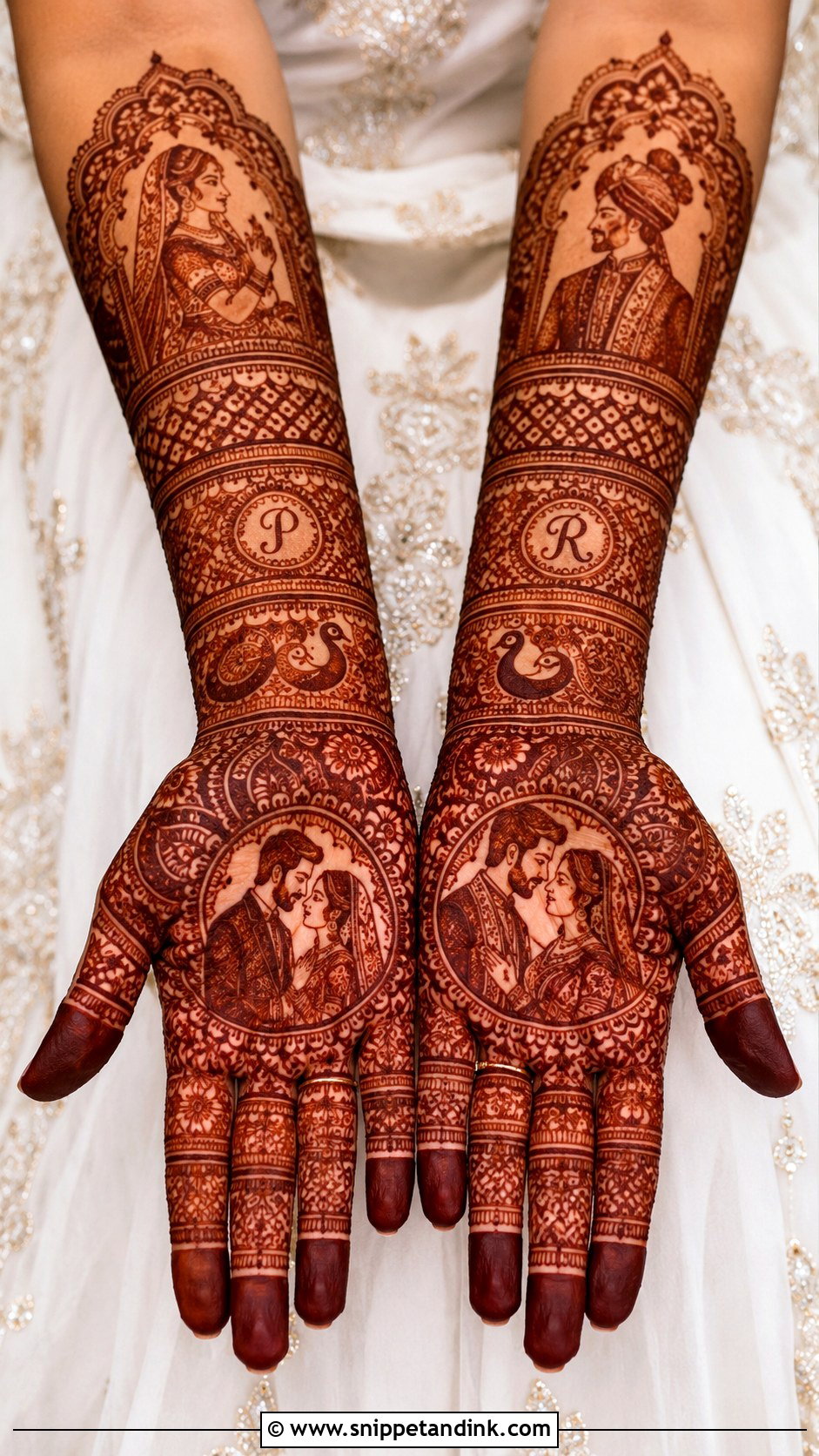
Palms carry the meaningful details: mandalas, portraits, dates, initials, paisleys, peacocks and ceremonial motifs, with dense fingers and the wrist and forearm completing the flow. The design should look right with palms open and with hands placed together. I separate the major motifs with borders or a sliver of negative space, which keeps the storytelling readable after staining.
24. Bridal Mehndi Design With Name
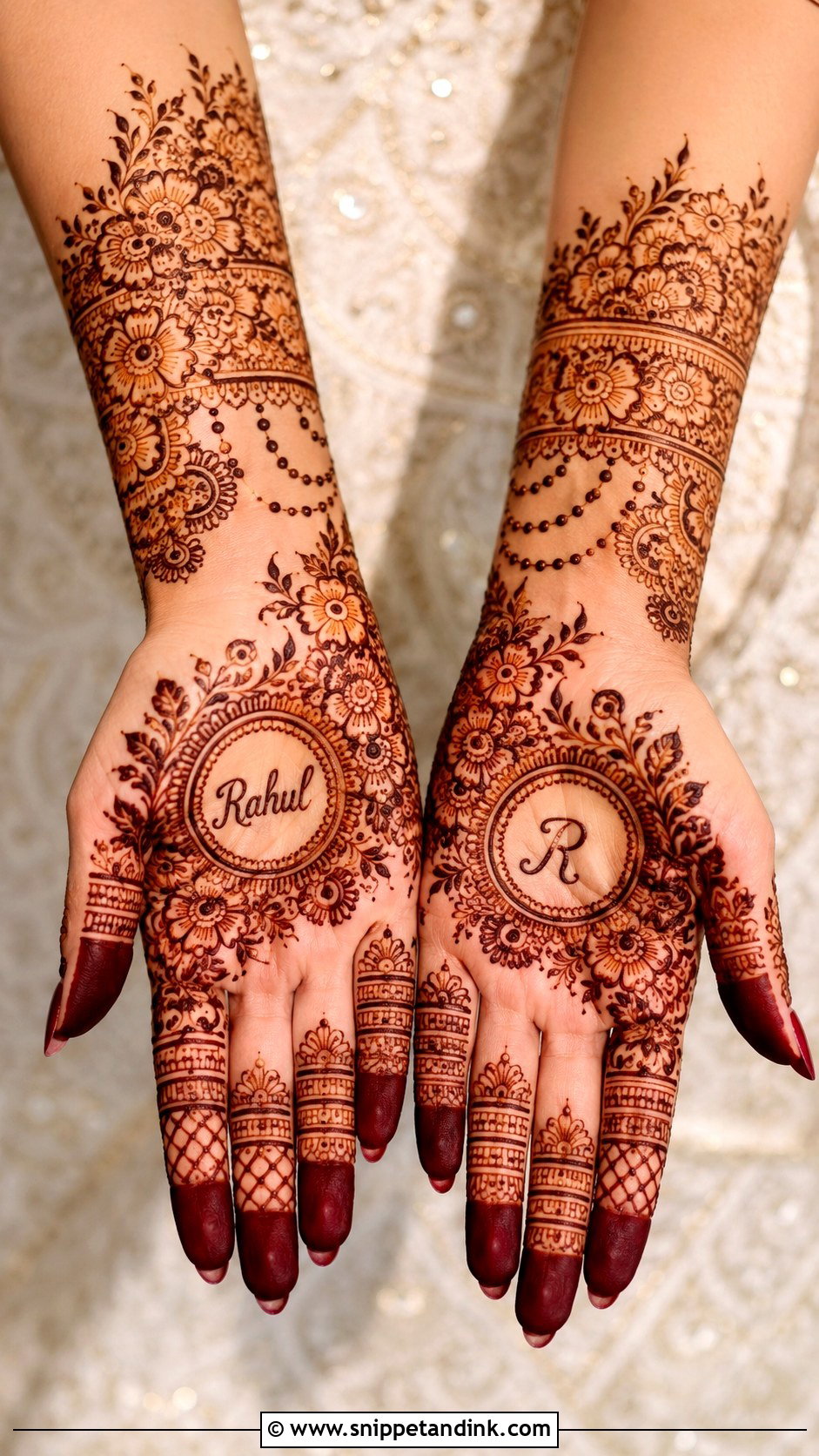
The groom’s name, initials, the date or a special word can hide in paisleys, flowers, jaali or bracelet bands for him to find after the ceremony. Initials sit well near the wrist, inside a mandala, along a vine or in a forearm panel. Keep the letters small but not tiny. If they’re too fine, the strokes close up as the stain darkens and the name blurs. I write them slightly more open than looks natural at first.

25. Wedding Story Bridal Mehndi Design
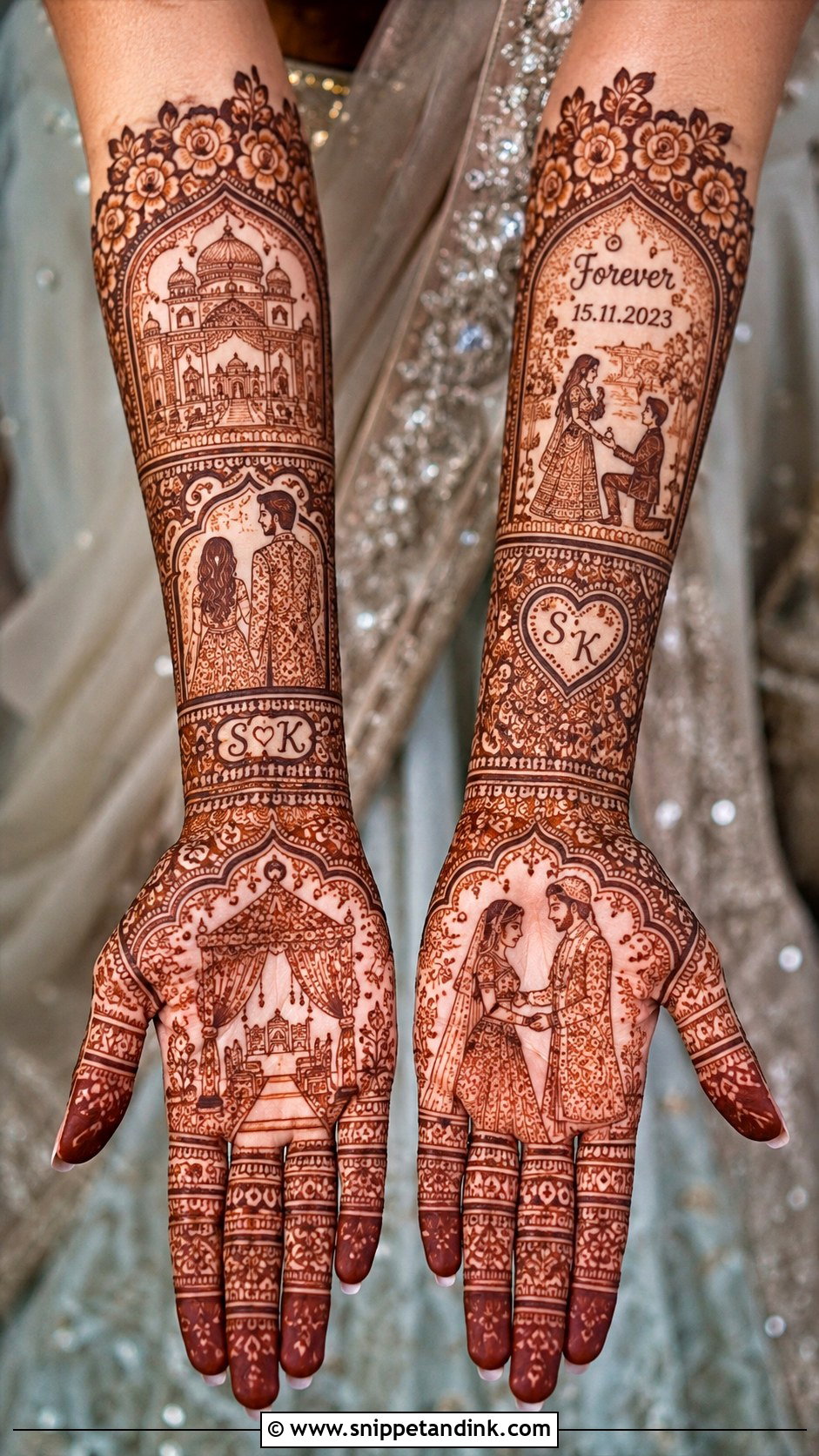
Story designs work like a memory book: the proposal, where you met, a favorite city, the venue, a pet or a piece of music, sometimes split with the bride’s side on one hand and the groom’s on the other. Florals, paisleys, mandalas or jaali surround the custom pieces so it still reads bridal. Fewer, larger scenes work better than many small ones. Send your artist the list of scenes in advance; working them out in the chair adds a lot of time.
26. Gulf Bridal Mehndi Design
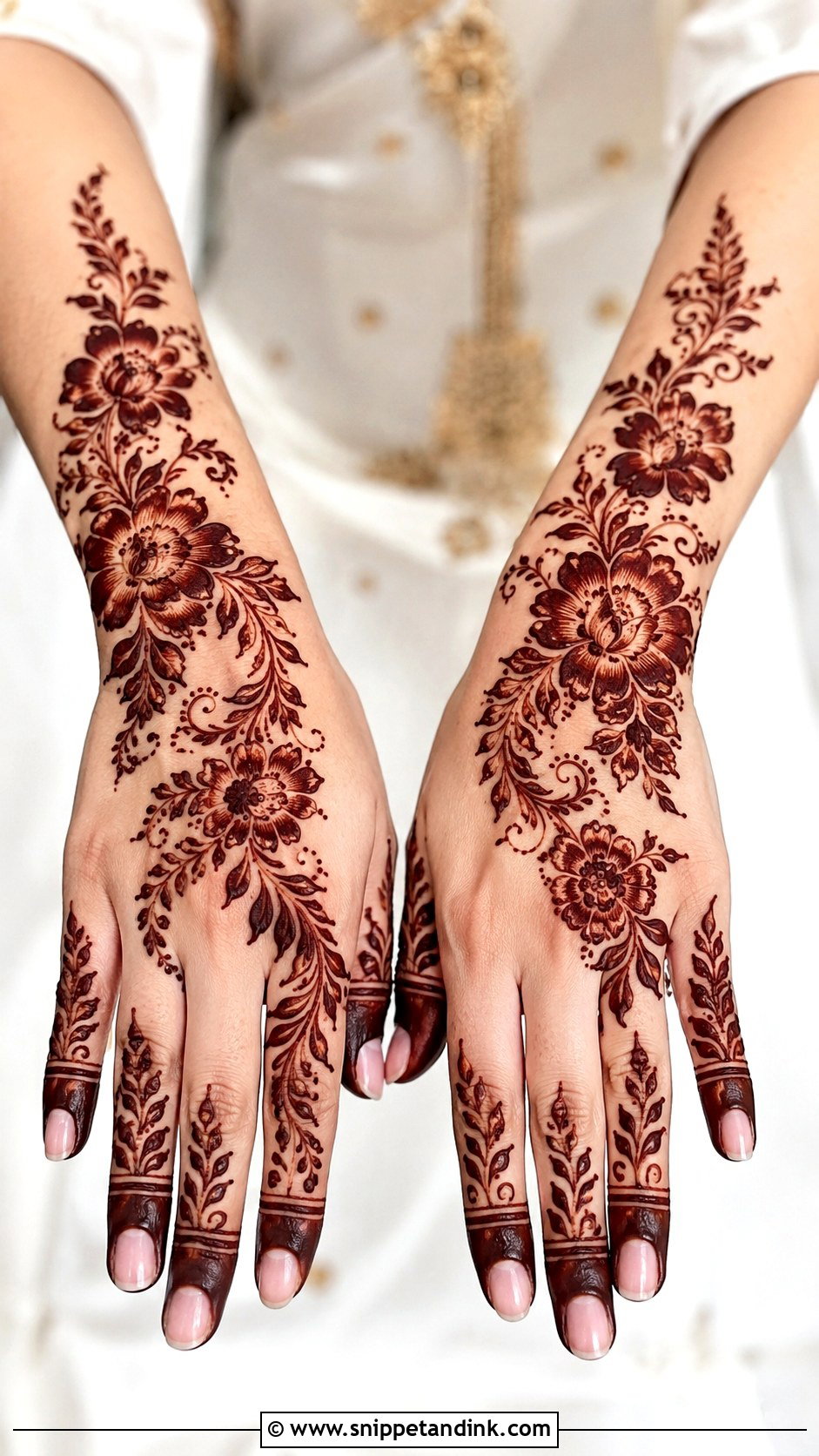
Khaleeji-inspired bridal work is bold and spacious: large florals, leafy vines, shaded petals and open gaps, flowing diagonally or along one side of the hand. It’s less crowded than traditional Indian mehndi and suits gold jewelry and soft makeup. For a wedding, I fill the fingertips, add wrist cuffs and make the palm a little fuller than I would for a party design.
27. Moroccan Bridal Mehndi Design
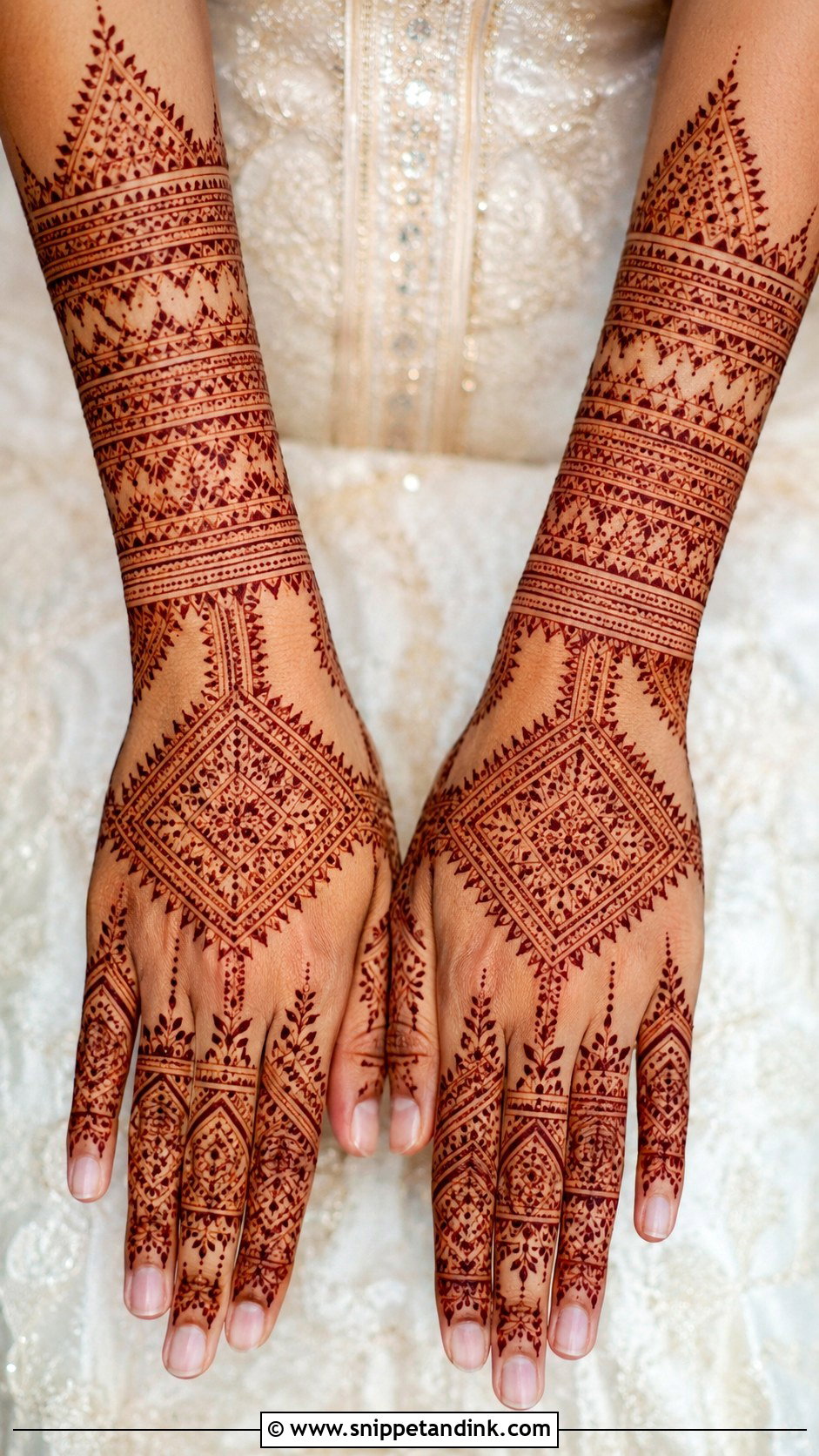
Moroccan bridal work replaces soft florals with diamonds, triangles, grids, lines, dots and angular borders. It looks strongest on the backs of hands, wrists and forearms, where the geometry reads like jewelry. For a bridal version, I add small floral accents or fine fingertips so it doesn’t feel too graphic. Straight lines need a flat, supported hand, so expect your artist to reposition your arm often.
28. White Bridal Mehndi Design
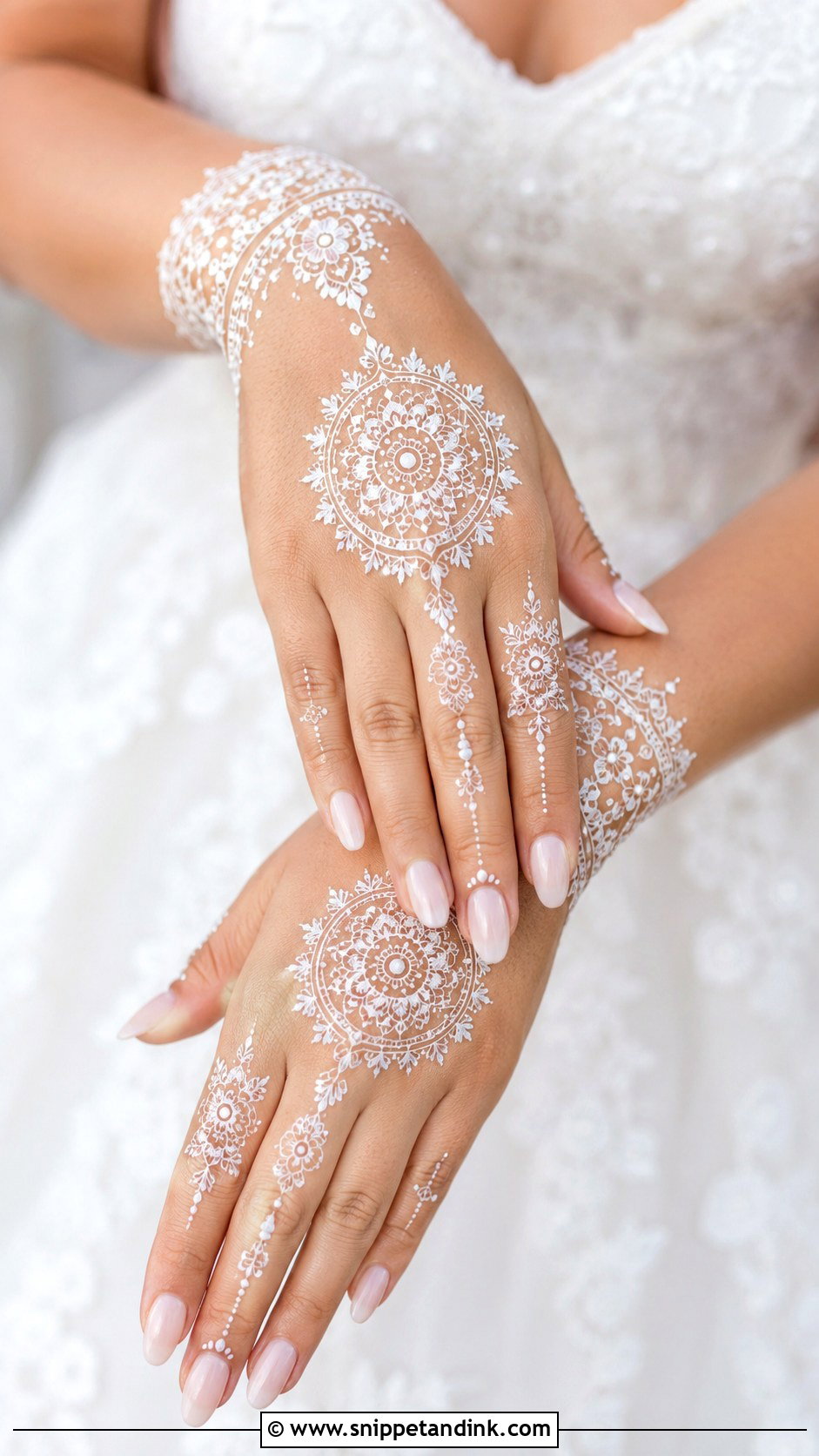
White mehndi isn’t henna at all. It’s a cosmetic body paint or adhesive design that sits on top of the skin, which gives a bright, editorial effect for engagement shoots, receptions and beach weddings with ivory, silver or pastel outfits. Lace patterns, florals, mandalas and finger chains suit it. It lasts a day or two at most and rubs off with friction. Some brides use white accents over a natural reddish-brown base for contrast.
29. Glitter Bridal Mehndi Design
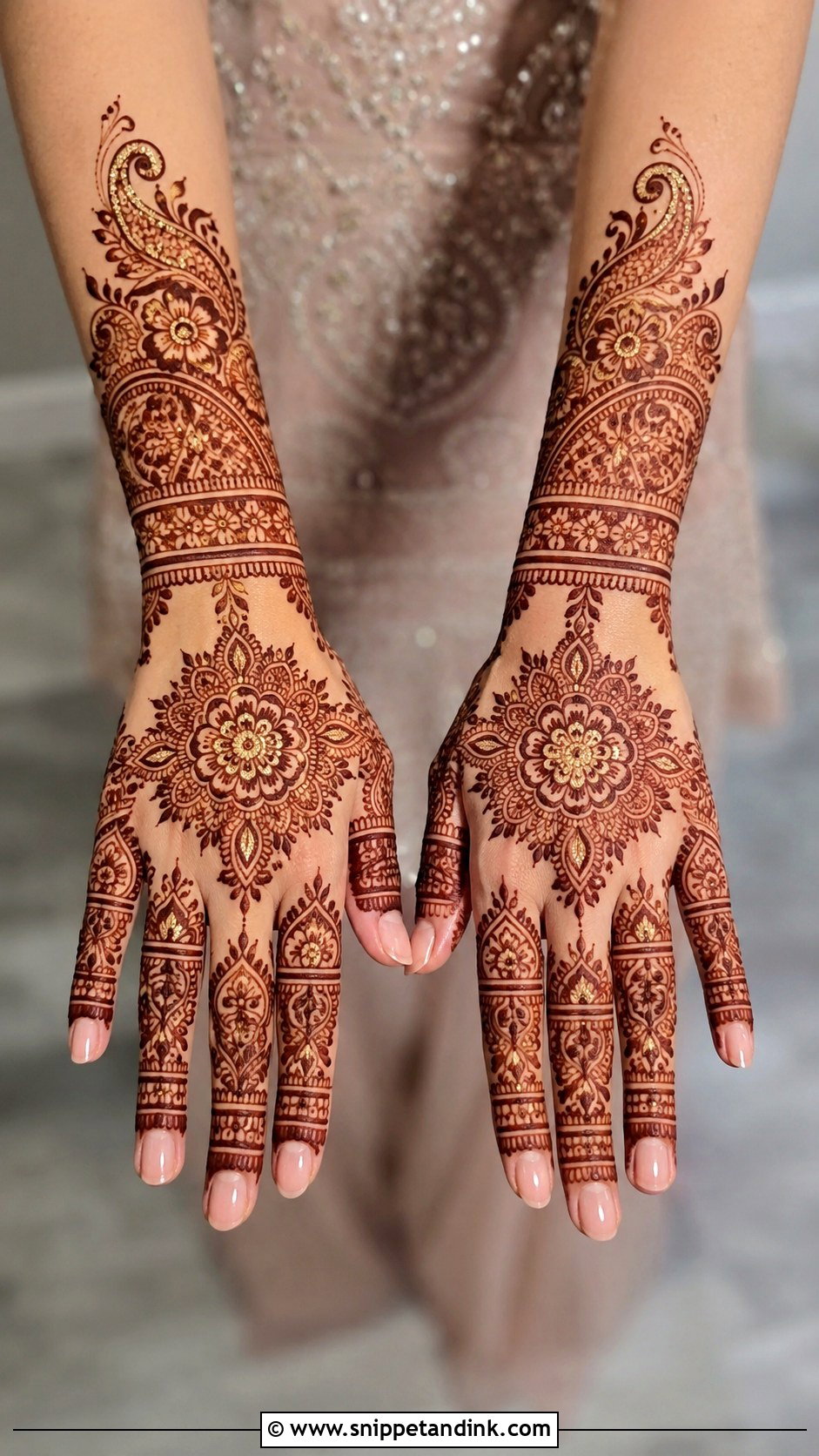
Glitter is applied over dried henna, or over a body adhesive, to highlight flower centers, borders, mandalas, initials or bracelet bands in gold, silver or a shade matched to the outfit. It catches stage and reception lighting well. Use it sparingly; glitter laid across fine linework hides the detail. It lasts only as long as the adhesive does, so it’s a one-event decoration rather than part of the stain.
30. Red Bridal Mehndi Design
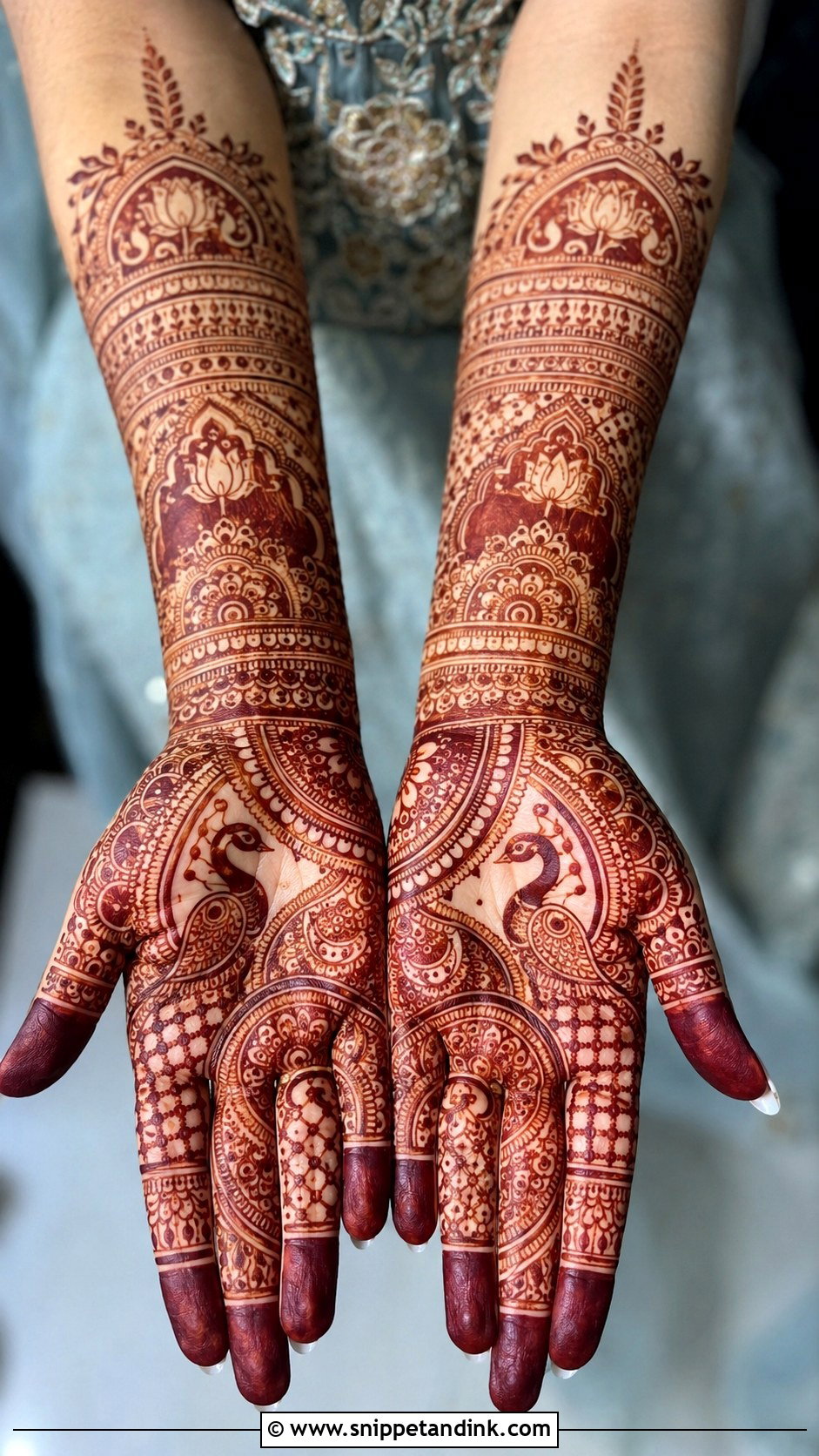
Red bridal mehndi is about the color more than the pattern: a rich reddish-brown deepening to maroon, in any style from Indian to minimal. Palms, fingertips and soles stain darkest, so I put the most detail there for maximum color. Stain depth depends on the paste, on how long you keep it on and on warmth afterward. Good natural henna, a long paste time and keeping water away for the first day do more than any trick.
31. Rose Bridal Mehndi Design
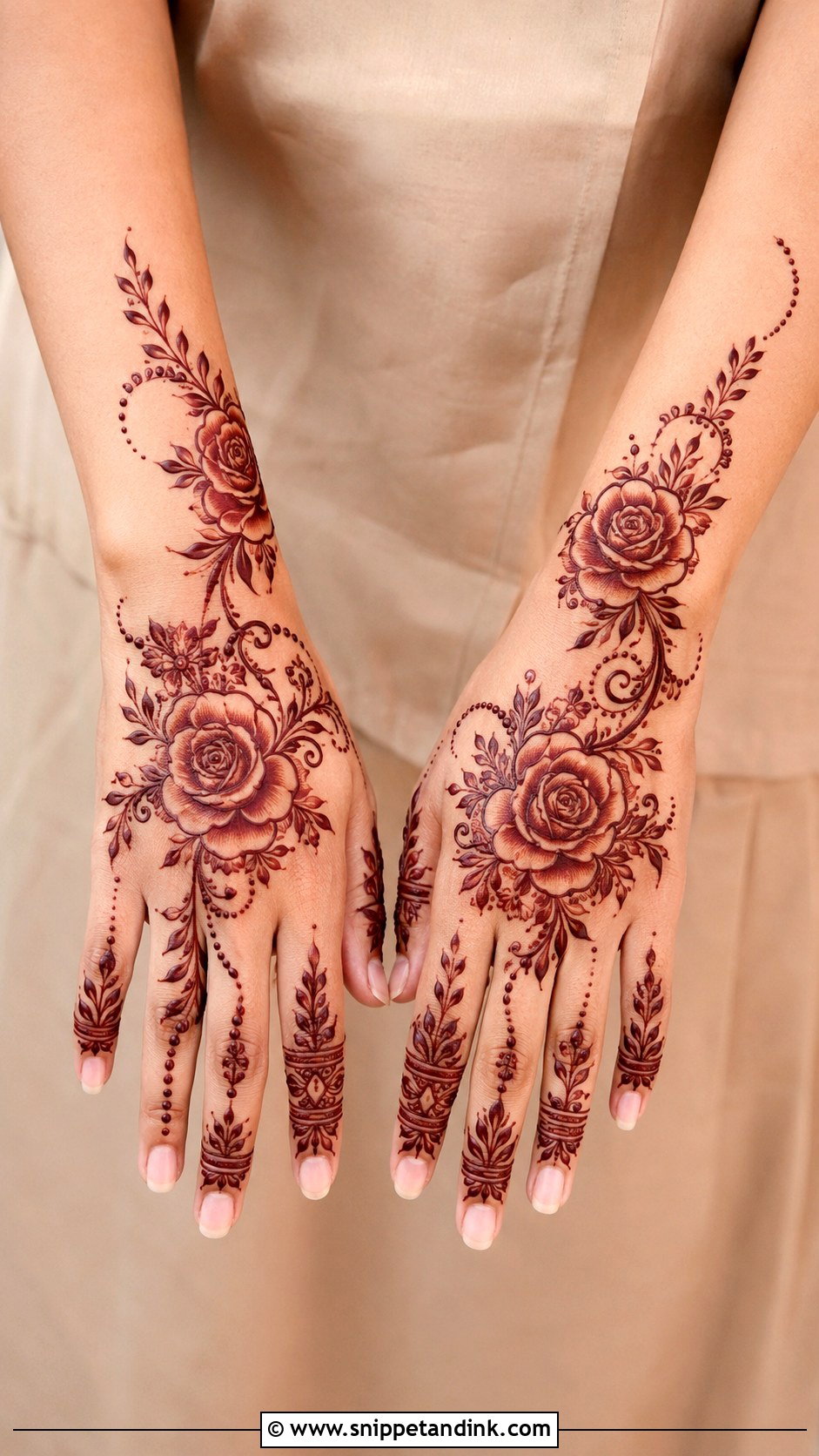
Roses can be big blooms on the back of the hand, palm motifs, wrist cuffs or forearm trails, with leaves, vines, dotted curves and fine fingers. They’re a fresh alternative to lotus and paisley-heavy work, and they can go Arabic with open spacing or Indian with detailed fill. I shade only the outer petals and leave the inner ones open, which gives the rose depth. Bracelet bands and a little jaali complete a wedding version.
32. Dulhan Bridal Mehndi Design
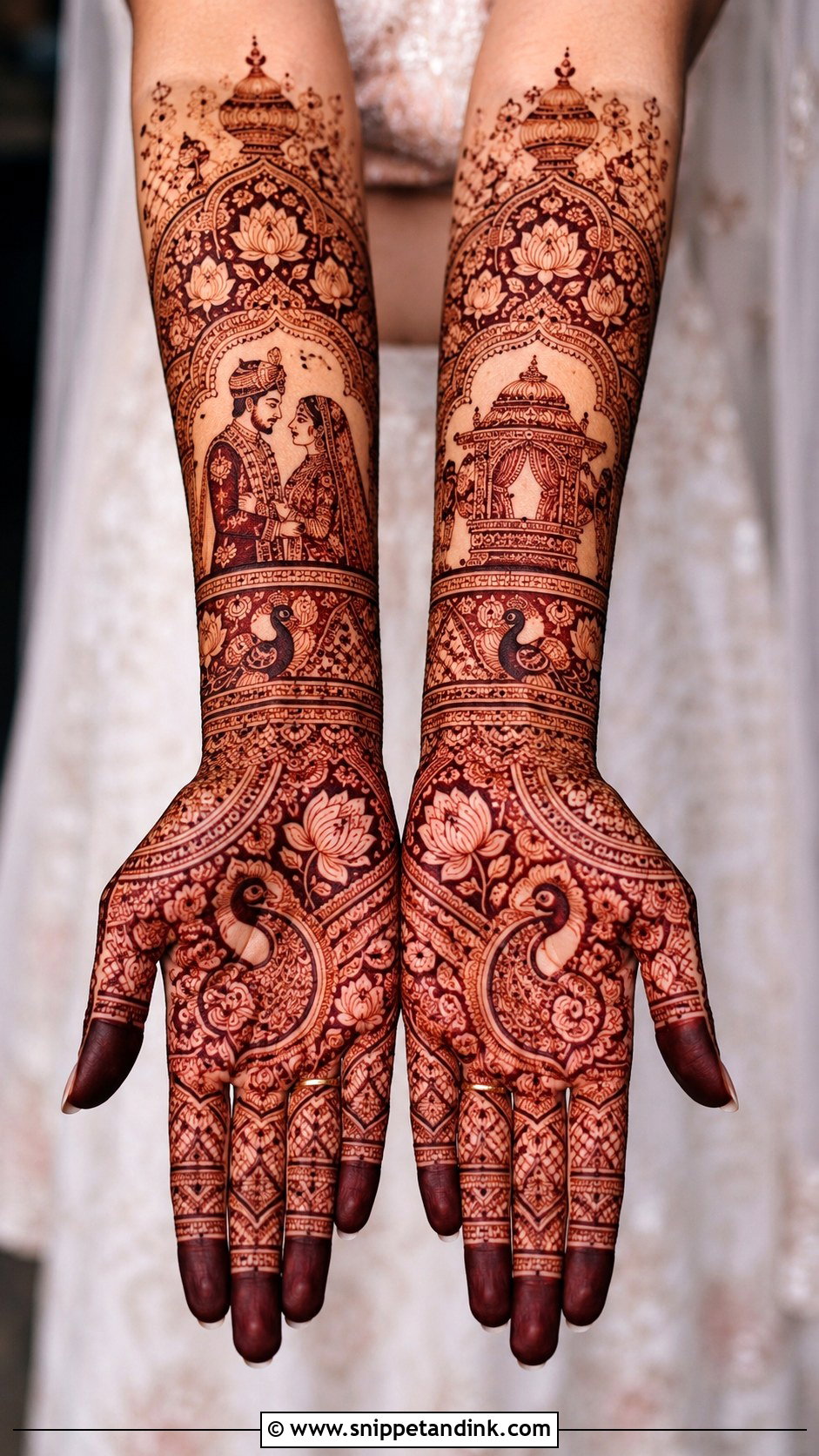
Dulhan mehndi is the complete traditional bridal look: full coverage with the couple, doli, kalash, peacocks, paisleys, lotus, mandap art and hidden initials, usually on both sides of the hands and often to the elbows. I suggest it when a bride wants every custom of her family carried in her hands. It takes hours, so set up somewhere comfortable with back support, a cushion for each arm and someone to help you eat and drink.
33. Bridal Mehndi Design For Feet
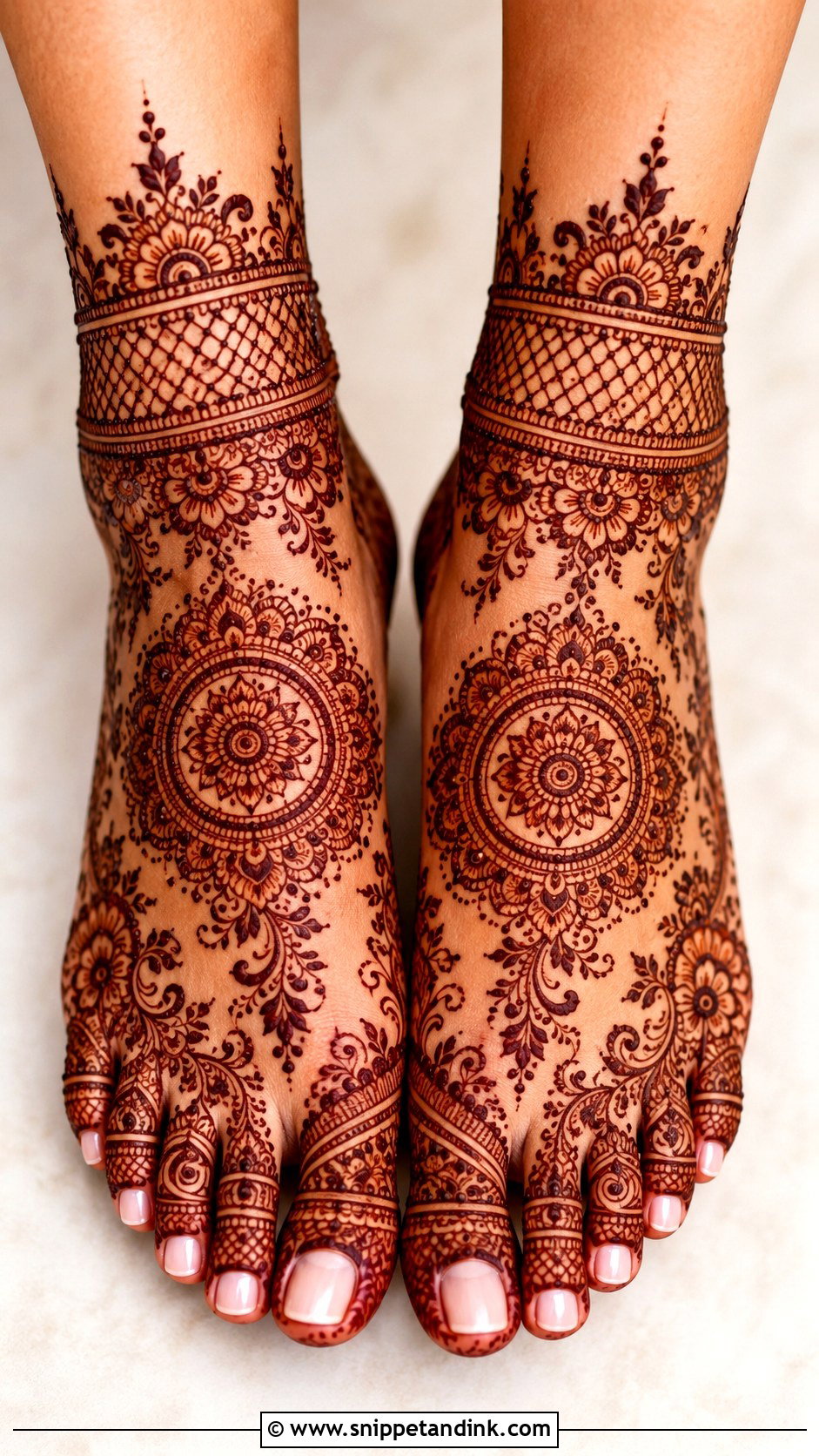
Feet complete the look for brides in open sandals or wearing payal. Designs cover the toes, the top of the foot, the ankles and sometimes the lower legs, with mandalas, vines, paisleys, jaali anklets and side borders. Feet usually stain well, so bold outlines and filled toes look striking. Check your footwear before the design is drawn; straps can hide exactly the area you wanted to show. Keep the feet up and off the floor while the paste dries.
34. Bridal Mehndi Design For Legs
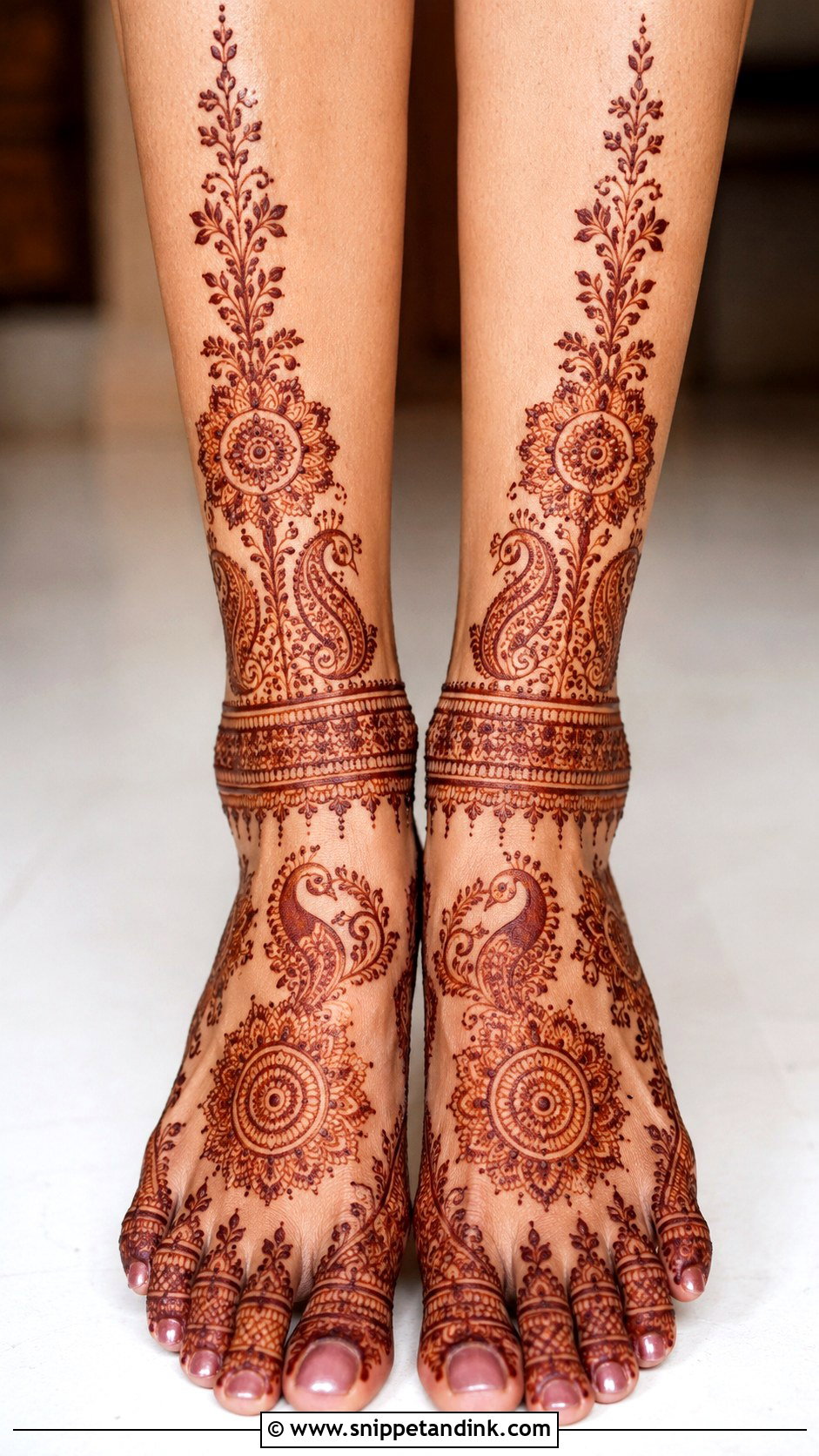
Bridal leg mehndi extends from the feet to the ankles, calves or knees with vertical floral trails, mandala panels, peacocks, paisley borders and anklet bands. It shows during seated rituals when the lehenga lifts. It takes extra time, so schedule it alongside your hands and allow drying time before you need to walk. I keep the lower foot bold and the upper leg lighter so it doesn’t look heavy.
35. Short Bridal Mehndi Design
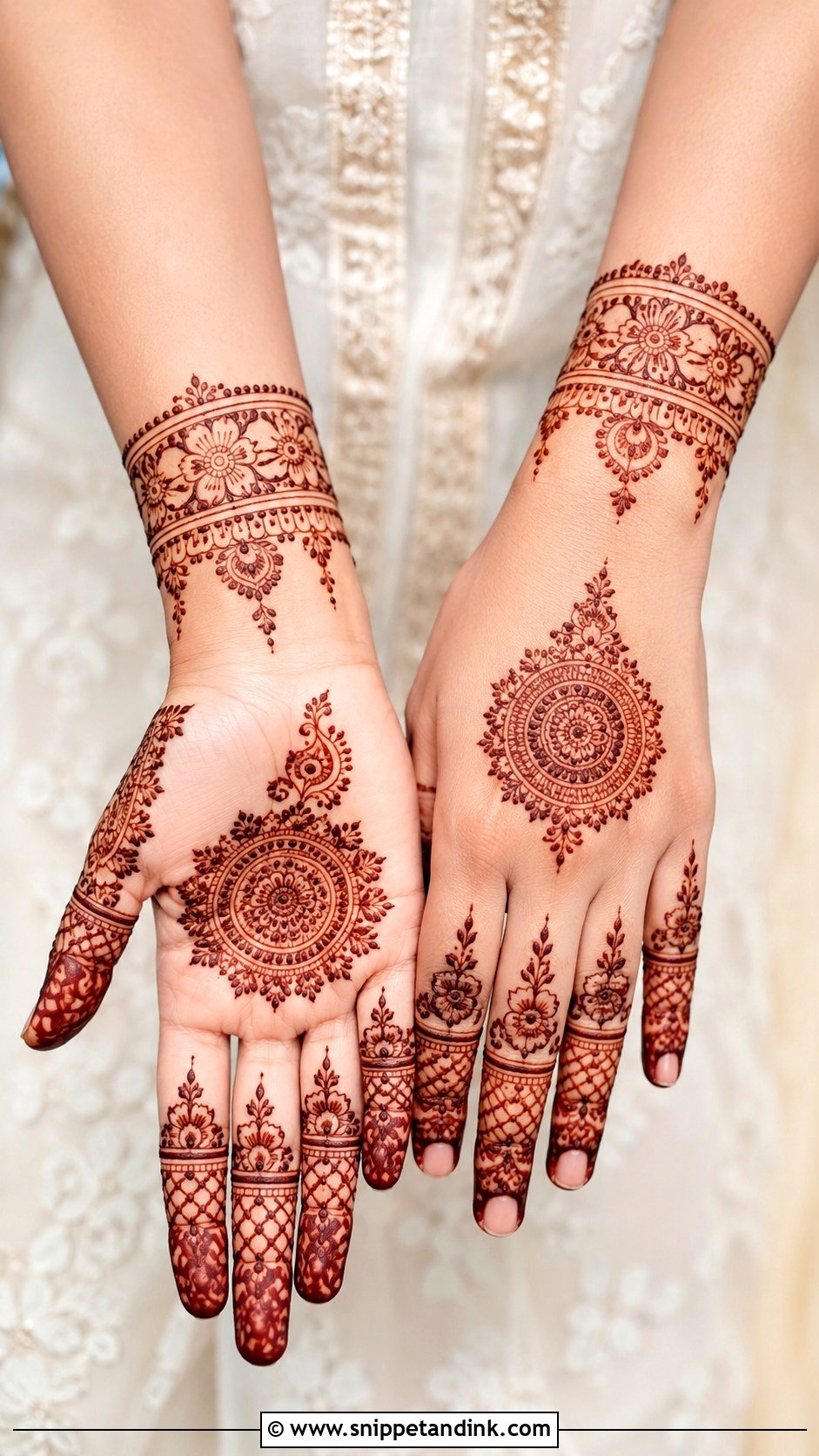
Short bridal mehndi covers palms, fingers, backs of hands and wrists without going far up the arm, with mandalas, florals, bracelet bands, paisleys and a few personal details. It suits intimate weddings, courthouse ceremonies, destination events and second outfits. Clean symmetry and one bold focal motif per hand carry it. Detailed fingers and a polished wrist band make even limited coverage read as bridal.
Running a Mehndi Night With a Line of Guests
At most mehndi functions, the bride’s design is done earlier, and the evening belongs to the guests. That’s where schedules fall apart. A simple guest design on one hand takes most artists ten to fifteen minutes, so one artist can only get through a handful of guests an hour. If you expect a crowd, book a second artist or agree on a short menu of quick designs.
- Ask the artist which designs they can do quickly and print a small menu for guests to choose from.
- Seat guests at a table with good light, near a socket for fans in hot weather.
- Put close family first; they’re the ones who’ll be in the next day’s photos.
- Have tissues, cotton buds and a bin at every station for smudges and empty cones.
White and Glitter Designs Need Their Own Care
Because white mehndi and glitter are cosmetic products sitting on top of the skin, they behave nothing like henna. Ask what the base is, and if it’s a body adhesive, patch test it a few days before, especially if you react to medical tape. Don’t apply it over broken or freshly waxed skin. Remove it gently with oil or makeup remover rather than scrubbing, and if you’re layering it over a natural stain, wait until the henna has been scraped off and the color has had a day to develop.
Your Outfit, Your Rituals and the Hours You Can Sit
Those three things decide most bridal designs. Heavy Indian or Rajasthani work feels royal and traditional; Arabic, Indo-Arabic, minimal and jewelry styles are lighter and more modern; names, portraits, dates and stories make any of them personal, and feet and legs complete the full look. Before you book, save a few references, look closely at the artist’s linework in photos of finished stains rather than wet paste, and decide how much coverage you really want. Then plan the timing so the color peaks on the wedding day itself.
You'll Like These Ideas:









Leave a Reply