
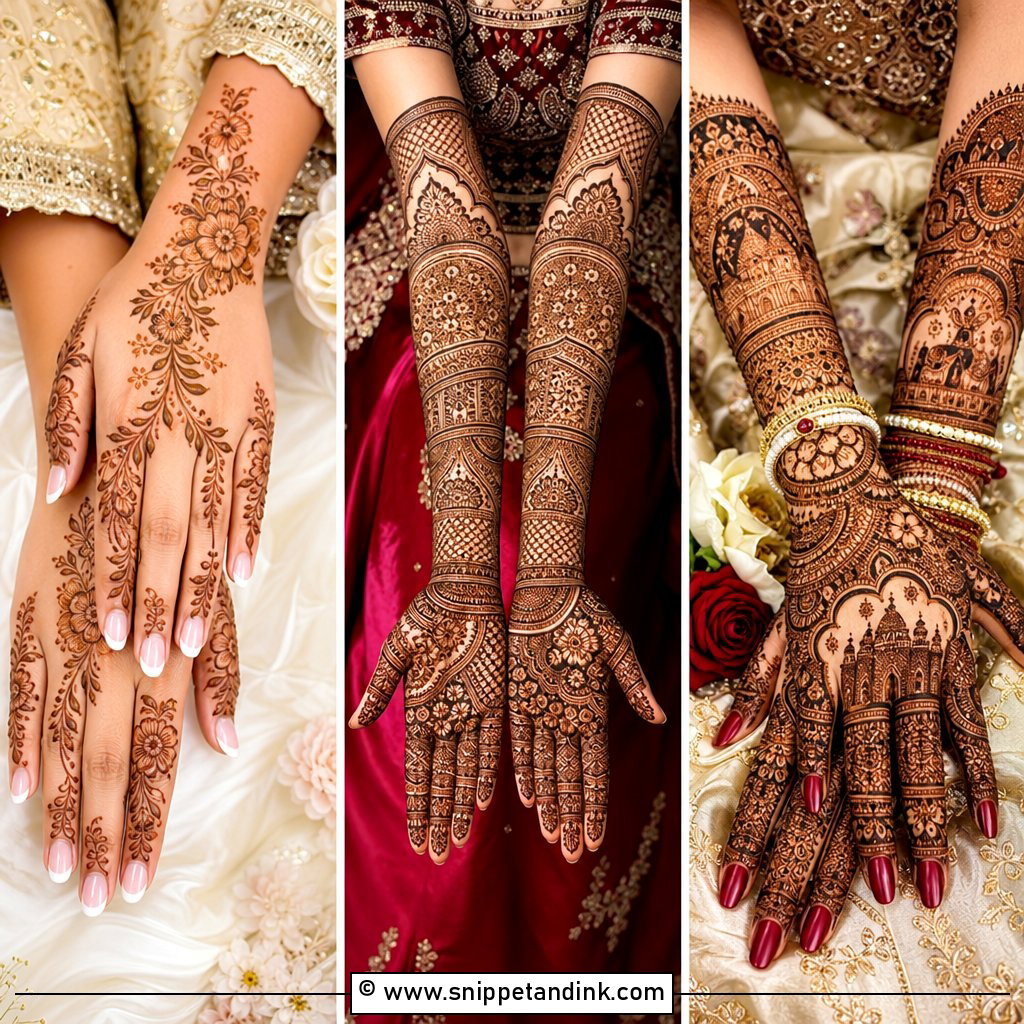
Engagement henna has a job the wedding mehndi doesn’t: it sits right next to a brand new ring that everyone wants to photograph. So I draw it lighter than the bridal set, with more open skin and a clear path to the ring finger. Brides are asking for clean negative space, initials hidden in the pattern, Arabic floral trails, palm mandalas and full-hand patterns that still leave the hand room to breathe. Some suit a lehenga or saree, others a gown or sharara at a small family ceremony. Below are 20 engagement designs, with what I’d watch for in each one.
Timing the Stain So It Peaks at the Ring Exchange
Natural henna doesn’t look its best the moment the paste comes off. It starts a bright orange and darkens to reddish brown over the next one to two days as it oxidises. Apply it the morning of the engagement and you’ll be exchanging rings with orange hands.
I book engagement henna one to two days before the ceremony. That gives the stain time to deepen, and it means you aren’t sitting for application on a day already full of hair, makeup and relatives.
Aftercare that actually changes the colour
- Leave the paste on as long as you can, ideally several hours or overnight. Short contact time is the most common reason for a pale stain.
- Dab on a little lemon and sugar mix once the paste is dry to the touch, so it stays stuck to the skin.
- Scrape the dried paste off with a blunt edge or rub it away with your hands. Don’t wash it off with water.
- Keep your hands away from water for as long as possible afterwards, and keep them warm. Cold hands stain lighter.
- Avoid soap, sanitiser and swimming pools until after the ceremony; they fade the colour faster.
1. Full Hand Engagement Mehndi Design
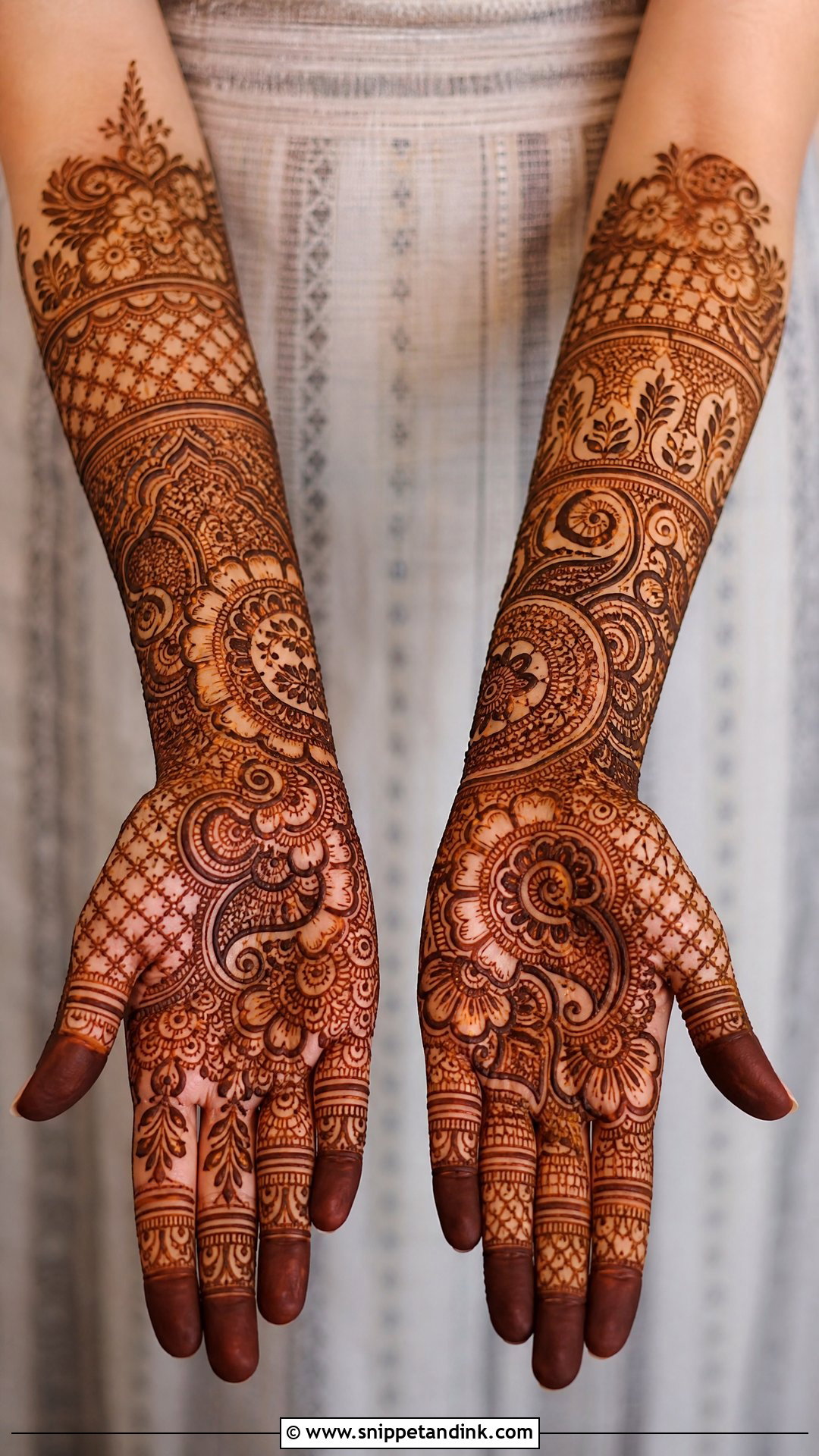
Full coverage at an engagement works if the density is controlled. The design usually runs over the palm, fingers, wrist and part of the forearm in sections of paisley, florals, jaali, leaves and fine filler. I keep the centre of the palm slightly open or give it one neat mandala, because a solidly packed palm reads as a dark blur in photos. I also thin the work around the ring finger so the band isn’t swallowed. Pair it with rich bangles and a traditional outfit; with plain sleeves and no bangles, full hands can look heavier than the rest of you.
2. Simple Engagement Mehndi Design
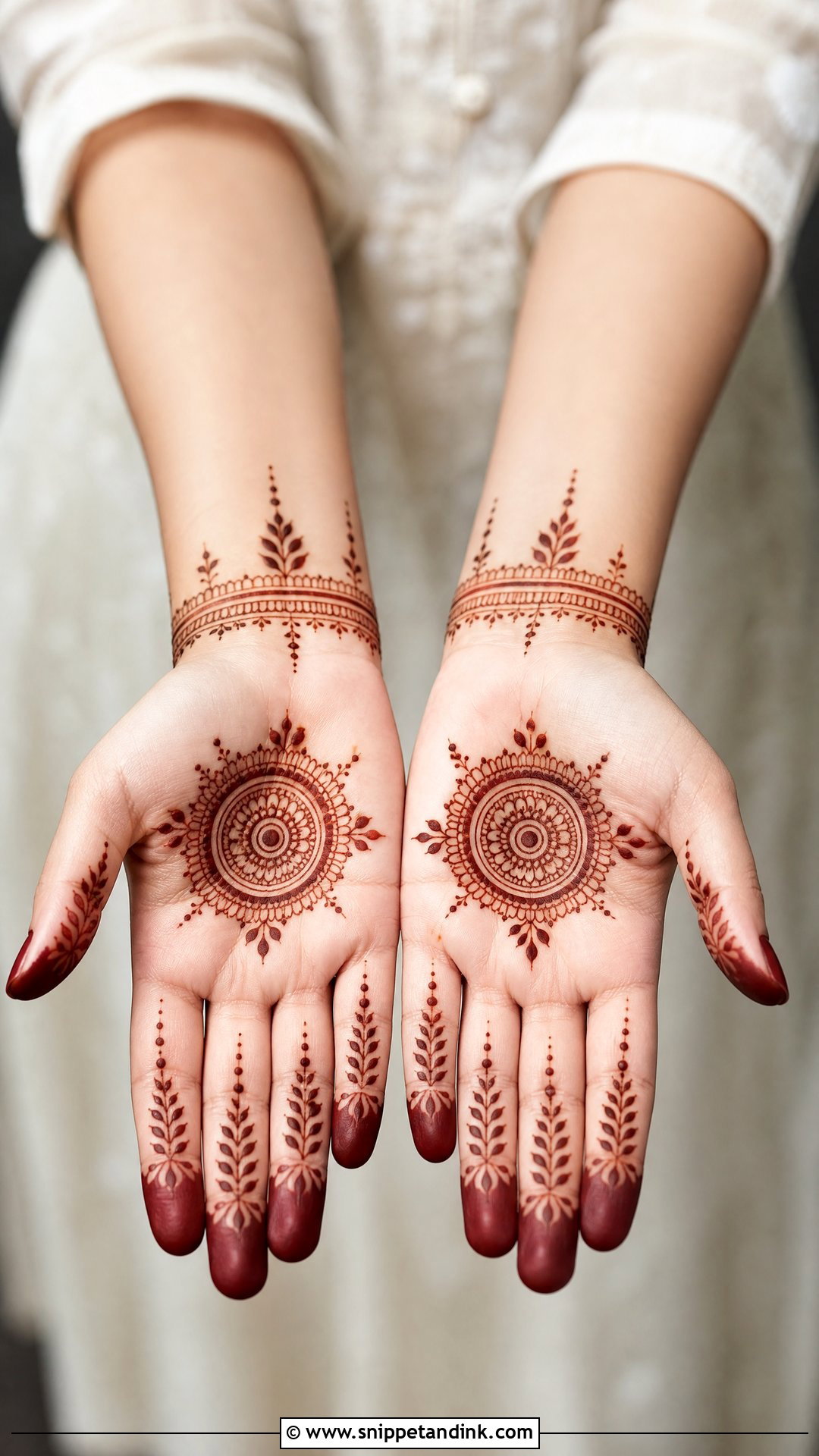
A small palm mandala, leafy lines up the fingers, a light wrist cuff and a few floral curves: that’s the whole design, and it takes me a fraction of the time of a full hand. Because so much skin stays visible, it suits a ceremony full of greetings, hugging and passing trays. I recommend it when the outfit is heavily embroidered or the jewelry is bold, since the hands then don’t fight for attention. It’s also my usual suggestion for sisters and bridesmaids, who shouldn’t outshine the bride’s hands.
3. Arabic Engagement Mehndi Design
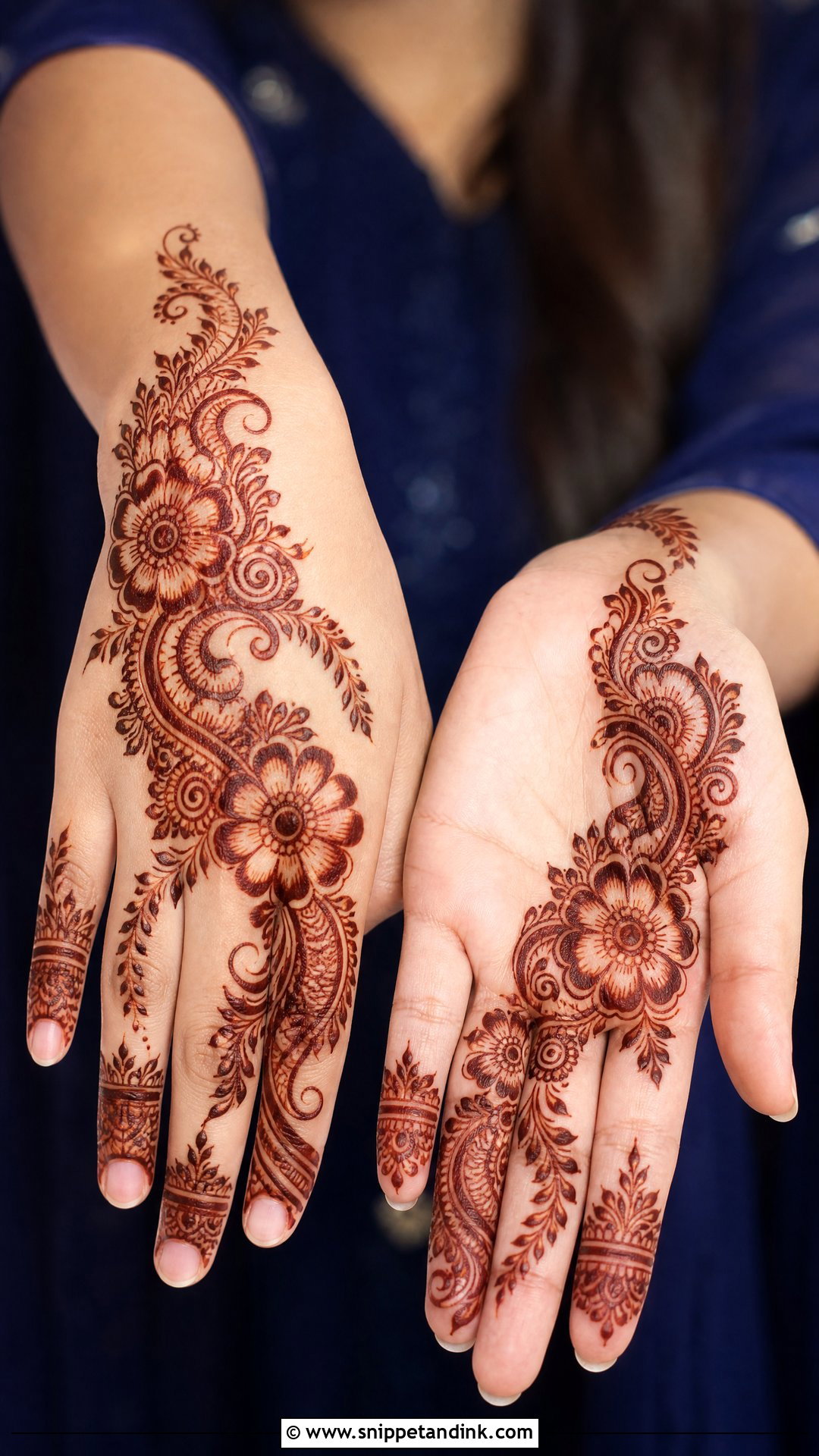
Arabic henna moves diagonally across the hand in a trail of flowers, vines, paisleys and shaded petals, starting at the wrist and finishing on the fingers. Leaving the empty spaces is deliberate: the diagonal line lengthens the hand and the gaps keep it from looking dense. I draw Arabic work with a slightly thicker cone line than Indian fillers, so the bold shapes still read clearly after the stain darkens. With rings, bangles and painted nails it holds its own, and a deep maroon stain makes the shading stand out against bare skin.
4. Back Hand Engagement Mehndi Design
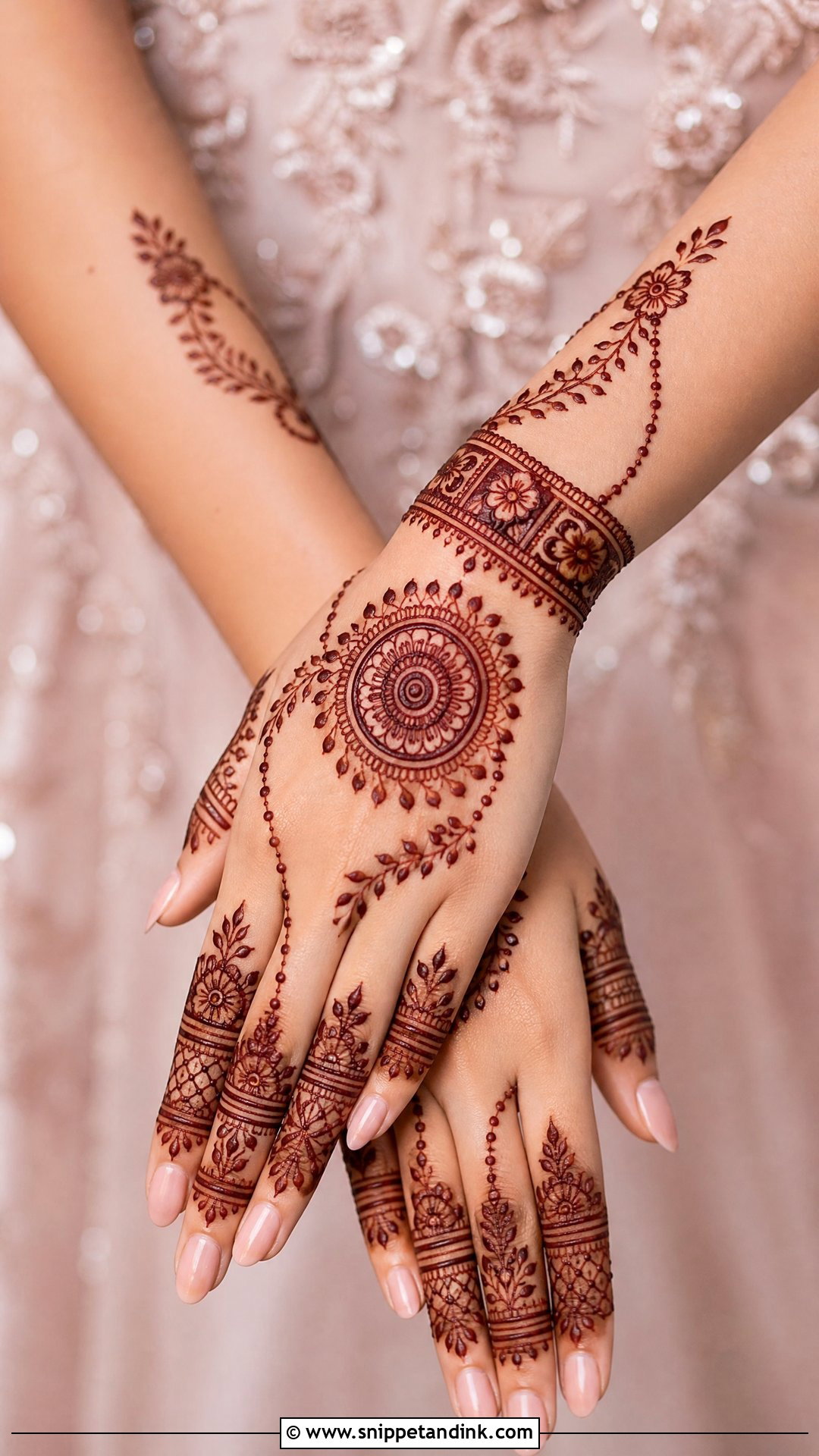
The back of the hand is where the ring sits, so it’s the side guests and the photographer see during the exchange. A strong back-hand design might have a central mandala, a bracelet band at the wrist, finger detailing and floral chains linking them like hand jewelry. Keep the palm simple and spend the detail here. I leave some negative space around the knuckles, because a fully covered knuckle creases every time you bend your fingers and the lines look smudged in close-ups. Manicured nails and thin bangles finish it neatly.
5. Front Hand Engagement Mehndi Design
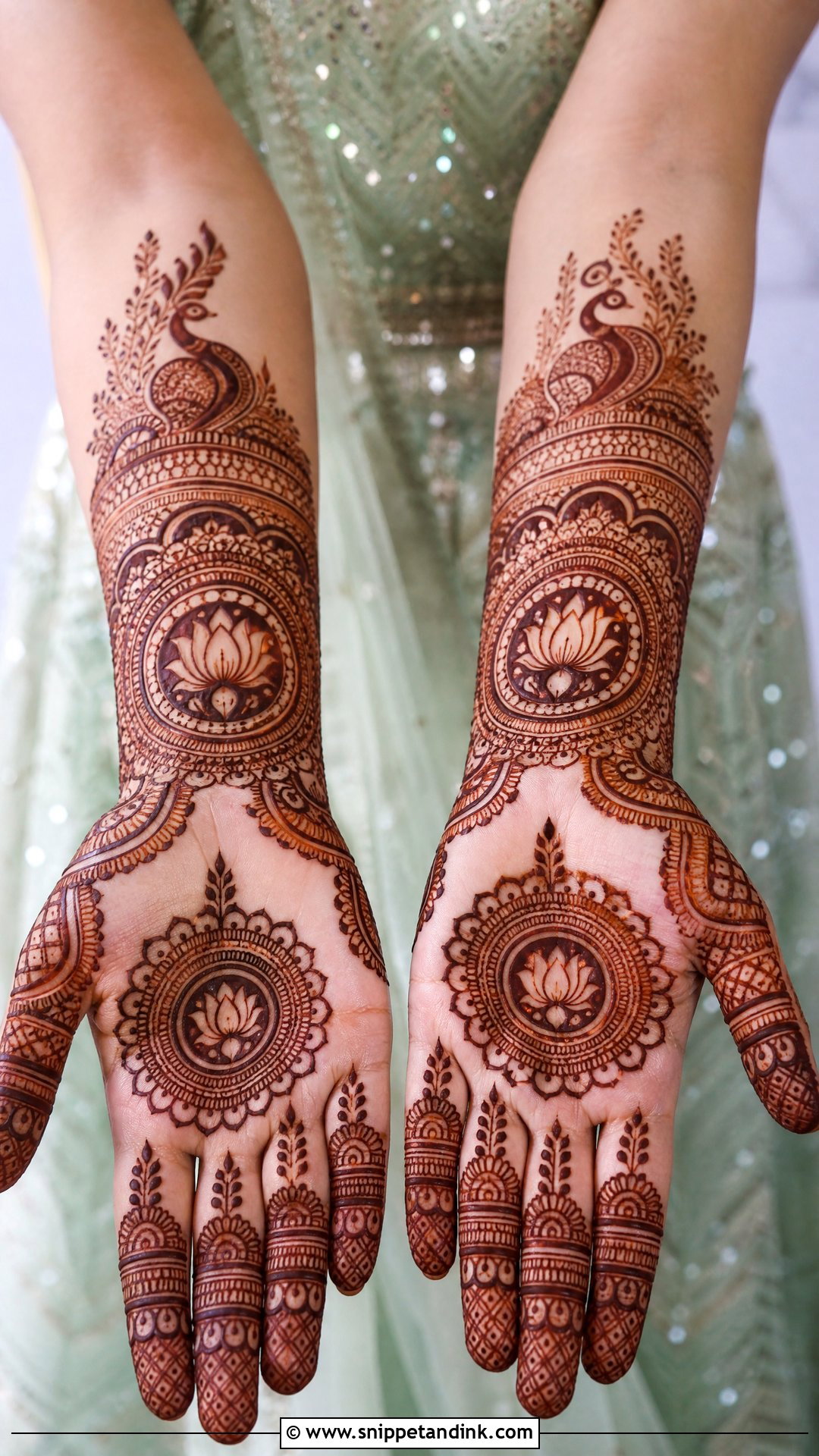
Palm-focused designs feel the most traditional, with the palm as the main canvas: a large round mandala, a lotus centre, paisley borders, peacocks or a heart motif blended into vines. Palms also take the darkest stain, since the skin there is thicker, so a palm-heavy design will look richer than the same pattern on the back of the hand. For an engagement I hold back on density compared with the wedding. Clean finger bands with dots or net patterns complete it, and it suits poses where you show your palms or hold the thaal.
6. Minimal Engagement Mehndi Design
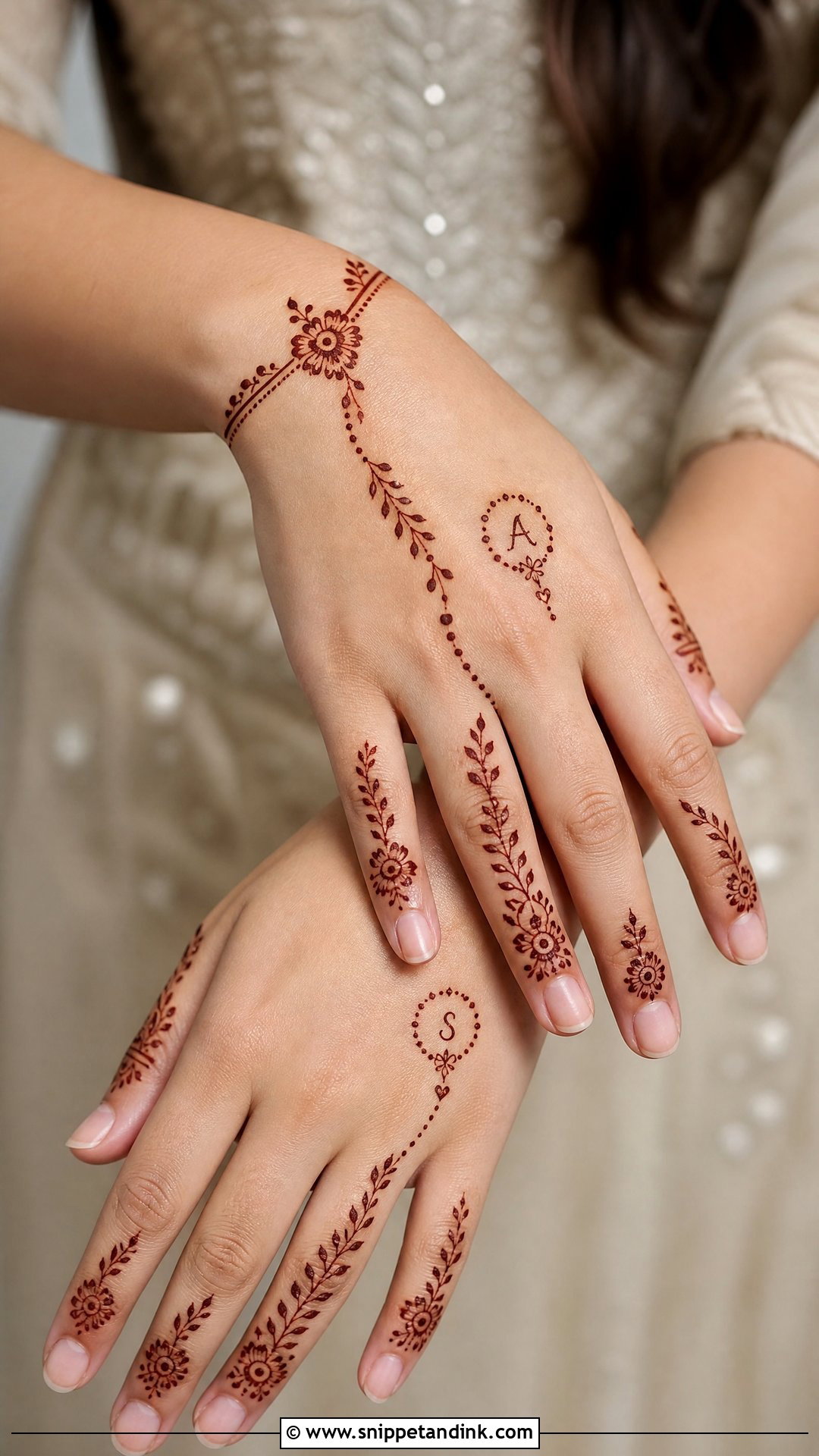
Thin lines, open spaces, small florals, tiny dots and a bracelet-like wrist detail placed on only a few areas of the hand. Minimal henna lets the ring, outfit and nails lead. I like it for destination engagements and small family ceremonies, and it’s the easiest way to add a tiny initial, a date or a heart. The risk with minimal work is that every wobble shows, so it needs a steady artist and a fine cone tip rather than a rushed application.
7. Modern Engagement Mehndi Design
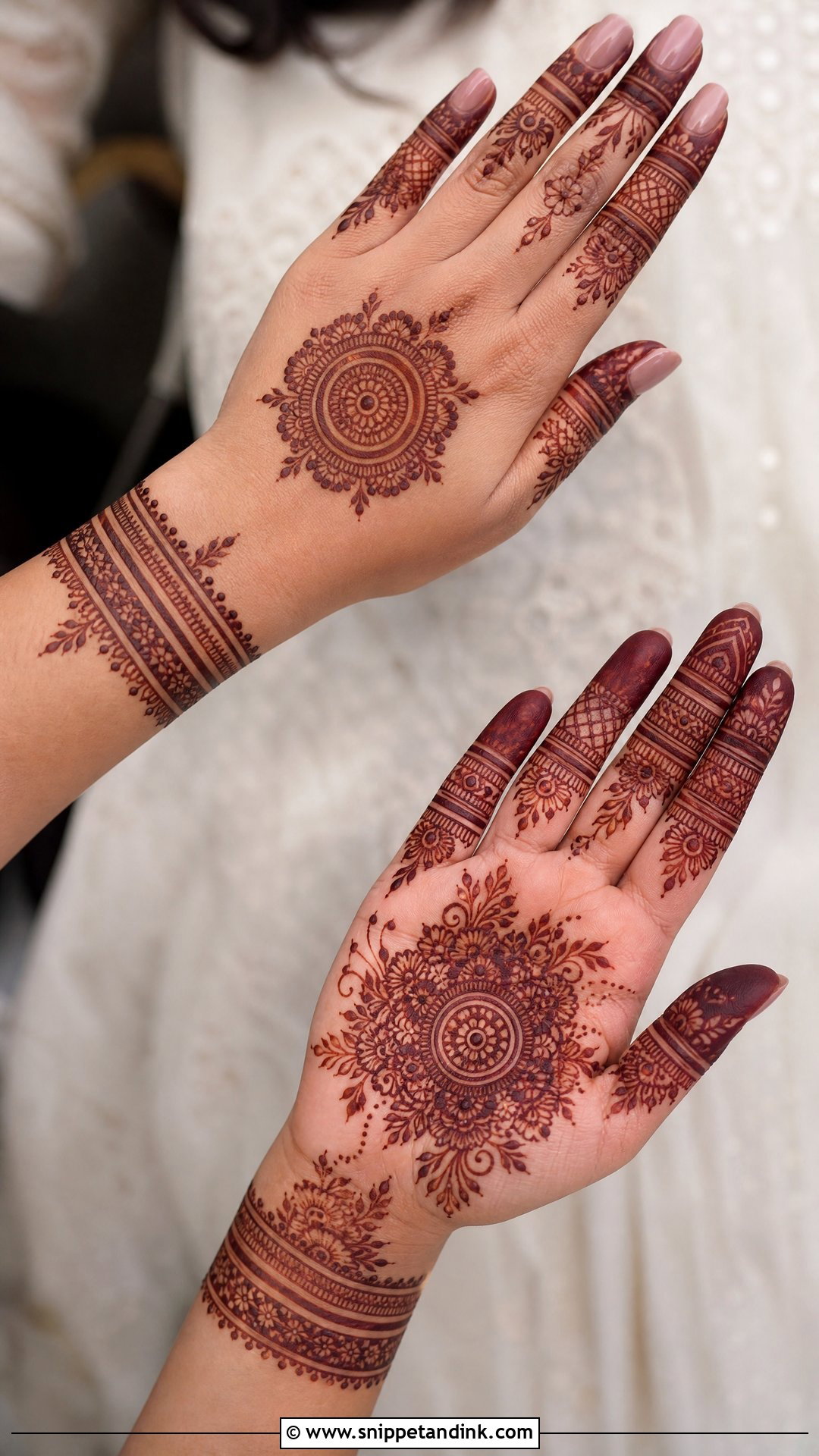
Modern layouts take traditional henna and rearrange it: clean geometry, floating motifs, half-hand coverage, ring-frame patterns and stylish finger work. It’s less plain than minimal and less dense than bridal, which is why it sits so well at an engagement. A bold back-hand mandala, a leafy wrist band and fine lines leading toward the ring finger is a combination I draw often. It suits gowns, pastel lehengas and fusion outfits. Ask for crisp lines and even spacing; geometric designs show uneven gaps far more than florals do.
8. Personalized Engagement Mehndi Design
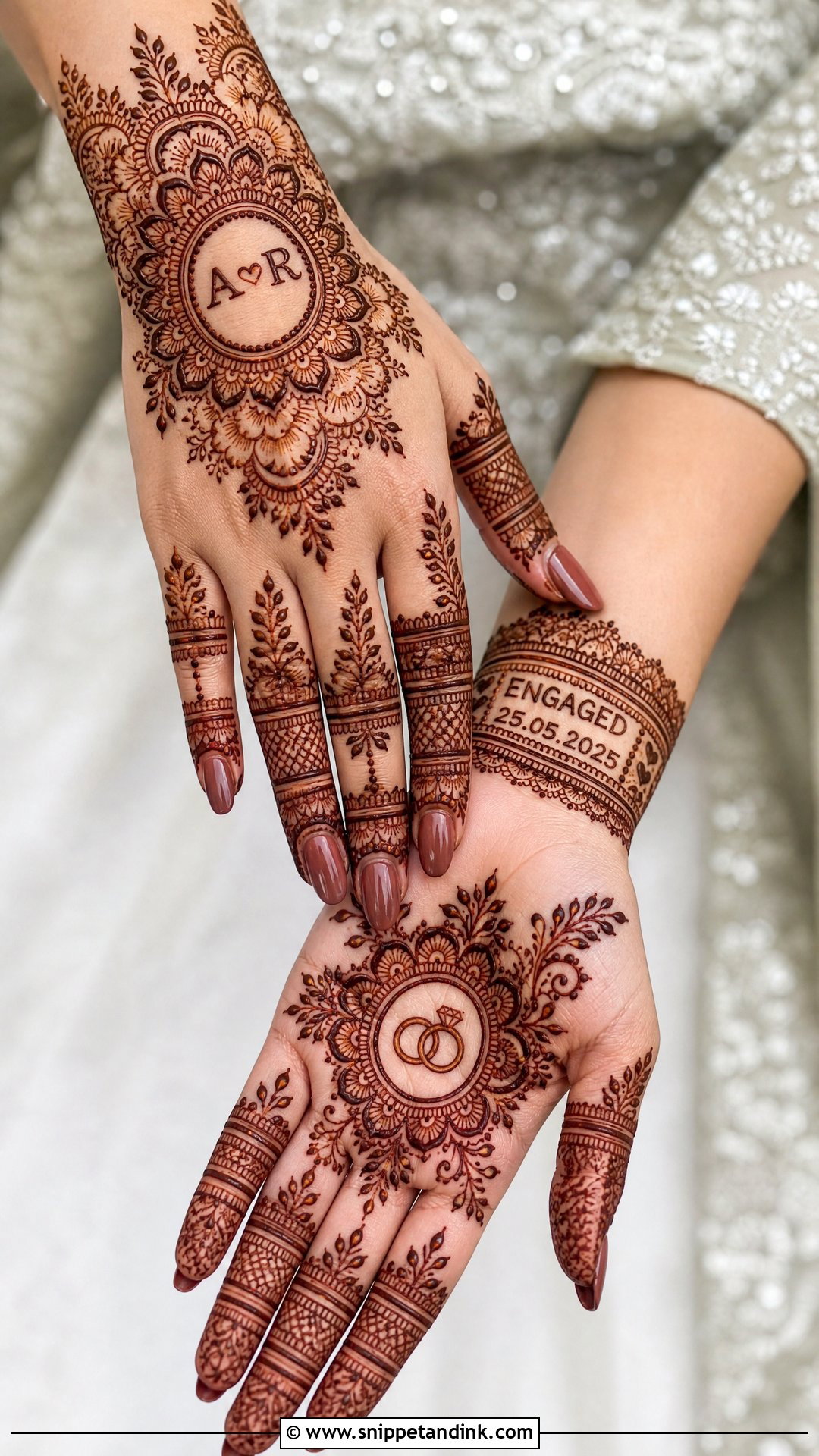
Initials, the engagement date, a tiny ring motif, a favourite flower or a hidden name can all be worked into the pattern. The trick is to build them into the design rather than dropping them in at random. I put initials inside a mandala, fit a date into a wrist band, and place a ring motif near the ring finger, so the personal details become part of the structure. Bring the exact spelling and date written down; I’ve learned to check twice before the cone touches skin, because henna can’t be erased once it starts staining.
9. Ring Ceremony Mehndi Design
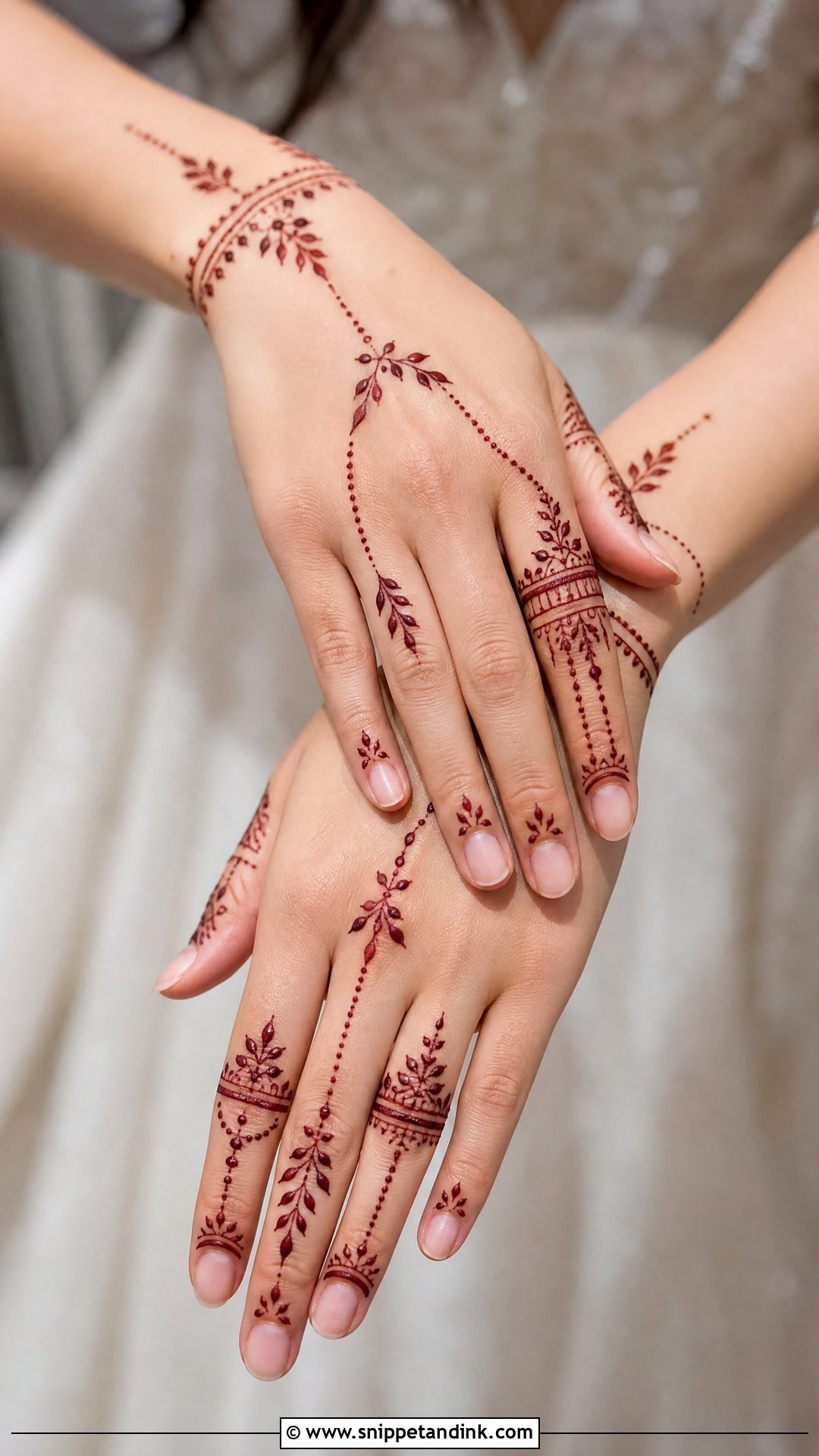
Everything in a ring ceremony design points toward the ring finger. The back of the hand carries delicate chains, leafy trails, dotted strings and finger bands that lead the eye to the band, while the palm stays simple. A bracelet cuff at the wrist ties it together like henna jewelry. On the ring finger itself I draw detail around the base and the tip but leave the middle clear, so the ring isn’t sitting on wet paste or hiding the pattern underneath.
10. Indian Engagement Mehndi Design
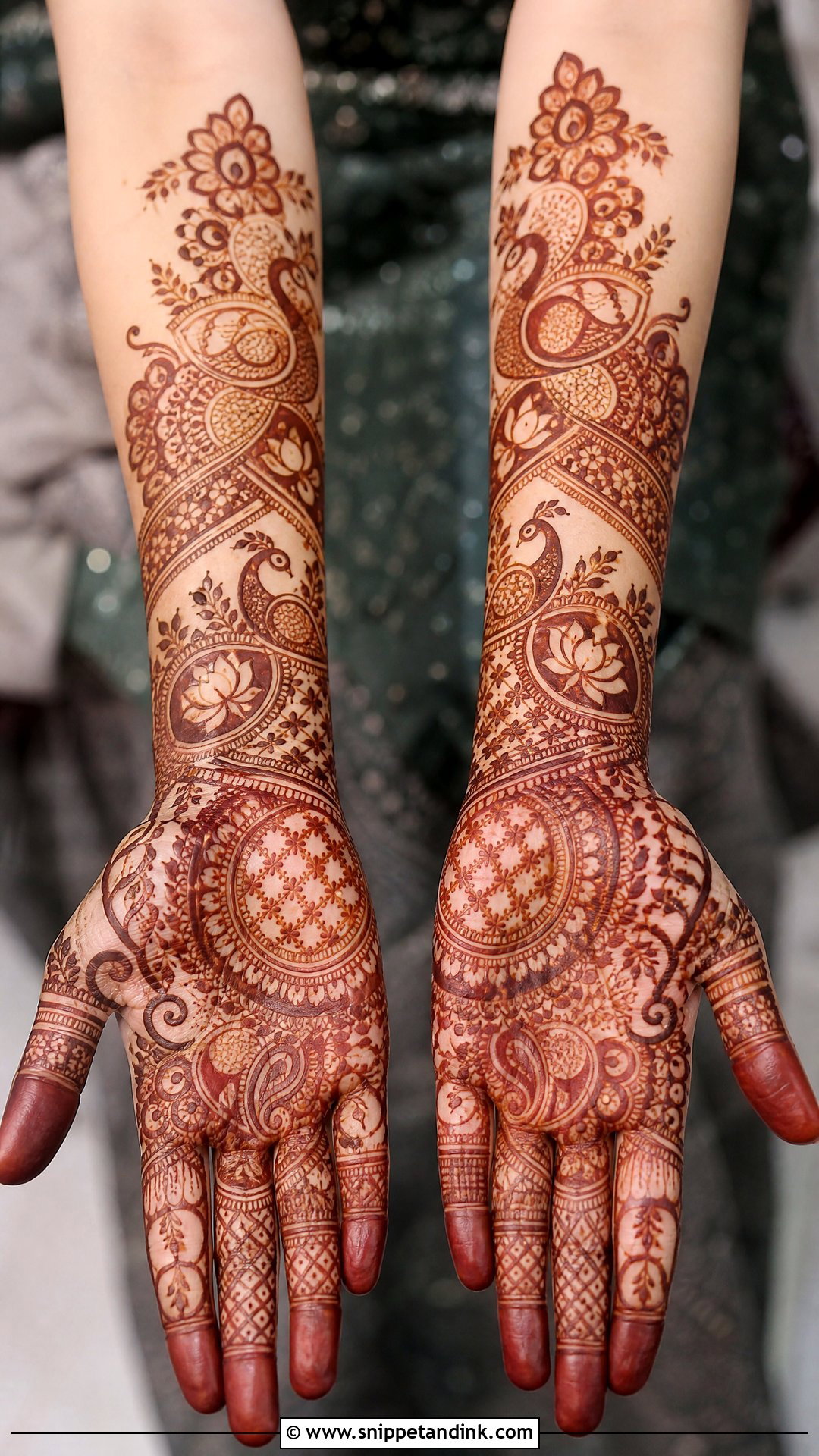
Traditional Indian henna is dense and motif-rich: paisleys, peacocks, lotus flowers, mandalas, leafy borders and fine filling patterns. For an engagement I usually stop at the wrist or mid-forearm instead of going to the elbow, which keeps it festive but clearly lighter than the bridal set. If you like symmetry, ask for mirrored designs on both hands with a central palm motif and coordinated fingers. Fine filler lines need good paste; a gritty or lumpy cone breaks those lines, so this is the style where the quality of the henna matters most.
11. Indo Arabic Engagement Mehndi Design
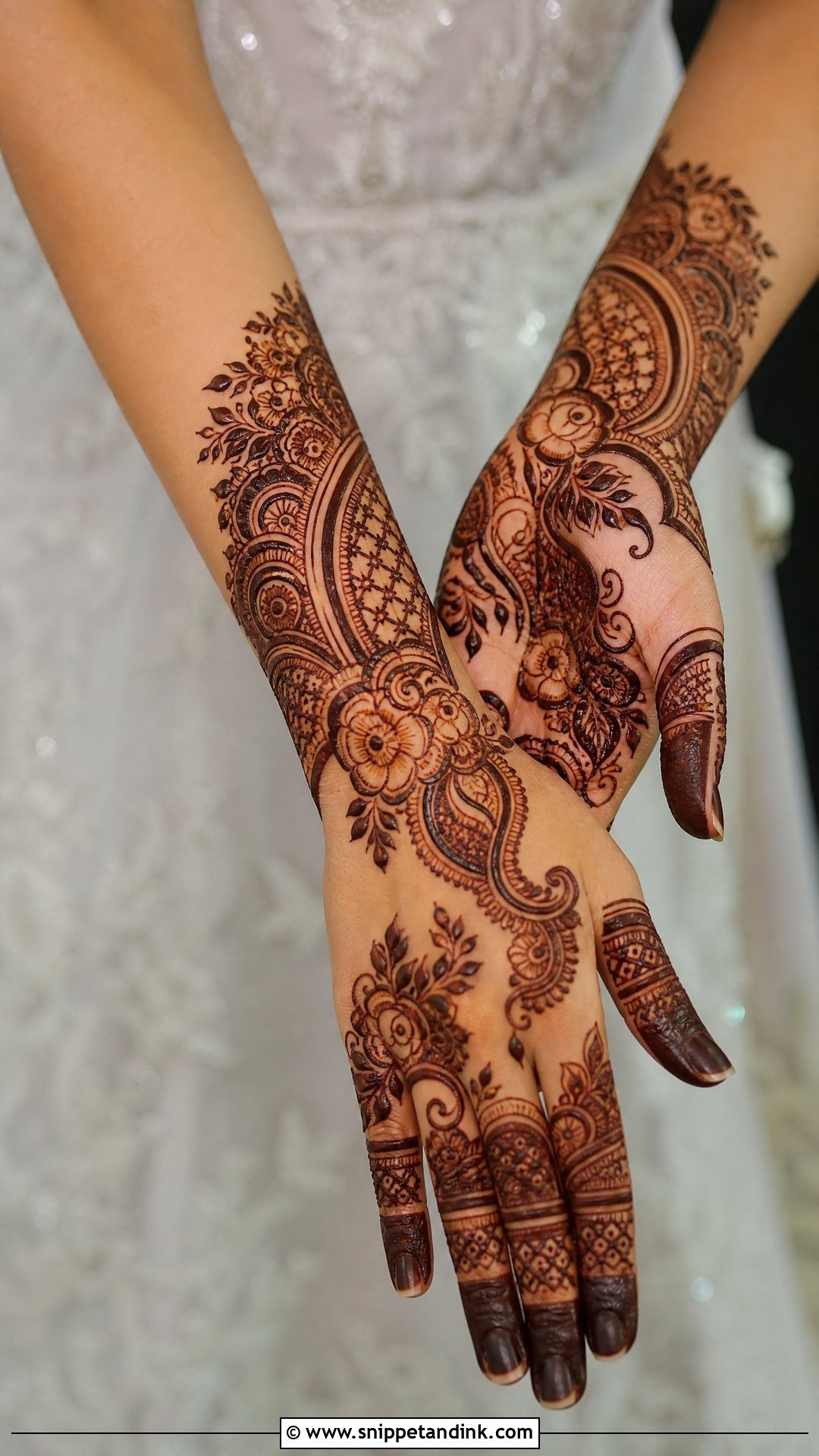
Indo-Arabic work takes the flow of Arabic henna and fills it with Indian detail: bold flowers, paisley trails, shaded leaves, mandalas, jaali mesh and fine fillers. It ends up fuller than Arabic and lighter than traditional bridal, which is exactly the middle ground an engagement wants. A diagonal palm layout, a detailed wrist cuff and neat finger bands give a finished shape. It works front and back, and it’s a good match when your outfit mixes traditional embroidery with a modern cut.
12. Floral Engagement Mehndi Design
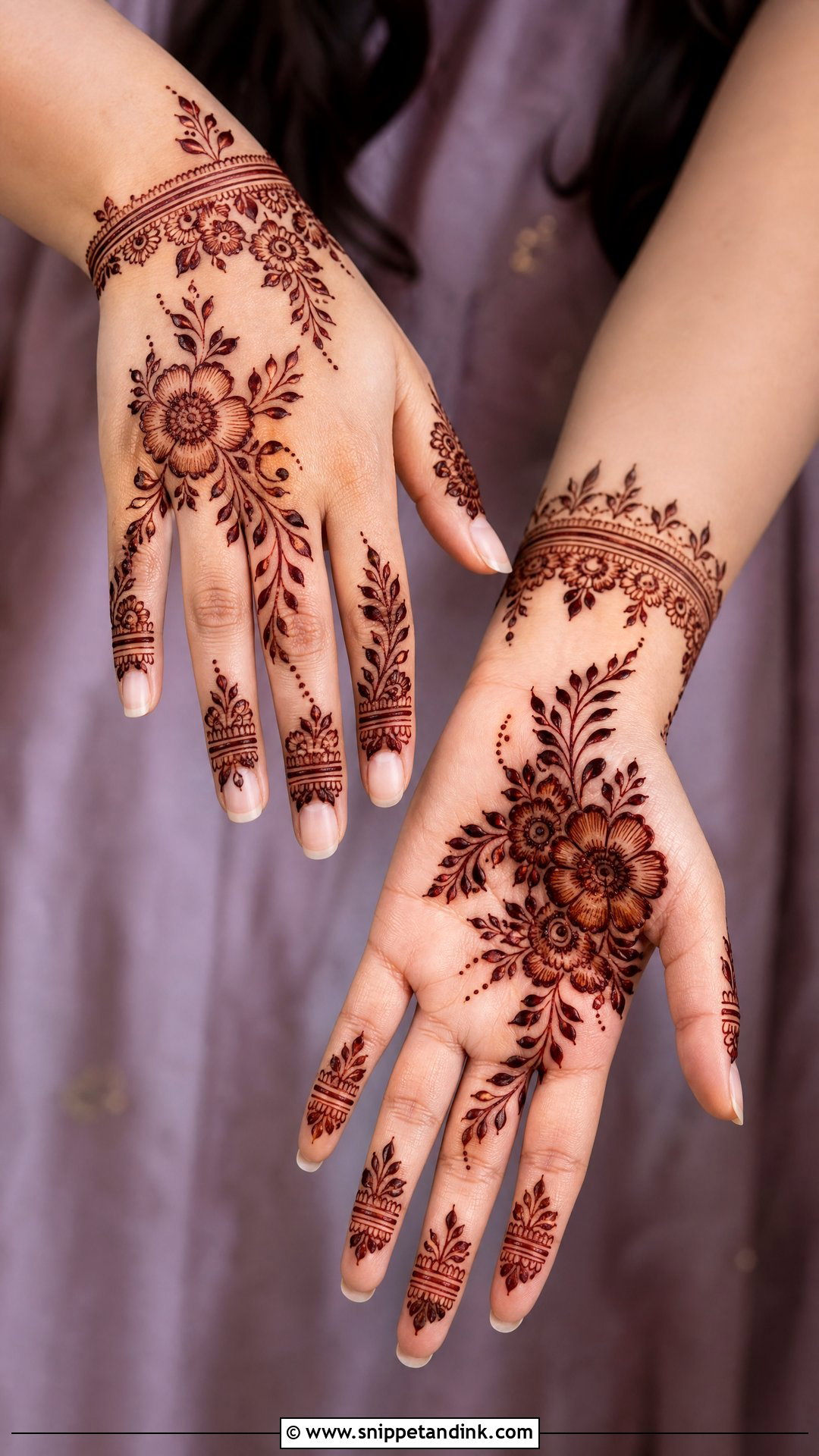
Florals soften the hand more than any other motif. The design can carry blooming flowers across the palm or the back hand, leafy vines round the fingers and a bracelet-style wrist finish. Large shaded flowers look bold; tiny ones feel delicate. I keep open space around the ring finger so the petals don’t crowd the band. Florals adapt to almost any layout, from simple to full hand, and sit easily with pastel outfits and pearl jewelry.
13. Mandala Engagement Mehndi Design
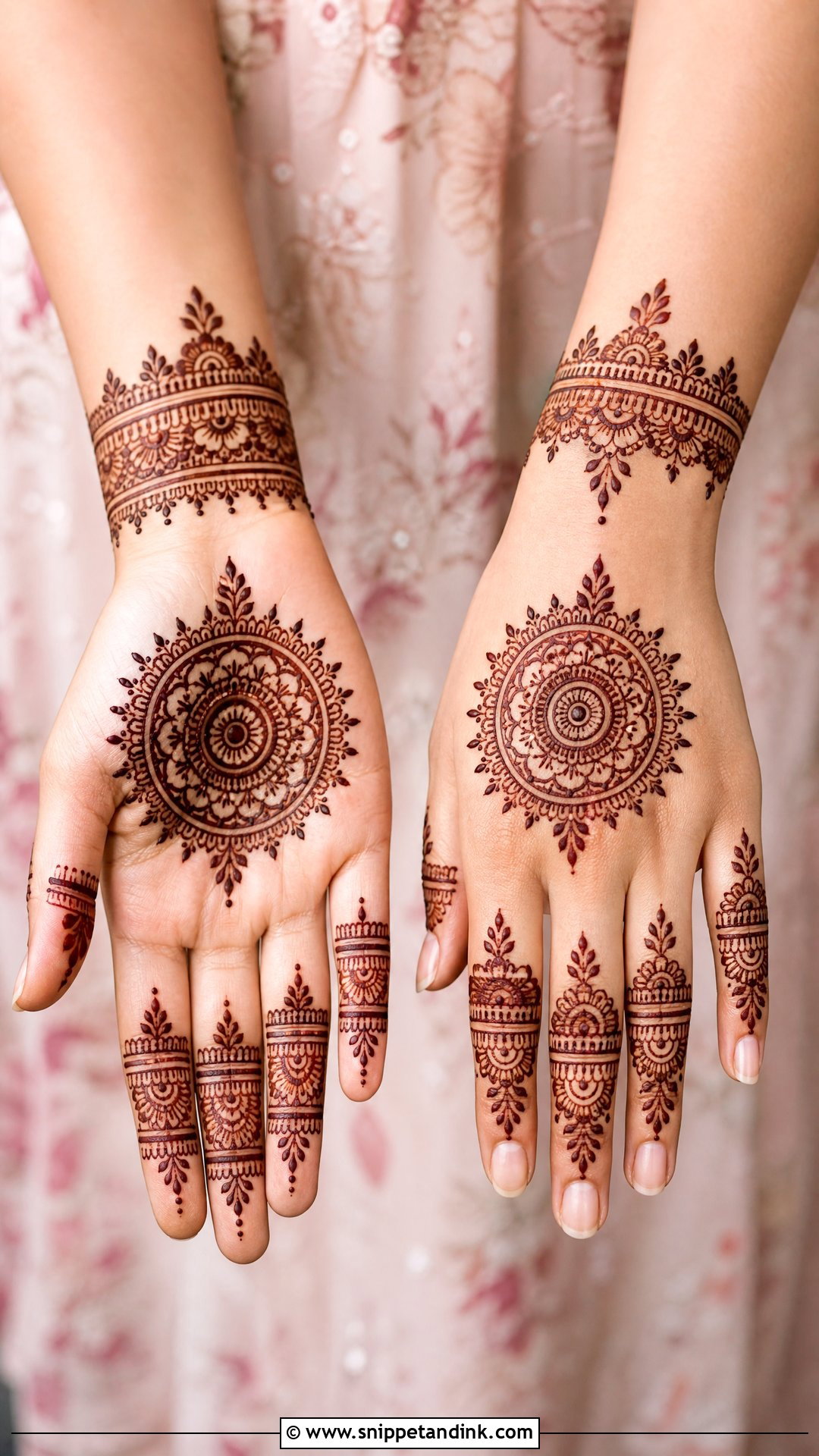
A round mandala in the centre of the palm or back hand becomes the focal point, with the fingers and wrist finished in bands, dots, vines or small florals. For an engagement I draw it medium-sized rather than oversized, so the hand still looks light. The hard part is symmetry: a mandala that’s even slightly off-centre is obvious, so I mark the centre point and the first ring before drawing any petals. On the back hand it pairs with ring chains and bracelet cuffs, and it suits bridesmaids as well as the bride.
14. Peacock Engagement Mehndi Design
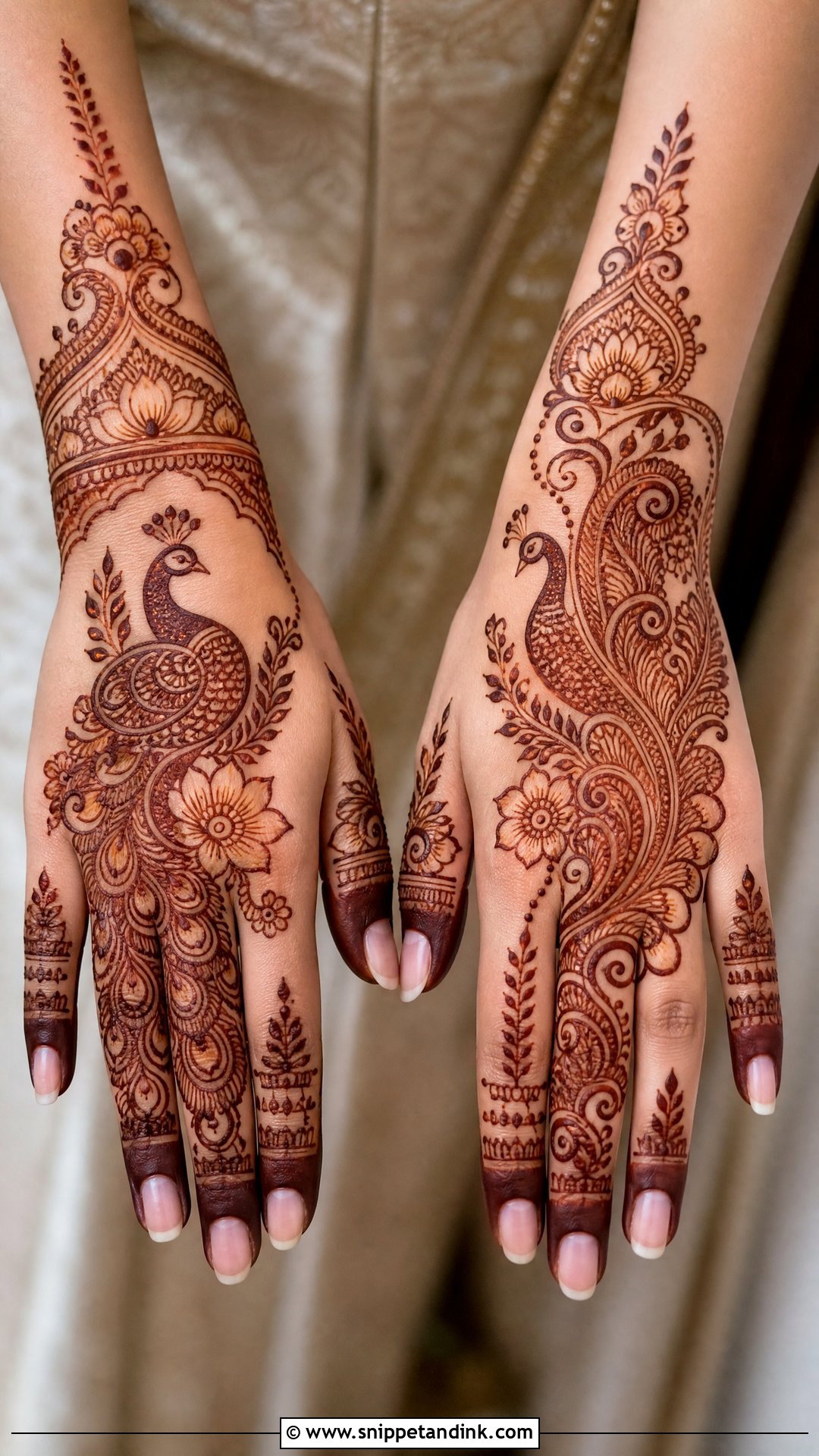
Peacocks are a classic bridal motif, and one peacock is plenty for an engagement. It can sit on the palm, wrist or back hand, surrounded by paisleys, feathers, flowers and curved lines that follow the natural shape of the hand. I keep a single main peacock as the hero instead of scattering several small ones, which looks cleaner and more current. The feather detail needs sharp, even strokes; if the cone is too wet, those fine lines bleed together as they dry. Silk sarees, lehengas and traditional jewelry suit it well.

15. Jaali Engagement Mehndi Design
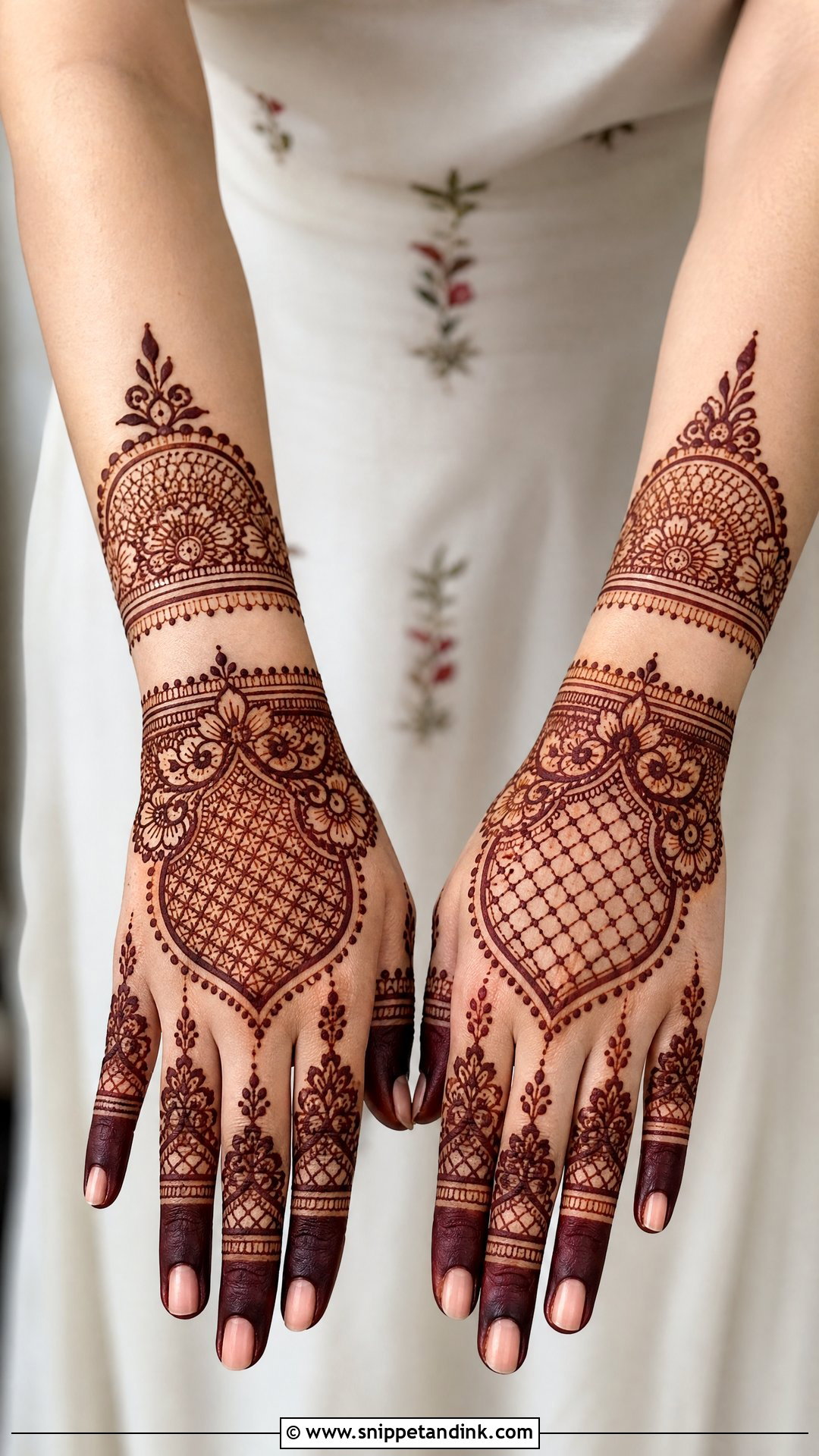
Jaali is the mesh pattern that gives henna a lace effect. A complete look might have jaali panels on the back hand framed by floral borders, filled fingertips and a wrist cuff. I’d avoid covering the whole hand in dense mesh for an engagement, because tight grids stain into one dark patch when the lines are drawn too close. Using it in selected panels with open skin around them keeps the lace readable. It’s a natural match for outfits with net, lace or sequin work.
16. Half Hand Engagement Mehndi Design
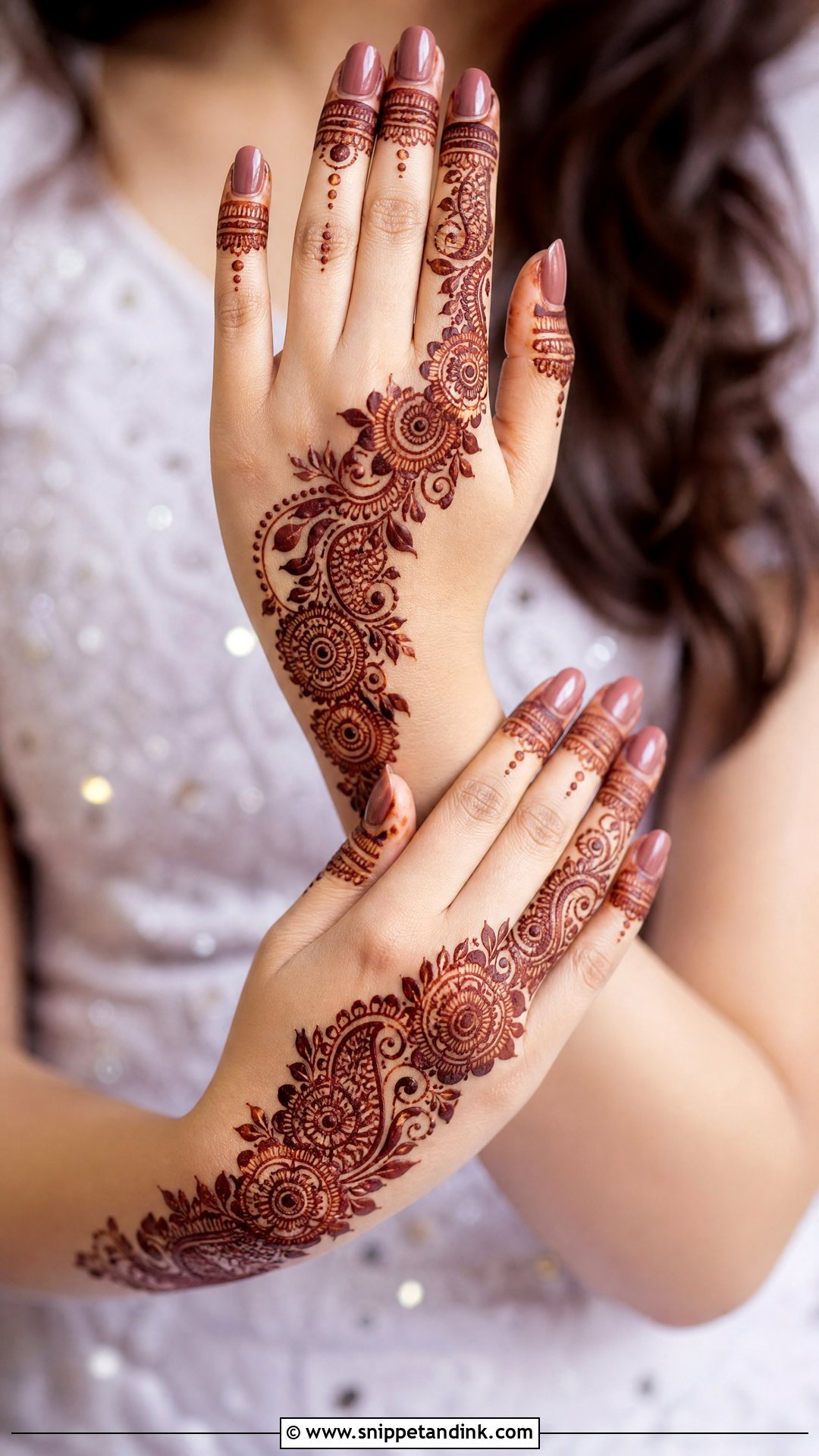
Stopping at the wrist keeps things practical. A Half hand engagement mehndi design covers the palm or back hand and leaves the forearm clean, with a mandala, a floral trail, a paisley cluster or a diagonal Arabic line. Application time is much shorter, which matters if you’re booking henna the evening before and still need to sleep with the paste on. It suits detailed sleeves and statement bangles. Finish the fingers neatly with dots, leaves or simple bands so the design doesn’t look cut off.
17. Bracelet Engagement Mehndi Design
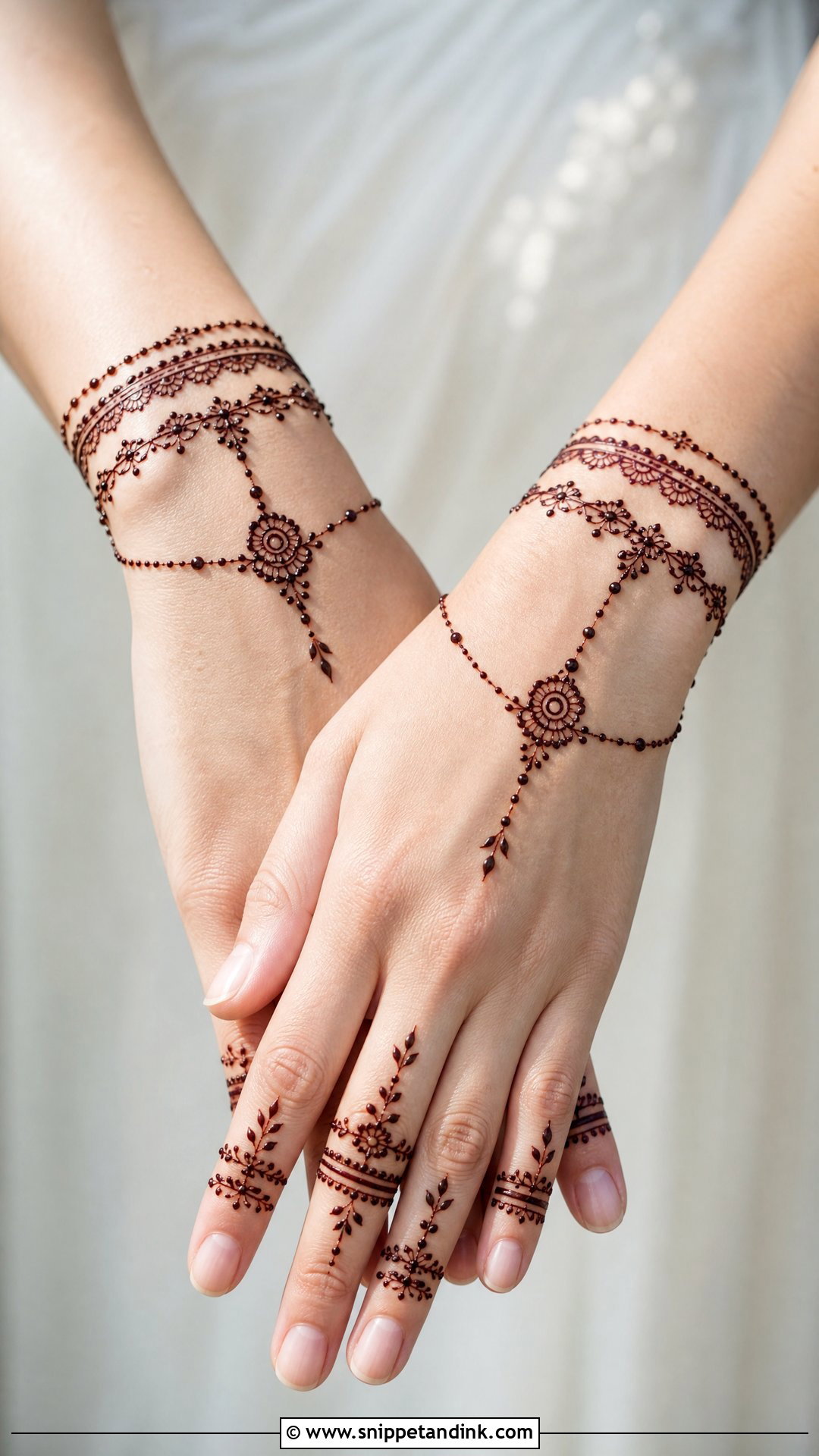
Here the henna acts as jewelry: a cuff or bangle shape around the wrist, connected to the fingers by chains, dots, vines or tiny floral links, with the back hand mostly open. It complements your real rings and bracelets instead of competing with them. Keep it minimal with thin lines, or richer with layered cuffs and shaded flowers. I draw the wrist band slightly lower than where a watch would sit, because bangles rub the stain lighter if the band falls right where they rest. It’s a good choice with sleeveless or short-sleeved outfits.
18. Finger Engagement Mehndi Design
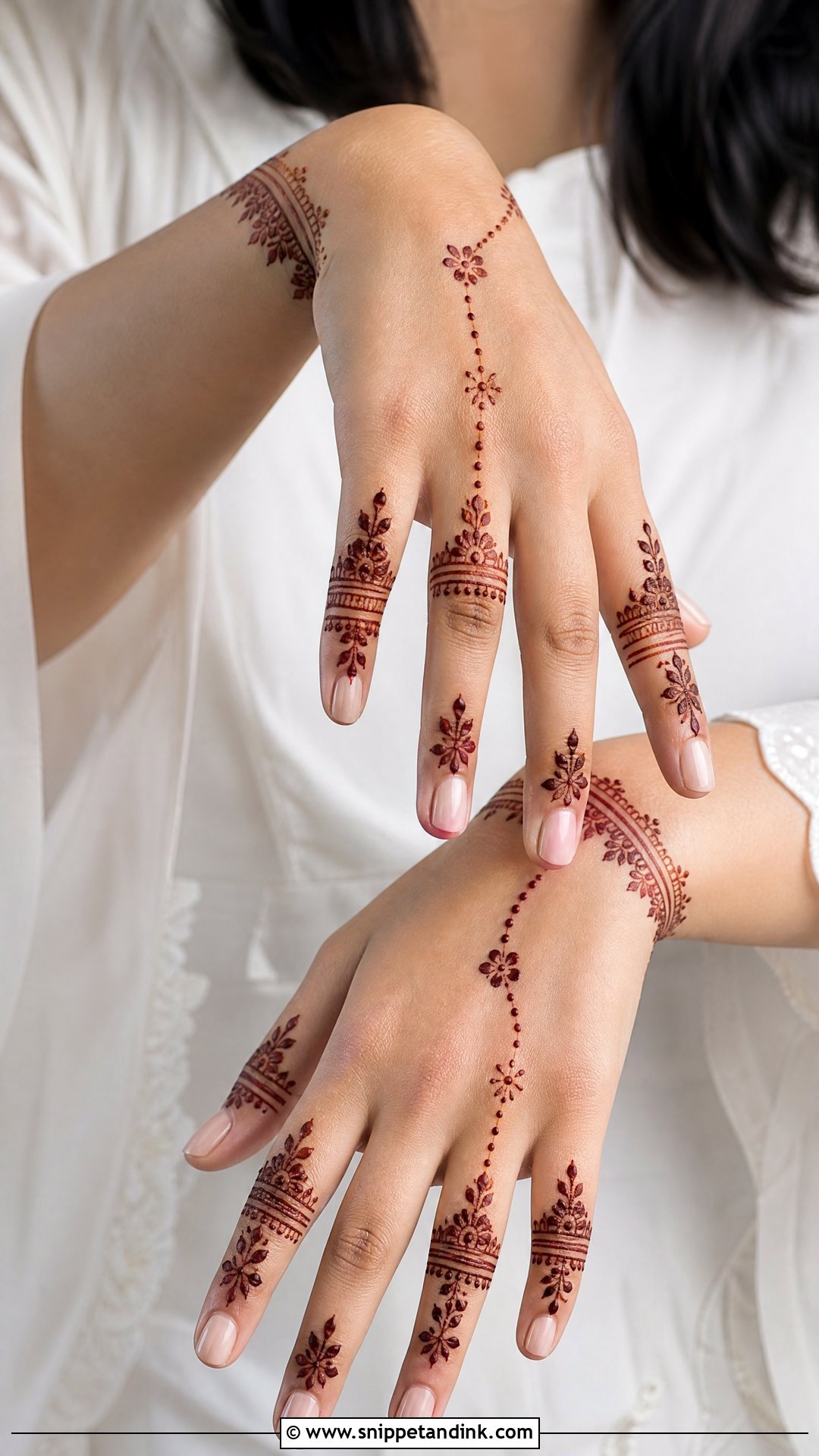
Ring-style bands, leafy tips, dotted lines and tiny florals on the fingers, with the palm or back hand left mostly open and a small wrist detail for balance. Finger designs keep attention on the ring and the nail art, they’re quick to apply and comfortable to wear. Coordinate the patterns across all five fingers rather than drawing each one differently, or the hand looks unfinished. Fingertips stain very dark, which is worth knowing if you’re planning light nail colour; the contrast can be strong.
19. Shaded Engagement Mehndi Design
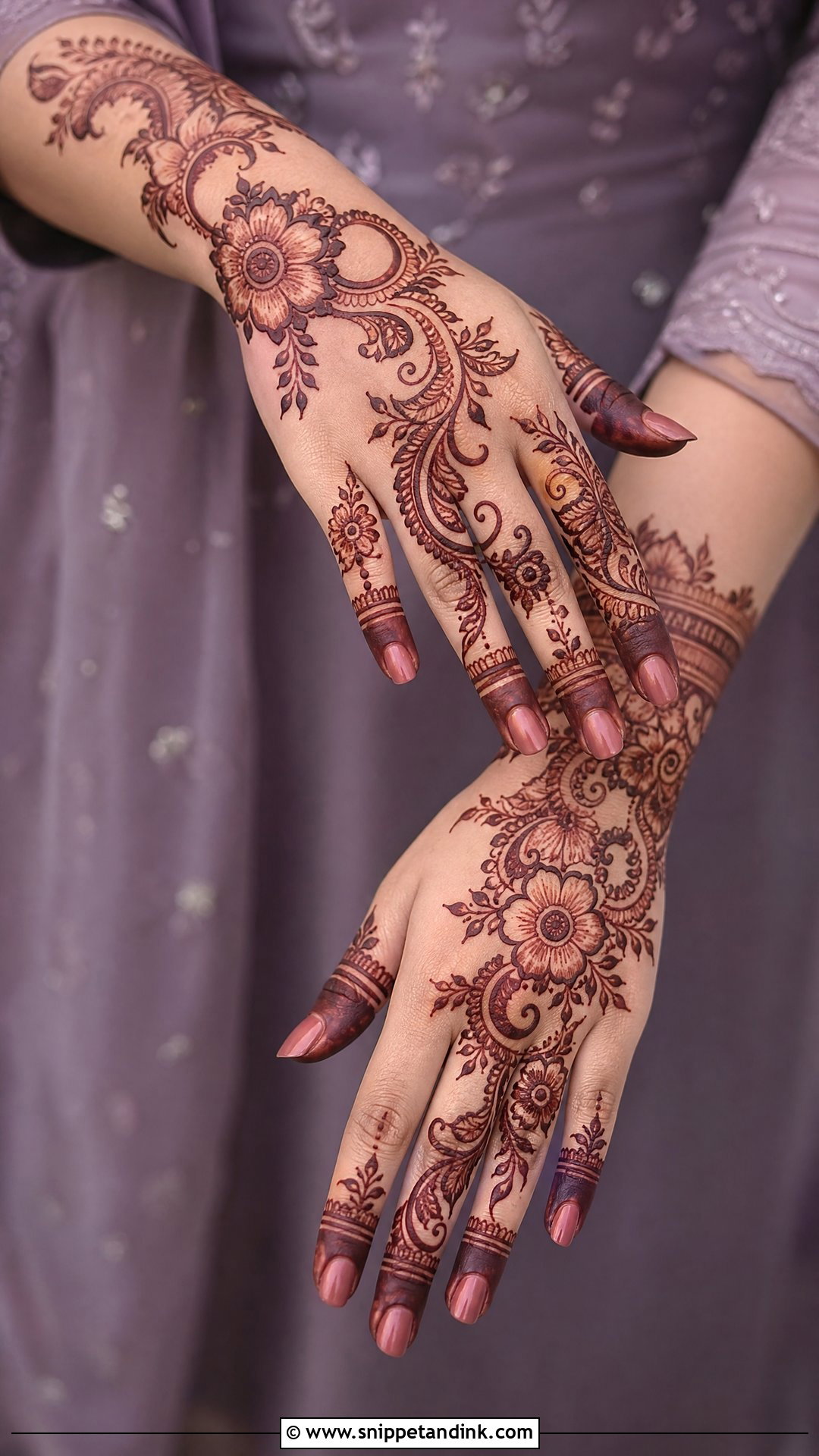
Shading means filling selected petals, leaves and paisleys with a soft wash of henna instead of using outlines alone, so the pattern looks fuller and more dimensional. It’s at its best in Arabic and Indo-Arabic layouts, where the shaded shapes stand out against open skin. With natural henna the shaded areas stain evenly if the paste is spread thin and smooth; patchy shading usually comes from uneven pressure on the cone. Don’t shade every motif, or the design loses the contrast that makes it work on camera.


20. Engagement Mehndi Design For Bride
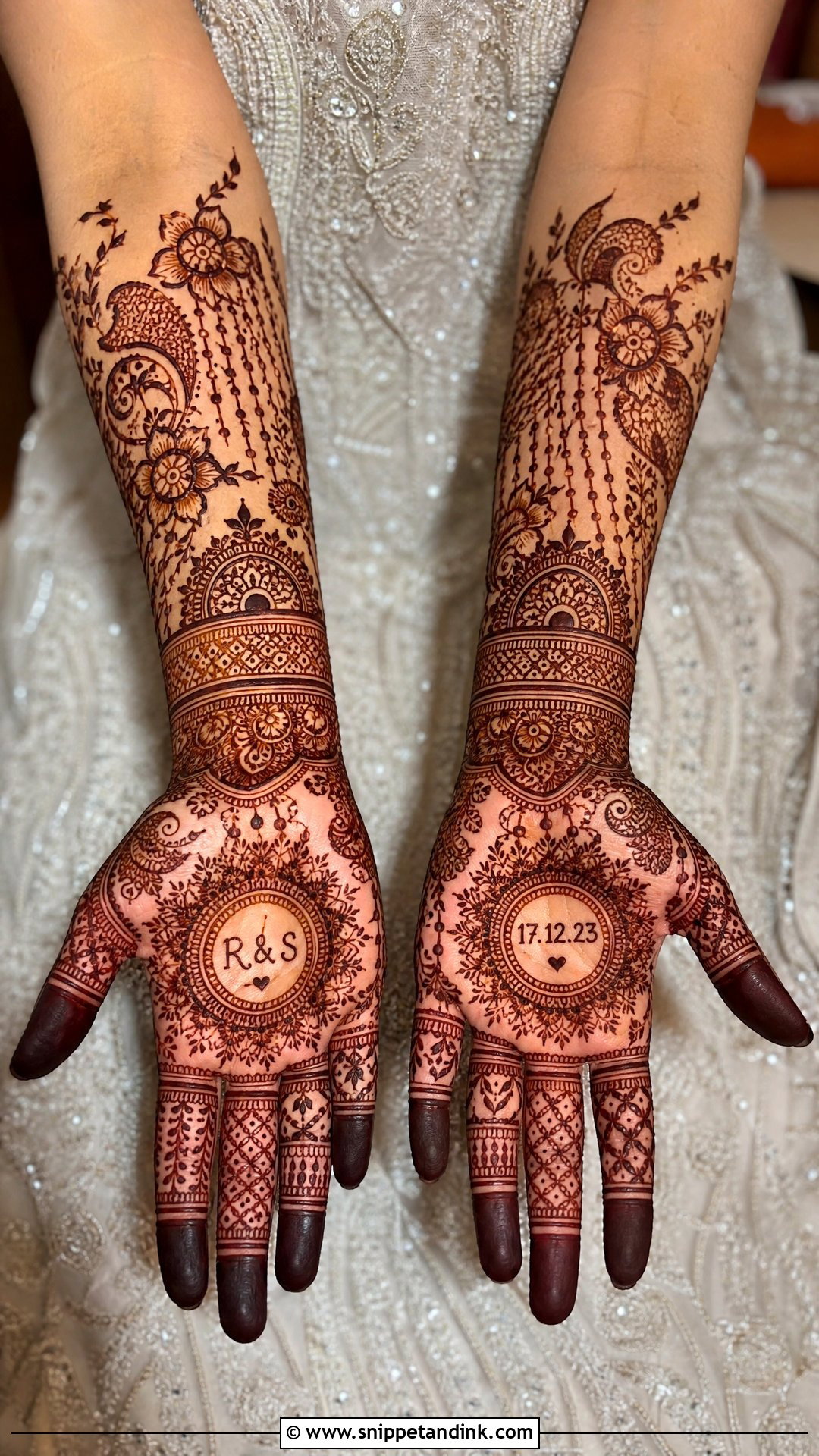
This is the all-in-one version. Engagement mehndi design for bride requests usually ask me to combine a palm mandala, a floral back-hand trail, a wrist cuff, finger detailing and one personal element like initials or the date. Let the outfit decide the vocabulary: paisleys, peacocks and jaali for a traditional look, negative space, bracelet patterns and fine florals for a modern one. Keep it noticeably lighter than what you plan for the wedding, so the two sets of photos don’t look identical.
Nails, Ring Cleaning and Henna in the Right Order
Henna stains the cuticles and nail edges along with the skin, so the order of appointments matters. Get your manicure done first. Gel and builder finishes sit on top of the nail and shrug off henna; a fresh stain on bare cuticles is much harder to tidy afterwards.
If the ring is coming from a jeweller for cleaning or sizing, don’t try it on while the paste is wet. Henna can stain pale settings and get trapped around stones. Wait until the paste is off and your hands are dry, then slip it on.
Why I Refuse Black Henna
Real henna never stains black. Pastes sold as black henna, or that promise a jet-black result within an hour, are often mixed with PPD, a hair-dye chemical that can cause blistering and lasting skin reactions. Natural henna paste smells earthy, often with a hint of essential oil, and leaves an orange stain that darkens slowly. If your artist can’t tell you what’s in her cones, ask for a patch on your inner arm a few days before, or find someone who mixes her own.
Light Enough for the Ring, Rich Enough for the Day
Balance is what makes engagement henna work: festive enough to feel like a celebration, open enough that the ring stays the centre of attention. Any of these layouts works when it suits your outfit and how much time you can sit still. For a traditional feel, lean on paisleys, peacocks and detailed palms. For something modern, use negative space, finger patterns or jewelry-style back-hand designs. Show your artist the outfit and the ring, and the design almost picks itself.
You'll Like These Ideas:










Leave a Reply