
Bridal mehndi stopped being one standard full-hand pattern a while ago. The brides who sit in my chair now ask for very different things: royal Indian coverage to the elbow, airy Arabic trails, portrait palms, jaali sleeves, a single mandala with hidden initials. What they share is a need for the design to survive hours of ceremonies and still read clearly in close-up photos. I’ve grouped the bridal styles I draw most often below, with what each one asks of your time, your skin and your artist, so you can walk into your booking knowing what you want.
How Long a Full Bridal Sitting Really Takes
Brides are often surprised by the hours. A simple bridal design on both hands can be done in about two hours. Full coverage to the wrists usually takes three to four, and elbow-length work with feet can run six hours or more with a single artist. That’s before the paste spends the night drying on your skin.
I schedule bridal mehndi one to two days before the wedding. Henna comes off orange and darkens over the following day or two, so that timing lands the deepest color on the ceremony itself.
Prepping your skin and your day
- Wax, exfoliate and get any manicure or pedicure done at least a day before, not the morning of. Fresh scrubbing makes the stain patchy.
- Arrive with clean, dry hands and no lotion or oil; it sits between the paste and your skin.
- Eat first, use the bathroom first, and wear a top with wide sleeves you won’t need to pull over your hands.
- Ask someone to stay with you to feed you and hold your phone. Once the paste is on, your hands are out of action.
1. Full Hand Bridal Mehndi Design
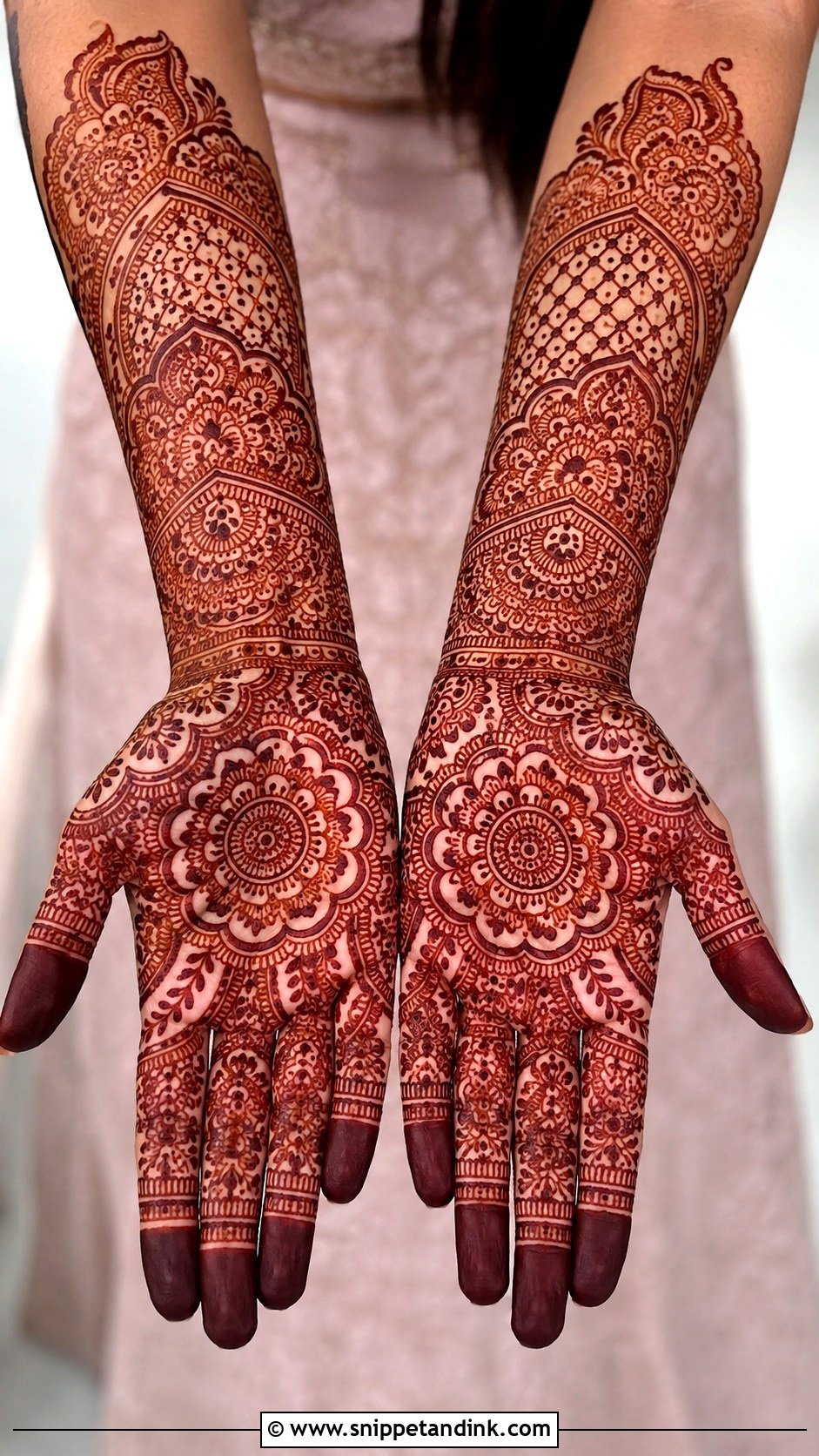
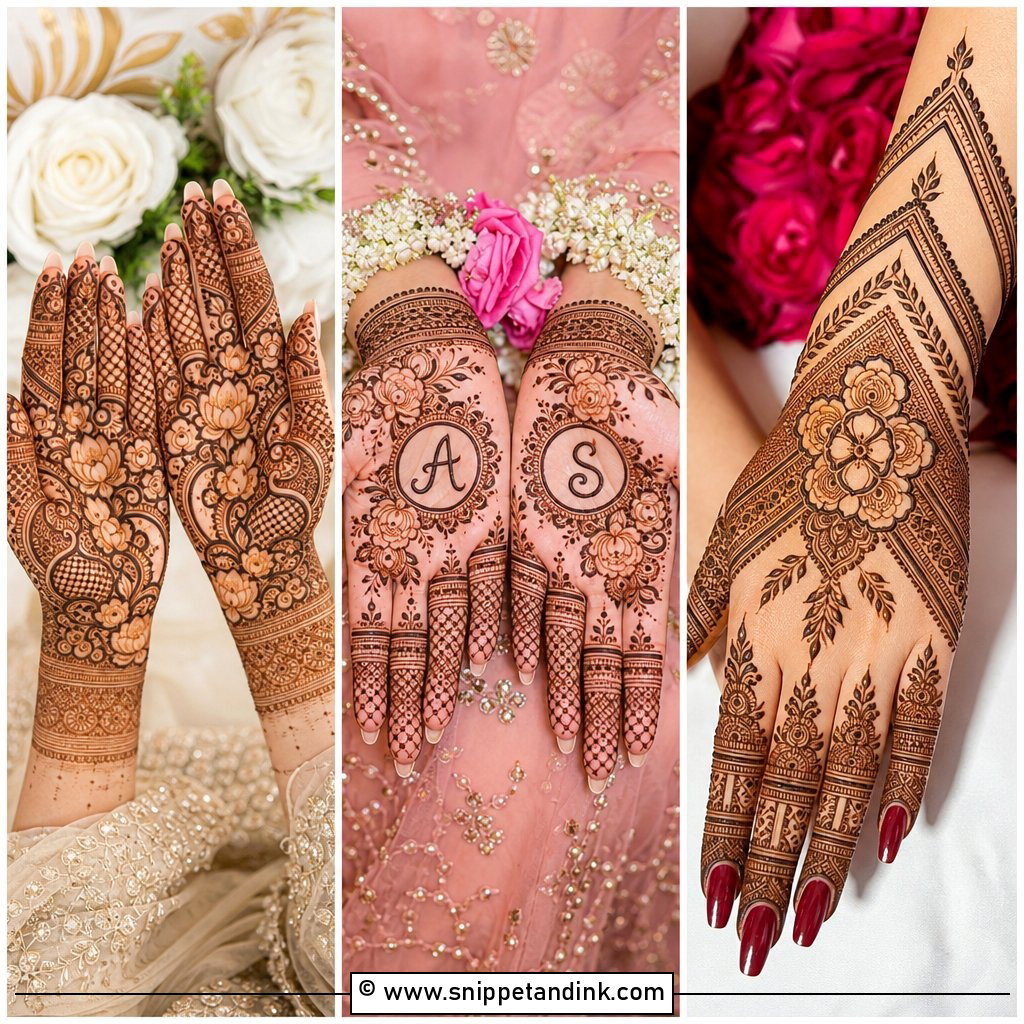
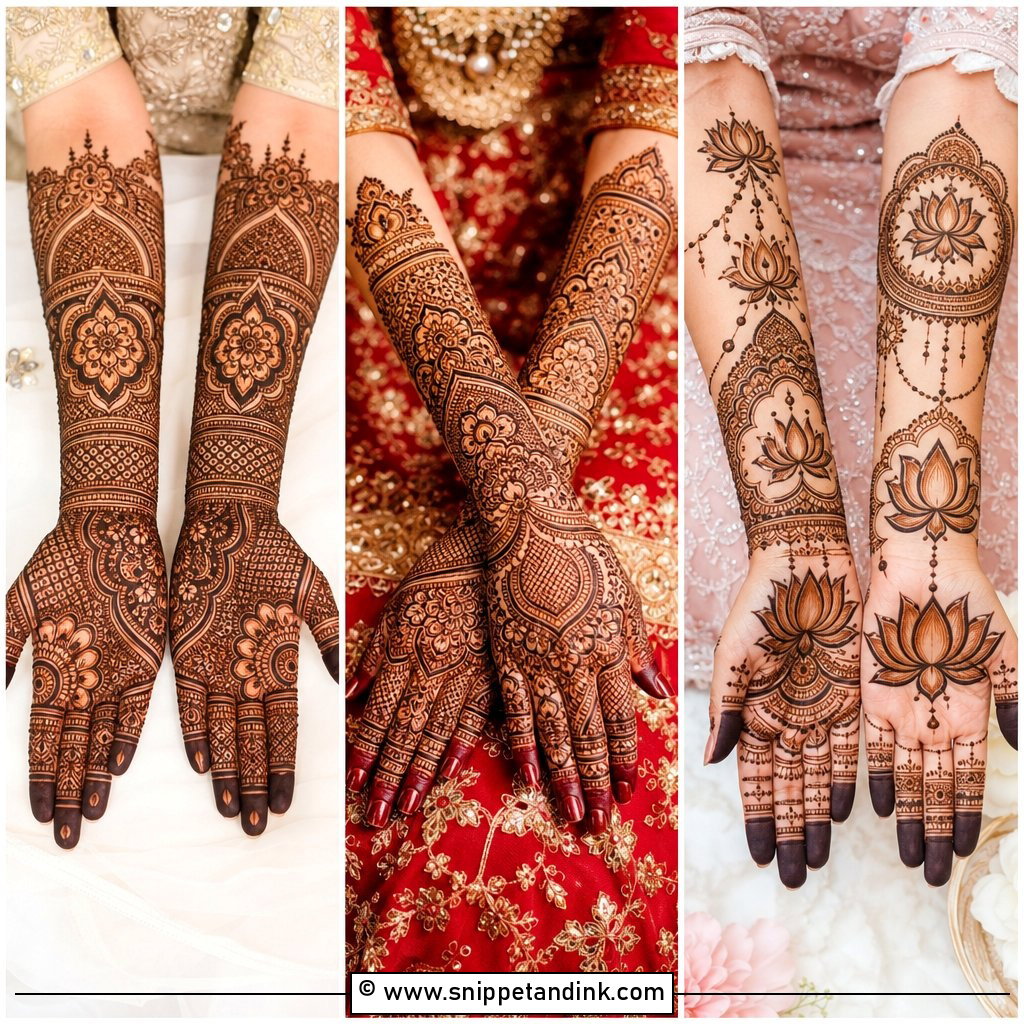
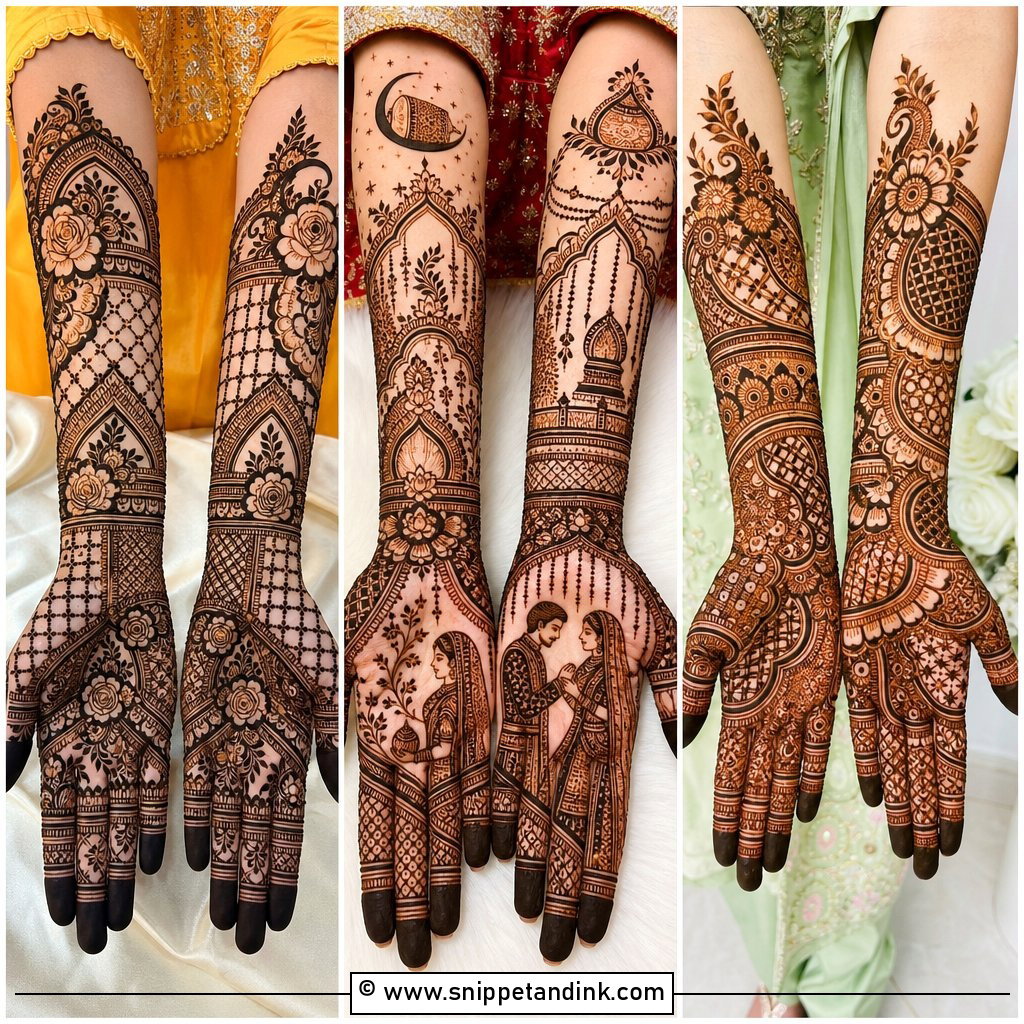
Full-hand bridal work covers the fingertips, palms, wrists and forearms in paisleys, florals, jaali and fine filler, often with initials or the date tucked in. It’s the classic choice with heavy lehengas and silk sarees. The risk on a full hand is that dense filler merges into a single dark patch once the stain deepens. I build in small channels of bare skin between sections so each motif keeps its edge, and I put the deepest detail on the palms, where henna stains darkest.
2. Arabic Bridal Mehndi Design
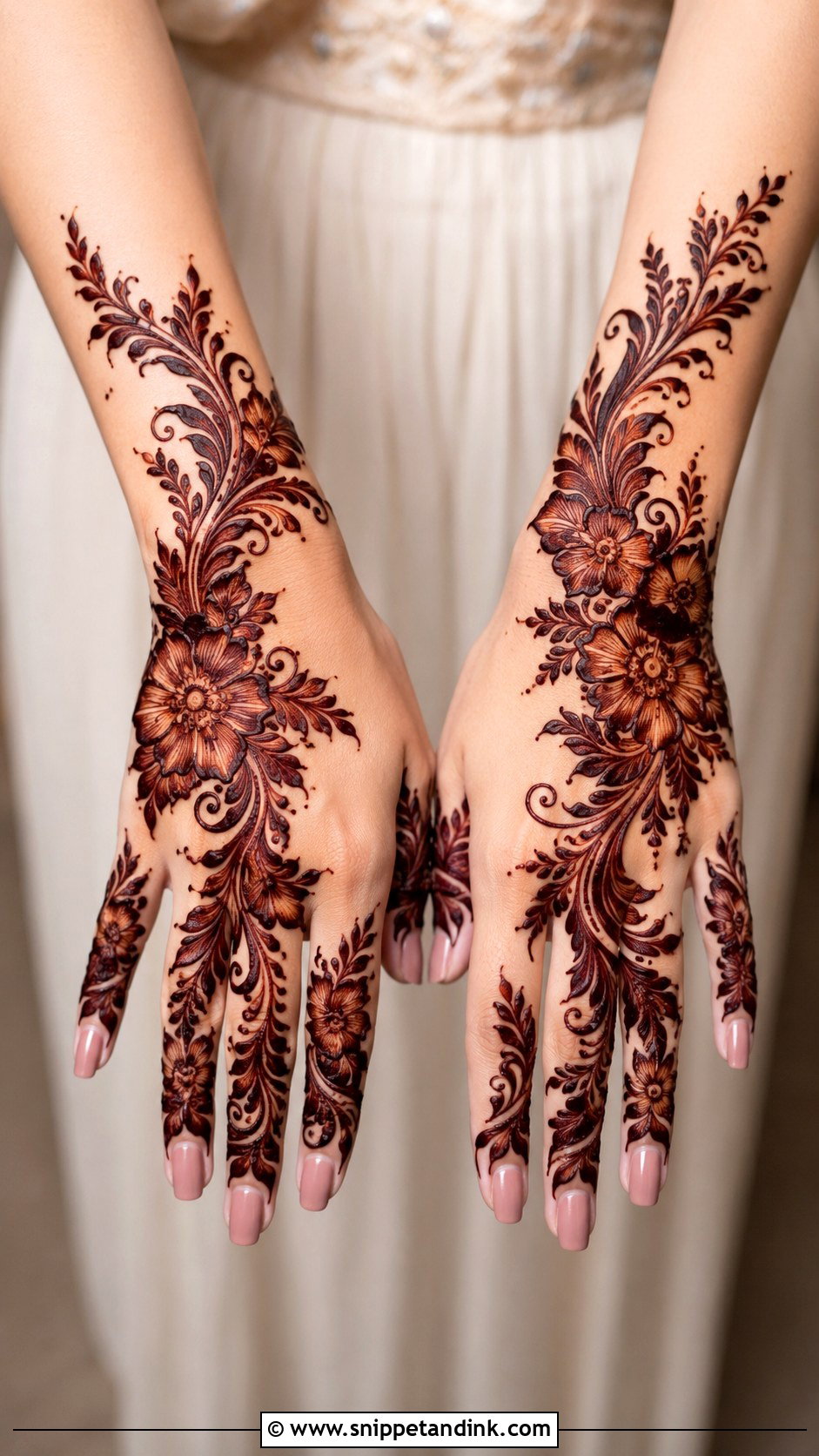
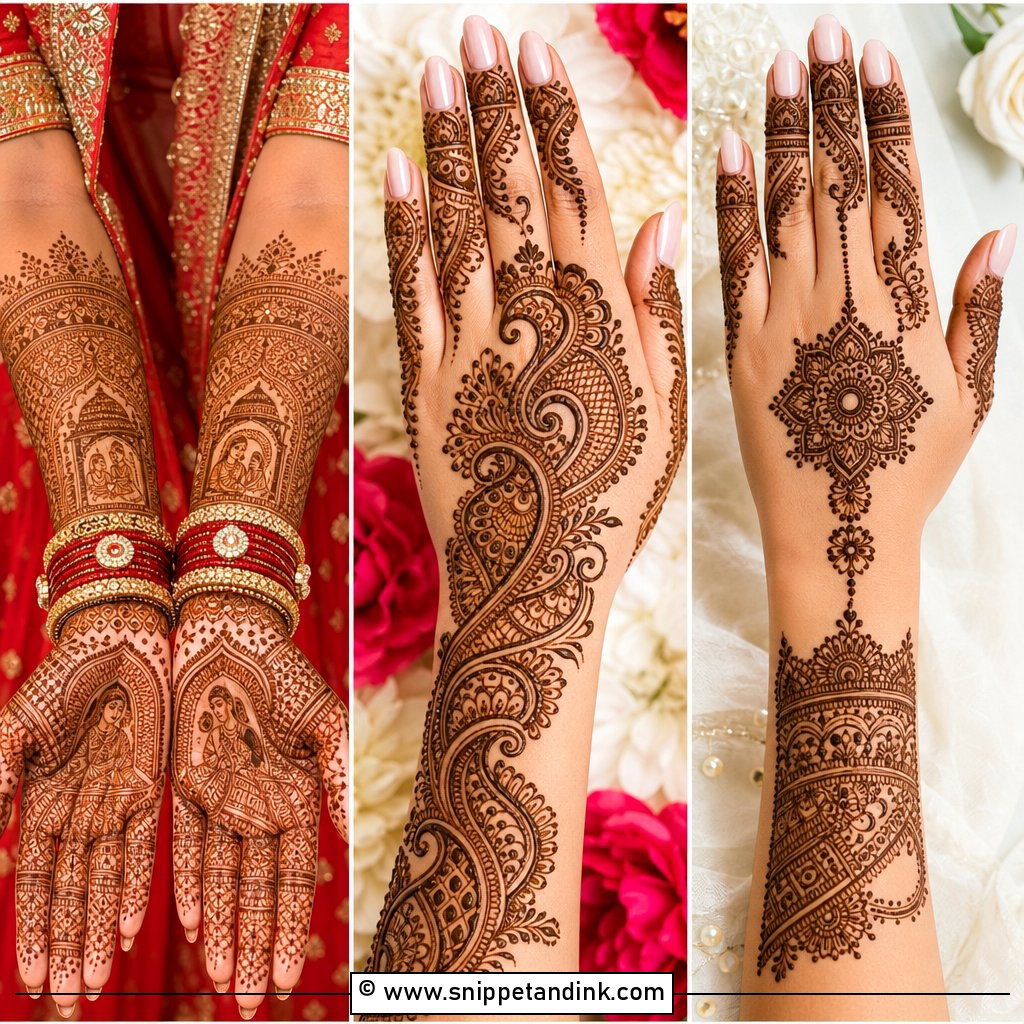
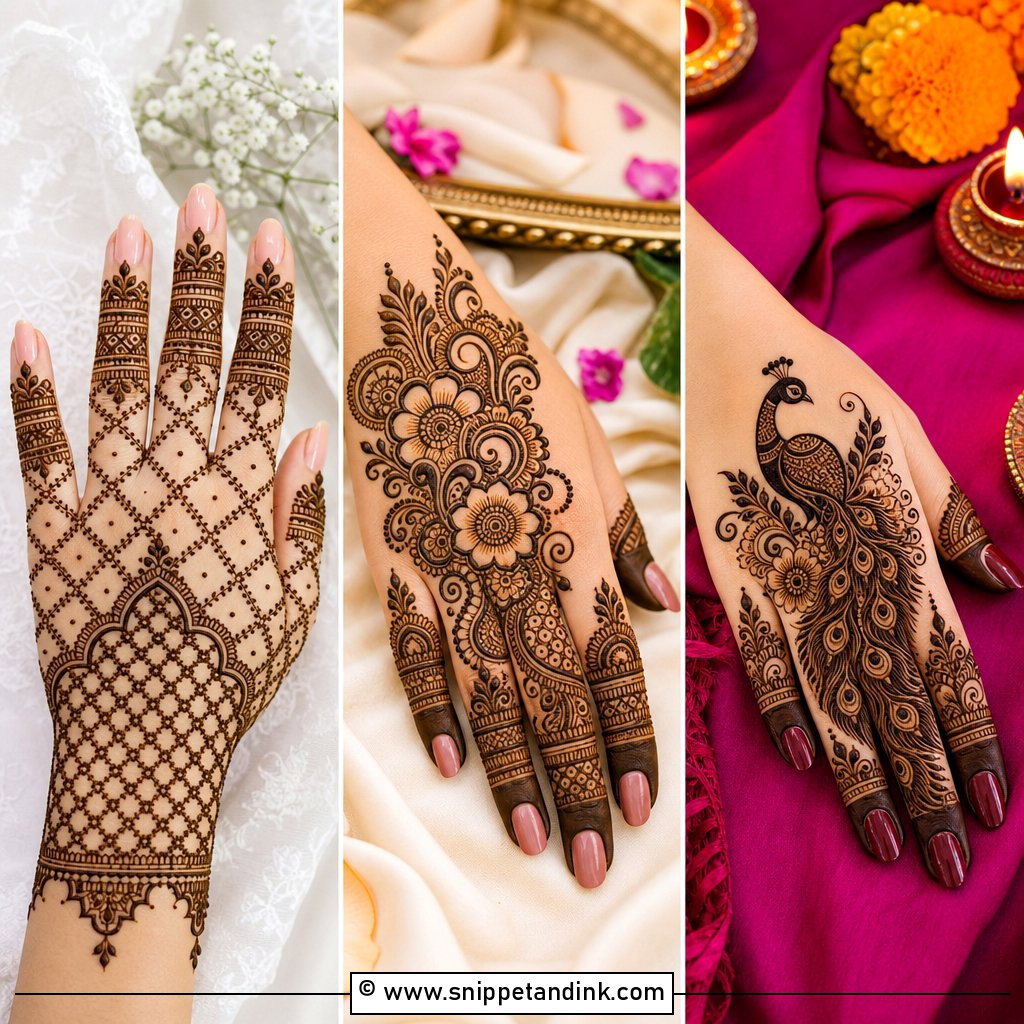
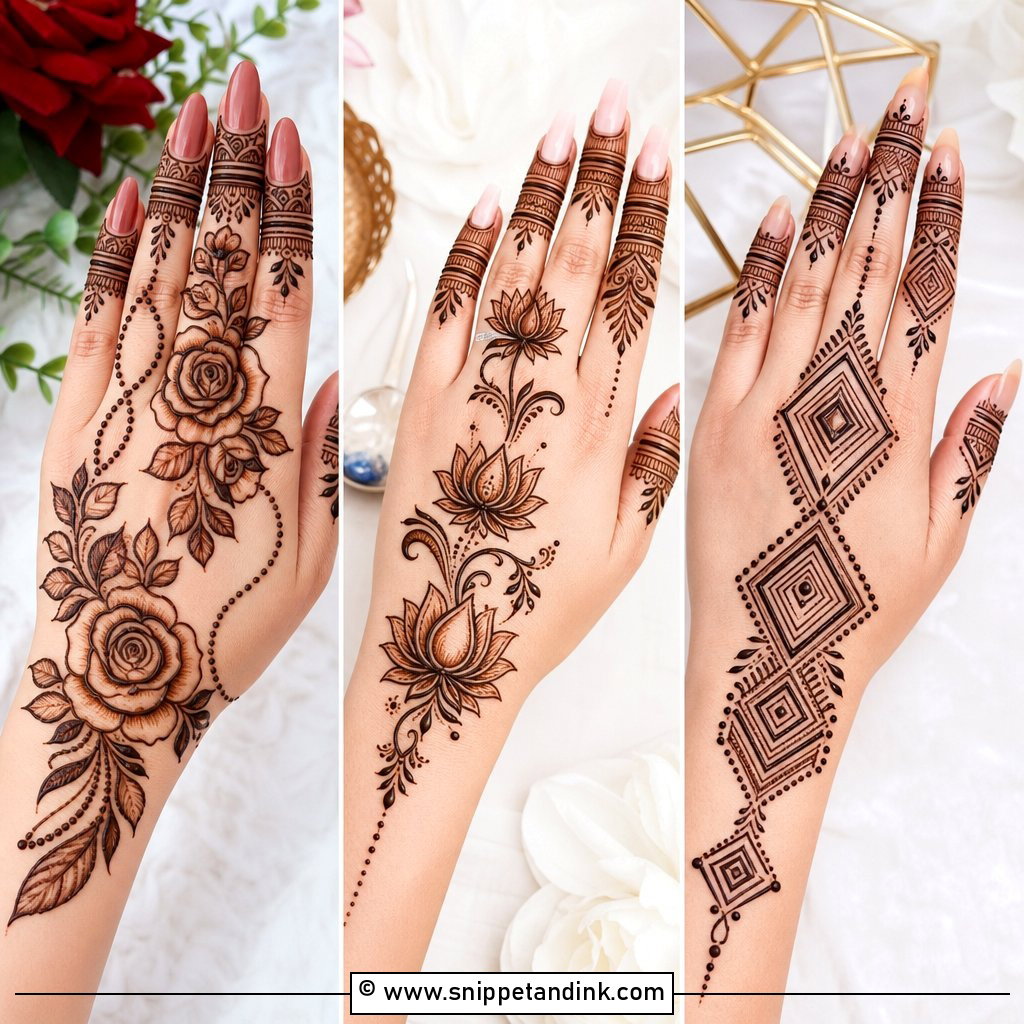
Arabic bridal work moves diagonally from the fingers to the wrist and up the forearm, with big flowers, flowing vines and open skin rather than tiny filler. The large motifs read well from across a hall, especially on the back of the hand. It also takes far less time than full Indian coverage. To make it feel bridal rather than festive, I add shaded petals, a leafy border along the trail and a bracelet finish at the wrist. It pairs well with diamond jewelry and pastel outfits.
3. Indian Bridal Mehndi Design
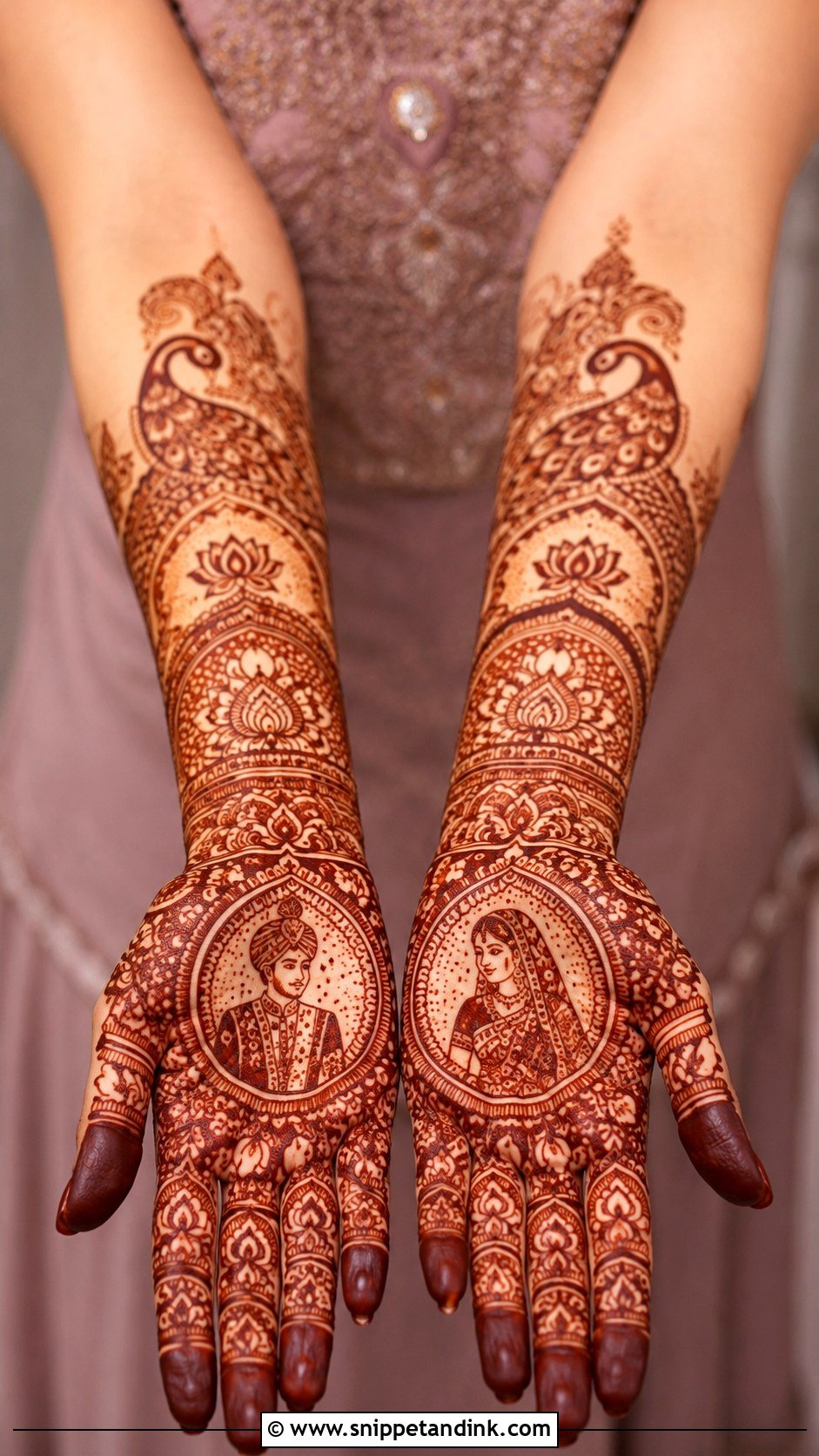
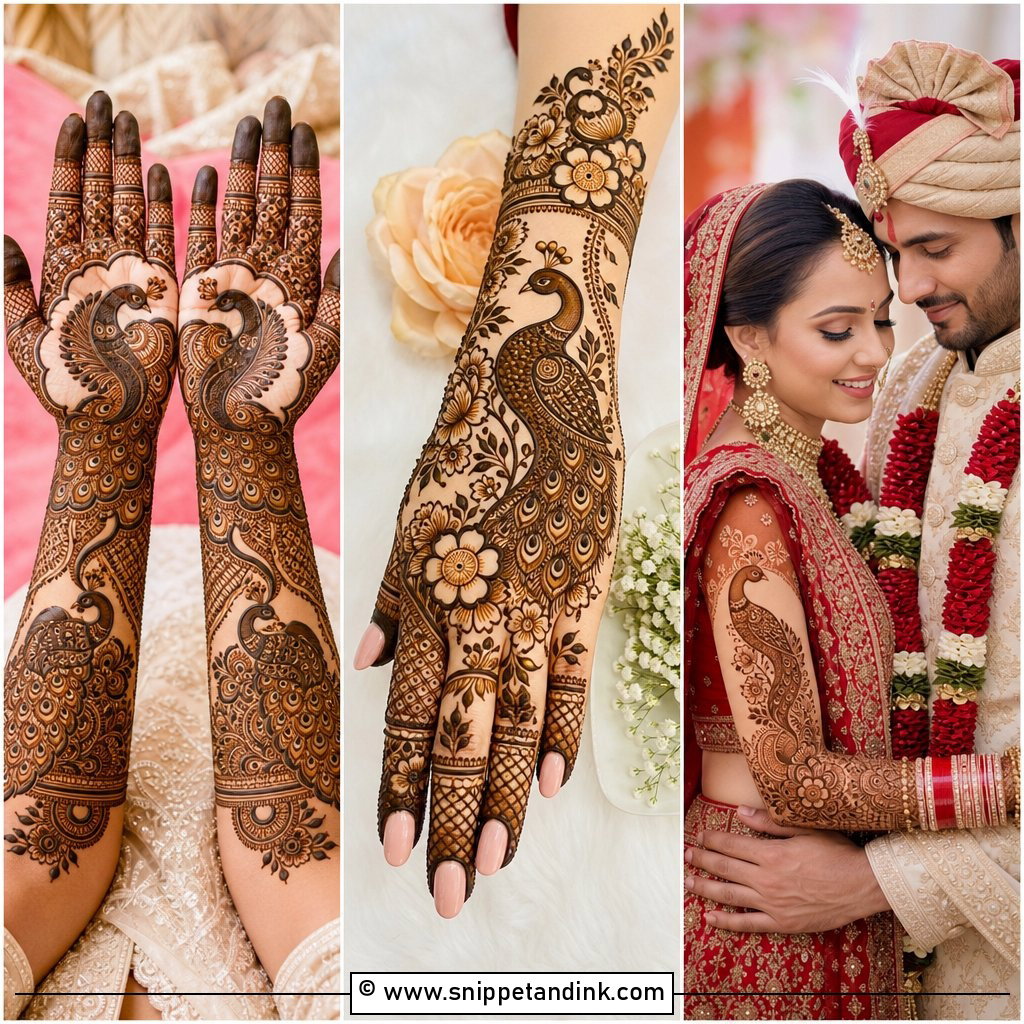
Indian bridal designs are dense and full of symbols: paisleys, lotus, peacocks, mandalas, bride-and-groom figures, kalash motifs and filled fingertips, usually front and back with forearm extensions. Each section can carry part of the story. On small hands, I scale the filler up slightly, because the tiniest details lose definition as the paste dries and spreads. Clean symmetry between the two hands matters more here than in any other style; the eye compares them instantly when the palms are held up together.
4. Indo Arabic Bridal Mehndi Design
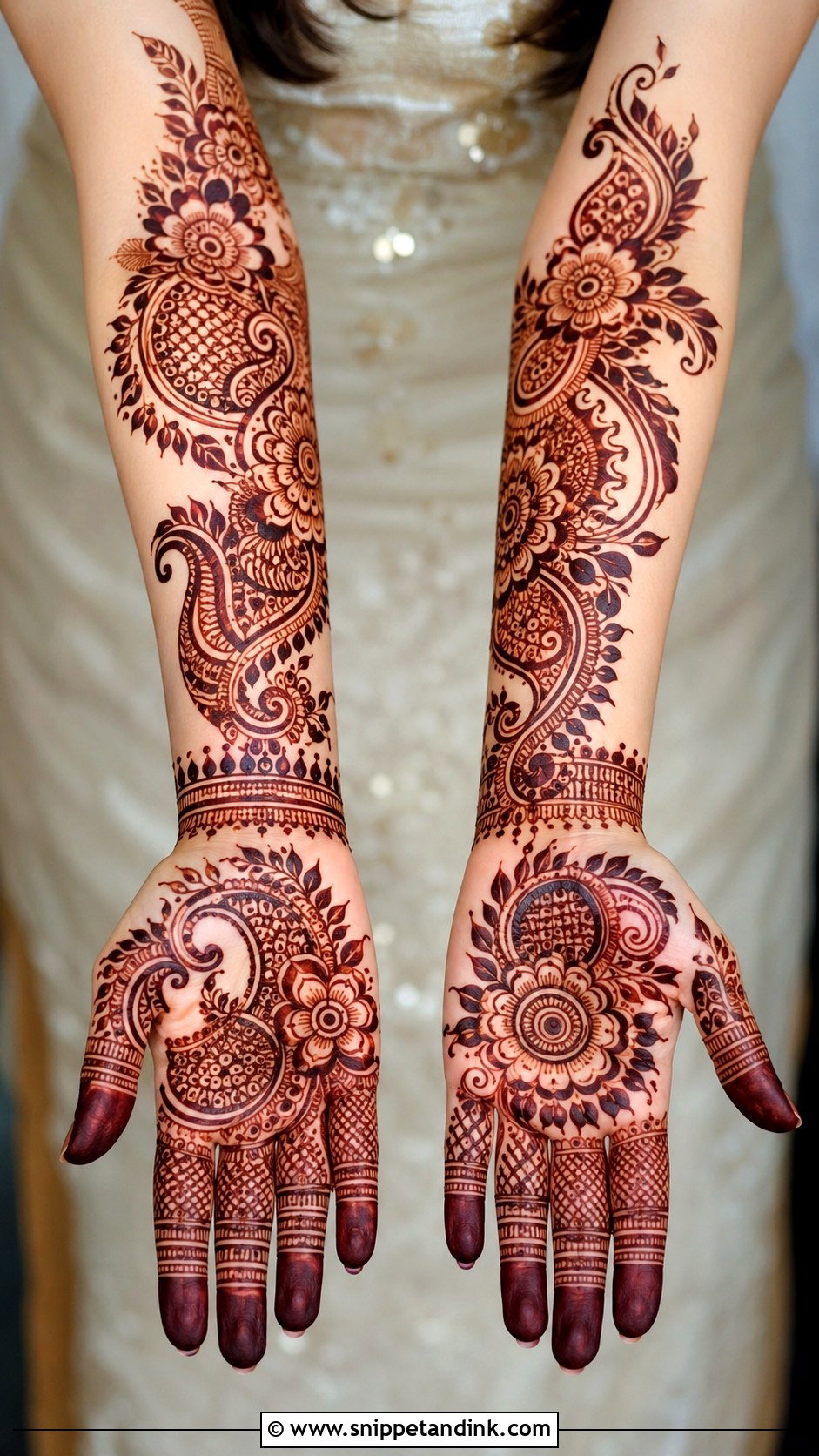
Indo Arabic bridal mehndi design borrows Indian fullness and Arabic flow: bold floral trails and paisley clusters, a mandala center, sections of jaali and leafy wrist bands. It’s the most requested middle ground at my bookings because it gives me room to set heavy areas against open ones. If your outfit mixes classic embroidery with a contemporary cut, this is the style that ties the two together. It also takes noticeably less time than full Indian work.
5. Rajasthani Bridal Mehndi Design
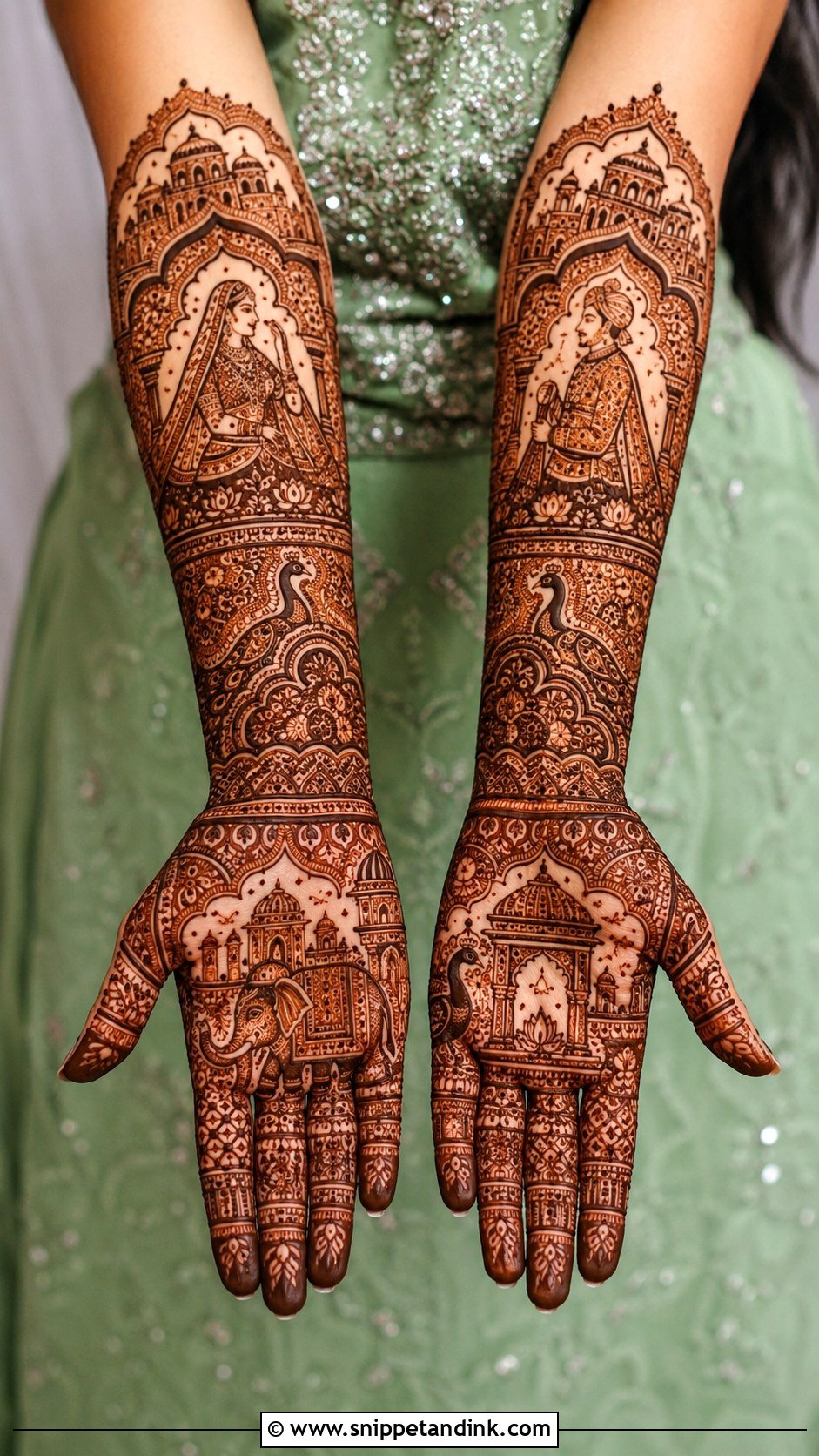
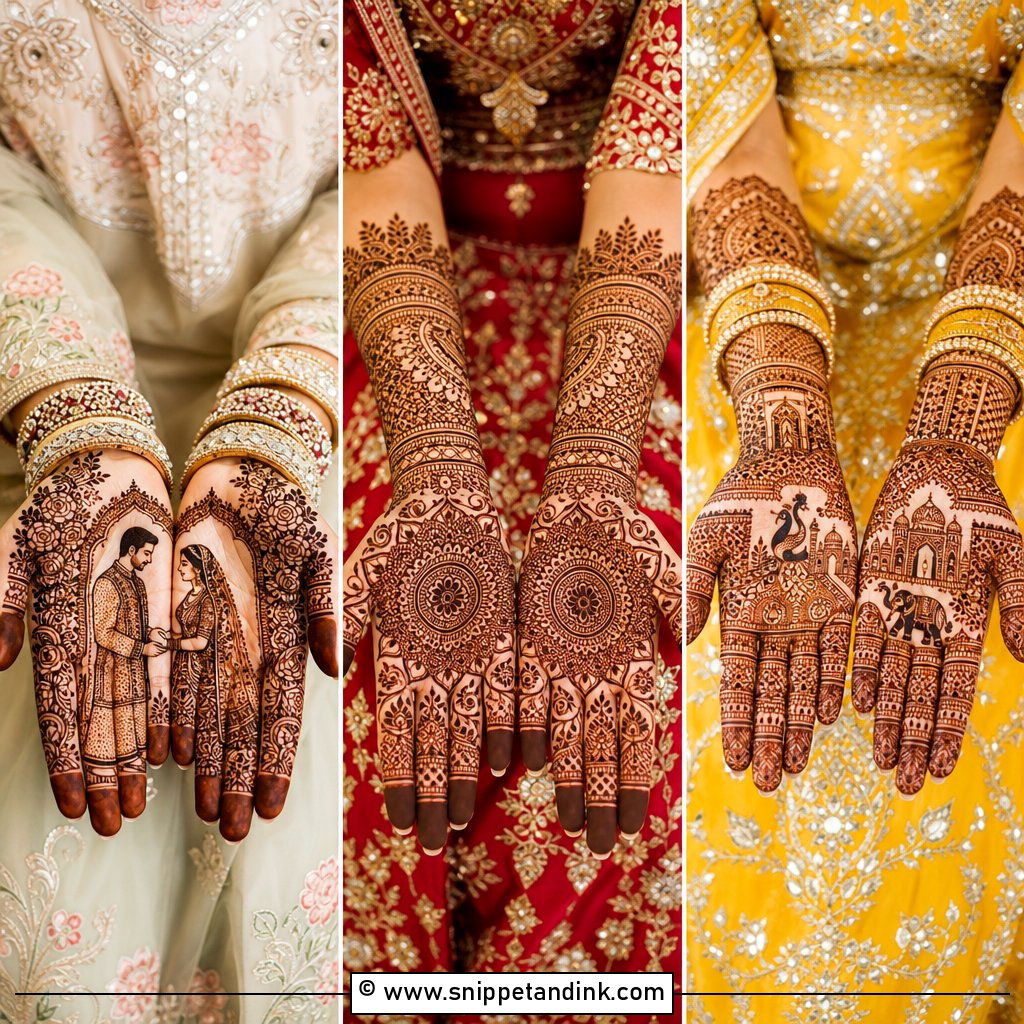
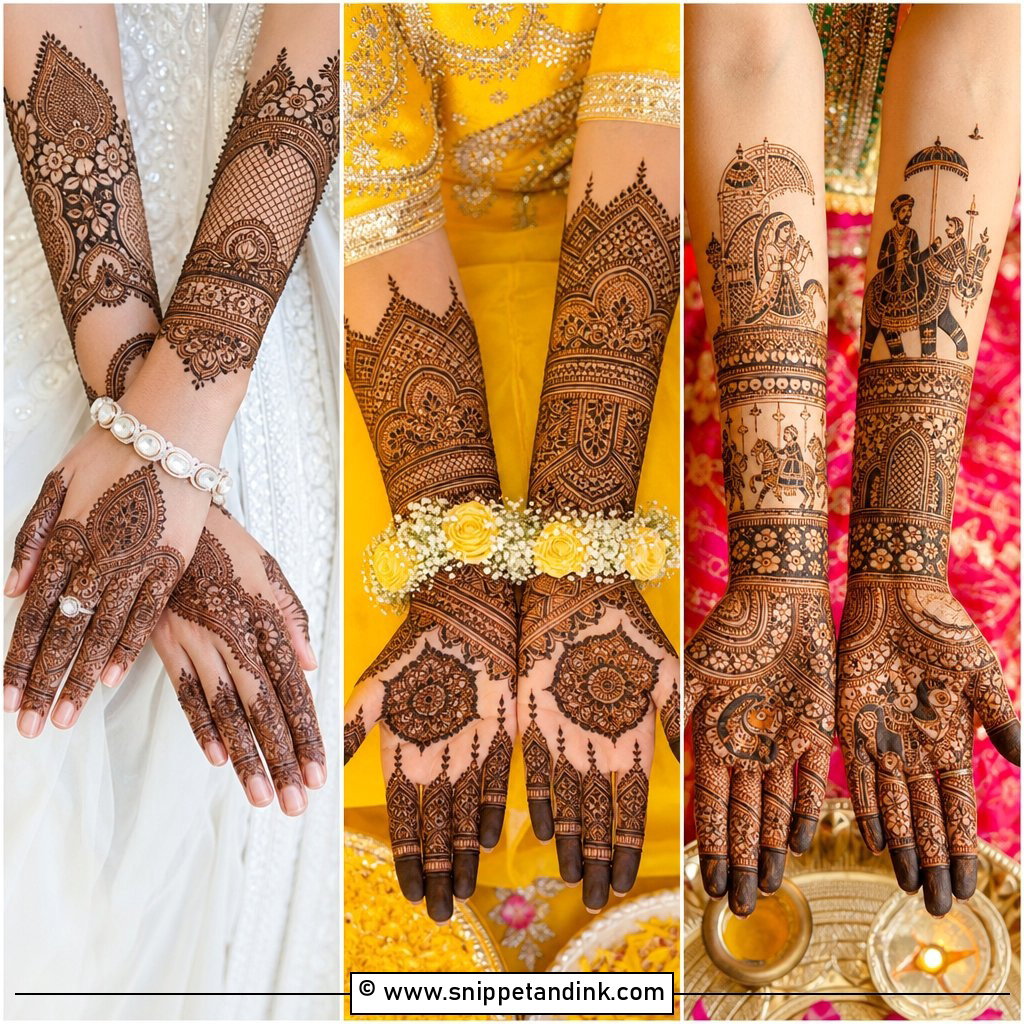
Rajasthani bridal mehndi design is the most demanding style I draw. Expect dulha-dulhan figures, peacocks, elephants, palace arches and dense fill from the fingers to the elbows, all mirrored between the two hands. It needs an artist who has done this specific style before and a long, unhurried sitting, so don’t book it for the morning of the ceremony. I keep the main figures framed with a little space so the story stays visible inside all that density. Red, maroon and jewel tones suit it best.
6. Pakistani Bridal Mehndi Design
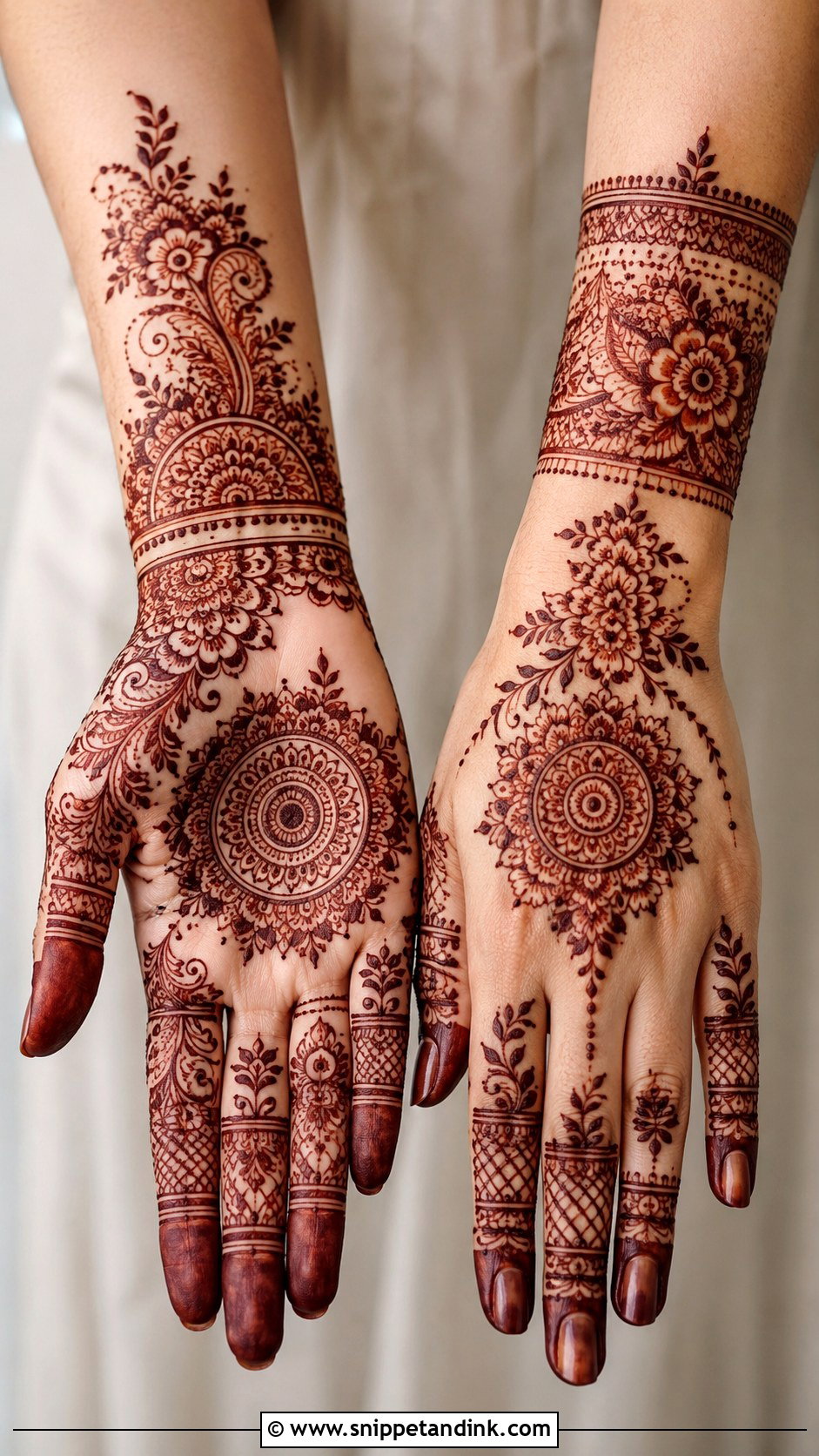
Pakistani bridal mehndi tends to be softer than fully packed Indian work. It combines mandalas, floral vines, paisleys and mesh with long wrist-to-forearm extensions, delicate fingers and a bold palm motif, and it balances filled sections with open ones. Brides often want a lighter version for the nikkah and the full design for the baraat, so I’ll sometimes plan the two as one layout and add to it. A fine cuff at the wrist ties the front and back of the hand together.
7. Moroccan Bridal Mehndi Design
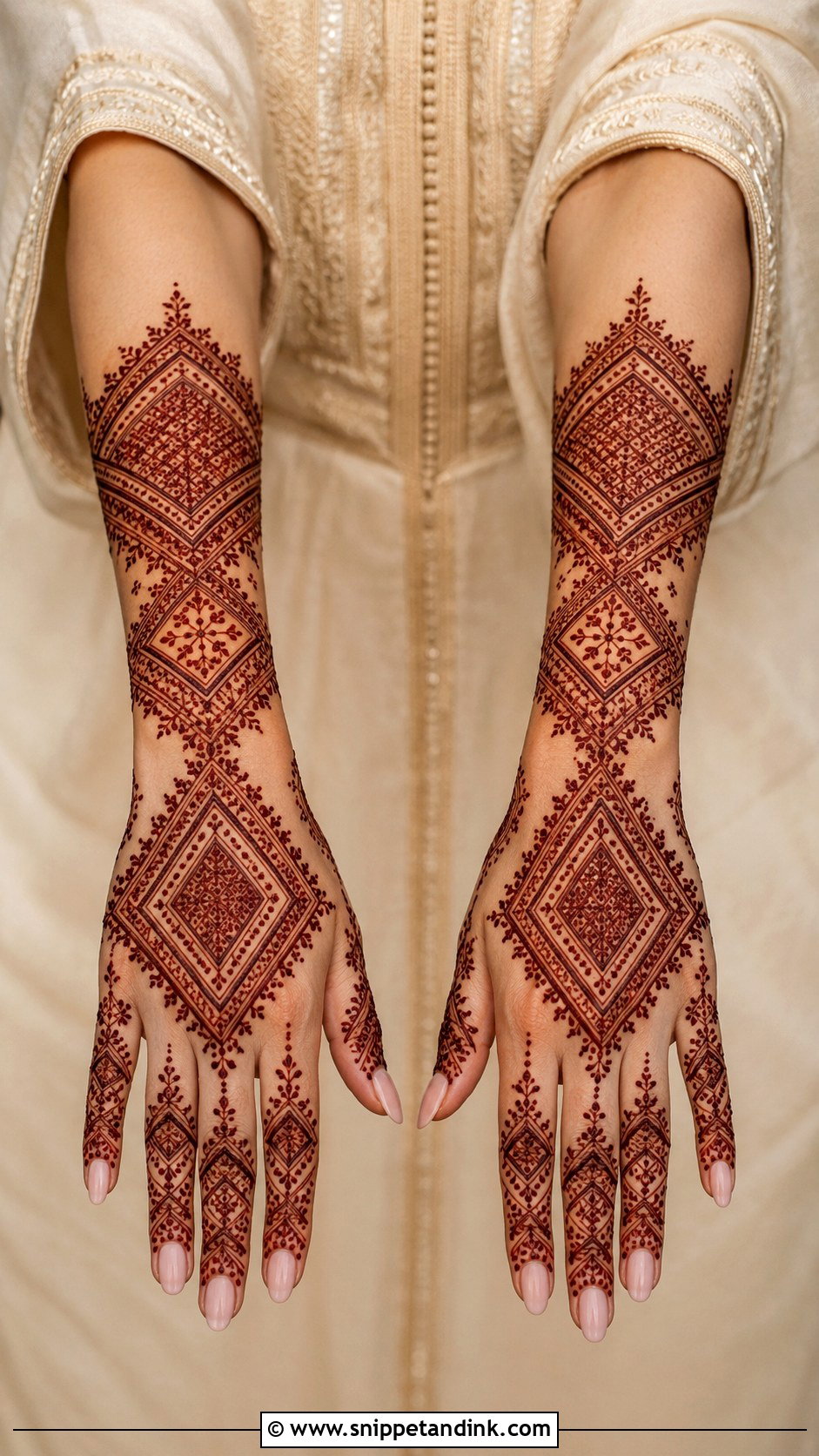
Moroccan bridal work replaces florals with diamonds, grids, triangles and angular bands, repeated in panels from fingertips to forearm. It looks especially good on long fingers. Straight lines are hard on skin, though, because the hand isn’t flat and the knuckles fold. I draw this style with your arm resting fully supported and your fingers slightly spread, and I check each line with your hand closed. Mirror work or geometric embroidery on the outfit makes it feel deliberate.
8. Gulf Bridal Mehndi Design
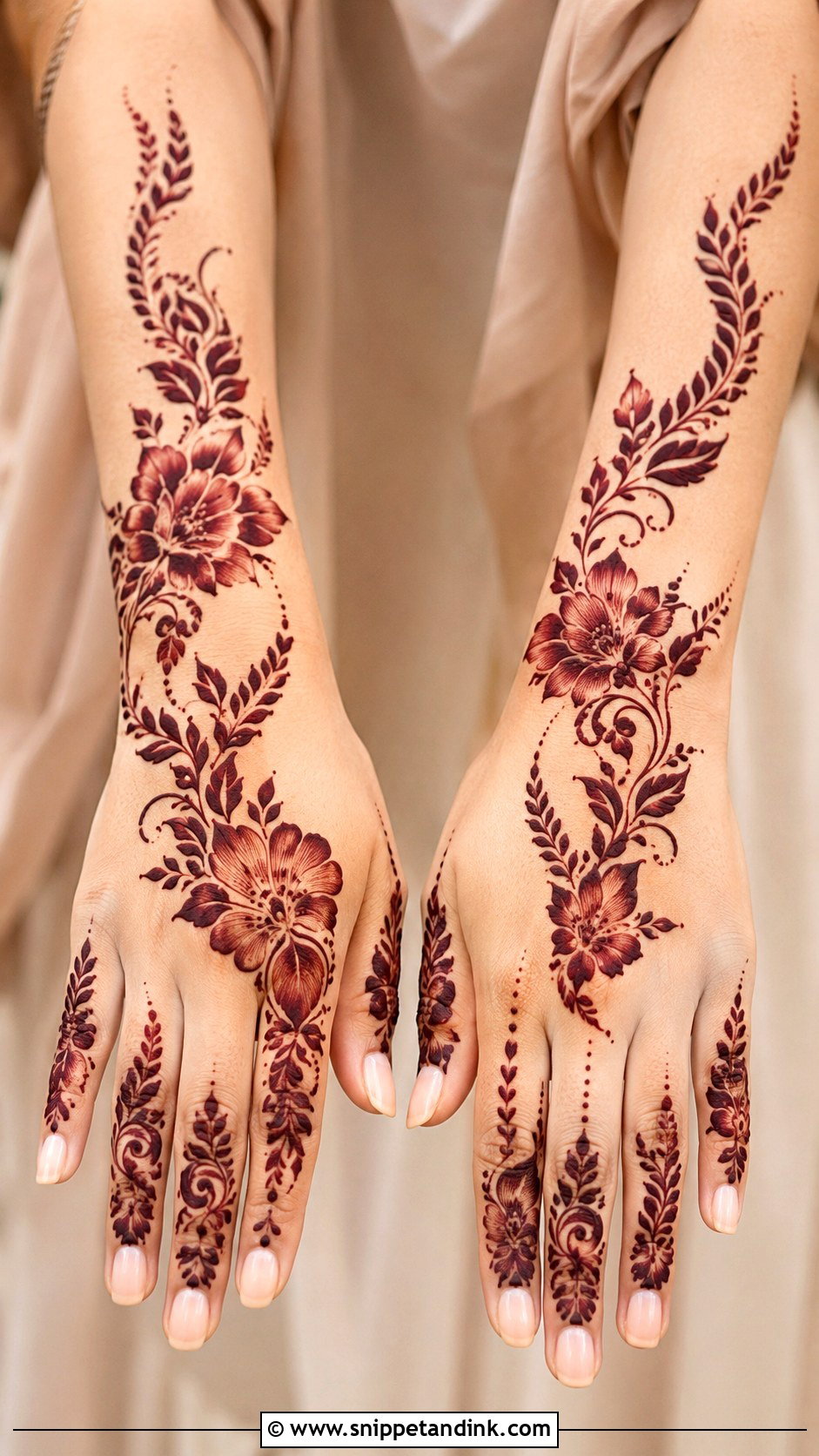
Khaleeji, or Gulf, bridal mehndi uses dramatic florals, leafy trails, shaded petals and wide open spacing, often sweeping across the back of the hand toward the wrist. Because the shapes are large, the stain looks rich even from a distance. It’s a good fit if you’ll wear statement rings or a haath phool, since the open skin leaves room for jewelry. I add fine dots along the outlines and keep the shading light, which is what makes it look bridal instead of everyday.
9. Minimal Bridal Mehndi Design
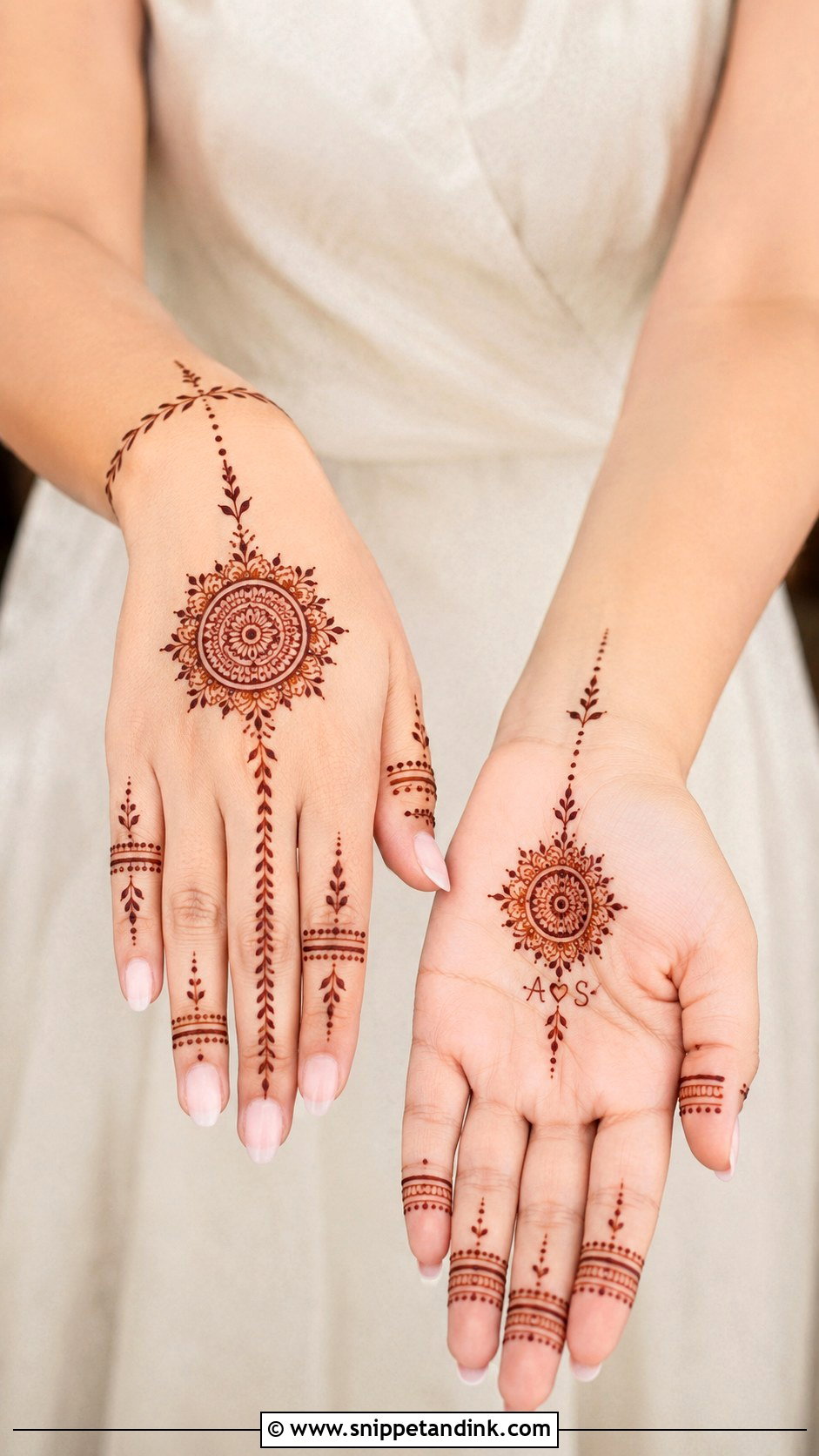
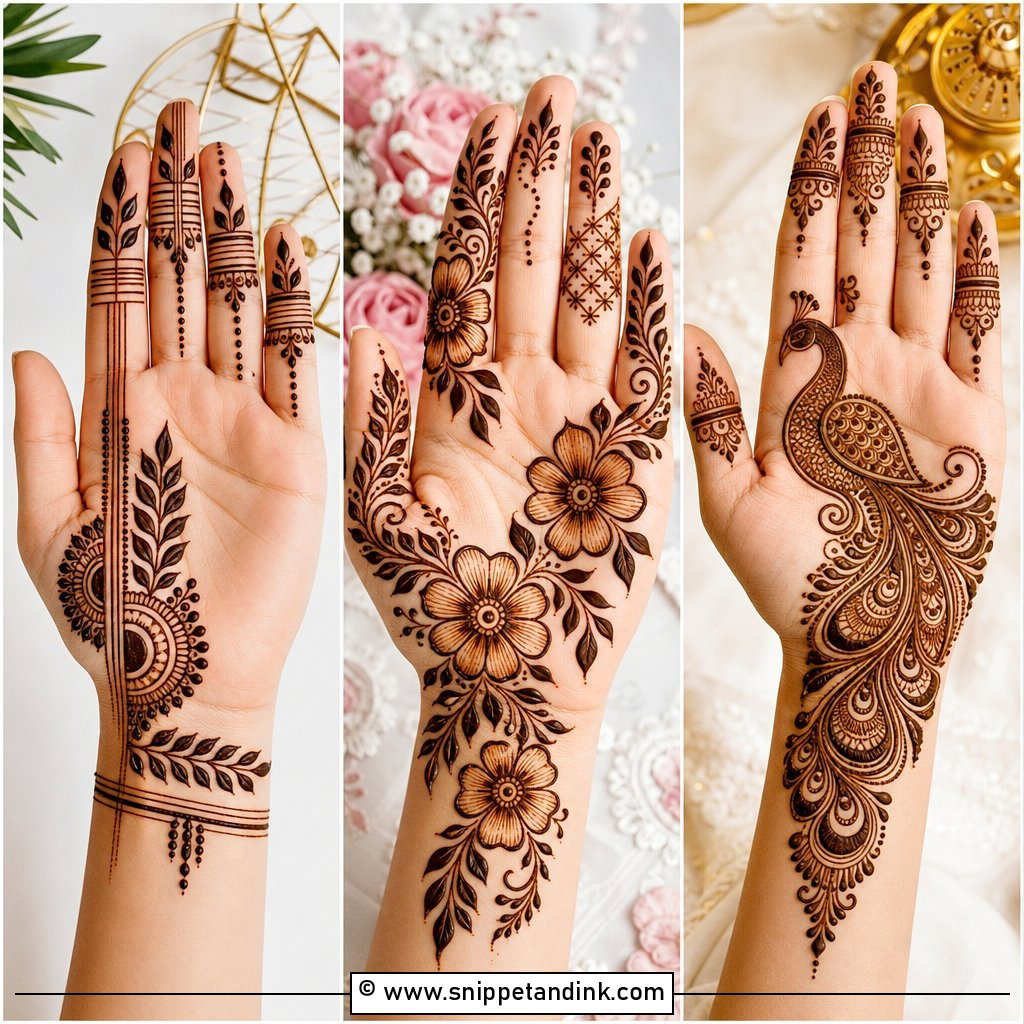
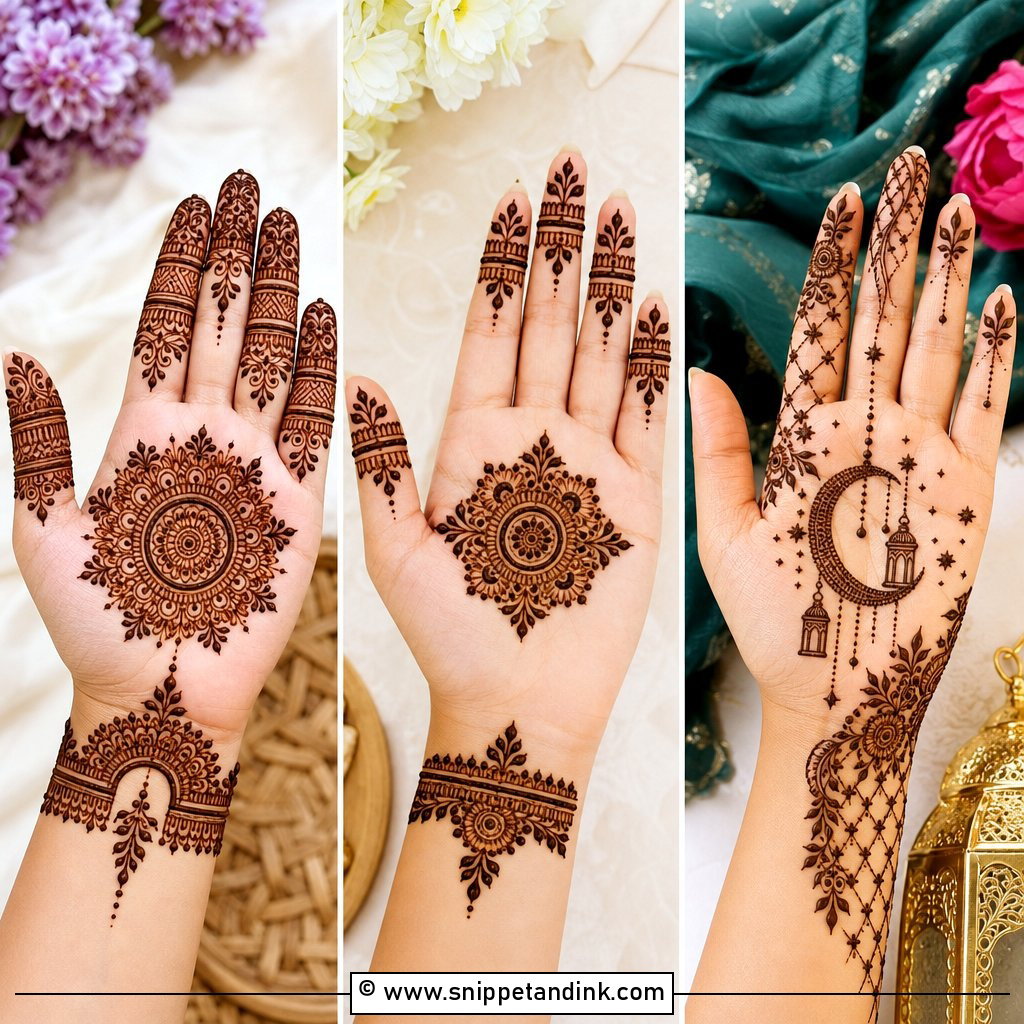
A minimal bridal hand might be one mandala, fine fingers, a leafy wrist band and a small trail on the back, with no full coverage. It suits civil ceremonies, intimate weddings and brides whose outfit or jewelry is already heavily detailed. Placement is what makes it feel bridal. I like to give minimal brides one personal element, such as initials or a small flower that means something, so the design still feels made for them.
10. Modern Bridal Mehndi Design
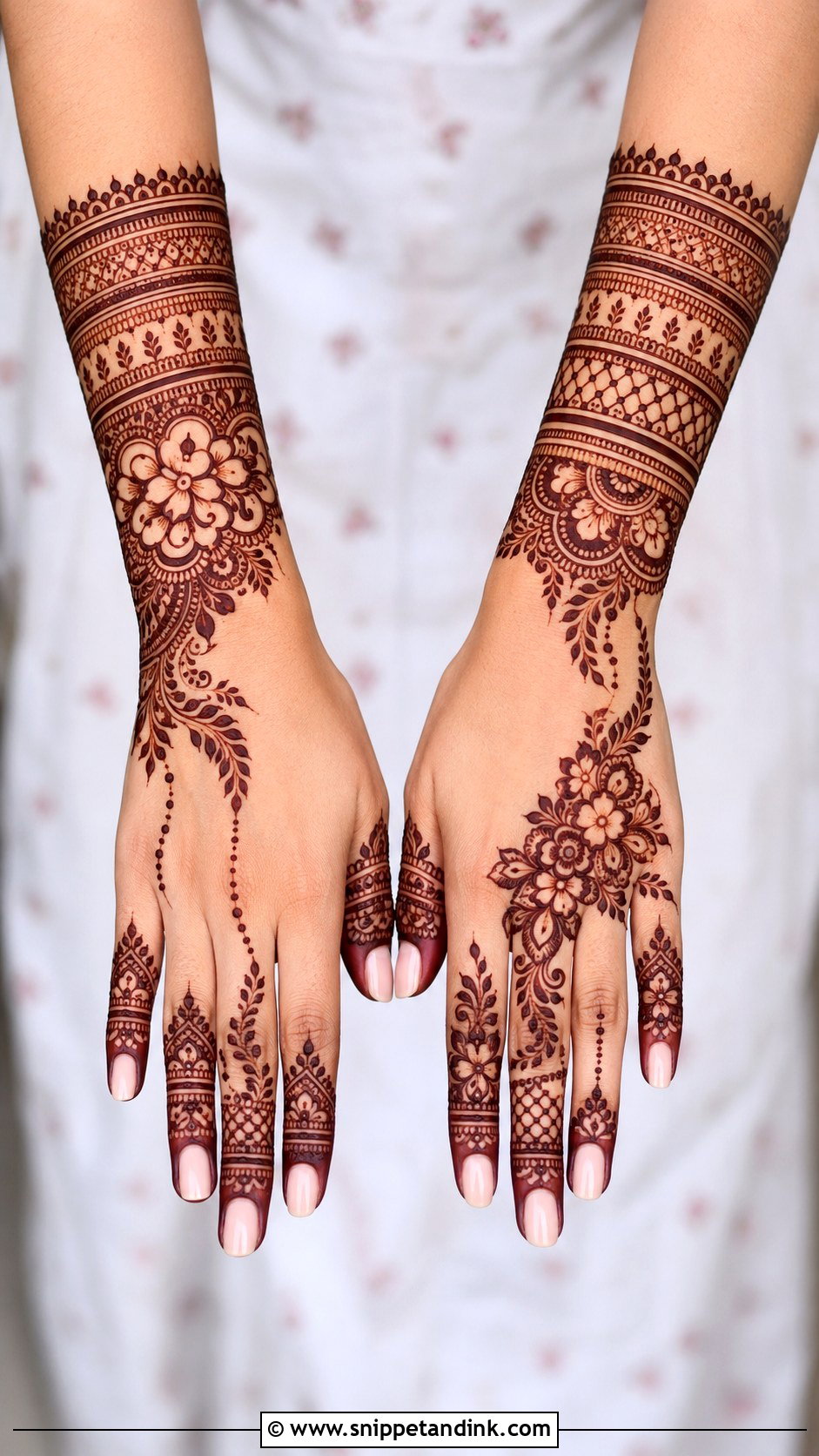
Modern bridal mehndi is built on spacing: geometric bands, bracelet cuffs, negative-space florals, fine lace lines and asymmetric trails. It suits pastel lehengas, organza sarees and fusion outfits. The trap is that “modern” can turn sparse and unfinished. I set one bold section against one airy section on each hand, so there’s contrast, and I design around your actual hand shape rather than copying a reference photo that was drawn on someone else’s hand.
11. Portrait Bridal Mehndi Design
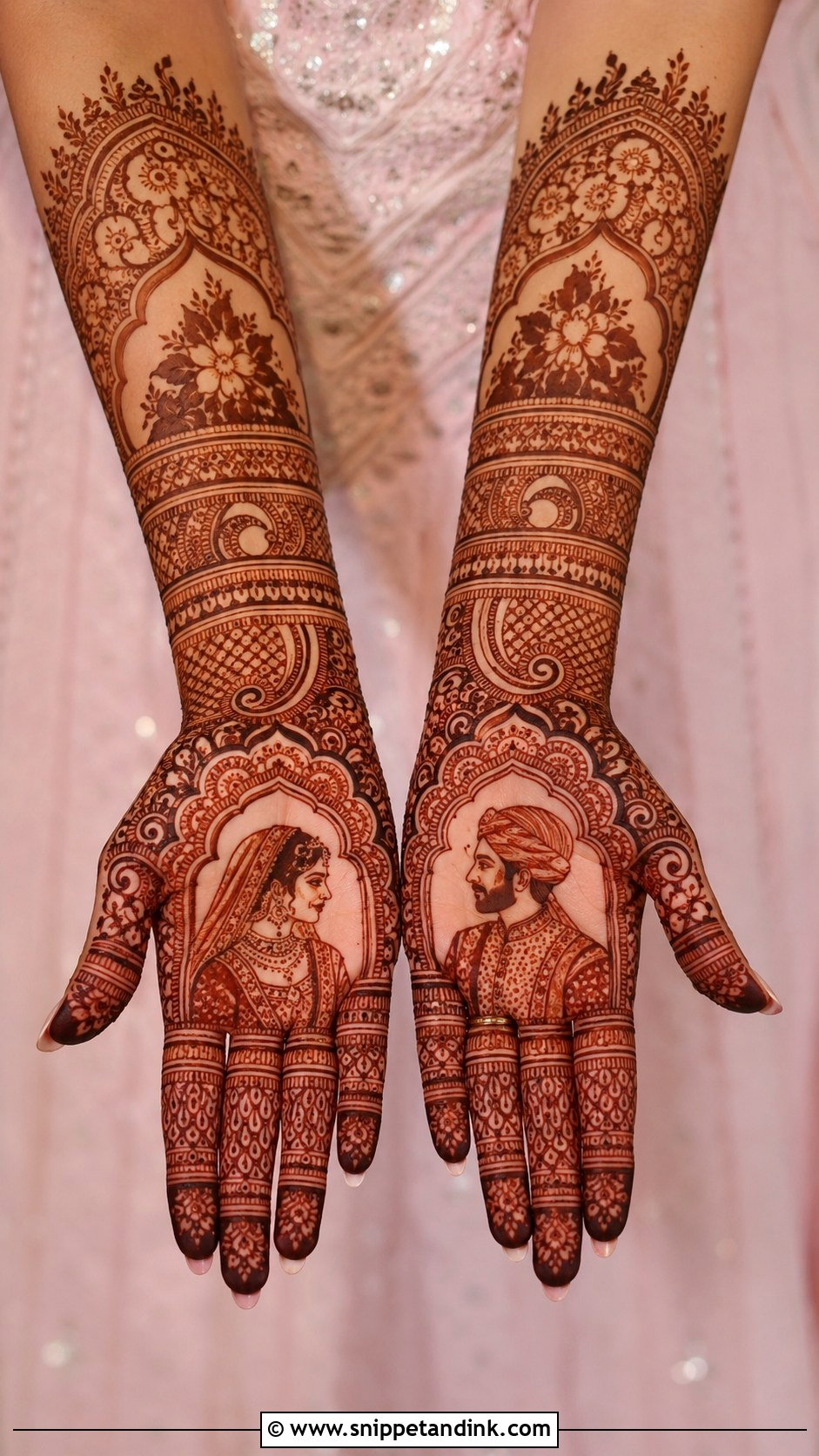
Portrait mehndi draws the bride’s and groom’s faces, a varmala moment or a symbolic scene inside the palm or forearm. It needs full-hand coverage because the portrait needs space and a clean frame around it, usually a floral arch or palace window. Faces are the hardest thing to draw in henna: a line that’s slightly too thick changes an expression. Look at the artist’s earlier portrait work specifically, and keep the surrounding filler away from the faces so they stay legible.
12. Bride And Groom Mehndi Design
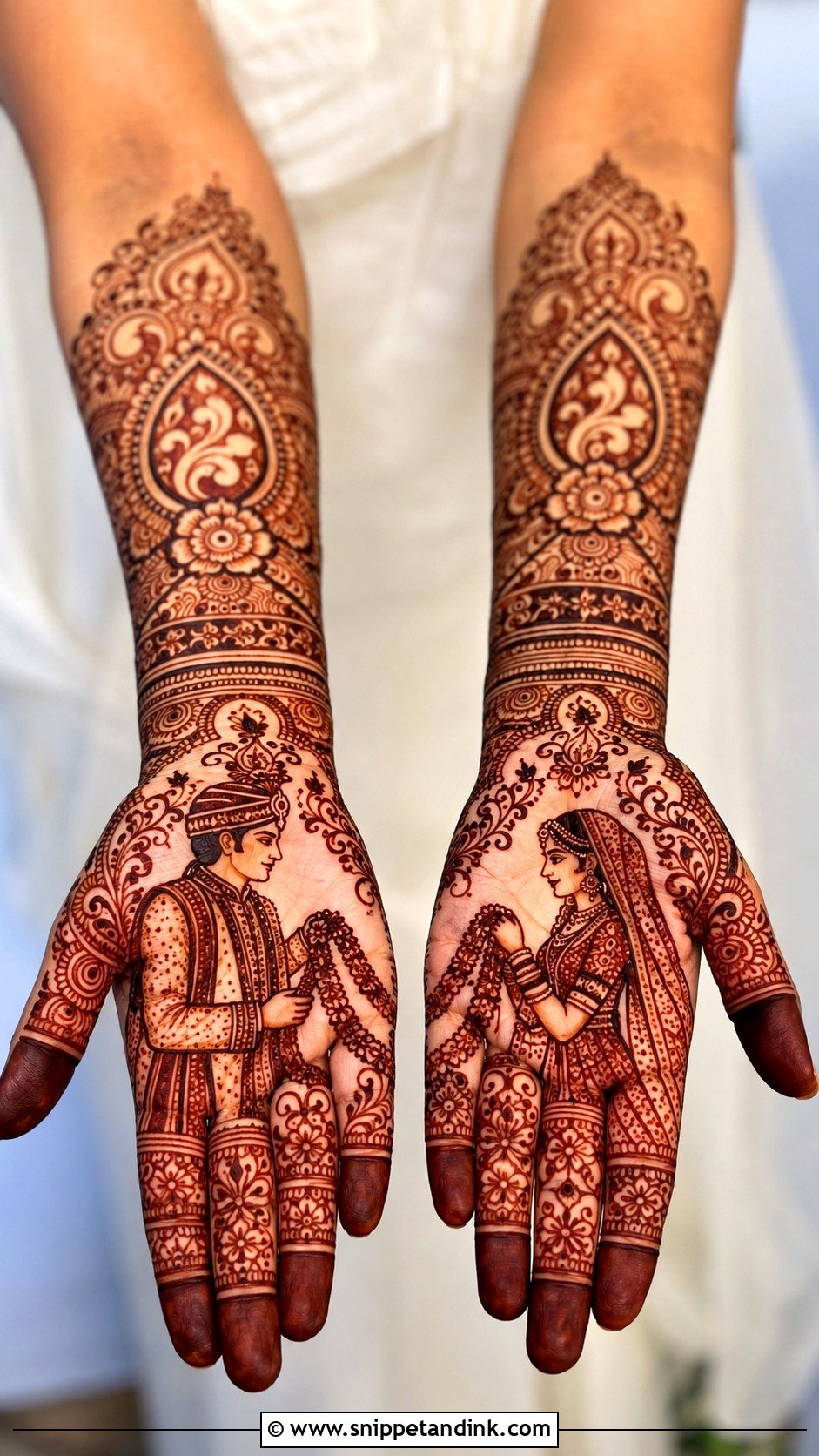
Bride and groom mehndi design puts the bride on one palm and the groom on the other, surrounded by paisleys, florals, mandalas and borders, sometimes with tiny varmala, doli or mandap scenes. Families love searching it for hidden details. I keep the figures expressive but simple, with clear outlines and only a little detail on the clothing. Over-detailed figures turn muddy as the stain darkens, and then the couple is no longer recognizable.
13. Mandala Bridal Mehndi Design
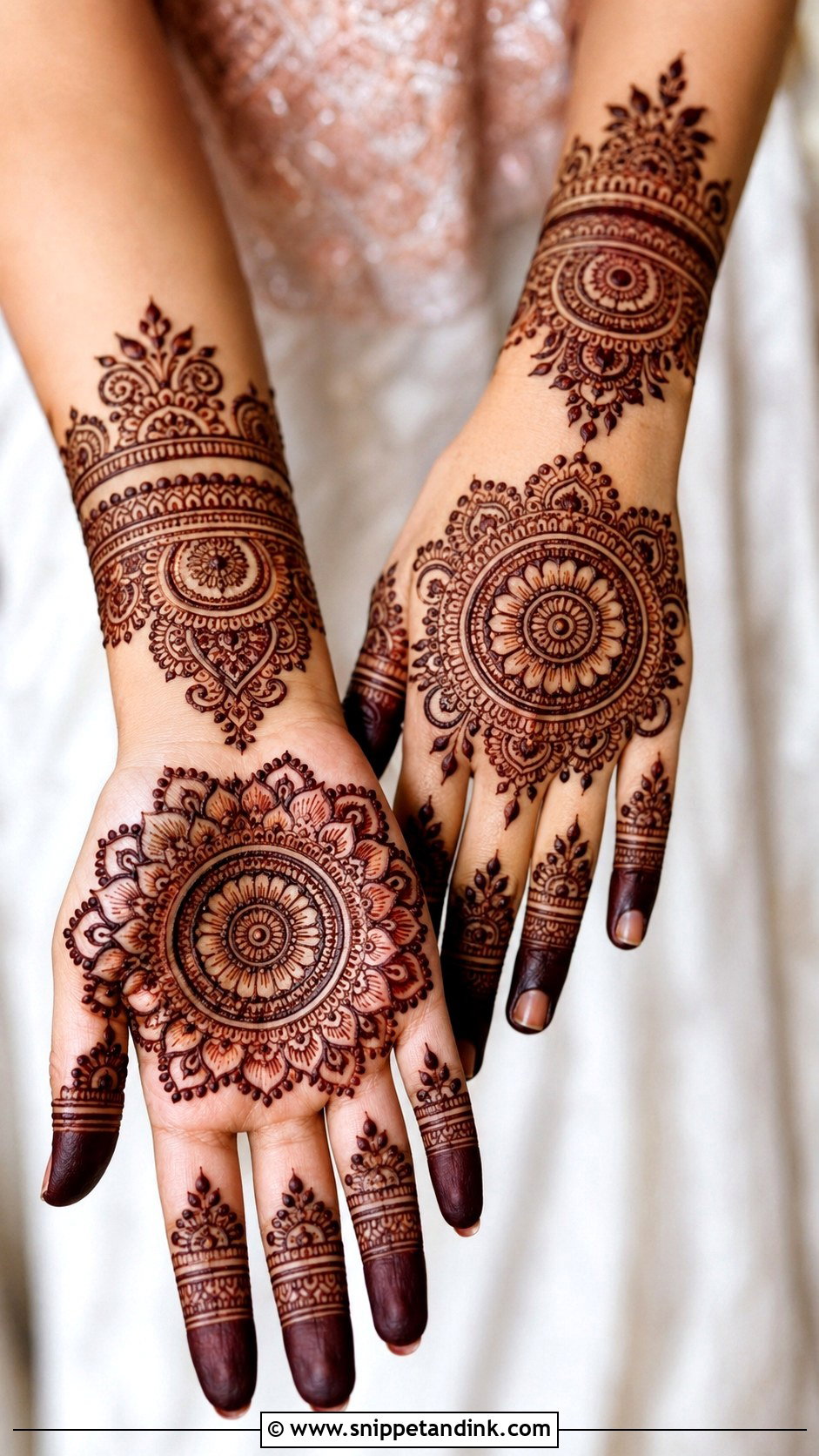
A large mandala in the center of the palm or the back of the hand, with fingers, wrist and forearm built around it, gives a balanced look that’s easy to photograph. It can be simple or very detailed. For brides, I add layered borders, paisley corners, lotus petals and fine fingertips. It’s also my usual recommendation for small hands, since the central circle creates focus without needing dense filling everywhere.
14. Peacock Bridal Mehndi Design
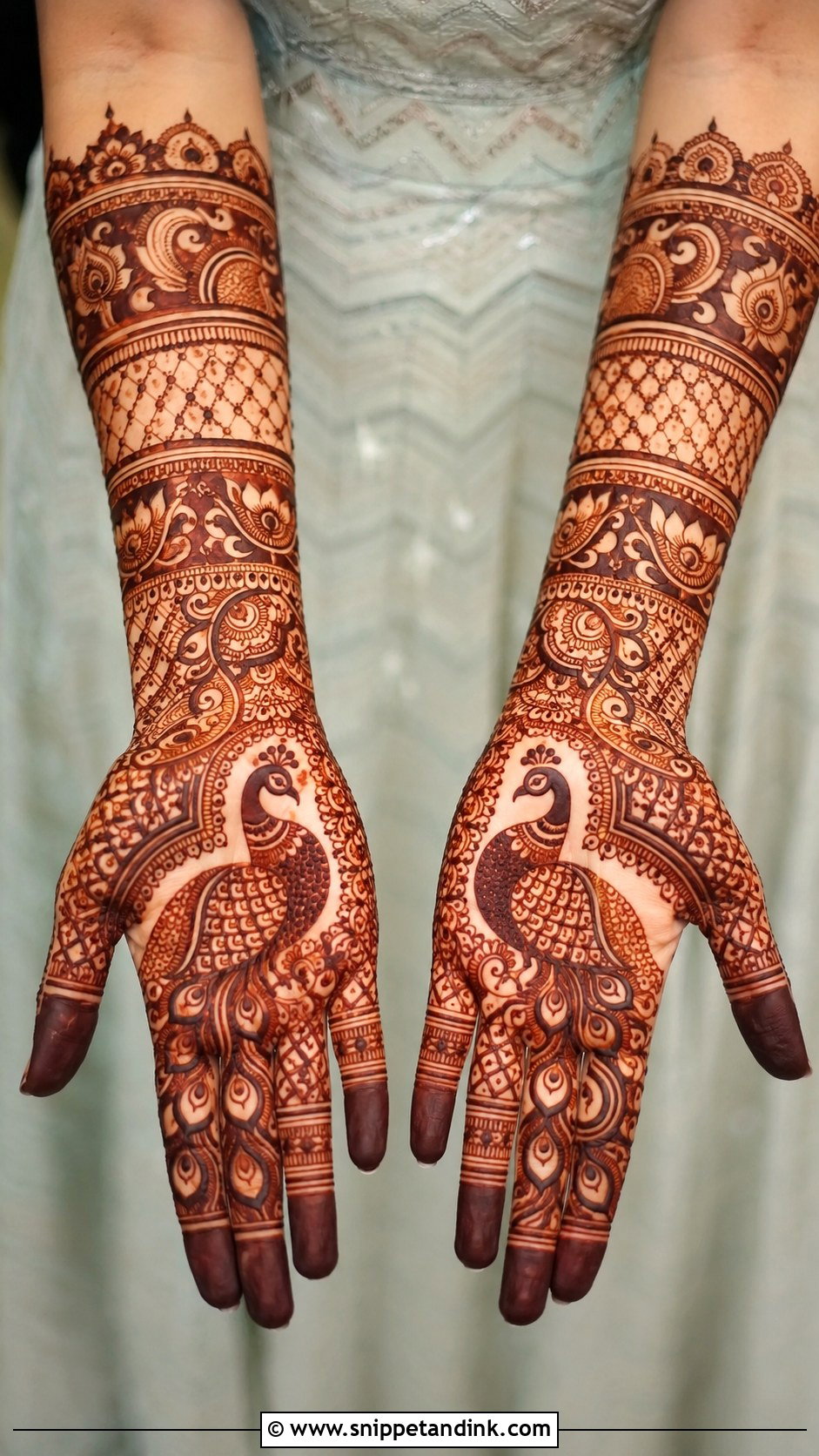
Peacocks can sit on the palm, the back of the hand or the forearm, with feathers flowing into paisleys, florals and mesh. They feel royal without the commitment of portraits, and they suit temple jewelry and rich silks. Feather detail is where it goes wrong. If the lines inside each feather are packed too tightly, the shape blurs after staining. I leave open curves between feathers and save the fine work for the eye and the neck.
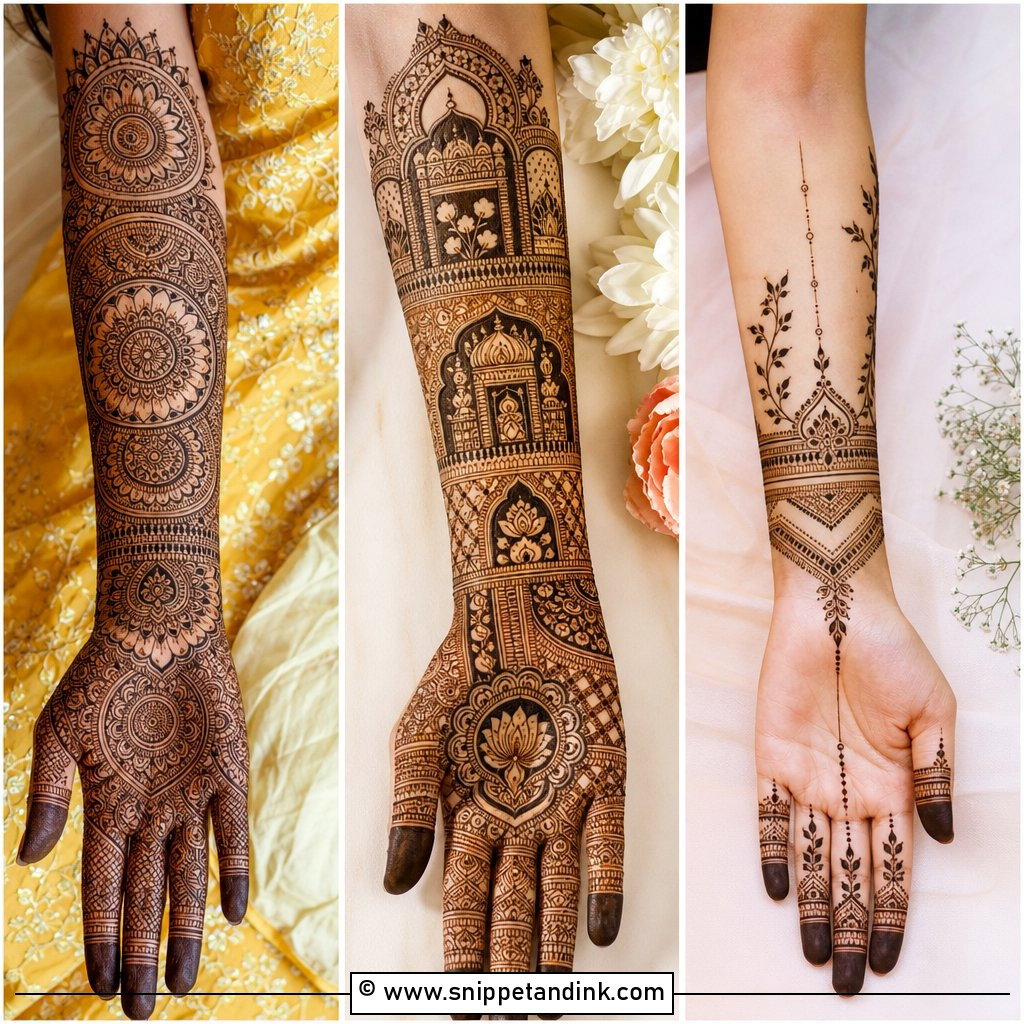
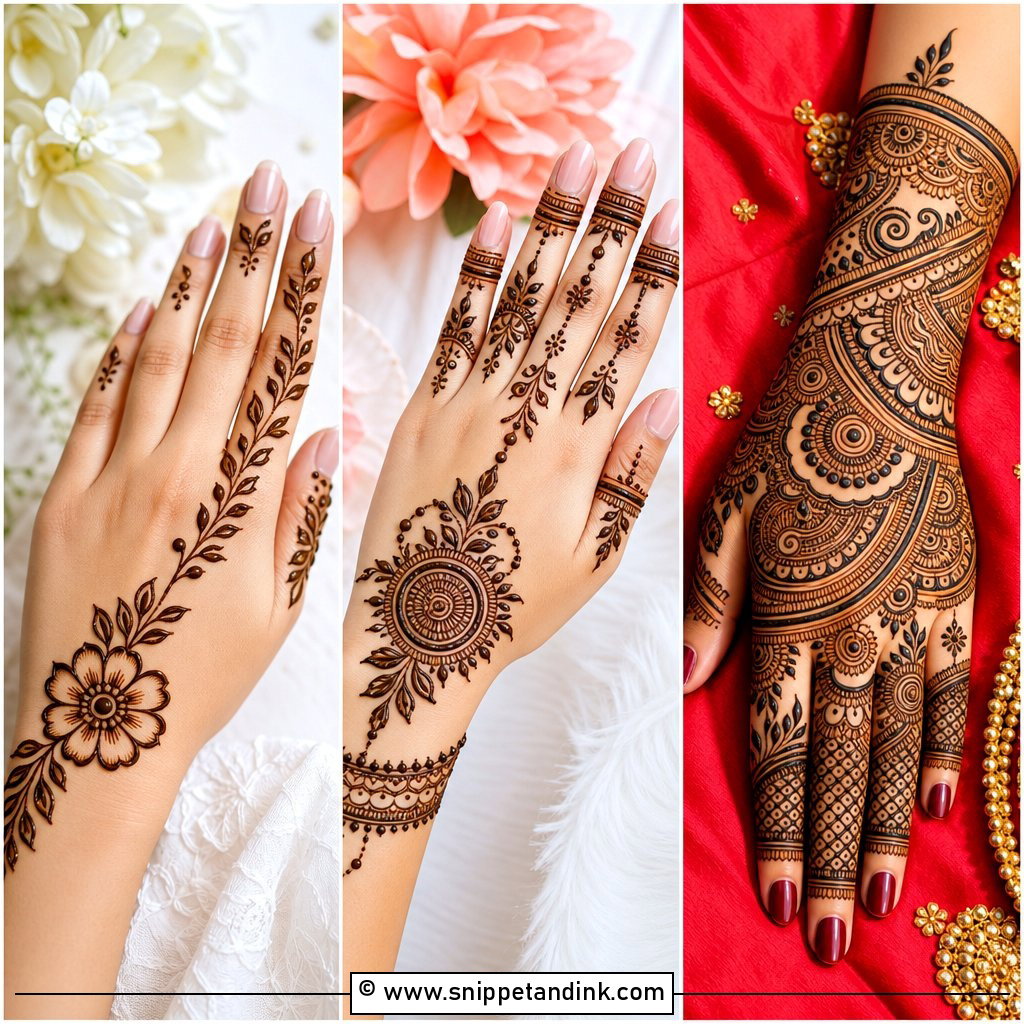
15. Lotus Bridal Mehndi Design
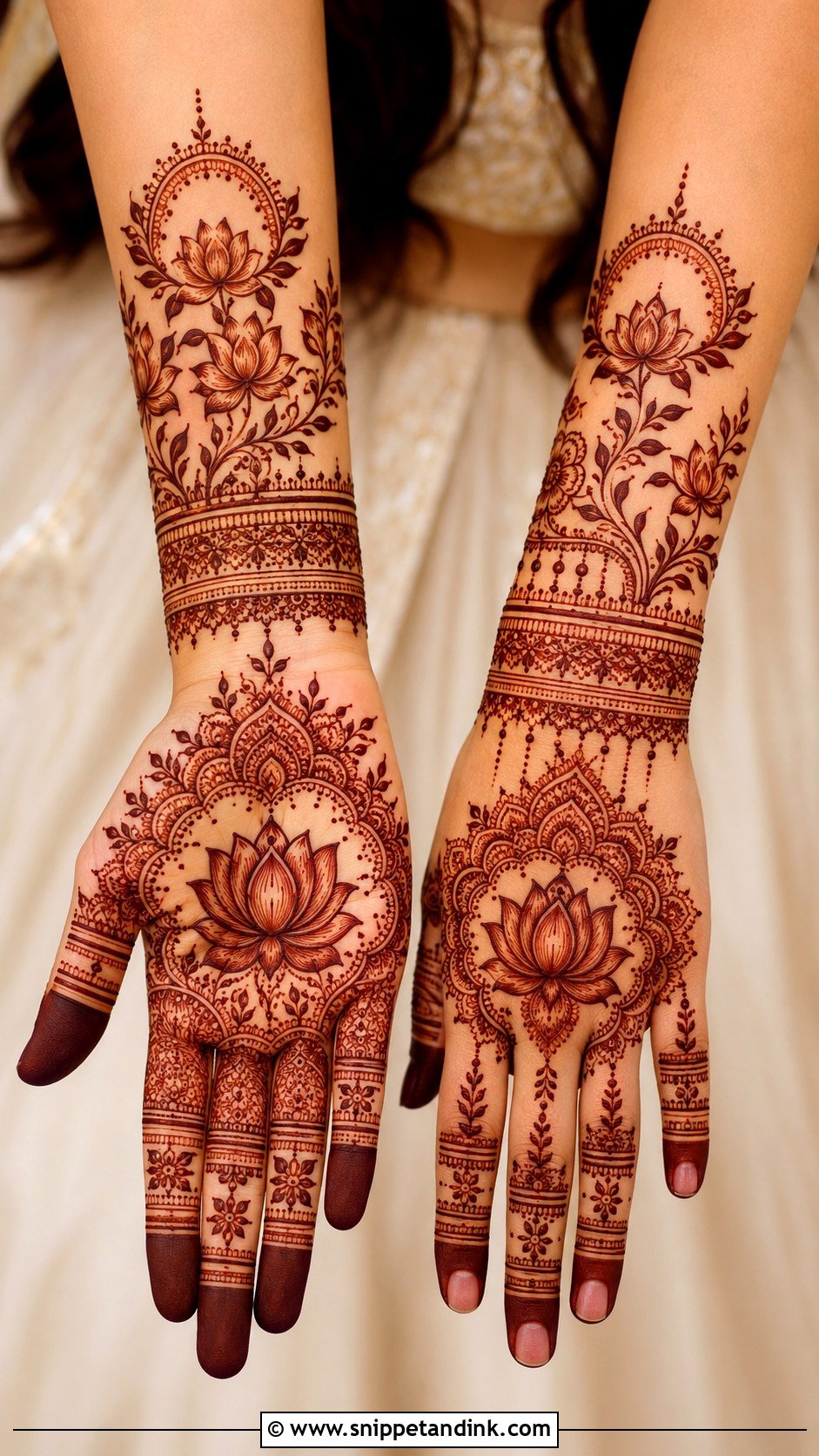
Lotus can anchor a palm, a back hand, a wrist cuff or a forearm, usually surrounded by mandalas, dots, leaves and lace-like fill. It works with both traditional and modern embroidery, and a full version layers several blooms across both hands with matching fingers and bracelet bands. I keep the petal outlines bold and the filler fine. Leave a hairline of skin between petal layers, or they fuse together as the paste settles.
16. Jaali Bridal Mehndi Design
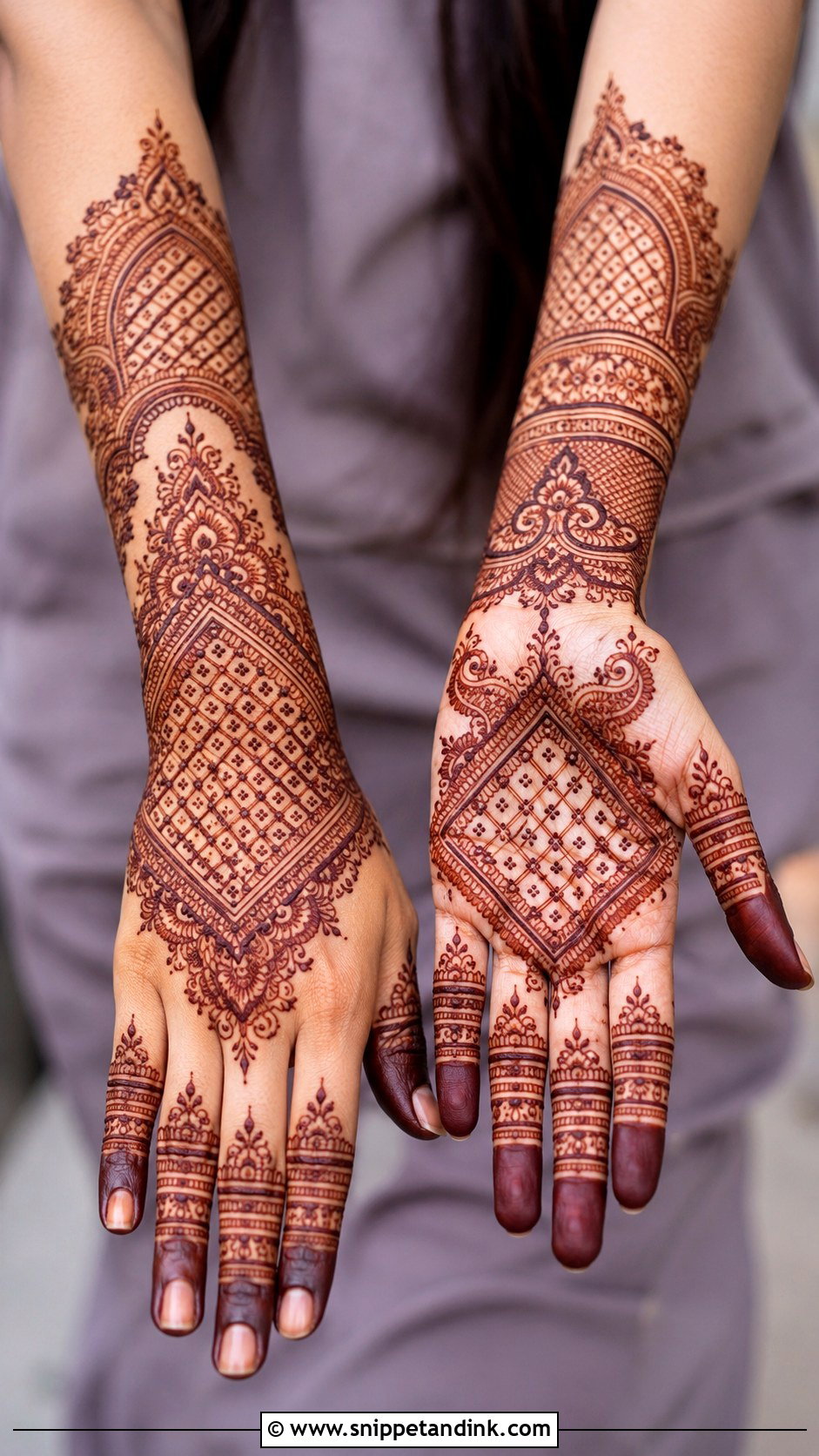
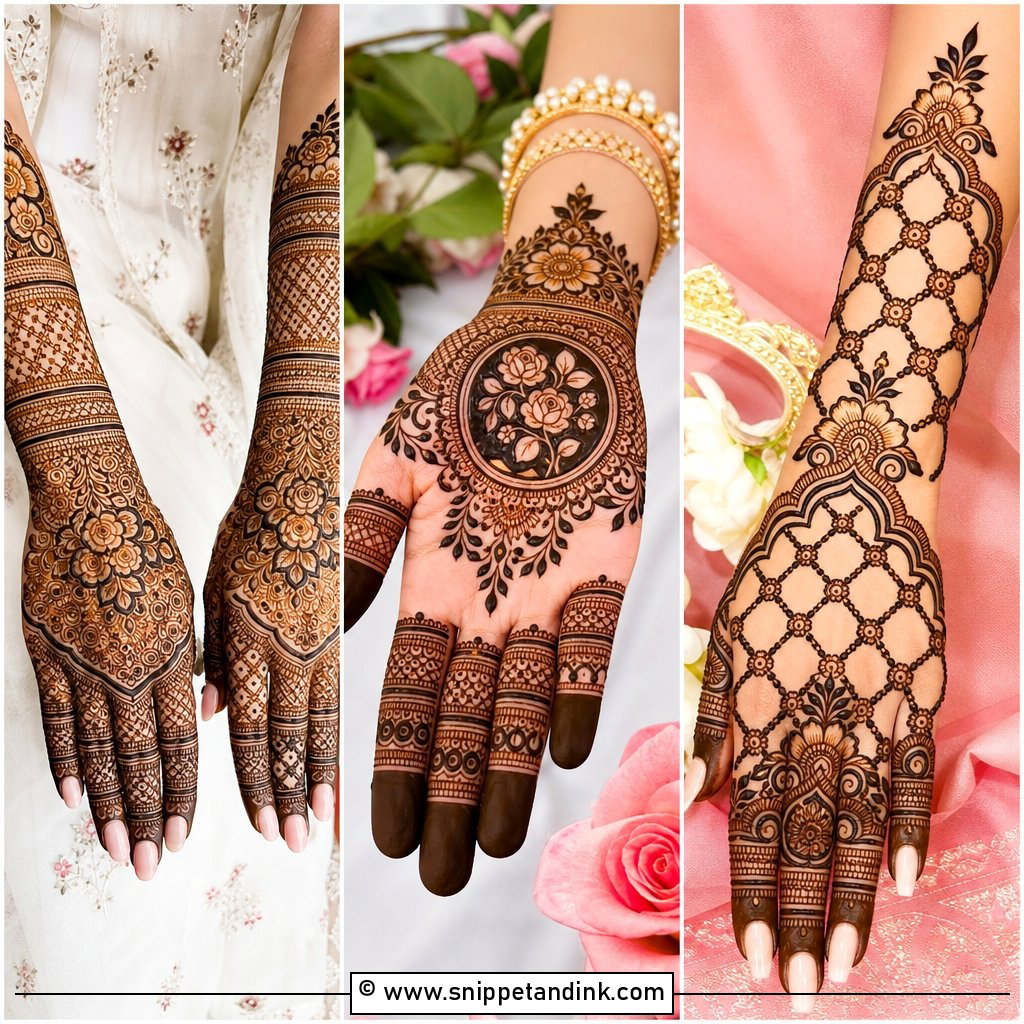
Jaali, the mesh pattern, covers the back hand, palm, wrist or forearm in grids, diamonds or curved nets and adds texture without relying on flowers. It reads like lace in close-up shots and suits embroidered sleeves, sheer dupattas and lattice jewelry. Even spacing is non-negotiable. I mark the boundary of each jaali section before filling it, then frame the mesh with a bold border so it doesn’t look like it’s floating.
17. Floral Bridal Mehndi Design
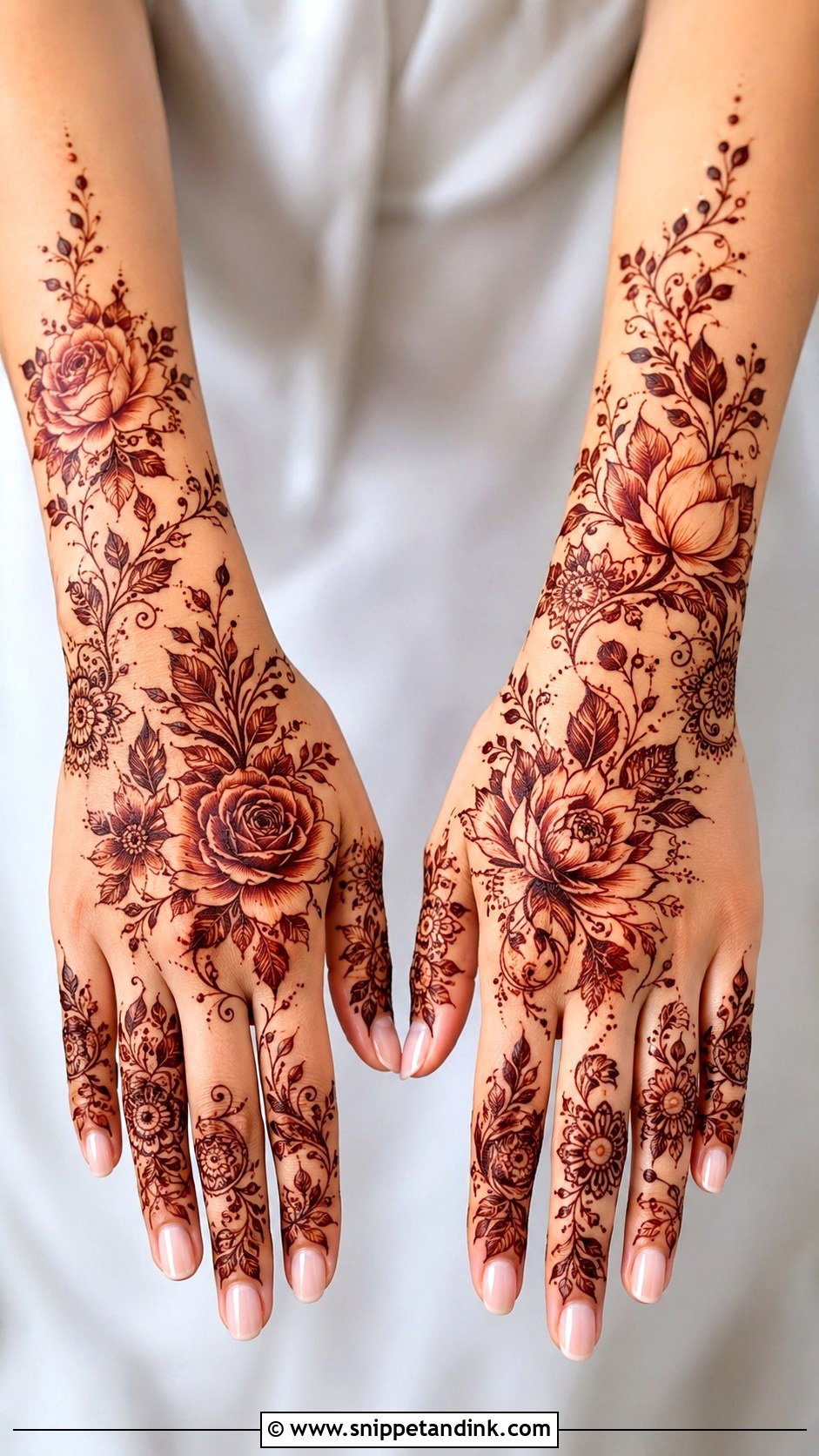
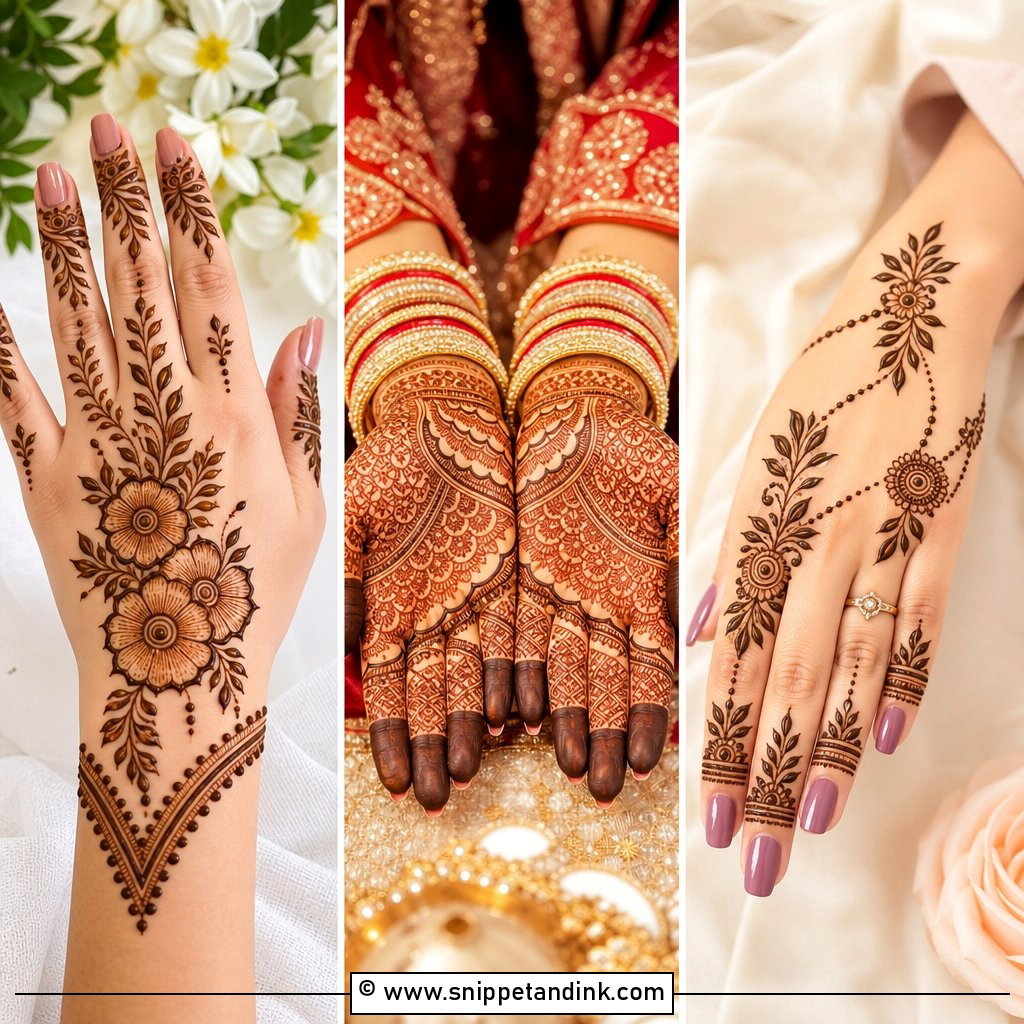
Florals can be kept simple or made dramatic depending on flower size and how much fill surrounds them: roses, lotus, vines, shaded blooms and buds across hands and forearms. They suit almost every outfit and every hand shape, because I can scale a flower up or down. What keeps florals from looking dated is spacing. Bold blossoms with clean skin around them and fine finger detail look current; small flowers crammed edge to edge look like an older template.
18. Paisley Bridal Mehndi Design
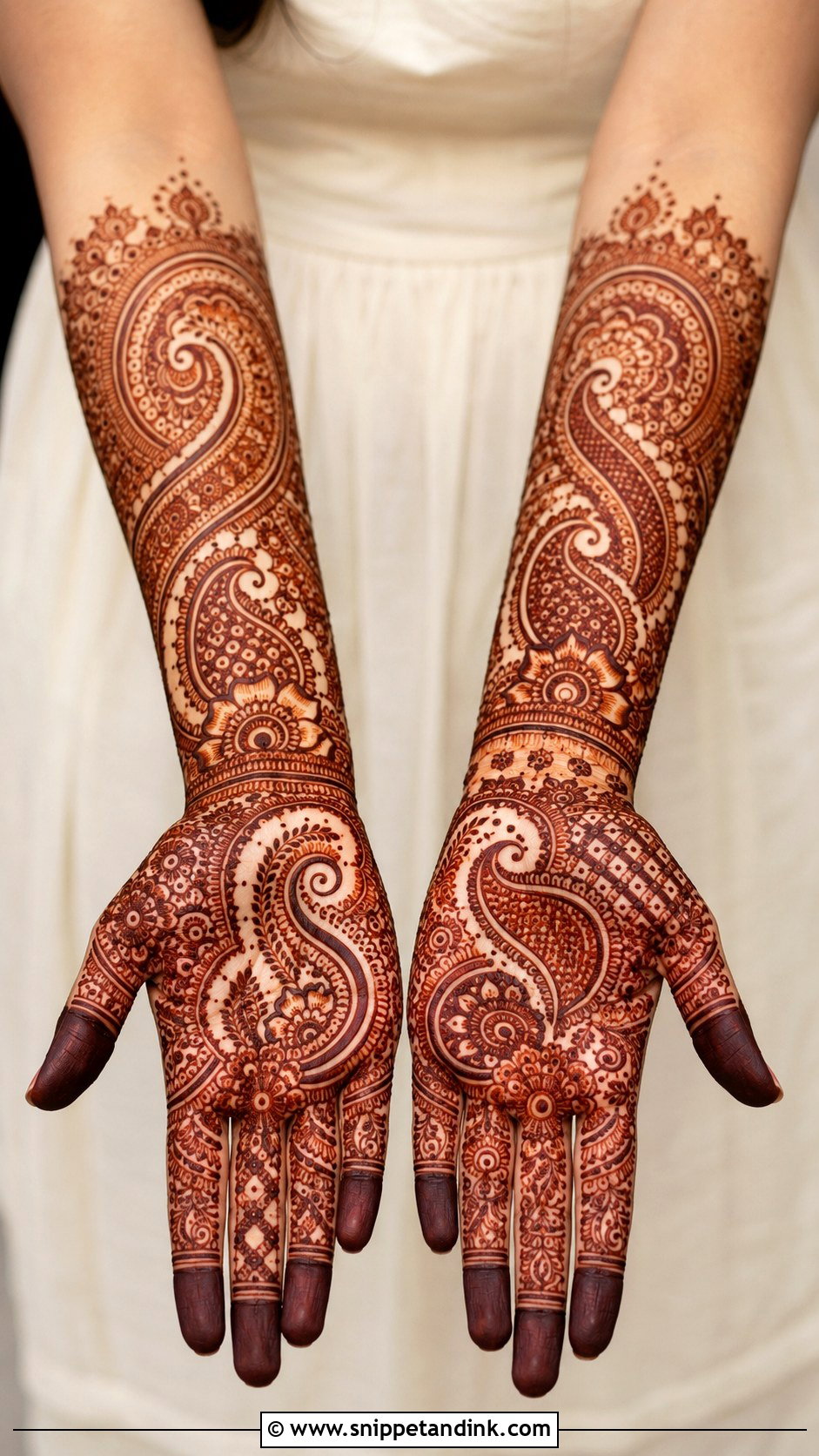
The paisley’s curve follows the line of the palm, wrist and forearm naturally, which is why it’s the easiest motif to build a full bridal hand from. I fill them with tiny florals, dots, leaves, checks or lines depending on how busy the rest of the hand is. It’s the backbone of most Indian and Pakistani bridal designs. To give it a fresher feel, I mix a few oversized paisleys with open gaps, mandala borders and a bracelet cuff.
19. Back Hand Bridal Mehndi Design
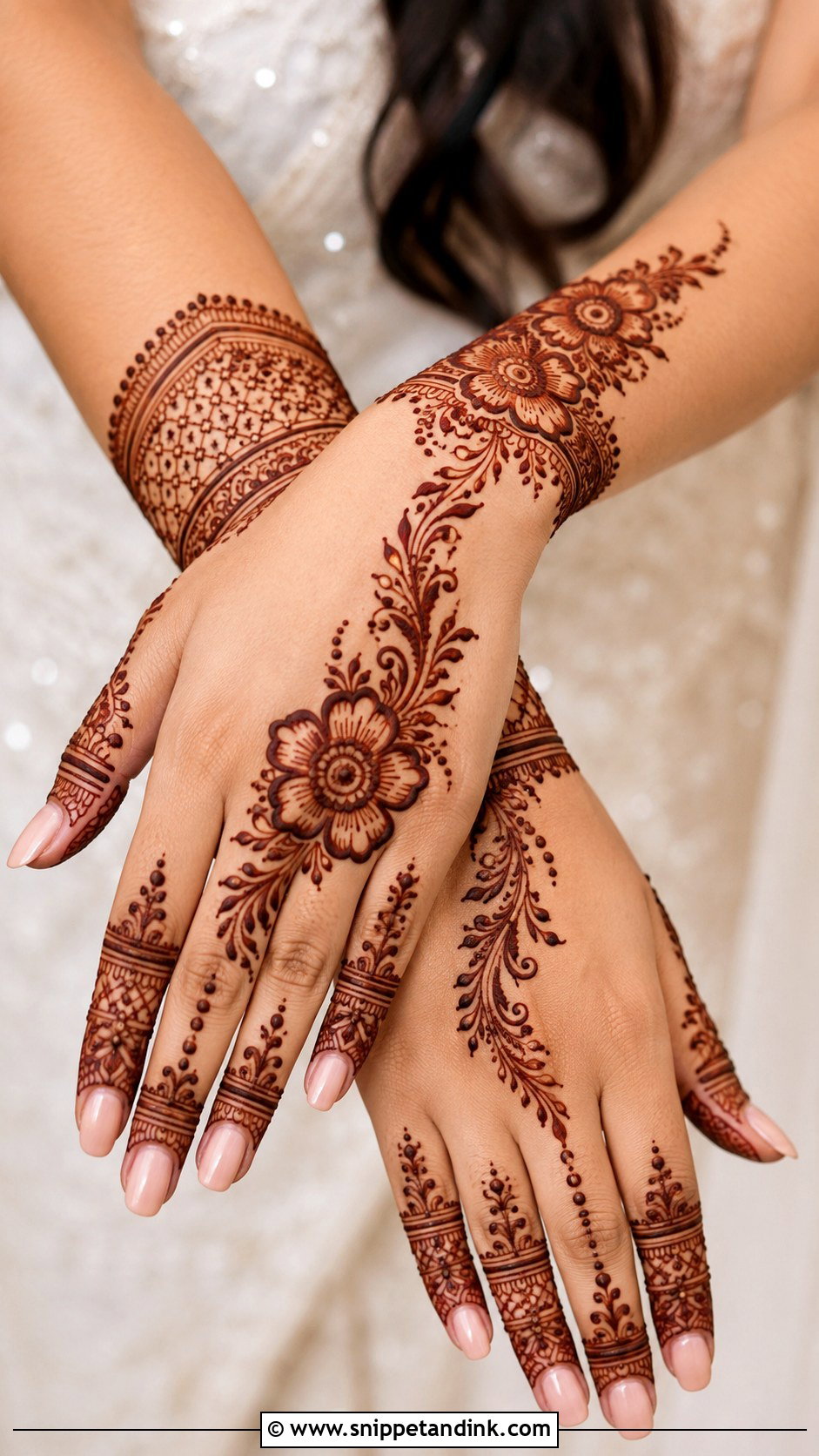
The back of the hand is what the camera catches in ring shots, bangle shots and holding-hands photos. A central motif, a diagonal trail, a bracelet cuff, finger detail or fine jaali panels all work here, in any style from Arabic to fully traditional. If you’ll wear a haath phool or heavy rings, show your artist the jewelry; I draw around it so the design frames the pieces instead of disappearing under them. The back of the hand stains lighter than the palm, so I use slightly bolder lines there.
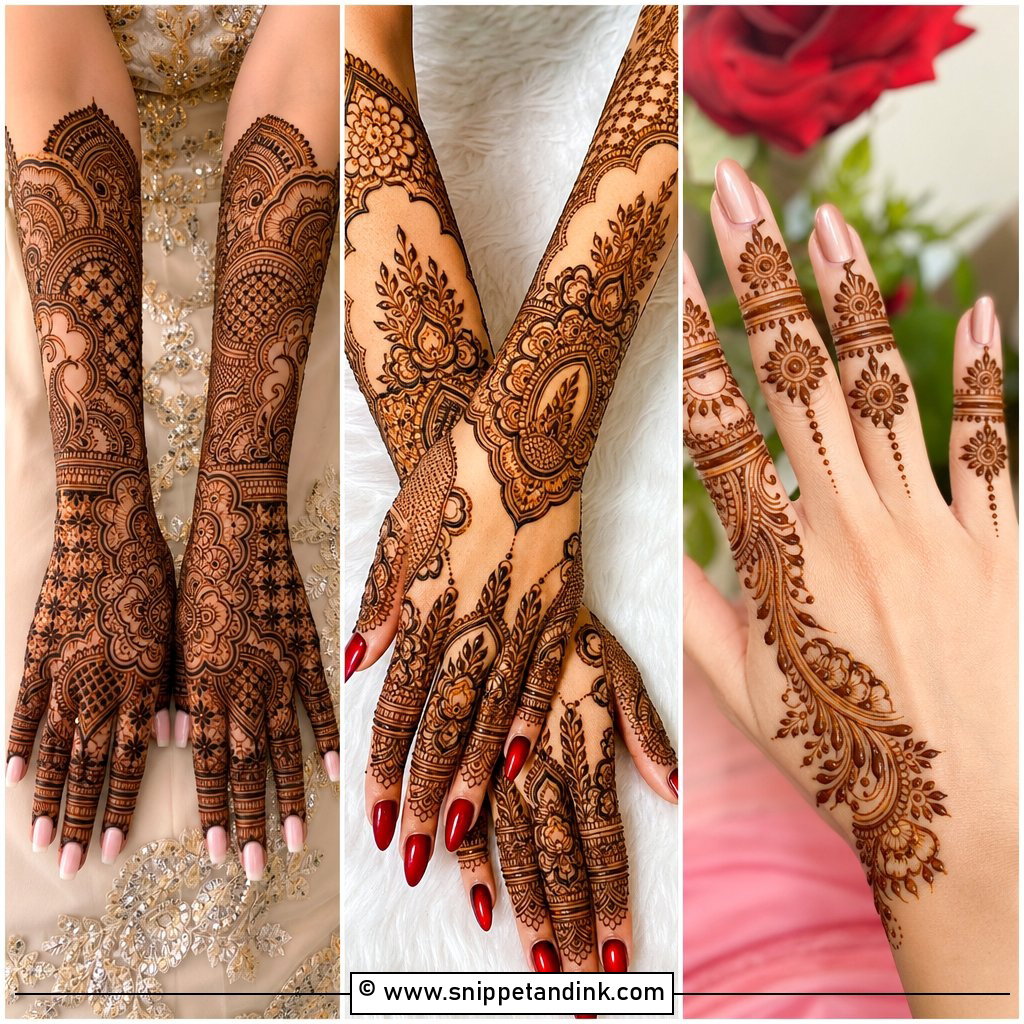
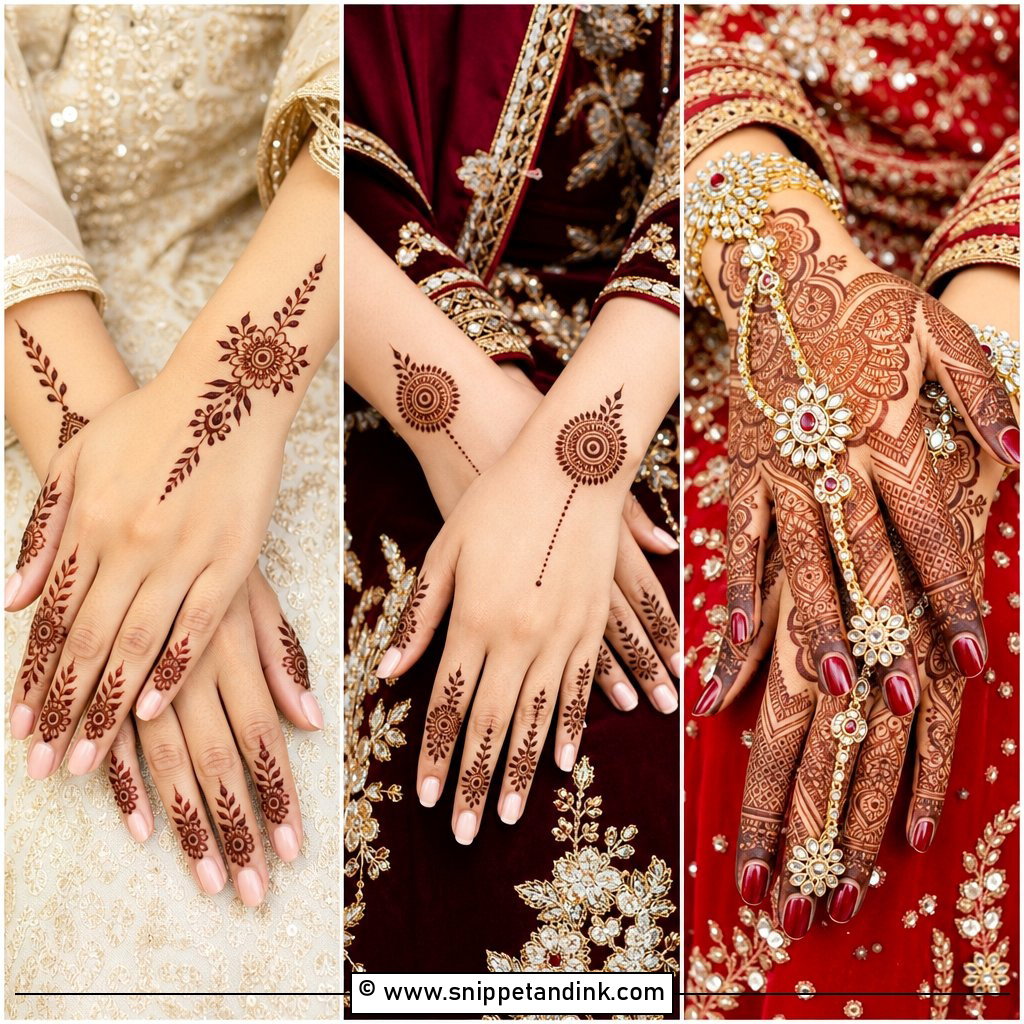
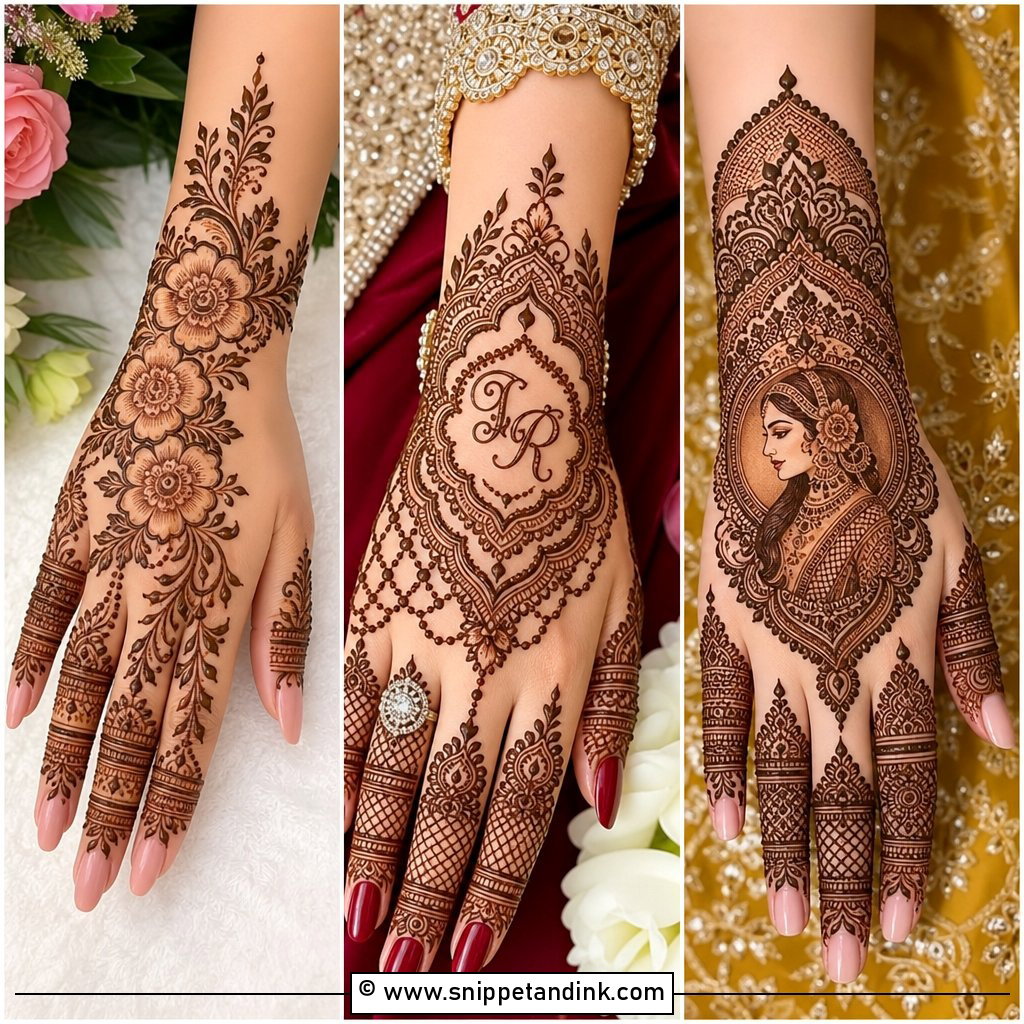
20. Front Hand Bridal Mehndi Design
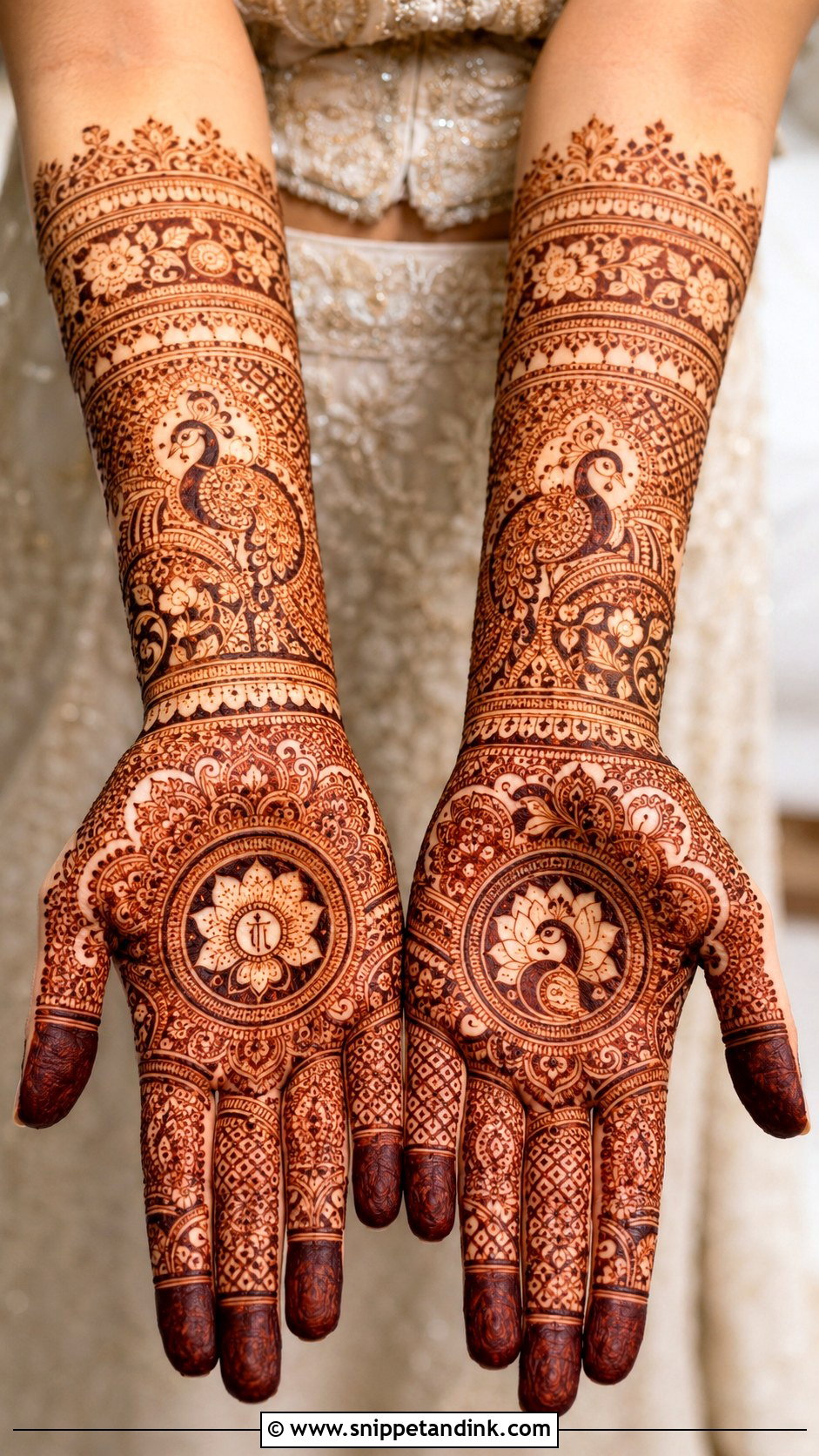
Palms carry the meaningful details because they’re the widest canvas and they stain the darkest: mandalas, bride-and-groom figures, initials, the date, peacocks, lotus and dense paisley fill. The design should look complete with the palms open and still balanced when the hands are held together, which is a pose you’ll be asked for many times. Filled fingertips read traditional; negative space around the main motifs reads fresher.
21. Finger Bridal Mehndi Design
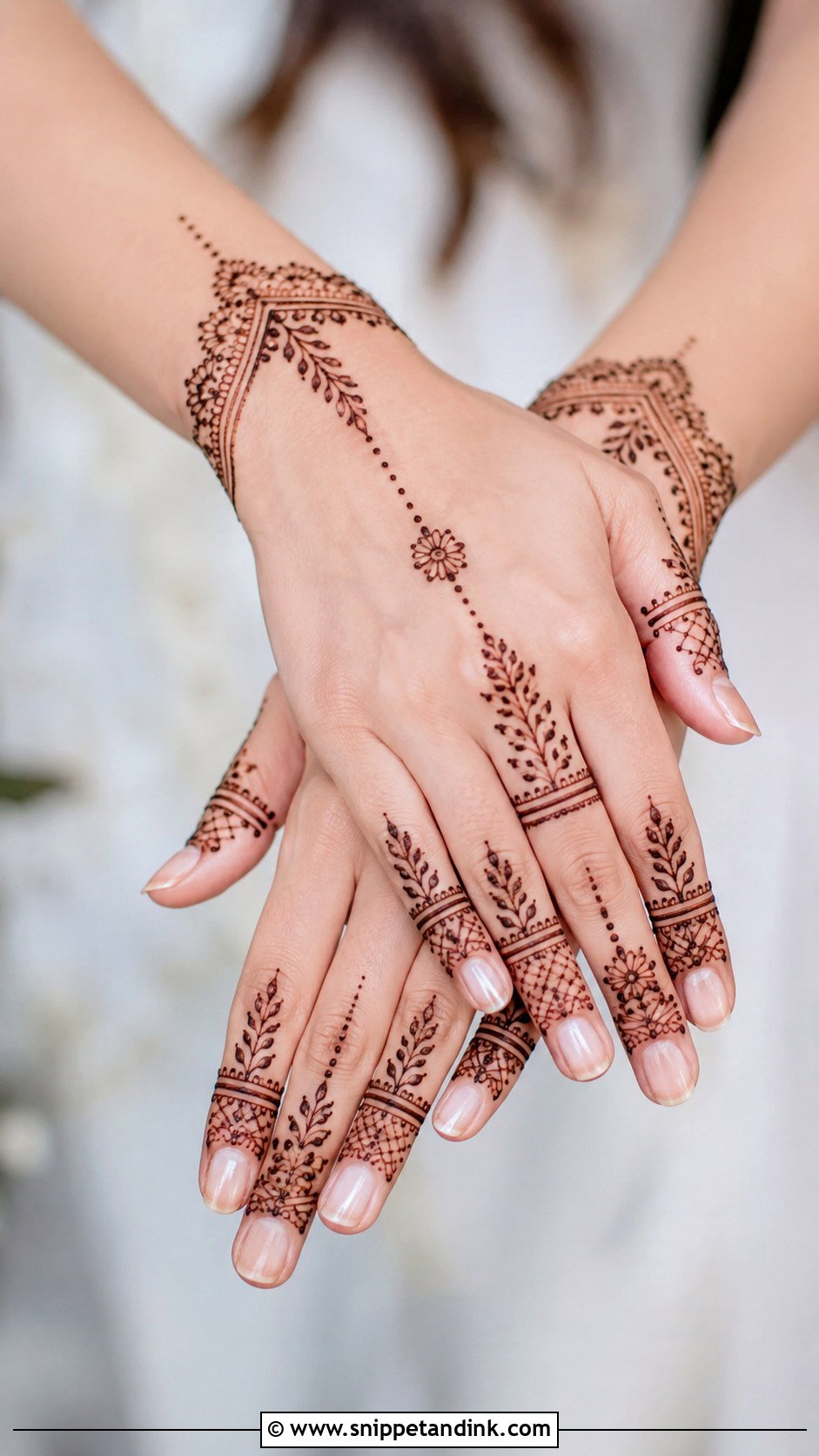
Bridal fingers carry vines, ring bands, dots, checks, fine florals and filled tips, and they connect the design to the palm or back hand. Heavy fingers with a lighter palm is a popular split if you want the engagement ring and bangles to stand out. Lines should be straight and evenly spaced. I keep the paste thin near the nail bed, because thick lines right against the cuticle bleed and look smudged after the stain develops.
22. Wrist Band Bridal Mehndi Design
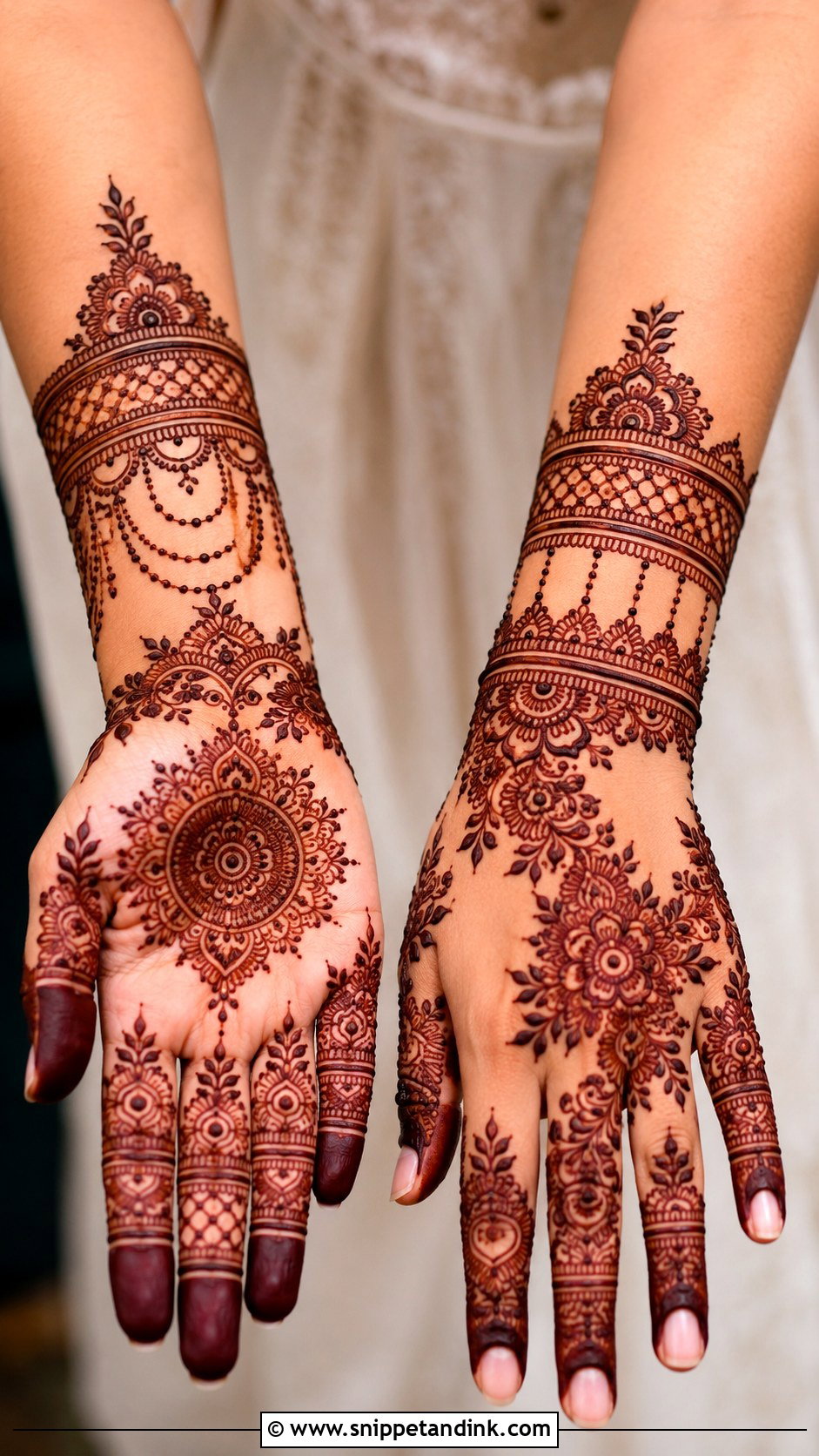
A wrist band drawn like a bracelet, cuff or kada gives the hand a jewelry finish and links the palm to the forearm extension neatly. It blends well with bangles and kalire. I think carefully about its height: churas and bangle stacks sit right over the wrist, so a band drawn too low gets hidden on the day. Layered borders with small hanging drops make it look bridal rather than casual.
23. Elbow Length Bridal Mehndi Design
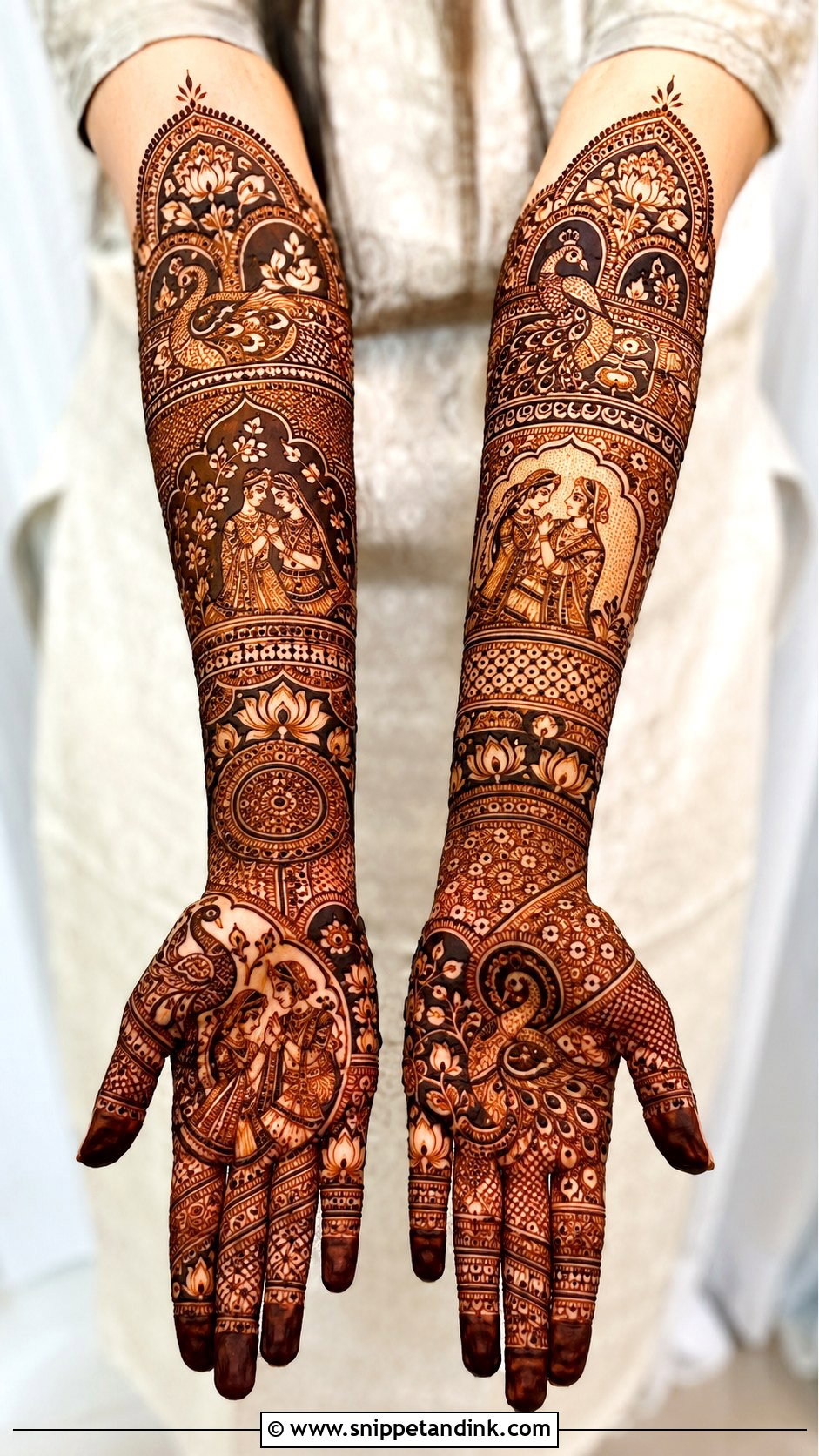
Elbow-length mehndi covers fingers, hands, wrists and forearms up to the elbow with paisleys, peacocks, lotus, mandalas, jaali, portraits and wedding symbols. It’s grand, and it takes hours, so plan your sitting the day before the wedding with nothing else scheduled. It shows best with sleeveless, short or sheer sleeves. To avoid one heavy brown block on the forearm, I alternate textures in bands: floral, open panel, fine fill, then floral again.
24. Simple Bridal Mehndi Design
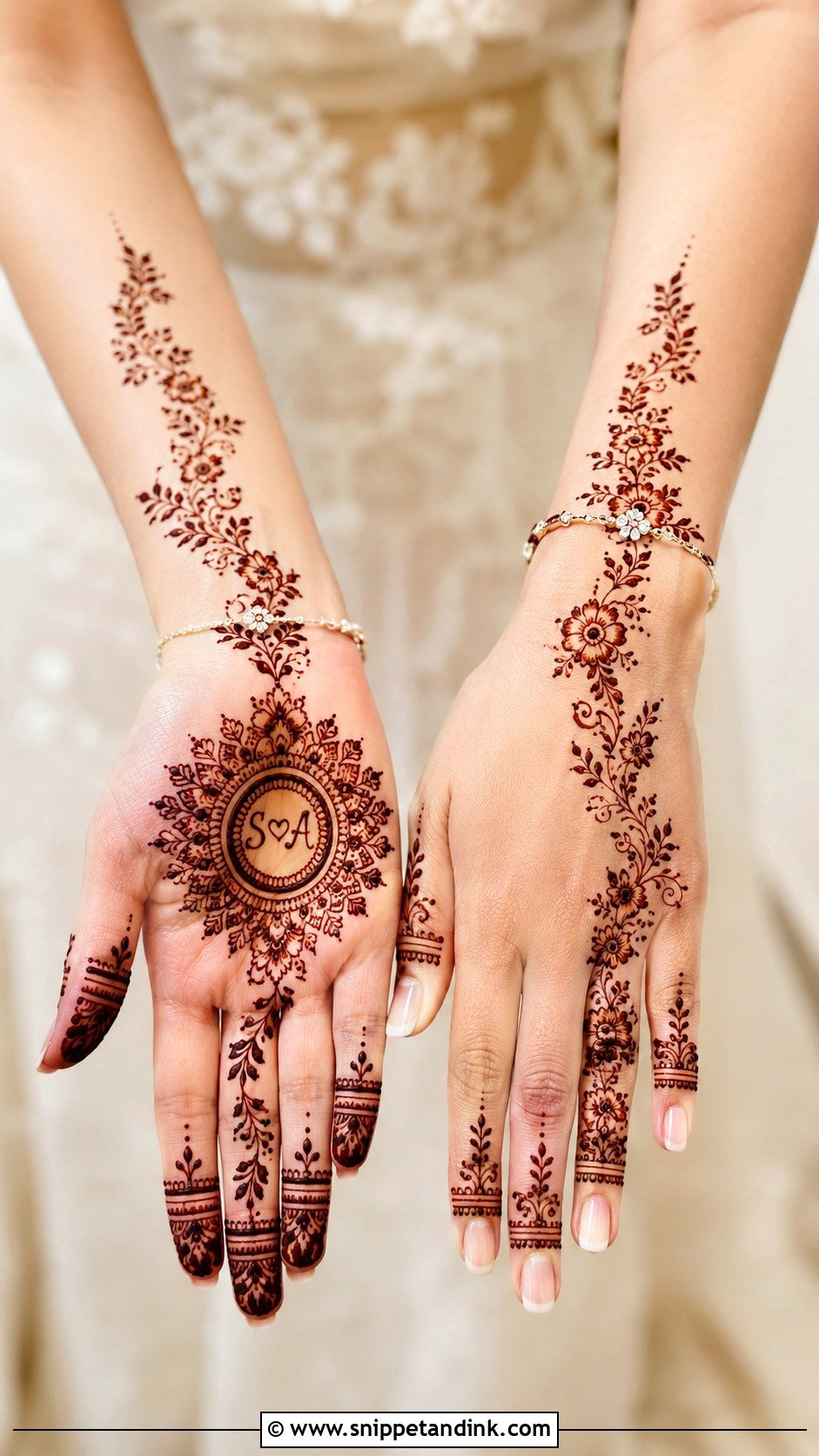
Simple bridal mehndi might be a palm mandala, a floral trail on the back, finger detail and a slim bracelet. It still reads bridal because every motif is placed deliberately. It suits small ceremonies, destination weddings where you’re short on time, and brides who want their outfit and jewelry to lead. Pick one standout feature to make it yours, such as a lotus mandala, hidden initials or a delicate forearm cuff.
25. Heavy Bridal Mehndi Design
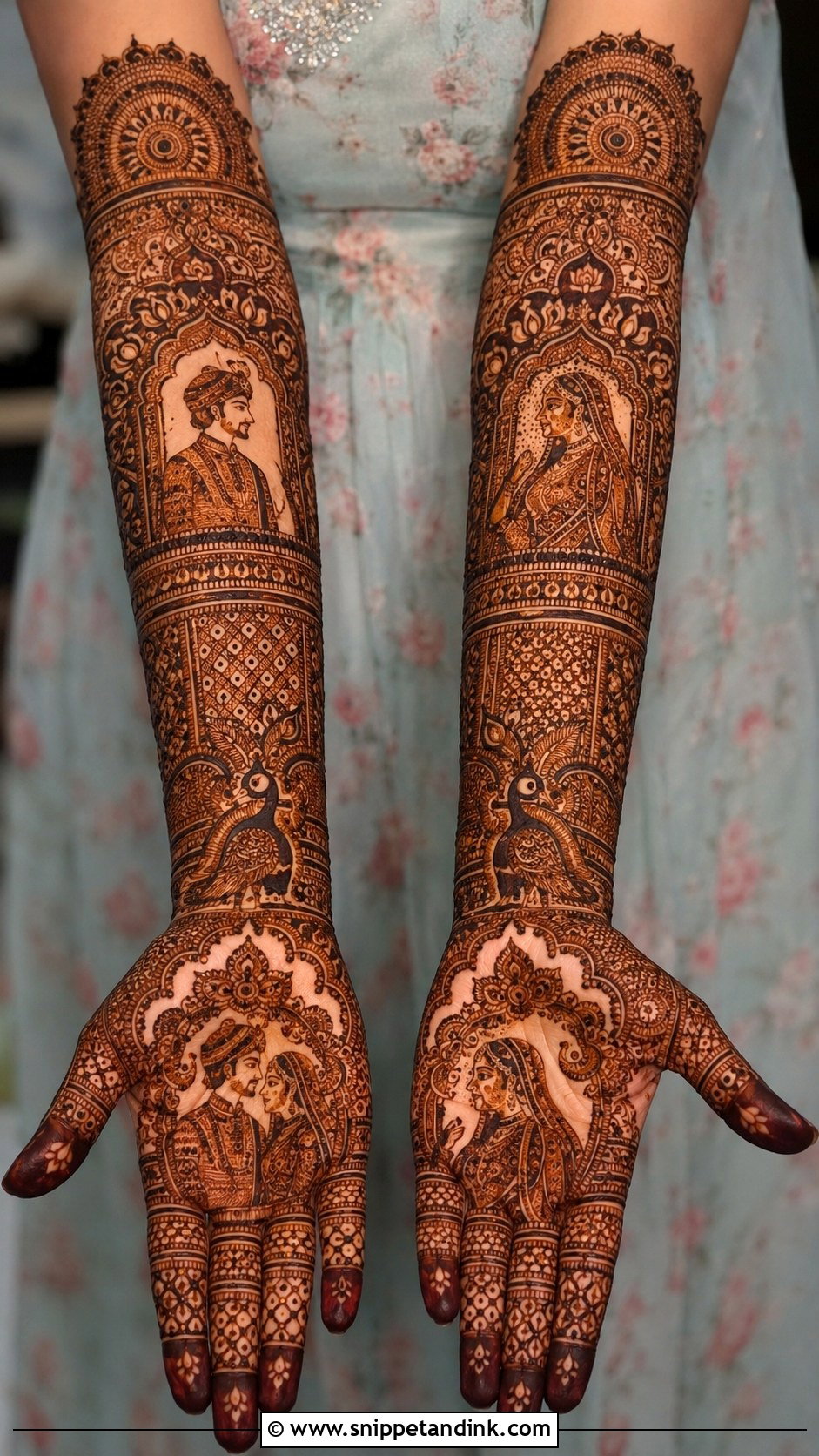
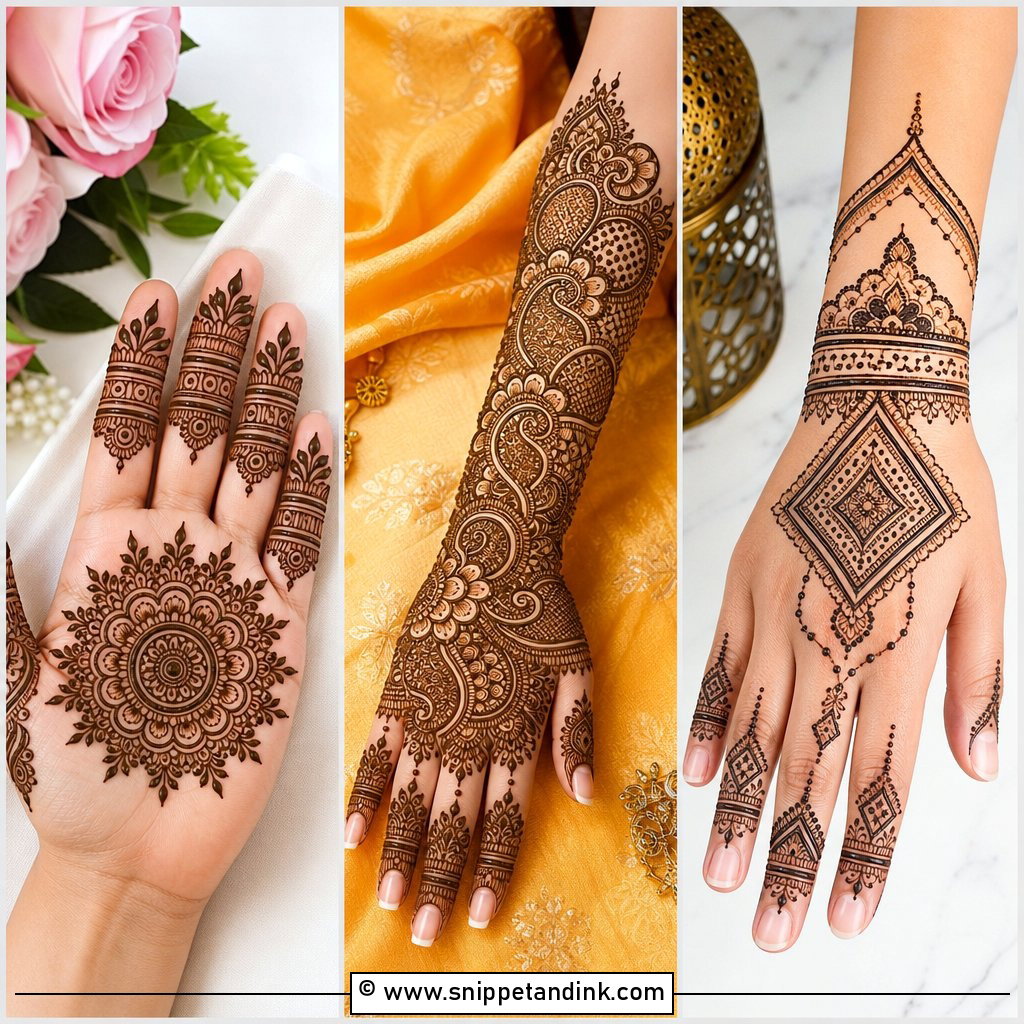
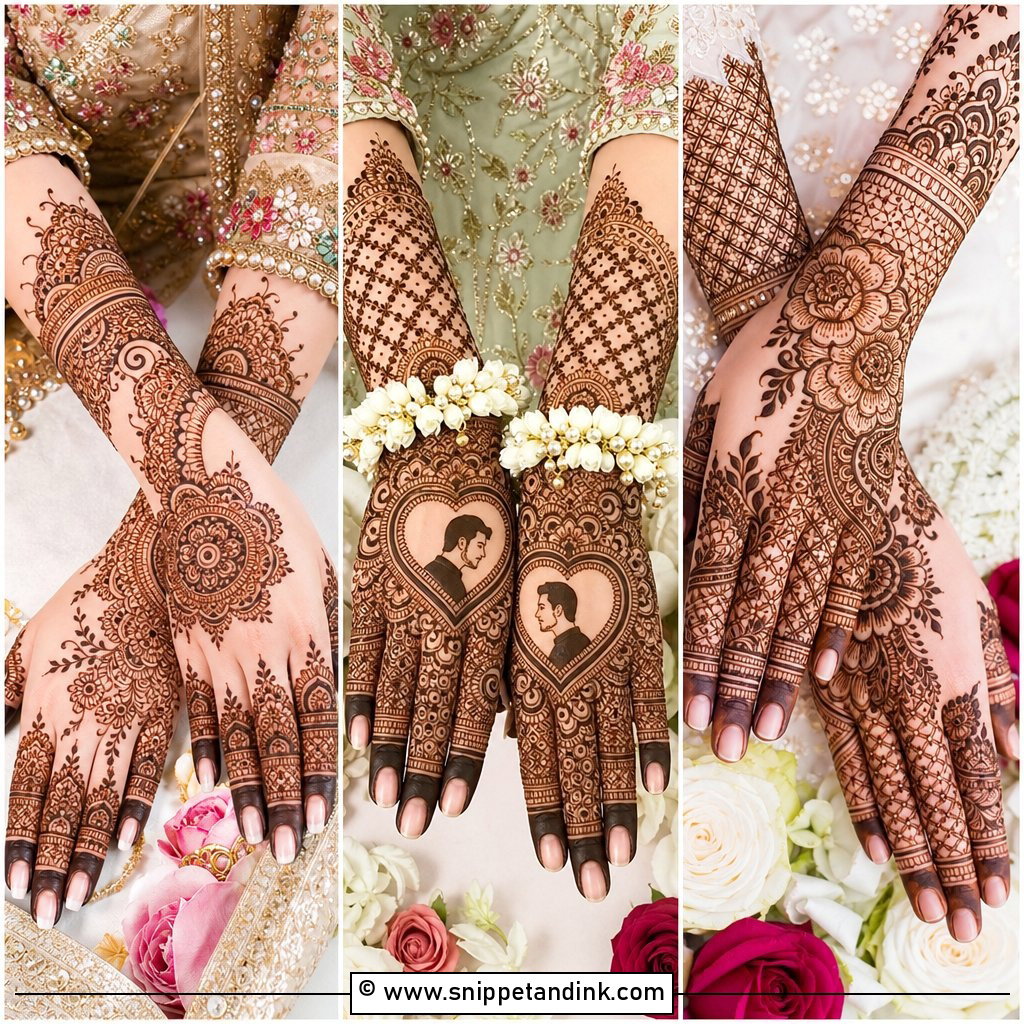
Heavy bridal mehndi covers both sides of the hands and runs to the forearms or elbows with dense paisleys, portraits, peacock feathers, floral grids, mandala centers and filled fingertips. Spacing still matters here, maybe more than anywhere. I combine bold outlines with tiny fillers and leave thin breaks between sections so the design doesn’t go muddy. Classic red, maroon, gold and emerald outfits carry it best.
26. Fine Line Bridal Mehndi Design
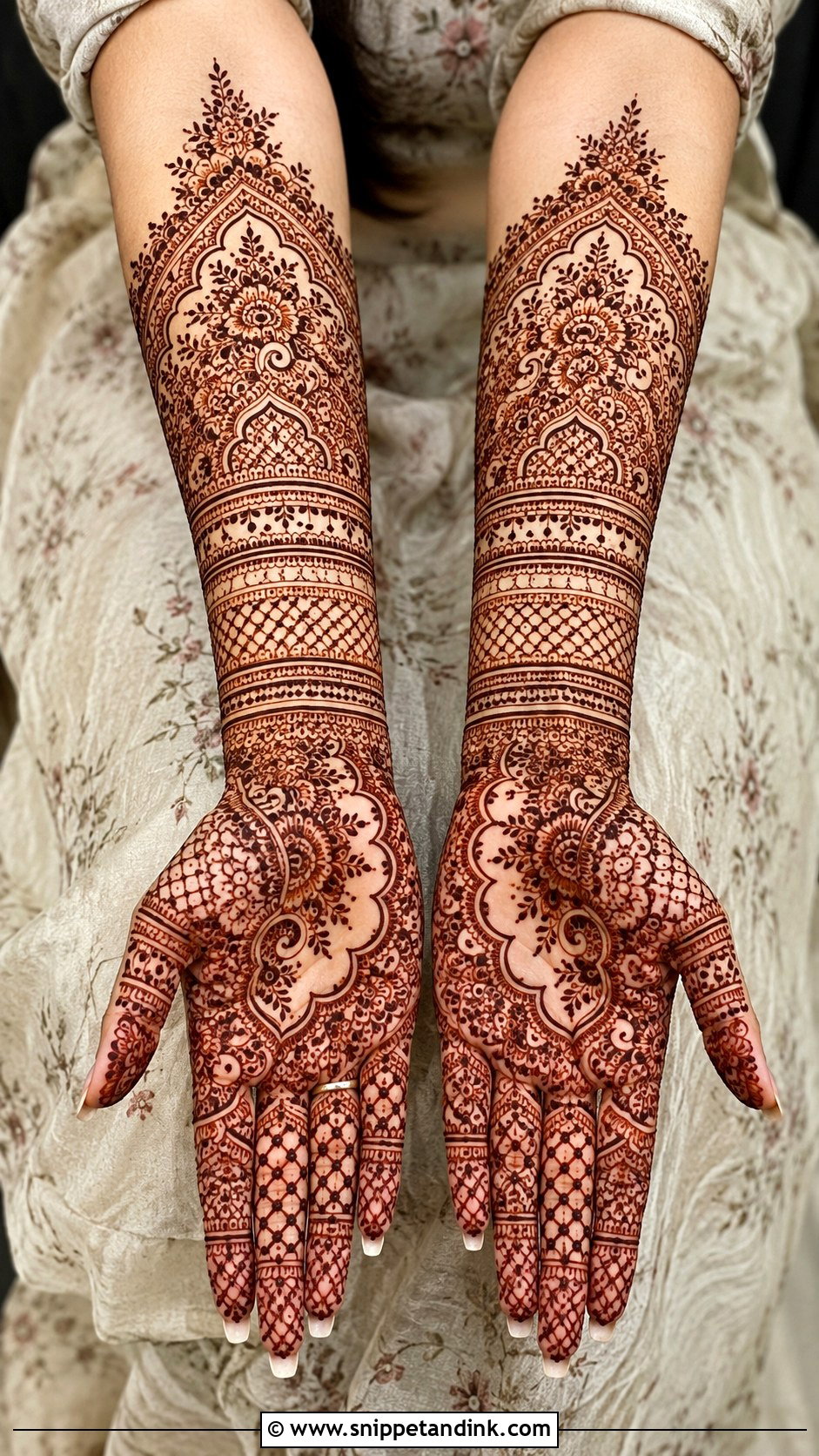
Fine-line work uses thin strokes, tiny dots, detailed florals and neat mesh for a lace-like finish. It suits pastel and luxury outfits and close-up photography. It demands a steady hand, fresh paste and a fine cone tip, and it has a weakness: hairline strokes stain lighter than thick ones. If your skin tends to stain pale, I add a few bolder outlines and borders so the design doesn’t fade into the skin by the reception.
27. Negative Space Bridal Mehndi Design
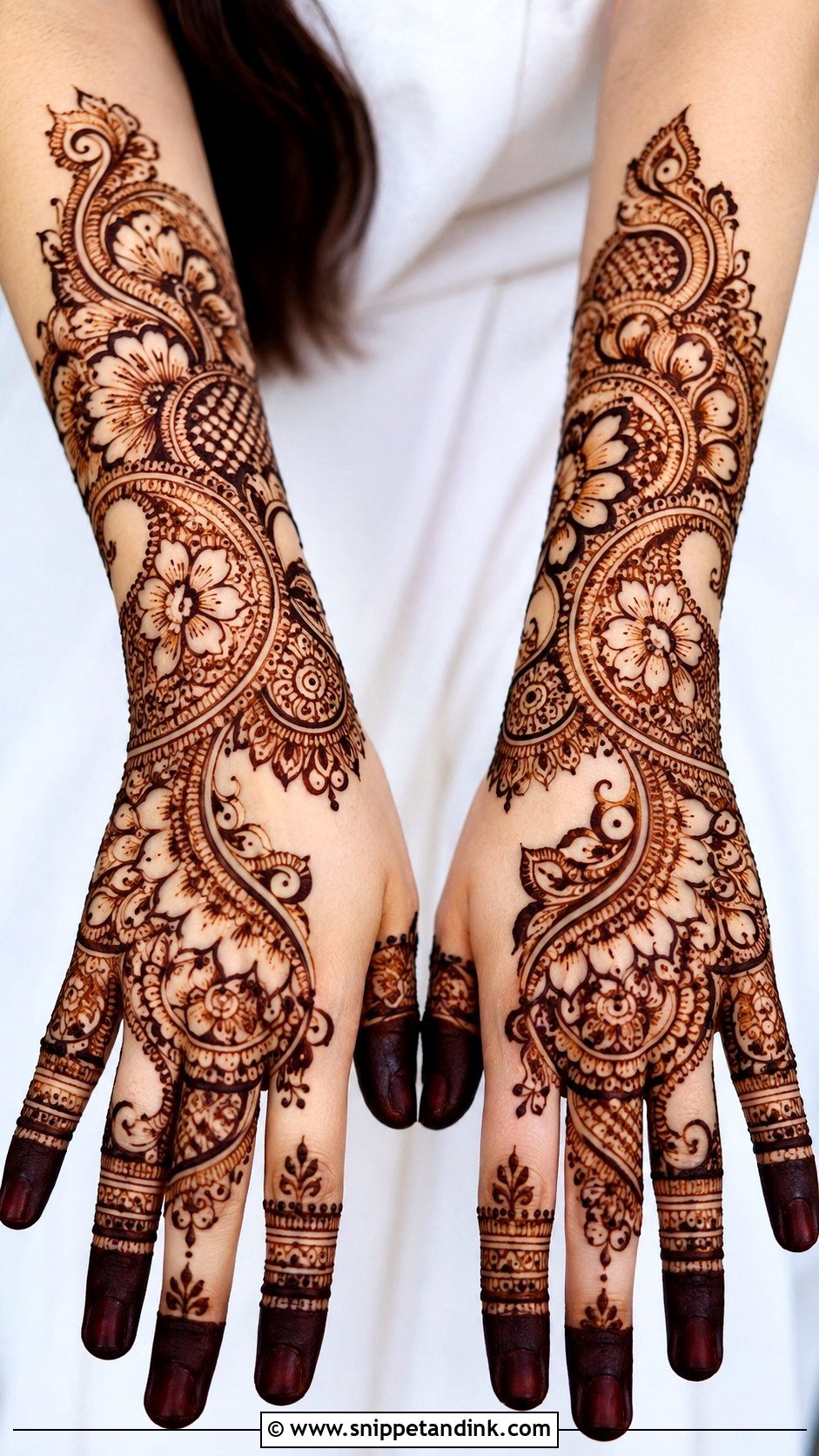
Negative space treats bare skin as part of the pattern, leaving clear gaps around flowers, mandalas, paisleys or geometric panels. The contrast makes the design easy to read and stands out well after staining. It flatters both sides of the hand because it follows the hand’s own shape. For a bride, I balance the open areas with dense borders, filled fingertips and a strong wrist band so it doesn’t look unfinished next to a heavy outfit.
28. Personalized Bridal Mehndi Design
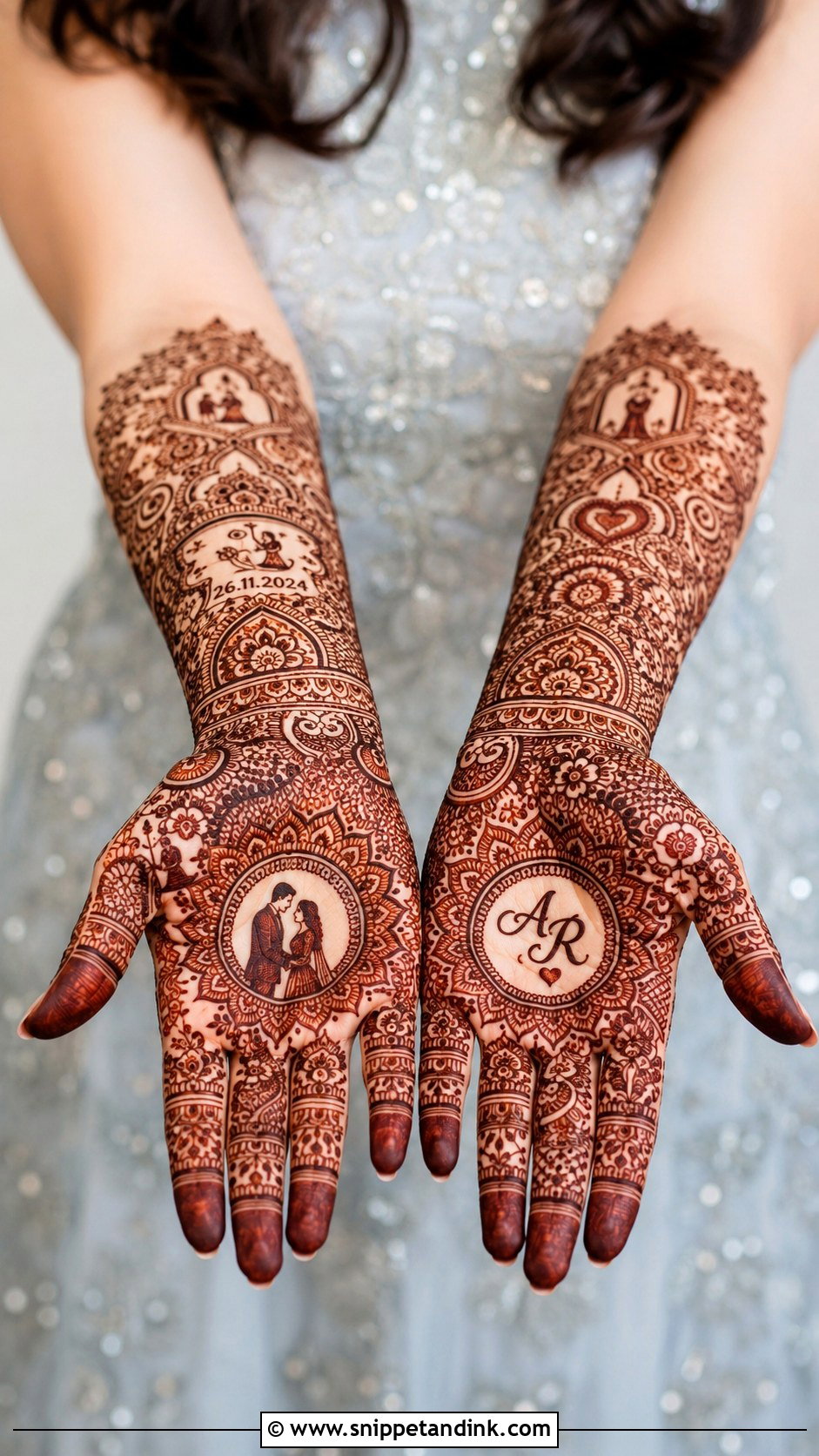
Personal details turn a traditional design into yours: initials, the date, a proposal symbol, a place you’ve traveled together, a favorite flower or even a pet, hidden in paisleys, mandalas, jaali or forearm borders. From a distance, it still reads as classic bridal mehndi. I suggest picking two or three details at most. Any more and they start competing, and the hand looks like a collage instead of one design.
29. Wedding Story Bridal Mehndi Design
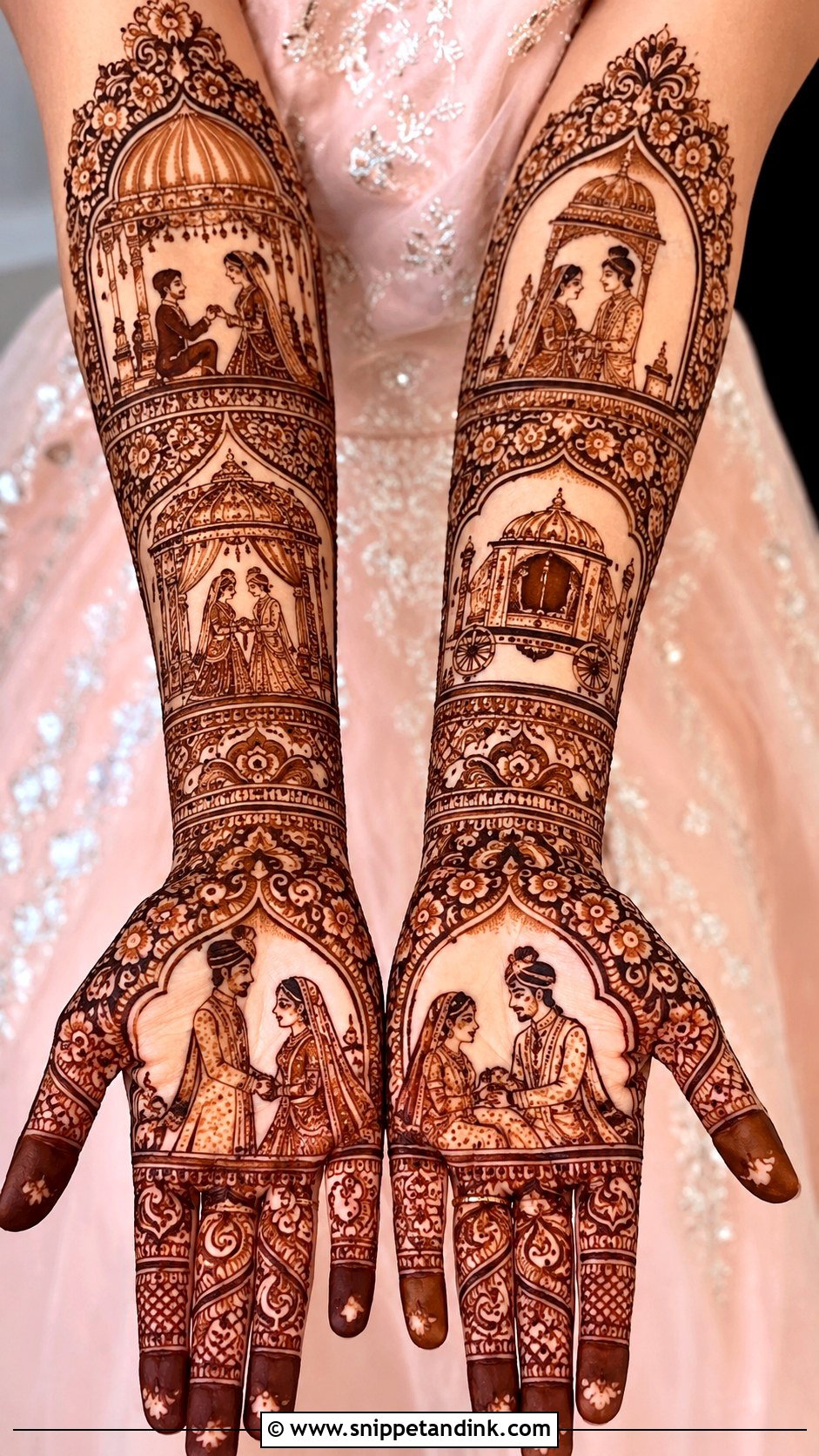
Story mehndi lays out your relationship and ceremony as scenes: the proposal, favorite places, rituals, the mandap, the doli. It needs full-hand or elbow-length space. The challenge is readability. I frame each scene in its own arch, circle or panel and connect them with floral fill, so the eye moves from one moment to the next instead of seeing a crowd of tiny figures. Agree on the scenes before the sitting; improvising them adds a lot of time.
30. Name Hidden Bridal Mehndi Design
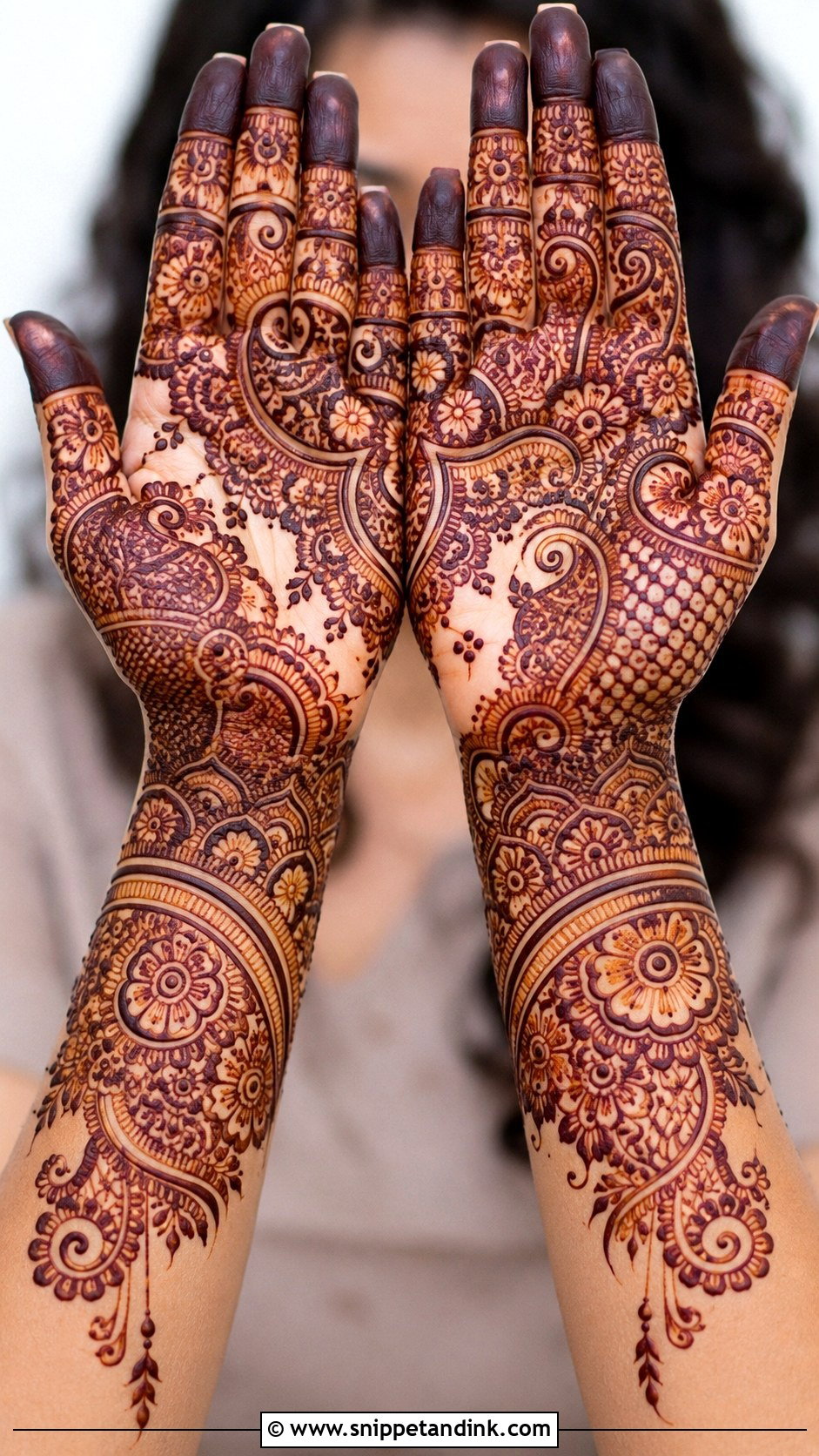
Name hidden bridal mehndi design is the playful tradition of tucking the groom’s name or initials into the pattern for him to find later. It fits every style from full Indian to minimal Arabic. I place the letters in a relatively clean area of the palm or forearm and draw them in the same line weight as the surrounding work, so they’re readable once you know where to look but don’t jump out at first glance.
31. Bridal Mehndi Design With Hashtags
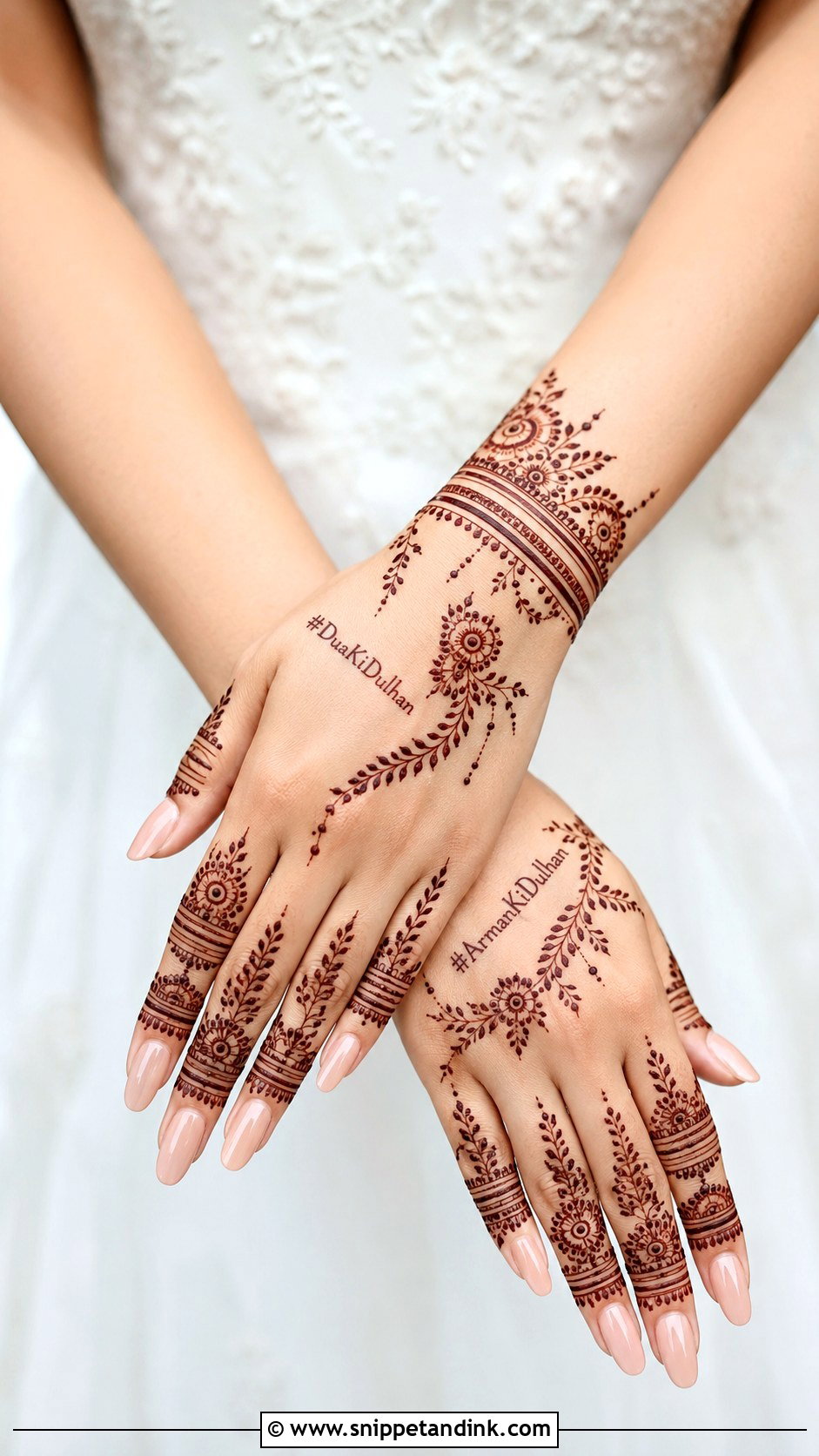
A wedding hashtag can run along the forearm, sit inside a wrist band or hide in a floral panel. It’s fun if you’ve used it on invitations and signage. Lettering in henna is tricky because letters close up as the paste spreads, so I write it slightly larger than you’d expect, with generous spacing between characters, and keep the rest of the design classic: florals, dots and paisleys. One hashtag is enough; more text makes the hand look busy.
32. Bridal Mehndi Design For Small Hands
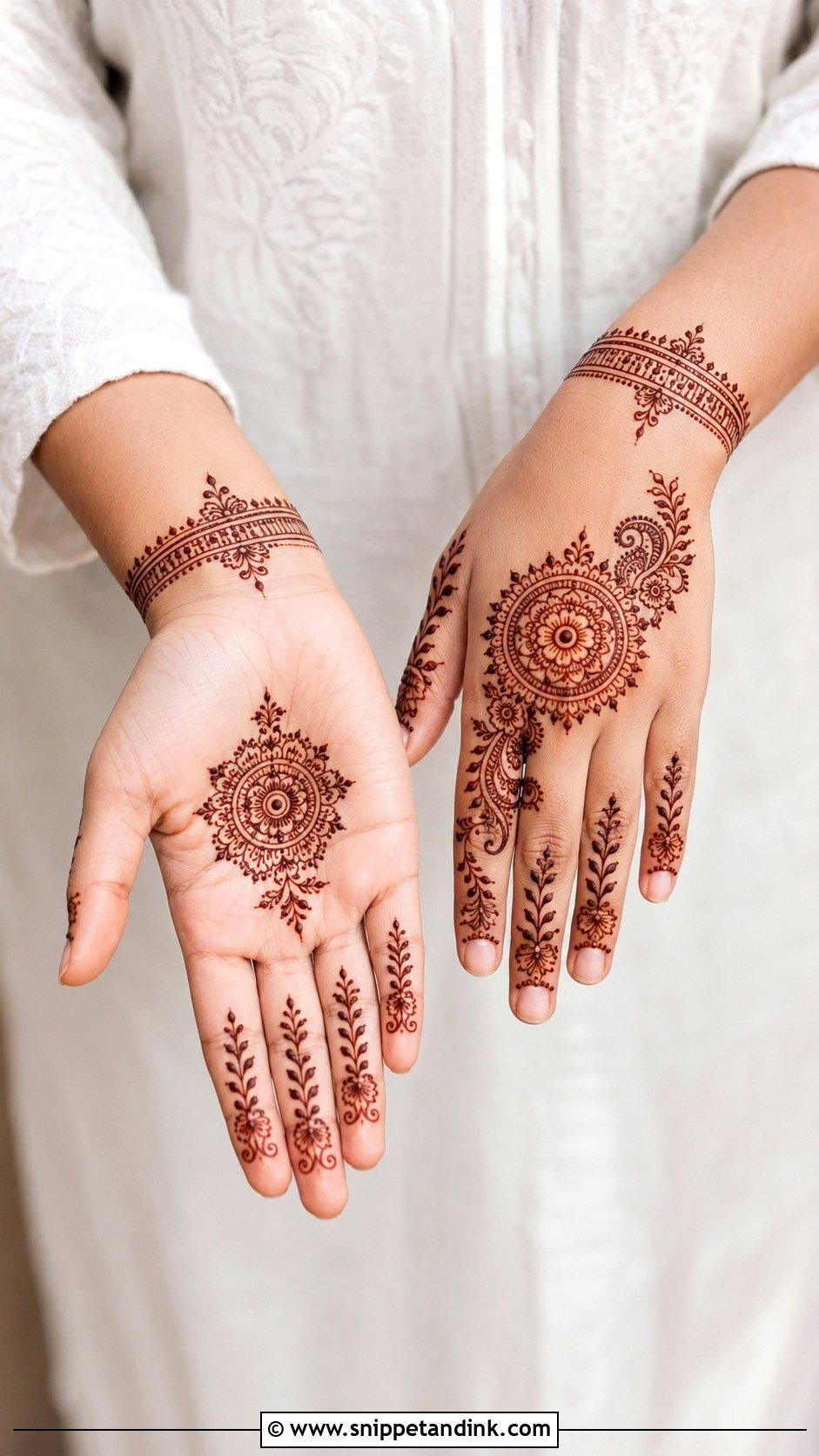
On small hands, density is the enemy. If every area is filled tightly, the design looks crowded and loses detail. A central mandala, small paisleys, fine florals and a narrow wrist band keep it readable, and vertical vines with tapered finger work make the hands look longer. I’d avoid oversized portraits or very thick borders unless the artist scales them down. Clean negative space does more for a small hand than extra detail.
33. Bridal Mehndi Design For Long Hands
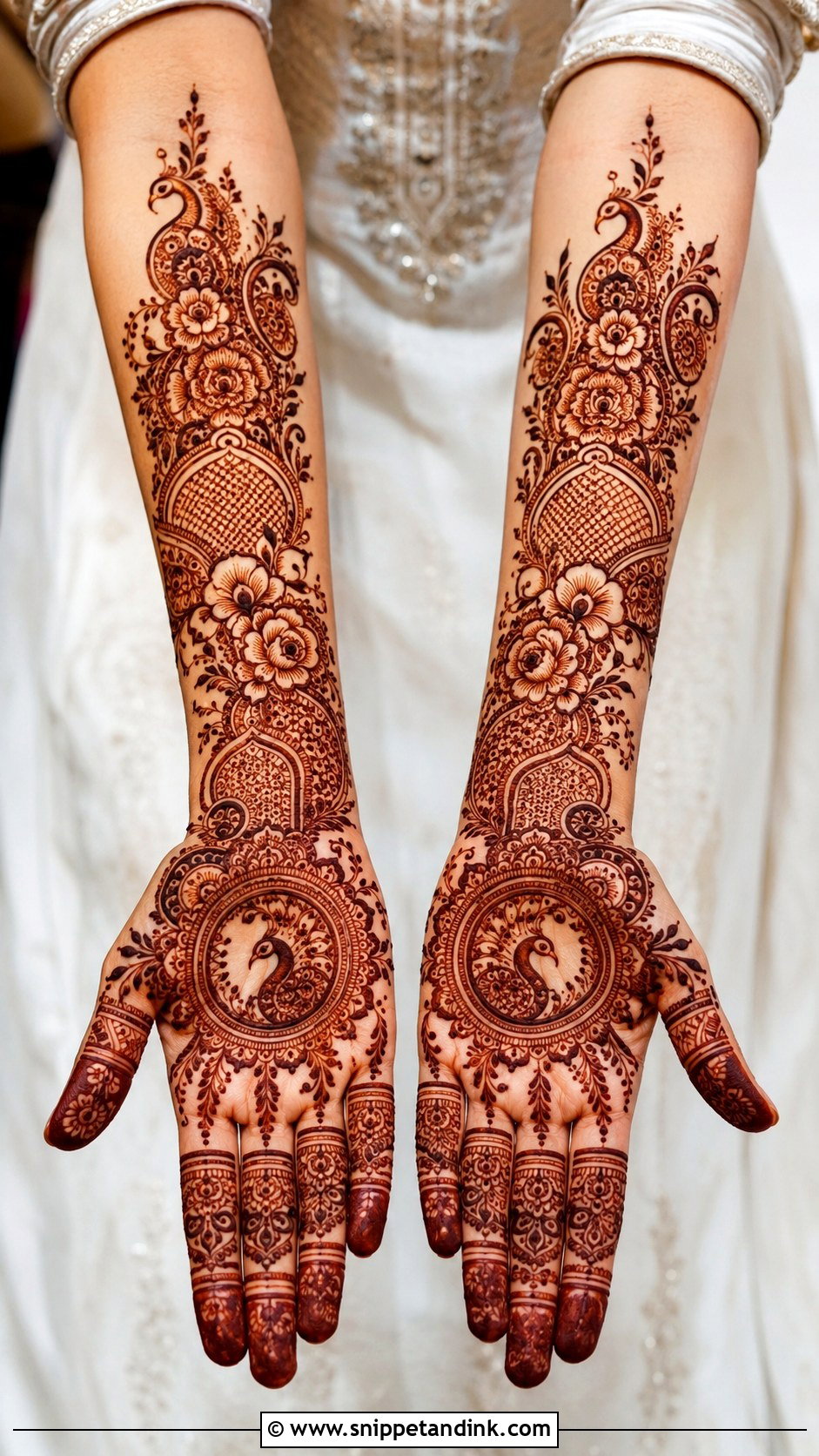
Long hands can carry large motifs, extended trails and elegant forearm work. Long fingers suit ring bands, leafy lines, filled tips and vertical detail, and the palm has room for a big mandala, peacock, lotus or couple motif without crowding. On the back of the hand, diagonal Arabic trails and structured jaali panels emphasize length. I balance bold outlines with fine fill so the design looks rich rather than stretched across the space.
34. Bridal Feet Mehndi Design
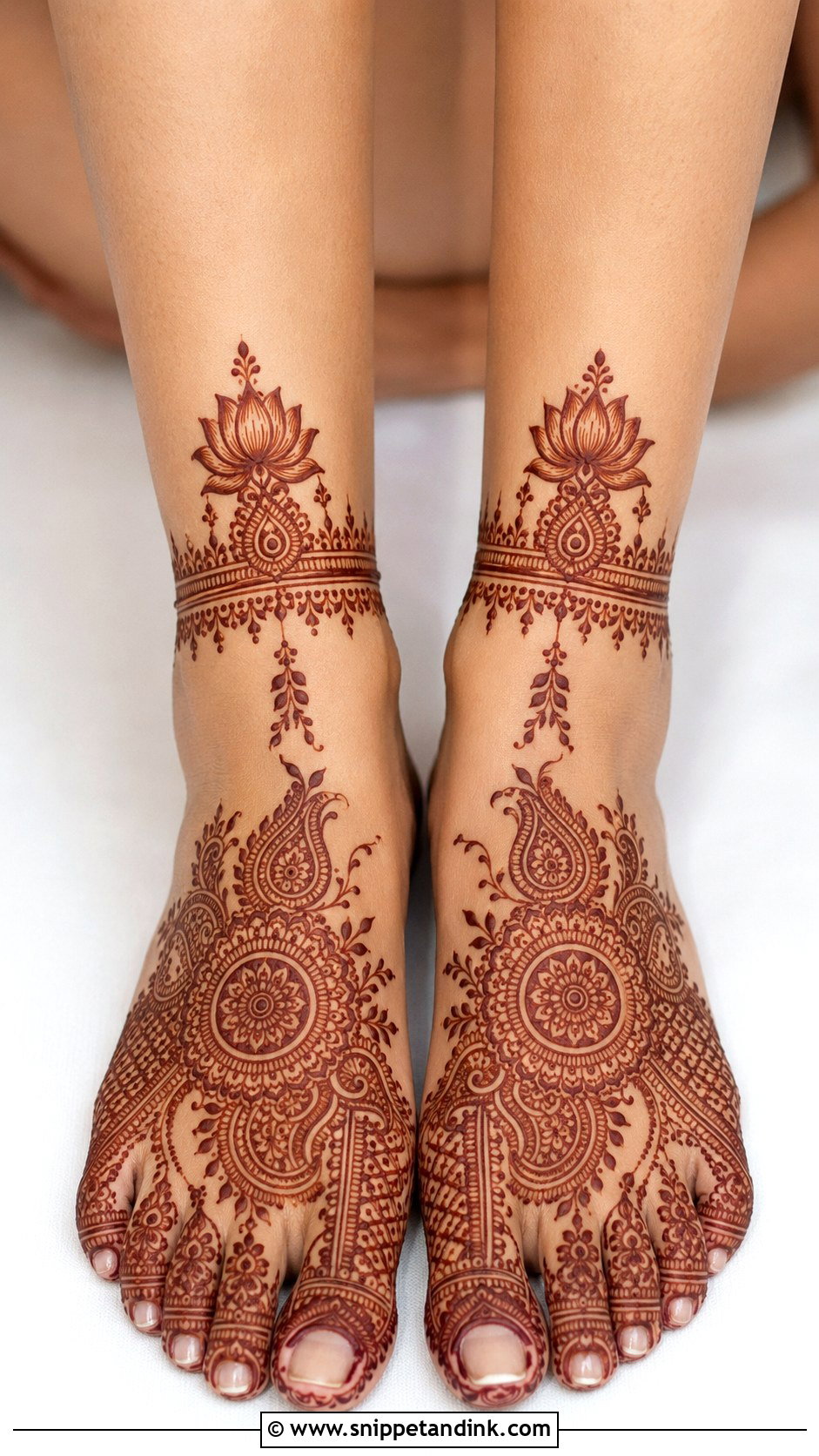
Bridal feet mehndi design covers the toes, the top of the feet, the ankles and sometimes the lower legs, with anklet bands, lotus, paisleys, mandalas, jaali and trails. It looks lovely with payal and toe rings. Feet are curved and move constantly, so I check the design from the front and from the side. Feet usually stain well, but they need to stay off the floor while drying, so plan to keep them up for a couple of hours.
35. Royal Bridal Mehndi Design
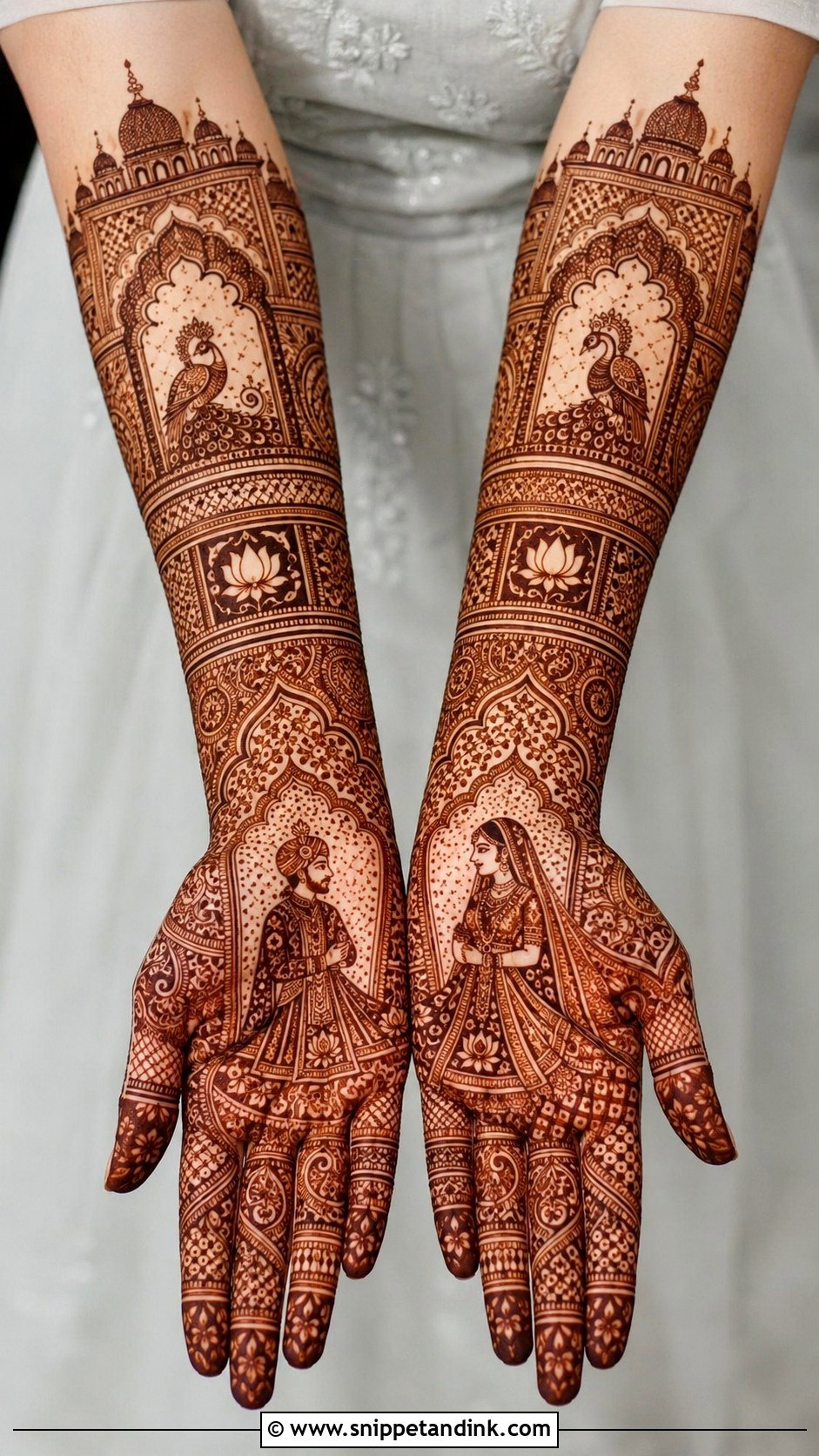
Royal bridal mehndi combines full coverage with palace arches, peacocks, paisleys, lotus, jaali, couple figures and bold cuffs, often to the elbows with matching feet. Its strength is structure. Every section should feel organized, almost like carved stone, rather than simply dense. It pairs with heavy bridal outfits and heirloom jewelry. Book it with an artist who works in this style regularly, and give it a full afternoon or evening.
Is the Paste in Your Artist’s Cone Actually Natural?
This is the question I’d ask any artist before booking. Real henna paste is made from dried henna leaf powder mixed with liquid, sugar and essential oils, and it stains orange to start, then darkens to reddish brown. It never stains black. Cones that promise a near-black stain in an hour, or so-called black henna, often contain chemical dyes, and those can cause blistering reactions and lasting sensitivity.
Fresh natural paste is perishable, so serious artists mix their own in small batches and keep it frozen until use. Ask how the paste was made and when. If you’ve never had henna, or have sensitive skin, ask for a small patch on the inner arm a few days ahead.
When the Stain Comes Up Paler Than You Hoped
Some skin simply stains lighter, and cold weather and short paste time make it worse. If the color looks weak on the first evening, don’t panic, and don’t reach for anything that promises to darken it instantly. Most stains deepen considerably overnight.
- Keep the paste on longer next time; overnight with the hands wrapped makes the biggest difference.
- Stay warm and keep the hands away from water for as long as you can after scraping.
- Skip soap and sanitizer for the first day, and use a balm before washing.
- For a pale back of the hand, ask your artist to keep fine filler there to a minimum and use bolder outlines.
Settling on a Bridal Design You’ll Sit Happily For
Every bride I’ve drawn for has had a slightly different answer. Some want dense Indian or Rajasthani work, others prefer an Arabic trail, a minimal mandala or a design full of hidden personal details. Before you decide, think about your sleeves, your jewelry, your hand size, the ceremony schedule and how many hours you can realistically sit. Then book an artist whose portfolio already shows the style you want, because bridal mehndi rewards practice. Coverage is a preference; clean lines and a deep, even stain are the part that really matters.
You'll Like These Ideas:


Leave a Reply