
Arabic mehndi suits a bride who wants her hands decorated without hiding her rings, nails or the embroidery on her sleeves. The style relies on bold flowers, flowing vines and skin left bare on purpose. What I’m drawing most this year are cleaner trails, bigger florals, fine khafif work, jewellery-style wrists and modern Gulf-Khaleeji layouts. Below are 30 designs, from quick back-hand trails for Eid to full bridal Arabic coverage, with notes on hand shape, sitting time and how each one stains.
Two Days Before the Nikah Is When Bridal Henna Should Go On
Henna paste comes off orange. The colour deepens over the next day or two and then holds for several days before fading as the skin naturally renews. For a bride, that means applying around two days before the main ceremony, so the stain is at its darkest when the photos are taken. If you have a mehndi night closer to the wedding, guests can be decorated there while your own application happens earlier and more privately.
Bridal Arabic coverage on both hands and forearms takes several hours. I ask brides to eat beforehand, wear a top with sleeves that roll easily above the elbow, and have someone available to help with water and their phone. Plan to keep the paste on overnight if you can sleep with your hands wrapped loosely.
Testing the artist and the paste
Ask your artist for a small test patch a few weeks before, on the inner wrist. You’ll see how dark her paste stains on your skin and whether you react to it. Natural henna stains orange-brown and deepens. A paste that leaves black within an hour contains chemical dye and should never be used.
1. Arabic Mehndi Design For Back Hand
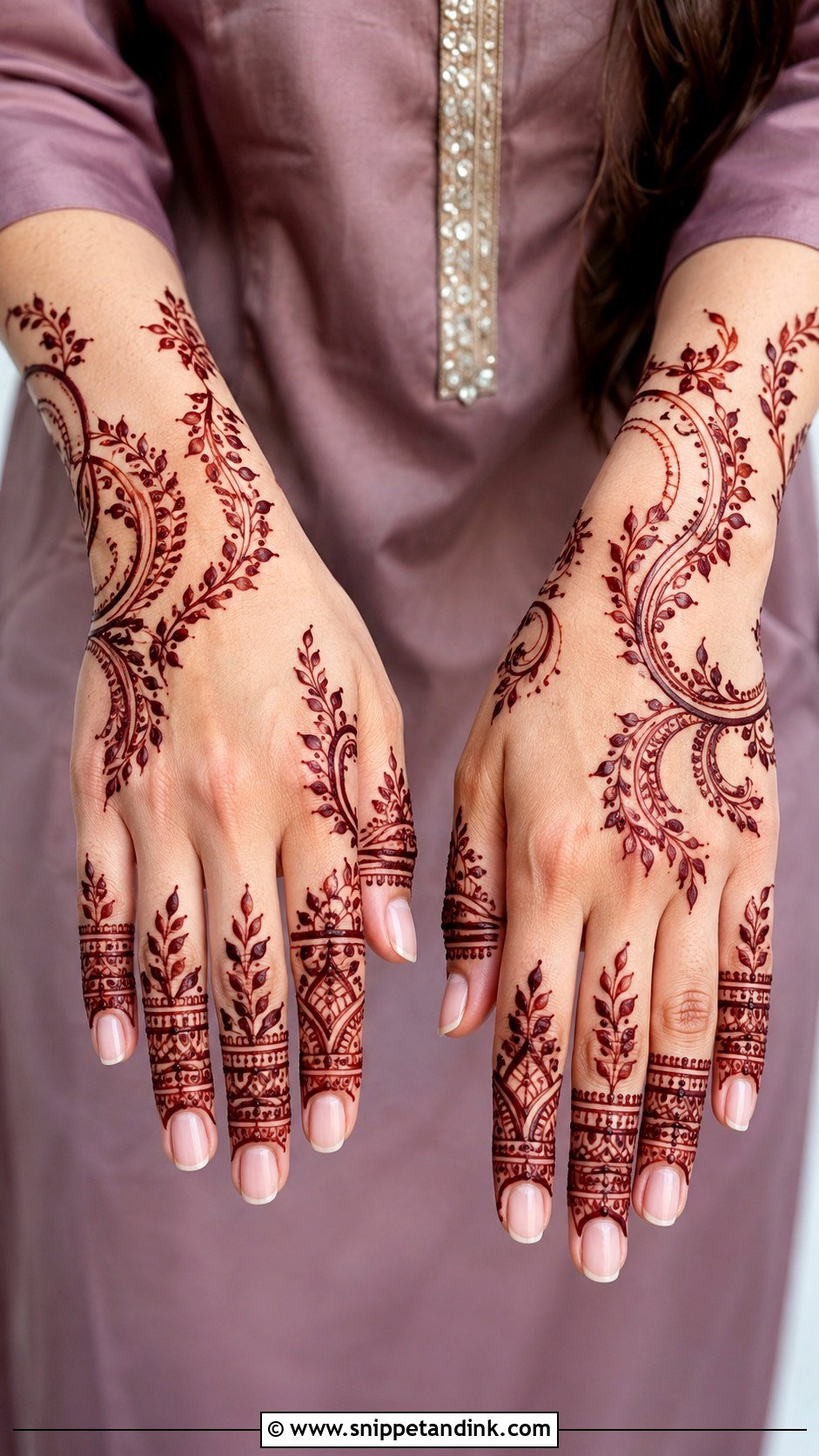
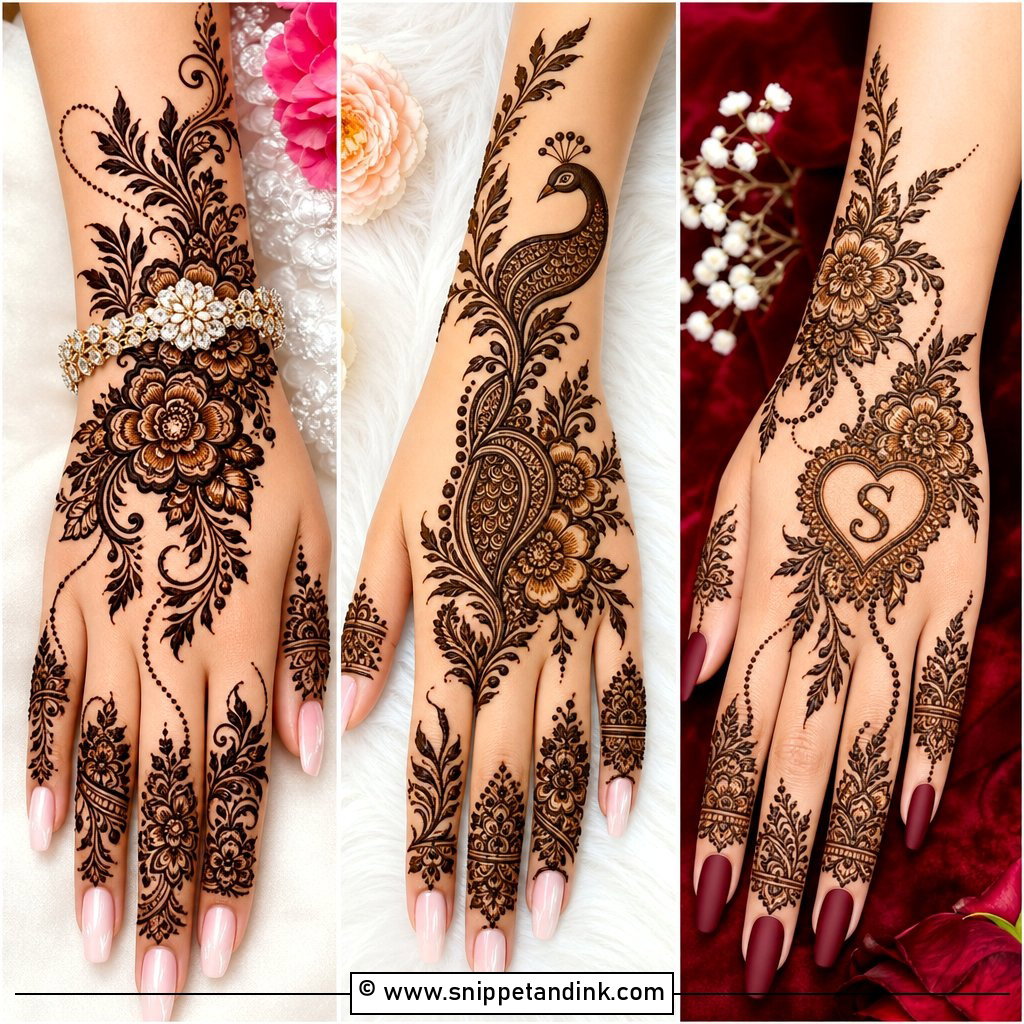
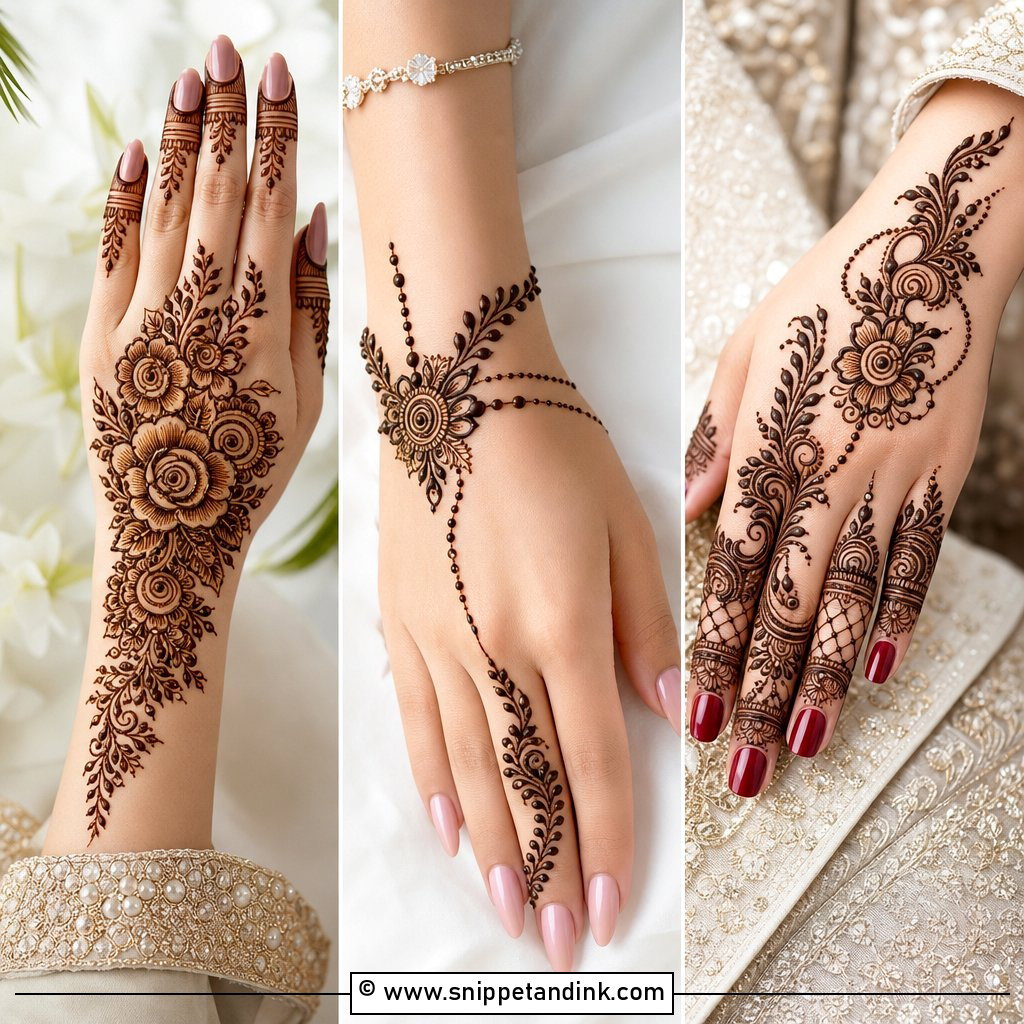
The back of the hand is where Arabic mehndi feels most at home. A trail starts at the wrist and runs diagonally to the index or middle finger, built from large flowers, curved leaves and thin vines, with the centre left open. Fingers carry leafy bands, dots and slim strokes. It’s my usual recommendation for a first-timer, because a diagonal hides small mistakes better than anything symmetrical. Good for Eid, family events and small wedding functions.
2. Simple Arabic Mehndi Design
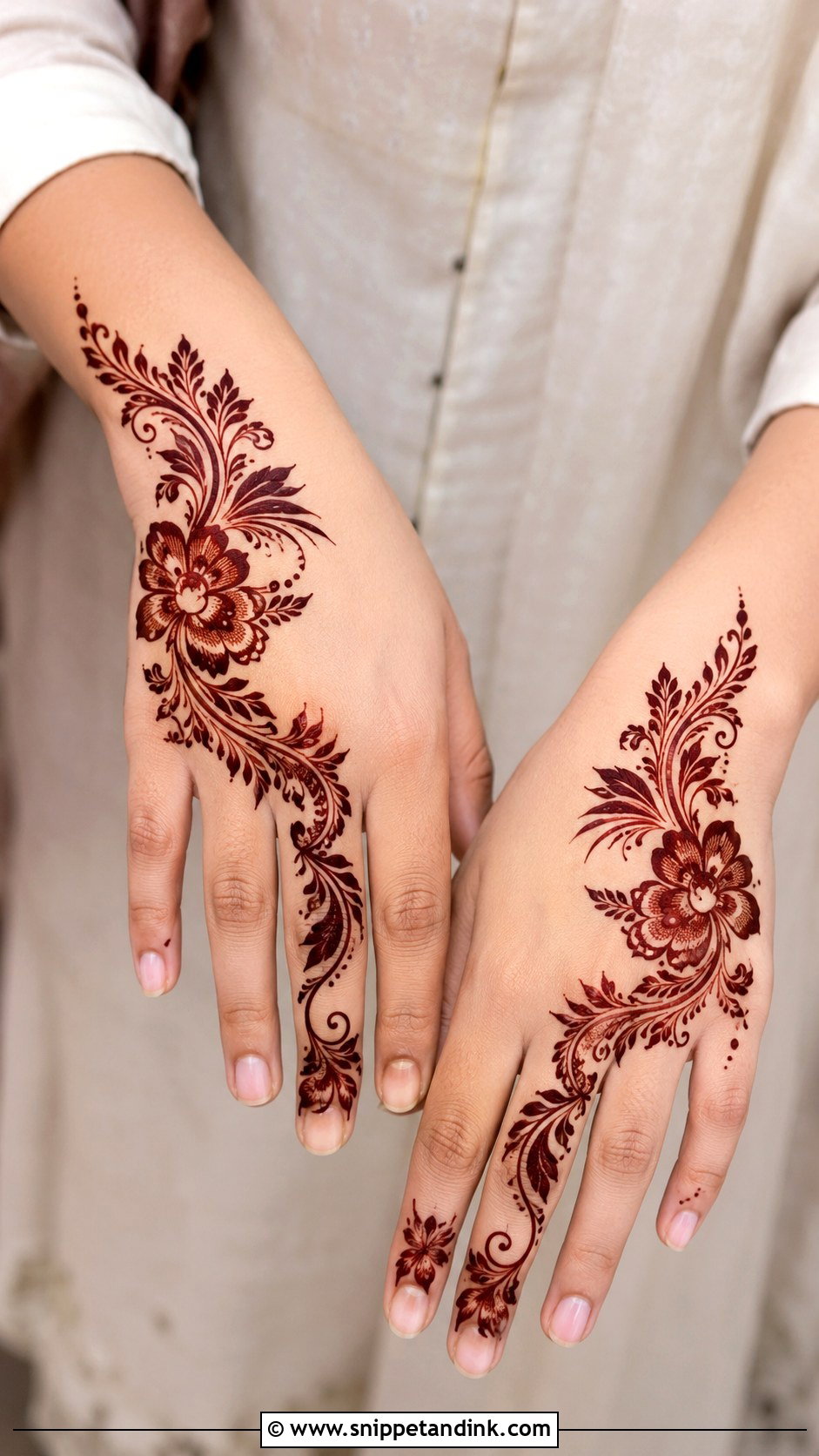
One floral trail, a few paisley curves, light leaves and neat fingers. That’s all a simple Arabic design needs, on the palm or the back of the hand. For a casual gathering I keep the wrist border thin and leave more skin showing; for a festive evening I add small dots and fine shading inside the flowers. It’s comfortable for any age and takes only a short sitting.
3. Full Hand Arabic Mehndi Design
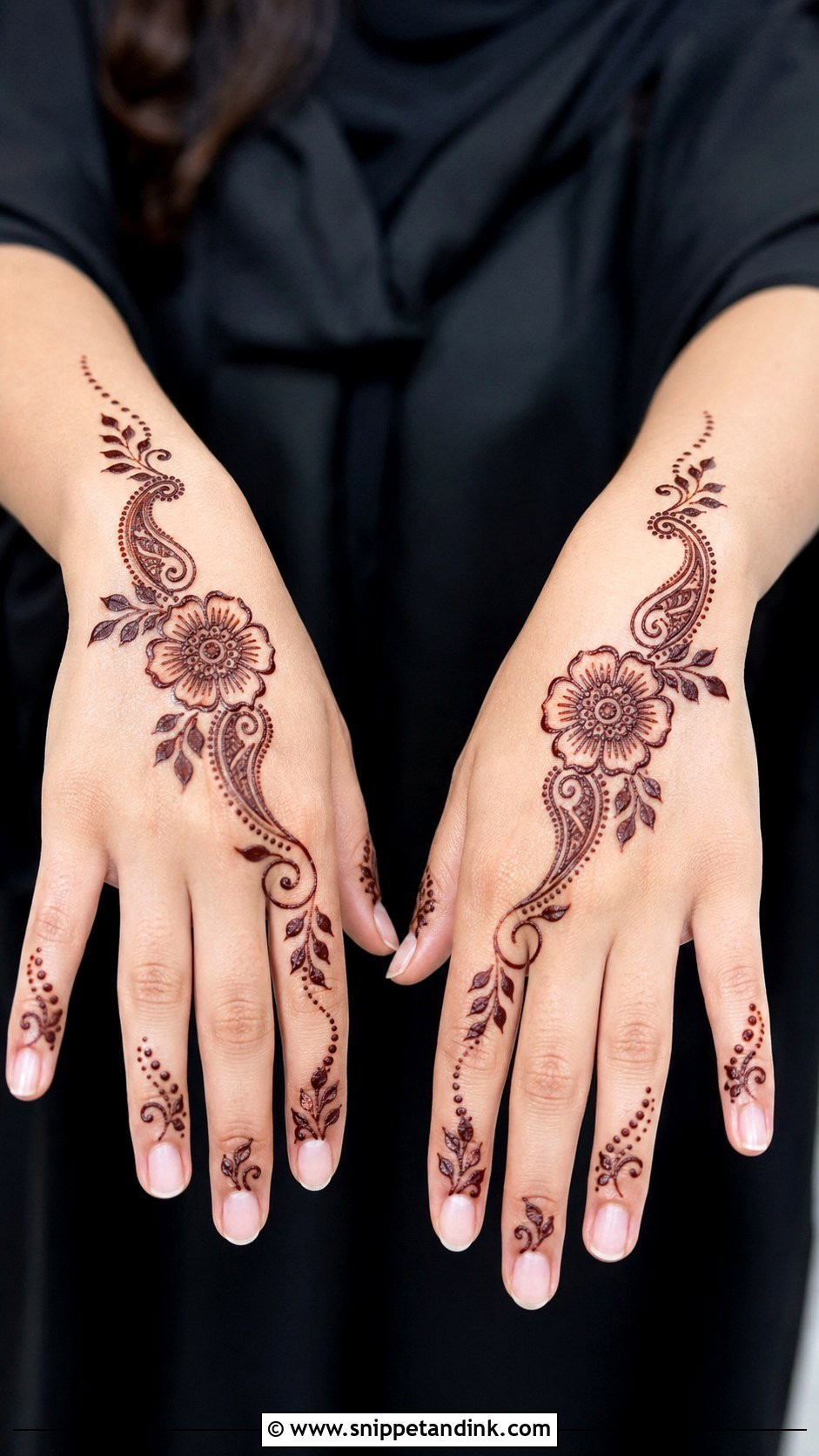
Full hand Arabic mehndi design gives rich coverage while keeping open space: wide floral sections, bold paisleys, leafy vines and patterned bands from fingers to wrist. The palm takes a central rose or mandala-style flower while the back of the hand follows a diagonal, and the fingers are the most detailed part. Is it right for a bridesmaid or Eid night? Yes, if you want weight without the density of Indian work. Leave the paste on long; the full maroon stain is what gives this design its contrast.
4. Arabic Bridal Mehndi Design
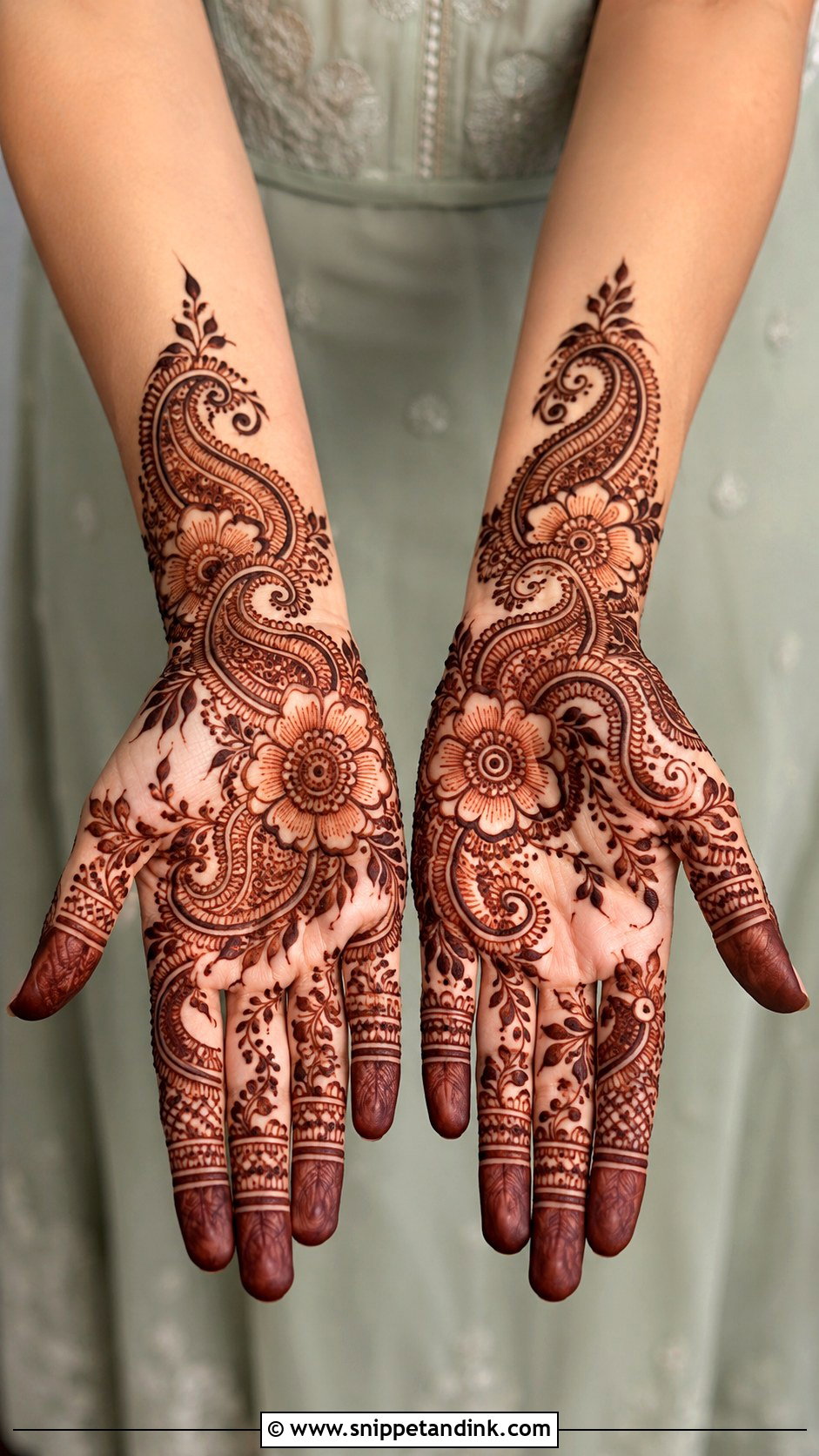
Arabic bridal mehndi design is less crowded than traditional bridal patterns but still clearly bridal: oversized roses, paisley clusters, leafy curves, wrist cuffs and forearm extensions. The palm can hold a floral centrepiece and the back of the hand a dramatic diagonal vine, with fine jaali, dots and shaded petals for a richer finish. Brides often choose it because their jewellery, nails and outfit remain visible. When I plan one, I sketch both arms together so the diagonals mirror each other when the bride holds her hands side by side for photos.
5. Arabic Mehndi Design Front Hand
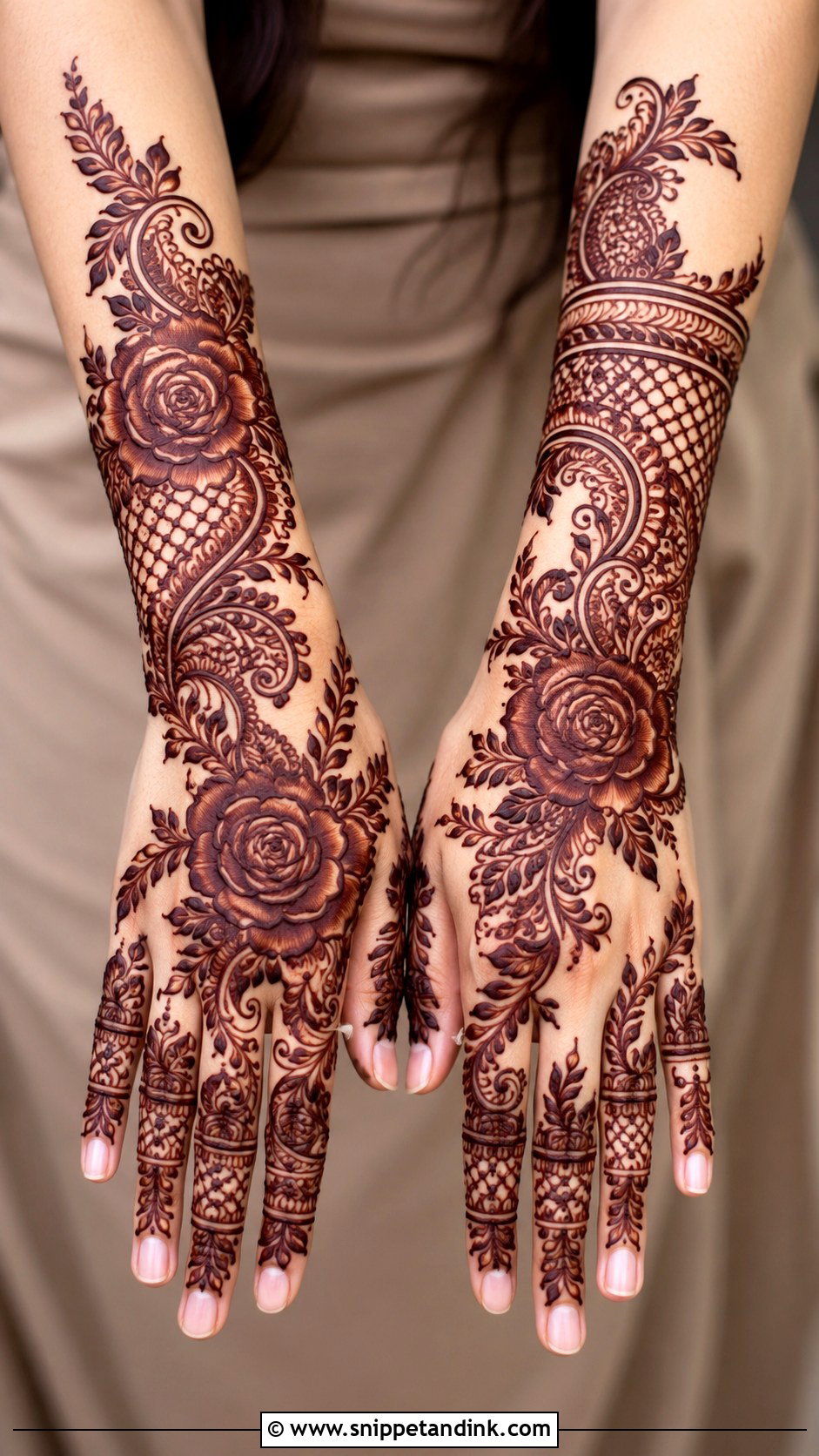
A front-hand layout flows across the palm, fingers and wrist in one movement. A large flower near the centre of the palm connects to paisleys and vines heading to the fingers, and the thumb side stays open for balance. Leaf chains, curved bands and shaded tips fill the fingers. The palm stains darkest of anywhere on the body, so I keep the filling sparser here than on the back of the hand; it will look fuller once it matures. It shows nicely while greeting guests or serving food.
6. Arabic Mehndi Design Back Hand Full
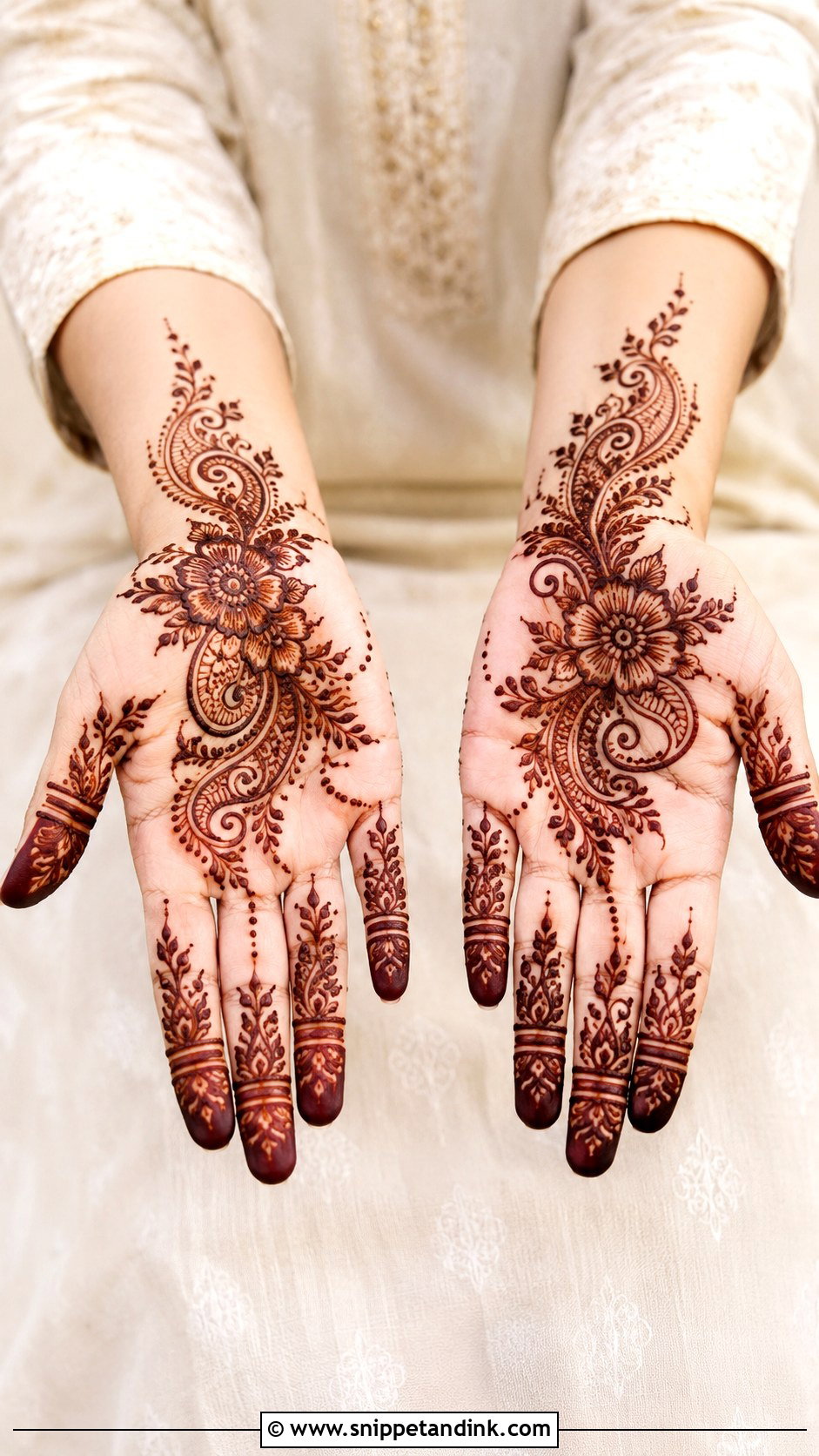
This is the classic diagonal built up into full coverage: a bracelet cuff at the wrist, then large roses, paisleys and swirls across the back of the hand, with leafy borders and soft net detail and matching fingers. Small open spaces stay between sections. Bold linework is what keeps it looking Arabic; if every line is fine, it starts to read as Indian. Expect a longer sitting than a single trail.
7. Modern Arabic Mehndi Design
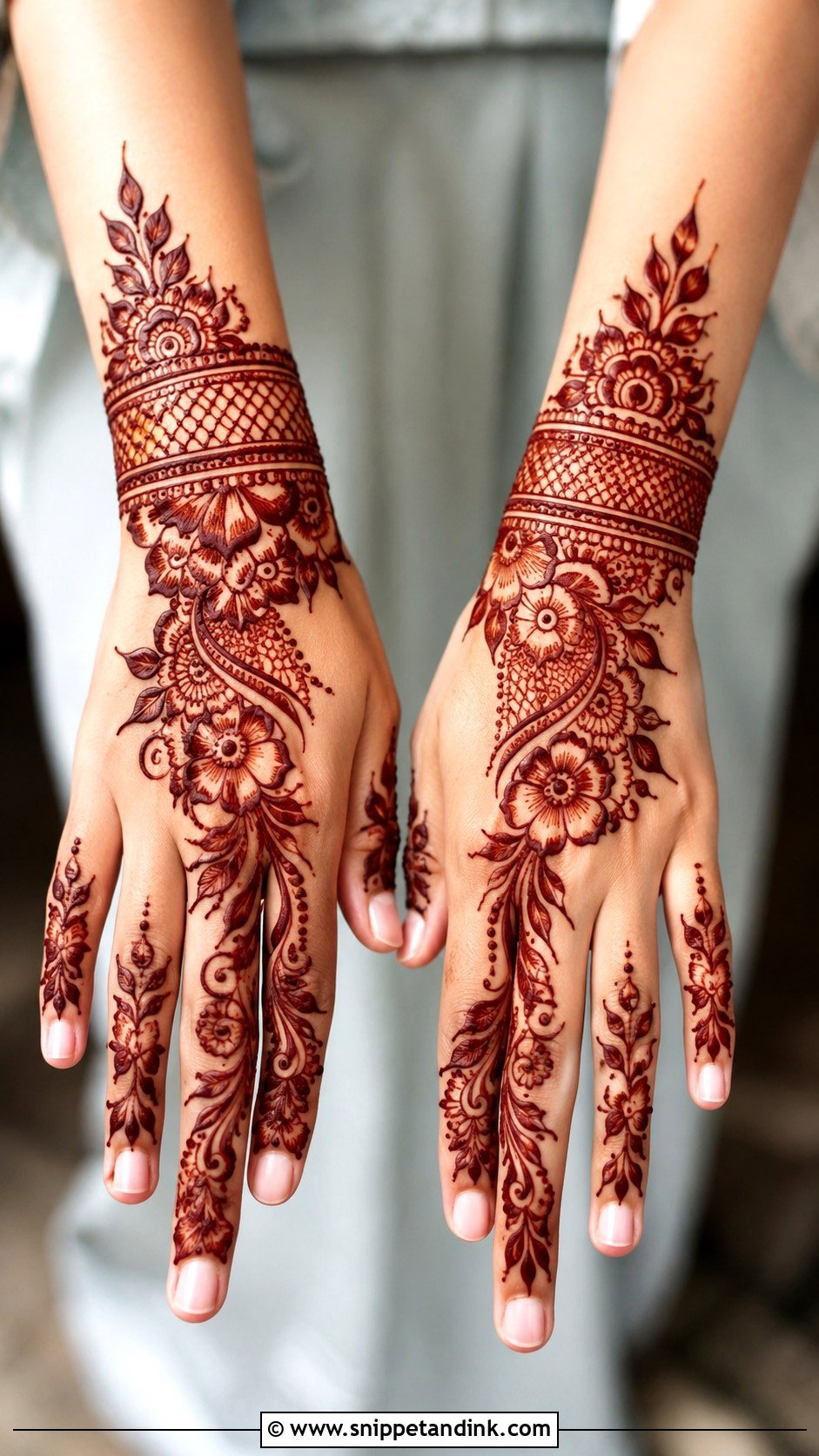
Fewer motifs, sharper curves, more negative space. Modern Arabic uses bold outlines, slim vines, small florals and stylish finger bands, sometimes with geometric cuffs, half-mandalas or minimal leafy trails. Let one section stand out and keep the rest light. I’d suggest it for engagement parties, college events and anyone who finds traditional mehndi too busy.
8. Arabic Flower Mehndi Design
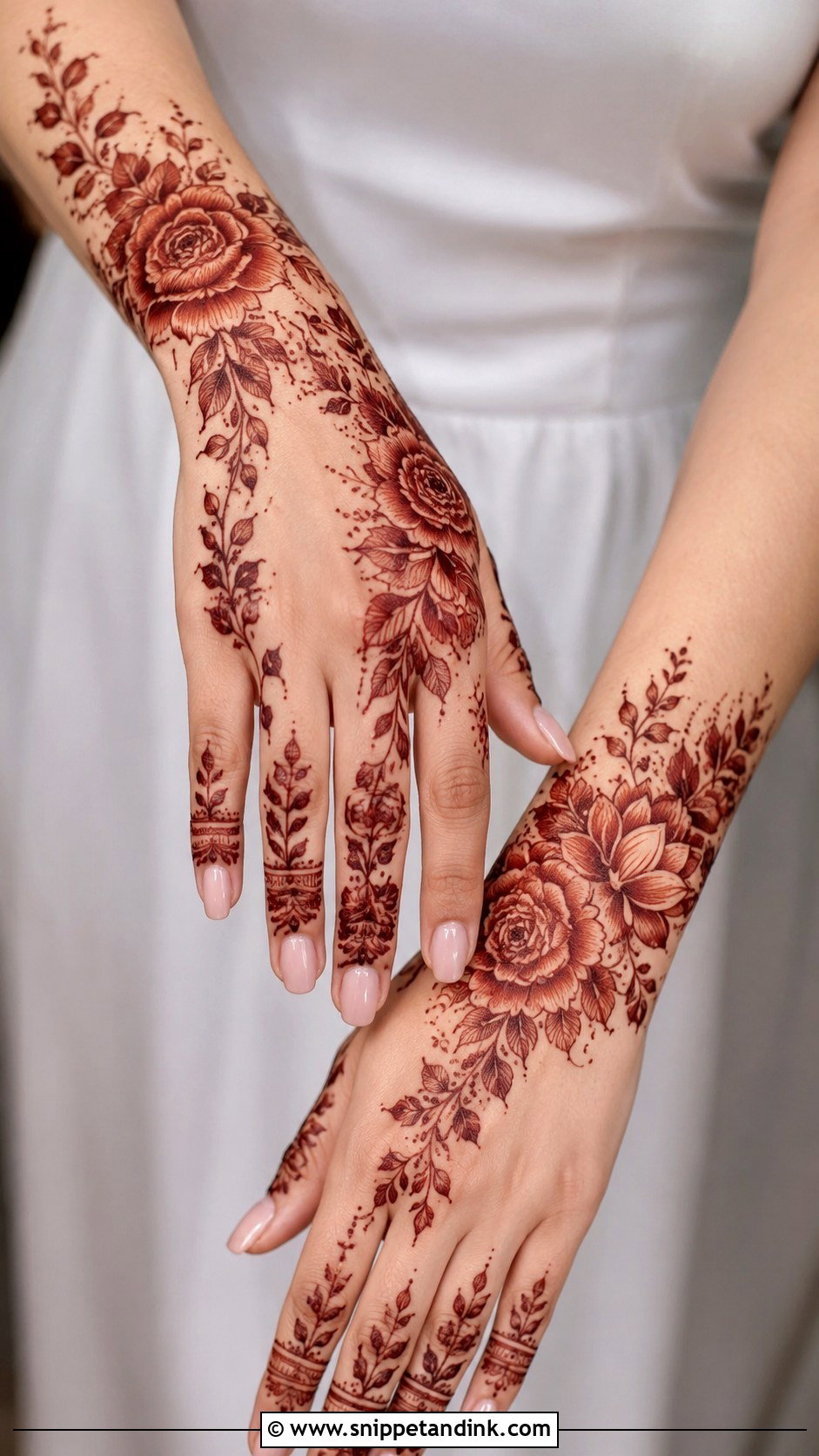
Large floral shapes carry this design: roses, lotus-style petals, small blossoms and leafy branches from wrist to fingers. The flowers are shaded inside while the outer lines stay bold. Size the flowers to the hand. On small hands, medium flowers with slim vines; on longer hands, the trail can reach toward the forearm. It works on either side of the hand for Eid, parties and wedding guests.
9. Arabic Bel Mehndi Design
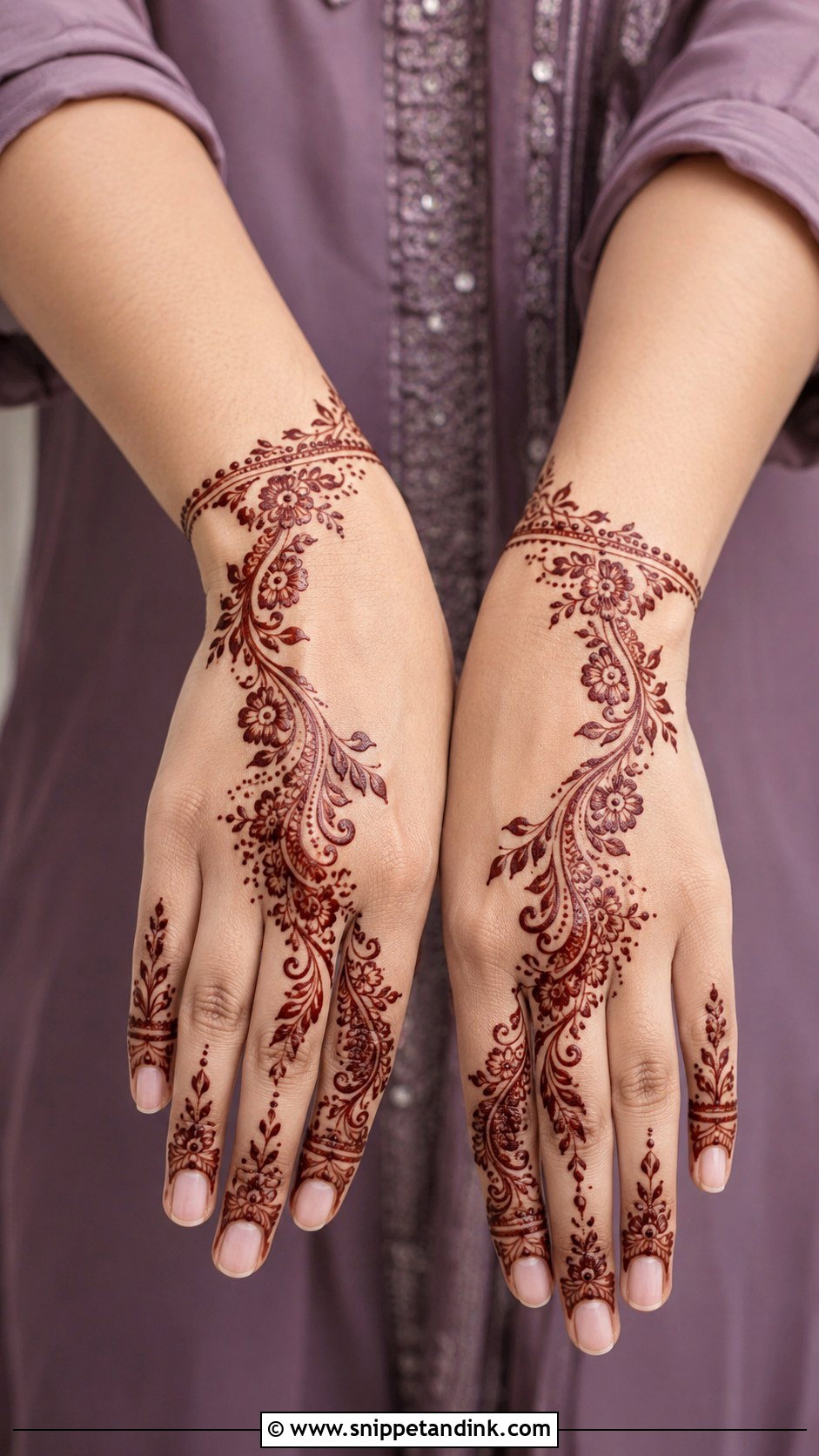
A bel is a vine that travels across the hand, usually wrist to one or two fingers on the back of the hand, with flowers, leaves, dots and tiny paisleys along it. It’s light, quick and easy to follow, so it’s a good beginner design. Add a slim bracelet band and matching tips for a fuller look. When a bel goes wrong, it’s usually because the vine thickness varies; I hold the cone at the same angle the whole way and squeeze evenly.
10. Khaleeji Arabic Mehndi Design
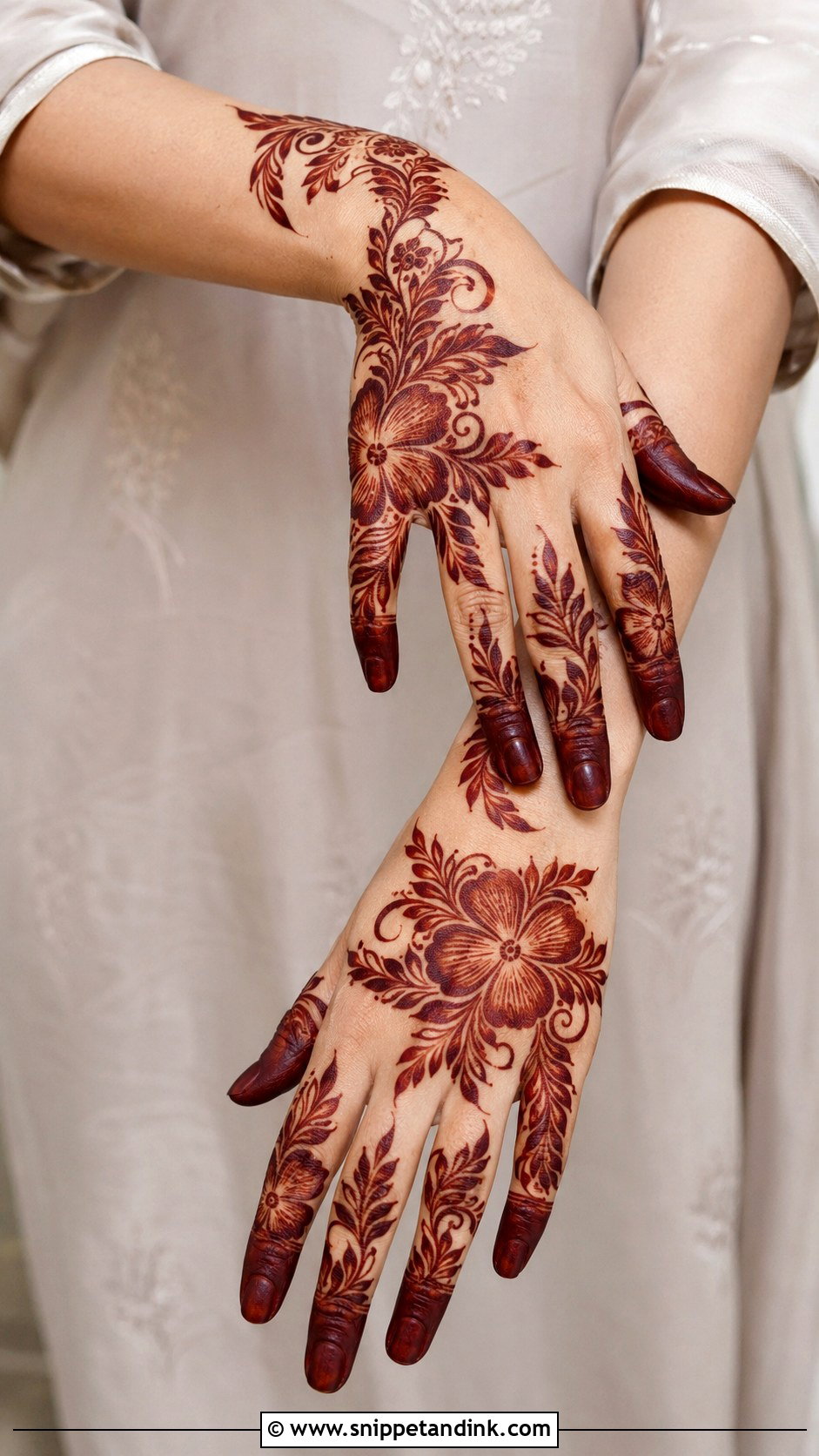
Khaleeji Arabic mehndi design has large florals, strong curves and dramatic open space, often with heavily covered fingers and parts of the hand left bare. The wrist may carry wide bands or vine extensions. It’s built to be seen from across a room, which is why it’s popular at Eid and weddings. Motifs this big suit medium to long hands; on a small hand, I scale the flowers down or the design runs off the edge.
11. Gulf Arabic Mehndi Design
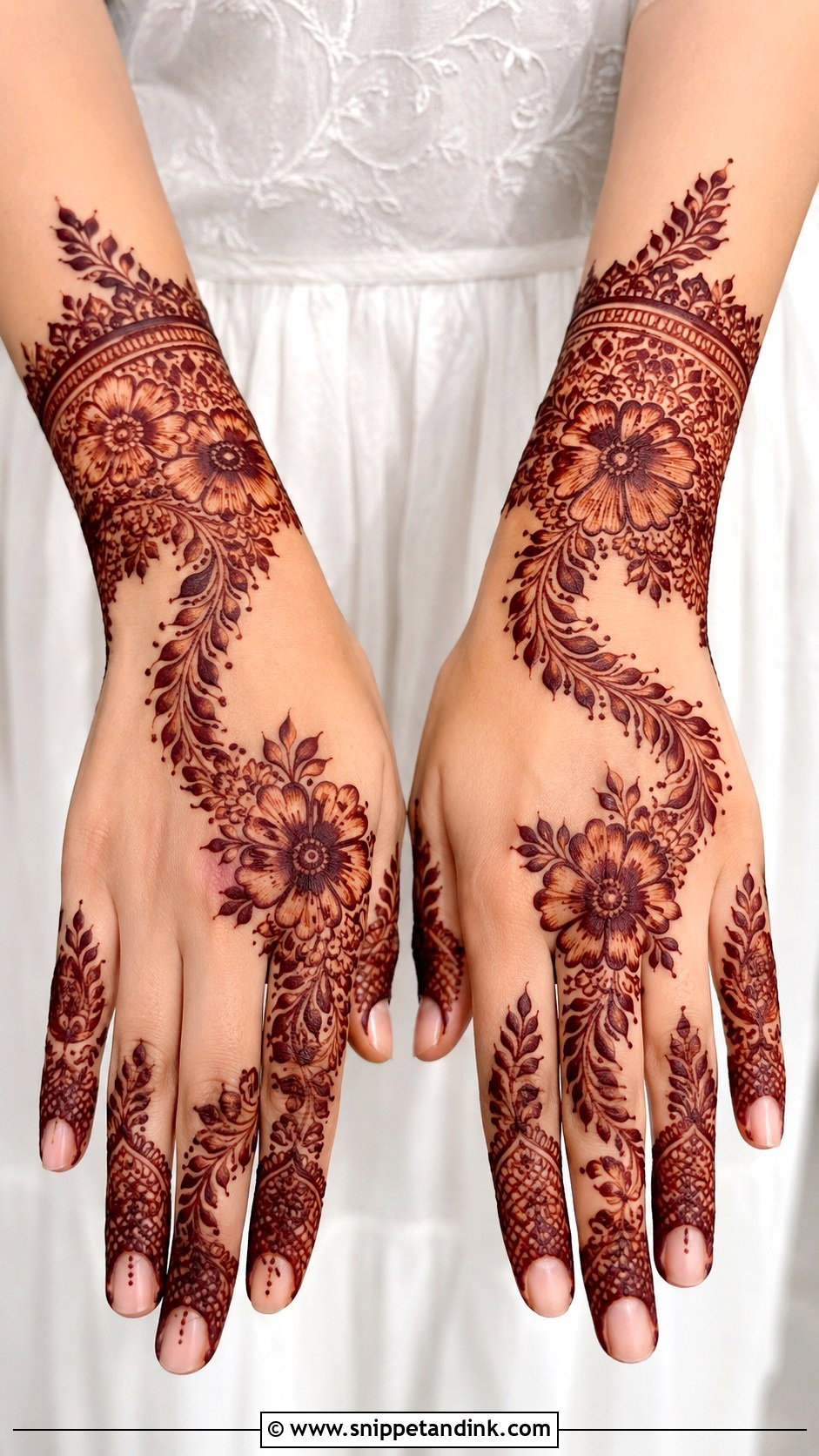
Gulf Arabic is easy to recognise by its bold floral movement: a heavy wrist cuff, curved leafy trail, large shaded flowers and detailed fingers, sometimes running from the forearm onto the back of the hand with open skin around the centre. Deep maroon henna suits it best, since the bold outlines carry the design. It sits naturally with abayas and kaftans as well as lehengas and sarees.
12. Indo Arabic Mehndi Design
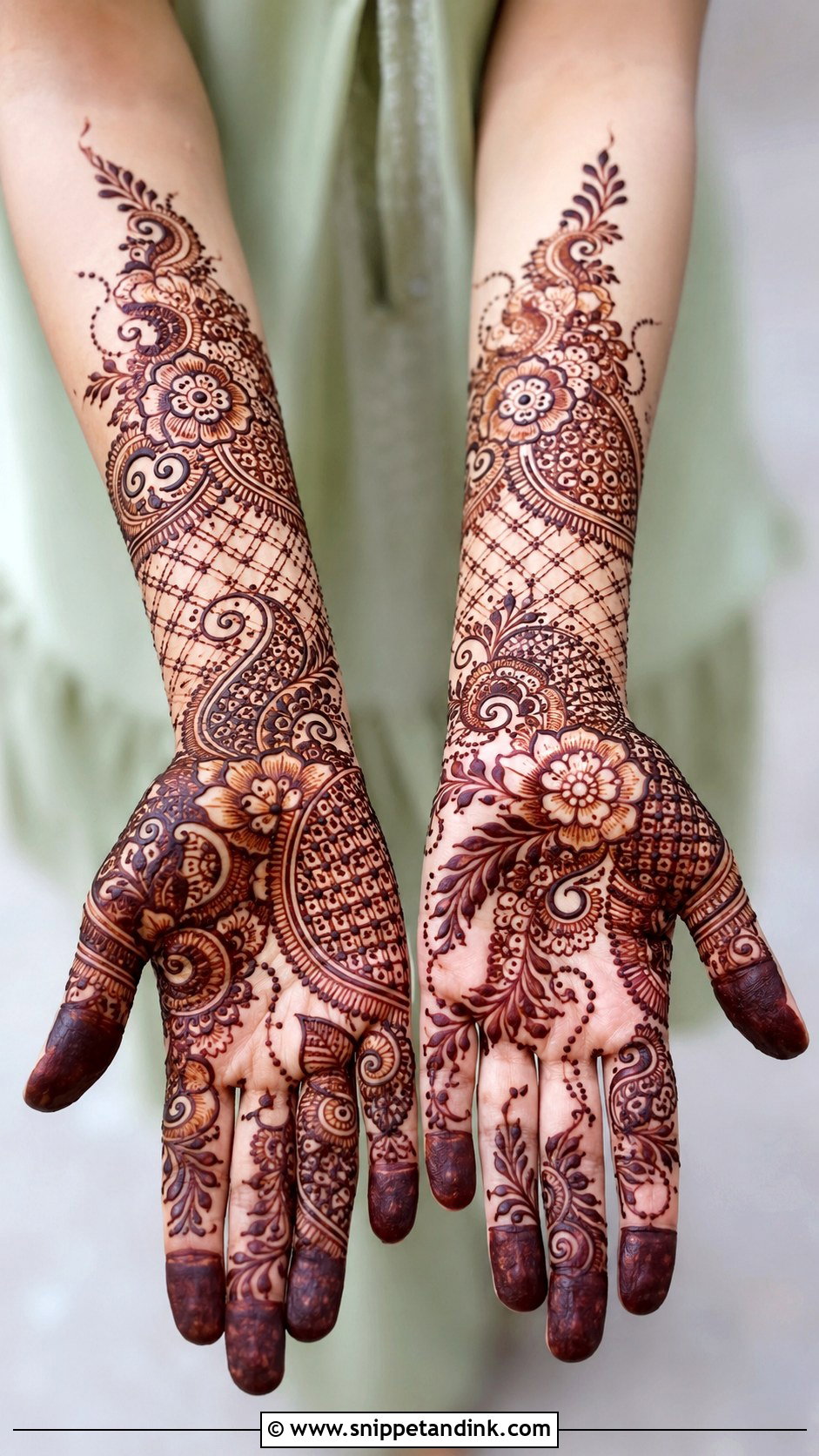
Indo-Arabic adds Indian jaali, paisley filling, dots and mandala accents to Arabic florals and vines, so it’s richer than simple Arabic but lighter than dense bridal work. I keep the large motifs large, so the Arabic structure stays obvious, and only put fine detail inside a few of them. It suits bridesmaids, engagement events and family weddings.
13. Easy Arabic Mehndi Design
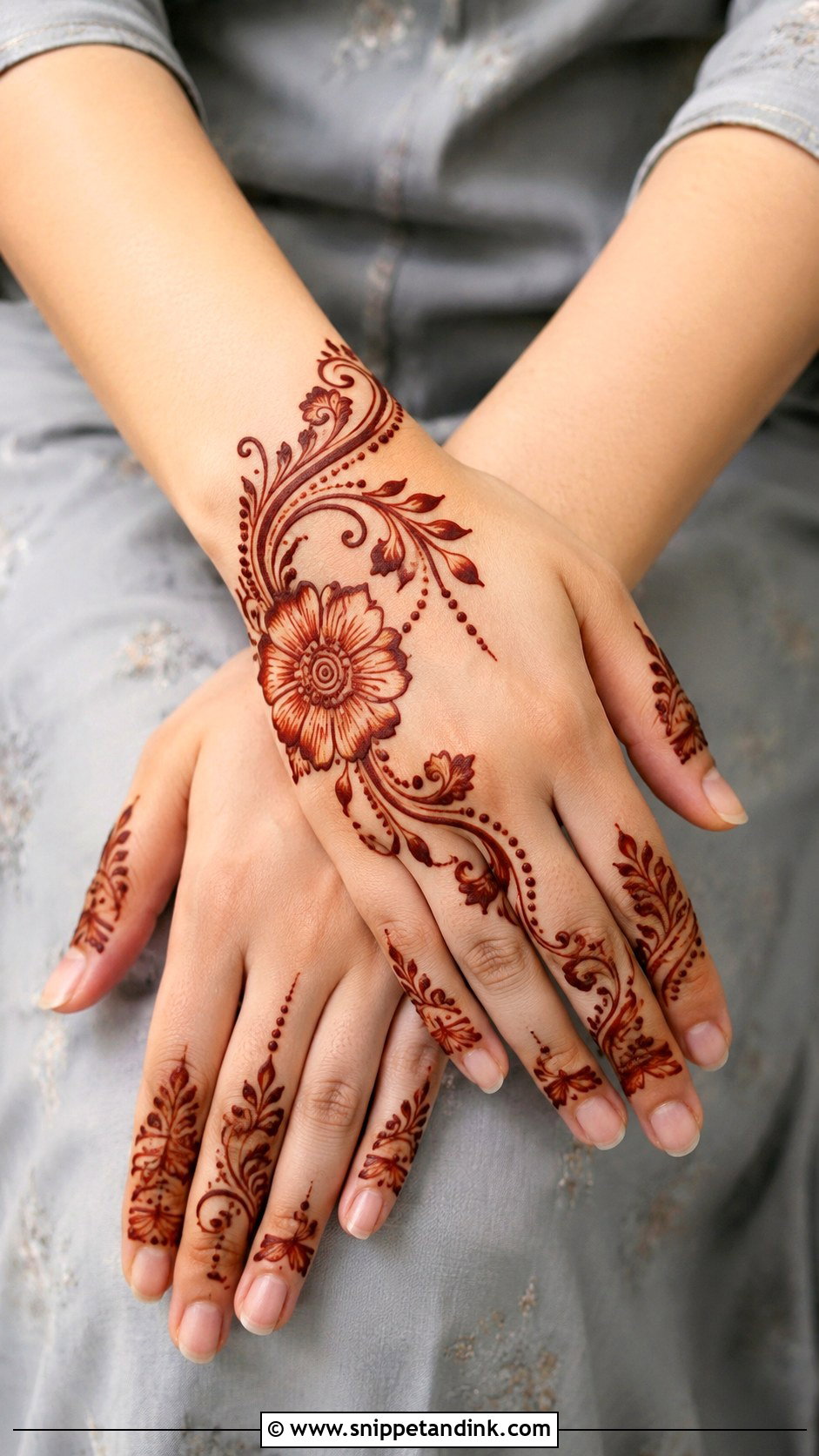
Easy Arabic mehndi design means a wrist curve, a large flower on the back of the hand or palm, and a vine to the fingers, finished with leaves, dots and simple bands. It doesn’t need perfect symmetry, and small gaps make it look more Arabic, not less. If you’re drawing it yourself, do the large flower first while your hand is fresh and steady. It’s handy for Eid mornings, school events and last-minute mehndi.
14. Arabic Finger Mehndi Design
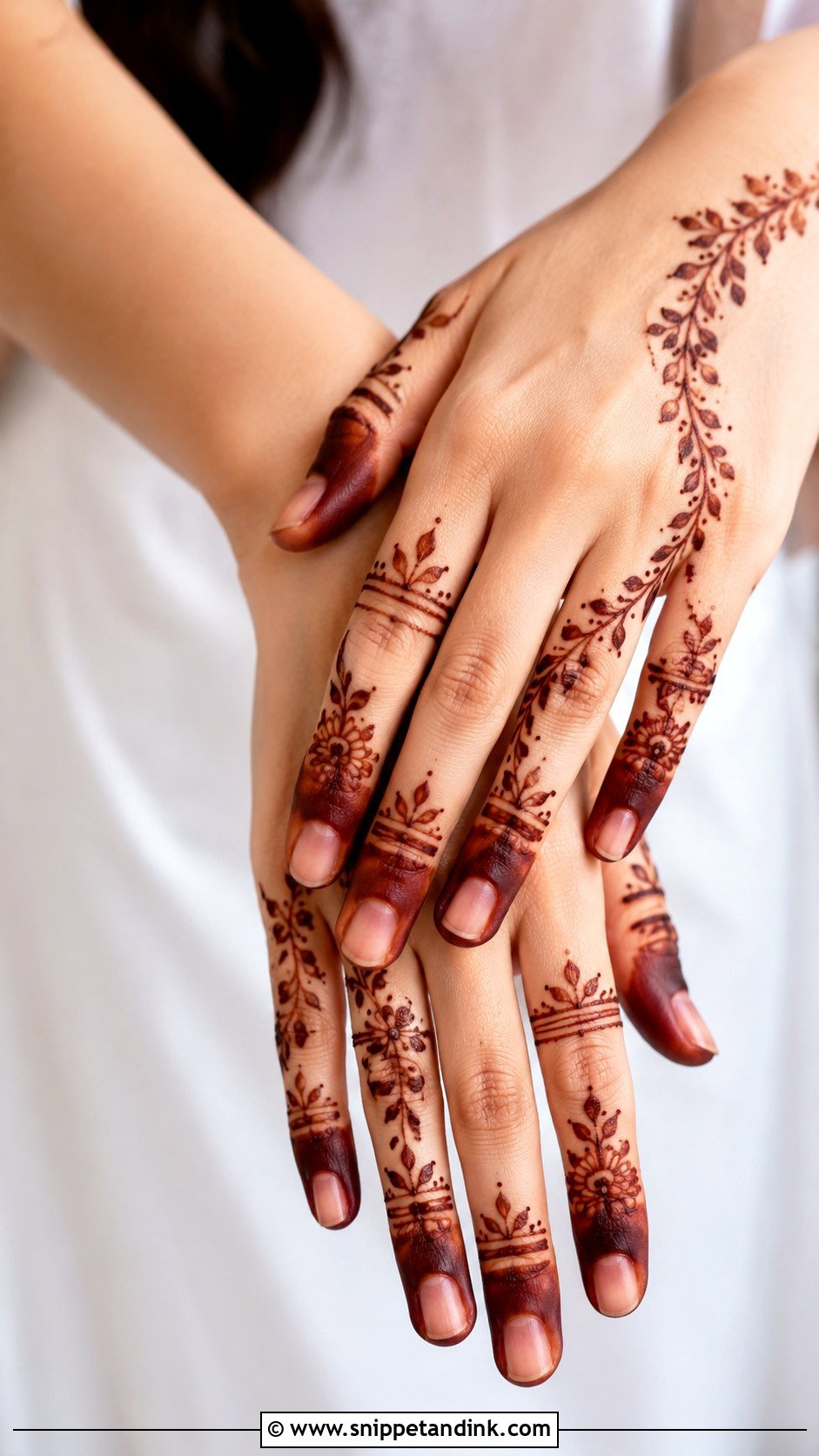
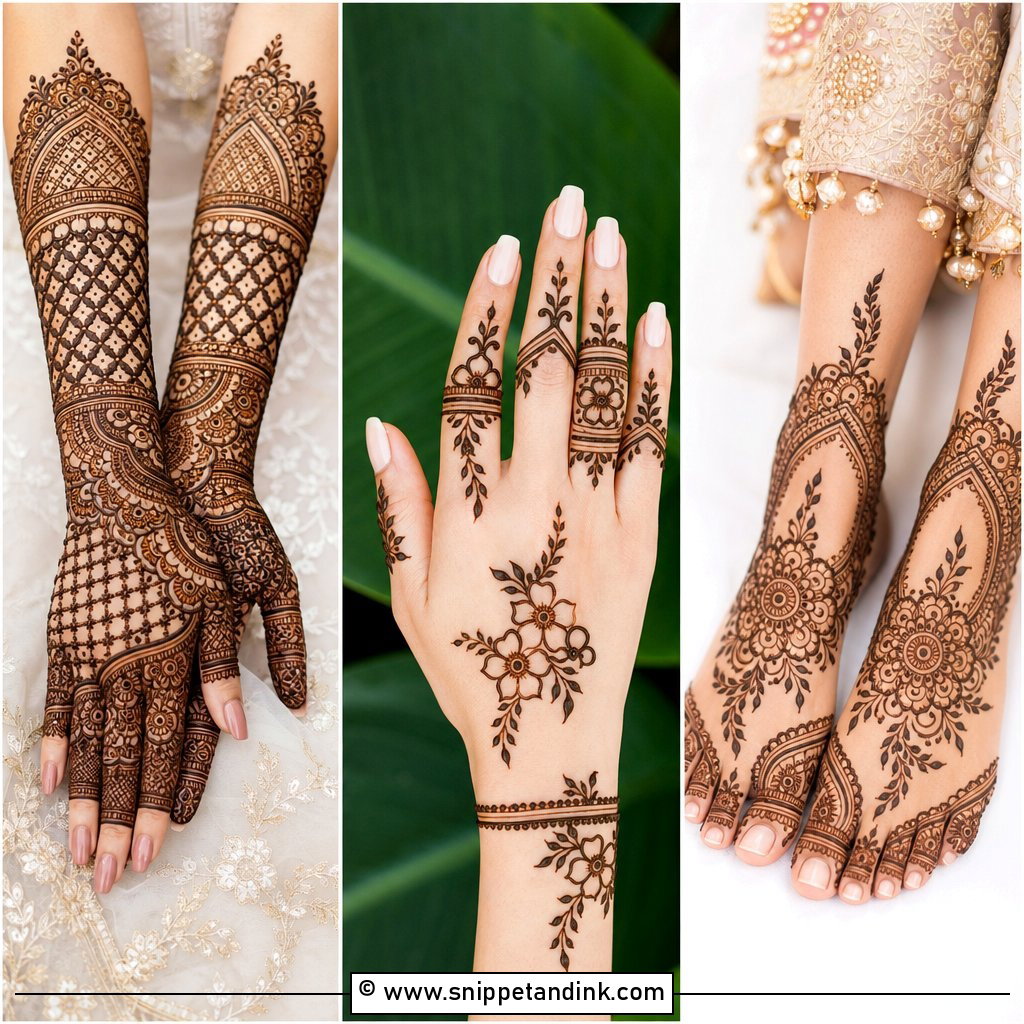
Decorated fingers with a light wrist or back-hand trail make a complete look in themselves. Leafy bands, tiny flowers, curved lines and shaded tips cover the fingers, and one small floral motif or a bracelet section connects them. Empty space on the hand keeps rings visible. Fingertips stain very dark, so the shaded tips will be the boldest part of the finished design.
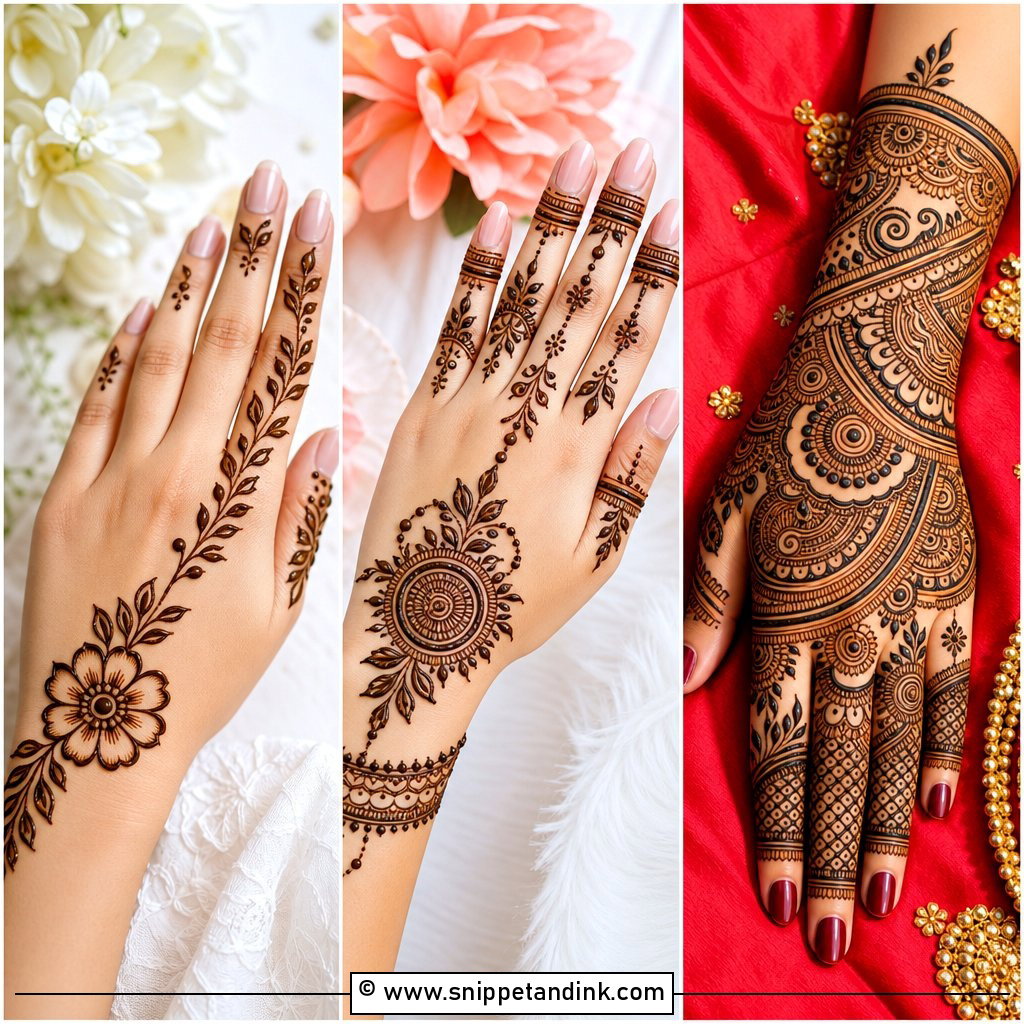
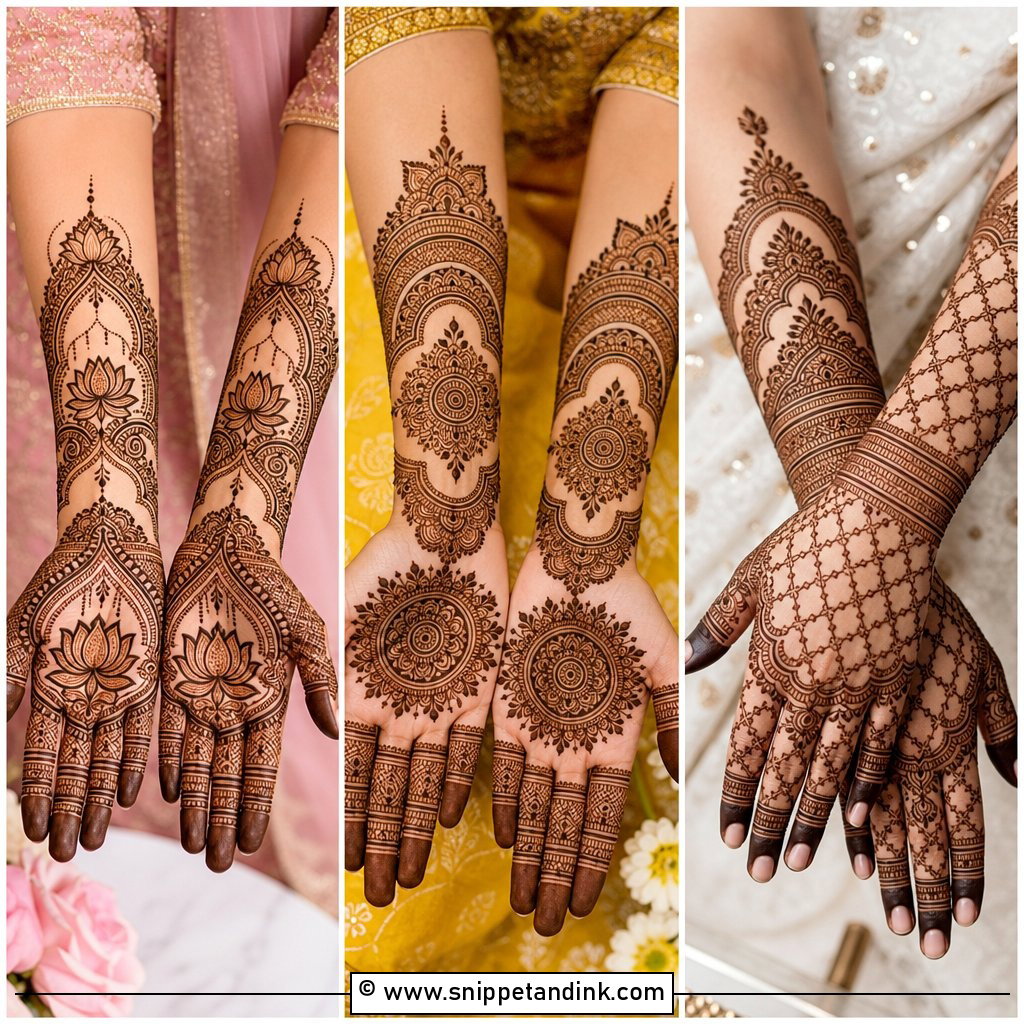
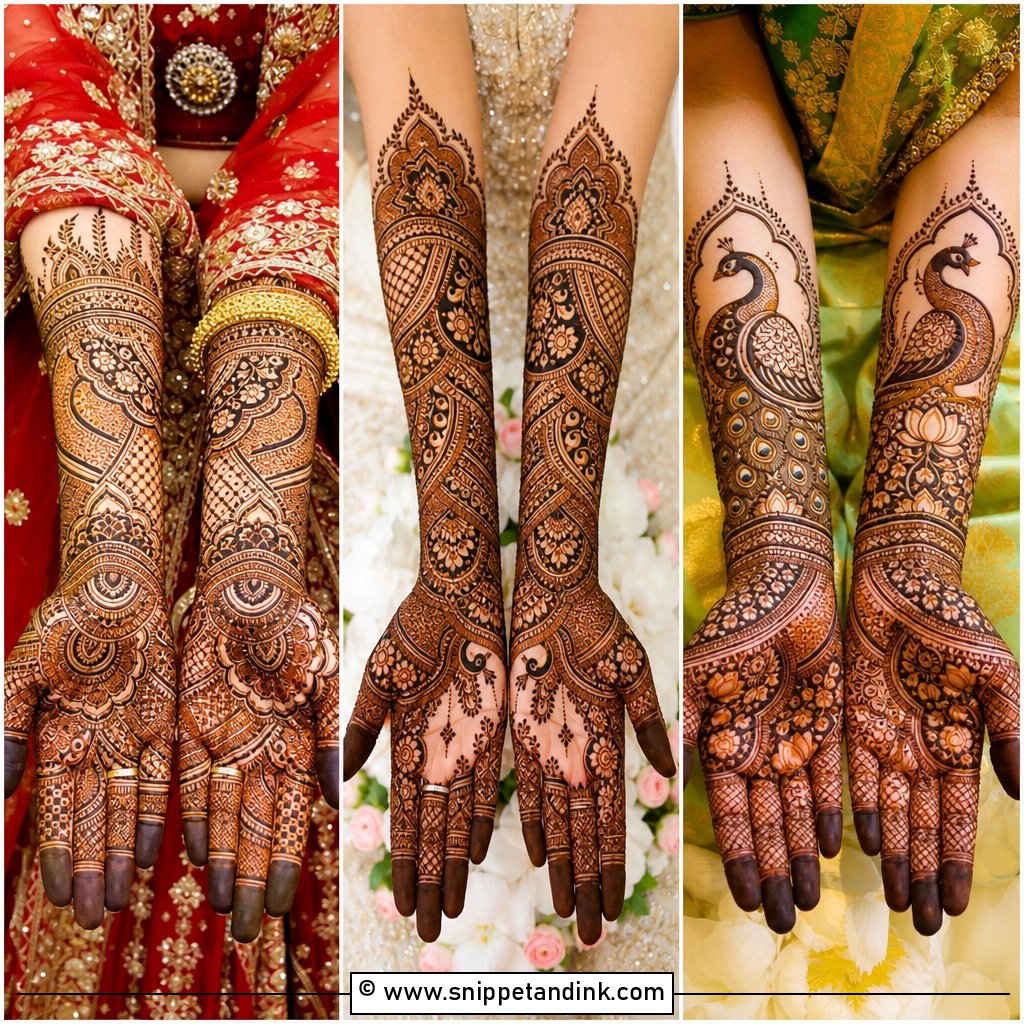
15. Arabic Mandala Mehndi Design
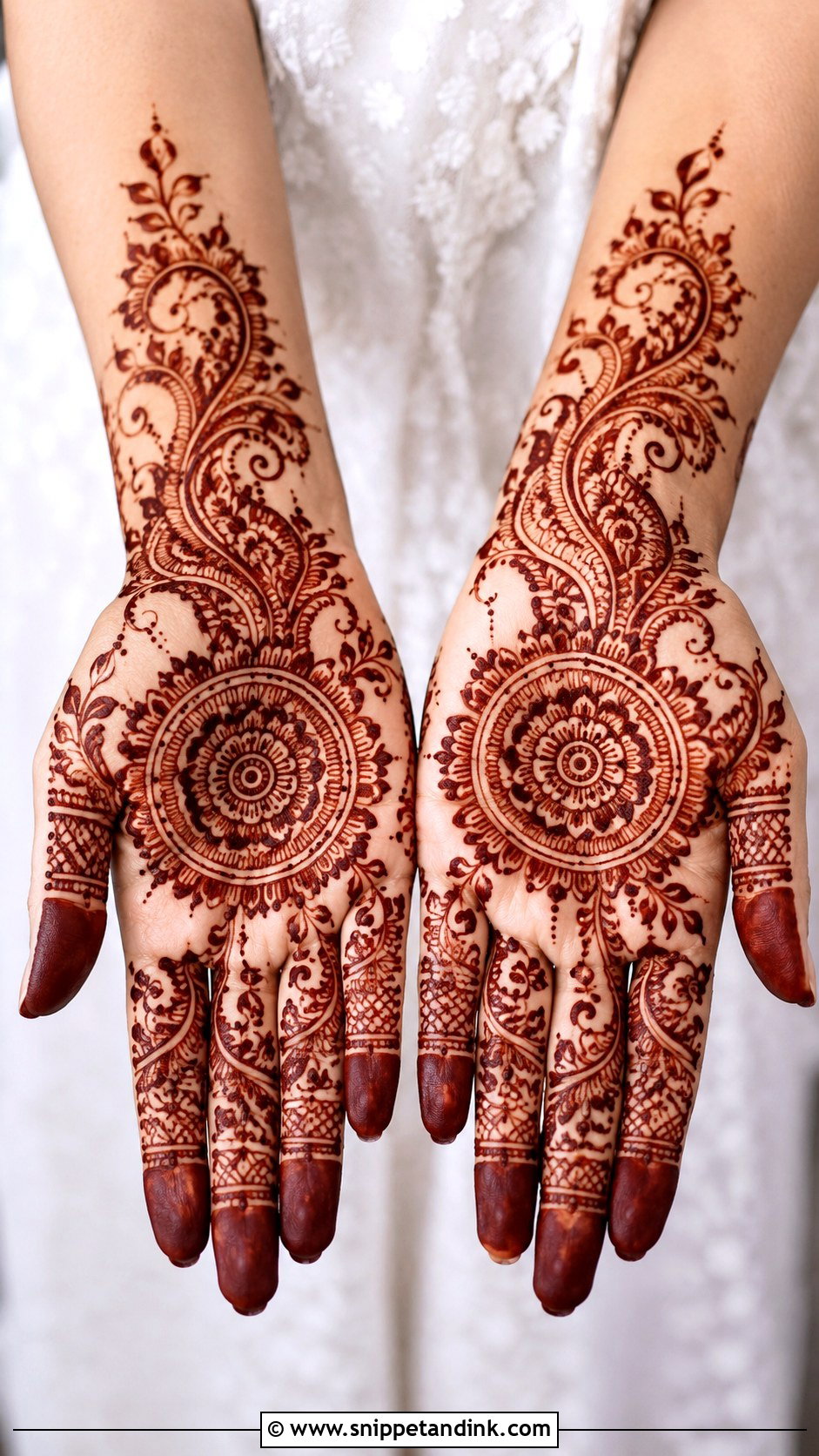
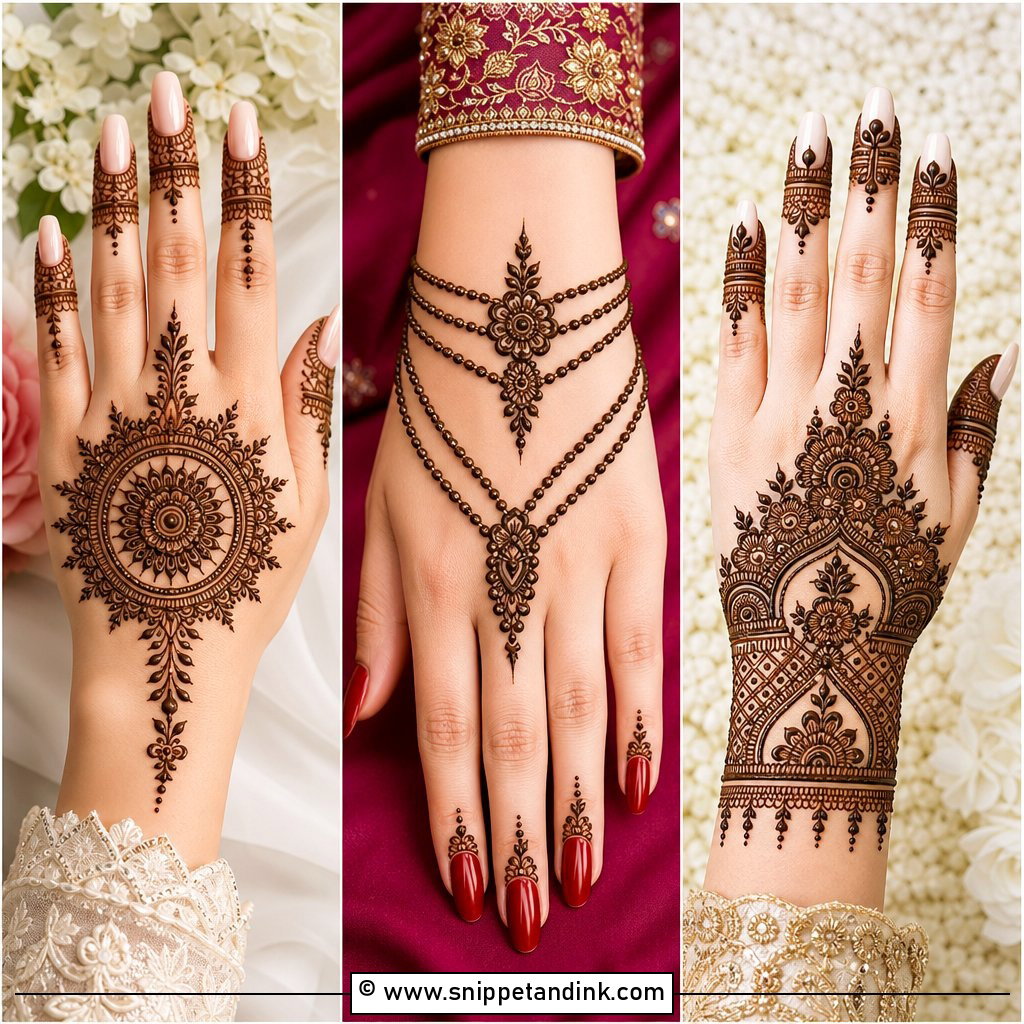
A mandala brings structure to the flowing Arabic layout. On the palm it sits in the centre, with vines, petals and paisleys extending out; on the back of the hand, a half-mandala at the wrist leads into a diagonal trail. Open rings, dots and petal layers keep it clean, and bold flowers around it finish the look. A half-mandala is more forgiving than a full circle, which is why I often suggest it for the back of the hand.
16. Arabic Paisley Mehndi Design
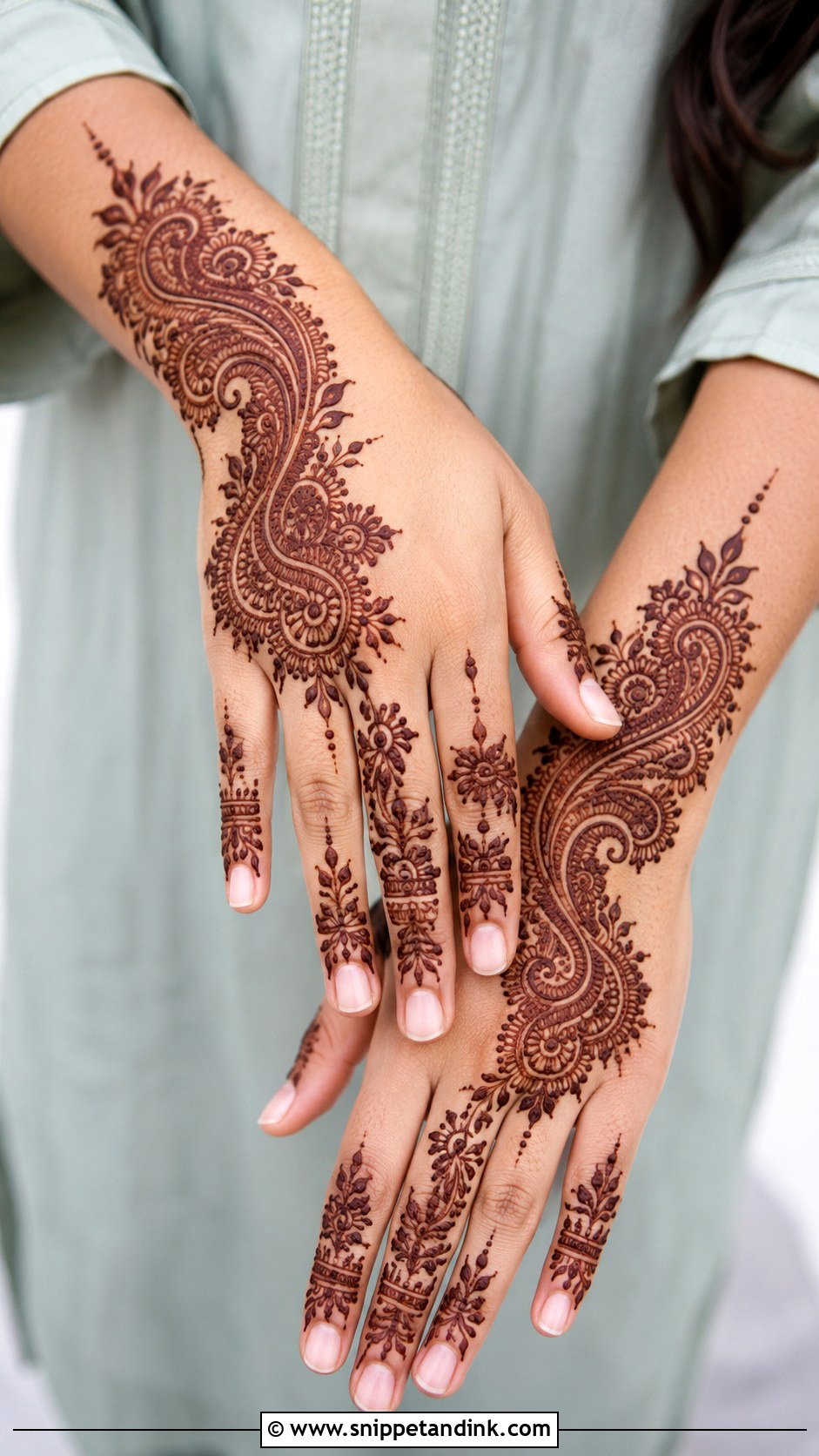
One large paisley on the palm or back of the hand, surrounded by flowers, leaves, dots and vines, with its interior filled with fine lines, tiny petals or net. The contrast between the detailed paisley and the open hand is the whole point. Placed diagonally and joined to a wrist cuff, it looks modern; extended to the forearm with layered flowers, it becomes bridal. I draw the paisley’s curl last, once I can see how much room is left.
17. Arabic Rose Mehndi Design
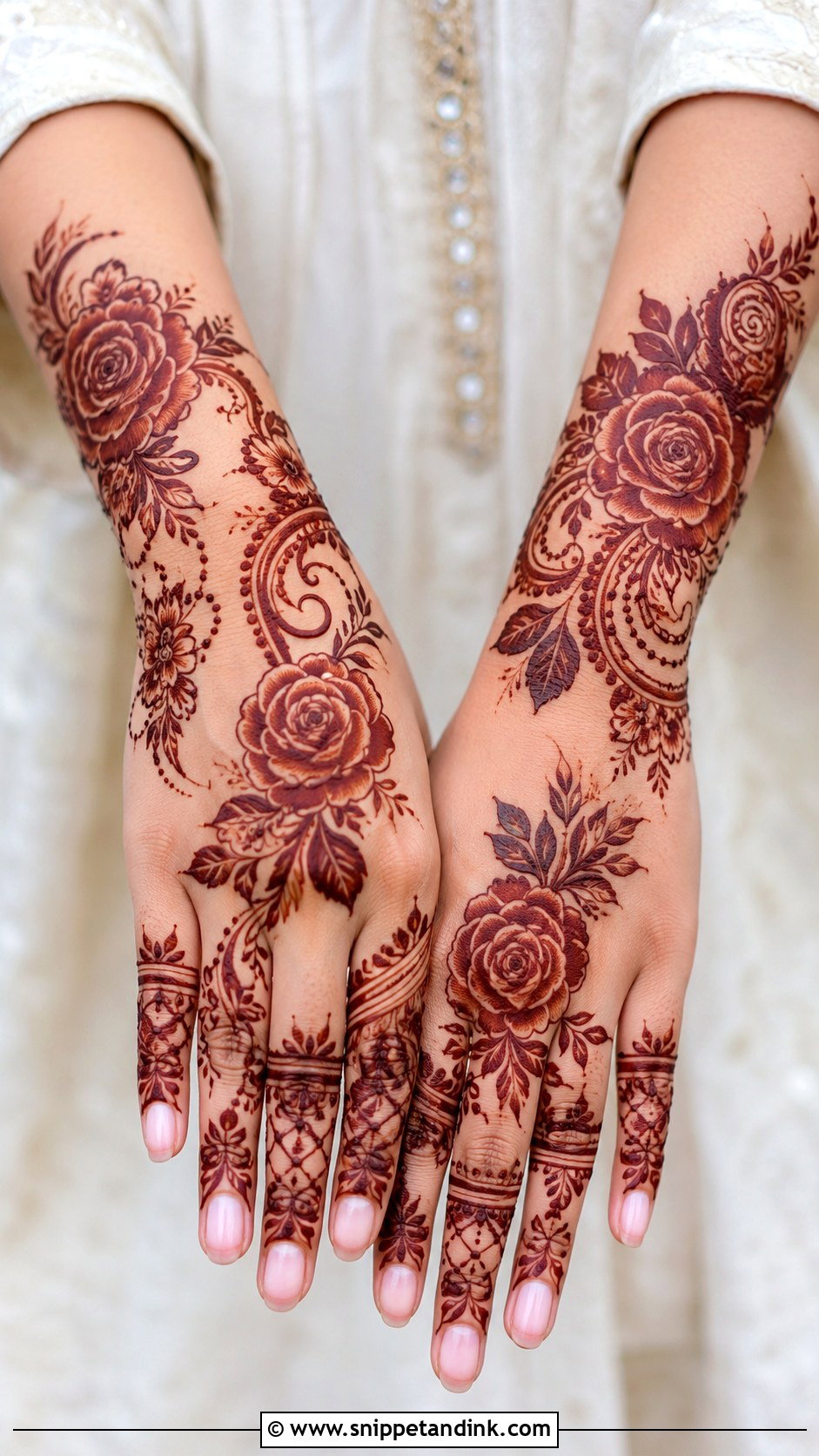
Two or three large roses with shaded petals, curved leaves and a vine from wrist to finger give a romantic design without heavy coverage. The roses need clear space between them so each one reads on its own. On the back of the hand the trail follows the hand’s natural shape. Leaf chains or petal bands on the fingers complete it for engagement parties, Eid or bridesmaids.
18. Arabic Jaali Mehndi Design
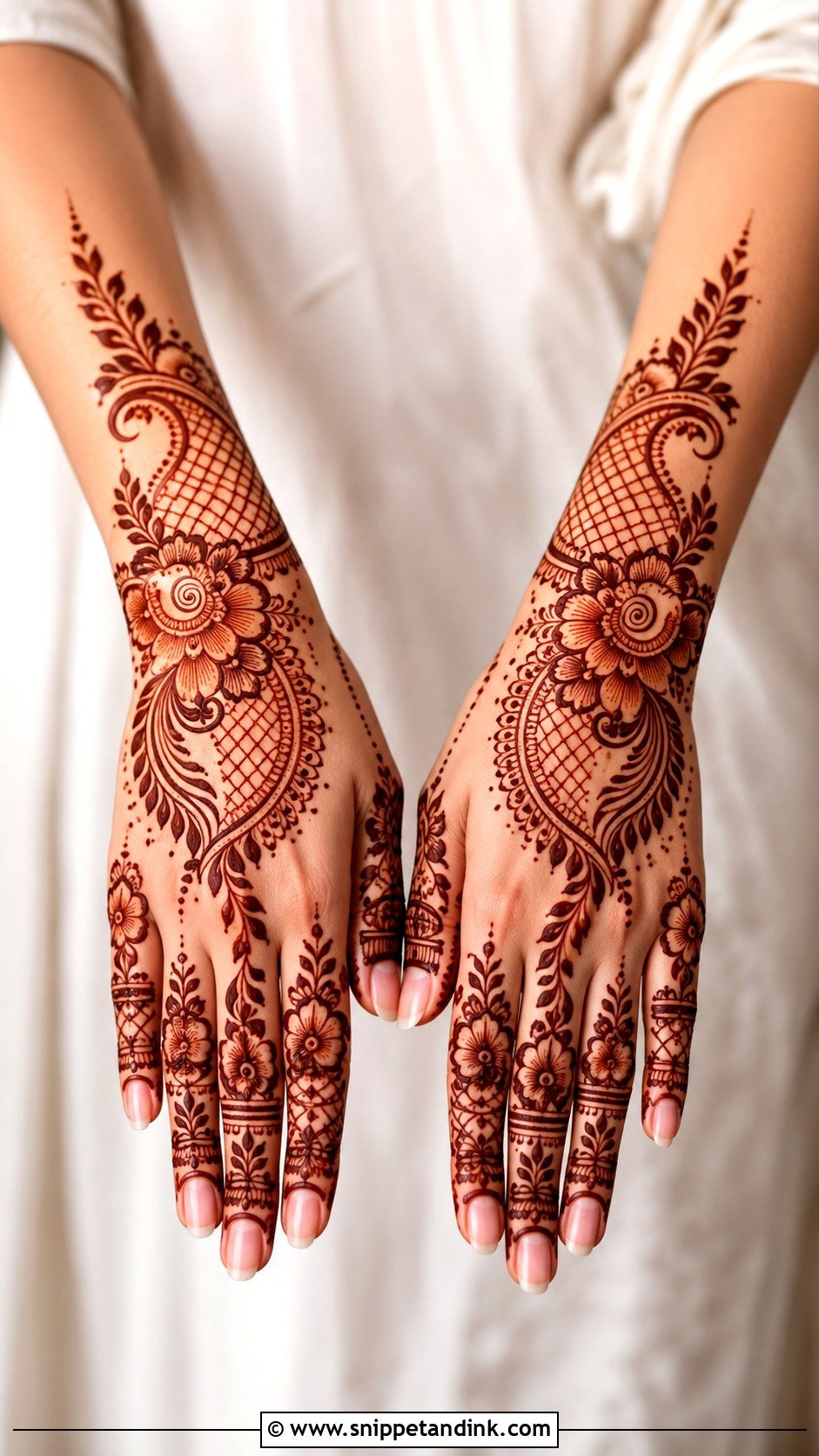
Jaali works best as an accent, not a background. A floral trail across the back of the hand, a wrist cuff and one mesh section near the side of the hand or on the fingers is enough. Pair it with bold roses, paisleys and leafy borders so the Arabic character stays strong. Mesh drawn too tight closes up as the stain darkens, so I keep the squares generous.
19. Arabic Bracelet Mehndi Design
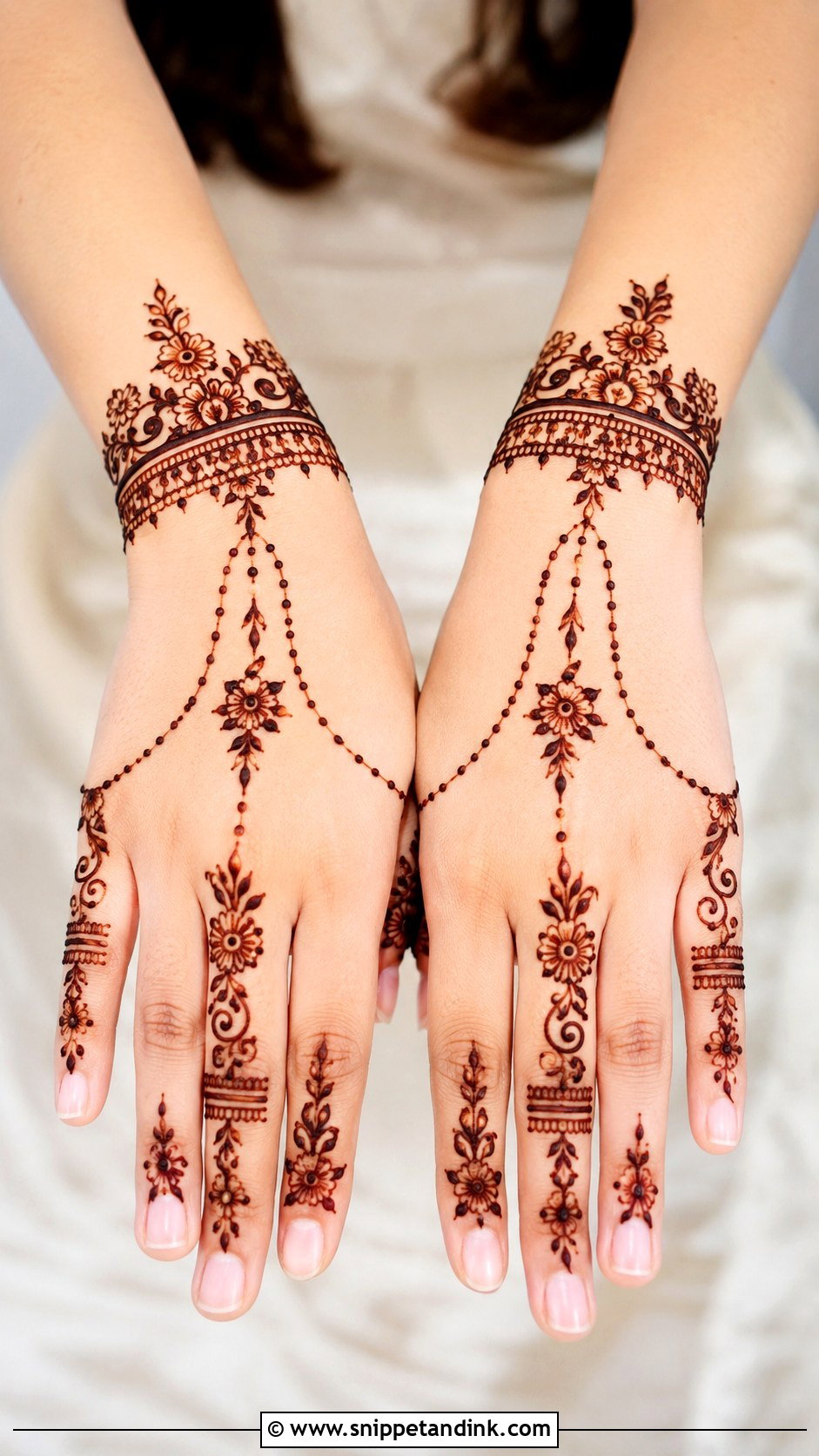
Henna jewellery: a wrist cuff, chain-like lines, small flowers and finger details that look like rings, with a central motif linking the bracelet to one finger and the rest of the back of the hand open. Dots, tiny leaves and curved bands make the bracelet clear. I draw the cuff first and slightly lower than a real bangle would sit, because bangles pushed up the wrist would otherwise cover it.

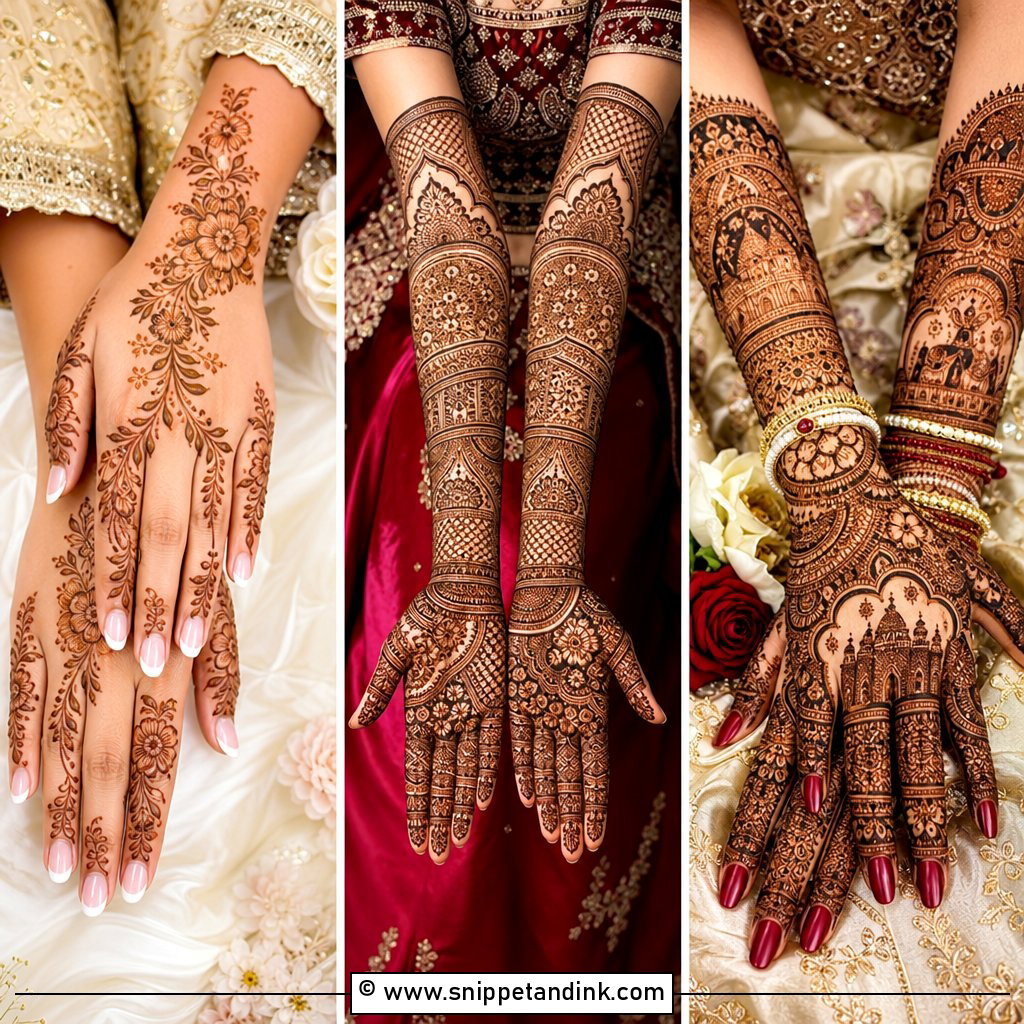



20. Arabic Minimal Mehndi Design
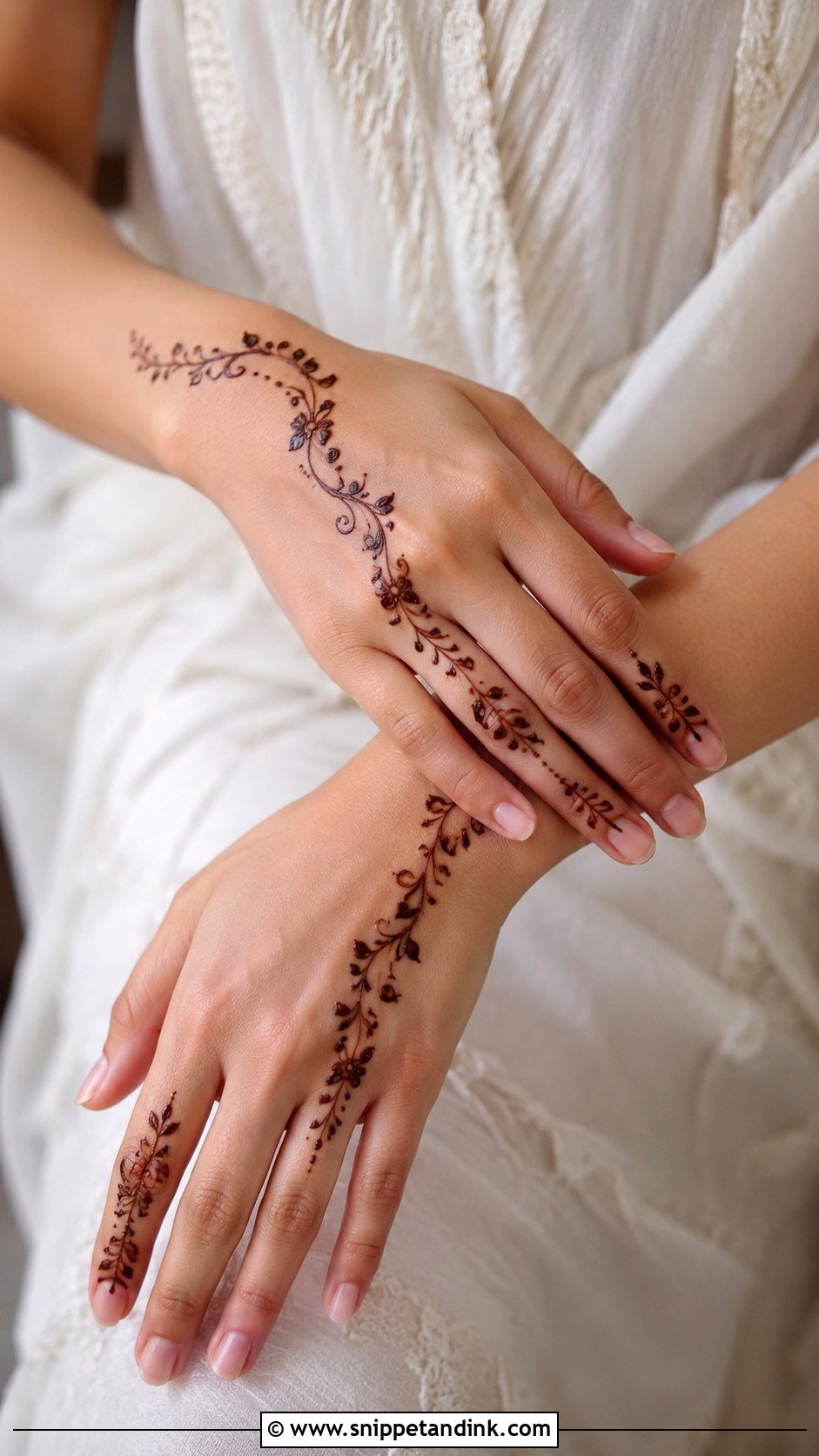
A small floral vine on the back of the hand, two decorated fingers and a thin wrist curve. Minimal Arabic should look intentional, not unfinished, so I always give it one clear main flower to anchor the eye. Fine lines, small leaves and generous spacing do the rest. It suits office events, intimate family functions, younger girls and beginners.
21. Arabic Eid Mehndi Design
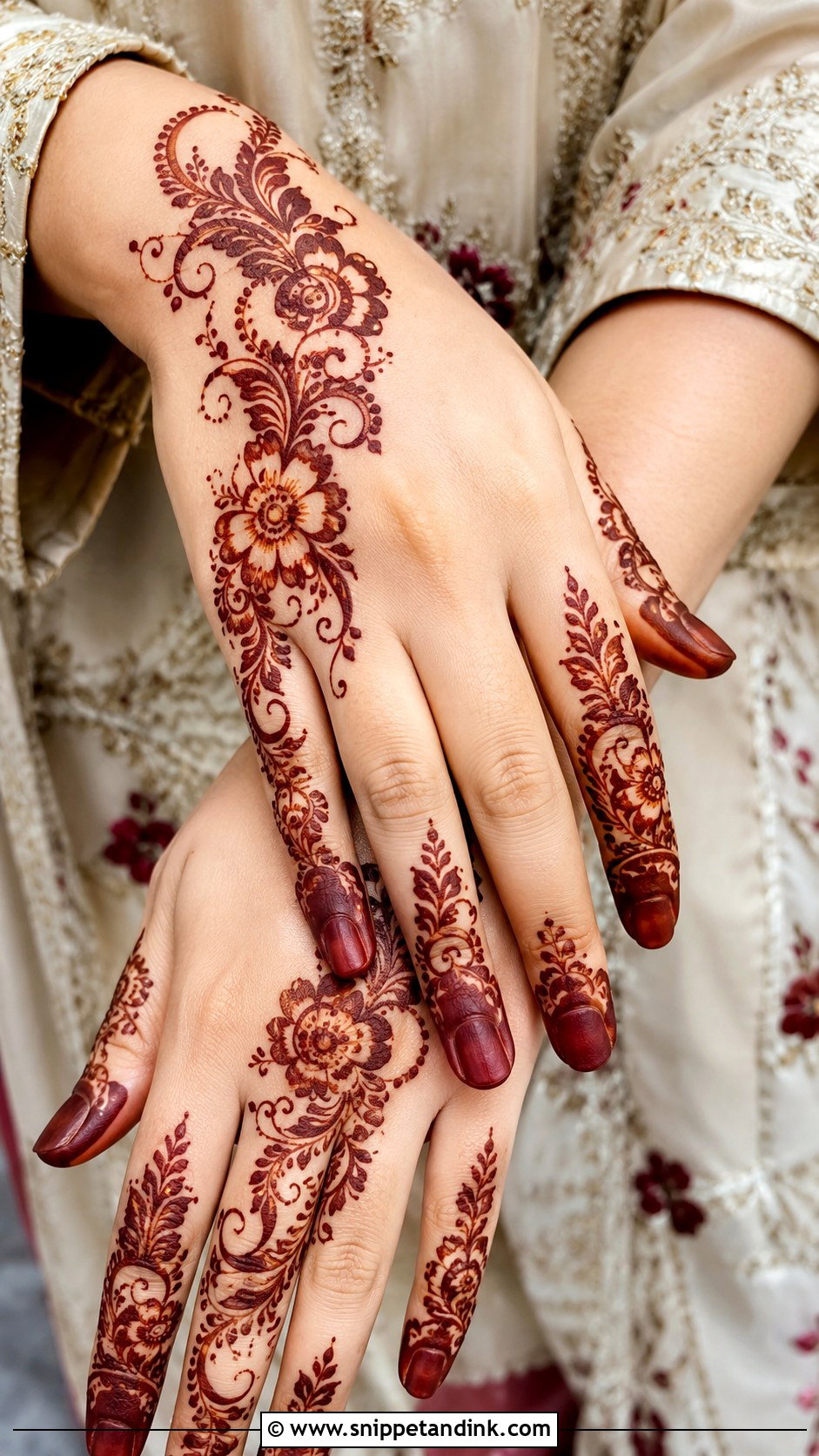
Eid mehndi needs to be festive and fast. A bold floral trail on the back of the hand, detailed fingertips and a light wrist border is typical, or on the palm, a central flower with curved vines toward the fingers. Small crescent-shaped curves can be worked into the vines for a festive touch. Medium coverage keeps hands looking decorated through prayers, meals and family photos.
22. Arabic Wedding Mehndi Design
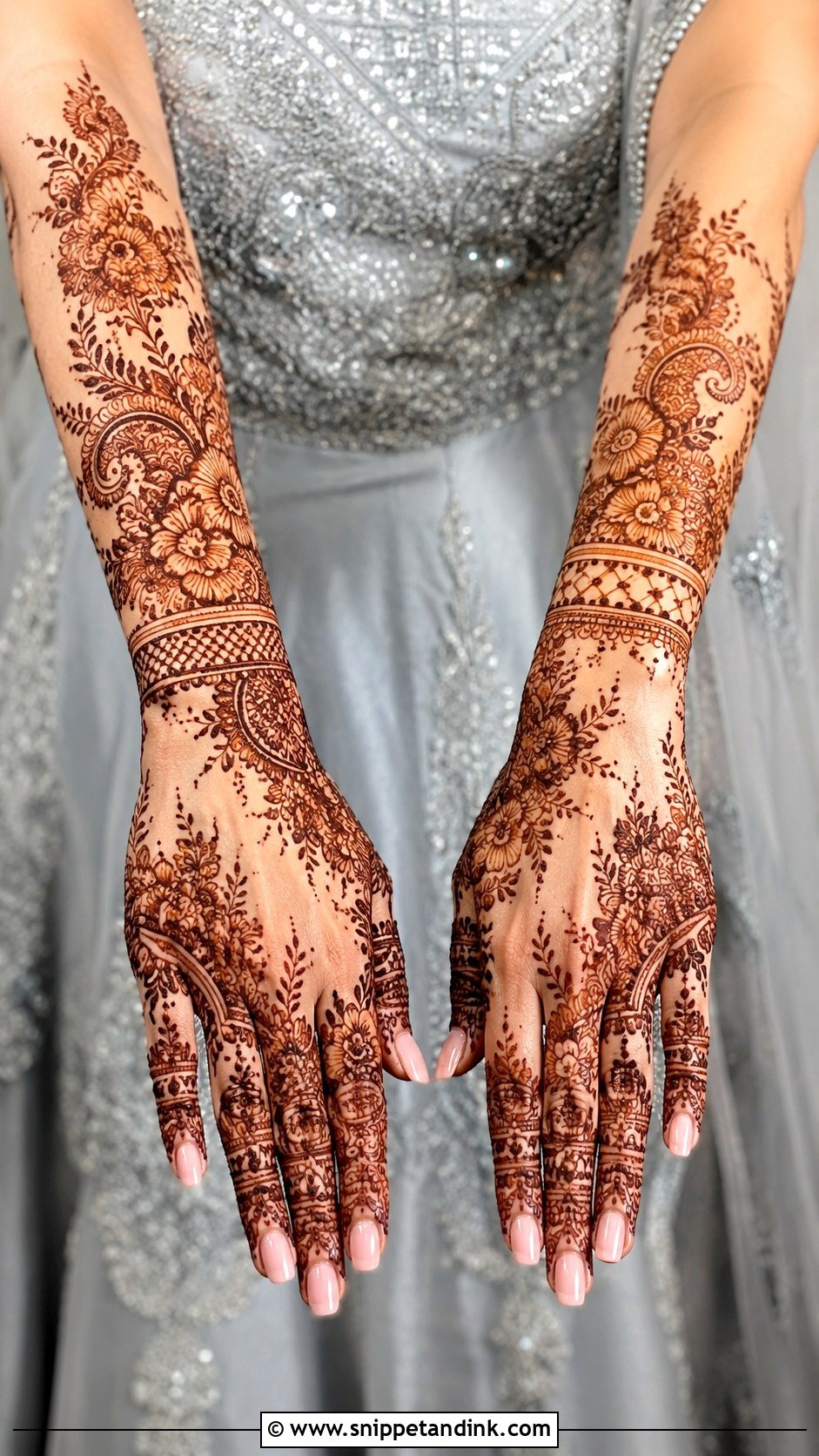
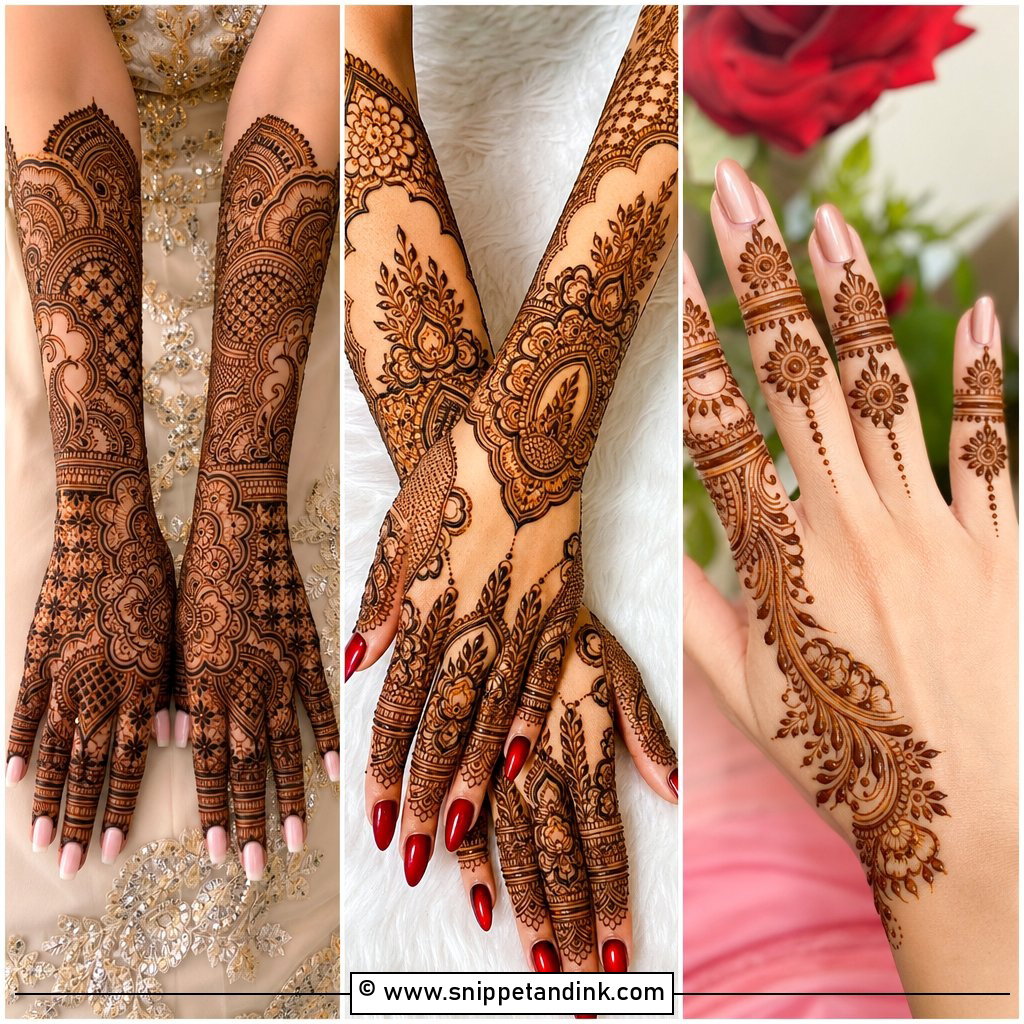
For sisters of the bride, bridesmaids and close guests, wedding Arabic covers the back of the hand, fingers, wrist and part of the forearm with large flowers, paisley trails, shaded leaves and layered wrist bands, while keeping visible spacing. Repeating a few motifs on both hands makes the pair look coordinated. Stop the design below the elbow, and check with the bride how far her own coverage goes so yours doesn’t match it.
23. Arabic Engagement Mehndi Design
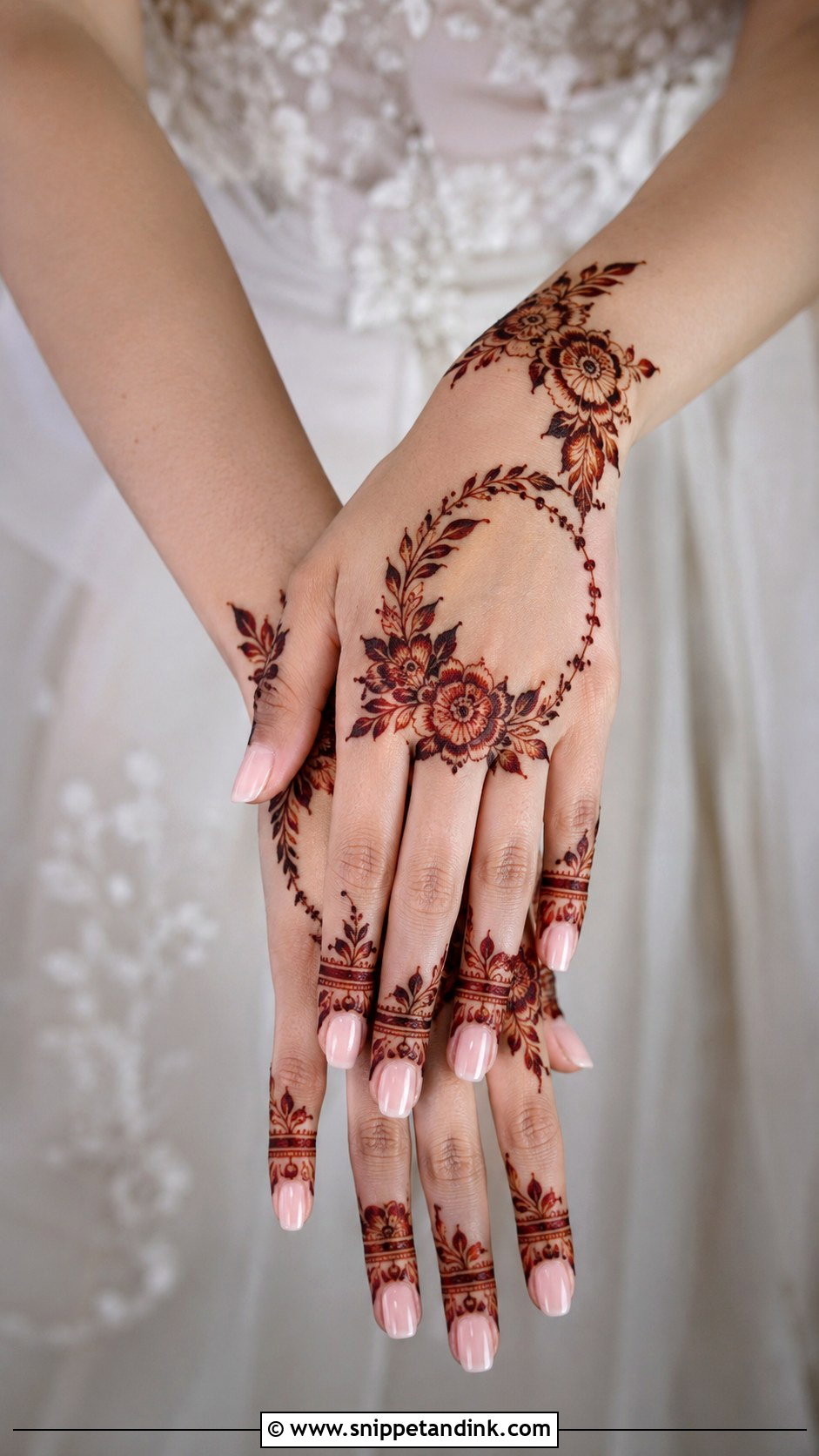
Engagement mehndi should frame the ring. A floral bracelet, ring-style finger details and a soft back-hand trail decorate the hand while keeping the ring area clear. The palm can stay light or carry a small flower and paisley. I leave the base of the ring finger entirely bare and put the most detail on the neighbouring fingers. Slim vines, small leaves and shaded petals keep it light for photos.
24. Arabic Forearm Mehndi Design
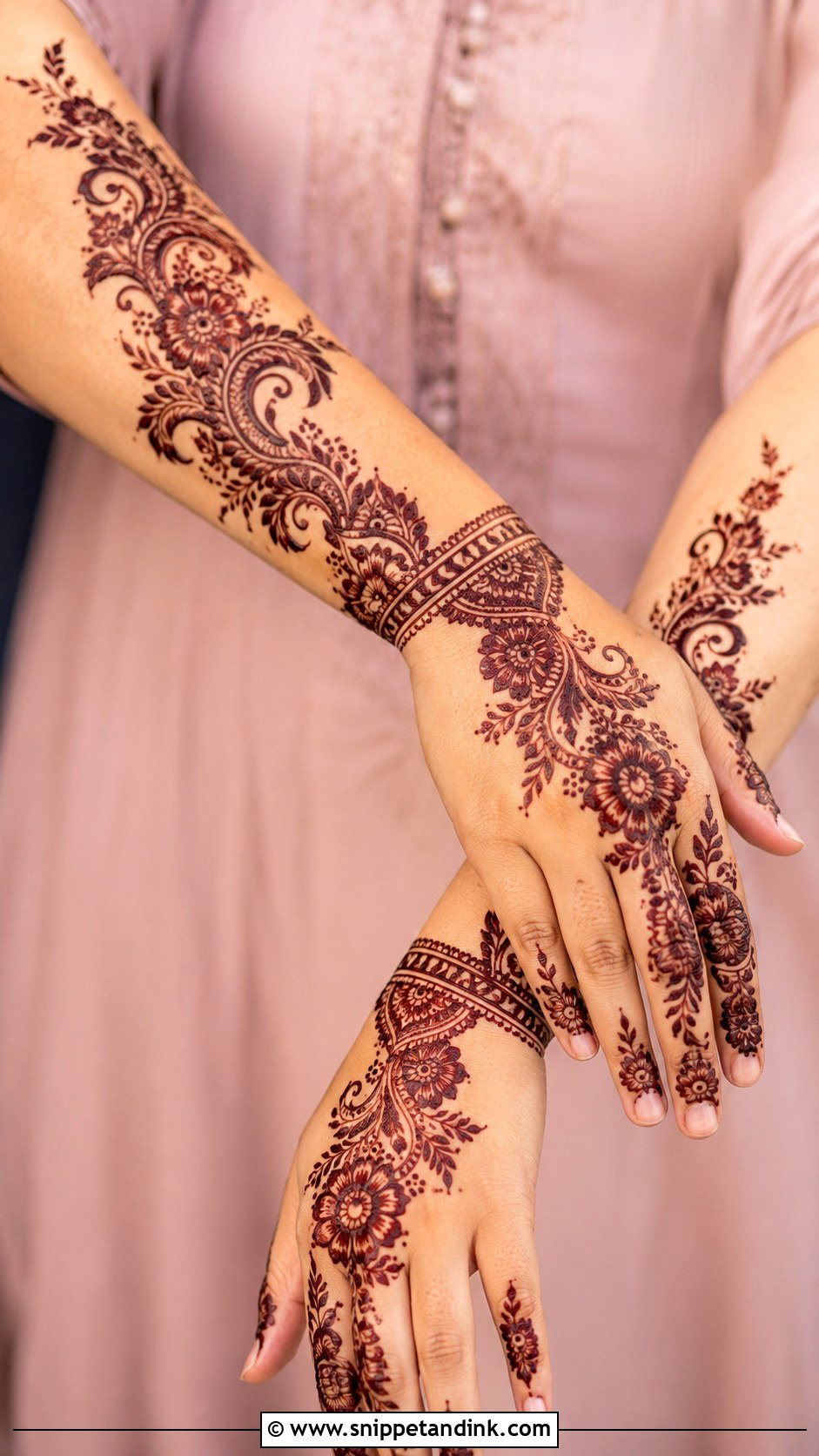
Taking the pattern past the wrist makes it more dramatic: fingers, back of the hand, then the forearm with flowers, paisleys, leaves and bracelet bands. Keep the forearm section open with bold motifs, and run it diagonally so the arm looks longer. The forearm stains lighter than the hand. I lay paste thicker there and suggest leaving it on longer, so the colour difference between hand and arm stays small.

25. Arabic Palm Mehndi Design
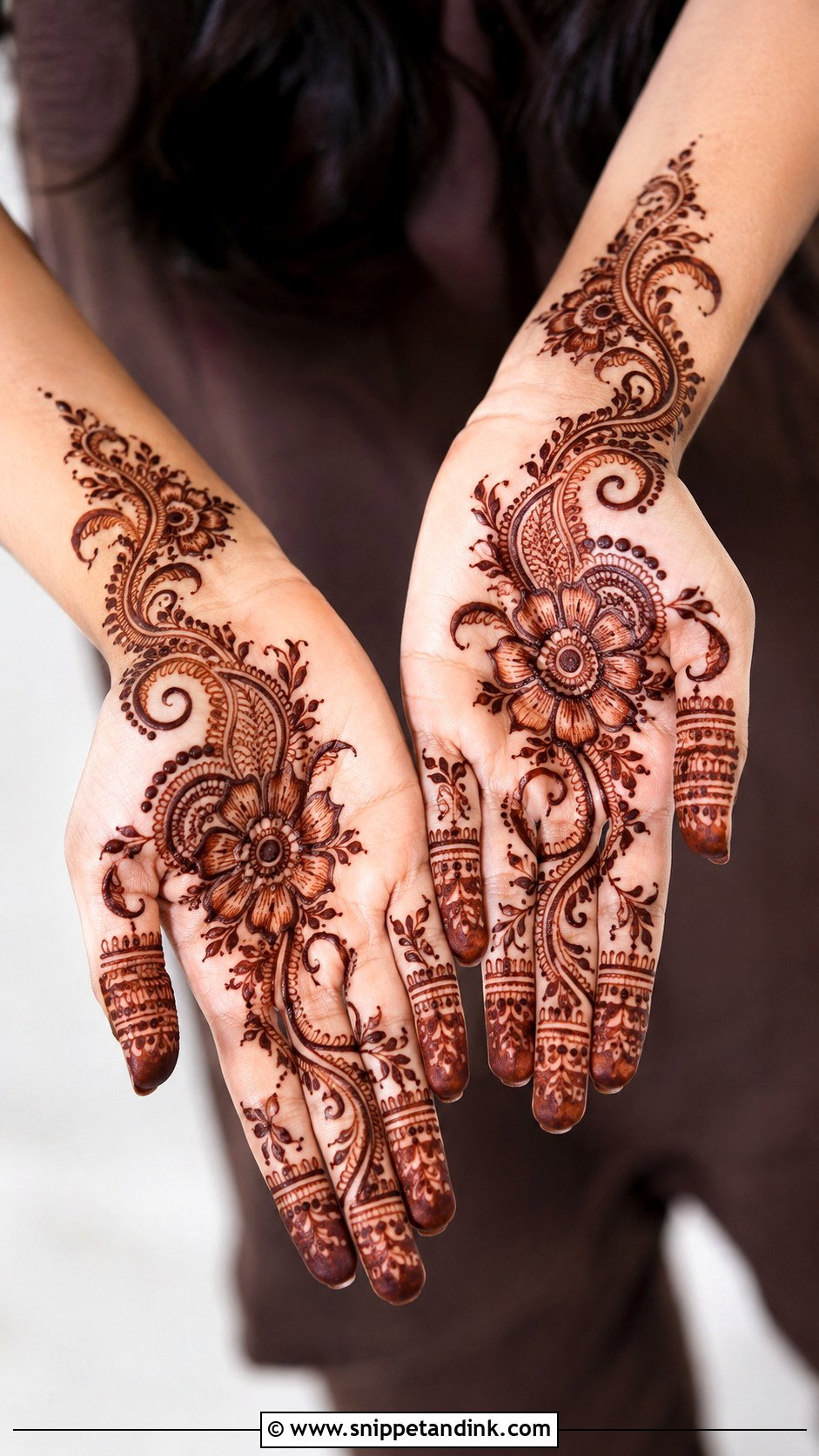
Arabic palm mehndi design uses a large central flower, paisley curves and vine extensions toward the wrist and fingers, but leaves small open areas around the motifs so the pattern stays readable. Simple bands, leaf chains and dotted lines fill the fingers. Palms are what people notice when you receive gifts or hold your hands up for dua, so I make the main flower’s outline bold and keep the petal shading light.
26. Arabic Peacock Mehndi Design
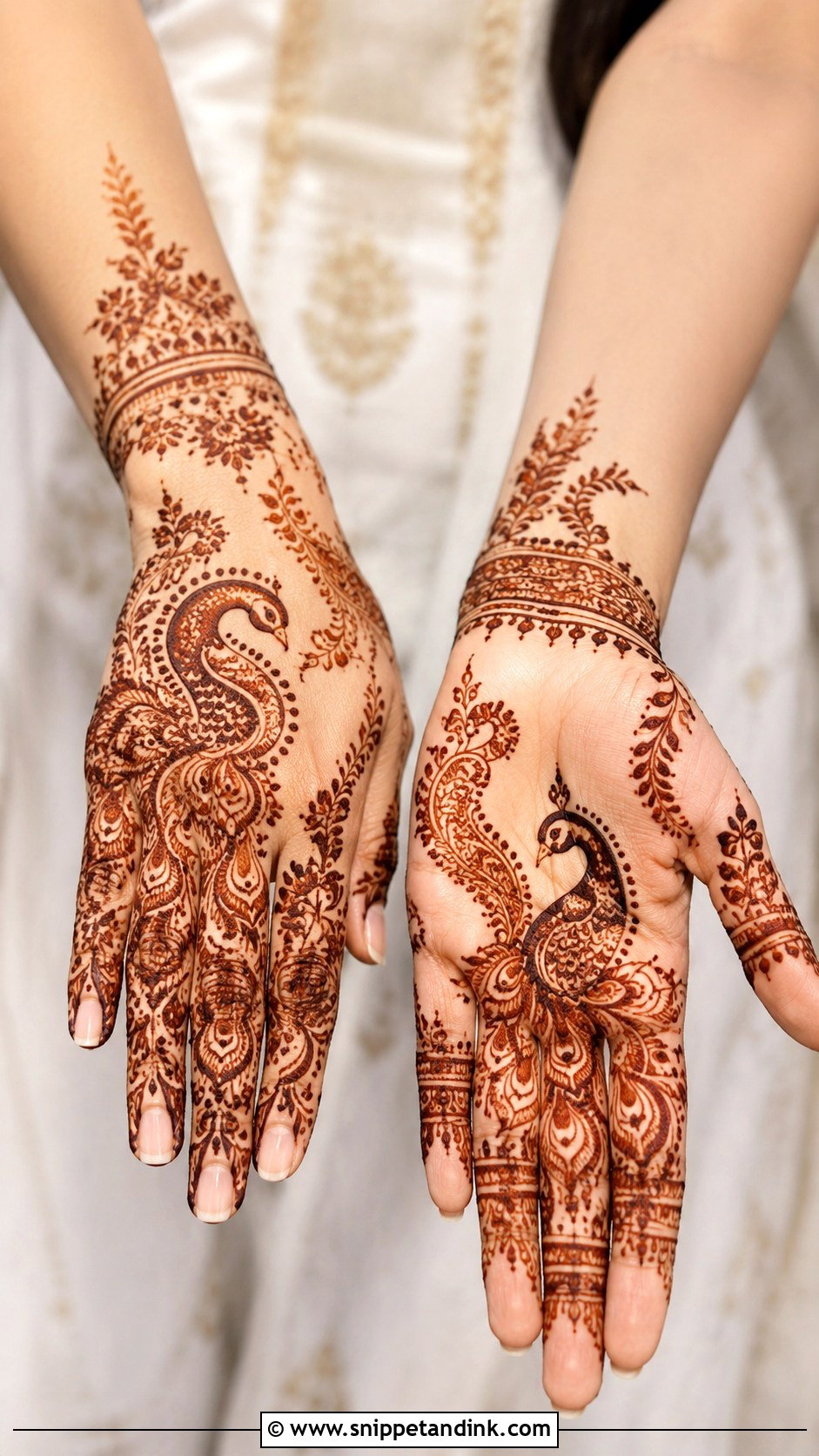
A peacock near the wrist or the side of the palm, connected to flowers, leaves and curved vines, brings a traditional motif into an Arabic layout. Draw the feathers as open paisley shapes rather than dense fill so the hand stays light. The peacock is the focus and the florals support it. Fingers with small leaf trails complete it for wedding guests, bridesmaids and festive occasions.
27. Arabic Moroccan Mehndi Design
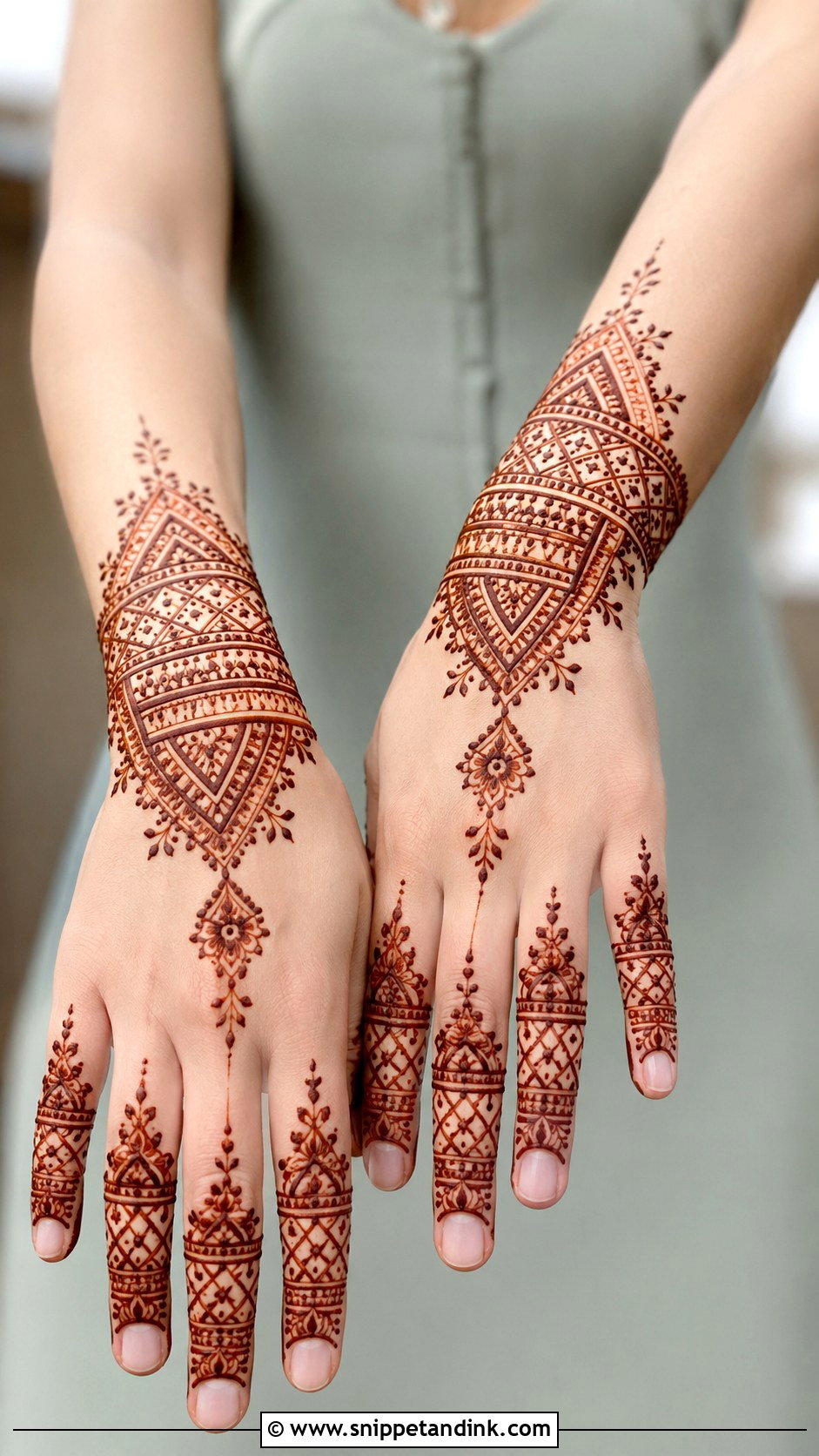
Moroccan-inspired work brings diamond grids, angular bands and bold wrist patterns into the Arabic style, softened with a vine along one side. The back of the hand suits it, since geometric shapes stay clearest on flatter skin. Straight lines are harder than curves with a cone. I use a light, steady pull and draw them in one motion, never in short dashes. It’s a good choice for someone tired of standard floral trails.
28. Arabic Khafif Mehndi Design
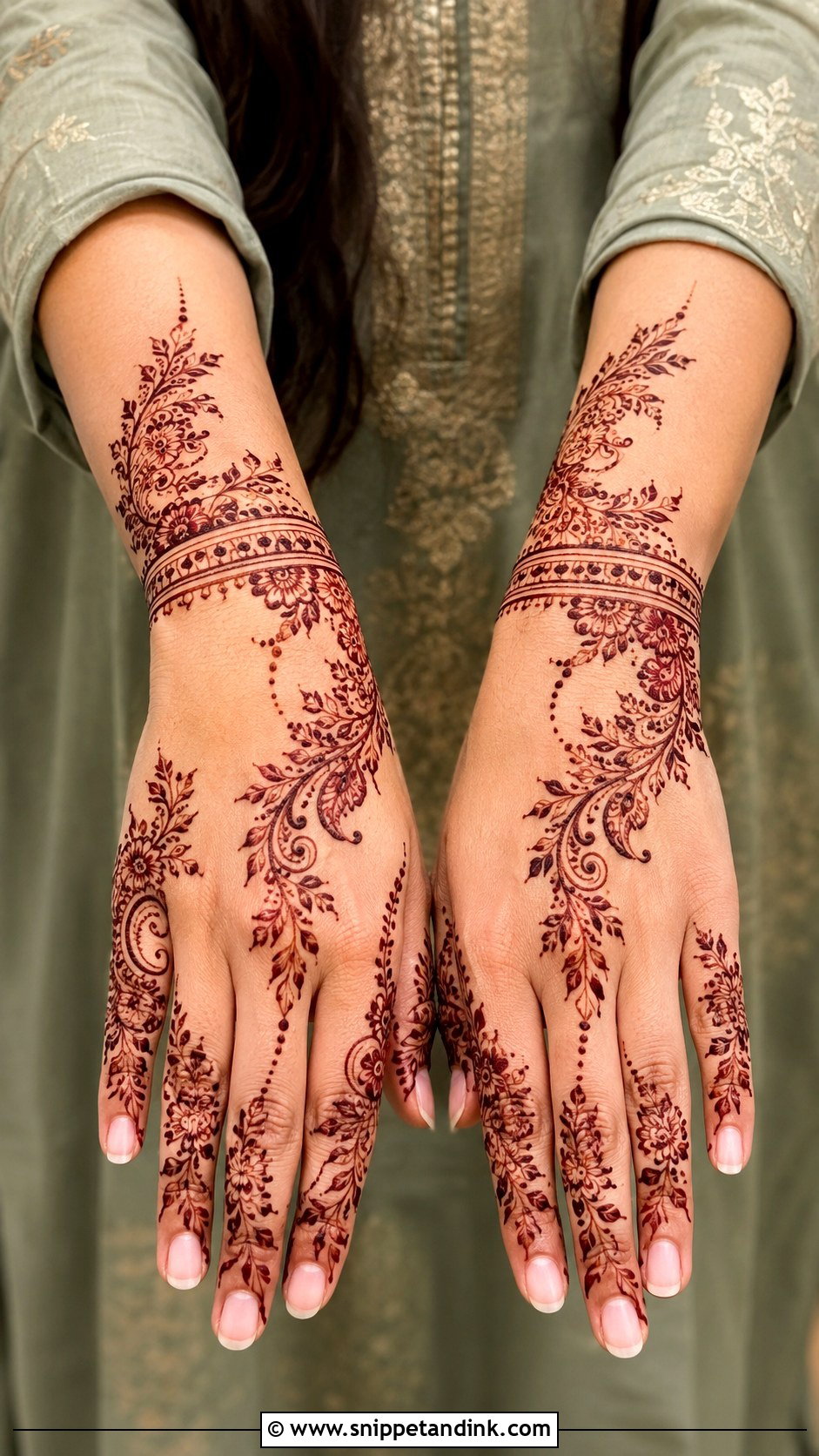
Khafif means light, and the design lives up to it: fine floral vines, tiny leaves, small paisleys and thin wrist bands. It has more detail than minimal mehndi but still feels airy. It needs a very fine cone tip and paste without any grit, since a single lump breaks a thin line. I’d suggest it for young brides, daytime events and anyone who prefers soft patterns to bold strokes.
29. Arabic Heavy Mehndi Design
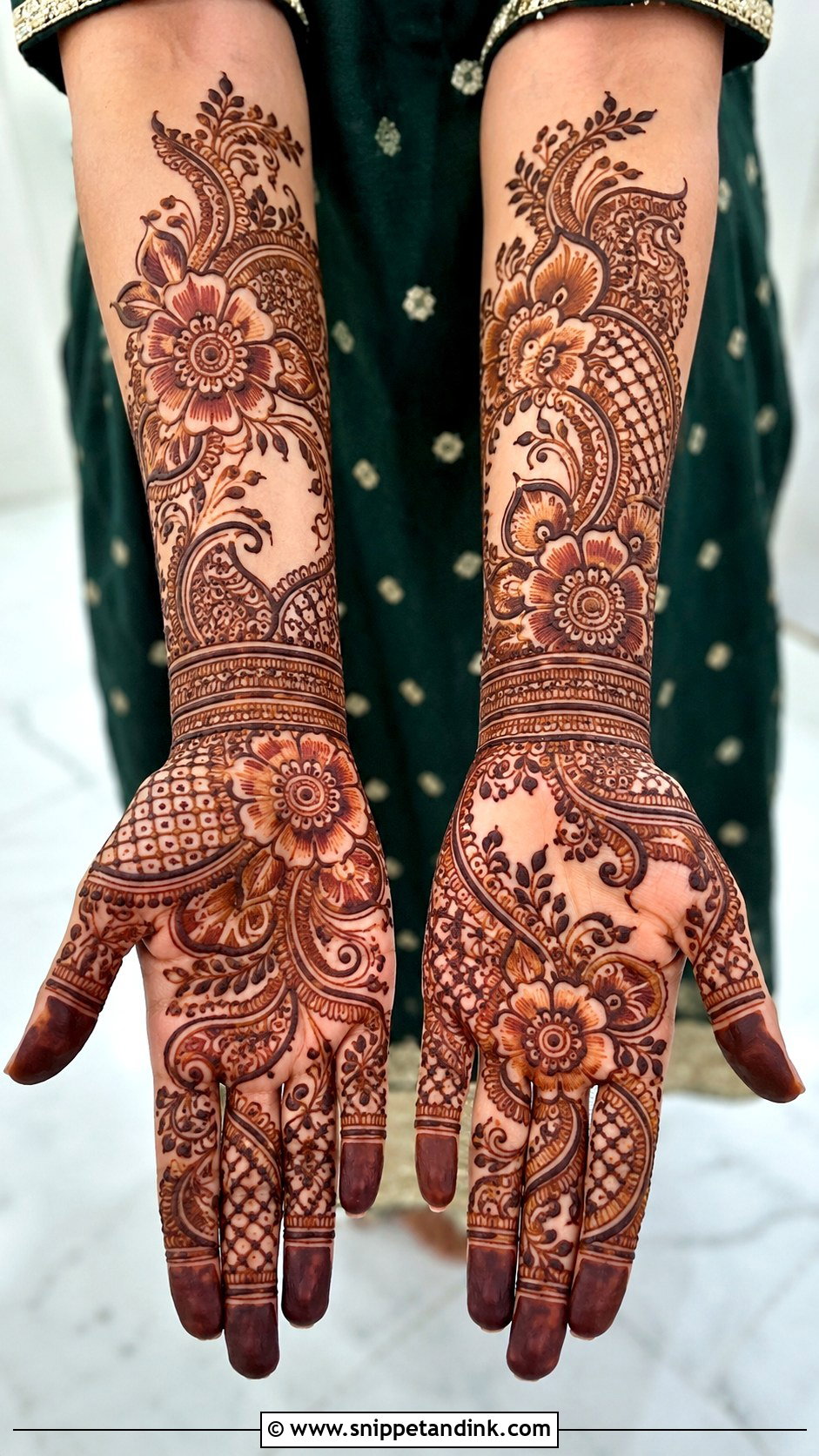
Heavy Arabic covers the fingers, back of the hand, wrist and forearm with large flowers, paisleys, jaali and bold leafy trails, while keeping some open space around the major motifs so it doesn’t look flat. Deep shading inside petals and paisleys adds richness, the wrist can carry stacked bands, and the fingers carry detailed patterns. Plan the sitting time like a bridal booking; this one takes hours, not minutes.
30. Arabic Side Hand Mehndi Design
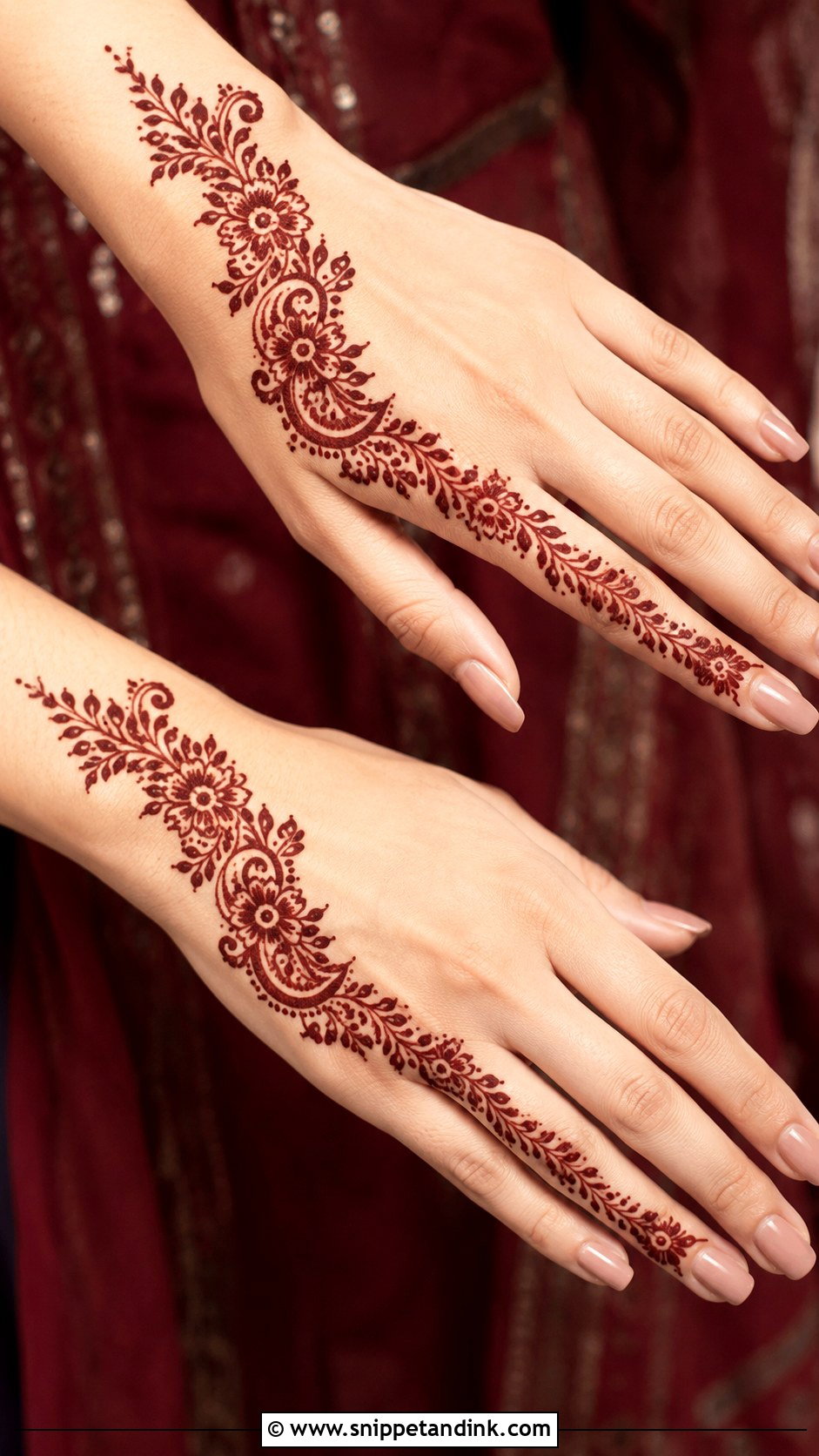
A side-hand design runs from the wrist along the outer edge of the back of the hand to the little or ring finger, with flowers, leaves, dots and soft paisleys, leaving the centre open. It’s noticeable without full coverage. On small hands I like it because the long, narrow trail makes the fingers look longer. I draw it with the hand resting on its side, so the trail follows the curve you actually see.
Nails, Rings and Henna on the Same Pair of Hands
Henna stains nails and cuticles orange too, and that stain stays until the nail grows out. Brides who want clean nails should have their manicure, or at least a base coat of polish, done before the henna. Gel polish works well because it protects the nail surface through the application. If you want naturally tinted nails, the traditional look, simply leave them bare.
- Take off rings before application; skin under a ring stays bare and leaves a pale band.
- Avoid scrubs, chlorine pools and harsh cleaning products for the first days, since exfoliation fades the stain faster.
- A little natural oil or balm on the hands after the paste comes off keeps the skin from drying out.
- The design will fade fastest on the fingertips and palms you use most; that’s normal.
If the stain looks lighter than you hoped on the day after application, give it another twelve hours. It almost always deepens; the moment it comes off is never the final colour.
Which Arabic Layout Fits Your Wedding Week?
Arabic mehndi stays popular because it’s quick, flexible and easy to read. A bel or simple trail works for a casual function; roses and paisleys suit a festive evening; heavy coverage with a forearm extension belongs to the bride. For a modern look, rely on clean spacing, bold outlines and balanced fingers. For a traditional feel, add paisleys, jaali and stacked wrist bands. Bring two or three saved designs to your artist, show her your hands and your outfit, and let her adapt the layout to them.
You'll Like These Ideas:










Leave a Reply