
Brides now arrive at consultations with a folder of screenshots and a clear idea of their outfit, and they want a design that respects tradition without looking like everyone else’s. Some want full Indian coverage, some an Arabic trail or an Indo-Arabic mix, others a portrait, a mandala palm, a jaali back hand or a story told in small symbols. Whatever the style, I hold every bridal design to two tests: it has to read from across the mandap, and it has to reward someone looking closely. It also has to fit your hands, your sleeves and your jewelry. The thirty designs below are the ones I’d point a modern bride toward, each with what I’d watch for when drawing it.
Telling Natural Henna Paste From a Chemical Cone
A unique design means nothing if the paste is unsafe or weak. Natural henna is made from dried, powdered leaves of the henna plant, mixed with liquid, sugar and an essential oil that helps release the dye. Fresh paste is greenish to brown, smells earthy or of oil like eucalyptus or lavender, and stains orange first before darkening over a day or two. Ask your artist directly what’s in her cones. A good artist answers without hesitation.
Warning signs worth walking away from
- A stain that turns dark brown or black within an hour. Real henna never does that; fast dark color points to added dyes.
- Paste described as black henna or as never needing time on the skin.
- Cones with a long shelf life kept at room temperature. Natural paste loses strength quickly, so artists usually make it fresh or keep it frozen.
- A strong chemical or kerosene-like smell instead of a plant or oil scent.
Even natural paste can bother sensitive skin, usually because of the essential oil. If you’ve reacted to skincare before, ask for a small dot on your inner arm a day or two ahead.
1. Full Hand Indian Bridal Mehndi Design
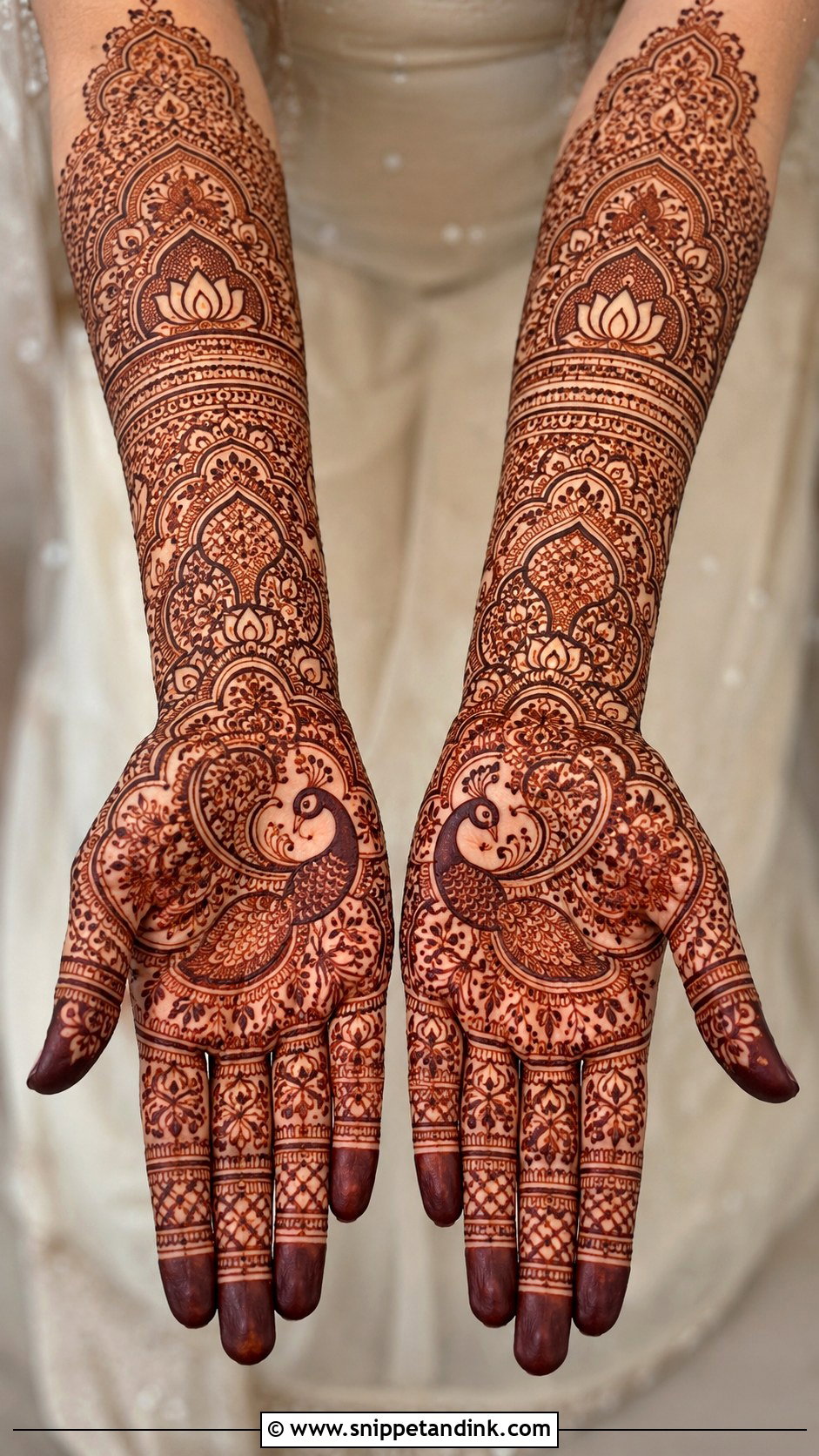
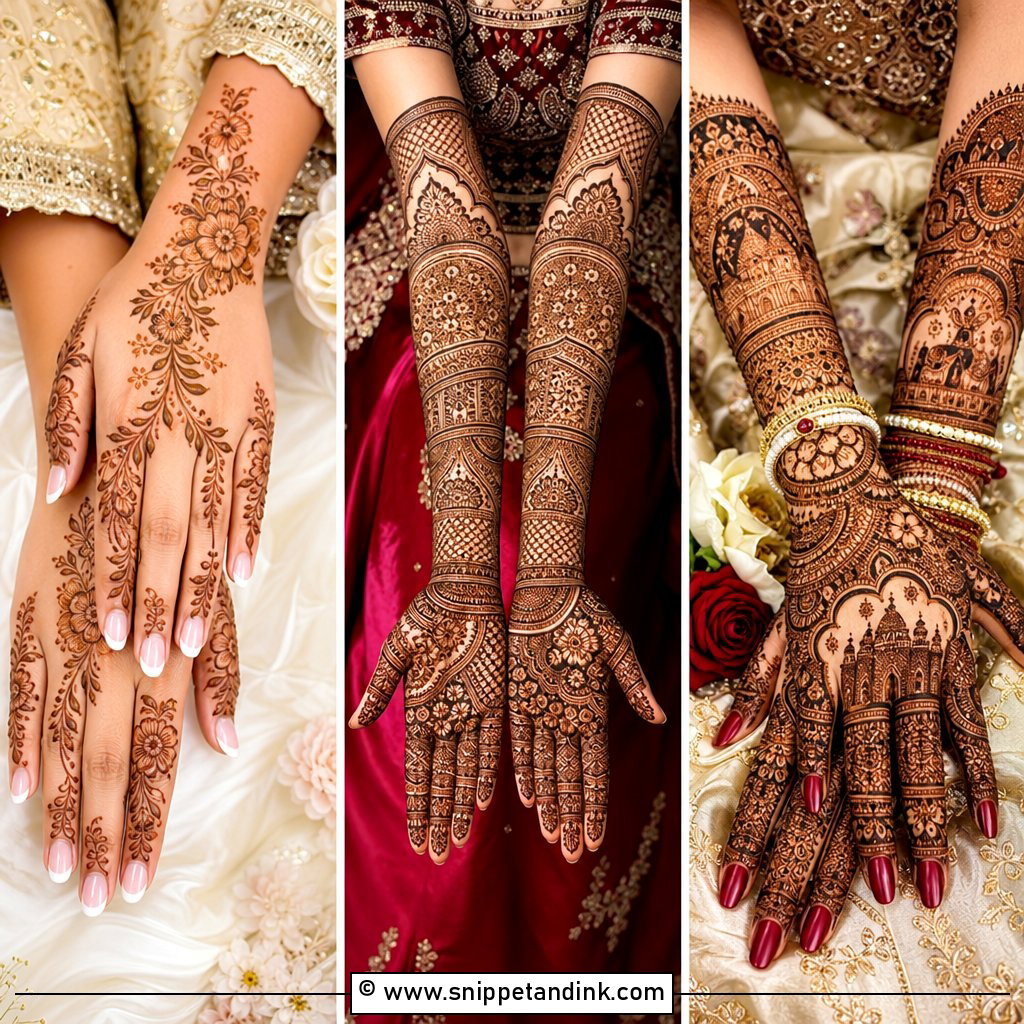
Dense Indian coverage runs from fingertips to forearms on both sides of the hand: paisleys, lotus, peacocks, tiny leaves, curved vines and mesh, packed so very little skin shows. I place the big motifs first and check that they mirror between the two hands before a single filler goes in, because once the gaps are filled it’s too late to shift anything. Heavy lehengas and silk sarees suit it. Set aside most of a day, and expect to need help with everything until the paste comes off.
2. Arabic Bridal Mehndi Design Full Hand
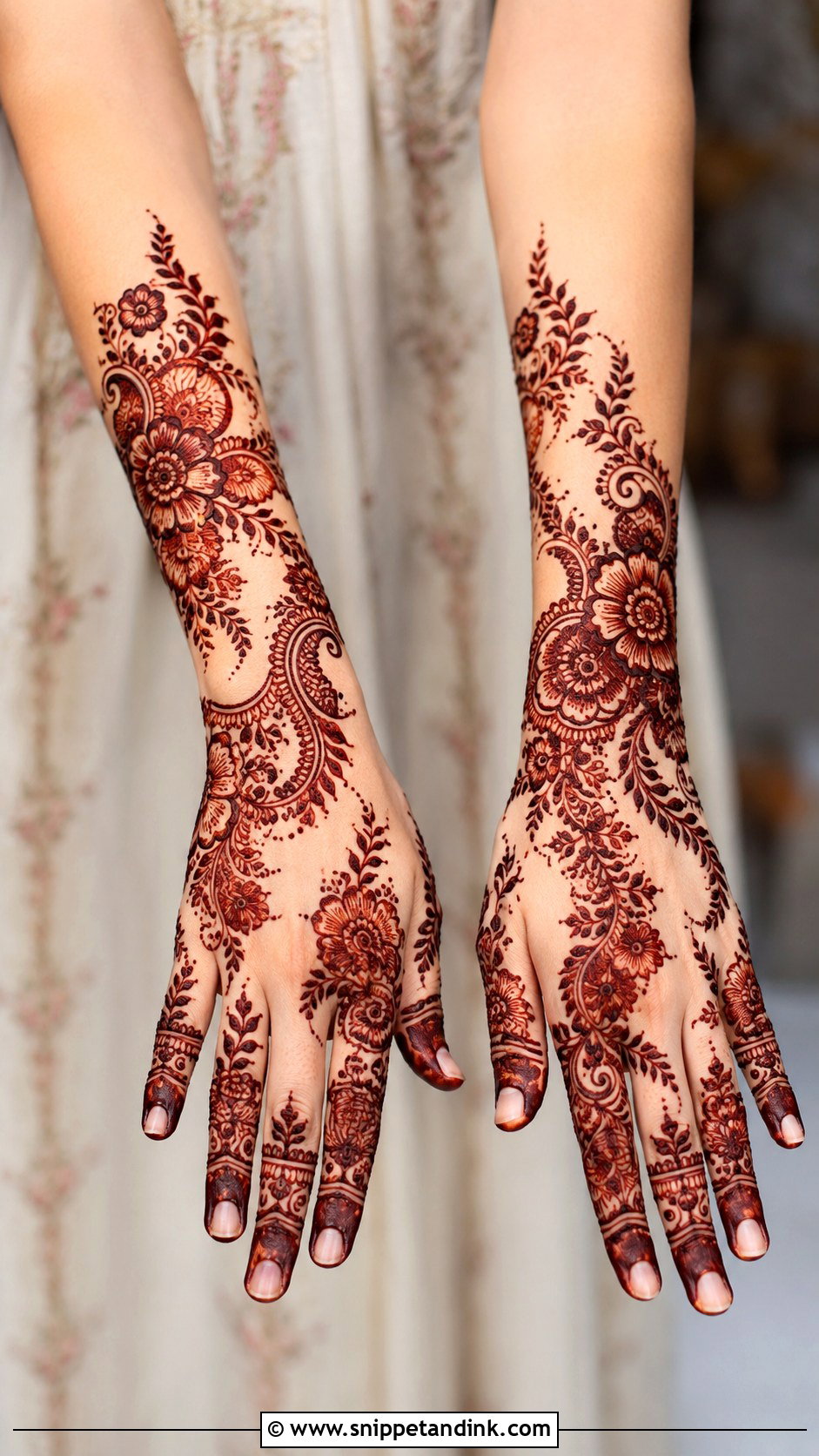
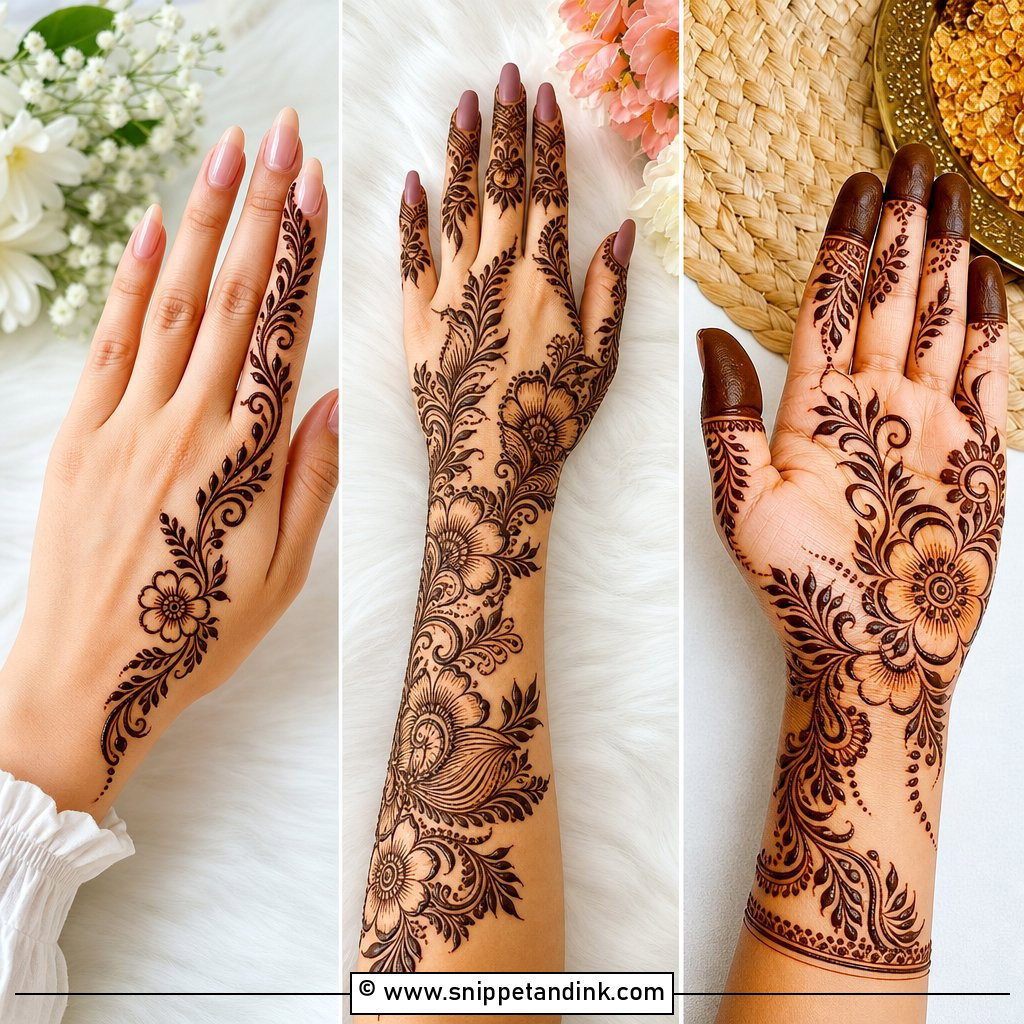
Full-hand Arabic gets its effect from movement rather than density. Large flowers, leafy vines and curved paisleys travel from wrist to fingers with open skin between them, which also makes it one of the faster bridal options to apply. The open gaps let the stain stand out sharply in photos. To make it feel bridal rather than festive, I add a bracelet cuff, shaded petals and finger detail that matches across both hands. It carries well from the engagement through the nikah or sangeet.
3. Indo Arabic Bridal Mehndi Design
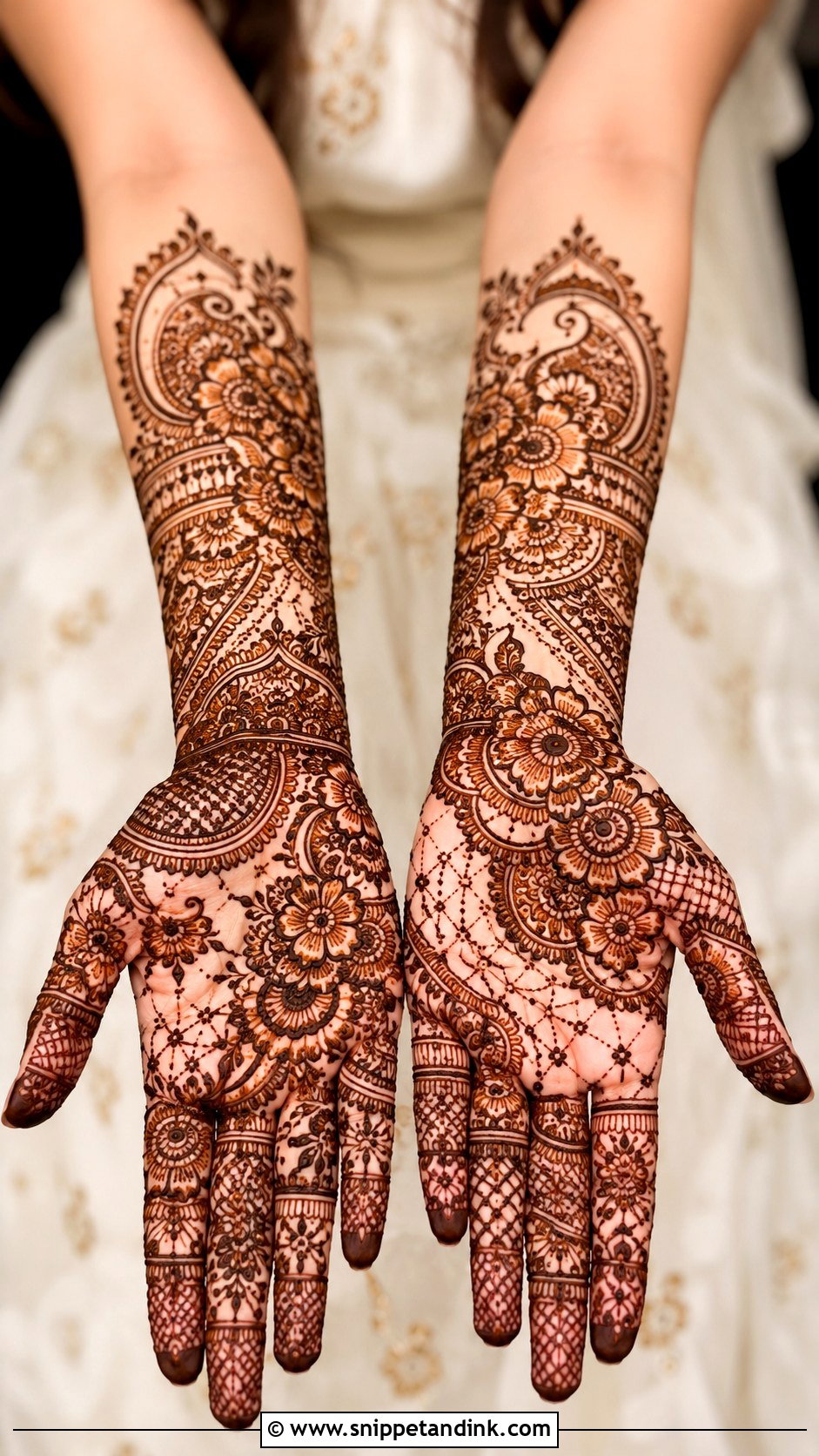
Indo-Arabic starts with a bold Arabic shape, large florals or paisleys, and then I build Indian work into it: mandalas, jaali, dotted chains, leafy borders and fine wrist bands. The hand looks full without looking packed. My rule for this one is detailed fingers and a bold center palm. The big motifs carry the photo from a distance; the fine filling is what the bride and her friends will look at all evening.
4. Rajasthani Bridal Mehndi Design
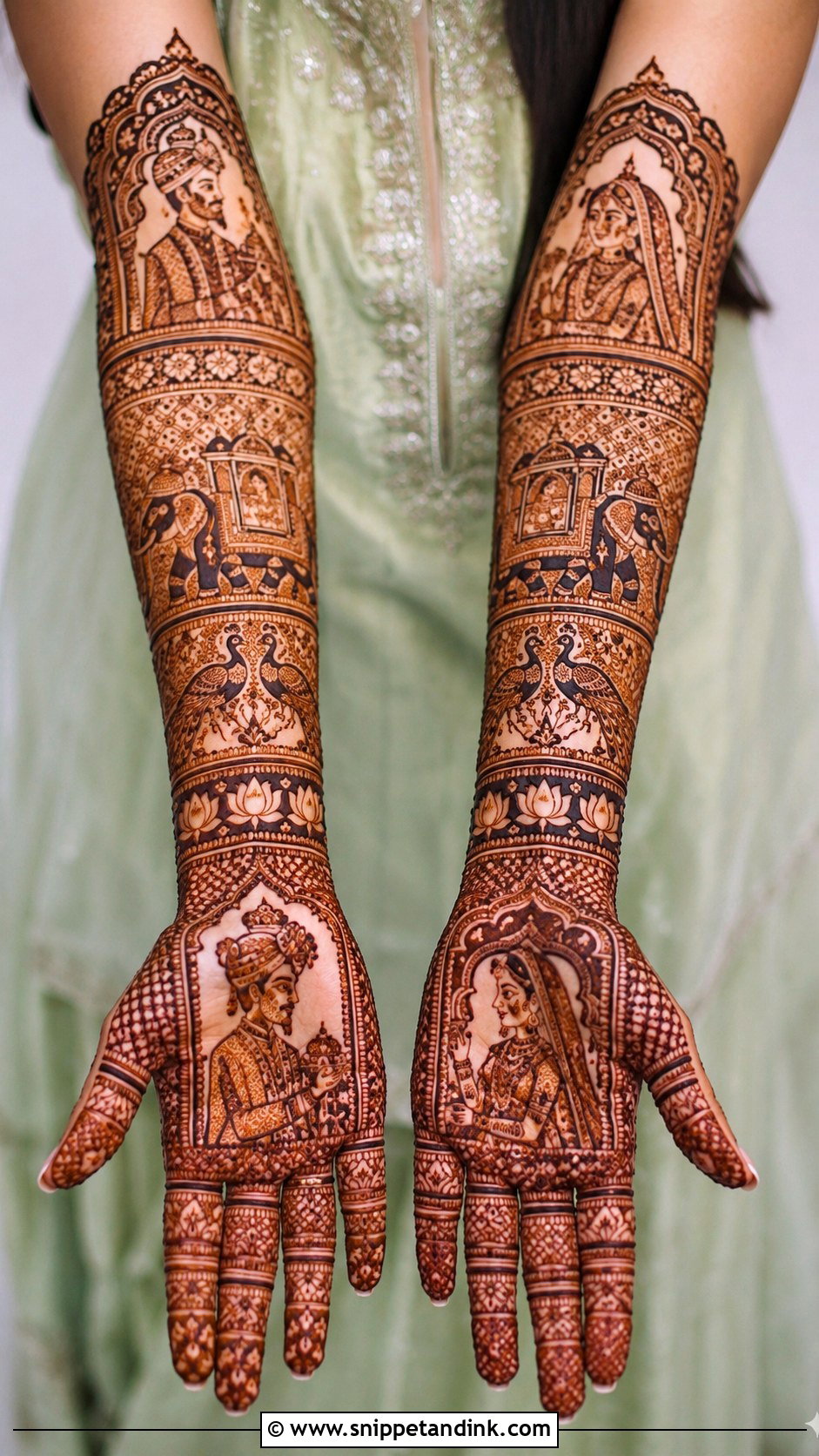
Rajasthani bridal mehndi design is storytelling work: bride and groom figures, elephants, a palanquin, royal arches, peacocks and lotus scenes, usually symmetrical and often running from fingertips to elbows. With this many small figures, clean linework is the difference between a story and a smudge, so I want a smooth, stringy paste and a fine cone tip. It sits naturally with red, maroon and gold outfits. I always suggest adding one personal element, initials or a symbol, so the scene is yours and not a copy.
5. Pakistani Bridal Mehndi Design
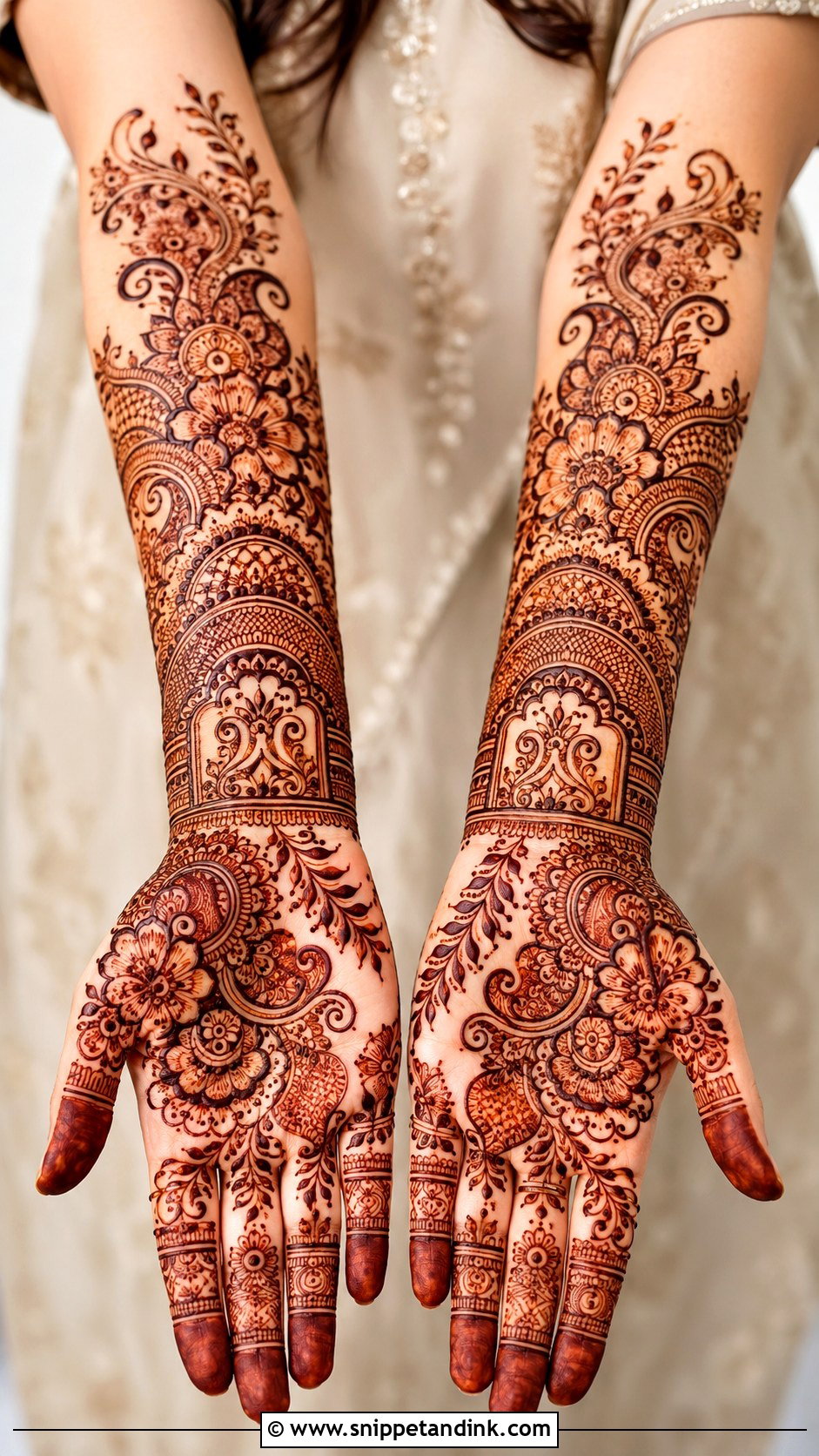
Pakistani bridal mehndi design usually blends Indian detail with Arabic flow: florals, paisleys, mandalas, leafy vines, bold outlines and fine inner shading, with some skin left visible for contrast. It suits a bride who wants heavy coverage that doesn’t feel packed. Shararas, ghararas and long sleeves pair naturally with it. To make it less expected, I like wrist-to-forearm panels framed like windows, matched with jaali on the back of the hand.
6. Moroccan Bridal Mehndi Design
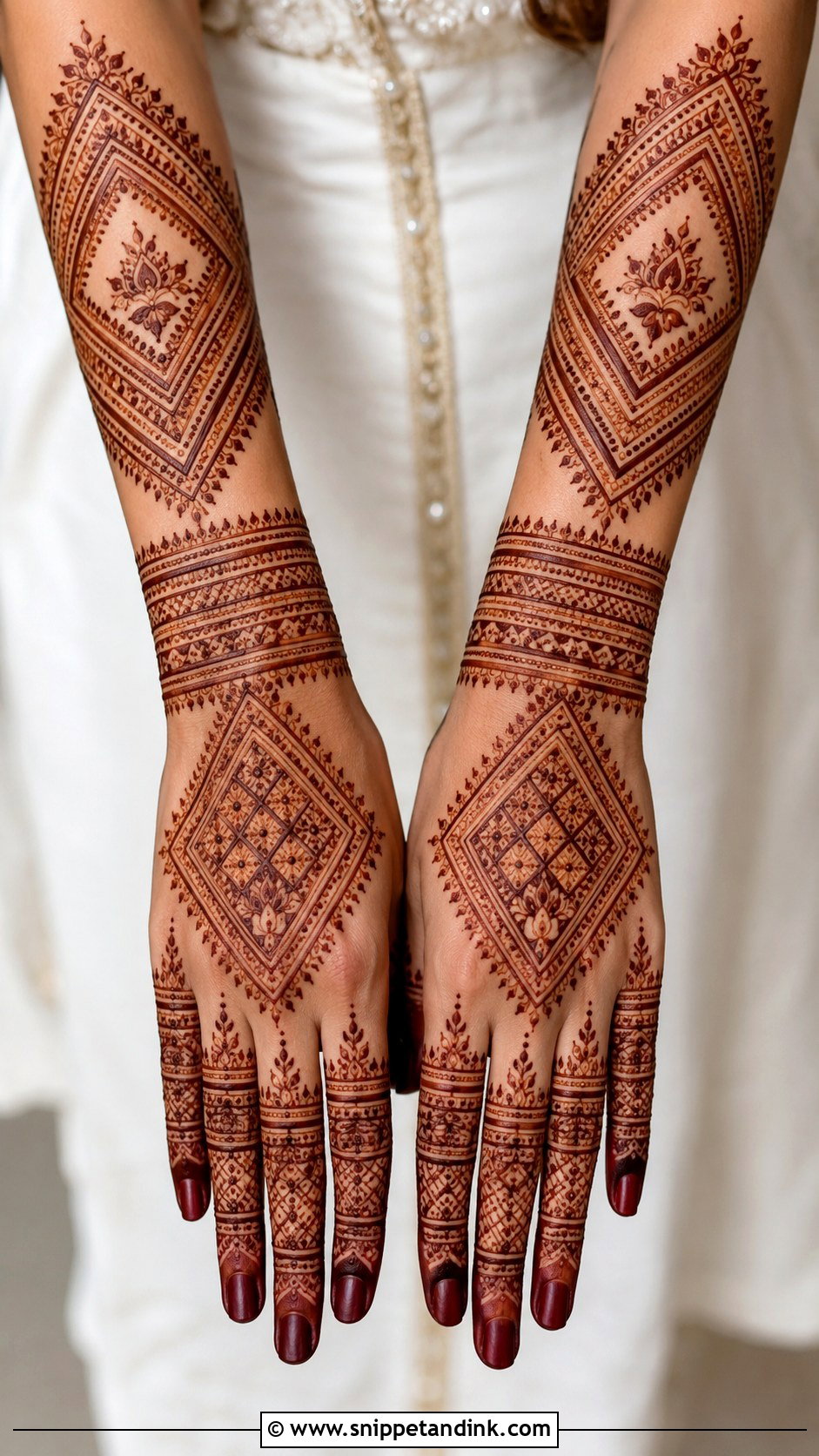
Geometry instead of flowers: diamonds, grids, triangles, lines, dots and structured bands. Moroccan work reads strongest on the back of the hand and forearm, where there’s flat space for a pattern to repeat. It’s unforgiving of drift, so I mark a few faint reference points before drawing and keep checking the spacing against them. If the full geometric look feels too hard for a wedding, small lotus or leaf accents soften it. It suits minimal jewelry and contemporary outfits.
7. Gulf Bridal Mehndi Design
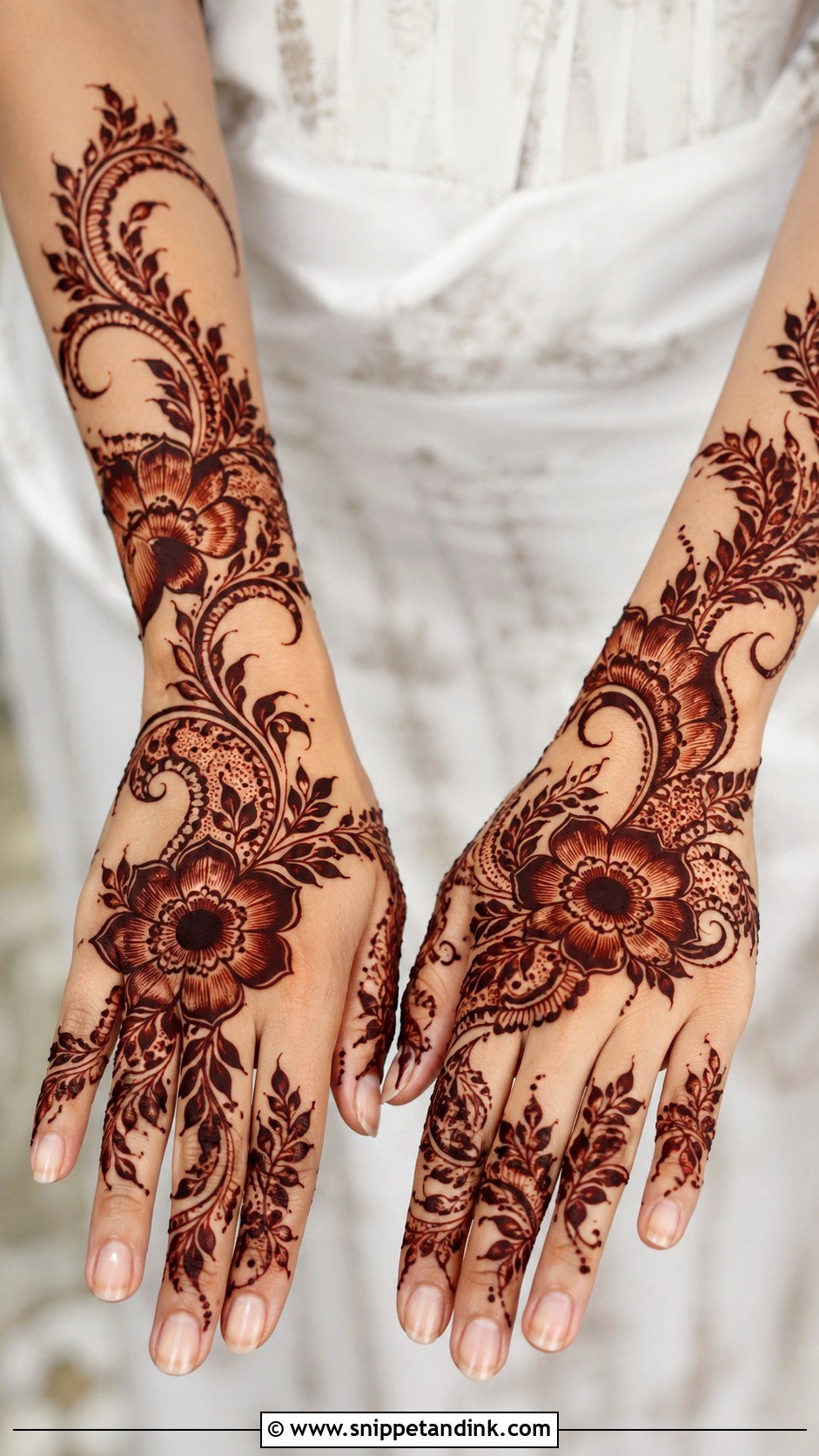
Khaleeji designs use big flowers, thick leaves and swirls with a lot of negative space, and the motifs are larger and more dramatic than fine-line styles. The pattern usually runs diagonally across the hand and on toward the wrist or forearm, with deeply shaded petals and finger accents. Because the shapes are large, they stain evenly and read clearly in photos. It’s a comfortable choice for a bride who wants impact without a full day of dense filling.
8. Minimal Bridal Mehndi Design
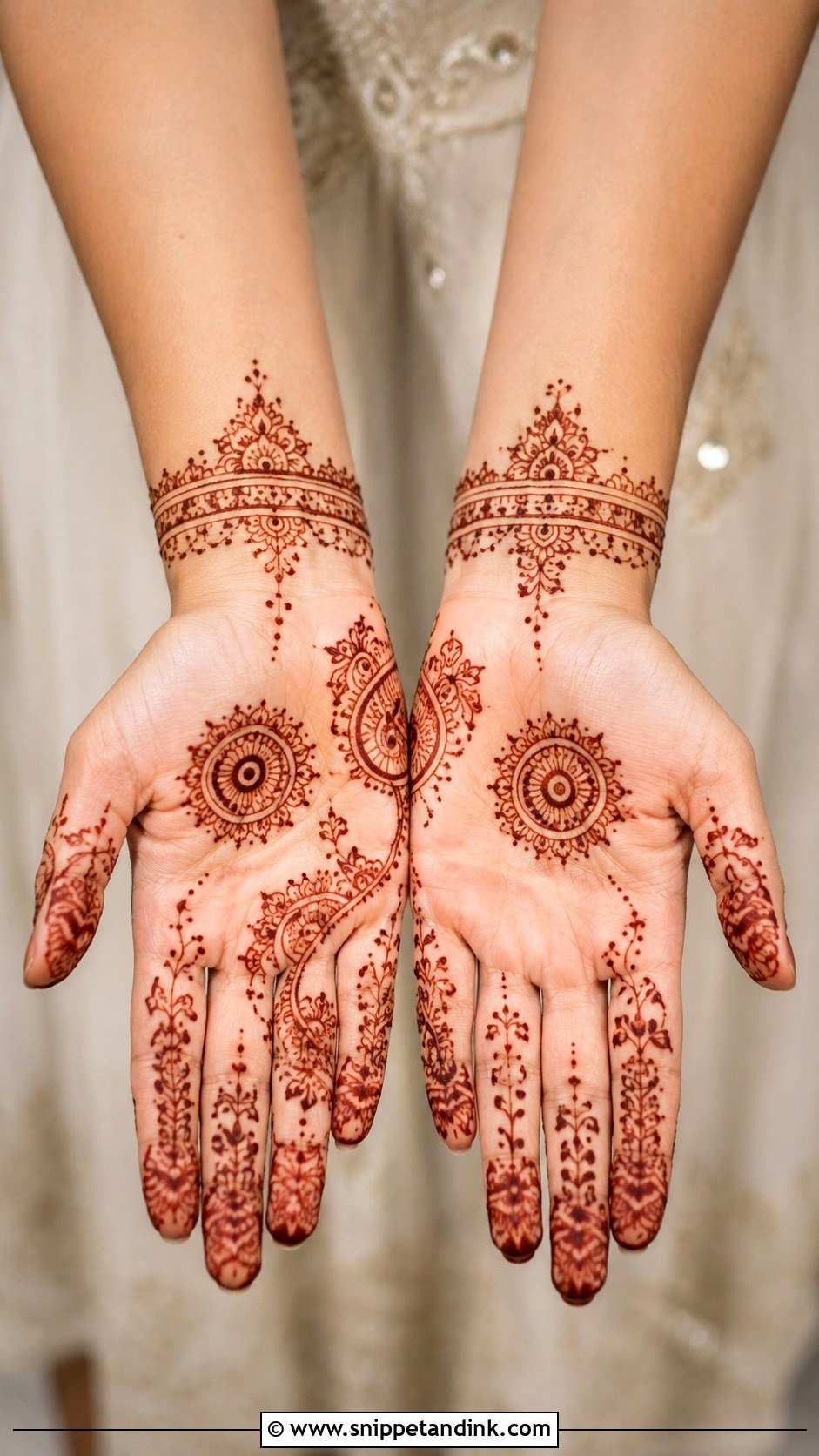
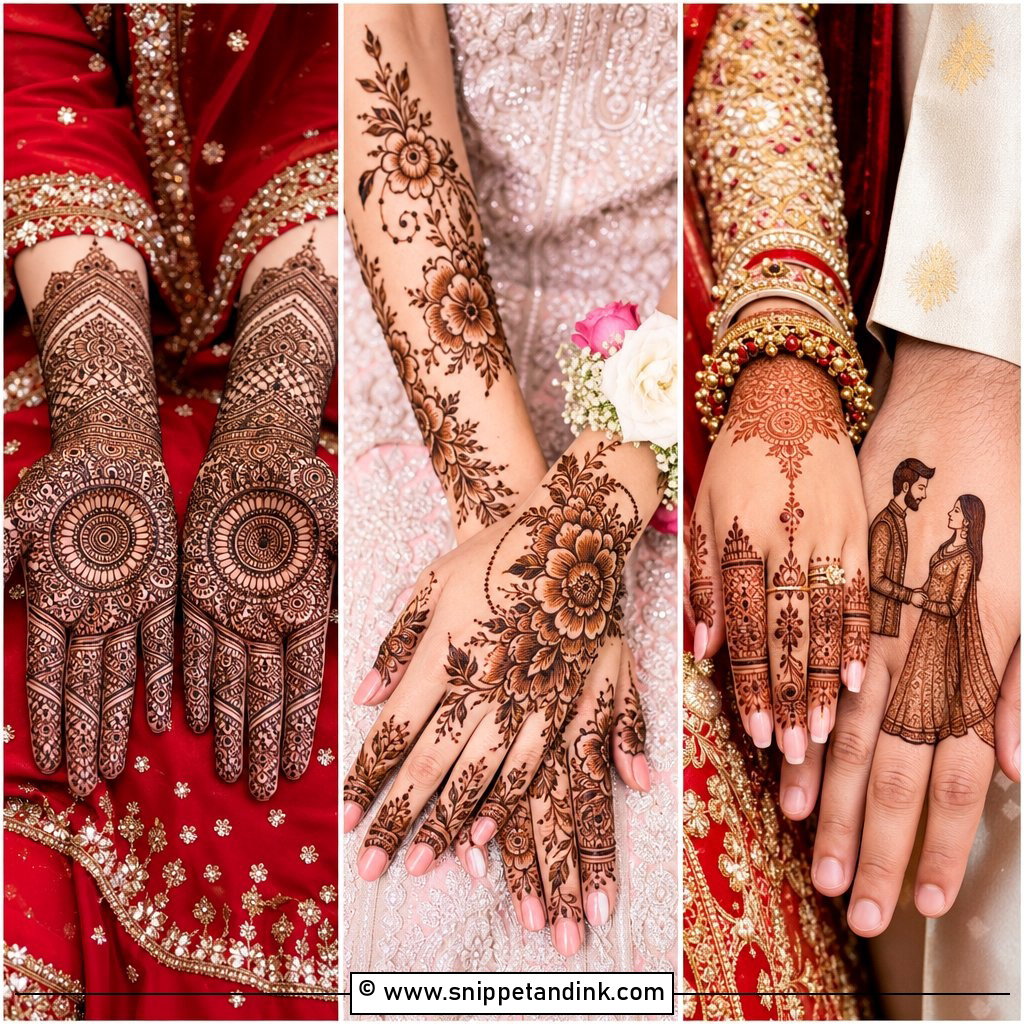
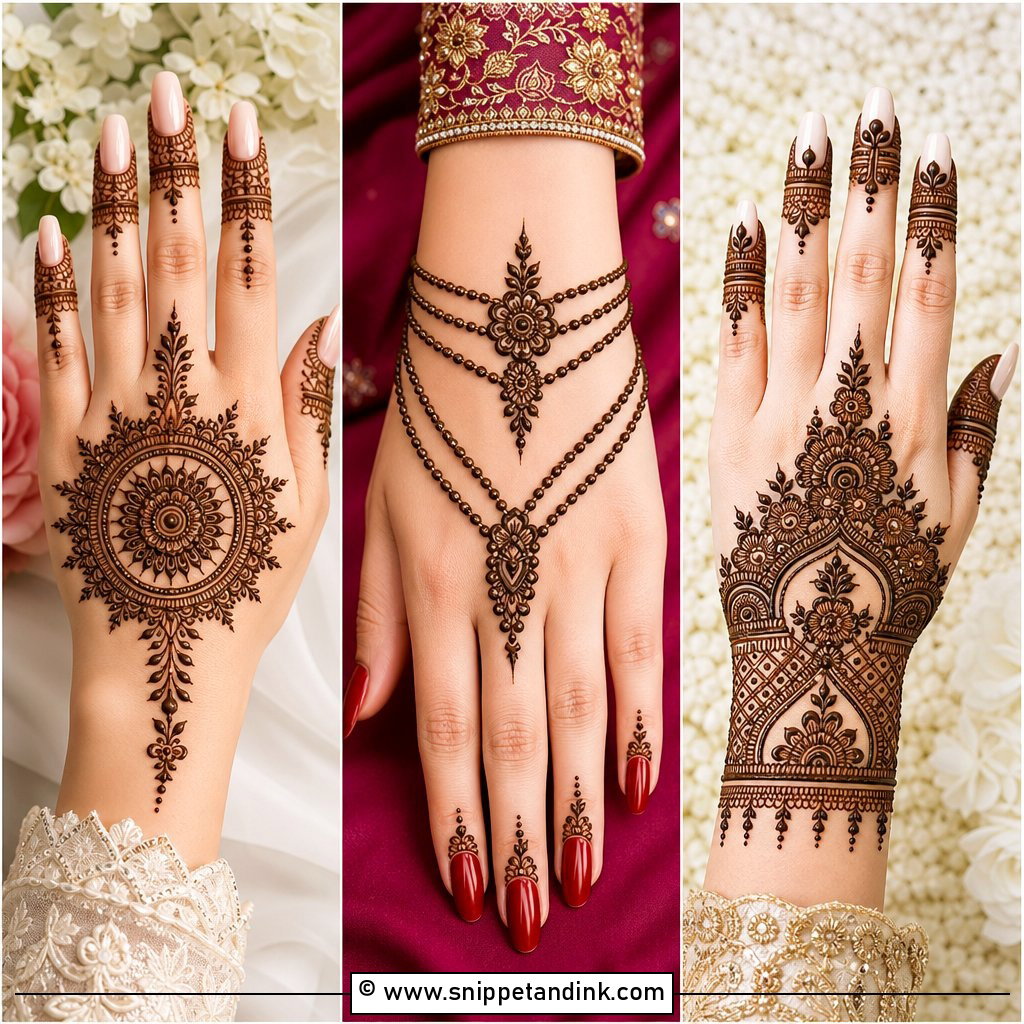
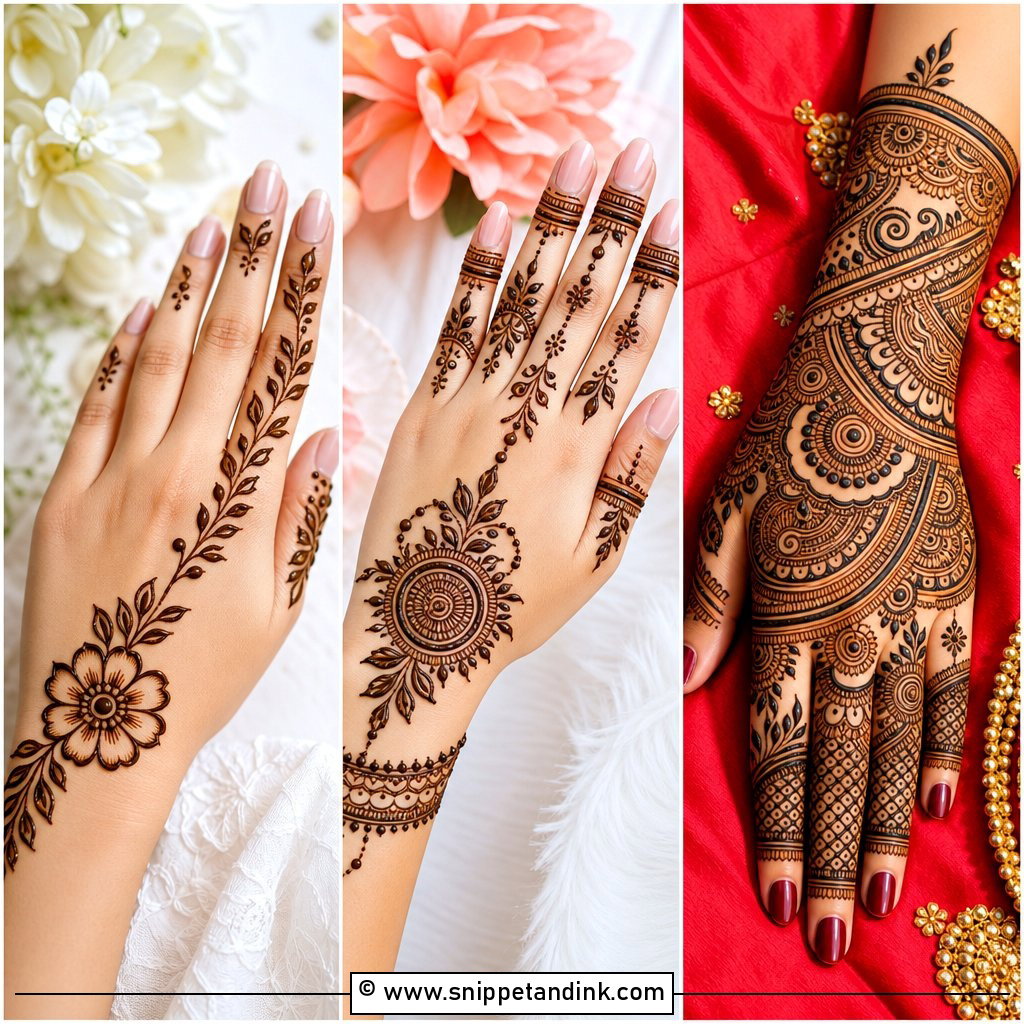
Minimal bridal work picks its spots: the center of the palm, the fingers, the wrist, the back of the hand. Tiny mandalas, fine florals, dainty vines, small paisleys and delicate cuffs do the work, and the bare skin around them lets rings and nail color show. It fits courthouse ceremonies, intimate weddings and destination trips. To keep it from looking like a guest design, I insist on symmetry, very neat fingertips and one small personal detail. Without those three, minimal can tip into unfinished.
9. Bridal Mandala Mehndi Design
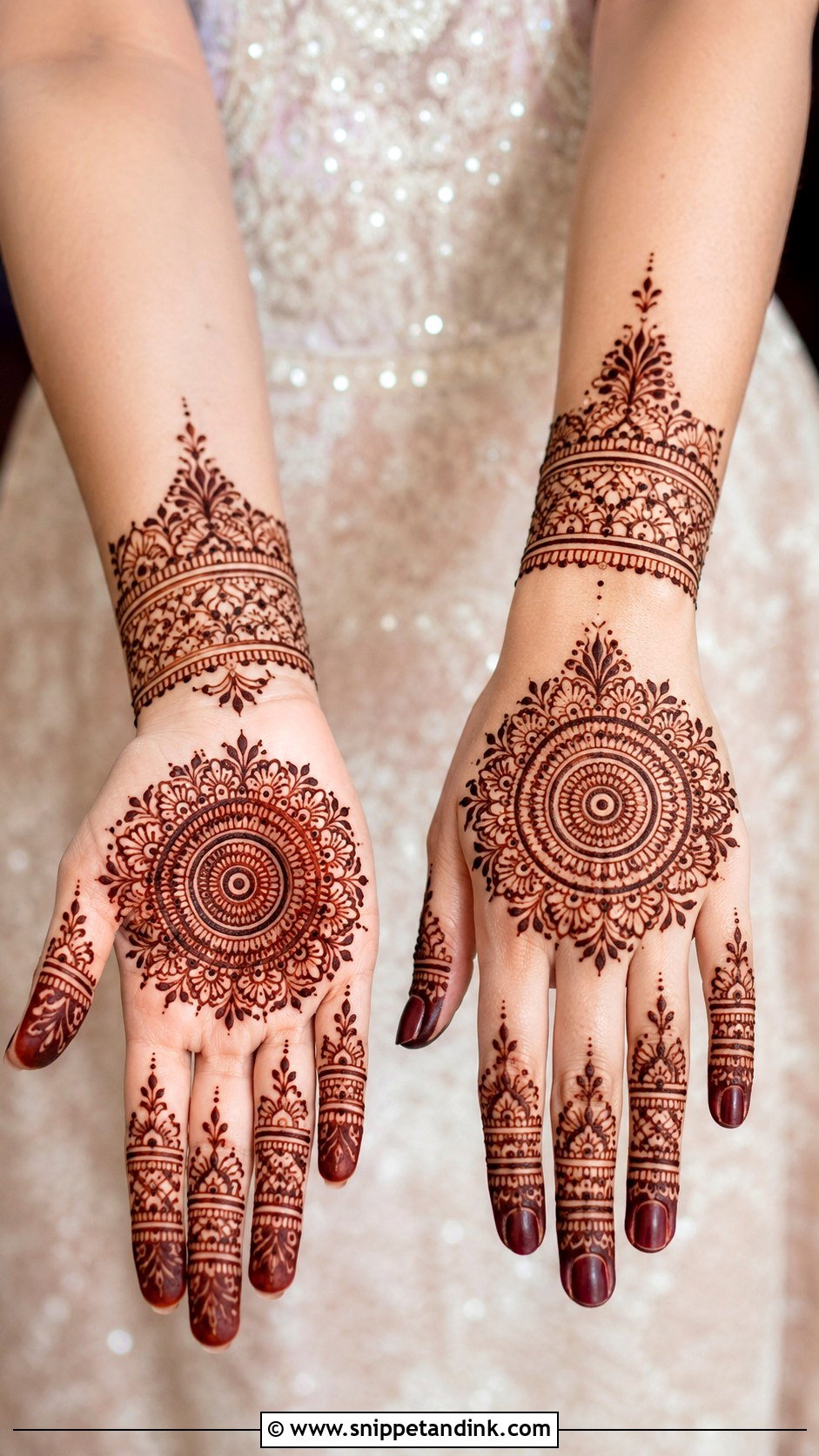
A mandala gives the hand one clear focal point instead of scattered motifs. The circle sits on the palm or the back of the hand, ringed with petals, dots and fine borders; for a bride I add layered rings, small paisleys, wrist cuffs and floral extensions. It works at minimal or full-hand scale. The circle has to be genuinely round and even, because it’s the first thing anyone sees, so I draw it in quarters and check each against the others.
10. Bridal Portrait Mehndi Design
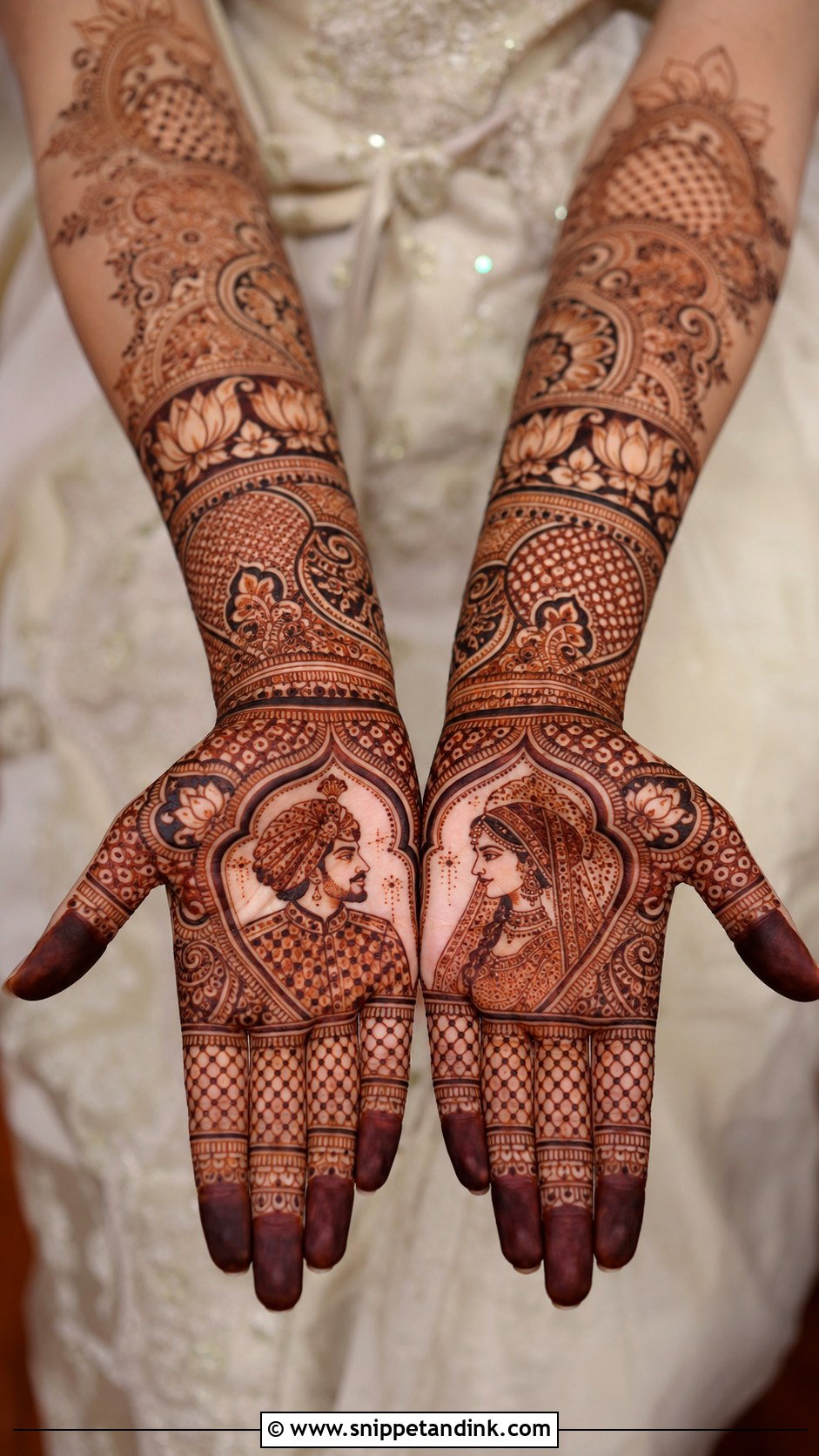
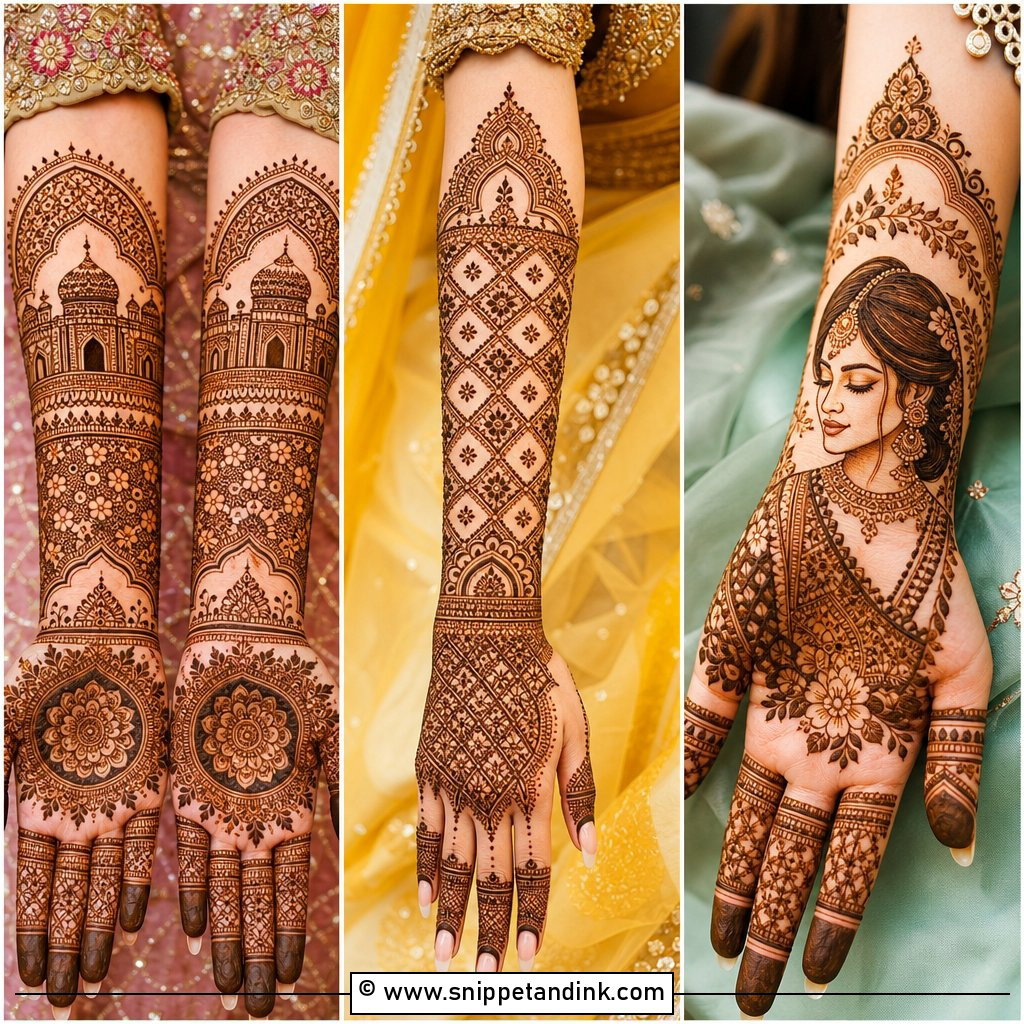
Portrait work can show the bride and groom, a varmala moment, the doli or small symbolic figures, usually on the palms with paisleys, jaali, lotus and peacocks around them. Faces need an experienced hand. Ask to see an artist’s past portraits up close, in stained photos rather than fresh paste, because fine facial lines blur as henna darkens. I keep everything around the portrait neater and slightly lighter so the faces stay the focus.
11. Peacock Bridal Mehndi Design
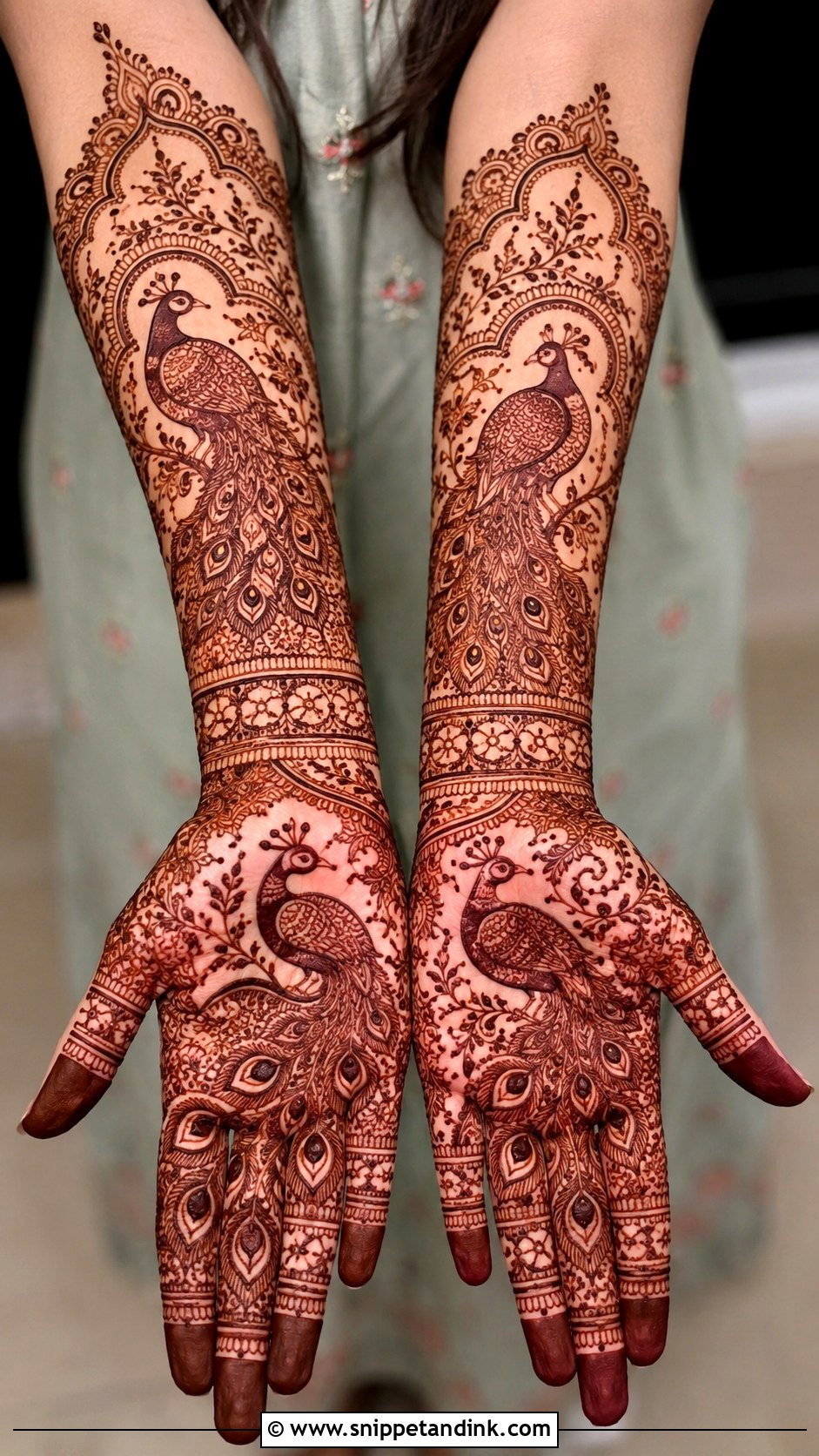
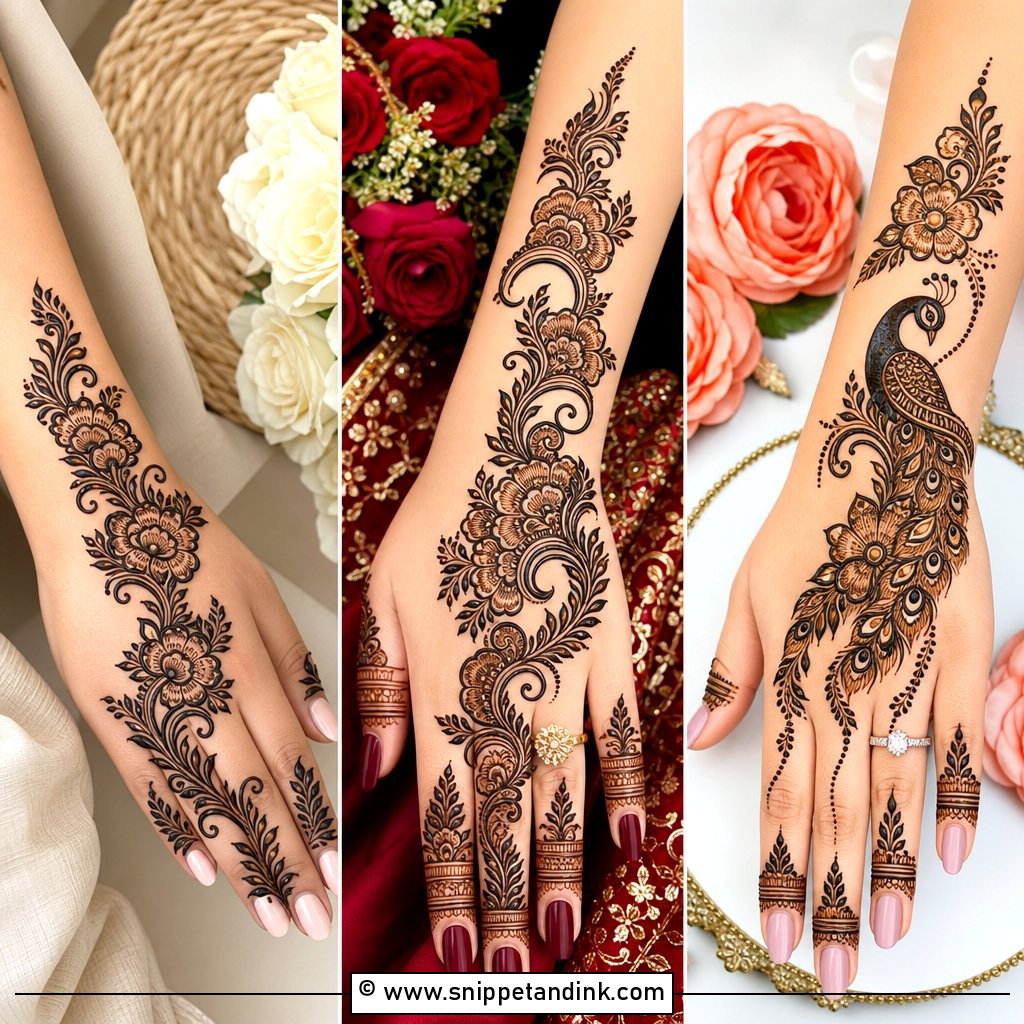
Peacocks can be drawn across the palm, back of the hand, wrist or forearm, with their feathers flowing into paisleys, florals and leafy trails. A mirrored pair across both hands looks balanced when you hold them together; one large bird running up each arm feels more dramatic. I add fine feather lines, shaded curves and tiny dots for movement. Keep the tail clear of your bangle line, or the most detailed part of the bird will be hidden all day.
12. Lotus Bridal Mehndi Design
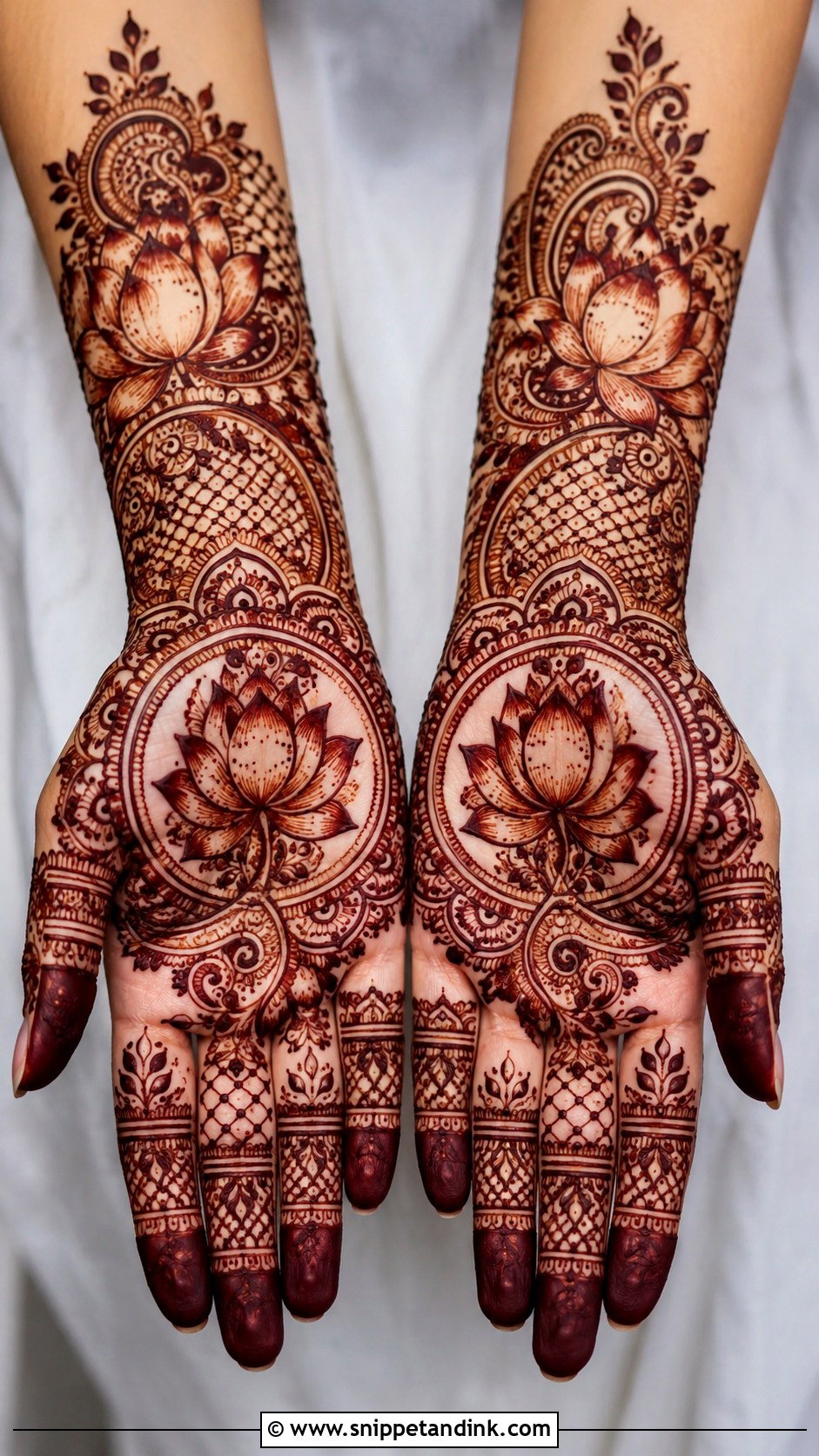
Lotus is one of the easiest motifs to scale. Large blooms make a bold palm centerpiece; small lotus borders give a delicate cuff or forearm repeat. It combines with mandalas, jaali, paisleys and leafy vines, and shading the petals adds depth. I’d point a bride toward lotus when she wants something traditional that still feels fresh, since the rounded petals keep even a dense design soft. It works with pastel, ivory, red or gold outfits.
13. Jaali Bridal Mehndi Design
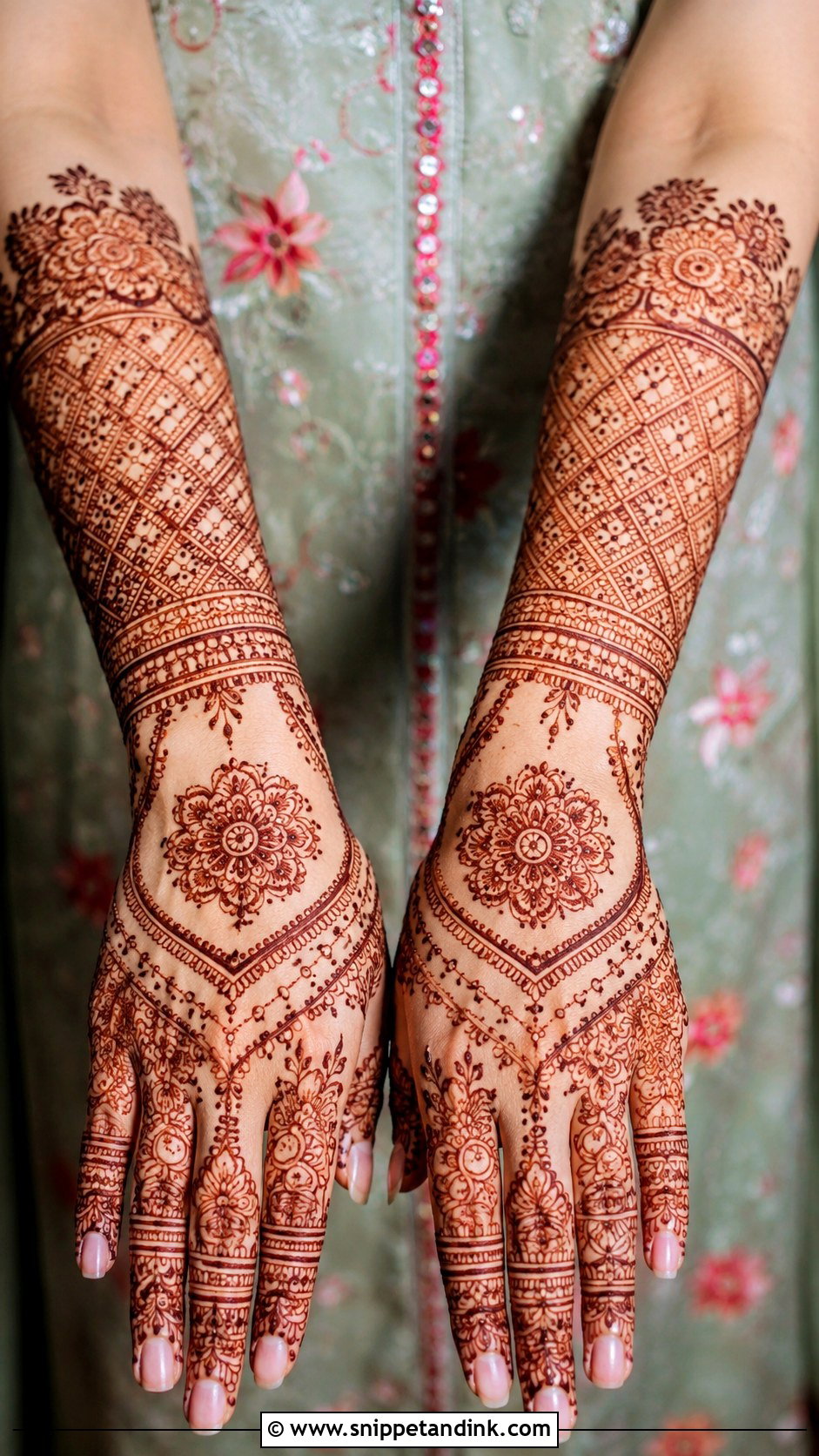
Jaali creates texture without weight, which is why it’s so useful on a bridal hand. The mesh can sit on the back of the hand, palm, wrist or forearm, broken up by flowers, paisleys, mandalas and bracelet borders. Small diamond mesh looks delicate; larger net panels feel bolder and more modern. Placed on the back of the hand, it frames rings and bangles well. The lines must be evenly spaced, and I keep the crossings thin so they don’t stain into dots.
14. Floral Bridal Mehndi Design
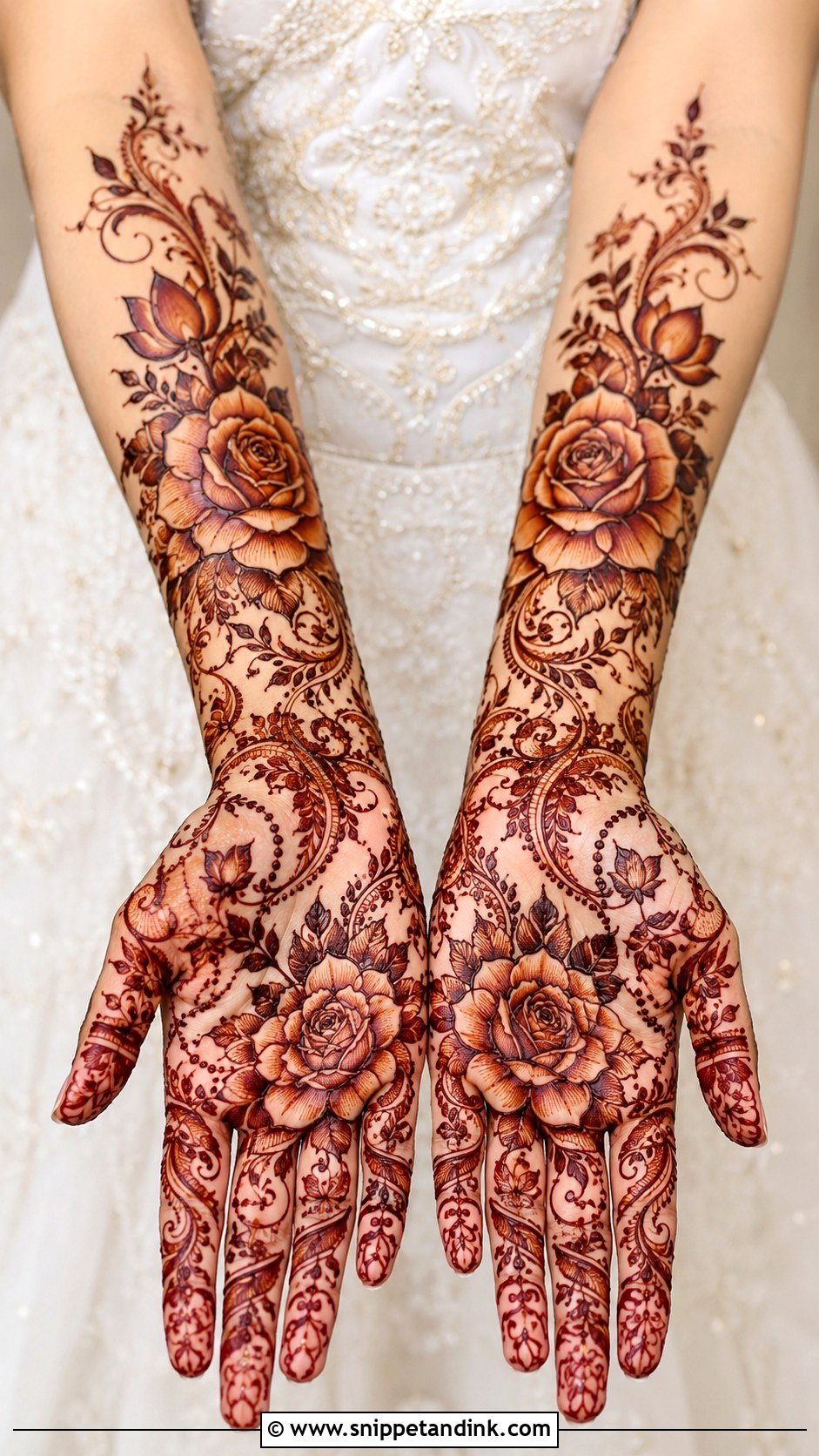
Florals are the most adaptable bridal design I draw. Big roses, lotus blooms, tiny blossoms, leafy vines and shaded petals can be simple or dense depending on size and spacing, and they work on the front, back or full arm. The mistake I see is the same flower stamped everywhere. Mixing one or two large blooms with fine filler and smaller buds gives the hand rhythm. Florals suit every skin tone and both traditional and pastel outfits.
15. Paisley Bridal Mehndi Design
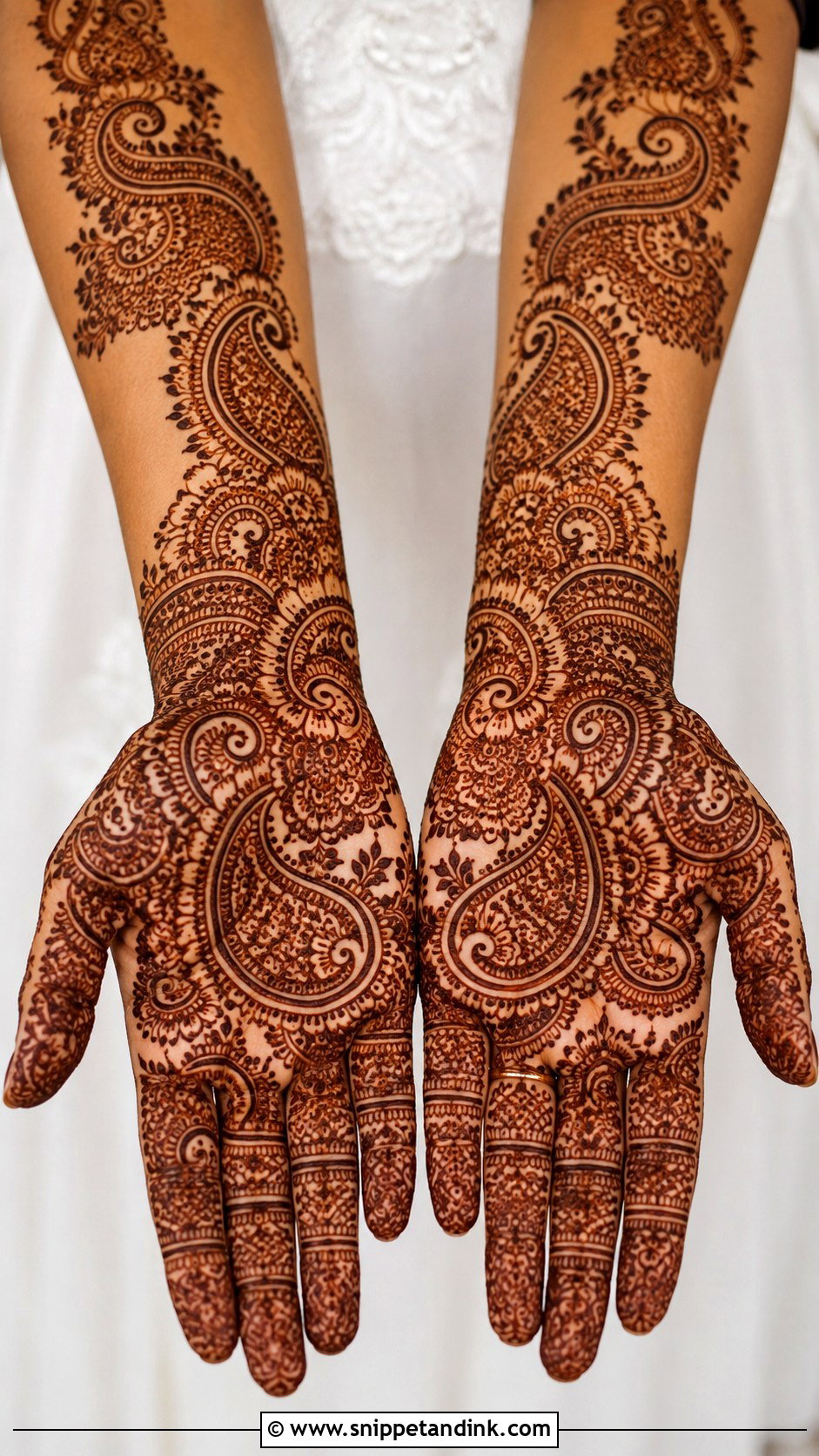
Paisleys fill a hand naturally, large and bold on the palm or small and repeated along the fingers, wrist and forearm, blending with flowers, leaves, dots, spirals and mandalas. Their curve leads the eye along the hand and makes it look longer. For a less predictable bridal finish, I mix thick paisley outlines with very fine inner detail. I also like the two hands coordinated rather than identical; small variations make it look drawn for you.
16. Back Hand Bridal Mehndi Design
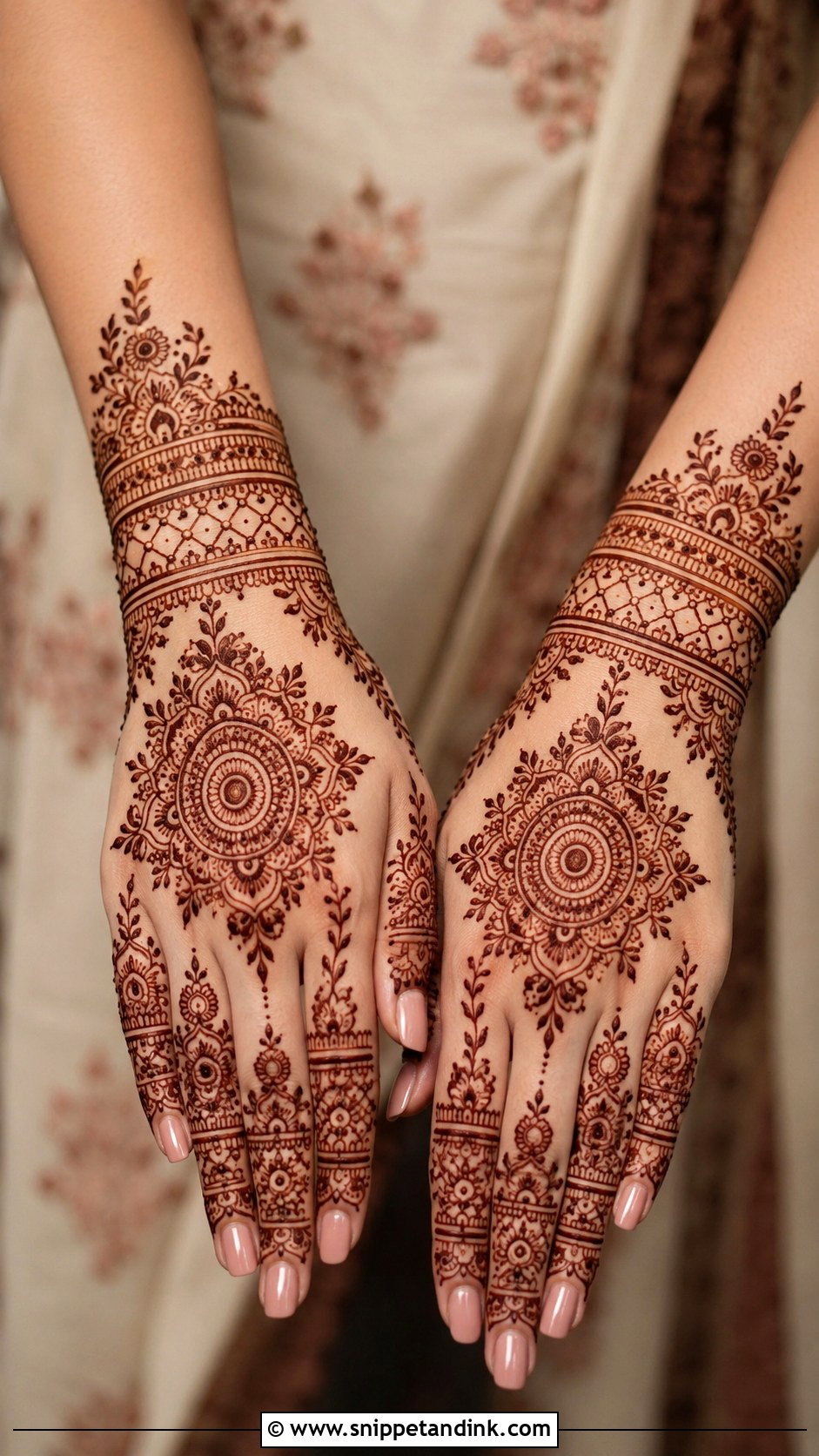
Back hand bridal mehndi design is in front of the camera constantly: ring shots, bangle ceremonies, rituals. It needs enough detail to feel bridal and enough space to let jewelry read. Mandalas, jaali panels, floral trails, bracelet cuffs and finger bands are the usual pieces, often around one central motif. If you’re wearing heavy rings or a hathphool, I keep the area around the knuckles more open. A diagonal Arabic layout looks modern; full coverage looks traditional.
17. Front Hand Bridal Mehndi Design
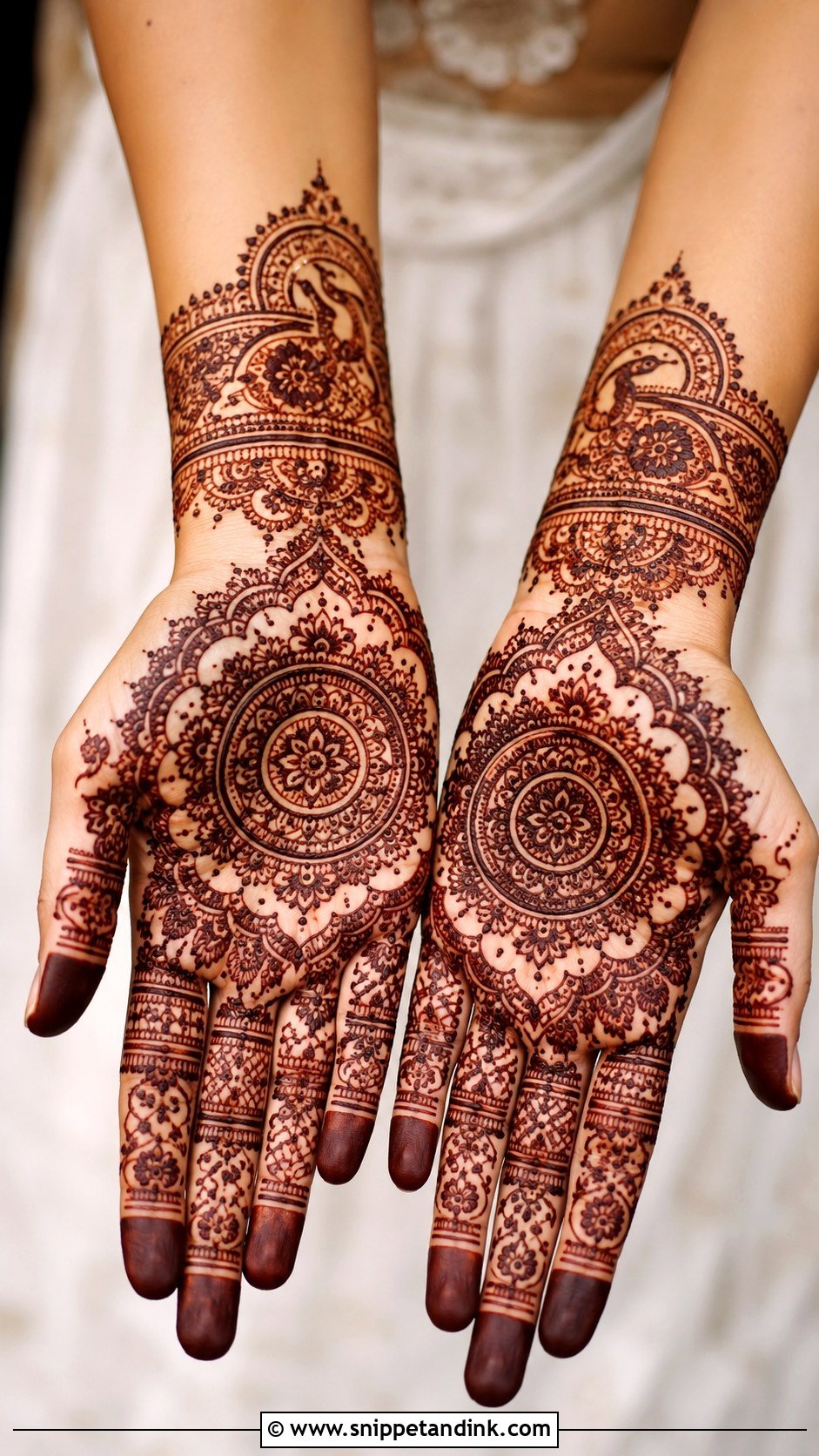
Front hand bridal mehndi design is what people see during most rituals, so the palm needs a clear centerpiece: a mandala, lotus, portrait, peacock, paisley or initials, with fine lines, leafy bands and small motifs along the fingers. Dense work feels traditional; open spacing feels modern. The palm also stains darkest of anywhere on the body, so leaving a little space between important motifs actually makes the color look richer, because dark areas don’t merge.
18. Bridal Mehndi Design With Initials
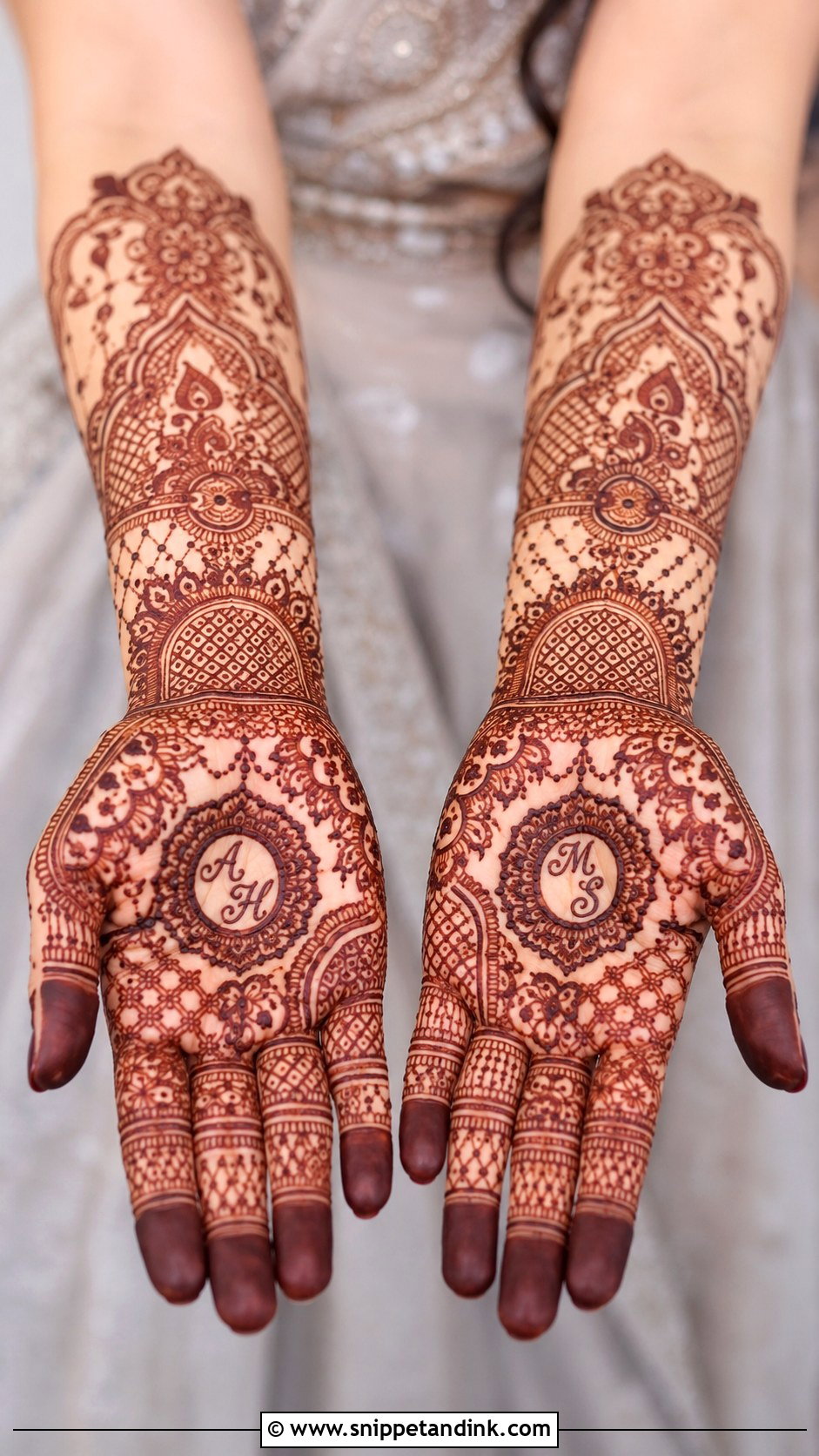
Bridal mehndi design with initials is the easiest way to personalize your henna. Letters can hide inside paisleys, mandalas, flowers, jaali panels, wrist cuffs or a tiny heart. Some brides want them obvious; others want one hidden letter for the groom to hunt for. I size initials just large enough to survive the stain spreading, since thin letters close up as the color deepens. A wedding date in a small wrist band goes well with them.
19. Bridal Mehndi Design With Wedding Date
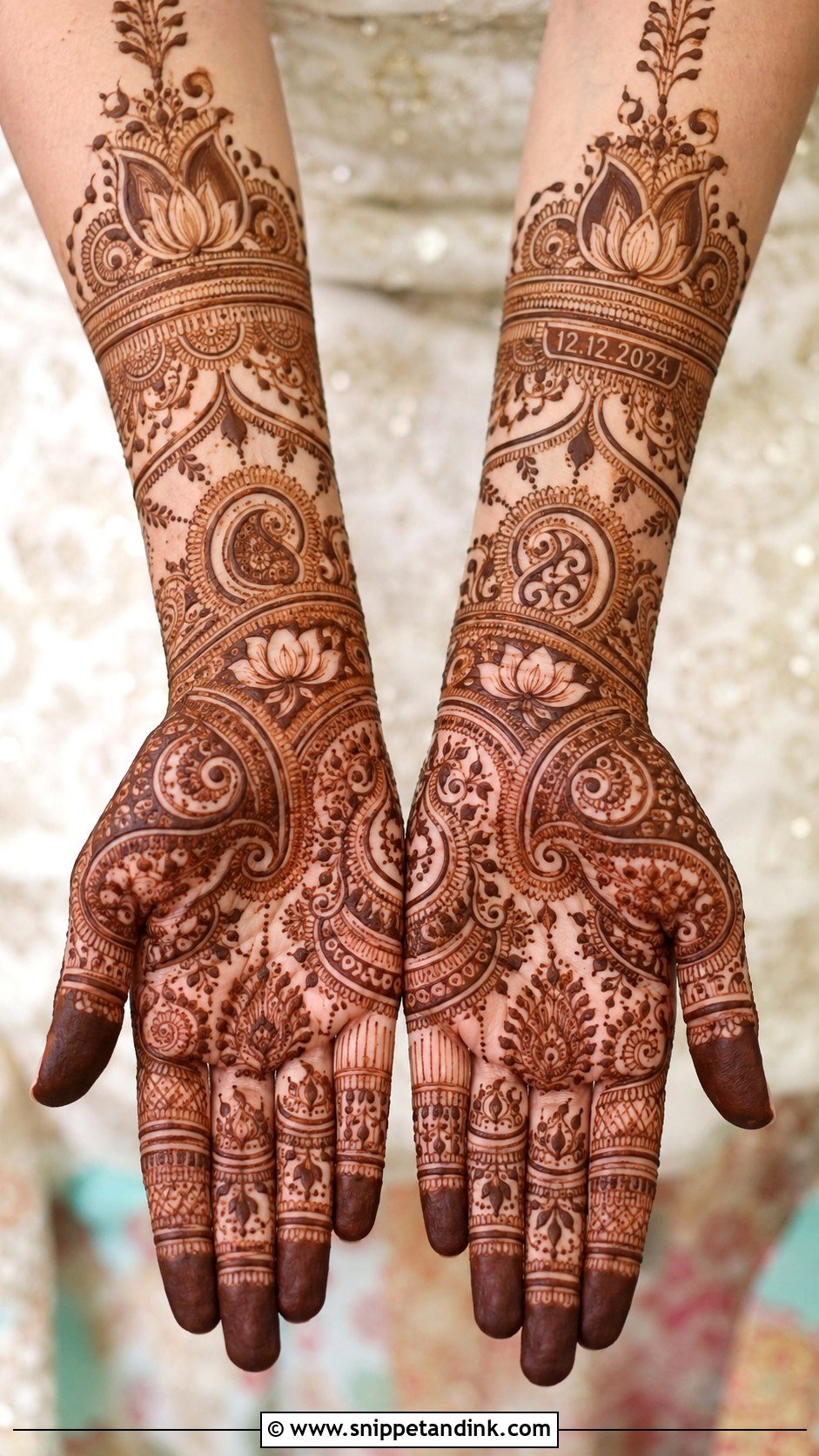
A wedding date is a quieter personal touch than a portrait. It can sit in the wrist band, a forearm border, a corner of the palm or inside a floral frame, while the rest of the design stays traditional. Numbers are trickier than they look in henna. A 6, 8, 9 and 0 can fill in and look alike once stained, so I draw them a little larger with open loops and slightly wider spacing than I would on paper.




20. Love Story Bridal Mehndi Design
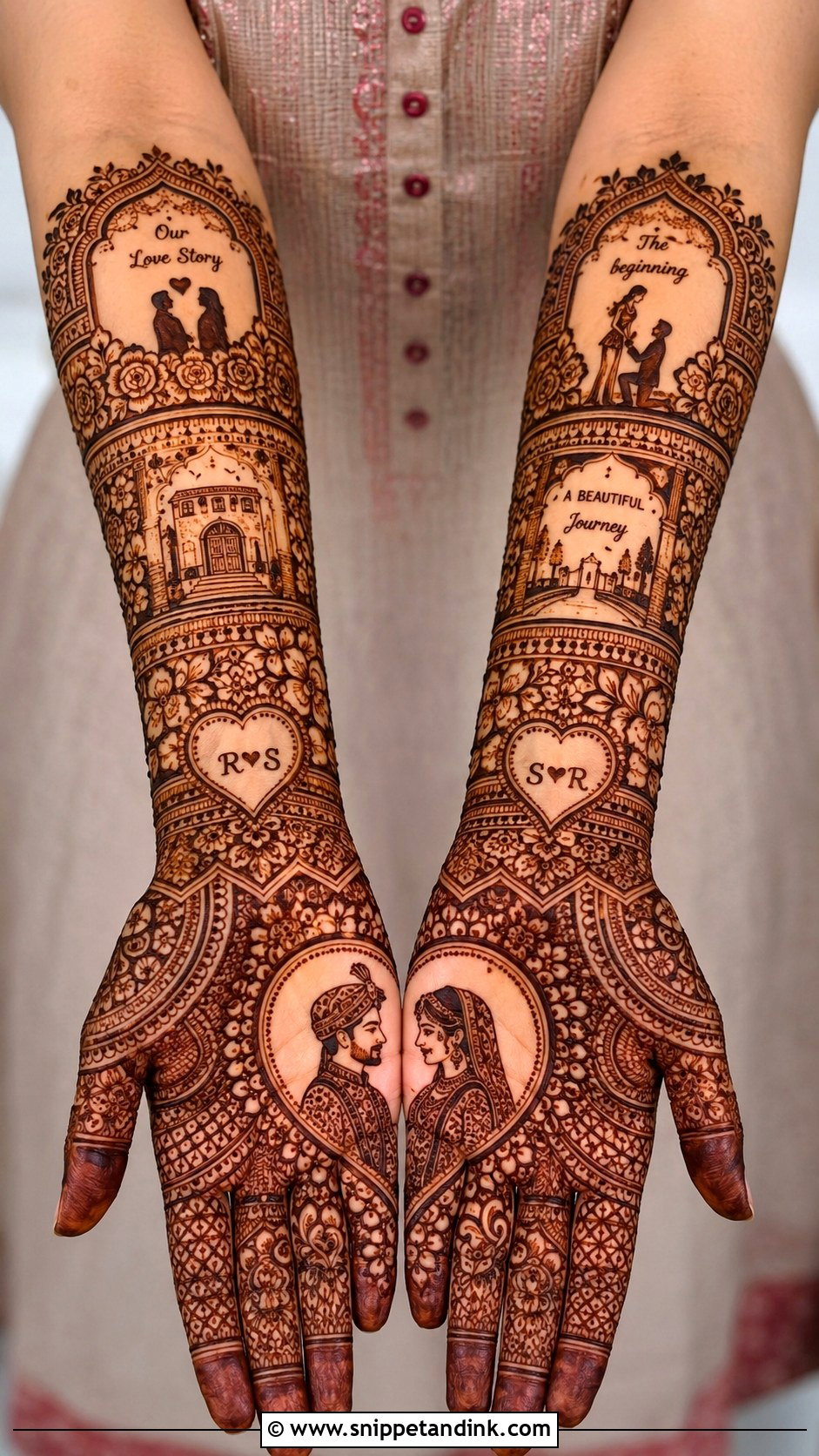
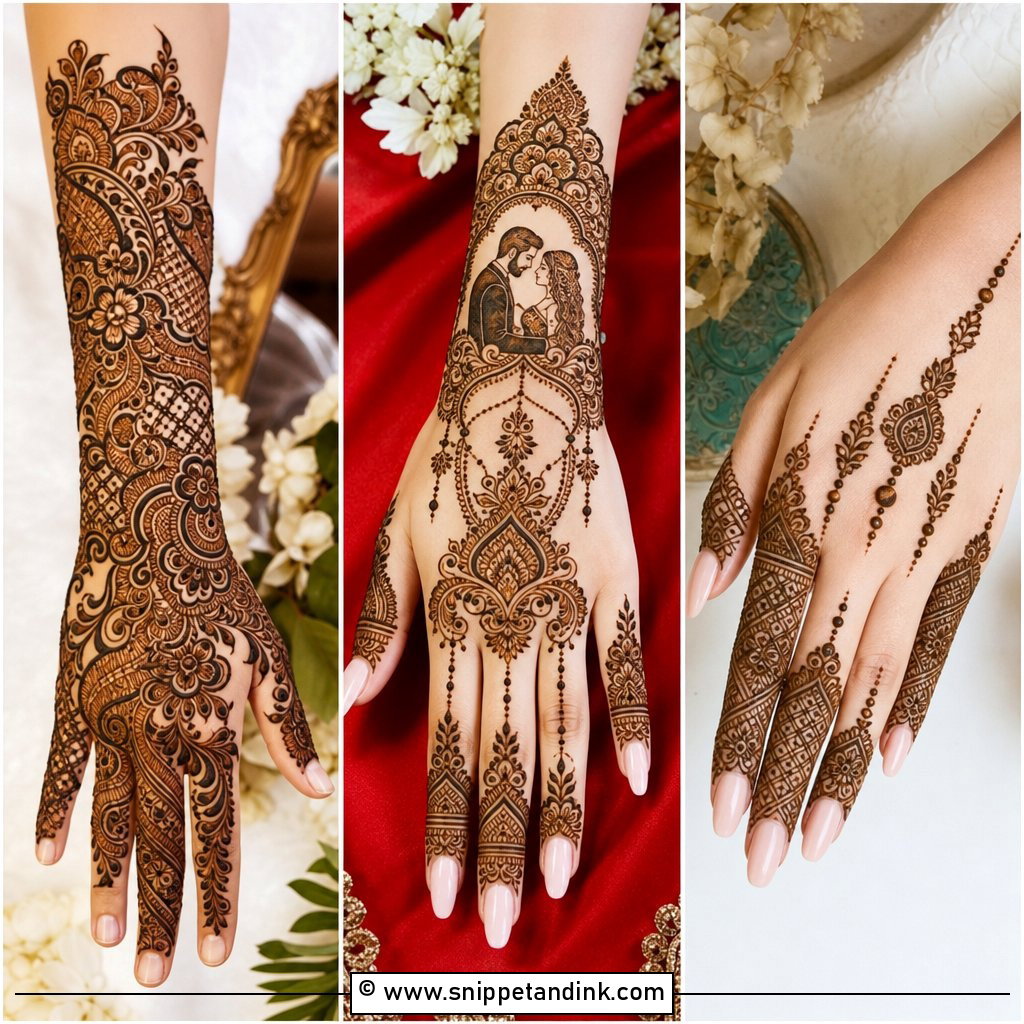
A love story bridal mehndi design turns your hands into a small memory book: proposal symbols, travel details, shared hobbies, the venue, initials, dates or a little scene of the two of you. The palms hold the story and the forearms carry florals, paisleys and mandalas around it. It only works with a plan. Send your artist the list of icons in advance, keep each one simple, and accept that a few may need to be dropped so the whole hand still reads as one design.
21. Bracelet Bridal Mehndi Design
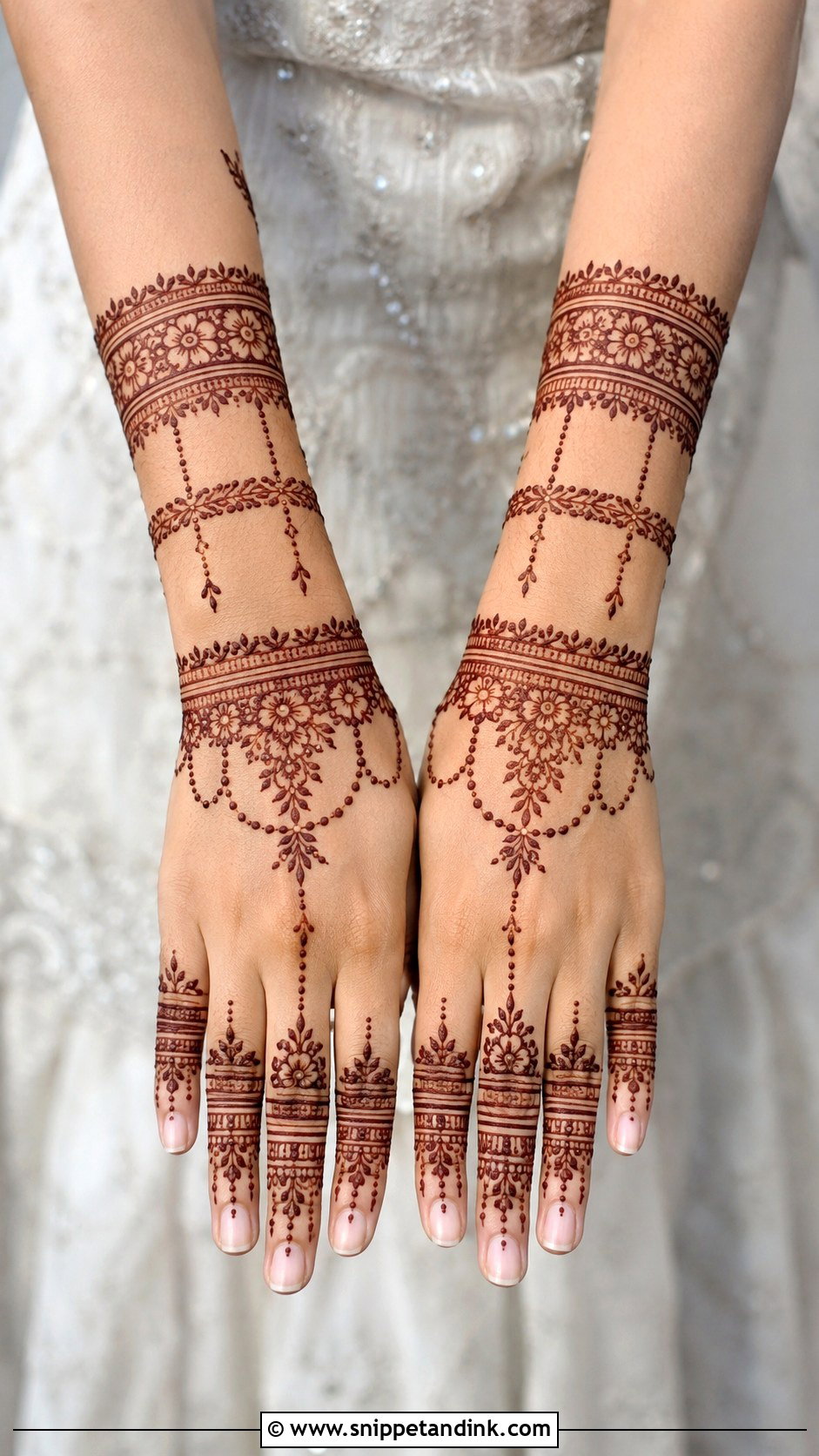
Bracelet designs dress the wrist and forearm like jewelry: stacked cuffs, chain details, dots, floral bands, leafy borders and ring-style finger extensions. They complement bangles rather than fighting them. Pair the wrist work with a palm mandala or a floral trail on the back of the hand, and add more cuff layers toward the forearm for a fuller look. With long sleeves, a shorter bracelet set looks complete on its own.
22. Finger Bridal Mehndi Design
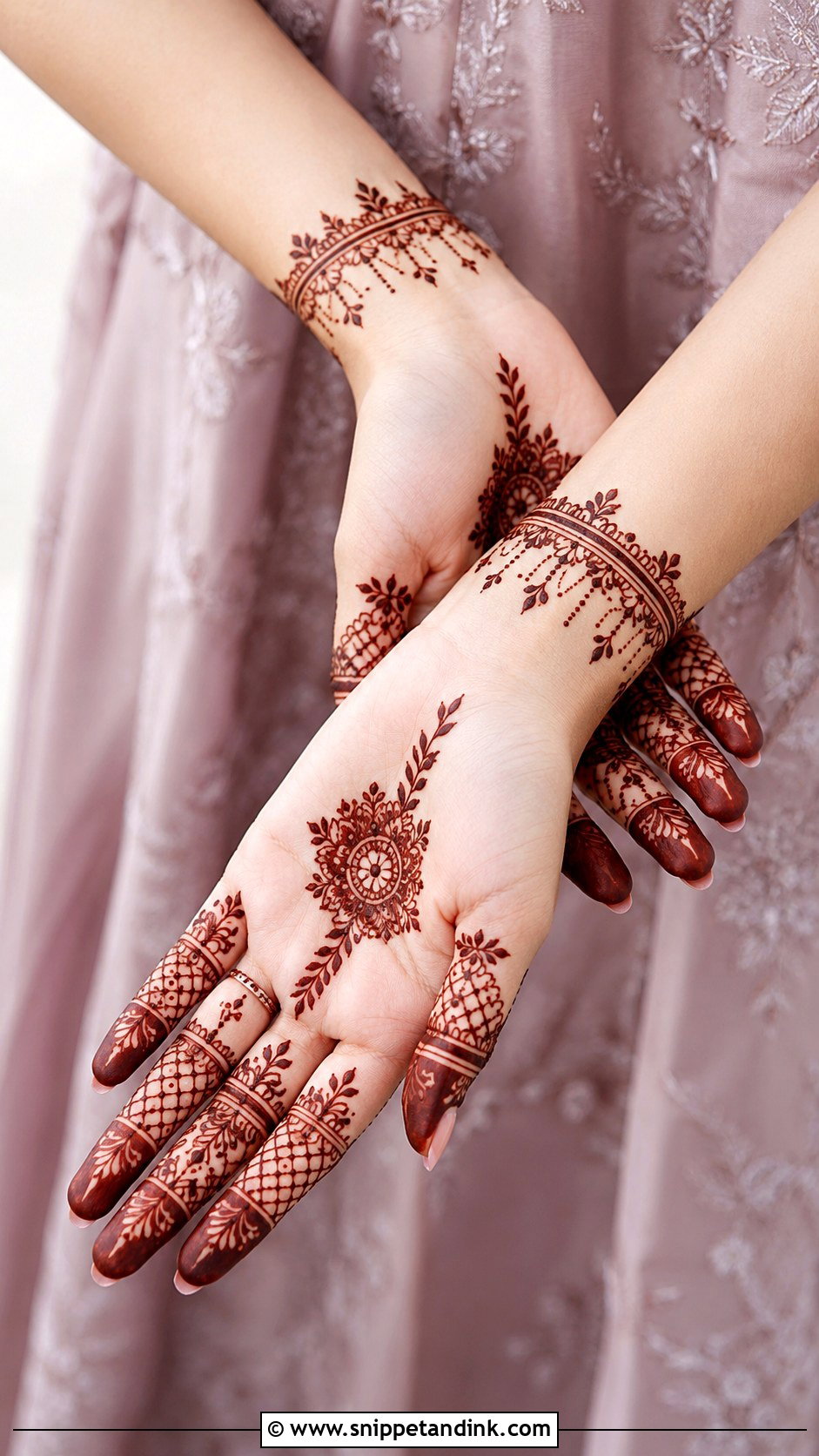
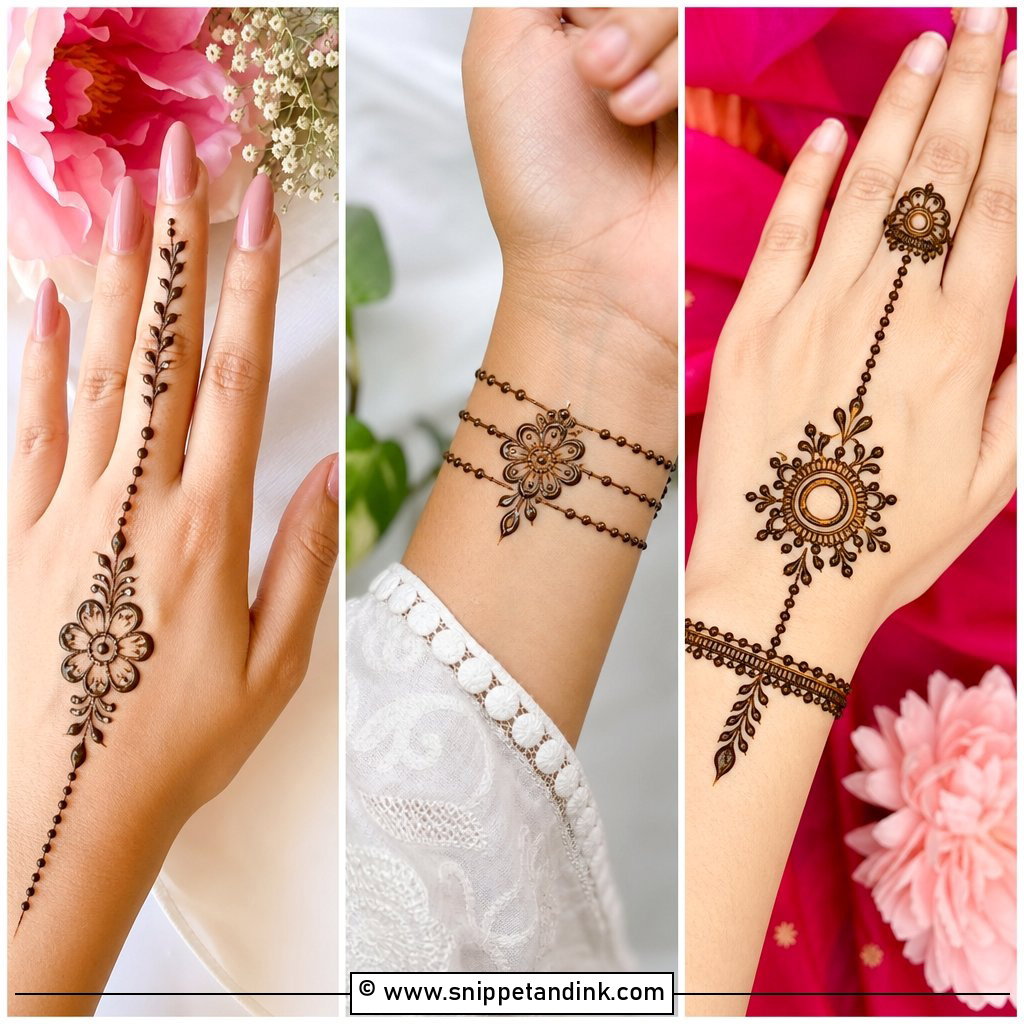
Finger-focused designs keep the palm or back of the hand open and put the detail into leafy bands, tiny florals, net patterns, dots, bold tips and ring-like details. It’s light and practical, especially for an engagement or a bride wearing statement rings. Fingers are narrow, so every wobble shows; this is a design where I go slowly and use the finest tip I have. A small mandala, side floral trail or wrist bracelet ties it together.
23. Dulhan Bridal Mehndi Design
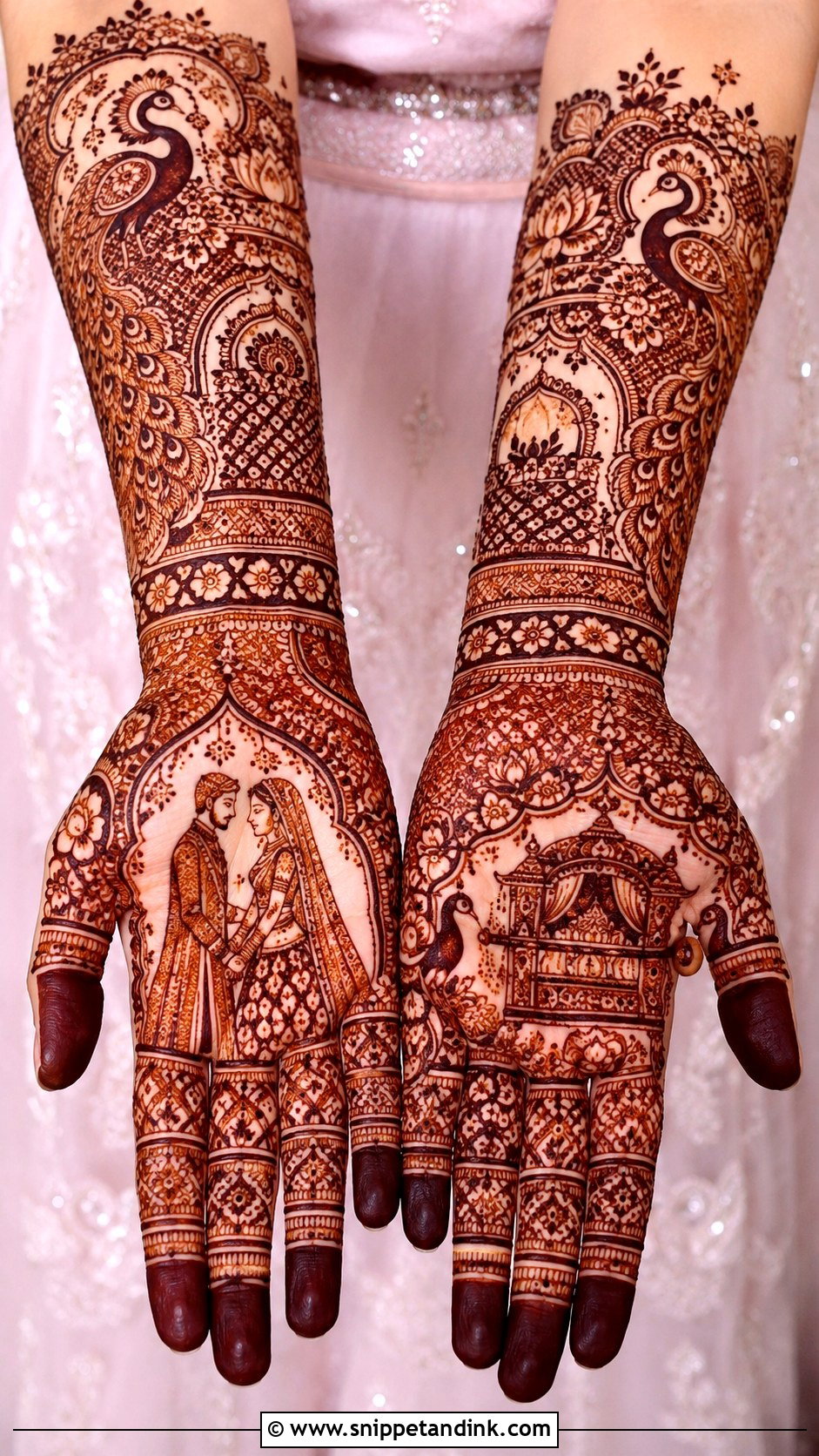
The dulhan design is the full bridal look most people picture: both hands, usually to the elbows, with bride and groom figures, paisleys, peacocks, lotus, doli art, mandalas and fine filler. It is long work and it needs sections. I plan palms, wrists, fingers and arms as separate zones, each with its own clear focal point, so the overall effect is rich rather than crowded.
24. Modern Bridal Mehndi Design
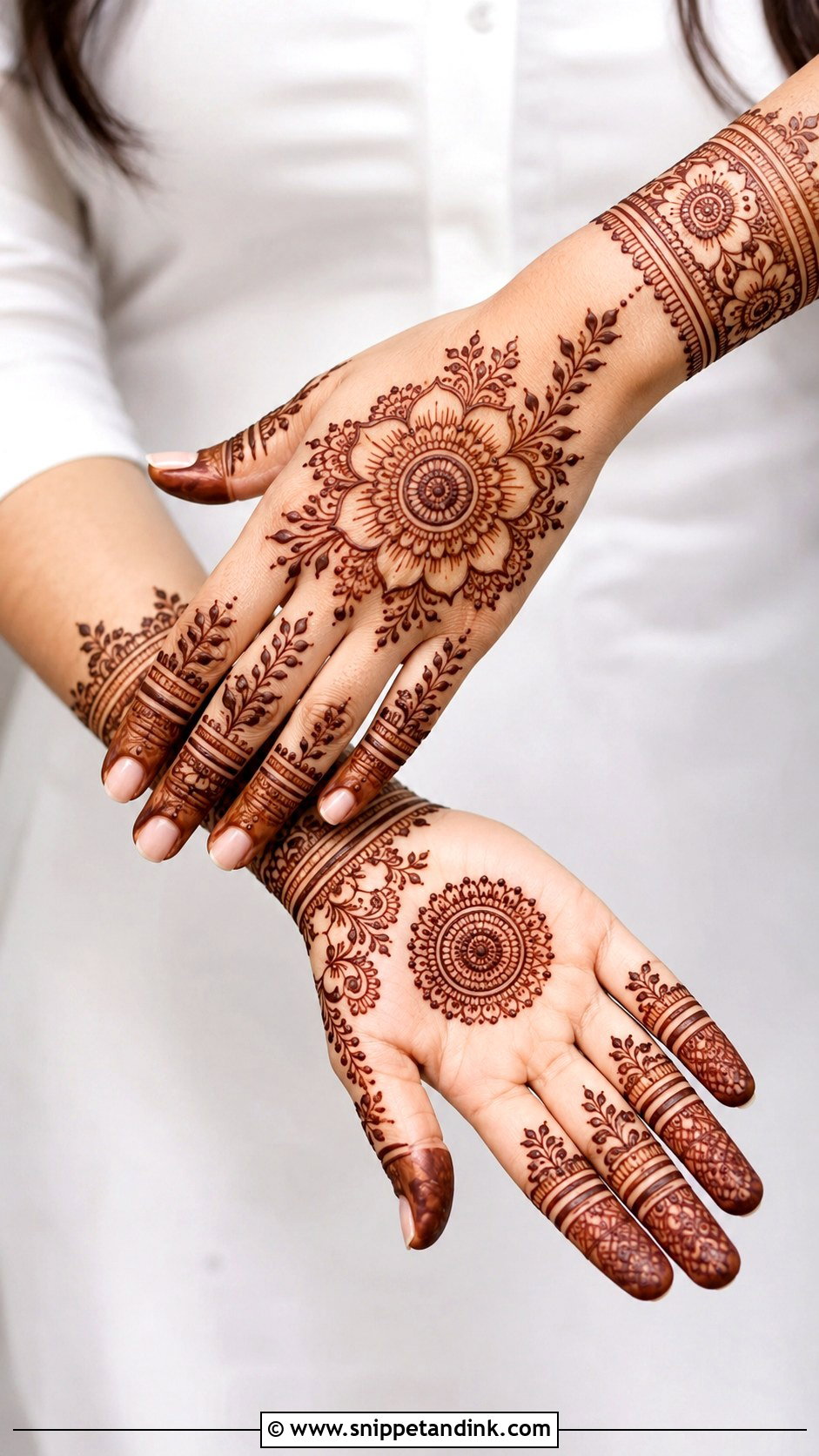
Modern bridal mehndi keeps paisley, lotus and mandala but gives them room: open spaces, bold florals, geometric bands, fine vines, sometimes half-hand coverage and a personal symbol. It suits destination weddings, pastel outfits and receptions. The danger with fewer elements is lopsidedness, because one hand can easily end up heavier than the other. I compare both hands side by side several times during the session.

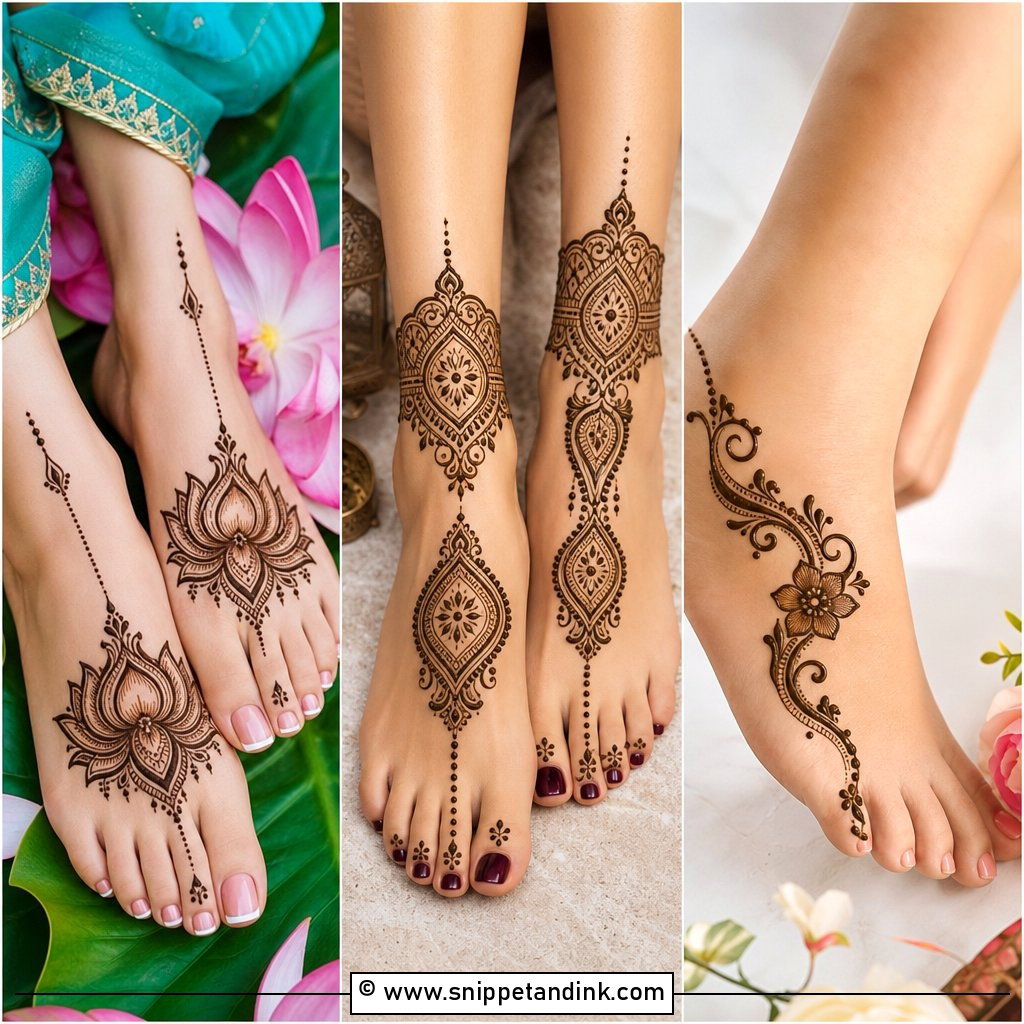

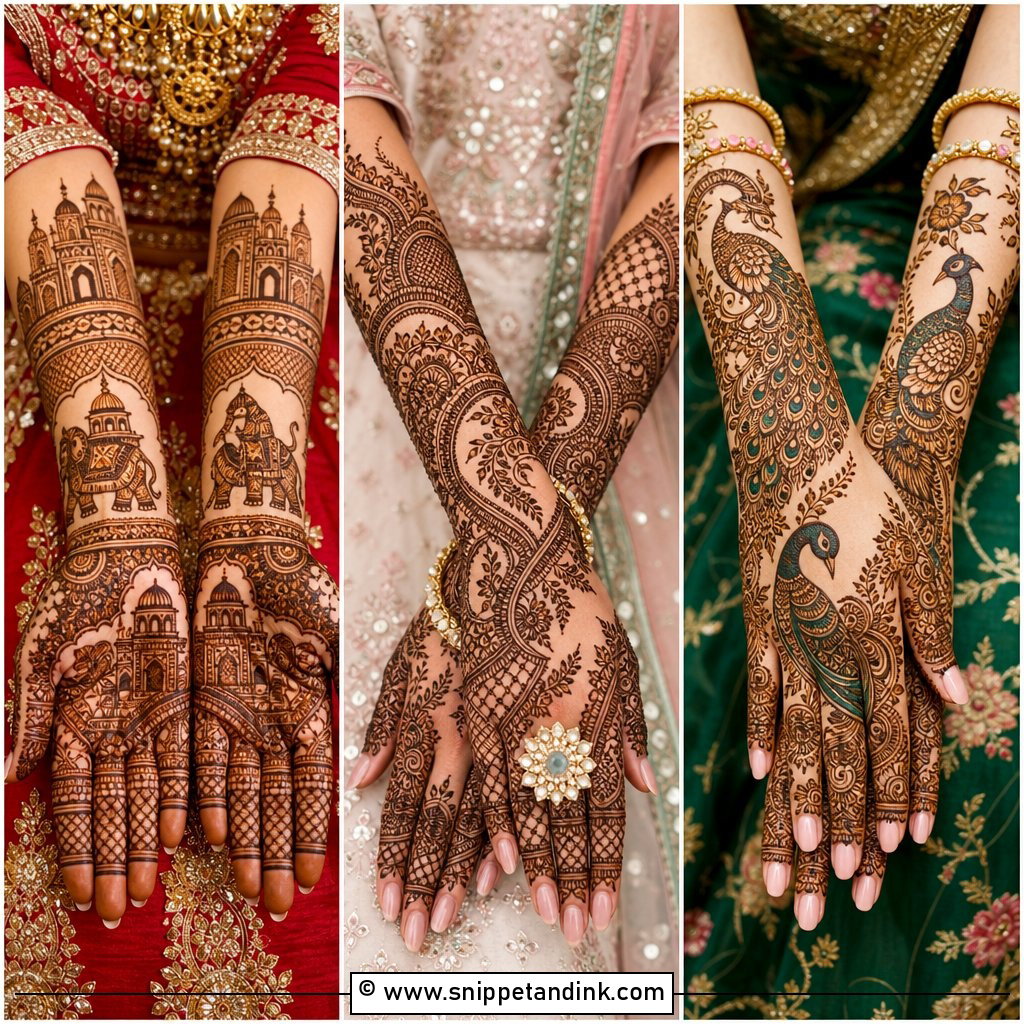
25. Royal Bridal Mehndi Design
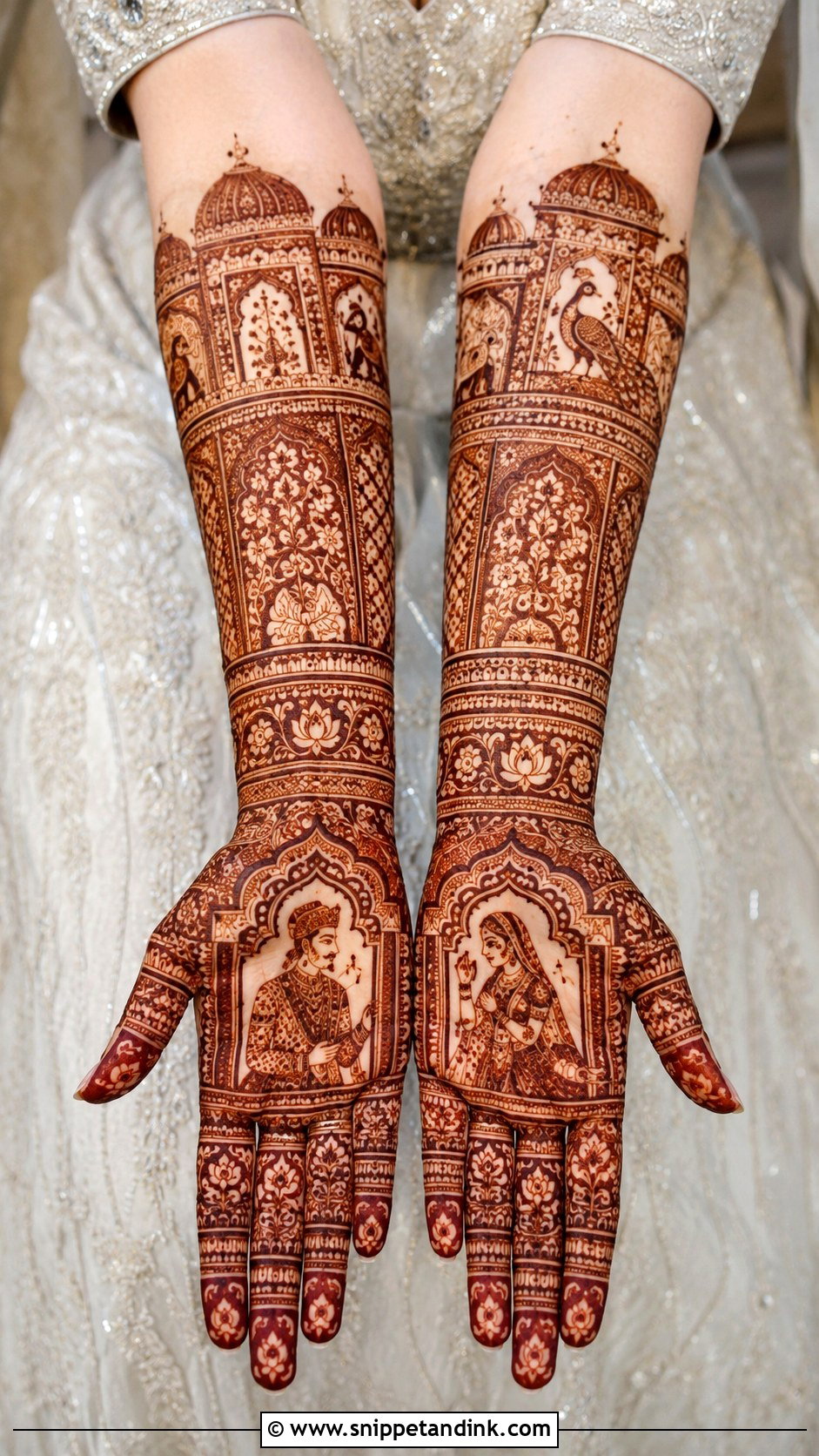
Royal designs draw on heritage architecture: palaces, domes, elephants, peacocks, lotus frames, bride and groom art and heavy ornamental borders, usually to the forearms or elbows. Structure keeps it from turning cluttered. Large motifs sit in clear sections and smaller fillers connect them, with bracelet cuffs, jaali panels and paisley borders for richness. It takes longer than most, and it’s best with regal lehengas or traditional silks.
26. Simple Bridal Mehndi Design
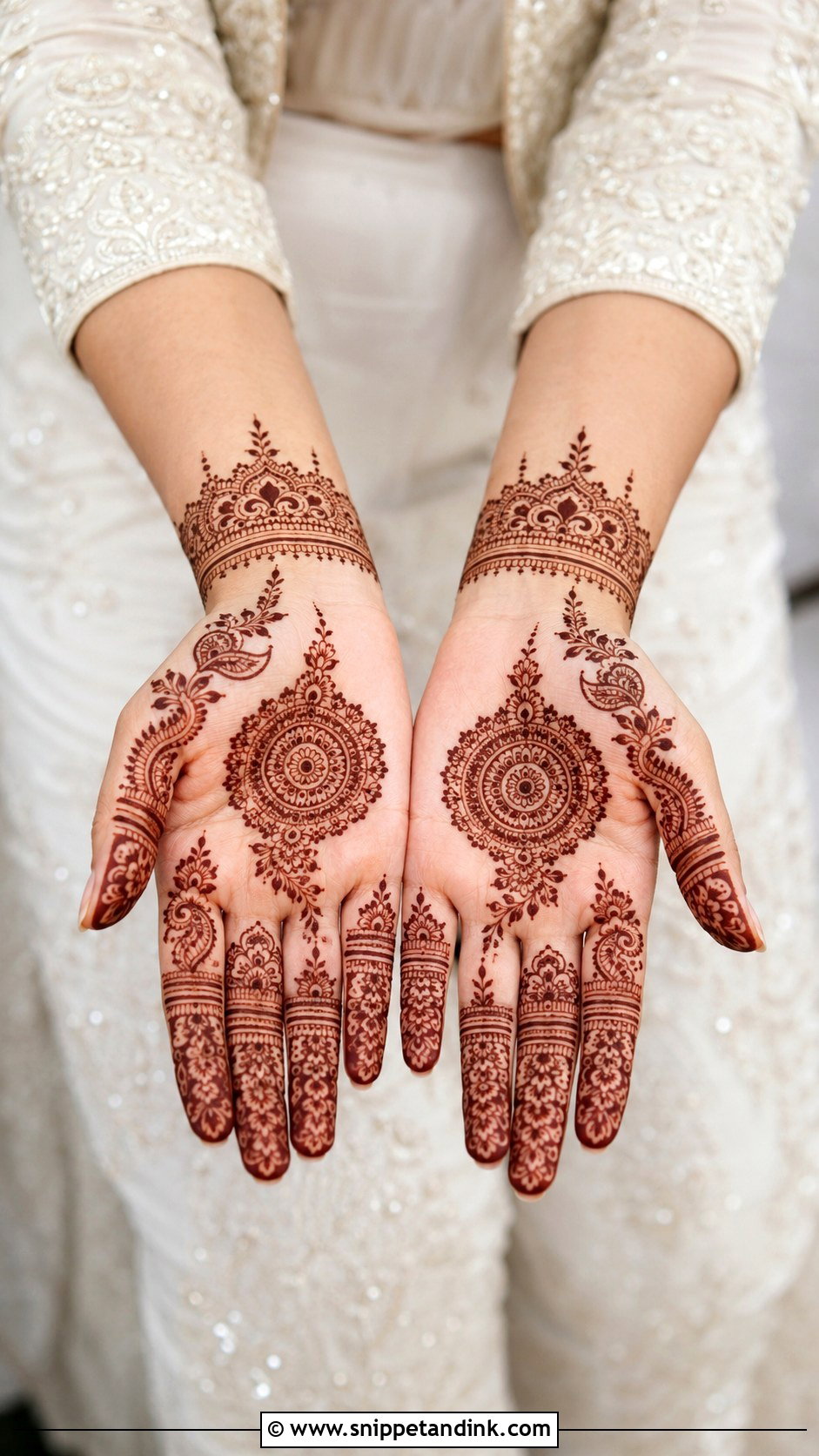
Simple bridal work might be a central mandala, a soft floral trail, neat finger patterns, a wrist cuff and light palm detail. Symmetry and clean finishing carry it. It also helps brides with short ceremonies or sensitive skin, since less paste means less time on the skin. A crisp, planned simple design often looks more refined than a crowded one. Lotus leans traditional; vines feel softer.
27. Heavy Bridal Mehndi Design
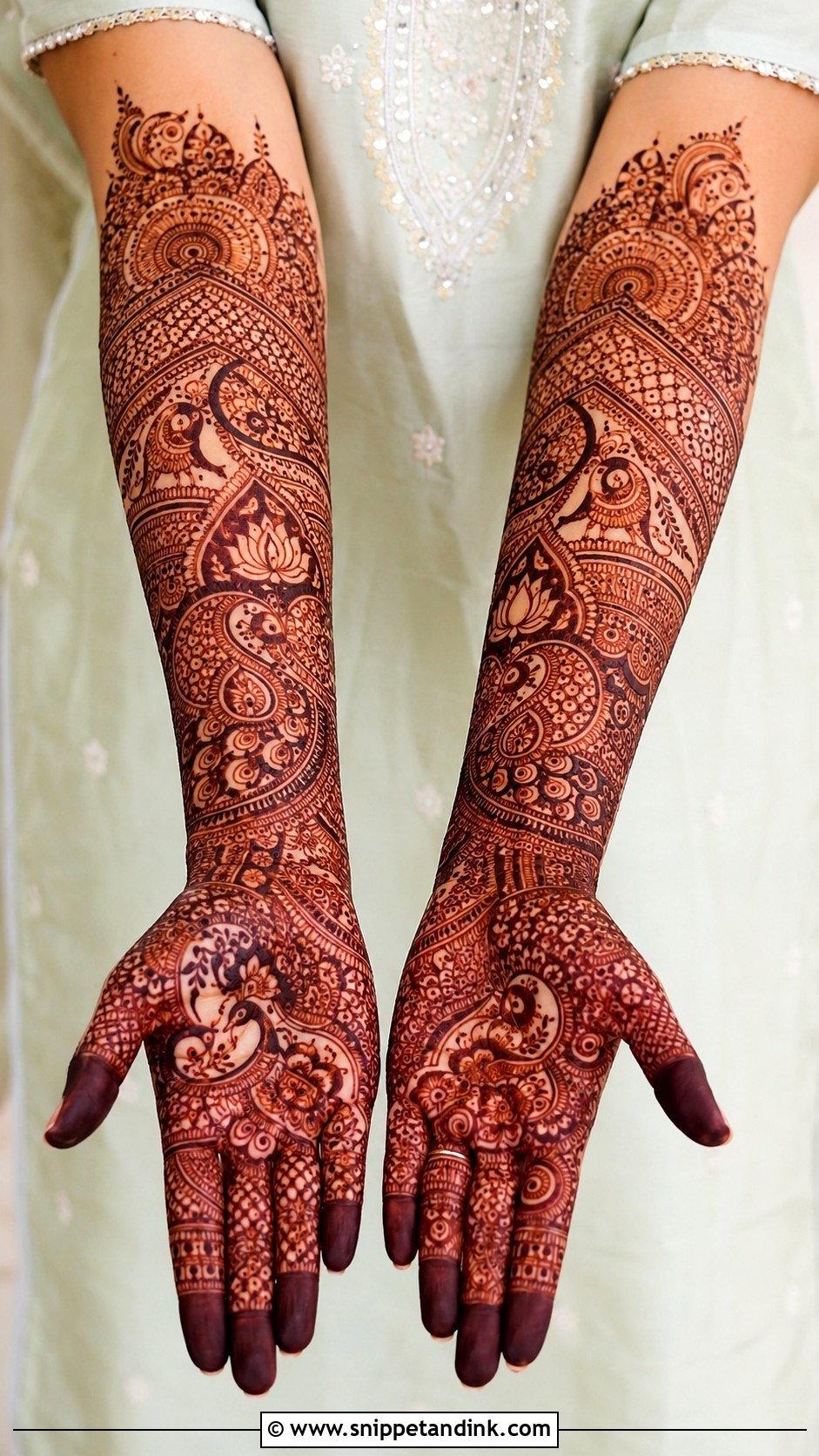
Heavy coverage fills palms, backs, fingers, wrists and forearms with paisleys, peacocks, mandalas, jaali, lotus, vines and wedding symbols, leaving very little skin. It makes a strong statement at traditional ceremonies but can turn visually busy. I break the density with a few larger focal motifs so the eye has somewhere to rest in photos. Plan for a long application and a long drying time.
28. Shaded Bridal Mehndi Design
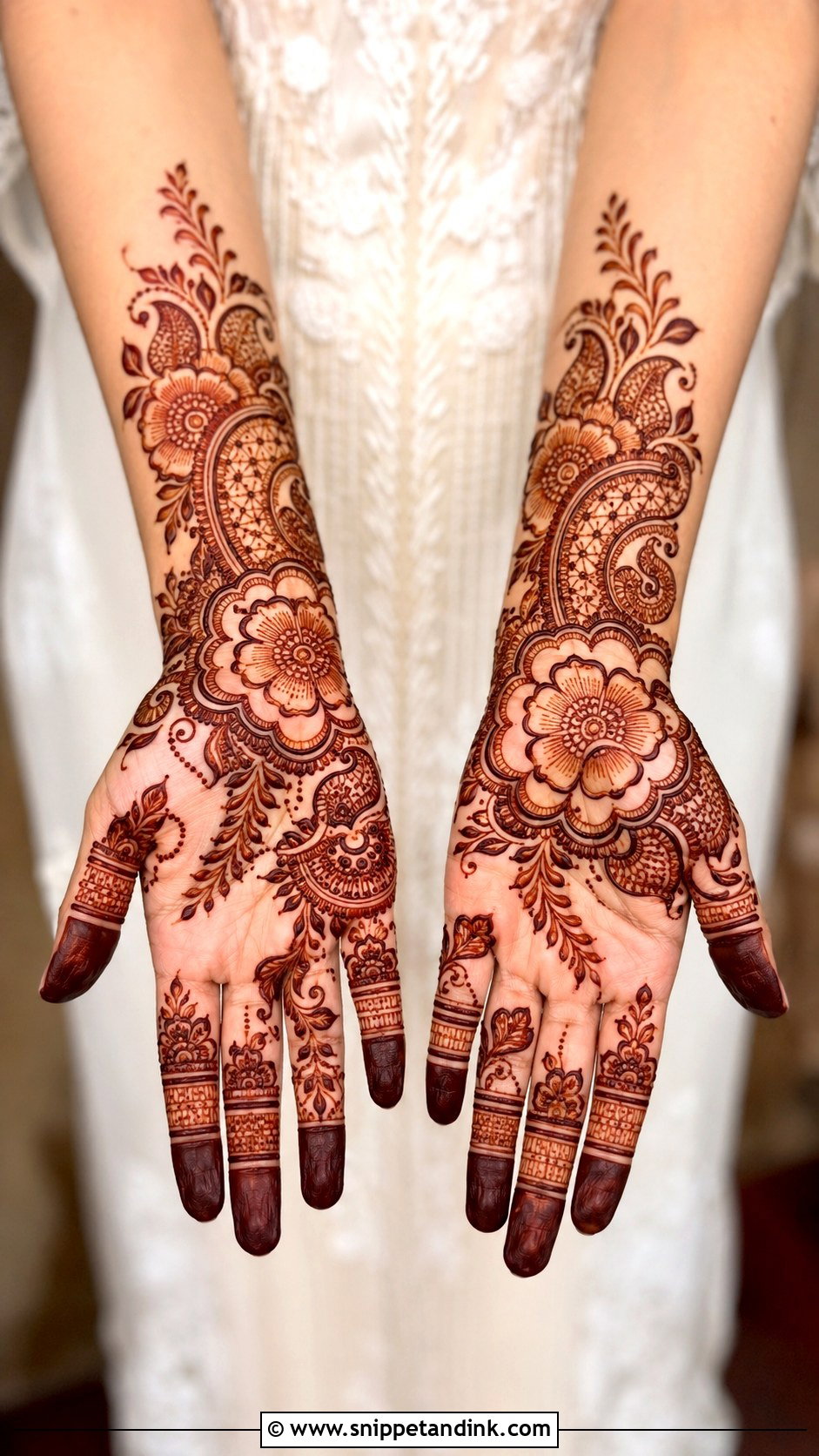
Shading puts soft, light fill inside flowers, leaves, paisleys and mandalas so they look dimensional once the stain develops. It’s common in Arabic and Indo-Arabic bridal work and quicker than dense fine-line filling. I pair shaded florals with neat finger work, wrist cuffs and a few detailed borders. Over-shading is the usual mistake: if every motif is shaded, nothing stands out, so I leave some outline-only for contrast.
29. White Bridal Mehndi Design
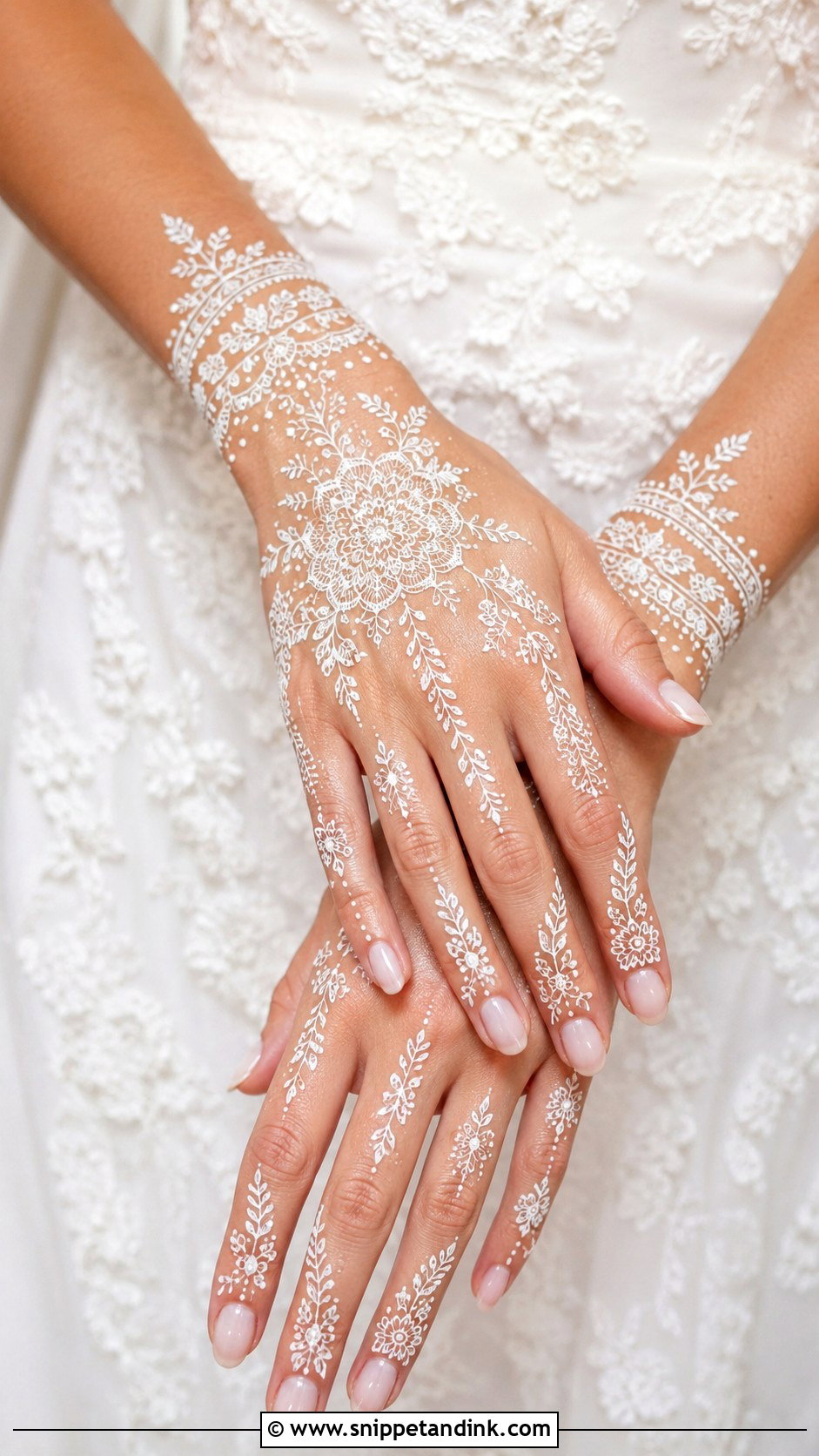
White mehndi isn’t henna at all. It’s a cosmetic body paint, often mixed with a skin-safe adhesive, that sits on top of the skin and doesn’t stain. Lace-like florals, mandalas, vines, dots, cuffs and fine finger details look striking in it against ivory, pastel, silver or gold outfits, which is why it’s popular for pre-wedding shoots and themed events. It smudges and peels easily and lasts only a day or so, so keep it dry and plan it close to the shoot. Ask for a patch test, since the adhesive can irritate sensitive skin.
30. Glitter Bridal Mehndi Design
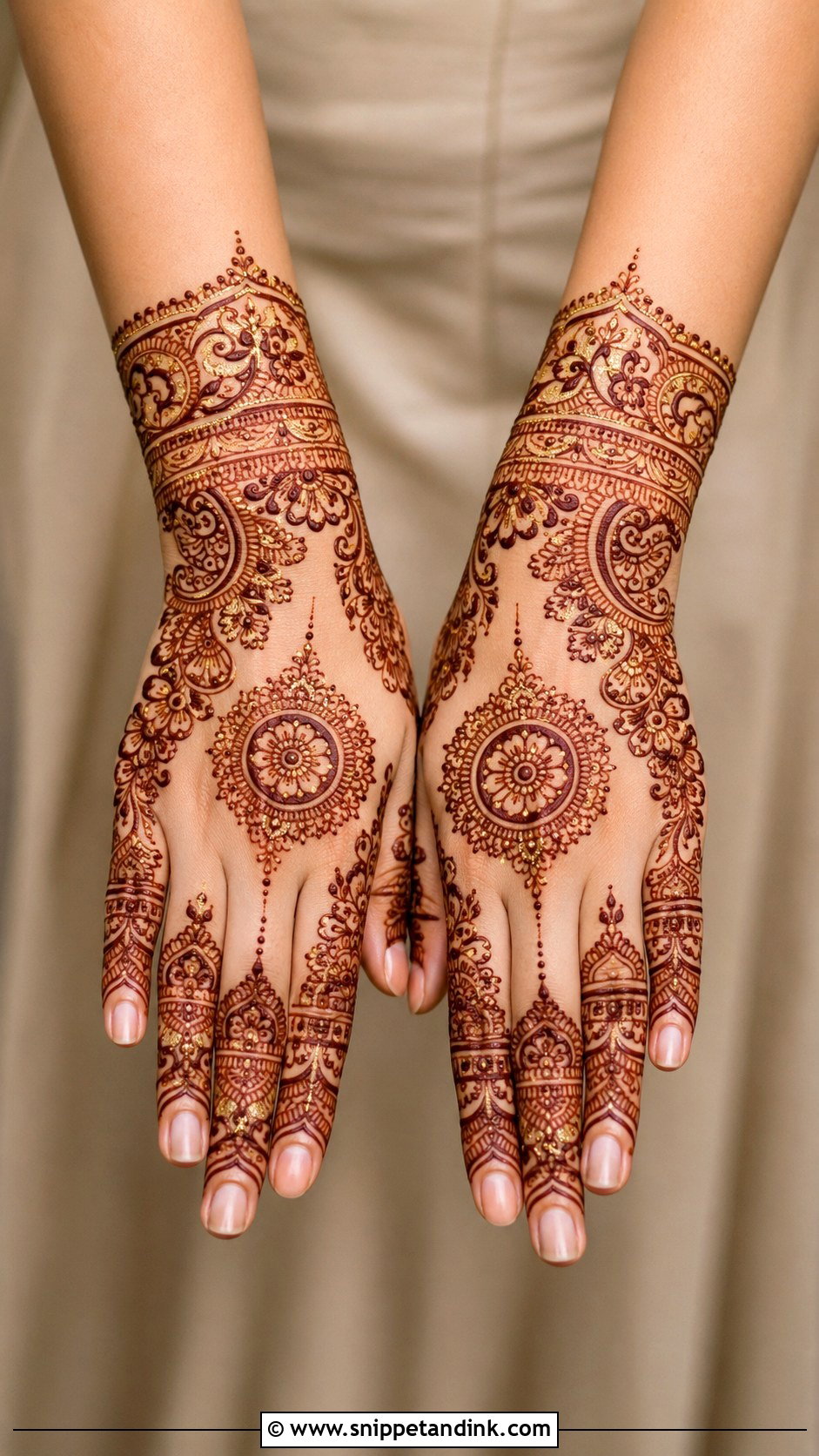
Glitter can go over dried henna patterns or as accents on florals, mandalas, cuffs and borders. Gold, bronze, rose gold and maroon sit best with traditional outfits. Use cosmetic-grade glitter only, never craft glitter, and keep it to selected areas so it highlights the design instead of hiding it. It’s temporary and flakes off within a day, so it suits sangeet, mehndi night and reception photos more than a multi-day wedding. Arabic, Indo-Arabic and floral layouts take it best.
What Your Mehndi Looks Like a Week After the Wedding
Henna stains only the top layer of skin, so it fades as that layer naturally sheds. The color usually peaks a couple of days after application, holds well for about a week, then lightens gradually over the next week or two. Fingertips and areas you wash most fade first. Fine finger work goes before bold palm motifs, which is worth knowing if you have a reception or walima several days after the main ceremony.
Making the color last into the honeymoon
- Skip scrubs, exfoliating washes and pumice on stained areas.
- Wear gloves for dishes and cleaning, and avoid long soaks in hot water.
- Rub a little balm or natural oil over the design before showers or swimming as a light barrier.
- Keep hand sanitizer to a minimum; frequent use dries the skin and speeds shedding.
When it finally starts to look patchy, a gentle scrub evens out the fade faster than waiting. That’s the one time I’d tell a bride to exfoliate.
Settle the Outfit First, Then the Henna
Start from your outfit, jewelry, ceremony and how much sitting you’re comfortable with, and the field shrinks quickly. Tradition points to full Indian, Rajasthani, dulhan, royal or heavy work. A fresher look points to Arabic, Gulf, modern, minimal, shaded or bracelet designs. Meaning comes from initials, dates, portraits or love-story details layered into either. Whatever you pick should be balanced, readable and suited to your own hands. Share references with your artist early and agree on coverage before the day, so the session is about drawing, not deciding.
You'll Like These Ideas:









Leave a Reply