
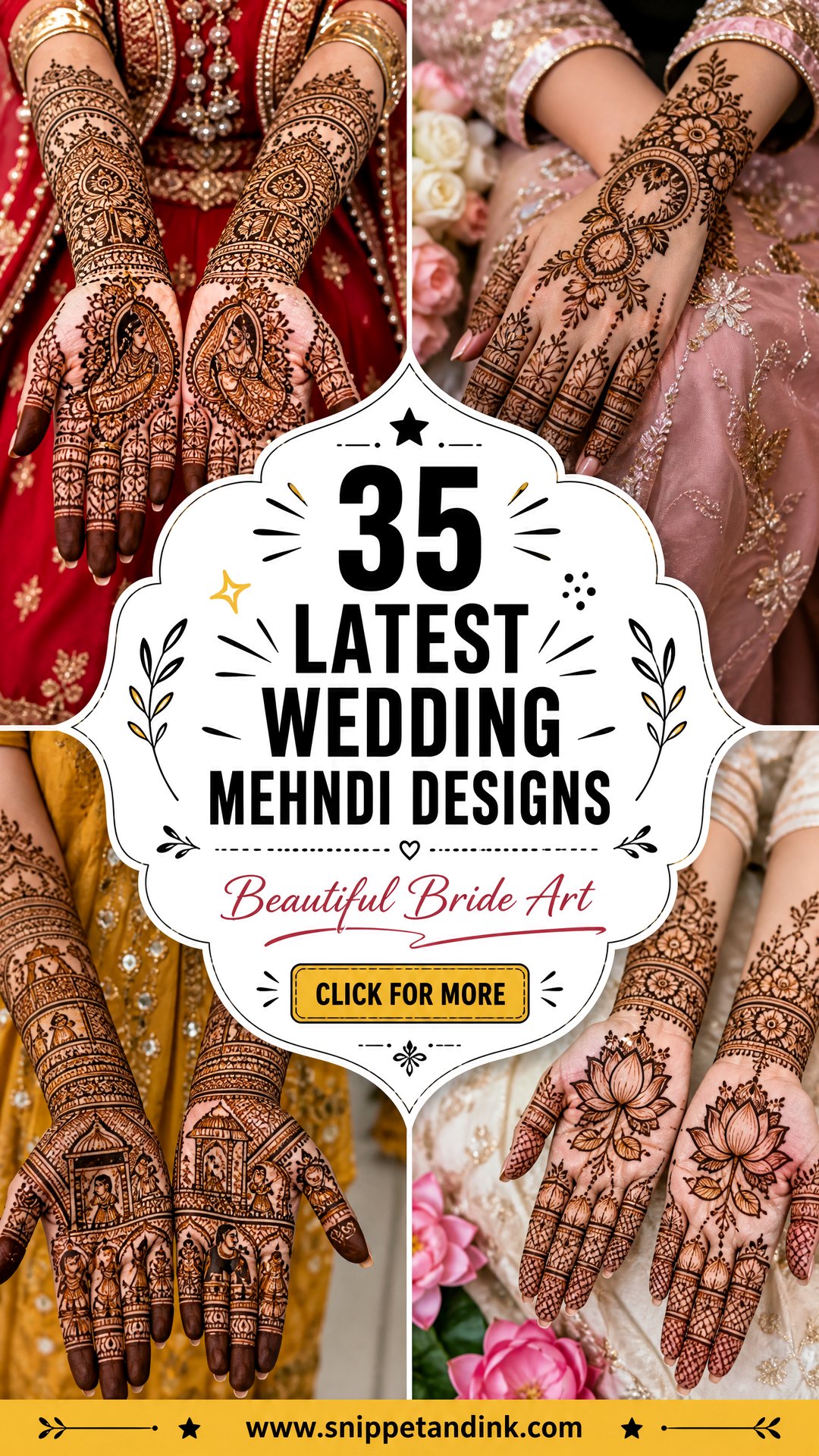
Bridal mehndi used to mean one thing: every inch covered, fingertips to elbows. The brides I sit with now arrive with far more varied ideas. Some still want dense Indian work with portraits and wedding scenes; others want Arabic trails, open space, a clean mandala or a few hidden initials. What they all need is a design that means something to them, stains deeply and stays comfortable through a long day of rituals. Below are the bridal layouts I’m asked for most, traditional, modern, minimal and fusion, for palms, back hands, wrists, forearms and feet, each described as a complete look so you can picture it on your own hands.
Counting Back From the Wedding Day
Bridal henna is the one beauty appointment that has to happen before the wedding rather than on it. The colour needs a day or two to darken after the paste comes off, so timing decides how your hands look in the photographs. This is the schedule I walk brides through.
- A few months out: book your artist, especially in wedding season. Ask to see photos of fully developed stains, not just fresh paste, and agree on a design and coverage so she can plan her time.
- Several weeks out: if you’ve never worn henna or have sensitive skin, ask for a small test spot. It also shows you how deeply your skin takes the colour.
- The week before: get waxing, hand facials and manicures done now. Scrubs, waxing and soaking after application all fade the stain.
- One to two days before: the mehndi itself. Exfoliate gently the day before your appointment, arrive with clean, lotion-free skin, and plan to keep the paste on overnight.
- Wedding morning: no scrubbing, no long hot soaks. Rub a little balm into your hands before any washing.
When the mehndi night is also a party
Many families hold the bride’s application at the mehndi function itself. It’s a happy tradition, but a full bridal design can’t be drawn in an hour while guests are dancing around you. I often start the bride’s hands earlier in the day, finish the feet or forearms during the function, and have a second artist handle the guests so nobody’s waiting.
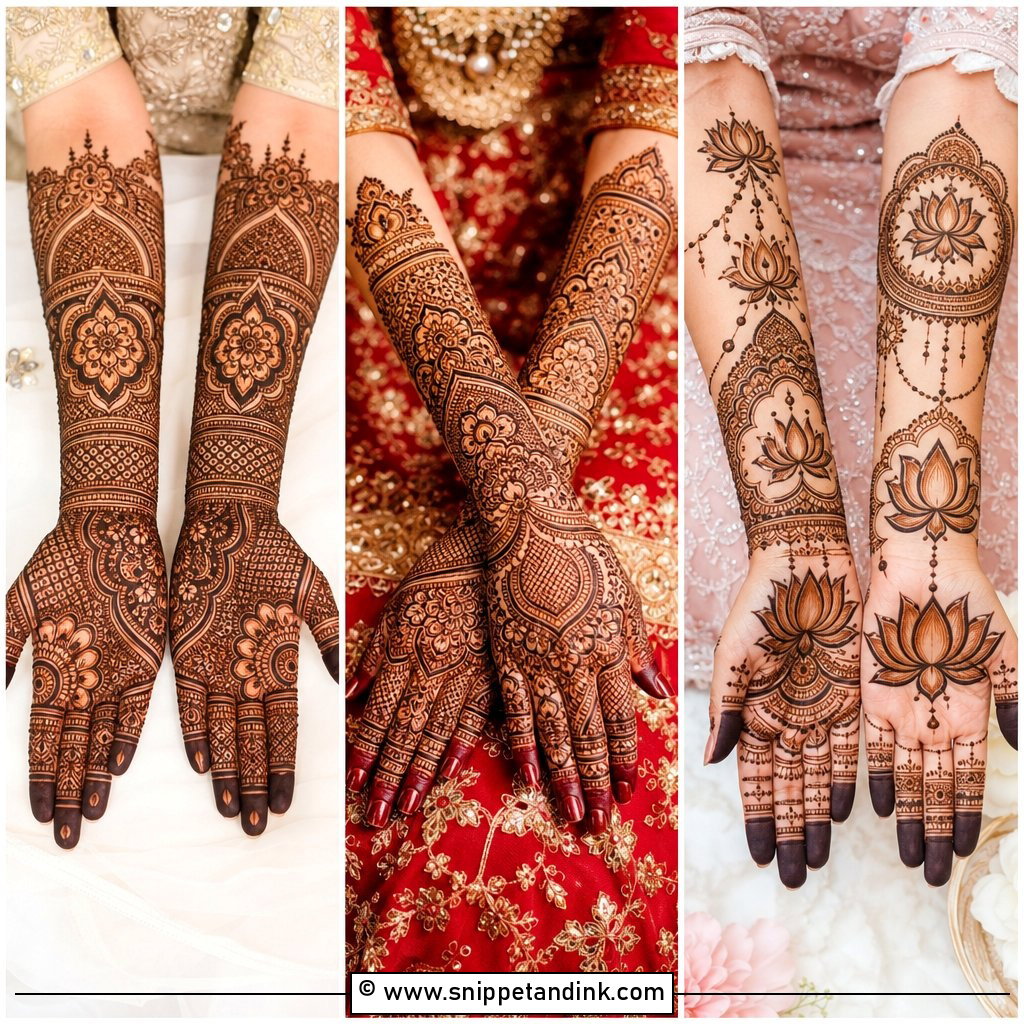
1. Full Hand Bridal Wedding Mehndi Design
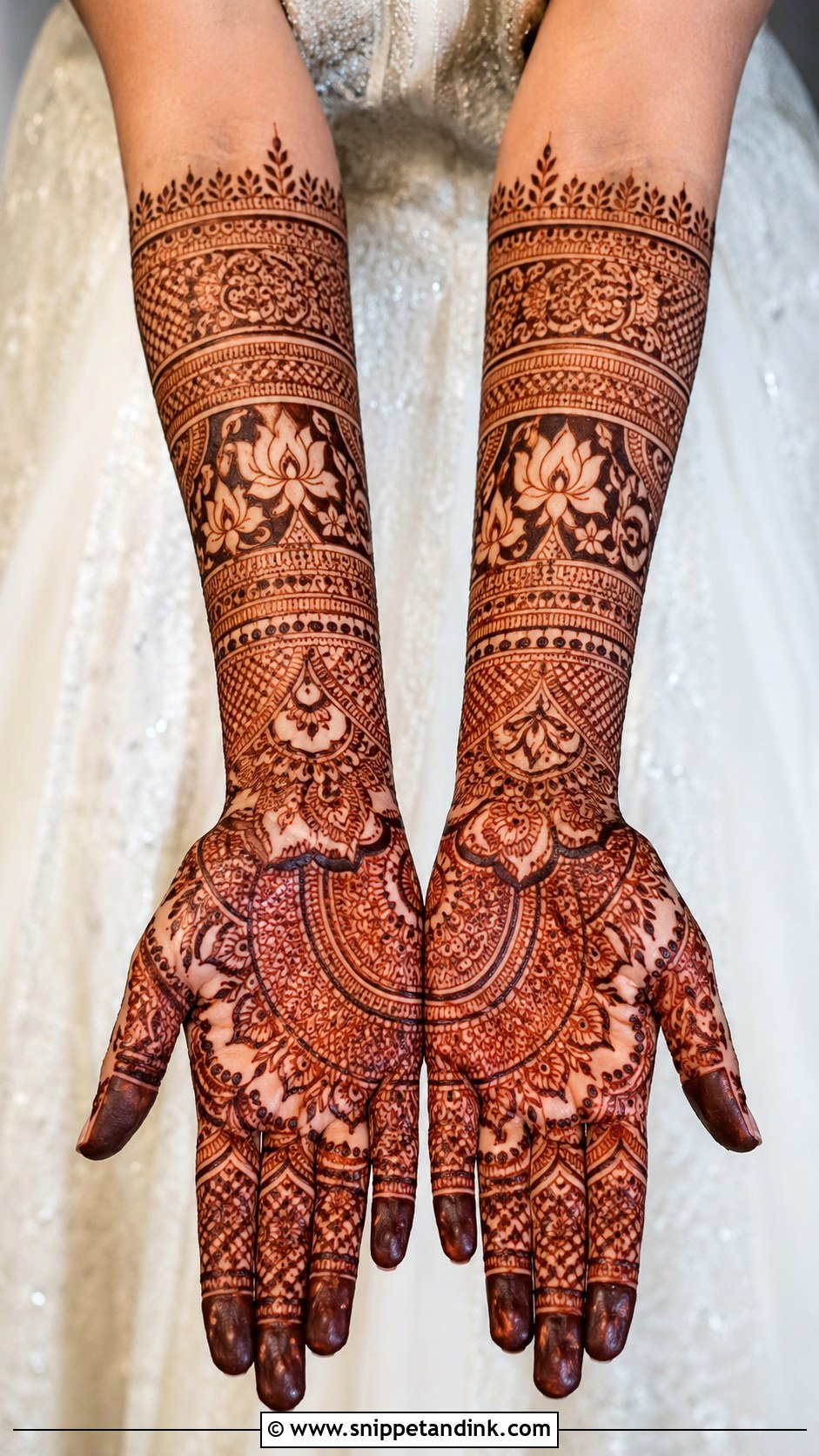
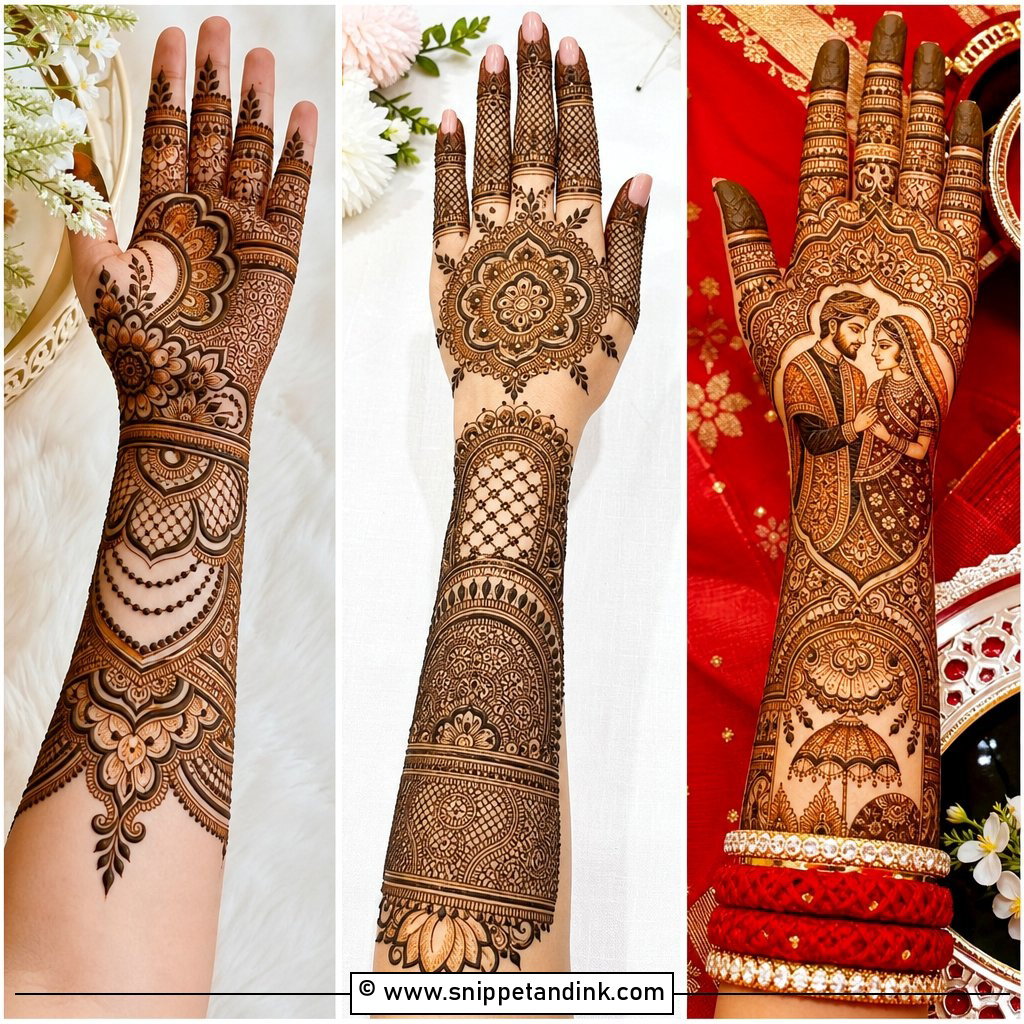
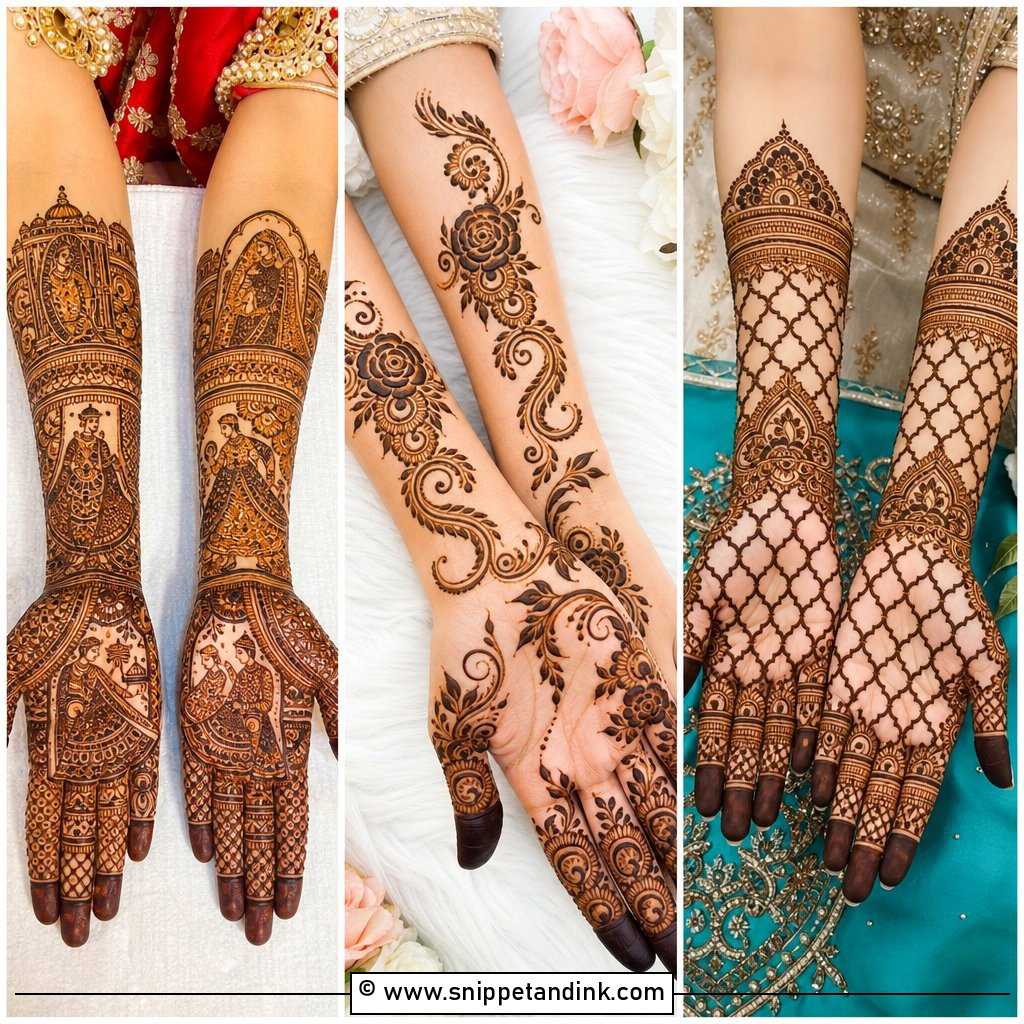
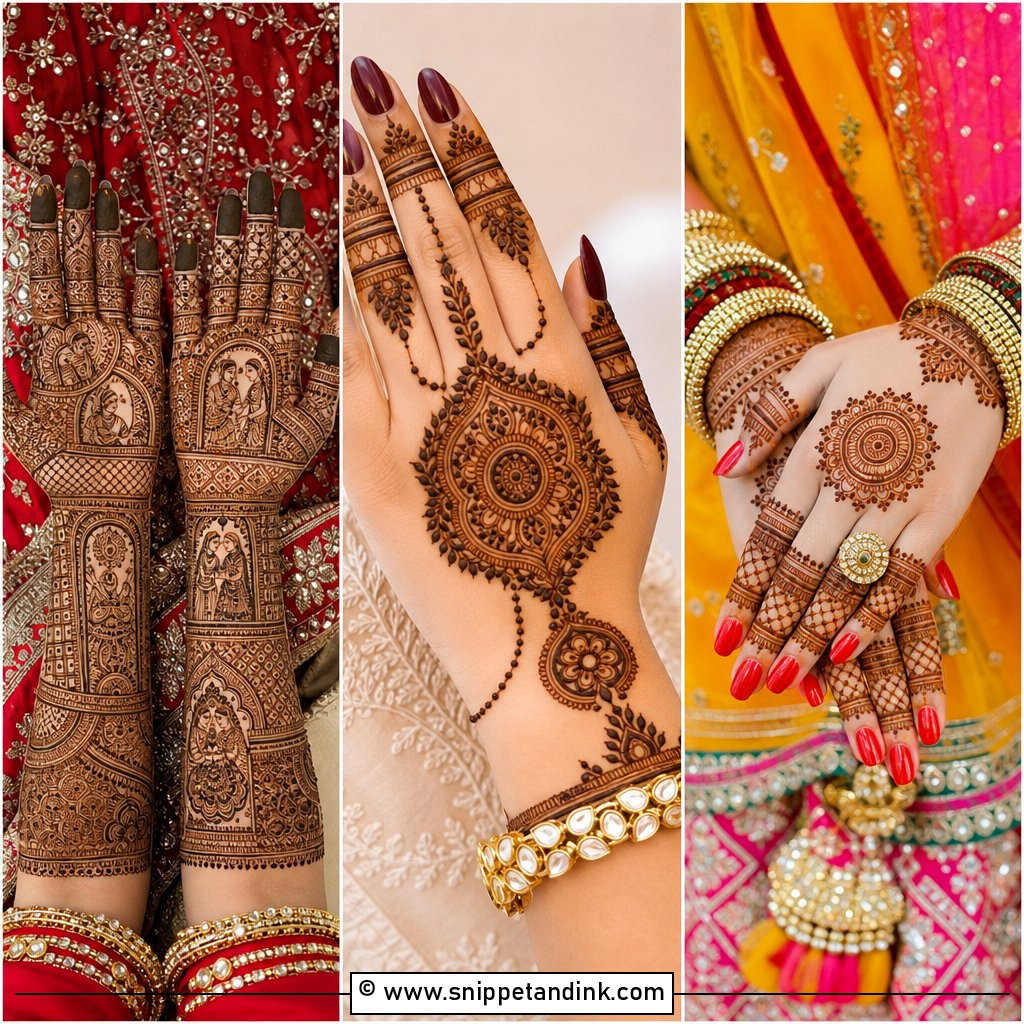
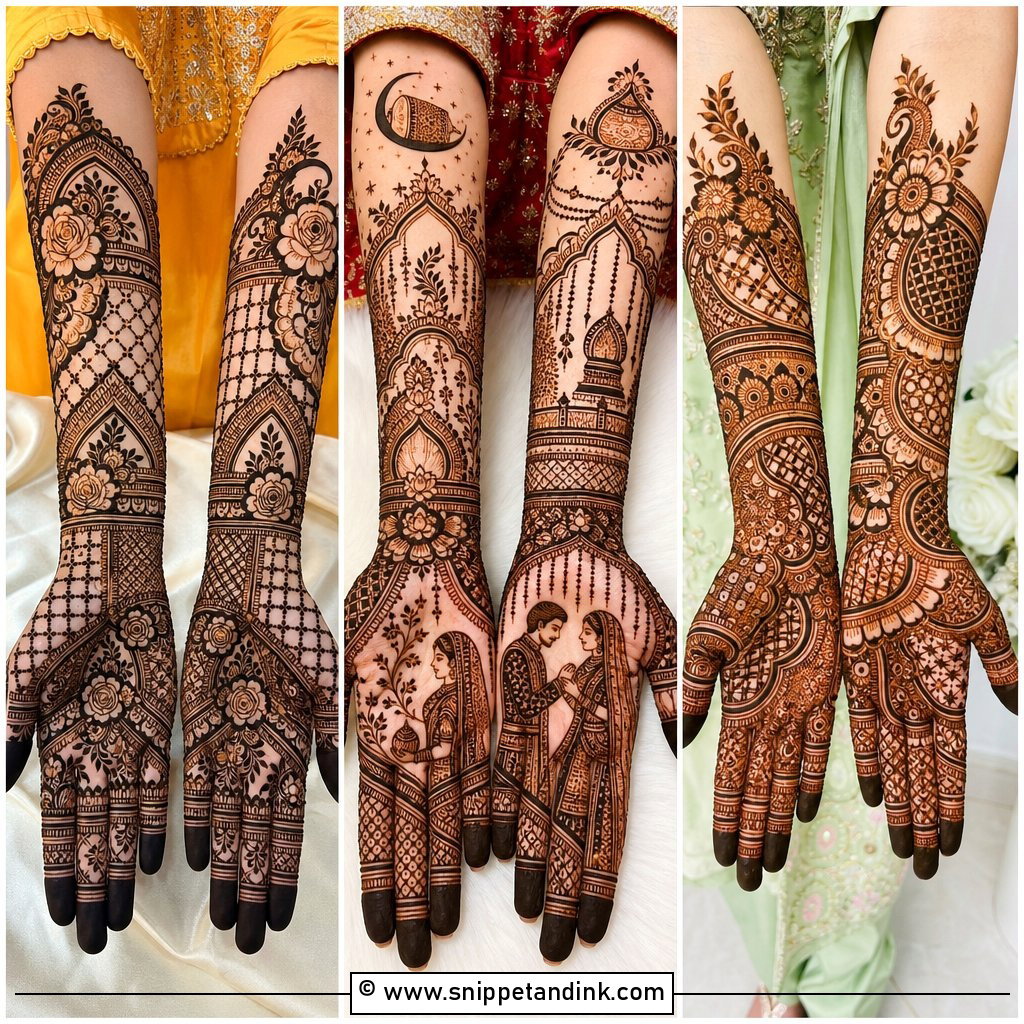
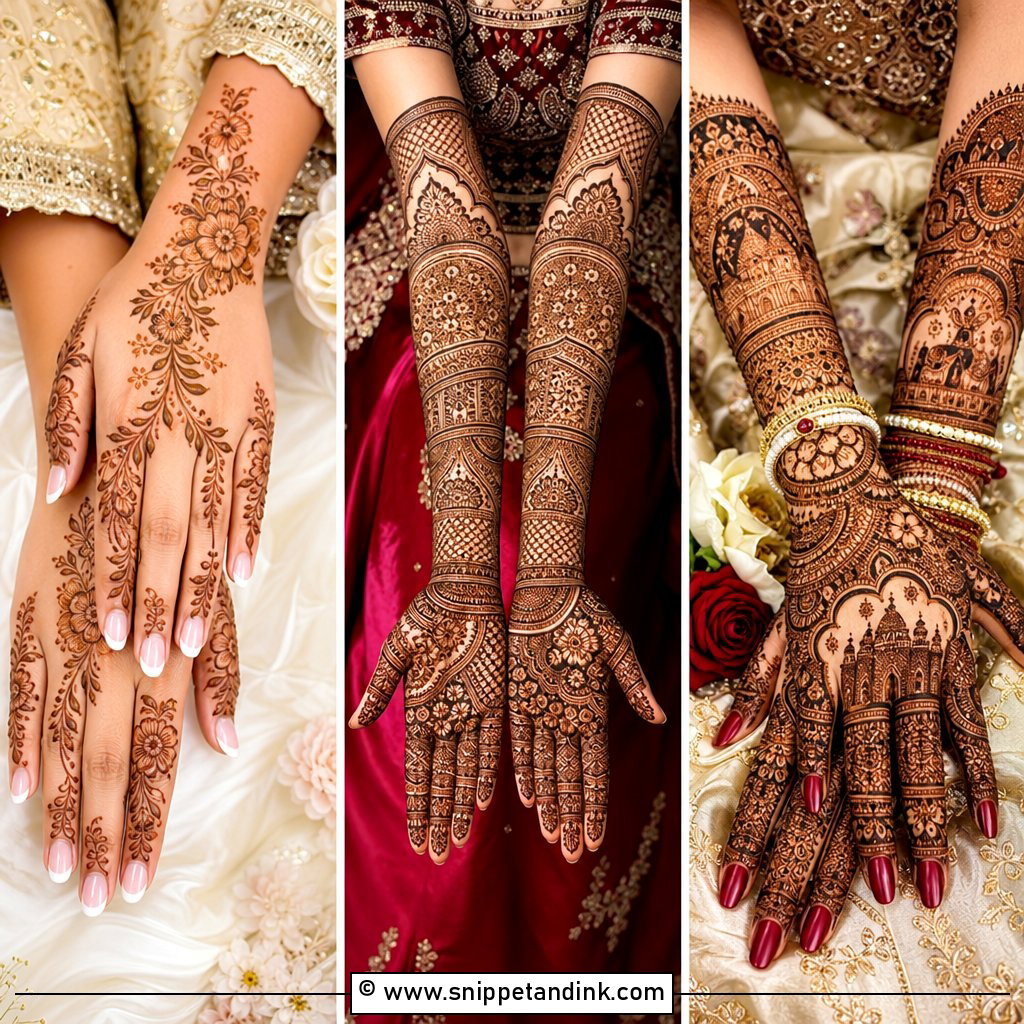
Fingertips to forearms, dense paisleys, lotus, mandalas, jaali and fine filling on the palms, with bracelet bands, finger grids and wrist cuffs on the backs. It matches the detail of a heavy lehenga, saree or sharara and bridal jewelry, which is why it still feels right with traditional outfits. My advice is to ask for the central palm motifs slightly larger than in most reference photos; dense palms lose definition as the stain darkens, and a bigger centre keeps the design readable. Allow most of a day for this sitting.
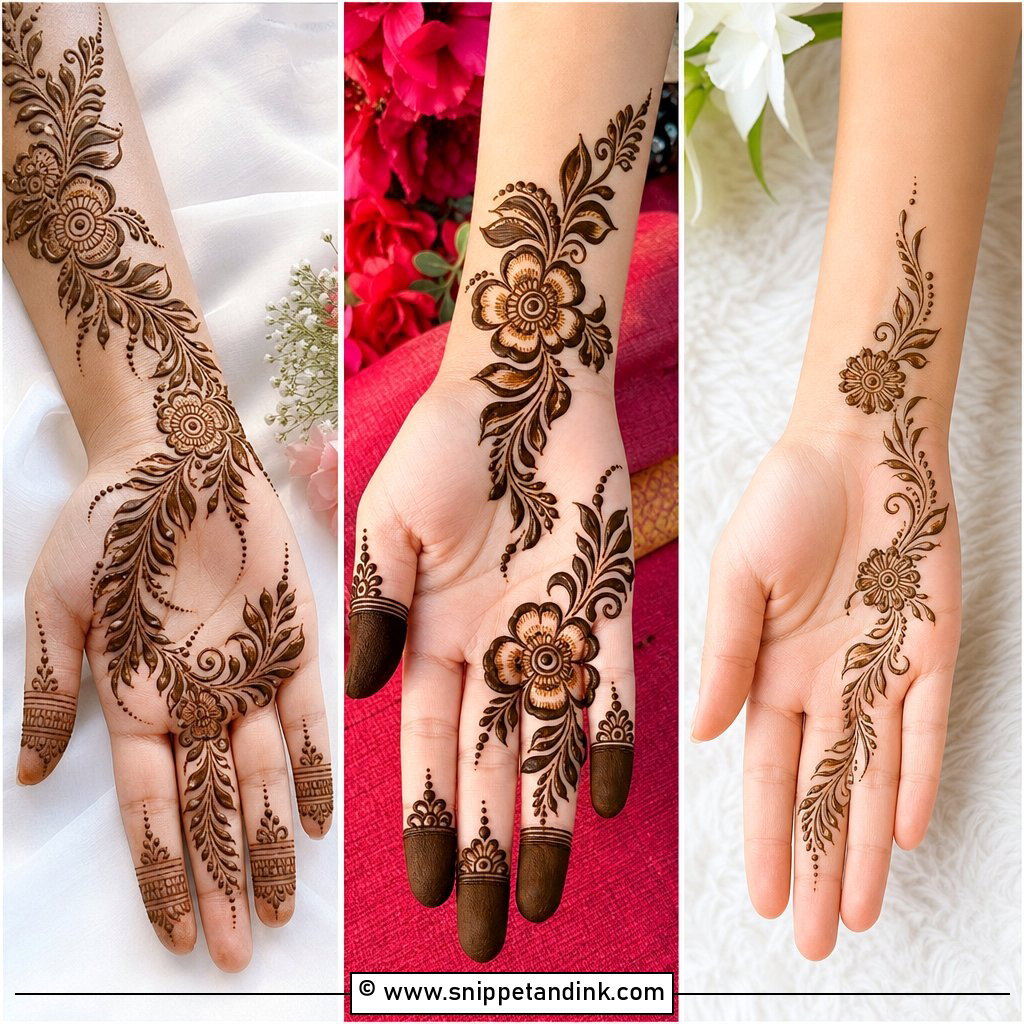
2. Arabic Wedding Mehndi Design
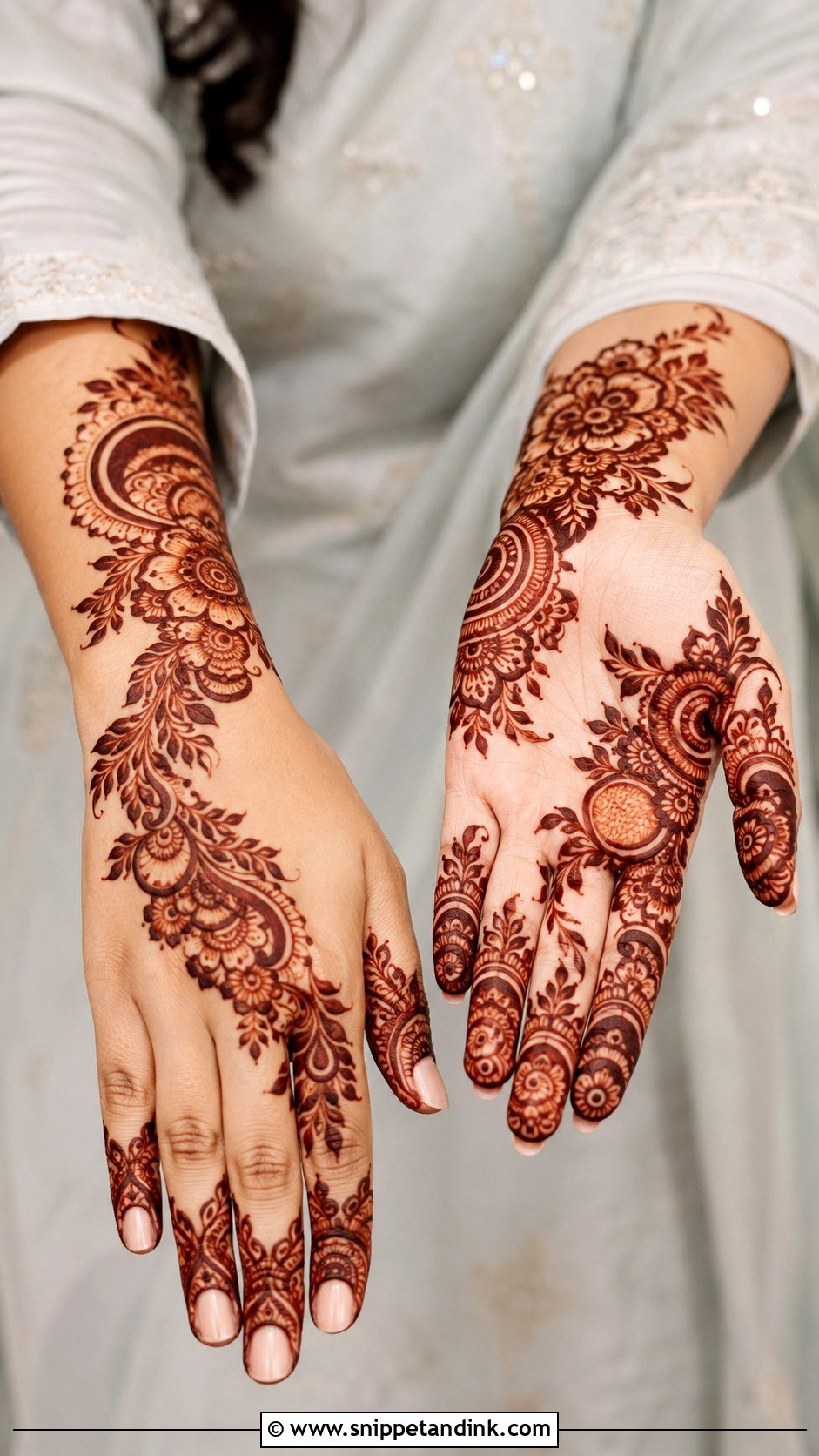
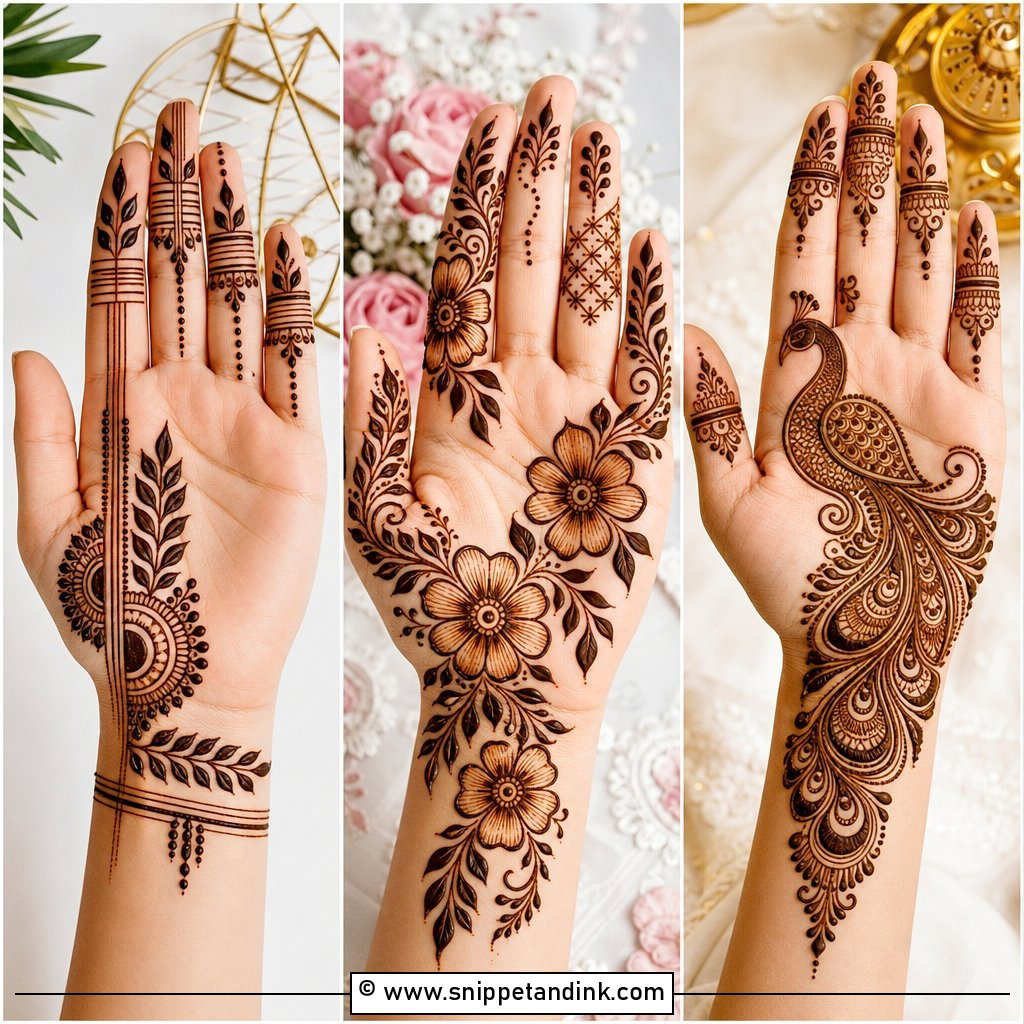
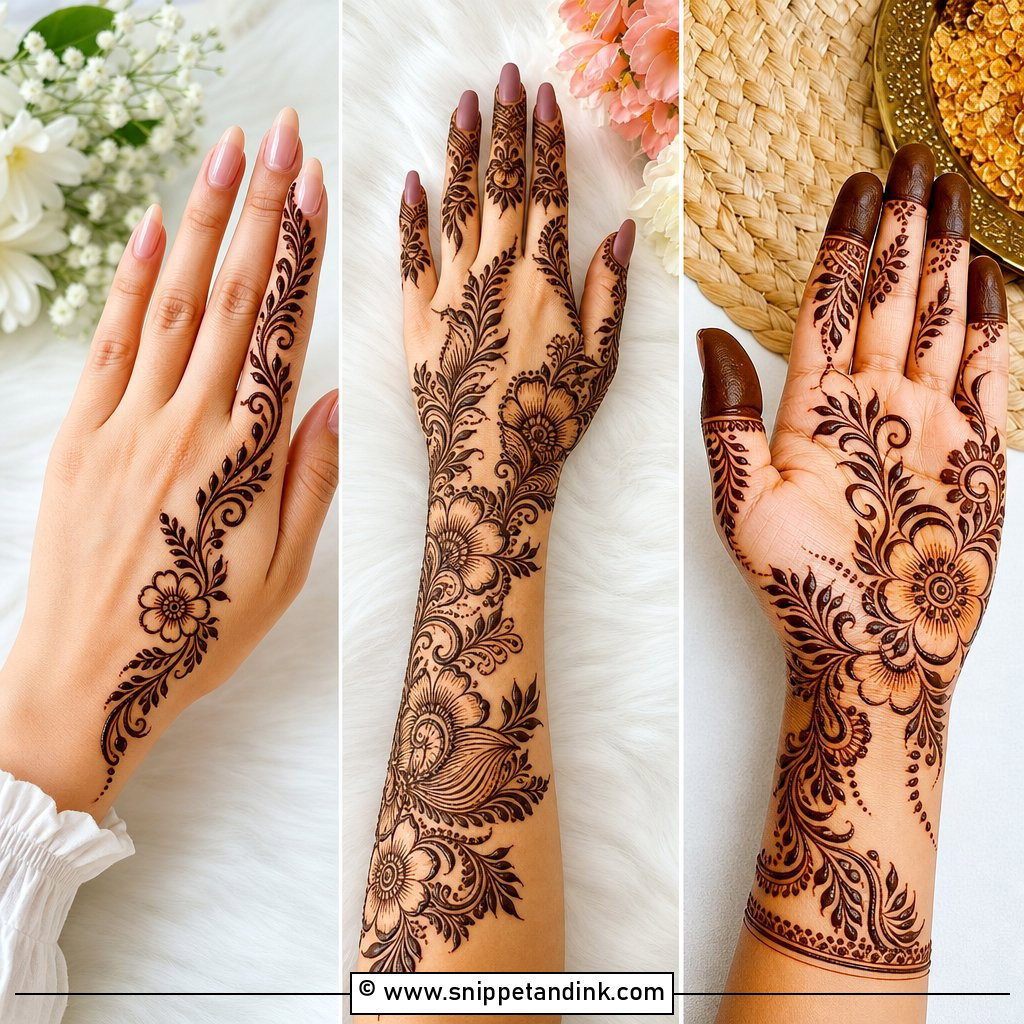
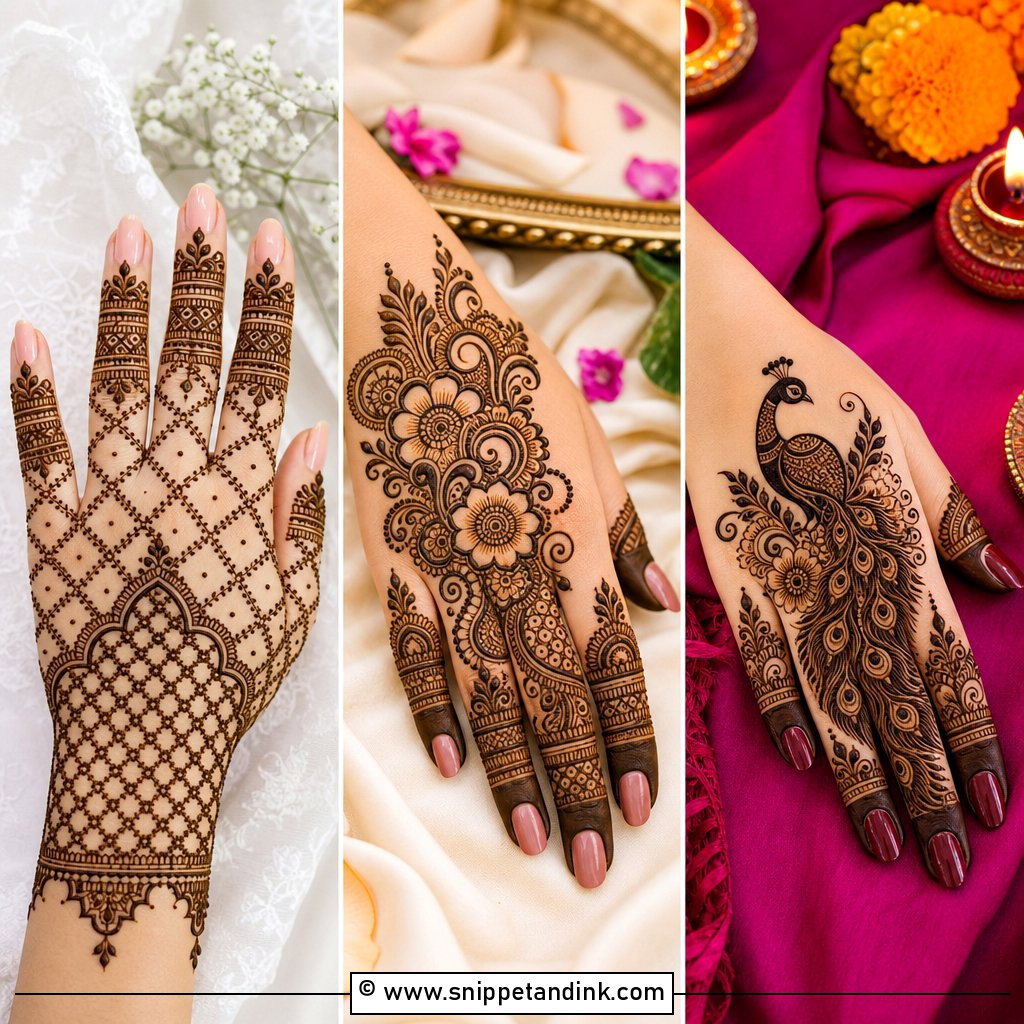
Arabic bridal work flows diagonally across the palm or back hand with large flowers, leafy vines, paisleys and shaded petals, and the empty space around them lets every motif stand out once the stain deepens. For a wedding version, I extend the trail toward the wrist and add finer finger detail than I’d give a guest. It gives a bride elegance without covering every inch, and it’s equally right for mothers and sisters of the bride. The sitting is far shorter than full Indian coverage, which matters when the mehndi night is also a party.
3. Indo Arabic Wedding Mehndi Design
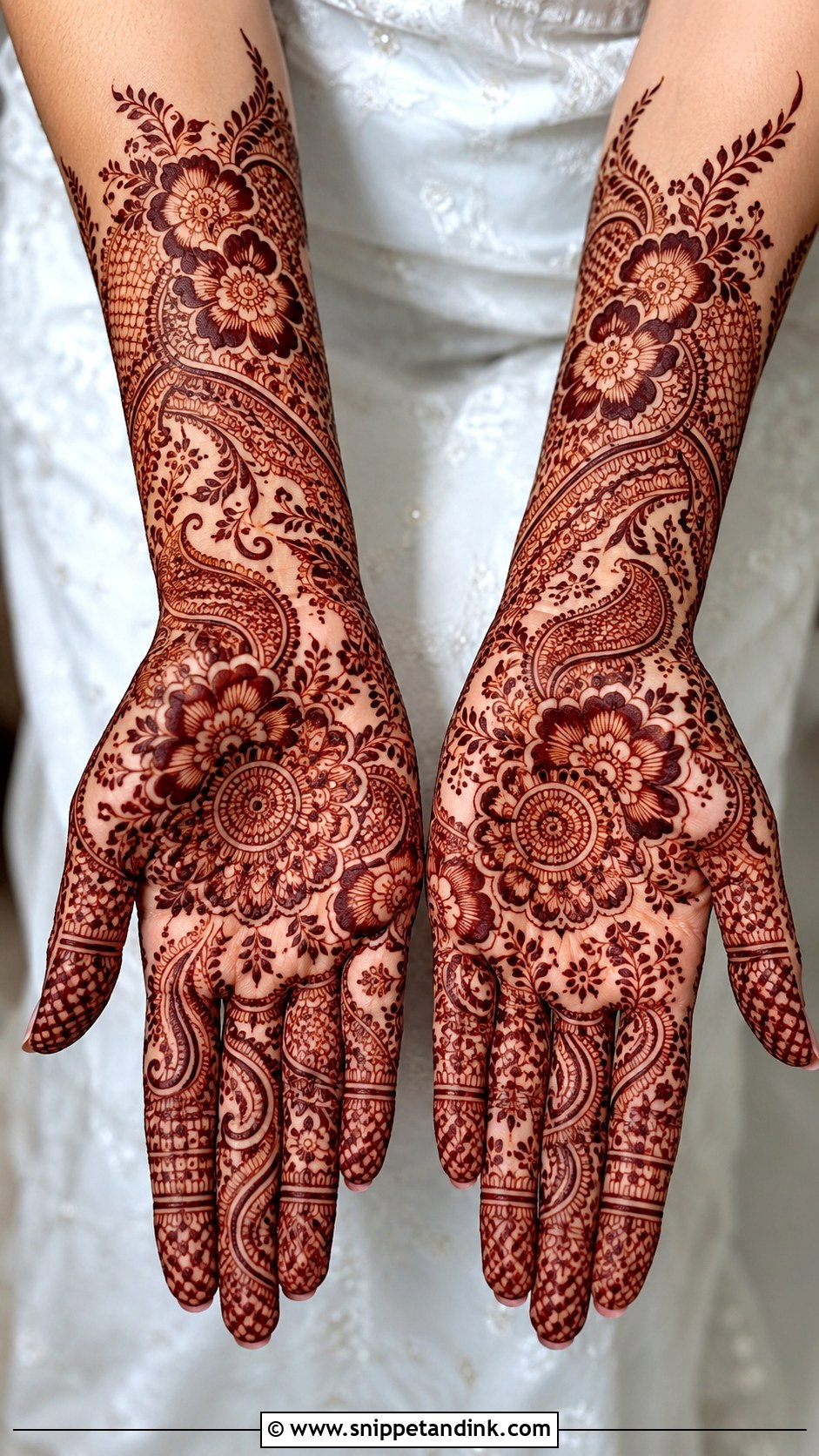
Indo-Arabic is the middle road: a bold Arabic floral trail with selected pockets filled with tiny checks, dots, swirls, leaf vines and paisley borders. The palms can carry a central mandala, the backs a bracelet wrist band and decorated fingers. The larger Arabic shapes stay clear in photos while the Indian fillers add richness. I usually limit the fine filling to a few zones, otherwise it drifts into full Indian work and the sitting doubles. Engagements, mehndi functions, nikah and the wedding day itself all suit it.
4. Indian Bridal Wedding Mehndi Design
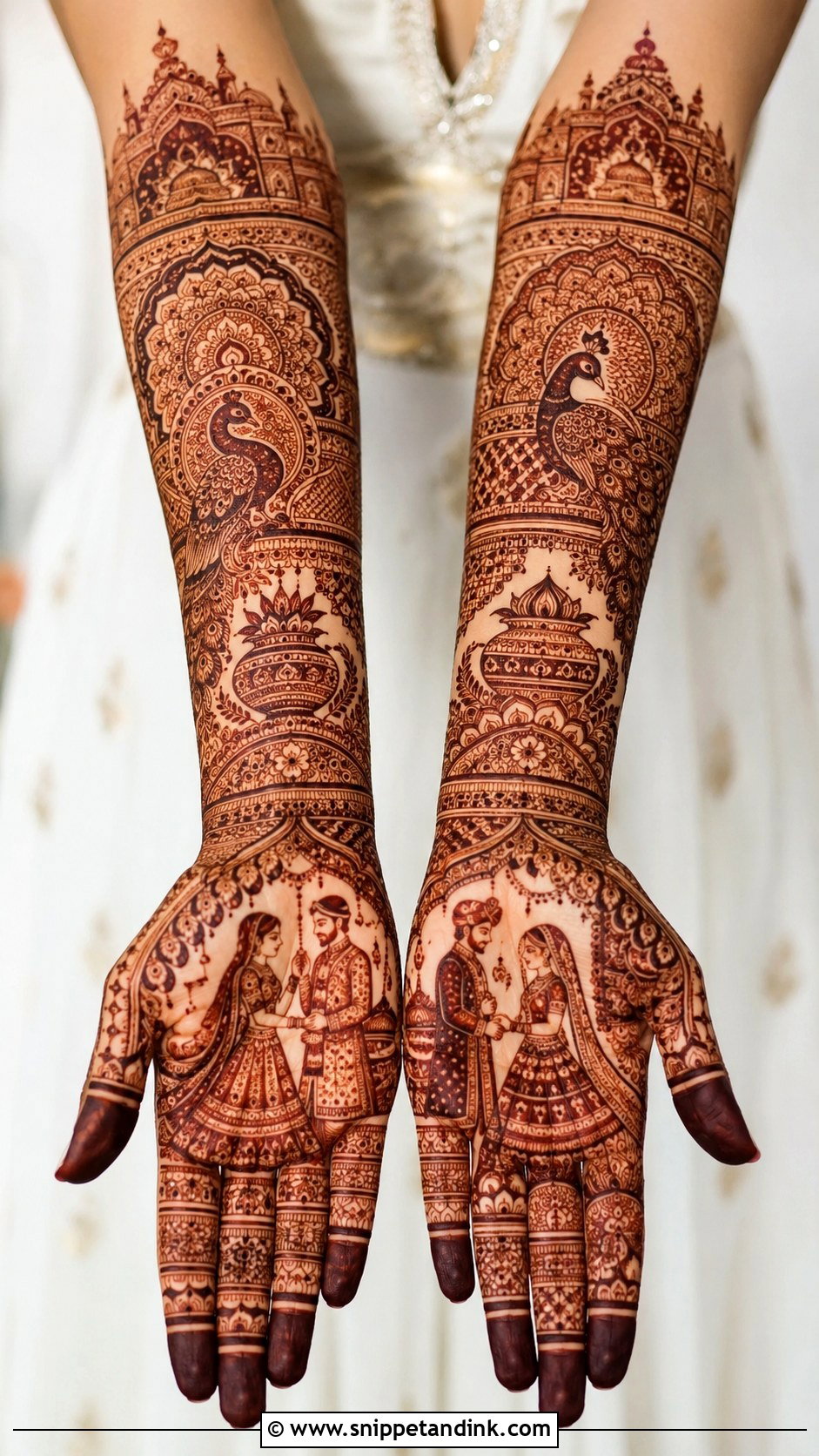
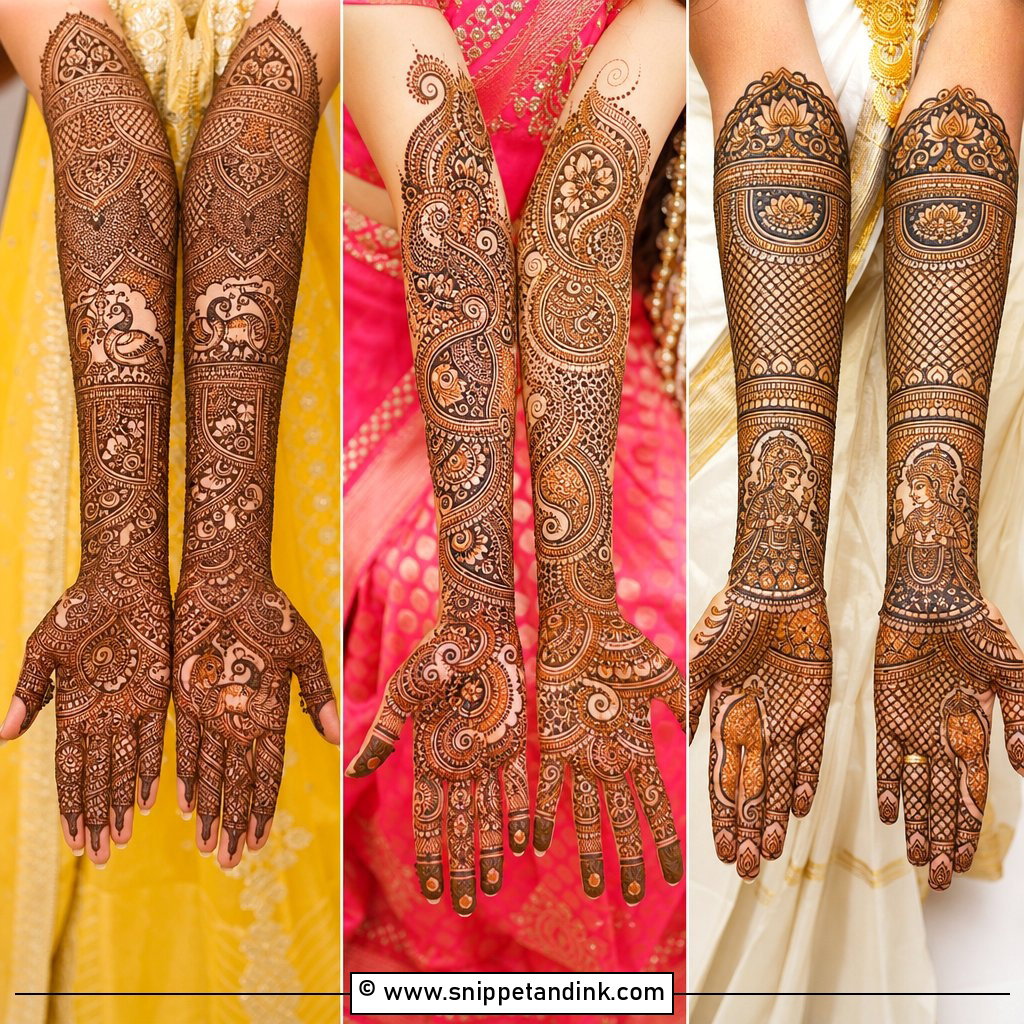
Indian bridal is where the storytelling lives: peacocks, kalash, lotus, bride and groom figures, temple borders and fine netted fillers. Often one palm carries the bride and the other the groom or a ceremony scene, while the backs have heavy finger work, bangle-style wrists and forearm extensions. Clean spacing between the major motifs is what keeps it elegant up close. I draw the figures and main panels first, then fill, so nothing important gets crowded out by filler.
5. Modern Bridal Wedding Mehndi Design
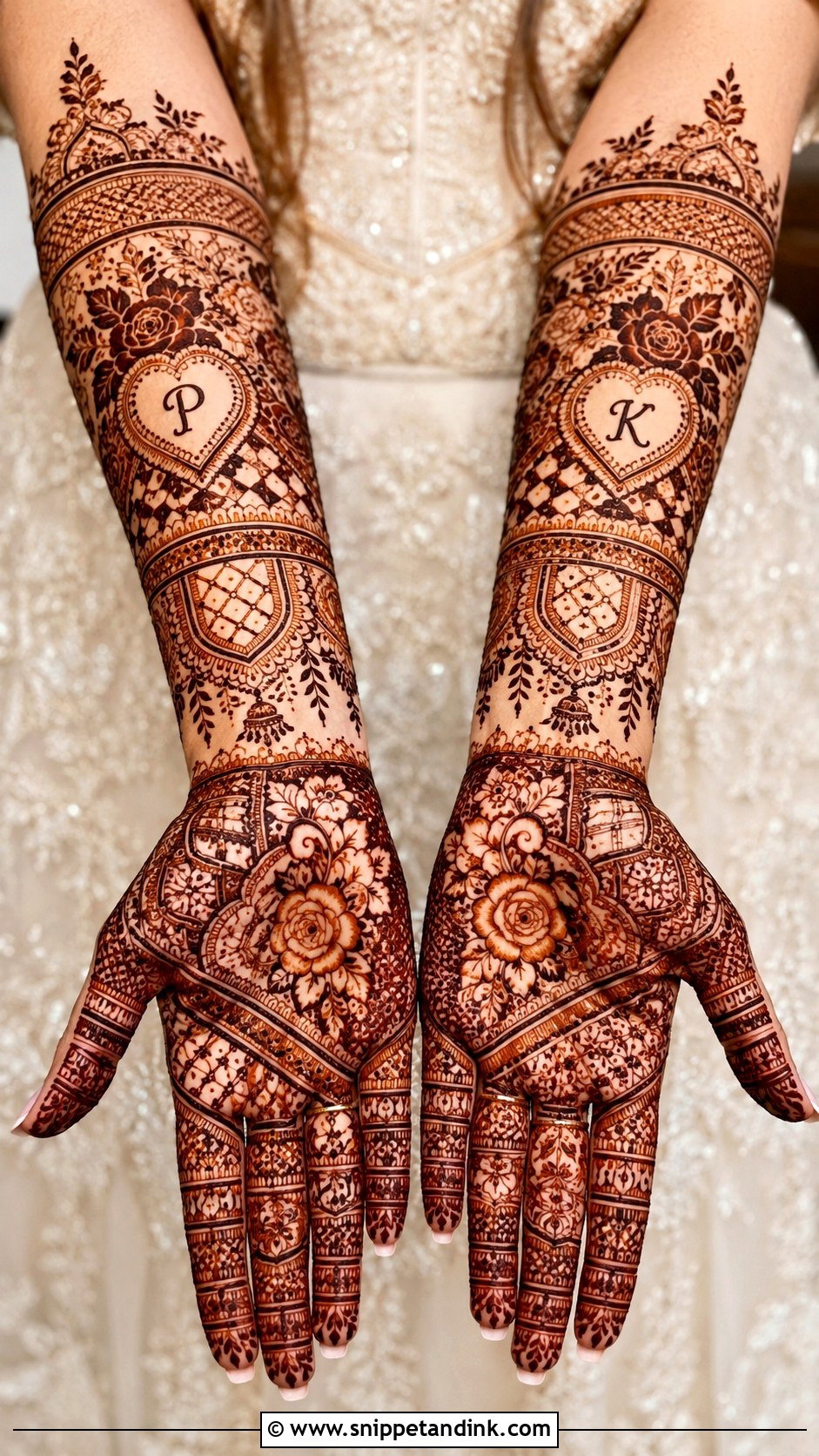
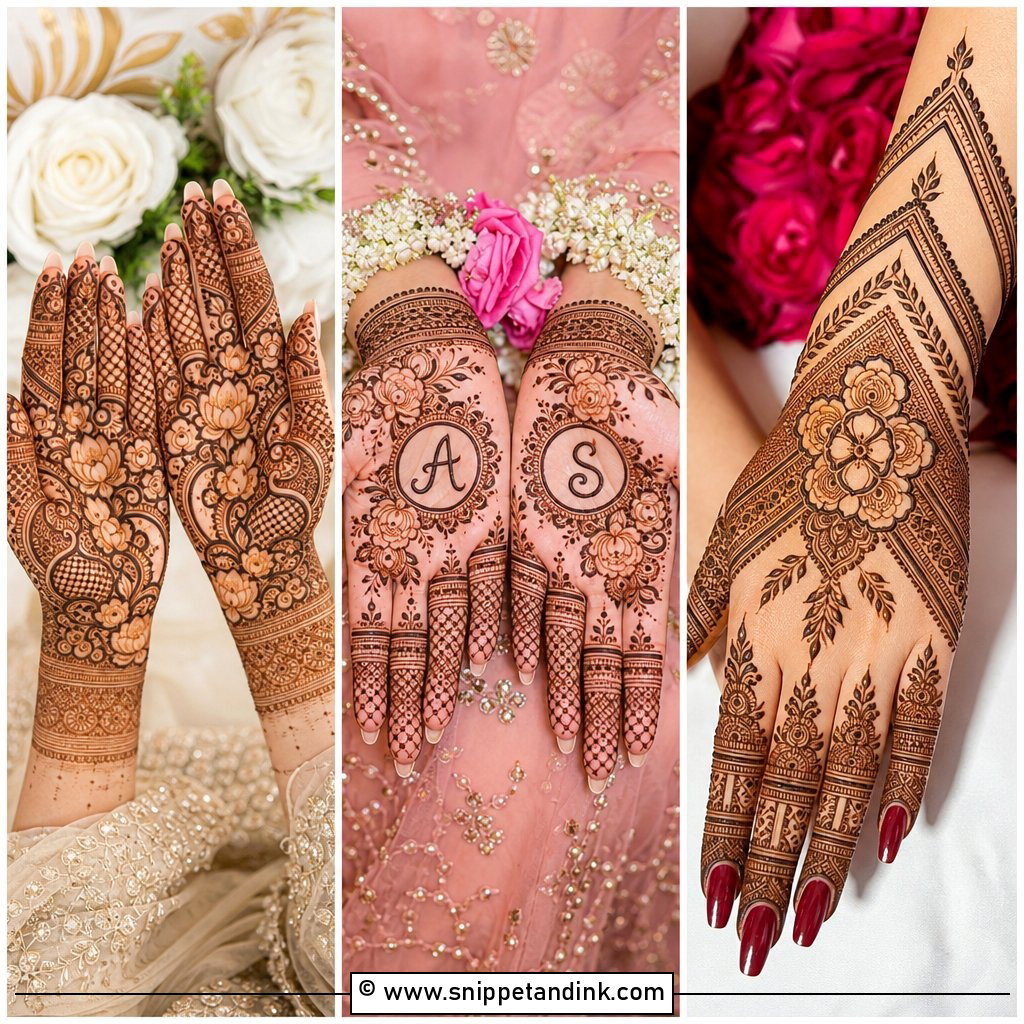
Modern bridal keeps the sense of occasion with cleaner lines and more personal details: bold florals, geometric panels, couple initials, minimal portraits and bracelet bands. Brides wearing contemporary, pastel or lighter outfits tend to choose it. Palms stay festive with mandalas and paisleys while the backs stay airy. It’s also the easiest style to personalise with a wedding date, travel symbols or a small icon from the proposal, since there’s open space to place them without hunting for room.
6. Simple Wedding Mehndi Design
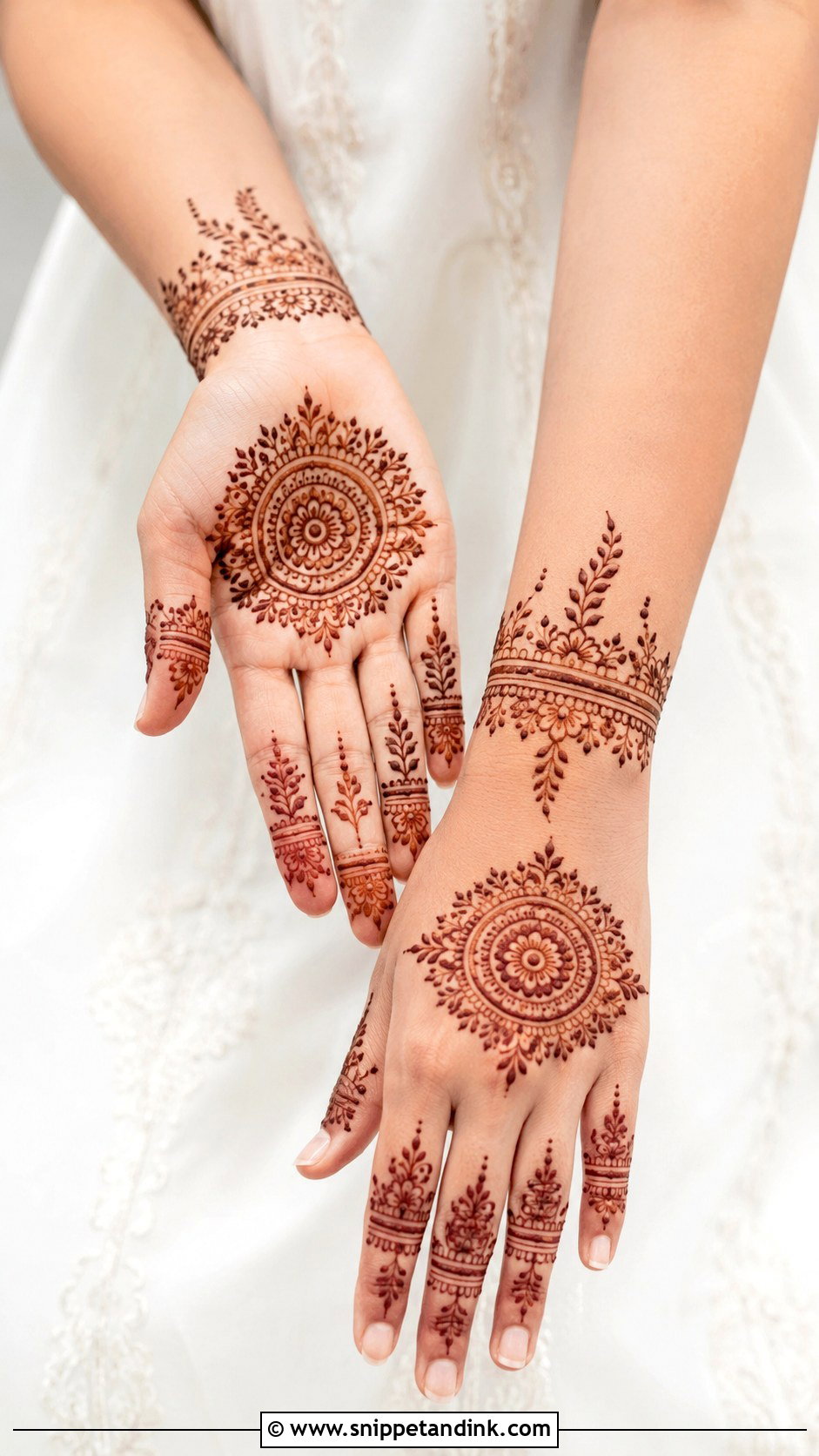
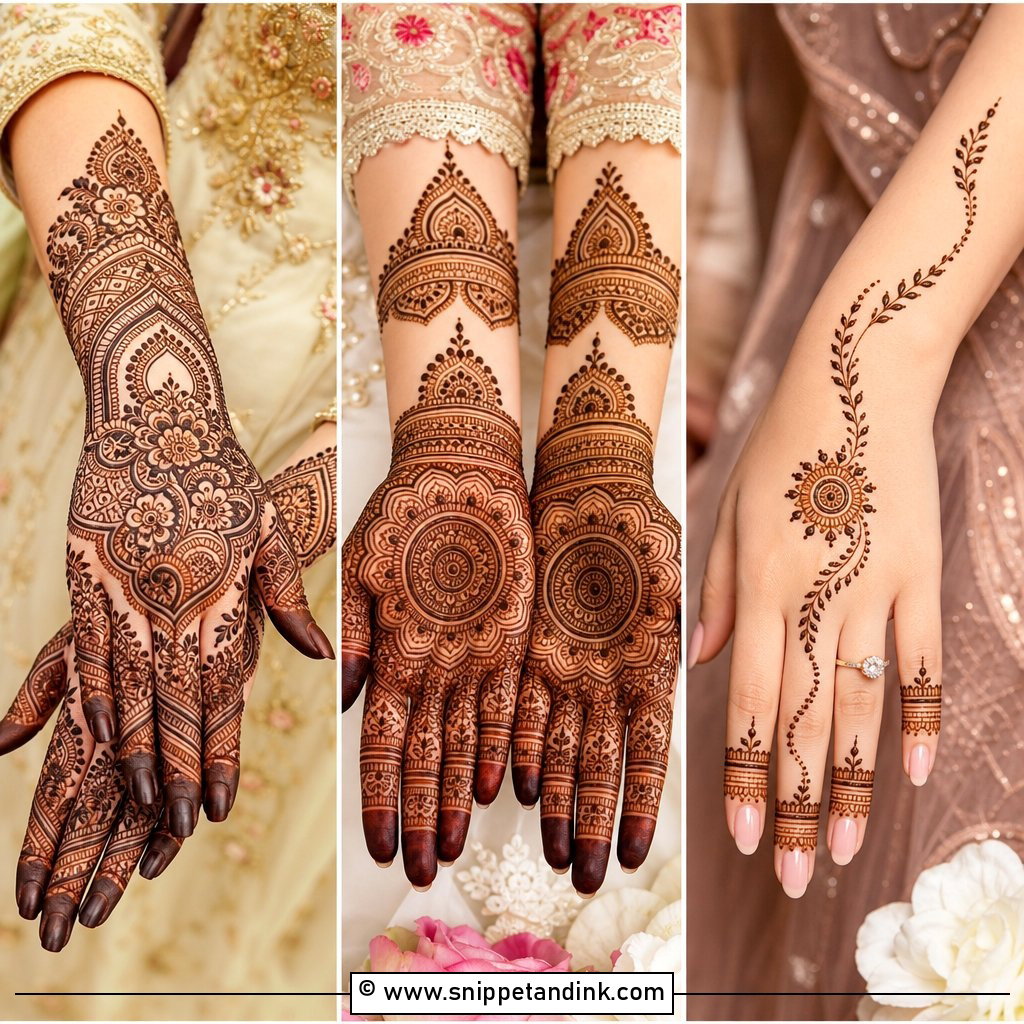
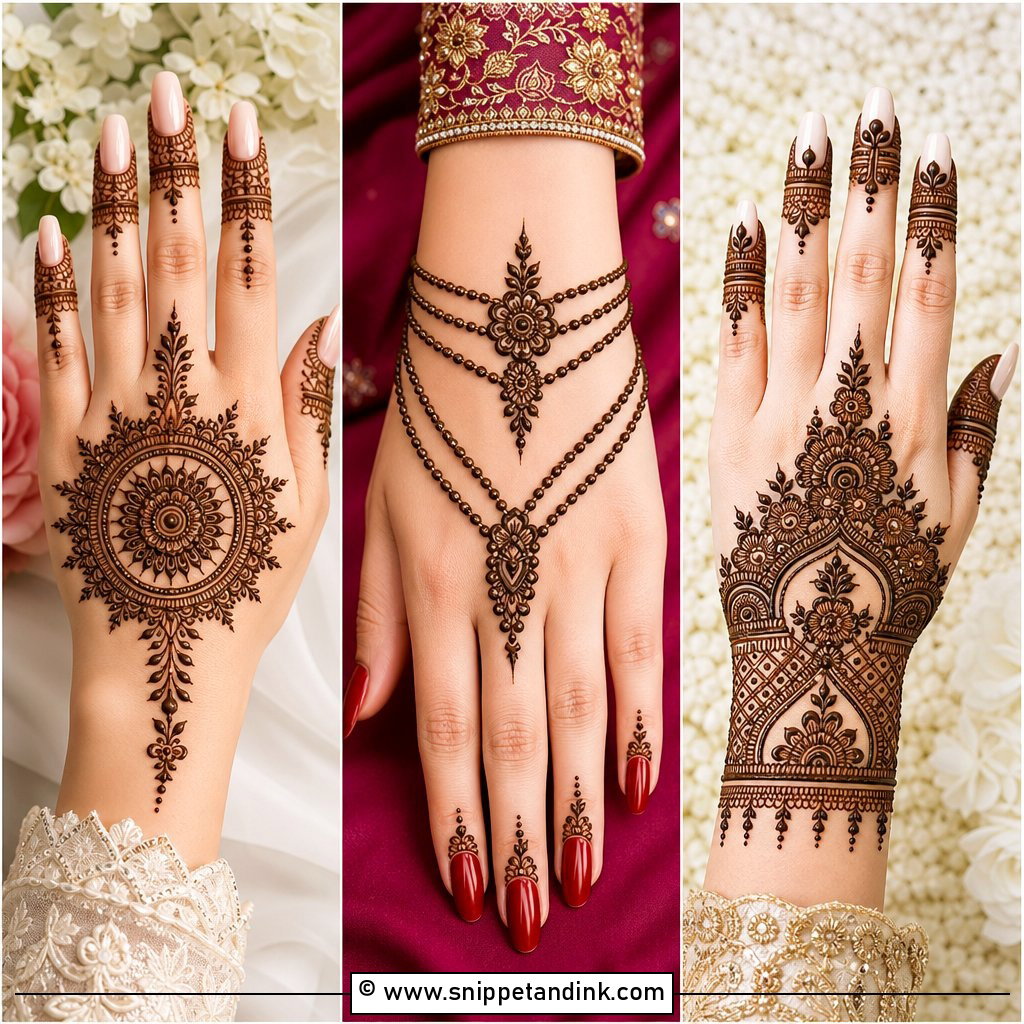
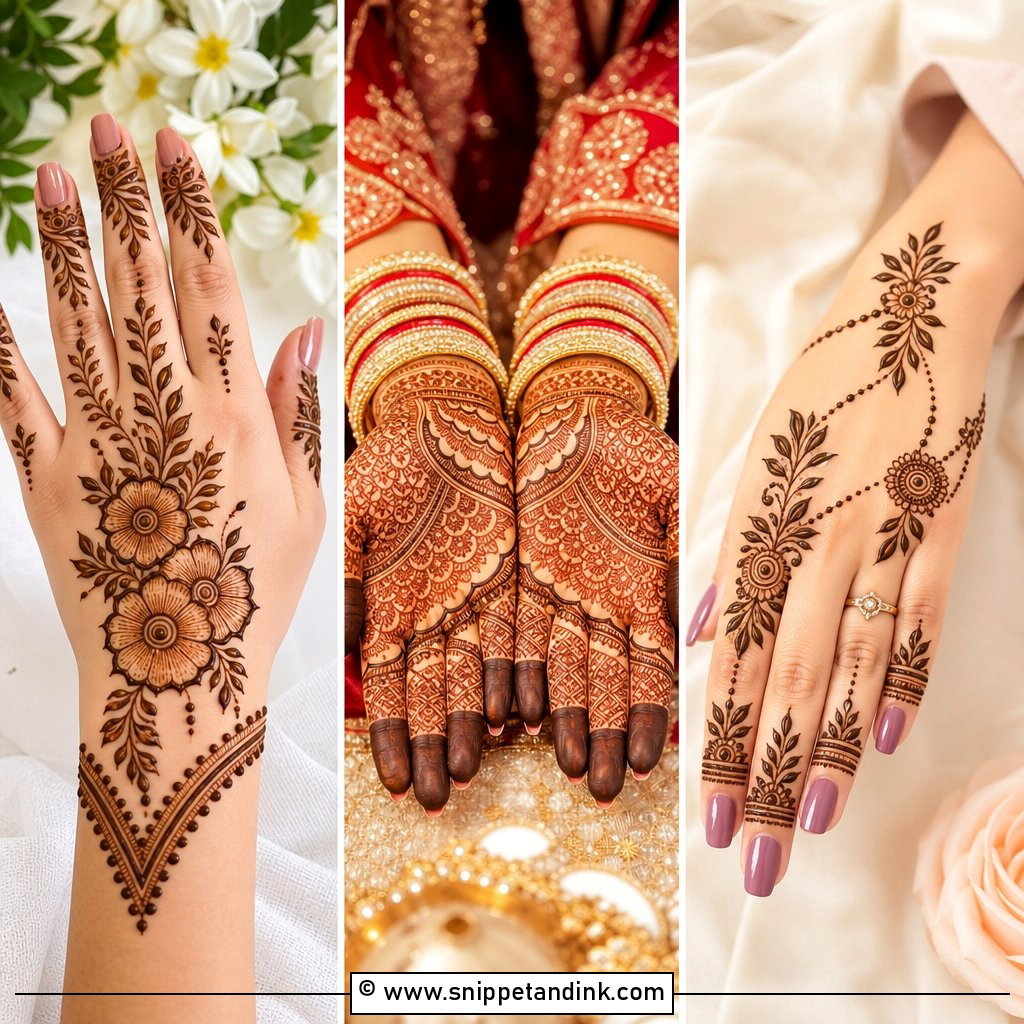
A simple bridal design is a medium mandala on the palm, clean finger patterns, a floral wrist band and a light extension up the forearm, with a matching circle, slim leafy lines and dots on the back. It suits court weddings, intimate ceremonies, destination weddings and pre-wedding functions. Simple doesn’t mean unfinished, though. I check it from every angle, palm up, palm down and side on, before I call it done, because a light design has nowhere to hide a gap.
7. Minimal Wedding Mehndi Design
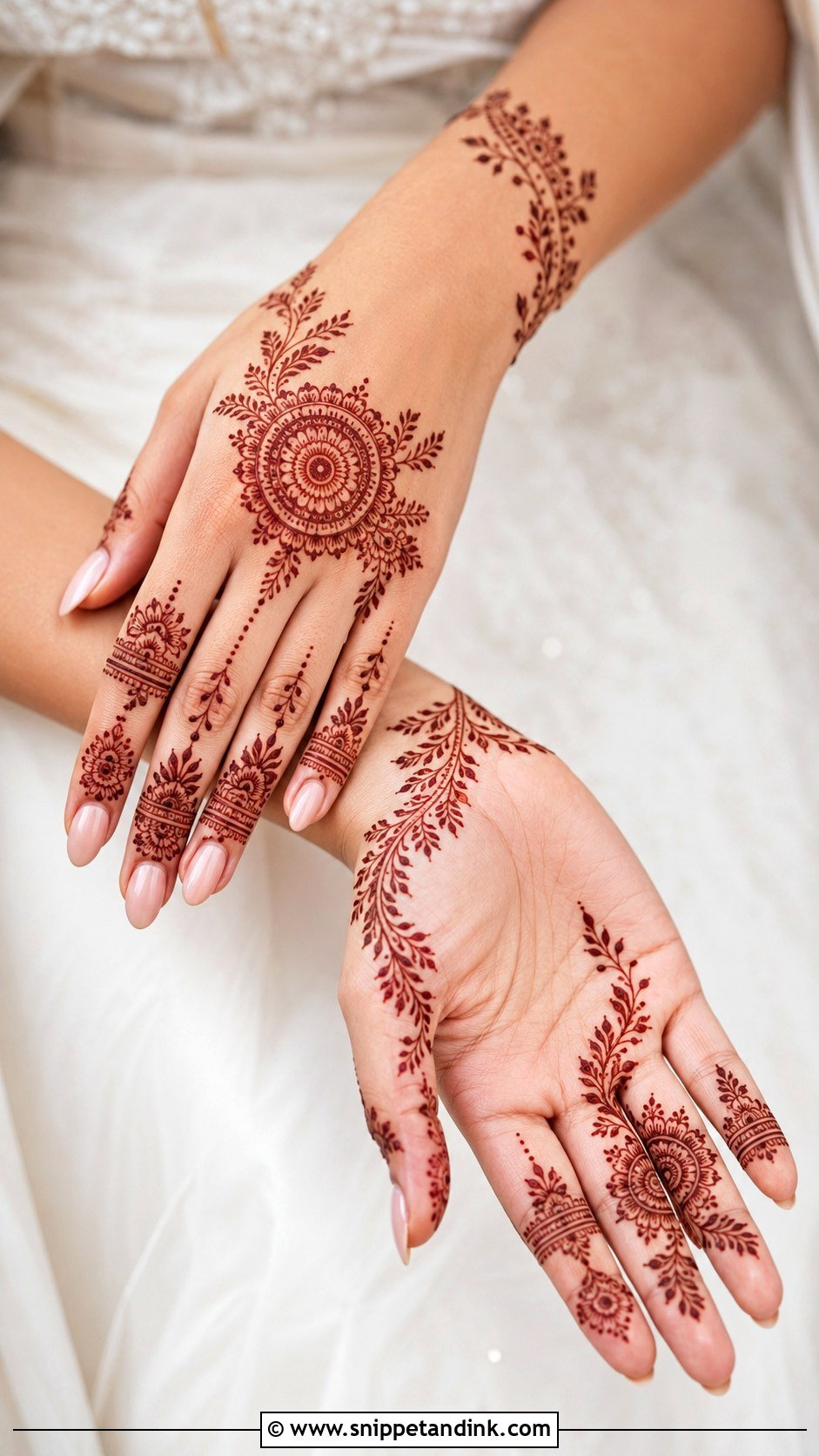
Minimal bridal relies on negative space, slim lines, small florals and delicate finger art: a fine palm mandala, a narrow vine across the wrist, tiny dots around the fingers, and ring-style chains or open floral trails on the back. It pairs naturally with pastel outfits, pearls and soft makeup. The practical upside is real. A bride wearing minimal mehndi can use her hands much sooner and won’t spend the night before her wedding with wrapped arms.
8. Front Hand Wedding Mehndi Design
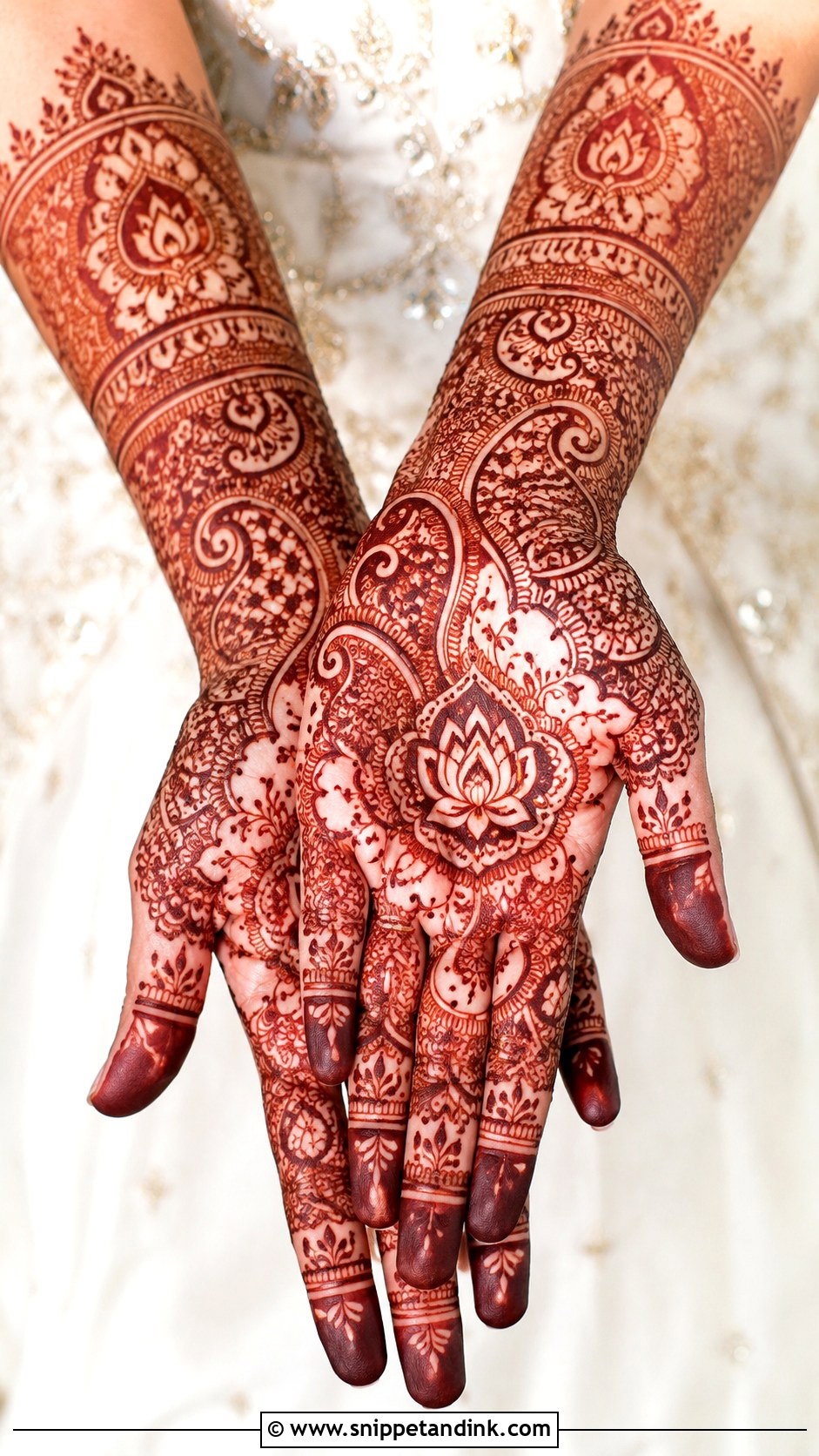
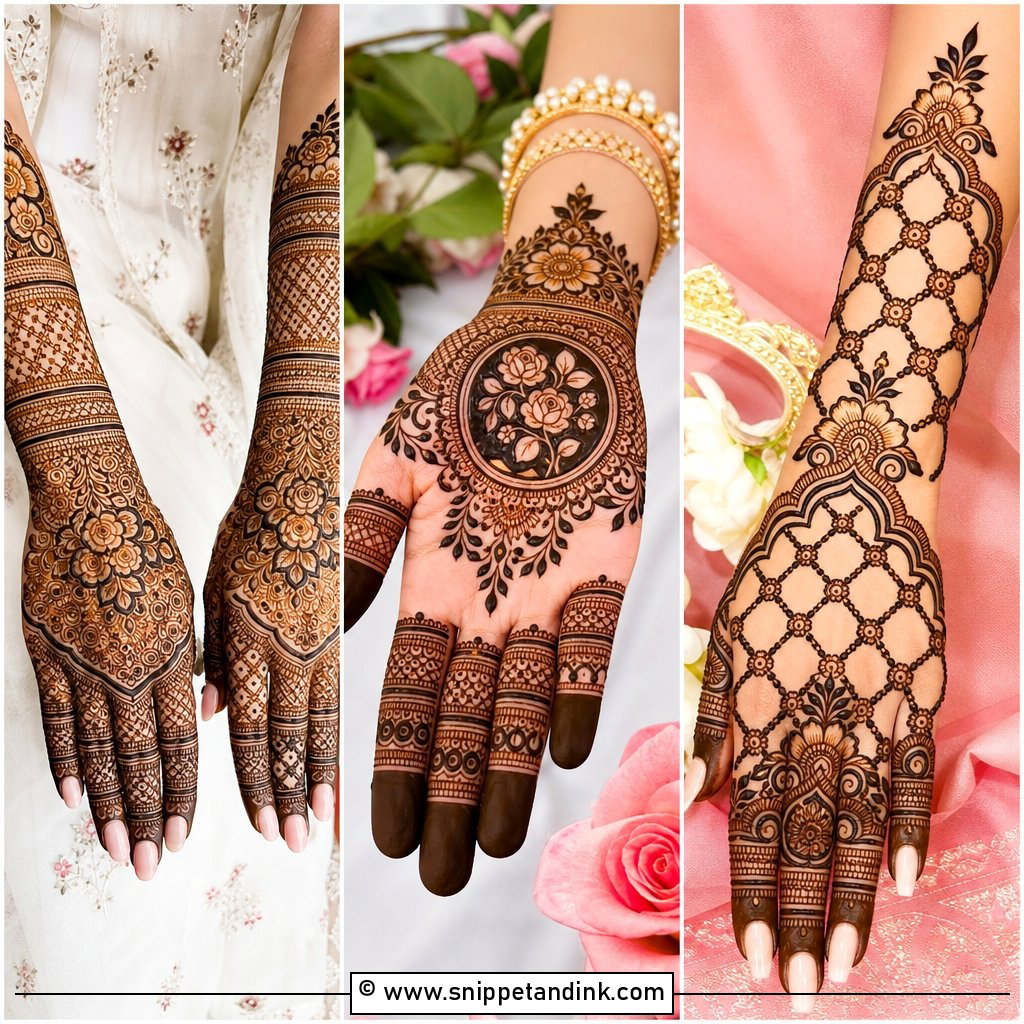
During the ceremony your palms are on show: holding flowers, receiving jewelry, performing rituals. So a bridal front hand starts with a strong central motif, then expands into paisleys, leaves, lotus details and fine fingertips, with a cuff at the wrist and a floral trail or mandala band on the lower forearm. I keep the palm slightly fuller than the forearm, since that’s what appears in ceremony photos. Medium-sized motifs rather than tiny fillers everywhere give the deepest, clearest stain.
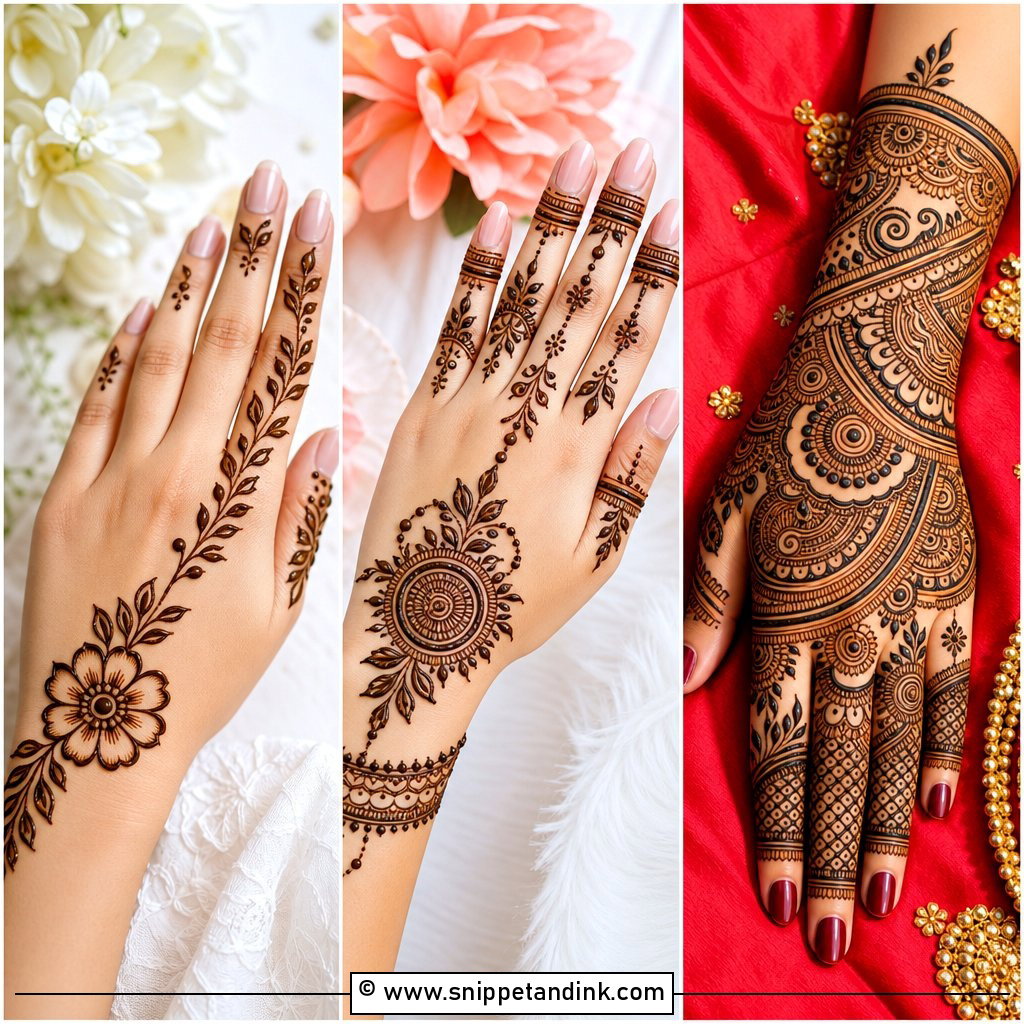
9. Back Hand Wedding Mehndi Design
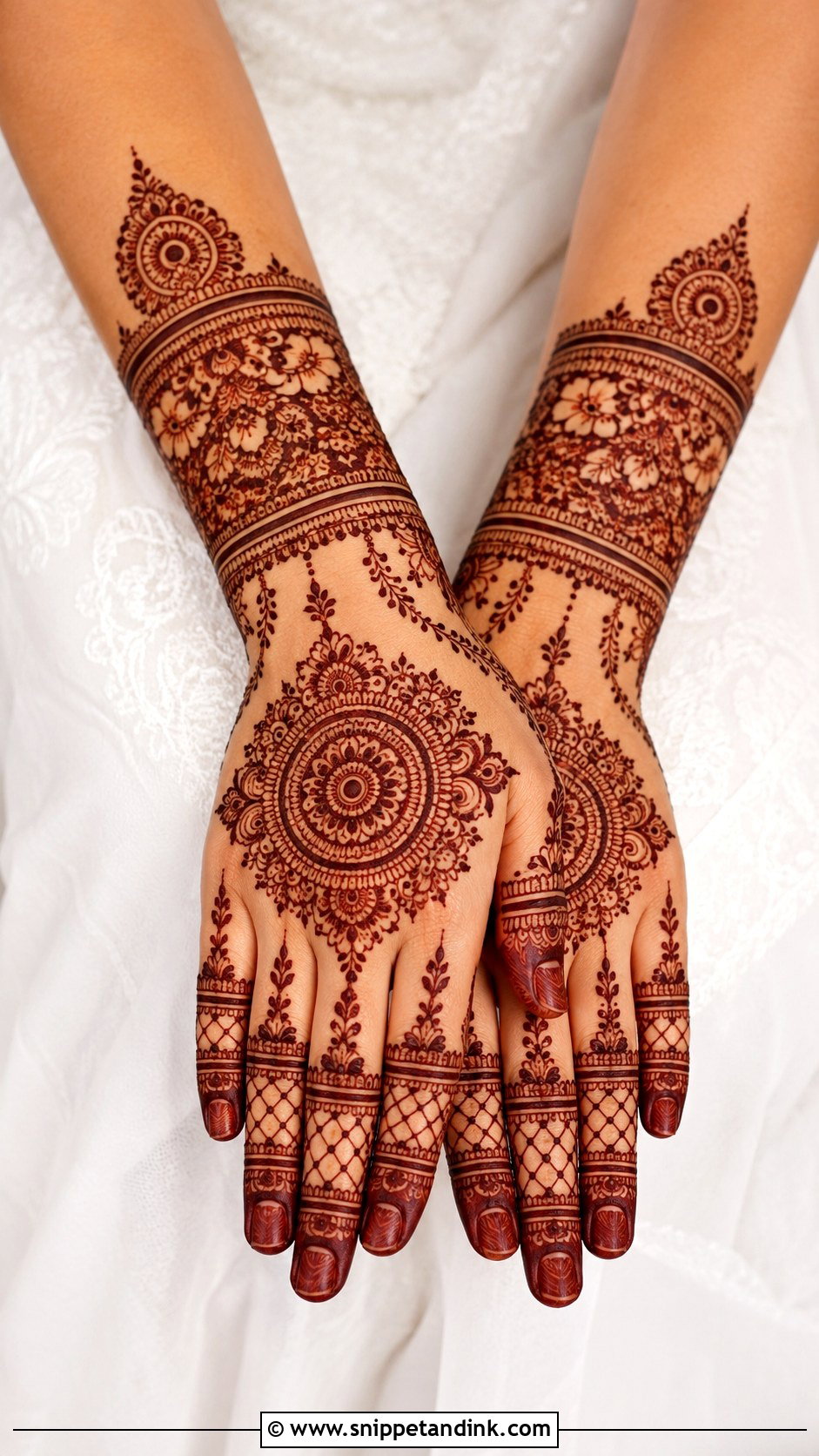
Ring, chura, bangle and portrait photos all show the back of the hand. A complete back-hand look has a central mandala or floral cluster, decorated fingers, a bracelet cuff at the wrist and a chain-like link between them. Heavier versions add jaali, paisleys and shaded leaves; softer ones leave more space around the centre. I ask brides to bring their chura or bangles to the appointment so I can see where the stack ends and draw the cuff just above it, rather than hidden underneath.
10. Wedding Mehndi Design For Bride
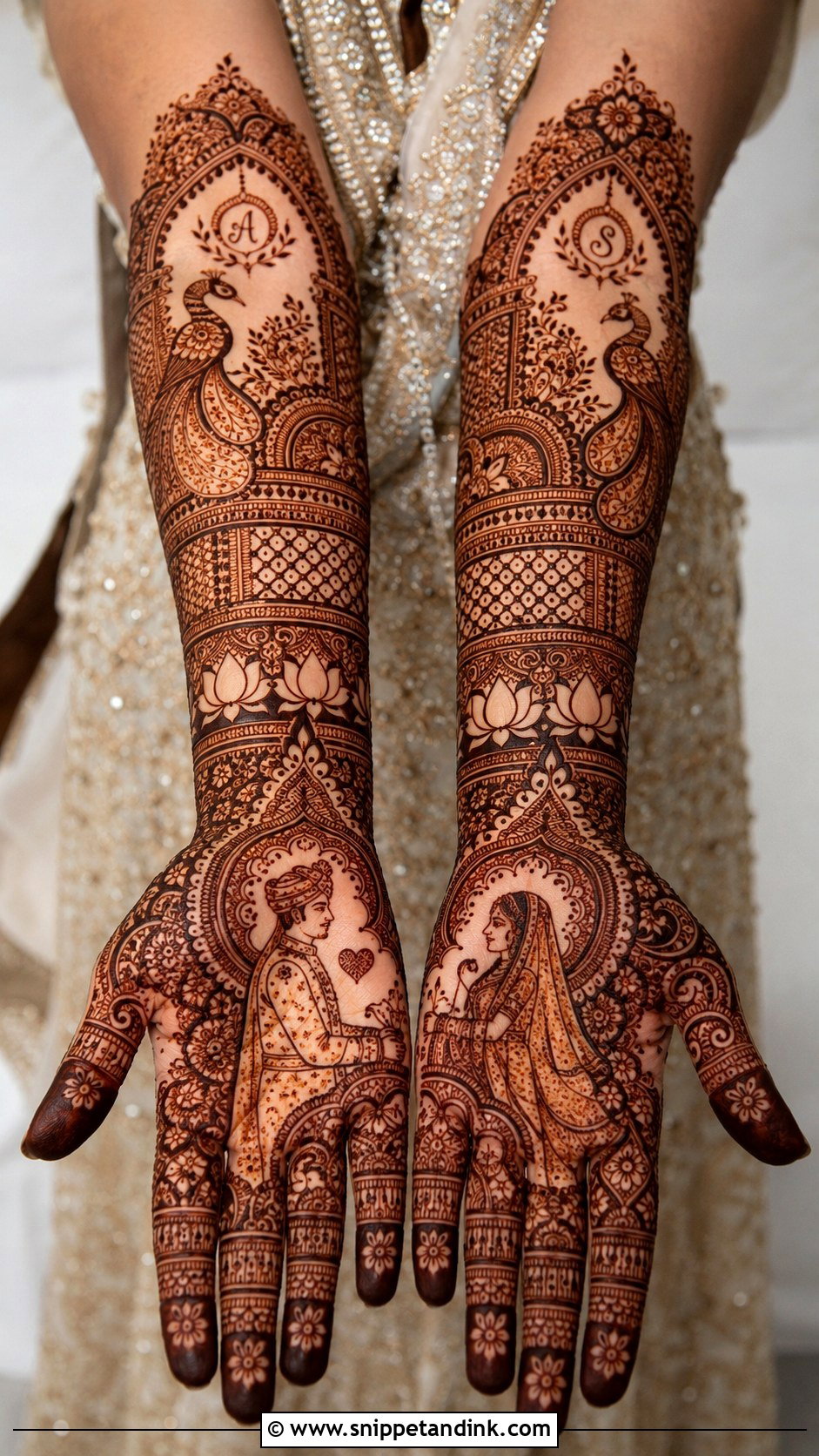
A bride’s design covers both palms, back hands, wrists and forearms with coordinated motifs: portraits, peacocks, paisleys, lotus borders, mandalas and hidden initials. Placement is planned before I touch the skin. The most meaningful details go where they’ll be seen, the palm centre or inner forearm, with smaller fillers around them. The outfit sets the mood too. Heavy red bridal wear calls for classic dense work; pastel or modern outfits look better with a cleaner fusion layout.
11. Wedding Mehndi Design For Bridesmaids
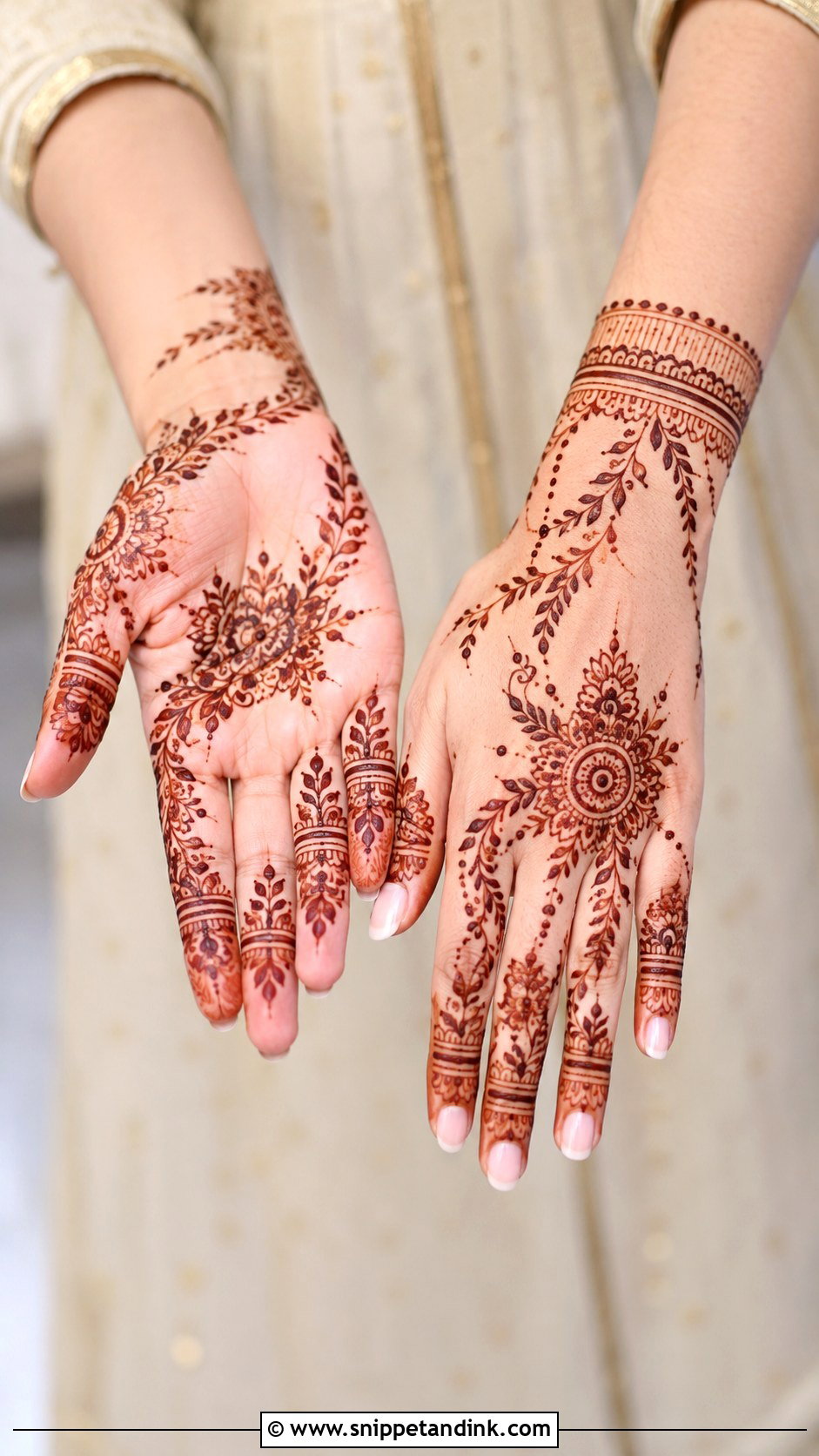
Bridesmaids need henna that dries fast and lets them dance, host and help with ceremony tasks. A complete bridesmaid look might be an Arabic floral trail on the palm, a small back-hand mandala, decorated fingers and a slim wrist band. That’s enough for group photos without a long sitting. Repeating one element from the bride’s design, a lotus or a particular paisley, ties the wedding party together quietly. Plan for extra artists if there are several of them; one artist working through a large party takes hours.
12. Wedding Mehndi Design For Sister Of Bride
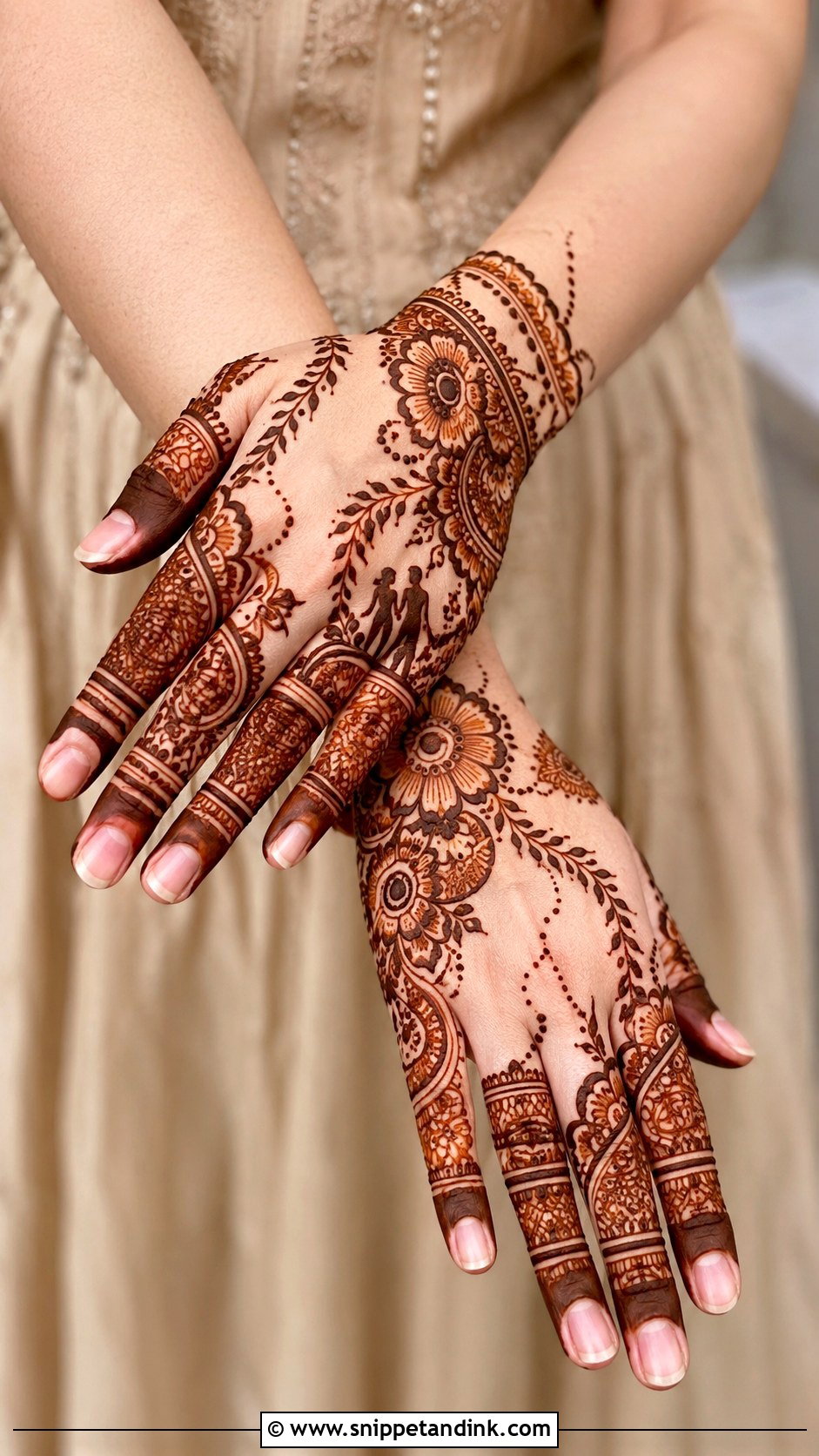
The bride’s sister usually gets something a step grander than the guests and a clear step below the bride. A design for the sister of bride might cover half to three quarters of the hand with bold flowers, paisleys, shaded leaves and a wrist cuff, with a mandala or diagonal trail on the palm and bracelet chains on the back. It holds up in close family photos and sangeet performances. A small family symbol or hidden initials make it personal without making it look bridal.
13. Engagement Wedding Mehndi Design
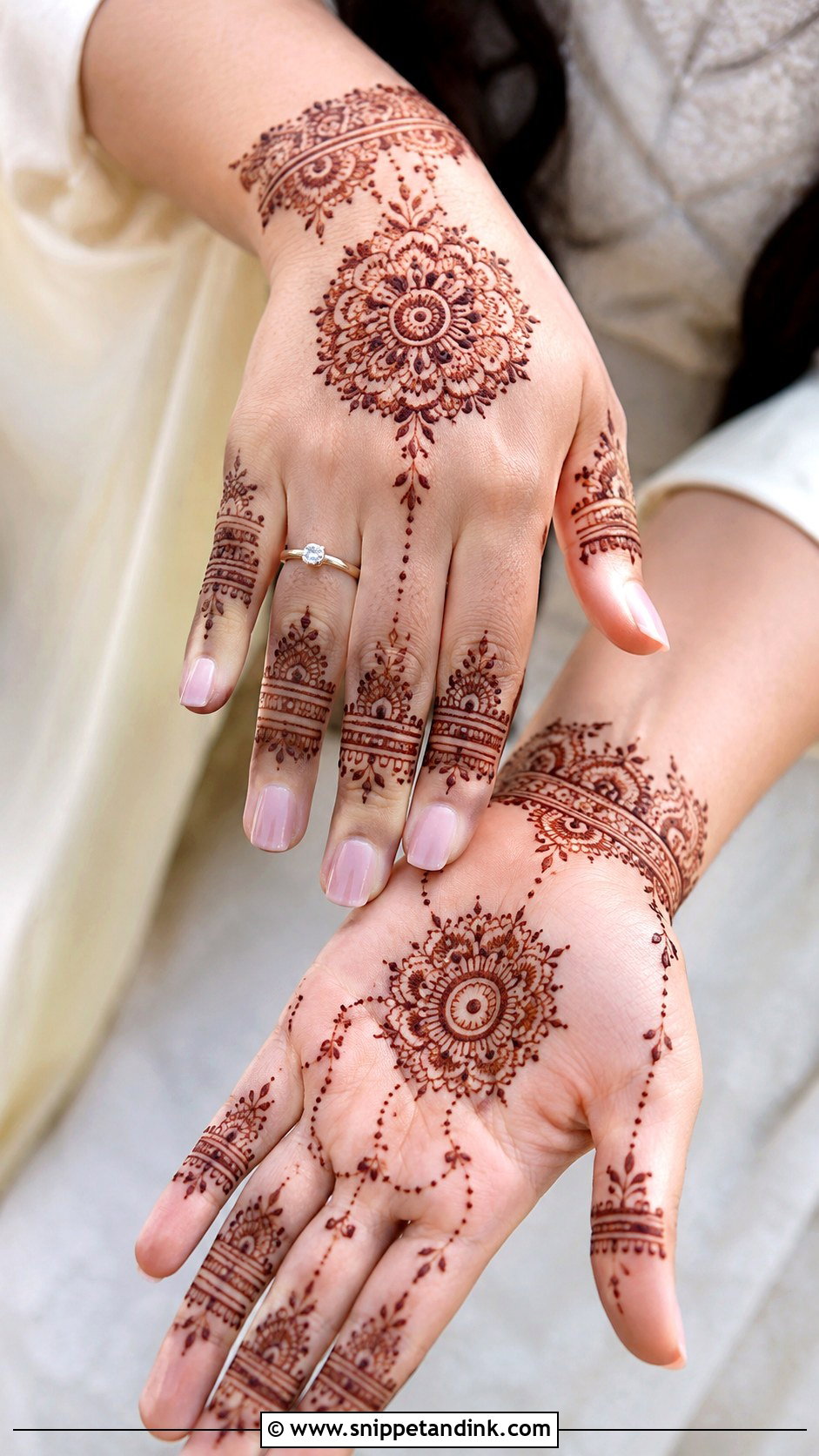
Engagement henna should make the ring the focus. I concentrate on the back hand: a floral mandala near the centre, ring-style finger patterns and delicate bracelet bands, with a simpler palm carrying a light mandala, paisley trail or leafy pattern. Keep the area around the ring finger clean, so dense lines don’t compete with the stone. Soft Arabic or Indo-Arabic layouts suit engagements well because they read clearly without the weight of full bridal coverage.
14. Nikah Wedding Mehndi Design
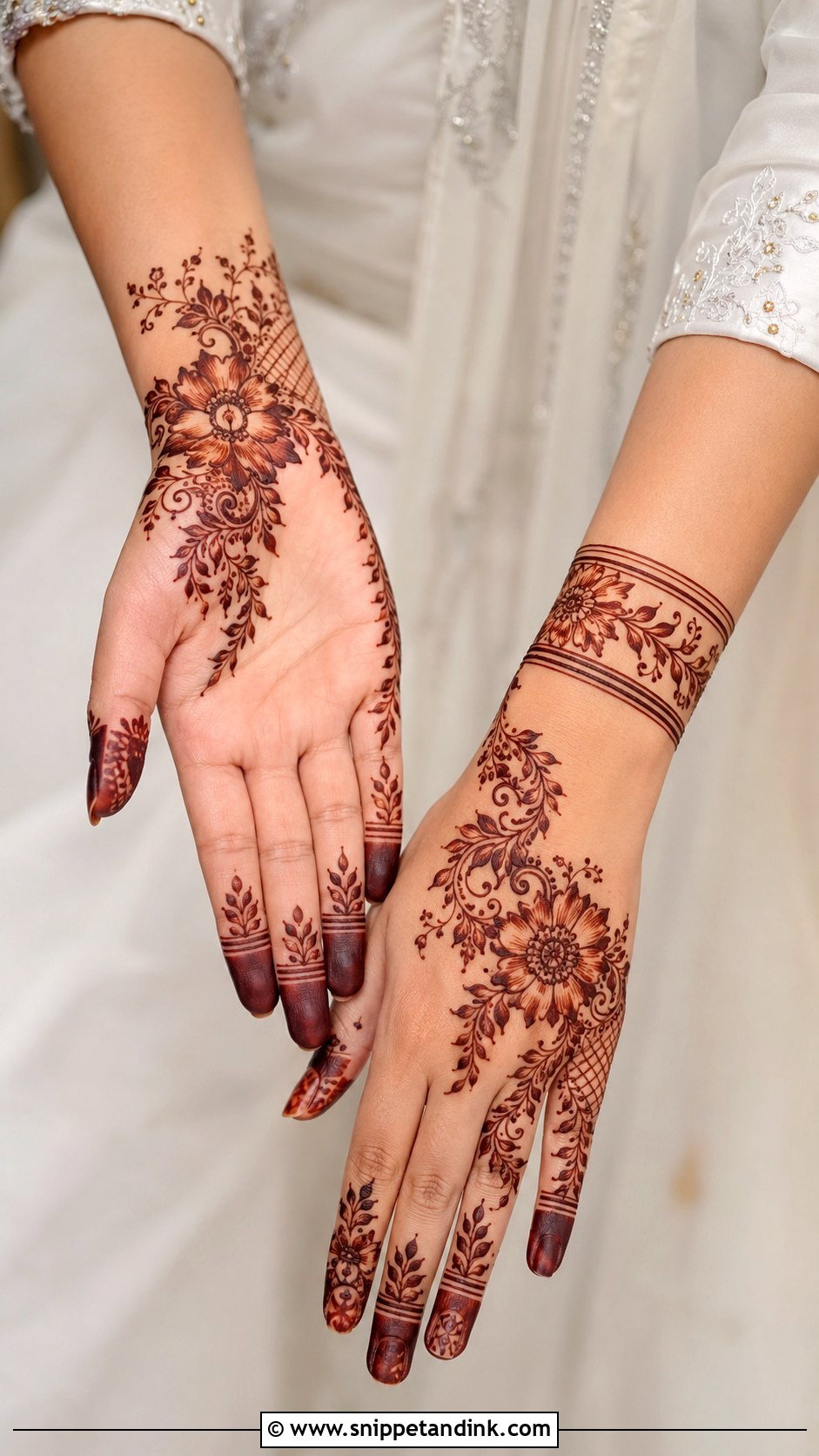
Nikah brides often lean toward Arabic, Gulf or Indo-Arabic patterns with open spacing and smooth floral movement. A complete nikah look might be a diagonal palm trail, decorated fingers, a wrist cuff and a back-hand bracelet layout, with fine jaali and shaded petals for detail. It sits well with ivory, gold, pastel and green outfits. If you’d like initials or a date, I’d place them inside the wrist band, where they read cleanly and don’t interrupt the floral flow.
15. Reception Wedding Mehndi Design
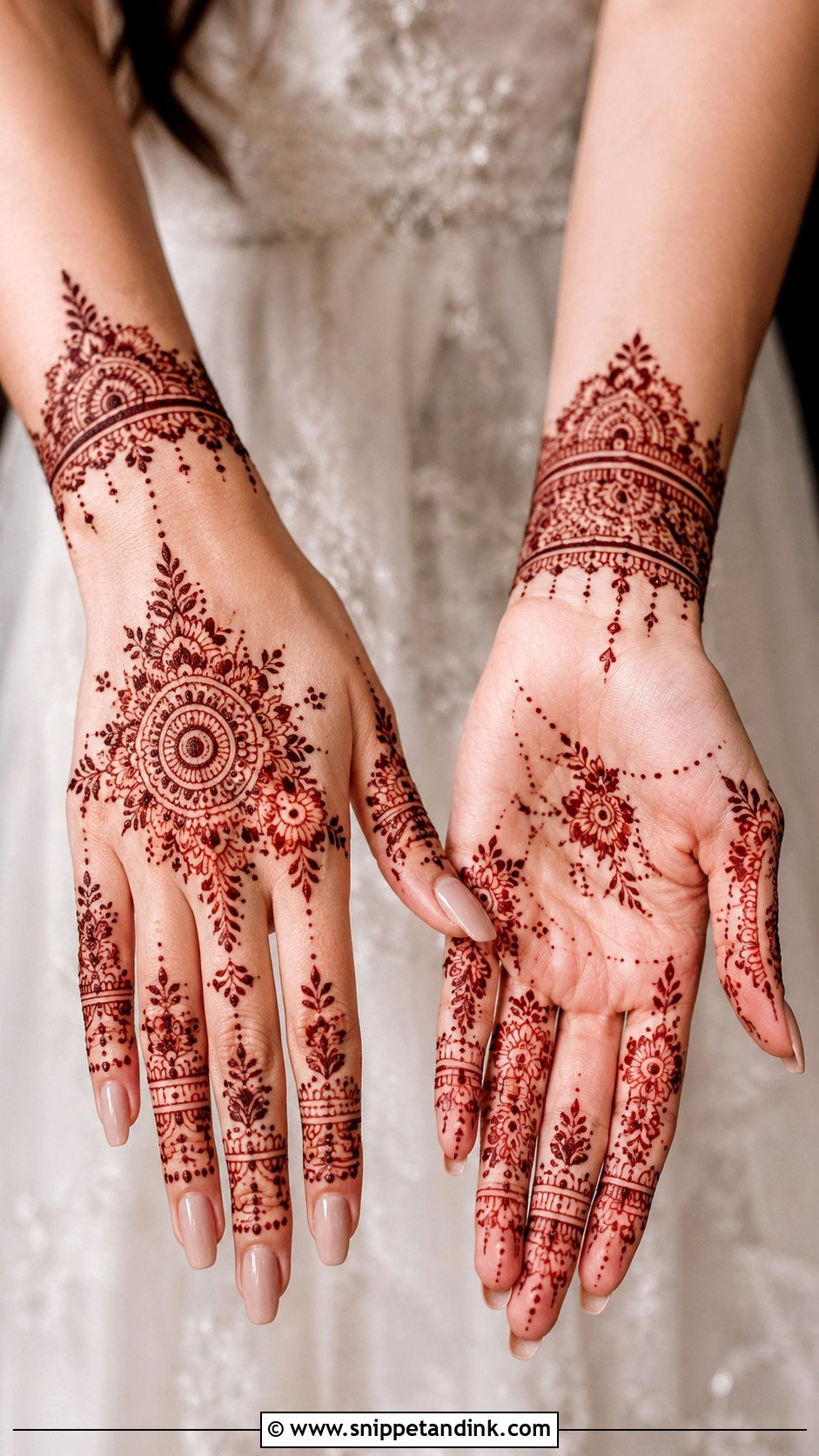
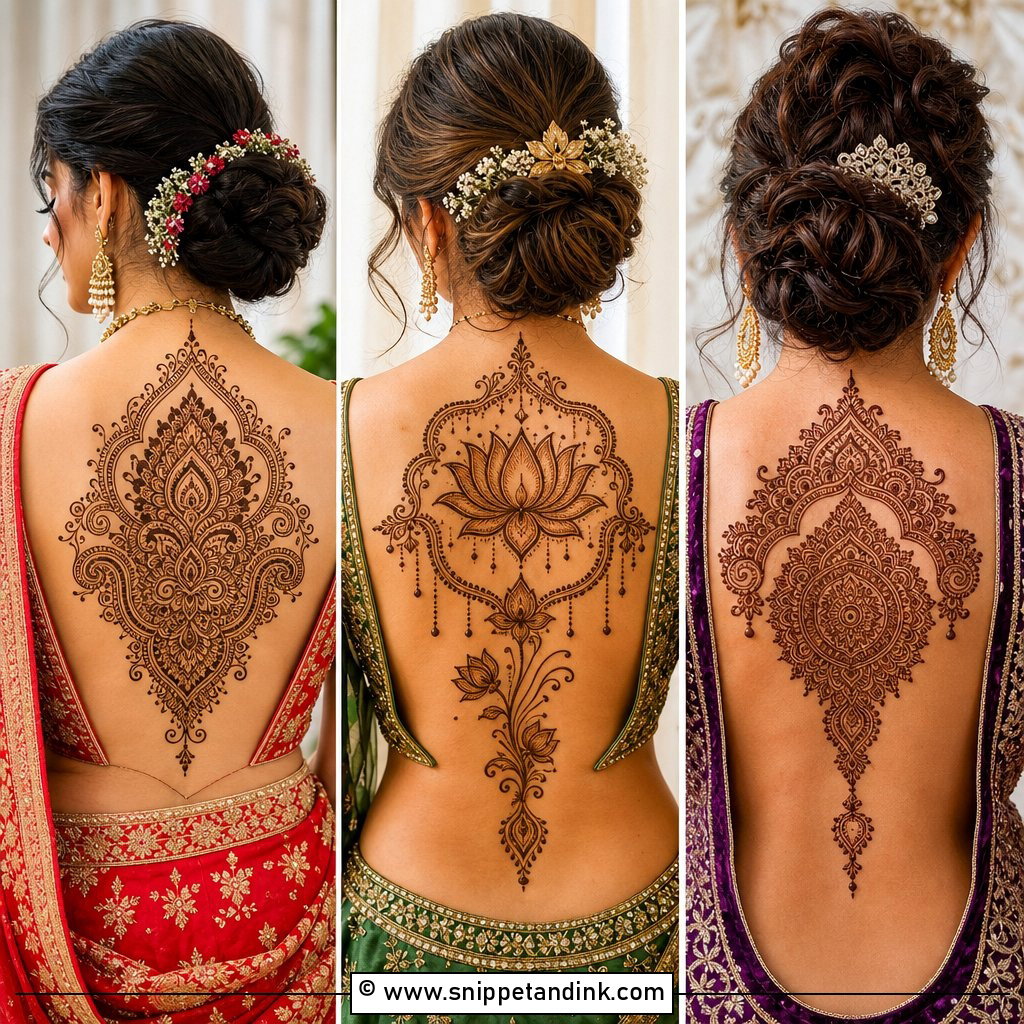
By the reception, most brides have already worn their main mehndi for days, and the stain will have faded somewhat from its peak. Some choose a fresh, lighter application for a later reception: a back-hand floral mandala, slim finger details, bracelet cuffs and light palm decoration. Open negative space looks clean under bright reception lighting and works with gowns, sarees or contemporary outfits. Just remember the new design needs its own day or two to darken.
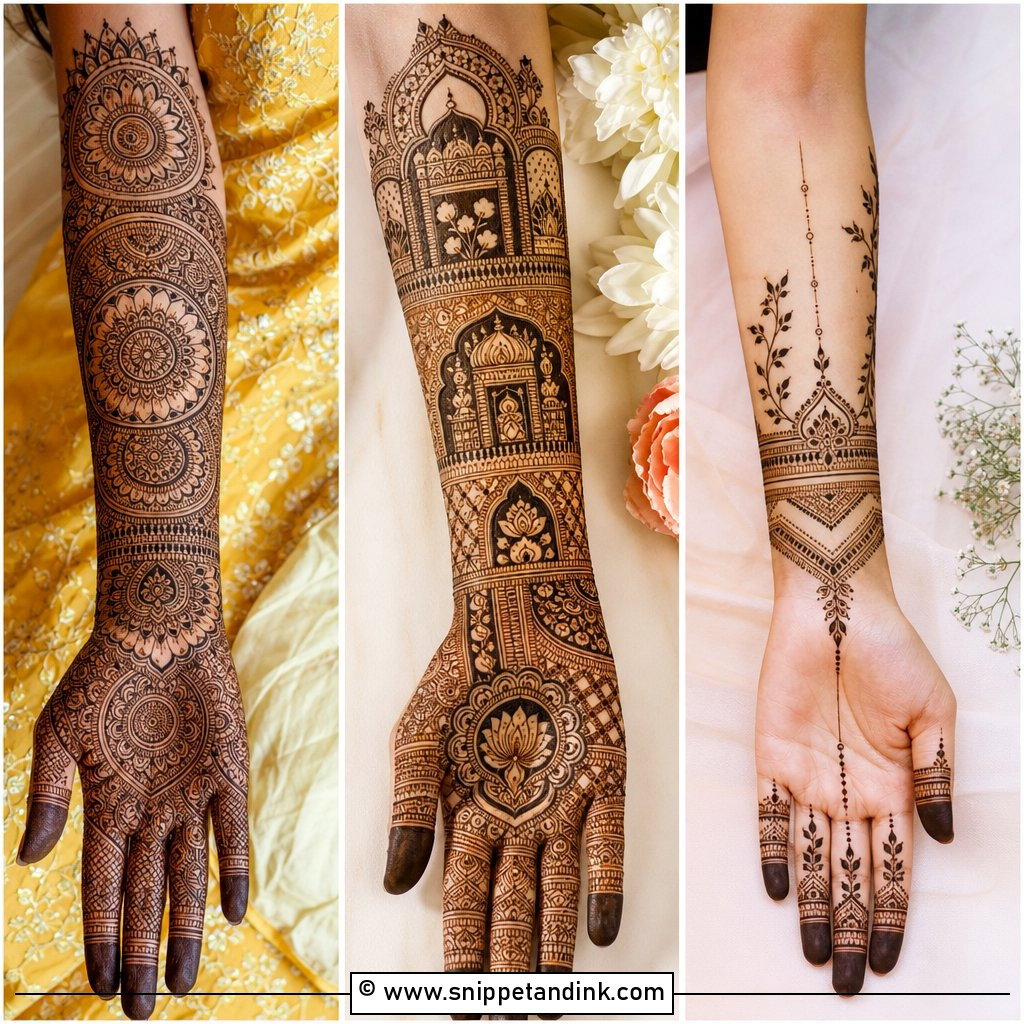
16. Royal Wedding Mehndi Design
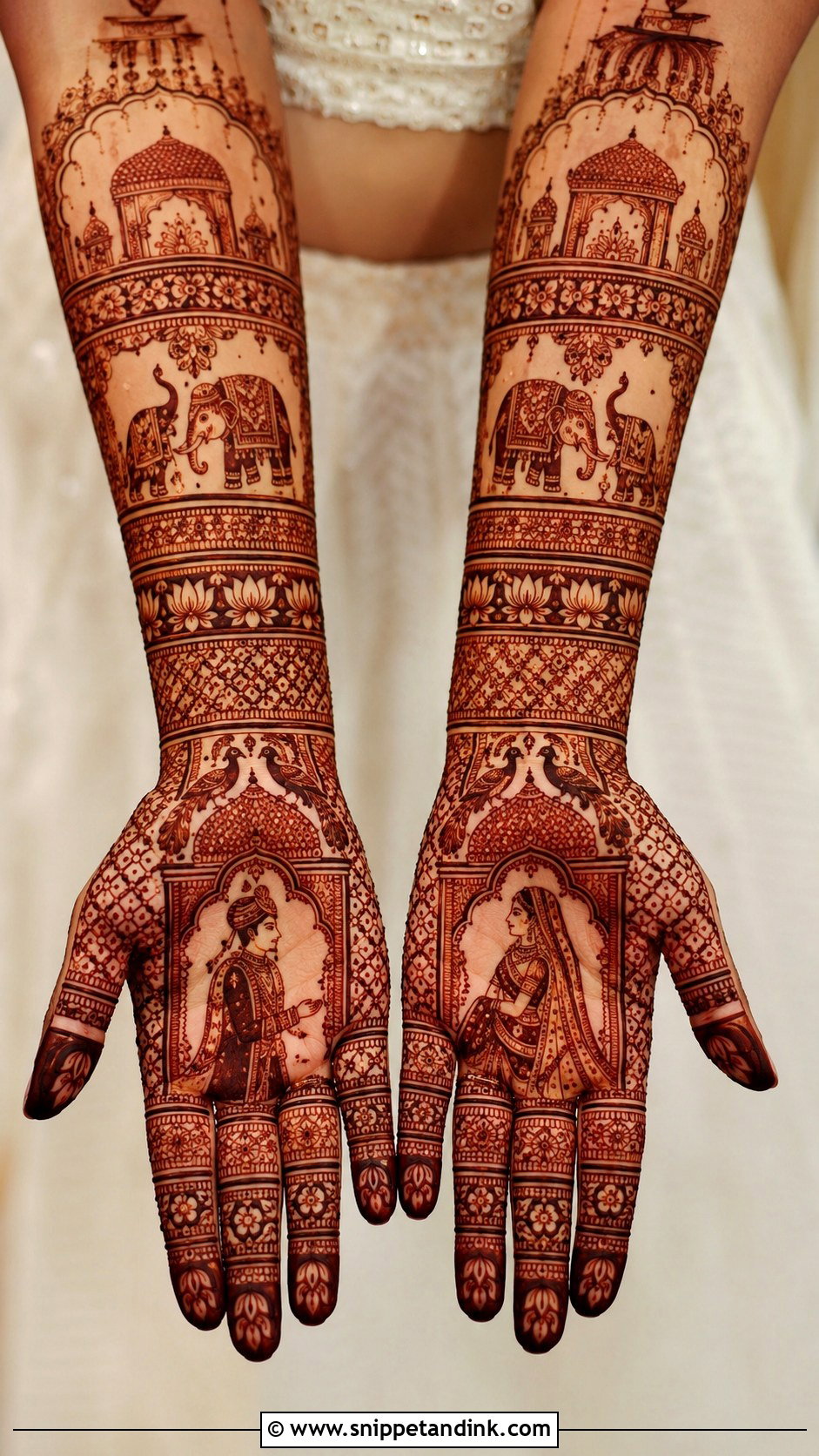
Royal designs are about grandeur and symmetry: palace windows, elephants, peacocks, bride and groom figures and layered paisley borders on the palms, with arches, lotus bands and ornamental cuffs up the forearms. A royal design works best when both hands are planned as a pair, mirrored or connected as one story. The backs should be equally rich, with jaali, bold mandalas and decorated fingers. It suits heavy lehengas, kundan jewelry and silk, and it’s one of the longest sittings I do.
17. Rajasthani Wedding Mehndi Design
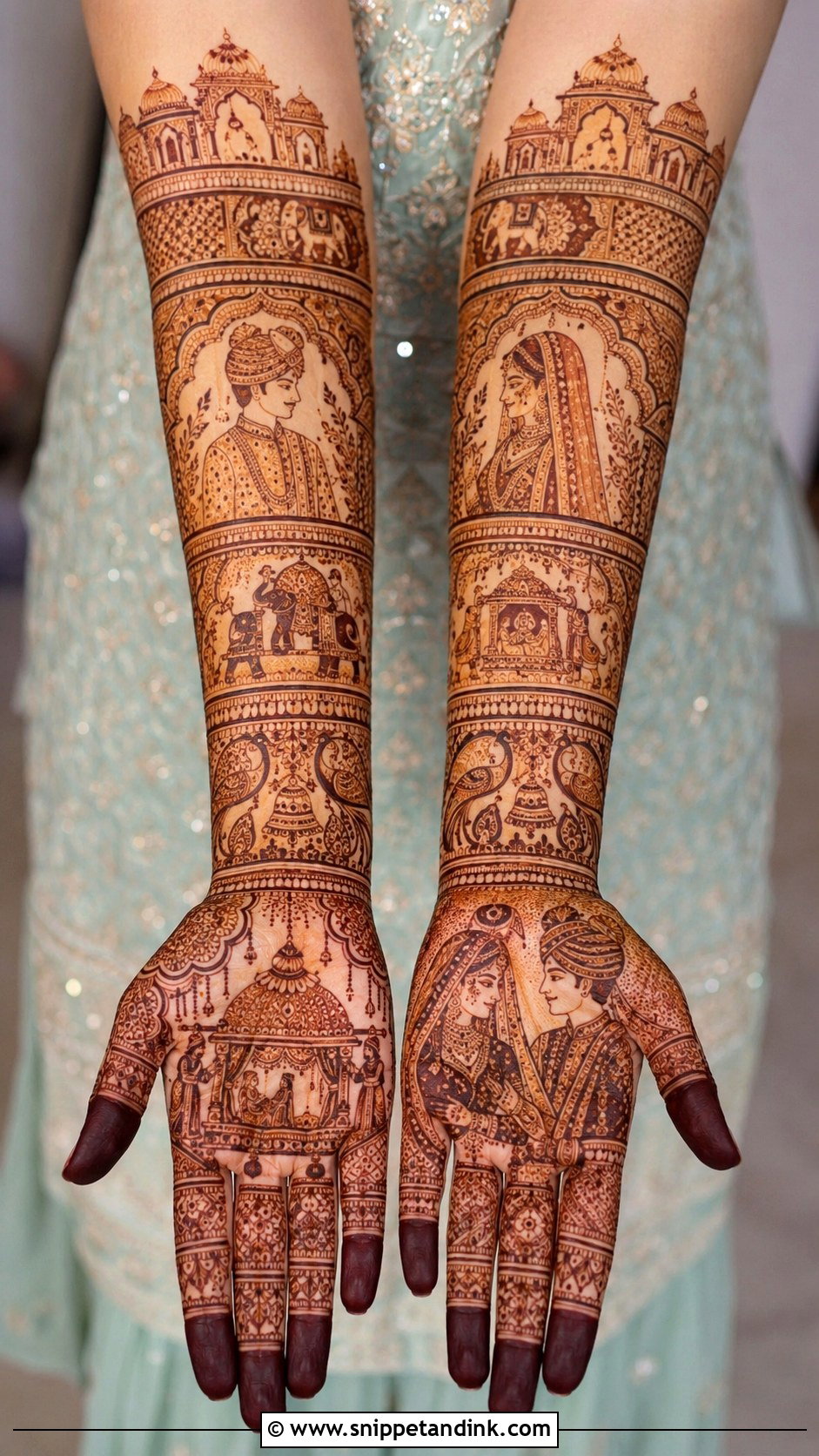
Rajasthani bridal henna is heritage storytelling: bride and groom portraits, doli, elephants, peacocks, palace arches and fine filling, covering the hands almost completely from fingertips to forearms. The risk is that everything blends together once stained. I divide the arm into clear sections, one major motif per section, before drawing any filler, which keeps each scene readable even at full density.
18. Marwari Wedding Mehndi Design
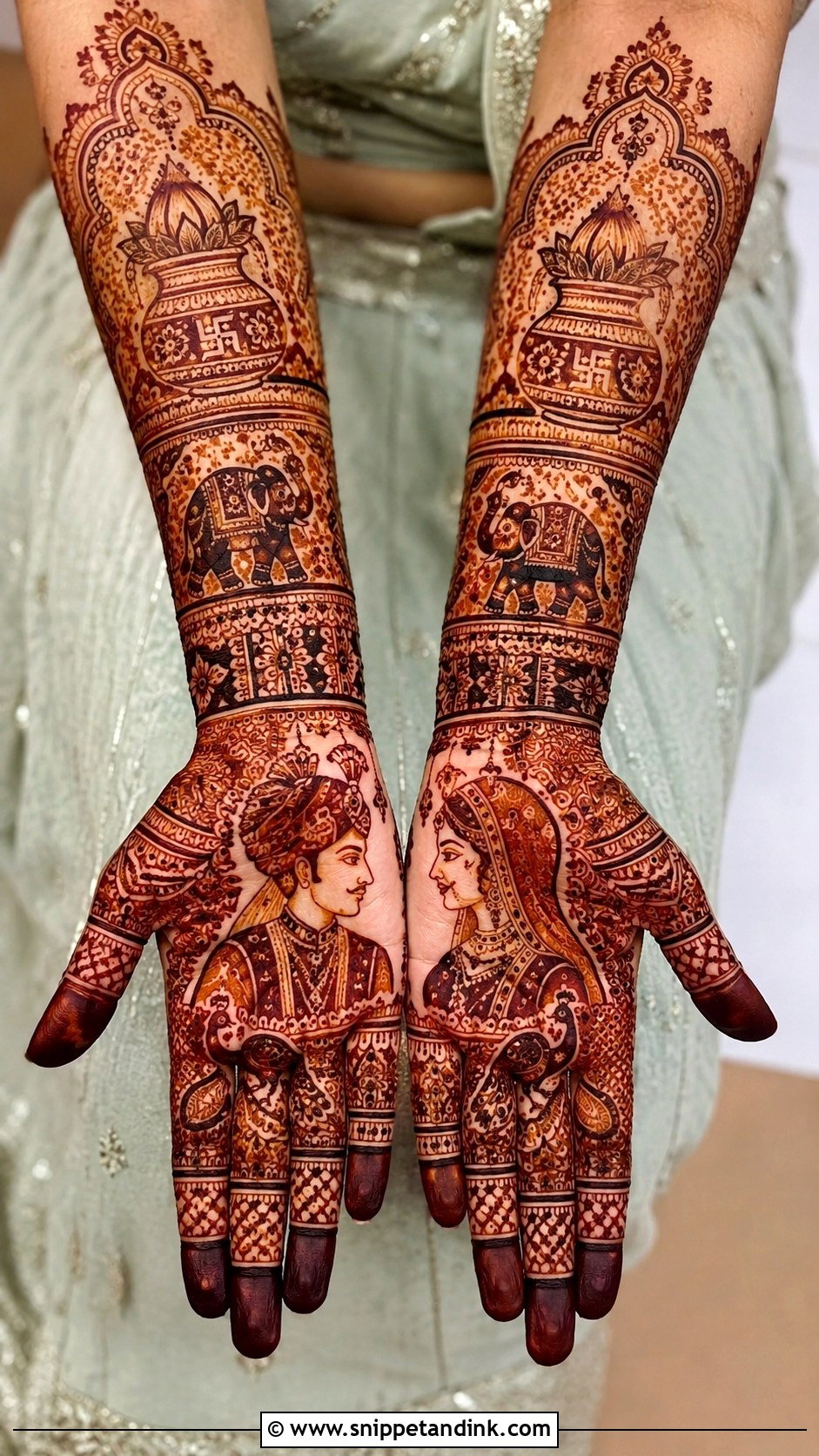
Marwari bridal work is bold and dense: bride and groom faces, elephants, peacocks, kalash, mandalas, paisley chains and ornamental wrist bands, with heavily filled fingers and layered panels on palms and forearms. It pairs well with red, orange, pink and gold outfits and gives a deep, dramatic stain. Balance matters even here. Larger motifs belong in the centre of the palm or forearm, with fine fillers around them, never the other way round.
19. Gujarati Wedding Mehndi Design
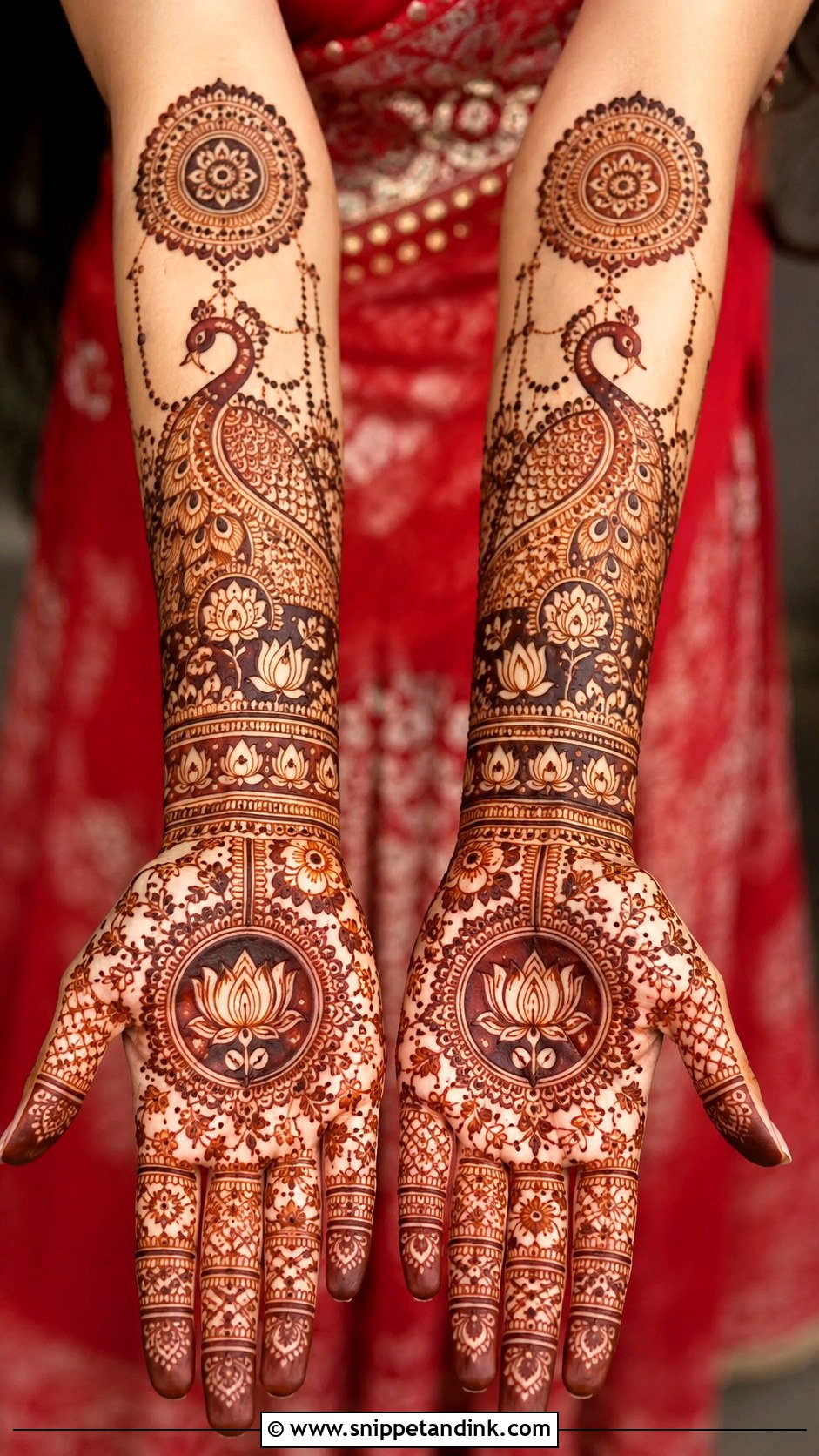
Gujarati wedding designs often move in circles: mandalas, paisleys, peacocks, lotus, mirrored symmetry and bangle bands at the wrists, sometimes with dandiya-inspired motifs or tiny wedding symbols. Palms can be dense while the backs use round motifs and finger patterns that sit well under bangles. Garba nights and family celebrations suit it. I ask for clean outlines and medium fillers here, because tiny fillers inside round shapes close up as the stain develops.
20. Pakistani Wedding Mehndi Design
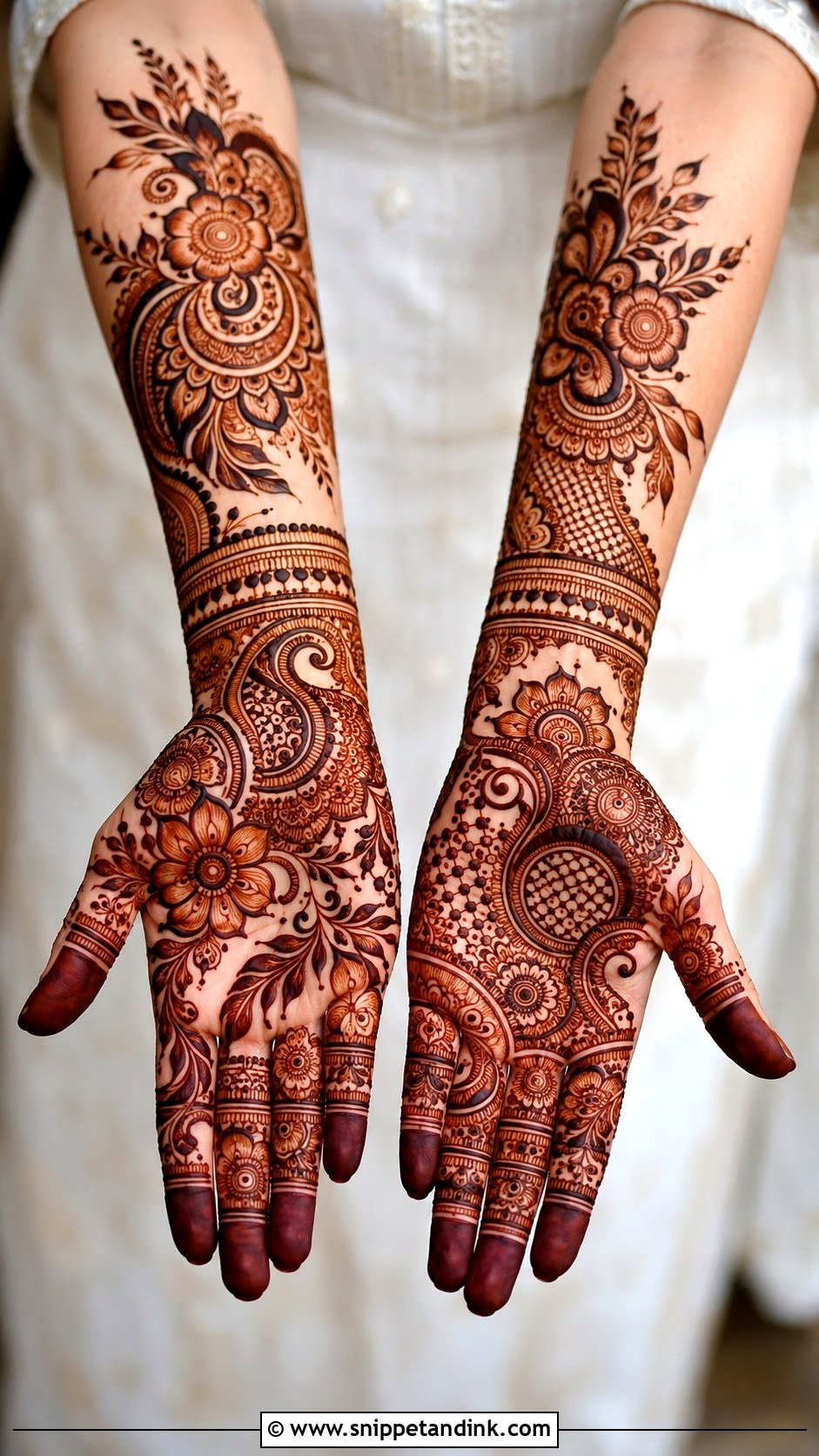
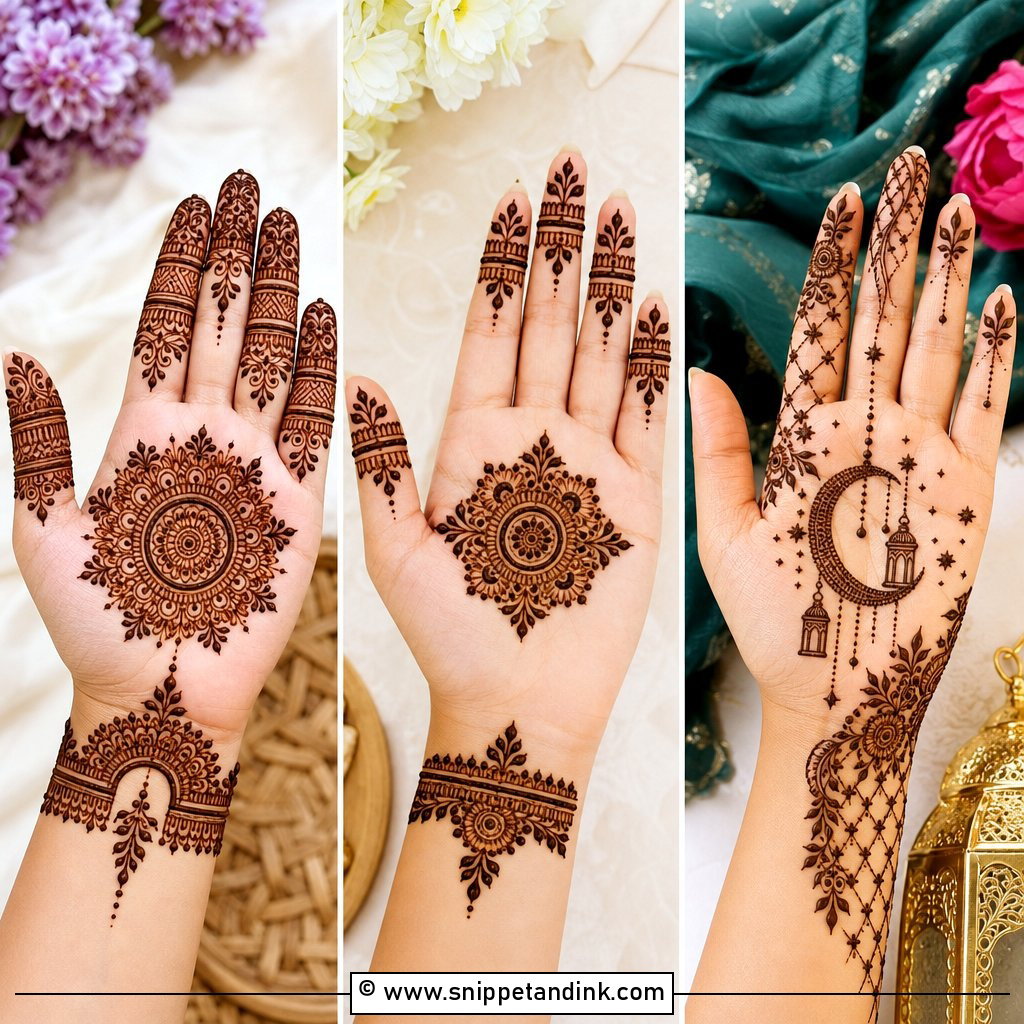
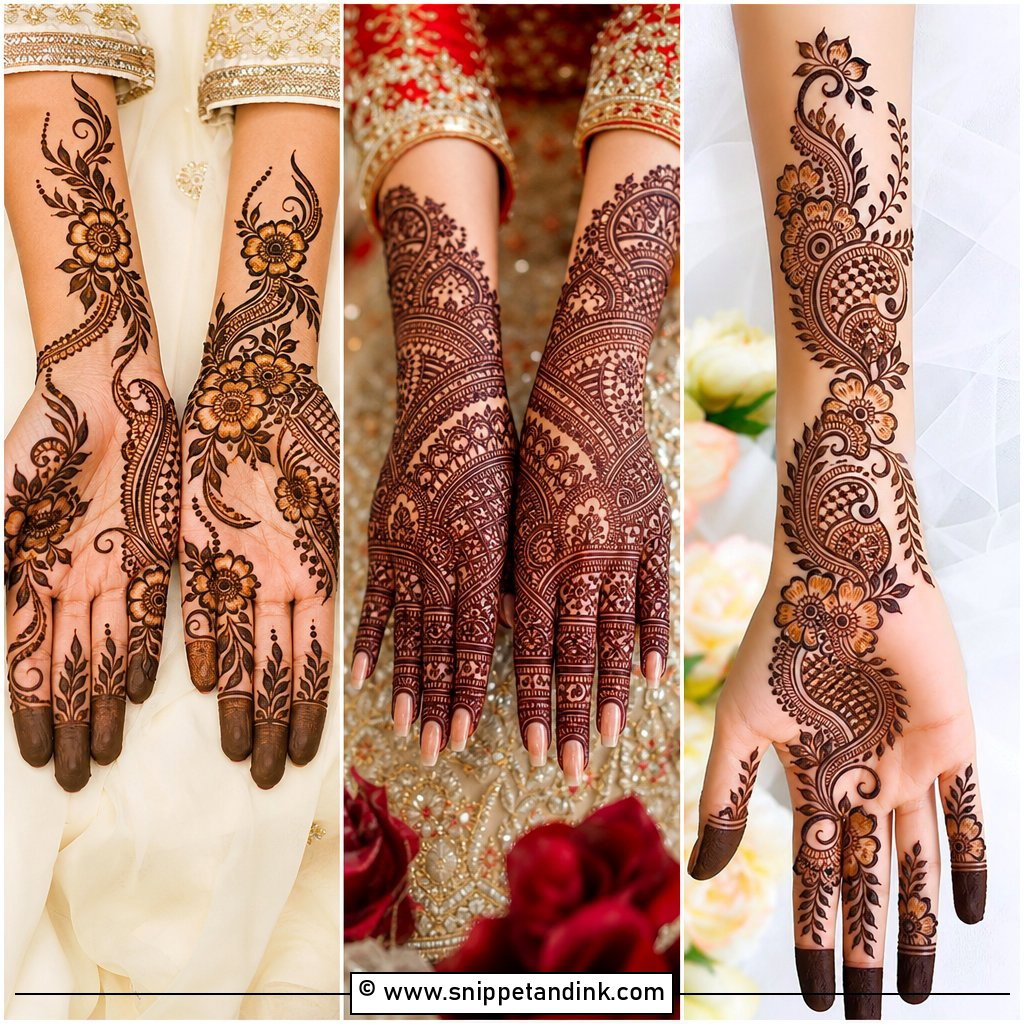
Pakistani wedding mehndi design is admired for fine detail and graceful flow: floral vines, paisleys, mandalas, shaded leaves, jaali and delicate wrist-to-forearm bands. It can be dense like Indian bridal work or open like Arabic, depending on the bride. Many Pakistani bridal designs give the back hand special attention, which suits jewelry and ring photos. With shararas, ghararas and embroidered formal wear, I like heavy palms paired with slightly more open backs.
21. Gulf Arabic Wedding Mehndi Design
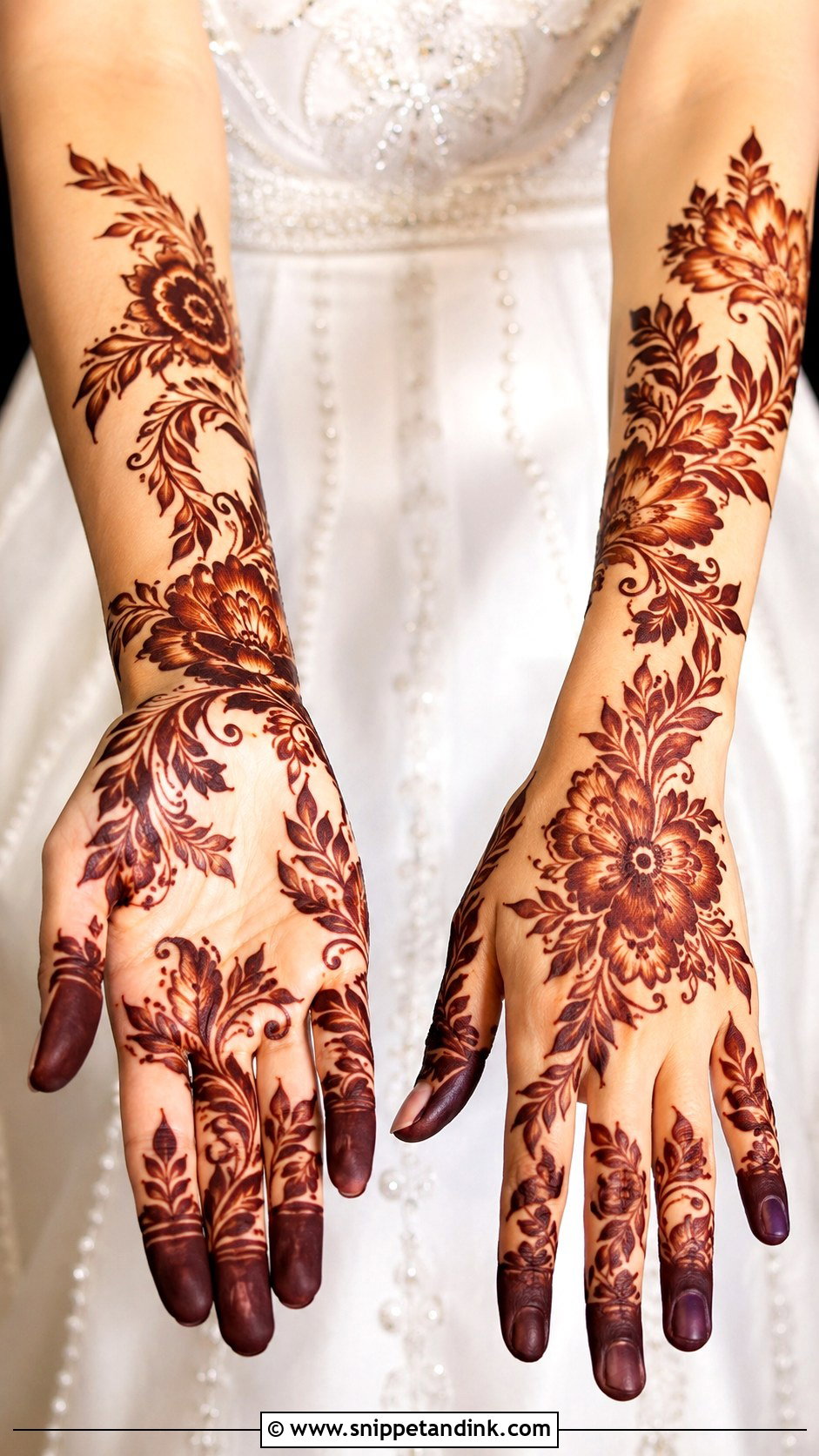
Gulf bridal henna uses large florals, thick leafy vines, smooth curves and open skin, covering the fingers, one side of the palm, the wrist and part of the forearm, with a strong floral trail on the back. The wider strokes hold a lot of paste, which helps the stain come out rich. It suits brides who want elegance without density, and guests and family members can wear lighter versions alongside. I cut the cone a little wider for this style so the strokes stay confident.
22. Moroccan Wedding Mehndi Design
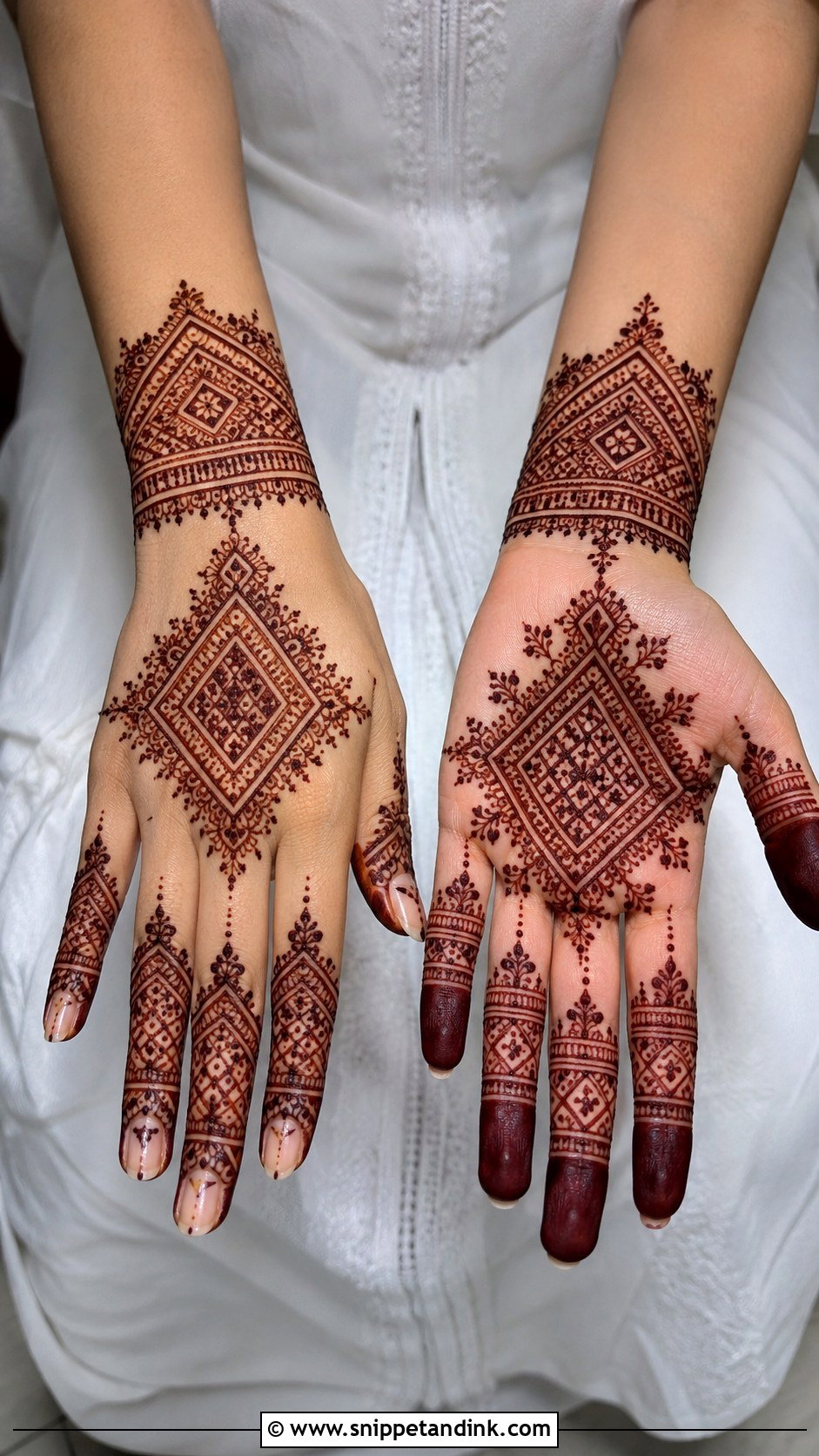
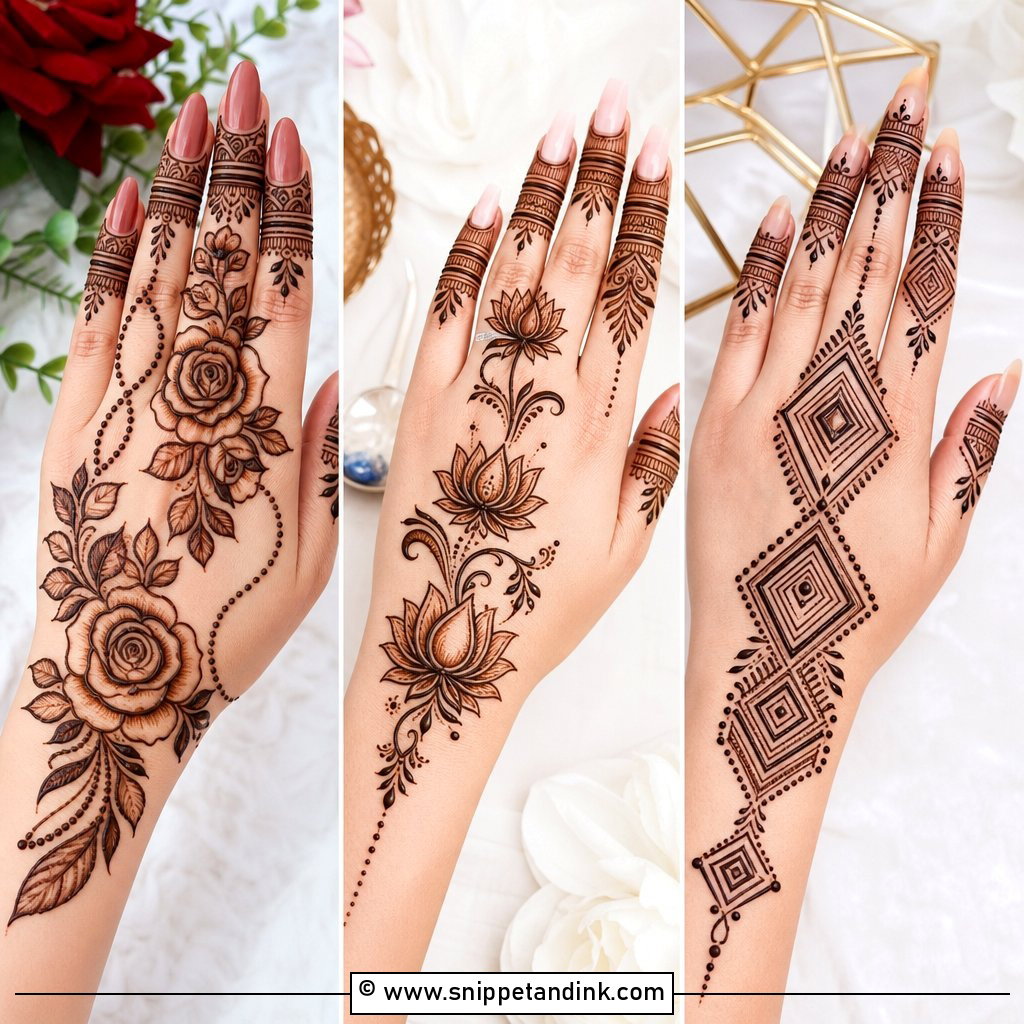
Moroccan bridal work uses diamonds, triangles, straight-line borders, grid panels, dots and bold cuffs, running from fingers to wrist like a structured glove or extending up the forearm in stacked bands. It looks striking with minimal jewelry and contemporary bridal outfits, and few other brides at the wedding season will have it. Small floral accents around the panels soften it if you want something less graphic. Even spacing is everything, so I mark guide dots before the long lines.
23. Mandala Wedding Mehndi Design
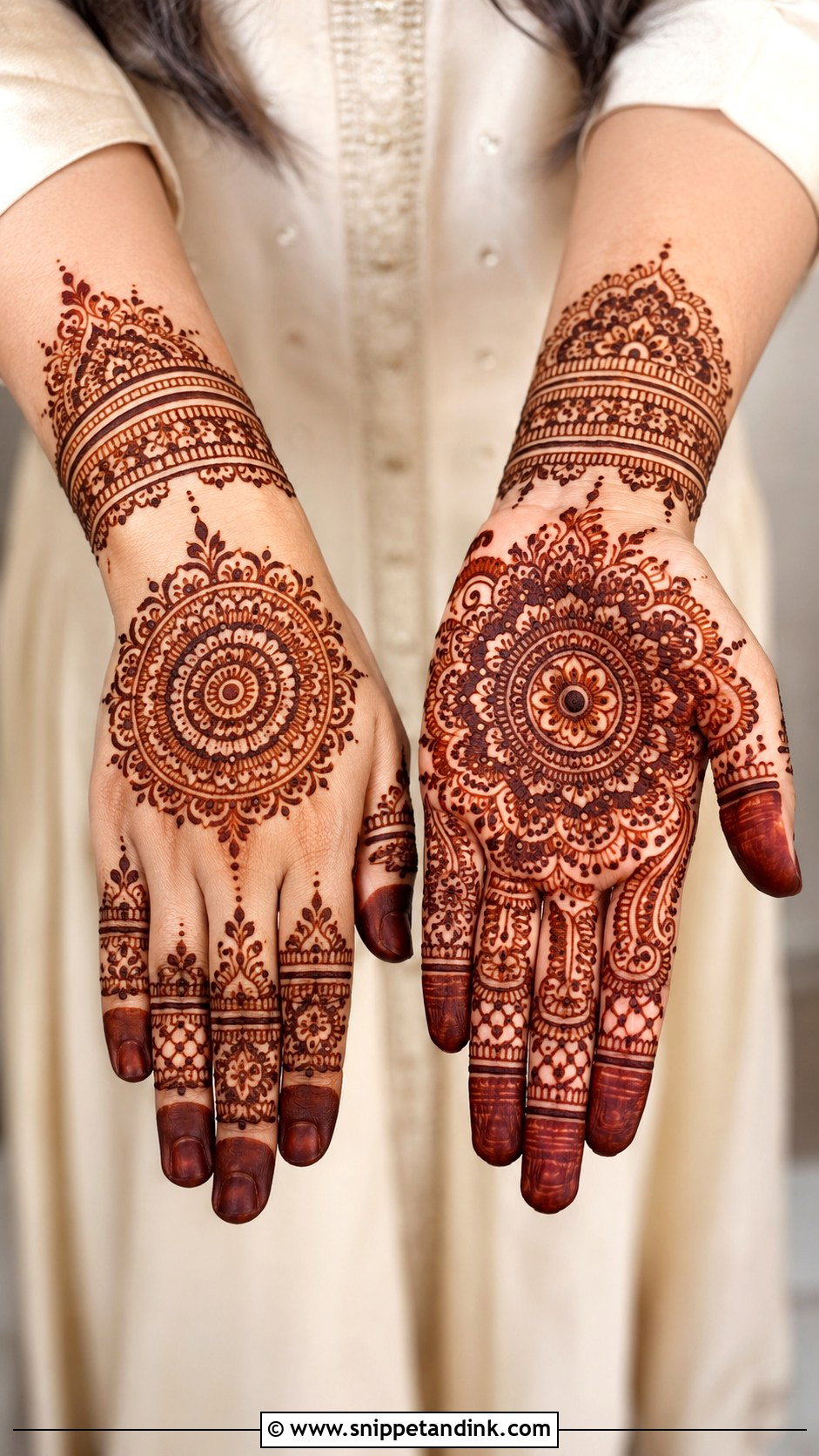
A large circle in the palm, matching finger details, wrist bands and a smaller mandala on the back: the mandala bridal layout is centred and calm. Keep it simple for a minimal look or add paisleys, dots, jaali and floral borders for a heavier finish. Because it’s symmetrical, it suits almost any outfit. Initials or a date can hide inside the wrist or finger patterns. The first circle sets the whole design, so I take my time on it.
24. Floral Wedding Mehndi Design
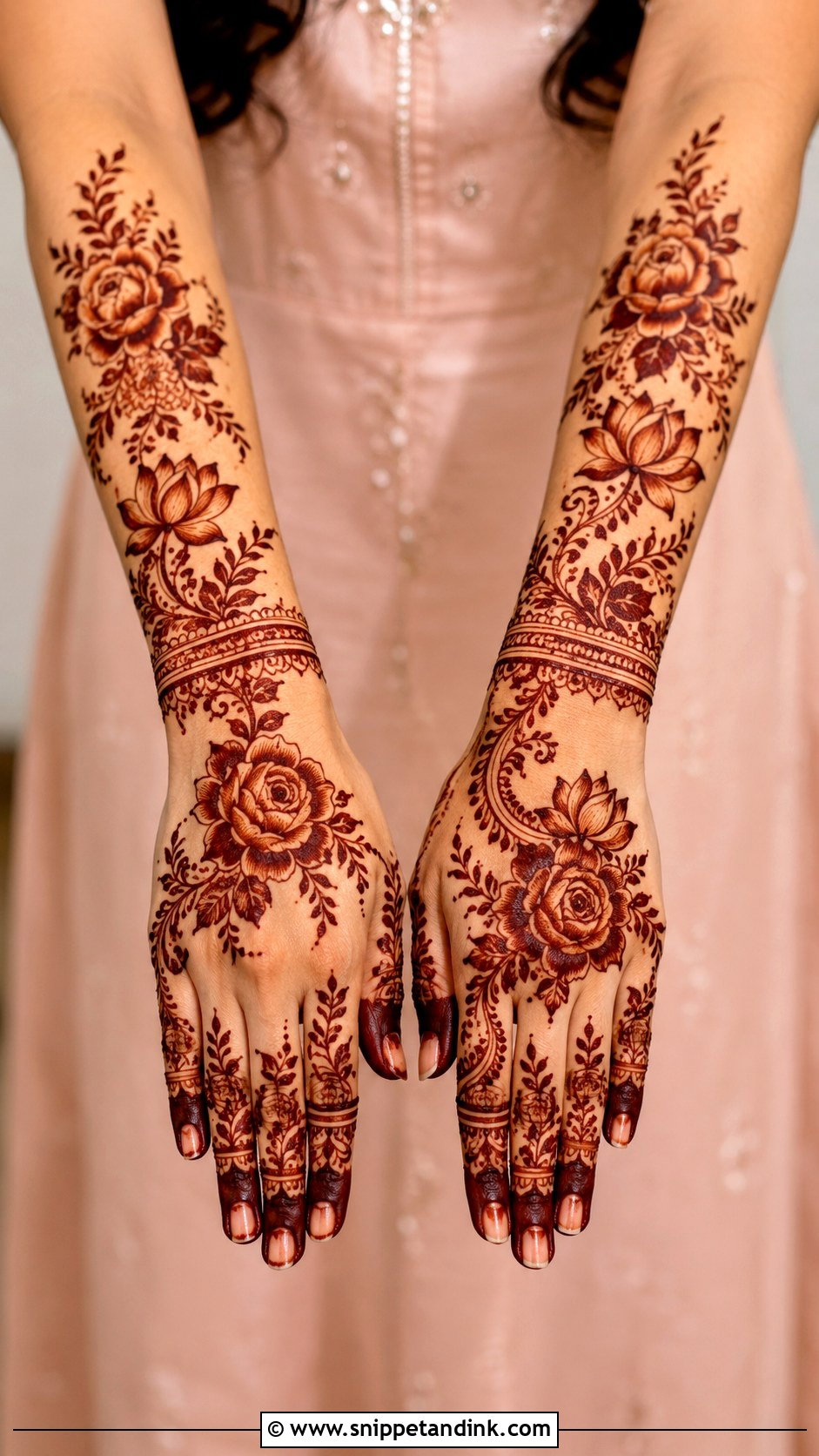
Florals work for nearly every bride: roses, lotus, leafy vines, shaded petals and delicate wrist cuffs, flowing diagonally across the palm Arabic-style or covering the full hand with Indian filling. On the back, one large flower in the centre with decorated fingers gives a jewelry-like effect. Pastel lehengas and garden weddings suit it especially well. To make it bridal rather than festive, I add fine detail inside the petals and connect the flowers with vines that reach the wrist or forearm.
25. Lotus Wedding Mehndi Design
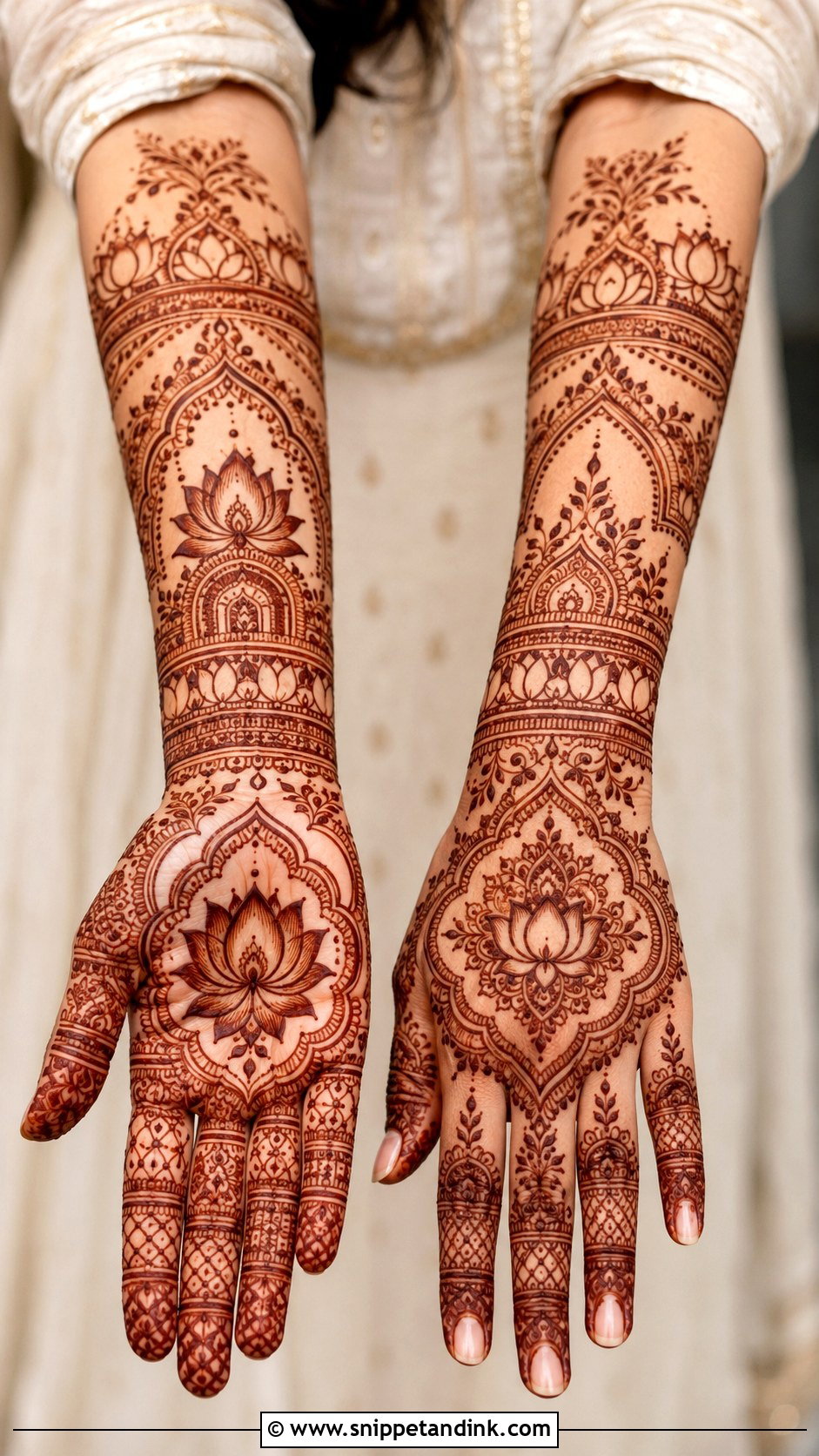
The lotus can anchor the palm centre, sit in the wrist border or fill a forearm panel, combined with mandalas, paisleys, dotted arches and leafy trails. It’s symbolic without being busy, and its shape stays clear on both front and back hands. For a modern bride, one large lotus with lighter fillers around it; for a classic look, smaller lotus repeated through the forearm and wrist bands. I space the petal layers generously so they don’t merge as the stain darkens.
26. Peacock Wedding Mehndi Design
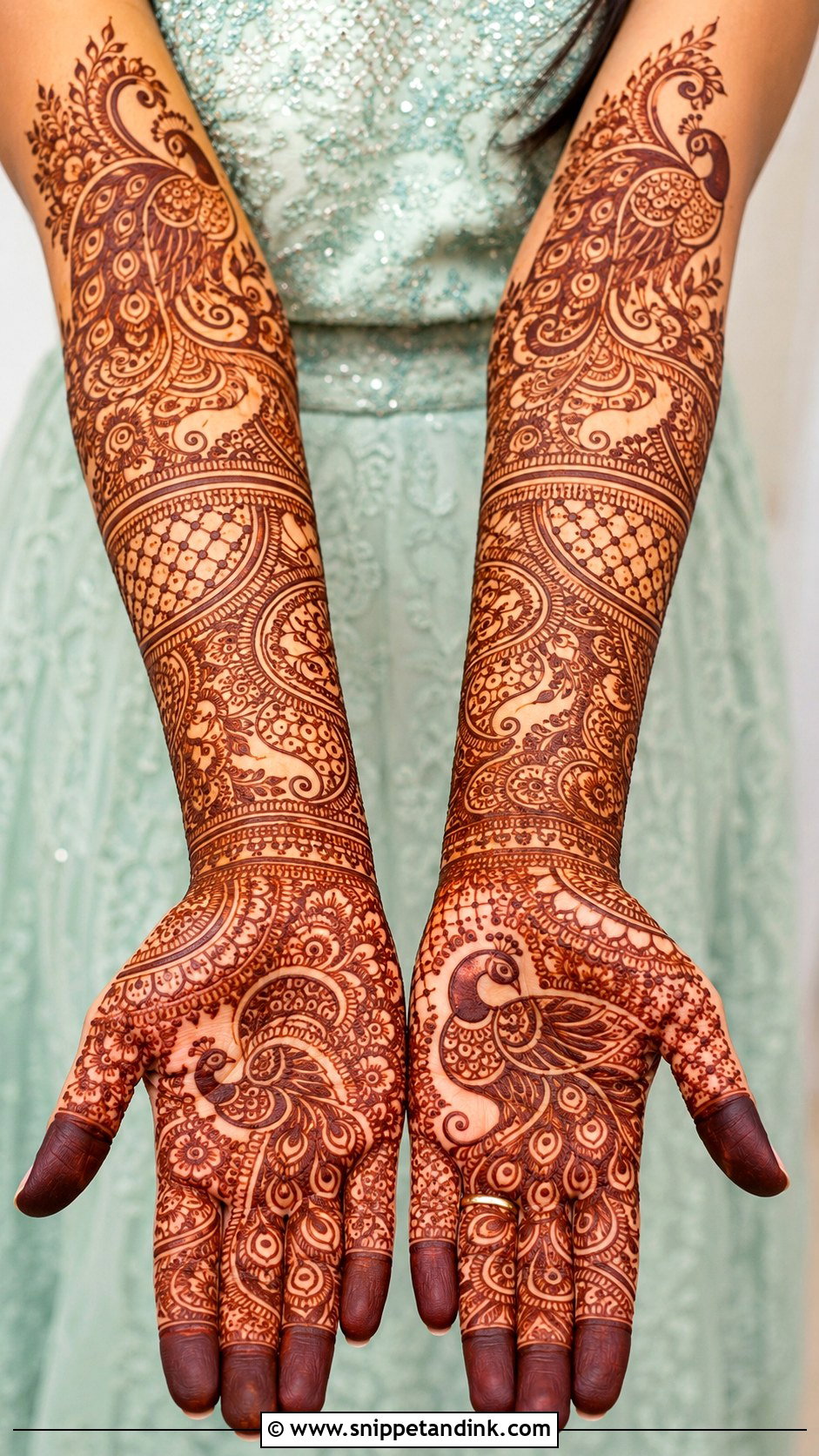
Peacocks across the palms, their feathers flowing into paisleys, vines and mandala borders, with a smaller peacock, jaali and decorated fingers on the back: it’s one of the most requested traditional bridal looks. The feathers give room for fine lines, shading and curves. Overcrowding is the common failure. I draw the body clearly first and let the feathers spread naturally, keeping other motifs away from the bird’s outline.
27. Paisley Wedding Mehndi Design
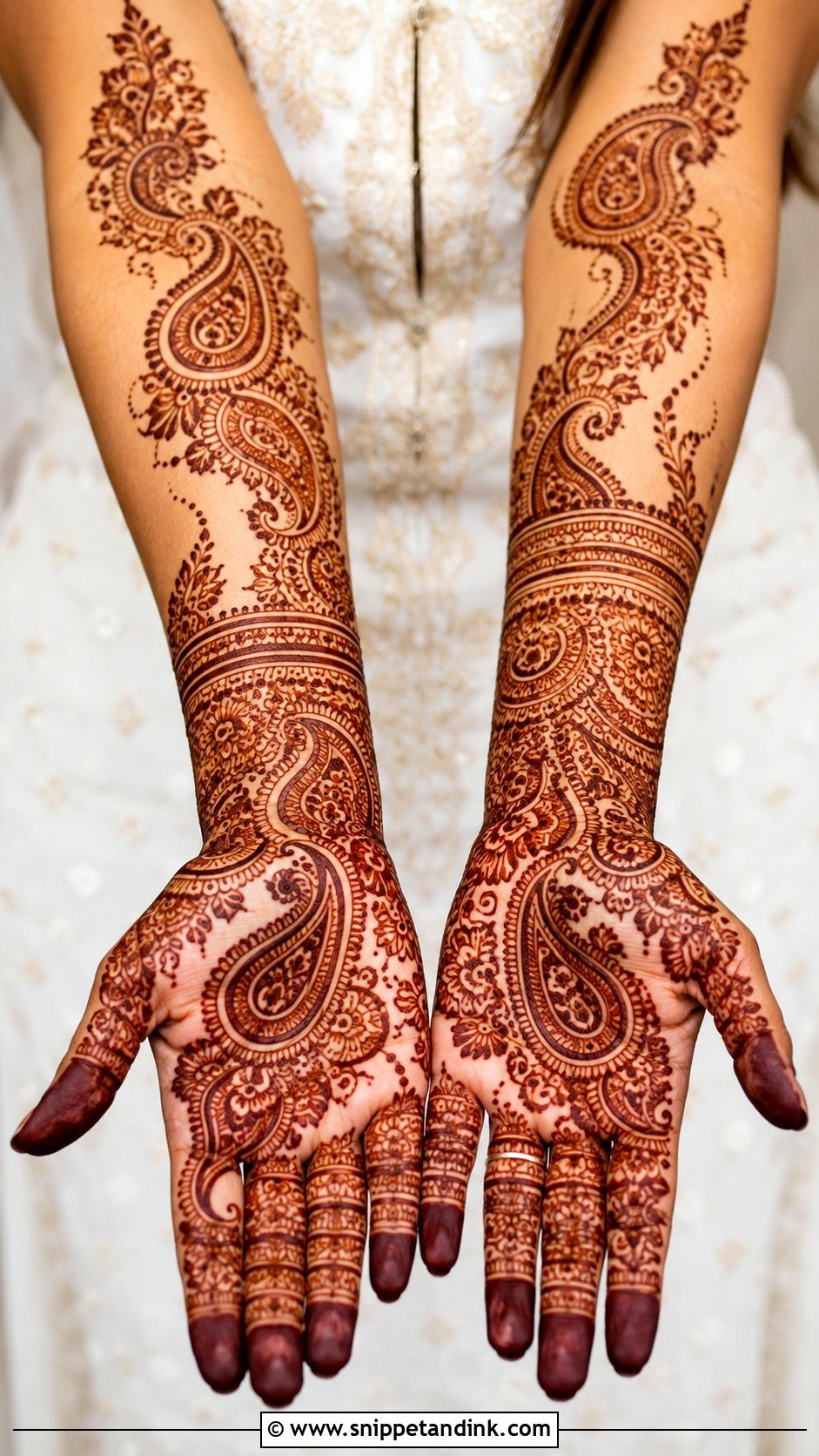
Paisleys can be dense or airy depending on spacing, which is why they adapt to traditional and fusion outfits alike. A full bridal version might have large paisleys on the palm, smaller paisley chains along the wrist and fine curved patterns up the forearm, with dots, leaves and mini paisleys filling the fingers. On the back, a diagonal trail or bracelet layout. Combined with florals, mandalas and netted fillers, it’s the most familiar bridal vocabulary there is.
28. Jaali Wedding Mehndi Design
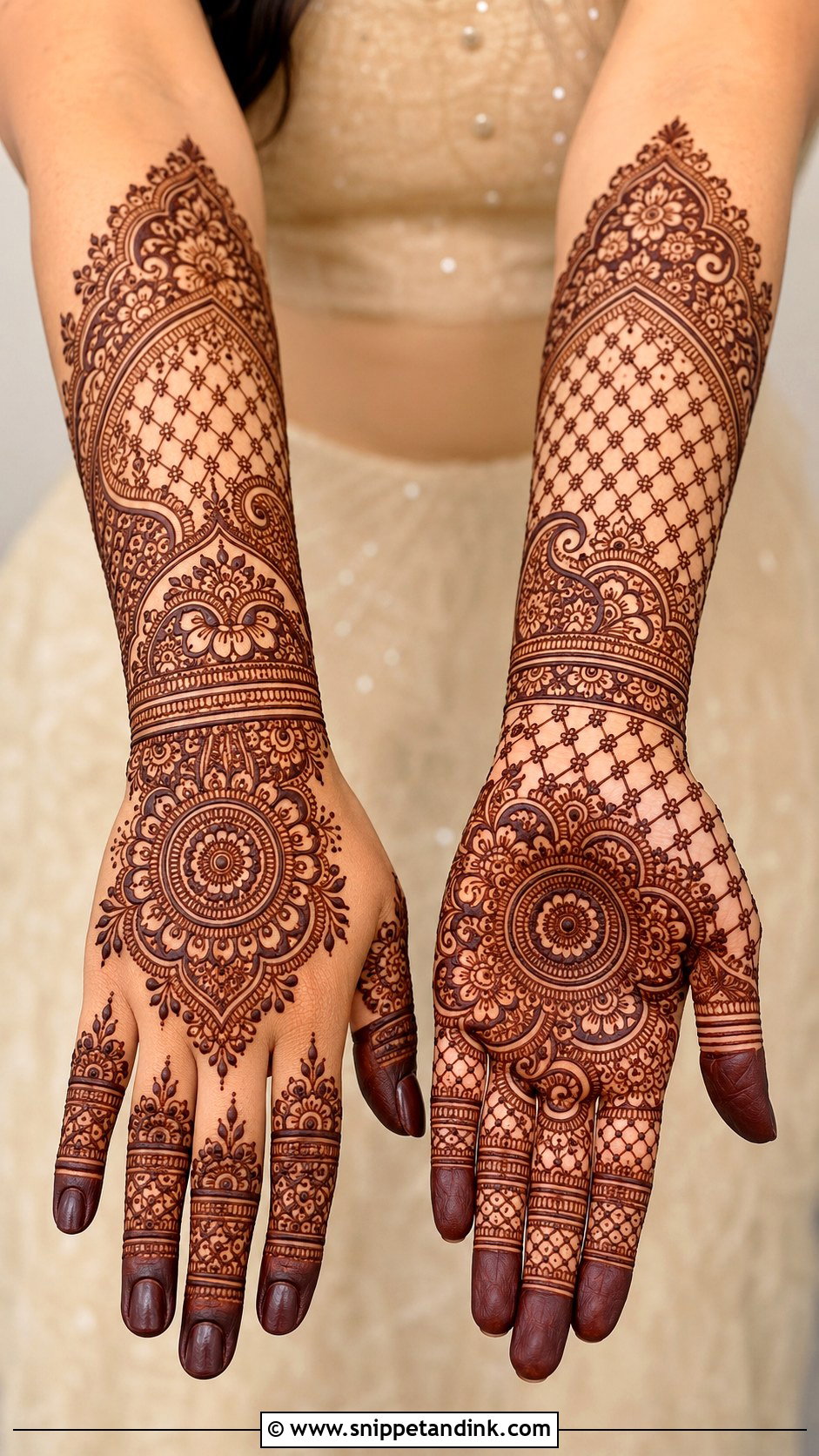
Jaali gives a net-like richness without needing heavy motifs: mesh panels on the back hand, palm corners, wrists or forearms, framed by flowers, paisleys, mandalas and bold borders. The repeated lines create texture that shows well in close-ups, and it sits nicely beside rings, bangles and haath phool. A modern version uses larger mesh spacing with clean floral edges; a traditional one uses fine jaali with dense fillers. Either way, the grid must stay even or it looks careless.
29. Bracelet Wedding Mehndi Design
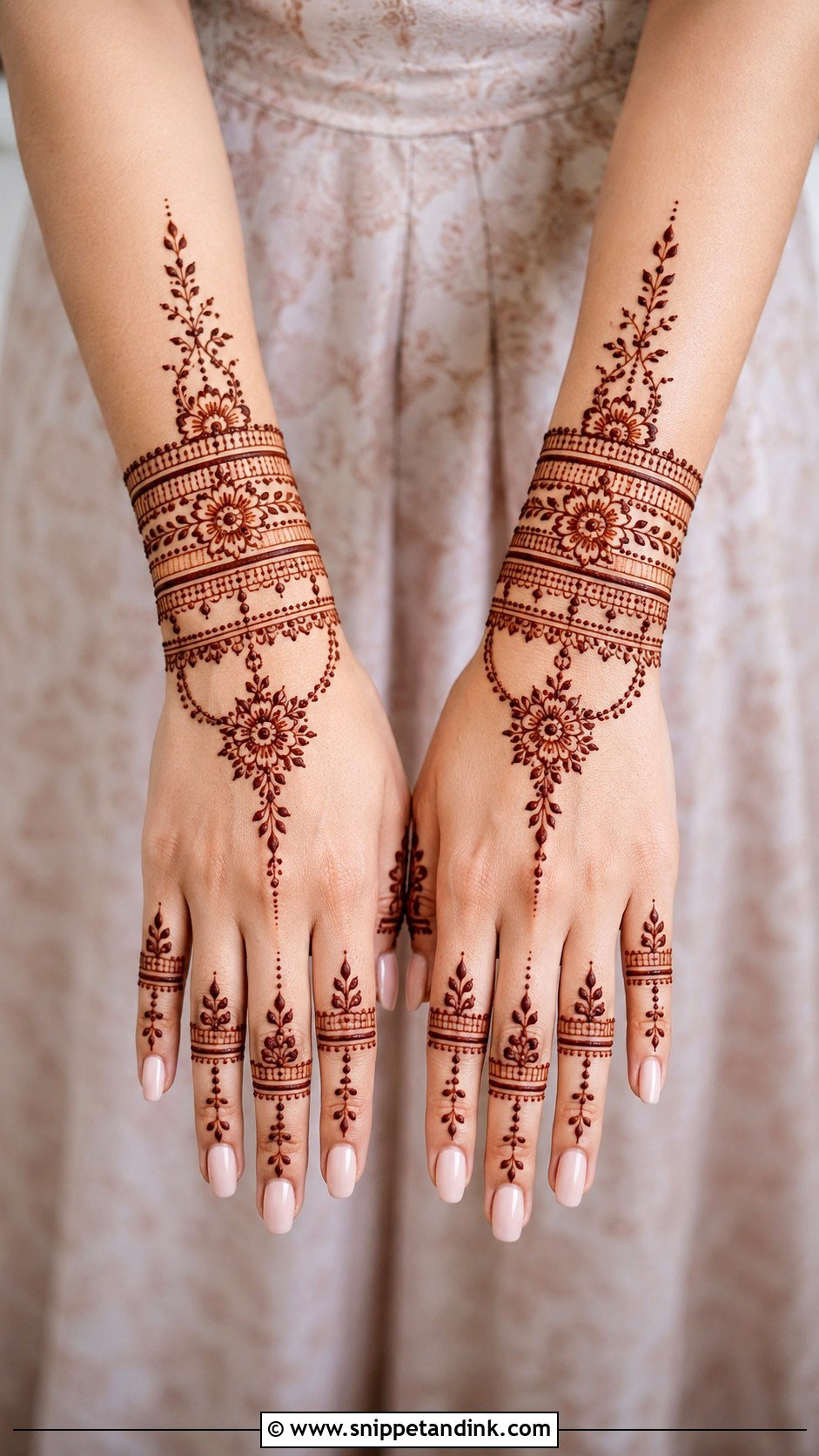
Bracelet bridal designs make henna look like hand jewelry: decorated fingers, chain details across the back, a central floral or mandala motif and stacked bands at the wrist, sometimes extending onto the forearm like layered bangles. It suits engagements, receptions, nikah and lighter bridal events, and keeps the palms less covered. Neat, evenly spaced wrist bands make or break it. I draw them with your wrist relaxed and straight, since bands drawn on a bent wrist slip out of line.
30. Finger Wedding Mehndi Design
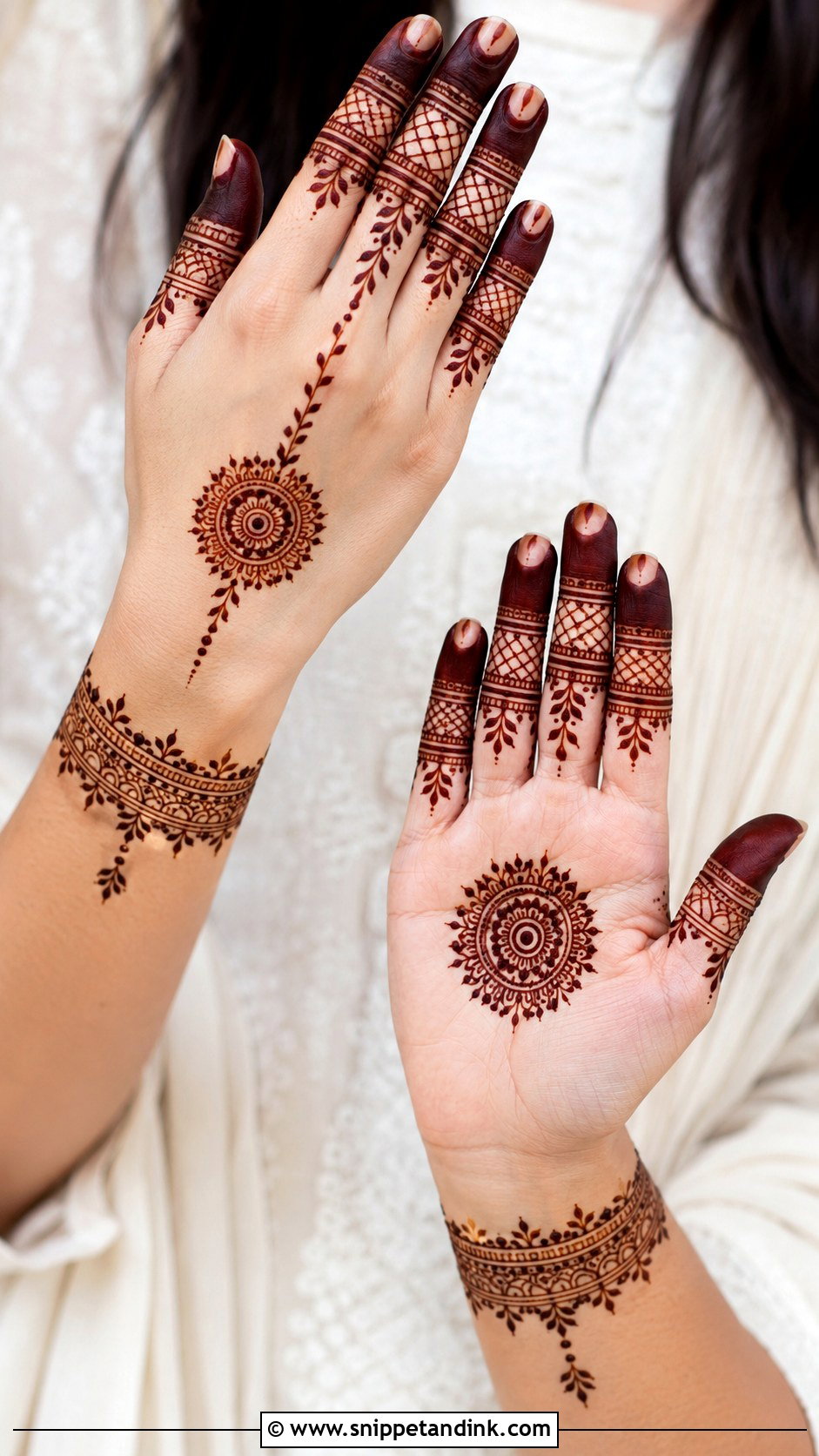
Finger-focused bridal designs work when they’re planned with the whole hand in mind: ring-style bands, fingertip fills and slim patterns connecting to a small palm or back-hand motif, with a central mandala and delicate wrist cuff. Leaves, dots, checks and fine lines carry the fingers. It suits modern brides, engagement looks and anyone who wants minimal palm coverage. Fingertips stain darker than any other part of the hand, so even fine finger work comes out strong.
31. Personalized Wedding Mehndi Design
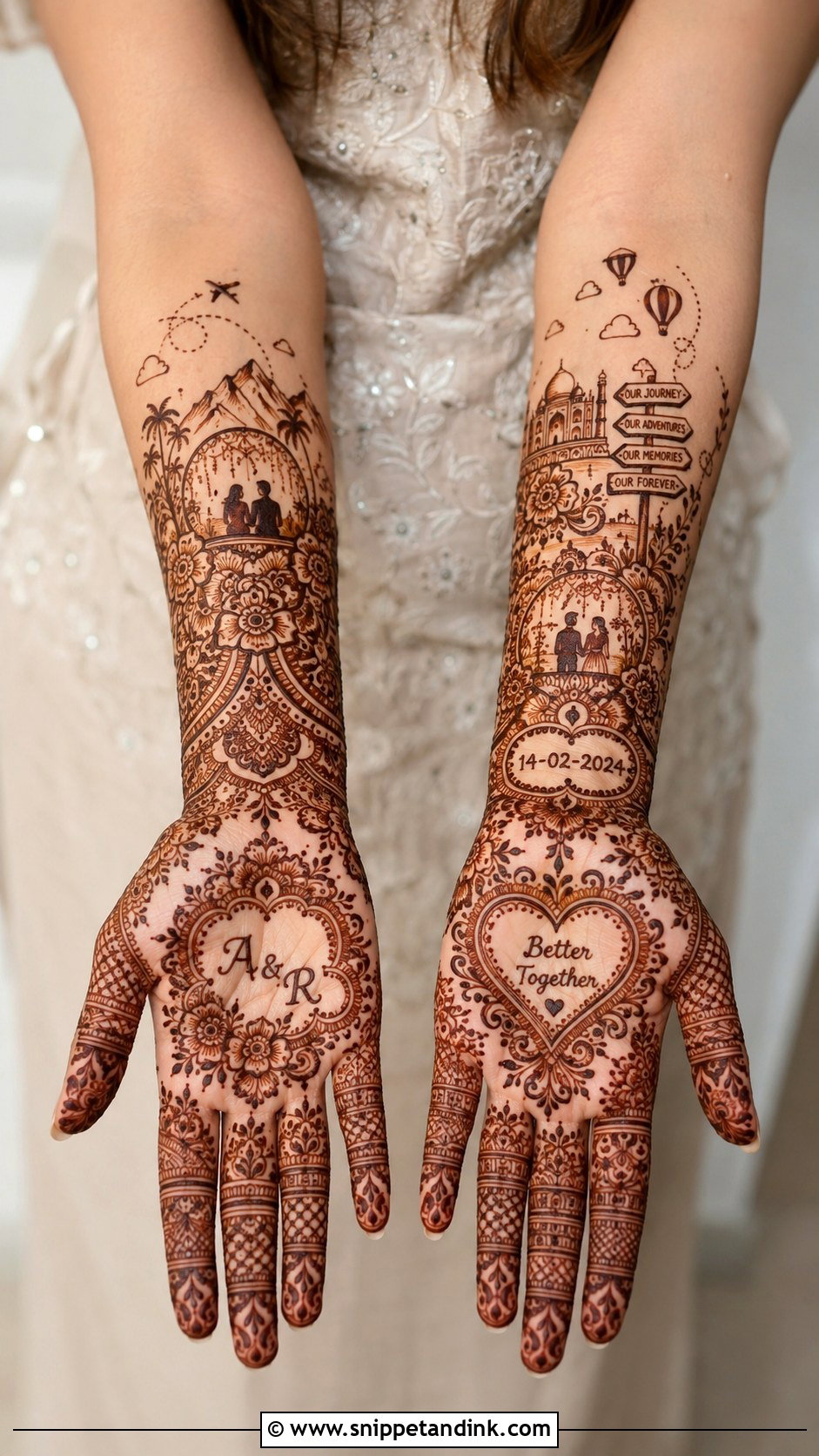
Personalised designs turn the couple’s story into henna: initials, the wedding date, the proposal place, favourite symbols, pets, travel icons or tiny scenes, hidden inside paisleys, wrist bands, mandalas or forearm panels. The rest of the design should still look bridal, with flowers, leaves, jaali and traditional borders around the custom elements. Subtle placement is the skill. I ask brides for a short list of three or four details rather than ten, because too many personal elements turn a design into clutter.
32. Bride Groom Wedding Mehndi Design
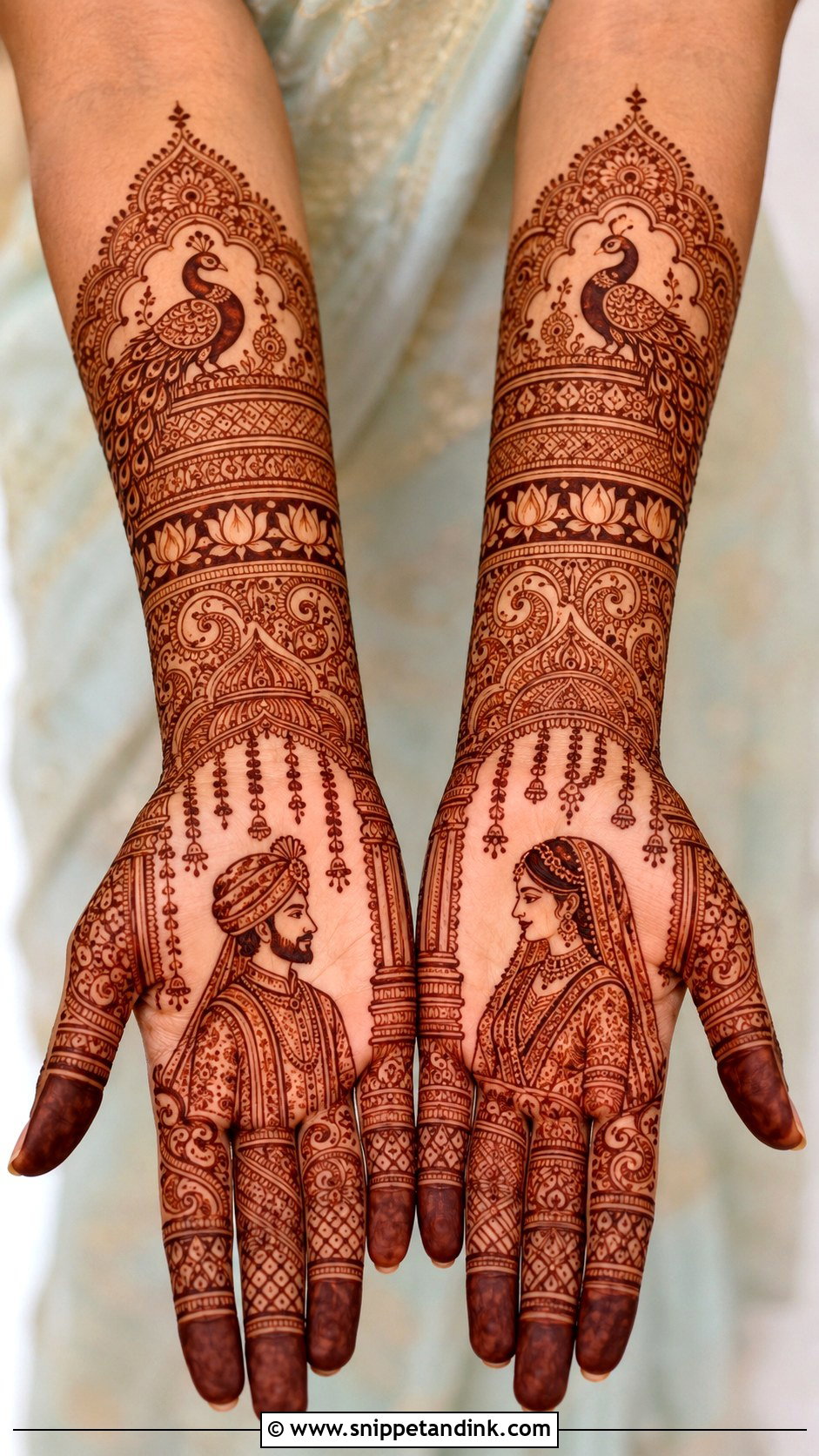
The bride’s portrait on one palm, the groom’s on the other, surrounded by wedding rituals, mandap arches, doli, garlands, peacocks and decorative borders, with palace windows, lotus bands or paisley sections continuing up the forearms. Portraits need full-hand coverage to have enough room. Before you book, look at an artist’s portrait work at stain stage, not in fresh paste; faces blur quickly if lines sit too close. Keep the faces simple and well defined, with fillers that support them rather than hide them.
33. Wedding Mehndi Design With Initials
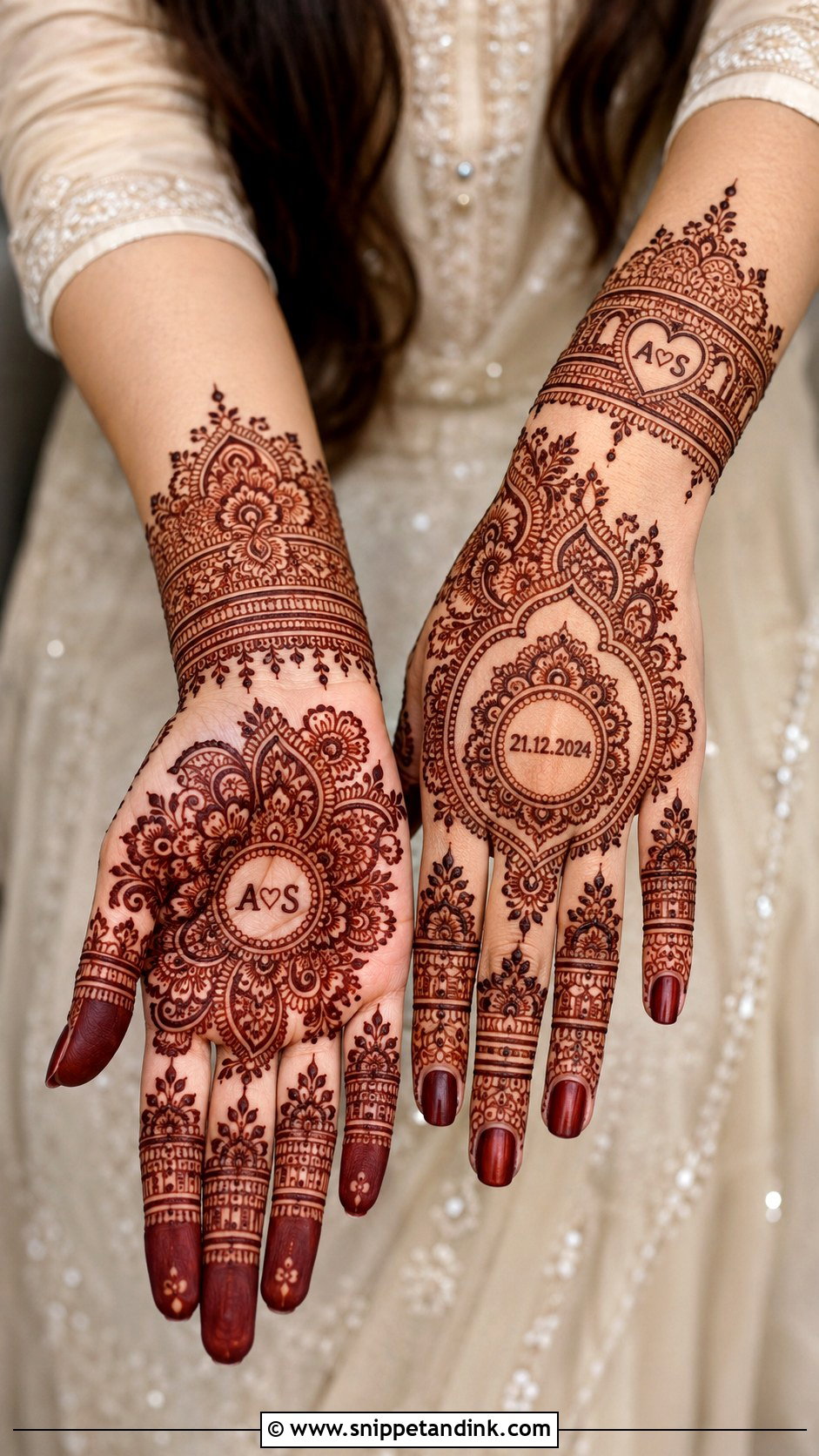
Initials slot into almost any design: inside a mandala, a paisley, a flower centre, a wrist band or a finger detail, whether the rest is Indian, Arabic, Indo-Arabic or minimal. Families enjoy searching for them during the ceremony, and there’s a playful custom in many weddings of the groom having to find his name. Put the initials in one clear spot rather than scattering letters, and add the date nearby if you like.
34. Foot Wedding Mehndi Design
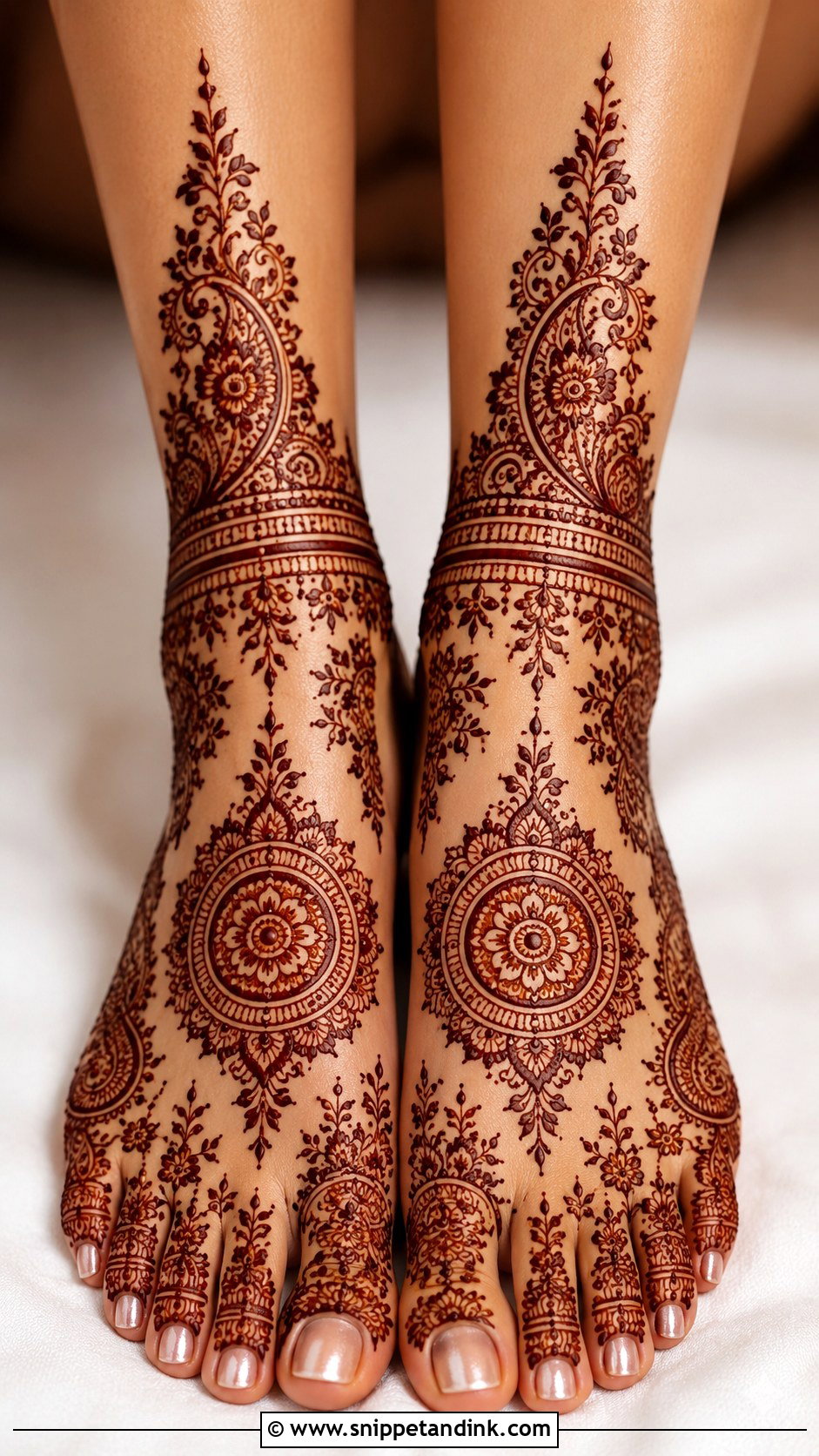
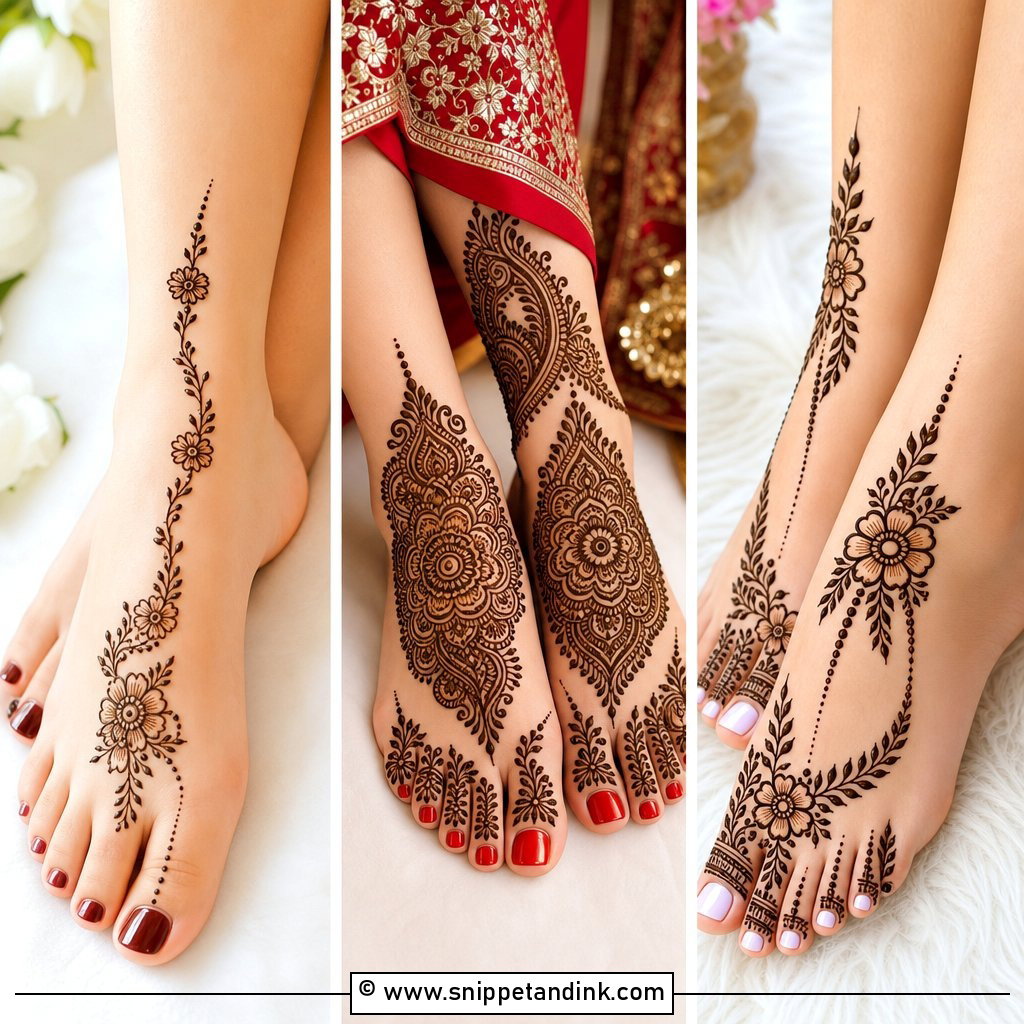
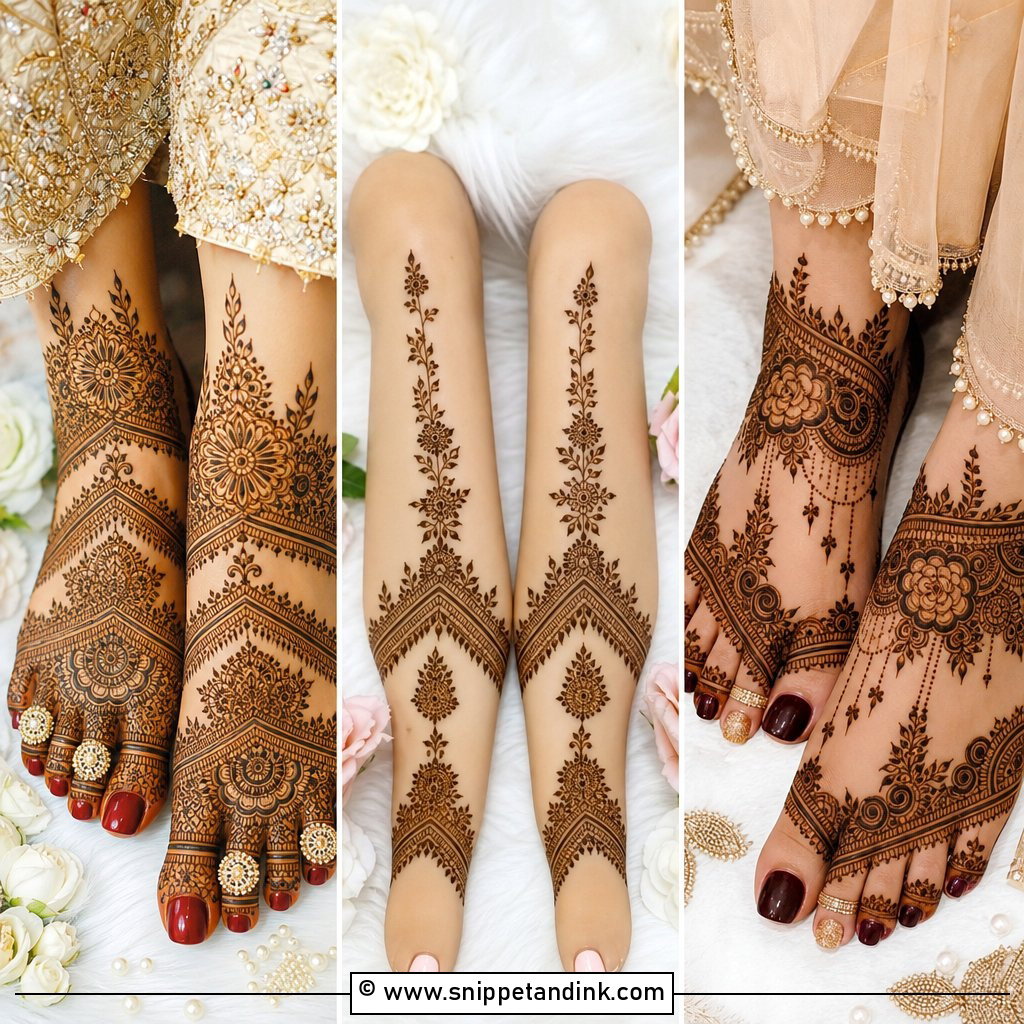
Feet complete the bridal look, especially with lehengas, sarees, anklets and open footwear. A full foot layout might hold a central mandala on top of the foot, floral vines around the toes, paisley borders down the sides and anklet-style bands at the ankle. Some brides go dense up to the lower leg; others want a light Arabic trail. Match the style and density of your hands. Toes show clearly in close-up photos, so I keep their patterns especially neat.
35. White Wedding Mehndi Design
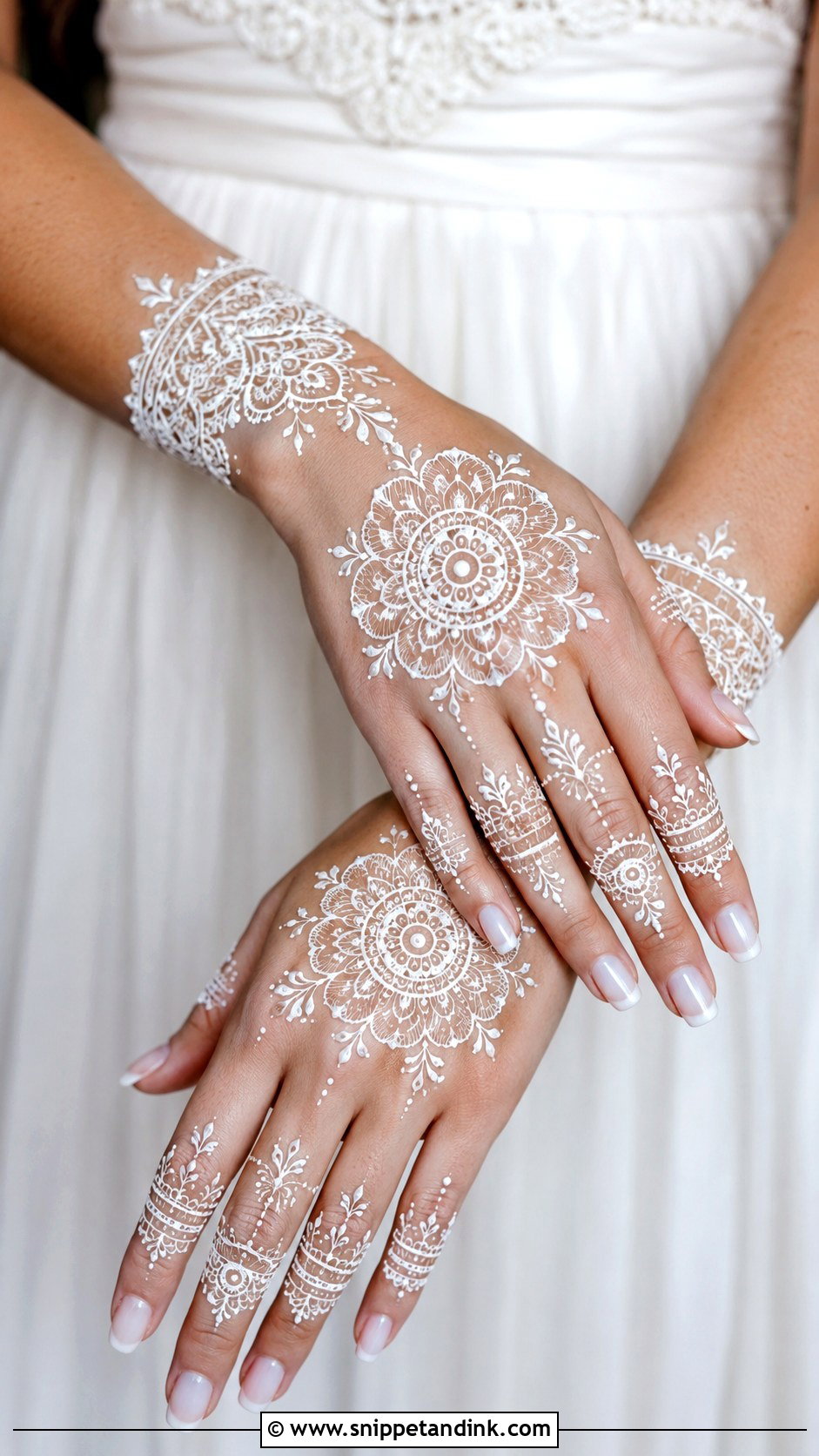
White bridal mehndi isn’t henna. It’s a body paint or skin-safe adhesive that sits on the skin’s surface for its look rather than any stain, and it rubs or smudges off far more easily than henna. Lace-like florals, mandalas, finger bands, wrist cuffs and delicate back-hand patterns look lovely with ivory outfits, pearls and modern reception styling. I’d save it for short events or photo sessions, keep it uncluttered, and ask what the product is so you can patch test it first.
Feet Stain Darker and Dry Slower Than Hands
Brides often leave foot mehndi as an afterthought, then discover it’s the trickiest part of the evening. The soles and the tops of the feet take colour very well, often darker than the backs of the hands, but the paste dries slowly and you can’t walk while it sets.
- Have your feet done last, after the hands are dry, and sit somewhere you can stay put for a few hours.
- Keep your feet raised on a cushion and covered loosely with a light cloth so the paste isn’t knocked by people walking past.
- Sleep in loose cotton socks over the dried paste if you’re keeping it on overnight, and scrape it off dry in the morning.
- Avoid tight sandal straps and new shoes for a day or two. Friction from straps fades the stain along their exact lines.
Match the feet to the hands in style, but they don’t need the same density. A full bridal hand with a lighter foot design looks balanced, and it shortens the sitting on a night when you’ll already have spent hours with your hands out.
Heavy, Light or Somewhere Between
Narrow the choice by four things: coverage, outfit, ceremony and comfort. Full Indian bridal gives the richest traditional look; Arabic and Indo-Arabic feel lighter and more modern. Mandalas, florals, paisleys, jaali, peacocks, initials and portraits can all be combined into something personal. Bridesmaids and close family can wear simpler versions that still look festive in photos. Full hands, minimal fingers, back-hand bracelets or feet, the right design is the one that suits the wedding you’re actually having and lets you enjoy it.
You'll Like These Ideas:


Leave a Reply