
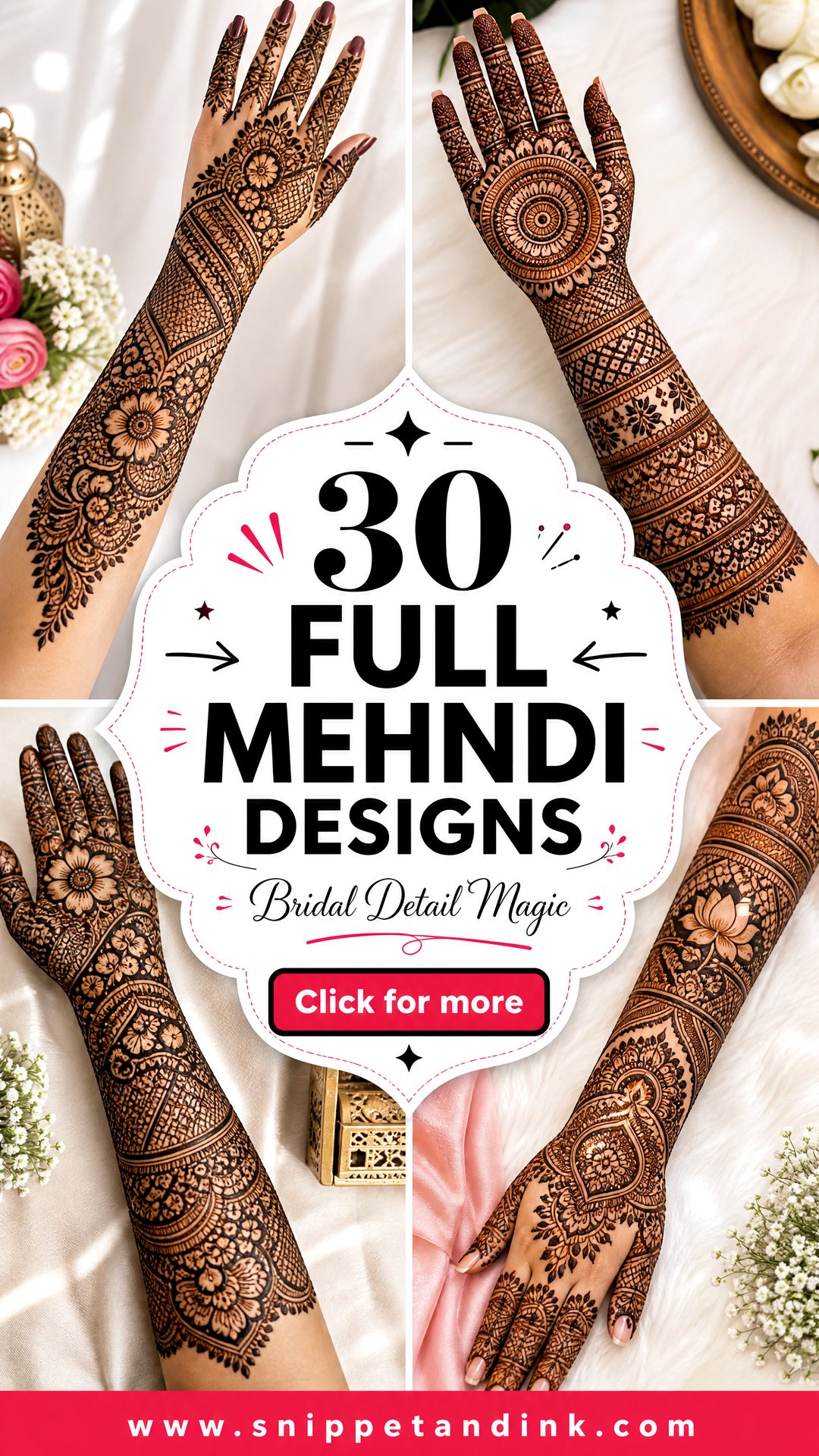
Full coverage is the mehndi I spend the most time planning, because it isn’t one design. It’s four surfaces, palm and back on each hand, often running up the forearm, and each surface stains and moves differently. The palm gives the darkest colour and the most room for detail; the back is what guests see; the wrist has to meet bangles; the fingers bend all day. The thirty layouts below range from dense Indian and Rajasthani bridal work to Arabic trails, Gulf florals and quiet minimal hands, and I’ve added the placement and stain notes I’d give a bride sitting in front of me.
Splitting One Wedding Story Across Two Hands
A full bridal set is planned as a pair, not as two copies. Before I pick up a cone, I sit with the bride and decide what goes where: which hand carries her figure and which carries the groom’s, where the doli or palki scene sits, whether the palms mirror each other or continue one scene across both. When the hands are held side by side for the ring and hand photos, they should read as one composition.
Many families still like the groom’s name or initials hidden in the design for him to find. If you want that, tell your artist at booking, not on the day; it has to be worked into the layout, and I tuck it into a dense area of the palm so it isn’t obvious at a glance.
Send these with your enquiry
- Two or three reference photos, with a note on what you like in each one, since a single photo rarely shows the whole hand.
- How far up the arm you want to go: wrist, mid-forearm or elbow. Each step adds real time.
- Your outfit’s sleeve length and the colour of your bangles or chooda, so the cuff lands where it will be seen.
- Whether your feet are being done at the same sitting, which changes the timing of the whole day.
1. Full Hand Bridal Mehndi Design
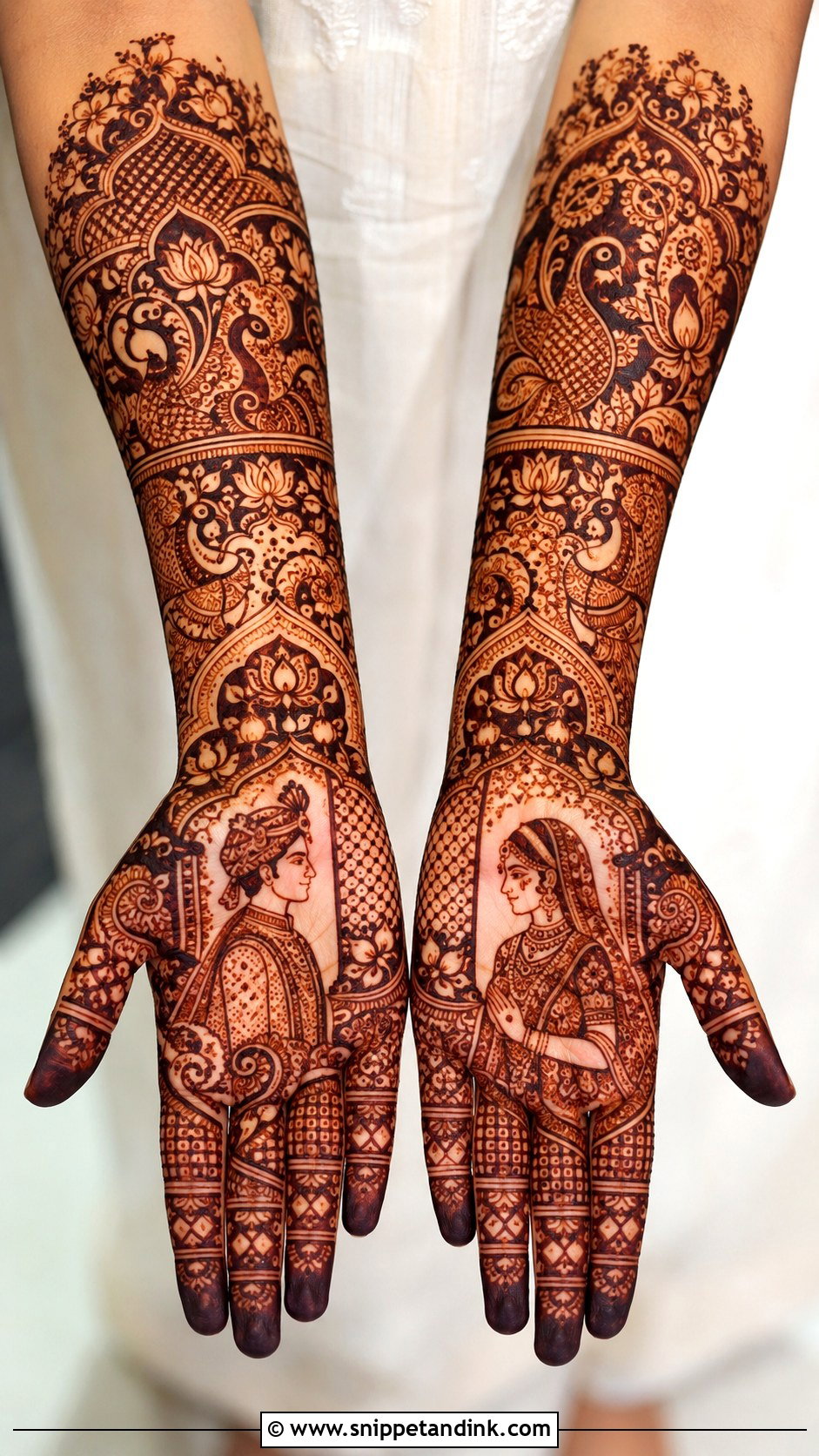
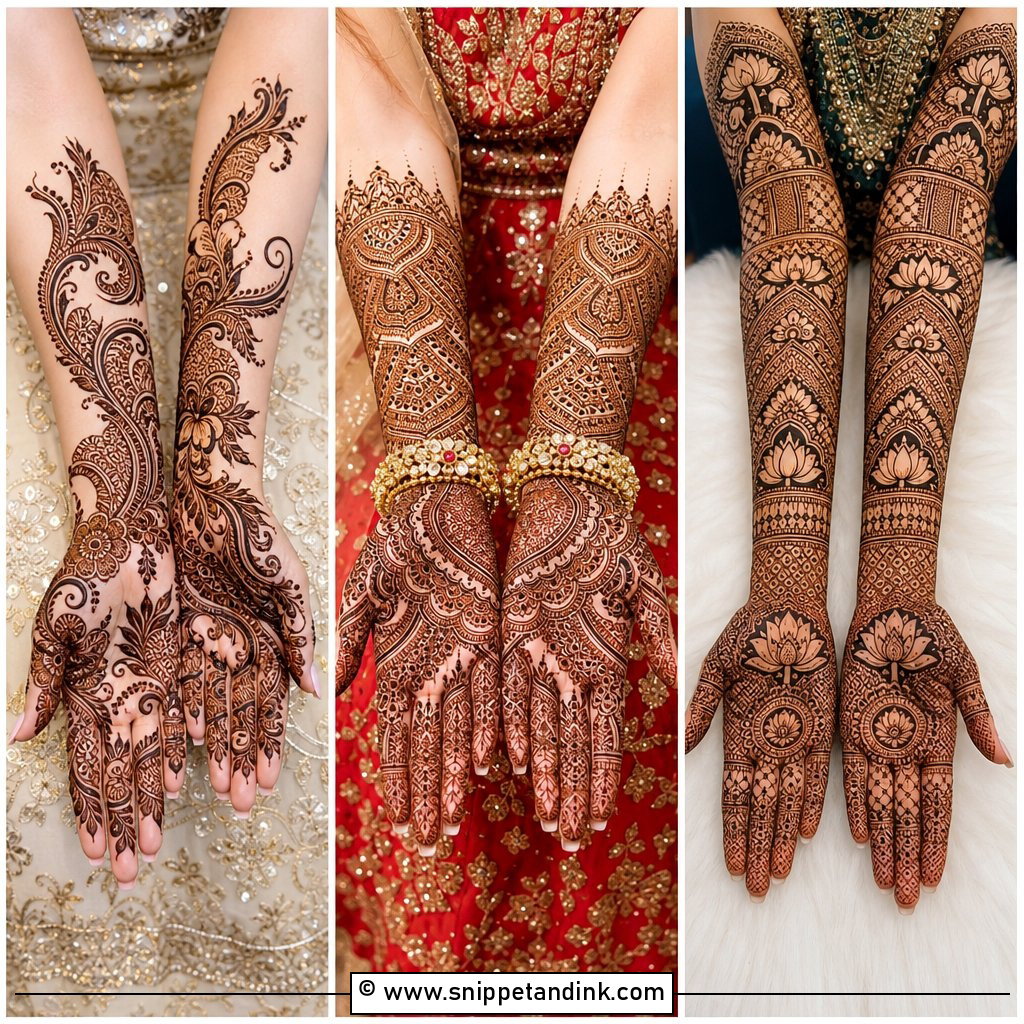
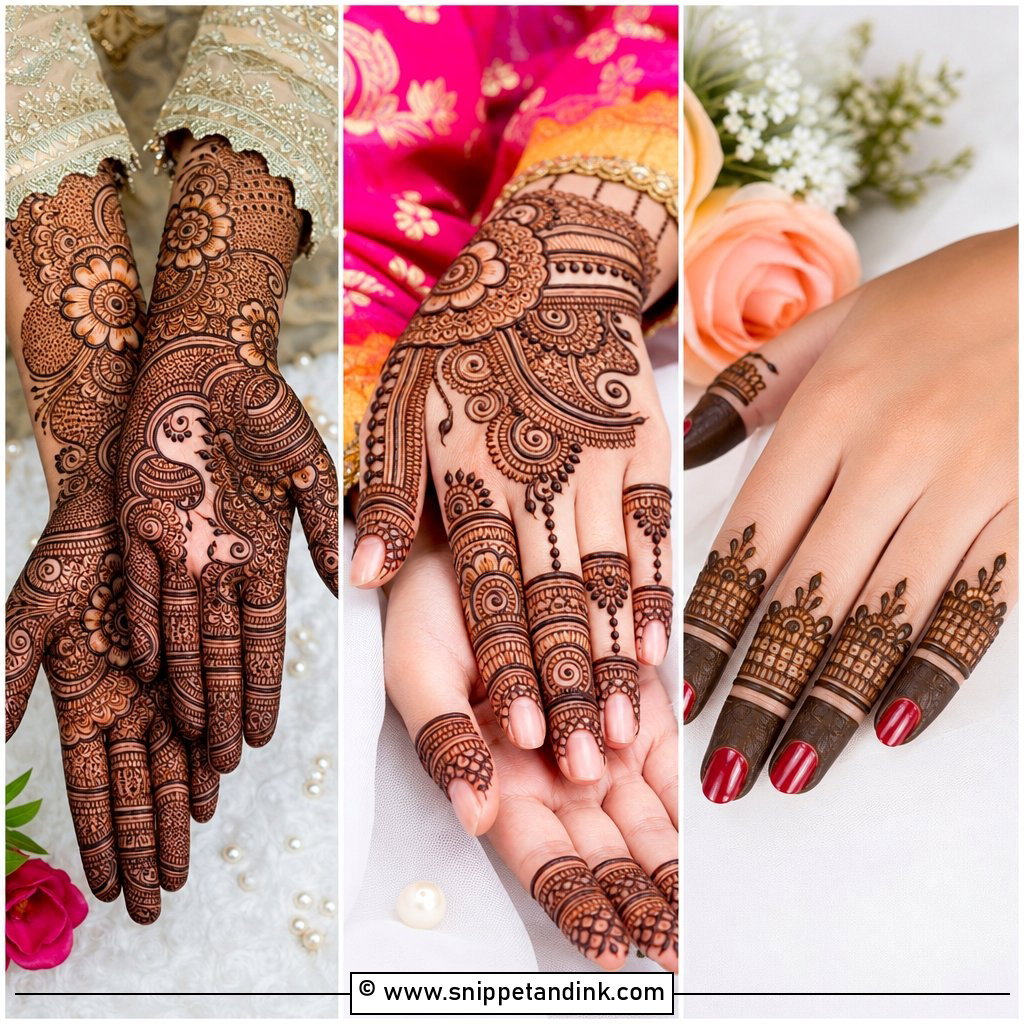
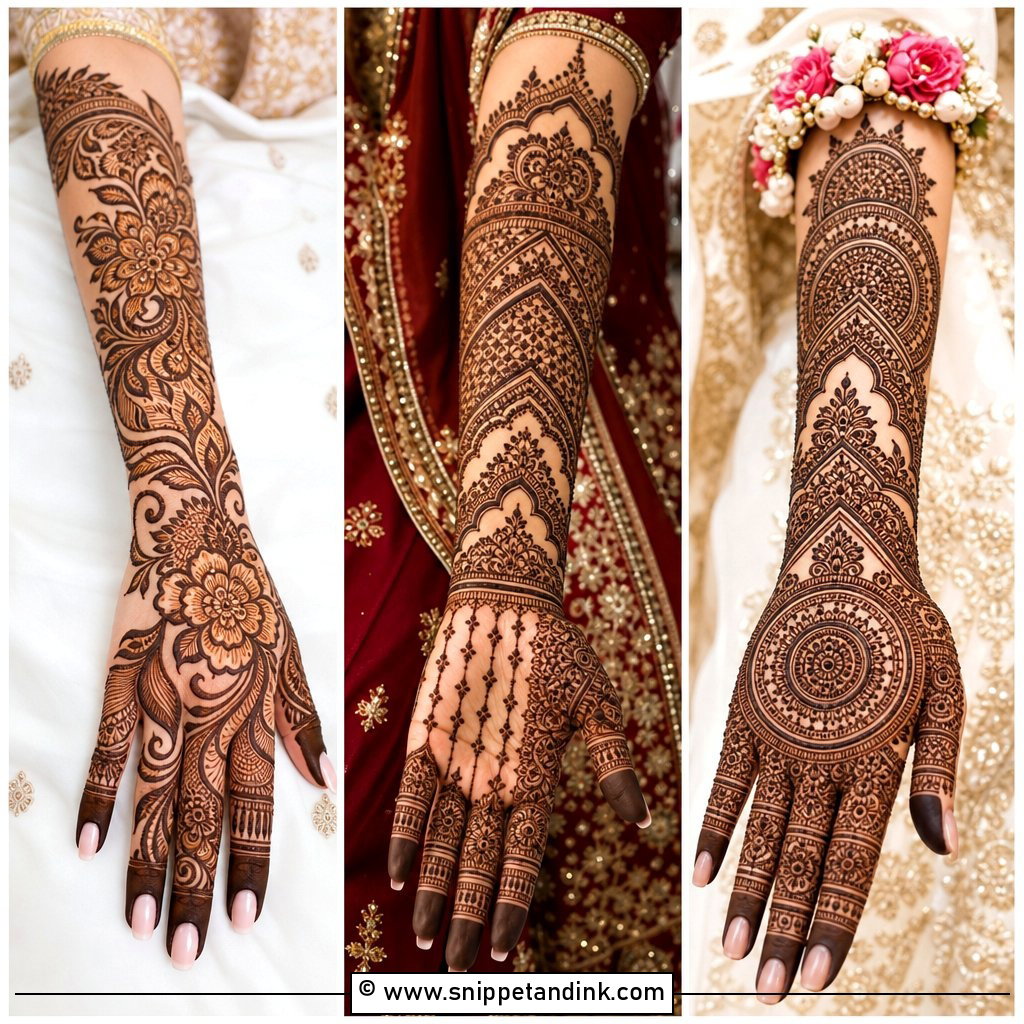
This is the heaviest sitting I do. Fingers, palms, backs and forearms all get fine work, with paisleys, lotus, peacocks, jaali and sometimes bride and groom figures. My rule for keeping it readable is one focal motif per palm and the storytelling on the forearms, where there’s length to work with. The colour does the rest: no glitter, no colour, just a deep stain on dense line work. Plan the sitting for the day before the wedding at the latest.
2. Full Hand Arabic Mehndi Design
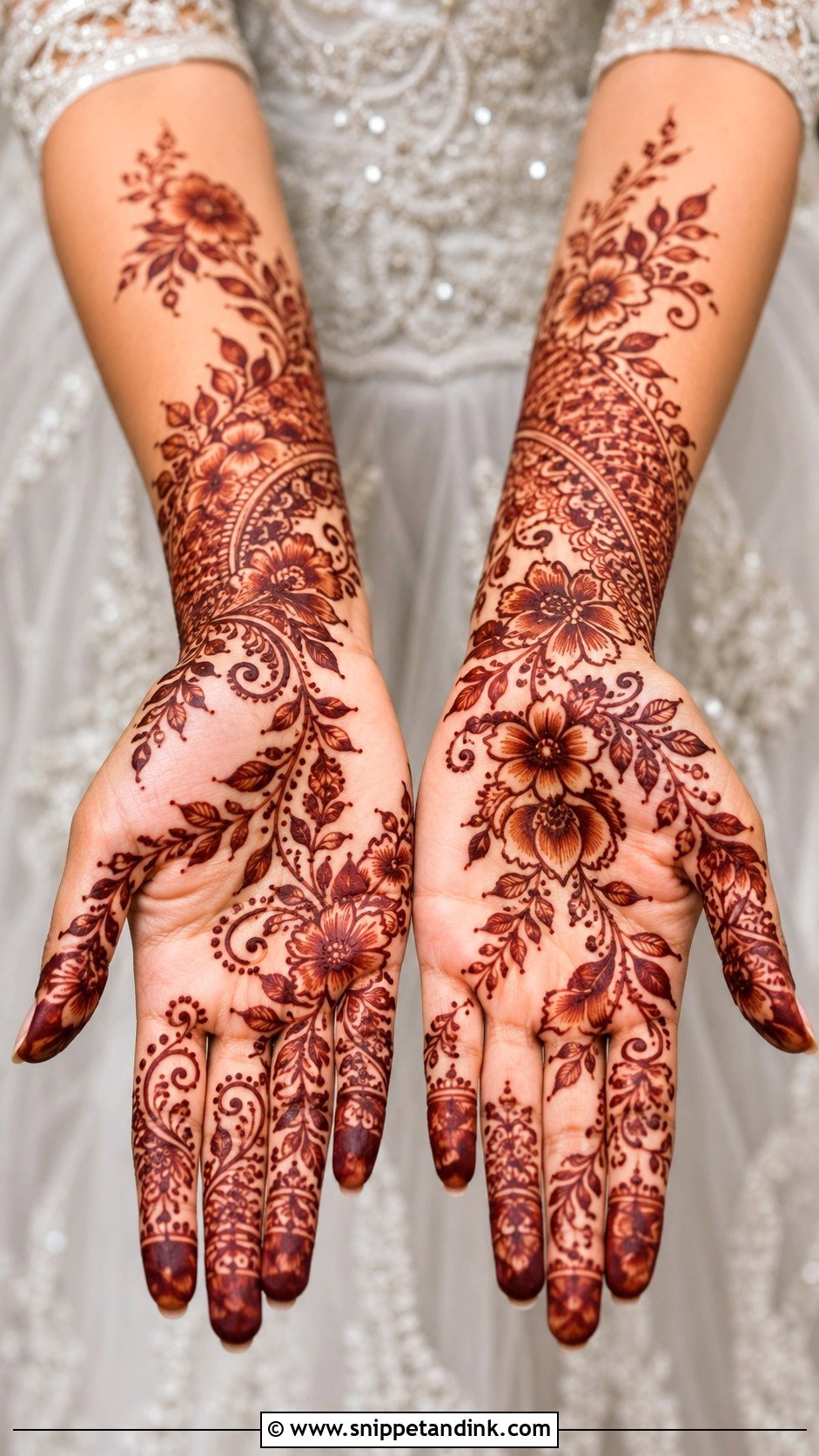
Arabic full hands run on a diagonal: big flowers and leafy vines travel from the fingertips across the palm and on toward the wrist or forearm, with clear skin either side. Because the shapes are larger, I can finish both hands far faster than a dense bridal set. Thick outlines with shaded petals give it a crisp, modern finish. It’s what I’d book for bridesmaids, engagement events, Eid and guests who want full coverage without losing an afternoon.
3. Full Hand Indian Mehndi Design
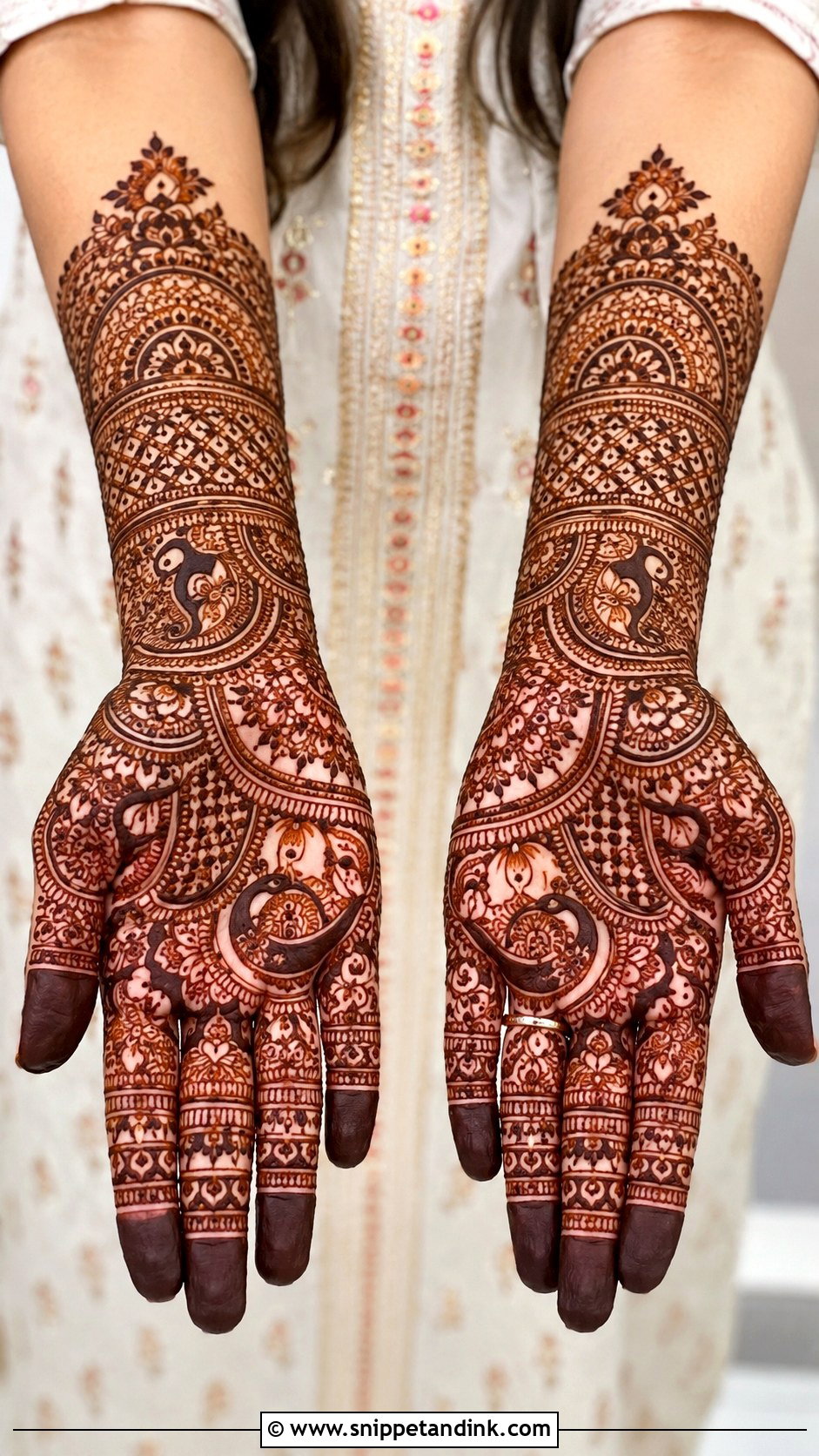
Indian full hands leave almost no bare skin. Paisleys, mandalas, peacocks, lotus forms, vines and tiny checks fill palms and backs, fingers are banded and dotted, and the wrists carry bracelet-like borders. The danger with this density is a flat, muddy stain, so I keep a hair’s width of skin between every filled section. Those thin gaps are invisible while the paste is on and make all the difference on day two.
4. Full Hand Indo Arabic Mehndi Design
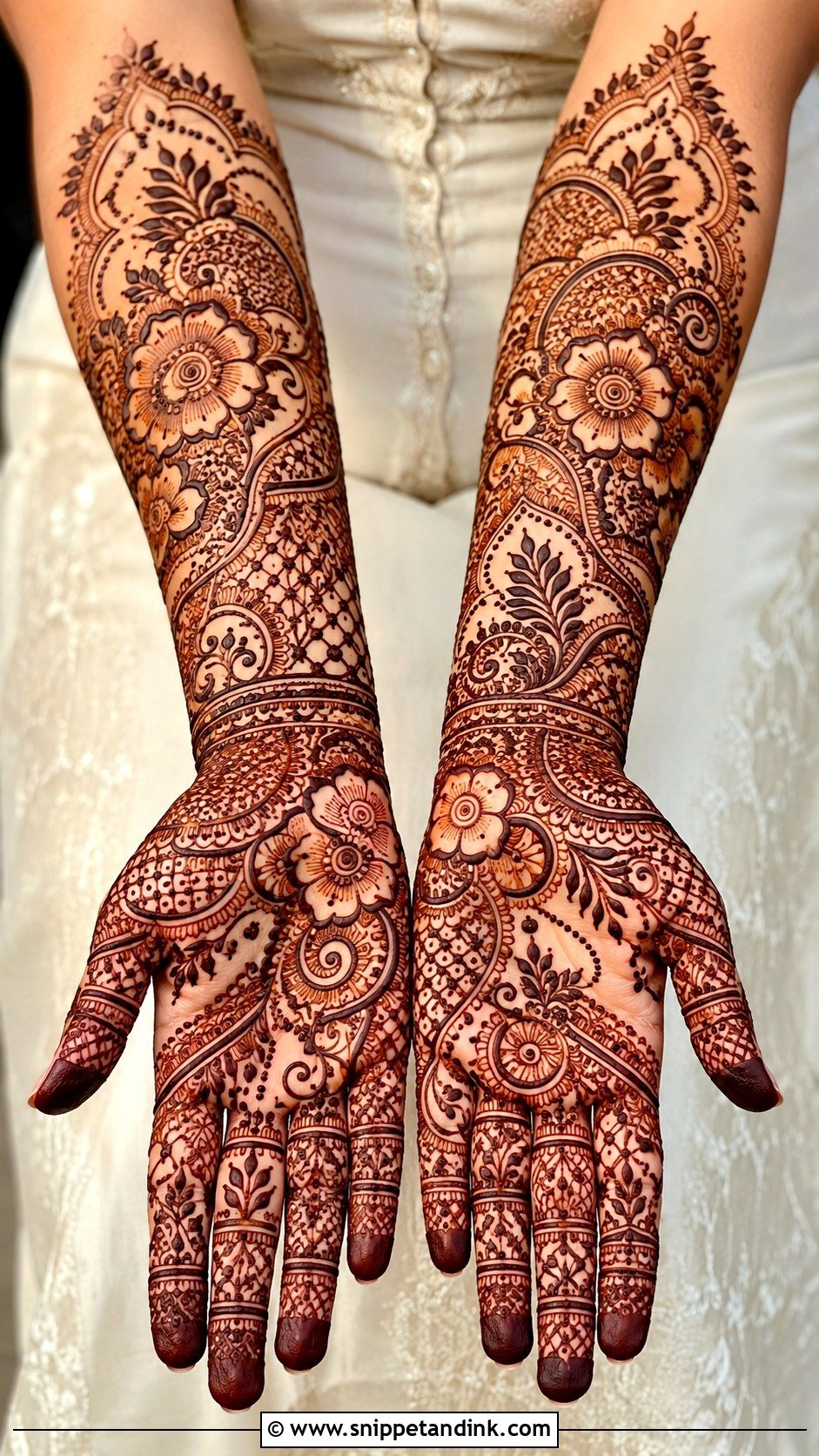
Full hand Indo Arabic mehndi design takes Arabic outlines, large flowers and leafy trails, then fills the open spaces with Indian dots, checks, swirls and small paisleys. It reads clearly in photos without feeling sparse. One layout I like: florals on one side of the palm and fine mesh or mandala work on the other, which splits the hand into two textures that still flow together. Weddings, receptions and family functions all suit it.
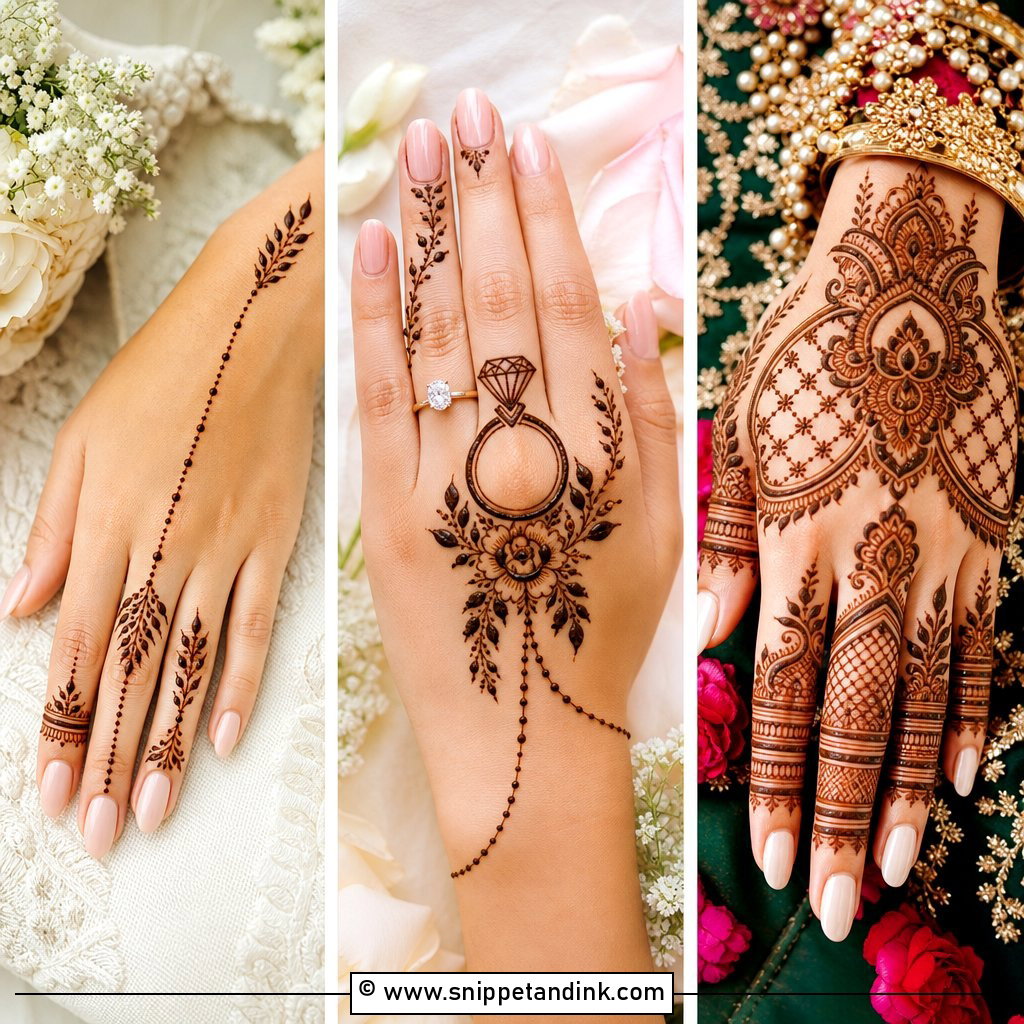
5. Full Hand Simple Mehndi Design
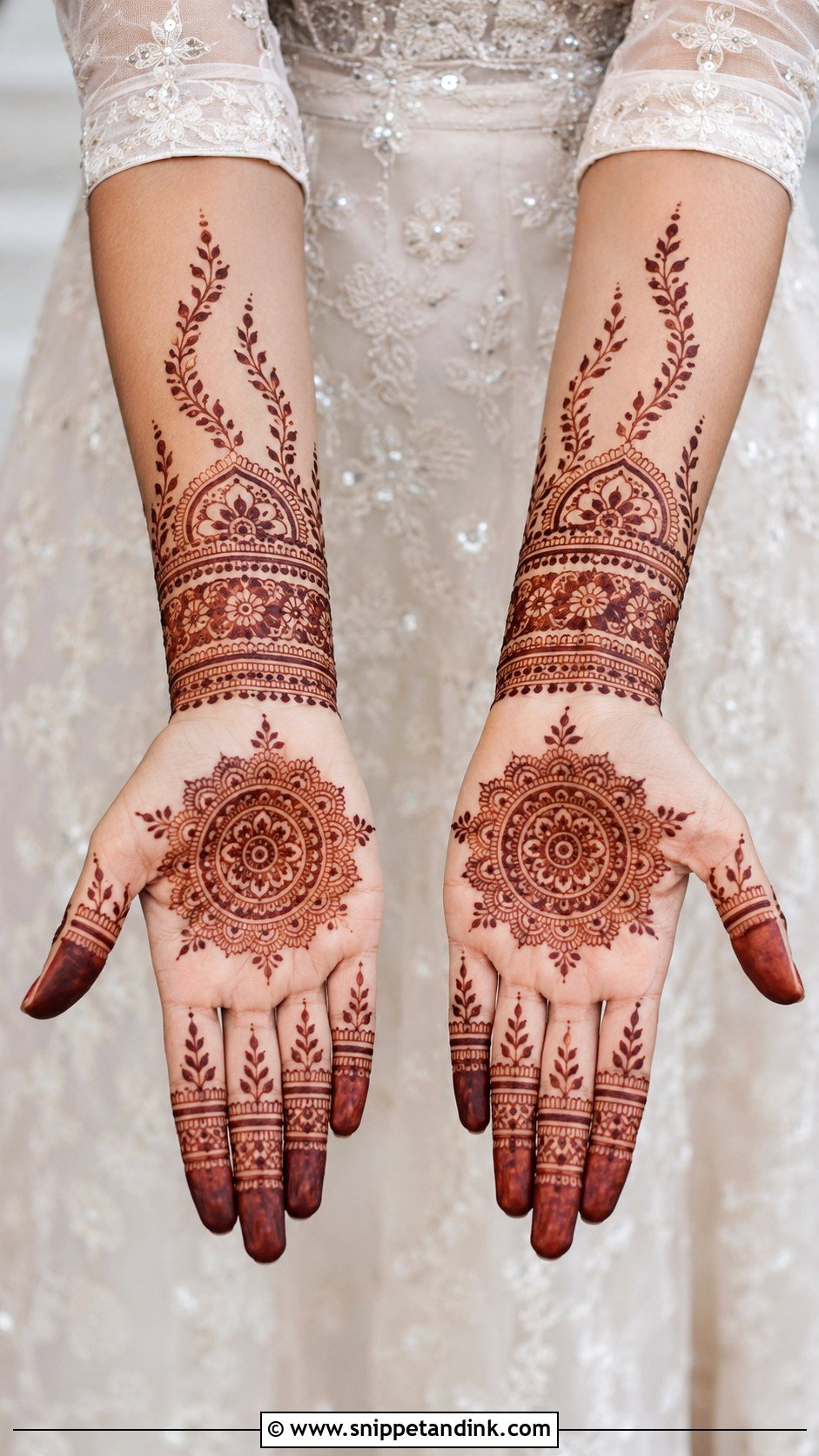
Simple full hands are about spacing, not effort. A palm mandala, leafy vines toward the wrist, repeated bands on the fingers and soft flowers give complete coverage with far less filler. I tell beginners and teens to avoid tiny fillers everywhere; they’re the part that smudges first and stains faintest. Keep every motif visible and the result looks neat at any age.
6. Full Hand Back Side Mehndi Design
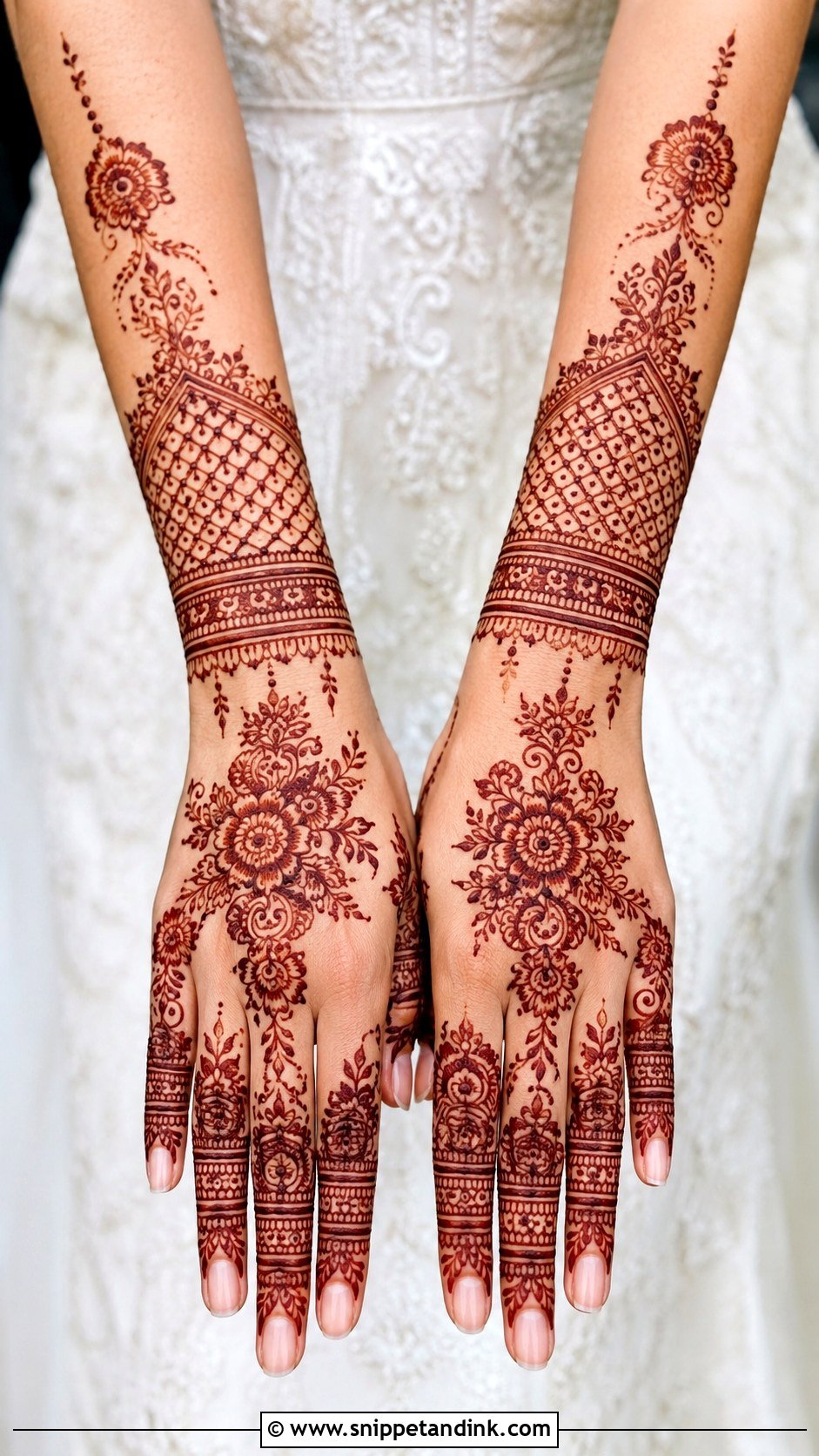
A full hand back side mehndi design is the one people see under rings, bangles and sleeves. I start at the fingertips and work toward the wrist with a central mandala or floral cluster and cuffs that read as jewelry. Back-of-hand skin is thinner, so the stain comes out a shade lighter than the palm; I compensate with bolder outlines here. It’s a good pick for Eid, Diwali and guests who’d rather keep their palms free for the day.
7. Full Hand Front Side Mehndi Design
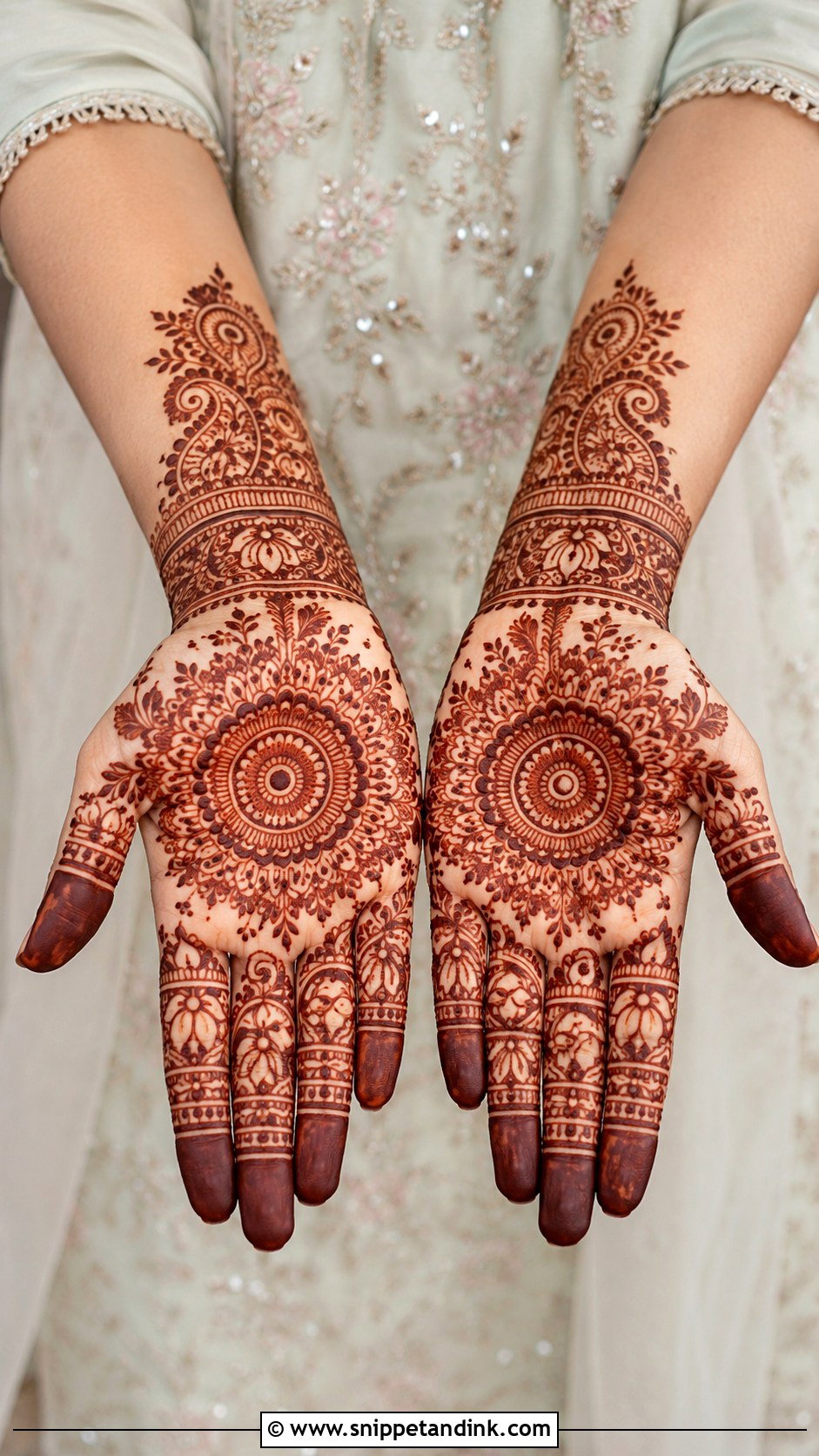
The palm is where henna stains darkest, which makes it the best canvas for fine detail. Its flat centre takes a mandala, paisleys, a peacock or bridal symbols, while the fingers carry bands, leaves and small mesh. I set one large motif in the middle and build borders around it. The one thing I watch is the crease lines: a fine line drawn right across a deep palm crease can break when you close your hand, so I route details around them where I can.
8. Full Hand Mandala Mehndi Design
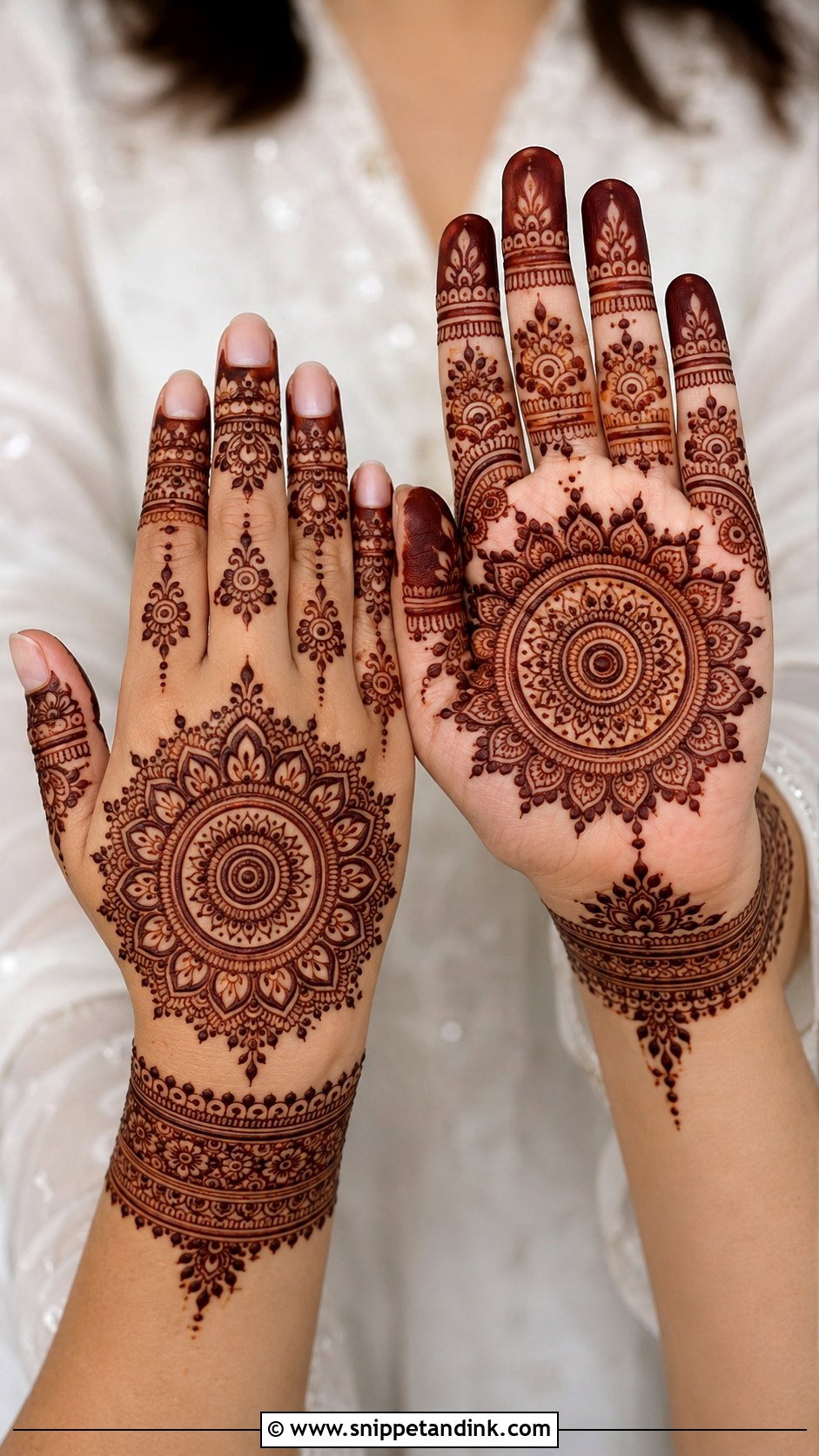
Mandalas give a full hand its anchor. A circle on the palm or back, surrounded by detailed fingers, wrist bands and soft fillers, suits both simple and heavy layouts. Add paisleys and lotus petals around the ring for tradition, or leave more negative space and use fine dots for a modern finish. On small hands I scale the mandala down rather than leaving it at standard size, so the fingers still have room to breathe.
9. Full Hand Peacock Mehndi Design
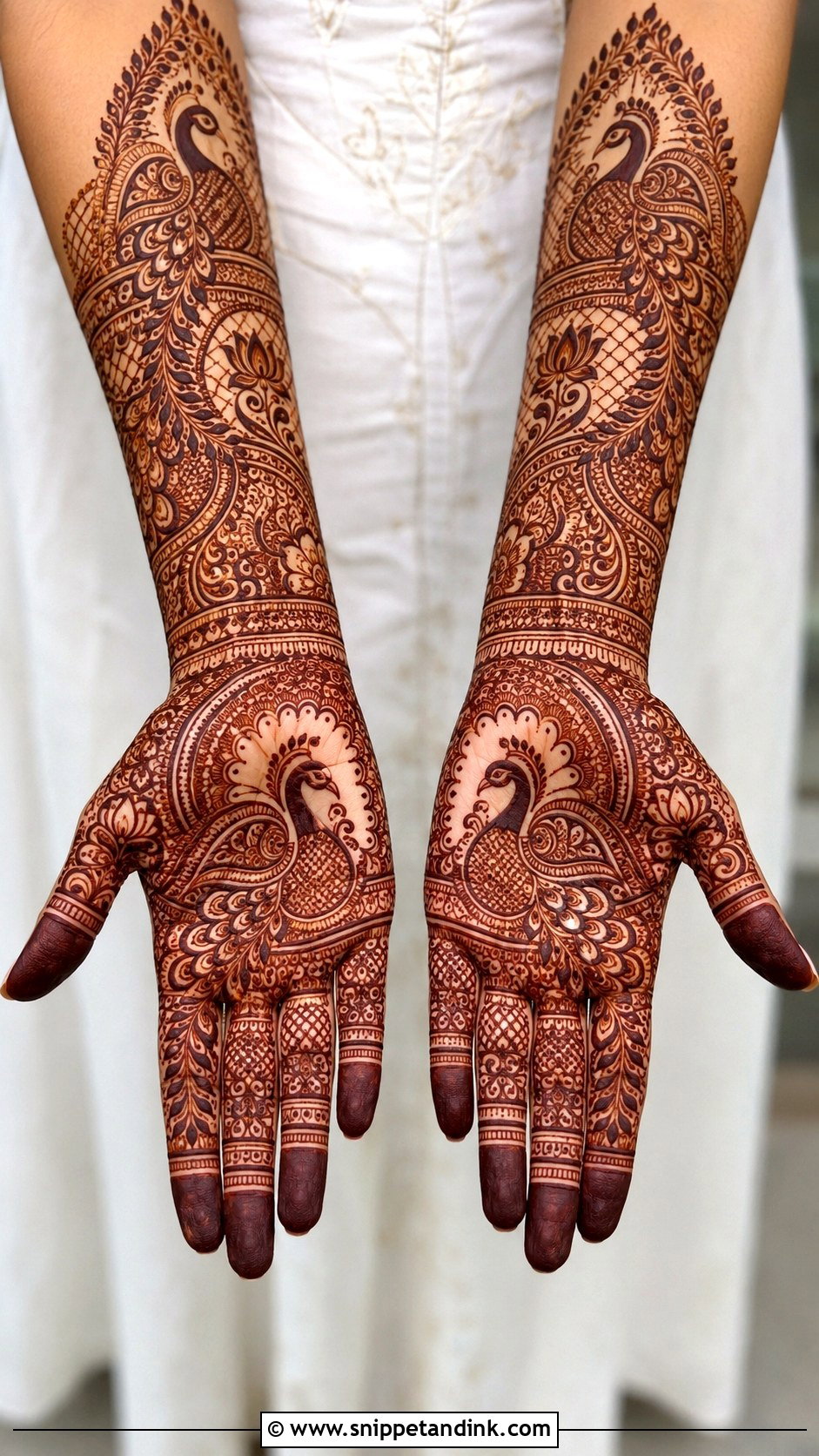
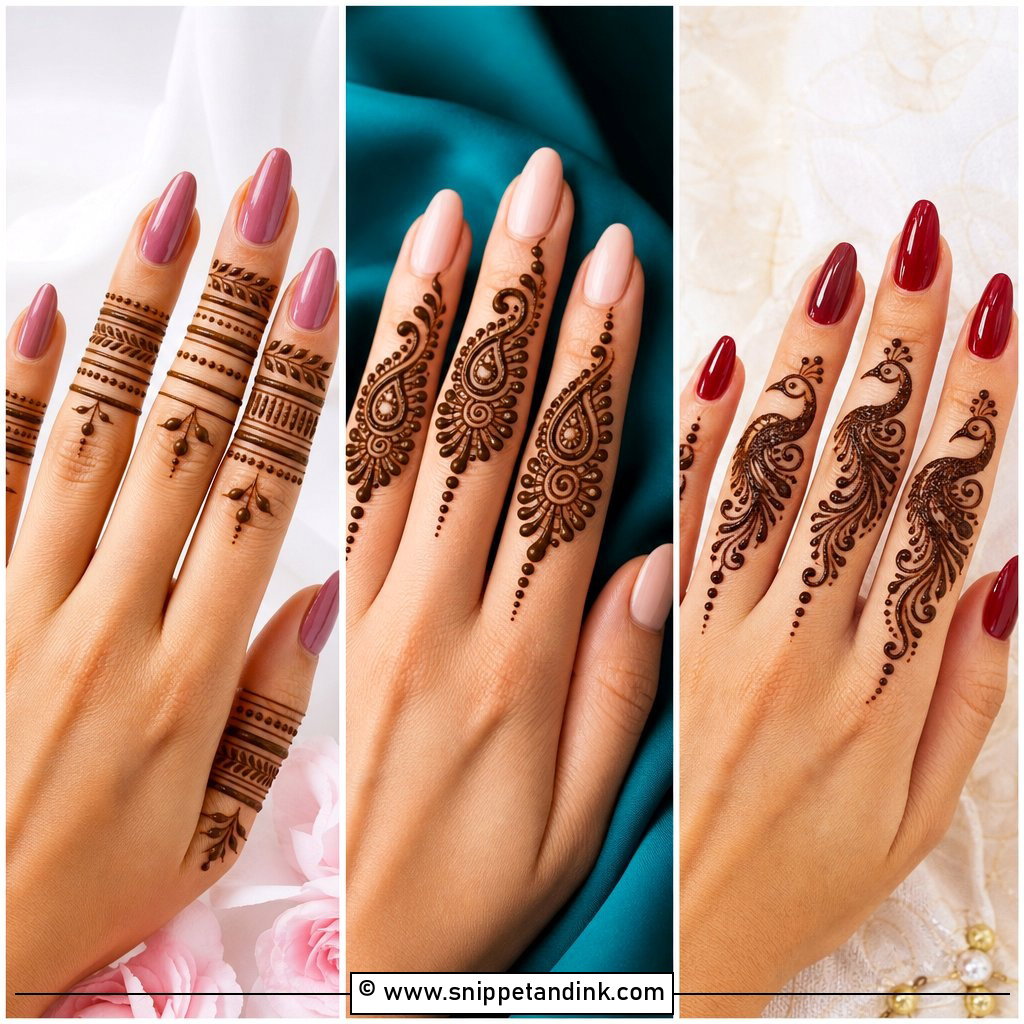
Full hand peacock mehndi design is one of the motifs brides ask for by name. The peacock can sit on the palm, wrist or forearm, with its feathers running into paisleys, florals and leafy trails. What separates a good peacock from a muddled one is feather spacing: each eye needs its own little ring of bare skin. I pair it with lotus motifs or jaali for depth, and dense Indian work or lighter Arabic spacing both suit it.
10. Full Hand Floral Mehndi Design
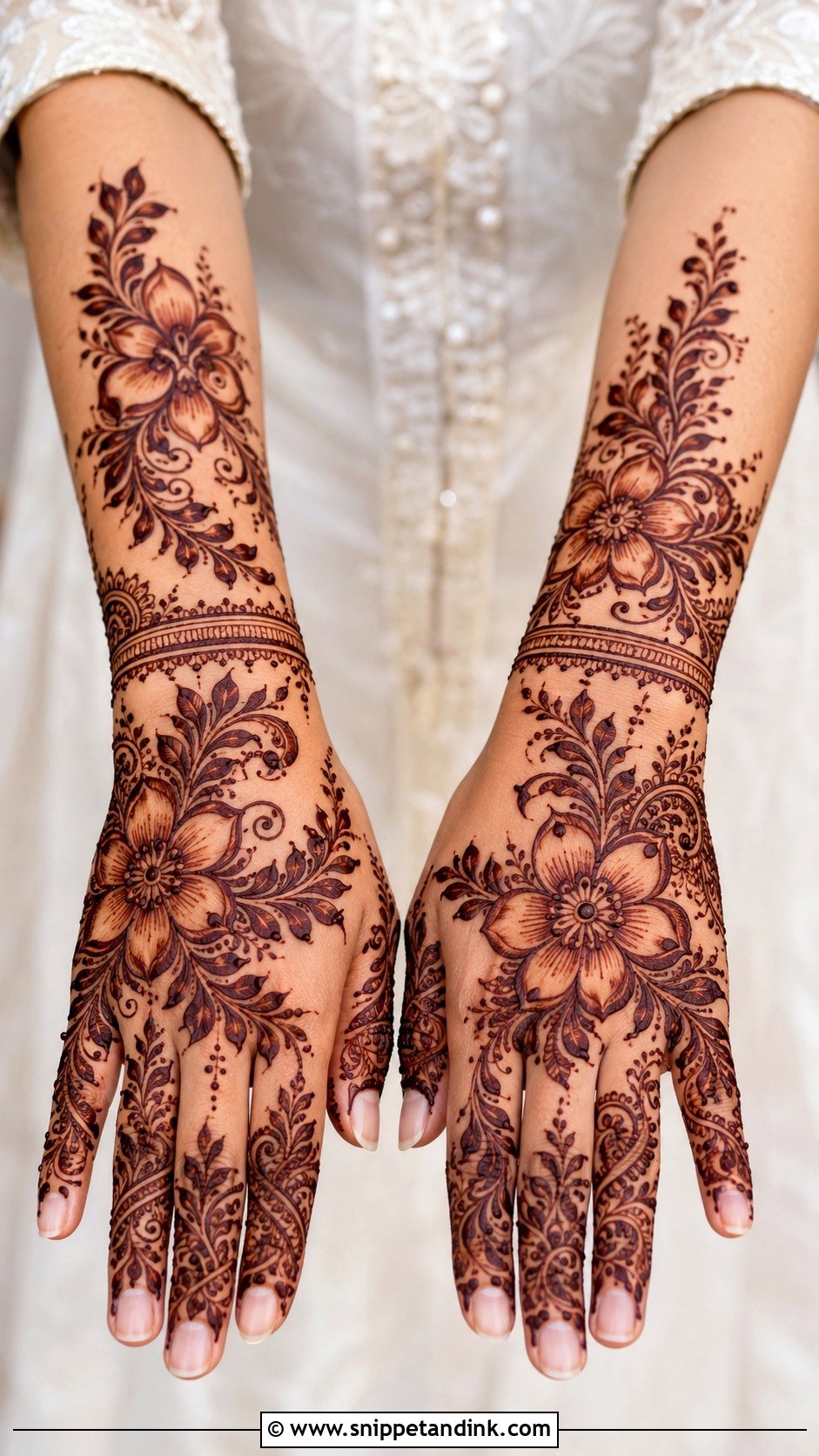
Florals are the most adaptable full-hand style I draw. Large flowers give an Arabic feel; tiny flowers with fine lines give an Indian bridal effect. Petal bands on the fingers, a central bloom on the palm and garden-like vines at the wrist complete the layout. My one piece of advice: repeat the same flower type across the hand. Mixing roses, lotus and daisies in one design usually looks like a sampler rather than a single piece.
11. Full Hand Paisley Mehndi Design
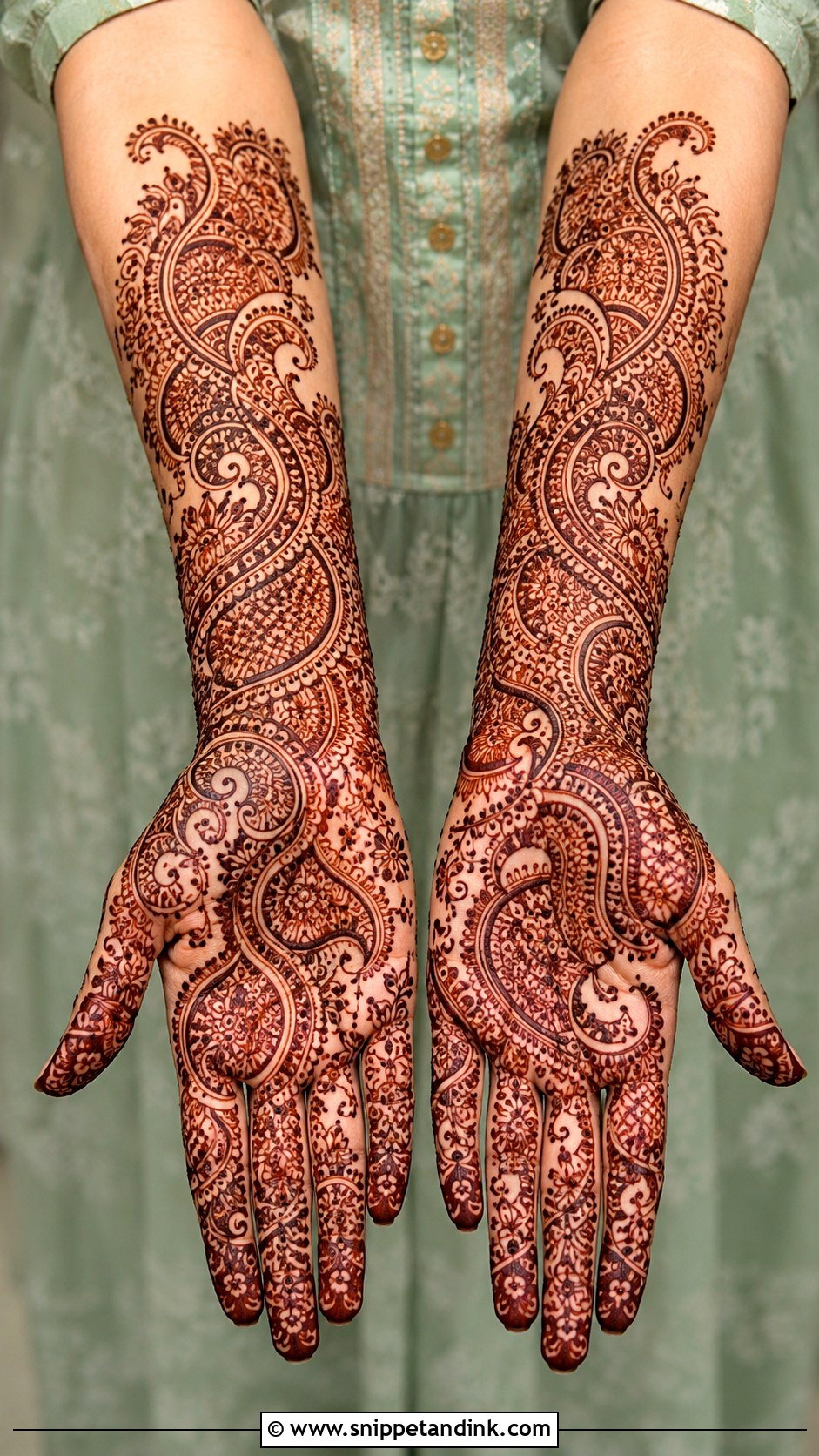
Paisleys suit full coverage because they bend with the hand instead of fighting it. A layout I come back to often starts with decorated fingertips, sets a pair of paisleys on the palm and curves vines down to the wrist. Large ones work for festive designs, layered small ones for bridal. Dots, leaves, mesh and floral fillers enrich them, but I keep the paisley outline itself slightly heavier so it survives if the filling stains faintly.
12. Full Hand Jaali Mehndi Design
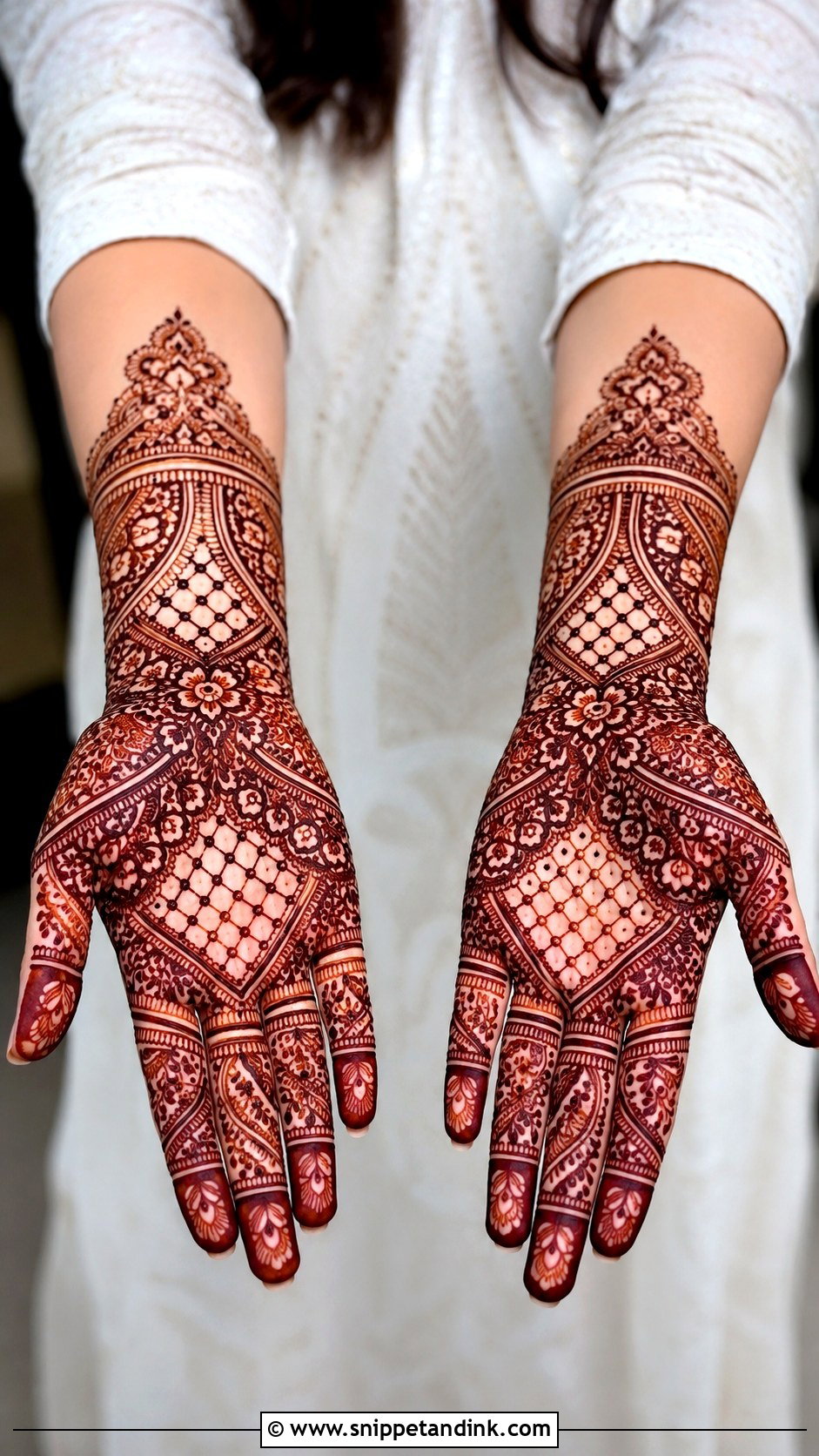
Jaali adds texture without darkness. A net across the fingers, palm, back or wrist looks airy even when the hand is fully covered, which is why I use it to break up dense bridal designs. Split the hand with jaali on one side and floral vines on the other for a modern take. The mesh does need an artist with steady, even line spacing; one crooked row is the first thing a close-up photo finds.
13. Full Hand Moroccan Mehndi Design
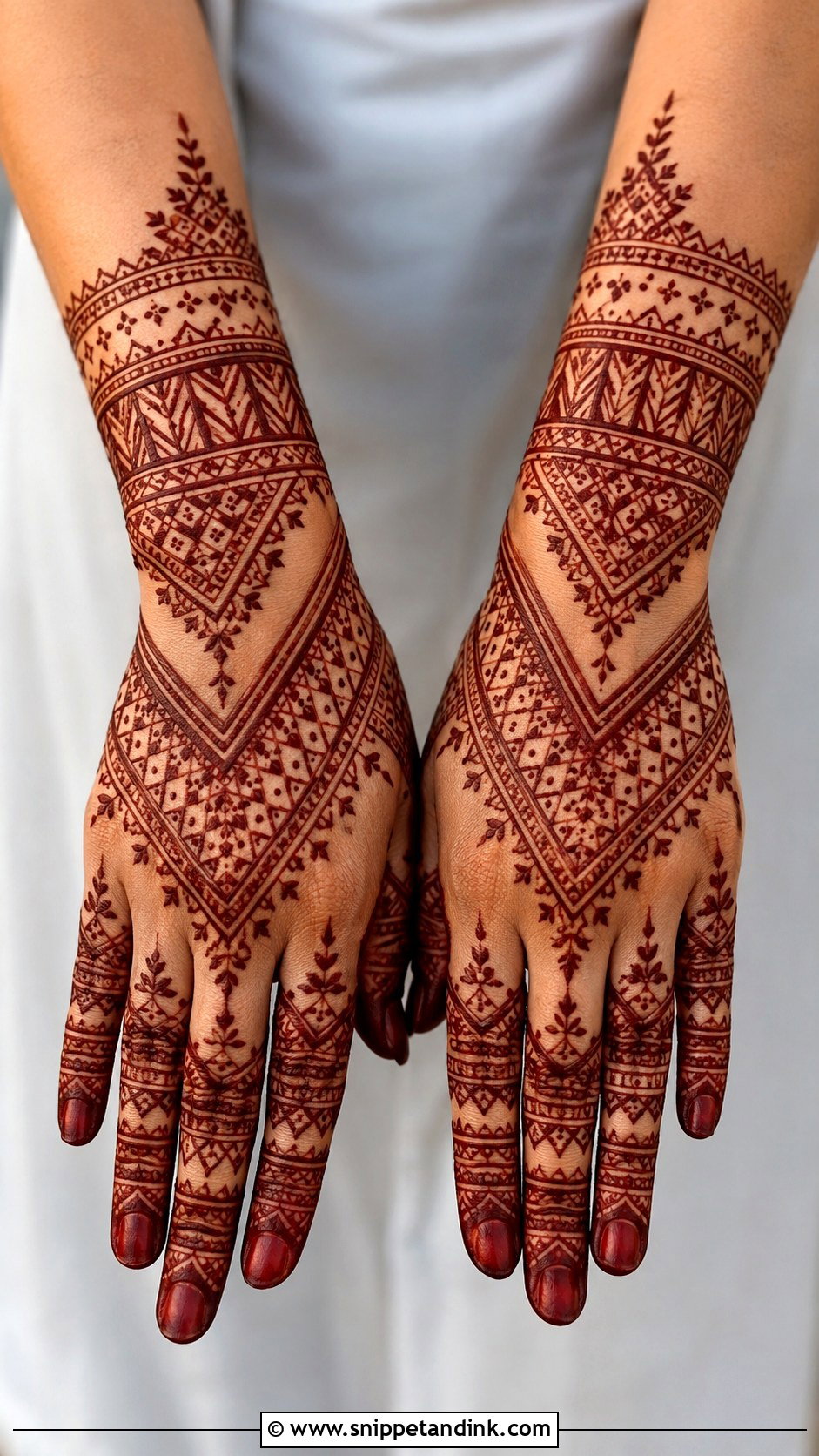
Moroccan full hands swap florals for geometry: diamonds, triangles, zigzags, grids and sharp borders. Stacked lines on the fingers, a diamond grid on the palm and cuff-like bands at the wrist give a structured, graphic hand. Geometry exposes uneven spacing instantly, so I’d ask any artist to show you her geometric portfolio first. It suits festivals and fashion-forward bridesmaids who want something different from the usual vines.
14. Full Hand Gulf Mehndi Design
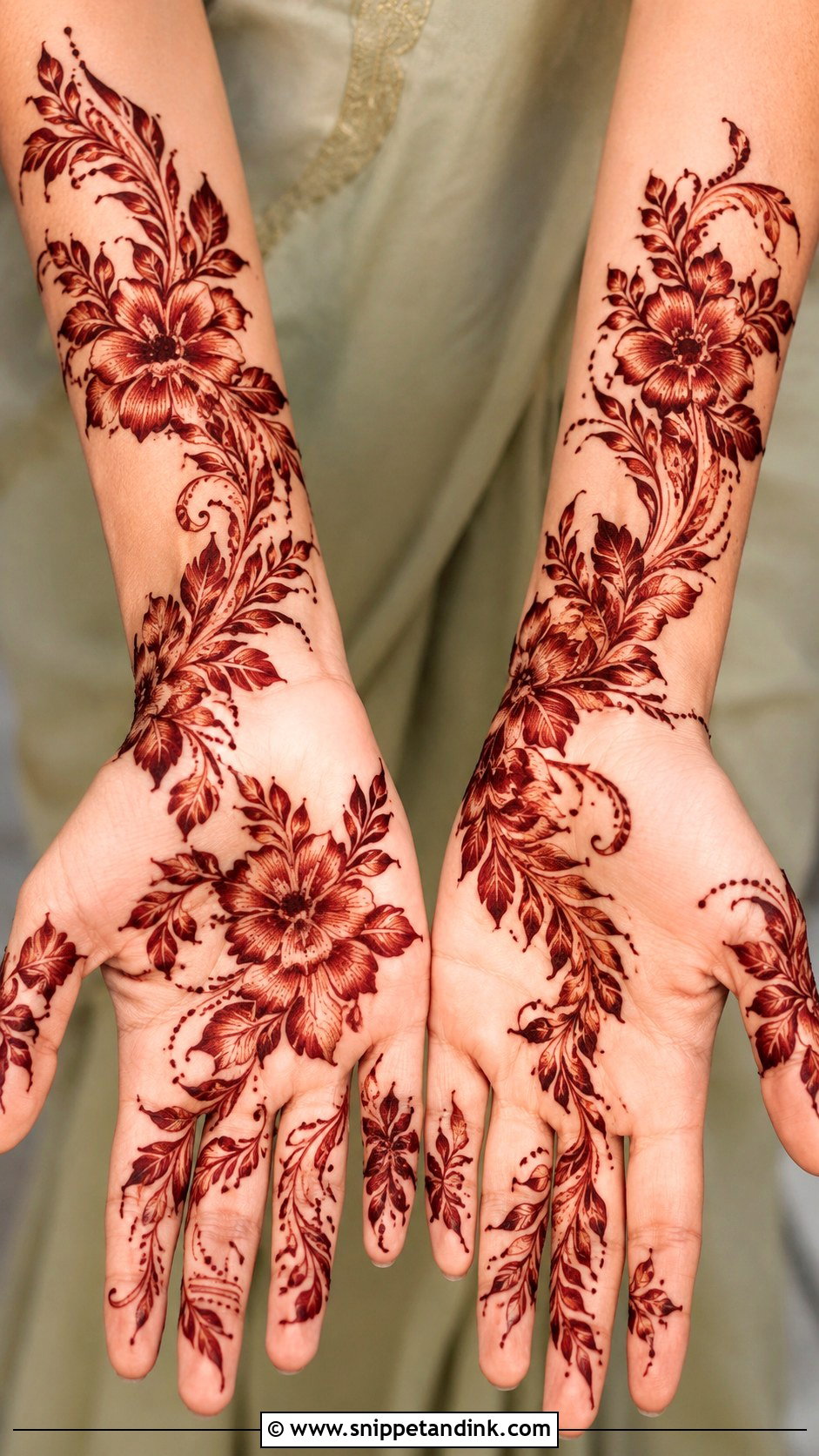
Gulf or Khaleeji work is bolder than standard Arabic, with bigger roses, stronger outlines and shaded petals running from fingertips to forearm. It reads equally well on palms and backs, and it shines once the stain turns deep maroon against all that open skin. I keep the fingers detailed but light so the main flowers stay the focus. Eid and festive gatherings are where I draw it most.
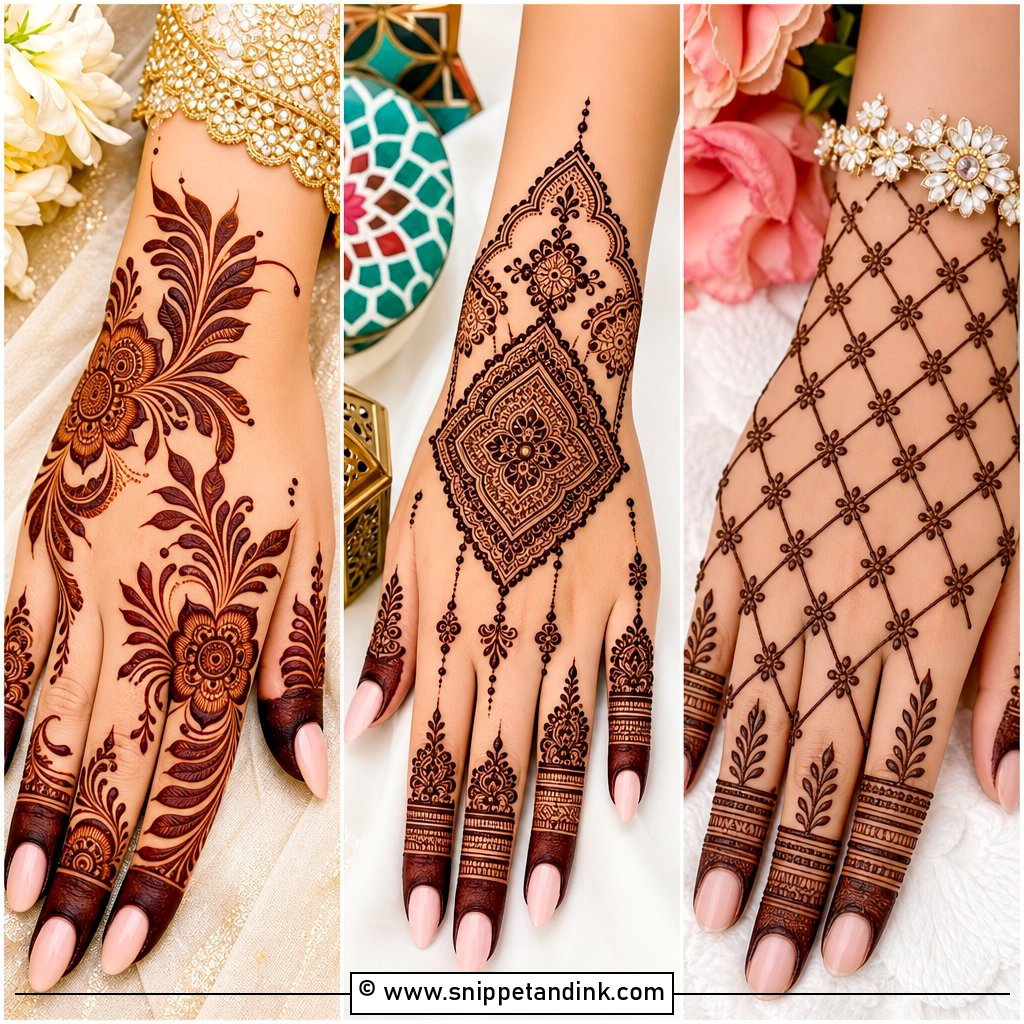

15. Full Hand Rajasthani Mehndi Design
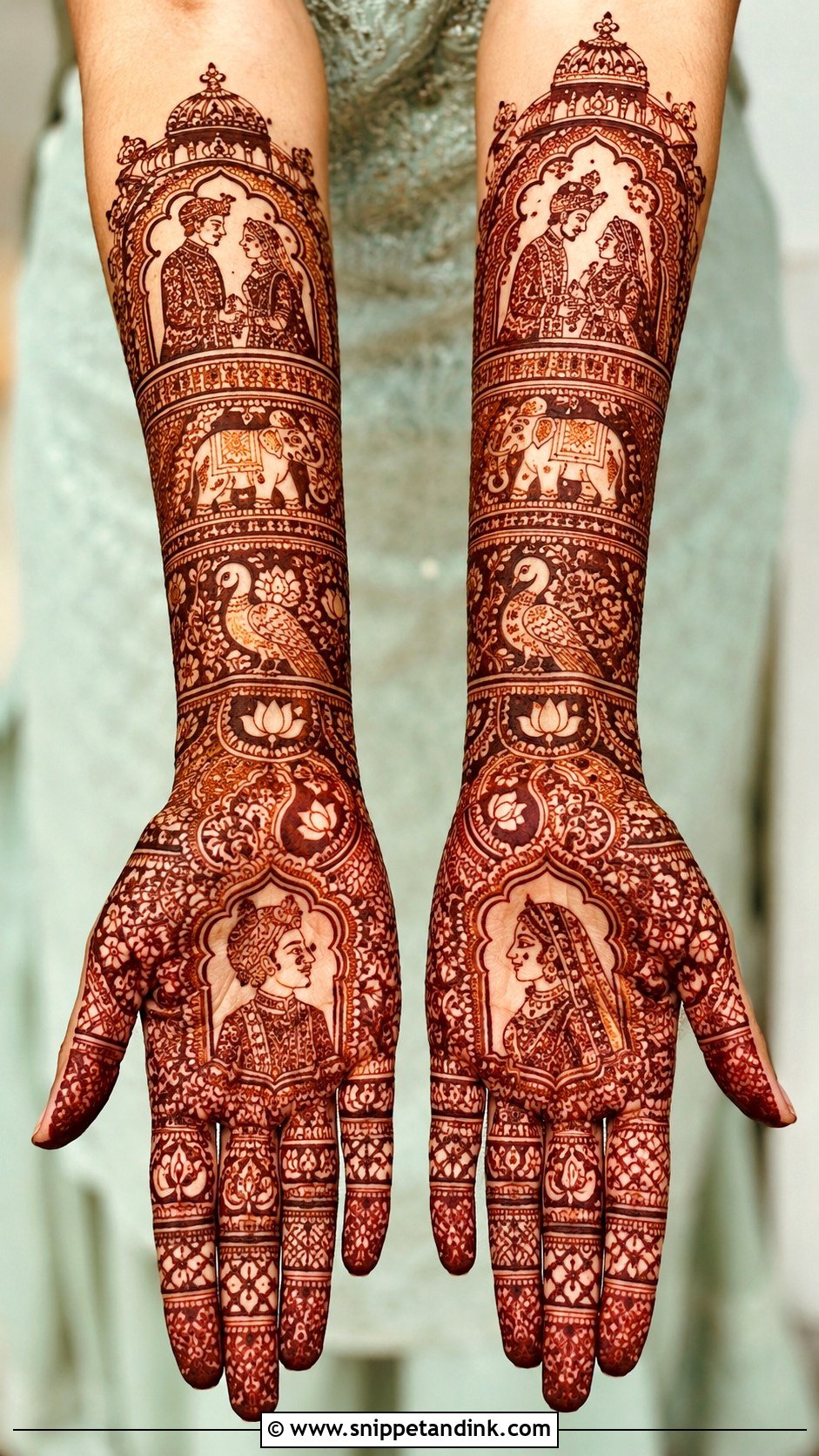
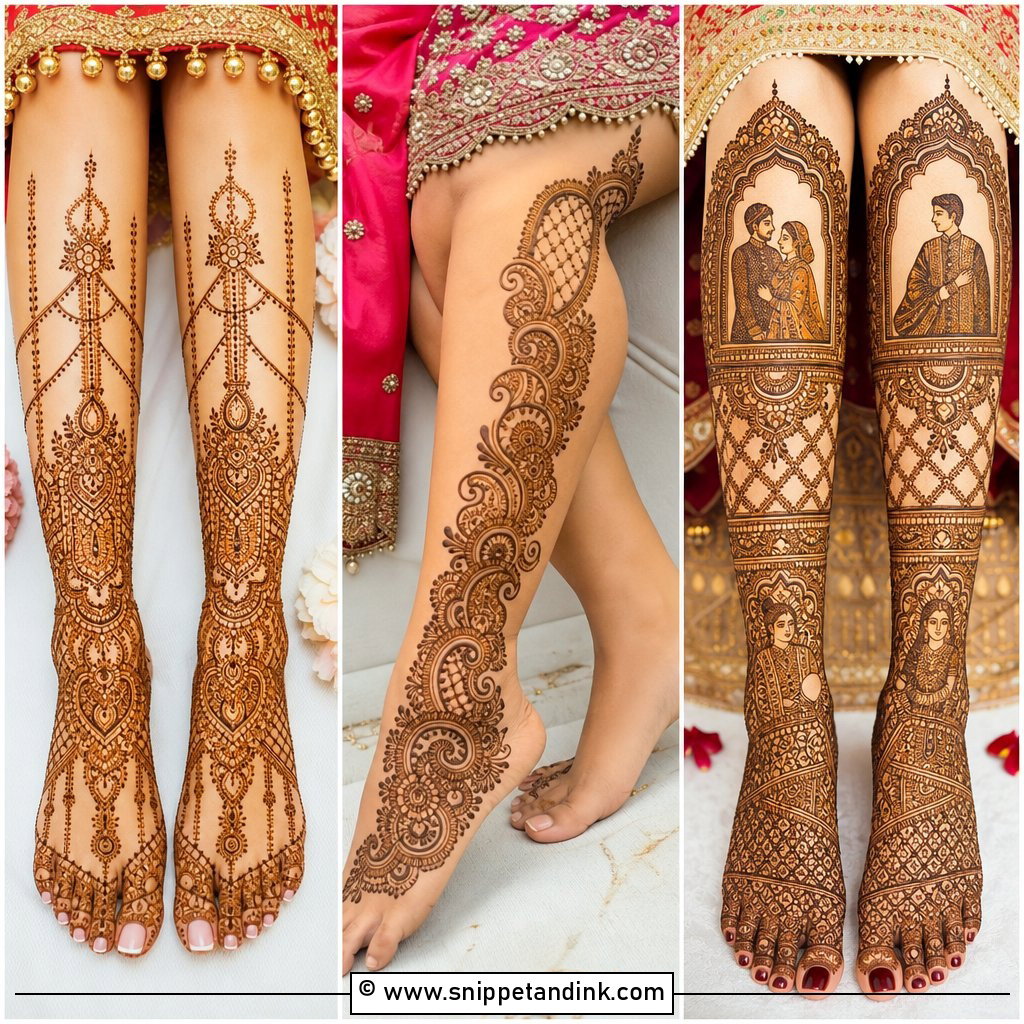
Rajasthani full hands tell a story: bride and groom portraits, elephants, peacocks, palki scenes, lotus flowers and fine filler work. It’s a long sitting and worth it for a bride who wants her wedding drawn on her hands. I put the symbolic figures on the palms, where the stain is darkest and faces stay readable, and save royal borders and repeating motifs for the wrists and forearms. Ask for clear separation between the major scenes; without it, the figures blur together in close-up photos.
16. Full Hand Pakistani Mehndi Design
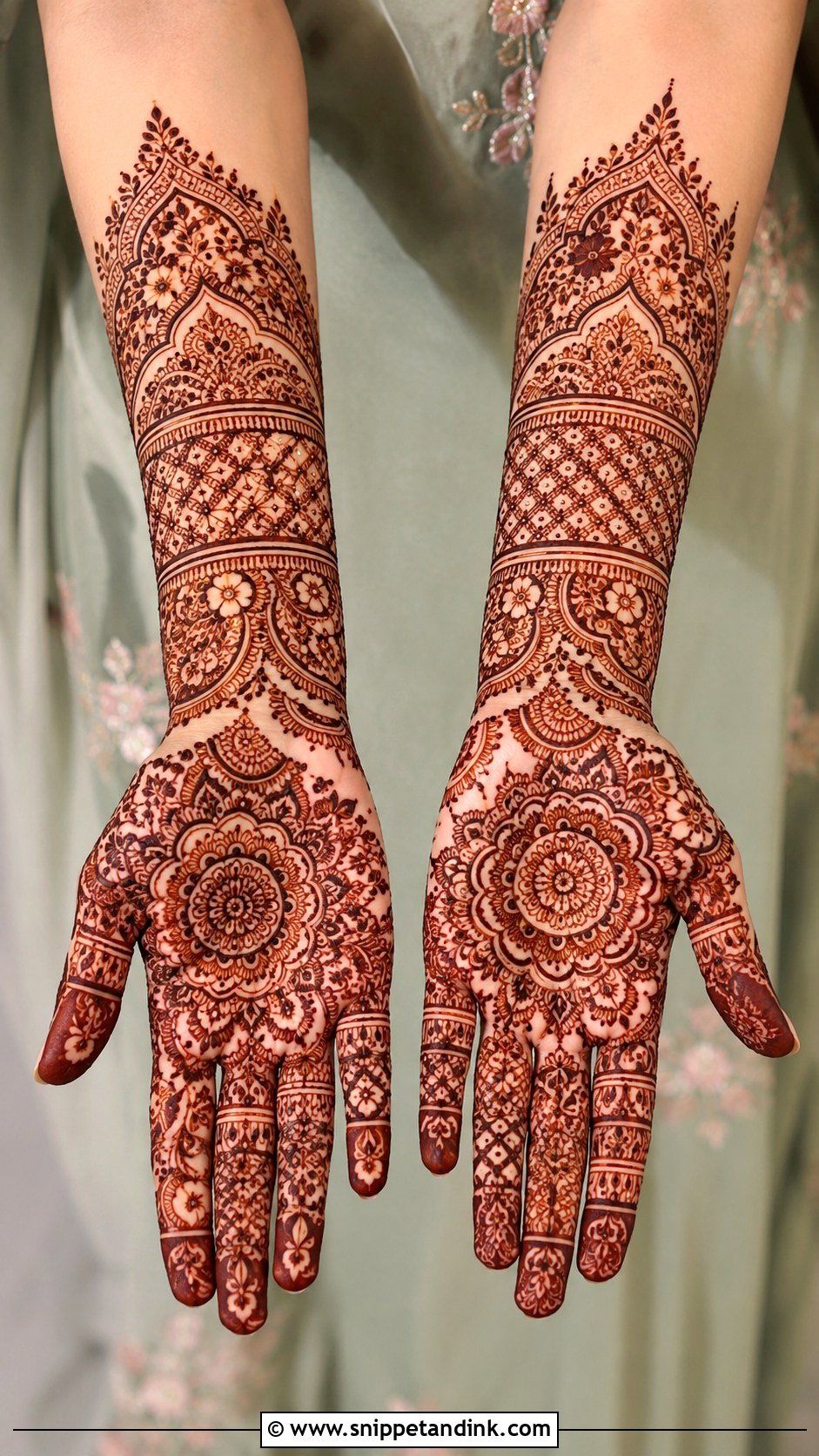
Pakistani full hands usually blend Indian detail with Arabic flow: mandalas, paisleys, florals, domes, mesh and bold outlines in one connected layout. It can be dense for the bride or opened up for guests. A strong version has decorated fingers, a statement palm motif and wrist-to-forearm bands that look like jewelry. The contrast between fine filler and bold outlines is what gives it depth once the paste comes off.
17. Full Hand Minimal Mehndi Design
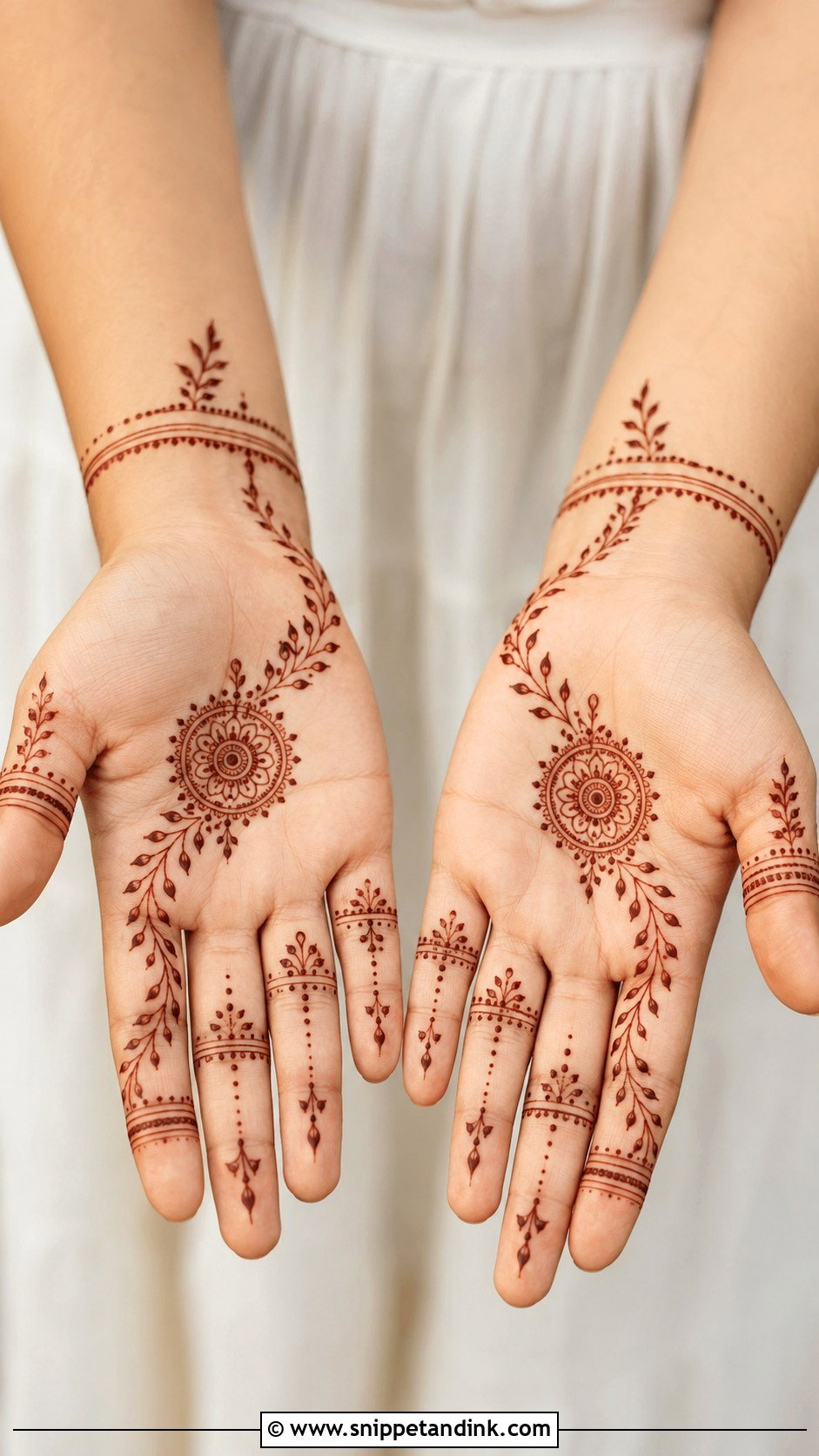
Minimal doesn’t mean unfinished. Thin vines, small motifs, open spaces and simple wrist details still cover the hand; they just leave it room. A small palm mandala or a single floral trail, slim finger bands and dots instead of filled fingers keep it light. Every line shows, so I draw fewer of them and make each one confident. It sits well with fusion outfits and office-friendly festivals.
18. Full Hand Modern Mehndi Design
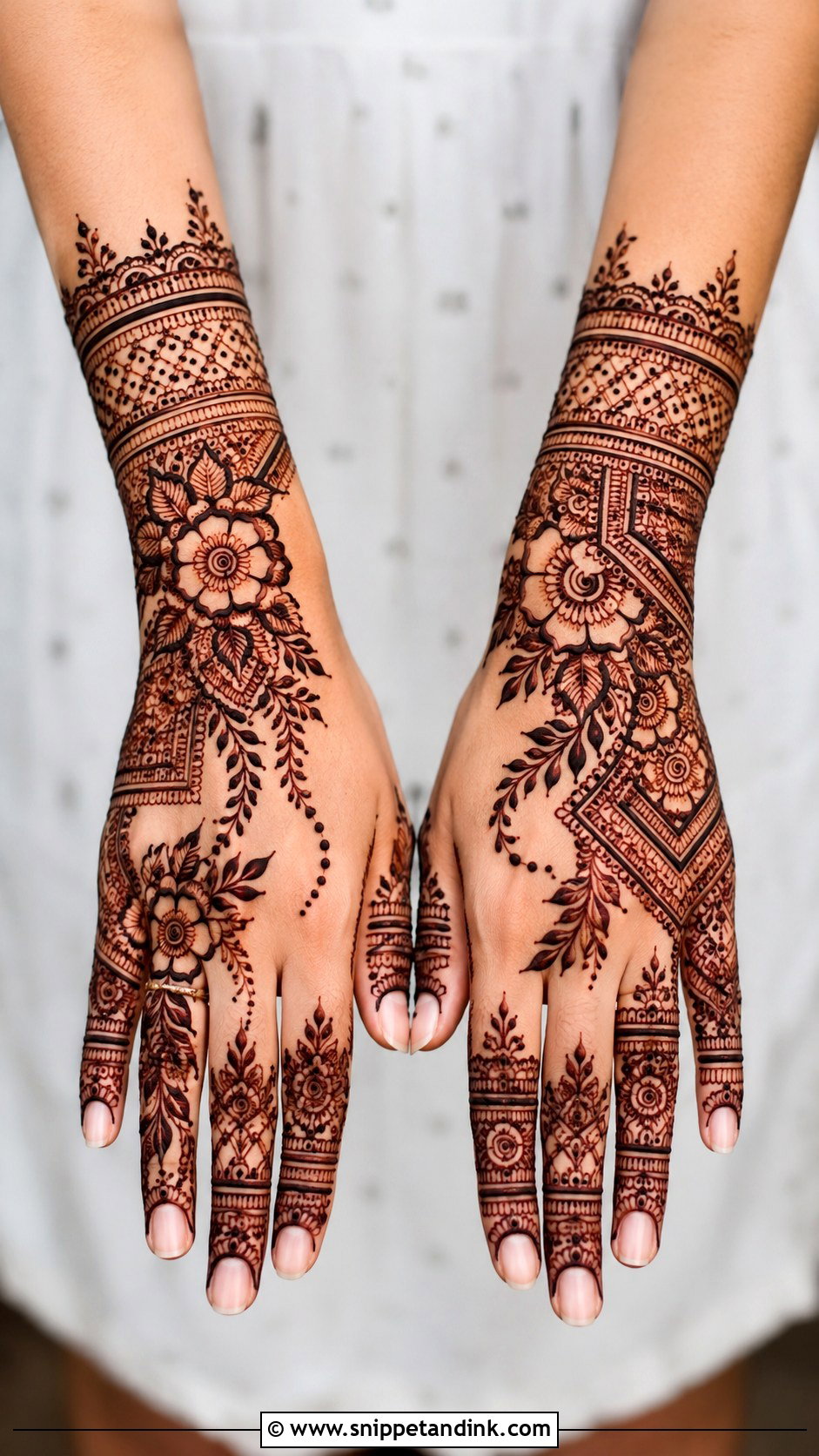
Modern full hands keep the traditional motifs but rearrange them: negative space, bold outlines, bracelet cuffs, clean florals and asymmetrical trails. I ask the bride to pick one theme, such as florals with mesh or a mandala with geometric bands, and stick to it across both hands. Clear shapes with fewer fillers mean the design reads instantly in photos. Engagements, receptions and contemporary bridal looks are its natural fit.
19. Full Hand Engagement Mehndi Design
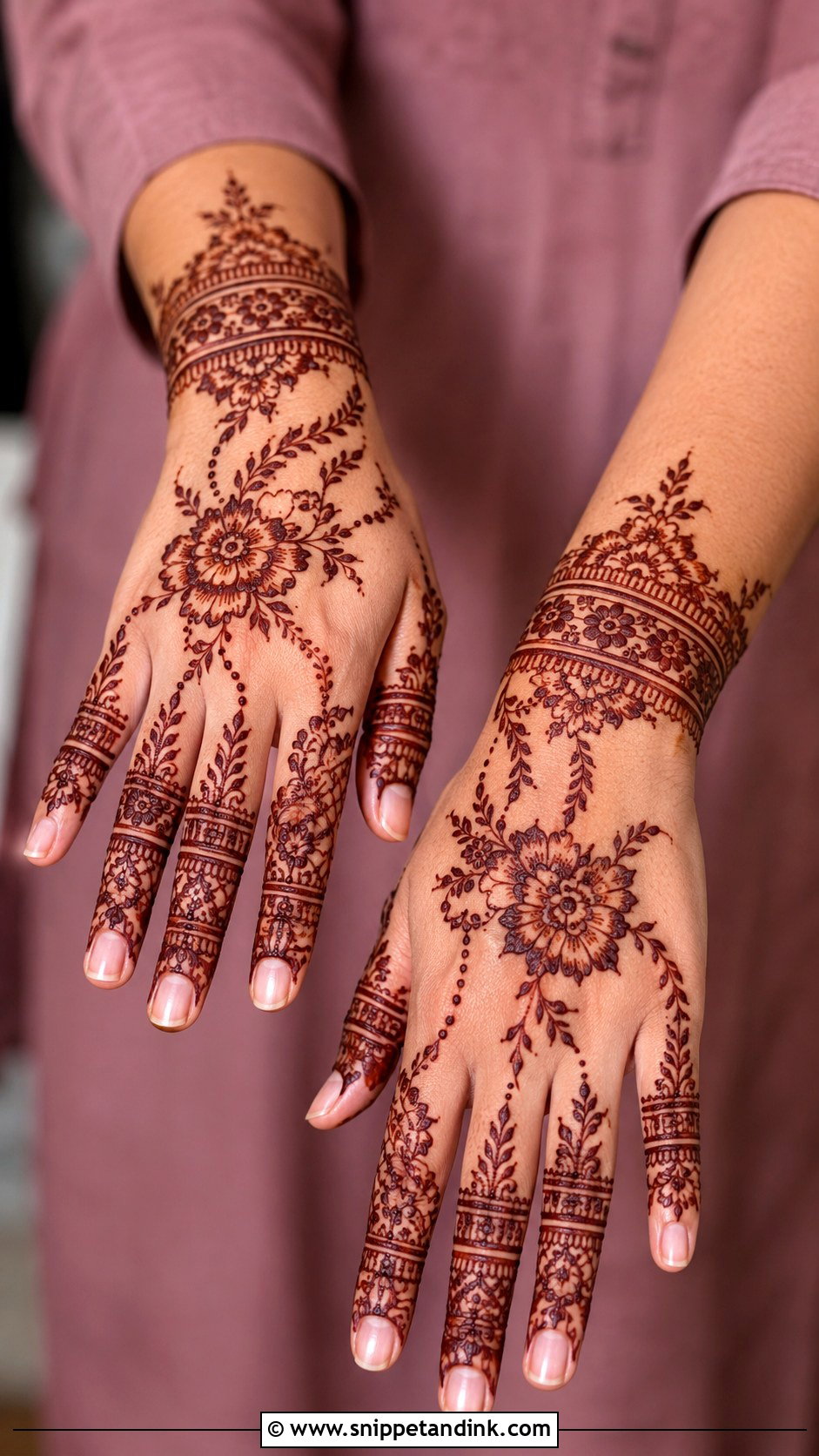
Engagement mehndi should feel special without spending the bride’s heaviest design early. I usually draw a central floral or mandala, detail around the ring finger, add wrist bracelet patterns and let soft vines reach toward the forearm. Ring photos focus on the back of the hand, so that side gets my neatest work. Slim bands, leafy tips or small mesh sections keep the fingers elegant around the ring.




20. Full Hand Wedding Guest Mehndi Design
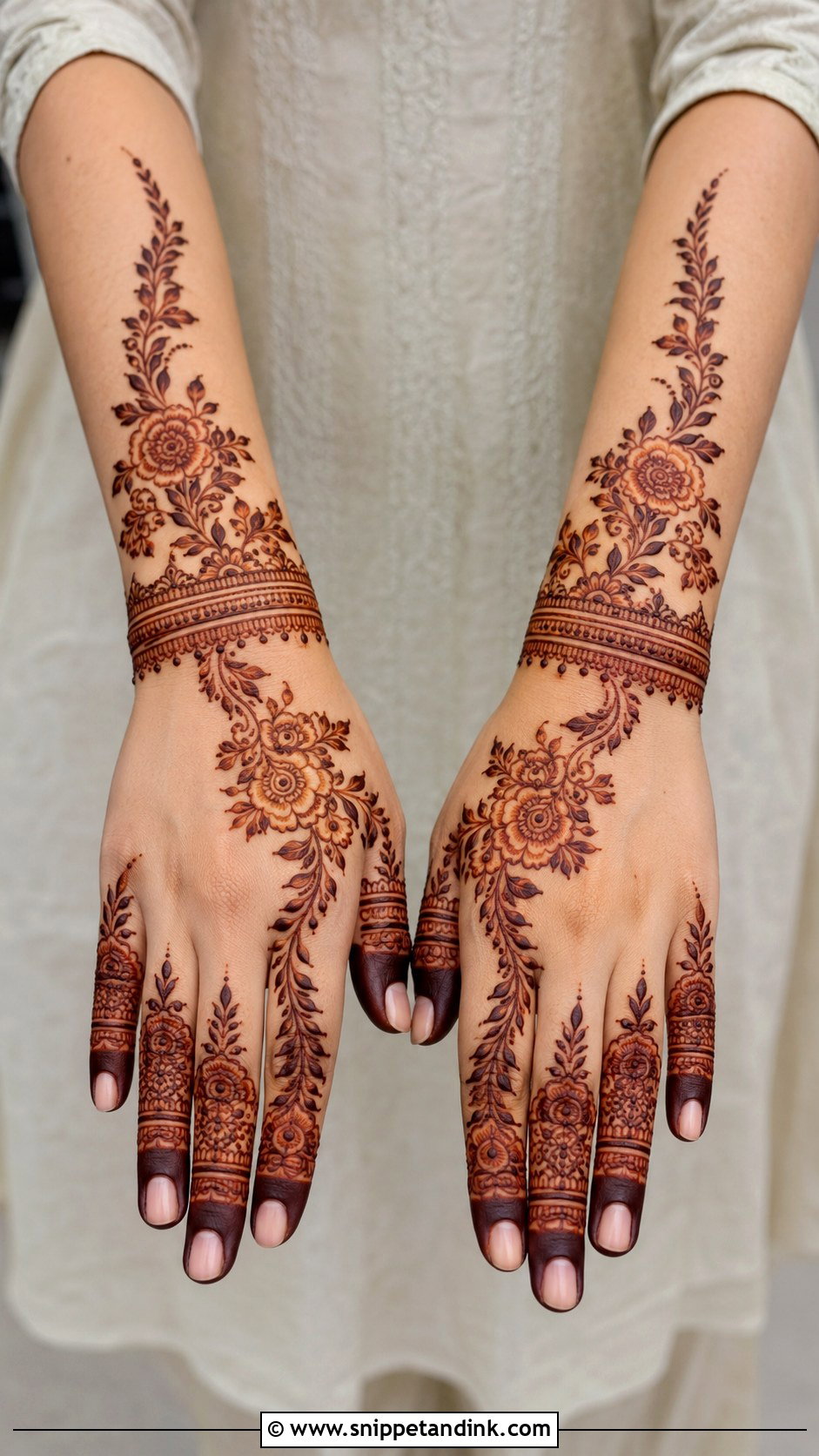
Guests should look dressed up without pulling attention from the bride. Arabic florals, Indo-Arabic trails, mandala palms and bracelet-style backs all work at medium coverage with clear spacing, which also keeps the queue moving at a busy mehndi night. It sits well with sarees, lehengas, salwar suits and fusion outfits. Lighter coverage also means less time sitting still, which matters when you want to dance.
21. Full Hand Eid Mehndi Design
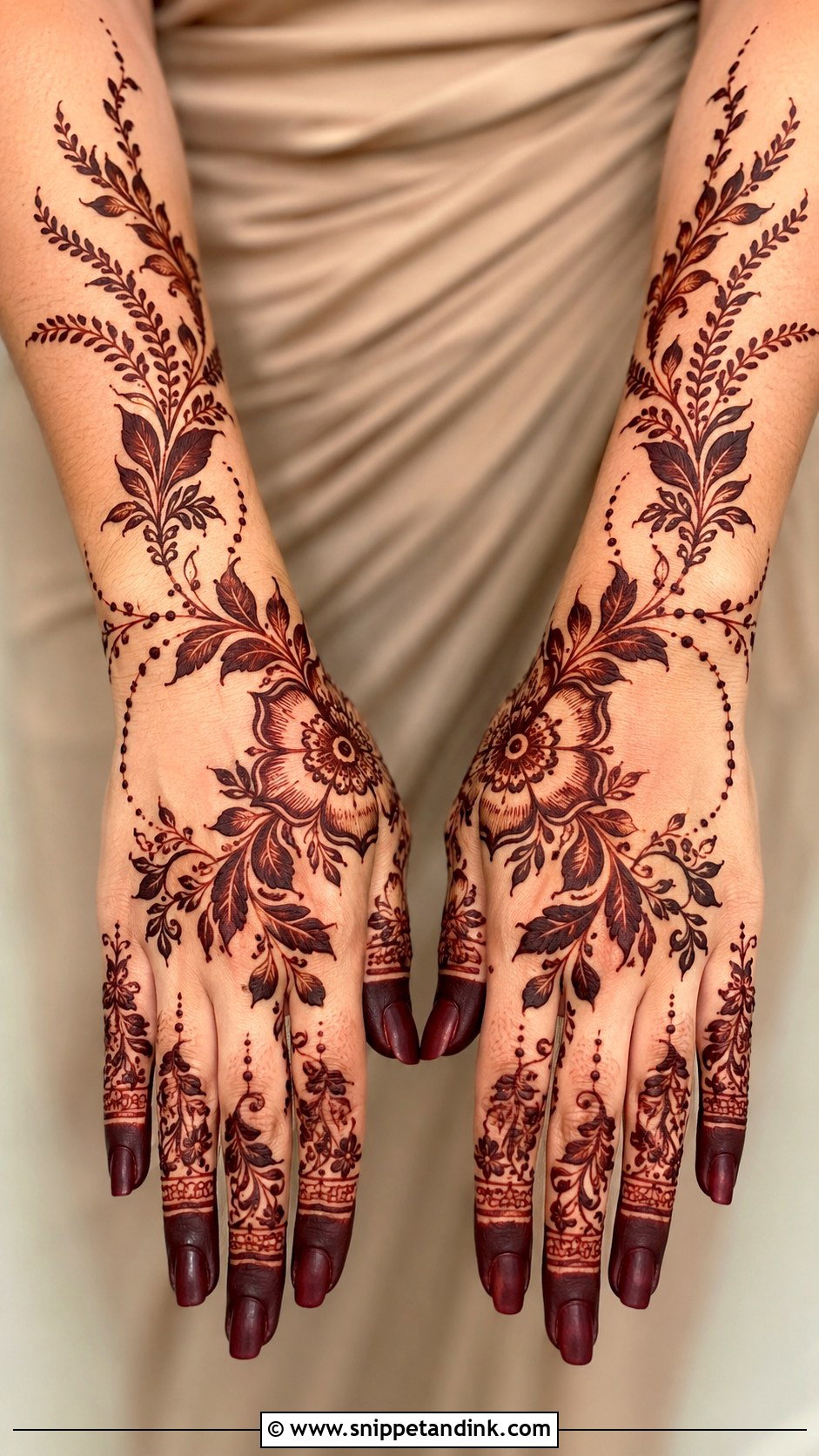
Eid hands lean Arabic and Gulf: flowers, leaves, vines and open spaces that look fresh after staining. Fingers, palm and wrist can all be decorated without becoming dense. A floral trail across the palm or a back-hand bracelet design with filled fingertips are the two layouts I’m asked for most. Small dots, shaded petals and neat wrist borders finish it, and the scale adapts easily from young girls to adults.
22. Full Hand Diwali Mehndi Design
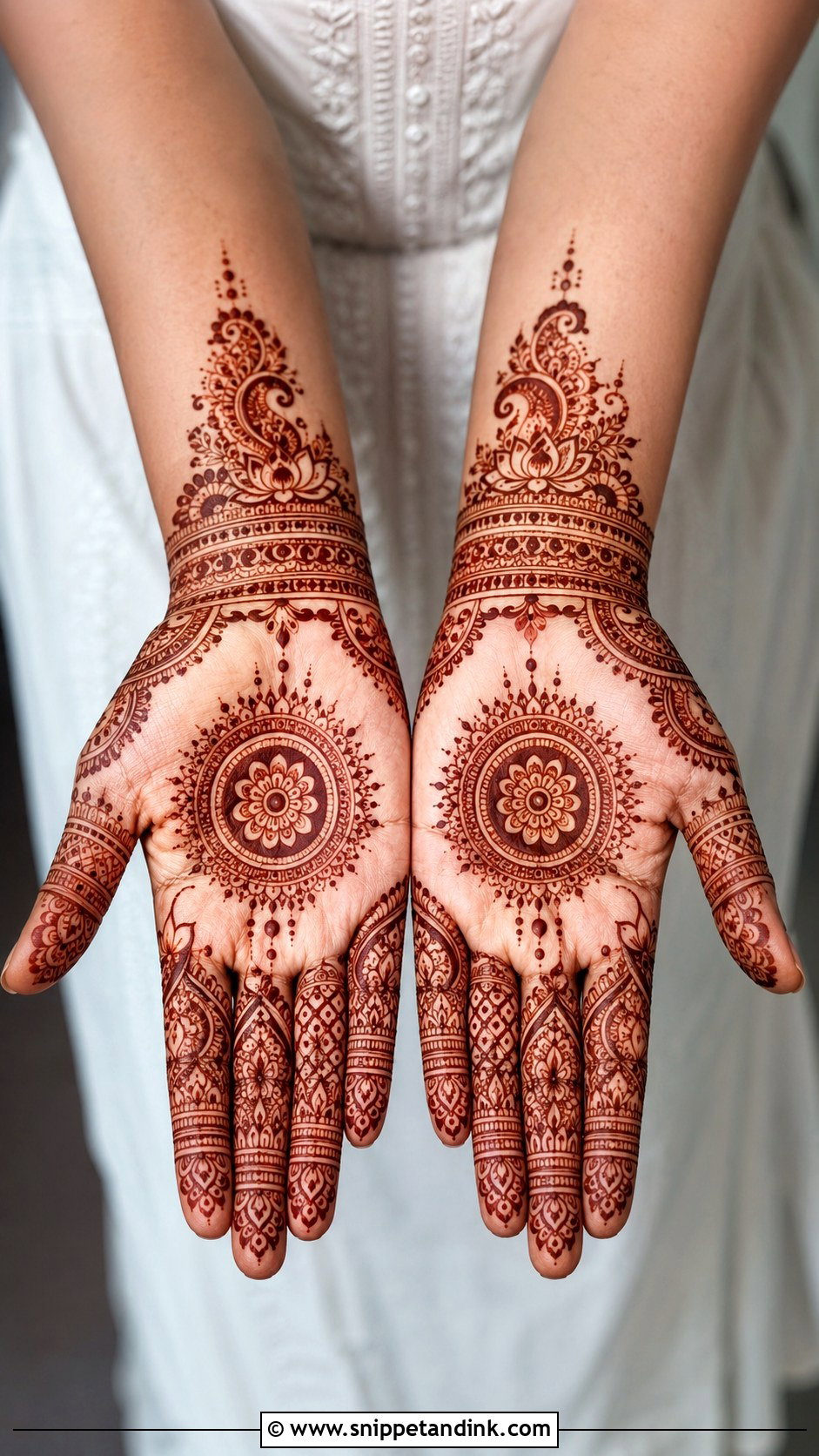
Diwali designs carry mandalas, lotuses, paisleys and diya shapes. A round palm mandala, banded fingers and floral borders toward the wrist make a medium-dense layout that feels festive and still lets you light lamps and cook without ruining it. Don’t overcrowd the palm; let the main motif stand alone and use small fillers around it. It looks right with bangles, festive suits and sarees.
23. Full Hand Karwa Chauth Mehndi Design
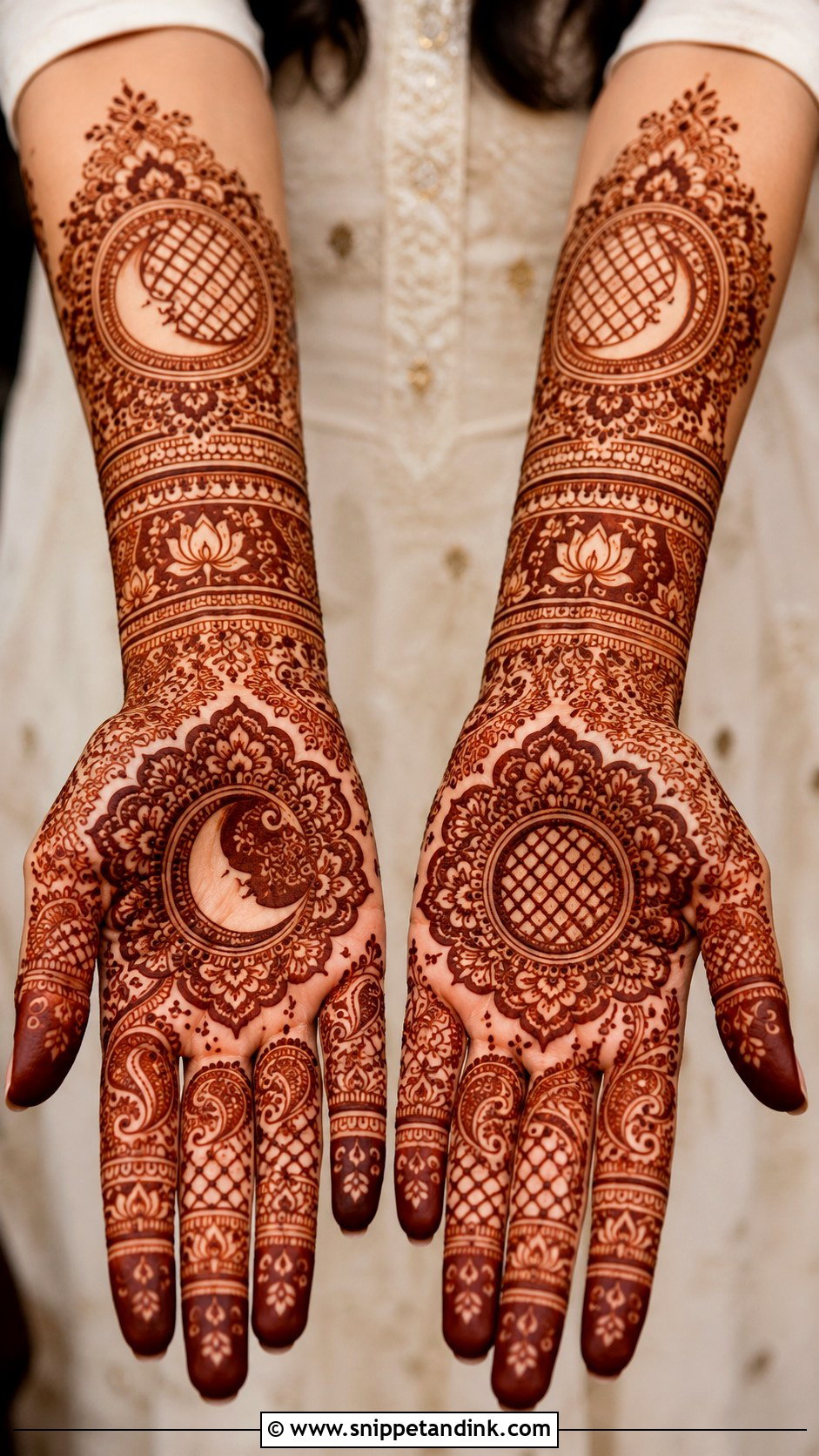
Full hand Karwa Chauth mehndi design leans traditional, with moon shapes, sieve-inspired patterns, paisleys, lotus and bridal-style mandalas. Front and back are usually both covered, with wrist bands that echo bangles. The evening puja is heavily photographed with the hands framing the thali, so I keep the back-hand work especially clean. Dense Indian work gives the classic look; Indo-Arabic spacing gives a lighter one.
24. Full Hand Teej Mehndi Design
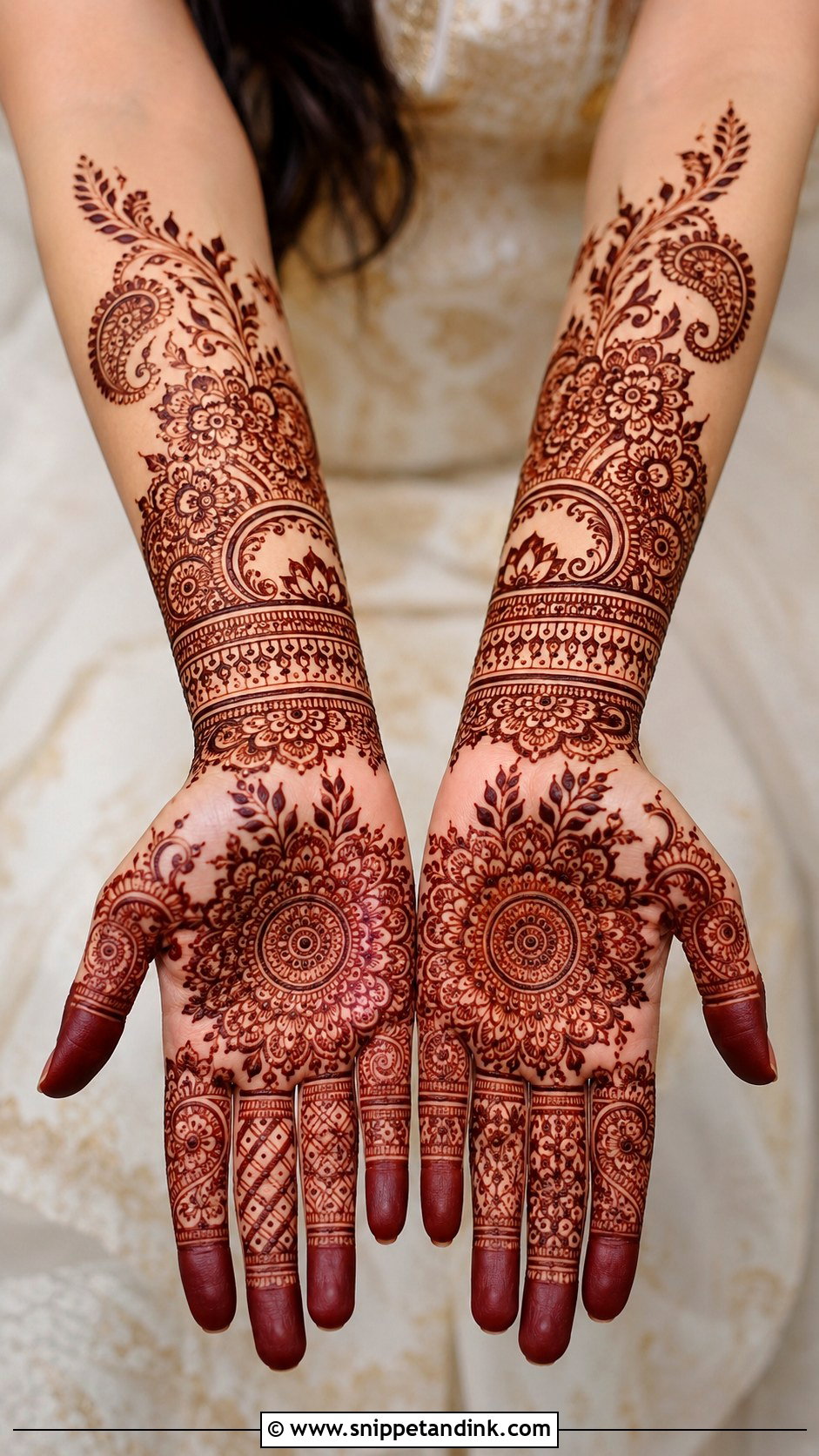
Teej designs should feel like movement: leafy vines, paisleys, floral clusters, swings and curving lines that flow from filled fingertips into a central palm motif and out to the wrist. I draw denser versions for married women’s festive looks and lighter ones for young girls. Green bangles and bright suits suit the warm stain well. Keep motifs clear so the curves read as flow rather than scribble.



25. Full Hand Finger Heavy Mehndi Design
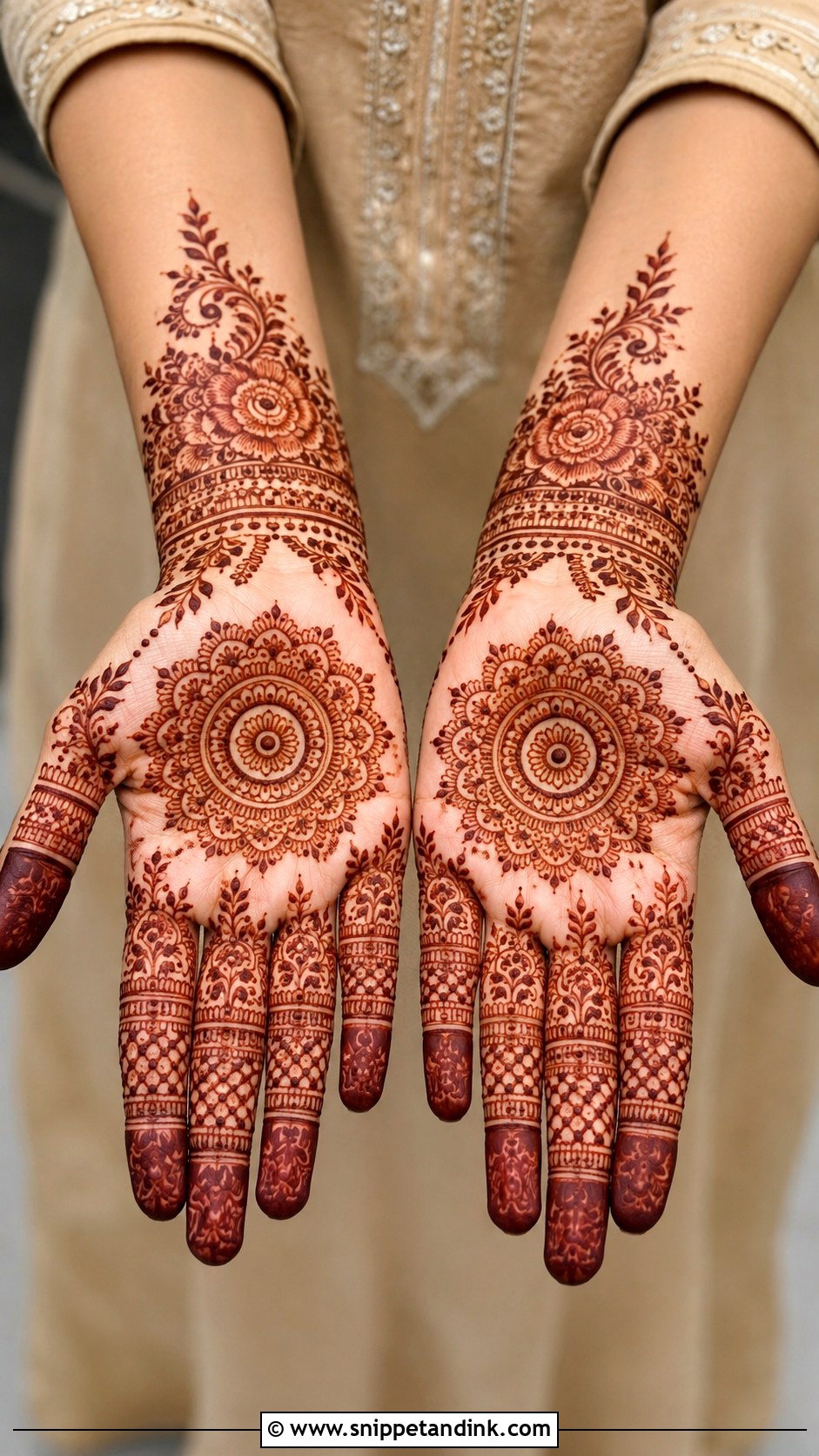
Most of the work in a finger-heavy design sits between the knuckles and the nail: checks, leafy bands, dots, fine lines, shaded tips and floral strips. The palm stays more open so the fingers don’t overpower it, with a mandala or floral trail as the centre. Fingertips take colour deeply, so heavily filled tips can stain almost black; I leave a tiny gap under the nail edge so the shape still reads. On back hands it visually lengthens the fingers.
26. Full Hand Bracelet Mehndi Design
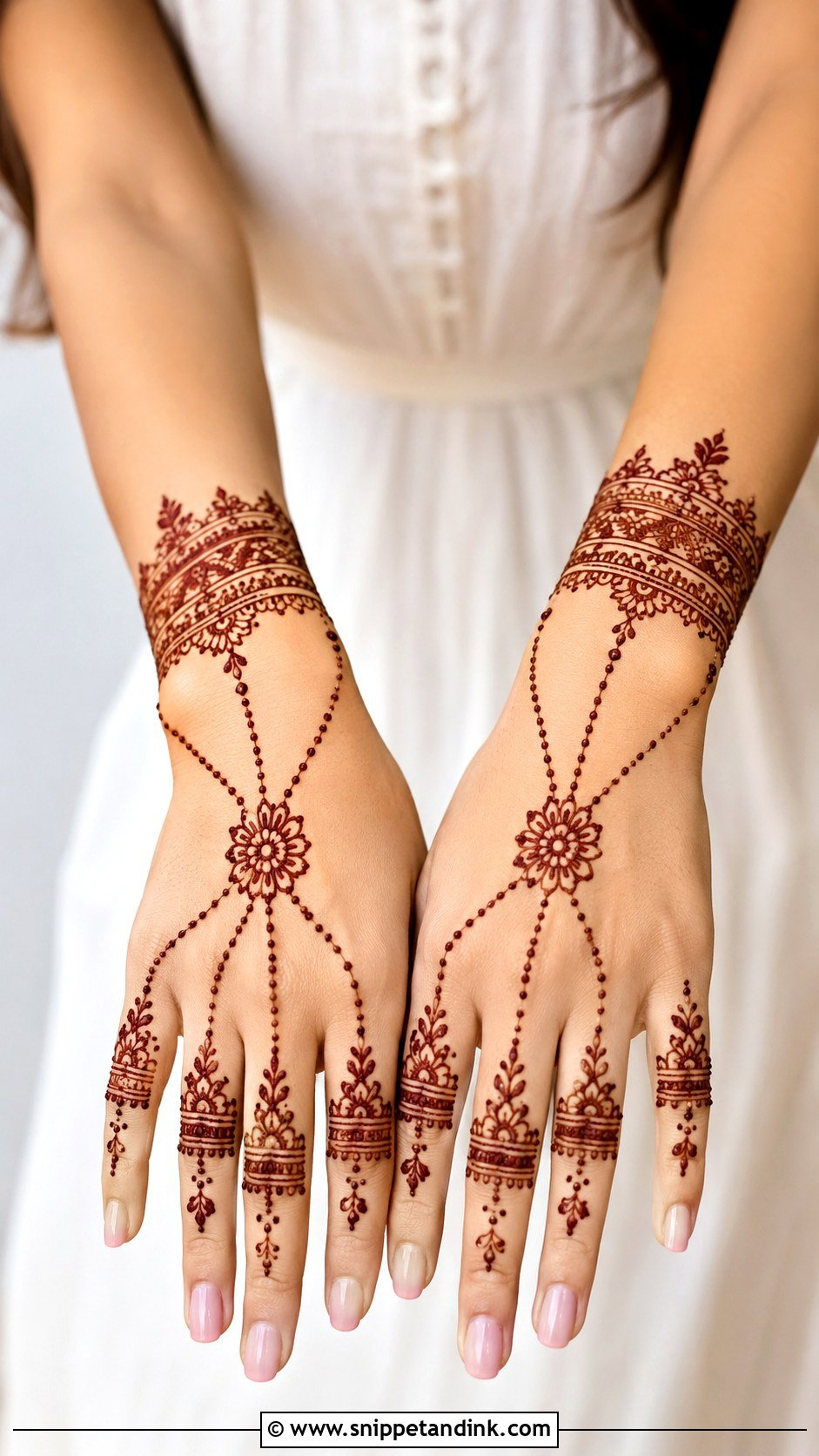
Bracelet designs draw jewelry in henna: wrist cuffs, chain lines, ring patterns, finger bands and a delicate back-hand centrepiece. It can cover the full hand and still feel light. The chains have to be symmetrical, so I mark their end points first and then draw between them. It sits naturally under real bangles and rings at engagements and festive events.
27. Full Hand Rose Mehndi Design
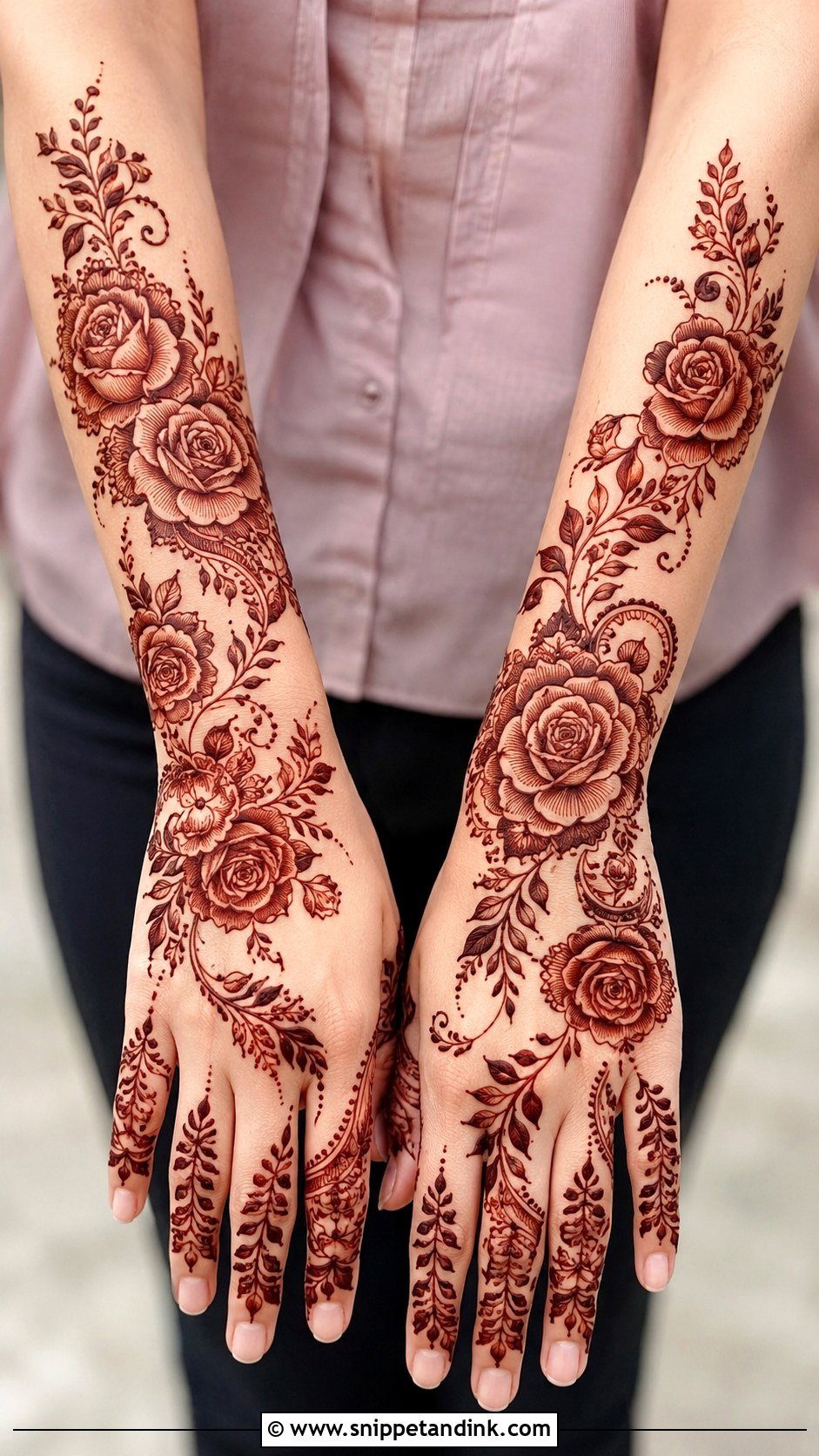
Roses depend on shading, which is why they suit Arabic, Gulf and Indo-Arabic layouts. I start with rose clusters on the palm, carry leafy trails across the hand and finish with vines toward the forearm; on the back, roses sit near the knuckles or wrist like floral jewelry. Use a bold outline with lighter inner lines, otherwise the petals merge into a single round blot once the colour deepens.
28. Full Hand Lotus Mehndi Design
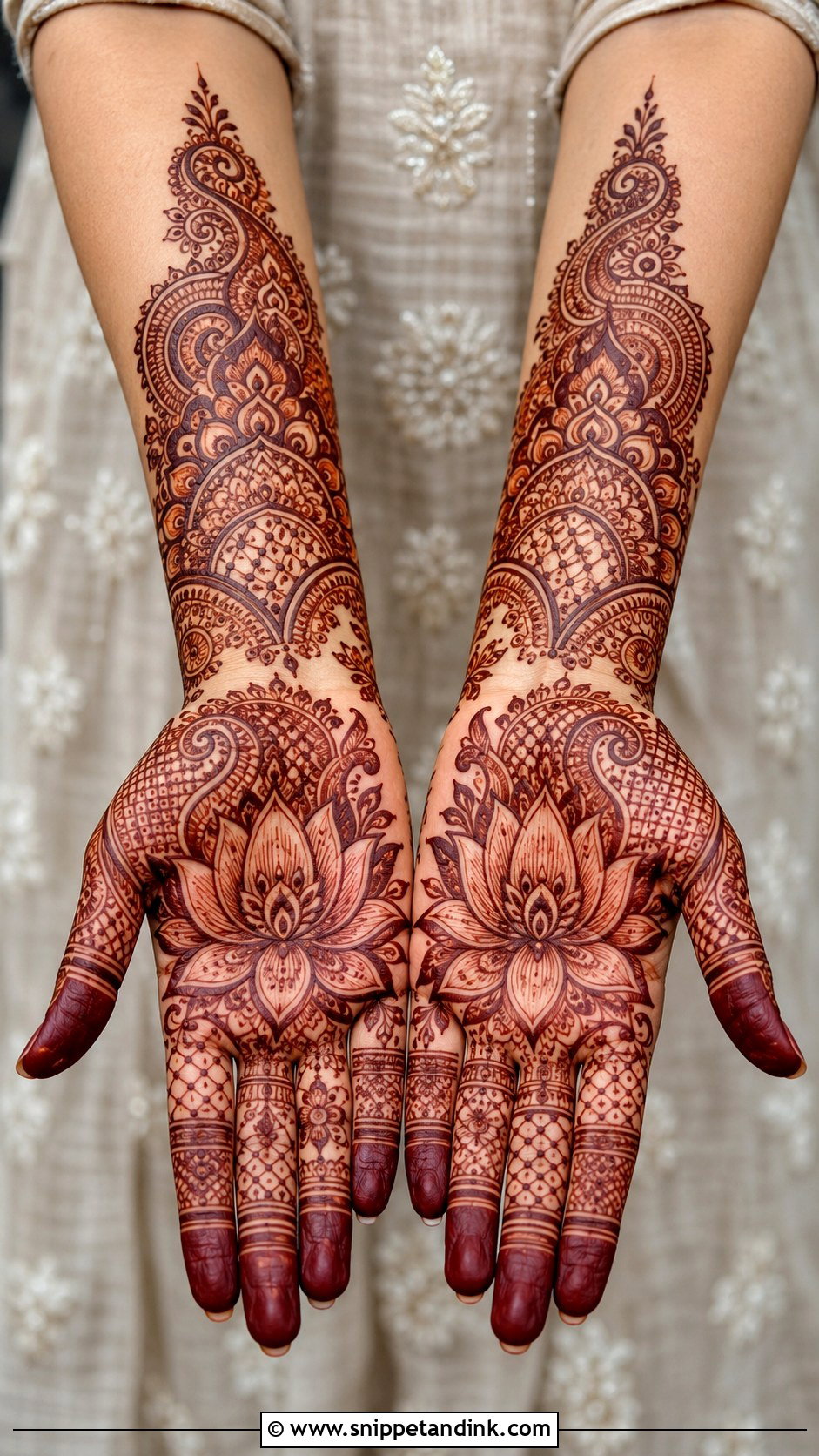
Lotus motifs scale beautifully from palm-sized blooms to tiny finger petals, which makes them ideal for full coverage. A large lotus on the palm, smaller petals on the fingers and layered floral bands near the wrist make a calm, traditional layout. Combine it with paisleys, mandalas, peacocks or jaali for richness. For a modern version, I leave a halo of bare skin around the main lotus so the petals stay crisp.
29. Full Hand Forearm Mehndi Design
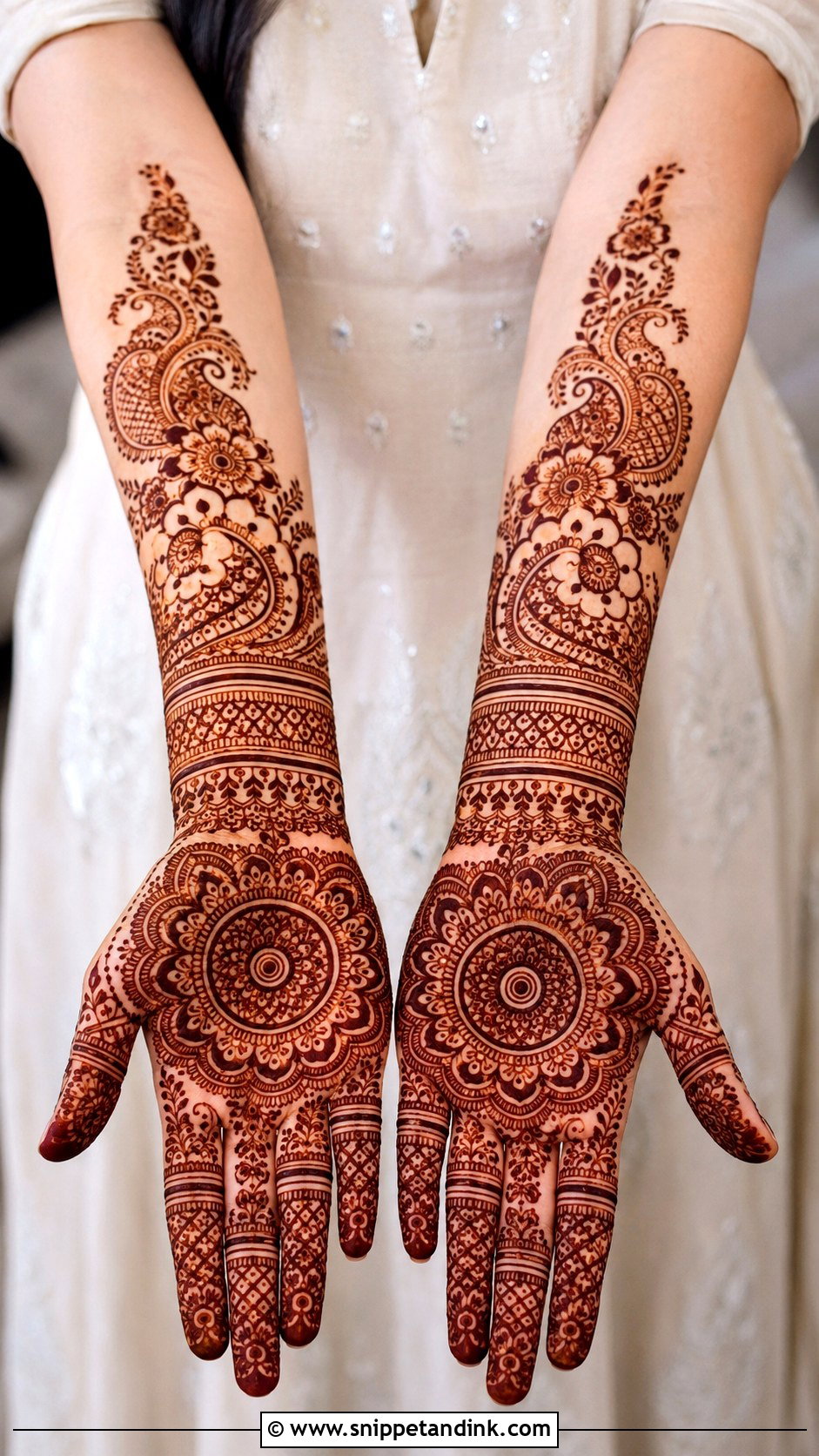
Forearm designs extend past the wrist toward the elbow, and they suit brides, sisters of the bride and anyone wearing short or three-quarter sleeves. The hard part is the wrist transition: hand and arm can look like two separate designs if nothing links them. I use a strong cuff, then vines or paisley chains to carry the pattern upward. Indian, Arabic, Moroccan and Indo-Arabic all work here. Add a good hour or more to the sitting for each forearm.
30. Full Hand Shaded Mehndi Design
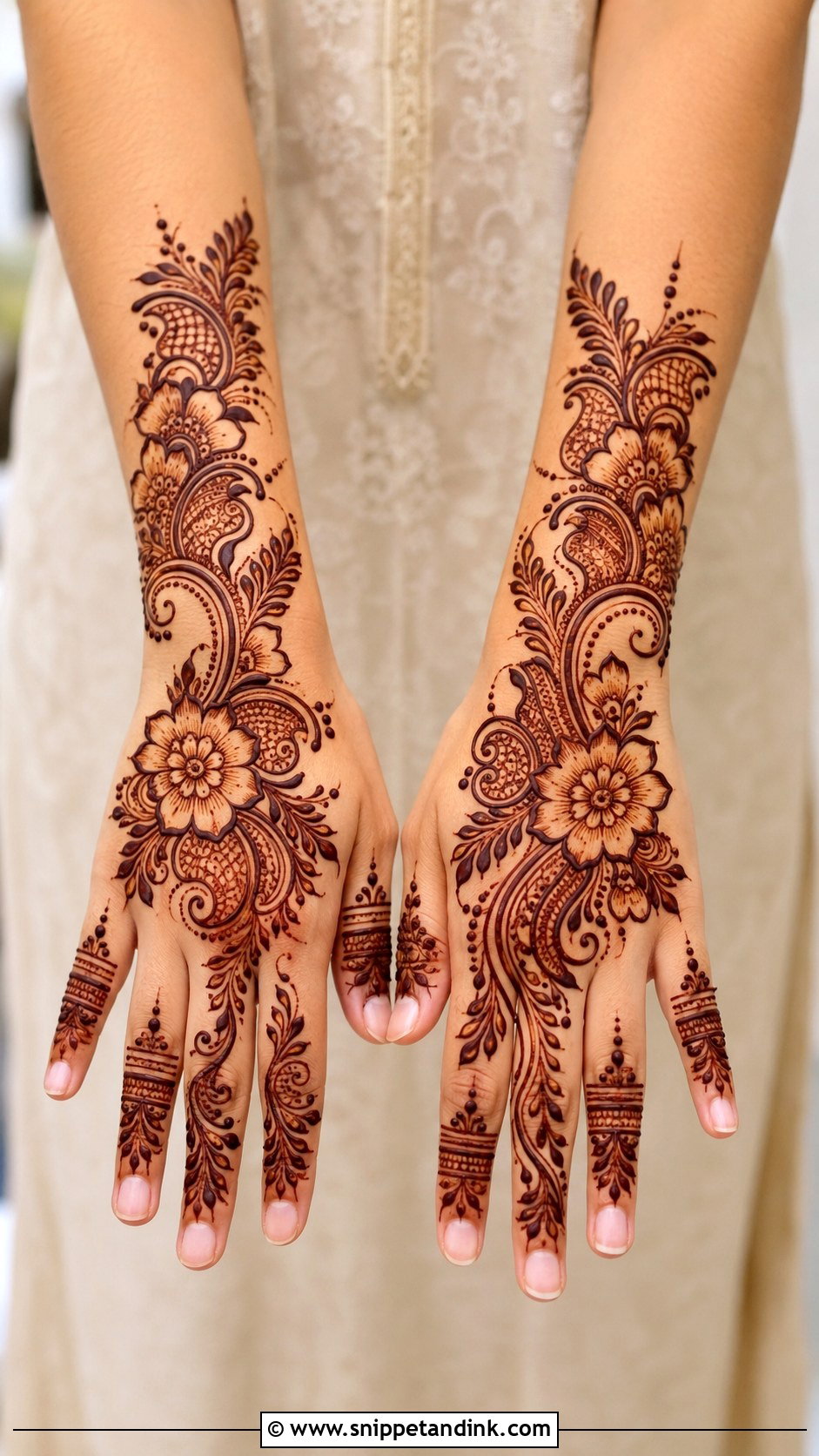
Shading fills flowers, leaves, paisleys and mandalas with thinner paste so the stain develops in two tones. It gives depth without packing every space, which is why Arabic and Indo-Arabic artists use it so much. A shaded full hand can cover palms, fingers, wrists and forearms and still feel airy. The shading must be even, though; a patchy stroke shows as a blotch rather than a gradient once the colour settles.
When Day Two Still Looks Orange
Natural henna always comes off orange. It deepens through red-brown toward maroon over the next day or two as it oxidises, so don’t judge your colour the moment the paste is scraped. If it is still pale by the second evening, the cause is usually one of a few things, and most of them happen before or just after the sitting.
- The paste came off too soon. For a full bridal hand I want it on for at least six to eight hours, and overnight is better.
- Water touched it early. Washing within the first several hours stops the colour developing, so scrape off dry and keep hands dry until the next morning.
- The hands were cold. Warmth helps the dye move into the skin; a warm room and warm hands make a visible difference.
- Something sat on the skin. Lotion, oil or sunscreen applied that morning acts as a barrier.
- The cone was old. Natural henna paste only stays strong for a short time at room temperature, which is why good artists mix fresh or keep cones frozen.
There is no safe way to force a stain darker after the fact. Be cautious of anything sold as an instant dark cone or a black stain that appears within an hour; that colour usually comes from added chemicals, not henna, and it can burn skin. A slightly lighter natural stain is always the better trade.
A Full Hand Is Judged on Day Two, Not Day One
Match the design to the occasion first and the rest follows. Brides tend to suit dense Indian, Rajasthani or forearm work, while guests and bridesmaids look right in Arabic, Indo-Arabic, floral or bracelet layouts. For festivals, mandalas, lotus, paisley and Gulf-inspired designs are dependable, and minimal, modern or shaded patterns give a cleaner finish. What I look for in every case is balance and readability: a full hand that still shows its pattern on day two, not just on the day it’s drawn.
You'll Like These Ideas:




Leave a Reply