
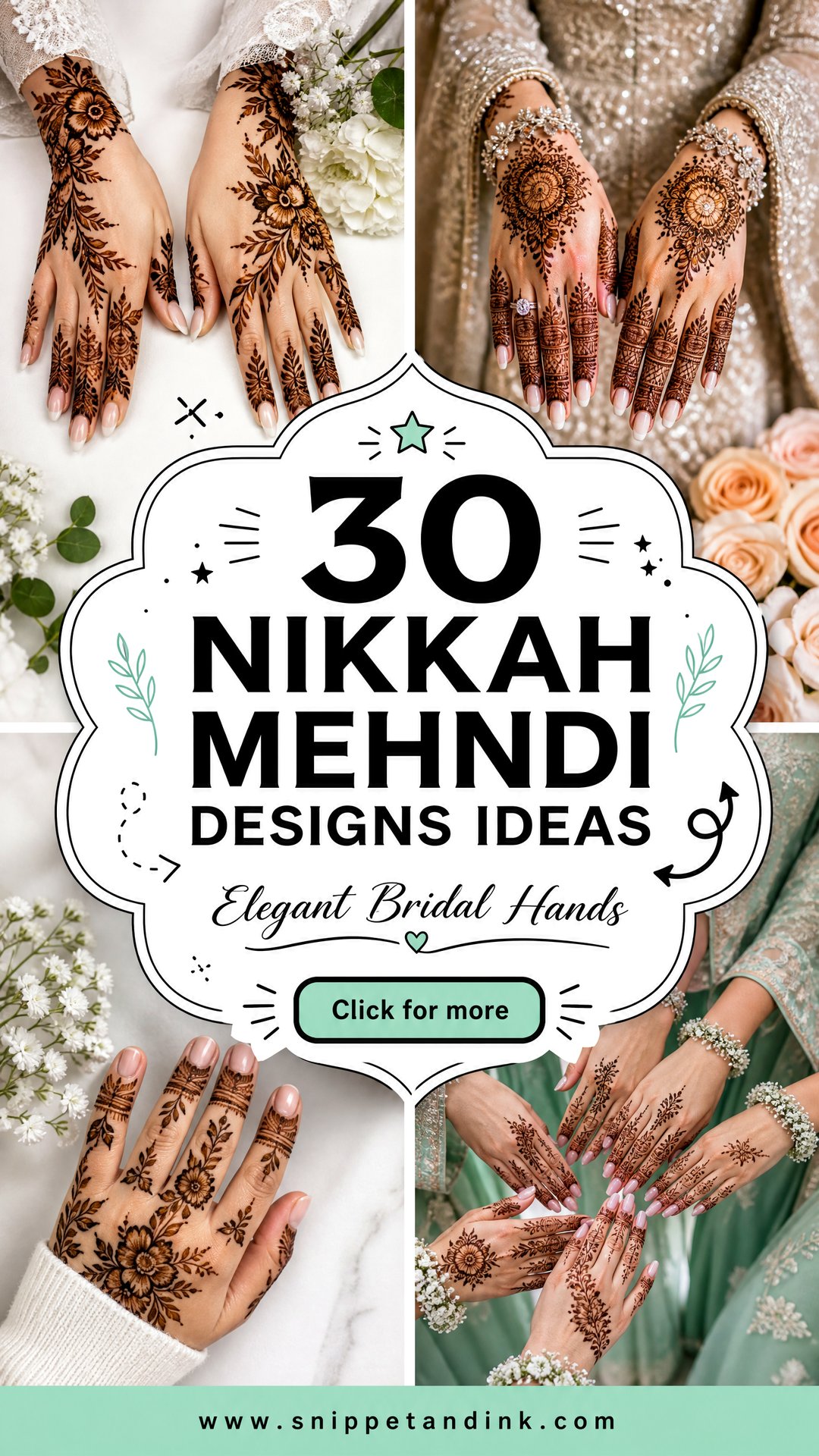
Nikkah mehndi designs ask for a different touch from the heavy henna of a baraat or a full mehndi night. The ceremony is often quieter, the photos are closer, and the bride spends much of it seated with her hands in her lap or raised in dua. Outfits range from pastel shararas and ghararas to modest gowns and abayas, so the henna has to sit well with all of them. When a Nikkah bride sits down with me, I ask three things: what she’s wearing, whether her hands will be covered by sleeves, and how many days separate the Nikkah from any other event. The designs below run from a single floral trail to full traditional coverage, with notes on how each behaves on the day.
Where the Henna Falls Between Mehndi Night and the Nikkah
The schedule shapes the design more than most brides expect. A henna stain is at its deepest roughly one to two days after the paste comes off, then it slowly fades over the following week or two. So the question I ask first is which event the stain needs to peak for.
- Nikkah on its own day: apply one or two evenings before, and keep the paste on overnight.
- Nikkah the day after the mehndi night: the classic arrangement, and the stain will be at its darkest for the ceremony.
- Nikkah several days after the mehndi: the colour will already be softening. Either keep the mehndi-night design lighter and book a separate application for the Nikkah, or choose a design that still looks right faded.
- Nikkah and rukhsati on the same day: one application has to serve both, so plan coverage for the bigger of the two outfits.
Whatever the schedule, never book the application for the morning of the Nikkah. Fresh henna is pale orange, and you’ll be sitting in front of guests with paste on your hands or a stain that hasn’t developed yet.
1. Simple Nikkah Mehndi Design
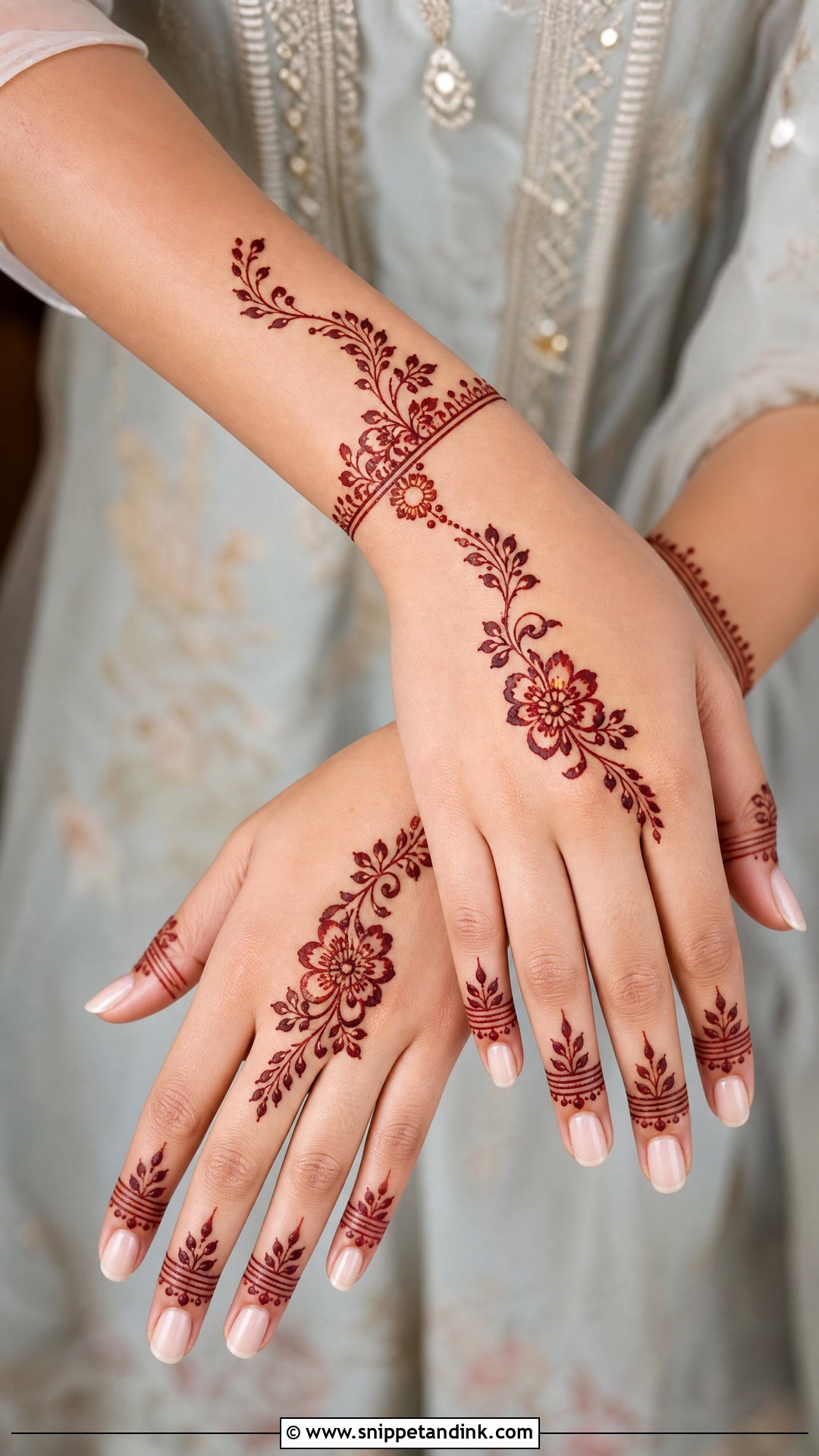
A simple design here usually means a floral trail on the back hand, light fingers and a slim wrist border, with a small mandala or leafy vine on the palm so the inside doesn’t look forgotten. It takes well under an hour for both hands, which matters when the Nikkah falls on a busy day. Ivory, mint, champagne and soft gold outfits suit it because the bare skin lets embroidery and jewelry show. Thin, steady lines are the whole finish, so I cut the cone tip smaller than usual for this one.
2. Arabic Nikkah Mehndi Design
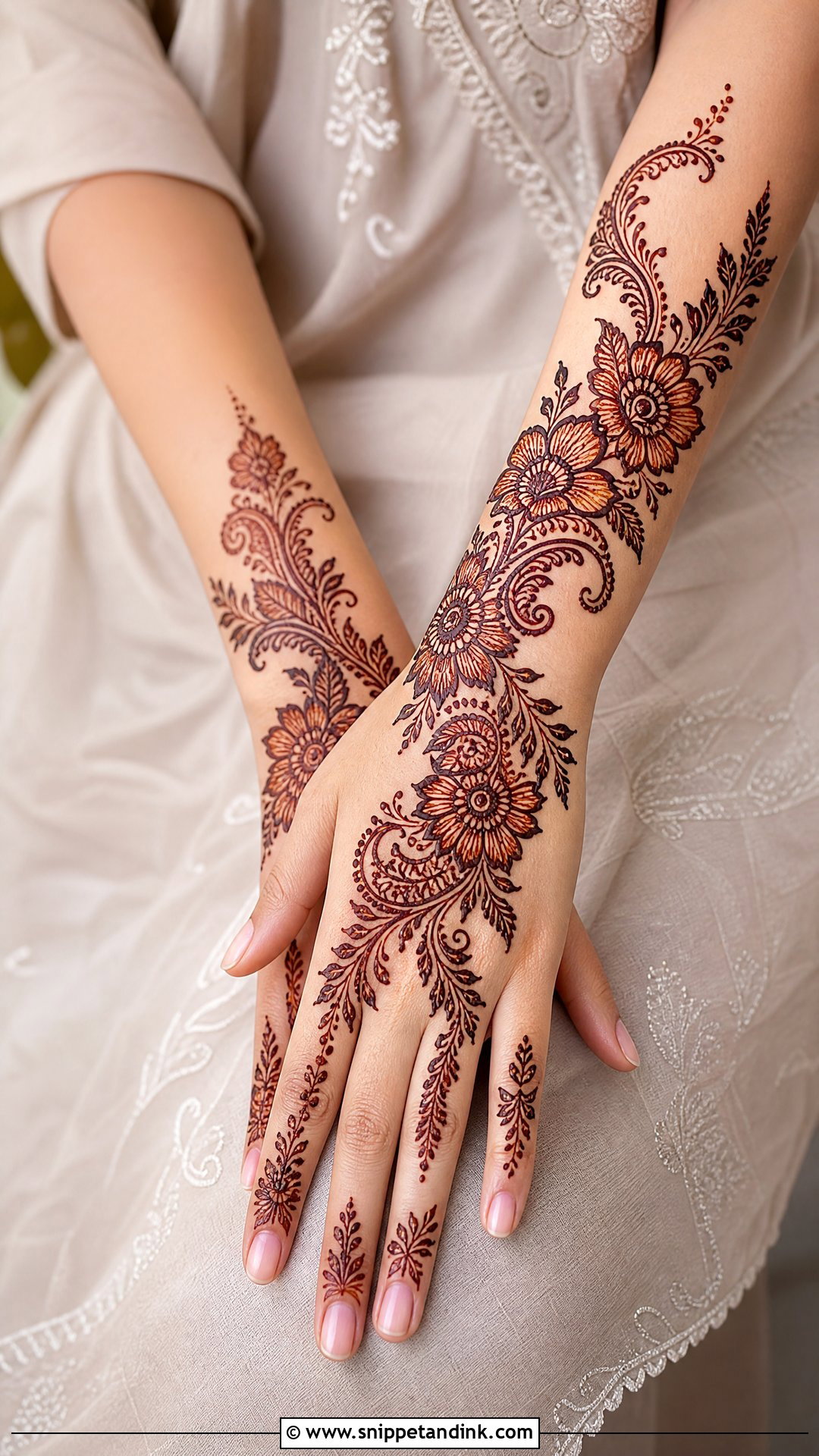
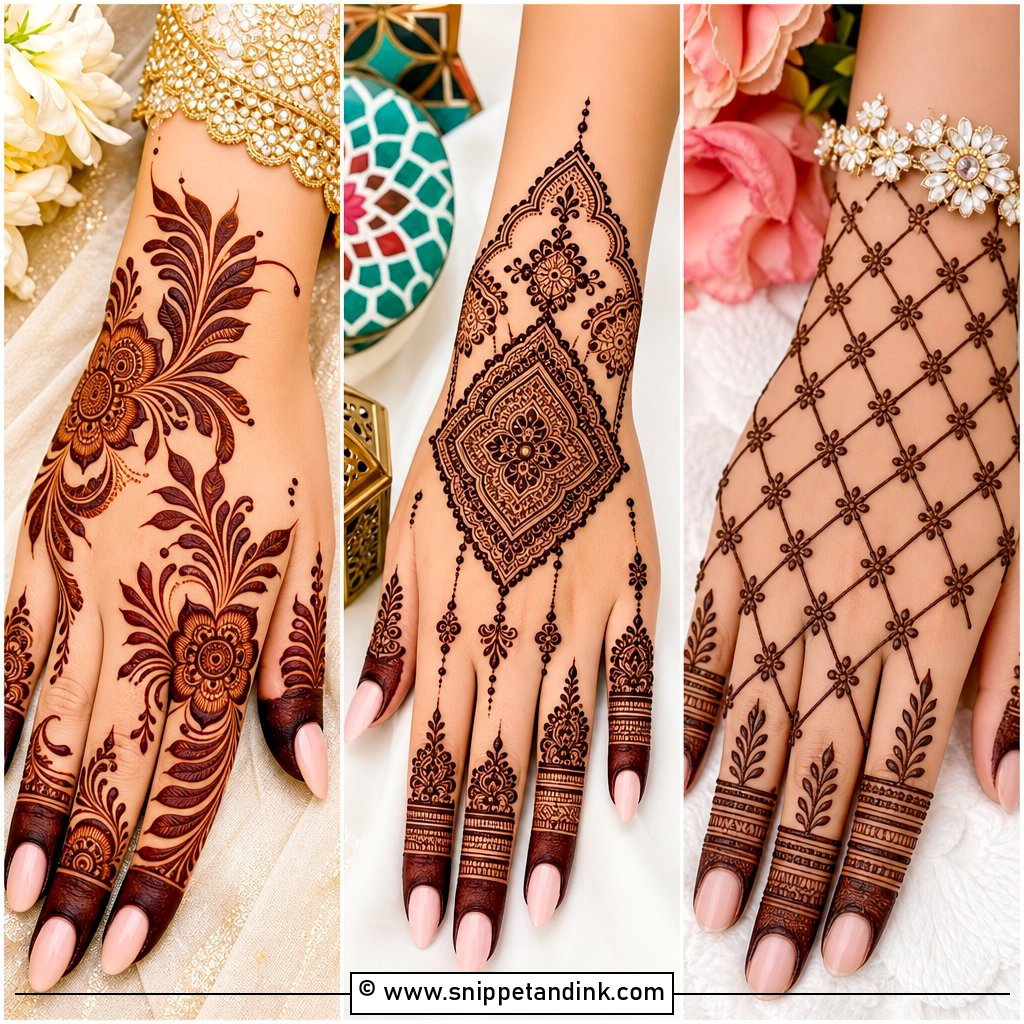
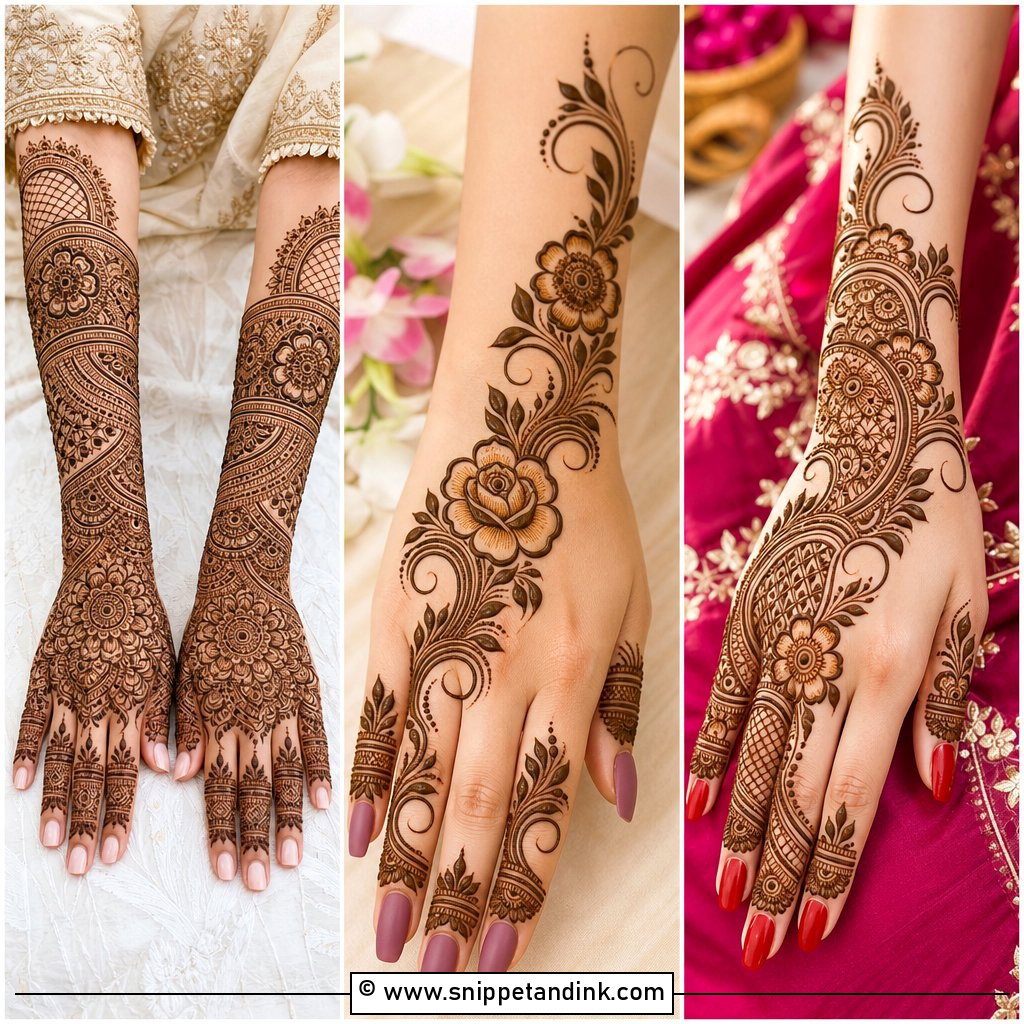
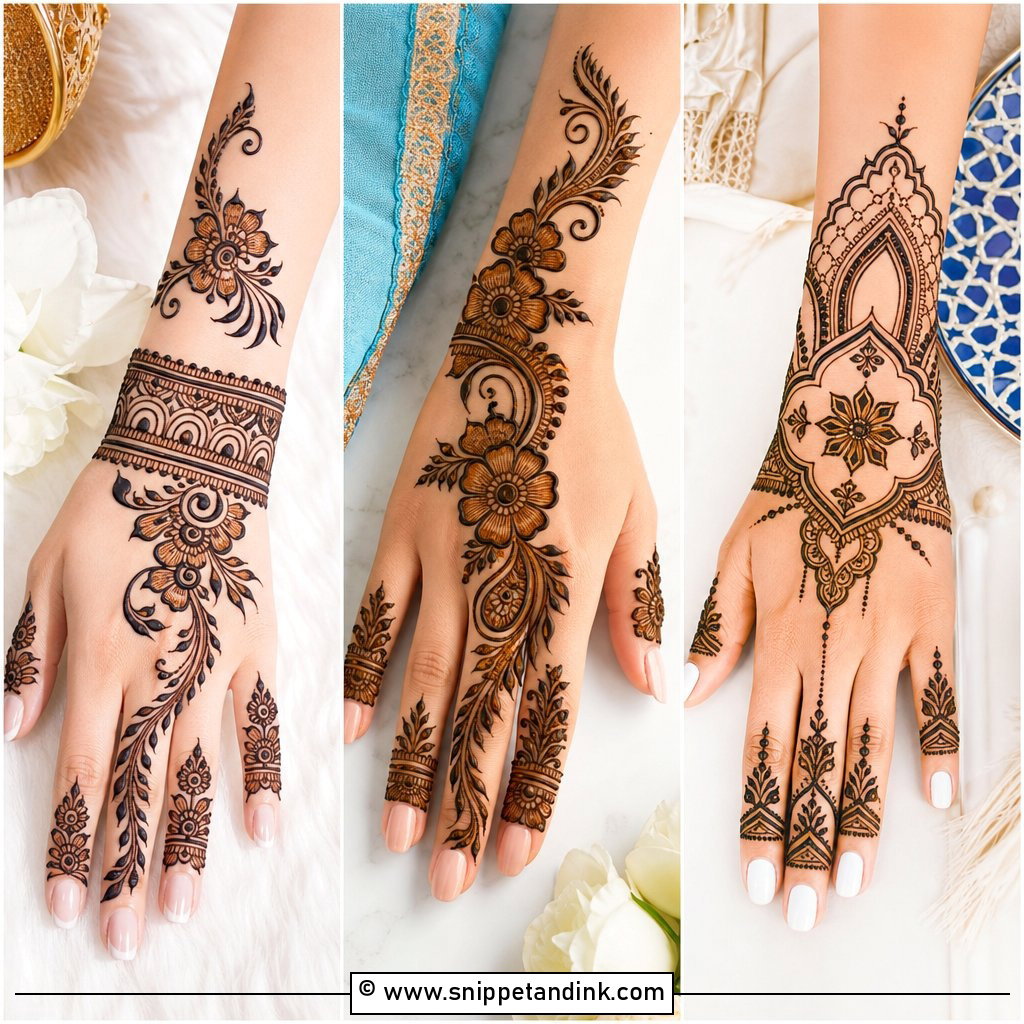
Arabic layouts move diagonally from wrist to fingers in bold flowers, leafy vines and shaded petals, with lots of air between them. For a Nikkah bride who doesn’t want a traditional full hand, it gives a clearly bridal look in a fraction of the time. The open spacing also lets the natural reddish-brown stain read clearly in close-ups. I keep the wrist cuff narrow on Arabic Nikkah hands, since a wide cuff fights with the diagonal and stops the eye at the wrist.
3. Bridal Nikkah Mehndi Design
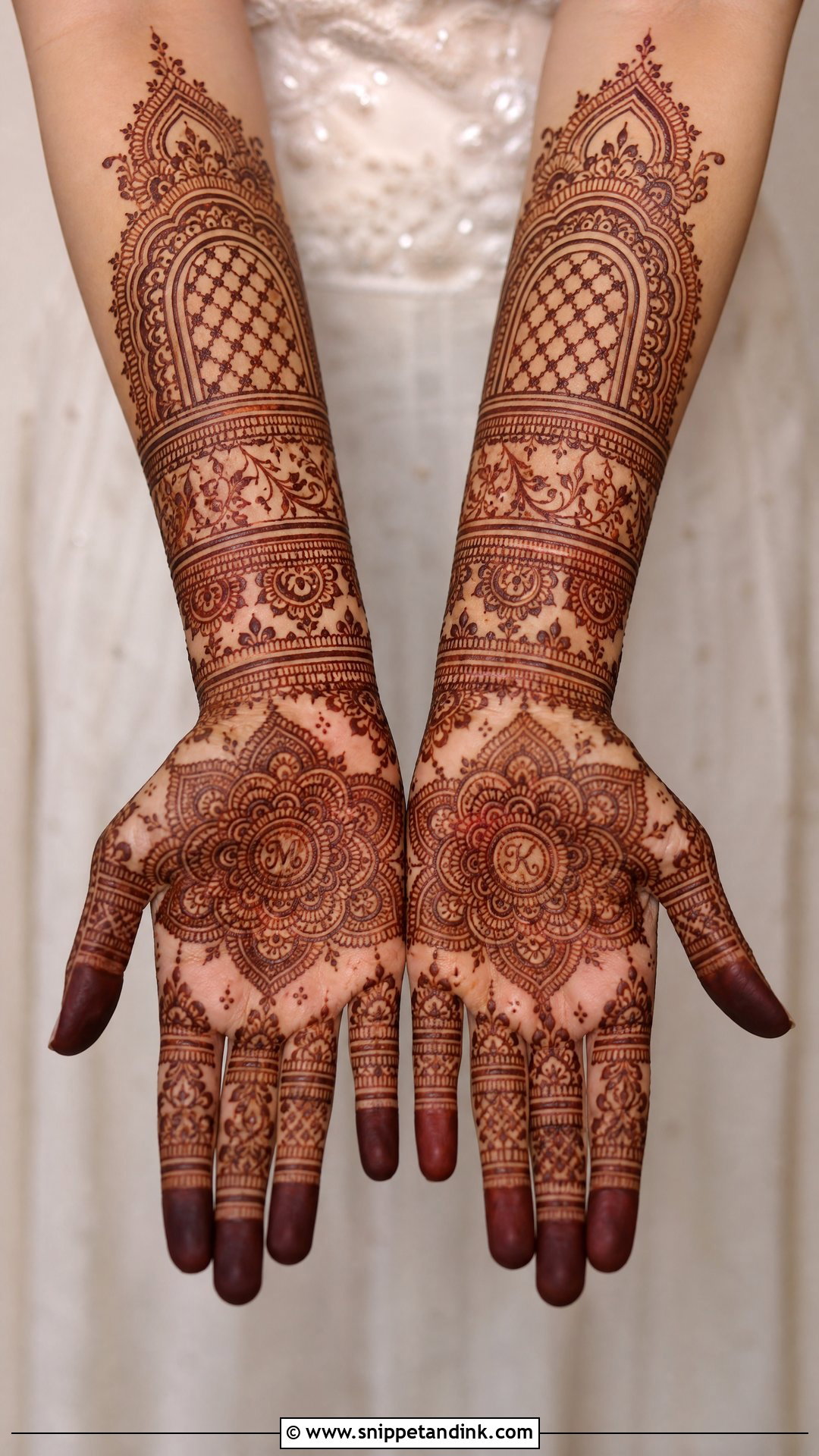
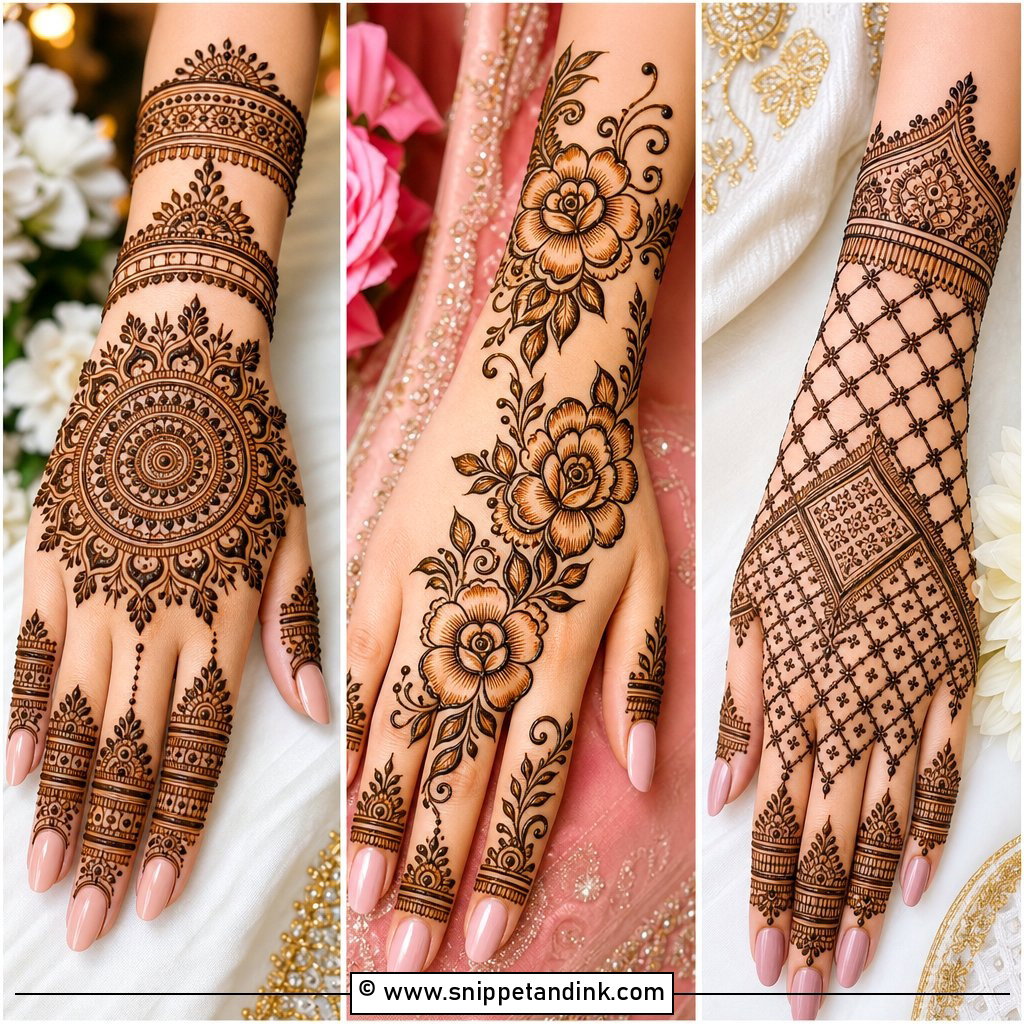
Full bridal coverage on the palm, back, fingers and wrist can still look gentle if the spacing is controlled. Florals, paisleys, mandalas and fine jaali are the usual elements, with lighter shading than a baraat hand. This is where couples like to hide initials, the date or a small ring motif. I aim for both hands to mirror closely in structure but differ in small fillers, so they match in a photo of both hands together and still look hand-drawn rather than stamped. Plan on a long session and an overnight wear of the paste.
4. Back Hand Nikkah Mehndi Design
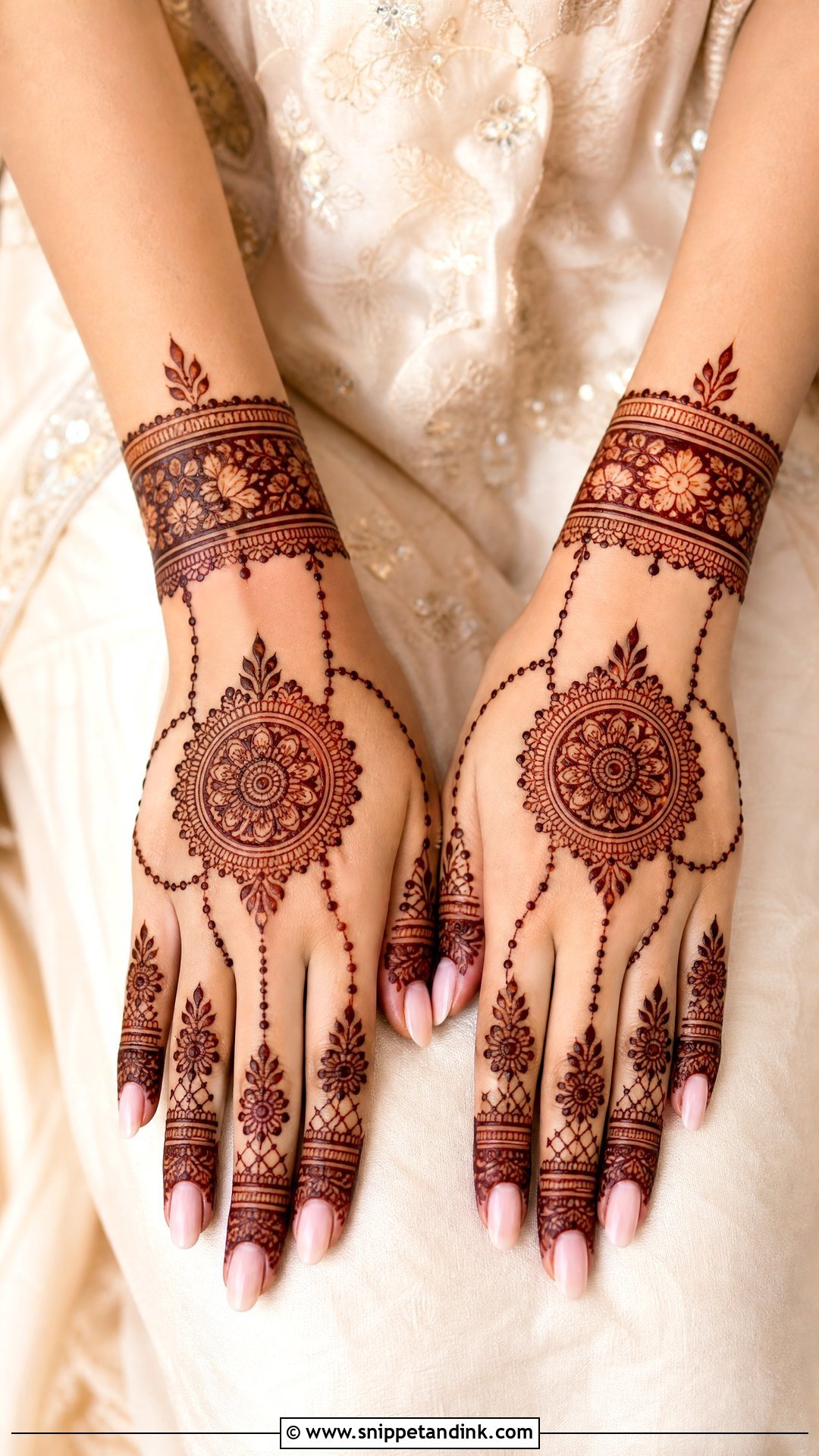
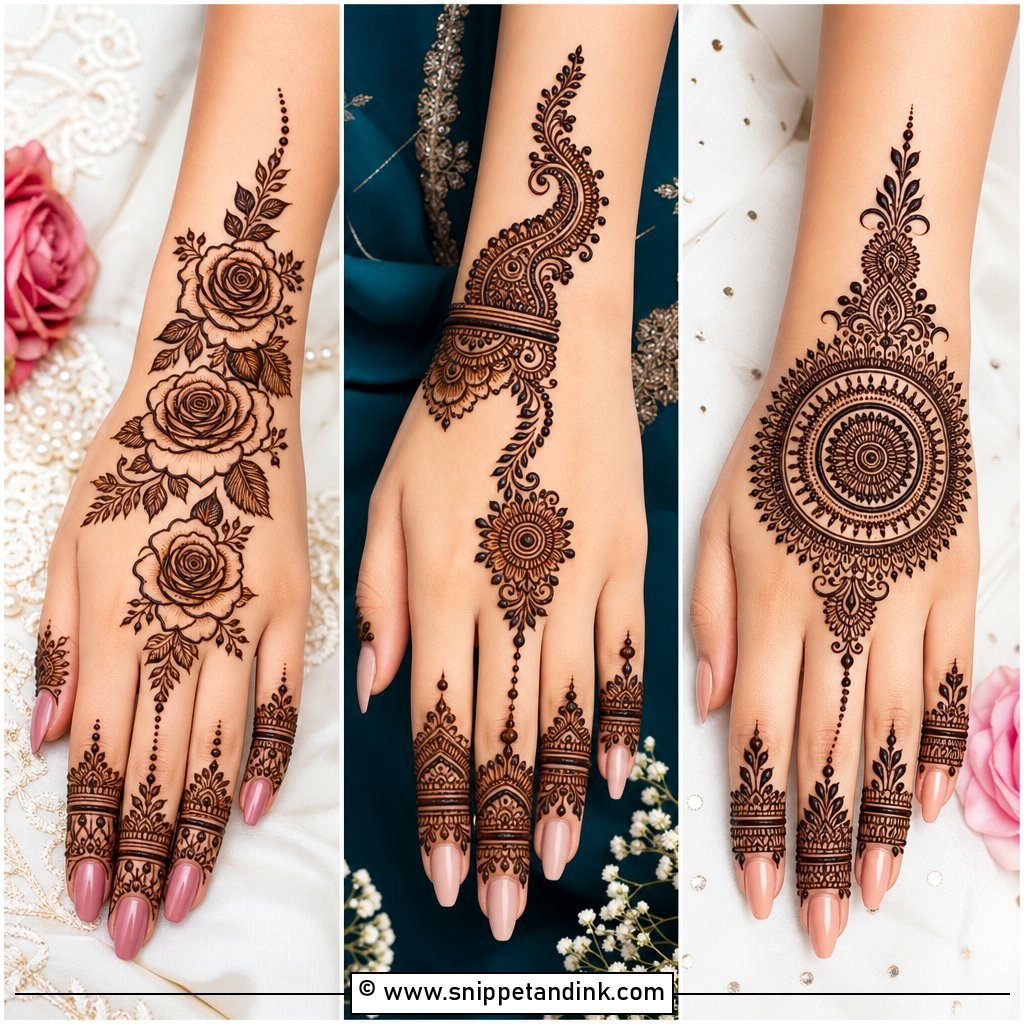
Ring photos, dua shots and portraits all feature the back of the hand, so I treat it as the most visible canvas of the Nikkah. A central round or oval mandala, a floral bracelet, dotted chains and decorated fingers give a jewelry effect without density. Statement rings and bangles sit well against it. The back of the hand stains a little lighter than the palm, so for a Nikkah photographed up close, I draw outlines a touch bolder here and leave delicate leaves around, not across, the knuckle creases.
5. Front Hand Nikkah Mehndi Design
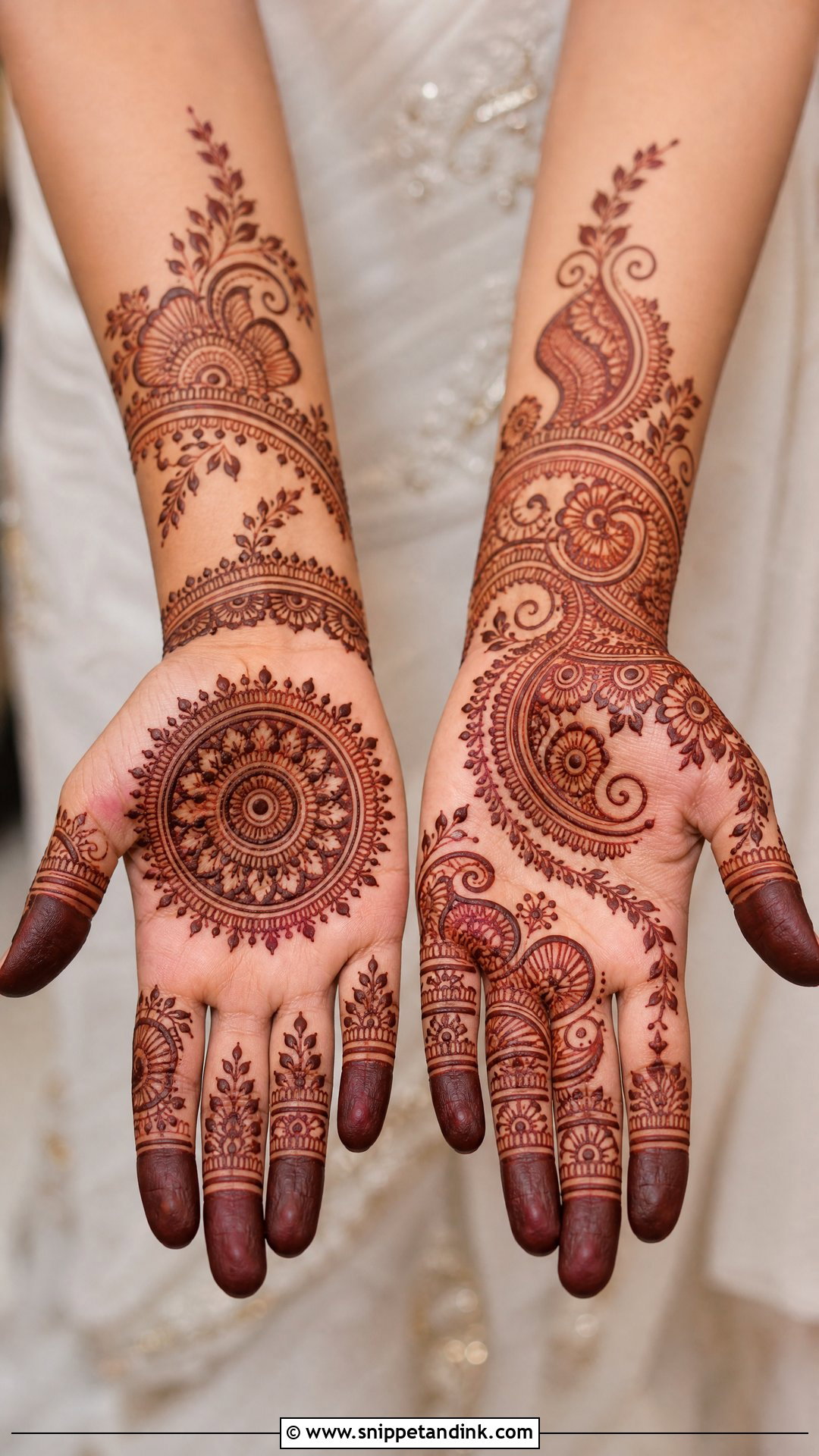
Raised palms during dua and the moment you show your henna to the family are when the palm gets seen. A palm mandala flowing into paisleys, leafy curves and finger bands is the classic structure. Filled fingertips are the traditional bridal touch; outlined tips feel lighter. The palm absorbs henna more readily than anywhere else, so I leave a little more space between elements here than I would on the back, otherwise it all darkens into one shape by the second day.
6. Minimal Nikkah Mehndi Design
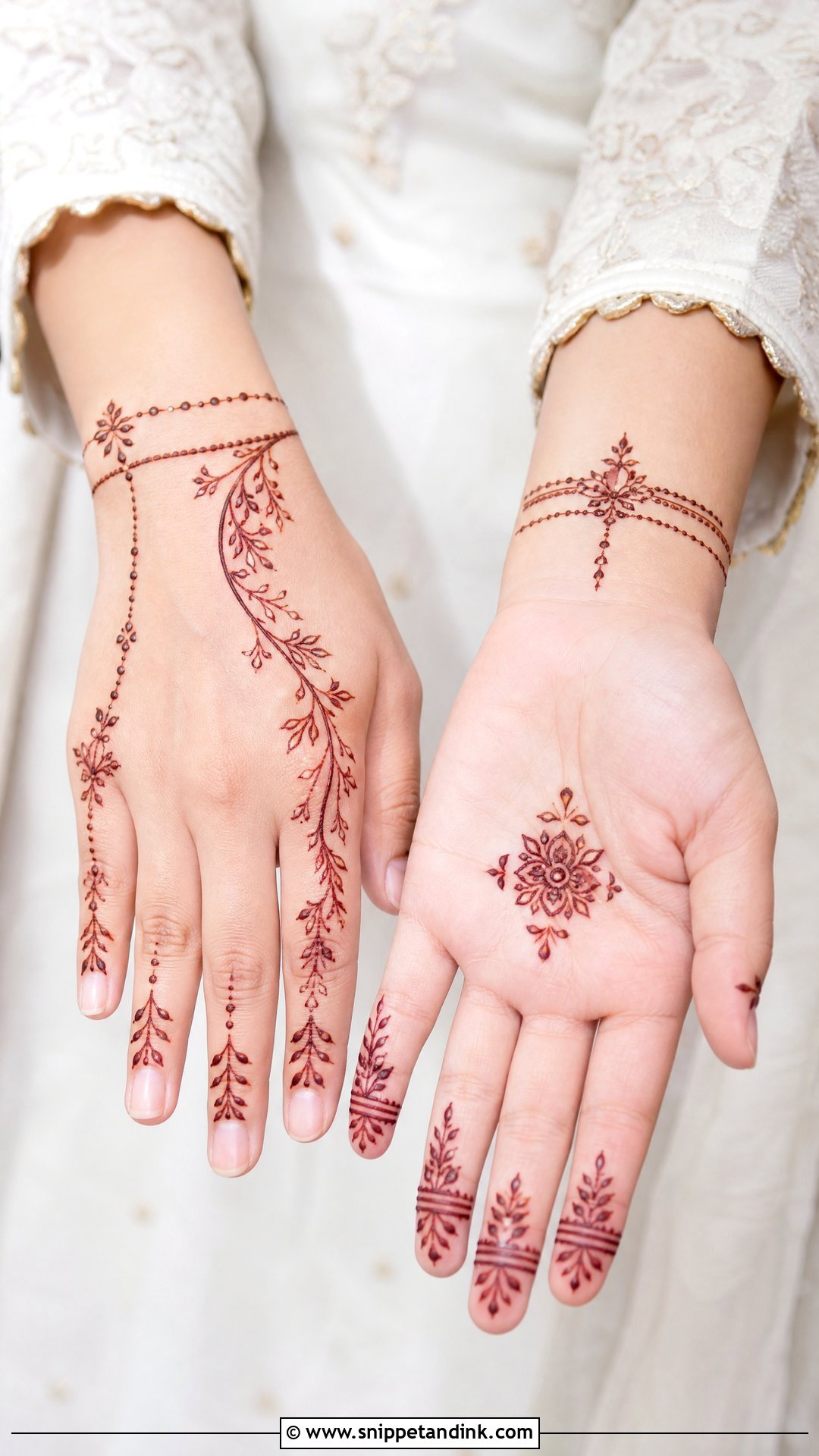
Plenty of brides want very little henna, and a minimal design can still read as bridal. A slim vine across the back hand, small florals on the fingers and a thin wrist band are enough, with a small round motif or a crescent-shaped floral on the palm. It suits intimate home Nikkahs, civil ceremonies and sleek outfits. Minimal work exposes every wobble, so I use fine-line paste and keep fillers out entirely rather than adding a few thick ones.
7. Full Hand Nikkah Mehndi Design
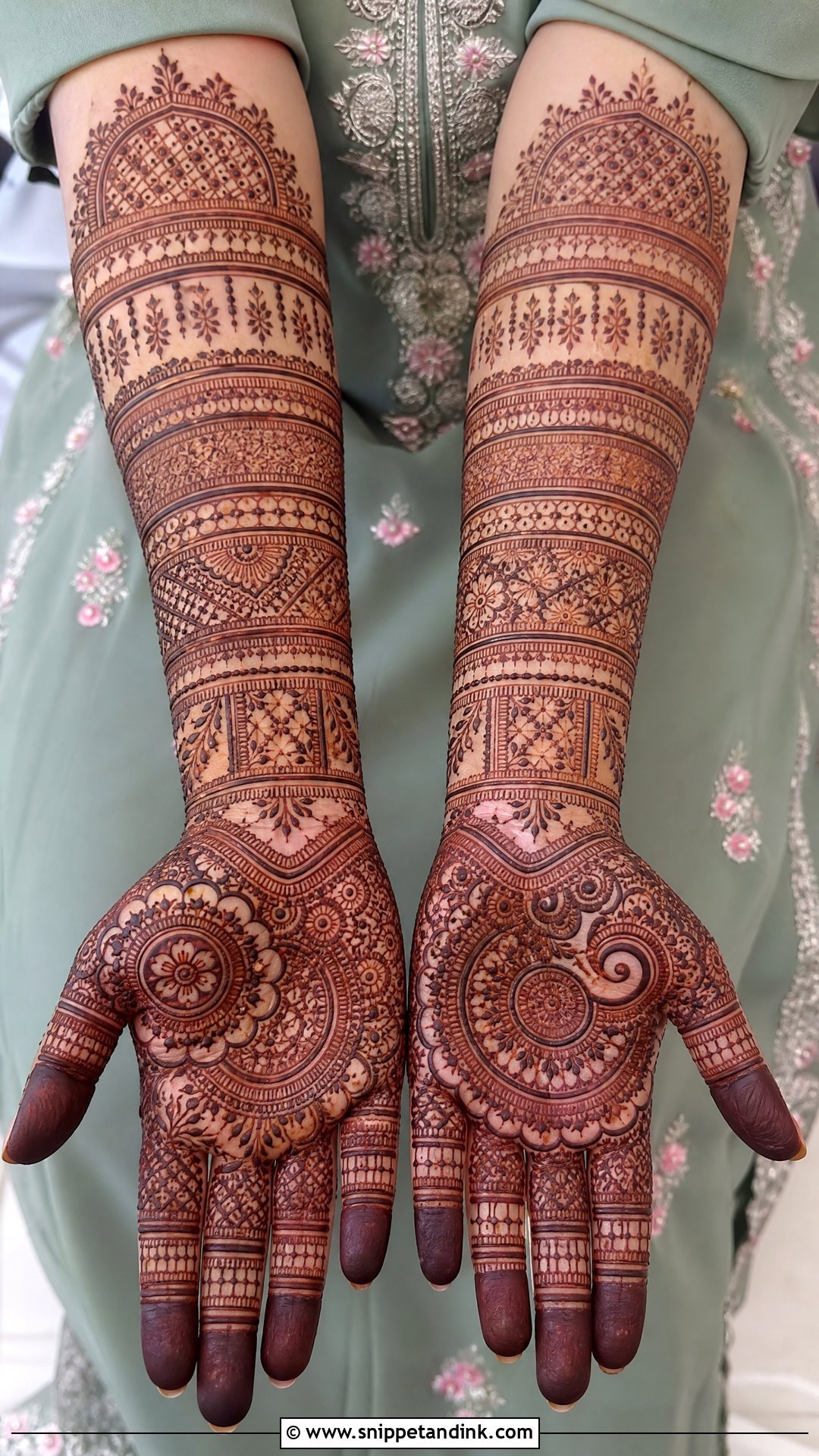
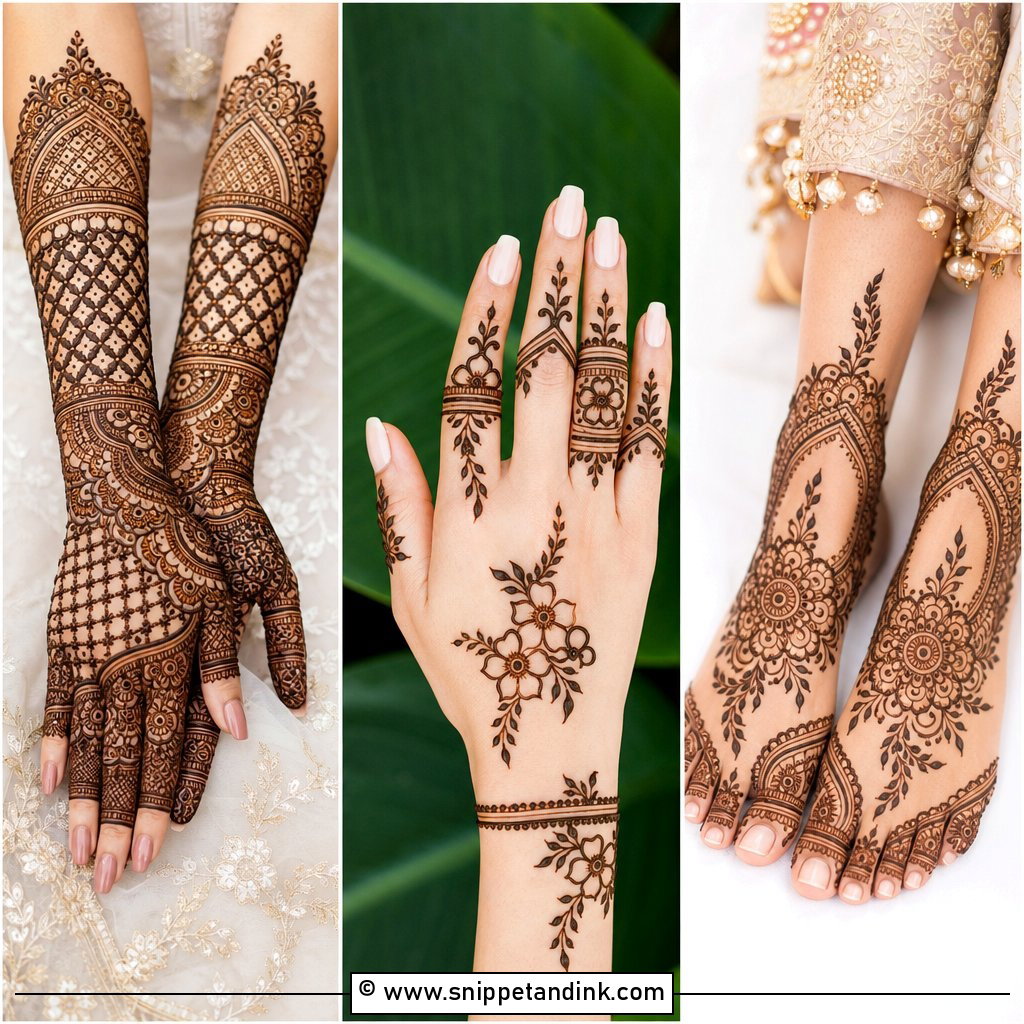
Full hand Nikkah henna runs from fingertip to forearm in mandalas, paisleys, flowers, jaali panels and leafy borders. What keeps it suitable for a Nikkah rather than a baraat is sectioning: clear borders between zones, so it reads as several motifs instead of one dark sleeve. A small personal detail can sit near the wrist or inside the palm. If you’ll wear a stack of bangles, tell your artist which wrist and how high they sit. I leave that band of the forearm simpler, since the bangles will cover it all evening.
8. Modern Nikkah Mehndi Design
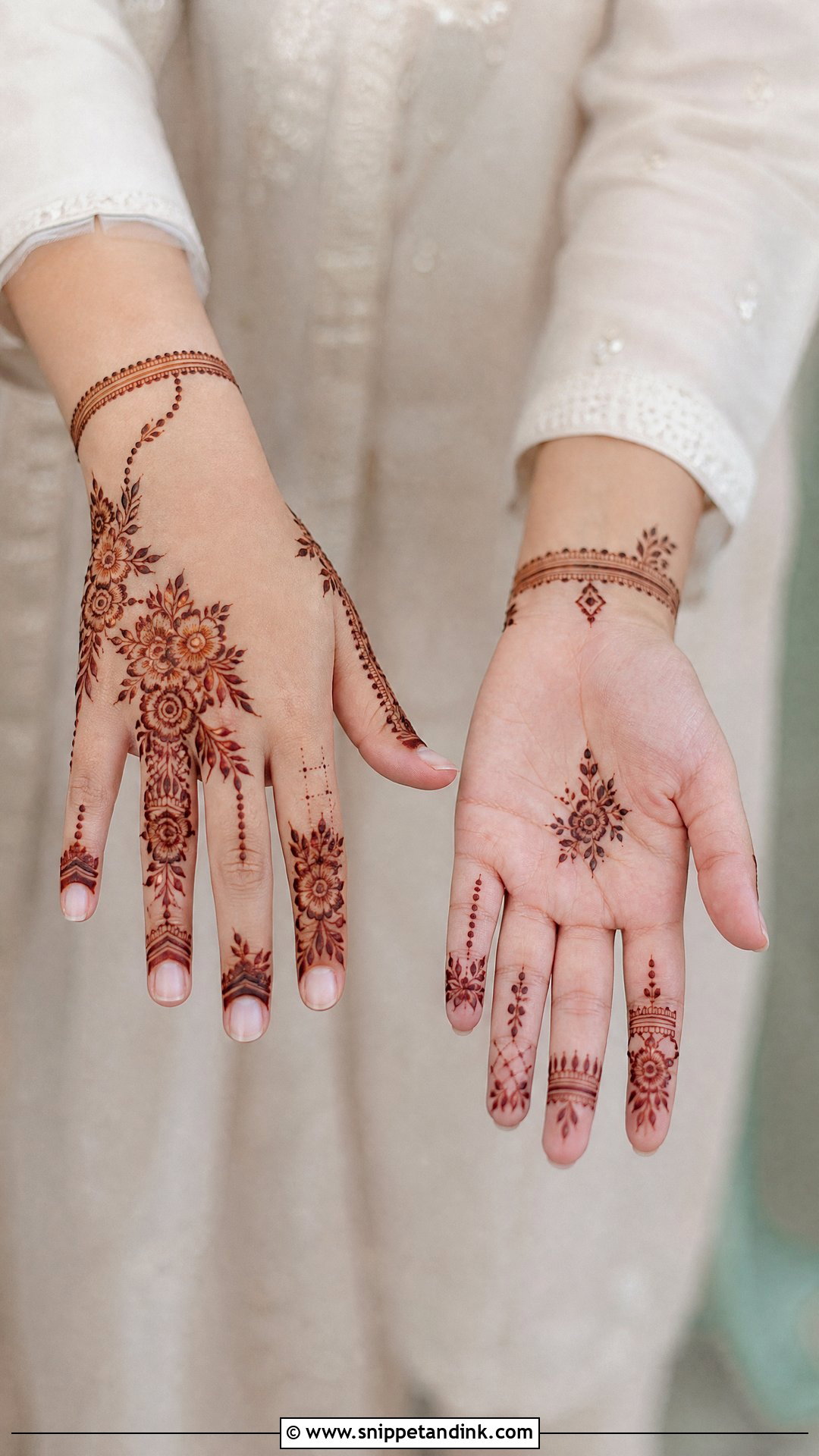
Modern Nikkah henna uses structure and space: asymmetric florals, fine bracelet lines, open fingers, a touch of geometry. It sits naturally with contemporary dresses, pastels and minimal jewelry. I place the main motif on the back of the hand and echo it in finger accents and a cuff, then keep the palm to a small mandala or curve. The risk with modern layouts is looking unfinished on the palm side, which family will see first, so that small palm motif isn’t optional.
9. Pakistani Nikkah Mehndi Design
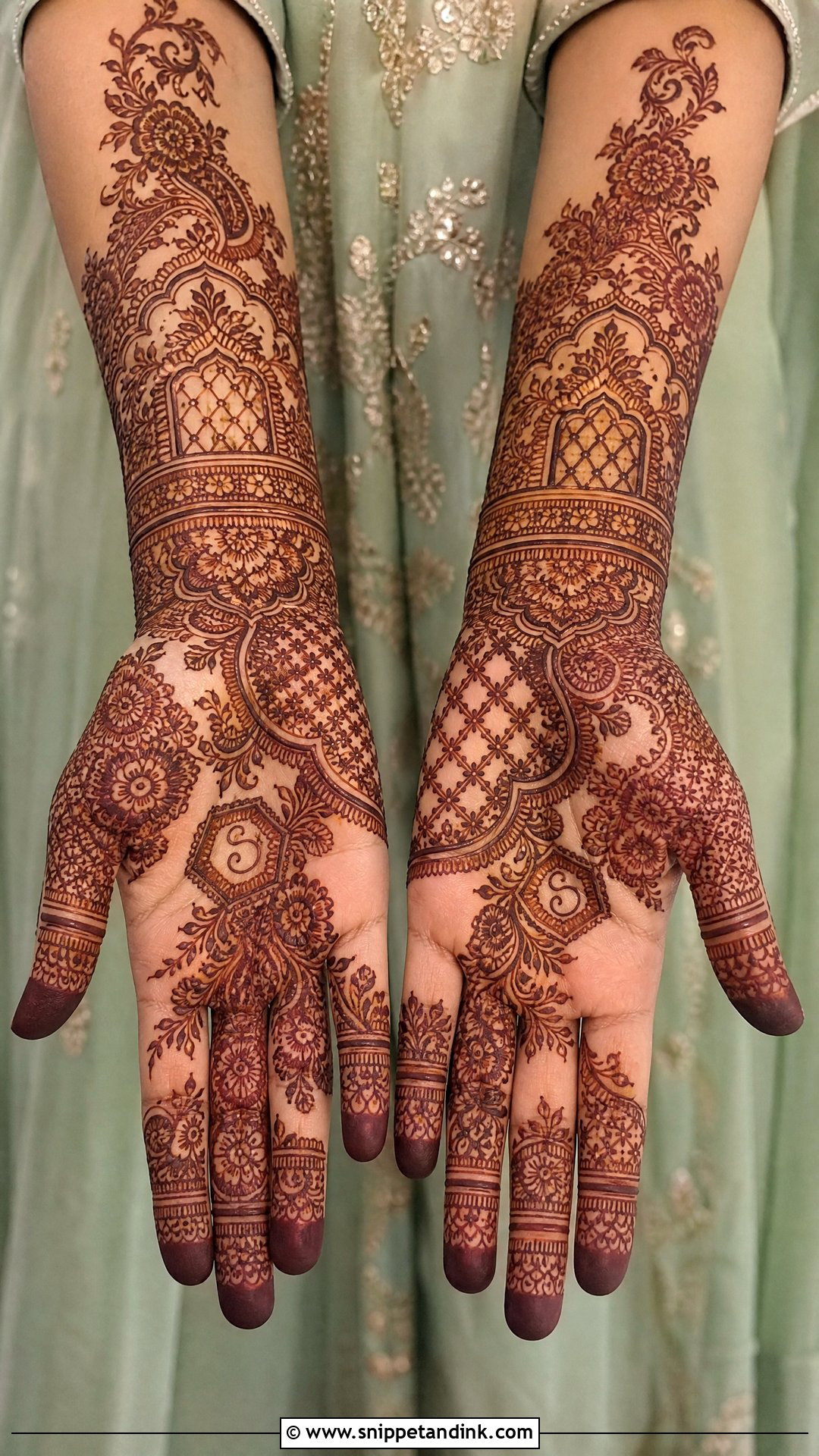
Pakistani Nikkah henna tends to combine fine florals, paisley vines, netted jaali, wrist cuffs and careful fingertips, with the palms more detailed than the back. It pairs with ghararas, shararas, pishwas dresses and heavily embroidered dupattas. The groom’s initials or the date often go somewhere inside the palm for him to find. For daytime Nikkahs I keep it a little lighter than an evening design, because bright daylight shows crowded areas as dark patches. A deep maroon stain against soft fabric is the look most brides are after.
10. Indian Nikkah Mehndi Design
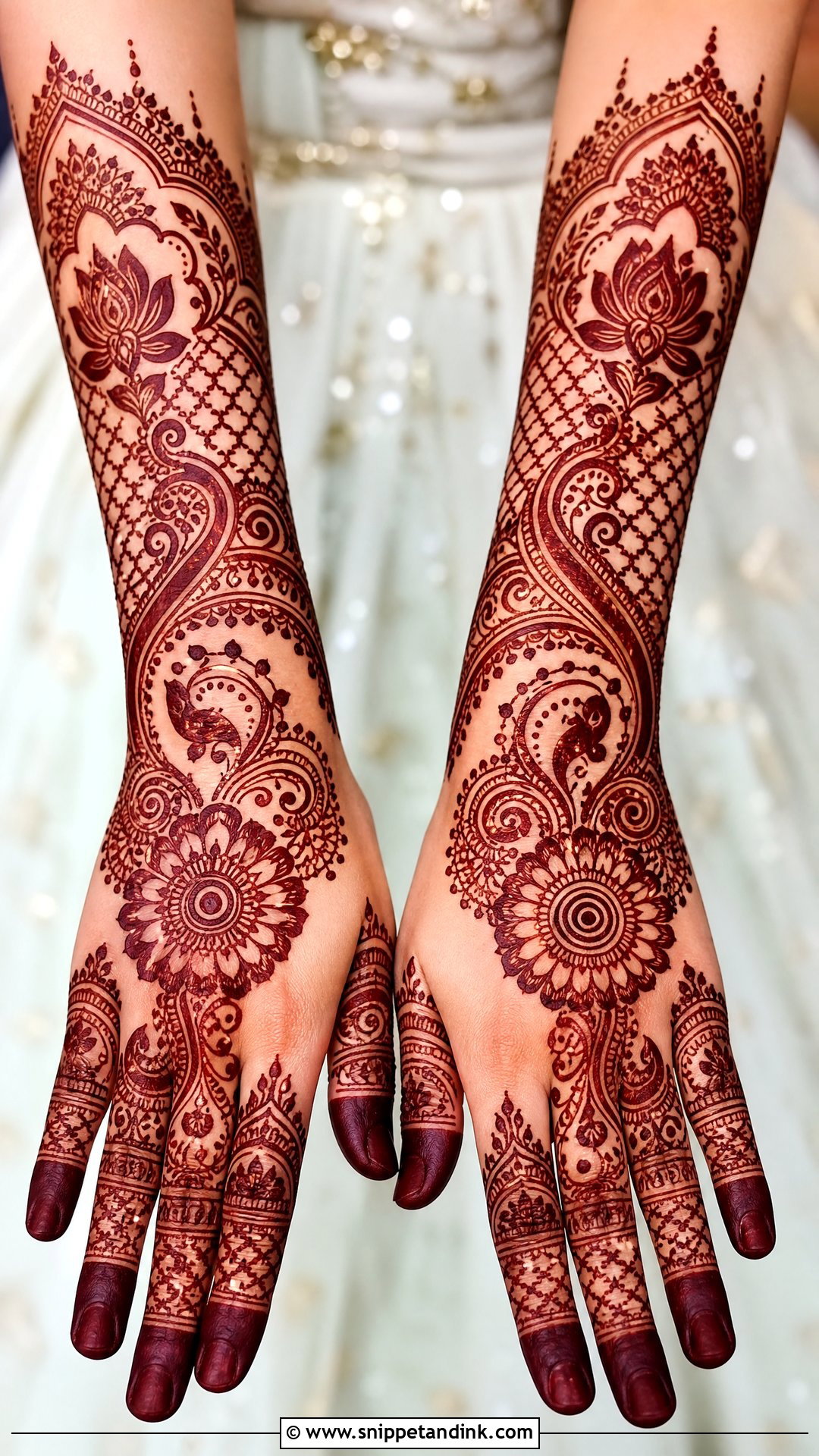
Indian-style Nikkah henna brings paisleys, lotus flowers, peacock curves, mandalas, jaali and filled fingertips. For the Nikkah it can be lighter than a full wedding hand while staying ornate: a palm mandala inside floral borders, a cuff-and-chain layout on the back. With this many motifs, the hand can become busy fast. I pick one feature per hand, the peacock or the lotus, never both on the same palm.
11. Indo Arabic Nikkah Mehndi Design
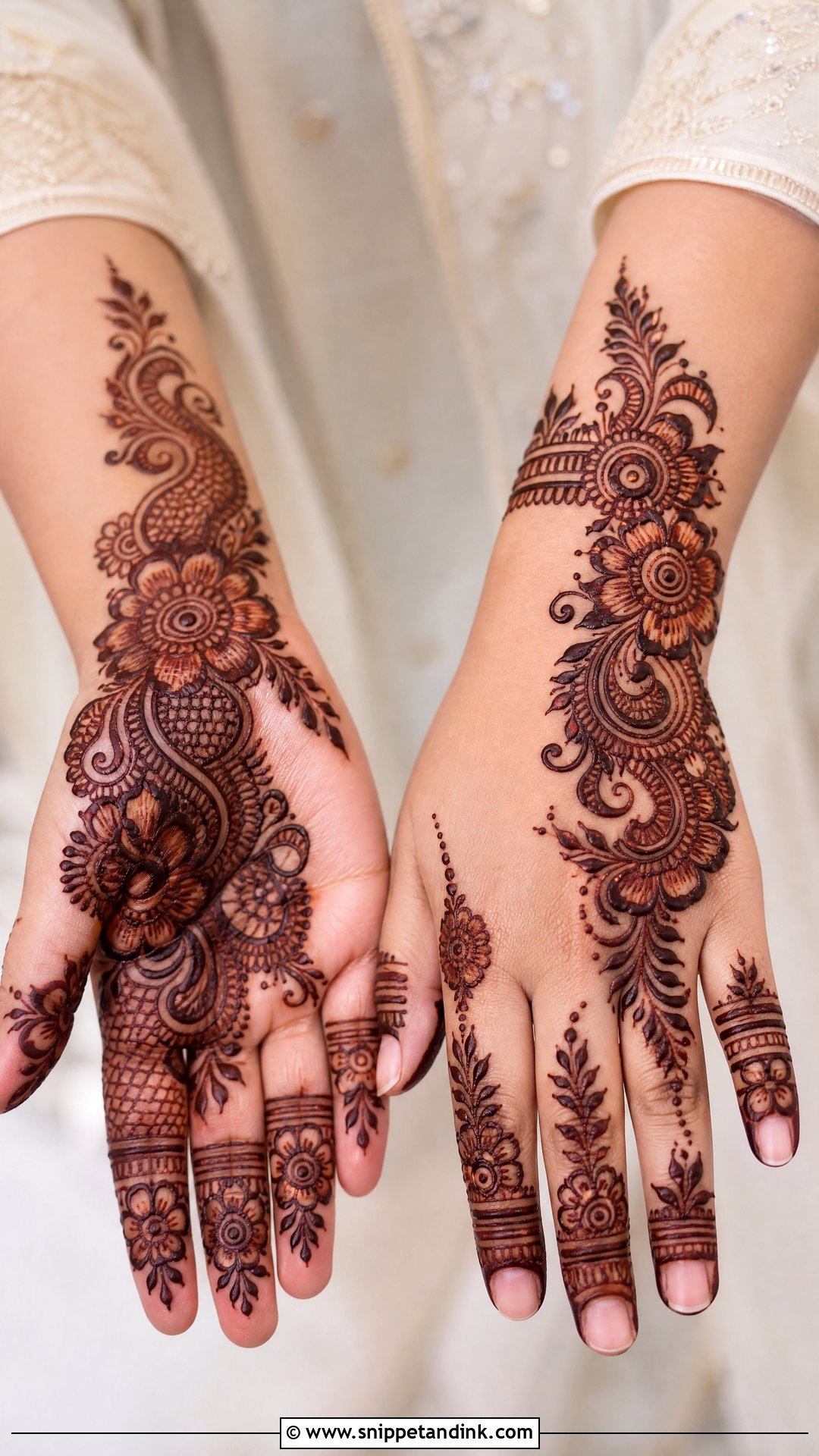
Indo-Arabic combines bold Arabic florals with Indian fillers, often as a diagonal back-hand trail with shaded flowers, paisley accents, fine mesh and decorated fingers, plus a palm mandala surrounded by open skin. The diagonal lengthens the hand, which flatters almost any shape. I keep the wrist modest on these and let the floral trail lead, because a heavy cuff turns the fusion back into a full Indian hand.
12. Gulf Nikkah Mehndi Design
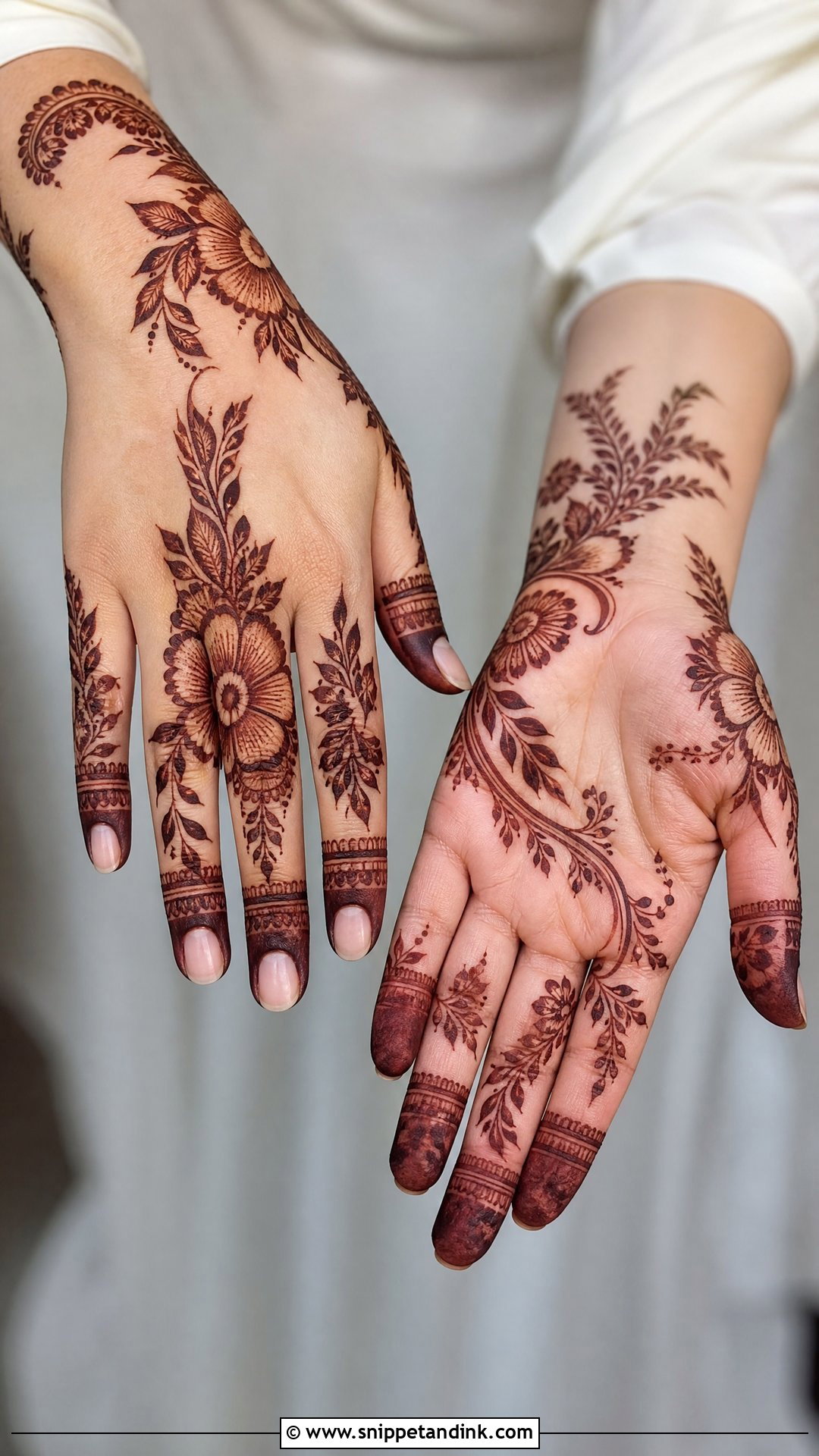
Gulf-style henna uses large flowers, leafy branches and confident negative space, no tiny crowded fillers. The design curves from the wrist across the back of the hand and ends in decorated fingers, with a matching vine on the palm. It sits well with abayas, kaftans, modest gowns and gold. Smooth shading is what makes it look rich up close, and it needs a well-made paste, since thick Gulf outlines crack and flake early if the paste is too dry.
13. Moroccan Nikkah Mehndi Design
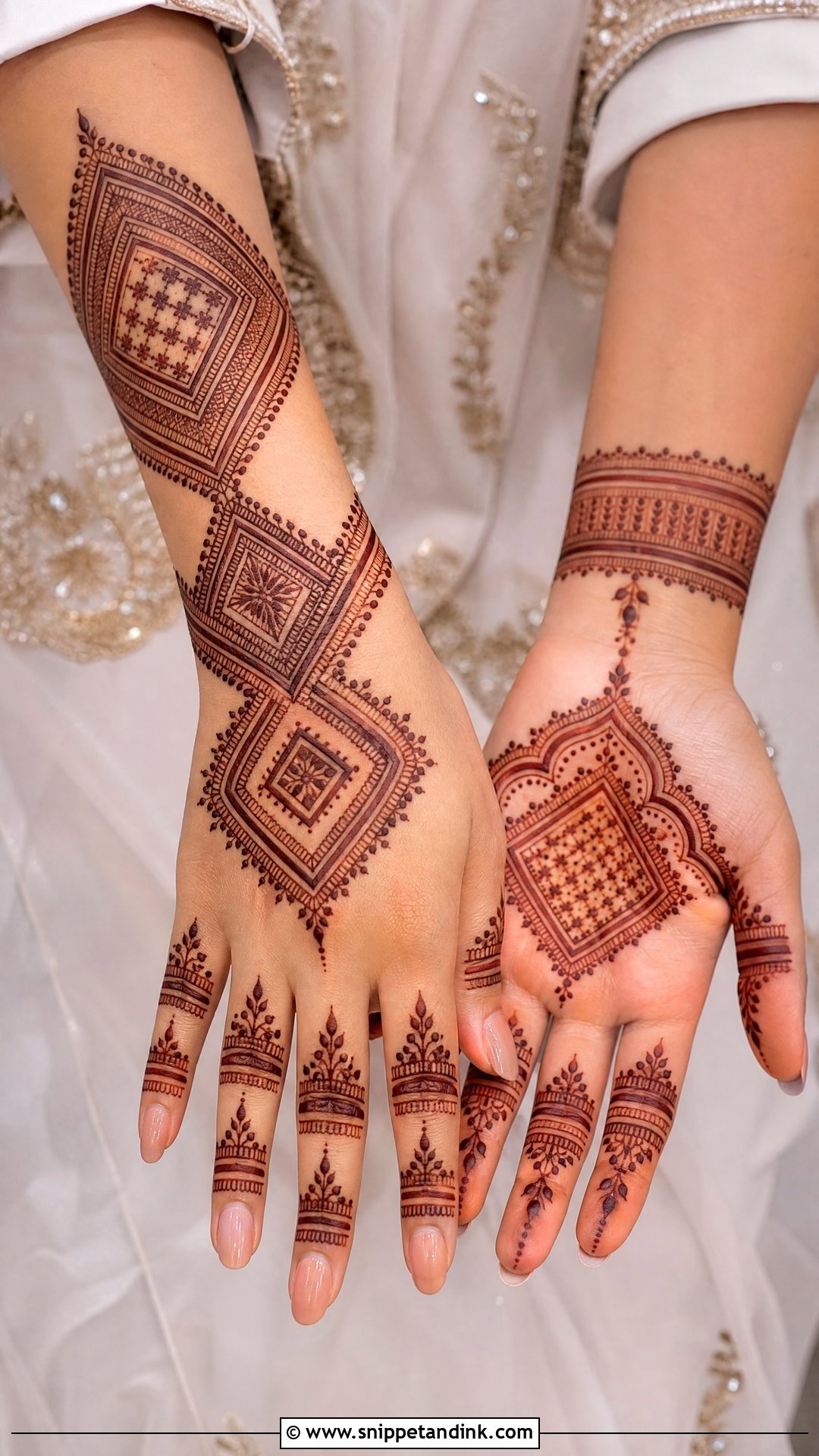
Moroccan henna favours geometry over flowers: diamonds, lines, dots, grids and panels across hand and wrist. For a Nikkah I soften it with a few tiny leaves or fine dotted borders so it still feels bridal. The back of the hand can hold a central geometric motif with finger bands; the palm suits symmetrical panels. Straight lines are less forgiving than curves on a hand that keeps moving, so I ask brides to rest their forearm fully on a cushion for every long line.
14. Floral Nikkah Mehndi Design
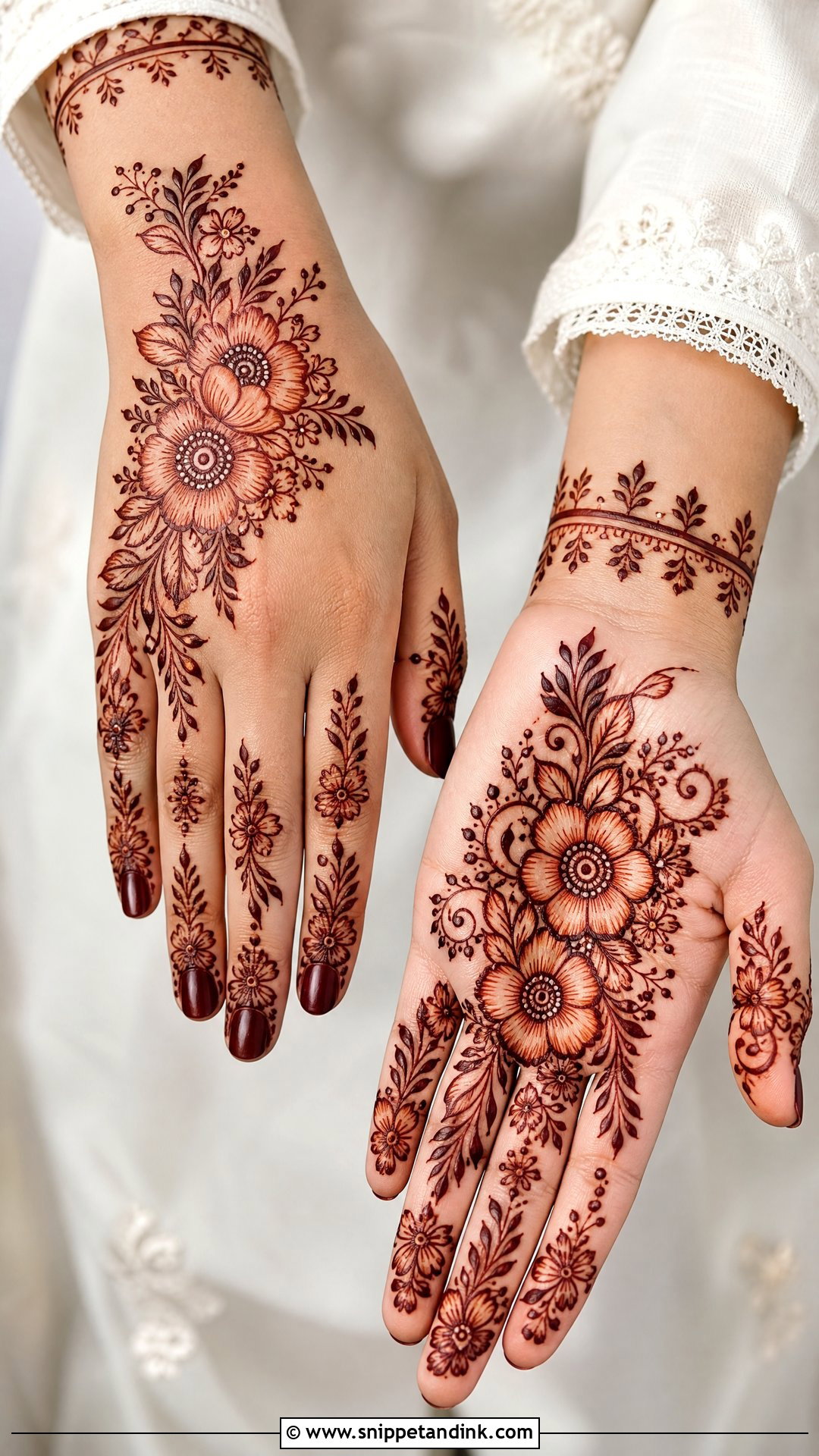
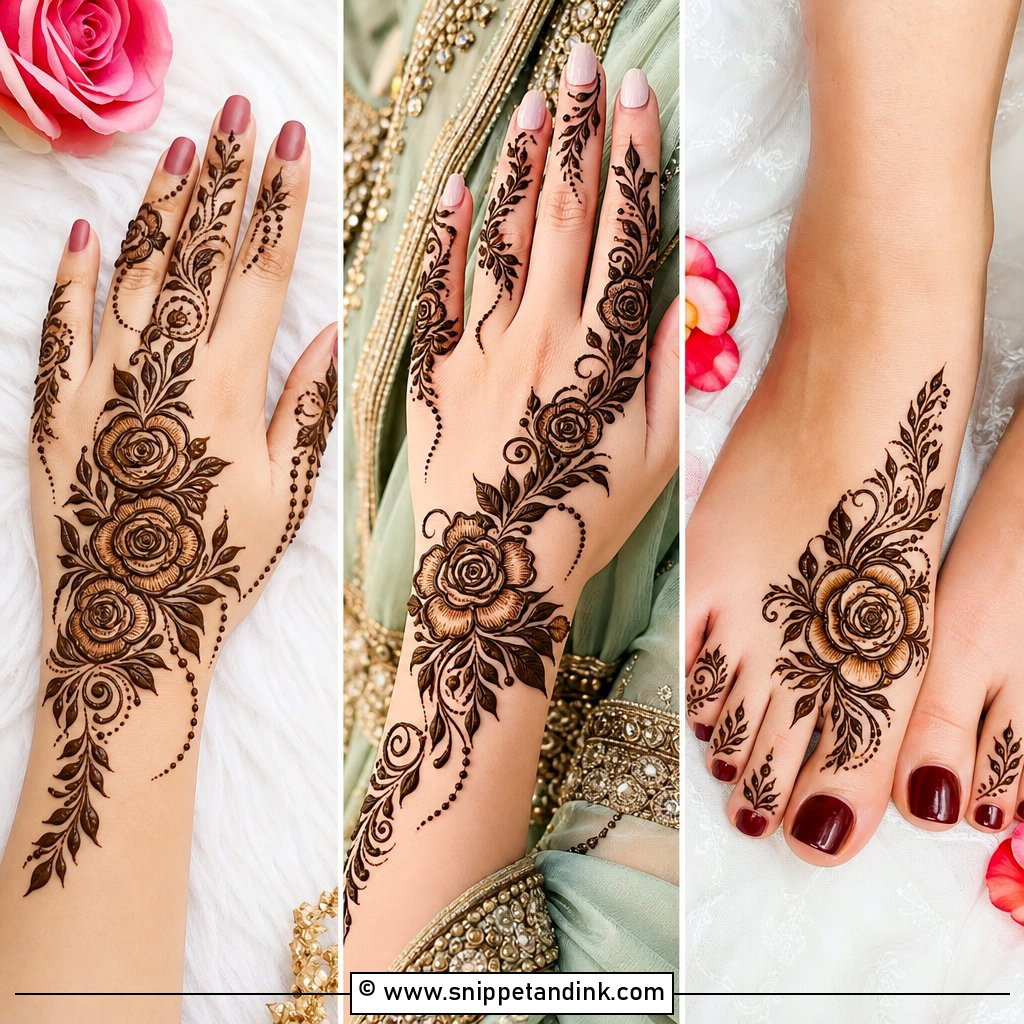
Florals are the most romantic option: roses, small buds, vines, shaded petals and a soft wrist border, arranged as a trail, a circle or a bracelet. Medium-sized flowers with clear spacing suit a gentle Nikkah look better than oversized blooms. Finger vines finish it without weight. Pastel outfits and pearls pair well with it. I connect every flower to a stem or vine, because unconnected flowers look scattered once the stain darkens.
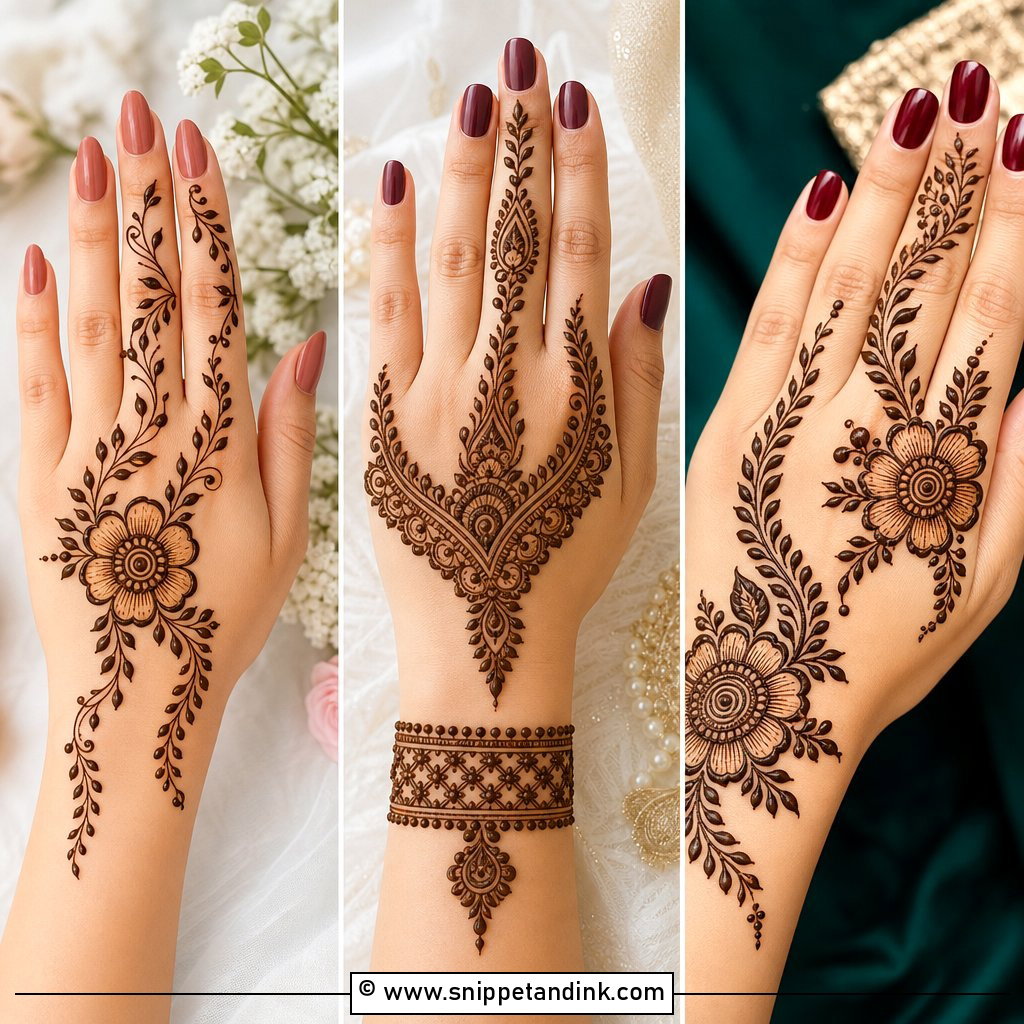
15. Rose Nikkah Mehndi Design
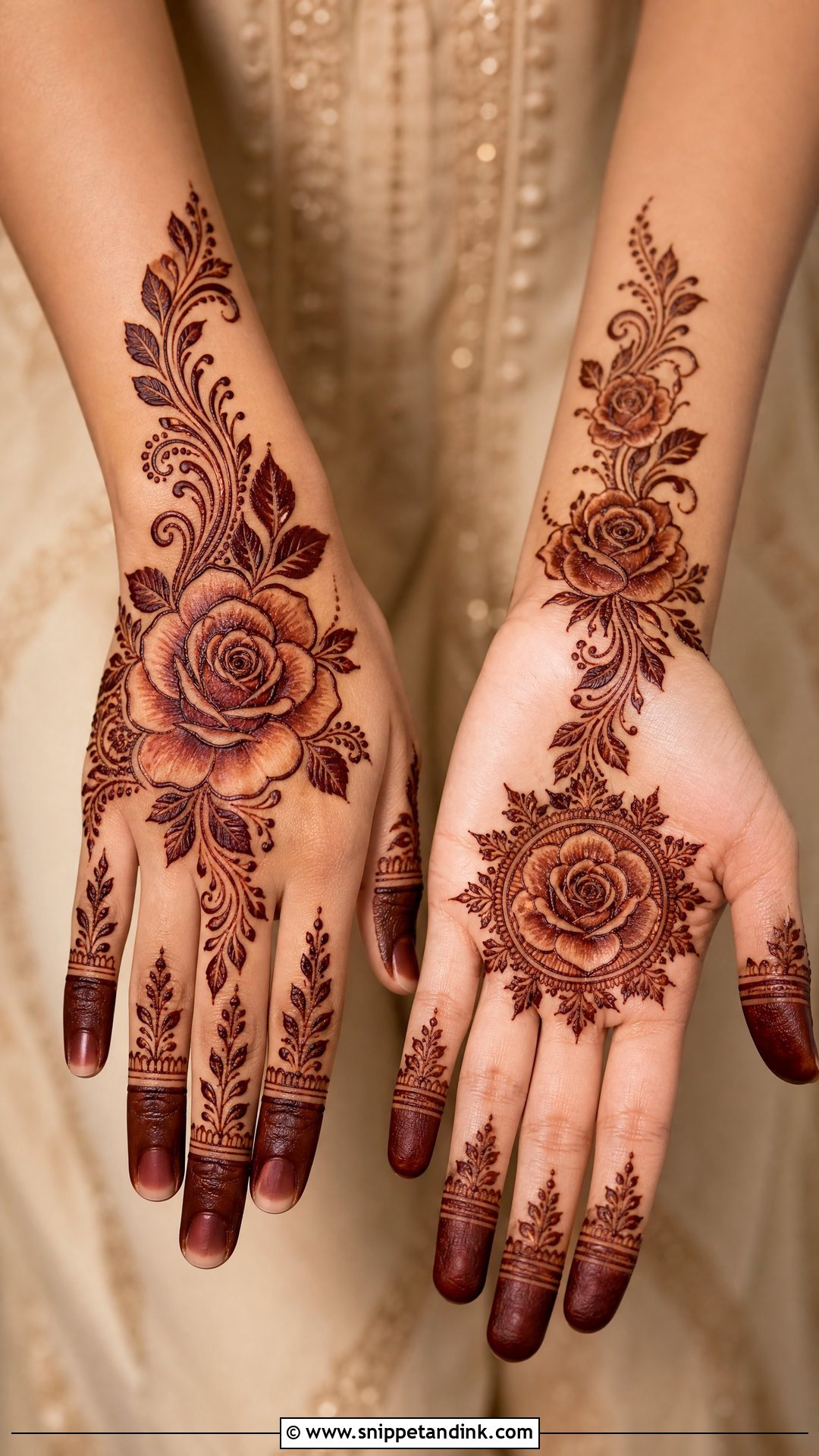
A large rose on the back hand, smaller ones near the wrist and leafy trails toward the fingers give a recognisable bridal motif; a rose mandala or rose vine on the palm carries the theme through. The shading between petals is what gives depth, and I draw it from the centre of the rose outward. Slim leaves keep the roses as the subject. Roses also frame an engagement ring nicely when the main bloom sits just below the ring finger.
16. Mandala Nikkah Mehndi Design
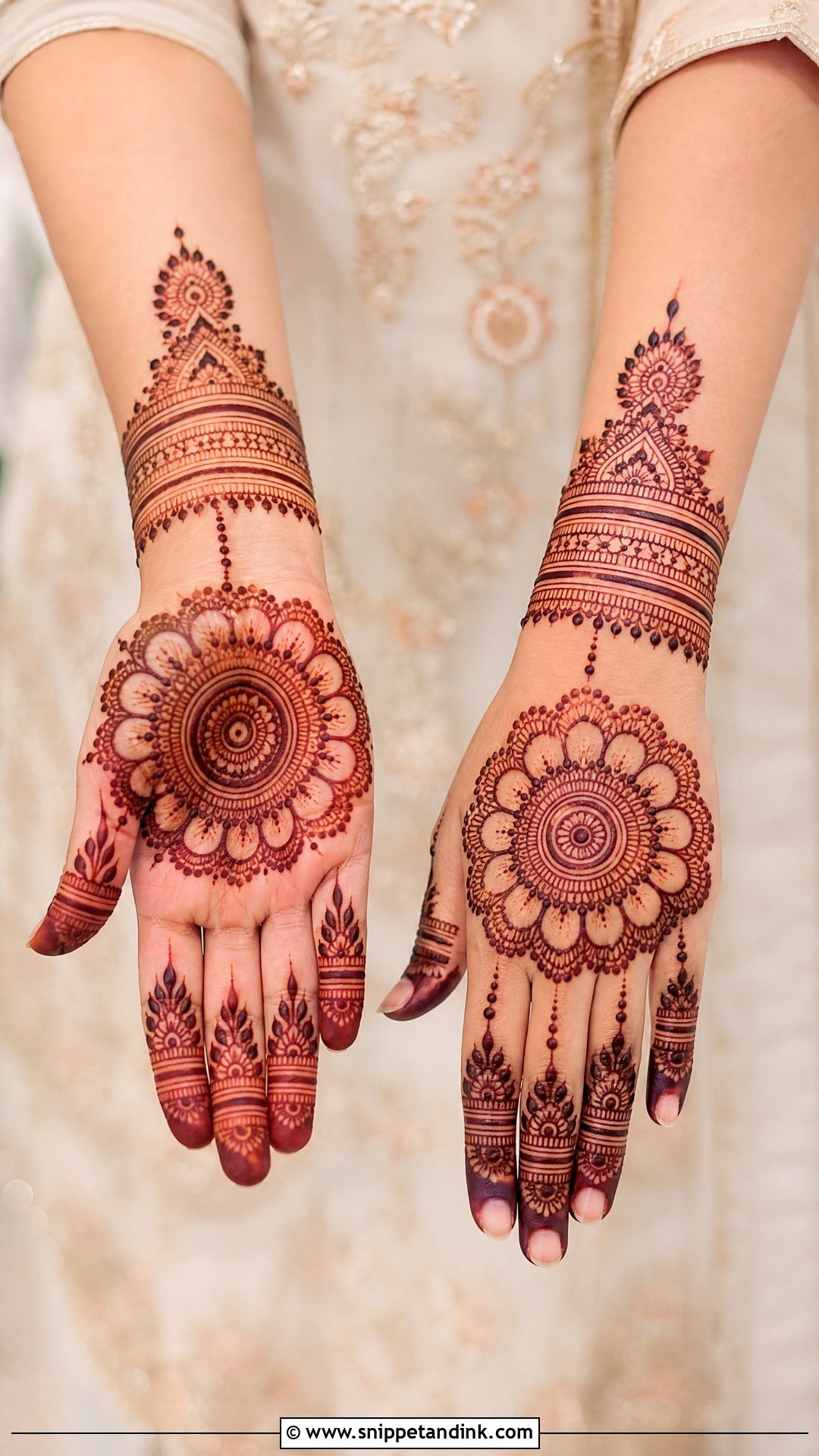
A centred mandala on the palm or back hand, built out with dots, petals, finger details and wrist bands, has a calm quality that suits a Nikkah. It can stay minimal with open space or turn bridal with jaali and floral borders. Its whole appeal is symmetry, so the circle has to be centred on the hand, not on the palm crease. I find the visual centre by having the bride relax her hand, not stretch it flat, since that’s how it’ll be held in photos.
17. Jaali Nikkah Mehndi Design
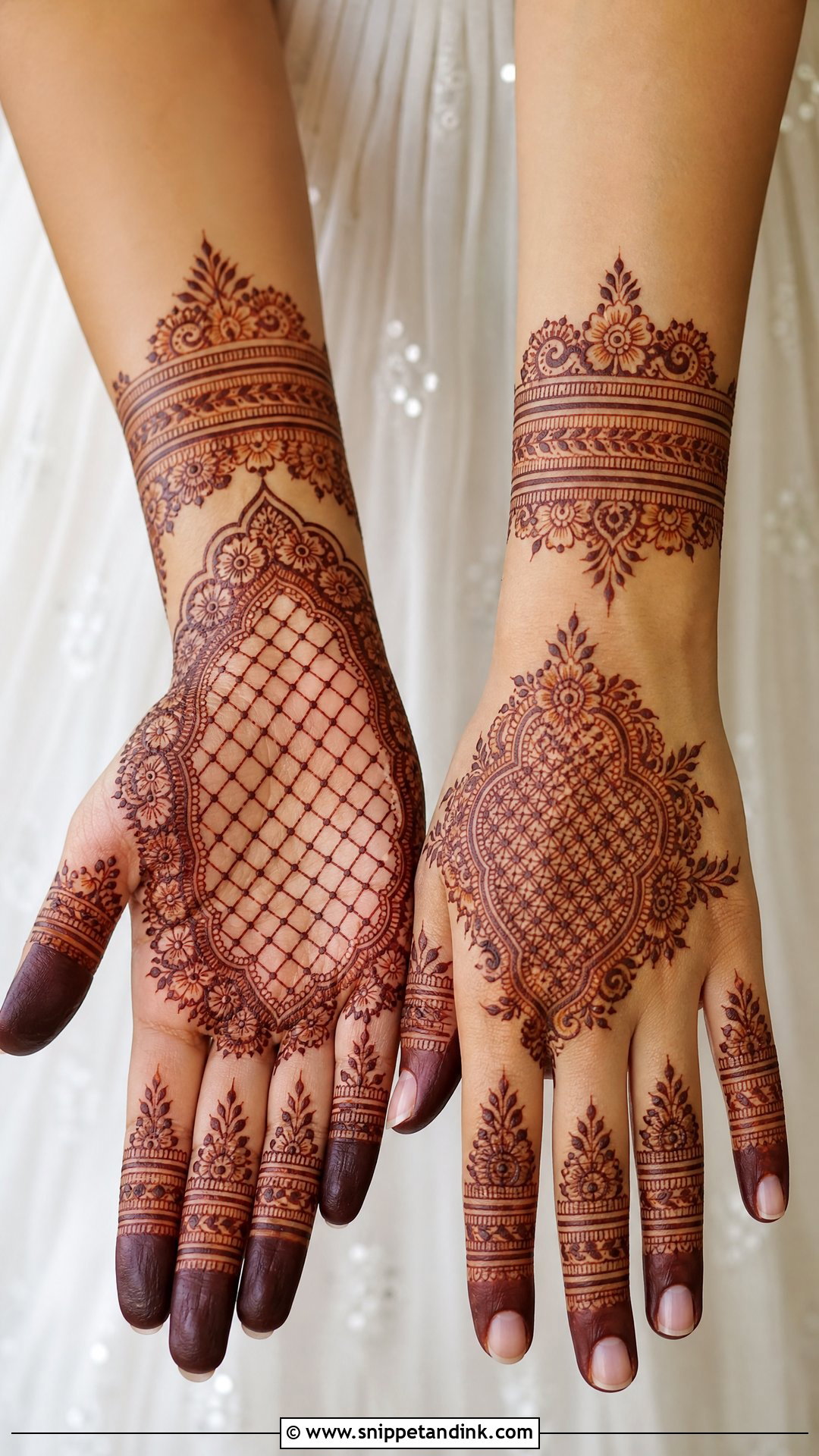
Jaali creates a fine net across the back of the hand, framed by floral borders at the wrist and slim finger patterns, with smaller mesh sections mixed with paisleys or mandalas on the palm. It adds texture without heavy shading and holds up well in close photography because each line catches the light. Thick jaali looks smudged once it stains. For a Nikkah I keep the mesh lines fine and evenly spaced, and I leave a slightly wider gap than feels natural, knowing the stain will spread a little.
18. Paisley Nikkah Mehndi Design
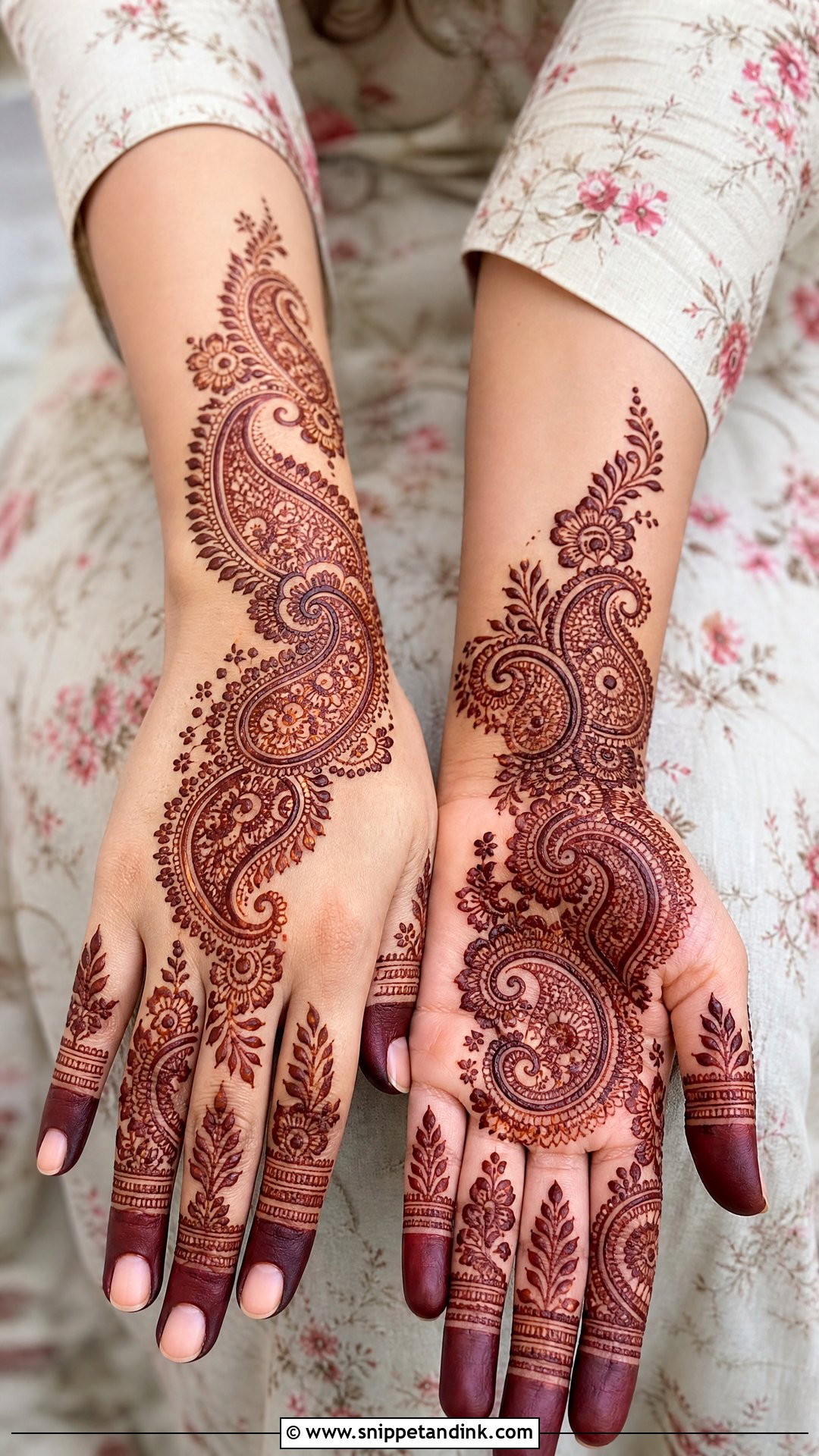
Paisleys are a classic Nikkah choice. A palm of curved mango shapes with floral fillers, dotted borders and leafy accents, and a large paisley trail on the back from wrist to index finger, gives the hand length. I tuck small flowers inside the paisleys to soften them and run thin bands and vines up the fingers so the hand reads as one composition. A paisley tail pointing toward the fingers always looks better than one curling back on the wrist.
19. Finger Nikkah Mehndi Design
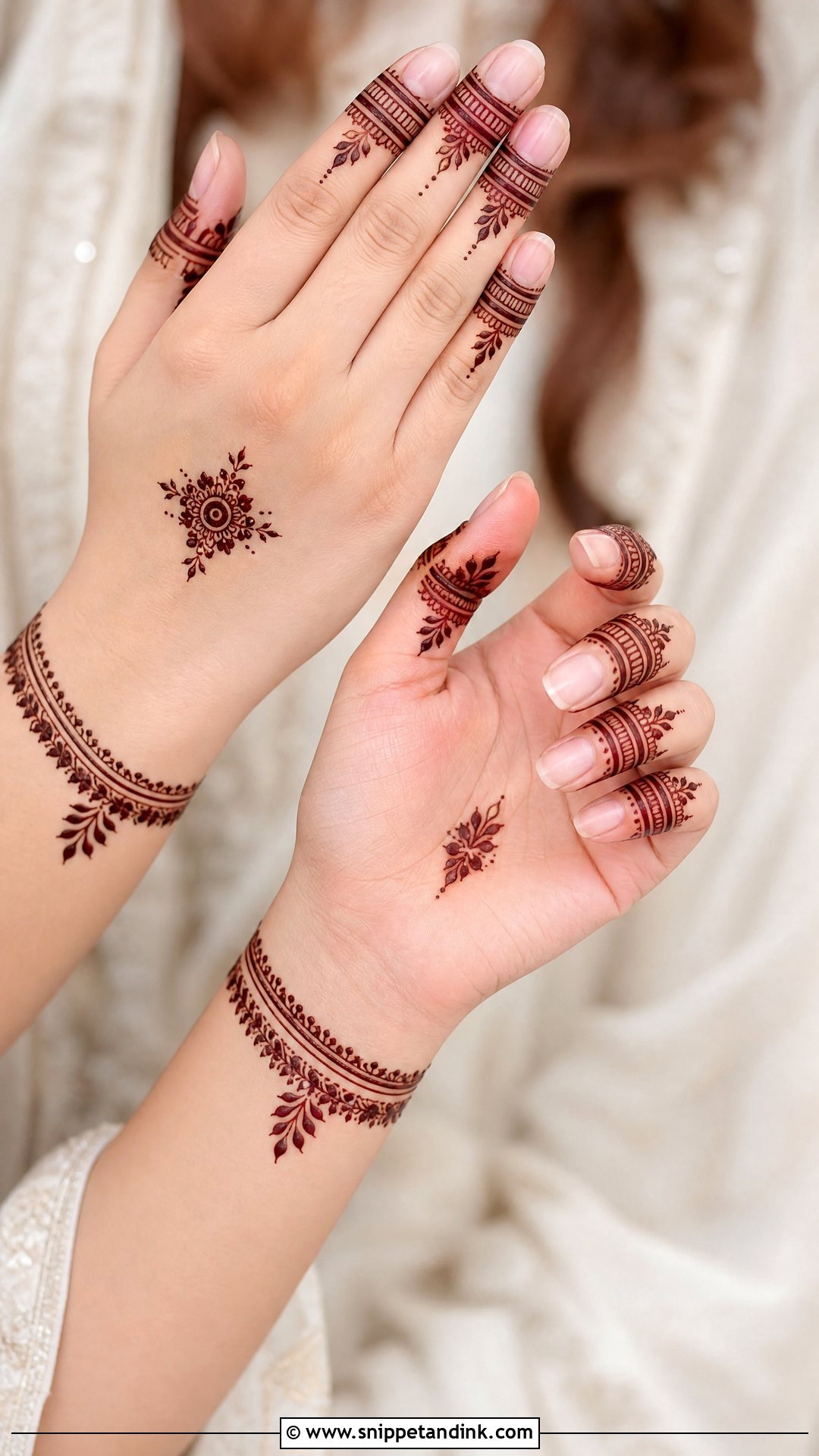
Finger-led designs keep the palm or back hand light and put bands, leaves, dots, tiny florals and fine lines on every finger, plus a slim wrist cuff or small central motif to make it bridal. Statement rings stand out against it. Smaller Nikkah gatherings and modern outfits suit it well. Fingertips stain darkest of all, so filled tips will be very deep for days; if you’d rather a softer look, I outline the tips and fill only the bands.




20. Bracelet Nikkah Mehndi Design
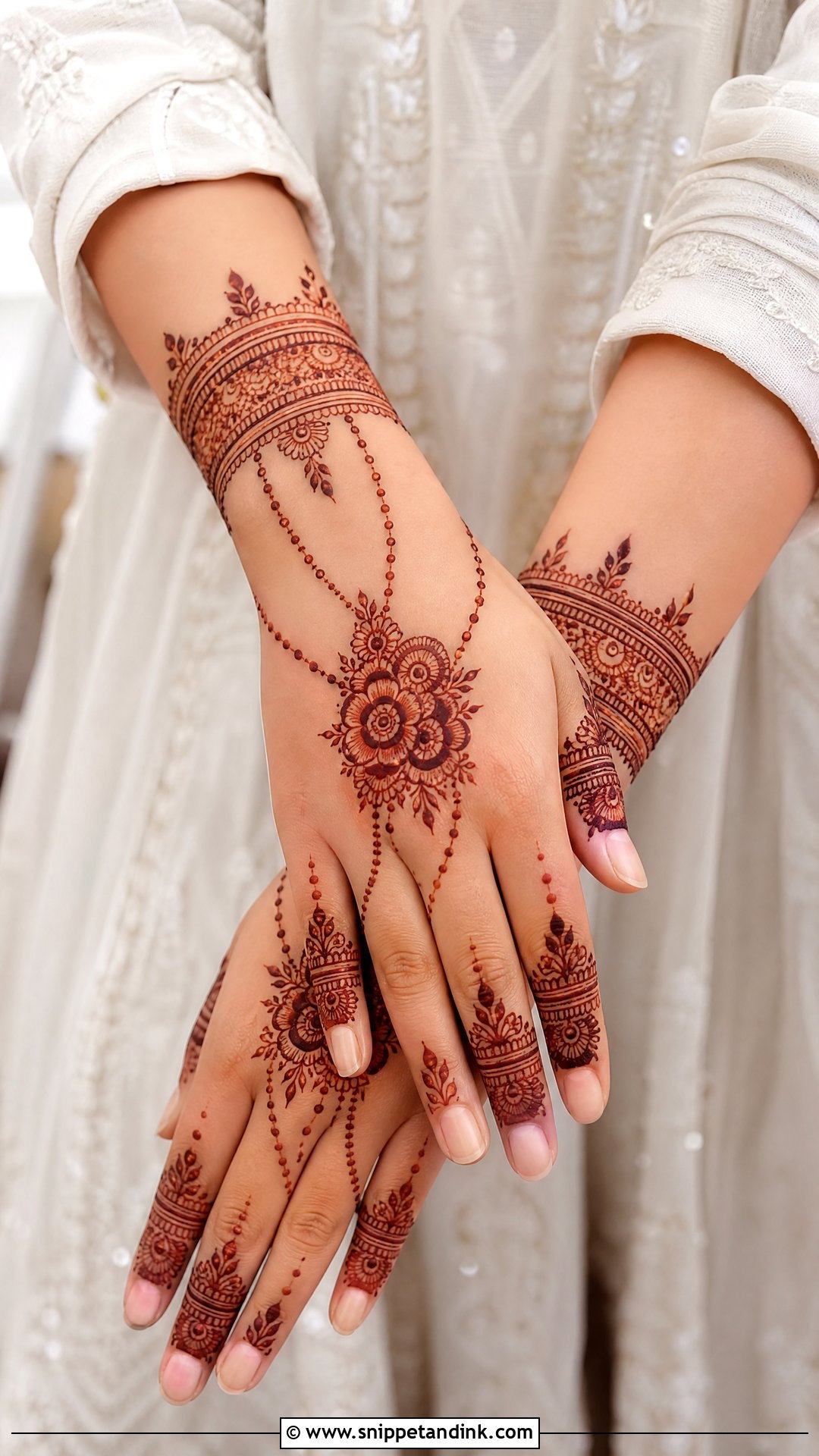
Bracelet designs mimic jewelry: a wrist cuff, chains, dotted lines, finger rings and a central back-hand motif. The hand stays open while wrist and fingers look adorned. A soft floral or mandala on the palm finishes the inside. It’s quick to apply and comfortable, and for brides wearing little real jewelry, the henna can stand in for it. If you’re wearing a real bracelet too, mention it, so the henna cuff doesn’t sit exactly beneath it.
21. Initials Nikkah Mehndi Design
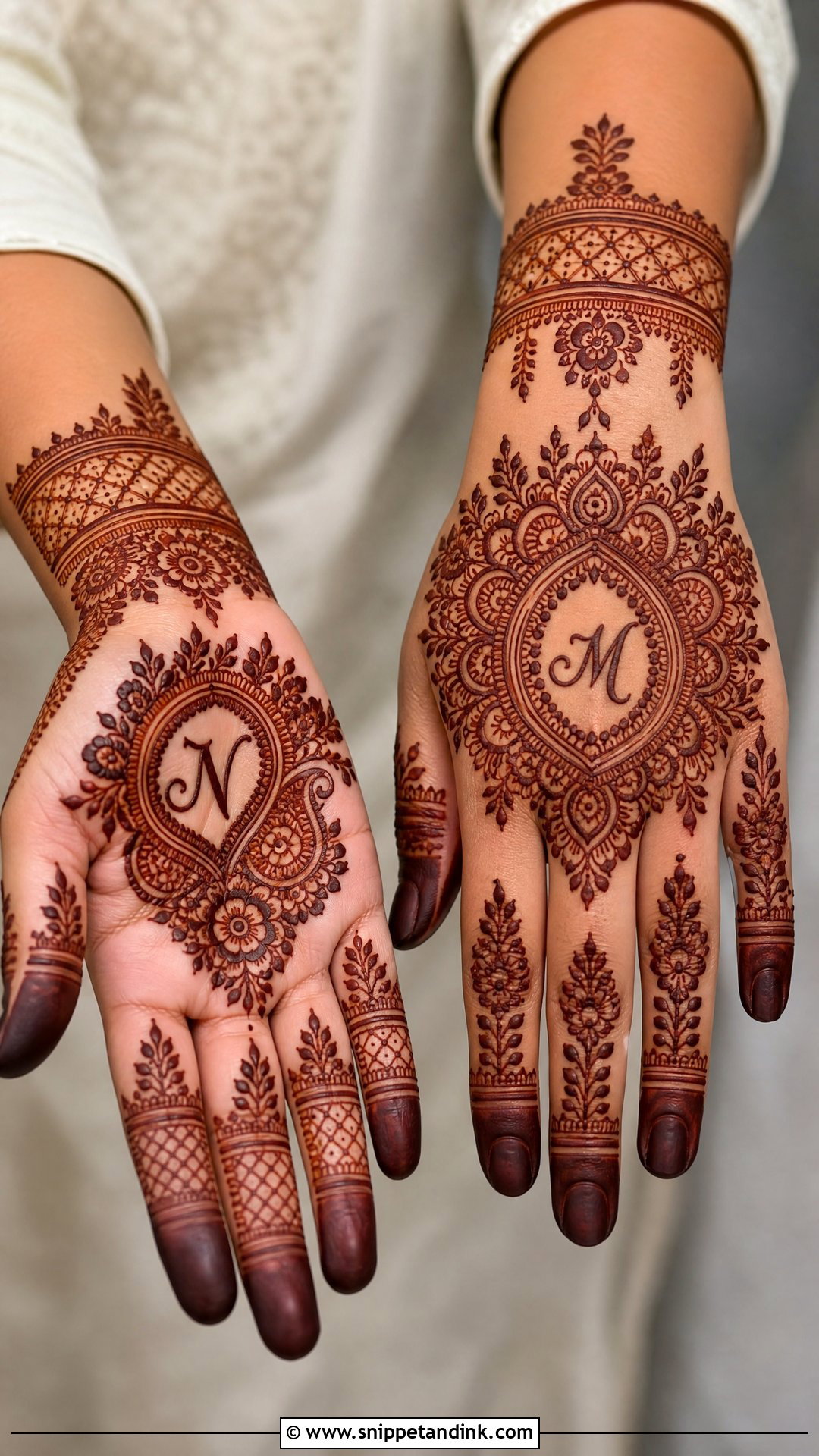
Initials are the easiest way to personalise a Nikkah hand. I hide them in a petal, a wrist cuff or a palm motif, small enough that they’re a discovery rather than a label. The date can sit in tiny script near the wrist if there’s room. Letters in henna need slightly thicker strokes than you’d expect, because hairline letters blur as they darken. Write the initials out for your artist in advance, in the script you want, so there’s no guessing on the day.
22. Nikkah Date Mehndi Design
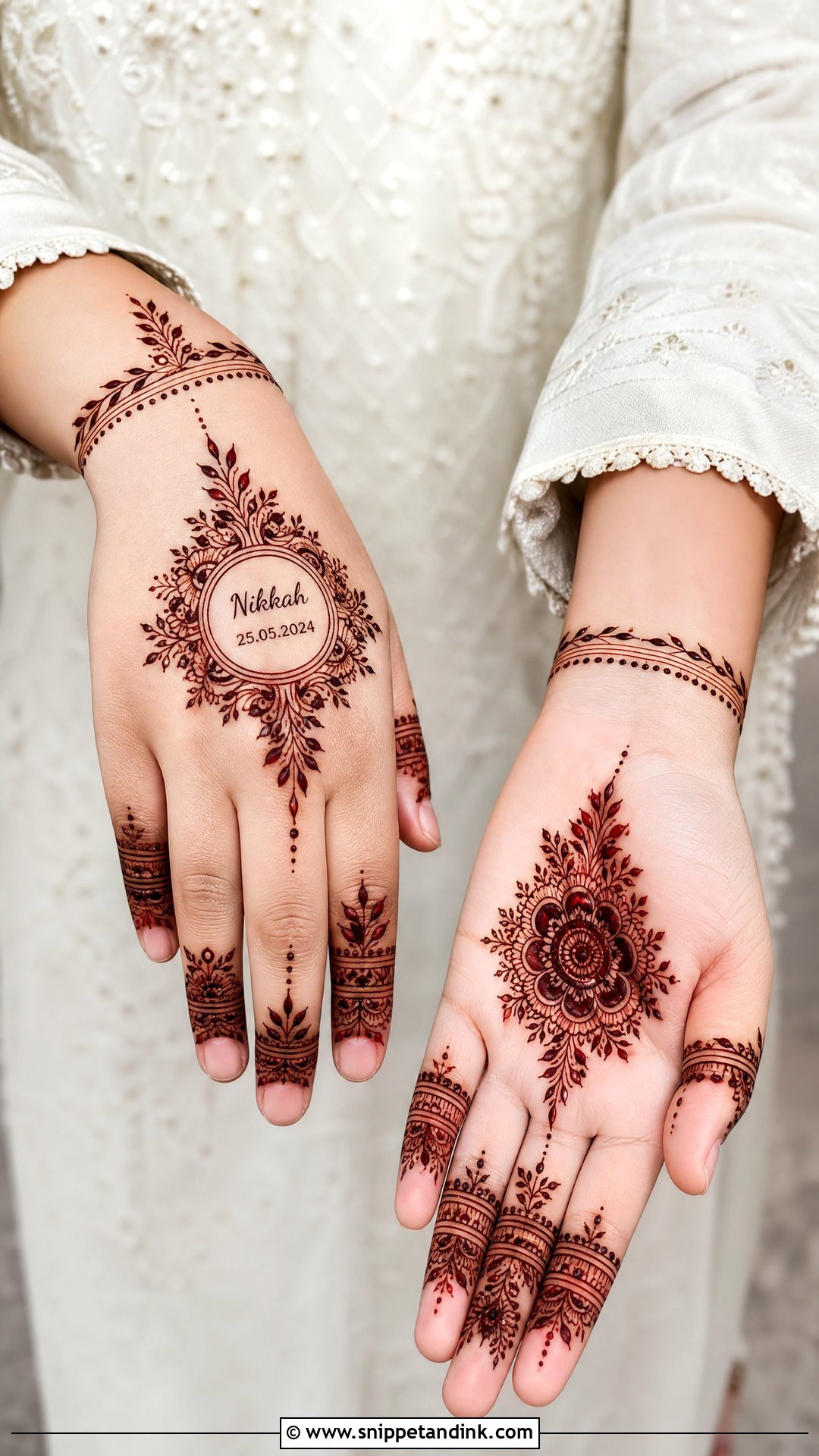
Including the Nikkah date gives the henna a keepsake quality. It can sit near the wrist, inside a small frame, or along a slim bracelet band, surrounded by leaves, dots or a fine border so it blends in. Numbers need to be small but readable. I always check the date and the format, day first or month first, with the bride before drawing, because there’s no erasing a stained 7 that should have been a 1.
23. Dulhan Nikkah Mehndi Design
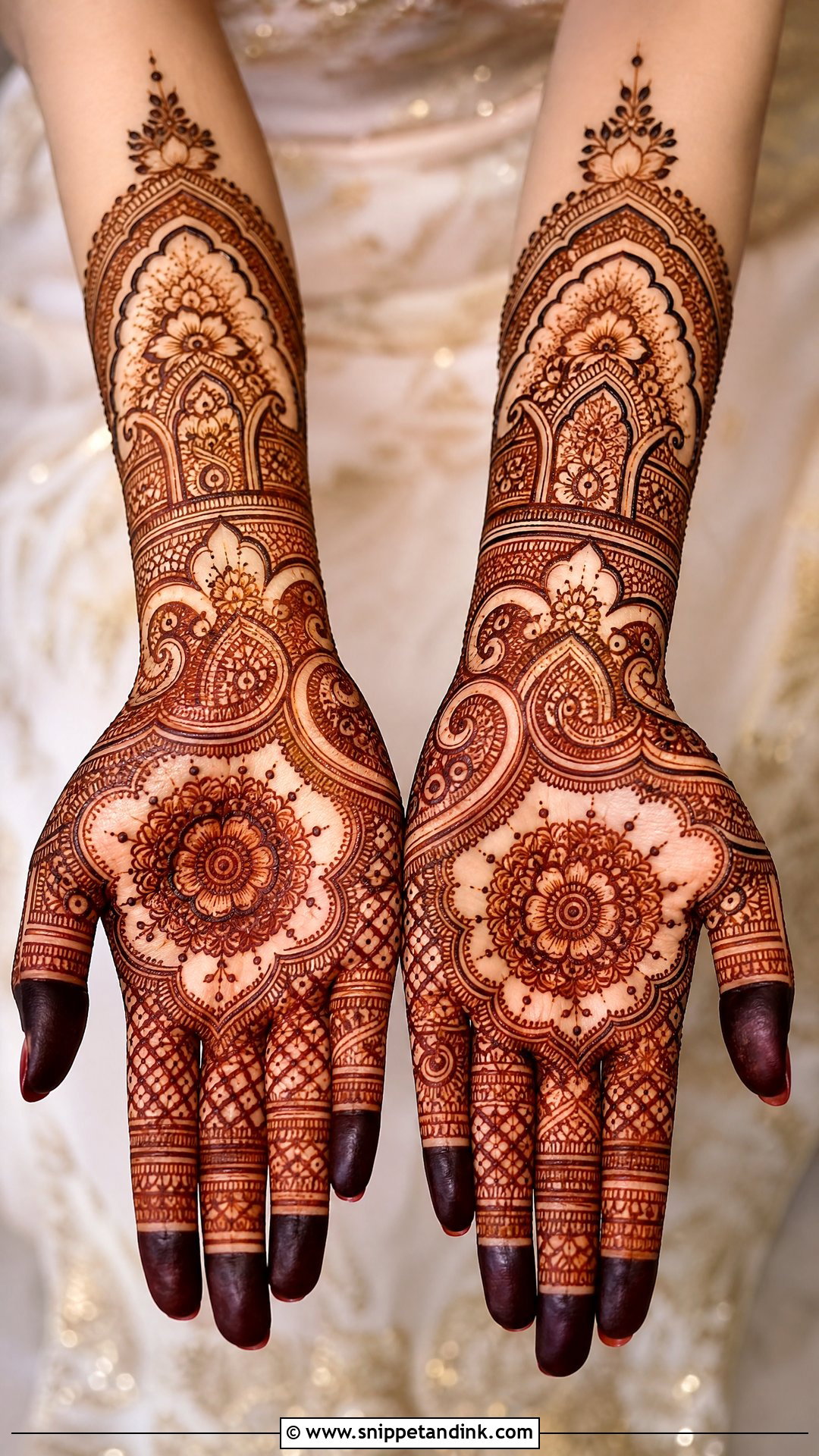
The dulhan look brings filled fingertips, detailed palms, floral cuffs, paisley sections and fine extensions from wrist toward forearm. Some brides want a small bride-and-groom motif, others stay with classic patterns. For a Nikkah, I’d go a step lighter than a baraat dulhan design so the ceremony outfit isn’t overwhelmed. Red, ivory, gold, blush and emerald all sit well with a deep stain. Both hands should flow section to section in the same order so they read as a pair.
24. Elegant Nikkah Mehndi Design
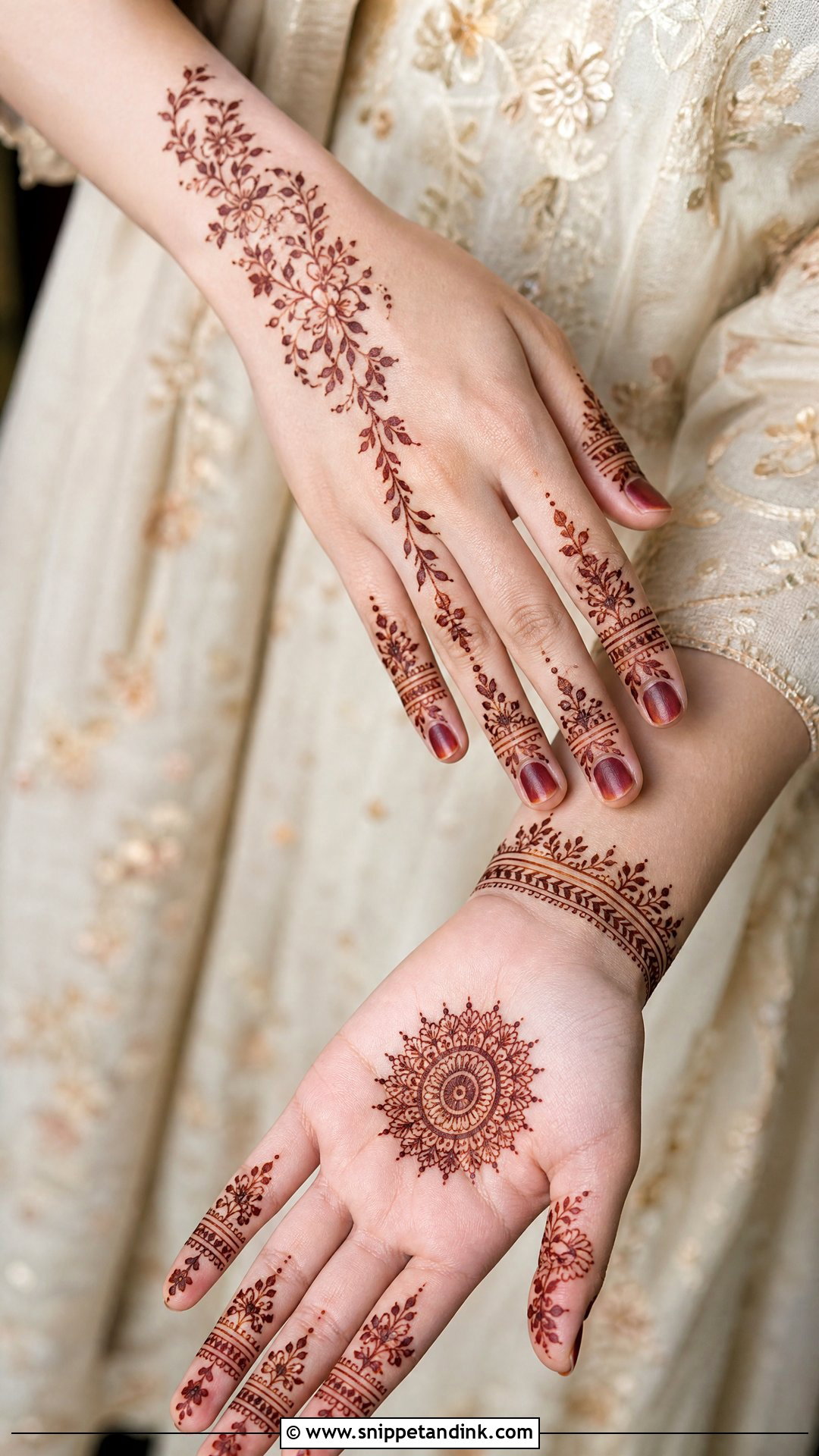
Elegance in henna is mostly restraint: a floral trail on the back, a light palm mandala, slim finger accents and a neat wrist border. Two or three motifs repeated carefully, for example roses with dots and fine vines, look more refined than ten different ones. This suits sophisticated outfits and soft makeup. It also reads well in natural light, which is how a lot of Nikkah photos are taken, near a window or outdoors.
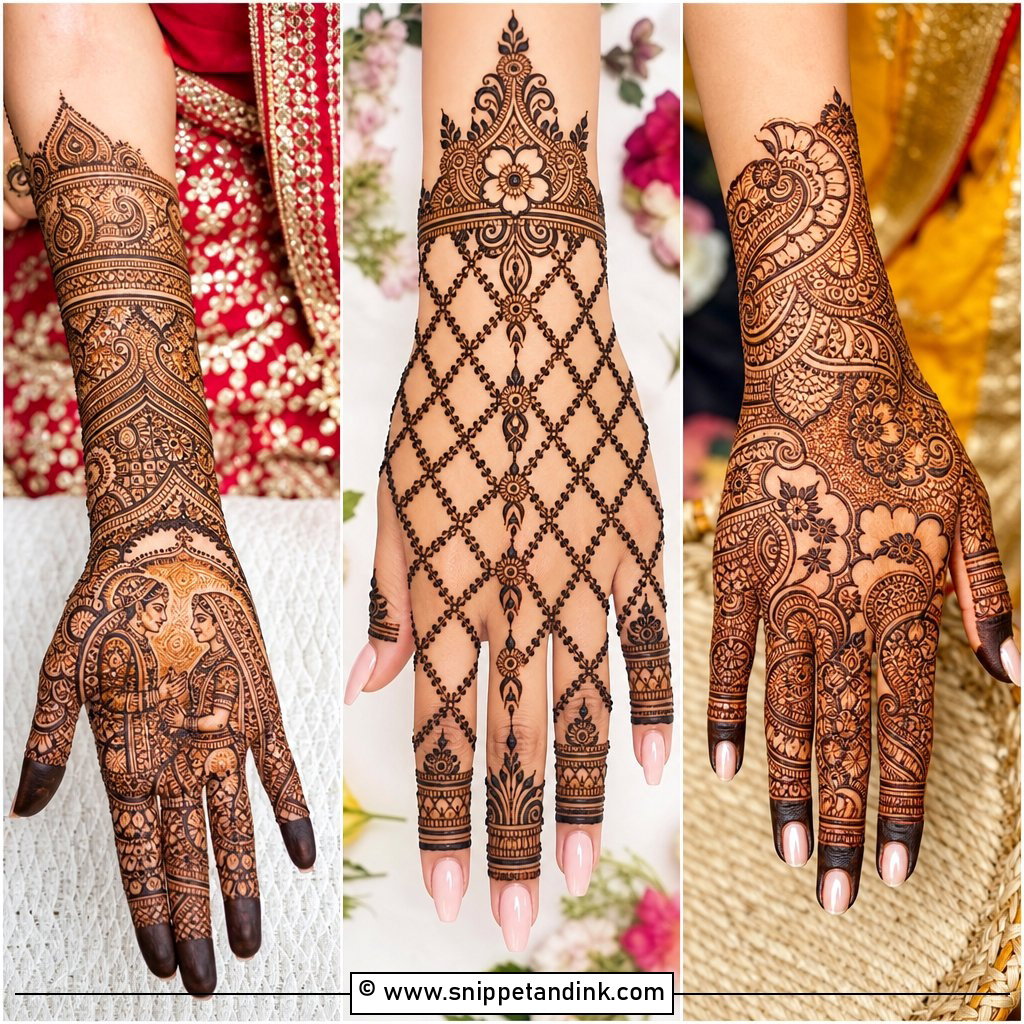


25. Heavy Nikkah Mehndi Design
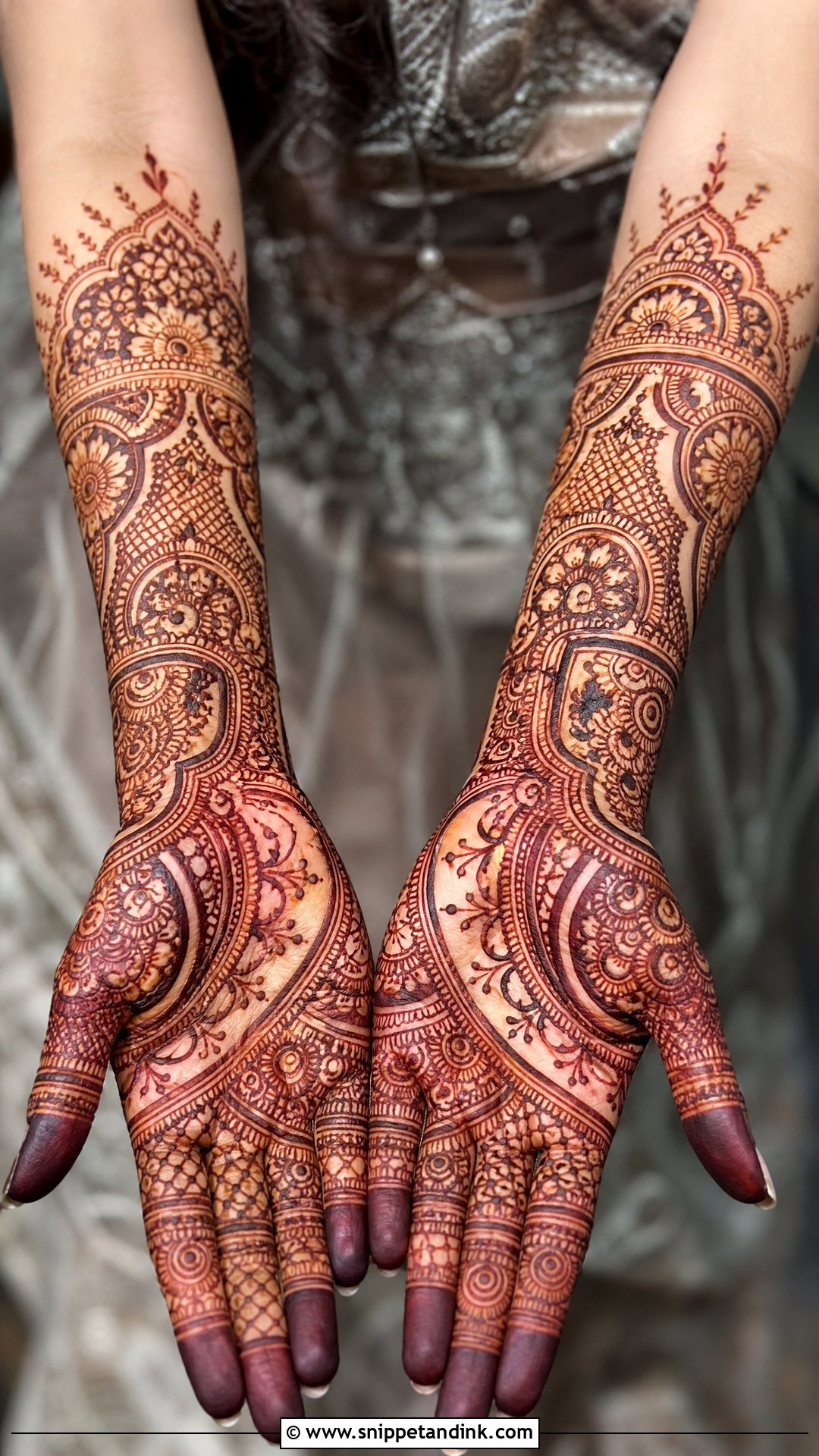
Heavy henna covers palms, backs, fingers, wrists and lower forearms in paisleys, florals, jaali, mandalas and shading. More covered skin gives a deeper overall look, and it suits traditional outfits with layered bangles. To keep it right for a Nikkah, I use clear borders and vary the density, leaving a few open spaces so it breathes. Book enough time: a heavy design on both arms is several hours in the chair, and rushing it is how linework gets sloppy.
26. Light Nikkah Mehndi Design
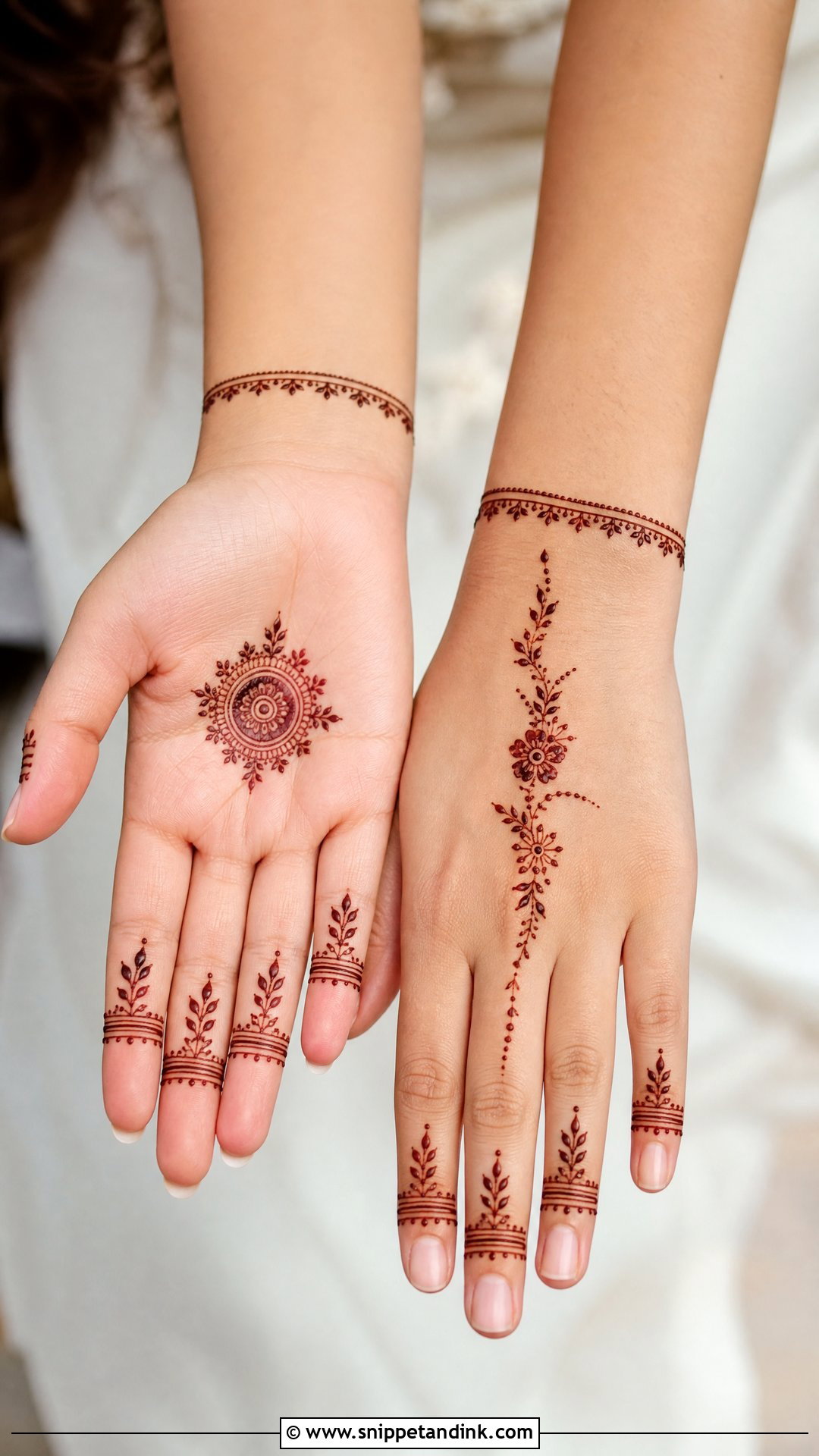
Light henna is a small back-hand floral trail, simple fingers, a thin wrist border and a tiny mandala or a few leafy curves on the palm. It’s easy to wear and quick, and it suits daytime Nikkahs, courthouse-style ceremonies and family gatherings at home. The whole effect comes from neat placement. I’d still apply it a day or two ahead like any bridal henna, as light designs look even thinner if the stain hasn’t had time to deepen.
27. Royal Nikkah Mehndi Design
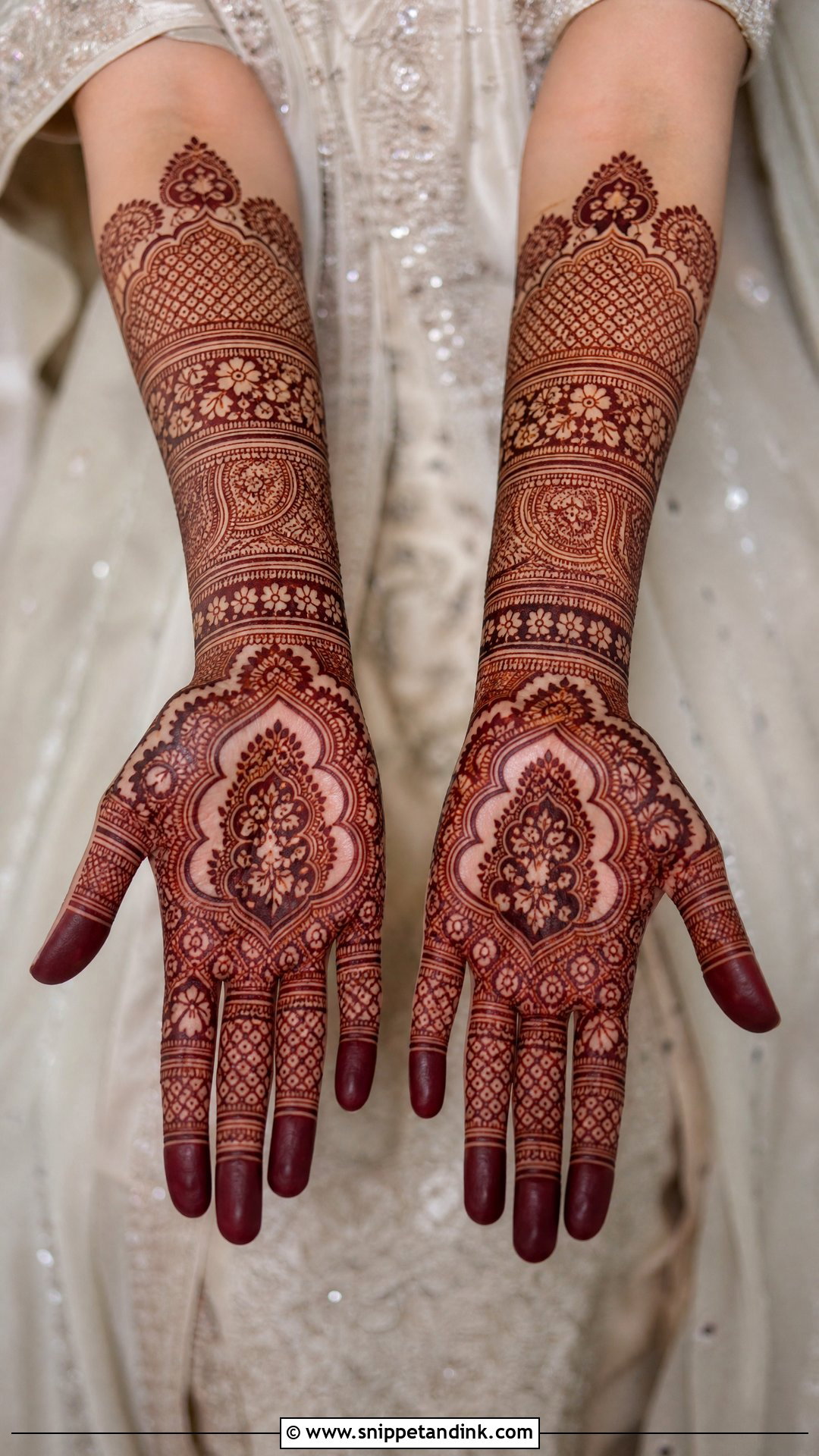
A royal design is grand through precision rather than volume: symmetrical palms, ornate wrist cuffs, fine jaali, paisley panels and floral borders toward the forearm, with a chain layout on the back hand. Heavily embroidered outfits, regal dupattas and gold jewelry suit it. Each section should look deliberate. I measure the mirrored sections by eye against the other hand as I go, because symmetry is what makes a royal hand read as royal and not just busy.
28. Nikkah Mehndi Design For Short Fingers
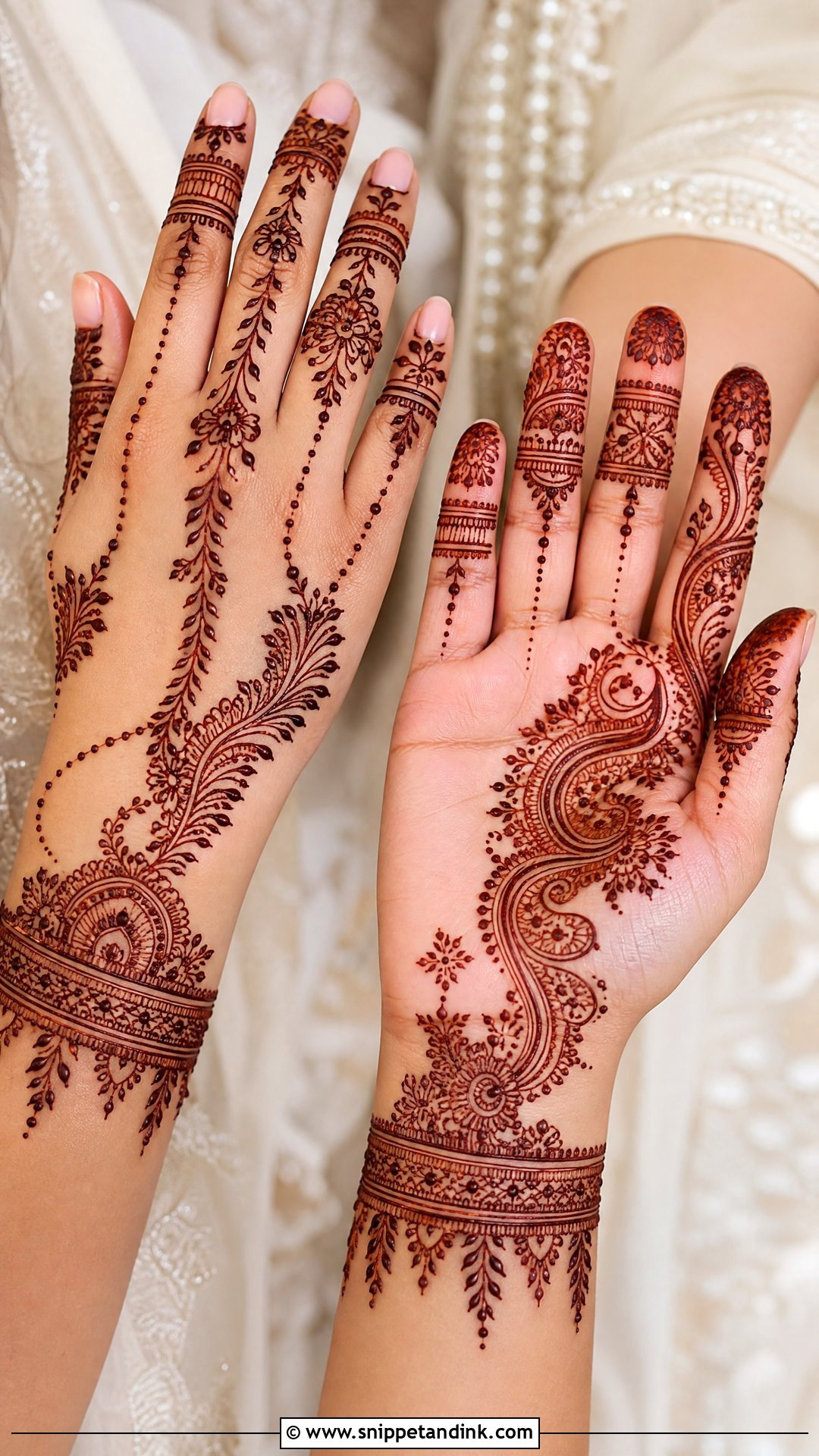
Short fingers look longer with vertical vines, slim bands, pointed leaf tips and diagonal trails that pull the eye upward. Wide horizontal blocks do the opposite. I keep fingertip detail narrow and place the main motif just below the knuckles or mid-back. On the palm, elongated paisleys or curved florals work better than round wide shapes. Crowding makes a hand look smaller, so open spacing matters more here than anywhere.
29. Nikkah Mehndi Design For Long Fingers
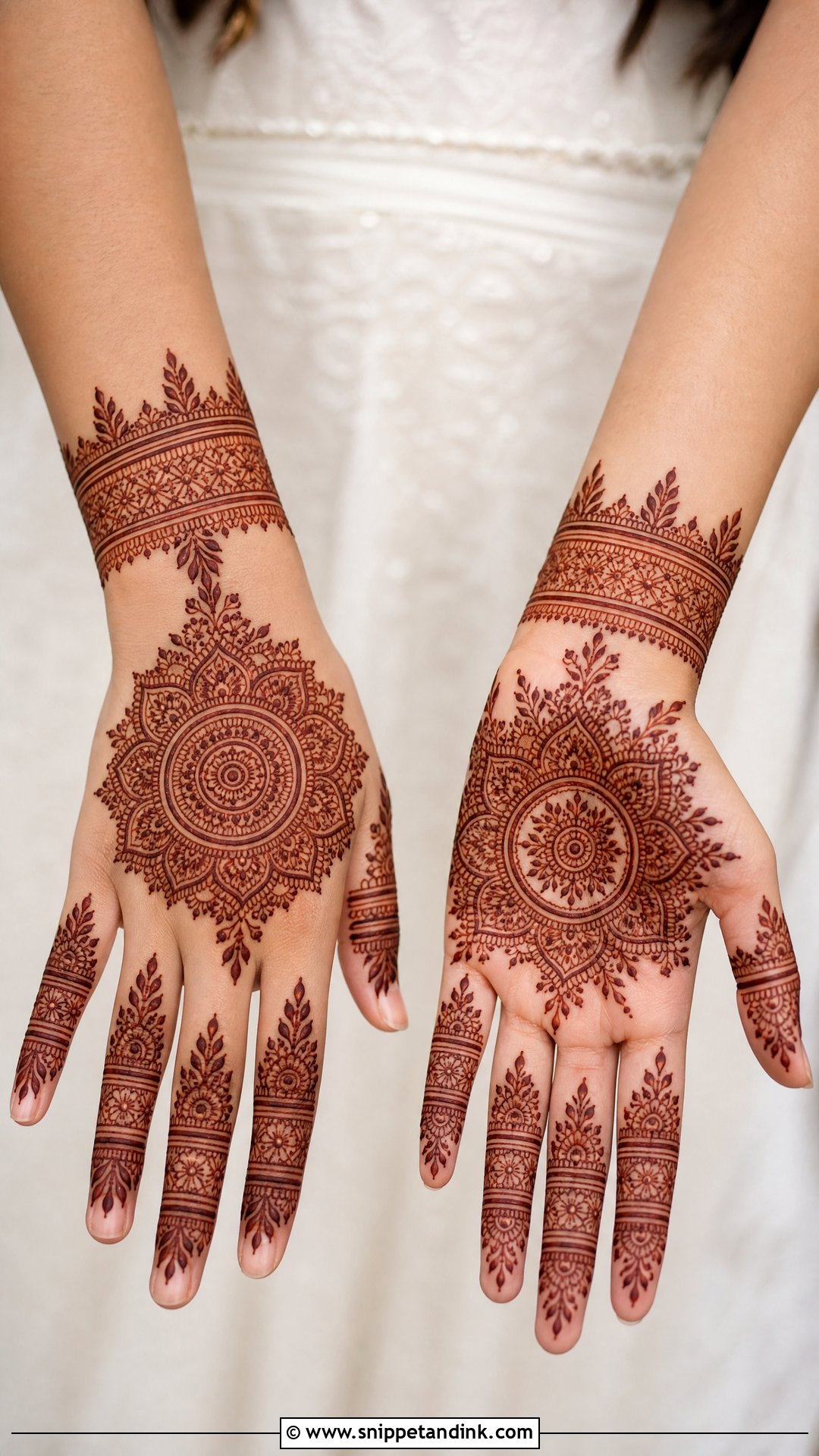
Long fingers give an artist room: layered bands, leafy tips, ring motifs and a balanced back-hand mandala all fit comfortably. They also carry heavier fingertips well. The palm motifs should match the finger length so the hand doesn’t look stretched. A wrist cuff grounds the whole thing. Long hands look especially good in the classic pose of both hands placed side by side, so I make sure the mirrored elements line up across the two.
30. Nikkah Mehndi Design For Bridesmaids
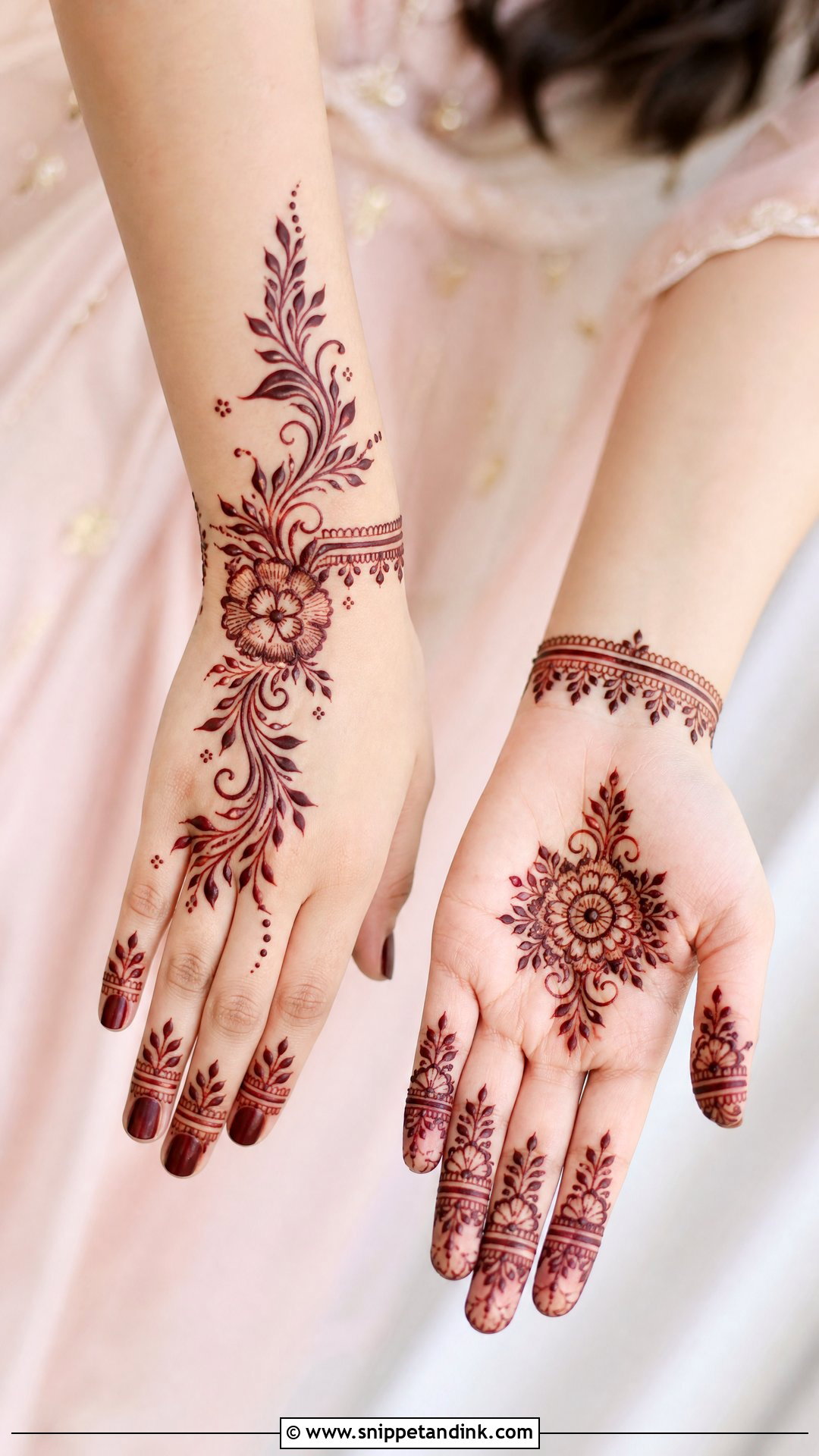
Bridesmaids’ henna should be festive and clearly lighter than the bride’s: a floral back-hand trail, a simple palm motif, finger vines and a small wrist band. Arabic, minimal, mandala and bracelet layouts all work. A shared element across the group, the same flower or finger band, makes group photos look coordinated without matching outfits. When I do a bridal party, I finish the bride first so her paste has the longest time on the skin, then work through the bridesmaids.
The Signing Table Puts Your Right Hand on Camera
Most Nikkah photos of the hands come from a handful of predictable moments, and I plan around them when I map the design.
- Signing the nikah nama: your right hand holds the pen and the back of it faces the camera. Keep the side of the index finger and thumb clean enough that the grip doesn’t smudge or hide a key motif.
- Dua with raised palms: both palms face the lens, so the palm designs should mirror each other closely.
- The ring: the ring finger needs a clear band of skin where the ring sits, or the henna underneath rubs and looks patchy.
- Holding the Quran or a bouquet in the lap: the back of the hand and the wrist cuff do the work here, often with sleeves partly covering them.
If your sleeves come to the wrist or below, tell your artist. I’d rather move the detail down onto the hand than spend an hour on a forearm nobody will see during the ceremony.
Does Henna Affect Wudu Before the Ceremony?
Brides ask me this every season. Once the paste is scraped off, what remains is a stain in the skin, not a coating on top of it, so water still reaches the skin and it is widely regarded as not affecting wudu. That’s different from regular nail polish, which forms a layer. While the paste itself is still on, though, it is a barrier, so plan prayers around the application or remove it first. Glitter, stones and white body paint also sit on the skin, which is another reason I keep them off Nikkah hands. If you have any doubt, your own imam or a scholar you trust is the right person to ask.
A Nikkah Hand Should Feel Like Yours
Your Nikkah henna should suit the ceremony, the outfit and how much sitting you can manage. Some brides feel most themselves in full-hand bridal henna; others want one floral trail or a bracelet pattern. Look for neat lines that hold up in close photos and a design that doesn’t overpower everything else you’re wearing. Initials, the date or a small symbol make any pattern personal. Arabic, Indian, Pakistani, Moroccan, minimal or royal, give it two days to darken and it will be at its best when you sign.
You'll Like These Ideas:








Leave a Reply