
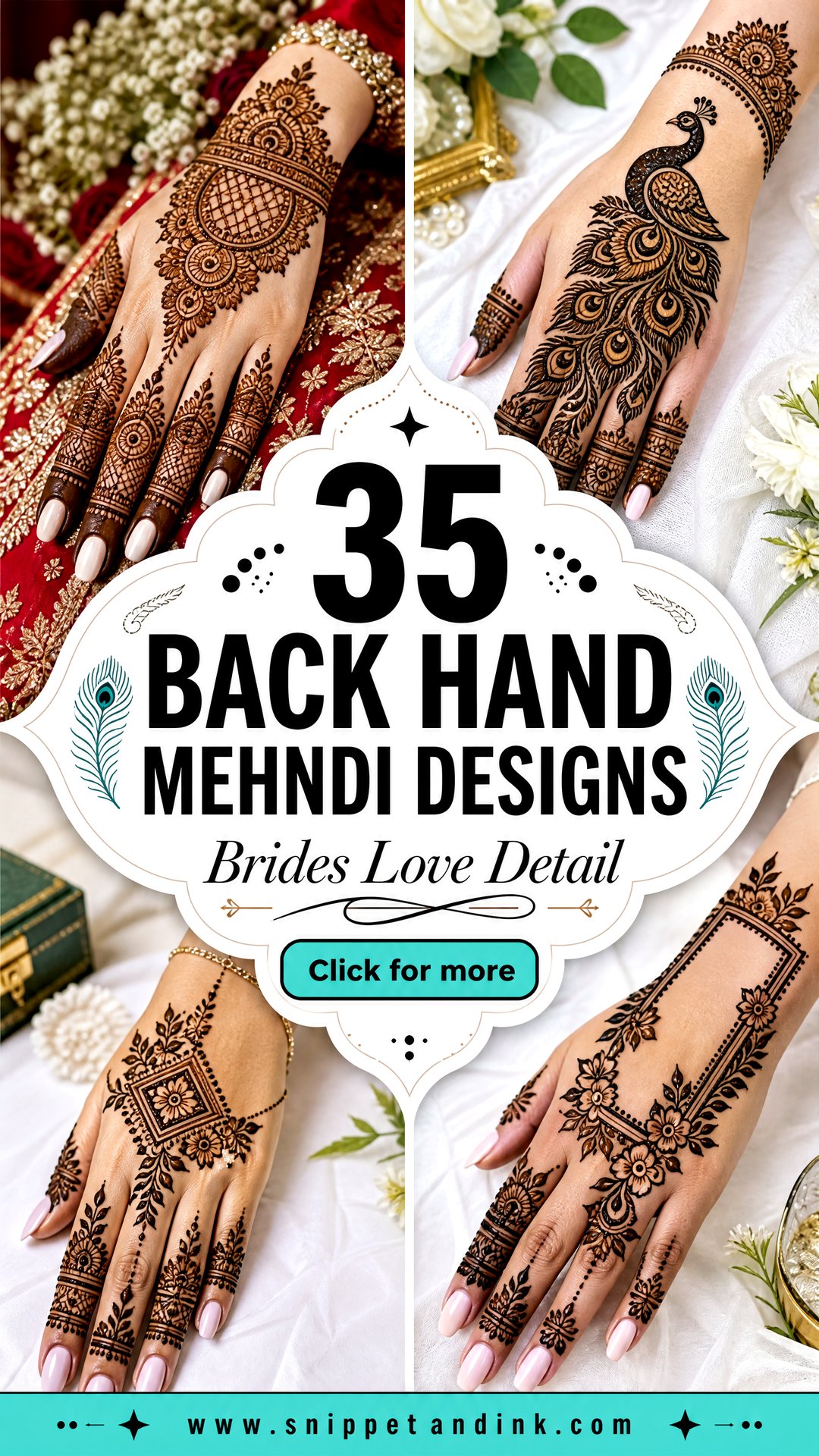
Brides who love detail usually come to me with a camera roll full of back-of-hand photos, because that’s the side that shows with bangles, in ring shots and every time a hand is raised to adjust a dupatta. It’s also the side where detail is hardest to pull off. The skin moves over the knuckles, it stains lighter than the palm, and hairline work can vanish if it’s drawn too fine. The 35 designs below range from a quick floral to full bridal coverage, taking in mandalas, jaali, bracelet bands, khafif fine-line work, Arabic trails and modern geometry. For each one I’ve noted what makes it hold up once the paste comes off.
A Bridal Mehndi Appointment, Hour by Hour
Detailed back hand work takes time, and a bride who knows what’s coming sits much more comfortably. For full bridal coverage on both sides of both hands, plus forearms, expect several hours in the chair; feet add more. Most brides book the application one or two days before the wedding so the stain has deepened by the ceremony.
What I ask a bride to bring
- A photo of the outfit, so the density and motifs suit the embroidery rather than fight it.
- Two or three reference designs, plus one you definitely don’t want. The dislike tells me as much as the likes.
- A decision on coverage: to the wrist, mid-forearm or elbow. It changes the layout from the start.
- Any names, initials or symbols you want hidden in the design, written down with the spelling.
Eat before we start, use the bathroom, and wear a top with sleeves that push up easily above the elbow. Once both hands are covered you won’t be able to do much for yourself for a few hours, so having someone nearby to help with water and your phone makes a real difference.
1. Simple Back Hand Mehndi Design
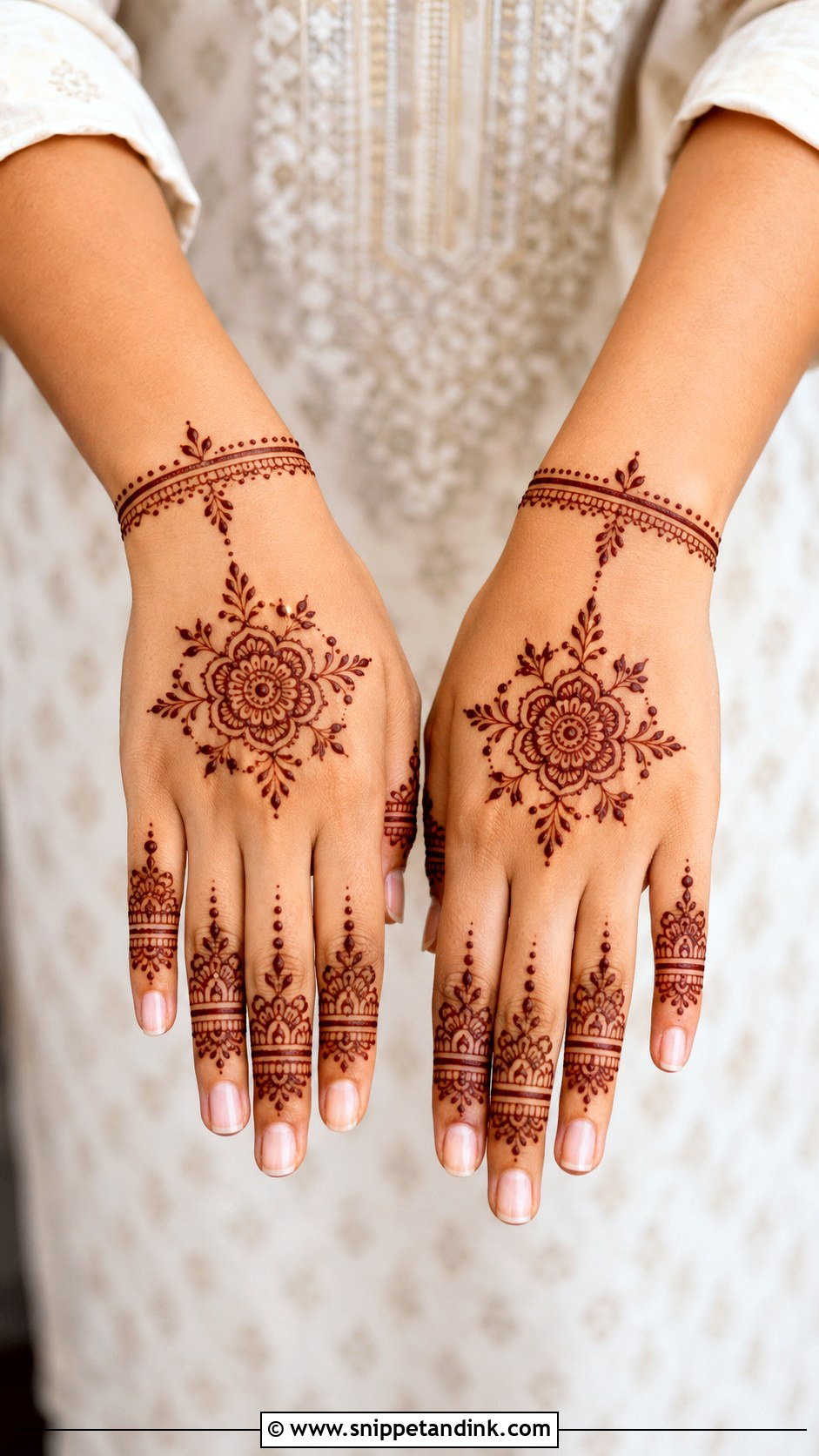
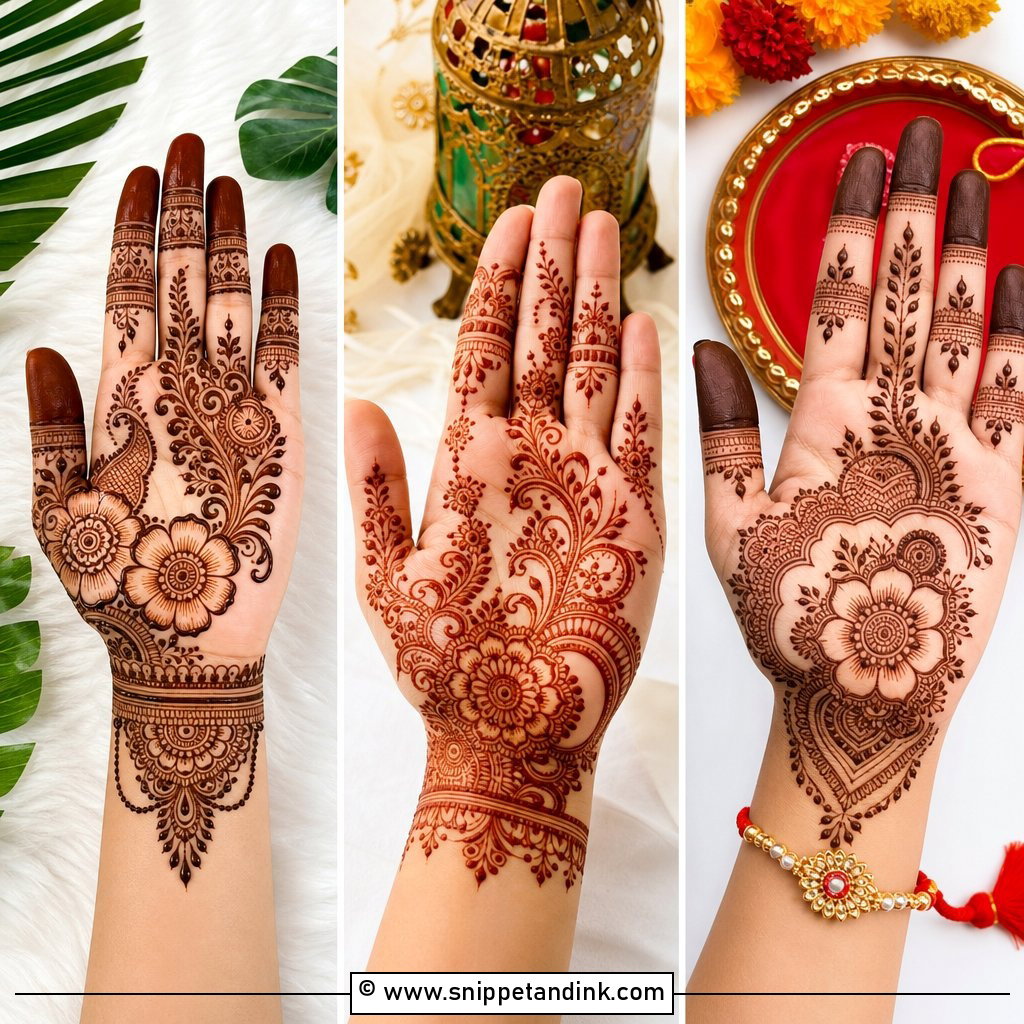
A simple back hand mehndi design starts with a small floral or mandala centre, travels toward the fingers in vines, dots and light leaves, and ends at the wrist in one thin band. Quick to apply, easy to wear. The open skin around each motif is doing half the work, so I don’t fill it in, even when a client asks for “a bit more”. It suits younger girls and bridesmaids who don’t want to sit for hours, and it goes with casual clothes as easily as with a lehenga.
2. Arabic Back Hand Mehndi Design
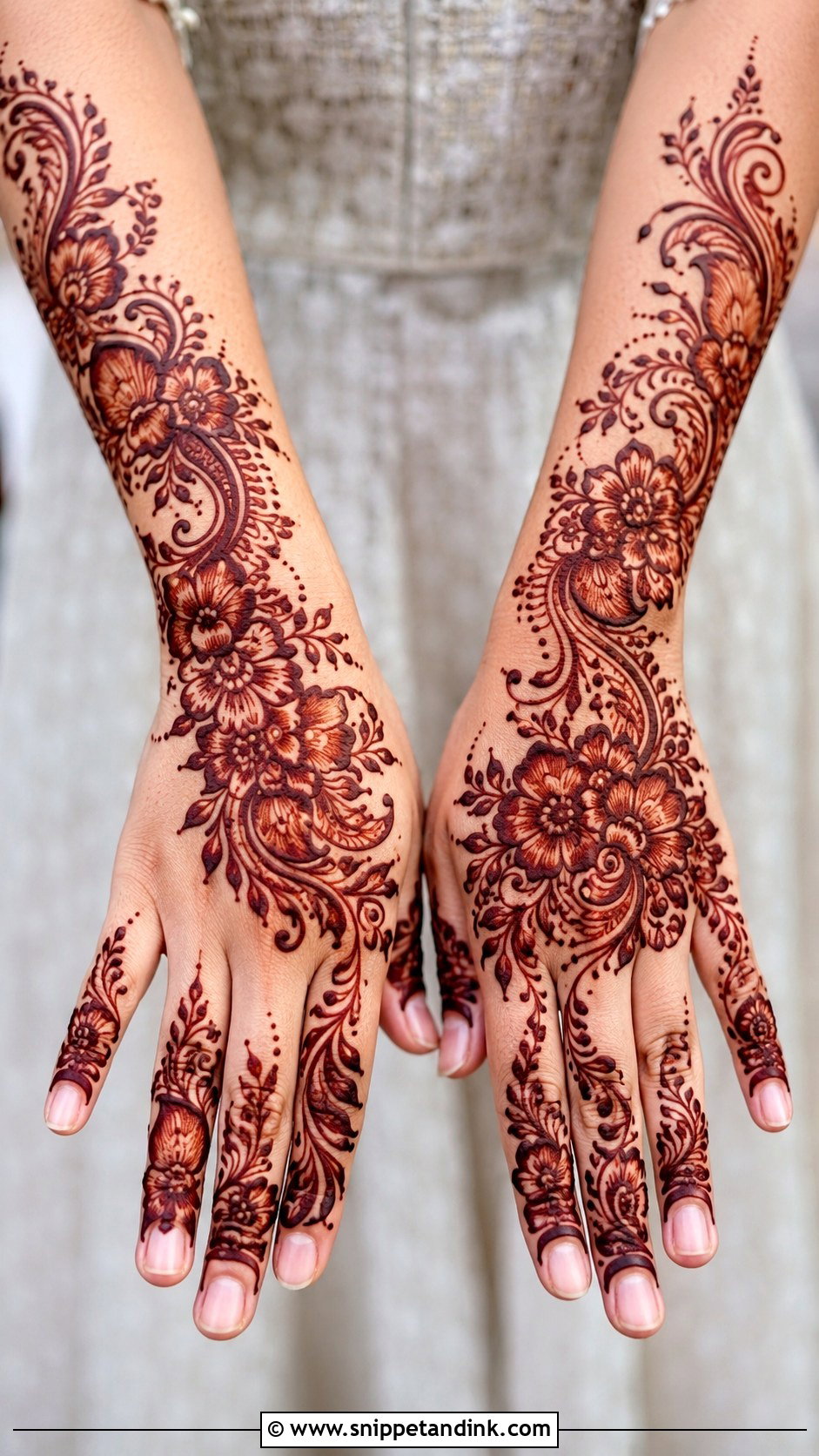
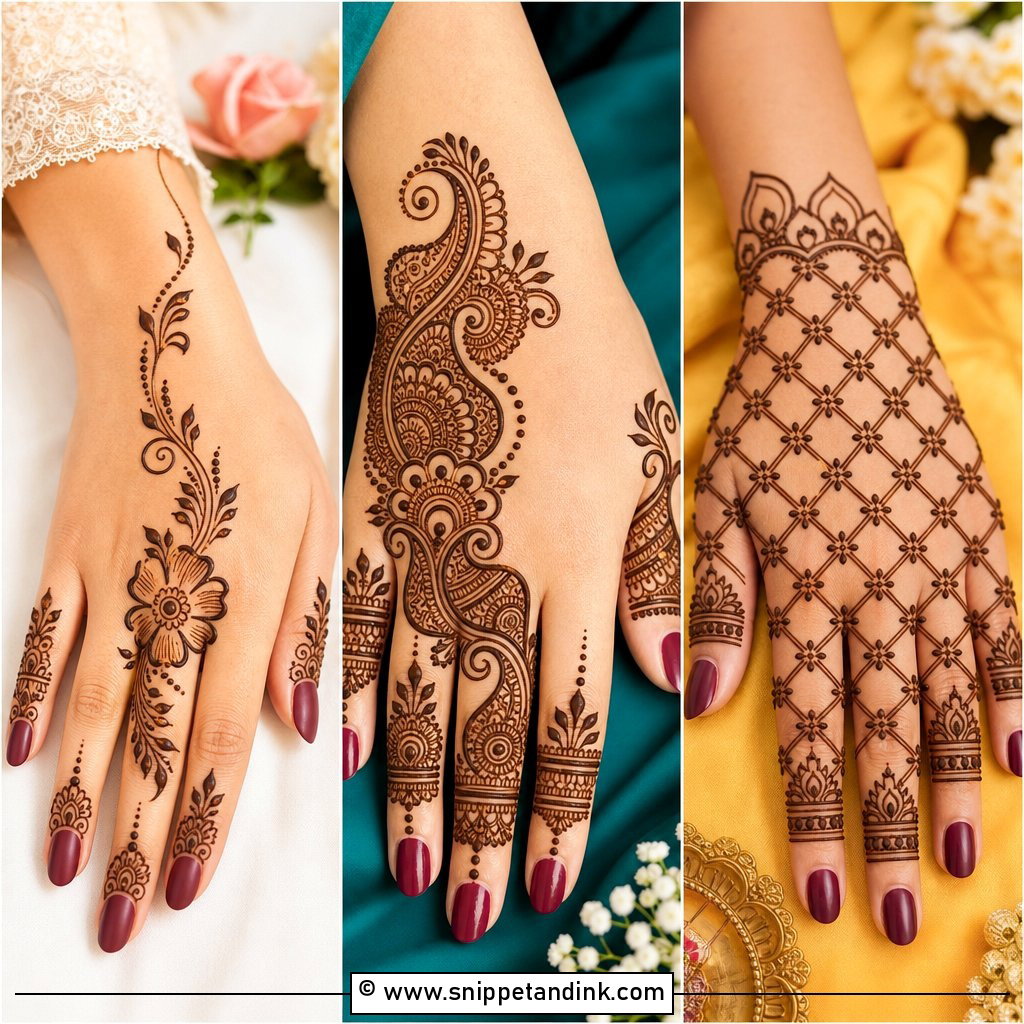
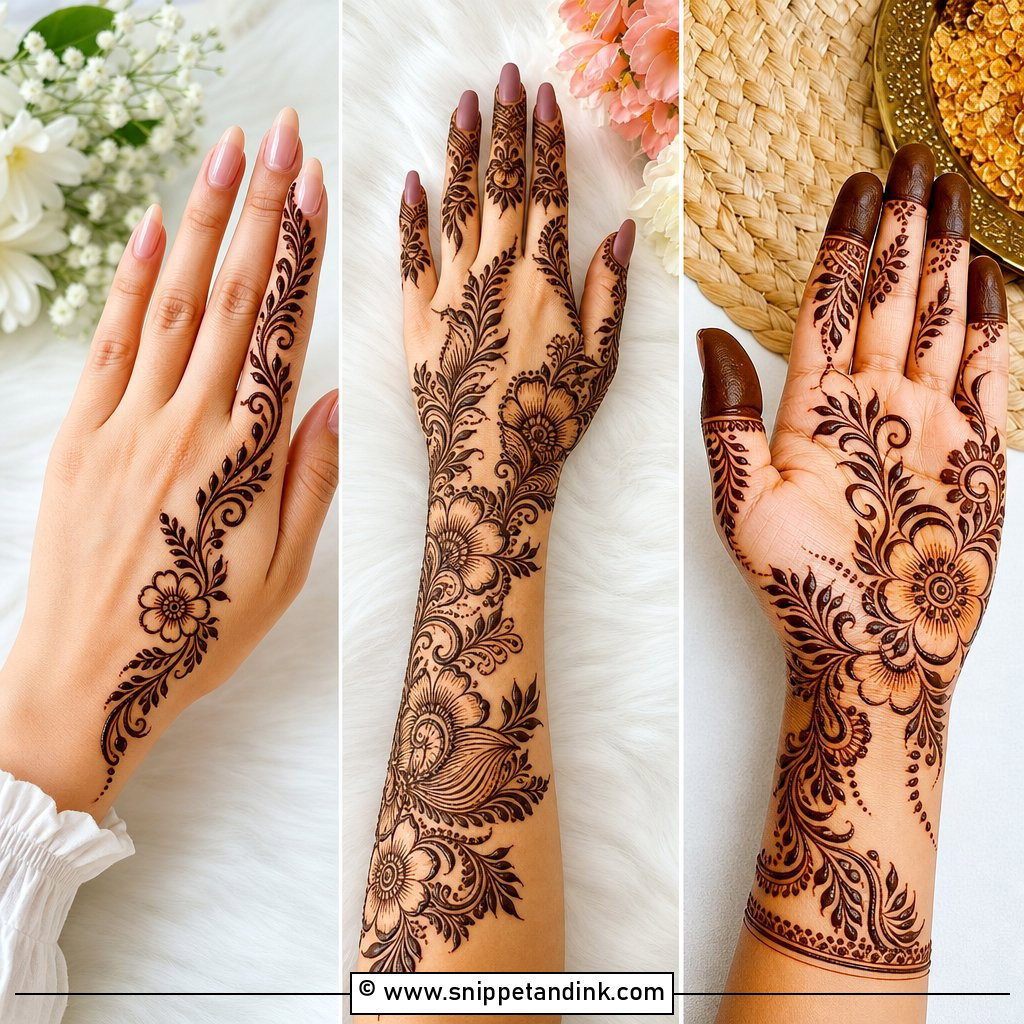
Bold flowers, flowing vines and empty skin: that’s the Arabic formula. The trail usually runs diagonally from the wrist to one side of the fingers, built from large petals, paisleys, leafy curves and shaded strokes. I keep the main flowers bold and save fine lines for borders and fillers only. Thin lines alone look washed out in this layout once the stain settles. Matching leaf chains or half-filled tips finish the fingers. Guests at Eid and family weddings love it because it applies quickly and reads clearly in photos.
3. Full Back Hand Mehndi Design
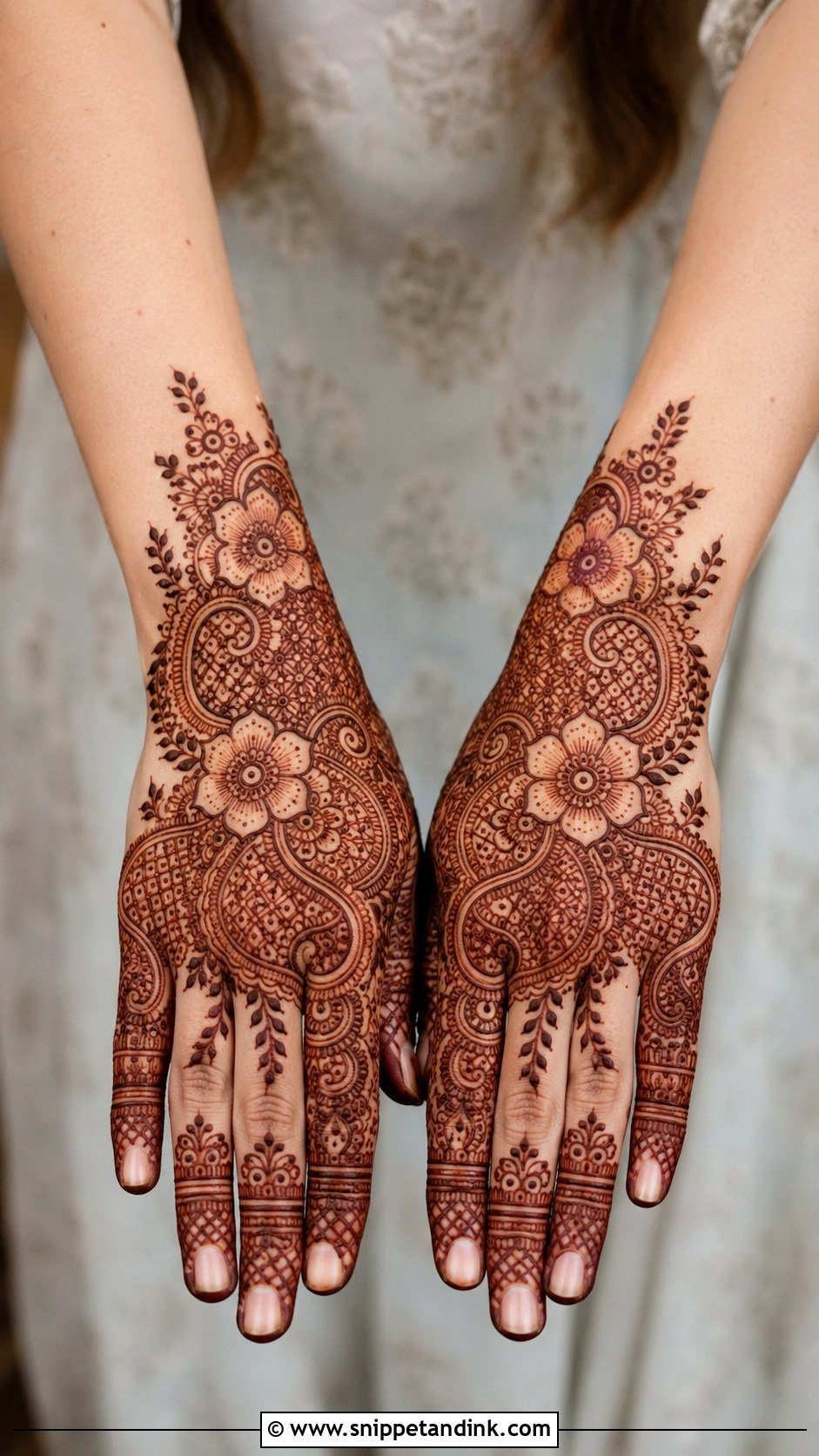
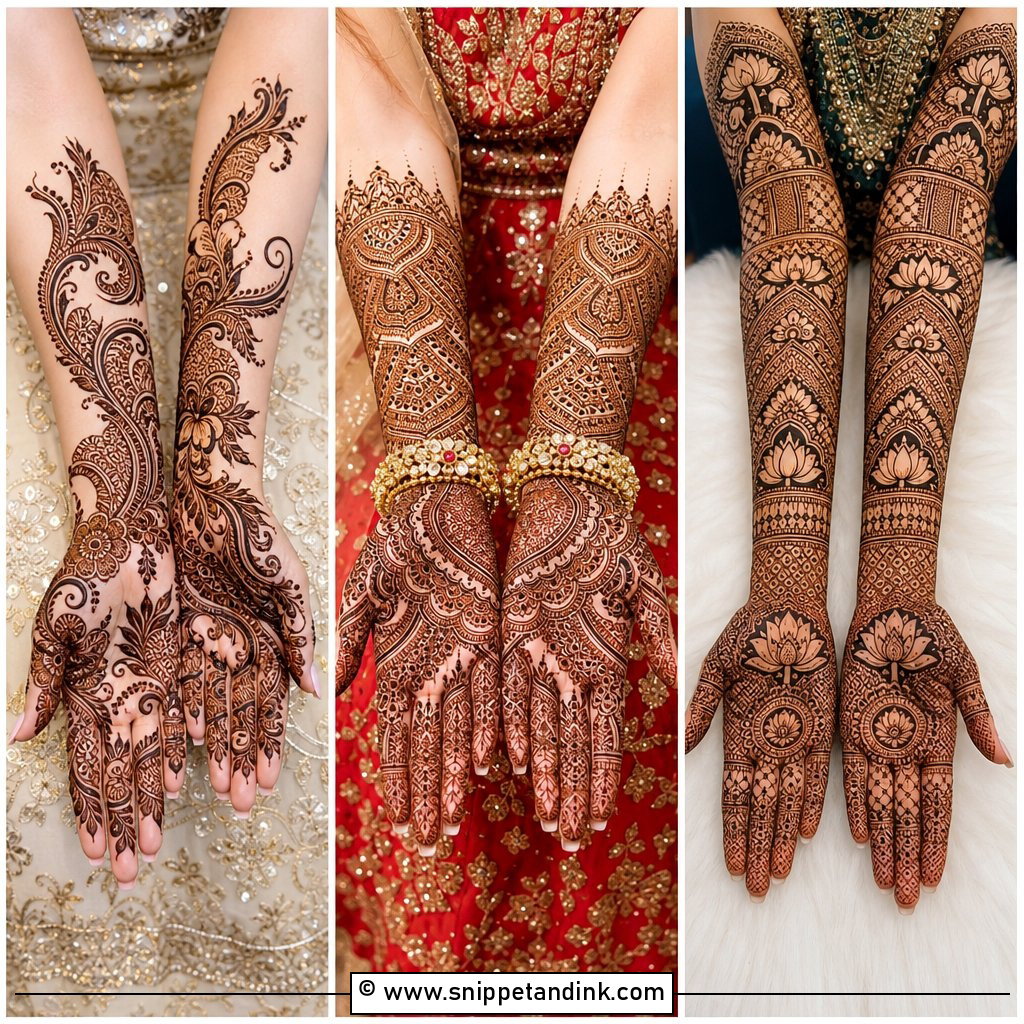
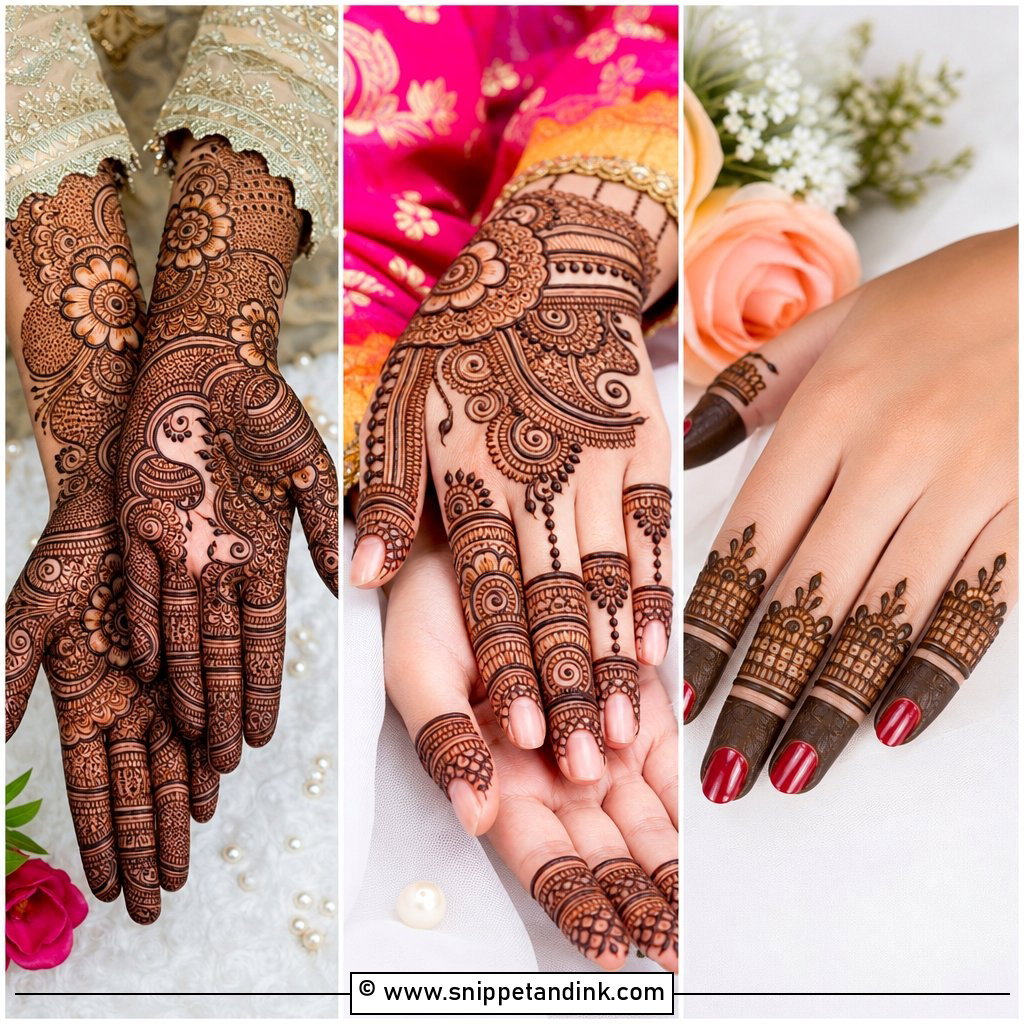
Full coverage runs from fingertips to wrist and sometimes a little onto the forearm, with a central mandala, paisley borders, floral clusters, jaali and heavy finger work. The secret is zoning. Before I fill anything, I mark out one centrepiece, one wrist band and the finger sections, then connect them with fine dots and small leaves. Skip that step and the hand turns into one dark texture after staining. With bangles, rings and a traditional outfit, it carries a lot of presence.
4. Bridal Back Hand Mehndi Design
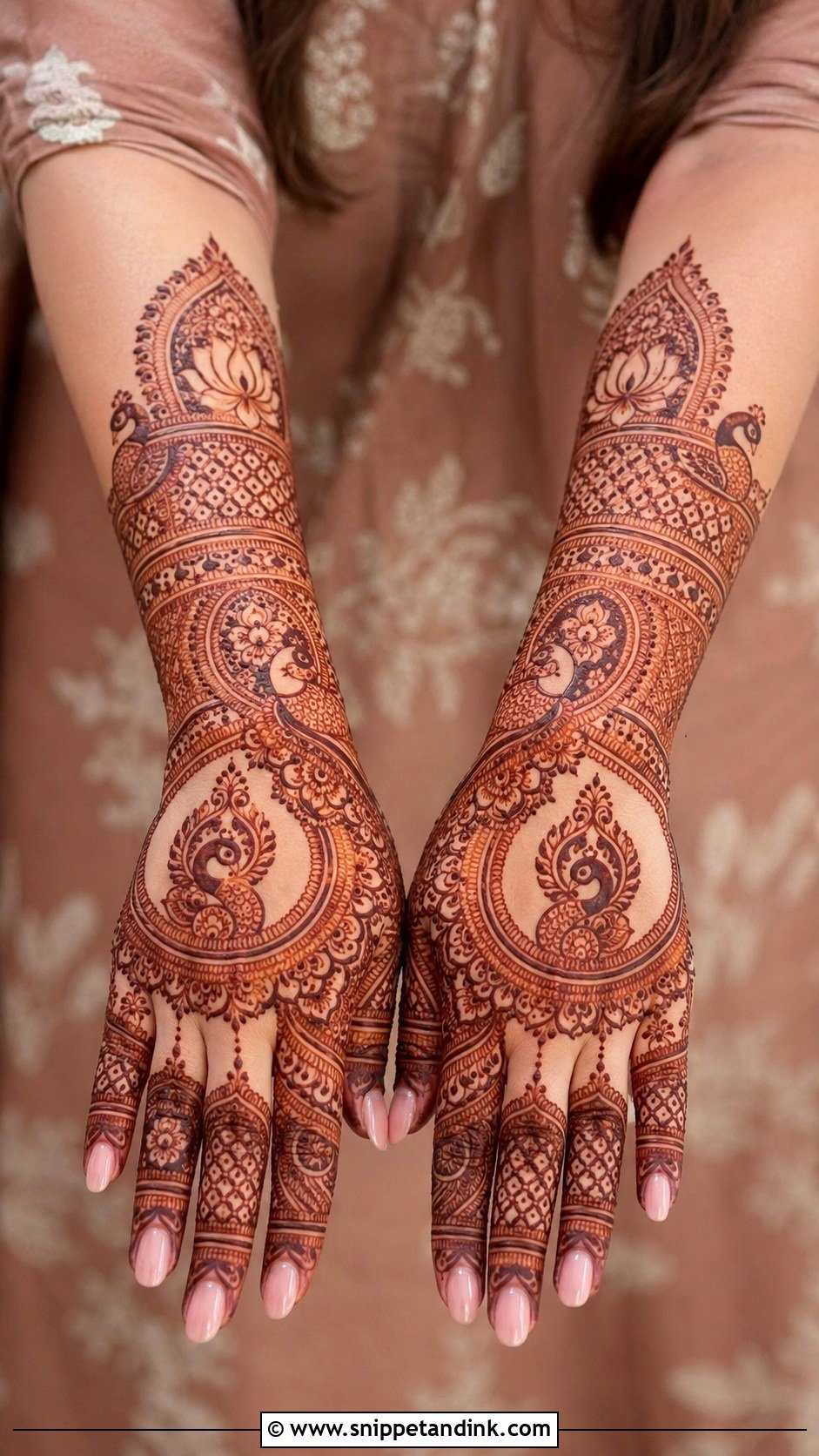
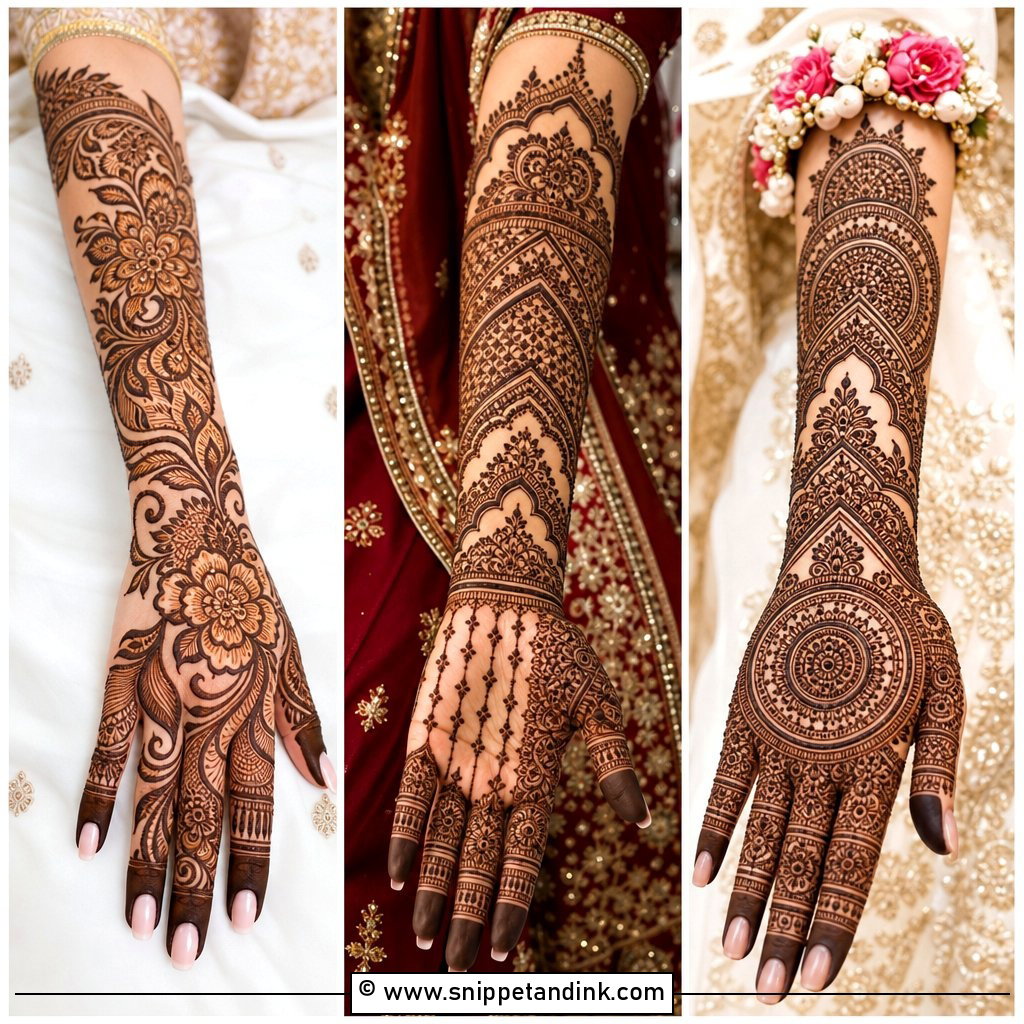
Bridal work is where detail is expected, and it usually runs past the wrist toward the forearm: layered paisleys, lotus motifs, peacocks, bride and groom figures, jaali panels and initials. Fingers are fully decorated and the wrist closes with cuff-like bands. What separates good bridal mehndi from crowded bridal mehndi is contrast. I alternate bold outlines with fine filling so each motif can still be read from a metre away. Classic brides often want dense Indian work, modern ones prefer open spaces and cleaner borders, and both look right with red, gold, ivory or jewel-toned outfits.
5. Mandala Back Hand Mehndi Design
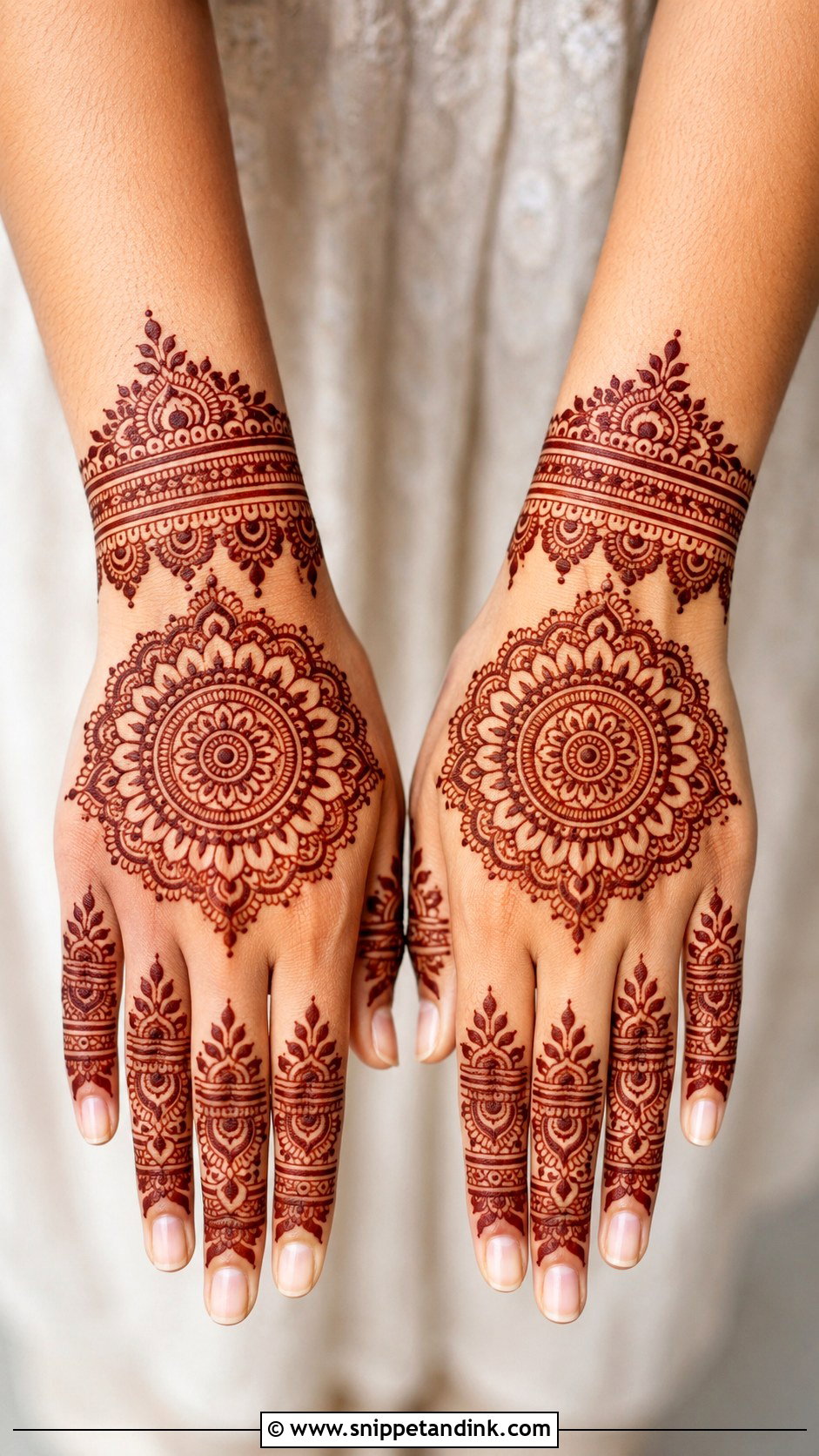
A mandala gives the hand a calm centre point, with petals, dots, scallops and fine rings radiating out from the middle. Small hands suit it especially well, because one tidy circle makes the whole hand look neat. Matching finger bands or leafy tips finish it. For a modern take, I draw the mandala bold and leave open skin around it rather than chasing it into every corner. Symmetry lovers should start here.
6. Flower Back Hand Mehndi Design
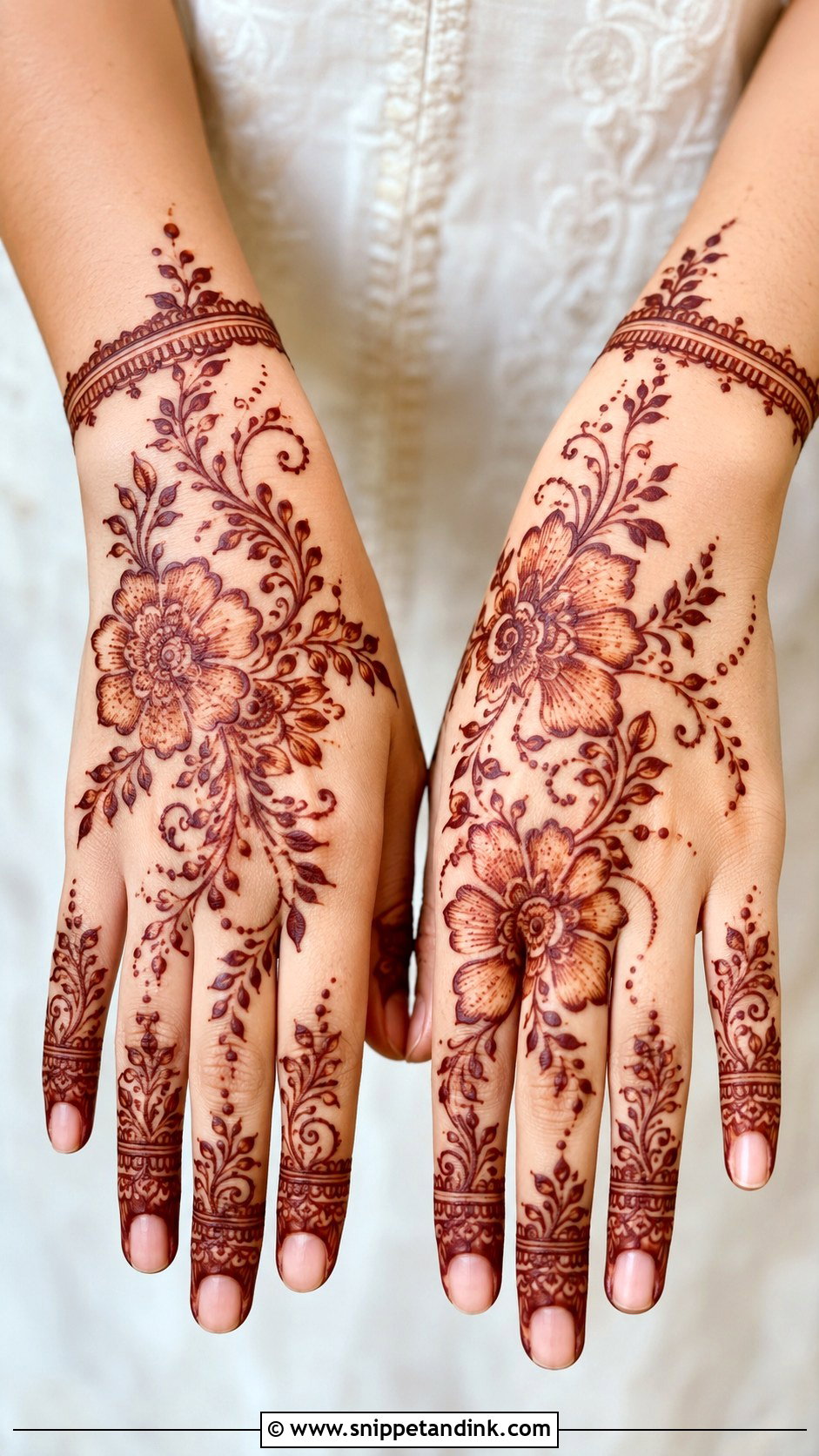
Soft petals instantly make a hand feel festive. One or two large blooms sit near the centre or side of the back of the hand, with smaller flowers trailing toward the wrist and fingers. Roses, lotuses, daisies and abstract florals all fit. Keep it simple with open petals, or add shading, dots and fine veins for an engagement or Diwali. The thing I watch is connection: every flower should join the next through a leaf or stem, otherwise the design looks like scattered stamps.
7. Rose Back Hand Mehndi Design
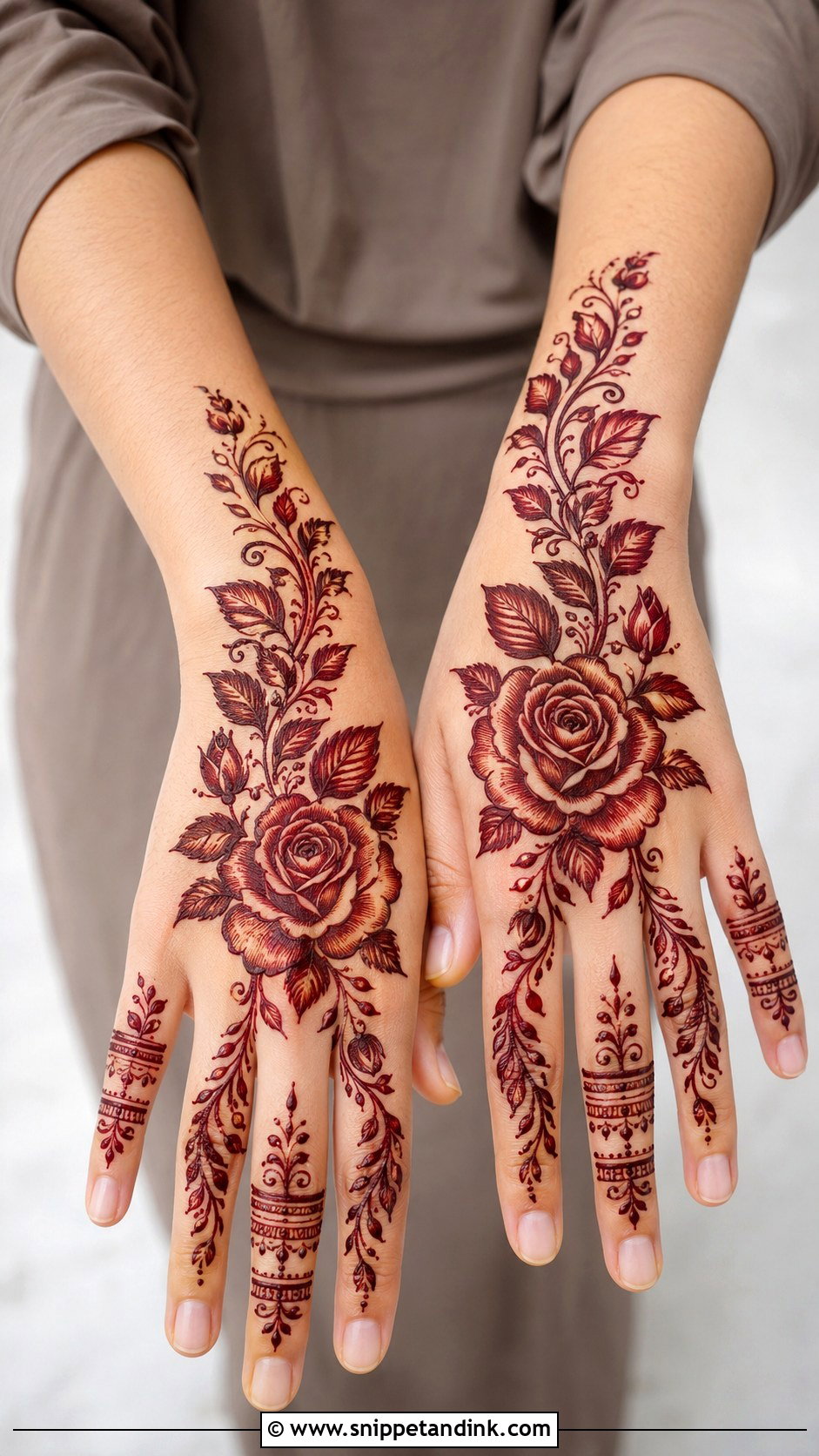
A rose needs only a few supporting elements. Place it near the wrist, the centre or the side, then extend with curved leaves and small buds. Fine spiral petals make it fuller, and shading on the outer edges adds depth. Roses sit naturally in Arabic and Indo-Arabic layouts because they read clearly against bare skin. On the fingers, small rosebuds, leafy rings or slim bands keep the theme going. If your outfit has floral embroidery, this is the one I’d point you to for an engagement or bridal shower.
8. Lotus Back Hand Mehndi Design
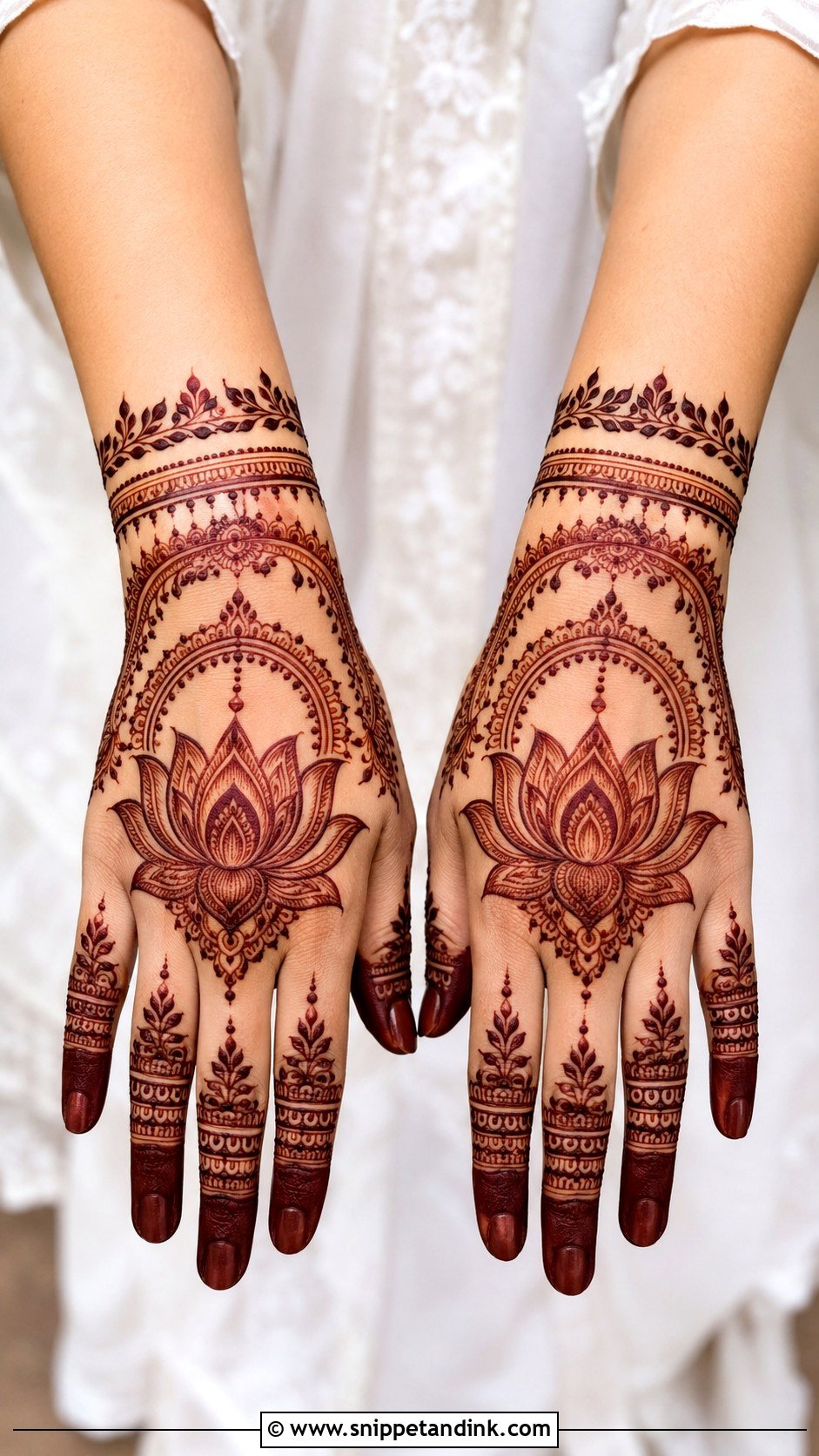
A lotus near the wrist or centre, surrounded by vines, dots and ornamental curves, has a traditional calm about it. Draw the petals open and bold for a modern hand, or fill them with fine lines for a richer Indian finish. I draw the outermost petals slightly longer than the inner ones; drawn the same length, a lotus reads as a generic flower once it stains. Pair it with mandala rings, half-flower fingertips or a bracelet border.
9. Peacock Back Hand Mehndi Design
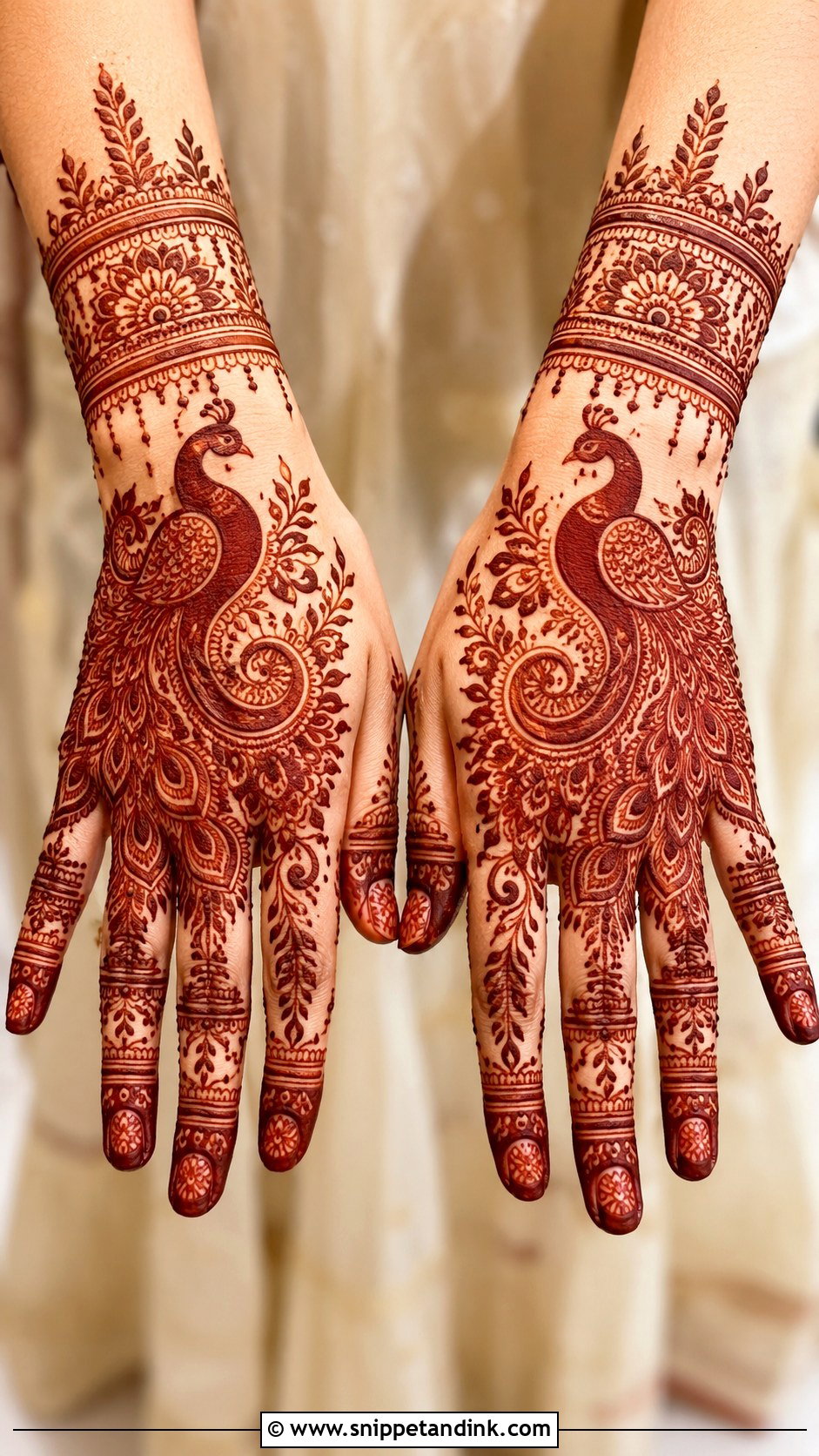
One clear peacock, not three. That’s my rule on the back of the hand, where space is tighter than on the palm. The bird crosses the centre with its feathers spreading toward the wrist or fingers, supported by paisley curves, feather lines, dots and floral fillers. Feather-inspired bands or leafy trails on the fingers keep the theme consistent. It’s the motif families ask for most for brides and close relatives, because it feels rooted in tradition.
10. Paisley Back Hand Mehndi Design
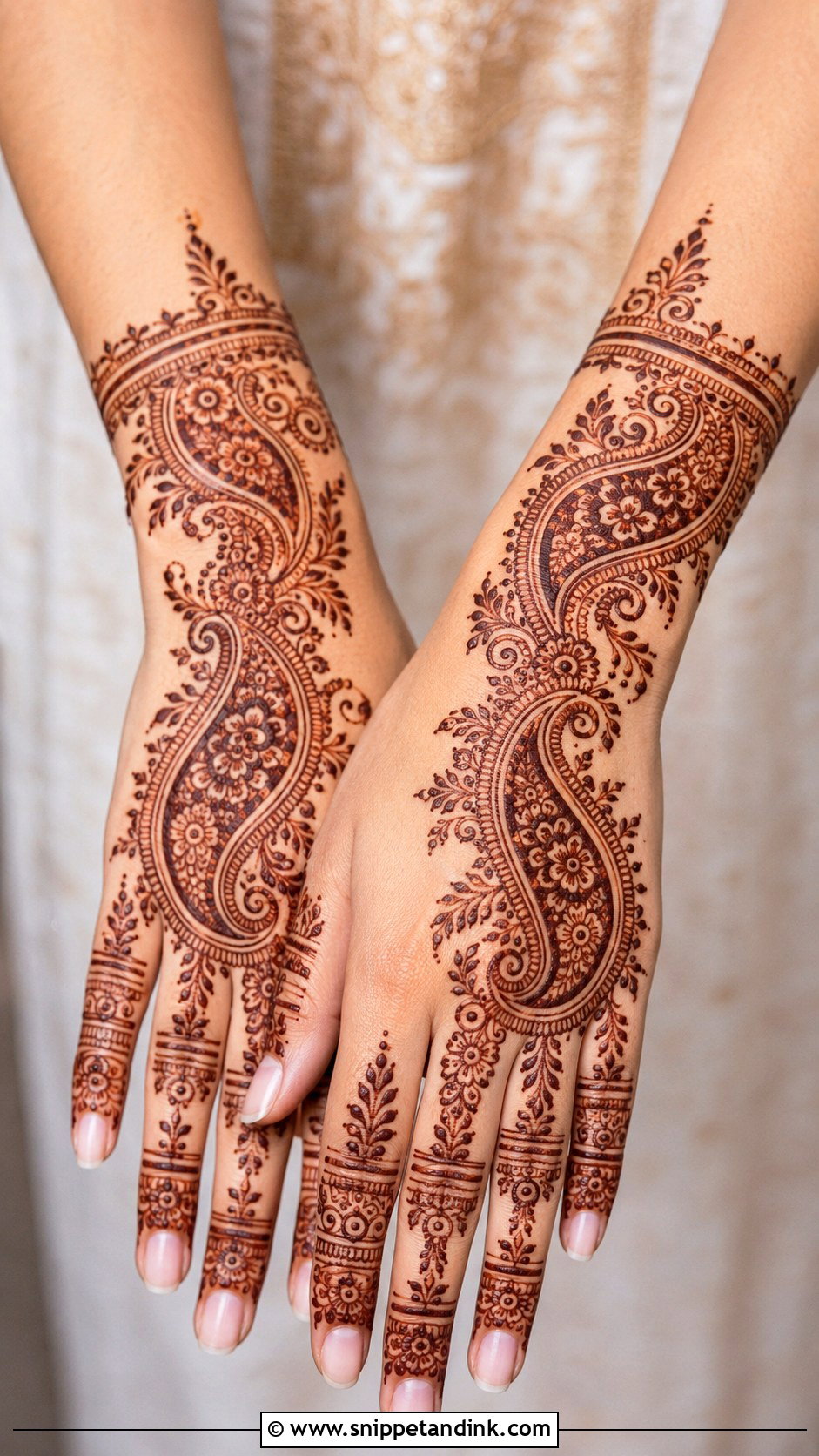
Paisleys follow the natural curve of the hand, which is why they’ve stayed in mehndi for so long. A trail can start at the wrist and curve up toward the fingers, with each paisley filled with tiny florals, dots, checks or fine curved lines. I give the outline of each paisley a slightly heavier line than its filling, so the shape survives once the stain darkens. Small leaves and finger bands complete the hand, light or bridal as you like.
11. Jaali Back Hand Mehndi Design
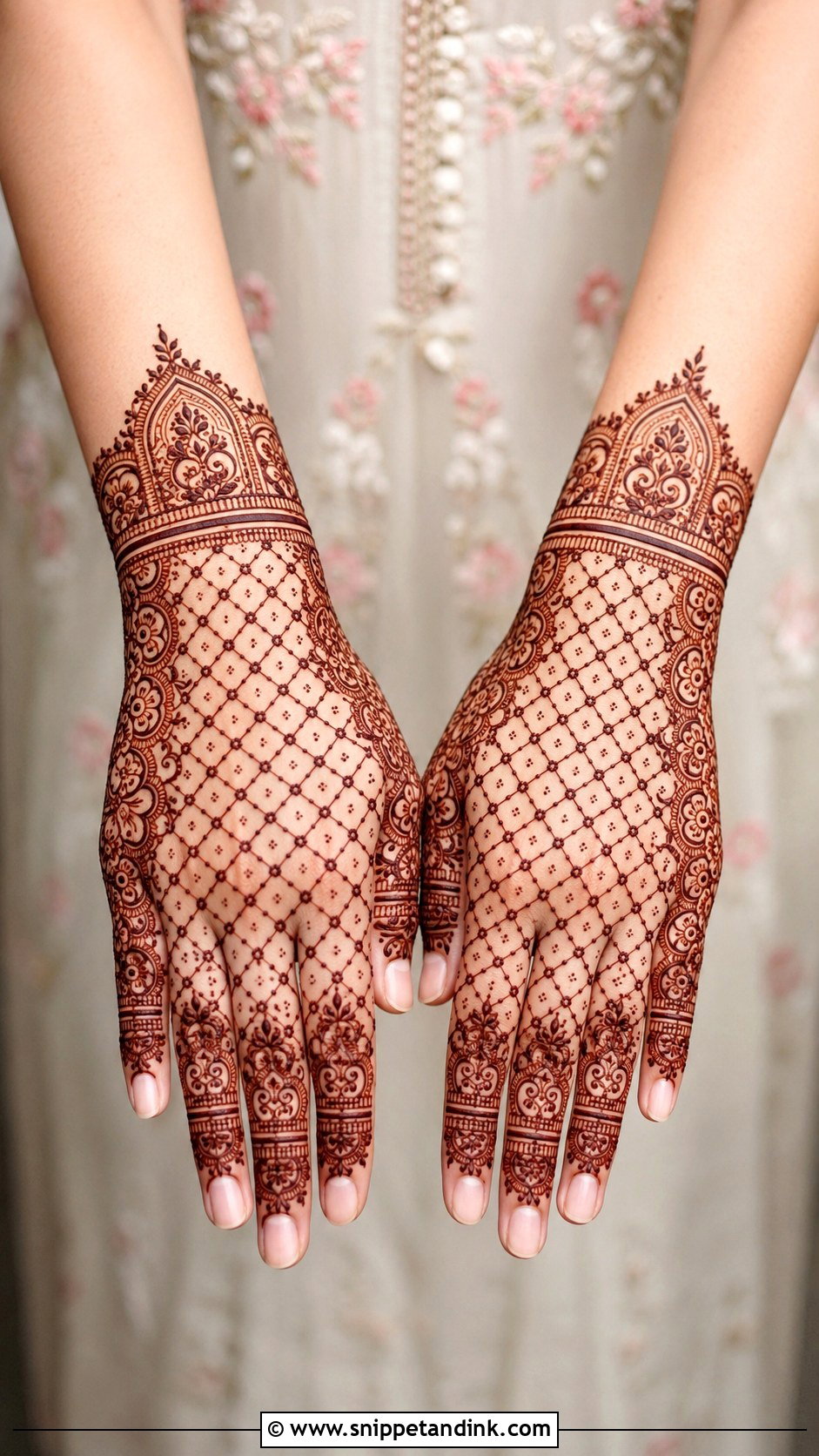
Jaali makes lace on the skin. The mesh can cover the centre of the back of the hand, the fingers or a panel running from wrist to hand, with small dots, flowers or leaves set inside the grid. Even grid lines matter more than anything else here. If two lines run too close, the paste spreads slightly as it dries and they merge into a dark streak, so I leave most squares empty and fill only a pattern of them. Combine it with mandalas, Arabic flowers or bracelet bands, and it frames rings nicely.
12. Bracelet Back Hand Mehndi Design
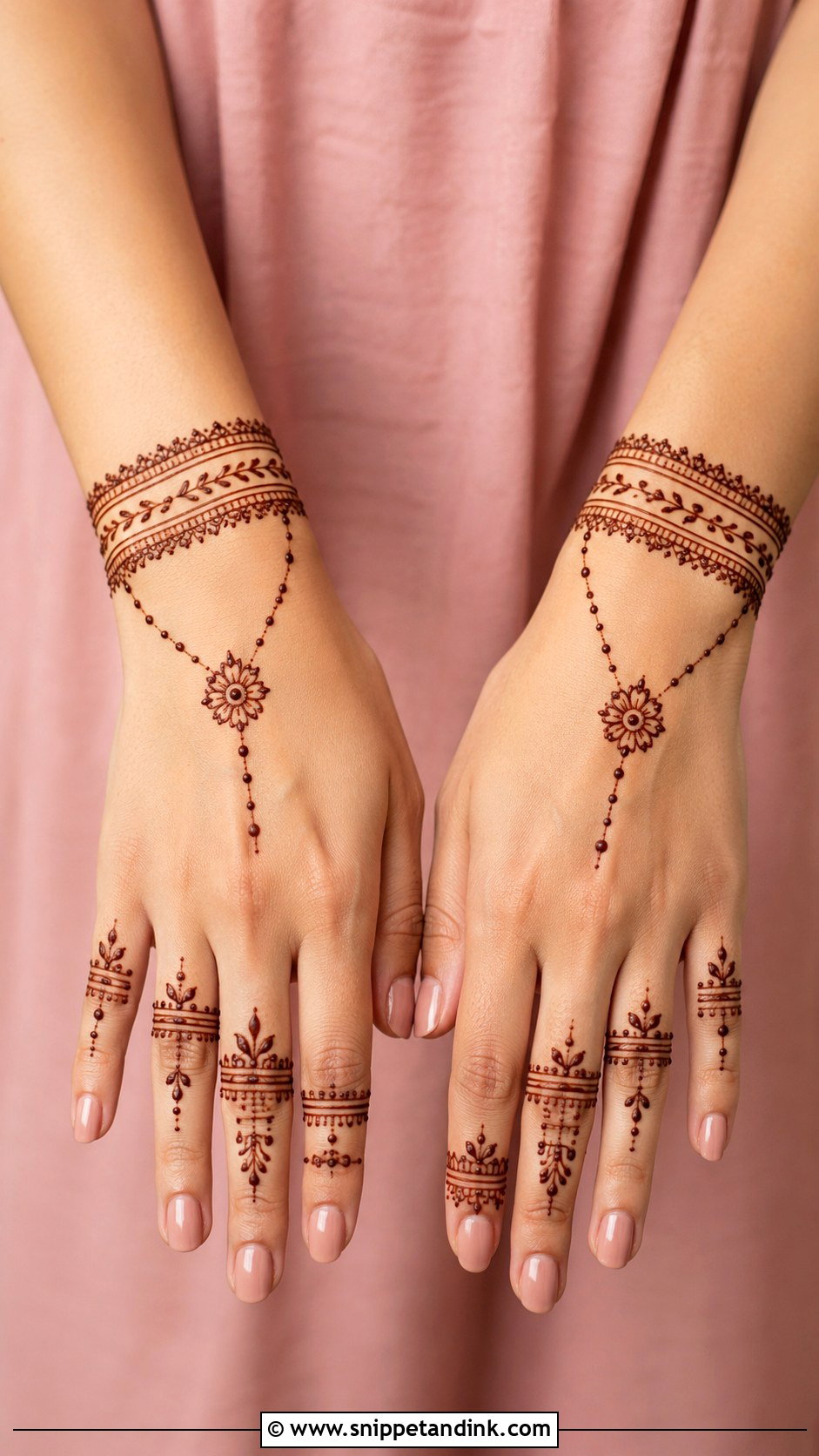
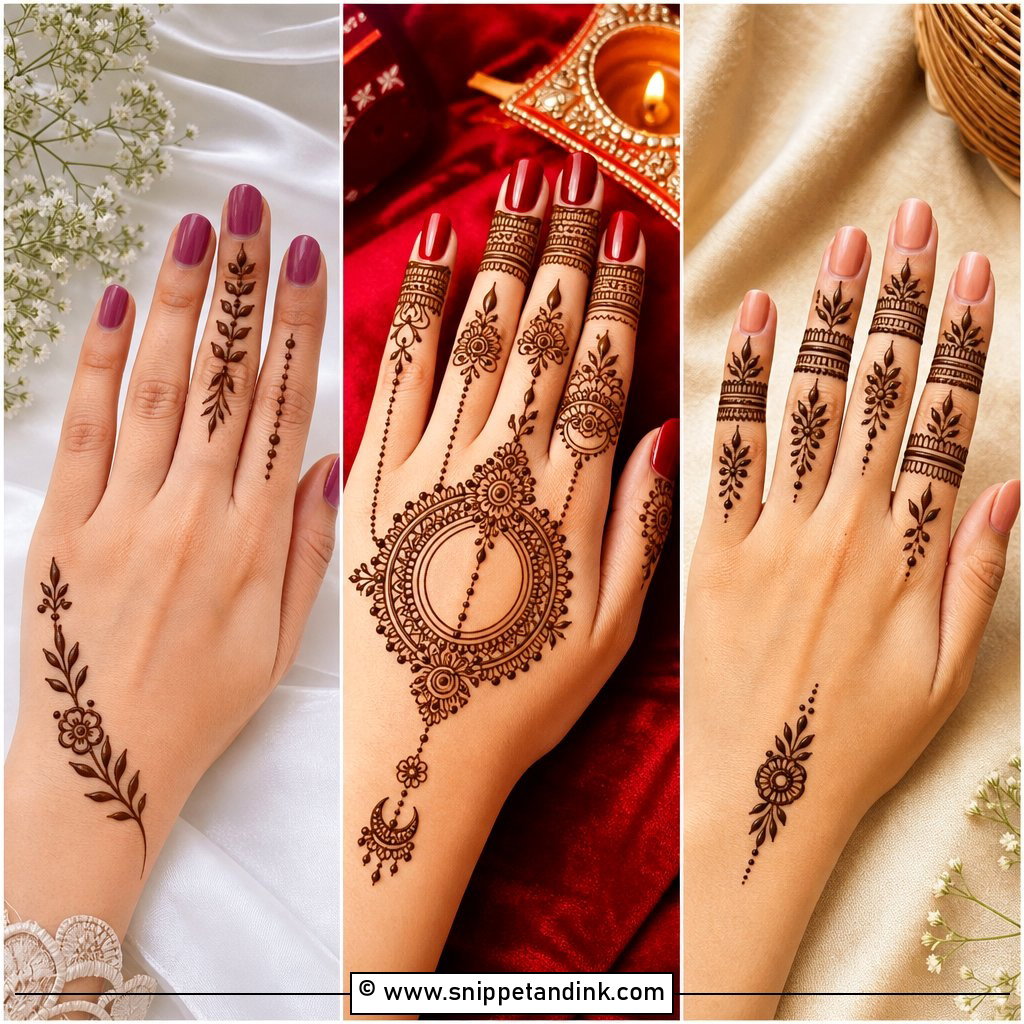
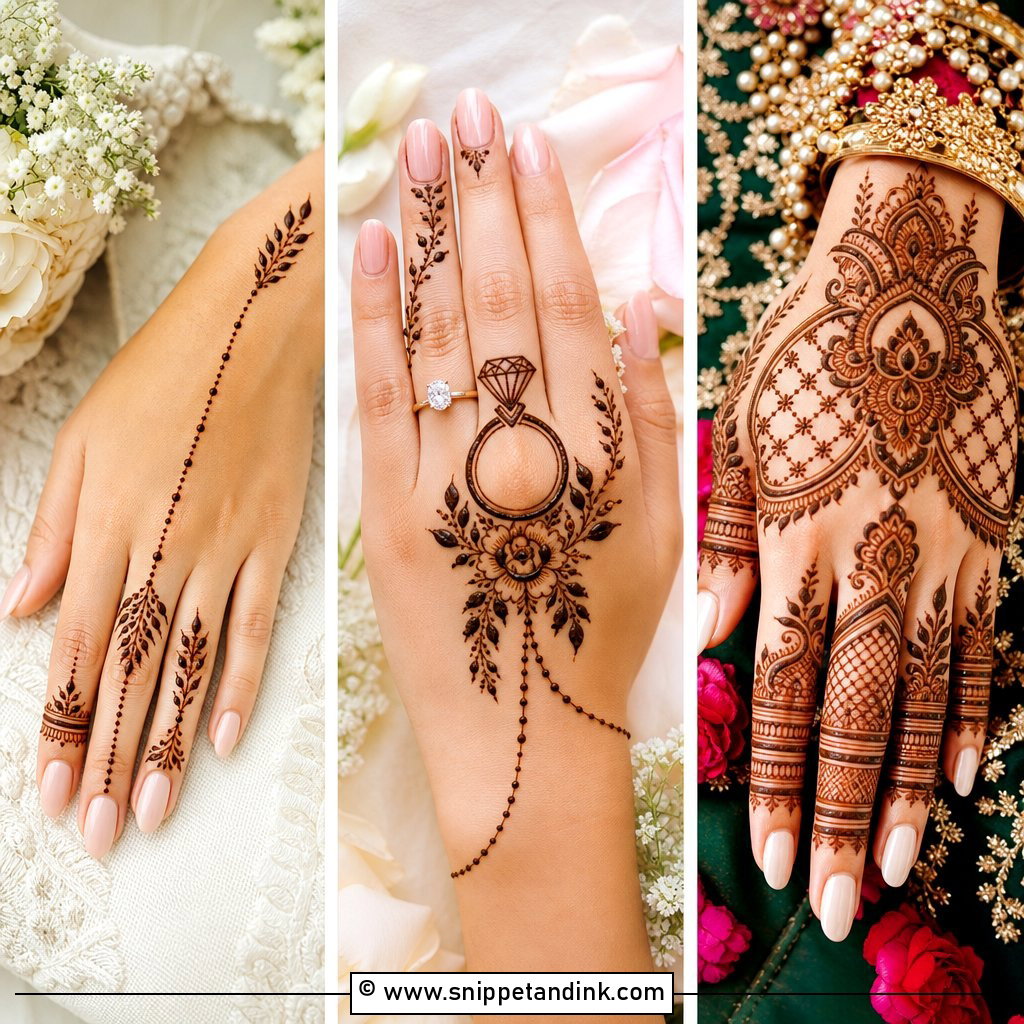
A bracelet back hand mehndi design wraps henna jewellery around the wrist and links it to the fingers. One or more detailed bands at the wrist lead through a chain pattern to a central flower, mandala or ring motif on the hand. It feels decorative without full coverage, so it’s a good fit for Eid, Diwali and small functions. Keep the chain thin and neat or the bracelet effect gets lost. I draw the wrist band slightly higher than where real bangles will rest, so you can wear both.
13. Ring Back Hand Mehndi Design
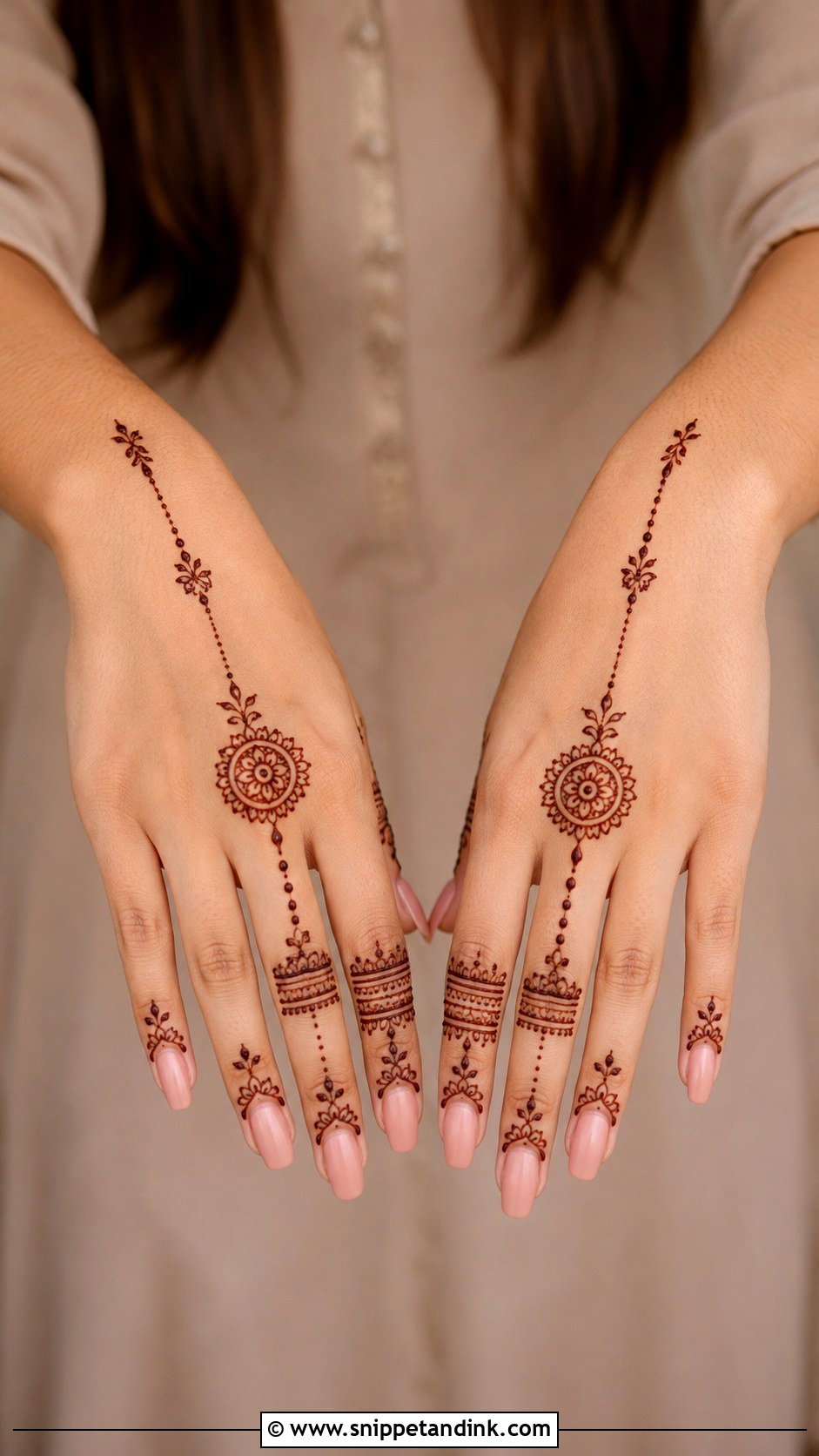
This one concentrates on the fingers and the centre of the hand: ring-like bands around one or more fingers, connected by fine chains to a small mandala, flower or charm motif. The wrist can stay bare or take a slim band. Symmetry is what makes it look like jewellery rather than doodles, so I measure the bands by eye against each knuckle before drawing. It suits parties and minimal mehndi lovers who still want a finished hand.
14. Finger Back Hand Mehndi Design
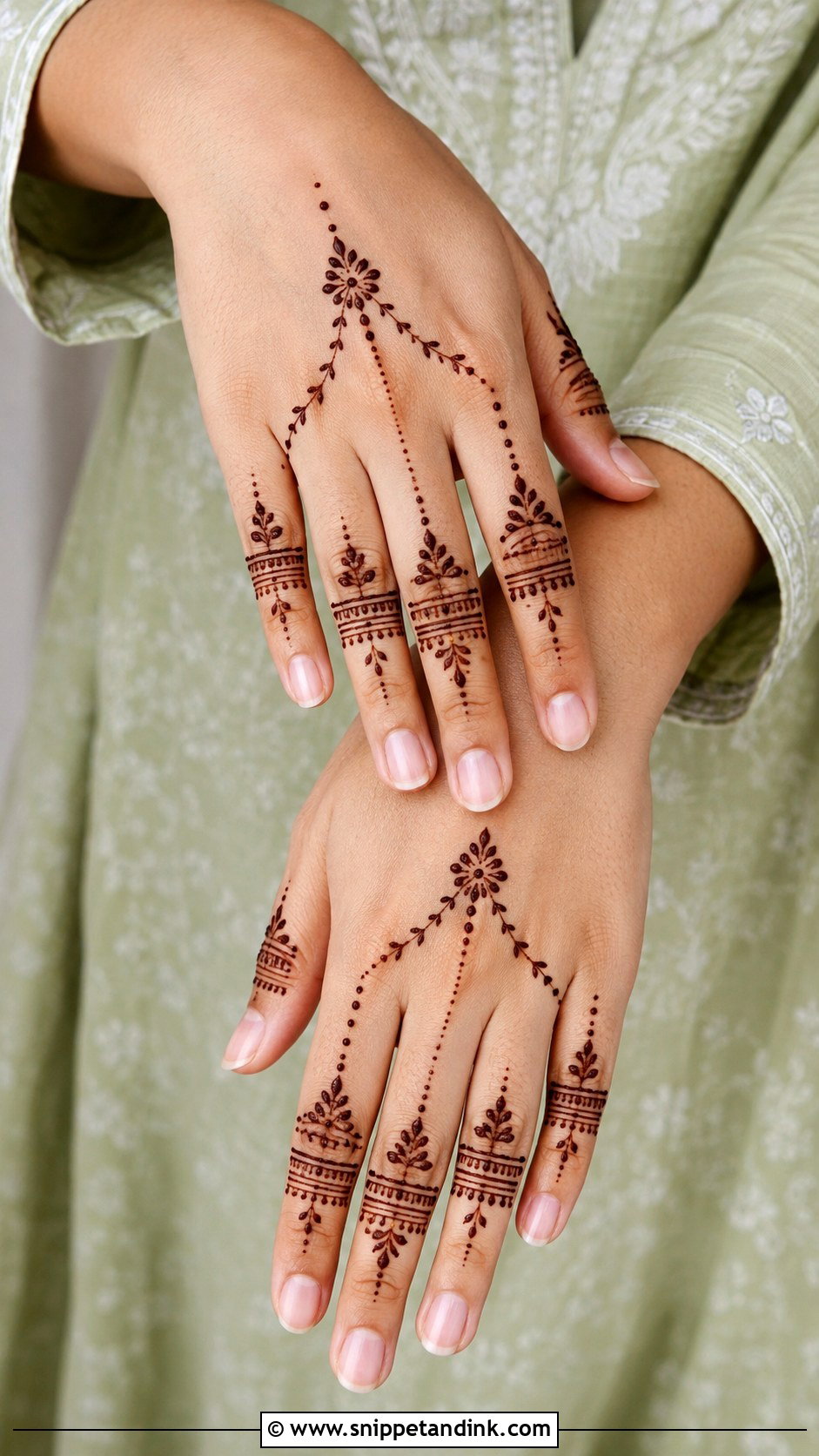
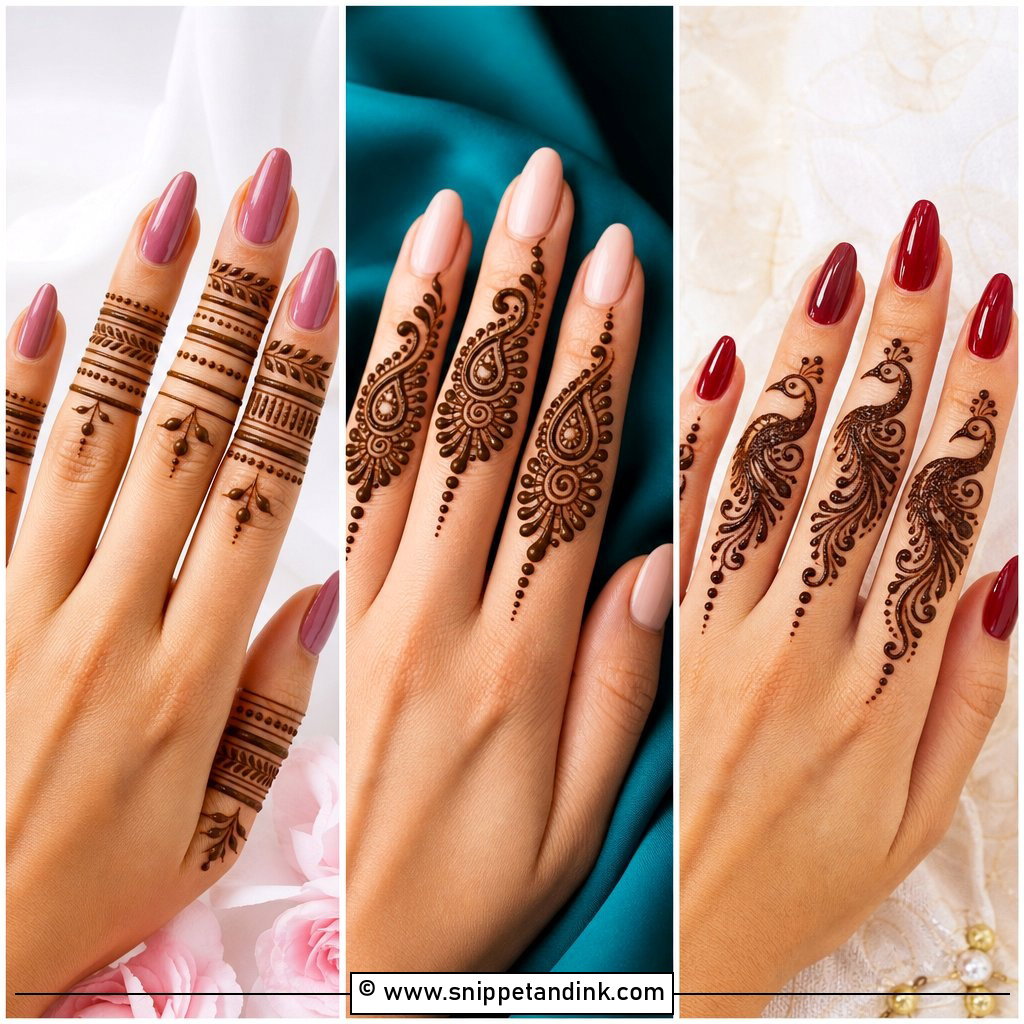
Most of the attention goes to the fingers here, while the rest of the hand stays light. Each finger can carry matching bands, dots, leafy sections, half-flower tips or geometric panels, joined by a small central motif or a thin vine. A tiny wrist detail or a small mandala near the knuckles keeps it from looking unfinished. It’s quick and easy to carry to work during a festival week. Fingertips also take the darkest stain on the whole hand, so a finger-led design looks rich even when the coverage is small.
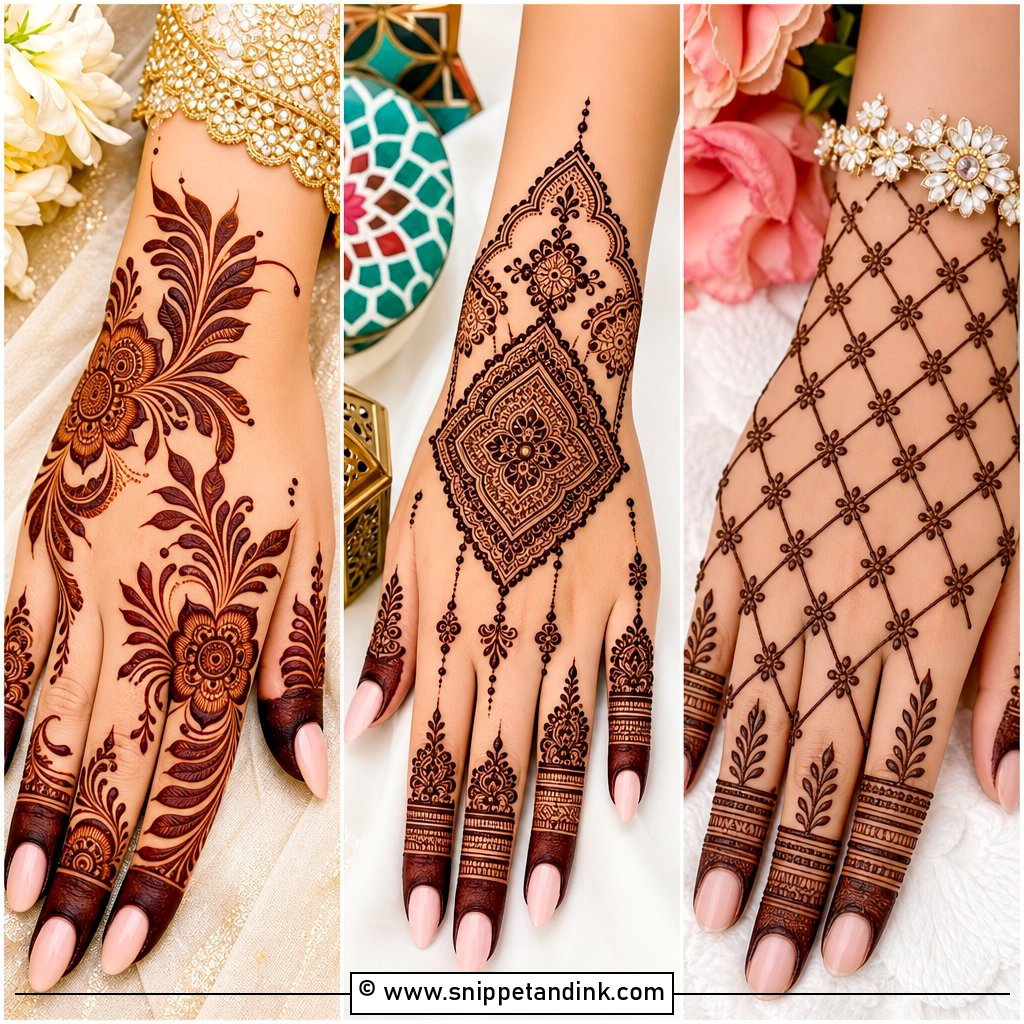

15. Minimal Back Hand Mehndi Design
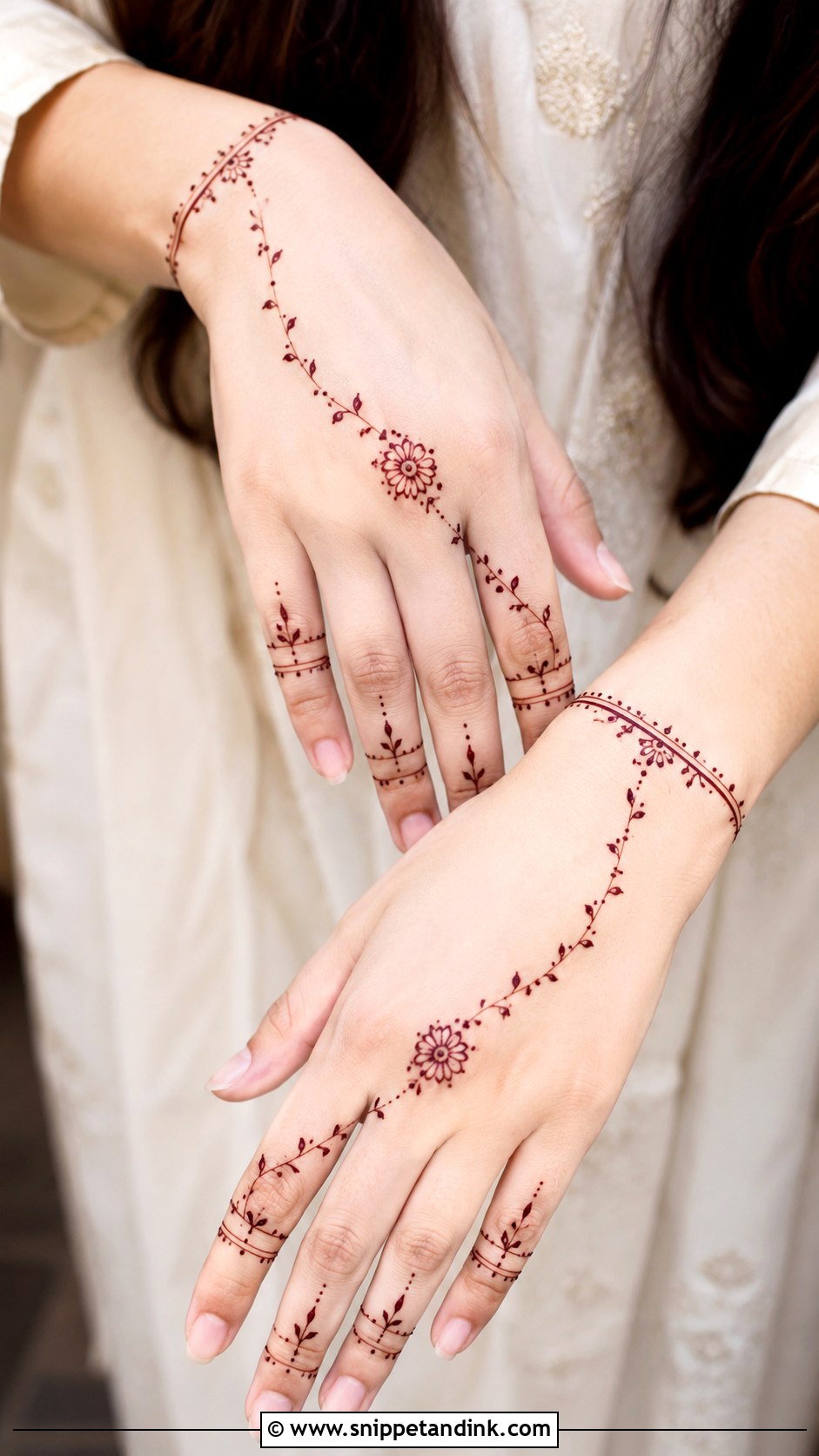
Minimal back hand mehndi uses clean lines, open skin and soft detailing: perhaps a small flower near the wrist, a fine vine across the hand and delicate finger bands. It avoids filling entirely and relies on neat placement. College events, office celebrations and first-time henna all suit it. Short nails and small hands carry it well because nothing overwhelms the shape. Choose thin lines, tiny dots and one clear focal point, and stop there.
16. Modern Back Hand Mehndi Design
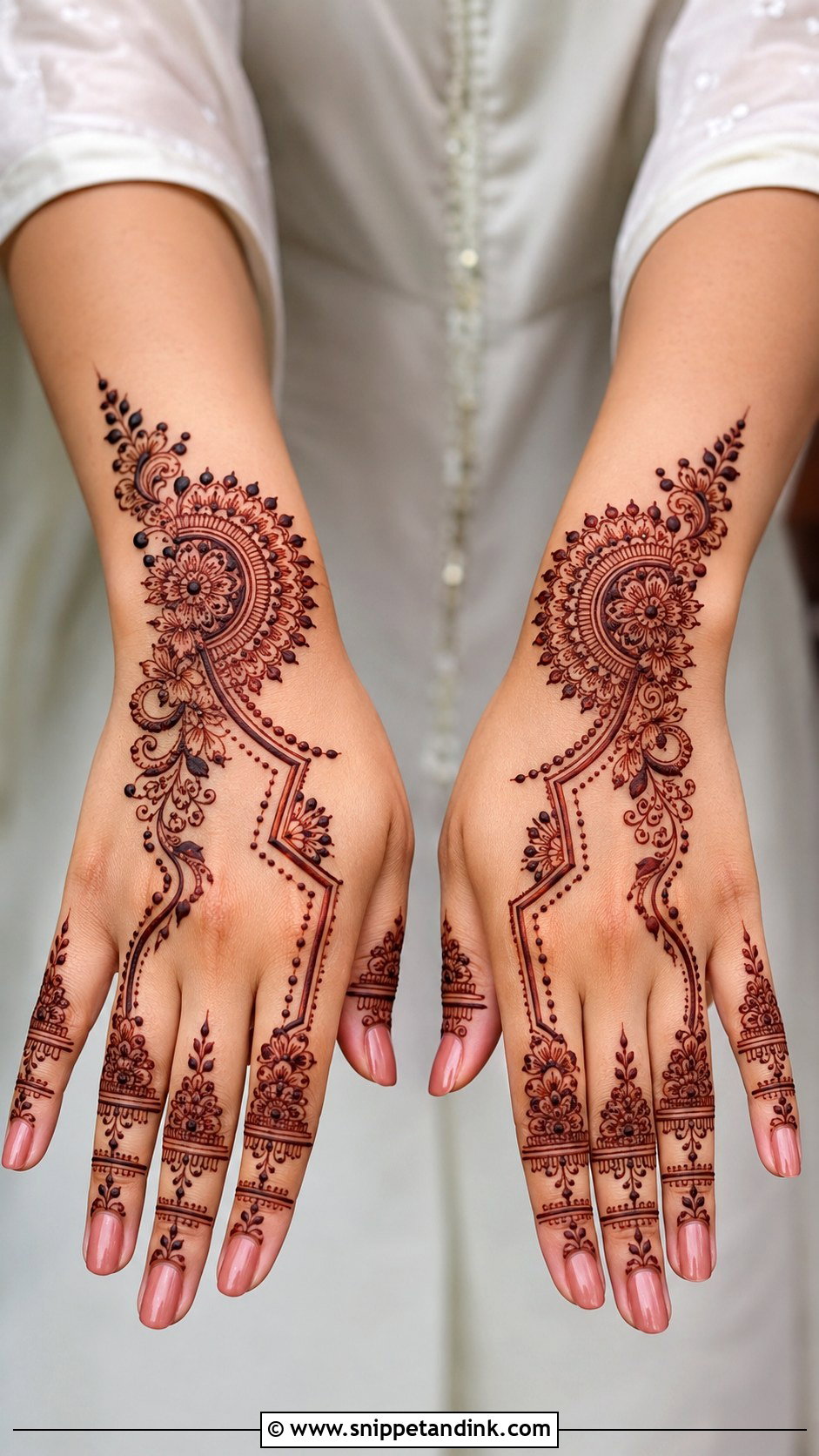
Modern layouts mix traditional motifs with cleaner spacing: a half-mandala near the wrist, abstract florals on one side, fine finger bands, and geometric gaps across the hand. It doesn’t need full coverage to impress. Strong placement and crisp lines carry it, which means the paste has to be smooth and lump-free; any grit in the cone shows as a broken line. Slim bracelet details or dotted chains give it a polished finish for young brides and bridesmaids alike.
17. Stylish Back Hand Mehndi Design
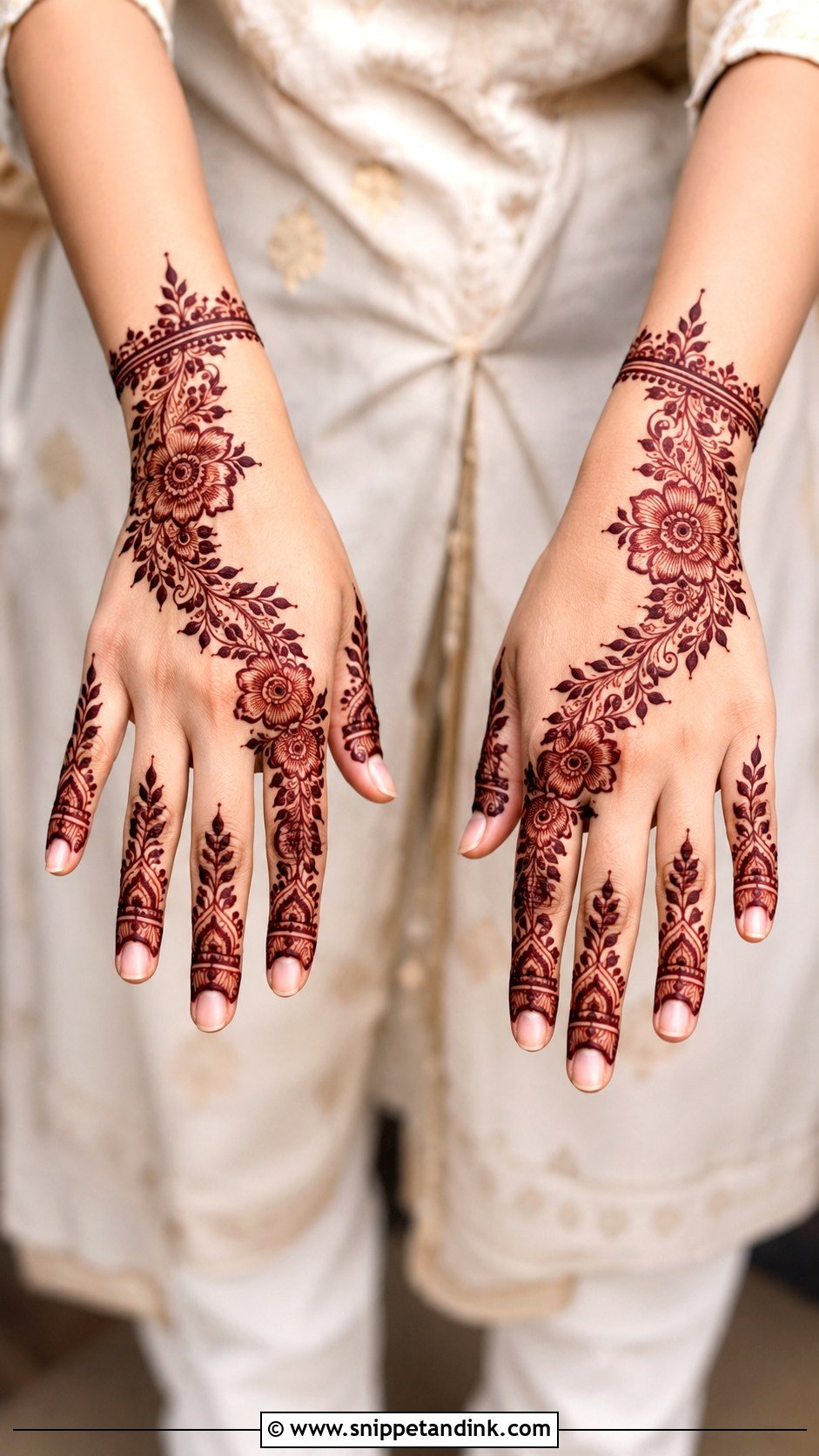
What makes a design read as stylish is contrast between thick outlines and thin inner details, not the number of motifs. A bold floral trail, neat finger work and a bracelet-style wrist finish are the usual building blocks, with the main pattern set diagonally so clean skin stays visible on one side. It’s noticeable without bridal heaviness, a sweet spot for parties, festivals and wedding guests. Keep fillers to a minimum and let the shapes stay clear.
18. Indo Arabic Back Hand Mehndi Design
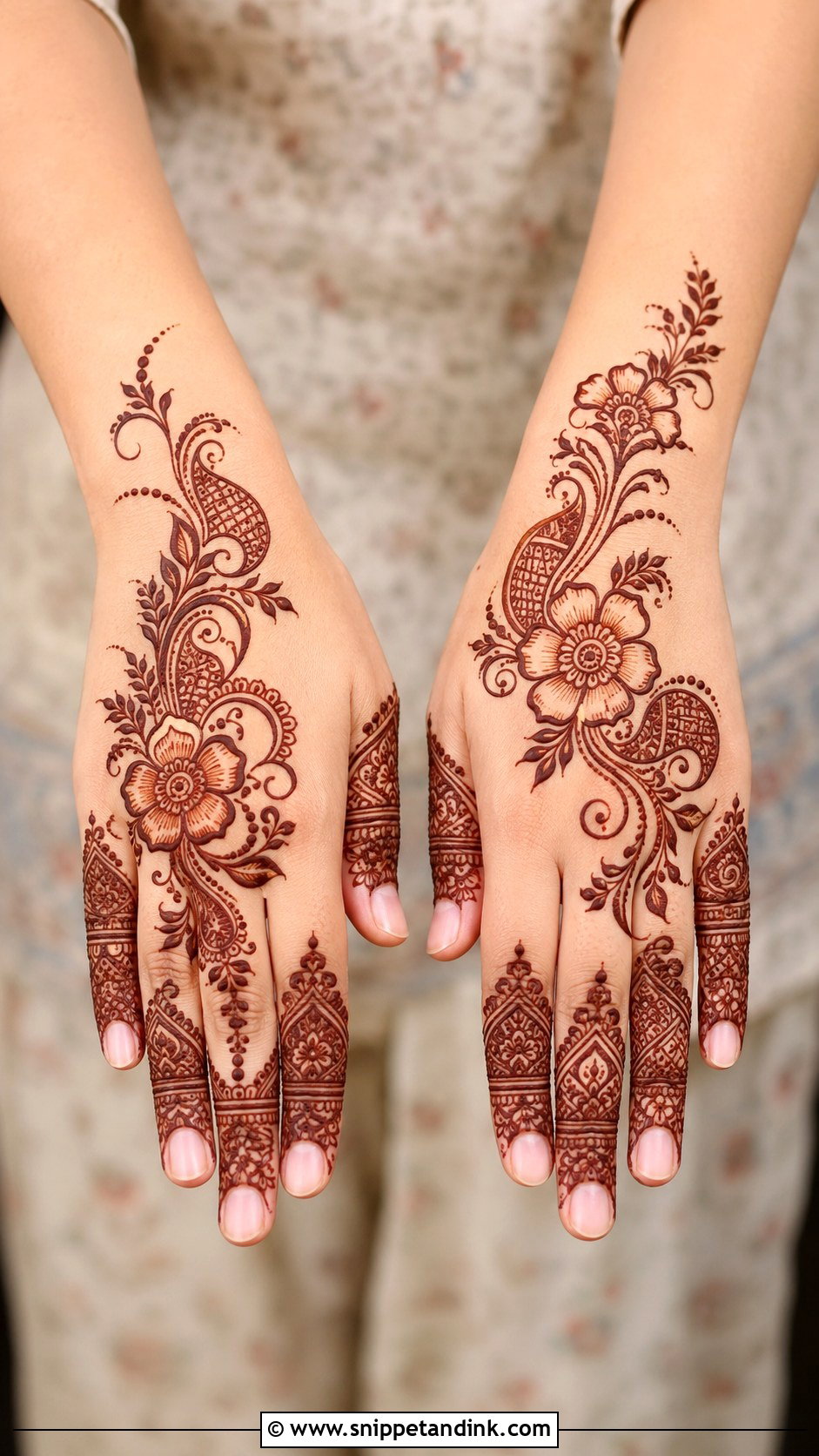
Indo-Arabic brings Arabic flow and Indian detail together: large flowers, paisleys and vines, each filled with fine work inside. It can run diagonally or cover the whole back of the hand with balanced open spaces. Fingers usually get more filling than in a pure Arabic design, while the centre keeps some breathing room. When a bride tells me she wants detail but is nervous about looking heavy, this is the style I sketch first. It suits weddings, Eid and Karwa Chauth.
19. Indian Back Hand Mehndi Design
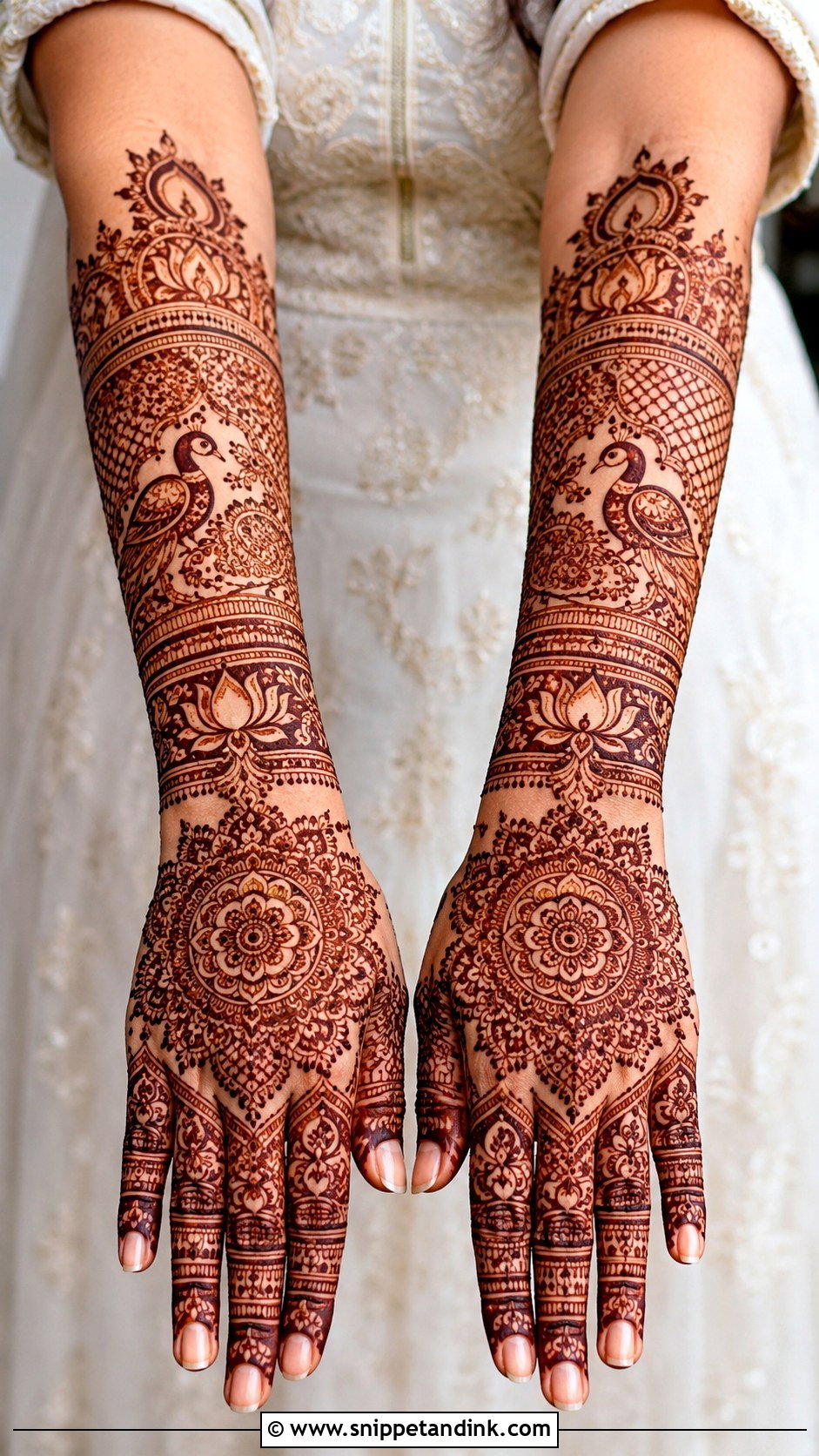
Traditional Indian back hand mehndi covers more skin with smaller repeated patterns: paisleys, peacocks, lotus flowers, mandalas, fine mesh and ornamental wrist bands, all arranged symmetrically. The danger is one crowded texture. I divide the hand into a central motif, detailed fingers and a strong wrist border before starting, and keep a hair of space between sections. Done that way, the design turns a deep maroon after a day or two and every part is still readable.



20. Moroccan Back Hand Mehndi Design
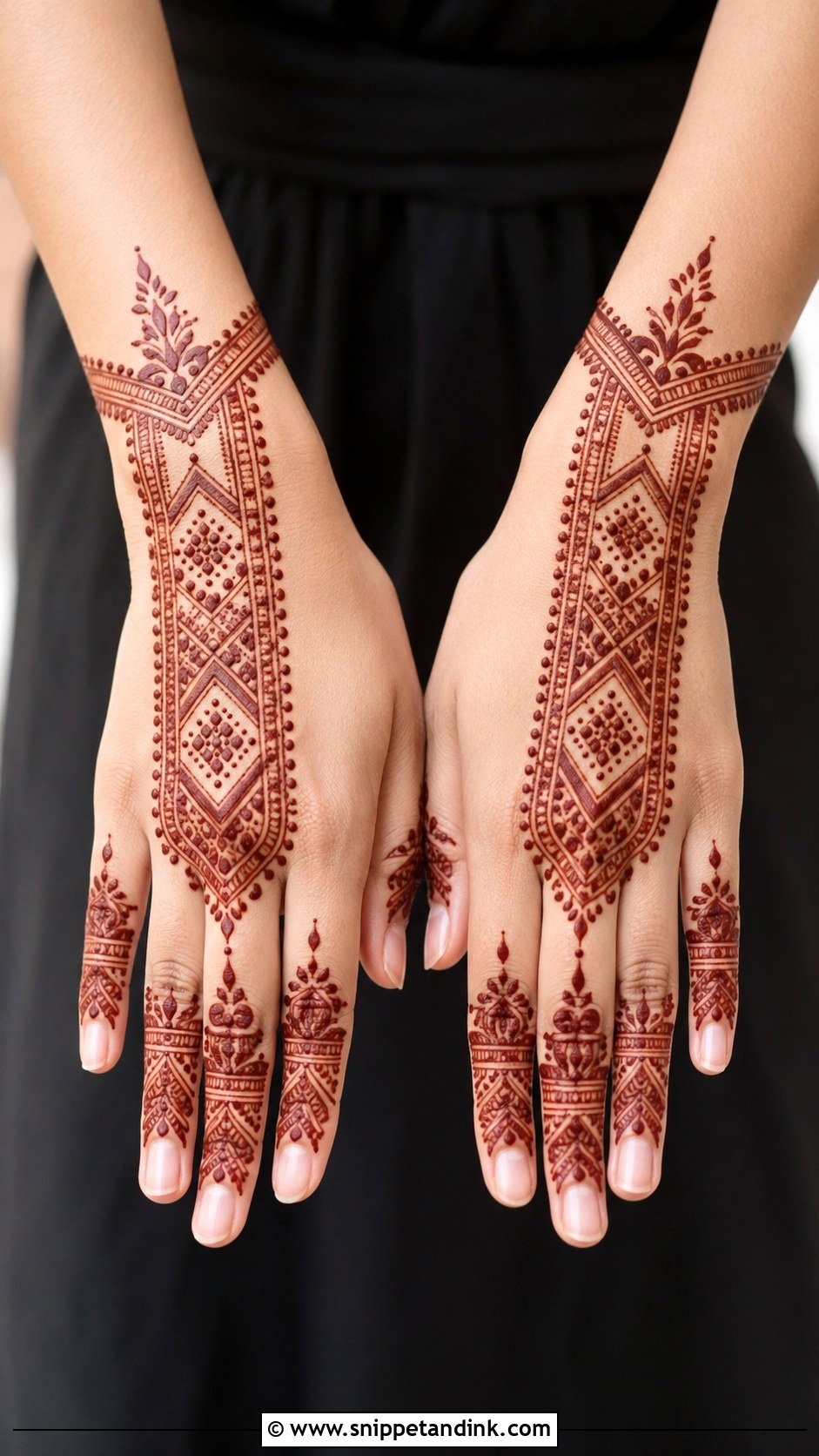
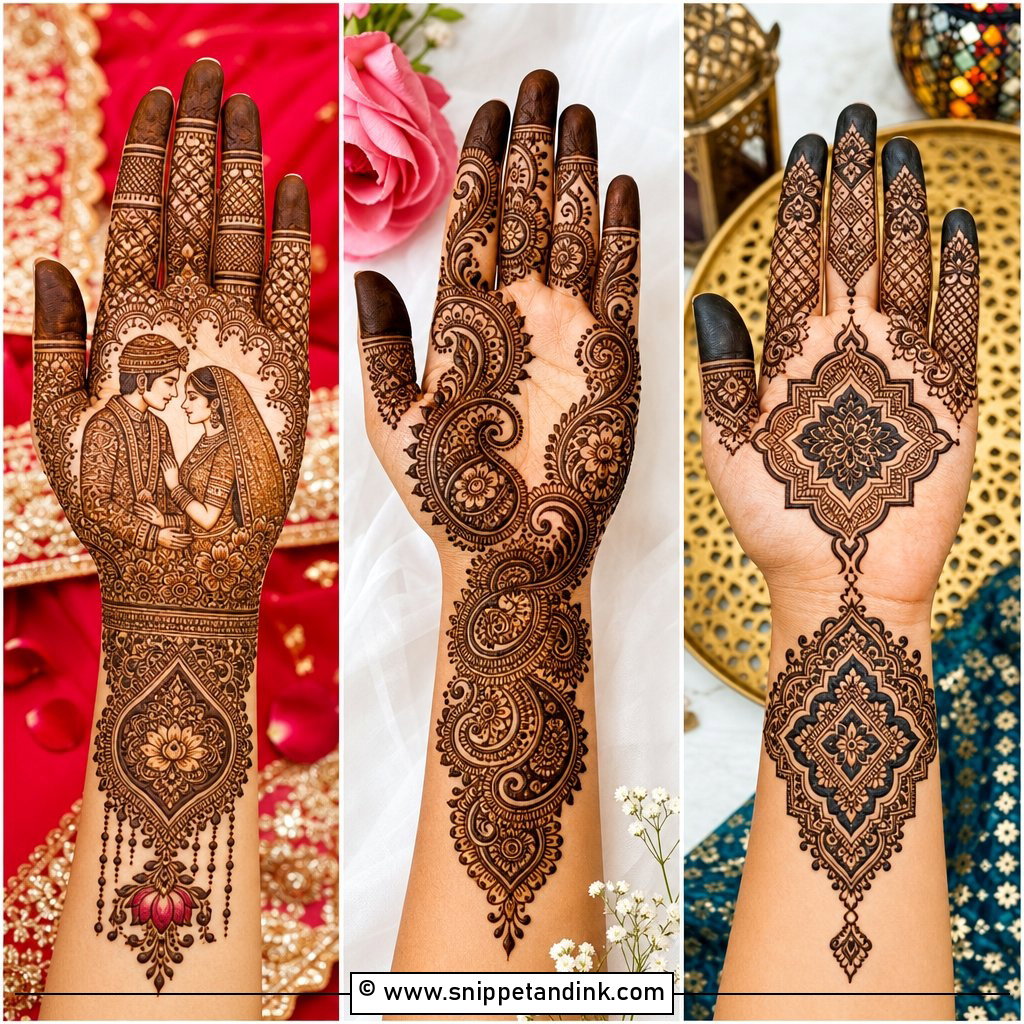
Moroccan-style mehndi is geometry: diamonds, triangles, straight lines, grids and repeated symbols, either in a strong vertical strip from wrist to middle finger or in symmetrical panels across the hand. It looks nothing like classic Indian or Arabic work, which is exactly why some brides choose it for one function. Straight lines show every tremor, so this is a design to give an experienced hand. A few dots and small filled blocks add depth without weight.
21. Gulf Back Hand Mehndi Design
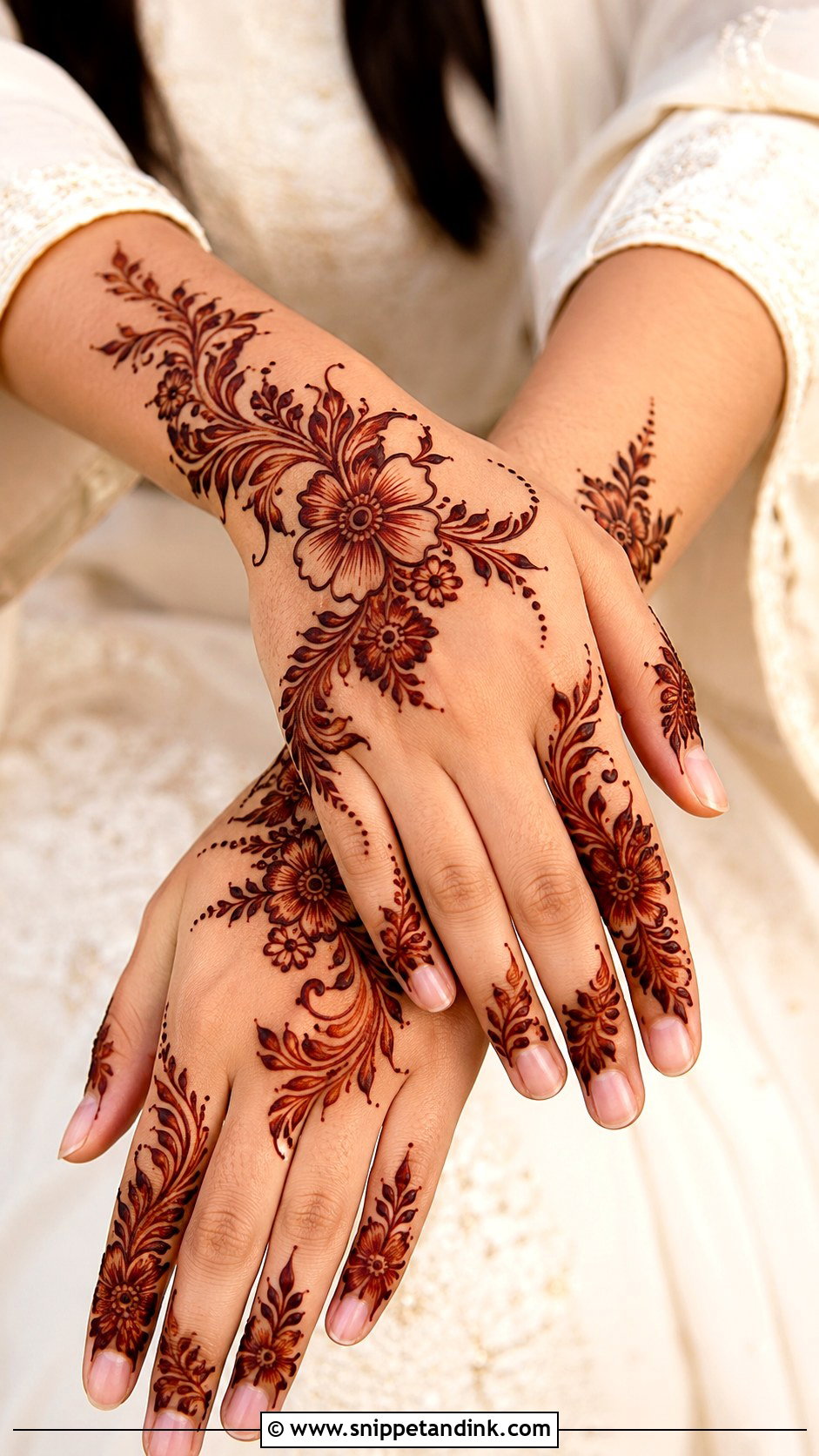
Gulf-style or Khaleeji henna is built from large flowers, leafy curves, shaded petals and sweeping trails, with generous open areas around them. That shading is a technique of its own: the cone is dragged and the paste thinned so the colour fades from dark to light within one petal. Strong outlines and smooth shading are what make it work. Fingers can stay light with leafy tips or carry bold floral bands, and it’s a favourite at Eid and family weddings.
22. Khafif Back Hand Mehndi Design
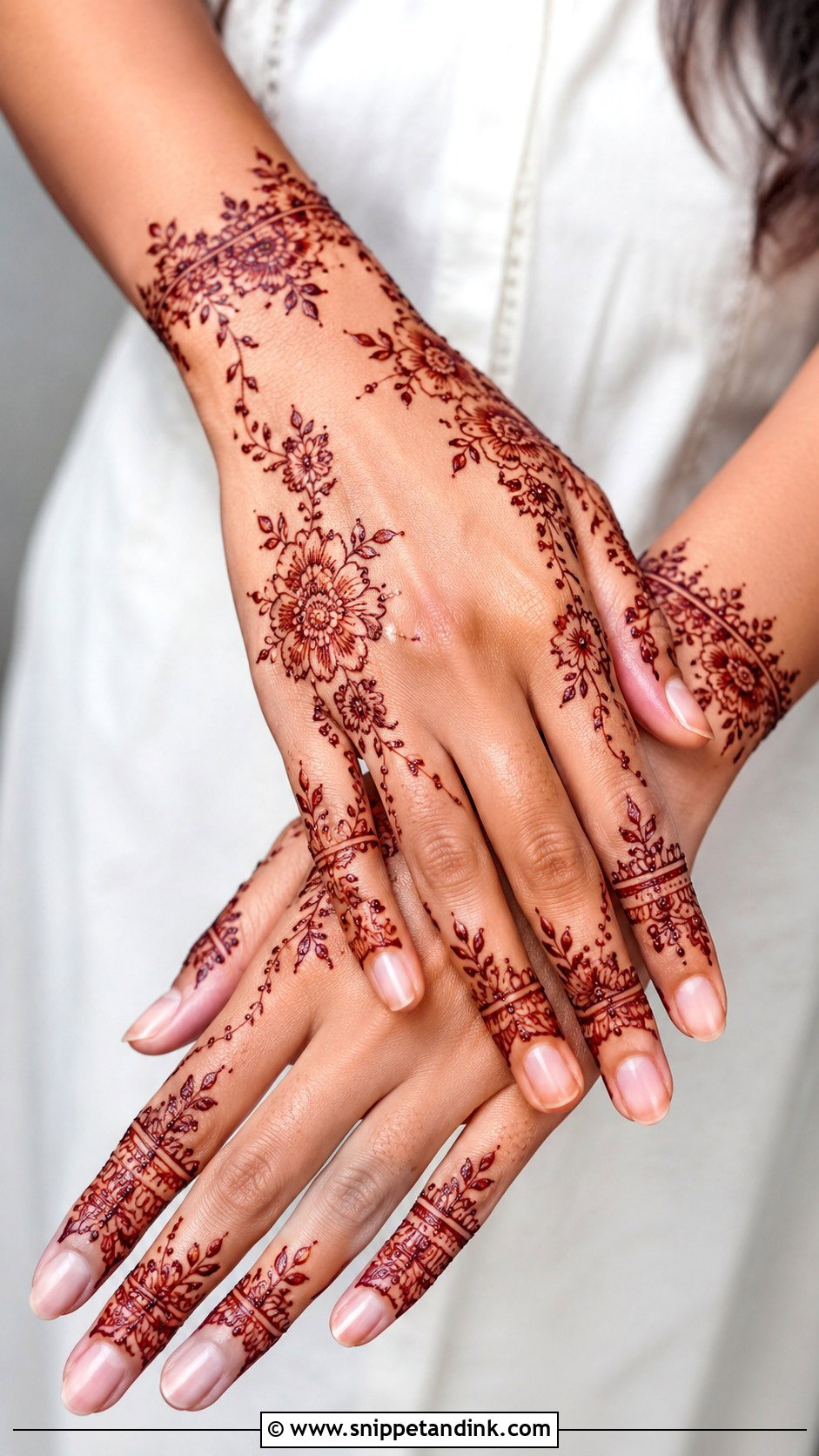
Khafif means light, and khafif work is all fine lines and delicate spacing: tiny flowers, thin vines, dotted chains, lace borders and slim finger patterns. It’s the opposite of heavy coverage but still full of detail. The trouble is that the thinnest lines take the faintest stain, especially on the back of the hand, so I use a fine but not needle-thin tip and repeat small details to build texture. It suits bridesmaids and engagement guests who want something refined, and it should feel airy, never empty.
23. Heavy Back Hand Mehndi Design
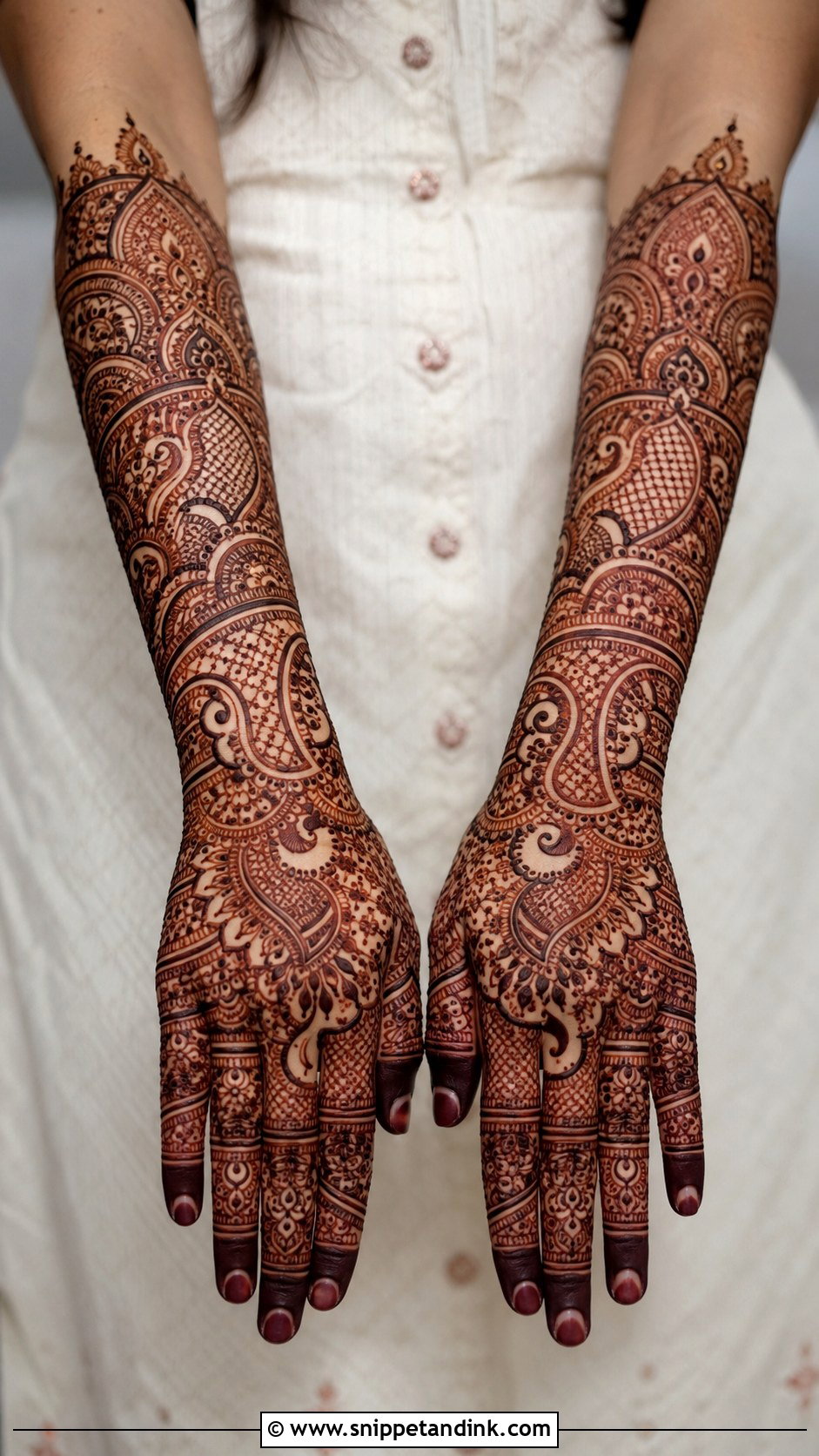
Heavy designs fill almost the whole back of the hand: full finger coverage, dense paisleys, layered florals, jaali panels, mandalas and wrist cuffs. With that much paste on the skin, the details can blend together after staining. I prevent that with bold outlines around the main motifs, fine filling inside them, and small blank spaces between sections. It’s a design for weddings, major festivals and bridal events, and it sits comfortably next to traditional jewellery and heavy embroidery.
24. Easy Back Hand Mehndi Design
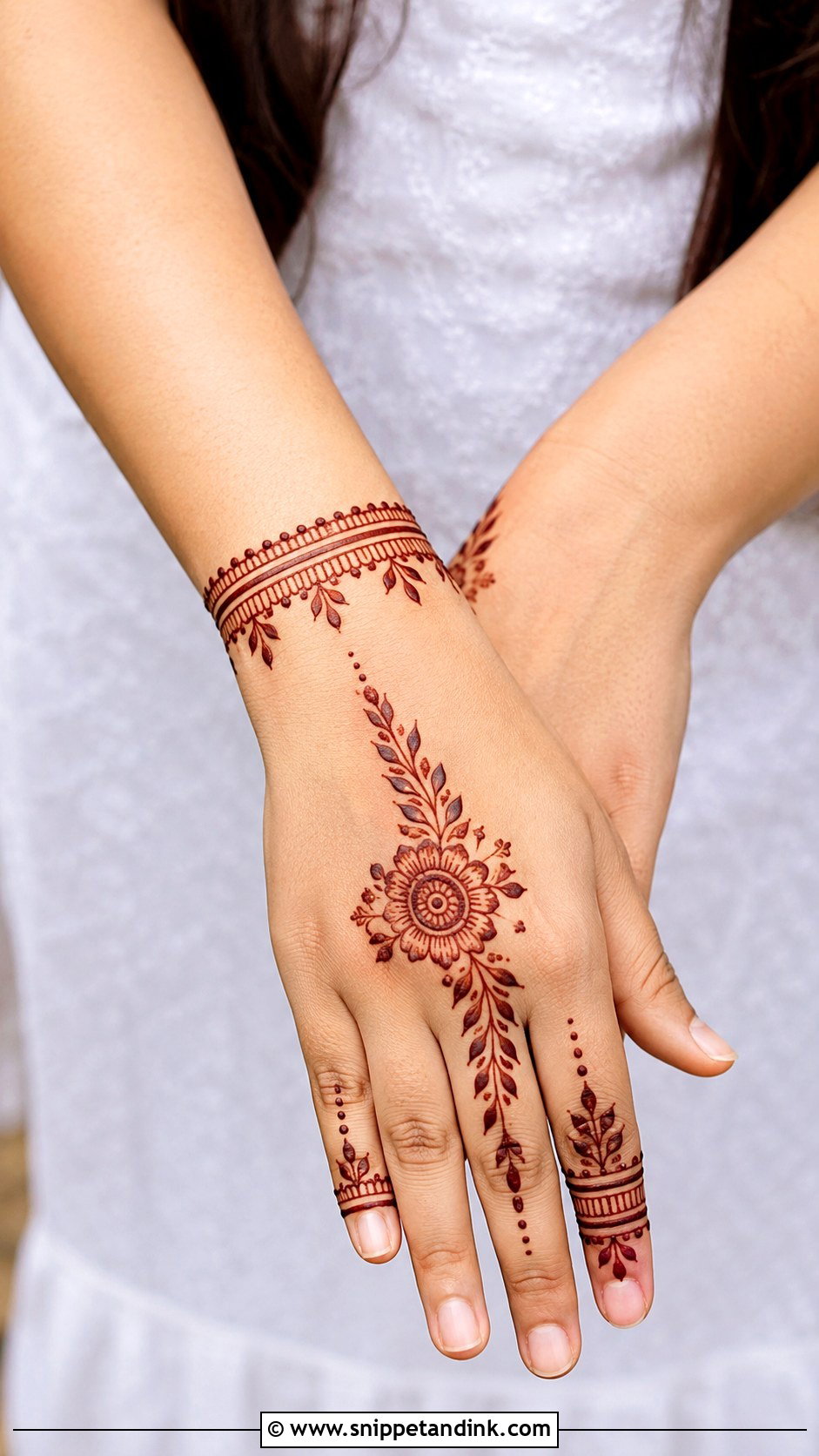
Easy doesn’t have to look basic. Start with a medium flower or mandala in the centre of the hand, run a vine toward the index finger, and close the wrist with a small bracelet band. Repeated dots, small leaves or straight bands are enough for the fingers. No complex shading, no tiny fillers. Make each motif slightly larger than you think, because bigger shapes are easier to control when you’re new to the cone. A tidy simple hand always beats a crowded one.
25. Cute Back Hand Mehndi Design
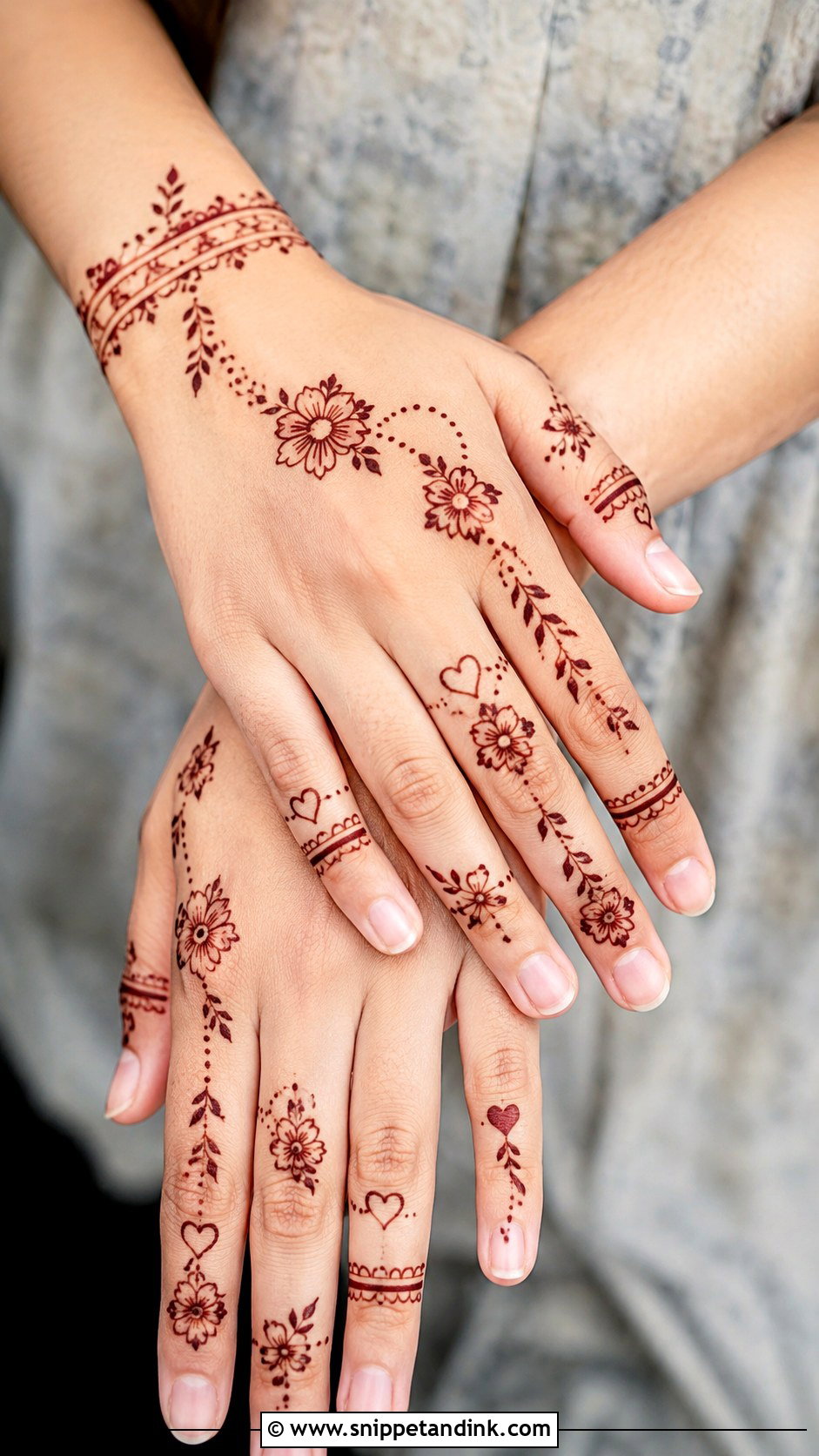
Small flowers, tiny hearts, dotted vines, simple leaves and soft finger bands make up a cute design. It rarely covers the full hand, which suits teens and casual festive moments. One small motif in the centre, a delicate trail to the fingers, and a tiny wrist border complete it. I skip shading and dense patterns entirely here. The charm is in the clean shapes.
26. Back Hand Mehndi Design For Kids
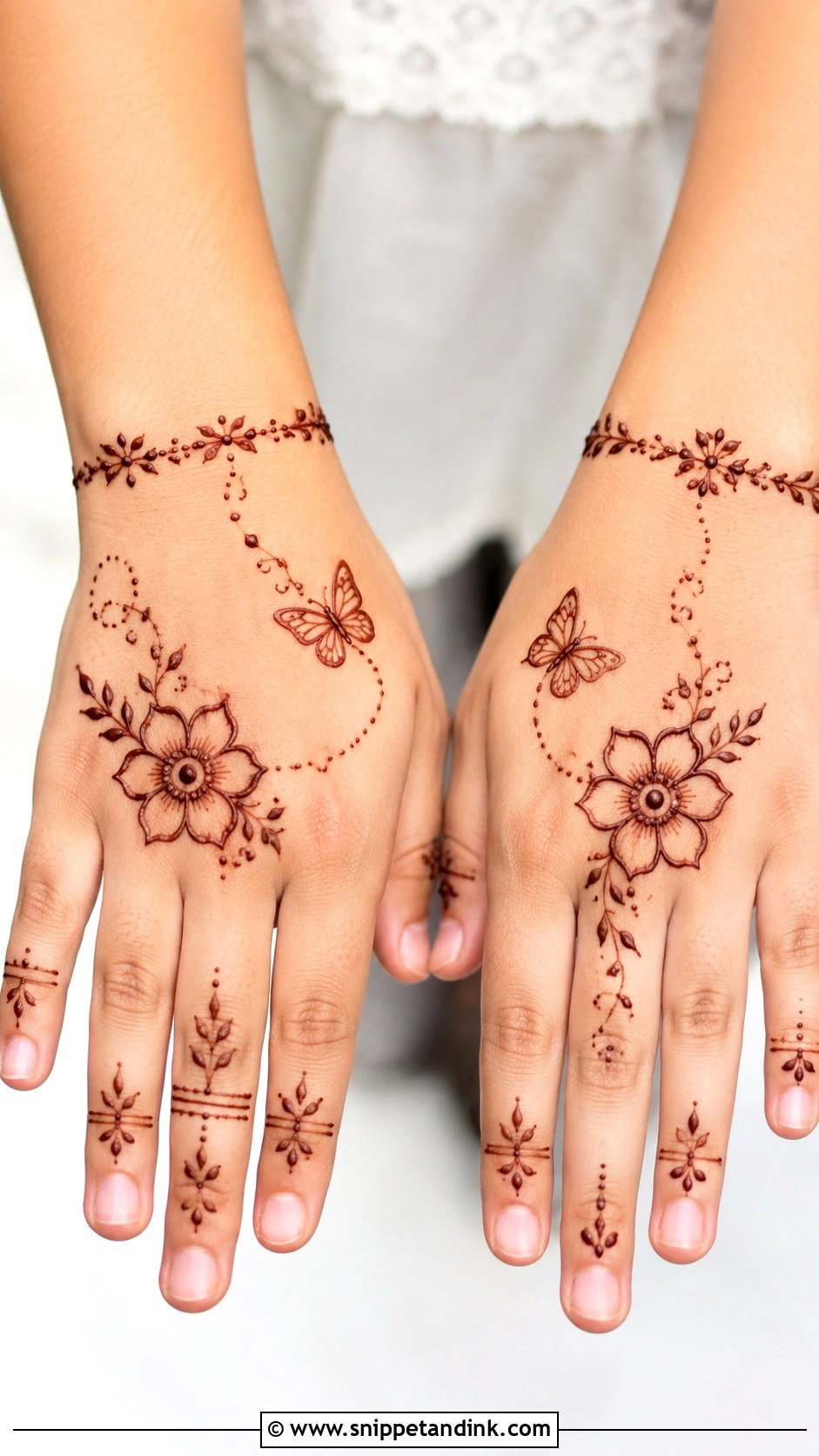
Children want it finished fast. Simple flowers, small mandalas, butterflies, dotted trails or a bracelet pattern work, with light coverage and only some fingers decorated. A small central motif with decorated fingertips looks complete without a long sitting. I use rounded shapes rather than sharp, complex lines, and I’d only ever use plain natural henna on a child’s skin, never a cone that promises an instant dark colour.
27. Back Hand Mehndi Design For Bridesmaids
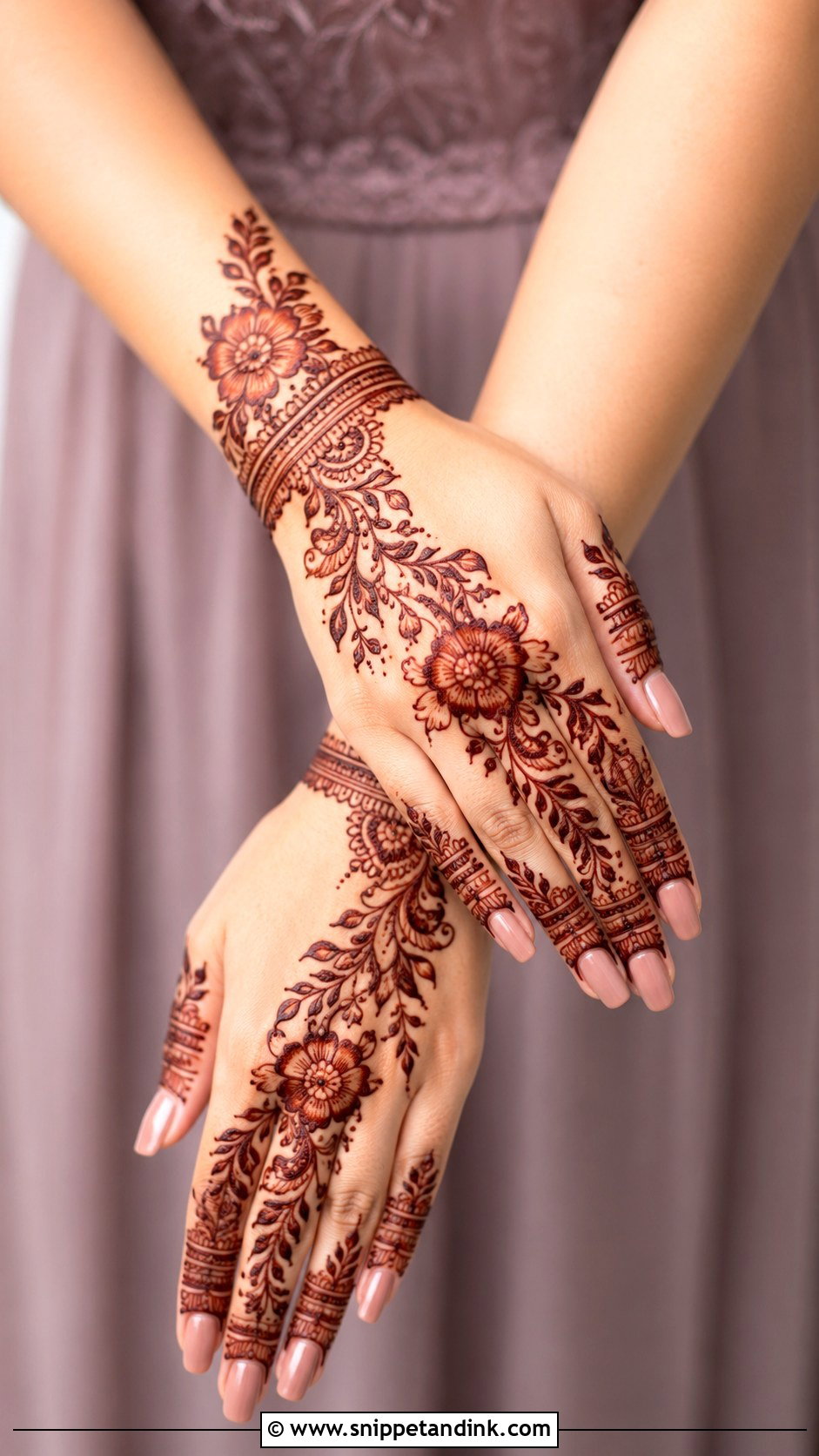
Bridesmaids need something festive and photo-friendly, but lighter than the bride. An Indo-Arabic floral trail with detailed fingers and a bracelet band at the wrist gives enough decoration for the wedding album. Matching layouts with small variations, a different flower or finger pattern for each, let the group coordinate while each girl keeps a personal touch. Medium motifs, open spaces and neat outlines also mean shorter sittings, which matters when bridesmaids are needed for every errand that day.
28. Engagement Back Hand Mehndi Design
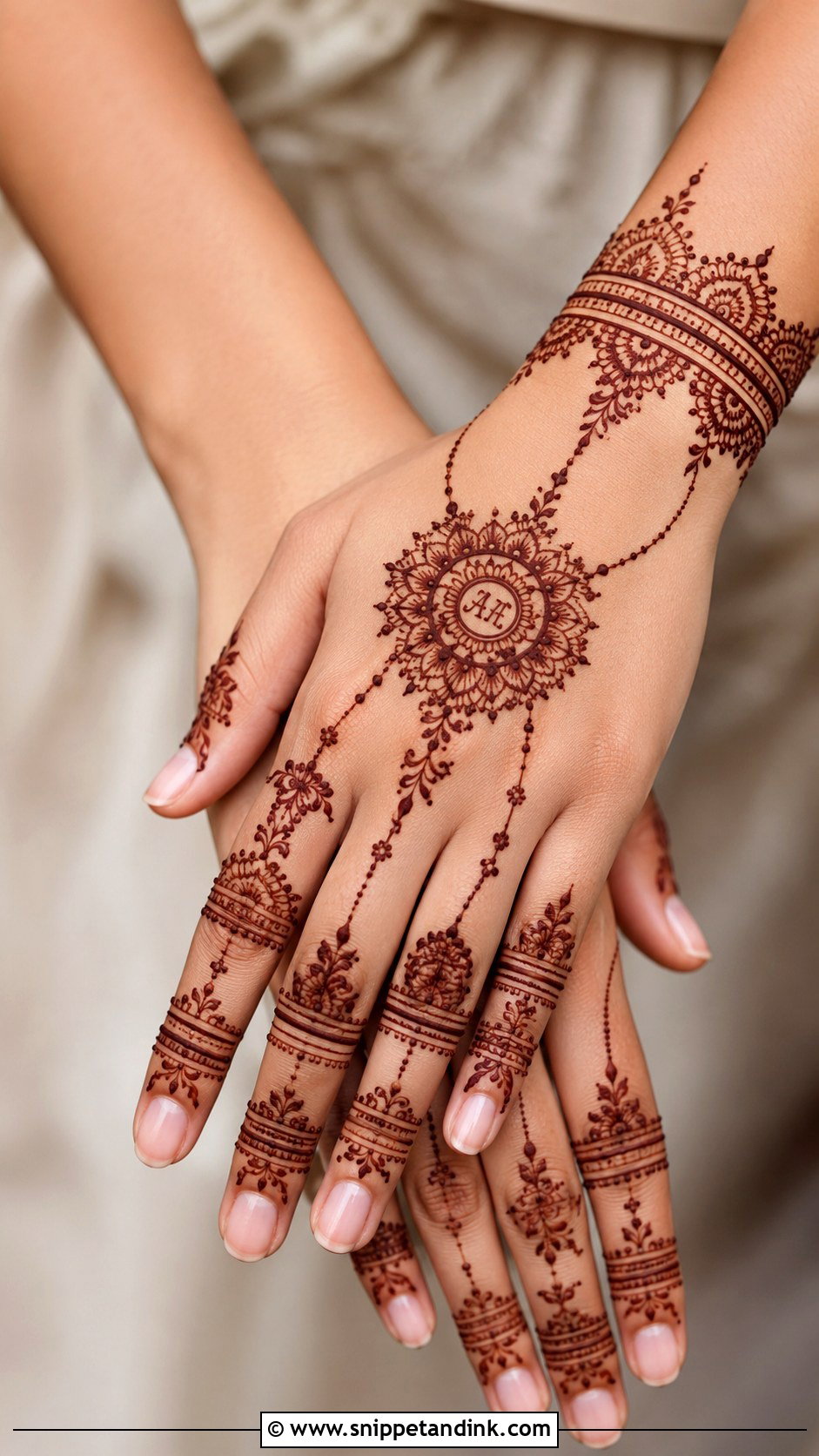
For an engagement, I build around the ring. Finger bands connect to a central floral or mandala motif, soft vines wrap the hand, and a delicate bracelet finishes the wrist. Initials, tiny hearts or a couple motif can make it personal. Keep it detailed enough for close-ups but well short of full bridal coverage, so the ring stays the focus and the bridal mehndi still feels like a step up later.
29. Eid Back Hand Mehndi Design
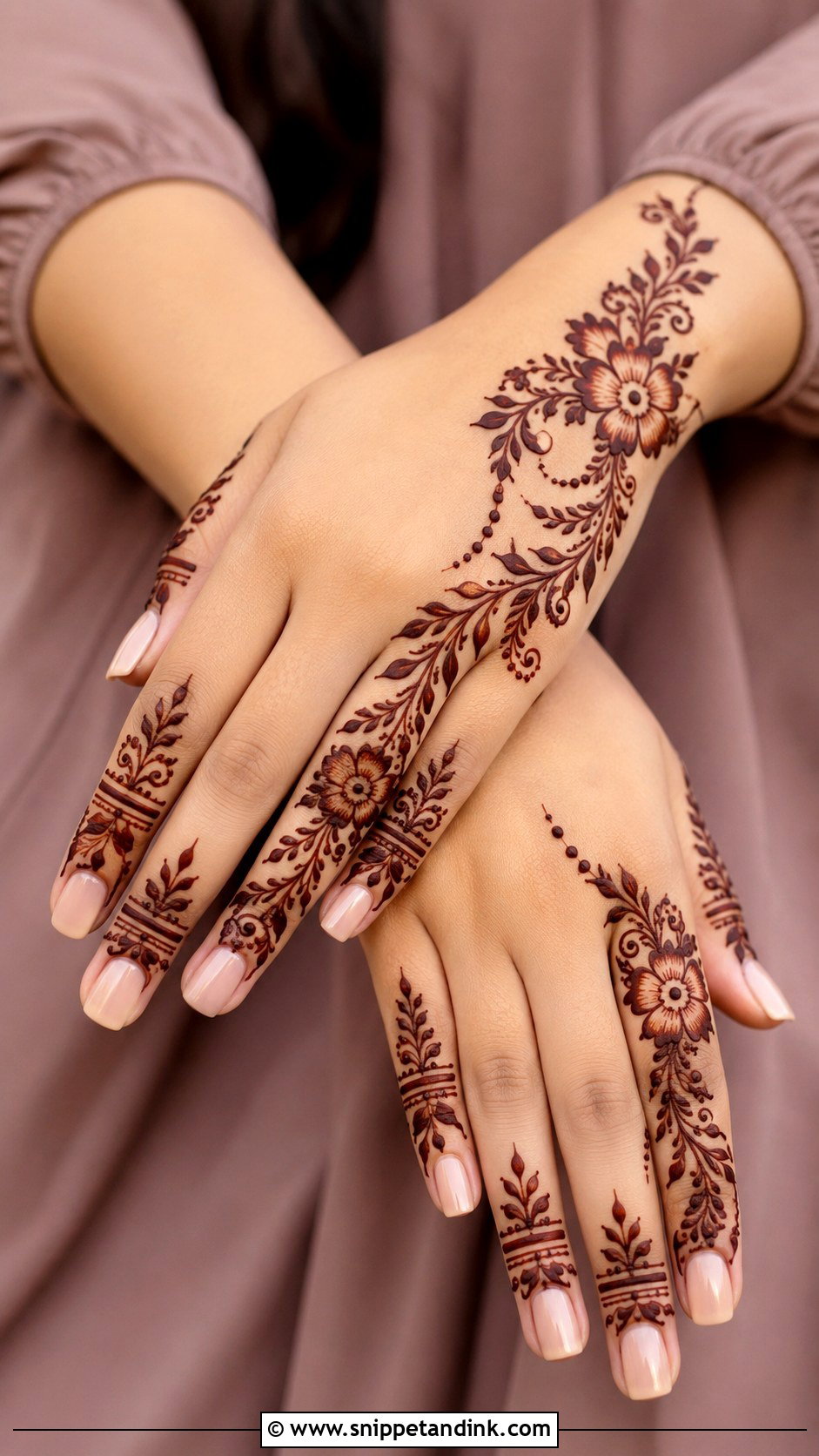
Eid back hand mehndi design tends toward Arabic and Gulf styles, with bold florals, leafy curves and open spaces. A diagonal trail from wrist to fingers covers enough of the hand without taking the whole evening, and fine finger bands, dotted chains and a small wrist cuff balance it. On chaand raat my queue is long, so I lean on clear motifs and smooth shading that look rich without slowing the application down.
30. Diwali Back Hand Mehndi Design
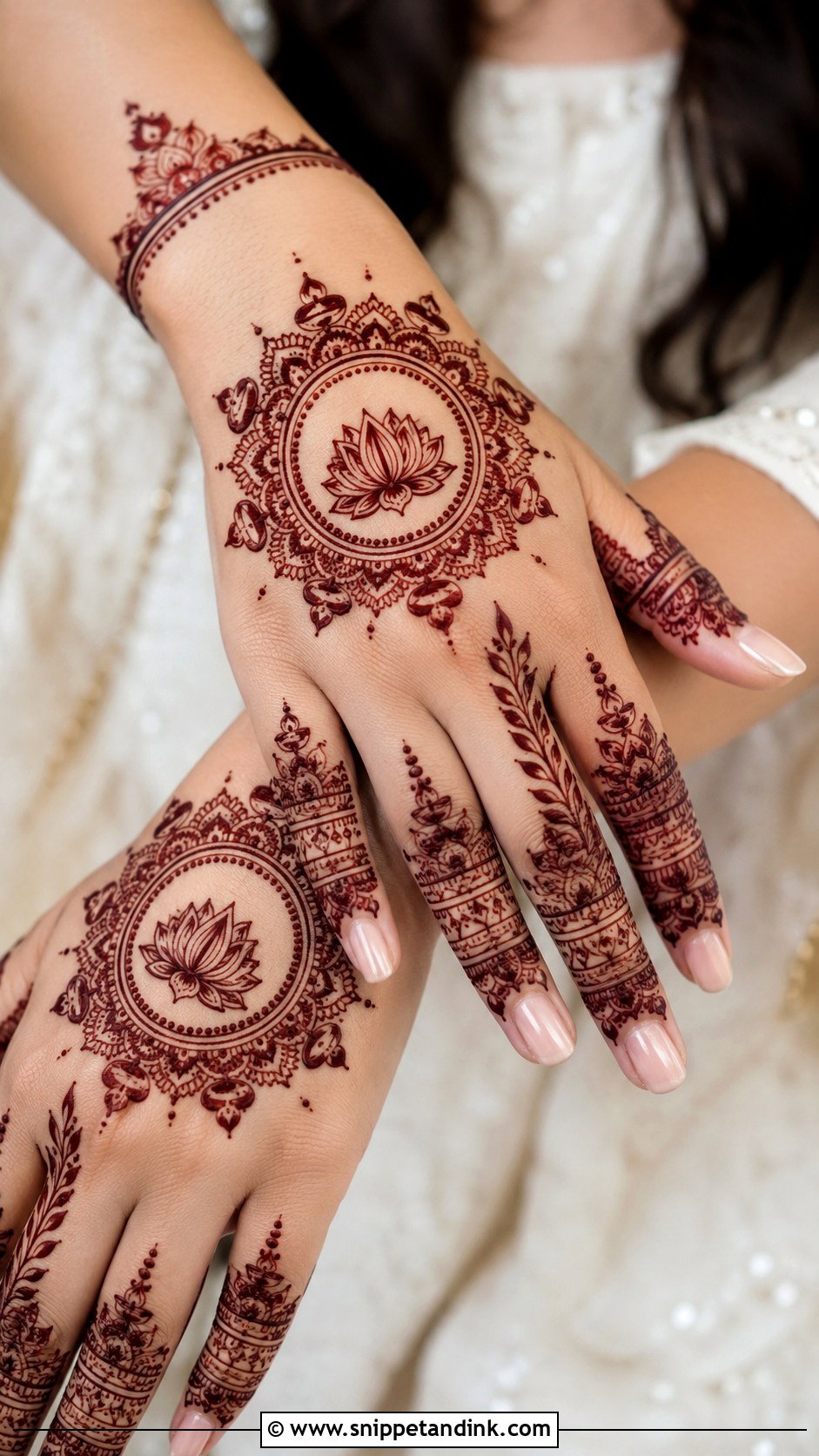
Diwali back hand mehndi design works best when it feels traditional and decorative. A mandala centrepiece with lotus petals, dots and bracelet bands is the classic, and small diya shapes make a subtle border around the wrist or fingers. For a lighter version, a half-mandala with leafy finger details is enough. Keep the pattern symmetrical if you want the classic finish, and apply it a day ahead so the stain has deepened before the puja.
31. Karwa Chauth Back Hand Mehndi Design
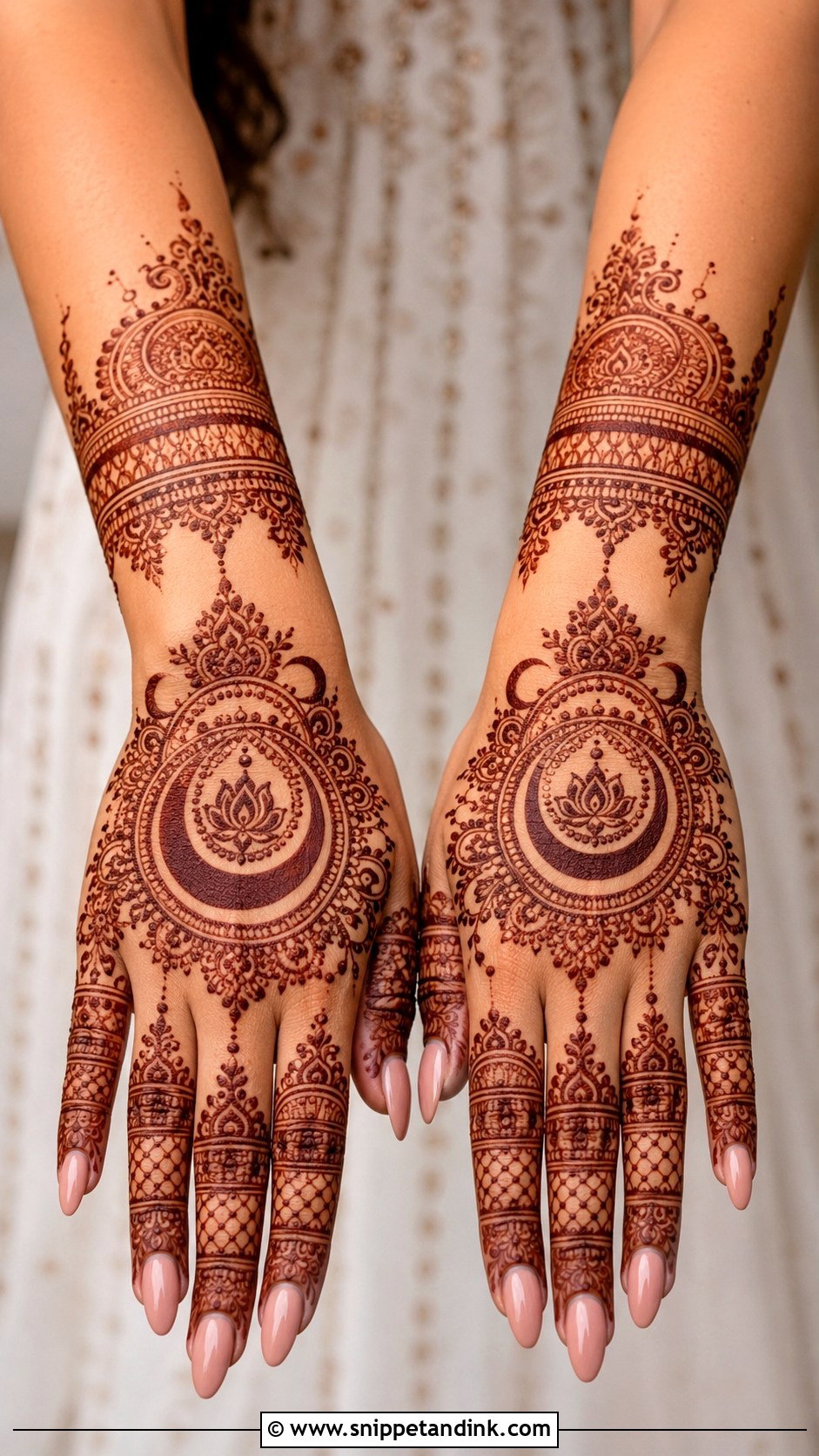
Karwa Chauth back hand mehndi design is usually traditional and full, with mandalas, paisleys, lotus patterns and fine bracelet borders. Some women add a moon curve or the couple’s initials discreetly. Fingers are often fully decorated because close-up hand photos are part of the evening. I put fine filling inside the larger motifs and clear outlines around each section, so the design still reads clearly once the stain deepens to maroon.
32. Wedding Guest Back Hand Mehndi Design
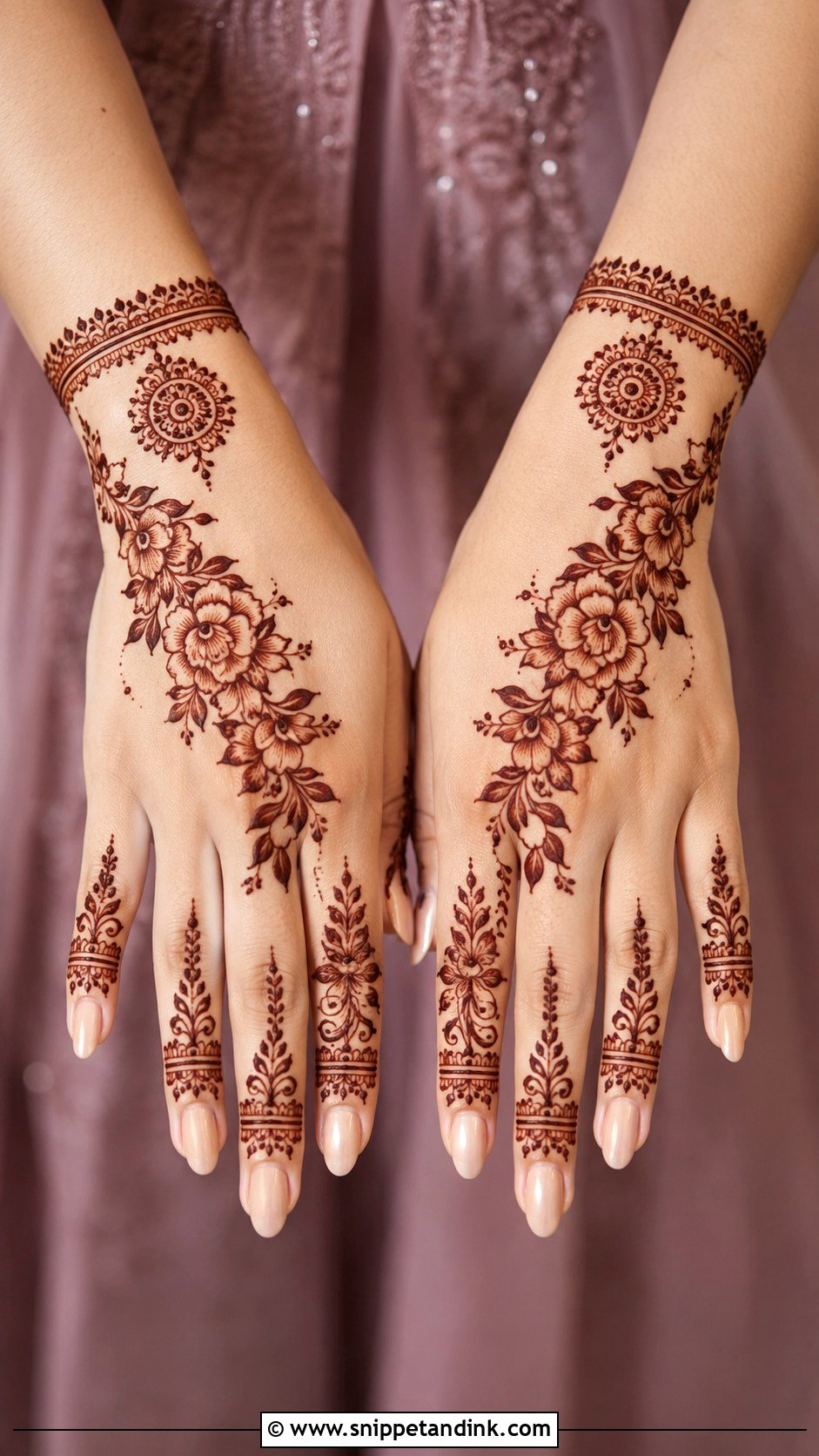
As a wedding guest, aim for festive, not bridal. A medium Arabic floral trail, a modern mandala or a bracelet design all work, with the main motif on the centre or side of the back of the hand, simple bands or leaves on the fingers and a light wrist border. I’d skip dense forearm coverage unless the event is very formal; it can read as competing with the bride. It suits guests of every age and most outfits.
33. Back Hand Mehndi Design With Name
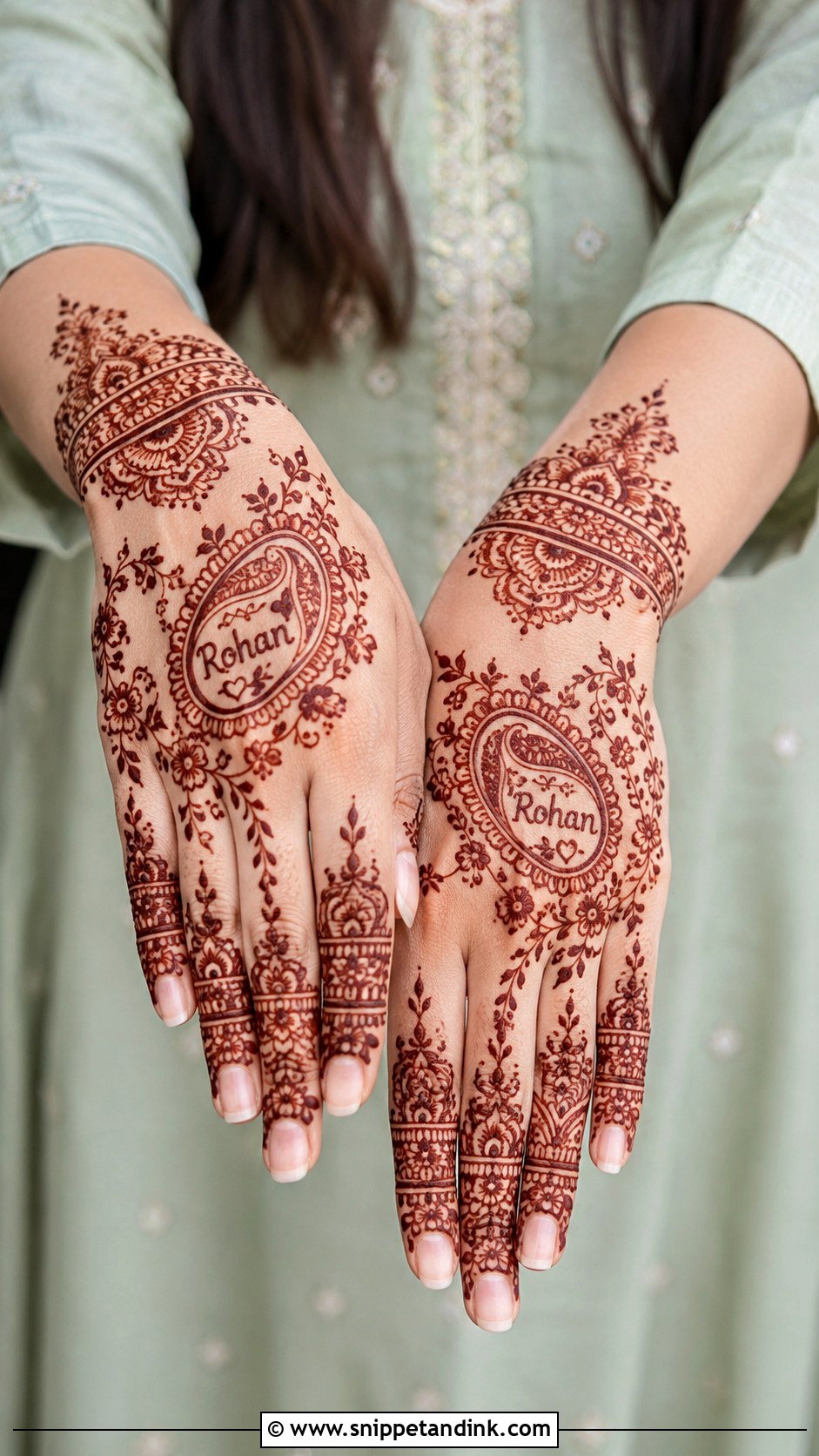
A name can hide inside a paisley, sit along a bracelet band or wind through a floral vine. Keep the letters small but readable, and surround them with mandalas, leaves, dots and curved borders so they blend into the pattern. I always draw the letters first, then build the design around them; adding a name into a finished hand rarely looks natural. It works best when the rest of the hand isn’t crowded, and it suits brides, engagements and anniversaries.
34. Back Hand Mehndi Design With Shading
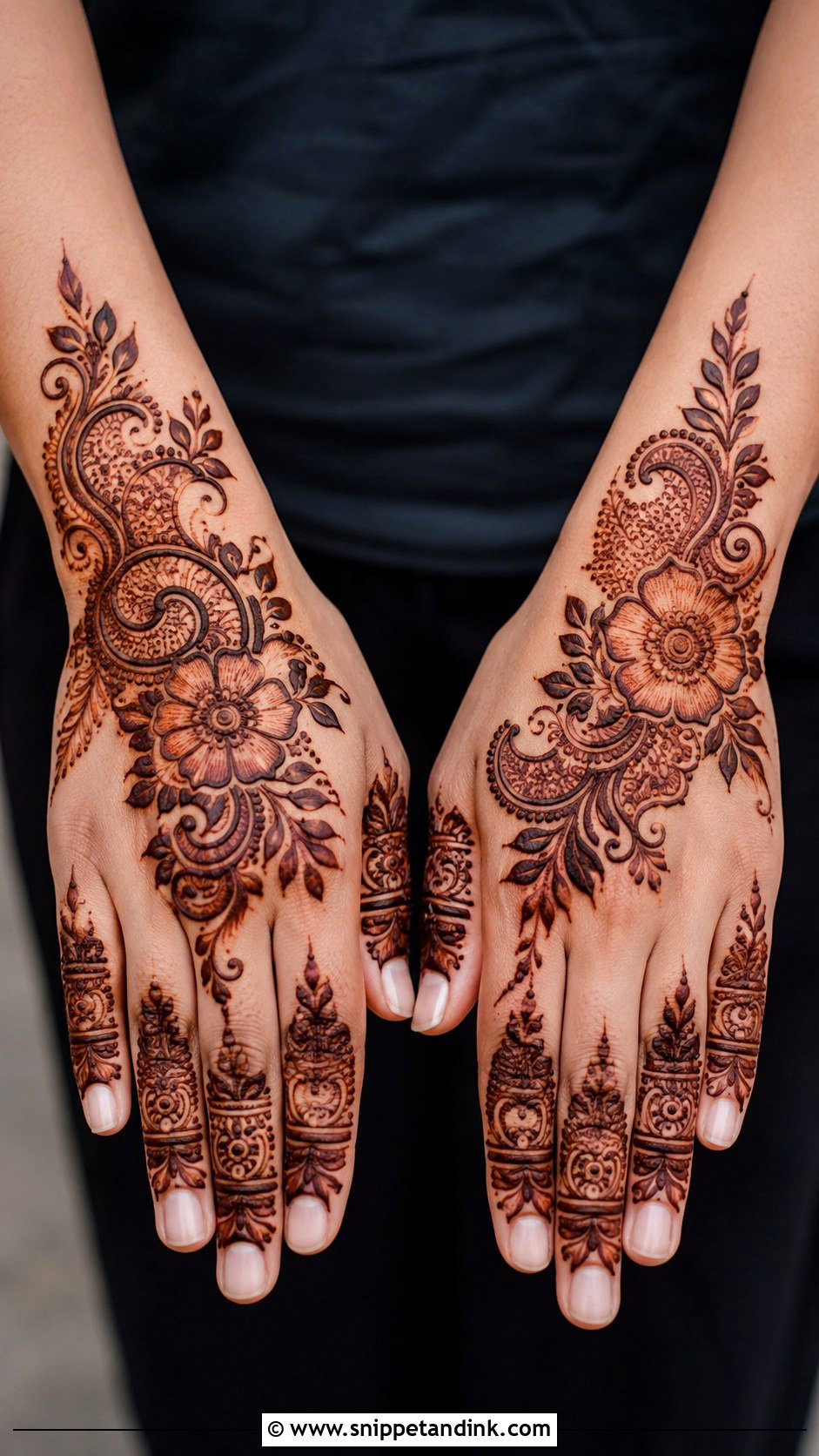
Shading adds depth: shaded petals, filled leaves, gradient paisleys and bold outlines. Arabic and Gulf layouts suit it best because their large motifs have room for a smooth dark-to-light effect. A full shaded design might have a large flower at the wrist, leafy curves across the hand and detailed finger bands. I shade by thinning the paste across a petal rather than filling it solid, and I never shade every section, because the contrast with open skin is what makes the hand look rich from a distance.
35. Back Hand Mehndi Design With Negative Space
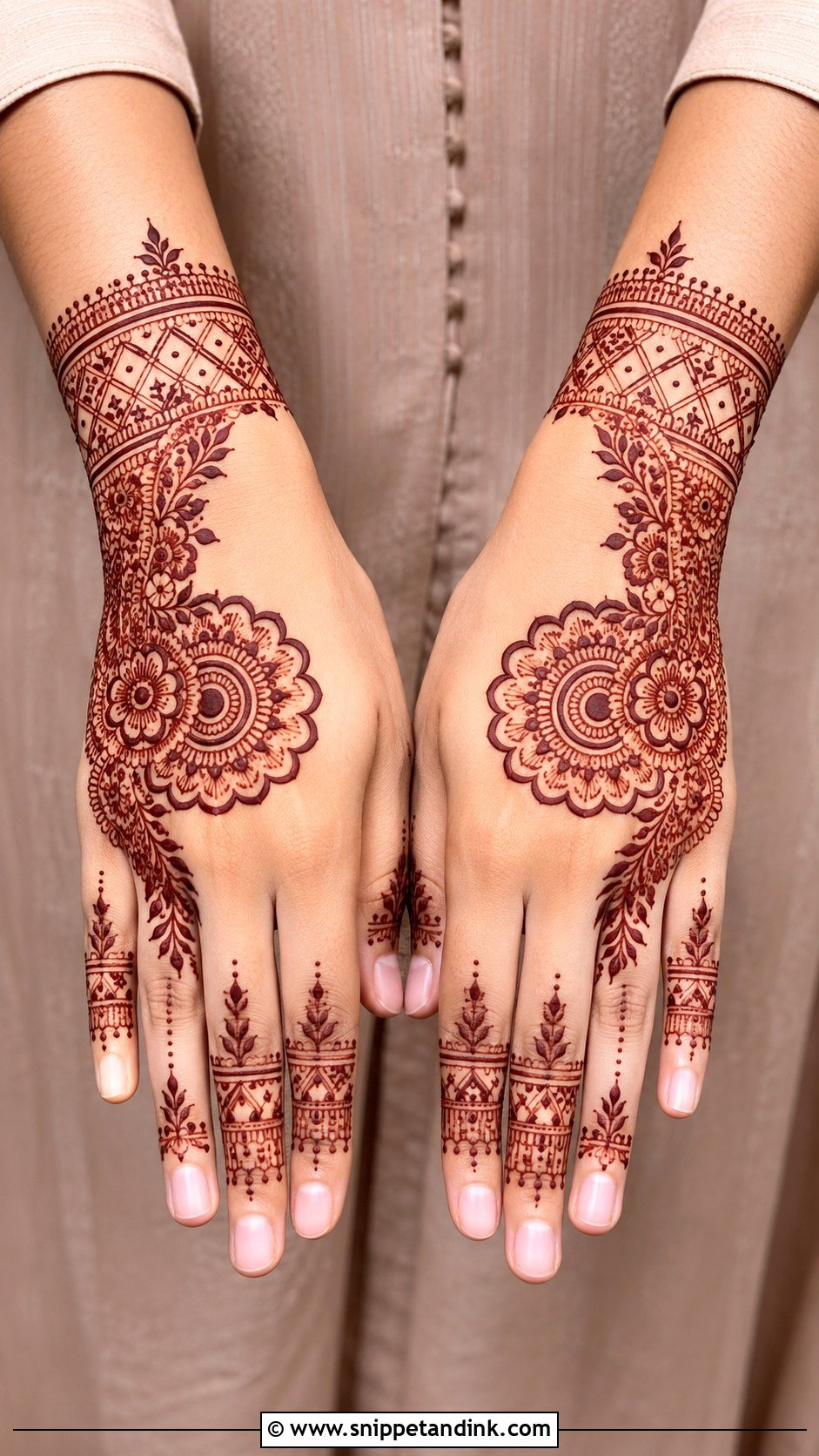
Here the open skin is part of the pattern. A bold mandala, a side floral trail, a geometric panel or a bracelet design stands out sharply when surrounded by clear space. Either the fingers carry the detail while the centre stays partly open, or the centre holds one strong motif with minimal finger work; trying to do both defeats the idea. It suits modern brides, bridesmaids and anyone who wants lighter mehndi, and it’s very forgiving in photos.
How Thin Is Too Thin for a Line That Has to Stain?
This is the question I wish more detail-loving brides asked. The amount of colour henna leaves depends partly on how much paste sits on the skin and for how long. A hairline drawn with a needle-thin cone looks exquisite while wet, but on the back of the hand it can come up as a faint orange whisper once the paste is scraped off.
So in bridal work I use two line weights. A slightly fuller line goes on outlines and anything that needs to read in a photo across the room, and the finest lines are kept for filling inside shapes, where they add texture without needing to stand out on their own. On the fingertips, where the stain comes up darkest, I can go finer than on the back of the hand itself.
Warmth helps too. Keeping your hands warm while the paste is on, and leaving it on for several hours, gives the fine work its best chance. A design that relies entirely on hairlines is one I’d steer you away from if you want deep colour on the day.
How Much Detail Do Your Hands Really Want?
Every one of these designs has a place, from a quick floral for a small celebration to dense Indian work for the wedding itself, Arabic trails for an elegant evening and open modern layouts for a fresh look. Heavier isn’t automatically better. The right choice suits your hand shape, outfit, occasion and how long you can sit still. Clear motifs, neat spacing and balanced finger work are what I’d ask any artist for, at any level of detail.
You'll Like These Ideas:




Leave a Reply