
Fingers are the part of a bridal design that gets photographed closest. They’re in the ring shot, wrapped around the chooda, holding the varmala, and pressed together in every hands-only portrait. They also stain darker than most of the hand, so any wobble in a line shows. When I plan a bride’s hands, I treat the fingers as their own small composition that has to connect to the palm or back hand. Some brides want full coverage running down into the palm; others prefer statement fingertips with clean skin between. Below are twenty approaches, from dense Indian work to Arabic trails and modern spacing, with my notes on how each one is drawn and who it suits.
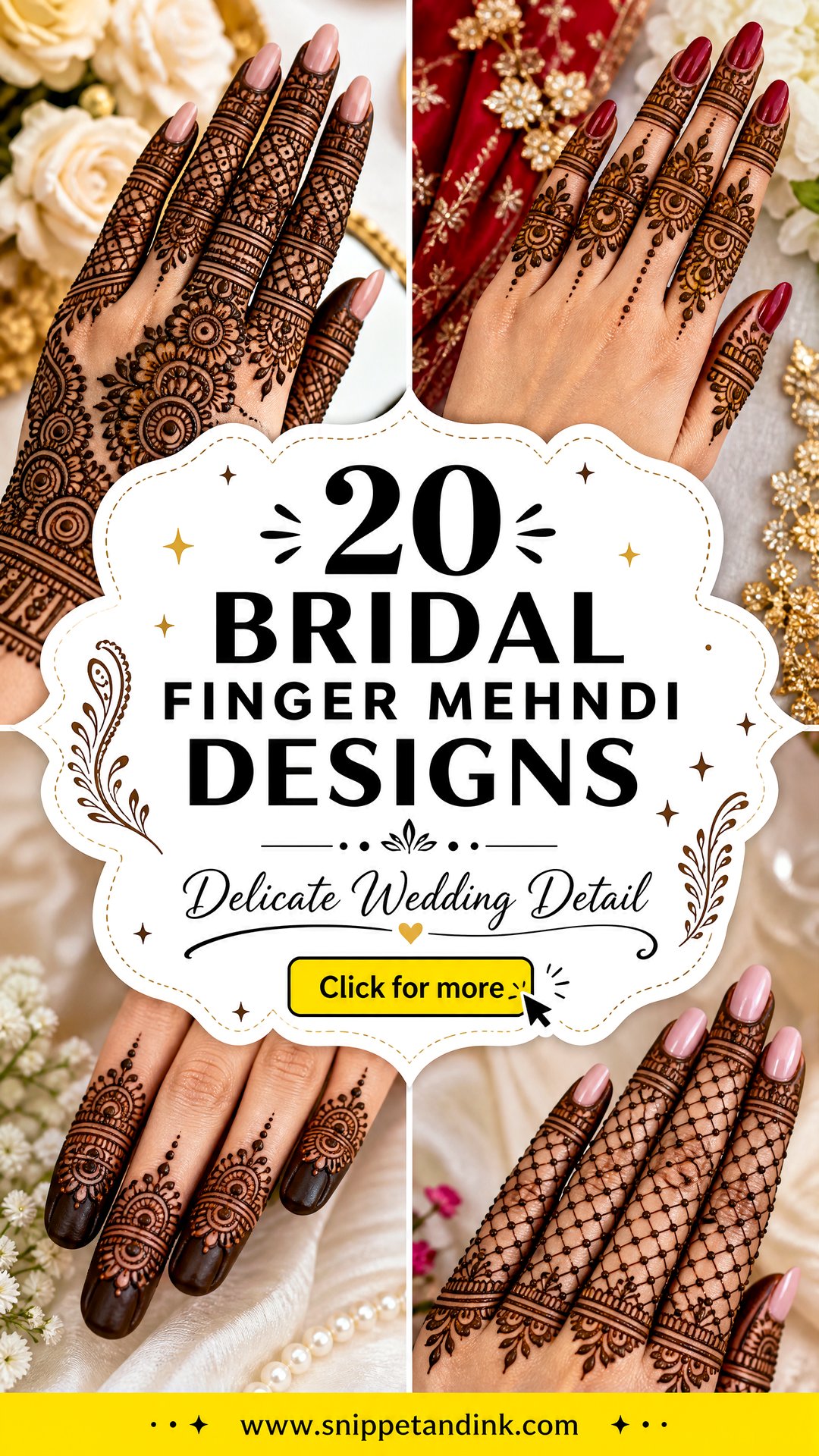
Short Fingers, Long Fingers and Where the Bands Should Sit
Before I start drawing, I look at your fingers with the hand relaxed and then spread. Finger length, knuckle width and nail shape all change which designs flatter you, and the same pattern can look elegant on one hand and crowded on another.
Shorter fingers look longer with vertical or diagonal lines and fewer horizontal bands. Too many bands across a short finger chop it into pieces. Long, slim fingers can take stacked bands and more horizontal detail. If your knuckles are prominent, I avoid placing a heavy band right on the knuckle crease, because the skin folds there and the line looks broken whenever you bend your hand.
Nails matter too. Long nails or nail extensions make the fingertip area smaller, so I adjust the filled tip to stop just short of the cuticle. If you’re getting nail art, book it before your mehndi. Polish removers and nail files will lift a fresh stain, and a manicure after henna can leave pale patches around the fingertips.
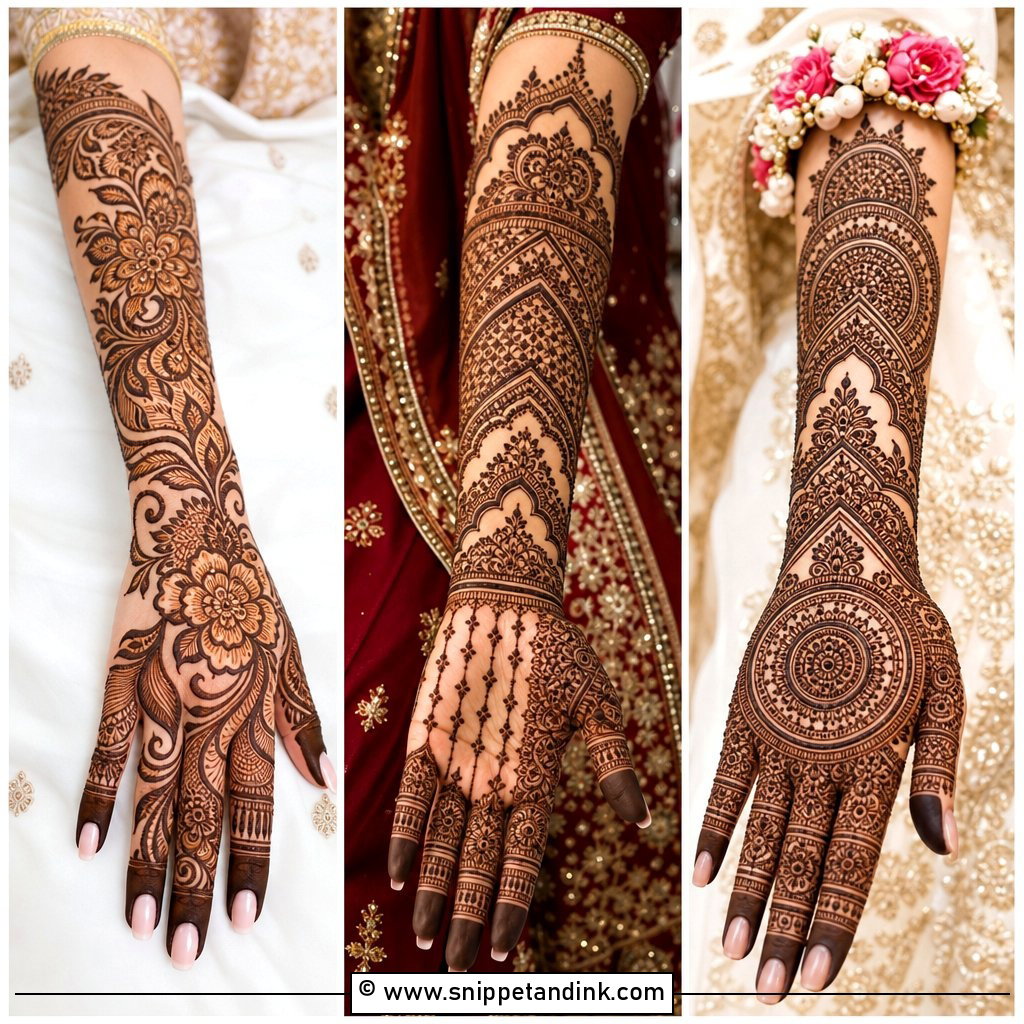
1. Full Finger Bridal Mehndi Design
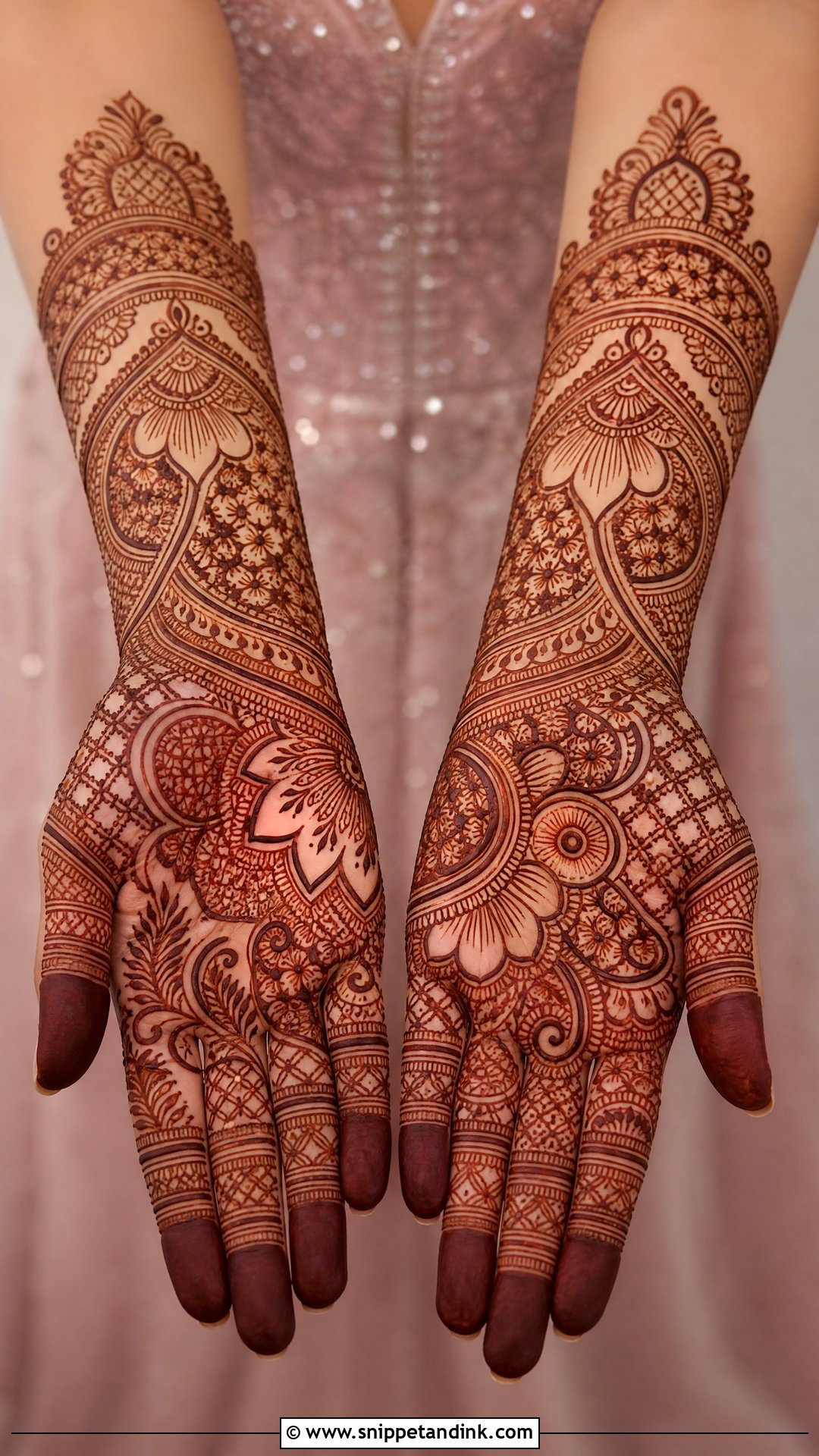
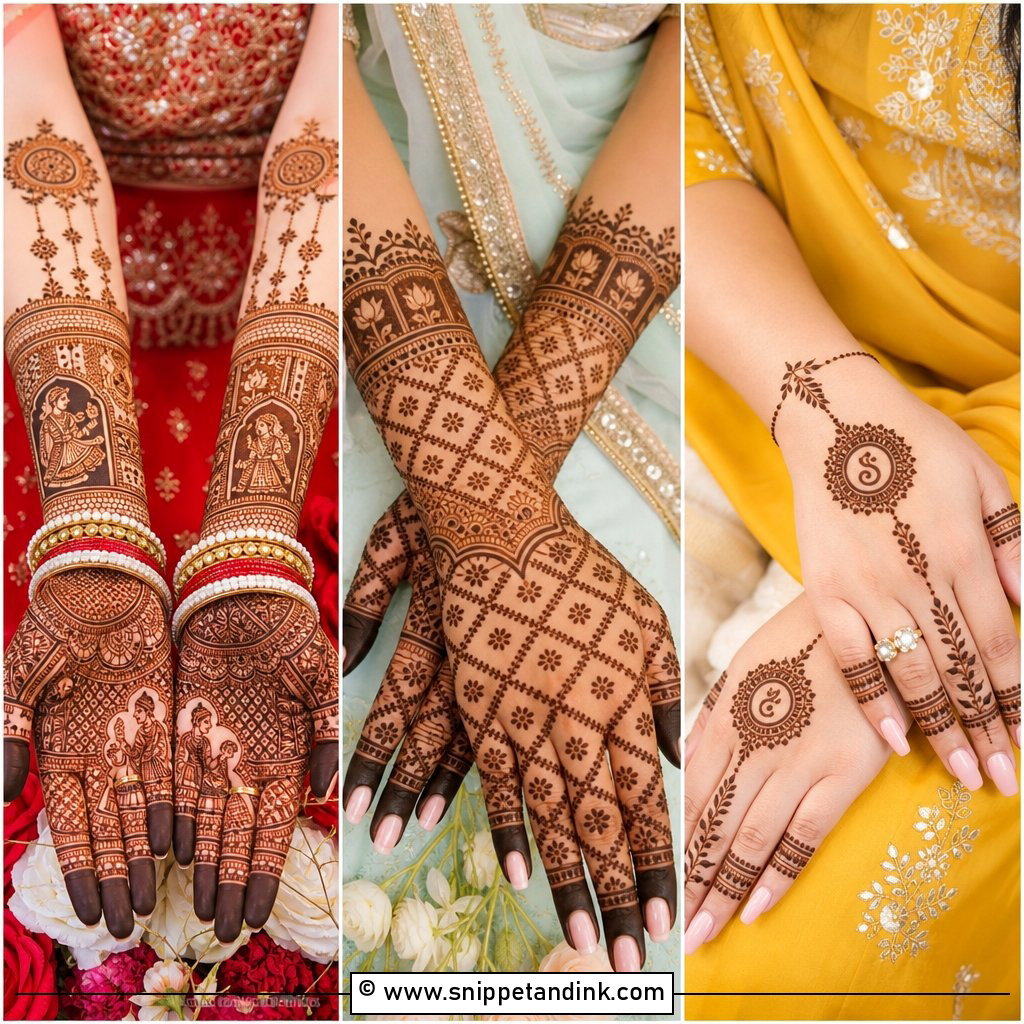
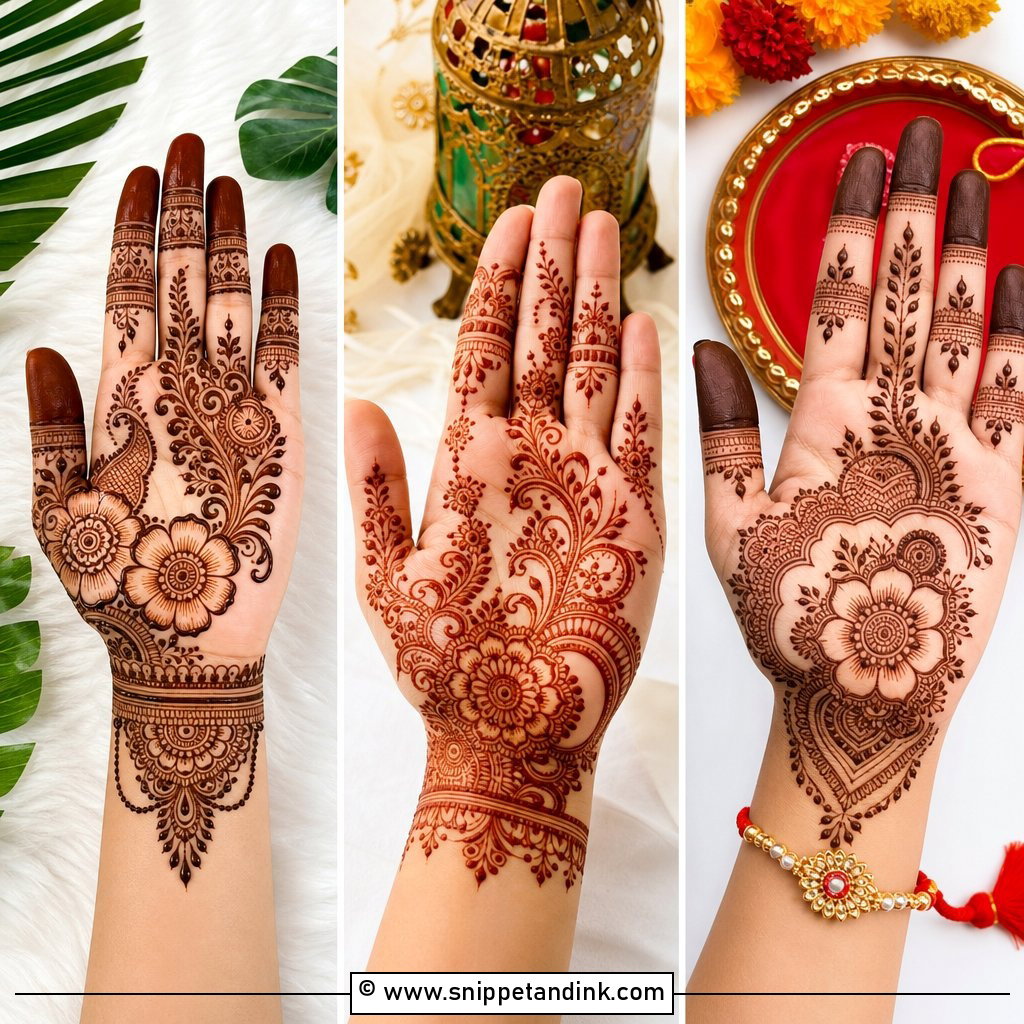
Full coverage takes each finger from tip to base in fine lines, small florals, vines, dots and net work. It balances a heavy Indian palm, where bare fingers would look unfinished. The risk is monotony, because five identical fingers read as a block of brown in photos. I vary them: jaali on one finger, a vine on another, stacked bands on the rest. Expect this to add real time to your appointment, since fine finger work is slow and every finger needs to dry before you can rest the hand.
2. Arabic Finger Bridal Mehndi Design
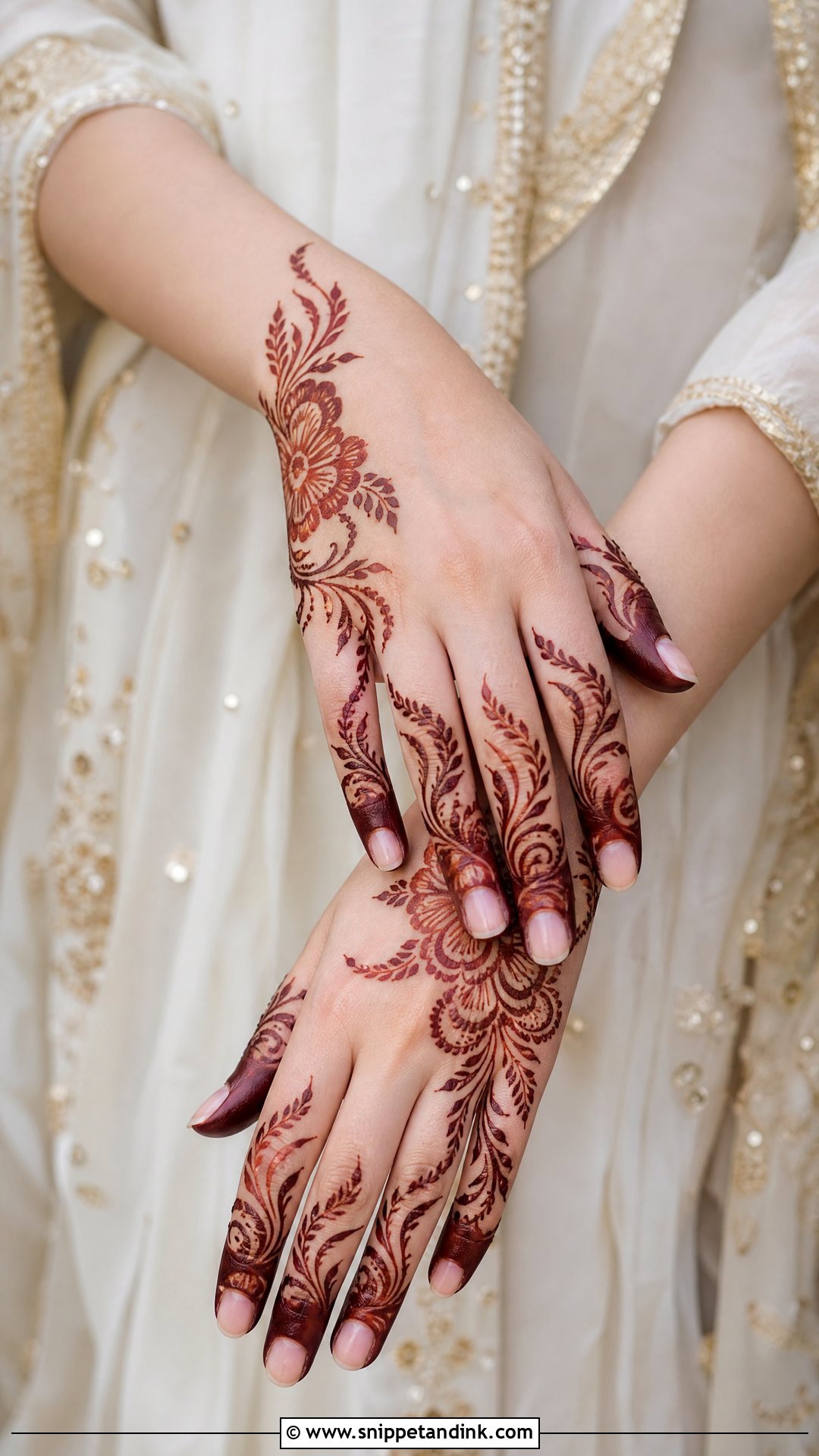
Arabic finger work leaves breathing space. Flowing floral trails, leafy strokes and curved lines run diagonally from the fingertips toward the knuckles, which visually lengthens the hand. It pairs naturally with an Arabic palm where the pattern travels across the hand rather than filling it. I like it for brides with nail art or statement rings, since the open skin keeps those visible. Because the lines are bolder, it’s also more forgiving if the stain comes out lighter than hoped.
3. Indian Finger Bridal Mehndi Design
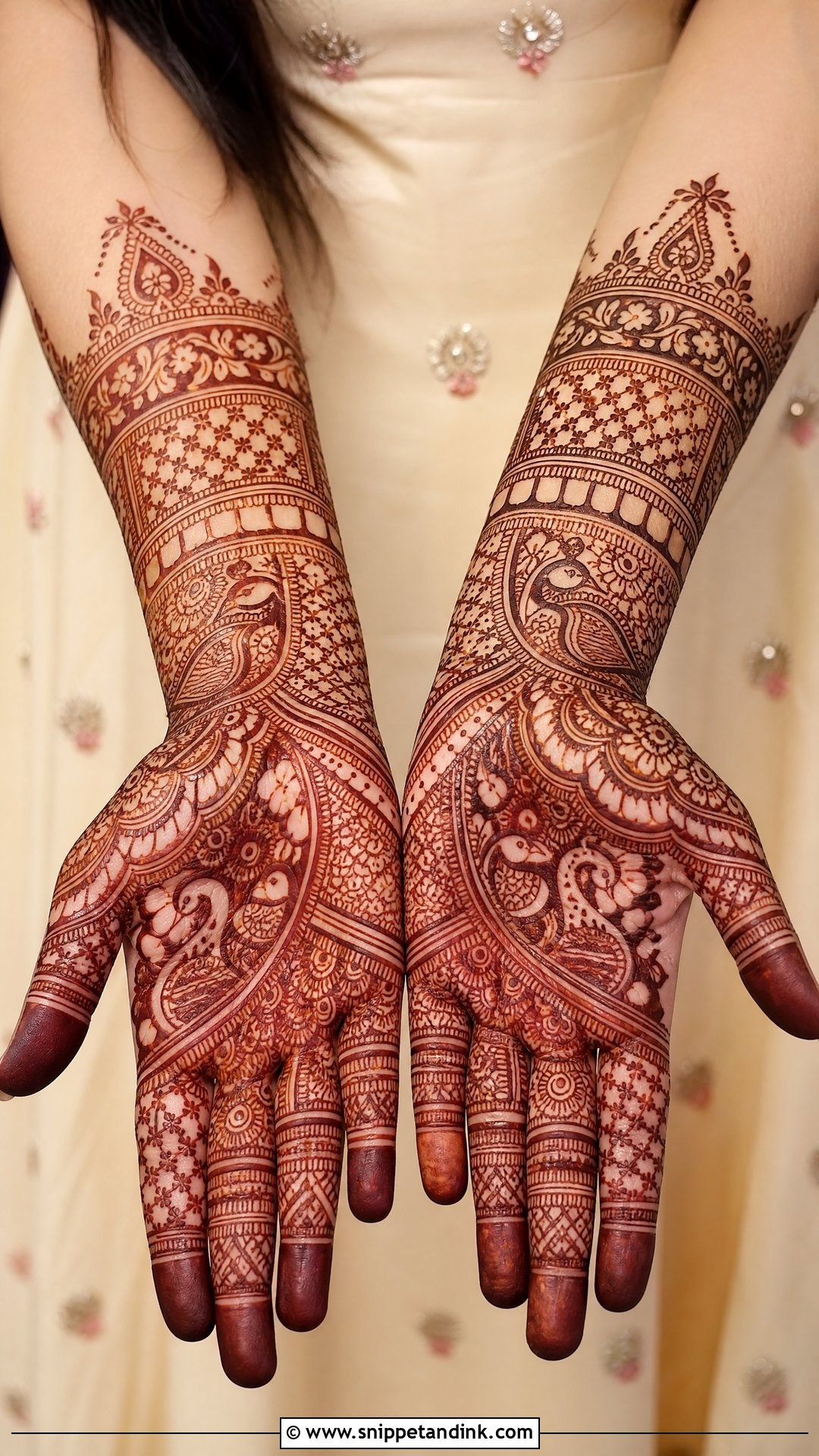
Traditional Indian fingers are packed with detail: dark tips, small paisleys, floral borders, dots, checks and tightly spaced lines. It carries the same visual language from palm to fingers, which is why it’s my first suggestion for a full-hand bridal design. I keep the fingertip fully filled, since that’s where the stain goes deepest, and add thin bands near each knuckle. Gaps should be small and deliberate. Rushed spacing is what makes dense work look messy once it darkens.
4. Indo Arabic Finger Bridal Mehndi Design
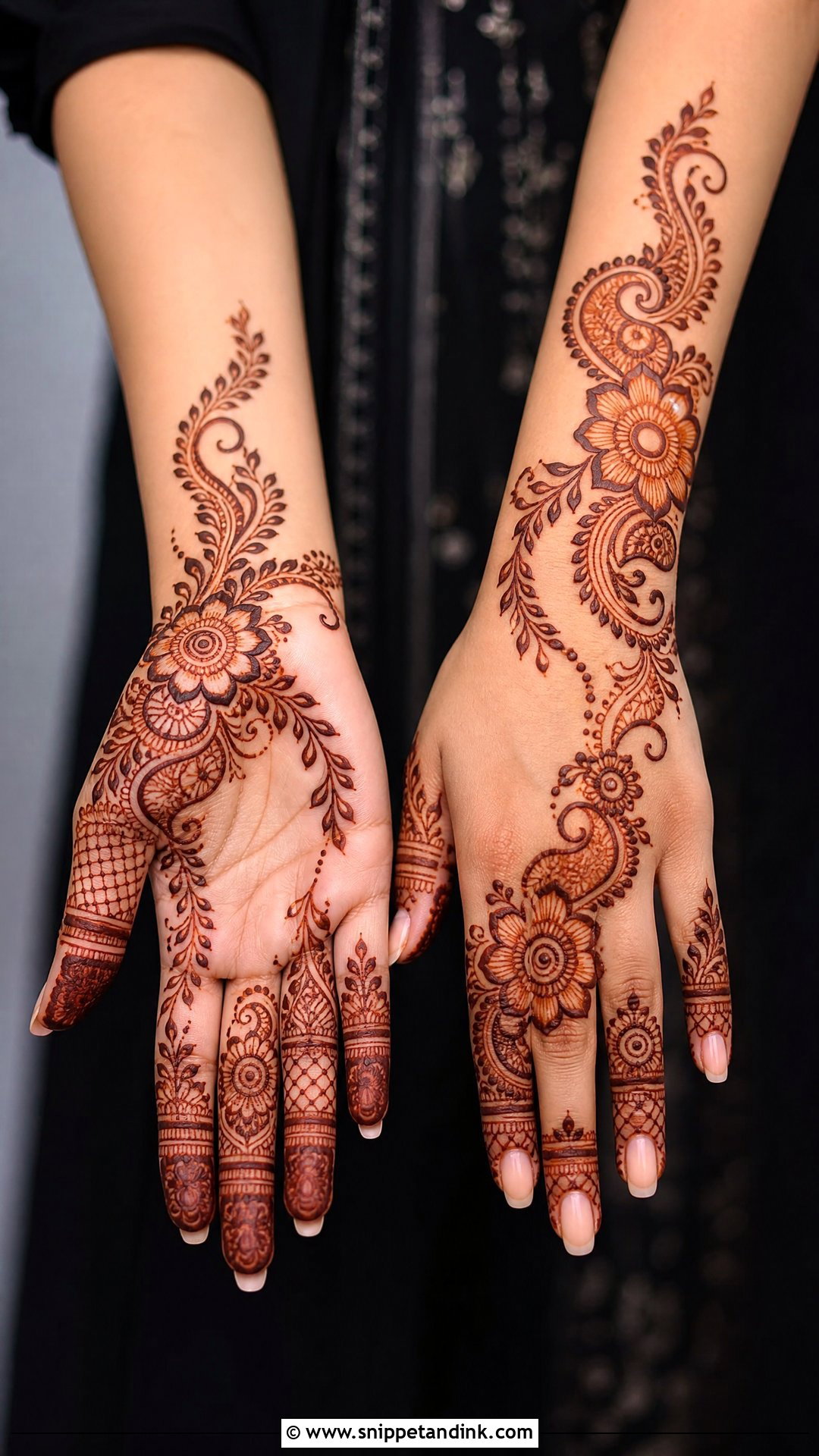
Indo-Arabic fingers mix the fine filling of Indian work with the flow of Arabic patterns. One finger might carry a detailed Indian band while the next takes a bold Arabic vine. Done with thought, the hand feels rich without being crowded. It suits engagement, nikah, sangeet and the wedding day alike. Bold outlines with fine inner filling give strong contrast, which helps the design read clearly in photos taken from a distance.
5. Ring Finger Bridal Mehndi Design
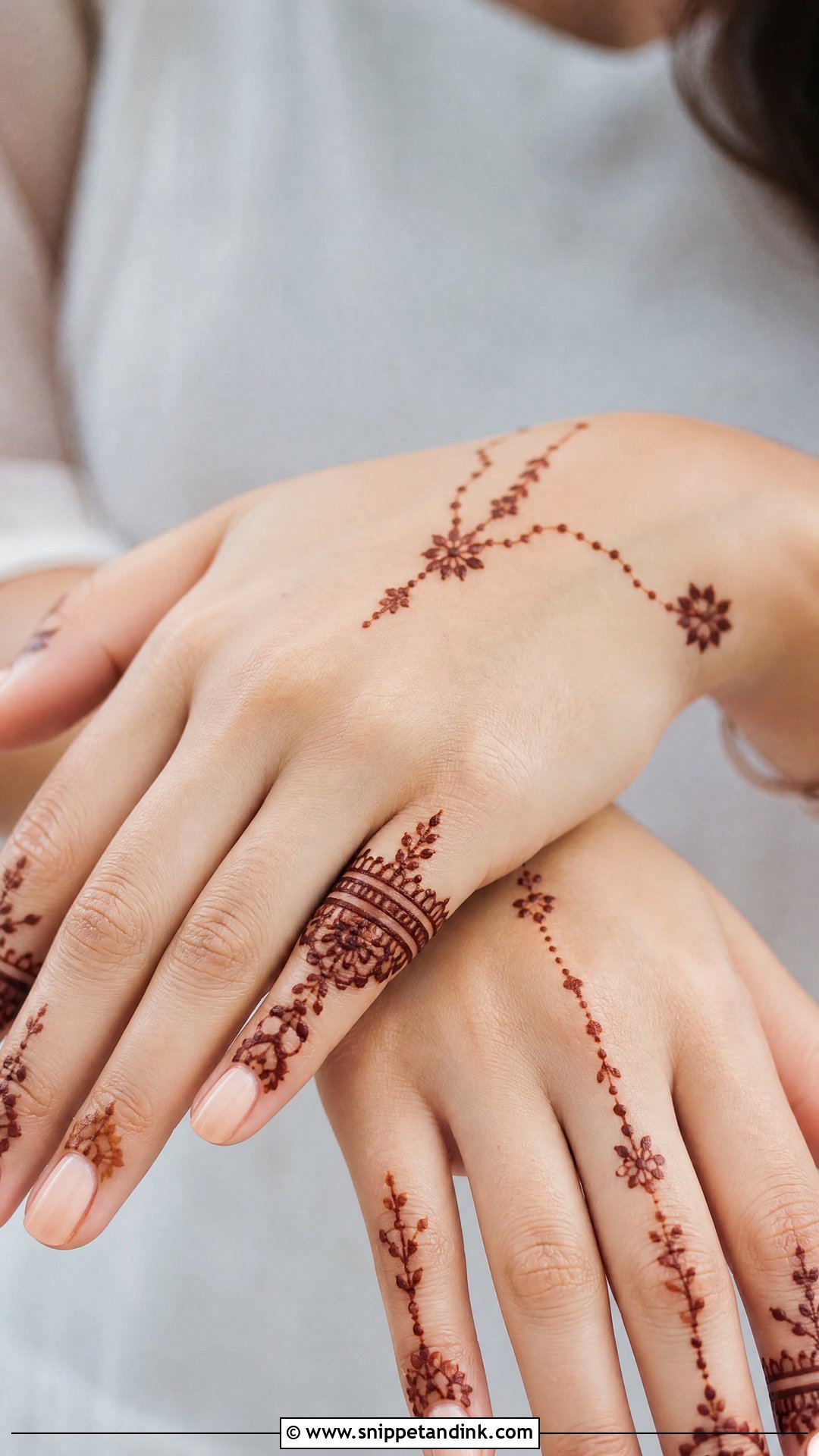
Ring-finger focus means the finger that carries the wedding ring gets a decorative band, small florals, chains and lace work, while the others stay lighter with matching tips. I always ask whether you’ll wear the ring during the ceremony or have it placed on you. If the ring goes on that day, I leave a clean channel where it sits so the band frames it instead of hiding under it. A soft connection to the back-hand or palm design keeps it from looking isolated.
6. Finger Tip Bridal Mehndi Design
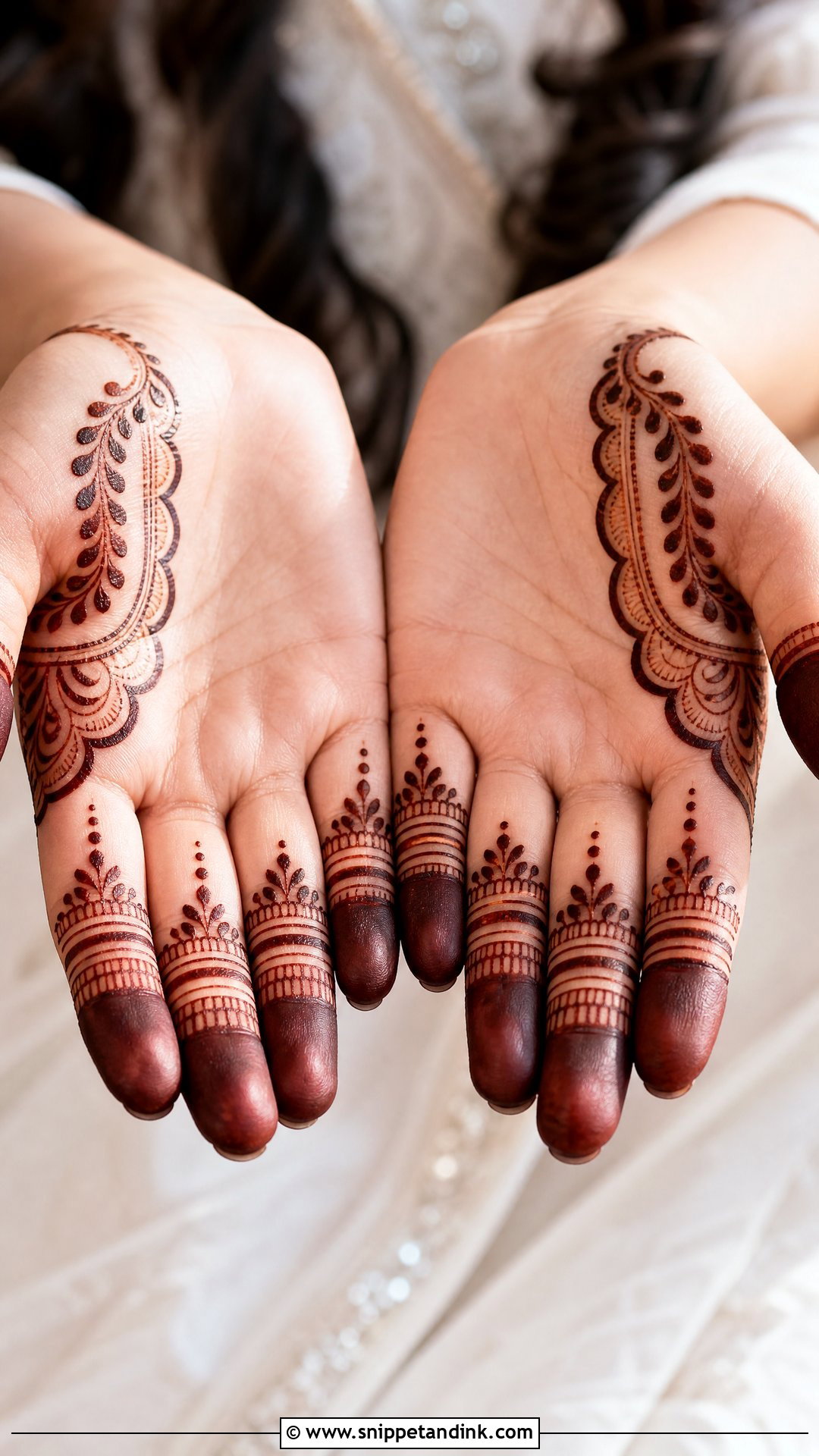
Dark tips with light detail below is one of the oldest finger looks, and it’s still one of the strongest. Filled tips sit above scalloped edges, dots, leafy bands or slim parallel lines near the first joint. It won’t fight a heavy palm. With painted nails, the henna frames them neatly. I apply the tip paste a little thicker than the fine work below, because the fingertip is the spot that rubs against everything while the paste dries.
7. Back Hand Finger Bridal Mehndi Design
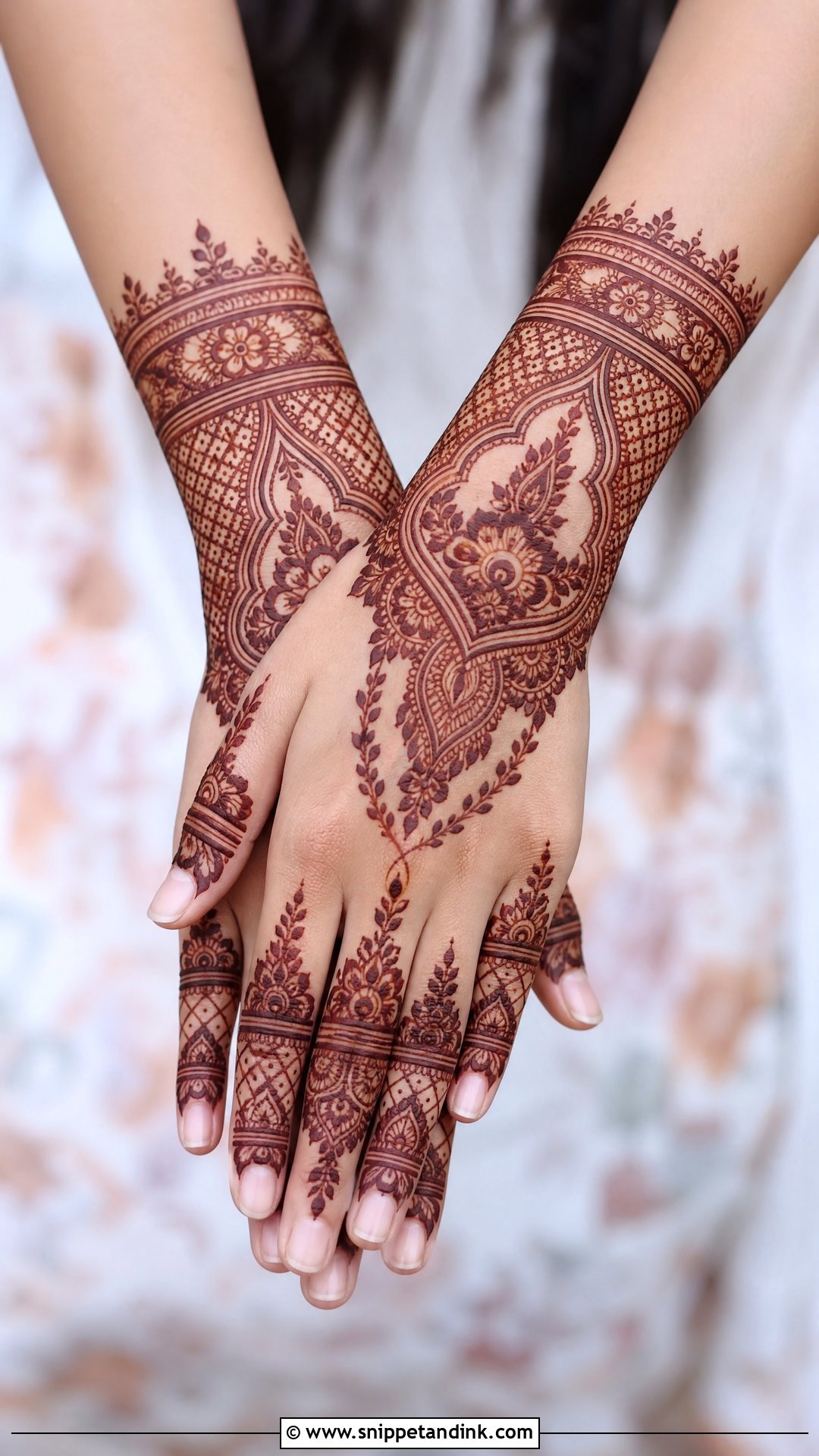
A back hand finger bridal mehndi plan is built for the photos where you show rings, bangles and nails from above. It starts at the fingertips and moves toward the knuckles with vines, bands, mesh or small florals, often joining a central back-hand motif. Symmetry between the two hands matters more here than anywhere else, because brides almost always hold both hands out together. Remember the back of the hand stains lighter than the palm side, so I keep lines bolder there.
8. Palm Finger Bridal Mehndi Design
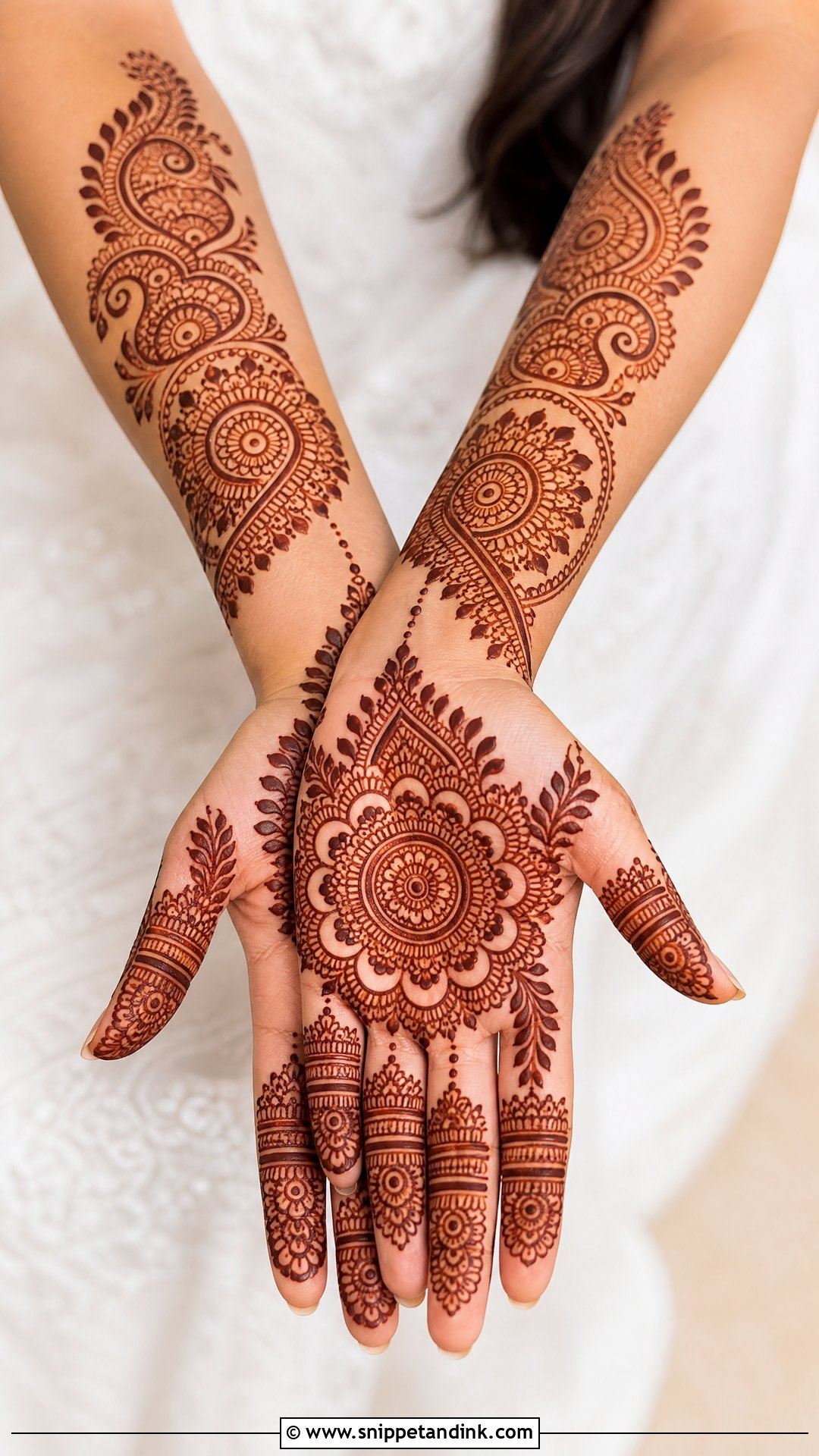
When the fingers connect directly into the palm artwork, the whole inside of the hand reads as one piece once you open your hands. Leafy trails, small paisleys and dotted bands run down into a mandala, a bride-and-groom motif or a floral palm. If your palm is heavy, don’t leave the fingers plain. I repeat small motifs from the palm on each finger, which ties them together without copying the palm at a smaller scale.
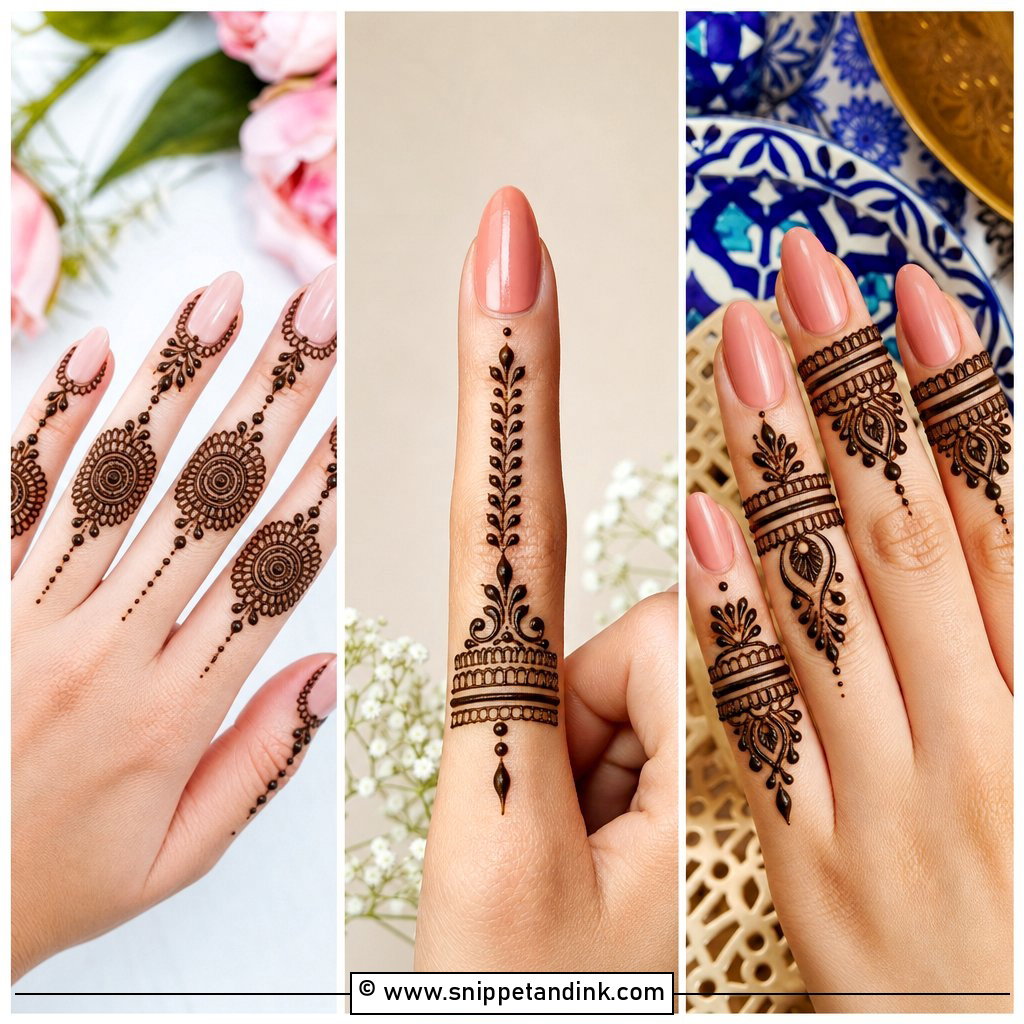
9. Minimal Bridal Finger Mehndi Design
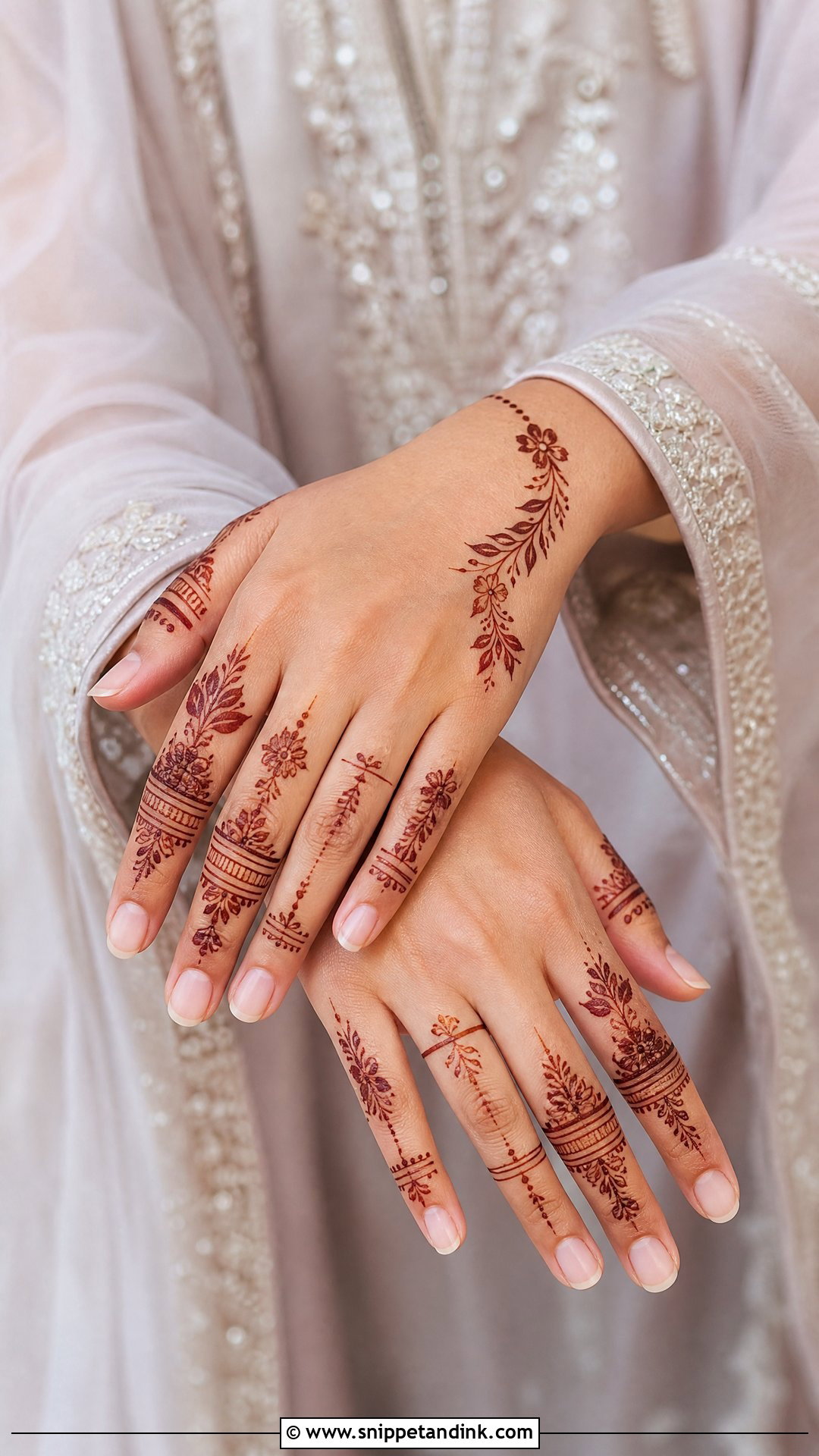
Minimal fingers suit registry ceremonies, engagements and brides who want light mehndi that still feels bridal. Slim bands, small leaves and open spaces decorate only the upper fingers or form jewellery-like lines around the knuckles. Rings and nail art stay visible. Clean, symmetrical lines matter more in a sparse design, because there’s nothing to hide a shaky stroke. A small connection to the wrist or back hand keeps it looking finished.
10. Heavy Bridal Finger Mehndi Design
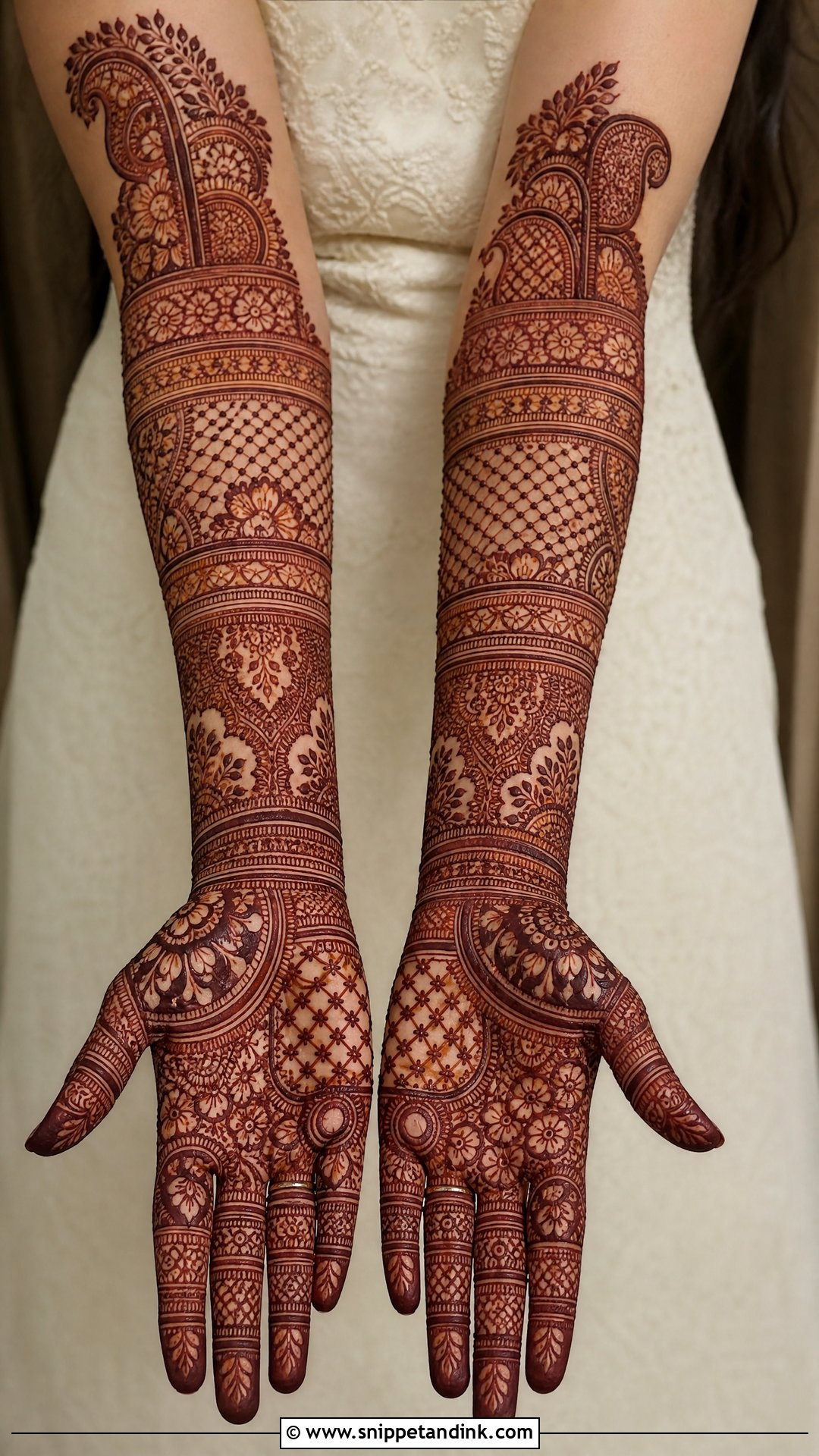
Heavy finger work puts deep colour and detail into every frame. Each finger is filled with jaali, paisleys, florals, dots and fine line shading. The danger is a design that blurs once the stain deepens, since fine lines placed too close together merge as the colour develops over the next day or two. I plan each finger before I start and use bold outlines around fine inner work so the pattern stays readable when it peaks.
11. Floral Finger Bridal Mehndi Design
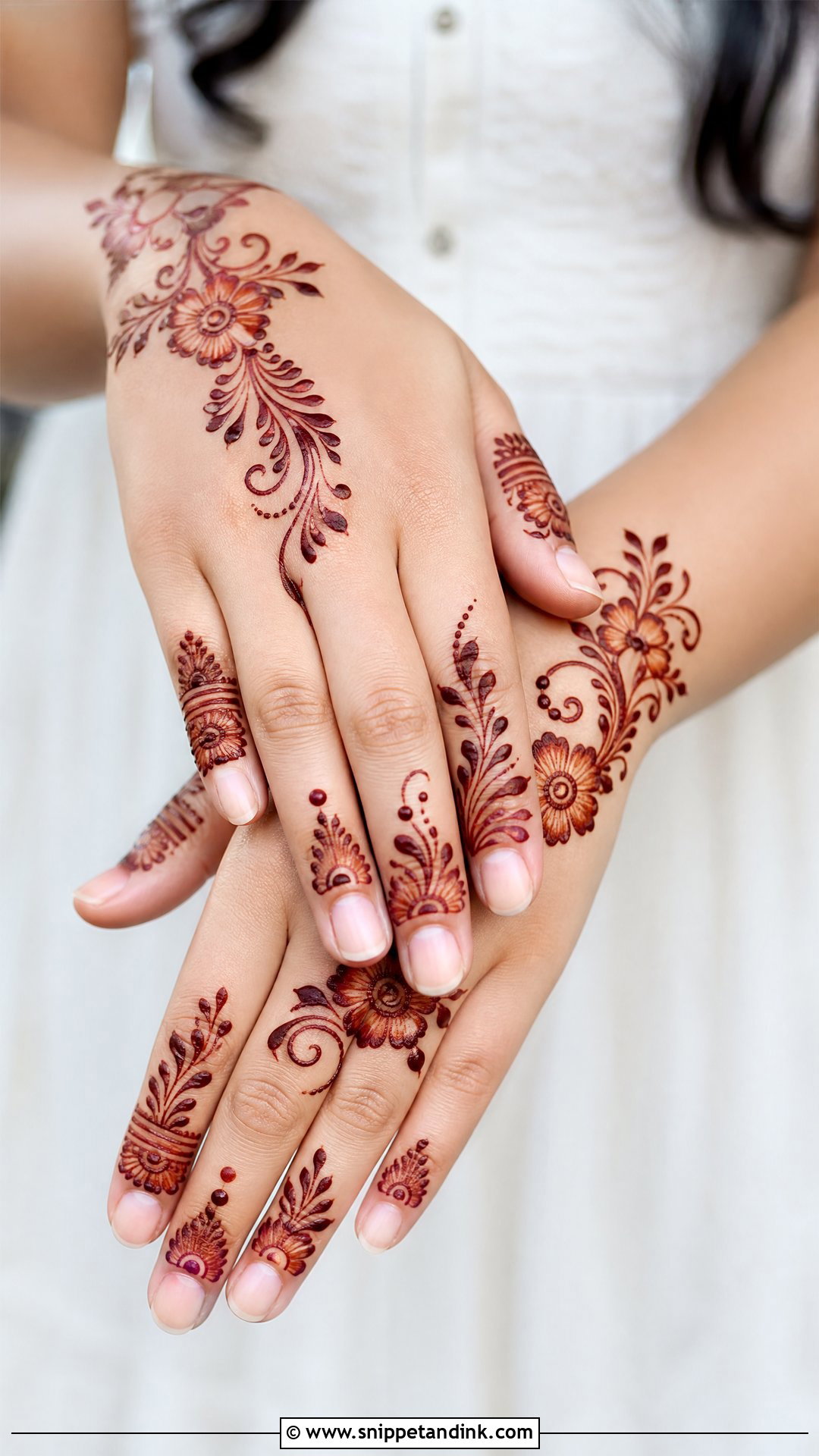
Floral fingers use small flowers, buds and curved stems that sit near the tips, wrap the knuckles or trail from the palm toward the nails. They pair well with Arabic, Indo-Arabic or modern hands. Keep the flowers roughly the same size on both hands, and surround them with tiny dots for finish. This is a good middle ground if you want detail but find heavy jaali too dense for your taste.
12. Paisley Finger Bridal Mehndi Design
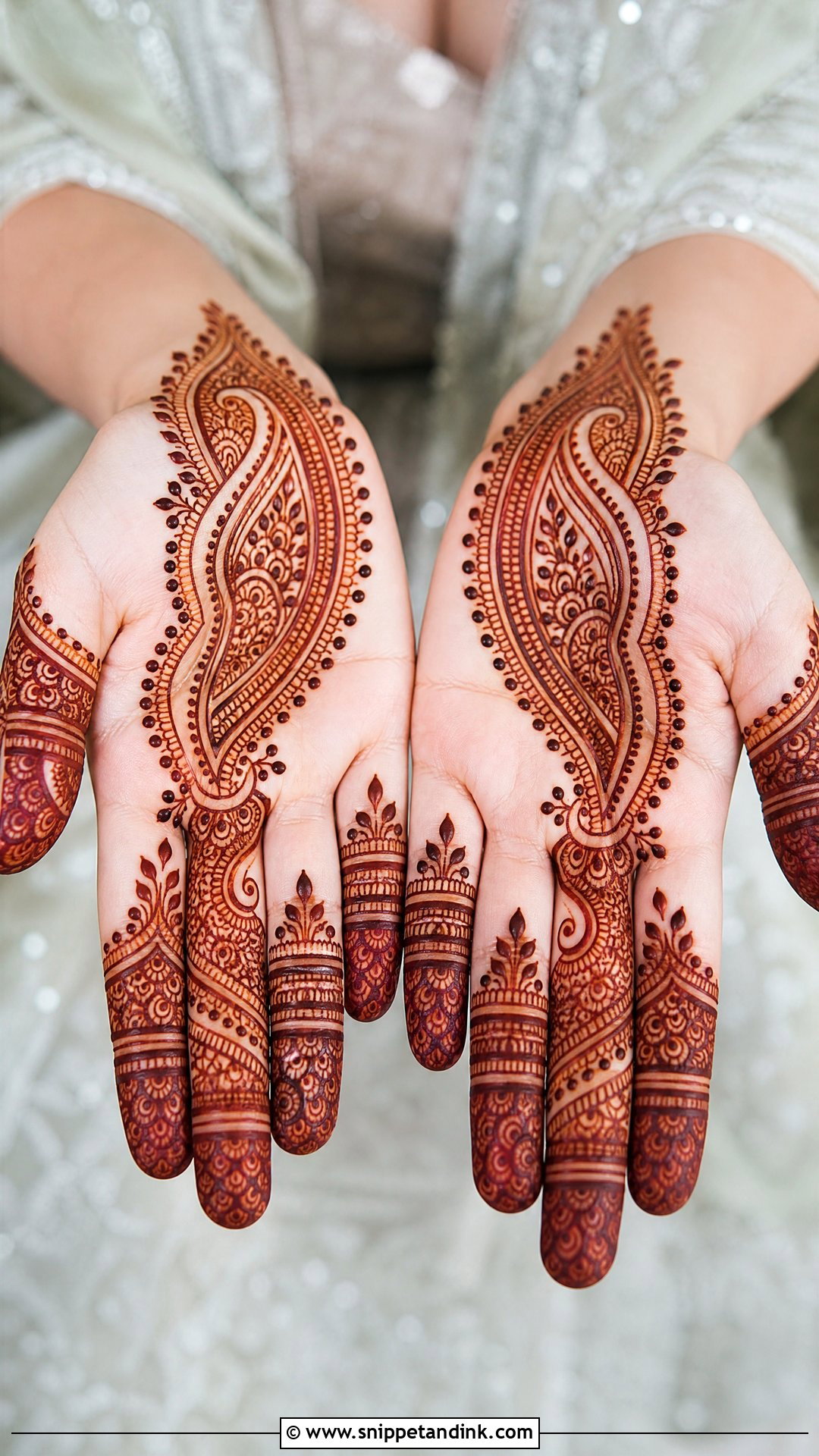
Paisleys are among the easiest motifs to connect, which is why they appear in so much bridal work. On fingers I place them vertically, diagonally, or as small repeats between bands, with fine filling and dotted edges. They stop the fingers from looking identical while keeping a traditional feel. Pair them with a mandala palm or a full Indian design so the language matches.
13. Mandala Finger Bridal Mehndi Design
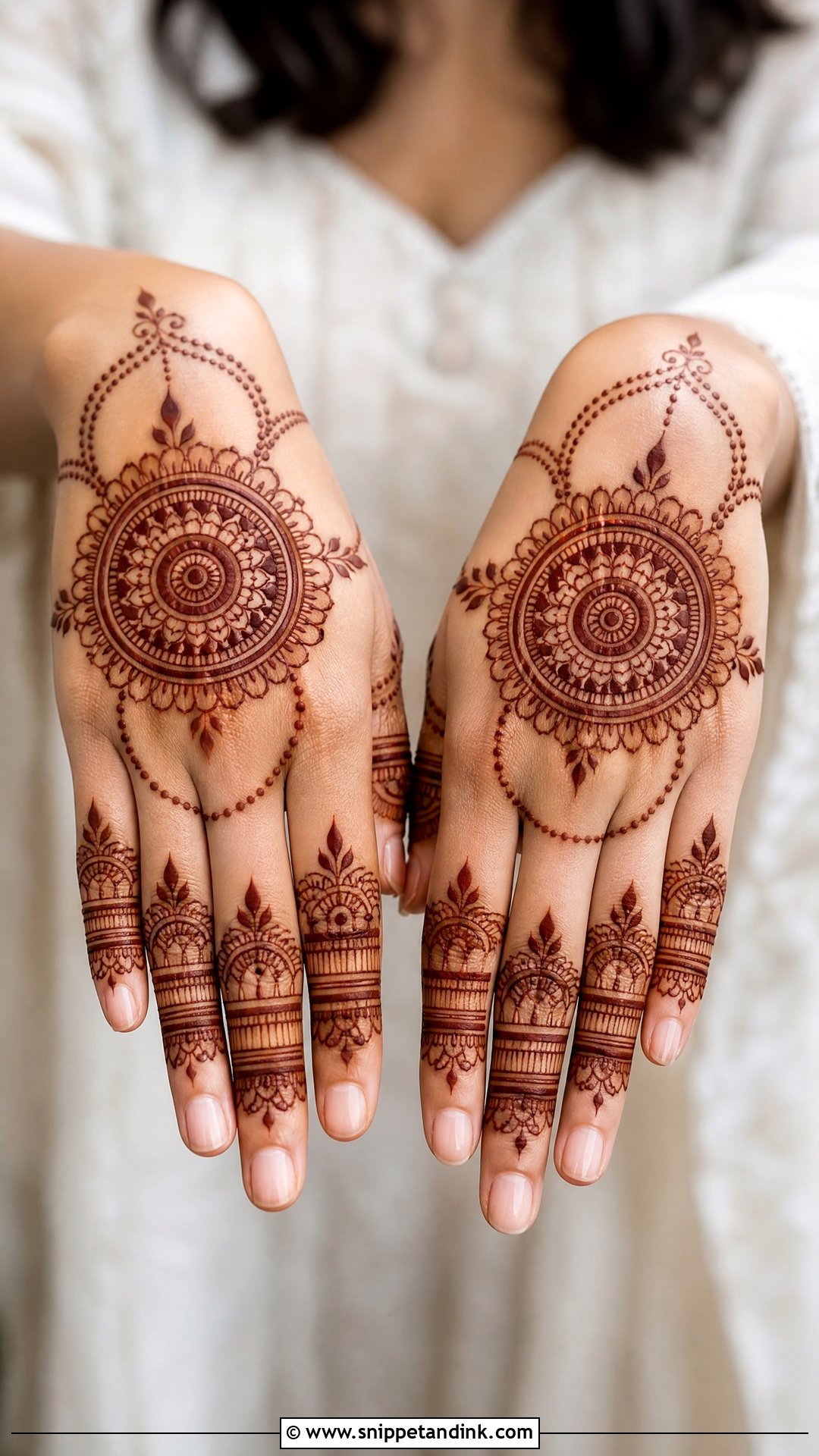
With a mandala at the centre of the palm or back hand, the fingers carry the echo: circular bands, dotted arcs, petal rows. It suits brides who love symmetry. Crispness is everything, because a mandala that spreads into muddy fingers loses its geometry. I alternate open spaces with small filled bands, and the back-hand version is where this idea looks most organised.
14. Jaali Finger Bridal Mehndi Design
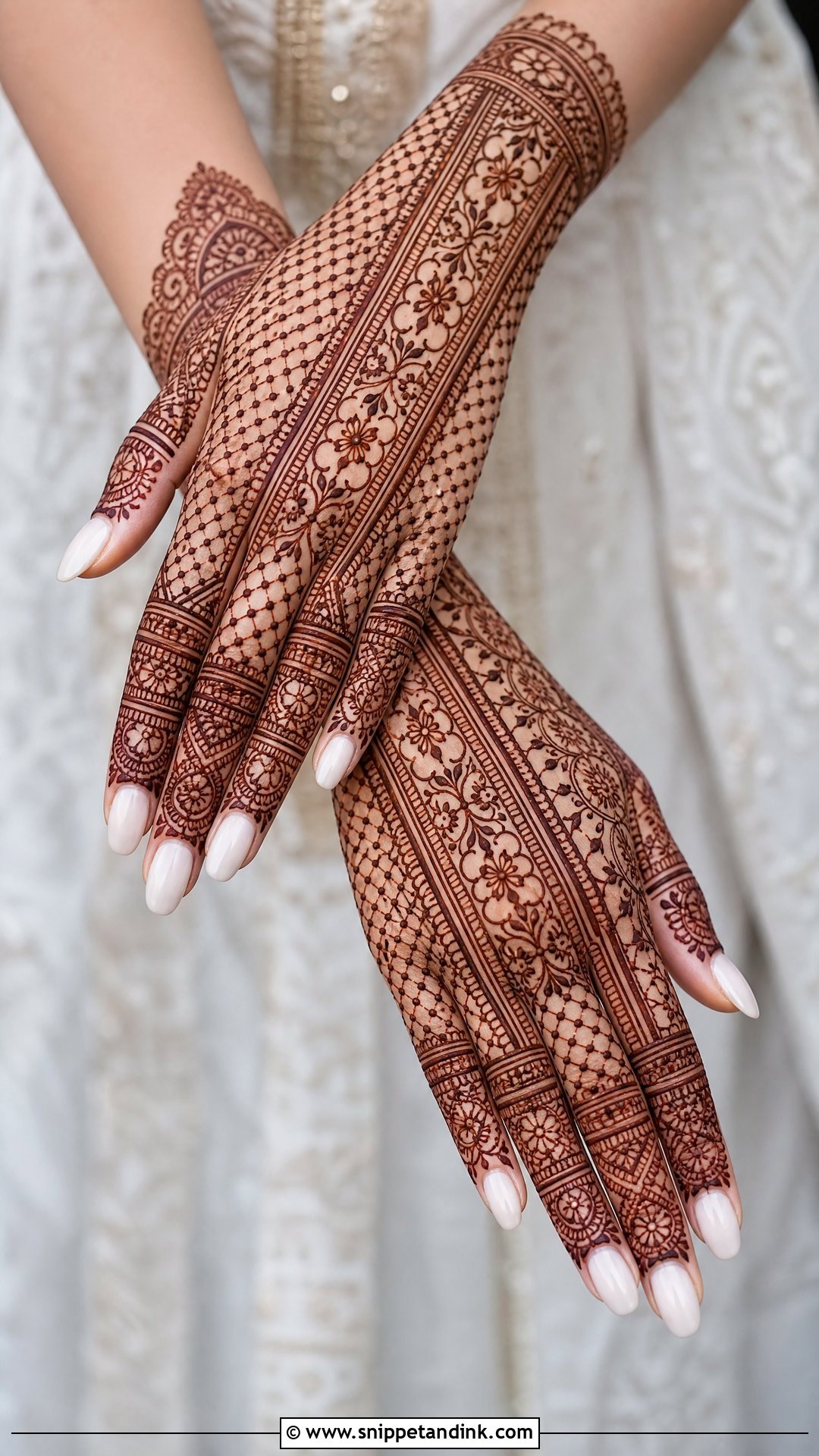
A jaali finger bridal mehndi design gives a lace-like grid of tiny diamonds, dots and thin borders. Drawn vertically, it can make shorter fingers look longer. The grid needs a fine cone tip and steady pressure, otherwise lines thicken unevenly and the squares fill in as the stain darkens. I usually mix mesh on two fingers with floral or paisley bands on the others so the hand doesn’t look flat.
15. Jewelry Finger Bridal Mehndi Design
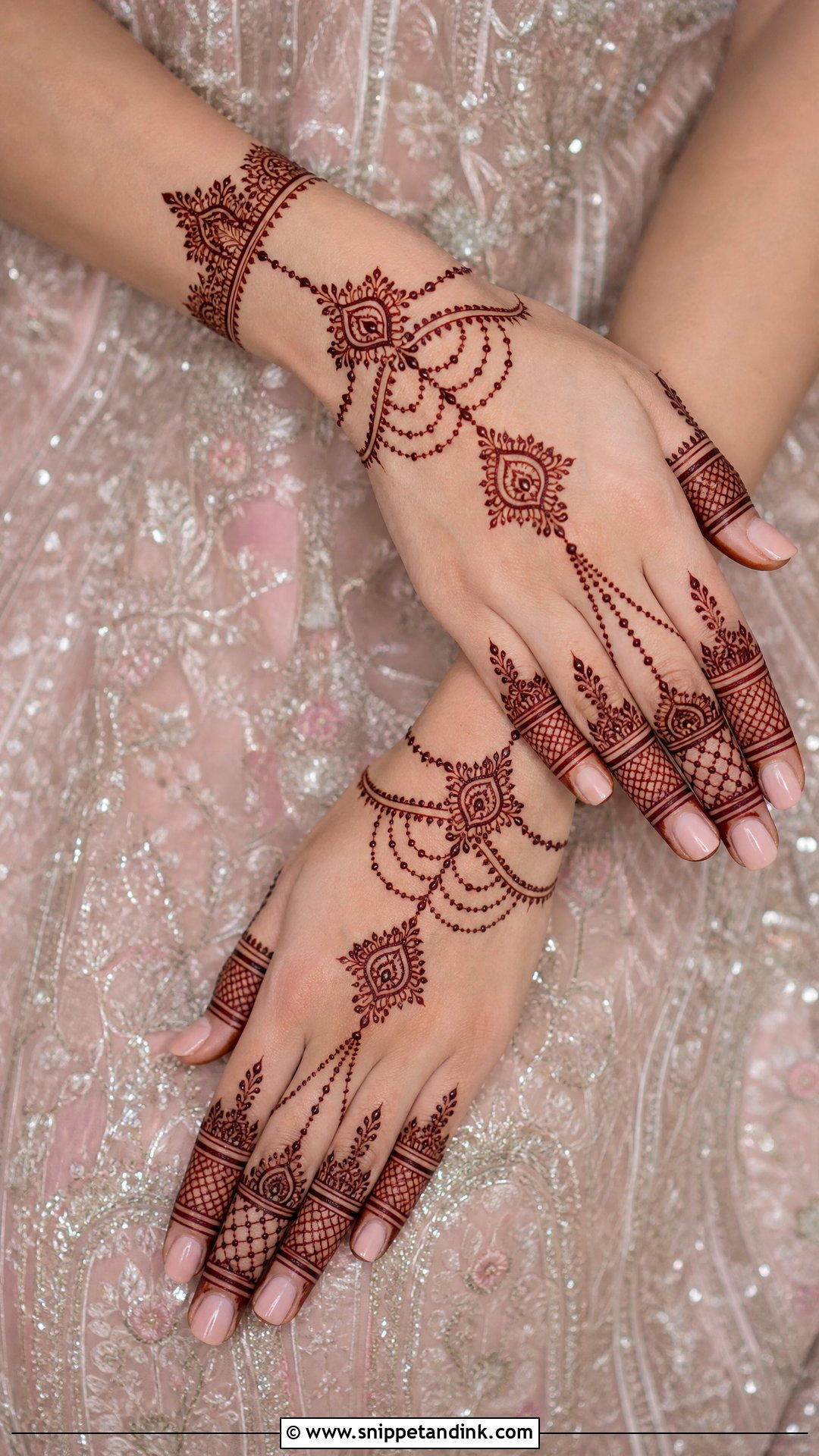
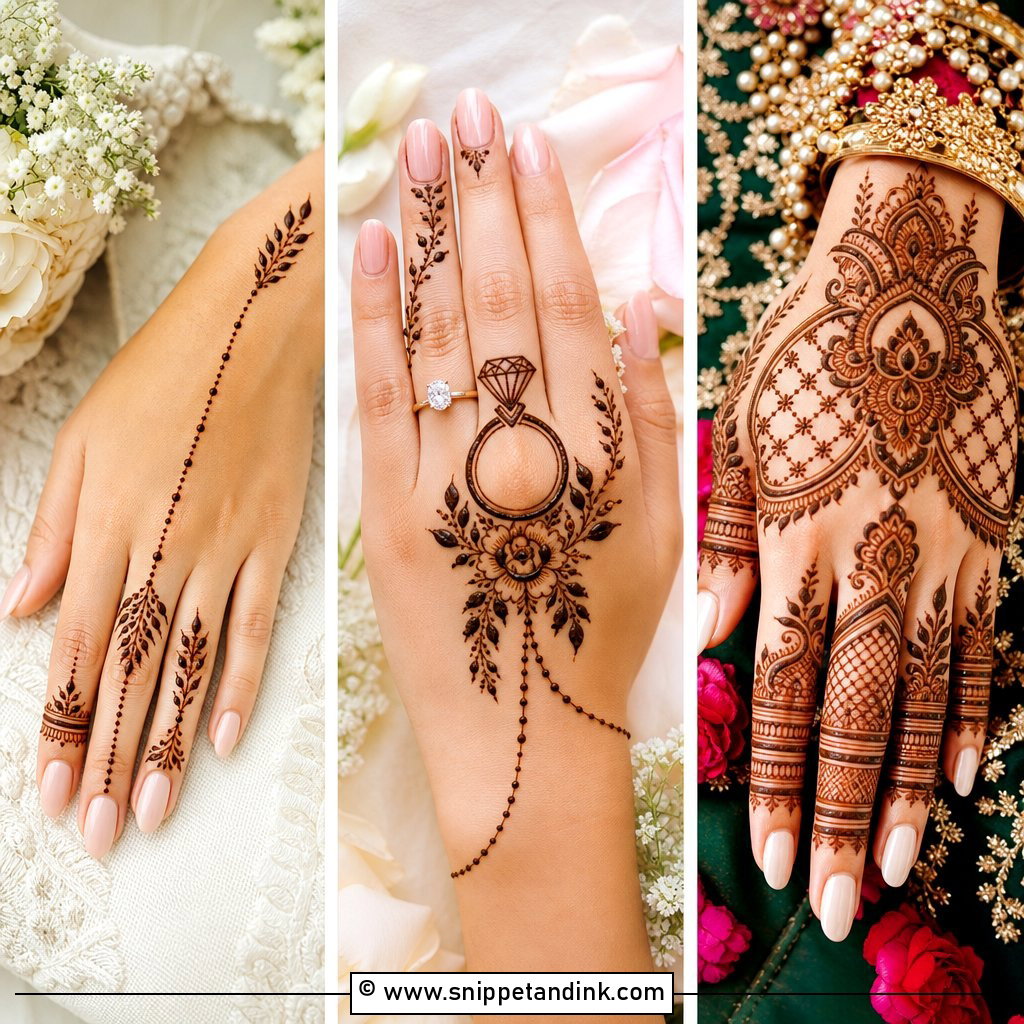
Jewellery-style fingers draw rings, chains, dotted strings and small pendants in henna, often linking from the wrist to one or more fingers like a haath phool. It complements real jewellery rather than competing with it. I keep the drawn ring bands slimmer than the real rings you’ll wear, so the actual pieces still stand out. This suits a structured back-hand look more than dense coverage.
16. Moroccan Finger Bridal Mehndi Design
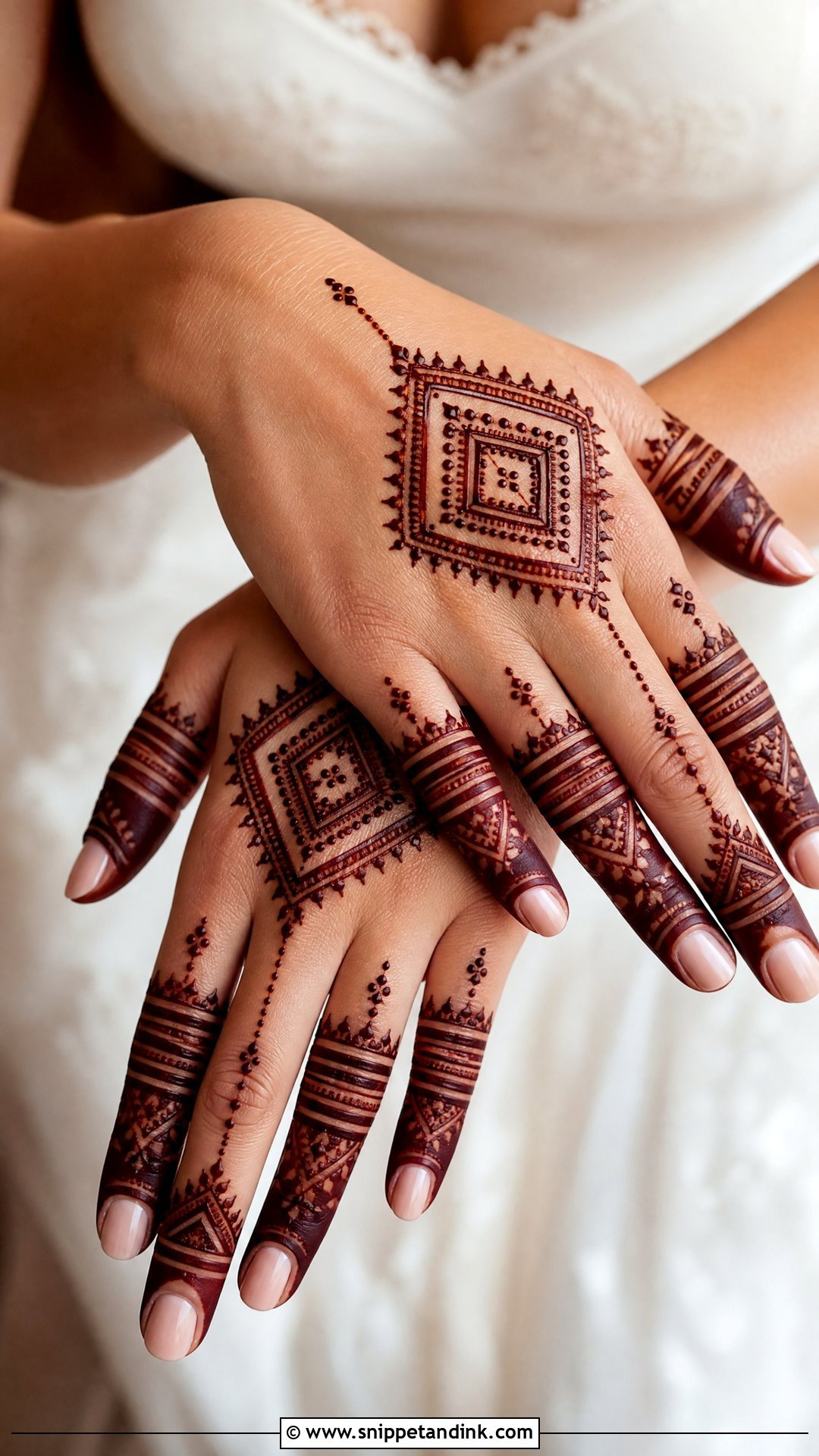
Moroccan finger work swaps florals for diamonds, triangles, grids and angular borders. It’s a strong choice if you want something different from both Indian and Arabic styles. Geometric lines are unforgiving: a single crooked line is obvious, so I mark key points with tiny dots before connecting them. Pair the fingers with a neat wrist or central back-hand motif to keep it bridal.
17. Gulf Finger Bridal Mehndi Design
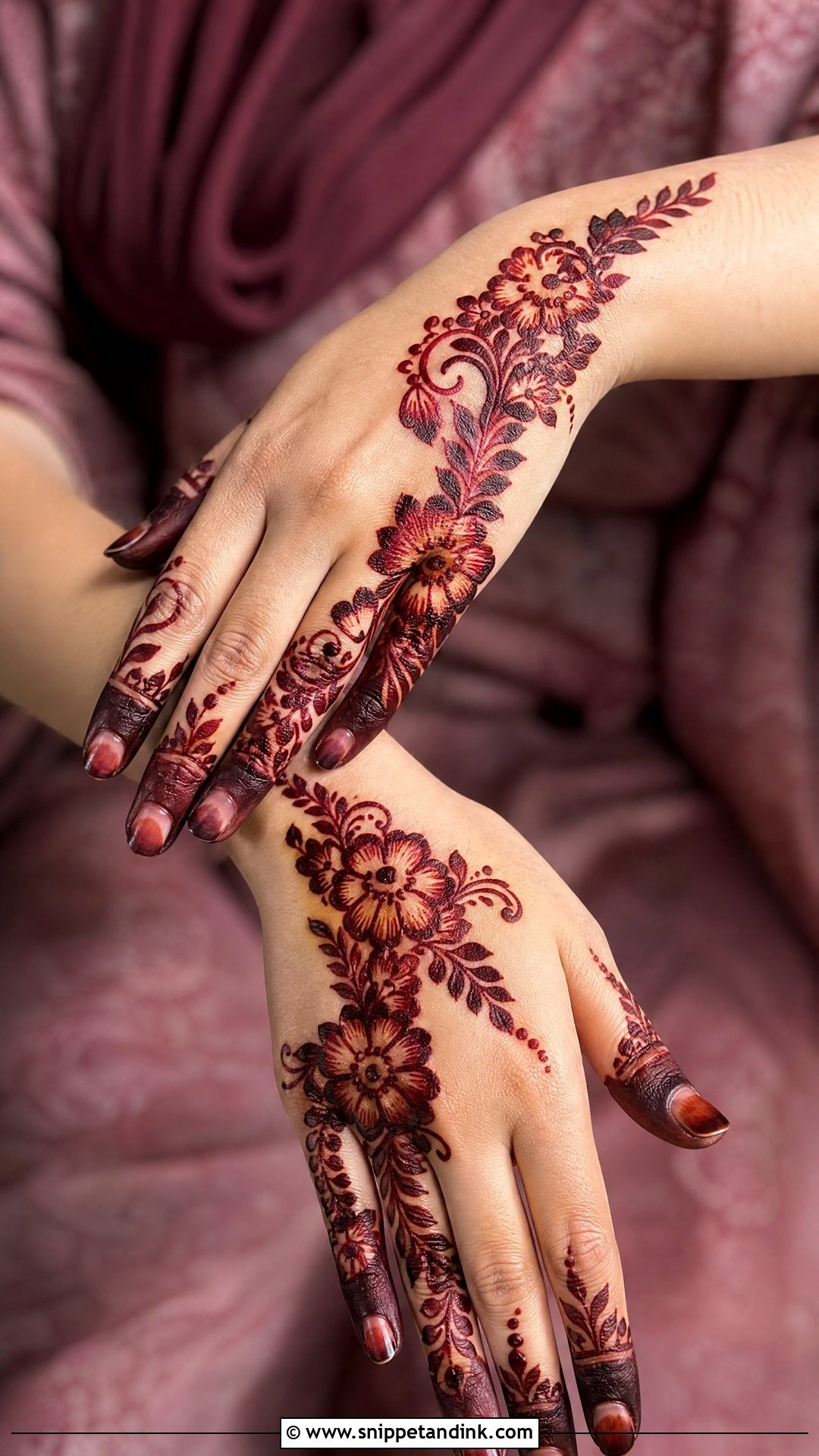
Gulf-style fingers are bold and spacious, with thick floral strokes, shaded petals and dramatic trails leaving skin visible between them. Large floral caps or diagonal vines flow toward the hand. Because the shapes are bigger, they read clearly from across a room, and they come out especially well with a deep maroon stain. A flowing back-hand or palm design finishes it.
18. Peacock Finger Bridal Mehndi Design
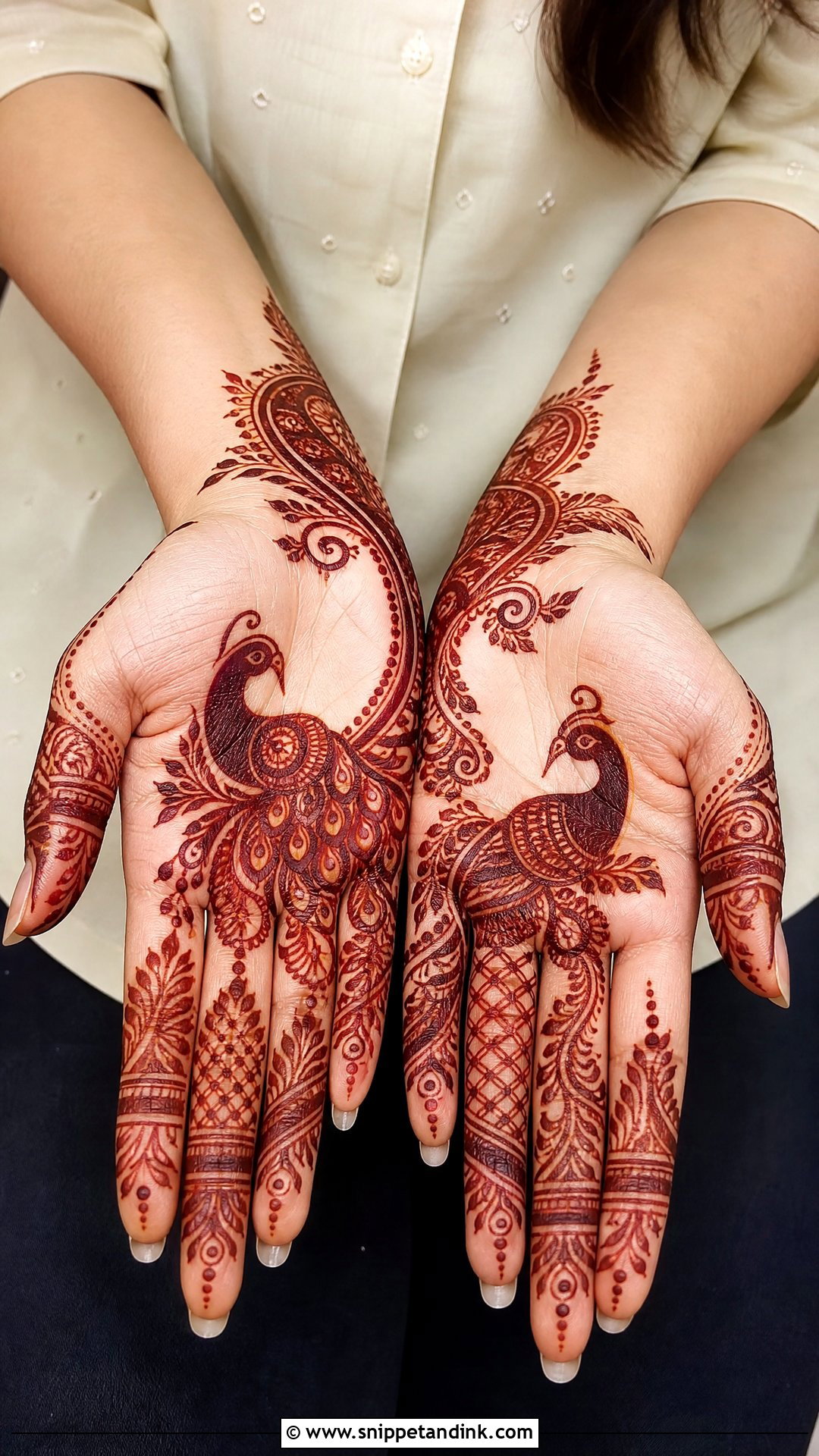
A peacock motif near the base of one finger, with feathers, curves and dots running toward the tips, adds a festive, traditional touch. It works best when the palm or back hand already includes peacock elements. Don’t put a full bird on every finger, since it crowds the hand. I use one main peacock and repeat feather details on the others.
19. Lace Finger Bridal Mehndi Design
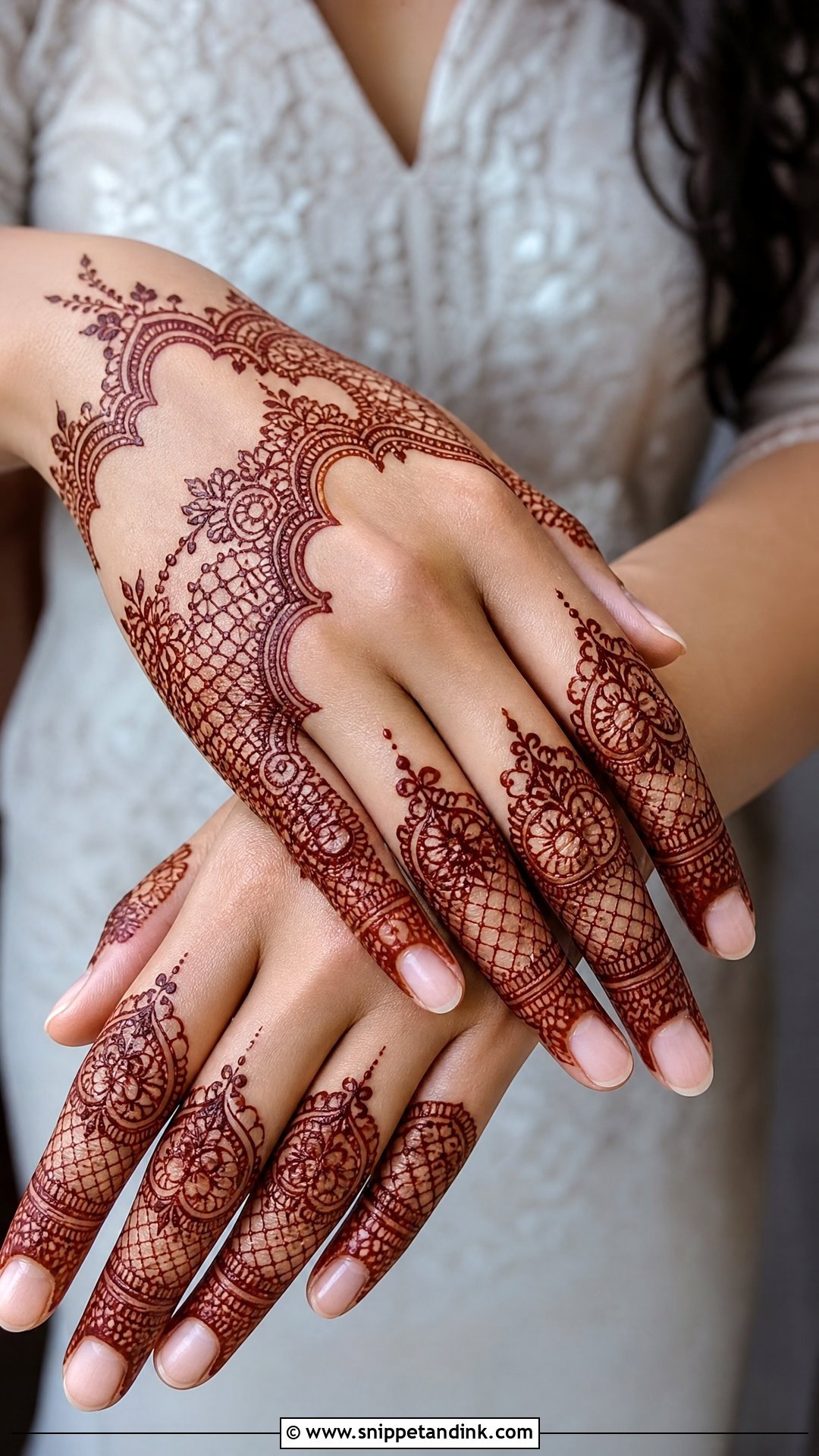
Lace fingers use scalloped borders, small loops, fine mesh and floral edges that look like fabric. They can sit around the knuckles, cover the tips, or run as vertical panels. Thin, consistent lines are the whole point, so this design needs a well-rolled cone with a very fine opening. It suits brides who want delicacy over bold motifs, especially beside a minimal jewellery design.
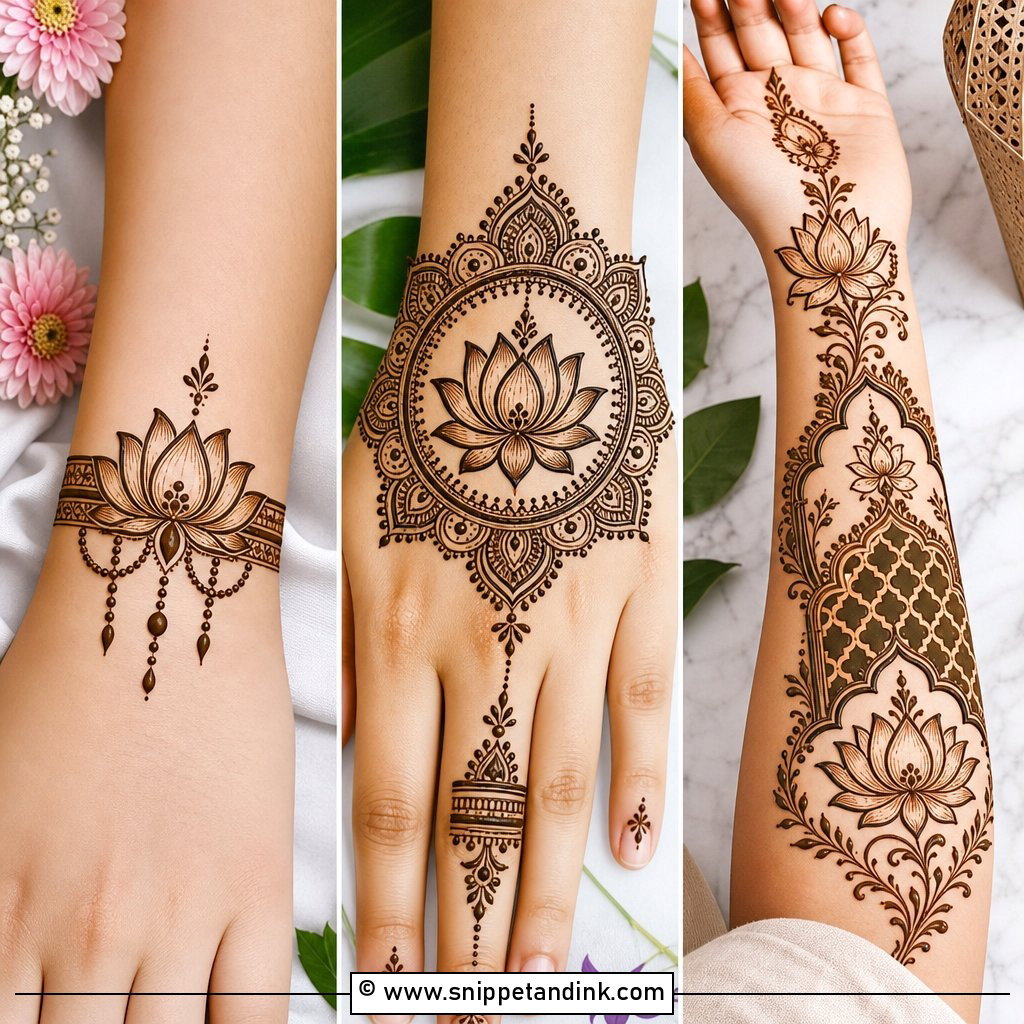
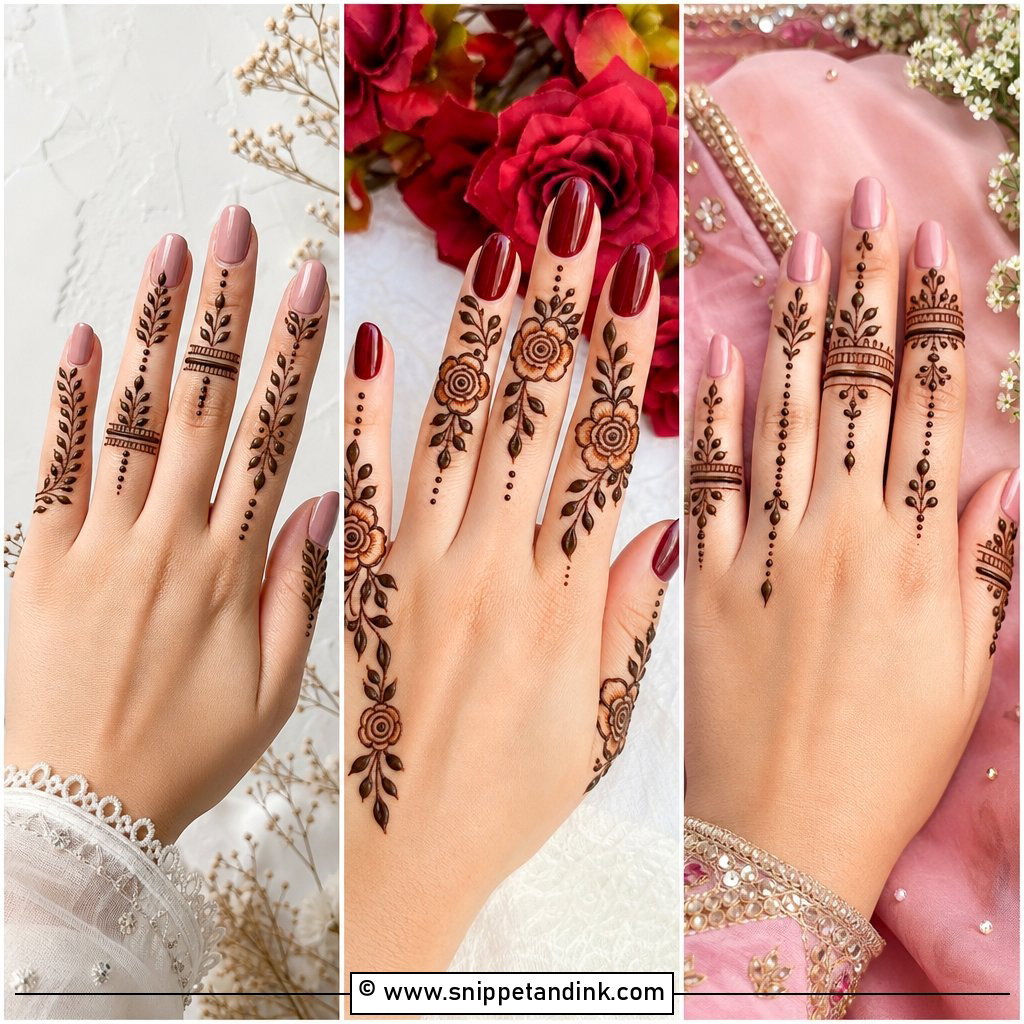
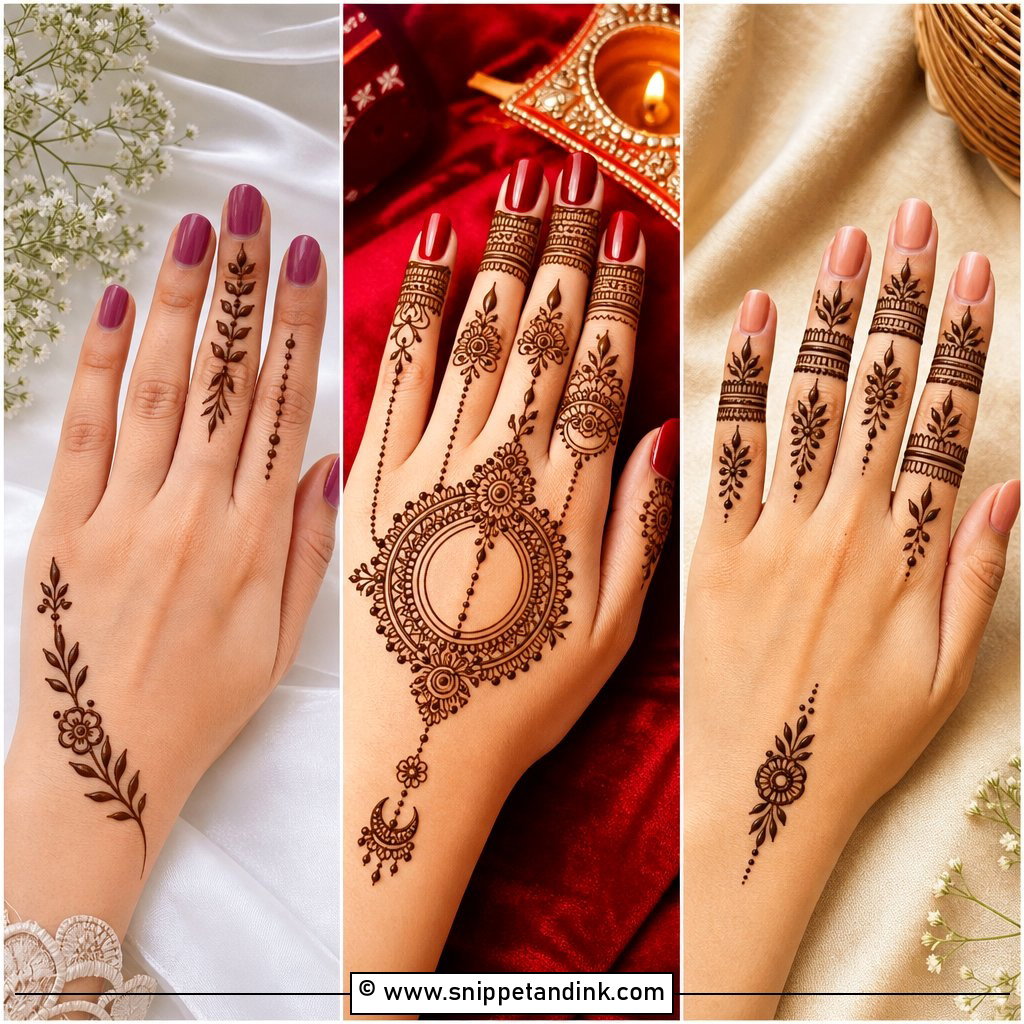
20. Modern Bridal Finger Mehndi Design
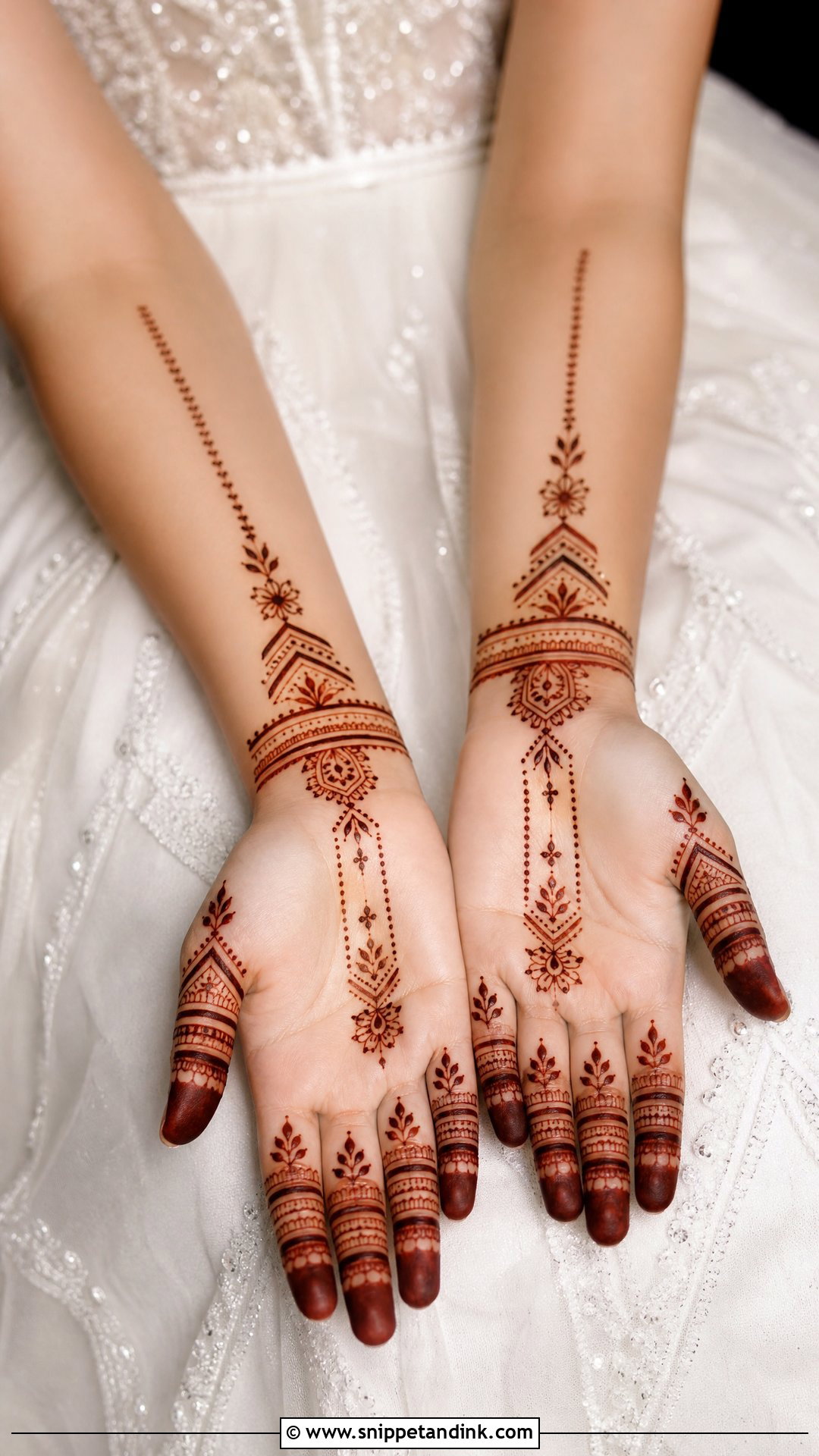
Modern finger designs use negative space, slim bands, half-finger coverage, geometric lines and neat tips. They don’t need density to feel bridal; balance does the work. I repeat one core pattern across all fingers so the hand reads as a set, and add a small link to the palm or wrist. Pastel lehengas and minimal jewellery suit this look well.
The First 48 Hours Decide How Dark the Fingers Go
Natural henna starts orange when the paste comes off and darkens over the following day or two as it oxidises. Fingertips and palms usually end up the darkest parts of the hand, while the back of the hand stays lighter. That’s why I recommend having bridal mehndi done one or two days before the wedding, so the colour peaks for the ceremony rather than the day after.
- Keep the paste on as long as you comfortably can. Overnight gives the deepest stain, and a few hours is the minimum.
- Dab a lemon and sugar mix over dry paste to help it stick to the skin. Don’t soak it.
- Scrape the dried paste off with a blunt edge or your fingers. Avoid washing it off with water.
- Keep your hands away from water for as long as you can, ideally until the next day.
- Warmth helps the colour develop, so keep your hands warm and covered rather than in cold air.
Fingers also fade first, since they’re washed and used the most. In the days before the wedding, wear gloves for dishes and skip hand scrubs and chlorinated pools.
Avoid any cone promising black colour in an hour
Real henna never stains black. Cones sold as black henna or instant-dark often contain chemical dyes that can cause serious skin reactions. If you’re unsure about a cone, ask your artist what’s in it, and ask for a patch test if you have sensitive skin.
Your Ring Shot Is Mostly Fingers, So Plan Them First
Finger work changes how the whole hand looks in photos. Full Indian detail, Arabic trails, jewellery patterns, jaali and modern spacing all work, as long as the fingers connect to the rest of your mehndi. Heavy coverage suits a traditional wedding, minimal fingers suit a lighter look, and ring-focused work gives you the best close-ups. Bring a photo of your outfit, your jewellery and your nail plan to your artist. Those three things will narrow your choice faster than scrolling another hundred designs.
You'll Like These Ideas:


Leave a Reply