
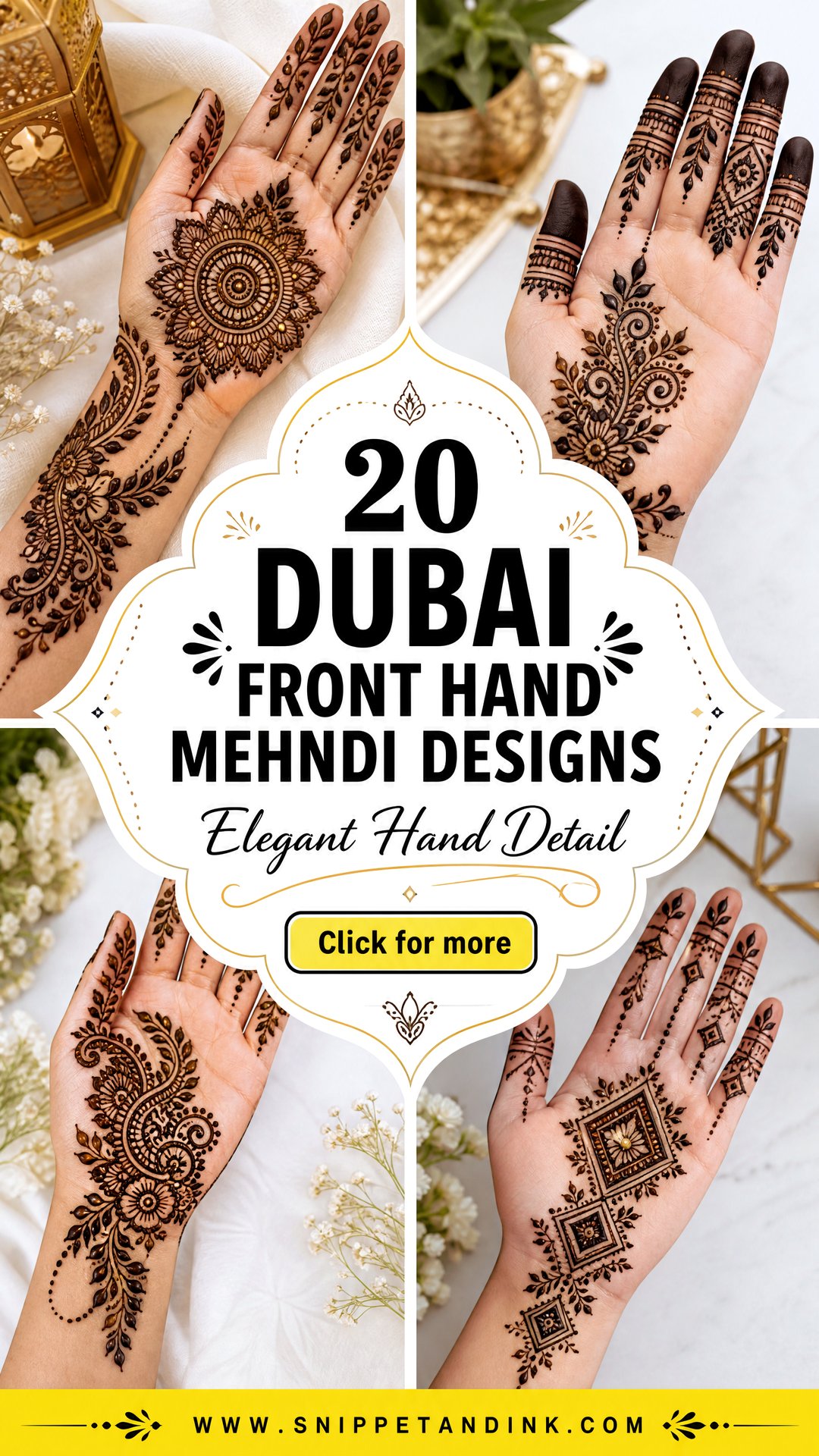
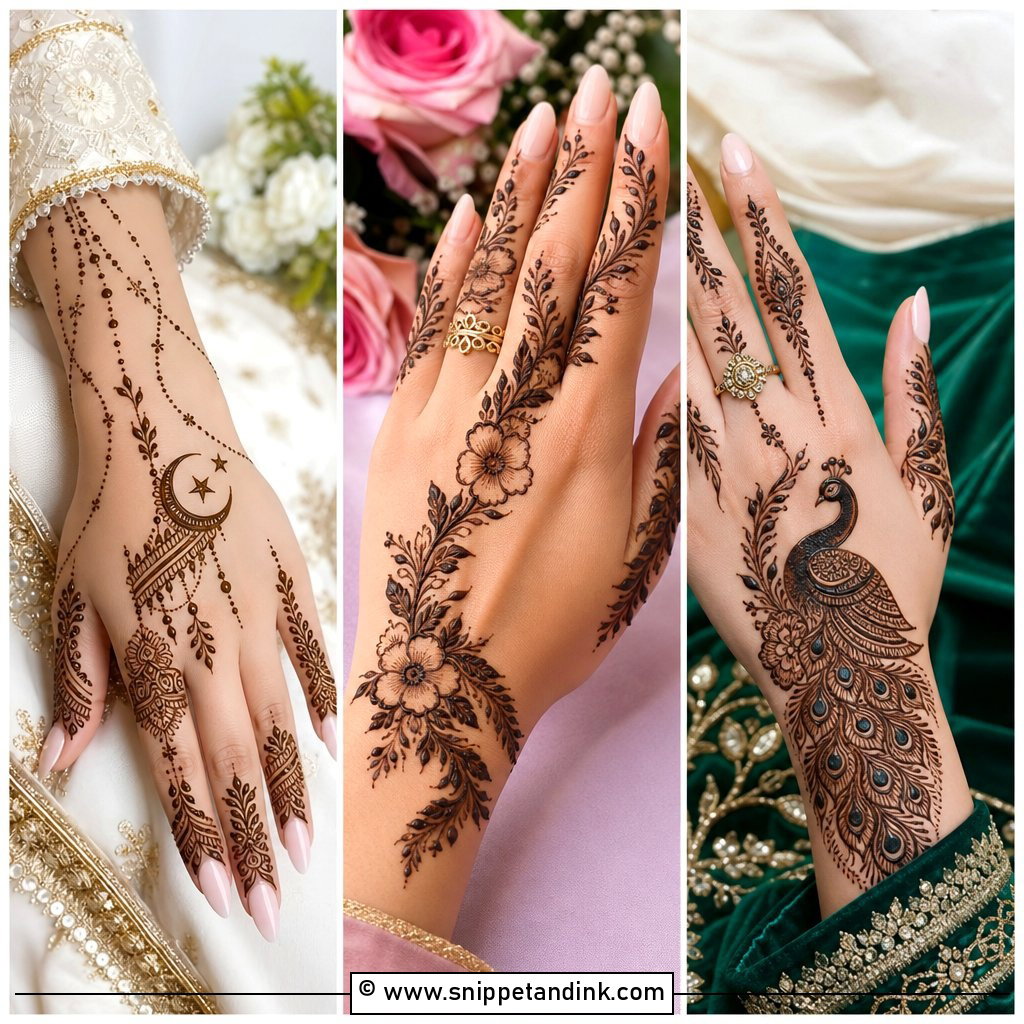
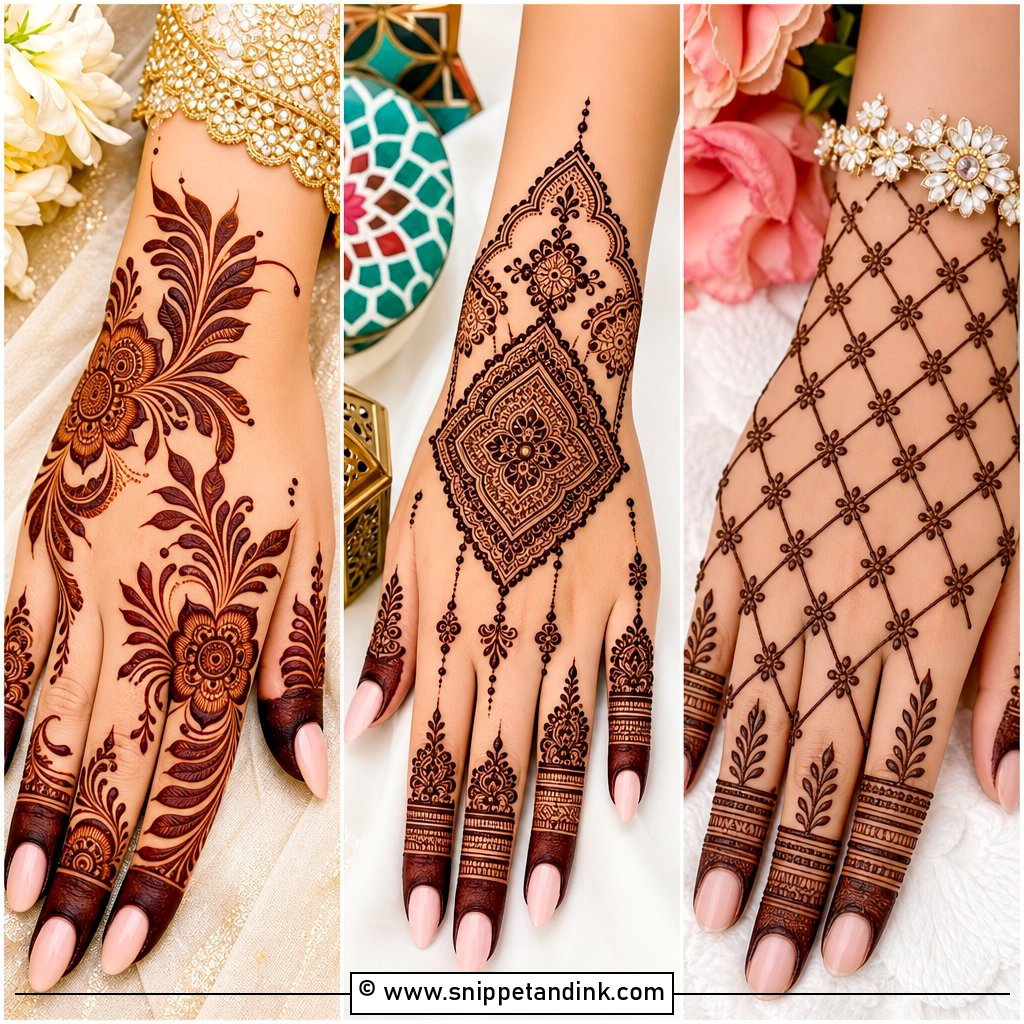
What people usually mean by Dubai front hand mehndi designs is a palm that reads clearly from a few feet away: bold Arabic flow, deliberate gaps of bare skin, and one strong motif doing most of the talking. I build these from the palm outward, then let florals, vines, jaali or a little shading travel up the fingers. Because the coverage is flexible, the same style can be cut down to a quick Eid trail or built up for a wedding. The twenty layouts below run from very light to heavily filled, and I’ve added notes on how each one actually behaves on skin.
Mapping a Palm Design Around Creases, Rings and Sleeves
Before I draw anything on a front hand, I ask the person to open and close their fist a few times. The palm folds along the heart line, head line and the crease at the base of the thumb, and a motif drawn straight across a deep crease will look broken whenever the hand relaxes. Dubai layouts suit this well, because the big motifs can sit between the folds while the trail crosses them on a diagonal.
Three other things change the layout:
- Rings and bangles. If you’ll wear an engagement ring or stacked bangles, I keep that finger and the wrist band lighter so the jewelry has room.
- Sleeve length. A three-quarter sleeve hides any wrist cuff, so there is little point paying for forearm work under it. A sleeveless or short-sleeve outfit can carry a longer trail.
- Hand shape. Diagonal trails and vertical finger lines lengthen short hands; wide horizontal bands make long, narrow hands look more balanced.
Bring a photo of your outfit and your jewelry to the appointment. It takes me a minute to adjust a layout before I start, and it can’t be done once the paste is on.
1. Dubai Arabic Front Hand Mehndi Design
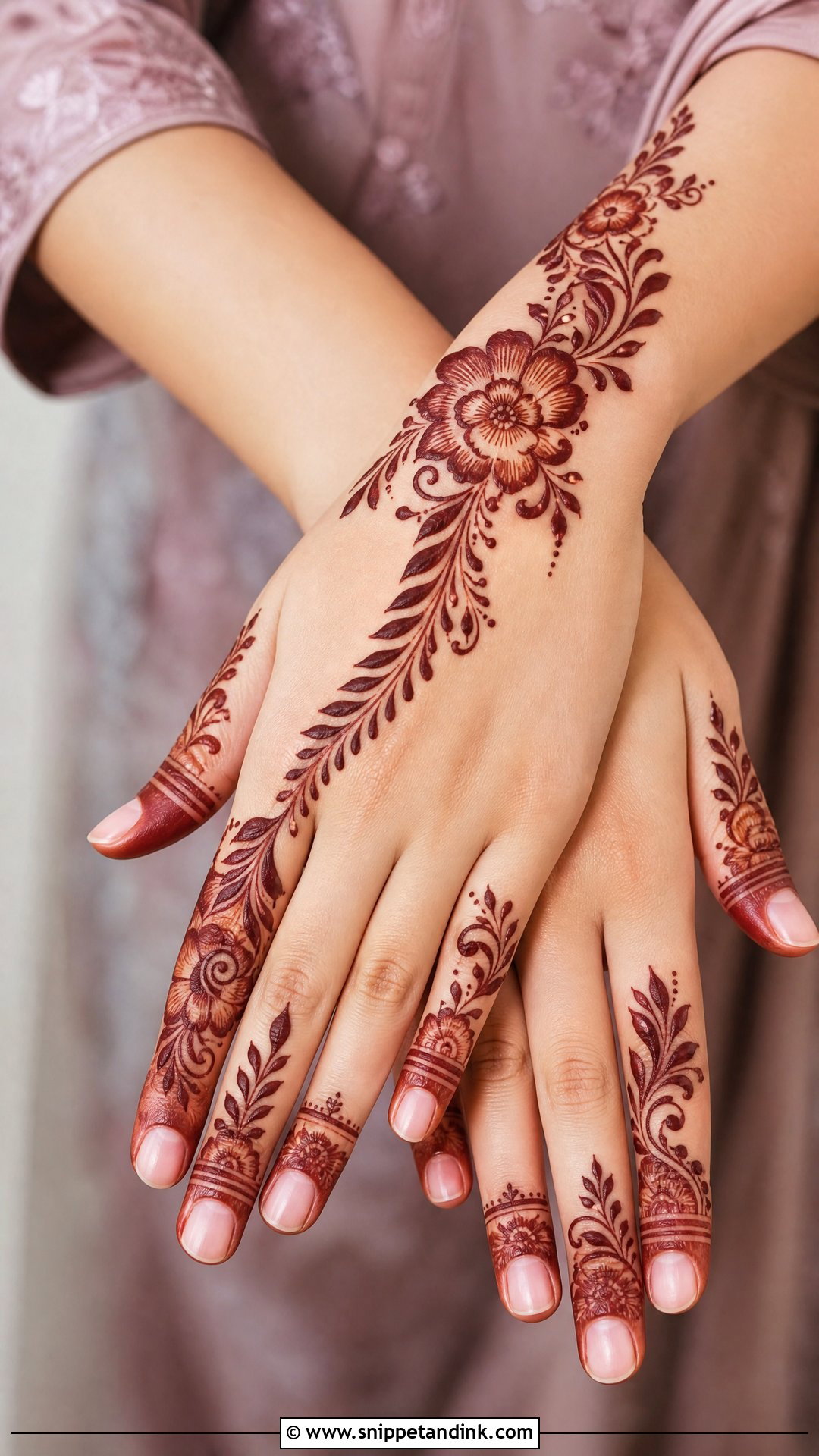
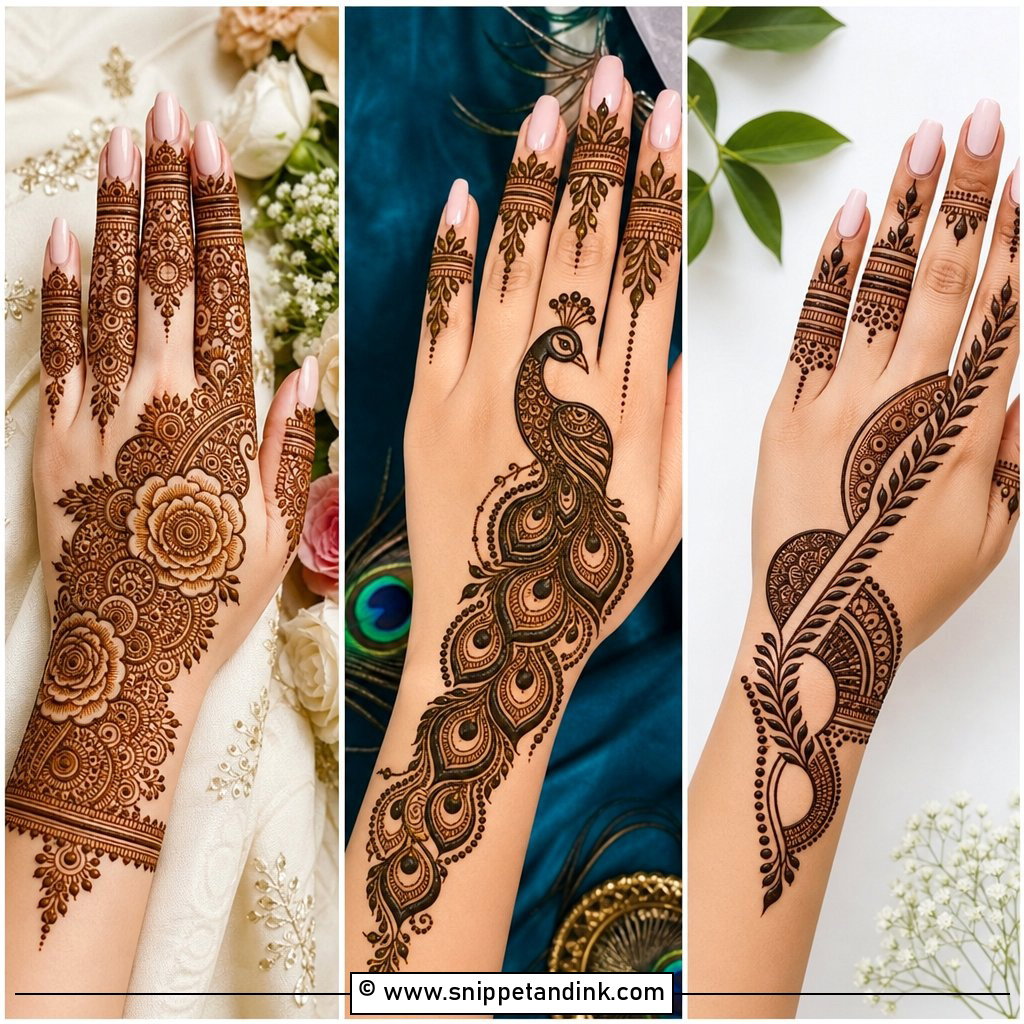
I start a Dubai Arabic front hand mehndi design with one large floral cluster set off to the side of the palm, then pull the trail diagonally toward the index and middle fingers. The diagonal matters: it follows the natural fold of the hand, so the pattern still looks intentional when the fingers curl. Thick outlines carry this design. Keep the flower borders bold and fill the petals with fine lines, because heavy shading inside a small petal tends to stain as one muddy patch.
2. Dubai Floral Front Hand Mehndi Design
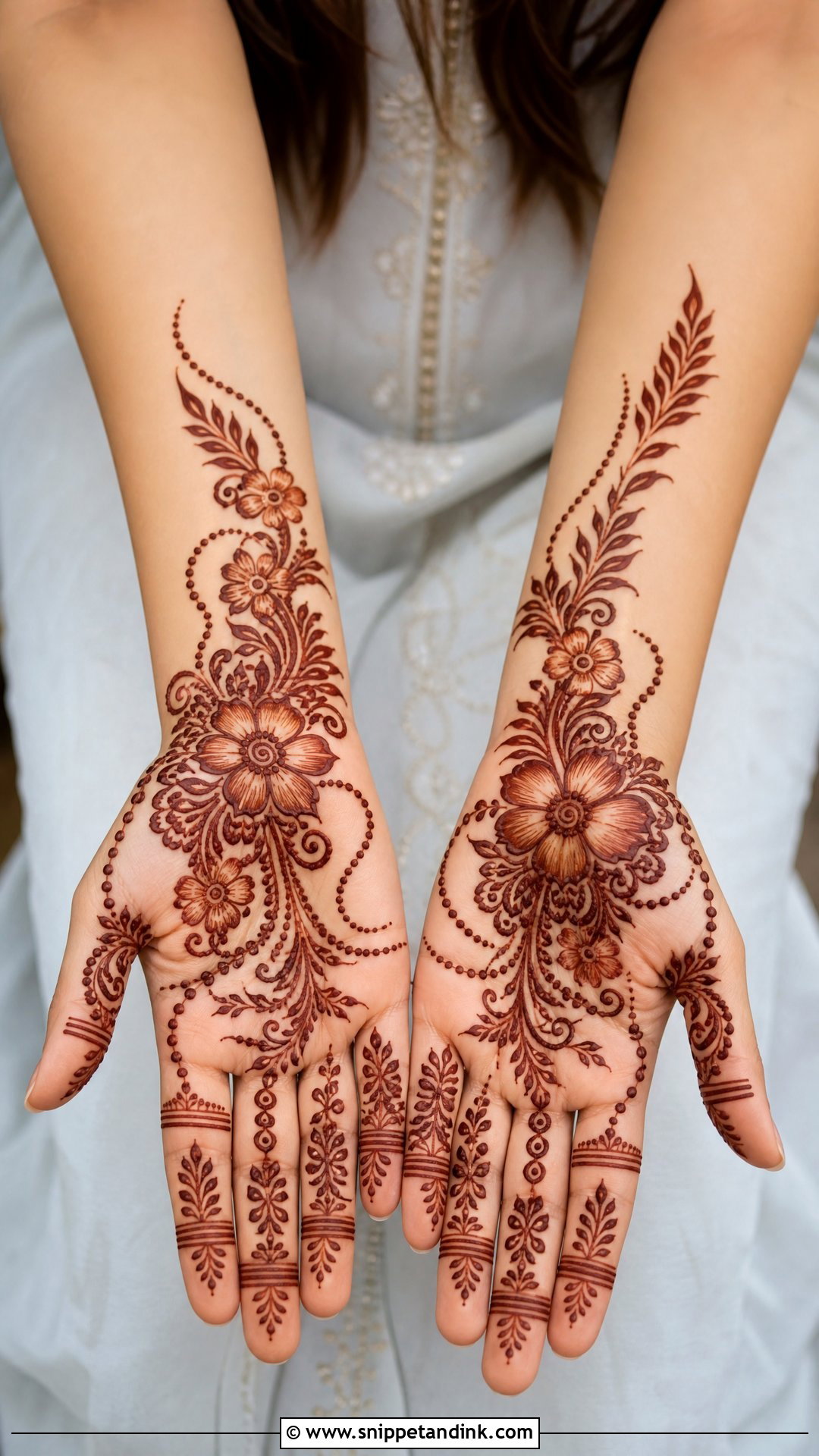
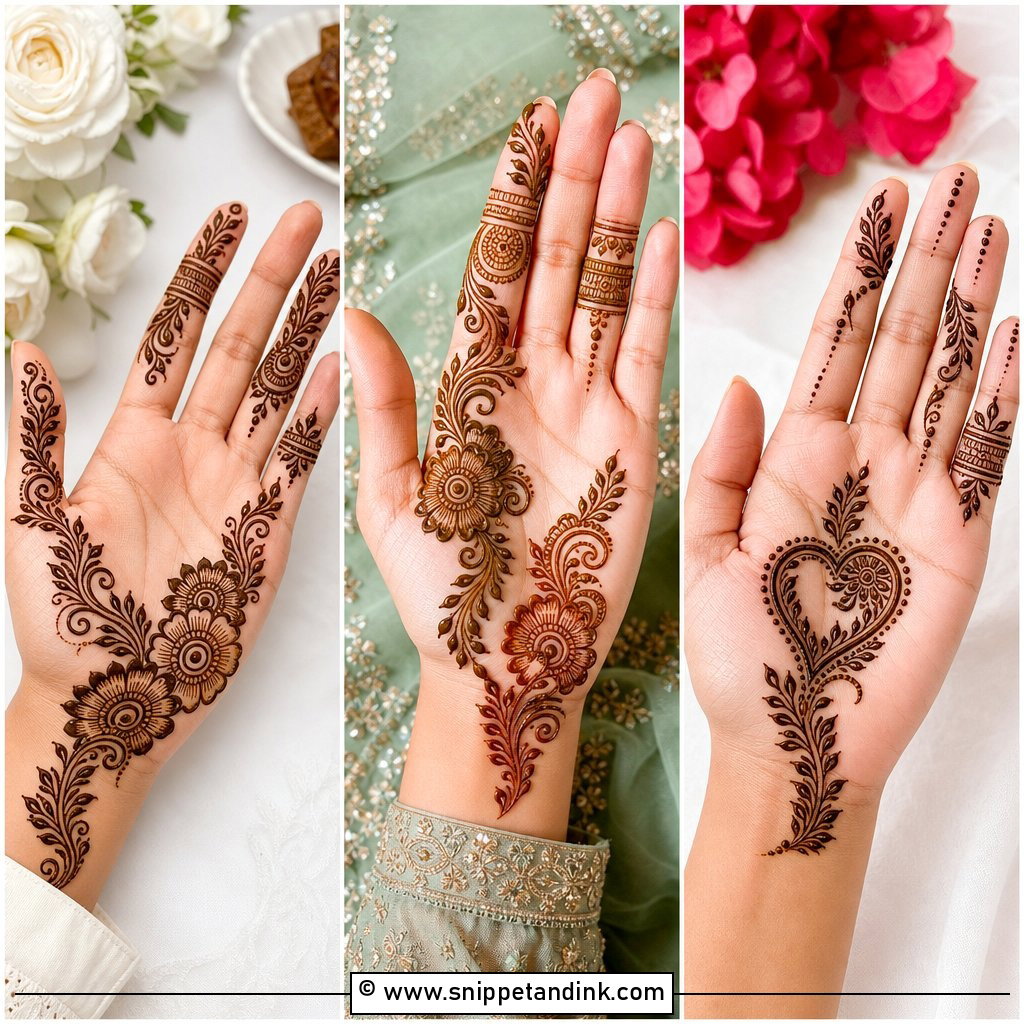
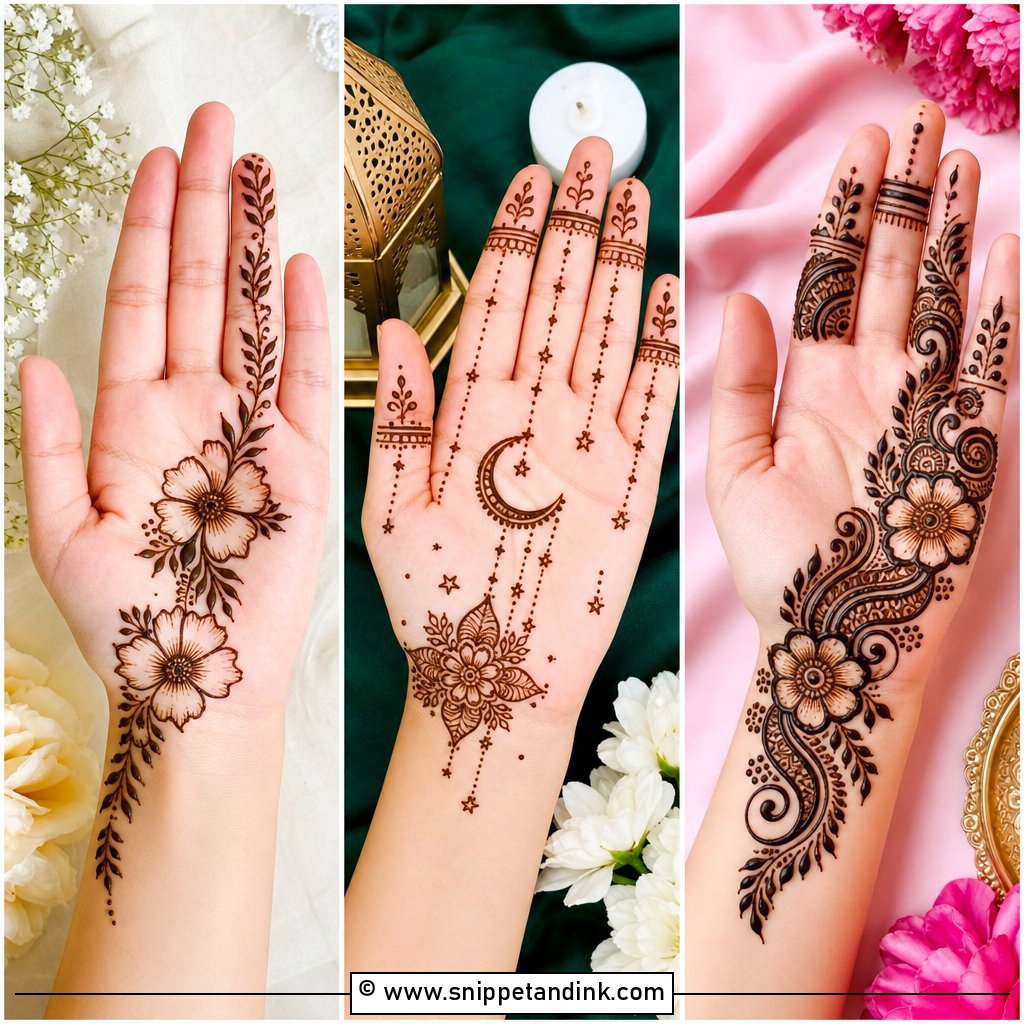
A floral palm works when the centre flower is large enough to survive the heart line running through it. I place the main bloom slightly above the deepest crease, ring it with smaller flowers and leaves, and finish the fingers with half-filled tips or thin bands. Light coverage like this suits younger girls and first-timers, since it applies quickly and nobody has to sit still for an hour. Leave real air between the blooms; an airy vine from wrist to fingertip is what makes it read as Dubai rather than Indian.
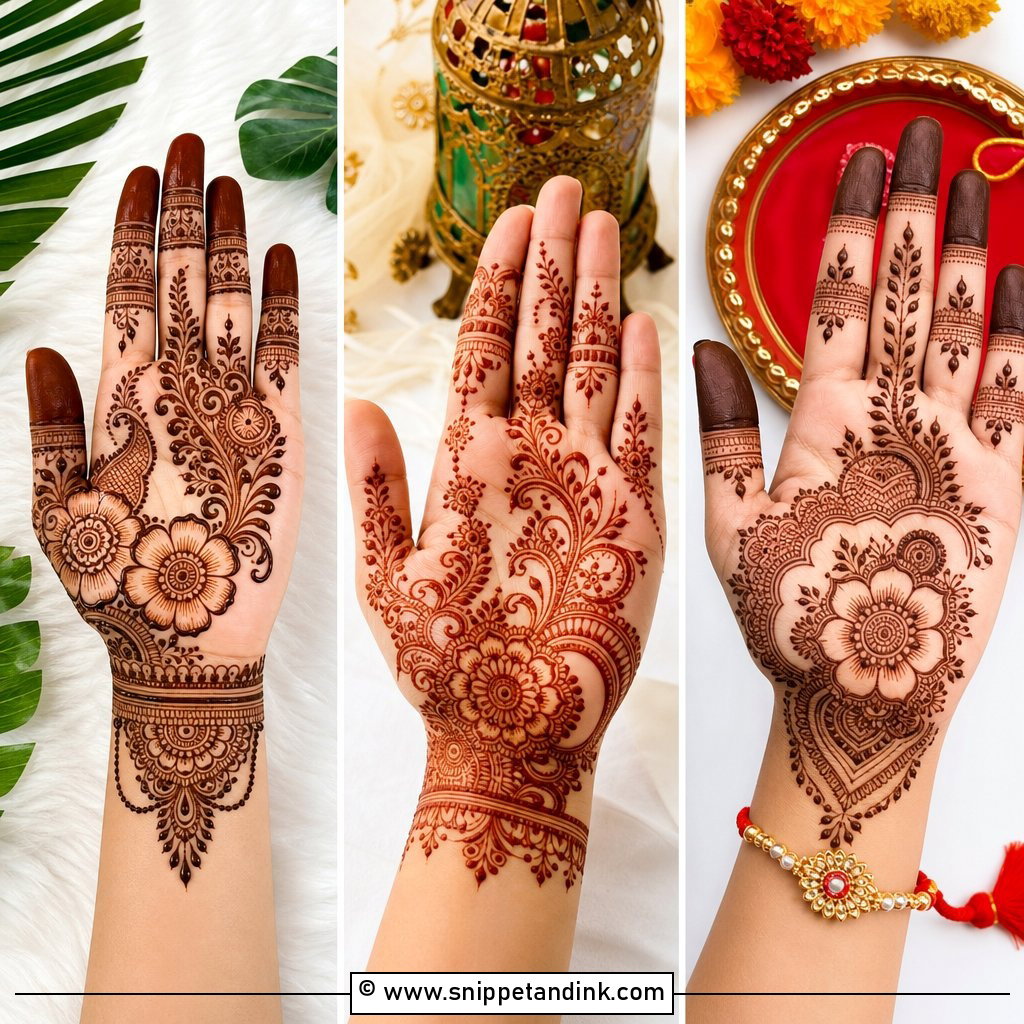
3. Dubai Mandala Front Hand Mehndi Design
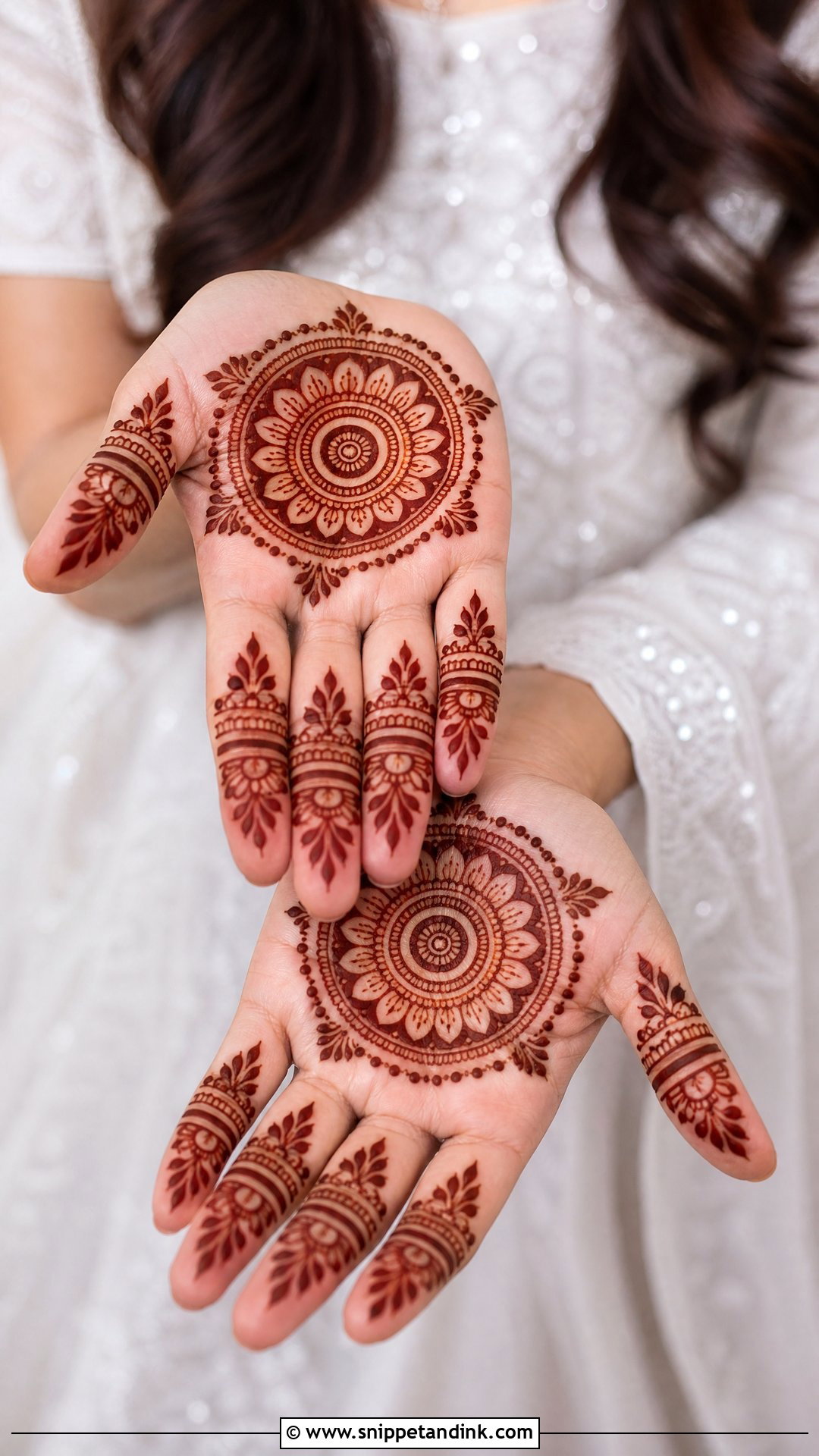
Mandalas are less forgiving than they look. A circle drawn on a cupped palm flattens into an oval once the hand opens, so I ask people to rest the hand fully flat on a cushion while I draw the outer ring. Around it go dots, small petals and slim borders, with each finger carrying a different but related band. If your palm is narrow, keep the mandala smaller than you think; a circle that touches both edges of the hand loses the open skin that gives this style its lightness.
4. Dubai Simple Front Hand Mehndi Design
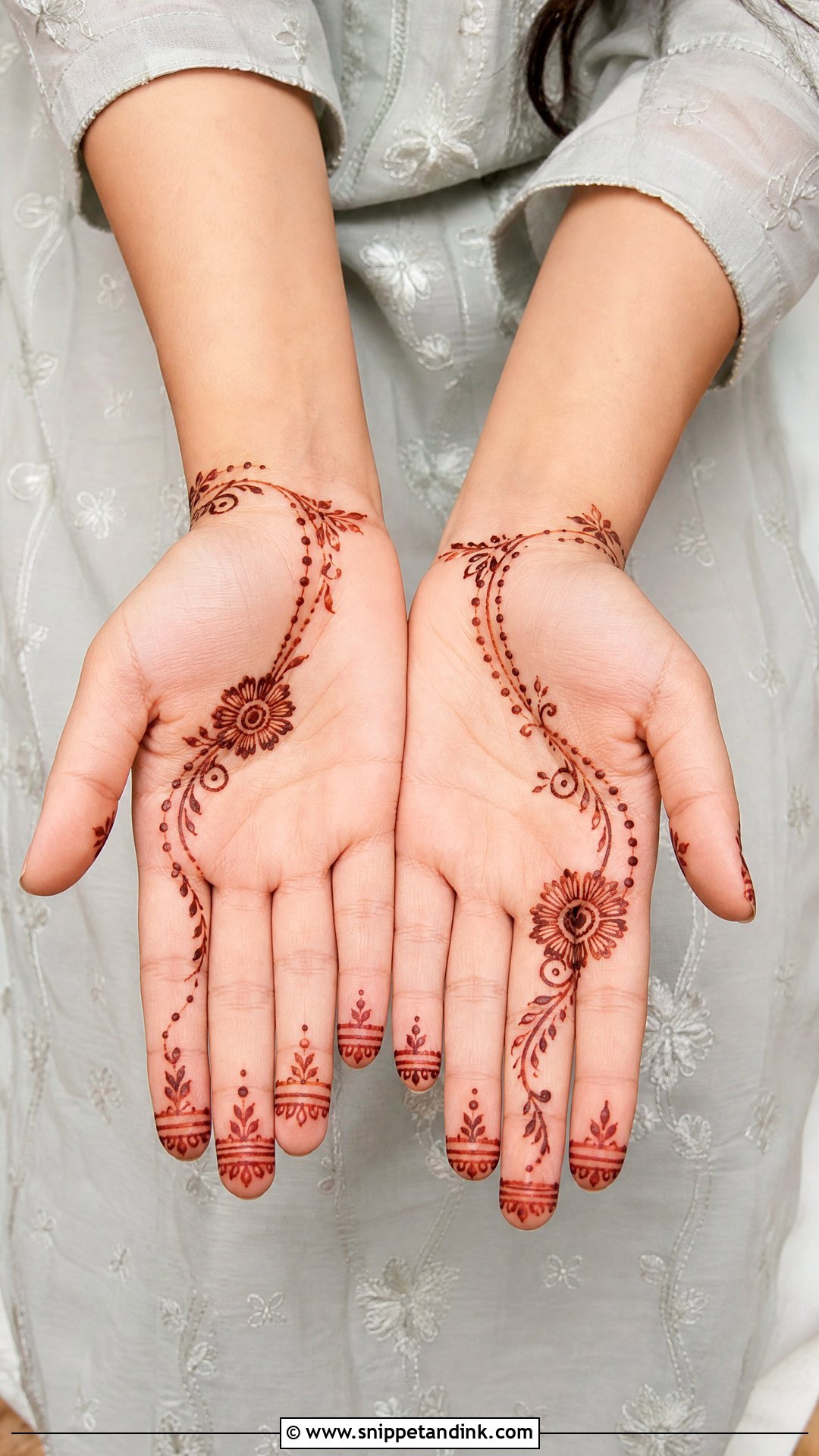
Simple doesn’t mean quick to do badly. With only a small palm motif, a curved trail and a few finger details, every wobble in the line shows, so I use a finer cone tip and slower strokes here than on a full hand. It’s my go-to for school functions, office events or anyone who wants mehndi that won’t dominate an outfit. A thin bracelet band is optional. The upside is real: it dries in well under an hour and you can get on with your day.
5. Dubai Bridal Front Hand Mehndi Design
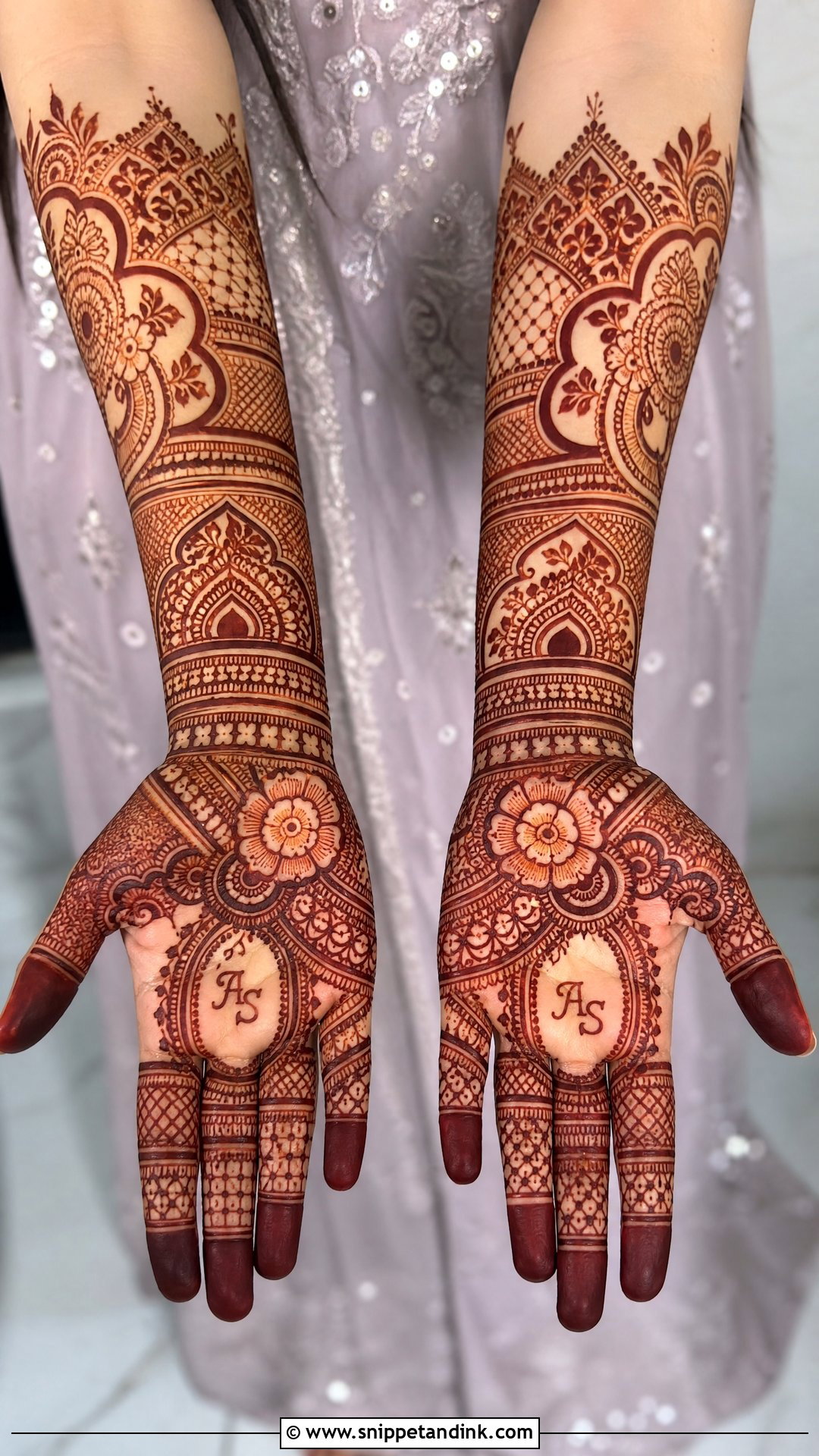
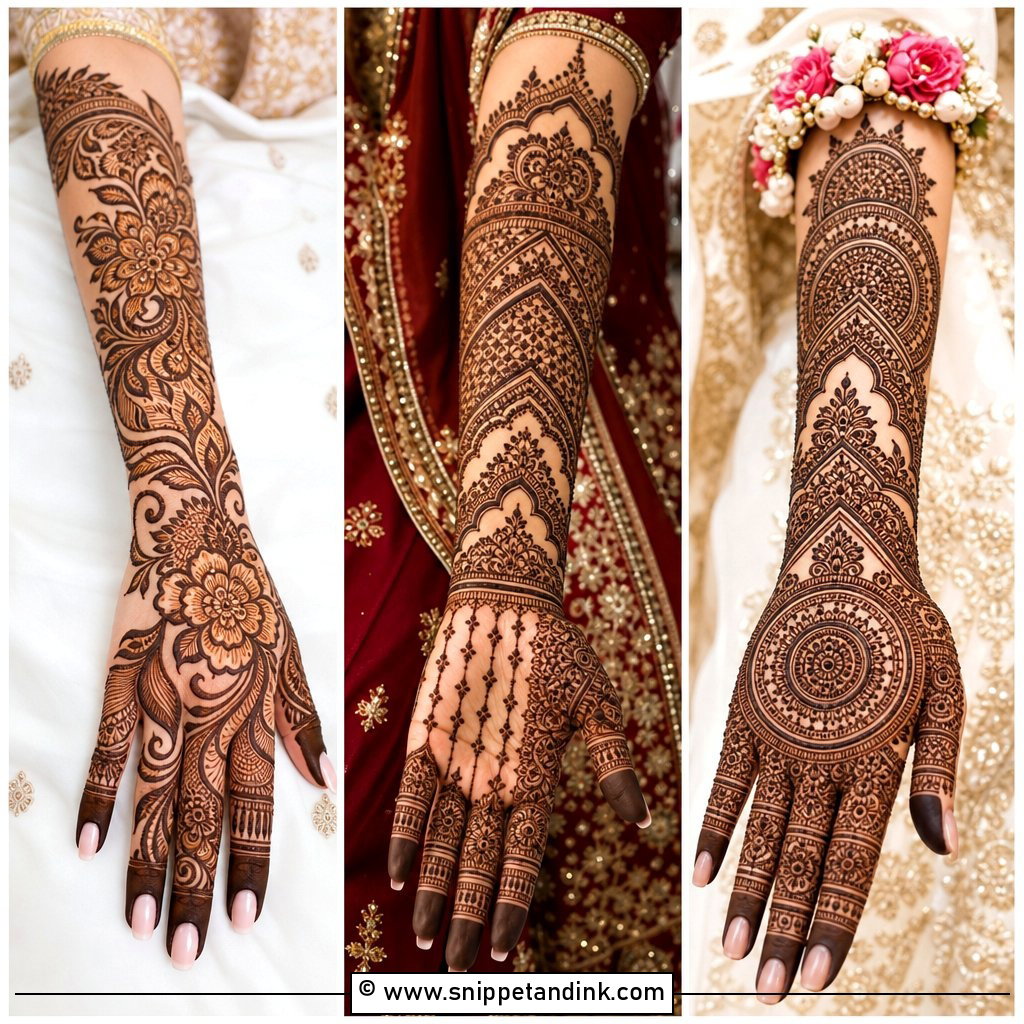
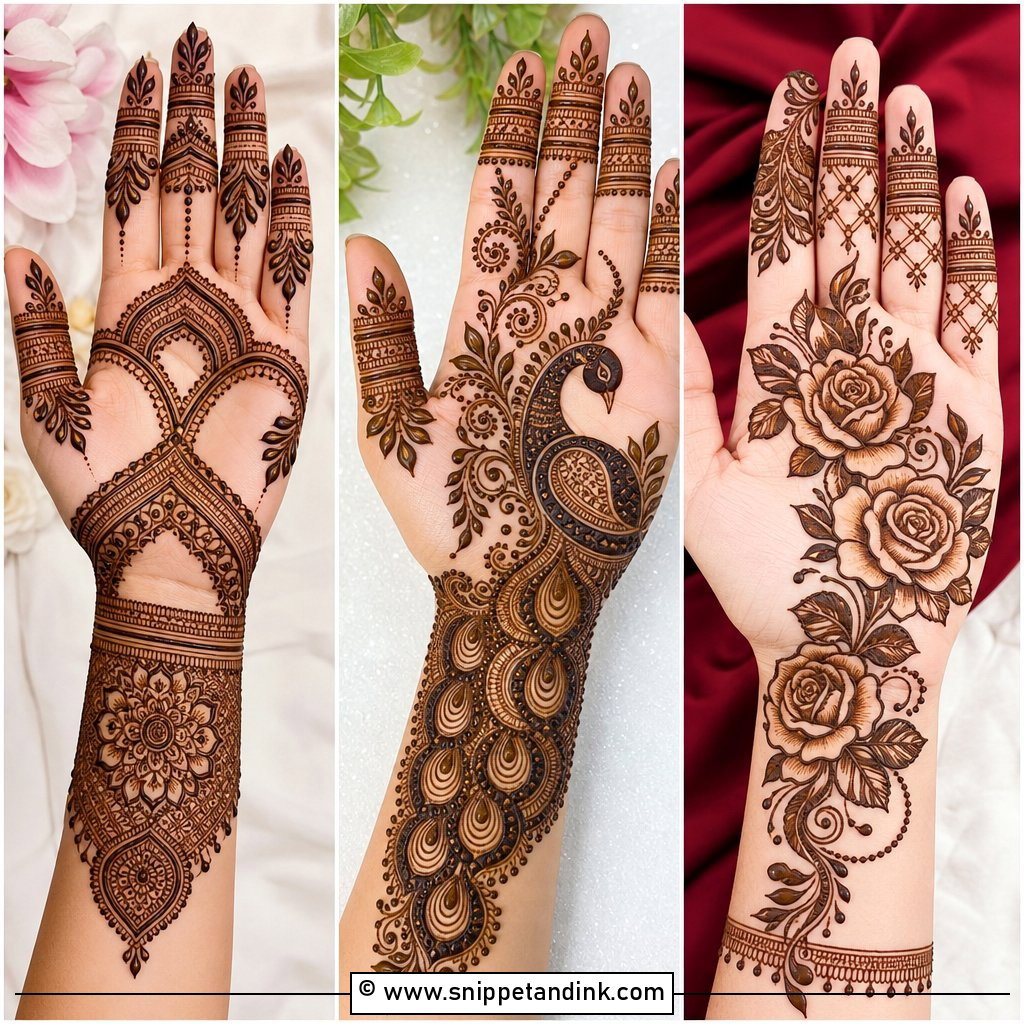
For a bride, I treat the palm as the centrepiece and the wrist as the frame. Large florals and paisleys sit inside the palm with fine jaali between them, the fingertips get the most detailed work, and bracelet-style bands climb onto the lower forearm. If you want initials or a date hidden in the pattern, tell me at the consultation, not on the day, because they need to be planned into a motif rather than squeezed into a gap. Bold outlines around the main shapes with fine inner work give the deepest, most readable stain in photographs.
6. Dubai Full Front Hand Mehndi Design
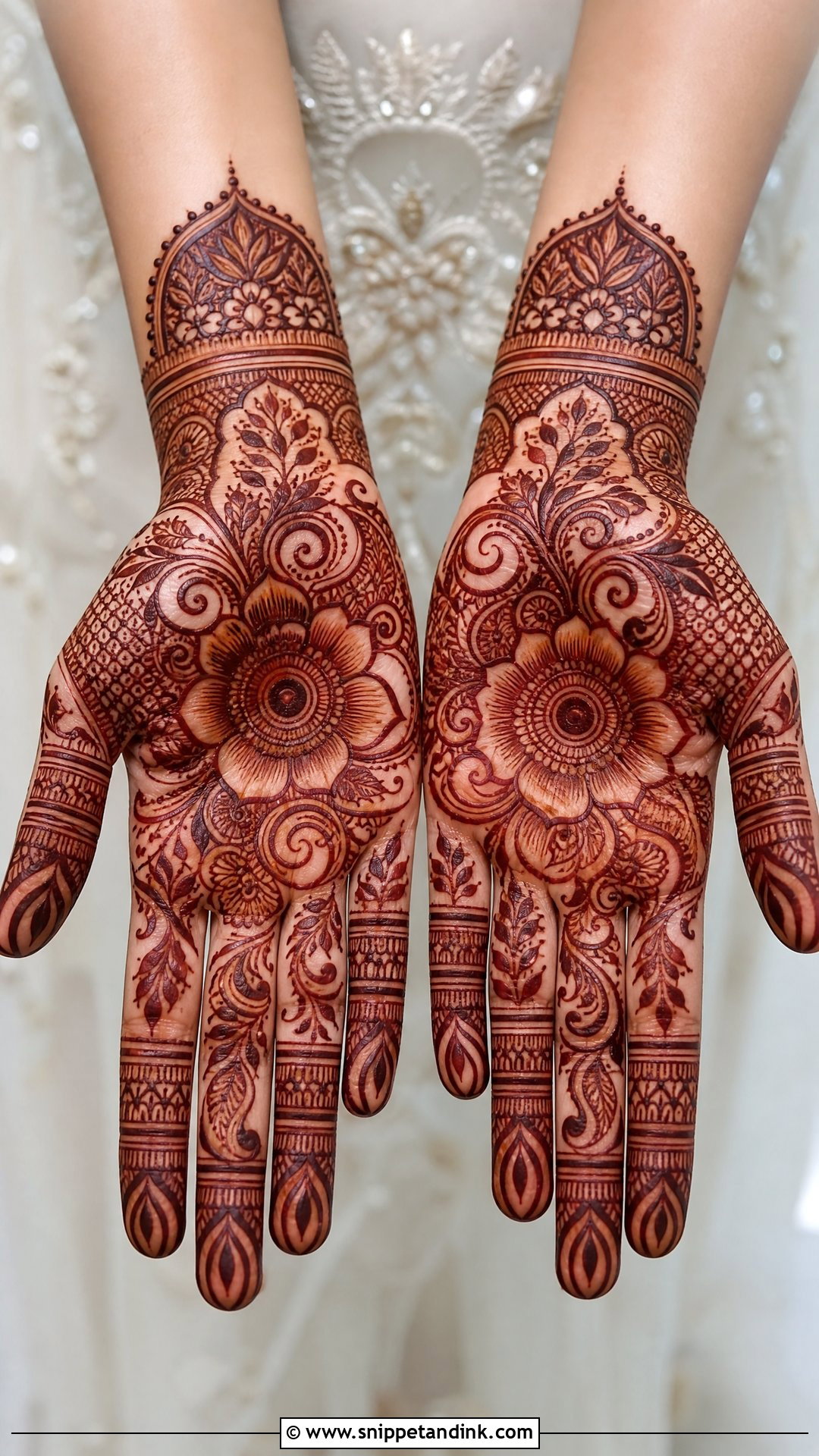
Full coverage from fingertips to wrist is where planning saves the design. This pattern can take a central palm flower, shaded leaves, paisley curves, mesh panels and detailed finger bands, but I divide the hand into three zones before the cone touches skin: one main palm motif, one wrist border, and finger work that supports them. Small breathing spaces between motifs are what keep it Dubai in character. Expect to sit for well over an hour, and plan your meal before the appointment rather than after.
7. Dubai Jaali Front Hand Mehndi Design
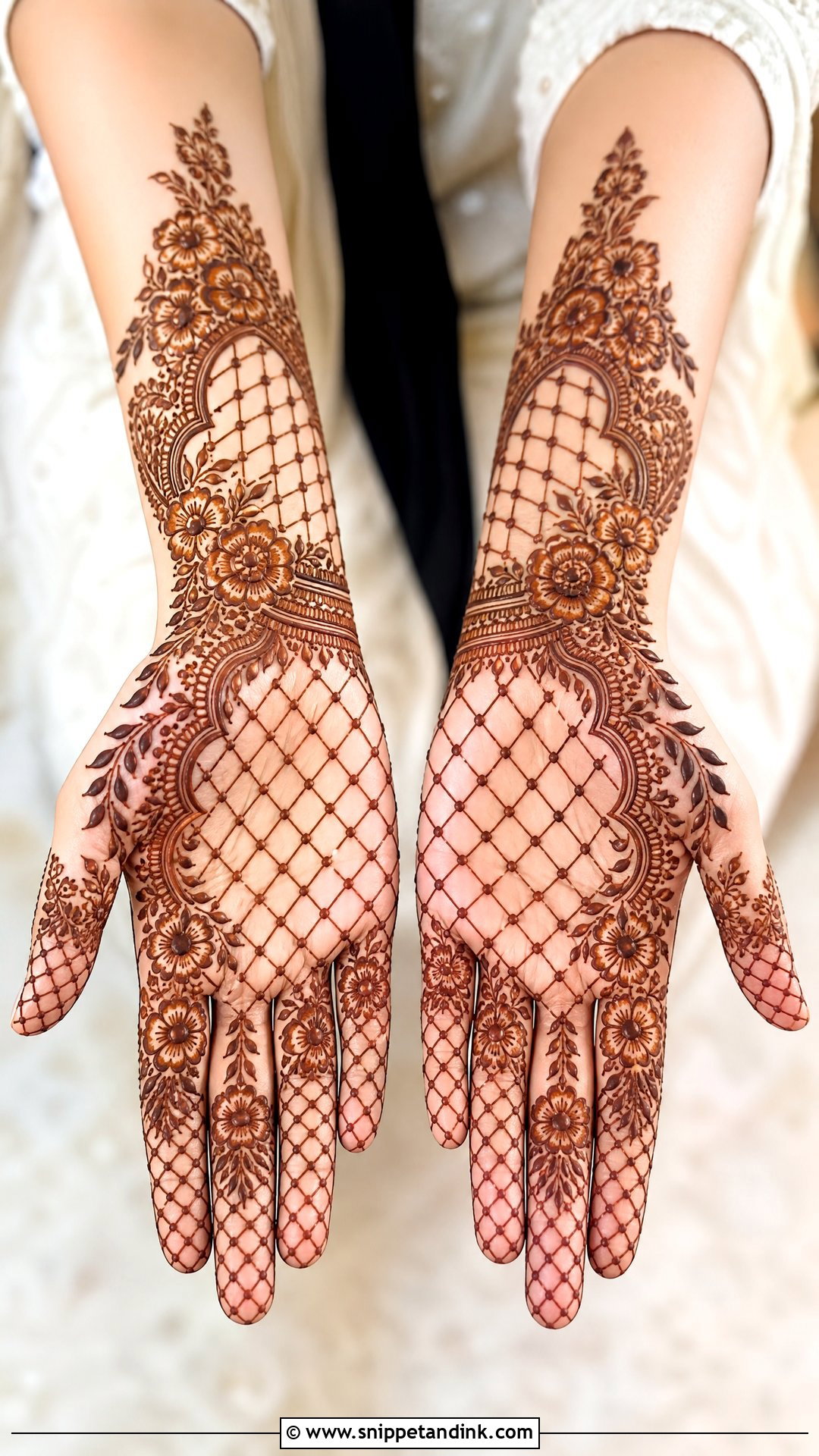
Jaali takes patience. The mesh lines have to be even in thickness and spacing, or the panel looks like a smudge once the paste comes off. I usually fill only part of the palm with jaali and frame it with florals or paisley borders, then repeat small mesh panels on the fingers. The diamond and square openings draw the eye lengthwise, which is why they flatter shorter hands. Pair the fine mesh with bold floral outlines; fine lines next to fine lines disappear.
8. Dubai Khaleeji Front Hand Mehndi Design
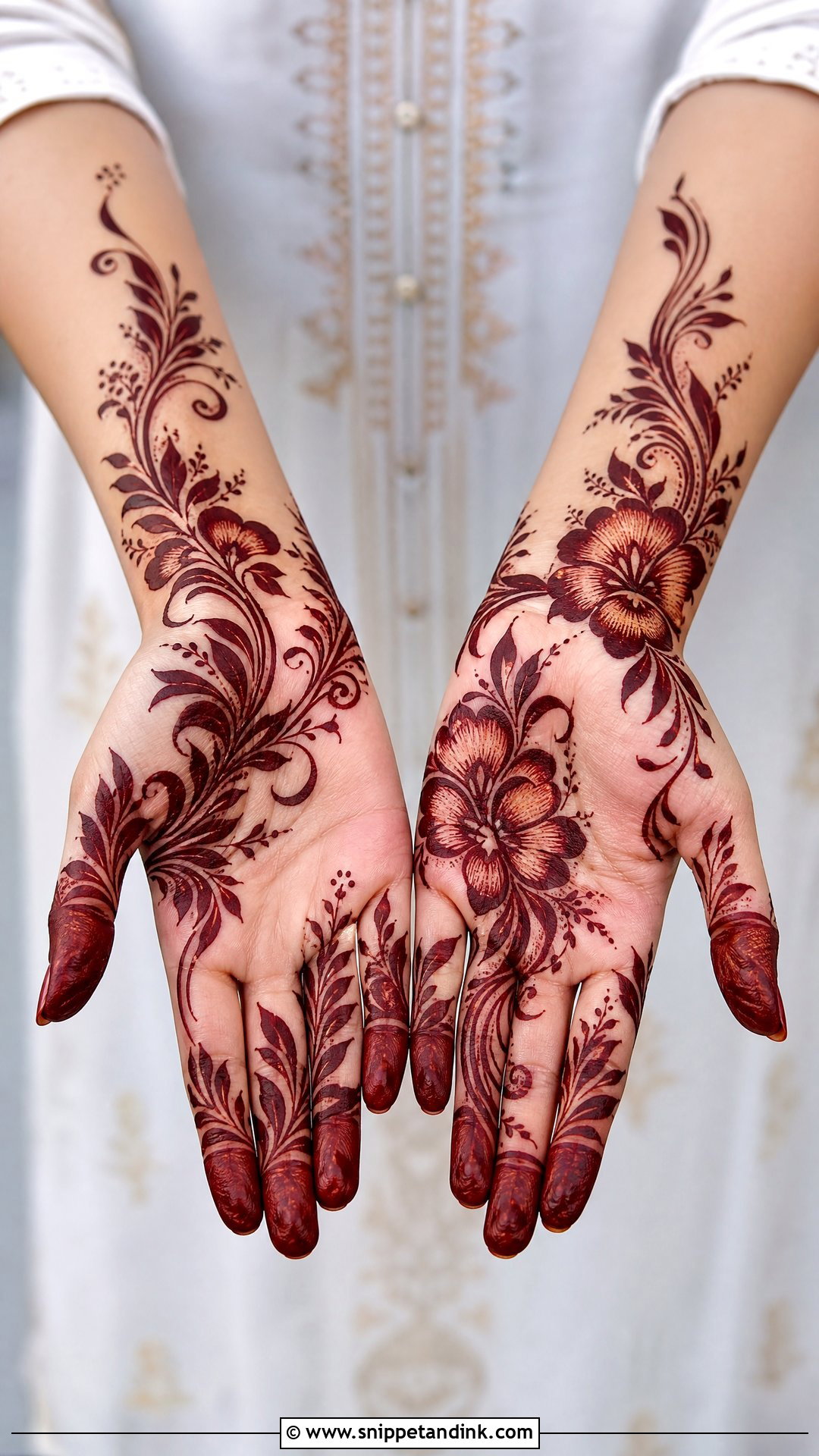
Khaleeji work is about confident strokes. The layout sweeps from the wrist across the palm and out to the fingers in one movement, with large flowers, thick leafy strokes and shaded petals. It sits between a simple trail and a full hand in coverage, so it suits abayas, kaftans and wedding guest outfits where the sleeve ends at the wrist. I finish the fingertips with bold caps or leafy lines; without them the sweep looks unfinished. If you like this look, it’s worth seeing more traditional Gulf henna art for how much bare skin the real style leaves.
9. Dubai Indo Arabic Front Hand Mehndi Design
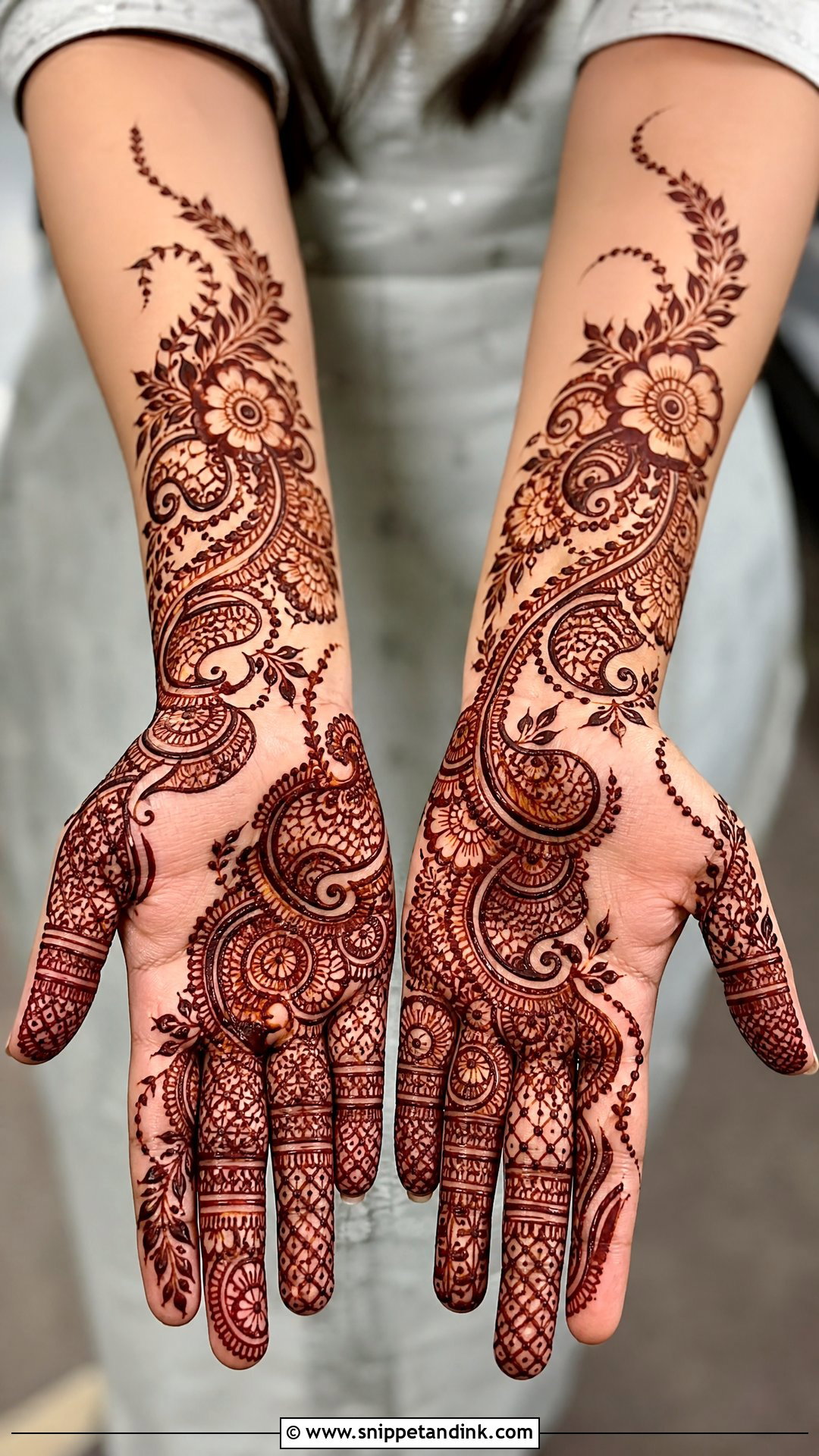
Indo-Arabic mixes two habits: the bold floral flow of Arabic mehndi and the dense fine filling of Indian work. I keep one side of the palm heavier with paisleys, a mandala or lotus details, and run a curved Arabic trail down the opposite edge. Fingers take fine lines, dots and leafy bands. It’s a sensible pick for sangeet, Eid or an engagement when you want detail but not a fully traditional look. The mistake I see most is filling the open areas around the main motifs; leave them bare.
10. Dubai Palm Front Hand Mehndi Design
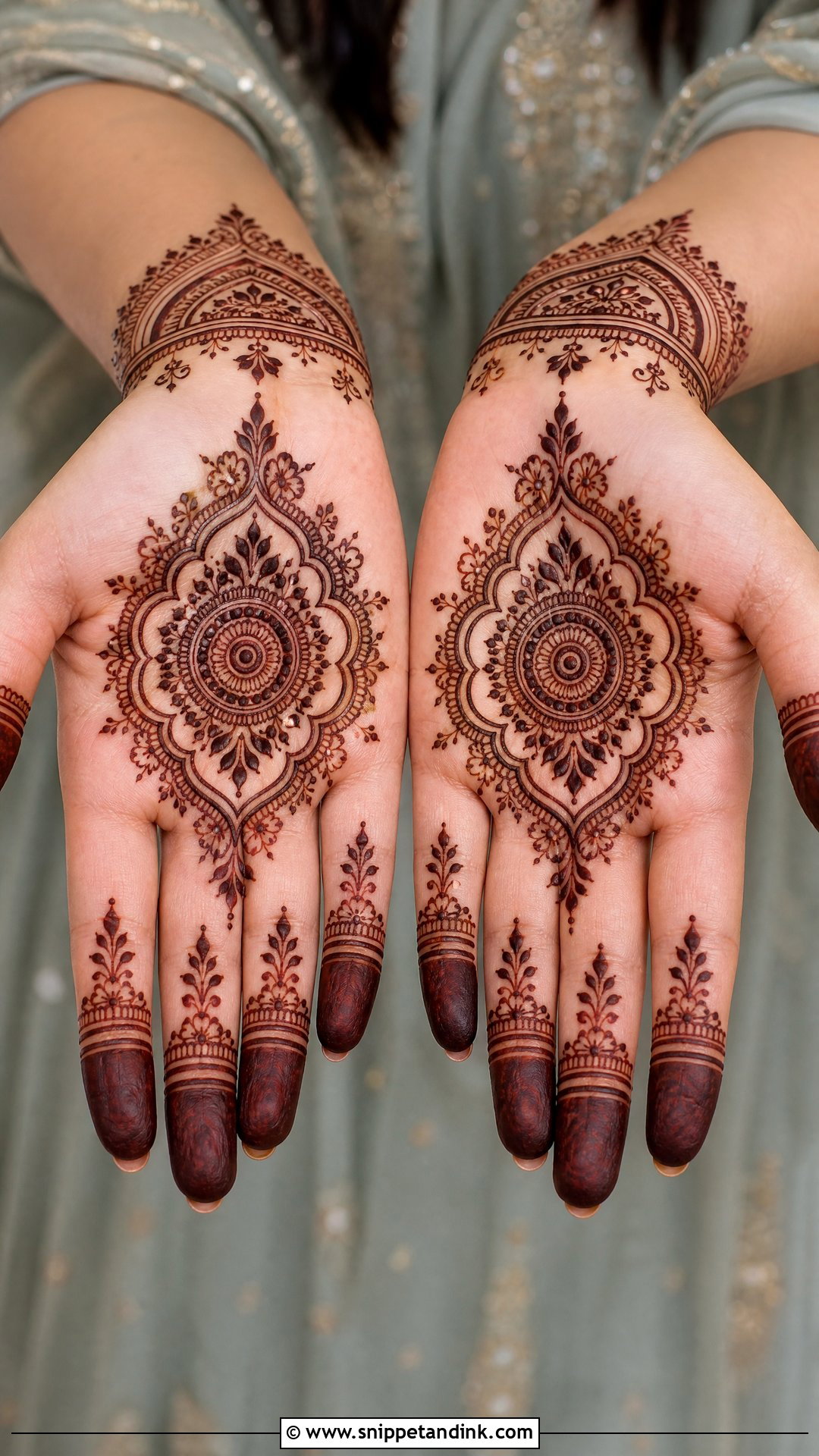
When the palm carries everything, the central motif has to be clean. A flower, a mandala, a crescent or a paisley circle goes right in the middle, with small vines, dots and petals around it, and the fingers stay quiet. This layout shows best in raised-hand and joined-hands photos, where the palm faces the camera. It also suits anyone who doesn’t want mehndi near the wrist, for work or because of a watch strap. I check symmetry from across the room before I add any detail; a lopsided centre can’t be fixed with filling.
11. Dubai Finger Front Hand Mehndi Design
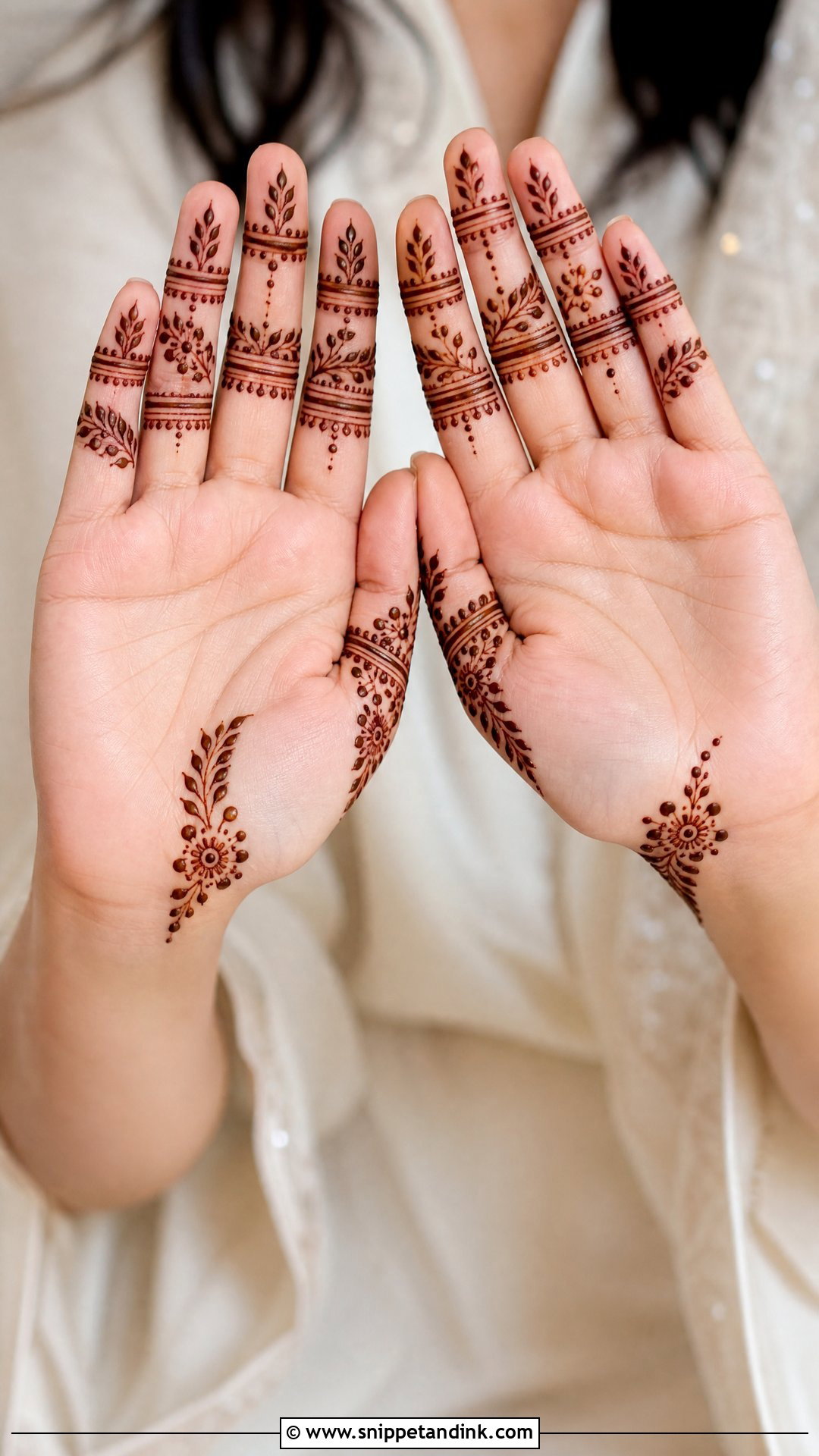
Putting the detail on the fingers and leaving the palm mostly open is the most wearable layout here. Bands, leaves, dots and slim floral lines sit on each finger, and a small motif on the lower palm ties them together. Fingers stain darker and fade slower than the back of the hand, so this design holds up well through daily washing. Make the fingers related rather than identical: one shared leaf shape with different arrangements looks considered, while five unrelated patterns look like a practice sheet.
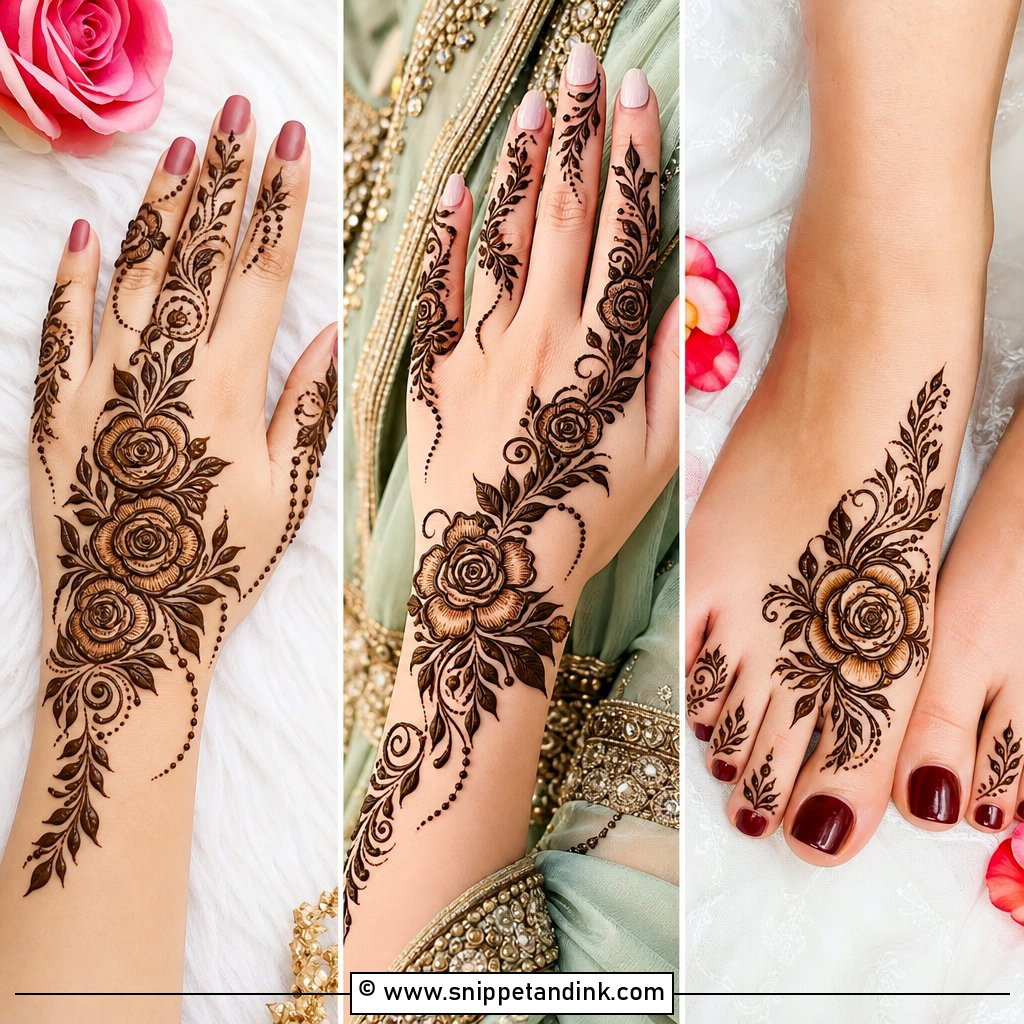
12. Dubai Rose Front Hand Mehndi Design
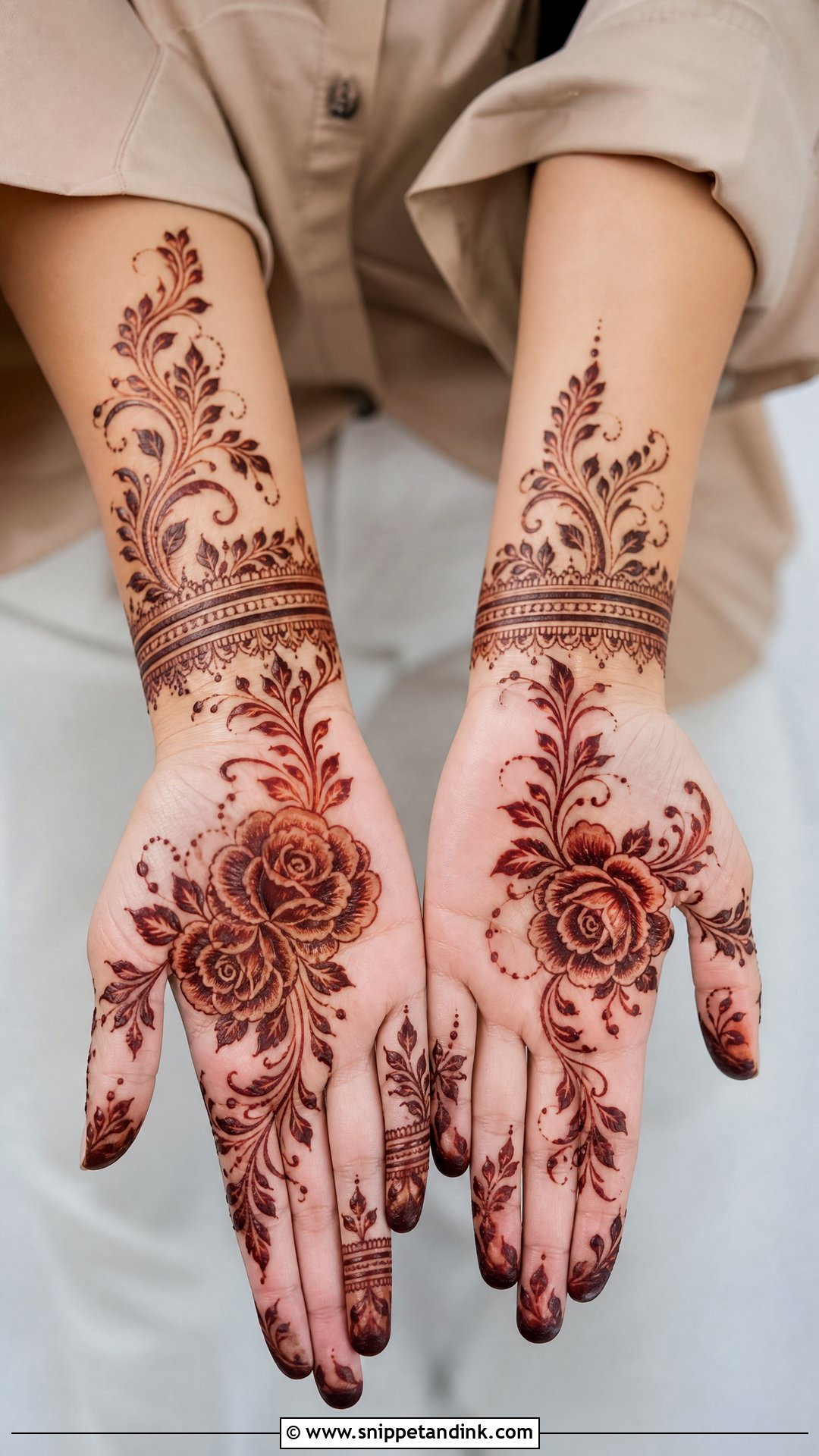
Roses need two line weights to work. I draw the outer petals bold so they stain strongly and keep the inner shading light, otherwise the centre of the rose turns into a dark blot. One or two large roses on the palm, with curved leaves and vines moving toward the fingers, is plenty. Open skin and thin dotted trails around them keep the look soft. For an engagement or bridal shower, a simple bracelet border at the wrist that echoes the palm roses finishes it neatly.
13. Dubai Paisley Front Hand Mehndi Design
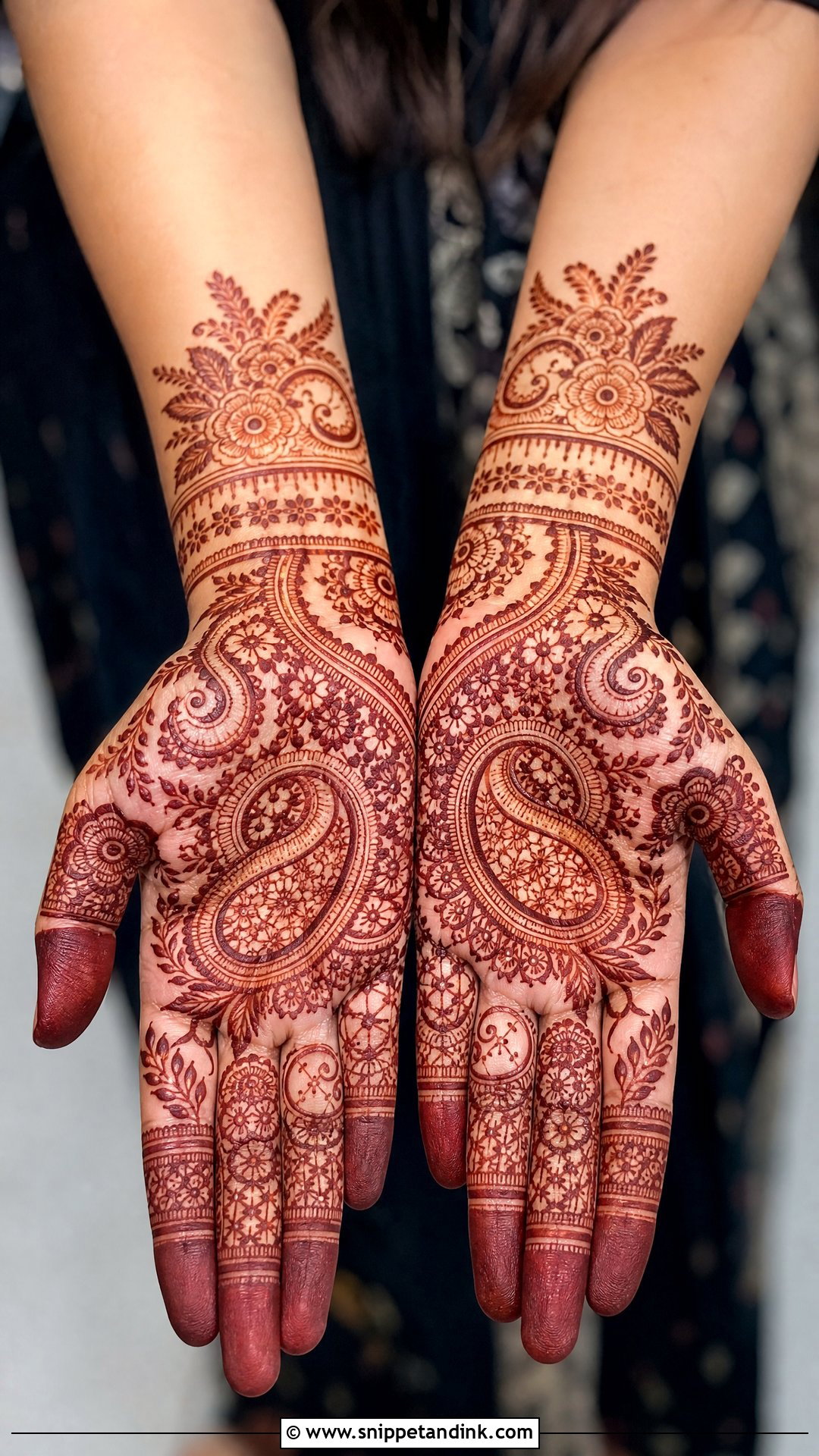
A large curved paisley makes a natural anchor because it follows the curve of the palm. I place one main paisley, fill it with fine inner lines, and surround it with small flowers, dots and leaves, then repeat smaller paisleys or slim bands on the fingers. This is the layout I suggest to someone who loves traditional motifs but finds full Indian coverage too heavy. Resist adding a second large paisley; two anchors compete, and the hand loses its focal point.
14. Dubai Bracelet Front Hand Mehndi Design
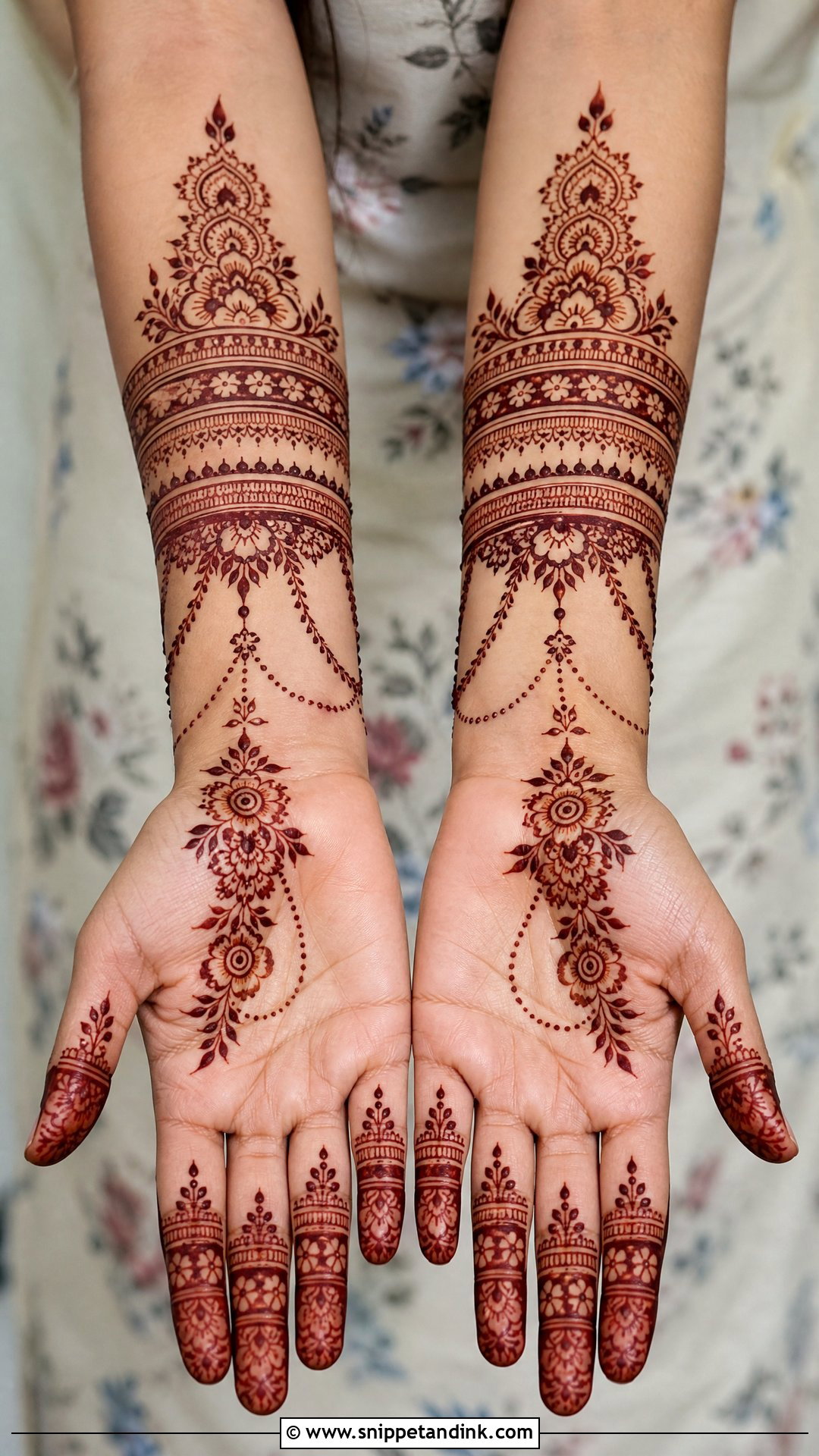
Here the wrist does the work. I draw a band of florals, dots, chains or geometric borders around the wrist, then run a fine trail into the palm and up a finger or two, leaving most of the palm open with a small flower or mandala. Keep the band clean and even in width, because any wobble is right where bangles will frame it. If you’ll wear a lot of glass or metal bangles, apply the mehndi first and let it stain a day before stacking them, so nothing rubs the paste off.



15. Dubai Eid Front Hand Mehndi Design
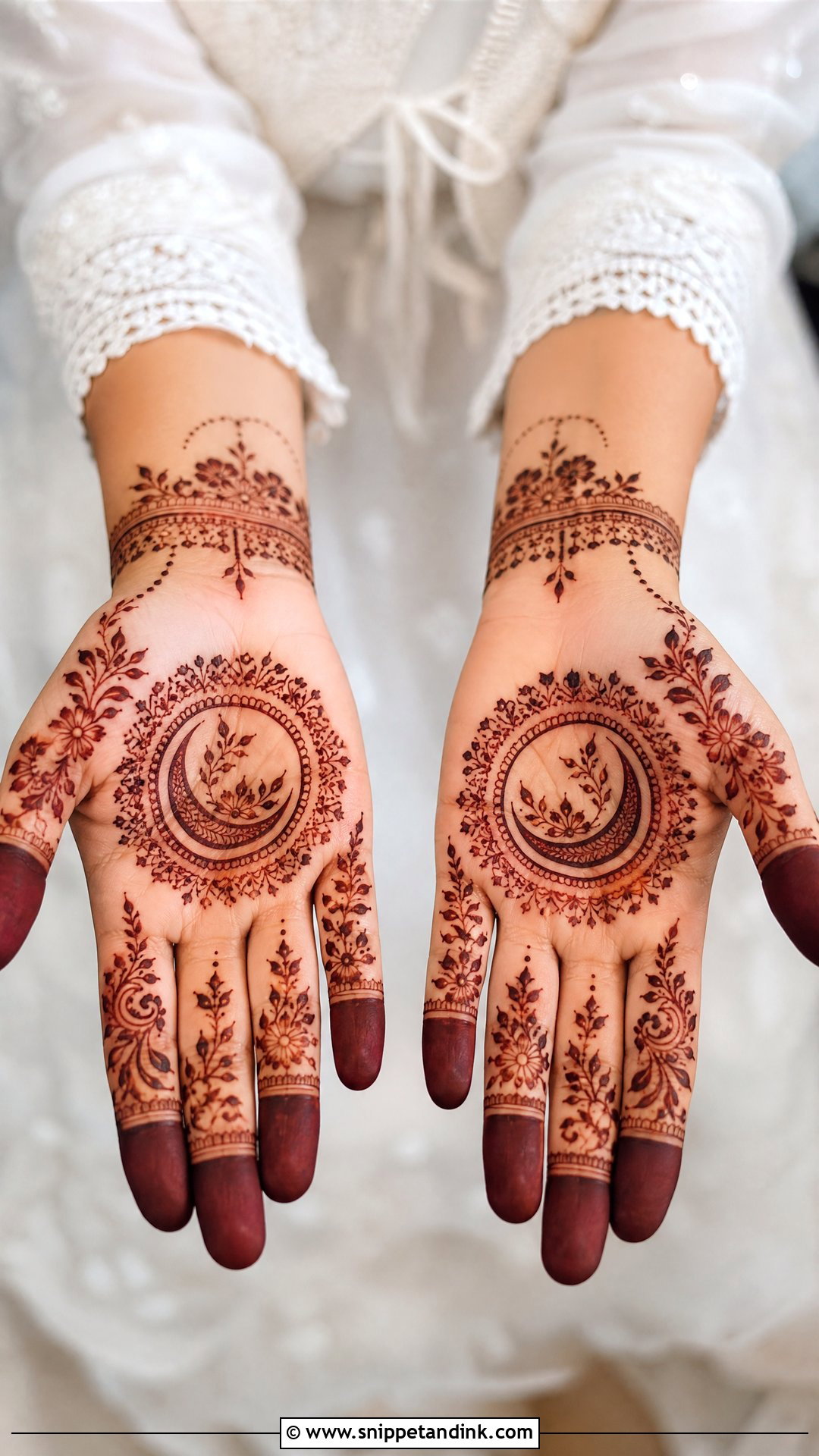
For Eid I like medium coverage: a palm mandala, floral vines, crescent-inspired curves and decorated fingertips, with enough skin showing that the outfit isn’t overwhelmed. A bold Arabic trail takes far less time than a fuller palm, which matters on a busy Chaand Raat when the queue is long. Apply the night before. Henna keeps darkening for a day or two after the paste comes off, so night-before mehndi looks its richest on Eid morning, especially if you keep your hands warm after scraping off the dried paste.
16. Dubai Engagement Front Hand Mehndi Design
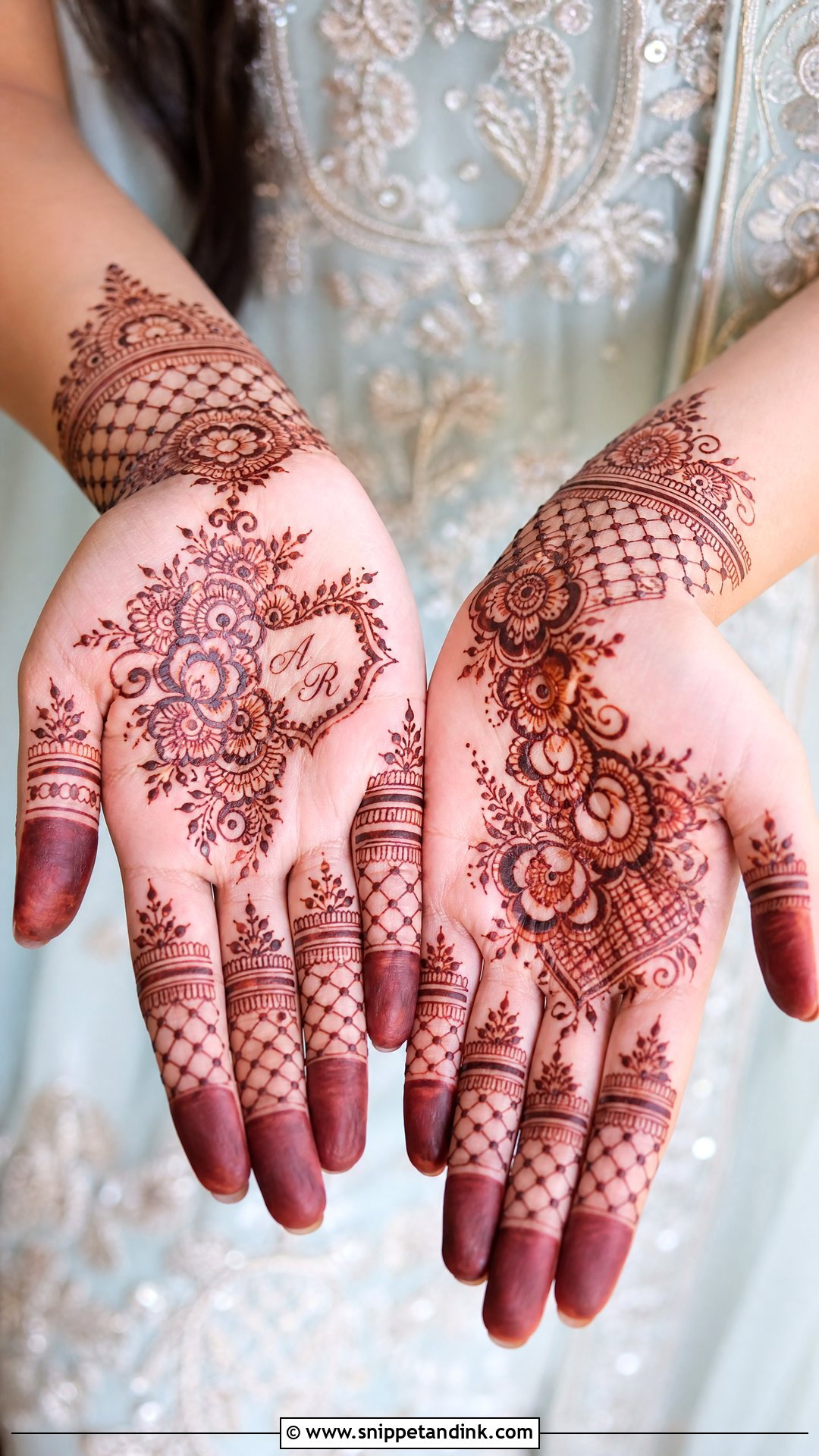
An engagement hand sits between festive and bridal. Neat florals, soft jaali, a delicate wrist band and a space for initials are usually enough, with a heart-shaped curve, a mandala or a flower cluster on the palm. Ring photos are the reason I keep the ring finger lighter than the others: a heavily filled finger competes with the stone. Fine lines around the fingers and bolder work on the palm give the depth you want in close-up shots.
17. Dubai Heavy Front Hand Mehndi Design
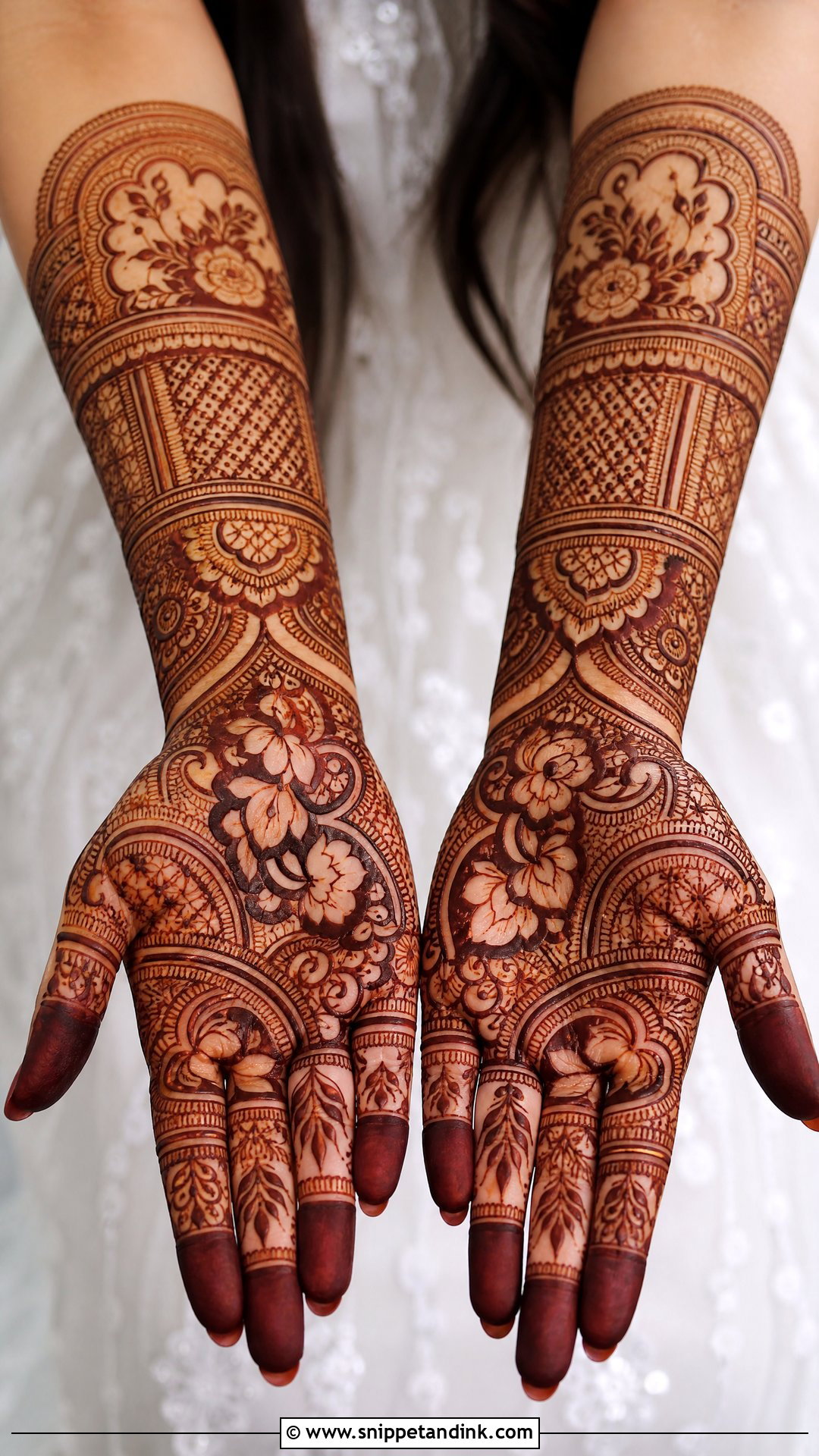
Heavy coverage still needs a plan, or it reads as a dark mitten. Full palm, fingers and wrist can carry florals, paisleys, jaali sections, shaded leaves and layered borders, but I place the large motifs first and only then fill gaps with dots, vines and fine lines. Random heavy shading is the quickest way to lose the Dubai feel. It suits bridesmaids and close family who want their hands noticed. Allow a long sitting, and don’t book it for a morning you also need to get dressed and out the door.
18. Dubai Minimal Front Hand Mehndi Design
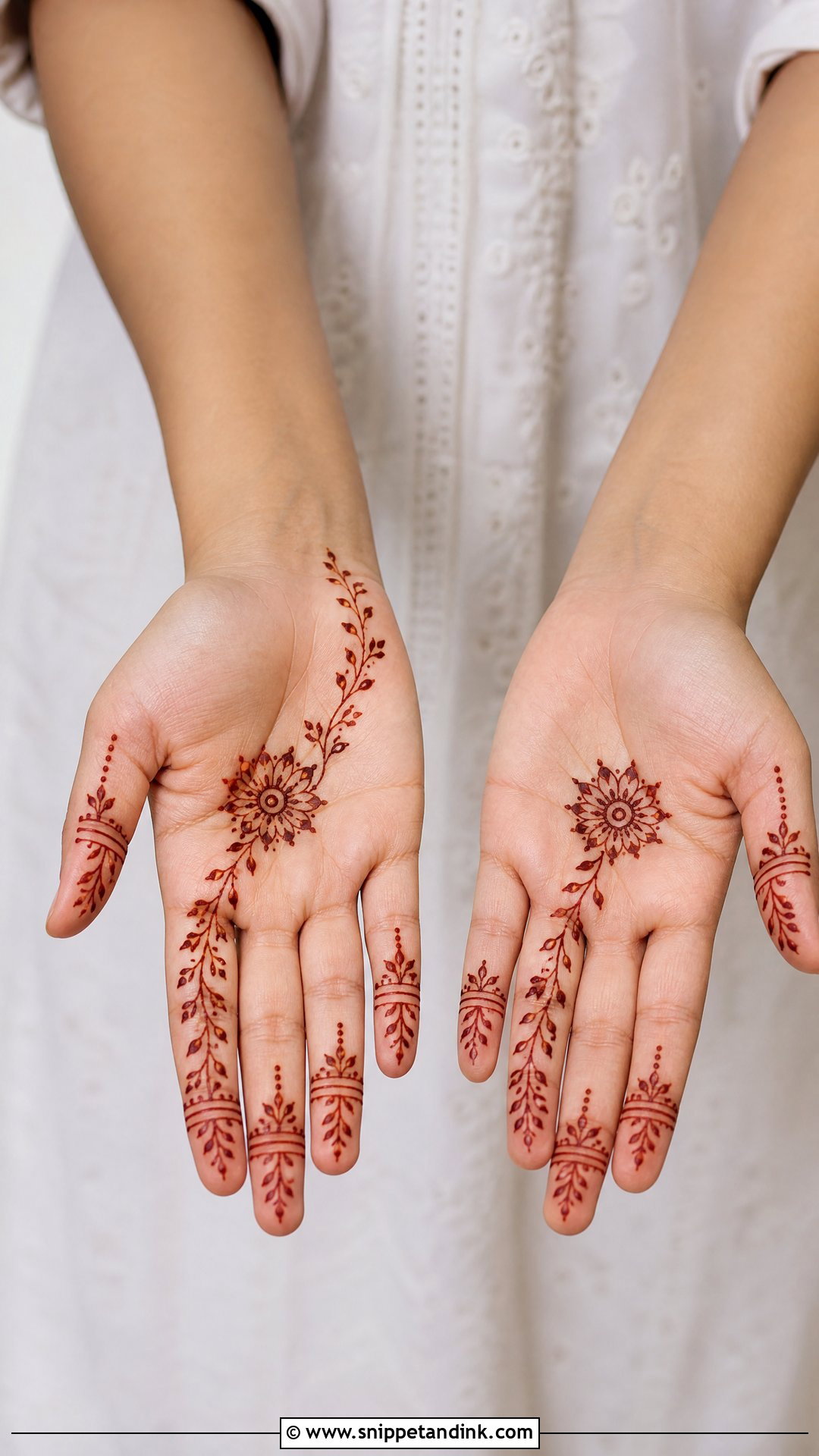
Minimal designs fail when the motifs are too tiny. A small palm flower, a thin vine along one side and a few fine finger accents look clean on the day, but very small details can merge as the stain spreads slightly into the skin. I’d rather draw three clear flowers than a dozen miniature ones. Vertical lines running up the fingers make short fingers look longer, which is a useful trick if that’s something you think about.
19. Dubai Geometric Front Hand Mehndi Design
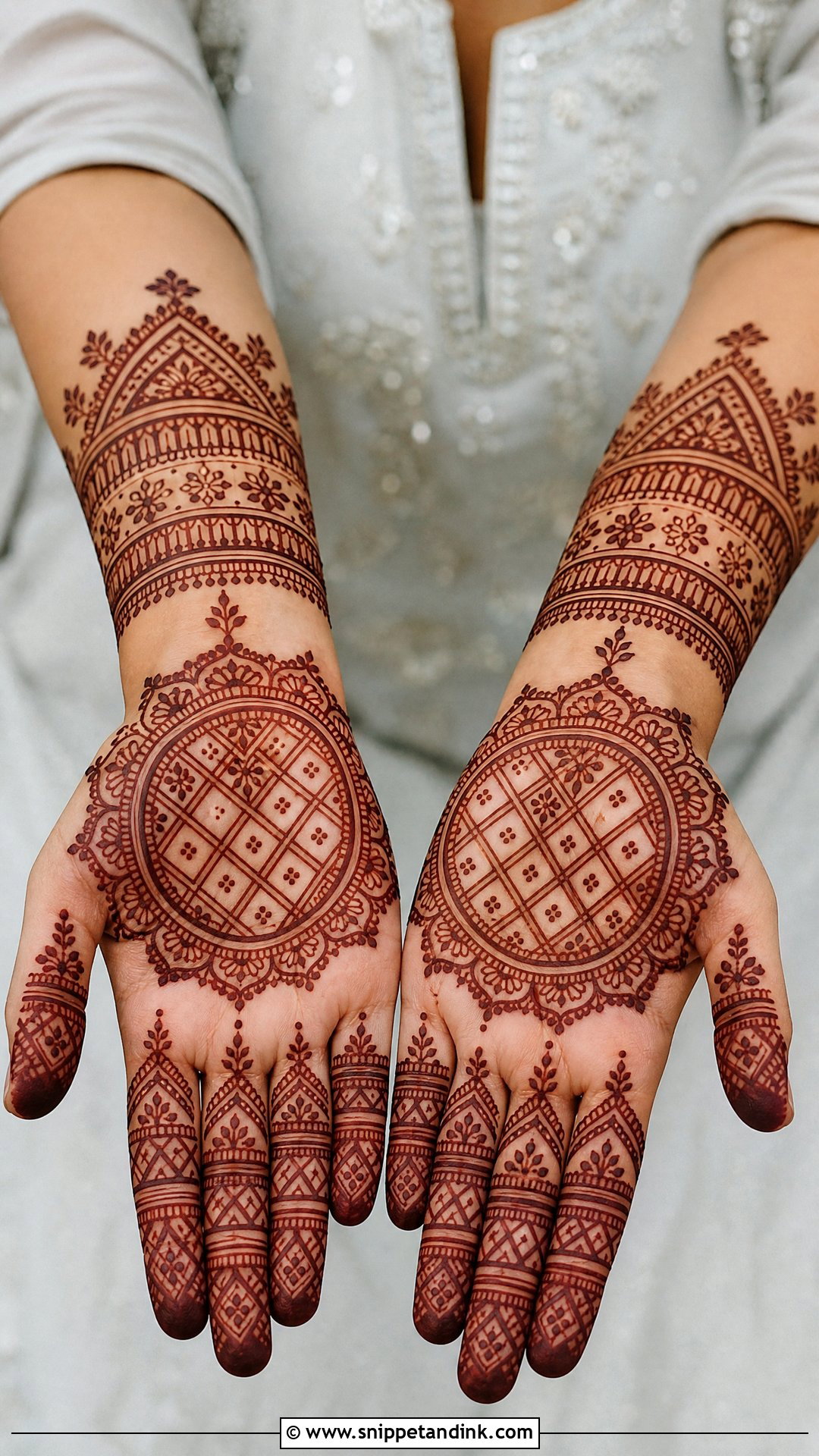
Geometric layouts are the least forgiving of uneven lines. Think diamond jaali, triangle borders, straight wrist bands, circular palm frames and neatly sectioned fingers. Symmetry carries the whole look, so I sketch guide dots before drawing any straight line. It’s a good change from floral trails and sits comfortably with both traditional and western outfits. If the result feels too rigid, a few small flowers or leaves between the lines soften it without breaking the structure.

20. Dubai Lotus Front Hand Mehndi Design
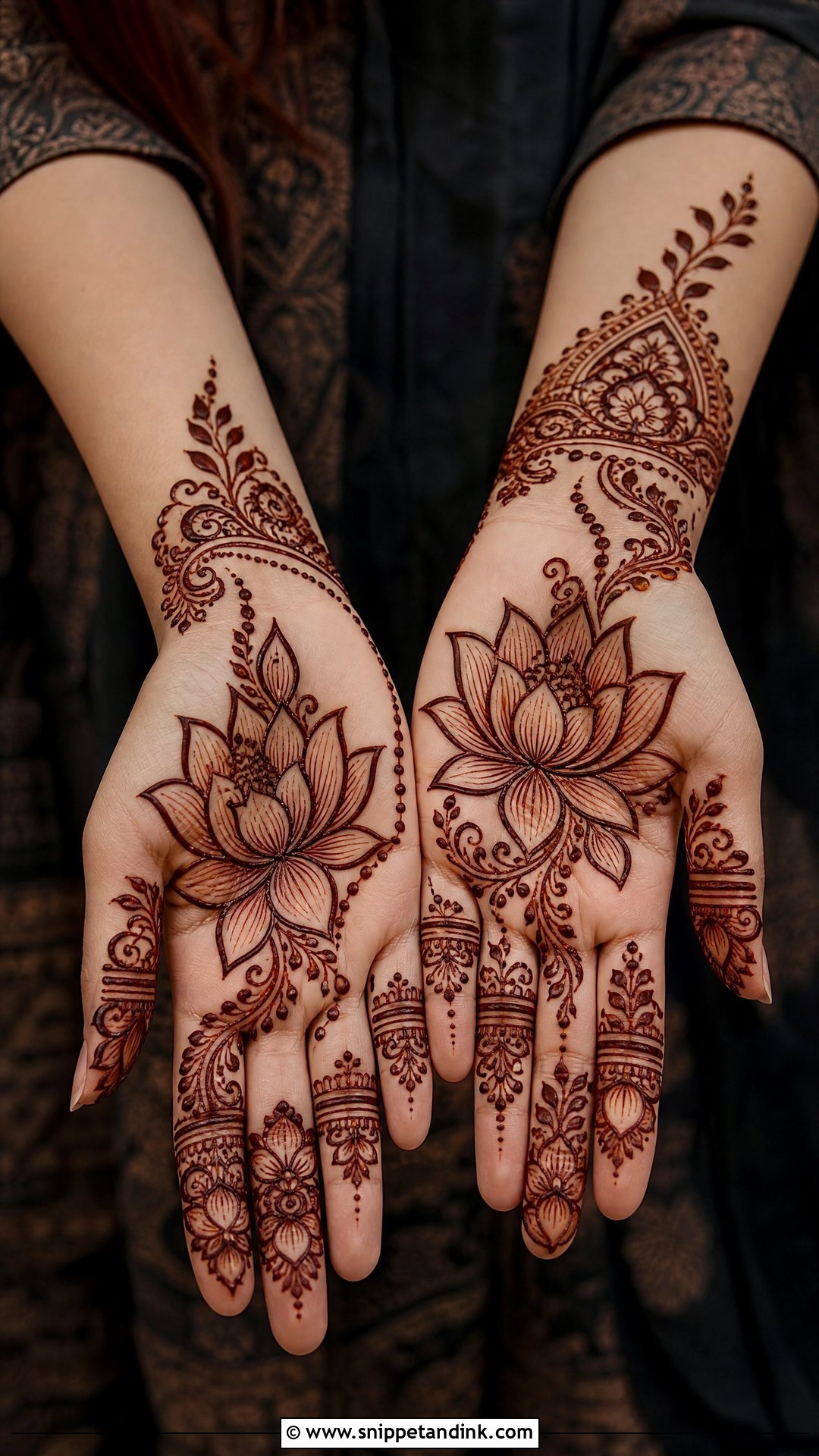
The lotus is usually drawn large on the palm with open petals, fine inner lines and dotted borders, and the fingers carry petal bands or slim shaded sections. It has a traditional weight, which is why I see it chosen for weddings, poojas and Eid, but the open Dubai layout keeps it from feeling old-fashioned. For more coverage, extend the petals into a wrist cuff. For less, leave the wrist bare and let the palm lotus stand alone.
Why Palm Stains Come Out Darker, and How to Protect Them
The palm and fingertips have the thickest skin on the hand, and henna stains thicker skin more deeply, so a front hand design will always come out darker than the same pattern on the back of the hand. When the paste comes off, expect bright orange. Over the next 24 to 48 hours it oxidises to a deep reddish brown. That darkening is normal and is why I tell everyone to get mehndi one or two days before the event, not the morning of it.
The first twelve hours
- Leave the paste on as long as you comfortably can; six hours or overnight gives the deepest colour.
- A light dab of lemon and sugar keeps the paste stuck to the skin, but don’t soak it.
- Scrape the dried paste off with a blunt edge or your fingers. Washing it off with water lightens the stain.
- Keep hands away from water for several hours after removal, and keep them warm.
Making it last through the week
Palms fade fastest because they’re washed, rubbed and used constantly. A thin layer of natural balm or coconut oil before washing hands helps, and so does wearing gloves for dishes and avoiding chlorine pools and hand sanitiser for the first few days. Exfoliating scrubs and bleach-based cleaners strip the stain quickly.
One safety note I repeat to everyone: real henna never stains black. A paste that promises a jet-black stain in an hour almost always contains chemical dye, which can cause severe skin reactions. If you have sensitive skin, ask your artist what’s in her cones, or do a small patch test a couple of days ahead.
Bold Motifs, Bare Skin and a Clear Flow
Across all of these, the designs that wear best share one habit: bold motifs, honest gaps of bare skin, and a clear flow from wrist to fingertip instead of filling every space. If you lean soft, look at the floral, rose, lotus and mandala layouts. If you prefer clean and modern, the jaali, bracelet, minimal and geometric ones will suit you better. Weddings and Eid can carry the fuller Arabic, Khaleeji and Indo-Arabic hands. Whichever you pick, tell your artist how much time you have and what you’ll be wearing, and let the stain have its full two days.
You'll Like These Ideas:







Leave a Reply