
Engagement mehndi sits in a middle ground. It has to hold up in ring photos, family portraits and tight shots of joined hands, yet it rarely needs the elbow-length coverage I’d apply for the wedding itself. When a bride sits down with me for her engagement, the first thing I look at is the outfit and the jewelry, then her hands: finger length, palm width, how much time she can sit still. From there we decide between Arabic trails, jewelry-style back hands, mandalas, fusion layouts, initials or something very spare. The 35 designs below cover that whole range, with notes on where each one works and where it struggles.
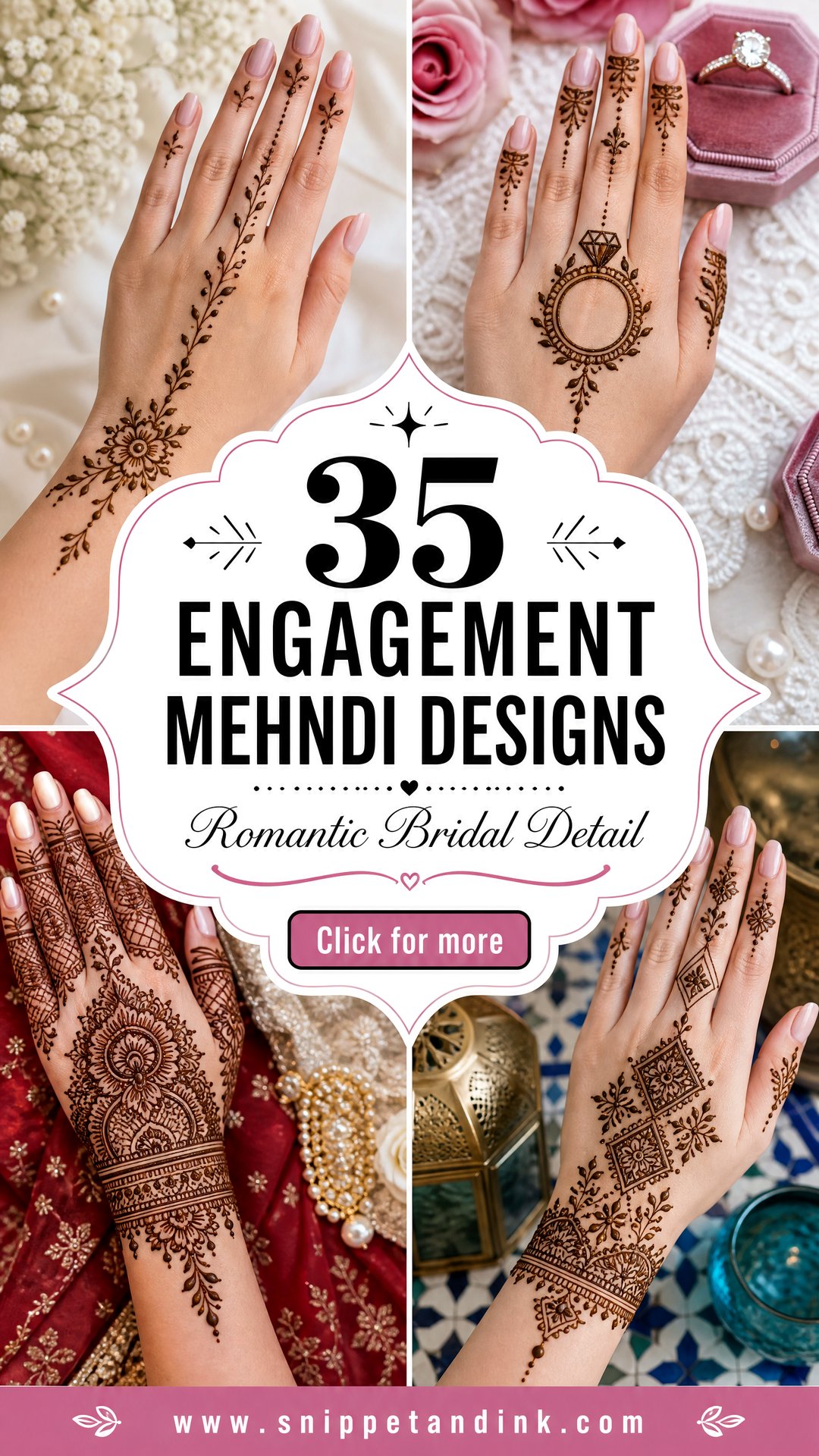
Apply Two Days Early, Not the Morning Of
Natural henna doesn’t show its real color when the paste comes off. The stain starts bright orange and darkens to reddish brown or maroon over roughly the next 24 to 48 hours as it oxidizes. If I apply on the morning of the engagement, your ring photos catch it at its palest. I usually book engagement brides for one or two days before the function, so the color peaks right on time.
Plan for the paste to stay on as long as you can manage, ideally six hours or overnight. Leaving it on for only an hour or two gives a light, uneven result, mostly on the back of the hand where the skin is thinner. Wear something with loose sleeves to the appointment, and eat before you sit down, because you won’t be using your hands for a while.
1. Engagement Mehndi Design Back Hand
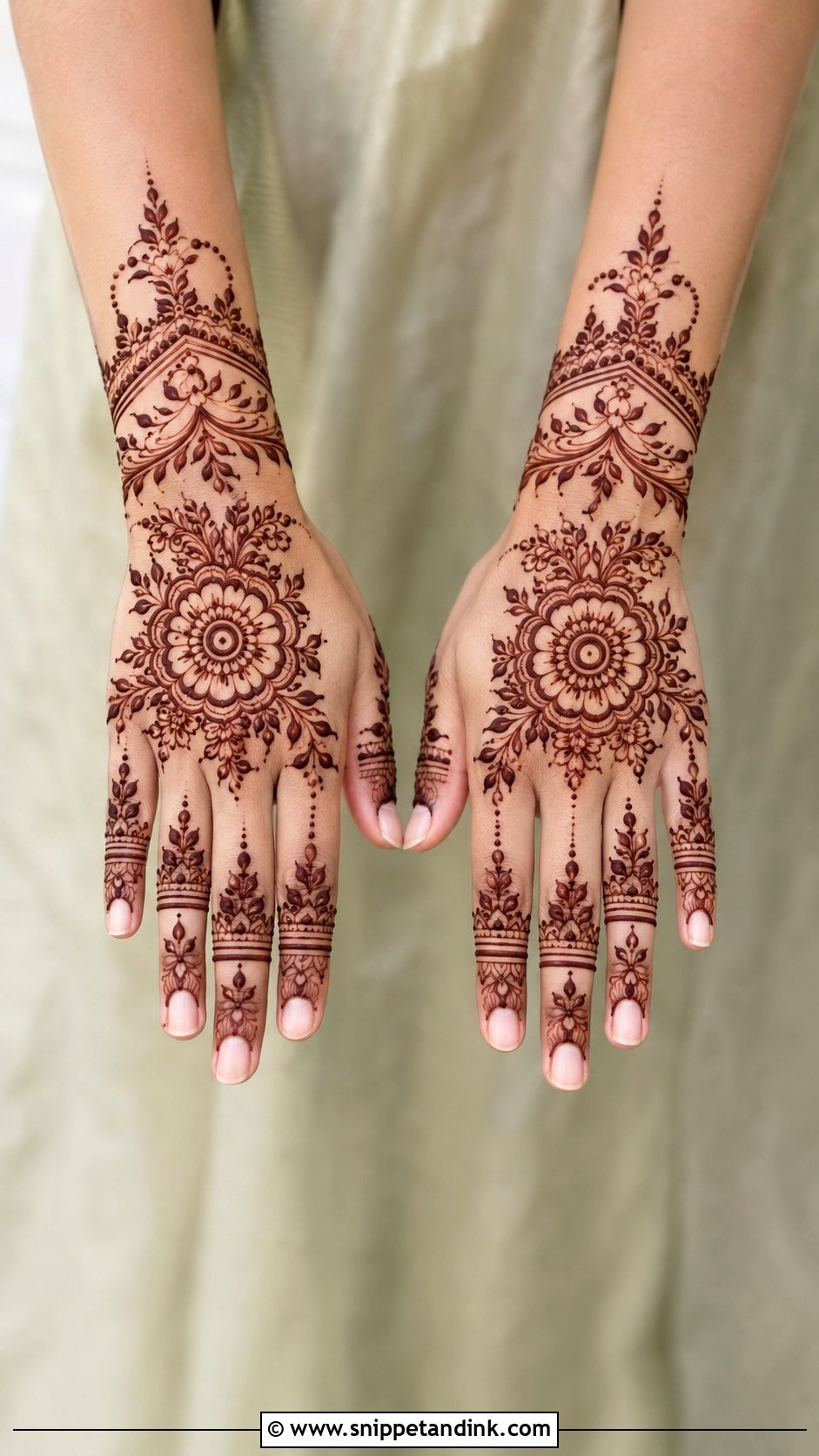
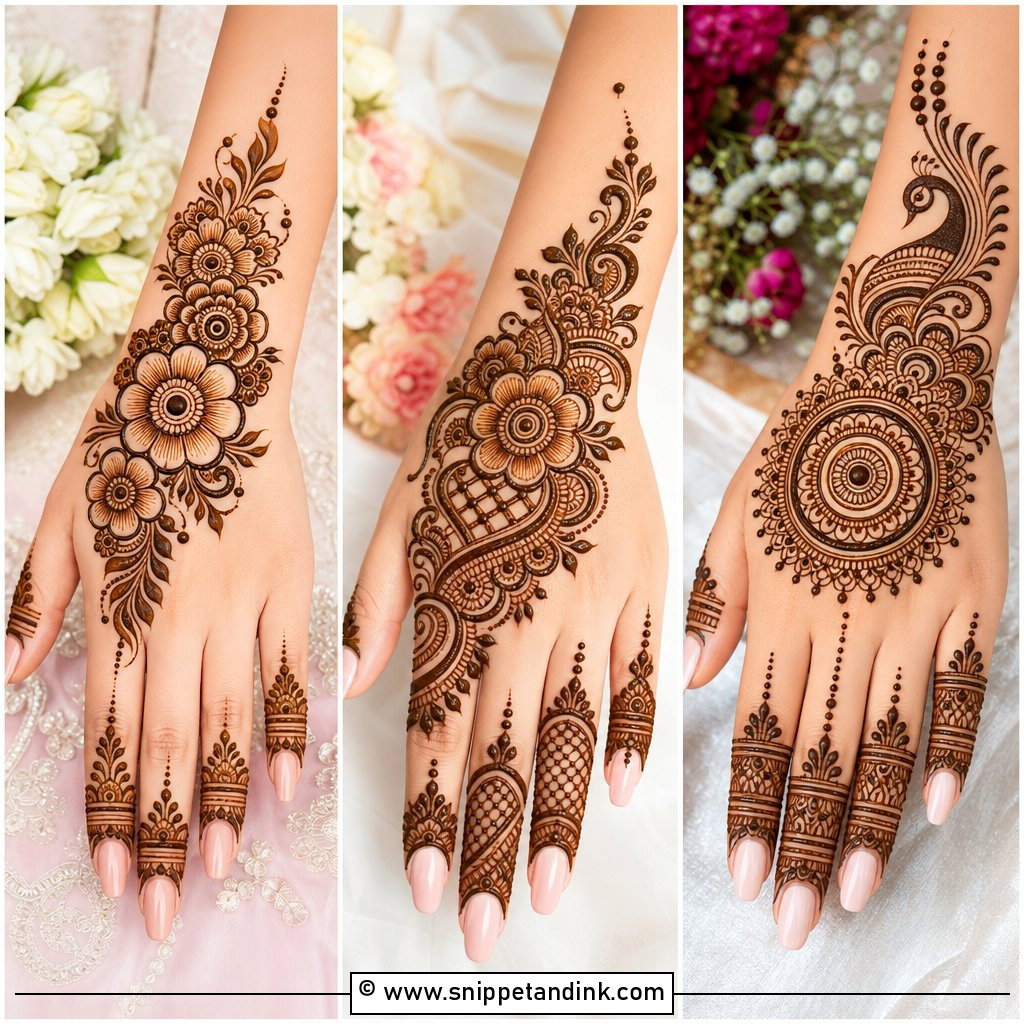
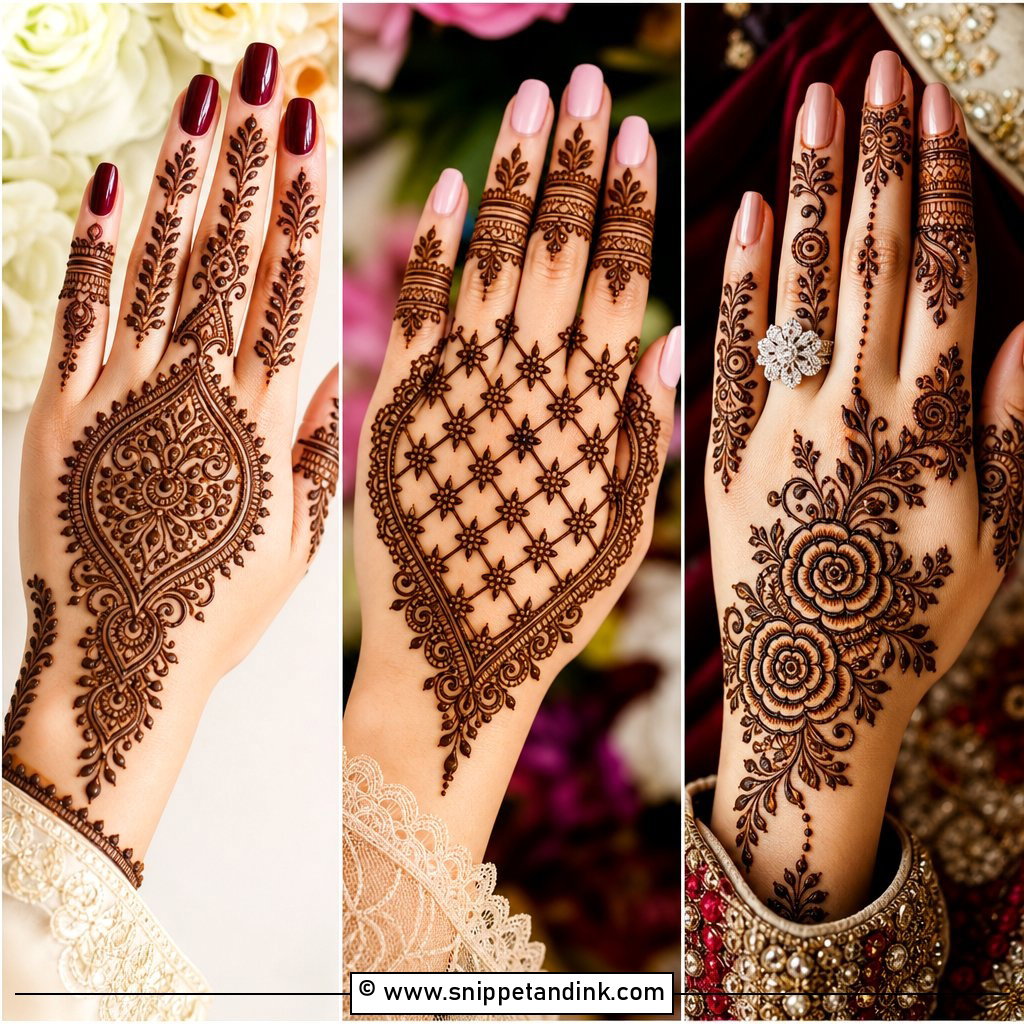
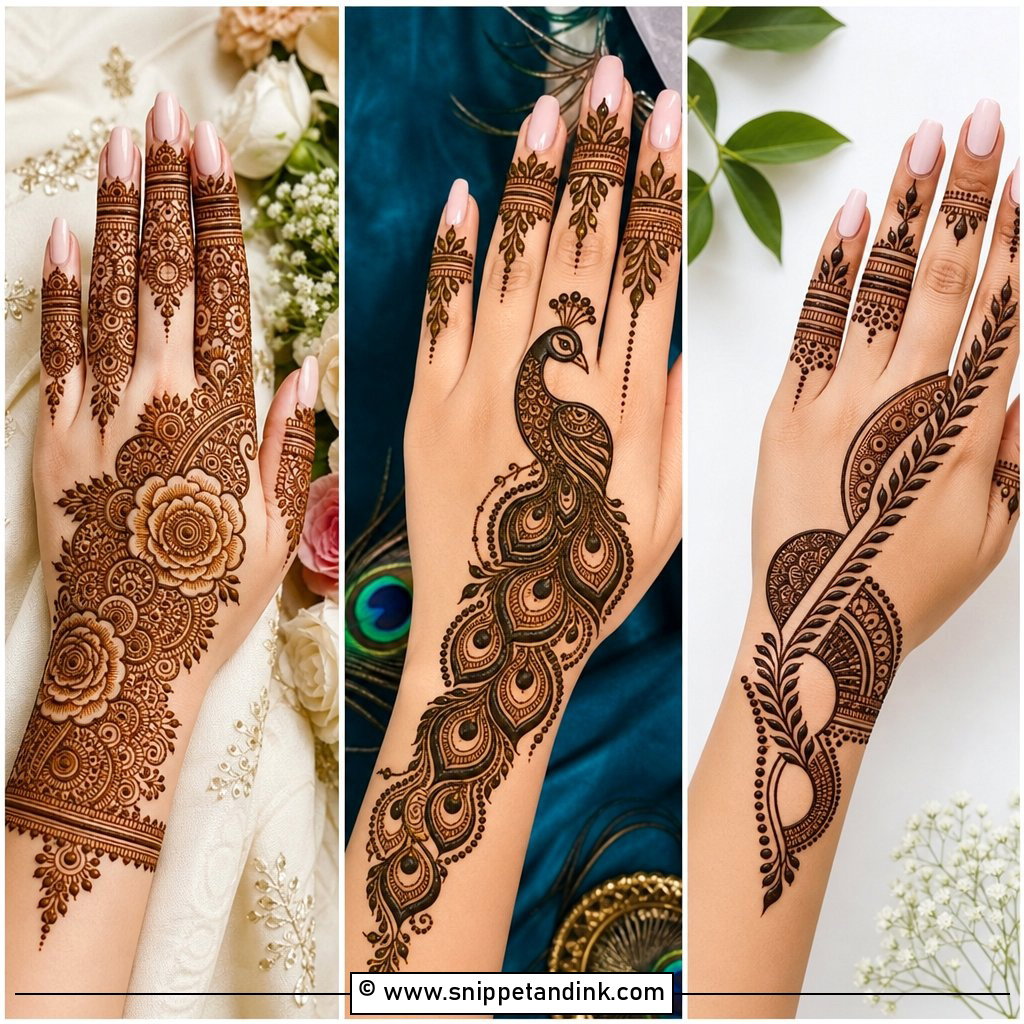
The back hand is where the ring lives, so it’s the side guests and cameras see most. I usually place one main motif in the center, a mandala, a rose or a paisley cluster, then run vines, dots or thin bands up the fingers and down to the wrist. Leaving the base of the ring finger lighter than everything around it is the single most useful thing I do on an engagement back hand; a dense filler there swallows the band in photos. Bangles and nail color sit comfortably with this layout because nothing is crammed together.
2. Simple Engagement Mehndi Design
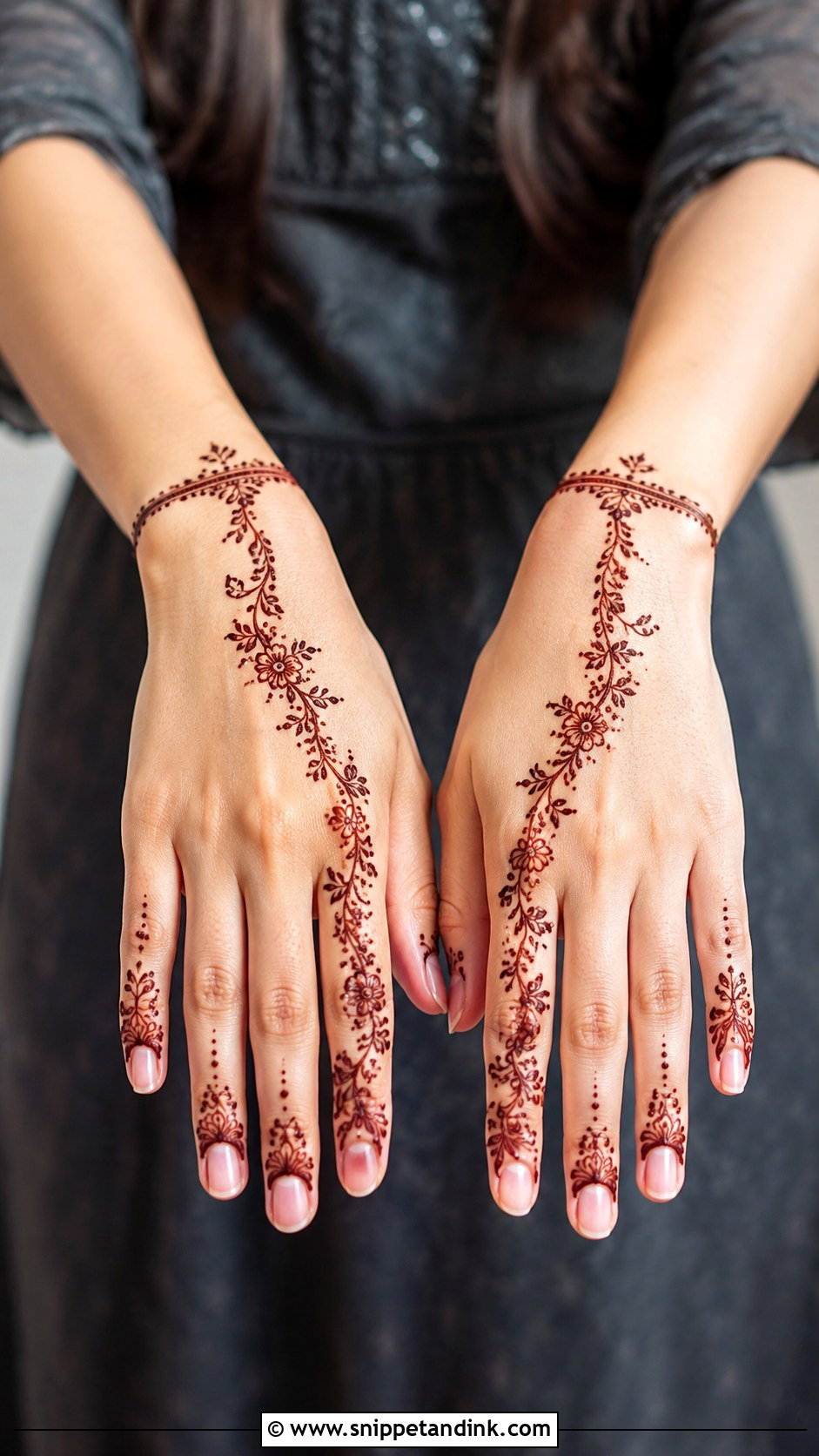
A simple design is harder to get right than a busy one, because every wobble shows. I keep it to a slim floral trail on the back hand, a small palm mandala or leafy finger tips with a narrow wrist band, and I spend the time on line quality instead of coverage. It suits short ceremonies and small family gatherings. The risk is a design that looks unfinished, so I add tiny dots and light shading inside petals to give it weight while the hand stays mostly open.
3. Arabic Engagement Mehndi Design
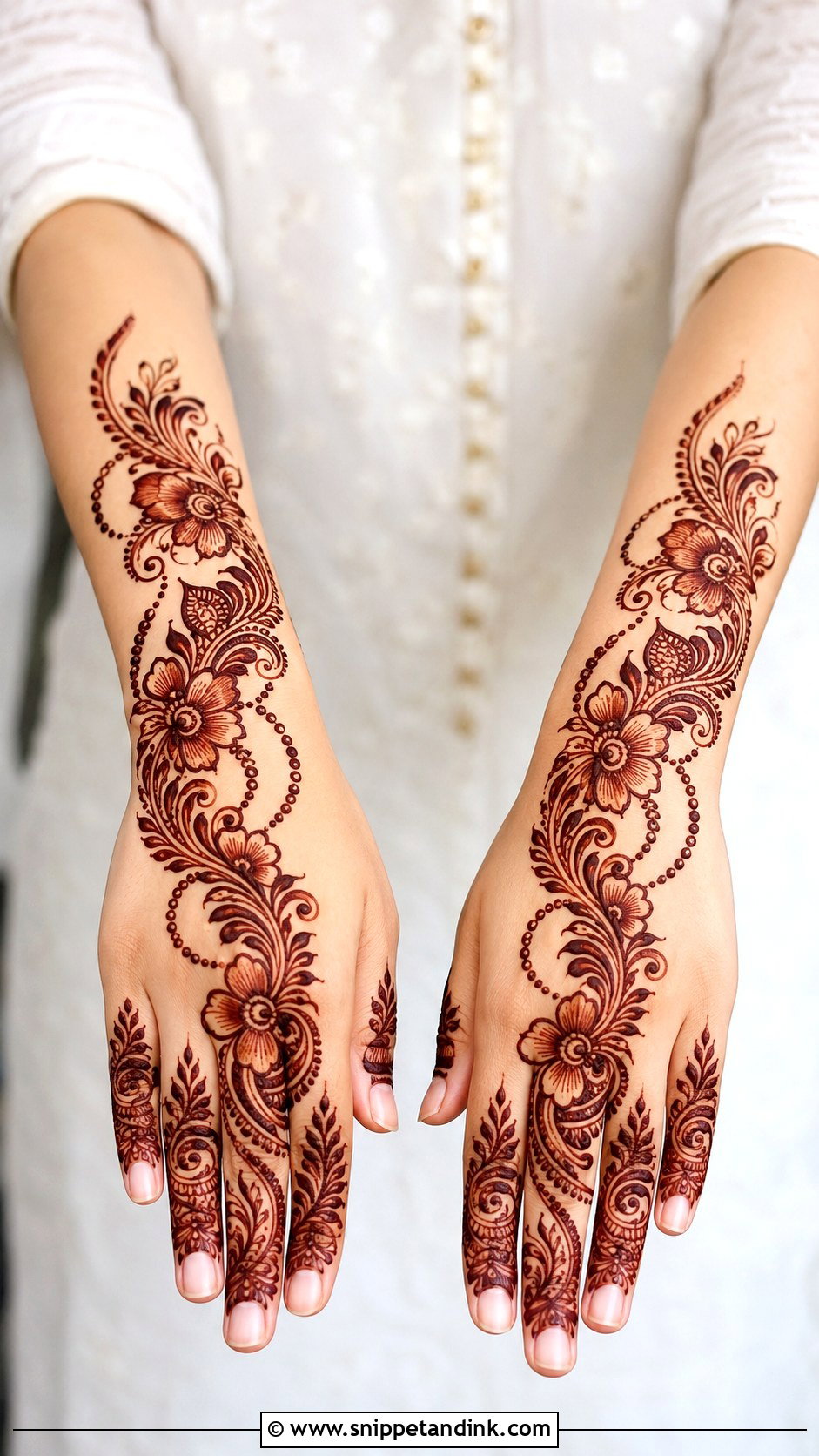
Arabic layouts flow on a diagonal, starting near the wrist, crossing the back hand and finishing on one or two fingers. The open skin between motifs is what makes the hand look longer, so I resist the urge to fill it. Large flowers, leafy vines, paisleys and shaded petals carry this style. Because the trail usually ends on the index or middle finger, I steer it away from the ring finger so the band isn’t hidden under a thick petal.
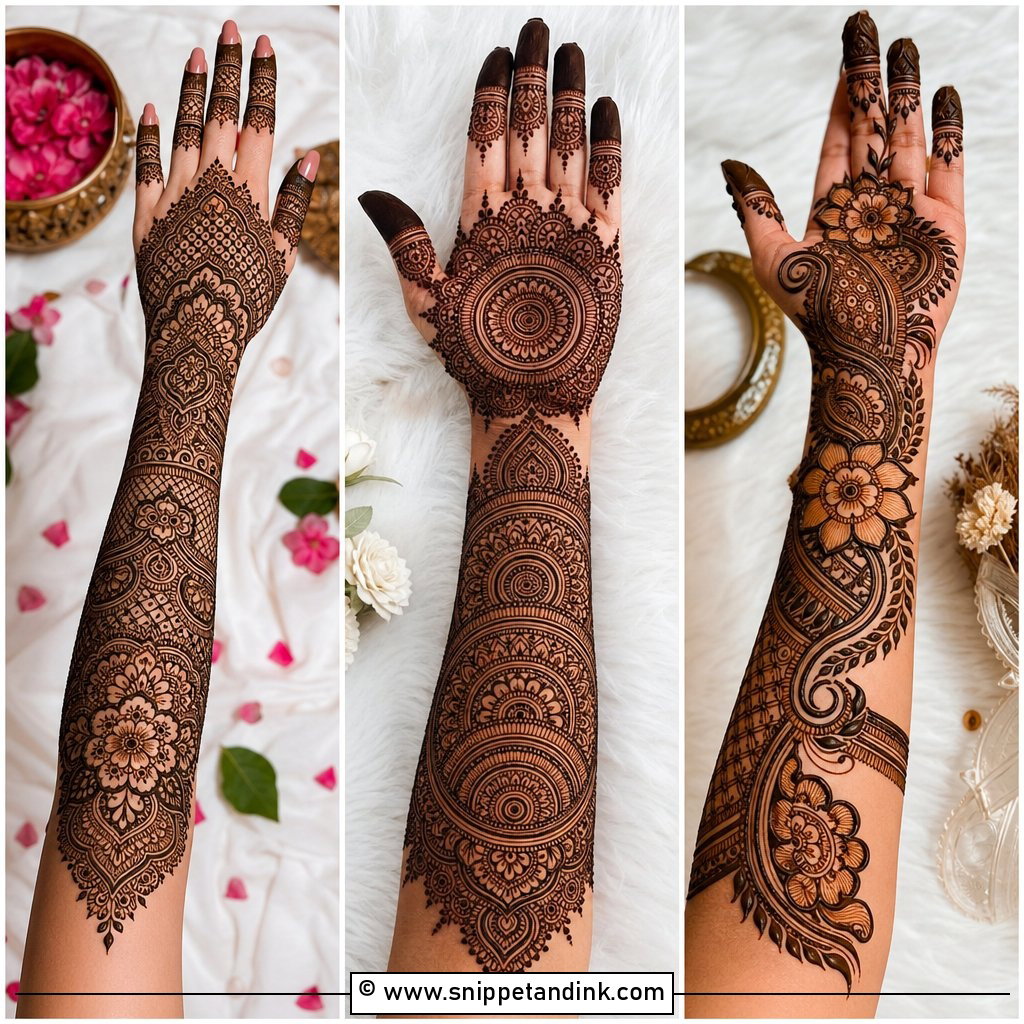
4. Full Hand Engagement Mehndi Design
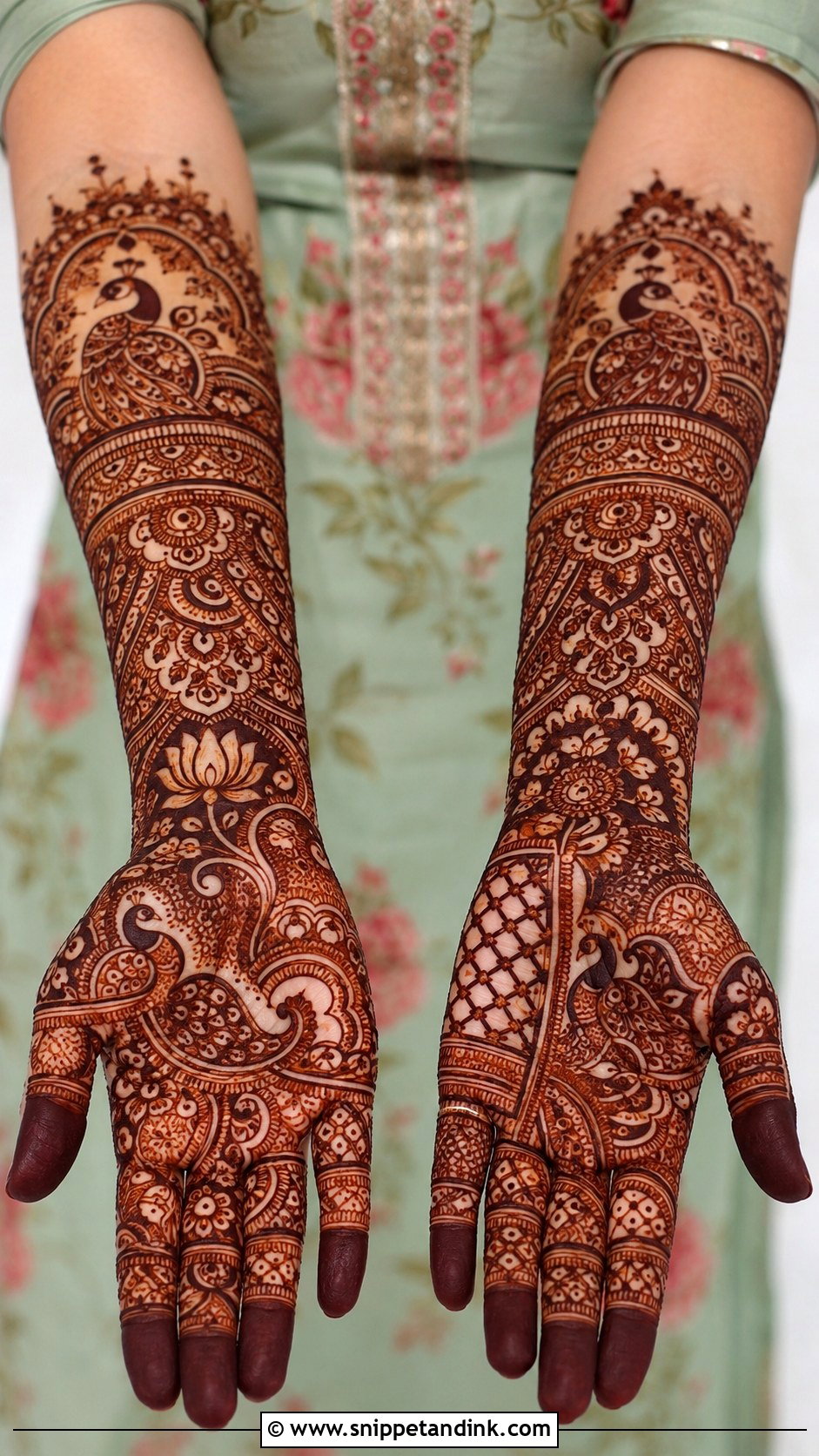
Full-hand coverage gives a proper bridal feel: palm, back hand, fingers and wrist, sometimes edging onto the forearm. Paisleys, florals, jaali mesh, peacocks and fine fillers all fit. My caution for an engagement is to vary the density. If every section is equally packed, the hand reads as one dark mass once the stain deepens, so I leave narrow gaps and shaded zones that give contrast. Budget a few hours of sitting time. It sits naturally with heavy lehengas, silk suits and other formal traditional outfits.
5. Front Hand Engagement Mehndi Design
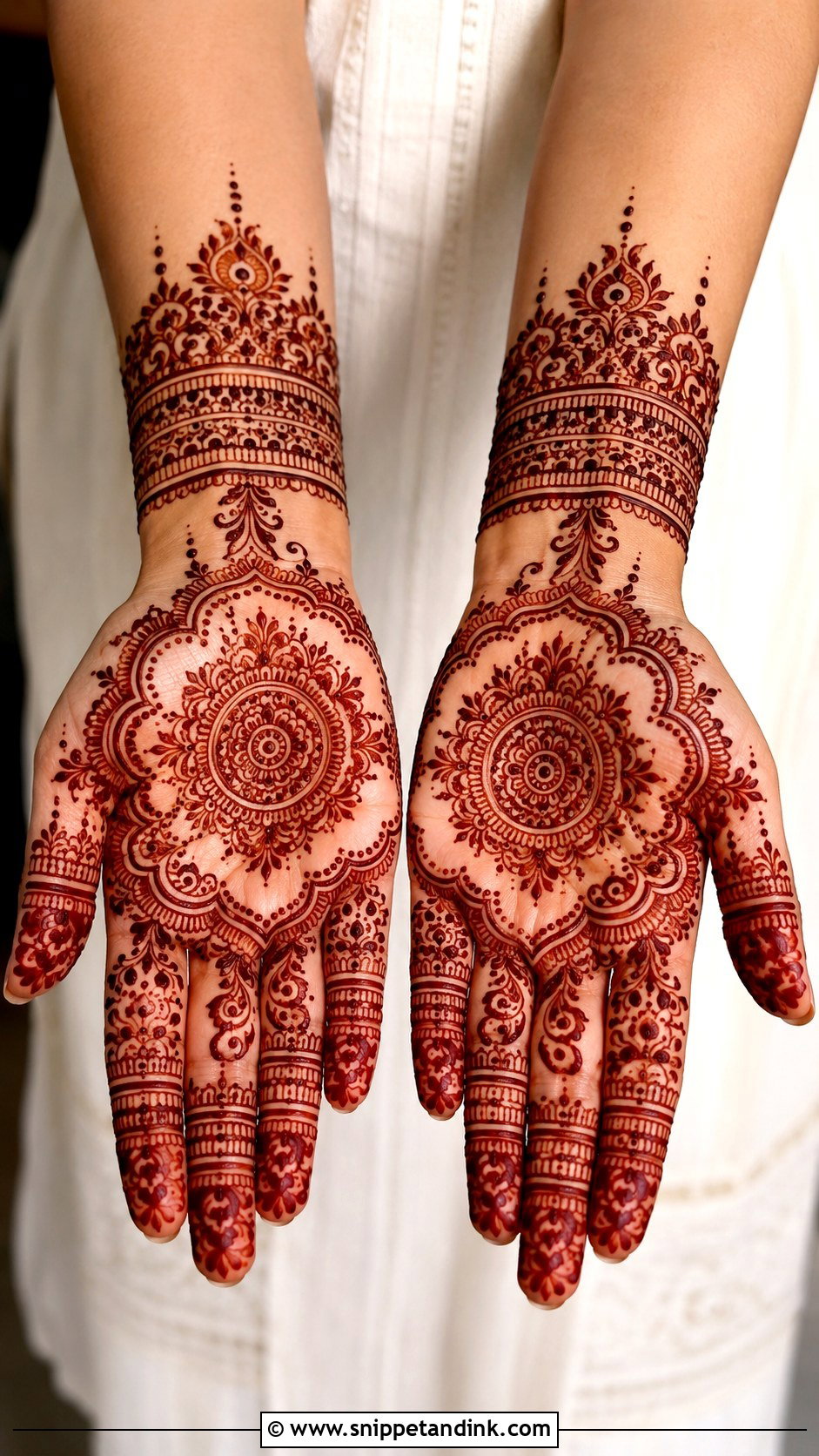
The palm side comes alive during rituals, blessings and those candid shots of hands held open. A good front-hand layout is built around one center, often a mandala, a paisley frame or a bride-and-groom panel, with grids, leafy bands and small motifs filling the fingers. Palm skin is thicker and stains darker than the back of the hand, so even medium coverage reads as deep maroon after a day or two. I keep the symmetry tight here, since both palms are often photographed side by side.
6. Minimal Engagement Mehndi Design
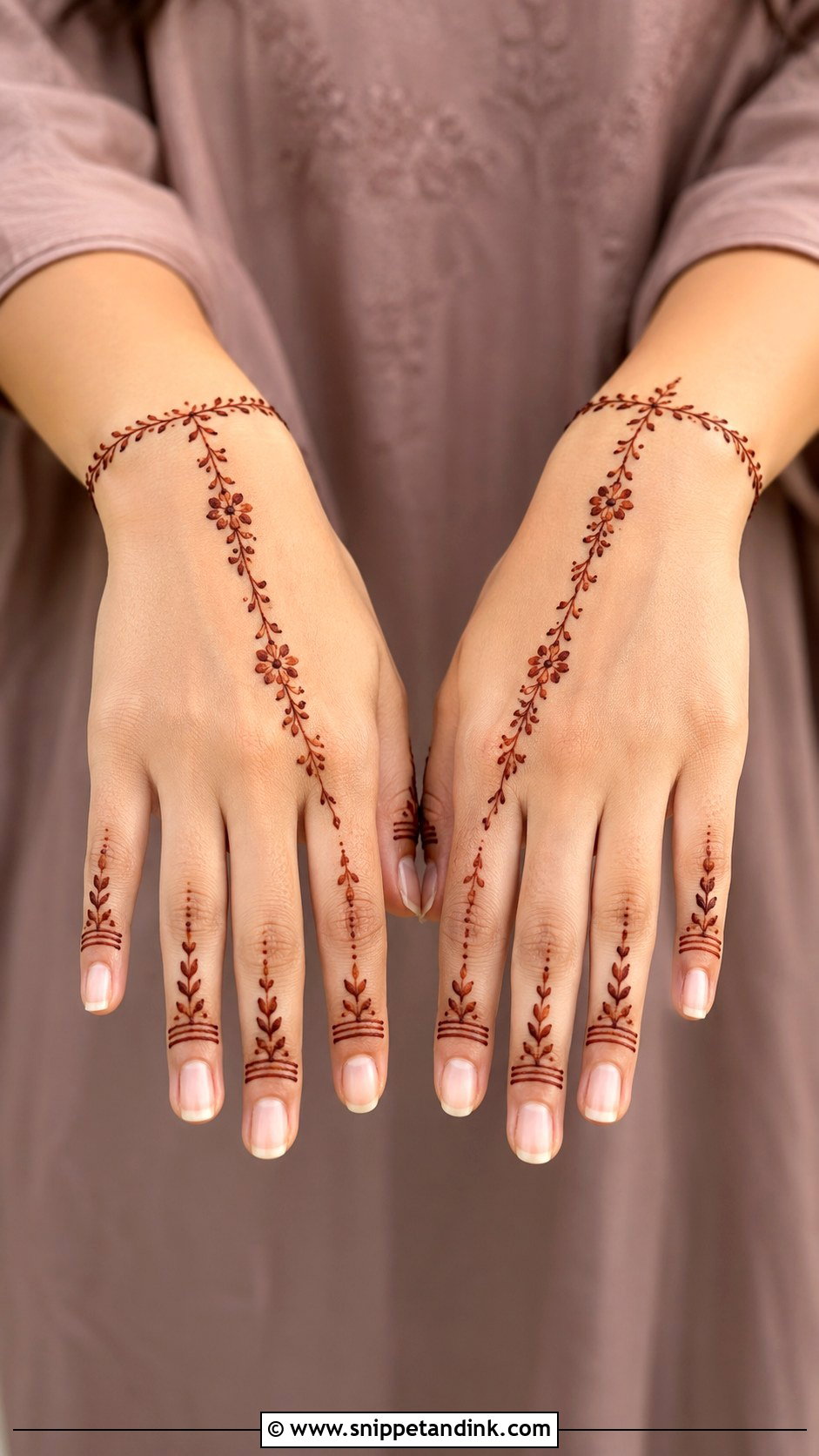
Minimal mehndi relies on placement more than on pattern. A tiny floral chain on the back hand, a few leaf accents on the fingers or a fine bracelet around the wrist can look expensive if it’s centered and lined up with the knuckles. It fits contemporary outfits, destination engagements and intimate ceremonies. I’d be honest with you on one point: a sparse design fades faster to the eye, because there’s less stain to carry it, so apply it closer to the event.
7. Engagement Ring Mehndi Design
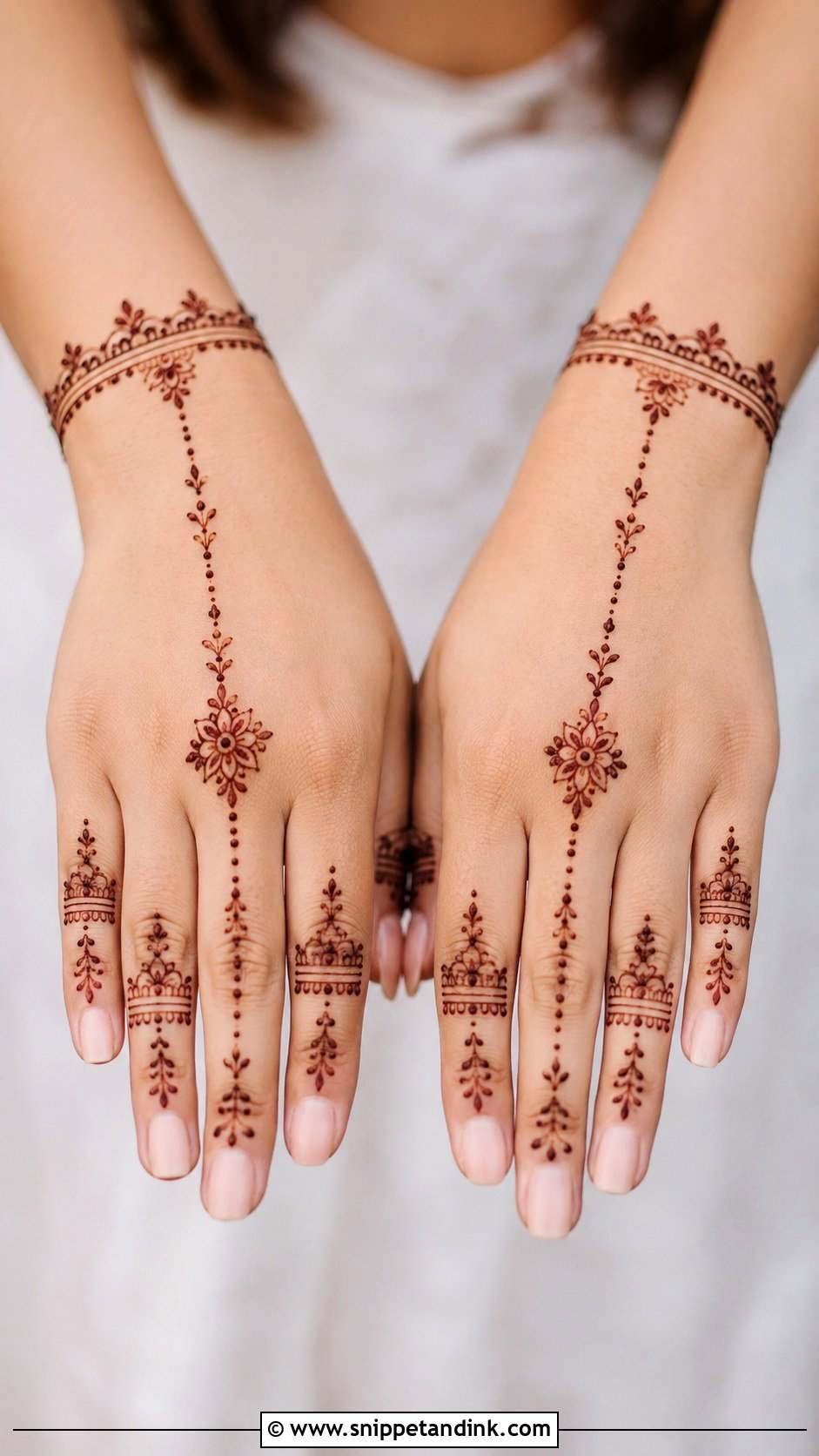
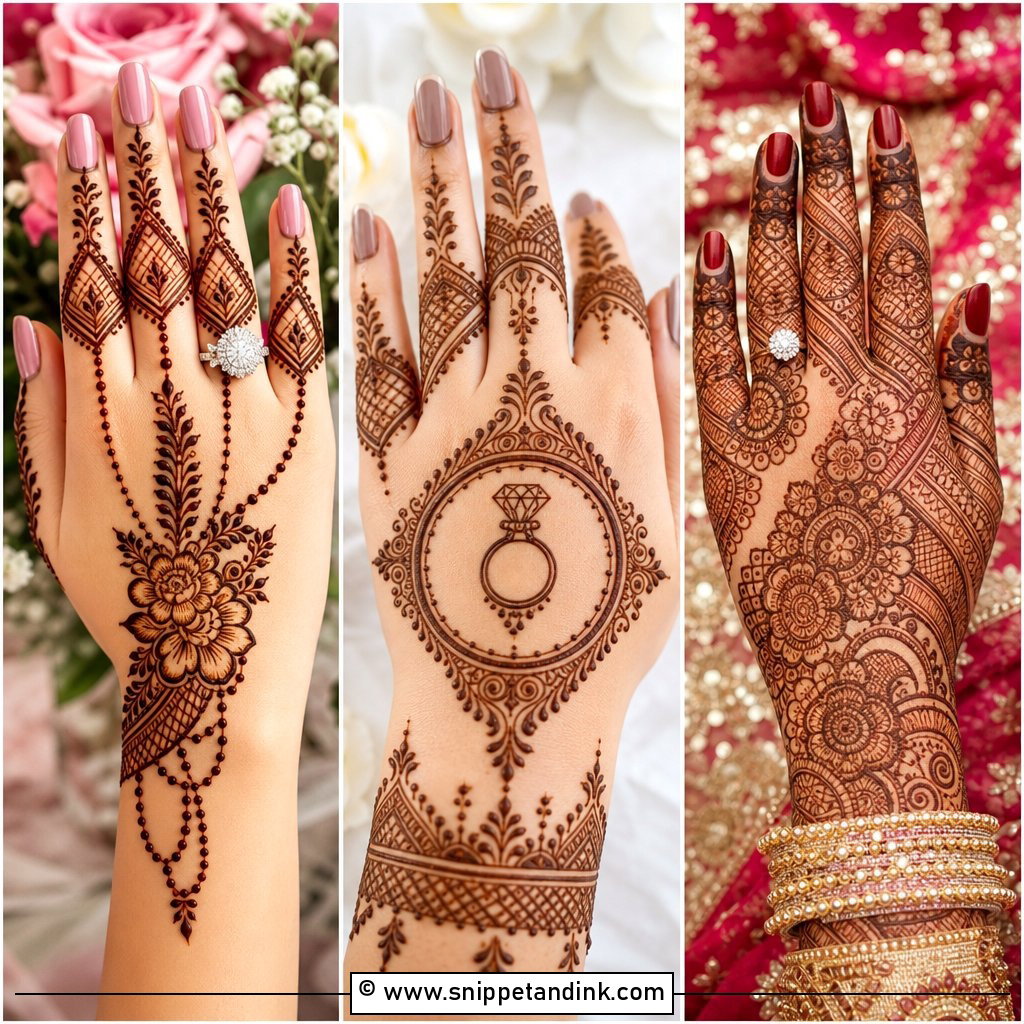
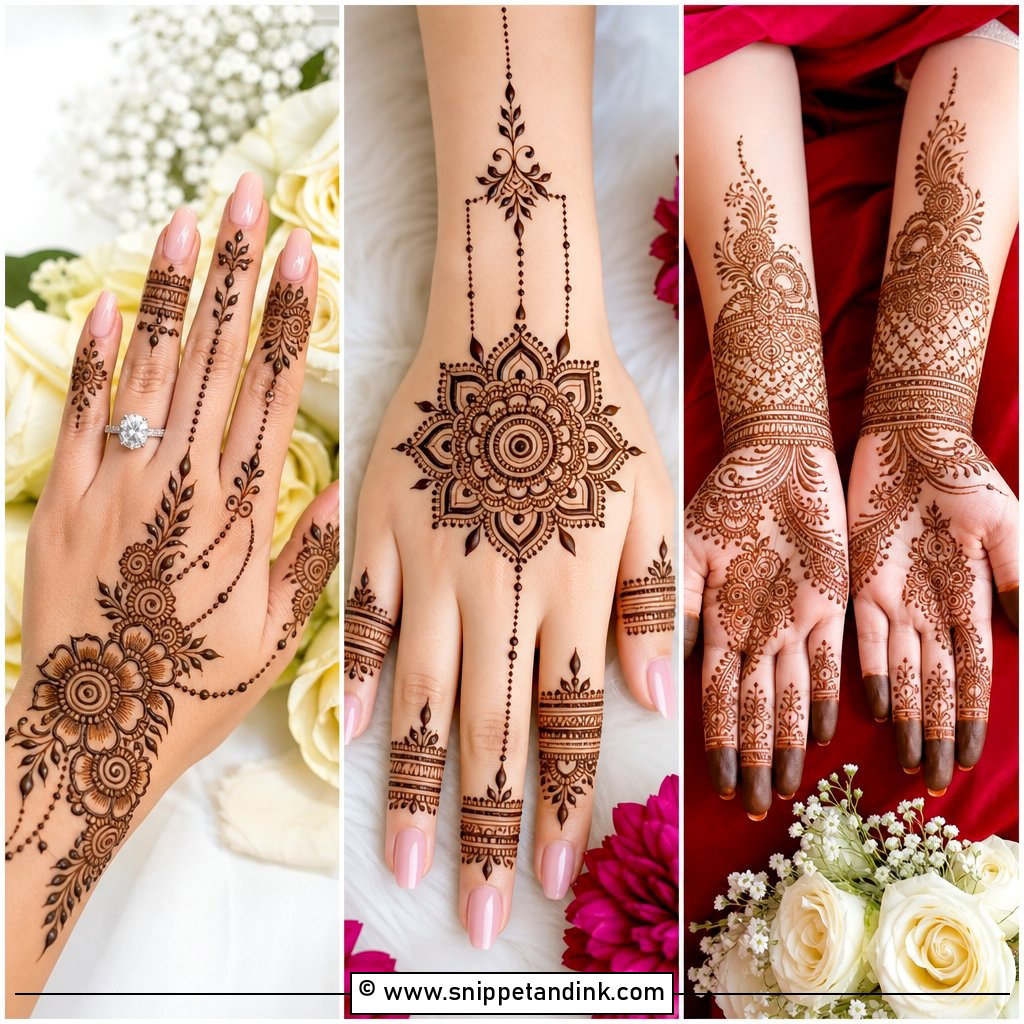
Ring-framing mehndi is designed around the jewelry, not over it. I build soft details around the ring finger, leafy arcs, dotted chains and small florals, and often connect the wrist to that one finger with a chain, much like a haath phool. In close-ups the ring becomes the centerpiece of the design. What I avoid is thick filling right where the band sits; clean skin around the ring is what lets both the stone and the henna read clearly.
8. Bridal Engagement Mehndi Design
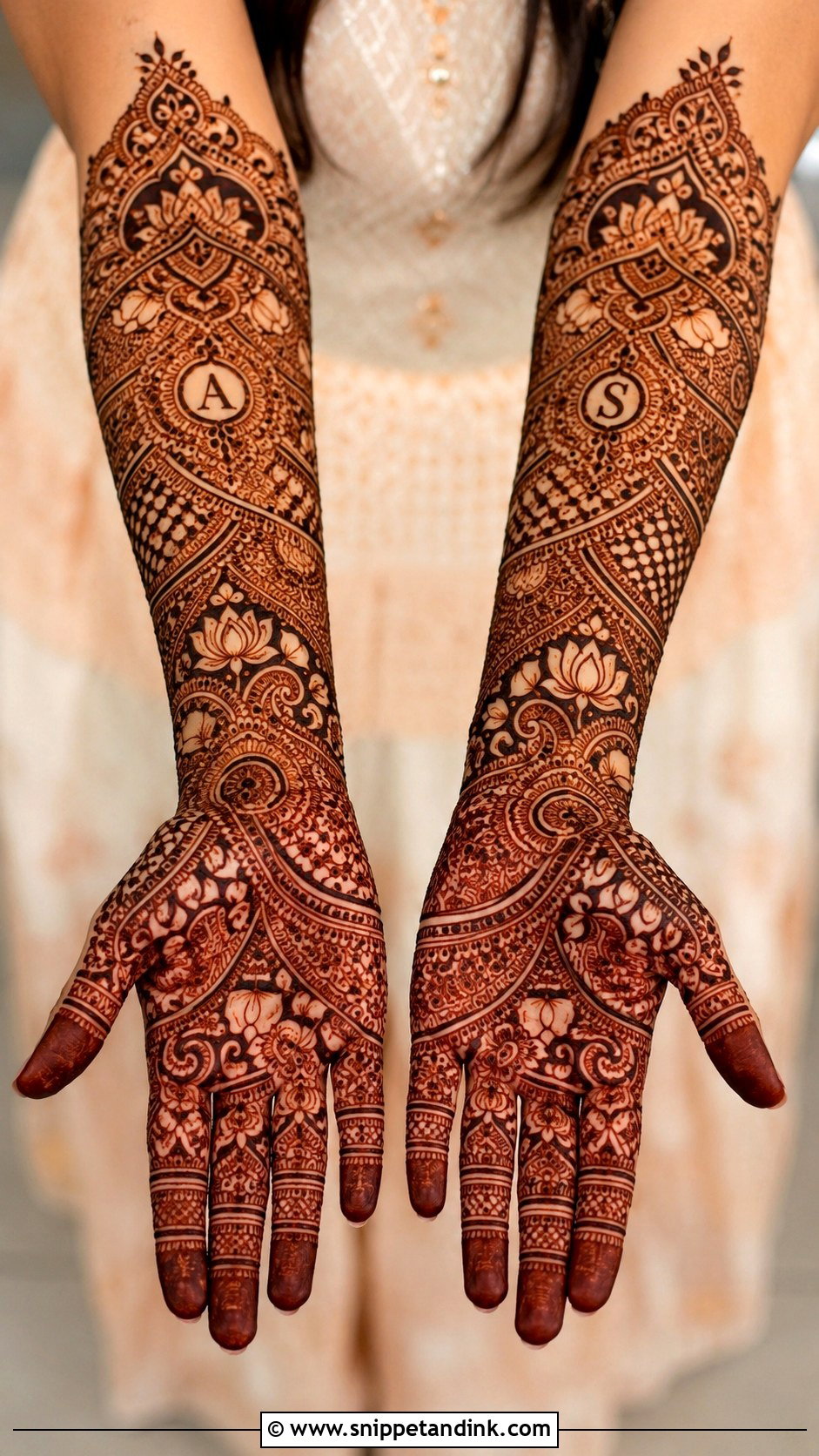
Some families treat the engagement like a small wedding, and the henna follows. A fuller bridal engagement design can take in both palms, detailed back hands, forearm extensions and personal touches such as initials, dates or symbolic motifs. It’s richer than a simple engagement look but usually lighter than the main bridal set. For grand ceremonies and roka functions, I blend traditional paisleys, lotus flowers and jaali panels with modern spacing, so the hands still have room to breathe in photos.
9. Modern Engagement Mehndi Design
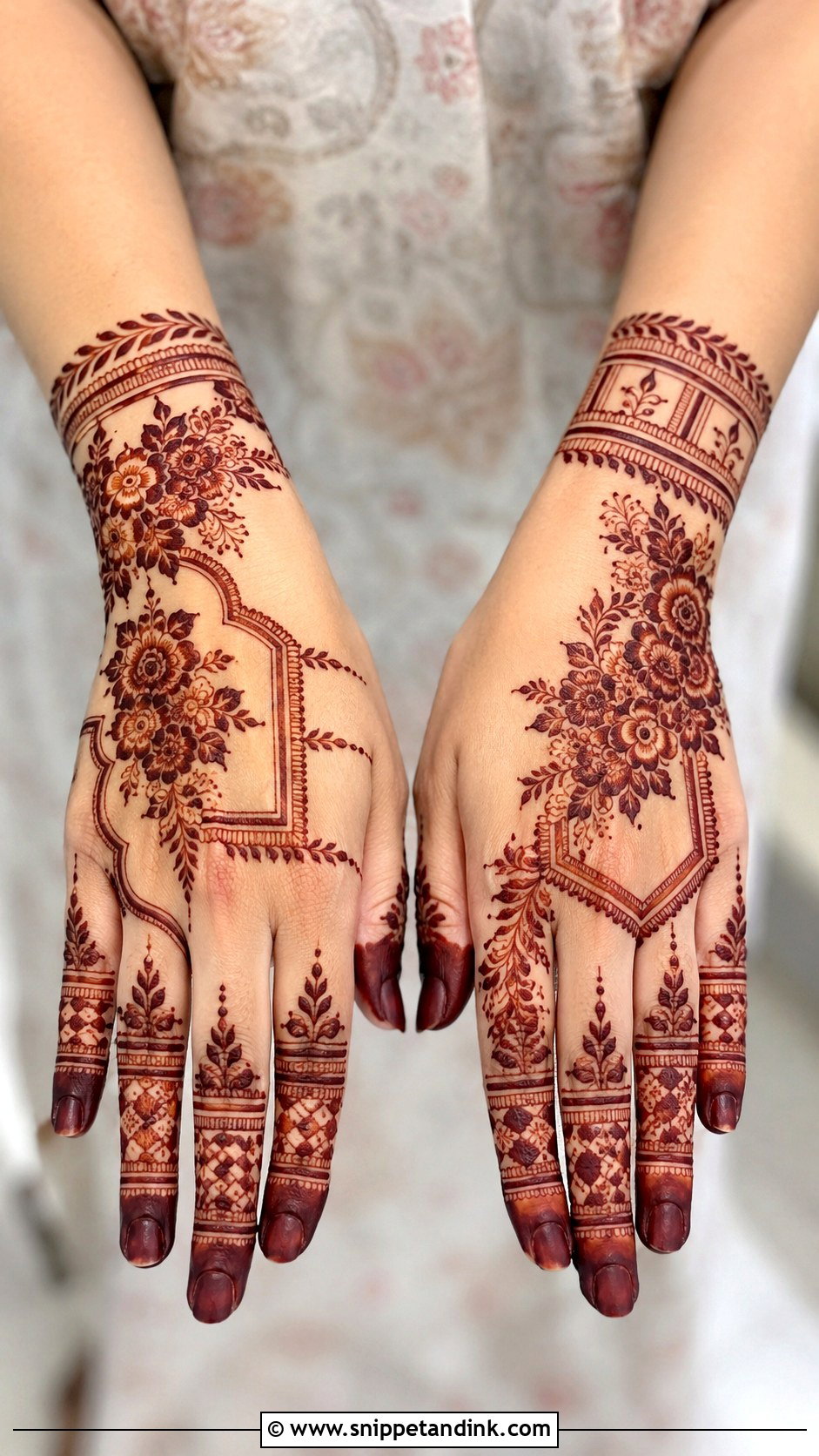
Modern layouts trade traditional fillers for composition: asymmetrical florals, geometric bands, deliberate negative space and bold finger detailing. They sit well with pastel outfits, gowns and minimal jewelry. I still anchor them with something familiar, a leaf, a small mandala or a paisley, otherwise the design can look like a tattoo stencil rather than mehndi. Thin, confident strokes matter more here than anywhere, because a shaky line has nothing around it to hide in.
10. Indian Engagement Mehndi Design
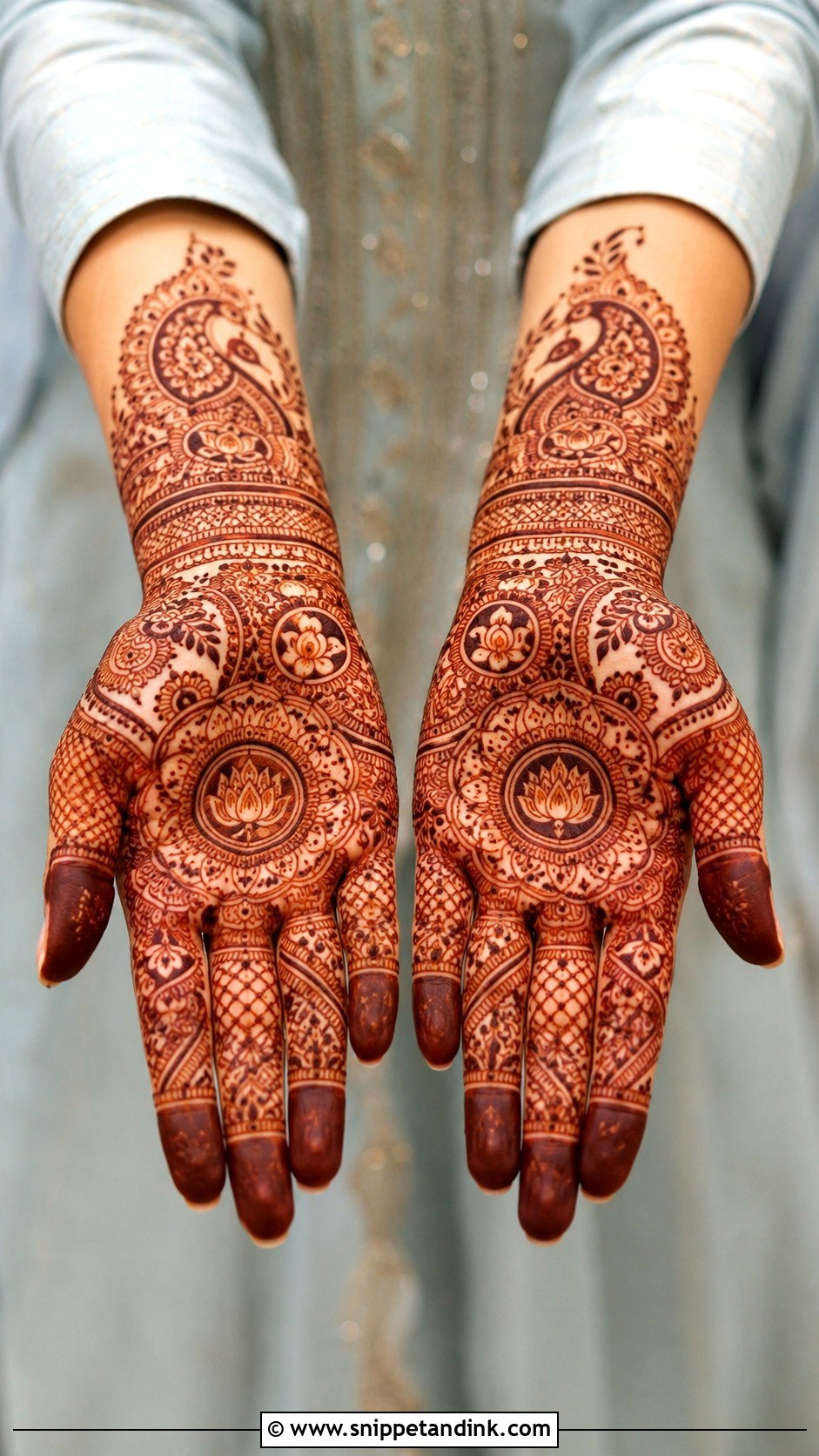
Indian mehndi is built on symmetry and fine detail: paisleys, peacocks, lotus motifs, mandalas, leafy borders and close filler work. For an engagement I usually keep it to medium or full coverage depending on the outfit and the size of the function. It sits naturally with lehengas, sarees, salwar suits and traditional jewelry. To keep it distinct from the wedding set, I choose one or two statement motifs and surround them with lighter detail instead of filling every inch of skin.
11. Indo Arabic Engagement Mehndi Design
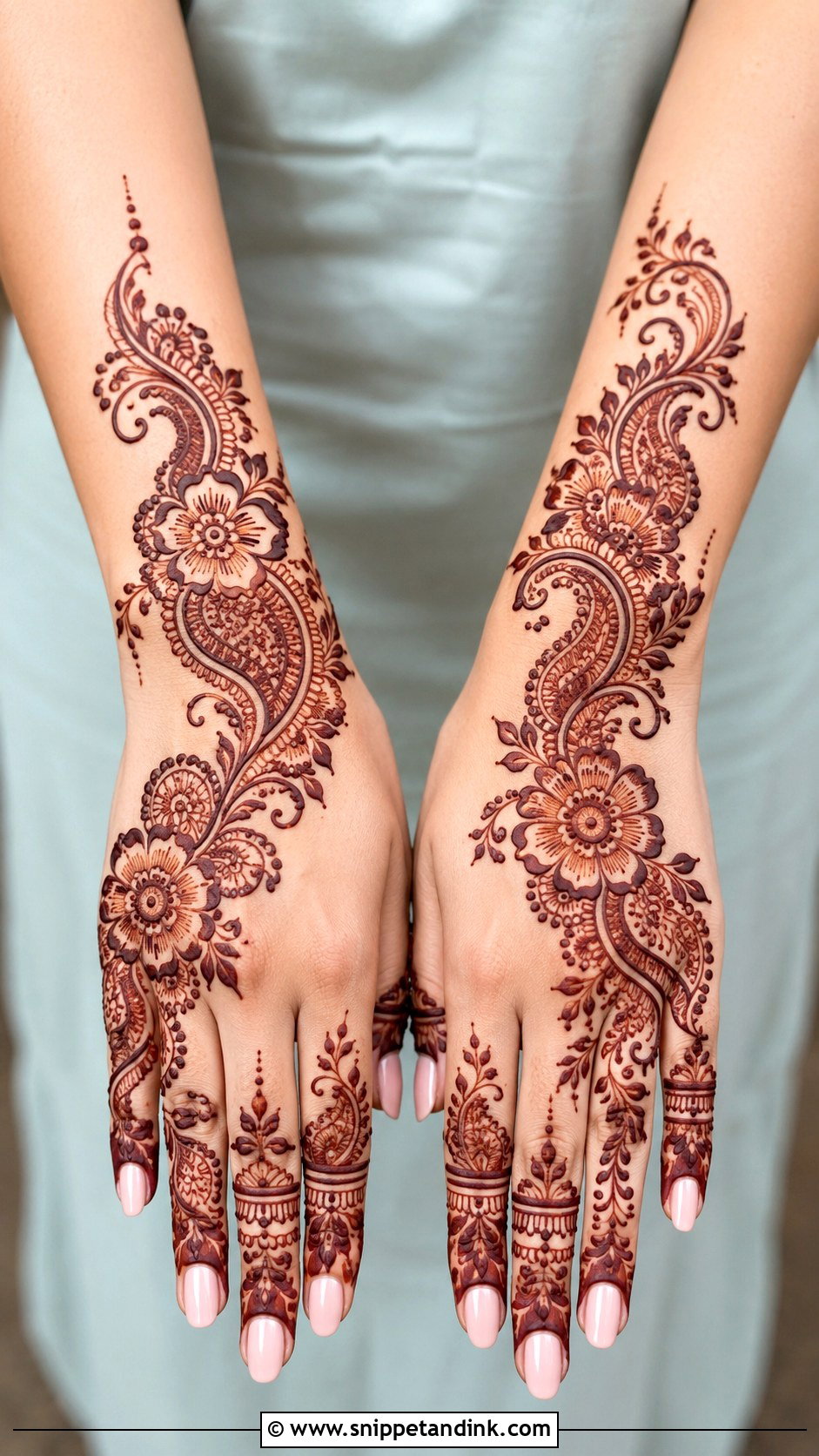
An Indo Arabic engagement mehndi design takes the flowing trail of Arabic henna and fills parts of it with Indian detail. You get large floral trails and paisley clusters next to fine finger work and small traditional fillers, with open skin left between them. On the back hand the diagonal flow naturally flatters the shape. I finish most of these with a wrist cuff, because a trail that just stops at the wrist bone looks cut off in sleeve-length photos.
12. Engagement Mehndi Design With Name
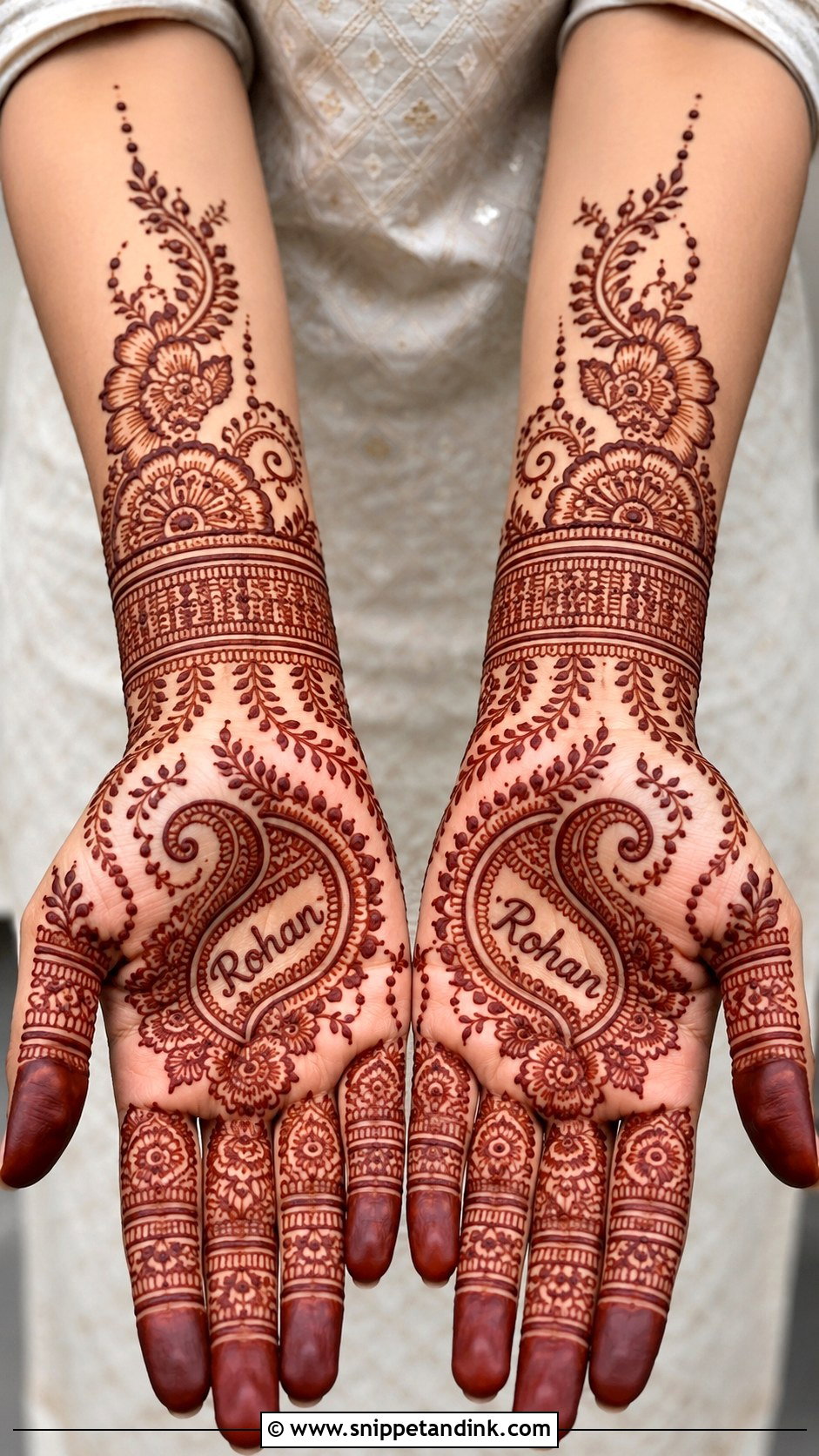
Hiding a name in the design is a sweet tradition, and guests do love hunting for it. I tuck the lettering inside a paisley, along a wrist band, in a heart or woven through a floral vine. For an engagement, initials are often better than the full name if you want something subtle. Placement matters more than people expect: lettering across the knuckles or the inner wrist crease stretches and blurs as the hand bends, so I keep names on the flat part of the wrist, the lower palm or a clear space beside the main motif.
13. Engagement Mehndi Design With Initials
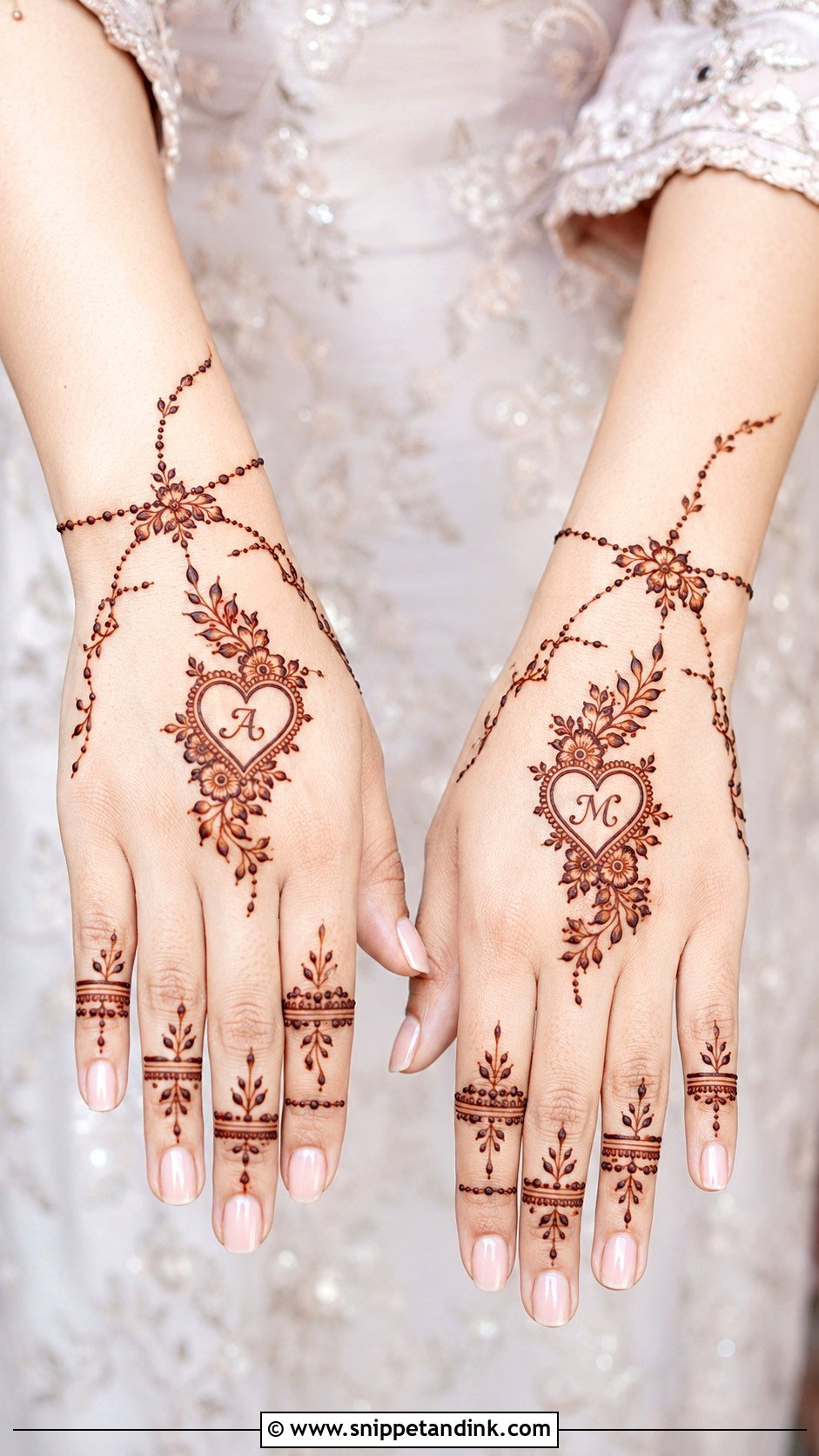
Initials are the quieter cousin of name mehndi. I set them inside a small heart, the center of a mandala, a ring motif or a bracelet chain, where they look placed on purpose. With an understated outfit I’d go for tiny initials with thin floral detailing; with a heavy one, I’ll frame them in paisleys or jaali so they don’t get lost. Letters need a slightly thicker line than filler work, or the stain develops patchy and they become hard to read.
14. Engagement Mehndi Design With Couple Motif
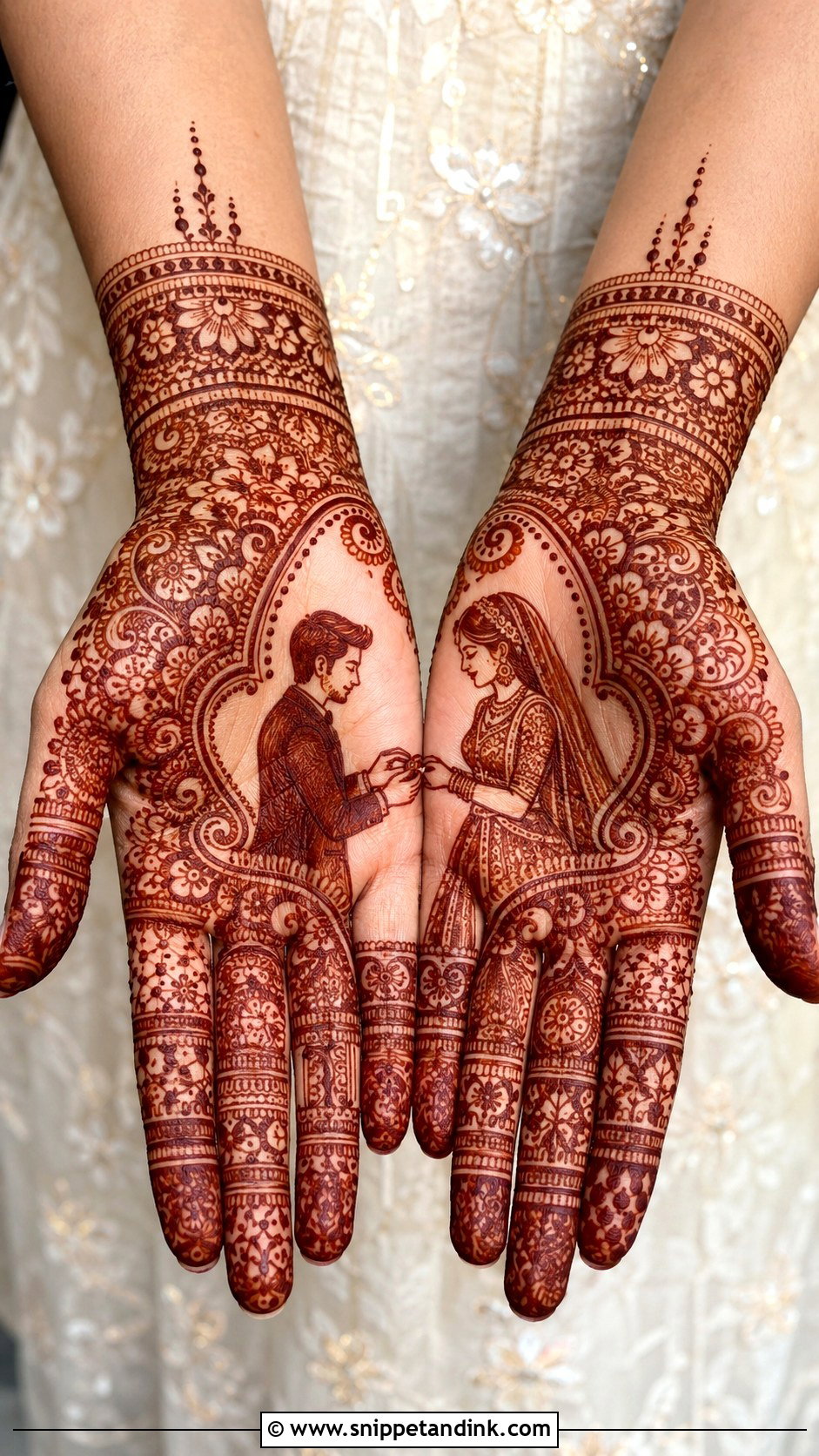
A couple motif turns the hand into a small story: a bride-and-groom silhouette, a ring exchange, joined initials or two hearts inside a traditional frame. For an engagement I keep the figures small. Oversized faces drawn in henna rarely look flattering once the stain darkens, because fine facial lines thicken slightly as the skin absorbs dye. The palm or forearm gives enough room for the detail, and florals or a mandala border help the panel blend into the rest of the hand.
15. Engagement Mehndi Design With Date
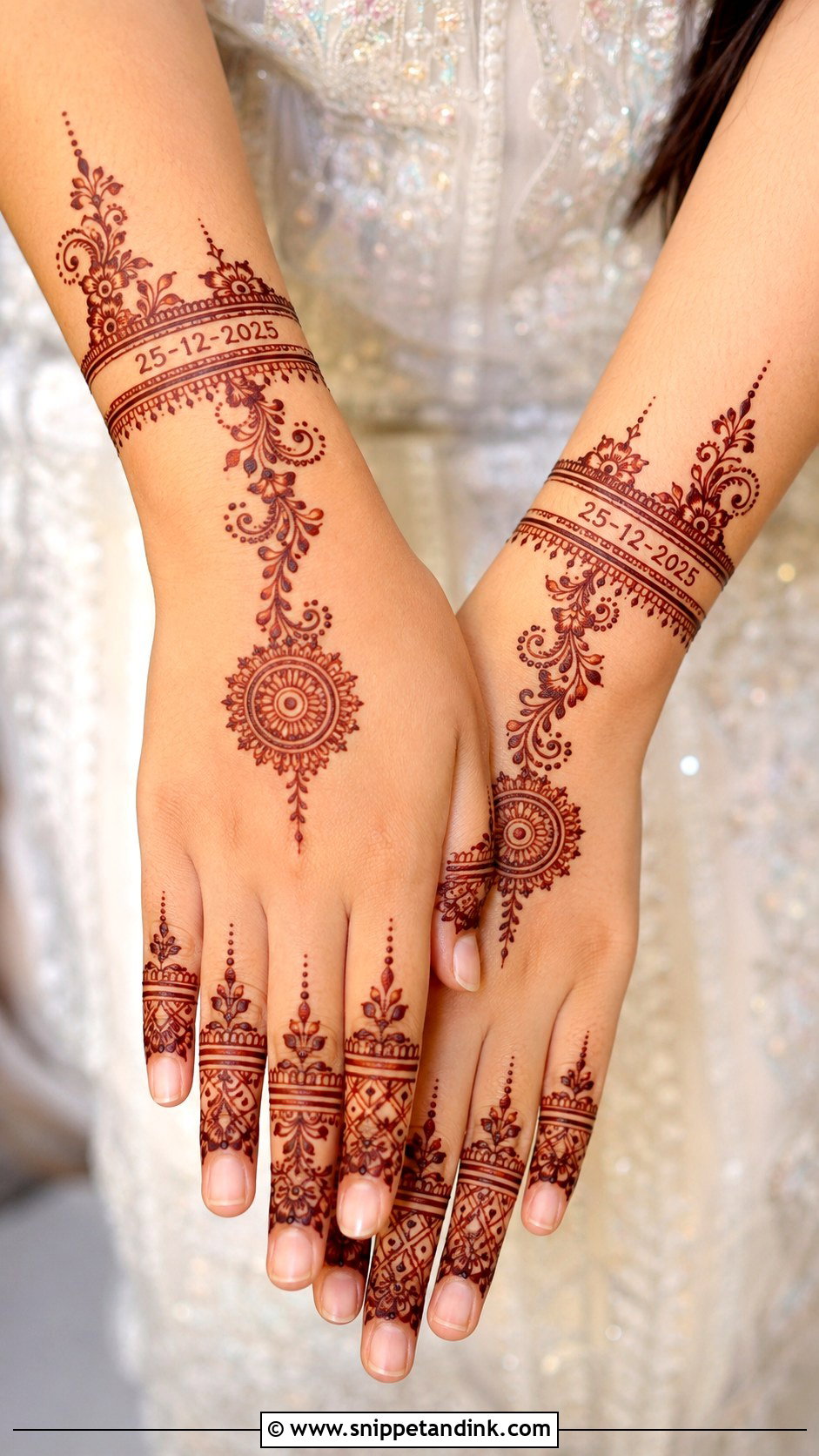
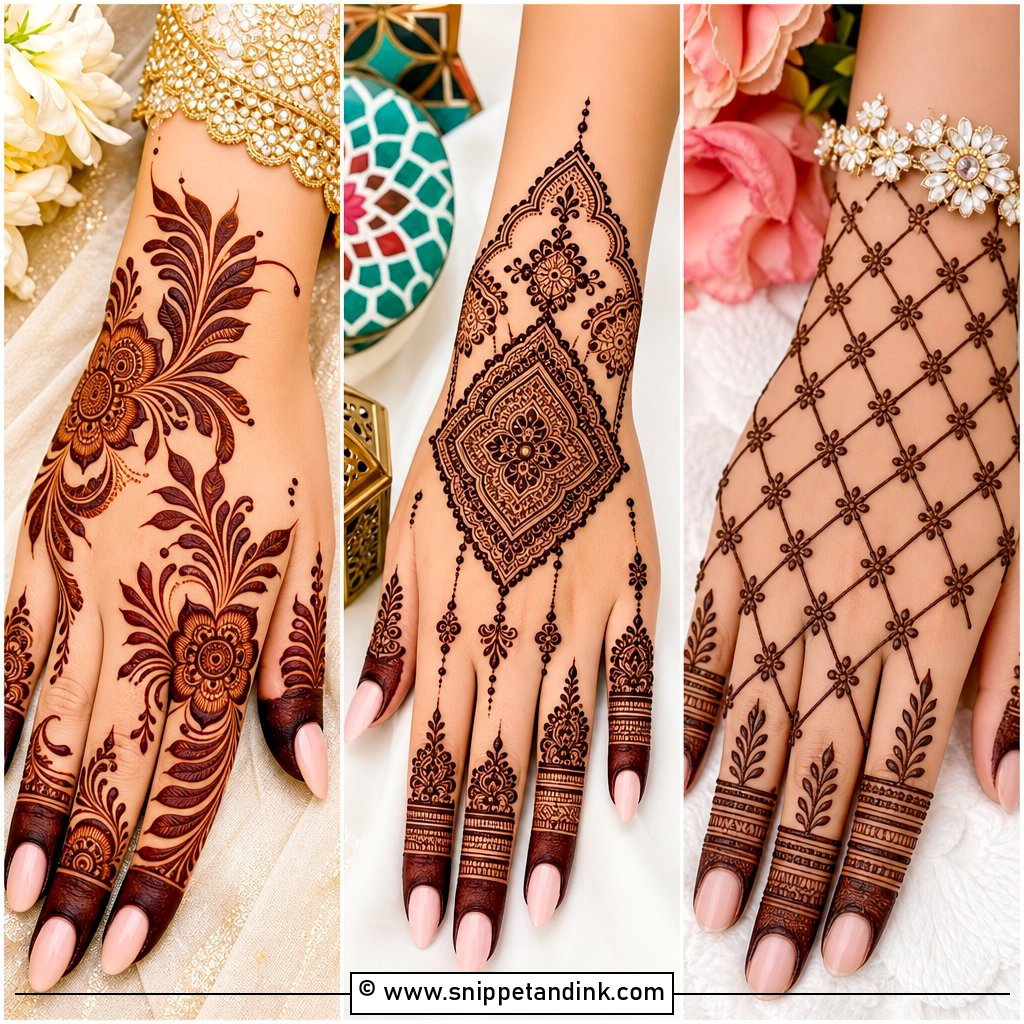
Adding the date marks the ceremony in a way nobody else at the function will have. I place it along the wrist, inside a floral border, under a mandala or beside the initials. Roman numerals look modern; plain numbers are easier to read in photos. Keep the figures small and give them clear space around them, since numbers crowded by filler are the first detail to blur. A light floral or jewelry-style layout lets the writing sit inside the art instead of on top of it.
16. Mandala Engagement Mehndi Design
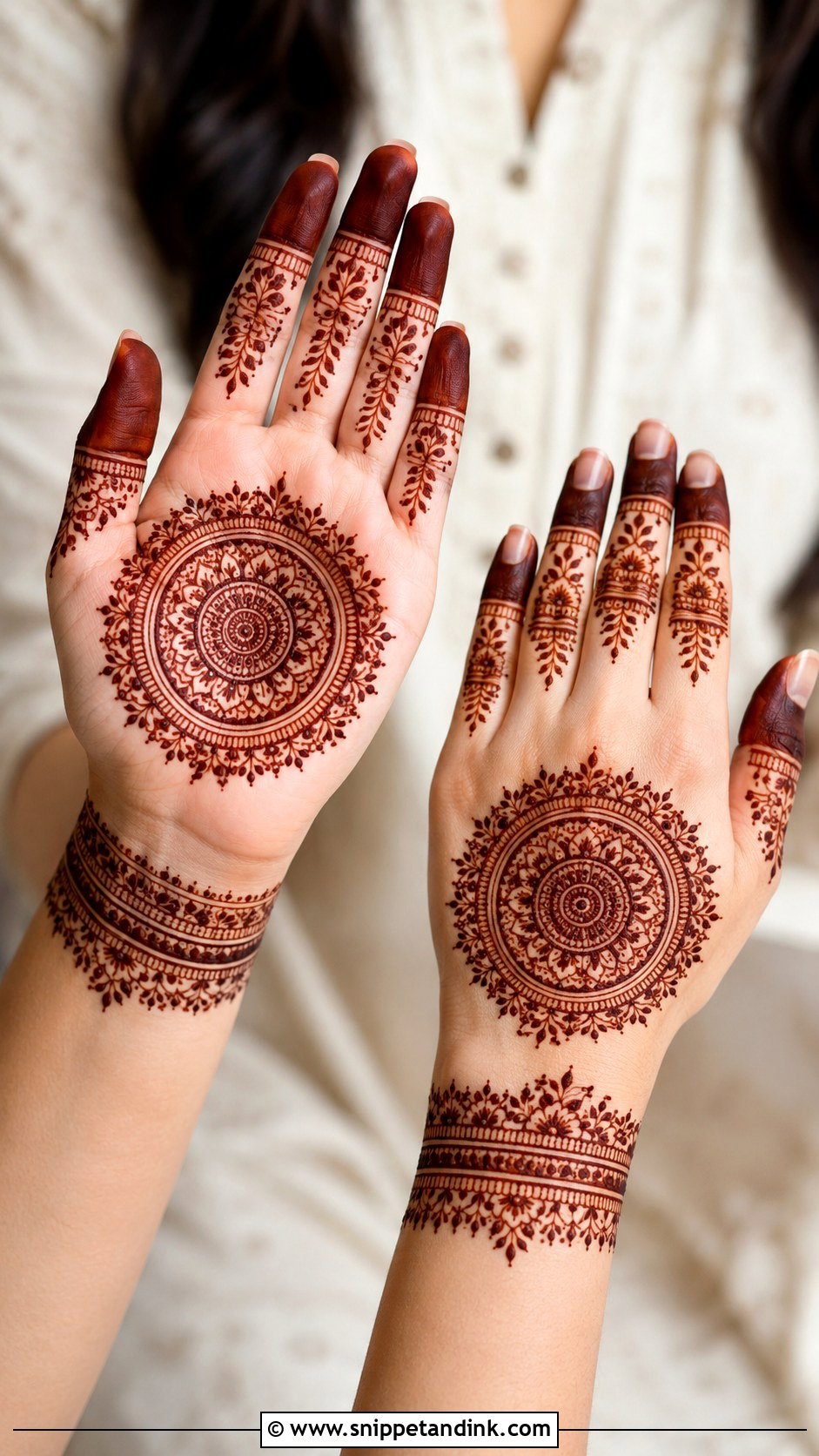
A round mandala is the simplest way to give a hand instant balance. In the center of the palm it develops into a dark, bold stain; on the back hand it can read like a piece of jewelry sitting just above the ring. I pair it with filled fingertips, leafy borders, a wrist band or a few dots. For an engagement I size it to the hand rather than going as big as possible, because a mandala that touches both edges of the hand closes up all the space around it.
17. Floral Engagement Mehndi Design
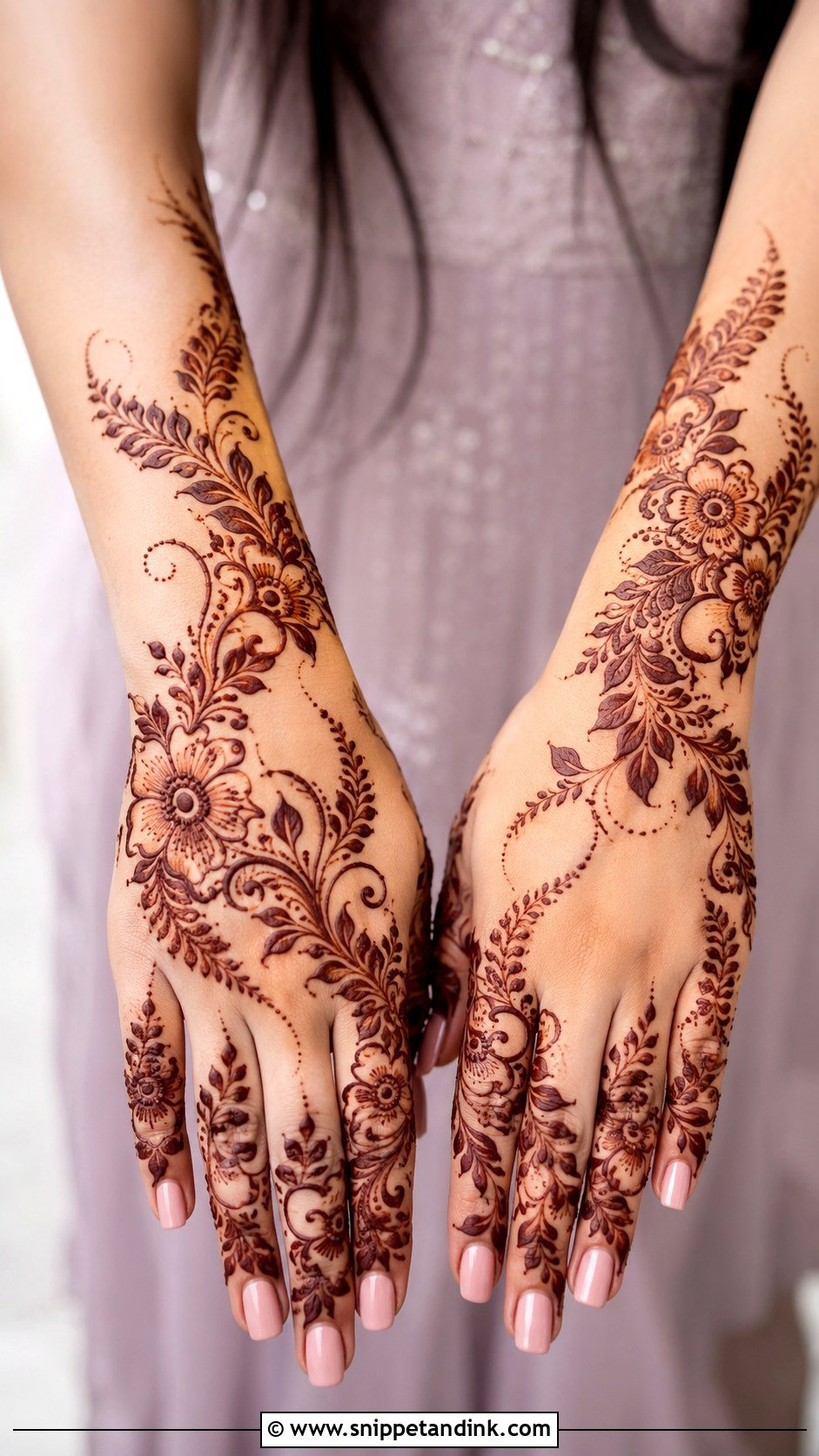
Florals are the most flexible family of motifs I draw. Roses, lotus flowers, small blossoms or mixed trails can run across the palm or back hand, and they sit easily with pastel outfits and floral jewelry. Large flowers push the look toward Arabic; smaller repeated ones read more Indian. The common mistake is crowding big blooms together. I space a few flowers out and connect them with leaves, dots and curved vines, which photographs far cleaner.
18. Rose Engagement Mehndi Design
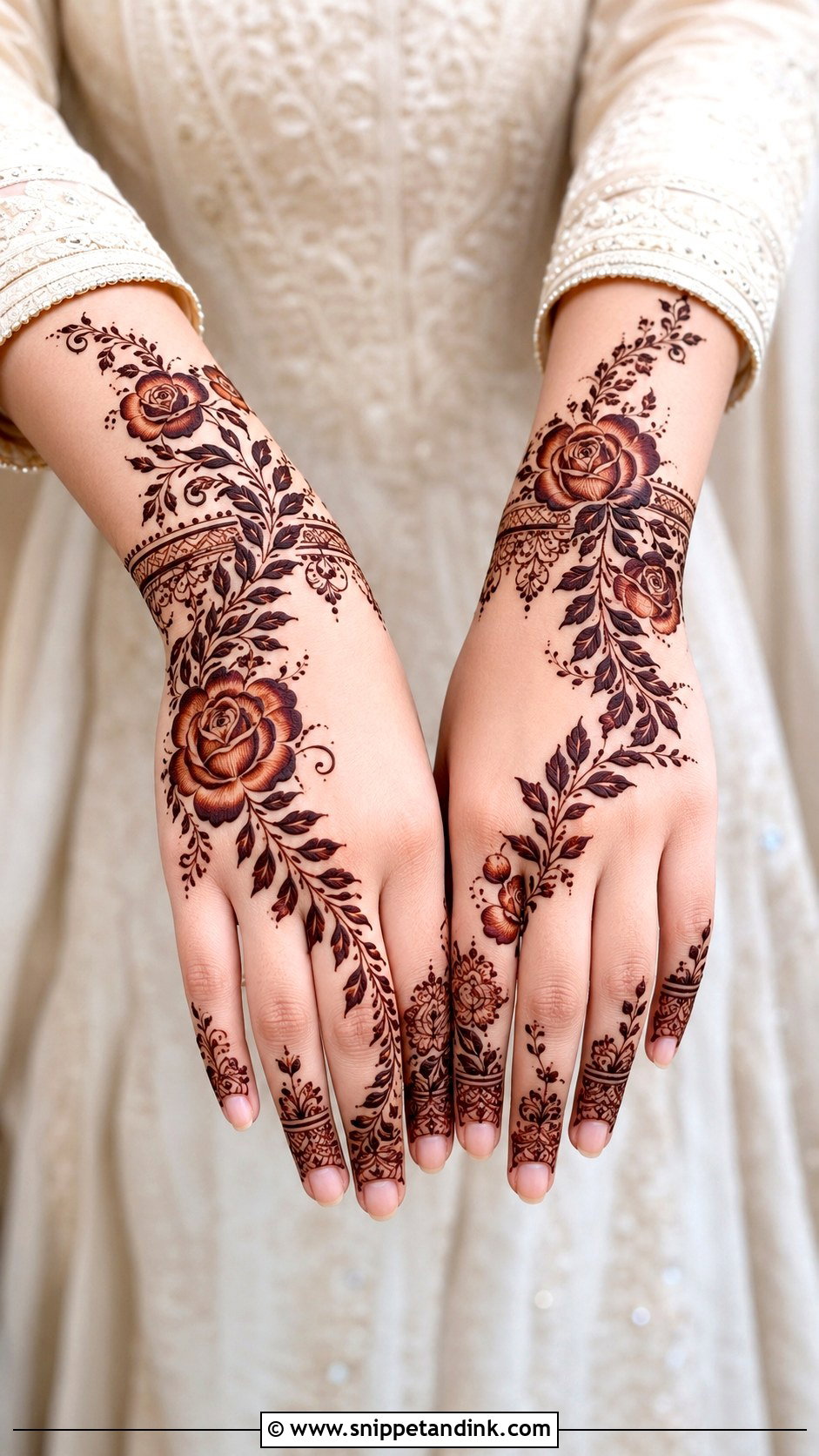
A single large rose in the middle of the back hand, with vines reaching for the fingers and wrist, is one of my most requested engagement layouts. Smaller roses can also run in a diagonal trail for an Arabic feel. Shading is what makes a henna rose work. I build the petals with graded fill so they look layered once the stain develops, and keep the outline crisp with open skin around it, which is exactly what you want in ring close-ups.
19. Paisley Engagement Mehndi Design
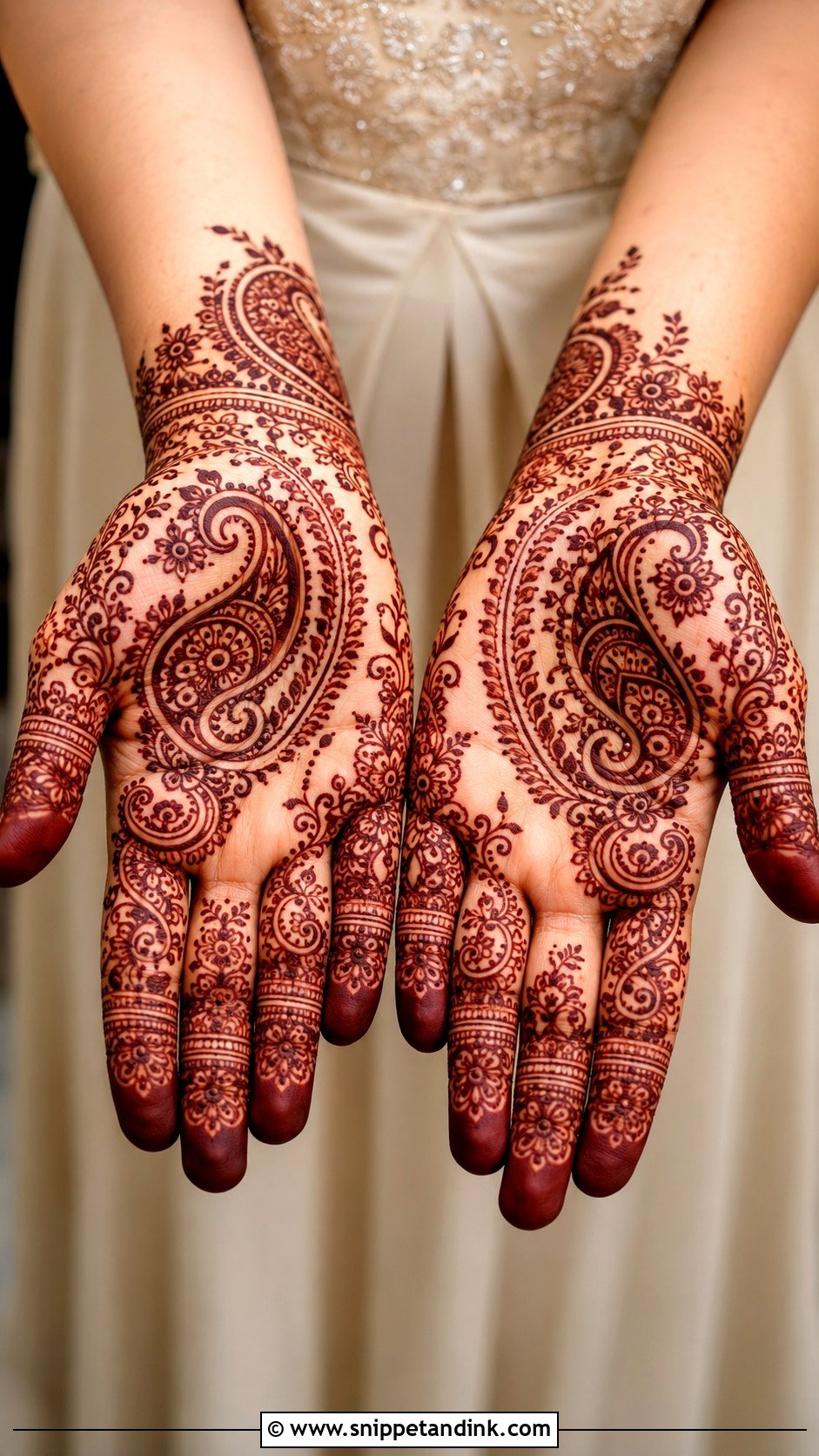
Paisleys bring tradition without full bridal density. They can be scattered across the palm, run as a back-hand trail or climb from wrist to forearm, paired with florals, swirls, leaves and fine mesh. I like one large paisley as the focal point with smaller motifs supporting it. Their curved shape also softens a wider hand, which makes them a good choice if you feel your hands look broad in photos.

20. Peacock Engagement Mehndi Design
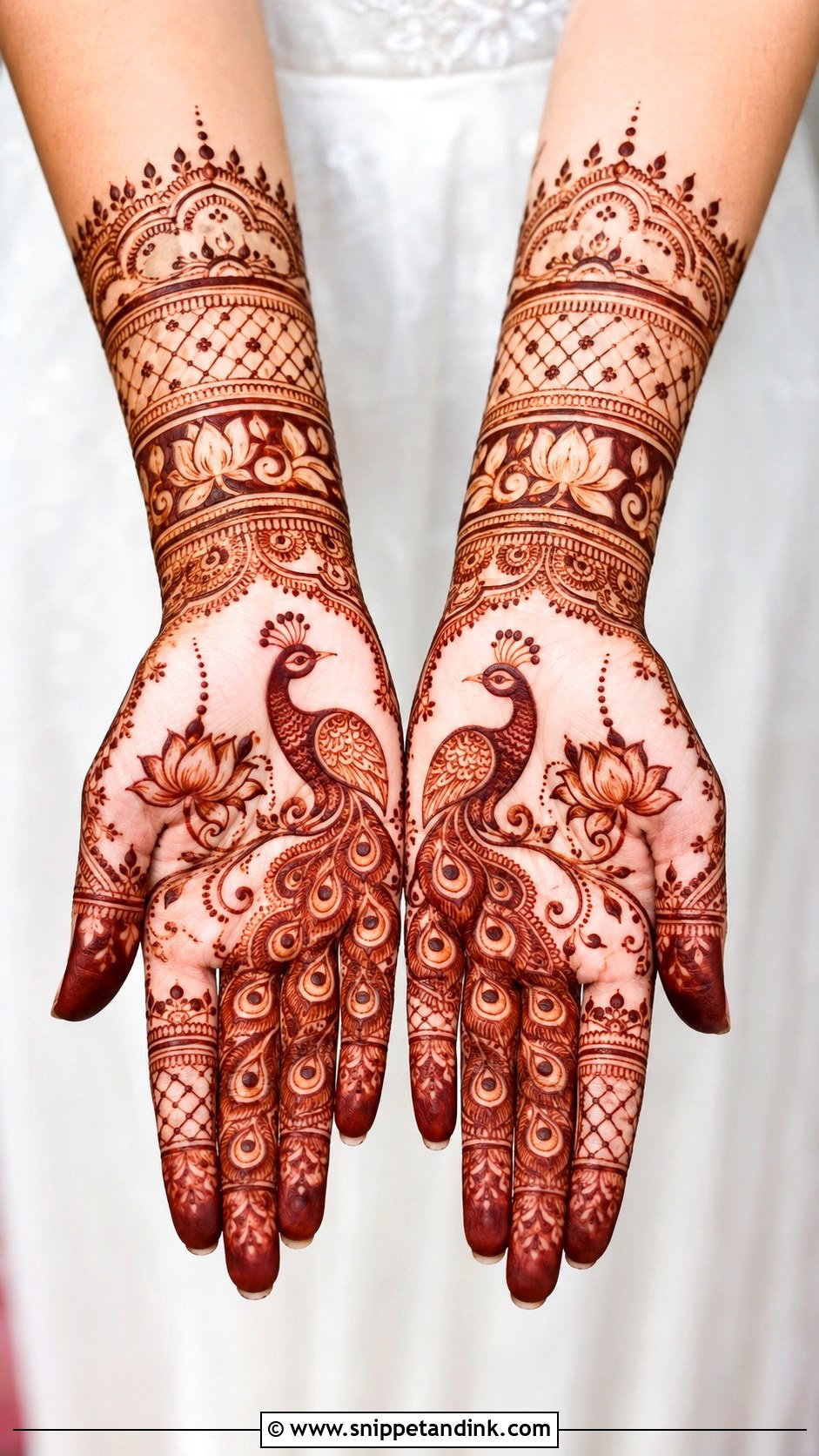
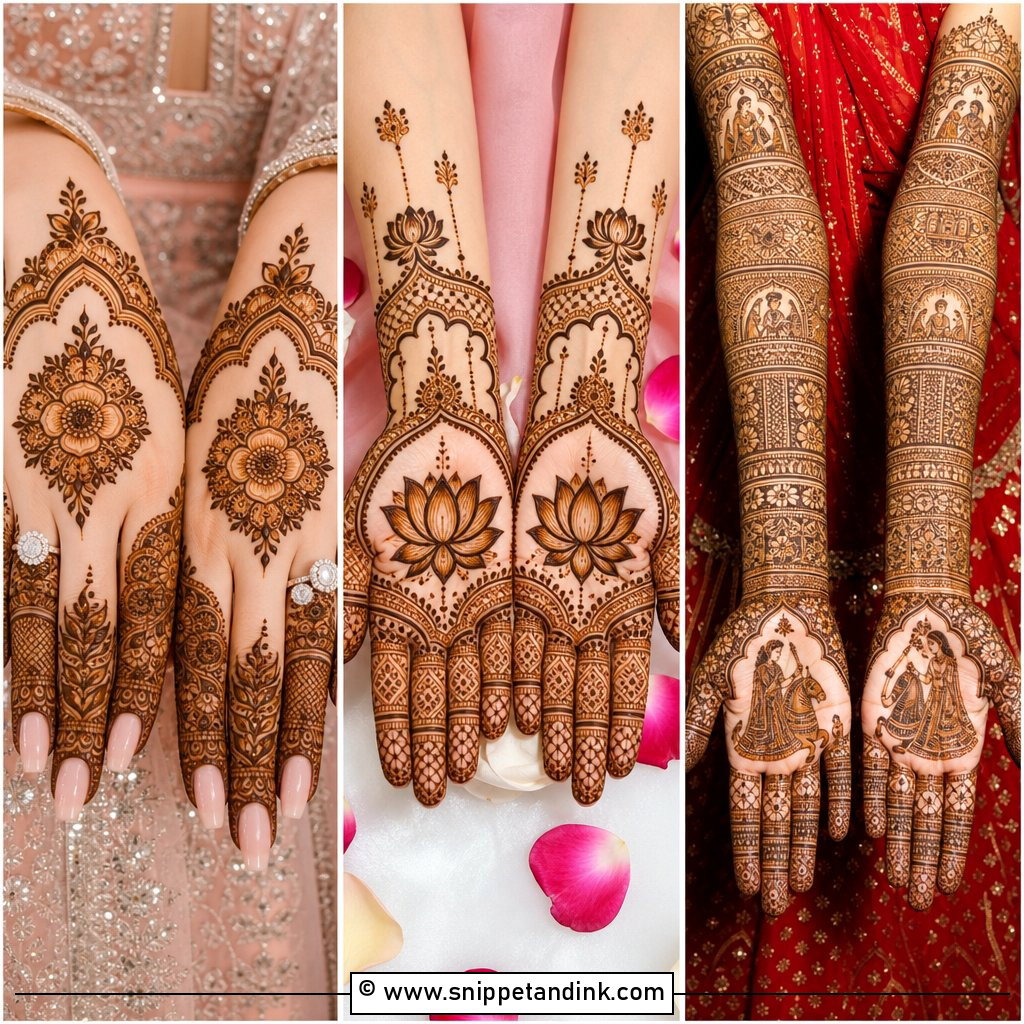
Peacock engagement mehndi design has a regal, festive feel, and the bird’s curves suit fine linework. I place it on the palm, the lower back hand or the forearm. The trick is to keep the body of the peacock fairly clear and put the detail into the feathers; filling the body as well turns the whole bird into one dark shape after it stains. Paisleys, lotus flowers or jaali panels complete it, and it suits silk, brocade and jewel-toned outfits.
21. Lotus Engagement Mehndi Design
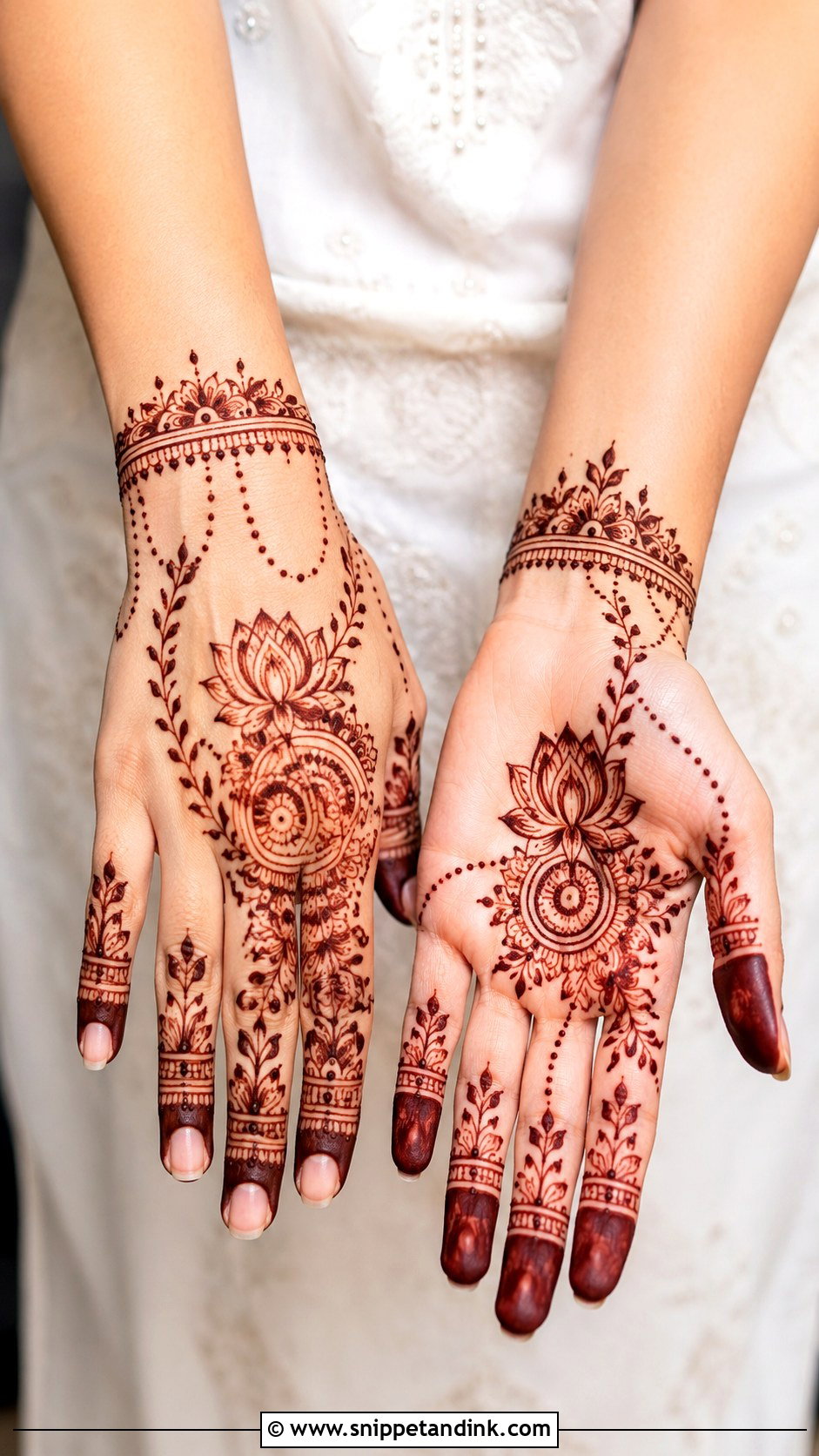
The lotus is a quiet, symbolic motif that works as a palm center, a wrist cuff detail or a back-hand focal point. For a soft look, I use one large lotus with leafy accents and dotted borders; for something richer, I combine it with mandalas, paisleys and mesh panels. It pairs well with traditional outfits and temple-style jewelry. Petal lines need to stay thin, because the gaps between petals close up a little as the stain darkens.
22. Jewelry Engagement Mehndi Design
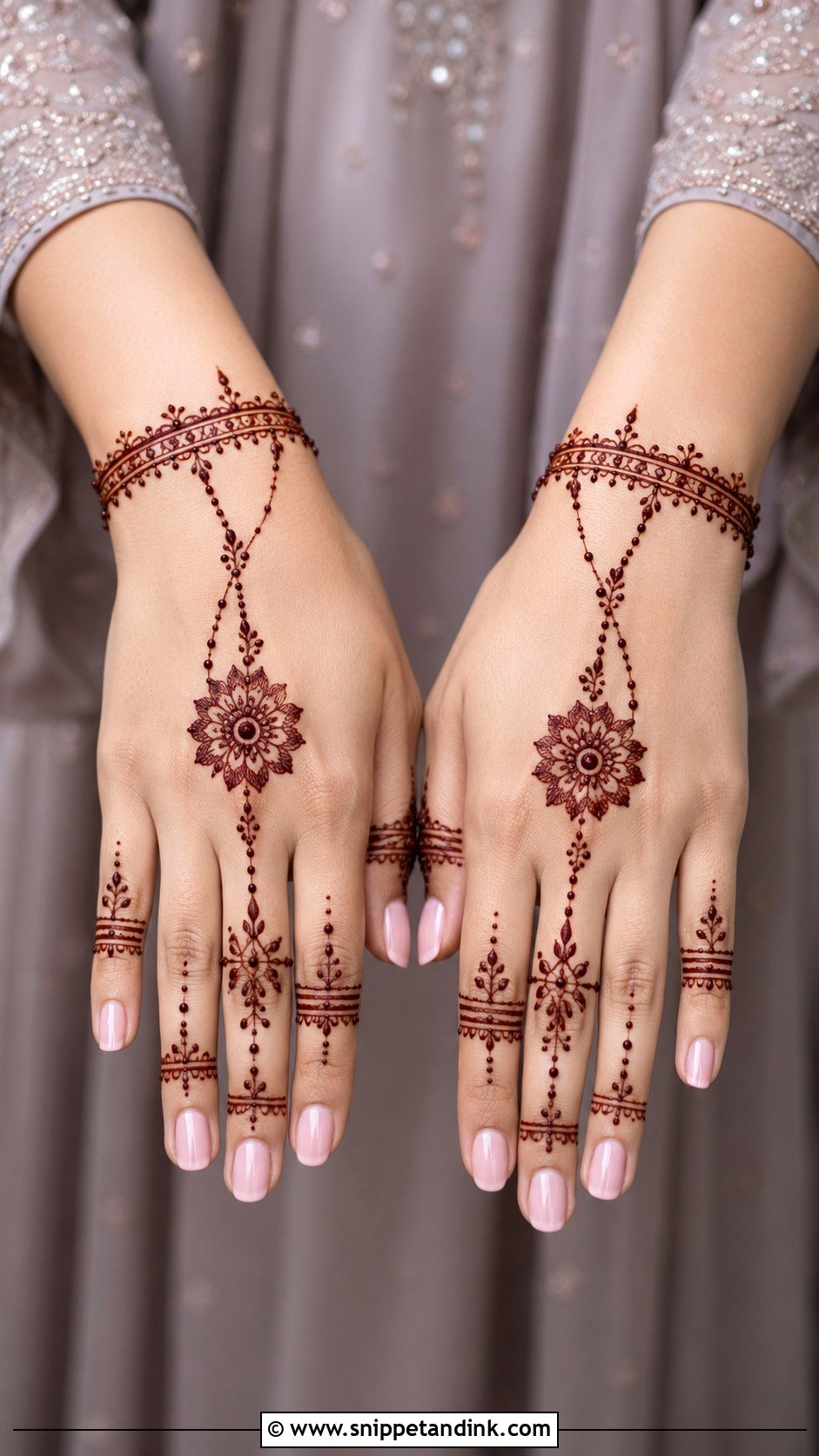
Jewelry mehndi uses henna to draw ornaments: a bracelet, a ring chain, a haath phool, finger rings or stacked wrist bands. Because the design is centered on the ring area, it naturally points the eye to the engagement ring. I keep it on the back hand and draw the chains with thin, even lines and small dots that mimic pearls. Symmetry is non-negotiable here; a drawn bracelet that tilts reads as a mistake, not a style choice.
23. Bracelet Engagement Mehndi Design
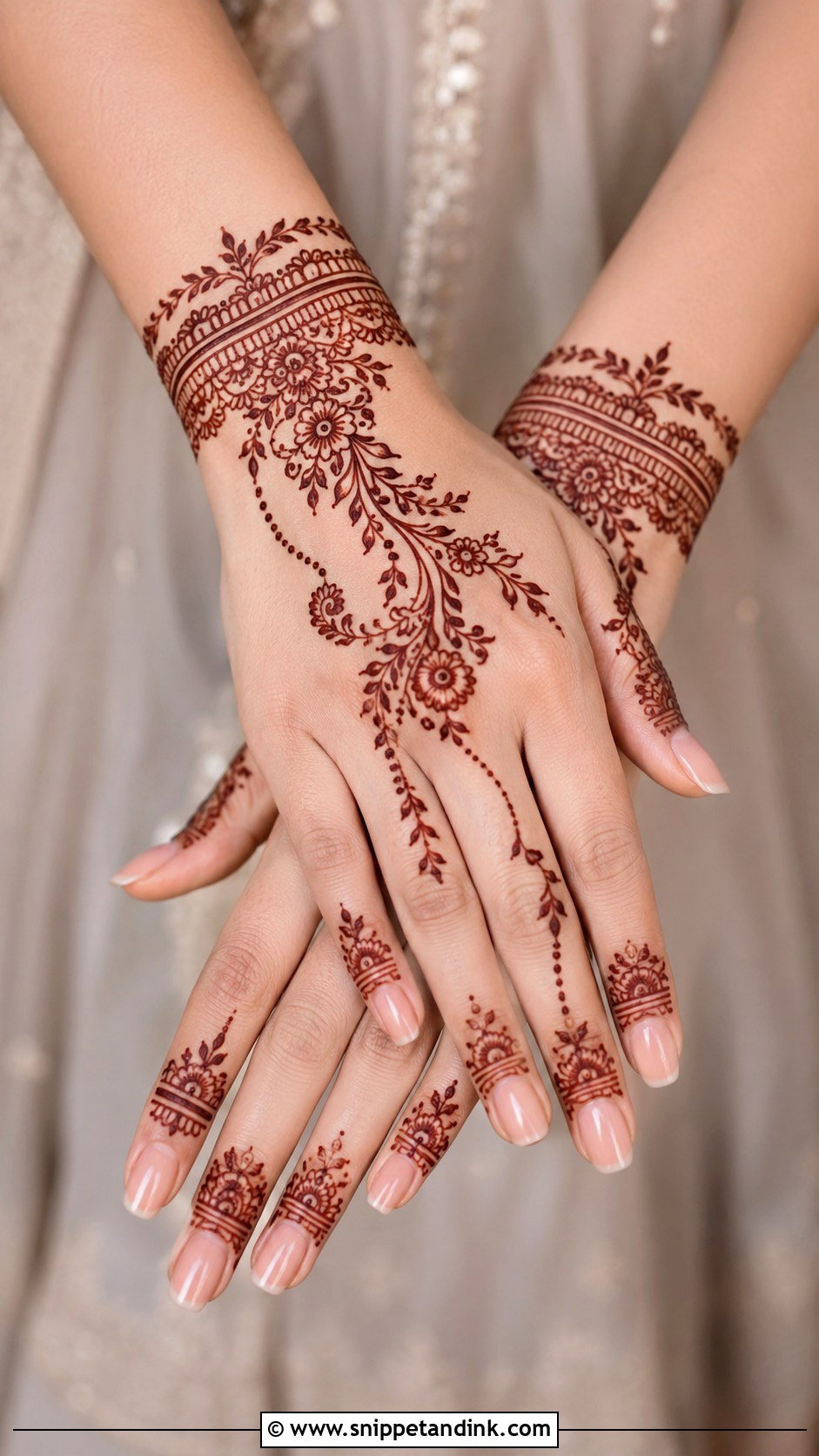
A bracelet layout concentrates on the wrist and lower back hand, building a cuff from bands, florals, leaves, dots and small geometric borders. Some versions send a fine chain up to a finger; others stop at the wrist for a cleaner finish. It pairs well with bangles or a watch and still shows under long sleeves. I add a light finger accent or a tiny motif higher on the back hand so the design isn’t bottom-heavy.
24. Jaali Engagement Mehndi Design
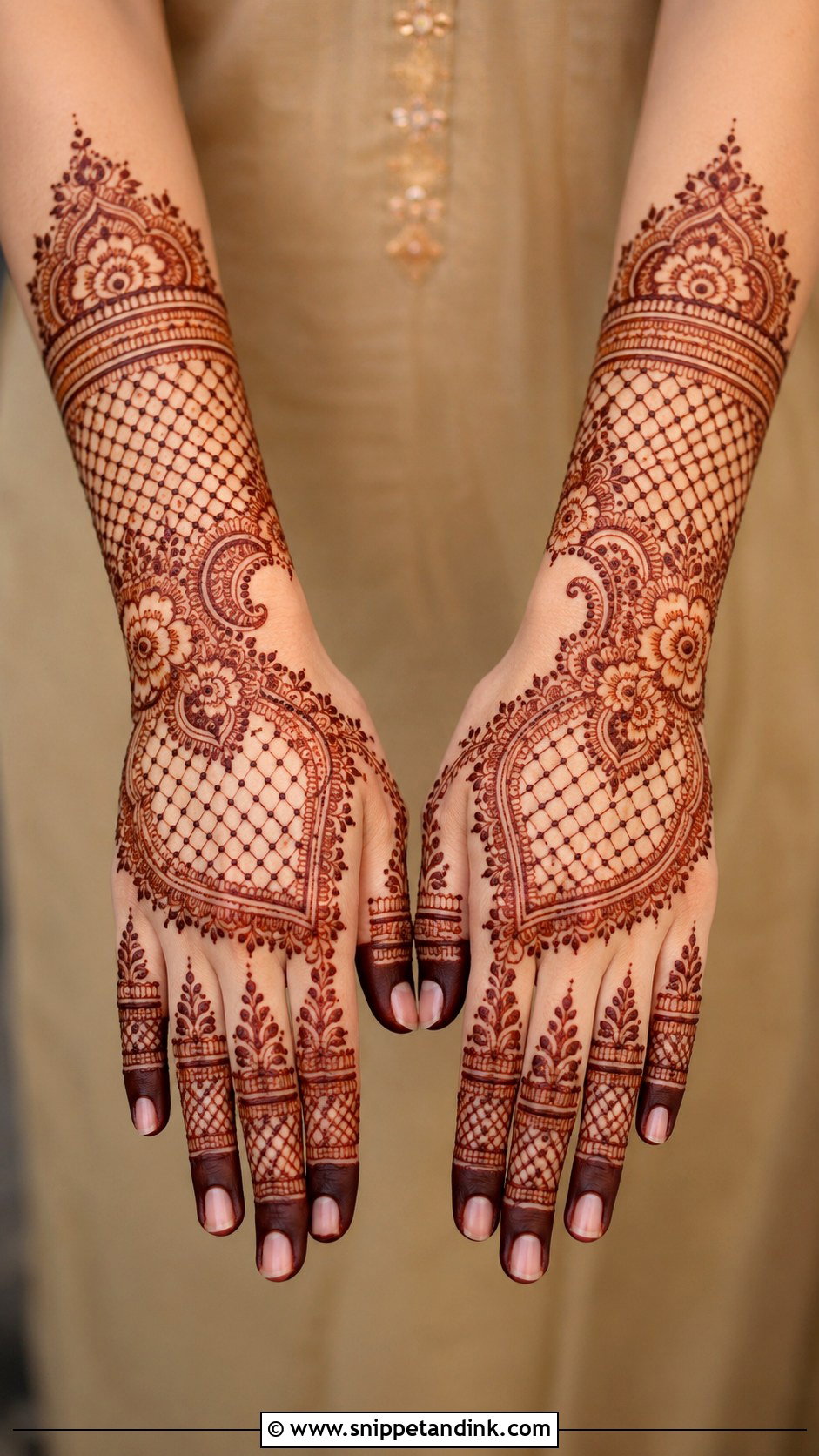
Jaali is net-like mesh, and it adds texture fast. I use it on fingers, back hands, palms or wrist panels, alongside florals, mandalas or paisleys. For an engagement I fill selected areas rather than the whole hand, which keeps it from looking busy. A diagonal floral trail with jaali-filled spaces is a favorite of mine for back hands. The whole effect depends on even spacing: mesh lines drawn at uneven gaps look messy, and once the stain darkens there’s no hiding them.


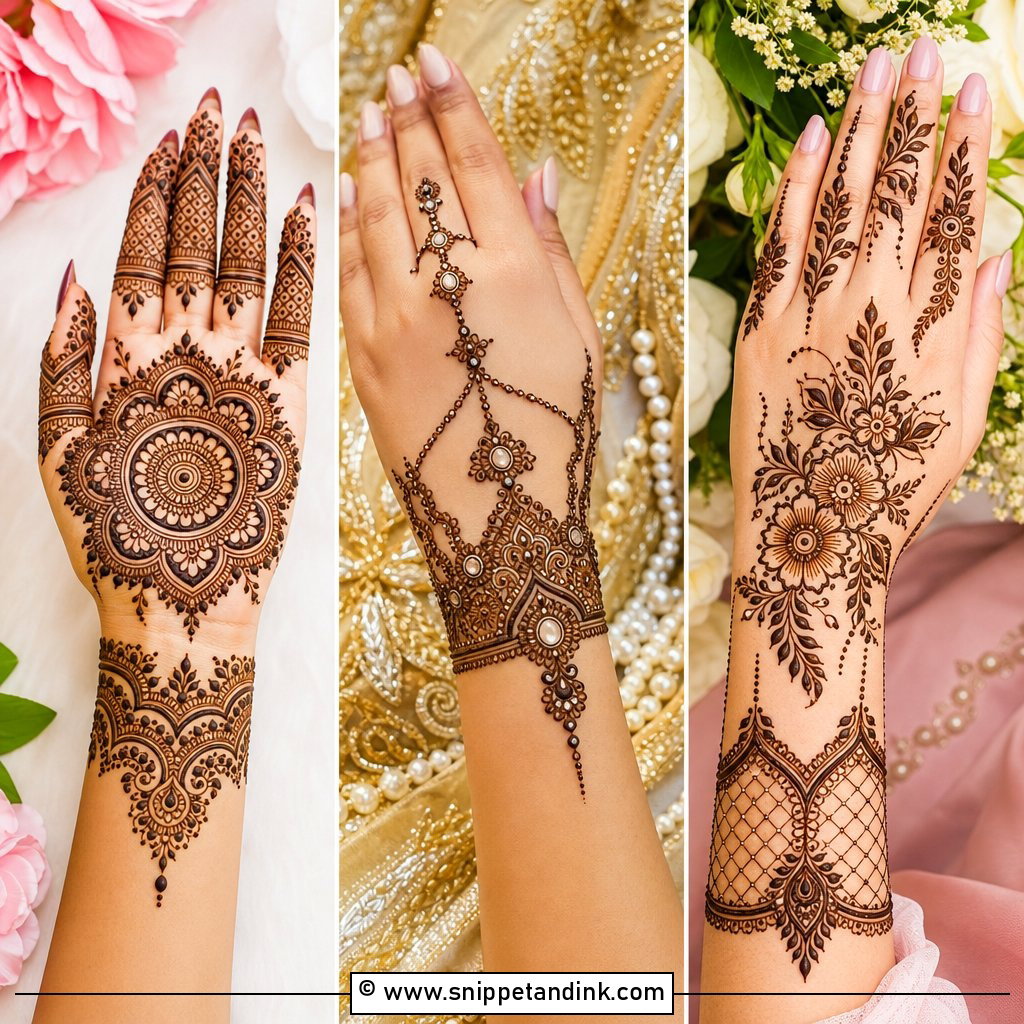
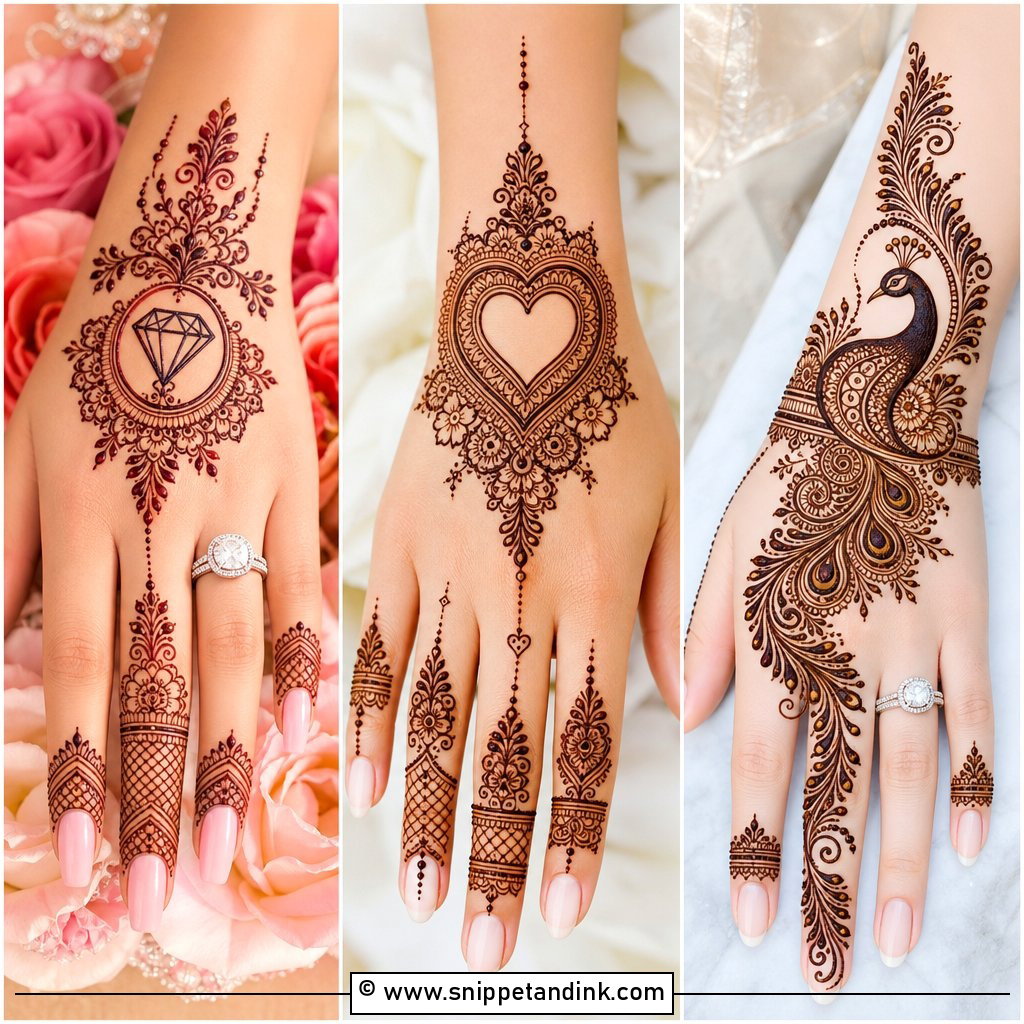
25. Finger Engagement Mehndi Design
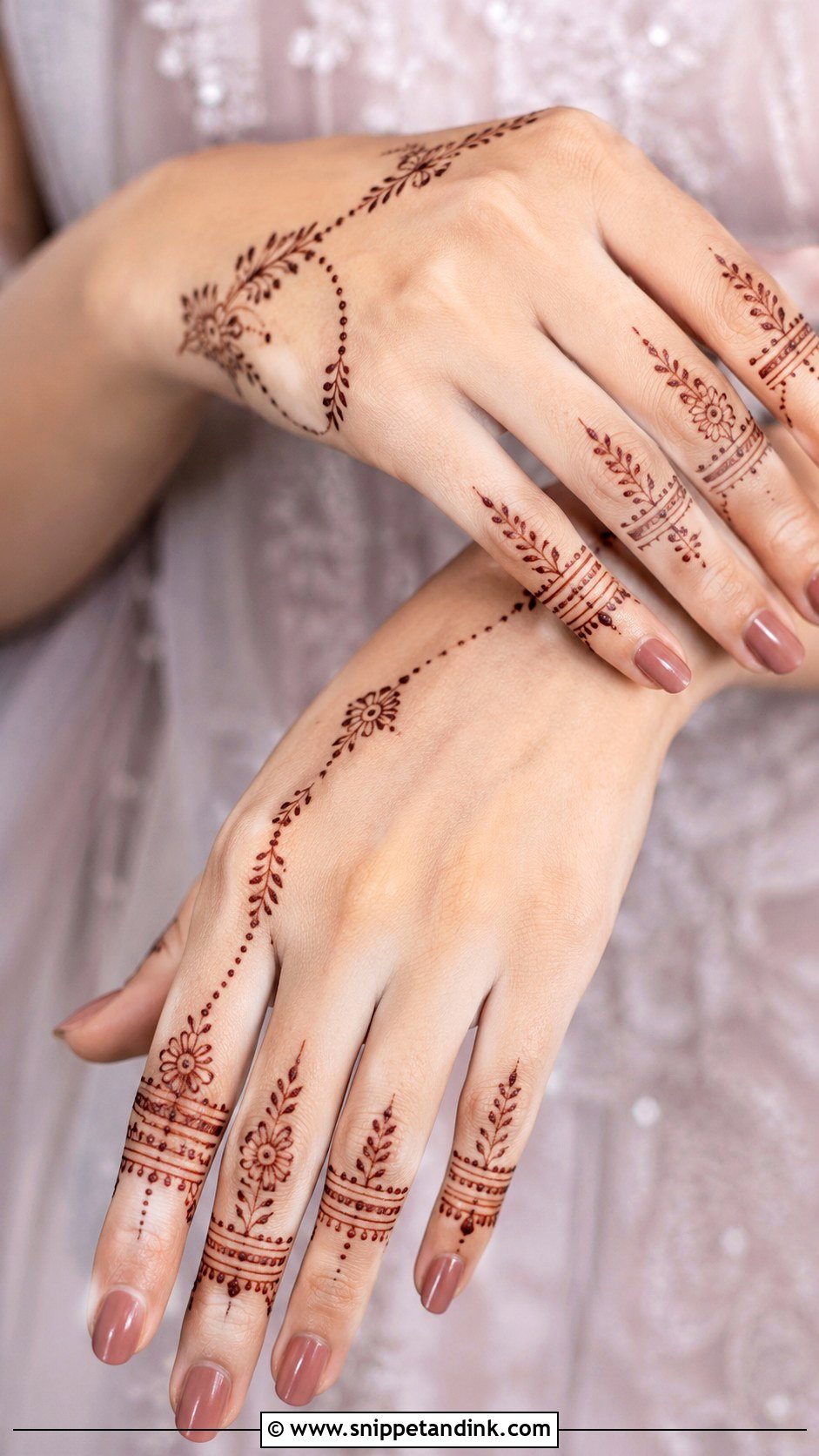
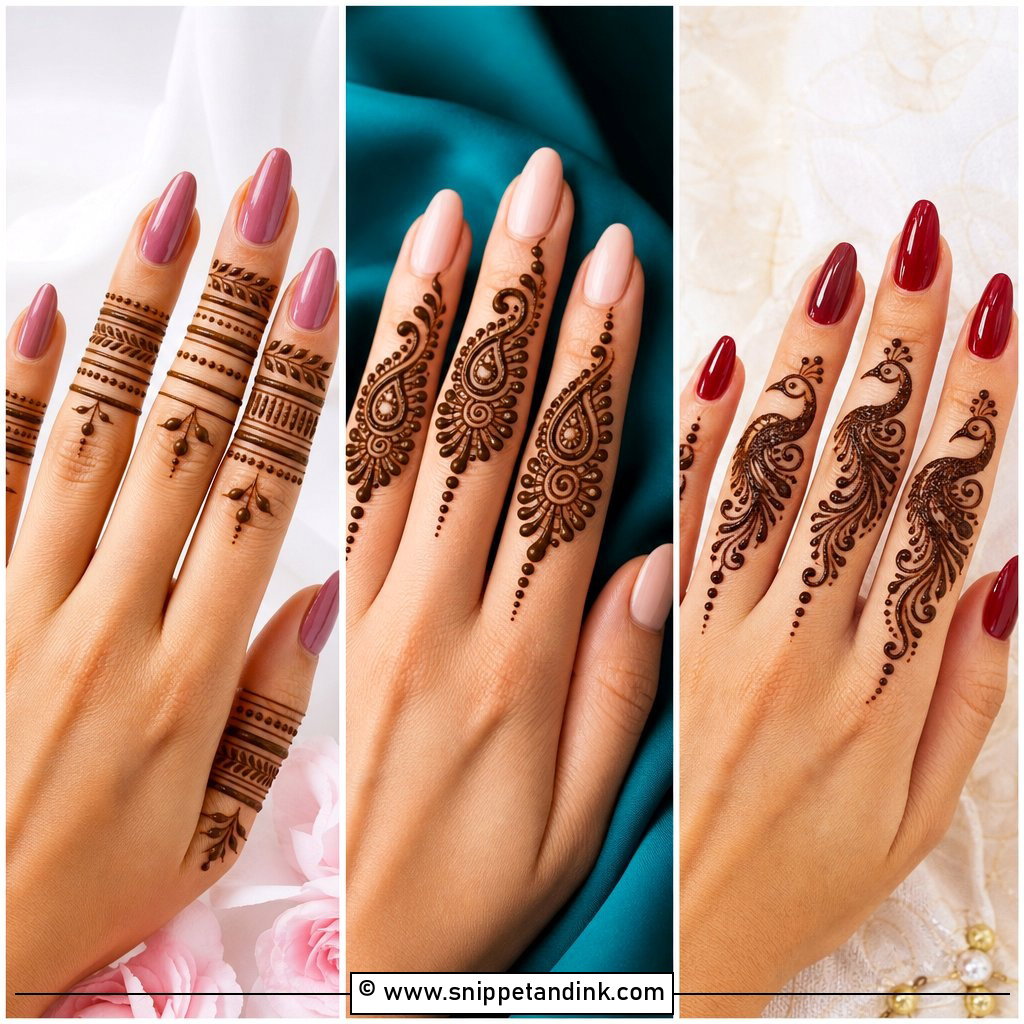
Finger-focused designs keep the hand light and let the ring stand out. Bands, leaves, dots, tiny florals or geometric lines go on the fingers while the back hand stays mostly open. I either decorate all fingers evenly or give the ring finger slightly more detail. Fingertips stain dark and fade fastest, because they’re washed and used constantly, so I advise applying these within a day or two of the ceremony. A tiny wrist band balances the look.
26. Palm Engagement Mehndi Design
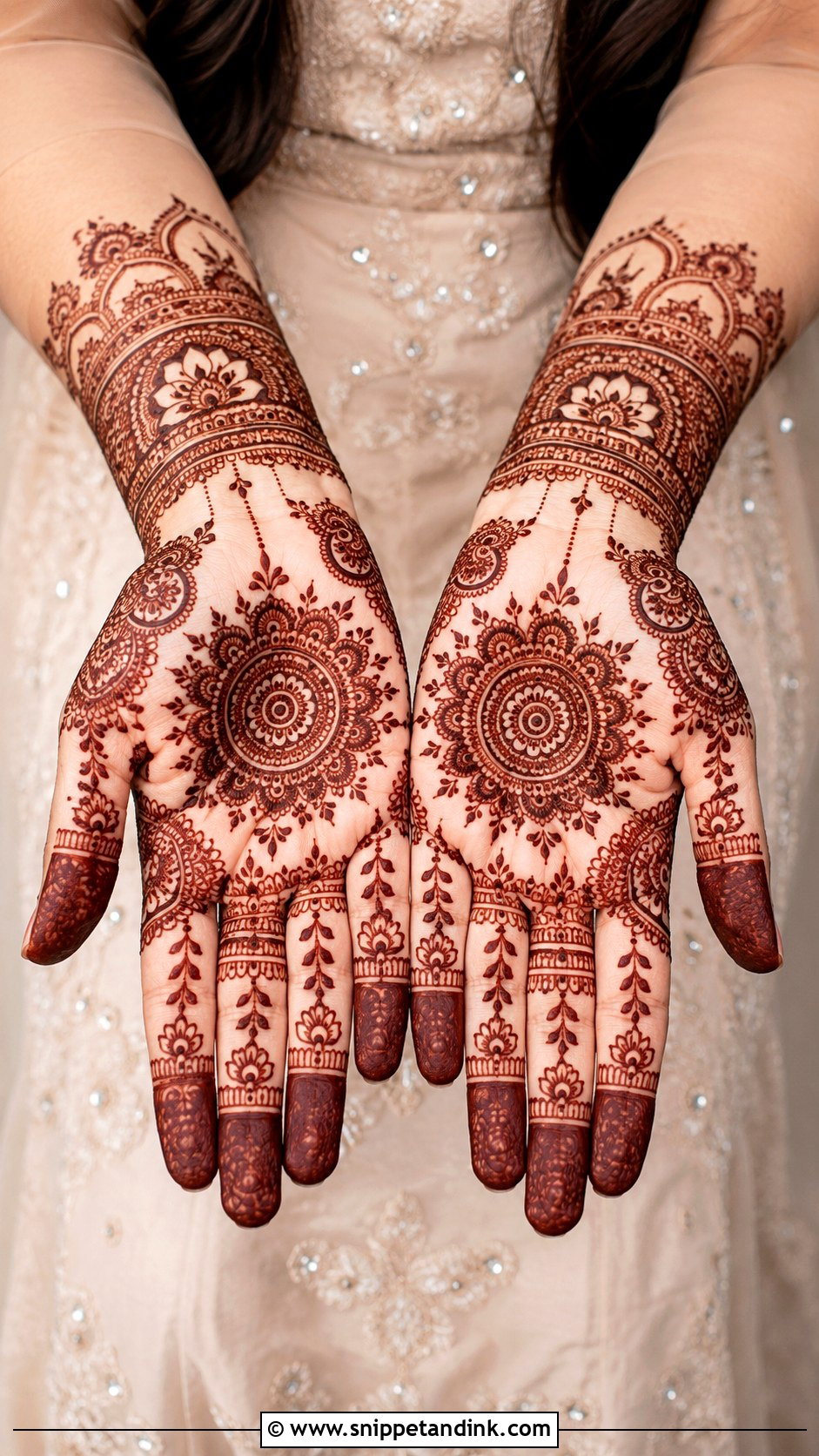
If a dark stain matters most to you, start with the palm. Palm skin takes the color deeper than anywhere else, so even a simple layout looks bold. Mandalas, paisleys, lotus motifs, heart frames and symmetrical florals all work. I leave some clean skin around the main motif and fill the fingers with small bands, dots and leafy details. It shines in ritual photos and blessing moments where both palms are shown together.
27. Half Hand Engagement Mehndi Design
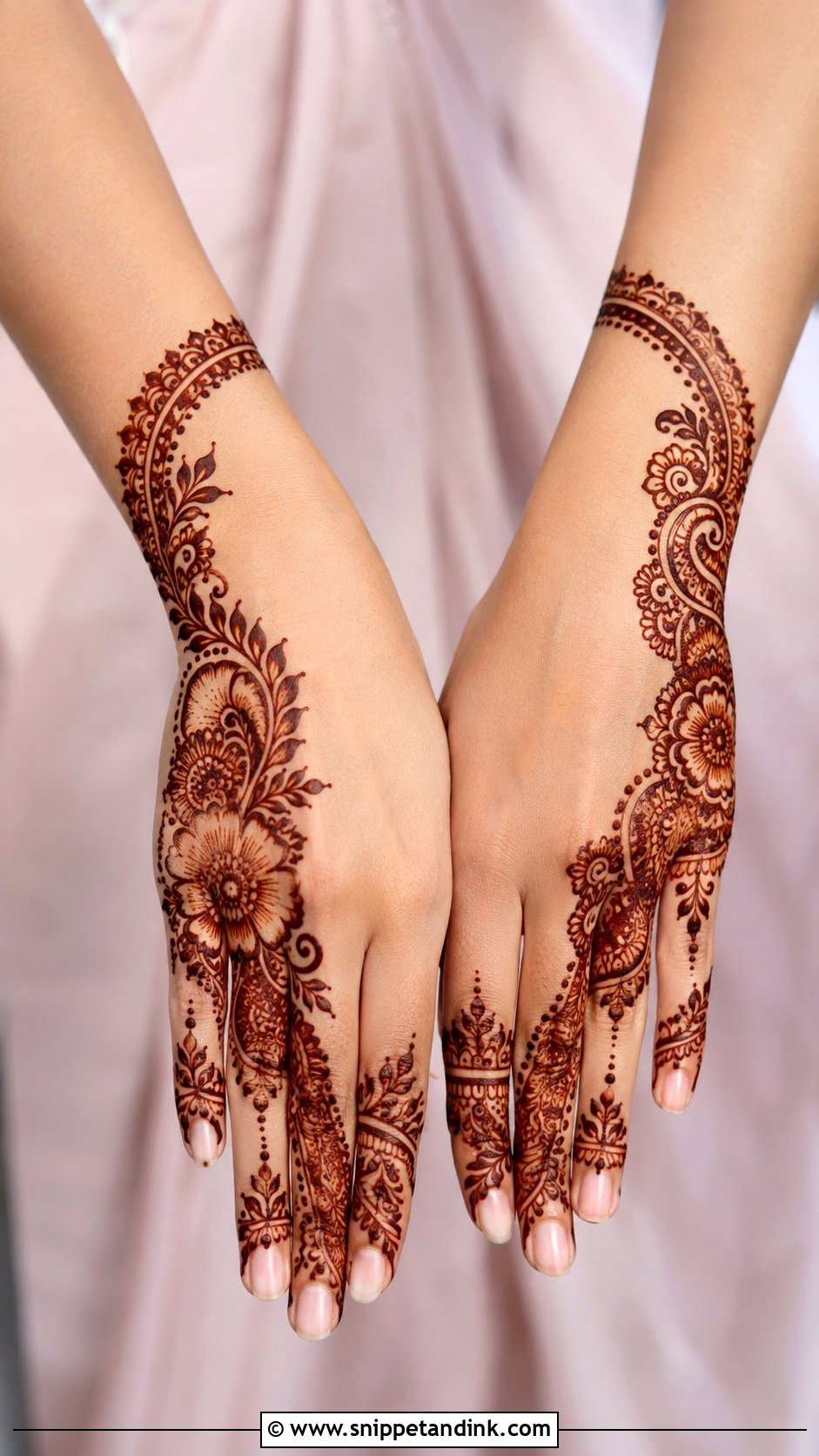
Half-hand designs are the practical option when time is short. I might cover the fingers and upper palm, the wrist and lower palm, or one side of the back hand. Application is quicker, and a strong composition still makes it look complete: a bold floral trail, a side paisley layout or a bracelet with finger details. The empty half has to look deliberate. I always end the pattern with a clean edge, never a half-finished vine trailing into bare skin.
28. Wrist To Forearm Engagement Mehndi Design
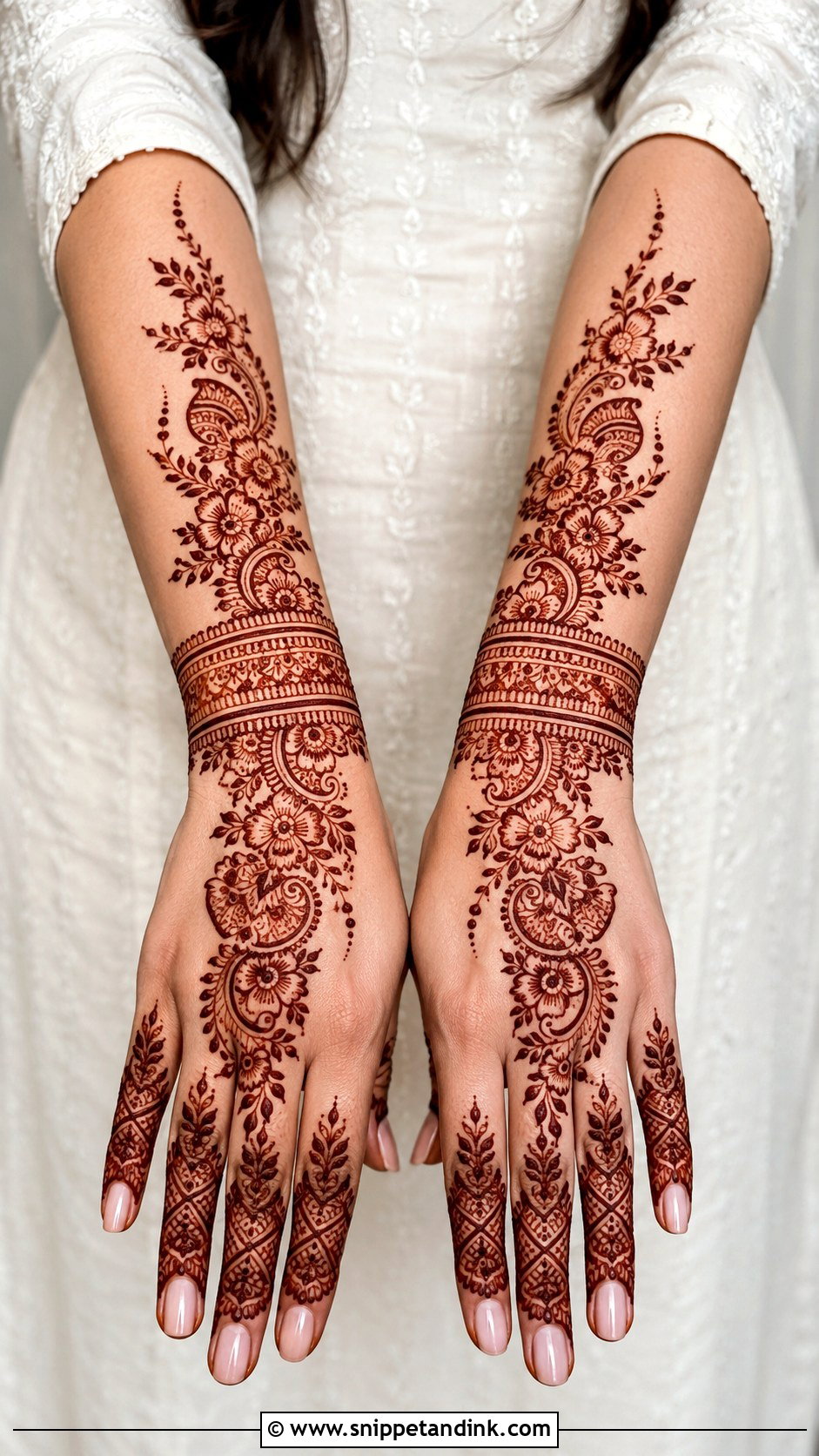
A wrist-to-forearm extension adds drama while keeping the hand graceful. The pattern starts at the wrist and climbs with florals, paisleys, mandalas, vines or stacked bracelet bands. It suits short sleeves, sleeveless outfits and bridal bangles. For an engagement the forearm doesn’t need to be dense; a slim vertical trail can look just as elegant. Forearm skin stains lighter than hands, so expect a softer orange-brown there and plan the bolder detail lower down.
29. Gulf Engagement Mehndi Design
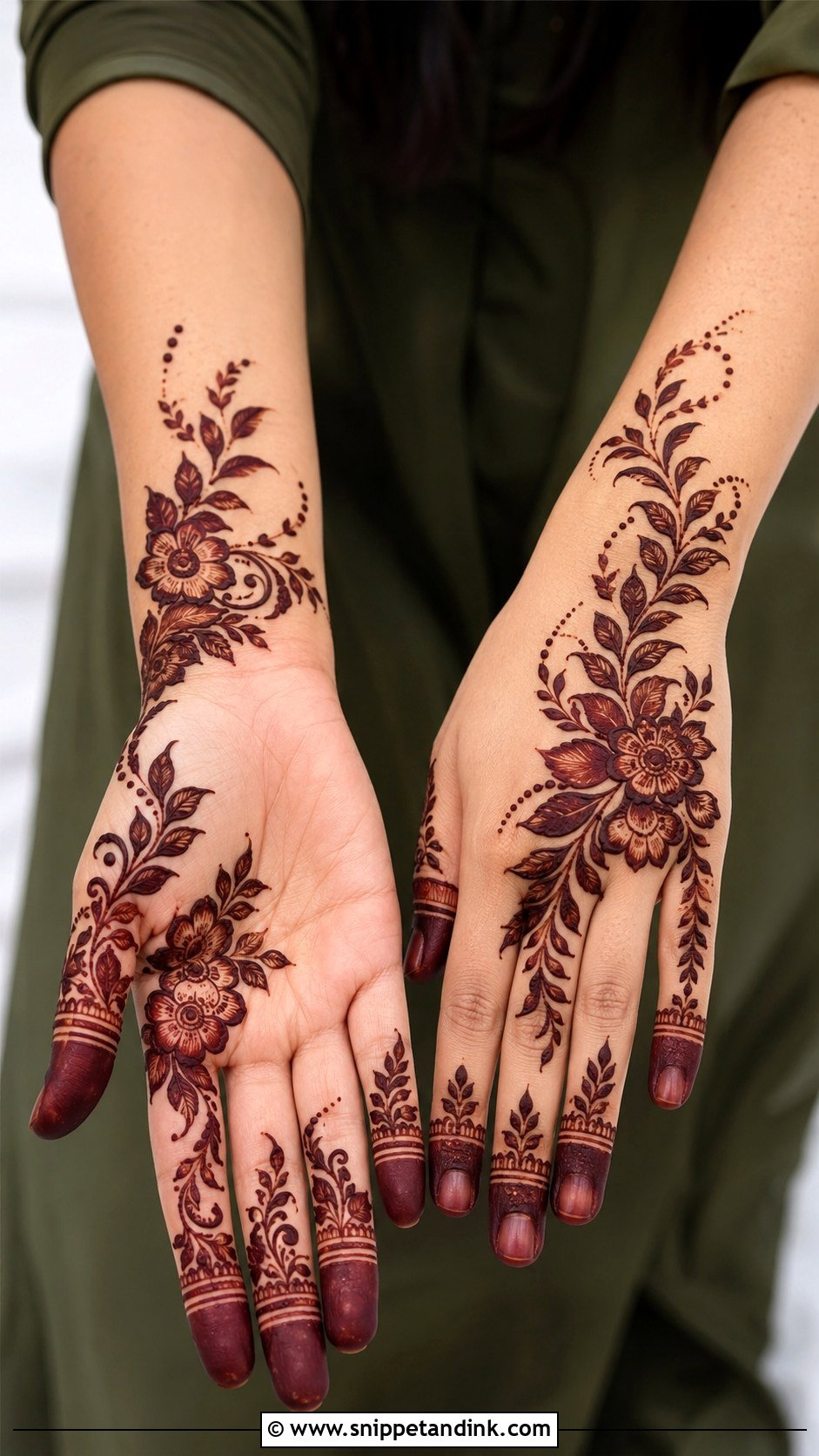
Gulf or Khaleeji-style henna uses bold florals, flowing vines, thick outlines and generous open space. It’s less dense than Indian mehndi but more dramatic than minimal designs. The thicker lines are applied with a slightly wider cone tip, and they stain very evenly, which is why this style photographs so cleanly. It works on palms and back hands. For an engagement I run it on a diagonal or side-flowing layout that leaves the ring area open.
30. Moroccan Engagement Mehndi Design
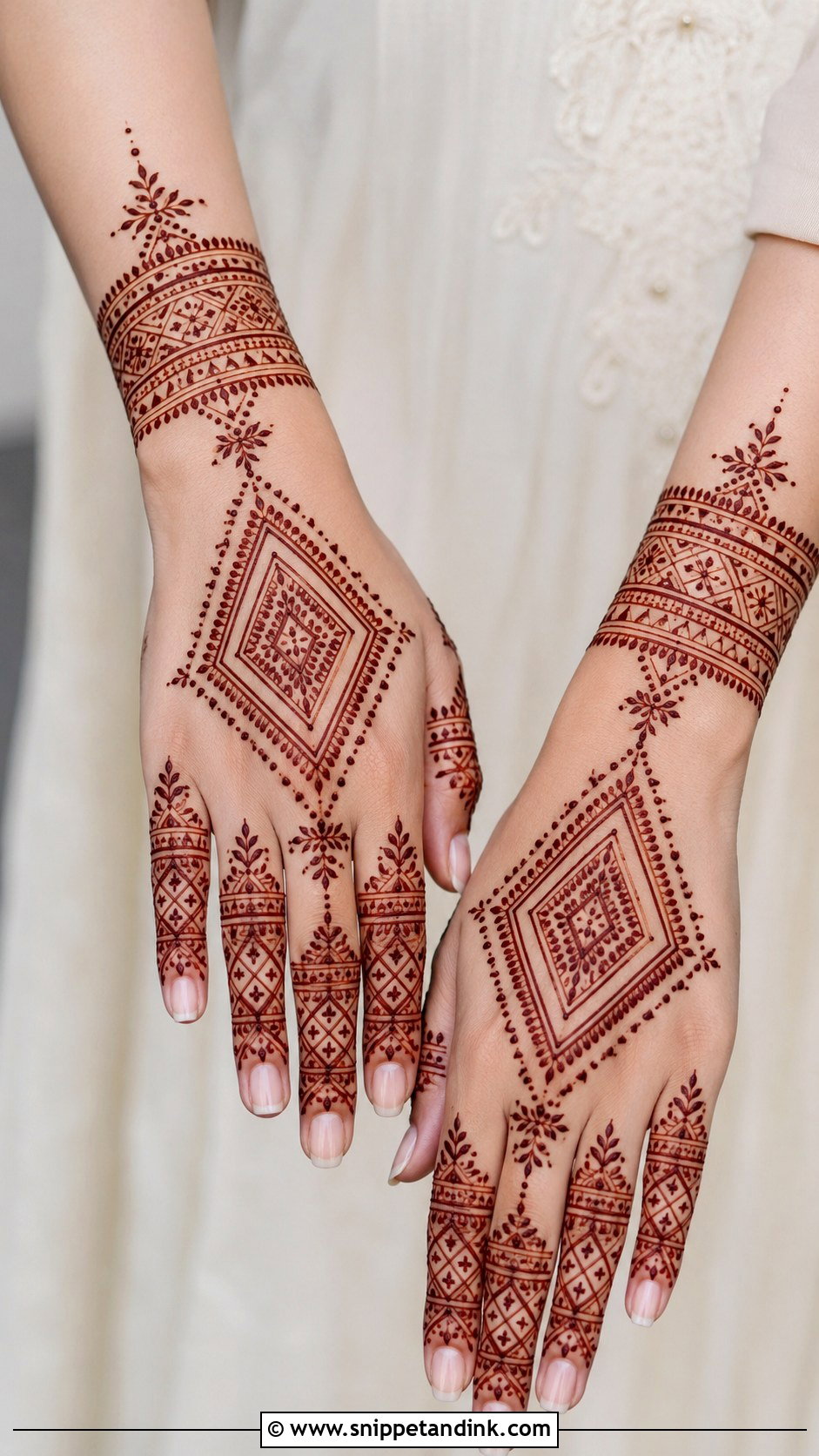
Moroccan-inspired designs swap florals for geometry: diamonds, triangles, lines, grids, dots and strict symmetry. They look modern but carry real cultural depth. On the back hand and fingers the structure follows the knuckles and the length of each finger. Straight lines are less forgiving than curves, so I map key points with tiny dots first and connect them. A few small leaves soften the geometry for a fusion finish.
31. Pakistani Engagement Mehndi Design
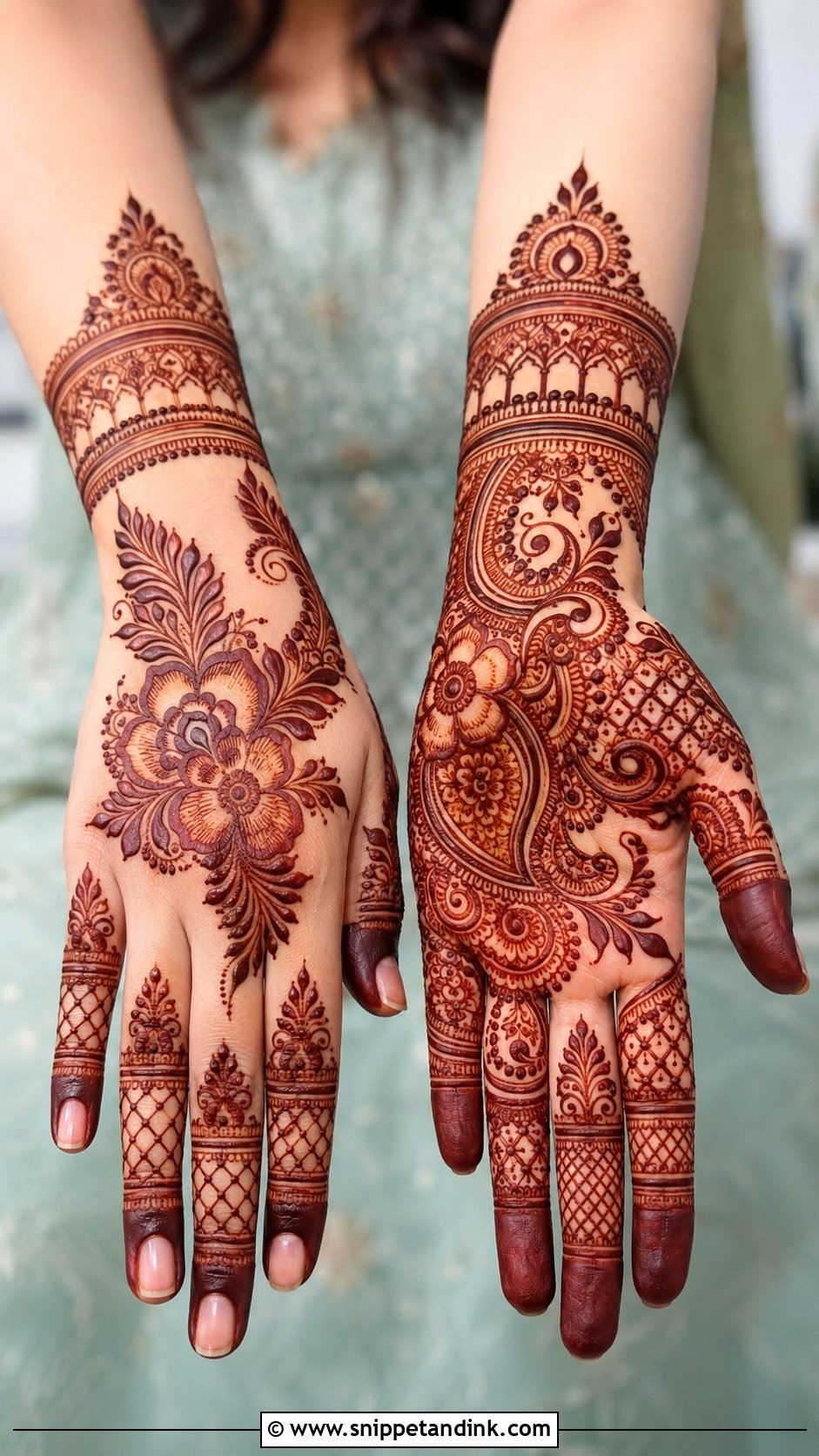
Pakistani engagement mehndi design blends fine Indian-style detail with Arabic flow: florals, paisleys, shaded leaves, domes, jaali and bracelet borders. It’s rich but graceful. I scale it for the person in the chair: fuller palms and detailed back hands for the bride, a back-hand design with light finger work for close family. It looks right at home with shararas, ghararas and embroidered suits.
32. Roka Engagement Mehndi Design
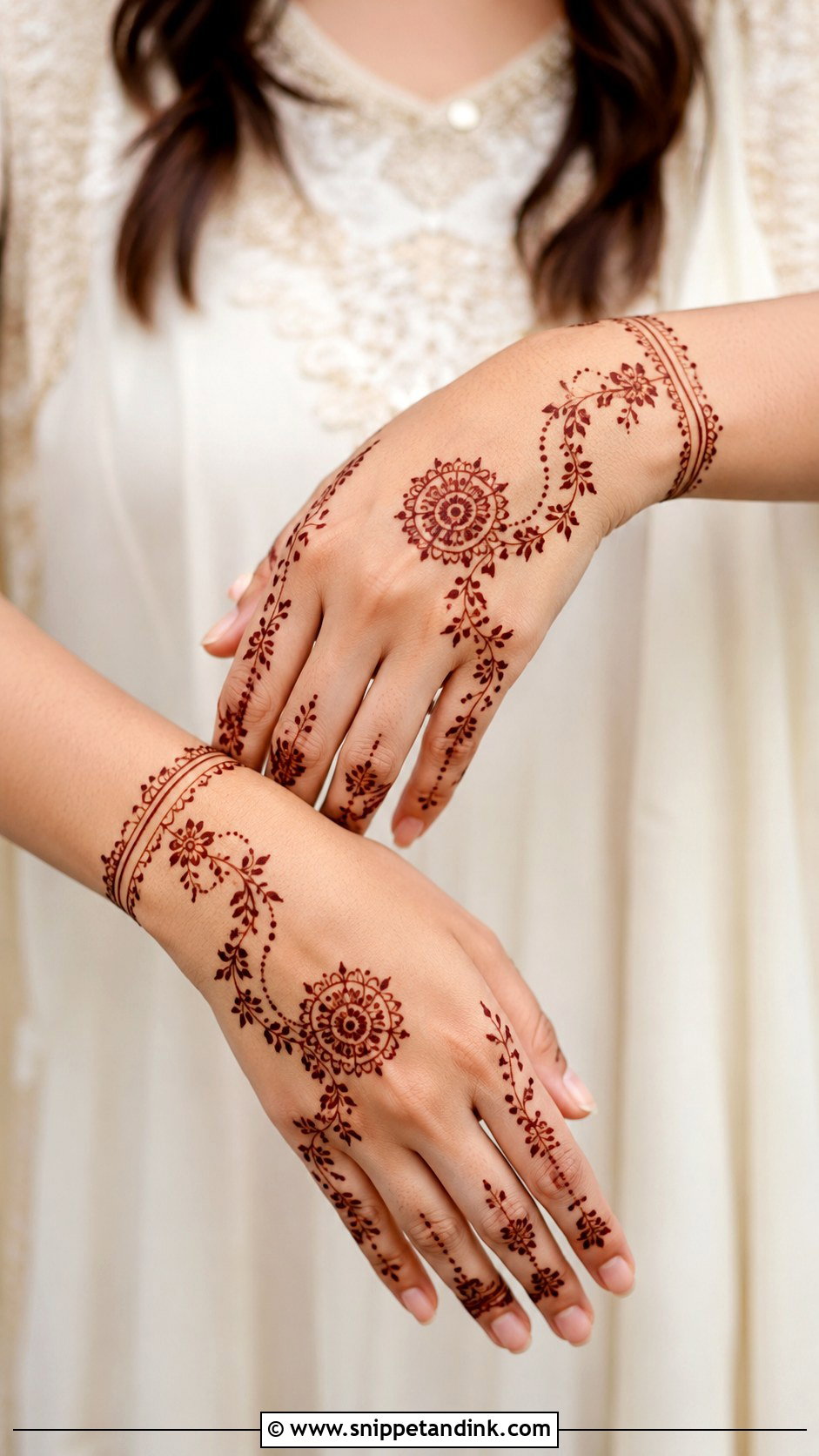
Roka ceremonies are often smaller and arranged at short notice, so the mehndi tends to be light and quick. Back-hand florals, a palm mandala, a bracelet pattern or minimal finger work all suit it. If the wedding is still months away, I’d avoid anything that looks like full bridal mehndi. A diagonal Arabic trail or small palm mandala, plus initials or a tiny ring motif, gives a personal touch and can be finished in well under an hour.
33. Engagement Mehndi Design For Bride
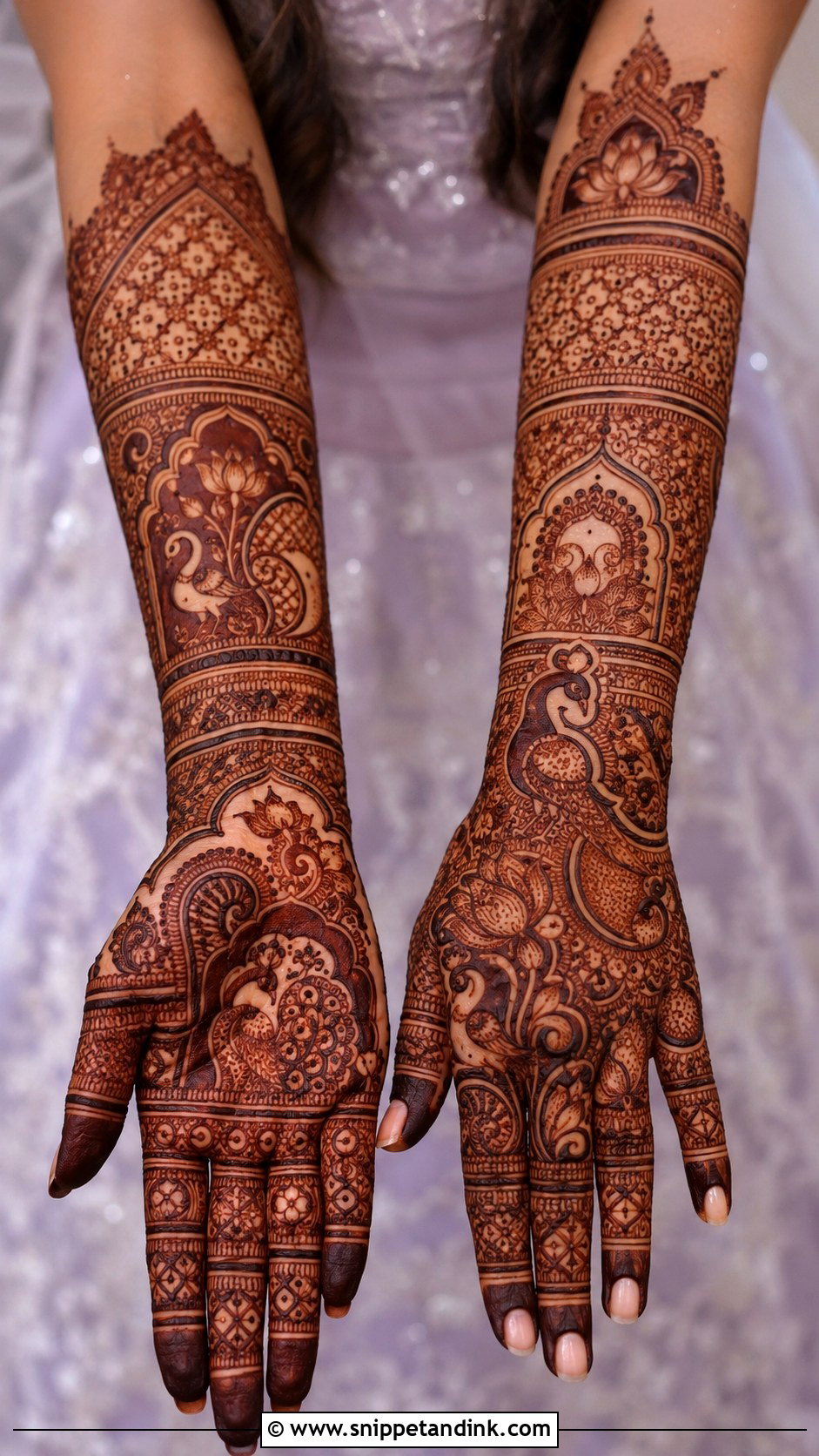
For the bride herself, the design should be matched to the ceremony outfit before anything else. Full-hand Indian patterns, Arabic back-hand trails, fusion, jewelry layouts and minimal designs can all work. With a heavy outfit, I go detailed with traditional motifs; with a light or pastel one, open florals and negative space. Whatever you choose, plan around the ring shots: keep the ring finger neat and the back hand balanced, since that is the photo everyone will ask to see.
34. Engagement Mehndi Design For Short Hands
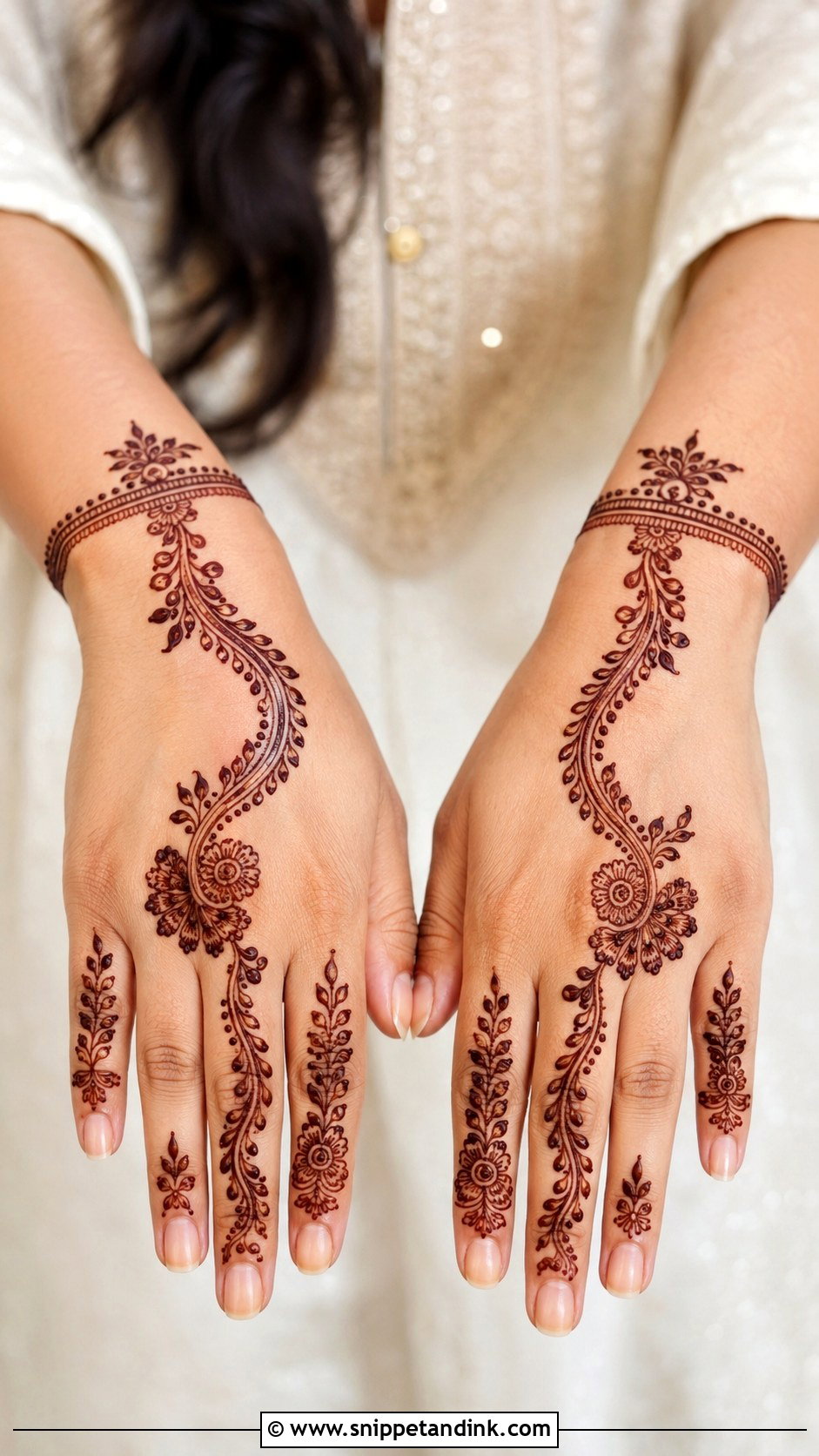
Shorter hands need length and breathing room. Vertical vines, diagonal Arabic trails, slim paisleys and elongated leaves all add visual length. Large round motifs placed close to the fingers do the opposite, so I keep mandalas small or move them toward the wrist. I run the main line from the wrist toward the index or middle finger and extend the fingertip detail slightly. A clean back-hand layout with a narrow wrist band and fine finger accents keeps the hand looking balanced.
35. Engagement Mehndi Design For Long Hands
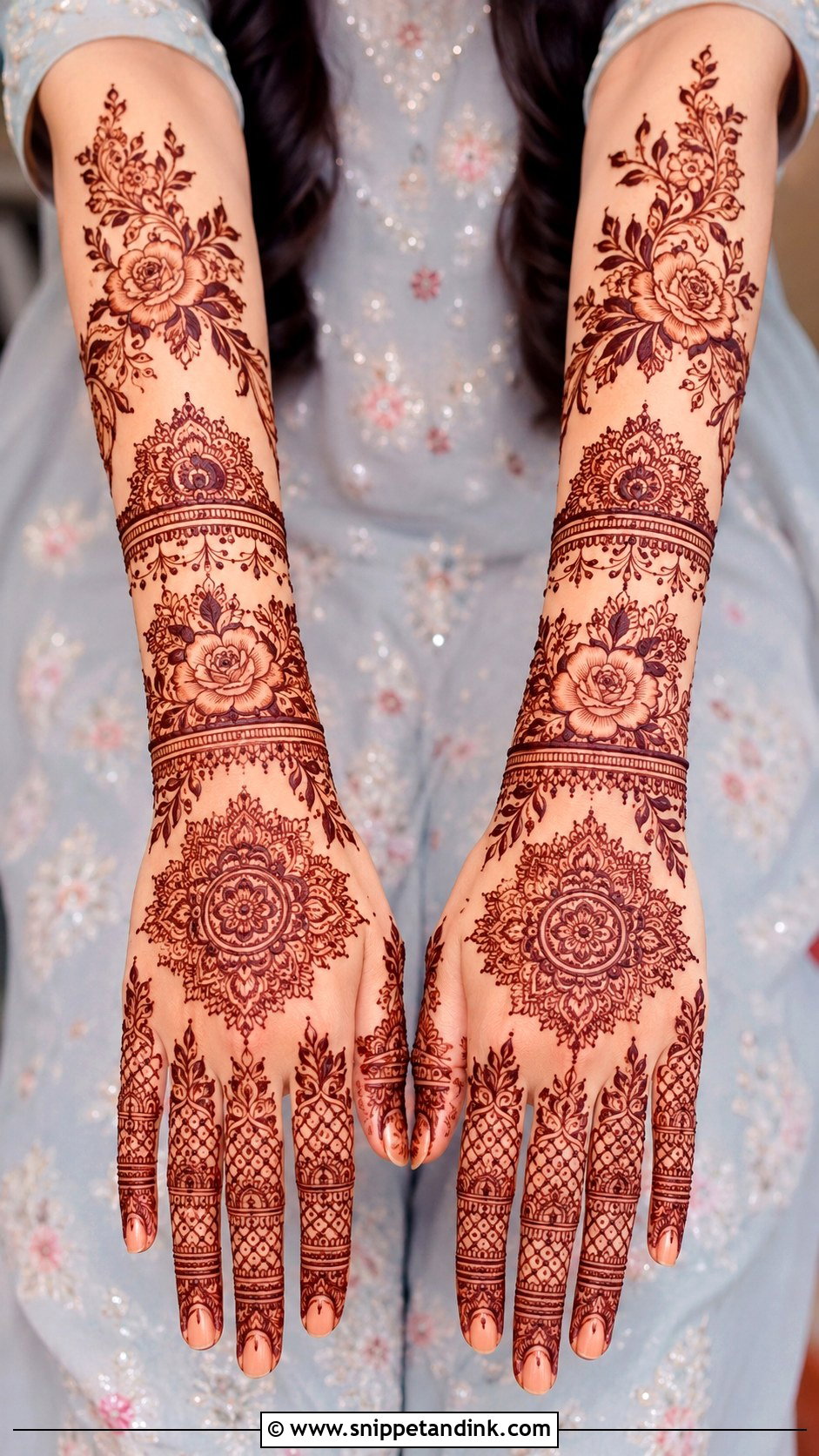
Long hands can carry fuller motifs: wide florals, layered mandalas and detailed wrist-to-forearm patterns. There’s room for the design to breathe. My concern on long hands is the opposite of short ones; an all-vertical design can make them look stretched, so I add horizontal bands or rounded motifs near the wrist and fingers for proportion. Long fingers also suit ring-style mehndi, filled tips and delicate jaali.
Scrape, Don’t Wash: The First Twenty-Four Hours
Once the paste dries, I dab on a light lemon and sugar mix to keep it stuck to the skin. When it’s time to remove it, scrape the dried paste off with a blunt edge or rub it off with your hands over a towel. Don’t rinse it away with water.
- Keep the hands dry for about 12 to 24 hours after removal; water at this stage stops the stain from darkening.
- Warmth helps. Rub your palms together or hold them near, not over, a warm stove.
- Skip hand sanitizer, chlorine and harsh soap in the first days, since they lighten the color quickly.
- Rub in a little coconut oil or balm before washing up or showering to protect the stain.
- Fingertips and palms fade first because they get the most use; expect one to three weeks of visible color in total.
Ask What Is in the Cone
Real henna paste is made from dried henna leaf powder mixed with a liquid like lemon juice or water, plus sugar and essential oils for texture and stain. It smells earthy, and it never stains black. Any cone advertised as black, or one that gives a dark result within an hour, may contain PPD, a hair-dye chemical that can cause blistering and lasting skin reactions. Ask your artist what goes into her paste. If you have sensitive skin, have a small patch done a couple of days ahead, and treat a cone that sits on a shop shelf for months without refrigeration with suspicion, because fresh natural paste spoils fairly quickly.
Match the Henna to the Ring, the Outfit and the Clock
The right engagement mehndi fits your ceremony, outfit, jewelry and how long you can sit still. Some brides want full Indian patterns with paisleys and peacocks; others want Arabic trails, jewelry mehndi or a few finger designs that keep the ring in focus. Bring a photo of your outfit to your artist, think about which hand shots you want and give yourself enough time before the event for the stain to deepen. Clean lines and thoughtful placement make even simple henna feel special, and these Engagement Mehndi Designs give you plenty to start the conversation.
You'll Like These Ideas:



Leave a Reply