
A light bridal henna design still has to read as bridal from across the room, and that comes from spacing rather than coverage. More brides now ask me for open skin gaps, floral trails, jewelry-style bands and personalized details instead of dense patterns running to the elbow. A lighter design also means a shorter sitting, faster drying and fewer smudges while you wait to get your hands back. Below are twenty layouts I’d happily put on a bride, with notes on where each one tends to go wrong and who it suits.
Planning a Lighter Design With Your Henna Artist
I ask every bride three things before I draw a single line: which events the henna needs to last through, what will sit on her wrists, and how long she can realistically keep still. Those answers decide coverage far more than any reference photo does.
- Count back from the wedding. A natural stain peaks roughly 24 to 48 hours after the paste comes off, so most brides book one to two days before the main ceremony.
- Bring the bangles or kaleeras you plan to wear. Anything that covers the wrist doesn’t need dense detail underneath it.
- Pick one hero area, such as a palm mandala, a back-hand jewelry layout or a peacock, and let everything else support it.
- Ask what goes into the paste. Natural henna is a greenish brown mix of powdered leaf, lemon juice or water, sugar and essential oil. Paste that goes on jet black, or promises a dark stain within an hour, may contain PPD, which can cause serious skin reactions.
- If your skin is sensitive or you’ve never worn henna, ask for a small patch on the inner arm a few days ahead.
Bring a couple of photos, but expect your artist to adapt them. A design drawn for a long, narrow hand won’t sit the same way on a shorter palm, and a good artist will tell you so before she starts rather than after.
1. Simple Full Hand Bridal Mehndi
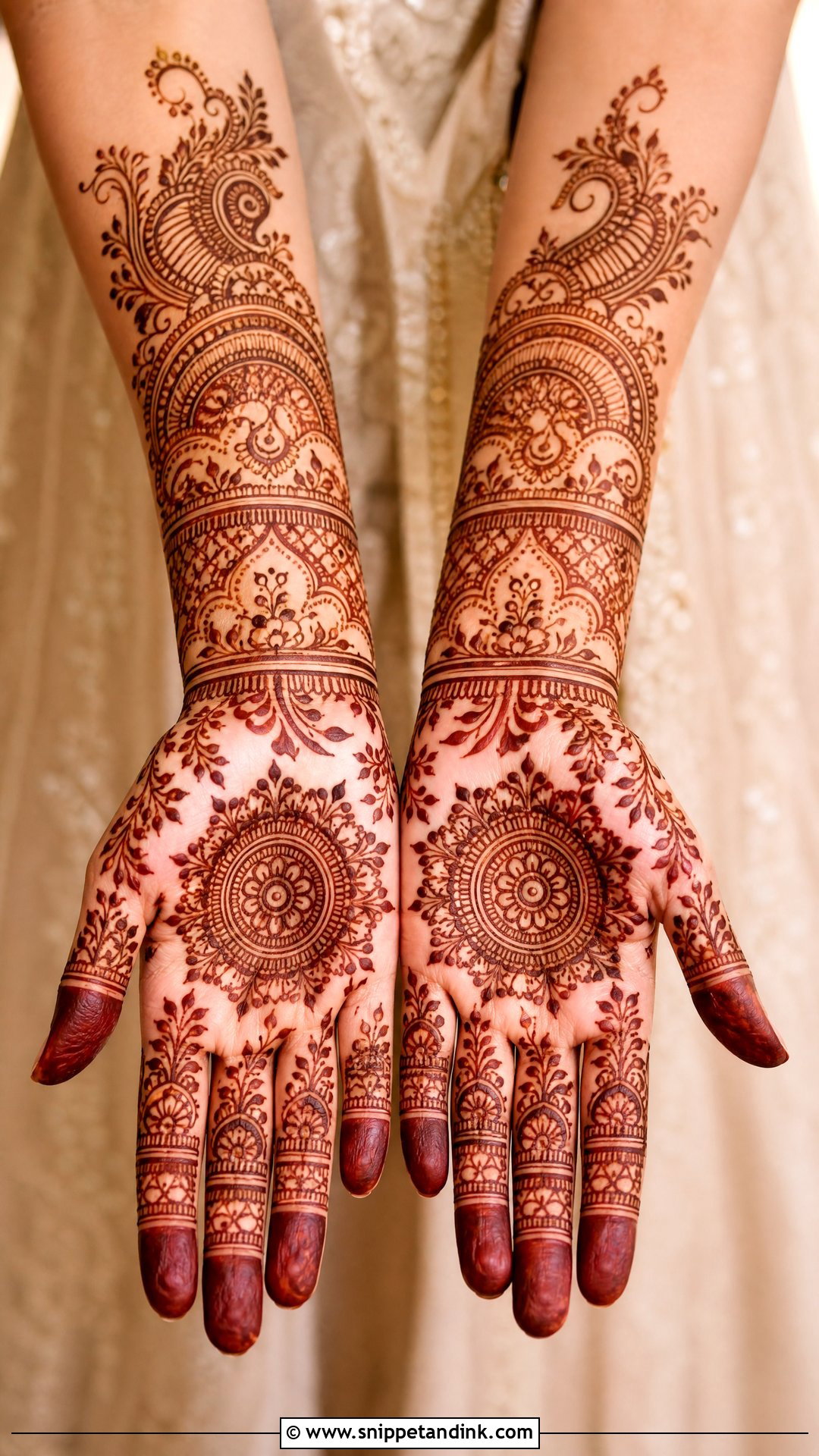
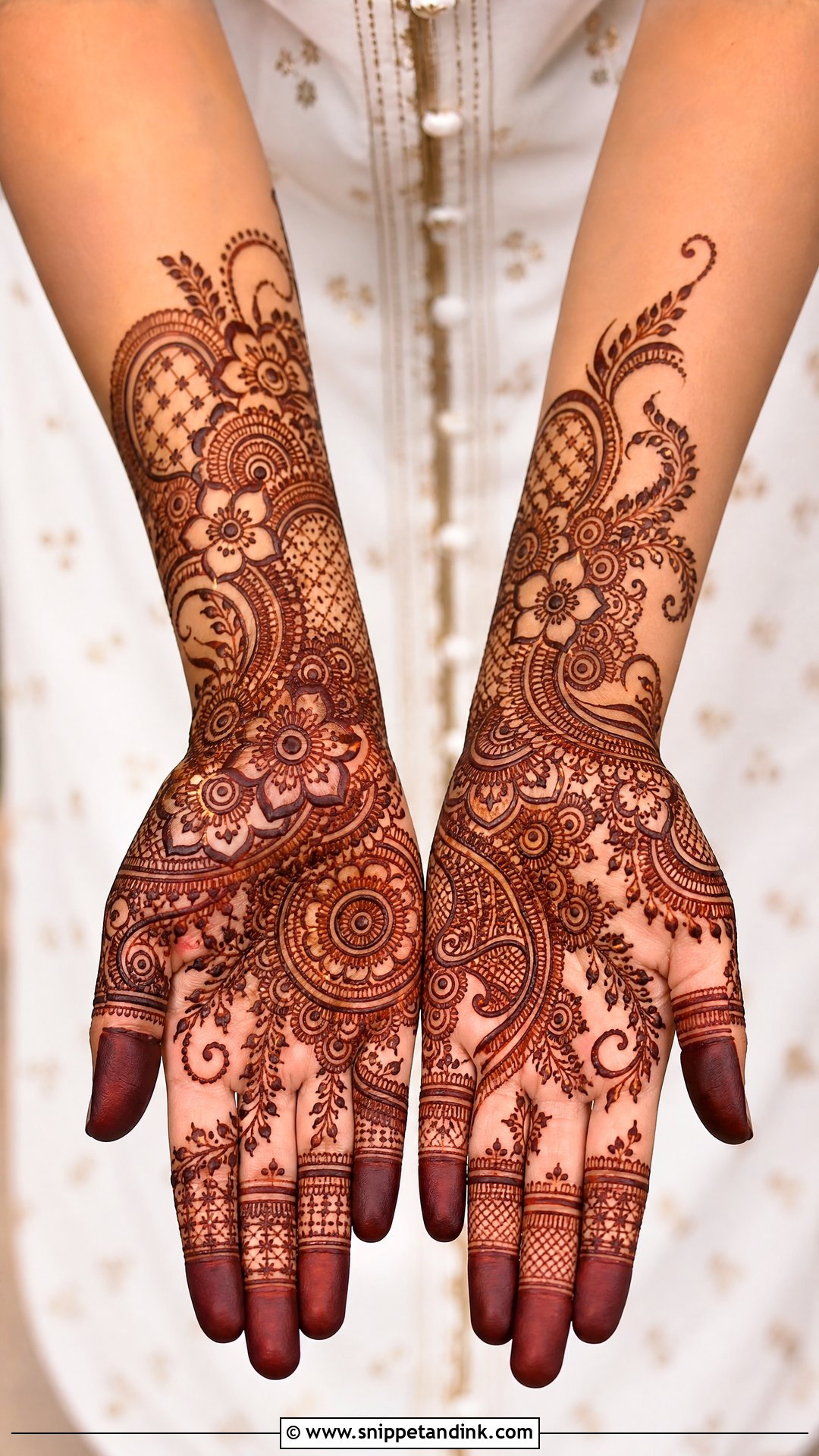
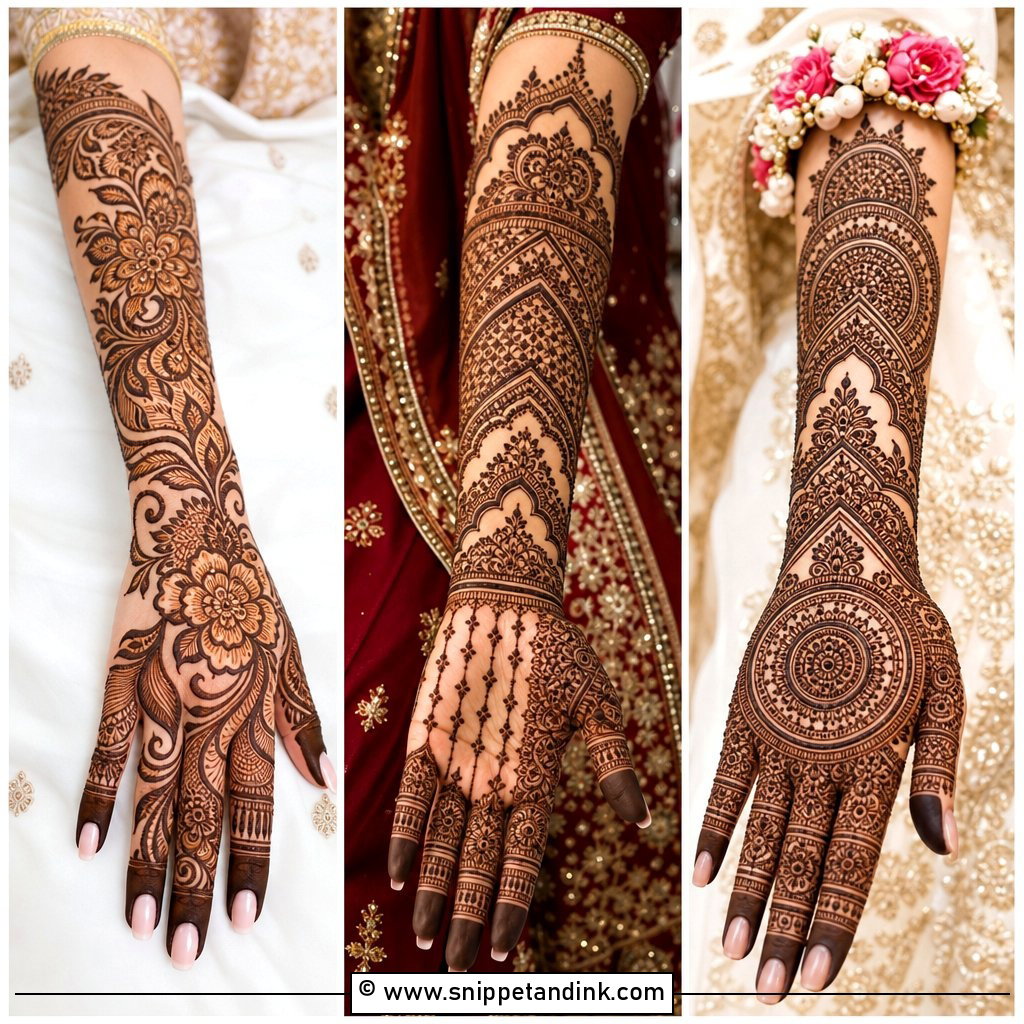
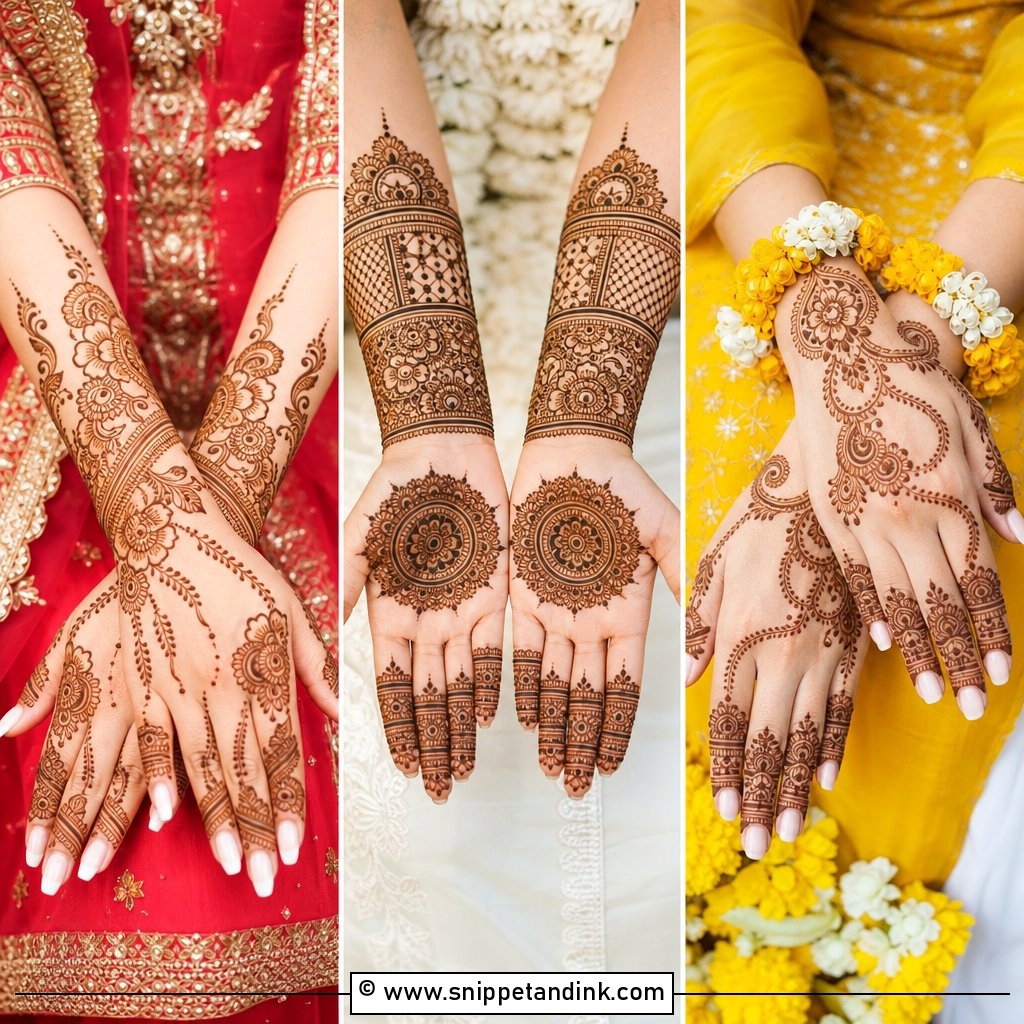
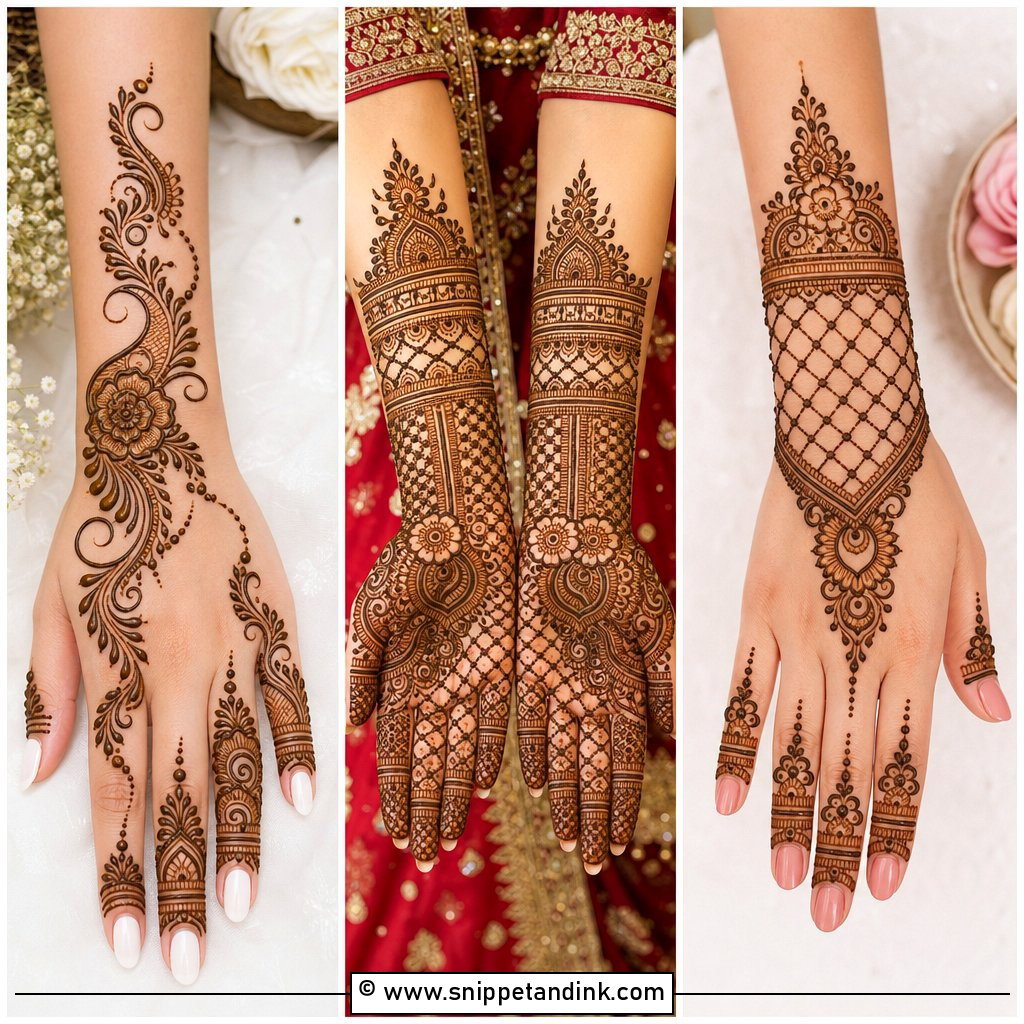
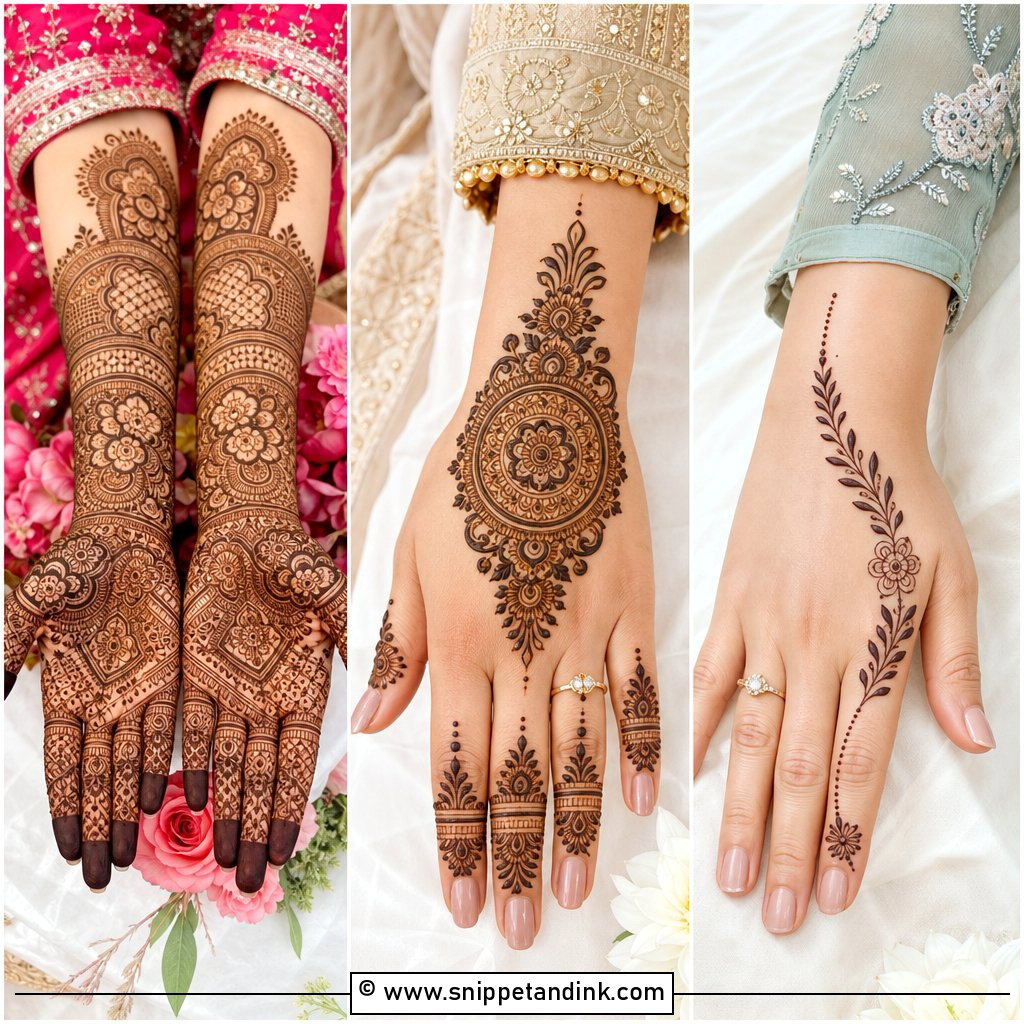
When a bride asks me for a simple full hand bridal mehndi design, the real job is deciding where the skin stays bare. I cover the palm, fingers, wrist and a little of the forearm with floral vines, paisley curves and leafy filler, but I leave small breathing gaps between motifs. A round palm mandala gives the eye a centre, and the fingers carry the fine linework. Those gaps matter more than people expect: paste spreads a little as it settles, so a pattern drawn with no space can blur into one brown patch by the second day.
2. Simple Arabic Bridal Mehndi
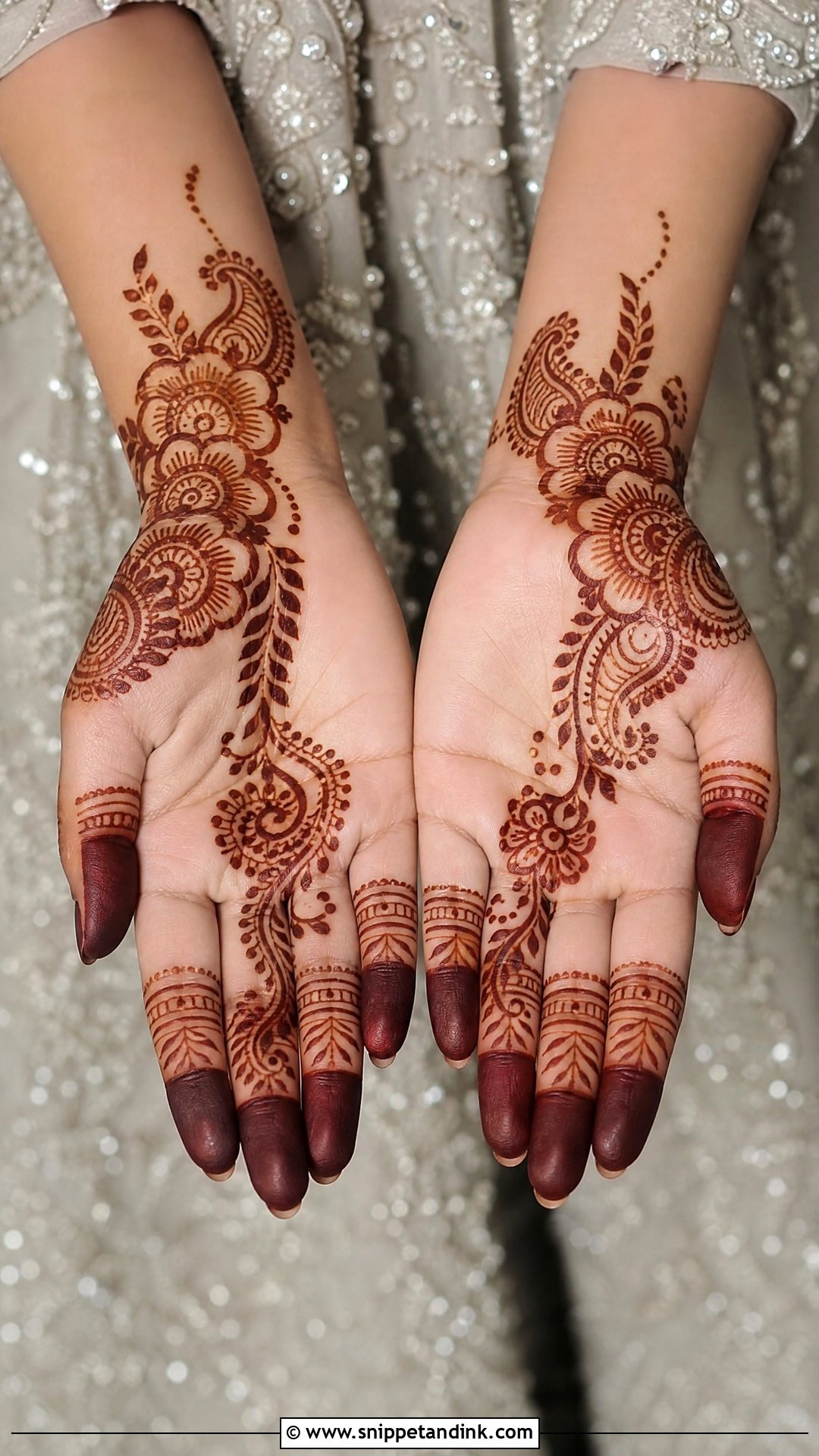
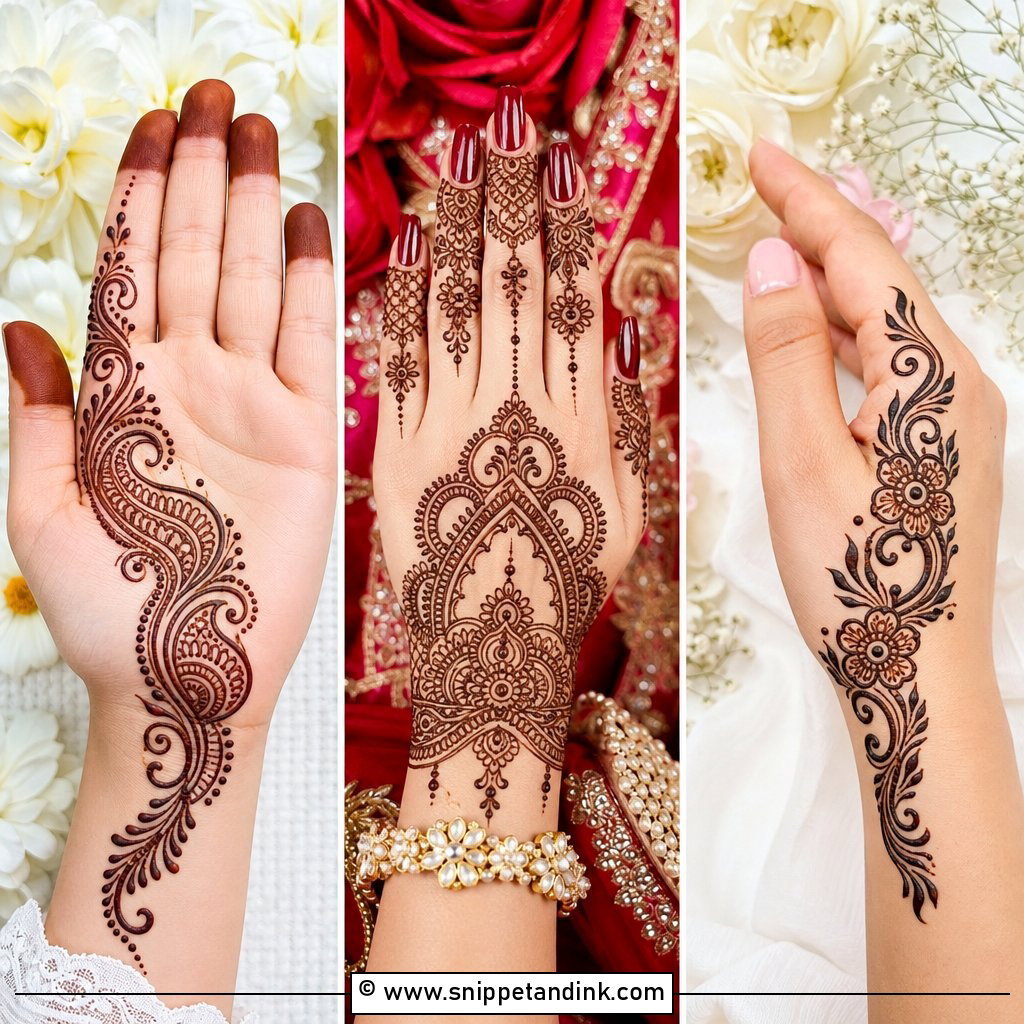
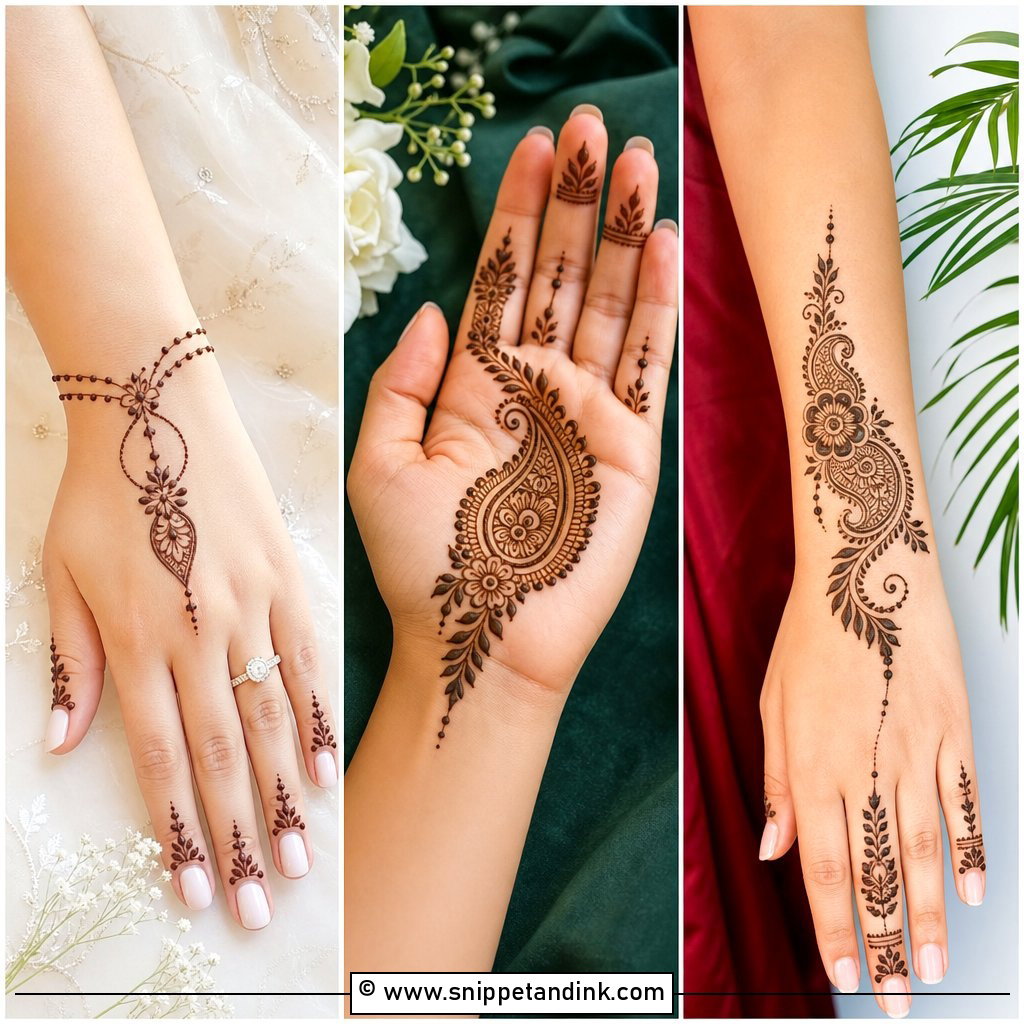
Arabic layouts run diagonally, usually from one side of the wrist across the palm toward the index or middle finger, with bold flowers, broad leaves and dotted trails doing the work instead of shading. I like it for a nikah, an engagement or a civil ceremony because it goes on quickly. Watch the empty side of the hand. If the diagonal is too thin the hand looks half finished, so I anchor it with a slim wrist cuff and filled fingertips, and a hidden initial fits neatly inside one of the larger petals.
3. Simple Indian Bridal Mehndi
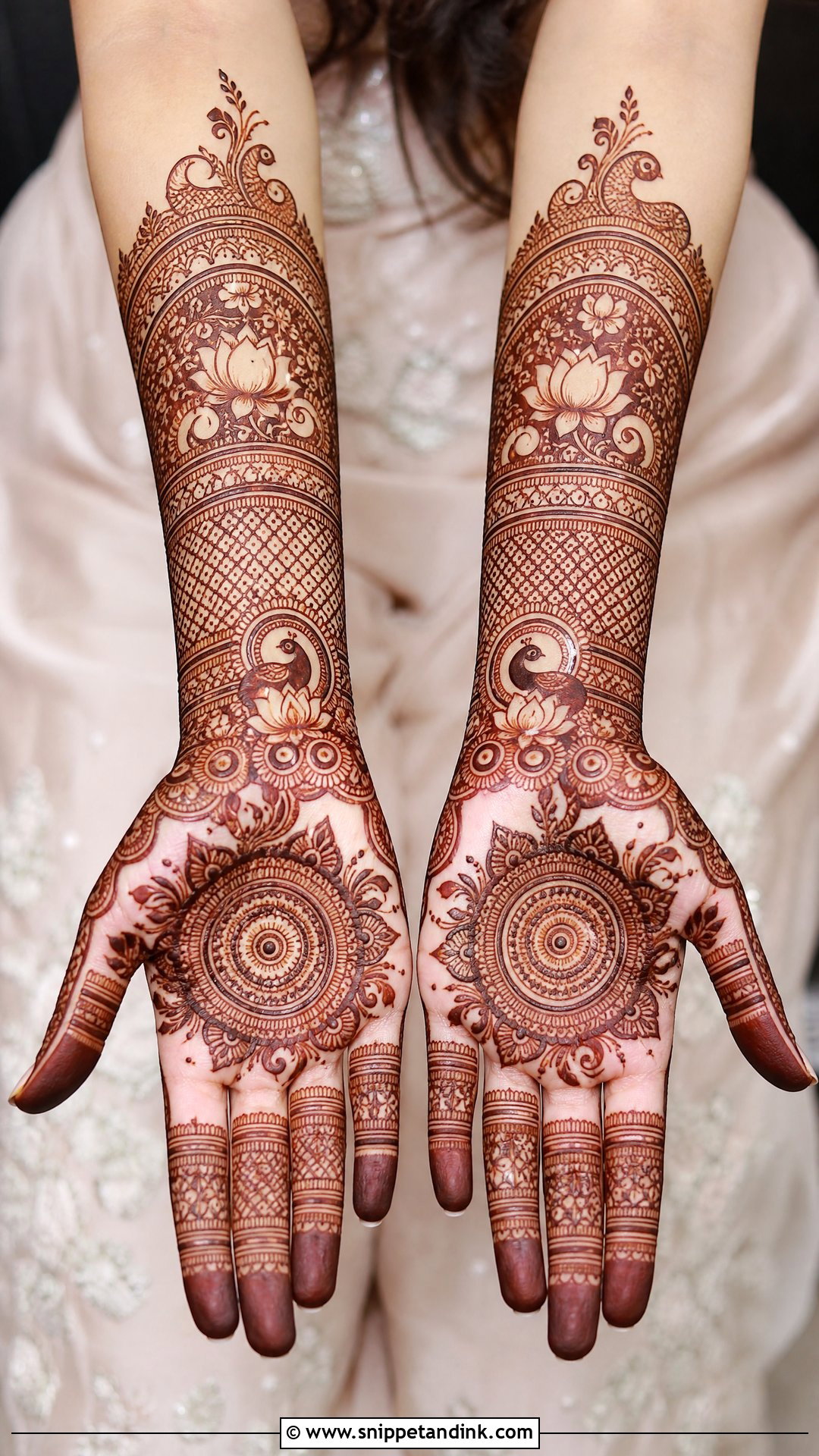
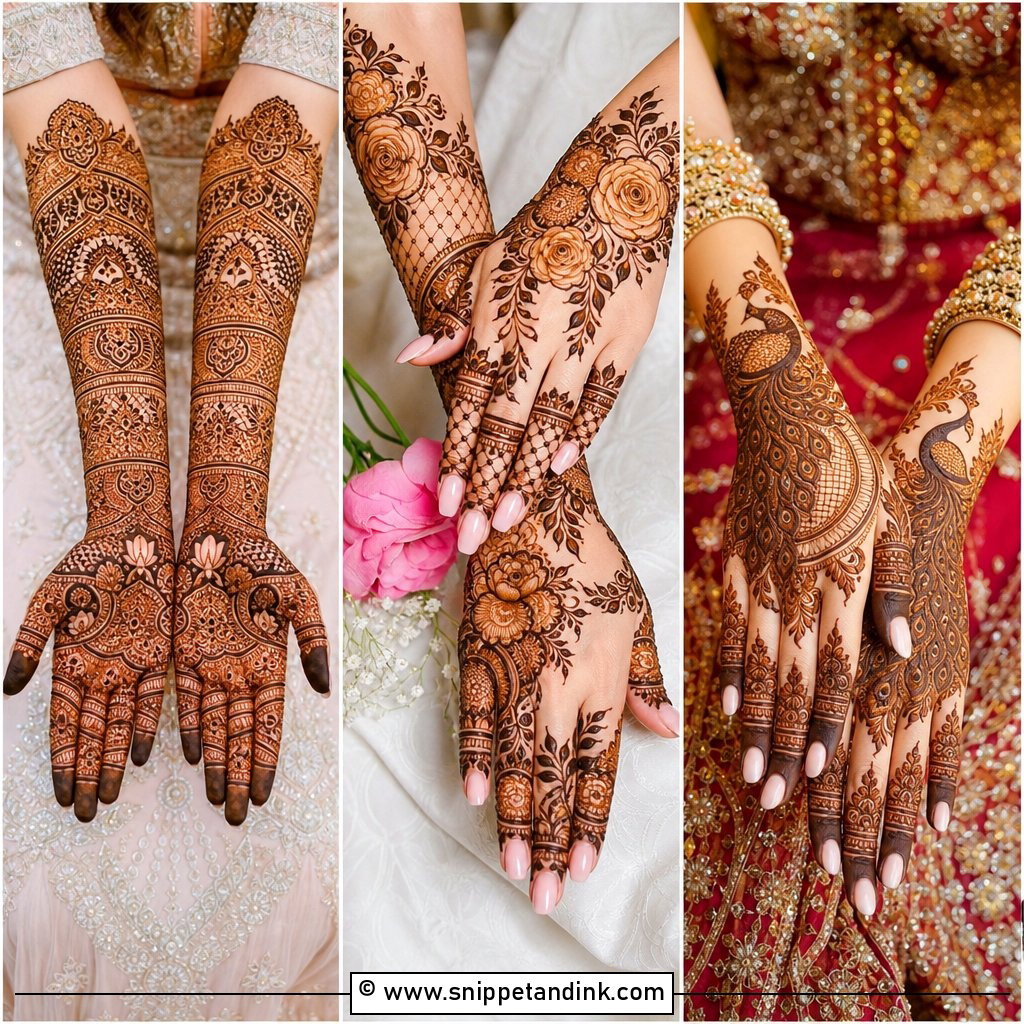
This version keeps the classic vocabulary of a central mandala, paisley borders, lotus, peacock curves and small patches of jaali, but stops at the wrist instead of filling to the elbow. Fine Indian linework needs a thin cone tip and paste that flows without breaking, so ask your artist how fresh their batch is; tired paste drags and leaves gaps in the mesh. It sits well against red, maroon or gold outfits. I often tuck the groom’s initial near the wrist or inside a paisley, where it passes for part of the pattern.
4. Simple Back Hand Bridal Mehndi
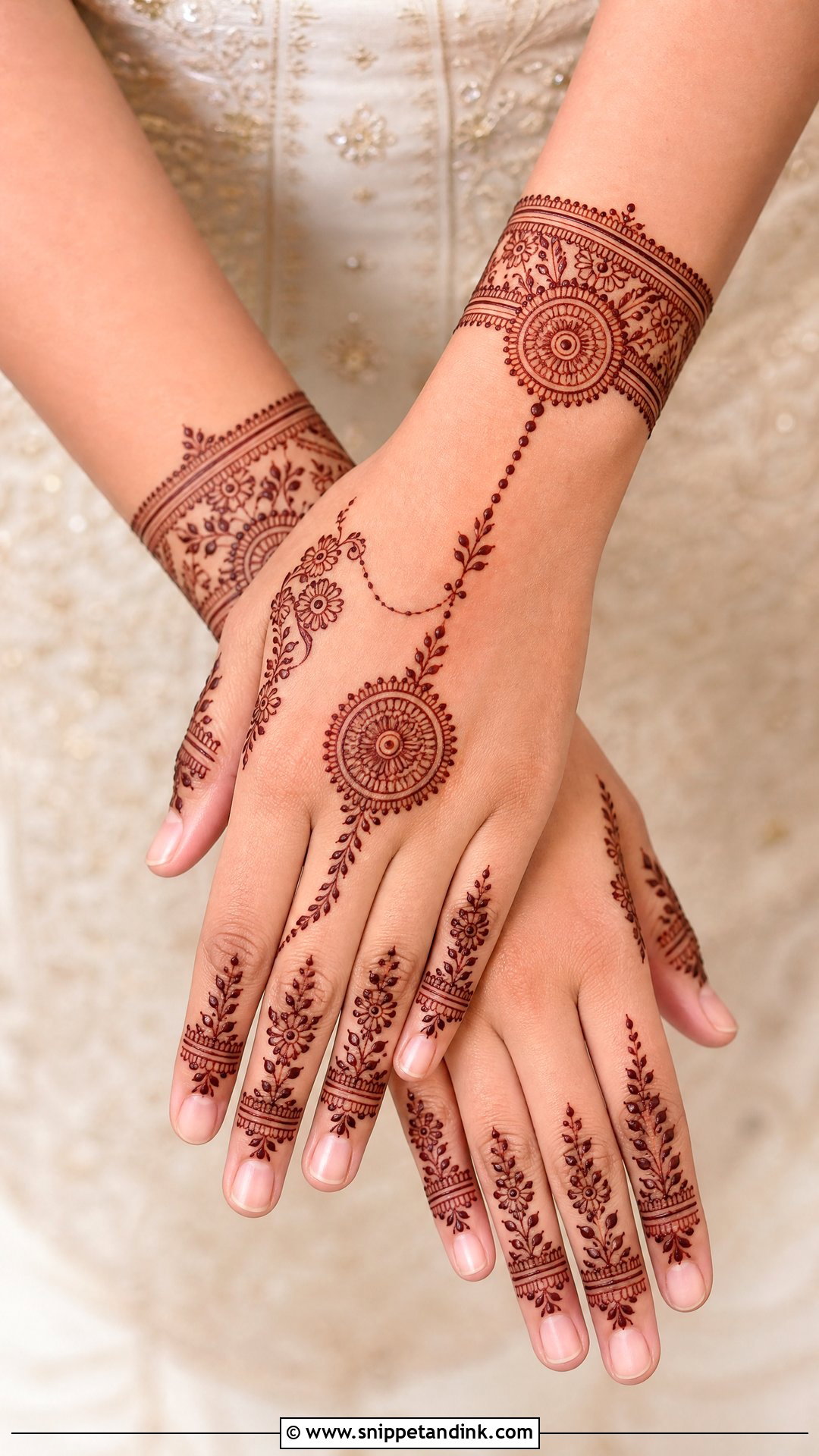
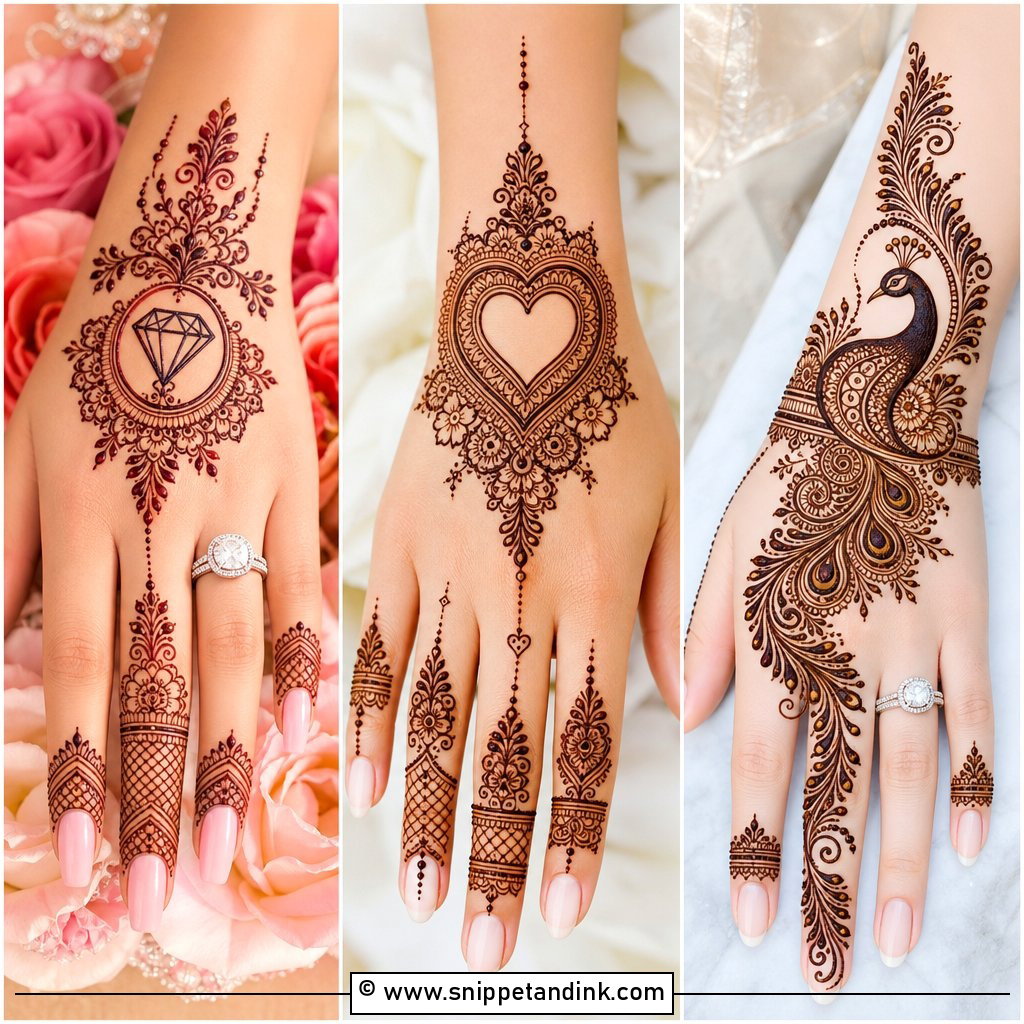
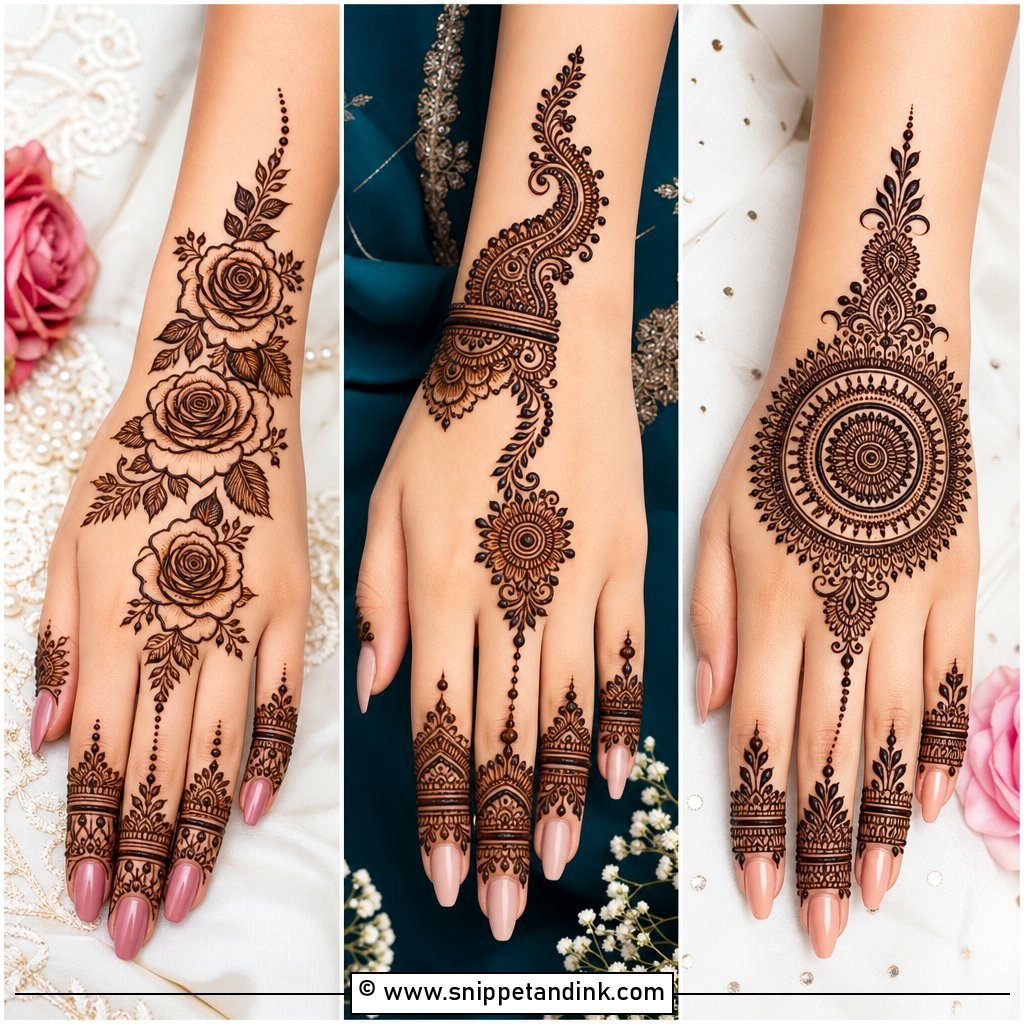
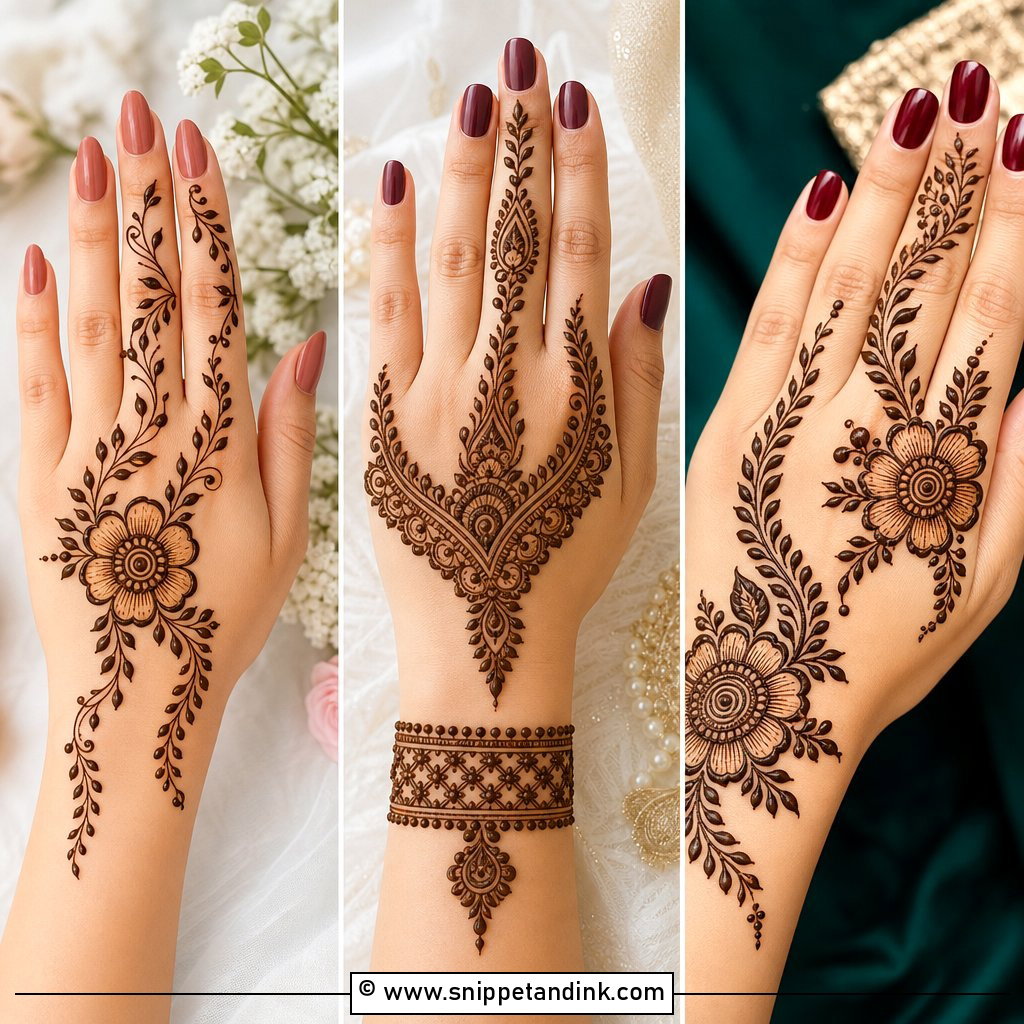
A simple back hand bridal mehndi design covers the side the camera sees most, especially in ring and bangle shots. I build it like hand jewelry: a bracelet band at the wrist, a chain connector across the back of the hand, and a ring motif on one or two fingers. Keep the centre of the hand fairly open, because kaleeras and stacked bangles will hide the wrist anyway and a busy back hand fights with them. The skin here takes up less dye than the palm, so I draw the outlines on this side a little bolder.
5. Simple Front Hand Bridal Mehndi
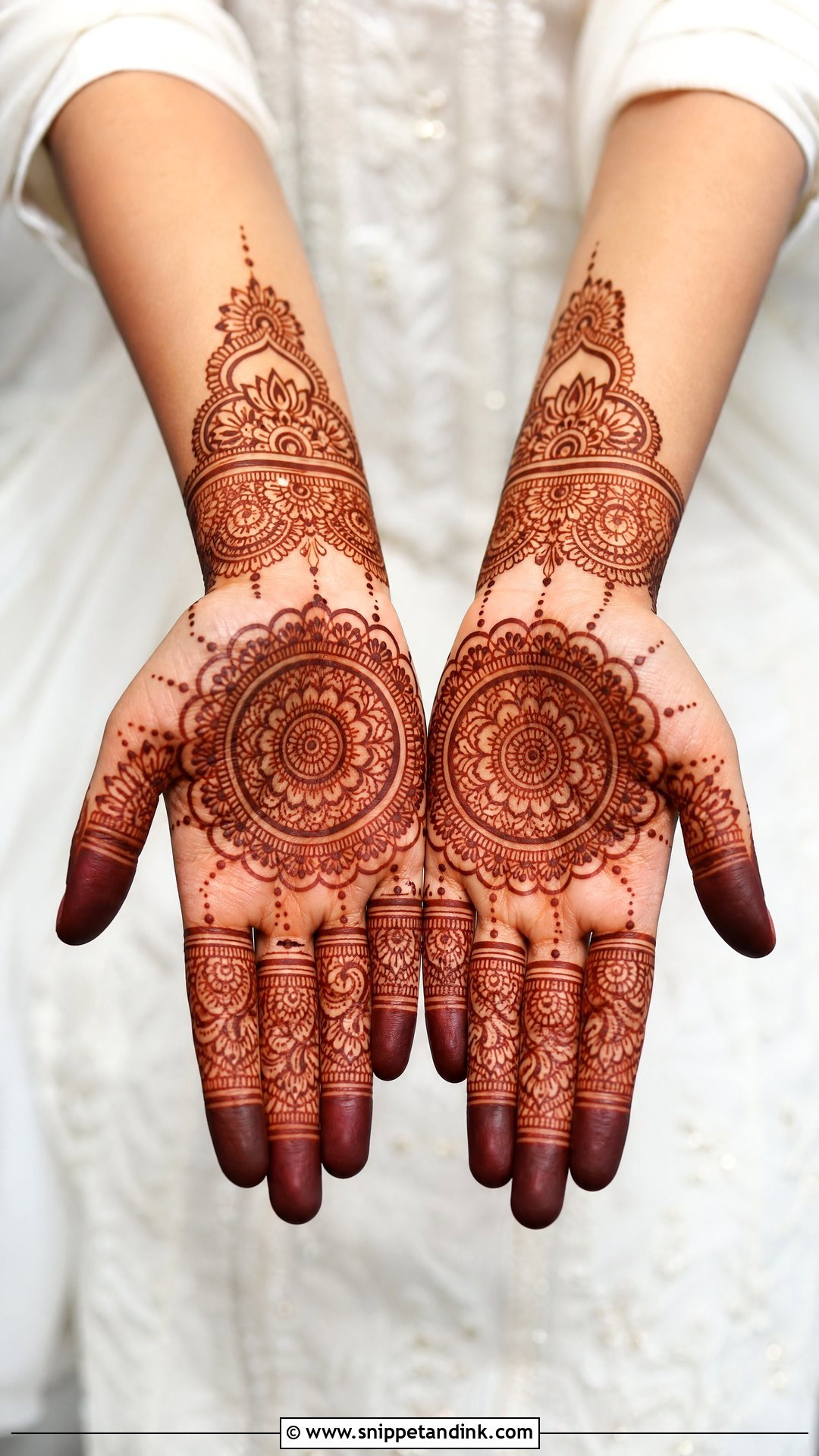
The palm is where henna stains darkest, which is one reason it carries so much tradition. For a lighter front hand I start with a single round mandala, then add florals, paisley edges and fine finger patterns around it, finishing with a slim scalloped cuff at the wrist. My rule is one main palm motif with smaller echoes of it on the fingers. Two competing centres on one palm is the most common way a design meant to be simple ends up cluttered.
6. Simple Mandala Bridal Mehndi
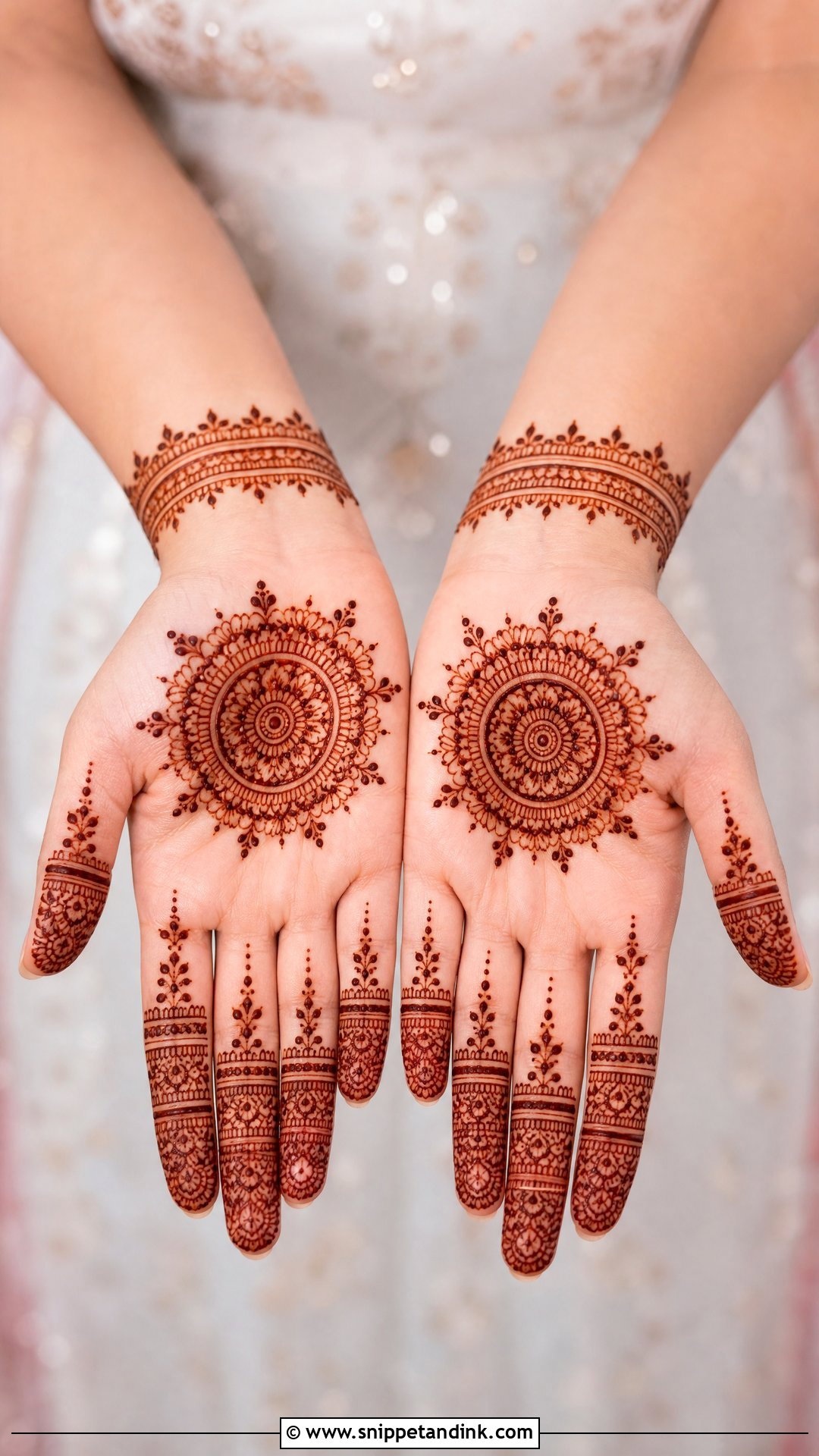
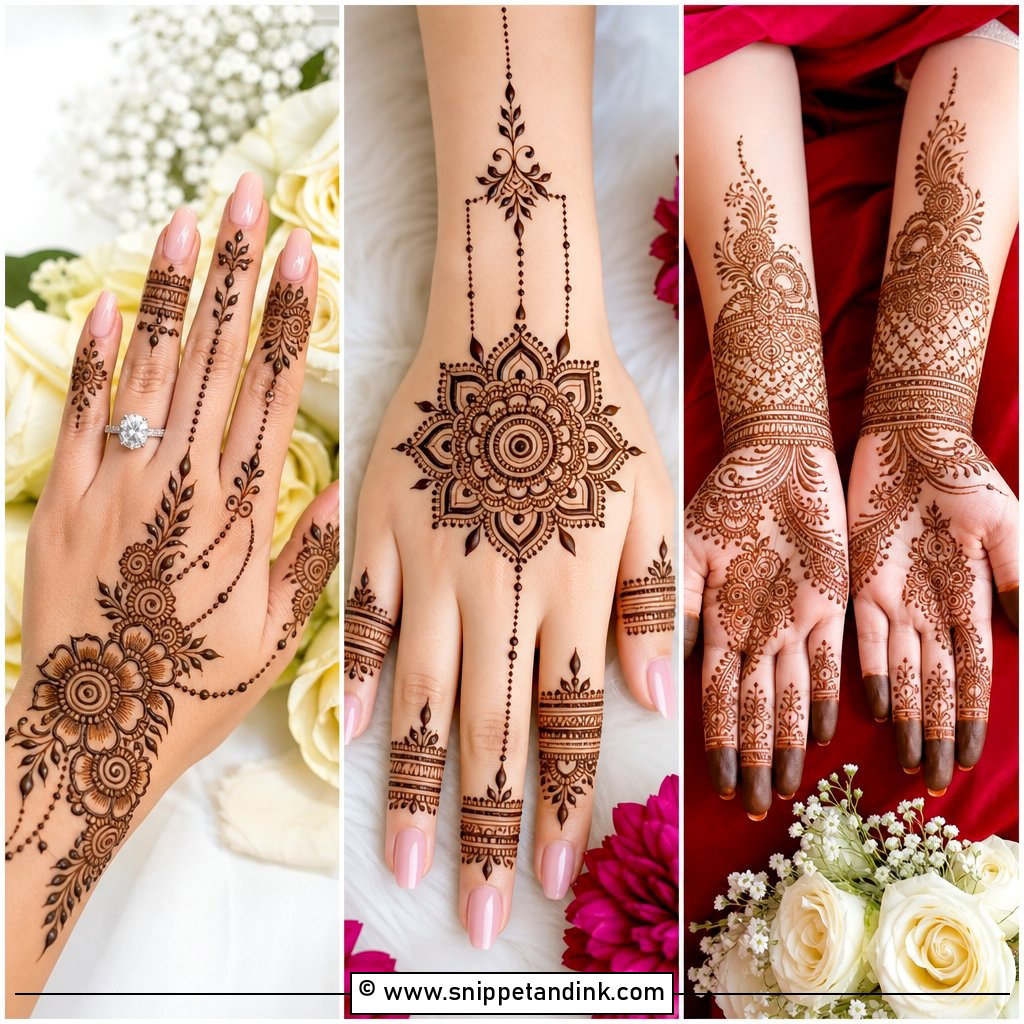
Symmetry is the whole appeal of a mandala, and also its risk. Two palm circles that differ in size by a few millimetres show up the moment a bride holds her hands side by side for a photo, so I mark the centre point on both palms before drawing either. Petals, dots and clean rings build outward; the fingers get matching line patterns and the wrist a light vine. If you want a floral border around the mandala, keep it to one ring so the palm doesn’t fill up.
7. Simple Floral Bridal Mehndi
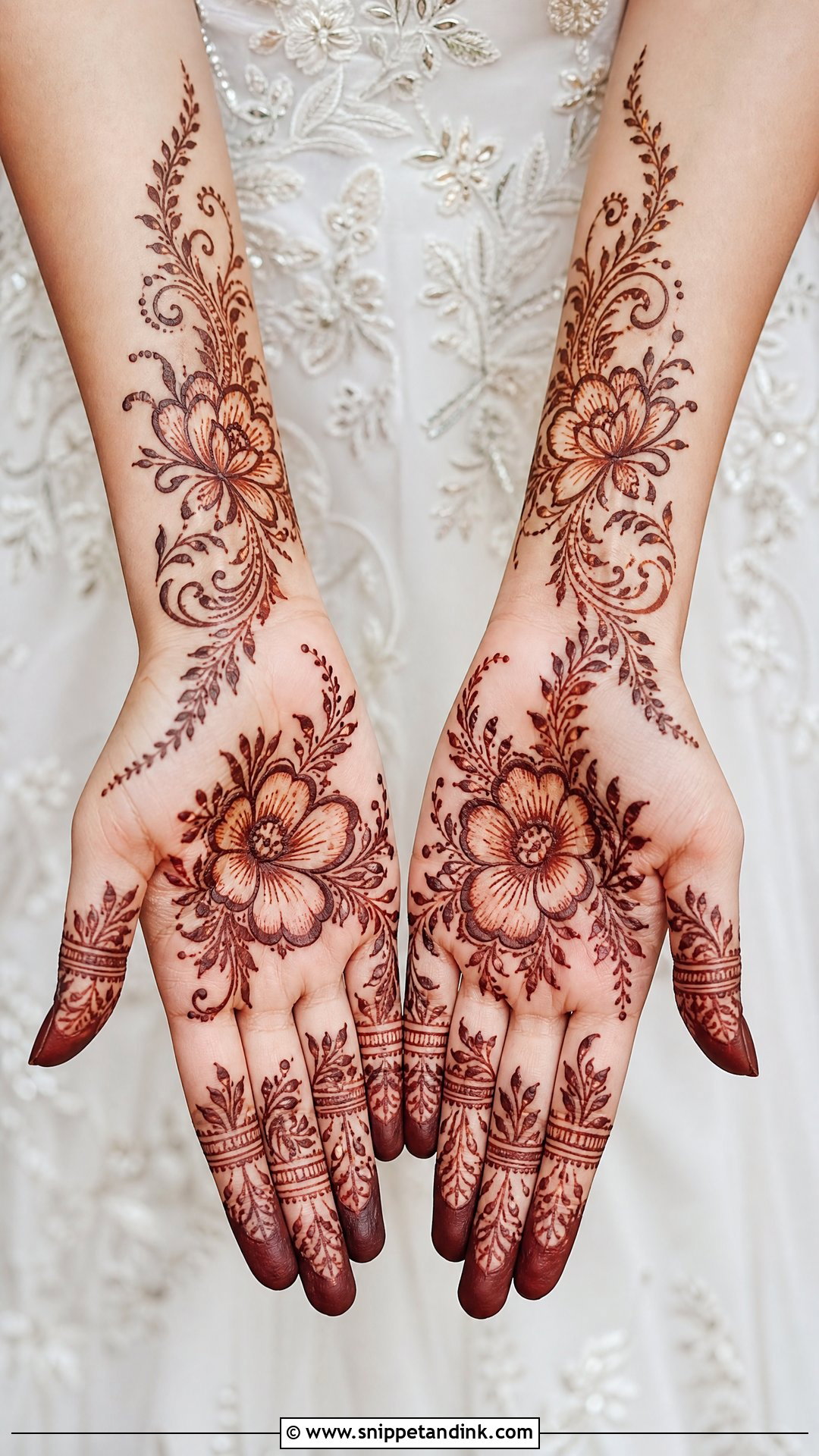
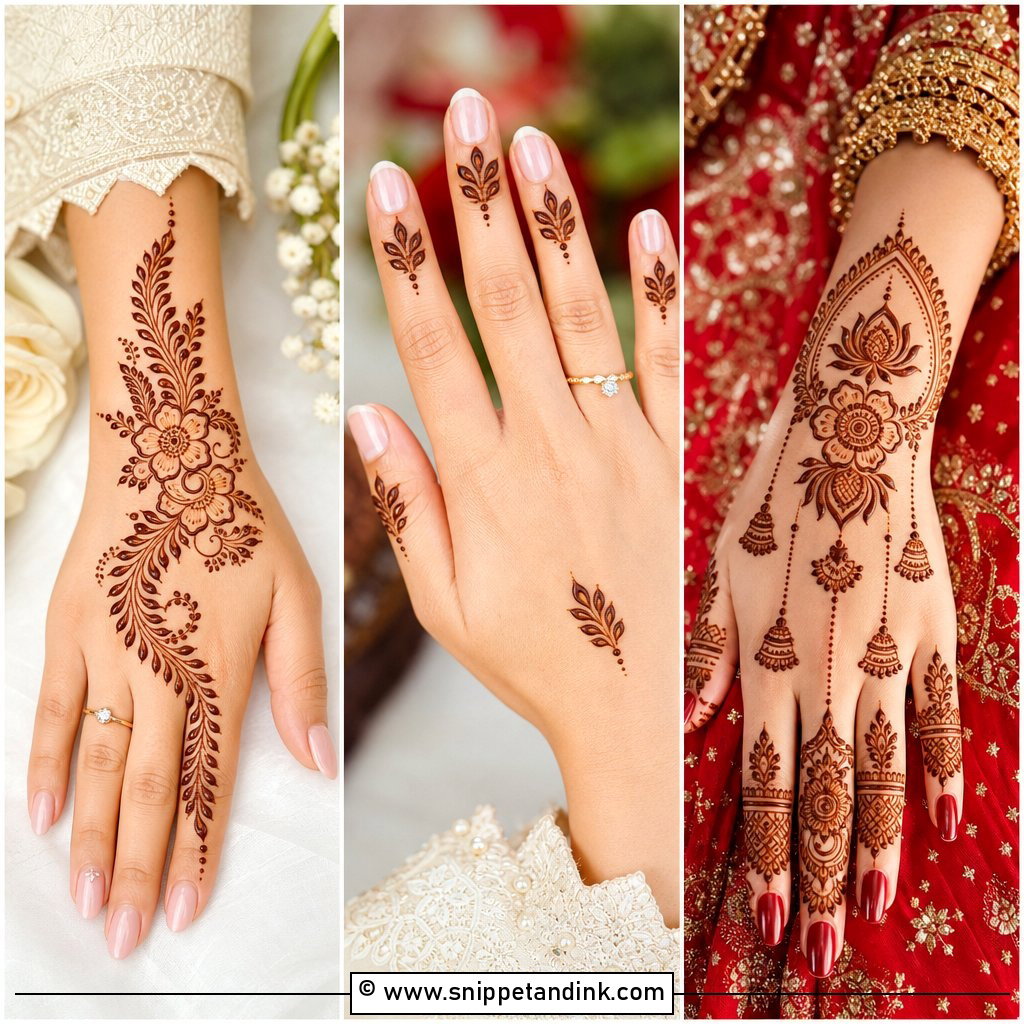
Florals are the most forgiving style for a first-time bride, since a slightly uneven petal still reads as a flower. I put one large bloom on the palm, run a vine toward the wrist and repeat smaller buds on the fingers, with a little shading on the leaves for depth. How detailed it gets depends on how long you can sit. The broad petal shapes stay readable even where the stain comes out lighter, which is why I reach for florals at daytime and garden ceremonies.
8. Simple Bridal Mehndi With Initials
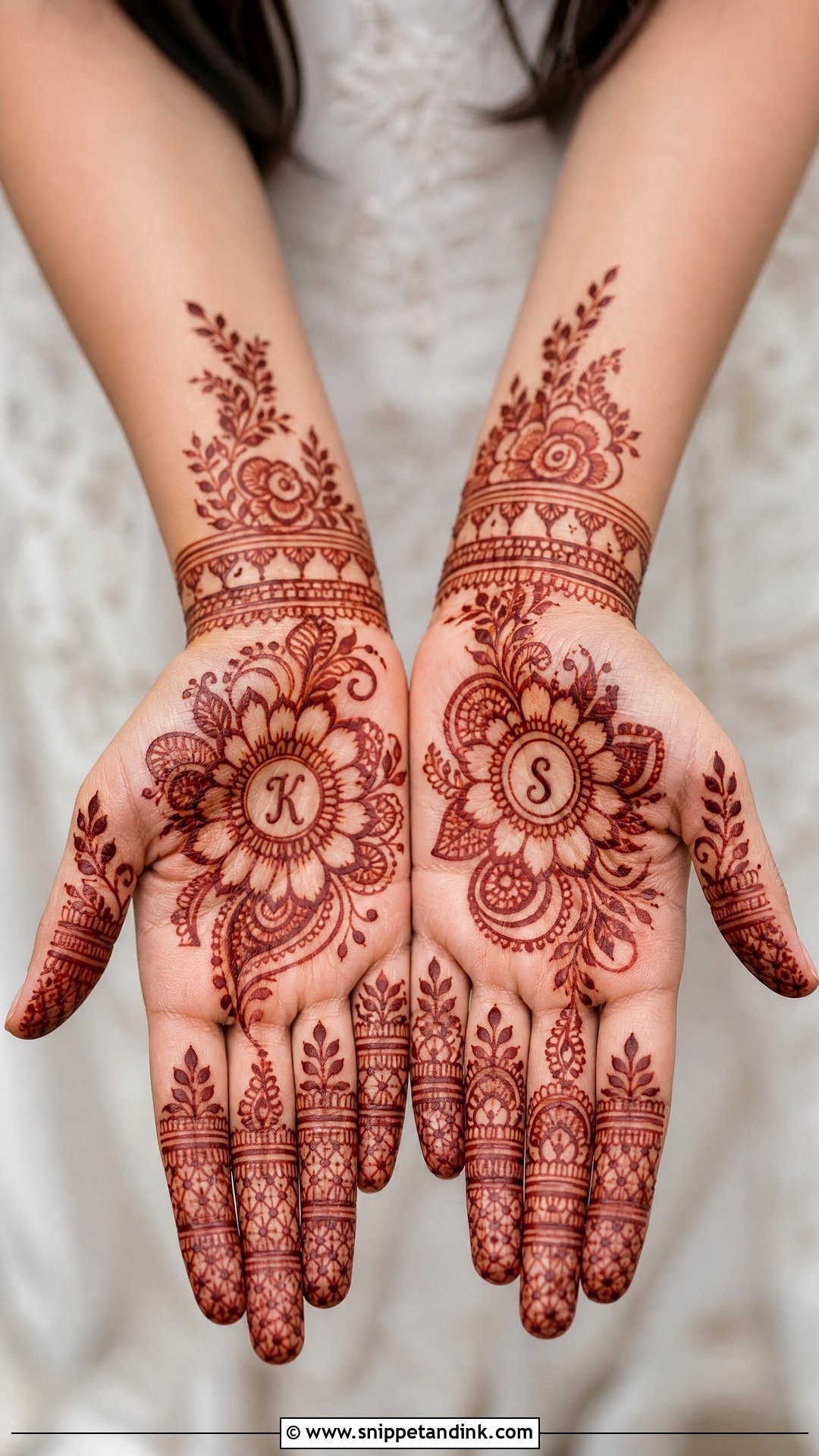
Initials are the detail brides ask about most, and they hide best when the pattern around them stays light. I tuck them inside a petal, a paisley curve, a mandala ring or the wrist band. Some brides want one initial on each palm; others prefer a small heart-shaped space near the wrist. Letters need more room than you’d think, because closed shapes like B or R can fill in as the paste spreads. I draw them a touch larger than the surrounding detail, then blend the edges with dots.
9. Simple Bridal Mehndi With Name
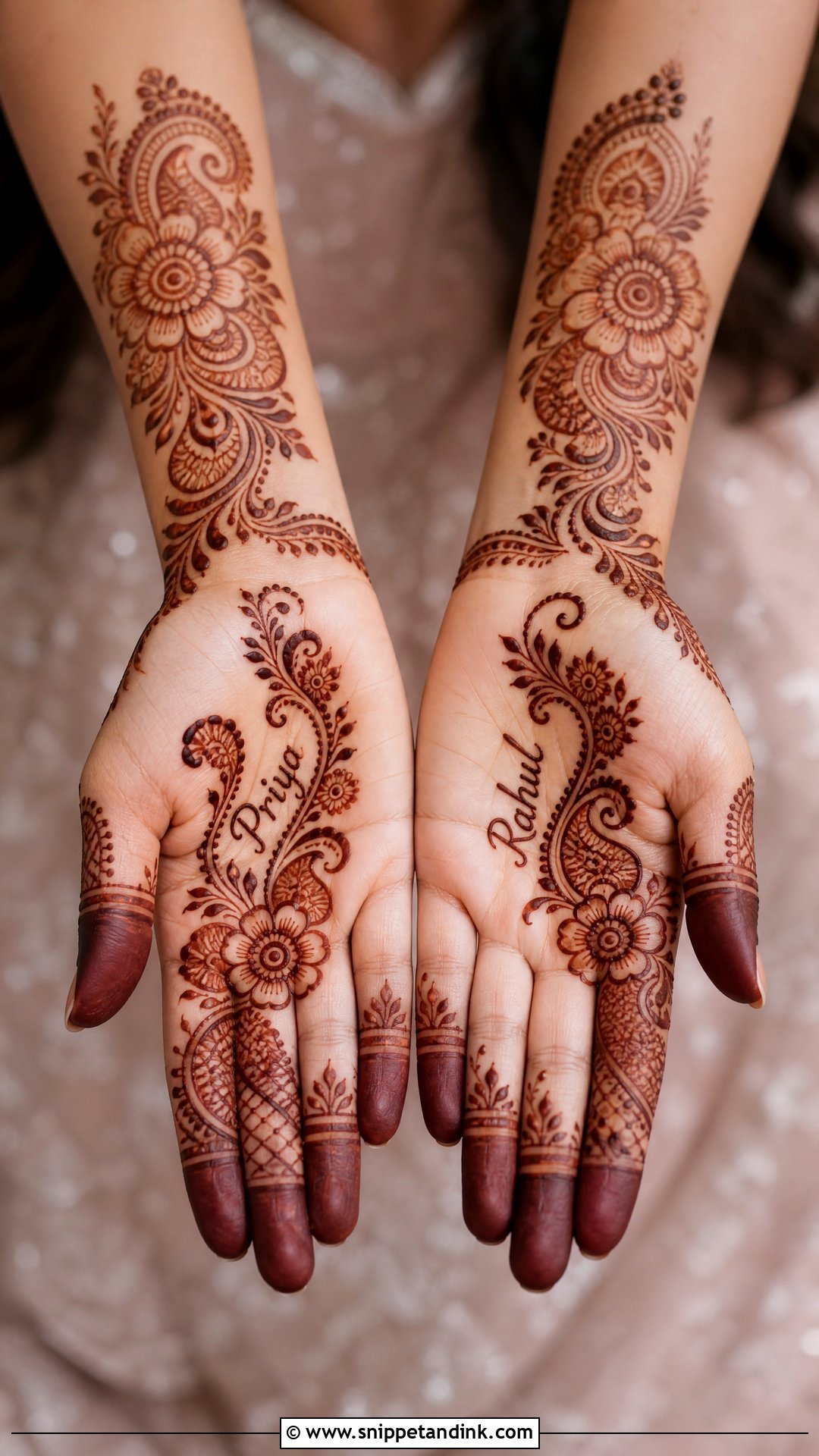
A full name is harder to disguise than a single initial, which is exactly why the groom searching for it has become a wedding game. I run it along the wrist band, inside a vine or around a mandala border, and I’d skip portraits or story scenes if you want the hand to stay light. Script lettering hides best when it follows the curve of whatever it sits in. Resist adding a second name or a date on the same hand; the search only works when there is one thing to find.
10. Simple Bridal Mehndi For Short Hands
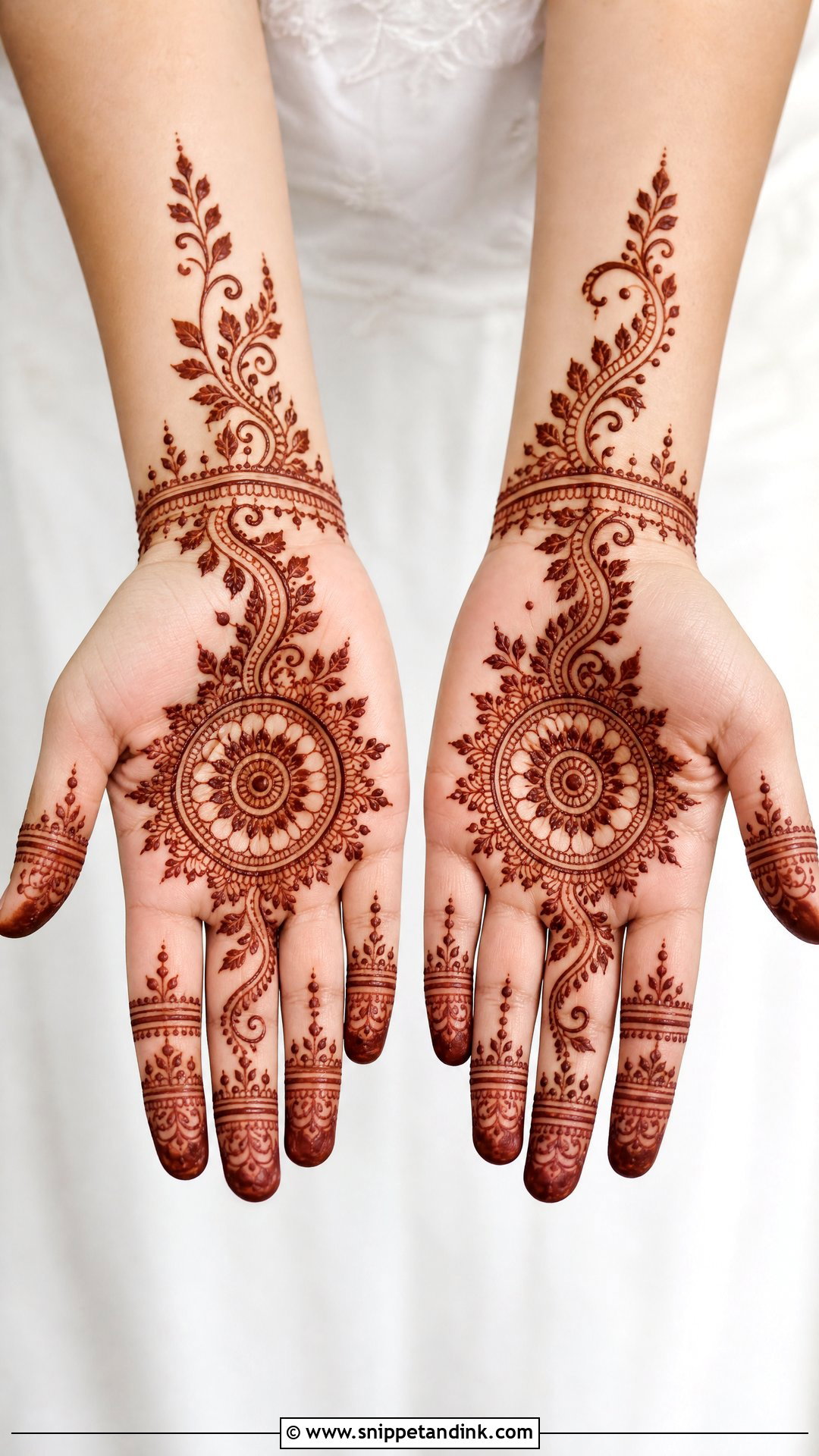
Shorter hands look longer when the design runs vertically. I use a slim vine, a narrow paisley trail or an elongated mandala, and keep palm motifs medium-sized so they don’t swallow the space. What I avoid most is a big rounded flower across the knuckles, since it cuts the finger in half visually. Thin outlines, small leaves and negative space on the fingers keep things delicate, and a narrow wrist cuff extends the line where a wide one would shorten it.
11. Simple Bridal Mehndi For Long Hands
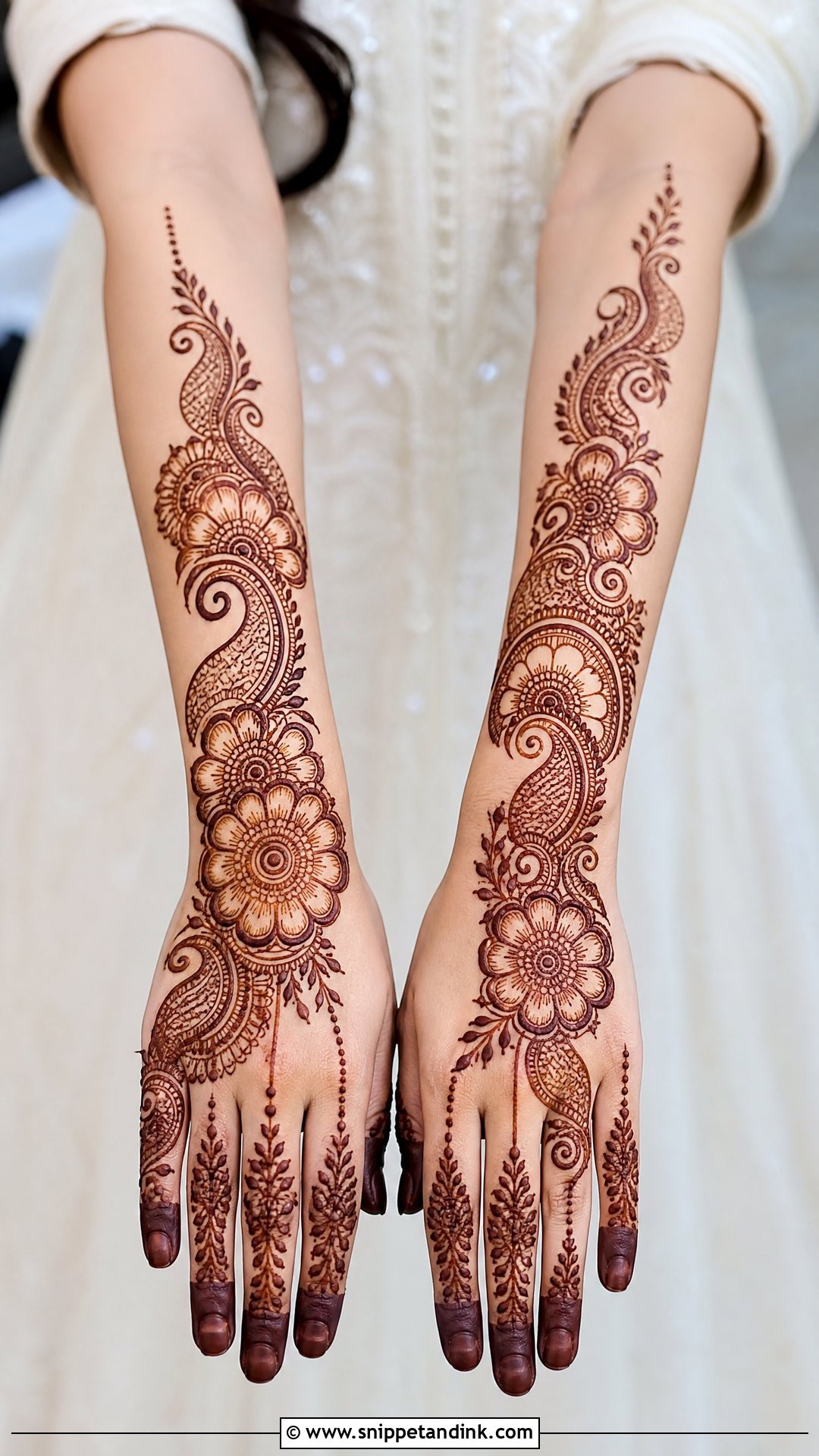
Long hands give me room for a continuous path from wrist to fingertips, so flowing Arabic vines and stacked mandalas both sit well. The mistake is going too small. A little palm motif on a long hand looks unfinished, so I size the motifs up and space them out, and let the finger patterns run longer with leafy tips and fine vertical lines. This is the hand shape where close-up portraits show linework at its best.
12. Simple Indo Arabic Bridal Mehndi
Indo-Arabic takes the open diagonal flow of Arabic work and adds Indian detail only in chosen spots: a mandala accent, a small jaali patch, detailed fingertips. The skill is knowing where to stop. I sketch the Arabic path first, then place no more than two or three Indian fillers along it. Keep the wrist light, or the whole design starts tipping back into full traditional coverage.
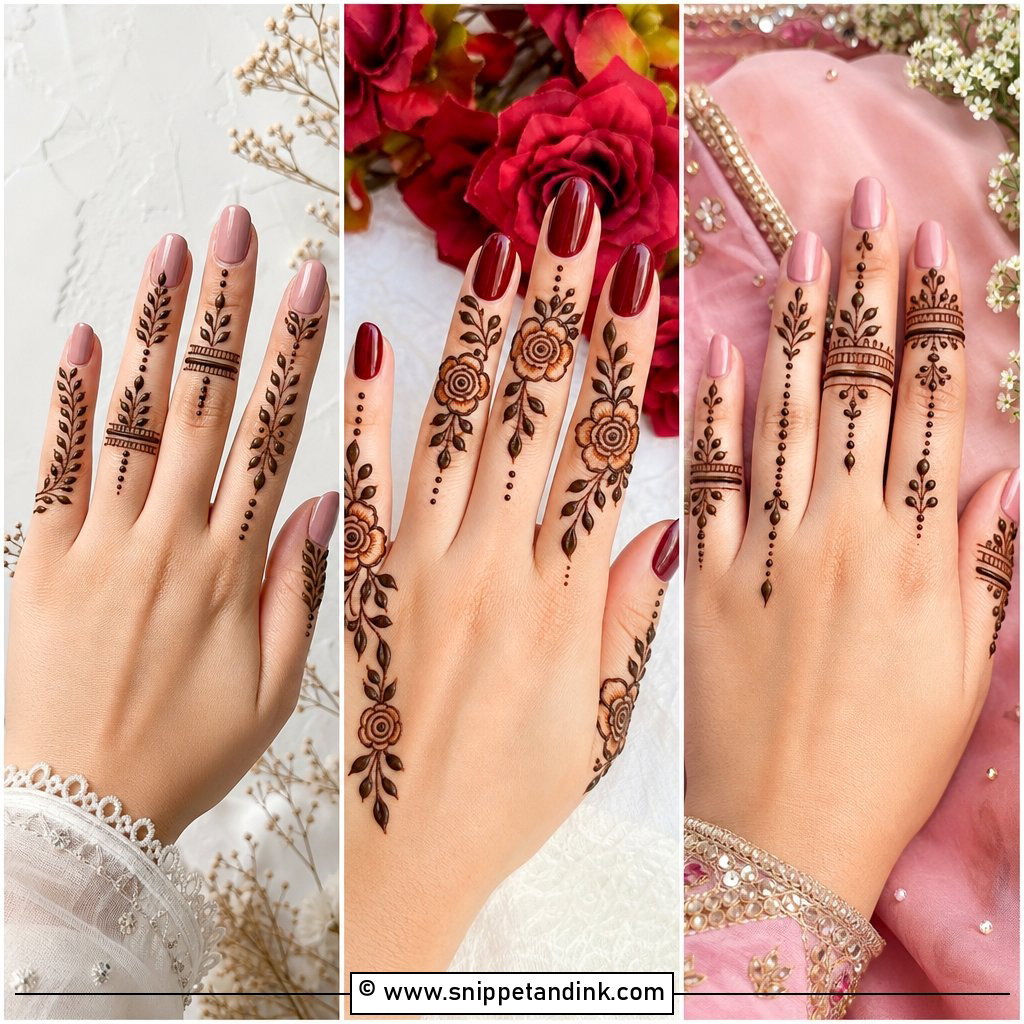
13. Simple Jewelry Bridal Mehndi
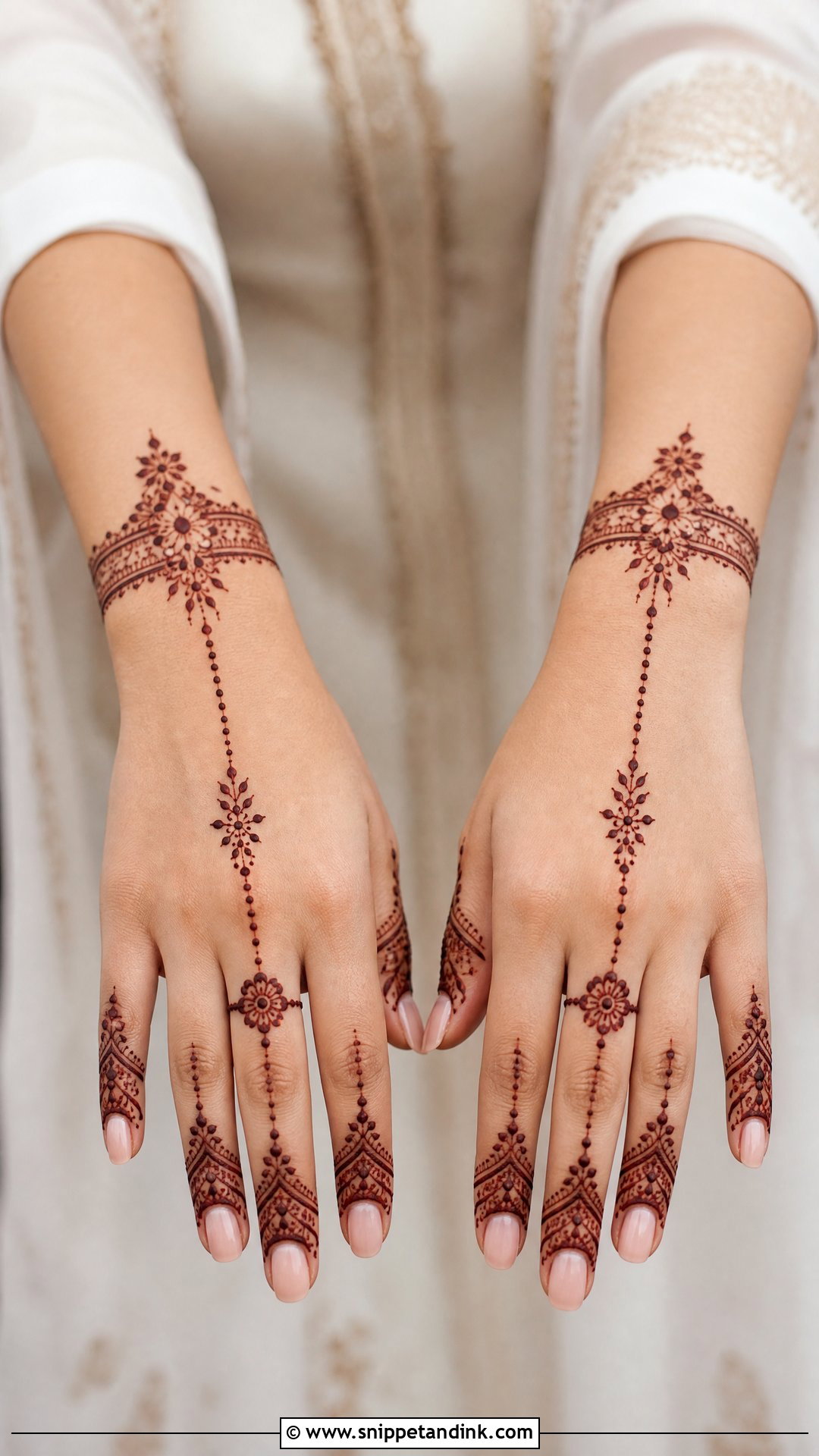
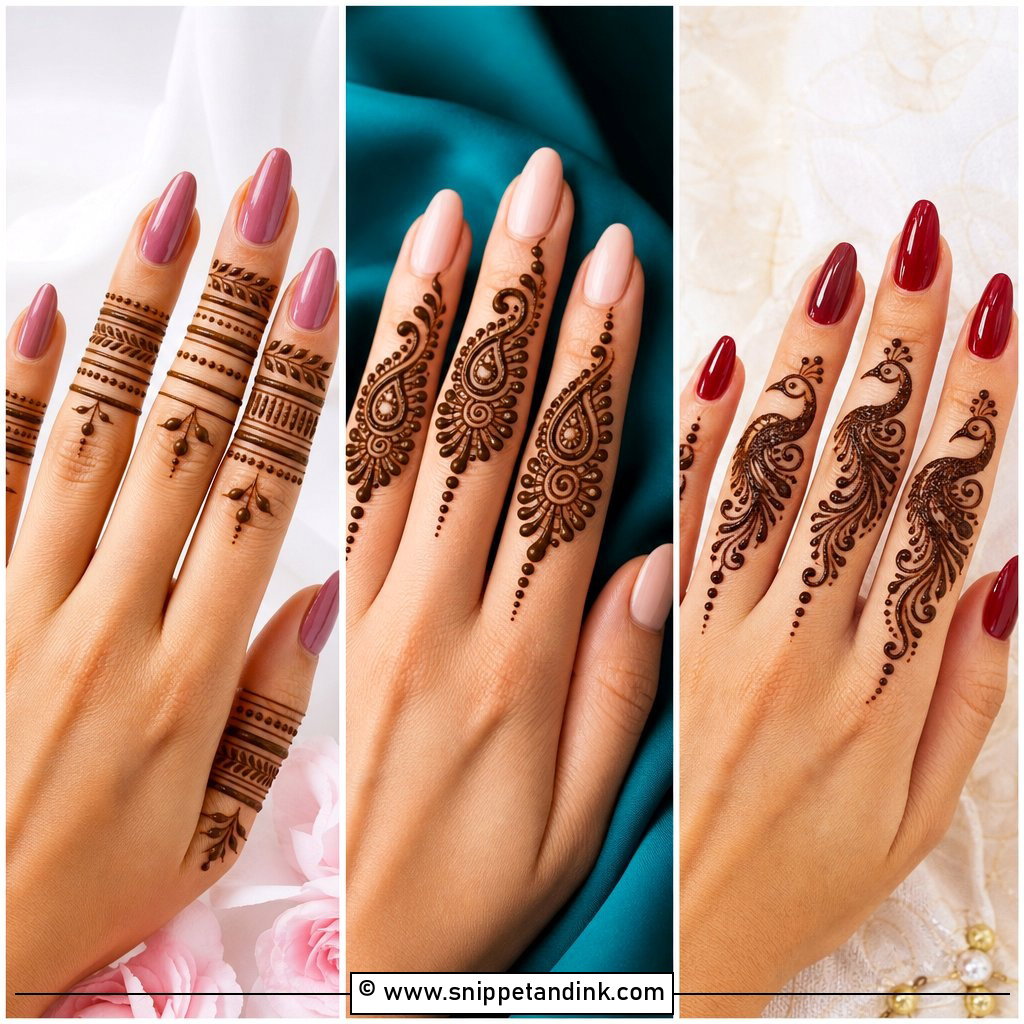
Henna jewelry imitates a bracelet at the wrist, a chain running toward one finger and a ring motif near the knuckle, finished with small flowers and dots. It’s the layout I suggest most often to brides who want their real engagement ring and bangles to stay the focus, and the palm can stay bare or carry one small motif. Watch the chain line. It crosses a part of the hand that flexes, so it needs a steady, unbroken stroke or the stain will show every wobble.
14. Simple Bridal Mehndi With Peacock
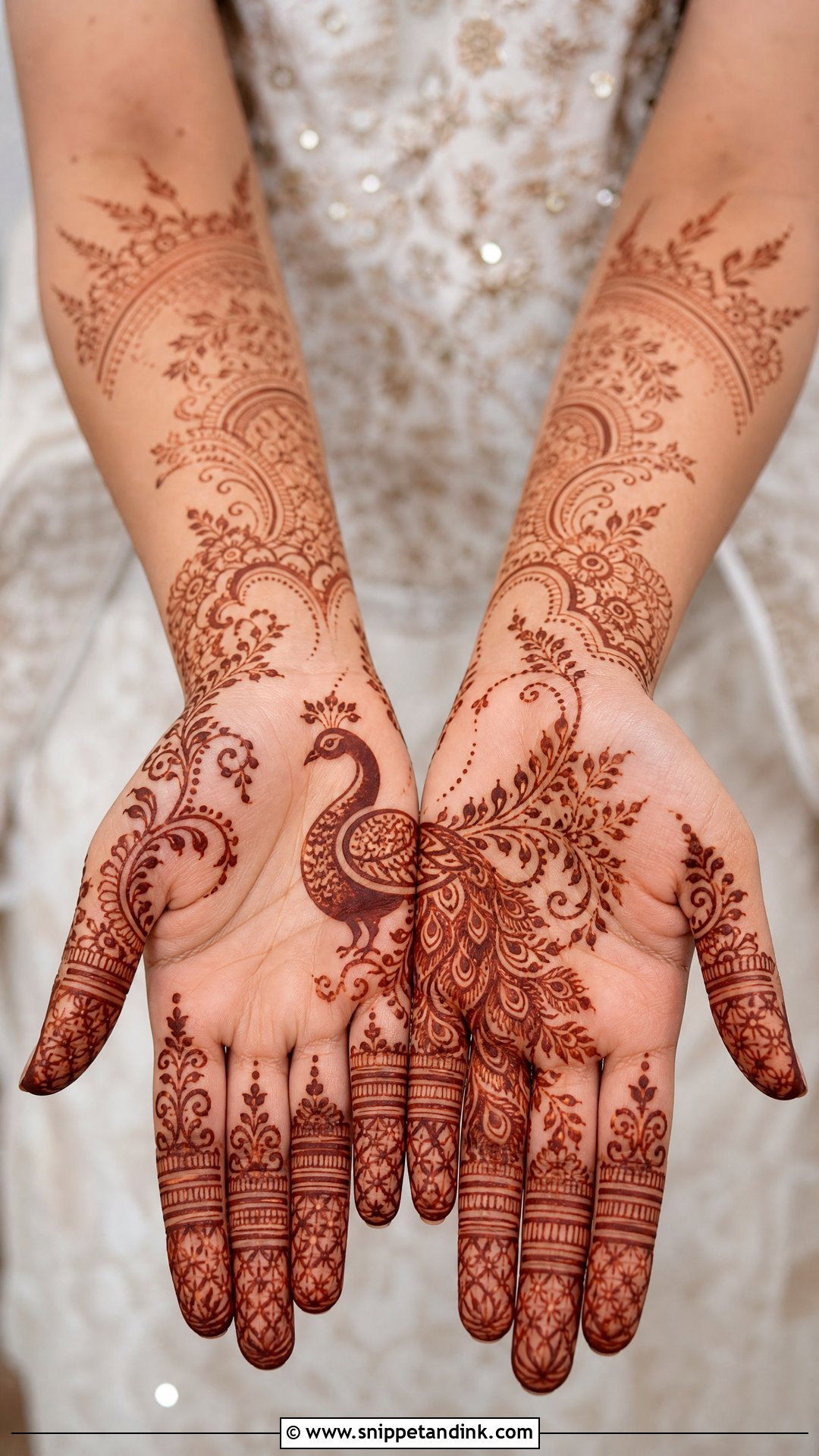
One peacock reads as tradition; three start to look crowded. I place a single bird near the wrist, the side of the palm or the lower forearm, then let fine feather lines, dots and curved leaves trail out from it while the rest of the hand stays in light florals and paisley vines. The neck curve is where an artist’s skill shows, so ask to see a peacock in their portfolio before you book. If the necks there look stiff, pick a different main motif.
15. Simple Bridal Mehndi With Paisley
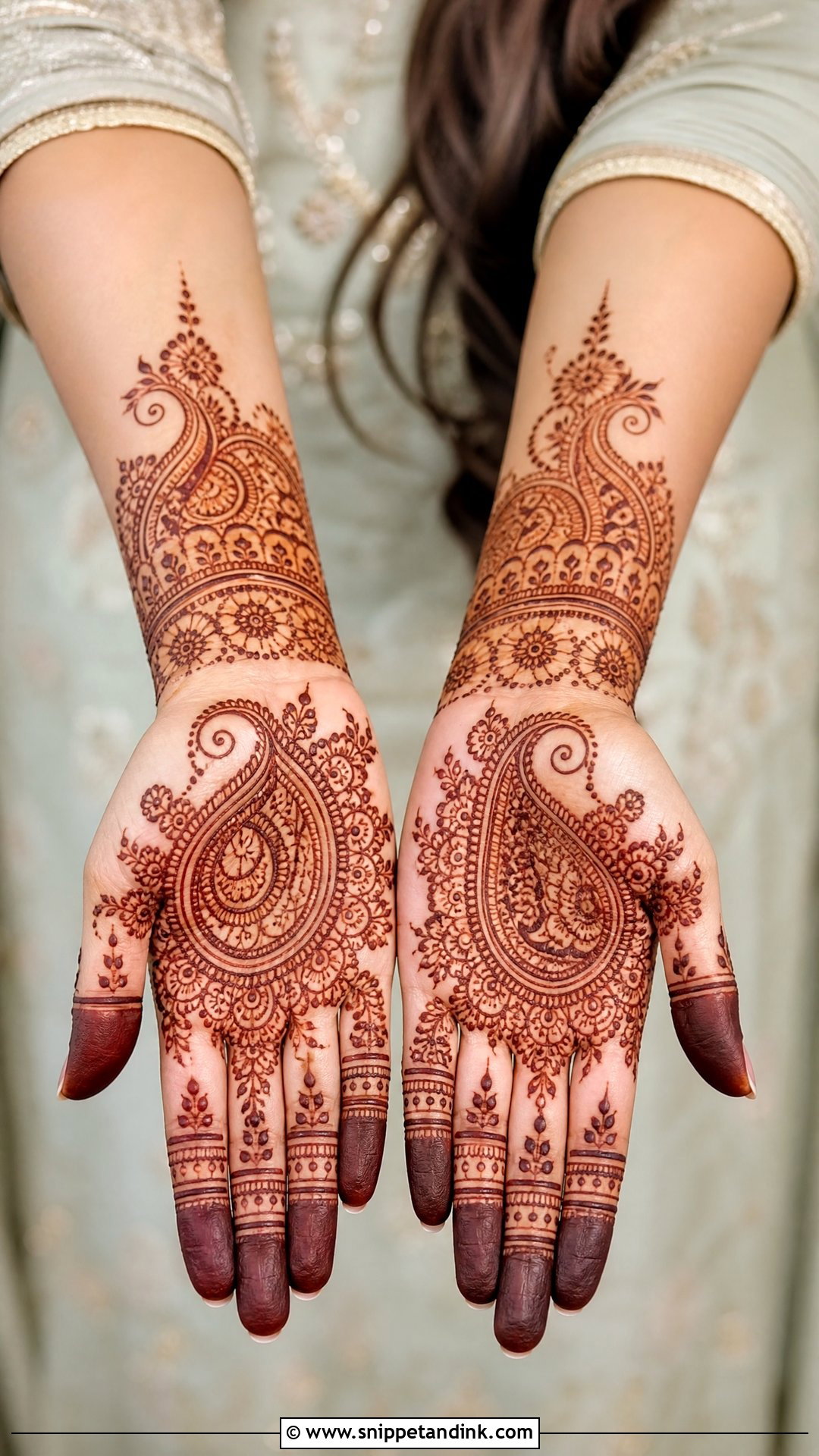
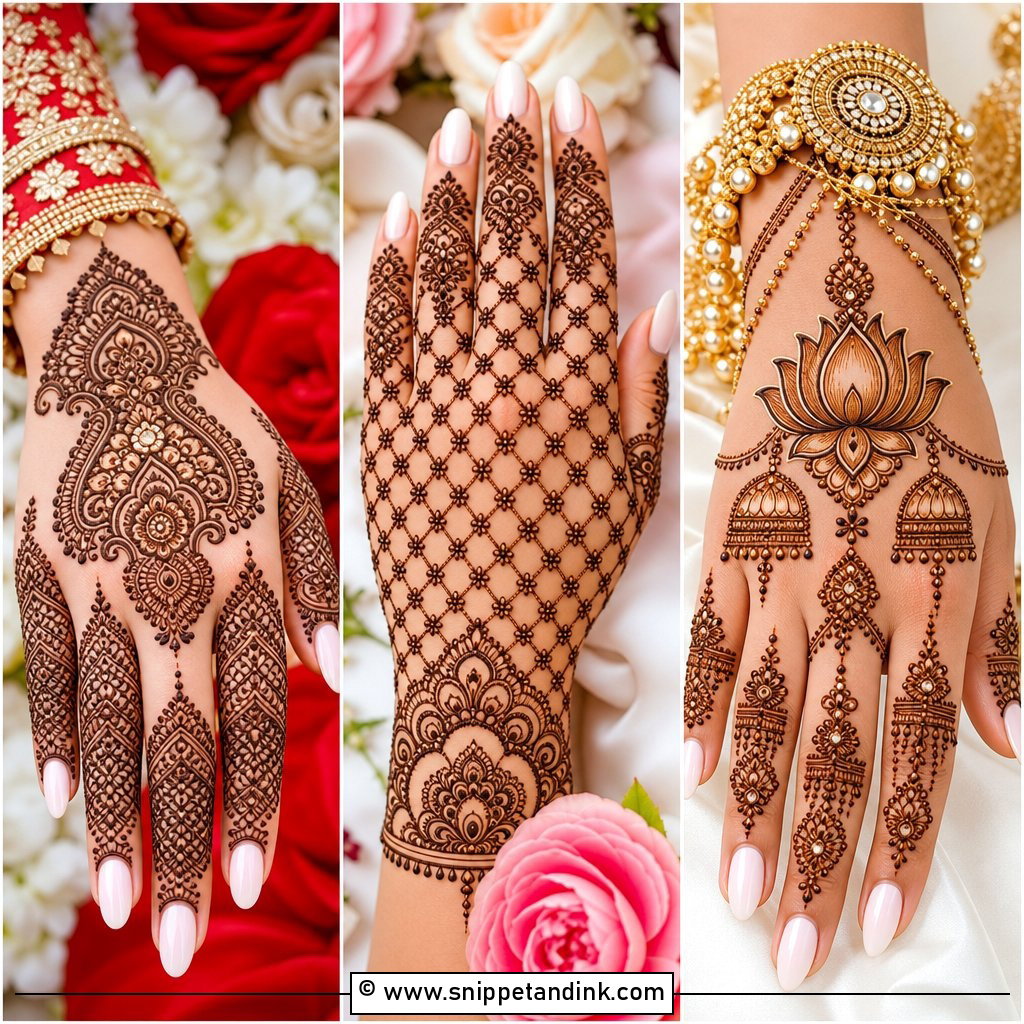
Paisley is one of the oldest bridal motifs, and it holds stain well because its broad curves give the paste a solid area to sit on. Even a light design comes out rich. I usually place one large paisley on the palm and connect smaller paisleys, flowers and leaves toward the wrist and fingers, with open skin around each so the shape stands out. Inner lines and dots add detail, but keep the background clear; a paisley crowded by filler loses its outline once the colour deepens.
16. Simple Bridal Mehndi With Jaali
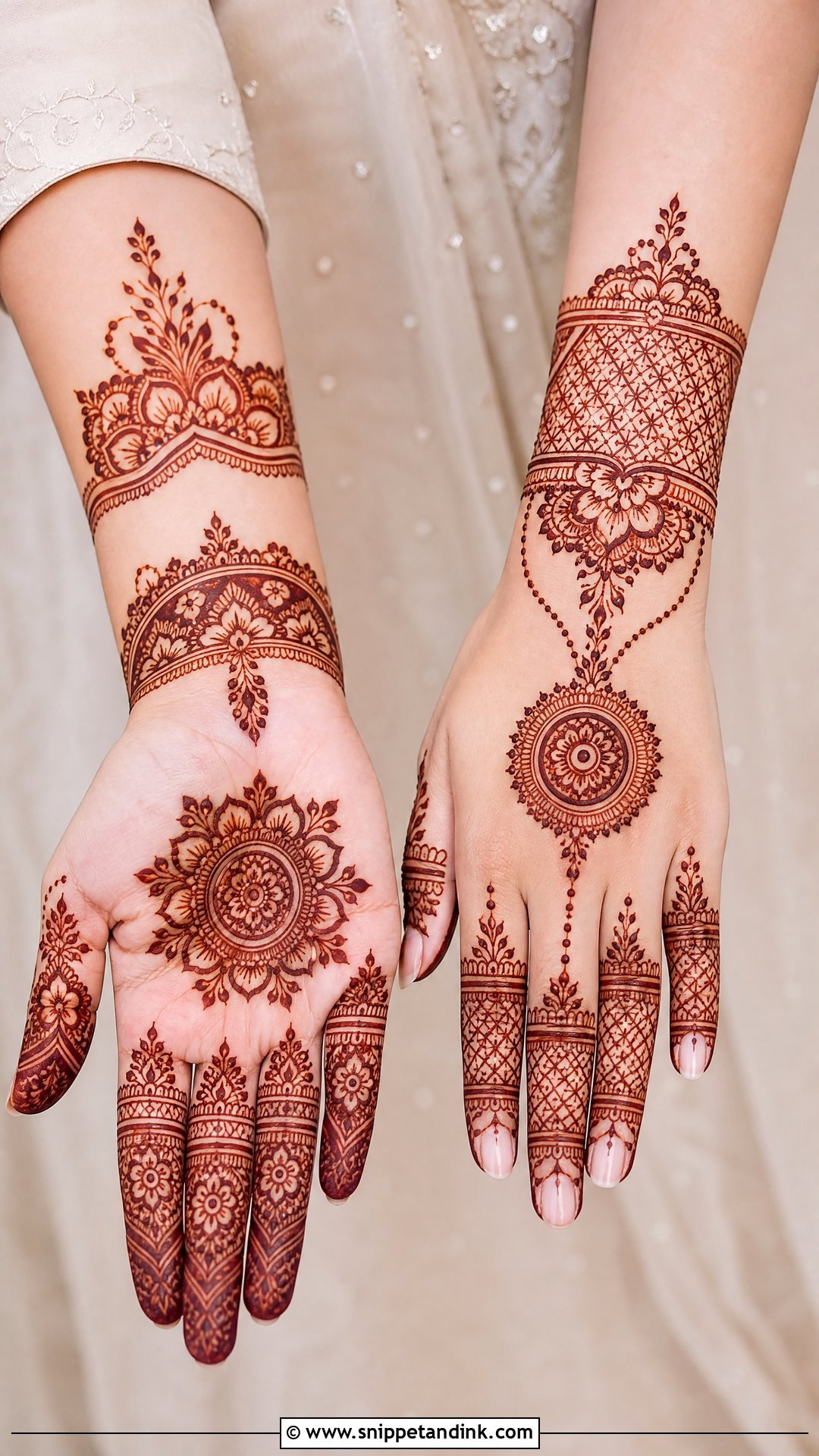
Jaali is the lace-like mesh of crossing lines, and it does most for a design in small panels: the back hand, a palm corner, the wrist band or a single finger section. Mesh needs every line at the same thickness, so it’s the first place an inexperienced hand on the cone shows. I frame each panel with flowers, a mandala or a paisley border and leave skin around it. The crosshatch adds texture to close-up photos without adding much time in the chair.
17. Simple Bridal Mehndi For Engagement
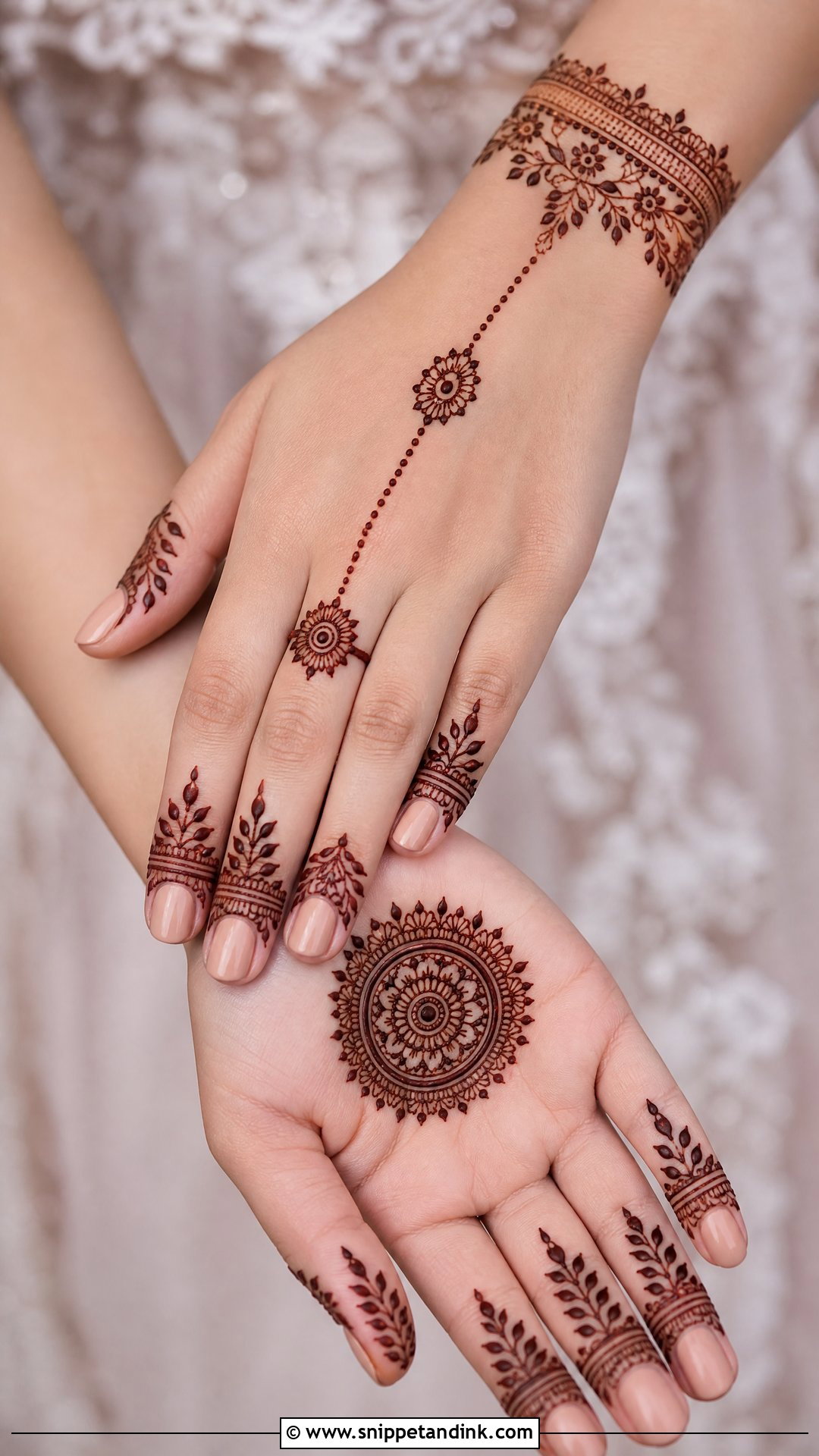
Simple bridal mehndi for engagement gets planned around the ring, since that’s what every photo of your hands will show. I keep the ring finger and the skin around it open, then decorate the wrist, the other fingers and the back of the hand with a floral bracelet or jewelry layout, with a small mandala or a light vine on the palm. If heavier henna is coming later for the wedding, this keeps the two designs from competing. A light layout also sits comfortably with a gown, a saree or a fusion outfit.
18. Simple Nikah Bridal Mehndi
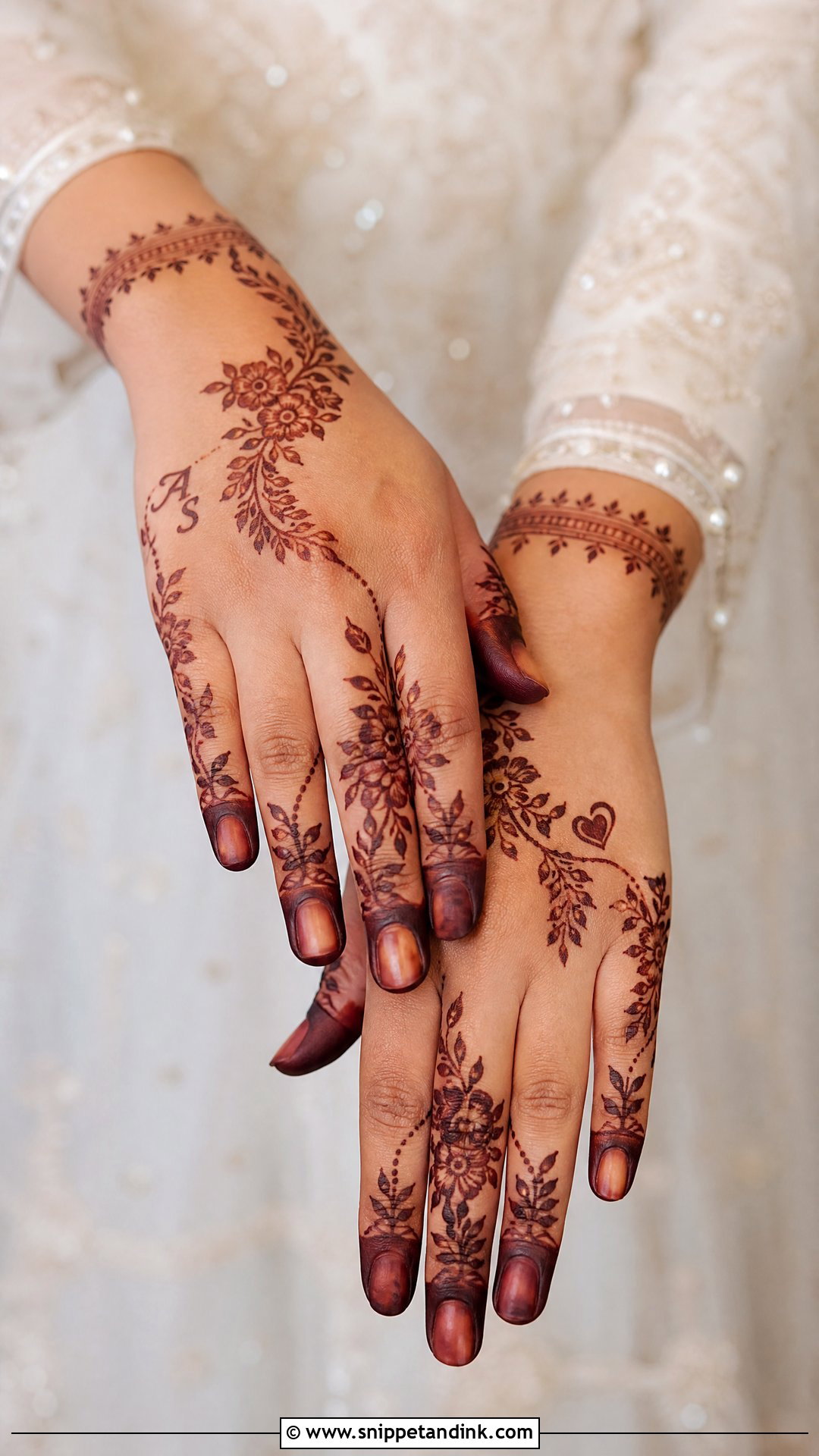
For a nikah I mostly see Arabic vines, floral trails, jewelry back-hand patterns or a neat palm mandala, and lighter coverage suits white, pastel and sharara outfits. Personal touches can be initials, a small heart, the date or a subtle name detail. I fill the fingertips and add a slim wrist border so the hand looks finished without a crowded palm. Signing the nikahnama puts your hands in close-up, so clean finger lines matter more here than palm detail.
19. Simple Bridal Mehndi For Feet
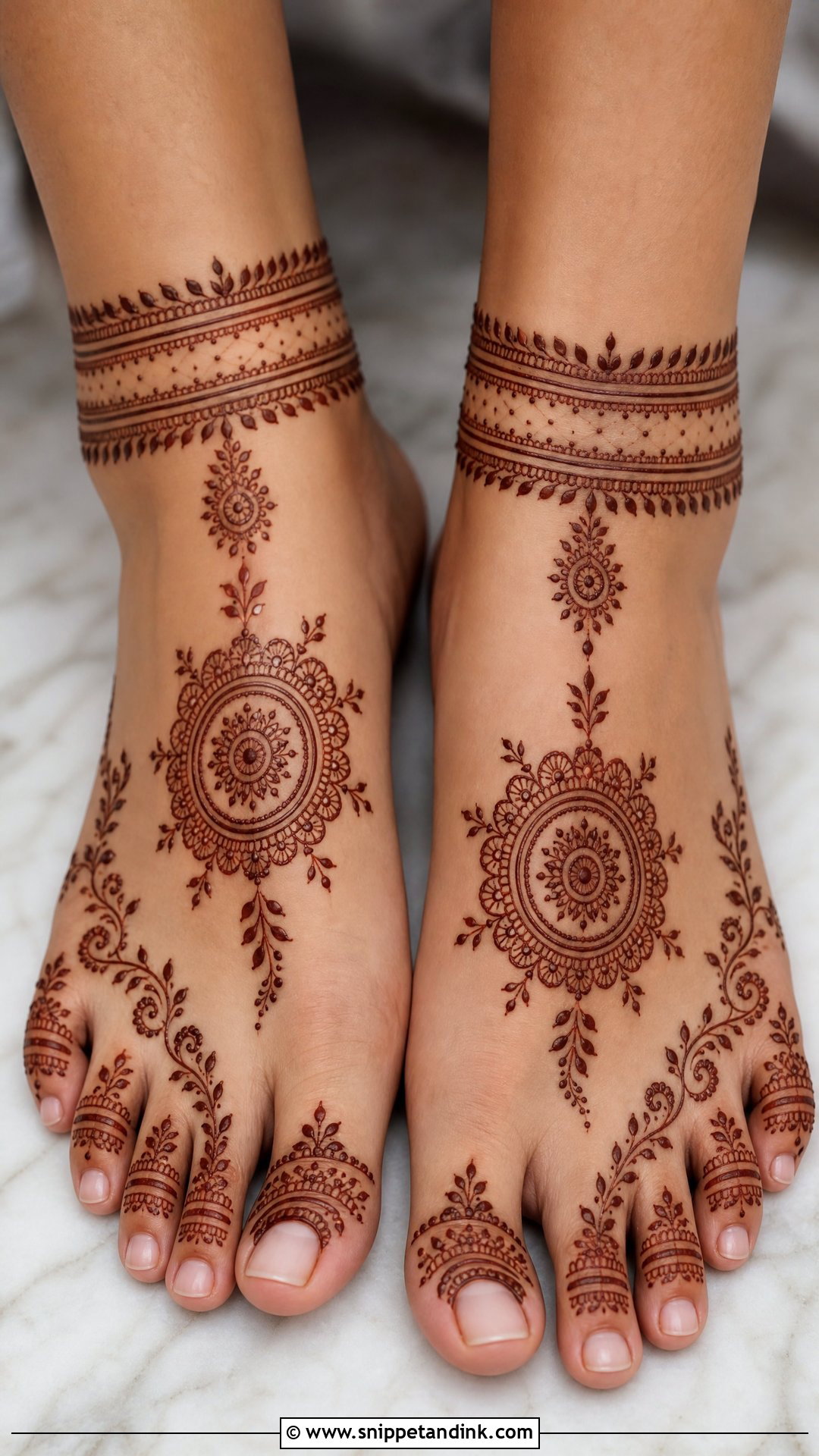
Feet stain dark, often as dark as palms, but they are also the slowest to dry and the easiest to smudge while you wait. I cover the toes, the top of the foot and a band just above the ankle, using a central mandala, leafy anklet bands or vines. The heel and sides stay light because sandal straps rub there and that part wears off first. Repeat a motif or two from your hands so both read as a set.
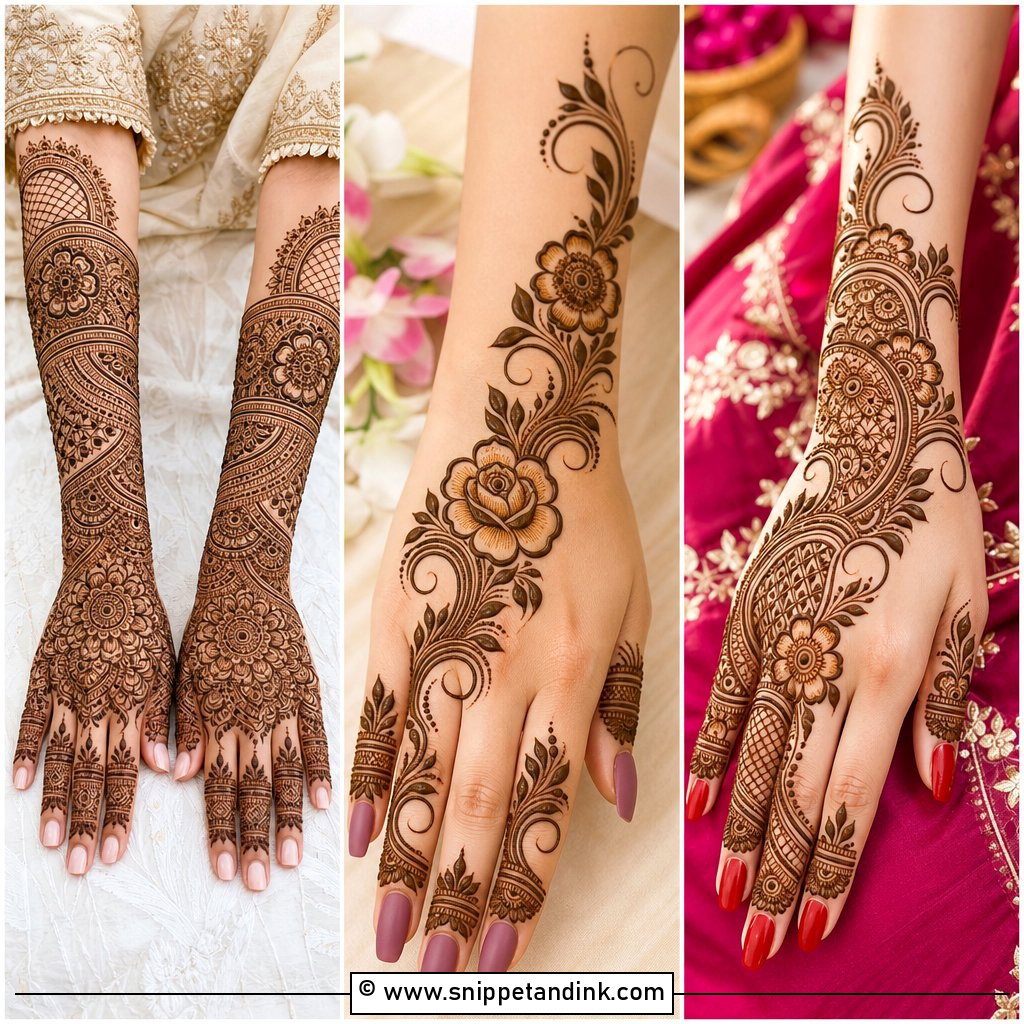

20. Simple Minimal Bridal Mehndi
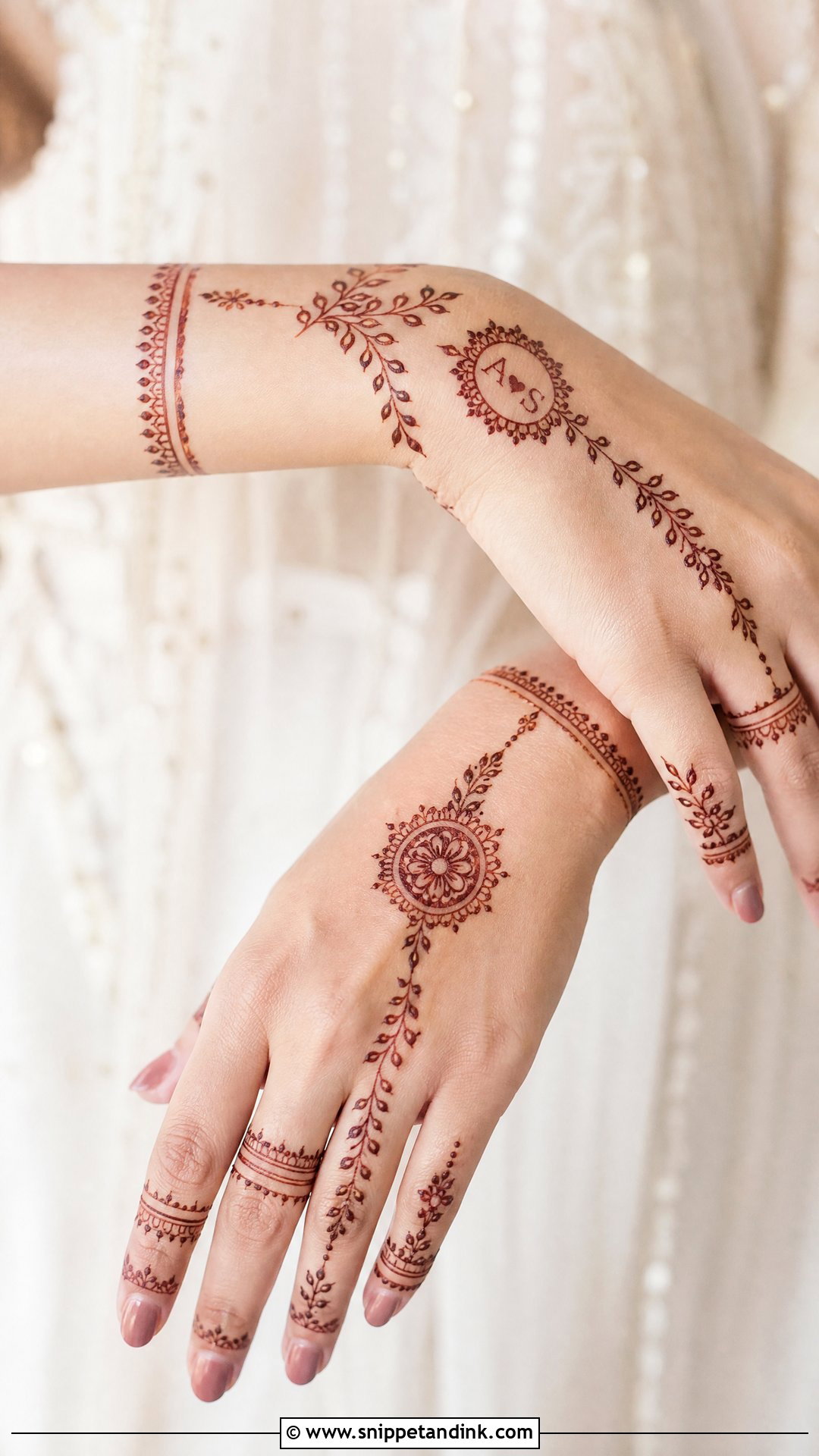
Minimal means a small mandala, a fine floral trail, delicate finger details and a slim bracelet, with plenty of bare skin. It’s a natural fit for intimate weddings, destination ceremonies and courthouse vows, and the easiest sitting of the lot. To keep it bridal rather than casual, I lean on symmetry between both hands and add one personal detail, such as initials or the date. With so few lines, paste quality and aftercare decide everything, so read the stain notes below before your appointment.
Getting a Deep Stain From Fewer Lines
A light design has nowhere for a pale stain to hide, so aftercare matters even more than it does with full coverage. Henna colours in stages: the skin under the paste starts bright orange and oxidises to red-brown over the next two days.
The first twelve hours
Leave the paste on as long as you can manage, ideally six to eight hours or overnight. I dab a little lemon and sugar mix over the dried paste so it stays stuck to the skin, and I tell brides to keep their hands warm, since cold hands stain more slowly. When it’s time, scrape or rub the paste off dry rather than washing it away.
The two days after
Keep the design away from water for as long as you can, ideally the first twelve to twenty-four hours. Rub a little natural oil or balm over it before a shower, and skip chlorine pools, scrubs and sanitiser on the stained areas. Waxing and manicures belong before your henna appointment, not after it.
If the colour looks orange the next morning, don’t panic. That’s exactly where it should be at that stage, and it will keep deepening through the day.
Bare Skin Is Part of the Design
Coverage is a personal call. Some brides feel most like themselves in a full hand, others in one open Arabic line or a single jewelry band on the back of the hand. Start from your outfit, your ceremony and the shape of your hands, and ask your artist for clean lines and motifs big enough to stain clearly. A light design feels every bit as bridal when the layout is planned, and it leaves you free to eat, hug people and hold a cup of chai the evening it goes on.
You'll Like These Ideas:




Leave a Reply