
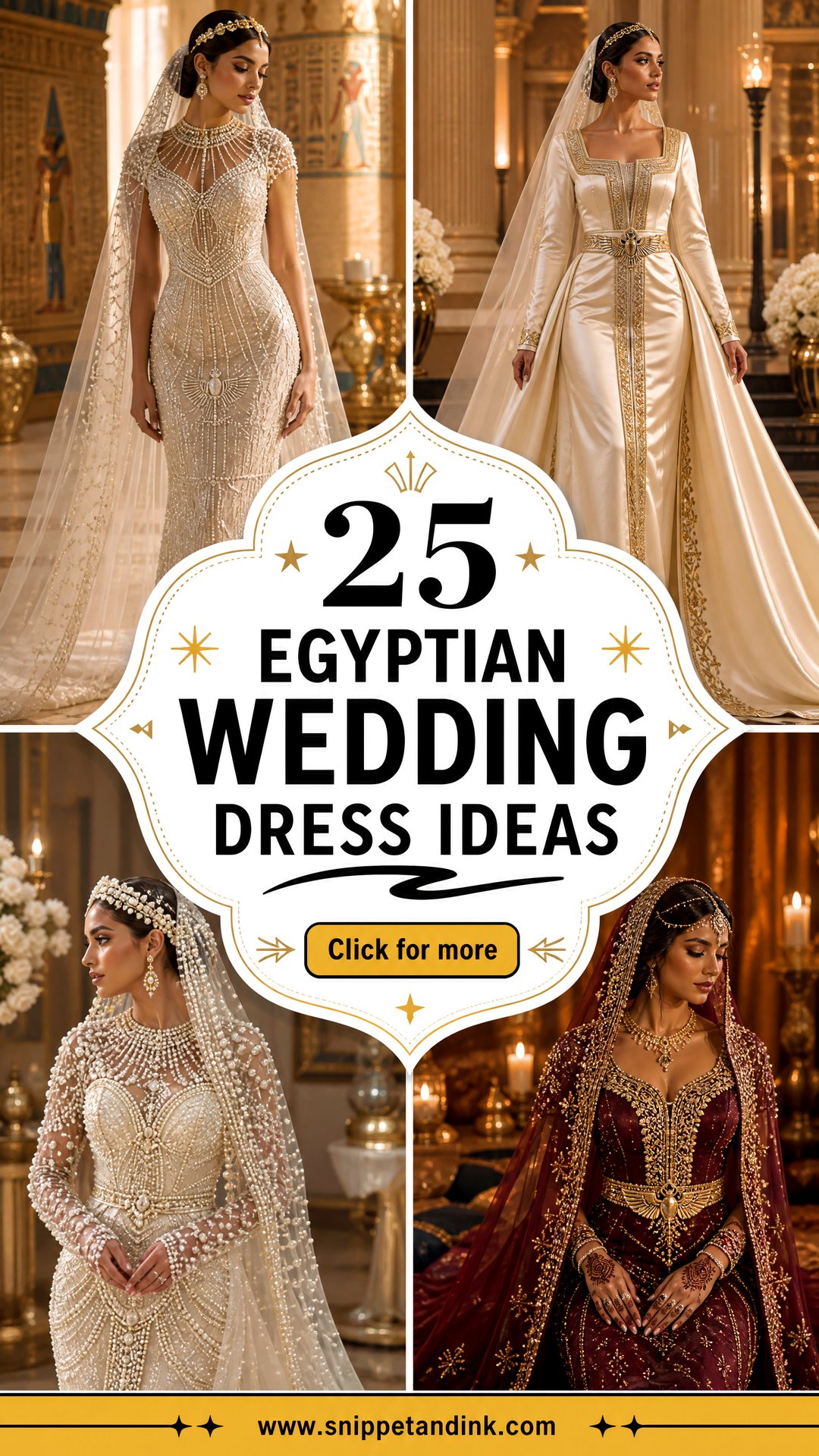
An Egyptian wedding asks a lot of one dress. There’s the zaffa entrance with drums and a crowd pressing in, hours of photos under hotel ballroom lights, and a dance floor that rarely empties before midnight. When I dress a bride for this kind of night, gold embroidery, modest cuts, long veils and heavy fabrics come up in almost every conversation, and so do the practical questions: can she sit, can she raise her arms, will the sleeves stay put. Below are twenty-five directions I’d show a bride, from a white ball gown and a kaftan-style gown to a beaded sheath, a cape dress and a hijab-friendly bridal look. Each one comes with what I’d check before saying yes to it.
Planning One Gown Around a Zaffa, a Katb el-Kitab and Hours of Dancing
Before I pull a single dress for an Egyptian wedding, I ask the bride to walk me through the night. The answers change the dress more than any trend does.
The entrance
During the zaffa you’re walking slowly through a crowd with drummers, dancers and family close around you. A long train gets stepped on. A cathedral veil gets caught on someone’s sleeve. If you want both, plan a person whose only job during the entrance is your train, and make sure the veil comb is sewn in rather than just slid into the hair.
The contract signing
If the katb el-kitab happens on the same day, you may sit at a table for some time, sign papers and be photographed from close up. That’s where a stiff corset or a mermaid skirt becomes uncomfortable. Many brides wear a simpler dress for the signing or plan the signing for a different day altogether, and I think that’s the more relaxed choice.
The coverage your family expects
Have this conversation early, ideally before your first appointment. Sheer illusion sleeves, a lined bodice, a capelet or a fitted jacket can all be added later, but it’s cheaper and neater to build coverage into the design than to patch it on after the dress arrives. Tell your stylist plainly what needs covering and for which part of the day.
- Order heavily embroidered or hand-beaded gowns well in advance; many need several months to make before alterations even start.
- Plan on at least two or three fittings, with the final one roughly two to three weeks before the wedding.
- Bring the actual shoes, underwear and hijab or veil you’ll wear to every fitting, because each one changes the hem and the fit.
1. Egyptian White Ball Gown Wedding Dress
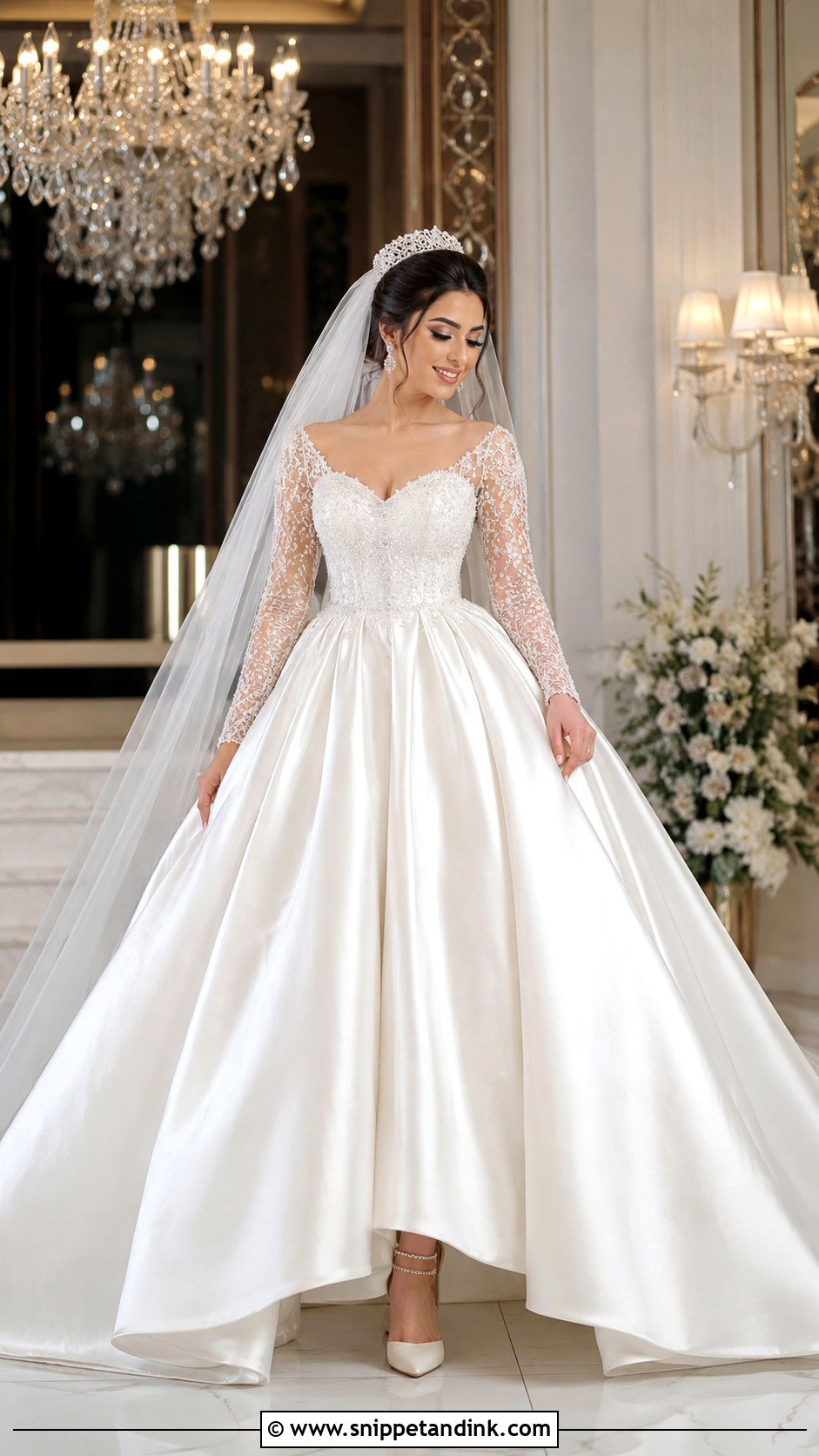
A full ball gown suits the scale of a big hotel hall, where a slimmer dress can disappear against the decor. What carries the volume is the bodice: it needs proper boning and a firm waist stay, or the weight of a mikado or layered tulle skirt drags it down by the second hour. I always have the bride sit on a chair at the fitting, because a hooped skirt behaves very differently on a kosha sofa than standing at the mirror. Crystal or gold-toned beading around the neckline and waist reads well from the back of the room. Finish with a long veil, a tiara and pointed heels you’ve already broken in.
2. Egyptian Long Sleeve Lace Wedding Dress
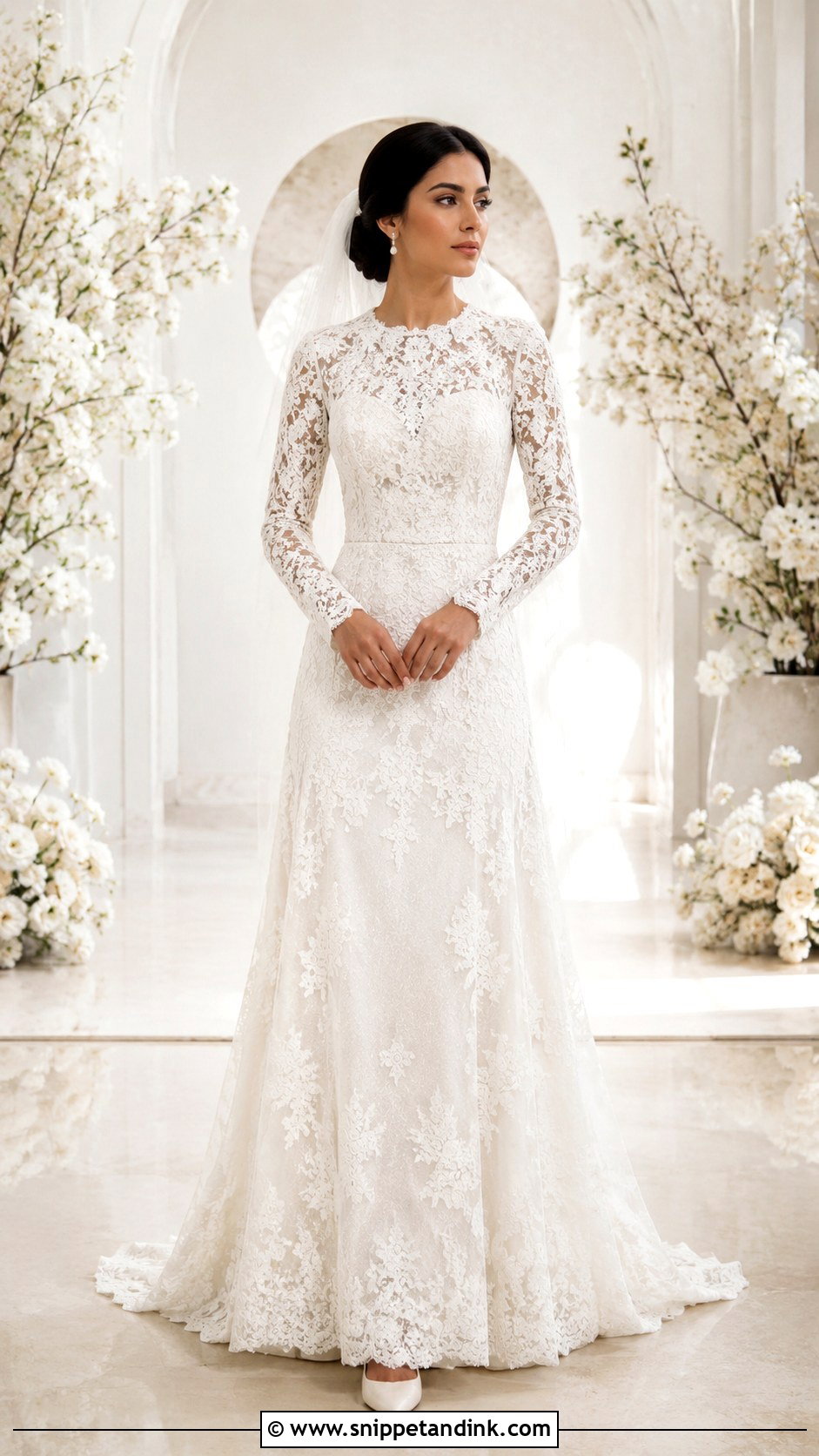
Long lace sleeves give coverage and still look soft on camera, which is why so many brides start here. The detail I check first is the sleeve lining. Sheer lace over bare arms reads lighter; a lined sleeve looks more modest but can trap heat, so ask for a breathable lining if the hall runs warm. A-line and fit-and-flare skirts both sit well under lace. I’d also have the sleeve cut a touch longer than the wrist bone, because lace rides up the moment you hug guests. Keep the rest quiet: a fine veil, pearl studs, ivory heels. If you want shine, lace with tiny sequins catches the light without needing a necklace.
3. Egyptian Hijab Wedding Dress
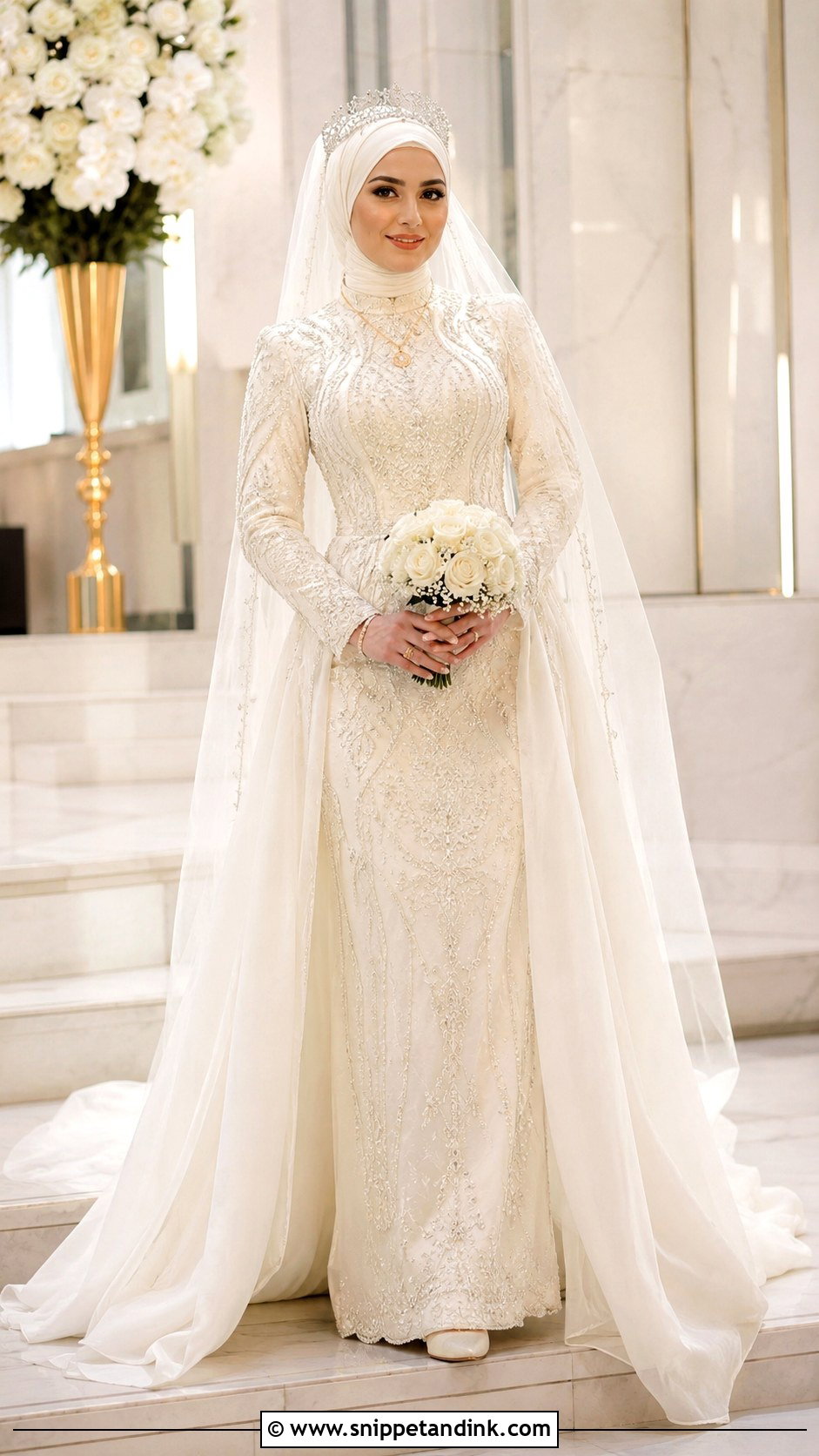
With a hijab gown, the outfit only looks finished when the dress and the hijab are planned as one piece. I match the fabric tone before anything else, because an ivory chiffon hijab against a bright white satin gown looks like two different weddings in photos. Satin, crepe, lace or tulle all work for the gown; for the hijab, silk or chiffon drapes best, and soft jersey holds its shape under a headpiece through a long evening. A high neckline, fitted cuffs and a flowing skirt give a clean line from head to hem. I anchor the veil at the crown with a few discreet pins into the underscarf so it doesn’t pull the hijab off its fold when someone steps on the train.
4. Egyptian Gold Embroidered Wedding Dress
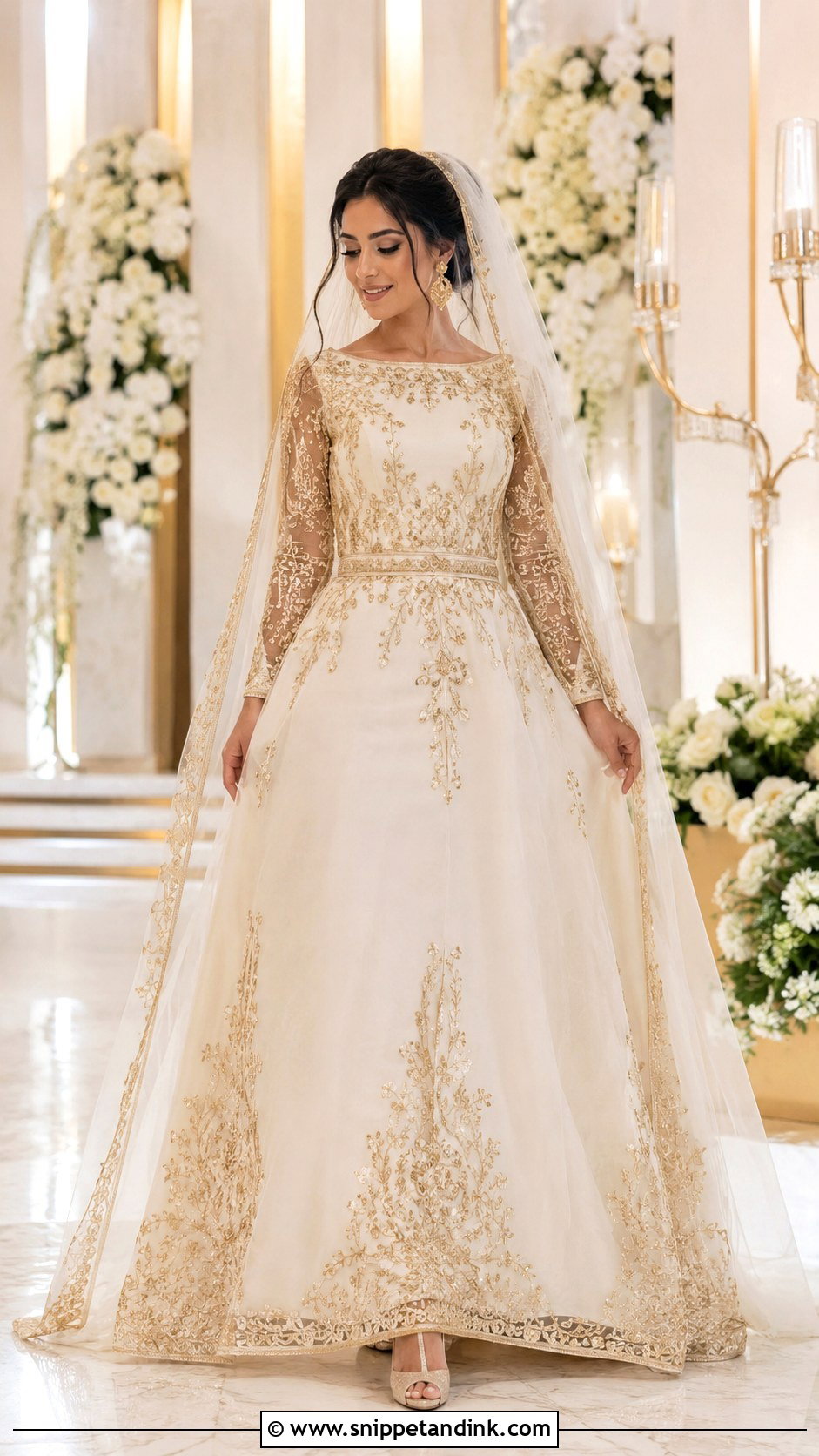
Gold threadwork gives the gown an Egyptian warmth on its own, so I rarely add much else. On ivory or champagne fabric it reads richly in daylight and glows under warm evening lighting; on bright white it can look brassy, which is worth checking under the actual venue lights if you can. Place the embroidery where you want the eye to land: bodice, sleeves, waist or hem, rarely all four. Real metallic thread is heavier and stiffer than it looks, so a fitted bodice with an A-line skirt carries it more comfortably than a slim sheath. Keep metals consistent with the thread colour, and a sheer veil edged in gold ties the whole thing together.
5. Egyptian Beaded Sheath Wedding Dress
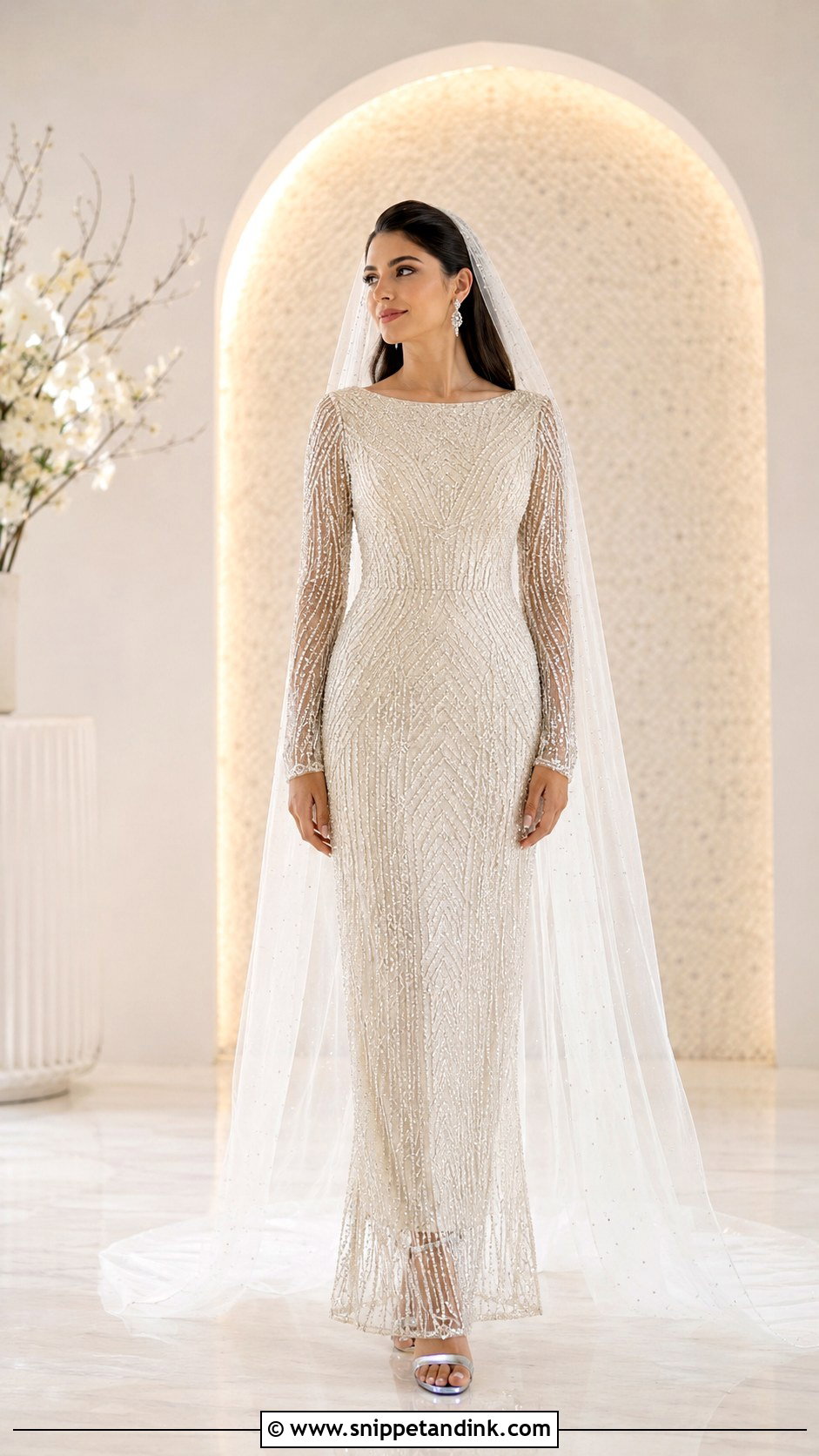
A beaded sheath gives you shine without a skirt to manage, and it’s one of the easiest dresses to dance in. The catch is weight. Dense beadwork on a slim cut pulls downward, so I look at how the dress is supported inside: a good one has a corseted lining doing the work, not the beaded layer. Vertical rows or long pearl patterns lengthen the body; scattered geometric beading reads more modern. Sit-test it, because beads on a fitted skirt can dig in. For coverage, ask about long sheer sleeves or a capelet, then add a sleek veil and crystal earrings.
6. Egyptian Cape Wedding Dress
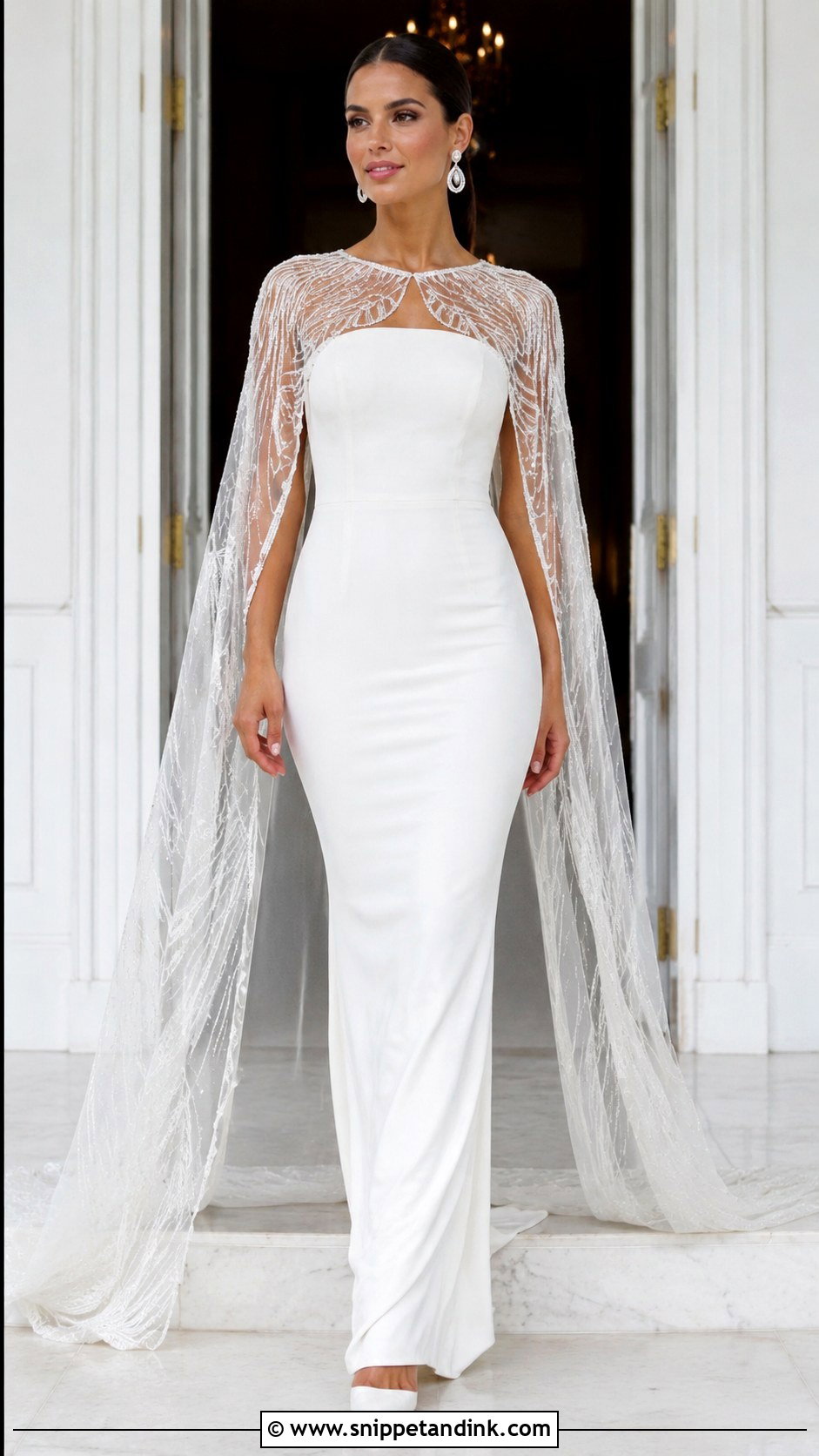
A cape replaces the veil and gives you movement every time you walk, which makes the zaffa entrance look spectacular on video. I prefer it on a clean, fitted base gown so the embroidered cape has a quiet background. It also covers the arms and back without the heat of full sleeves. What I watch for is how it’s attached: a cape sewn into the shoulder seams stays put, while one that hooks on can slide sideways when you hug relatives. Skip a statement necklace. A sleek bun, soft makeup and pointed heels are enough.
7. Egyptian Kaftan Wedding Dress
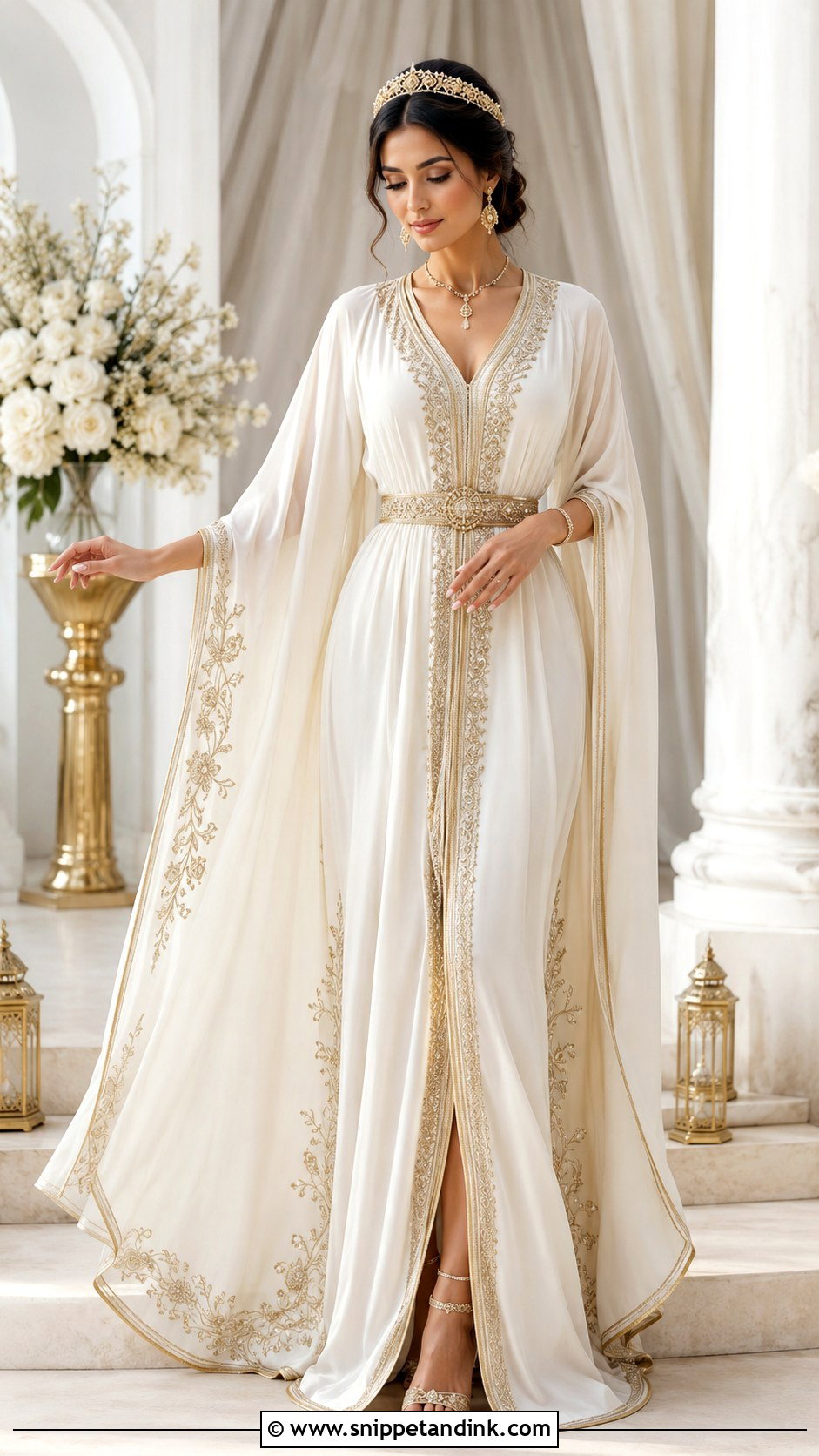
Kaftan-style gowns sit closer to traditional Arab dress than anything else here, and they’re the most comfortable option for a long night. The risk is that a loose kaftan can look shapeless in photos, so I always define the waist, usually with a beaded belt that’s stitched in place at the side seams so it doesn’t migrate. Silk, crepe, chiffon or satin drape well; chiffon over a crepe lining stops the gown from clinging when you’re warm. I like this one for henna-style evenings and smaller ceremonies, paired with gold jewellery and a matching veil or hijab.
8. Egyptian Mermaid Wedding Dress
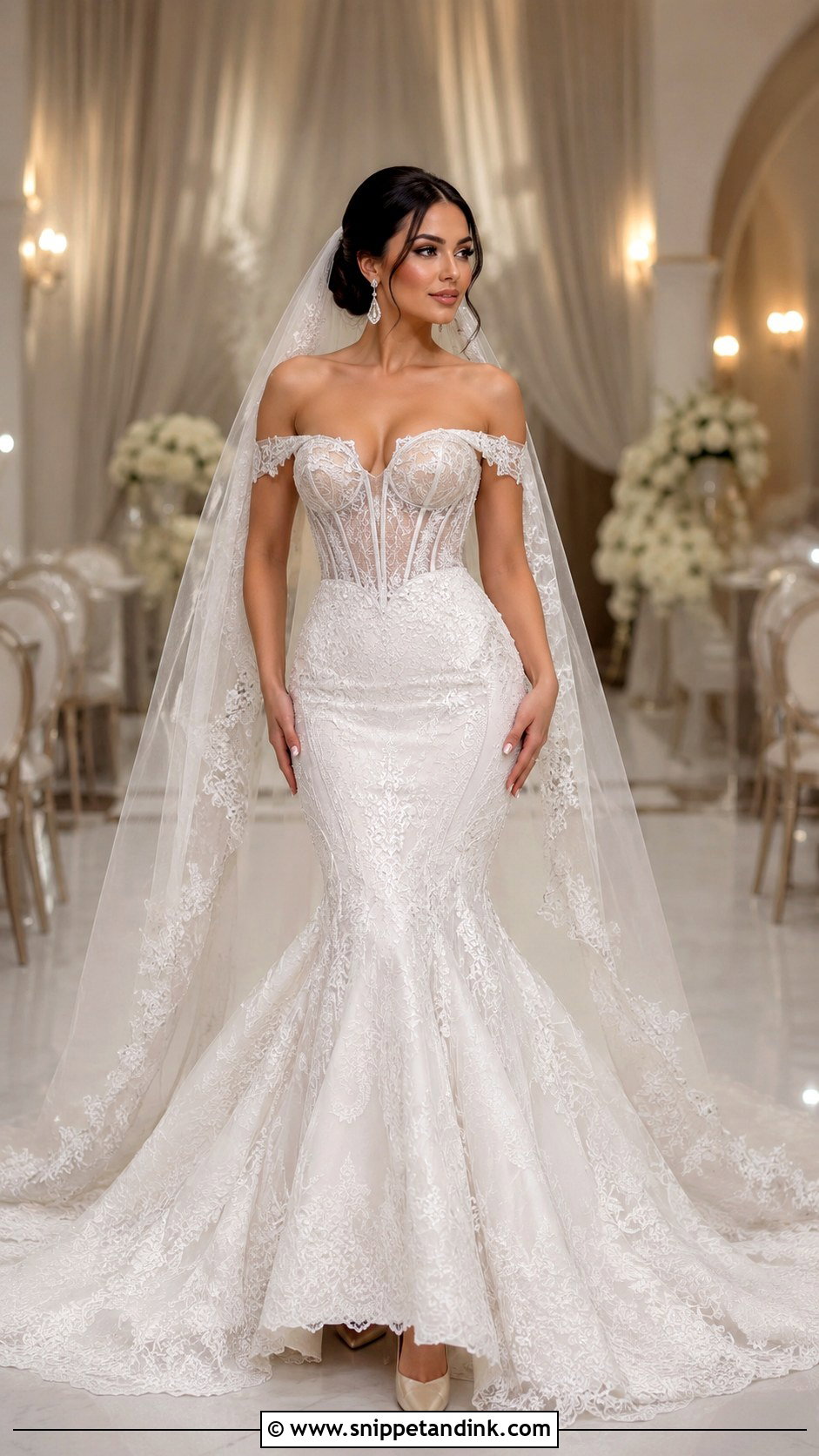
A mermaid gown hugs the bodice and hips and flares near the knee, so it shows shape more than any other cut on this list. Be honest about movement. A true mermaid restricts your stride, makes stairs slow and turns the zaffa into a careful shuffle. I have every mermaid bride walk the length of the boutique and climb a step before deciding. If it feels tight, a softer fit-and-flare that releases mid-thigh gives a similar line with real freedom. Lace, crepe, satin and beaded tulle all work; choose the neckline after you’ve settled the fit.
9. Egyptian A Line Wedding Dress
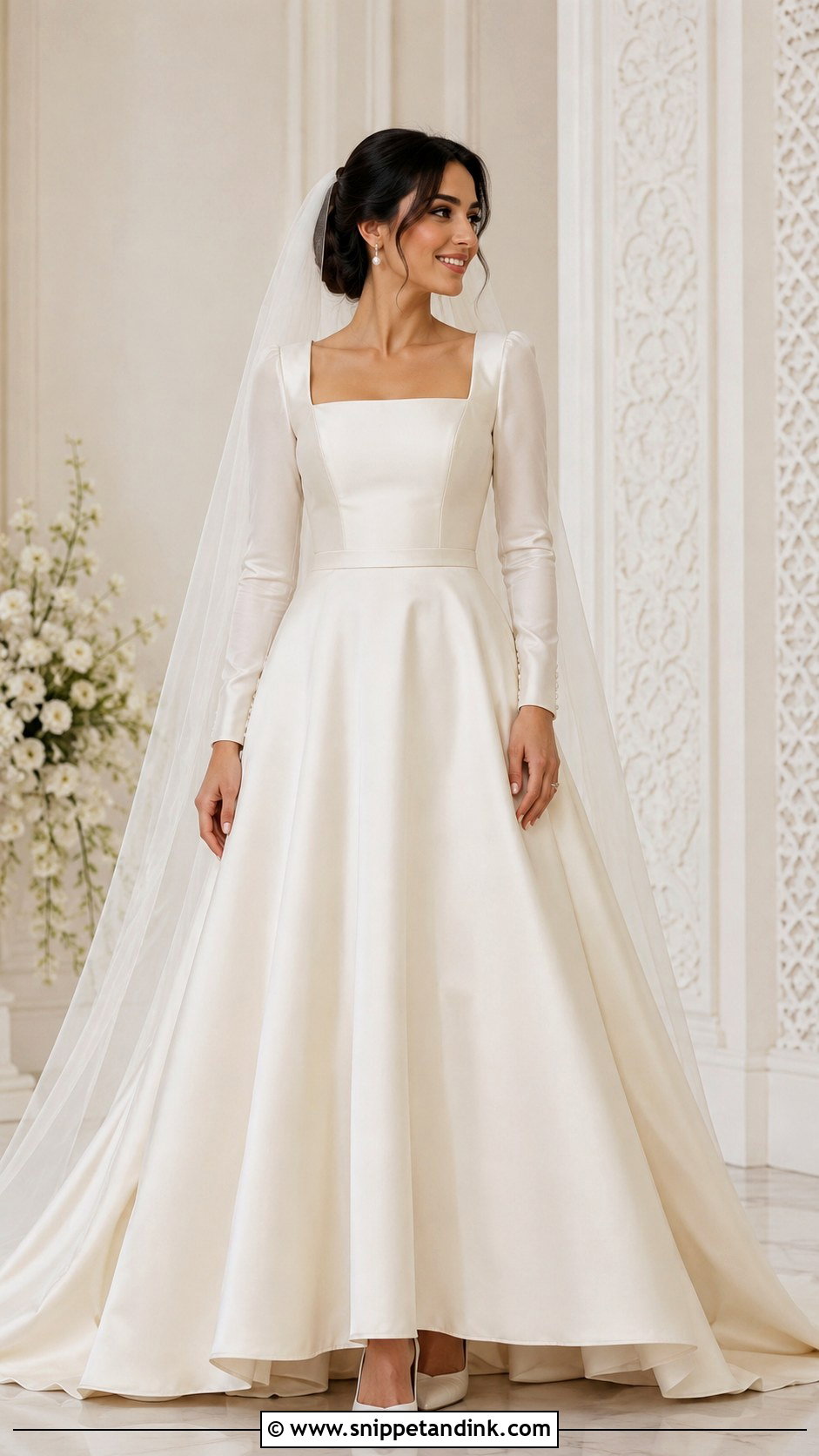
If a bride can’t decide, I usually put her in an A-line first. The fitted top and gently widening skirt suit most bodies and leave room to walk, sit and dance without managing a crinoline. Satin gives a clean finish, lace softens it, tulle makes it airy. It also takes almost any neckline, from strapless to a modest high neck with long sleeves, so it’s an easy base for adding coverage later. A long veil, pearls and comfortable heels finish it, and it’s the cut I trust most for a bride who wants one dress from ceremony to the last song.
10. Egyptian Satin Wedding Dress
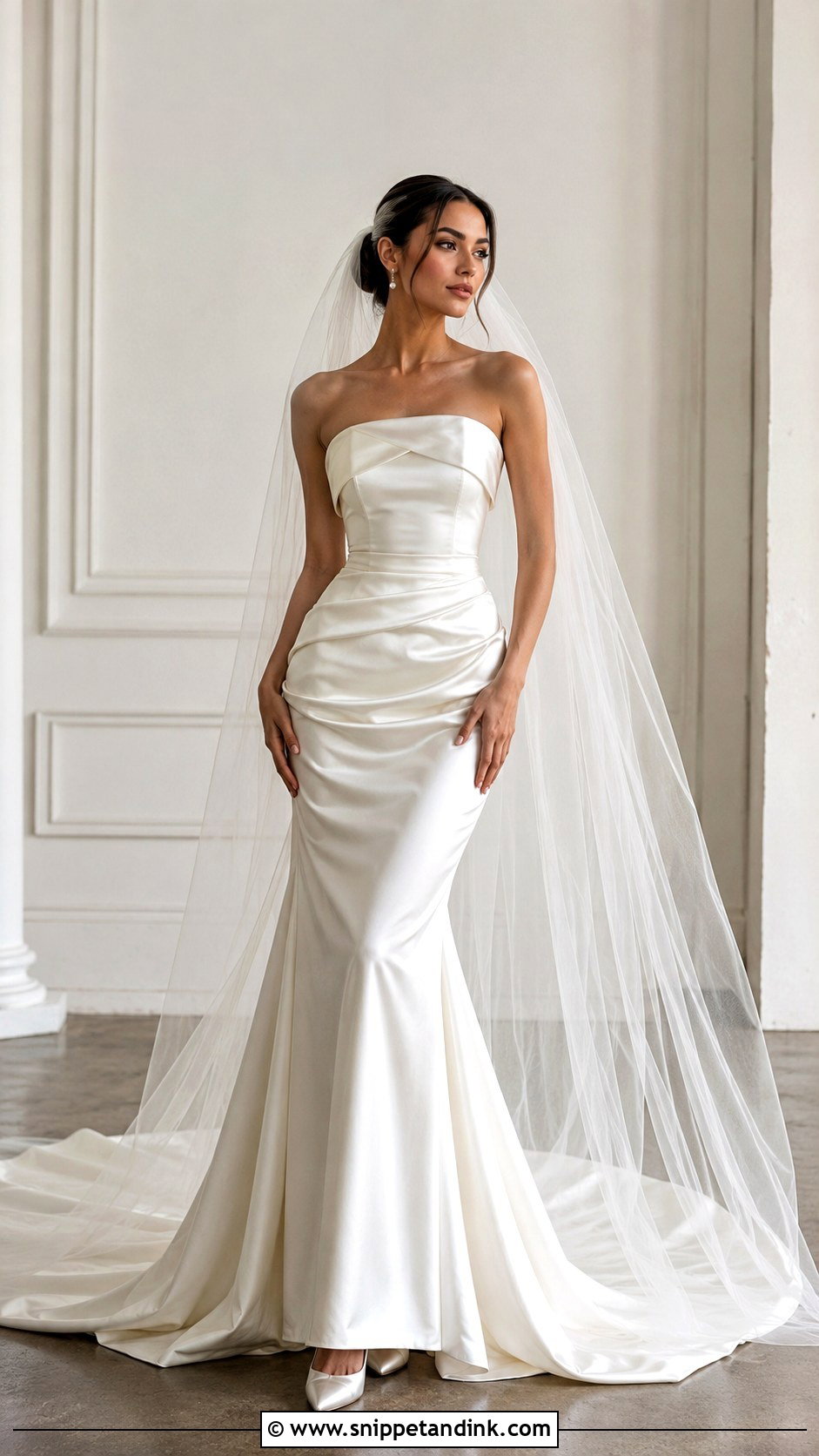
Satin has a quiet, expensive look, but it shows everything. Seams, a slightly loose bodice, even a crease from sitting in the car all register on satin in a way they never would on lace. That’s why fit matters more here than with any other fabric: I’d budget an extra fitting if you choose it. Heavier duchess satin holds a ball gown shape; a softer satin suits a simple long-sleeve dress. Ivory and pearl white tend to sit more kindly on warm skin than stark white. Keep the styling clean, and if the dress is plain, let one jewelled hairpiece or necklace carry the sparkle.
11. Egyptian Tulle Wedding Dress
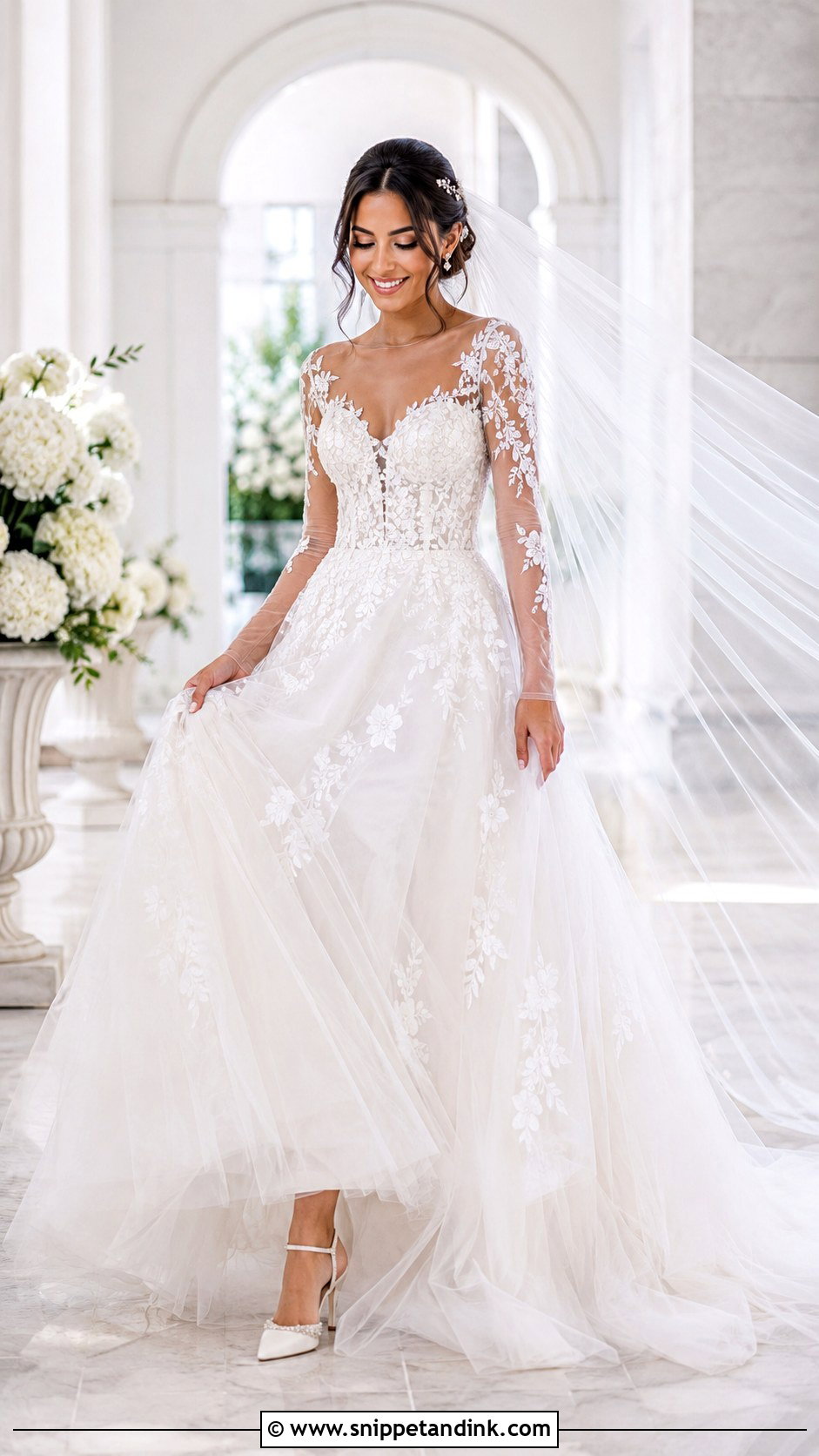
Tulle gives volume without stiffness, which is why it looks so airy in photos and feels lighter to wear than a satin ball gown of the same size. It does snag. Bracelets, rings with raised settings and the hook on a clutch can pull a thread, so I tell brides to check their jewellery against the skirt at the fitting. A fitted bodice with floral appliqué or a little sparkle keeps the gown from looking like a costume. For coverage, illusion sleeves on a lined bodice work well. Pearl hair pins and delicate heels keep it youthful but still formal enough for a large hall.
12. Egyptian Pearl Wedding Dress
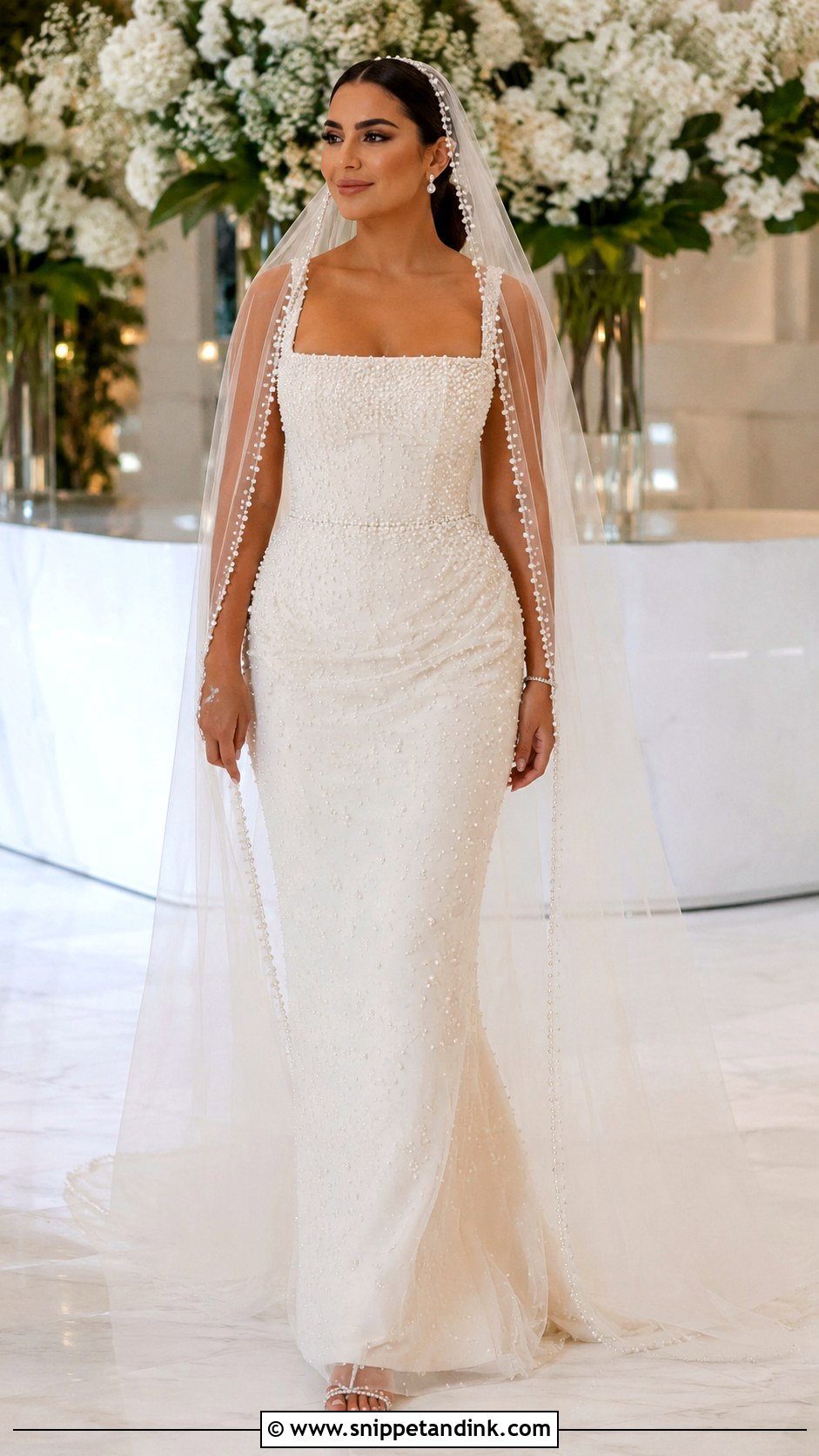
Pearls read as elegant rather than flashy, so they suit brides who find heavy crystal too much. They can be scattered across tulle, packed onto sleeves or used only as a neckline trim. Pearl beading is heavier than sequins, though, so a pearl-covered sleeve needs a firm lining or it stretches over a long night. Keep the silhouette simple: a sheath, an A-line or a long-sleeve gown lets the texture show. I’d limit accessories to pearl earrings and perhaps a pearl-edged veil. More than that and the details start competing.
13. Egyptian High Neck Wedding Dress
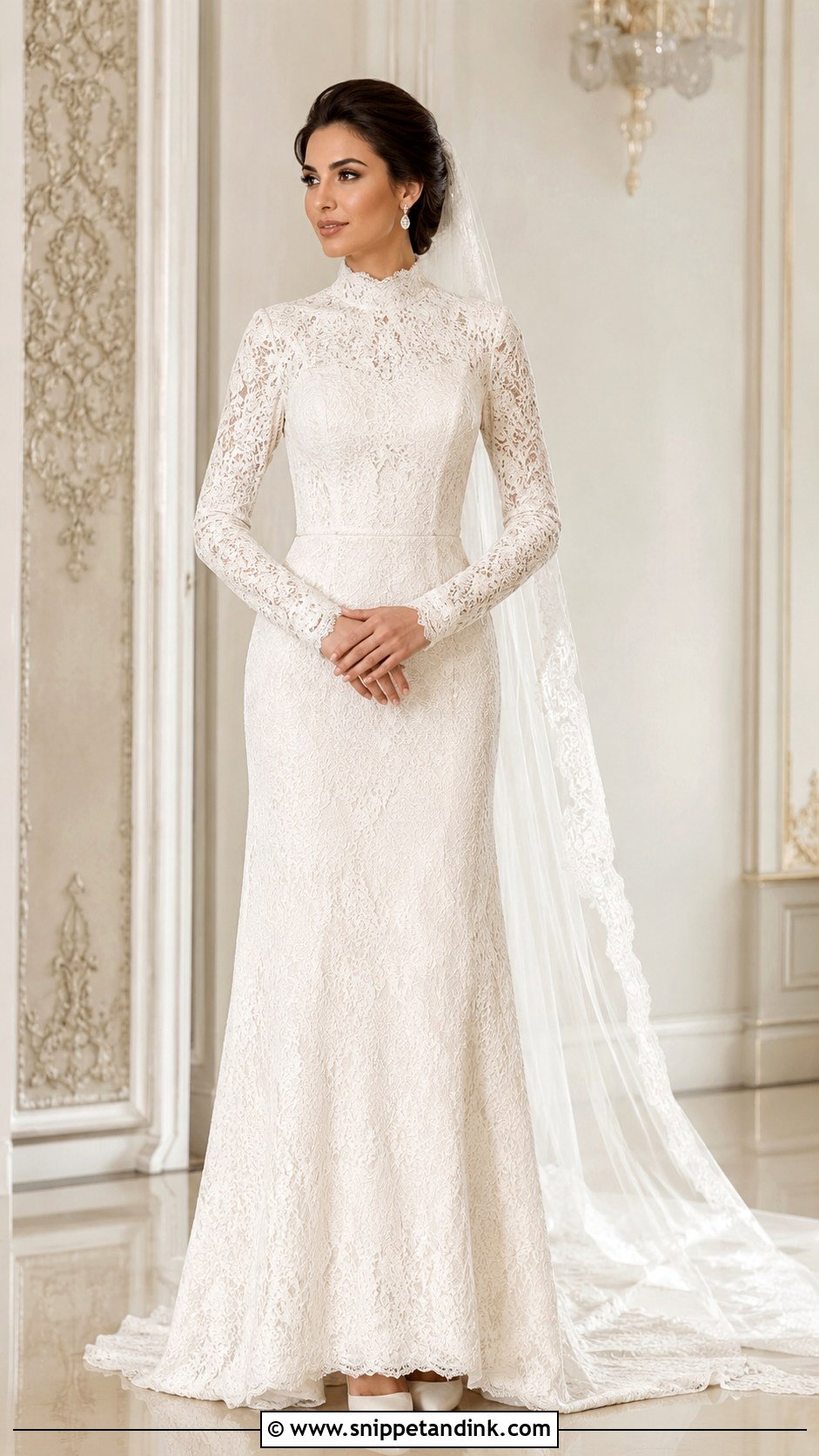
A high neck gives coverage at the throat while keeping the gown sharp and current. The fit at the collar is everything. Too tight and you’ll feel it every time you turn your head; too loose and it gapes in side profile shots. I check it with the bride sitting and looking down, because that’s how she’ll spend part of the evening. Lace softens the look, crepe modernises it, and beaded fabric suits an evening hall. Drop earrings work better than a necklace here. Pair it with a sleek updo or a coordinated hijab and a simple veil set behind the head.
14. Egyptian Off Shoulder Wedding Dress
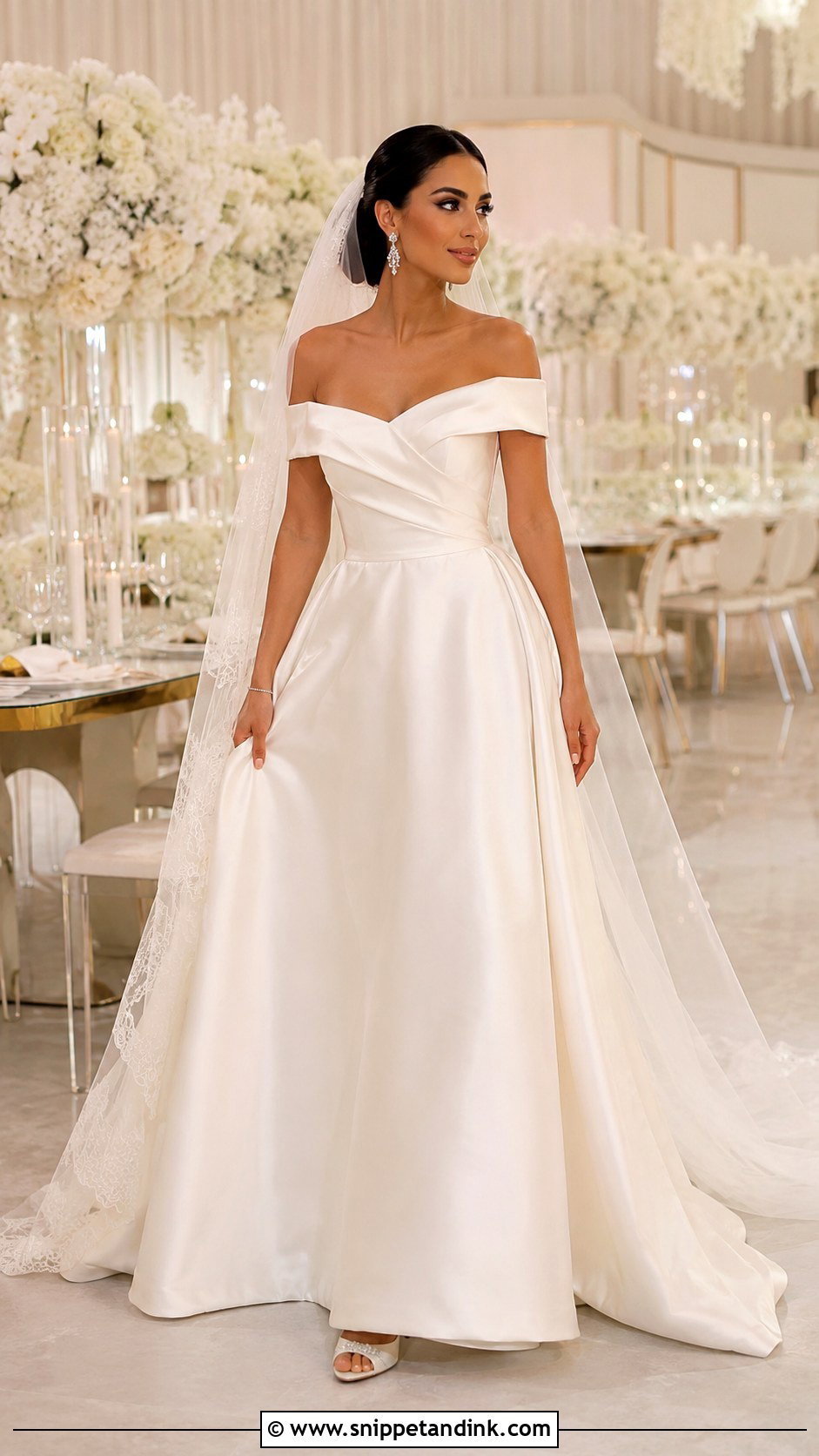
An off-shoulder neckline frames the collarbone and shoulders, and it’s one of the classic glamour shapes for good reason. The practical problem is arm movement. Fixed off-shoulder straps limit how high you can lift your arms, which matters at an Egyptian wedding where you’ll be dancing with your hands up. I always ask brides to raise both arms during a fitting. If that feels restricted, detachable sleeves or a sheer wrap solve it and also give you coverage for the ceremony. Keep jewellery light so the neckline stays the focus.

15. Egyptian Square Neck Wedding Dress
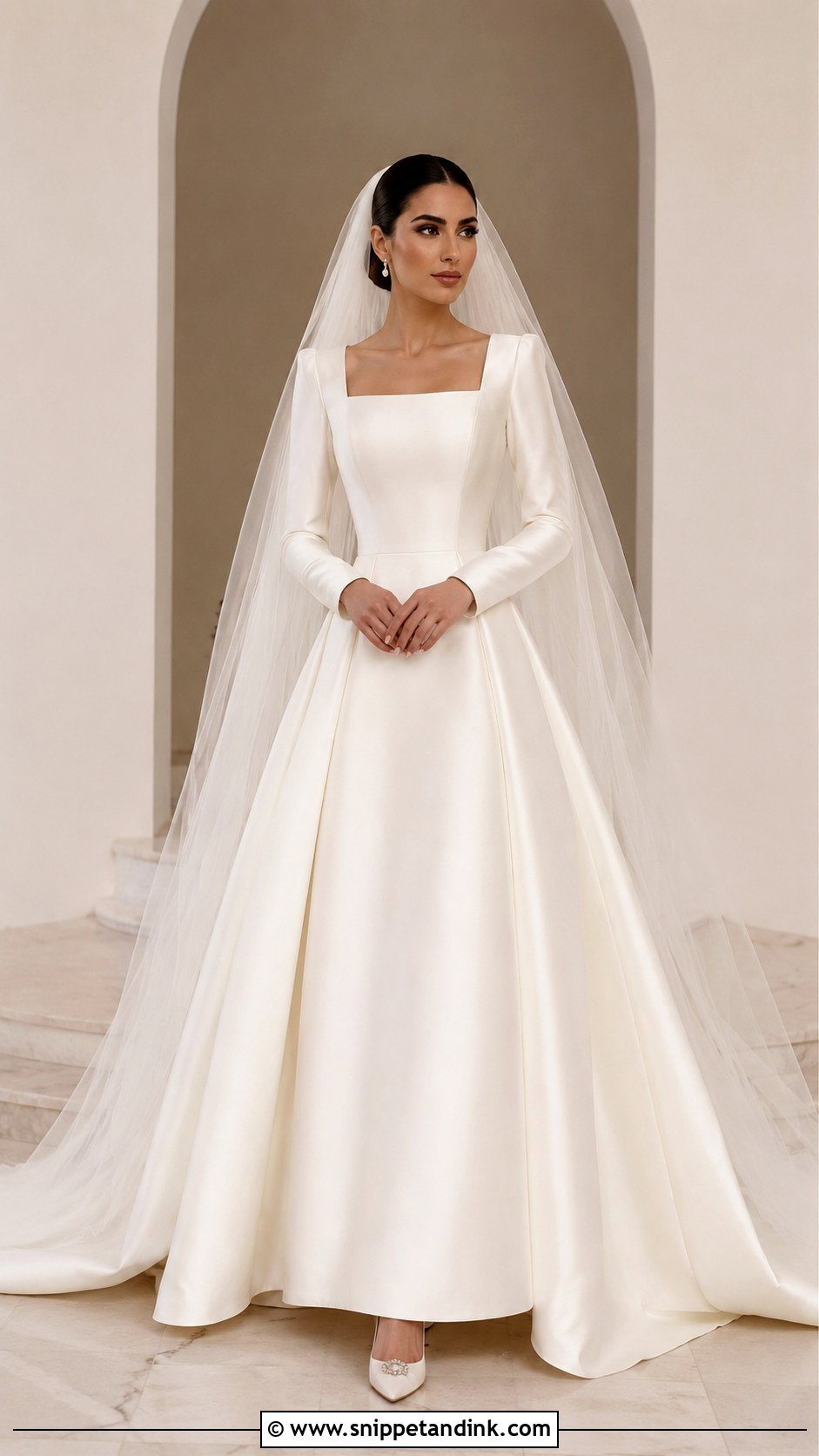
A square neck gives structure to the upper body and looks modern without trying hard. It’s a forgiving neckline to tailor because the straight edge sits flat when the bodice fits. Satin, crepe, lace and mikado all hold the shape well. Pair it with an A-line, a slim sheath or a ball gown, depending on how much volume you want. Long sleeves make it modest; short sleeves suit a daytime ceremony. On a plain bodice, a simple necklace sits nicely inside the square, which is one of the few necklines where I’d actually suggest one.
16. Egyptian Champagne Wedding Dress
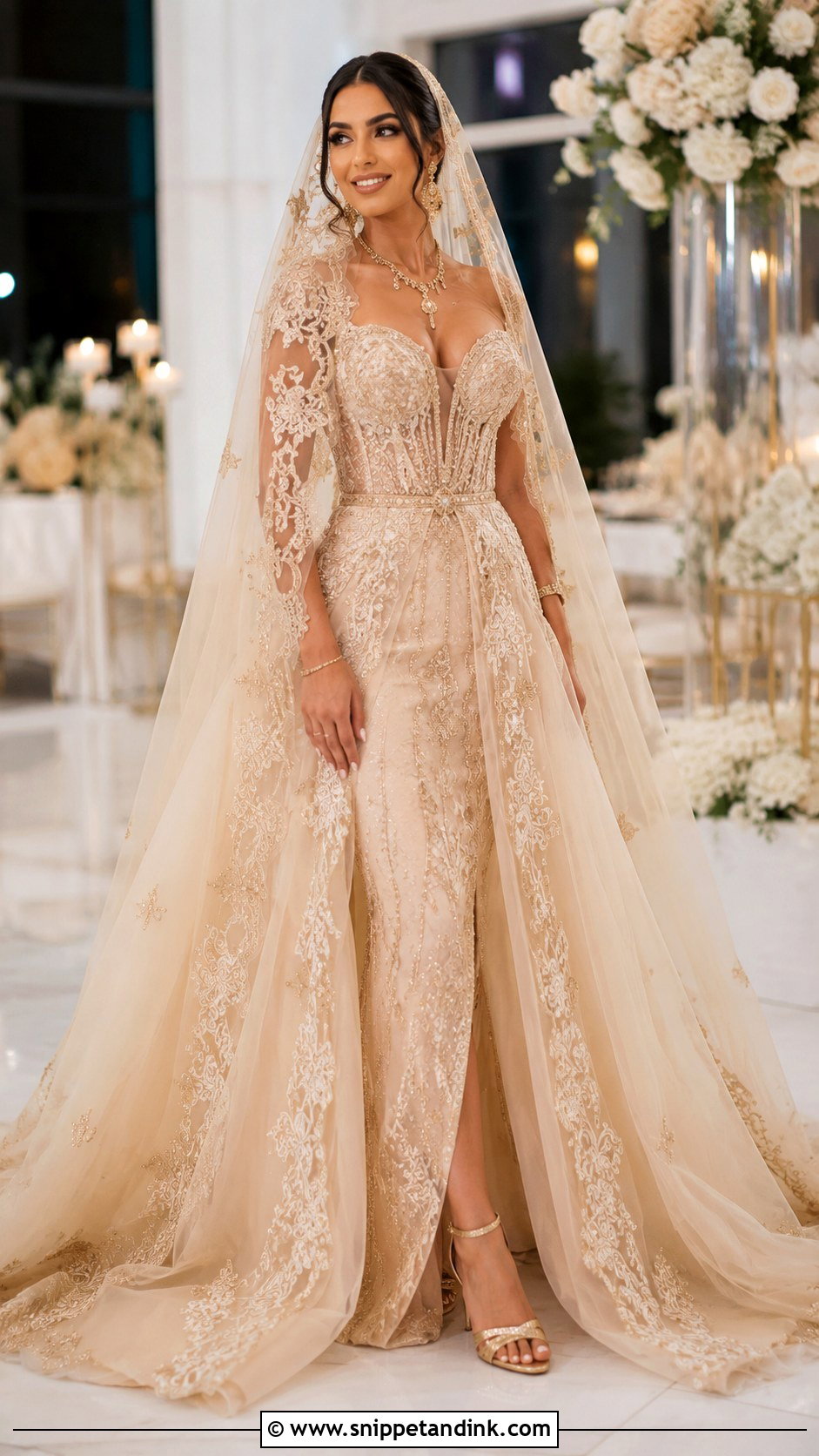
Champagne gives a warmer tone than bright white, and on many skin tones it looks more flattering in photos. It sits well with gold jewellery and bronze makeup. I tell brides to view champagne fabric in daylight and in warm artificial light, because under some ballroom lighting it can lean beige. A champagne underlay beneath ivory lace gives depth without reading as a colour dress. Gold heels and a veil in the same tone keep everything consistent. It’s especially good for evening receptions where the room is lit warm.
17. Egyptian Princess Wedding Dress
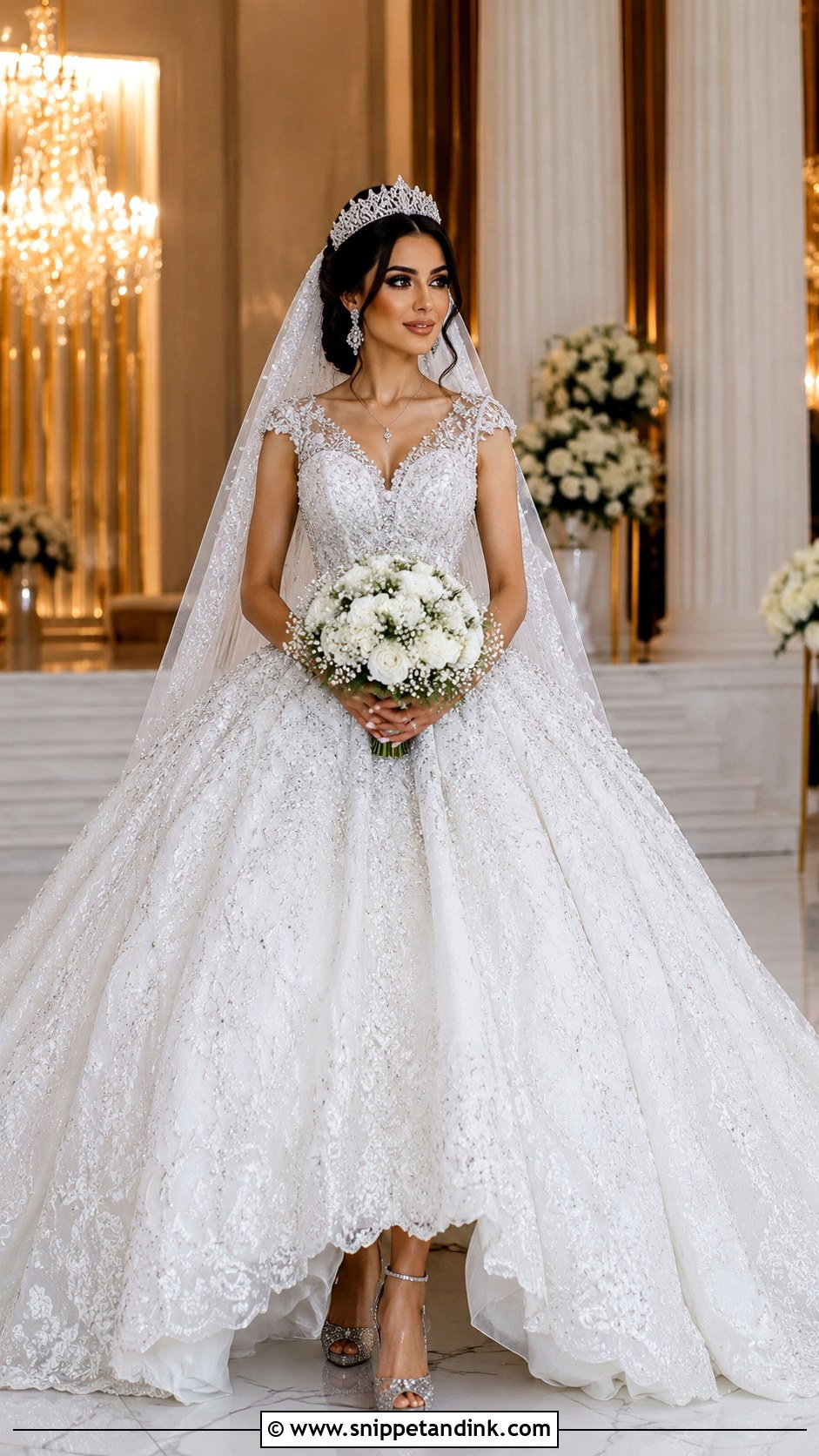
A princess wedding dress is built for the fairytale entrance: fitted bodice, full skirt, long train and plenty of sparkle. Egyptian weddings are heavily photographed and filmed, so this style feels at home. Plan the logistics, though. A long train needs a working bustle for the reception, and a heavily beaded corset bodice should be tried on for at least an hour before you commit. A tiara and long veil complete it. Keep the bouquet soft so it doesn’t fight the dress for attention.
18. Egyptian Minimal Wedding Dress
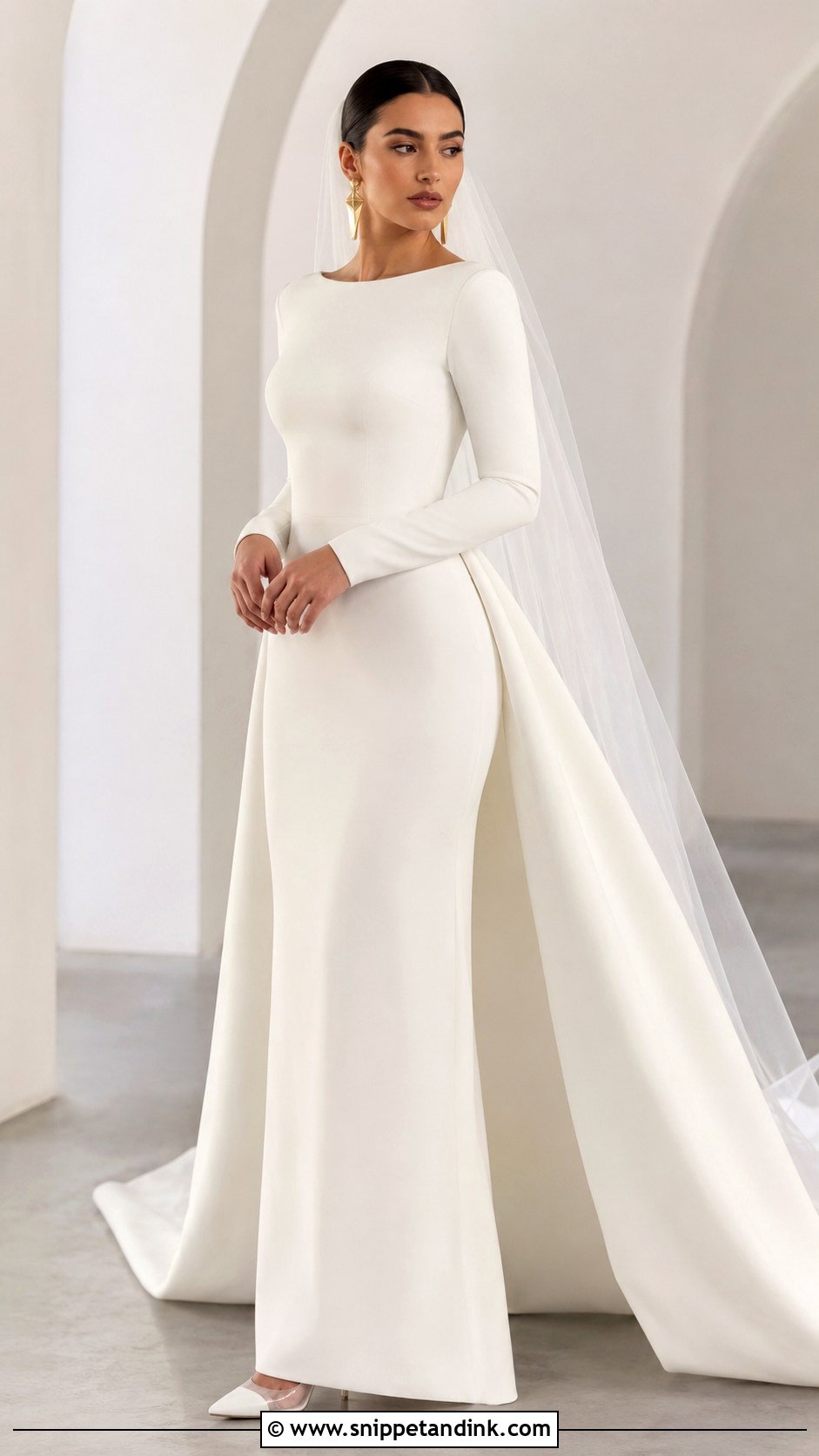
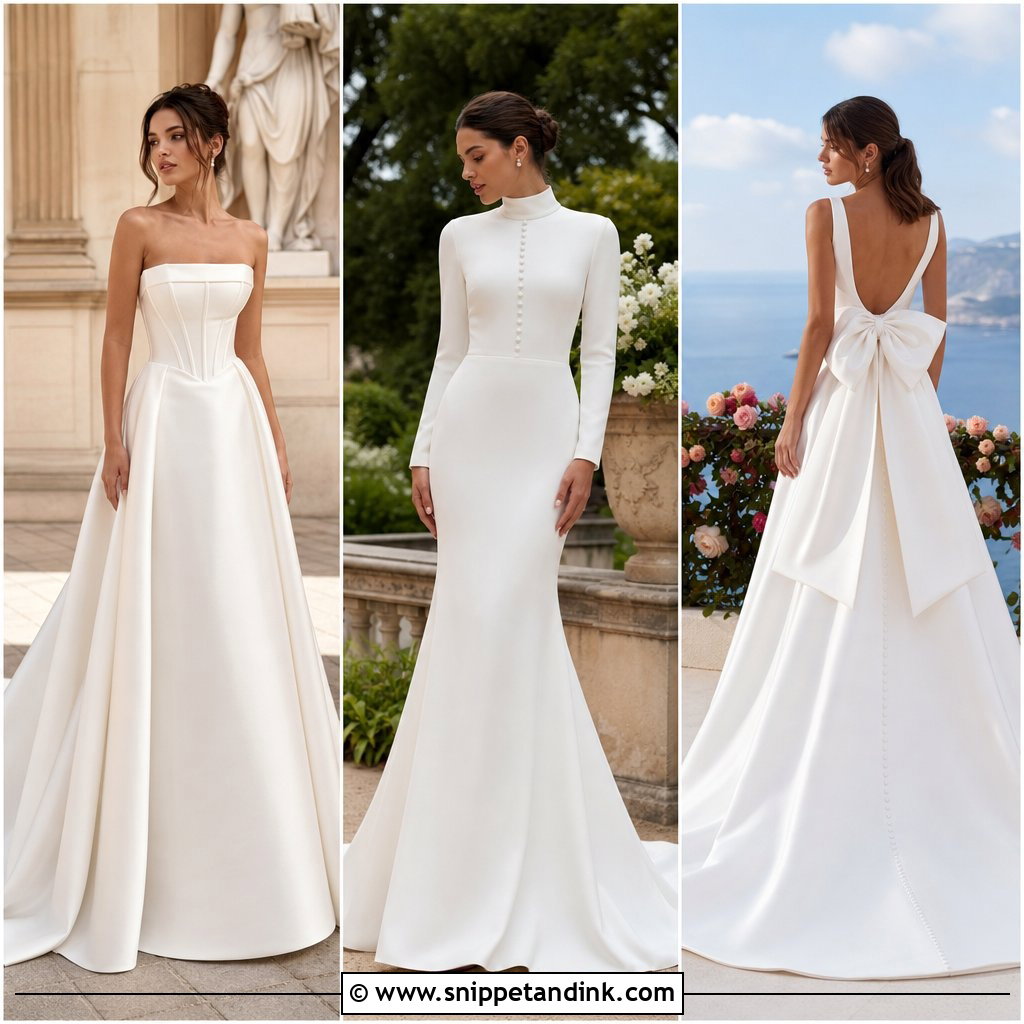
Not every Egyptian bride wants sparkle, and a minimal gown can look more powerful than a beaded one if the tailoring is right. With no embellishment to distract, every seam and dart shows, so I’d put the budget into fit rather than fabric extras. A crepe sheath, satin A-line or long-sleeve column dress all work. Small details carry the interest: covered buttons down the back, a square neck, a structured train. A low bun or neat hijab and sculptural earrings finish it. These are the photos that date the slowest.
19. Egyptian Ruffle Wedding Dress
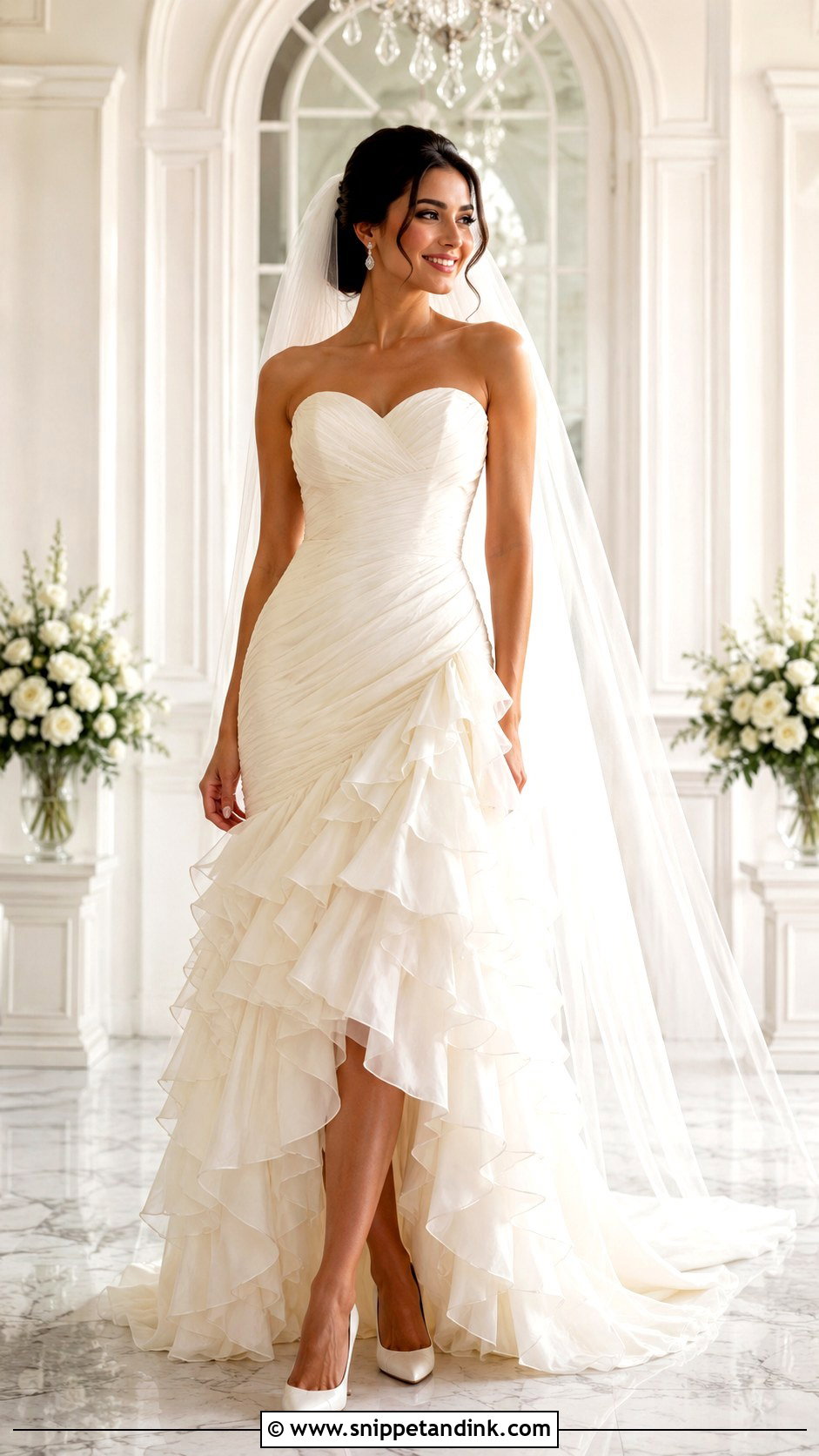
Ruffles add movement and texture, but they need restraint. For an Egyptian wedding, a ruffle dress works best when the ruffles live in one place: the skirt, the sleeves or the hem. Organza holds a crisp ruffle; tulle and soft satin give a gentler one. Organza also creases easily, so if you’re travelling to the venue, plan for a steam on arrival. With a very full ruffled skirt, I keep the hair or hijab neat and the jewellery to studs so the outfit doesn’t tip into fussy.
20. Egyptian Detachable Skirt Wedding Dress
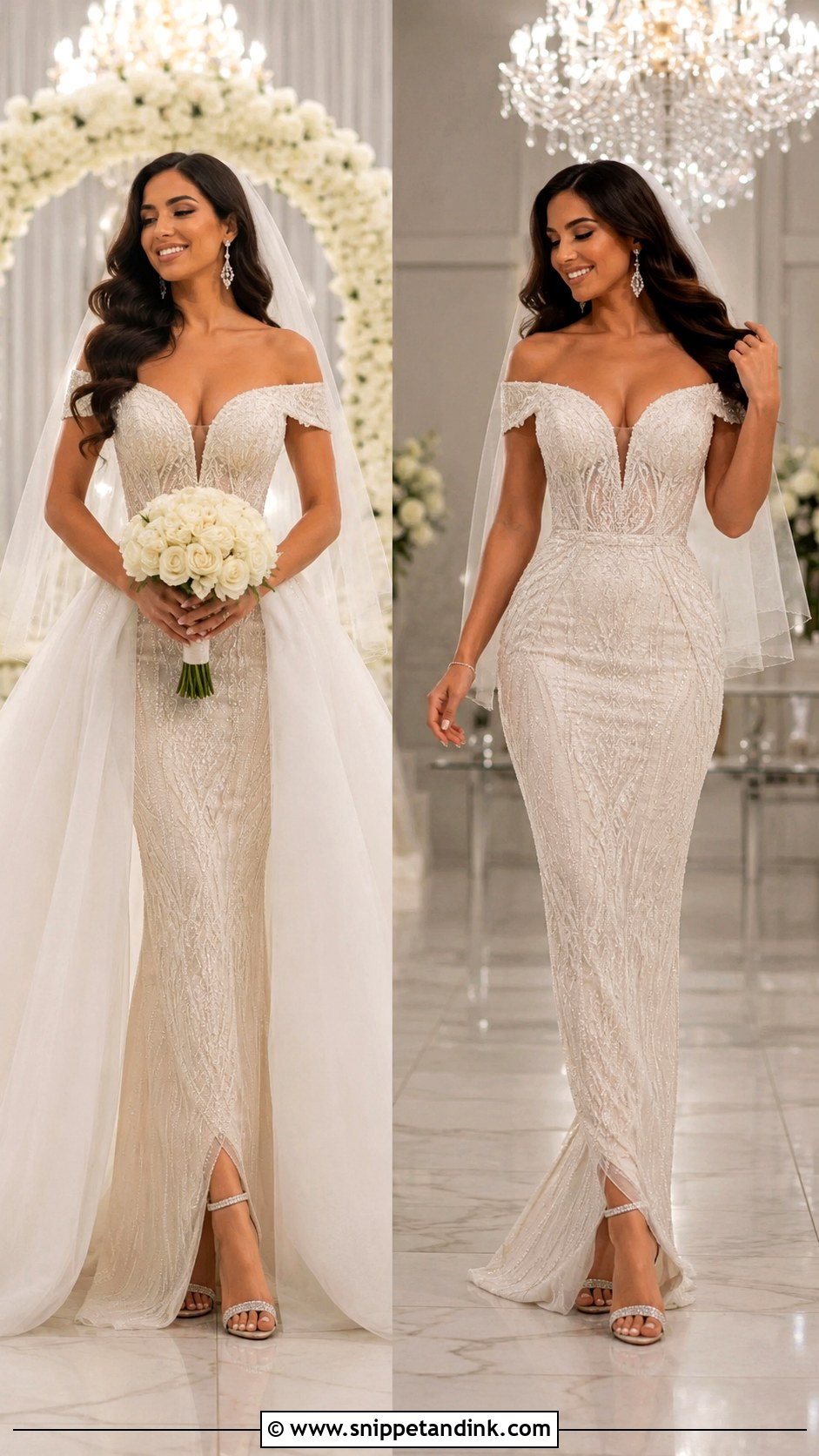
A detachable skirt gives you two looks without a full outfit change. A fitted gown, sheath or jumpsuit-style base sits underneath, and a full overskirt goes on for the entrance and ceremony photos. Afterwards it comes off for dancing. I’d test the fastening yourself at the final fitting: hooks, snaps or a hidden button band should come apart in under a minute with one helper. Match the overskirt fabric to the base, or the join will show. Swap the long veil for statement earrings when the skirt comes off.
21. Egyptian Veil Wedding Dress
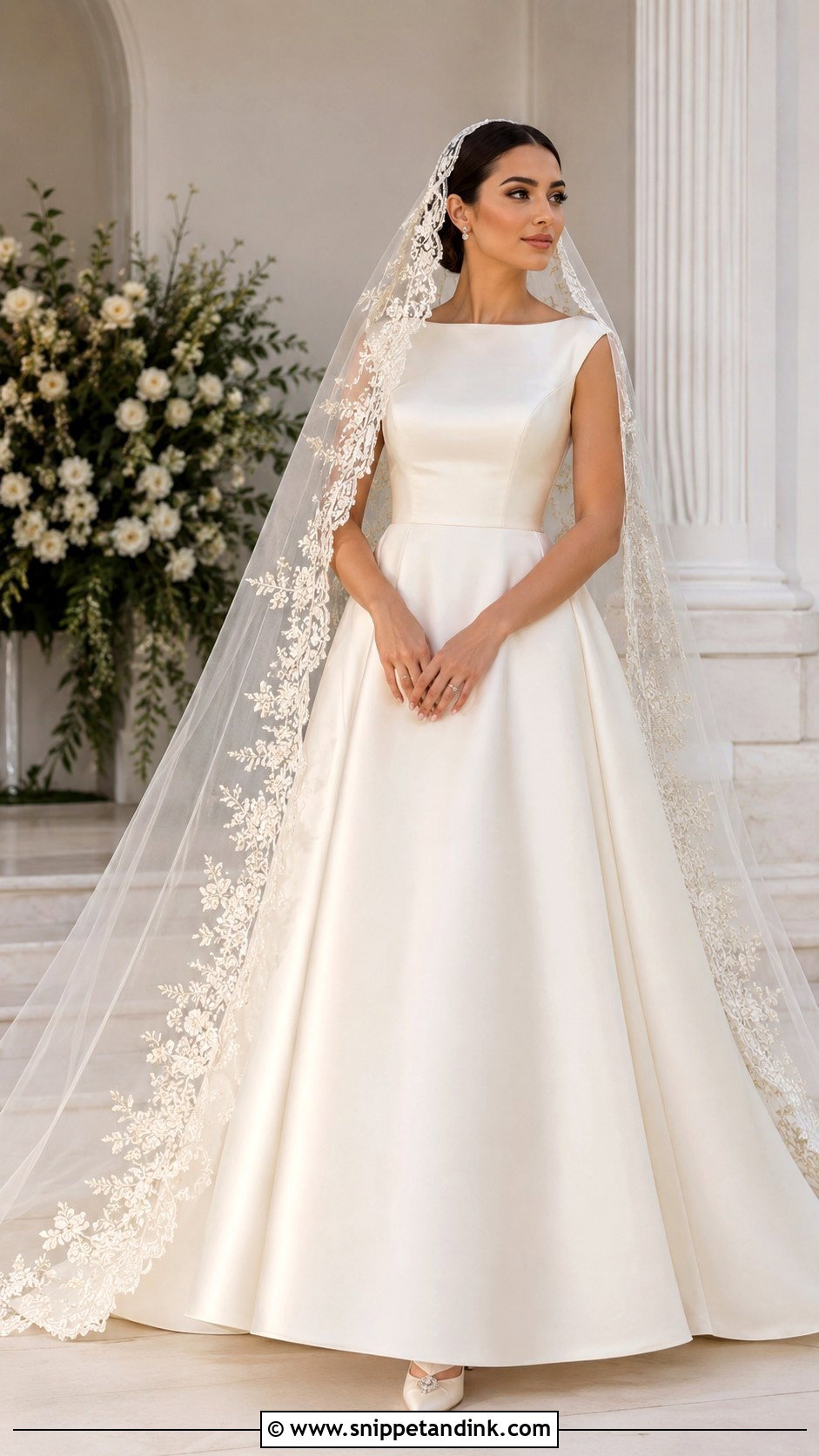
Sometimes the veil is the real statement and the gown should stay quiet underneath it. An embroidered, pearl-edged or lace-trimmed long veil looks magnificent during the entrance and makes the photos feel formal. The gown’s job is to support it: a satin A-line, a lace sheath or a modest long-sleeve dress. The trap I see is mismatched whites, so I hold the veil fabric against the gown in daylight before ordering. A heavy cathedral veil also needs secure anchoring, either a comb sewn in place or a fixing point on the hijab base.
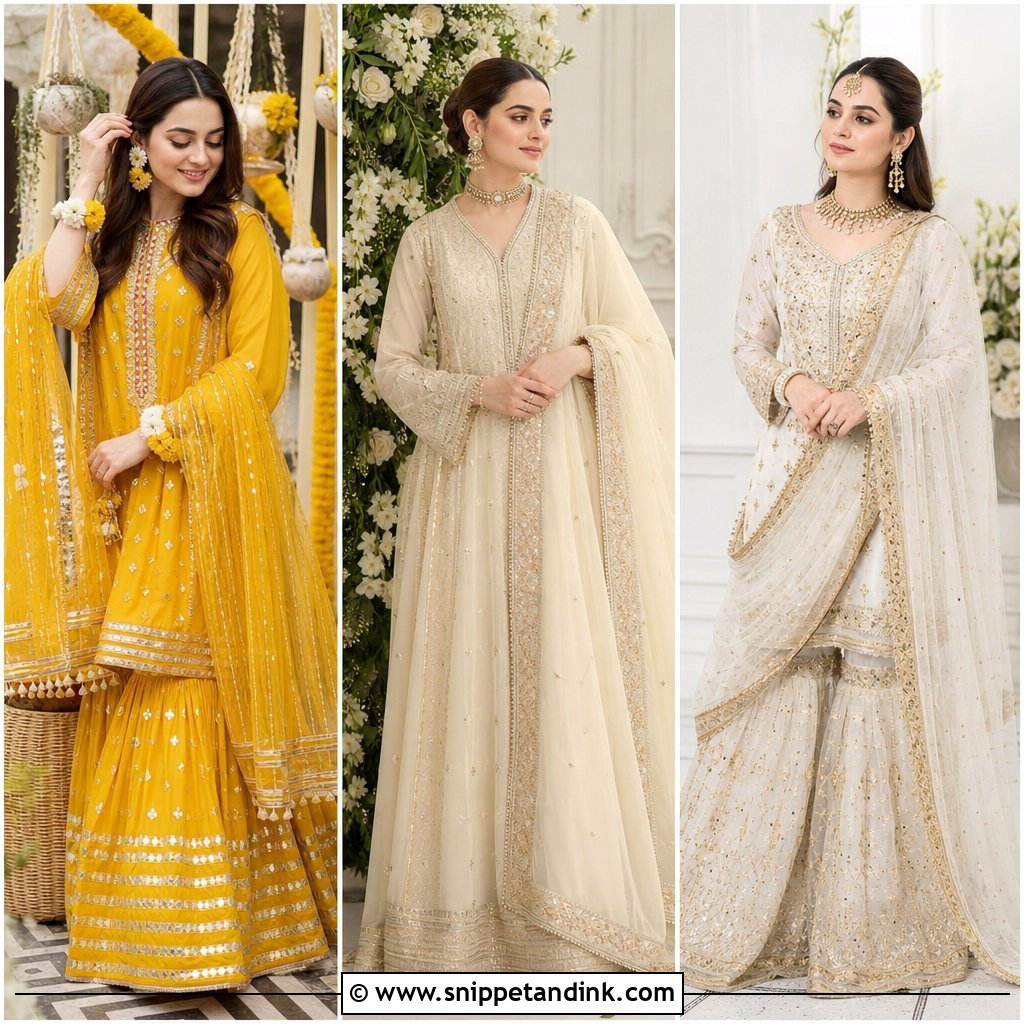
22. Egyptian Henna Night Wedding Dress
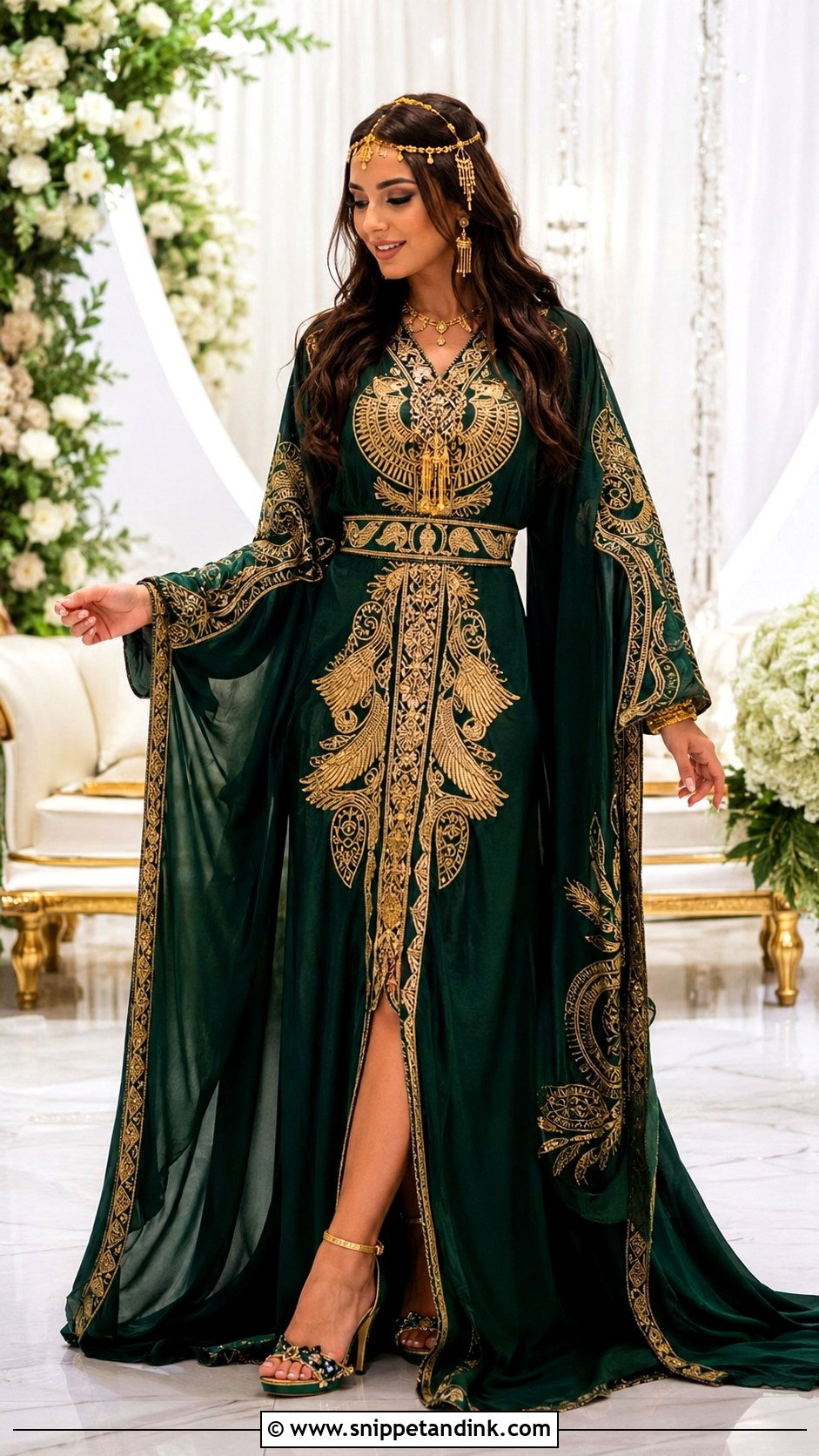
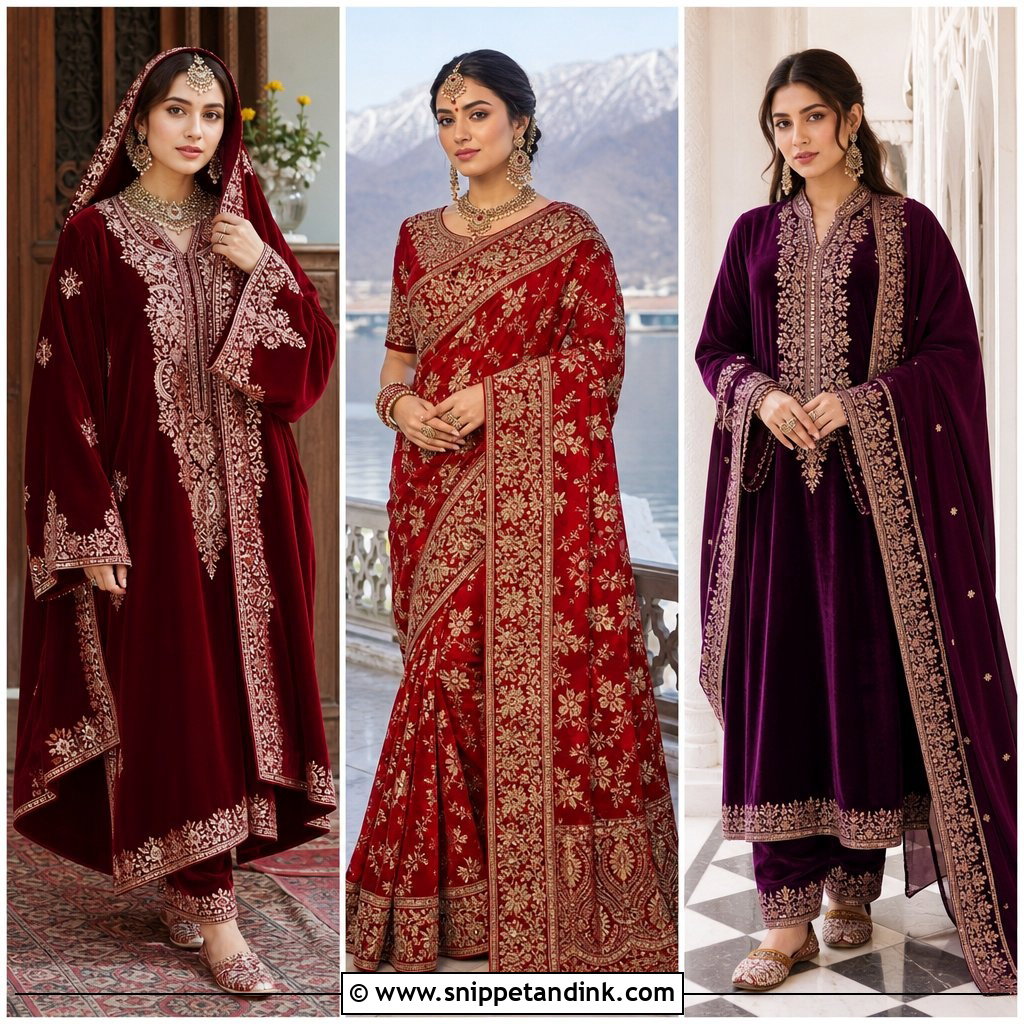
For a henna night or pre-wedding celebration, white isn’t expected, and this is where colour comes in. Gold, emerald, burgundy and deep blue all suit embroidery, beading or kaftan sleeves. Remember the henna itself: wet paste on your hands and feet means short or wide sleeves that won’t brush the design, and fabric that won’t be ruined by a smudge. Gold jewellery, embellished heels and a decorative headpiece suit this evening. It gives you a second look that feels completely different from the wedding gown.
23. Egyptian Reception Wedding Dress
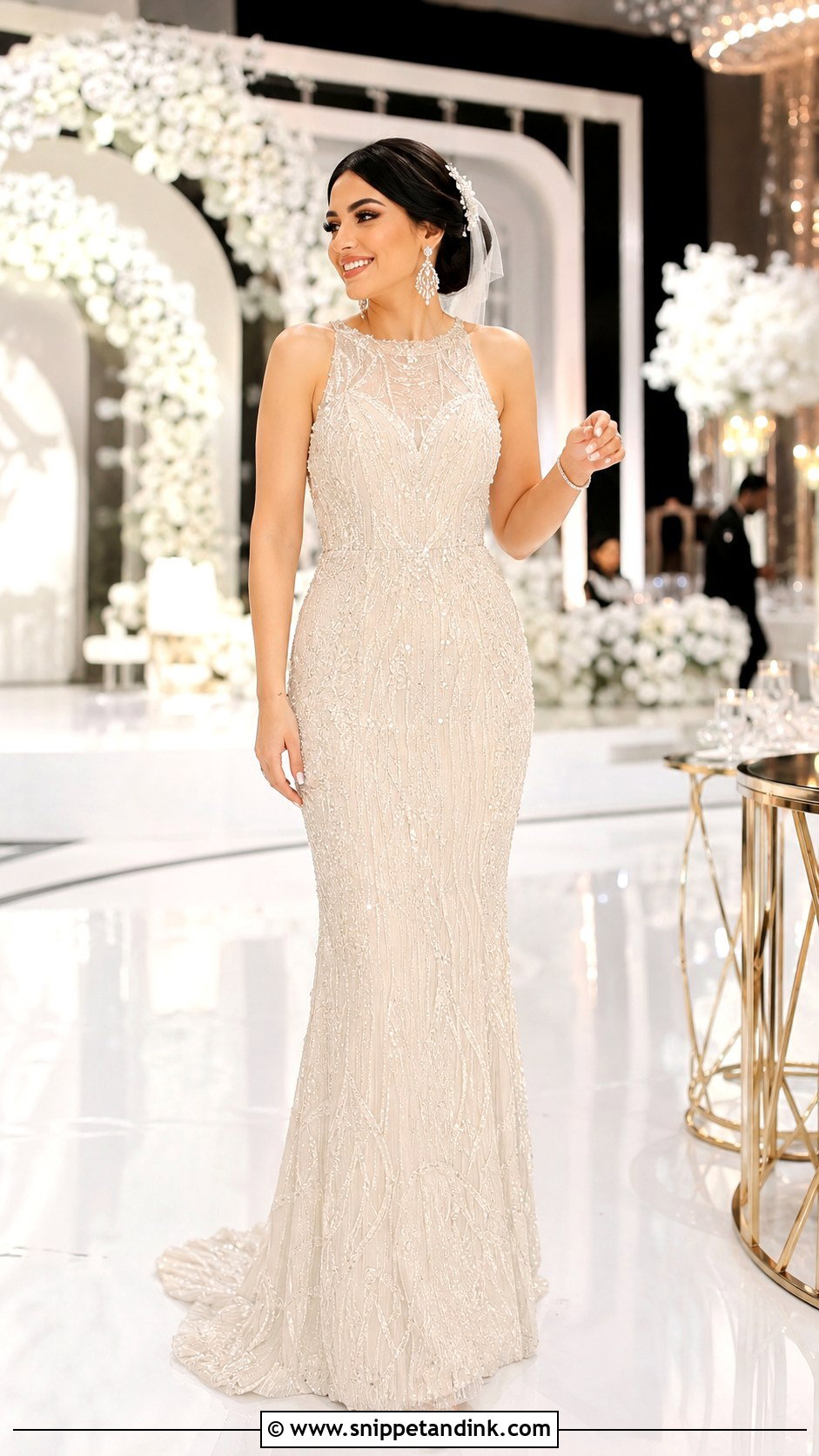
A second dress for the reception is common at Egyptian weddings, because the main gown rarely survives hours of dancing comfortably. A beaded sheath, a satin midi-length bridal dress, a fitted crepe gown or a feather-trimmed hem all work. Keep it in ivory, champagne or pearl so it still reads as the bride. I’d plan where and when you change, and who helps, because a quick change in a crowded hotel suite takes longer than anyone expects. Swap to comfortable heels and a shorter veil or hair accessory.
24. Egyptian Plus Size Wedding Dress
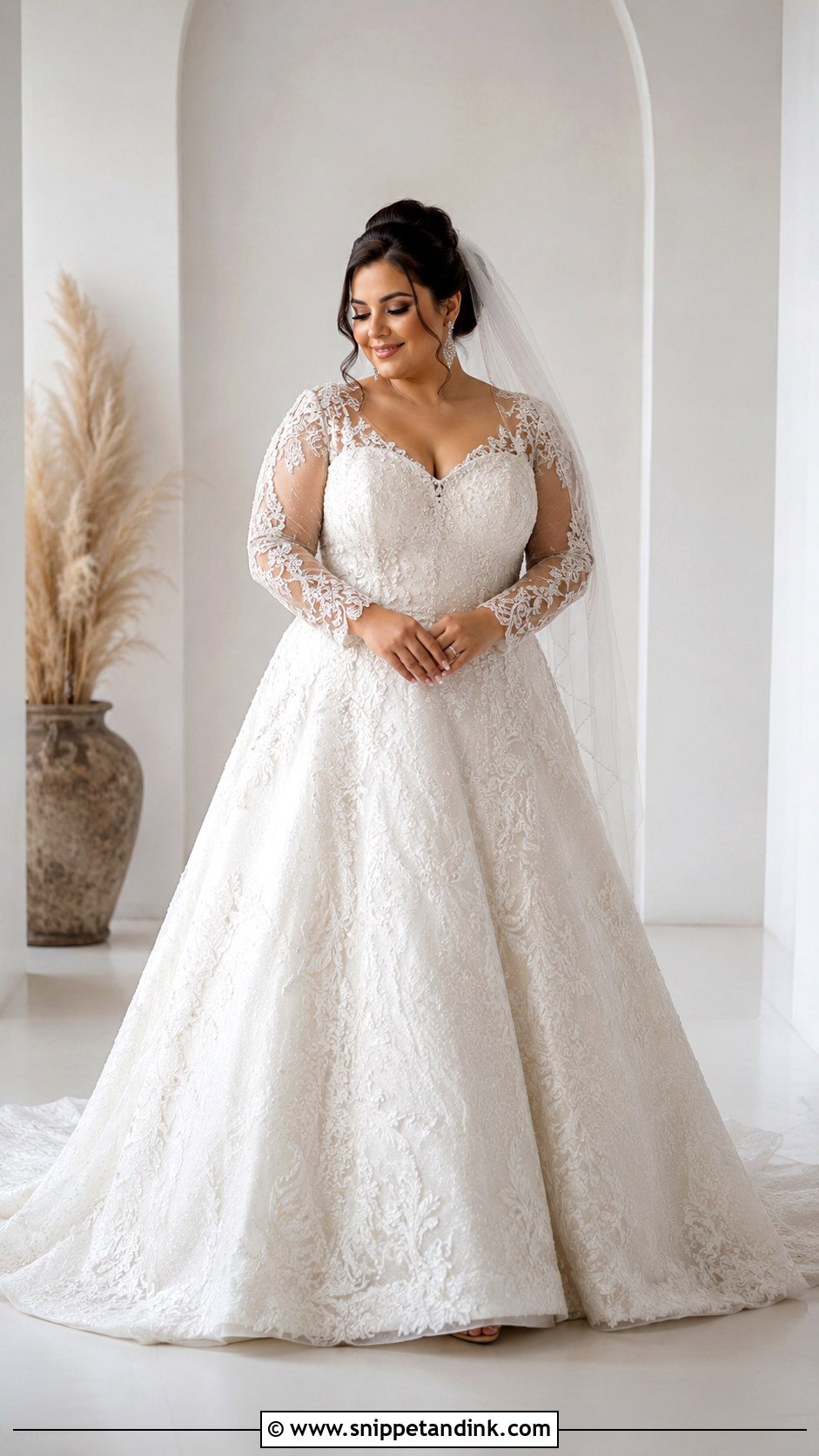
With a plus size gown, construction matters more than the silhouette name on the tag. I look for internal structure first: a built-in corset, proper boning and a waist stay, so the dress is supporting you rather than relying on tight fabric. Mikado, satin, crepe and well-backed lace hold their shape; thin stretchy fabrics show every seam. A-line, ball gown, wrap bodice and fit-and-flare cuts can all work. Ask for sleeves cut with enough room in the upper arm to hug guests, and pick heels you can stand in for hours. Choose the one you feel secure and happy in, not the one someone calls flattering.

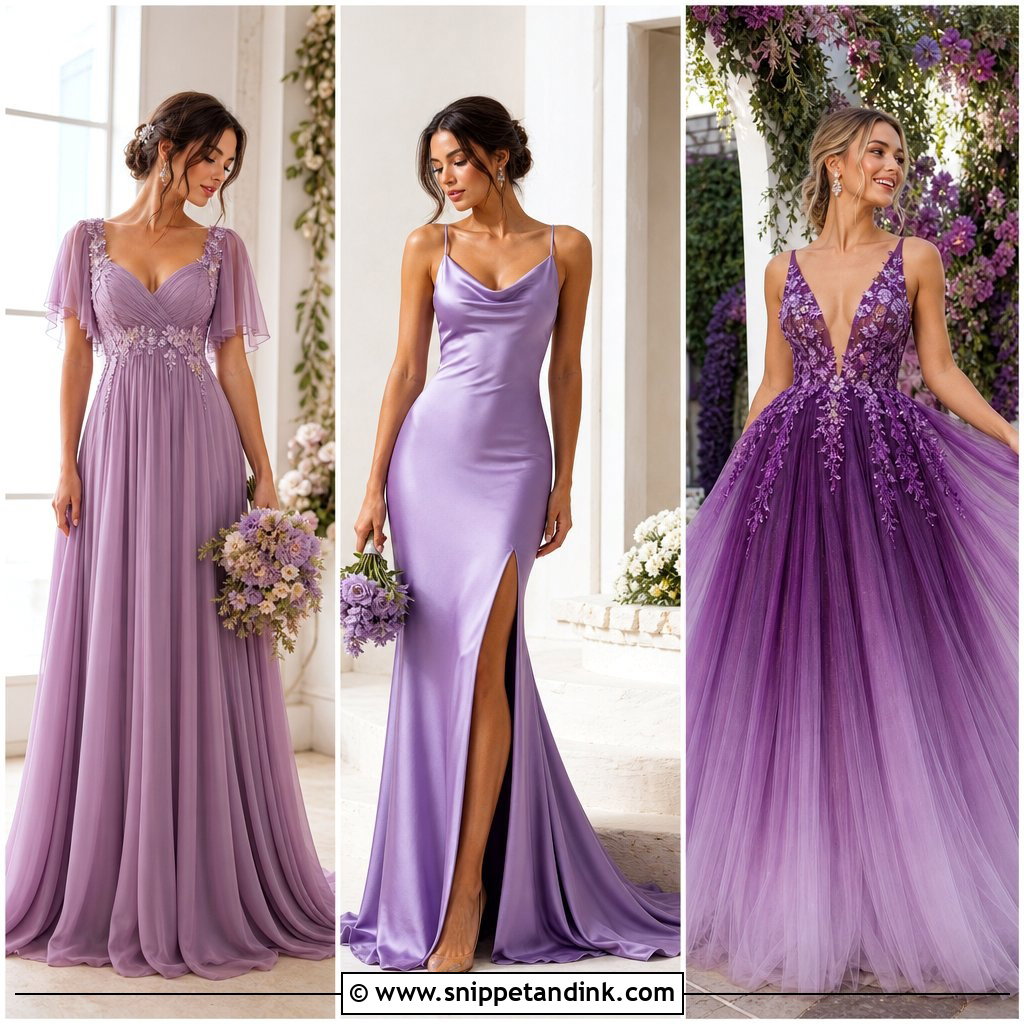
25. Egyptian Modern Wedding Dress
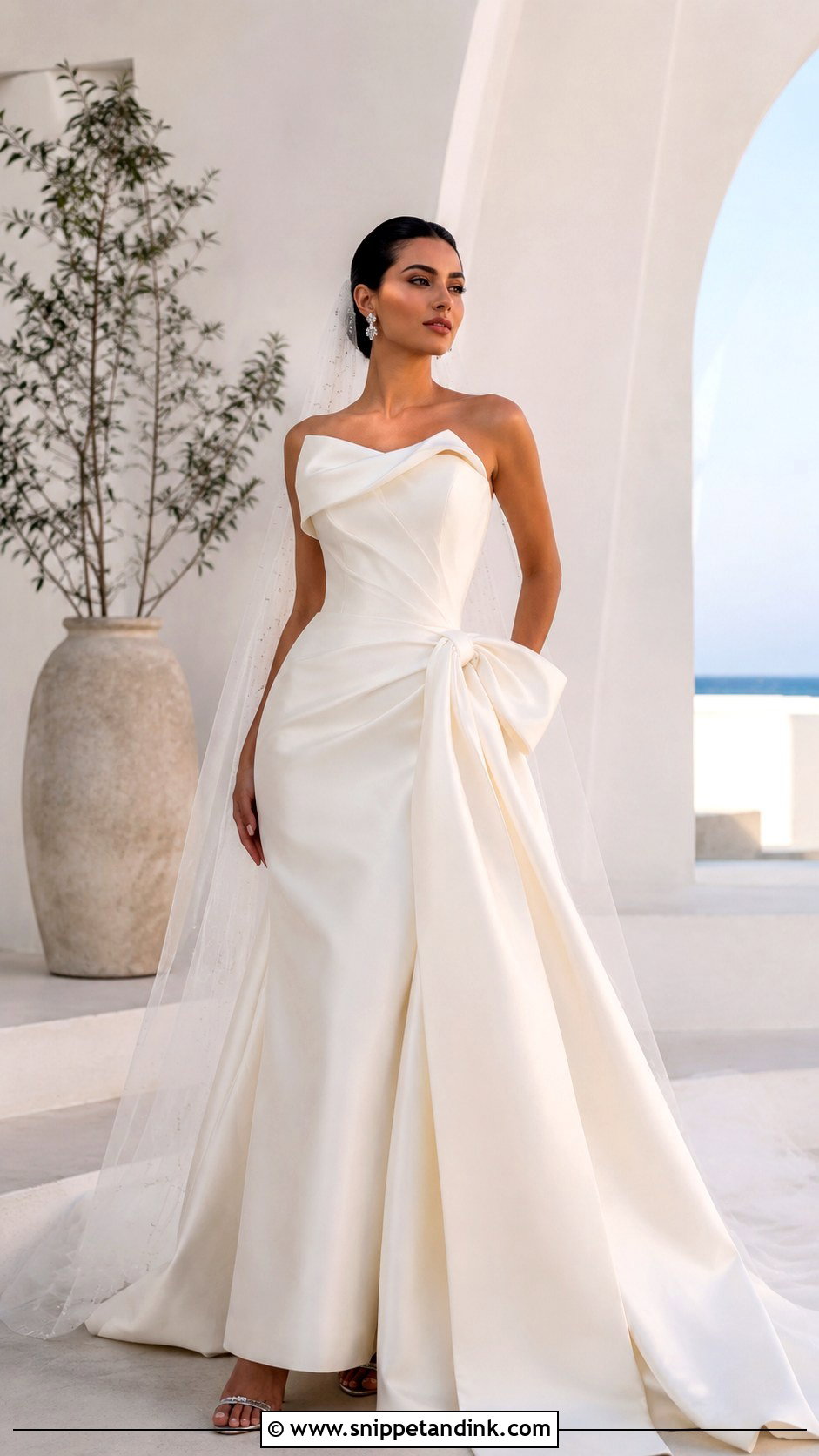
A modern Egyptian gown usually means clean lines plus one memorable detail: a sculptural neckline, sleek long sleeves, a dramatic bow, a structured cape, or a high slit with a modest lining. Pick one. Two strong details on a simple base start to fight. Satin, crepe and mikado give the sharpest finish. If you choose a slit, sit and walk in it at the fitting, since lining placement decides how much shows. Metallic heels, refined jewellery and a slick bun or smooth hijab complete it while still matching the formality of the night.
Heavy Beading, Warm Halls and the Bustle Nobody Practises
Most dress problems I see on the night have nothing to do with style. They come from weight, heat and a train that nobody learned to pin up.
A fully beaded gown can be surprisingly heavy, and you feel that weight in your shoulders by the third hour. Ask the boutique how much of it hangs from the straps and how much is carried by the bodice and waist. Wide straps or a corset that grips the waist take strain off the shoulders. Heat makes everything worse: a packed hall, stage lighting and a lot of dancing will warm up even an air-conditioned room. Breathable linings, a slip under heavy satin and dress shields under the arms help more than any amount of powder.
The bustle is the part almost every bride forgets. A French or ballroom bustle has to be tied in a specific order, often with ribbon loops that are numbered or colour-coded inside the skirt. Have the person who’ll do it, usually a sister or close friend, come to your last fitting and practise it twice. On the day, it should take a few minutes, not twenty in a corridor while the band waits.
Pack a small emergency bag for the bridal suite: safety pins, a needle threaded in ivory, clear nail varnish for snagged tulle, hijab pins, a stain pen that’s safe on silk, and a lint roller for dark carpets. You probably won’t need most of it. The one time you do, you’ll be glad it’s there.
Which of These Gowns Will Carry You From Zaffa to Last Dance?
There’s no single correct Egyptian bridal look. A grand white ball gown, a modest hijab dress, a gold-embroidered gown, a sleek satin sheath and a colourful henna night outfit can all be right for different brides. When you narrow it down, think about the room you’ll walk into, how much you’ll move, how the dress sits when you’re seated, and what your family expects on the night. Then trust the dress you keep reaching for at the fittings. That’s usually the one.
You'll Like These Ideas:










Leave a Reply