
The cakes I’m asked to make right now are more personal than they were a few years ago: vintage piping, pearls, bows, pressed flowers, sculpted shapes, fruit and stronger flavors, often on a smaller cake. What guests actually remember, though, is the slice on their plate, so every design below comes with my notes on how it eats as well as how it looks, and how well it survives a reception. These are my 30 Trending Cakes for Wedding requests, with the practical side included.
Getting the Most From Your Cake Tasting
A tasting is where a cake becomes memorable or forgettable, so I’d give it as much thought as the design. Most bakers offer a set number of sponge and filling samples; come with a shortlist rather than tasting everything.
- Taste at room temperature. Cake straight from the fridge tastes firmer and less flavorful than it will at the reception.
- Try the sponge and filling together, and with the frosting you plan to use. A filling that’s lovely alone can be too sweet under American buttercream.
- Eat something plain first and drink water between samples, so the third flavor isn’t judged against the sugar of the first two.
- Ask how each flavor holds up over a few hours on display. Mousse and fresh cream fillings are delicious but soft and need cooler rooms.
Allergies and dietary tiers
If guests are gluten-free, vegan or have a nut allergy, tell your baker at the first meeting. A separate small cake made and boxed apart is safer than a gluten-free tier stacked on a wheat one, because crumbs travel when the cake is cut. Ask for a label for the catering staff so the right slices reach the right guests.
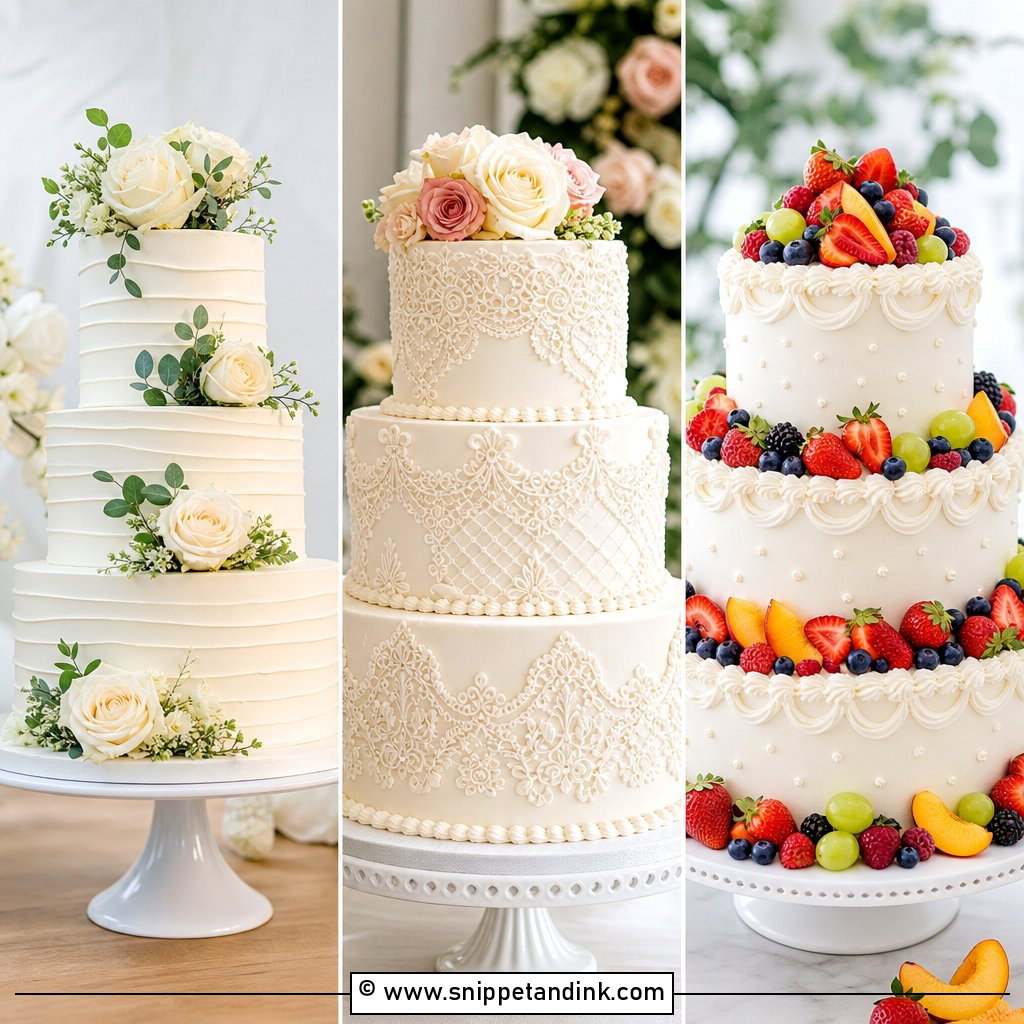
1. Lambeth Wedding Cake
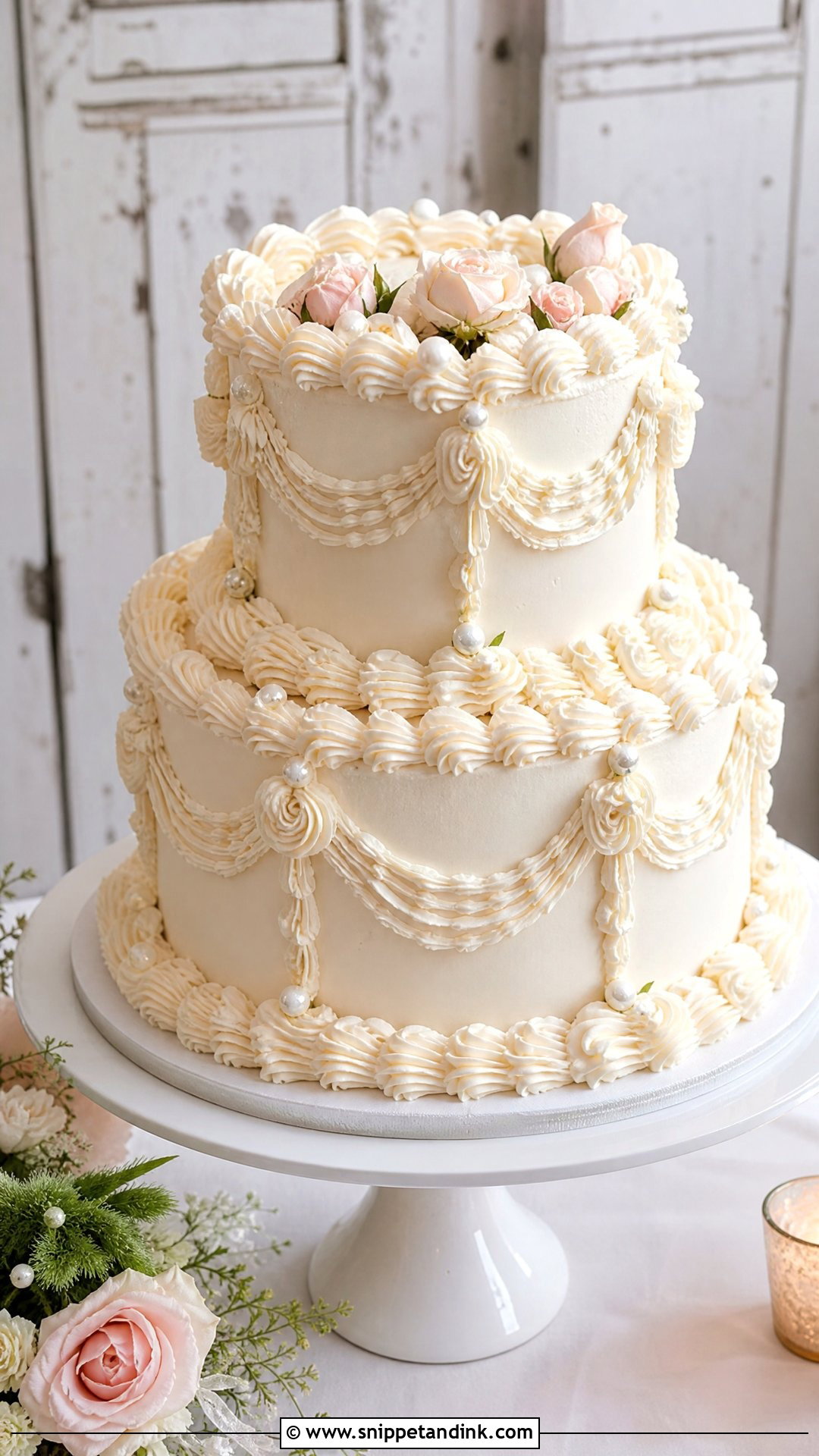
Lambeth is the trend I’ve seen grow fastest, and it’s worth knowing what you’re ordering. It’s built in layers of over-piped borders, shells, swags and rosettes, each left to crust before the next goes on, so it takes hours per tier. It works on a heart cake, a two-tier or a tall round. Blush, cream, pale blue and butter yellow are the colors I’m mixing most. My advice is to choose either all-over piping or piping on borders only; half-and-half usually looks unfinished. A plain stand lets the detail carry the photos.
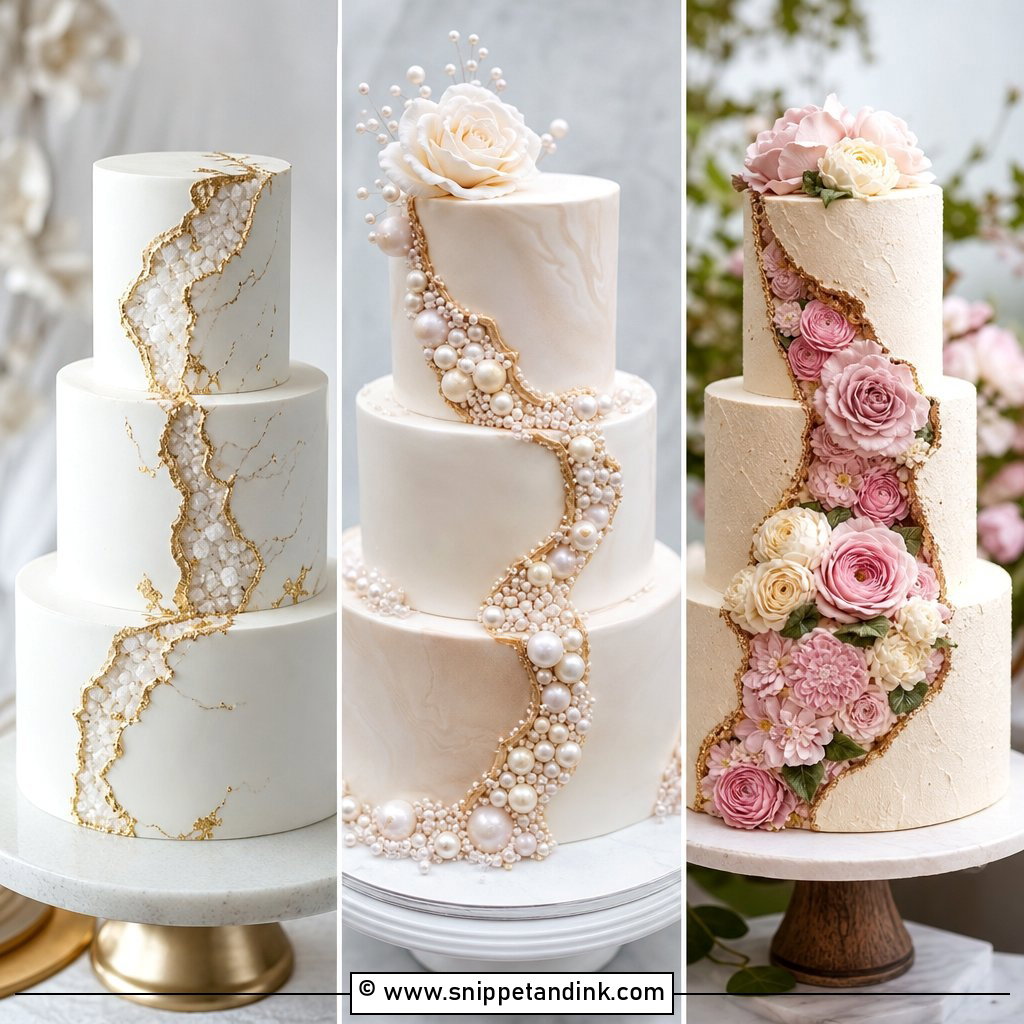
2. Pearl Wedding Cake
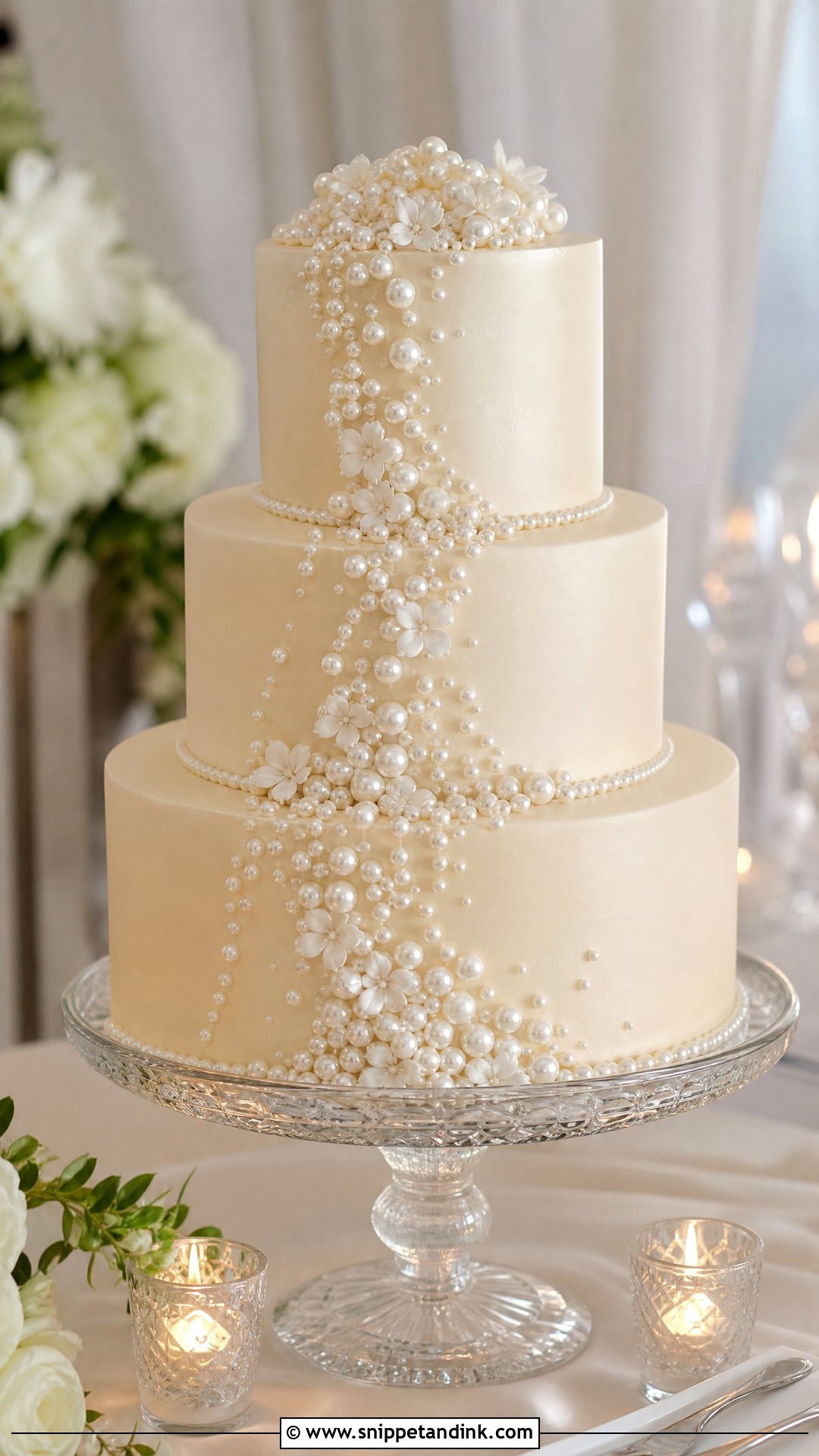
Pearls add glamour without color. They can be tiny and scattered, set in neat rows, pressed into buttercream or brushed on as a pearl lustre across a whole tier. Ivory frosting is softest; champagne, blush or pale gray looks more fashion-led. I use soft fondant pearls on anything that will be sliced and keep hard sugar dragées for the top tier, because guests do bite into them. Satin gowns, candlelit rooms and formal venues suit this one.
3. Pressed Flower Wedding Cake
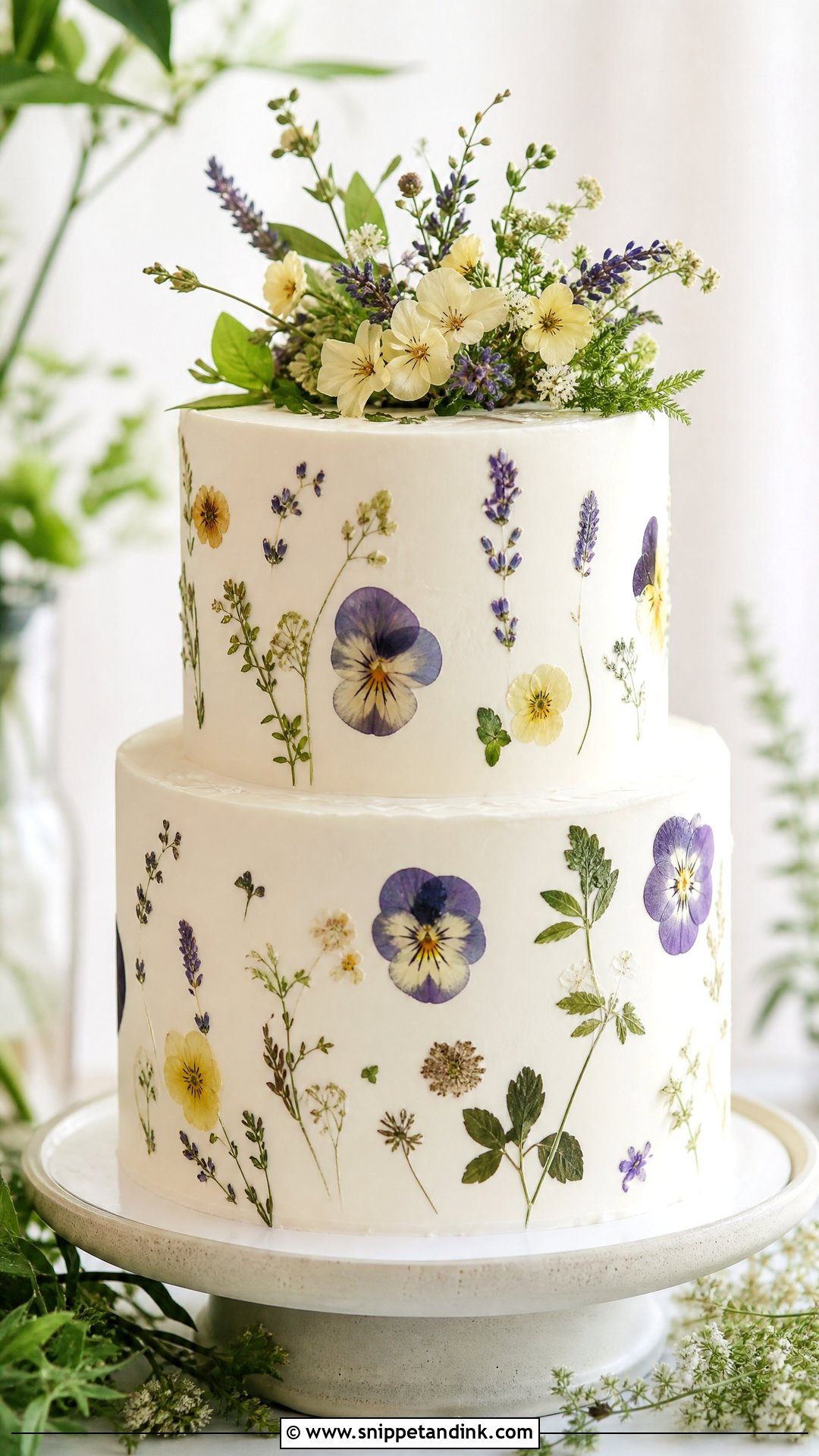
Pressed flowers lie flat against smooth buttercream or fondant, so the cake looks like a botanical print. They have to be edible varieties pressed for food, and that’s the first thing I’d check with any baker. Violas, cornflowers, small herbs and fern tips in lavender, blush, peach or pale yellow are typical. Match them to your bouquet colors rather than the exact flowers, since many bouquet flowers aren’t edible. White or ivory keeps the petals bright; a semi-naked finish loosens it, though the exposed sponge dries faster.
4. Bow Wedding Cake
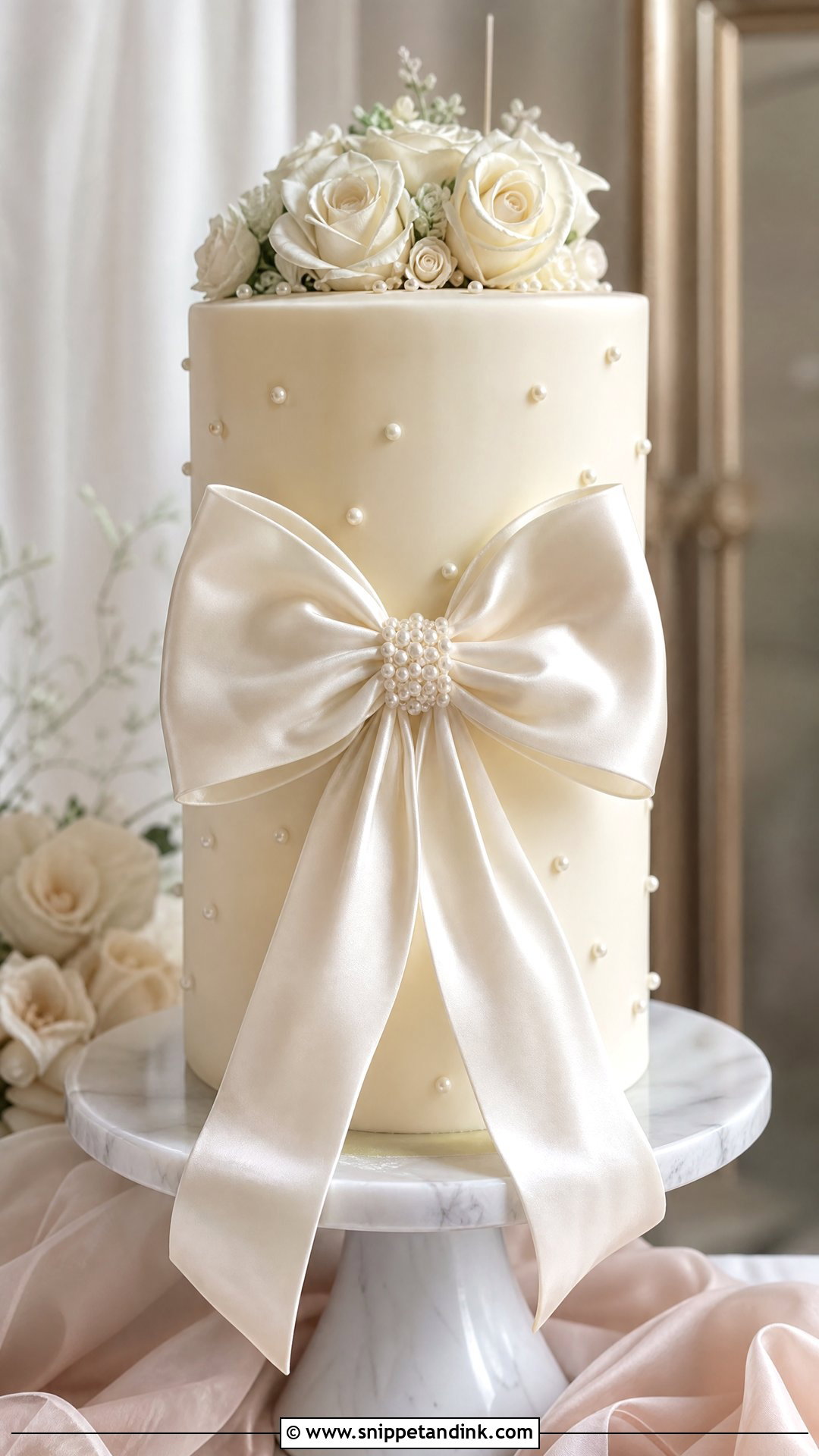
Bows bring bridal fashion straight onto the cake. I make most of them from fondant or sugar paste, dried for a day or two so they hold their loops; silk ribbon can be used, but it needs a barrier strip to stop the frosting’s butter staining it. One large bow on the front of a tall tier looks editorial; small bows on each tier look vintage. They sit well with pearls, satin texture and white frosting, and with coquette-style showers and intimate receptions. Keep the palette simple so the bow leads.
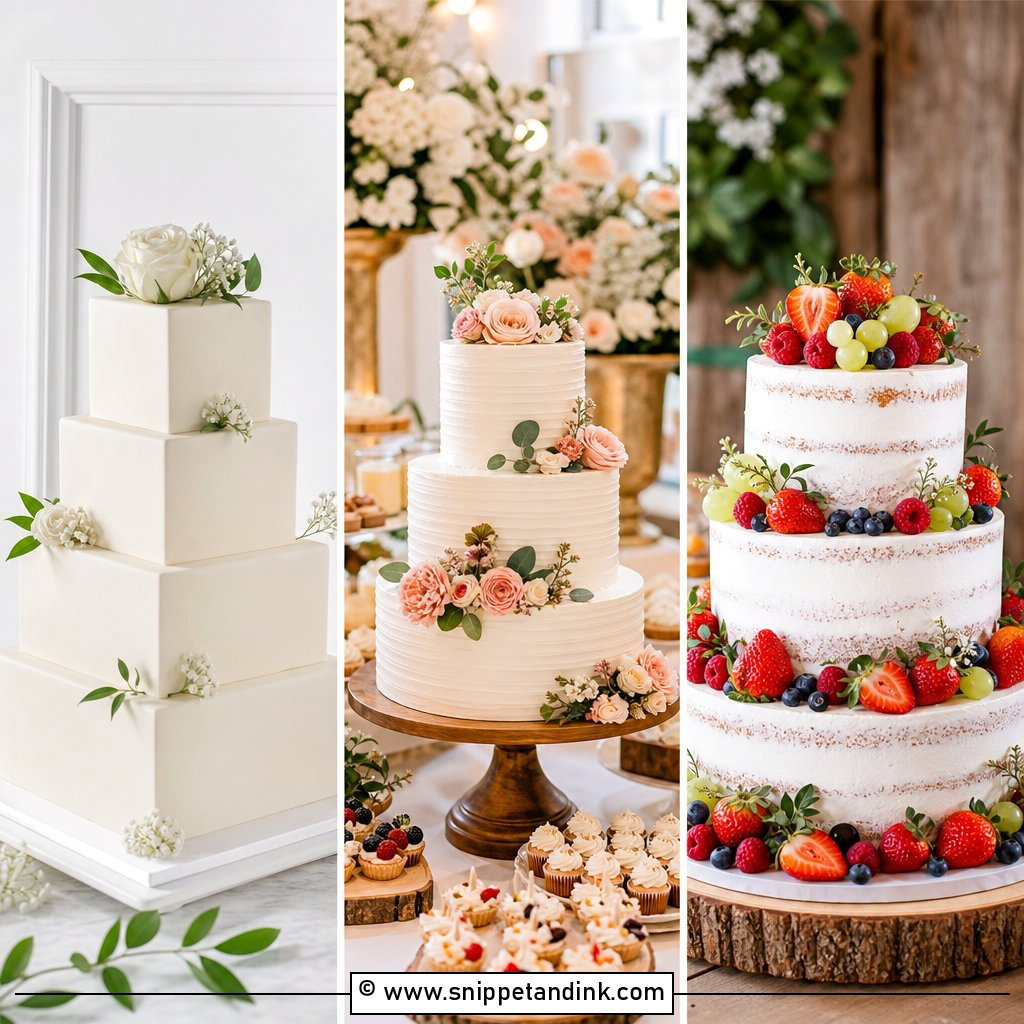
5. Textured Buttercream Wedding Cake
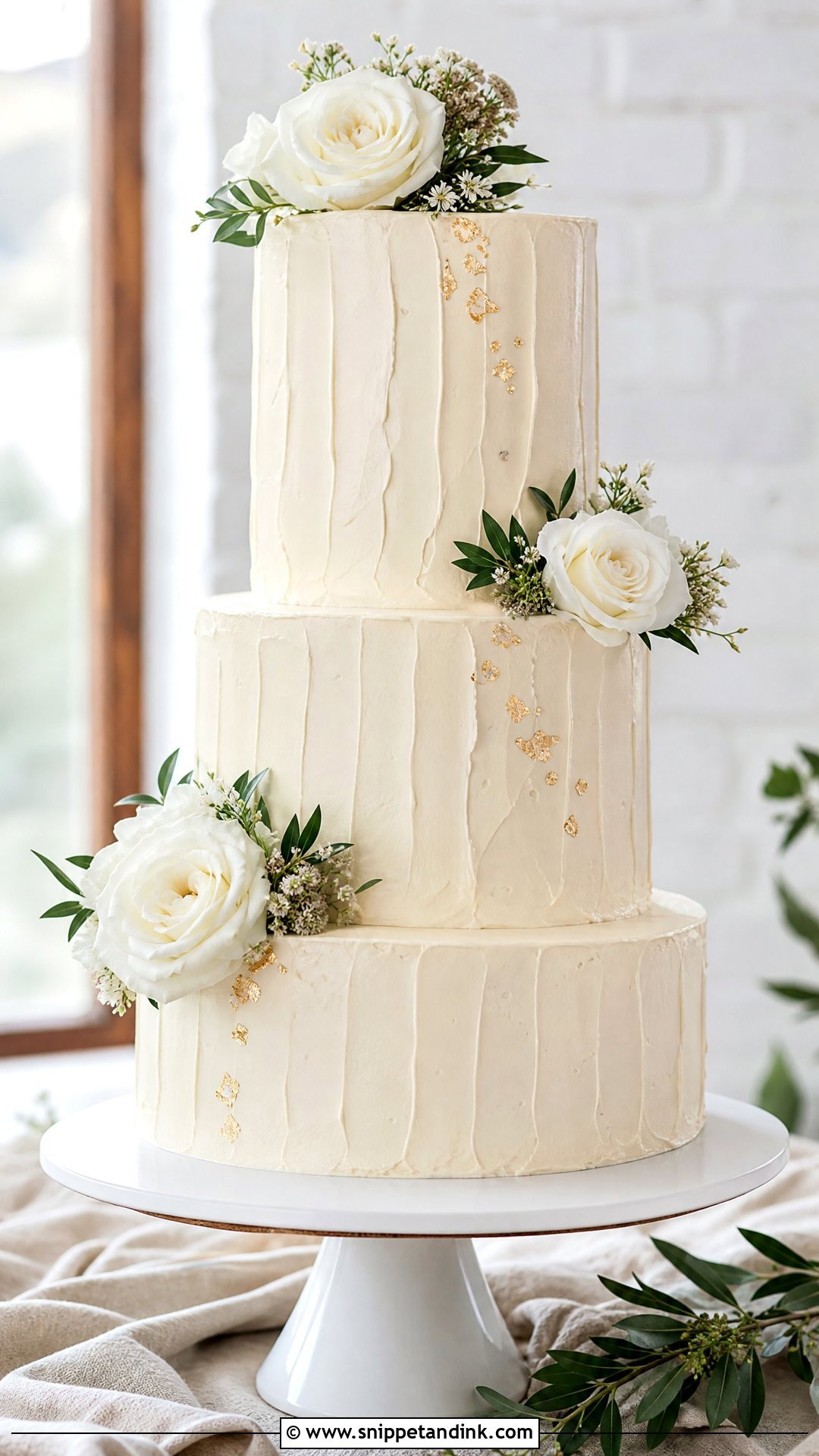
Textured buttercream is the trend that’s easiest to live with. Waves, vertical strokes, ridges, palette marks and stucco finishes all hide small imperfections that a perfectly smooth cake would show, and they look handmade in a good way. Ivory, warm white, beige and muted pastels show the shadows best. It pairs with flowers, fruit, greenery or a little gold, and it fits barns, coasts, gardens and modern rooms. Ask for controlled texture; heavy, deep marks hold crumbs and look messy close up.
6. Vintage Heart Wedding Cake
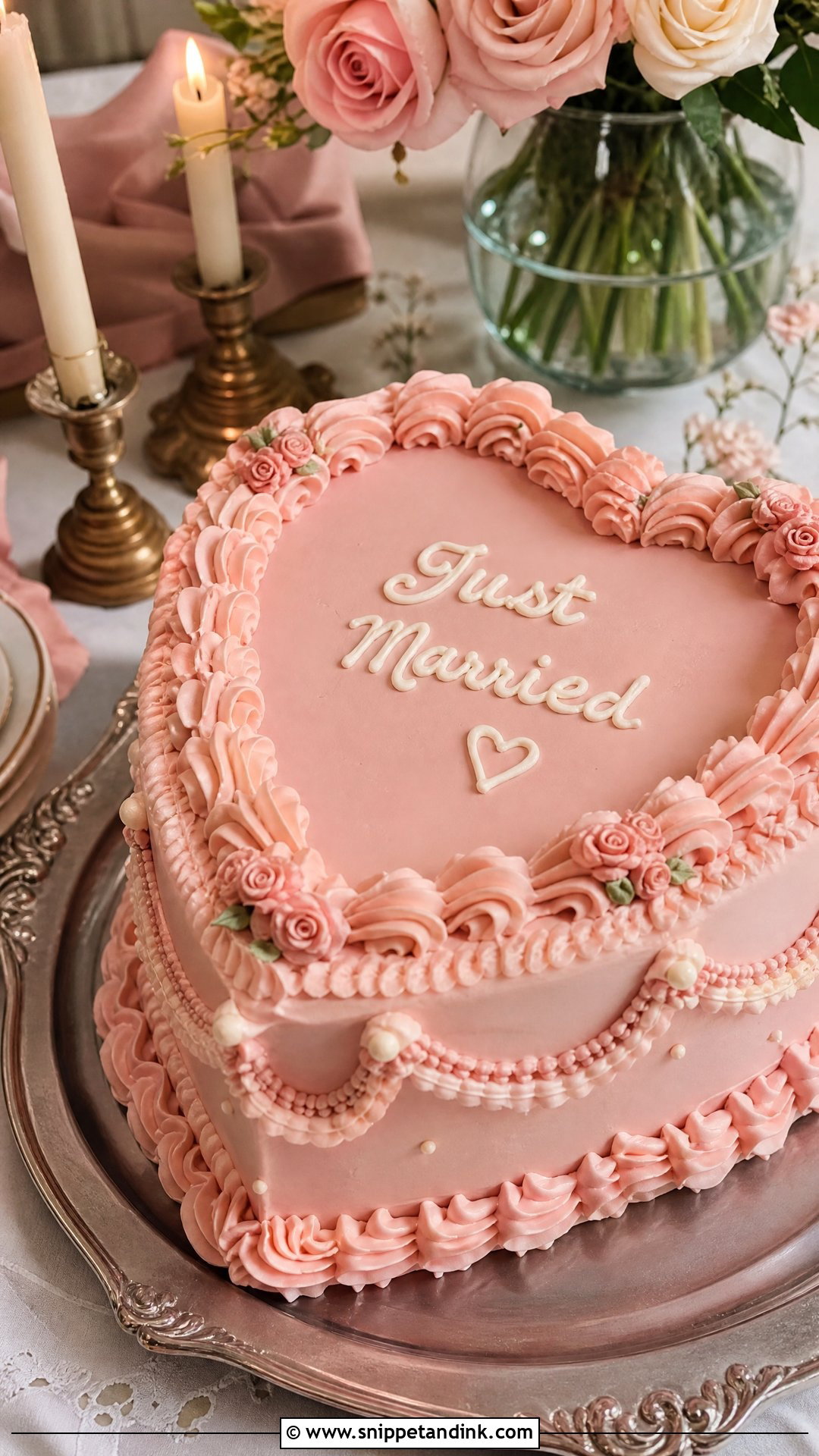
A vintage heart wedding cake is everywhere on mood boards. Hearts are small by nature, so I’d use one as a sweetheart-table or cutting cake with sheet cake in the kitchen for guests. Piped borders, ruffles, cherries, pearls, tiny roses and a short message on top are the classic details. To keep it bridal rather than birthday, I stick to ivory, blush, champagne or soft blue. Vanilla buttercream keeps it sweet; chocolate, red velvet or almond sponge makes it richer. A silver tray finishes the retro look.
7. Floating Tier Wedding Cake
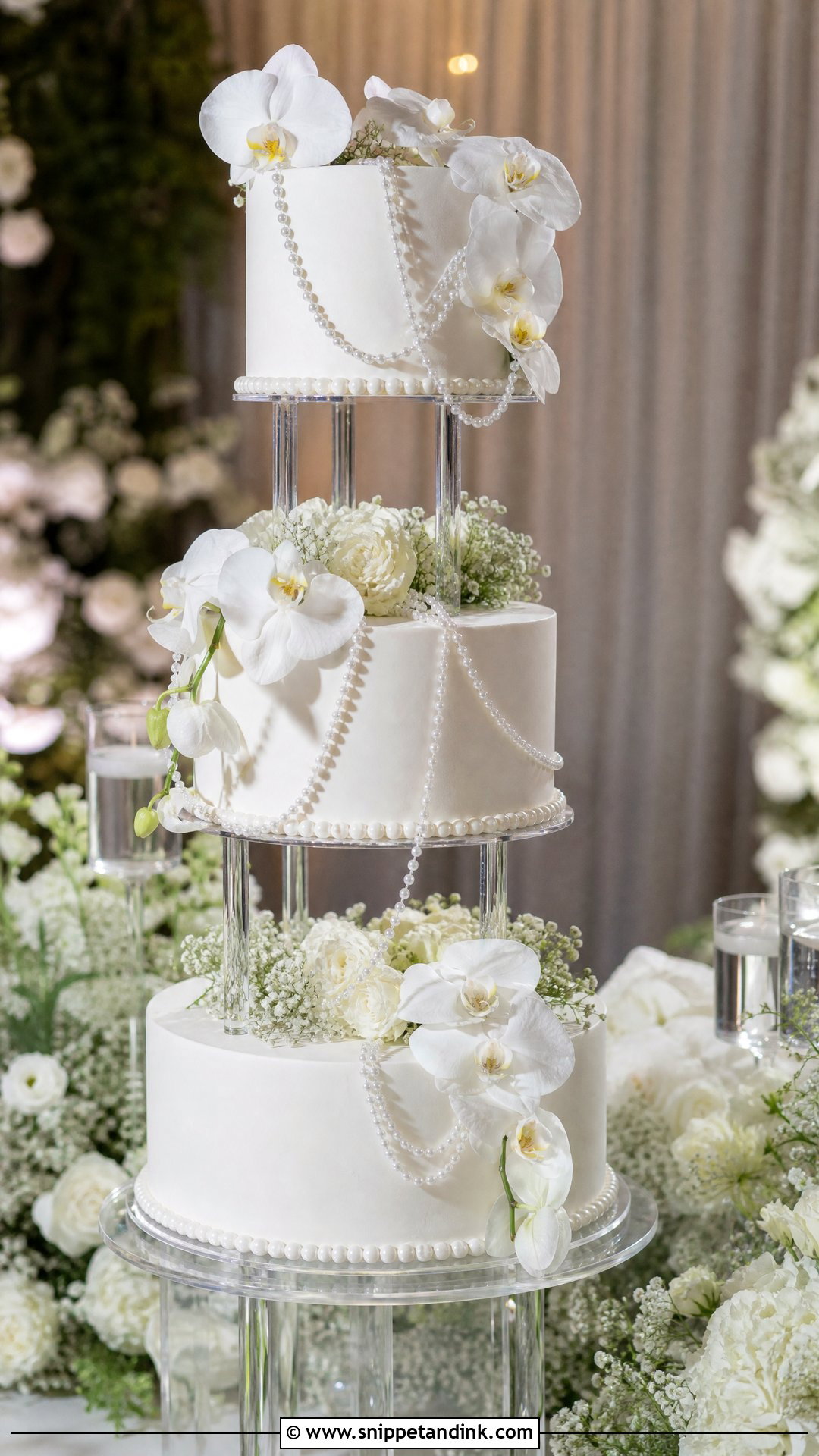
A floating tier wedding cake leaves open space between tiers using clear separators, acrylic risers or hidden supports. It adds height without adding cake, which is helpful if your guest count is modest. The gaps can hold roses, orchids, greenery, pearls or small battery lights. White fondant or smooth buttercream keeps it clean. Each floating tier sits on a plate held by a central rod or pillars, and if those aren’t sized correctly the upper tier can tilt, so experience really matters here. Ask any baker to show you one they’ve built.
8. Sugar Flower Wedding Cake
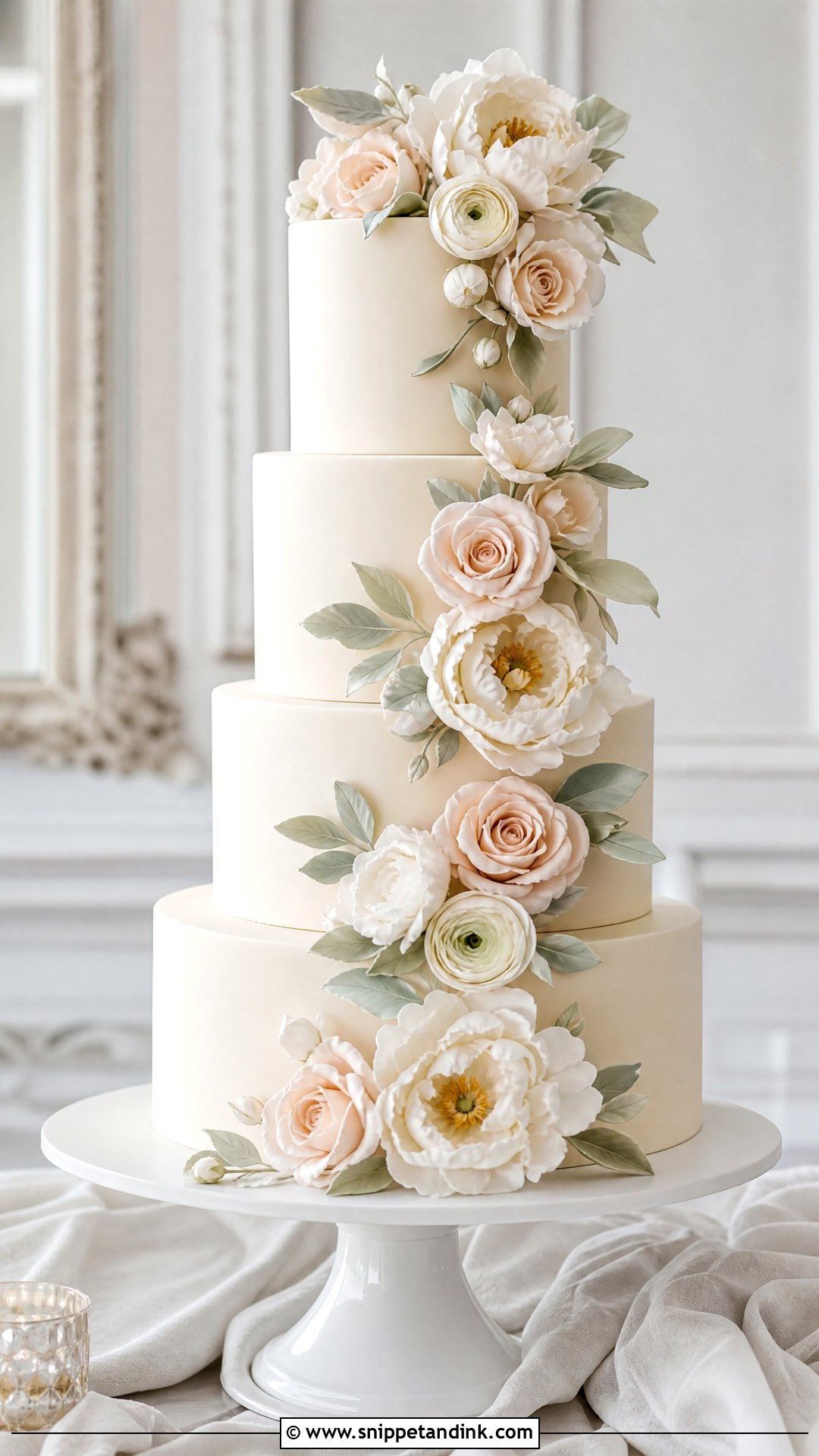
Sugar flowers last all night, never wilt and can be matched to any color, which is why I recommend them for summer weddings and out-of-season favorites. Roses, peonies, orchids, anemones, ranunculus and sweet peas are popular. Each petal is rolled, wired, shaped and dried, so a big arrangement represents days of work and costs accordingly. They’re technically edible but not pleasant to eat, and many have wires inside, so they come off before slicing. Many couples keep one as a memento.
9. Minimalist Wedding Cake
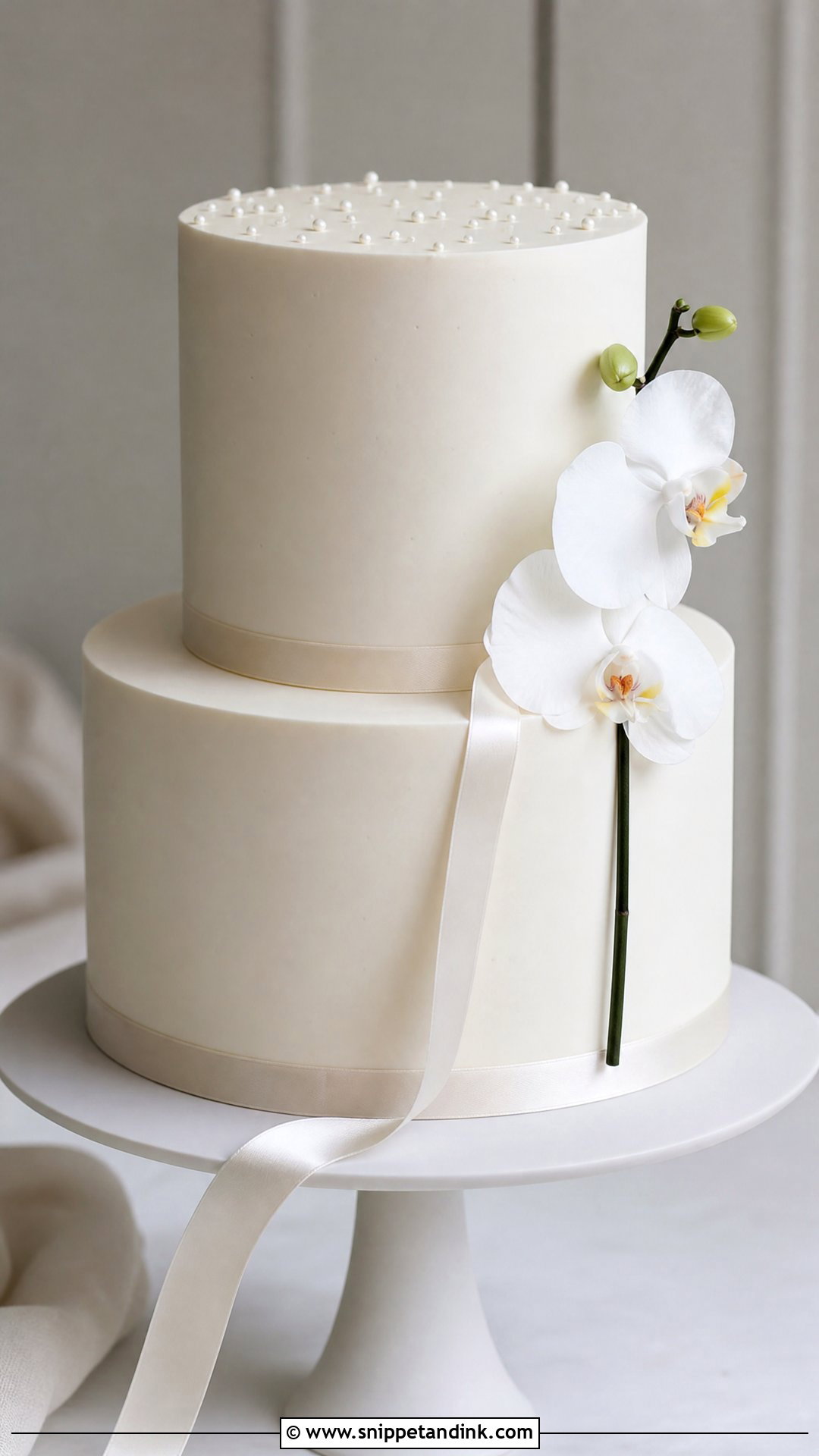
Minimal cakes rely on smooth buttercream or fondant, sharp edges, neutral colors and one or two details: a single stem, a narrow ribbon, faint texture or a small monogram. They suit modern venues, courthouse weddings and rooftops. The catch is precision; a plain surface shows every dent. Since the outside is quiet, put the excitement inside with a flavor like almond raspberry, lemon elderflower, vanilla bean or chocolate espresso.
10. Floral Cascade Wedding Cake
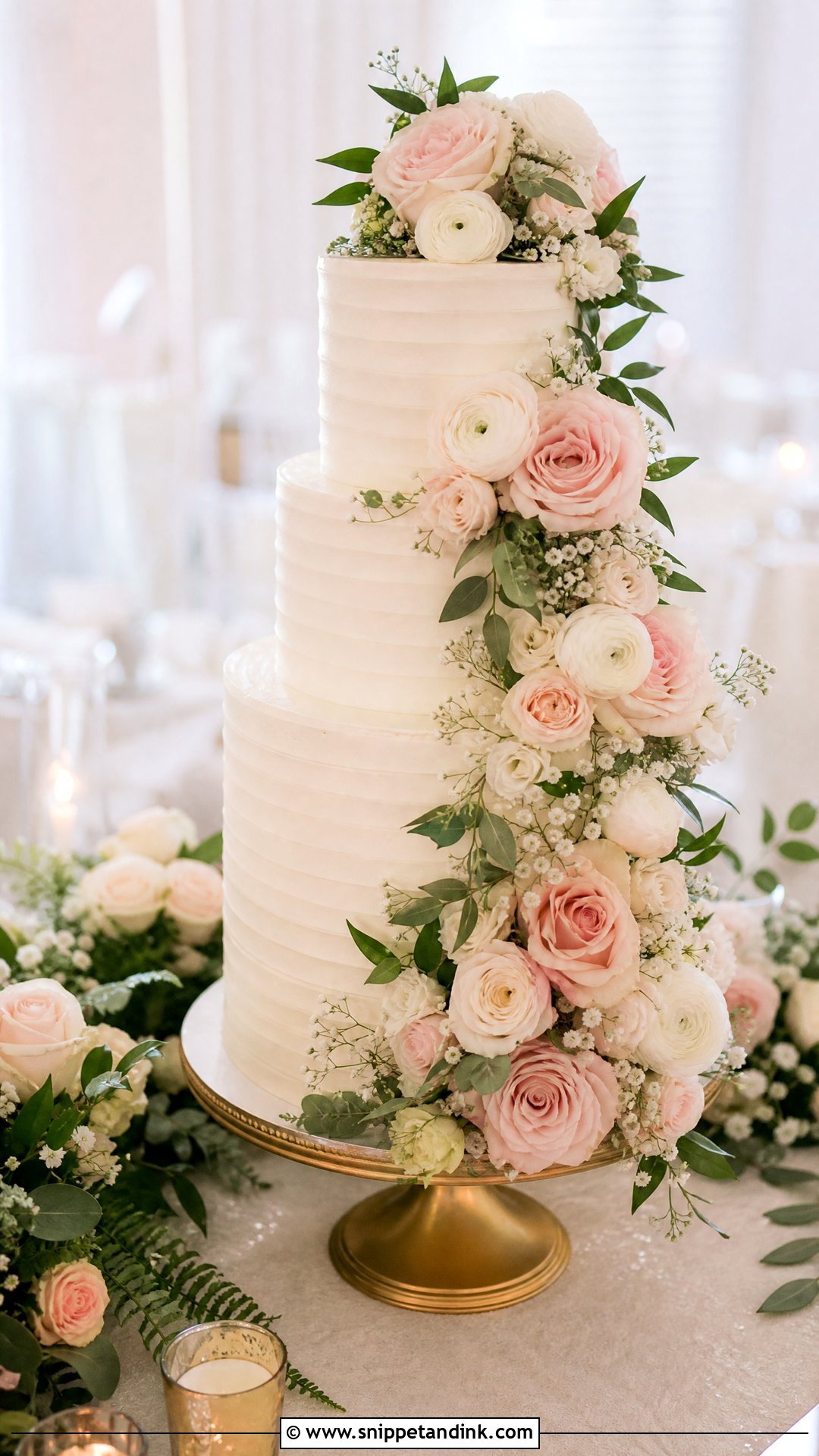
A floral cascade starts near the top tier and runs down one side, which gives even a plain white cake movement. Fresh roses, orchids, ranunculus, dahlias and greenery are common; sugar flowers work too and are safer. With fresh blooms, I insist on wrapped stems in food-safe picks, and dahlias in particular are thirsty, so they go on last. Smooth ivory buttercream or light texture underneath keeps it from feeling busy. Ballrooms and garden weddings with large floral arrangements suit it.
11. Fruit Wedding Cake
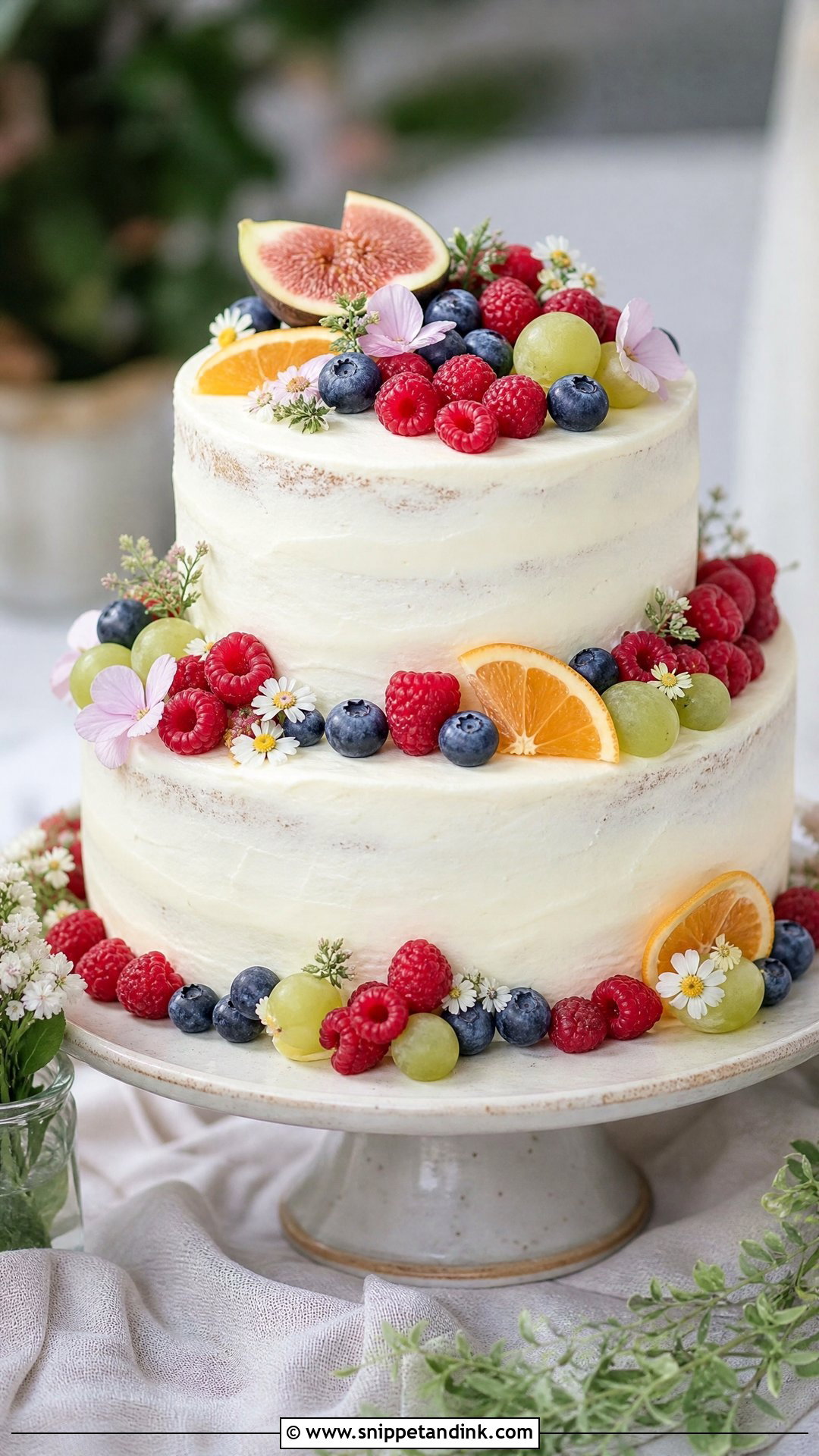
Fruit makes a cake look seasonal and generous: figs, berries, citrus, grapes, cherries, pears and peaches. It’s also the trend most likely to go wrong in a warm room, because cut fruit weeps juice and soft fruit bruises under its own weight. I place fruit on site, glaze cut surfaces, and choose firmer fruit for the lower tiers. Whipped frosting and mascarpone cream are delicious but soft, so I’d only use them indoors in cool conditions; buttercream or a light glaze is safer. Formal versions use smooth frosting; rustic ones mix fruit with herbs and texture.
12. Square Wedding Cake
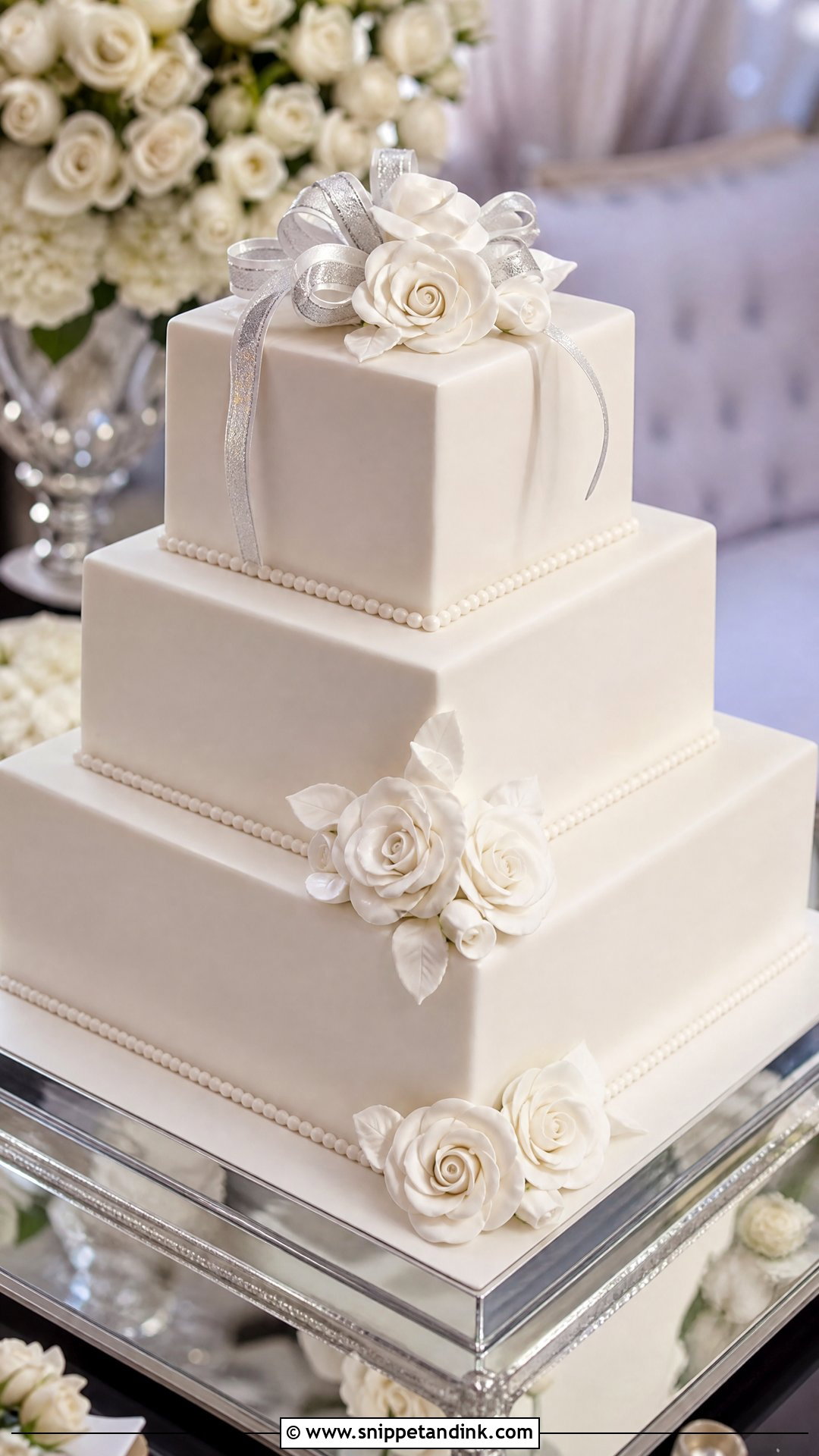
Square tiers give a crisp, architectural look that stands out from round cakes. Smooth fondant or sharp buttercream, ribbon bands, piped borders, sugar flowers or pearl lines all suit it. Stacking squares evenly is bold; mixing square and round tiers adds movement. Corners are where the skill shows, because buttercream wants to round off and fondant can tear, so I cover squares over firm ganache. It suits hotel ballrooms, city weddings and black-tie receptions.
13. Sheet Wedding Cake
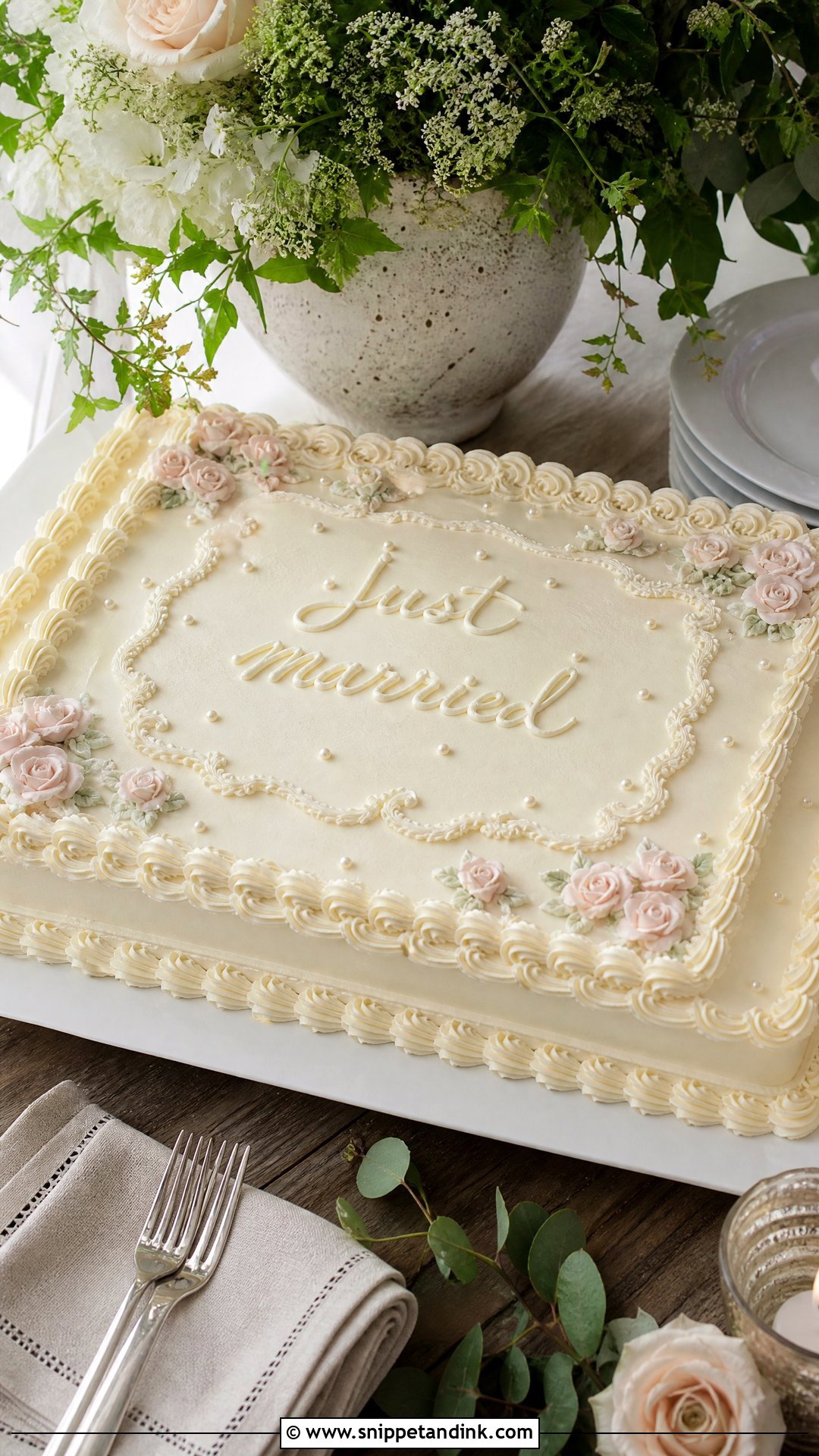
Sheet cake has come back as a style choice, not just a budget fix. Decorated with piped borders, flowers, bows, fruit or vintage writing, a sheet cake looks nostalgic and relaxed on a dessert table. It’s also far quicker for staff to cut, so guests get dessert sooner. Some couples display a small cutting cake and keep sheets in the kitchen. Buttercream with almond, vanilla, chocolate or lemon sponge suits it, and you can offer several flavors easily.
14. Two Tier Wedding Cake
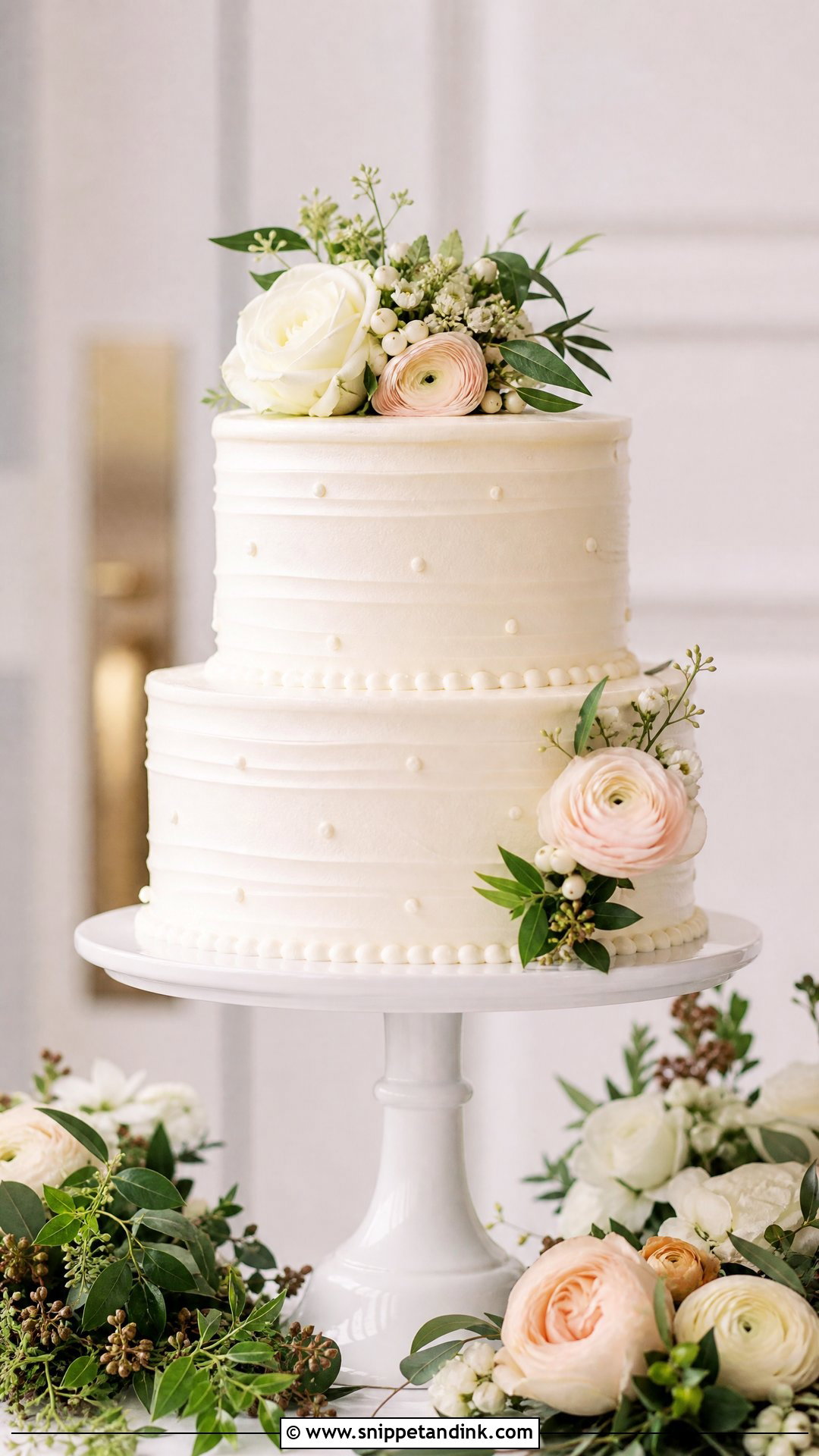
Two tiers give presence without a mountain of leftovers. Ivory buttercream with flowers, Lambeth piping, smooth edges or pearls and bows all fit. It also allows two flavors, such as lemon raspberry on top and vanilla almond below. I’d raise it on a tall stand with flowers around the base, because two tiers sitting directly on a table can look low in photos.


15. Three Tier Wedding Cake
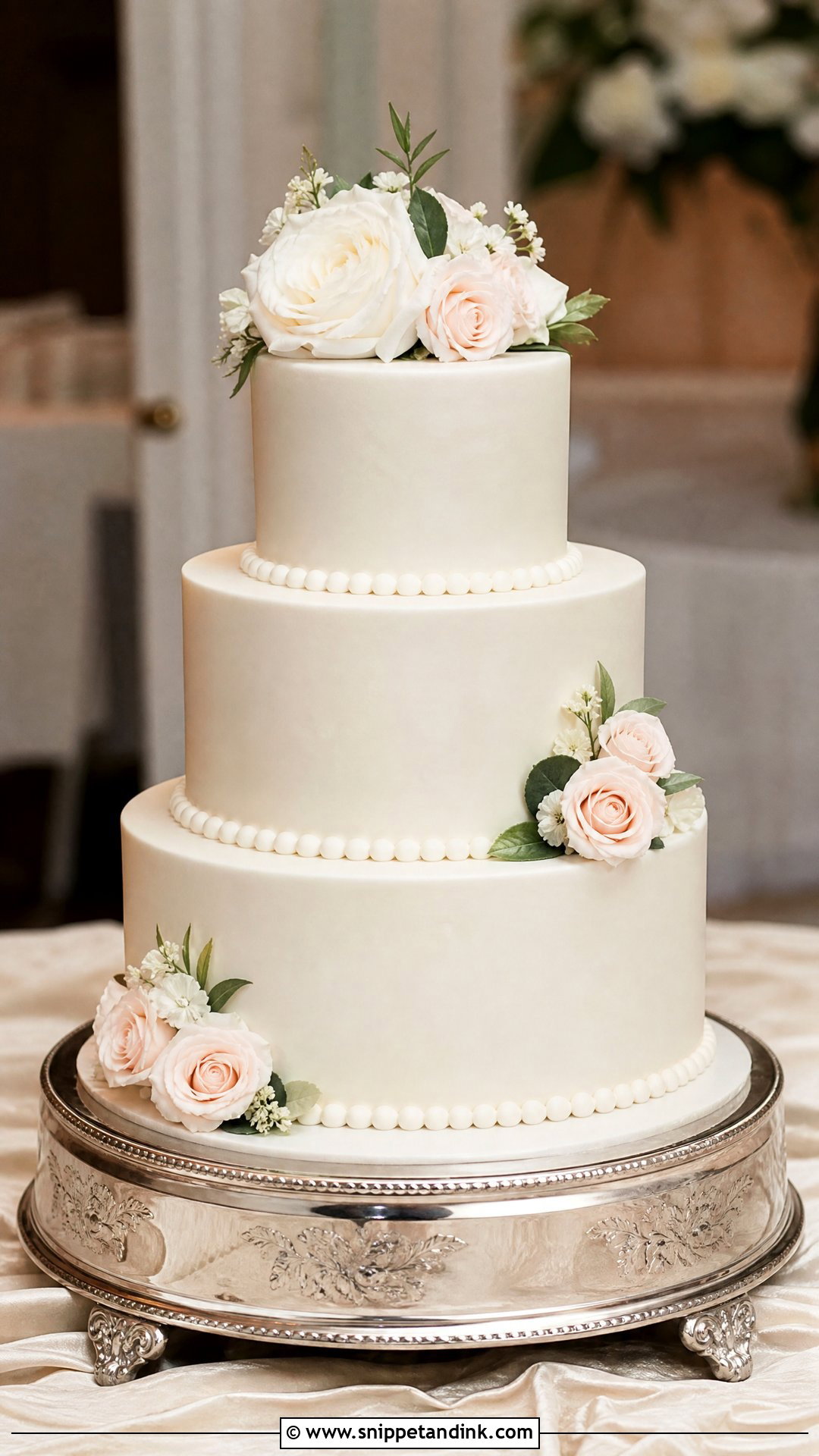
Three tiers suit most weddings: enough height to feel special, not so much that it dominates. Almost every finish works on this size, from buttercream to cascades, pearls, texture or fondant, and there’s room for three flavors. For balance, I keep the bottom tier quieter and let the top carry the focal detail, such as flowers, a bow or a topper. It cuts neatly and photographs well during the cutting.
16. Black And White Wedding Cake
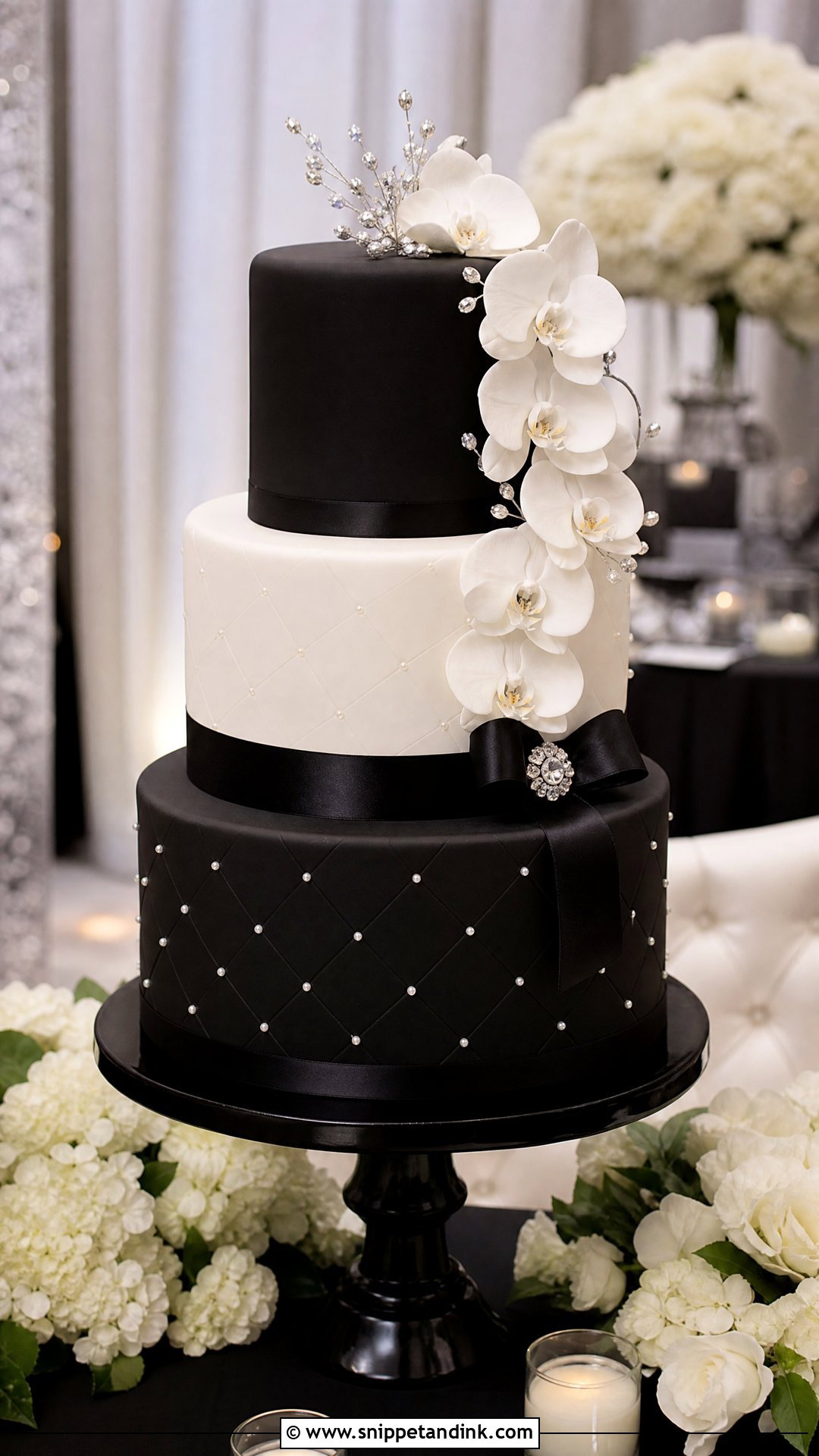
Black and white can be soft, with white tiers and black ribbon, or dramatic, with black fondant and white flowers. I lean toward black as an accent, because fully black icing needs heavy coloring that can taste bitter and stain mouths. Clean shapes keep the palette deliberate. Pearls, sugar flowers, a monogram or a little metallic add polish. Chocolate, vanilla, espresso and cookies-and-cream suit it. It suits evening receptions, modern hotels and galleries.
17. Blue Wedding Cake
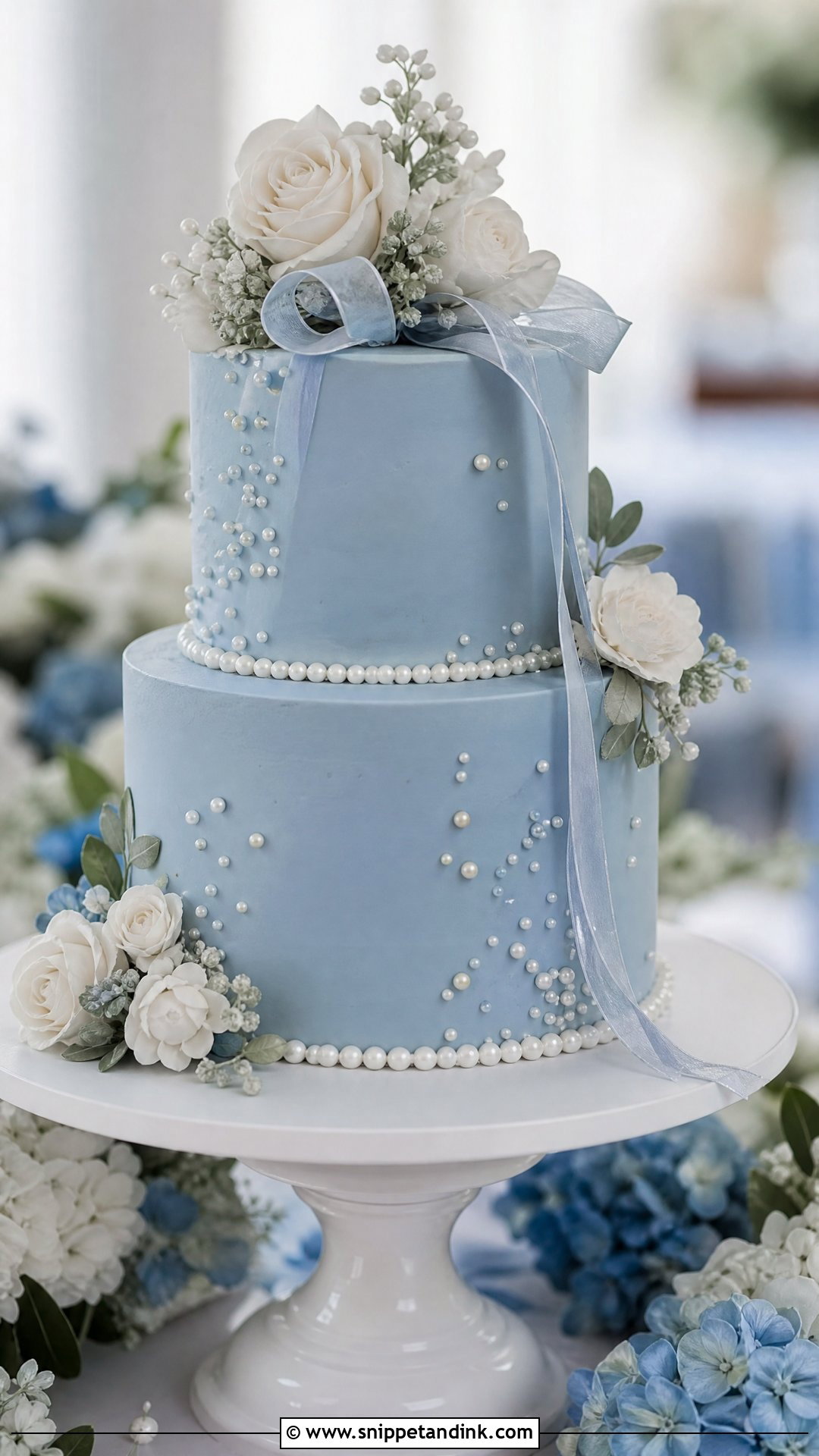
Blue is less expected at weddings, which is why I’m seeing more of it. Powder blue is delicate, dusty blue reads vintage, and navy is formal. White flowers, pearls, silver and pale greenery keep it bridal. My one caution: blue is the color that shifts most under venue lighting and can look gray or green, so I test a sample under similar light. One blue tier with the rest ivory is a gentle way in; an all-blue cake with white piping is bolder. Lemon, vanilla, almond or blueberry fit.
18. Green Wedding Cake
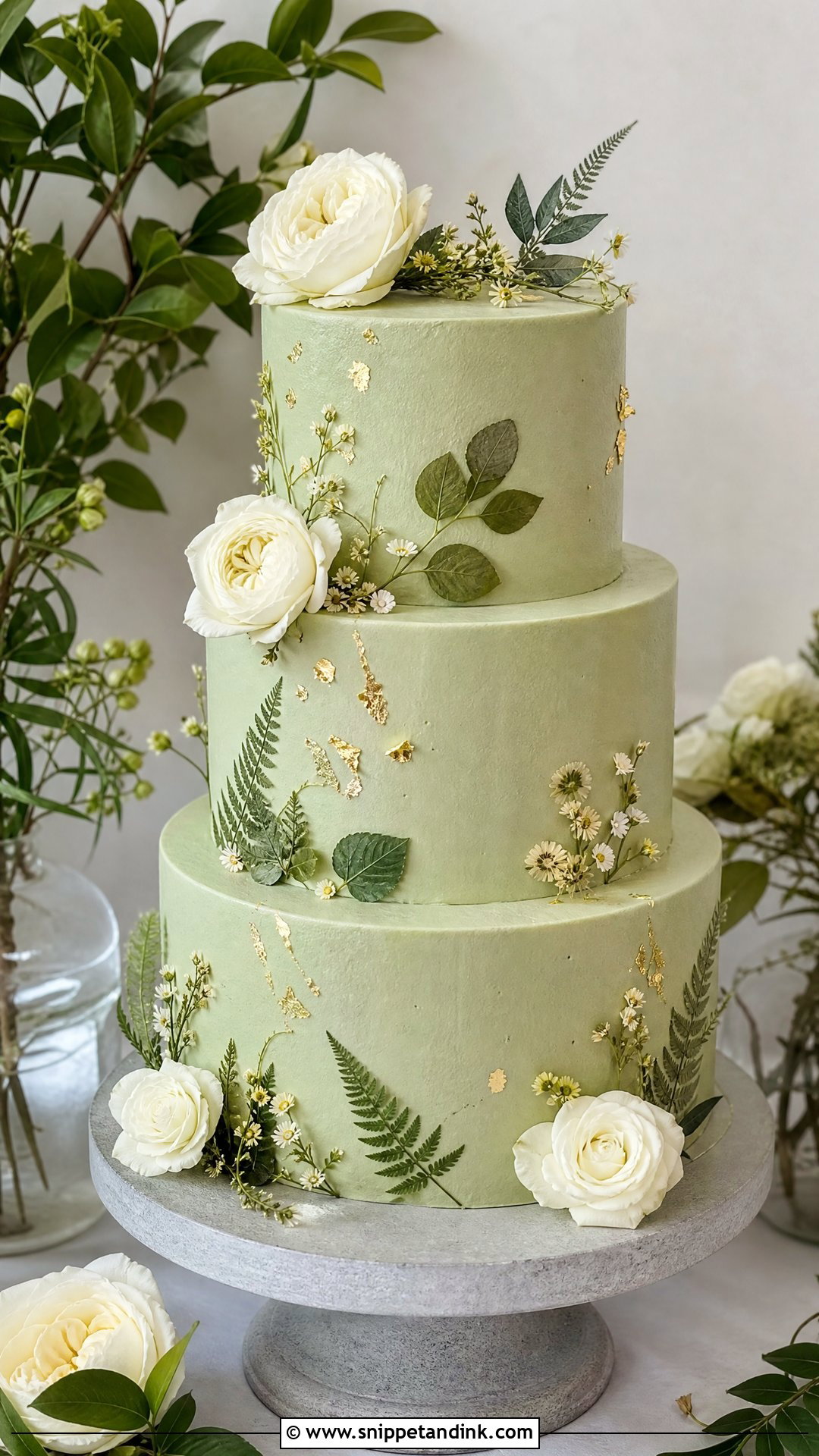
Green suits garden, woodland and botanical weddings. Sage is calm, olive earthy, emerald formal. It can be fully colored, washed on in watercolor or limited to one statement tier. Muted greens look more wedding-like than bright ones, which can read as novelty. Pressed flowers, sugar flowers, white blooms or gold pair well. Pistachio, matcha, vanilla, almond or lemon sponge makes the color edible.
19. Pink Wedding Cake
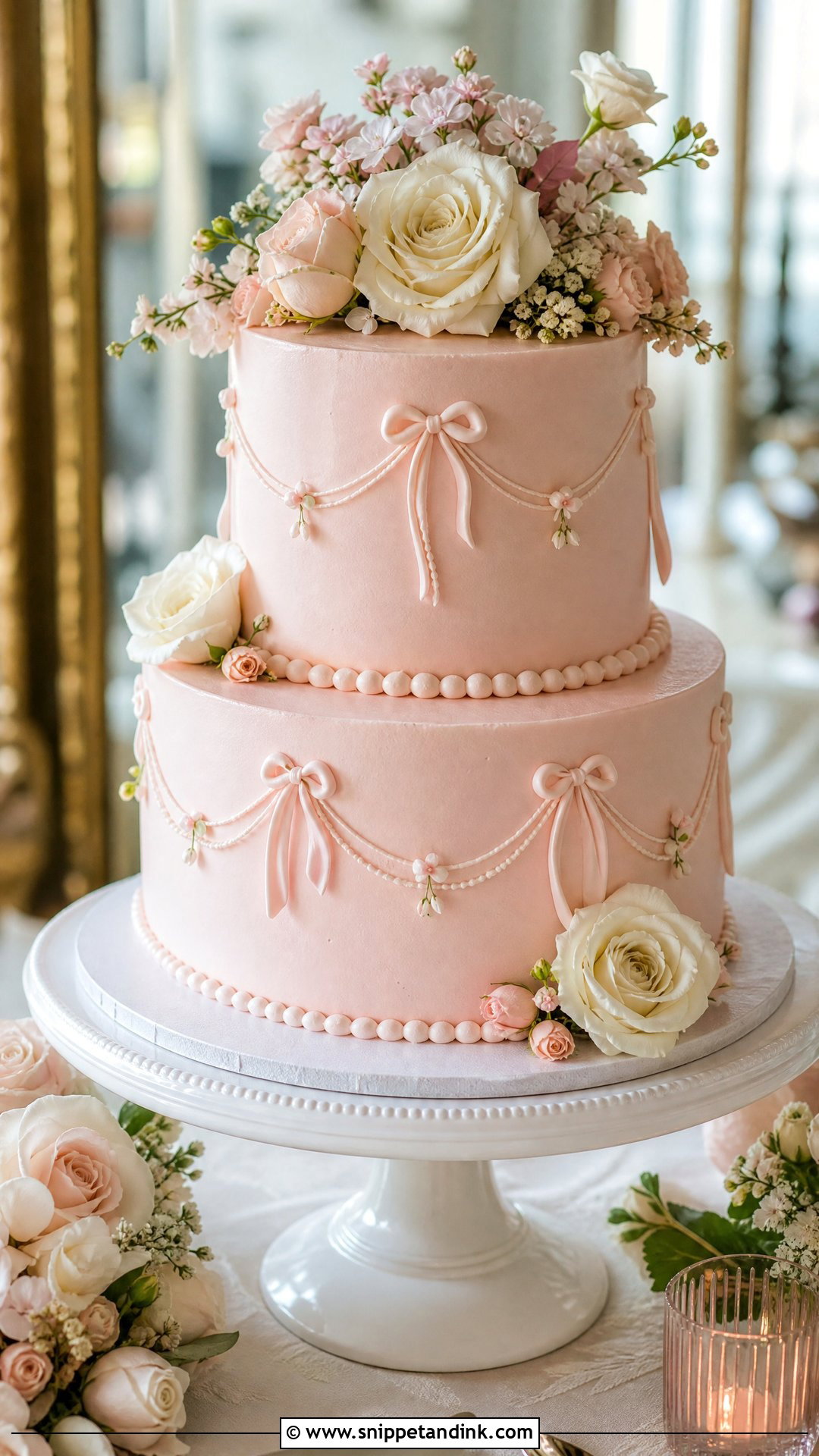
Pink runs from baby pink to blush, dusty rose, deep rose and mauve. Baby pink suits pearls, bows and buttercream piping; deeper rose stands out in a dramatic room. Pink buttercream can fade slightly in strong daylight, so I keep pink cakes out of sunny windows until serving. Balance it with white flowers, gold or tone-on-tone piping. Vanilla, strawberry, raspberry, almond, rose or a champagne-style (alcohol-free) sponge suits it.
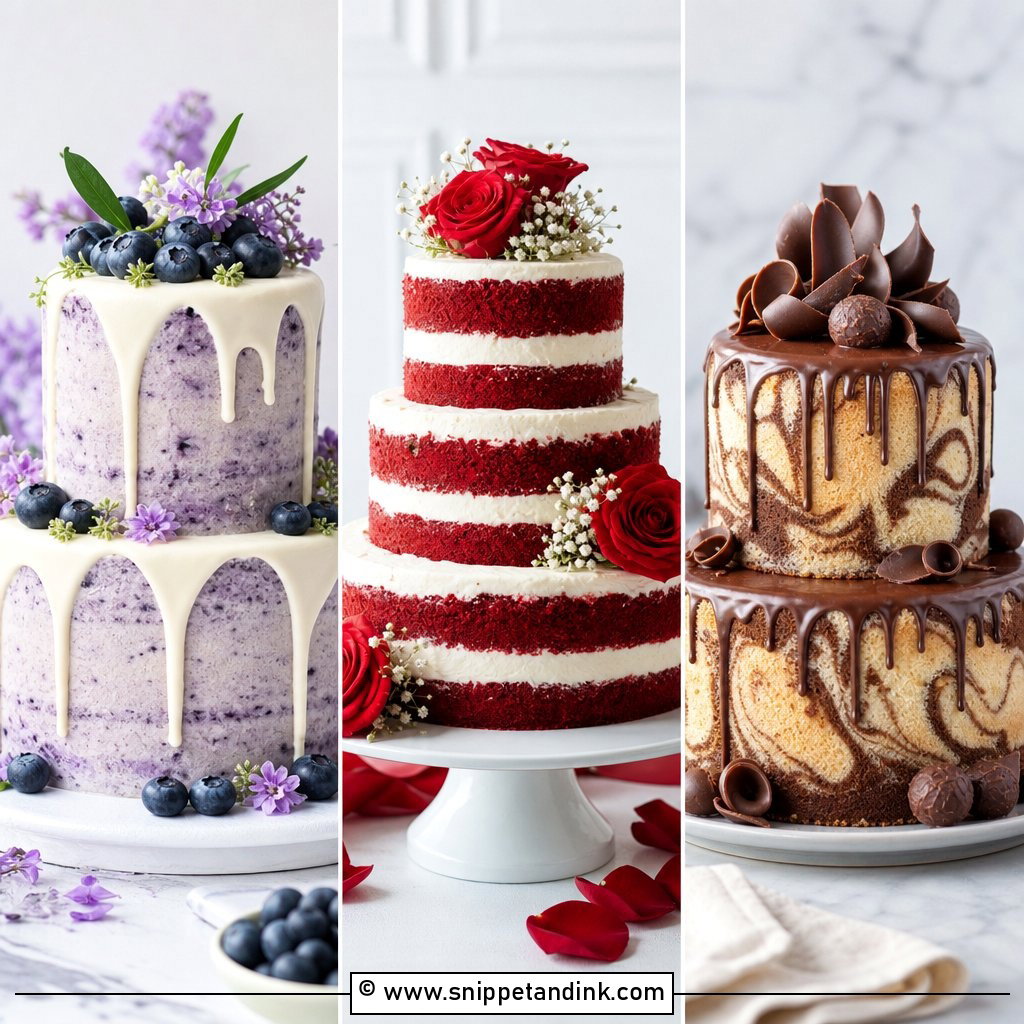

20. Gold Wedding Cake
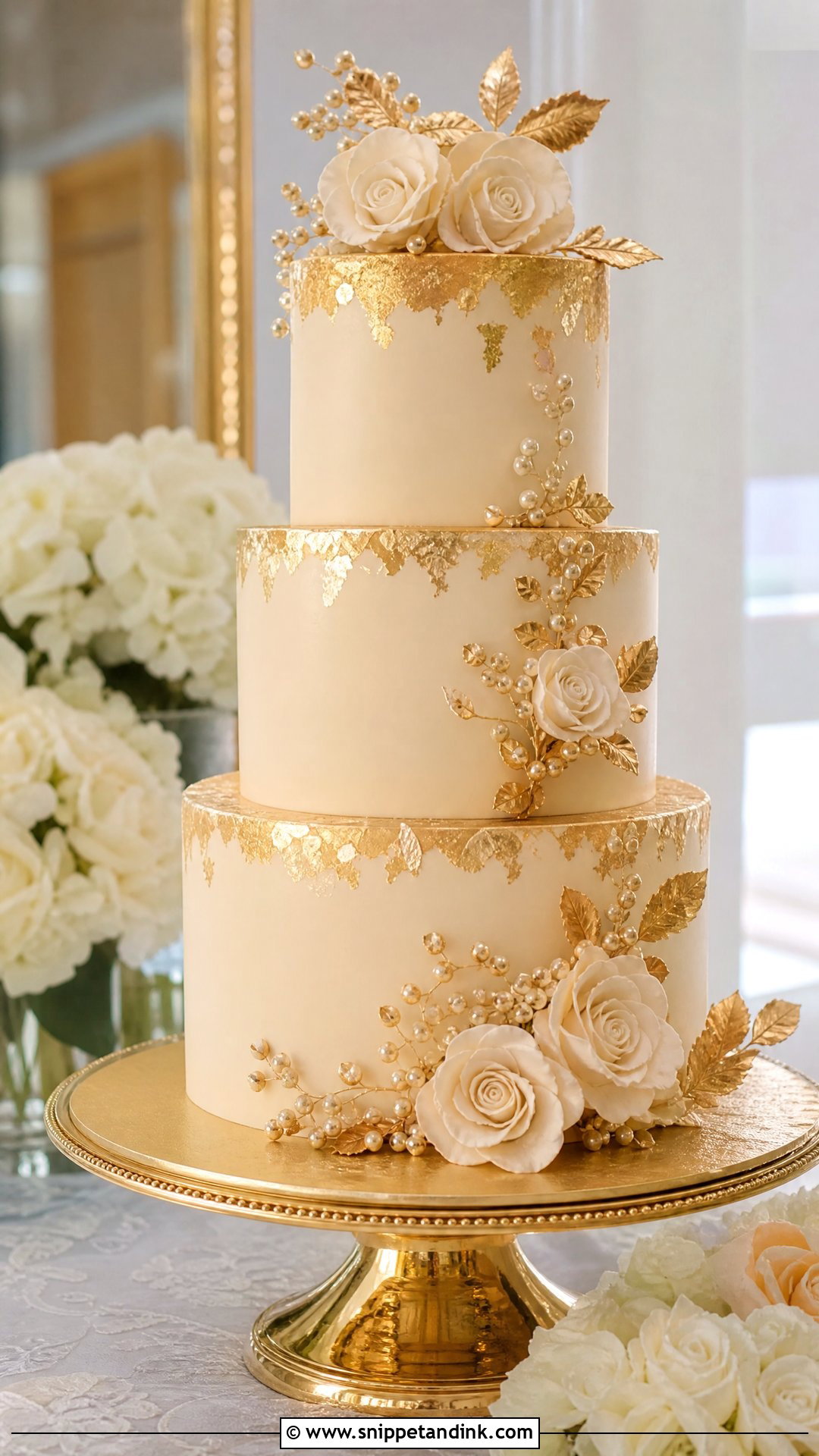
Gold appears as brushed edges, painted texture, pearl lustre, leaf, ribbon or a single statement tier. It looks richest against ivory, white, champagne, blush or soft beige, used with restraint. I only use metallics labeled as edible; some glitters sold for cakes are decorative only and not meant to be eaten. Candlelit evening receptions show gold at its best. Vanilla bean, caramel, almond, honey or chocolate sponge suits it.
21. Watercolor Wedding Cake
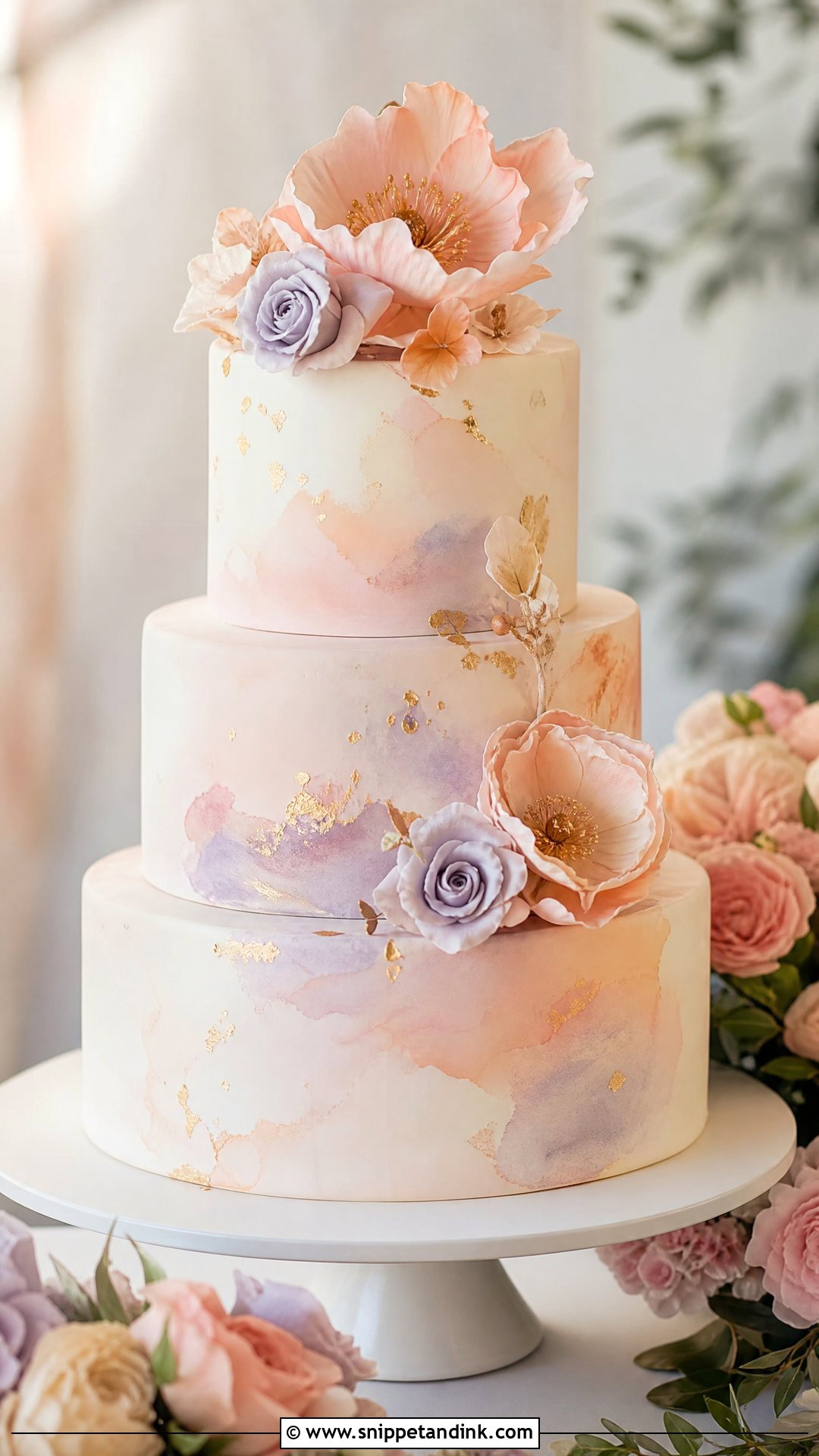
Watercolor is painted or blended across the frosting so color fades in and out. It can be gentle in blush, peach and cream, or moody in blue, green, lavender and gray. On buttercream I blend colored frosting with a scraper; on fondant I paint with diluted food color, which gives finer control. It pairs with sugar flowers, gold flecks or fine piping. Matching the tones to invitations, florals or bridesmaid dresses ties it all together. Keep the shape simple so the painted finish leads.
22. Ruffle Wedding Cake
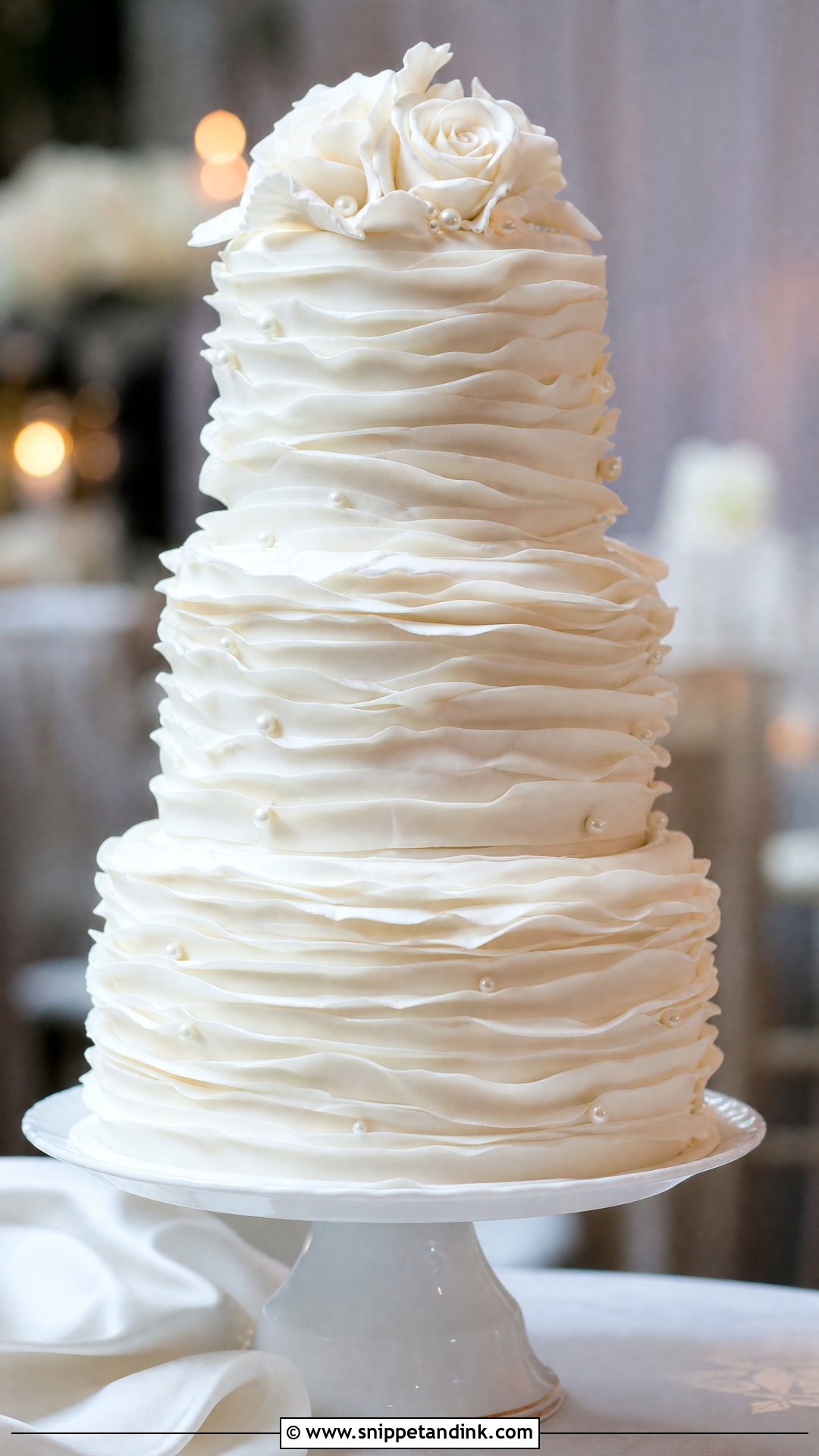
Ruffles can be fondant, wafer paper or buttercream, and each has a trade-off. Wafer paper is the lightest and most delicate but softens in humidity; fondant holds its shape but adds weight; buttercream ruffles taste best but droop in heat. Vertical ruffles add height; horizontal layers look like fabric. They echo tulle, organza and lace gowns. Ivory and white are classic; blush, champagne and pale blue work too. Keep other decoration minimal.
23. Monogram Wedding Cake
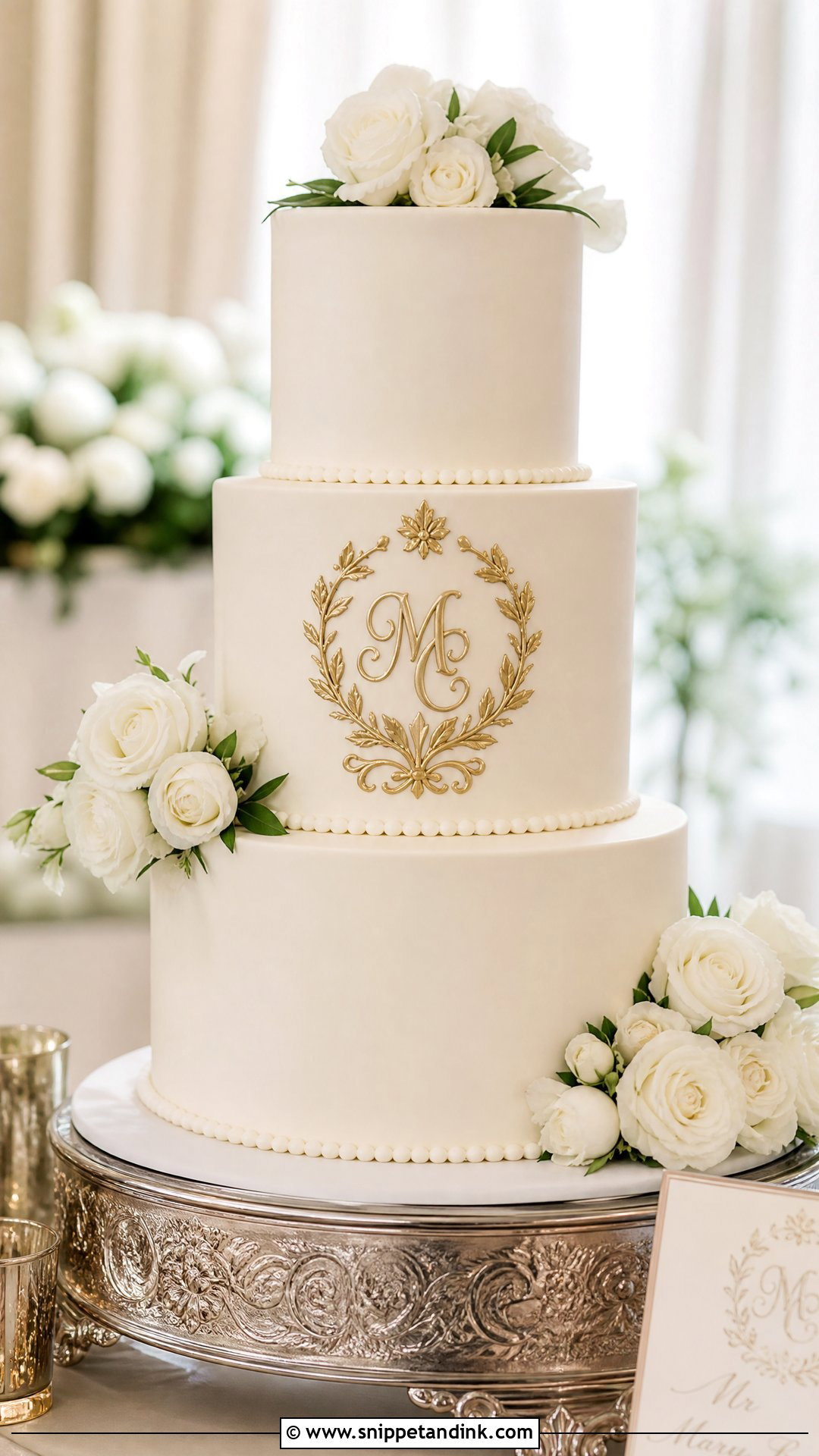
A monogram makes a cake clearly yours. Initials can be piped, painted, embossed into fondant, used as a small topper or placed inside a crest. I ask couples for the exact lettering from their invitations so the cake matches the stationery. It needs to look built into the design, not stuck on. Smooth ivory frosting, pearl borders, ribbon or gold accents frame it. Formal weddings, family estates and historic venues suit it.
24. Painted Wedding Cake
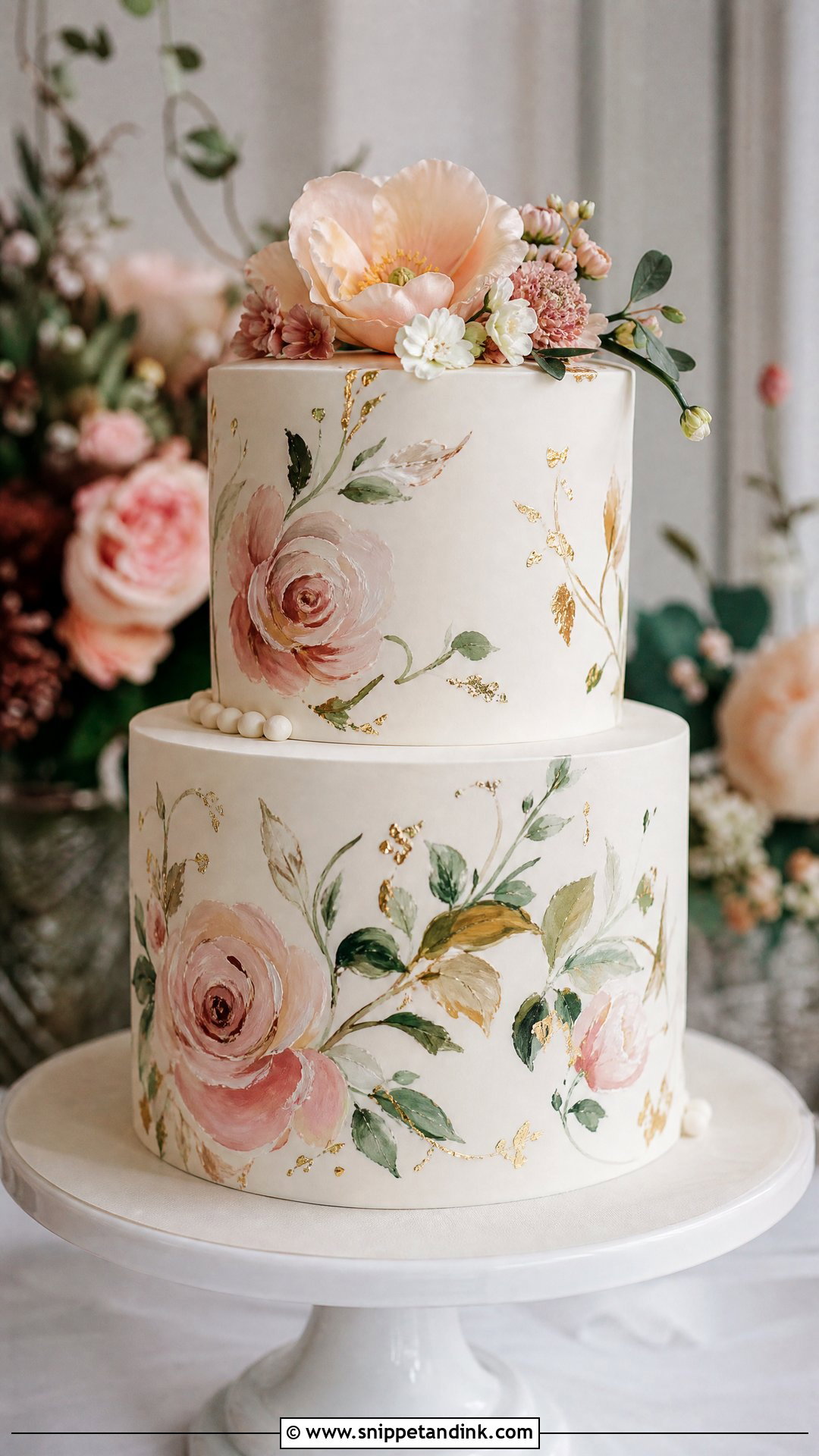
Hand-painted cakes are edible art: florals, vines, brushstrokes, landscapes or a sketch of your venue. Painting needs a very smooth fondant surface, or a chilled, perfectly smooth buttercream, so the brush doesn’t drag. It’s slow work done freehand, and each cake is one of a kind. Keep the shape simple so the painting has room. A few sugar flowers or metallic accents are enough extra.

25. Tall Wedding Cake
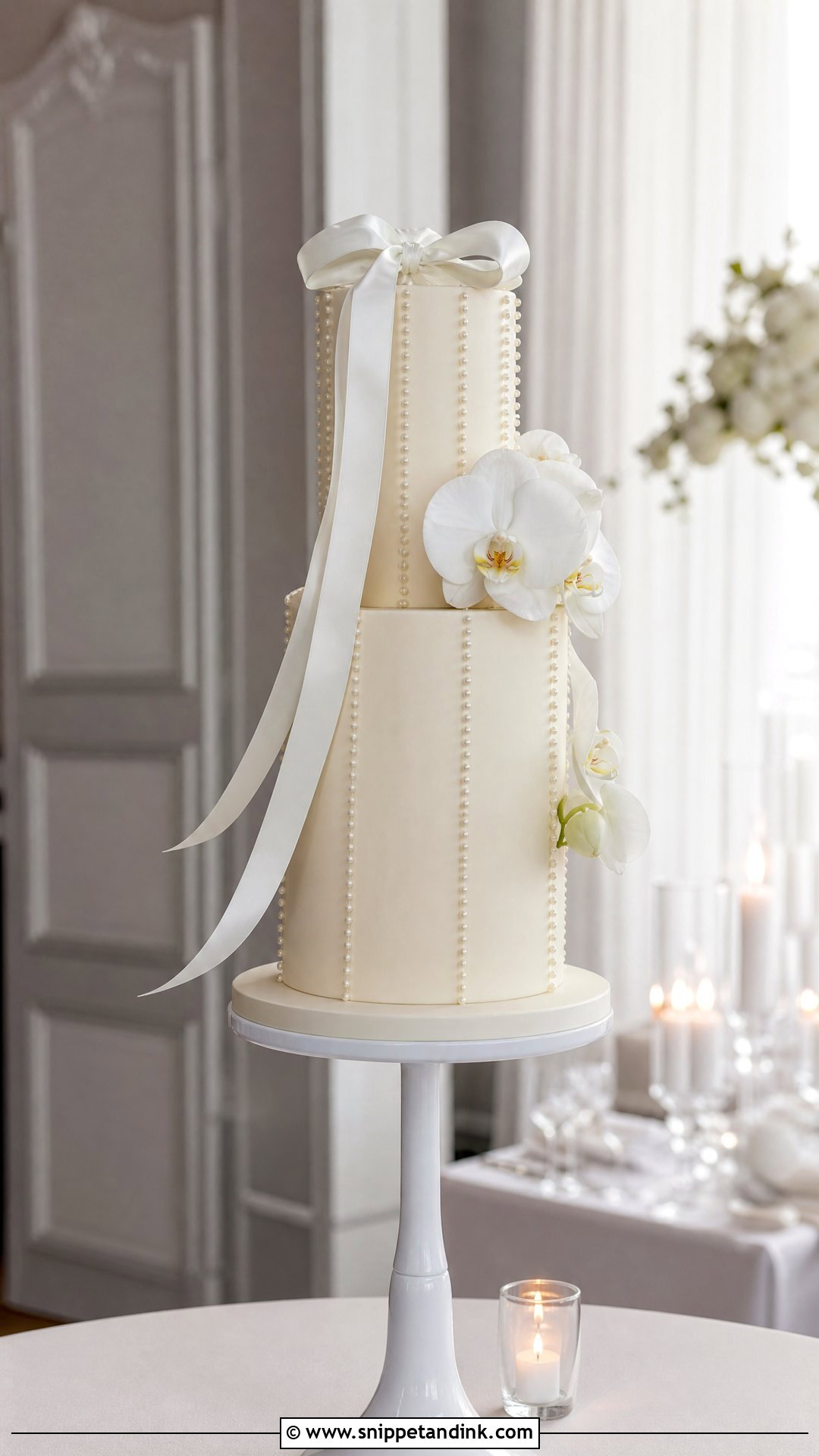
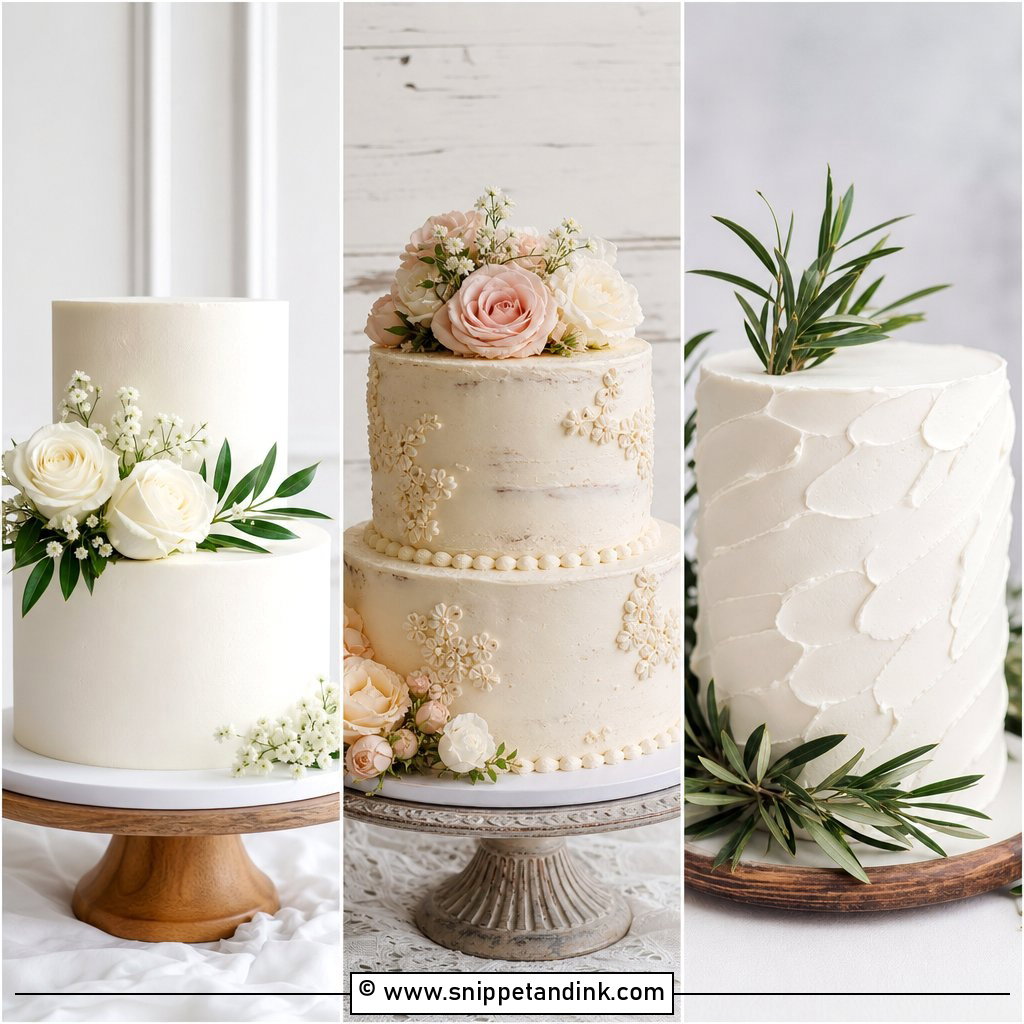
Tall tiers make even a simple cake look sleek. A tall two-tier can look as striking as a wider three-tier, which helps smaller weddings. Extra-tall tiers need an internal board halfway up, otherwise the sponge compresses under its own weight, and transport needs care. Smooth buttercream, fondant, pearls, sugar flowers or ribbon bands suit it. Vertical decoration emphasizes height. Modern venues and fashion-led receptions suit it.
26. Rustic Wedding Cake
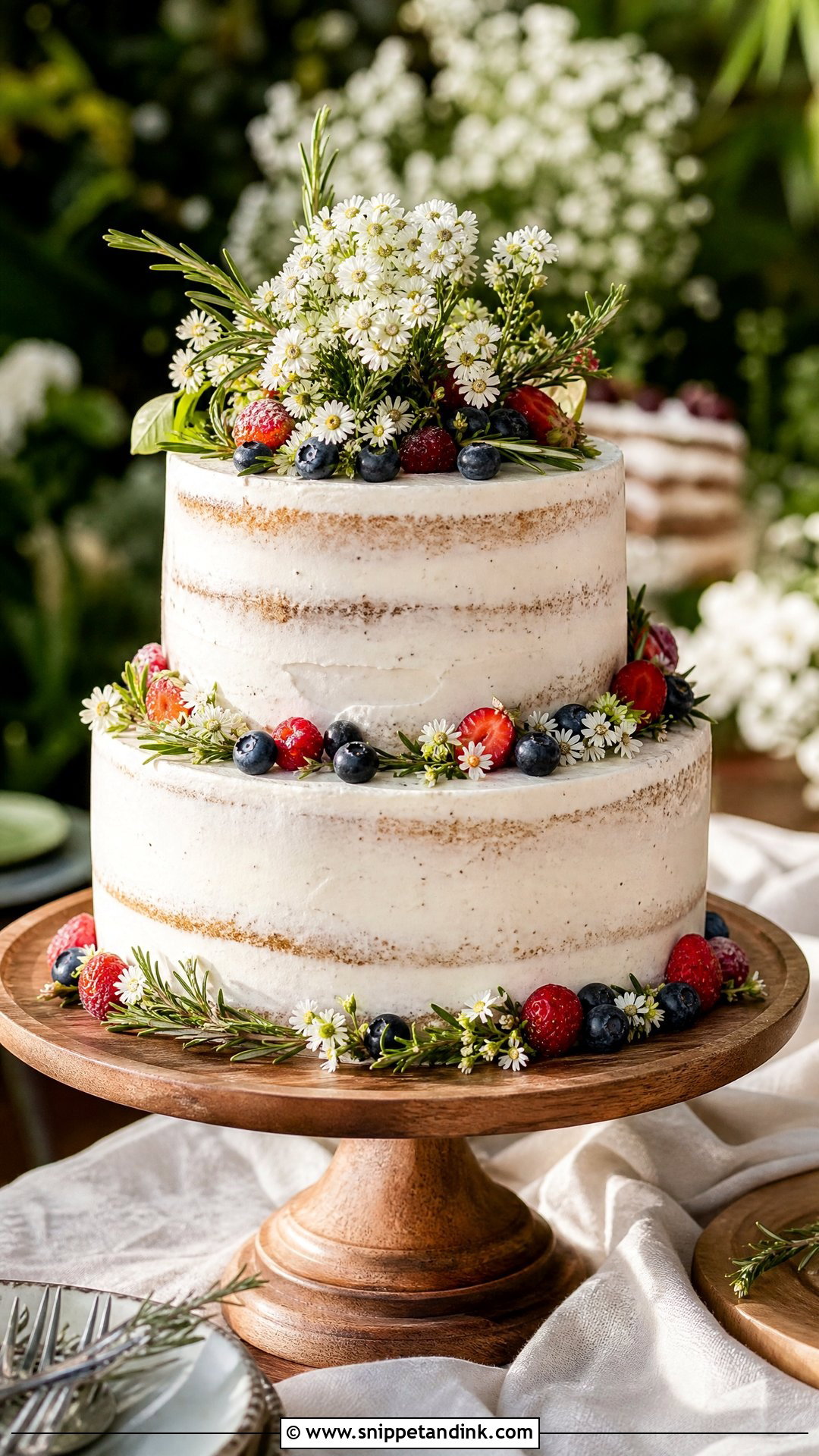
Rustic cakes use textured buttercream, semi-naked layers, flowers, berries, herbs or greenery, and they suit barns, farms, gardens, vineyards (styled without alcohol) and outdoor receptions. Natural doesn’t mean messy, and outdoors, rustic venues bring heat and uneven tables, so I check both. Soft ivory buttercream with vanilla berry, carrot, apple spice, lemon or chocolate sponge suits the season. A wooden stand works if it’s clean, level and sealed.
27. Beach Wedding Cake
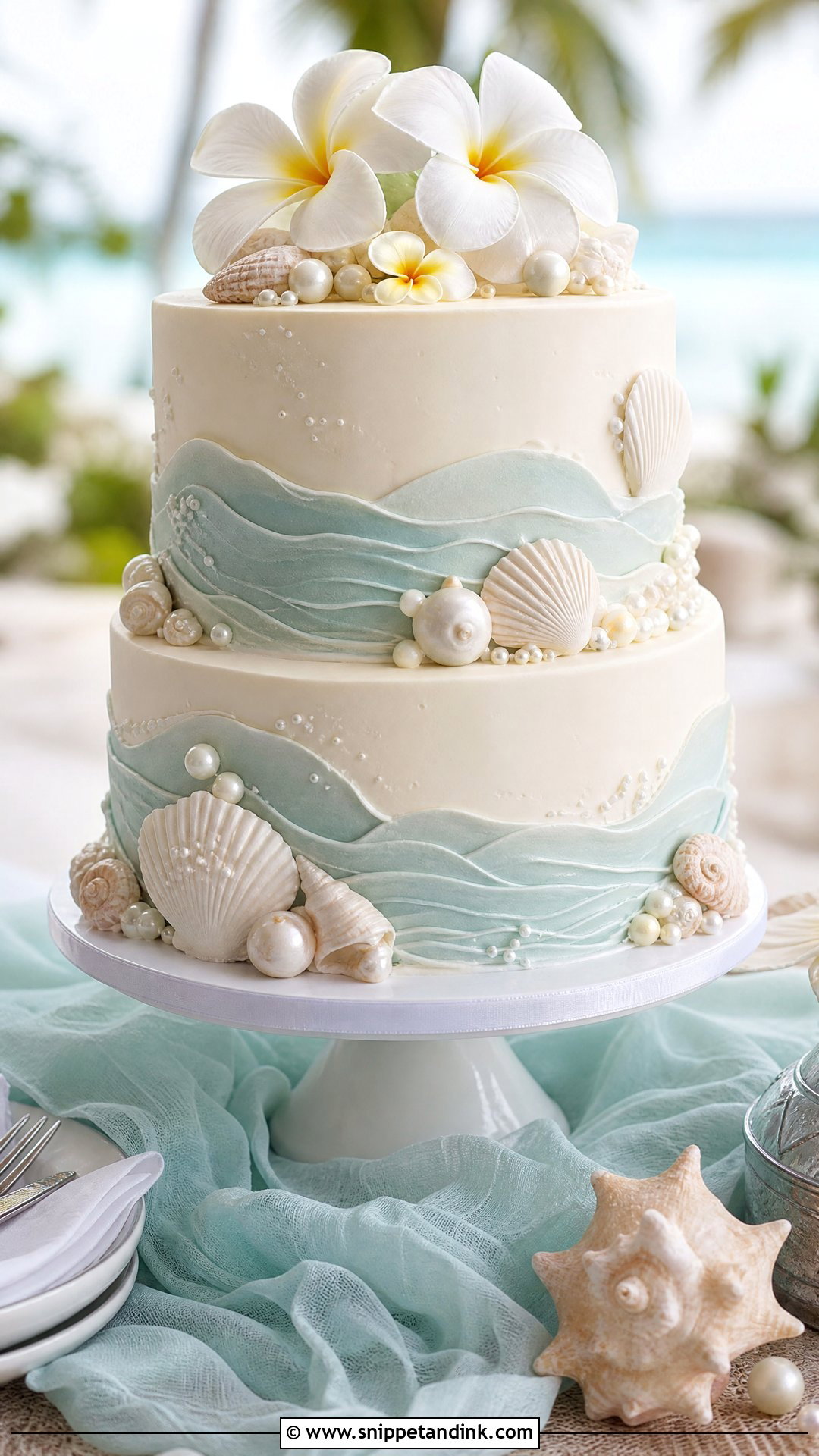
A beach wedding cake should hint at the coast without novelty props: soft white, sand, pale blue, sea-glass green and pearl tones. Sugar shells, buttercream waves, coral-style piping, tropical flowers or citrus decorate it. Sun and salty humid air are hard on cake, so I build beach cakes on firm ganache and ask for full shade. Coconut, lime, vanilla, passion fruit, pineapple or lemon flavors suit the setting. A simple white stand with soft florals nearby keeps it refined.
28. Garden Wedding Cake
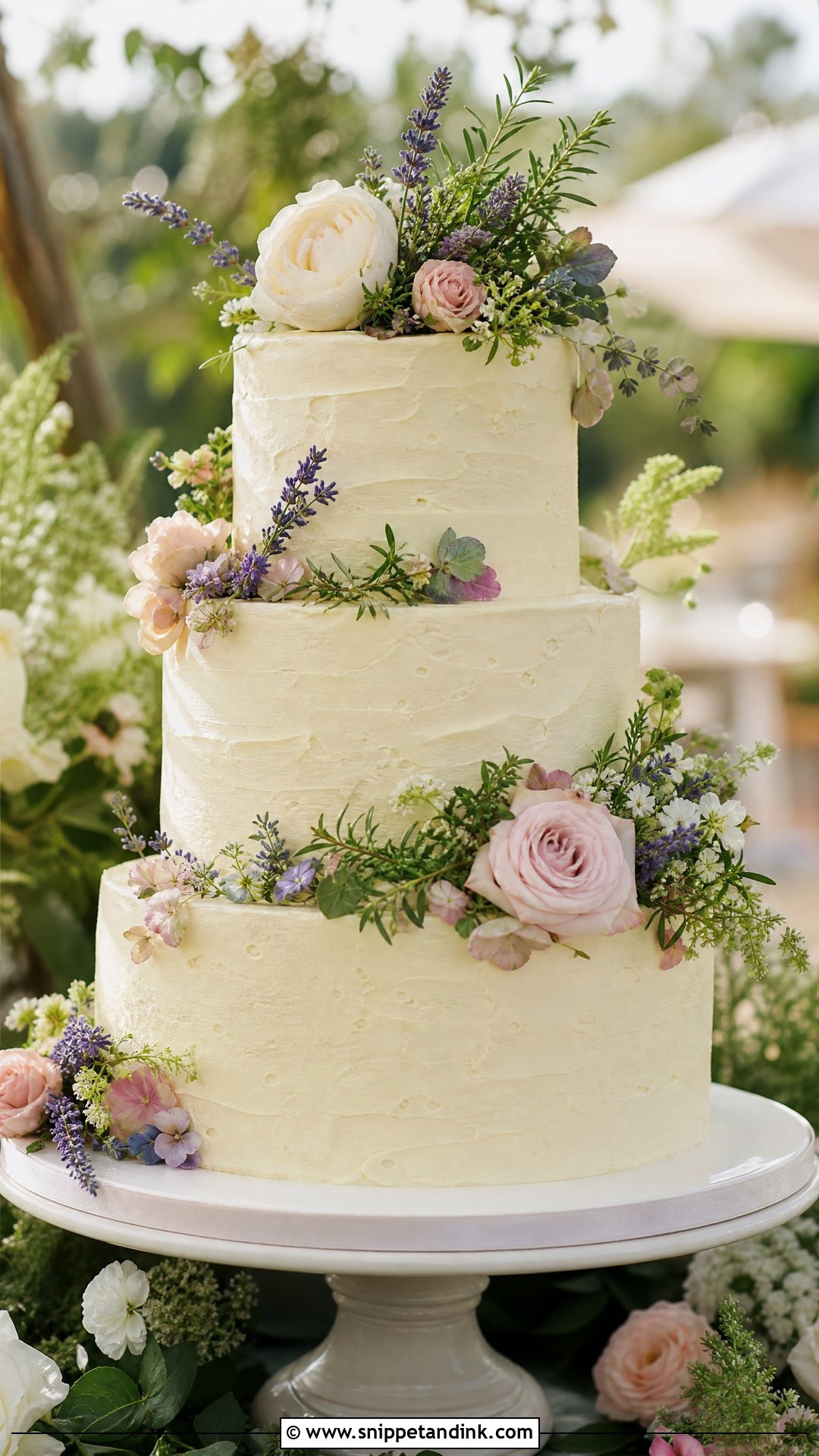
Garden cakes gather fresh flowers, pressed petals, herbs and sugar blooms so they look naturally grown over the cake. The base can be smooth, textured, semi-naked or fondant, in ivory, blush, sage, lavender or peach. Matching the flowers to the ceremony arch or bouquet ties it in. I place the flowers in groups of odd numbers and leave clear frosting between them, which keeps it abundant without chaos. Lemon, elderflower, almond, strawberry and vanilla bean flavors fit.
29. Chocolate Wedding Cake
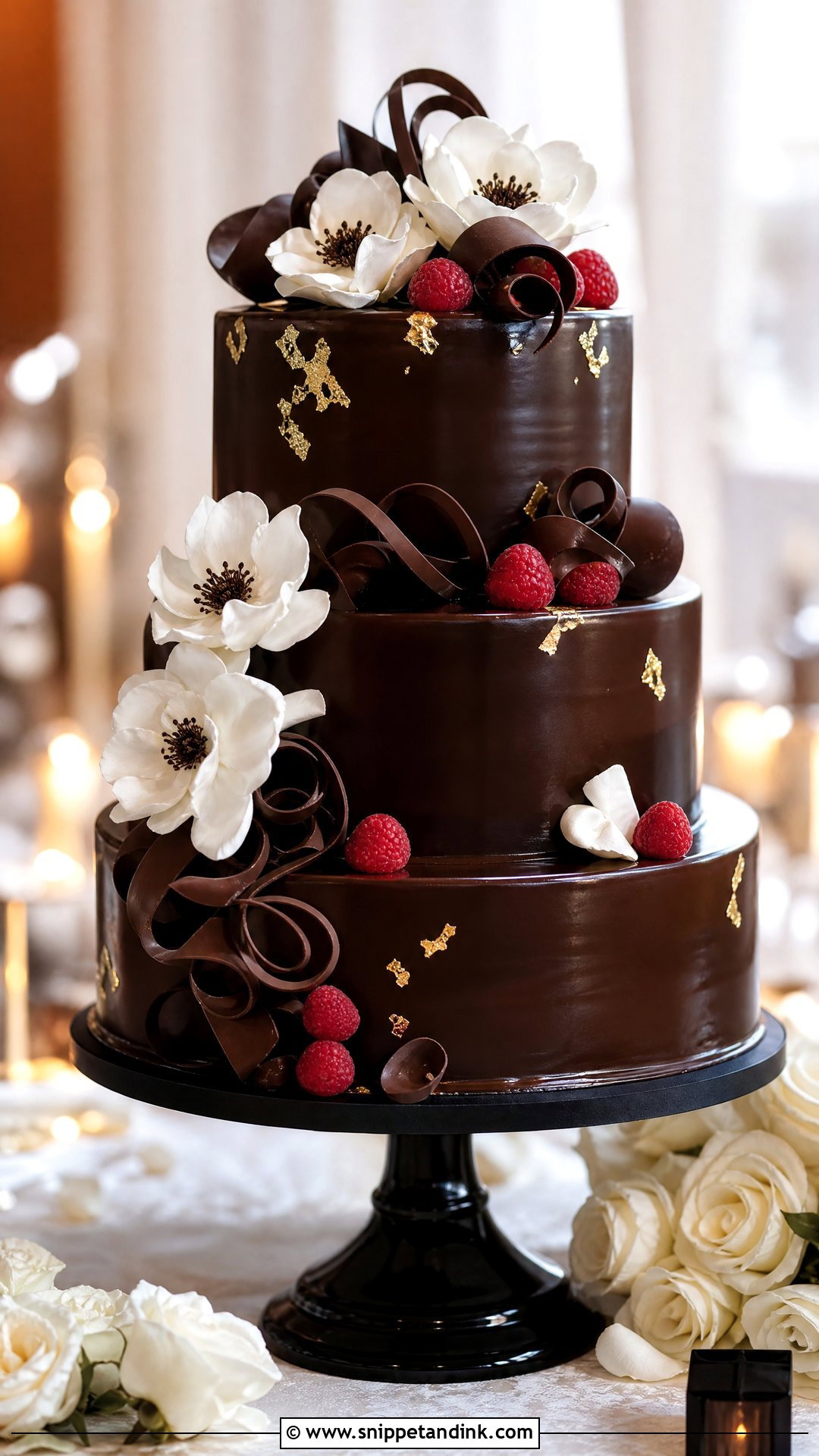
Chocolate is the flavor I’m asked for more every year. Finish it with dark ganache, cocoa buttercream, chocolate drip, berries, gold or white sugar flowers for contrast. Ganache sets firmer than buttercream, which makes a chocolate cake one of the better choices for a warmer room. Fully chocolate looks moody and modern; chocolate inside ivory frosting looks traditional. Raspberry, salted caramel, espresso, hazelnut and vanilla cream fillings are favorites.
30. Small Wedding Cake
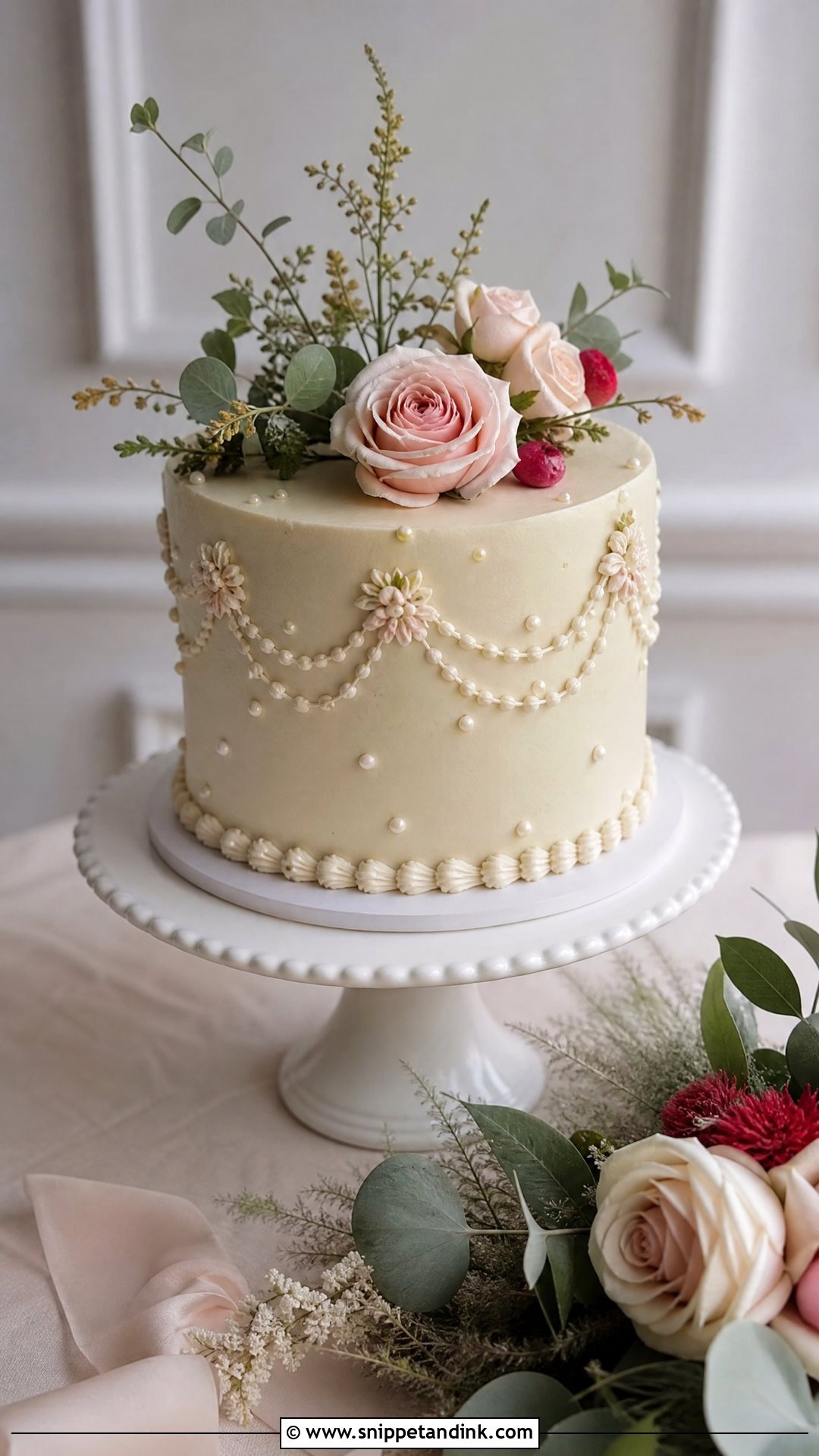
Small cakes suit elopements, micro weddings and courthouse ceremonies, or act as a cutting cake beside other desserts. A single-tier cake can carry Lambeth piping, pearls, flowers, ribbon, fruit or a minimal finish. Proportion is everything: decorations need to be scaled down, or a small cake looks crowded. The smaller size also makes a richer flavor affordable, such as pistachio raspberry, lemon curd, almond cream or chocolate ganache. A pedestal with flowers round the base gives it presence.
Sugar Work Needs a Longer Runway Than Buttercream
The trends in this list are not equal in labor. A buttercream cake with fresh fruit is made in the days before the wedding. Sugar flowers, Lambeth piping, hand-painting and fondant bows take far more hours, and the sugar pieces are often made weeks ahead so they can dry fully.
- Popular bakers fill their calendars well ahead, especially for peak months, so enquire as soon as your date and venue are set.
- Confirm your final design and colors a few weeks out. Sugar flowers can’t be re-colored once they’re dried.
- Agree on the final guest count before the deadline in your contract. Adding a tier late is often impossible.
- Ask what happens if the weather turns hot. A good baker will have a plan, such as more ganache under fondant or a later setup time.
If your timeline is short, choose a trend that relies on buttercream, texture or fresh fruit. Those can be done well at shorter notice, and they eat better too.
The Slice on the Plate Is What People Talk About Later
Trends are useful because they show what bakers are excited to make, but the cake still has to suit your venue, season, colors, guest count and the flavors you love. A Lambeth heart might be exactly right for one couple and a minimal tiered cake for another. Save the designs that fit your wedding as a whole, then talk with your baker about structure, servings, cost and flavor. If the cake tastes good and stands safely, guests will remember it.
You'll Like These Ideas:









Leave a Reply